
Living in a small space doesn’t mean sacrificing style, comfort, or functionality. In fact, some of the most innovative and inspiring interior design solutions emerge from the challenge of working with limited square footage. Extremely small bedrooms present a unique opportunity to think creatively, maximize every inch, and develop clever storage solutions that would never occur to us in larger spaces. Whether you’re designing a micro-apartment in the city, converting a tiny spare room, or simply working with architectural constraints, the right approach can transform even the most compact bedroom into a serene, organized, and visually appealing sanctuary.
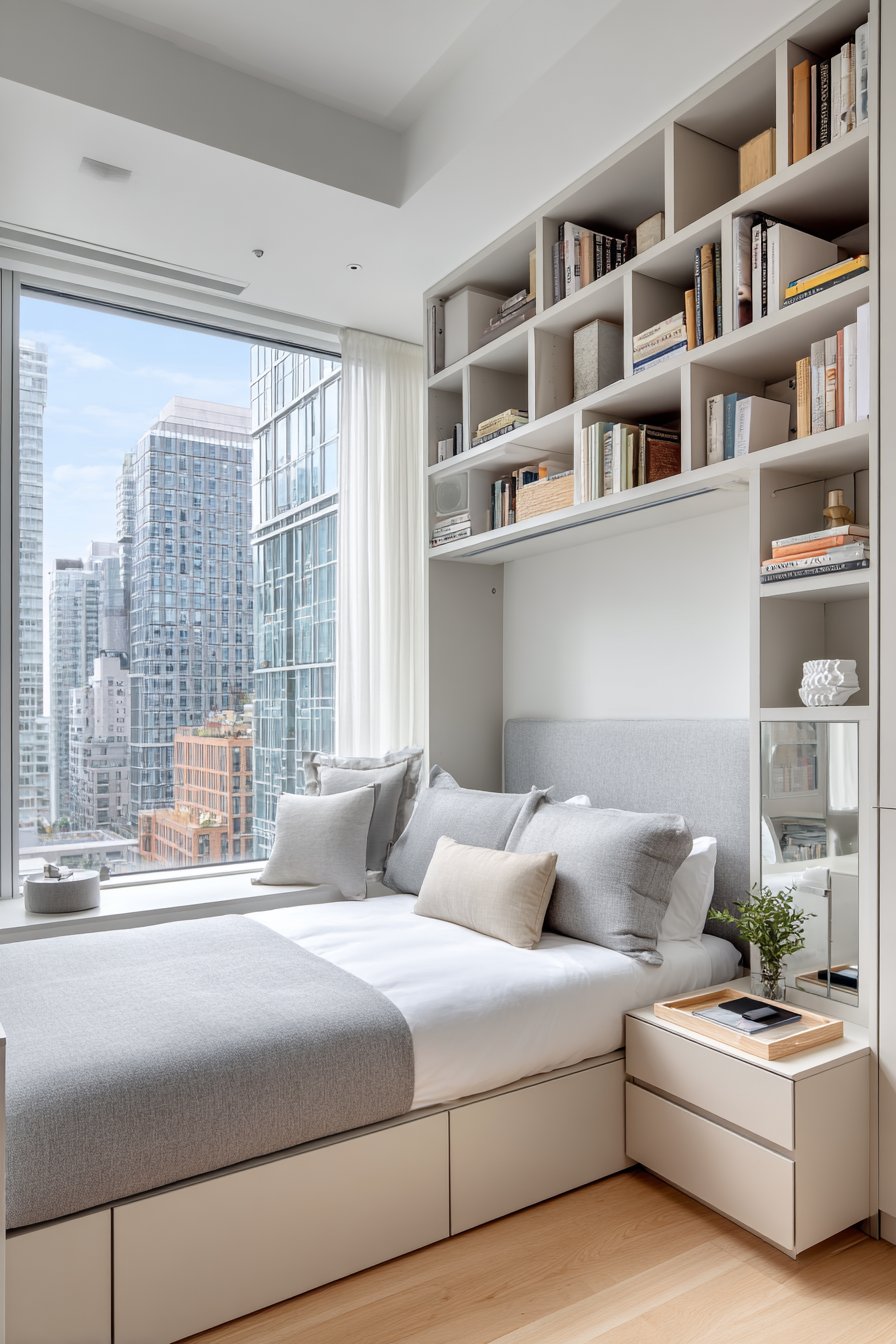
The key to successful small bedroom design lies in understanding the principles of spatial optimization, visual perception, and multi-functional furniture. Every element must earn its place by serving multiple purposes or contributing to the overall sense of spaciousness. Light colors, strategic lighting, vertical storage, and furniture that adapts to your needs throughout the day are essential components of any successful tiny bedroom transformation. From murphy beds that disappear into the wall to loft configurations that create usable space underneath, modern design offers countless solutions for those dealing with spatial limitations.
This comprehensive guide explores twenty-nine distinct approaches to extremely small bedroom design, each offering unique strategies for maximizing space while maintaining aesthetic appeal. Whether your style leans toward minimalist Scandinavian simplicity, industrial urban edge, or cozy traditional warmth, you’ll find practical inspiration that can be adapted to your specific needs and preferences. These designs prove that small bedrooms can be just as comfortable, functional, and beautiful as their larger counterparts—sometimes even more so, as every design choice becomes intentional and purposeful.
1. Platform Storage Foundation
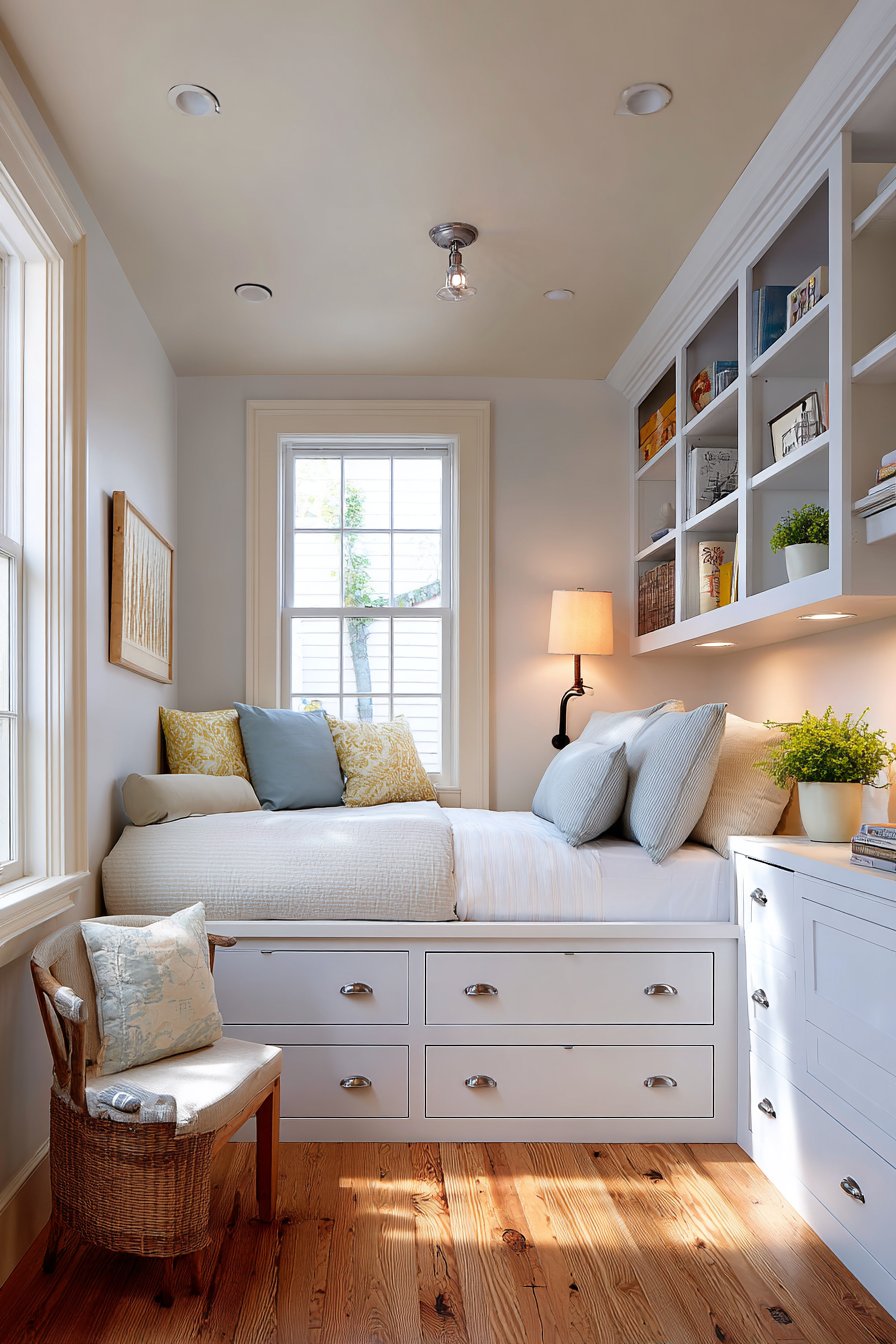
The foundation of any well-designed small bedroom often starts from the ground up, and a platform bed with integrated storage represents one of the most efficient uses of space available. This design features a sturdy platform constructed from light oak, chosen specifically for its warm yet neutral tone that doesn’t visually overwhelm the compact room. The clean, simple lines of the frame create a contemporary aesthetic while the full-length storage drawers built into the base provide an impressive amount of hidden organization space. These drawers glide smoothly on quality hardware, making them easy to access even in tight quarters.
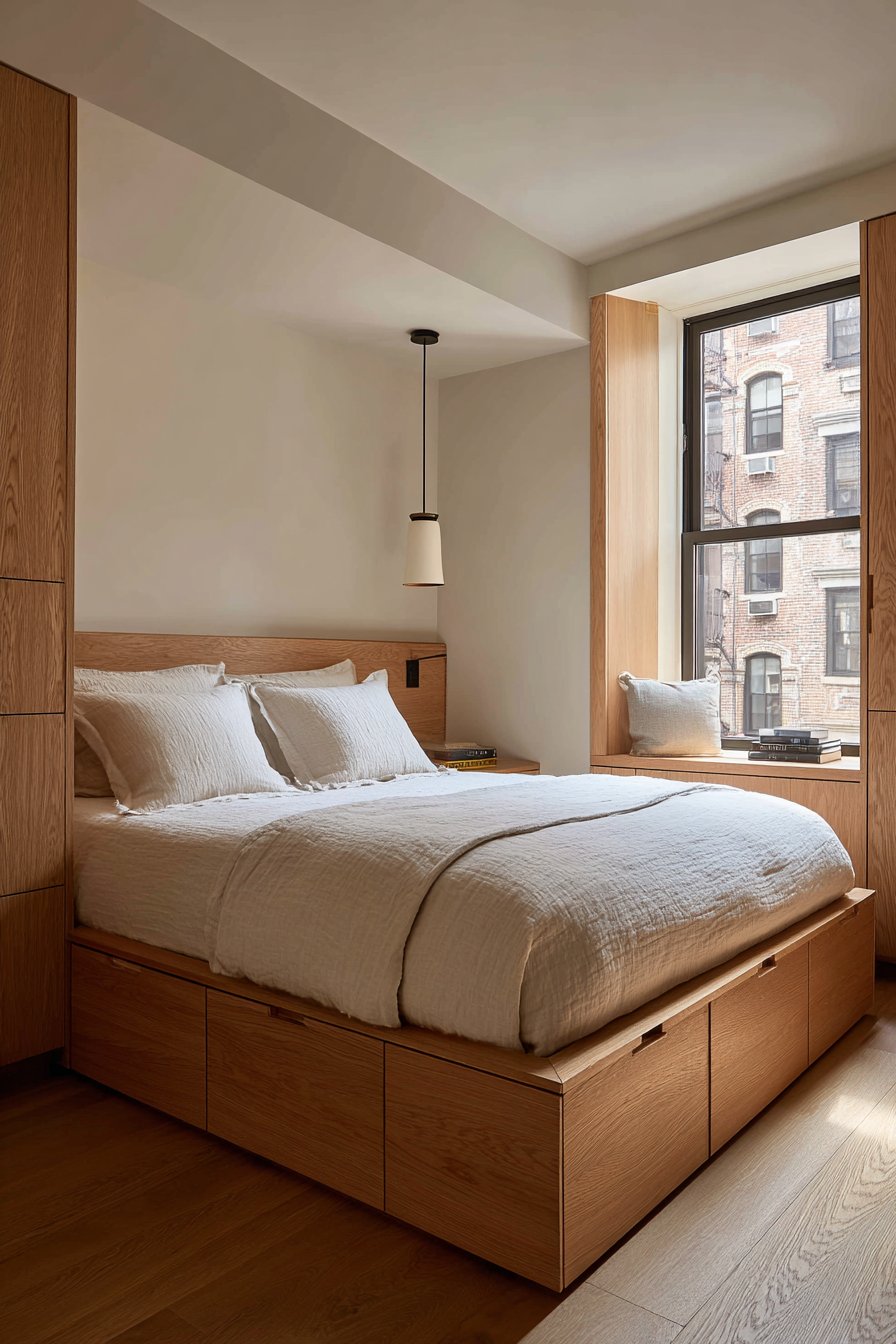
The beauty of this approach lies in its ability to eliminate the need for additional furniture pieces that would consume precious floor space. By housing everything from extra linens and seasonal clothing to personal items within the bed’s foundation, you free up room for movement and other essential furniture. The floating wall-mounted nightstand further reinforces this space-saving philosophy, hovering beside the bed without legs to clutter the floor or impede cleaning. Its slim profile provides just enough surface area for a reading lamp, phone, and perhaps a small plant or decorative object.
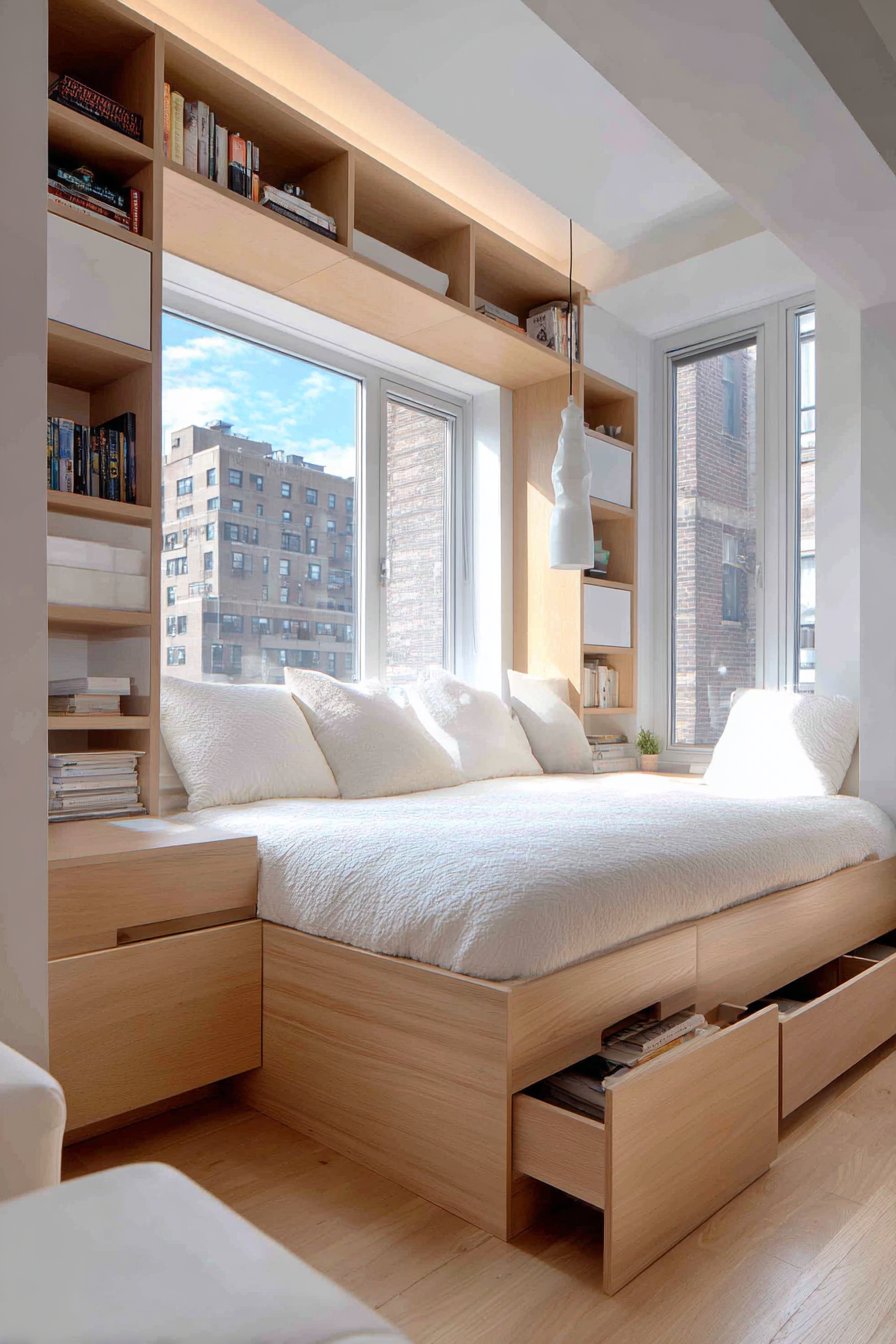
The color palette remains deliberately restrained, with crisp white bedding topped by a textured linen duvet that introduces subtle visual interest without pattern or bold color. This creates an airy, serene atmosphere that prevents the small space from feeling claustrophobic. A single pendant light suspended from the ceiling eliminates the need for table lamps that would occupy valuable nightstand real estate. The fixture itself becomes a design element, chosen for its aesthetic appeal as much as its functional illumination.
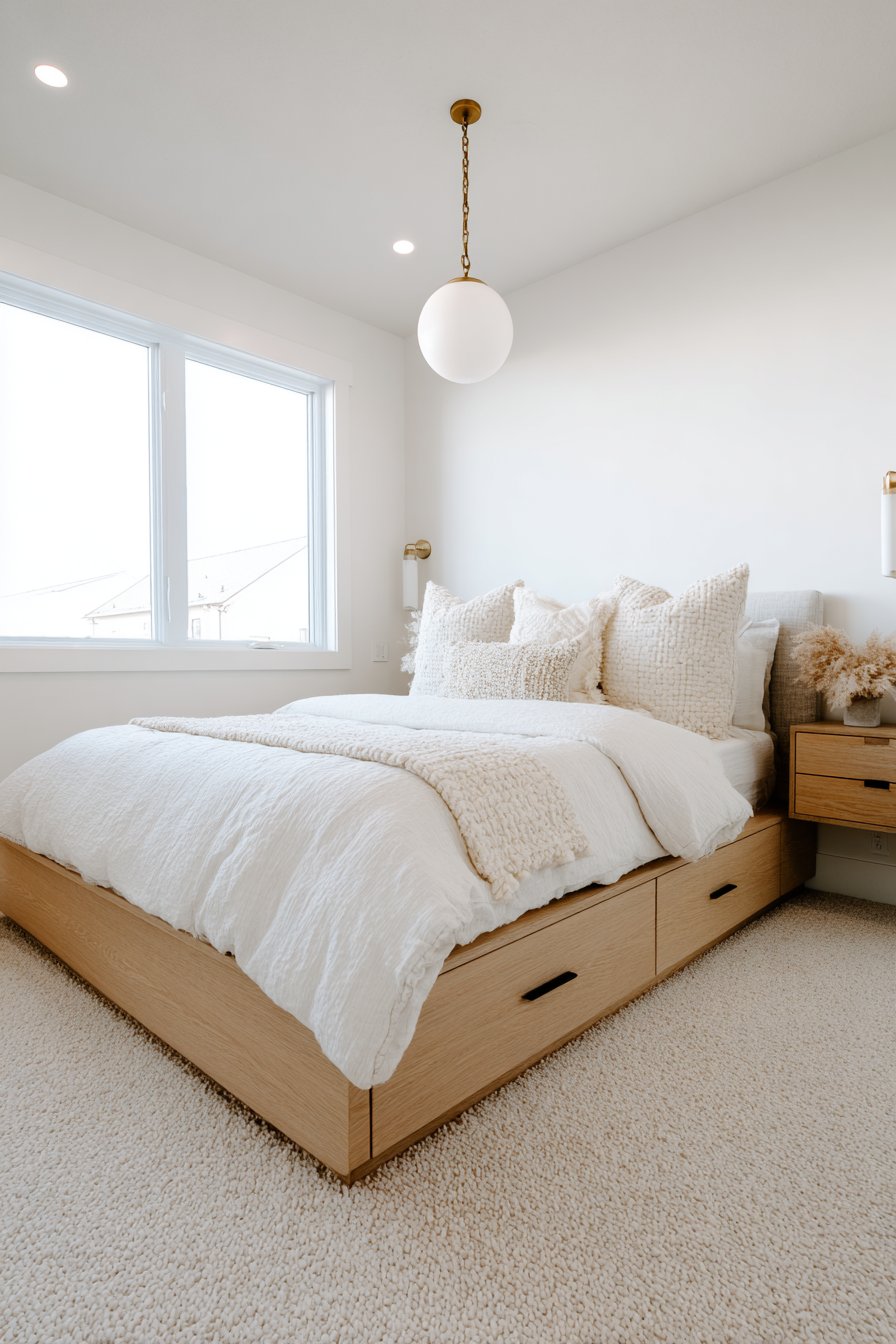
Natural morning light streaming through a compact window provides the primary light source, captured beautifully in professional interior photography that emphasizes the efficient use of limited square footage. The wide-angle perspective reveals how thoughtfully every element has been positioned to maximize both function and flow. This bedroom proves that storage doesn’t have to be bulky or visually prominent to be effective—when integrated into the bed platform itself, it becomes nearly invisible while dramatically increasing the room’s organizational capacity.
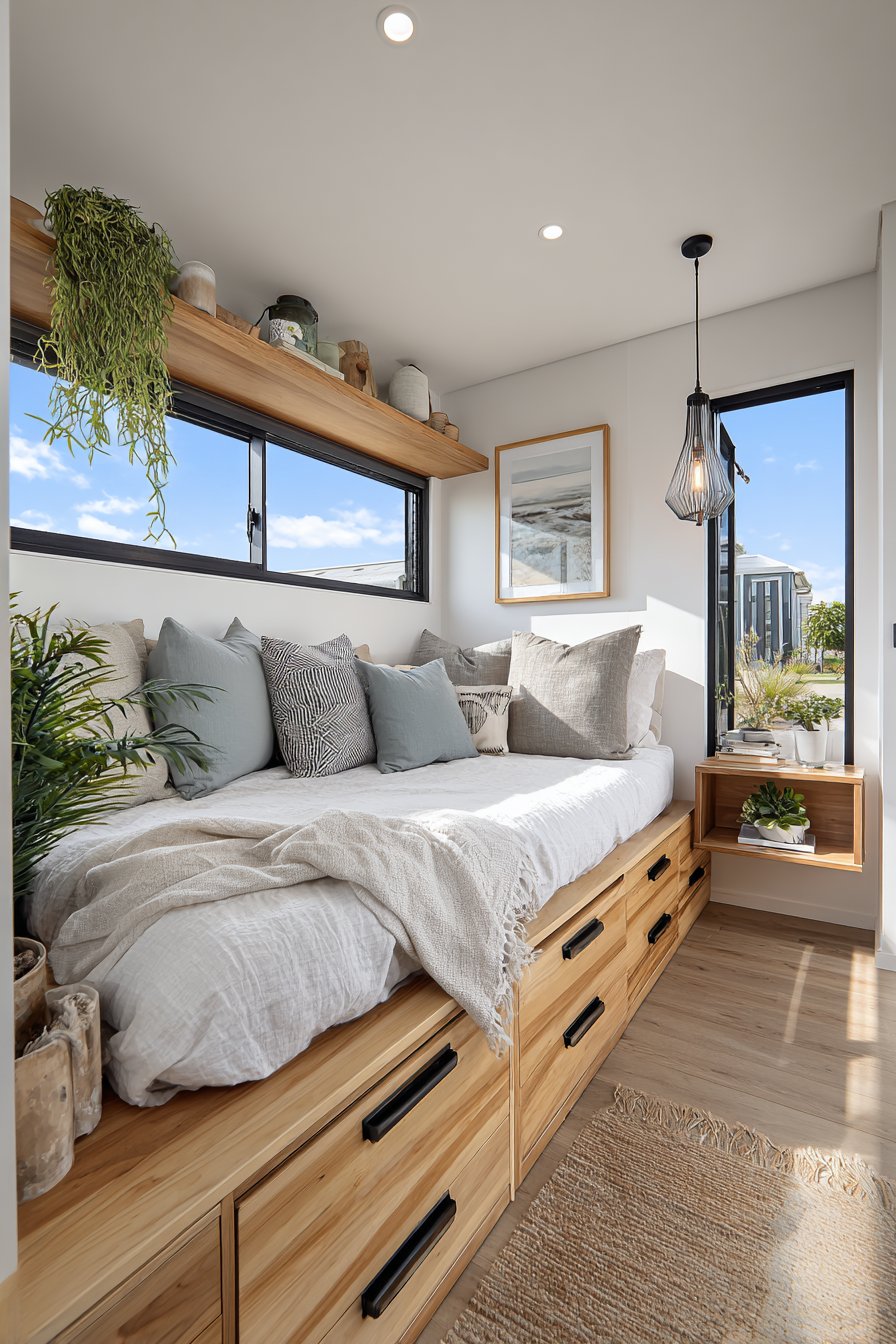
Key design tips: Select bed frames with built-in drawer storage to maximize unused space beneath the mattress. Choose light wood tones that reflect natural light and create warmth without visual weight. Install floating nightstands to keep floor space clear and maintain easy cleaning access. Use pendant lighting to free up surface space while adding a design statement. Keep bedding simple and light-colored to enhance the sense of openness.
2. Vertical Storage Solution
When floor space is at a premium, the solution often lies in looking upward and embracing vertical storage opportunities. This design showcases floor-to-ceiling custom shelving crafted from pale ash wood, a material selected for its light, almost silvery tone that prevents the tall storage unit from appearing heavy or imposing. The narrow ladder leaning against the shelving provides practical access to upper shelves while contributing an architectural element that adds visual interest. These upper shelves house organized baskets and neatly folded textiles, transforming what could be visual clutter into an orderly display.
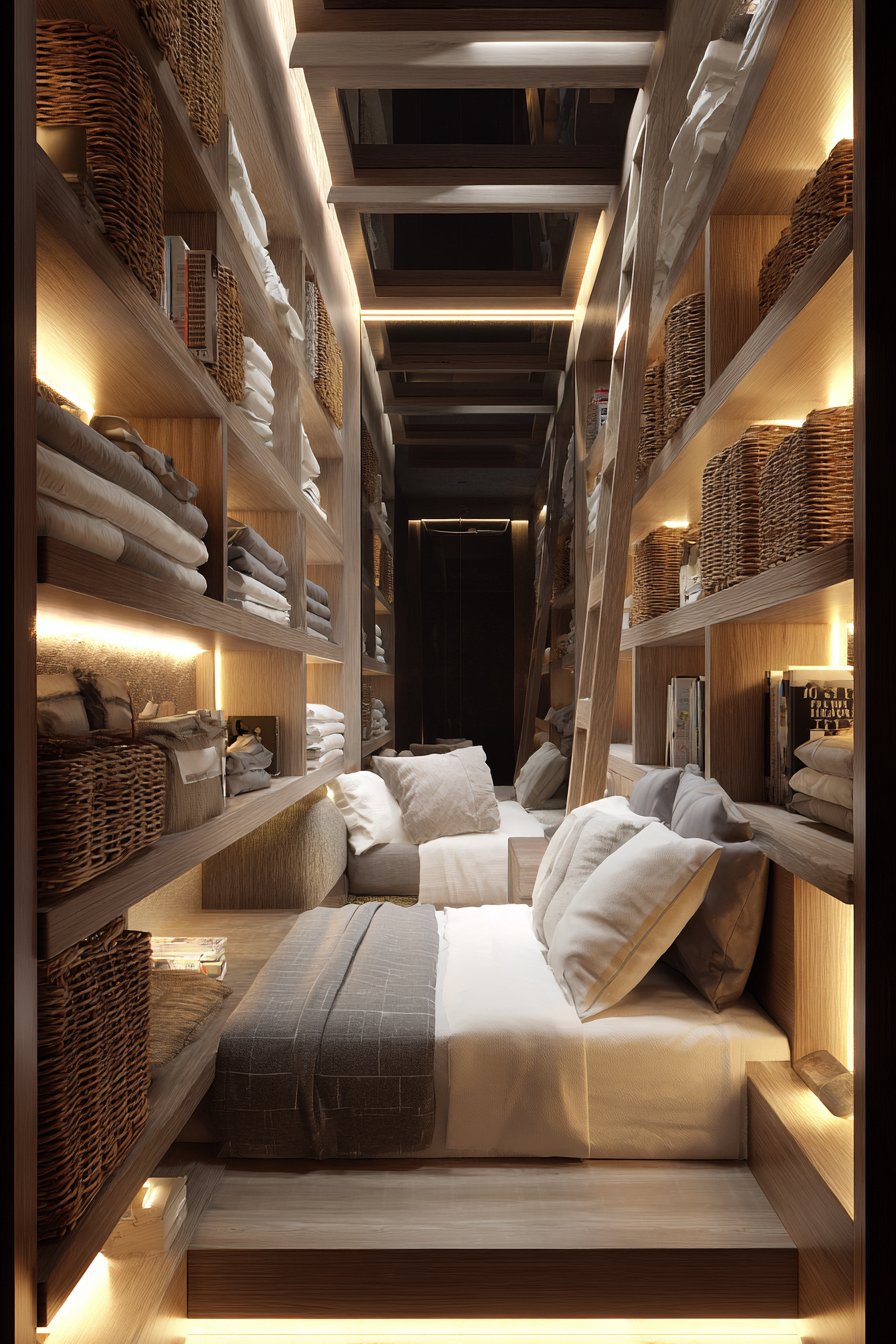
The twin-size bed is strategically positioned perpendicular to the shelving unit, creating a layout that maximizes walking space and maintains clear pathways through the room. This perpendicular arrangement prevents the long wall from being entirely consumed by the bed, leaving room for the impressive storage system that reaches toward the ceiling. The soft grey walls work in harmony with the pale wood, creating a cohesive, monochromatic scheme that enhances spatial perception by eliminating visual breaks and contrasts that would fragment the small space.
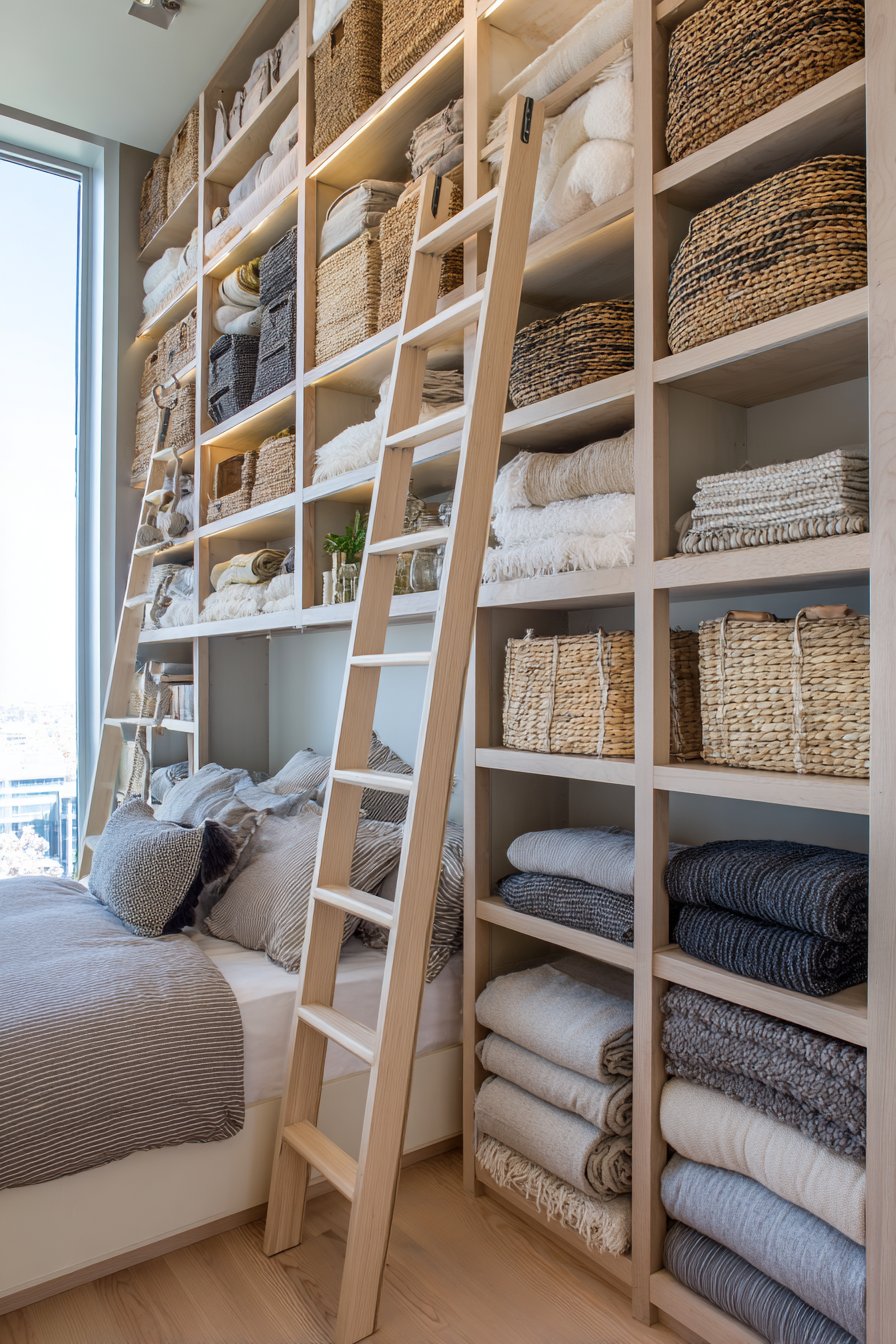
Recessed LED lighting strips illuminate the shelving without consuming any physical space or requiring protruding fixtures that would interfere with the shelves’ functionality. This integrated lighting solution serves multiple purposes: it makes finding items on higher shelves easier, creates ambient mood lighting in the evening, and adds architectural interest by highlighting the vertical lines of the storage system. The consistent, even illumination prevents dark corners and shadows that can make small spaces feel smaller.
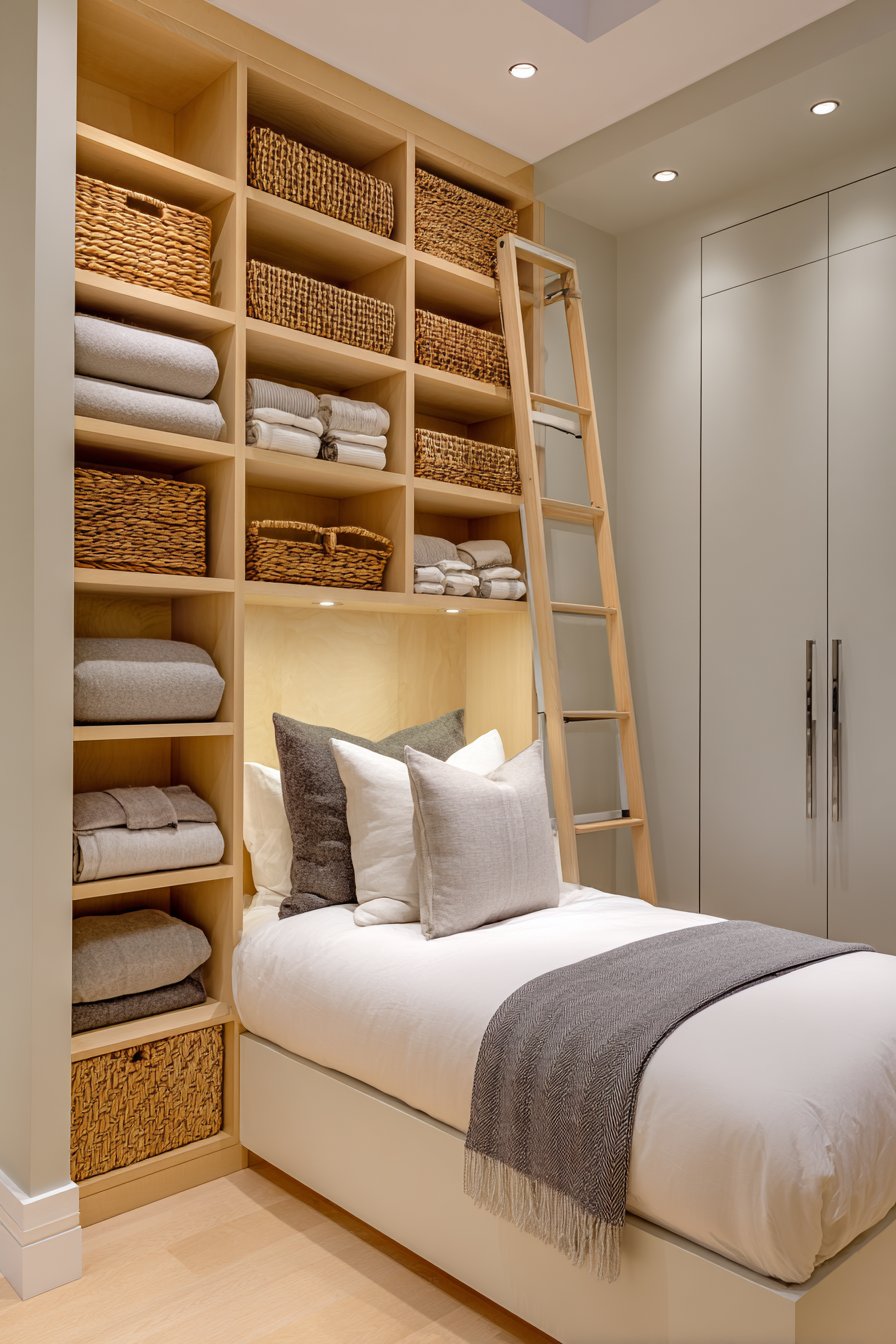
Professional interior photography with balanced exposure captures both the smart vertical organization and the practical functionality of this compact layout. The image reveals how the eye travels upward, drawing attention to the room’s height rather than its limited width, a psychological trick that makes the space feel more generous than its actual dimensions. This bedroom demonstrates that when you can’t expand outward, expanding upward creates valuable storage without sacrificing livable floor space.
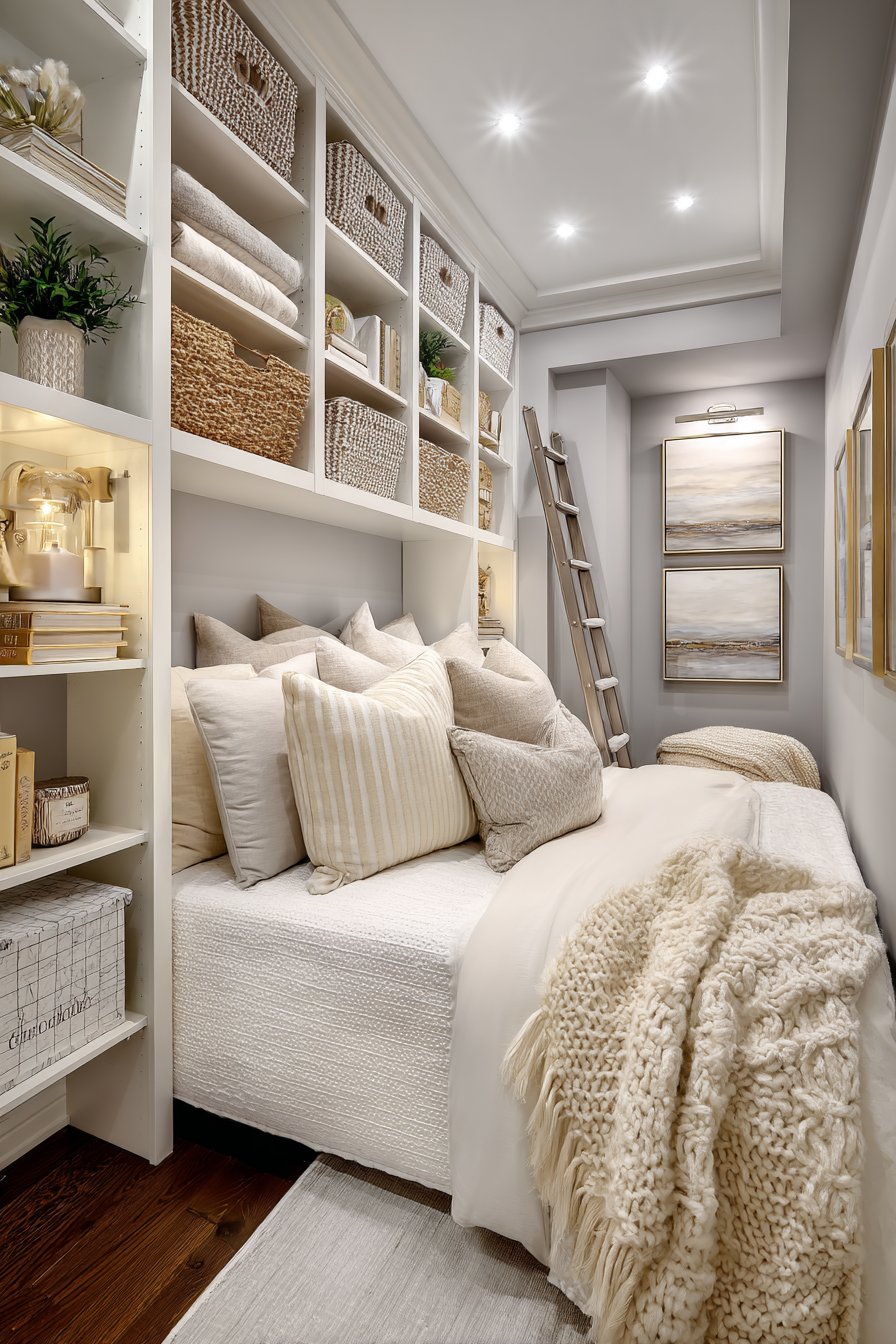
Key design tips: Install floor-to-ceiling shelving to maximize vertical storage potential in small bedrooms. Choose light wood finishes that reflect light and prevent tall furniture from appearing heavy. Use matching baskets and containers to create visual order on open shelving. Position beds perpendicular to major storage walls to optimize floor plan efficiency. Integrate LED strip lighting into shelving for functional illumination that doesn’t require floor or surface space.
3. Loft Bed Multi-Level Living
Thinking three-dimensionally transforms the approach to small bedroom design, and loft bed configurations represent one of the most dramatic space-saving solutions available. This design elevates the sleeping area on a white powder-coated metal frame, creating an entirely separate level while freeing the valuable floor space below for a compact desk workspace. The choice of white metal keeps the substantial frame visually light despite its size, preventing the loft structure from overwhelming the room or creating a cave-like feeling underneath.
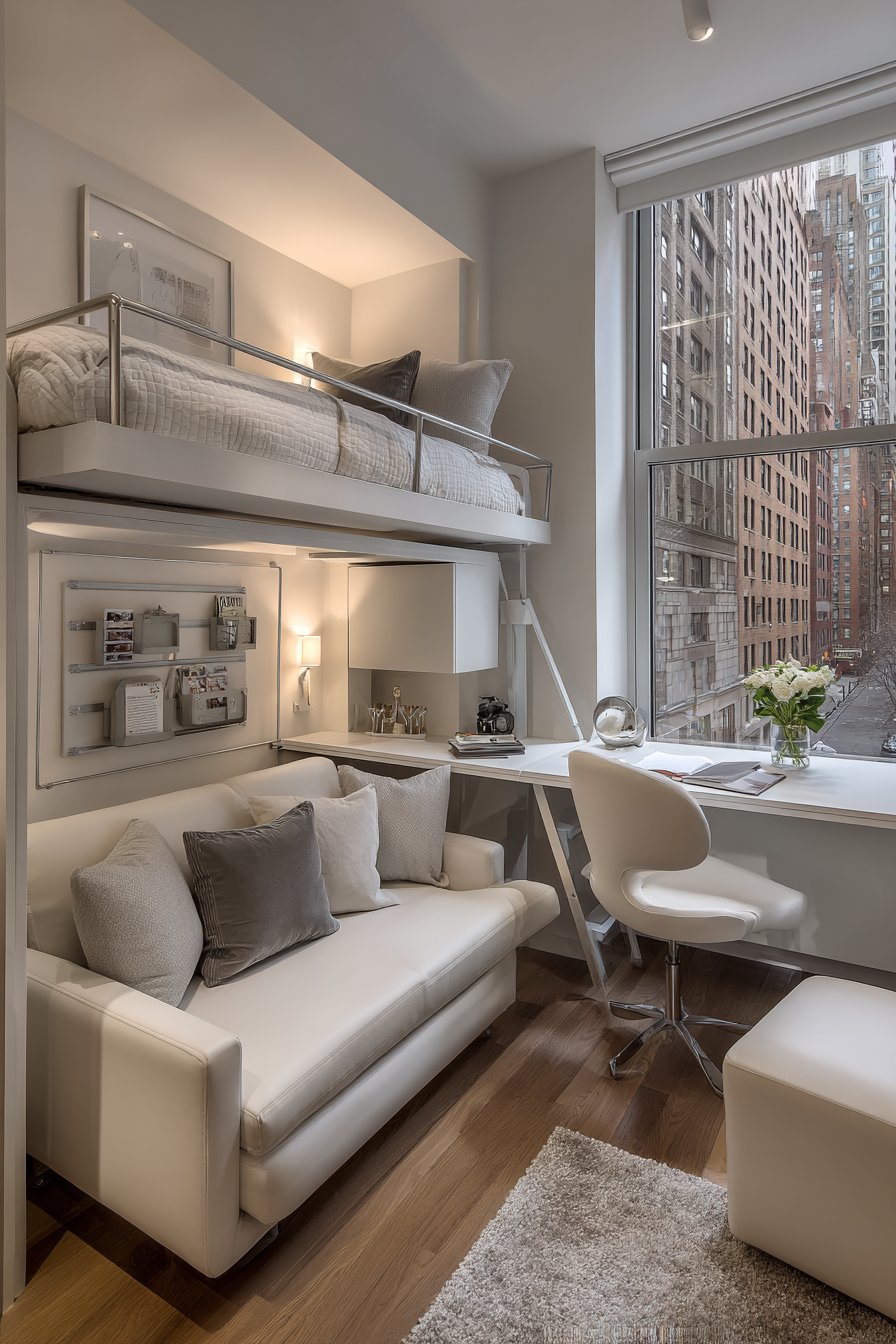
The workspace below takes advantage of this vertical arrangement with a wall-mounted folding surface that can be raised when not in use, further maximizing flexibility. A magnetic organizer board mounted on the wall keeps papers, notes, and small items organized without requiring desk drawers or bulky organizers. This office-bedroom hybrid proves particularly valuable for students, remote workers, or anyone who needs both sleeping and working zones within a single small room.
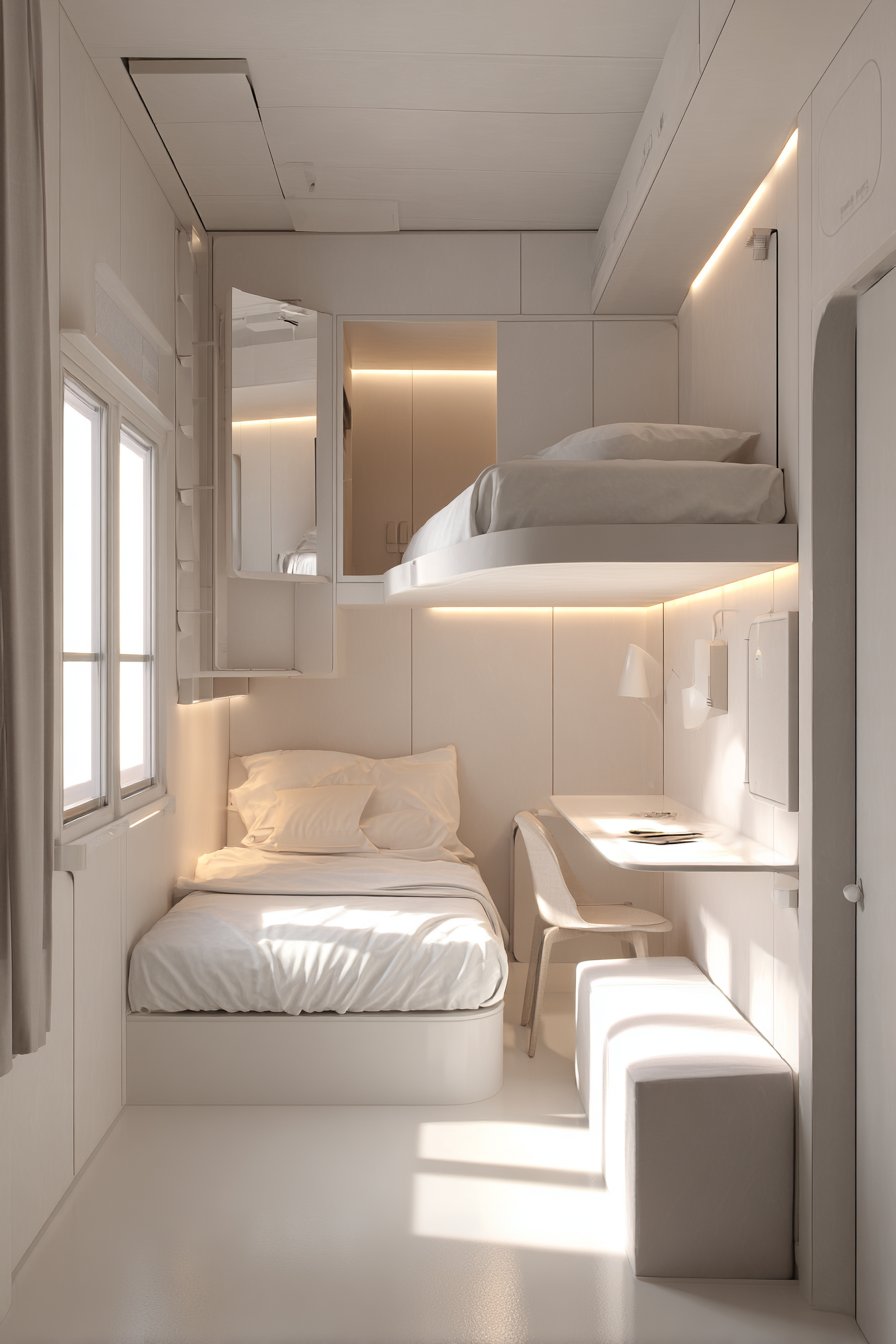
The neutral color palette of whites and soft greys maintains visual continuity between the upper sleeping level and lower workspace, preventing the room from feeling divided or choppy. This monochromatic approach also enhances the sense of spaciousness by eliminating contrasting elements that would draw attention to the room’s actual dimensions. Natural light from a small window positioned strategically to illuminate both levels brightens the entire multi-level arrangement, crucial for making both spaces feel welcoming rather than cramped.
Wide-angle interior photography captures the innovative three-dimensional space utilization, with soft shadows defining the different zones and highlighting the architectural interest created by the loft structure. The elevated perspective shows how much usable floor space is created by lifting the bed upward, effectively doubling the room’s functional area. This solution works especially well for rooms with adequate ceiling height, where the vertical dimension can be exploited without creating an uncomfortably low clearance in either zone.
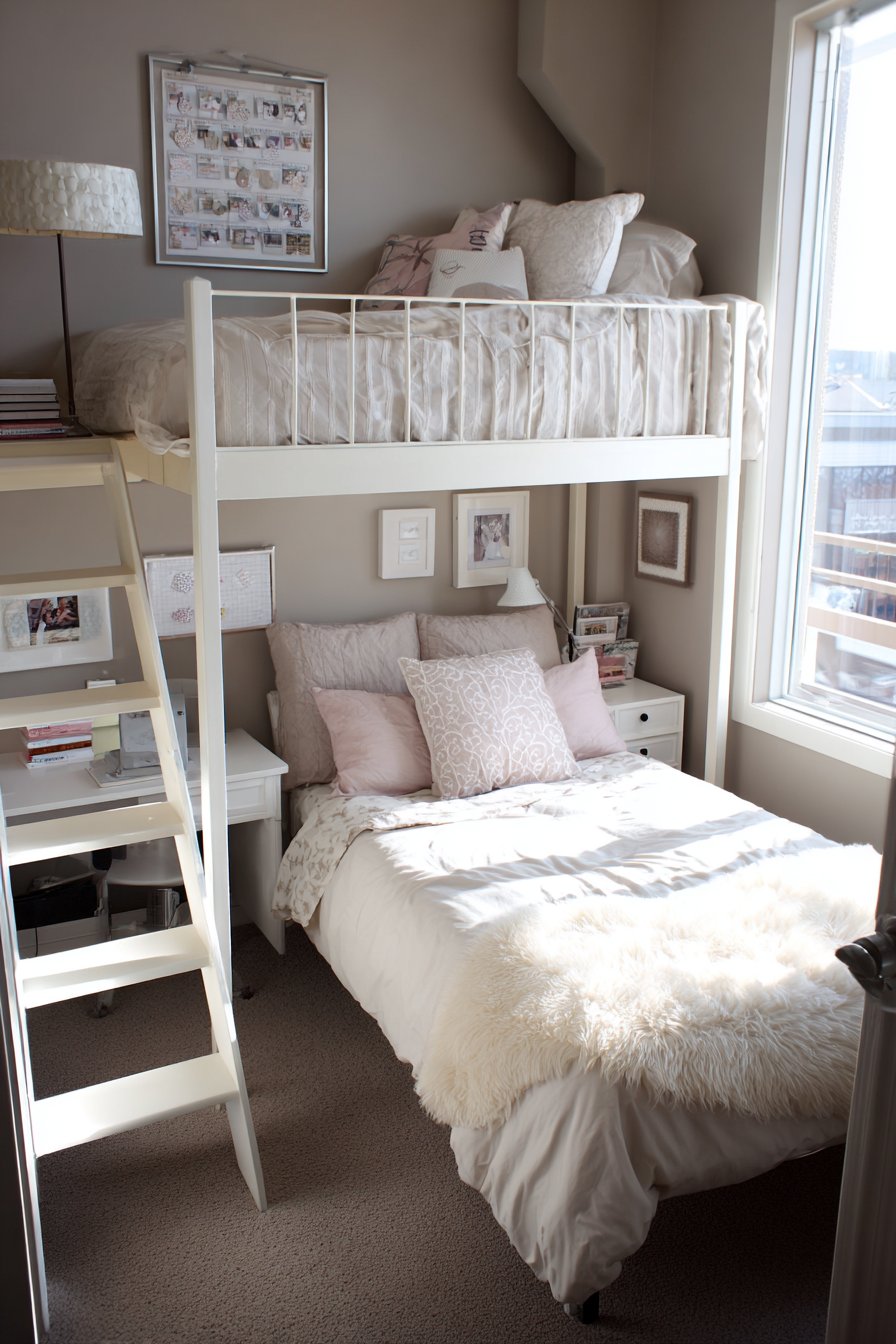
Key design tips: Choose loft beds with powder-coated metal frames for structural stability with minimal visual weight. Ensure adequate ceiling height (at least 8 feet) before installing loft bed configurations. Install wall-mounted folding desks beneath lofts to maximize workspace flexibility. Use magnetic boards and vertical organizers to keep desk areas clutter-free without storage furniture. Paint upper and lower zones in the same color family to maintain visual unity and spaciousness.
4. Corner Nook Optimization
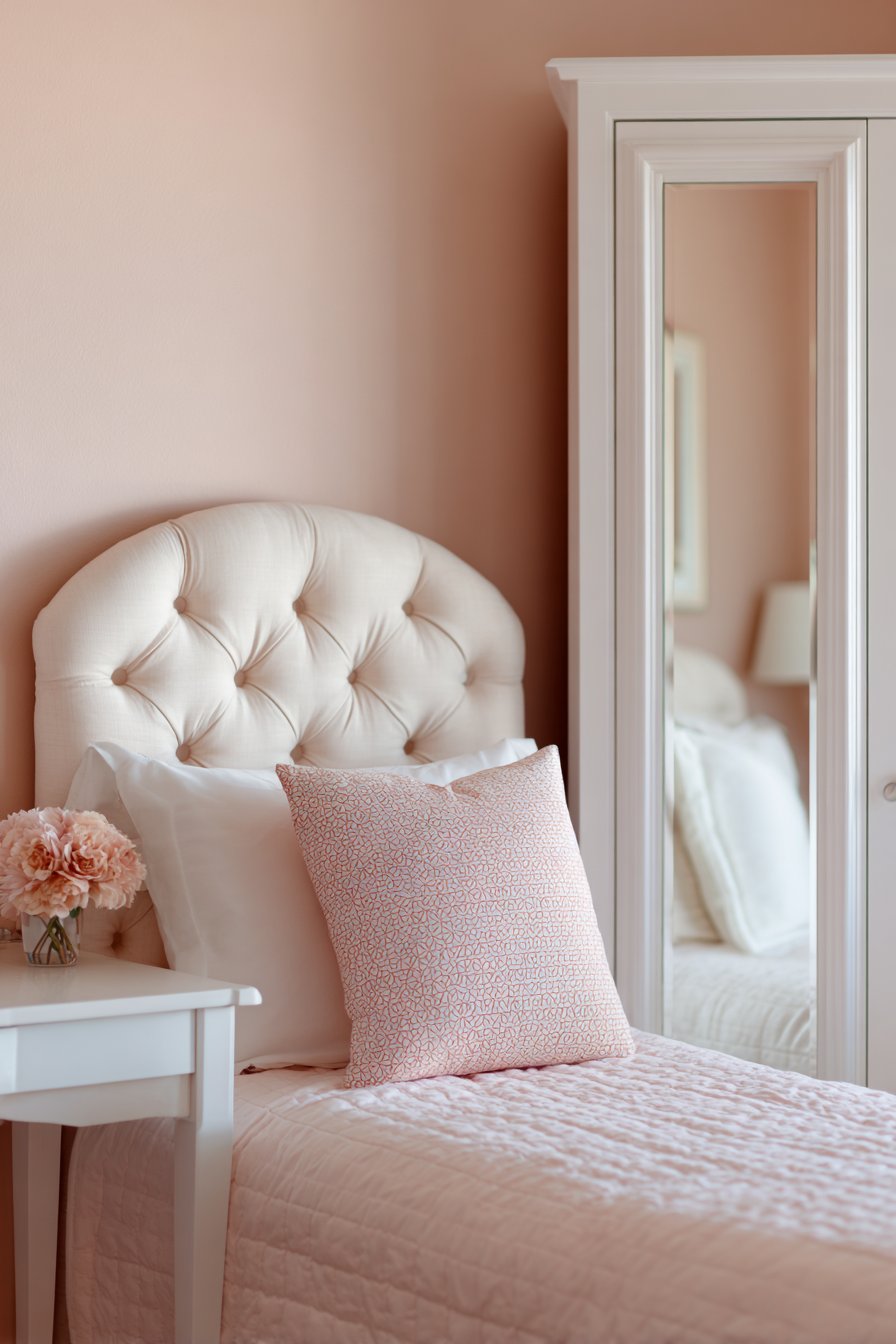
Corners often represent underutilized space in small bedrooms, but when treated as an opportunity rather than an obstacle, they can become the most intimate and cozy areas in the room. This design positions a single bed in the corner with a tufted upholstered headboard that wraps around the adjacent wall, creating an enveloping nook effect that feels protective and comfortable rather than cramped. The soft upholstery adds texture and luxury while the wraparound design maximizes comfort for those who enjoy sitting up in bed to read or work.
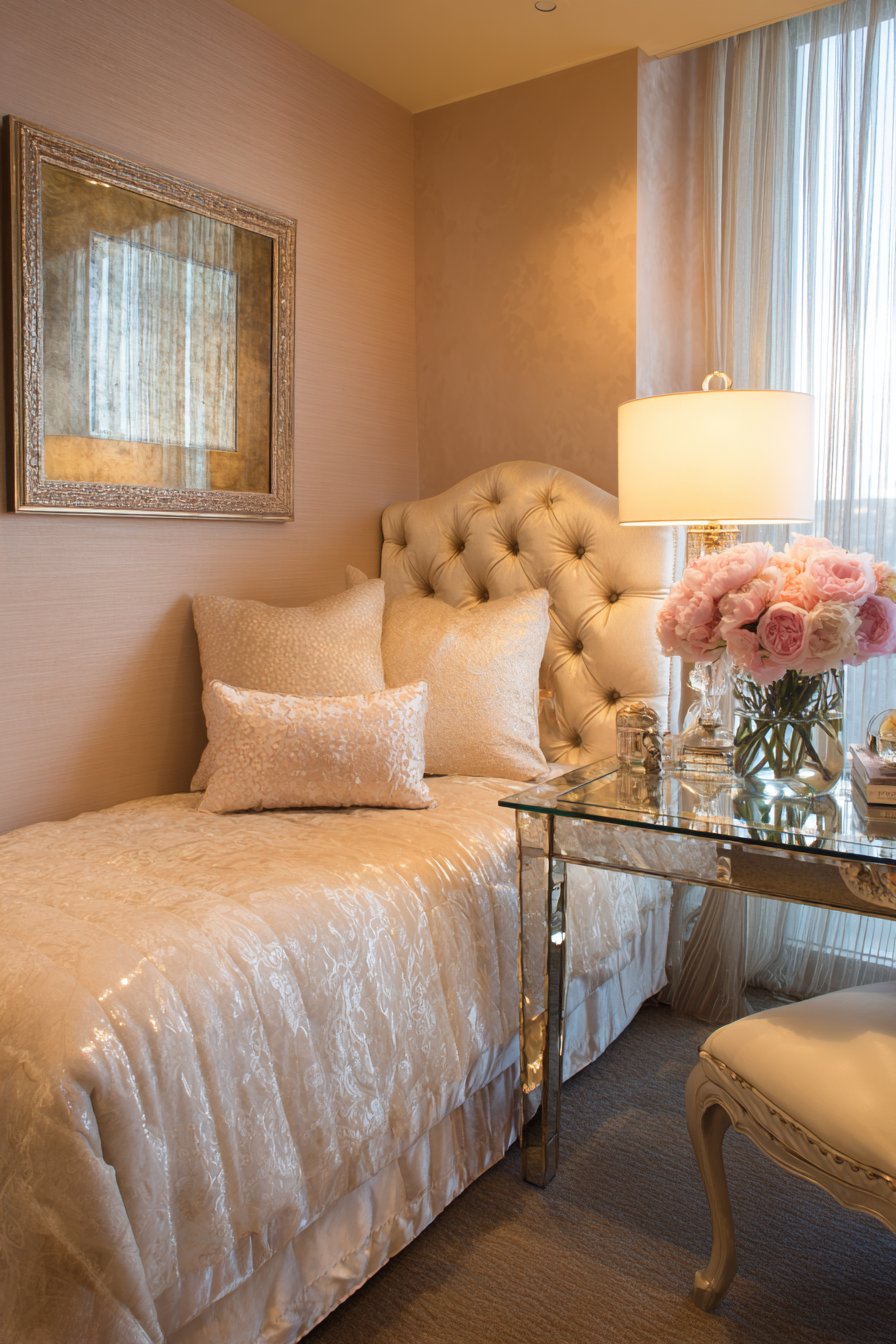
Behind the bed, a narrow console table serves double duty as both headboard support and storage surface, demonstrating the multi-functional thinking essential to small space design. This clever placement puts the console where it would otherwise be difficult to access, transforming dead space into valuable storage for books, lamps, charging devices, or decorative objects. The mirrored closet doors flanking one wall reflect light throughout the space and create the powerful illusion of doubling the room’s visual size, a classic designer trick that never loses its effectiveness.
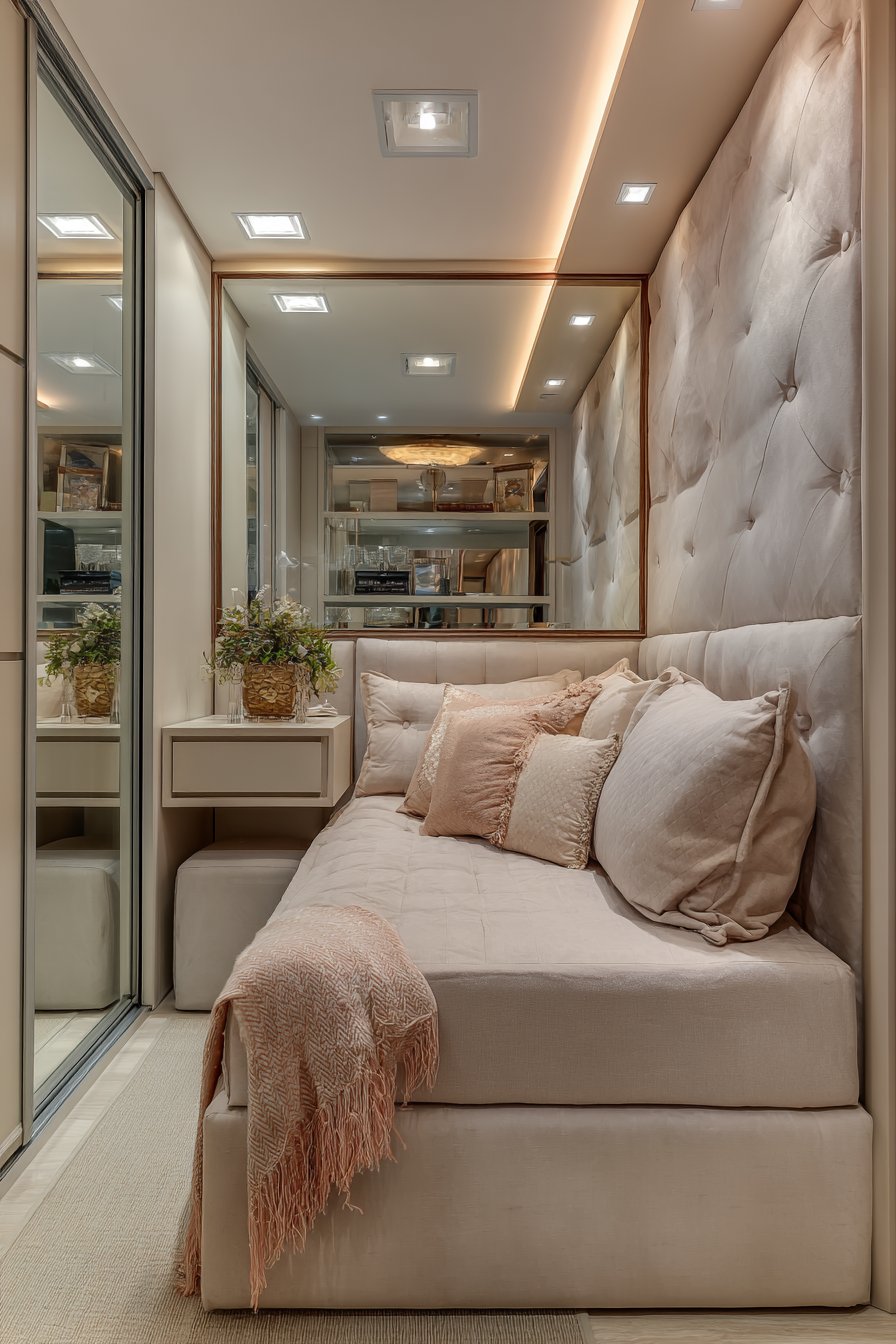
The pale blush walls add warmth and personality without the heavy visual weight of saturated colors. This soft, dusty pink creates a cocoon-like atmosphere that makes the small dimensions feel intentional and cozy rather than restrictive. The color also works beautifully with the room’s natural light, taking on different tones throughout the day as the sun moves across the space. Detail shot interior photography with natural diffused lighting emphasizes the clever corner optimization and the way reflective surfaces bounce light around the compact room.
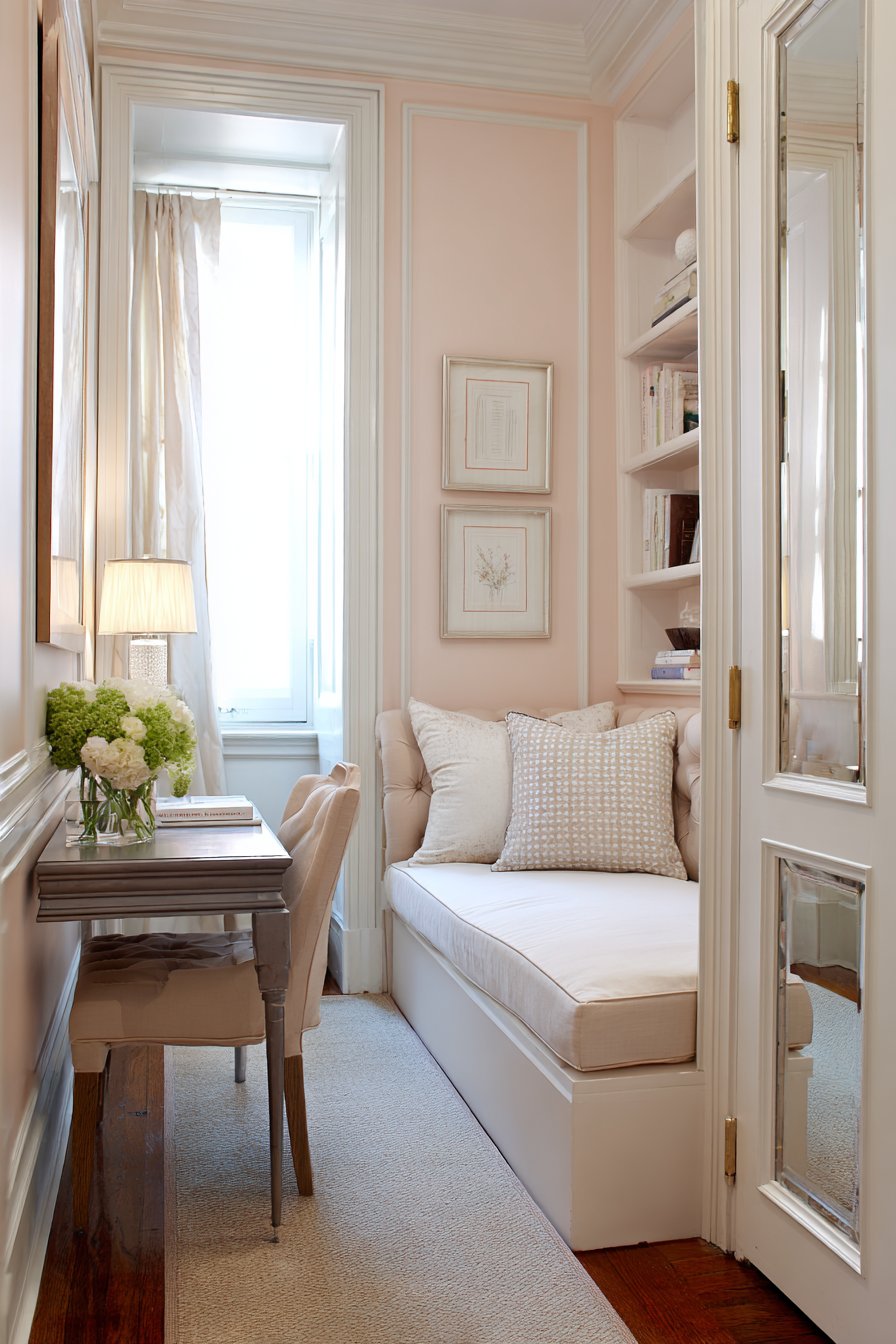
The overall effect demonstrates how corner placement, when combined with wraparound furniture and reflective surfaces, can make a small bedroom feel both larger and more intimate simultaneously—a paradox that represents the sweet spot of successful tiny space design. The room feels designed for relaxation and retreat, with every element contributing to a sense of personal sanctuary.
Key design tips: Position beds in corners to create cozy nook feelings while maximizing open floor space. Use wraparound headboards to define sleeping zones and add comfort for sitting upright. Place narrow console tables behind beds in tight spaces to create dual-function furniture. Install mirrored closet doors to double visual space and reflect natural light. Choose soft, muted wall colors like blush or sage to add warmth without overwhelming small rooms.
5. Scandinavian Minimalism
The Scandinavian approach to design has become synonymous with functional minimalism, making it naturally suited to small bedroom challenges. This space embodies the essential principles of Nordic design with a low-profile bed frame constructed from natural beech wood, chosen for its pale blonde tone and visible grain that brings organic warmth without visual heaviness. The streamlined frame sits close to the ground, creating a sense of openness above and making the ceiling feel higher by comparison—a perceptual trick that enhances spaciousness.
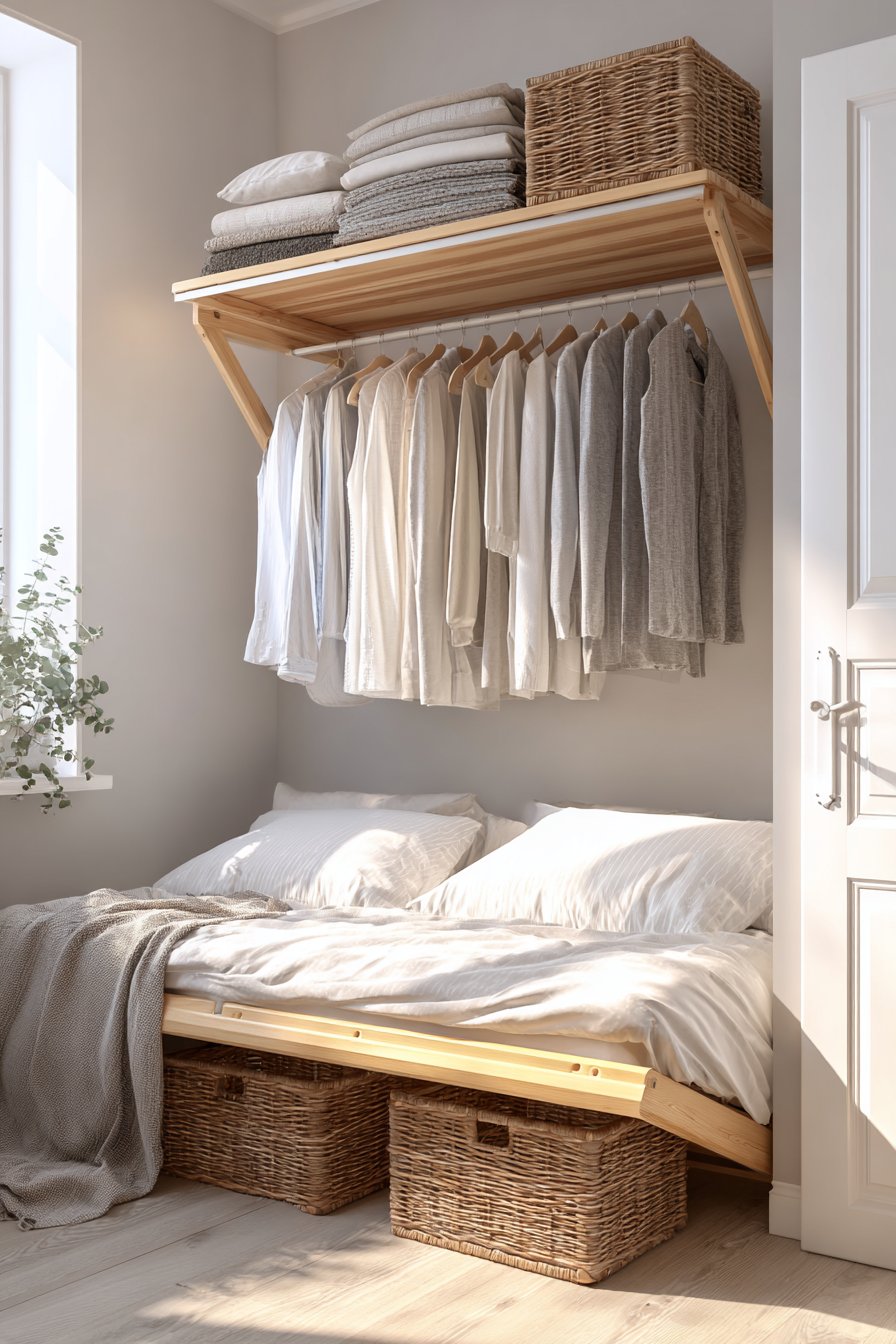
The wall-mounted fold-down desk represents pure Scandinavian ingenuity, disappearing completely when not in use to restore full floor space. When needed, it provides a sturdy work surface that feels integrated into the room’s architecture rather than added as an afterthought. The open clothing rack with its simple wooden dowel bar replaces the traditional bulky wardrobe, embracing the Scandinavian preference for visible, edited storage that encourages thoughtful curation of possessions. Only the clothing you truly need and love remains on display, creating a visually calm environment.
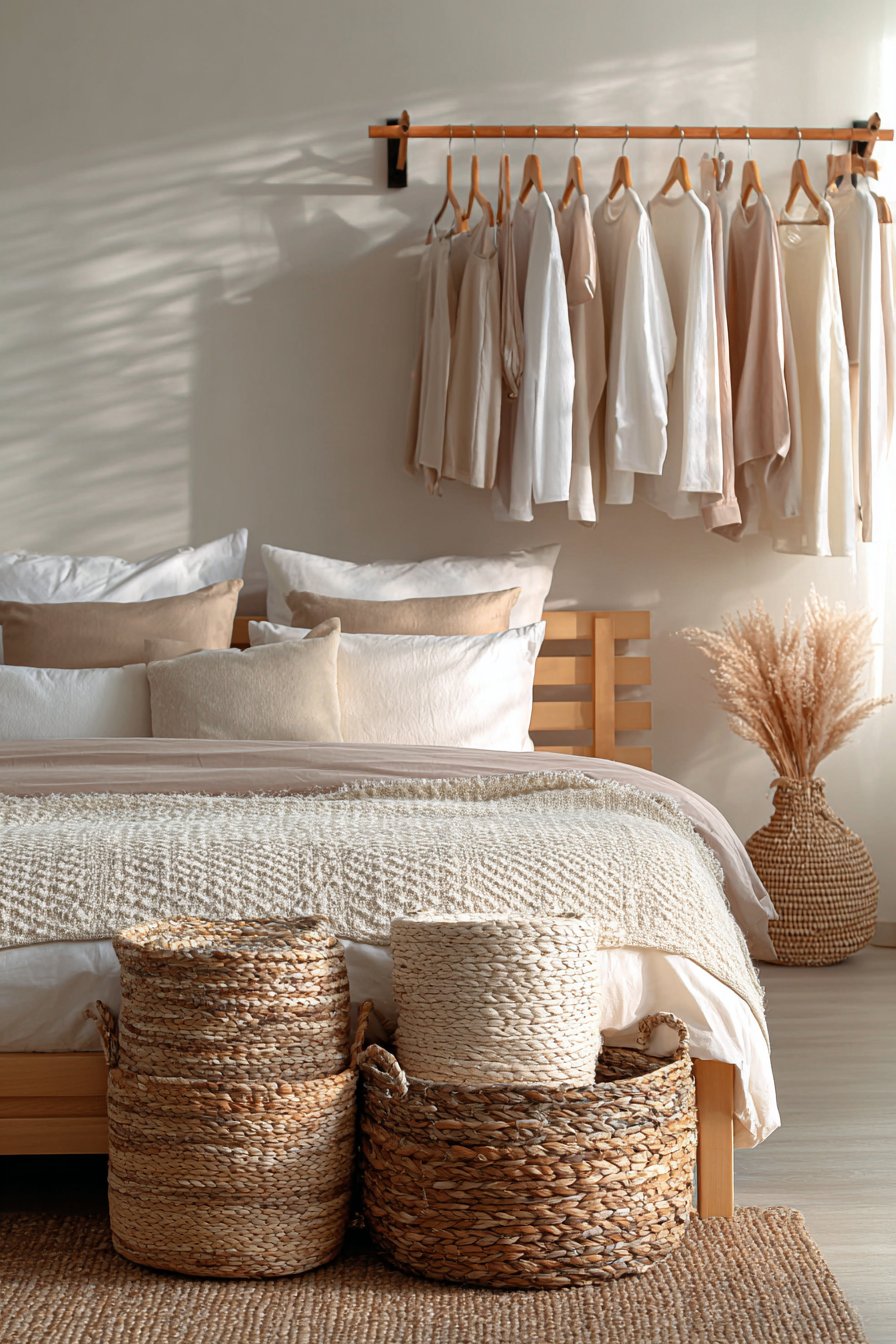
Woven storage baskets slide smoothly beneath the low bed platform, providing hidden organization that maintains the room’s clean aesthetic. The white shiplap accent wall adds subtle texture and architectural interest without pattern or color, embodying the Scandinavian love of natural materials and simple details. This textured backdrop creates depth and dimension while maintaining the overall light, airy feeling essential to the style.
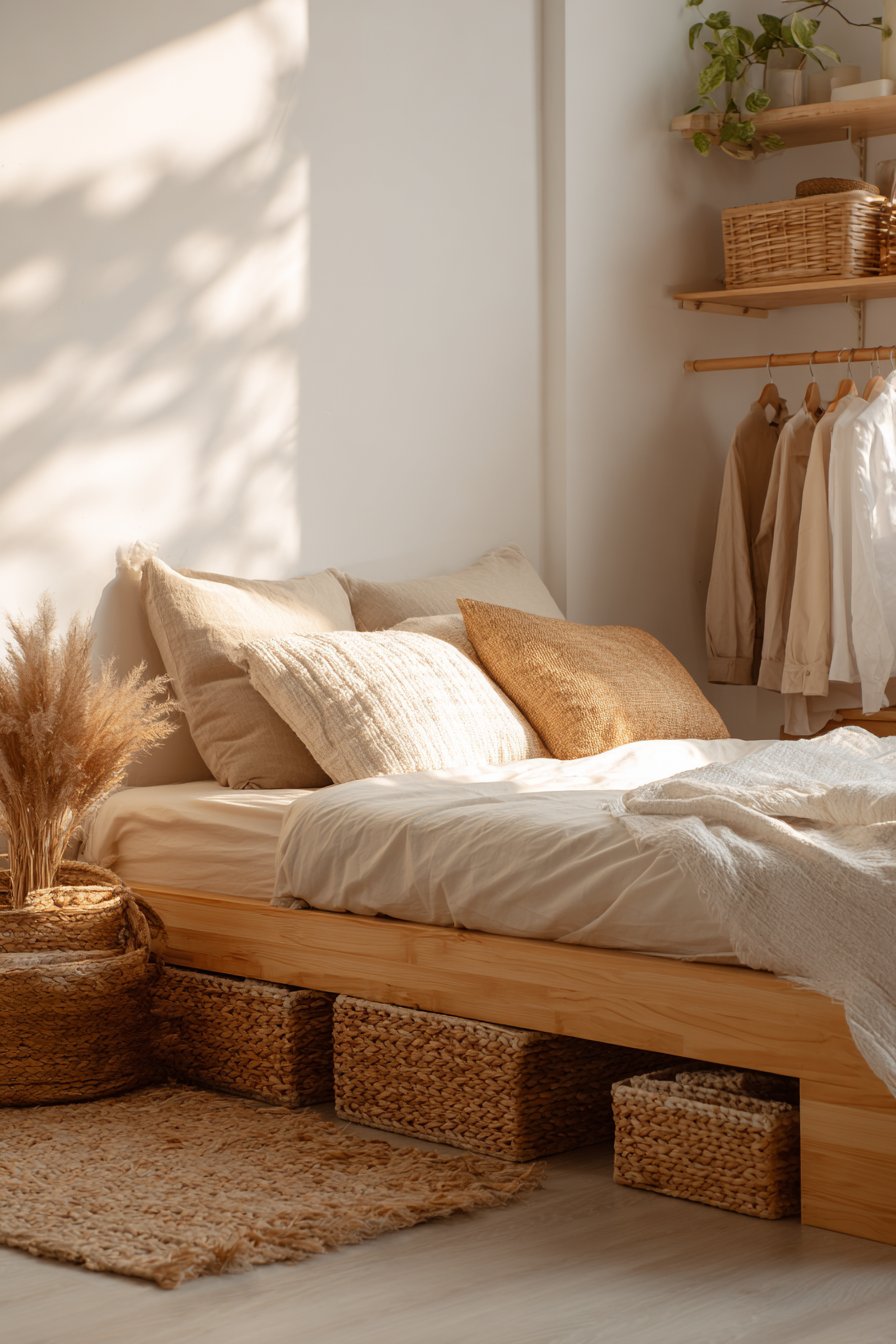
Soft morning light creates gentle shadows that define different surfaces and materials, captured beautifully in professional interior photography with a wide-angle lens. The intentional simplicity and breathing room in this compact space demonstrate that minimalism isn’t about deprivation but rather about making deliberate choices that enhance quality of life. Every item has purpose, every surface breathes, and the result is a bedroom that feels restful despite—or perhaps because of—its small size.
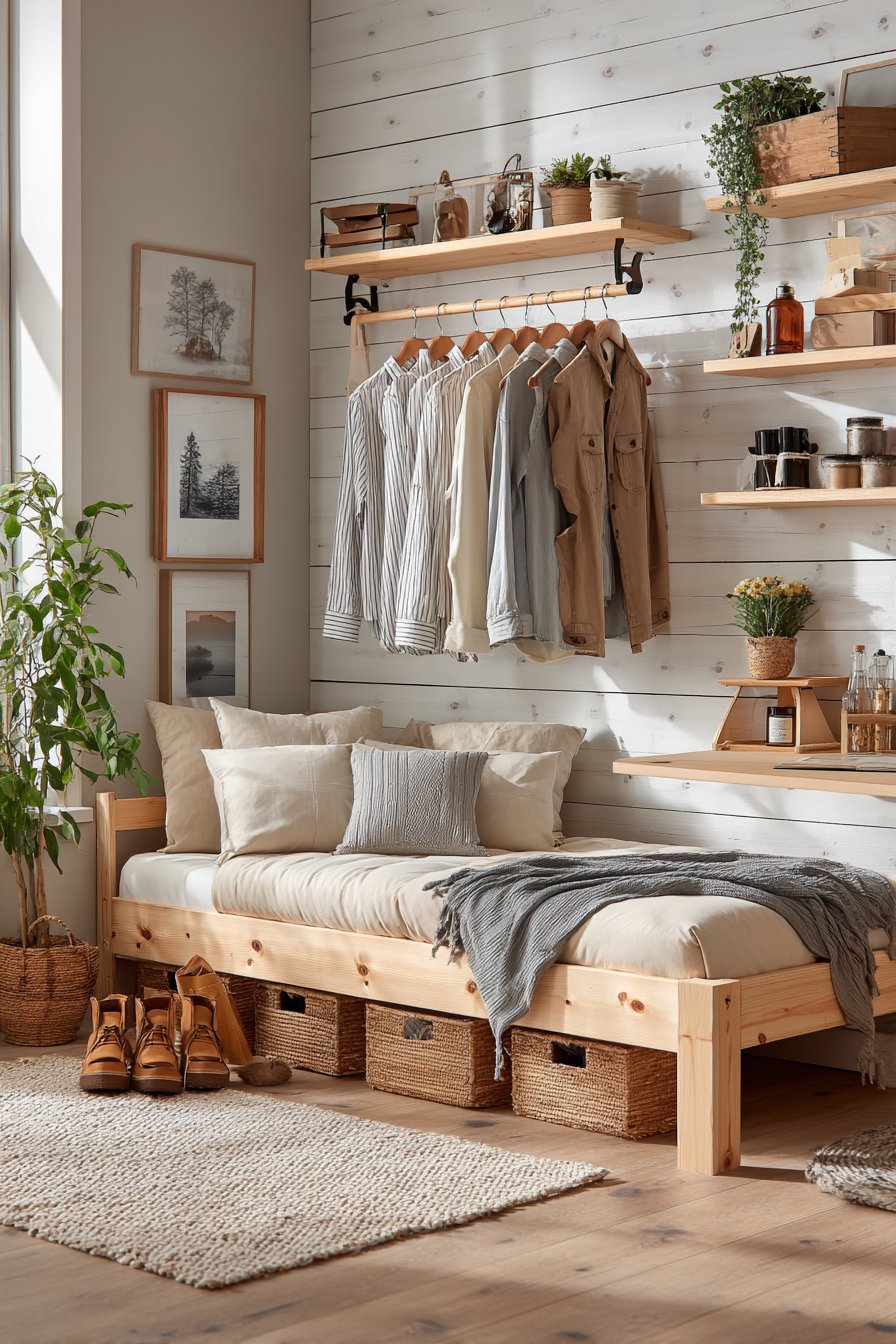
Key design tips: Choose low-profile bed frames to create visual spaciousness above and enhance ceiling height perception. Install fold-down desks that disappear when not in use to maximize floor space flexibility. Replace traditional wardrobes with open clothing racks to reduce visual bulk and encourage wardrobe curation. Use woven baskets for under-bed storage to maintain natural material consistency. Add texture through materials like shiplap rather than pattern or color to create interest without visual clutter.
6. Daybed Versatility
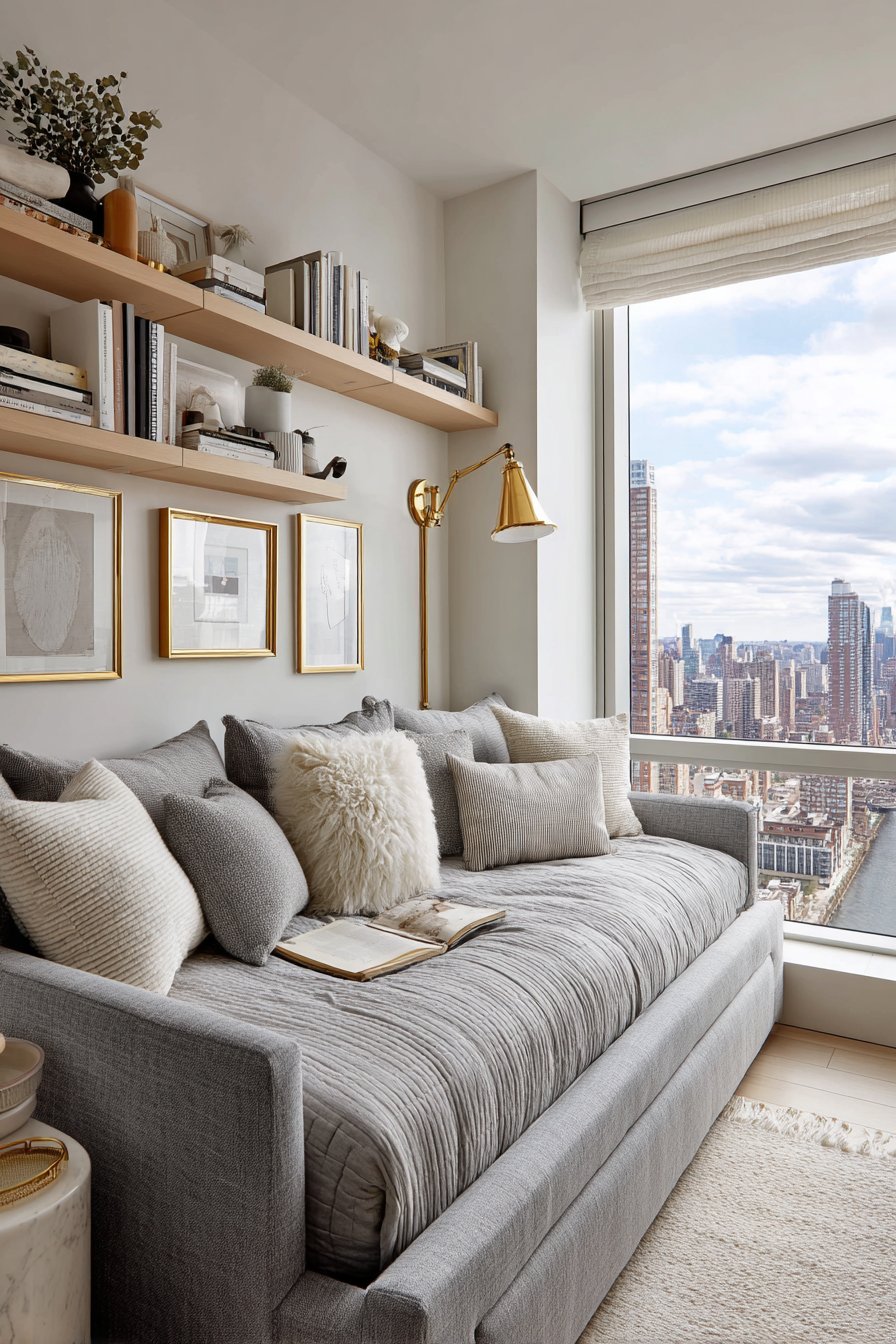
The daybed represents one of the most versatile furniture pieces available for small bedroom design, functioning equally well as a sofa for daily living and a bed for nighttime sleeping. This design features a daybed with a pull-out trundle positioned against the room’s longest wall, maximizing the placement for both functions. The durable grey linen upholstery provides a neutral foundation that reads equally well as living room furniture or bedroom comfort, while also hiding the inevitable wear that comes from dual-purpose furniture used throughout the day.
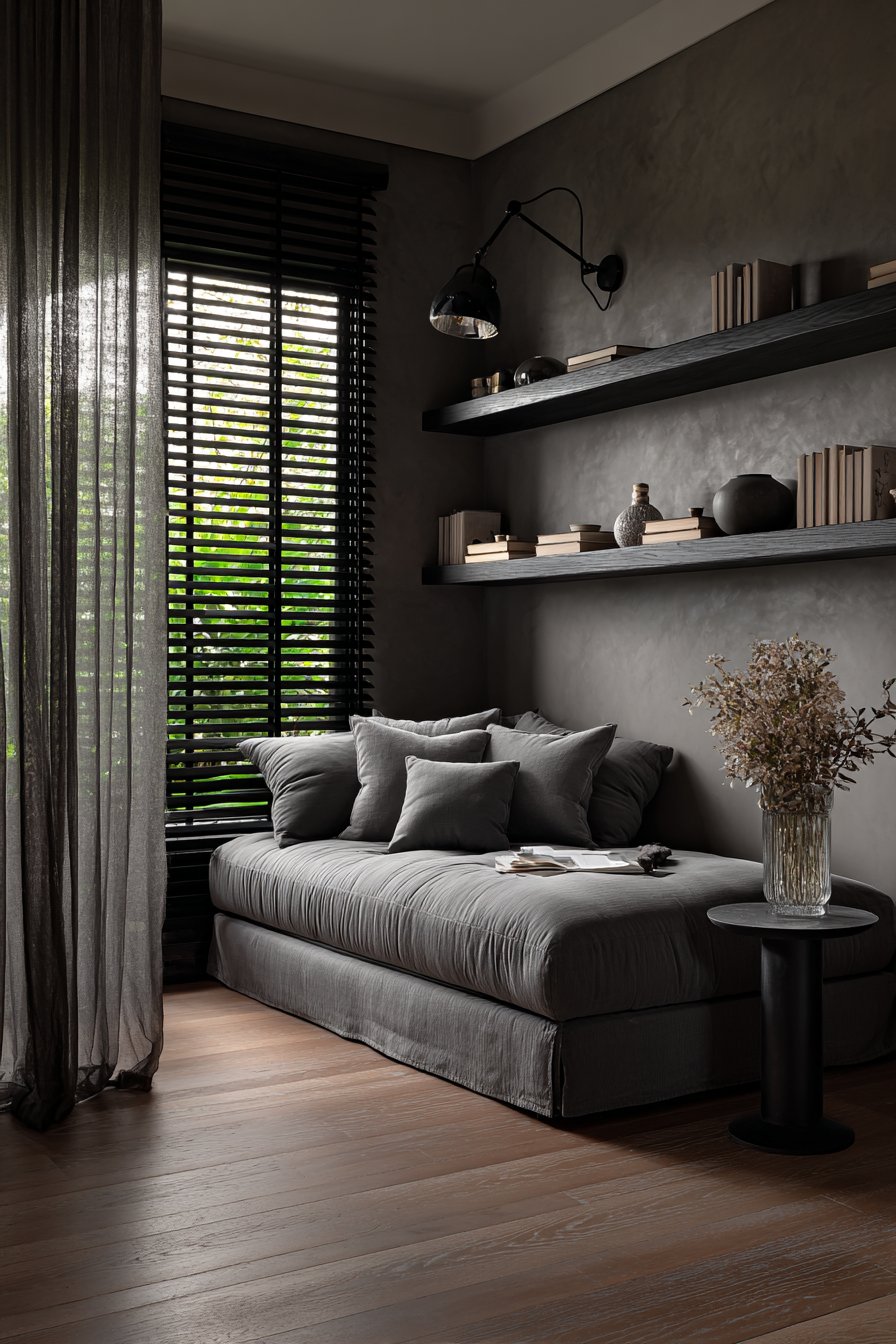
The wall-mounted swing-arm reading lamp positioned beside the daybed eliminates the need for a nightstand entirely, one of the most liberating space-saving moves available. This articulated fixture swings out over the bed for reading and pushes back flat against the wall when not needed, exemplifying the flexible thinking required for successful small space design. Floating shelves arranged above the daybed display minimal décor and essential items, keeping necessities accessible while maintaining the clean lines crucial to preventing visual clutter.
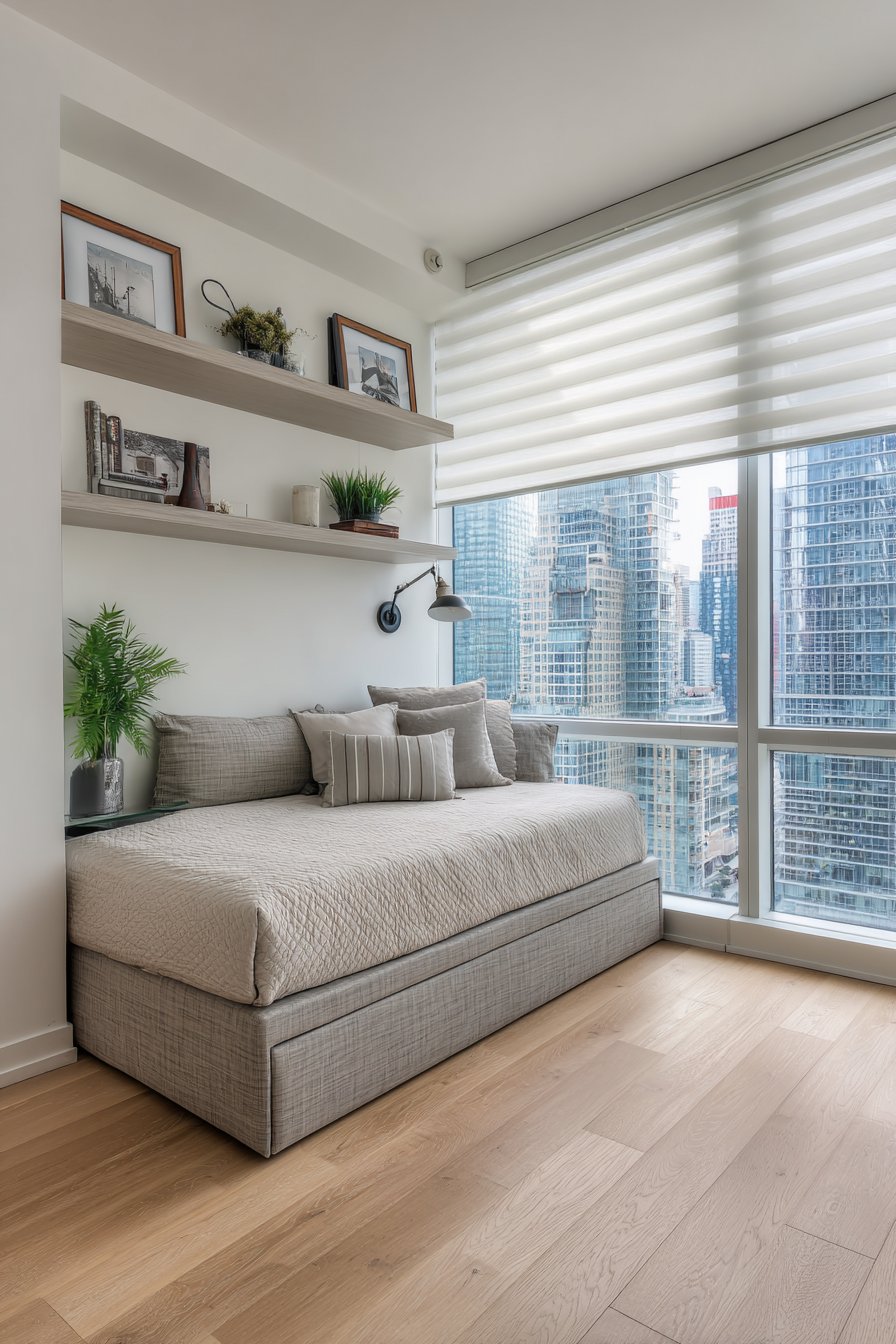
Light hardwood flooring runs horizontally across the space, a deliberate choice that visually elongates the room and makes it appear wider than its actual measurements. This directional element works with the eye’s natural tendency to follow lines, subtly manipulating perception to enhance the sense of spaciousness. The sheer roller blind filters natural light softly, providing privacy while maintaining brightness and connection to the outside world—essential for preventing small spaces from feeling isolated or confined.
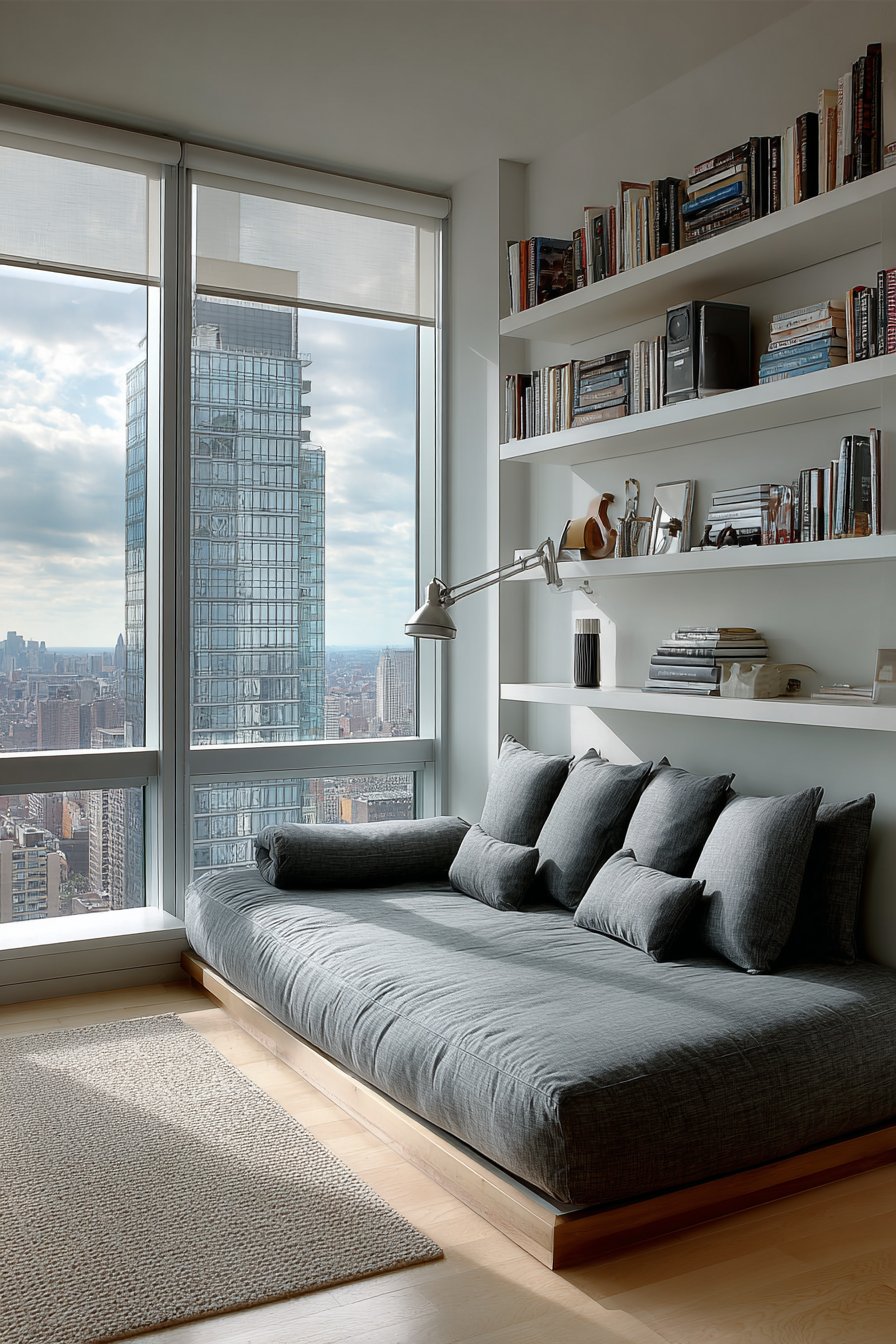
Interior design photography showing balanced composition emphasizes the multipurpose furniture and streamlined arrangement that makes this small bedroom work overtime. During the day, the trundle remains hidden and the daybed functions as primary seating; at night, the trundle pulls out to accommodate guests or provide a more spacious sleeping surface. This flexibility allows the room to adapt to different needs without requiring different furniture, the ultimate goal of space-efficient design.
Key design tips: Choose daybeds with trundles to double sleeping capacity without permanently consuming floor space. Select durable upholstery fabrics like linen that age gracefully and suit both sitting and sleeping uses. Install swing-arm wall lamps to eliminate nightstands and maximize bedside flexibility. Run flooring horizontally to visually widen narrow rooms and enhance spaciousness. Use sheer window treatments to maintain natural light while providing necessary privacy.
7. Built-In Bed Nook
Custom built-in furniture represents the gold standard of small space design, as it can be precisely tailored to fit awkward dimensions and maximize every available inch. This bedroom features a built-in bed nook created through custom millwork, forming a cocoon-like sleeping area that feels intentionally intimate rather than accidentally small. Integrated reading lights and charging stations are built directly into the nook’s walls, providing modern conveniences without requiring any additional furniture or surface space.
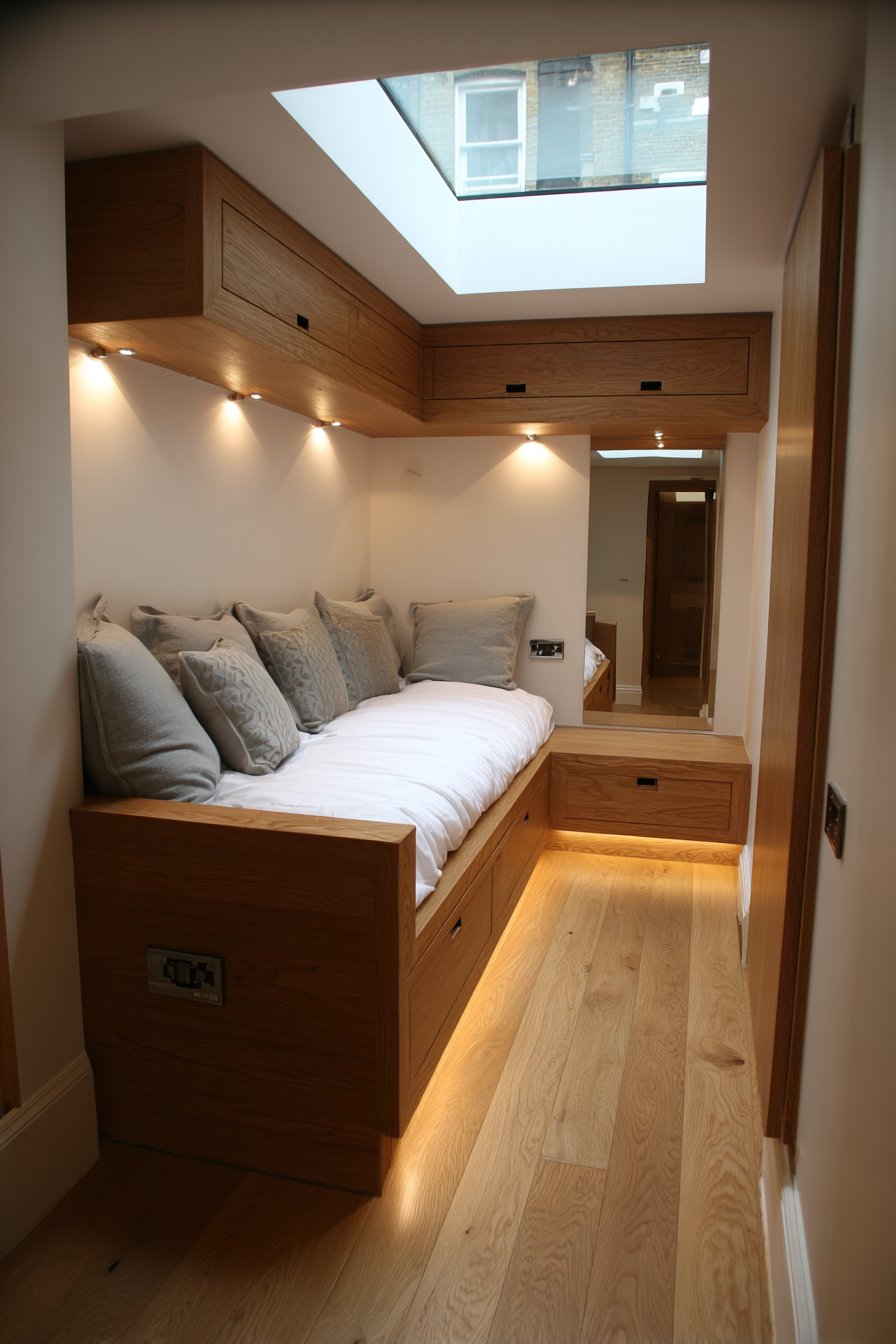
Storage drawers built into the platform base provide substantial organization space that disappears into the architectural structure of the room. This integration means the storage doesn’t read as furniture but rather as part of the room itself, reducing visual clutter while dramatically increasing practical capacity. The remainder of the room remains open for a dressing area equipped with wall-mounted hooks and a narrow full-length mirror that leans casually in the corner, maintaining functionality without permanent fixtures that would crowd the space.
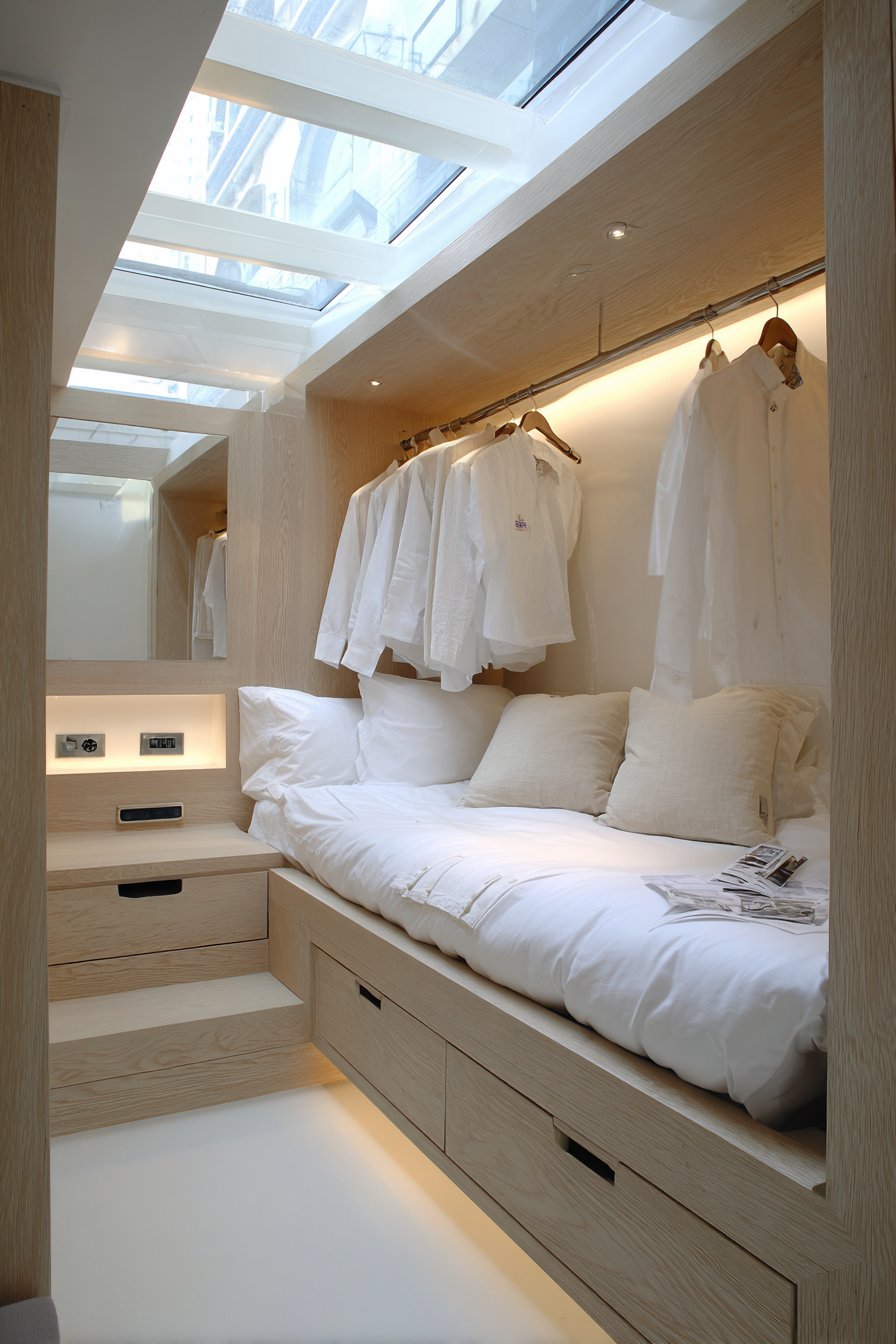
The soft white oak finish used throughout the custom millwork maintains cohesion and creates a unified architectural statement. The light wood tone reflects available natural light while introducing organic warmth that prevents the built-in elements from feeling cold or institutional. This consistency in material and finish helps the small room feel like a thoughtfully designed whole rather than a collection of separate pieces fighting for attention.
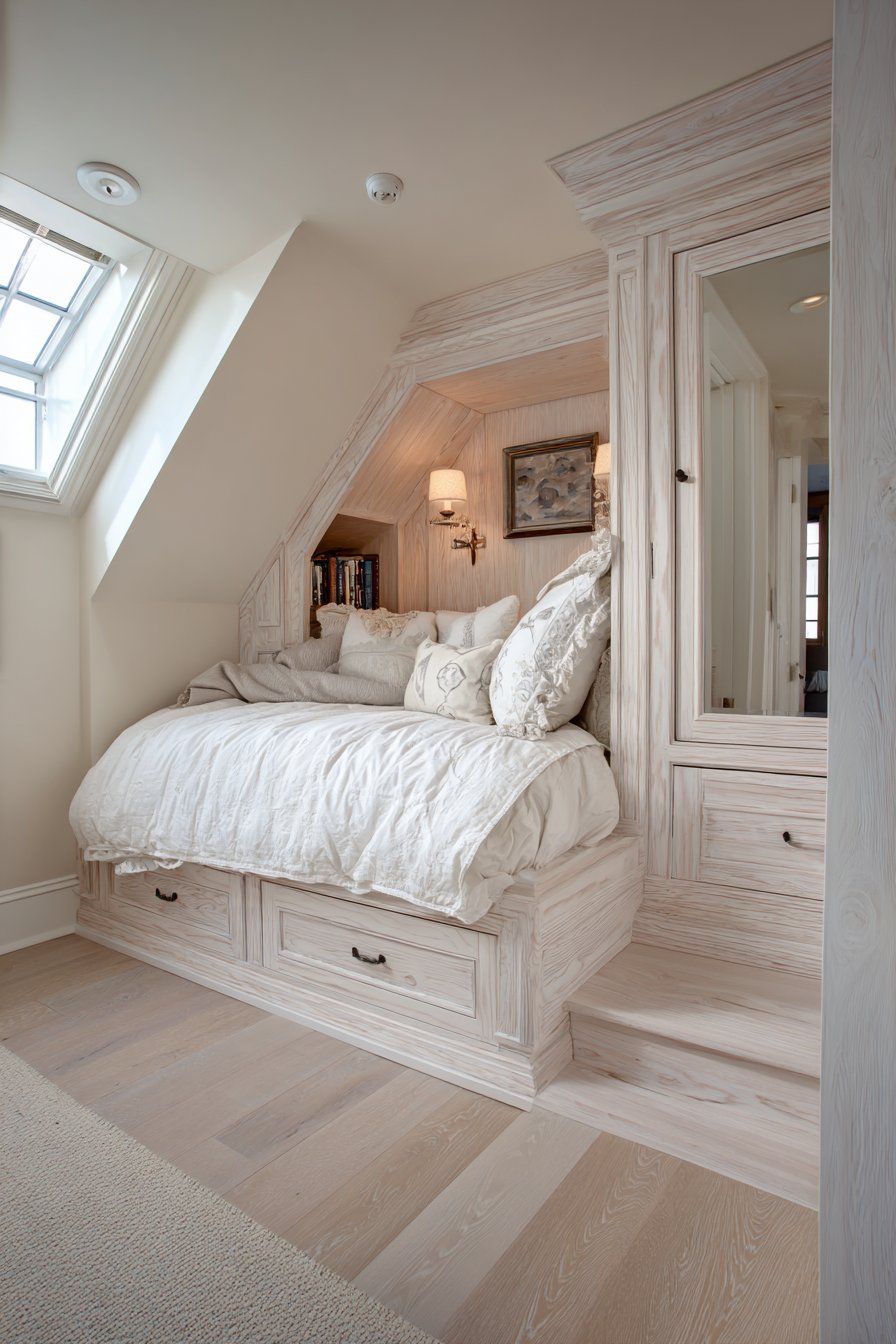
Natural light from a skylight positioned above the sleeping nook floods the space with illumination from above, a brilliant solution that provides light without consuming wall space or requiring windows that might limit furniture placement. Architectural photography style captures the bespoke carpentry details and efficient spatial planning, highlighting the custom craftsmanship that transforms this small bedroom from a challenge into a showcase of personalized design.
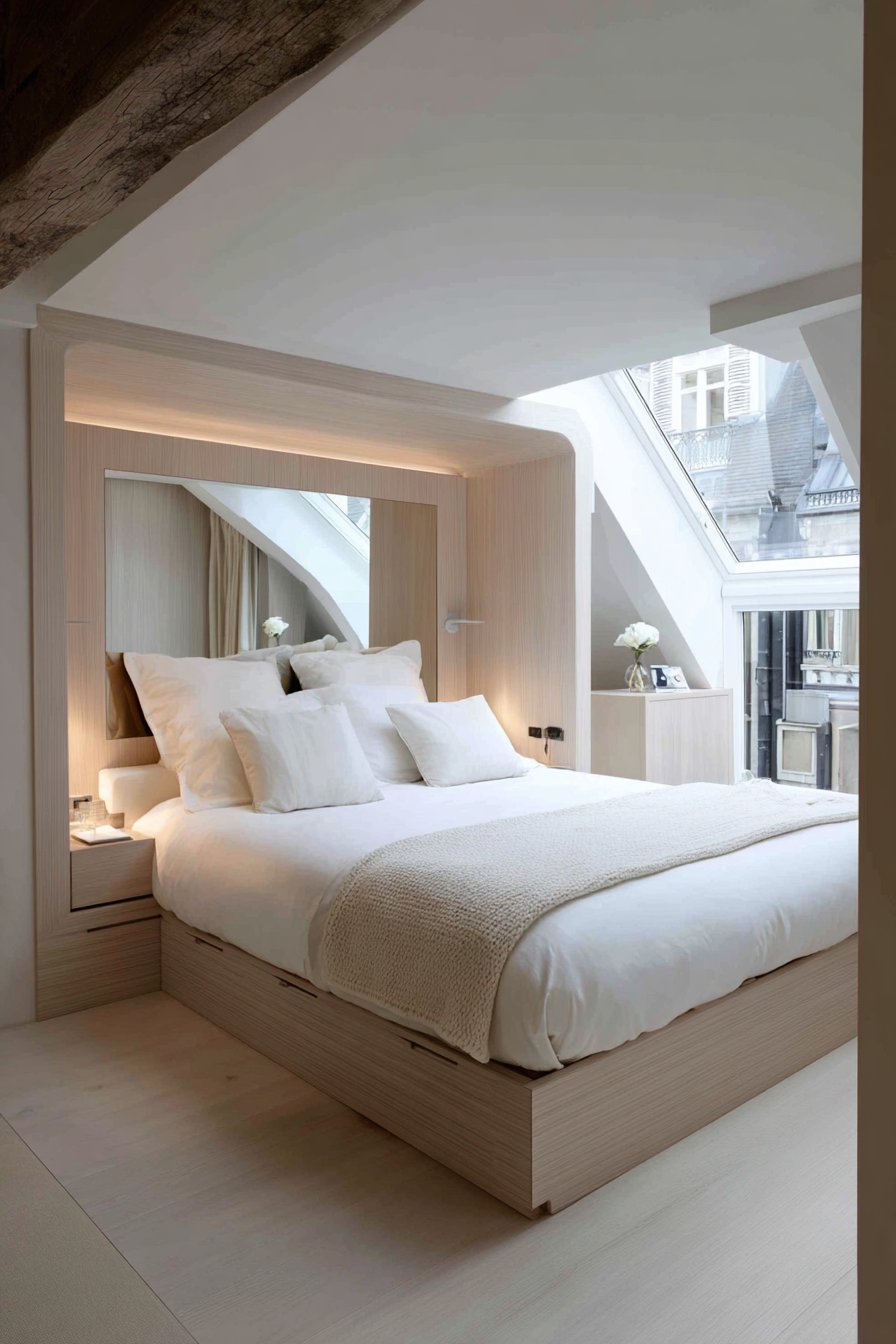
Key design tips: Invest in custom built-ins to maximize awkward spaces and achieve perfect fit in small bedrooms. Integrate lighting and electrical outlets directly into built-in furniture to eliminate cords and surface clutter. Use platform bases with built-in drawers to create seamless storage within architectural elements. Choose consistent wood finishes throughout custom millwork to create visual unity. Install skylights when possible to bring in natural light without consuming wall space needed for furniture.
8. Murphy Bed Transformation
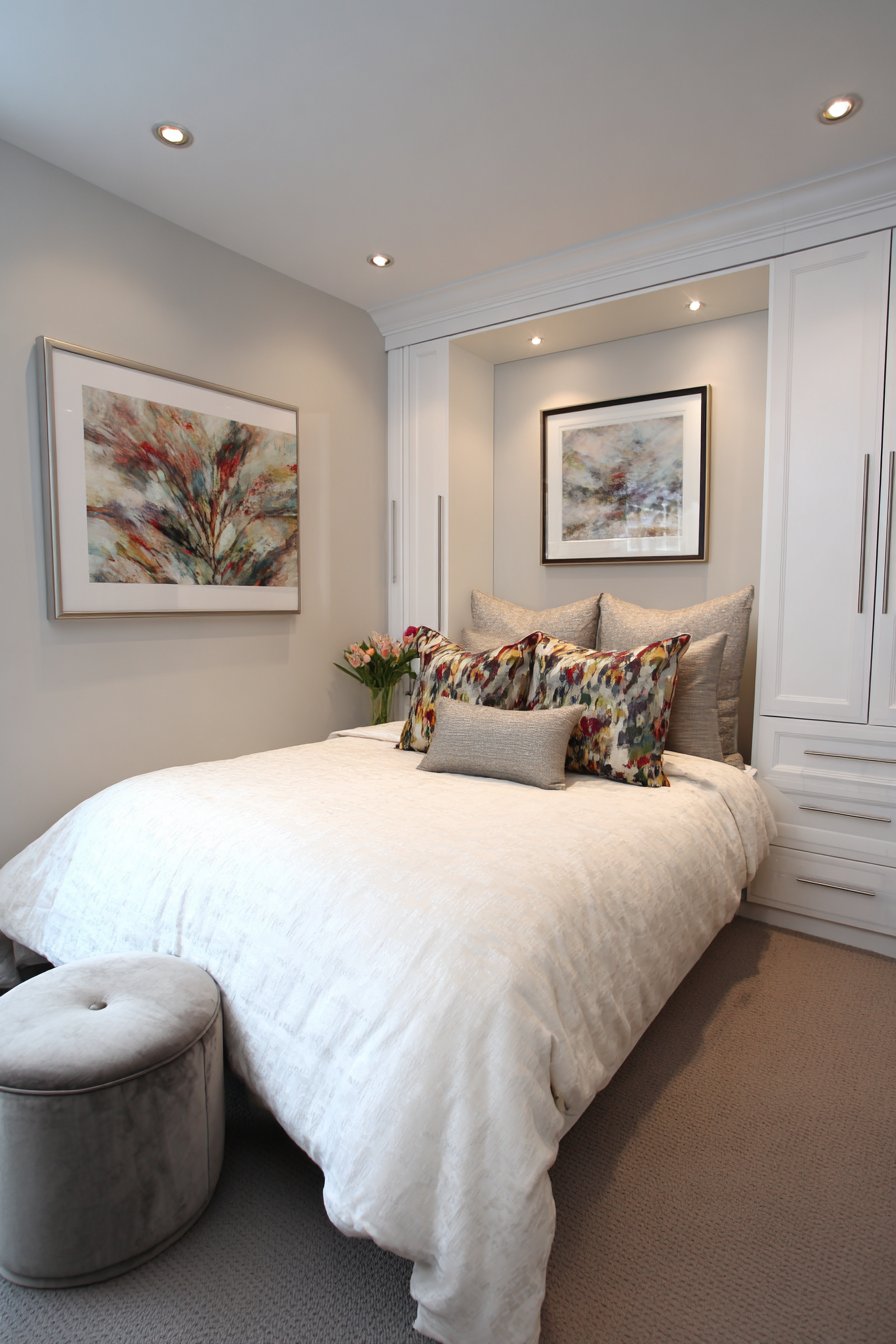
The murphy bed represents perhaps the most dramatic transformation available in small bedroom design, literally making the bed disappear when not in use. This design showcases a murphy bed housed within seamless white cabinetry that completely disguises the sleeping area when folded up, transforming the bedroom into a multi-purpose room that could function as an office, studio, or living area during waking hours. The integrated side shelving units that frame the bed provide nightstand functionality when the bed is down, eliminating the need for separate furniture pieces.
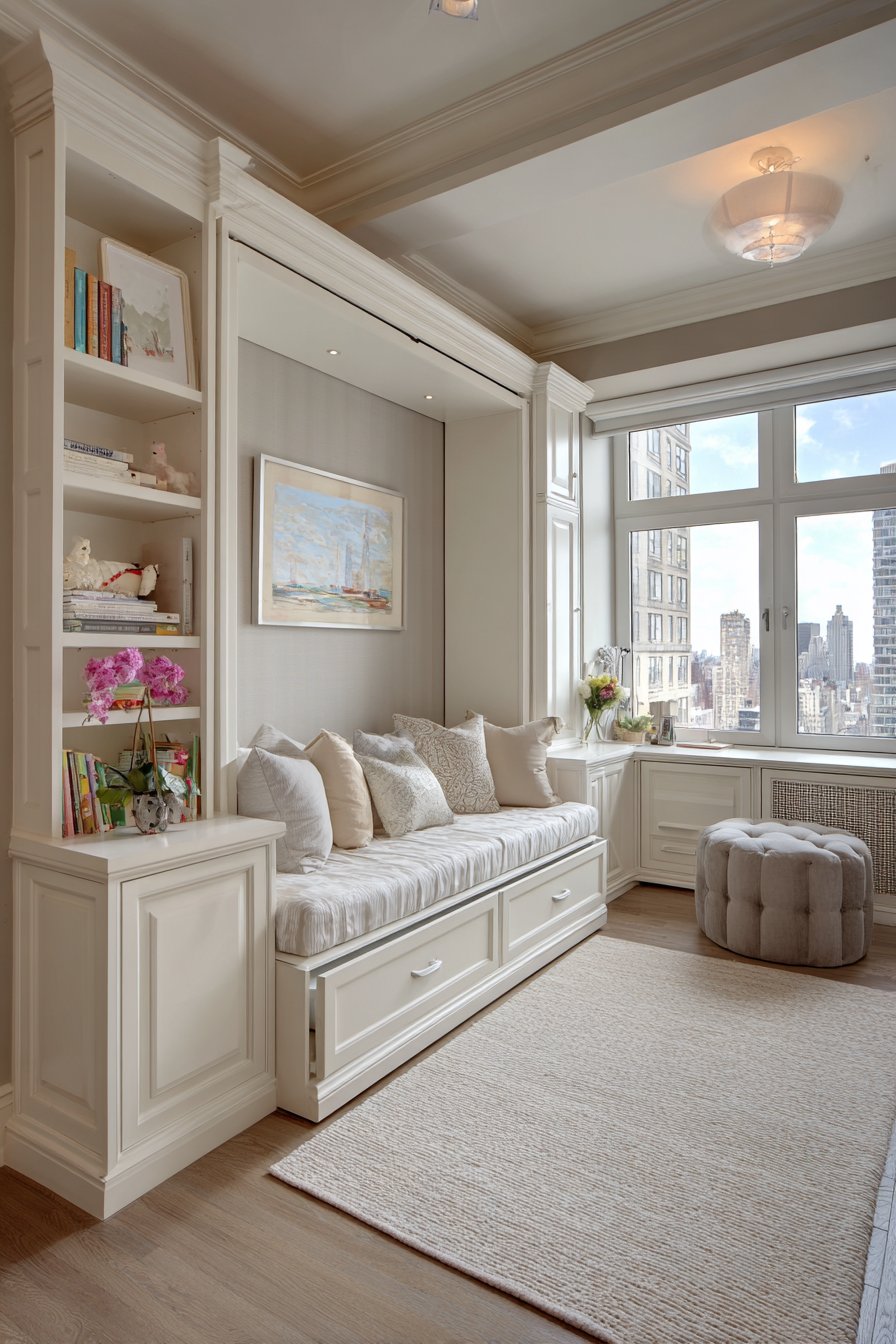
A compact velvet ottoman serves triple duty as seating, footrest, and storage, its lid lifting to reveal hidden space for linens or personal items. The rich texture of velvet adds a touch of luxury and sophistication to the otherwise streamlined space, demonstrating that space-saving doesn’t require sacrificing all decorative elements. The pale grey walls with subtle texture provide a refined backdrop that works equally well whether the room is configured for sleeping or daytime activities.
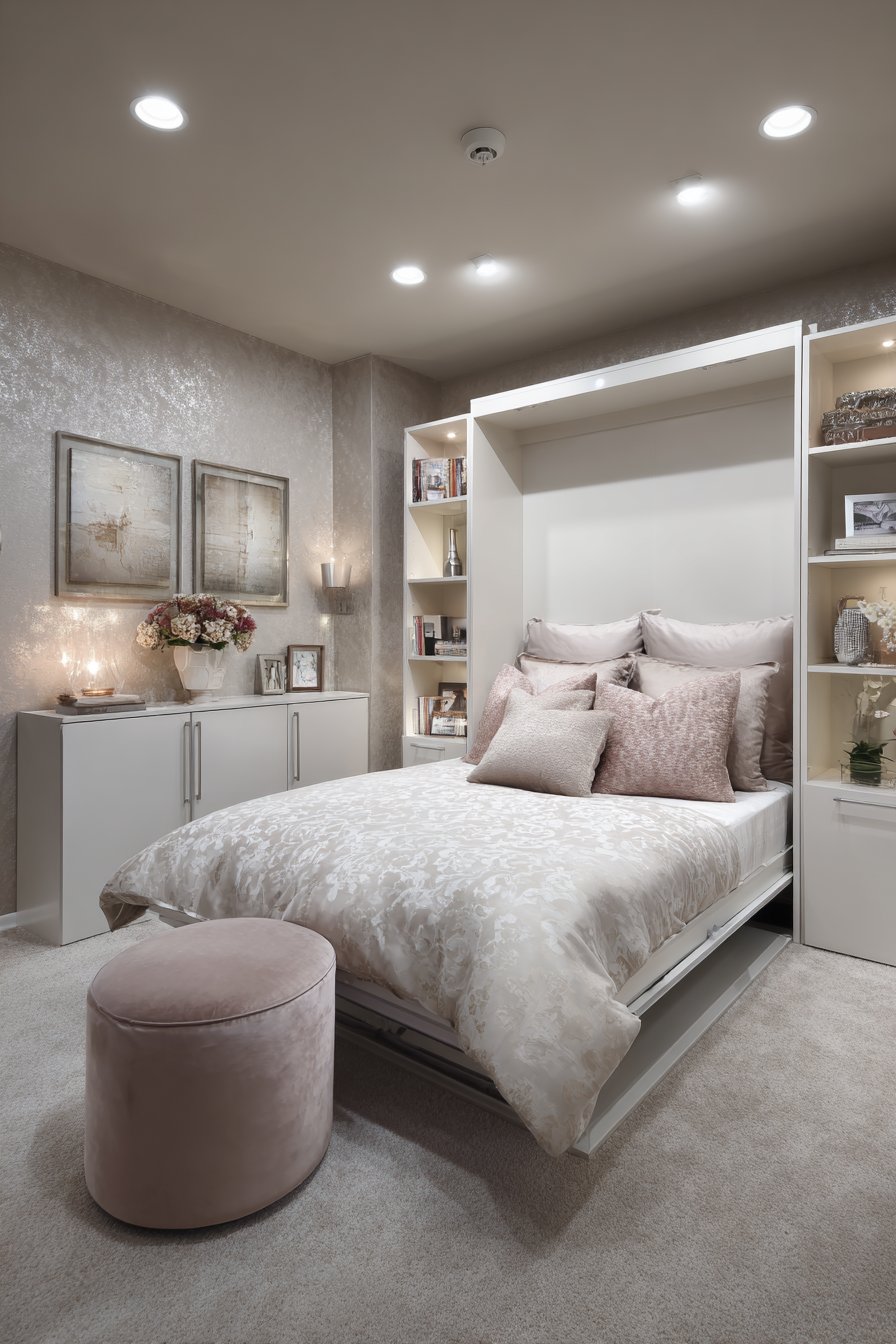
Recessed ceiling lights provide even, shadow-free illumination that adapts to the room’s changing functions throughout the day. This lighting solution avoids the need for table lamps or floor lamps that would need to be moved as furniture configurations change. The clean, uncluttered ceiling maintains the room’s minimalist aesthetic while ensuring adequate light for any activity.
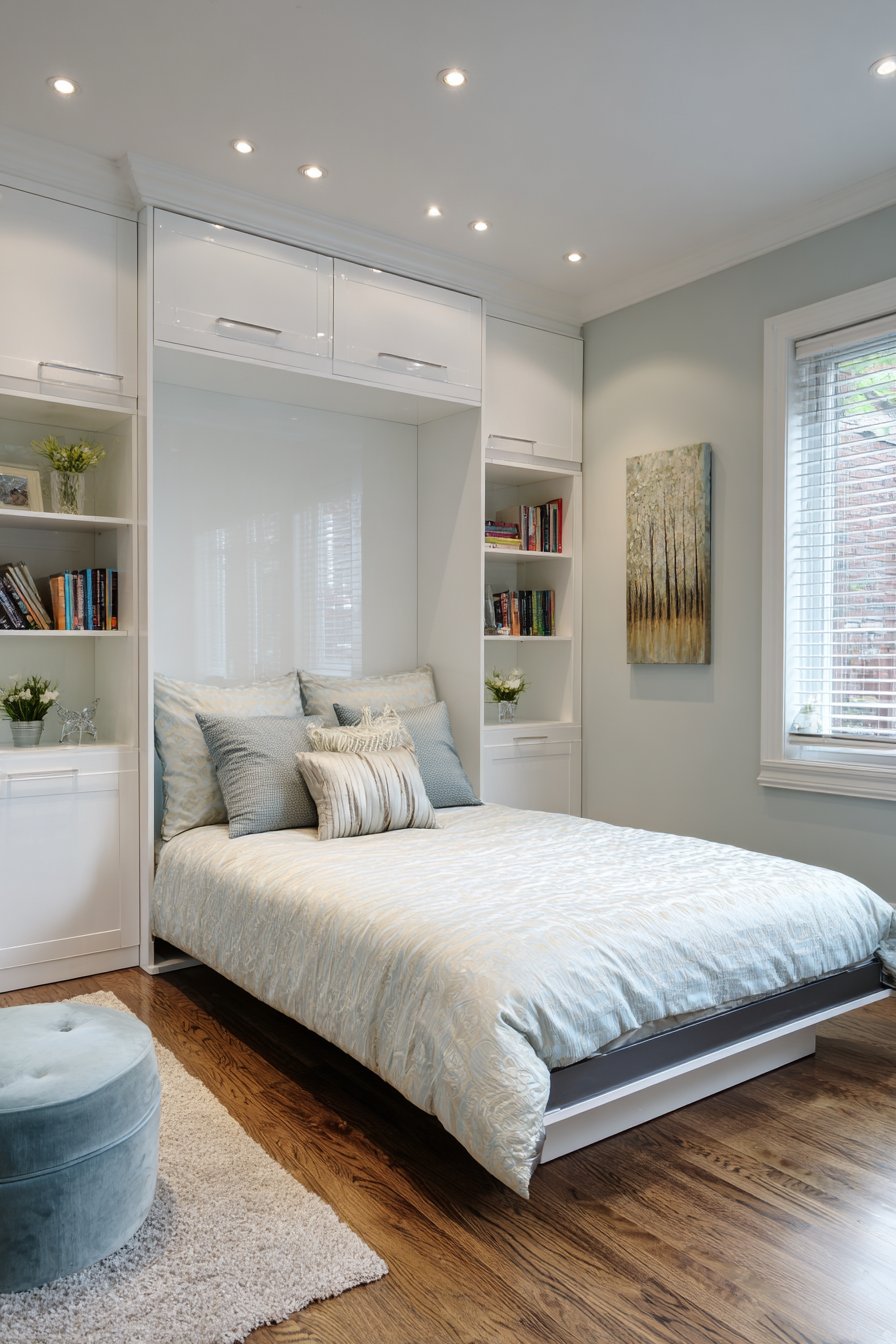
Wide-angle interior photography with balanced exposure demonstrates the room’s remarkable dual functionality and clean aesthetic transformation between day and night use. The murphy bed system proves that small bedrooms can literally multiply their usefulness by embracing furniture that adapts to different needs rather than remaining fixed in a single configuration. This flexibility is particularly valuable in studio apartments or rooms that must serve multiple functions for their occupants.
Key design tips: Install murphy beds in seamless cabinetry that blends with walls when closed to create multipurpose rooms. Choose systems with integrated shelving that provides nightstand function without separate furniture. Use recessed lighting to provide flexible illumination that works for all room configurations. Add multifunctional furniture like storage ottomans to maximize every piece’s contribution. Select smooth, uniform wall colors that work equally well for sleeping and daytime activities.
9. Raised Platform with Storage Steps
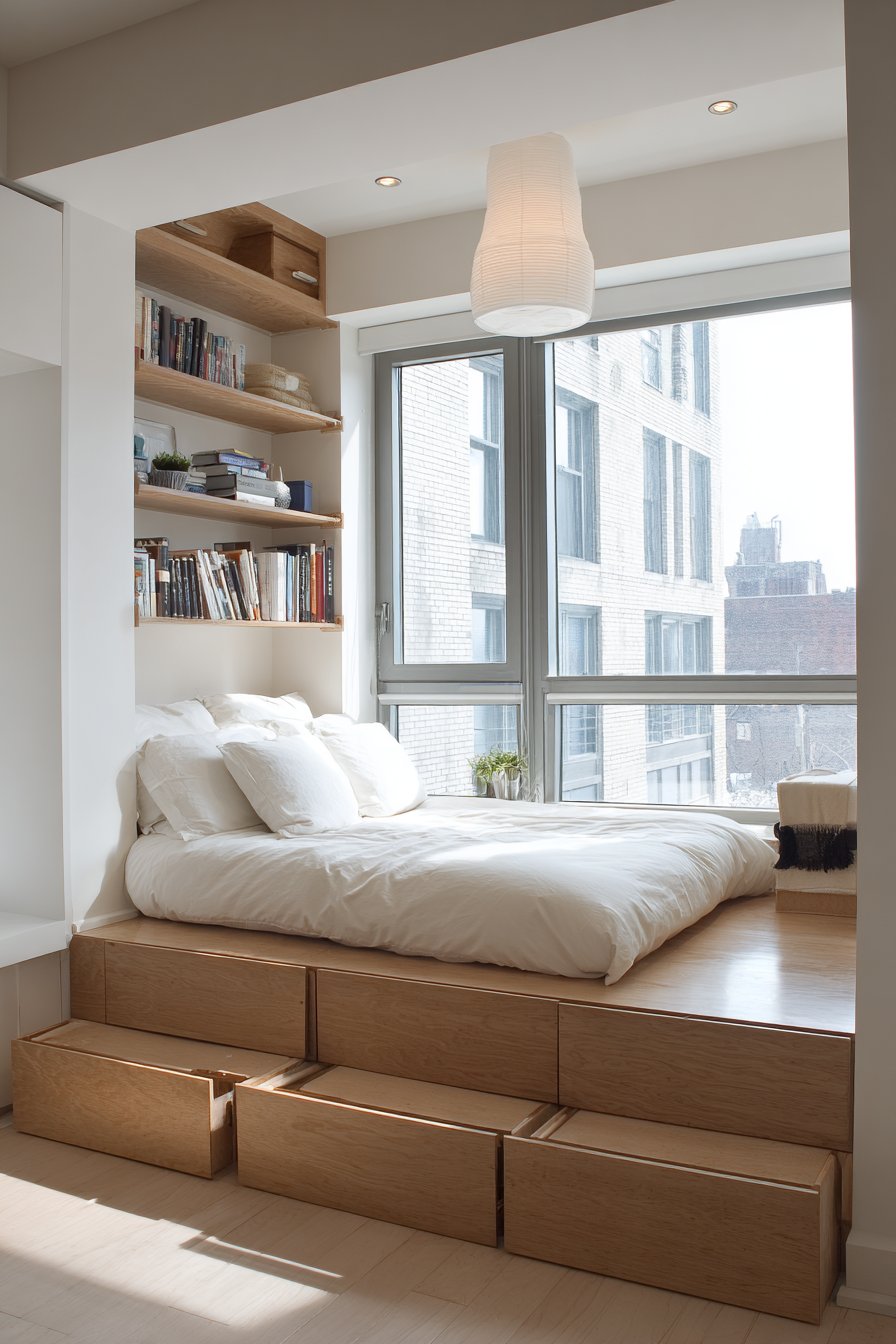
Some of the most ingenious small space solutions involve creative approaches to level changes and three-dimensional thinking. This bedroom features a raised platform sleeping area accessed by three wide storage steps, with each step containing deep pull-out drawers that maximize the vertical space required to reach the platform. This approach transforms what would typically be wasted space—the area inside the steps—into valuable storage that’s actually easier to access than items stored in deep closets or under low beds.
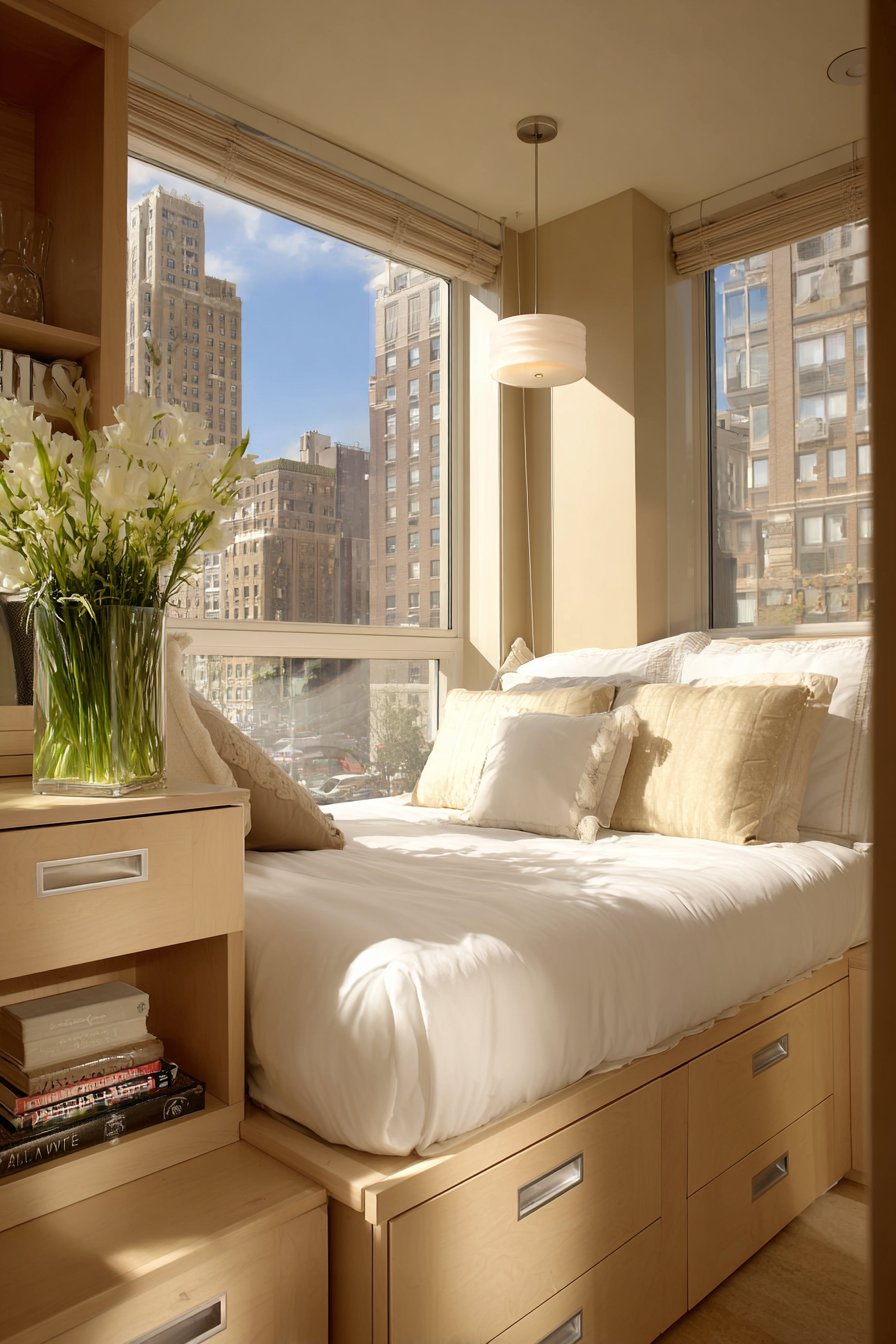
The platform itself creates clearly defined zones within the tiny space, with the elevated sleeping area feeling separate from the floor-level activities below despite the room’s compact dimensions. This psychological separation enhances the bedroom’s functionality by creating a dedicated sleep zone that feels distinct from daily living areas. Simple cotton bedding in crisp white maintains an airy, uncomplicated aesthetic that prevents the architectural interest of the platform from being overwhelmed by busy patterns or bold colors.
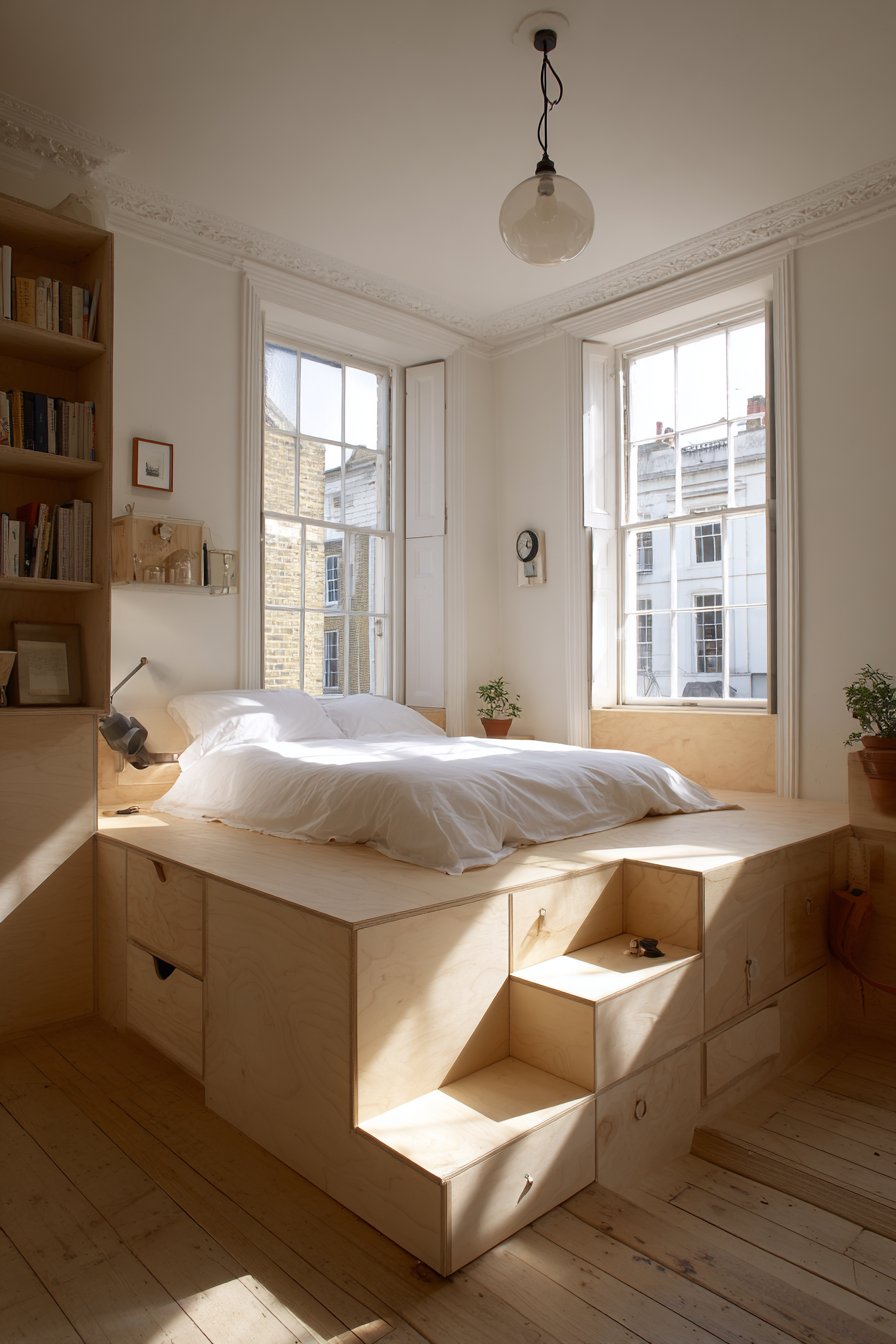
A single understated pendant light hangs at an appropriate height to illuminate the sleeping area without interfering with sitting upright or moving about the platform. The light maple construction used throughout the platform and steps maintains visual lightness despite the substantial structure, proving that even major architectural interventions can avoid appearing heavy when executed in pale, natural materials. Natural daylight from a window positioned at floor level reaches into the space, with the platform’s open sides allowing light to flow throughout the room rather than creating a dark cave beneath.
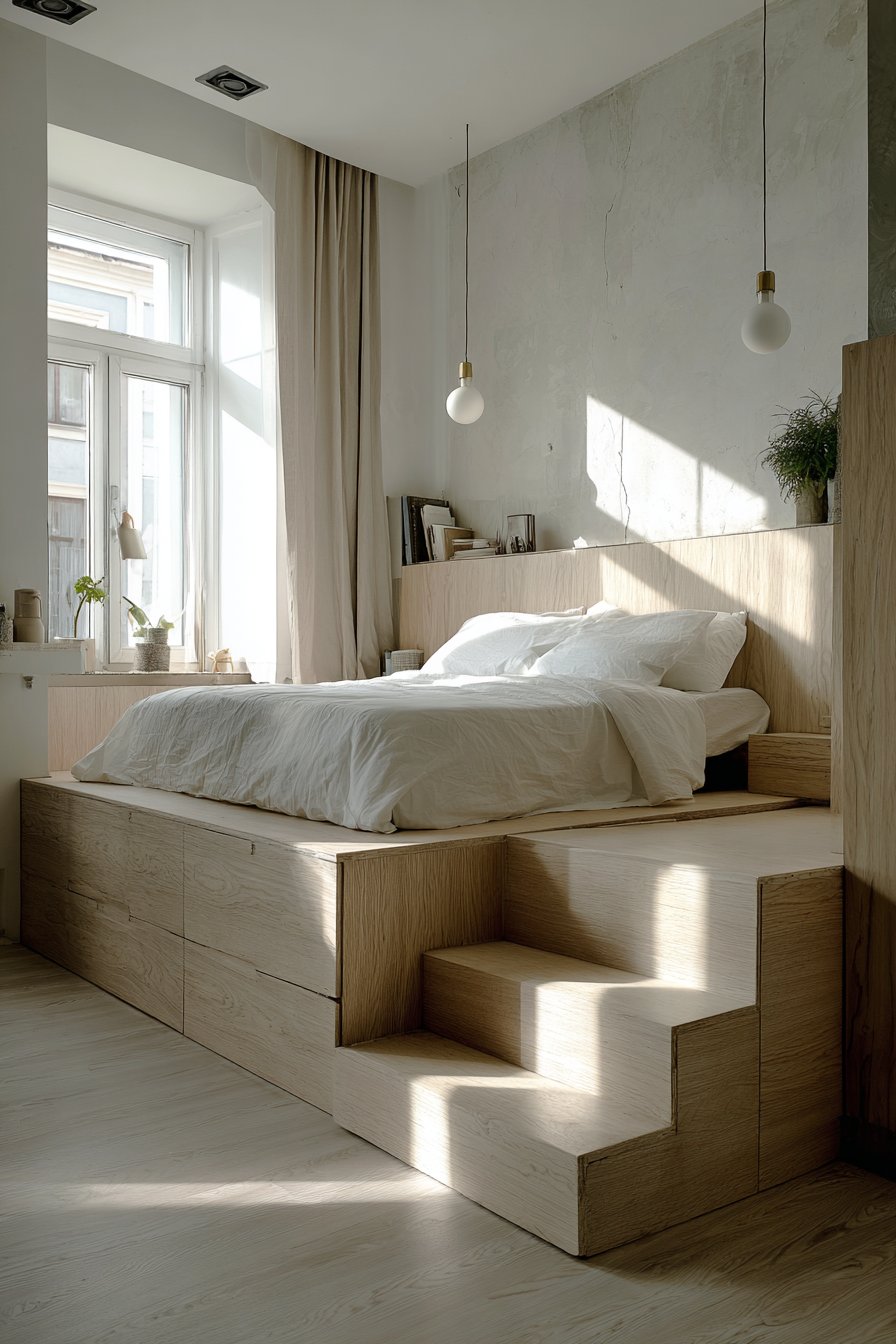
Interior design photography emphasizing the architectural solution captures the practical storage integration and highlights how soft natural shadows define depth and dimension. The stepped approach to reaching the bed platform adds an unexpected architectural element that transforms the small bedroom from ordinary to memorable, proving that constraints often inspire the most creative solutions.
Key design tips: Build raised platforms with integrated storage steps to maximize vertical space utilization. Ensure steps are deep and wide enough for safe access while maximizing drawer capacity. Use light wood finishes to prevent substantial architectural elements from appearing heavy. Keep bedding simple and light-colored to balance architectural interest below. Position windows to provide light at multiple levels when working with raised sleeping platforms.
10. Corner-Positioned Efficiency
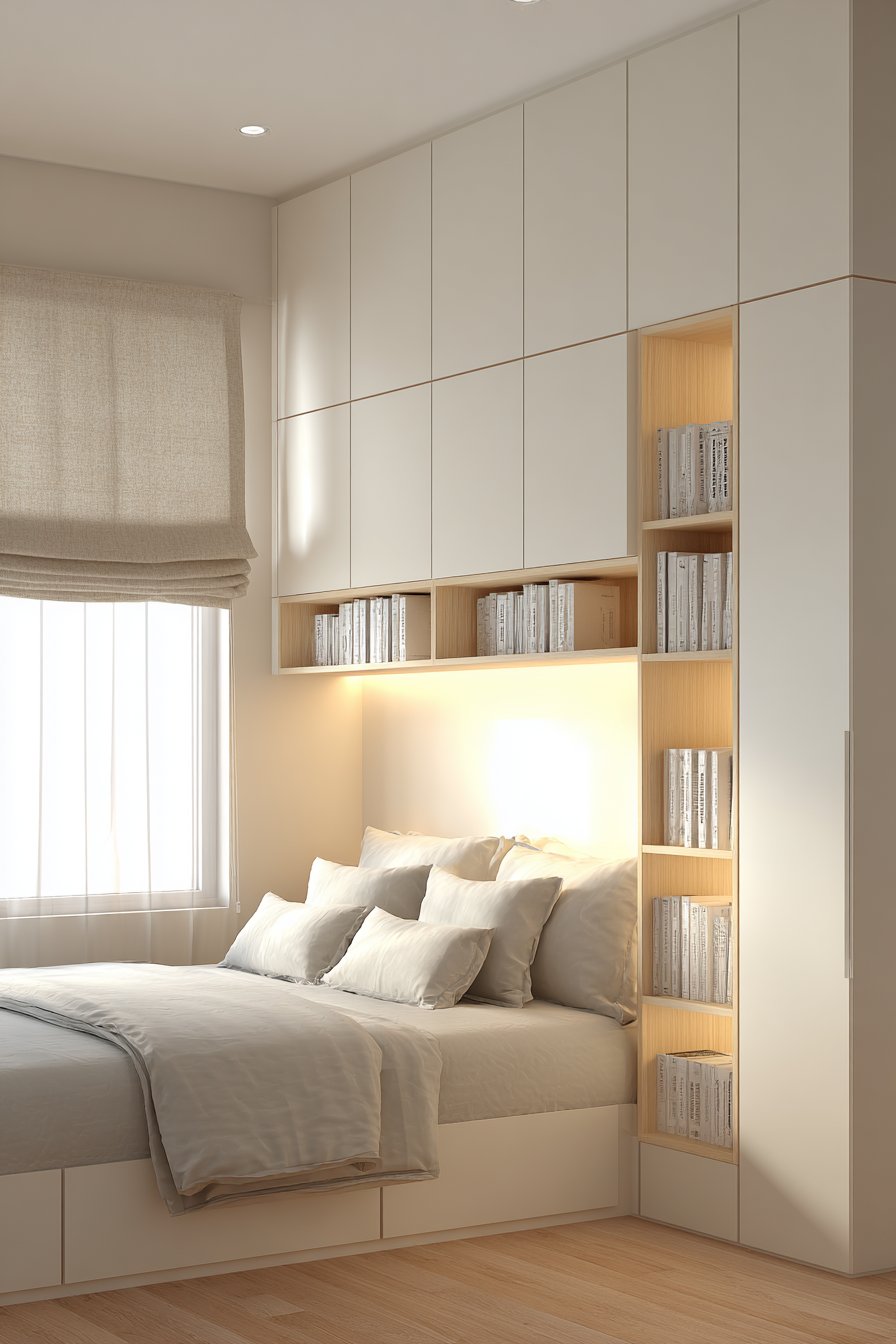
Sometimes the most effective approach to small bedroom design involves straightforward, practical furniture placement rather than elaborate custom solutions. This bedroom demonstrates how pushing a bed into a corner creates L-shaped wall contact that allows for a slim nightstand on one accessible side while maximizing open floor space for movement. The floating desk mounted on an adjacent wall folds flat when not needed, providing a legitimate workspace when required without permanently consuming valuable square footage.
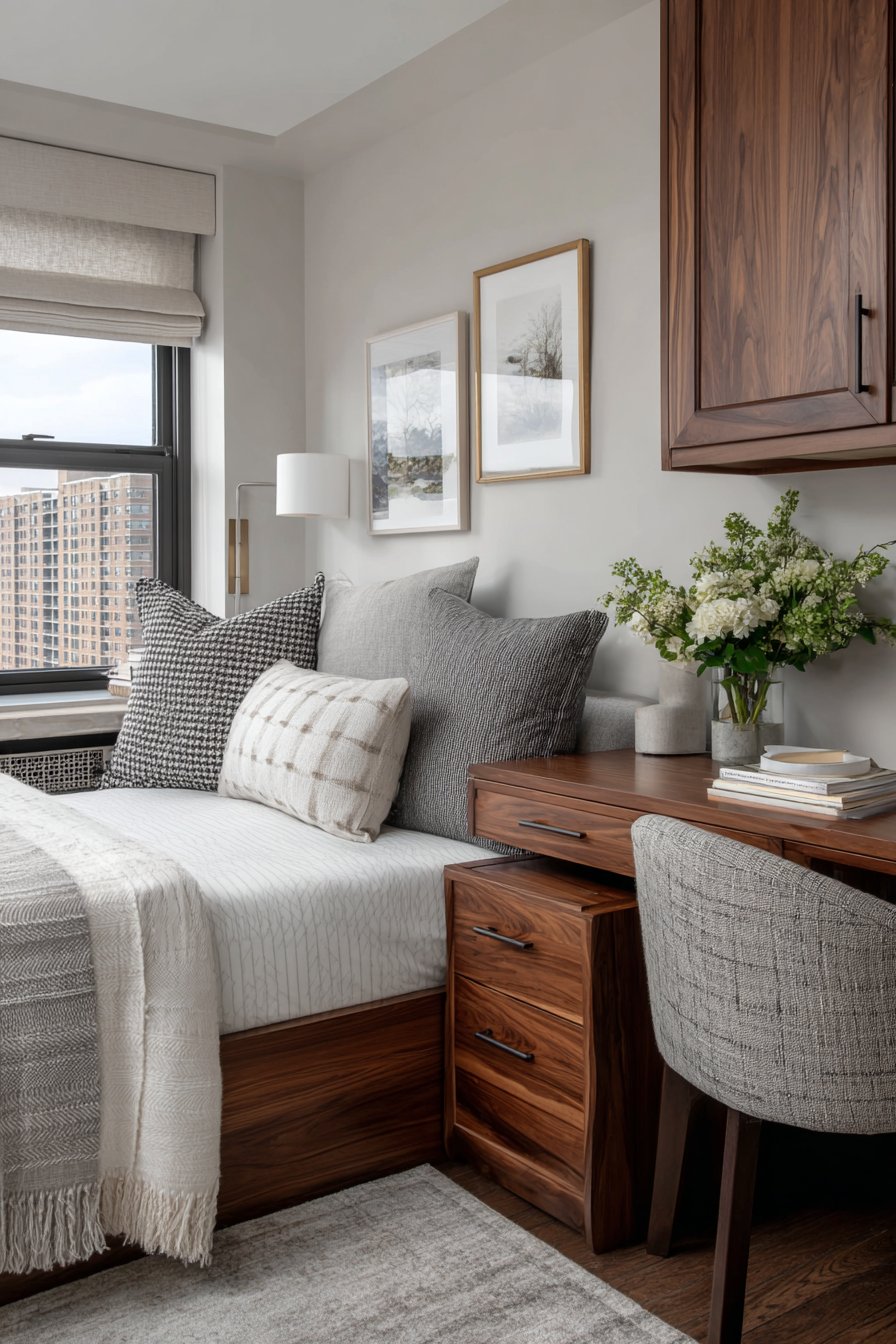
A narrow wardrobe with sliding doors provides vertical storage while the sliding mechanism eliminates the clearance required for traditional hinged doors—a crucial consideration in tight quarters where every inch of floor space matters. The monochromatic palette of soft whites and warm greys creates a cohesive, restful environment that avoids the visual fragmentation that would make the small space feel even more cramped. This restrained color scheme also provides a neutral backdrop that adapts easily to changing décor preferences or seasonal updates.
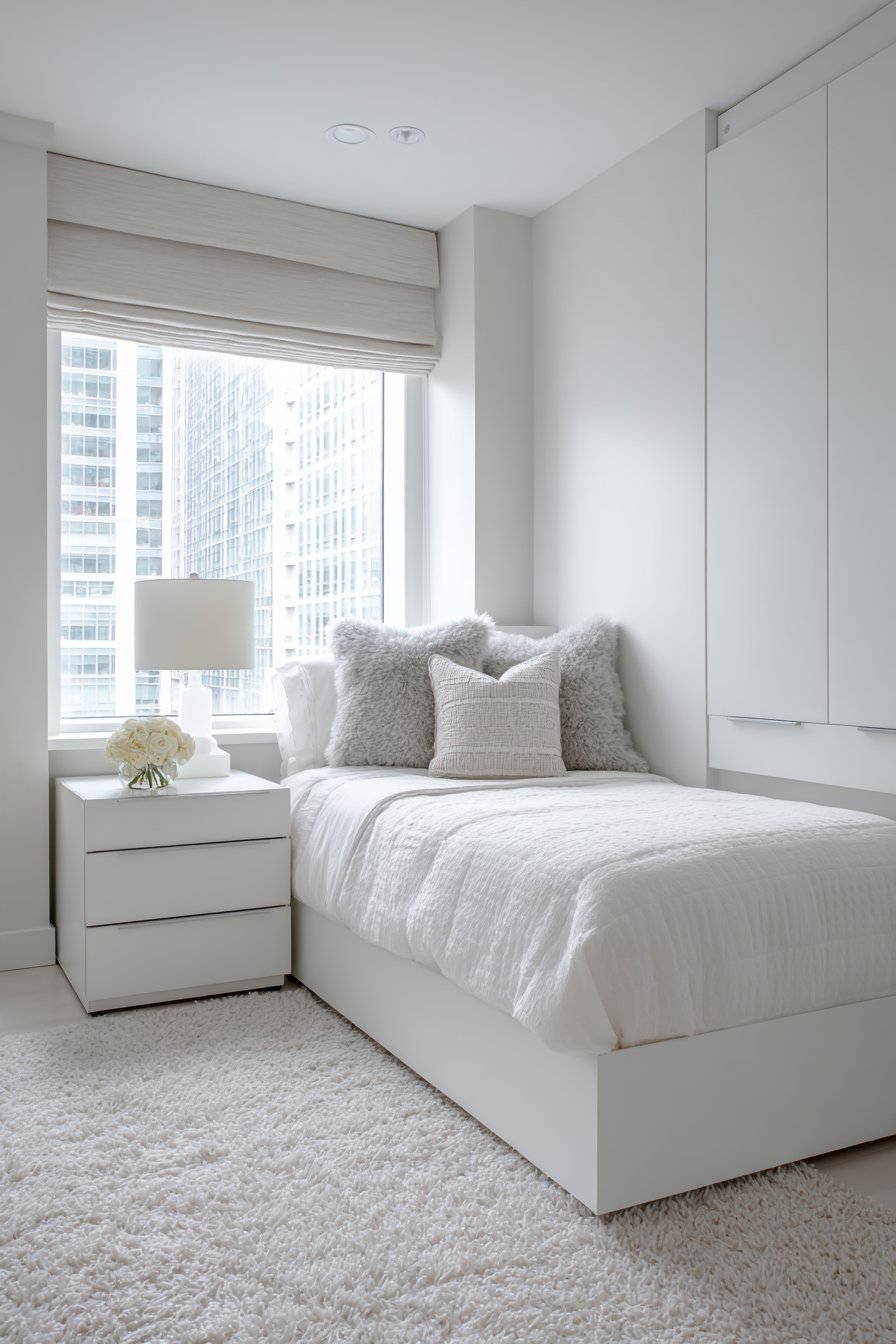
The small window dressed with a simple linen shade provides privacy while maintaining connection to natural light, essential for preventing small bedrooms from feeling like dark, isolated caves. The shade’s neutral tone and simple operation keep the window treatment from becoming a visual focal point that would compete with the room’s functional elements. Professional interior photography showing realistic proportions reveals the livable layout and thoughtful attention to traffic flow in tight quarters.
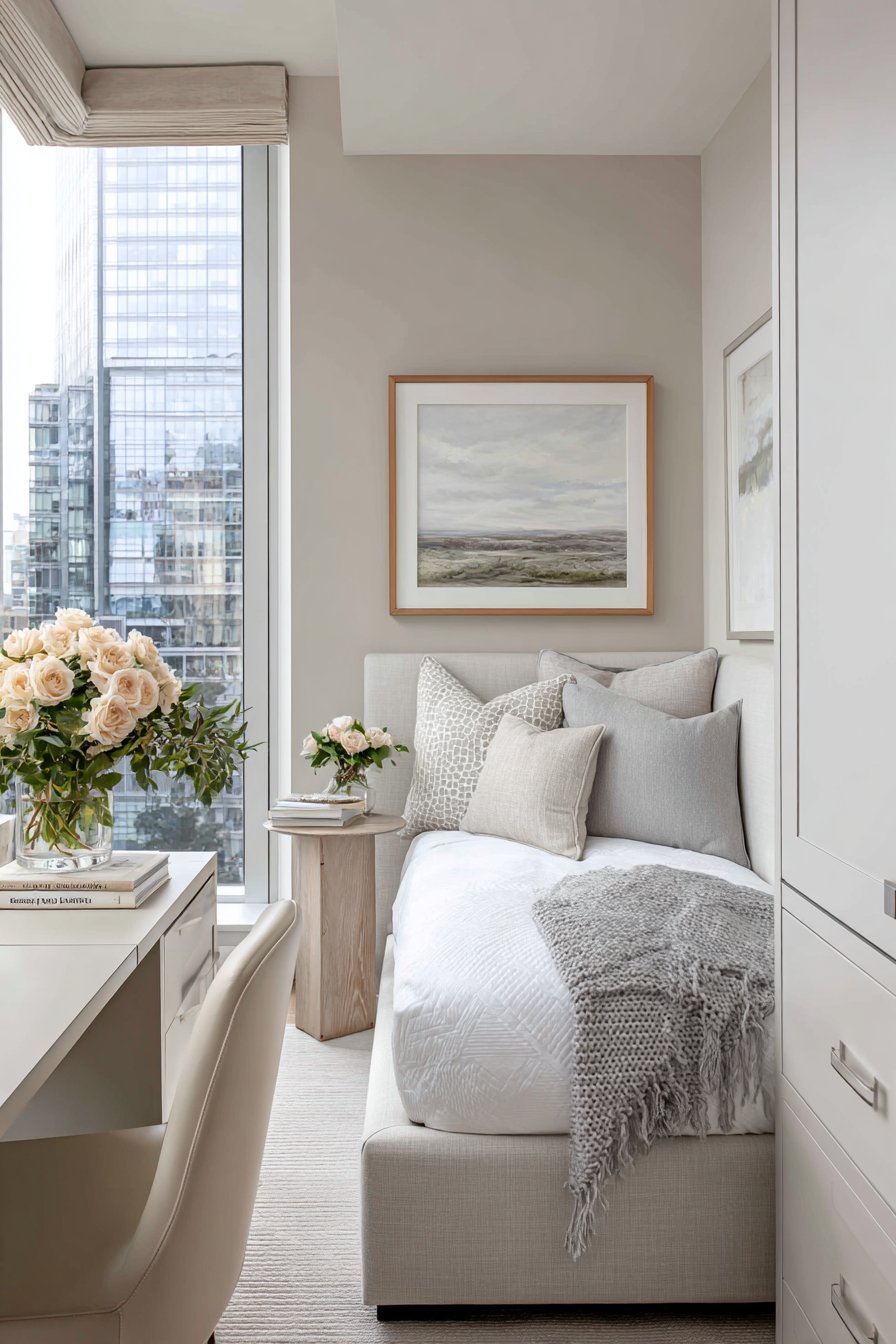
This bedroom proves that small space design doesn’t always require expensive custom solutions or dramatic architectural interventions. Sometimes, smart furniture selection, practical placement, and a cohesive color scheme deliver perfectly functional and attractive results. The key lies in thinking carefully about circulation paths, ensuring adequate clearance for opening drawers and doors, and choosing scaled-appropriate furniture that doesn’t overpower the available space.
Key design tips: Position beds in corners to maximize one continuous expanse of open floor space. Install fold-flat wall-mounted desks to create flexible workspace without permanent floor space commitment. Choose wardrobes with sliding doors to eliminate swing clearance requirements in tight rooms. Maintain monochromatic color schemes to create visual unity and enhance spaciousness. Ensure adequate clearance around all furniture for comfortable movement and access to storage.
11. Japanese-Inspired Minimalism
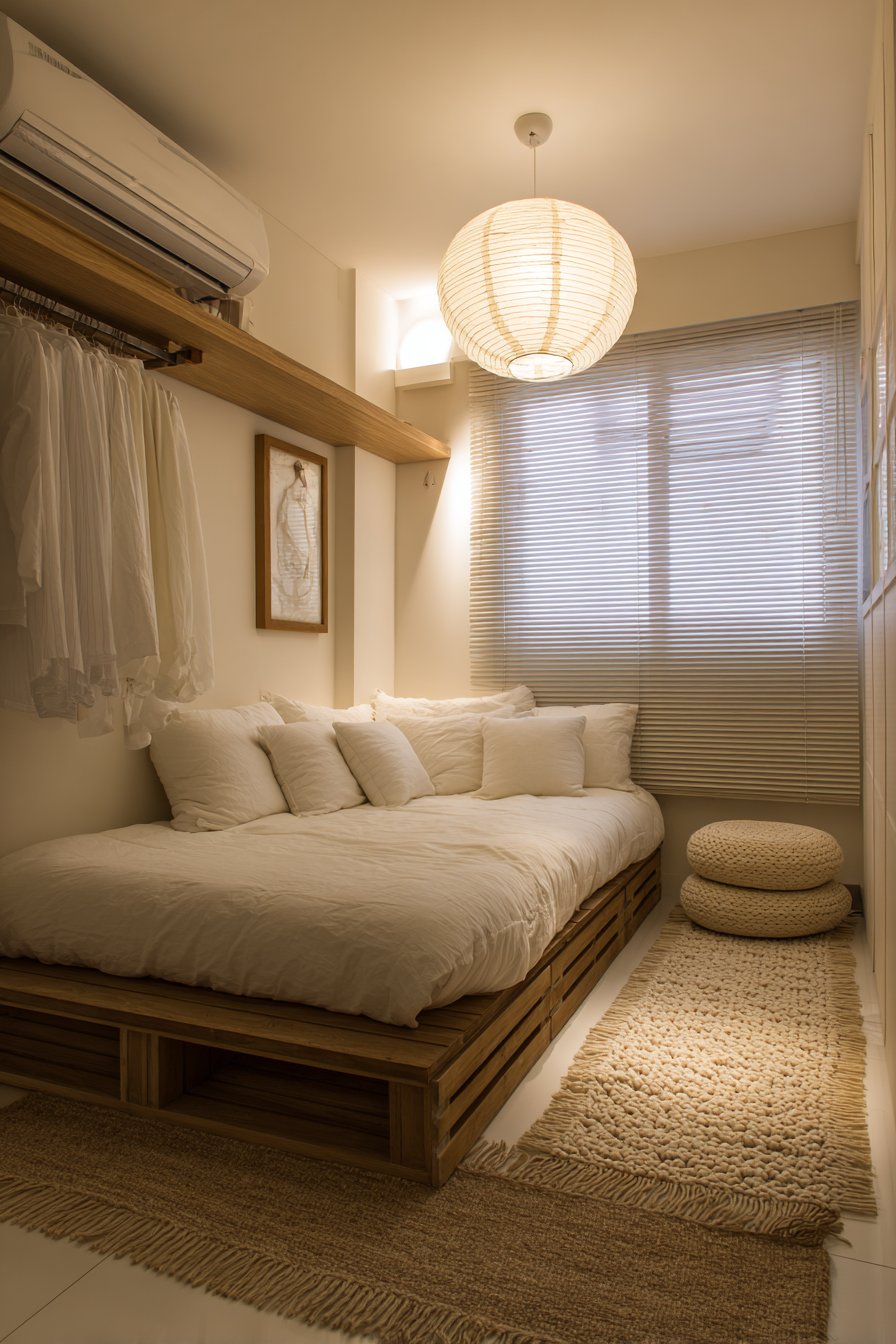
Eastern design philosophies offer profound wisdom for small space living, emphasizing intentionality, simplicity, and the beauty of empty space. This bedroom embraces Japanese-inspired minimalist design with a low futon mattress resting on a simple platform frame that sits close to the floor, following the traditional Japanese preference for low furniture that creates visual spaciousness above. The tatami-style area rug defines the sleeping zone while introducing natural material texture that adds warmth without visual complexity.
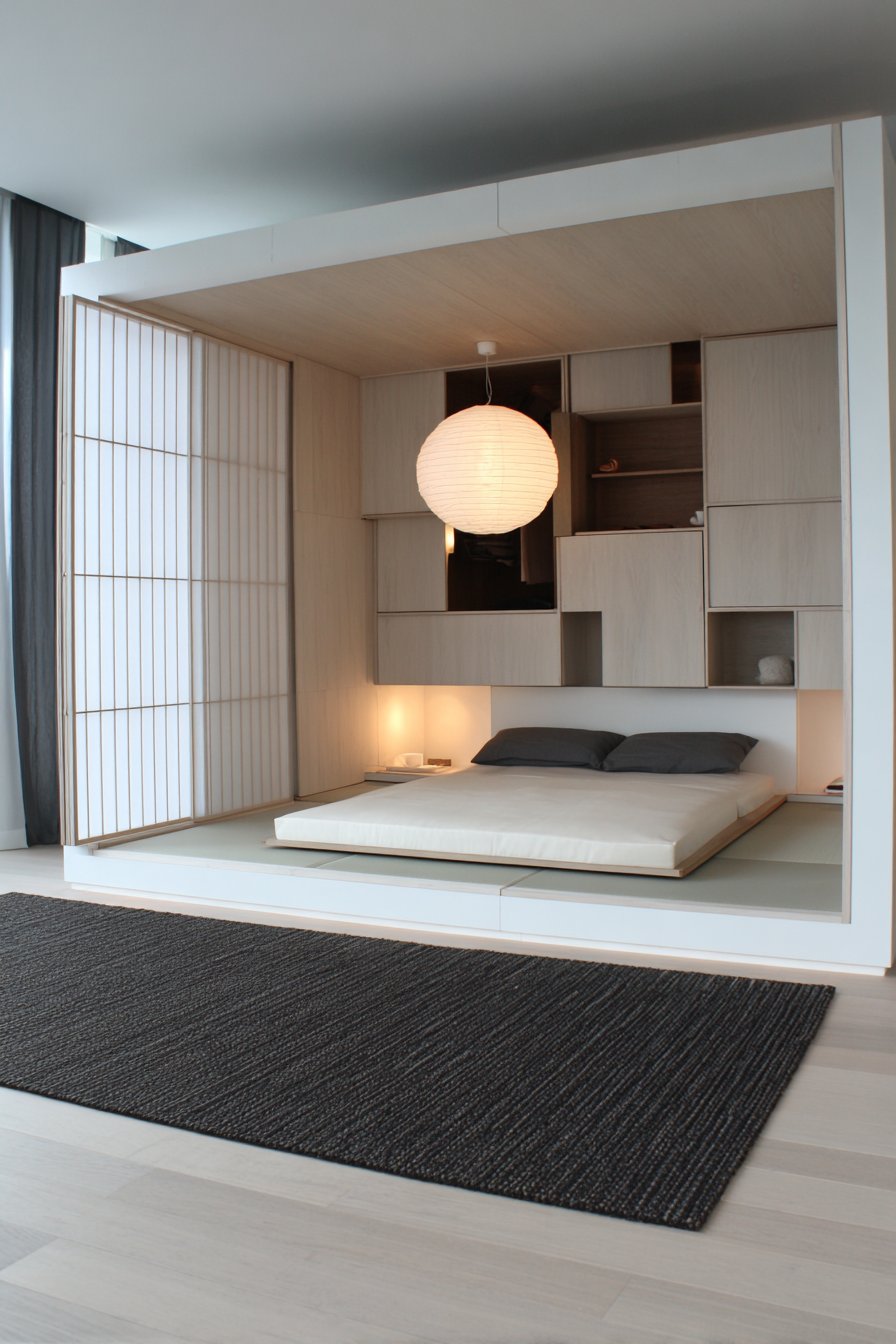
A wall-mounted clothing rod with a fabric curtain provides concealed storage that can be hidden or revealed as needed, embodying the Japanese aesthetic principle of maintaining visual calm through strategic concealment. This approach proves that storage doesn’t need to be permanently visible or prominently displayed—sometimes the most elegant solution involves simple curtains in natural fabrics that blend seamlessly into the wall color. The neutral color scheme of natural fibers and light woods creates a serene, almost meditative environment that promotes rest and mental clarity.
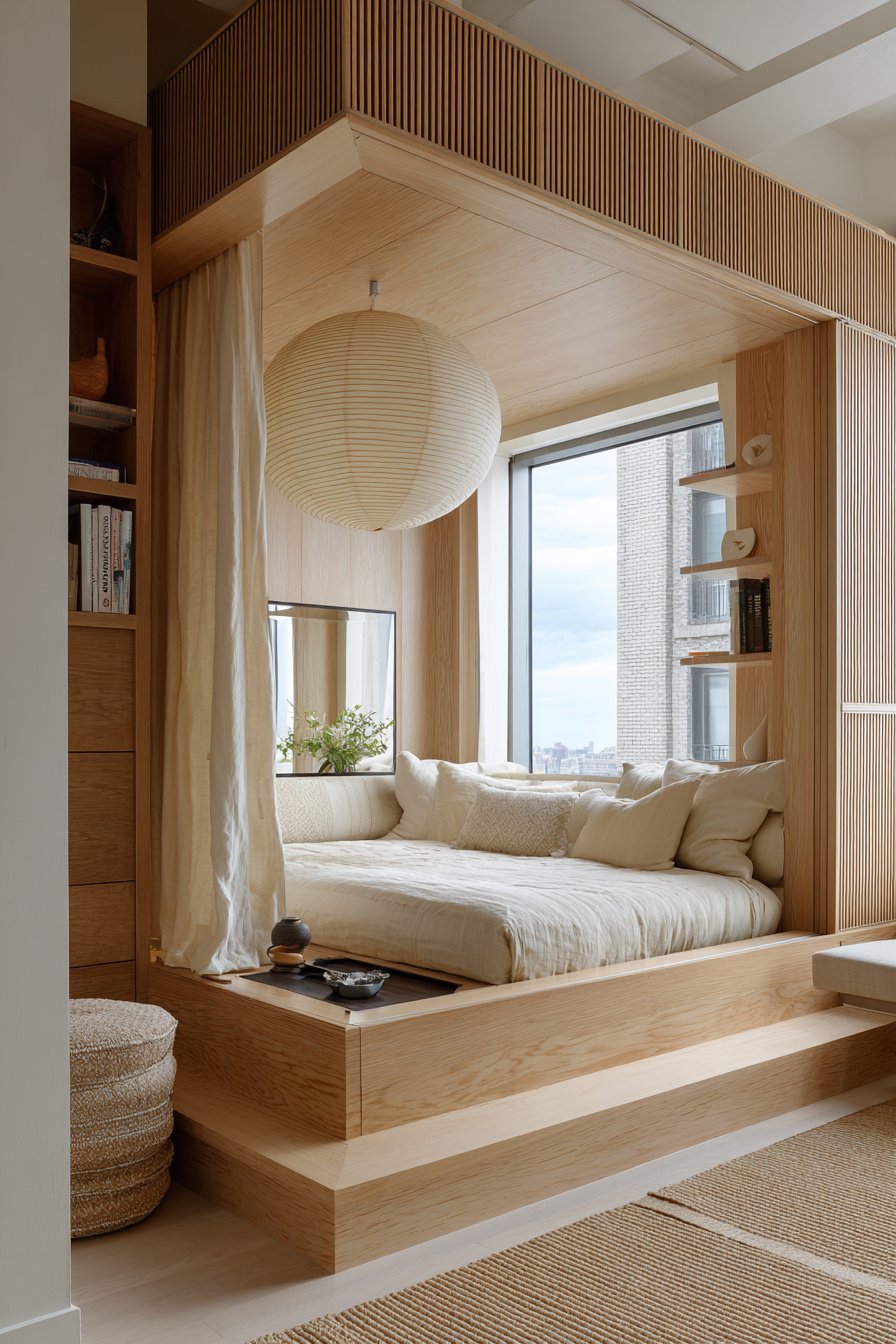
A single paper lantern pendant provides ambient lighting with a soft, diffused quality that flatters the space without harsh shadows or bright spots. This traditional Japanese lighting choice adds cultural authenticity while serving the practical purpose of overhead illumination without consuming floor or surface space. Soft diffused daylight through a shoji-inspired window covering filters light gently into the room, creating the characteristic soft, even illumination that makes Japanese interiors so restful.
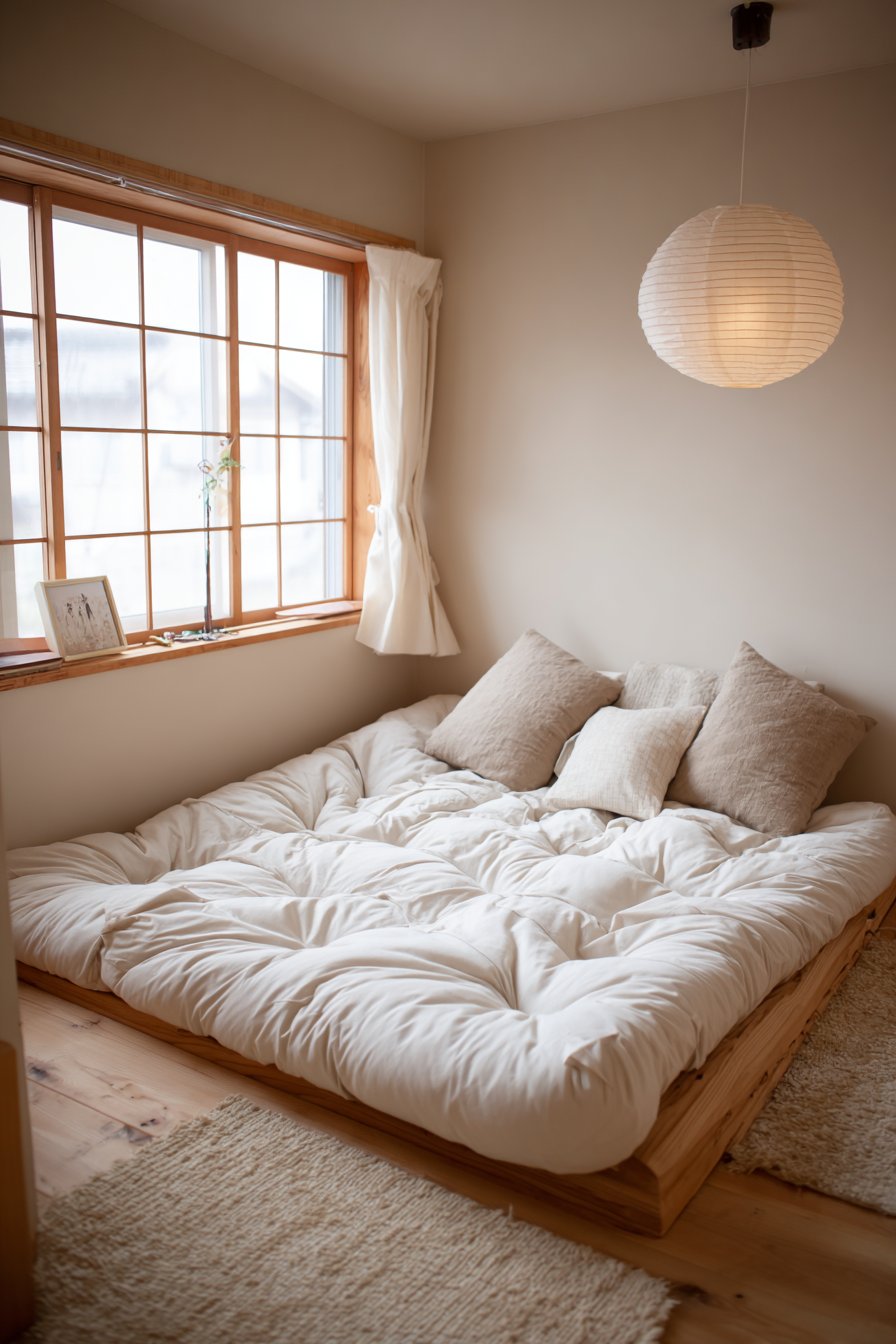
Interior photography capturing the zen-like simplicity and intentional space utilization demonstrates how Eastern design principles translate beautifully to Western small space challenges. The cultural authenticity of the design elements creates a cohesive aesthetic that feels deliberate and complete rather than sparsely furnished. This bedroom proves that small spaces and minimalist design philosophy align naturally, as both emphasize quality over quantity and thoughtful curation over accumulation.
Key design tips: Choose low-profile furniture to create visual spaciousness and follow Japanese spatial principles. Use fabric curtains to conceal storage while maintaining flexibility and softness. Select natural fiber materials like tatami, cotton, and linen for authentic minimalist aesthetics. Install paper lantern pendants for soft, diffused lighting that creates calm atmospheres. Maintain strict adherence to neutral, natural color palettes to support meditative environments.
12. Captain’s Bed Storage Hub
When floor space is limited but vertical space is available, furniture that builds upward while incorporating maximum storage becomes invaluable. This bedroom centers around a captain’s bed featuring six large storage drawers built into the base plus a bookcase headboard with cubbies and cabinet space, creating a furniture piece that essentially functions as a bed, dresser, and bookshelf combined. The matte navy blue finish adds depth and sophistication without the darkness of black, proving that small spaces can embrace color when applied to substantial, well-designed furniture.
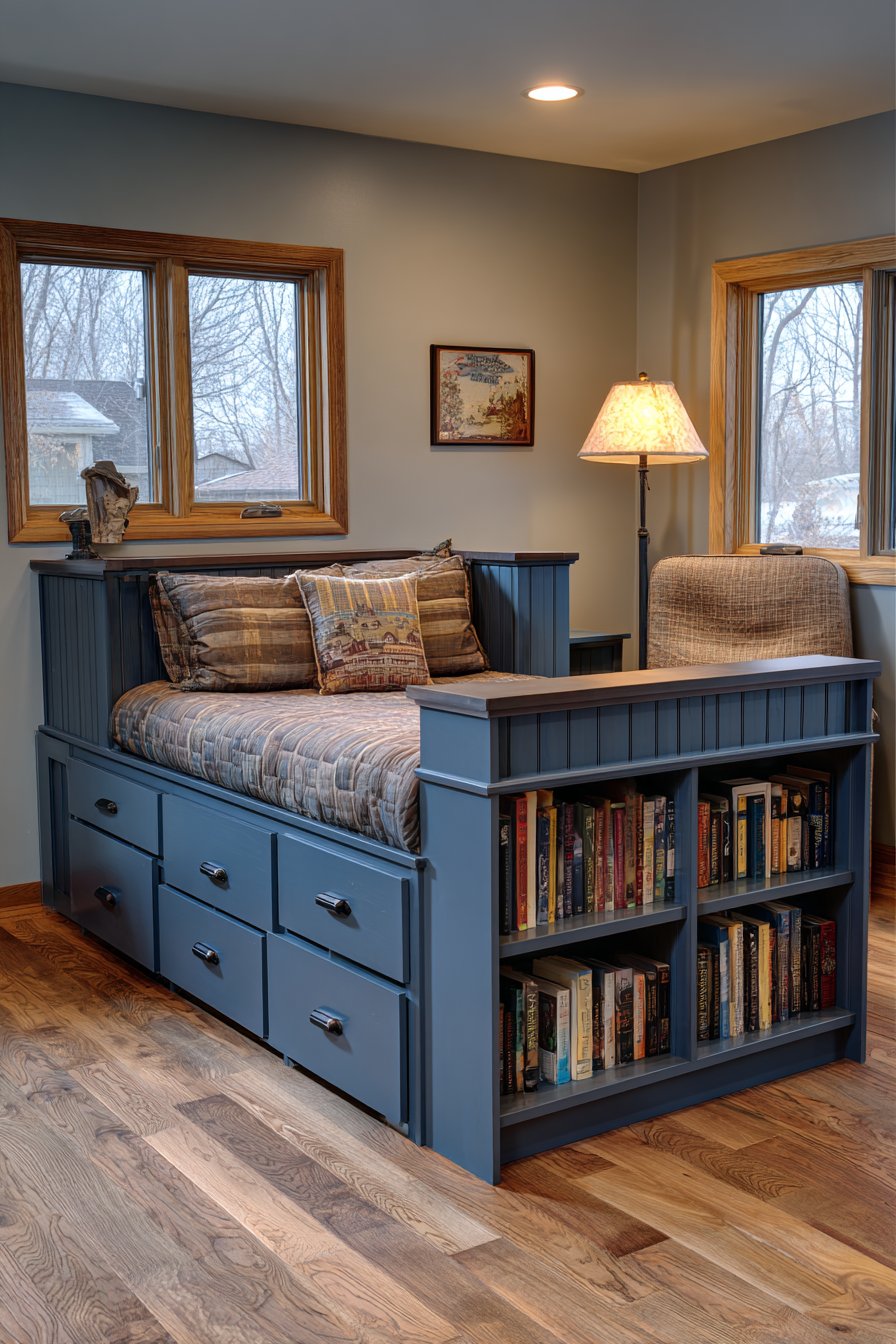
A compact reading chair tucked into the corner with a simple floor lamp creates a dedicated spot for activities beyond sleeping, important for making small bedrooms feel like complete living spaces rather than merely places to sleep. The pale grey walls maintain brightness and provide contrast to the navy bed, preventing the large furniture piece from overwhelming the room. Natural oak flooring introduces organic warmth and its horizontal grain visually expands the floor plane.
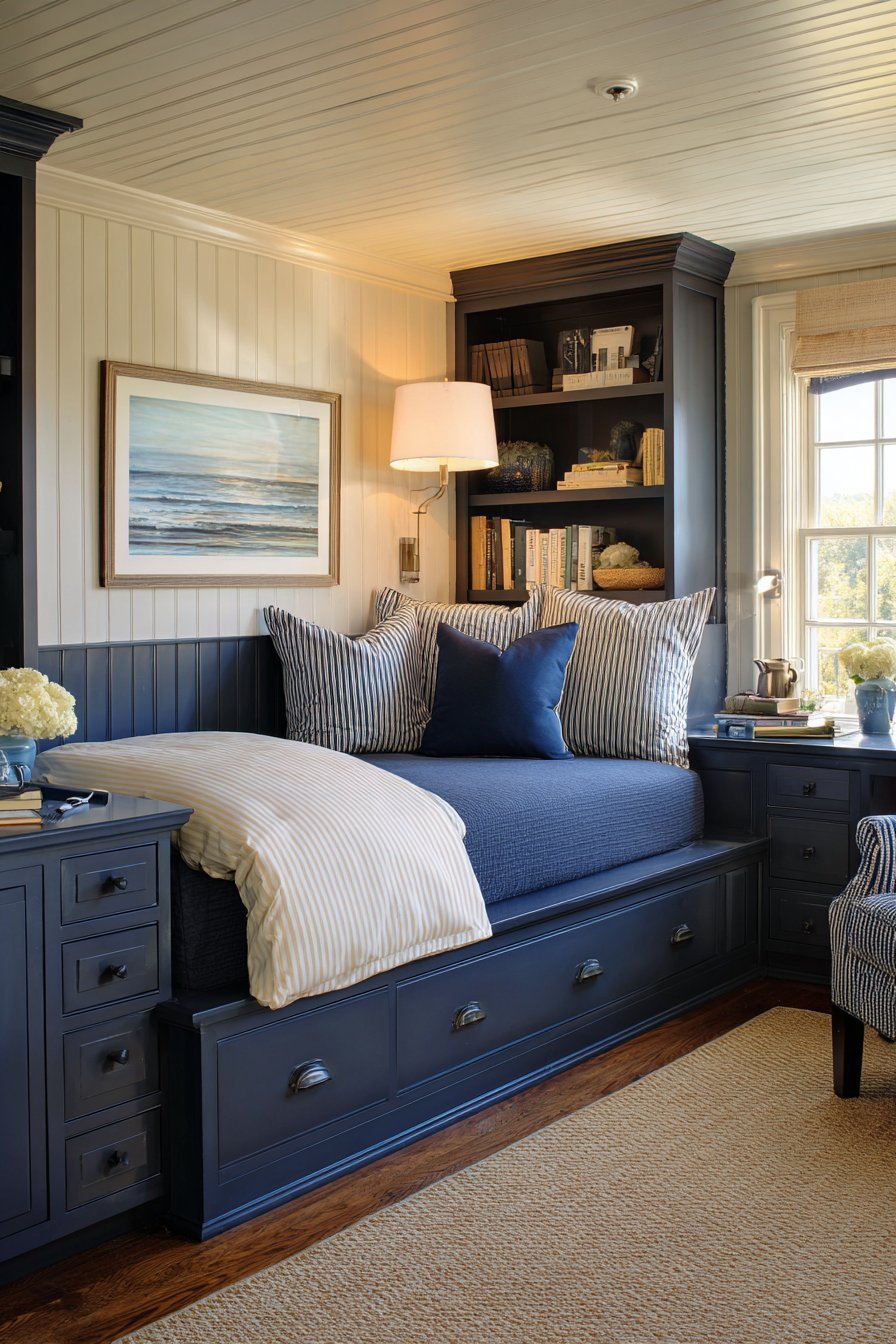
Morning light from a single window creates a warm atmosphere that changes throughout the day, with the navy bed appearing almost black in dim light and revealing its true blue tones when illuminated. This color depth adds visual interest that white or light wood furniture couldn’t provide, demonstrating that thoughtfully chosen darker furniture can work beautifully in small spaces when balanced with light walls and adequate natural light.
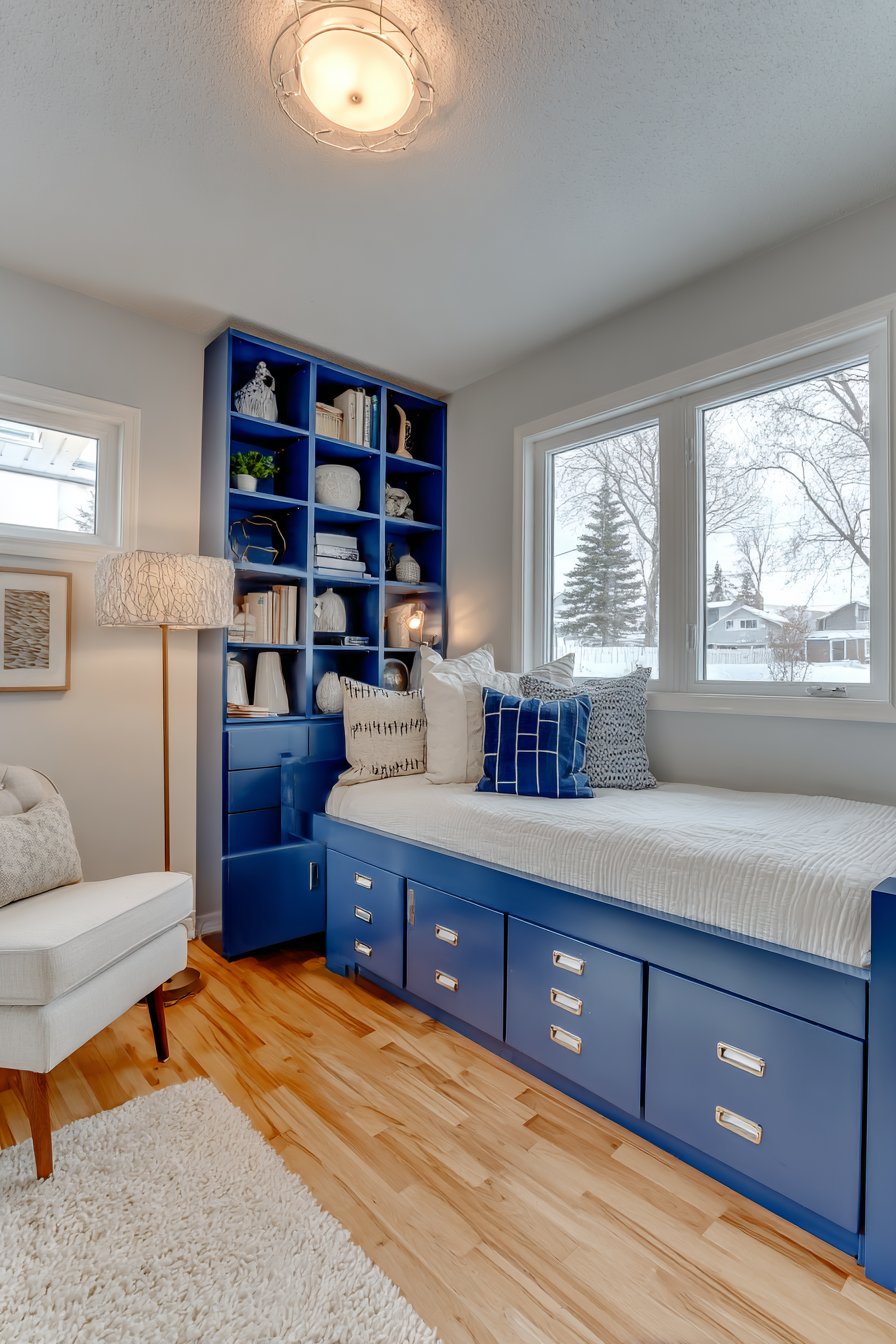
Wide-angle interior design photography captures the extensive hidden storage and functional furniture selection that maximizes utility without requiring multiple separate pieces. The captain’s bed proves that when you must have a bed anyway, choosing one that incorporates substantial storage eliminates the need for additional furniture that would consume precious floor space. This approach works especially well for children’s rooms, guest rooms, or any bedroom where maximizing storage within minimal square footage is a priority.
Key design tips: Choose captain’s beds with maximum drawer and shelving capacity to eliminate need for separate dressers. Select furniture in darker colors when pairing with light walls to add depth without overwhelming small spaces. Include compact seating beyond the bed to create complete living functionality. Ensure adequate natural light when using darker furniture to prevent rooms from feeling cave-like. Combine substantial storage furniture with minimal additional pieces to avoid overcrowding.
13. Floating Bed Contemporary Design
Modern design aesthetics emphasize clean lines and visual lightness, principles that serve small bedrooms particularly well. This space features a wall-mounted floating bed frame that creates the illusion of hovering above the floor, generating remarkable visual spaciousness by allowing light and sight lines to flow beneath the sleeping surface. This floating effect also provides the practical benefit of allowing robot vacuum access underneath, addressing the often-overlooked challenge of cleaning in furniture-filled small spaces.
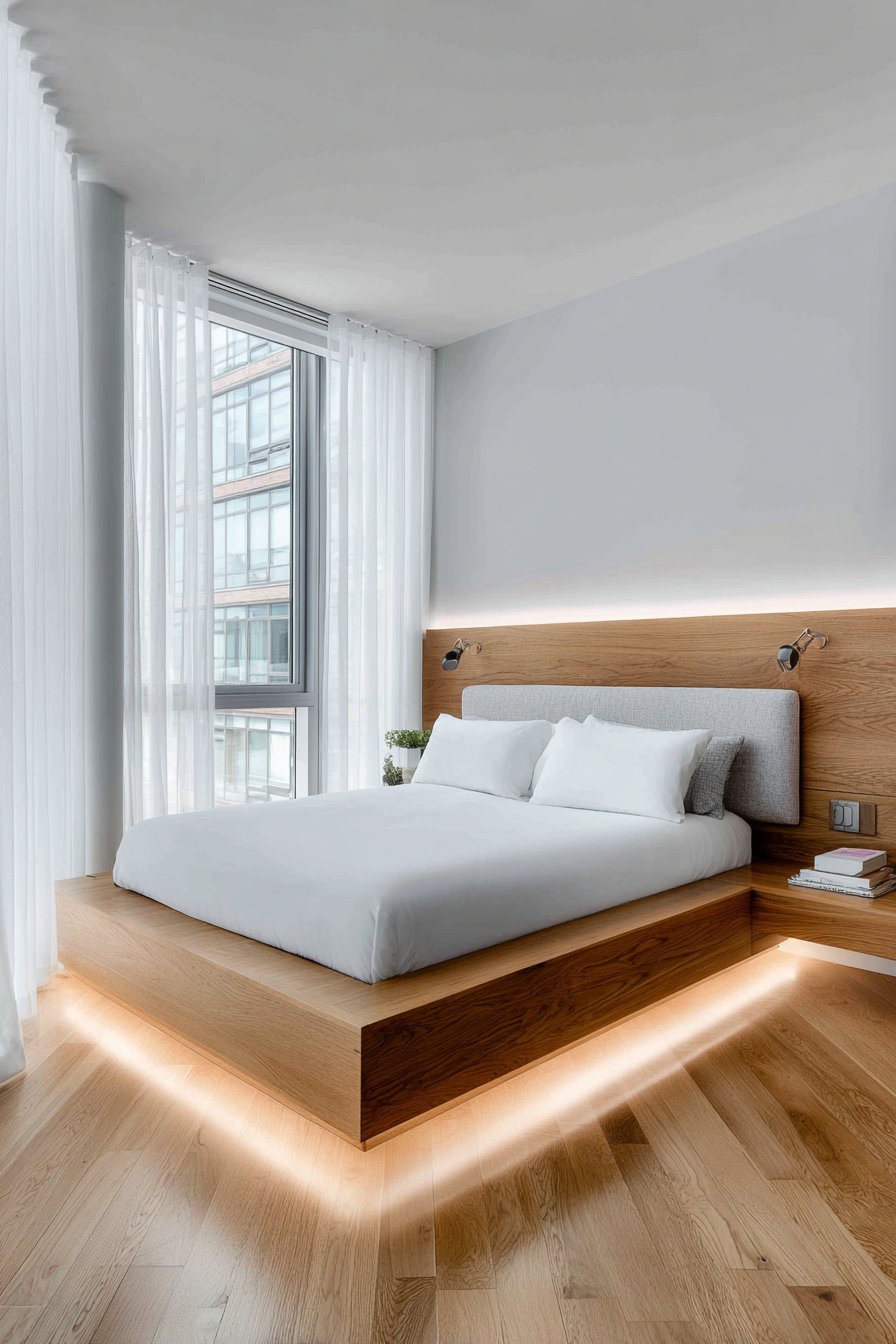
Slim profile nightstands attach directly to the bed frame itself, eliminating separate floor-standing pieces while maintaining necessary surface area for bedside essentials. This integrated approach creates a unified furniture system that appears more sophisticated and less cluttered than separate, mismatched pieces. Minimalist wall sconces provide focused reading light without occupying nightstand space, their streamlined design reinforcing the room’s contemporary aesthetic.
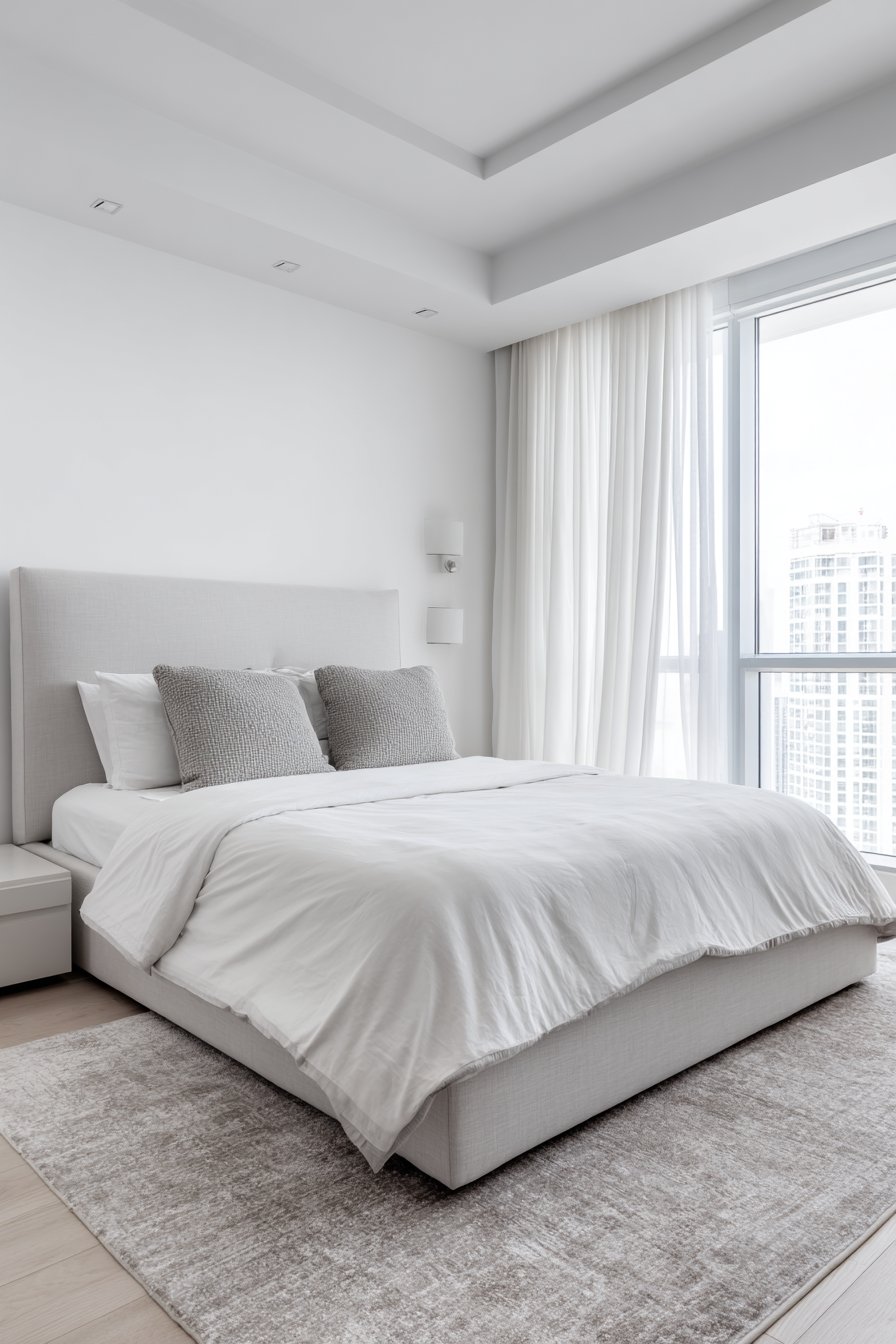
The light grey upholstered headboard adds softness and comfort for sitting up in bed while maintaining the neutral, calming color palette. The fabric upholstery introduces tactile warmth that balances the hard surfaces of walls and floors, essential for preventing minimalist spaces from feeling cold or unwelcoming. White walls and ceiling work together to enhance spaciousness, reflecting light throughout the room and eliminating visual boundaries that would define the space’s actual limits.
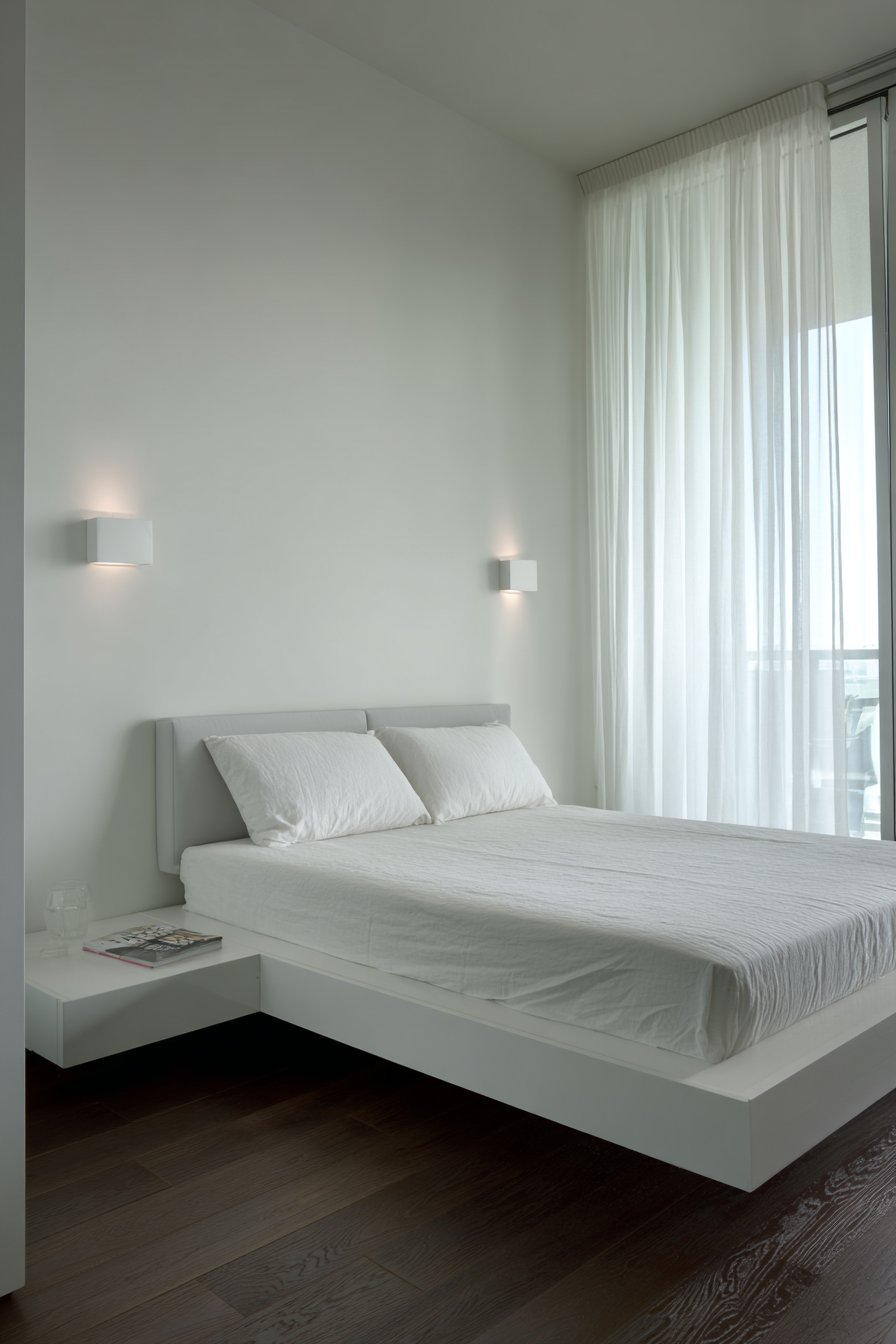
Sheer white curtains diffuse natural light beautifully, creating the soft, even illumination that makes small spaces feel larger and more comfortable. Professional interior photography with balanced exposure highlights the contemporary floating effect and clean lines that prevent visual clutter, even in a fully furnished small bedroom. This design demonstrates that modern aesthetics and small space efficiency align naturally, as both prioritize simplicity, function, and visual clarity.
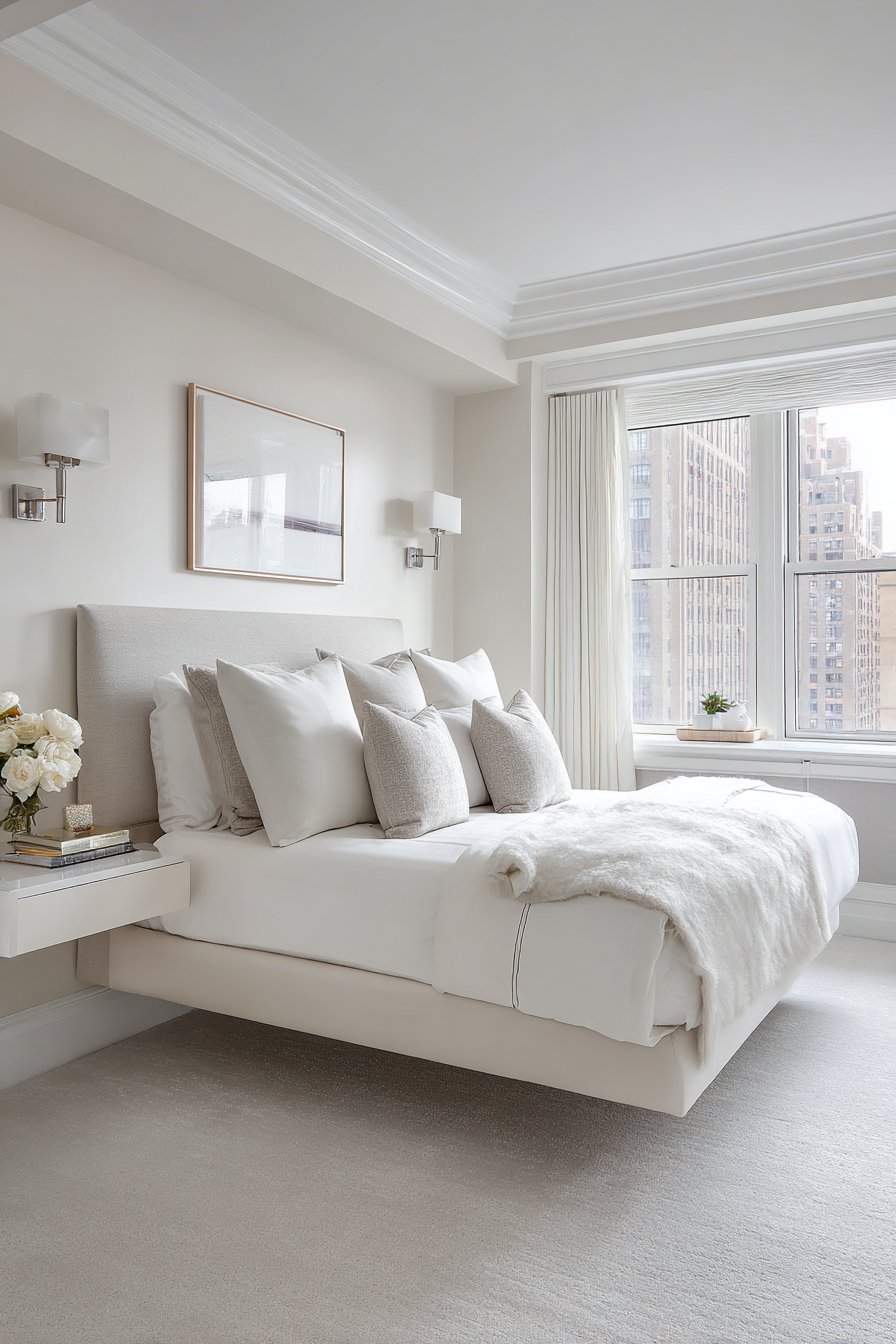
Key design tips: Install wall-mounted floating bed frames to create visual spaciousness and cleaning access beneath. Attach nightstands directly to bed frames to eliminate separate floor-standing furniture. Use wall-mounted sconces for bedside lighting to free valuable nightstand surface area. Choose upholstered headboards for comfort and tactile warmth in minimalist spaces. Maintain strict white and light grey palettes to maximize light reflection and spaciousness.
14. Fold-Out Wall Bed with Bookshelf Surround
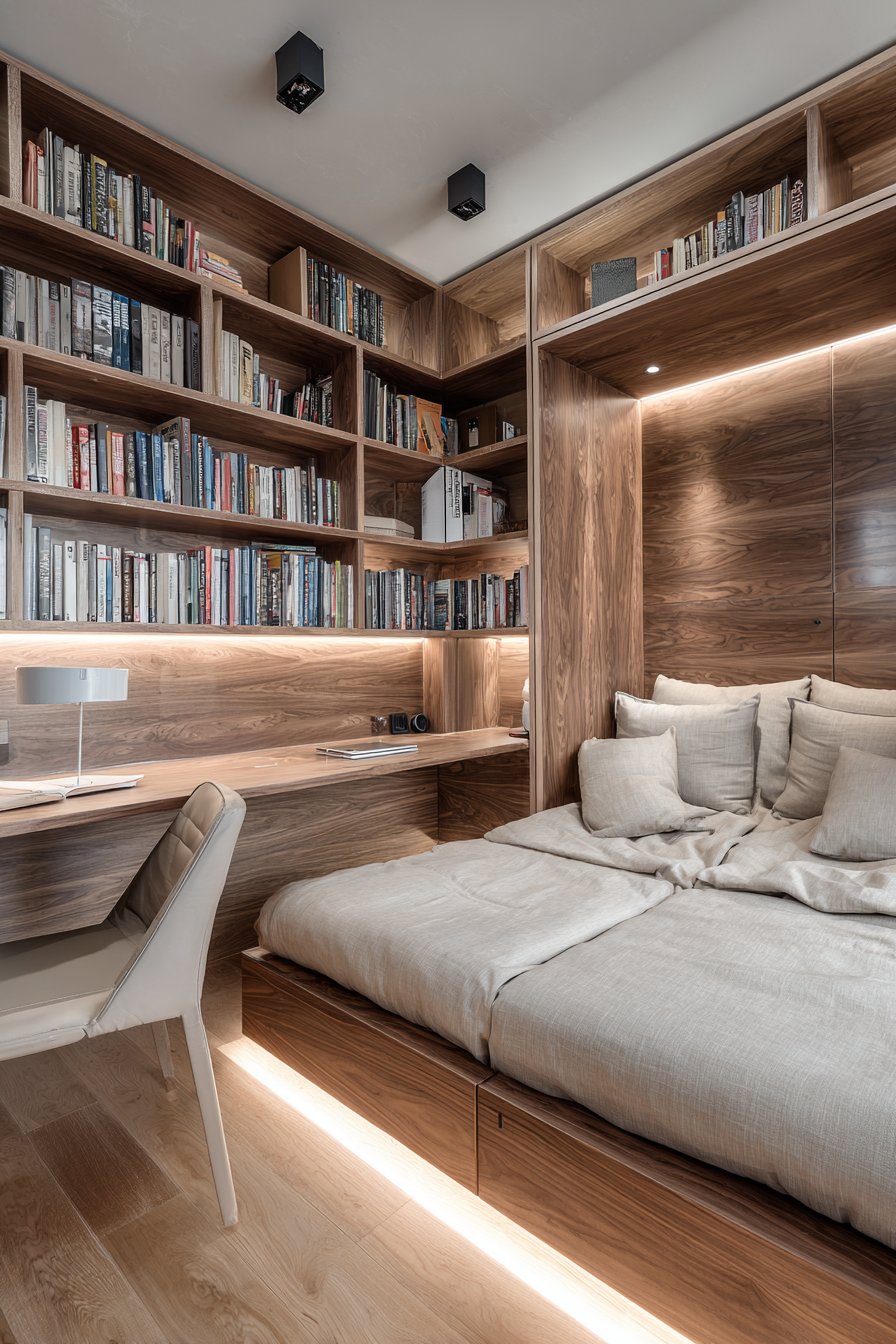
The evolution of murphy bed design has produced increasingly sophisticated systems that integrate storage and maintain accessibility even when the bed is in use. This design features a fold-out wall bed surrounded by integrated bookshelves that remain accessible whether the bed is raised or lowered, maximizing storage utility throughout the day. The natural walnut veneer cabinetry adds richness and warmth that elevates the entire system beyond purely functional furniture into architectural millwork.
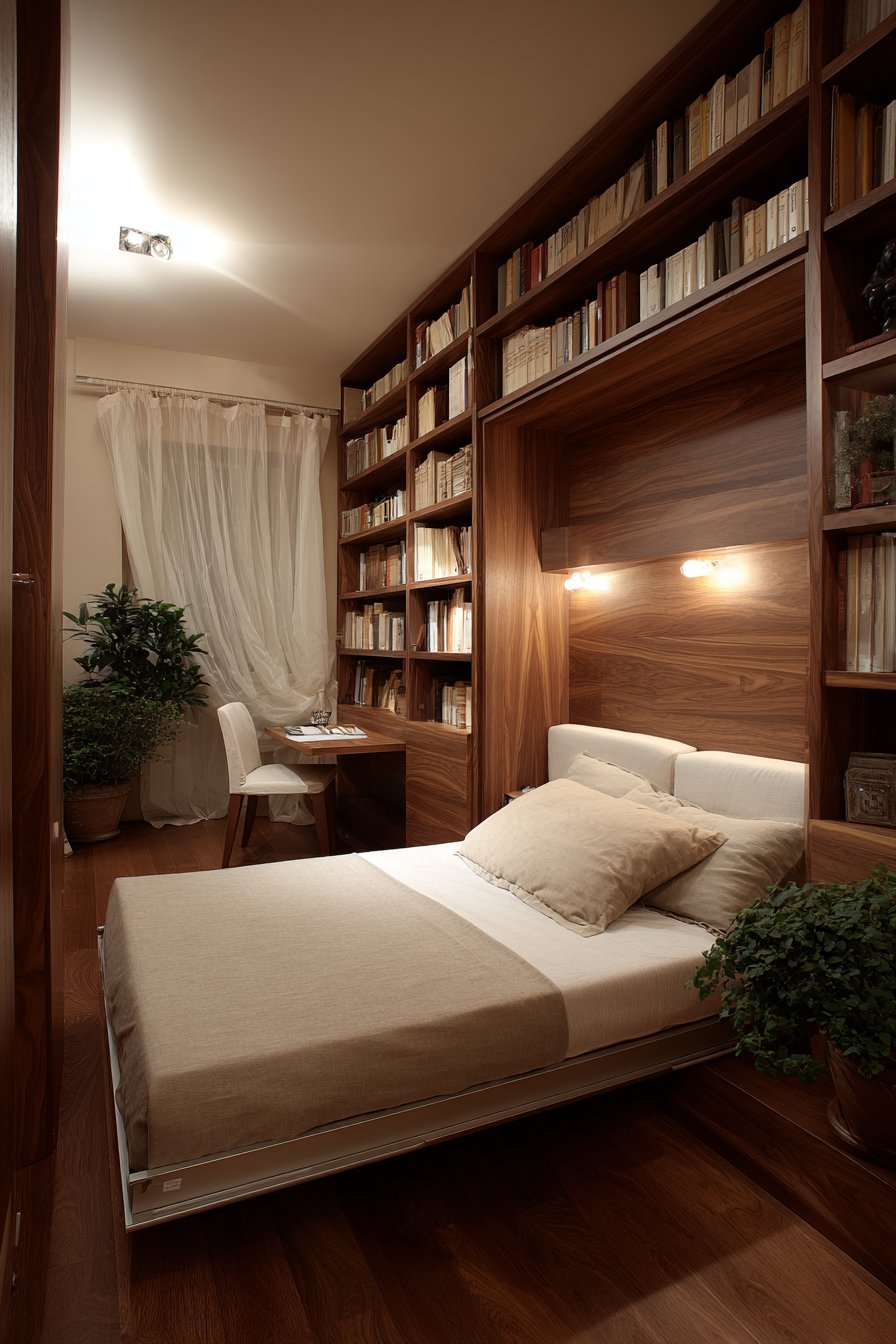
A compact workspace created with a wall-mounted drop-leaf table and folding chair demonstrates the multipurpose potential of bedrooms equipped with transforming furniture. During the day, the bed folds up, the table drops down, and the room becomes a functional home office. In the evening, the process reverses and the space transforms back into a comfortable bedroom. The folding chair stores flat against the wall or in a nearby closet, consuming no floor space when not in use.
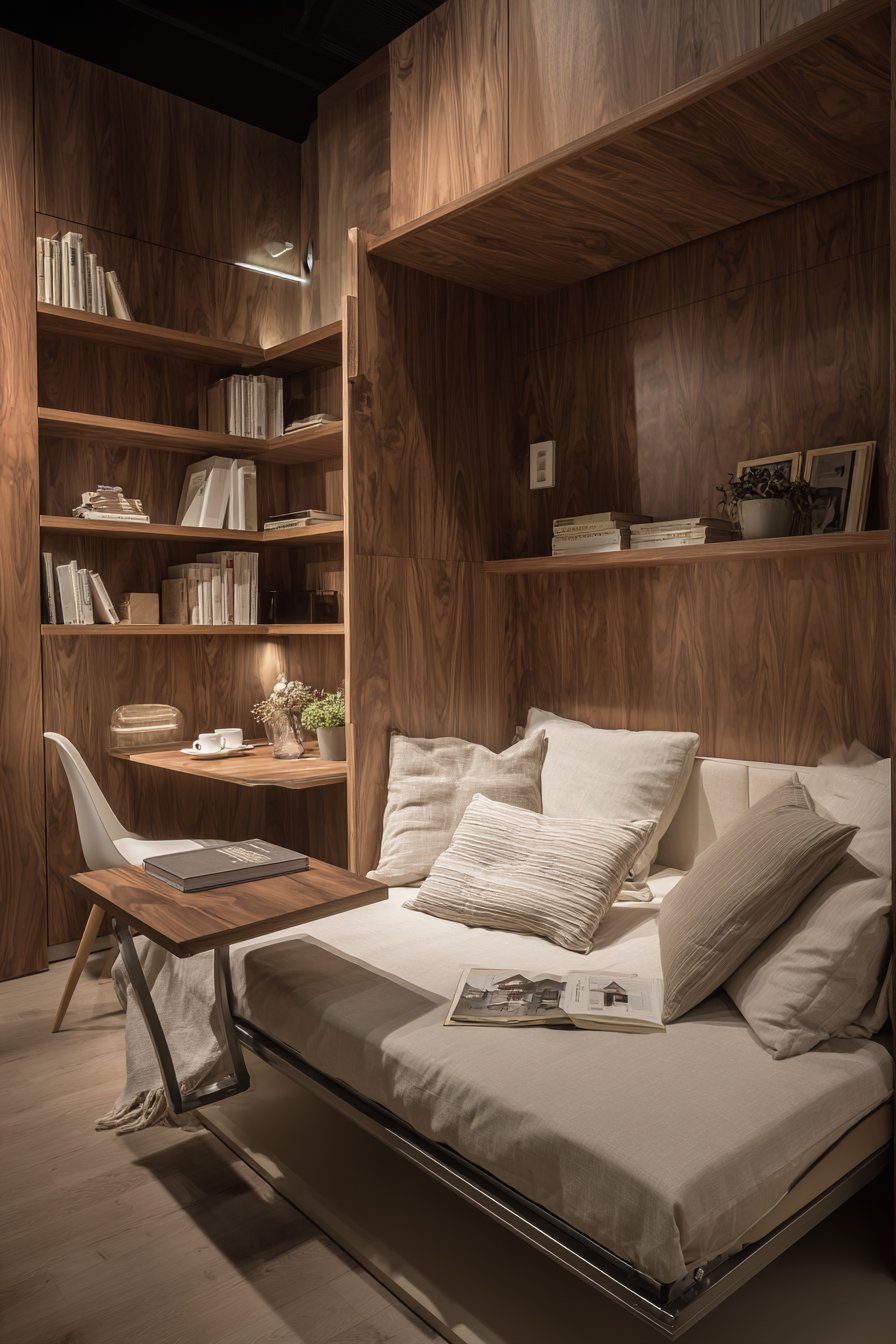
Neutral textile bedding in beige linen maintains a sophisticated, hotel-like aesthetic that works whether the bed is displayed or hidden. The quality of the bedding matters more in murphy bed applications, as it’s often visible when the bed is stored rather than being tucked away. Soft recessed lighting provides flexible illumination that adapts to the room’s changing configurations without requiring moveable lamps that would need to be relocated as furniture arrangements shift.
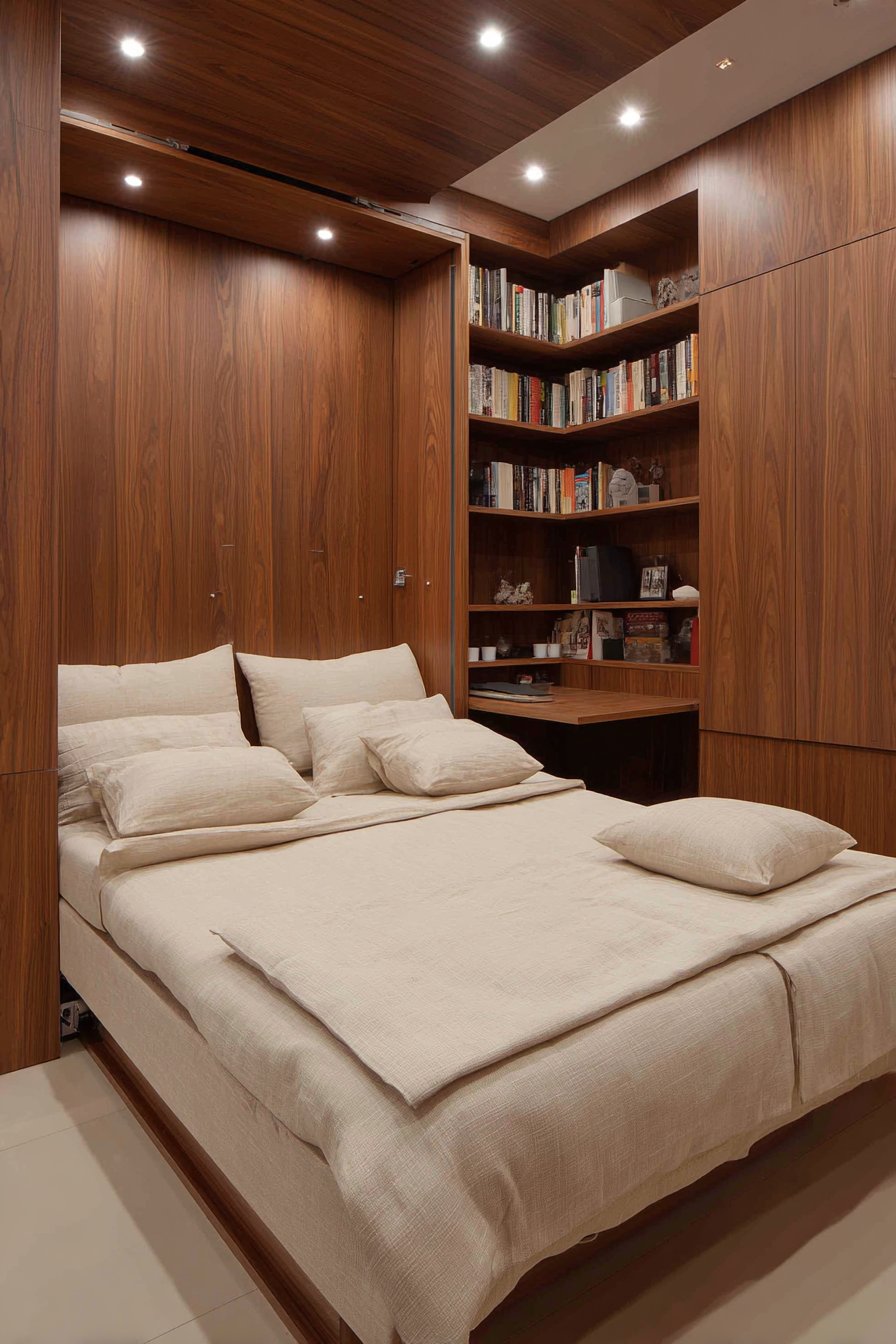
Wide-angle interior photography captures the ingenious furniture system and transformation capability, showcasing the even lighting that displays craftsmanship details in the walnut cabinetry. This bedroom proves that murphy beds have evolved far beyond their utilitarian origins into sophisticated furniture systems that add architectural interest while solving practical space challenges. The integrated approach creates a cohesive design that feels intentional and permanent rather than makeshift or temporary.
Key design tips: Choose murphy bed systems with integrated shelving that remains accessible in all configurations. Select rich wood veneers like walnut to elevate transforming furniture into architectural elements. Install drop-leaf tables for flexible workspace that disappears completely when not needed. Use recessed lighting to provide flexible illumination for changing room configurations. Invest in quality bedding that looks attractive when stored as well as when in use.
15. High-Mounted Bed with Office Below
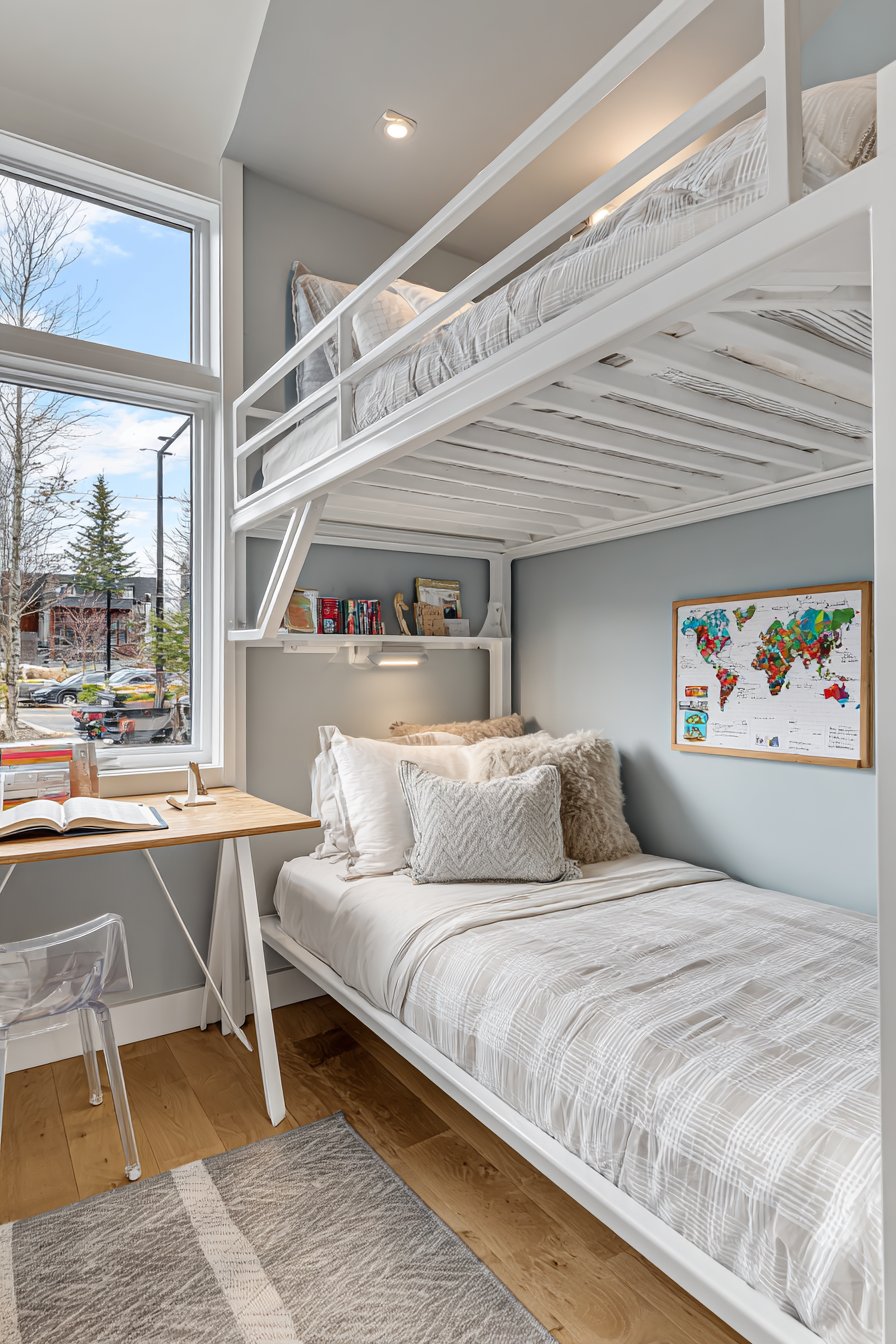
Maximizing vertical space often produces the most dramatic gains in small bedroom functionality, and high-mounted beds create entirely separate zones within a single small room. This design features a sleeping platform accessed by a fixed ladder, positioned high enough to accommodate a complete office nook underneath with a compact desk and ergonomic chair. The white painted wood construction maintains an open, airy feeling despite the substantial structure, preventing the elevated bed from making the lower work area feel oppressive or cave-like.
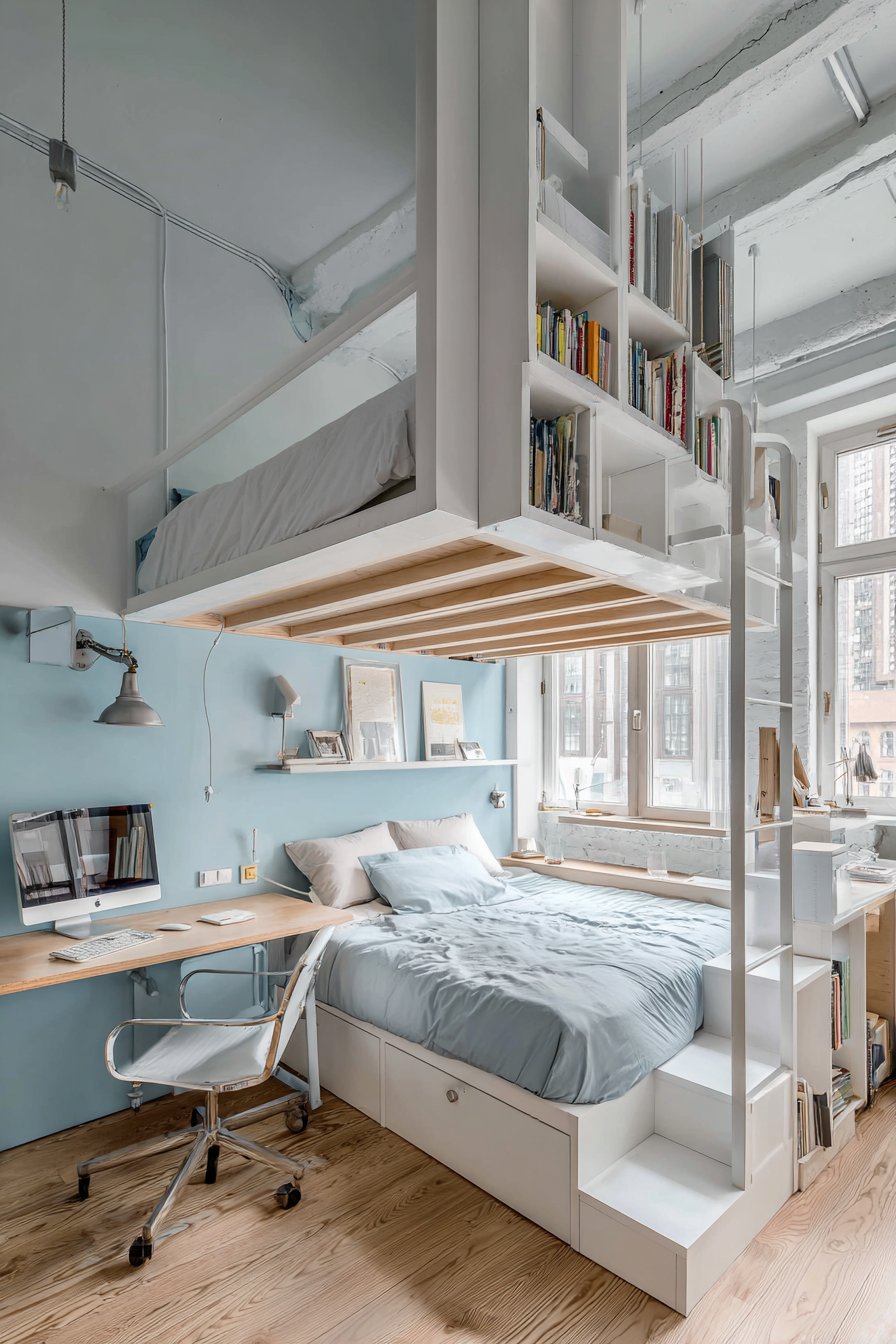
Industrial-style task lighting illuminates the desk surface efficiently, its articulated arm allowing adjustment for different working positions and tasks. The utilitarian aesthetic of the task lamp complements the structural honesty of the loft configuration, creating a cohesive design language throughout the vertical space. Open shelving for books and supplies keeps necessary materials within arm’s reach while working, eliminating the need for filing cabinets or storage units that would consume precious floor space in the office area.
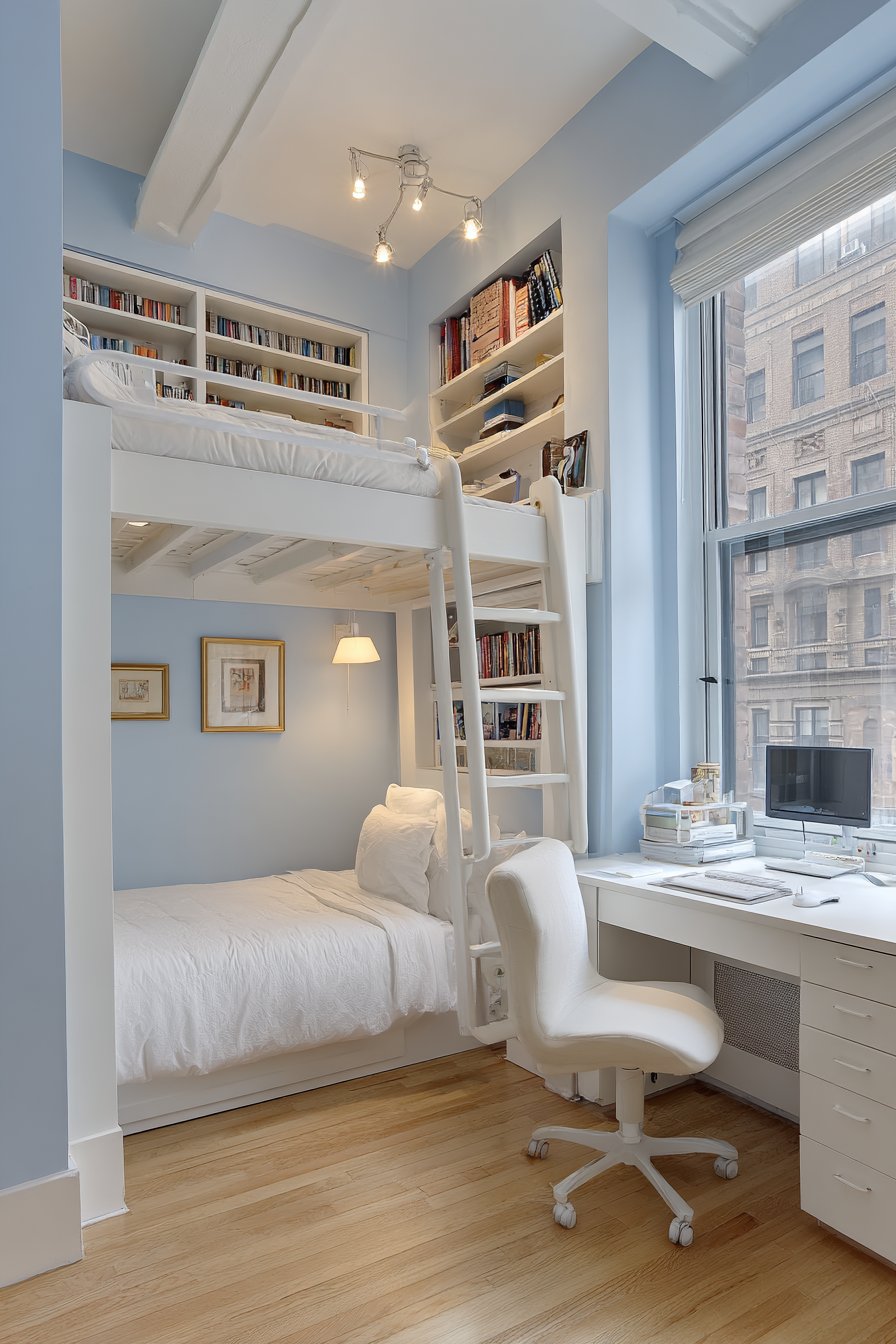
A pale blue accent wall adds personality and visual interest without overwhelming the small dimensions, demonstrating that color accents can work beautifully in compact spaces when applied thoughtfully to a single surface. This pop of color differentiates the work zone from the sleeping zone above, psychologically reinforcing the separation between the two functions. Natural light from a window positioned in the workspace below provides essential illumination for both productivity and wellbeing, combating the potentially claustrophobic feeling of working in a tight space.
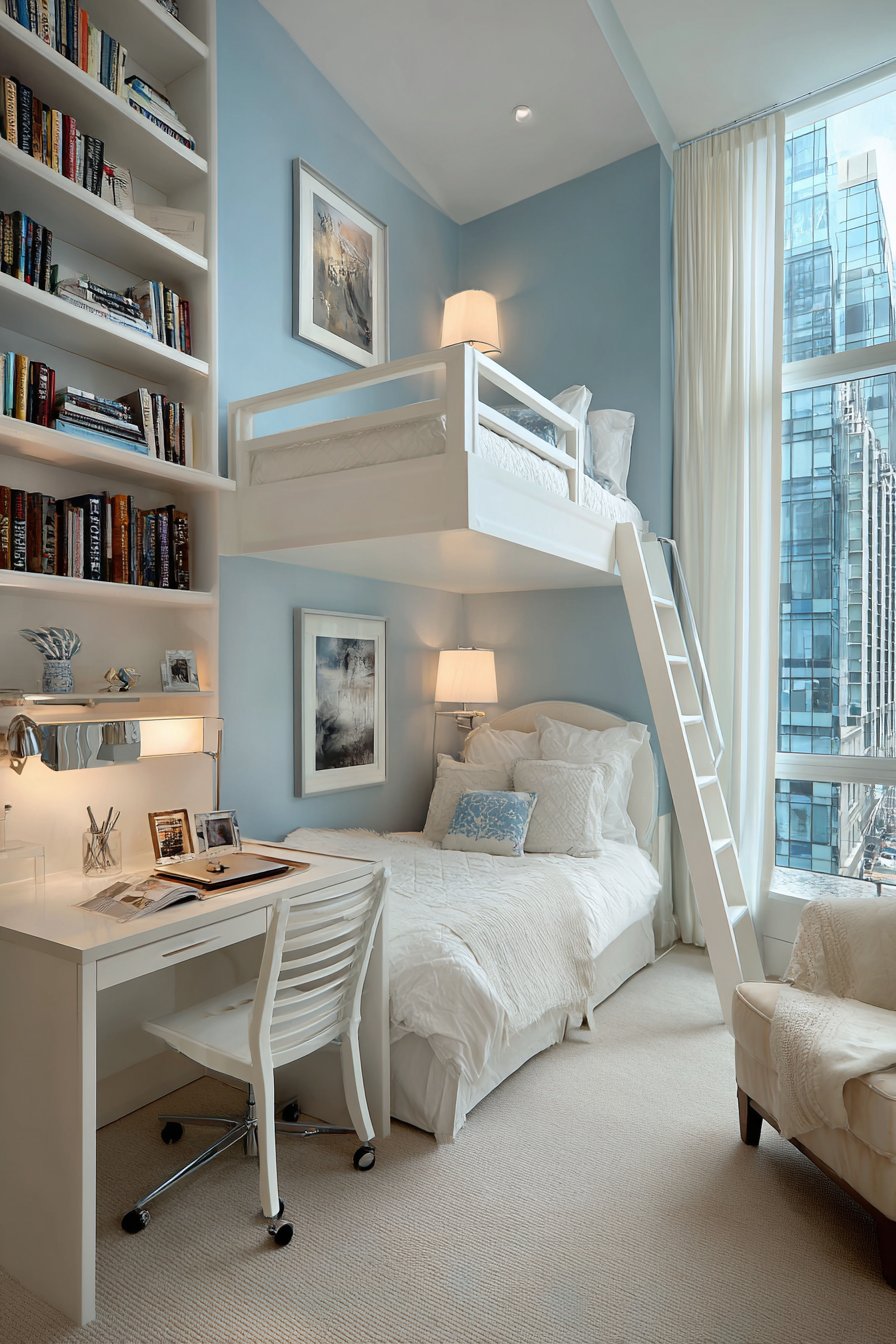
Interior design photography captures the vertical spatial strategy and dual-zone functionality, with soft shadows defining separate areas despite their physical connection. This bedroom proves that high-mounted beds work especially well when the lower area receives adequate natural light and sufficient headroom for comfortable use. The fixed ladder provides safer, more permanent access than portable ladders while consuming minimal floor space along the wall.
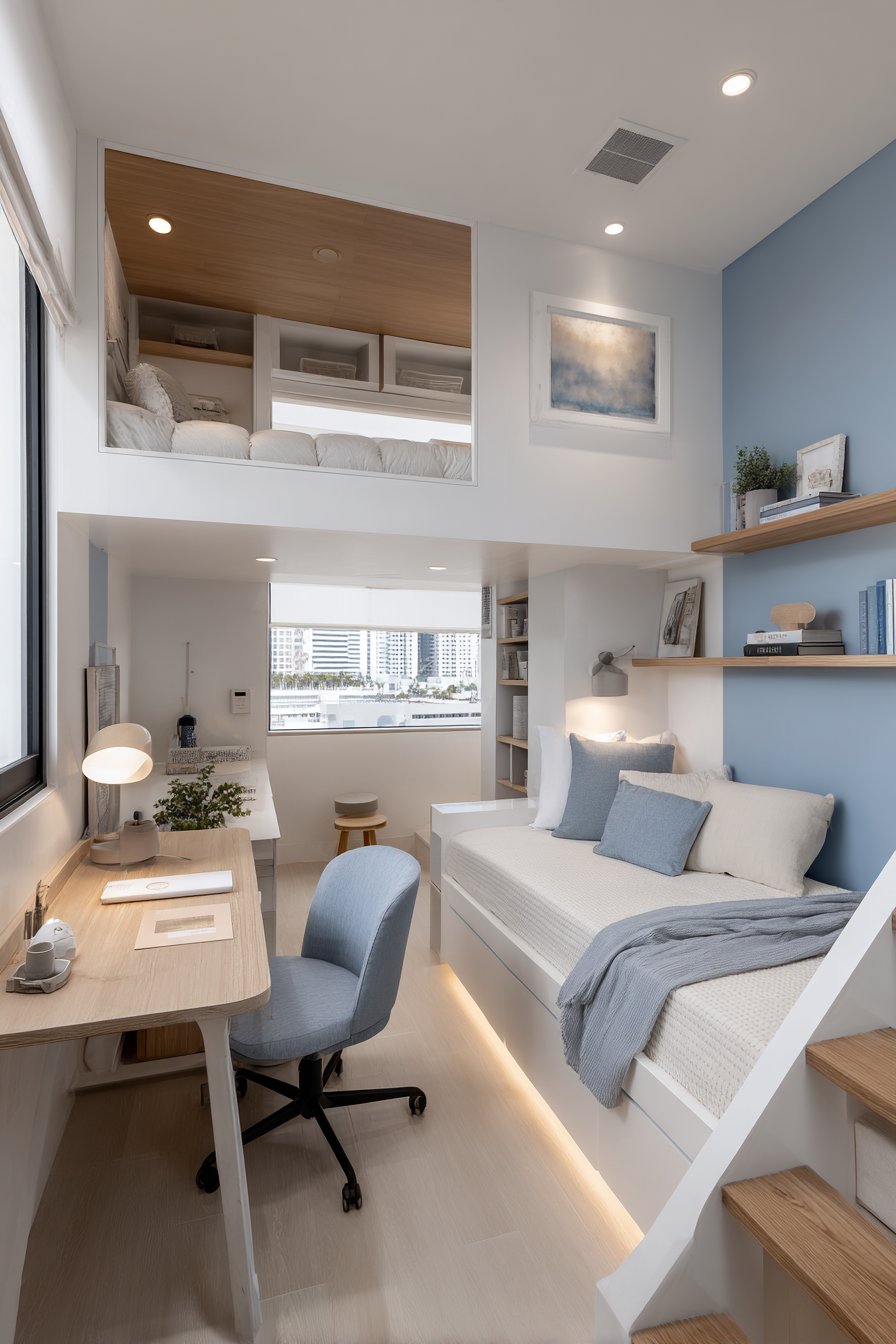
Key design tips: Ensure adequate ceiling height (minimum 9-10 feet) before installing high-mounted bed platforms. Position windows to provide natural light to lower zones beneath elevated sleeping areas. Use white or light paint on loft structures to prevent upper sleeping areas from feeling heavy. Install task lighting in work areas below lofts to provide adequate illumination for focused activities. Create visual separation between zones with accent wall colors that define different functional areas.
16. Narrow Single Bed Arrangement
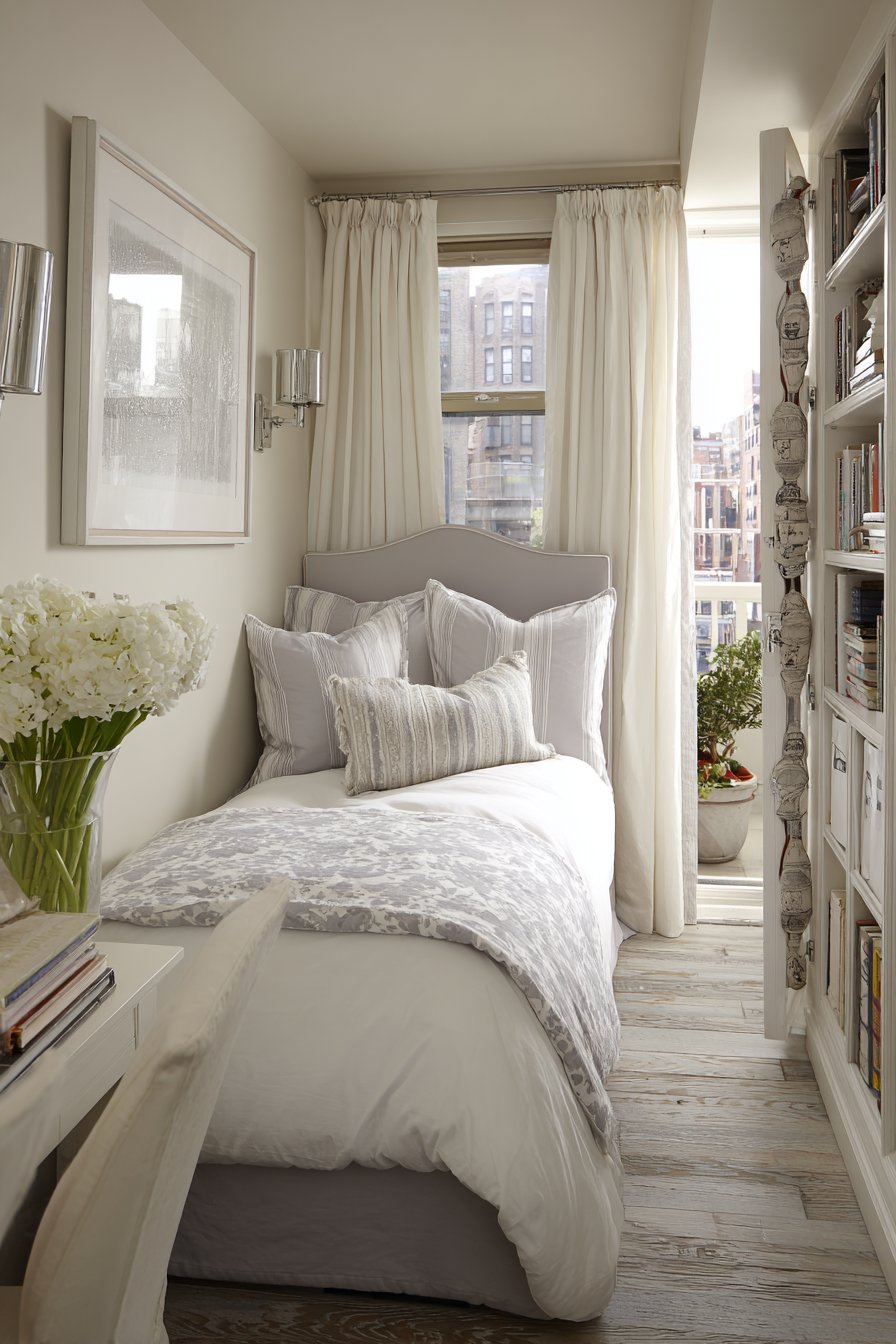
Sometimes the most effective small bedroom solutions embrace the room’s limitations rather than fighting against them, and single beds positioned along one wall exemplify this practical approach. This design features a narrow single bed with an upholstered fabric headboard in soft grey, positioned along the longest wall to leave maximum floor space open for movement and other activities. The upholstered headboard provides comfort for sitting up without consuming the floor space that a traditional bed frame with posts or substantial footboard would require.
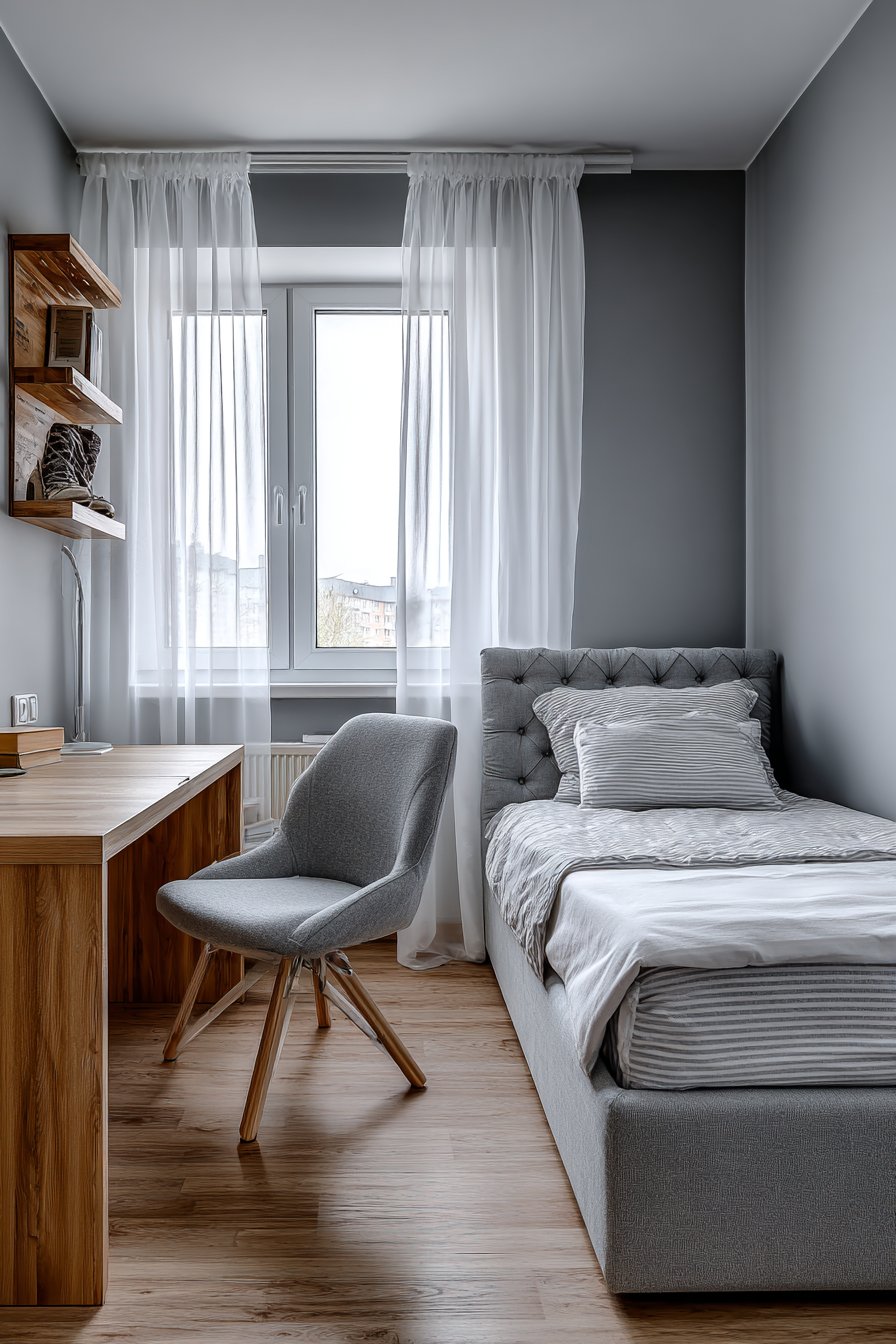
A wall-mounted fold-away desk positioned at the foot of the bed provides workspace that serves multiple functions throughout the day—desk surface, dressing table, or simply a place to set items while organizing. This flexible approach recognizes that small bedroom inhabitants often need furniture that adapts to changing needs rather than remaining fixed in a single purpose. A vertical shoe organizer attached to the back of the door exploits space that would otherwise go unused, keeping footwear organized and accessible without requiring floor space.
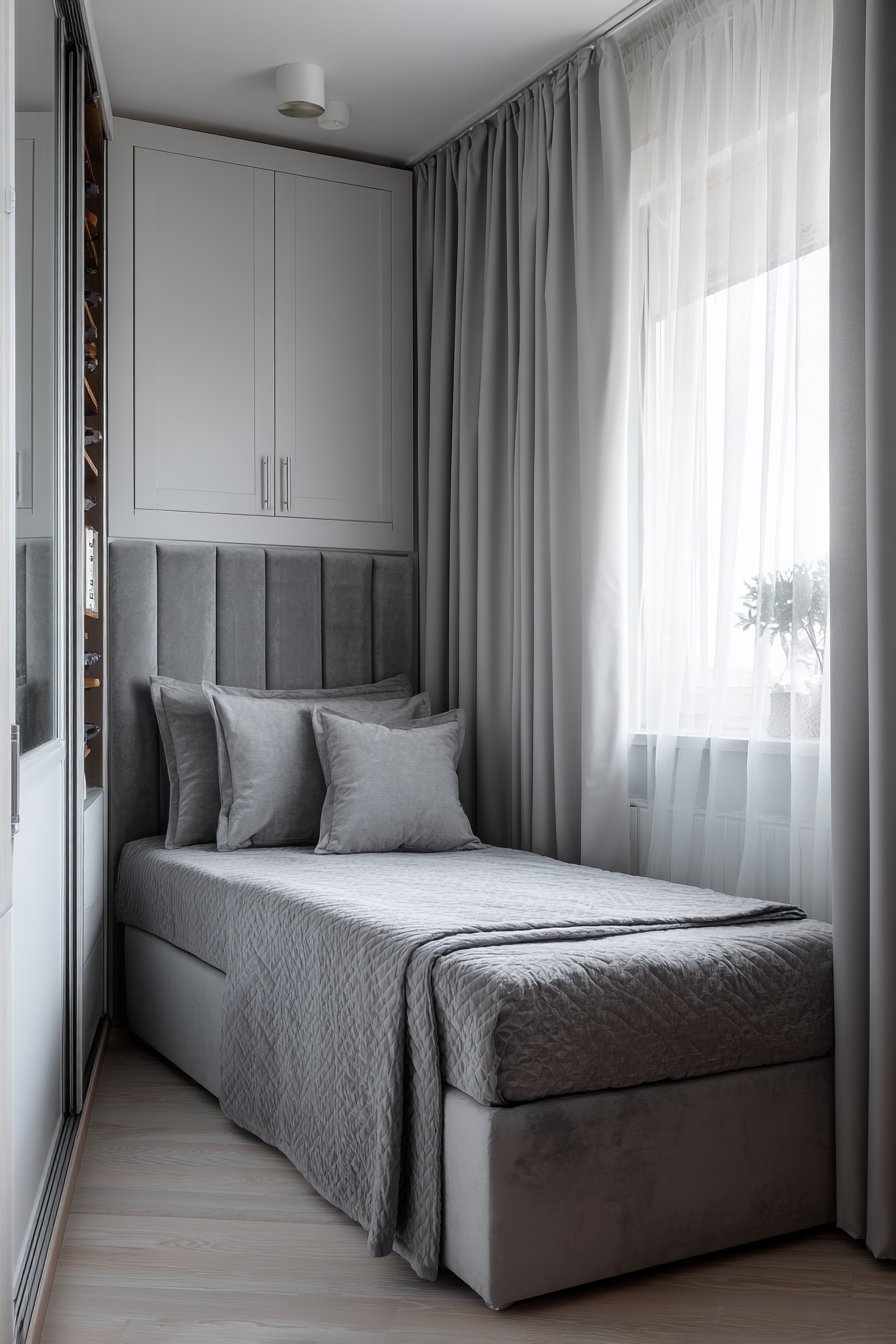
Mirrored sliding closet doors eliminate the clearance required for traditional hinged closet doors while doubling the visual space through reflection. This classic designer technique never fails to enhance the sense of spaciousness in tight quarters, effectively making the room appear twice its actual width. White walls and light wood flooring maintain brightness and reflect available natural light throughout the space, essential for preventing narrow rooms from feeling like dark corridors.
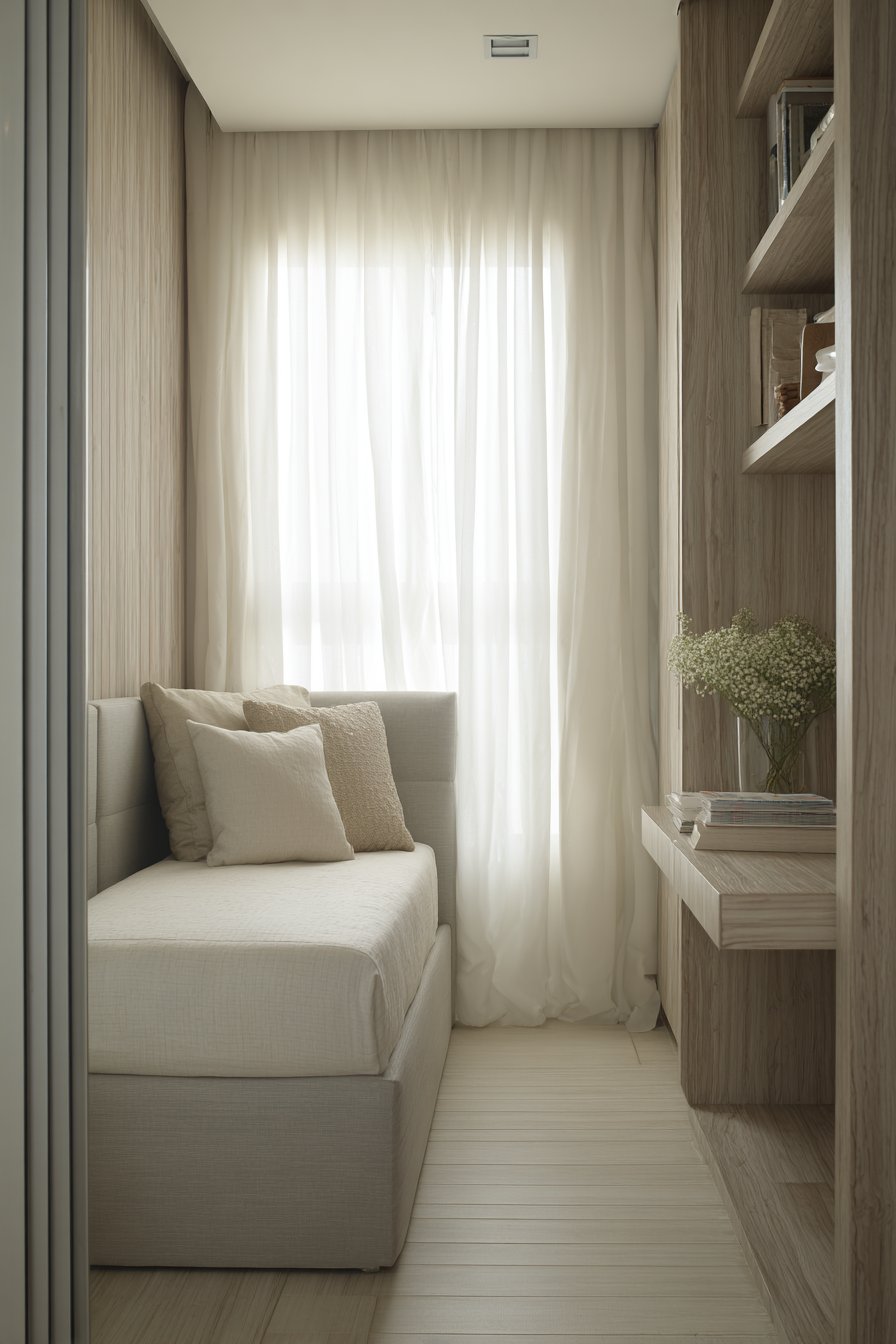
A sheer curtain allows natural light to filter in while providing necessary privacy, maintaining the room’s connection to the outside world without sacrificing comfort or security. Professional interior photography reveals practical furniture placement and circulation space, demonstrating that even very small single bedrooms can function beautifully when furniture is selected and positioned with care. The realistic room proportions shown in the image reassure viewers that these solutions work in actual small spaces, not just in theoretical or aspirational designs.
Key design tips: Position single beds along longest walls to maximize open floor space for movement. Choose upholstered headboards that provide comfort without consuming floor space with posts or footboards. Install fold-away desks at bed footboards to create multipurpose surfaces without permanent floor space commitment. Use vertical door organizers to exploit otherwise wasted space behind doors. Install mirrored sliding closet doors to eliminate swing clearance while doubling visual space.
17. Window Seat Dual Function
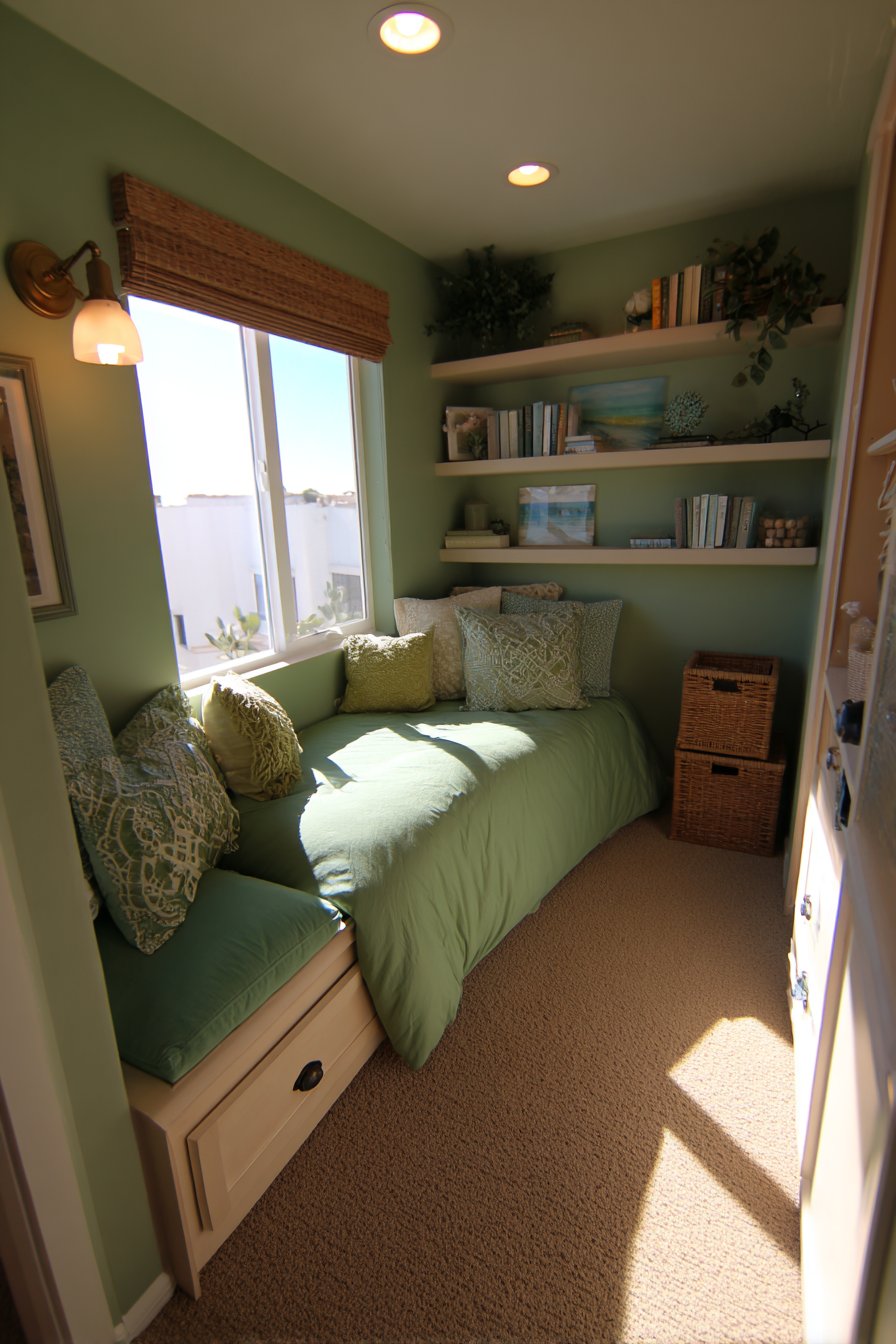
Window seats represent a classic architectural element that becomes even more valuable in small bedrooms where every piece of furniture must work harder. This design showcases a built-in window seat with lift-top storage that doubles as a sleeping surface for guests when topped with additional cushions, demonstrating remarkable flexibility within compact dimensions. The primary twin bed positioned opposite creates a layout that maximizes the use of two parallel walls while leaving the center of the room open for circulation.
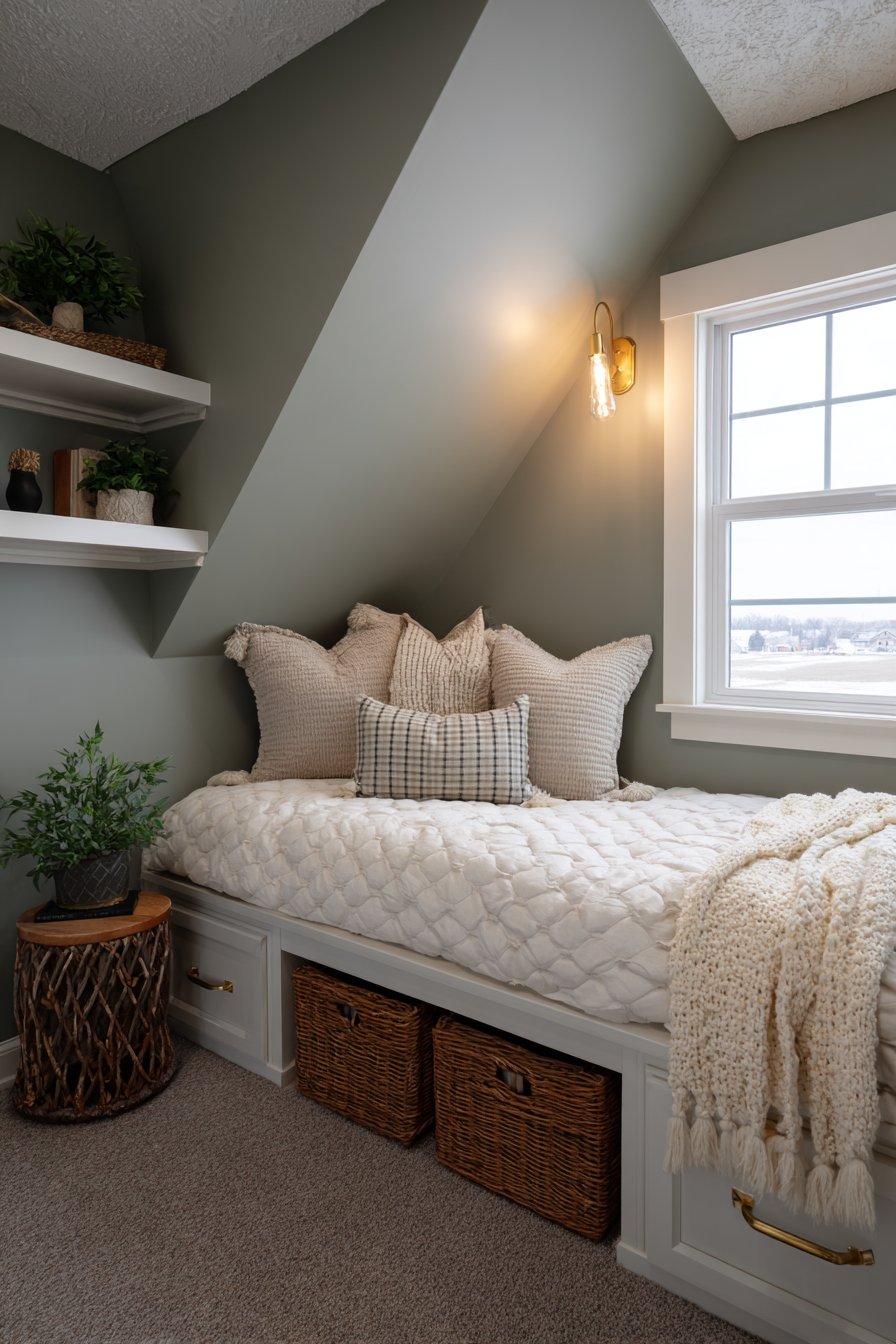
Floating corner shelves exploit the often-wasted vertical space where walls meet, providing display and storage without protruding floor-standing bookcases or shelving units. These corner shelves follow the room’s geometry naturally, making them feel integrated into the architecture rather than added as an afterthought. Soft sage green walls create a calming atmosphere that enhances the room’s function as a restful retreat, while the muted tone provides personality without the visual weight of more saturated colors.
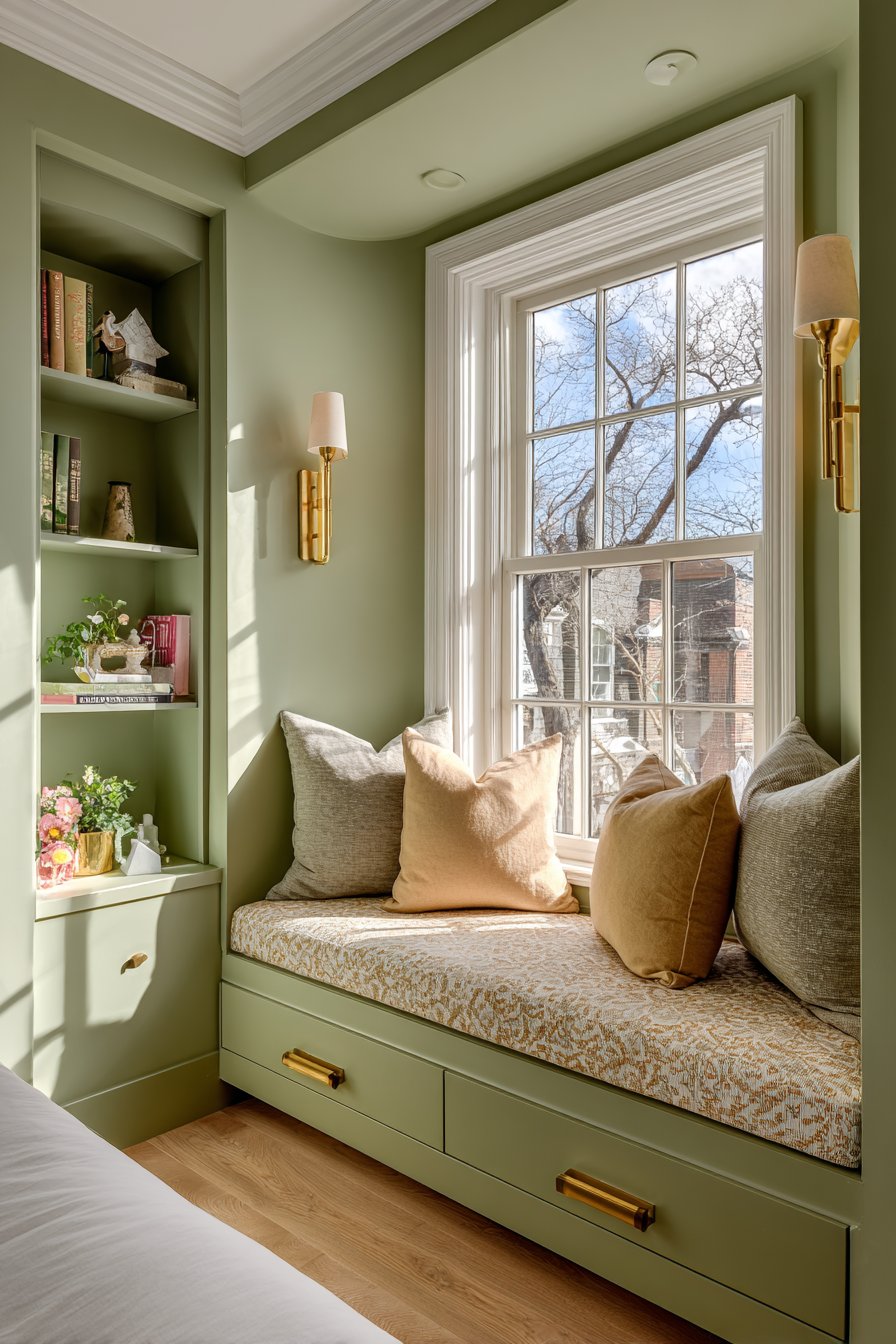
Brass wall-mounted reading lights positioned above both the bed and window seat provide flexible task lighting without consuming surface space on nightstands or side tables. The warm metallic finish adds a touch of elegance and catches natural light beautifully, creating small moments of sparkle that elevate the overall design. Natural afternoon light streaming through the window illuminates the seat area and reflects off the brass fixtures, creating a warm, inviting atmosphere.
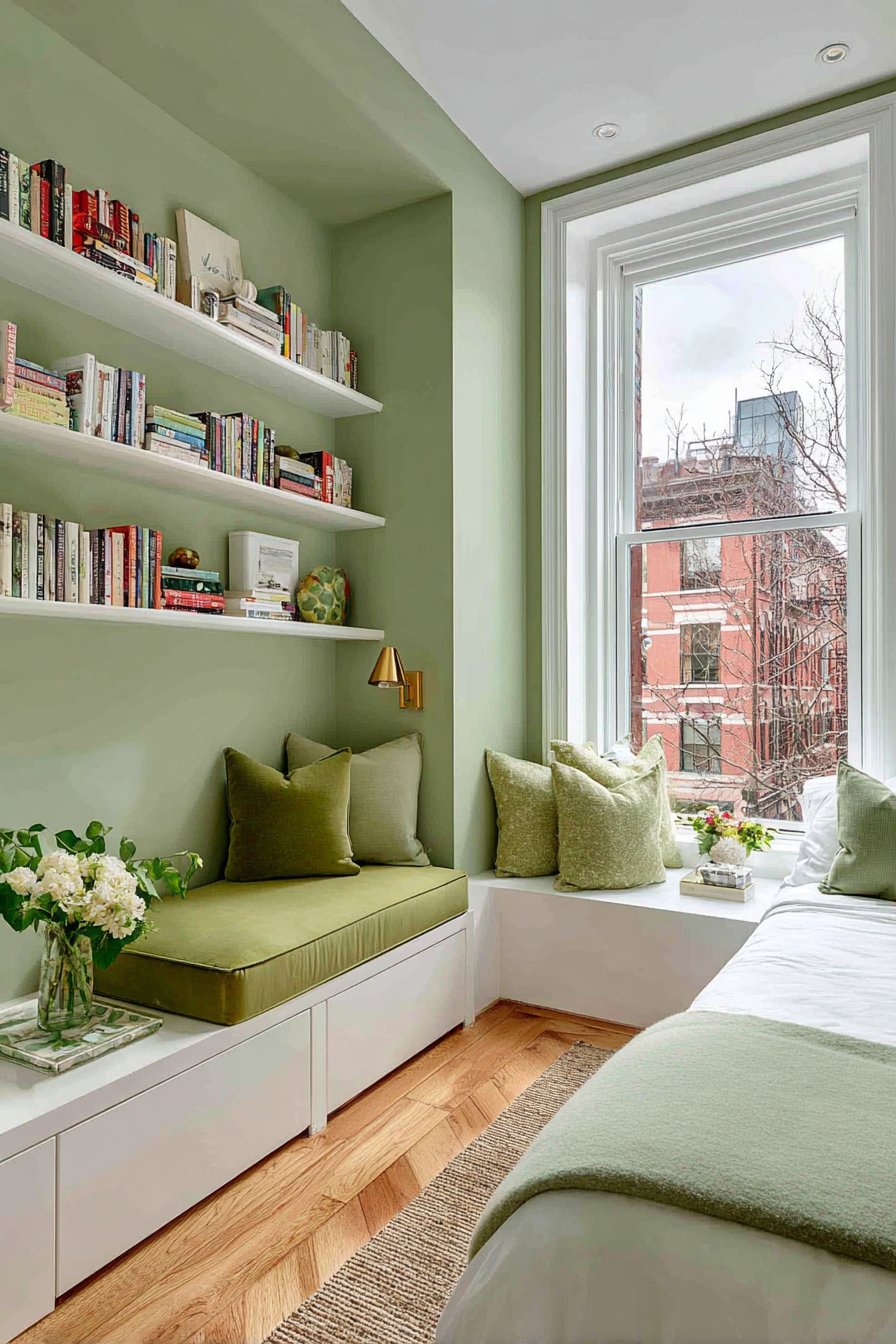
Interior photography with wide-angle perspective captures the multipurpose window seat design and cohesive color scheme, showcasing attention to natural material textures in the wood flooring, fabric cushions, and painted walls. This bedroom demonstrates that built-in seating can serve multiple functions—reading nook, storage solution, and guest sleeping surface—making it particularly valuable in small spaces where furniture must justify its presence through versatility.
Key design tips: Build window seats with lift-top storage to maximize underutilized architectural features. Design window seats with dimensions that allow them to function as guest sleeping surfaces when needed. Install floating corner shelves to exploit vertical space where walls meet. Use muted sage green or similar calming colors to add personality without overwhelming small spaces. Mount reading lights on walls above seating and sleeping areas to eliminate need for table lamps.
18. Central Bed with Headboard Storage
Not all small bedrooms are so tiny that beds must be pushed against walls—some benefit from centered placement that creates symmetry and balance. This design features a full-size bed positioned centrally with a storage headboard containing built-in outlets and open compartments for essentials. The headboard’s storage functionality eliminates the need for separate nightstands while providing convenient access to items needed during the night or while relaxing in bed.
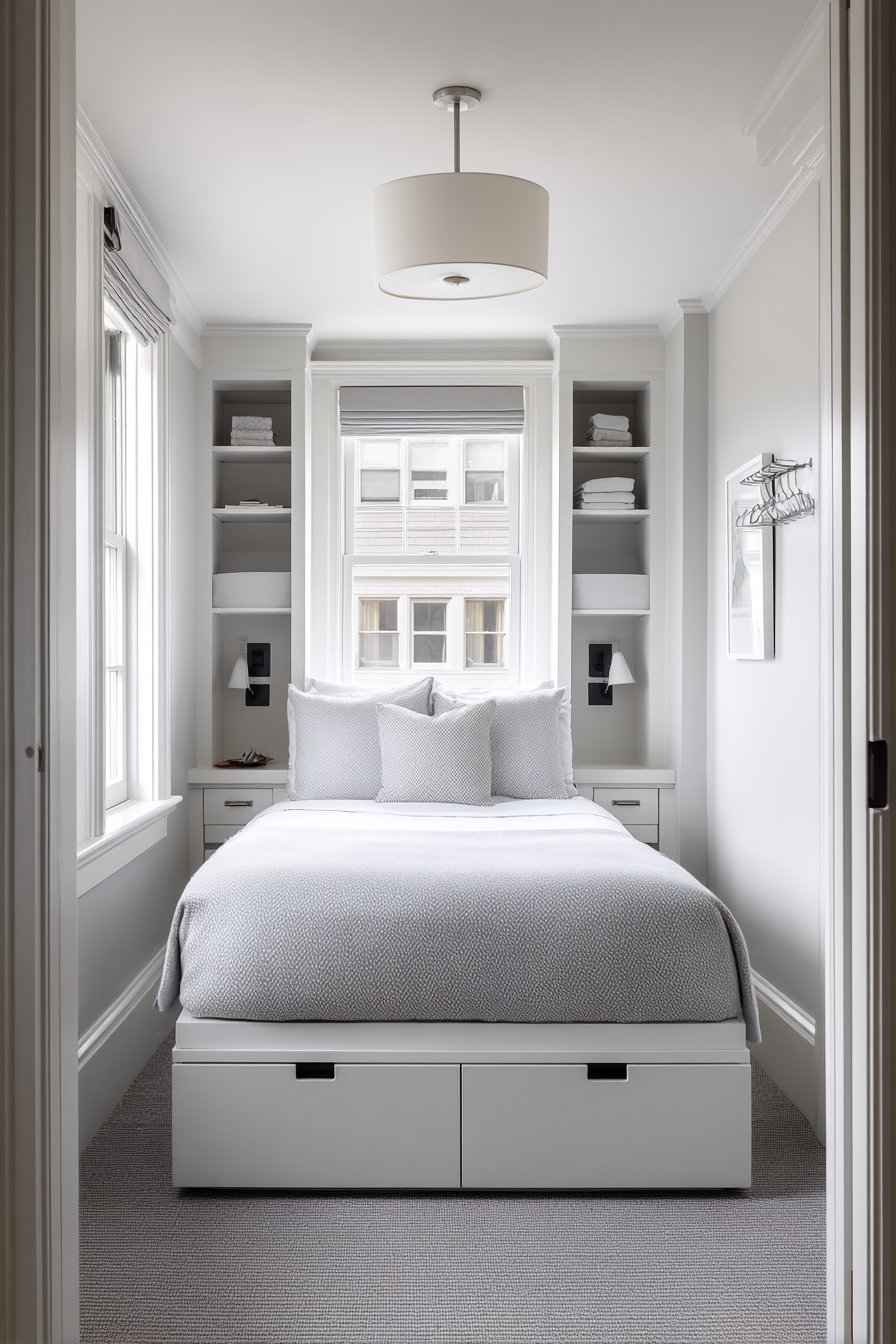
The bed’s central position creates narrow walkways on both sides, a layout that works when the room’s width accommodates this arrangement without making the passages uncomfortably tight. This symmetrical approach creates a more formal, hotel-like aesthetic that can make small bedrooms feel more deliberately designed rather than cramped by necessity. Over-door hooks and hanging organizers maximize vertical surfaces throughout the room, keeping items accessible without requiring furniture that would consume floor space.
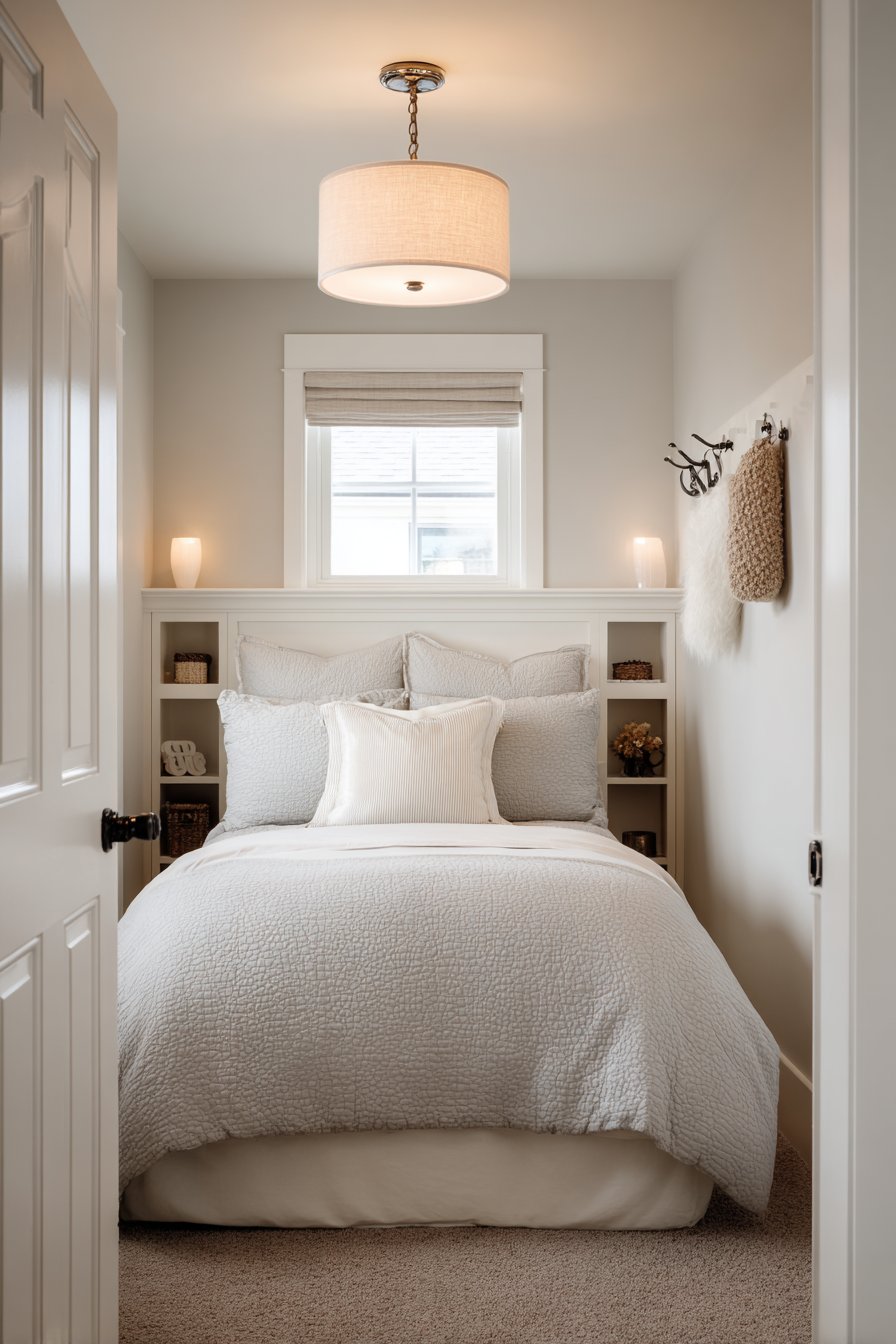
Light grey bedding coordinates harmoniously with pale walls, creating a cohesive monochromatic scheme that enhances spaciousness through visual unity. The restrained color palette prevents the eye from stopping at contrasting elements, instead allowing it to move freely throughout the space and perceive the room as larger than its measurements suggest. A simple drum pendant provides overhead lighting that illuminates the entire room evenly without creating harsh shadows or dark corners.
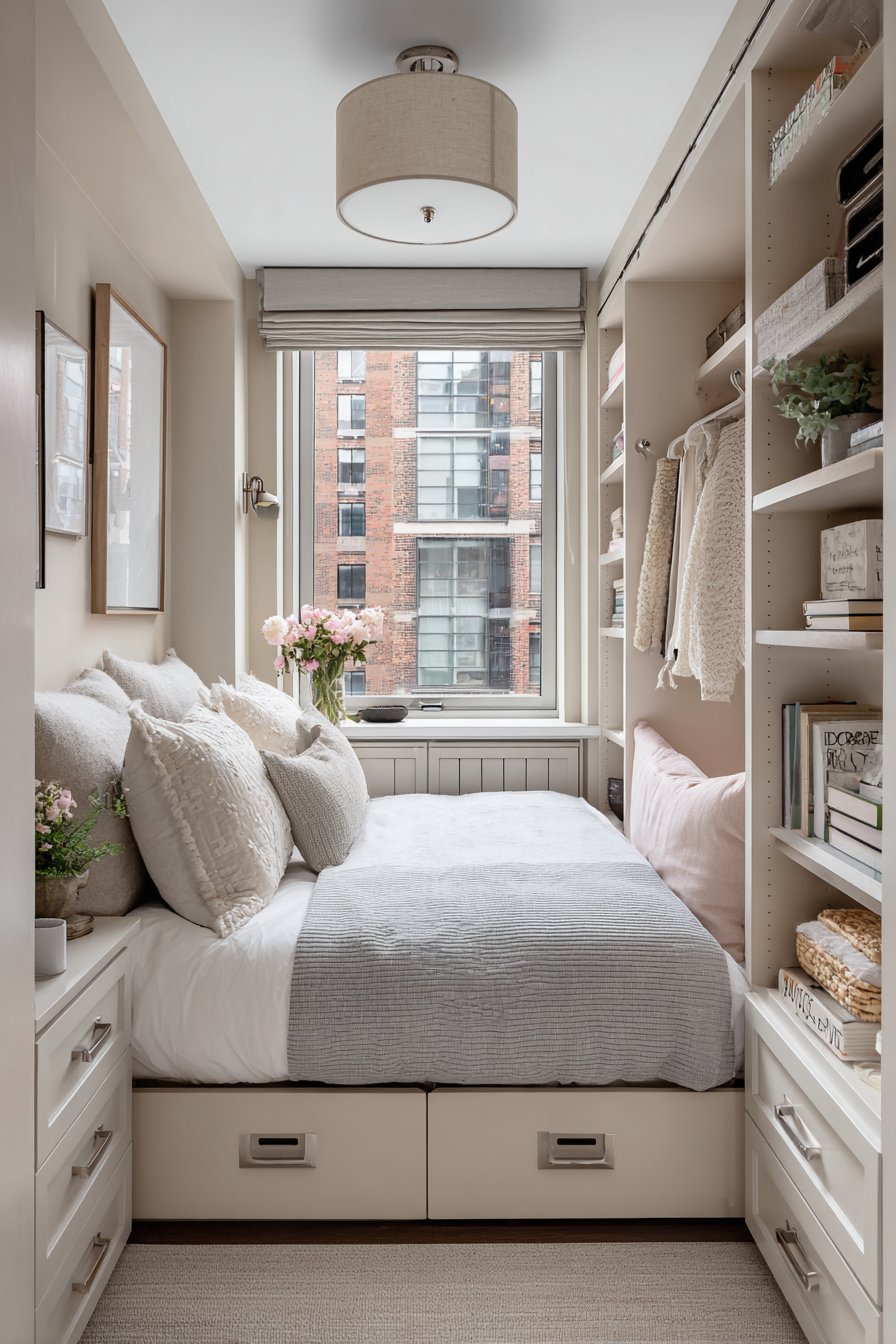
Morning light through a window dressed with a roller shade provides natural illumination while the shade offers privacy and light control as needed. Interior design photography captures the symmetrical layout and integrated storage solutions, demonstrating how central bed placement can work in small bedrooms when balanced with minimal additional furniture and smart vertical storage. This arrangement proves particularly effective for square or nearly square rooms where centered placement doesn’t result in uncomfortably narrow passages.
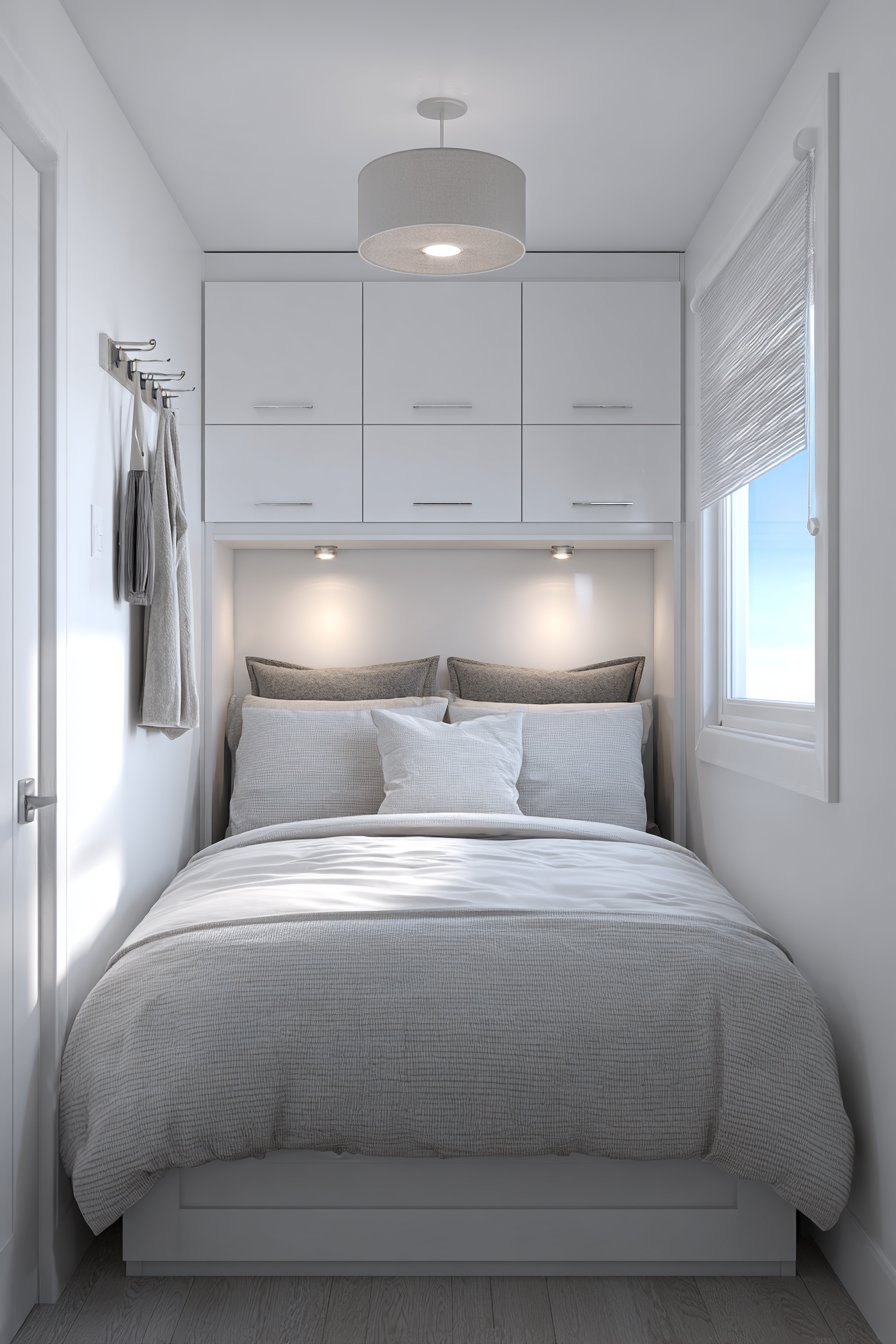
Key design tips: Center beds in rooms wide enough to allow comfortable passage on both sides (minimum 24 inches). Choose headboards with integrated storage and electrical outlets to eliminate separate nightstand furniture. Maximize door-mounted organizers and over-door hooks to keep items accessible without floor-standing storage. Maintain monochromatic color schemes to create visual unity and enhance spaciousness. Use drum pendants or other centered ceiling fixtures to provide even illumination in symmetrically arranged rooms.
19. Convertible Sofa Bed Flexibility
The ultimate flexible furniture piece for small spaces combines seating and sleeping in a single convertible unit that adapts to different needs throughout the day. This design features a convertible sofa bed upholstered in neutral oatmeal fabric, chosen for its durability and ability to hide the inevitable wear from daily use as seating and nightly use as a bed. The neutral tone works equally well in daytime living room configuration and nighttime bedroom mode, maintaining design cohesion through both transformations.
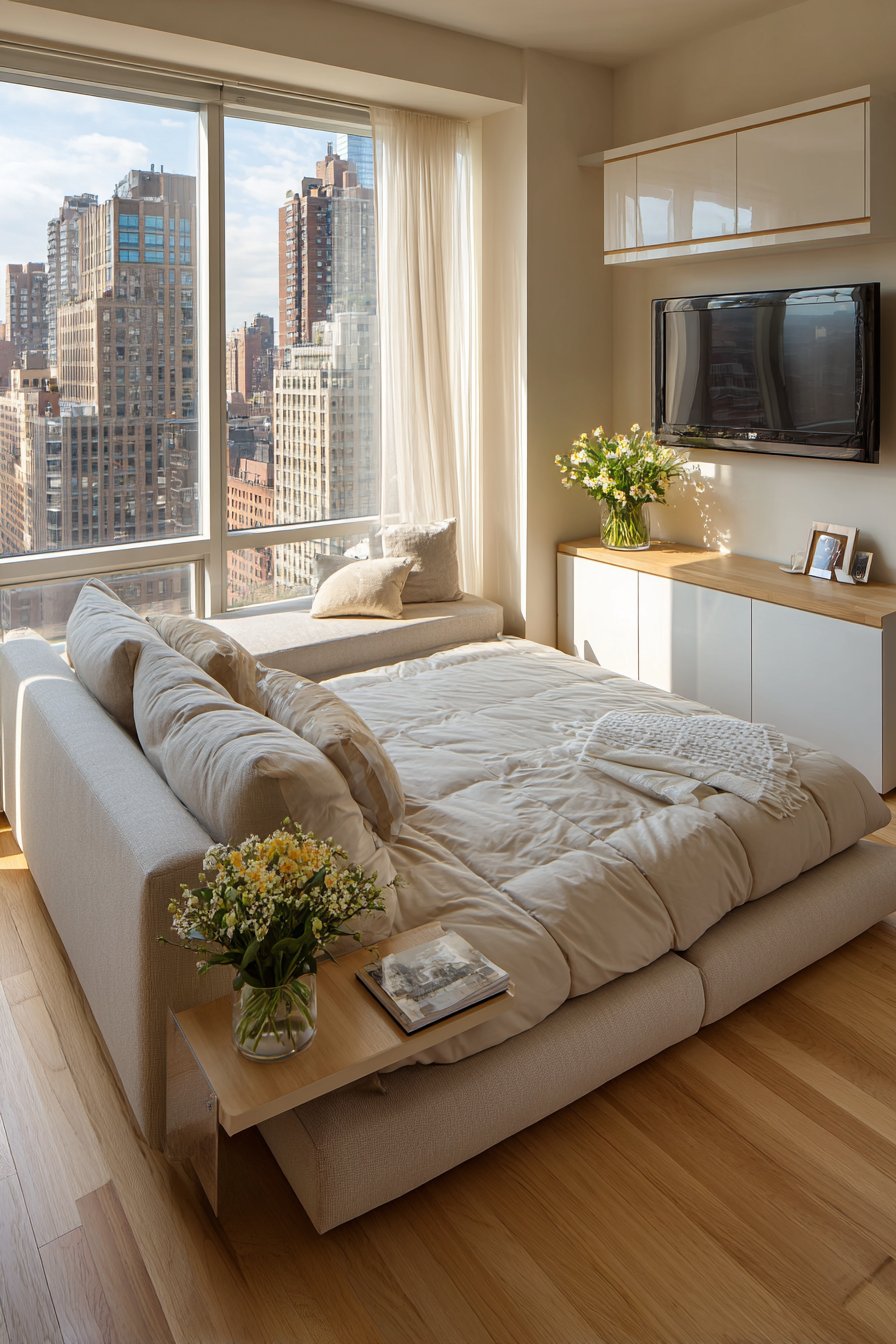
A wall-mounted TV on an articulating arm saves considerable floor space that would otherwise be consumed by a media console or entertainment center. The articulating mount allows adjustment for optimal viewing from both sofa and bed positions, demonstrating the thoughtful flexibility required when furniture serves multiple purposes. Nesting side tables tuck away completely when not needed, providing surface space when required without permanently consuming precious square footage.
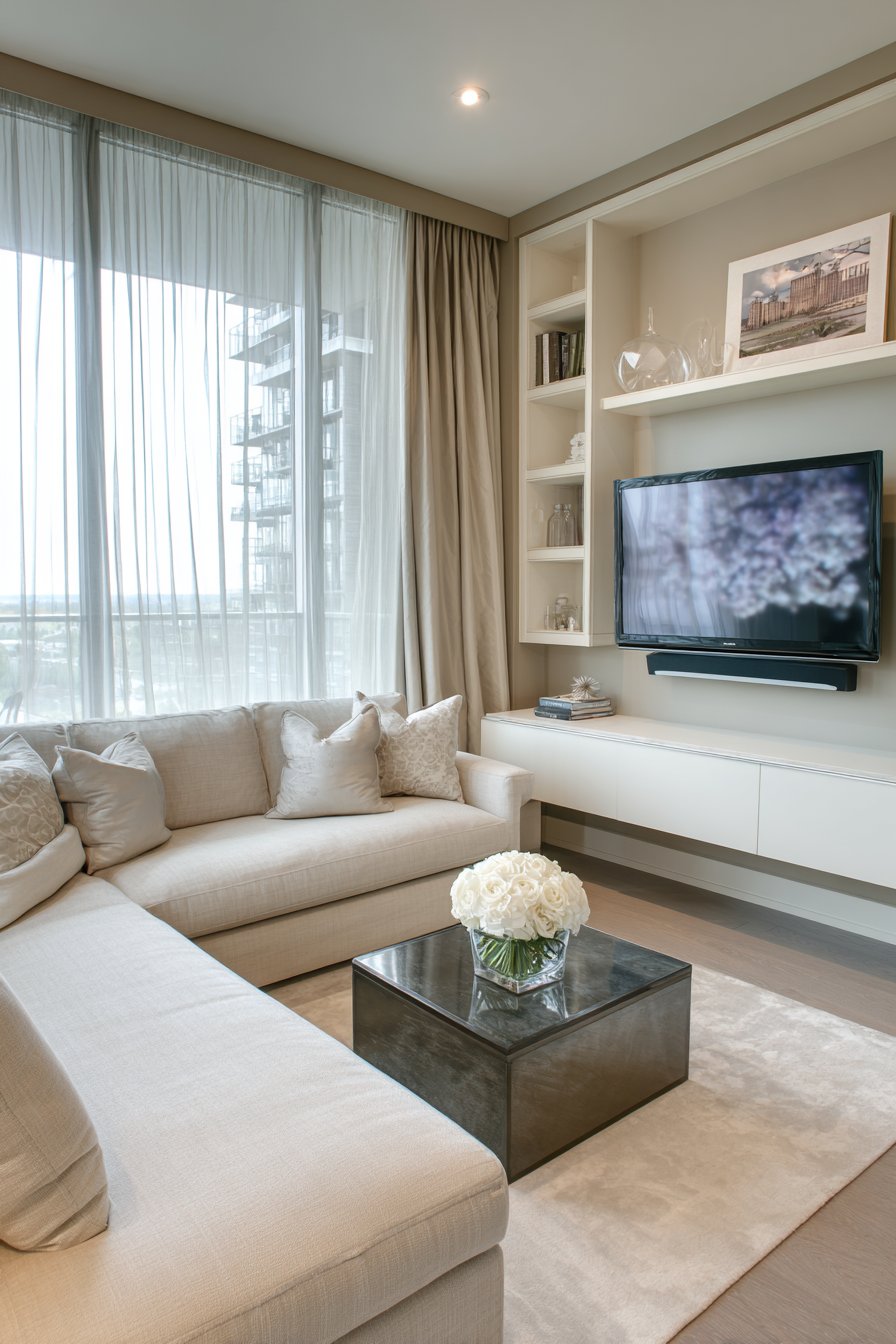
A floating media console with closed storage houses electronics and media while maintaining the clean lines essential to preventing visual clutter in multipurpose small spaces. The closed storage keeps cables, remotes, and media items hidden from view, maintaining the room’s clean aesthetic whether configured for daytime or nighttime use. Light hardwood flooring provides warmth and its horizontal grain visually expands the floor plane, making the room feel more spacious than darker or vertically-patterned flooring would.
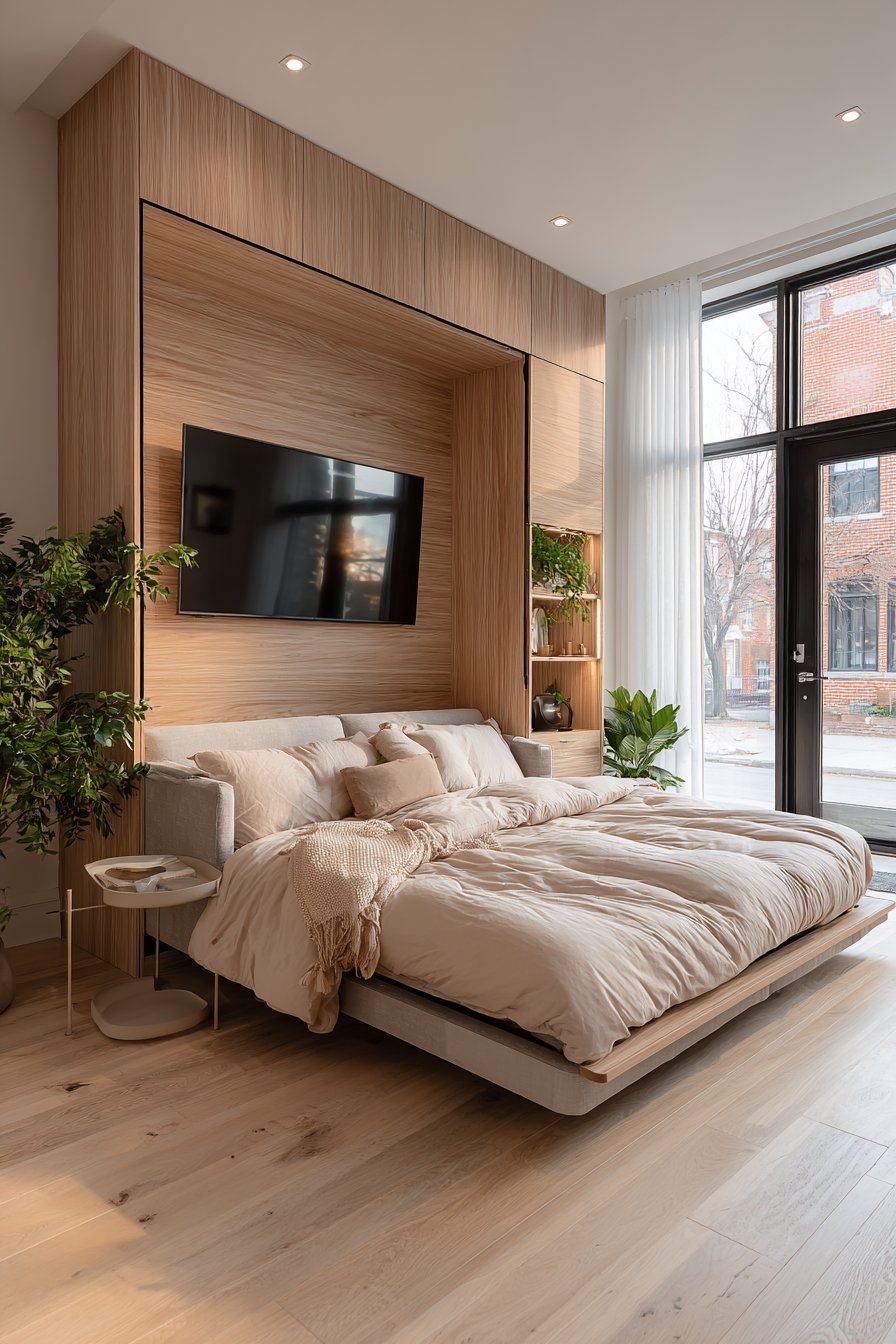
Sheer panels on the window filter natural light softly, providing privacy without blocking the essential connection to outdoor light that prevents small multipurpose rooms from feeling closed-in or claustrophobic. Professional interior photography captures the flexible furniture arrangement and multifunctional design with soft natural lighting showing the daytime configuration. This space proves that studio living or multipurpose rooms can feel comfortable and well-designed when furniture adapts to different needs rather than forcing occupants to compromise.
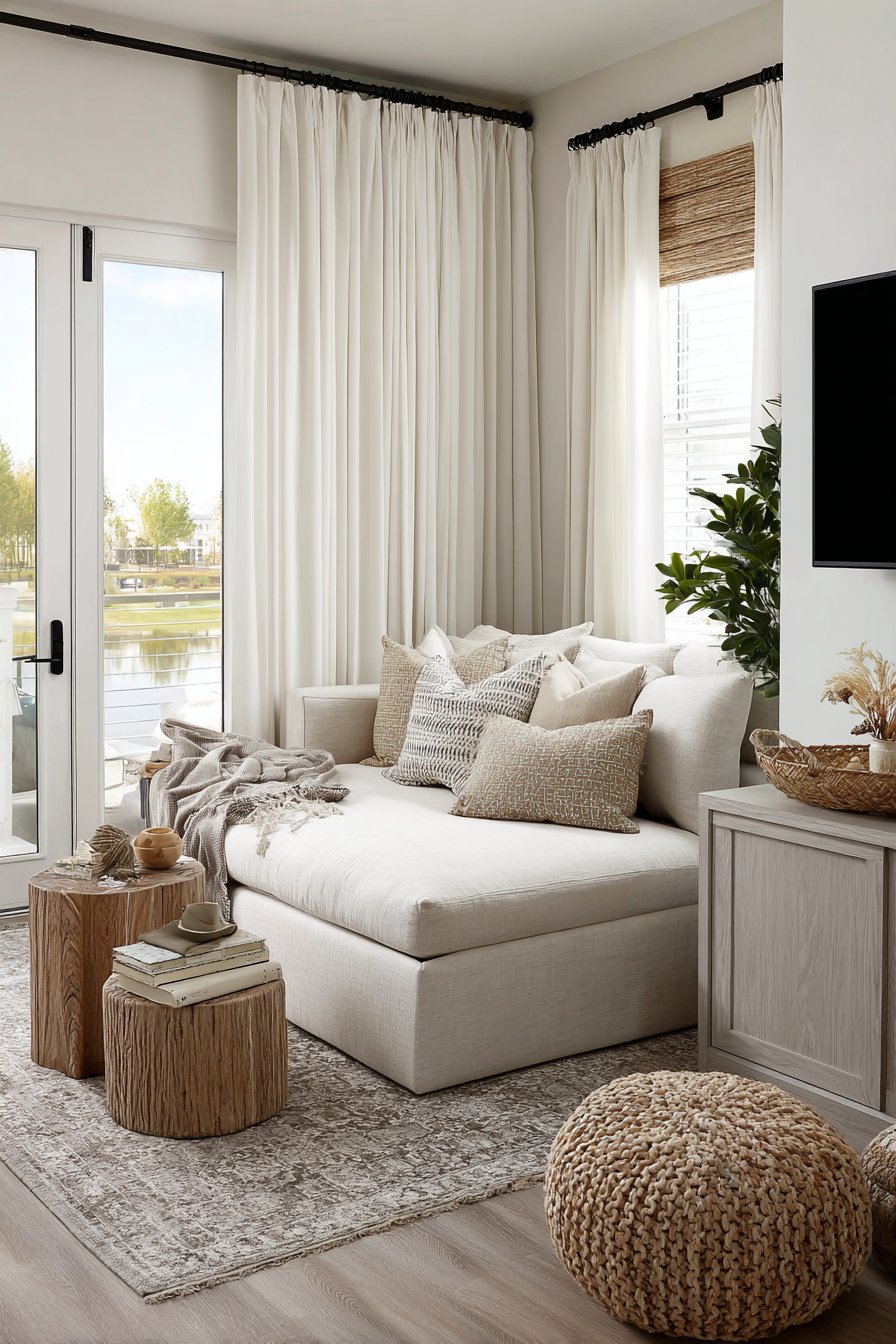
Key design tips: Choose durable upholstery fabrics in neutral tones for sofa beds that endure daily sitting and nightly sleeping. Install articulating TV mounts that adjust for viewing from multiple furniture positions. Use nesting tables that tuck away to provide surface space without permanent floor space commitment. Select floating media consoles with closed storage to hide electronic clutter and cables. Maintain light flooring and sheer window treatments to maximize natural light in multipurpose spaces.
20. Platform Bed with Integrated Side Tables
Integrated furniture design eliminates visual clutter by combining multiple pieces into unified systems that read as single elements rather than collections of separate items. This bedroom features a platform bed with integrated side tables formed from the extended bed frame, creating a cohesive piece that provides sleeping surface and nightstand functionality without separate furniture pieces fighting for space. The unified design creates clean, continuous lines that enhance the sense of calm and spaciousness.
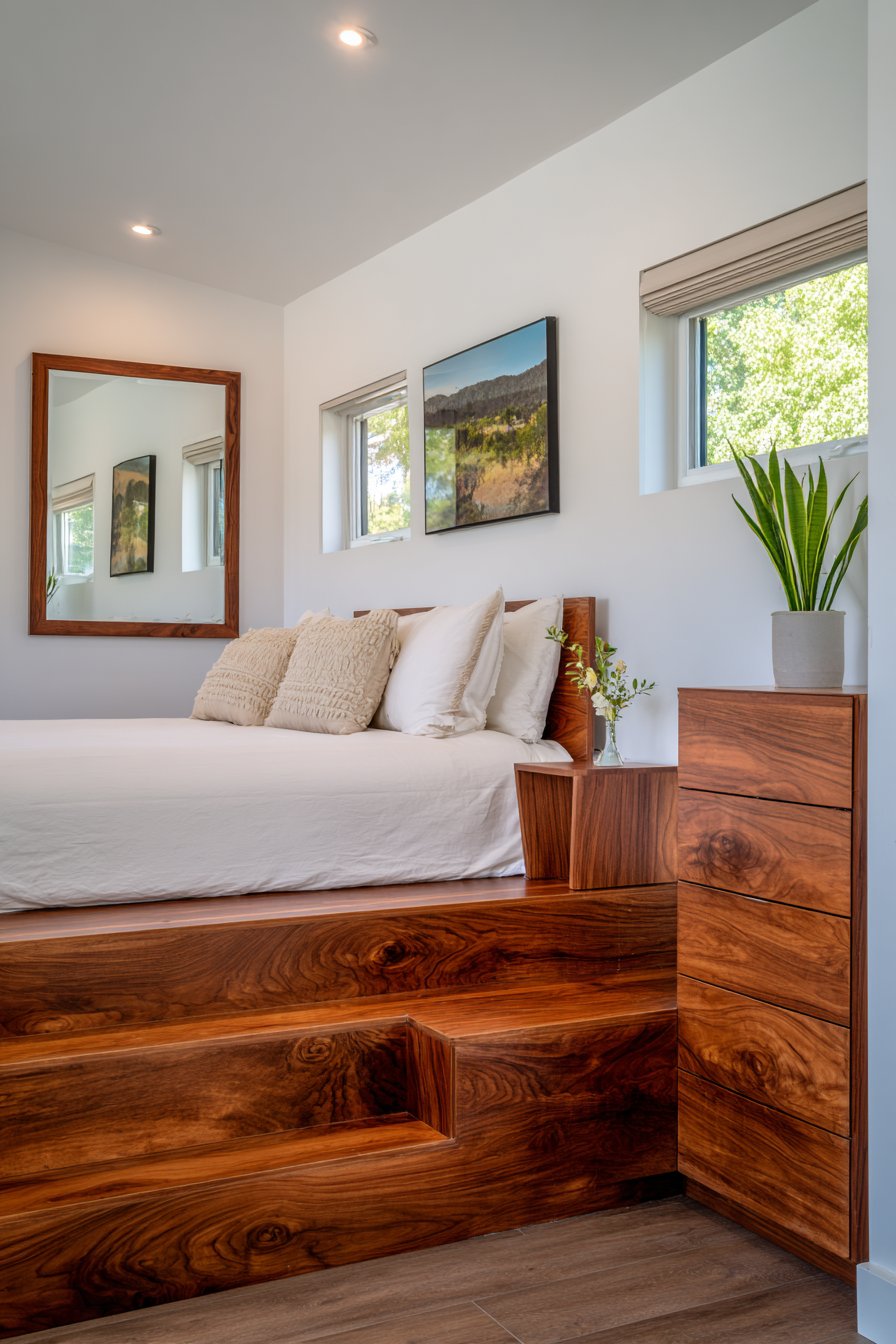
Minimal white bedding maintains simplicity and allows the integrated furniture design to take center stage without competition from busy patterns or bold colors. The restrained bedding choice also maintains the room’s light, airy feeling and reflects available natural light throughout the space. A tall narrow dresser maximizes vertical storage capacity with six drawers stacked efficiently, providing substantial clothing storage without consuming more floor space than absolutely necessary.
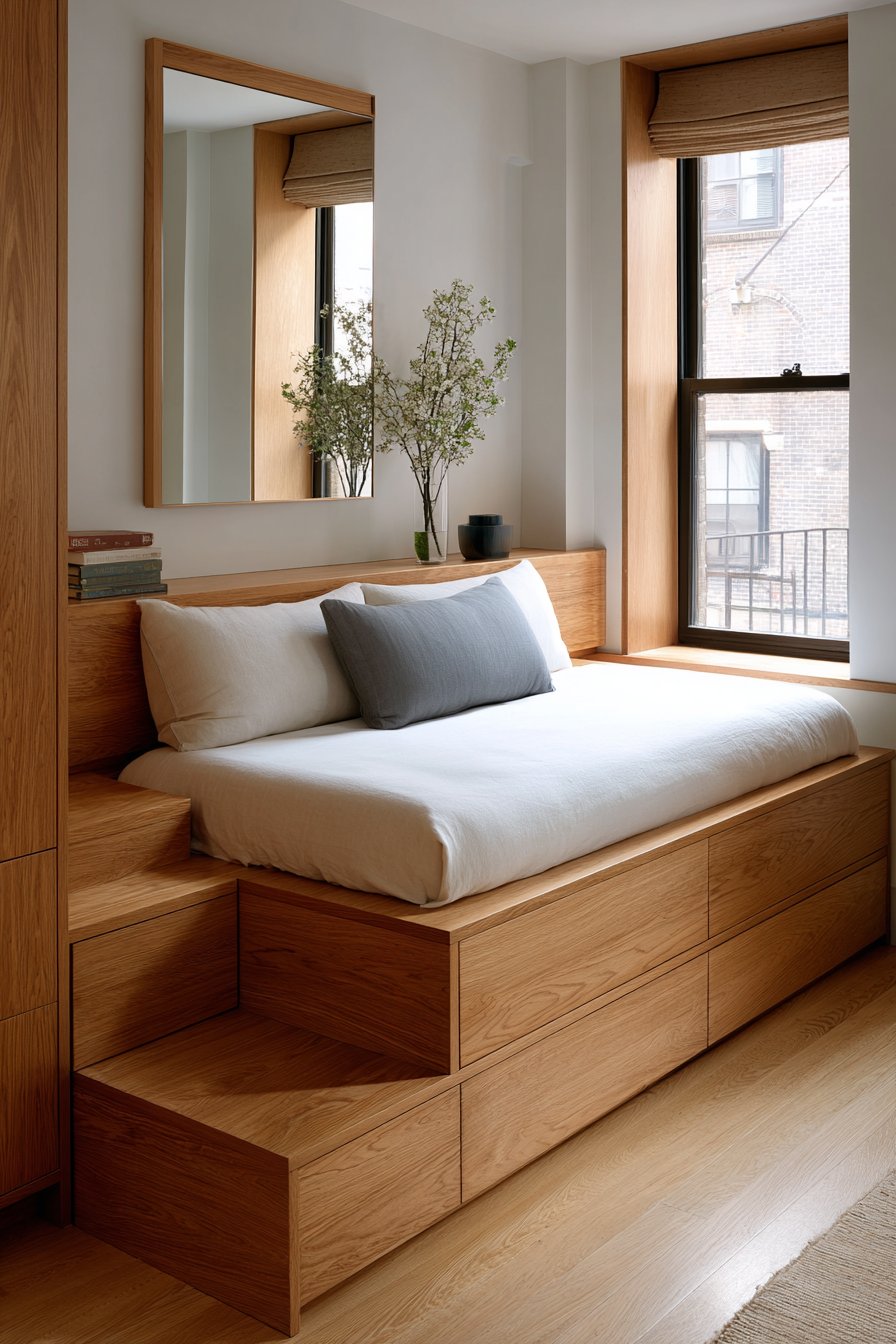
A wall-mounted mirror positioned above the dresser reflects light and creates the illusion of greater depth, a classic technique that proves its worth repeatedly in small bedroom design. The mirror’s placement also serves the practical purpose of providing a dressing mirror without requiring floor space for a full-length freestanding option. Soft blue-grey walls introduce subtle color that adds personality and warmth without the visual weight of more saturated hues.
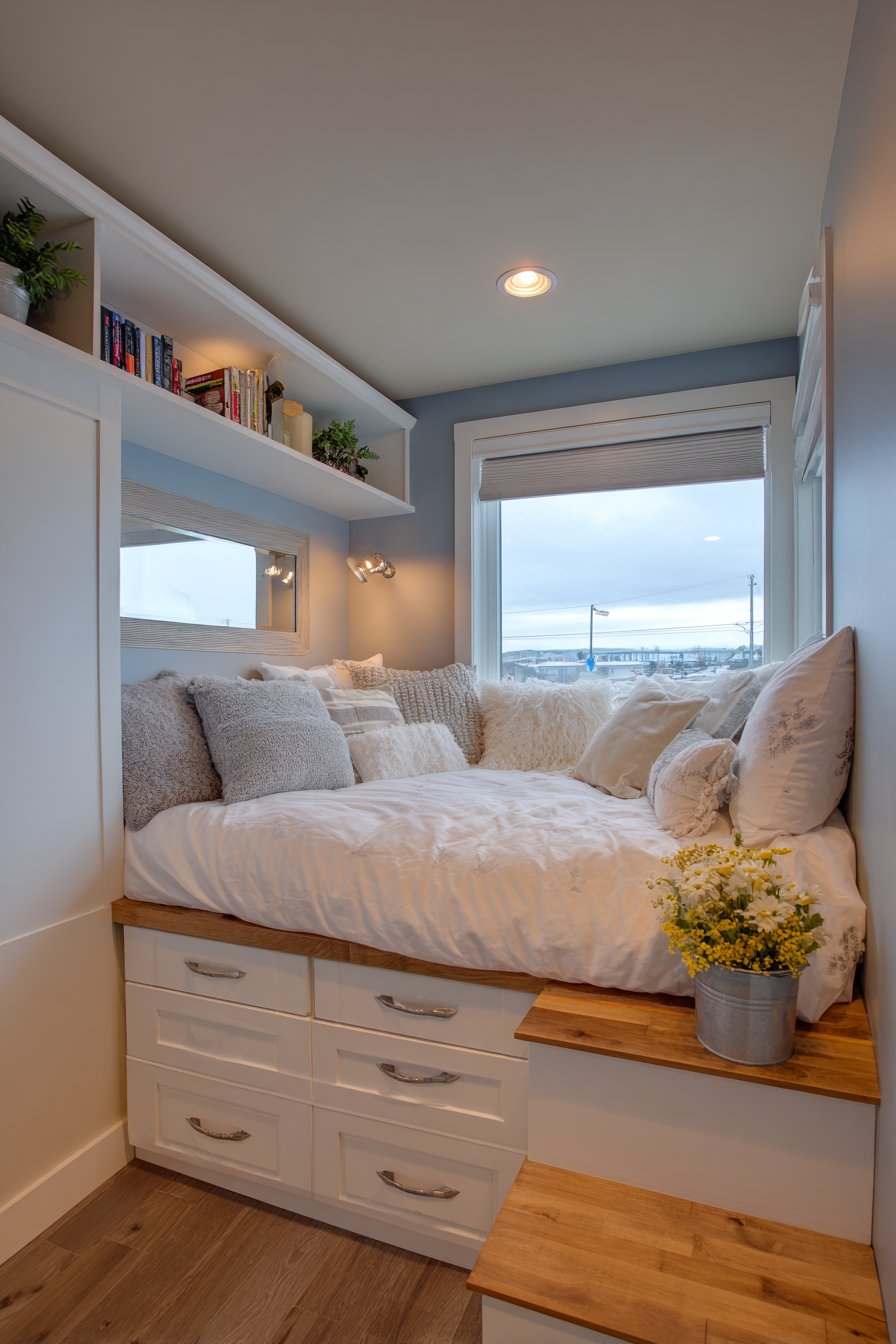
A small window with a simple blind provides natural light and ventilation while the minimalist window treatment avoids consuming visual space with elaborate curtains or valances. Natural oak furniture throughout maintains consistency in material and tone, creating visual harmony that makes the small space feel thoughtfully designed rather than randomly furnished. Interior photography with balanced exposure captures the custom integrated furniture solution and efficient use of vertical rather than horizontal space, demonstrating that when floor area is limited, building upward becomes essential.
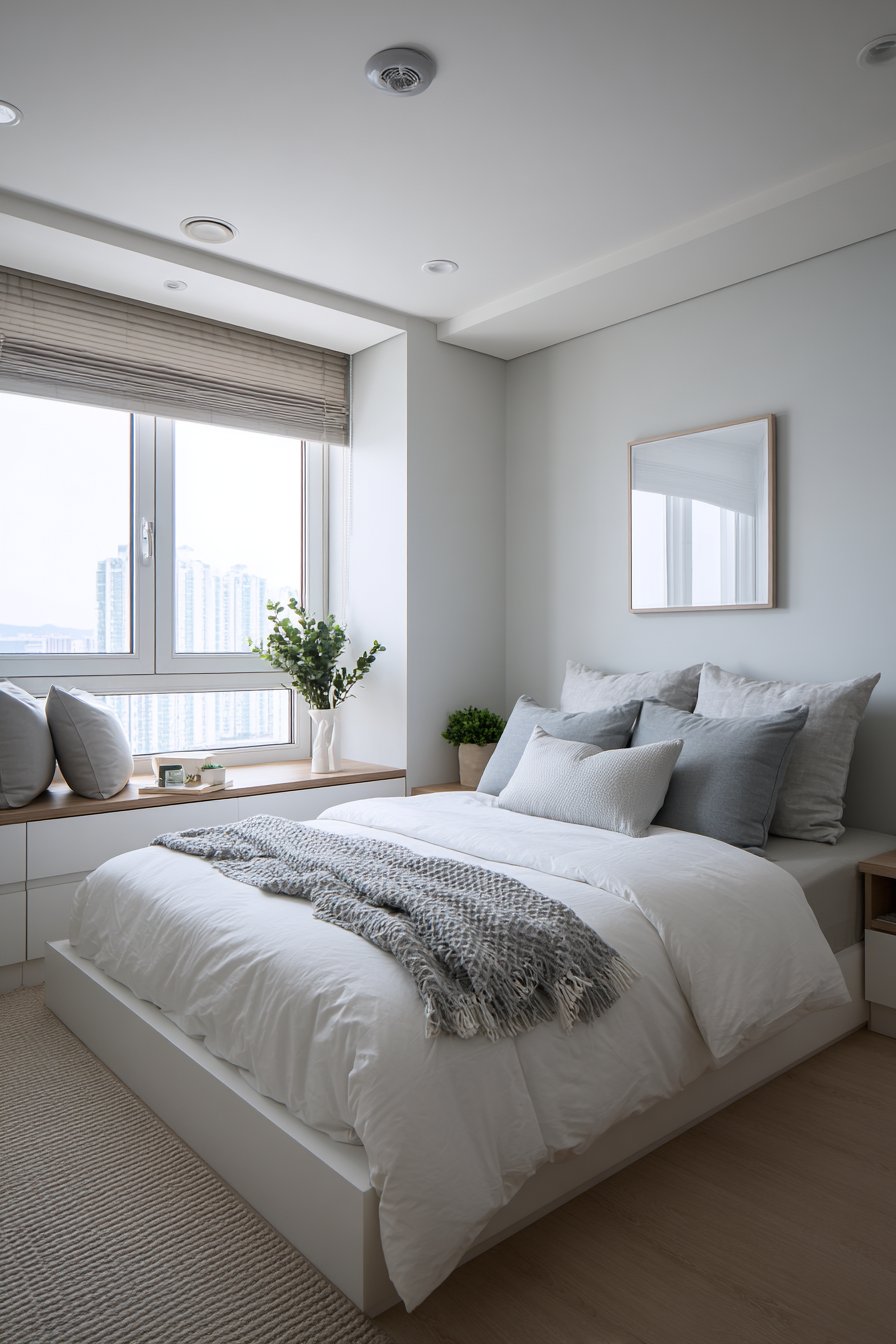
Key design tips: Choose bed frames with integrated side tables to eliminate separate nightstand furniture. Use tall narrow dressers to maximize vertical storage without consuming excessive floor space. Mount mirrors above storage furniture to reflect light and create depth perception. Select soft blue-grey or similar muted wall colors to add personality without overwhelming small rooms. Maintain consistency in furniture materials and finishes to create visual harmony and cohesion.
21. Bookshelf Alcove Creation
Creative furniture arrangement can transform the geometry of small bedrooms by creating defined zones where none existed architectically. This design tucks the bed into an alcove created by strategic bookshelf placement, forming a cozy sleeping nook that feels intentionally intimate. The open shelving painted white holds books and minimal décor, providing storage and display without the visual weight of solid cabinetry or dark wood shelving.
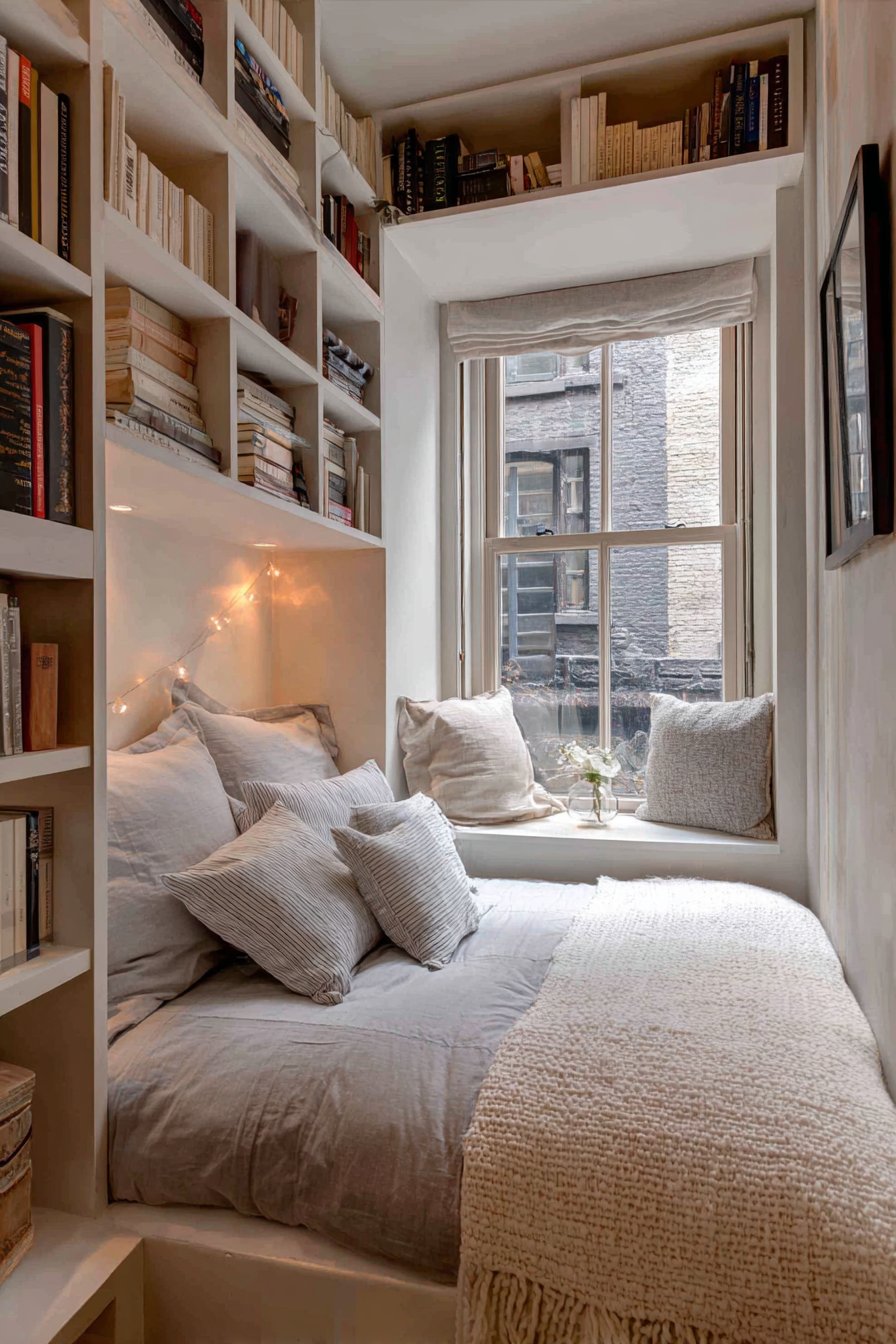
Soft string lights along the top shelf edge create ambient glow that adds warmth and personality without requiring table lamps or floor lamps that would consume surface or floor space. This simple lighting solution contributes to the room’s cozy atmosphere while demonstrating that effective lighting doesn’t always require traditional fixtures. Light grey bedding with a textured knit throw introduces tactile interest and comfort without pattern or bold color that might overwhelm the intimate nook.
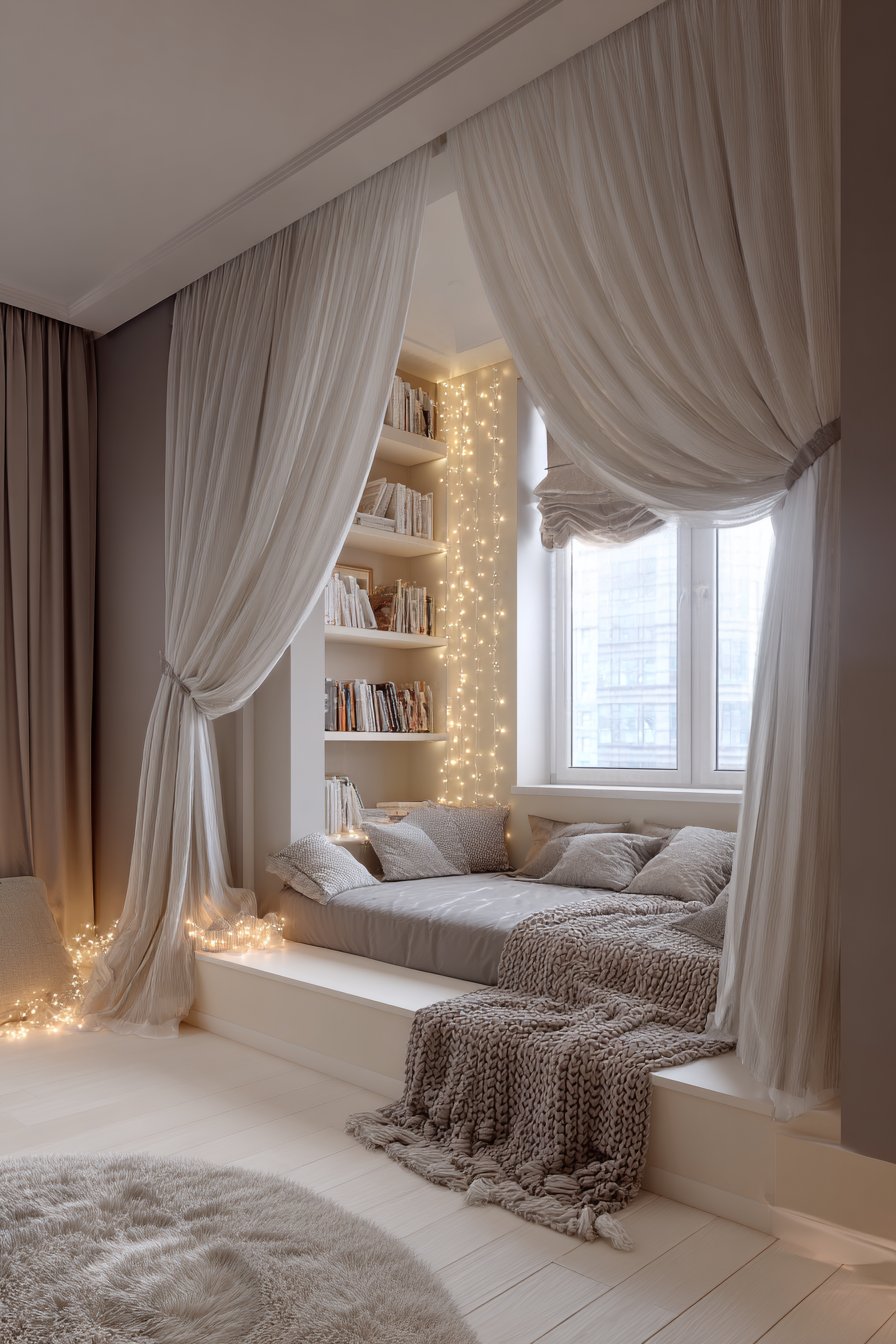
Pale walls maintain brightness throughout the space, preventing the bookshelf-defined alcove from feeling dark or cave-like despite its enclosed nature. The light color scheme ensures that natural light from a small window with gauzy curtain reaches throughout the room, including into the sleeping nook. Natural light supplemented by warm LED strips creates flexible illumination that adapts to different times of day and activities.
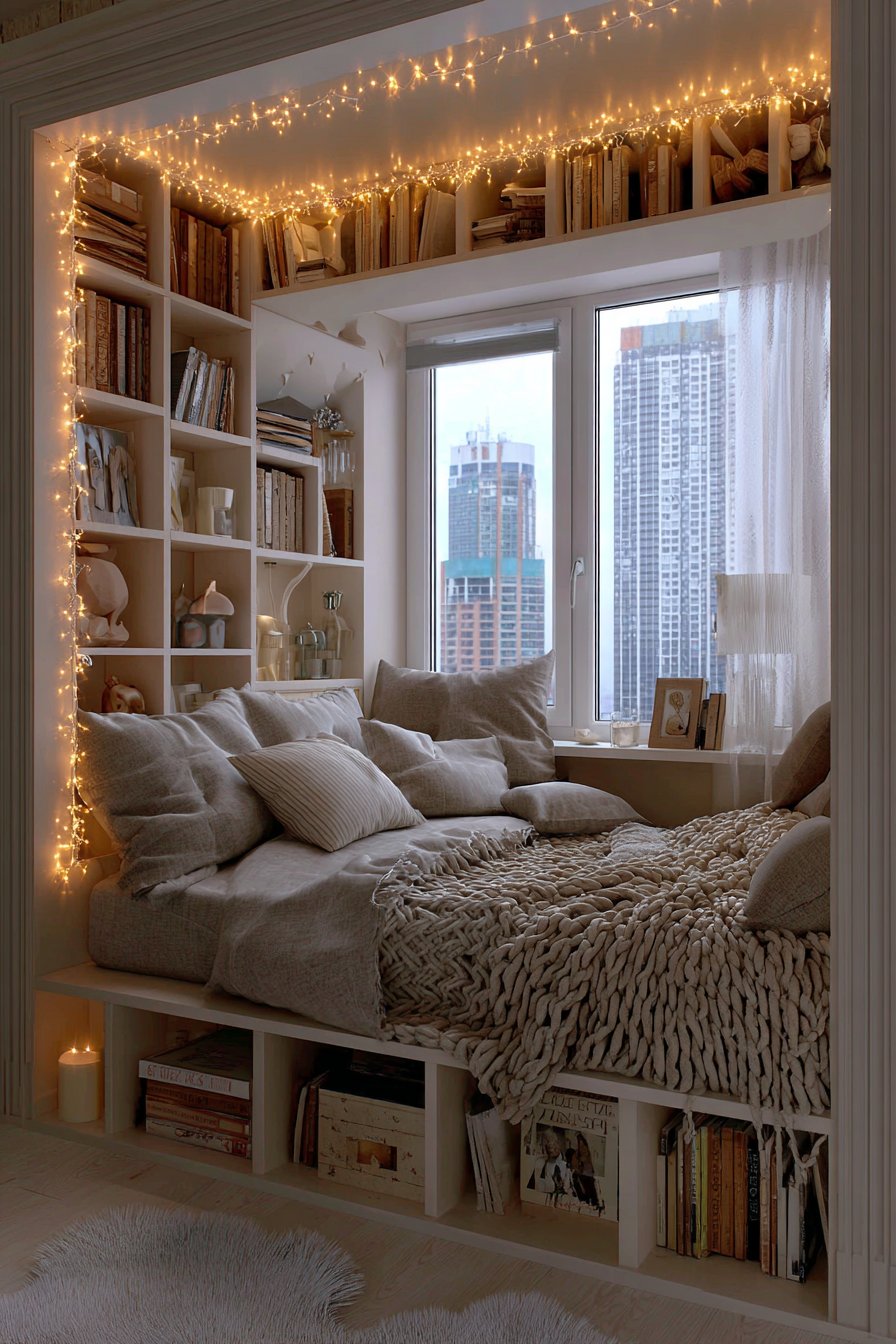
Detail-focused interior photography highlights the creative alcove formation and personalized cozy atmosphere, with soft shadow play defining the dimensional depth created by the bookshelf arrangement. This bedroom demonstrates that furniture placement can be just as effective as architectural elements in creating defined zones and intimate spaces within small bedrooms. The bookshelf walls provide function, storage, and architectural interest simultaneously, proving that creative thinking often yields more interesting results than simply following traditional furniture layouts.
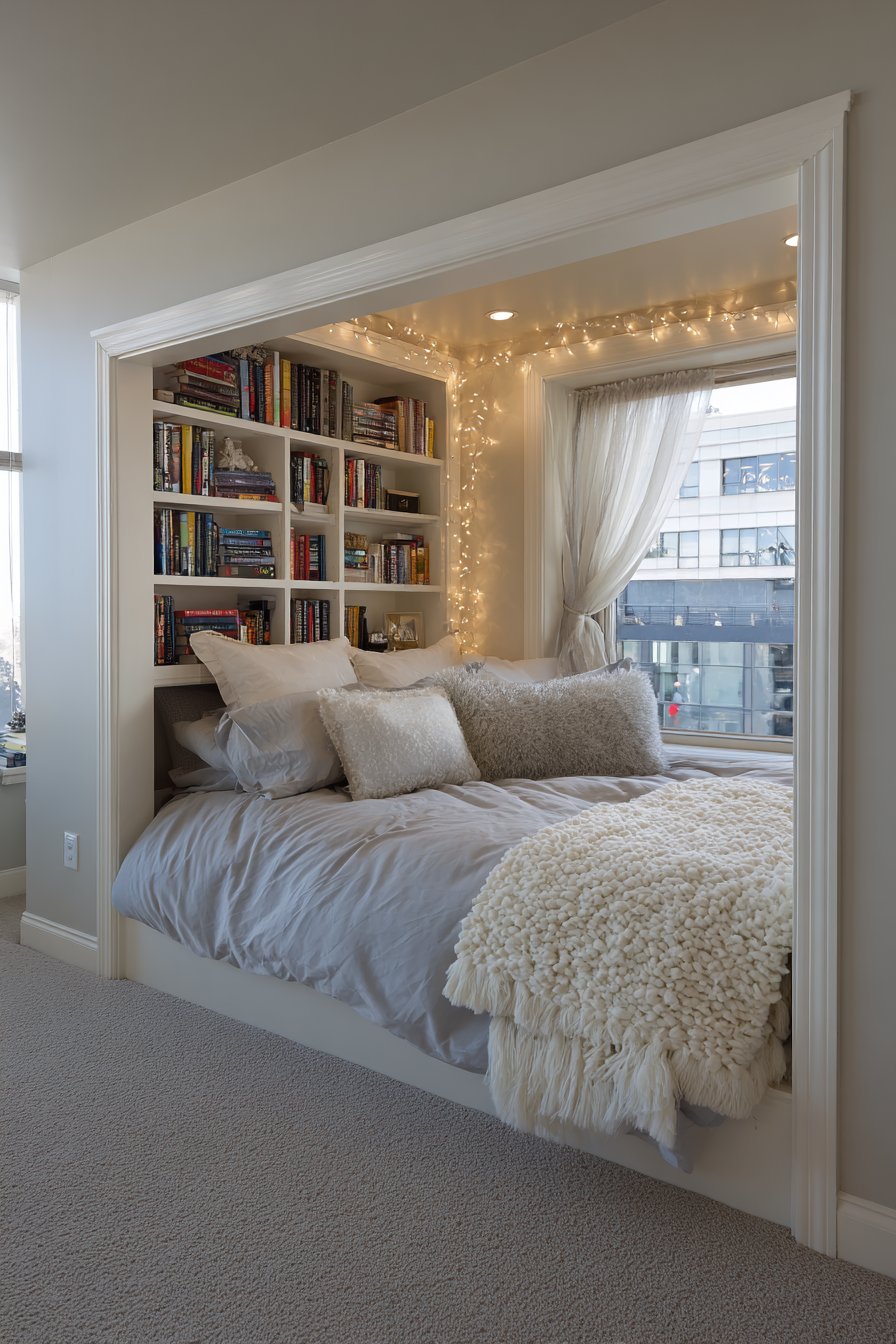
Key design tips: Use tall bookcases to create alcove formations and define sleeping zones within open spaces. Paint shelving white or in wall colors to reduce visual weight and maintain brightness. Install string lights along upper shelving edges for ambient lighting without traditional fixtures. Choose textured bedding in neutral colors to add tactile interest without visual complexity. Ensure adequate natural light reaches into furniture-defined alcoves to prevent dark, closed-in feelings.
22. Transformable Modular Layout
Maximum flexibility in small bedrooms comes from furniture that transforms throughout the day, adapting to different needs rather than remaining fixed in single configurations. This design features a mounted fold-down desk that converts to a nightstand when the bed is pulled out, demonstrating remarkable versatility in a single compact piece. The twin bed mounted on casters rolls to the room’s center during sleep hours and pushes against the wall during the day, dramatically changing the room’s function and feel.
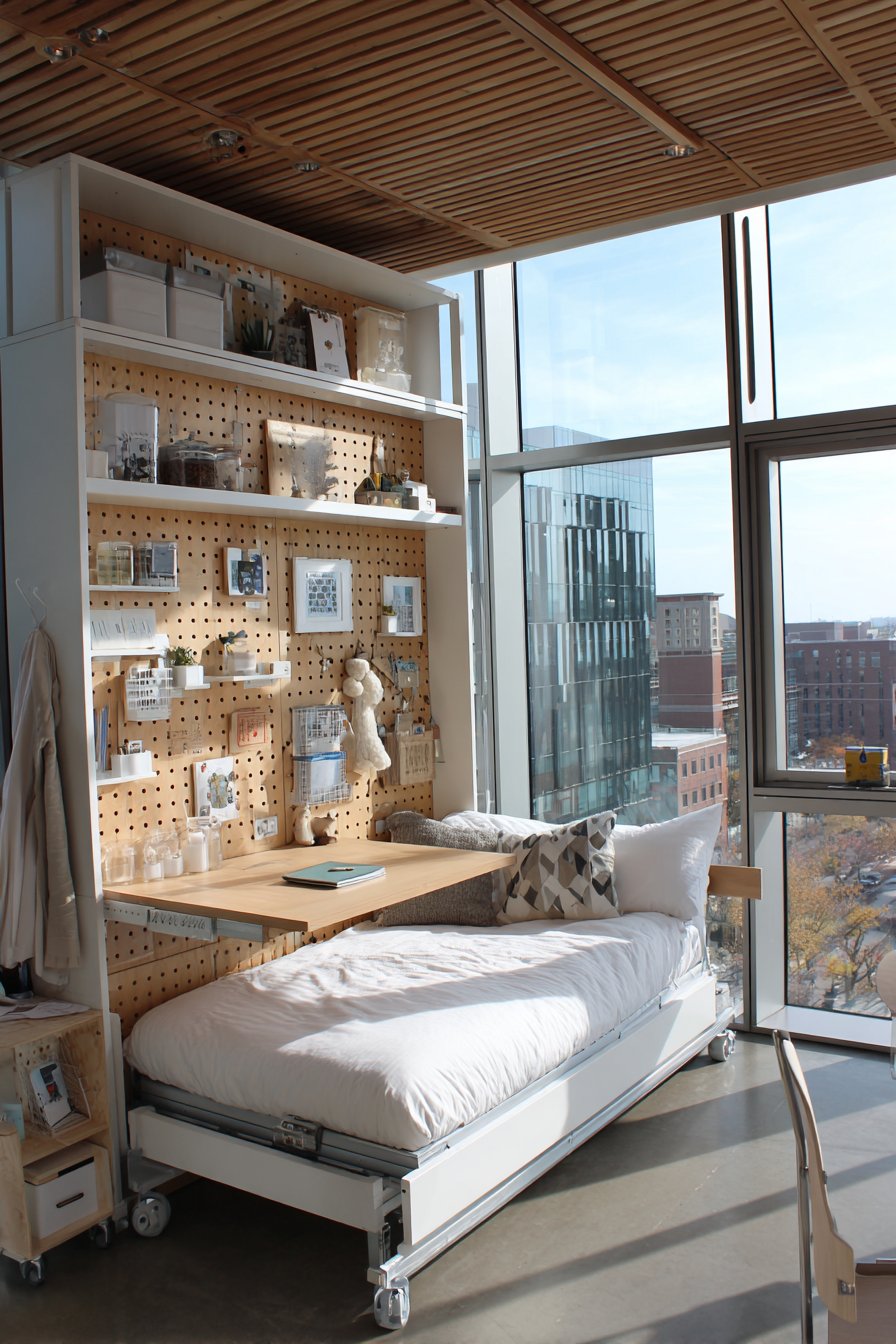
A pegboard organizer system mounted on one wall holds accessories and small items in an adjustable, customizable arrangement that can evolve as needs change. This flexible storage solution avoids the permanence of built-in shelving while providing more organization than simple hooks or baskets. The white and natural wood palette maintains visual calm and cohesion despite the modular, changeable nature of the furniture arrangement.
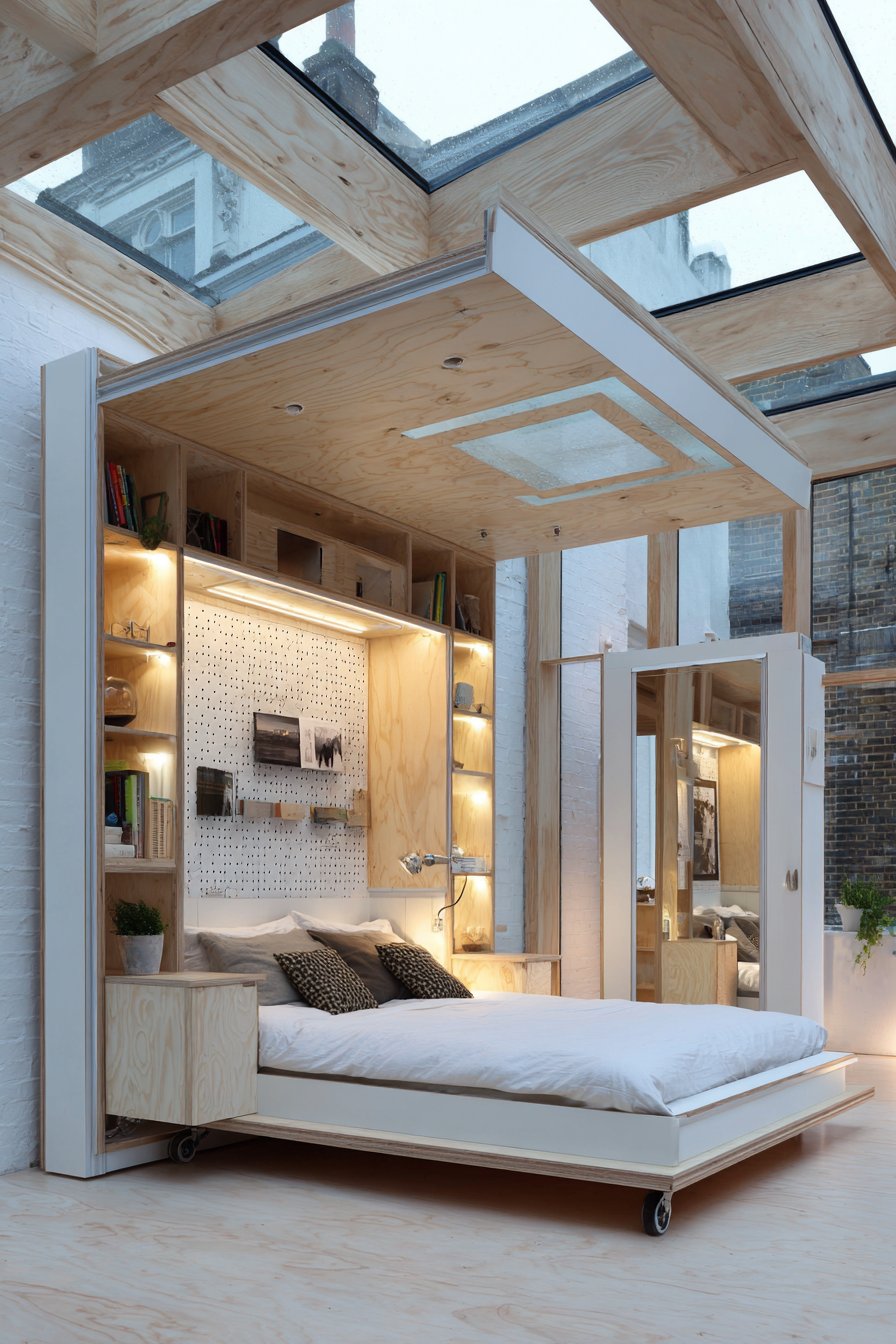
A compact floor mirror leans casually in the corner, providing necessary full-length reflection without requiring wall mounting or consuming floor space with a standing dresser mirror. Its leaning position allows it to be easily moved or adjusted as furniture configurations change throughout the day. A skylight provides natural illumination from above, solving the common challenge of window placement when walls are needed for flexible furniture arrangements.
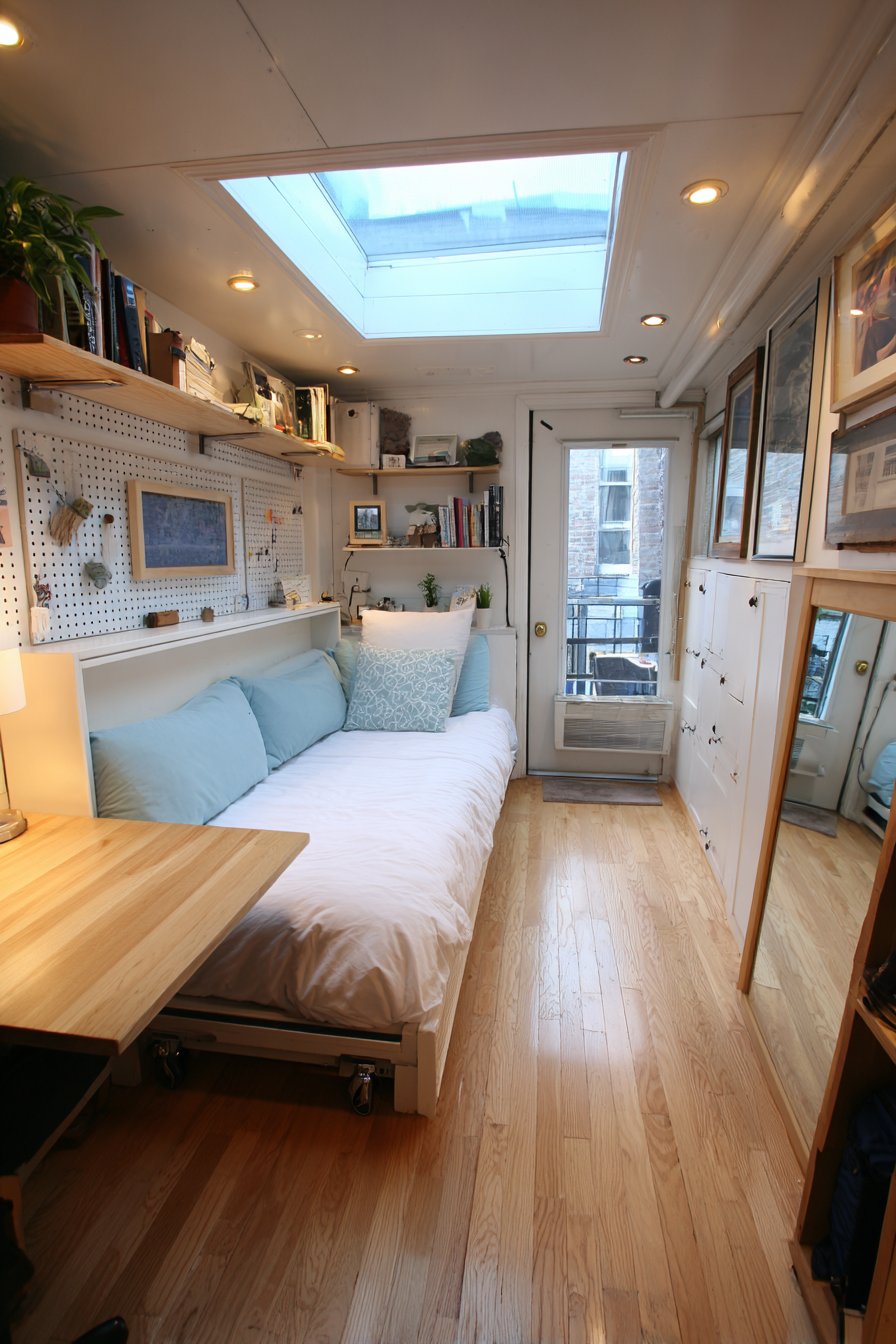
Wide-angle interior design photography captures the transformable layout and modular furniture approach, with even daylight distribution from the skylight illuminating the space without the limitations of wall-positioned windows. This bedroom proves that the most flexible small spaces embrace change rather than fighting it, with furniture systems that encourage adaptation rather than demanding static arrangements. The ability to reconfigure the space throughout the day makes small bedrooms feel larger by enabling them to serve multiple purposes.
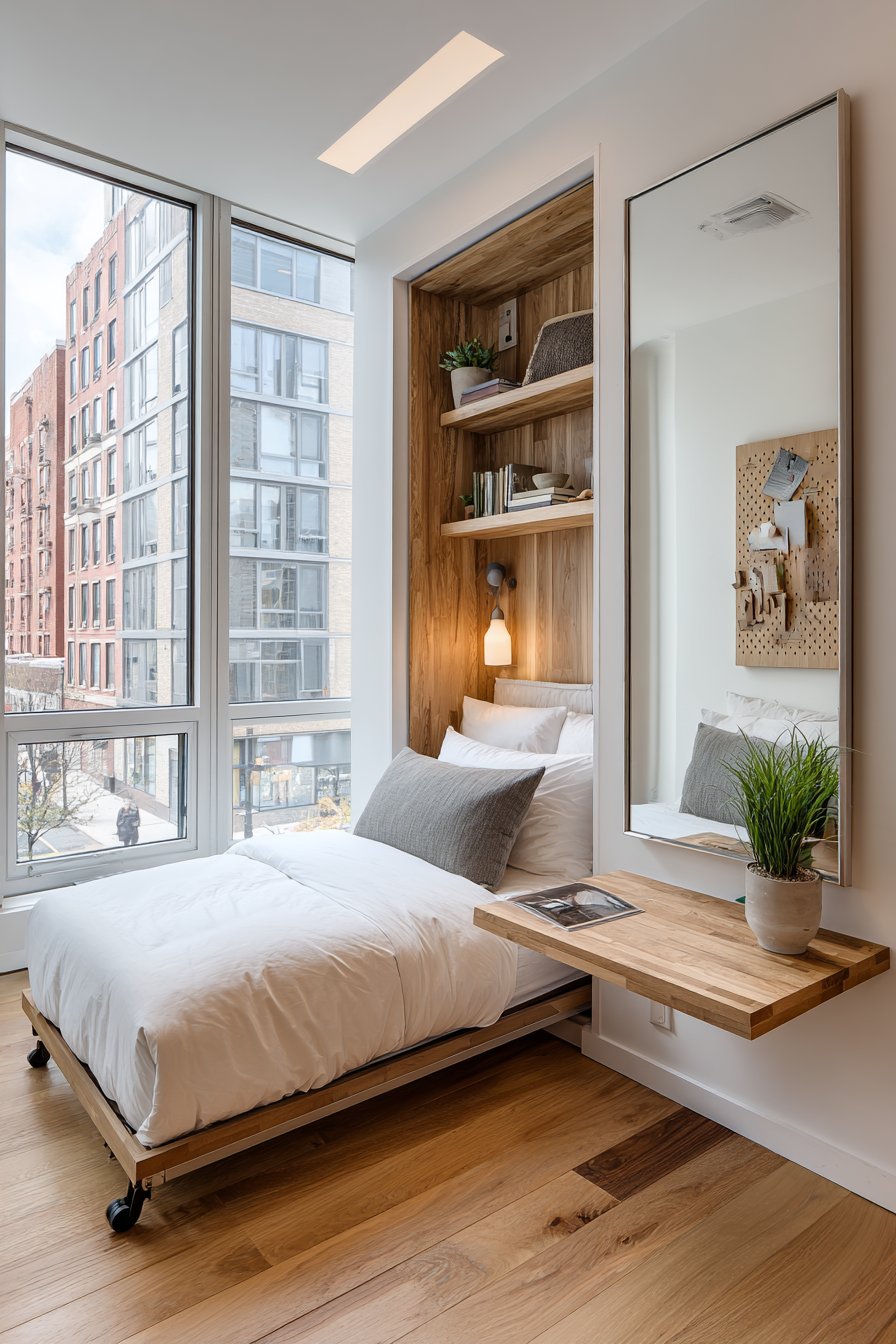
Key design tips: Install fold-down desks that convert between workspace and nightstand as needed. Use beds on casters to create flexible positioning throughout the day and night. Mount pegboard organizer systems for customizable, changeable storage that adapts to evolving needs. Place skylights to provide natural light without consuming wall space needed for flexible furniture. Choose modular furniture that encourages daily reconfiguration rather than permanent static arrangements.
23. Custom Corner Wardrobe System
Corners often present challenges in small bedroom furniture arrangement, but custom solutions can transform these awkward angles into valuable storage. This design features a corner wardrobe system with an angled front that fits perfectly into the room’s geometry, maximizing storage capacity in space that standard rectangular furniture couldn’t efficiently use. The open hanging section combined with drawers below provides versatile storage for both hanging garments and folded items.
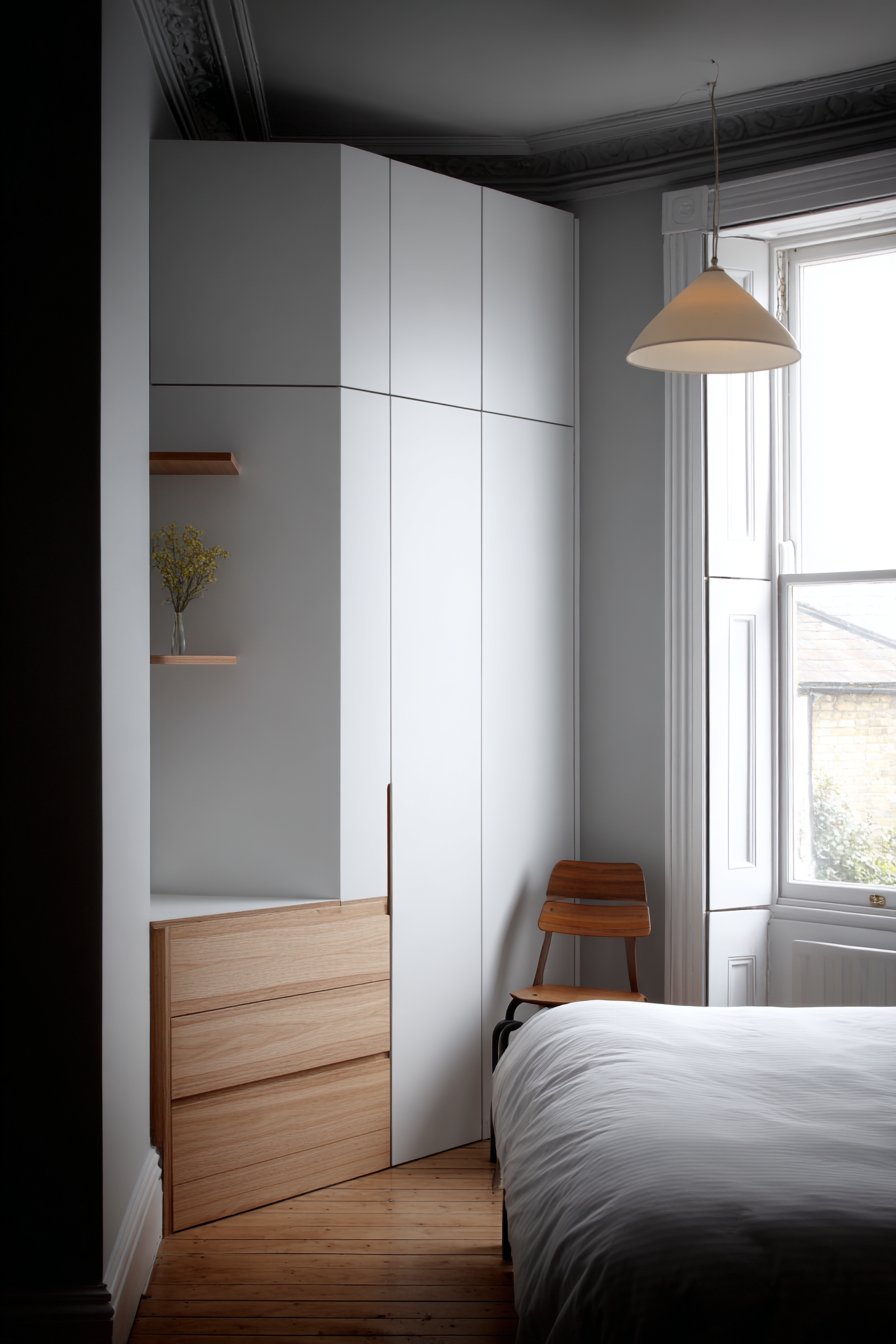
A twin bed with a simple metal frame maintains visual lightness and allows the custom corner wardrobe to become the room’s focal point and primary storage solution. The straightforward bed frame doesn’t compete for attention or consume visual space with elaborate styling or bulky construction. A wall-mounted folding side table serves as a nightstand alternative, providing surface space when needed and folding flat against the wall when not in use.
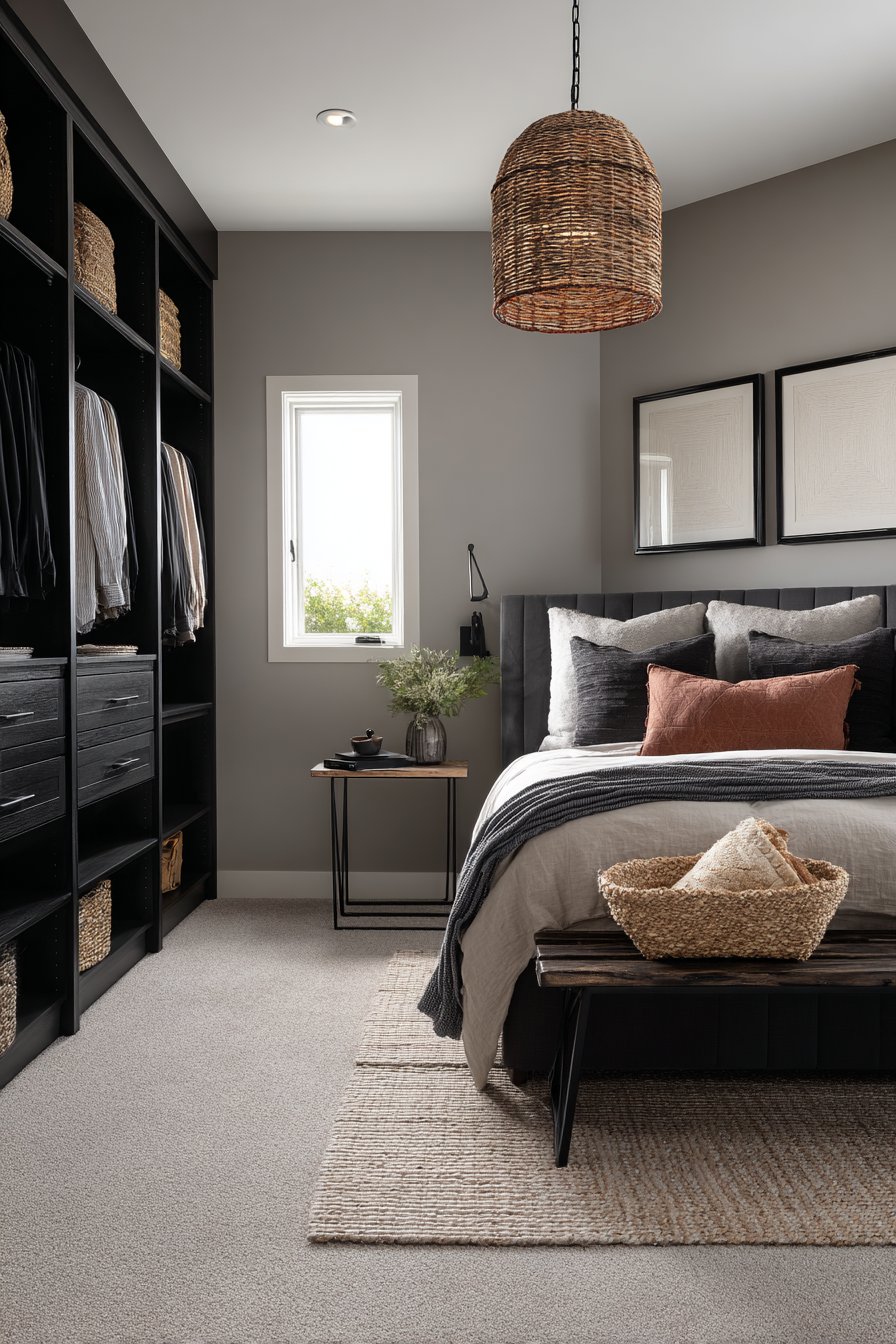
Warm grey walls create a cozy atmosphere that makes the small bedroom feel intentional and designed rather than simply cramped by circumstance. The muted color adds personality and depth without the visual weight of darker or more saturated colors. A pendant light with a textile shade provides ambient overhead illumination while its soft fabric diffuses light gently throughout the space.
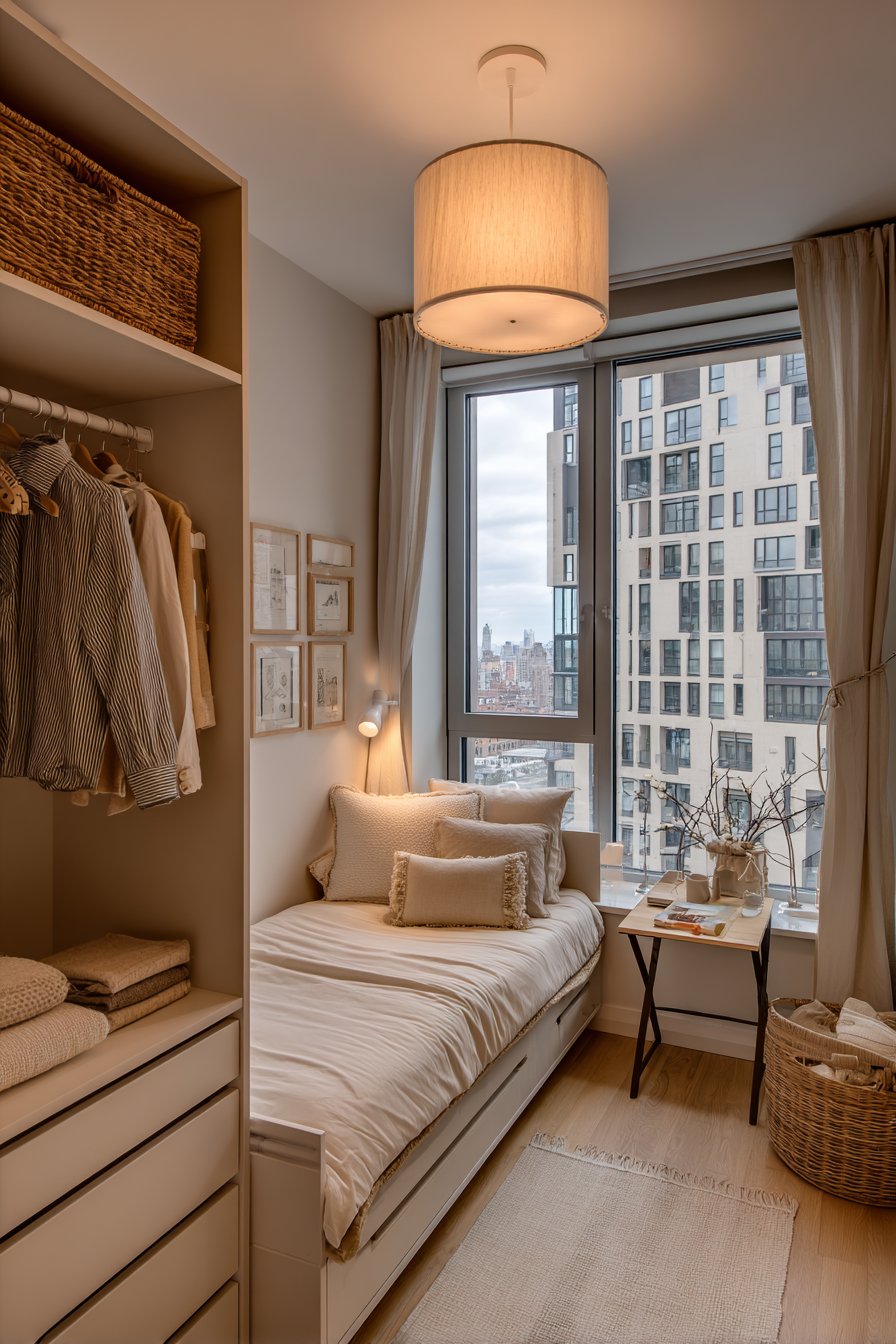
Natural light from a single window brightens the room adequately, proving that small bedrooms don’t necessarily require multiple windows if the available natural light is maximized through light colors and reflective surfaces. Professional interior photography captures the custom corner storage solution and thoughtful space planning, demonstrating how fitted furniture designed specifically for odd angles and corners often provides better solutions than trying to make standard rectangular pieces work in awkward spaces.
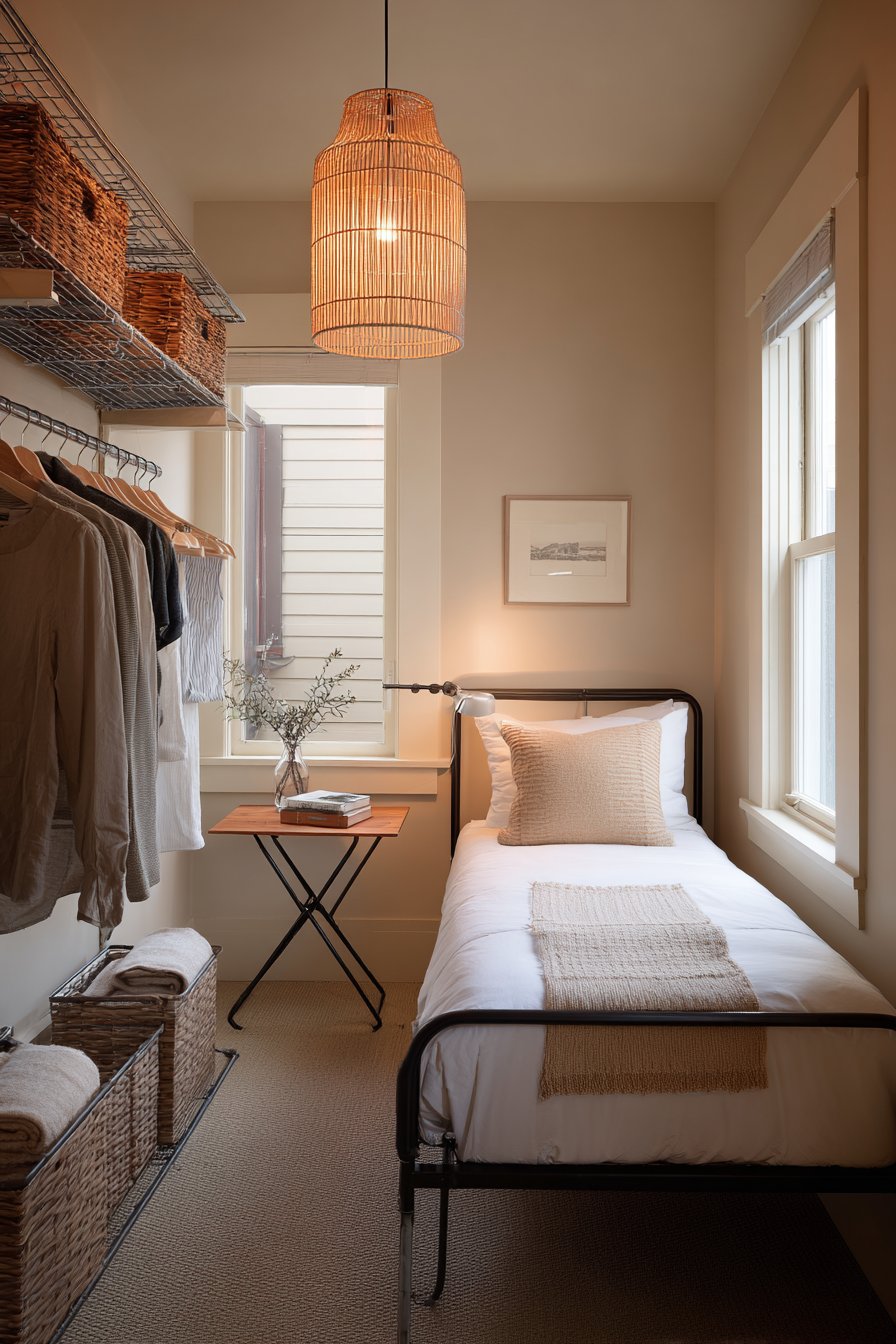
Key design tips: Design custom corner wardrobes with angled fronts to maximize storage in awkward angular spaces. Combine open hanging storage with drawer storage to accommodate different clothing types. Choose simple metal bed frames that maintain visual lightness in furniture-dense small rooms. Install wall-mounted folding side tables as flexible nightstand alternatives. Use warm grey walls to create cozy atmospheres that make small spaces feel intentionally intimate.
24. Overhead Storage Net System
Thinking three-dimensionally extends beyond just the floor and walls to include the often-neglected space above the bed. This design features a bed frame with tall posts supporting an overhead storage net designed for seasonal items or extra linens, brilliantly exploiting the vertical space above the sleeping surface. The low-profile mattress keeps the overhead storage accessible and prevents the sleeping area from feeling cramped or enclosed despite having storage suspended above.
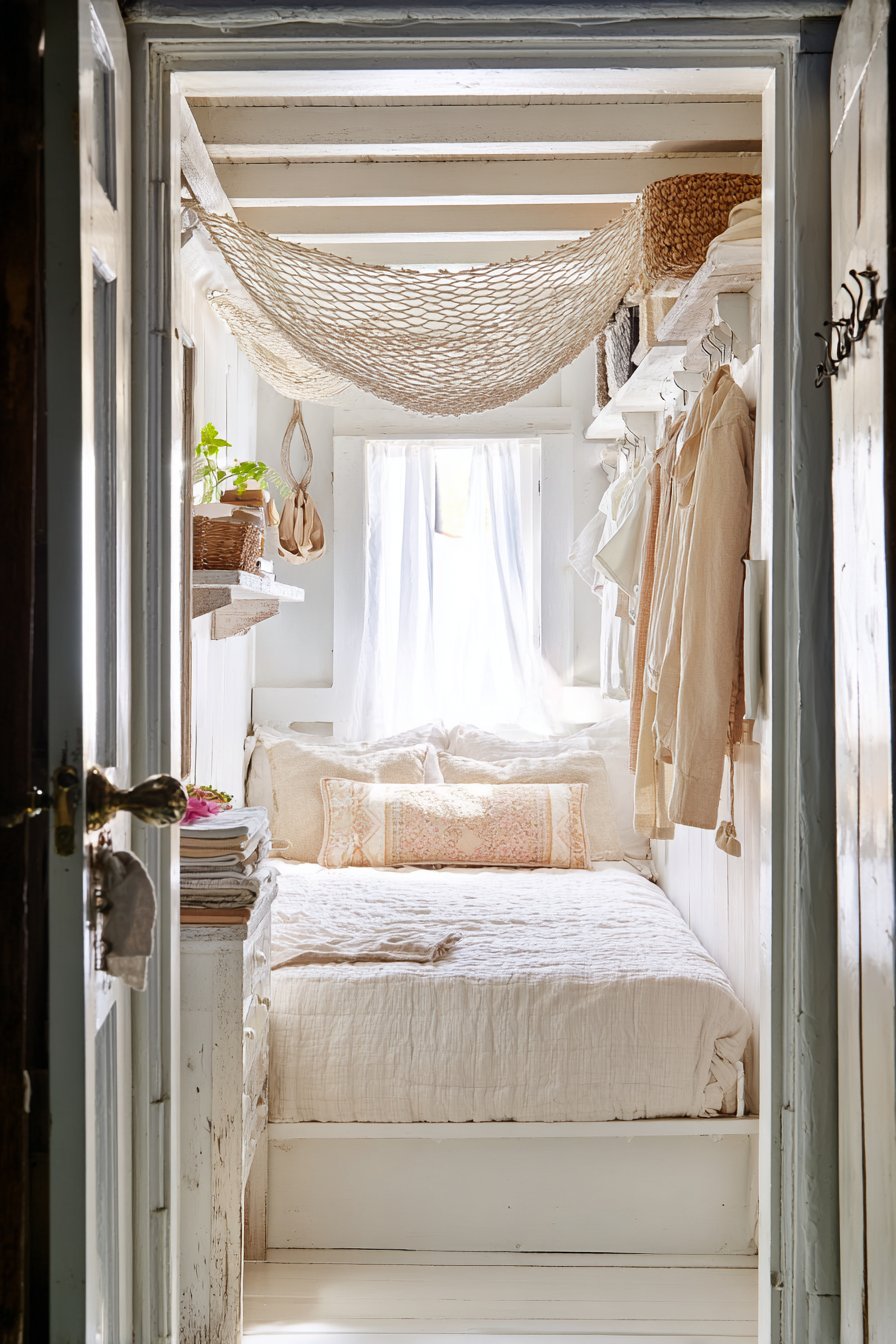
A slim console table positioned at the foot of the bed holds folded clothes and provides surface space without requiring the floor space of a full dresser. This placement makes use of the bed’s footboard area, which often goes unused in small bedrooms where furniture must be carefully positioned. Wall-mounted hooks distributed around the room keep daily wear items accessible and organized without requiring closet space or floor-standing coat racks.
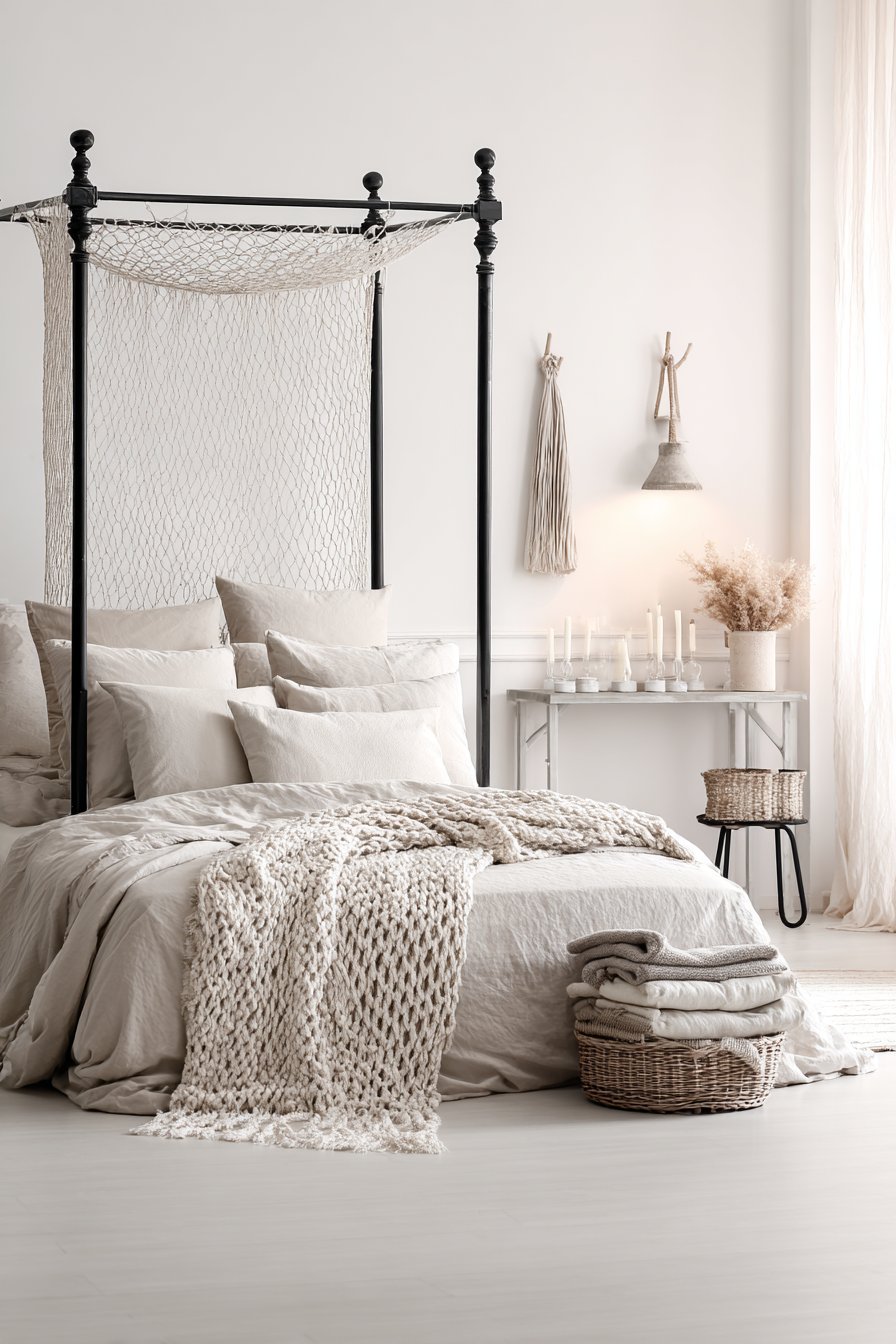
Neutral linen textiles throughout the room—from bedding to the storage net material to window treatments—create a cohesive, natural aesthetic that enhances the sense of calm. The consistent use of natural fibers adds warmth and softness while maintaining the light, neutral palette essential for spaciousness. White walls maintain brightness and reflect available natural light throughout the room, preventing the overhead storage from casting shadows that would darken the sleeping area.
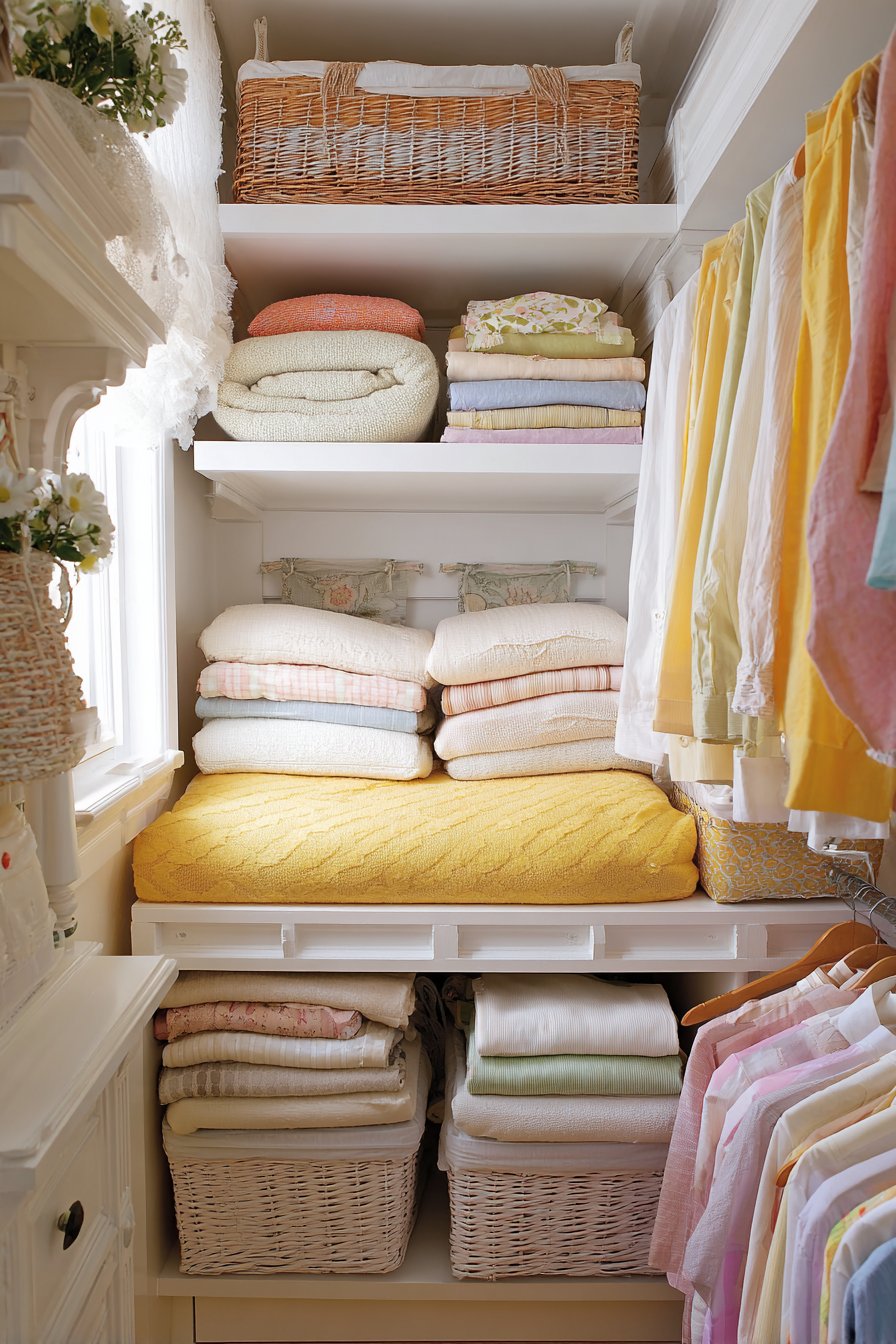
Natural morning light illuminates the space, captured in interior photography that shows the creative overhead storage utilization and layered organization system with soft diffused lighting. This bedroom demonstrates that thinking beyond traditional furniture placement often yields the most innovative solutions for small space storage challenges. The overhead net provides substantial storage without consuming any floor or wall space, proving that the three-dimensional volume of the room offers more opportunities than just its square footage suggests.
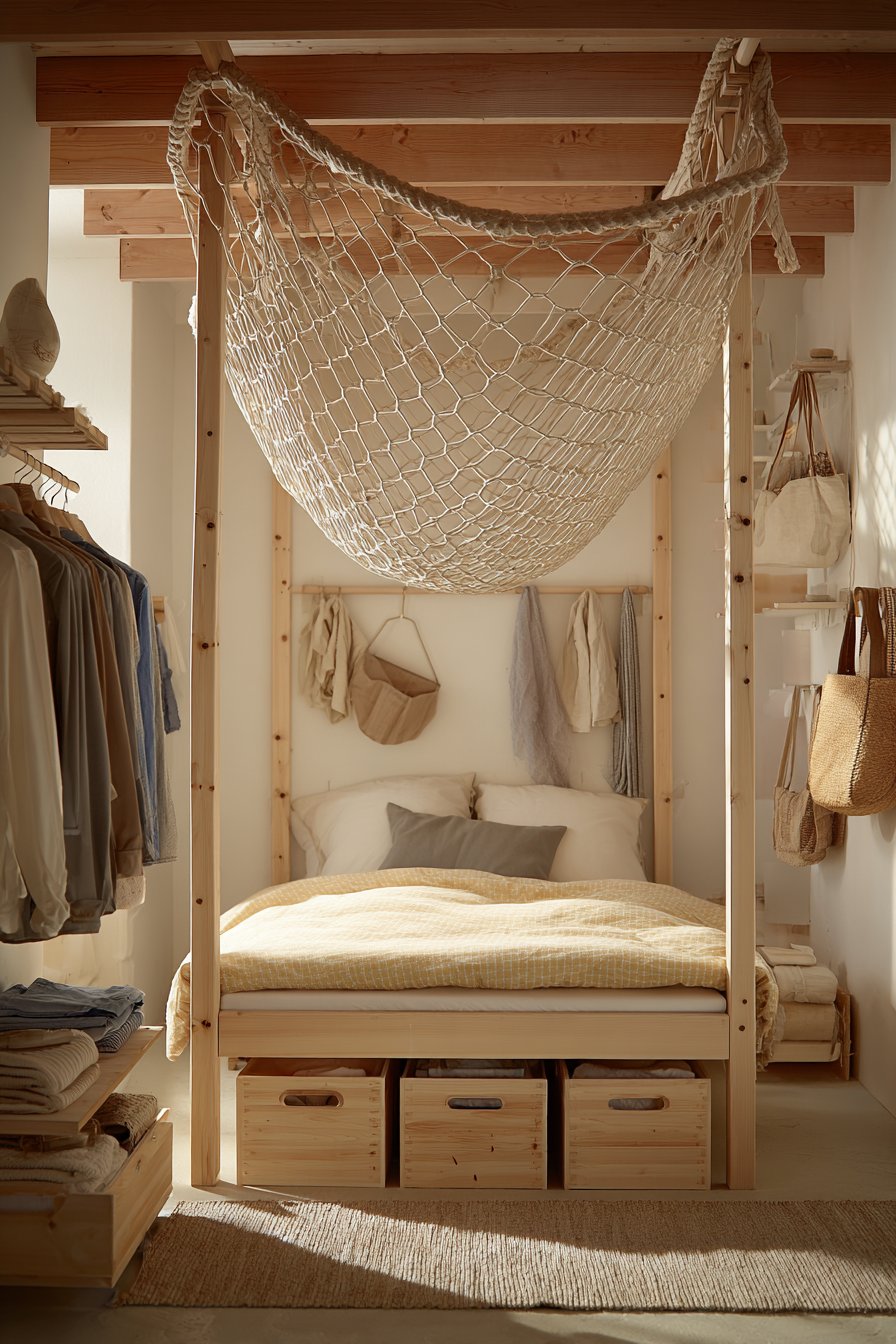
Key design tips: Install overhead storage nets suspended from tall bed posts to exploit vertical space above sleeping surfaces. Choose low-profile mattresses when adding overhead storage to maintain comfortable clearance. Position slim console tables at bed footboards to create storage without full dresser floor space requirements. Distribute wall-mounted hooks throughout rooms to keep daily items accessible without closet space. Use consistent natural fiber textiles to create cohesive aesthetics in storage-dense small spaces.
25. Diagonal Industrial Placement
Breaking away from traditional parallel-to-walls furniture placement can create unexpected solutions and visual interest in small bedrooms. This design positions a minimalist metal frame bed in matte black diagonally across a corner, creating an unconventional layout that actually opens up floor space rather than consuming it. The diagonal placement creates triangular spaces behind the bed corners that accommodate storage while the central floor area remains surprisingly open for movement.
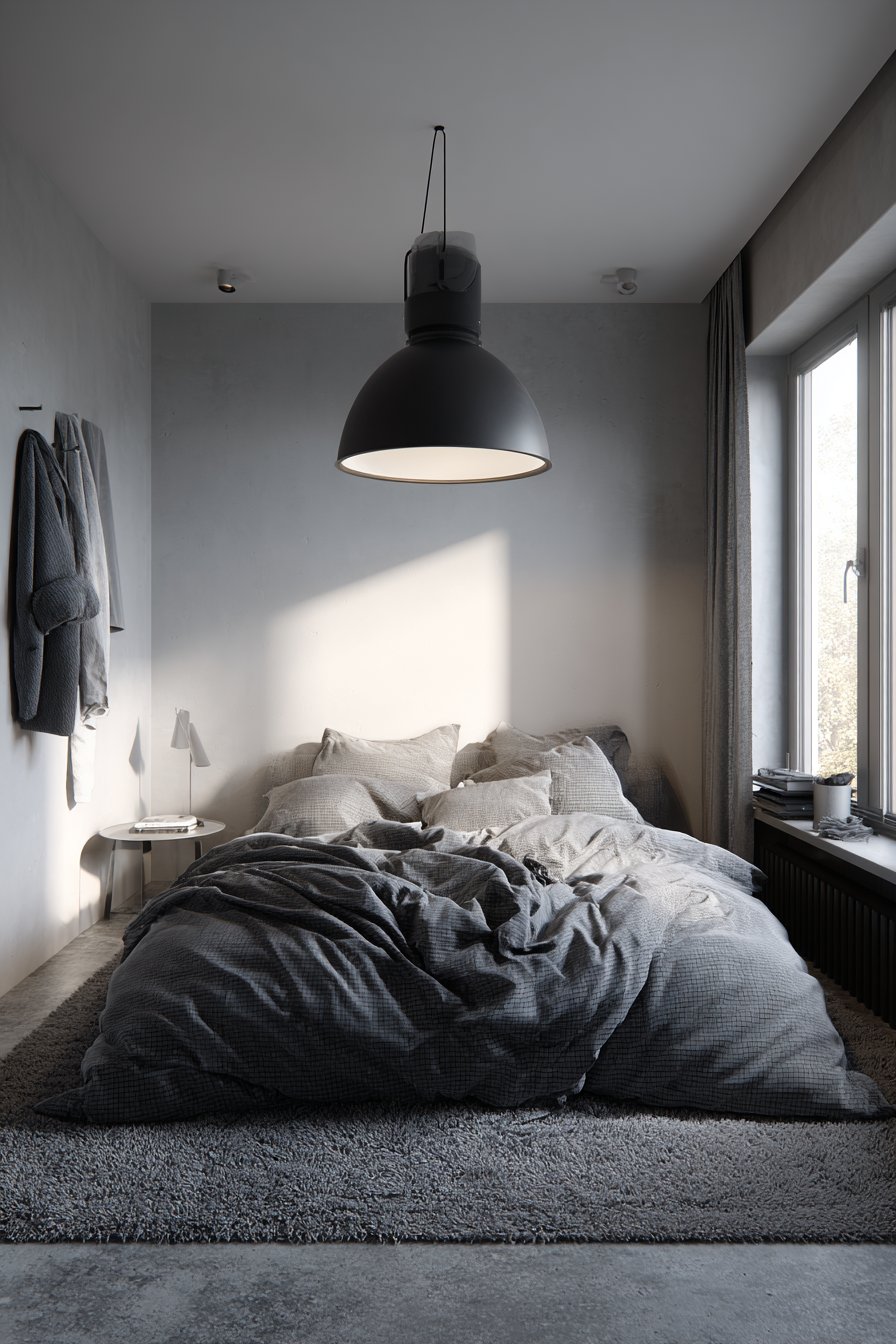
A small round side table fits perfectly into the corner point created by the diagonal bed placement, providing nightstand functionality in a space that would go unused in traditional parallel furniture arrangements. Clothing is stored in under-bed fabric bins and on wall-mounted hooks, eliminating the need for bulky dressers or wardrobes that would crowd the unique layout. White bedding and walls create a crisp, clean backdrop that allows the black bed frame to read as an intentional design statement.
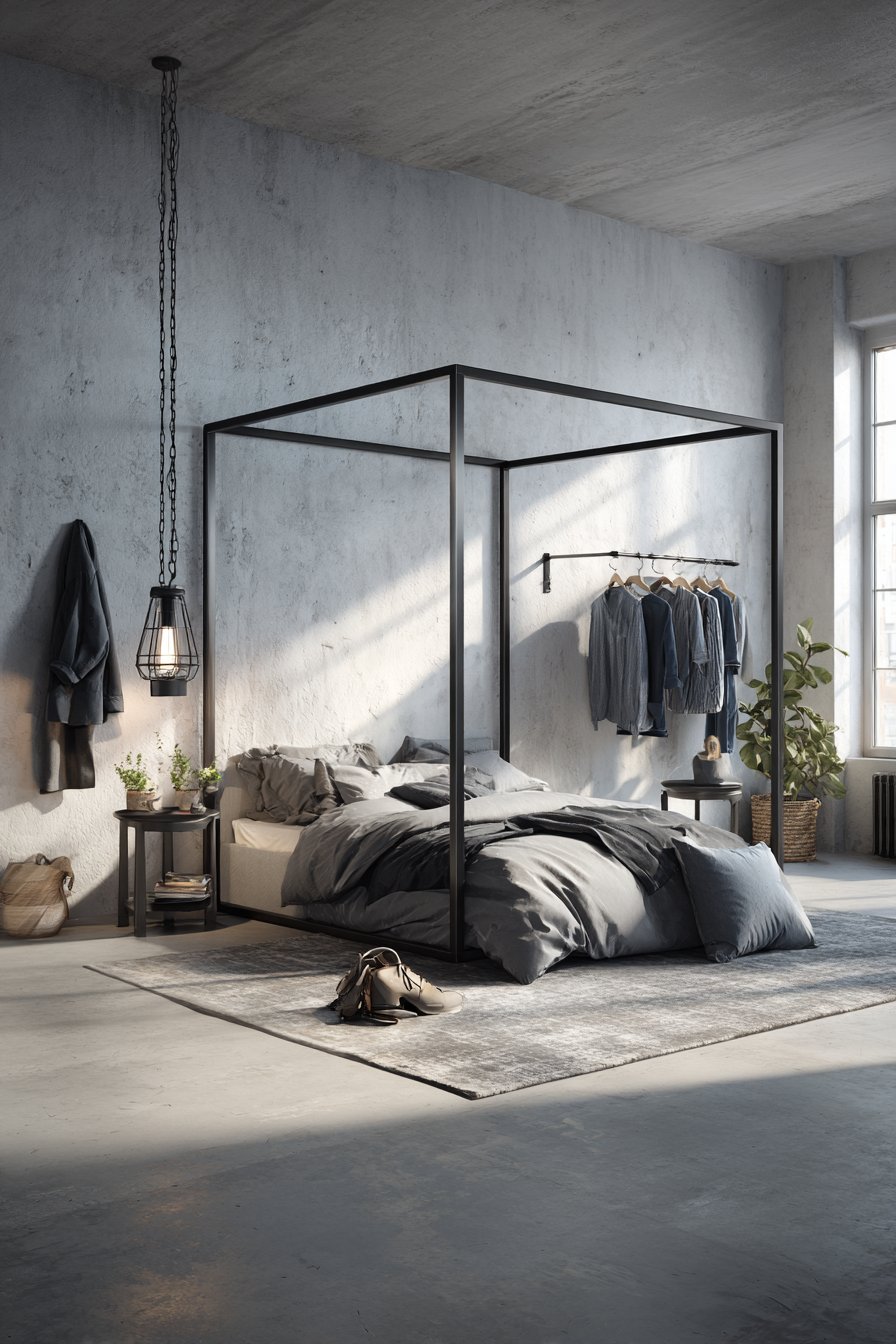
The concrete floor with a soft area rug adds industrial character while the rug defines the sleeping zone and provides comfort underfoot. This material choice contributes to the room’s urban aesthetic while requiring virtually no maintenance—an important consideration in small spaces where time-consuming upkeep of delicate finishes would be impractical. An industrial-style pendant light reinforces the aesthetic while providing necessary overhead illumination.
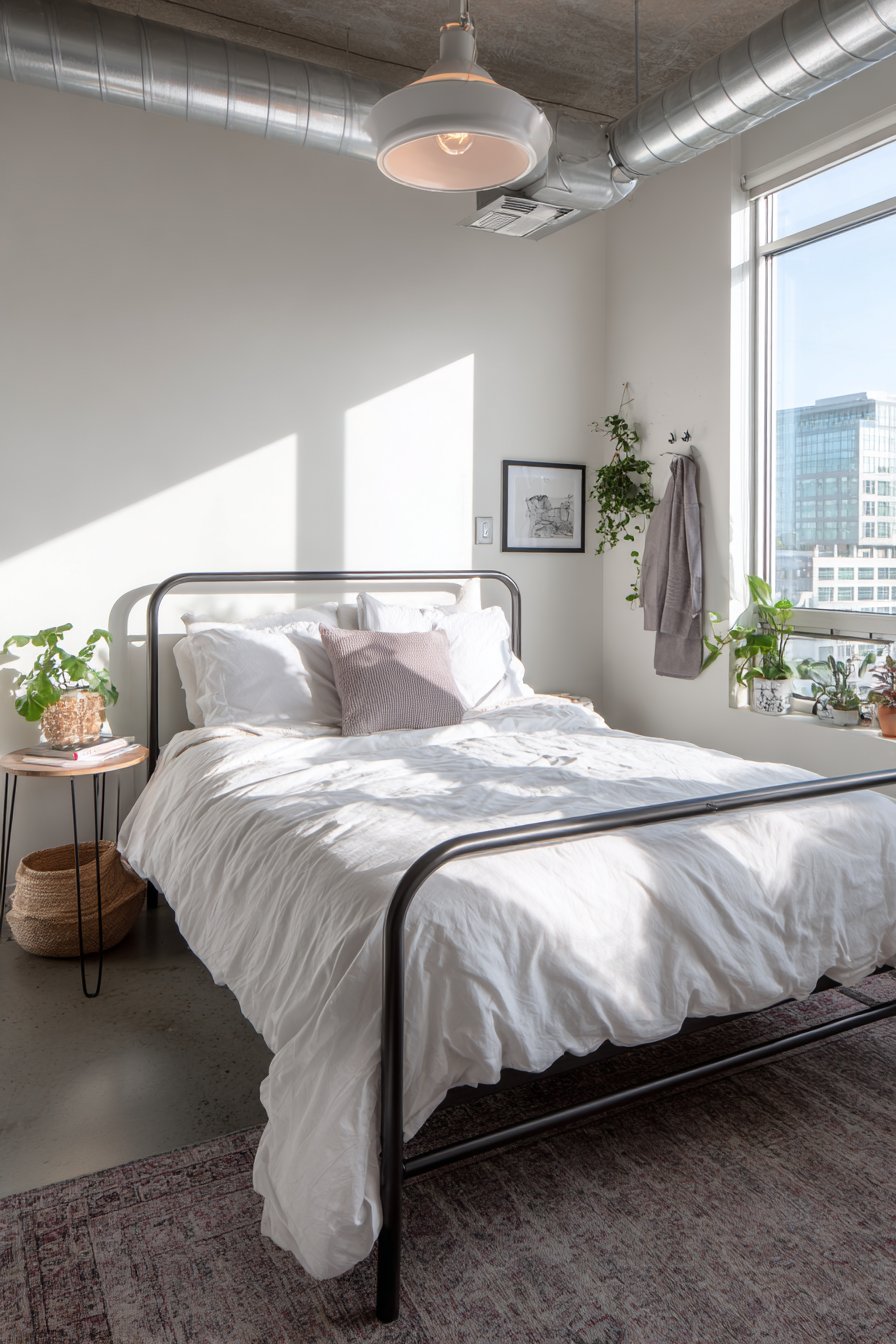
Natural light from a window streams into the room, captured in wide-angle interior photography that emphasizes the unconventional diagonal placement and industrial aesthetic with attention to shadow details and material textures. This bedroom proves that challenging furniture placement conventions can actually improve rather than compromise functionality in small spaces, especially when diagonal arrangements create more usable floor area than traditional layouts would allow.
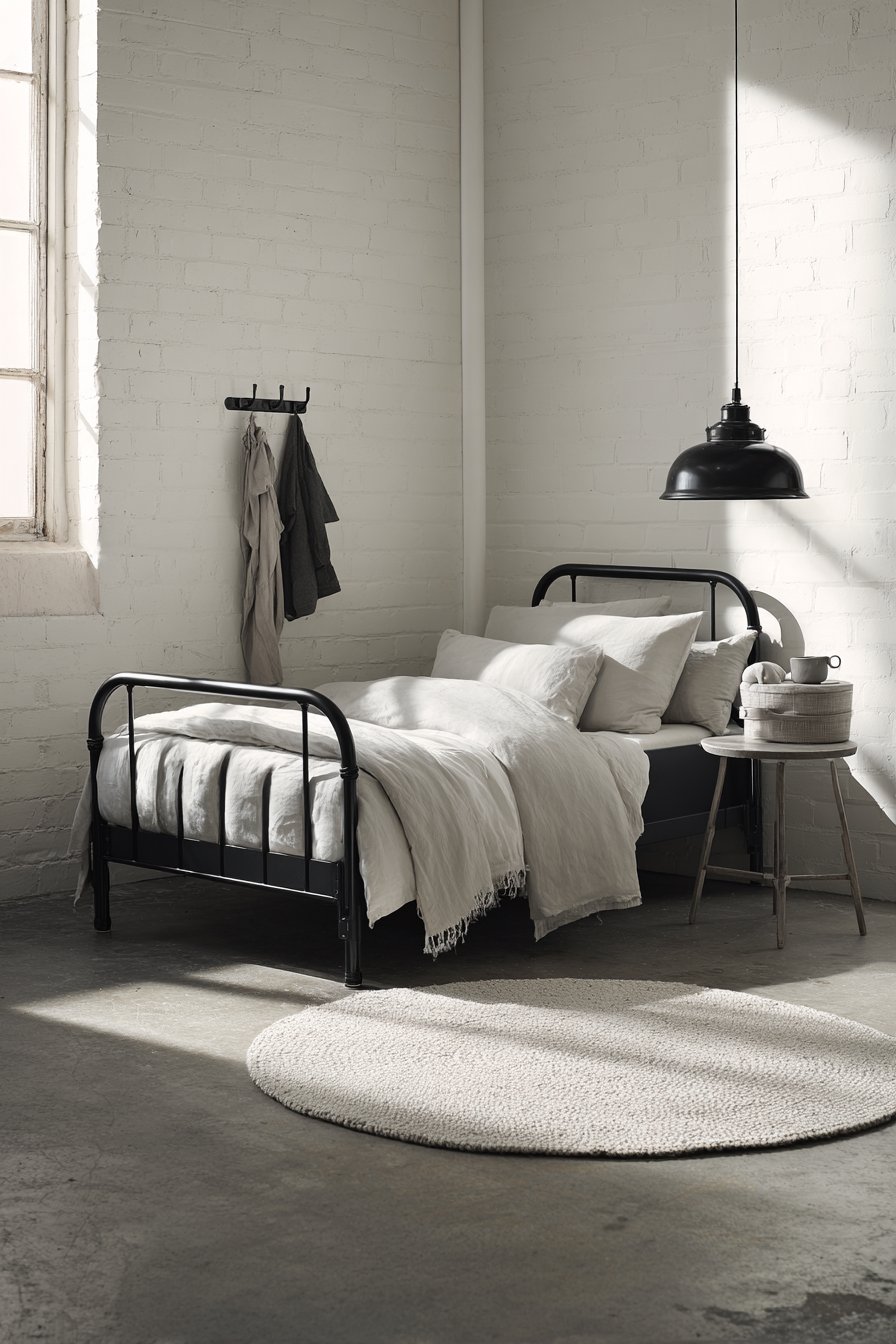
Key design tips: Experiment with diagonal bed placement to create unexpected layouts that maximize usable floor space. Choose minimalist metal frames in matte black for industrial aesthetics that maintain visual lightness. Use round side tables to fit efficiently into corner points created by diagonal furniture placement. Store clothing in under-bed bins and wall hooks when unconventional layouts preclude traditional dresser placement. Pair concrete floors with soft area rugs to balance industrial materials with necessary comfort.
26. Curtain-Concealed Flexible Closet
Rigid built-in closets consume valuable floor space in small bedrooms, but flexible curtain-based systems offer adaptable alternatives that can expand or contract as needs change. This design features a twin XL bed positioned against a wall with a floor-to-ceiling curtain that conceals a rolling clothes rack and storage shelving, creating a flexible closet system that adapts to changing storage needs. The curtain in natural linen fabric slides effortlessly on a ceiling track, allowing easy access while maintaining visual simplicity when closed.
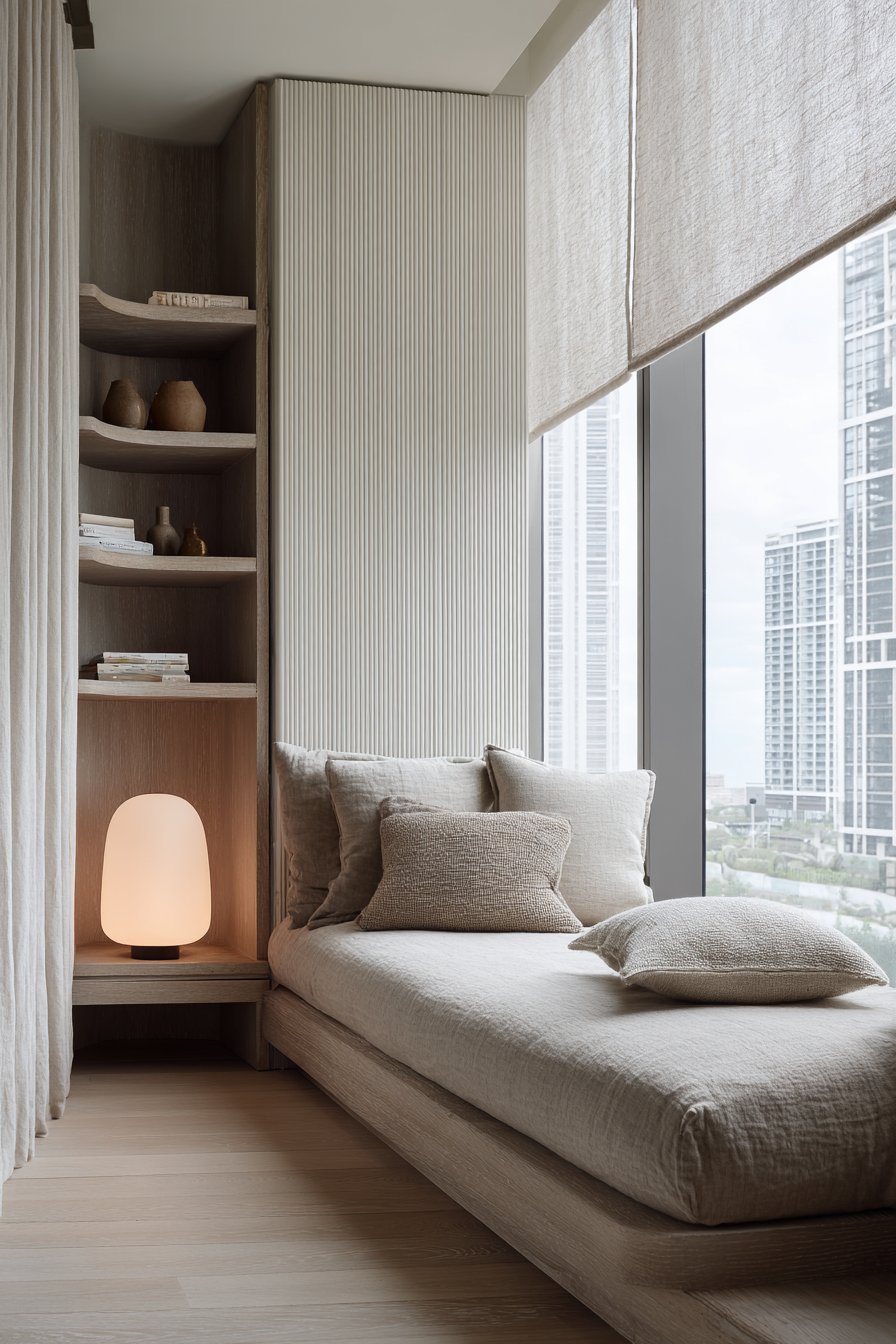
The curtain-based closet system offers remarkable advantages over traditional built-in closets: it consumes minimal visual space when closed, can be easily repositioned or removed, and costs a fraction of custom carpentry while providing similar functionality. The natural linen fabric adds softness and texture while maintaining the neutral palette essential for small space design. A floating nightstand with a single drawer provides minimal bedside storage without the bulk of traditional nightstands.
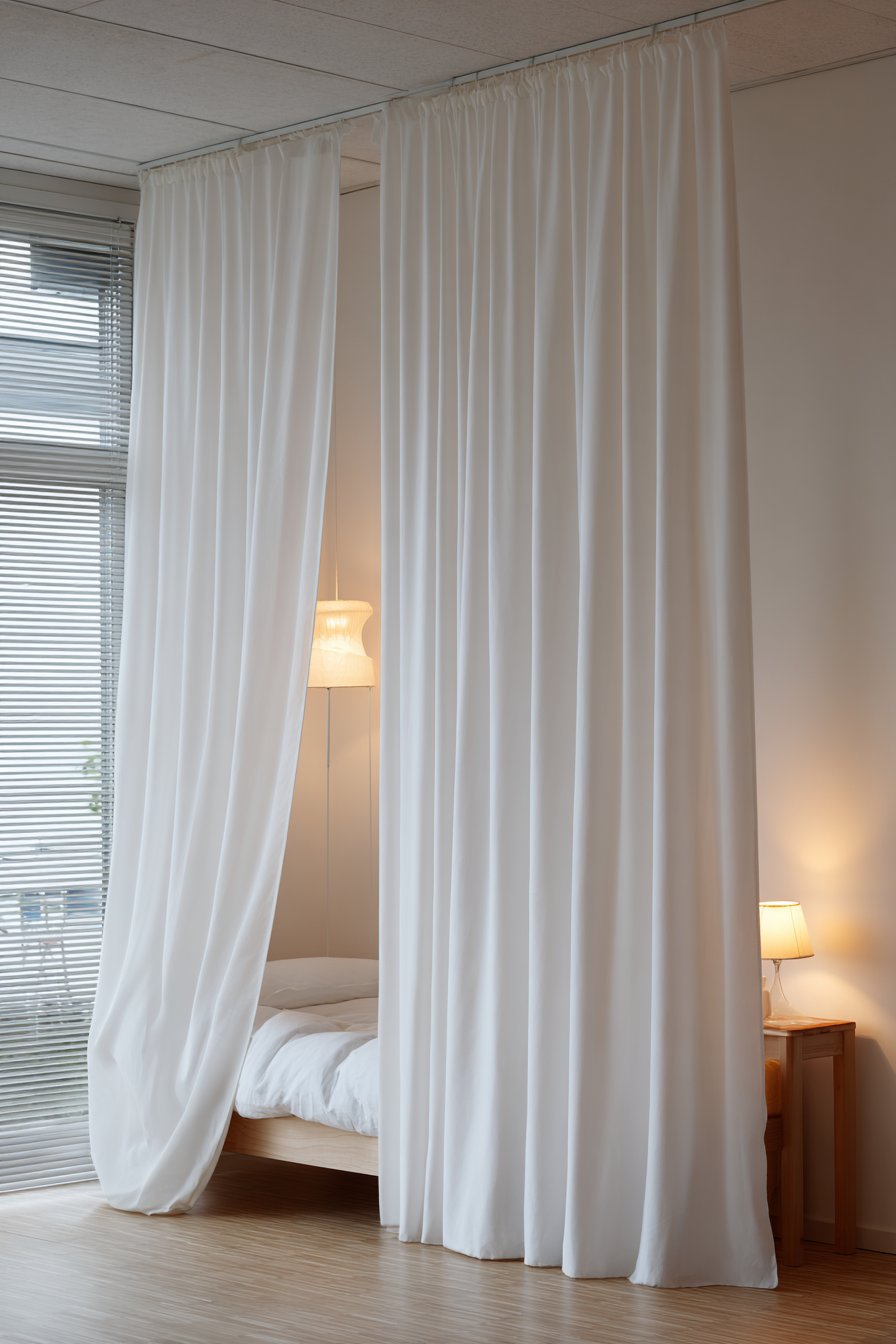
Soft white walls and oak flooring create a warm, natural environment that feels restful and uncomplicated. The wood floor’s visible grain adds organic texture and visual interest without pattern or color, maintaining the room’s calm aesthetic. A table lamp with a warm glow provides ambient lighting that supplements natural daylight through a window blind, creating flexible illumination throughout the day and evening.
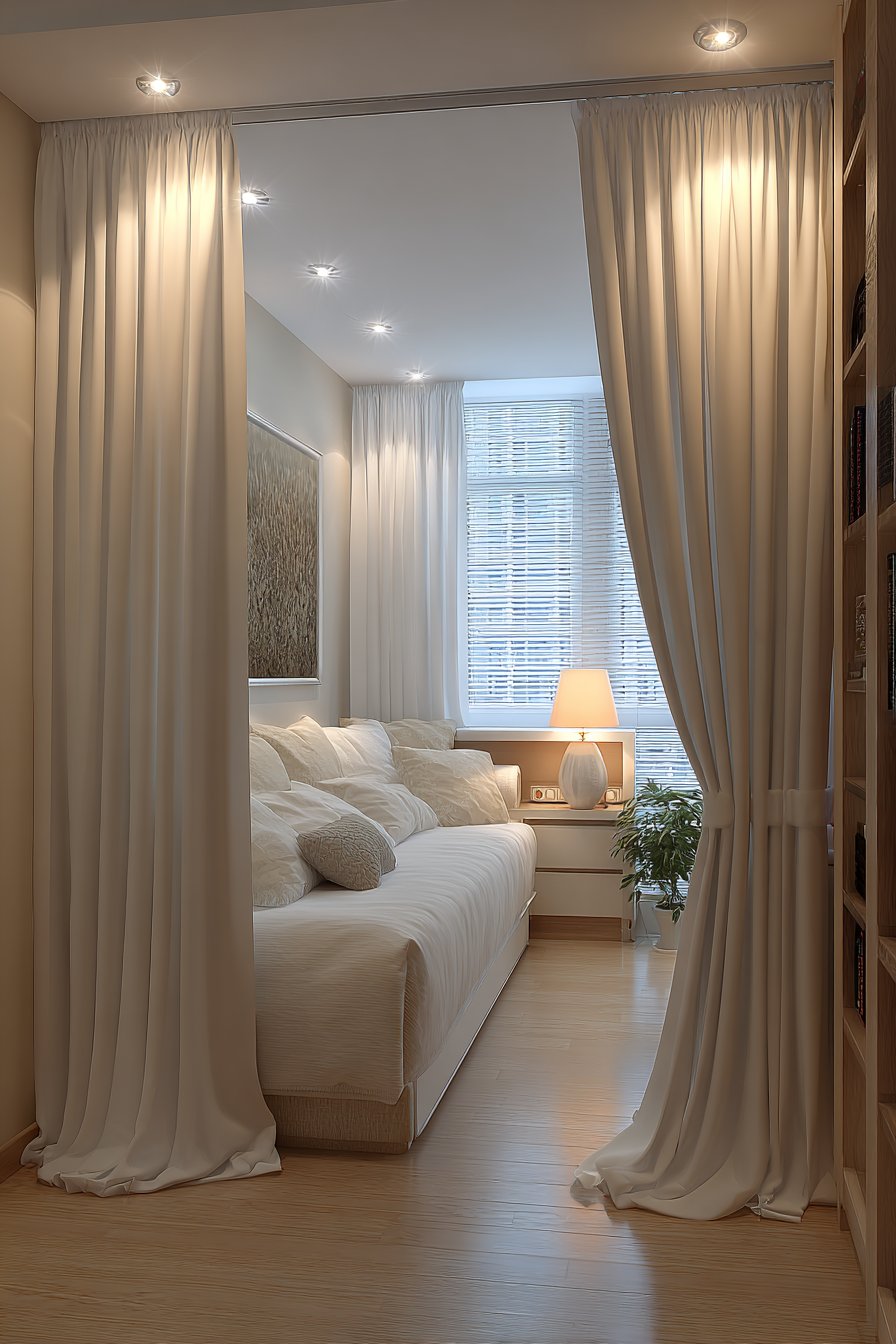
Interior design photography captures the curtain closet solution and soft material textures with balanced exposure that highlights the practical versatility of this approach. This bedroom demonstrates that creative thinking about closet systems can free substantial floor space in small bedrooms while actually improving accessibility and flexibility compared to traditional built-in closets. The ability to fully reveal or conceal the storage area depending on needs makes the room feel larger and more adaptable.
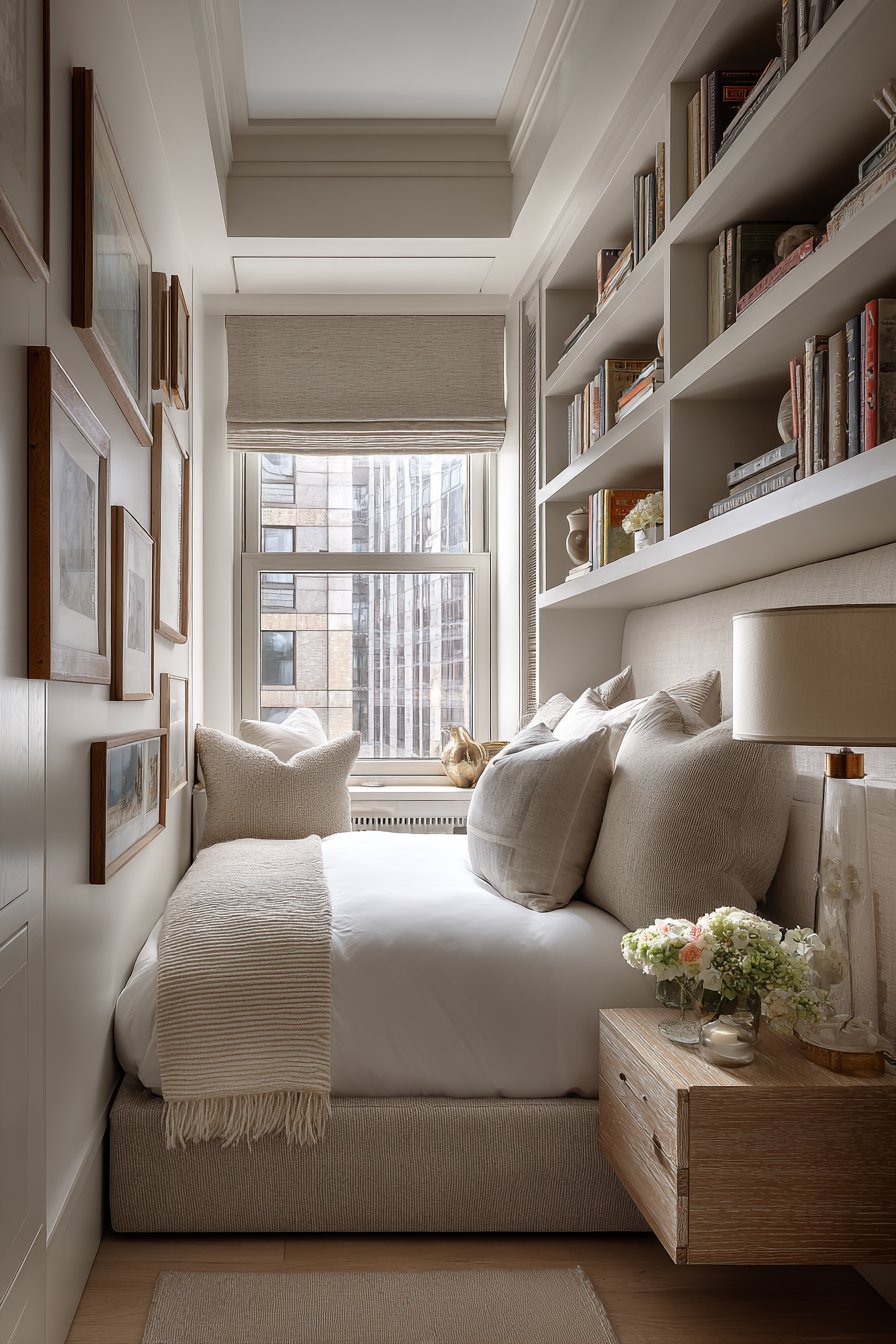
Key design tips: Install ceiling-mounted curtain tracks to create flexible closet systems that adapt to changing needs. Use natural linen curtains in wall colors to minimize visual impact when closets are concealed. Position rolling clothes racks behind curtains for maximum flexibility and easy reconfiguration. Choose floating nightstands with minimal storage to reduce bedside furniture bulk. Select natural fiber curtains that add softness and texture while maintaining neutral palettes.
27. Wall-to-Wall Upholstered Treatment
Creating architectural interest through upholstery rather than hard materials offers both visual impact and practical comfort in small bedrooms. This design features a padded headboard wall extending the full width of the room, creating a cohesive backdrop that eliminates the need for separate headboard furniture. The light grey fabric upholstery with a subtle diamond pattern adds texture and luxury while the wall-to-wall treatment creates strong horizontal lines that visually widen the space.
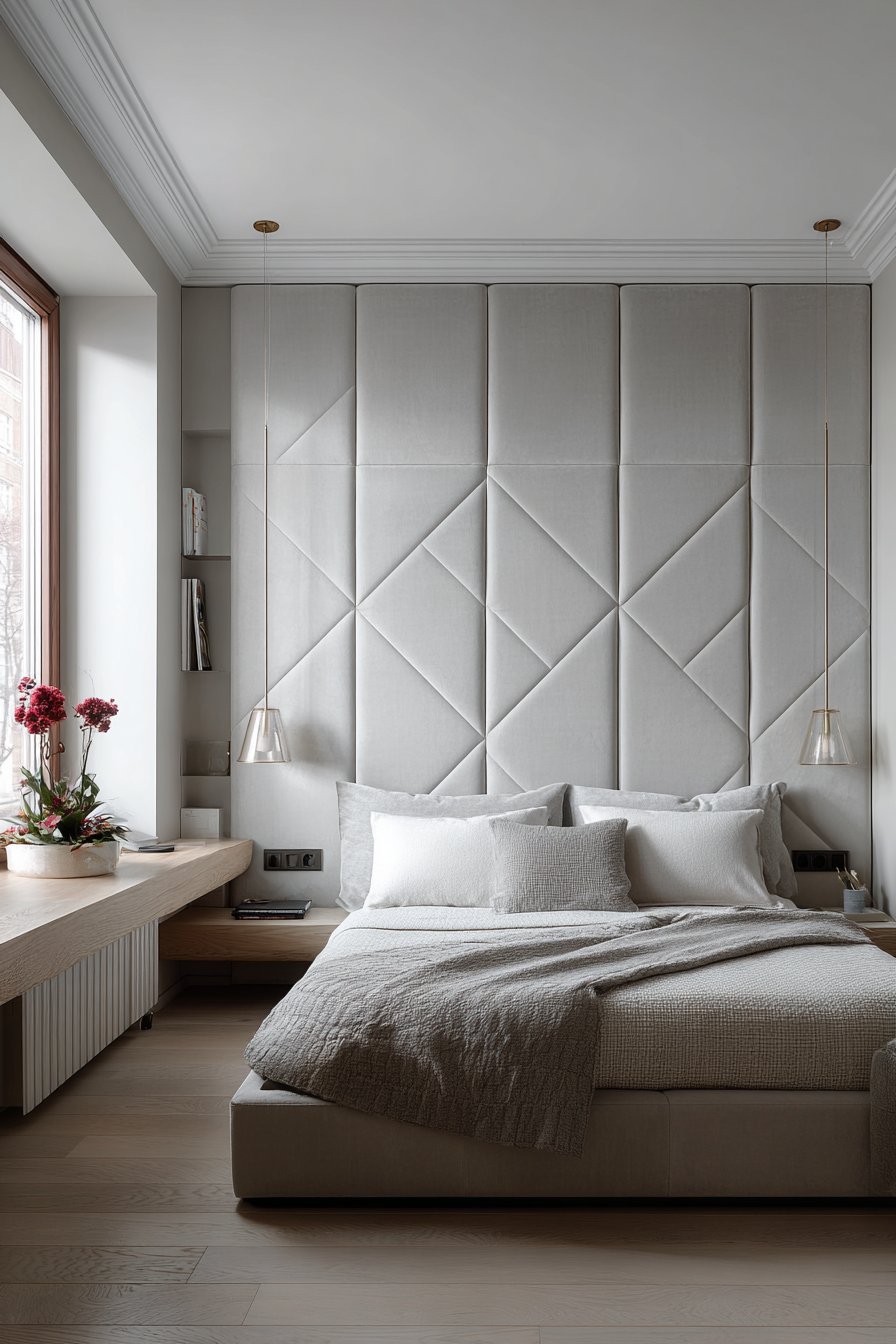
A low platform bed appears to float in front of the upholstered wall, maintaining the room’s contemporary aesthetic while the minimal frame disappears visually into the padded backdrop. Narrow floating shelves on adjacent walls provide display and storage space without protruding floor-standing furniture, keeping the room’s footprint as open as possible. Minimalist sconces mounted directly on the upholstered wall provide focused reading light without consuming shelf or nightstand space.
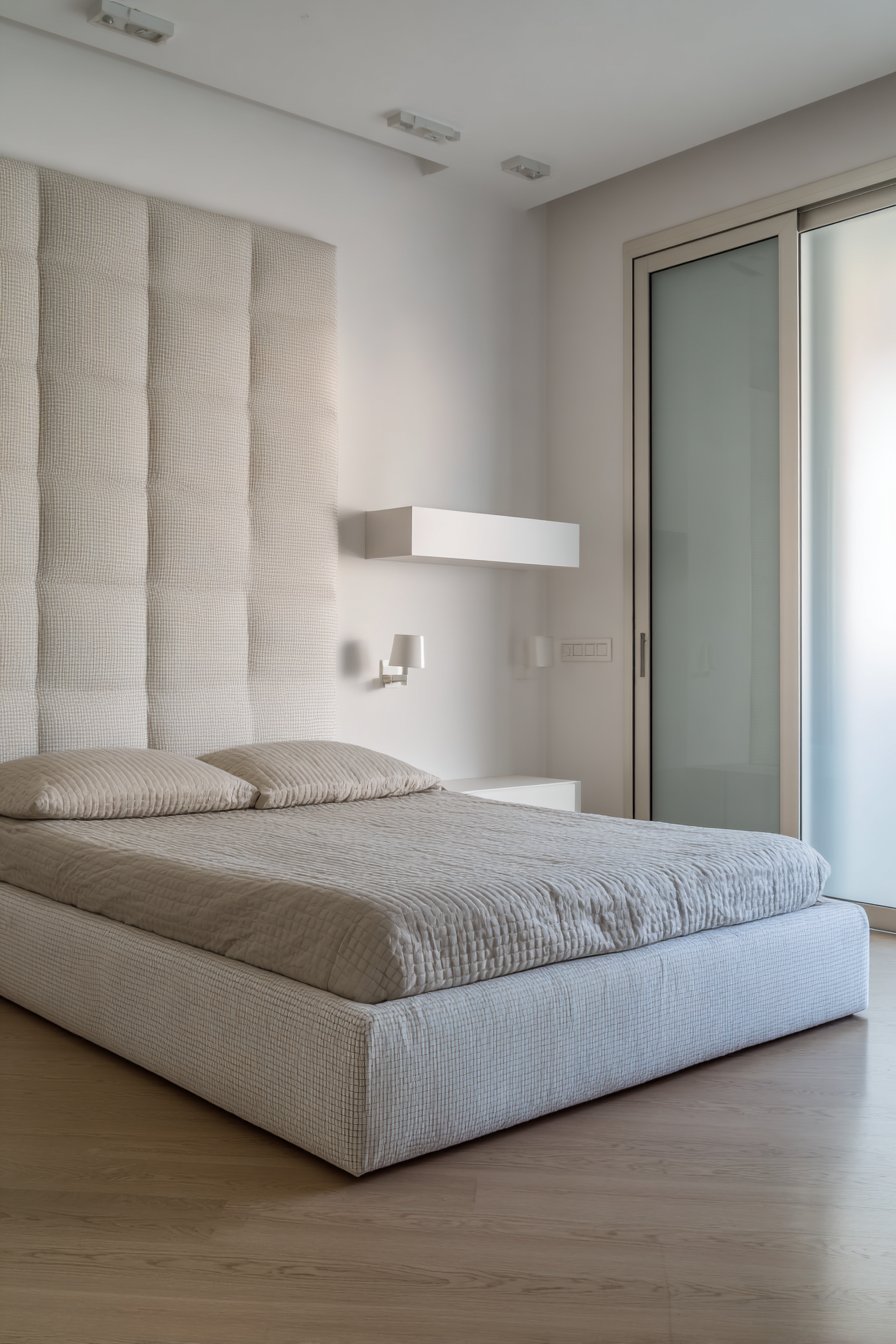
Soft white walls on the remaining surfaces maintain brightness and prevent the upholstered feature wall from overwhelming the small room. Pale oak flooring introduces natural warmth and its light tone continues the room’s commitment to brightness and spaciousness. Natural light filtering through a frosted glass window provides privacy while maintaining the essential connection to daylight that keeps small spaces from feeling isolated.
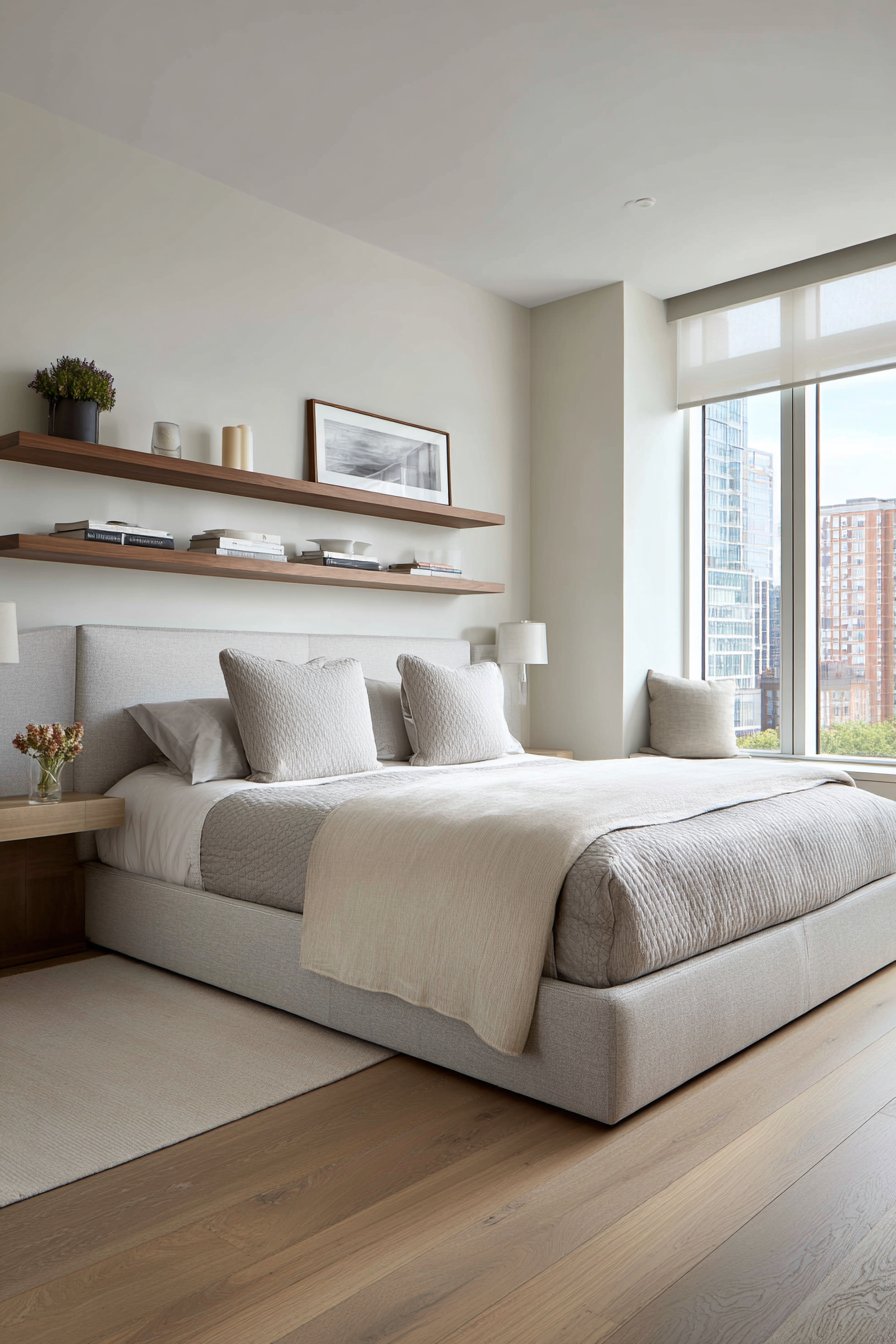
Professional interior photography with a wide-angle perspective captures the wall-to-wall upholstered treatment and clean contemporary aesthetic, demonstrating how a single dramatic design element can define a room’s character without requiring multiple decorative features. This bedroom proves that architectural upholstery can serve both aesthetic and functional purposes, adding soundproofing, comfort, and visual interest while actually simplifying the overall design by eliminating the need for separate headboard furniture.
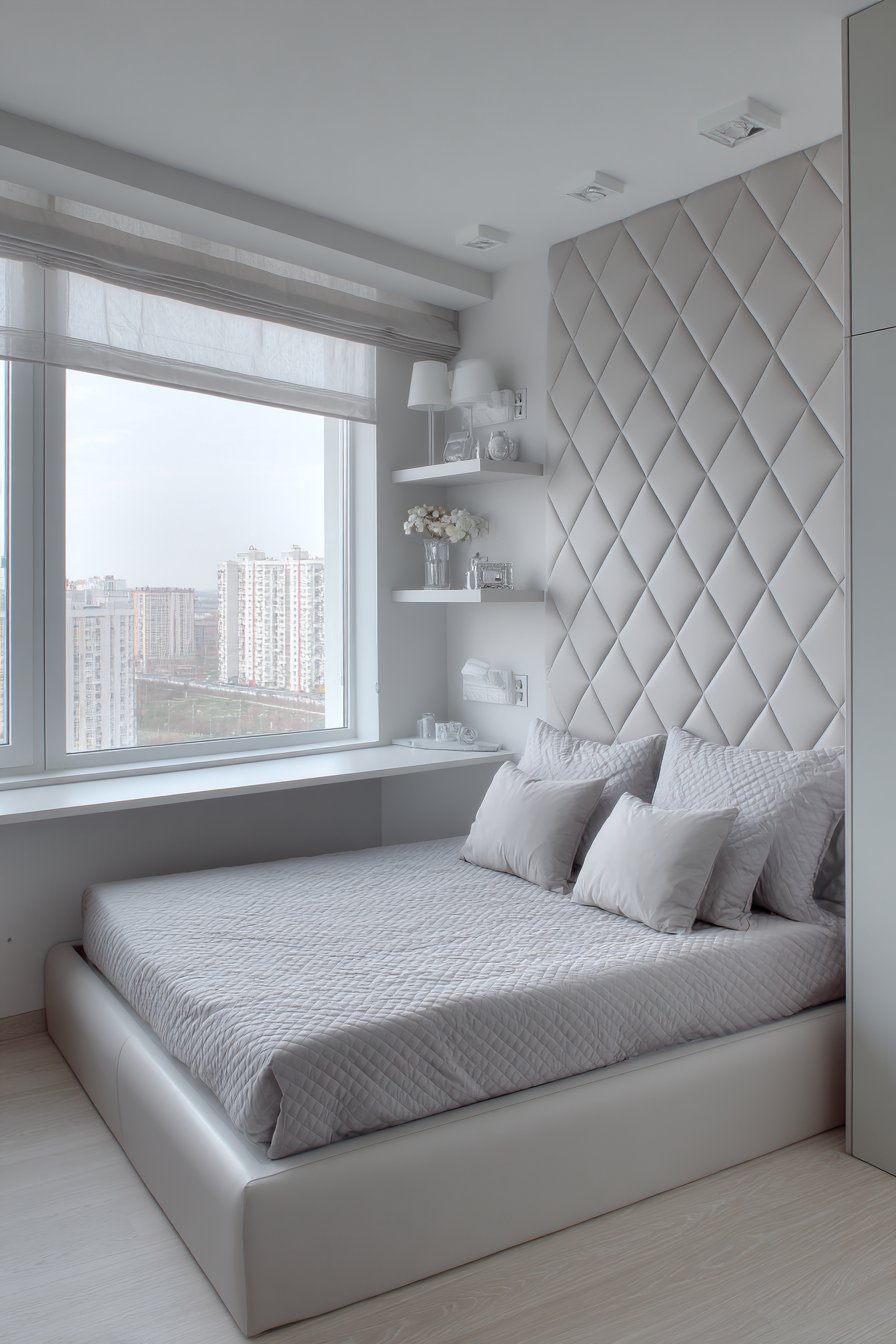
Key design tips: Create wall-to-wall upholstered headboard walls to establish dramatic focal points without separate furniture. Choose light grey upholstery fabrics that add luxury without visual heaviness. Select low platform beds that appear to float in front of upholstered walls for contemporary aesthetics. Mount sconces directly on upholstered walls for integrated reading light without surface furniture. Use frosted glass windows to maintain privacy while preserving essential natural light connections.
28. Attic Space Optimization
Attic bedrooms present unique challenges with sloped ceilings and limited headroom, but thoughtful custom solutions transform these awkward spaces into cozy retreats. This design tucks the bed under the sloped ceiling where headroom is lowest, making efficient use of space where you can’t comfortably stand anyway. Custom-fitted built-in storage drawers integrated into the knee walls exploit the low-height areas perfectly, providing substantial storage where standard furniture wouldn’t fit.
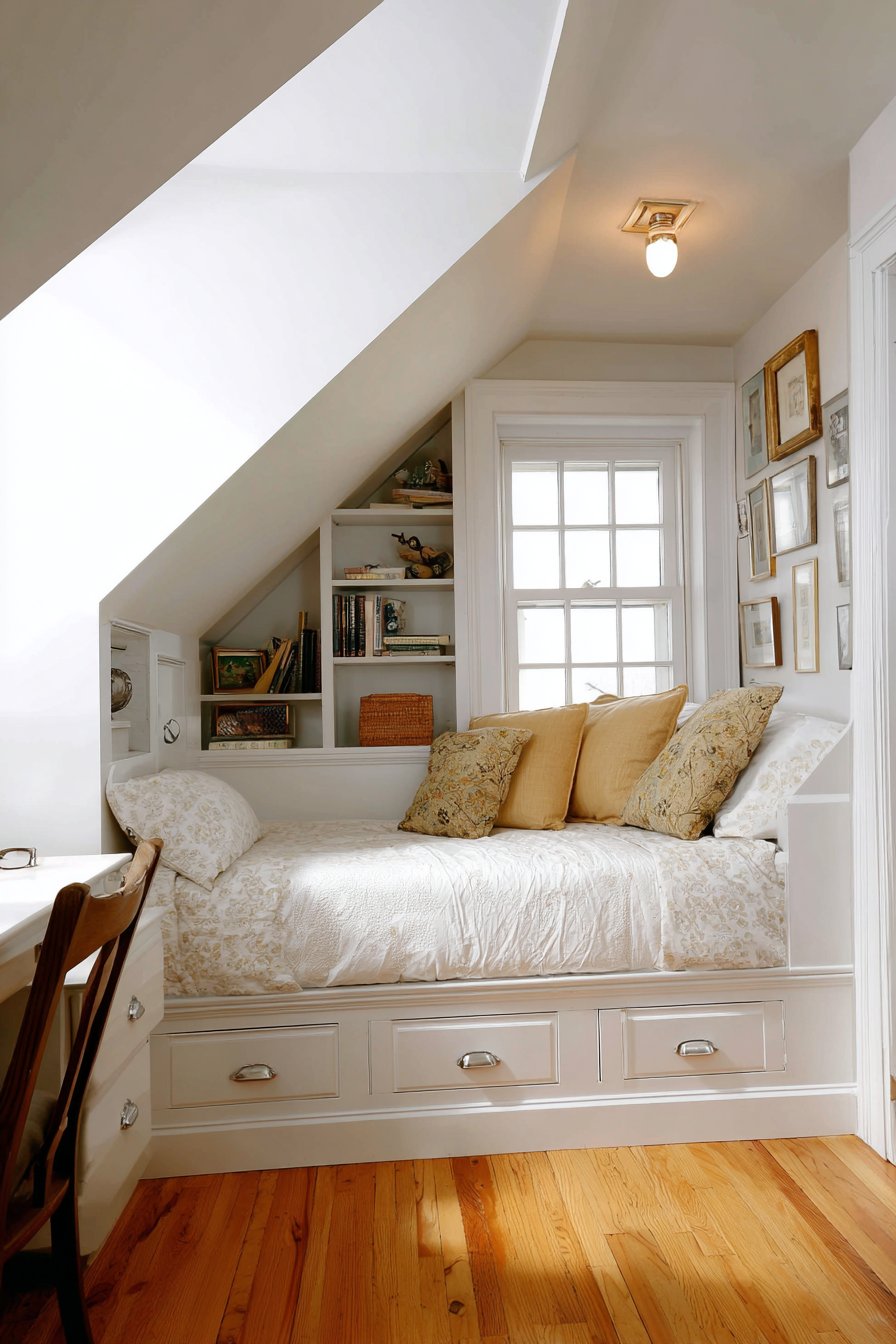
A skylight positioned above the bed provides natural light directly into the sleeping area, solving the common problem of dark attic spaces while eliminating the need for window placement in the sloped walls. This overhead natural light creates a connection to the outdoors and provides welcome ventilation without consuming wall space. A small built-in desk fits efficiently into the remaining floor space where ceiling height is adequate for sitting and working.
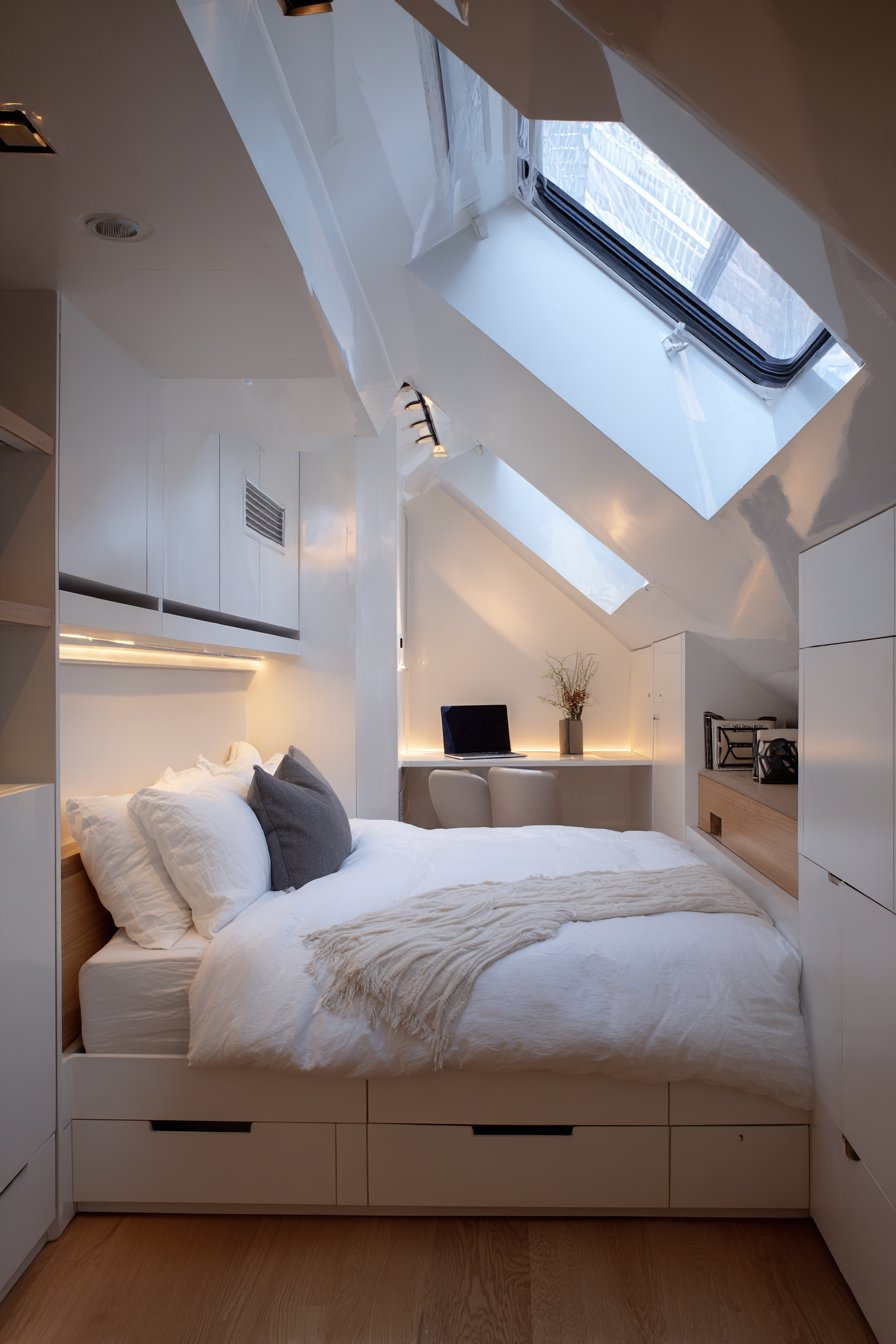
White painted surfaces throughout the attic maximize brightness and reflect the skylight’s natural light into every corner, essential for preventing attic bedrooms from feeling dark or cave-like. Natural wood flooring adds necessary warmth and prevents the all-white surfaces from feeling sterile or cold. Compact task lighting provides focused illumination for the desk area without requiring floor lamps that would be difficult to position under sloped ceilings.
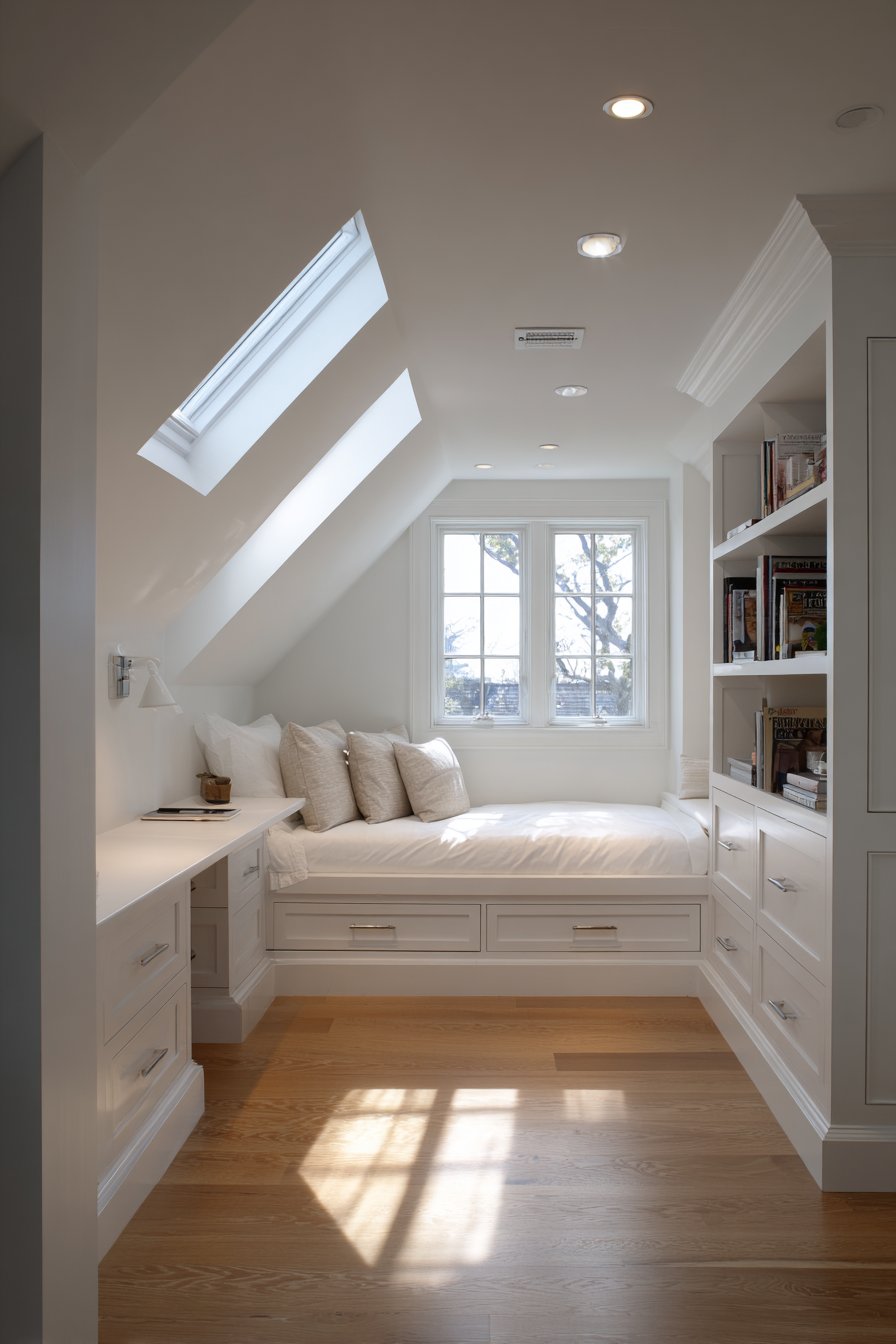
Interior photography captures the attic space optimization and custom millwork with particular attention to natural light patterns and architectural constraints that require specialized solutions. This bedroom demonstrates that challenging architectural conditions often inspire the most creative and satisfying design solutions, with custom built-ins and strategic skylight placement transforming a difficult space into a charming, functional bedroom. The snug, cozy feeling created by the sloped ceiling becomes an asset rather than a liability when furniture is properly scaled and positioned.
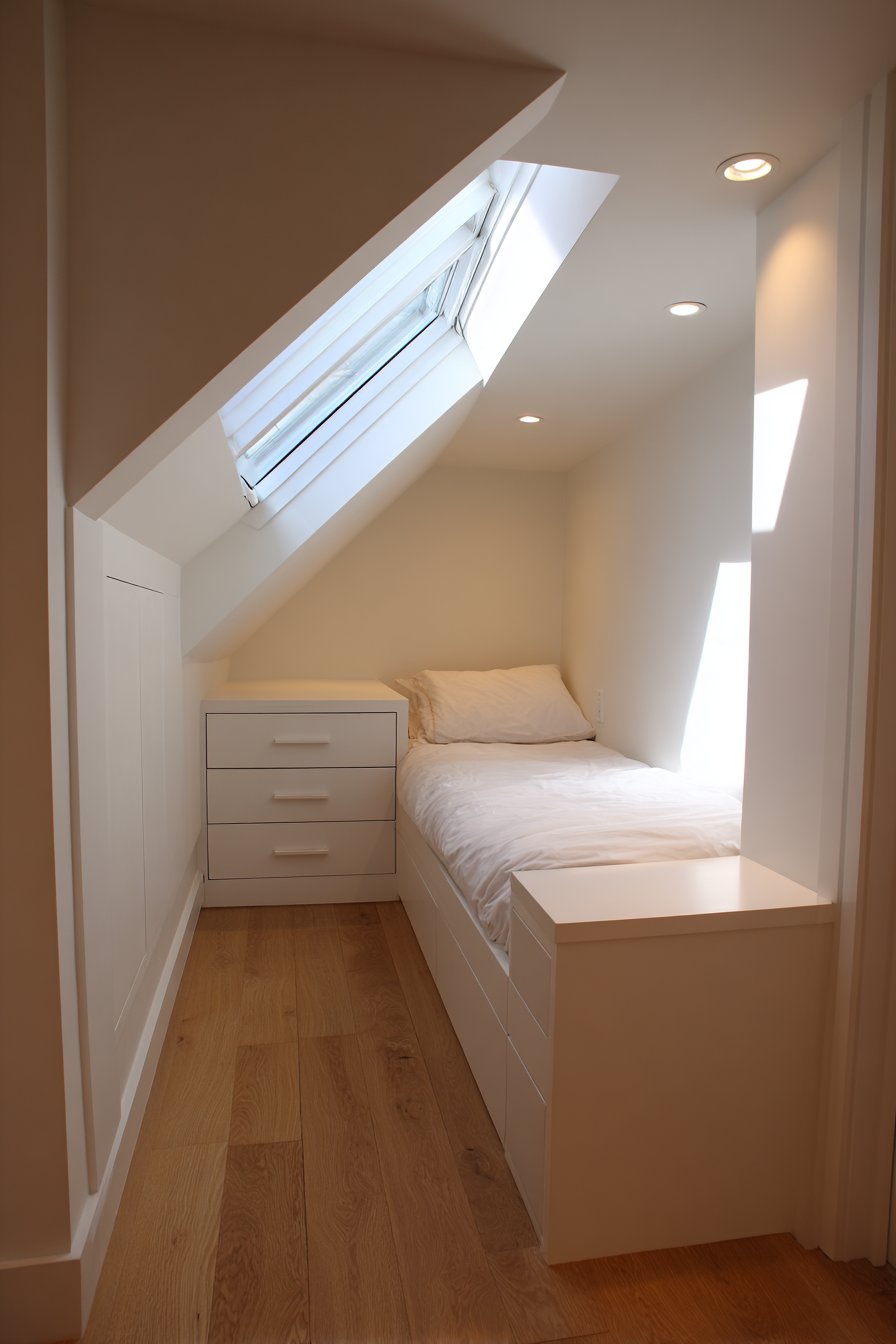
Key design tips: Position beds under lowest ceiling areas in attics where sitting height isn’t required. Build storage into knee walls to exploit low-height areas where standard furniture won’t fit. Install skylights above sleeping areas to provide natural light without consuming sloped wall space. Paint all surfaces white in attics to maximize light reflection and brightness. Use compact task lighting rather than floor lamps in spaces with limited ceiling height and awkward angles.
29. Technology-Integrated Modern Design
Modern small bedroom design increasingly incorporates technology seamlessly into furniture, and this contemporary space showcases those possibilities. The streamlined upholstered bed frame features integrated USB charging ports built into the side rails, eliminating the tangle of cords and adapters that typically clutter nightstands. Under-bed LED lighting provides both ambiance and safety, creating a soft glow that makes nighttime navigation easier while adding a modern, almost futuristic aesthetic element.
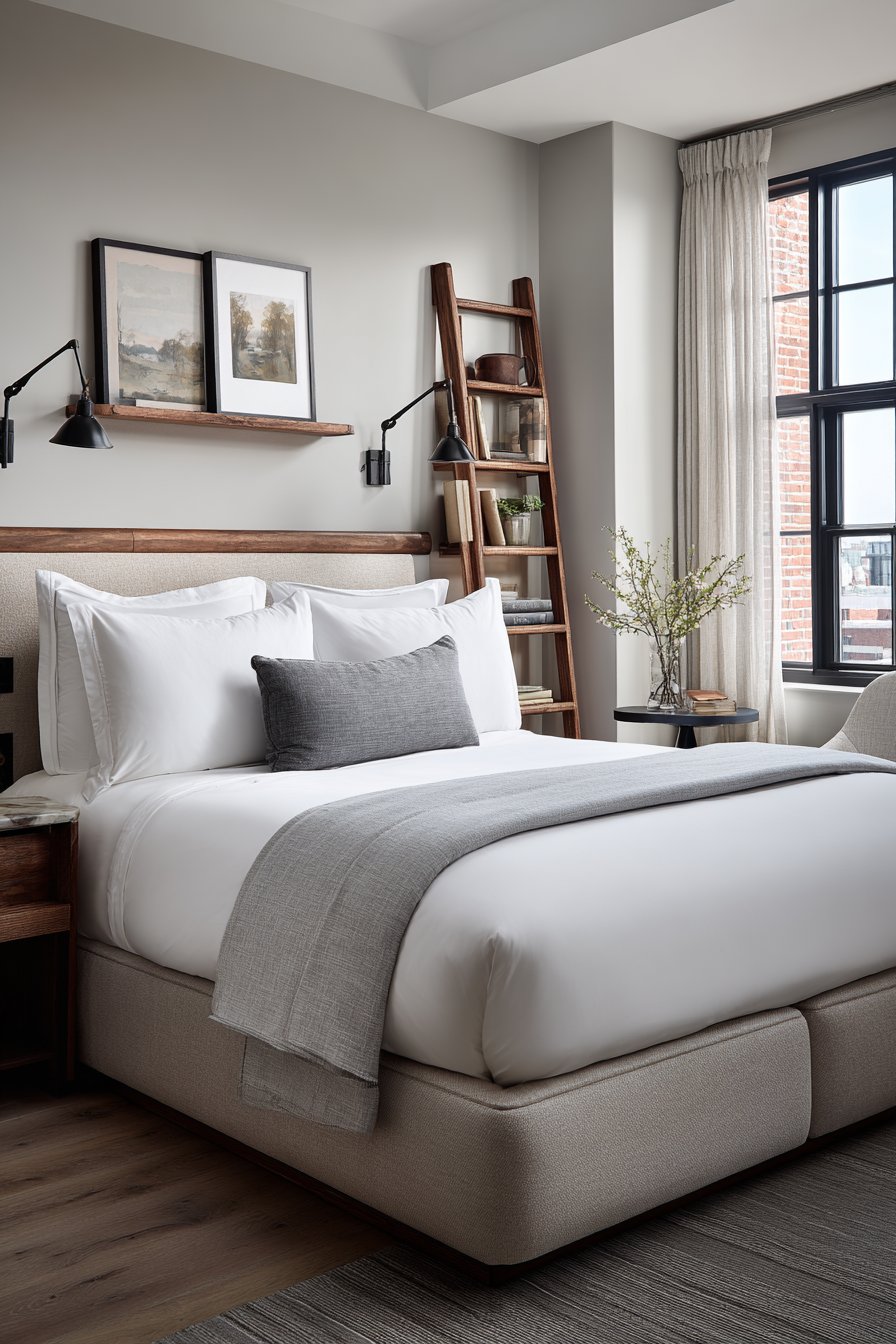
The bed is dressed in hotel-style white linens with a grey accent pillow, creating a refined, hospitality-inspired look that feels luxurious despite the room’s compact size. This polished approach to bedding elevates the entire space and demonstrates that small bedrooms can feel upscale and sophisticated when attention is paid to quality details. Wall-mounted swing-arm lamps provide reading light without consuming nightstand surface space, their adjustable arms allowing perfect positioning for comfortable reading.
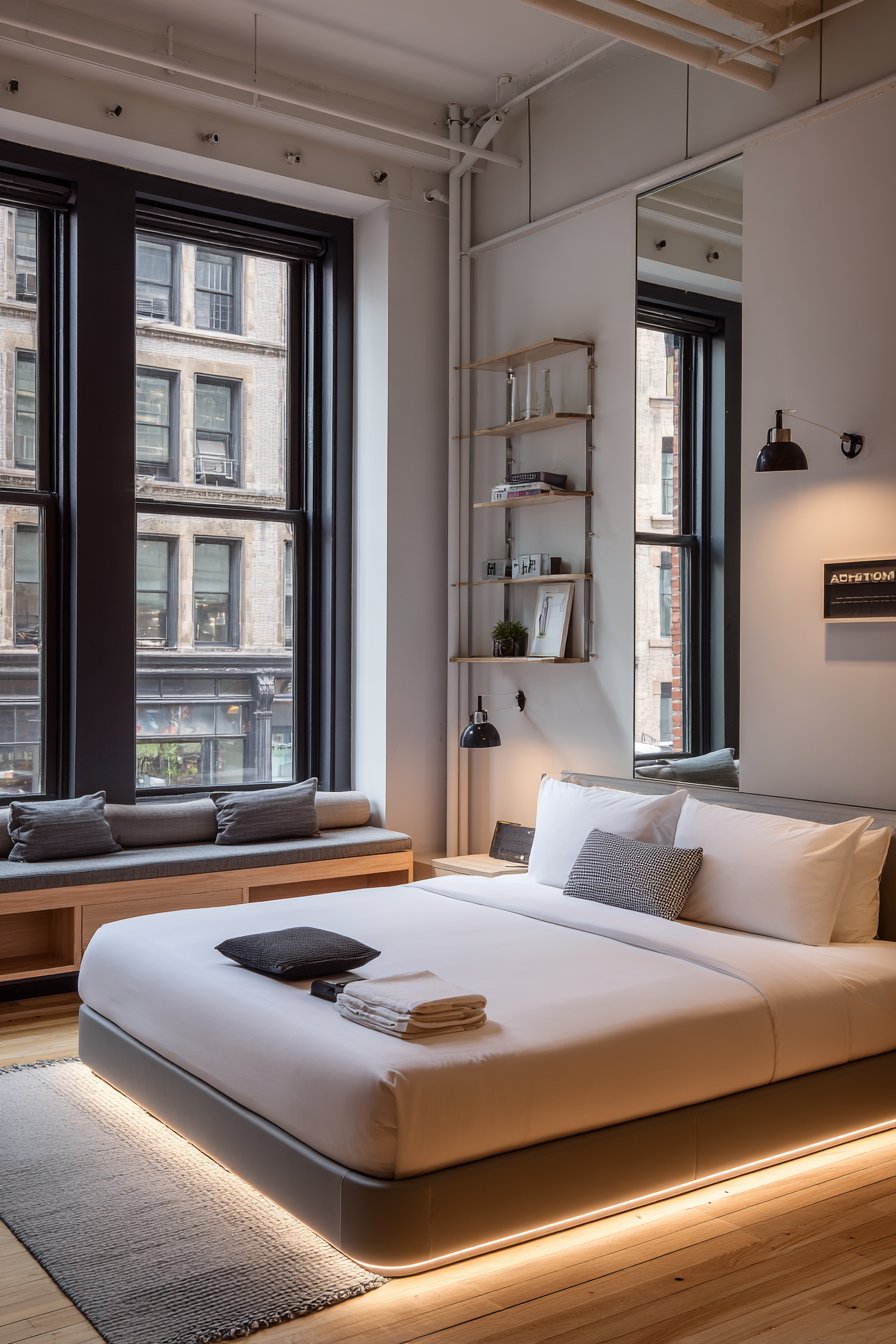
A narrow ladder shelf leans against the wall, providing vertical display and storage that can be easily moved or adjusted as needs change. This casual, unfitted approach contrasts with the bed’s integrated technology, creating visual interest through the juxtaposition of permanent and flexible elements. Light grey walls with crisp white trim maintain a fresh, clean aesthetic that serves as a neutral backdrop for the room’s modern features.
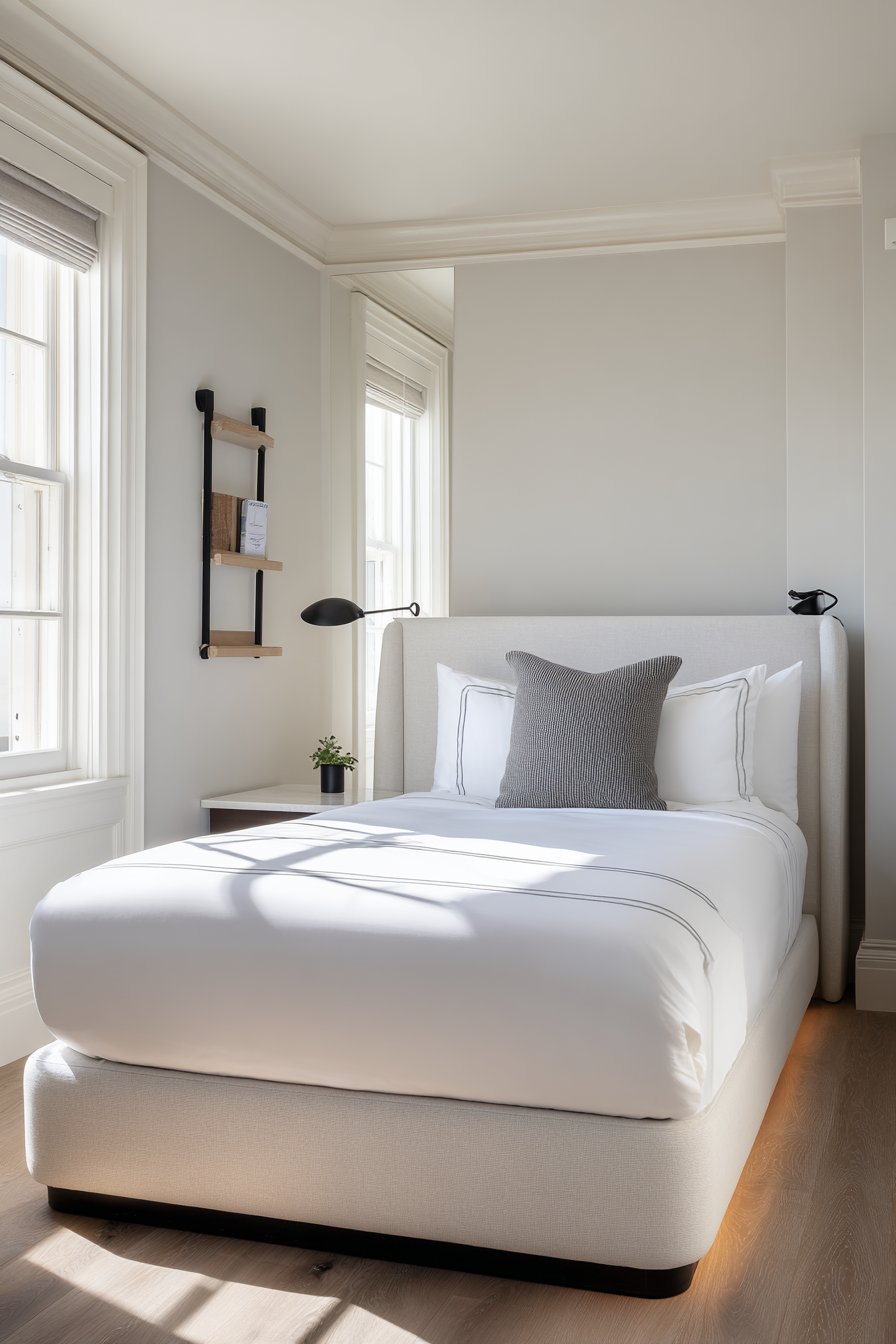
Wood plank flooring introduces natural warmth and texture that prevents the technology-focused room from feeling cold or impersonal. Natural window light floods the space, captured in interior design photography showing modern integrated technology and hospitality-inspired styling with balanced composition and soft natural illumination. This bedroom represents the direction of contemporary small space design, where technology integration eliminates clutter while actually improving functionality and creating the streamlined aesthetic that makes small spaces feel larger and more luxurious.
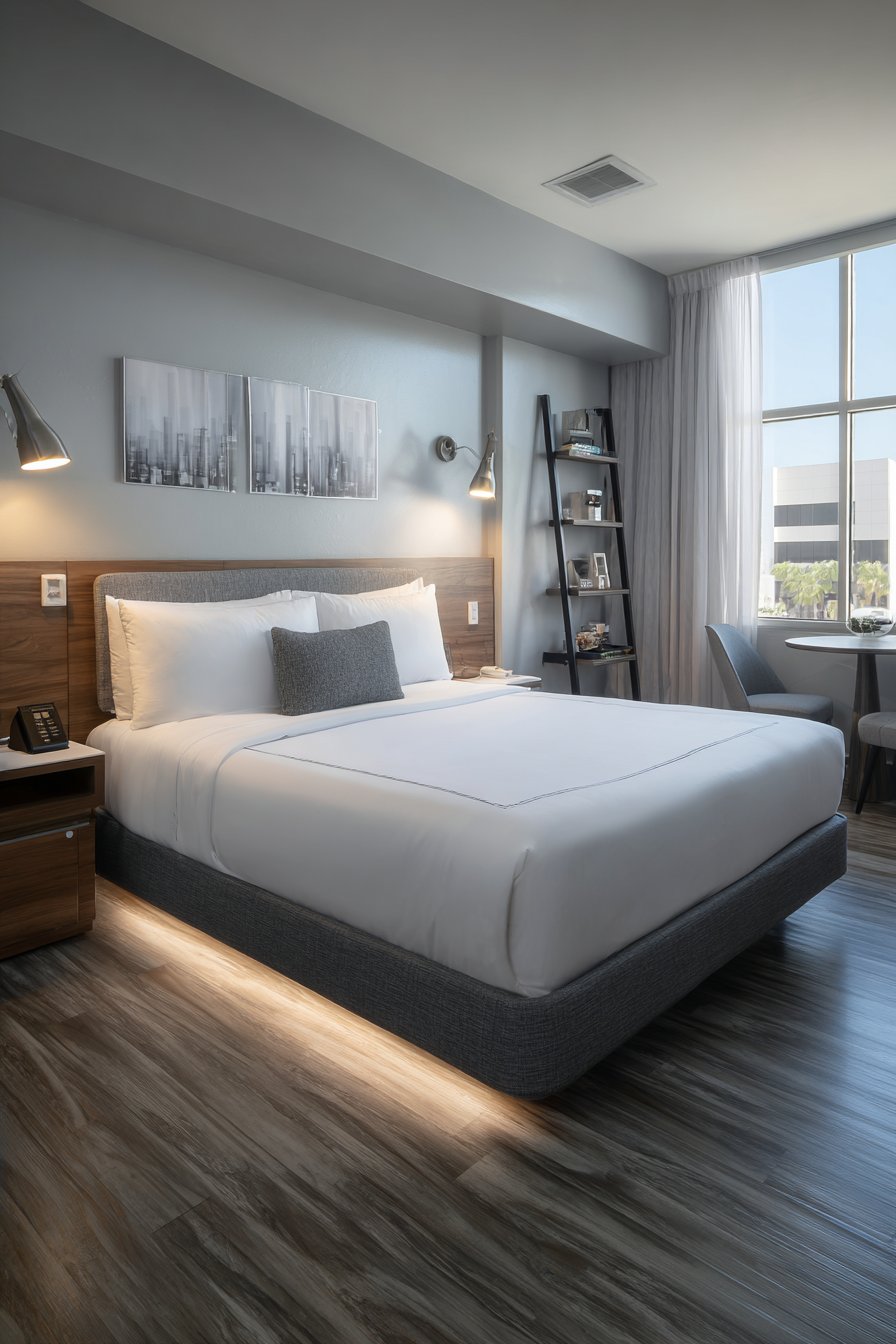
Key design tips: Choose bed frames with integrated USB charging ports to eliminate cord clutter on nightstands. Install under-bed LED lighting for ambiance and safe nighttime navigation. Use hotel-style white bedding with accent pillows for refined, hospitality-inspired aesthetics. Mount swing-arm reading lamps on walls to free surface space while maintaining adjustability. Select leaning ladder shelves for flexible vertical storage that can be easily repositioned.
Why These Extremely Small Bedroom Ideas Work
The designs presented in this comprehensive guide represent the best approaches to extremely small bedroom challenges because they address the fundamental issues that make compact spaces difficult: limited floor area, insufficient storage, poor natural light, and the psychological challenge of feeling cramped or confined. Each solution tackles these problems through different strategies—vertical storage, multipurpose furniture, integrated systems, visual tricks, and flexible arrangements—proving that there’s no single “right” way to design a tiny bedroom.
What unites these successful designs is their commitment to intentionality. Every piece of furniture, every color choice, every lighting decision serves a specific purpose and earns its place through function or psychological impact. Platform beds with storage drawers eliminate the need for separate dressers. Murphy beds create multipurpose rooms that adapt throughout the day. Loft configurations create entirely new levels within limited square footage. These aren’t just furniture choices—they’re strategic space planning decisions that multiply the utility of small bedrooms.
The color strategies employed across these designs also deserve recognition. Light palettes, monochromatic schemes, and strategic use of white create visual spaciousness by eliminating contrasts that would define a room’s actual boundaries. Soft greys, gentle blues, pale greens, and warm whites make small bedrooms feel serene and open rather than dark and confining. When darker colors appear, they’re used deliberately on statement furniture pieces balanced by light walls and adequate natural light, demonstrating that small spaces can embrace color when applied thoughtfully.
Storage solutions represent perhaps the most critical element distinguishing successful small bedrooms from dysfunctional ones. These designs prove that storage must be integrated rather than added—built into bed platforms, hidden behind curtains, incorporated into steps and walls, suspended overhead, or stacked vertically to ceiling height. Traditional storage furniture designed for larger rooms simply doesn’t work in extreme small bedrooms, where every piece must contribute multiple functions or serve its singular purpose exceptionally efficiently.
The integration of natural light across these designs reveals another universal truth about small bedroom success: darkness makes small spaces feel smaller, while abundant natural light creates openness and connection to the larger world. Skylights, sheer curtains, mirrored surfaces, and strategic furniture placement that doesn’t block windows all contribute to maximizing whatever natural light is available. When windows are limited, thoughtful artificial lighting—recessed LEDs, wall-mounted sconces, pendant fixtures—prevents dark corners and creates even illumination that opens up the space.
Flexibility emerges as a defining characteristic of the best small bedroom designs. Beds on casters that roll away during the day, desks that fold against walls, furniture that transforms between configurations—these adaptive elements allow small bedrooms to serve multiple purposes throughout the day rather than remaining locked in a single, potentially wasteful arrangement. This flexibility proves especially valuable in studio apartments or multipurpose rooms where bedroom furniture must coexist with workspace, living area, or other functions.
The psychological aspects of small space design receive careful attention throughout these bedrooms. Creating defined zones within limited square footage—a sleeping nook, a work area, a dressing space—helps small bedrooms feel like complete living environments rather than just places to sleep. Alcoves formed by bookcases, platforms that elevate sleeping areas, curtains that conceal closets—these design moves create spatial variety and interest that combat the potential monotony of single small rooms.
Material choices consistently favor natural elements like wood, linen, cotton, and other organic materials that introduce warmth and prevent small bedrooms from feeling sterile or cold. Even in contemporary or industrial designs, natural materials provide essential balance against harder elements like metal frames or concrete floors. These organic textures create comfort and livability crucial for spaces where every square foot matters and harsh materials could make small rooms feel unwelcoming.
The furniture scaling demonstrated across these designs shows remarkable attention to proportion. Narrow nightstands, slim console tables, low-profile platforms, and compact seating maintain functionality while preventing furniture from overwhelming limited floor space. This careful scaling proves that small bedrooms need appropriately sized furniture rather than simply smaller versions of standard pieces—the proportions and profiles must be specifically designed for tight quarters.
Multi-functional furniture appears repeatedly because it represents one of the most effective strategies for small space living: sofa beds, captain’s beds with extensive storage, desks that convert to nightstands, ottomans with hidden storage, beds with integrated shelving. When single pieces serve double or triple purposes, fewer total pieces are required, leaving more open space for movement and reducing visual clutter that would make small rooms feel chaotic.
The professional photography techniques mentioned throughout—wide-angle lenses, balanced exposure, attention to natural lighting—aren’t just aesthetic choices but essential elements for accurately representing small spaces. These techniques capture realistic proportions while showing how light, color, and arrangement work together to create functional, attractive bedrooms despite severe spatial constraints. The images prove these aren’t fantasy designs but achievable solutions for real small bedrooms.
Custom millwork and built-in furniture appear frequently because they offer perfectly fitted solutions impossible with standard furniture. Attic knee walls, awkward corners, specific dimensional constraints—these challenges often require custom approaches that transform liabilities into assets. While more expensive initially, built-ins typically provide better long-term value in small spaces by maximizing every inch with precision-fitted storage and furniture.
Vertical thinking dominates successful small bedroom design because when you can’t expand horizontally, you must build upward. Floor-to-ceiling shelving, lofted sleeping areas, tall narrow dressers, wall-mounted storage—these vertical solutions exploit the often-underutilized dimension of height to create storage and function without consuming additional floor space. This vertical emphasis also draws the eye upward, psychologically making rooms feel more spacious.
The minimal decoration approach across these designs reflects practical wisdom: in very small bedrooms, architectural elements, furniture, and functional necessities provide sufficient visual interest without additional decorative objects that would create clutter. A textured throw, a single plant, quality bedding—these carefully chosen elements provide personality without excess. This restraint proves that small space design requires editing and curation rather than accumulation.
Technology integration in modern small bedroom design eliminates traditional clutter sources. Built-in USB ports remove charging cables, under-bed lighting provides ambiance without lamps, wall-mounted TVs free floor space—these technological solutions create the streamlined aesthetic essential for small space success. As technology continues evolving, its integration into furniture will increasingly benefit compact living situations.
The consistent attention to circulation and traffic flow throughout these designs reveals professional-level space planning. Adequate clearance for opening drawers and doors, comfortable walking paths, accessible storage—these practical considerations prevent small bedrooms from feeling cramped or difficult to use. Good small space design isn’t just about fitting everything in but ensuring everything functions comfortably once installed.
Cultural and stylistic diversity across these designs—Scandinavian minimalism, Japanese-inspired simplicity, industrial urban aesthetics, contemporary luxury—demonstrates that small bedroom success isn’t limited to single style approaches. Whether your preferences lean traditional, modern, eclectic, or somewhere between, thoughtful application of small space principles allows any aesthetic to work in compact dimensions. Style preferences don’t have to be sacrificed to spatial constraints.
Conclusion
Designing extremely small bedrooms requires creativity, flexibility, and willingness to challenge conventional furniture arrangement and storage assumptions. The twenty-nine distinct approaches explored in this guide demonstrate that spatial limitations can inspire innovative solutions rather than merely imposing restrictions. From murphy beds that disappear into walls to loft configurations that create multi-level living, from built-in millwork that maximizes every inch to flexible modular arrangements that adapt throughout the day, the possibilities for small bedroom success are far more varied than many people imagine.
The key principles uniting these successful designs—vertical thinking, integrated storage, light color palettes, multi-functional furniture, adequate natural light, and thoughtful scaling—provide a framework applicable to virtually any small bedroom challenge. Whether you’re designing a tiny urban apartment, converting a spare room, optimizing an attic space, or simply working with architectural constraints, these principles offer guidance for creating bedrooms that feel comfortable, functional, and even spacious despite their limited square footage.
Small bedroom design ultimately represents a design philosophy applicable far beyond just compact spaces: intentionality, functionality, and careful curation create better living environments regardless of size. By necessity, small bedroom design eliminates the excess and forces focus on what truly matters—comfortable sleep, adequate storage, flexible functionality, and pleasing aesthetics. These priorities benefit any bedroom, large or small.
As you consider implementing these ideas in your own space, remember that the best small bedroom design reflects your specific needs, habits, and aesthetic preferences rather than following a single prescribed formula. Use these examples as inspiration and starting points, adapting the strategies that resonate with your situation while confidently setting aside approaches that don’t fit your lifestyle. The most successful small bedrooms emerge from understanding both universal principles and personal requirements, creating spaces that work specifically for you while demonstrating that limited square footage never requires compromising on comfort, style, or functionality.
