
The bedroom serves as our personal sanctuary, a retreat from the chaos of daily life where we seek rest, rejuvenation, and peace. At the heart of every well-designed bedroom lies the bed—not merely a piece of furniture, but the focal point that sets the tone for the entire space. Wood bed designs have endured through centuries of changing trends, offering a timeless appeal that combines natural beauty, exceptional craftsmanship, and remarkable versatility. From the rich, warm tones of walnut and mahogany to the light, airy feel of ash and birch, wood beds bring an organic warmth and authenticity that synthetic materials simply cannot replicate. The natural grain patterns, unique imperfections, and honest materiality of wood create bedrooms that feel grounded, inviting, and deeply connected to the natural world.
In today’s design landscape, wood beds have evolved far beyond traditional styles to encompass an extraordinary range of aesthetics—from sleek Scandinavian minimalism to rustic farmhouse charm, from industrial-modern fusion to ornate traditional craftsmanship. Whether you’re drawn to the clean lines of contemporary design, the lived-in character of reclaimed materials, or the sophisticated elegance of hand-carved details, there’s a wood bed design that perfectly aligns with your personal style and practical needs. The beauty of wood as a material lies in its adaptability; it can be shaped, stained, carved, and combined with other materials to create truly unique pieces that reflect individual taste while maintaining structural integrity and lasting quality.
This comprehensive guide explores 31 distinct wood bed design ideas, each offering a unique approach to bedroom aesthetics and functionality. From platform beds with integrated storage solutions to dramatic four-poster designs, from minimalist frames that celebrate negative space to elaborate carved headboards that showcase artisan craftsmanship, these concepts demonstrate the incredible versatility of wood as a bedroom furniture material. Whether you’re planning a complete bedroom renovation or simply seeking inspiration to refresh your sleeping space, these designs offer practical insights, styling suggestions, and actionable tips to help you create a bedroom that’s not only beautiful but also perfectly suited to your lifestyle and needs.
1. Contemporary Walnut Platform Bed with Live-Edge Details
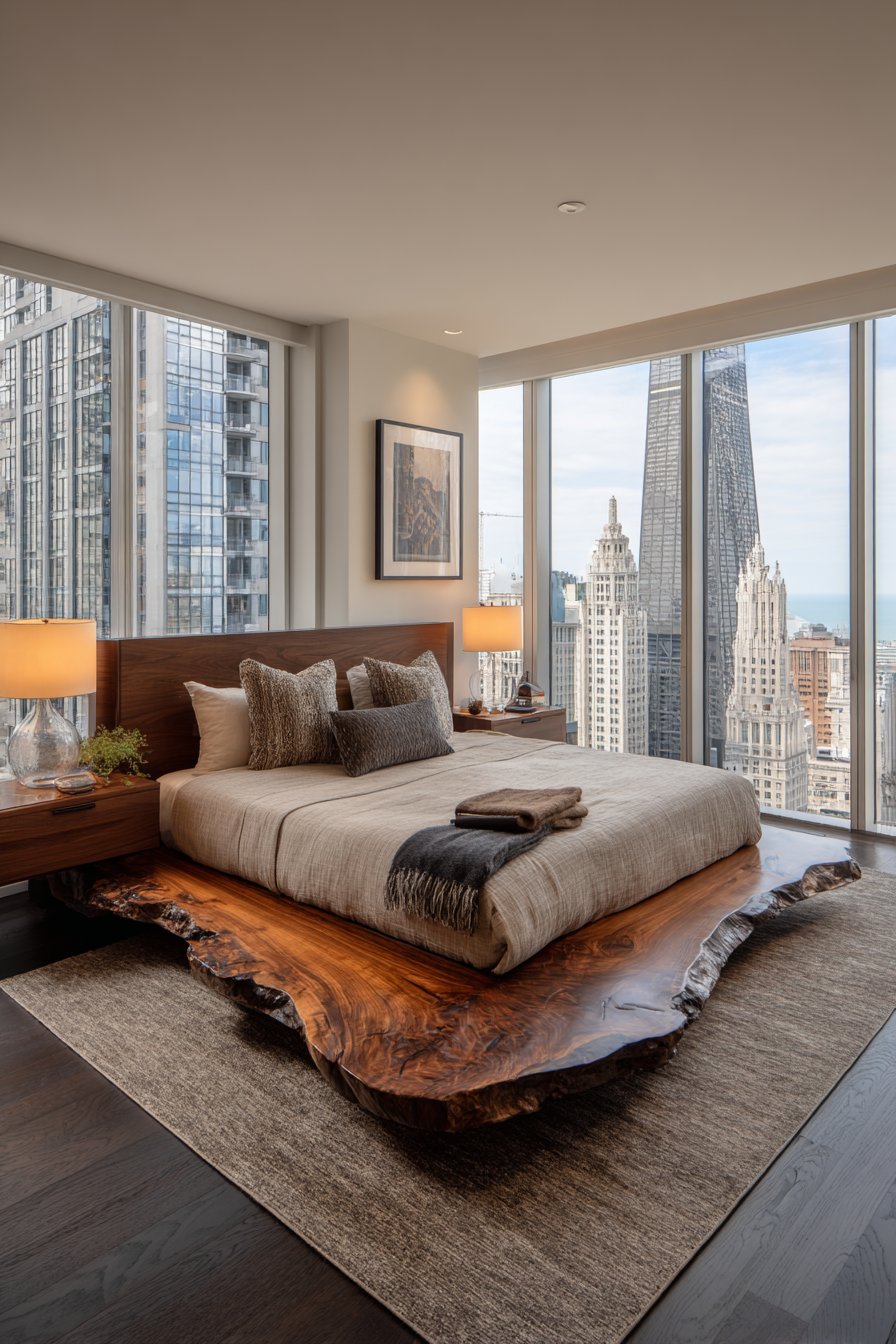
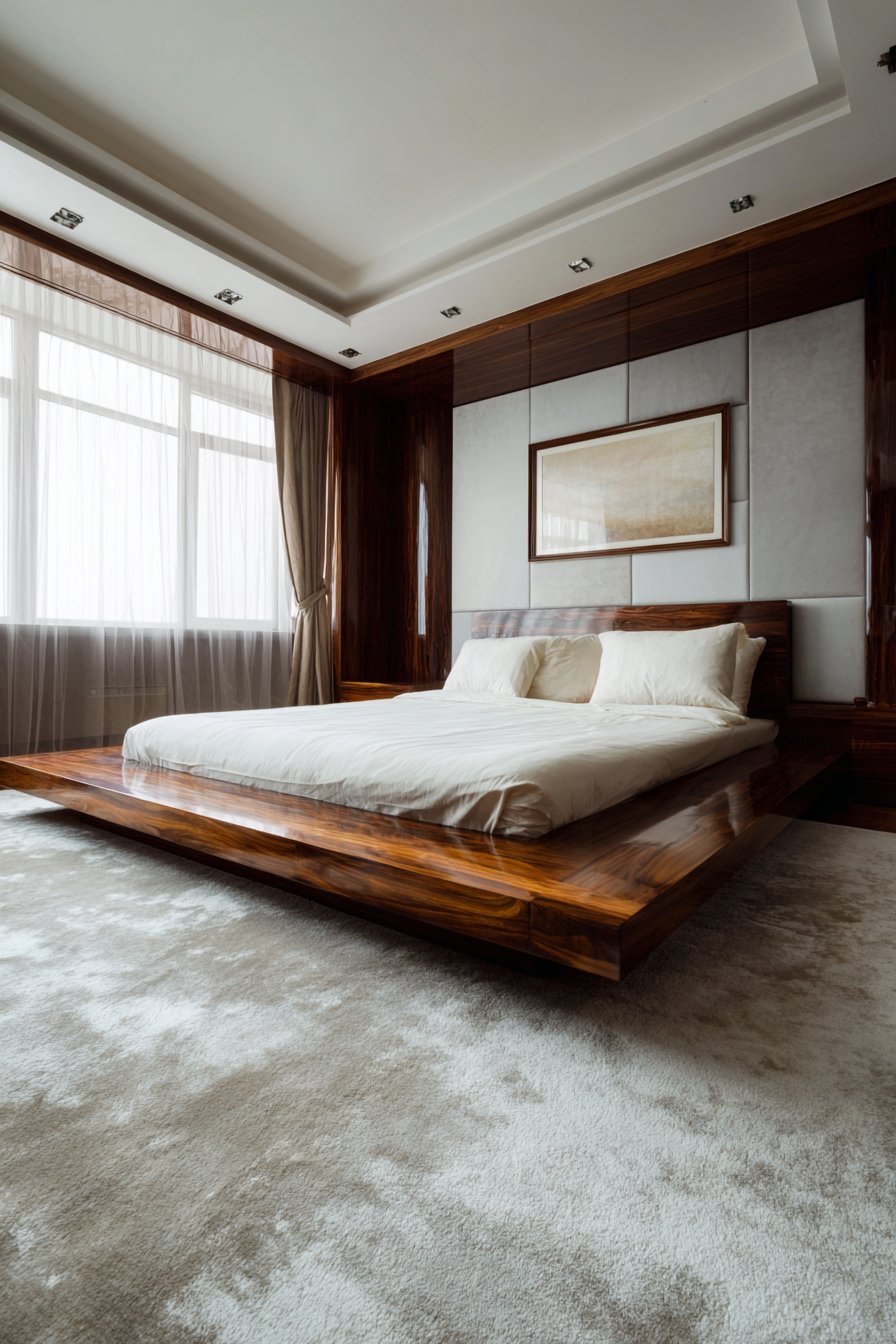
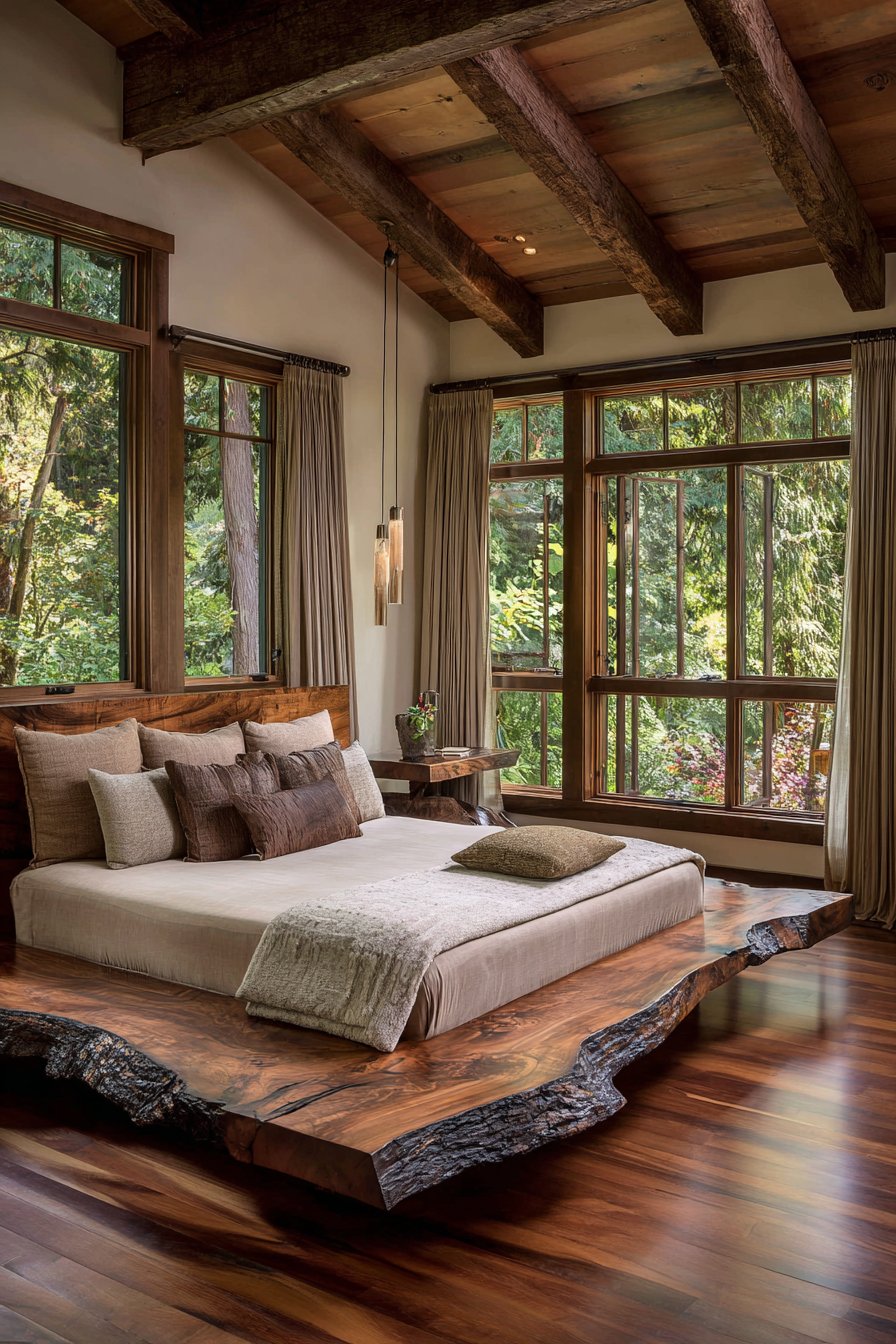
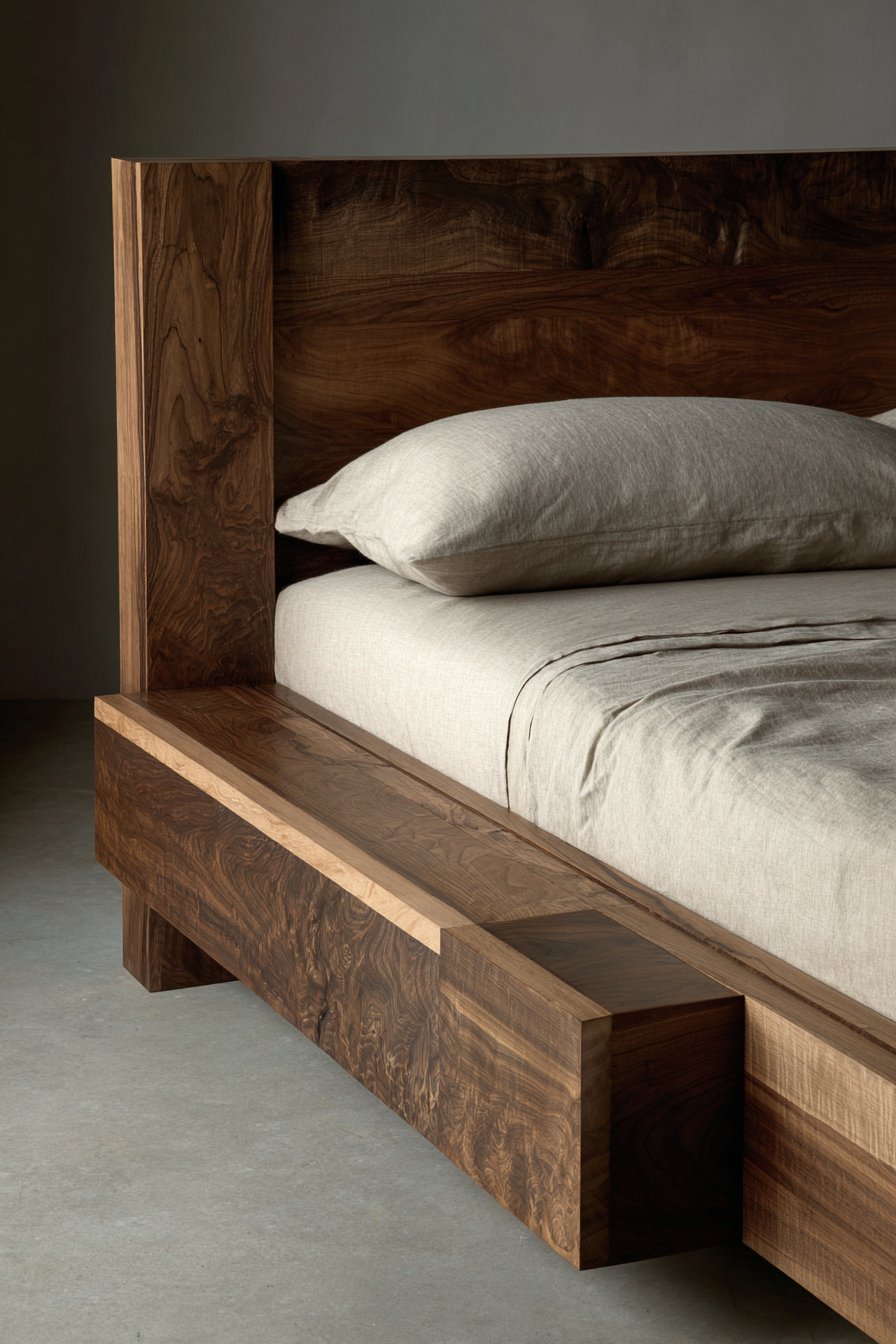
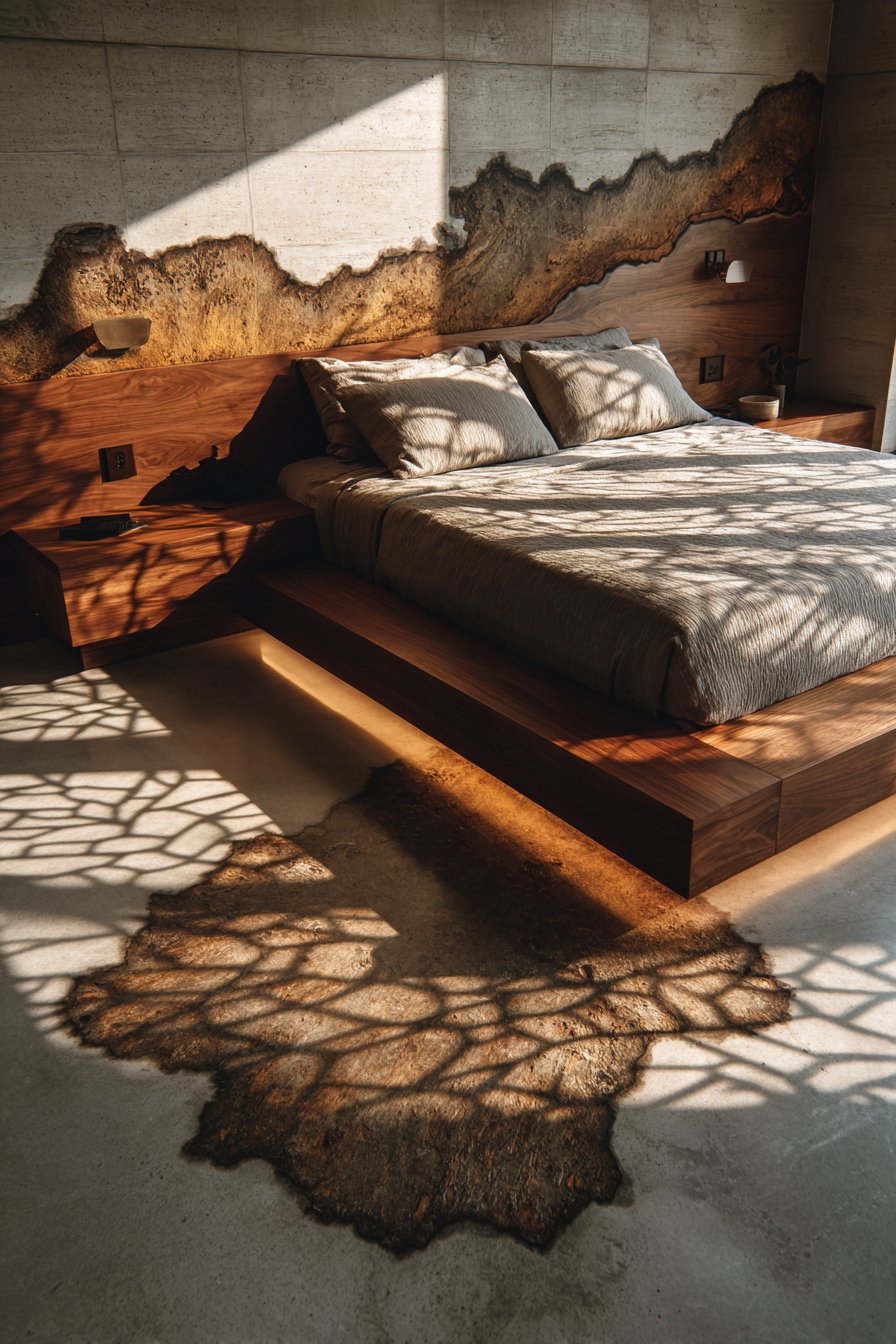
This stunning showcase design represents the pinnacle of contemporary wood bed aesthetics, featuring a statement platform bed crafted from rich walnut wood with dramatic live-edge details that celebrate the tree’s natural form. The bed commands attention as the undisputed focal point of the bedroom, its organic edges creating a striking contrast against the clean, geometric lines of the platform base. Floating nightstands in matching walnut flank the bed, their suspended design enhancing the room’s contemporary aesthetic while the natural grain patterns create visual continuity throughout the space. The live-edge elements—where the wood retains its natural bark line and organic contours—bring an artisanal quality that transforms the bed from mere furniture into a sculptural statement piece.
The layered organic linen bedding in neutral tones provides the perfect complement to the walnut’s deep, chocolate-brown richness, creating a sophisticated color palette that feels both grounded and refined. Warm ambient lighting has been strategically positioned to highlight the wood’s natural beauty, casting inviting shadows across the textured surfaces and emphasizing the intricate grain patterns that make each piece unique. Floor-to-ceiling windows flood the space with soft natural light during daytime hours, revealing every subtle variation in the wood’s coloring and the distinctive character of the live-edge details.
The professional interior design photography captures this bedroom arrangement from a wide-angle perspective, showcasing how the bed anchors the entire room while maintaining balanced exposure that reveals every wood grain detail and texture variation. This comprehensive view demonstrates how a single, well-chosen wood bed can establish the design direction for an entire bedroom, influencing choices in lighting, textiles, and complementary furnishings.
Key Design Tips:
- Select walnut wood for its rich, deep coloring and distinctive grain patterns that add instant sophistication
- Embrace live-edge elements to celebrate the organic nature of wood and create one-of-a-kind character
- Position the bed to maximize natural light exposure, which brings out the warmth and depth in darker wood species
- Keep bedding simple and neutral to allow the wood’s natural beauty to remain the focal point
- Install ambient lighting at multiple levels to create dimensional shadows that emphasize wood texture and grain
2. Modern Low-Profile Oak Platform with Integrated Storage
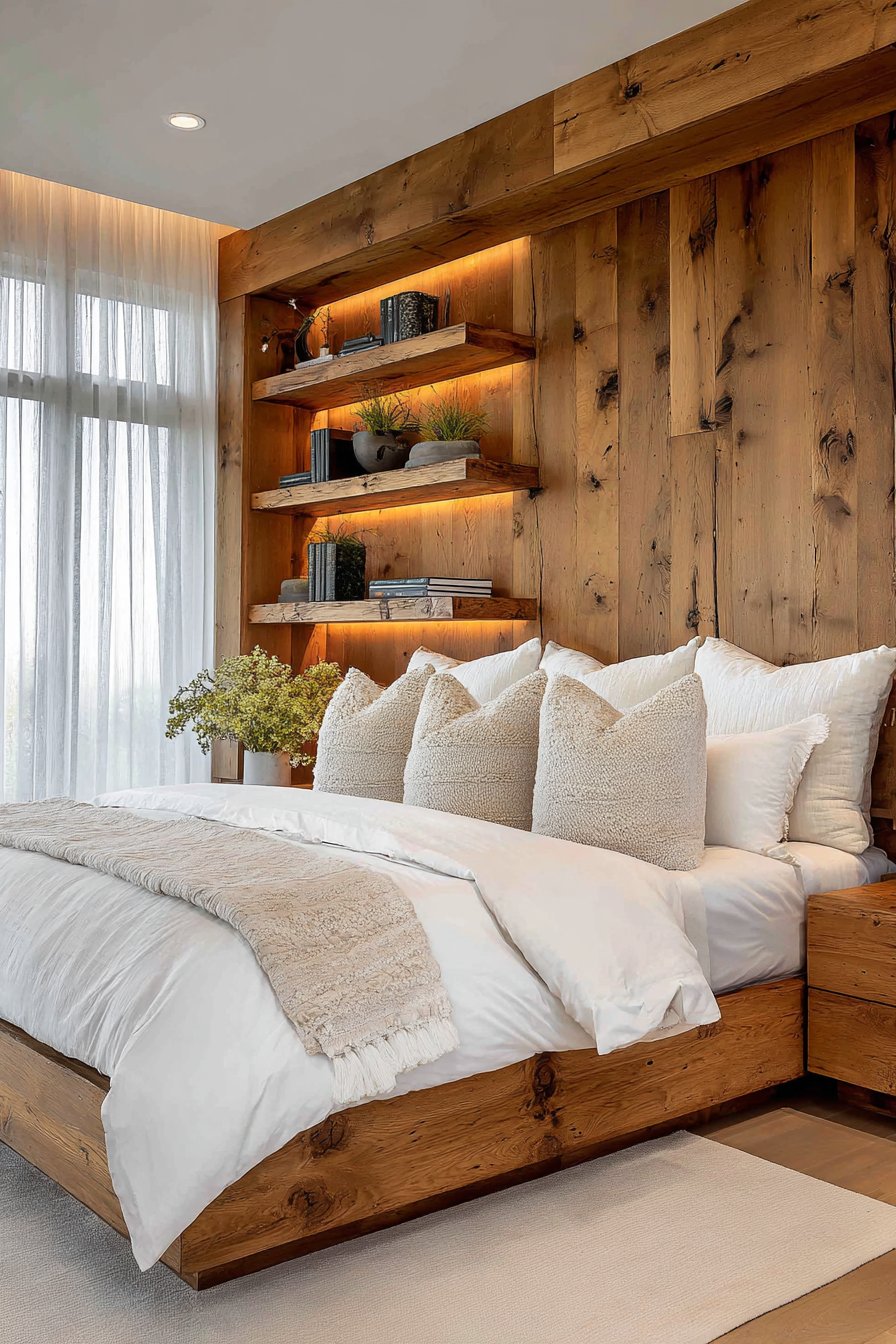
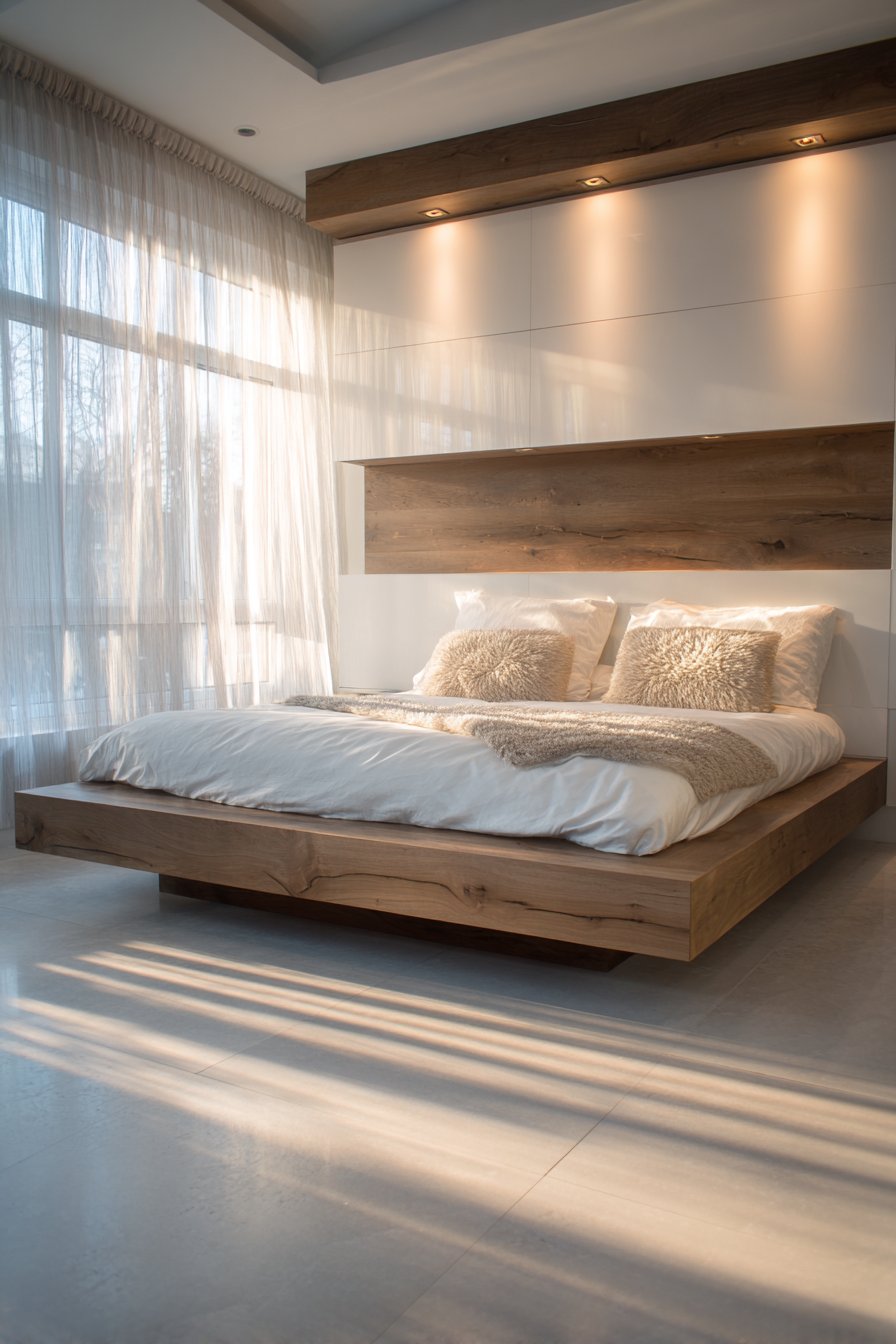
This modern wood bed design features a low-profile platform frame constructed from solid oak, showcasing the wood’s characteristic visible grain and natural knots that add authentic character to the piece. The headboard extends impressively to the ceiling, creating a dramatic vertical element that draws the eye upward while incorporating integrated floating shelves that provide both practical storage and decorative display opportunities. Ambient LED backlighting has been cleverly recessed into the headboard structure, creating a soft glow that adds contemporary flair while serving as functional nighttime illumination.
The bed is dressed with crisp white linens that create a striking contrast against the warm honey tones of the oak, while textured throw pillows add tactile interest and visual depth. Natural morning light streams through sheer curtains, bathing the room in a soft, diffused glow that highlights the warm amber and golden hues characteristic of oak wood. This lighting condition reveals the intricate grain patterns and natural variations that make oak such a beloved choice for furniture making.
Wide-angle interior design photography captures the full bedroom setup, demonstrating how the low-profile platform creates an open, spacious feeling despite the room’s modest dimensions. The professional lighting approach ensures that the wood’s natural texture and grain patterns remain clearly visible, showcasing the quality of the material and the precision of the craftsmanship. The integrated storage shelves display carefully curated objects—books, small plants, and decorative pieces—that personalize the space without cluttering the clean, contemporary aesthetic.
Key Design Tips:
- Choose oak for its durability, beautiful grain patterns, and warm honey tones that work with various color schemes
- Opt for a low-profile platform to create the illusion of more vertical space in rooms with standard ceiling heights
- Incorporate integrated LED lighting for modern functionality without compromising the wood’s natural aesthetic
- Use floating shelves built into the headboard to maximize storage in compact bedrooms
- Select sheer window treatments to filter natural light while maintaining privacy and highlighting wood tones
3. Rustic Reclaimed Barn Wood Frame with Weathered Patina
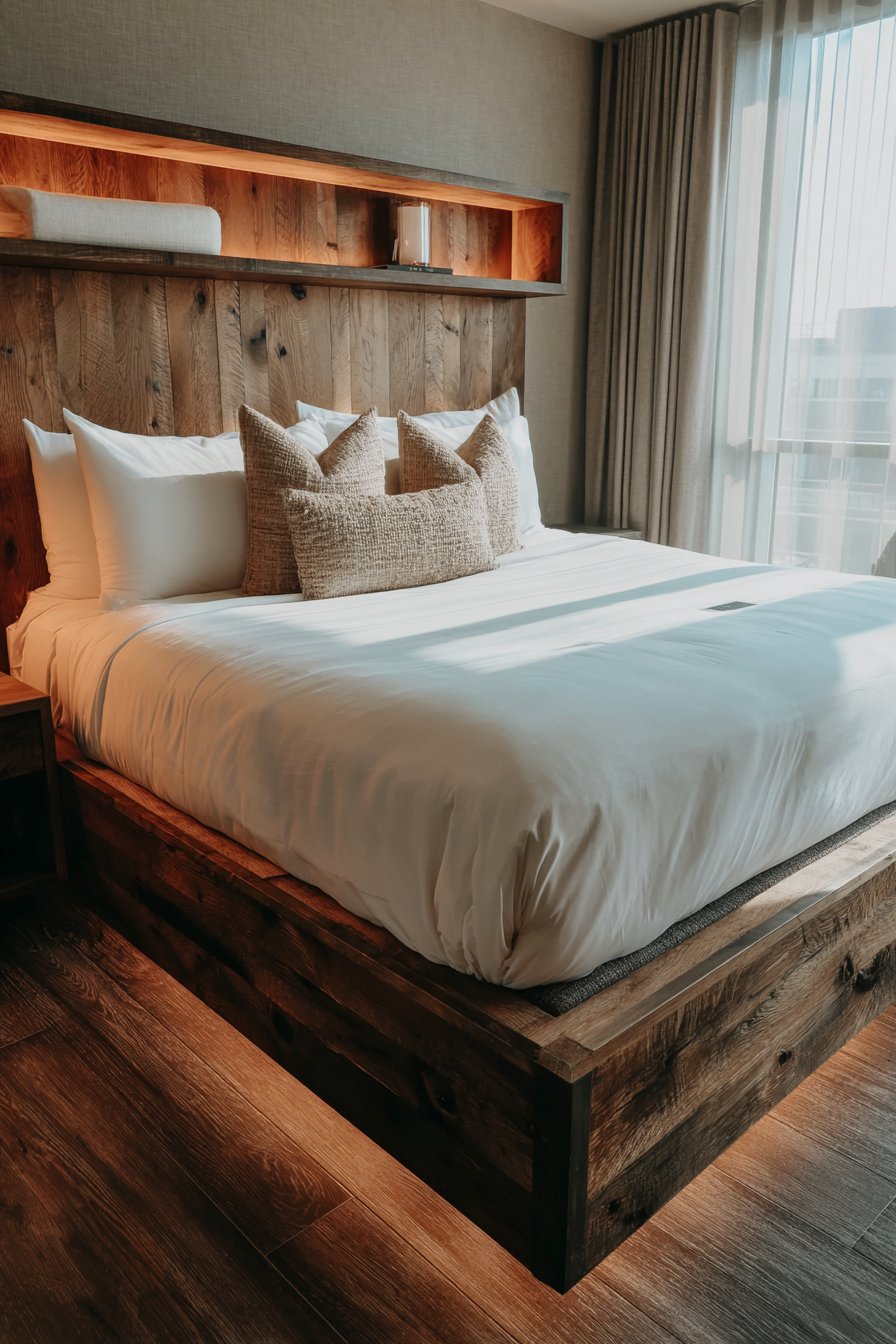
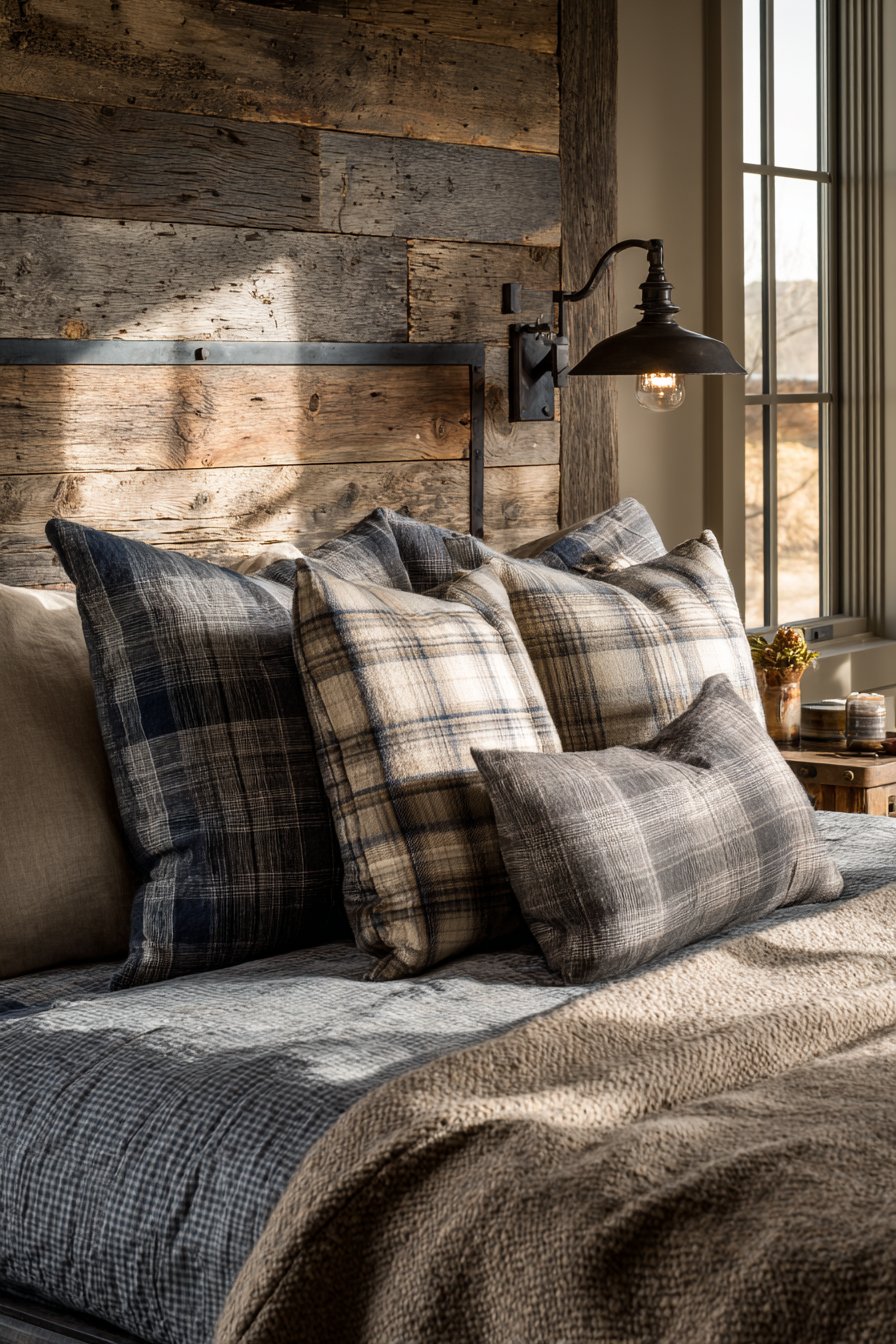
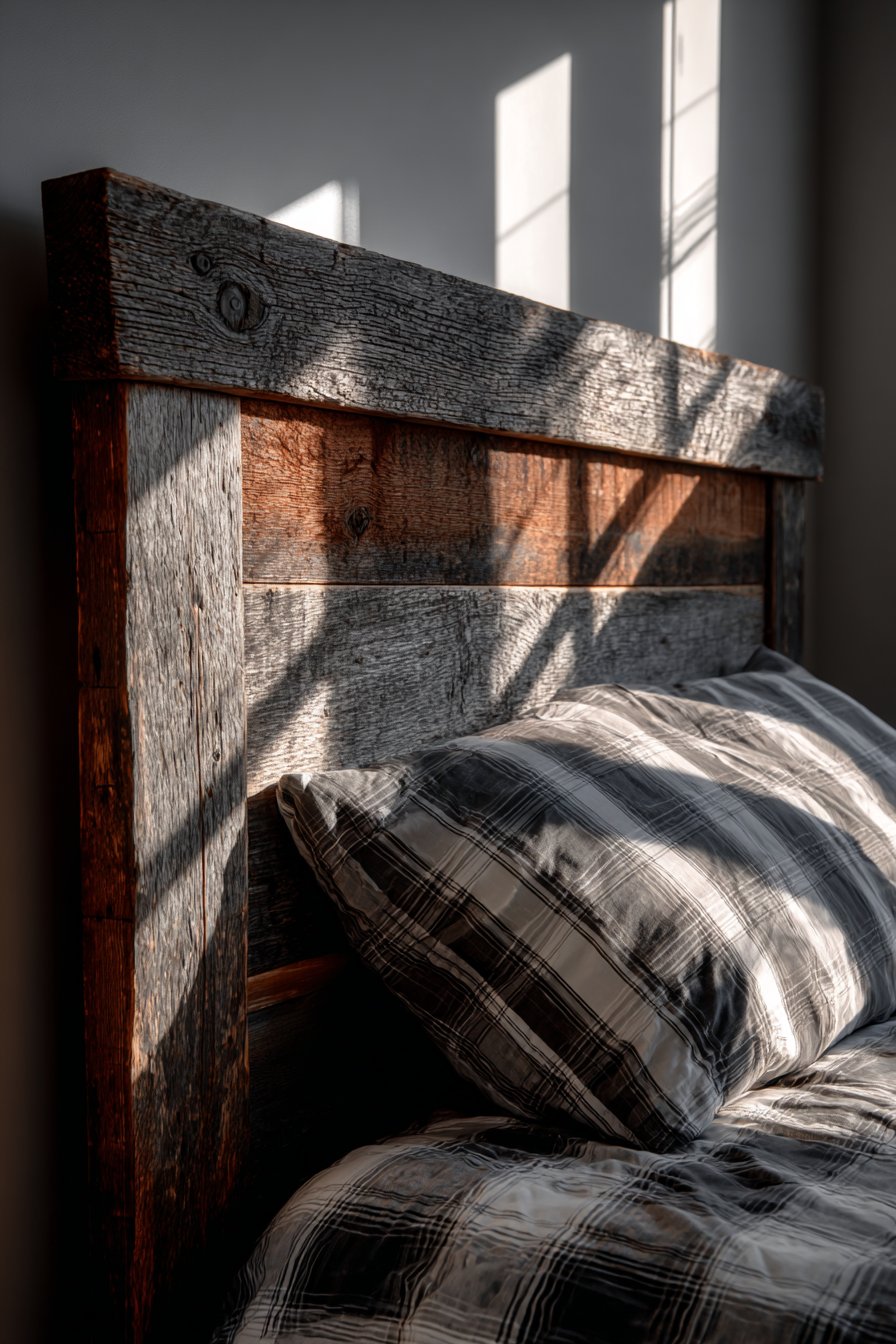
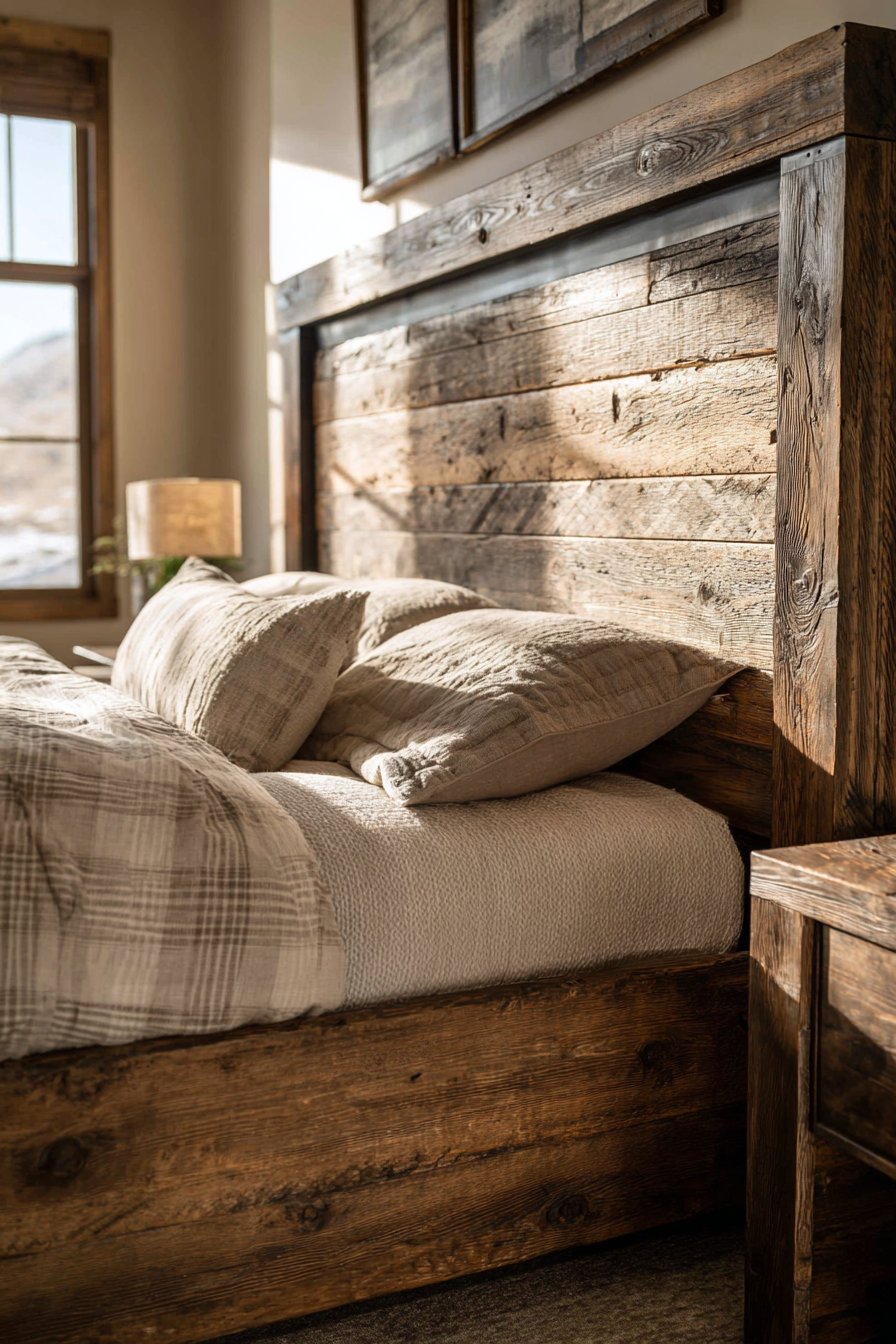
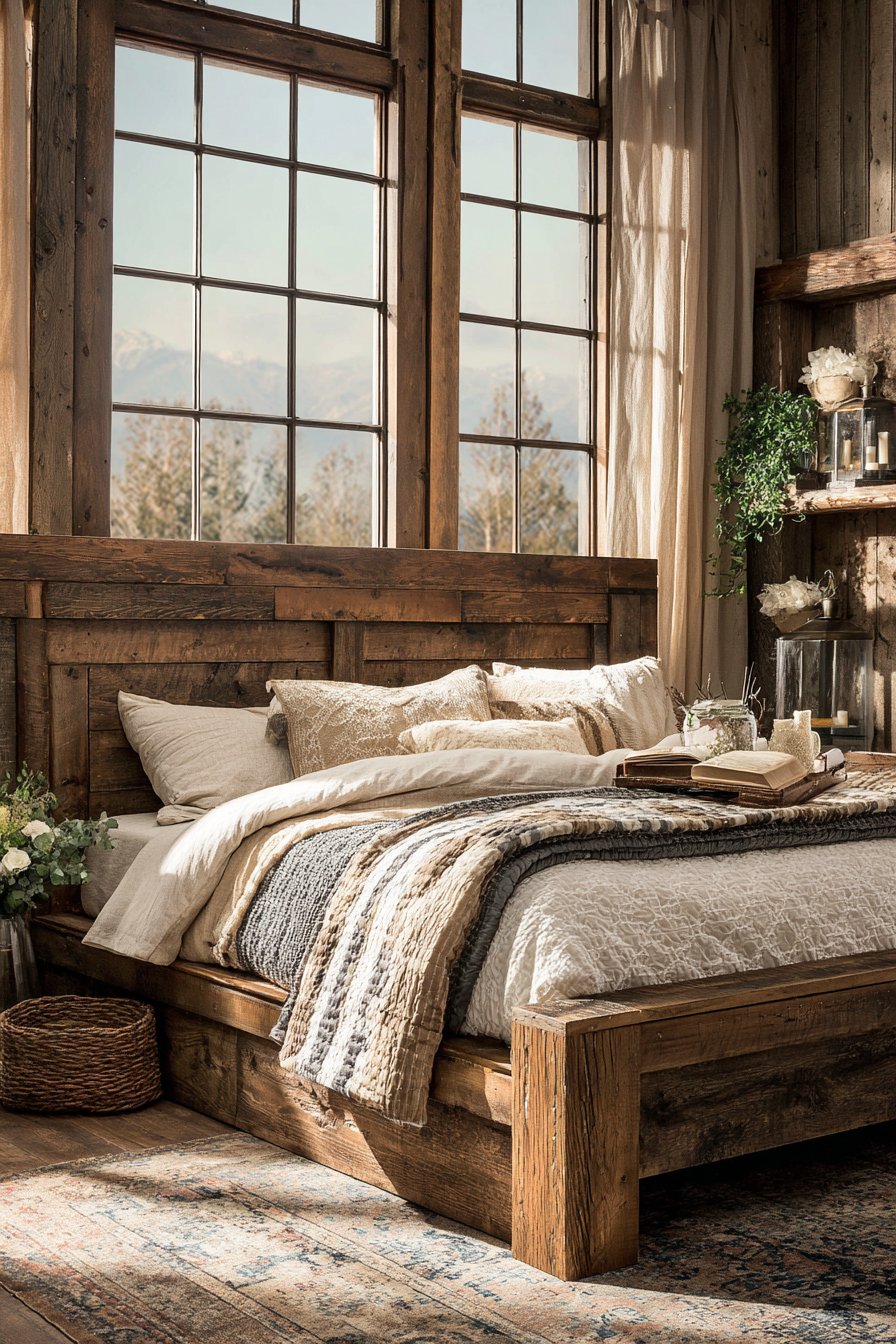
This rustic wood bed design idea showcases the enduring appeal of reclaimed barn wood, featuring a substantial frame with a weathered grey patina that tells the story of decades of exposure to the elements. The wood displays authentic aging marks—nail holes, saw marks, and subtle weathering patterns—that cannot be replicated through artificial distressing techniques. The substantial headboard features horizontal planks with varying wood tones ranging from silvery grey to warm brown, creating a dynamic visual texture that adds depth and interest to the bedroom wall.
Industrial metal accents complement the rustic wood perfectly, with blackened steel corner brackets and hardware providing structural support while contributing to the aesthetic. The bed is paired with cozy plaid bedding that reinforces the farmhouse-rustic theme, introducing pattern and softness that balances the rough-hewn quality of the weathered wood. Soft natural lighting from a nearby window creates gentle shadows that highlight the textured wood surfaces, emphasizing every groove, knot, and imperfection that gives reclaimed wood its distinctive character.
Interior design photography with balanced exposure captures the authentic rustic character and material details, ensuring that viewers can appreciate the weathering patterns, color variations, and honest materiality that make reclaimed wood so appealing. This approach celebrates the wood’s history and patina rather than trying to make it look new, embracing the philosophy that age and wear add value rather than detract from it.
Key Design Tips:
- Source authentic reclaimed barn wood from architectural salvage companies for genuine character and sustainability
- Embrace varied wood tones within the same piece rather than trying to achieve perfect color matching
- Pair rustic wood with industrial metal elements for a complementary contrast in texture and finish
- Use textiles with traditional patterns like plaid or checks to reinforce the farmhouse aesthetic
- Position the bed near windows to maximize natural light that reveals the wood’s weathering and patina
- Leave some imperfections visible rather than sanding everything smooth—they add authentic character
4. Scandinavian Minimalist Ash Wood Design
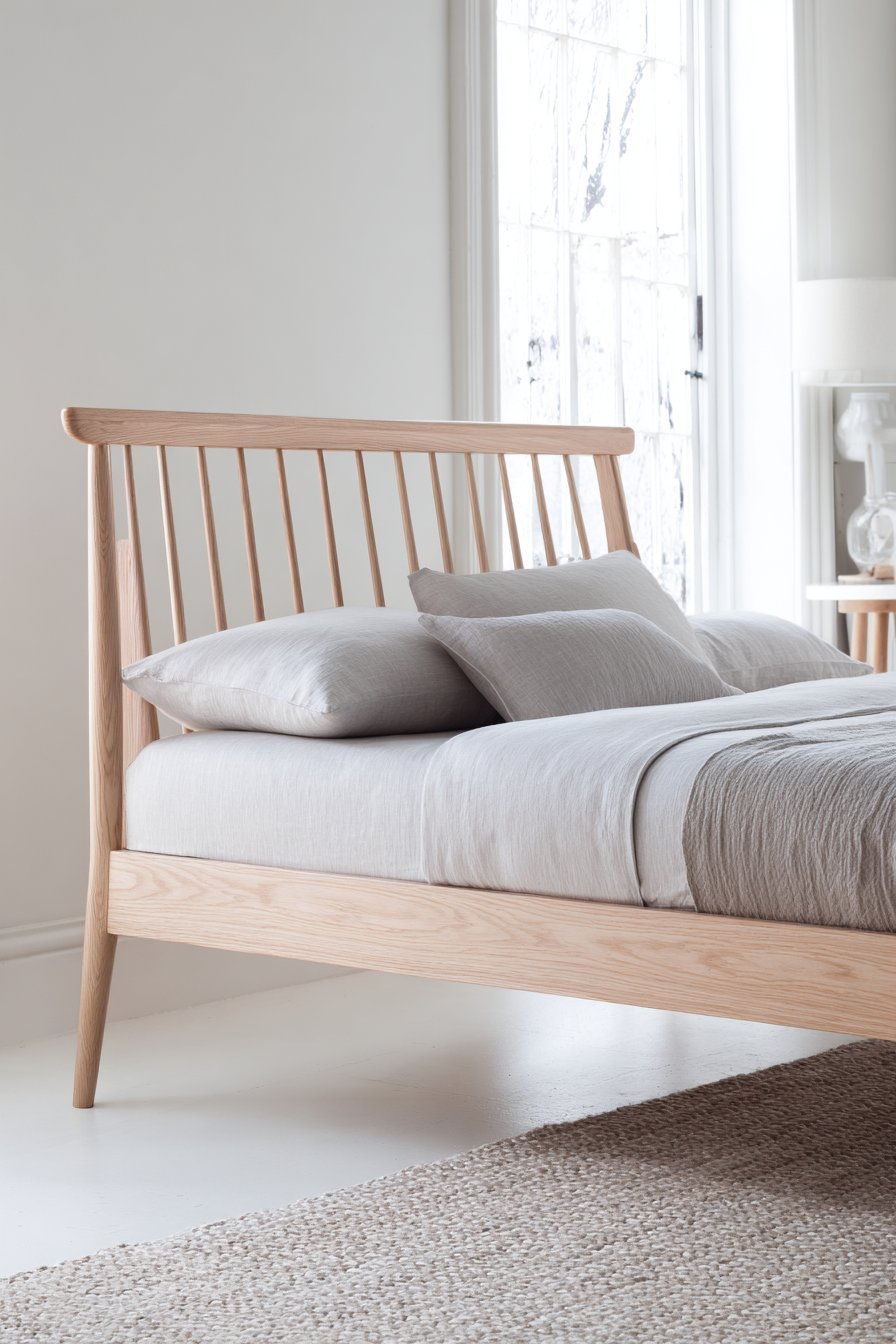
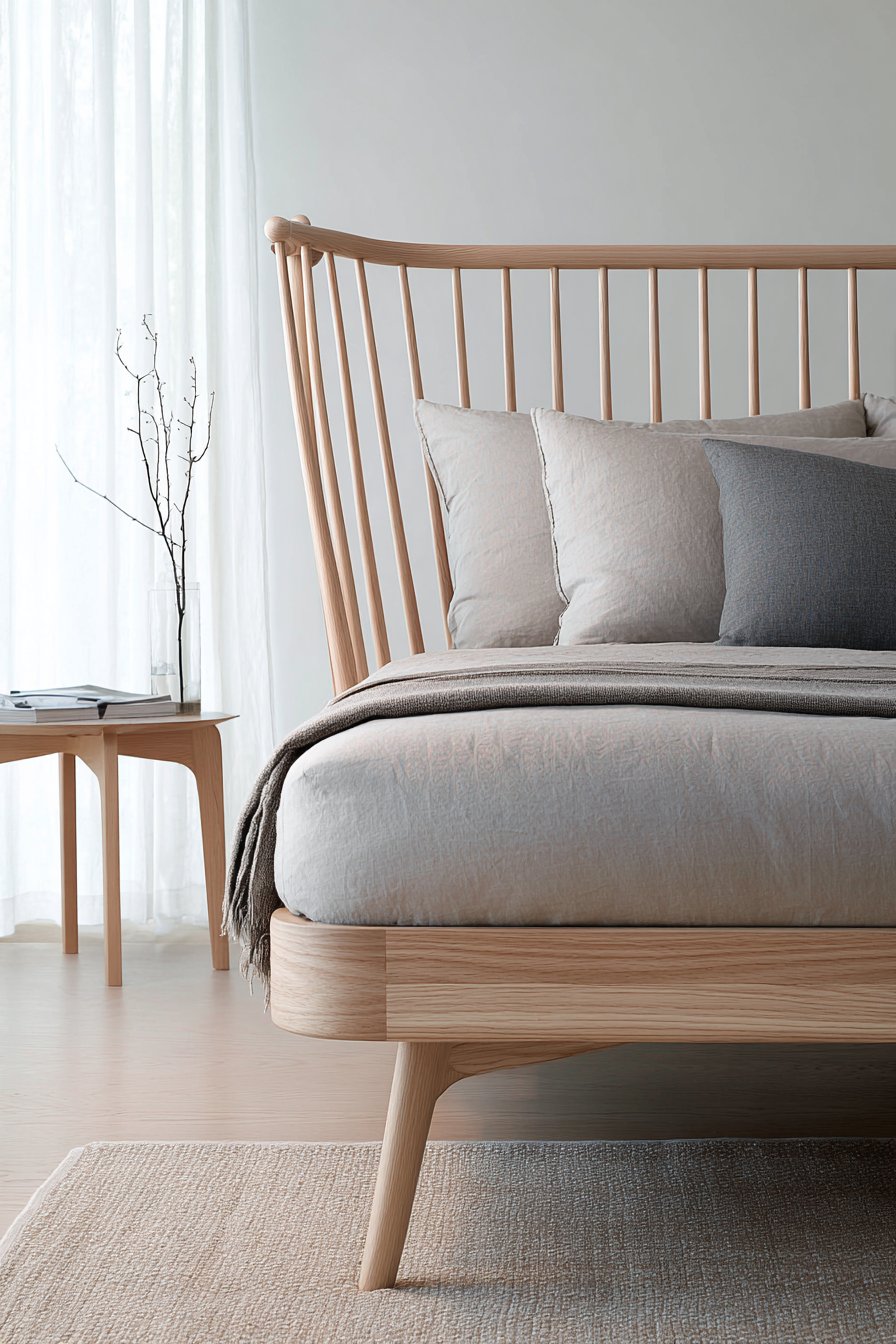
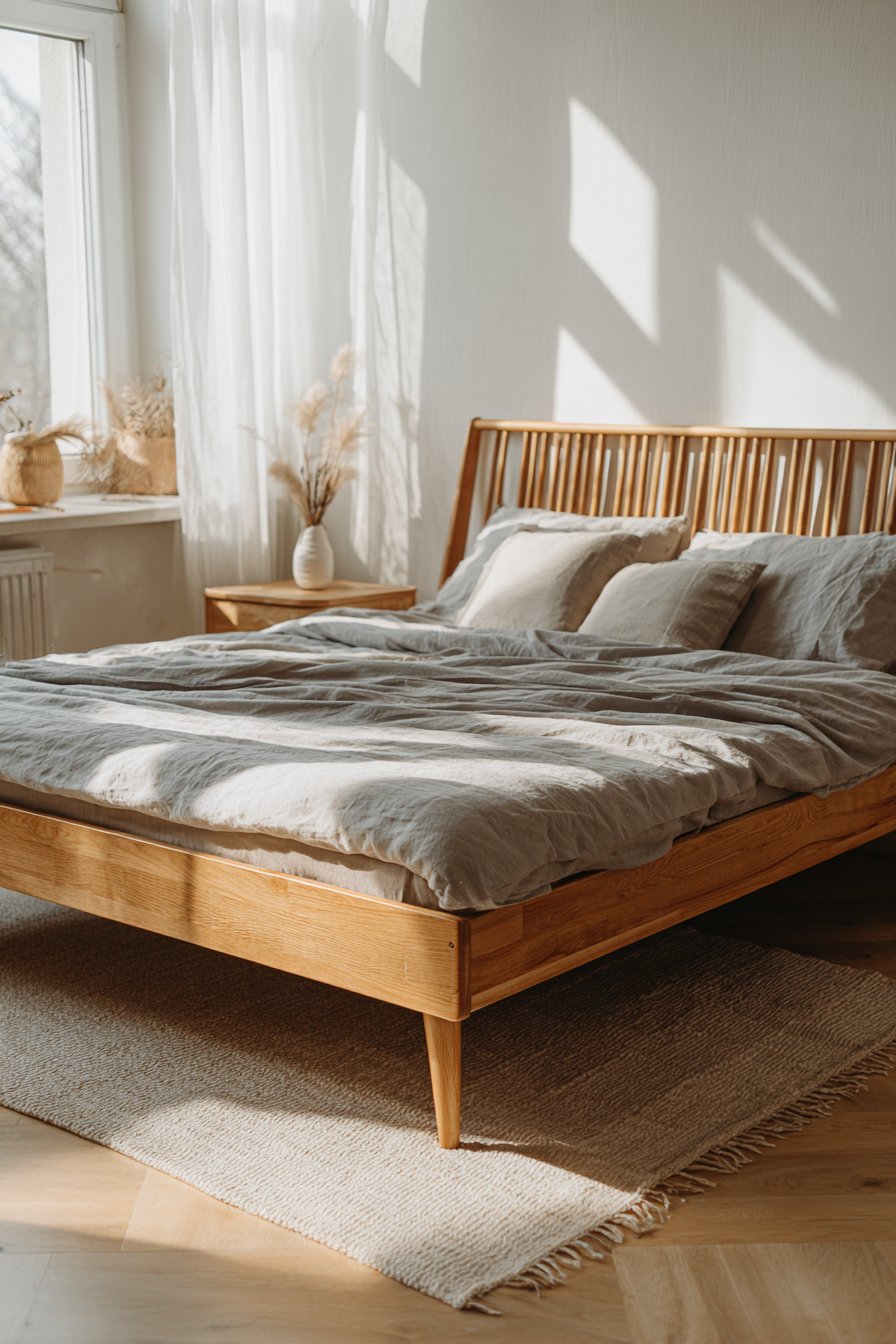
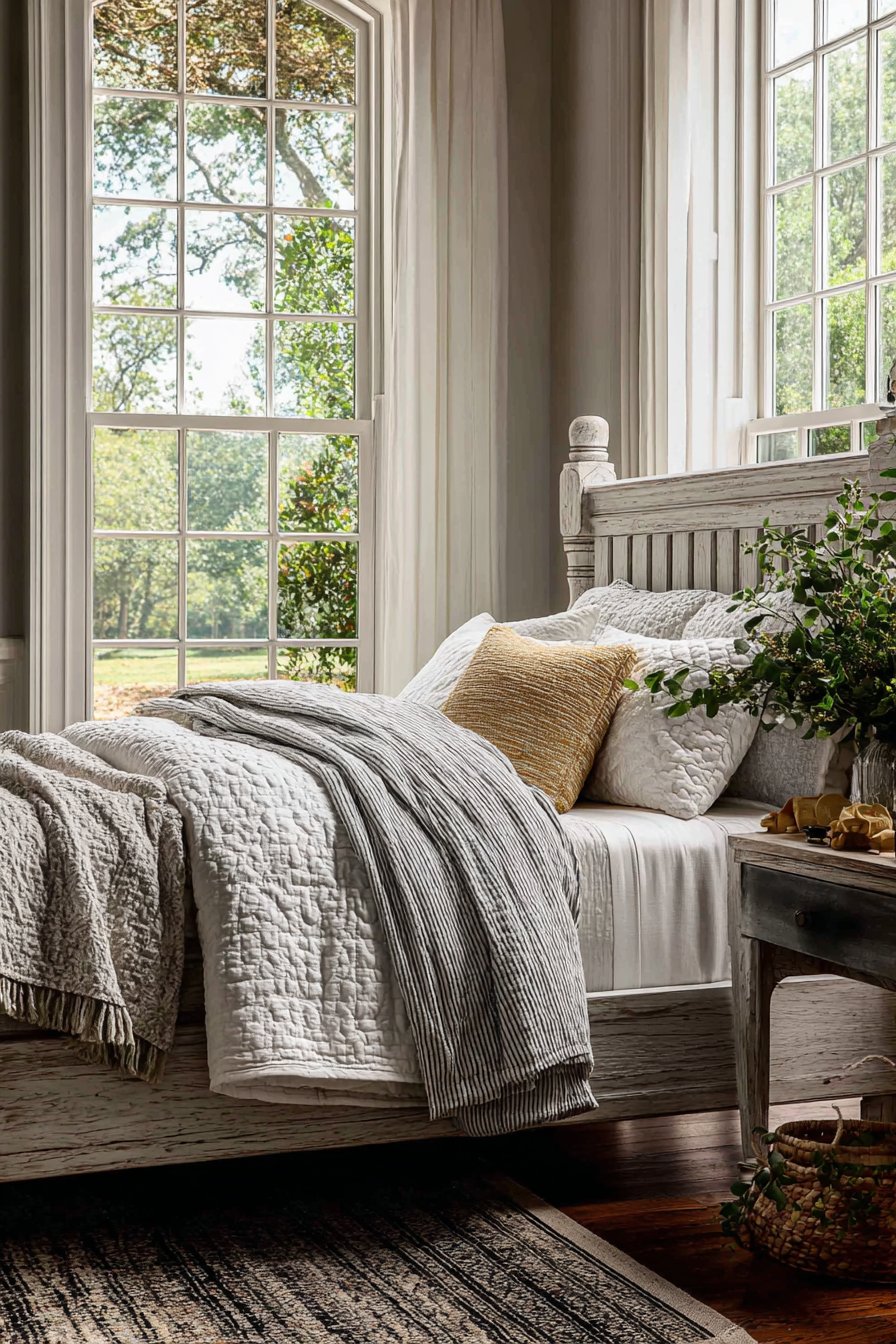
This Scandinavian-inspired wood bed design embodies the principles of Nordic design—simplicity, functionality, and connection to natural materials. Crafted from light ash wood, the bed features clean lines, minimalist tapered legs, and a simple slatted headboard that provides visual interest without unnecessary ornamentation. The pale coloring of ash wood creates an airy, open feeling that is essential to Scandinavian aesthetic, helping smaller bedrooms feel more spacious while maintaining warmth through the presence of natural material.
The bed sits on a neutral wool rug in a serene bedroom with white walls, creating the characteristic Scandinavian palette of whites, naturals, and light woods. Dressed with organic cotton bedding in soft grey tones, the overall effect is one of calm restraint and intentional simplicity. Abundant natural daylight fills the space, emphasizing the pale wood’s subtle grain patterns and creating the bright, light-filled atmosphere that defines Scandinavian interiors.
Professional interior photography with a wide-angle lens captures the harmonious simplicity and functional elegance of the design, showing how every element has been carefully considered and nothing extraneous included. The composition demonstrates the Scandinavian principle of “lagom”—not too much, not too little, but just right—where the wood bed provides sufficient visual interest and warmth without overwhelming the serene, minimalist space.
Key Design Tips:
- Select light-colored woods like ash, birch, or beech to create the characteristic Scandinavian airy feeling
- Keep leg designs simple with subtle tapers or clean geometric profiles rather than ornate turning
- Choose slatted headboards for visual interest that maintains the minimalist aesthetic
- Layer neutral textiles in varying shades of white, grey, and beige for depth without pattern
- Maximize natural light through window treatments that filter rather than block daylight
- Add a wool rug for warmth and texture that complements rather than competes with the wood
5. Japanese-Inspired Low Platform with Traditional Joinery
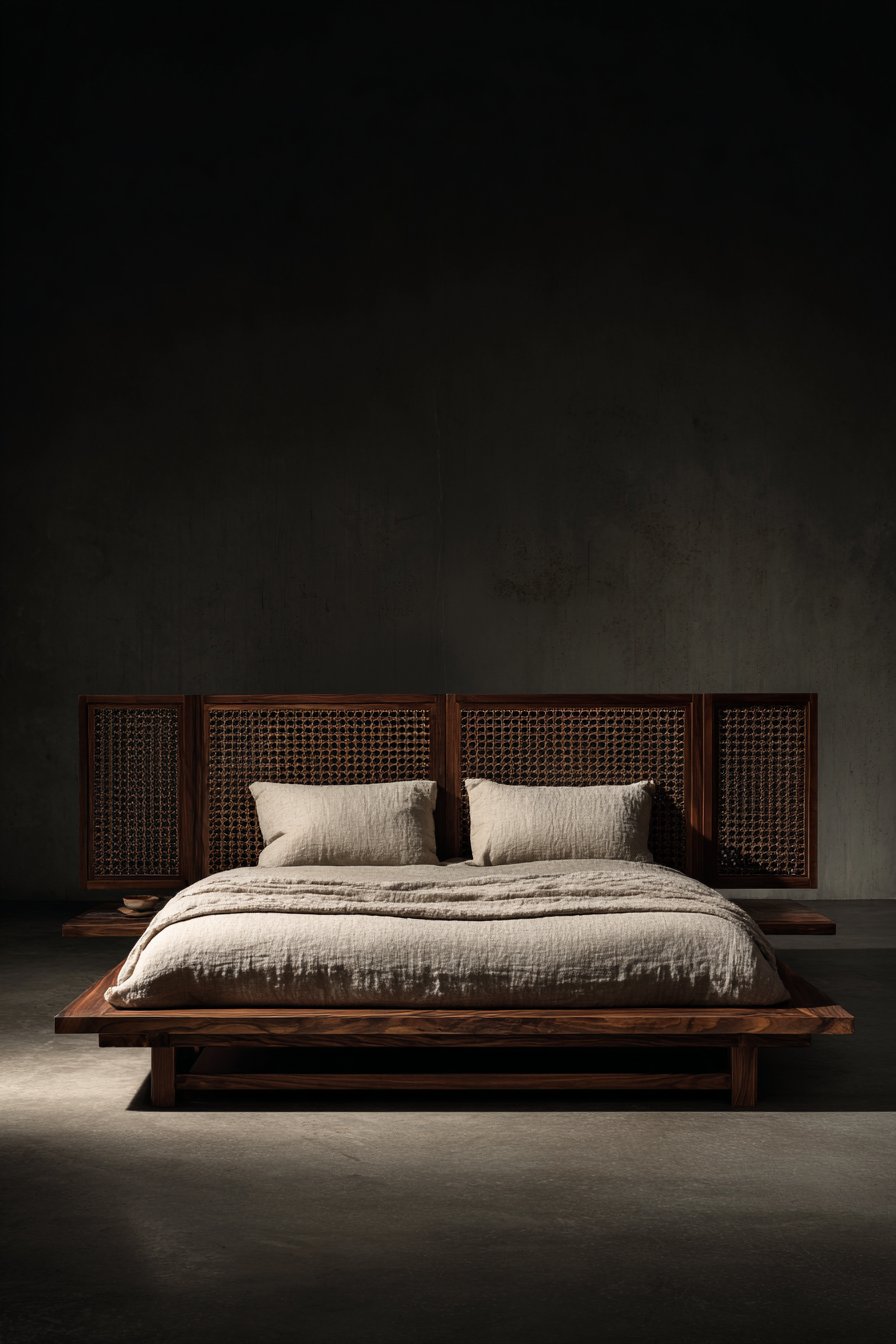
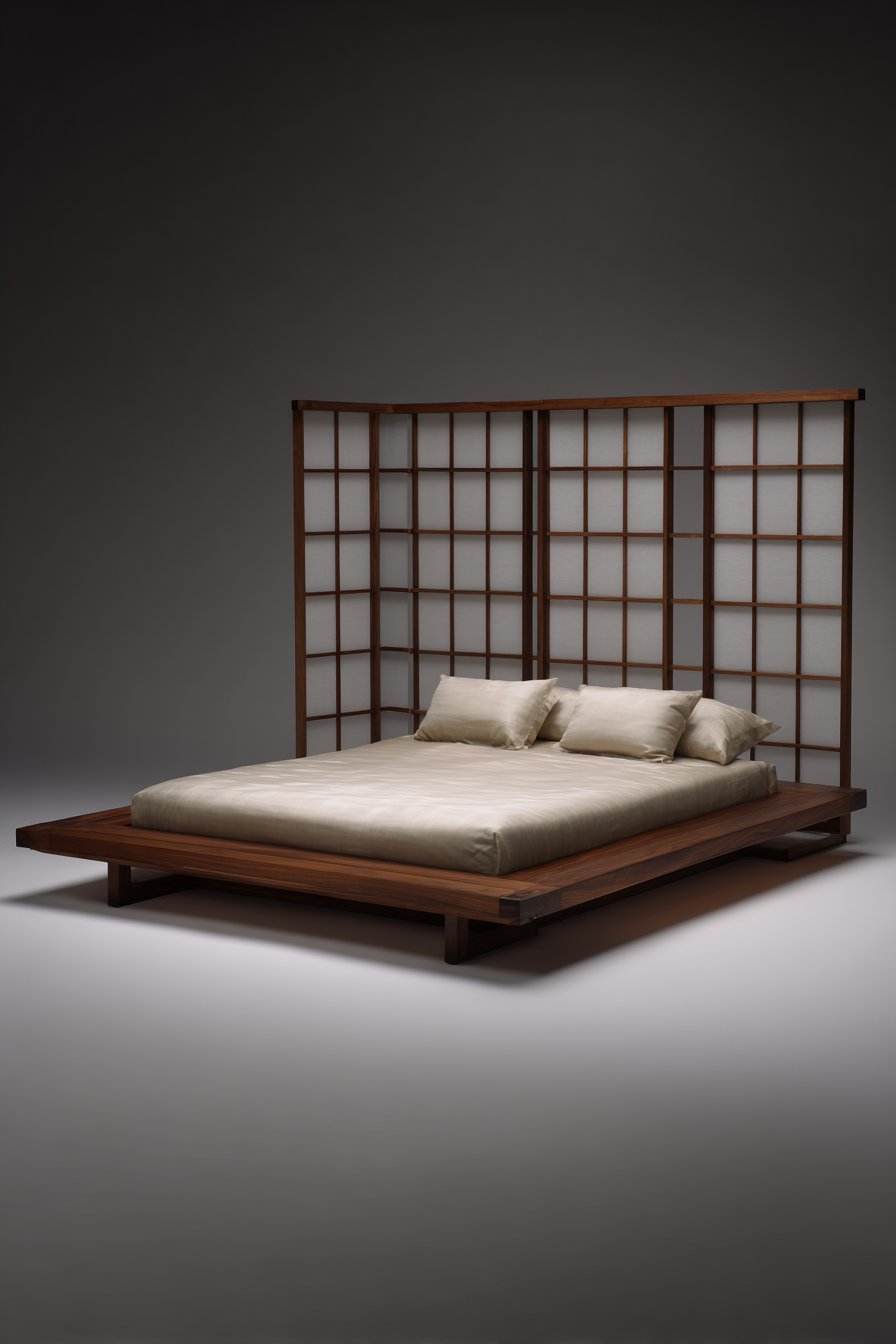
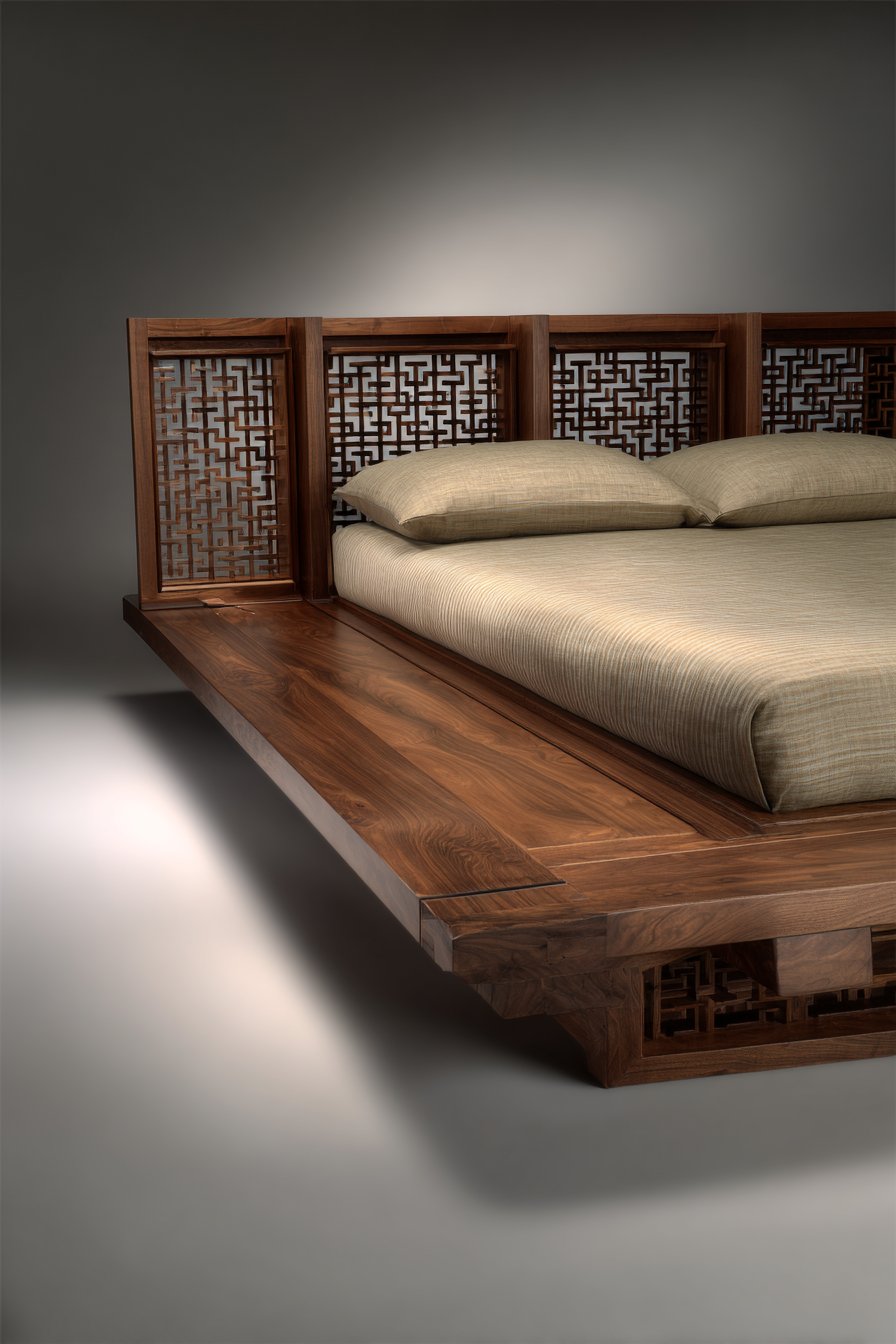
This Japanese-inspired wood bed design idea features a low platform frame made from dark walnut, honoring the Japanese aesthetic principle of sitting closer to the ground and maintaining a low visual profile. Traditional joinery details are deliberately left visible at the corners, celebrating the woodworking craftsmanship rather than concealing it. The headboard incorporates shoji screen-inspired panels with natural wood lattice work, creating a geometric pattern that adds visual interest while maintaining the clean lines characteristic of Japanese design.
Minimalist bedding in natural linen complements the rich wood tones, with the undyed fabric emphasizing the Japanese appreciation for materials in their natural state. The color palette remains restrained—deep walnut browns paired with natural linen beiges and whites—creating a sophisticated, zen-like atmosphere. Soft diffused lighting creates a tranquil ambiance while highlighting the precision woodworking and smooth finish of the walnut surfaces.
Architectural photography style captures the serene aesthetic and craftsmanship details with particular attention to shadow play and material texture. The composition reveals how Japanese design principles create spaces of contemplation and calm, where the quality of materials and precision of construction speak louder than decorative embellishment. The visible joinery—mortise and tenon connections, dovetails, or finger joints—becomes a design feature that honors traditional woodworking techniques.
Key Design Tips:
- Choose dark woods like walnut or wenge to create the grounding effect characteristic of Japanese furniture
- Keep the platform low to the ground, typically no more than 12-14 inches from floor to mattress top
- Display joinery details as aesthetic features rather than concealing them with trim or upholstery
- Incorporate geometric lattice patterns inspired by shoji screens for cultural authenticity
- Use natural, undyed linens to honor the Japanese appreciation for materials in their natural state
- Create diffused, ambient lighting rather than harsh direct light to maintain the contemplative atmosphere
6. Farmhouse Distressed Pine with Whitewash Finish
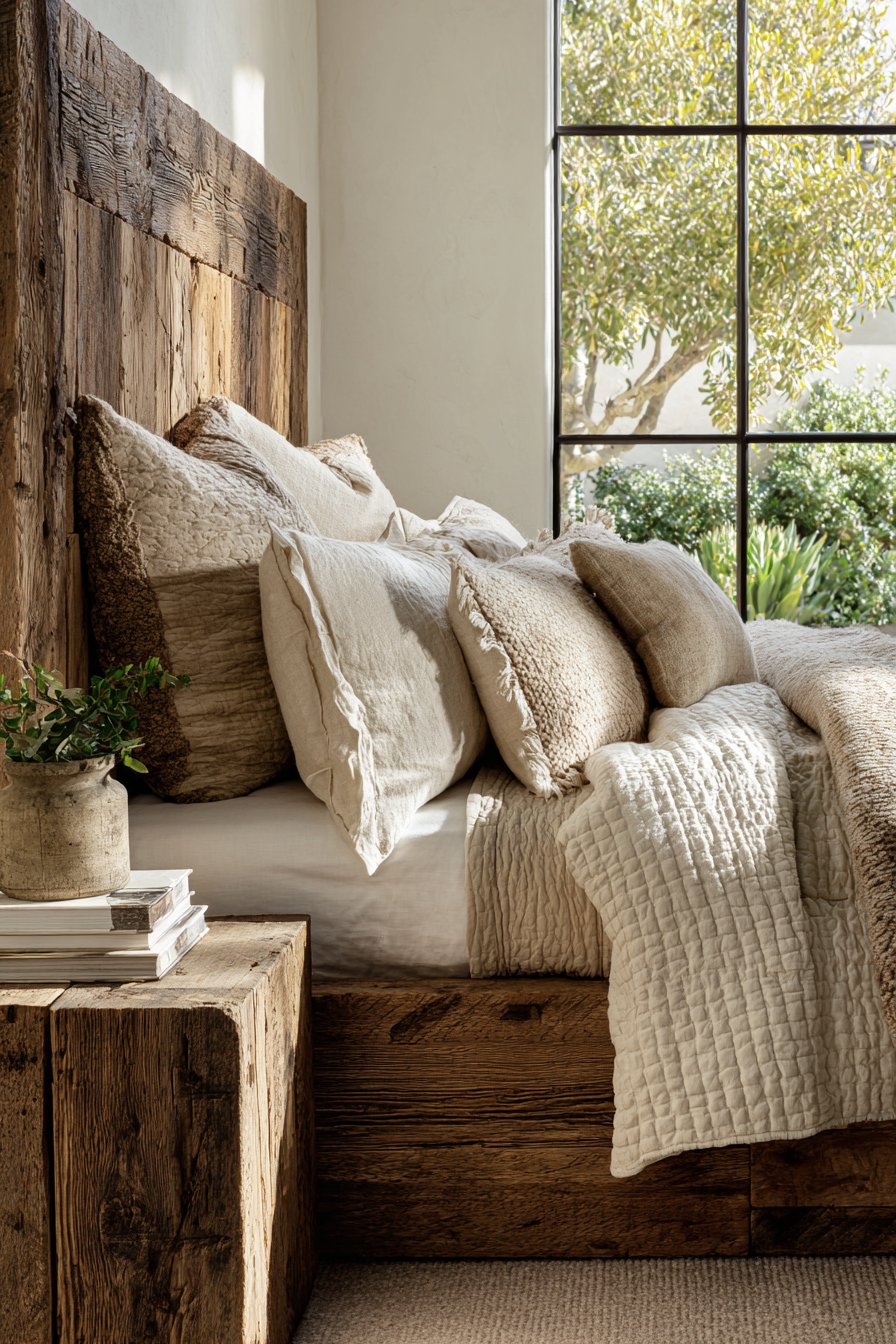
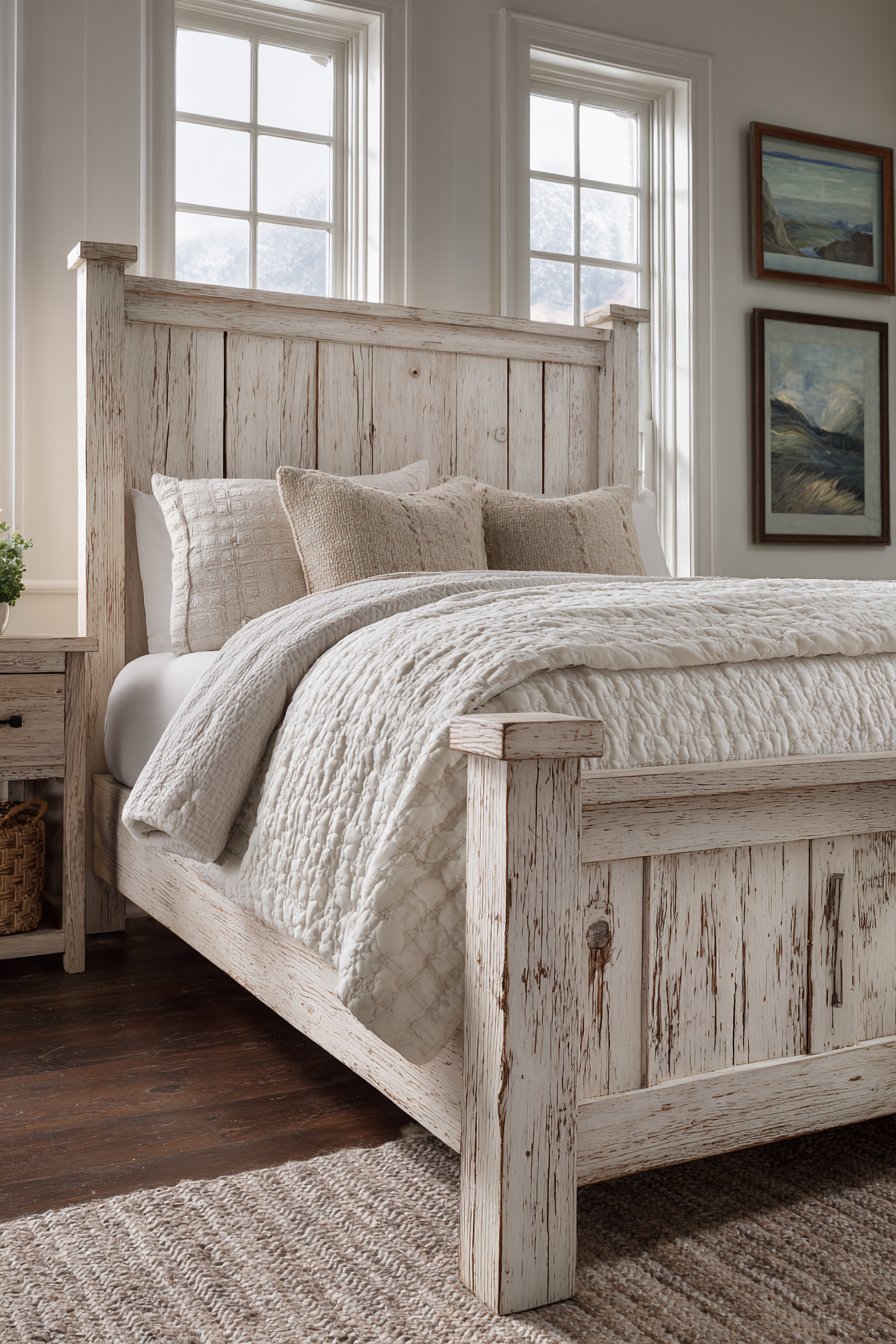
This farmhouse wood bed design features a chunky frame constructed from distressed pine with hand-hewn texture and a whitewashed finish that creates the beloved shabby-chic aesthetic. The tall vertical plank headboard extends generously above the mattress line, making a substantial statement while the distressed white finish allows the wood grain and texture to show through, creating visual depth and lived-in character. The substantial proportions—thick planks, hefty posts, and generous dimensions—convey the rustic durability associated with authentic farmhouse furniture.
The bed is layered with vintage-inspired quilts and linen pillows that reinforce the farmhouse aesthetic, introducing pattern, texture, and warmth. The deliberately imperfect whitewash application reveals hints of natural wood tone beneath, creating the appearance of a piece that has aged gracefully over decades. Natural window light illuminates the space, casting soft shadows that emphasize the wood’s texture and distressed details, including the hand-hewn marks and deliberate imperfections that give the piece its character.
Interior design photography captures the cozy, lived-in quality while maintaining sharp focus on material authenticity, ensuring viewers can appreciate the deliberate distressing techniques and whitewash application. The composition shows how farmhouse style embraces imperfection and celebrates pieces that appear to have stories to tell, where new construction is made to look authentically aged rather than pristinely perfect.
Key Design Tips:
- Select pine for its affordability, workability, and ability to take distressing techniques beautifully
- Apply whitewash finishes unevenly to allow natural wood tones to show through for authentic aging appearance
- Choose substantial, chunky proportions rather than delicate profiles to convey farmhouse durability
- Create hand-hewn texture through deliberate marking techniques before finishing
- Layer vintage-inspired textiles like quilts, grain sacks, and ticking stripes to reinforce the aesthetic
- Position tall headboards to make a statement and draw the eye upward in bedrooms with adequate ceiling height
7. Mid-Century Modern Teak with Tapered Legs
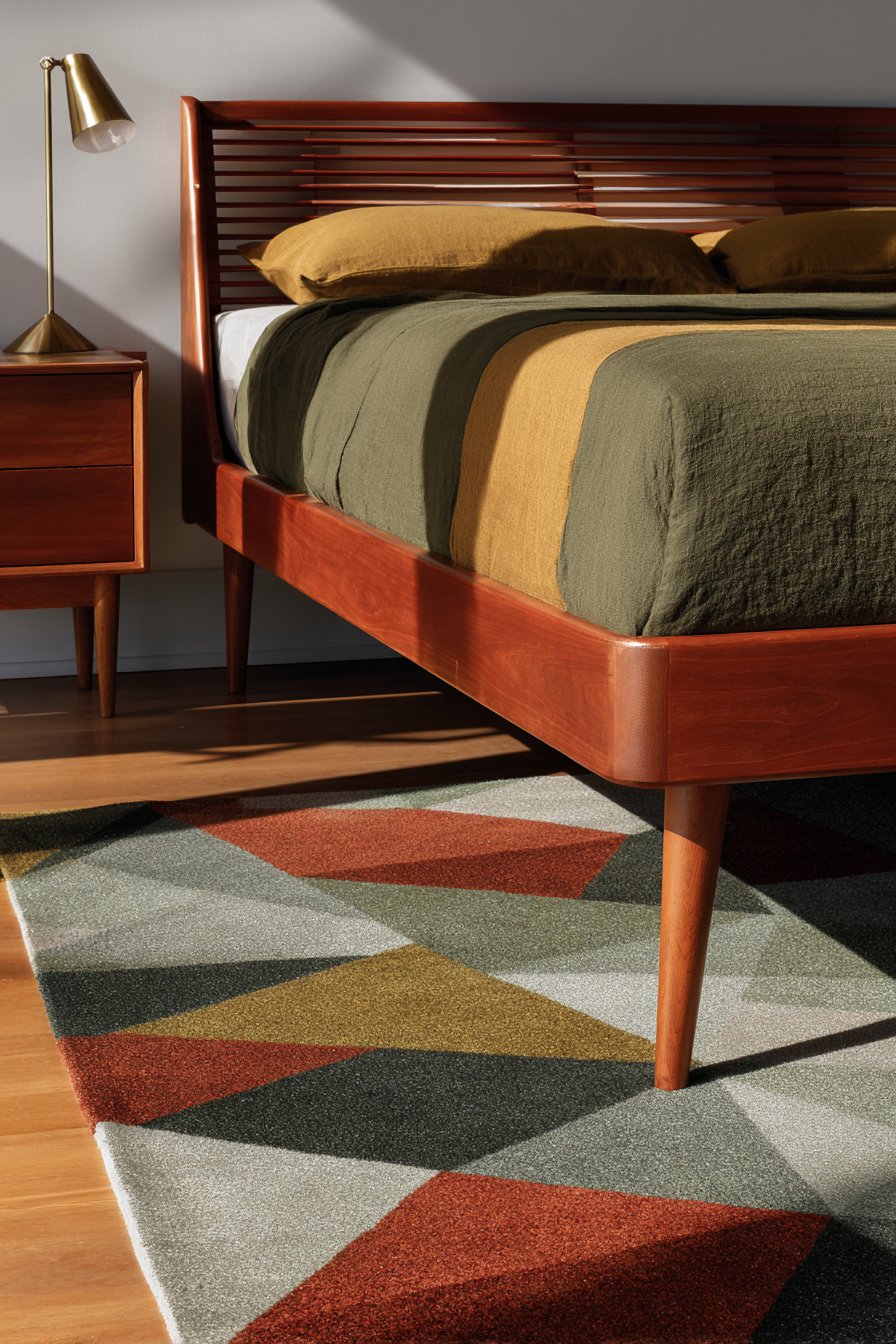
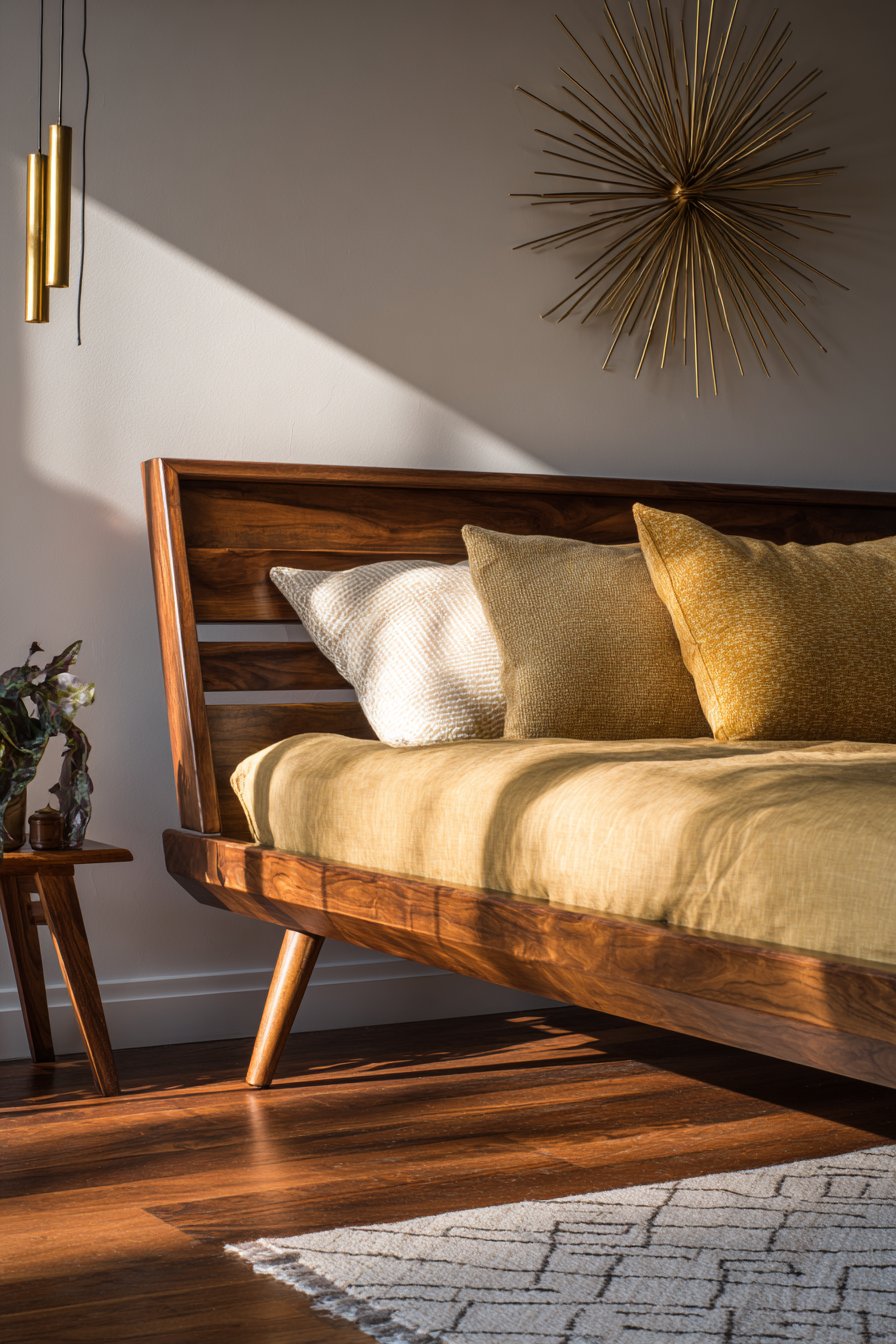
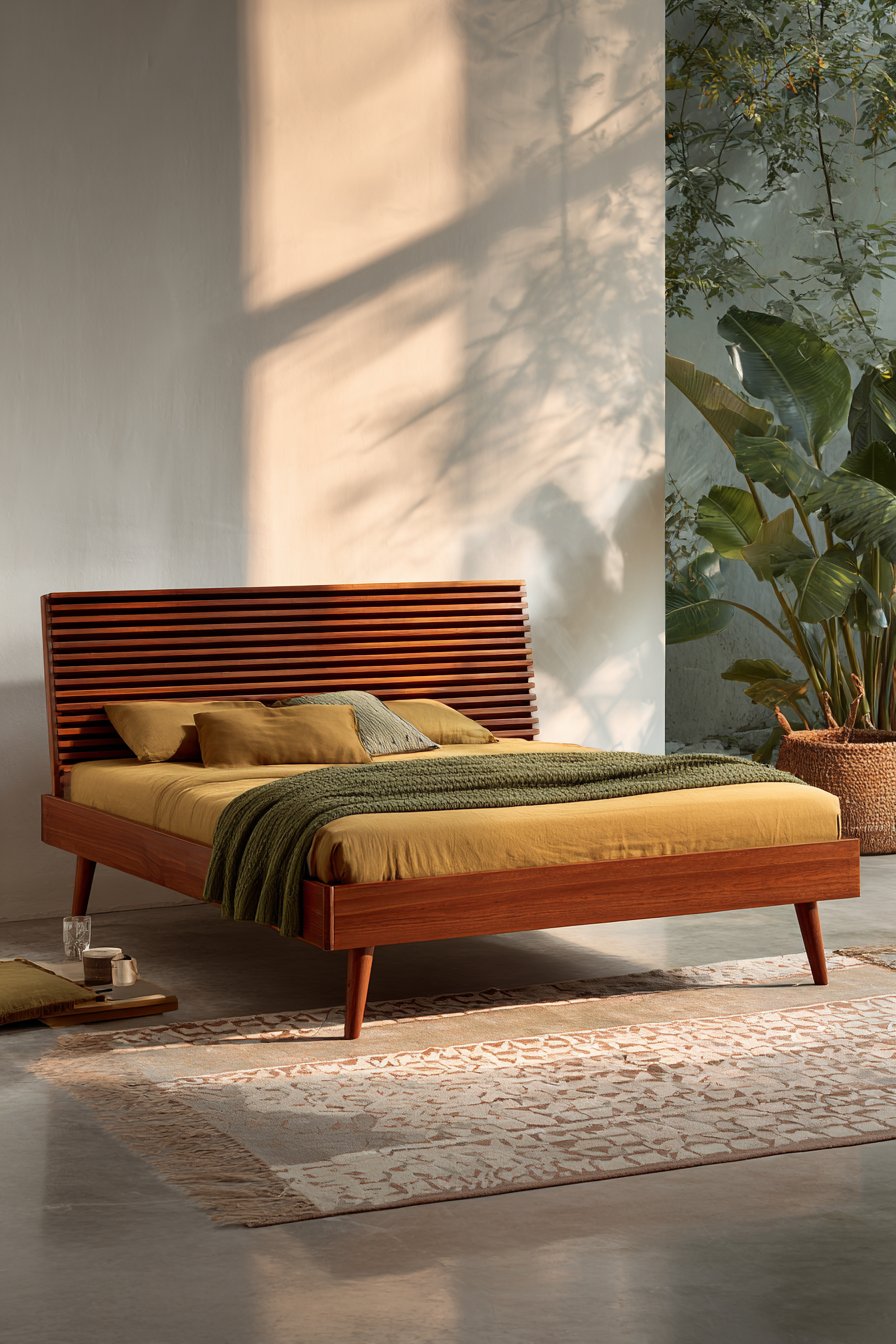
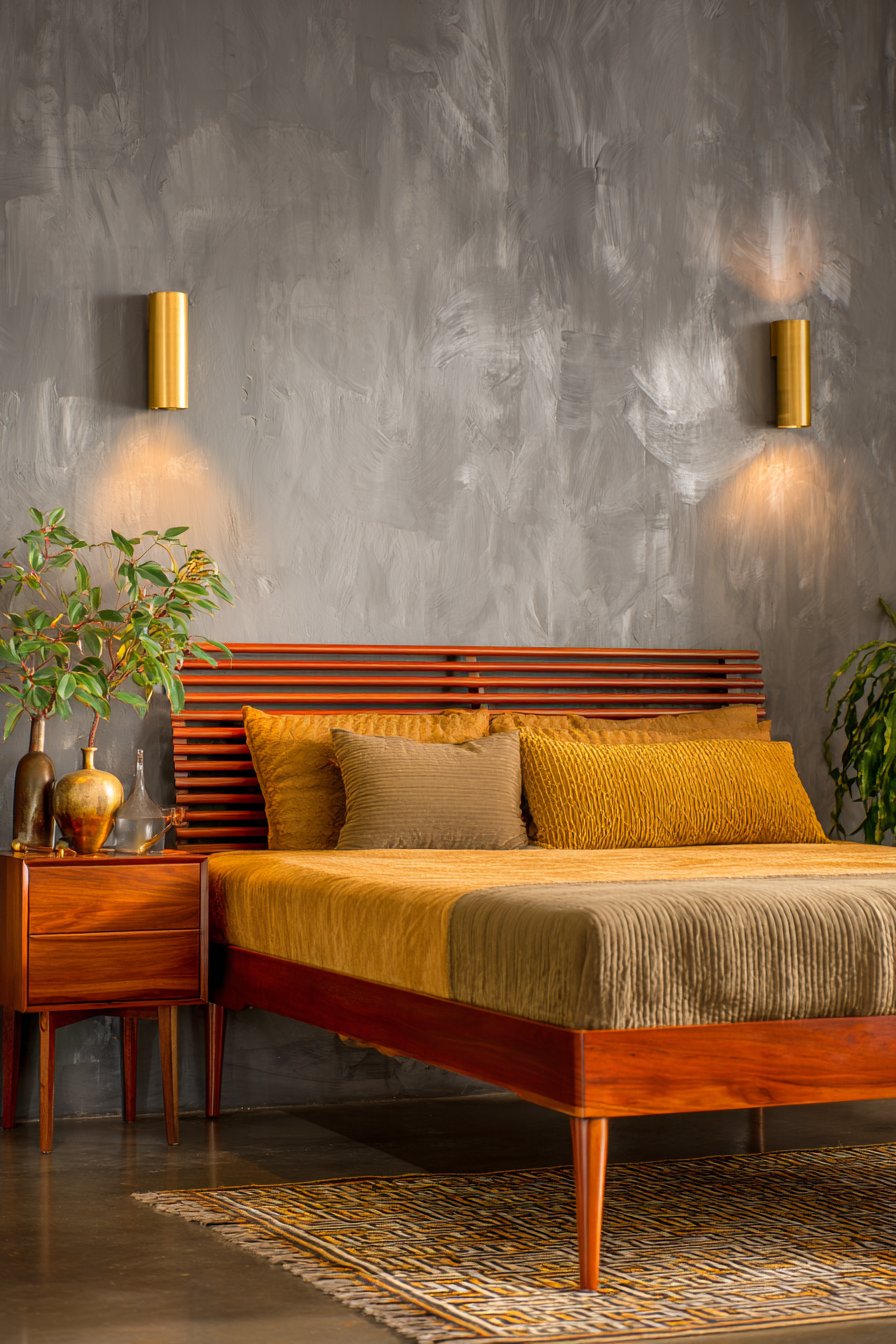
This mid-century modern wood bed design idea showcases a sleek frame in rich teak with the characteristic tapered wooden legs and low-profile headboard with horizontal wood slat detail that defines the era. Teak’s natural oils give it a distinctive warm, golden-brown color that develops a beautiful patina over time, while its straight grain and uniform texture make it ideal for the clean-lined furniture designs popularized in the 1950s and 60s. The horizontal slat headboard adds visual interest through repetition and rhythm while maintaining the streamlined aesthetic.
Paired with a geometric patterned rug and vintage brass lighting, the bed anchors a bedroom that faithfully recreates the mid-century modern aesthetic. The color palette includes the period-appropriate mustard yellow and olive green in the bedding, tones that complement the warm wood beautifully. Golden hour natural light creates warm highlights across the teak’s natural oils and grain, enhancing the wood’s inherent glow and bringing out the amber undertones.
Professional interior photography with balanced composition emphasizes the iconic mid-century aesthetic and wood quality, capturing the clean lines, elegant proportions, and attention to material quality that characterized the best furniture design of the period. The composition demonstrates how mid-century modern design achieves sophistication through restraint, allowing the beauty of well-chosen materials and thoughtful proportions to create visual impact without ornamentation.
Key Design Tips:
- Choose teak for its distinctive warm color, natural oils, and association with authentic mid-century design
- Keep legs tapered and angled outward in the characteristic mid-century profile
- Use horizontal slats in the headboard for period-appropriate visual interest
- Incorporate brass hardware and lighting to complement the warm wood tones
- Add geometric patterns in textiles to reinforce the mid-century aesthetic without overwhelming the space
- Position furniture on angled legs to create visual lightness and the floating appearance typical of the era
8. Contemporary Floating Platform in Dark Wenge
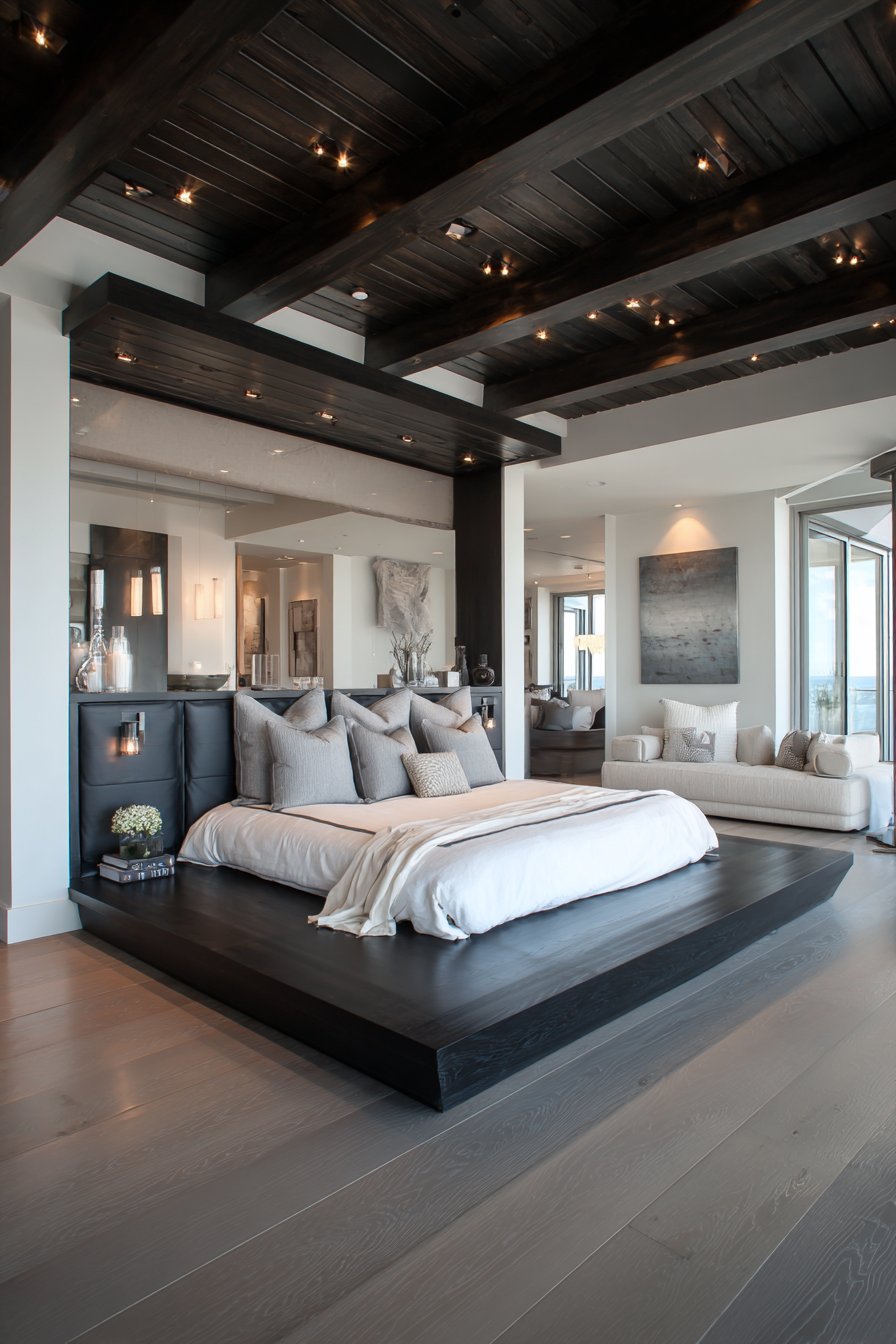
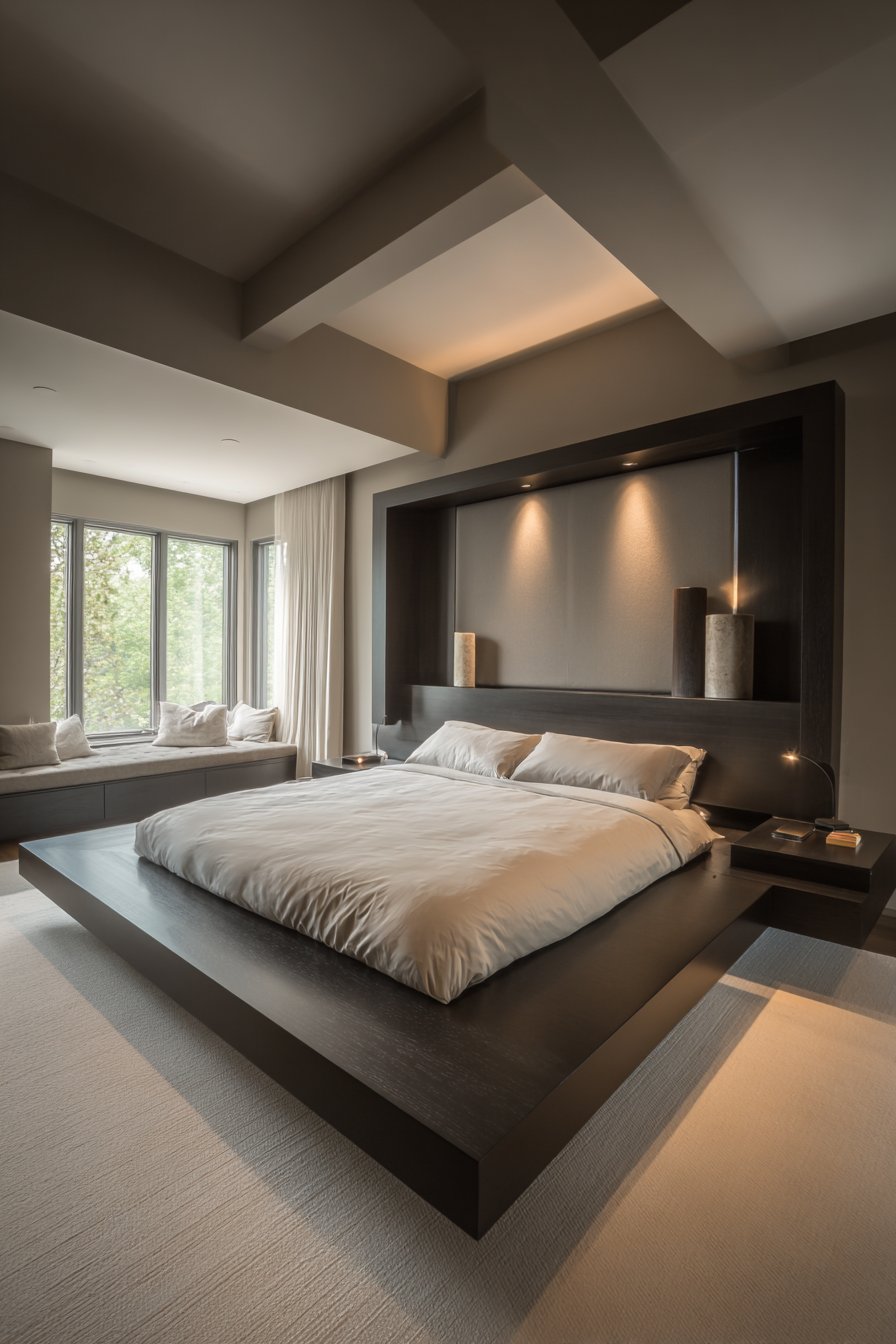
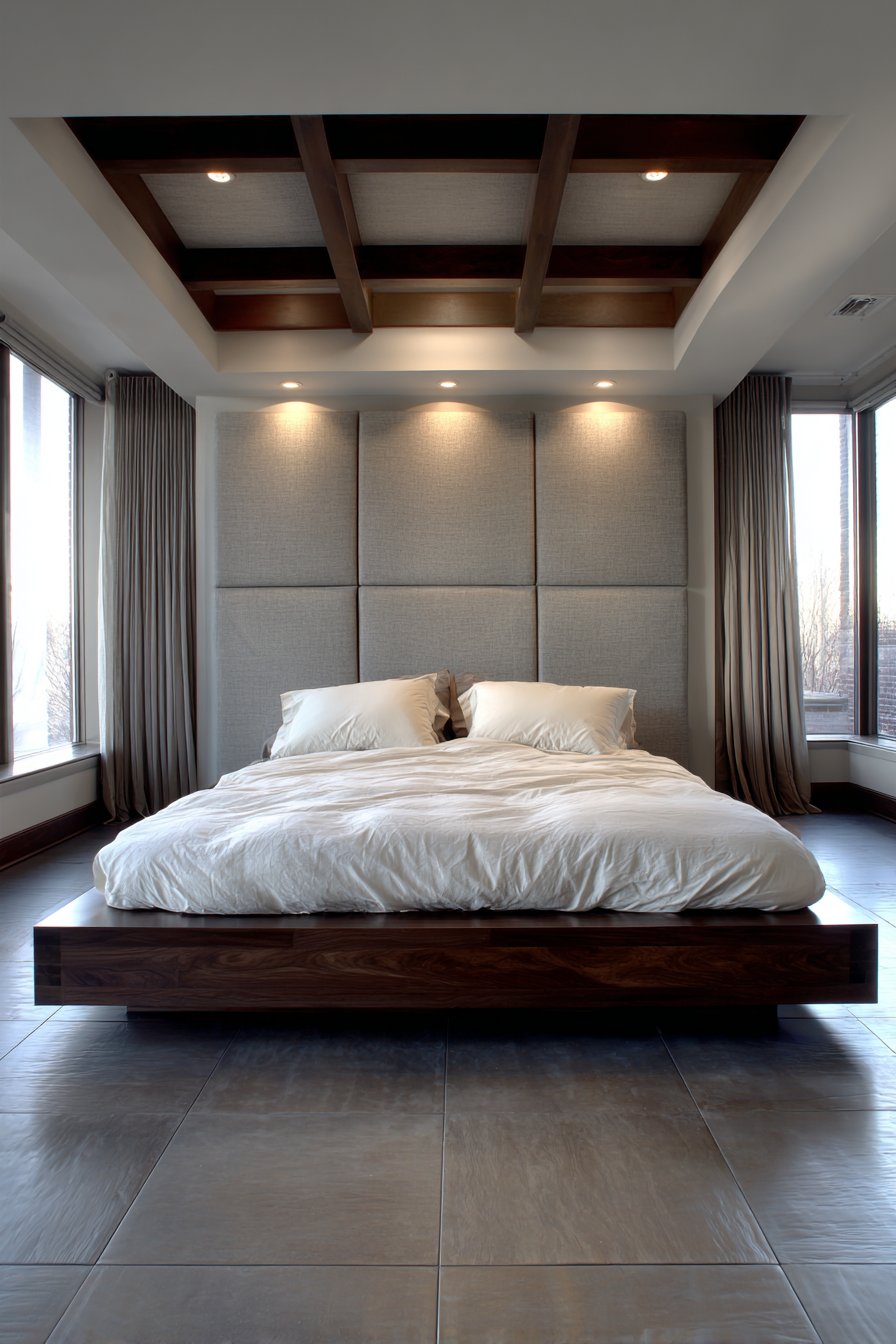
This contemporary wood bed design features a floating platform frame in dark wenge wood with a concealed support structure that creates a dramatic suspended appearance. The incredibly dark, almost black coloring of wenge wood provides striking contrast in light-colored bedrooms, while its straight, uniform grain maintains visual sophistication. The integrated upholstered headboard combines the wood frame with grey linen panels, creating a material contrast that softens the austere quality of the dark wood while providing comfortable support for reading or relaxing.
Minimalist bedding in crisp white creates a bold contrast with the deep wood tones, establishing a graphic black-and-white color scheme that feels sophisticated and dramatic. Recessed ceiling lights and natural daylight combine to highlight the dramatic wood color and smooth finish, with the lighting revealing the subtle grain patterns visible even in this nearly black wood species. The floating effect is achieved through hidden support brackets, creating the illusion that the massive bed platform hovers inches above the floor.
Wide-angle architectural photography captures the sophisticated modern aesthetic with particular attention to the floating illusion and material contrast. The composition demonstrates how contemporary design can create drama through bold material choices and innovative construction techniques, where the dark wood becomes a defining feature rather than trying to blend into the background.
Key Design Tips:
- Select wenge or similarly dark woods to create dramatic contrast in light-colored rooms
- Design concealed support structures carefully to ensure the floating effect appears effortless
- Combine wood with upholstered panels to introduce softness and textural variety
- Use crisp white bedding to maximize the contrast with dark wood and create graphic impact
- Install recessed lighting to highlight the wood without introducing visual clutter from visible fixtures
- Keep surrounding decor minimal to allow the dramatic bed design to remain the focal point
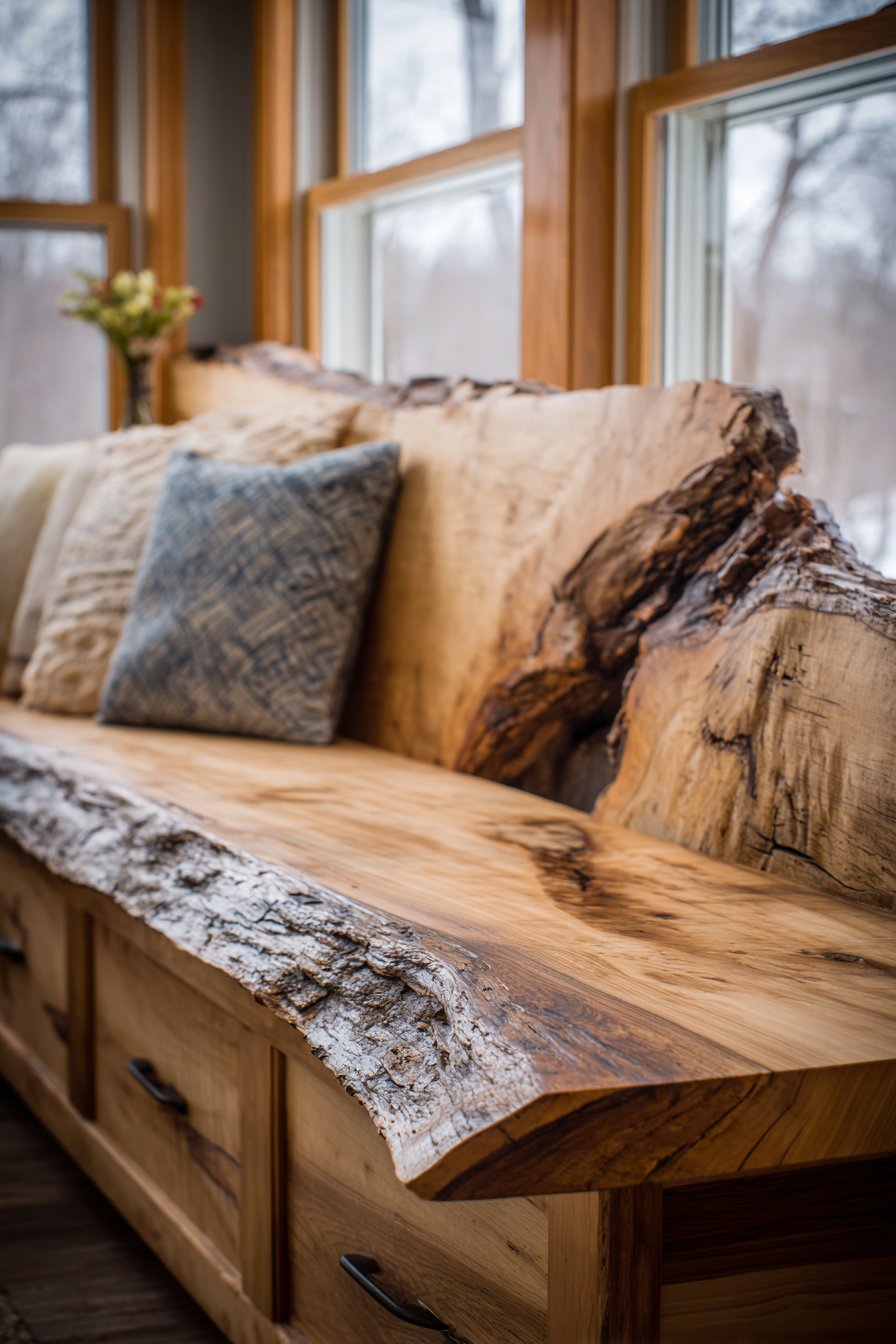
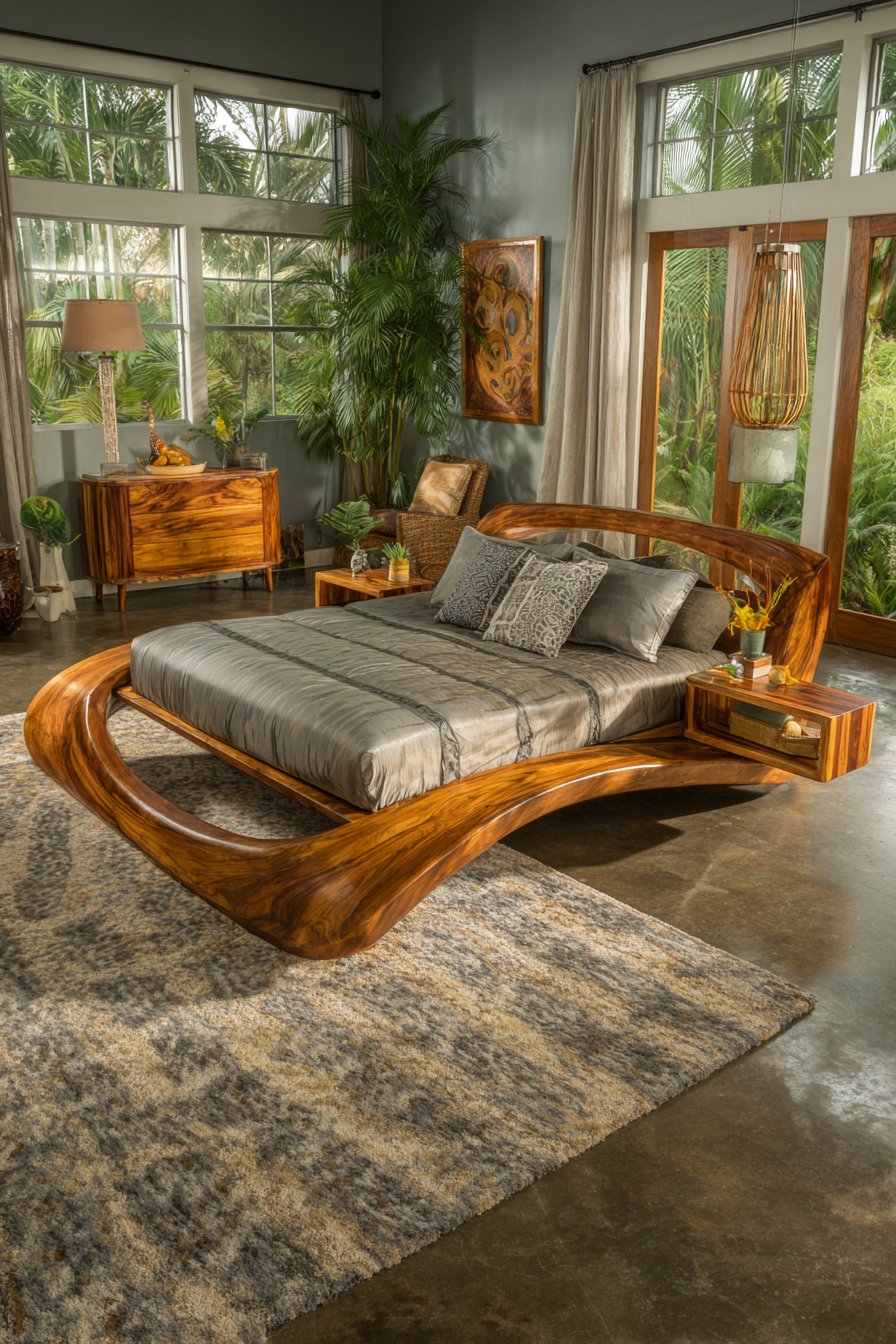
9. Live-Edge Spalted Maple with Organic Curves
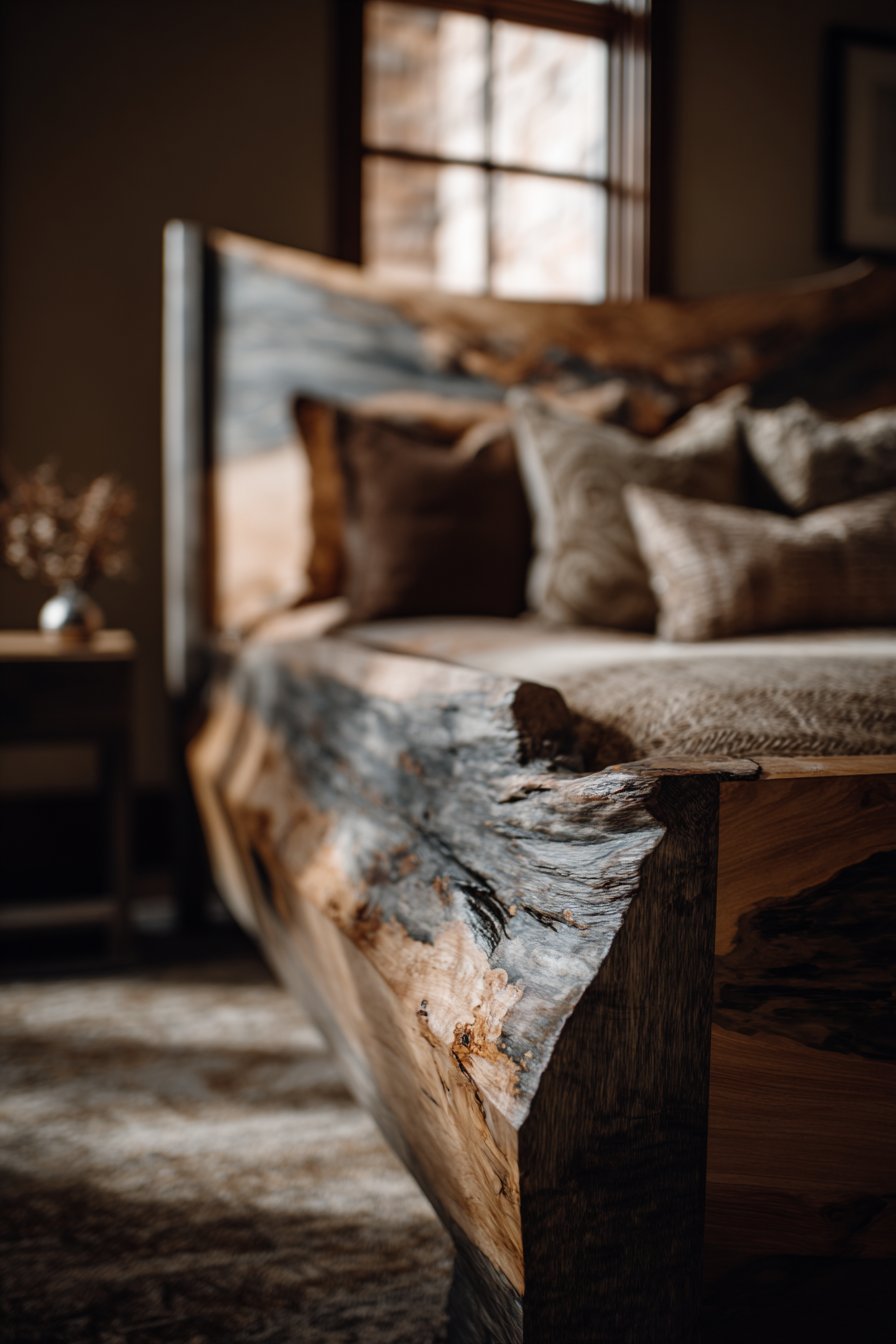
This wood bed design idea with live-edge details showcases a rustic platform frame featuring raw edge slabs of spalted maple with natural bark inclusions and organic curves that celebrate the tree’s original form. Spalting—the distinctive dark lines and color variations caused by fungal growth in the wood—creates intricate patterns that look like natural artwork, making each piece genuinely one-of-a-kind. The headboard maintains the wood’s natural contours and distinctive spalting patterns, with the irregular edge creating visual interest that cannot be replicated in conventionally milled lumber.
Paired with earthy textiles in warm browns and creams, the bed creates a connection to natural materials and organic forms. The color palette remains warm and grounded, with the spalted maple’s variations from cream to brown to grey providing all the visual interest needed without additional pattern. Soft natural lighting from bedroom windows highlights the unique wood characteristics and natural imperfections—the bark inclusions, spalting lines, and irregular edge—that give the piece its distinctive character.
Interior design photography with detail focus captures the one-of-a-kind organic beauty and authentic material story, ensuring viewers can appreciate the spalting patterns, live-edge details, and natural color variations. The composition celebrates wood as a living material with inherent beauty, where human intervention simply reveals and preserves the natural characteristics rather than imposing artificial form.
Key Design Tips:
- Select spalted wood for truly unique grain patterns and color variations found nowhere else
- Preserve live edges by removing only loose bark while maintaining the natural contour
- Apply clear finishes that reveal wood characteristics rather than opaque stains that conceal them
- Pair with earthy, natural textiles that complement rather than compete with the wood’s organic beauty
- Position to maximize natural light that reveals spalting patterns and wood color variations
- Embrace asymmetry and organic curves rather than trying to force geometric regularity
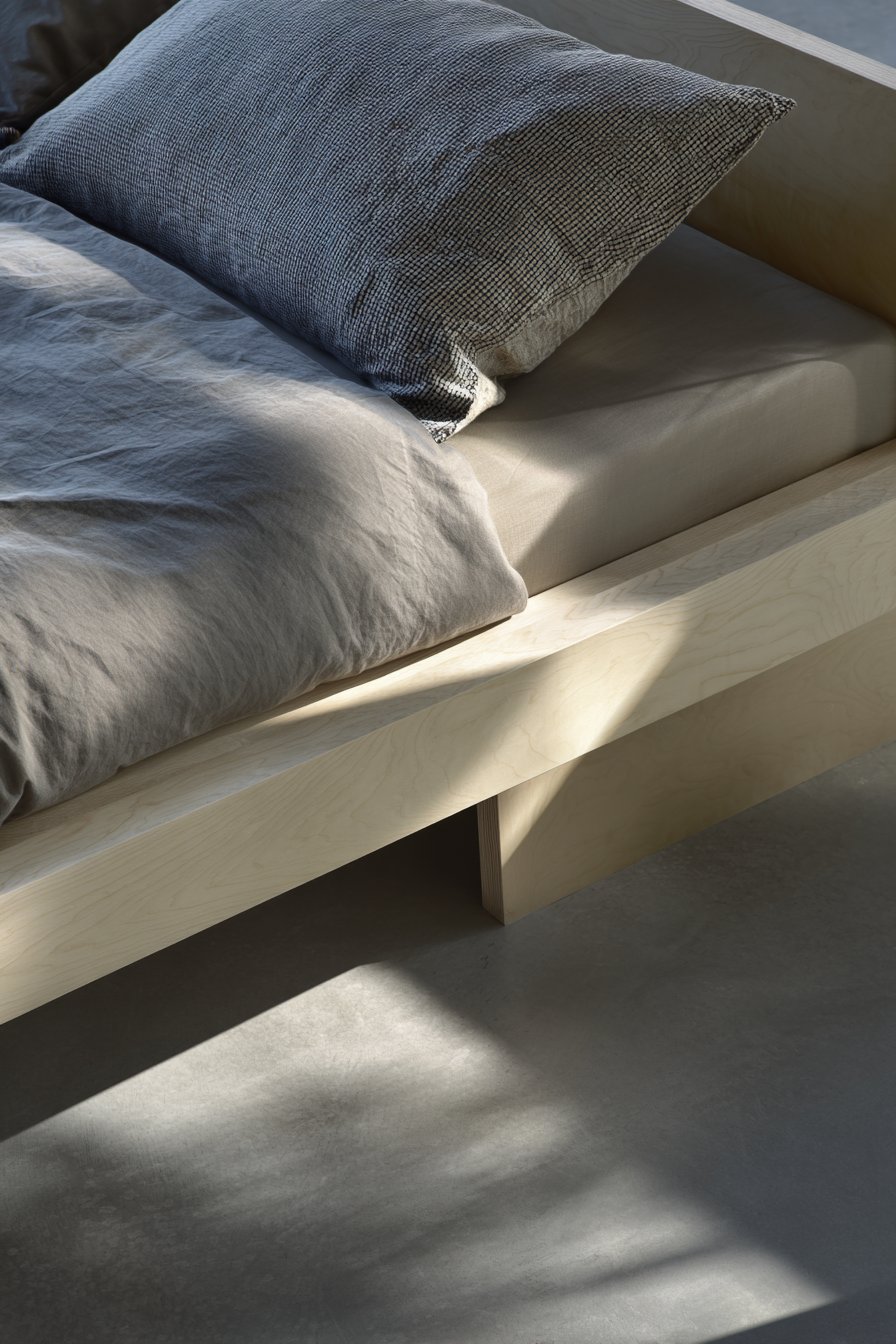
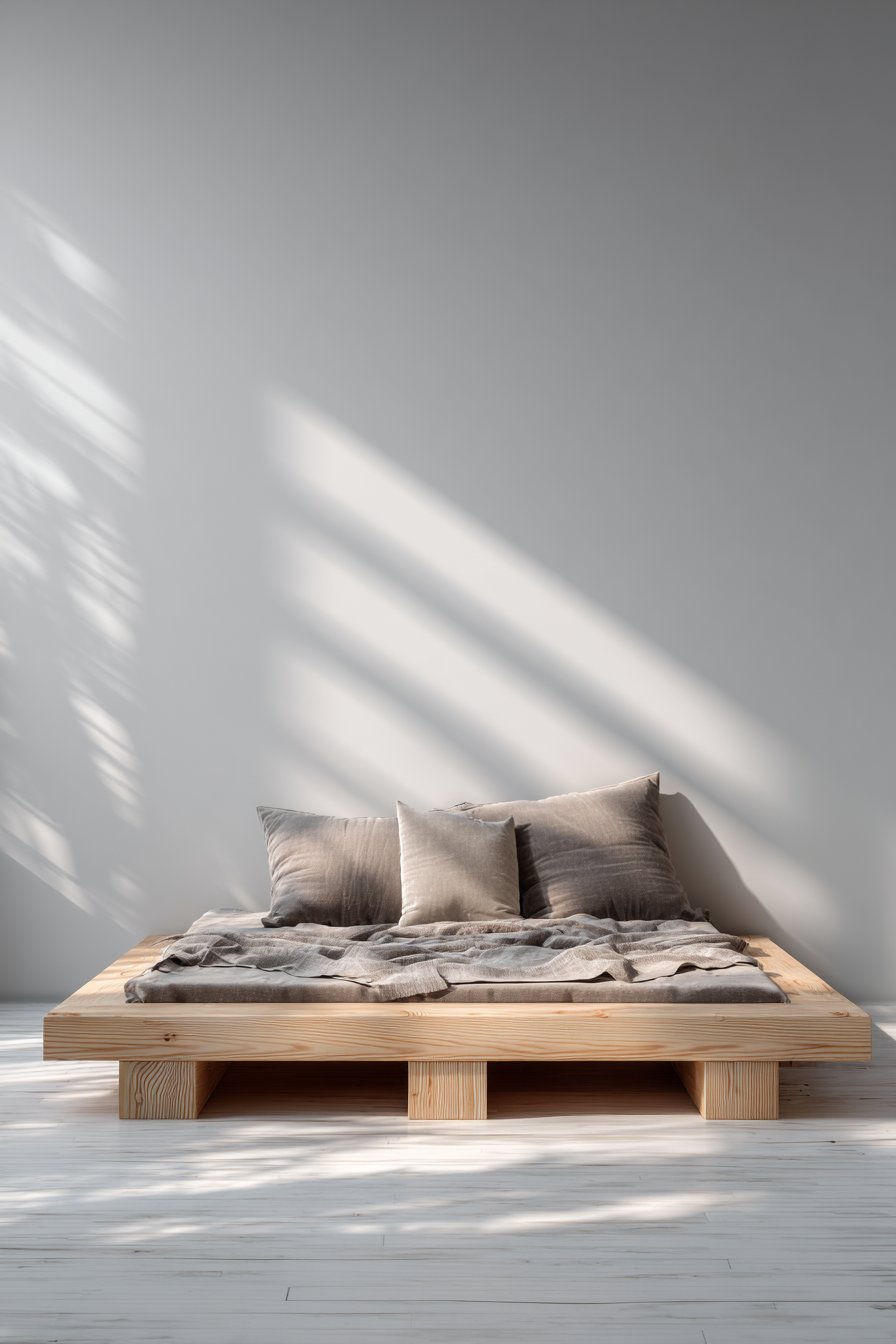
10. Minimalist Pale Birch Platform
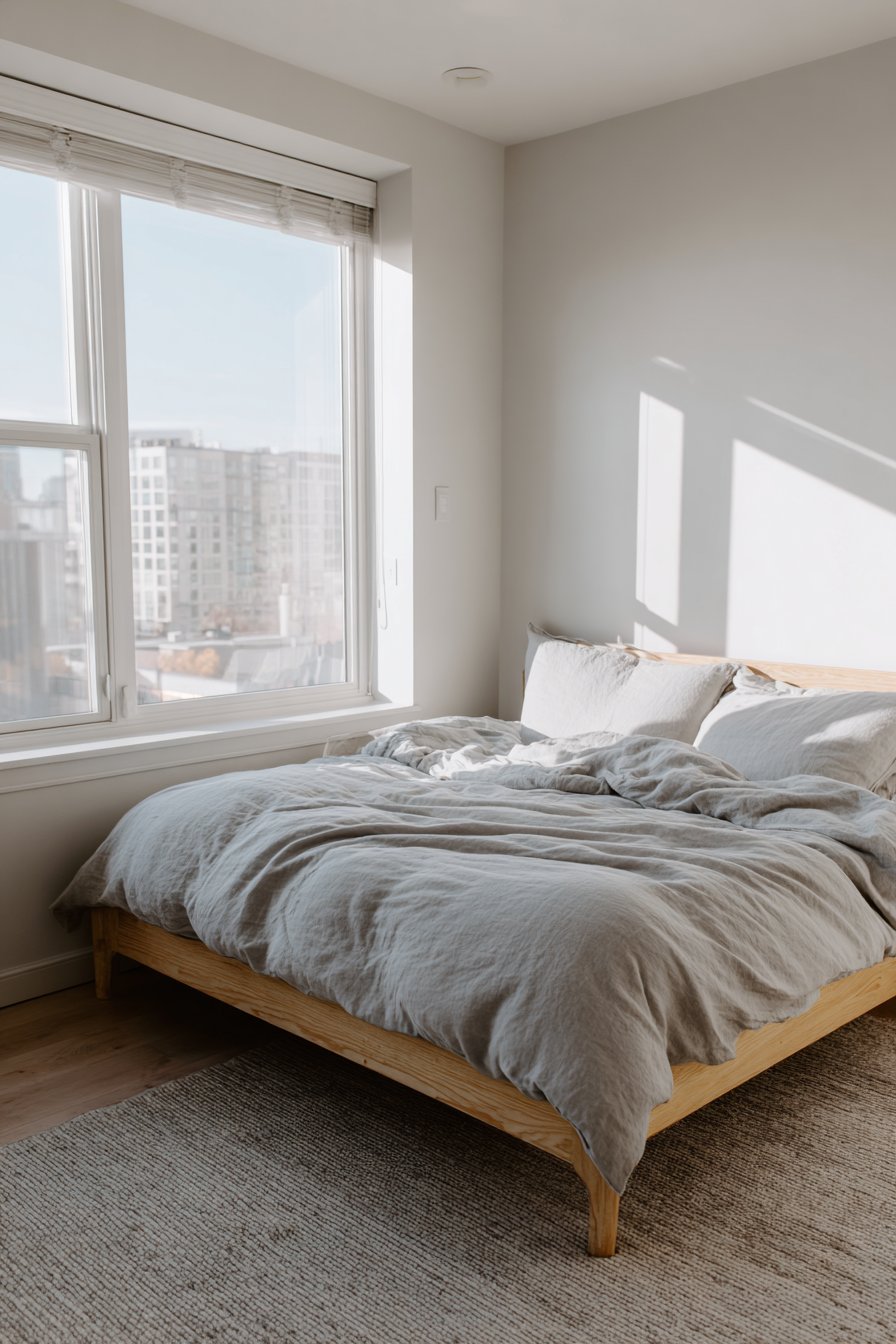
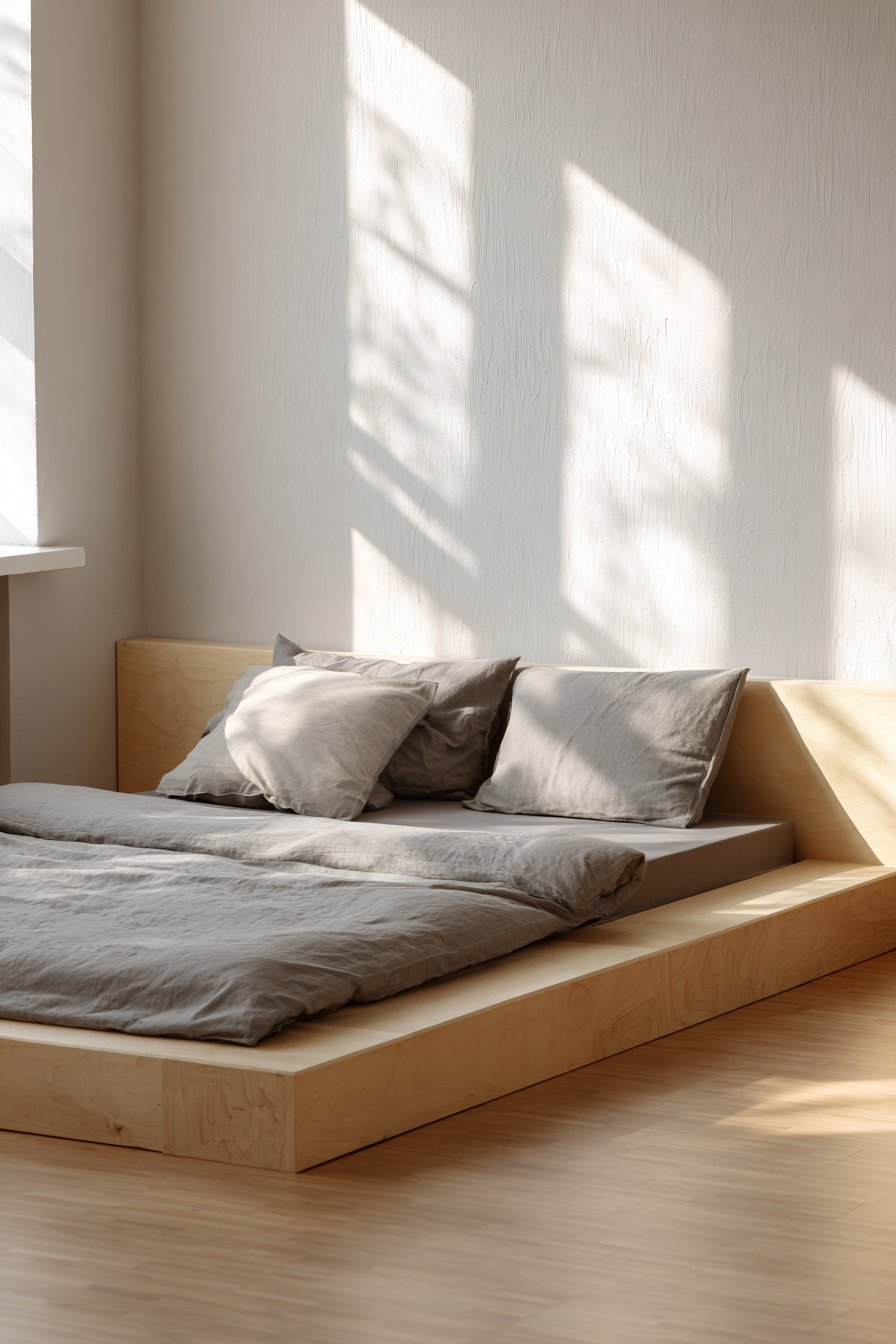
This minimalist wood bed design features a simple frame constructed from pale birch wood with clean geometric lines and no headboard, embodying the “less is more” philosophy. The platform base displays subtle wood grain visible through a natural matte finish that protects the wood while maintaining its organic appearance. Birch’s pale coloring—nearly white with subtle cream and pink undertones—creates the ultimate minimal aesthetic, providing just enough warmth to avoid feeling cold while maintaining the airy, spacious quality that minimalism requires.
Dressed with monochromatic grey bedding and a single accent pillow, the bed demonstrates how restraint in both form and styling creates a restful environment. The absence of a headboard maintains visual simplicity while making the room feel larger and less cluttered. Abundant natural daylight fills the uncluttered space, creating soft shadows that define the simple wood frame and reveal the subtle grain patterns in the pale wood.
Professional interior photography with wide-angle perspective shows the restful minimalist aesthetic and honest material expression, capturing how the reduction of elements creates a sense of calm and spaciousness. The composition demonstrates that minimalism isn’t about deprivation but about intentional selection, where each element that remains serves a clear purpose and contributes to the overall sense of serene simplicity.
Key Design Tips:
- Choose pale woods like birch, maple, or ash to maintain the light, airy quality essential to minimalism
- Keep proportions simple with clean geometric profiles rather than decorative elements
- Consider forgoing the headboard entirely to maximize visual simplicity
- Use monochromatic bedding to avoid introducing unnecessary pattern or color variation
- Maximize natural light to create the bright, open atmosphere that defines minimalist spaces
- Apply matte finishes rather than glossy ones to maintain the understated aesthetic
11. Carved Teak with Traditional Patterns
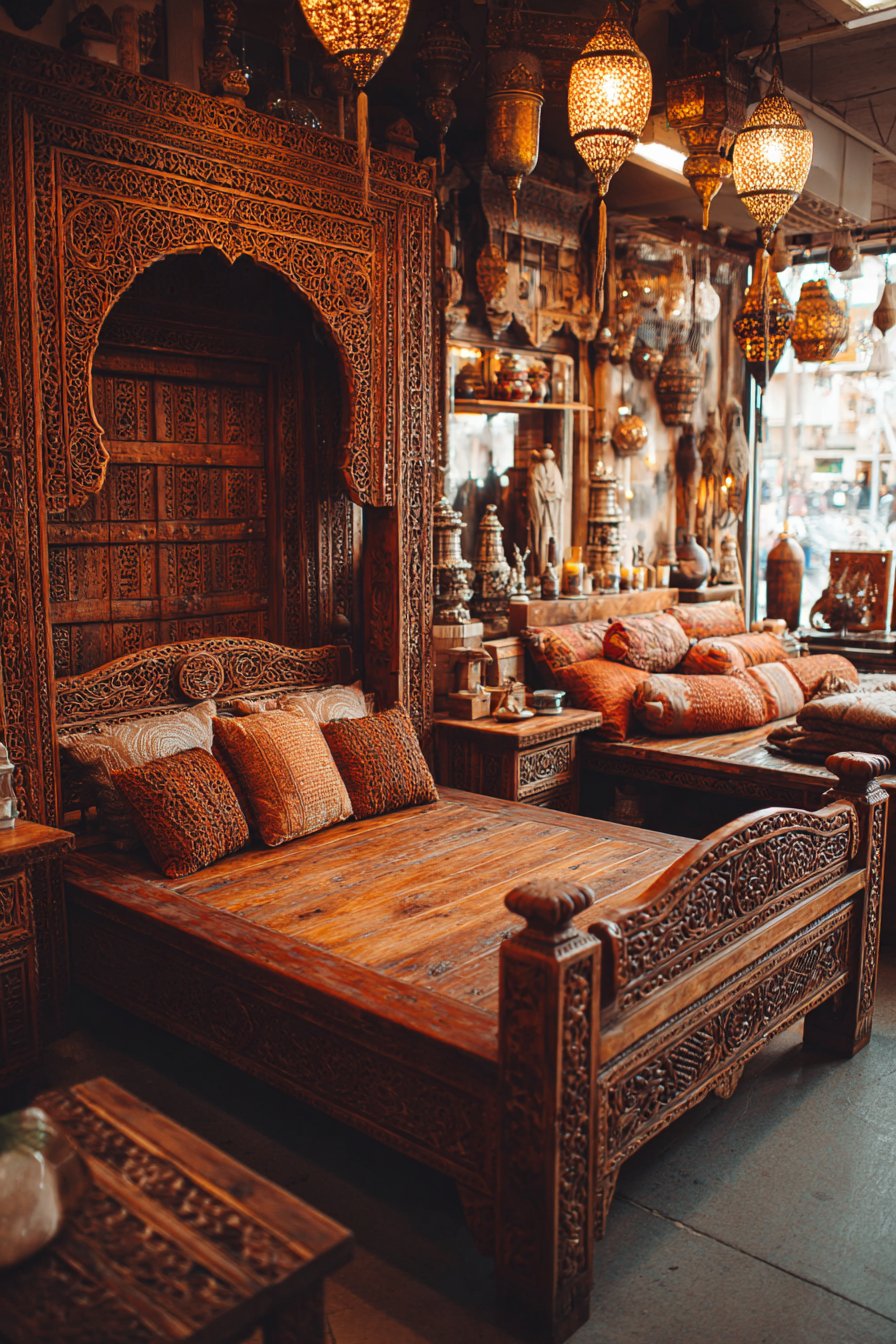
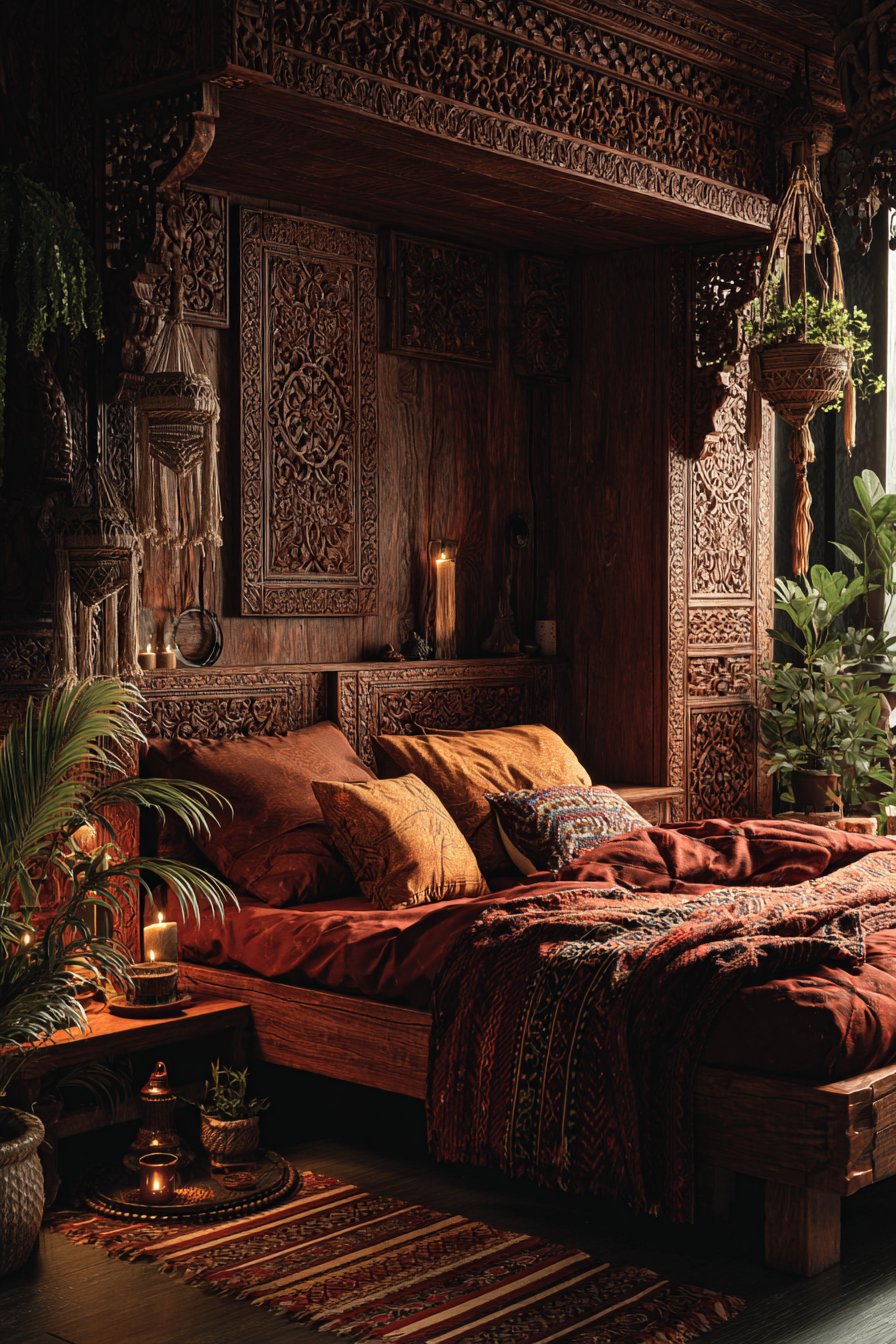
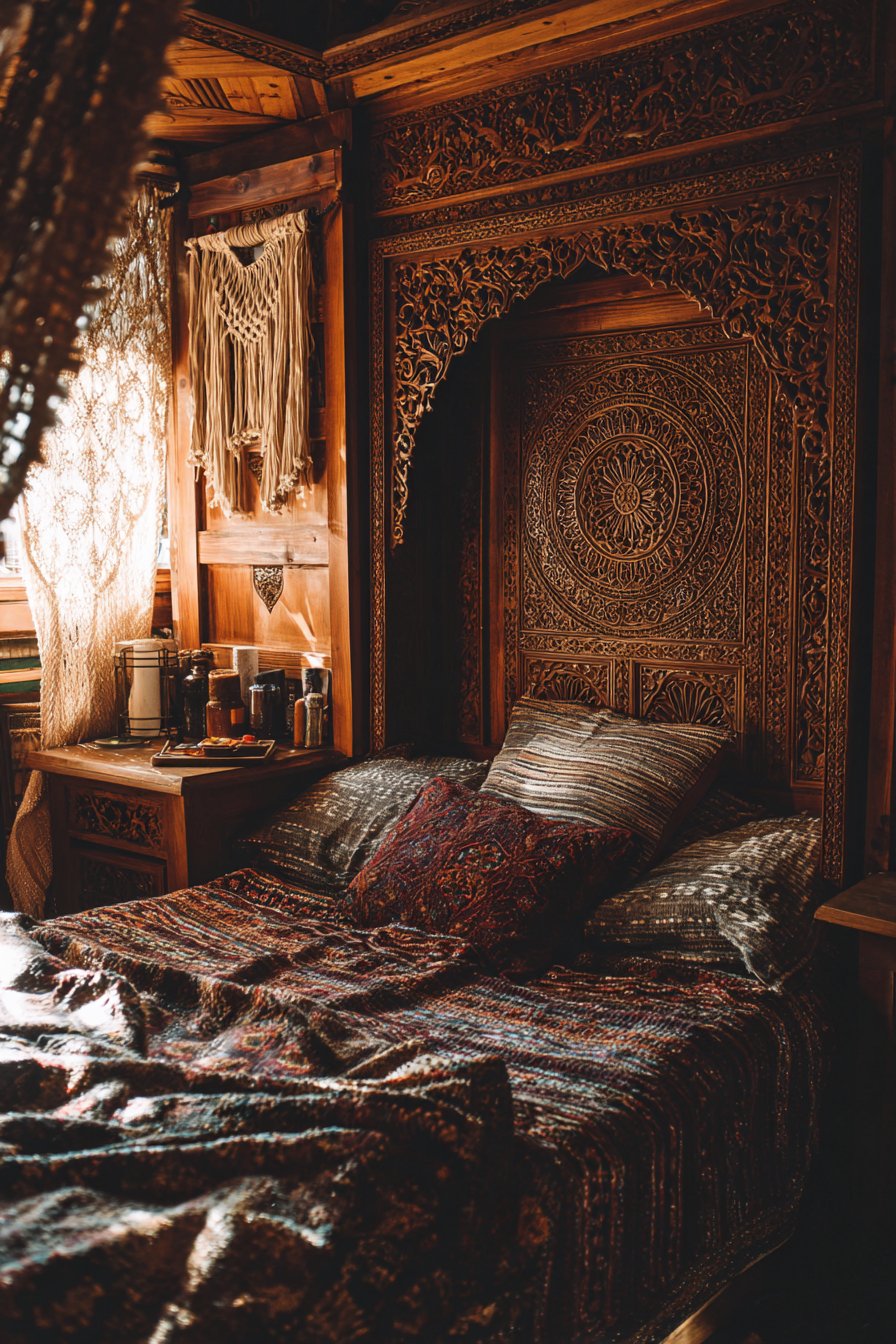
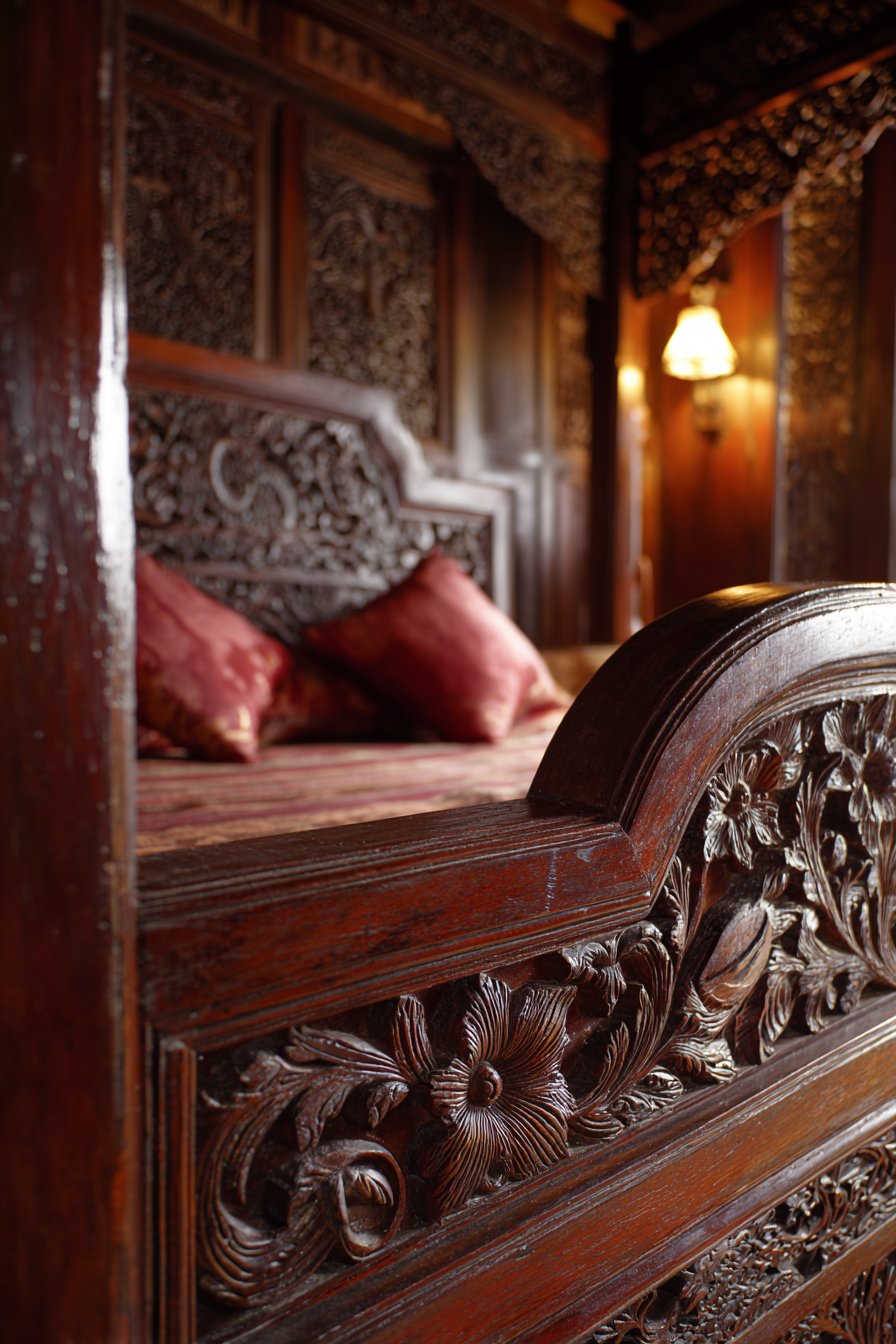
This bohemian wood bed design idea features a carved teak frame with intricate traditional patterns etched into the substantial headboard and footboard. The warm reddish-brown wood is characteristic of teak, providing a rich foundation for the elaborate carvings that might include floral motifs, geometric patterns, or cultural symbols from various global traditions. The carved details are deep and substantial, creating three-dimensional relief that catches light and shadow beautifully.
The bed is complemented by layered textiles in jewel tones—deep purples, rich oranges, emerald greens—and macramé wall hangings that reinforce the bohemian aesthetic. Natural and artificial lighting combine to create ambient warmth while highlighting the detailed carvings, with the varied light sources creating dimensional shadows that emphasize the depth of the carved patterns. The eclectic mix of textures, patterns, and globally-inspired elements creates a collected, well-traveled aesthetic.
Interior design photography captures the eclectic, globally-inspired aesthetic with particular attention to the ornate woodwork details and textural layering. The composition shows how bohemian style celebrates abundance and decoration, where more is more and the layering of patterns, textures, and cultural references creates a rich, personalized environment.
Key Design Tips:
- Select teak for its warm color, natural durability, and traditional association with carved furniture
- Choose carving patterns that reflect cultural traditions or personal meaningful symbols
- Layer textiles in rich jewel tones to complement the warm wood and create bohemian abundance
- Combine natural and artificial lighting to create dimensional shadows that reveal carving depth
- Add globally-inspired accessories like macramé, woven textiles, and ethnic patterns
- Embrace maximalist layering rather than restraint to achieve authentic bohemian character
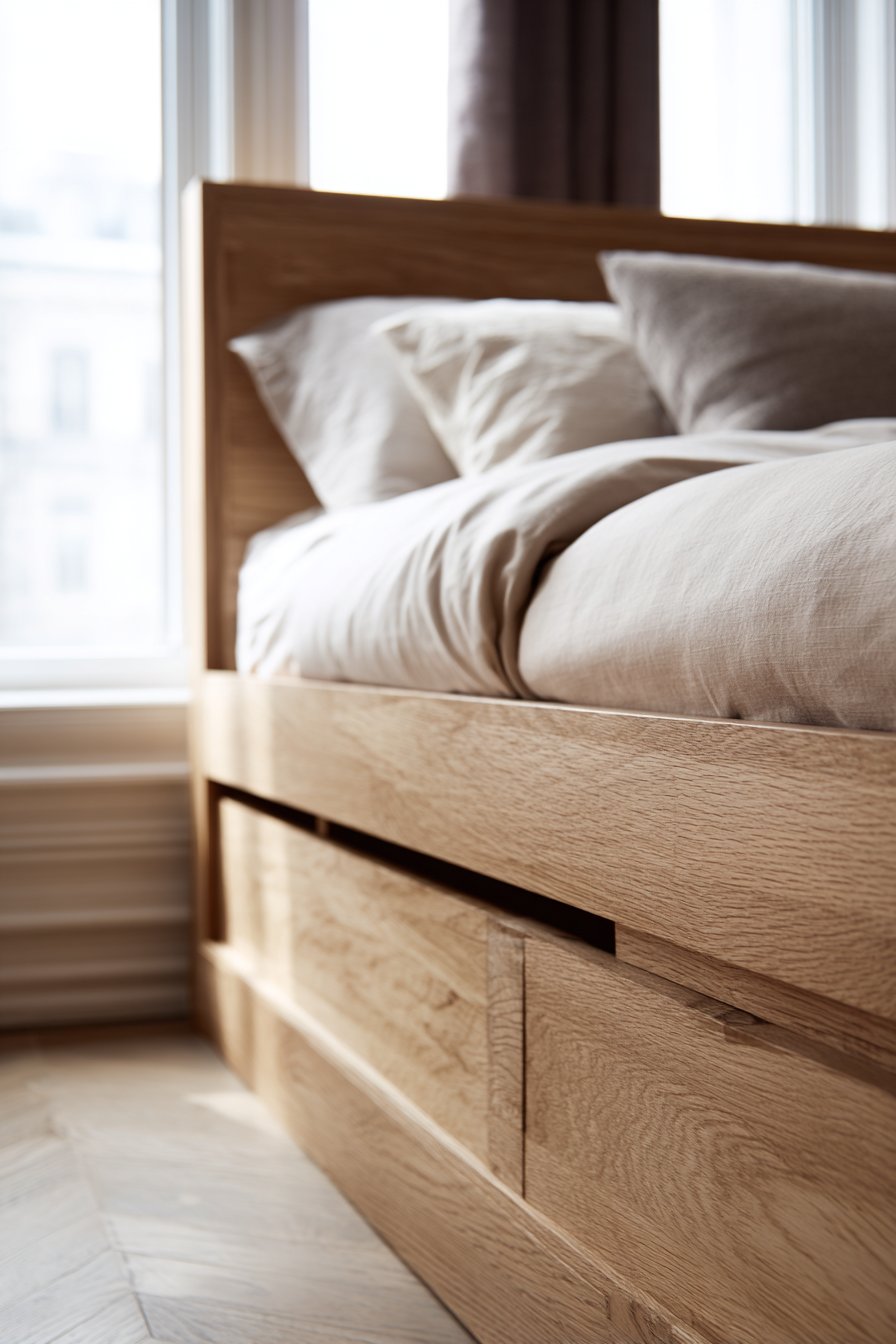
12. Oak Platform with Integrated Storage Drawers
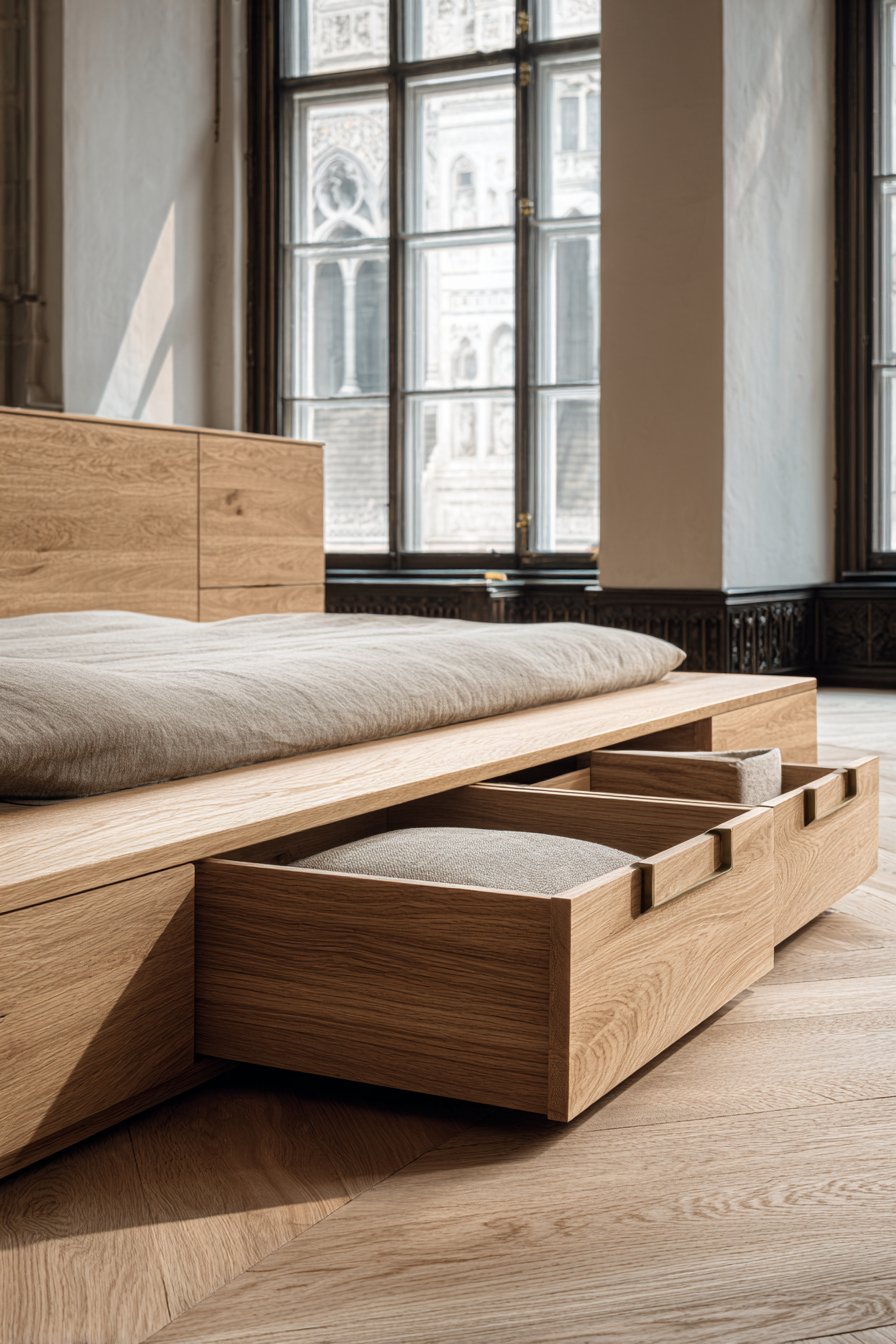
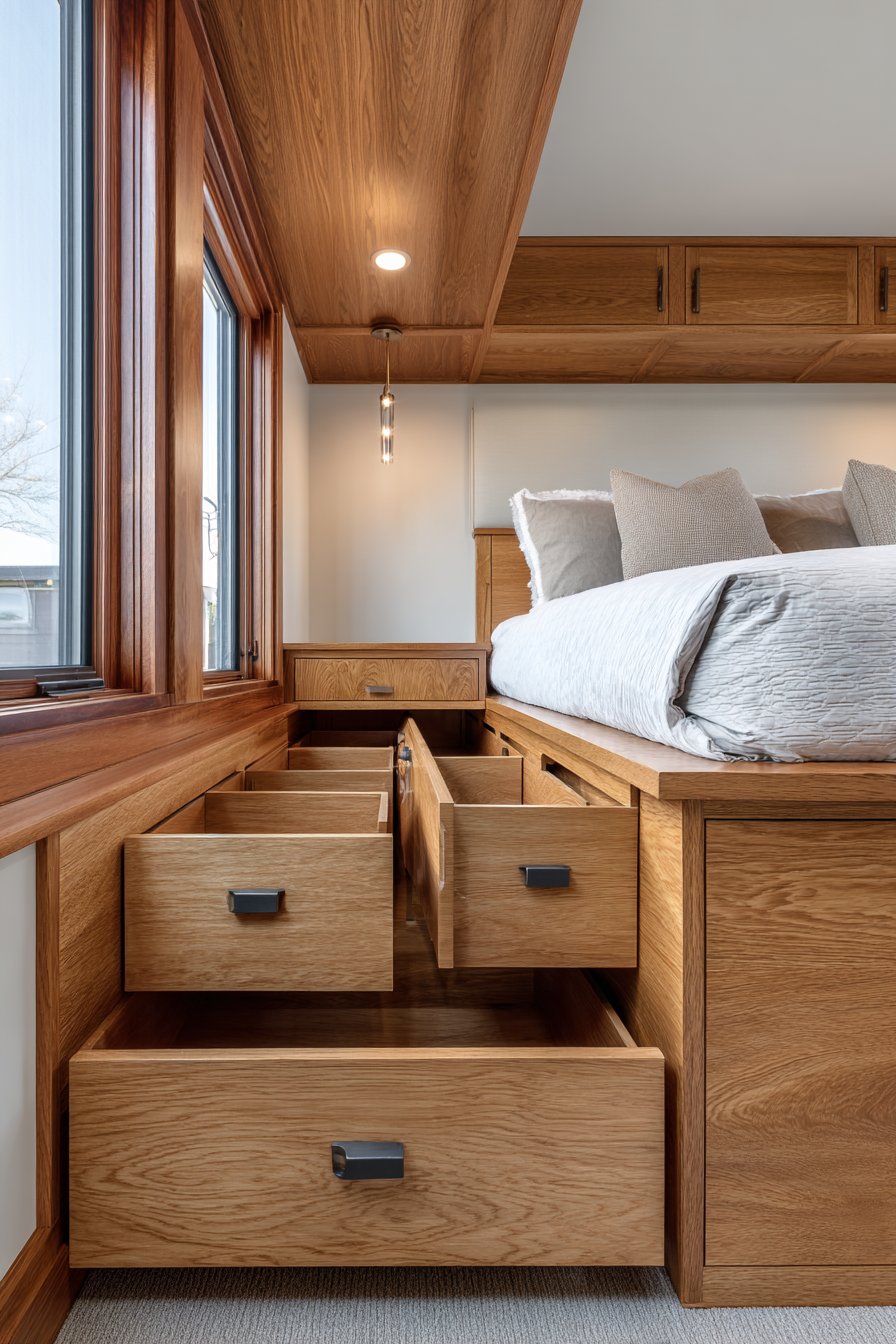
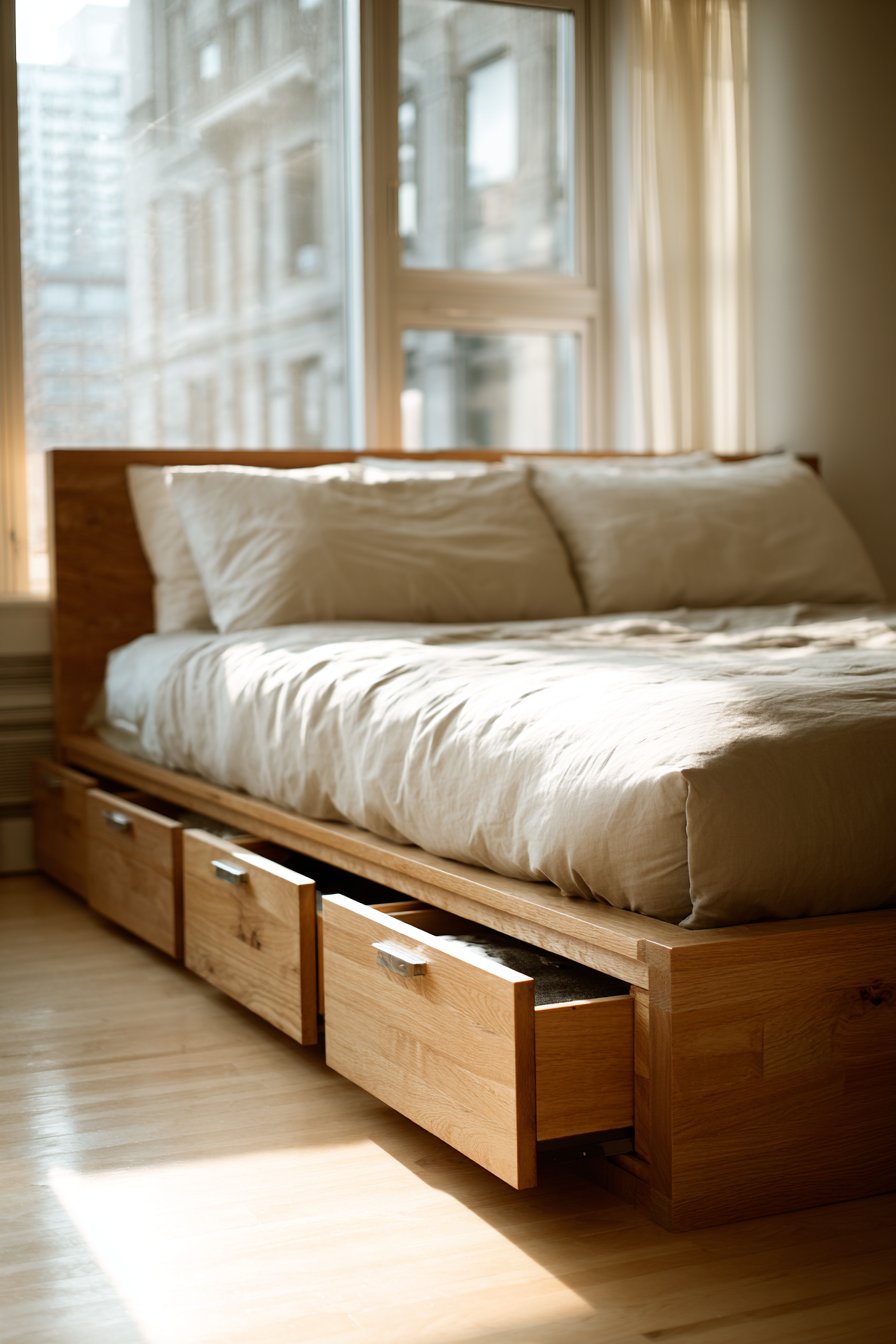
This wood bed design with built-in storage showcases a practical oak platform frame with integrated drawers beneath the mattress base, featuring smooth-sliding mechanisms and brushed metal pulls. The storage integration is seamless, with drawer fronts matching the bed frame and maintaining consistent oak grain patterns throughout. The simple panel headboard matches the drawer fronts in finish and style, creating a cohesive design where the practical storage functions don’t compromise the aesthetic appeal.
Paired with an organized bedroom setup and neutral bedding, the design demonstrates how functional furniture can maintain visual sophistication. Natural light from windows illuminates the functional design while highlighting the consistent oak grain across all components, from the headboard panel to the platform sides to the drawer fronts. The brushed metal hardware provides subtle contrast while maintaining the overall natural wood aesthetic.
Architectural photography emphasizes both the aesthetic appeal and practical storage solutions, showing open drawers to reveal the generous storage capacity and smooth-sliding mechanisms. The composition demonstrates how thoughtful design can address real-world needs—maximizing bedroom storage—while creating furniture that looks considered and beautiful rather than purely utilitarian.
Key Design Tips:
- Select oak for its durability and ability to withstand the wear that storage furniture experiences
- Ensure drawer mechanisms are high-quality with soft-close features for longevity
- Match grain patterns across all visible surfaces for a cohesive, custom appearance
- Use brushed or matte metal hardware that complements rather than competes with the wood
- Consider drawer configuration based on storage needs—larger drawers for linens, smaller for personal items
- Position the bed to allow easy access to storage drawers from both sides when possible
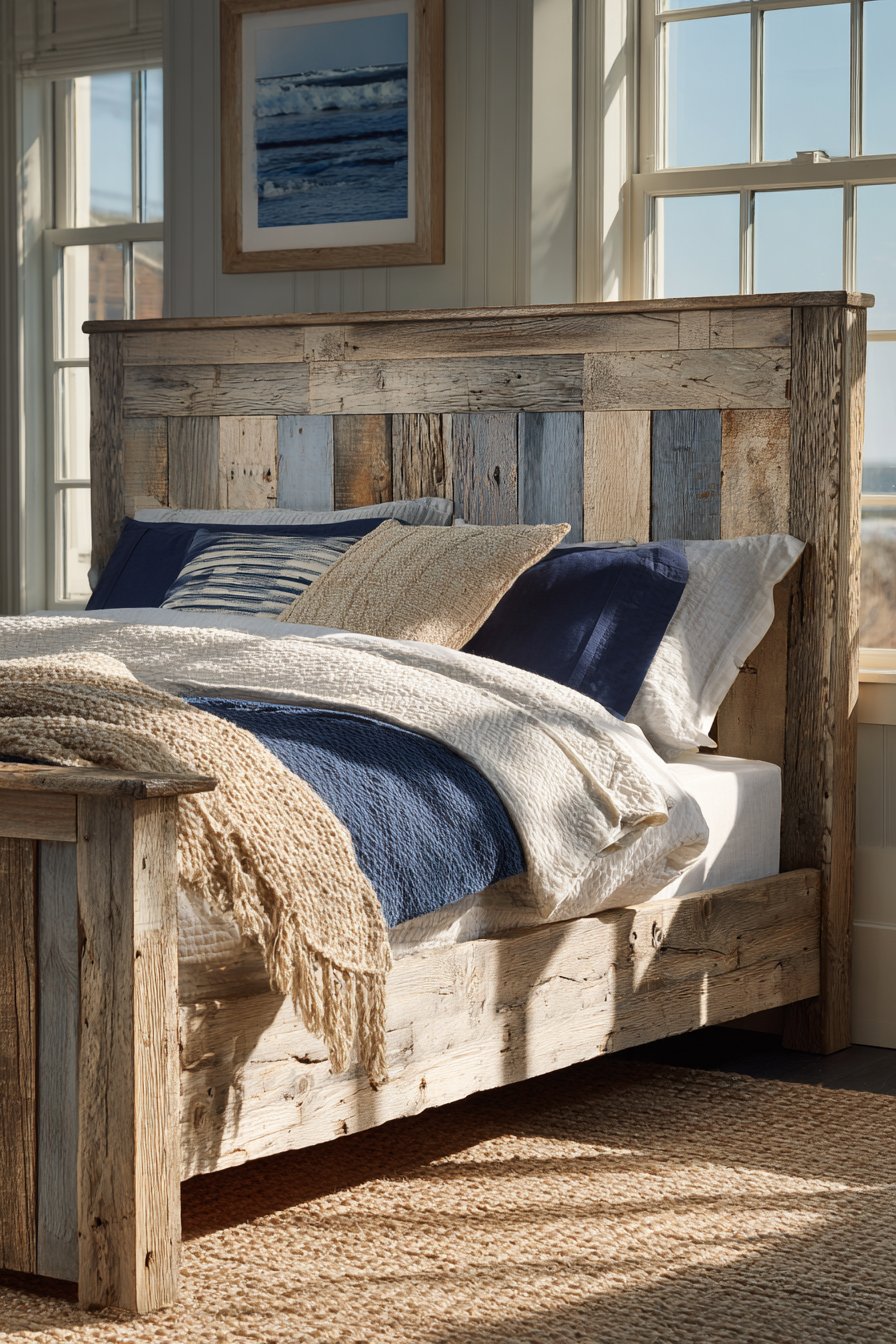
13. Weathered Driftwood Grey Pine
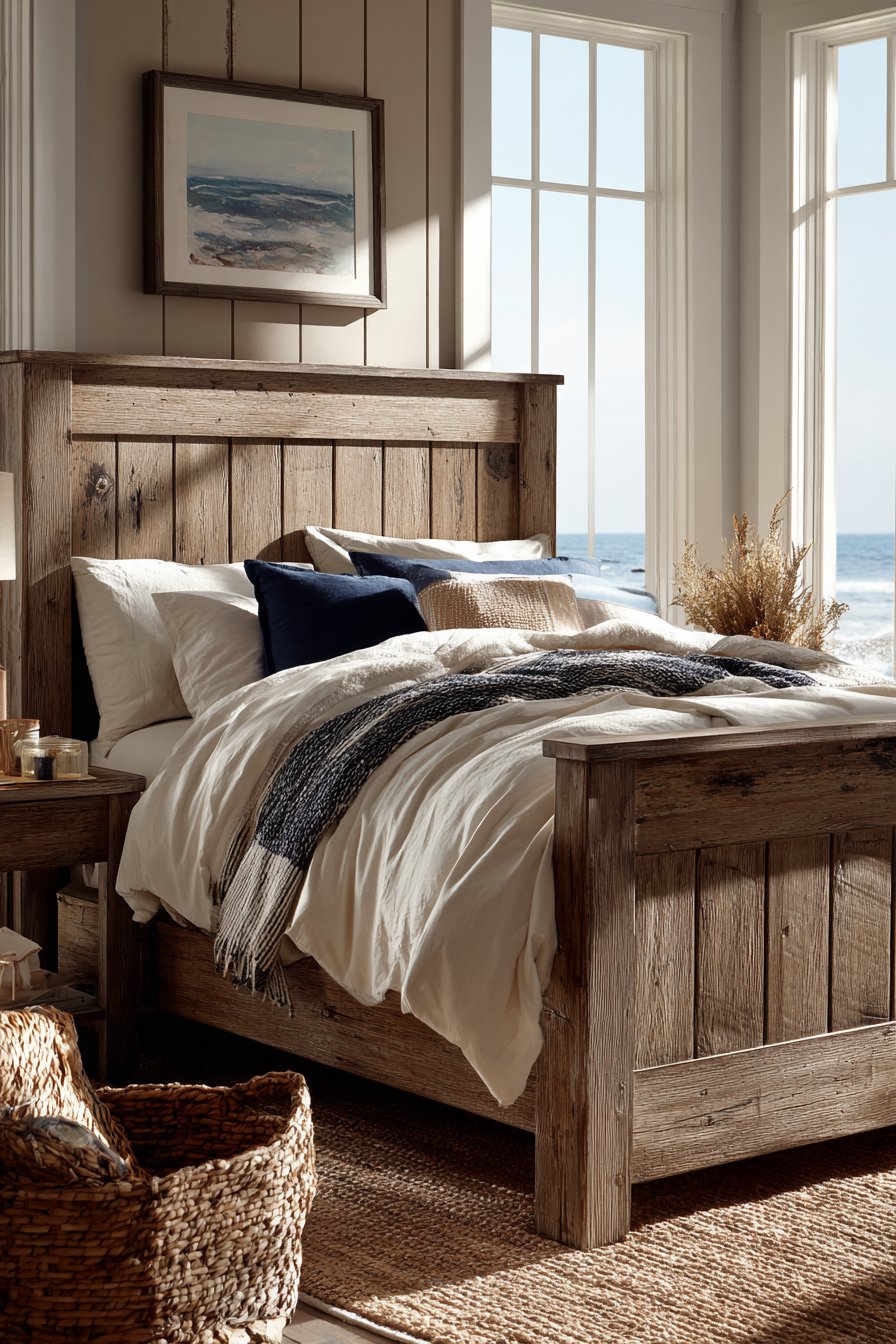
This coastal wood bed design idea features a weathered driftwood grey finish on pine construction with a relaxed, casual frame style that evokes beach houses and seaside cottages. The headboard has vertical shiplap planks in varying widths, creating textural interest while maintaining the horizontal lines associated with coastal design. The grey finish is applied to simulate the sun-bleached appearance of driftwood, with variations in tone that mimic natural weathering and the salt-air exposure of actual beach-found wood.
Dressed with crisp white bedding, navy accent pillows, and natural fiber textures like jute or sisal, the bed creates the fresh, breezy aesthetic associated with coastal living. Bright natural sunlight creates an airy atmosphere while highlighting the sun-bleached wood tones and beach-cottage aesthetic. The overall effect is casual, comfortable, and reminiscent of summer vacations and seaside relaxation.
Interior design photography captures the breezy, vacation-home quality with balanced exposure showing texture details in both the grey-finished wood and the natural fiber textiles. The composition demonstrates how coastal style creates spaces that feel perpetually vacation-ready, where the weathered wood finish and light, bright palette transport you mentally to the beach even in landlocked locations.
Key Design Tips:
- Choose pine for its affordability and ability to take grey-toned finishes beautifully
- Apply grey stains or washes unevenly to simulate natural sun-bleaching and weathering
- Use vertical shiplap or plank arrangements in varying widths for authentic coastal character
- Keep bedding crisp and white with classic blue accents for timeless coastal palette
- Add natural fiber rugs, baskets, and accessories to reinforce the organic, beach-inspired aesthetic
- Maximize natural light to create the bright, airy atmosphere essential to coastal design
14. Traditional Mahogany Four-Poster
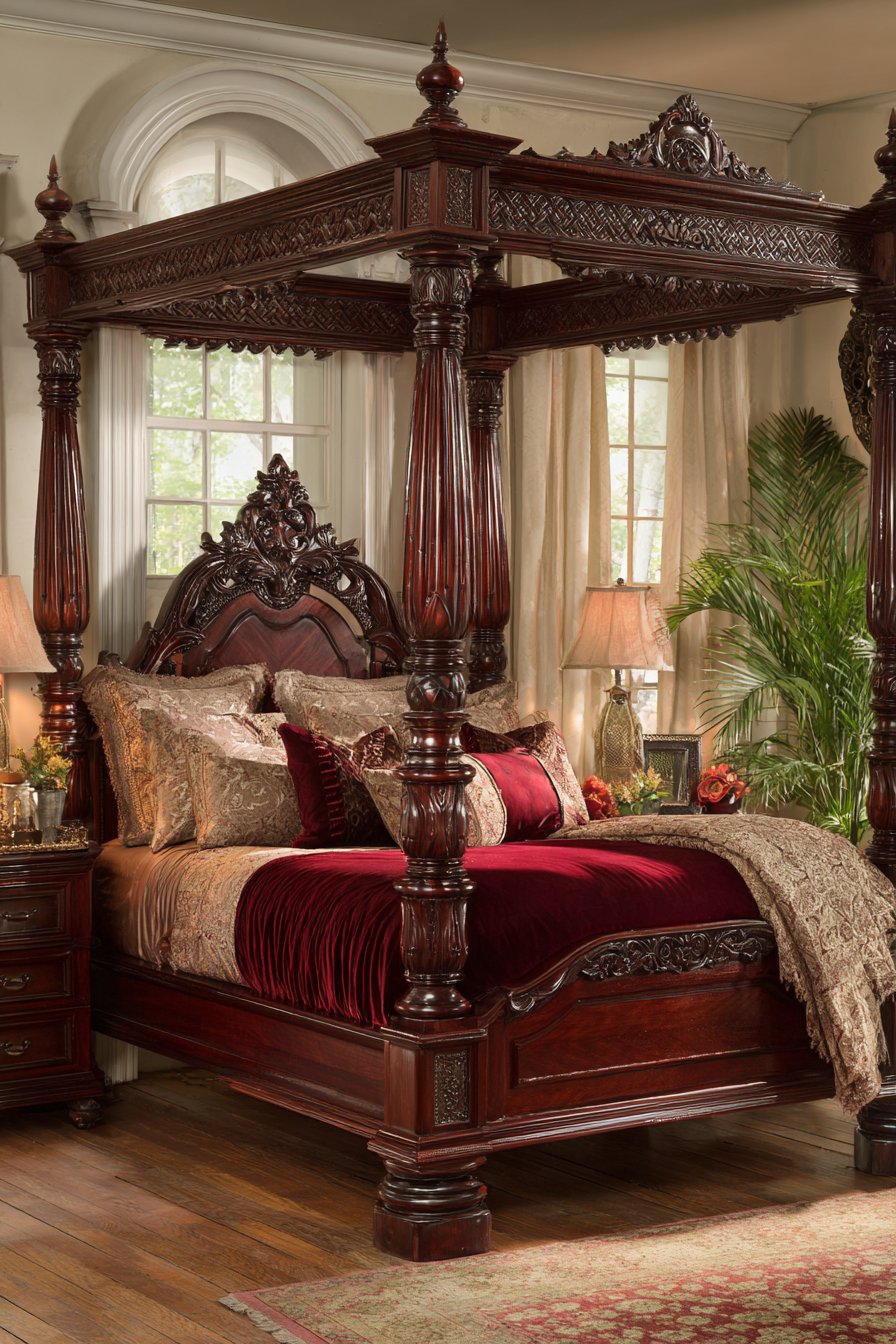
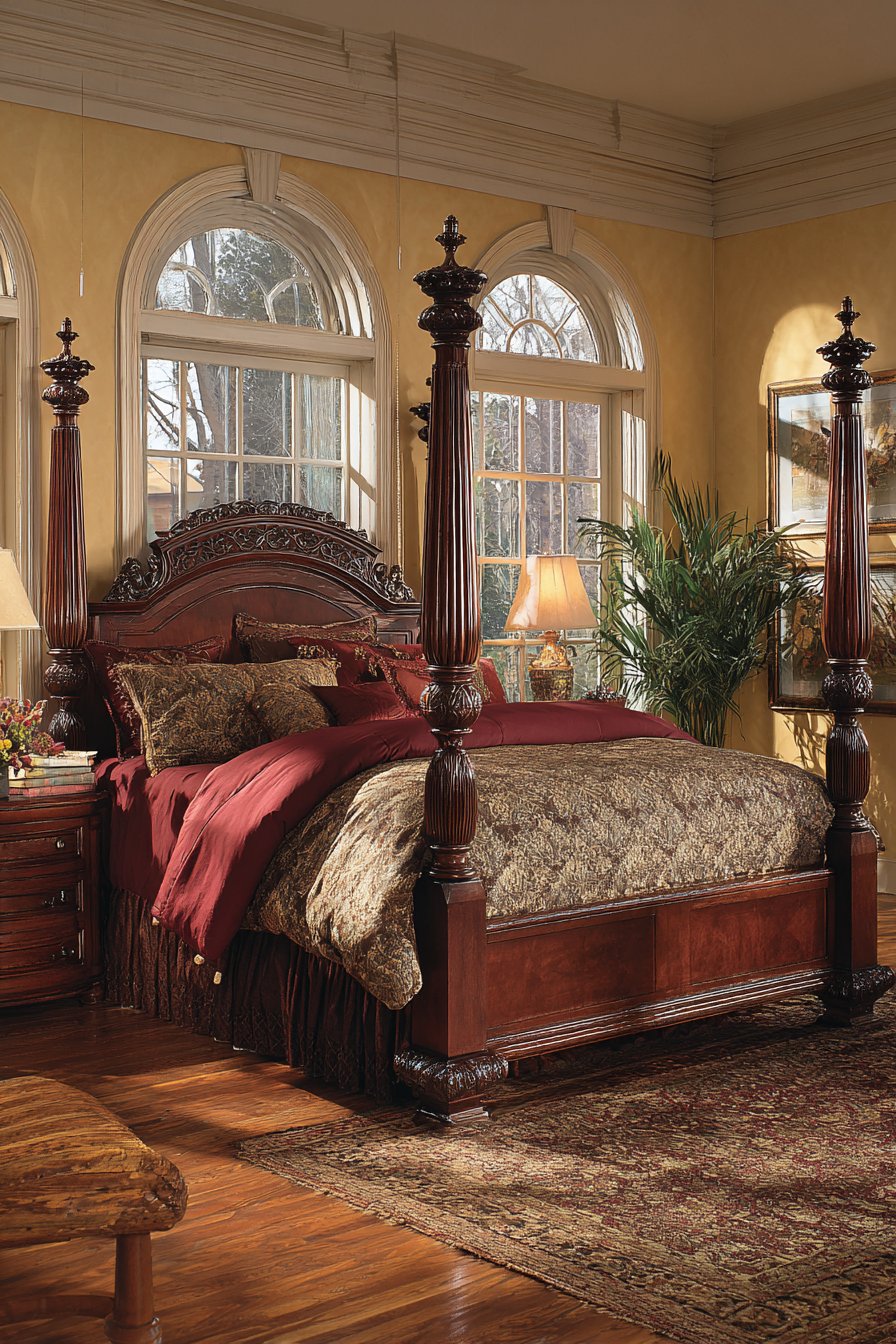
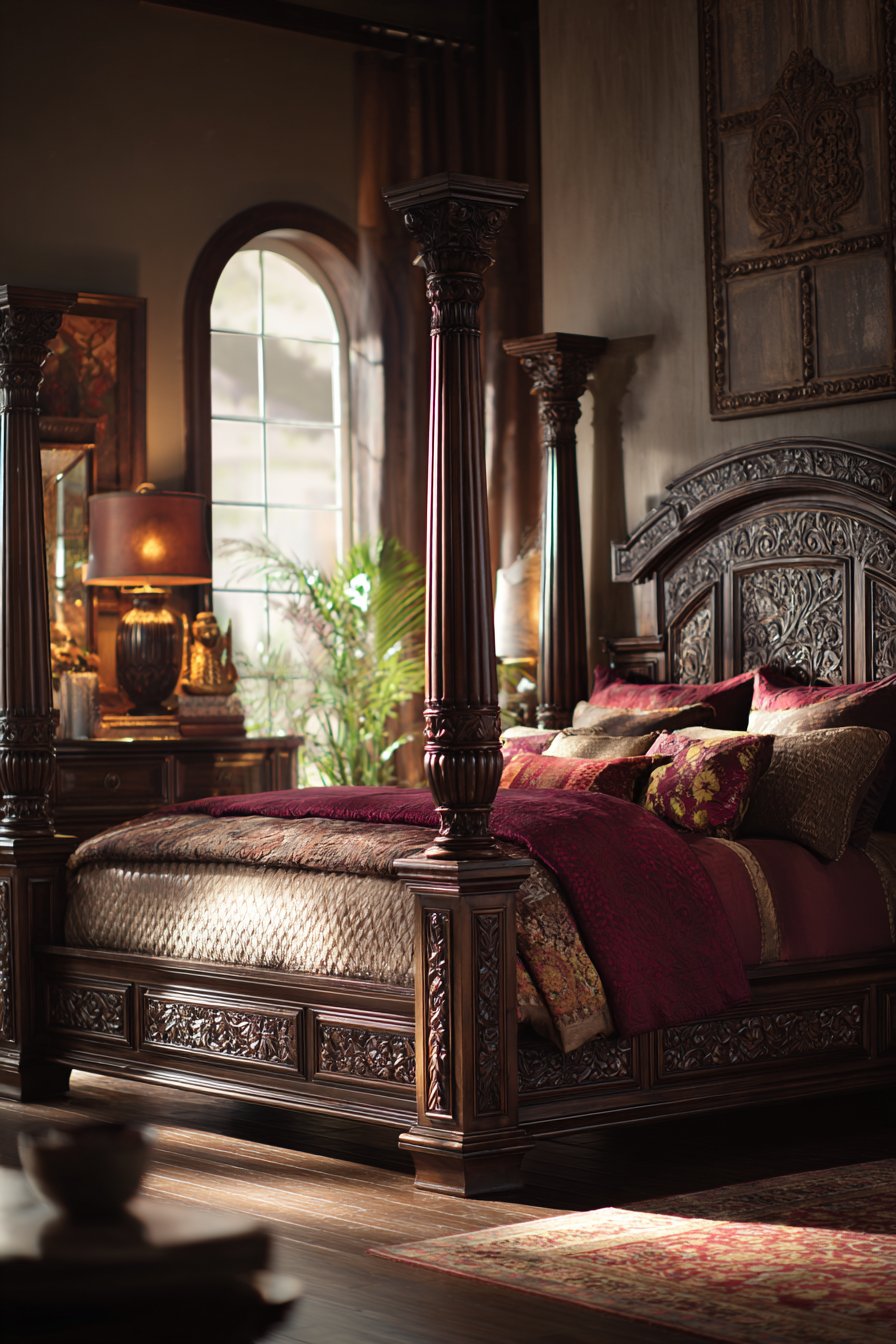
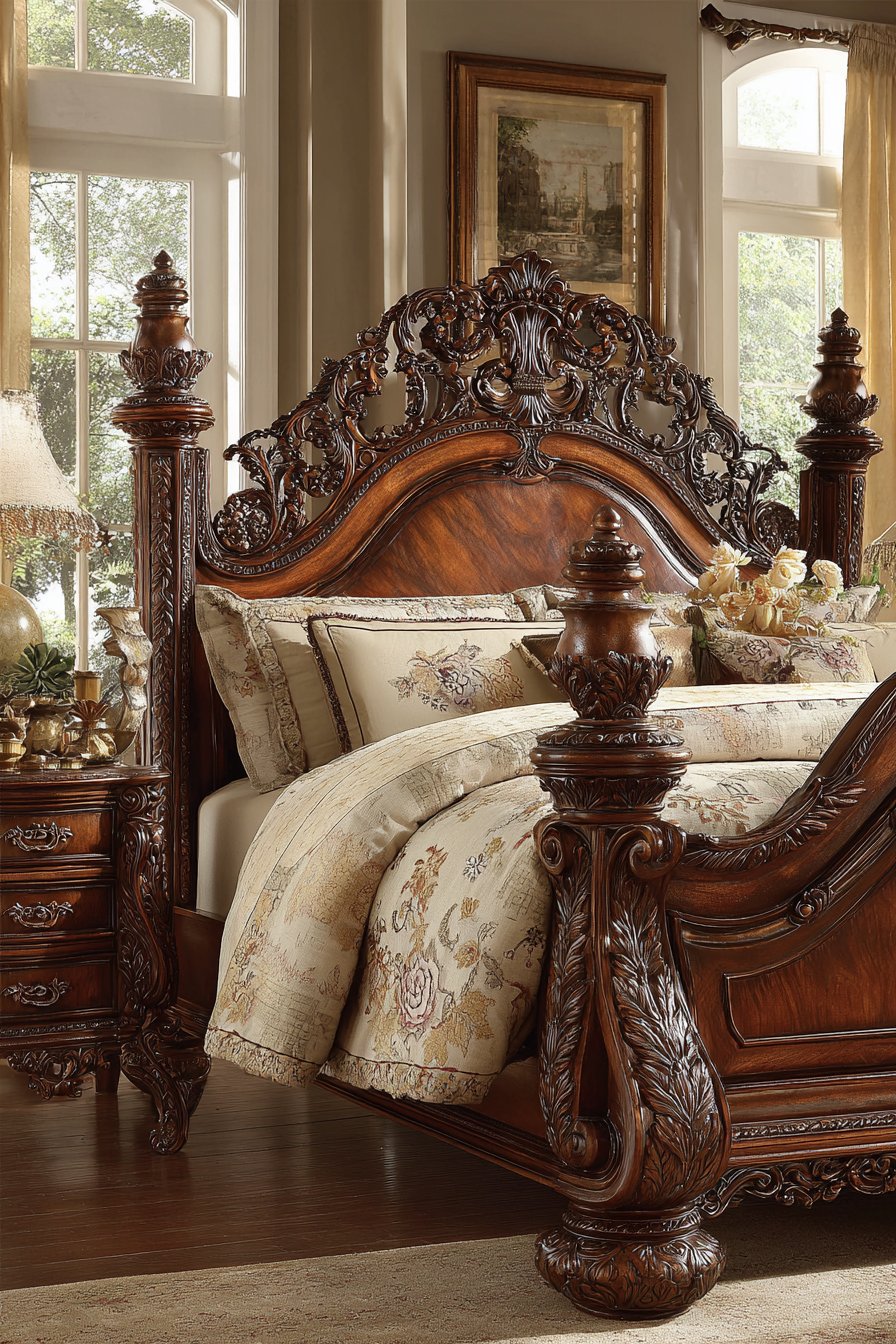
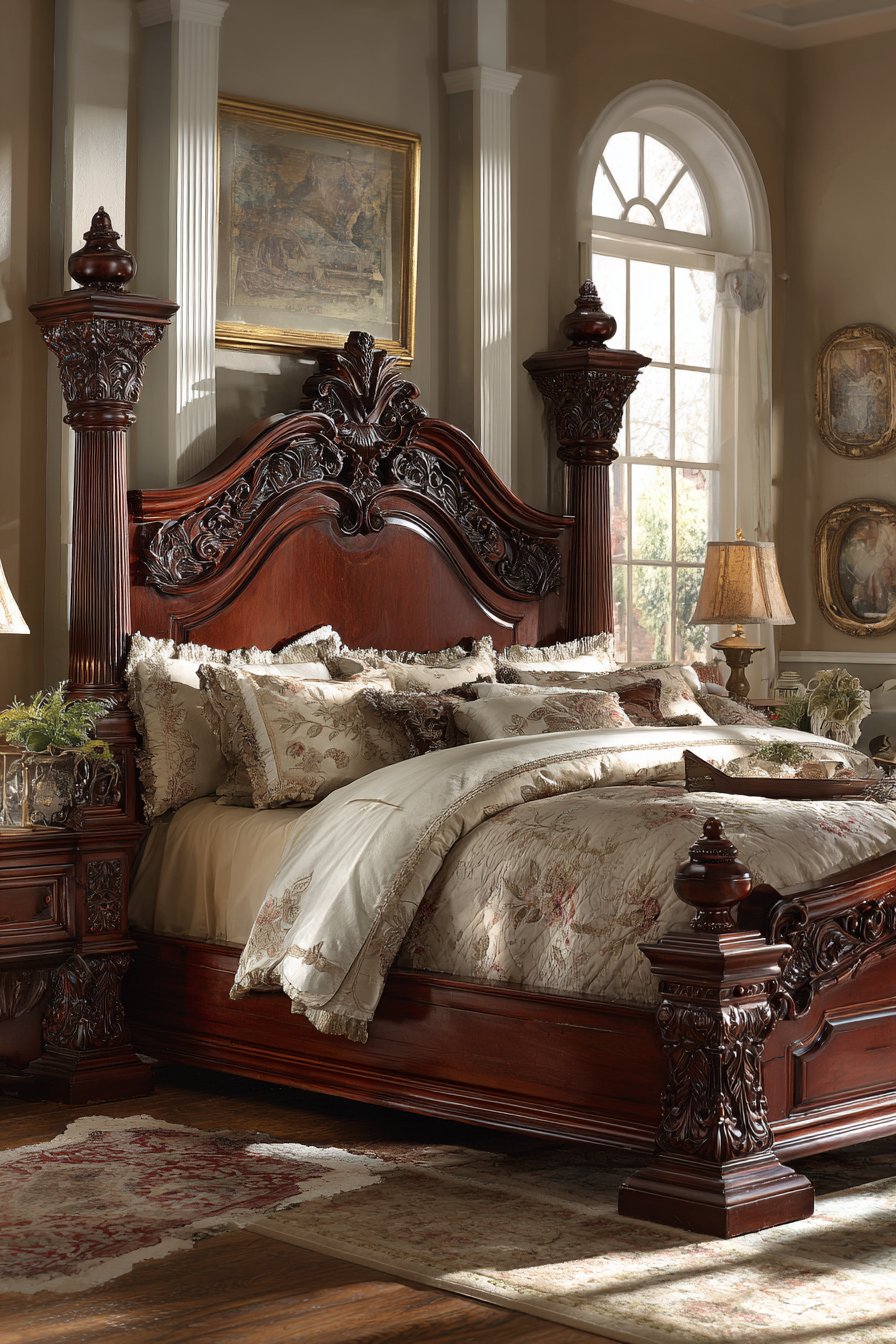
This four-poster wood bed design is crafted from rich mahogany with substantial turned posts and traditional joinery details that showcase fine furniture craftsmanship. The frame features carved details on the headboard and footboard panels—perhaps acanthus leaves, scrollwork, or traditional motifs—while the posts rise elegantly without a canopy frame, allowing the wood’s beauty to take center stage. Mahogany’s deep red-brown color and fine grain create an atmosphere of traditional luxury and timeless elegance.
Dressed with luxurious bedding in deep jewel tones—burgundy, forest green, or navy—the bed creates a rich, sophisticated aesthetic. Soft ambient lighting and natural daylight combine to highlight the deep wood tones and polished finish, with the lighting revealing the subtle grain patterns and bringing out the reddish undertones characteristic of mahogany. The turned posts feature traditional profiles with swells, tapers, and decorative elements that demonstrate skilled woodturning.
Professional interior photography with attention to the dramatic vertical posts and traditional craftsmanship details captures the bed from angles that reveal the carving quality and wood finishing. The composition demonstrates how traditional furniture design creates pieces intended to be passed down through generations, where quality materials, expert craftsmanship, and timeless styling ensure lasting value and appeal.
Key Design Tips:
- Select mahogany for its deep color, fine grain, and association with fine traditional furniture
- Choose turned posts with traditional profiles rather than plain square posts for authentic period style
- Include carved details on headboard and footboard panels to add visual interest
- Apply high-quality polished finishes that protect the wood while revealing grain and color depth
- Use luxurious bedding in rich colors that complement the deep wood tones
- Consider the ceiling height required for four-poster beds—typically need at least 9-foot ceilings
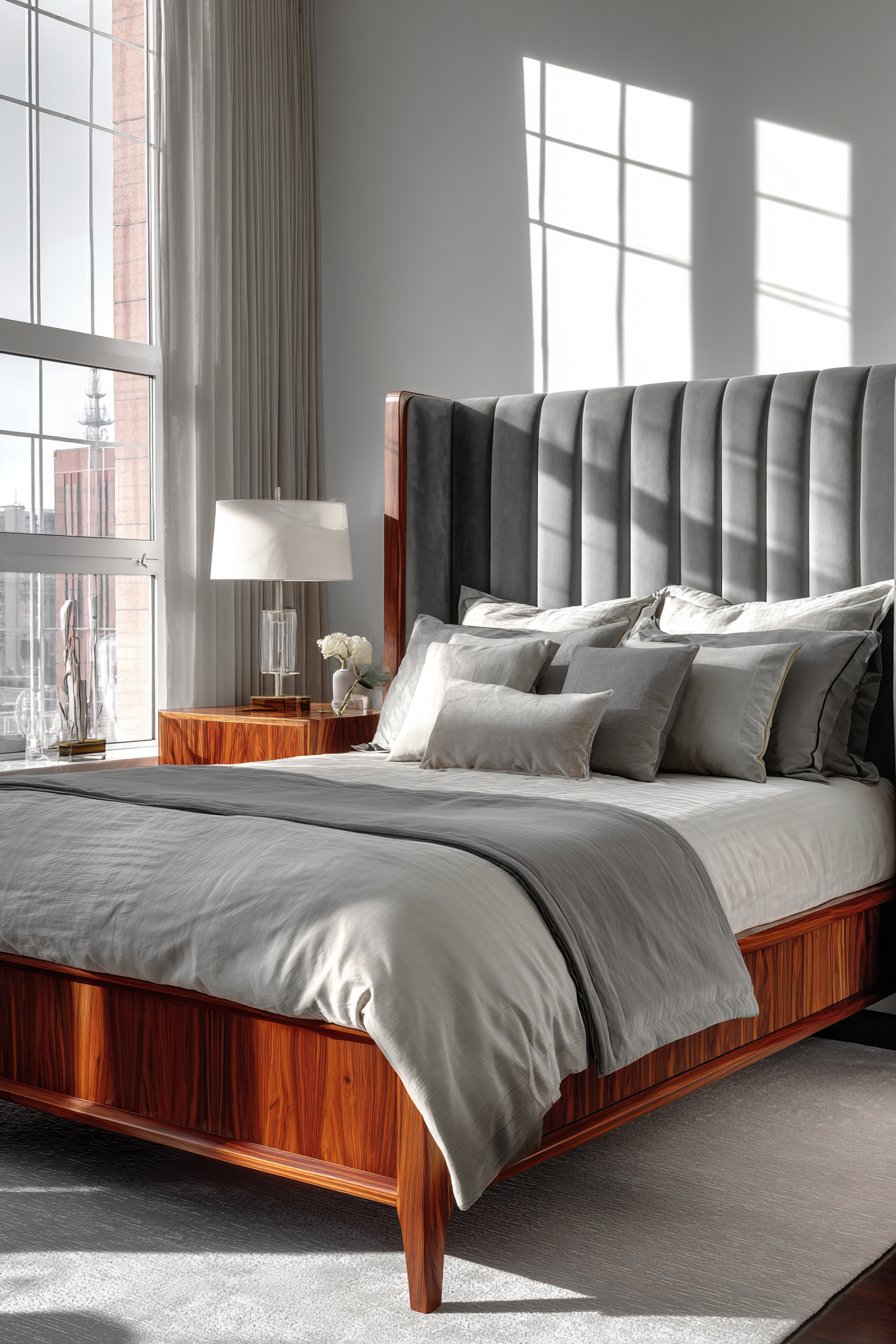
15. Walnut Frame with Channel-Tufted Upholstered Headboard
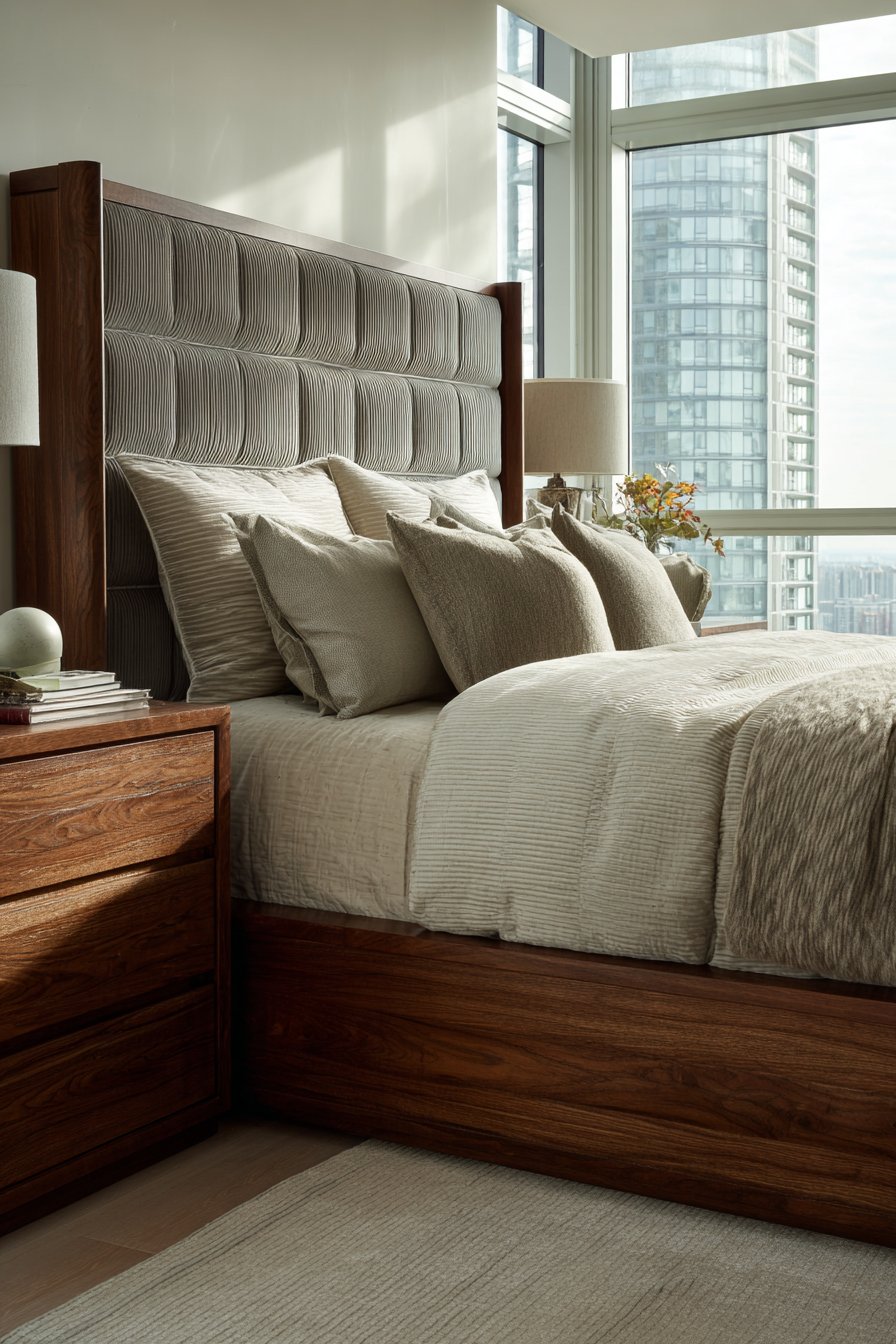
This wood bed design idea with upholstered headboard features a solid walnut frame combined with a tall channel-tufted headboard in soft grey velvet. The wood frame showcases beautiful grain patterns and smooth edges, with the walnut’s rich brown tones providing warmth while the grey upholstery introduces softness and contemporary elegance. The channel-tufting creates vertical lines that draw the eye upward, adding visual interest to the tall headboard while the velvet texture introduces tactile luxury.
Contemporary bedding in neutral tones complements both materials, allowing the contrast between smooth wood and soft fabric to remain the focal point. Natural window light and bedside lamps create layered illumination that highlights the contrast between the two materials—the wood’s natural luster and grain patterns versus the fabric’s soft, light-absorbing surface. The combination creates a sophisticated balance between the organic warmth of wood and the contemporary comfort of upholstery.
Interior design photography captures the sophisticated material combination and contemporary comfort aesthetic, with lighting that reveals both the walnut’s grain patterns and the velvet’s texture. The composition demonstrates how mixing materials creates interest and depth, where the combination offers more visual and tactile richness than either material alone could provide.
Key Design Tips:
- Select walnut for its rich color and distinctive grain that pairs beautifully with grey upholstery
- Choose channel-tufting for clean, contemporary lines rather than traditional button-tufting
- Use velvet upholstery for luxury and visual softness that complements wood’s hardness
- Keep bedding neutral to allow the material contrast to remain the design focus
- Ensure the upholstered headboard is tall enough to make a statement—typically 50-60 inches from floor
- Apply quality wood finishes to smooth edges where wood and fabric meet for a polished appearance
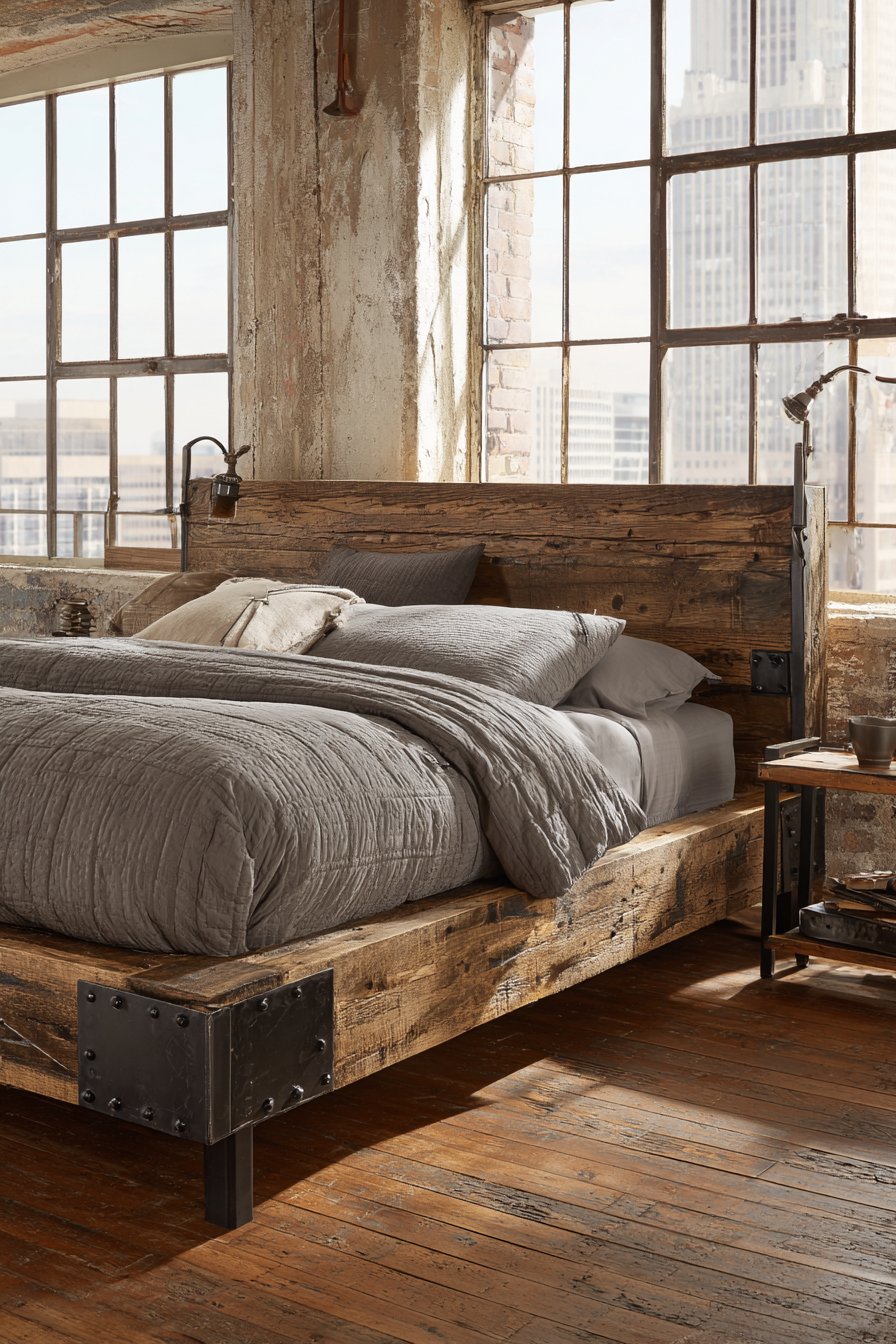
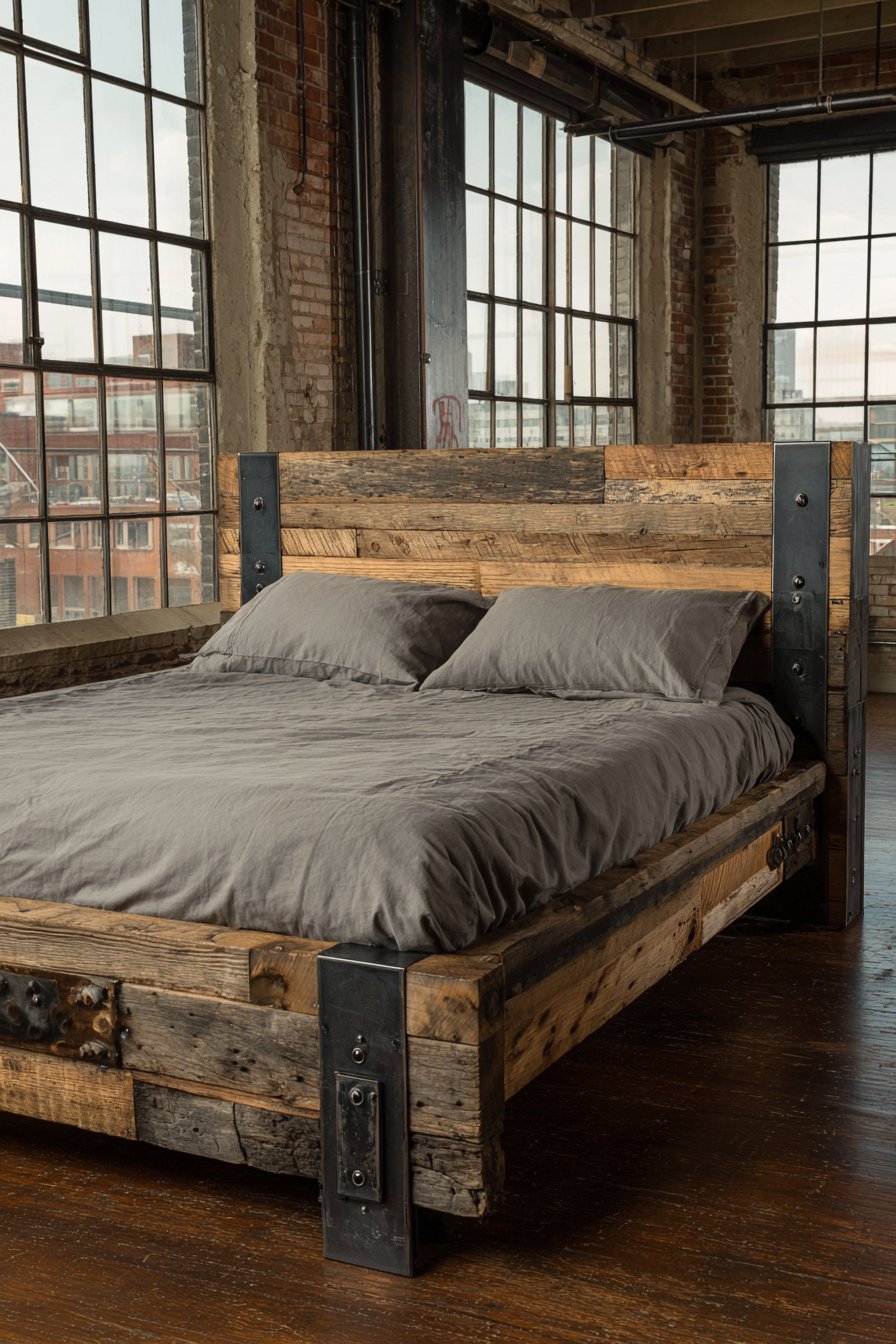
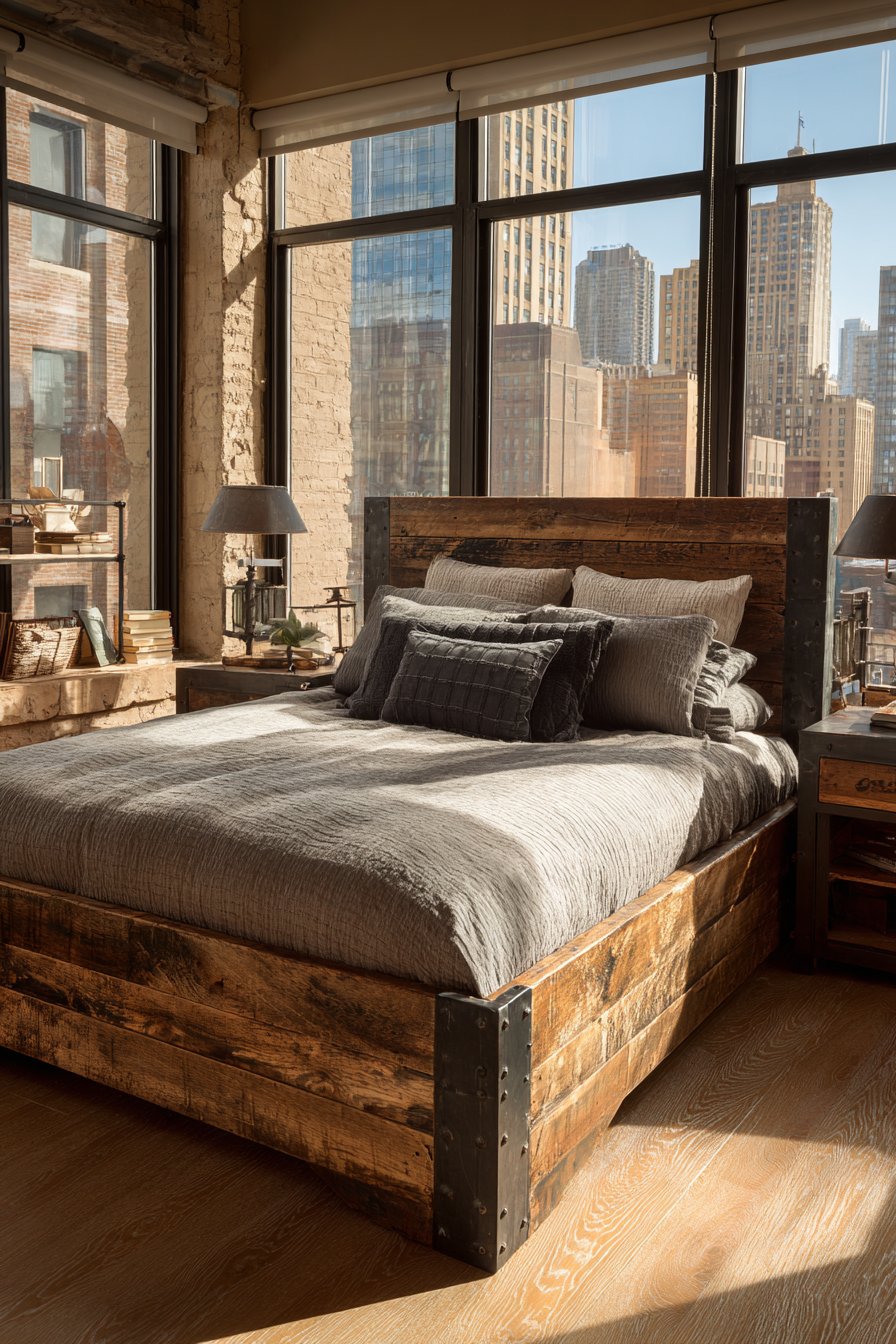
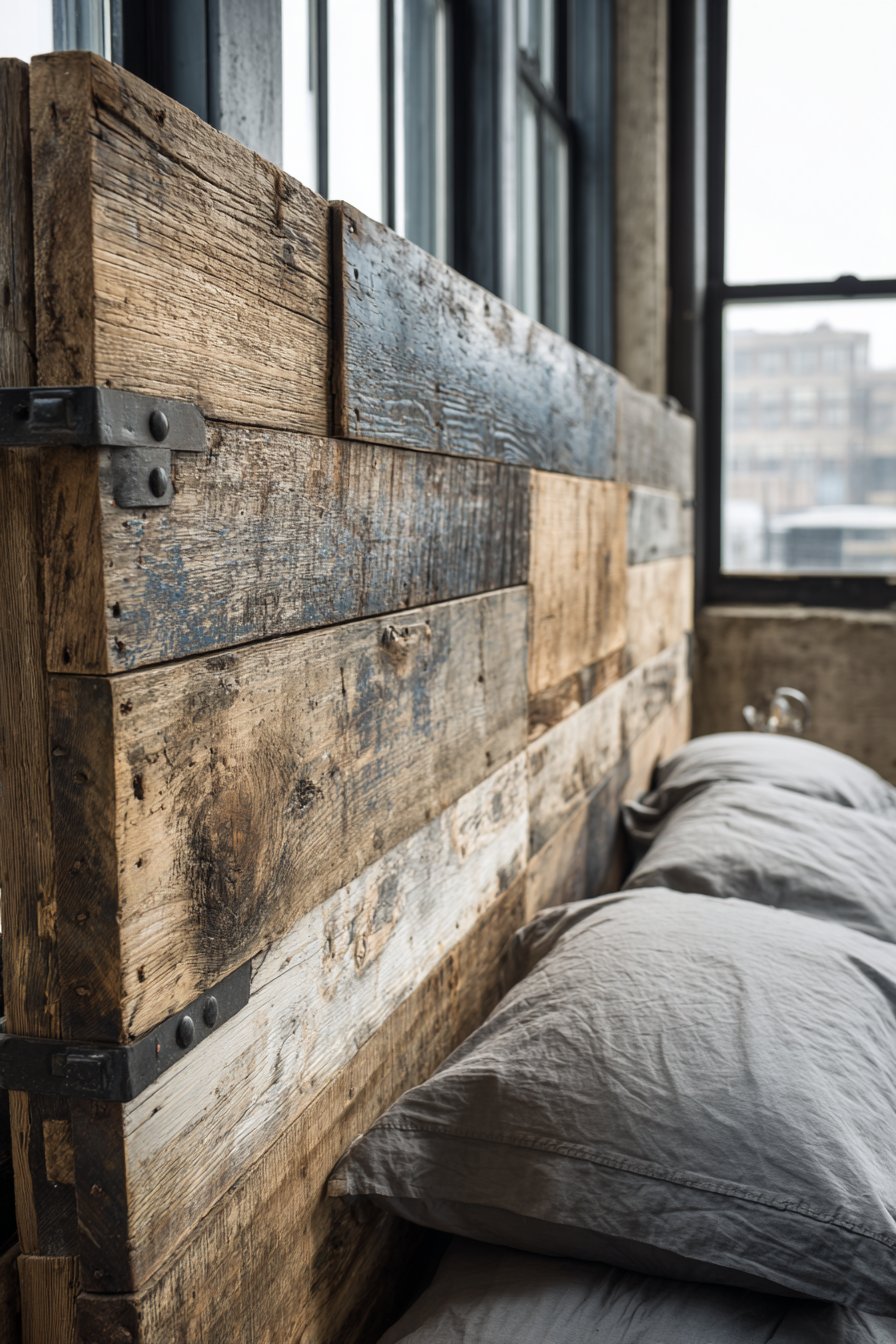
16. Industrial Reclaimed Wood with Steel Brackets
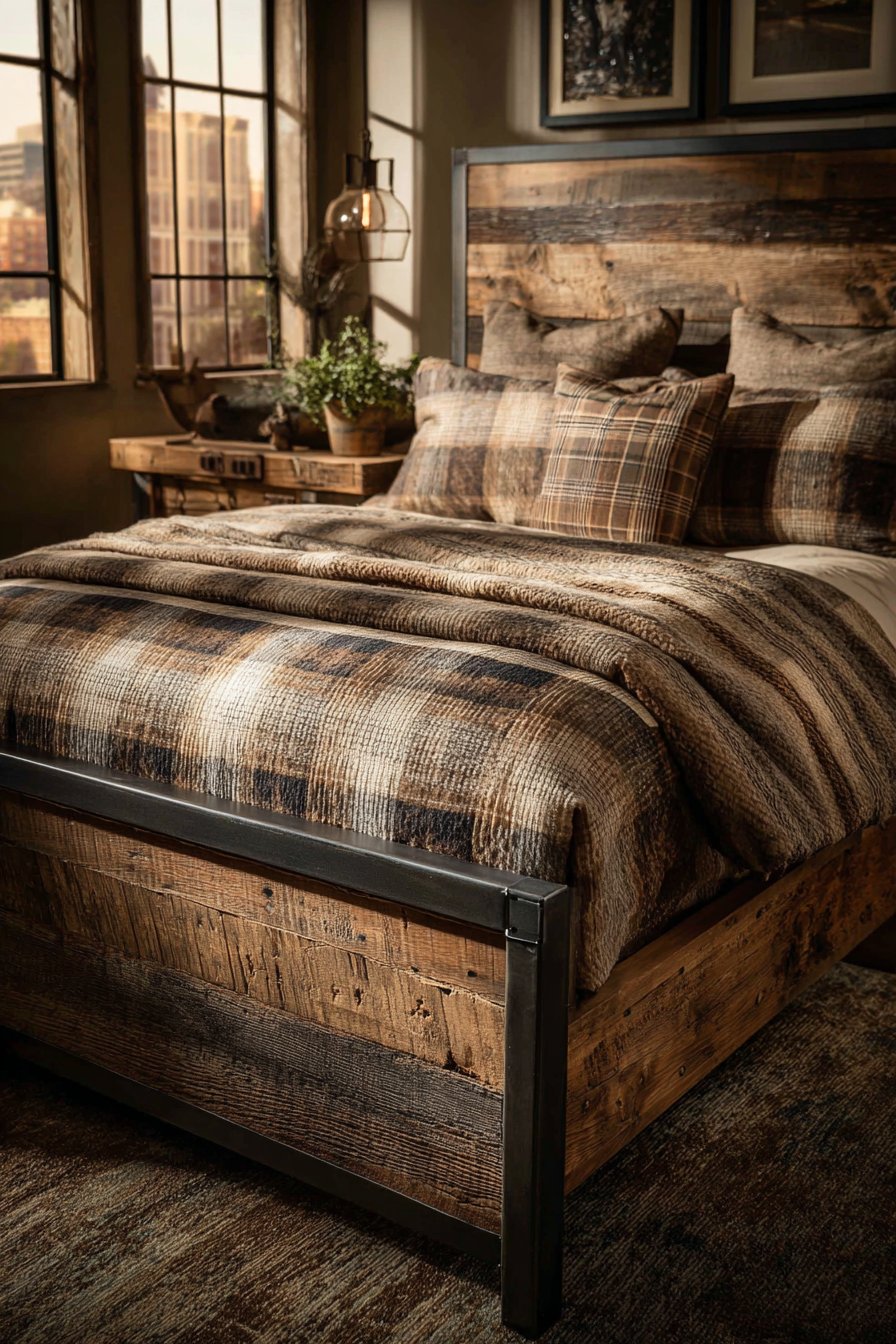
This industrial wood bed design features reclaimed wood planks with original nail holes and weathering, combined with blackened steel corner brackets and hardware. The raw headboard showcases varied wood tones—from grey to brown to warm amber—and authentic wear patterns that tell the story of the wood’s previous life. The steel elements aren’t decorative additions but functional structural components, with exposed bolts and angular brackets that provide necessary support while creating the utilitarian aesthetic.
Paired with simple grey bedding and vintage metal accessories, the design creates the warehouse-loft aesthetic associated with industrial style. Natural light from large windows illuminates the space while emphasizing the rugged wood character and the contrast between organic wood and manufactured metal. The combination of materials creates visual interest through contrast—rough versus smooth, organic versus geometric, warm versus cool.
Architectural photography style captures the utilitarian aesthetic and honest material expression with particular attention to metal-wood connections and how structural elements become decorative features. The composition shows how industrial design celebrates function and construction, where showing how something is built becomes part of its aesthetic appeal rather than something to conceal.
Key Design Tips:
- Source reclaimed wood with authentic aging and wear rather than artificially distressed new lumber
- Use blackened or raw steel rather than polished finishes to maintain industrial character
- Leave bolt heads and structural connections visible as design features
- Choose varied wood tones within the same piece rather than achieving uniform color
- Pair with simple, utilitarian bedding and accessories that don’t compete with the raw materials
- Position near large windows to flood the space with natural light that enhances the industrial aesthetic
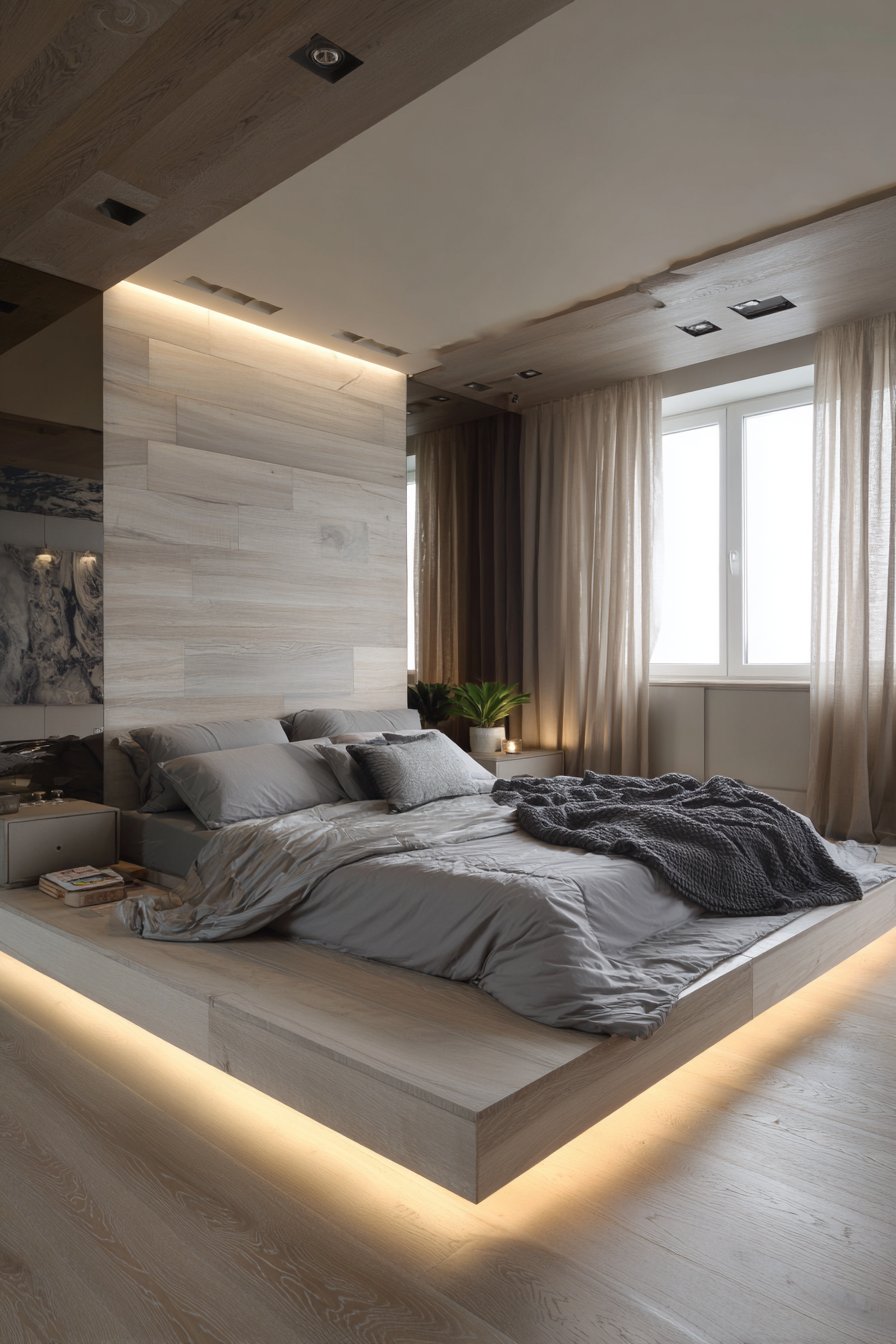
17. Oak Frame with Recessed LED Under-Lighting
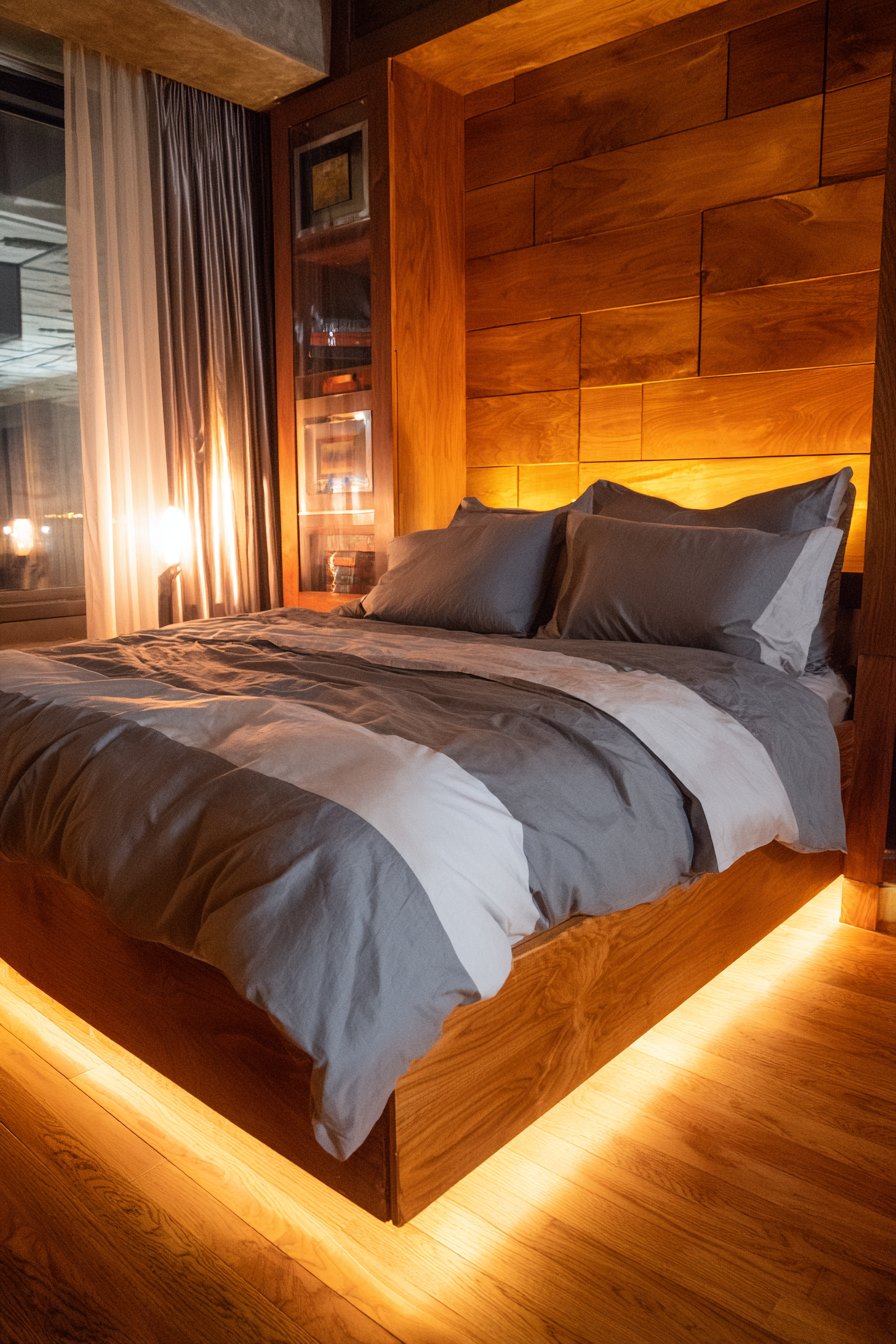
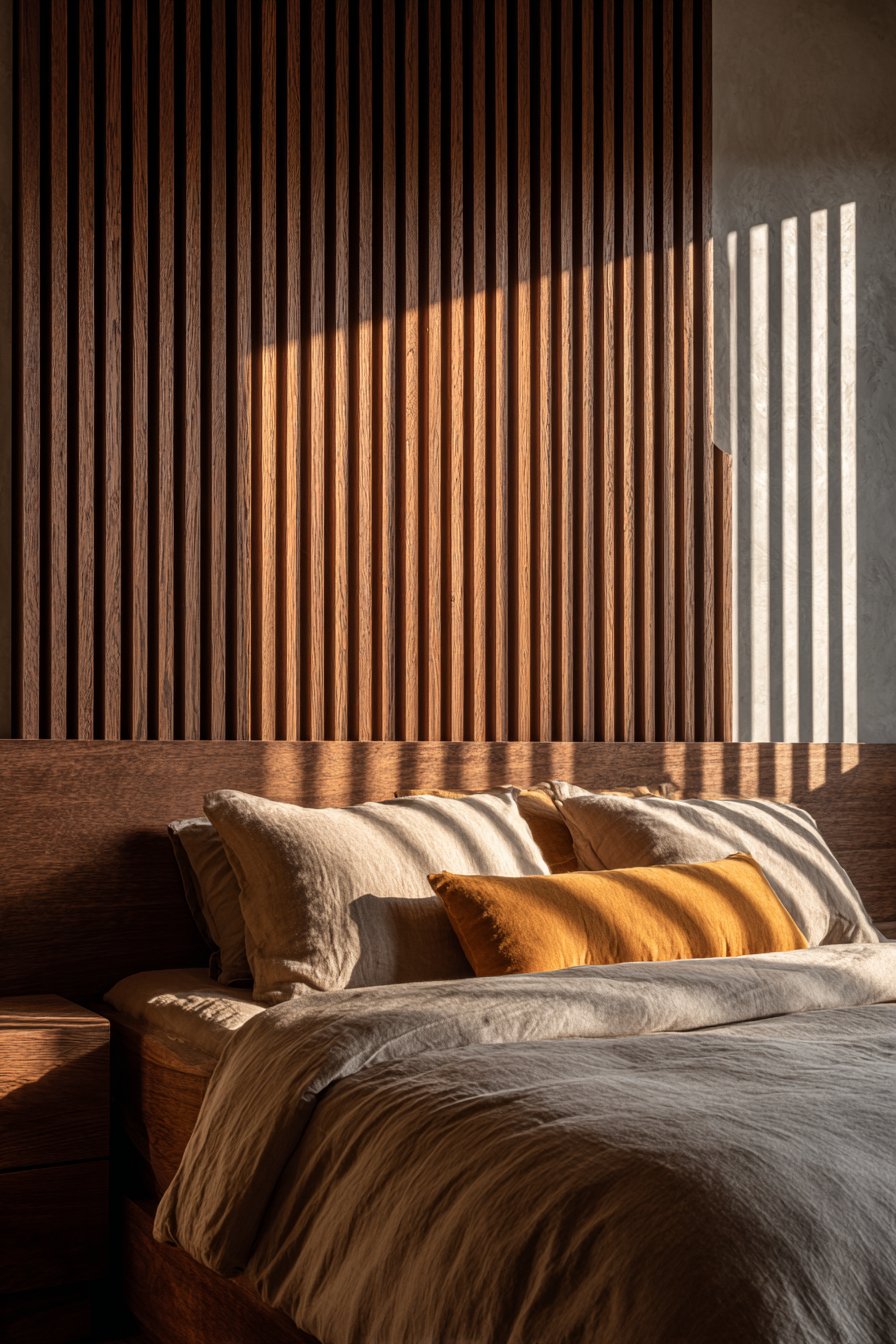
This wood bed design with integrated lighting ideas showcases an oak frame with LED strip lighting recessed into the underside of the platform base, creating a floating glow effect that adds contemporary flair and practical functionality. The headboard features hidden uplighting behind wood panels, creating ambient illumination that washes the wall and highlights the wood grain. Modern bedding in cool grey tones provides a contemporary canvas that allows the lighting effects to take center stage.
Evening ambient lighting demonstrates the integrated illumination while natural material textures remain visible through the soft glow. The LED lighting is dimmable, allowing adjustment from bright task lighting for reading to soft ambient glow for atmosphere. The floating effect created by the under-lighting makes the substantial bed appear to hover, adding visual lightness while the warm LED color temperature complements the oak’s natural honey tones.
Interior design photography captures both the practical lighting feature and the contemporary wood design with particular attention to the atmospheric glow effect. The composition shows how integrated lighting transforms a bed from static furniture to a dynamic element that adapts to different times of day and activities, where technology integration enhances rather than detracts from the natural wood aesthetic.
Key Design Tips:
- Select warm white LED strips (2700-3000K) to complement wood tones rather than cool white
- Recess LED strips properly so light source isn’t directly visible when standing or sitting in bed
- Include dimming capability to adjust lighting from functional to atmospheric
- Use oak or other medium-toned woods that work with both natural daylight and LED lighting
- Consider battery backup for LED strips if using them as nighttime navigation lighting
- Ensure electrical connections are concealed and wiring is properly managed within the frame structure
18. Walnut Slatted Headboard with Geometric Rhythm
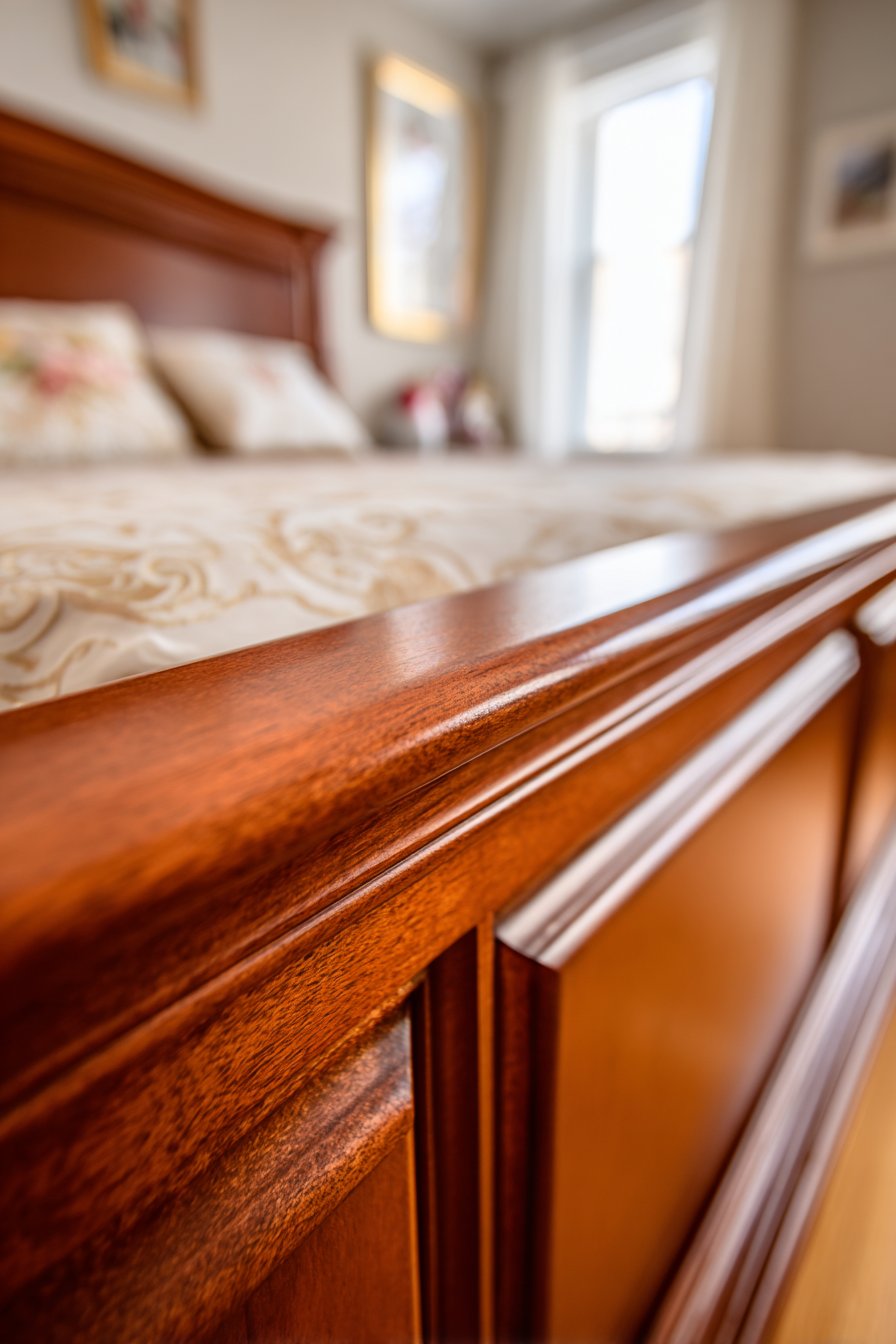
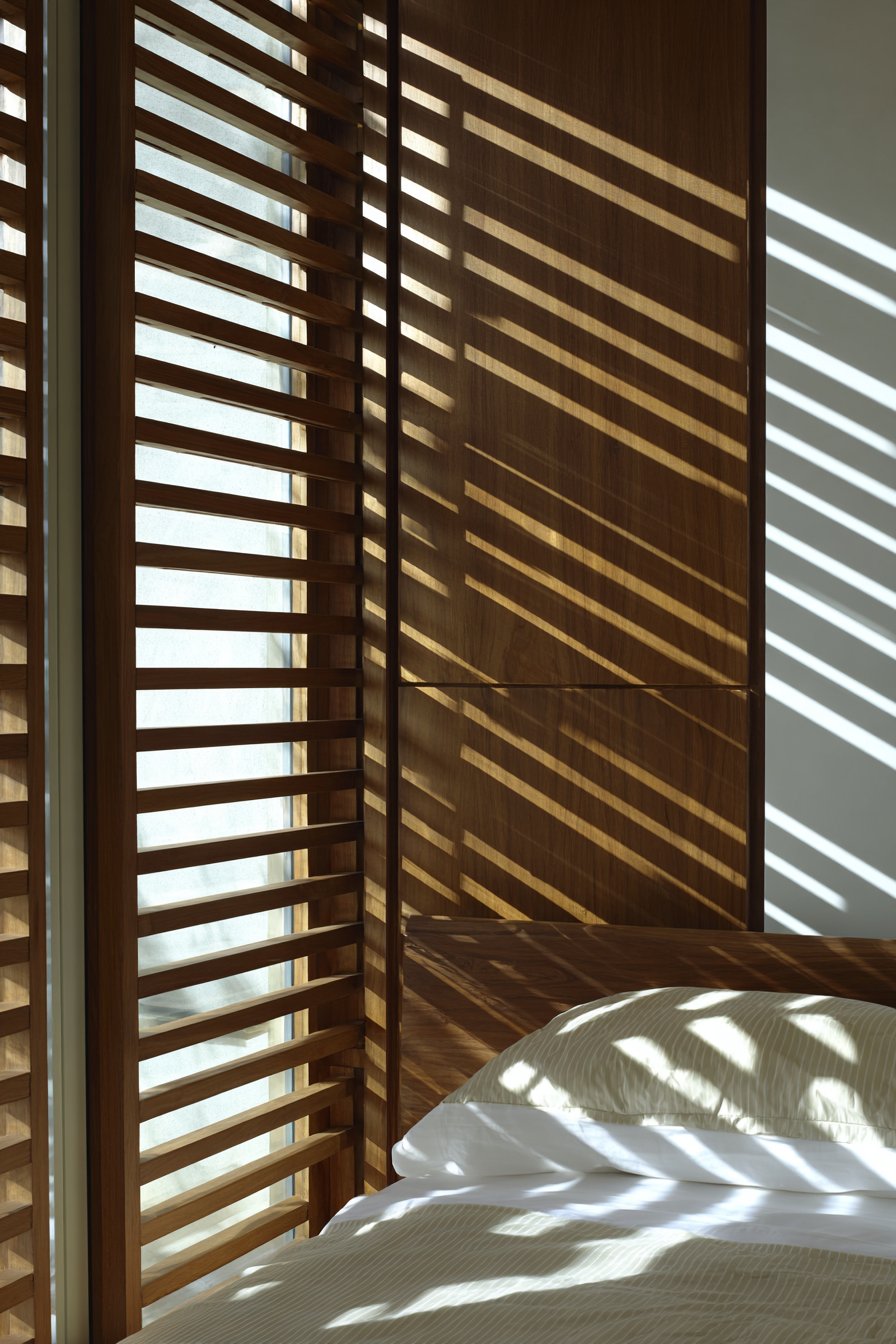
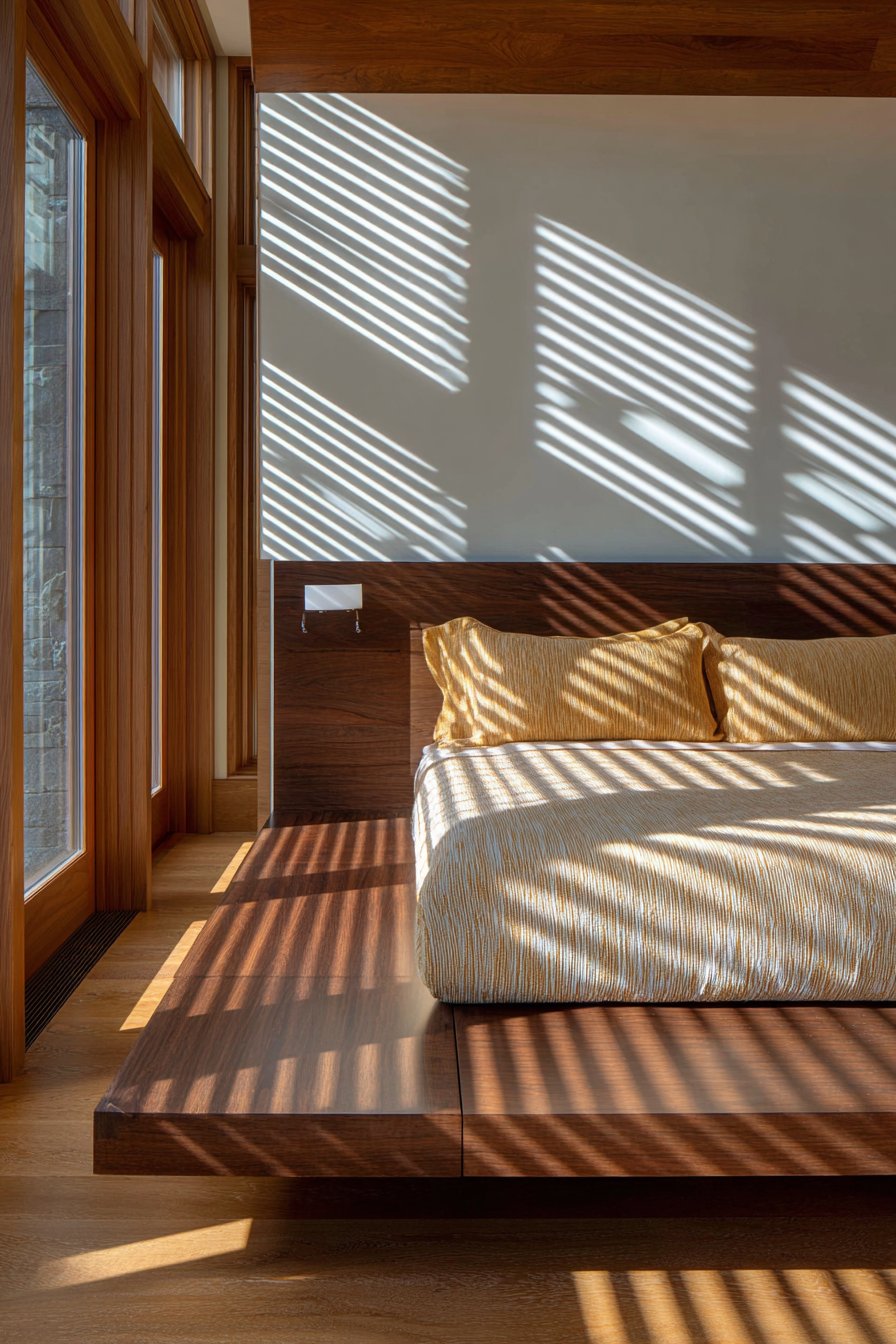
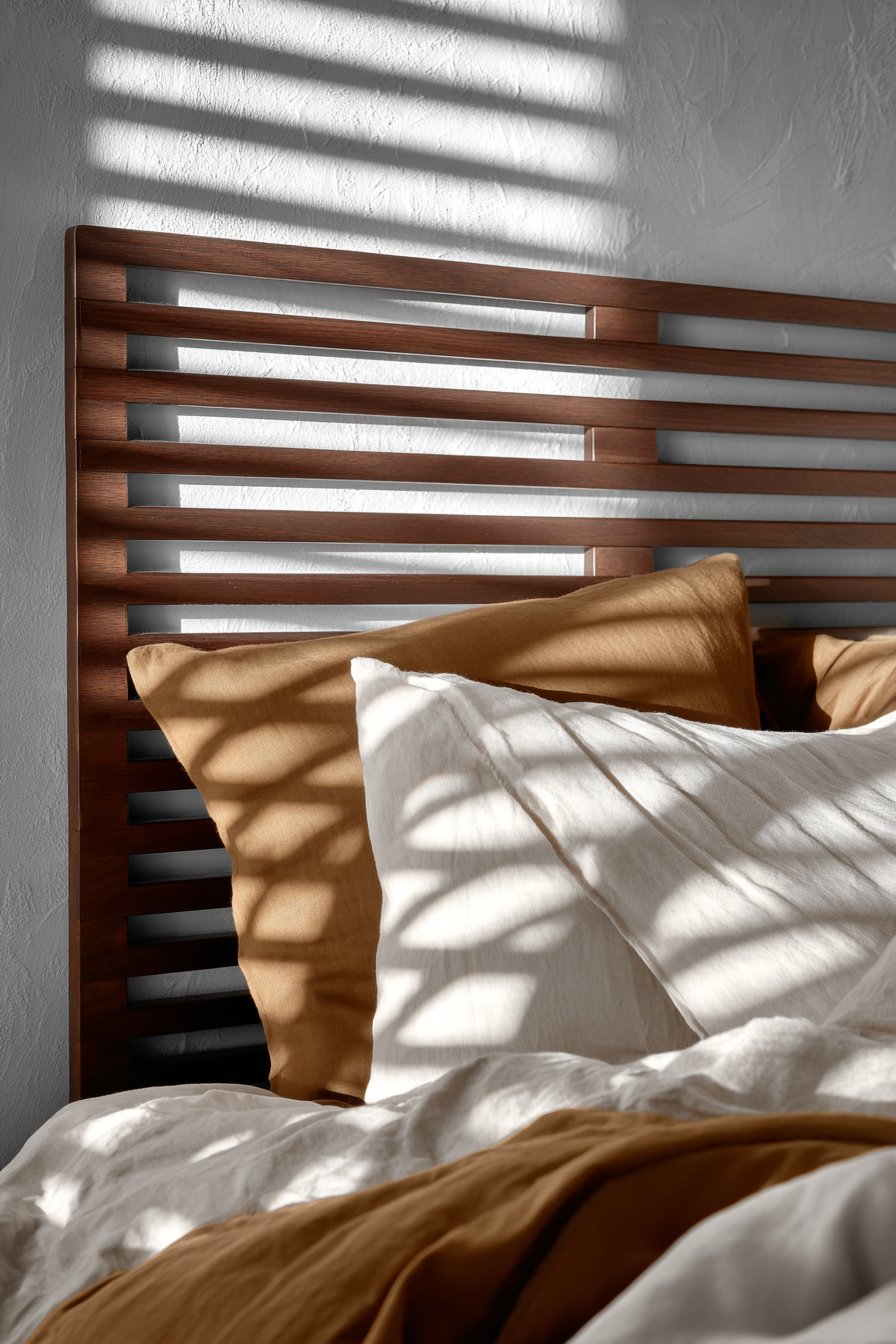
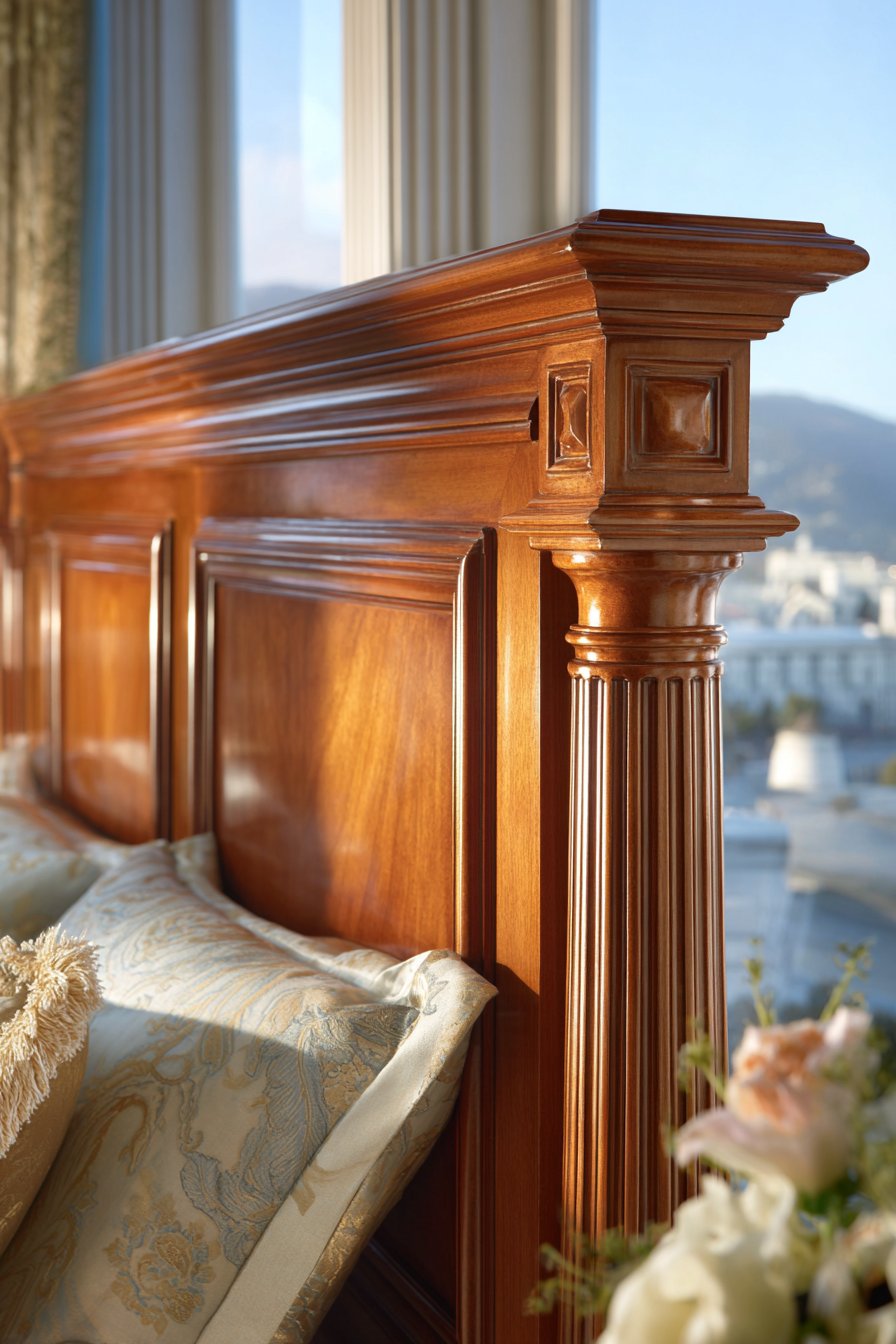
This wood bed design idea featuring slatted headboard detail showcases horizontal walnut slats spaced evenly across a frame structure, creating visual rhythm and texture. The platform base continues the slatted aesthetic on the side panels, maintaining design consistency while allowing air circulation. The spacing between slats creates interesting shadow patterns, with gaps that prevent the headboard from appearing too heavy or solid while the horizontal orientation emphasizes width and creates a calming, restful visual effect.
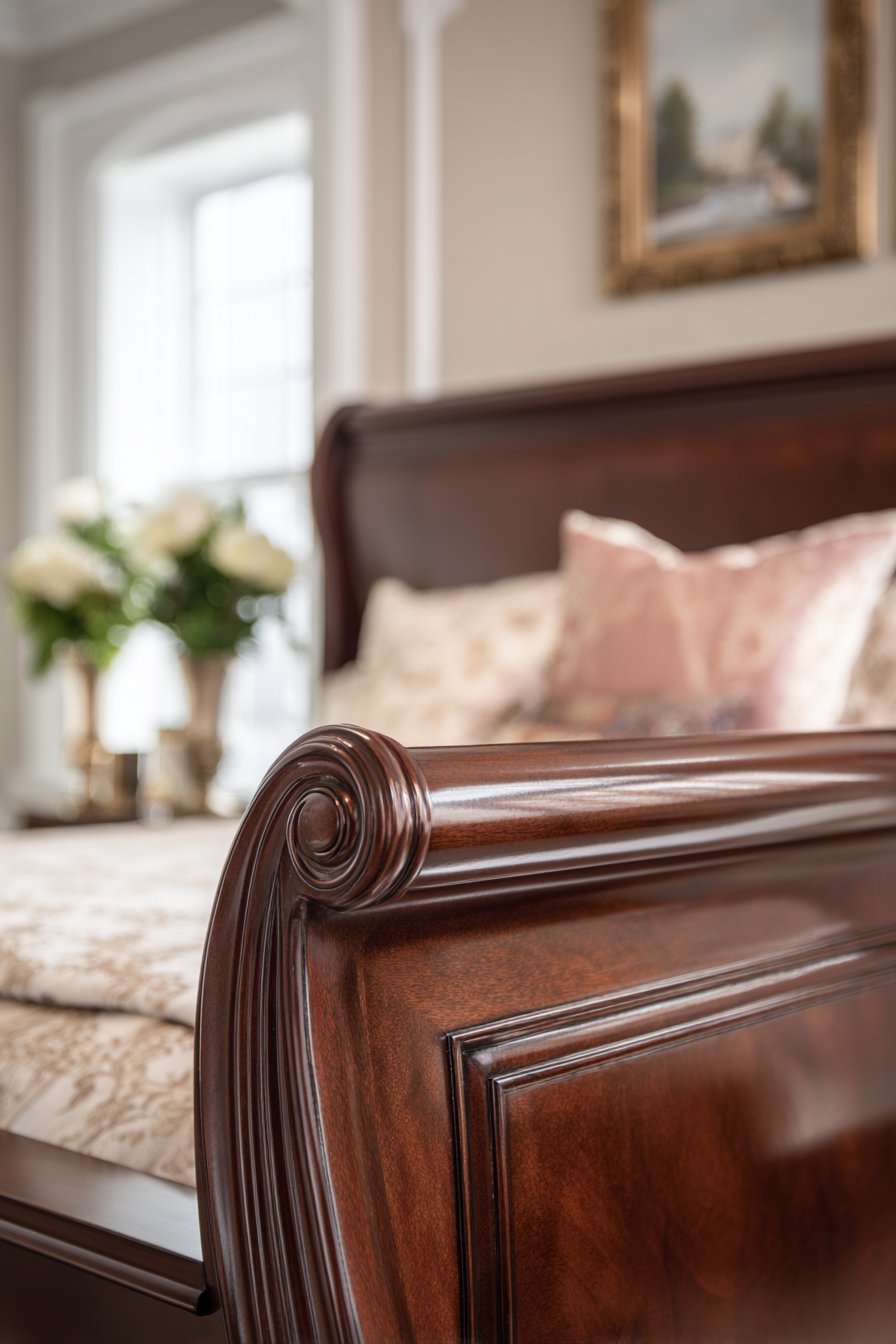
Dressed with organic bedding in warm neutrals, the design demonstrates how geometric repetition can create visual interest without pattern or color. Natural daylight filters through the slats creating interesting shadow patterns on the wall behind, with the light and shadow play changing throughout the day as the sun moves. The walnut’s rich brown tones provide warmth while the slatted design maintains contemporary sophistication.
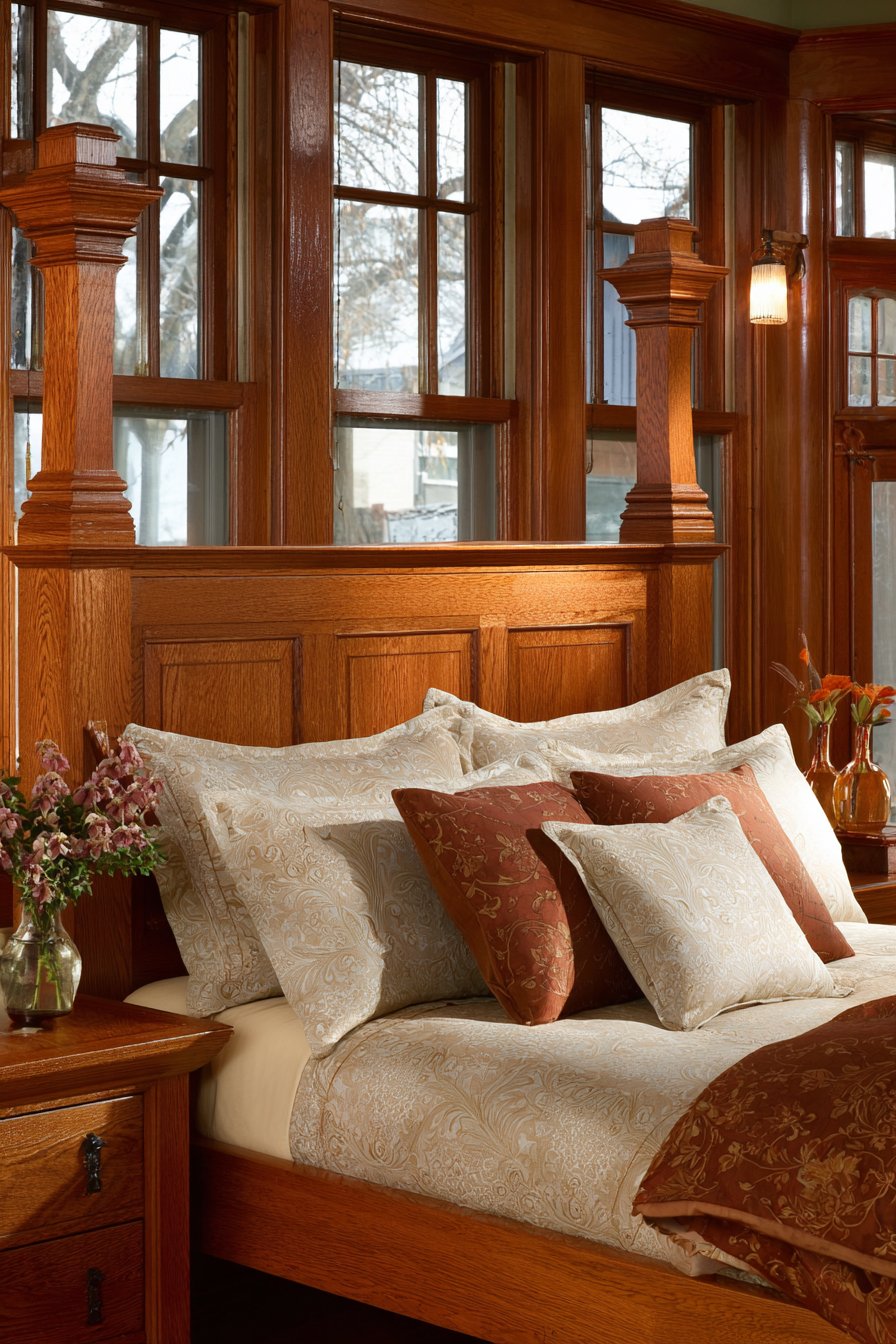
Professional interior photography emphasizes the geometric slatted pattern and the interplay of light and shadow through the wood elements. The composition captures how the slats create dimension and depth, where the gaps between wood members become as important to the design as the wood itself, creating a sense of lightness and visual breathing room.
Key Design Tips:
- Space slats evenly with gaps typically 2-4 inches for optimal visual rhythm
- Choose horizontal orientation for calm, restful aesthetics or vertical for height emphasis
- Select walnut or other darker woods where the shadow play will be most dramatic
- Position the bed where natural light can create shadow patterns on the wall behind
- Continue the slatted design on side panels for consistency if budget and design allow
- Consider adding small LED strip behind slats for optional backlighting effect
19. Cherry Wood with Raised Panel Craftsmanship
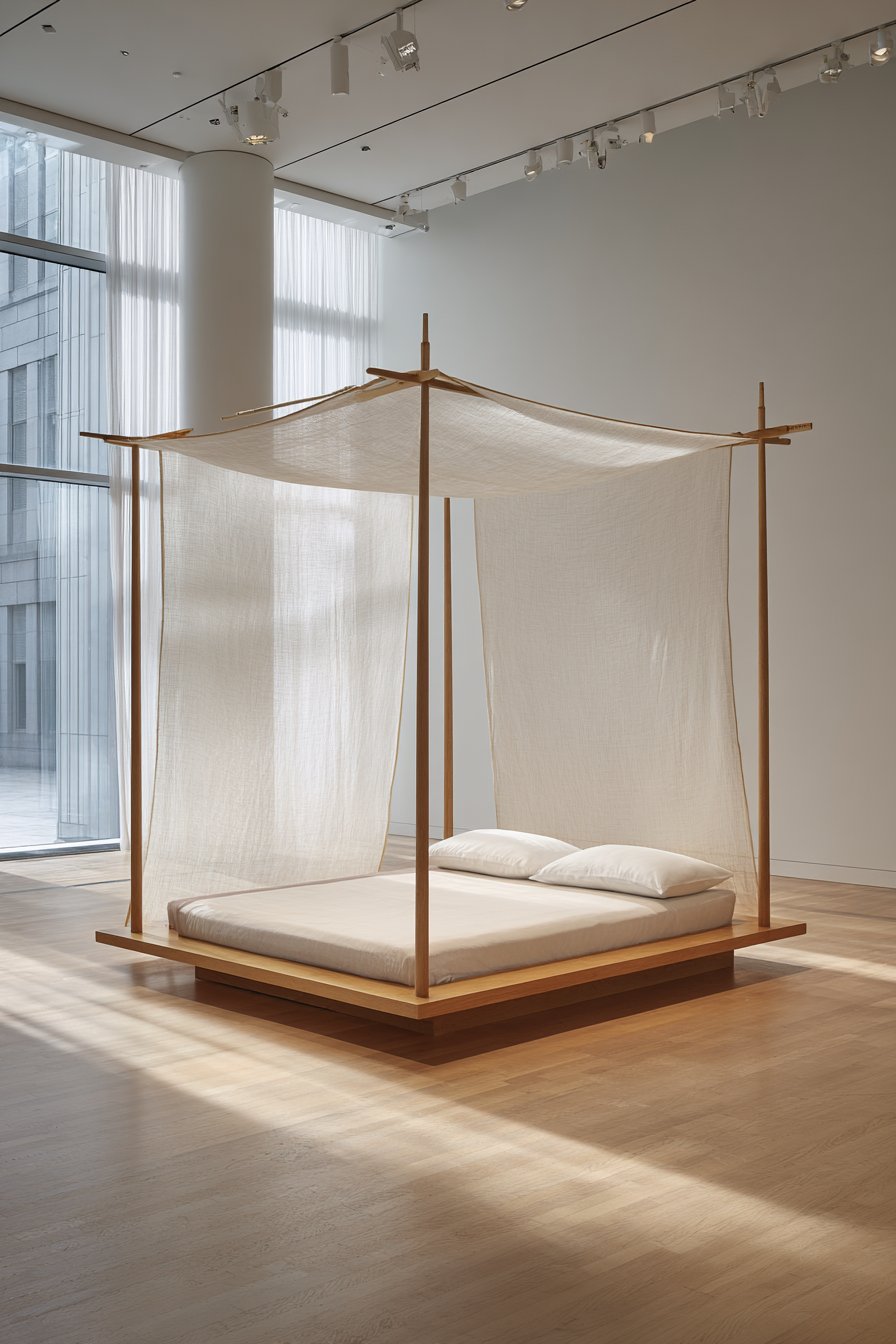
This traditional wood bed design with detailed craftsmanship showcases a cherry wood frame with raised panel headboard featuring traditional mortise and tenon joinery. The frame has a rich amber finish that highlights cherry’s natural luster and brings out the reddish undertones that deepen with age and light exposure. The raised panels create three-dimensional interest, with the frame-and-panel construction demonstrating traditional woodworking techniques where wood movement is accommodated through the joinery design.
Classic bedding with subtle patterns complements the formal aesthetic without competing with the woodwork’s beauty. Soft natural light from bedroom windows creates gentle highlights on the polished wood surface, revealing the satiny luster characteristic of cherry and bringing out the grain’s subtle figure. The wood’s color deepens noticeably over time with light exposure, creating a living finish that evolves and becomes richer with age.
Interior design photography captures the timeless craftsmanship and refined wood finishing with particular attention to joinery details and the wood’s natural luster. The composition demonstrates how traditional furniture making creates pieces of lasting value, where visible joinery and expert finishing showcase the maker’s skill and the wood’s inherent beauty.
Key Design Tips:
- Select cherry for its beautiful color evolution and fine furniture tradition
- Choose raised panel construction for traditional authenticity and visual depth
- Apply hand-rubbed oil finishes or traditional shellac rather than modern polyurethane for authentic luster
- Position where natural light will gradually deepen the wood’s color over time
- Use classic bedding patterns like damask, jacquard, or subtle florals that complement formal aesthetics
- Consider the long-term color deepening when selecting initial stain color—cherry darkens significantly
20. Birch Posts with Minimalist Canopy Frame
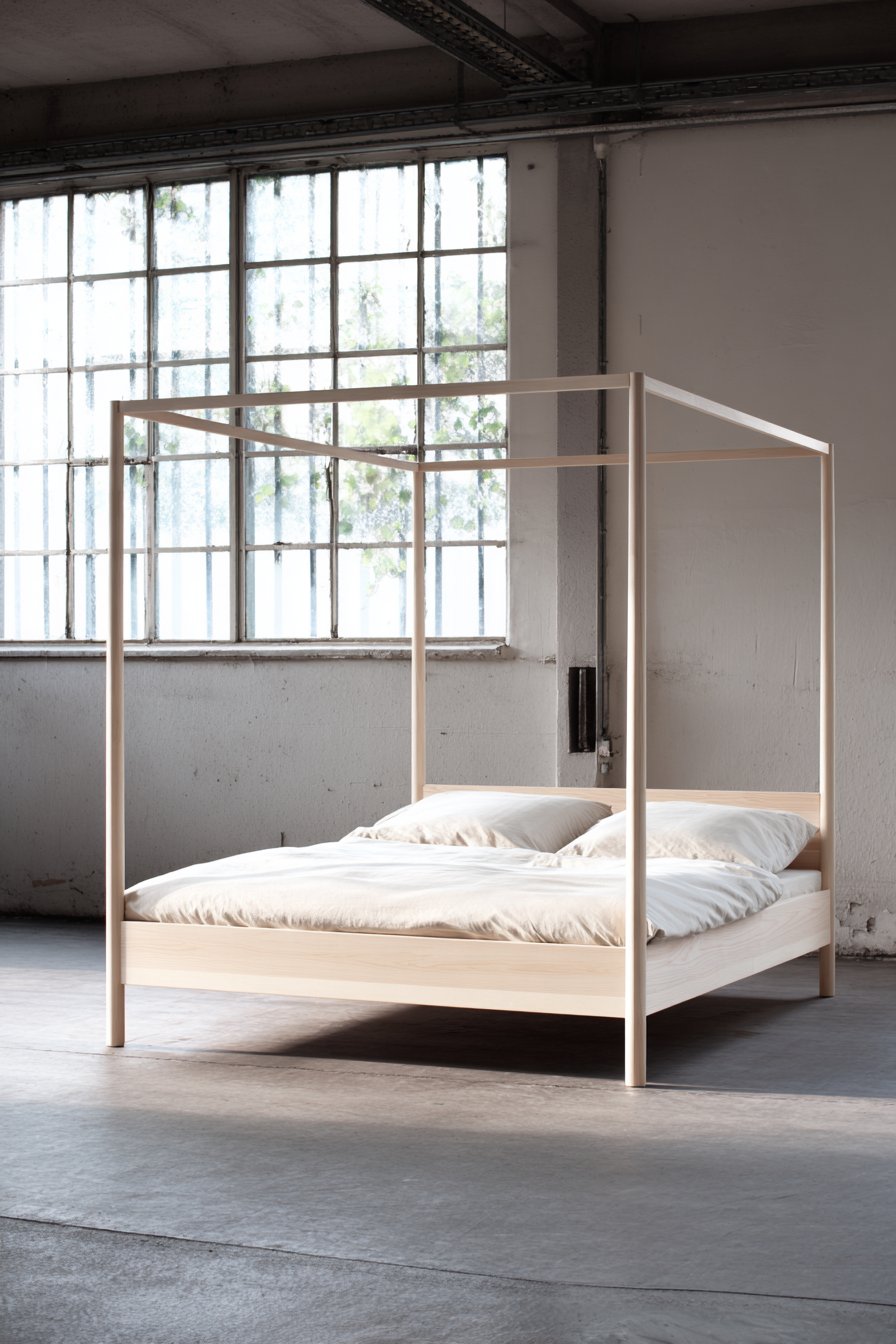
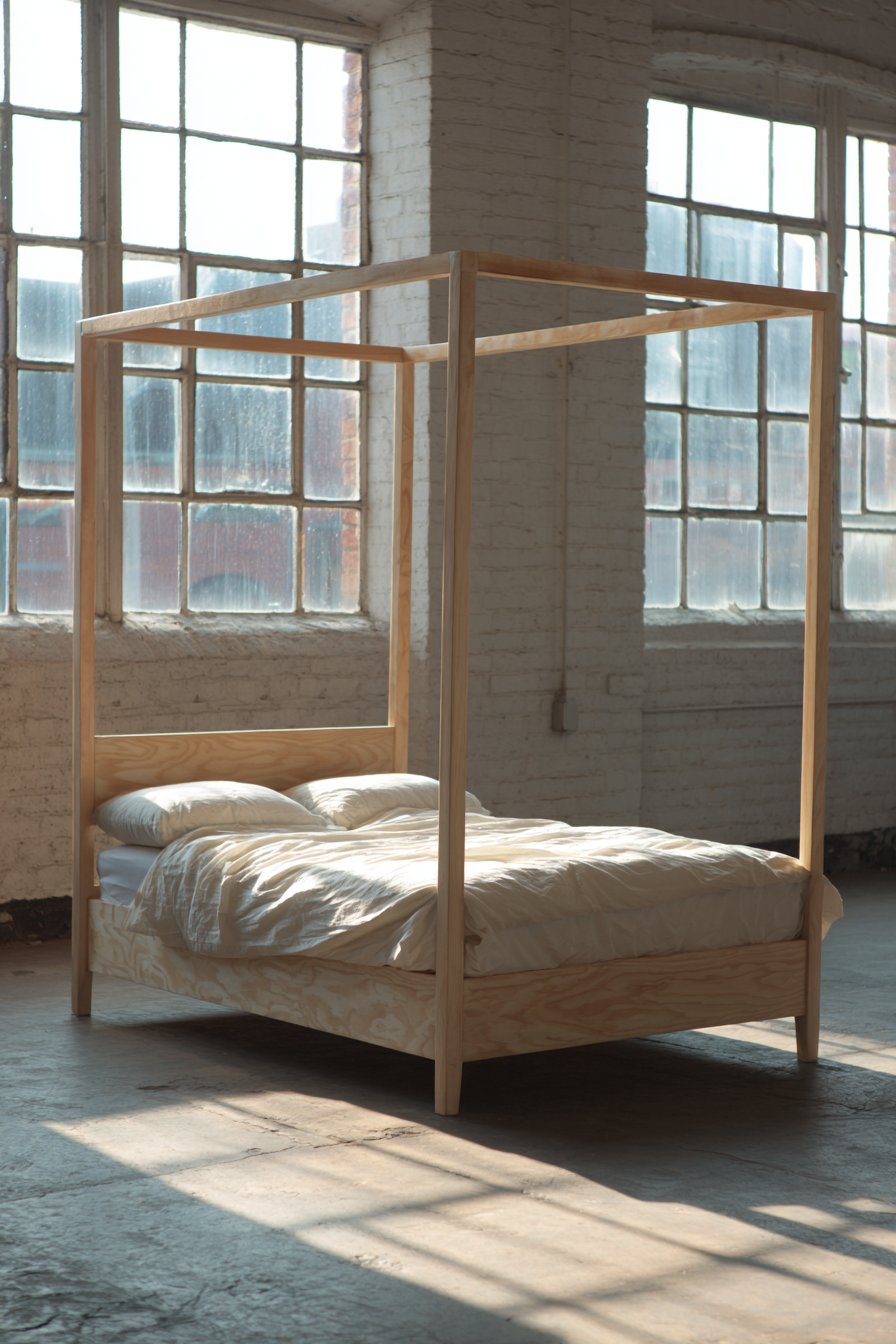
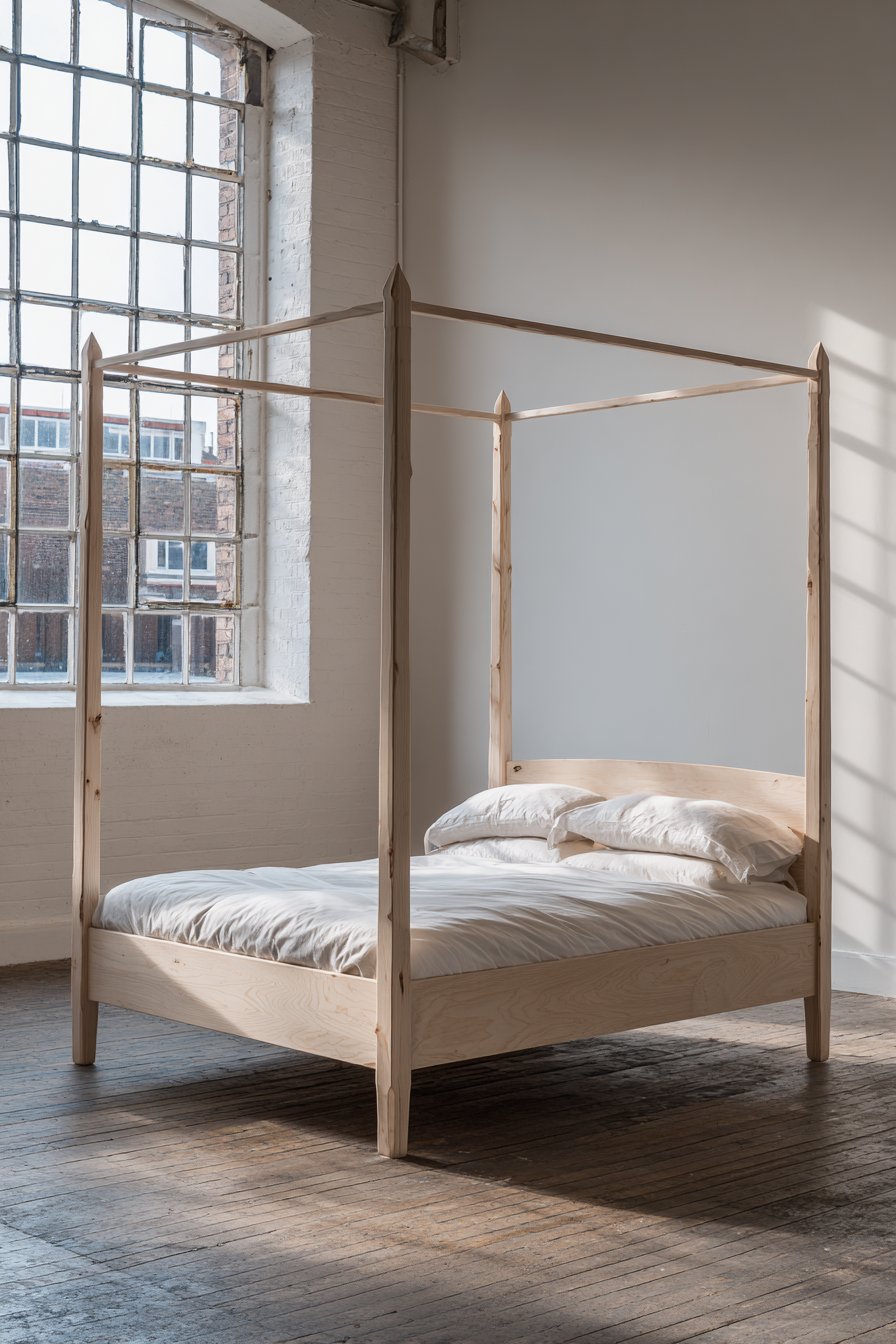
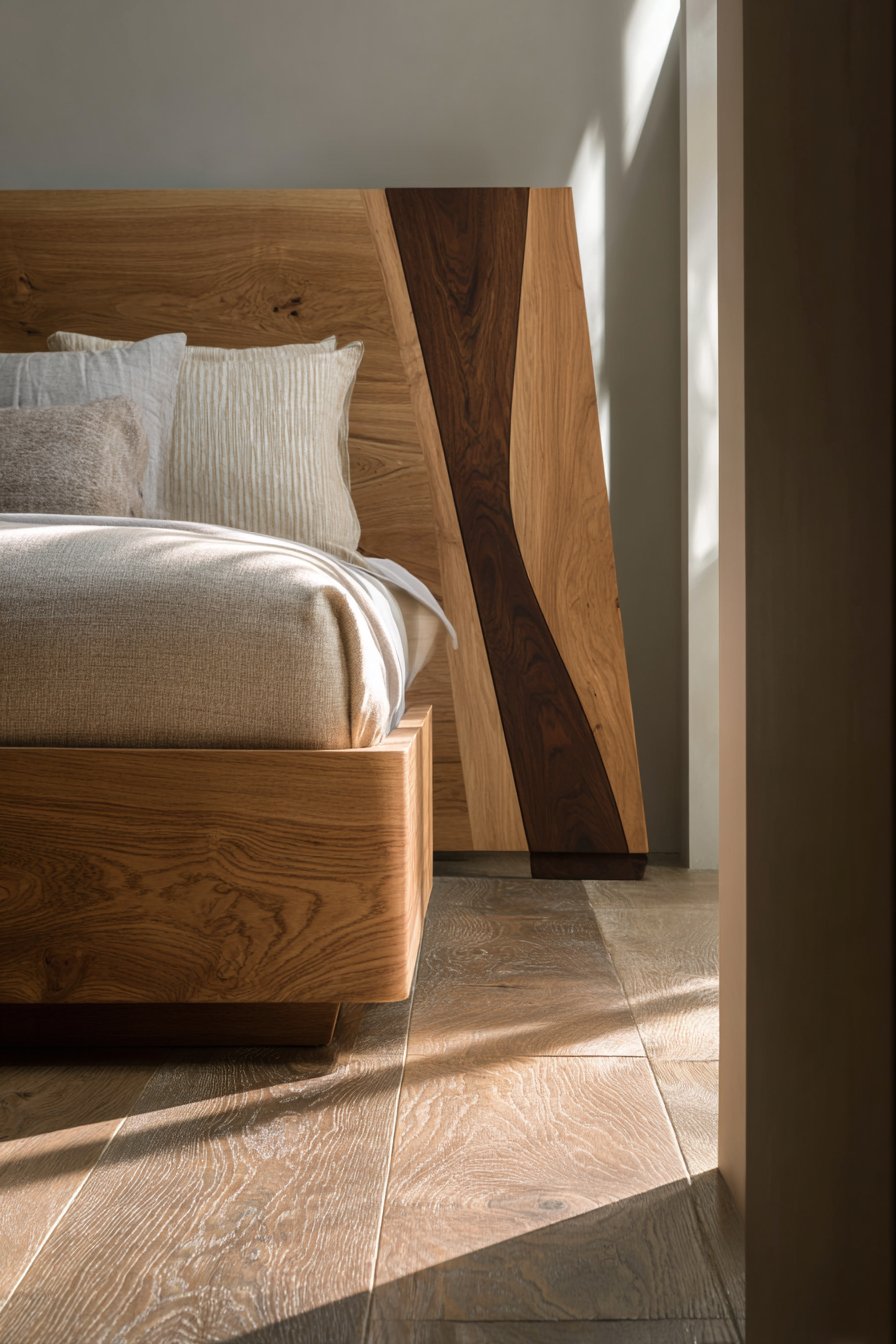
This wood bed design with canopy frame ideas features slender birch posts supporting a simple rectangular canopy frame, with no fabric draping to maintain an airy feel. The low platform base continues the light wood aesthetic, with the pale birch creating a nearly white appearance that keeps the room feeling spacious despite the canopy structure. The minimalist canopy—just four posts and a connecting frame—creates architectural interest without the heaviness of traditional fabric-draped canopies.
Minimalist white bedding emphasizes the architectural wood structure, allowing the birch posts and frame to provide all the visual interest needed. Natural daylight fills the space, highlighting the pale wood’s subtle grain and creating a bright, Scandinavian-influenced atmosphere. The canopy frame creates a defined spatial zone around the bed without enclosing it, providing architectural definition while maintaining the open, airy quality essential to minimalist design.
Wide-angle interior photography captures the full canopy structure while maintaining the light, uncluttered Scandinavian aesthetic. The composition shows how the canopy posts draw the eye upward and create vertical interest without adding weight or visual clutter, where the structure enhances the room’s architecture rather than dominating it.
Key Design Tips:
- Choose birch or similarly pale wood to maintain lightness despite the canopy structure
- Keep posts slender—typically 2-3 inches square maximum—to avoid visual heaviness
- Connect posts with simple rectangular frame rather than ornate canopy structures
- Skip fabric draping to maintain the minimalist, airy aesthetic
- Ensure ceiling height of at least 9 feet for canopy beds to avoid claustrophobic feeling
- Use the canopy frame for string lights or minimal greenery rather than heavy drapery
21. Mixed Maple and Walnut Two-Tone Design
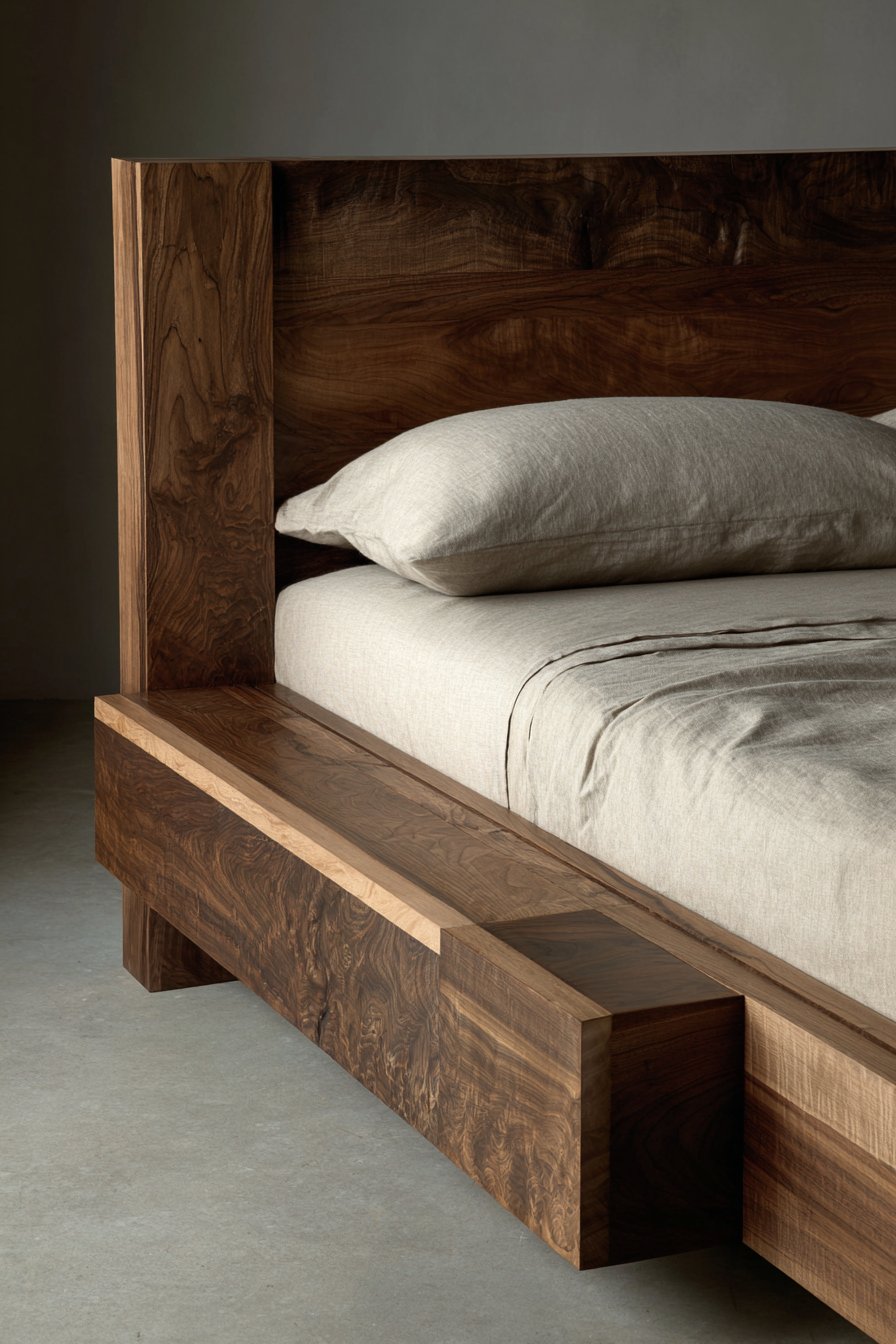
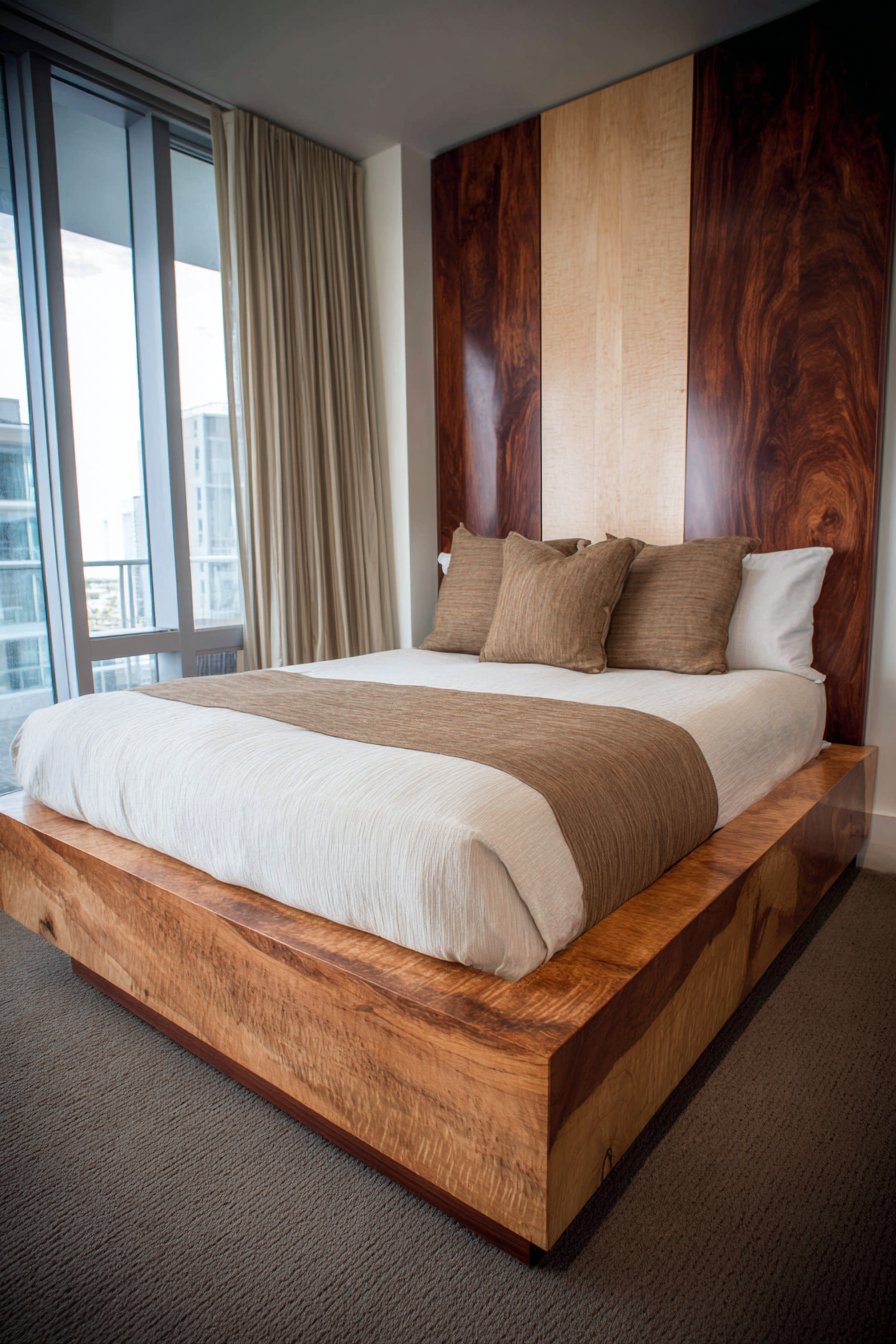
This wood bed design idea with mixed wood tones showcases a creative frame combining light maple for the platform base and headboard frame with dark walnut accent panels creating visual contrast. The two-tone design adds contemporary interest while maintaining wood warmth throughout, with the contrast between light and dark wood creating graphic impact. The combination demonstrates how different wood species can be successfully mixed when the design is intentional and the proportions carefully considered.
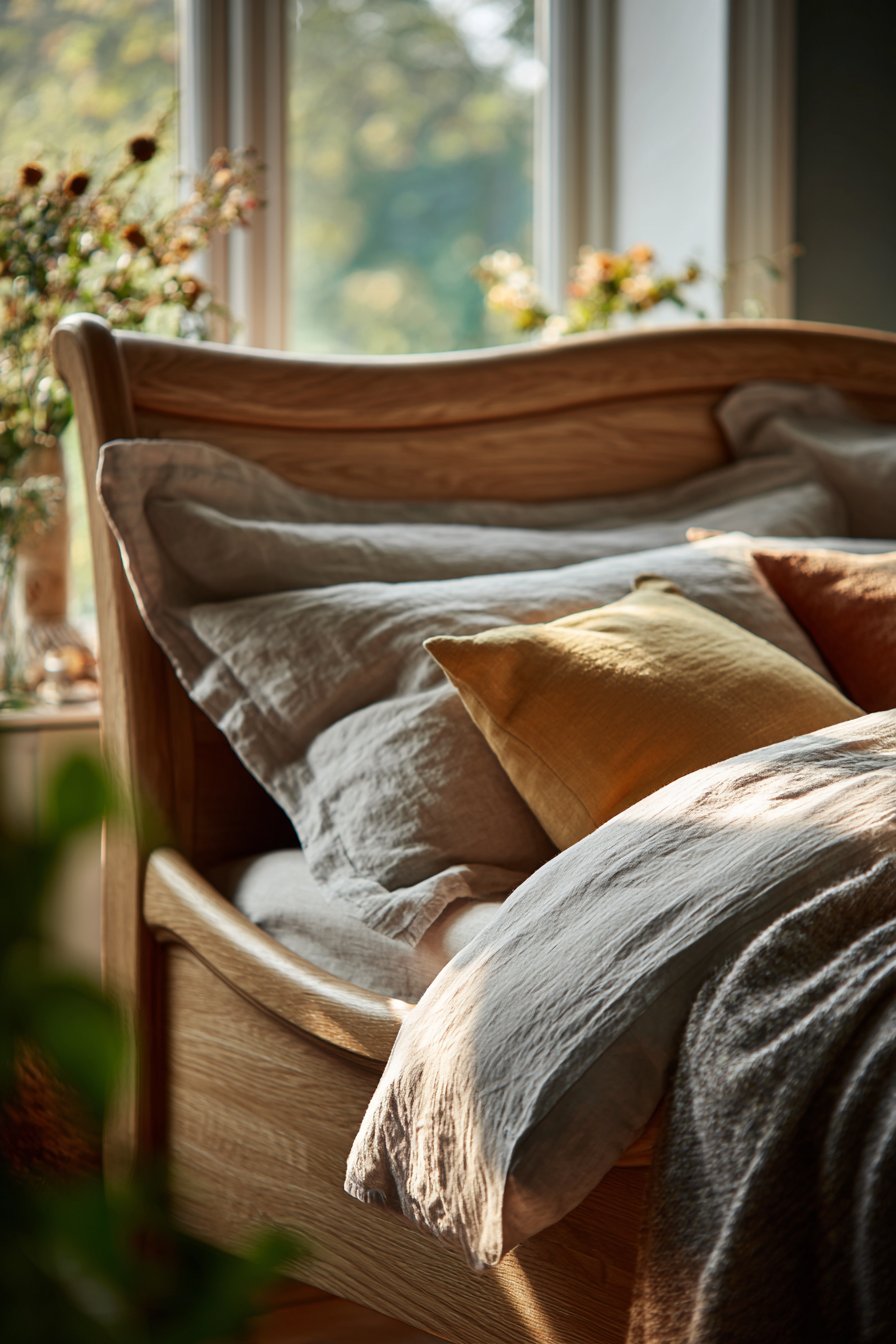
Neutral bedding allows the wood combination to shine without competing patterns or colors, keeping focus on the material contrast. Natural lighting emphasizes the distinct wood species and their contrasting grain patterns, revealing how maple’s fine, uniform grain differs from walnut’s more pronounced figure. The composition requires careful attention to which wood plays the dominant role and which serves as accent, with the proportion of each wood carefully balanced.
Professional interior photography captures the innovative material pairing with balanced exposure showing both wood types clearly and revealing how the two species work together. The composition demonstrates how creative wood combinations can create contemporary interest while respecting each material’s natural characteristics, where the contrast enhances rather than compromises each wood’s beauty.
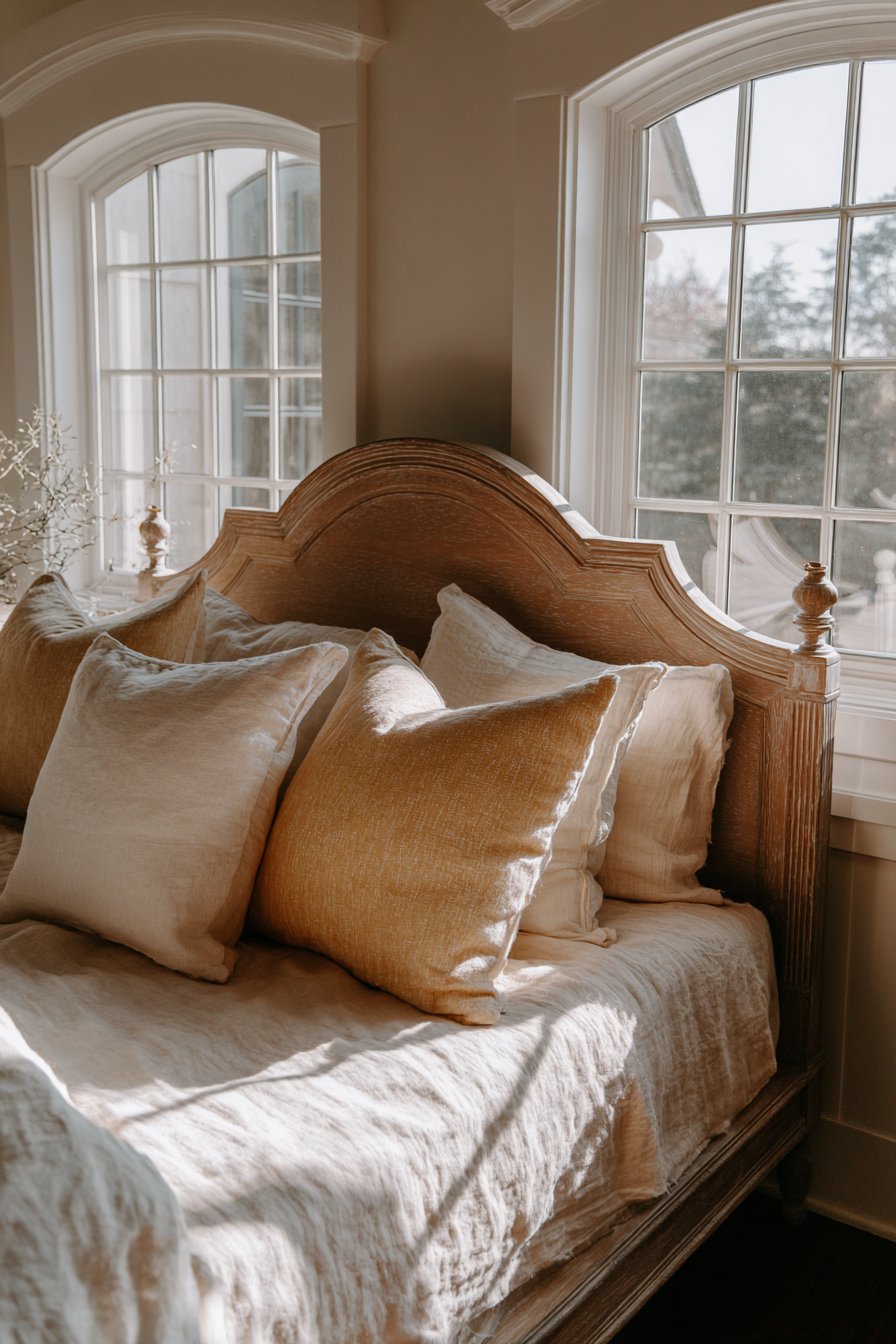
Key Design Tips:
- Choose woods with sufficient contrast—pair light with dark rather than two similar tones
- Use one wood as dominant (60-70%) and the other as accent (30-40%) for balanced proportion
- Ensure both woods share similar grain scale—either both fine-grained or both prominent
- Apply compatible finishes to both woods so sheen levels match even if colors differ
- Consider how natural aging will affect each wood’s color over time
- Keep hardware and accessories neutral to avoid introducing a third competing finish
22. Curved Oak Headboard with Organic Flowing Lines
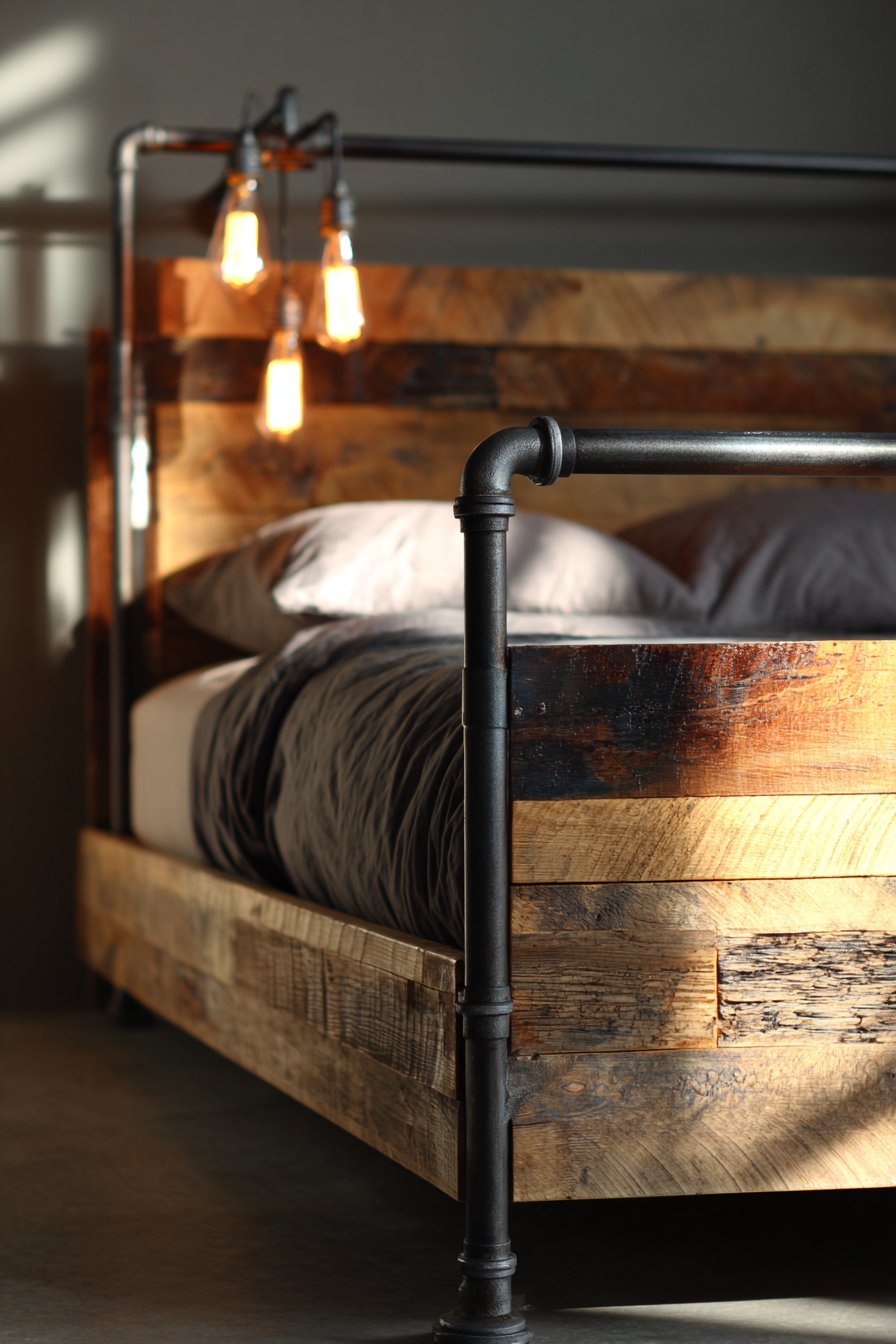
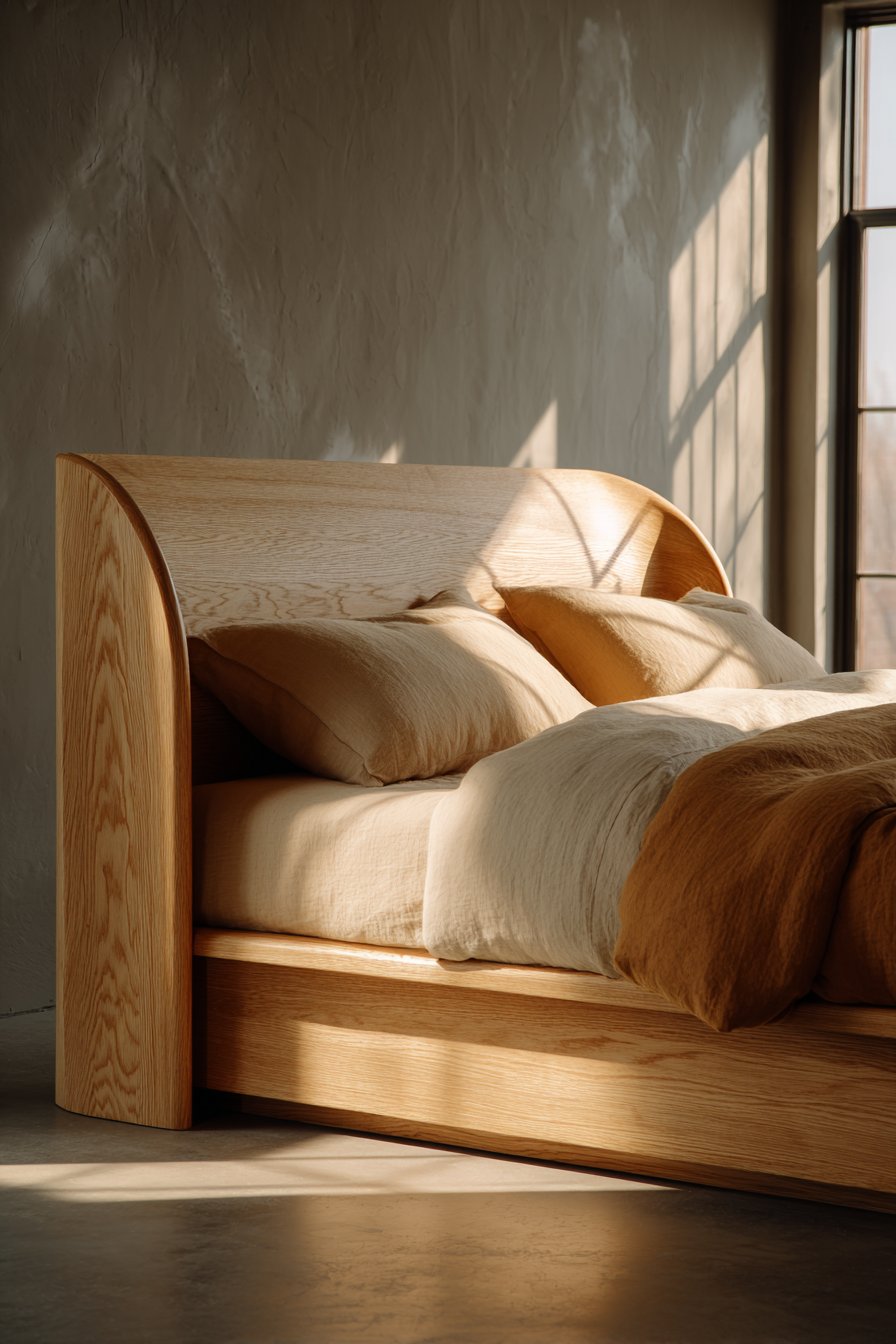
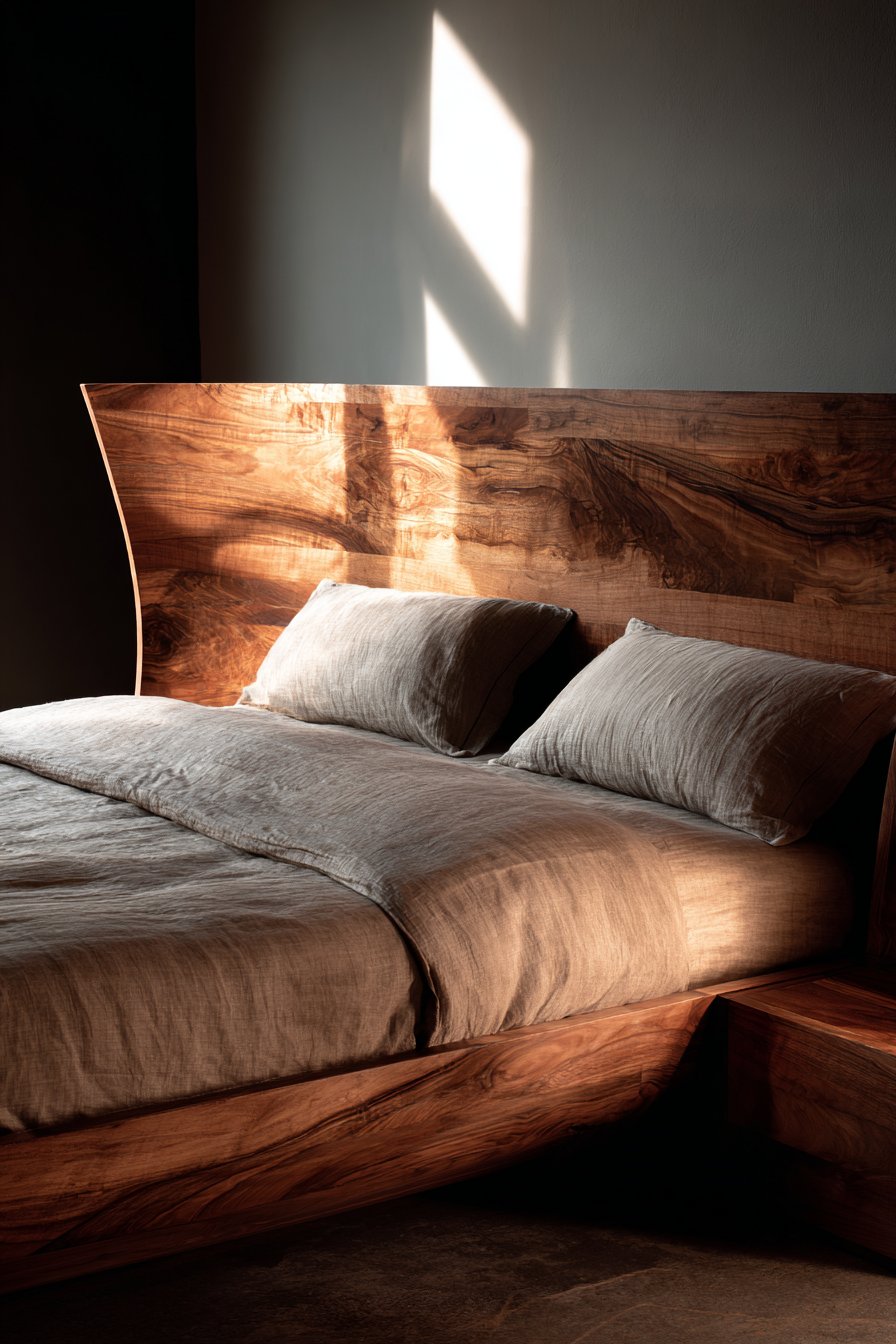
This wood bed design with curved headboard features a solid oak frame with a gently arched headboard top creating soft, organic lines that contrast with the straight platform base. The smooth curves demonstrate the woodworker’s skill in shaping solid wood into flowing forms, with the natural oak finish showing beautiful grain flowing along the curved form. The curves soften the overall aesthetic, making the substantial oak feel more approachable and less rigid than purely geometric designs.
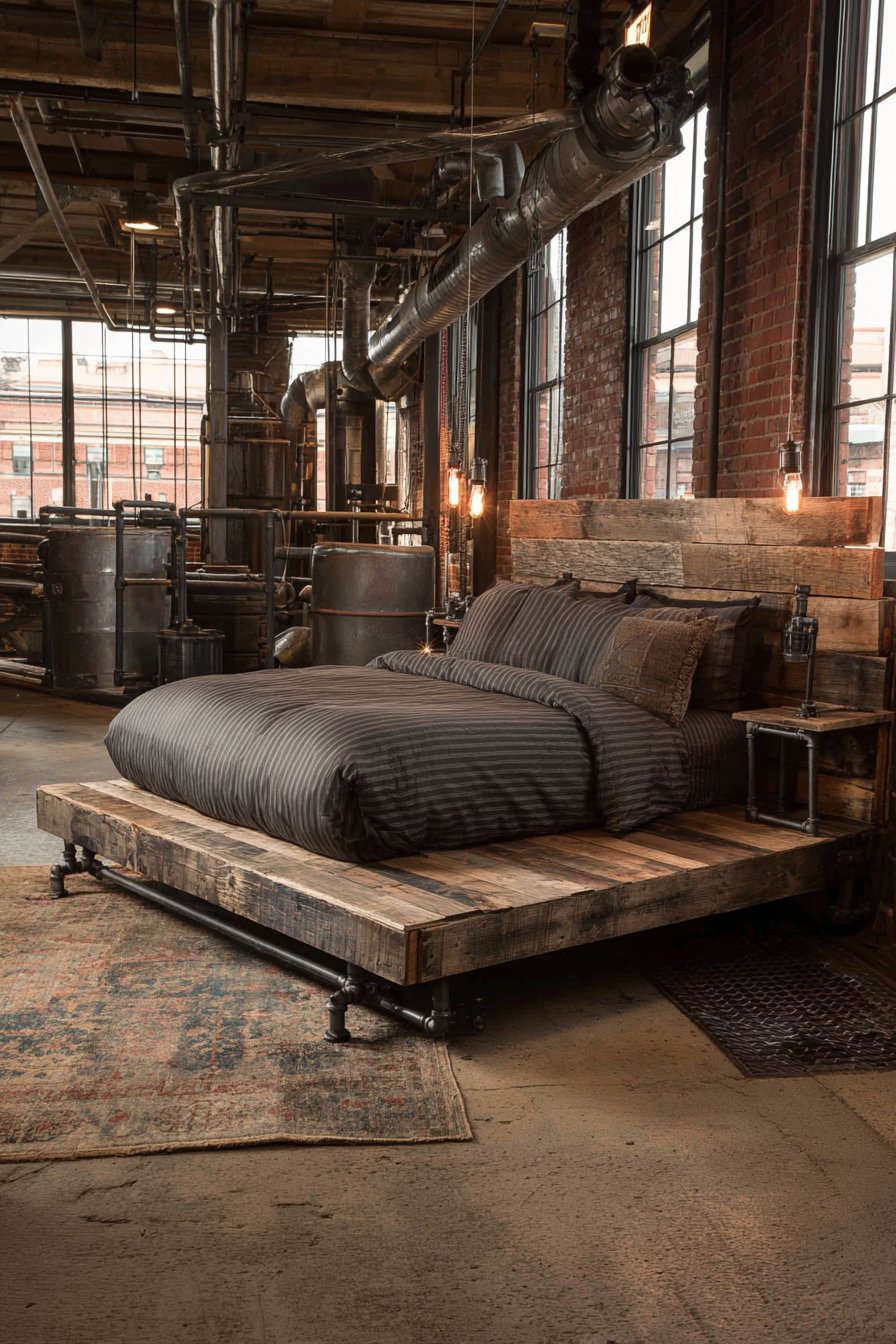
Dressed with soft linen bedding in warm tones, the design demonstrates how organic curves create a more inviting, restful aesthetic than hard angles. Natural window light creates highlights that emphasize the curved woodwork and smooth finish, with light moving across the curved surface differently than it would across flat planes. The flowing grain that follows the curve adds to the organic quality, where wood and form work together harmoniously.
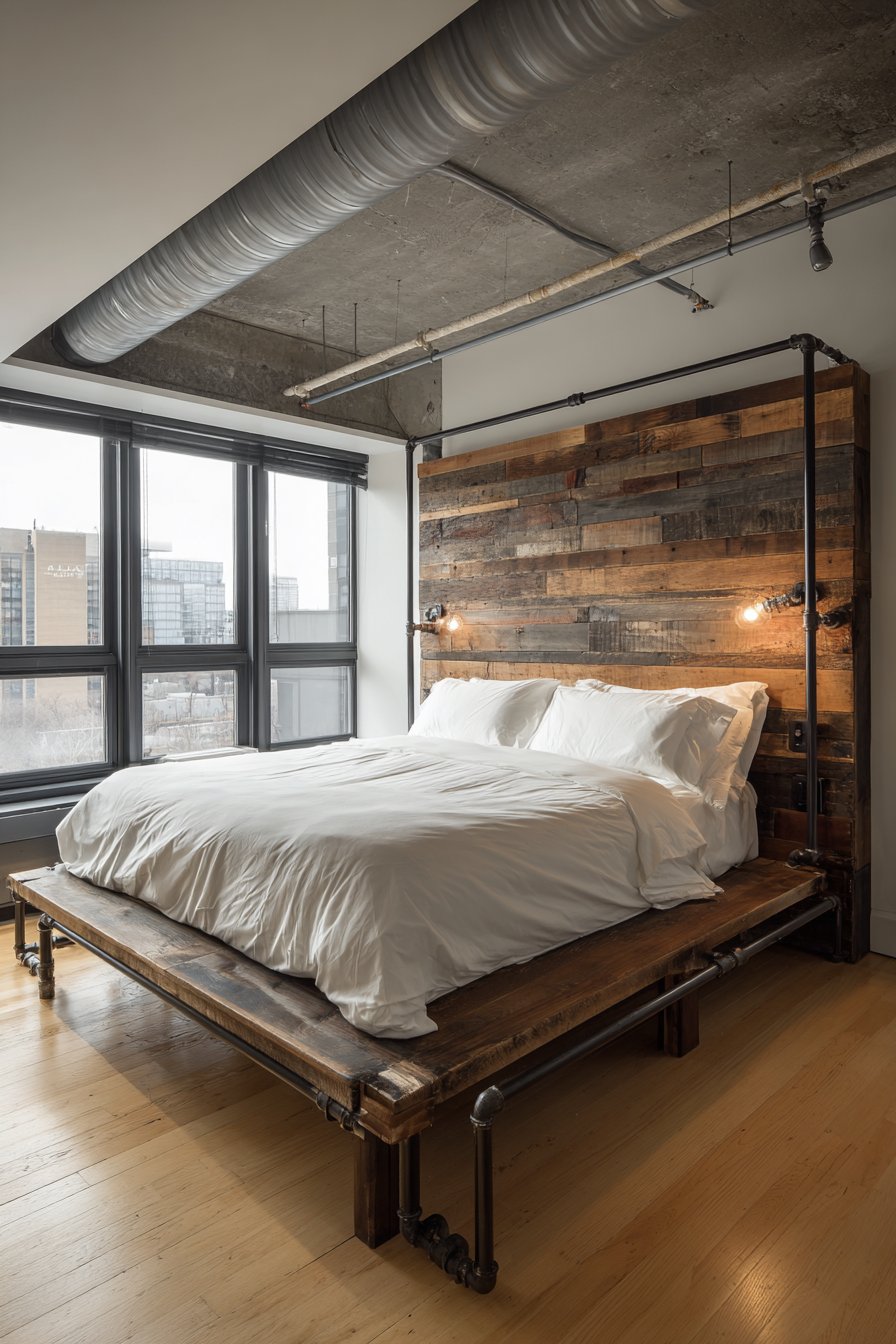
Interior design photography captures the elegant curves and flowing wood grain with particular attention to the organic form and how light interacts with curved surfaces. The composition shows how curves introduce movement and softness, where the eye follows the flowing lines creating a more dynamic interaction with the furniture than geometric forms allow.
Key Design Tips:
- Select oak or other woods that bend well or can be carved to shape without splitting
- Keep curves gentle and sweeping rather than tight for easiest construction and most pleasing proportion
- Sand curved surfaces meticulously as any imperfections are more visible on curves than flat planes
- Apply finishes carefully on curves to avoid drips or uneven coverage
- Pair with soft, organic textiles that complement rather than contrast with the curved aesthetic
- Consider how the curve’s profile appears from various angles in the room
23. Reclaimed Wood and Industrial Pipe Frame
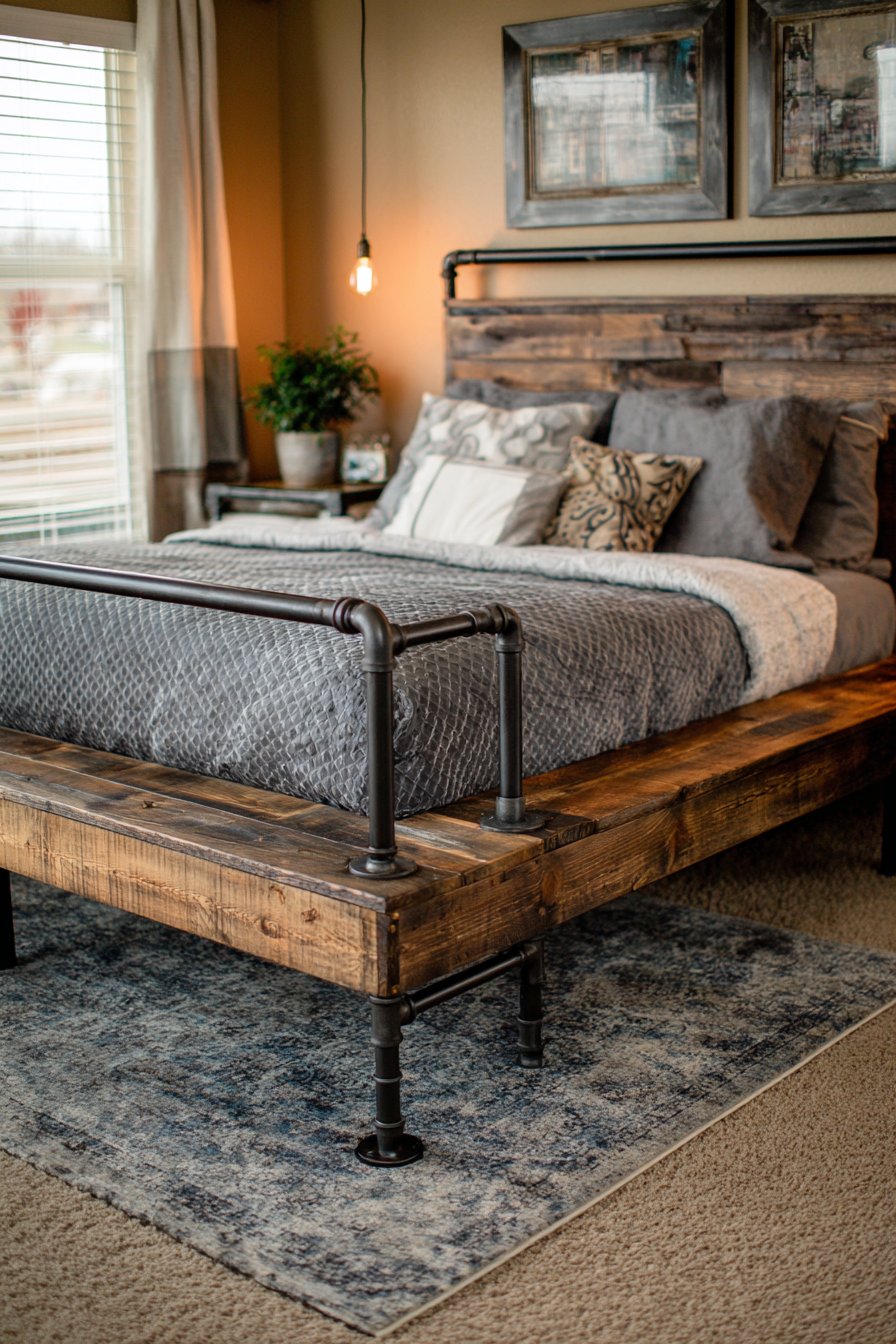
This wood bed design idea with industrial pipe frame combines reclaimed wood planks for the headboard and platform with black iron pipe legs and frame structure. The contrast between rough wood texture and smooth metal creates visual interest, with the industrial pipes providing sturdy support while introducing geometric lines and angles. The reclaimed wood displays varied tones, weathering patterns, and authentic character marks, while the pipes add contemporary industrial edge.
Paired with utilitarian bedding and exposed bulb lighting, the design creates a DIY-inspired aesthetic that celebrates both natural materials and manufactured elements. Natural daylight and artificial light combine to highlight both material textures—the wood’s rough, aged surface and the metal’s smooth, matte finish. The combination creates a masculine, loft-inspired aesthetic that works particularly well in converted warehouse spaces or industrial-style homes.
Architectural photography captures the creative material fusion and DIY-inspired aesthetic with focus on the pipe connections and wood character. The composition shows how the industrial pipe system creates structure and visual interest, where the functional plumbing components become decorative architectural elements that give the bed its distinctive character.
Key Design Tips:
- Use black iron pipe rather than chrome or brass to maintain authentic industrial aesthetic
- Leave pipe threads and fittings visible as design features rather than concealing them
- Source reclaimed wood with authentic aging rather than new wood treated to look old
- Combine varied wood tones within the headboard for visual interest and authenticity
- Keep bedding simple and utilitarian to avoid conflicting with the industrial aesthetic
- Consider mobility—pipe frames can be disassembled more easily than welded metal frames
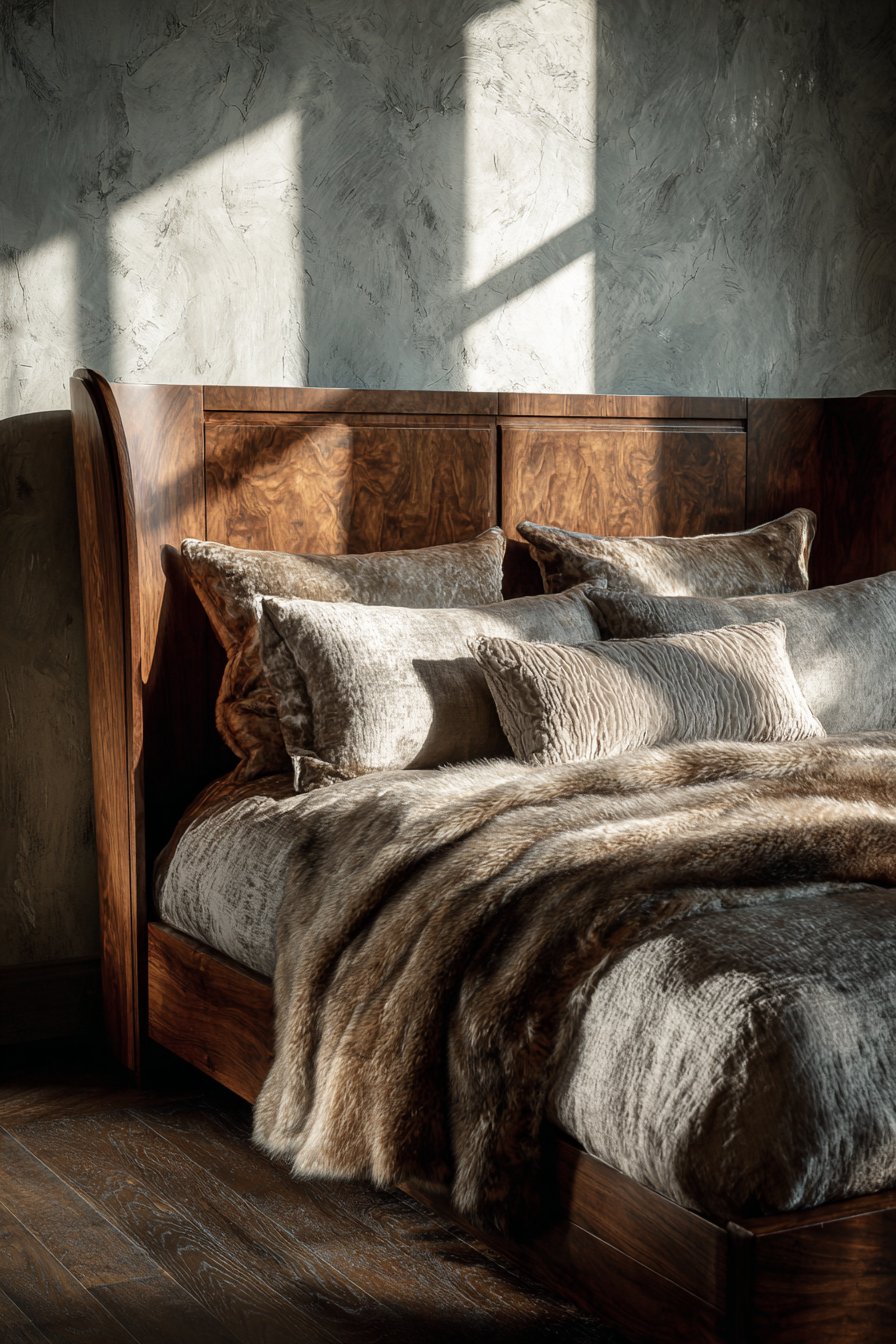
24. Walnut Wingback Headboard with Curved Panels
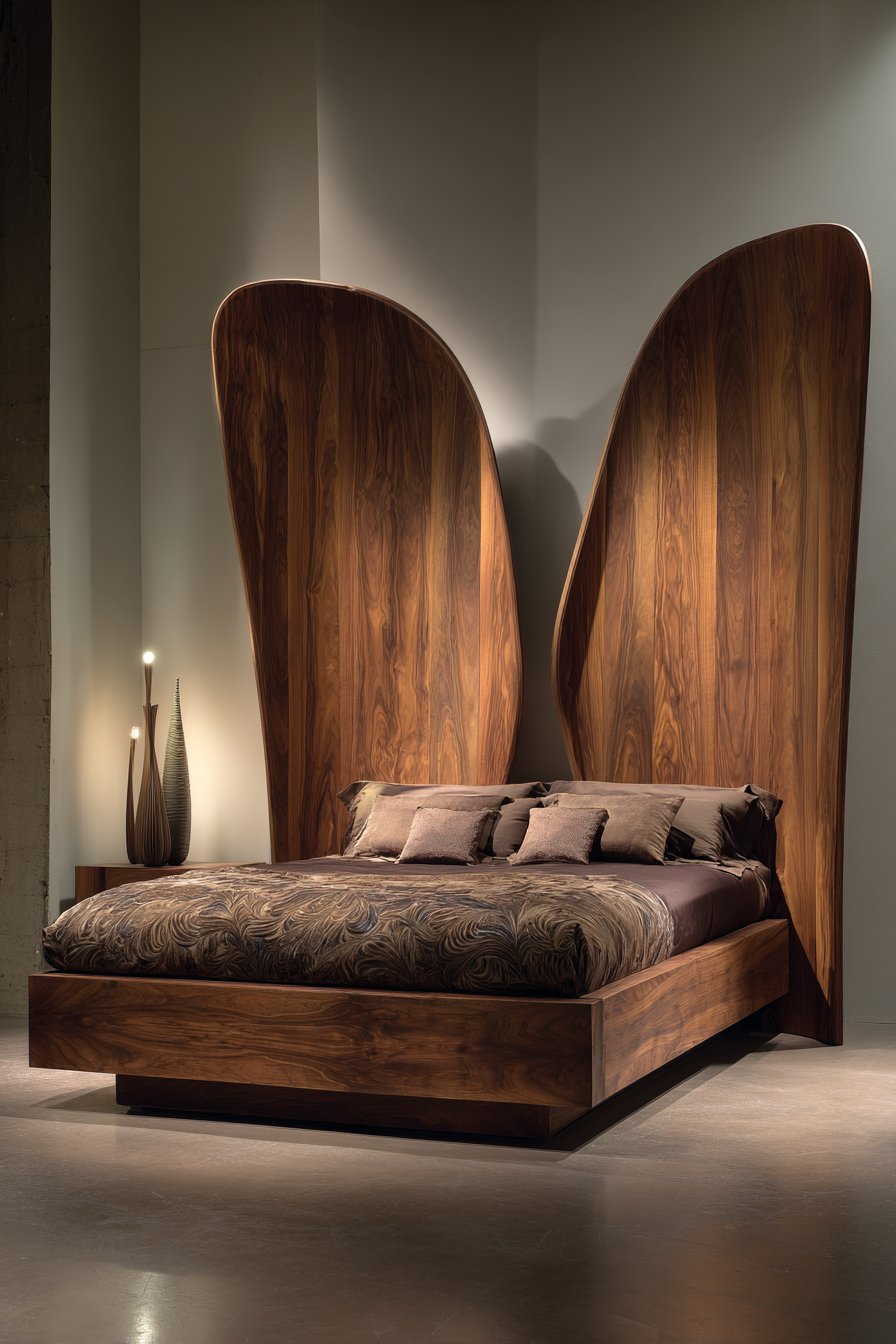
This wood bed design with wingback style headboard features solid walnut construction with curved wing panels extending from a central panel, creating a sheltering effect reminiscent of traditional wingback chairs. The platform base maintains clean contemporary lines, allowing the dramatic headboard to be the focal point. The three-dimensional wing shape creates depth and substance, with the curves introducing soft, protective quality while the walnut’s rich brown color adds warmth and sophistication.
Luxurious bedding in rich textures complements the substantial headboard, with the textiles adding tactile interest that balances the smooth wood surfaces. Soft ambient lighting casts gentle shadows that define the three-dimensional wing shape and reveal the wood grain, with the lighting creating dimensional modeling that emphasizes the sculptural quality of the design. The wings create a sense of enclosure and protection without fully closing off the sleeping area.
Interior design photography emphasizes the dramatic headboard silhouette and sophisticated wood finishing with particular attention to the curved wing details and how they create spatial definition. The composition demonstrates how substantial, sculptural headboards can become room focal points, where the bed transcends its functional role to become a piece of architectural furniture that defines the entire bedroom aesthetic.
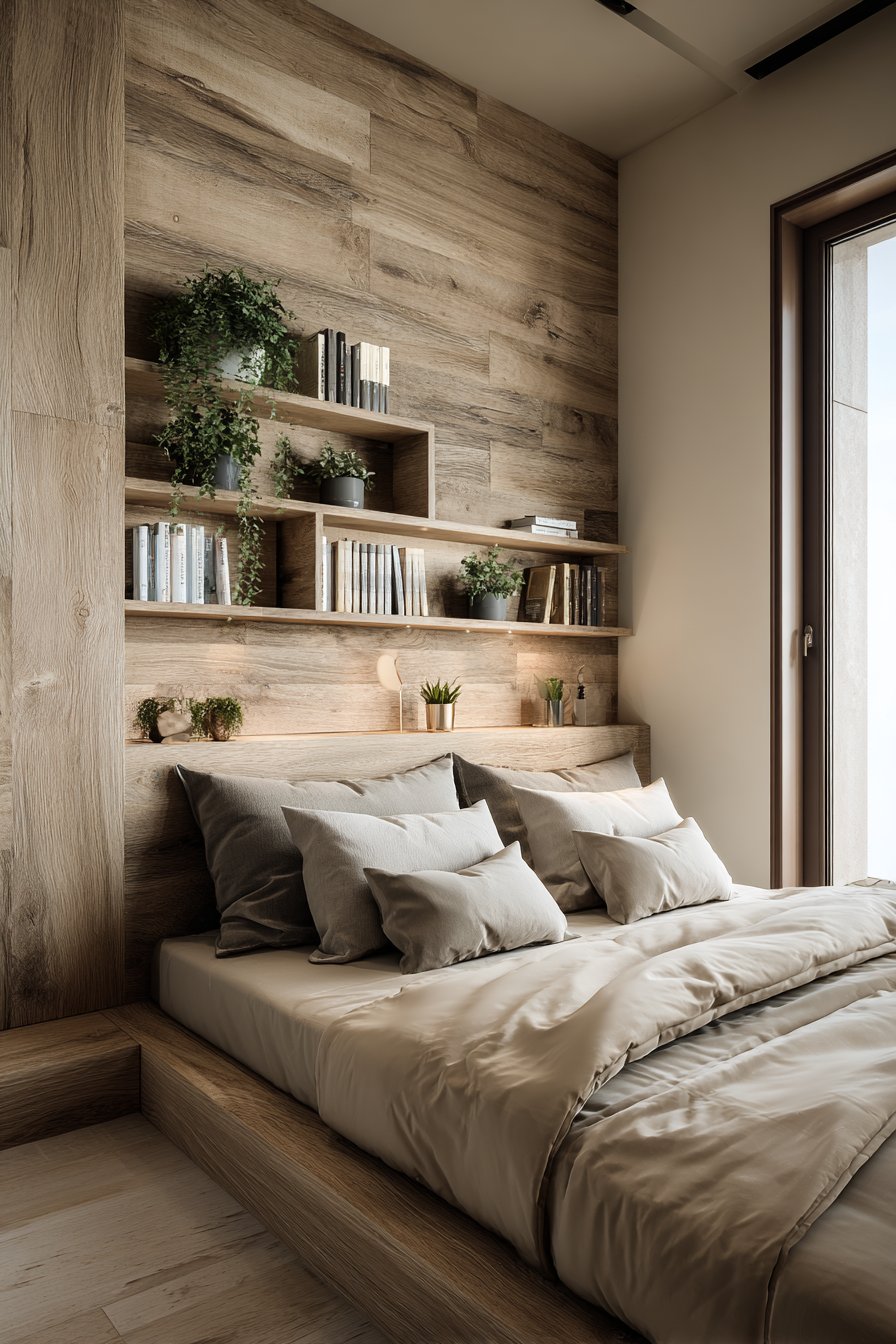
Key Design Tips:
- Select walnut or other premium hardwoods for the refined appearance wingback style requires
- Design wing panels with gentle curves rather than sharp angles for comfortable appearance
- Ensure wings extend 6-12 inches from the central panel for adequate spatial definition
- Sand and finish wing edges meticulously as they’re highly visible from multiple angles
- Use luxurious bedding and textiles that match the sophisticated aesthetic
- Consider room proportion—wingback headboards work best in larger bedrooms with adequate space
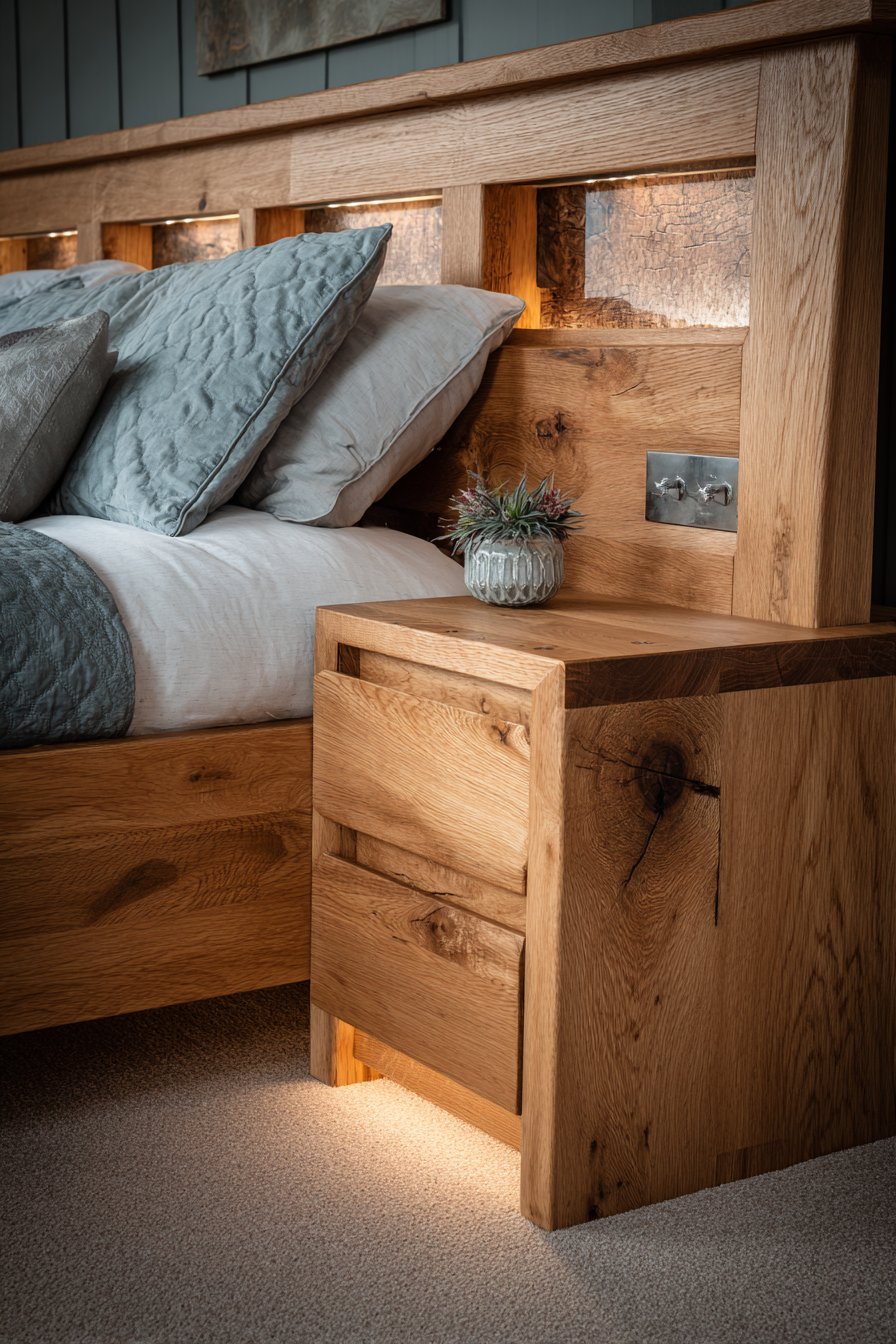
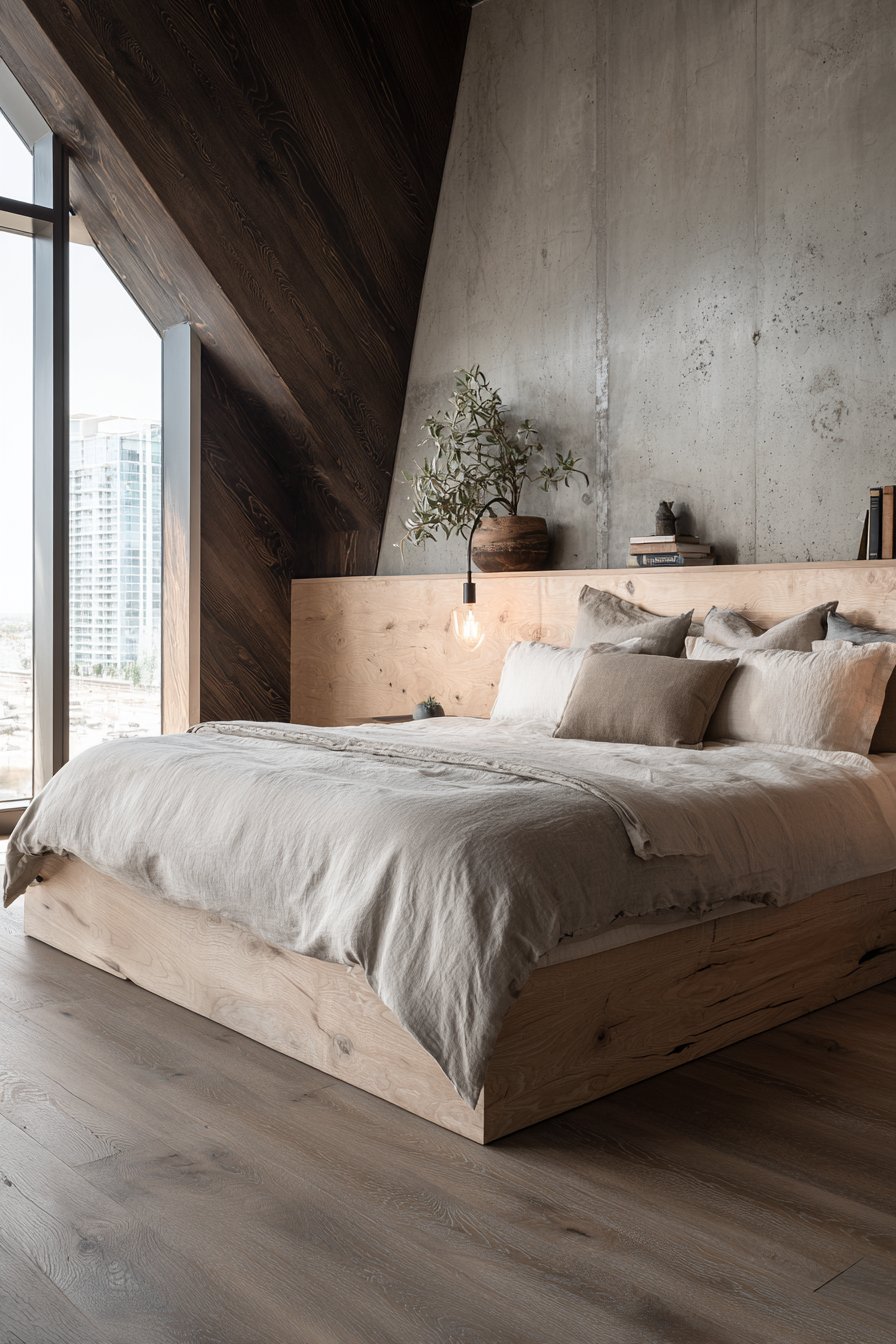
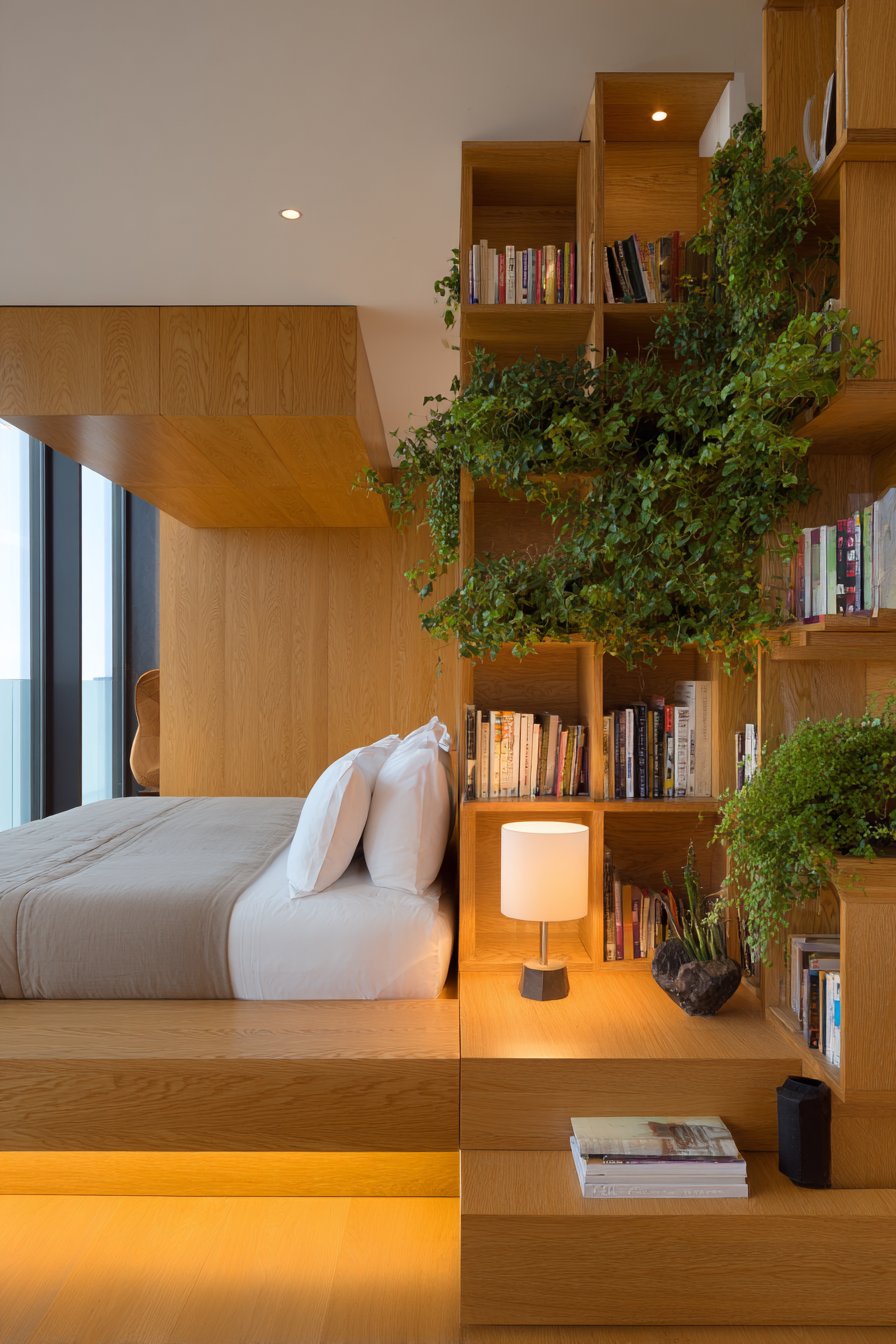
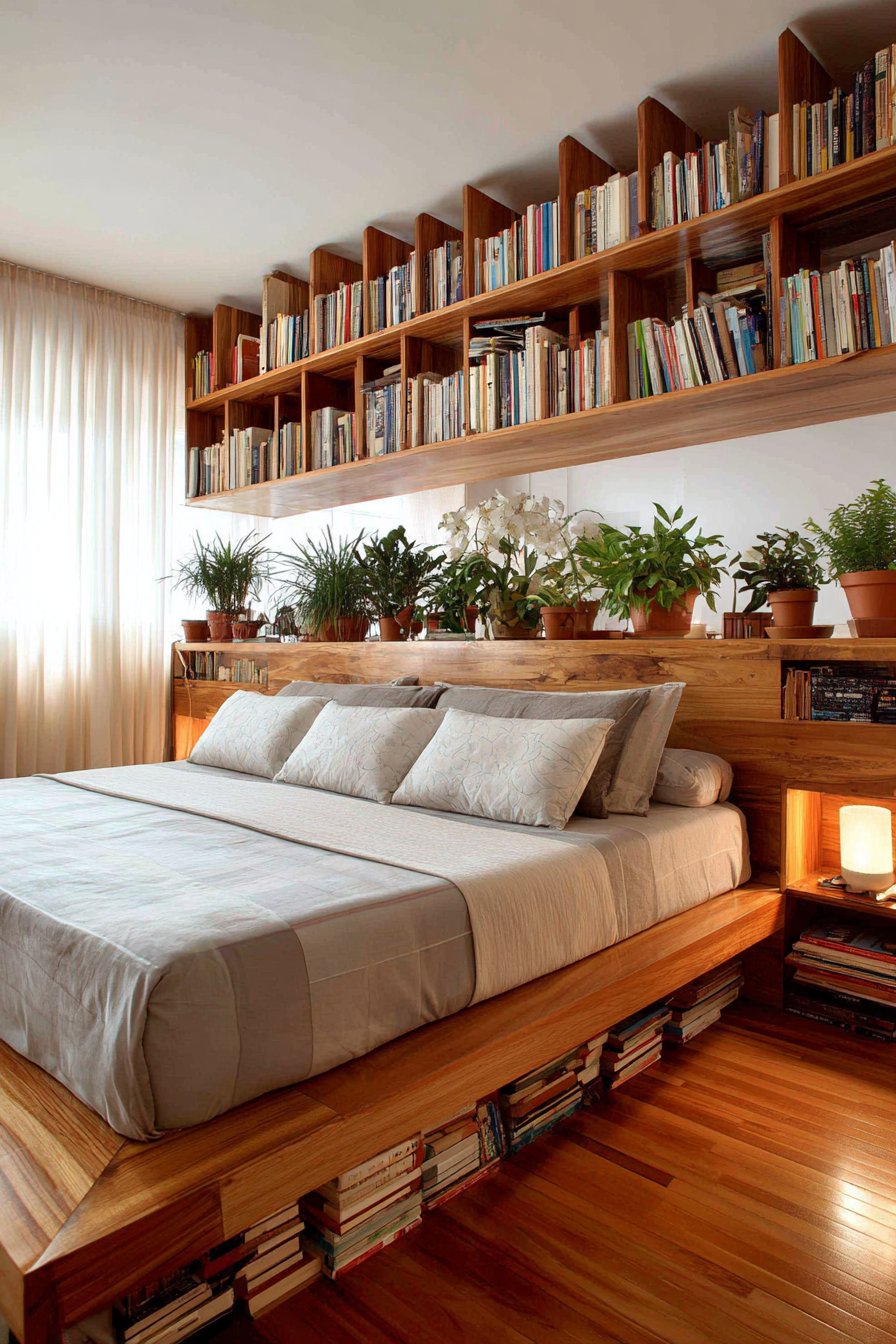
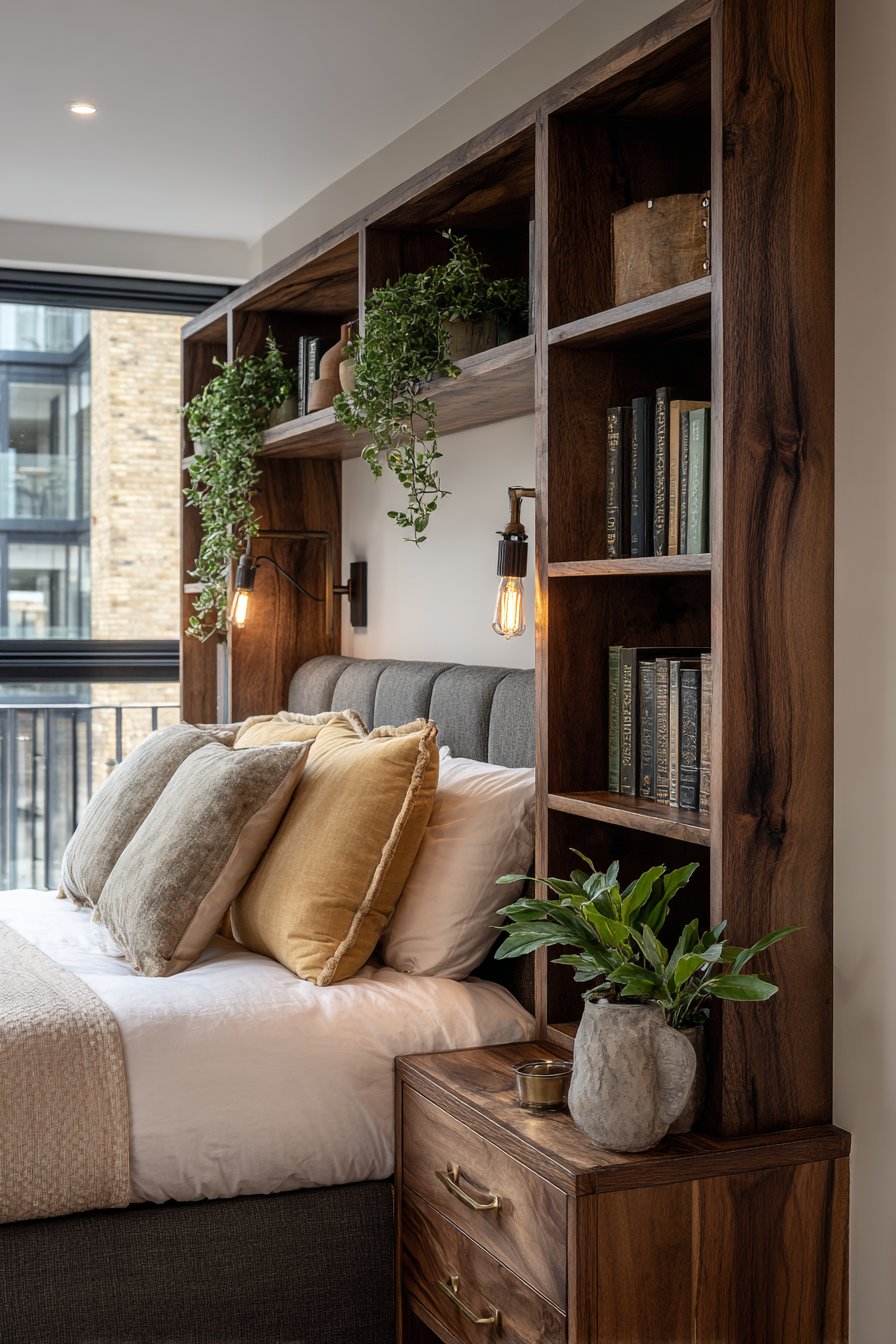
25. Oak Bookshelf Headboard with Integrated Storage
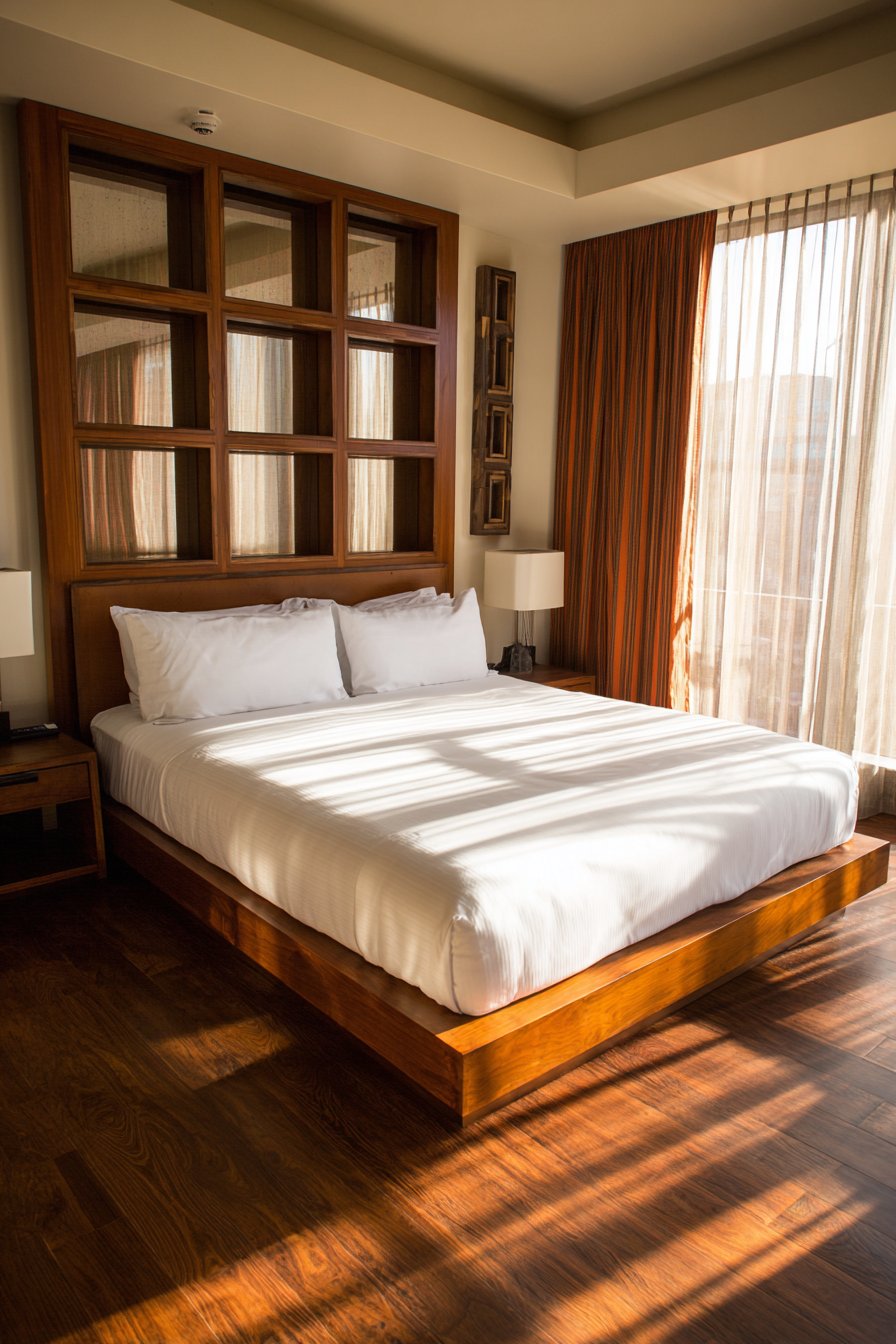
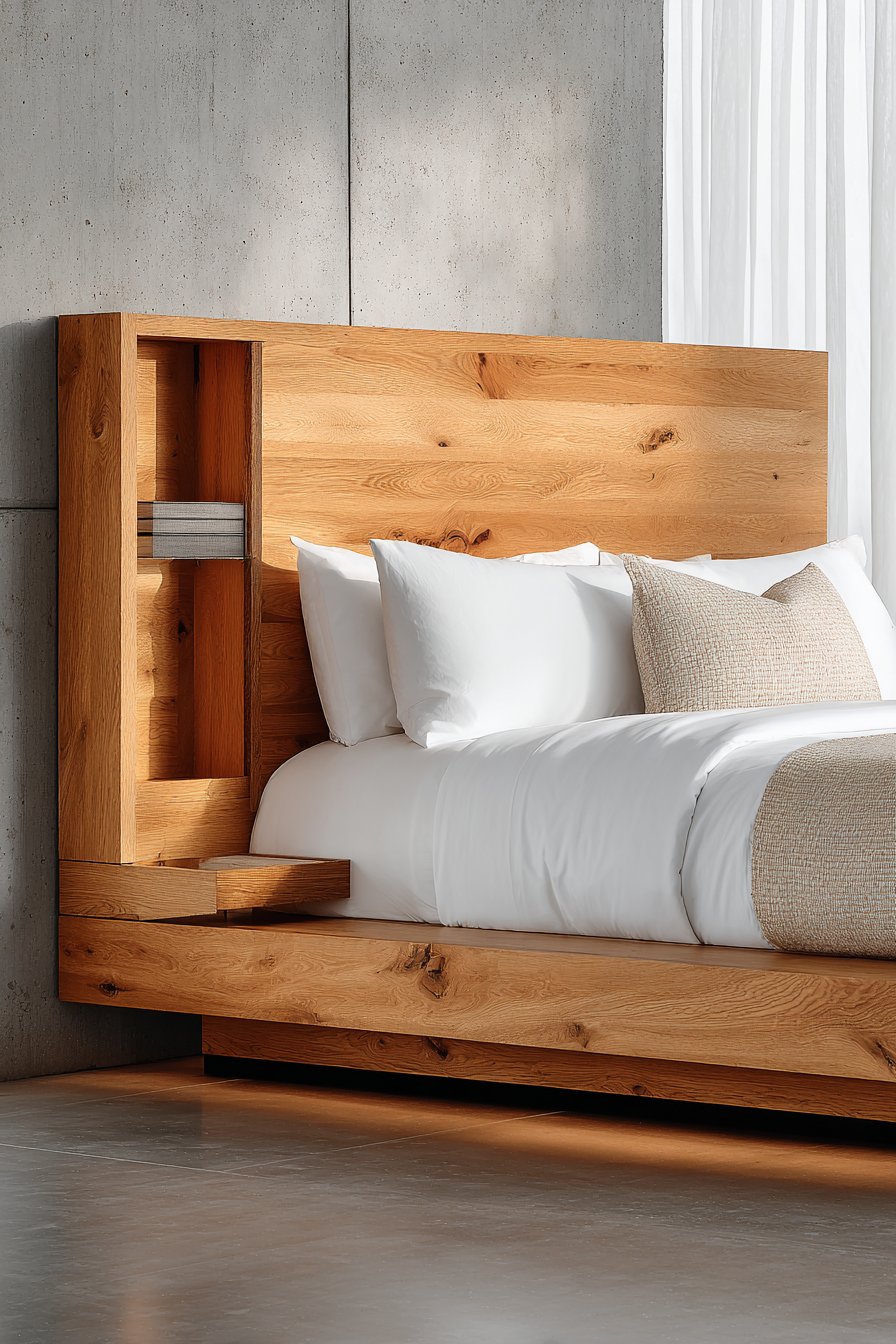
This wood bed design idea with bookshelf headboard showcases an integrated storage solution with open shelving units built into a thick headboard panel made from oak. The shelves display books, plants, and decorative objects, turning the headboard into both furniture and display. The substantial headboard—often 12-18 inches deep—provides generous storage while the platform bed extends from this substantial structure creating visual and physical continuity.
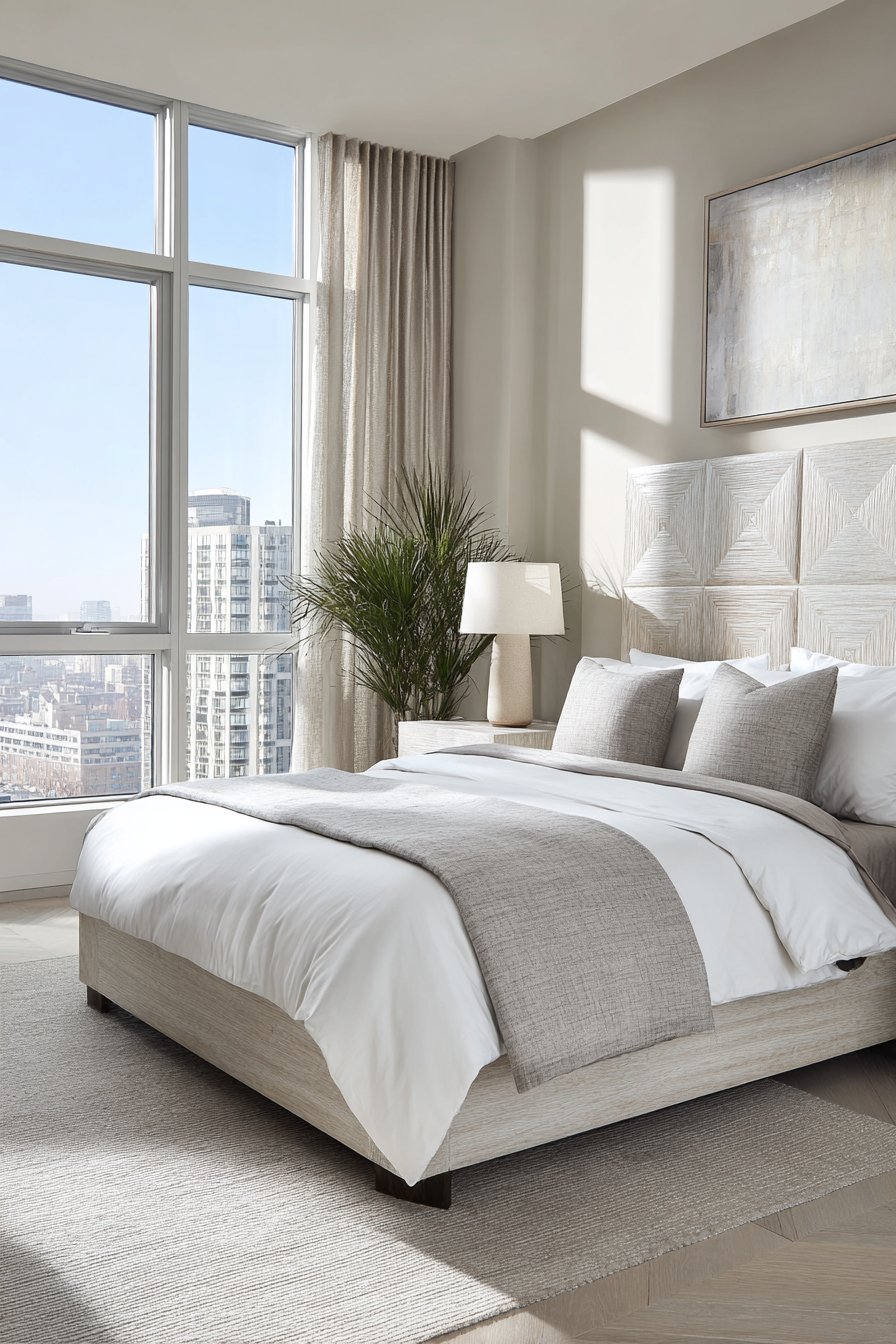
Practical bedding in neutral tones keeps focus on the functional design innovation rather than decorative textiles. Natural daylight and small reading lights illuminate the storage display, with the lighting serving both practical and aesthetic purposes. The open shelving keeps items accessible while creating opportunities for personalization through curated display of meaningful objects.
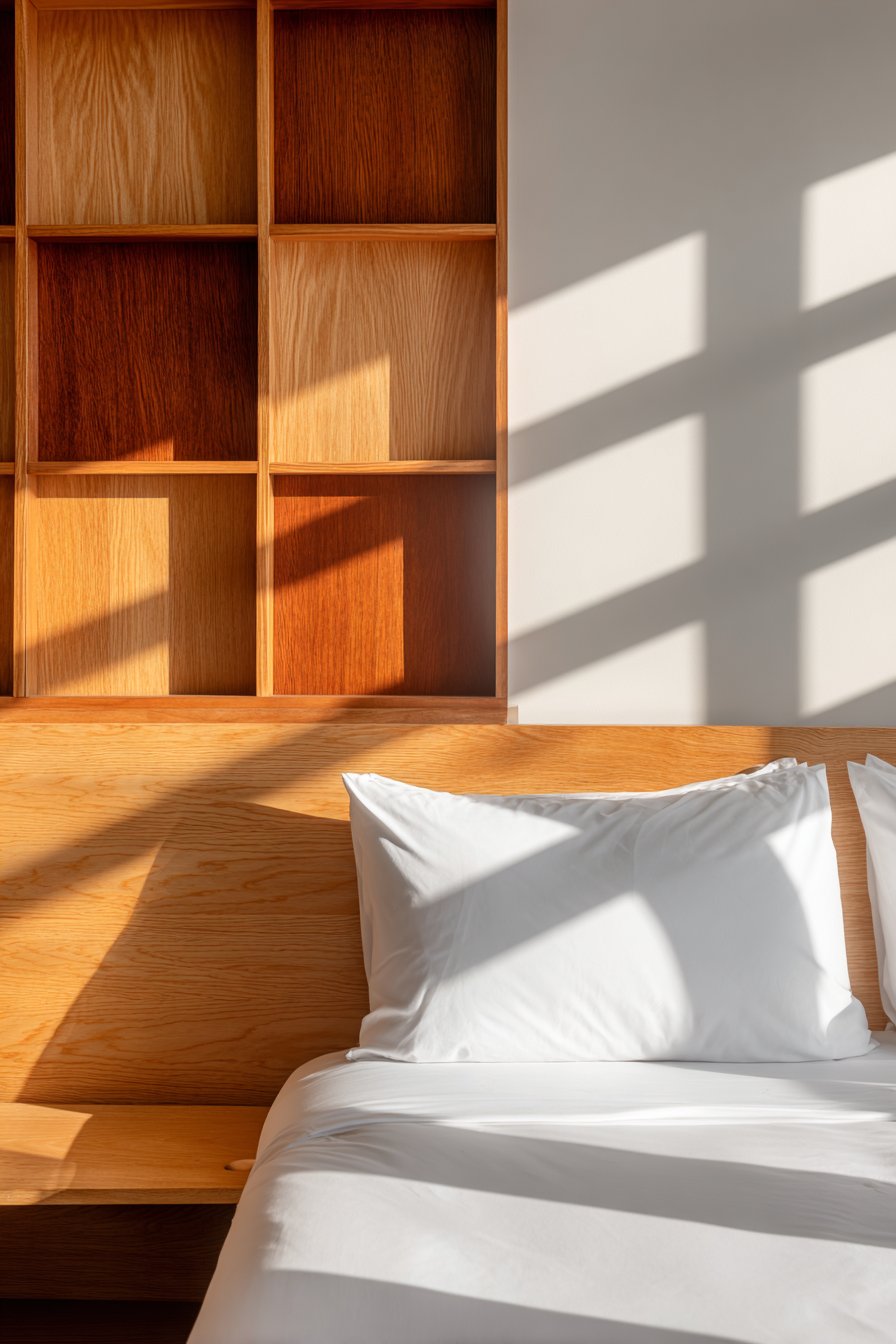
Wide-angle interior photography captures the functional design innovation with focus on both storage capability and overall bedroom integration. The composition demonstrates how thoughtful furniture design can address real needs—bedside storage, book display, nighttime lighting—in integrated solutions that are more elegant than collections of separate furniture pieces.
Key Design Tips:
- Build headboard with adequate depth (12-18 inches) for practical storage without items falling
- Design shelves in varied heights to accommodate books, plants, and different-sized objects
- Include integrated lighting within shelf compartments for functional reading light
- Use oak or other durable hardwoods to support the weight of stored items
- Consider earthquake-prone areas—may need methods to secure items on shelves
- Keep displays curated rather than cluttered to maintain visual appeal
26. Ash Wood Geometric Panel Headboard
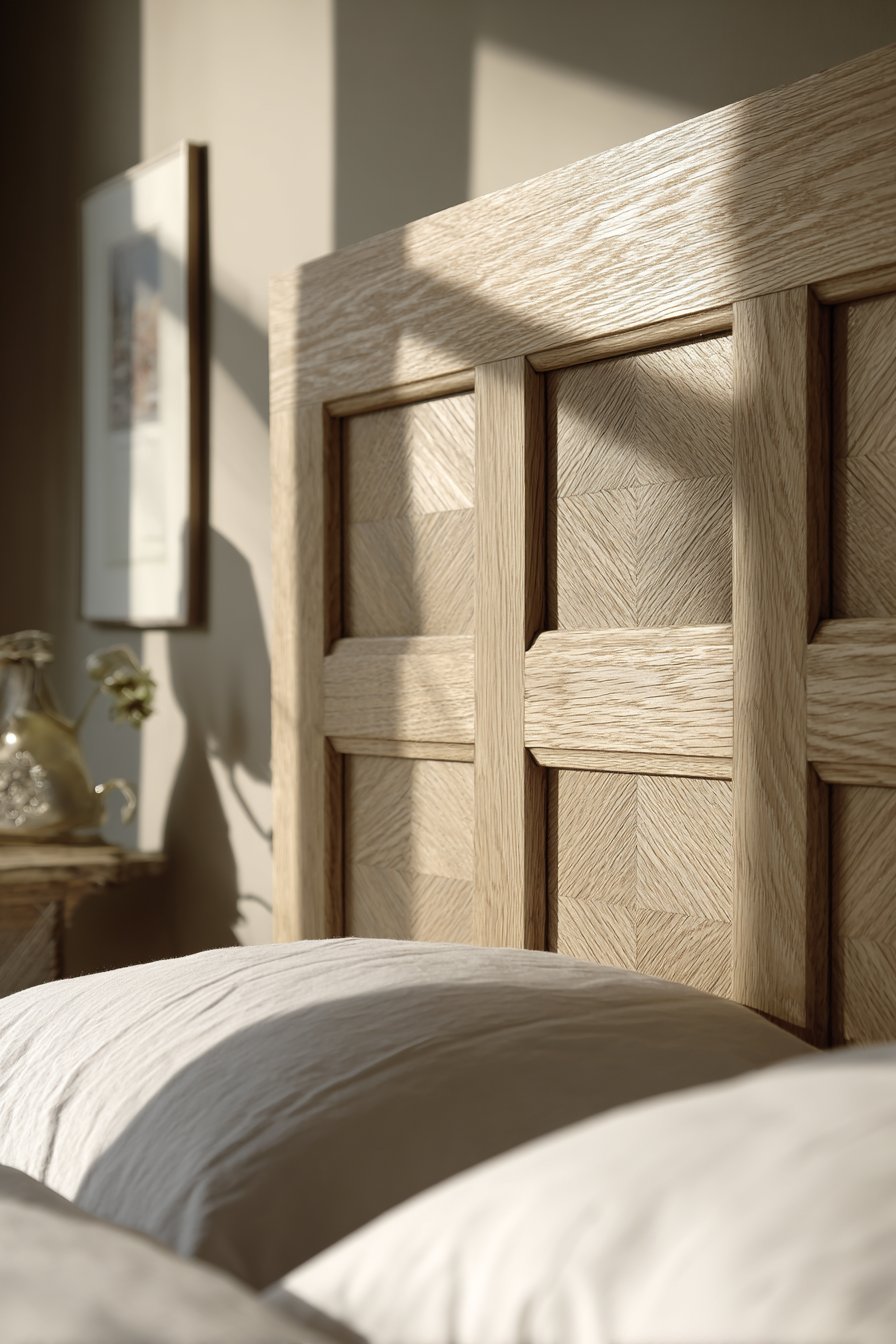
This wood bed design with geometric panel headboard features ash wood construction with raised square and rectangular panels creating a contemporary geometric pattern. The natural light wood finish and clean lines suit modern interiors, with the panel arrangement creating visual interest through geometric repetition and dimensional shadow play. The panels are arranged in asymmetrical or rhythmic patterns that create contemporary artistic composition while maintaining the clean lines essential to modern design.
Simple white bedding emphasizes the architectural headboard design, providing a neutral background that allows the geometric wood composition to read clearly. Natural window light creates shadow depth in the panel recesses, with the changing light throughout the day animating the geometric pattern and creating constantly evolving shadow compositions. The ash wood’s pale color ensures the geometric patterns create subtle rather than dramatic contrast.
Professional interior photography captures the geometric pattern detail and contemporary aesthetic with balanced exposure showing panel dimension and shadow depth. The composition demonstrates how geometric arrangements can create visual interest and contemporary artistry while maintaining the restful quality bedrooms require, where pattern exists without becoming busy or overwhelming.
Key Design Tips:
- Design panel arrangements with intentional rhythm—either symmetrical or deliberately asymmetrical
- Keep panel depths consistent (typically 1/4 to 3/4 inch relief) for cohesive shadow play
- Choose ash or other light woods where shadow play will be visible without being too dramatic
- Position bed where natural light will create interesting shadows throughout the day
- Keep bedding simple and monochromatic to allow geometric headboard to be focal point
- Consider the viewing distance—panels should read as composition from typical room positions
27. Walnut Platform with Natural Bark Edge
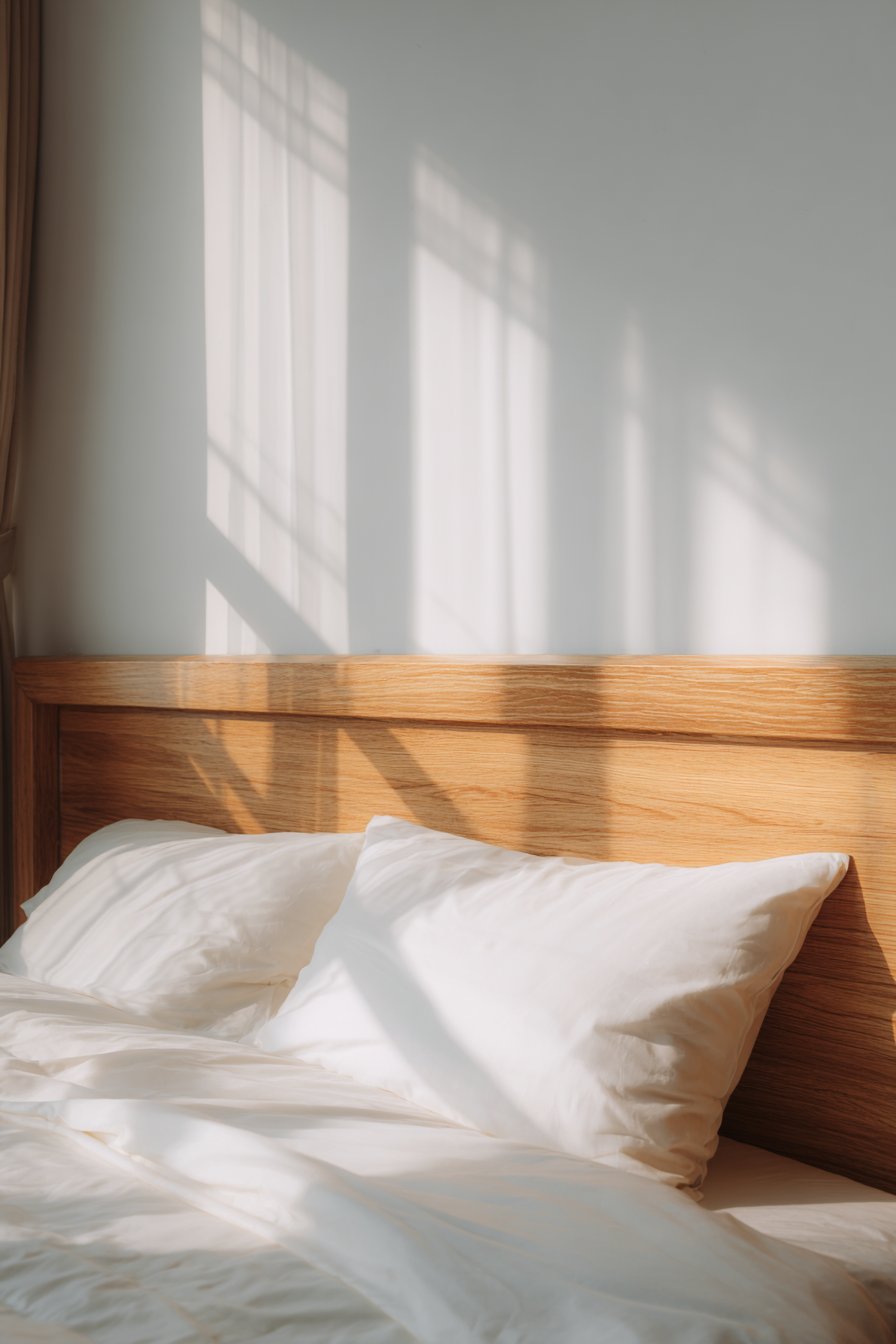
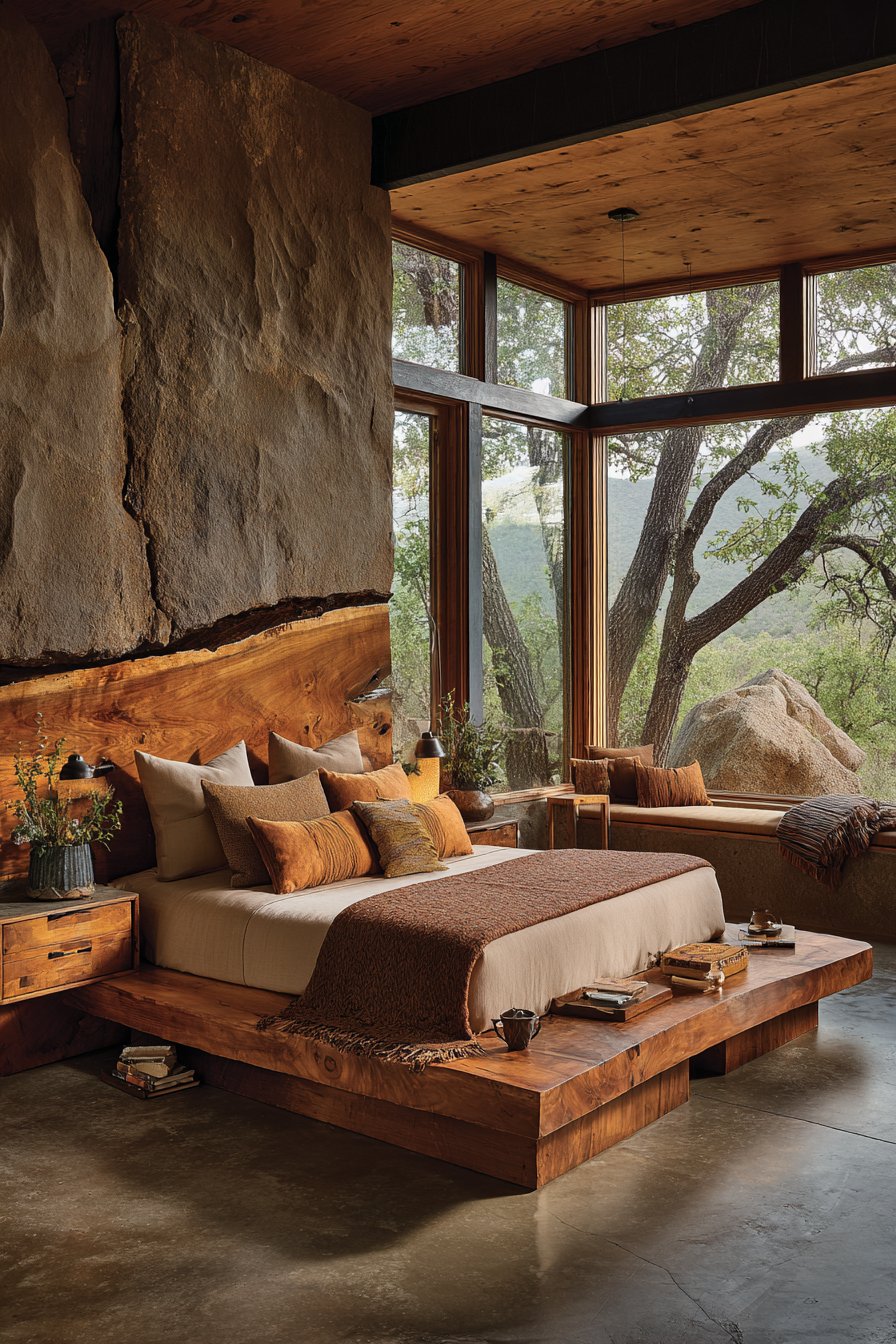
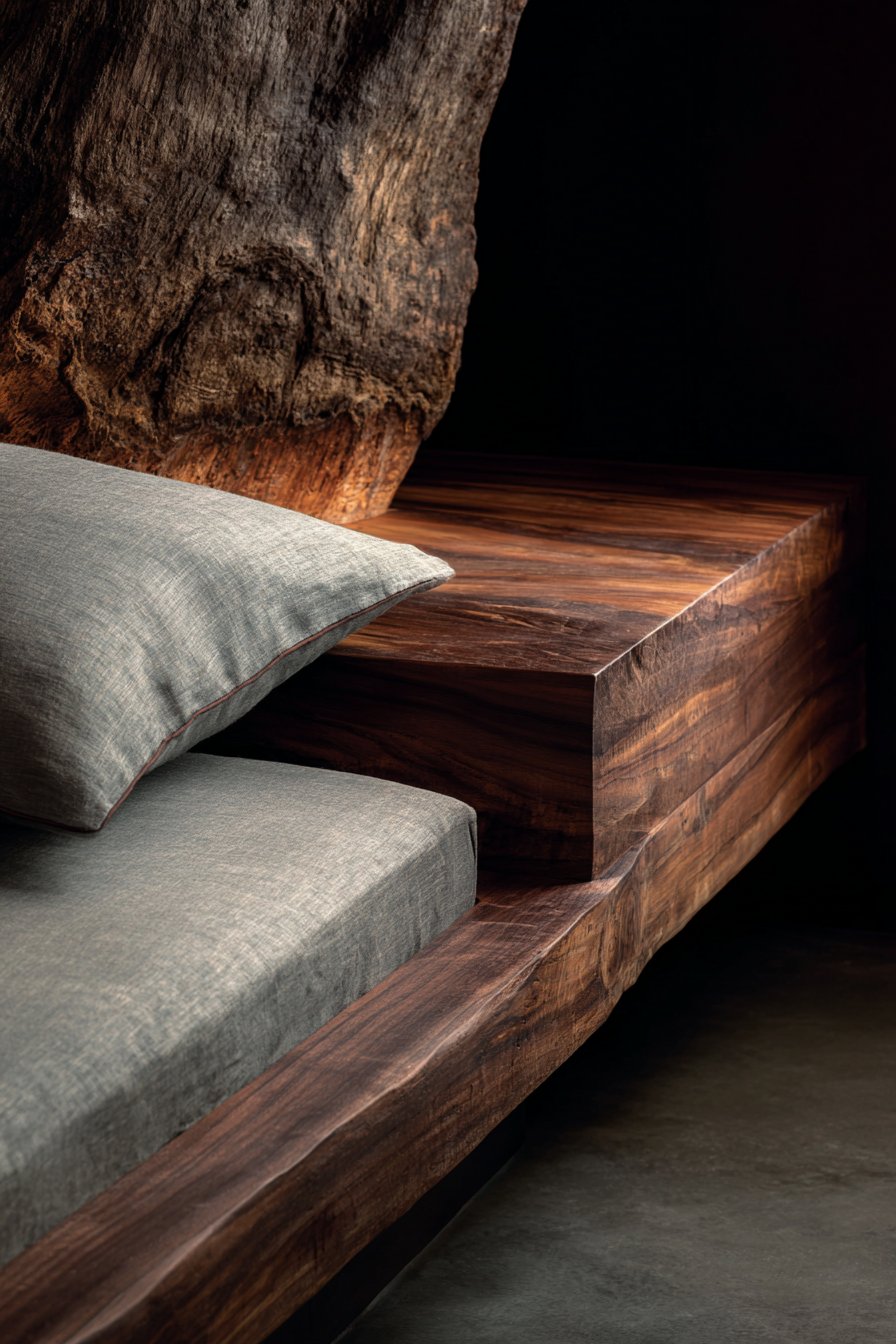
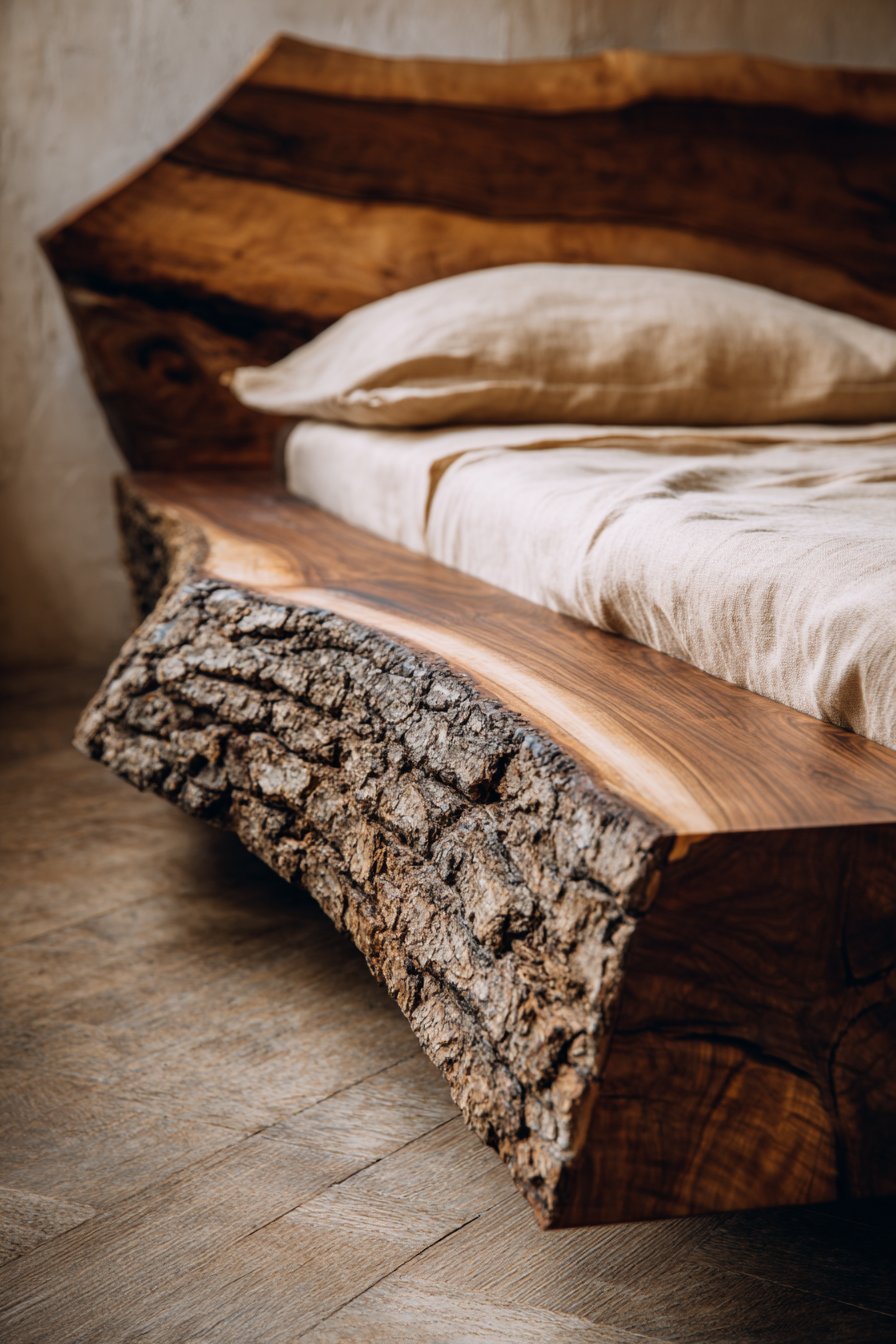
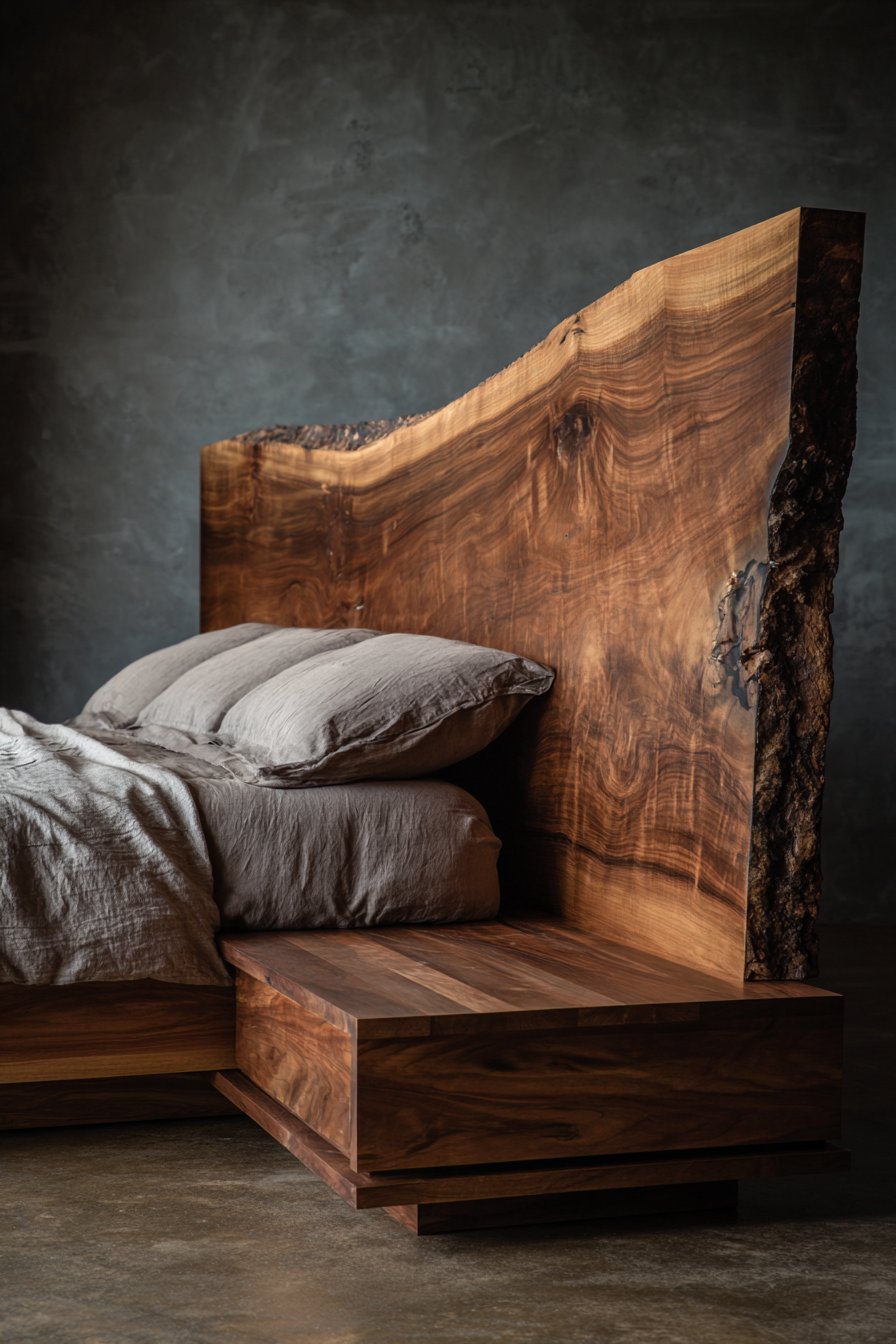
This wood bed design idea with natural edge features showcases a platform frame where the headboard retains the tree’s natural bark edge on one side, celebrating organic imperfection. The main frame is carefully finished walnut with smooth surfaces, creating contrast between refined craftsmanship and raw natural form. The preserved bark edge introduces textural interest and authentic natural character that cannot be replicated through any manufacturing process.
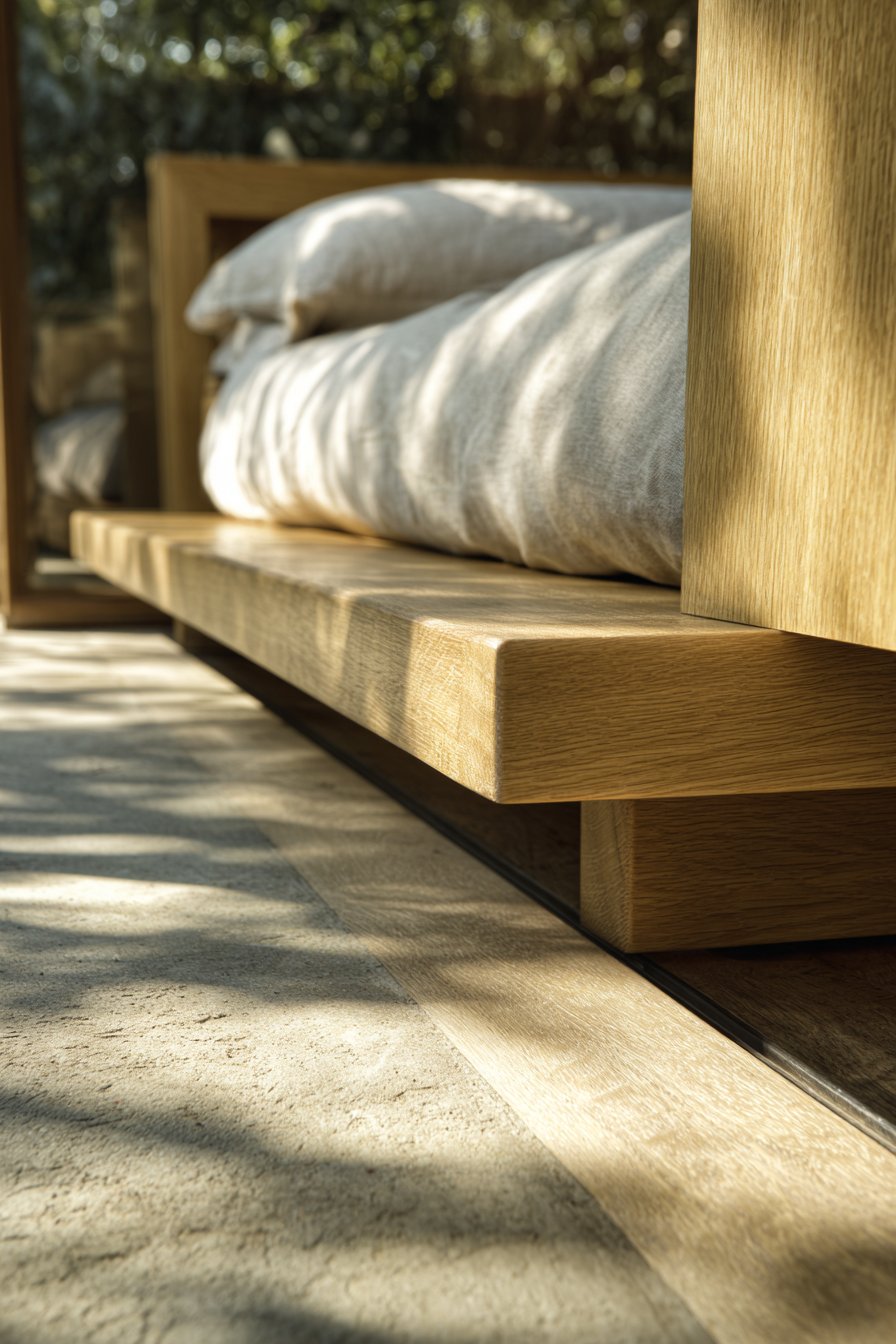
Earthy bedding tones complement the natural wood character, with the color palette drawn from nature—browns, taupes, creams, and warm greys. Soft natural lighting highlights the contrast between refined and raw wood surfaces, revealing how the smooth, finished walnut differs from the rough, organic bark texture. The composition celebrates the artistic decision to preserve part of the tree’s original form while transforming the rest into refined furniture.
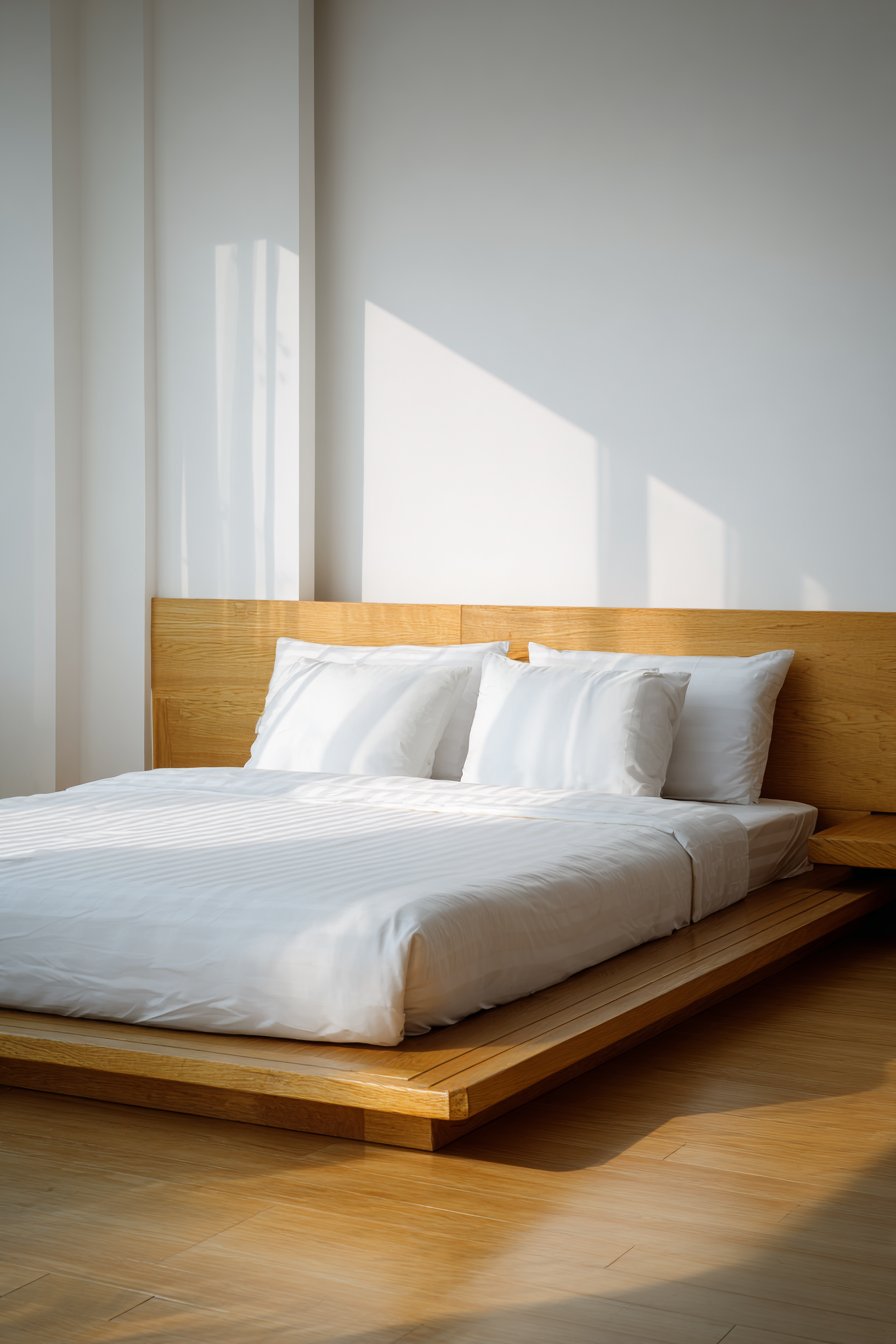
Interior design photography captures the artistic balance between craftsmanship and natural form with particular attention to the bark texture and wood grain flow. The composition demonstrates how live-edge and natural-bark elements can be successfully incorporated into contemporary design, where the natural edges become sculptural focal points that tell the story of the tree’s original form.
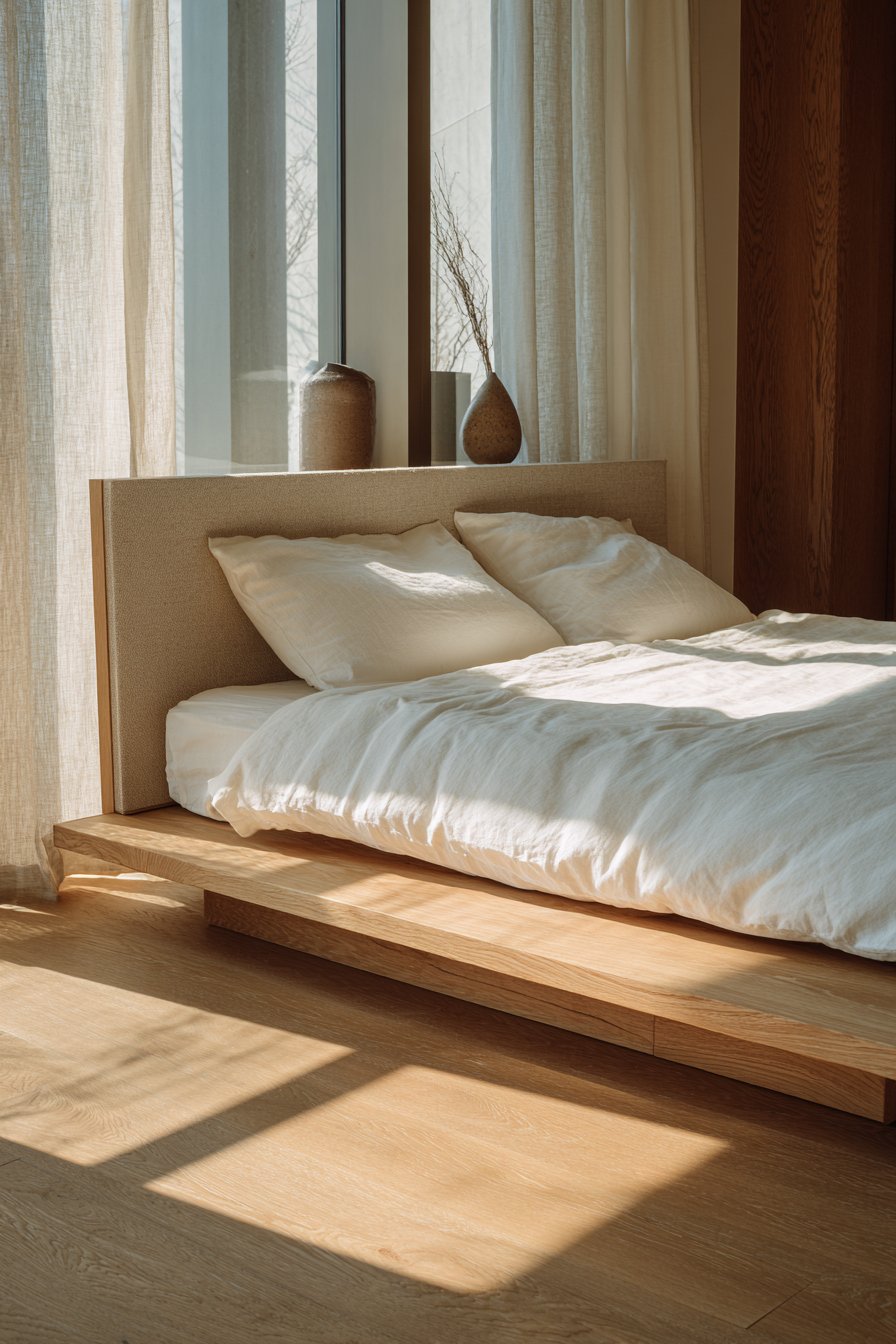
Key Design Tips:
- Select slabs with stable bark that’s firmly attached to avoid deterioration over time
- Apply stabilizing treatments to bark edges to prevent loosening or flaking
- Balance natural edges with refined, finished surfaces elsewhere in the design
- Choose walnut or other woods with dramatic color contrast between heartwood and bark
- Position the bark edge where it’s visible but won’t be damaged by contact
- Embrace the organic irregularity rather than trying to create symmetrical designs
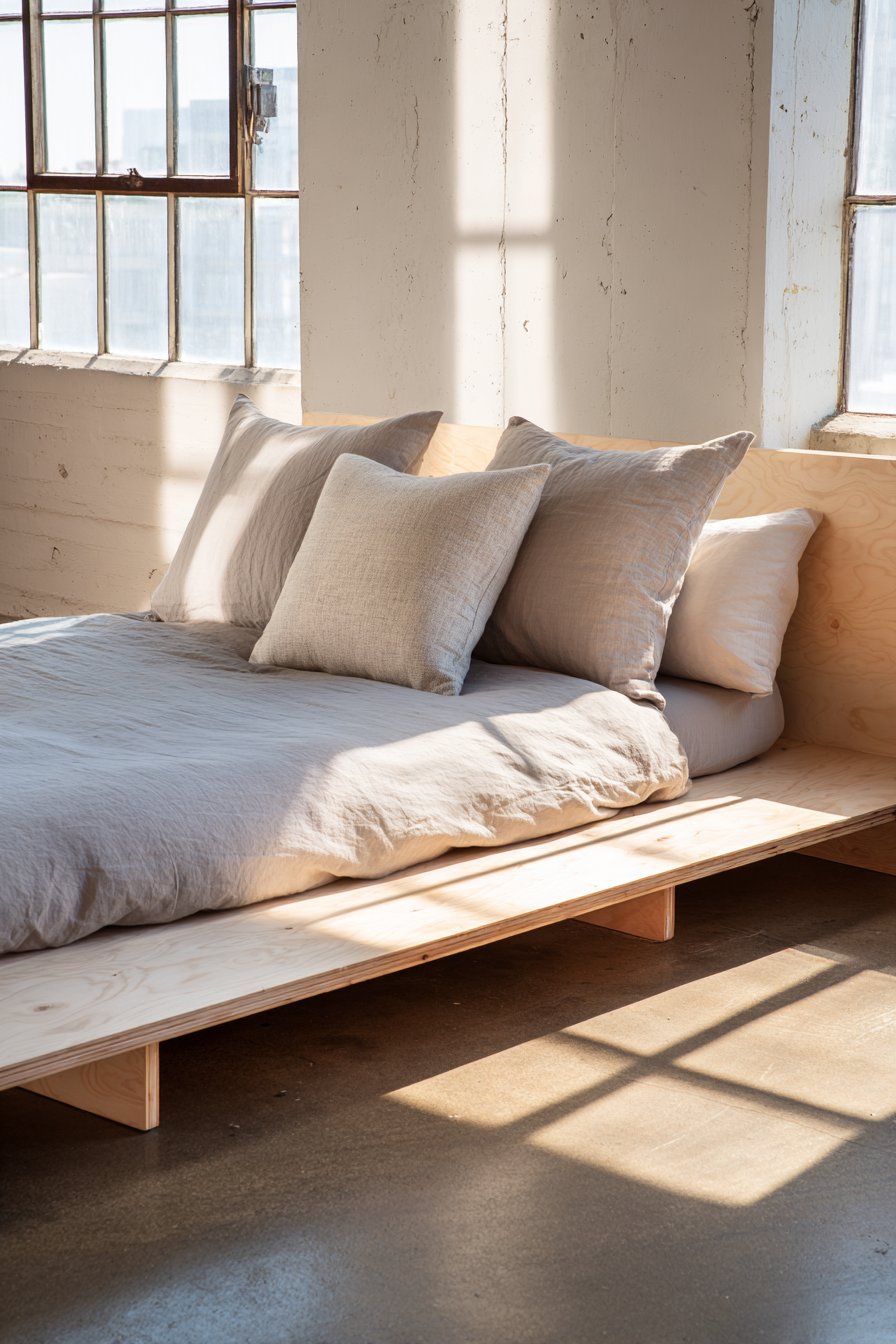
28. White Oak Minimal Japanese-Influenced Platform
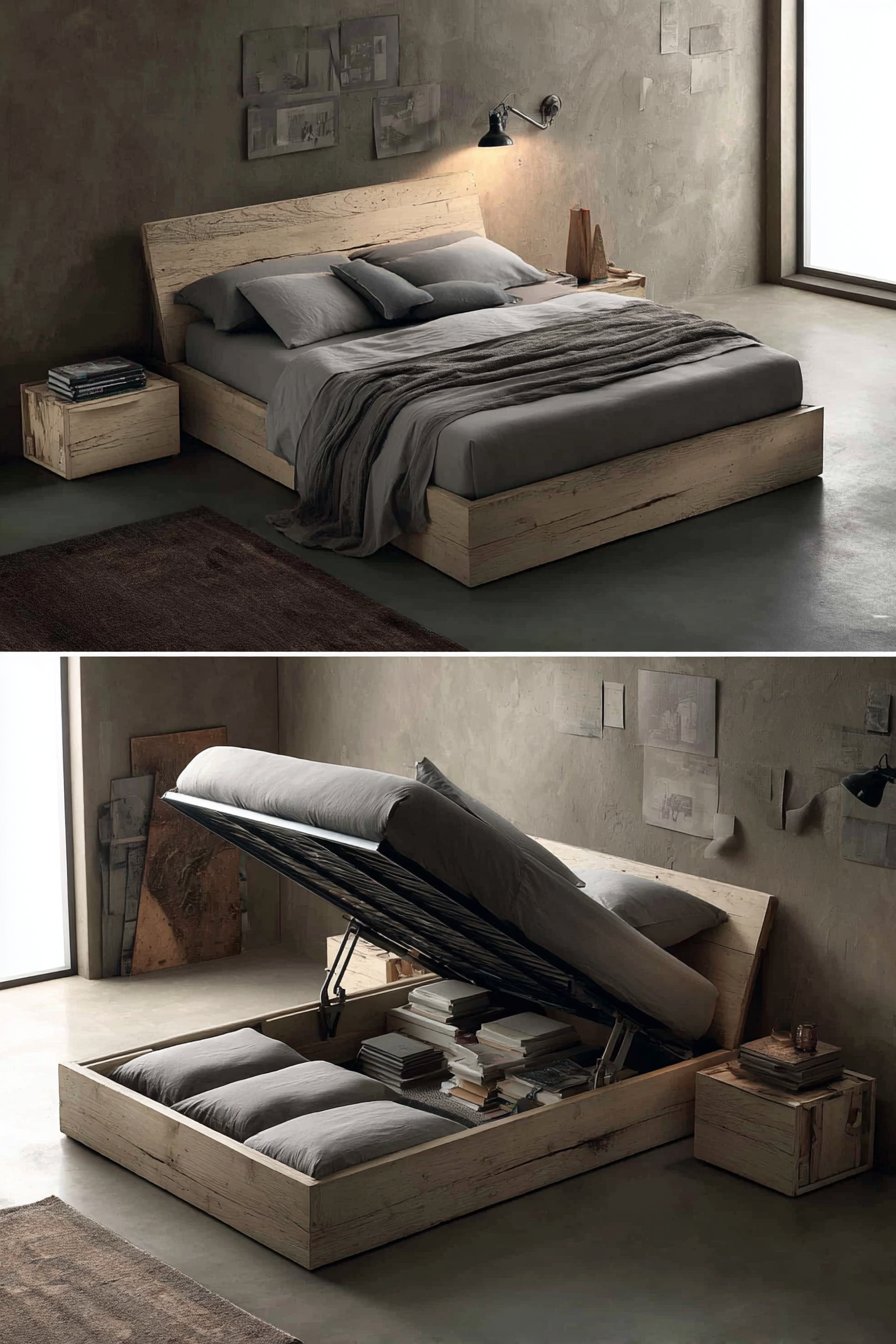
This wood bed design with minimal frame showcases a Japanese-influenced low platform in white oak with just a thin profile frame visible around the mattress and a simple low headboard panel. The ultra-minimalist design emphasizes horizontal lines and restful simplicity, with the thin frame creating defined edges without visual bulk. The white oak’s pale color and subtle grain maintain the serene, uncluttered aesthetic essential to Japanese-influenced design.
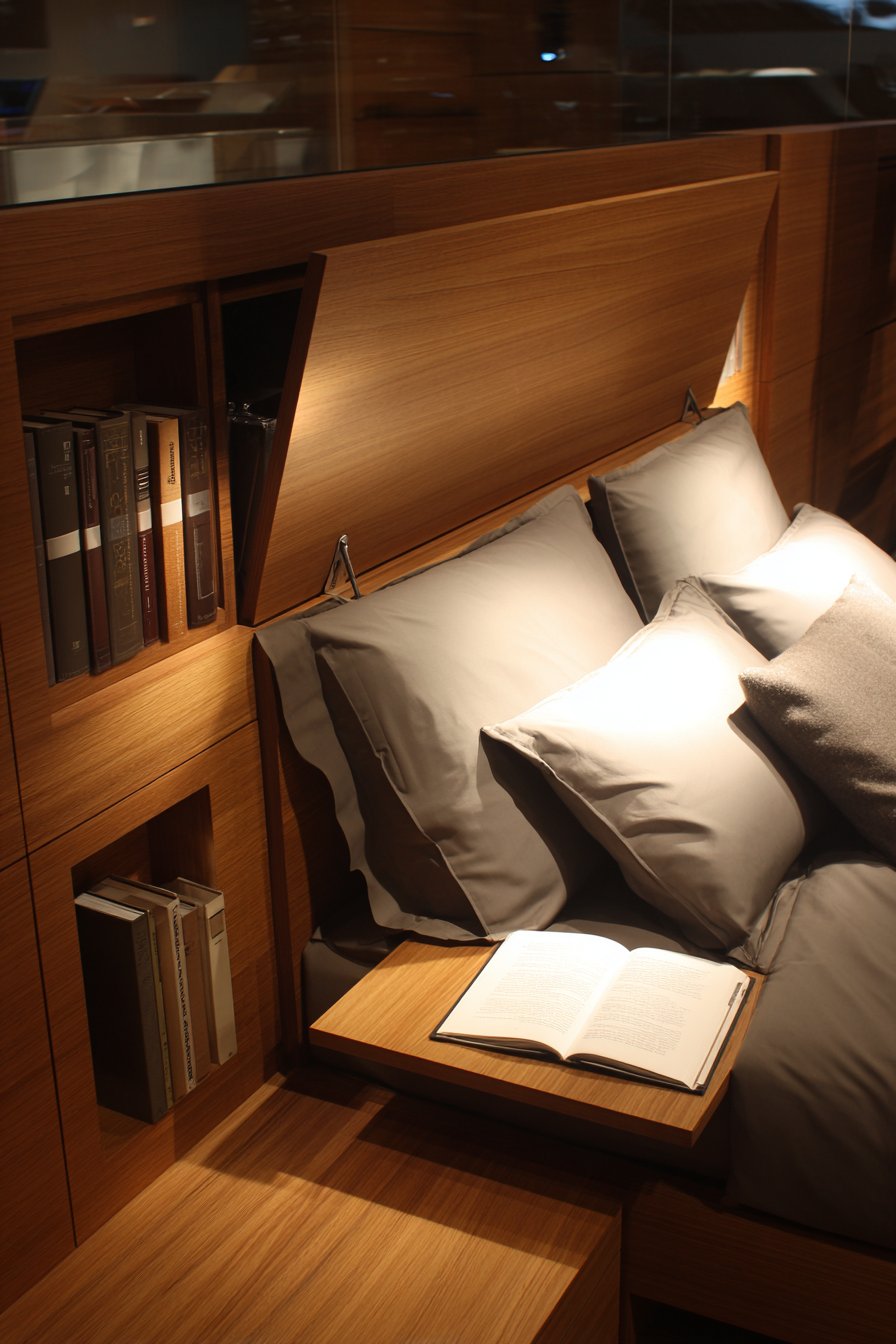
White bedding maintains the serene aesthetic, with the monochromatic palette creating calm and visual rest. Abundant natural daylight creates a bright, peaceful atmosphere while soft wood shadows define the minimal frame, with the thin frame profile casting only subtle shadows that enhance rather than overwhelm the peaceful aesthetic. The low platform—often just 6-8 inches high—creates the grounded, close-to-earth feeling characteristic of Japanese furniture design.
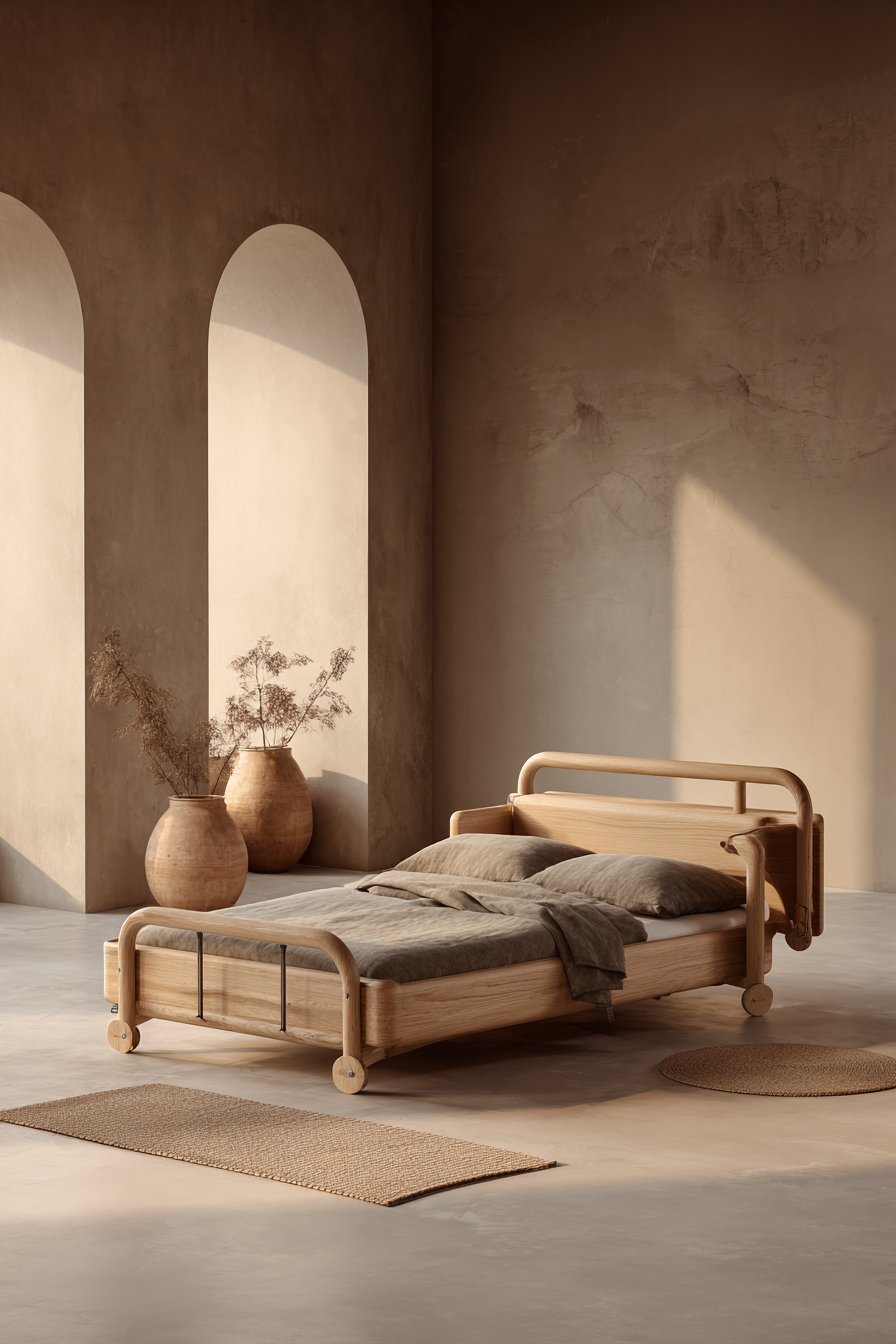
Architectural photography captures the zen-like simplicity and refined minimalism with particular attention to proportion and negative space. The composition demonstrates how reduction to essential elements creates powerful design impact, where what’s omitted becomes as important as what’s included, and the empty spaces around the bed contribute as much to the composition as the bed itself.
Key Design Tips:
- Choose white oak or ash for pale coloring that maintains warmth while feeling light
- Keep frame profile thin—typically 2-4 inches maximum visible frame depth
- Design low platform height of 6-10 inches from floor to mattress top
- Use simple butt joints or minimal joinery rather than decorative connections
- Maintain monochromatic color schemes in bedding and surrounding decor
- Position in uncluttered spaces where the minimalism can be appreciated without visual competition
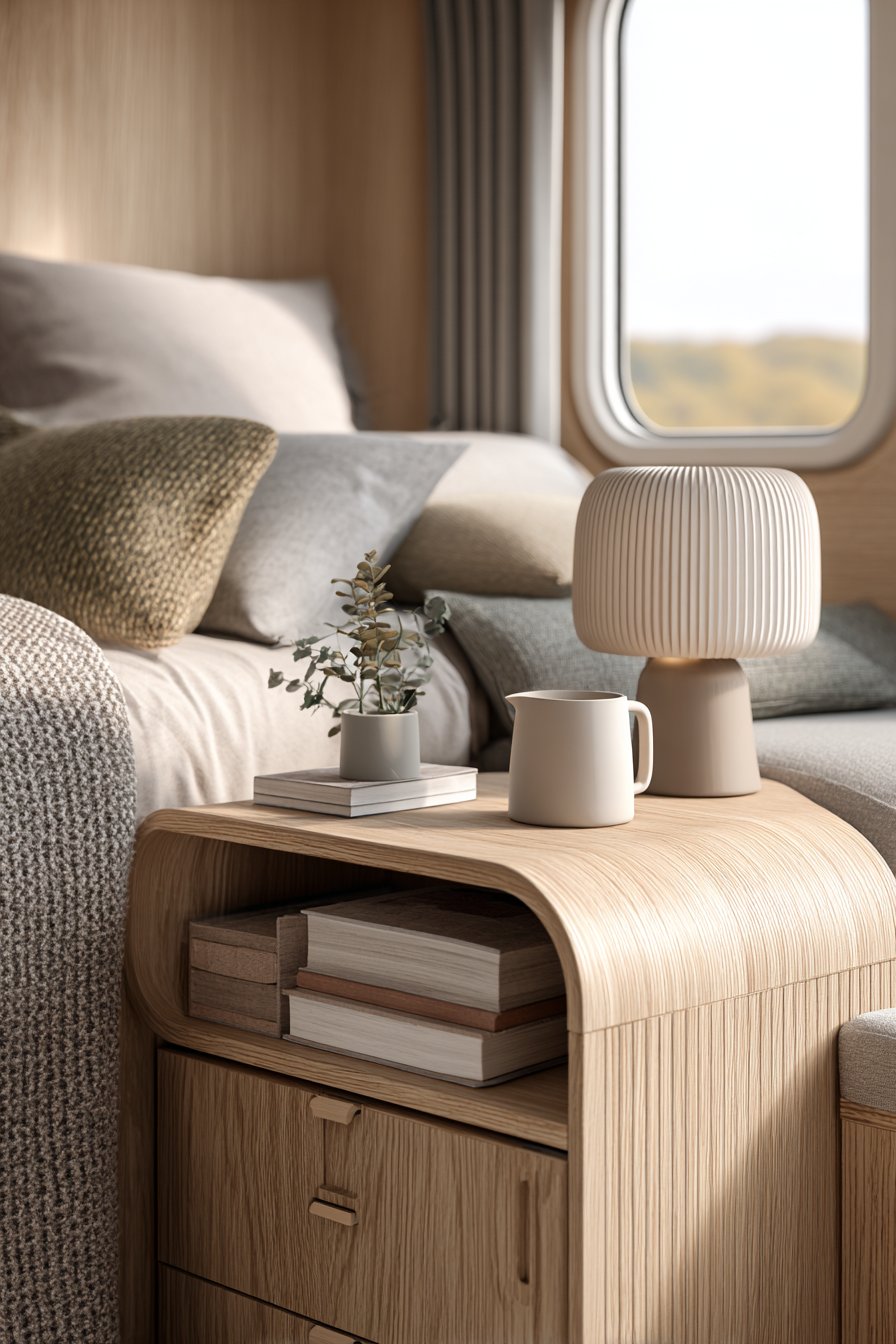
29. Ash Wood Adjustable Headboard with Hinged Panel
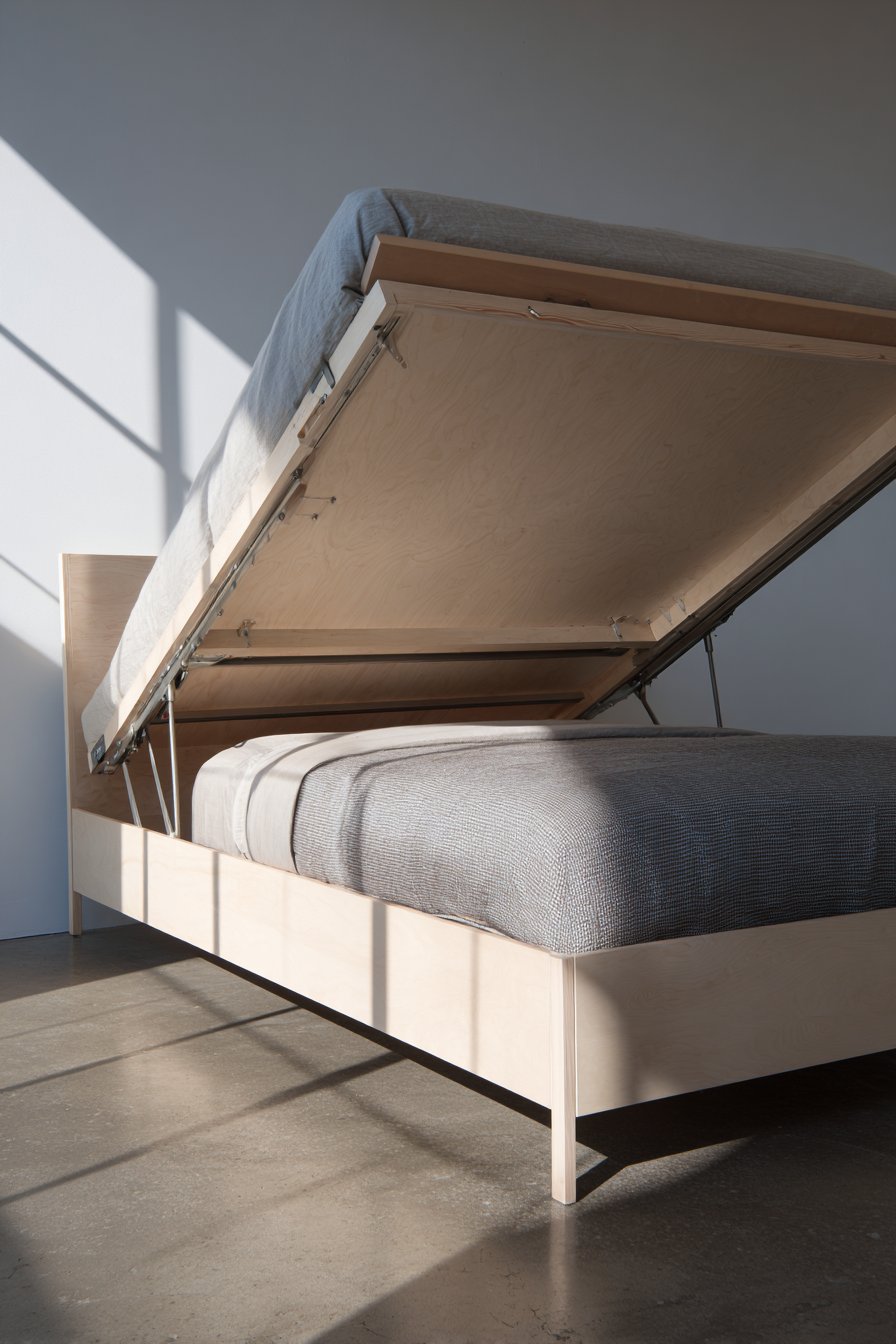
This wood bed design idea with adjustable headboard features a hinged panel system in ash wood that can tilt to provide reading support or lay flat for sleeping. The mechanical details are integrated subtly into the wood frame, with the hardware concealed or minimally visible to maintain clean aesthetics. Modern bedding in grey tones suits the innovative design, with the neutral palette allowing the functional innovation to be the focal point.
Natural and artificial lighting illuminate the space while highlighting the adjustable mechanism details and wood grain flow. The hinged panel operates smoothly, with the adjustment range typically from flat (0 degrees) to approximately 45 degrees for comfortable reading position. The ash wood’s strength and flexibility make it ideal for this application, supporting the mechanism without cracking or weakening.
Interior design photography captures both the practical innovation and the cohesive wood aesthetic with particular attention to the functional hardware integration. The composition demonstrates how contemporary furniture design can add practical functionality without compromising aesthetic quality, where innovation serves real needs while maintaining visual sophistication.
Key Design Tips:
- Select ash or oak for strength needed to support adjustment mechanisms
- Use quality hidden hinges or pivot hardware for smooth operation and long life
- Design adequate support structure to prevent sagging or stress on hinges
- Consider weight distribution—adjustable panels need reinforcement to prevent warping
- Include simple locking mechanism to hold panel at desired angle
- Keep bedding weights moderate to avoid excess strain on adjustment mechanism
30. Cherry Wood with Hand-Carved Botanical Details
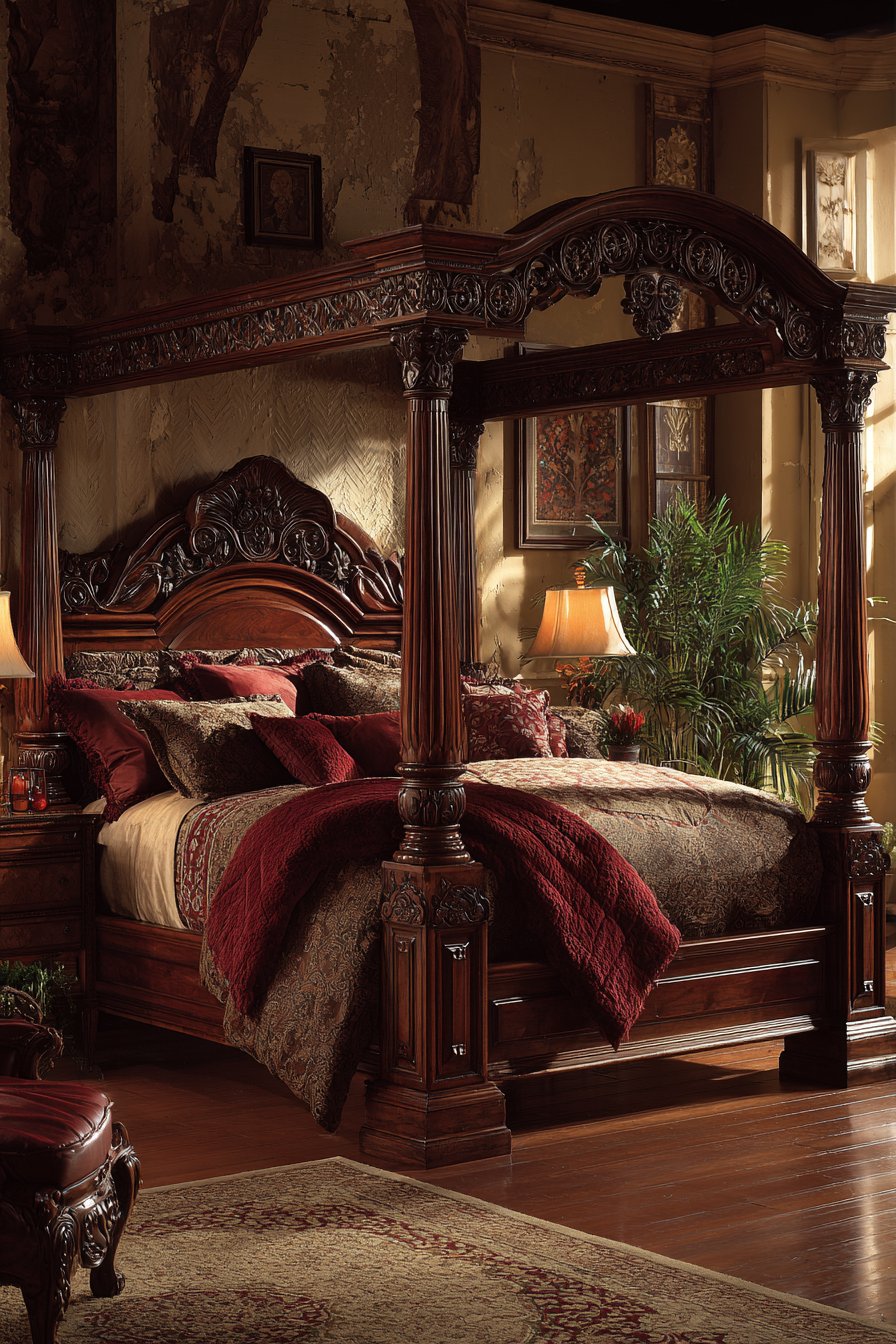
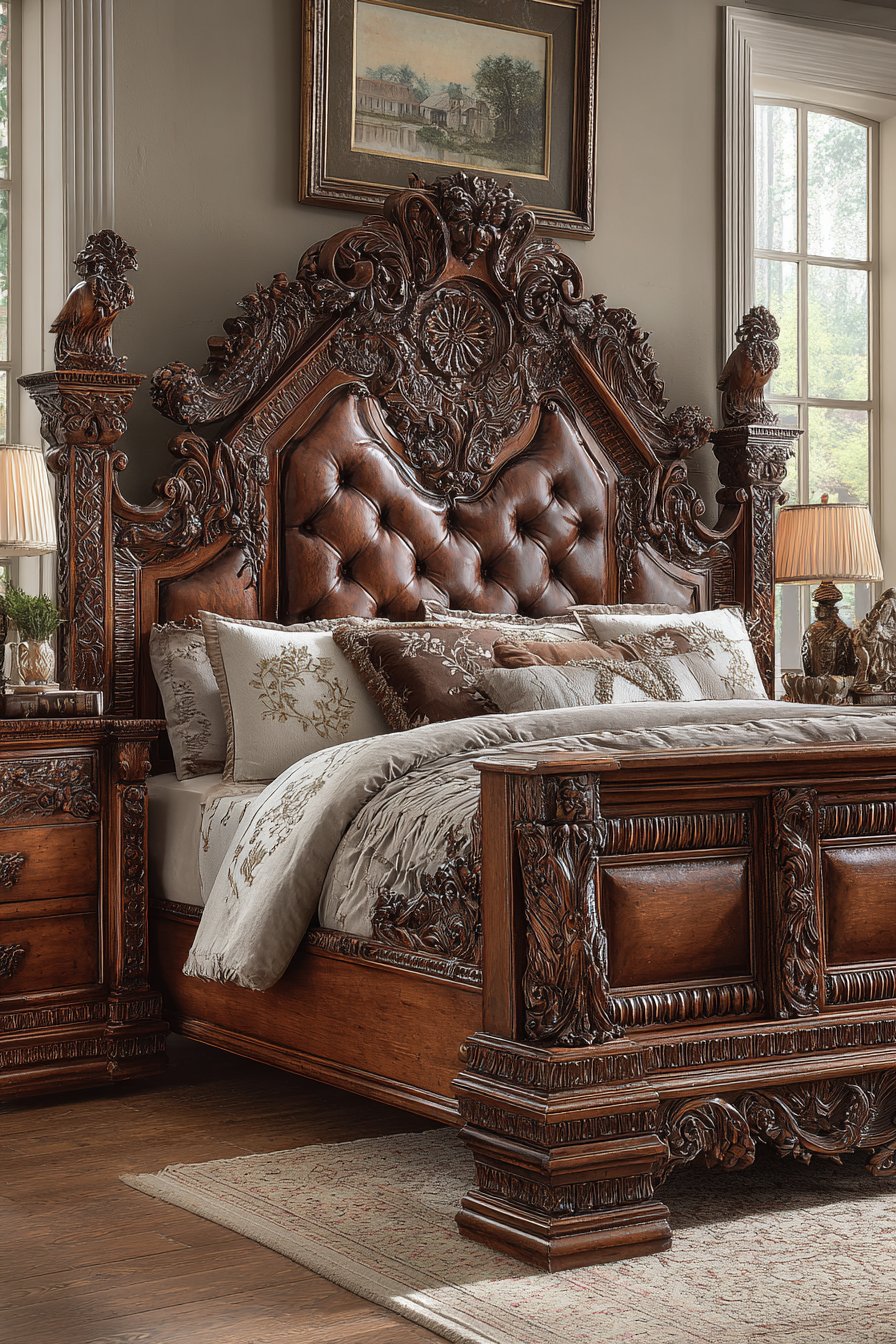
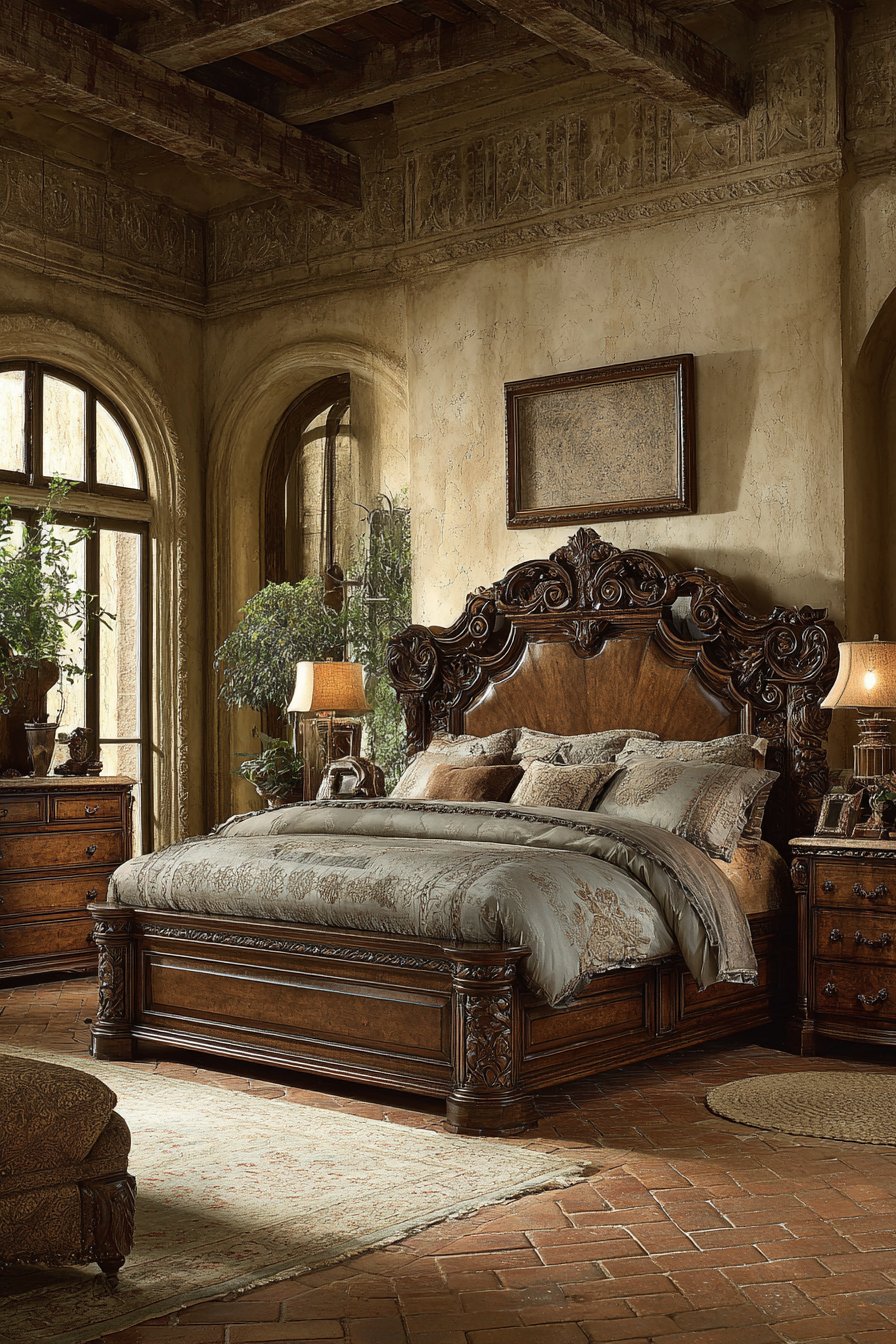
This wood bed design with carved details idea showcases traditional hand-carved flourishes on a cherry wood headboard featuring botanical motifs and scrollwork. The substantial frame includes carved corner posts with acanthus leaf details or similar classical ornamental carving. Classic bedding with embroidered details complements the ornate woodwork, with the textile embellishment echoing the carved wood details creating cohesive decorative richness.
Soft natural light from bedroom windows creates highlights and shadows that emphasize the three-dimensional carved depth, with the varied light throughout the day animating the carved surfaces and revealing details that might not be apparent in flat lighting. The cherry wood’s warm reddish-brown color provides a rich background for the carved details, with the wood’s natural luster highlighting the carved surfaces.
Professional interior photography captures the artisan craftsmanship and traditional elegance with close attention to carving detail and wood finishing quality. The composition demonstrates how hand-carved details create unique, one-of-a-kind furniture where the maker’s skill is visible in every leaf, scroll, and decorative element, where the furniture transcends industrial production to become functional art.
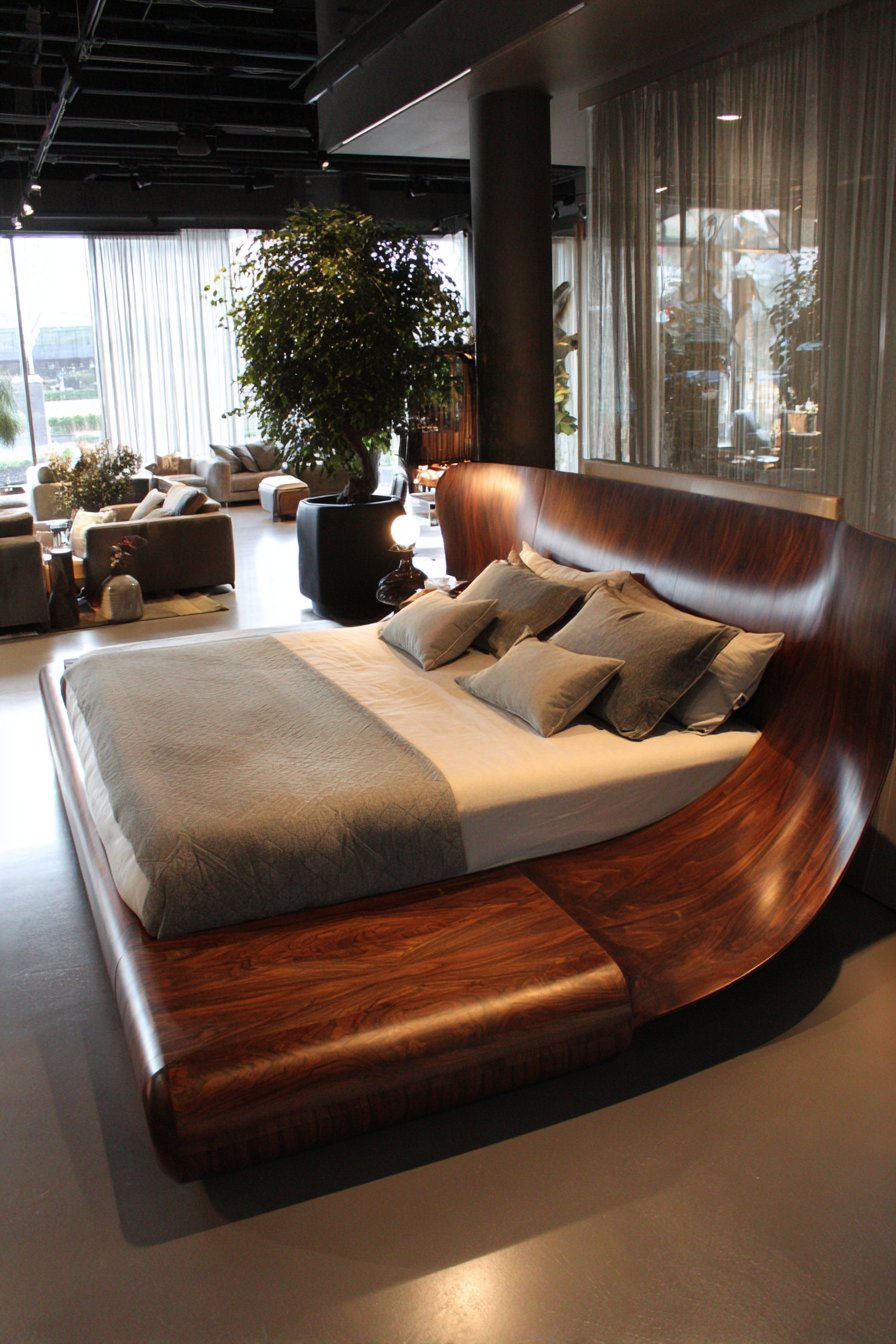
Key Design Tips:
- Select cherry or mahogany for traditional carved furniture—both woods carve cleanly
- Choose botanical or classical motifs appropriate to the overall furniture style
- Ensure adequate wood thickness (typically 2+ inches) for substantial carved depth
- Apply hand-rubbed finishes that enter carved recesses and highlight dimensional detail
- Use classic bedding with embroidery or damask patterns that complement carved aesthetic
- Position where natural light creates shadow play that reveals carved depth throughout the day
31. Teak Wraparound Frame with Integrated Side Tables
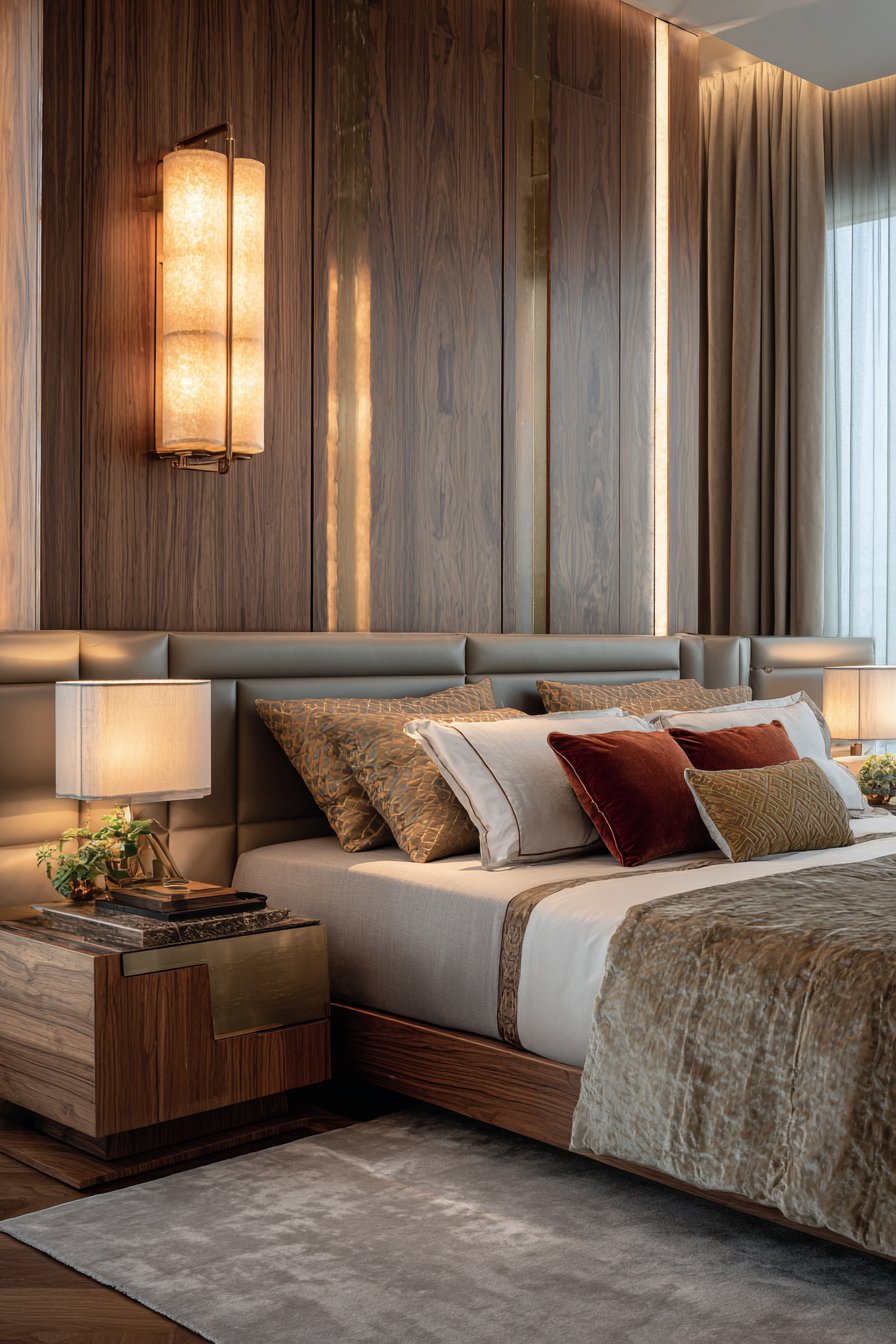
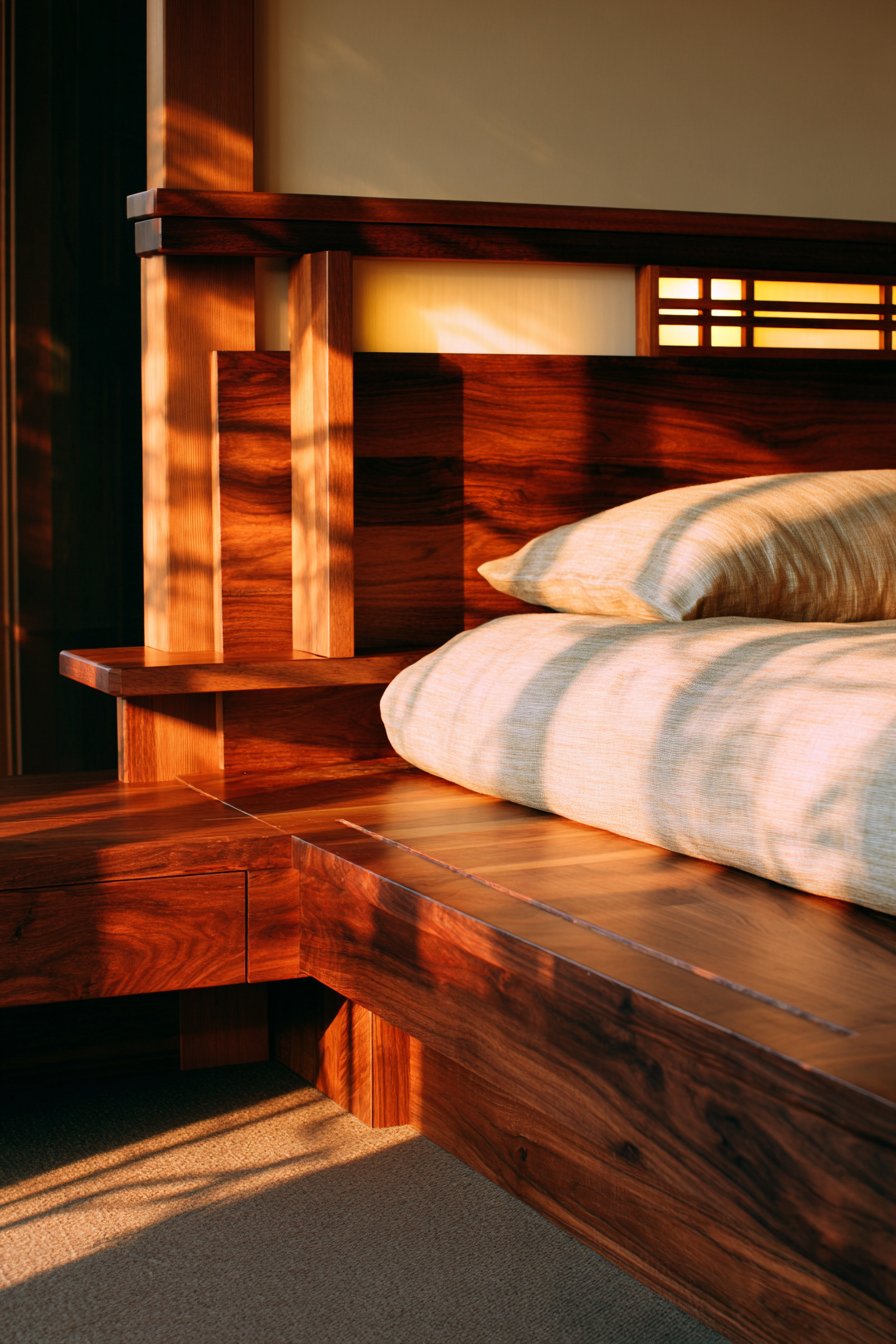
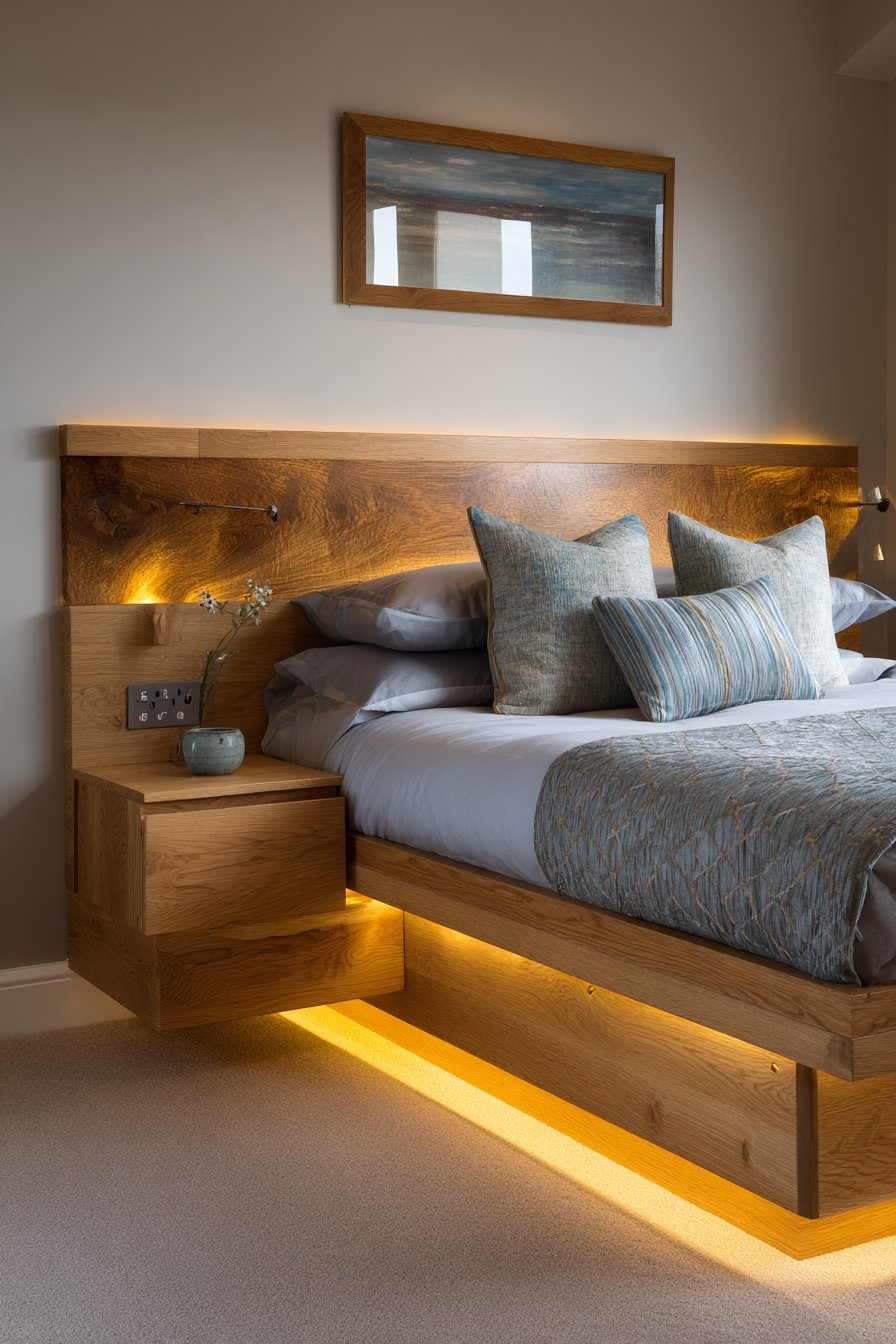
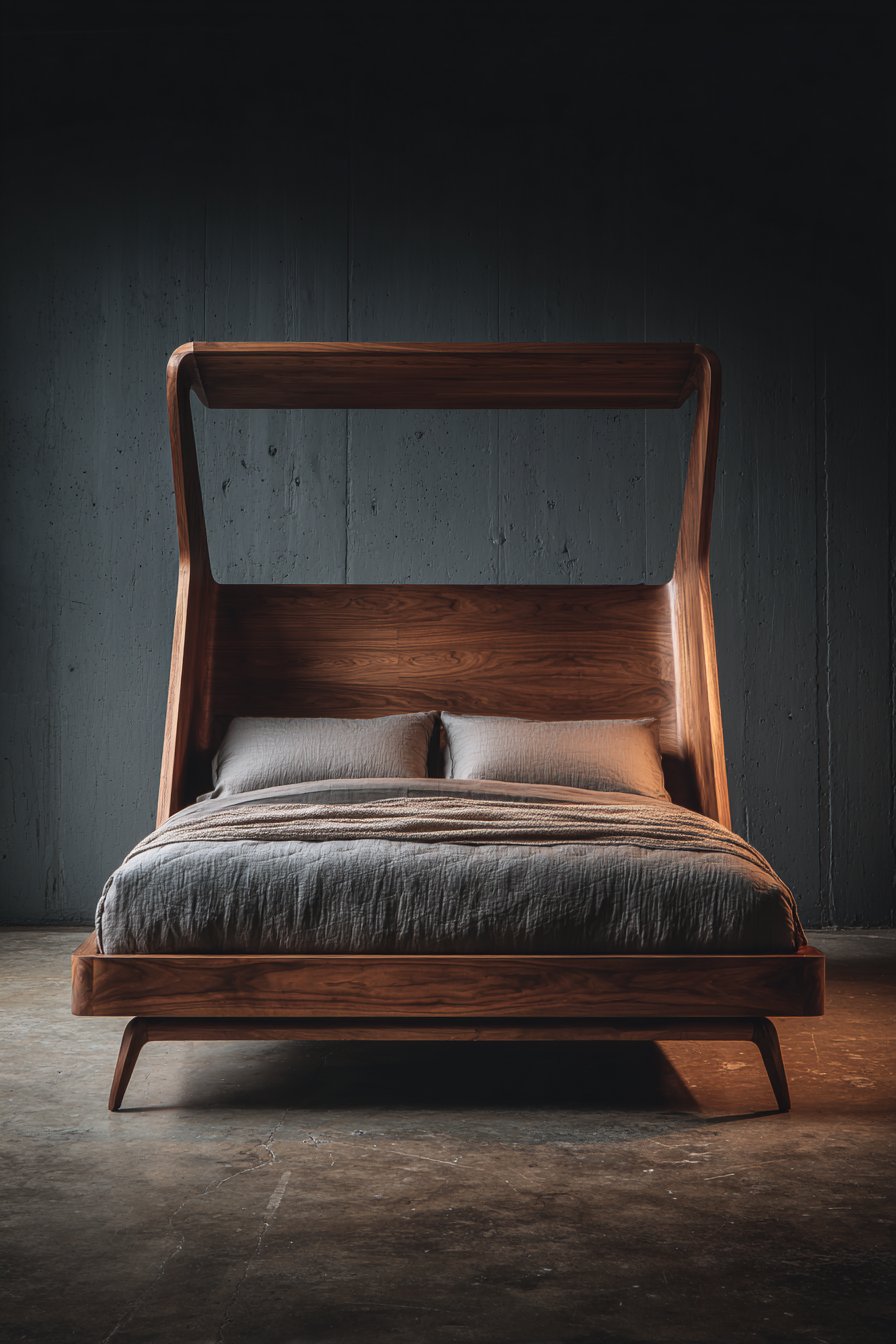
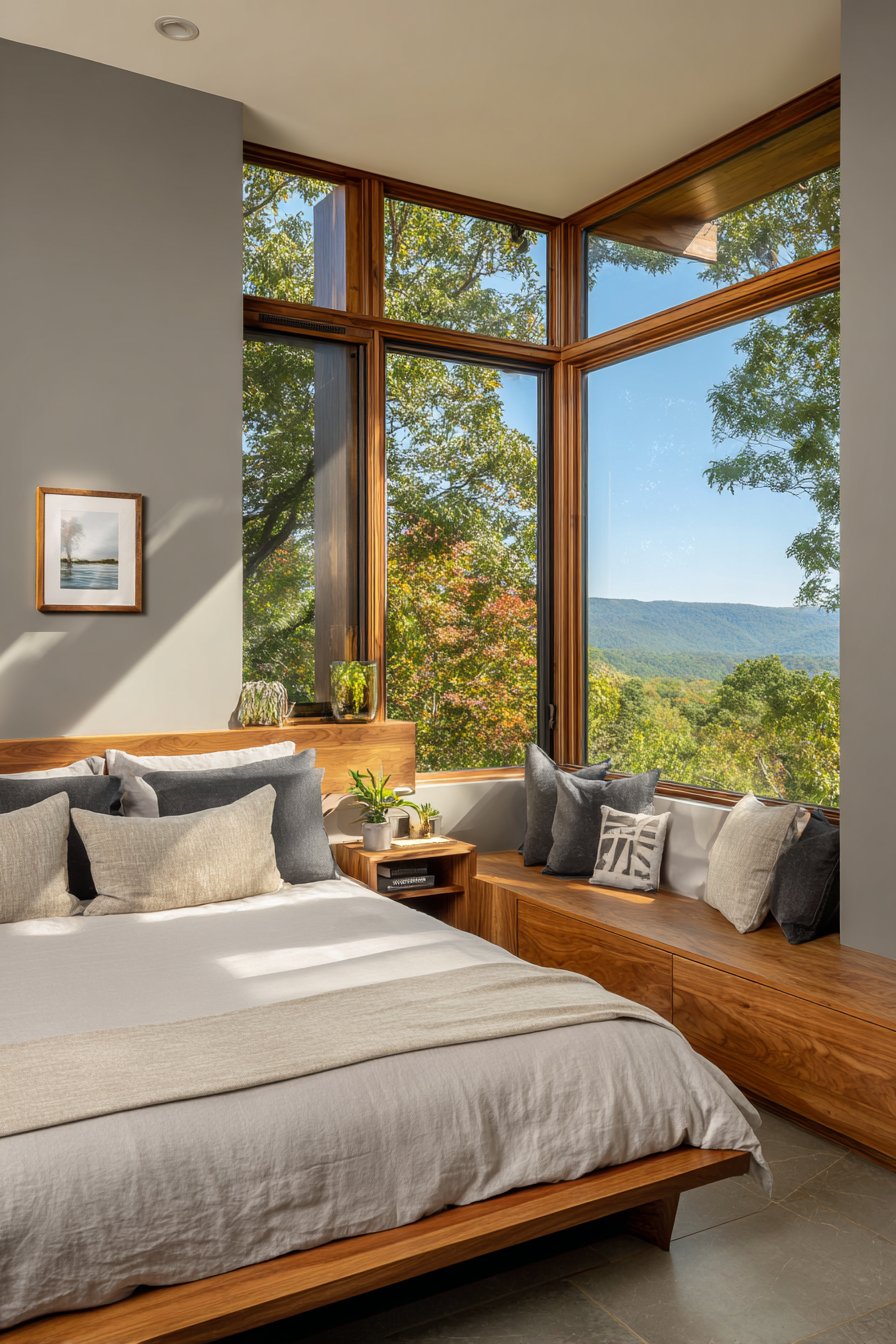
This wood bed design with wraparound frame features a continuous wood surround in teak that wraps from headboard around both sides to create integrated side tables or ledges. The innovative design eliminates need for separate nightstands, with the continuous ledge providing surface space for lamps, books, phones, and nighttime essentials. Contemporary bedding in neutral tones suits the streamlined look, with the clean aesthetic allowing the innovative frame design to be appreciated.
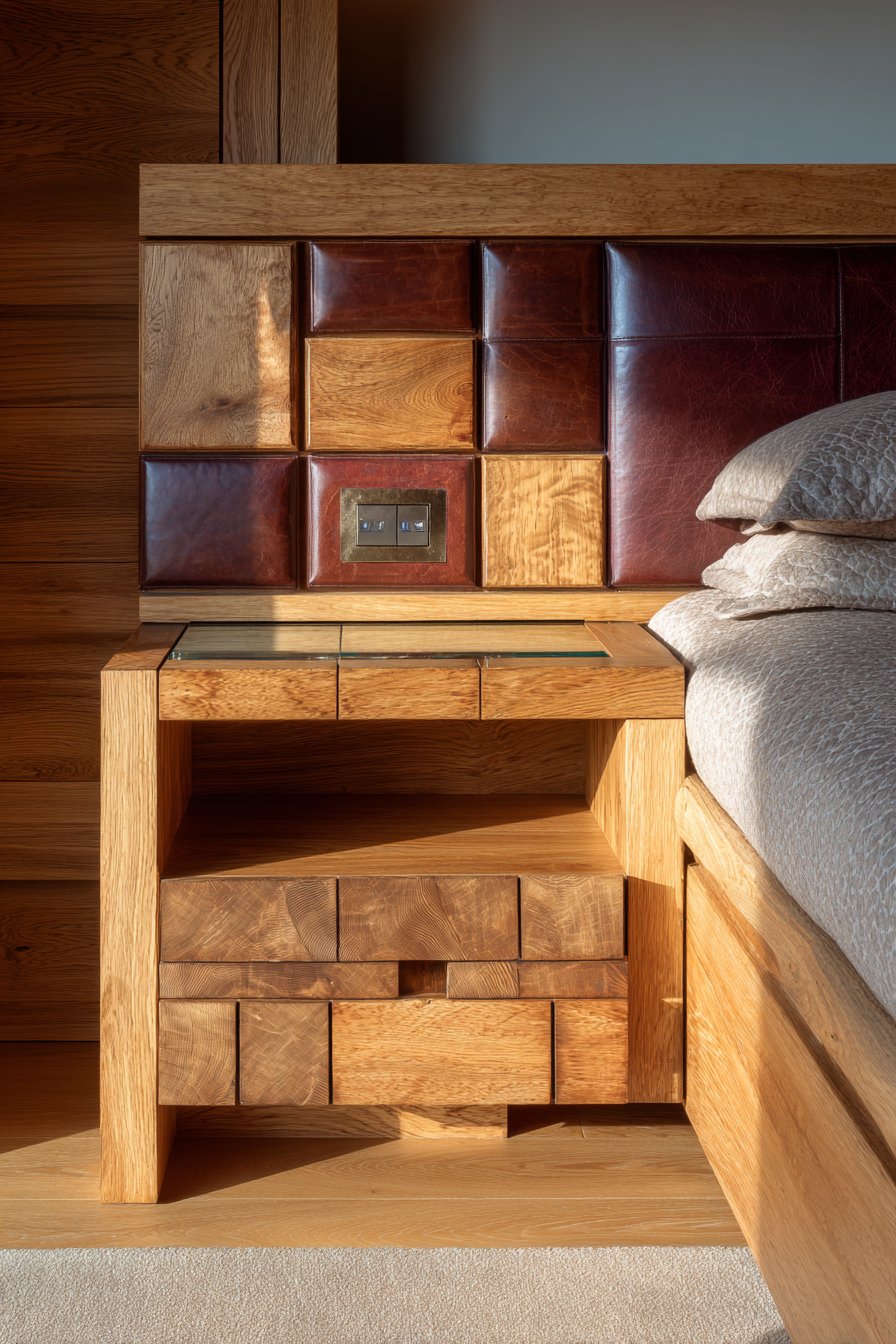
Natural daylight highlights the continuous wood grain flow around the frame, with the teak’s straight grain creating flowing lines that emphasize the wraparound design. The integrated surfaces are typically 10-12 inches deep, providing adequate functionality while maintaining visual integration with the bed frame. The teak’s natural oils and warm color create cohesive warmth throughout the continuous frame structure.
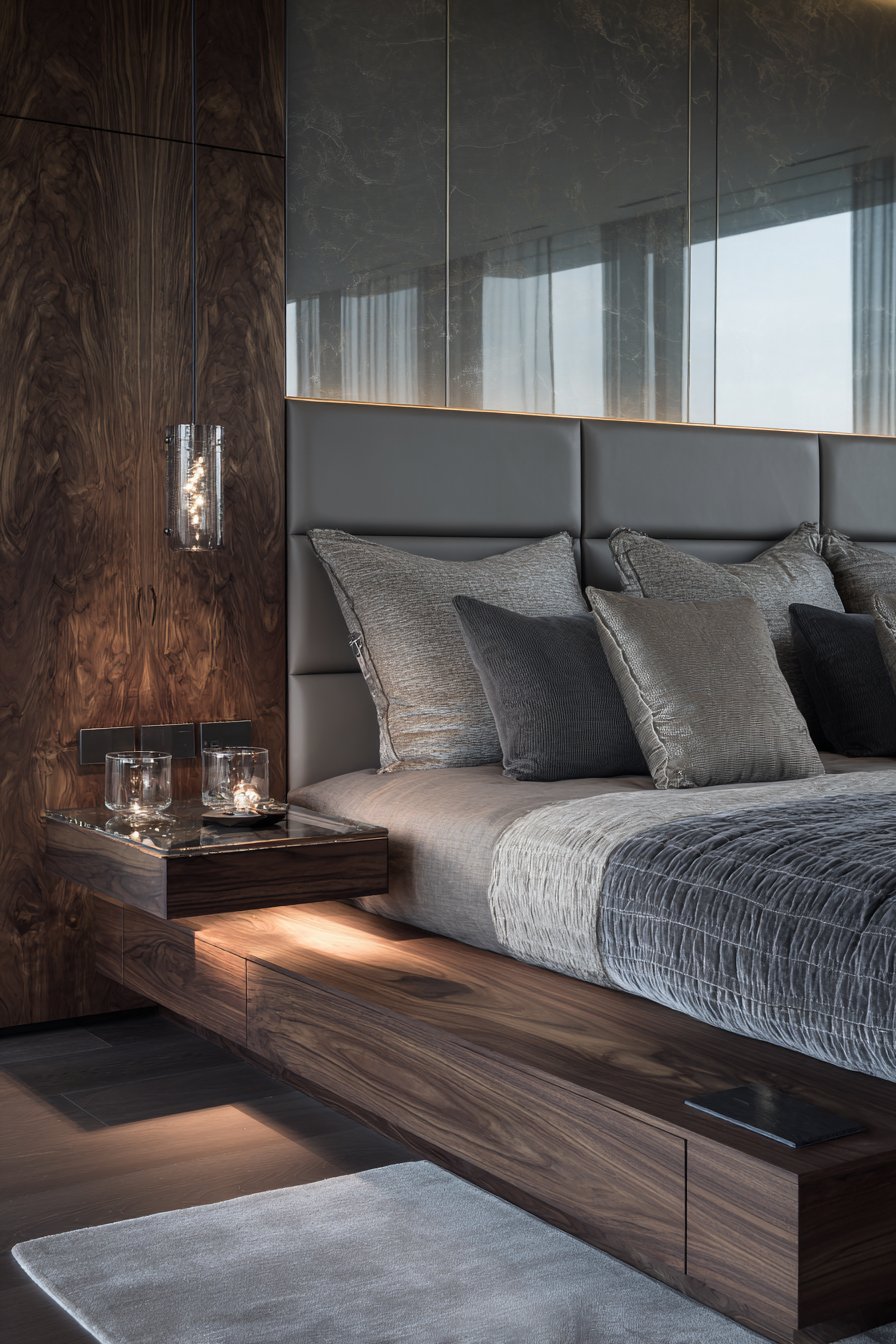
Wide-angle interior photography captures the innovative wraparound design and practical space efficiency with particular attention to the seamless wood continuity and functional integration. The composition demonstrates how thoughtful design innovation can address practical needs—bedside surface space—while creating distinctive furniture that serves as room focal point, where form and function merge seamlessly.
Key Design Tips:
- Choose teak or walnut for straight, uniform grain that flows continuously around corners
- Design adequate ledge depth (10-14 inches) for practical nightstand function
- Consider reinforcing corners where grain direction changes to prevent weakness
- Match grain patterns carefully when joining frame sections for seamless appearance
- Include subtle edge detail or lip to prevent items from sliding off integrated surfaces
- Position electrical outlets for lamps within easy reach of integrated side table surfaces
Why These Wood Bed Designs Represent the Best in Bedroom Furniture
The thirty-one wood bed designs presented throughout this comprehensive guide represent the pinnacle of bedroom furniture design, showcasing why wood remains the material of choice for discerning homeowners, interior designers, and furniture makers. These designs demonstrate wood’s unparalleled versatility, natural beauty, and ability to adapt to virtually any aesthetic vision while maintaining structural integrity and lasting value. From minimalist Scandinavian platforms to ornately carved traditional four-posters, each design proves that wood bed frames transcend mere functionality to become defining elements that establish bedroom character, influence design direction, and create the foundation for restful, beautiful sleeping spaces.
The wood bed design ideas featured here excel because they honor the inherent qualities of wood as a natural material while addressing contemporary needs for functionality, storage, and style. Whether showcasing live-edge details that celebrate organic form, integrating LED lighting for modern convenience, incorporating storage solutions for practical needs, or displaying hand-carved artisan details that showcase traditional craftsmanship, these designs represent the best of what’s possible when design thinking meets quality materials. The variety of wood species featured—from pale birch and ash to medium-toned oak and teak to dark walnut and wenge—demonstrates how wood selection itself becomes a design decision, with each species bringing distinctive color, grain patterns, and character to the finished piece.
These wood bed frame designs also represent excellence because they successfully balance aesthetic appeal with practical functionality. The platform beds with integrated storage address real-world needs for bedroom organization without compromising visual sophistication. The adjustable headboards add functional innovation while maintaining clean aesthetics. The floating platforms create dramatic visual impact through concealed engineering. The bookshelf headboards transform dead wall space into practical storage and display. Each design proves that the best furniture doesn’t force a choice between beauty and utility but finds creative ways to enhance both simultaneously, where thoughtful design details serve multiple purposes and every element contributes to both form and function.
The craftsmanship represented in these wooden bed designs spans the full spectrum from minimalist joinery that celebrates simplicity to elaborate carving that showcases traditional skills. The Japanese-influenced designs with visible mortise and tenon joinery honor woodworking traditions where connections become decorative features. The carved headboards demonstrate how wood responds to skilled hands, allowing three-dimensional details that create shadow play and visual interest. The live-edge and natural bark designs celebrate wood’s organic origins while requiring skilled selection and stabilization. The mixed-wood designs show how different species can be successfully combined when proportion and contrast are carefully considered. This range of craftsmanship approaches ensures that these wood bed designs appeal to varied tastes while maintaining consistently high standards of execution and attention to detail.
The sustainable and enduring nature of wood furniture contributes significantly to why these designs represent the best choices for bedroom furnishing. Quality wooden beds, properly maintained, last for generations rather than years, developing character and patina through decades of use. Many designs feature reclaimed wood, giving new life to materials from barns, warehouses, or other structures, reducing environmental impact while adding authentic character. The natural, non-toxic properties of solid wood create healthier bedroom environments compared to composite materials that may off-gas volatile organic compounds. The repairability of wood furniture—unlike disposable alternatives—means these bed frames can be refinished, re-stained, or structurally repaired, extending their useful life indefinitely and making them genuinely sustainable furniture choices.
The timeless appeal of wood ensures that these bed designs remain relevant through changing trends and evolving personal style. While specific design aesthetics—from mid-century modern to industrial to farmhouse—come in and out of fashion, quality wood furniture transcends trend cycles. A well-designed wooden bed can be updated through changing textiles, accessories, and surrounding decor without requiring replacement of the bed itself. The natural material ages gracefully, with woods like cherry and teak actually improving in appearance over time as they develop richer color and deeper patina. This lasting relevance makes wood beds economically smart investments that provide value over decades rather than requiring replacement every few years as tastes evolve or trends shift.
Conclusion
The journey through these 31 wood bed design ideas reveals the extraordinary versatility, enduring beauty, and practical advantages of choosing wood as the primary material for bedroom furniture. From the dramatic statement of a live-edge walnut platform to the serene simplicity of a pale birch minimalist frame, from the rustic authenticity of reclaimed barn wood to the refined elegance of hand-carved cherry, these designs demonstrate that wood beds can successfully address any aesthetic vision, accommodate any functional requirement, and enhance any bedroom environment. The natural warmth, organic texture, and honest materiality of wood create sleeping spaces that feel grounded, inviting, and deeply connected to the natural world, providing the restful atmosphere essential to quality sleep and personal wellbeing.
As you consider how to transform your own bedroom, let these wood bed design ideas inspire you to think beyond conventional furniture choices and embrace the possibilities that wood offers. Consider how the wood species selection—the pale airiness of ash versus the rich depth of walnut—will influence your room’s overall feeling. Think about which design features address your practical needs, whether that’s integrated storage, adjustable positioning, built-in lighting, or space-saving solutions. Reflect on your personal style and which aesthetic approach resonates most deeply, whether that’s the clean lines of contemporary minimalism, the lived-in character of rustic farmhouse, the sophisticated elegance of traditional craftsmanship, or an eclectic mix that celebrates your unique personality.
Remember that investing in a quality wood bed represents a commitment to lasting value, sustainable choices, and timeless style that will serve you well for years or even decades to come. Take time to select wood species, finishes, and design details that truly speak to your aesthetic sensibilities and practical needs. Consider working with skilled furniture makers who can create custom pieces tailored to your specific requirements and room dimensions. Whether you choose a ready-made design or commission a custom creation, prioritize quality materials, expert craftsmanship, and construction techniques that ensure structural integrity and lasting durability. Your bedroom deserves furniture that not only looks beautiful but also provides the comfort, functionality, and enduring quality that transforms a sleeping space into a true personal sanctuary where you can retreat, restore, and begin each new day refreshed and inspired.
