
The living room serves as the heart of every home—a sanctuary where we unwind after long days, entertain cherished guests, and create lasting memories with loved ones. The color palette we choose for this essential space profoundly influences its atmosphere, functionality, and emotional resonance. Among the myriad of design choices available today, dark green has emerged as a sophisticated and versatile option that brings nature’s tranquility indoors while exuding timeless elegance. This rich, complex hue offers depth and drama without overwhelming a space, creating environments that feel both grounded and luxurious.
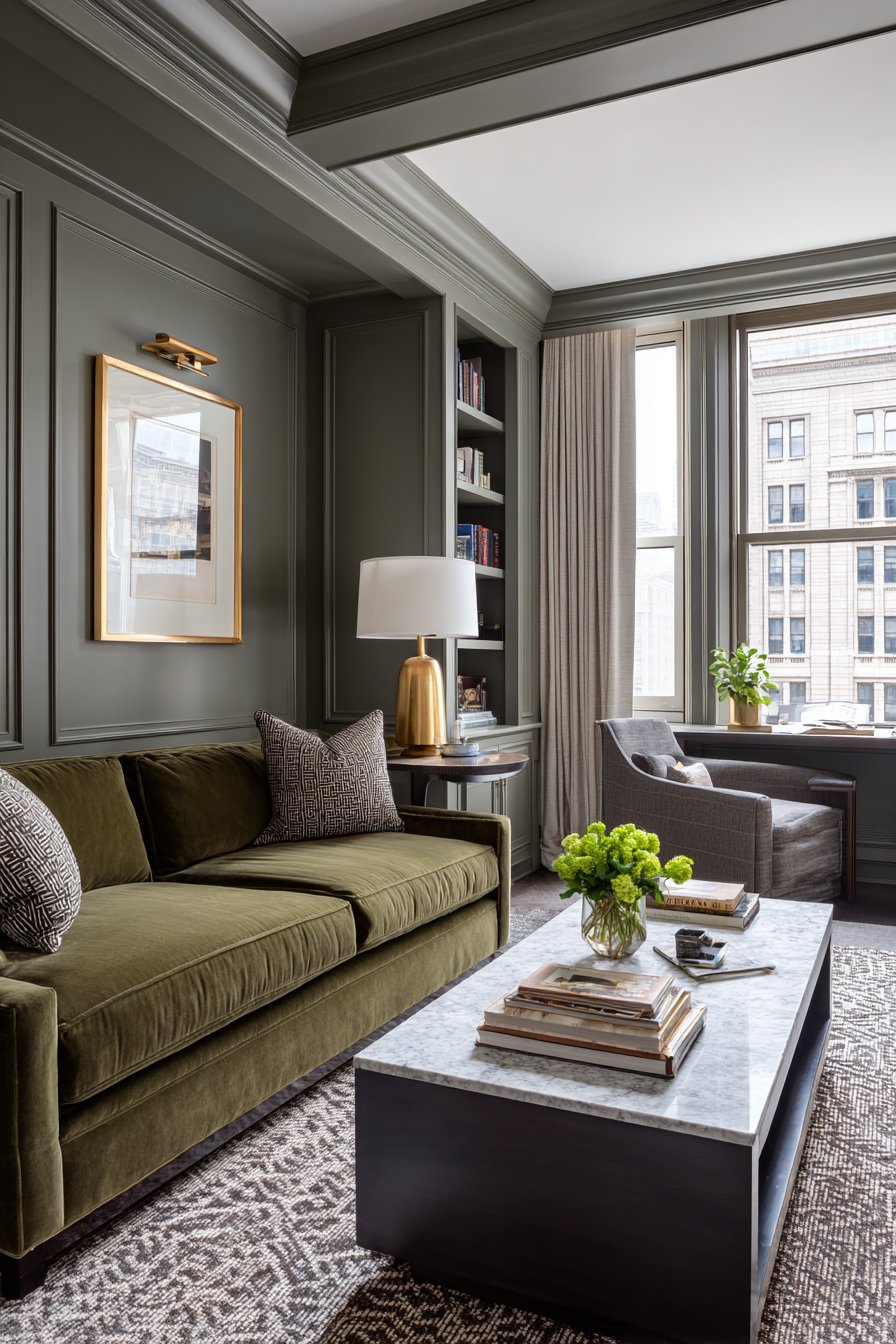
Dark green living room ideas encompass a remarkable spectrum of design possibilities, from deep emerald velvets that evoke opulence to muted sage tones that whisper serenity. Whether you’re drawn to the moody sophistication of hunter green walls, the vibrant energy of jewel-toned furnishings, or the subtle integration of forest green accents, this versatile color adapts beautifully to virtually any design aesthetic. From minimalist Scandinavian interiors to maximalist bohemian havens, from classic traditional parlors to cutting-edge contemporary spaces, dark green proves its remarkable flexibility and enduring appeal.
In this comprehensive guide, we’ll explore twenty-five distinctive approaches to incorporating dark green into your living room design. Each concept demonstrates how this magnificent color can transform ordinary spaces into extraordinary retreats. You’ll discover practical strategies for balancing bold green statements with complementary elements, learn how to layer different shades for dimensional richness, and gain insights into selecting materials, textures, and lighting that enhance dark green’s natural beauty. Whether you’re planning a complete room makeover or simply seeking inspiration for refreshing your current space, these dark green living room ideas will equip you with the knowledge and confidence to create a living area that truly reflects your personal style while maintaining timeless sophistication.
1. Luxurious Emerald Velvet Centerpiece
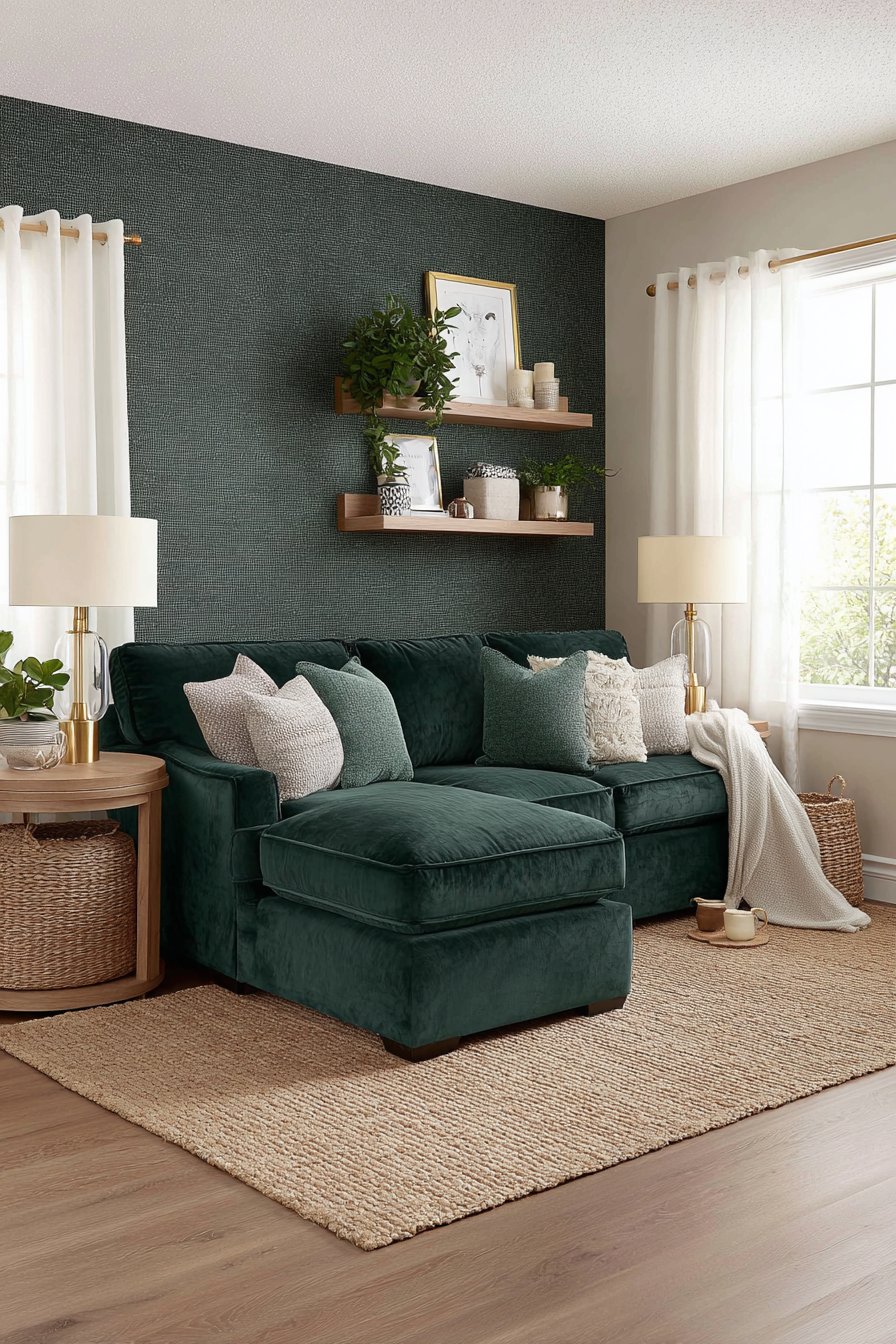
The foundation of this stunning living room design rests upon a plush velvet sectional sofa in deep emerald green, positioned strategically against a textured dark green accent wall. This combination creates an immersive experience where the furniture and architecture work in harmony to establish the room’s sophisticated character. The velvet’s inherent light-catching properties ensure that the sofa appears to shift in tone throughout the day, revealing subtle variations from forest depth to jewel-like brilliance depending on natural light conditions. The textured accent wall adds dimensional interest, preventing the monochromatic green scheme from feeling flat or one-dimensional.
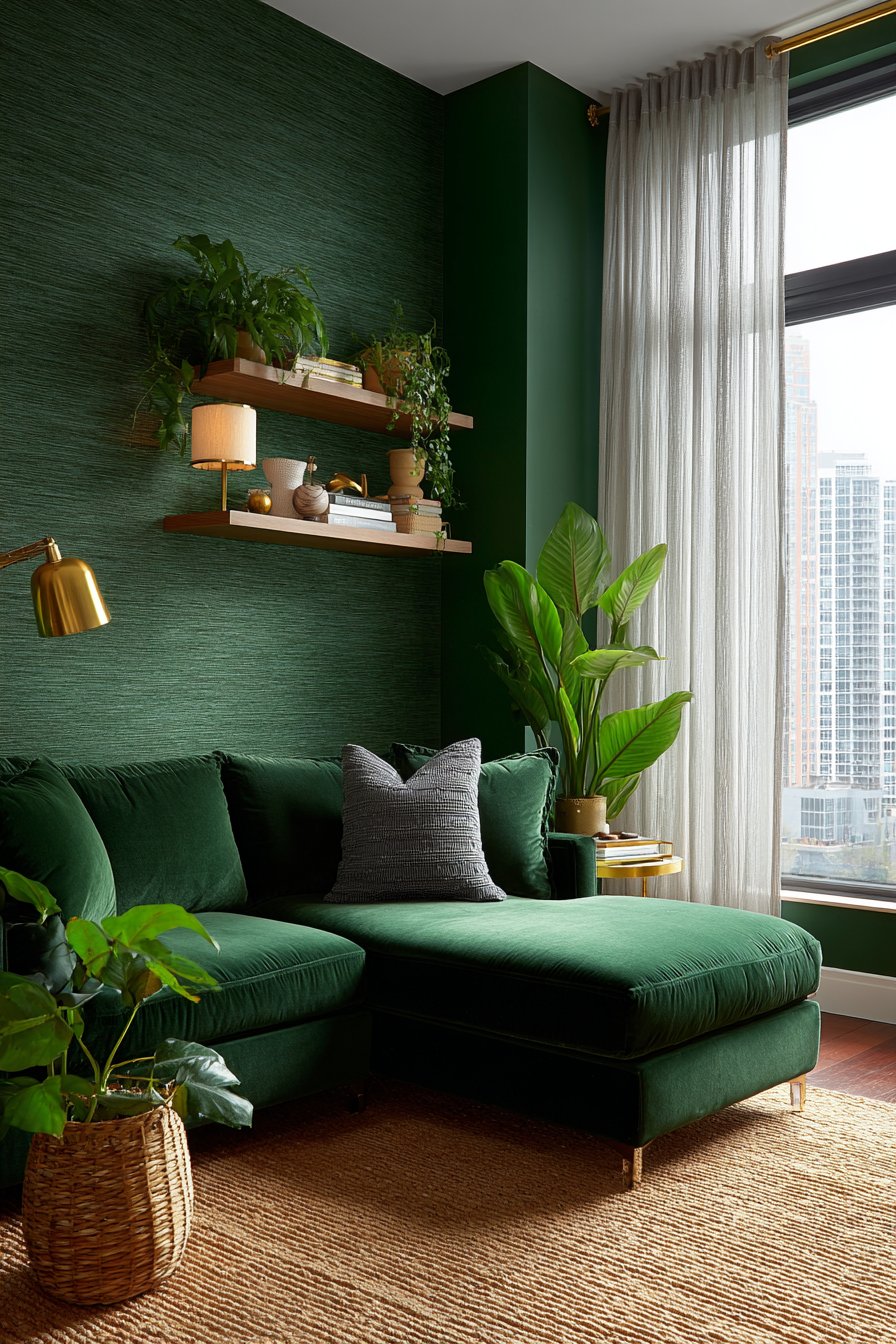
Natural oak floating shelves provide a warm counterpoint to the cool green tones, their honey-colored wood grain introducing organic warmth that prevents the space from feeling too austere. These shelves serve dual purposes—displaying potted plants that echo the room’s natural color story while offering practical storage for decorative objects that add personality. The brass table lamps with their linen shades contribute another layer of warmth through both their metallic finish and the quality of light they emit, creating pools of ambient illumination that make the space feel inviting during evening hours.
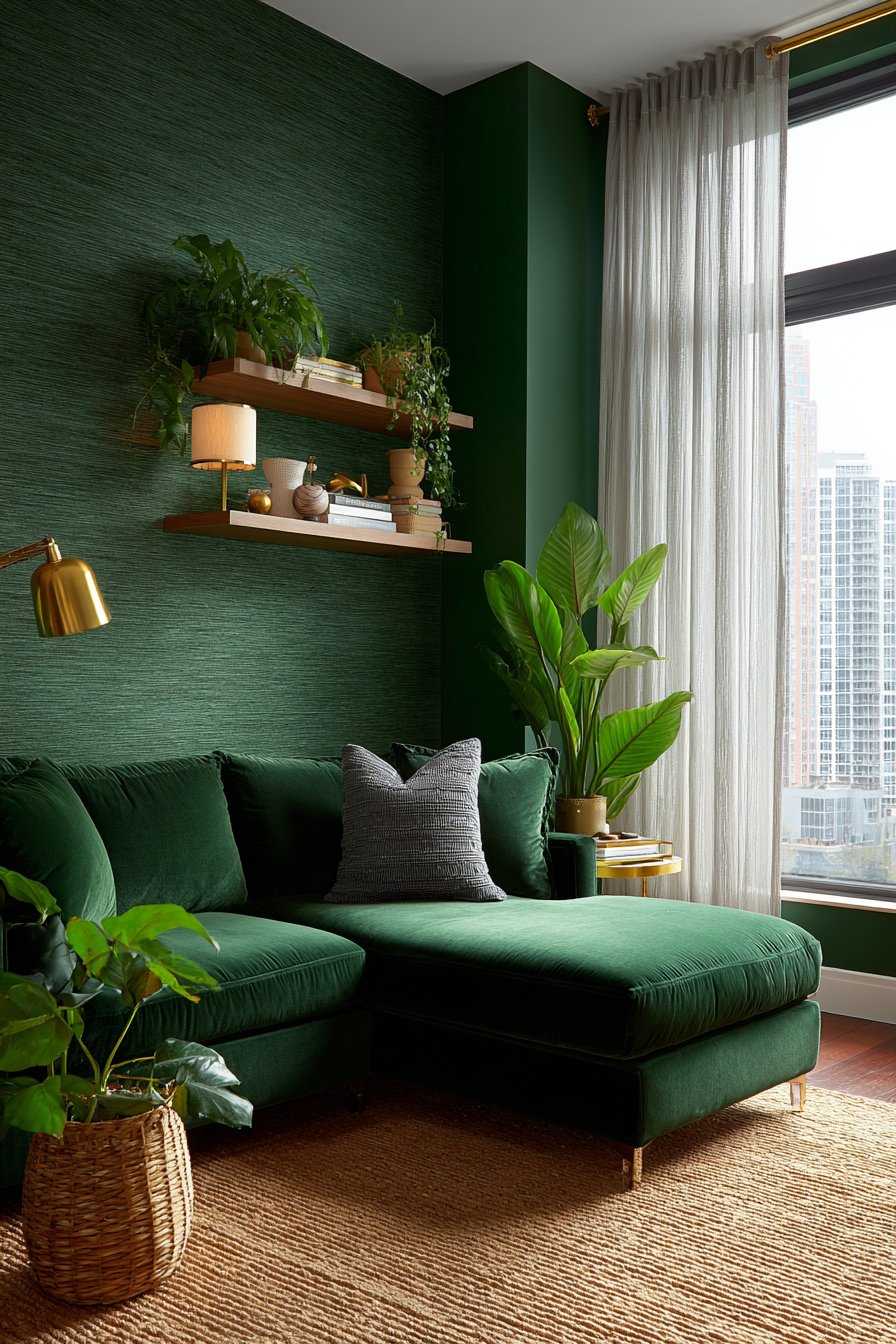
The jute area rug grounds the seating arrangement with its natural texture and neutral tone, providing visual relief from the intensity of the green palette while introducing tactile interest underfoot. Sheer white curtains soften the incoming natural light, diffusing it throughout the space and preventing harsh shadows that might diminish the room’s welcoming atmosphere. This thoughtful layering of textures—smooth velvet, rough jute, crisp linen, and warm wood—creates sensory richness that elevates the design beyond mere visual appeal.
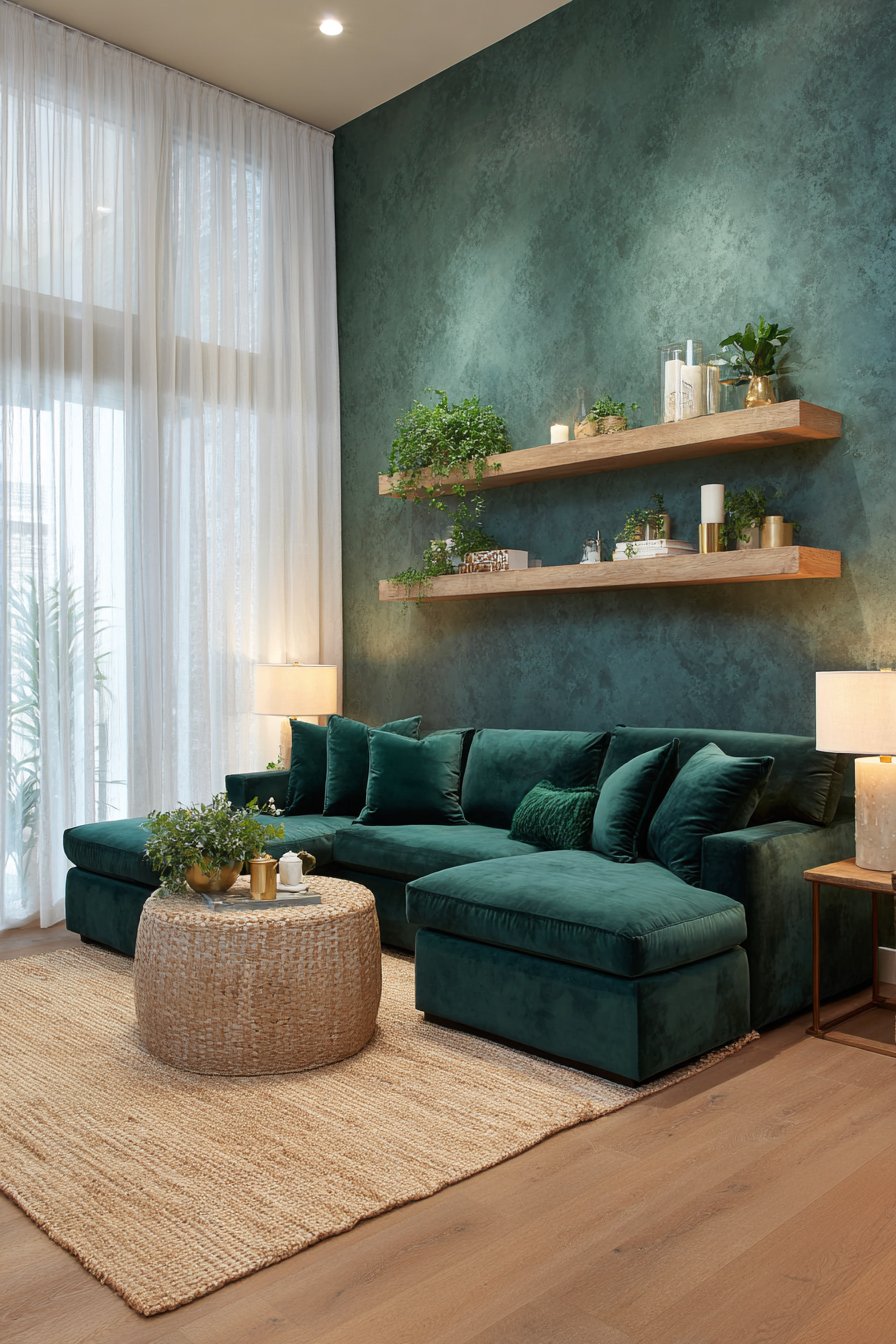
Key Design Tips: Select velvet upholstery in the deepest emerald shade you can find to maximize dramatic impact. Install floating shelves at varying heights to create visual movement and accommodate plants of different sizes. Choose brass fixtures with warm undertones rather than cool metallics to complement green’s natural warmth. Layer multiple light sources including table lamps, floor lamps, and overhead fixtures to ensure the space feels welcoming at all hours. Incorporate natural textures like jute, linen, and wood to balance the richness of the velvet and prevent the room from feeling too formal.
2. Intimate Forest Green Reading Retreat
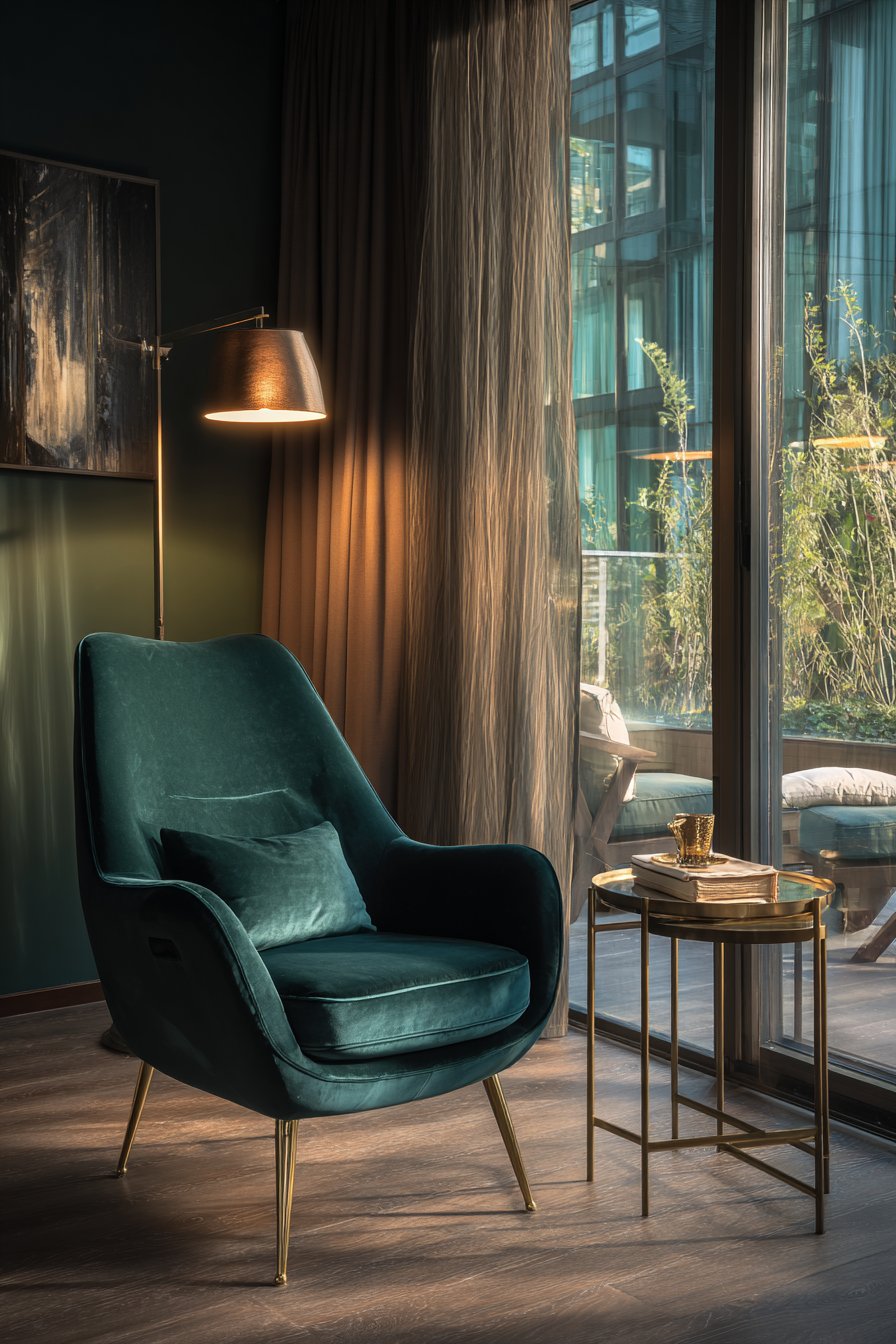
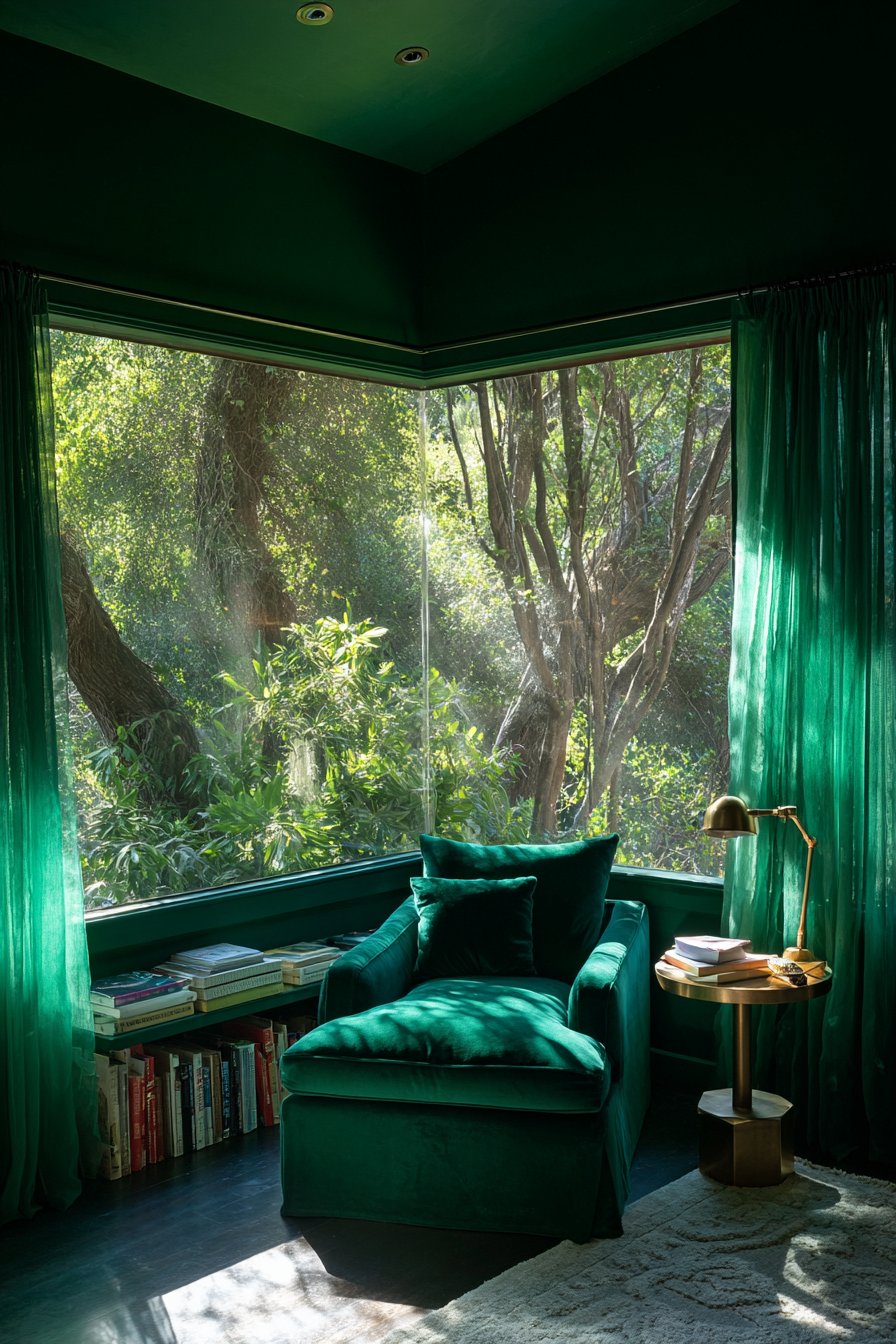
Creating a dedicated reading nook within your living room transforms an underutilized corner into a cherished personal sanctuary. This design features a forest green velvet armchair positioned strategically near floor-to-ceiling windows, where natural daylight streams in to provide optimal reading conditions. The dark green walls envelop the space in an intimate cocoon-like atmosphere, making the corner feel separate from the main living area while remaining visually connected. This psychological separation proves invaluable for those seeking quiet moments of contemplation or literary escape within a busy household.
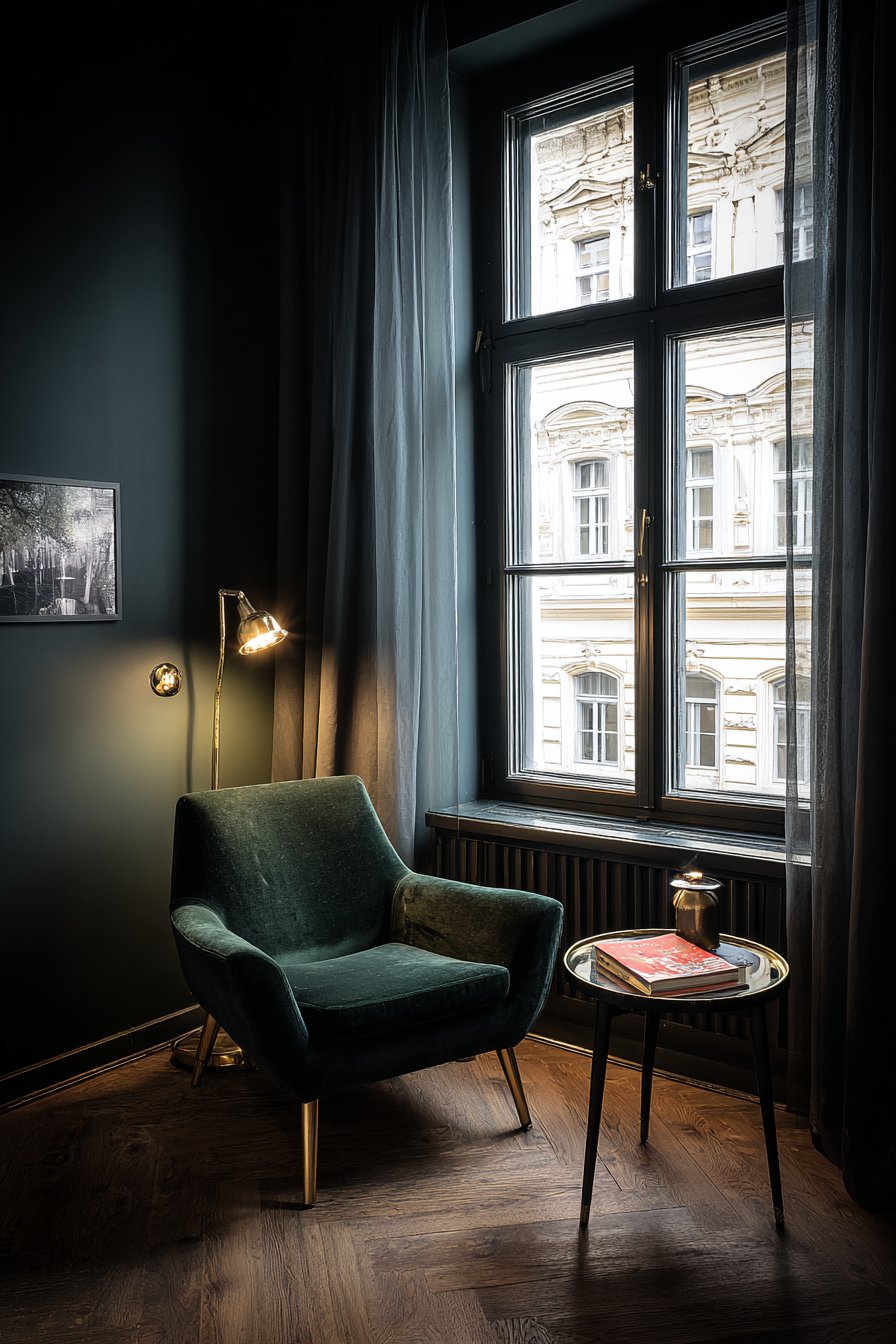
The small round side table in aged brass serves as both a functional surface for beverages and books and a decorative element that introduces metallic warmth. Its compact circular form ensures it doesn’t impede traffic flow while remaining within easy reach of the seated reader. The reading lamp positioned on this table becomes essential during evening hours, casting focused illumination onto book pages while contributing to the overall ambient lighting scheme. The aged brass finish ties together the various metallic accents throughout the space, creating cohesion in the design narrative.
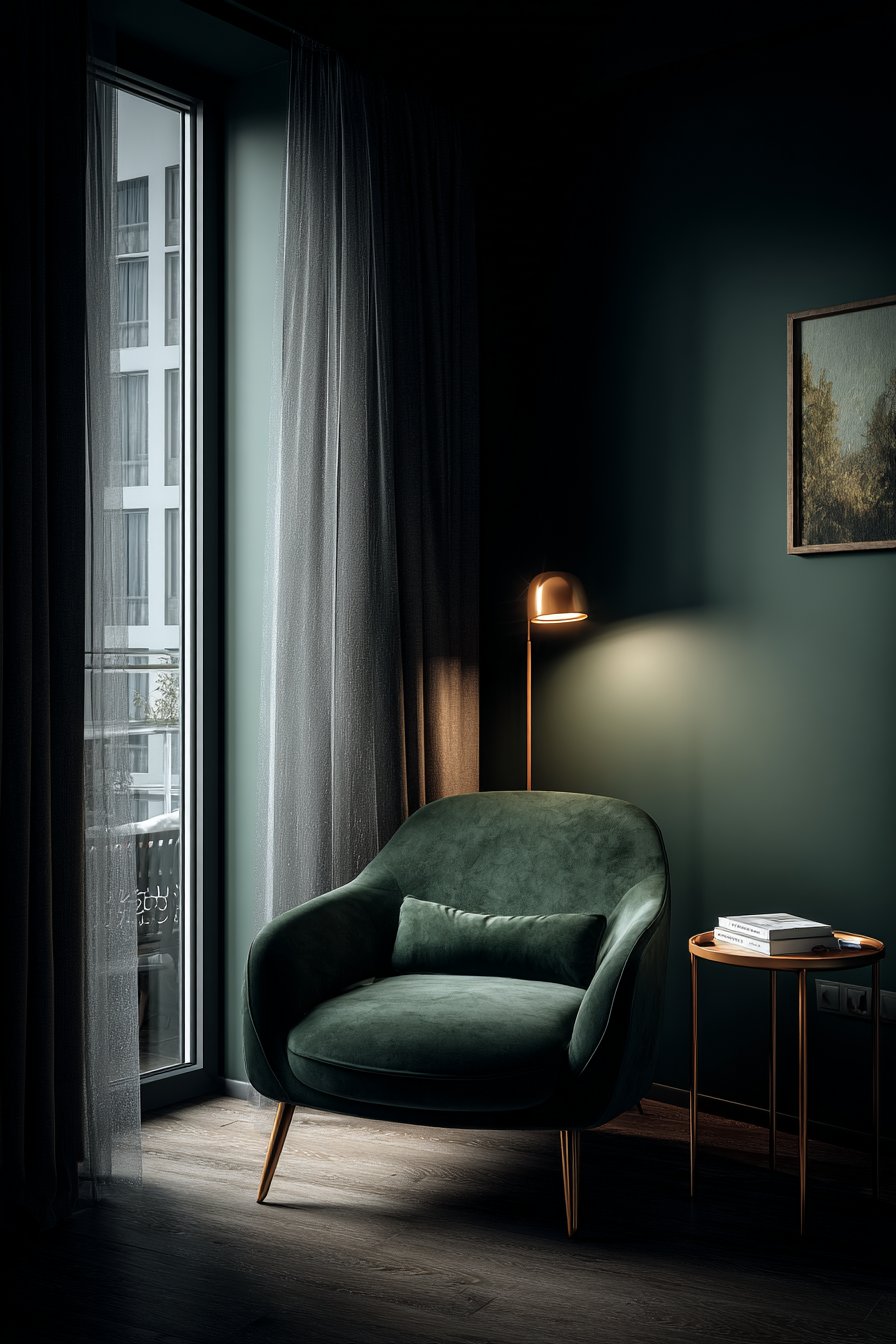
Gauzy curtains filter the natural daylight, softening its intensity while maintaining the connection to the outdoors. This diffused light quality proves particularly beneficial for reading, reducing glare on pages while still providing adequate illumination. The curtains also offer privacy control without completely blocking the window’s architectural presence. The interplay between natural and artificial lighting on the deep green surfaces creates subtle variations in tone throughout the day, ensuring the nook never feels static or monotonous.
Key Design Tips: Position reading chairs at a 45-degree angle to windows to maximize natural light without creating glare on book pages. Choose armchairs with proper lumbar support and comfortable arm heights for extended reading sessions. Install dimmer switches on reading lamps to adjust light levels based on time of day and ambient conditions. Select curtain fabrics that filter light rather than block it completely to maintain the connection with outdoor views. Add a small ottoman or footstool to enhance comfort and encourage longer reading sessions. Consider acoustical treatments like heavy curtains or upholstered walls to absorb sound and create a quieter environment conducive to concentration.
3. Sophisticated Hunter Green Built-In Storage
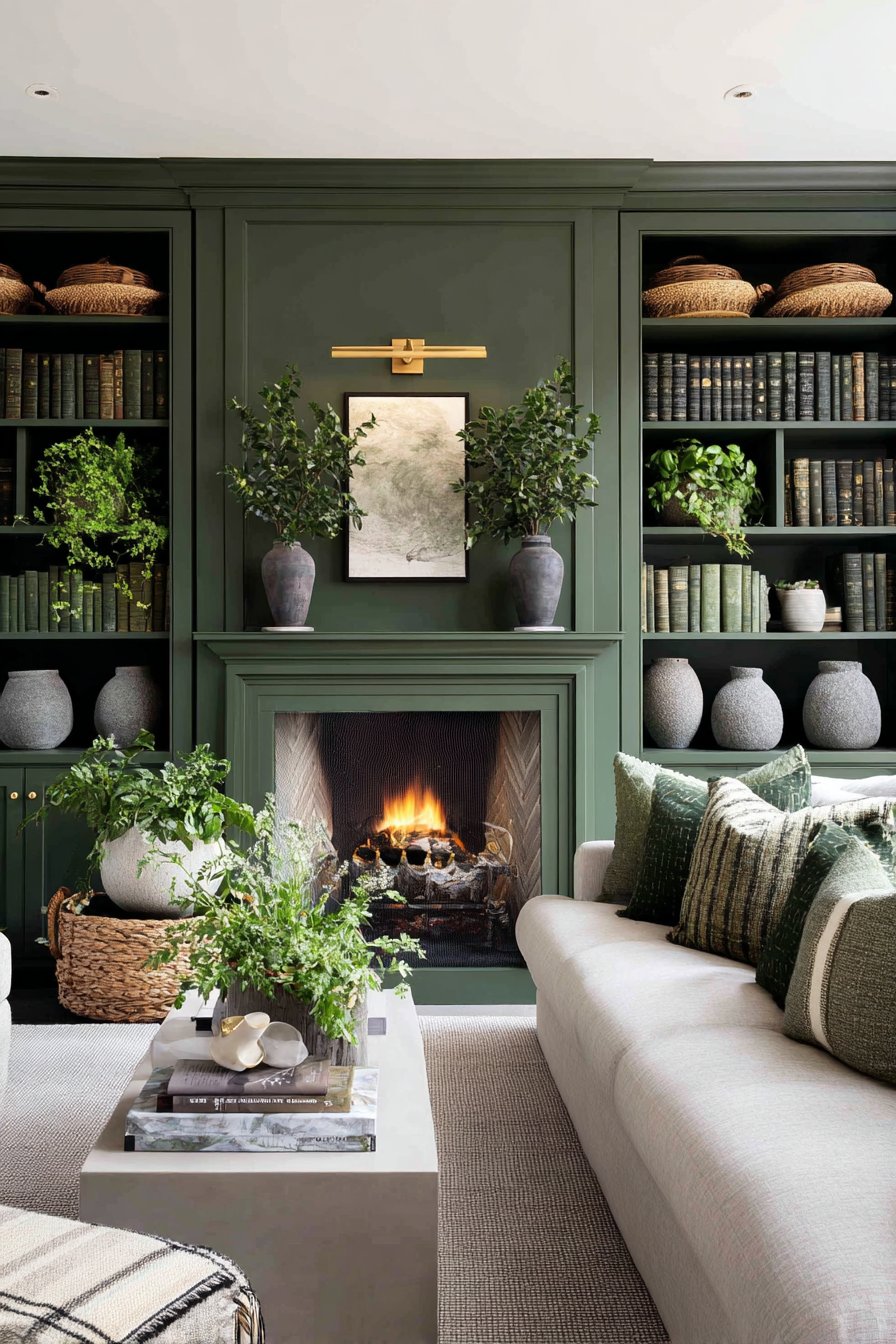
Built-in cabinetry painted in deep hunter green revolutionizes living room storage by transforming functional necessity into architectural feature. This design showcases floor-to-ceiling units that flank a central fireplace, creating symmetry and visual balance while providing abundant concealed and display storage. The hunter green paint elevates these practical elements beyond mere utility, turning them into sophisticated focal points that define the room’s character. The brass hardware punctuates the green surfaces with warm metallic accents, their placement creating rhythm and visual interest across the expansive cabinetry.
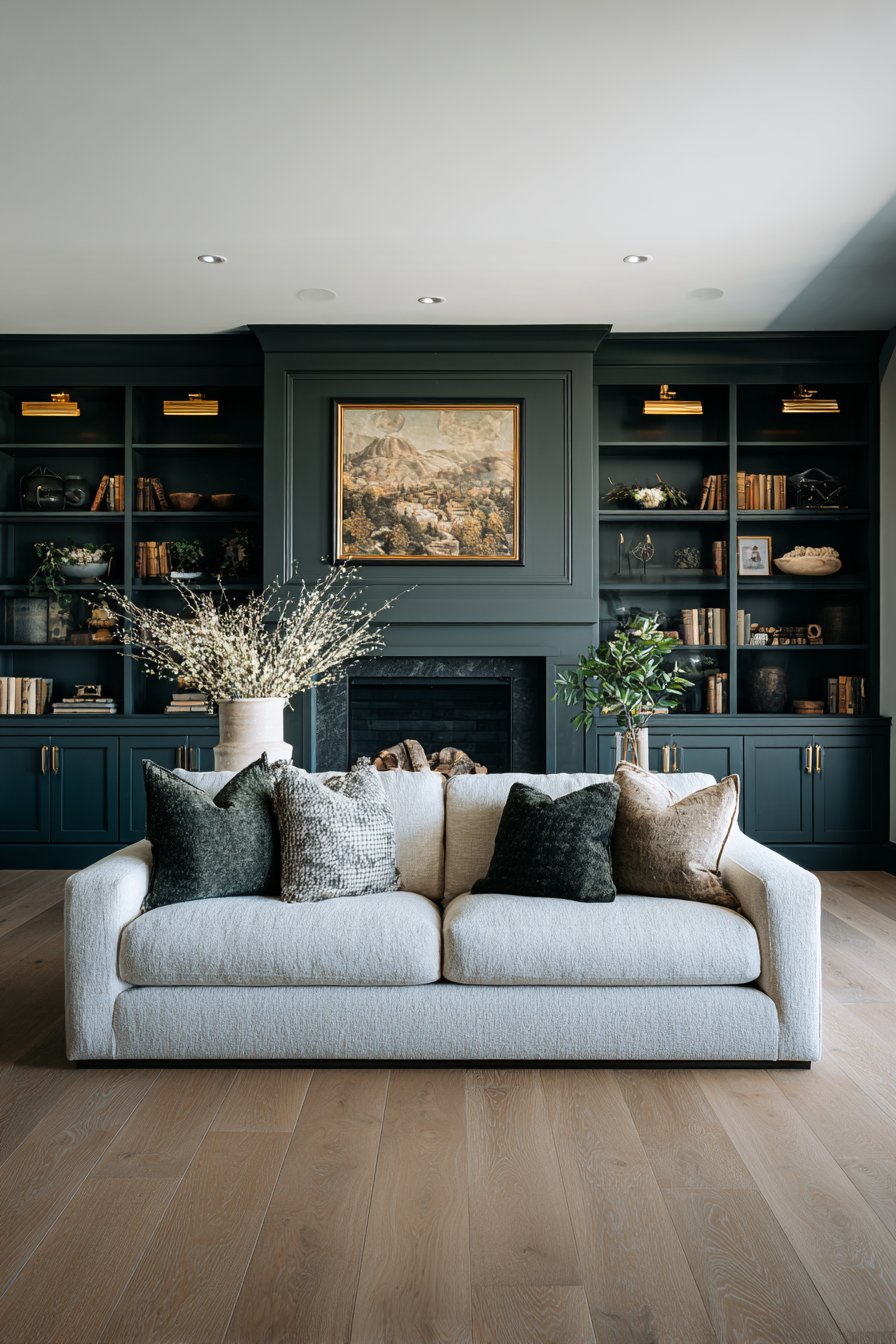
Integrated lighting within the shelving units serves multiple purposes—illuminating displayed objects, providing ambient lighting during evening hours, and adding depth to the cabinetry by preventing dark shadowy recesses. This lighting can be adjusted to highlight specific collections or create general wash illumination depending on the occasion. The curated displays of books, plants, and decorative objects tell the story of the room’s inhabitants, personalizing the space while maintaining the sophisticated aesthetic established by the deep green color.
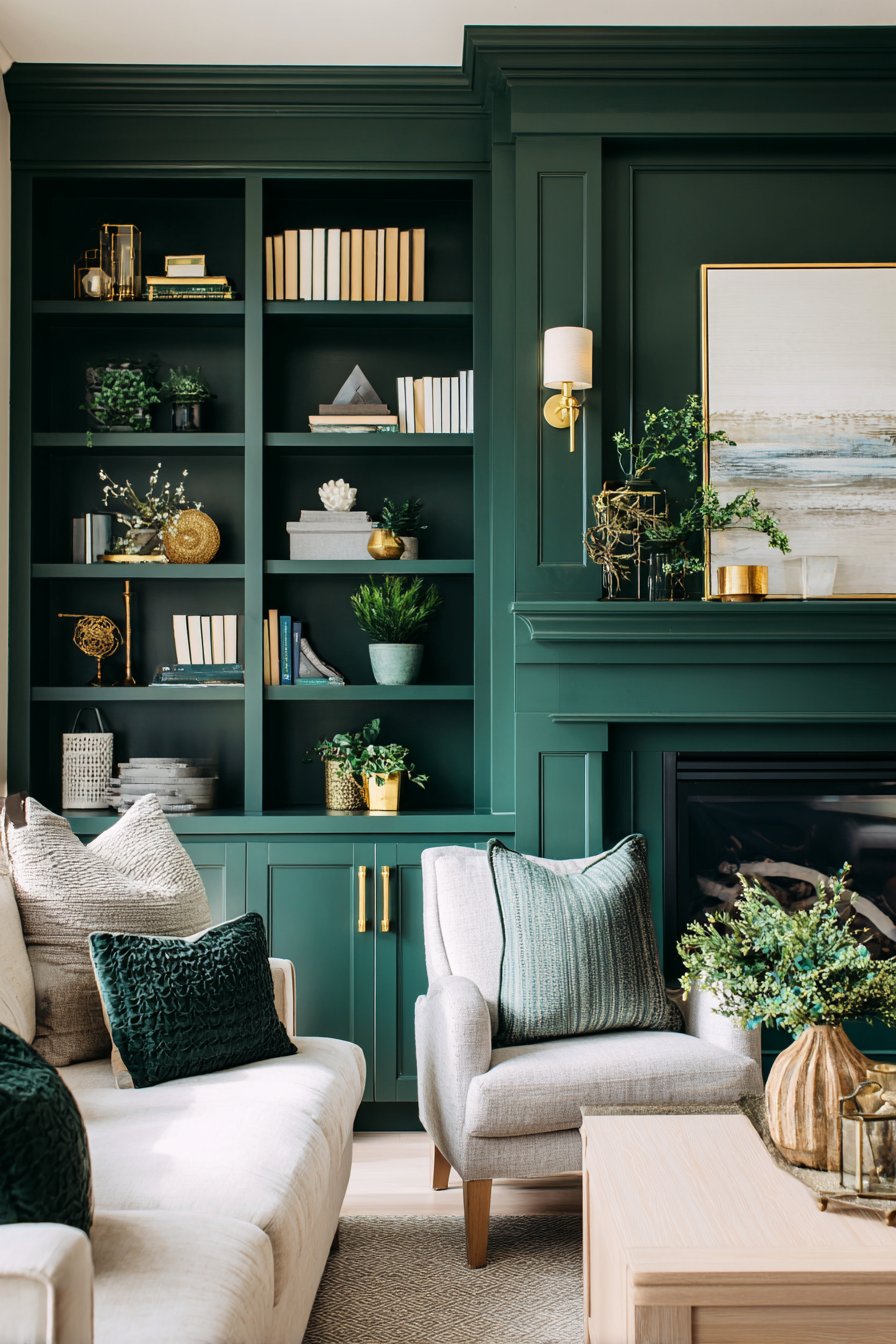
The neutral sofa positioned to face these feature walls provides visual relief from the intensity of the green, allowing the cabinetry to command attention without overwhelming the space. Complementary throw pillows introduce additional texture and pattern while maintaining color harmony with the dominant green theme. This balance between bold architectural elements and restrained furnishings creates a sophisticated environment that feels both impressive and livable.
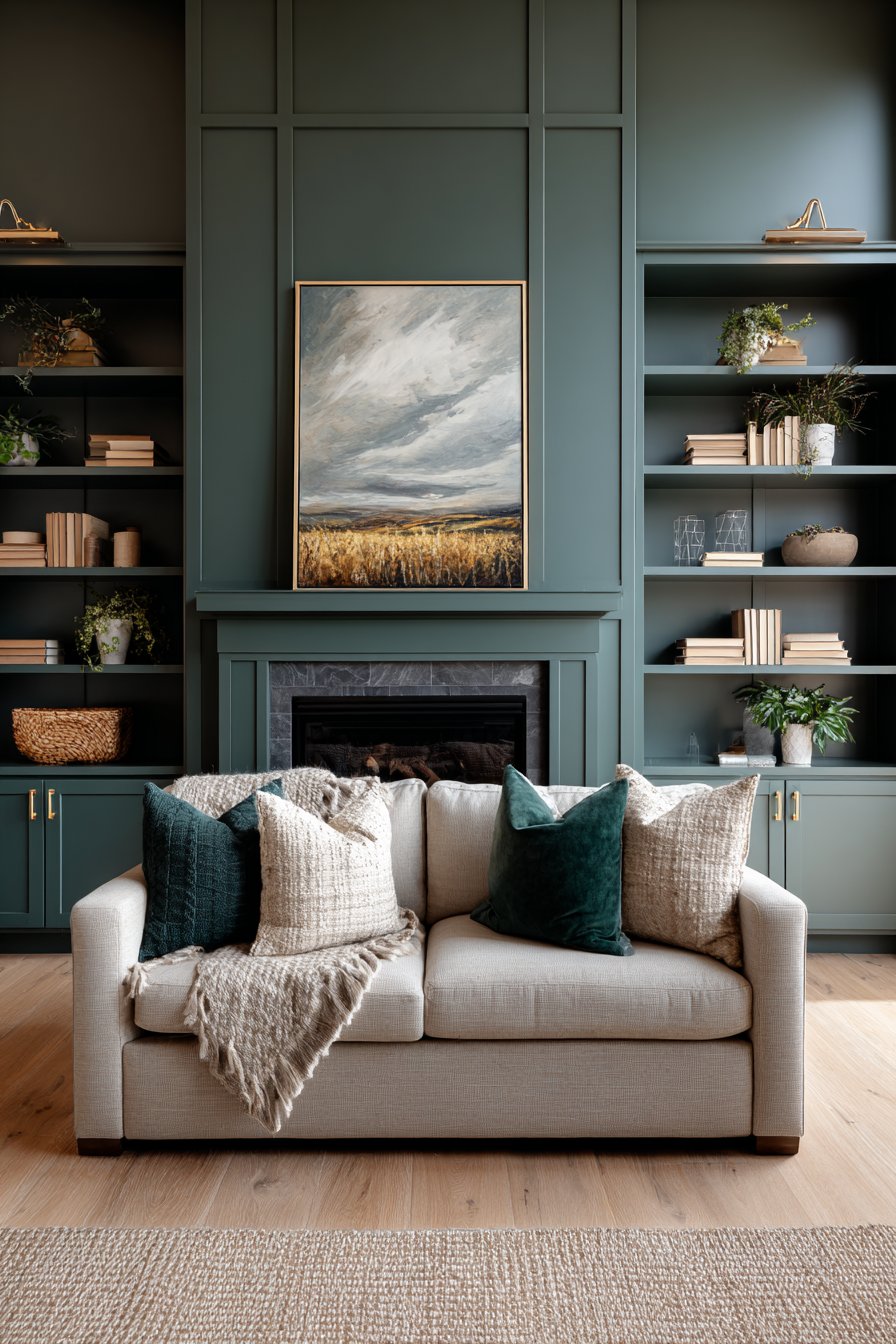
Key Design Tips: Specify semi-gloss or satin paint finishes on built-ins to enhance light reflection and create subtle sheen that adds sophistication. Install LED strip lighting with warm color temperatures (2700K-3000K) within shelving to prevent harsh blue-toned illumination. Mix open and closed storage to balance display opportunities with concealed organization. Choose brass hardware in consistent finish across all cabinets to maintain cohesive design language. Style shelves with the rule of thirds, leaving approximately one-third of shelf space empty to prevent cluttered appearance. Incorporate varied object heights and forms to create visual interest within displays.
4. Dramatic Emerald Velvet Curtain Treatment
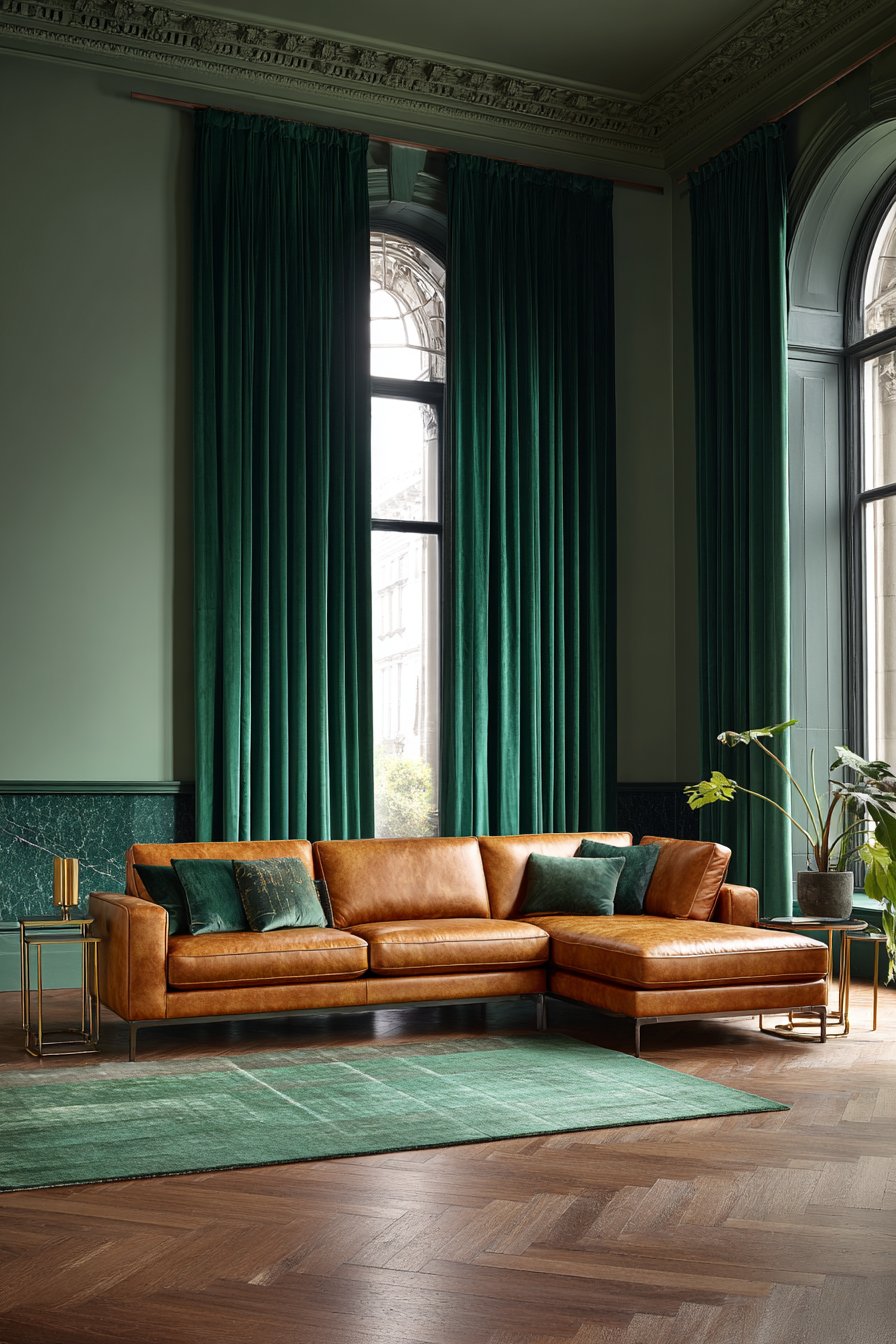
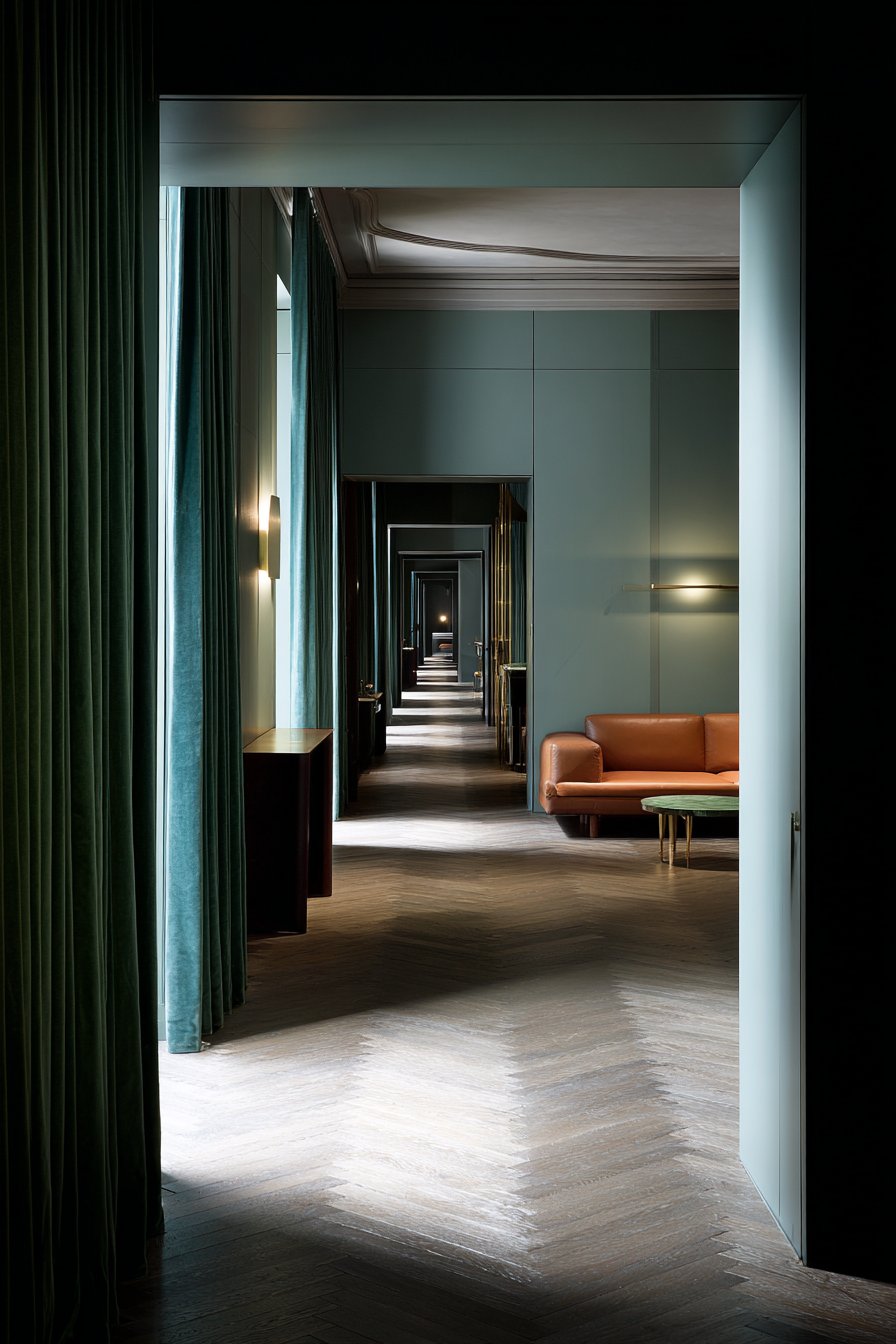
Floor-to-ceiling curtains in rich emerald velvet create one of the most dramatic and transformative dark green living room ideas, instantly elevating the perceived luxury and sophistication of any space. These substantial window treatments provide practical benefits—light control, privacy, insulation, and sound absorption—while serving as magnificent decorative elements that draw the eye upward and emphasize ceiling height. The lighter sage green walls behind the curtains create subtle contrast, allowing the deeper emerald to read as a distinct design layer rather than blending into a monochromatic whole.
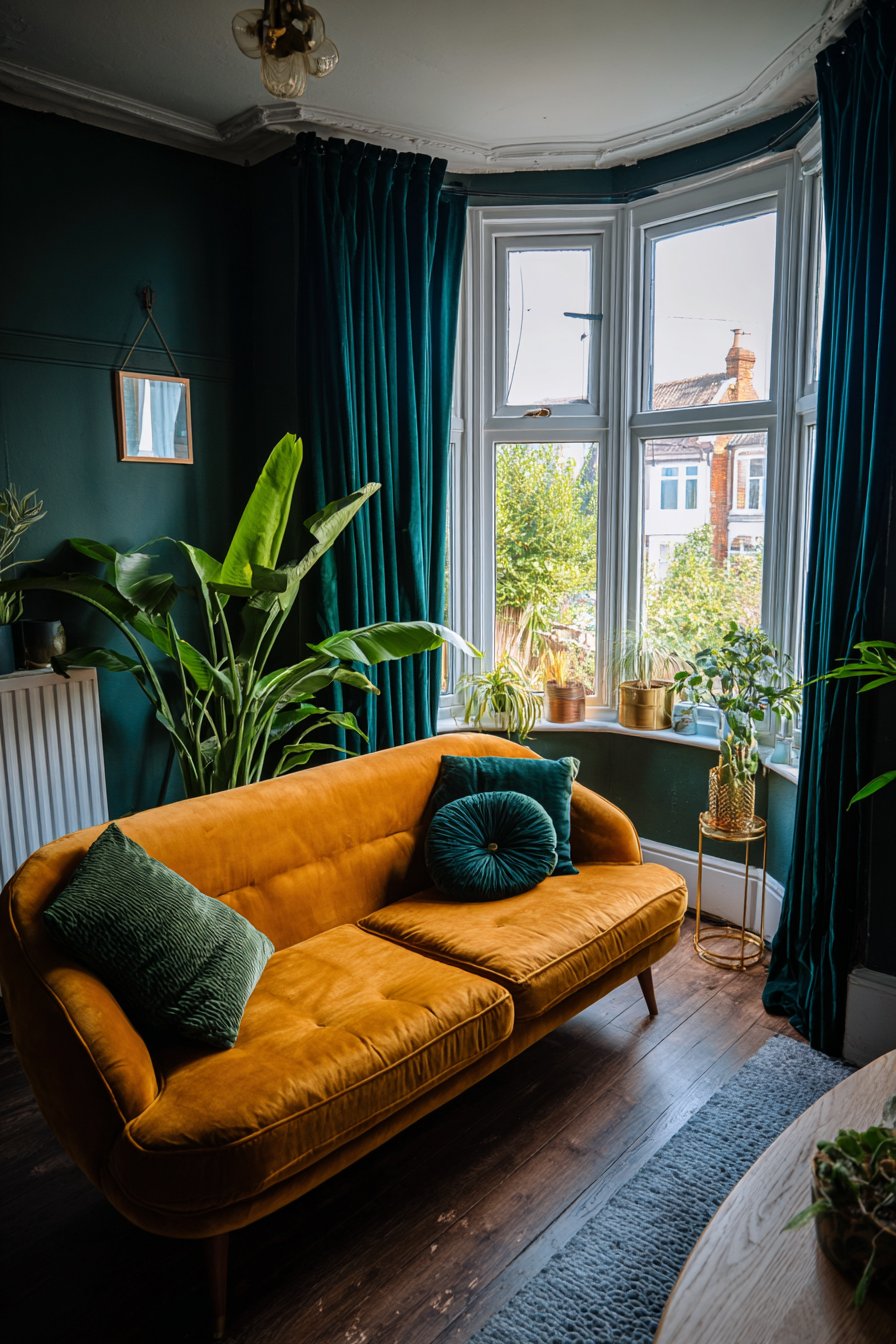
The mid-century modern sofa in camel leather introduces a complementary warm tone that prevents the green palette from feeling too cool or austere. This combination of green and caramel brown has deep roots in mid-century design history, creating a sophisticated color relationship that feels both classic and contemporary. The leather’s natural patina and texture contrast beautifully with the velvet’s plush softness, engaging multiple senses and adding dimensional interest. Brass accents distributed throughout the space—in lighting fixtures, decorative objects, and hardware—tie together the warm and cool elements, creating visual cohesion.
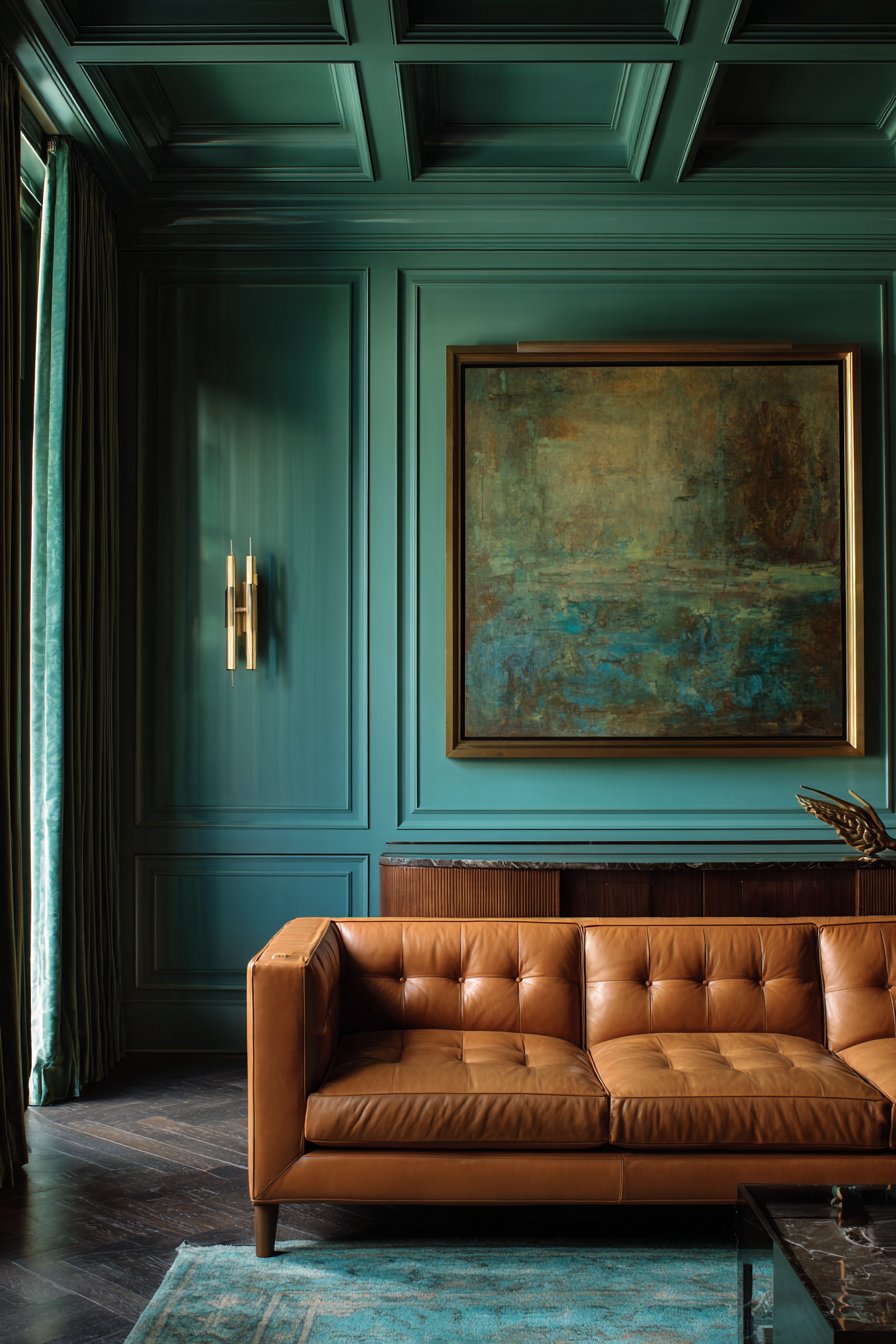
Natural light filtering through the velvet curtains transforms throughout the day, casting the room in different moods from morning brightness to evening intimacy. The curtains’ substantial weight and fullness create elegant folds and draping that add sculptural quality to the windows. When drawn, they frame views beautifully; when closed, they create a cocoon-like environment perfect for movie watching or intimate conversations.
Key Design Tips: Measure curtains to hang from ceiling to floor rather than window frame to window sill for maximum impact and perceived height. Order curtains with 2-2.5 times fullness (fabric width compared to rod width) to ensure adequate gathering and luxurious appearance. Install blackout lining on velvet curtains to enhance privacy, insulation, and light control while protecting the fabric from sun damage. Choose curtain rods that extend 8-12 inches beyond window frames on each side to allow curtains to stack off the window when open. Steam velvet curtains regularly to maintain their loft and prevent crushing. Consider motorization for heavy full-length velvet curtains to protect fabric from handling damage.
5. Sophisticated Gallery Wall on Forest Green
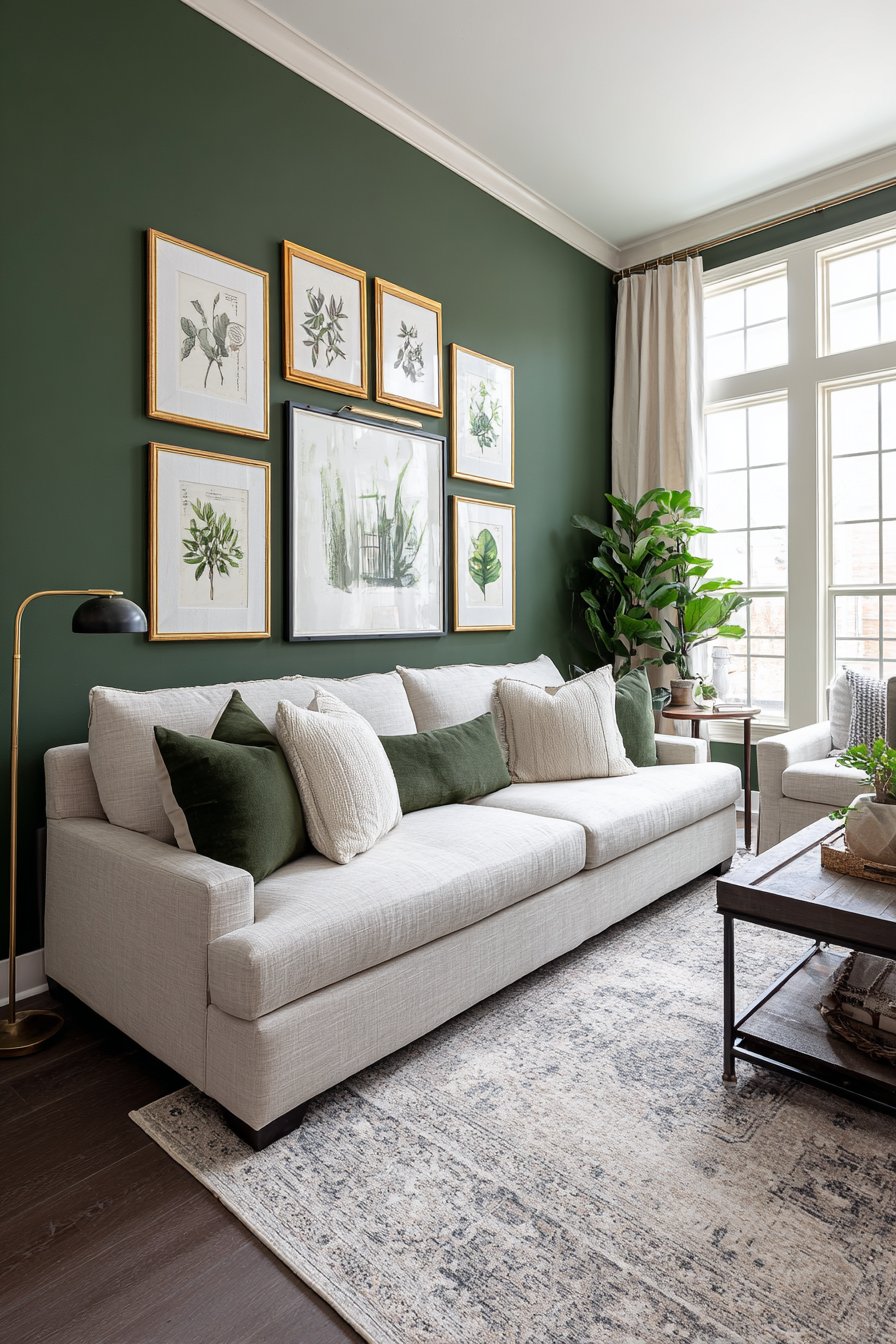
A gallery wall arrangement transforms a dark forest green accent wall from simple painted surface into curated artistic statement. This design approach positions the gallery wall behind a neutral linen sofa, creating a sophisticated backdrop that showcases artwork, photographs, and mirrors while maintaining livability in the seating area. The deep forest green provides a dramatic canvas that makes gold-framed botanical prints and vintage mirrors appear to float against the surface, their frames catching light and creating sparkling accents throughout the day.
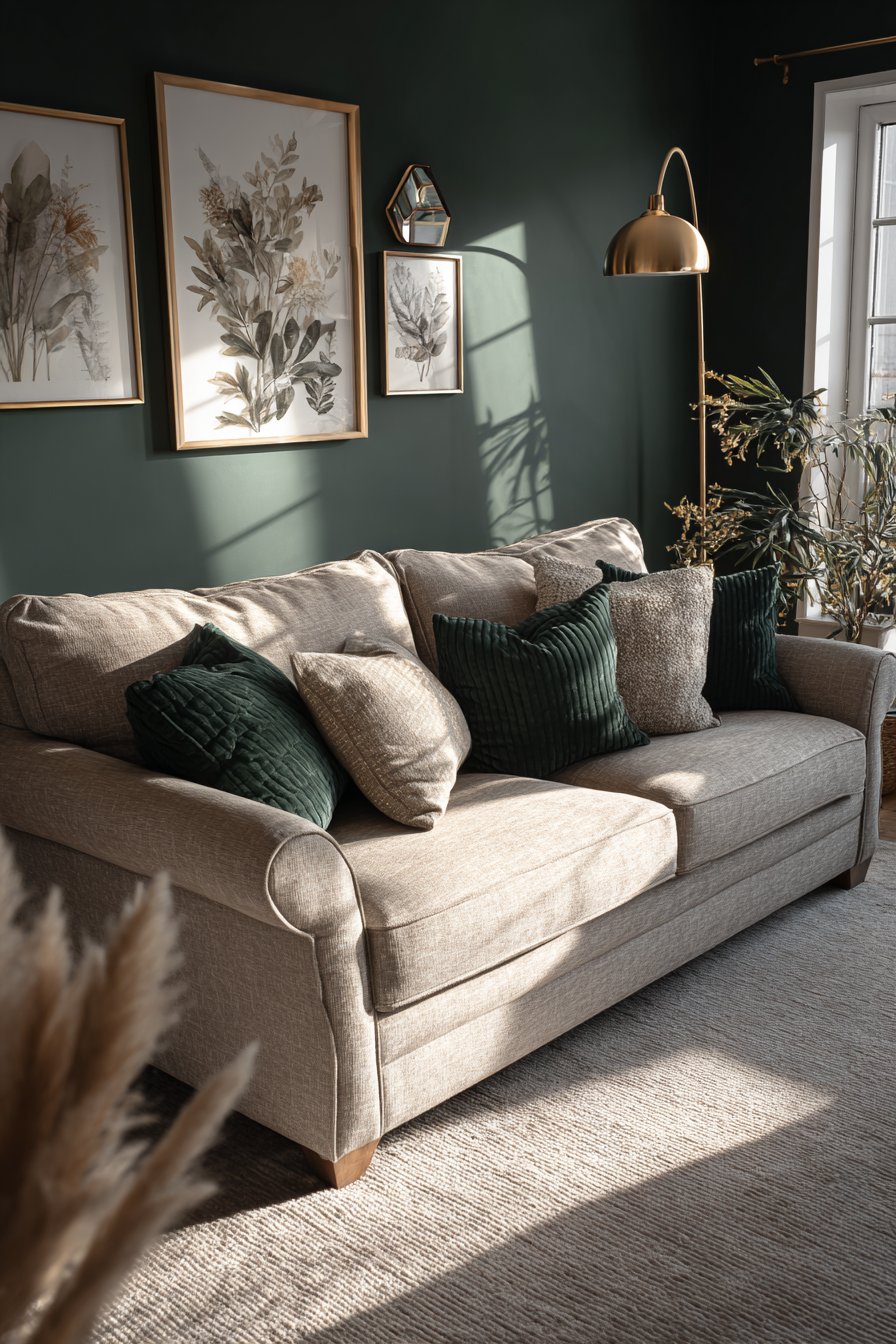
The composition of the gallery wall requires careful planning to achieve balanced asymmetry—an arrangement that appears organic and collected over time while maintaining visual equilibrium. Mixing botanical prints with mirrors introduces functional dimension, as the reflective surfaces bounce light around the room and create the illusion of additional depth and space. The gold frames tie together disparate pieces, creating cohesion despite varying sizes and subject matters. This unifying element allows for eclectic collecting while maintaining sophisticated presentation.
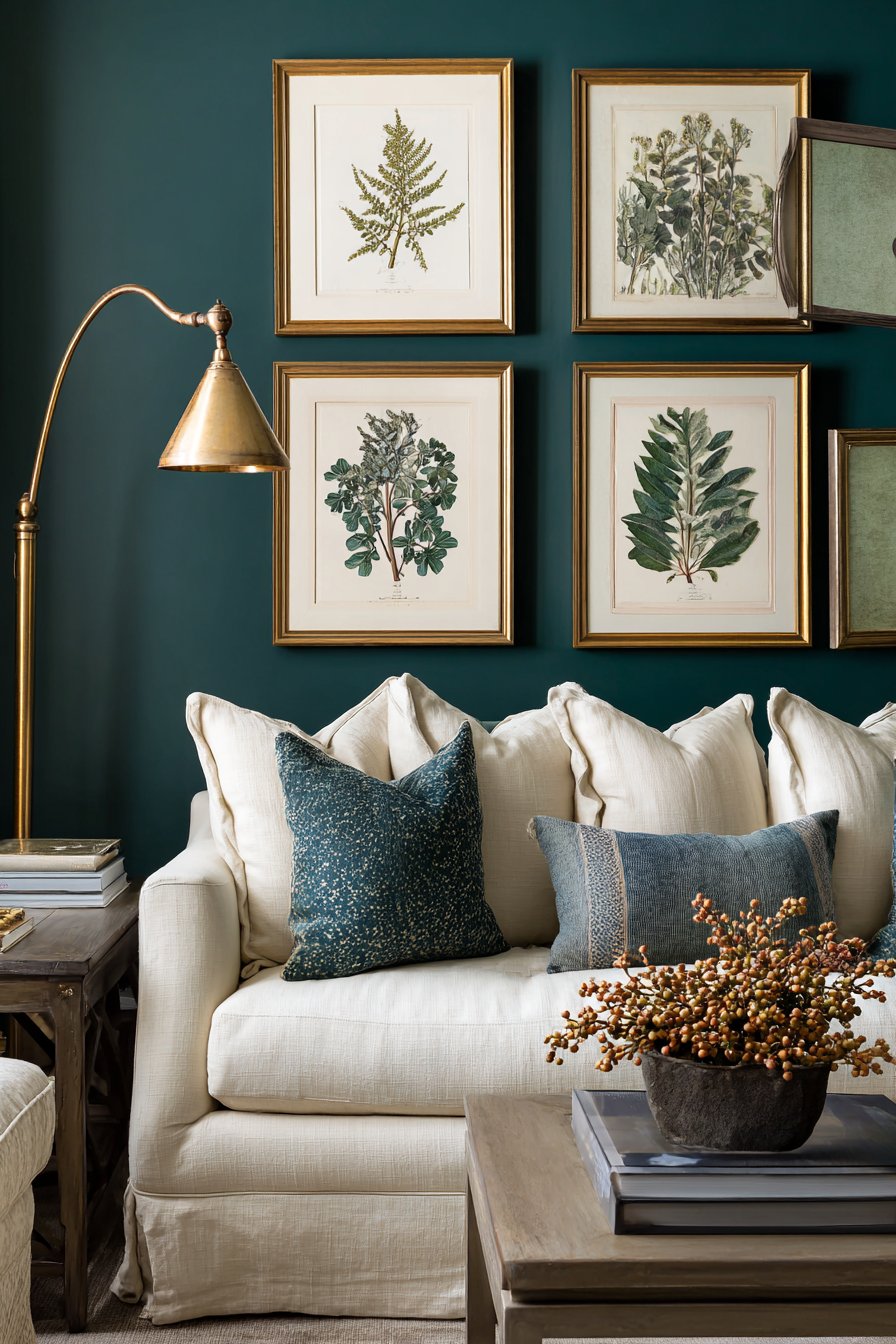
The brass arc floor lamp arching over the sofa provides targeted reading light while its curved form adds sculptural interest to the composition. Its placement ensures the artwork remains illuminated during evening hours, maintaining the gallery wall’s impact regardless of time of day. The lamp’s brass finish echoes the picture frames, reinforcing the metallic accent story throughout the space.
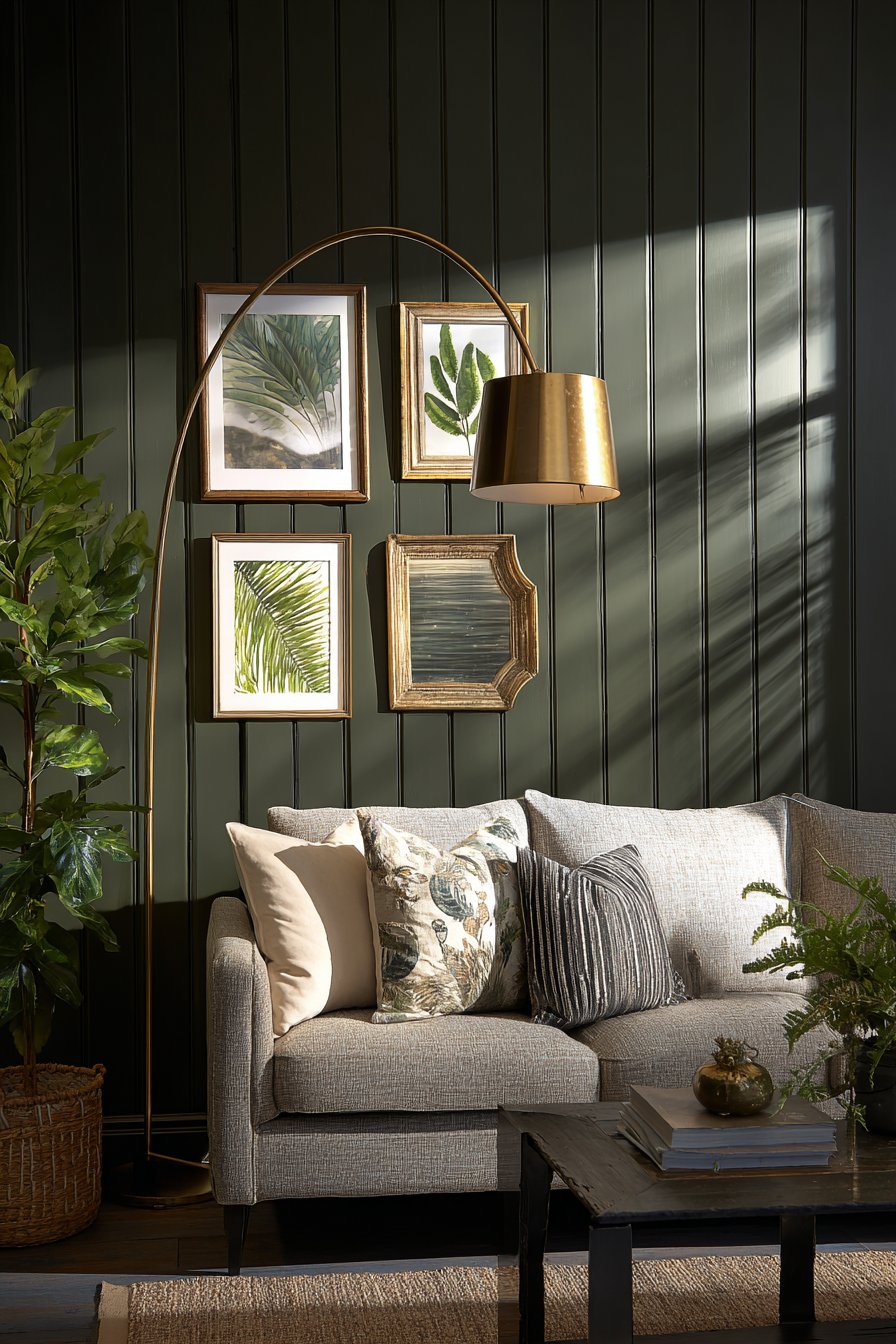
Key Design Tips: Create a gallery wall template on kraft paper before installing to visualize spacing and arrangement without damaging walls. Maintain 2-3 inches of consistent spacing between frames for cohesive appearance. Hang the center of the gallery wall arrangement at 57-60 inches from the floor (standard gallery height) for optimal viewing. Mix frame sizes but maintain consistent frame style or finish to unify disparate pieces. Include at least one mirror in gallery walls to reflect light and add dimensional interest. Use picture hanging systems with adjustable hooks to allow for future rearrangement without creating new wall holes. Light gallery walls with picture lights or directional track lighting for evening impact.
6. Opulent Bottle Green Chesterfield Statement
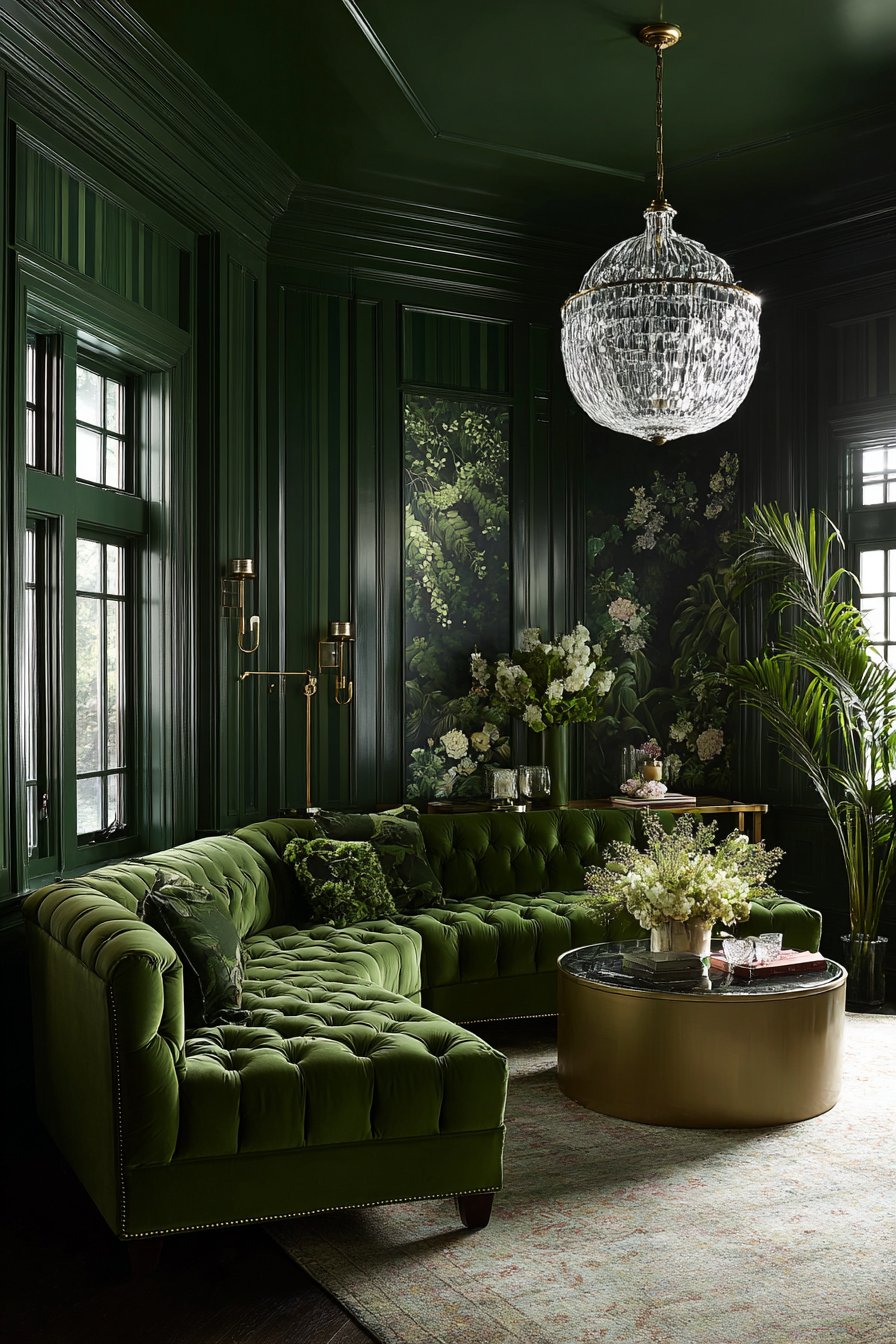
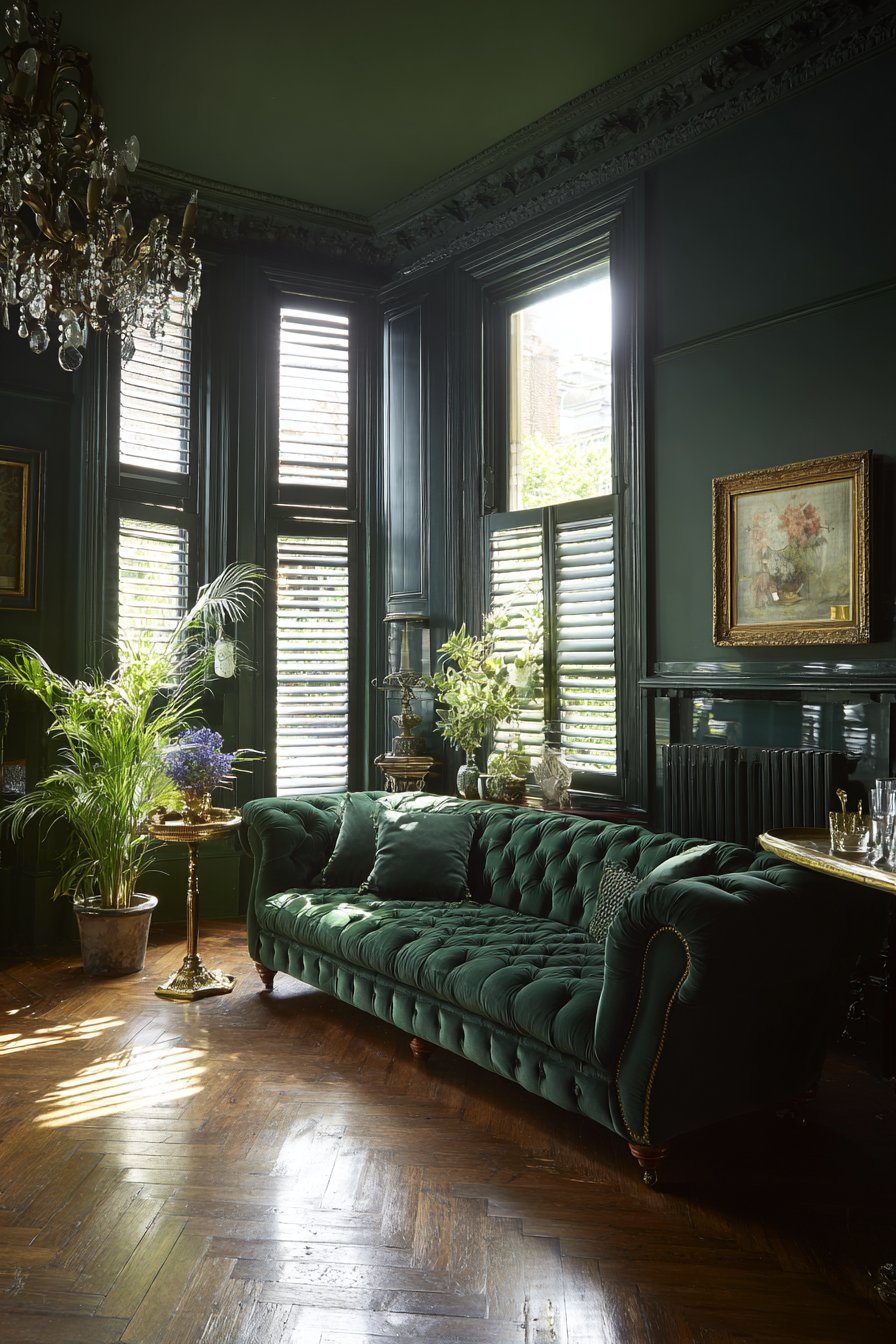
The classic Chesterfield sofa reinterpreted in bottle green velvet represents the pinnacle of traditional luxury adapted for contemporary sensibilities. This iconic furniture form with its deep button tufting, rolled arms, and studded details gains fresh relevance when upholstered in rich green velvet rather than the expected burgundy or brown leather. The complementary dark green striped wallpaper adds pattern and movement to vertical surfaces without competing with the sofa’s commanding presence, maintaining the monochromatic scheme while introducing visual texture through the stripe pattern.
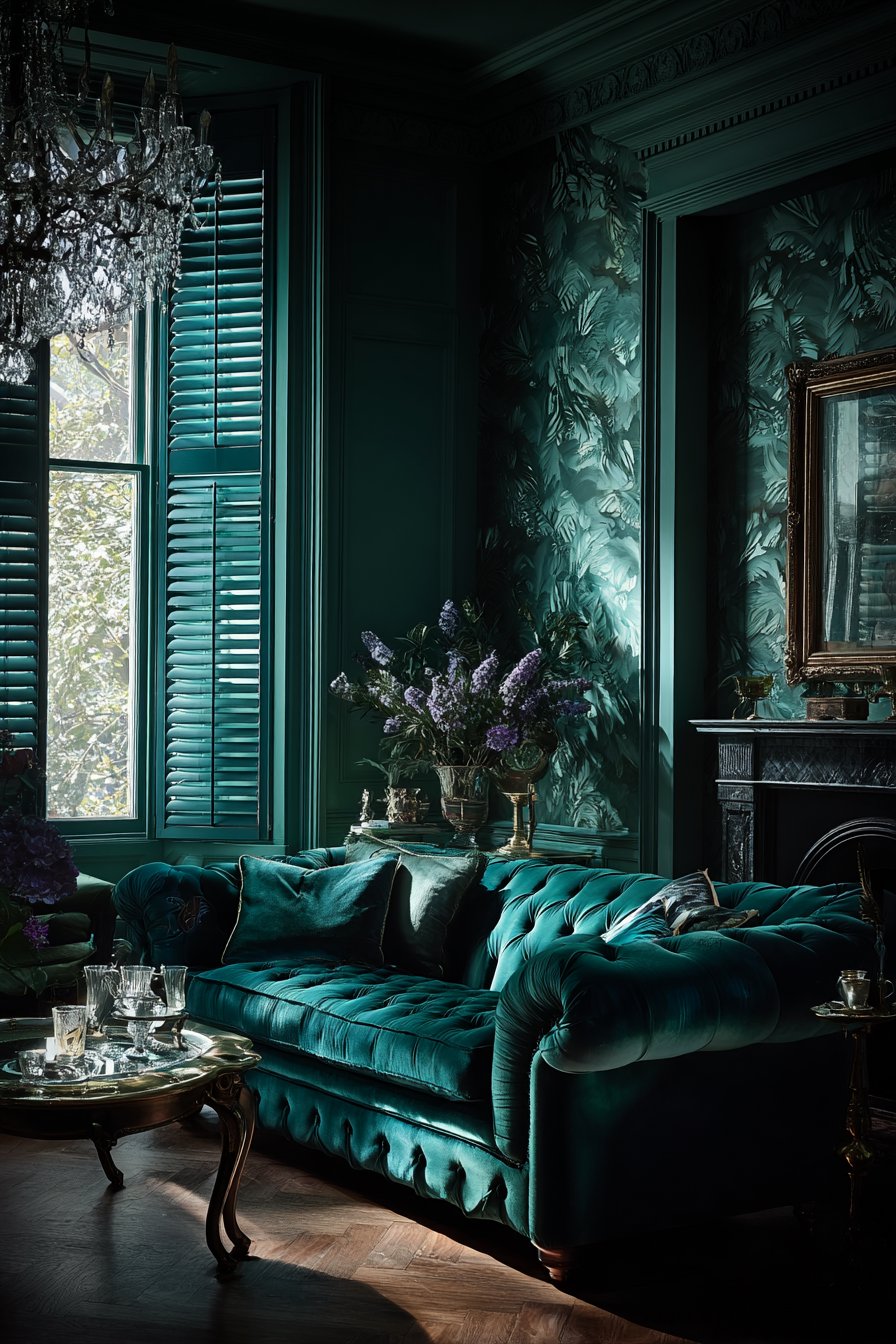
Antique brass side tables flanking the Chesterfield provide practical surfaces while their aged patina adds historical depth that complements the sofa’s traditional design DNA. These pieces bridge the gap between old and new, suggesting a collected-over-time aesthetic rather than a room decorated all at once. The crystal chandelier suspended above introduces sparkle and glamour, its faceted drops catching and refracting light throughout the space. This overhead fixture elevates the entire room’s perceived formality and luxury quotient.
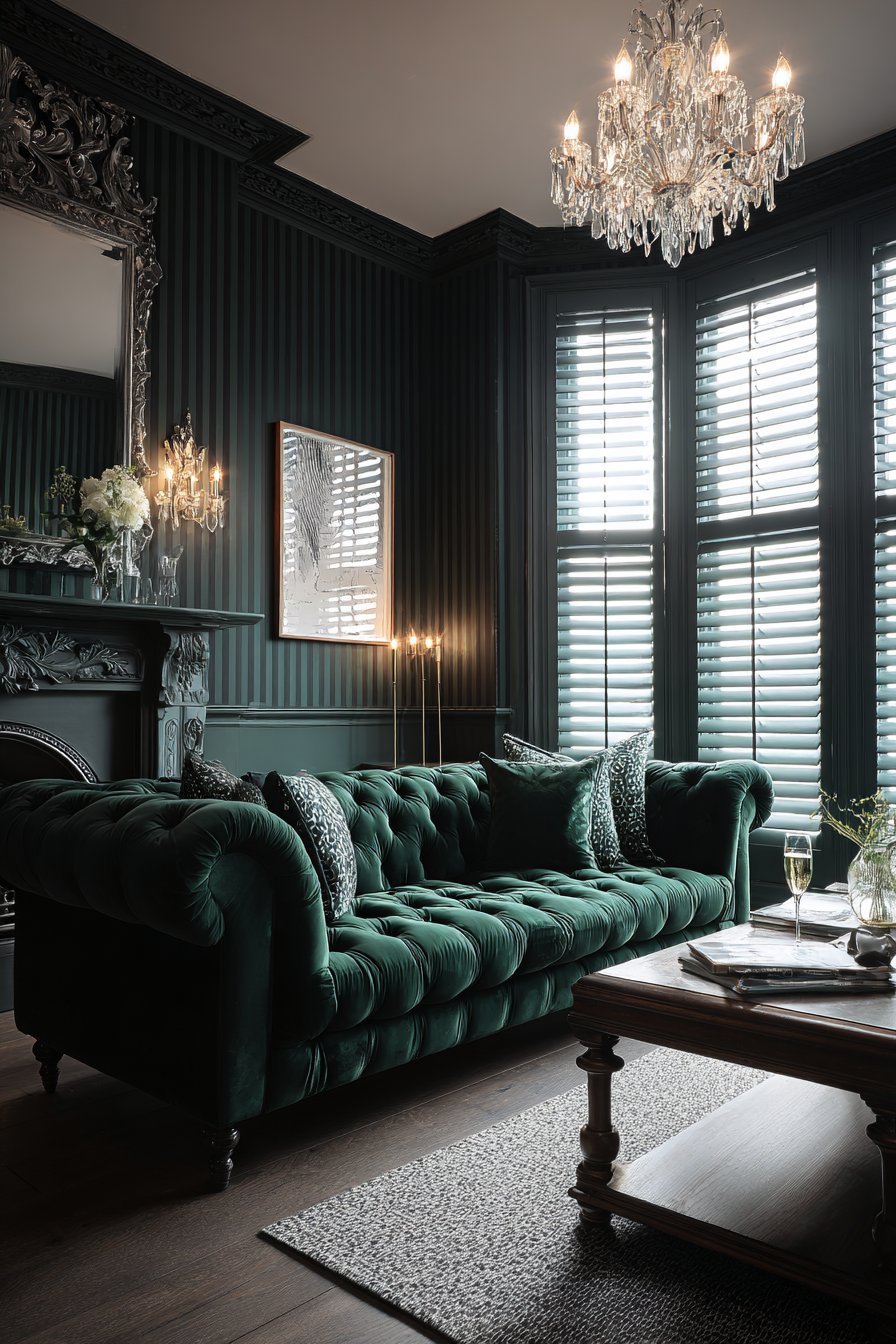
Plantation shutters controlling natural light offer architectural permanence and sophisticated light control that complements the room’s traditional leaning. Unlike curtains, shutters become part of the window architecture itself, their horizontal slats creating graphic patterns of light and shadow across the green surfaces. The filtered natural lighting highlights the Chesterfield’s tufted texture, emphasizing each button’s dimensional quality and the velvet’s direction-dependent light reflection.
Key Design Tips: Invest in high-quality velvet upholstery with dense pile and proper backing to ensure the Chesterfield maintains its shape and appearance over time. Position tufted furniture away from direct sunlight to prevent uneven fading and preserve velvet integrity. Vacuum velvet upholstery weekly using upholstery attachments to prevent dust accumulation in tufted recesses. Rotate cushions regularly if removable to ensure even wear patterns. Install dimmer switches on chandeliers to adjust formality level from bright entertaining to intimate conversation. Consider professional upholstery cleaning annually to maintain velvet’s appearance and remove embedded dust.
7. Contemporary Dark Green Entertainment Center
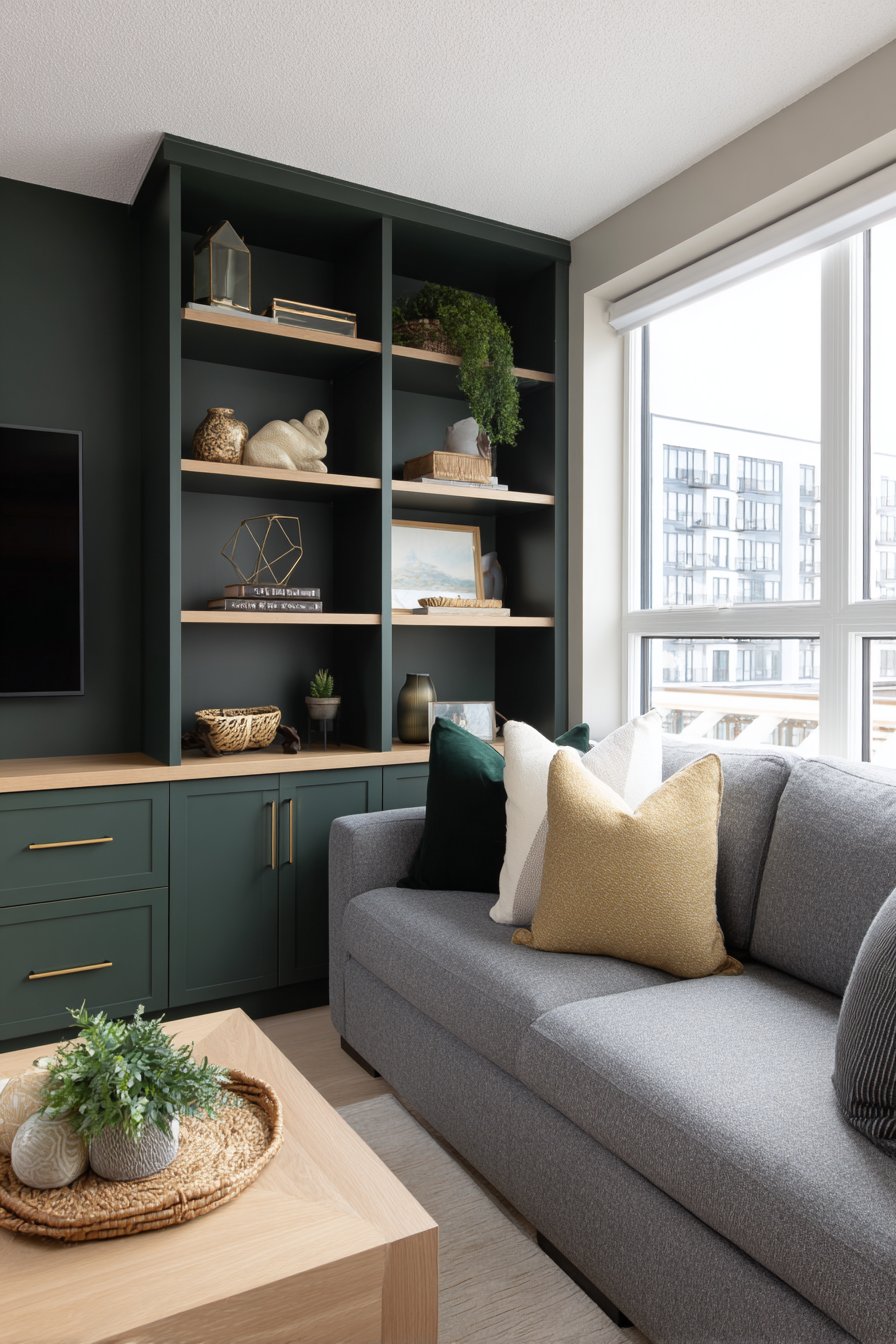
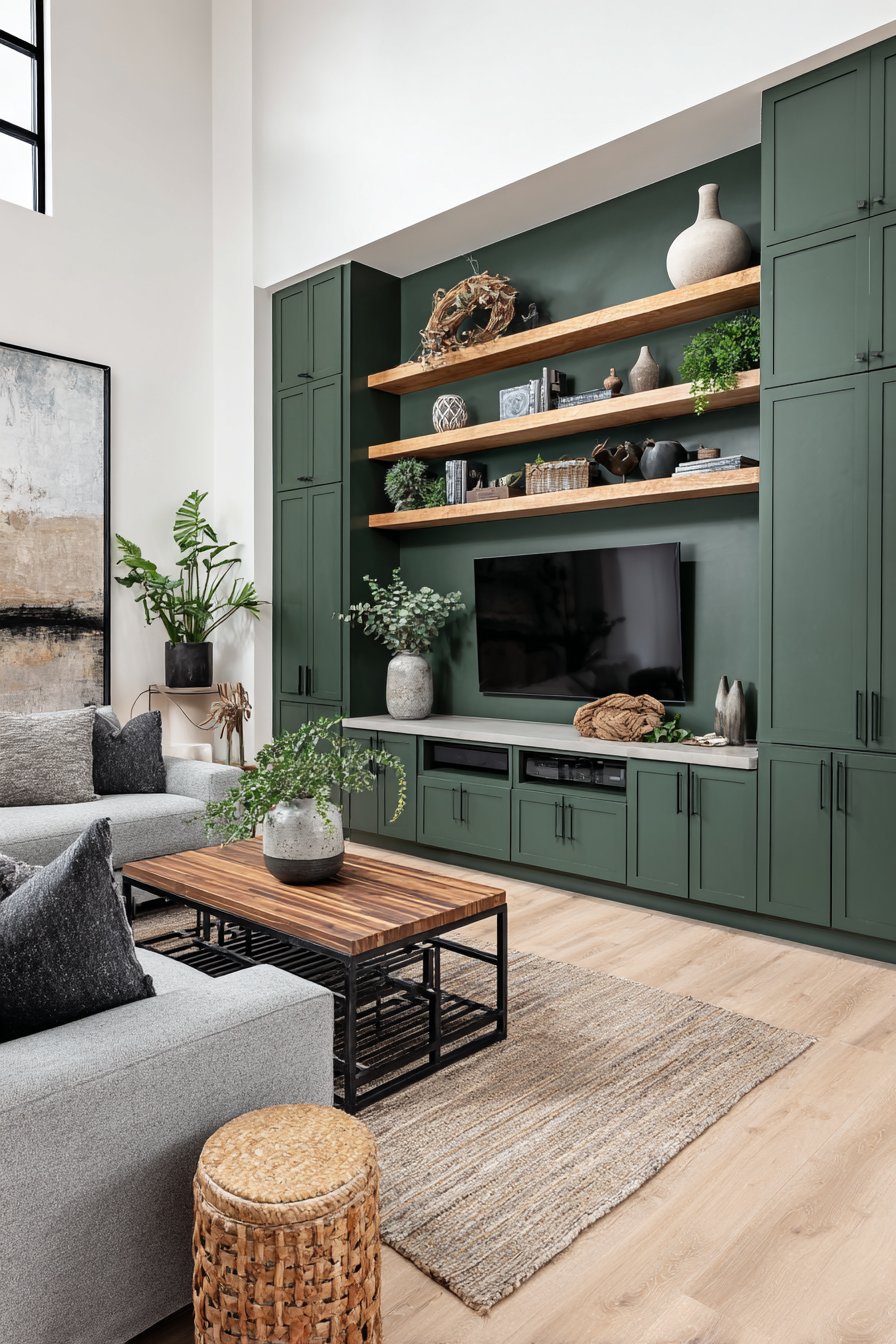
Modern entertainment centers evolved beyond simple TV stands into comprehensive built-in units that organize technology while contributing to overall room aesthetics. This design features matte dark green cabinetry with open shelving in natural walnut, creating sophisticated visual contrast between cool green painted surfaces and warm wood tones. The built-in unit spans an entire wall, providing ample storage for media equipment, gaming systems, and decorative objects while hiding unsightly cables and components behind closed doors.
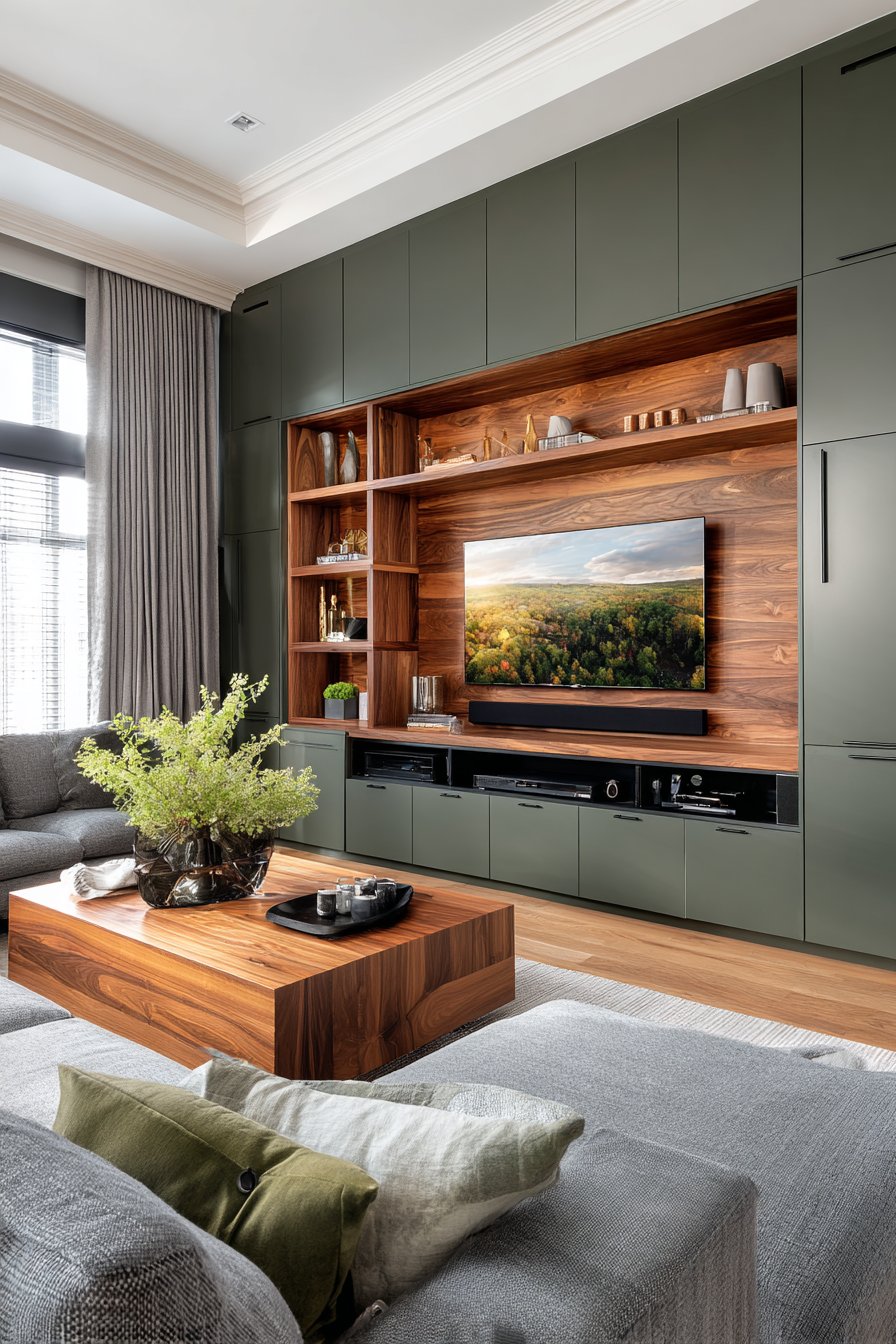
The combination of open and closed storage proves both practical and visually interesting—open walnut shelves display curated books and objects, adding personality and breaking up the green cabinetry’s mass, while closed cabinets conceal items better left hidden. This balance prevents the entertainment center from feeling too heavy or imposing despite its substantial size. The matte finish on the green cabinetry reduces glare from screen viewing, a practical consideration often overlooked in entertainment area design.
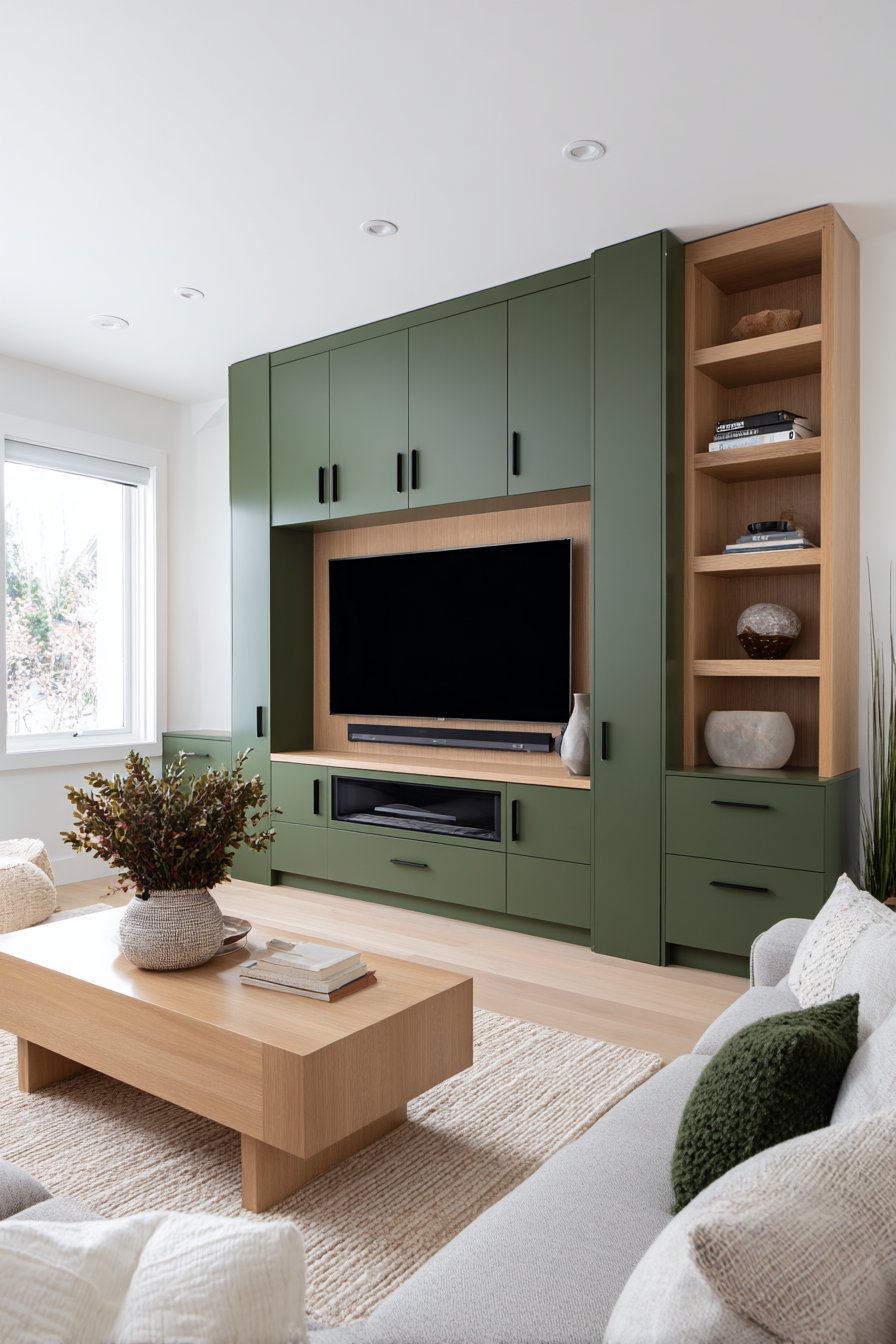
The comfortable grey sectional positioned to face this feature wall provides versatile seating for media viewing, gaming, and conversation. Its neutral tone allows the dark green entertainment center to remain the room’s focal point while offering visual rest from the bold color. The material contrast between the grey upholstery and green cabinetry creates textural interest that prevents monotony.
Key Design Tips: Plan cable management systems during construction phase to ensure clean installation without visible wires. Include ventilation in closed cabinets housing heat-generating electronics to prevent equipment damage. Install LED backlighting behind open shelving to create ambient glow during media viewing. Choose matte or satin cabinet finishes to minimize screen glare reflection. Incorporate charging stations within cabinetry for devices that need regular power access. Design cabinet depths to accommodate various equipment sizes from shallow streaming devices to deeper gaming consoles. Consider acoustic treatments behind TV placement to improve sound quality.
8. Classic Emerald Wingback Conversation Area
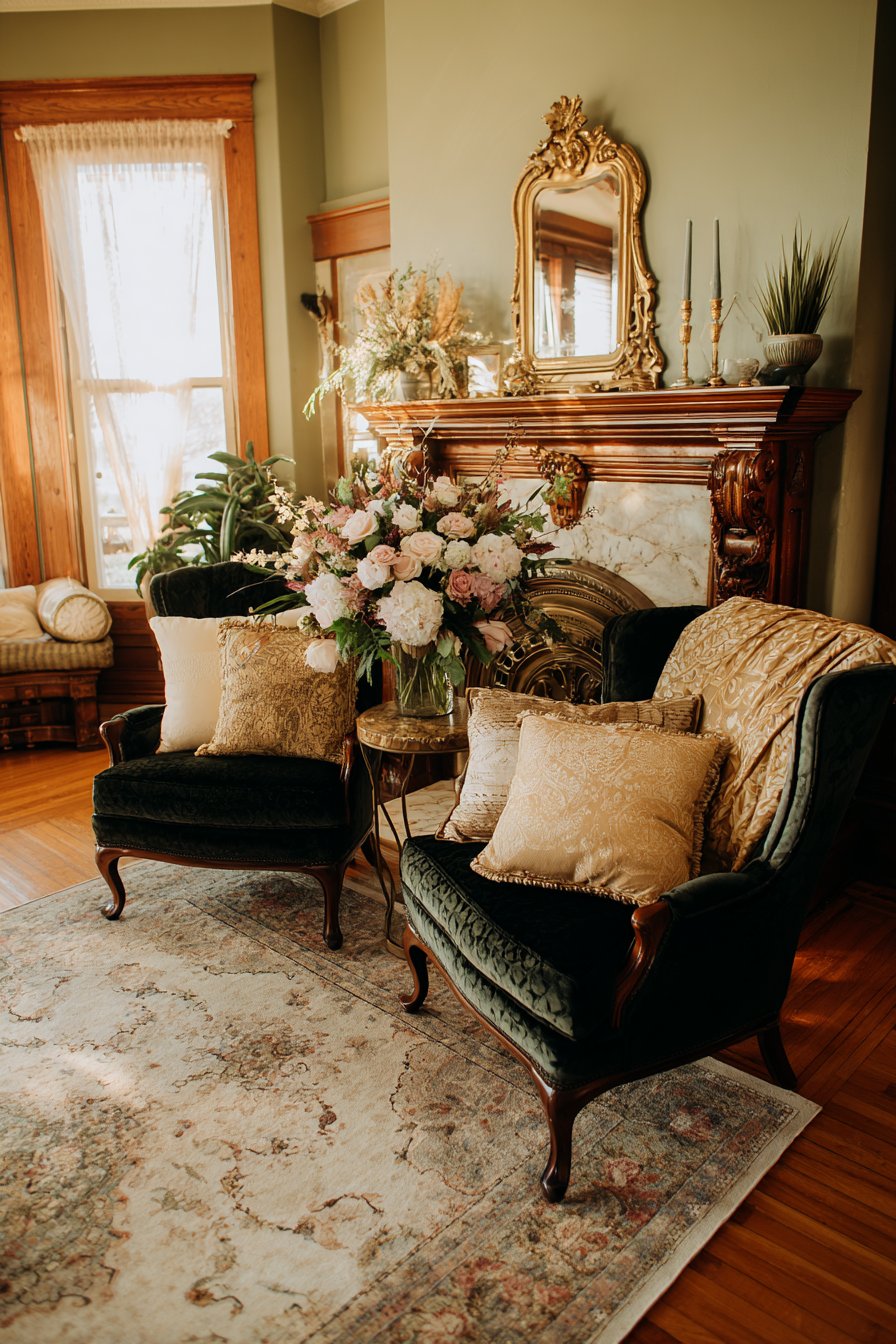
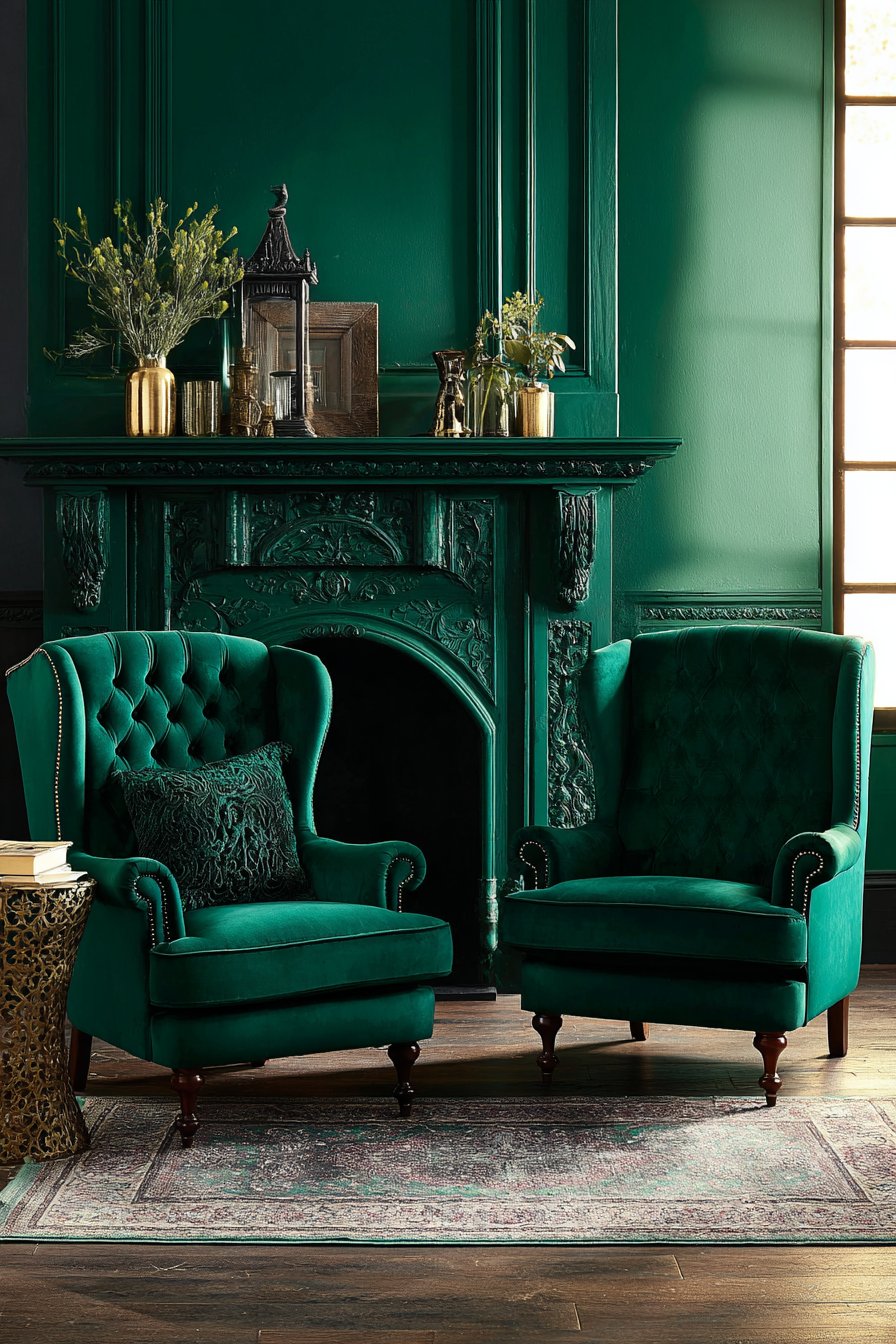
Creating a dedicated conversation area centered around a fireplace establishes a traditional living room layout that encourages face-to-face interaction. This design features two dark green wingback chairs upholstered in textured emerald fabric, positioned to flank the marble fireplace in perfect symmetry. The wingback form, with its distinctive high sides originally designed to block drafts, adds architectural presence while providing comfortable support for extended sitting. The textured emerald fabric introduces subtle visual interest that prevents the chairs from reading as flat blocks of color.
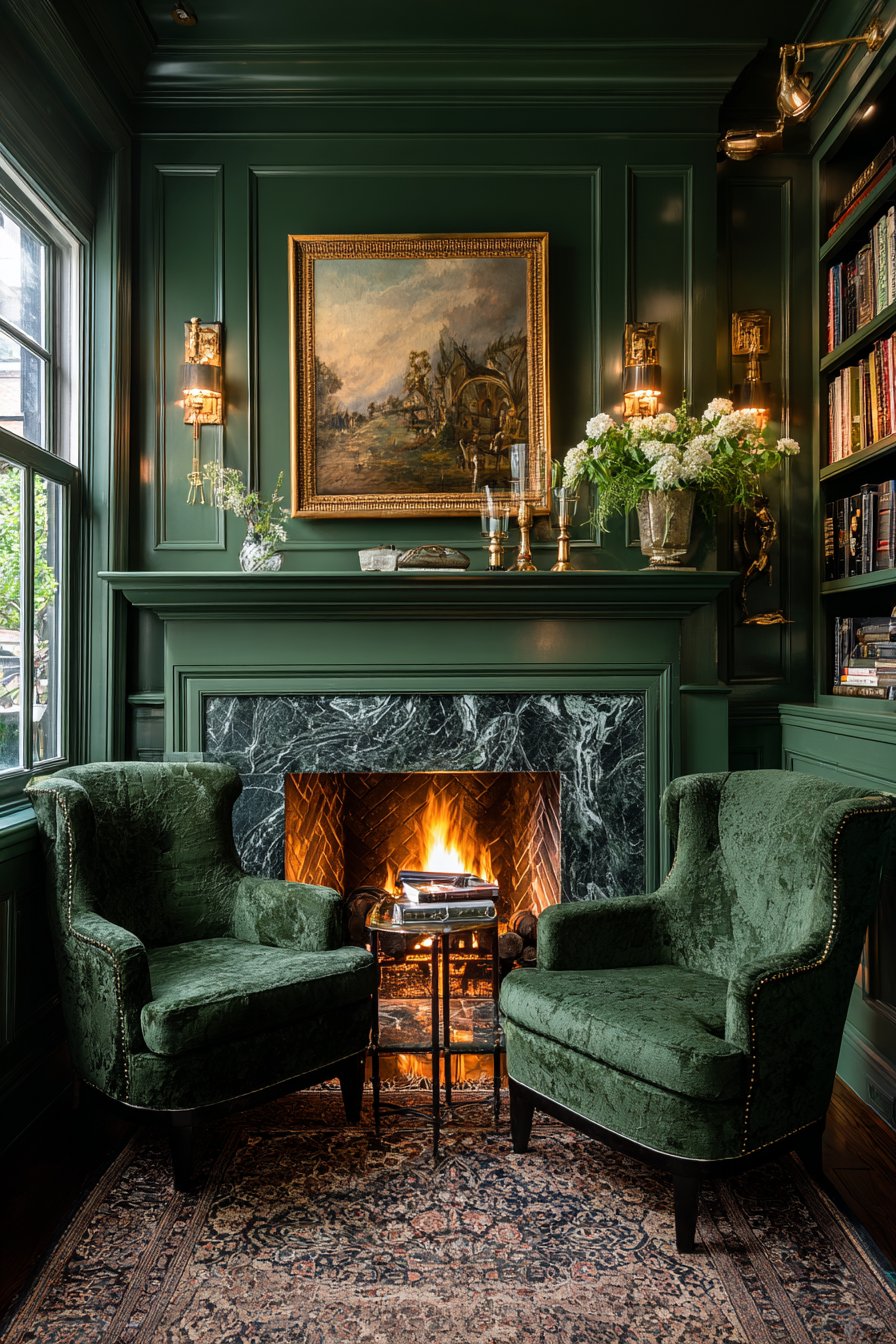
Sage green walls provide a lighter backdrop that allows the darker emerald chairs to read as distinct design elements while maintaining color family harmony. This tonal approach to color creates sophisticated depth without introducing competing hues that might fragment the cohesive green story. The Persian rug in muted tones grounds the seating arrangement, its pattern and color palette bridging the gap between the dominant greens and the neutral elements throughout the space.
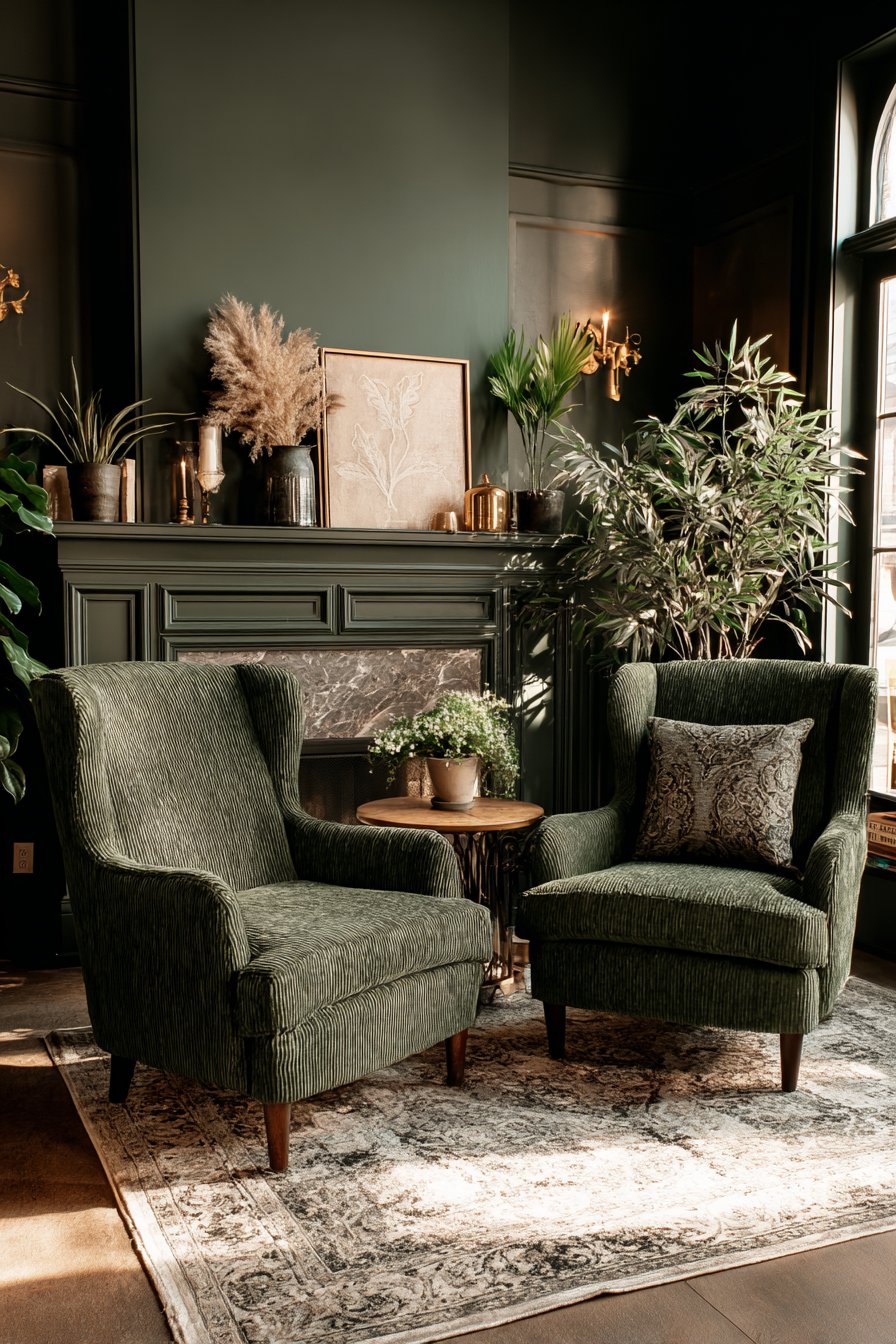
Golden hour ambiance streaming through nearby windows bathes the space in warm natural light that transforms the green tones, revealing warm yellow undertones during morning hours and deeper, more mysterious qualities in evening light. This natural light choreography ensures the space never feels static, changing character throughout the day. The marble fireplace serves as the room’s natural focal point, its veining adding pattern and its cool stone surface providing material contrast to the fabric-heavy seating area.
Key Design Tips: Position conversation chairs 3-4 feet apart to facilitate comfortable discussion without shouting. Angle chairs slightly toward each other rather than placing them perfectly parallel to encourage interaction. Include a small table between chairs for beverages and books within easy reach. Choose upholstery fabrics with subtle texture or pattern to add visual interest without overwhelming. Install fireplace seating at heights allowing feet to rest comfortably on floor while maintaining good posture. Layer ambient, task, and accent lighting to ensure the conversation area remains functional and inviting after sunset. Add throw pillows for lumbar support and visual softness.
9. Minimalist Scandinavian Dark Green Accent
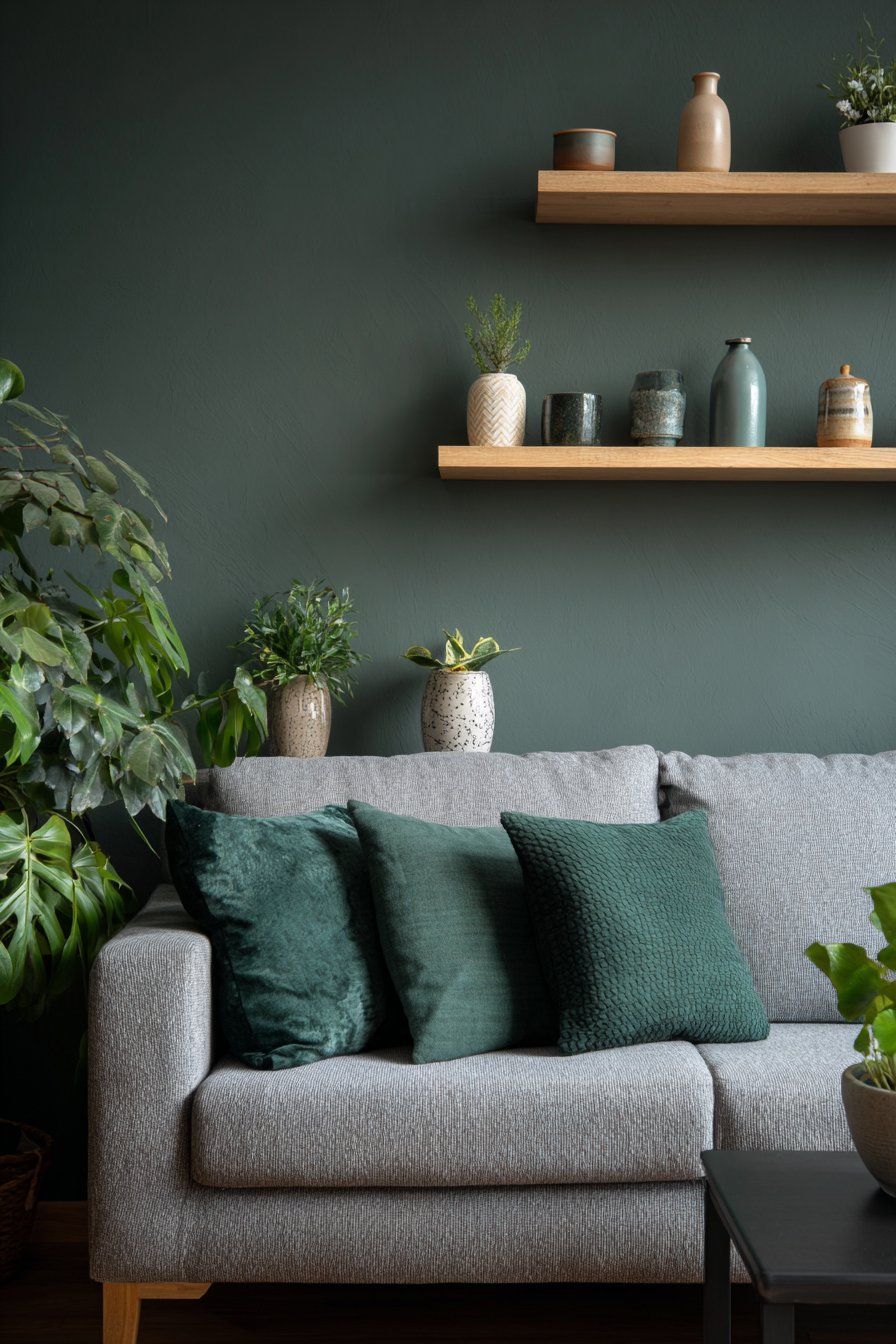
Scandinavian design principles emphasize simplicity, functionality, and connection to nature—all qualities that align beautifully with dark green living room ideas when executed with restraint. This approach features a dark green painted feature wall behind minimalist floating shelves in light oak, creating a bold statement that remains consistent with Nordic design philosophy. The simple grey sofa with forest green throw pillows maintains the color connection without overwhelming the space’s clean-lined aesthetic.
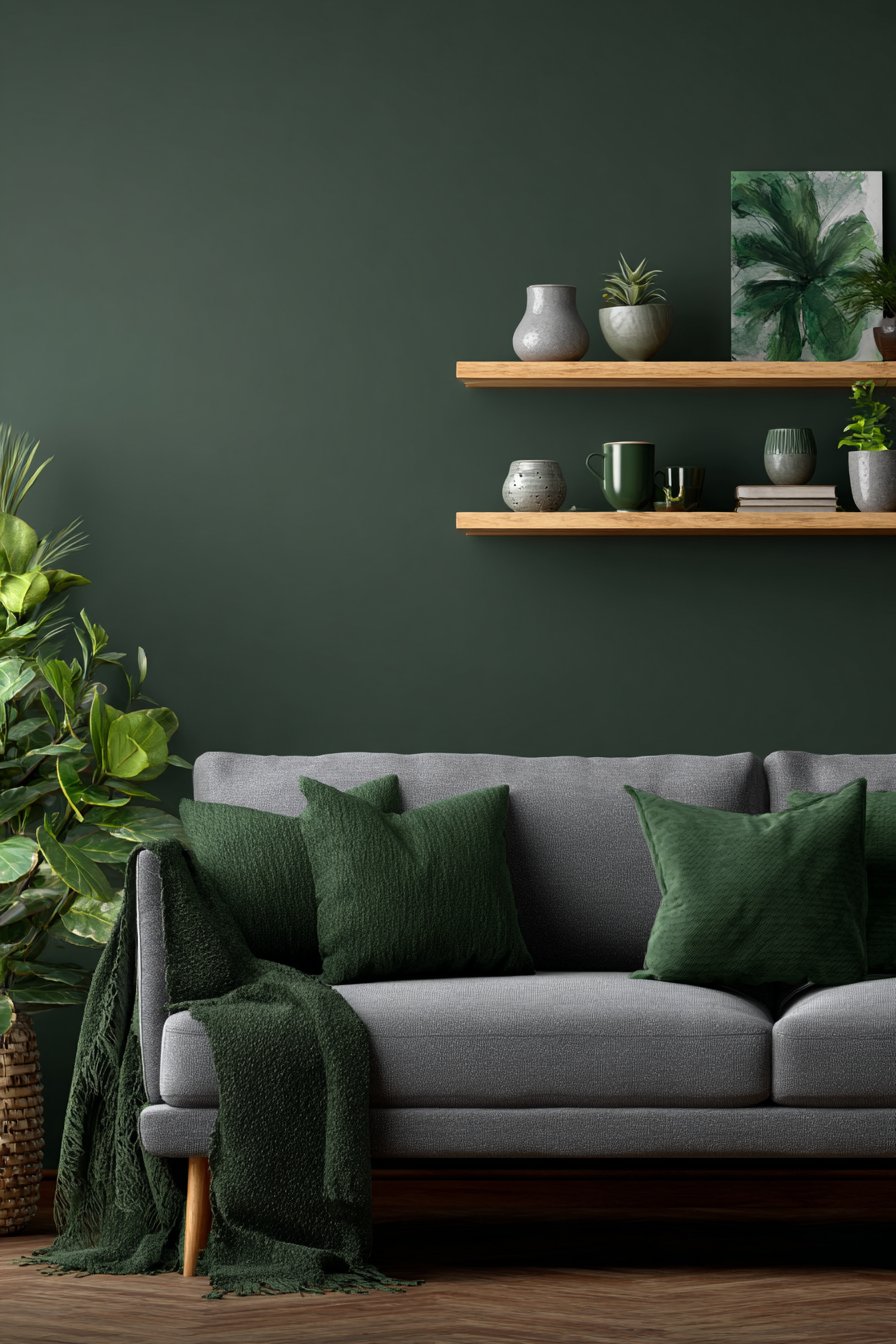
Indoor plants in ceramic pots serve multiple purposes in this design—they echo the natural color story, improve air quality, add organic sculptural forms, and reinforce the Scandinavian emphasis on bringing nature indoors. The plants’ varied heights and forms create visual interest without cluttering surfaces or compromising the room’s open, airy feel. The ceramic pots in muted neutral tones maintain the restrained palette while their varied textures add tactile interest.
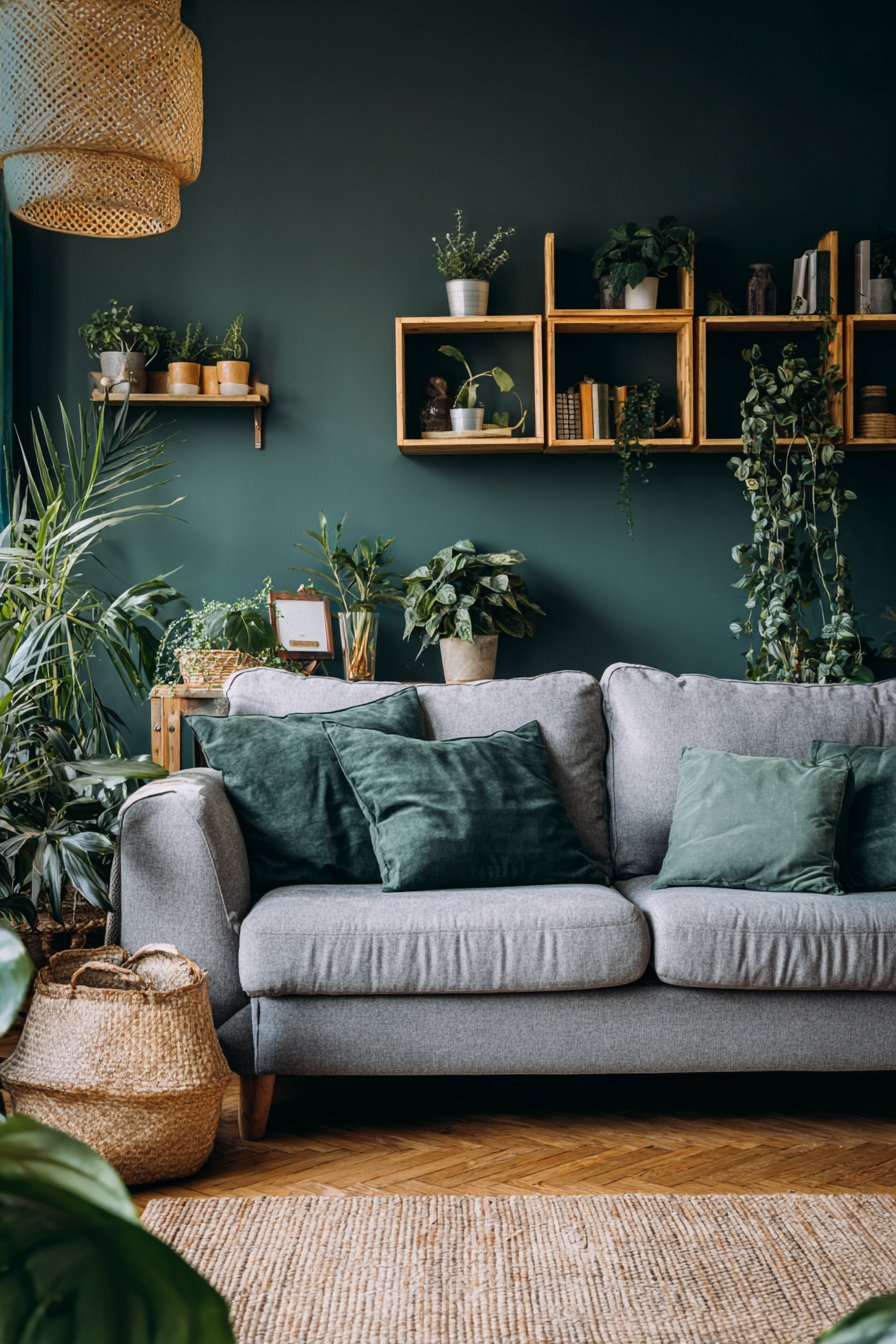
The balance between minimalism and the bold dark green accent demonstrates how seemingly opposing design principles can coexist when executed thoughtfully. The feature wall provides dramatic impact and visual anchor, while the remainder of the space maintains the openness and simplicity characteristic of Scandinavian interiors. Natural light diffusing through the space highlights the oak’s honey tones and makes the grey sofa appear soft and inviting.
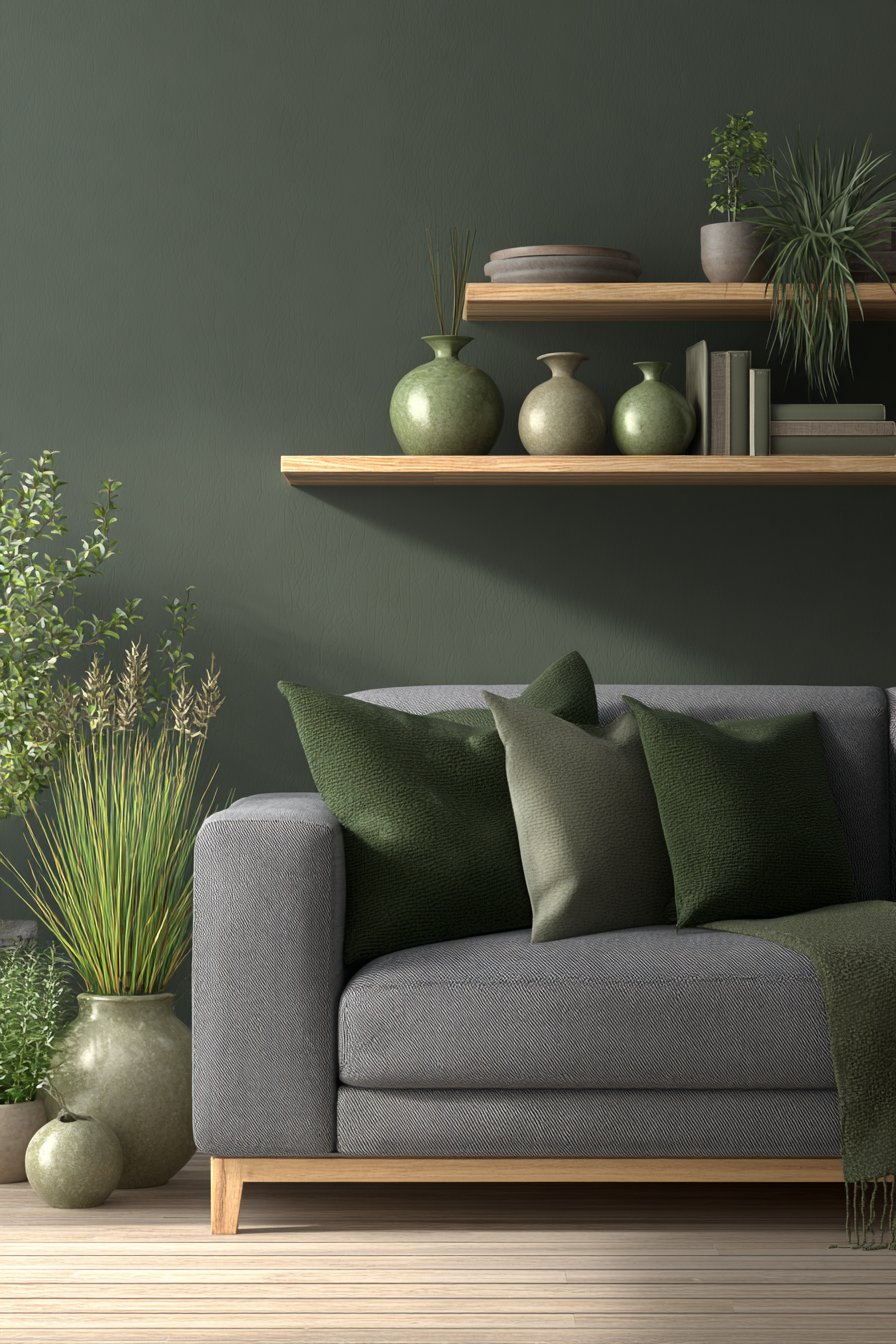
Key Design Tips: Limit dark green to one accent wall to maintain Scandinavian openness while achieving visual impact. Choose floating shelves with concealed mounting hardware for seamless minimal appearance. Select grey sofas in medium tones to avoid stark contrast with dark green while maintaining visual distinction. Group plants in odd numbers (3, 5, 7) for more organic, natural-looking arrangements. Incorporate natural materials like oak, linen, and ceramic to reinforce connection to nature. Maintain clutter-free surfaces by providing ample concealed storage elsewhere in the room. Use warm-white light bulbs (2700K) to counter Nordic regions’ limited natural light and create cozy atmosphere.
10. Luxurious Hunter Green Home Library
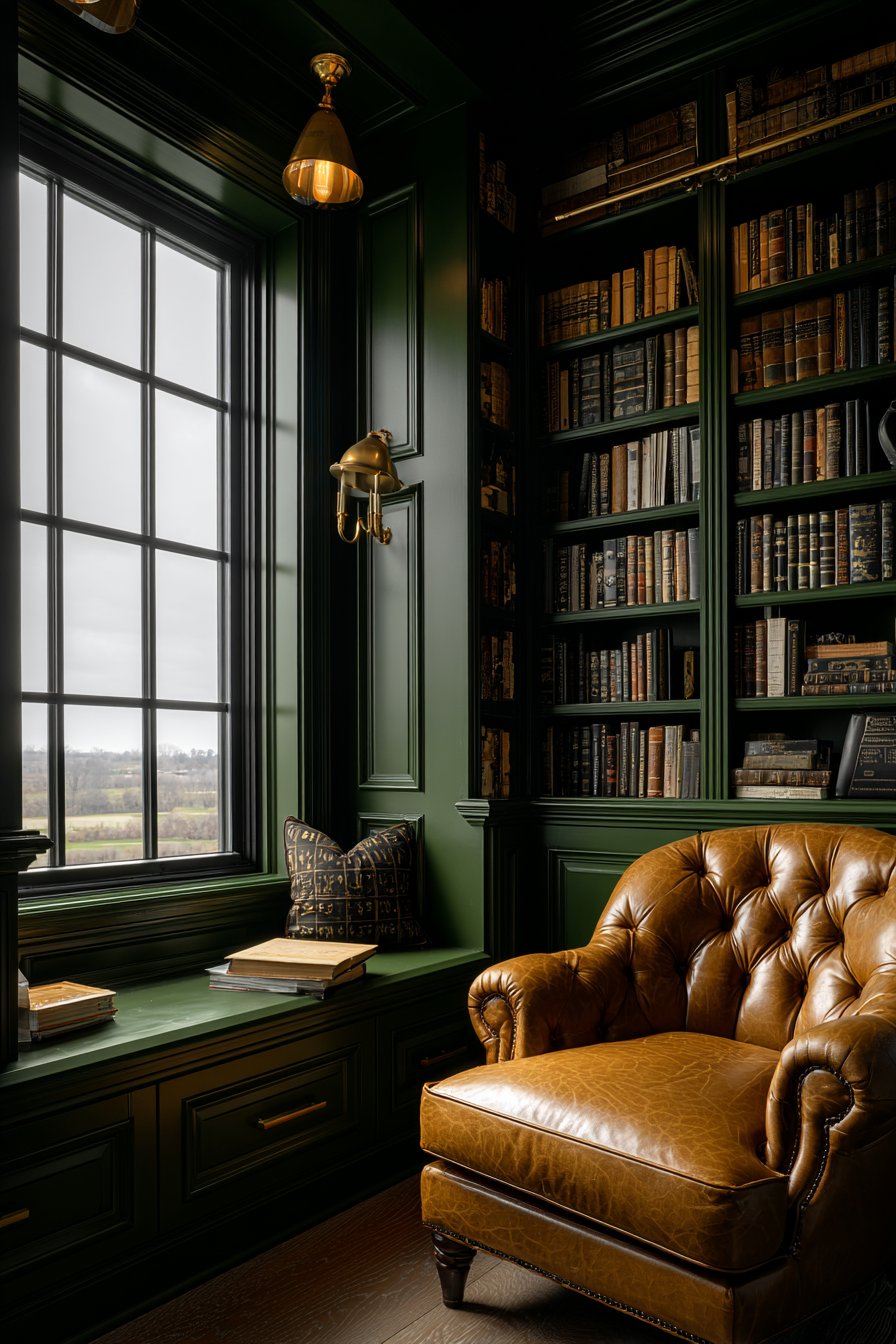
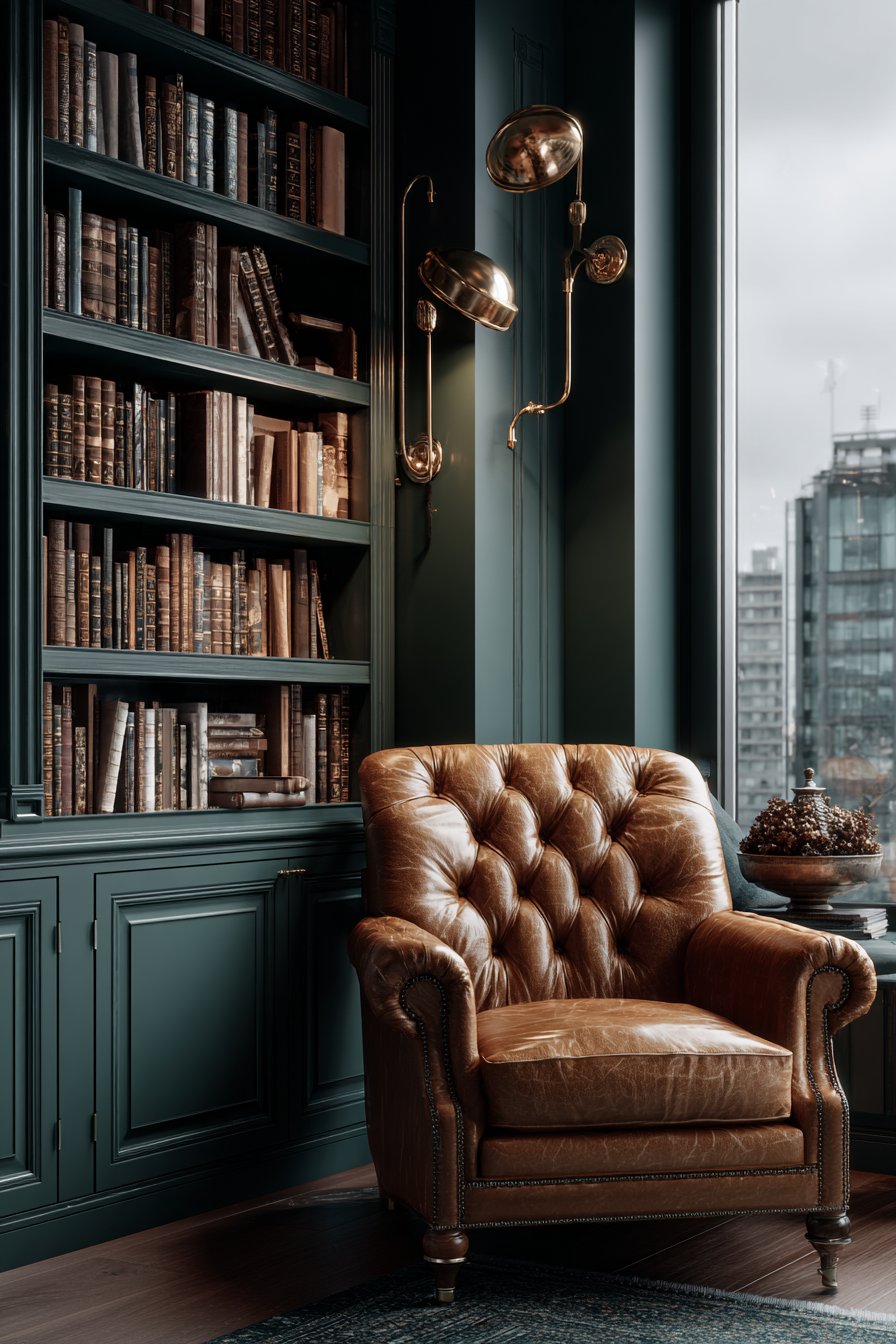
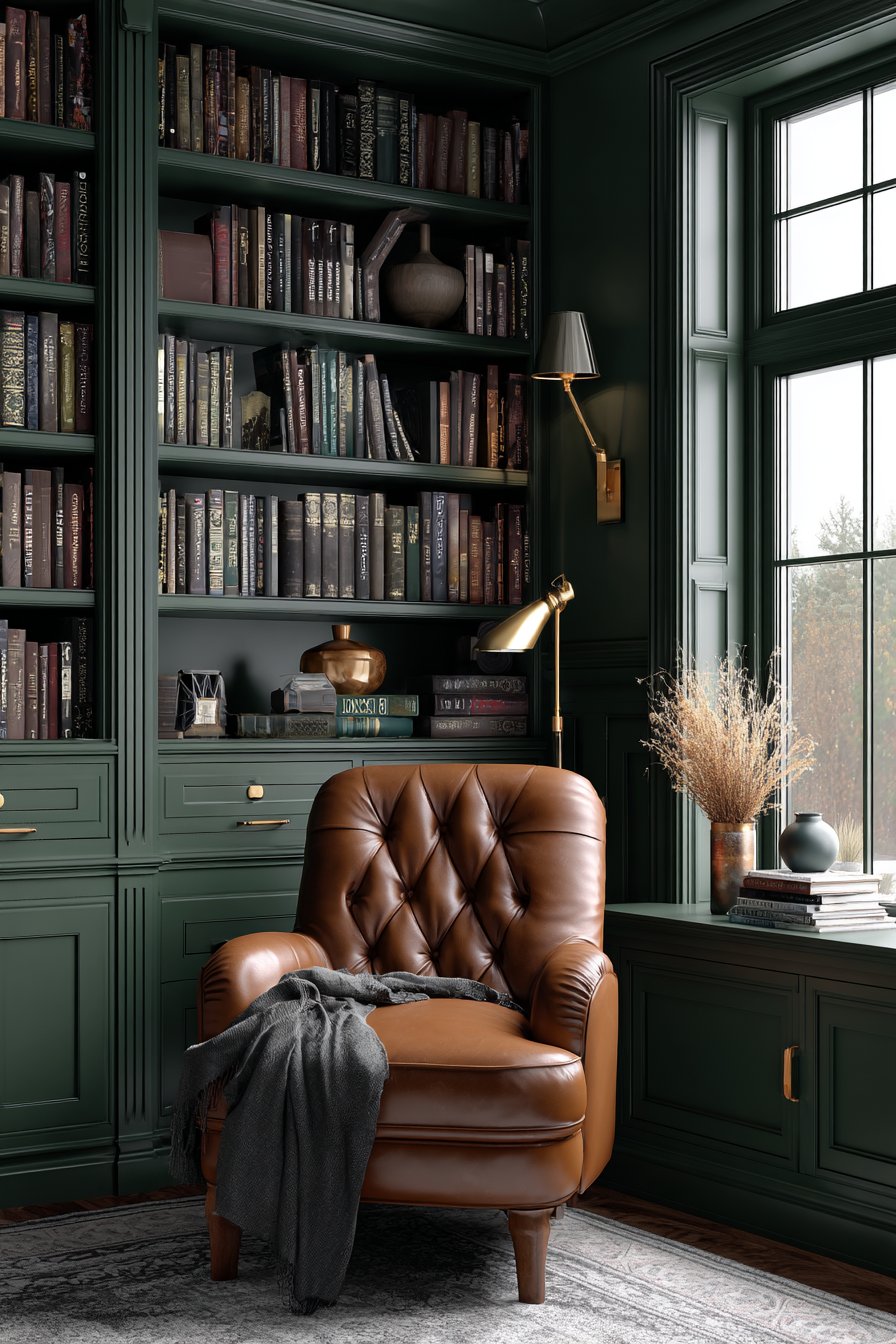
Transforming a corner of your living room into a dedicated library creates a sophisticated retreat for reading and contemplation. This design showcases floor-to-ceiling built-in bookshelves painted in deep hunter green, creating an immersive environment that celebrates the written word. The tufted leather reading chair in cognac brown provides luxurious seating with the patina and character that only genuine leather develops over time. This warm brown tone creates beautiful contrast against the cool green cabinetry while maintaining an appropriately traditional aesthetic for a library setting.
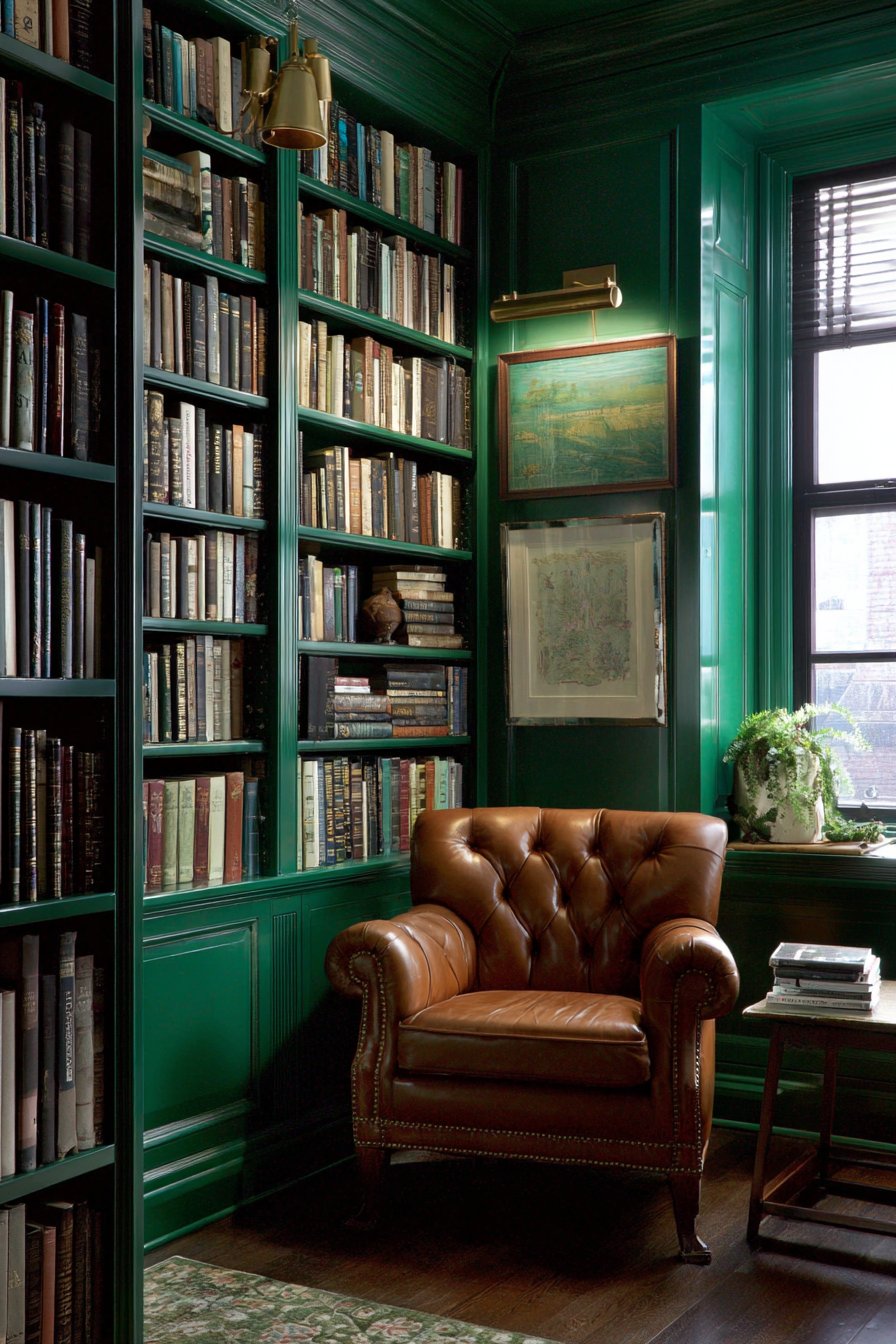
Brass library lights mounted on the shelving units provide targeted illumination for book spines and reading materials, their warm metallic finish adding jewelry-like detailing to the green cabinetry. These specialized fixtures position light exactly where needed, reducing eye strain during book selection and reading while creating ambient glow that makes the space feel intimate and inviting. The accumulated books themselves become decorative elements, their varied spines creating a colorful collage against the dark green background.
Window light filtering into the library corner creates natural reading conditions during daylight hours while highlighting the rich depth of the dark green cabinetry. The interplay between natural daylight and brass fixture illumination ensures the space remains functional and appealing throughout the day. The collected quality of a home library—books acquired over years reflecting personal interests and intellectual journey—transforms this corner into one of the home’s most personal and meaningful spaces.
Key Design Tips: Paint library shelving in the darkest green possible to create dramatic backdrop for colorful book spines. Adjust shelf heights to accommodate various book sizes from paperbacks to oversized art books. Install brass library lights with adjustable arms to direct light precisely where needed. Choose leather seating in warm brown tones to create pleasing contrast with cool green. Include a small side table for beverages and reading materials within arm’s reach of seating. Organize books by subject, size, or color to create visual order within shelves. Consider glass doors on lower cabinets to protect valuable or rarely accessed books from dust while displaying them.
11. Eclectic Bohemian Teal-Green Haven
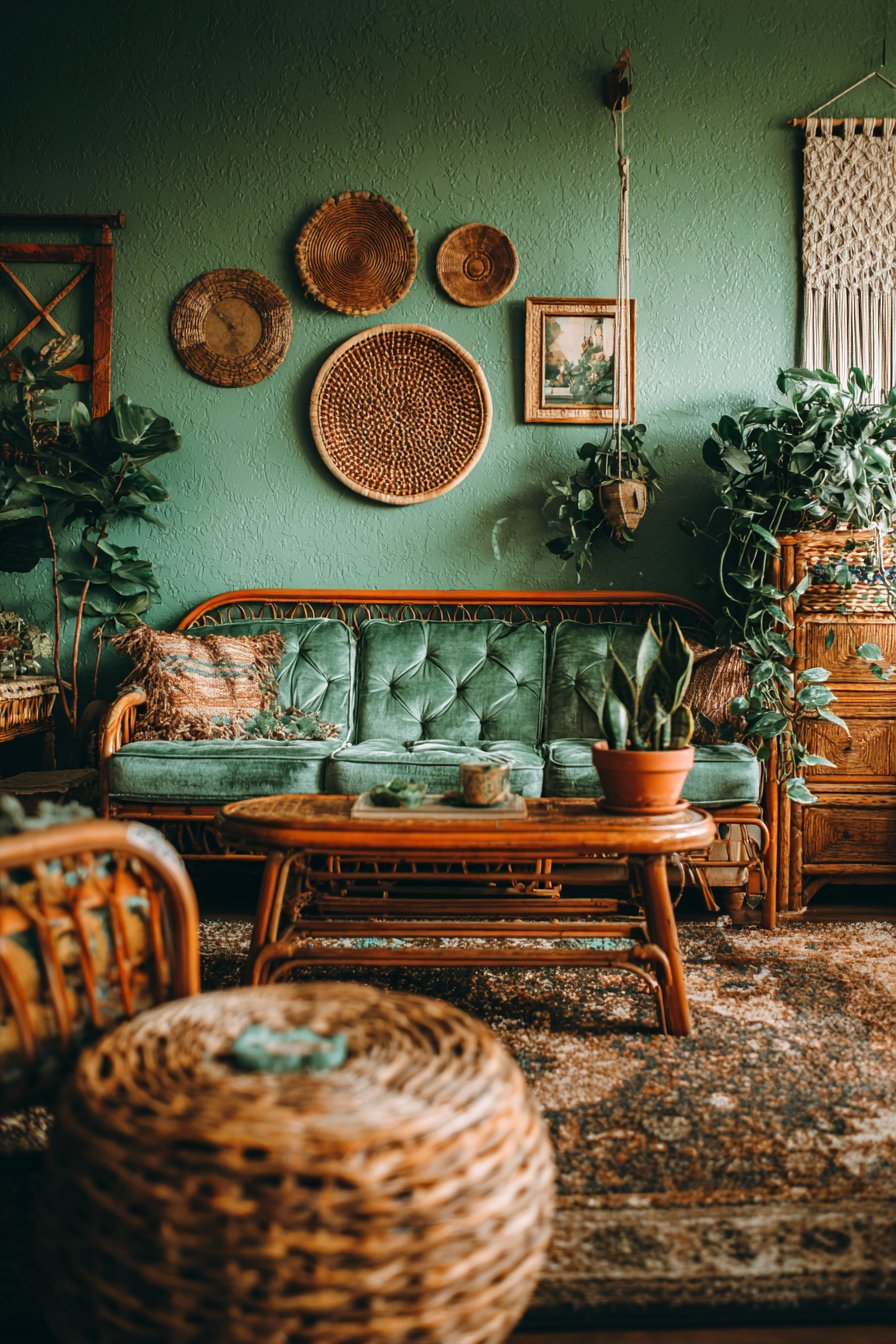
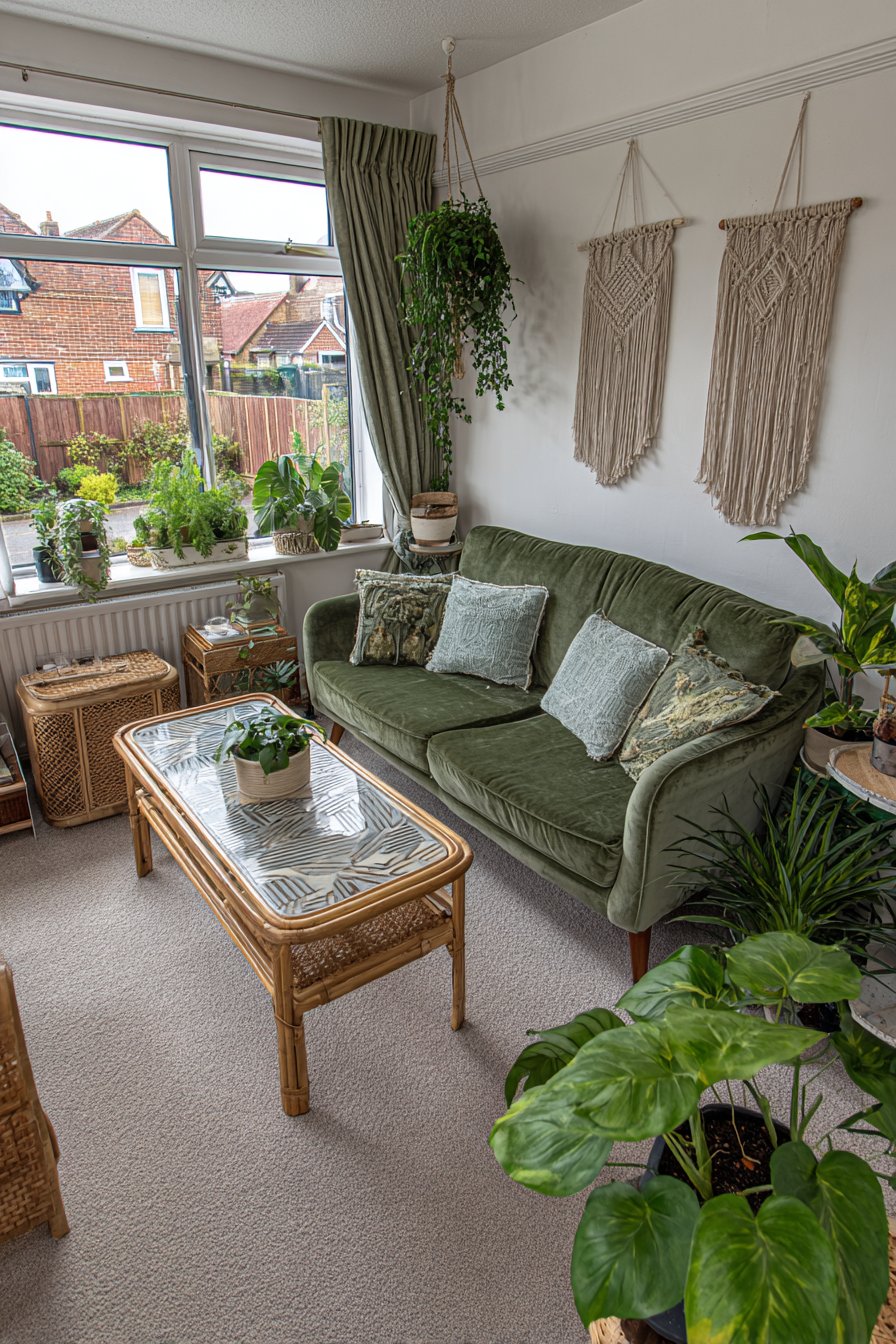
Bohemian design celebrates personal expression, collected treasures, and layered textiles—principles that adapt beautifully to dark green living room ideas when the green serves as anchor rather than rigid constraint. This approach features a vintage velvet sofa in teal-tinged dark green as the foundation, its worn patina suggesting history and story. Surrounding this centerpiece, layered textiles including throws, pillows, and macramé wall hangings create visual richness and textural depth characteristic of boho style.
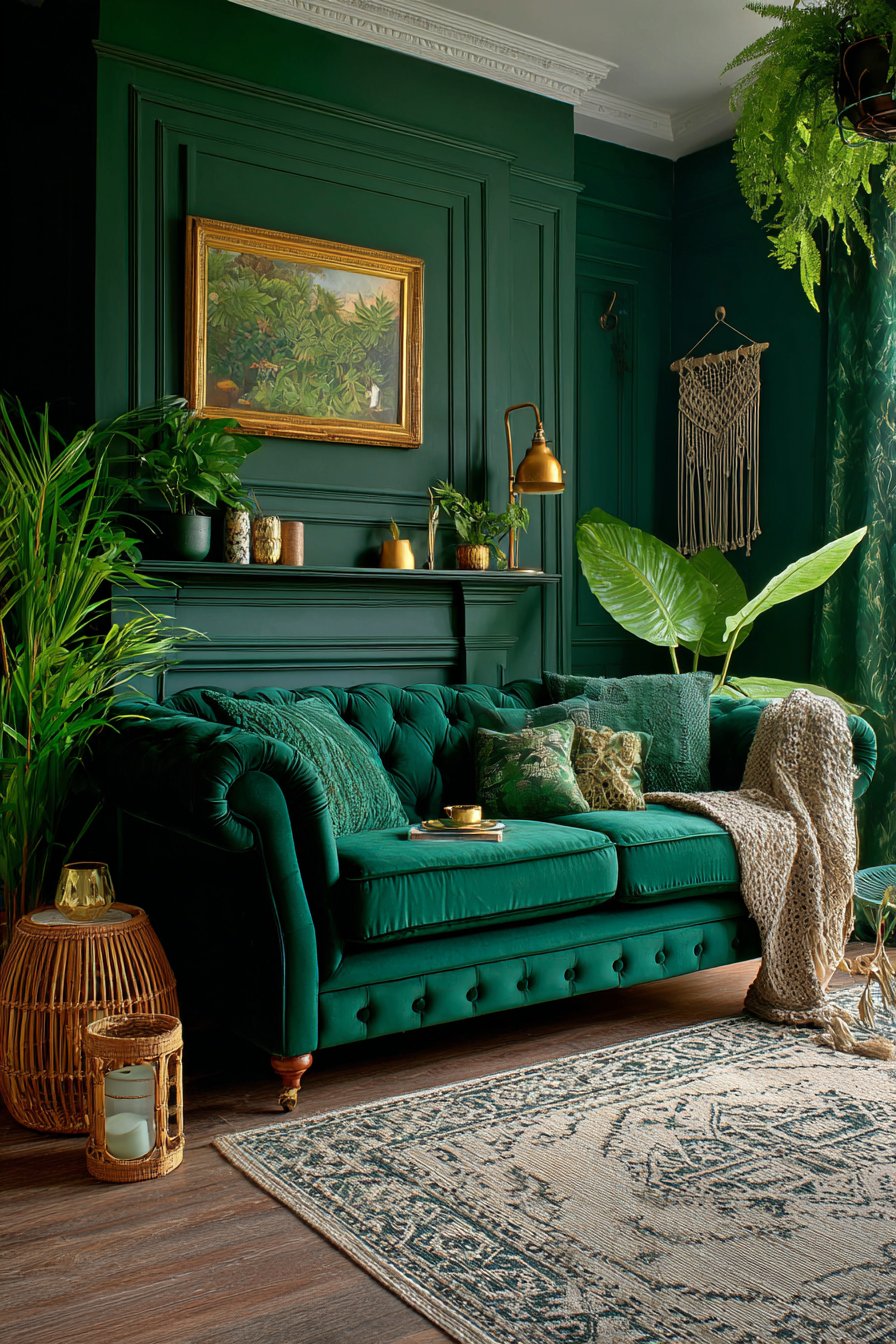
Potted fiddle leaf figs and trailing plants enhance the organic aesthetic while literally bringing nature indoors. These substantial plants create architectural presence, their large leaves and varied forms adding sculptural quality. The natural rattan furniture pieces complement the green palette through their warm neutral tones while their woven textures add another layer to the room’s tactile story. This combination of velvet, linen, cotton, macramé, and rattan engages multiple senses, creating an environment that feels as good to touch as it looks.
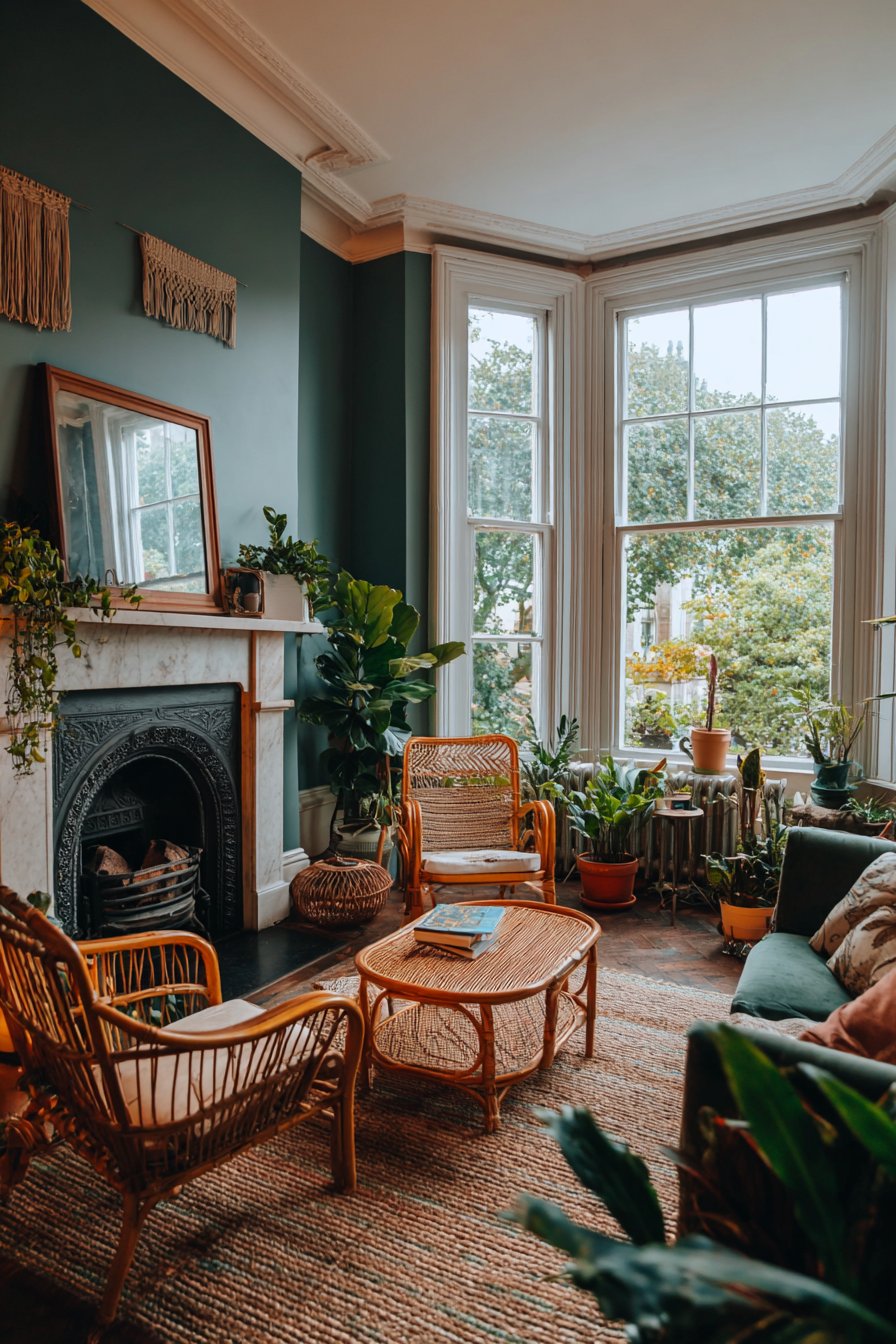
The collected, lived-in quality essential to authentic bohemian design emerges from mixing vintage and new, handmade and purchased, functional and purely decorative elements. The dark green sofa provides visual stability within this eclectic mix, its substantial presence grounding the various patterns, textures, and colors without restricting them. This balance between anchor and freedom characterizes successful bohemian interiors.
Key Design Tips: Layer at least 4-5 different textile types (velvet, linen, cotton, wool, macramé) to achieve bohemian richness. Mix patterns confidently but maintain color palette cohesion to prevent chaos. Include handmade or artisan elements like macramé, woven baskets, or pottery to add soul. Group plants at varying heights using floor stands, shelves, and hanging planters for dimension. Choose vintage or vintage-inspired furniture with visible wear and patina to add character. Avoid matching sets—bohemian style celebrates curated collections assembled over time. Layer rugs for added texture and visual interest, ensuring bottom rug is largest with smaller accent rugs layered on top.
12. Modern Farmhouse Sage Green Window Seat
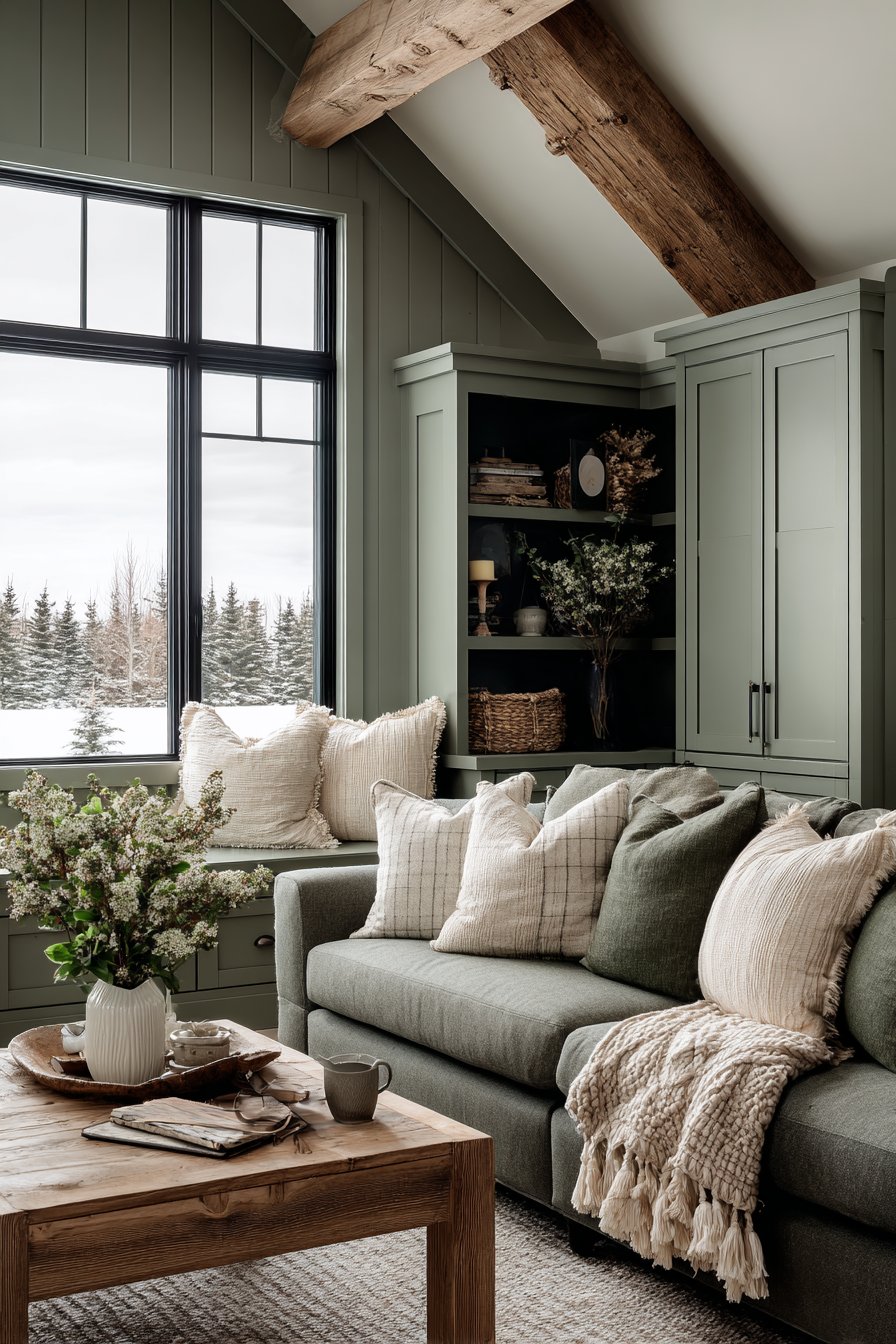
Modern farmhouse style balances rustic elements with contemporary clean lines, creating spaces that feel both welcoming and current. This design features shiplap accent wall painted in muted sage green—a softer approach to dark green living room ideas that maintains farmhouse informality. The built-in window seat with storage beneath exemplifies farmhouse practicality, providing comfortable seating, concealed organization, and connection to outdoor views in one architectural element.
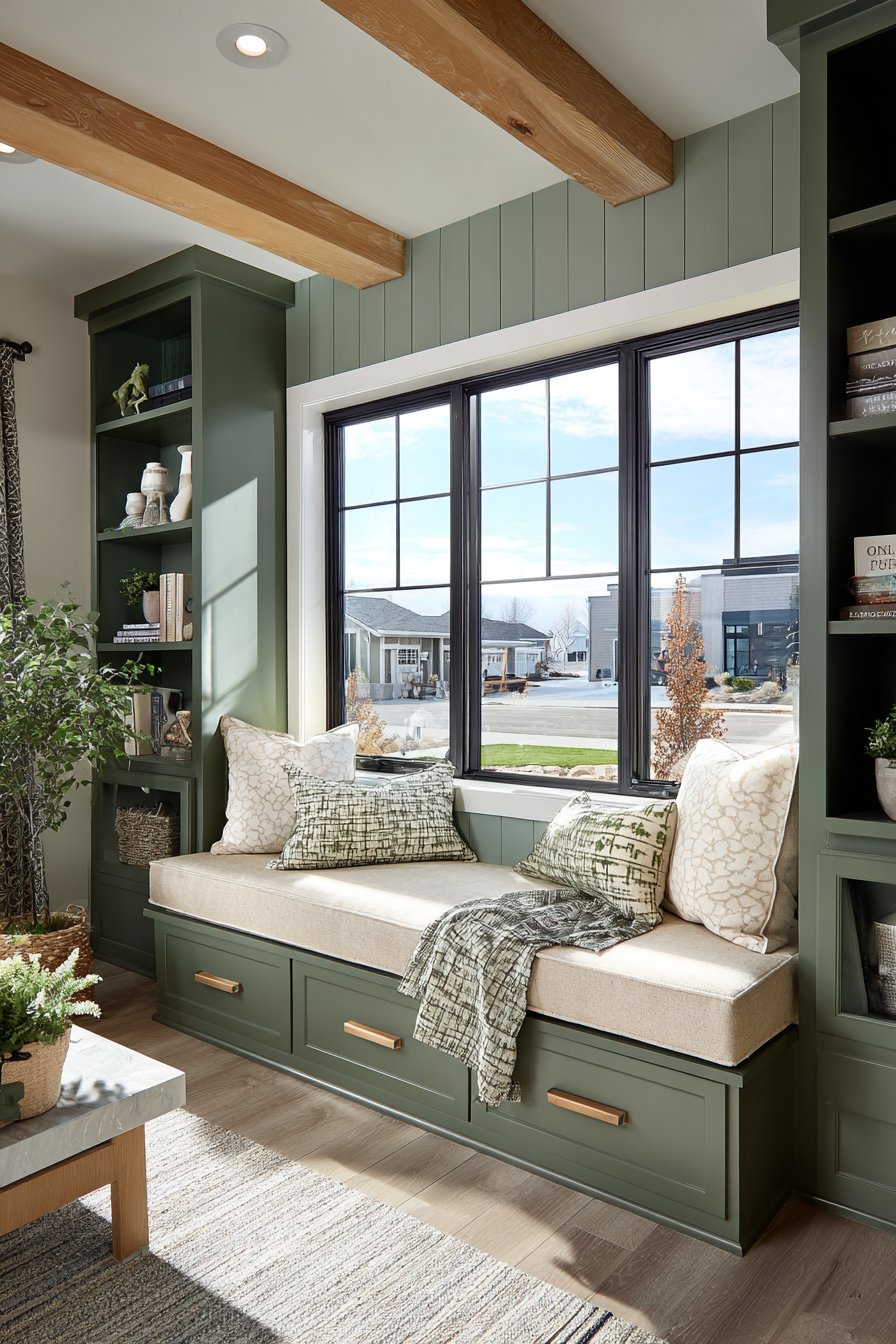
Linen cushions in cream and green patterns provide comfort while their natural fiber composition and simple patterns align with farmhouse aesthetic values. The visible texture of linen, with its characteristic slubs and slight irregularities, adds organic quality that manufactured fabrics lack. These cushions transform the window seat from architectural feature into inviting retreat perfect for reading, conversation, or simply enjoying views.
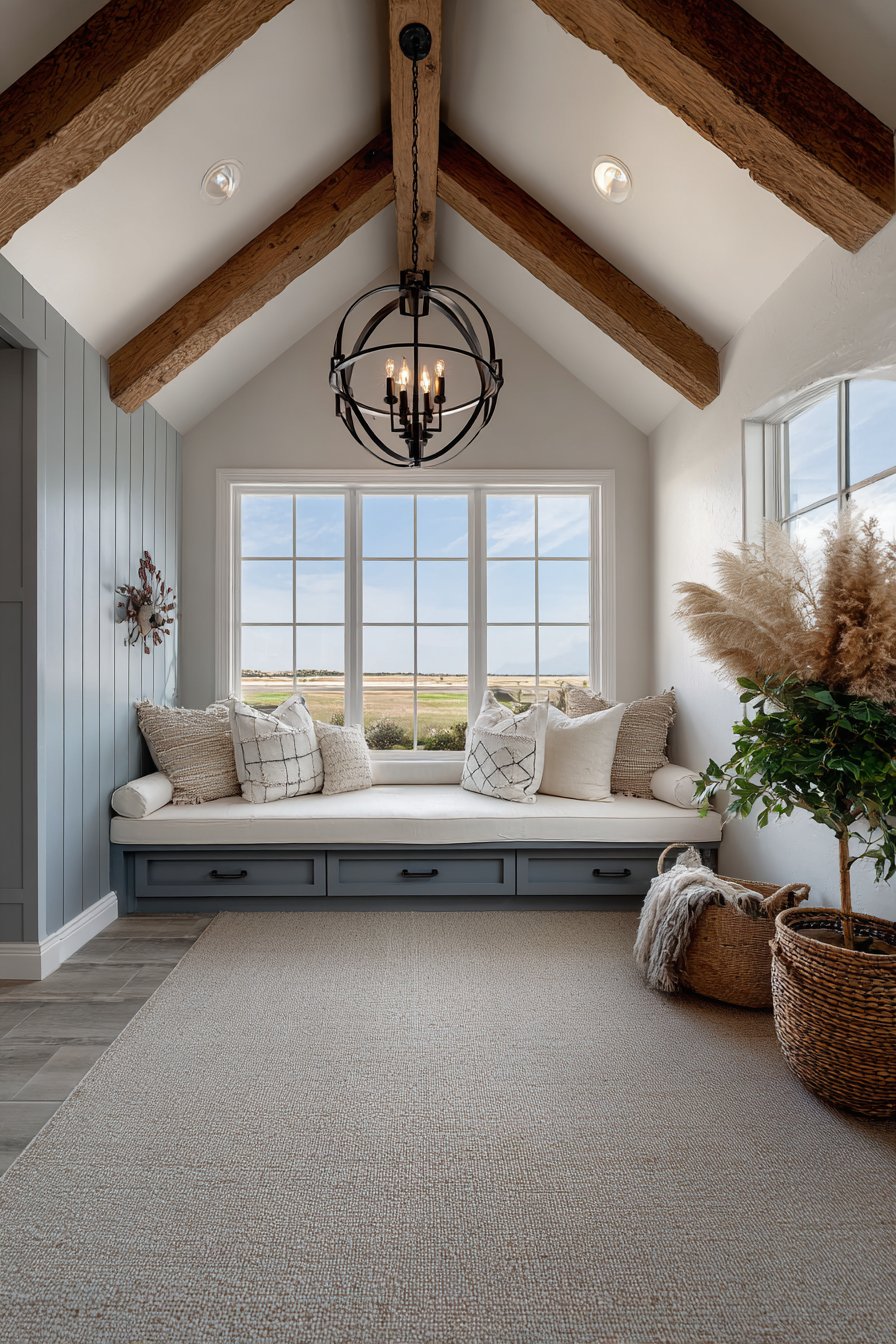
Exposed wood beams overhead add rustic charm and architectural interest while their natural warm tones complement the sage green walls beautifully. These structural elements, whether authentically load-bearing or decoratively applied, create visual rhythm across the ceiling plane and draw the eye upward, emphasizing ceiling height. The combination of painted shiplap, exposed beams, and built-in window seat creates the layered, detail-rich environment characteristic of modern farmhouse design.
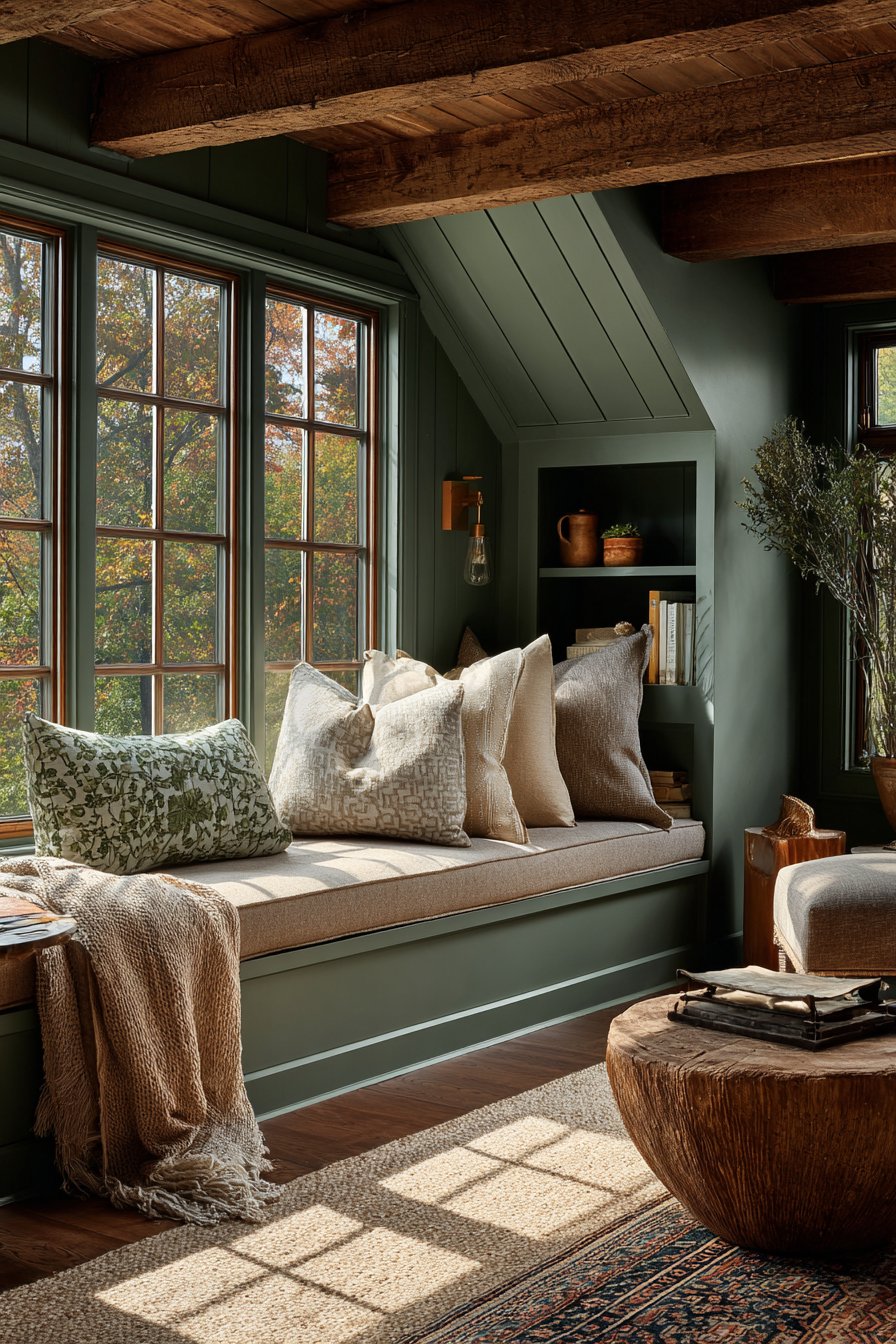
Key Design Tips: Paint shiplap in muted rather than vivid green tones to maintain farmhouse informality. Design window seat depth at 18-24 inches to ensure comfortable seating without protruding excessively into room. Include lift-up storage within window seat base for blankets, pillows, and seasonal items. Choose linen fabrics in medium weight for durability while maintaining soft drape. Install window treatments that stack completely off windows when open to maximize natural light and views. Add throw pillows in varying sizes for flexible comfort and visual appeal. Consider heating vents or radiant heat beneath window seats positioned on exterior walls for cold-weather comfort.
13. Glamorous Art Deco Emerald Elegance
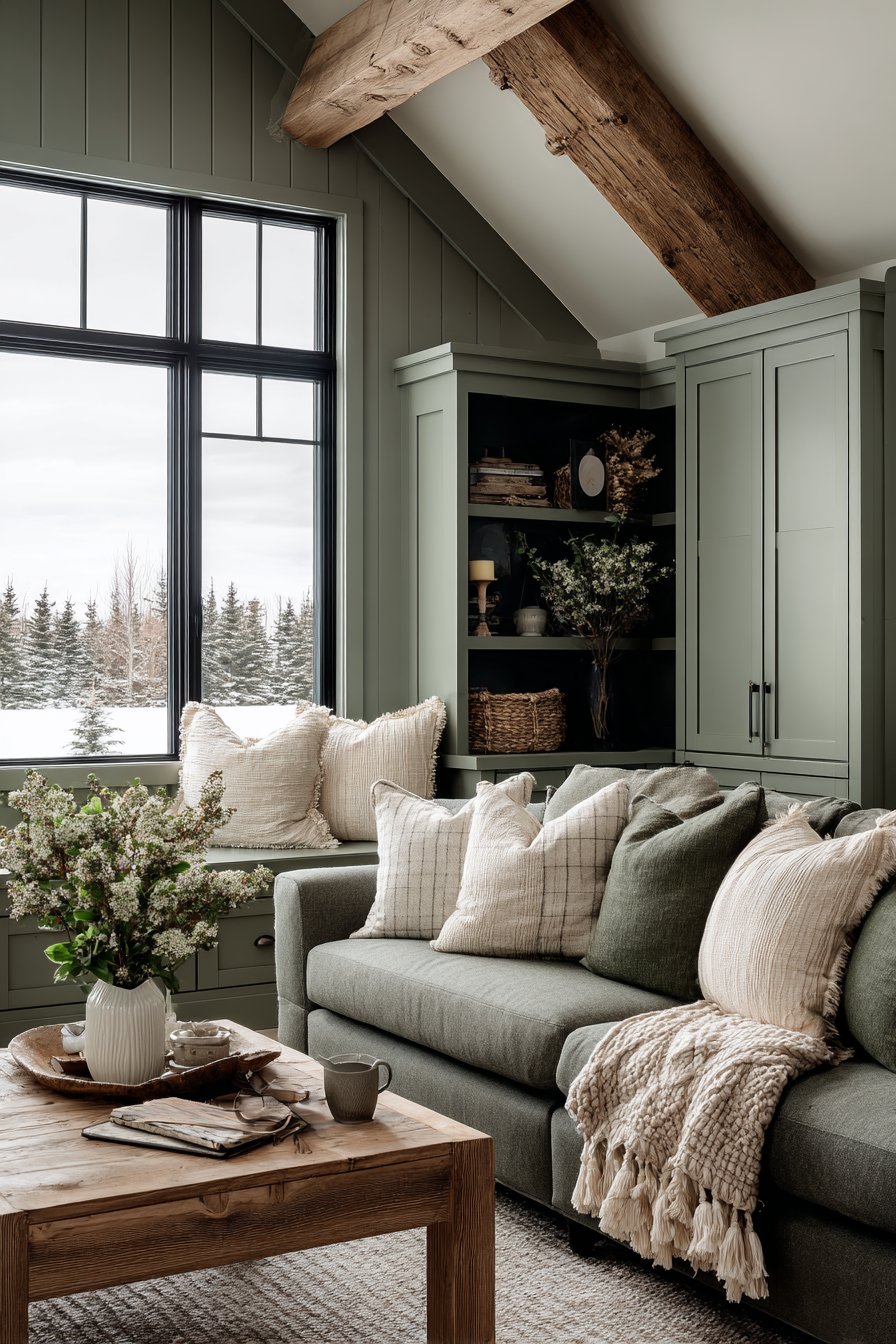
Art Deco design from the 1920s and 1930s celebrated geometric forms, luxurious materials, and bold colors—principles that translate beautifully into contemporary dark green living room ideas with proper execution. This approach features an emerald green velvet curved sofa as the centerpiece, its sweeping form echoing the streamlined curves characteristic of Art Deco furniture. The geometric wallpaper in dark green and gold creates a dramatic backdrop, its repeating pattern adding movement and visual interest while maintaining period-appropriate styling.
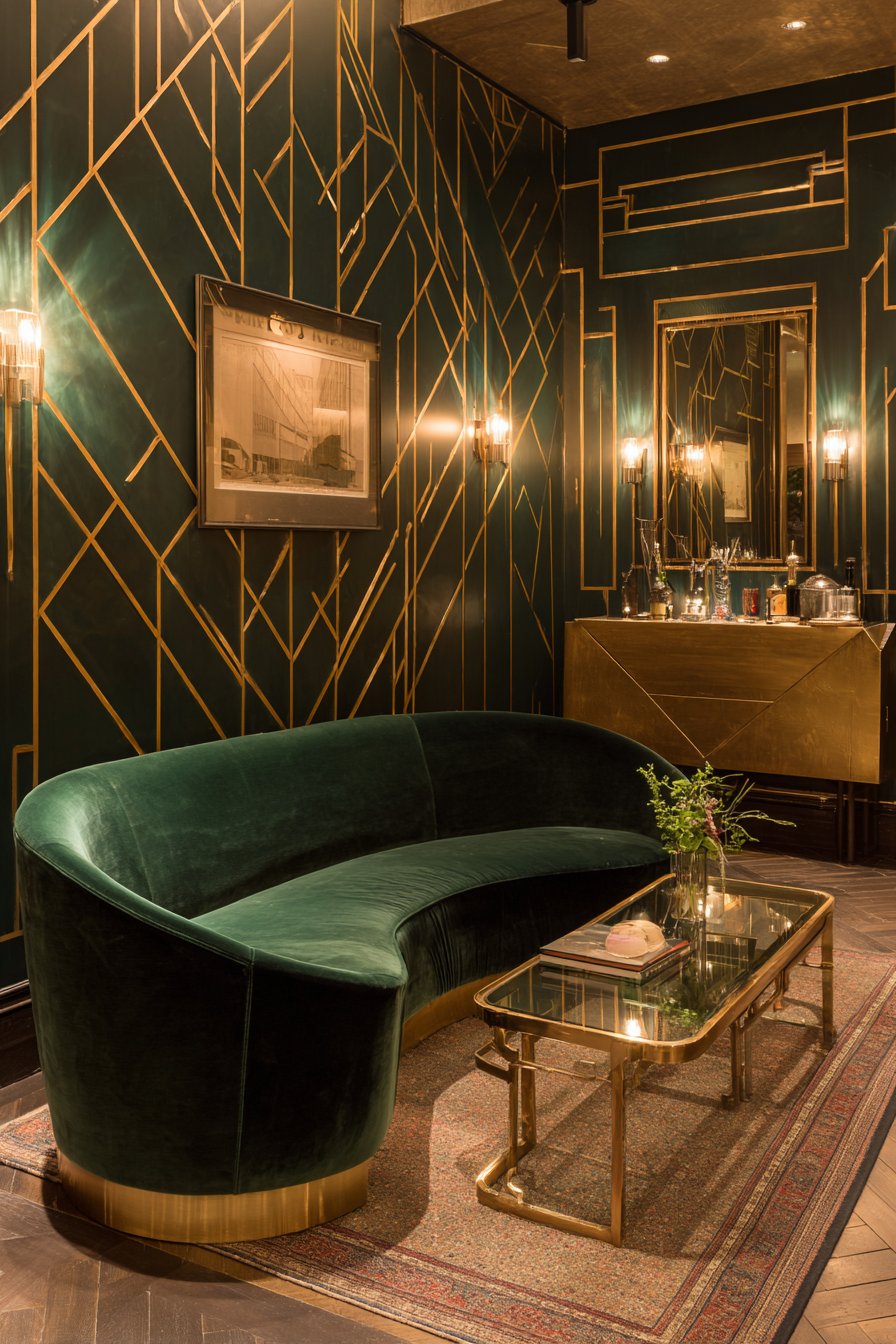
The glass and brass coffee table introduces the transparent and metallic materials beloved in Art Deco interiors. Glass creates visual lightness despite the table’s substantial size, preventing the seating area from feeling cluttered or heavy. The brass frame’s geometric construction continues the angular design language established by the wallpaper. Vintage Art Deco lighting fixtures in polished brass provide both functional illumination and sculptural presence, their stepped forms and geometric detailing serving as jewelry for the room.
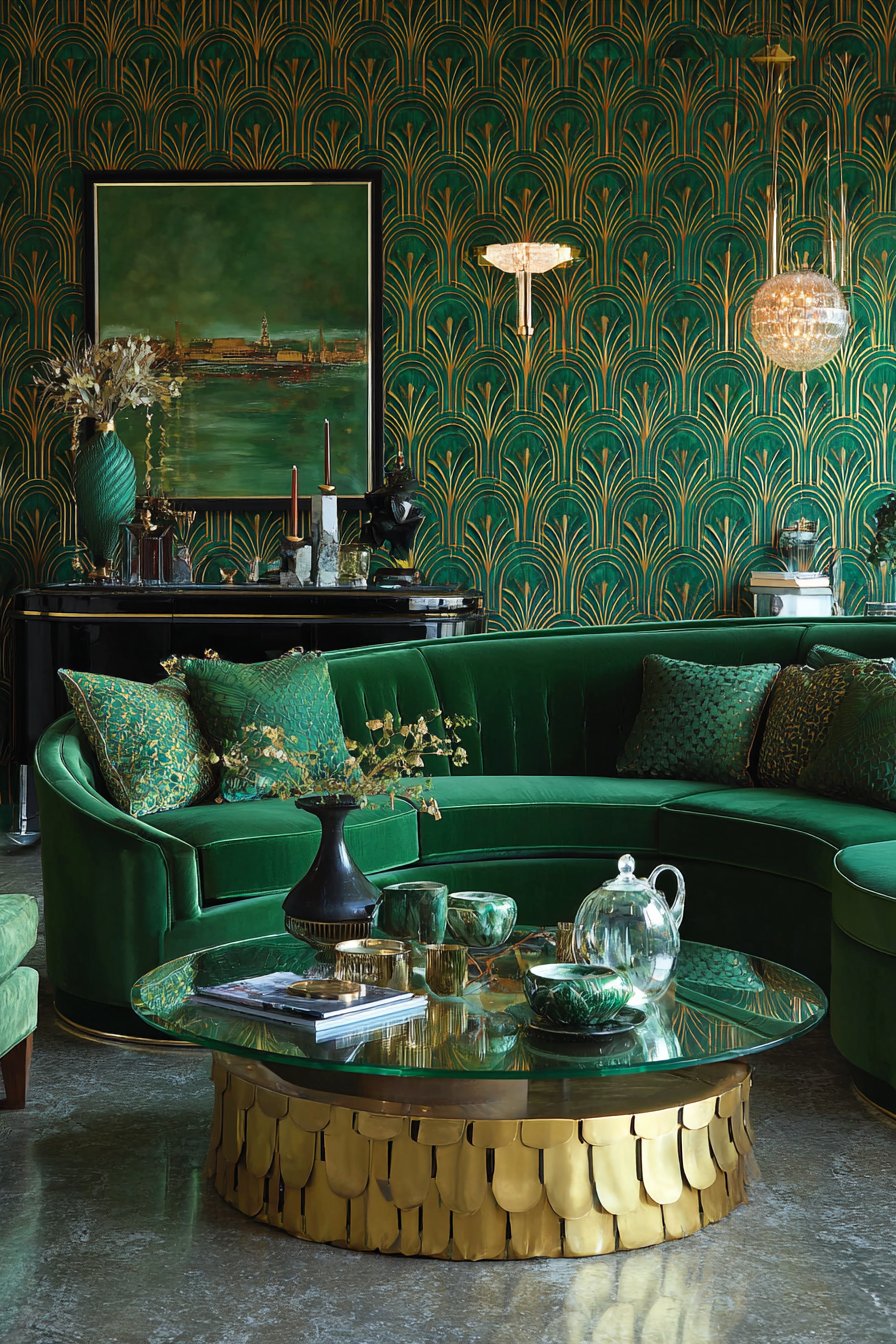
The glamorous interplay between deep green tones and metallic gold accents creates the sophisticated, slightly theatrical quality that defines Art Deco style. This combination suggests both natural elements (forest green) and human achievement (precious metals), embodying the period’s celebration of both nature and modernity. The overall effect is unapologetically luxurious, appropriate for a style that emerged during the Roaring Twenties’ celebration of prosperity and possibility.
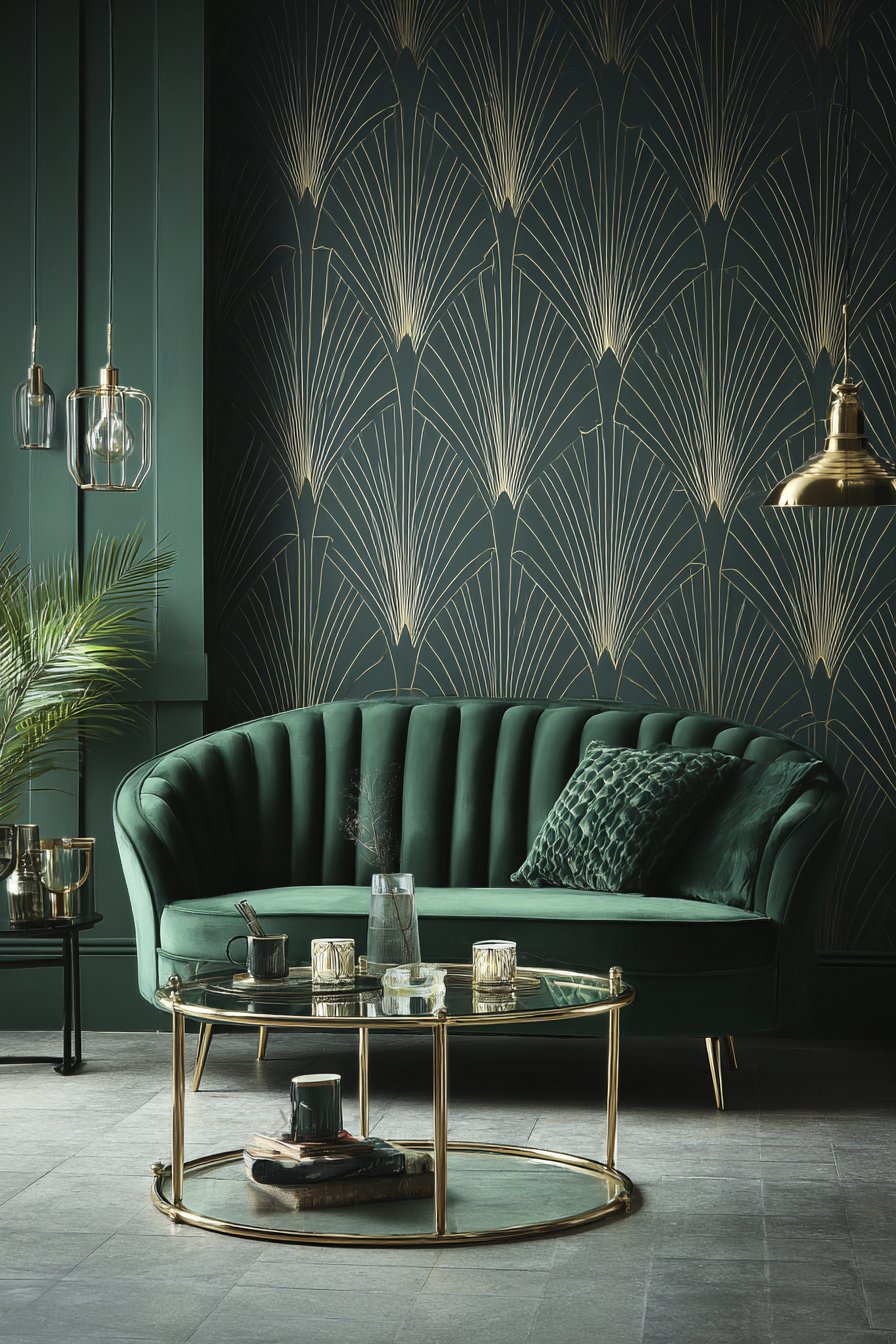
Key Design Tips: Choose geometric patterns with authentic Art Deco motifs like sunbursts, chevrons, or stepped designs rather than generic patterns. Incorporate at least three different brass finishes (polished, brushed, antiqued) to add depth and prevent metallic monotony. Select curved furniture forms to balance geometric patterns and add softness. Install period-appropriate lighting fixtures as focal points rather than afterthoughts. Include mirrors with geometric frames to reflect light and add glamour. Choose emerald green in its most saturated form for maximum Art Deco impact. Add black accents through accessories or accent furniture to ground the green and gold palette.
14. Transitional Style with Dark Green Paneling
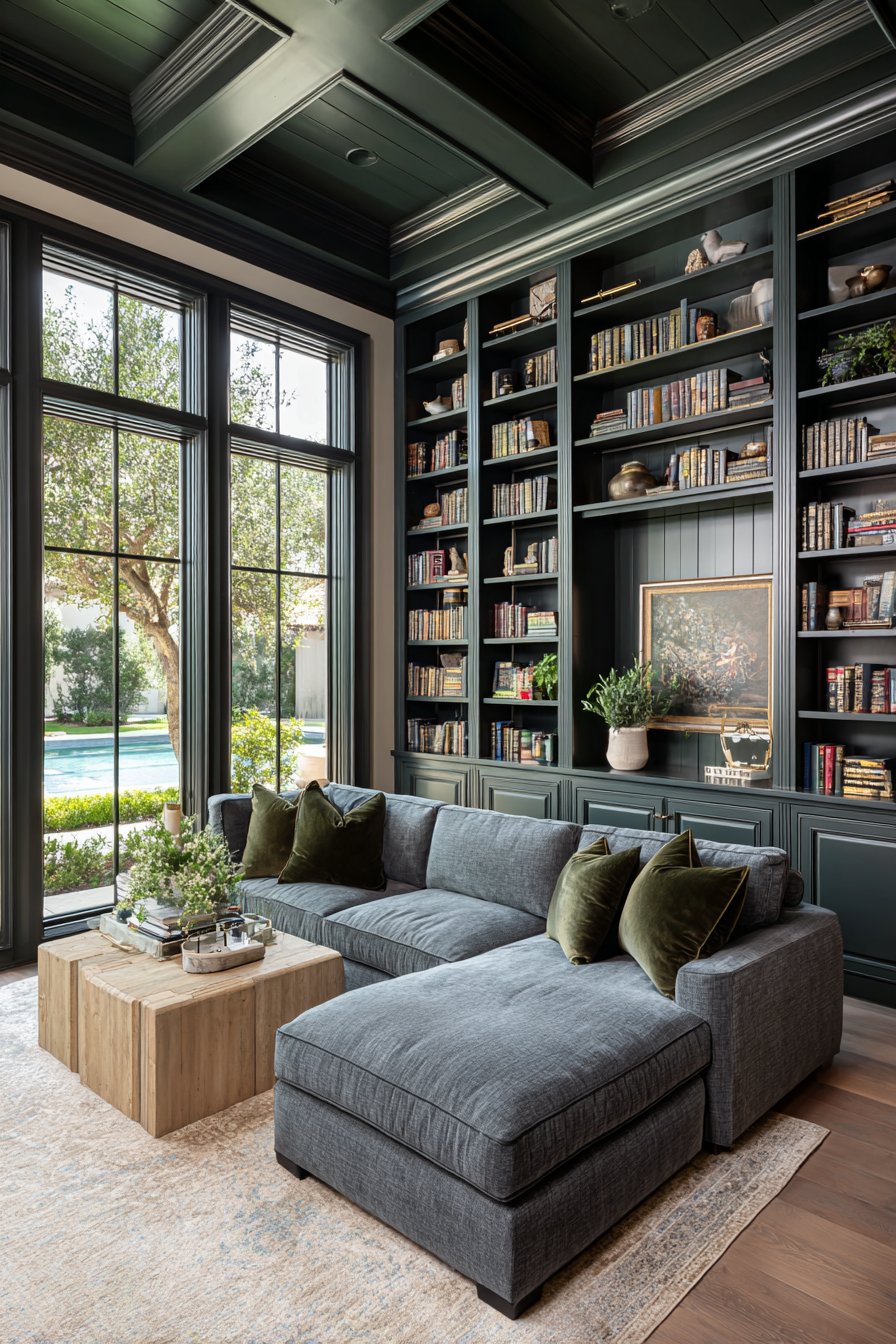
Transitional design bridges traditional and contemporary aesthetics, creating spaces that feel current without abandoning classical principles. This approach features dark green painted lower wall paneling with neutral upper walls, a technique that adds architectural interest while maintaining balance. The paneling—whether authentic beadboard, board-and-batten, or picture frame molding—creates dimension and visual weight in the lower portion of walls while the lighter upper section prevents the room from feeling too dark or confined.
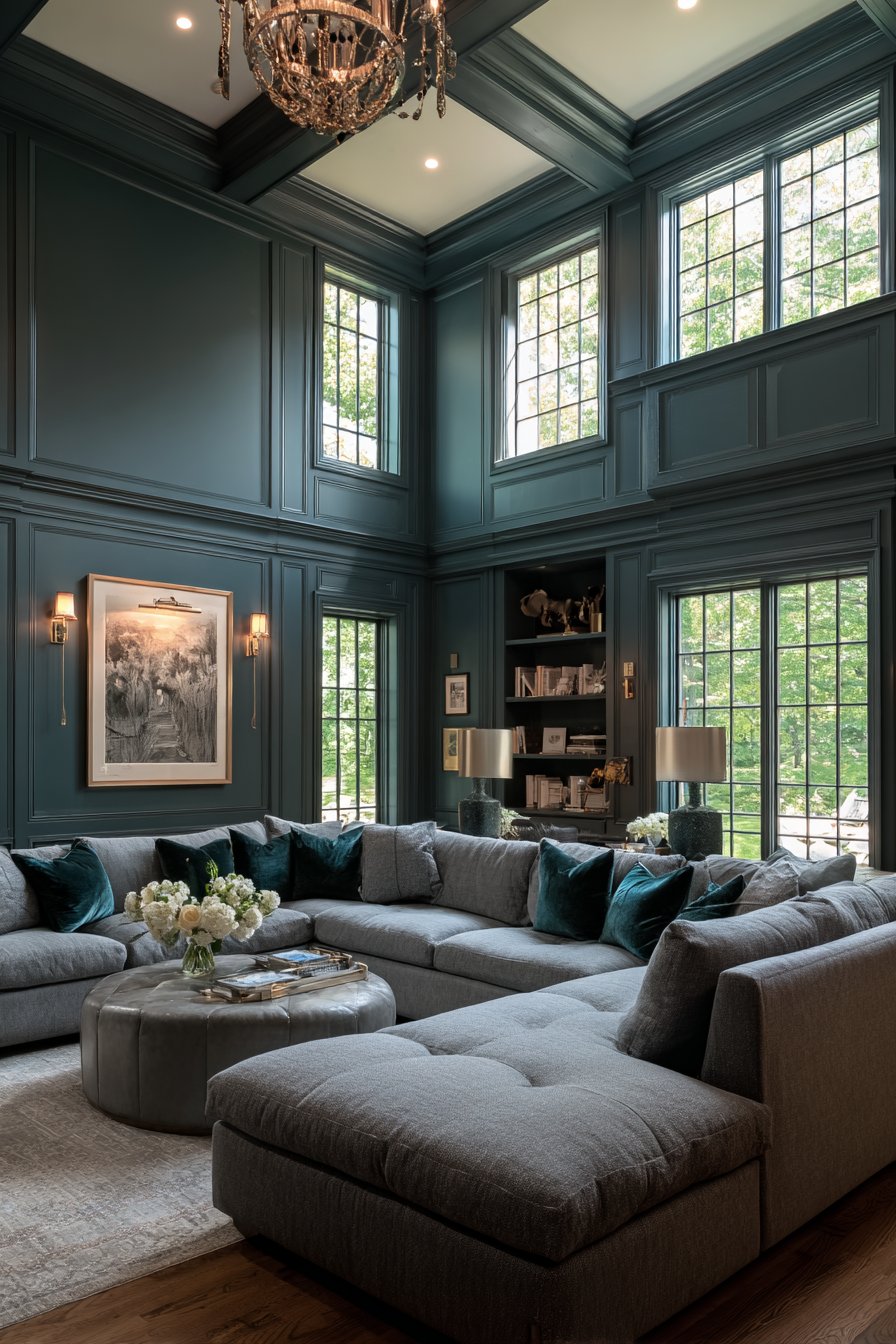
The sectional sofa in soft grey provides ample seating while its neutral tone allows the dark green paneling to command attention as the room’s primary design element. Green velvet throw pillows maintain the color story without overwhelming the sofa’s subtle elegance. This restrained use of green in furnishings demonstrates transitional design’s measured approach, where bold elements are balanced with quieter supporting pieces.
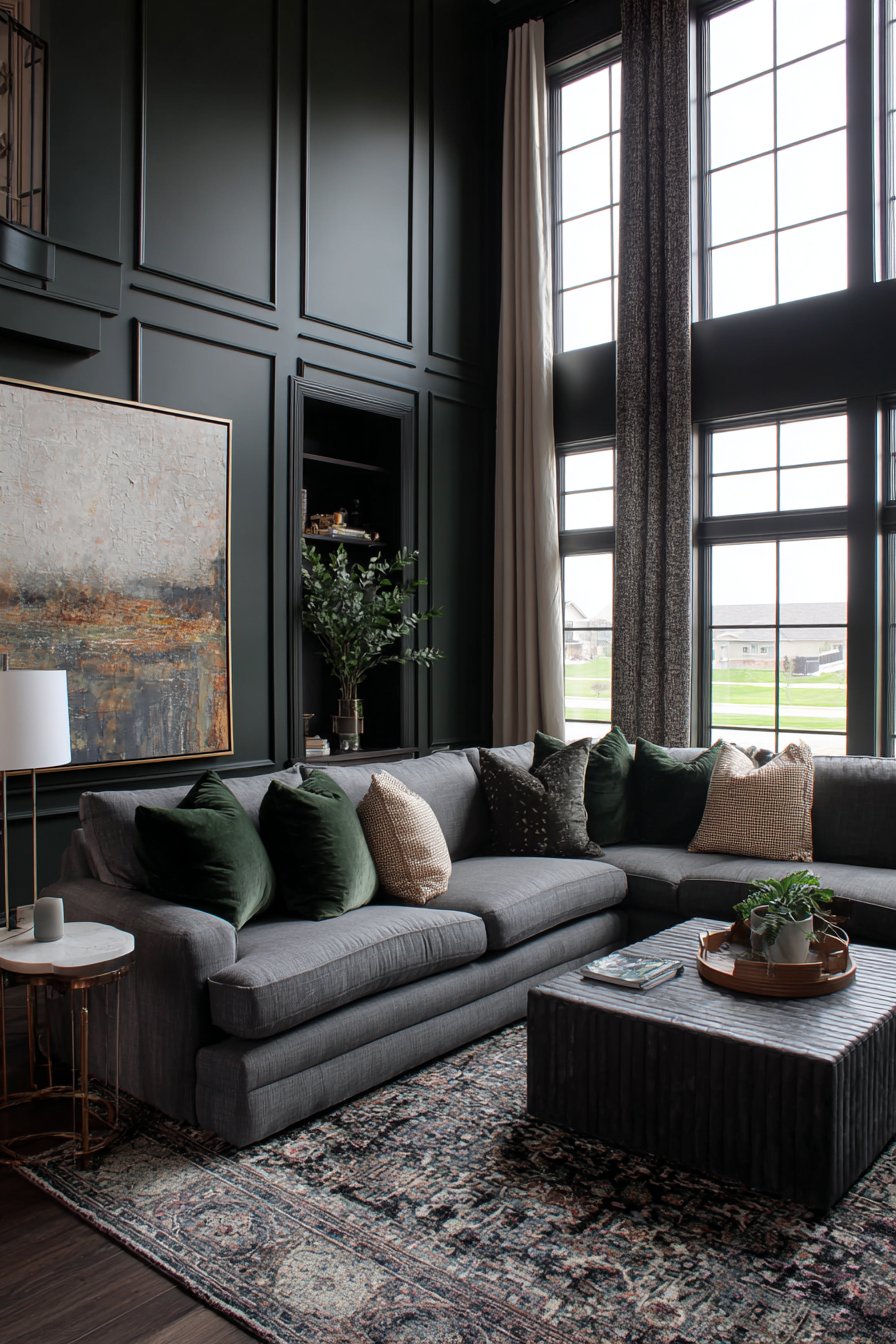
Crown molding and wainscoting add architectural interest that elevates the space beyond simple painted walls. These details suggest craftsmanship and permanence, qualities valued in traditional design but equally appreciated in contemporary interiors when executed with proper scale and proportion. The combination of dark lower walls, light upper walls, and architectural trim creates a sophisticated layered effect that adds perceived height and dimension to the space.
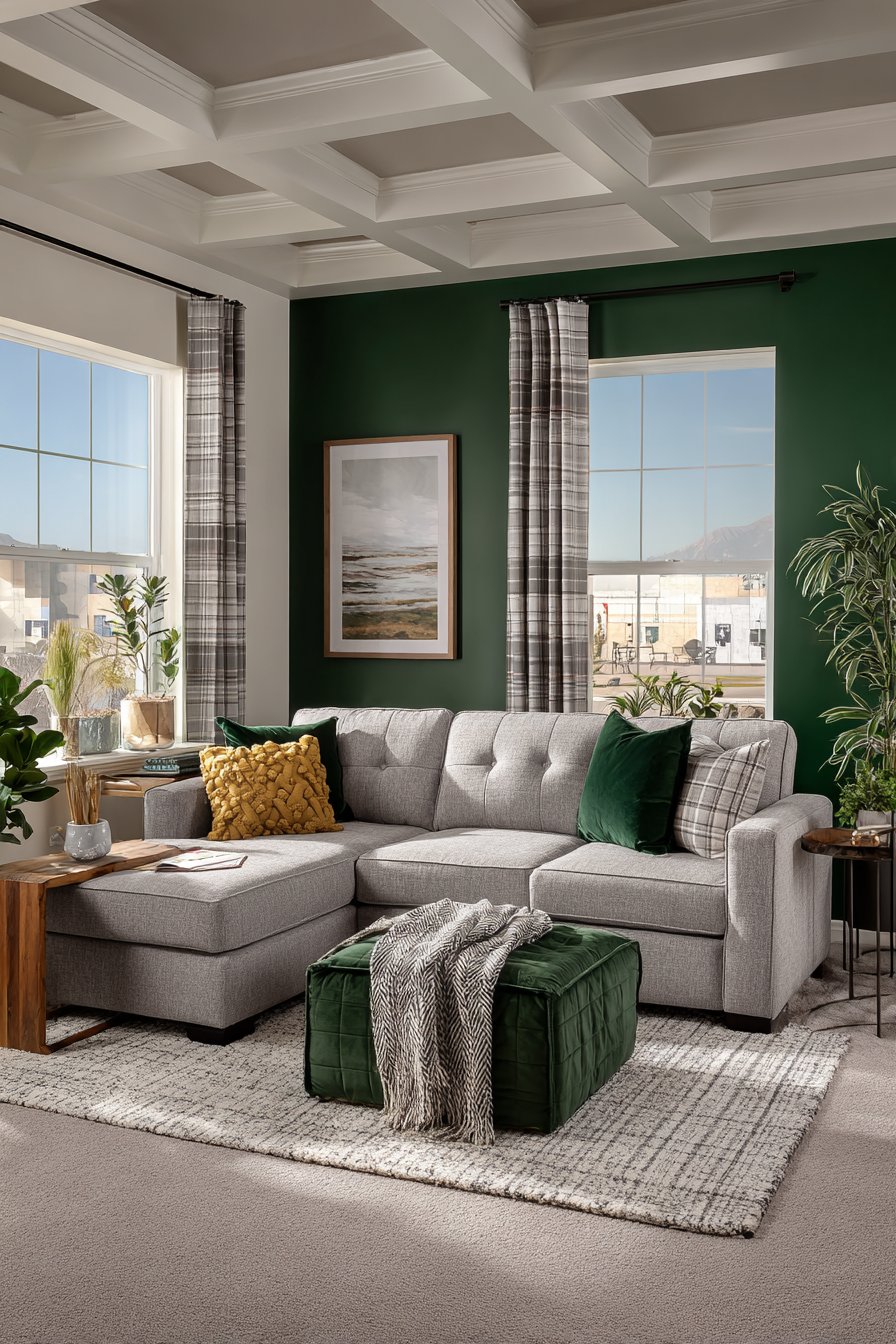
Key Design Tips: Paint lower paneling in the darkest green shade while keeping upper walls in warm white or cream to maintain balance. Install paneling height at one-third wall height (approximately 32-36 inches) for proper proportion. Choose crown molding with simple profiles for transitional spaces rather than overly ornate traditional designs. Select sectional sofas with clean lines and moderate proportions that read as neither too contemporary nor too traditional. Add throw pillows in both solid green velvet and subtle patterns to create visual interest. Include table lamps with transitional styling that bridges traditional forms with contemporary finishes. Layer multiple light sources to ensure architectural details remain visible and appreciated in evening hours.
15. Compact Dark Green Apartment Living
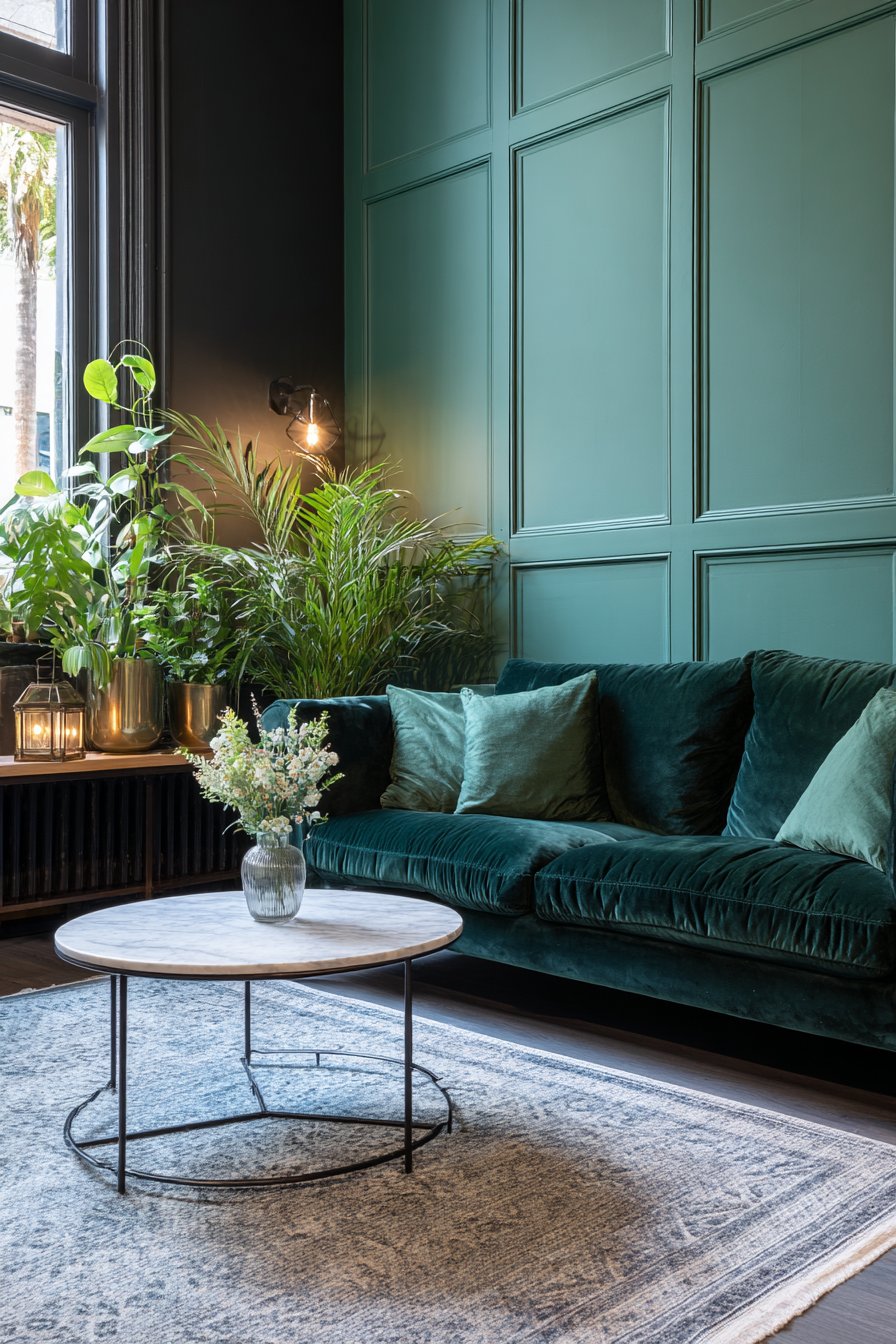
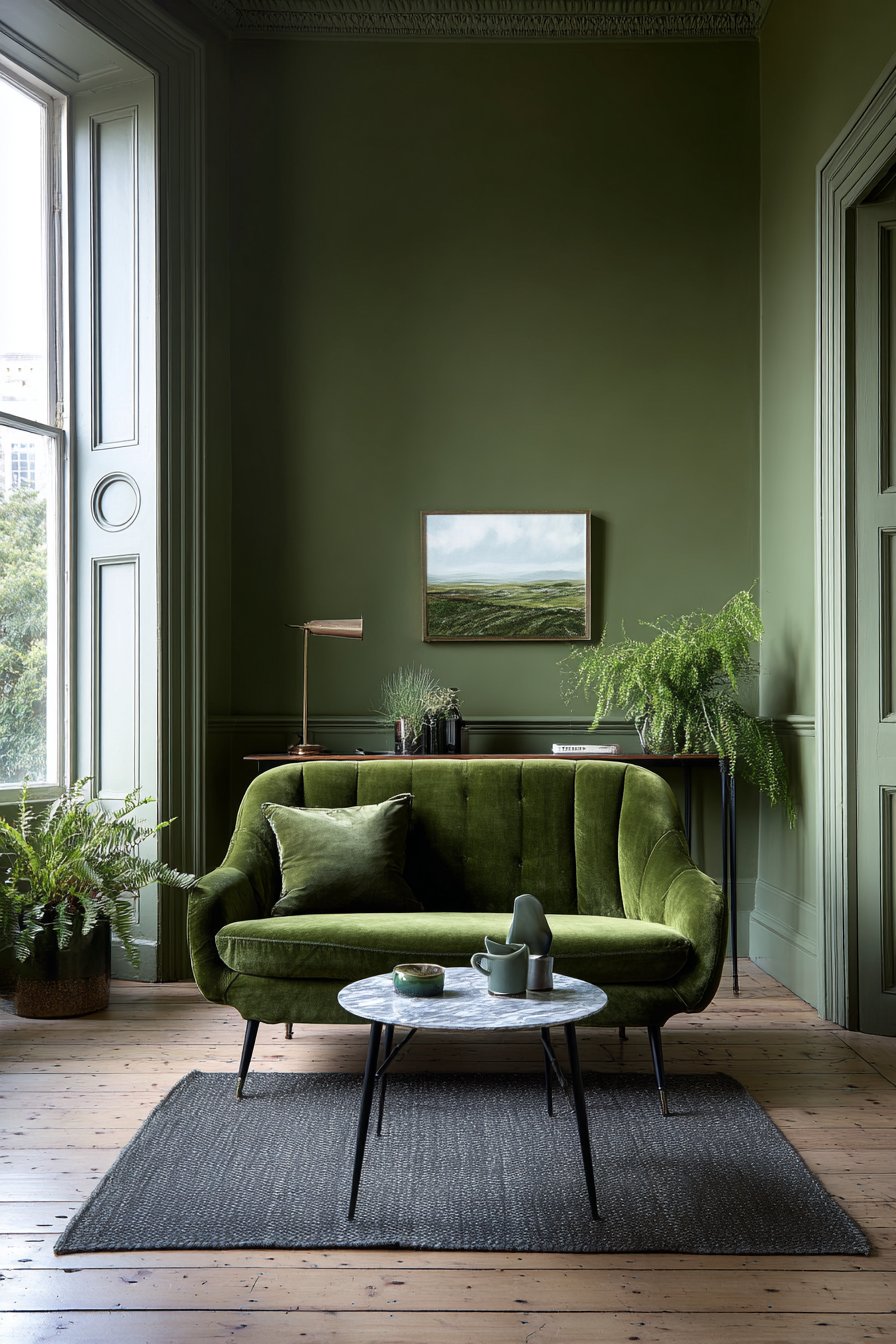
Small space living presents unique challenges that dark green living room ideas can actually help solve when applied strategically. This design features a dark green velvet loveseat against a lighter green painted wall, creating tonal depth without overwhelming the compact dimensions. The loveseat’s smaller scale proves perfectly proportioned for apartment living, providing comfortable seating without dominating the available floor space. The lighter green wall behind establishes the color story while reflecting more light than deeper tones would, maintaining the sense of openness crucial in small spaces.
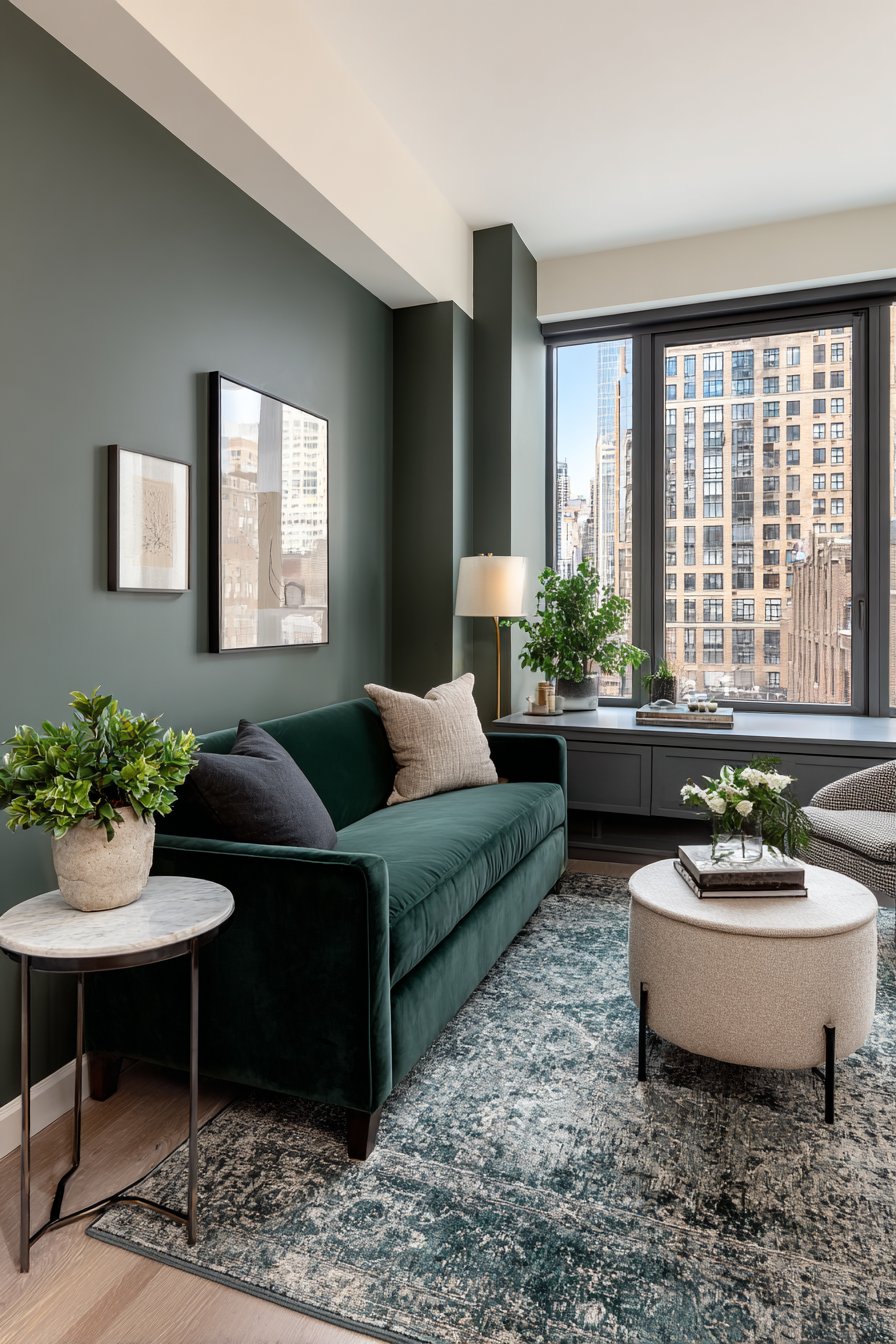
A narrow console table positioned behind the loveseat demonstrates efficient use of circulation space—the area behind seating that might otherwise go unused. This table holds plants that add life and improve air quality while lamps provide ambient illumination for the seating area. The small round coffee table with marble top maximizes functionality without visual bulk, its circular form facilitating better traffic flow in tight quarters compared to rectangular alternatives.
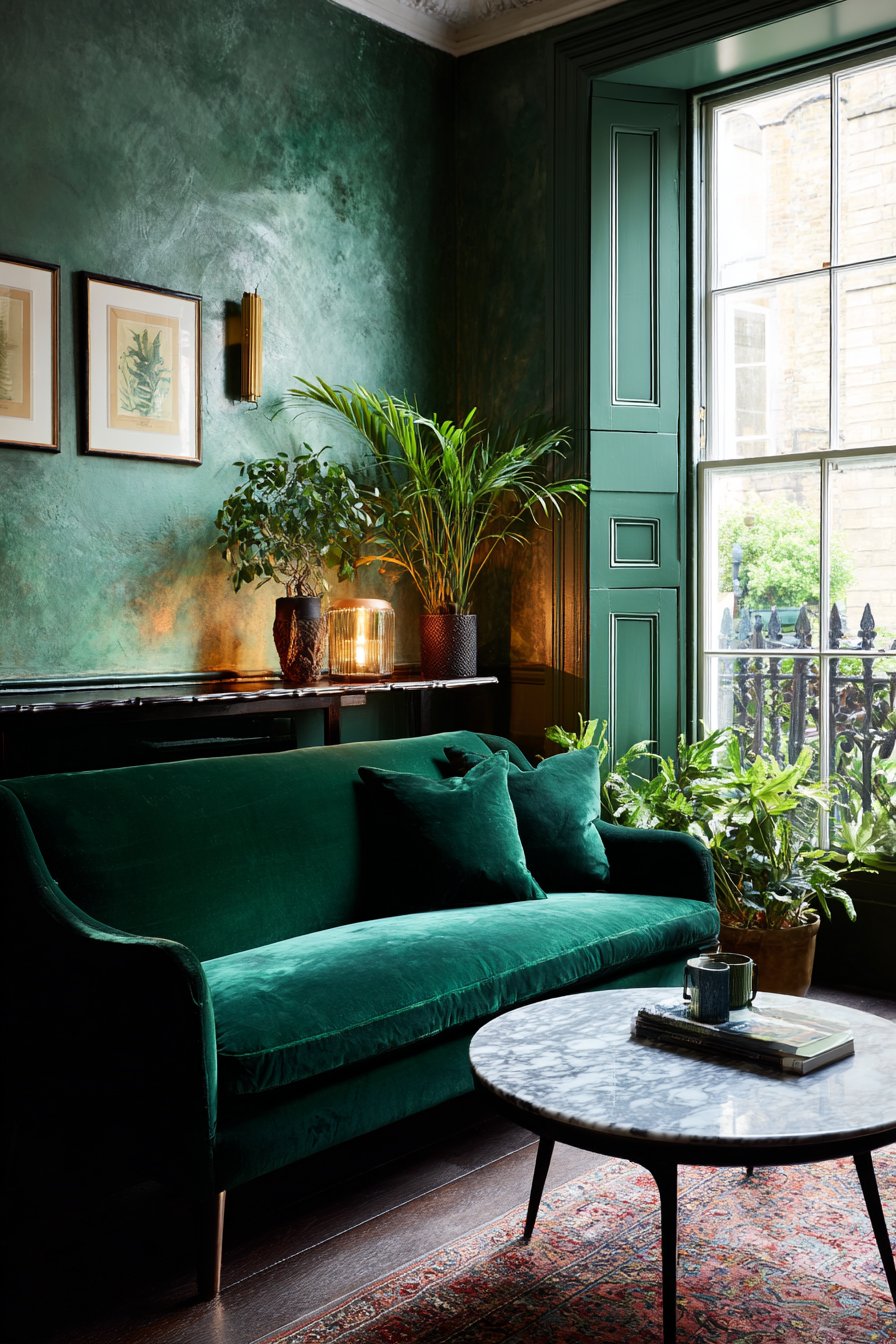
Natural lighting from nearby windows proves essential in preventing the dark green palette from making the small space feel cramped or cave-like. The strategic use of mirrors (not visible but implied in design) would reflect this natural light, effectively doubling its impact and creating the illusion of expanded space. This careful attention to scale, proportion, and light management demonstrates how dark green living room ideas adapt successfully to compact urban living.
Key Design Tips: Choose furniture scaled specifically for small spaces—loveseats instead of full sofas, armless designs that reduce visual bulk. Use lighter shades of green on walls to maintain color story while reflecting more light. Position mirrors opposite windows to reflect natural light and create illusion of expanded space. Select furniture with exposed legs rather than skirted bases to maintain visual lightness and facilitate easier cleaning. Install wall-mounted lighting to free up floor and table space for other uses. Choose coffee tables with glass or marble tops that create less visual weight than solid wood surfaces. Incorporate vertical storage solutions like tall bookcases to maximize storage without consuming floor area.
16. Luxe Dark Green Media Room
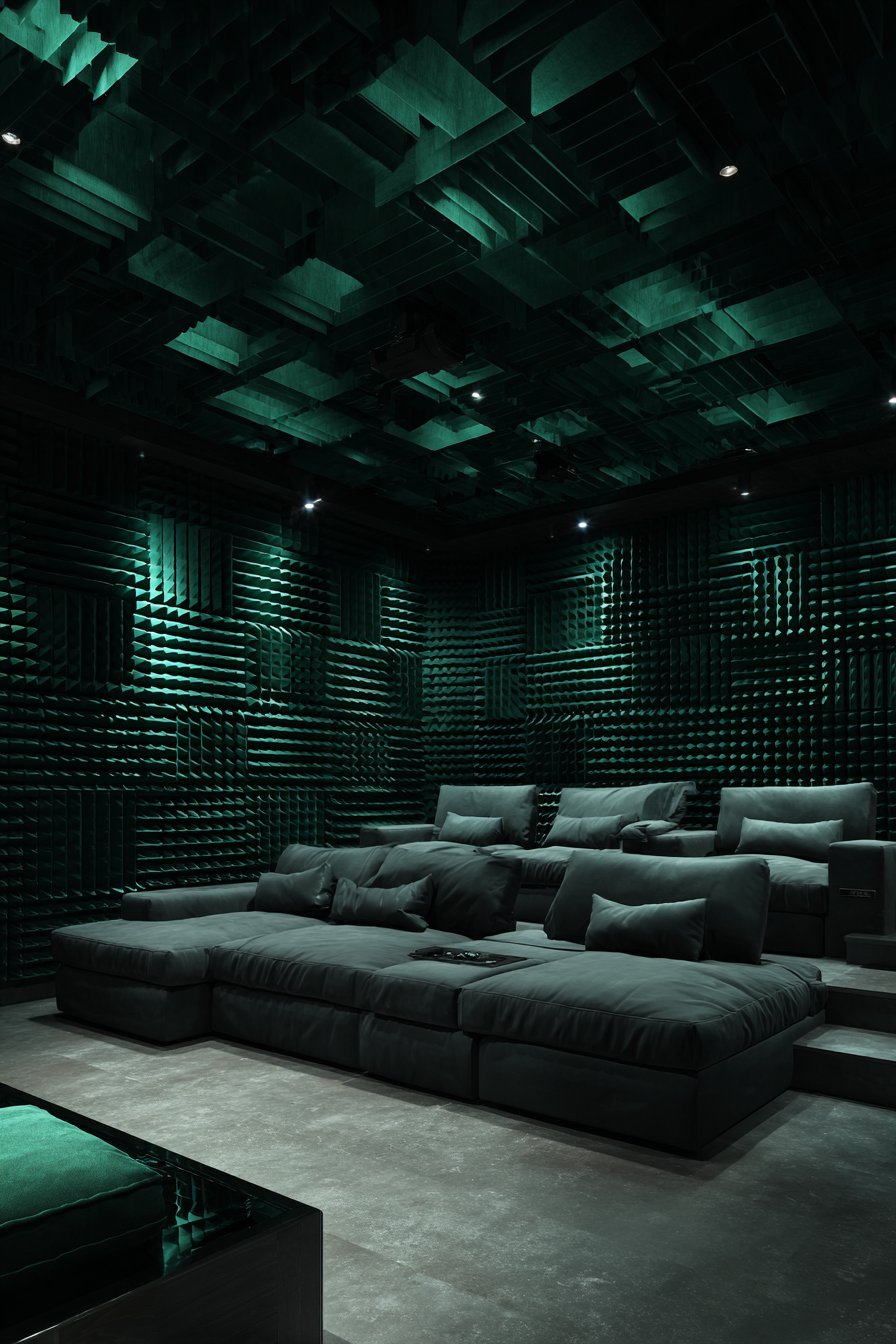
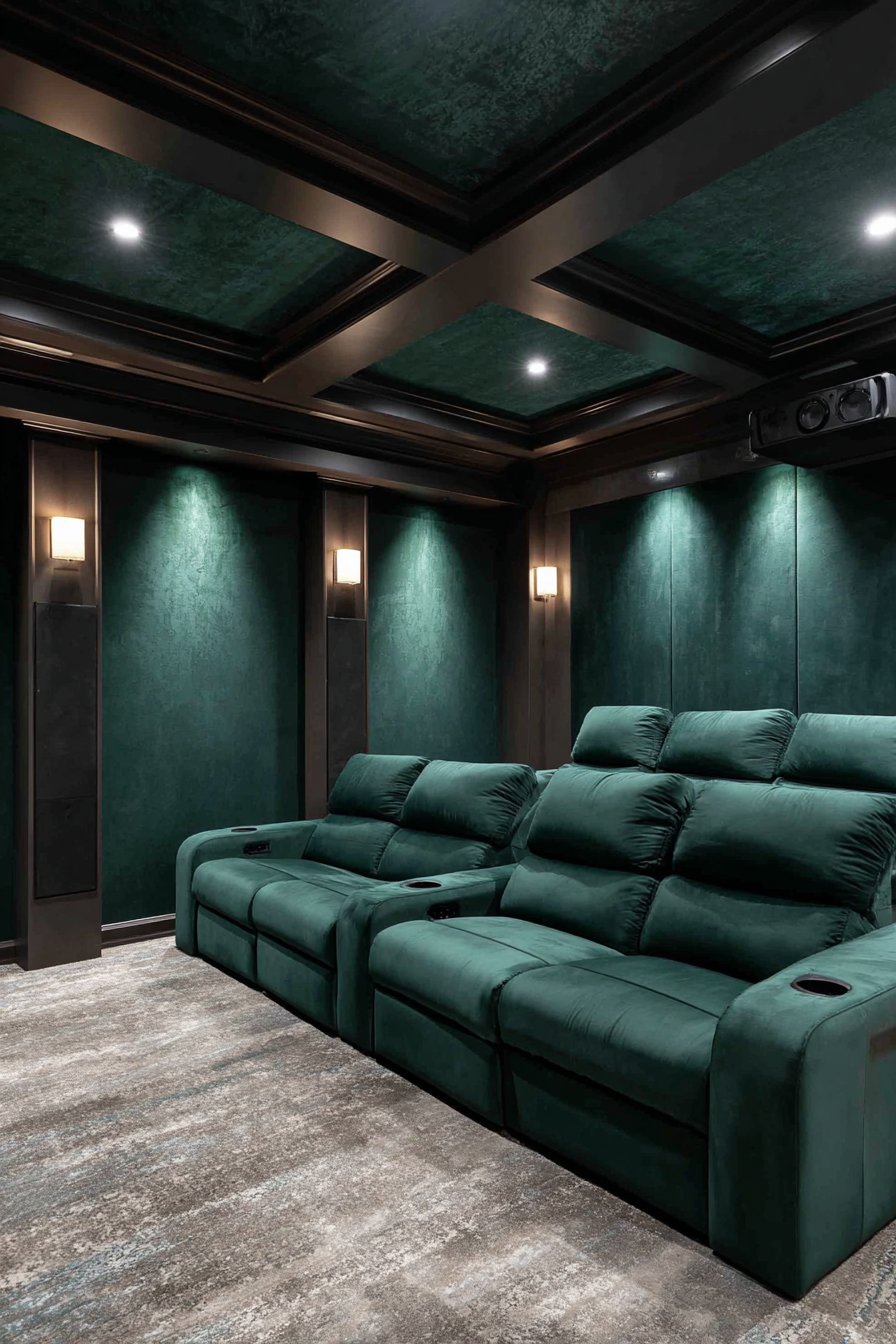
Dedicated media rooms require specific design considerations including light control, sound management, and viewing comfort—all areas where dark green living room ideas excel. This design features dark green acoustic panels creating both visual interest and sound absorption, their strategic placement dampening echo and improving audio quality for movie and music enjoyment. The panels’ geometric arrangement adds architectural dimension while their sound-absorbing properties serve practical function, demonstrating how aesthetic and performance requirements need not conflict.
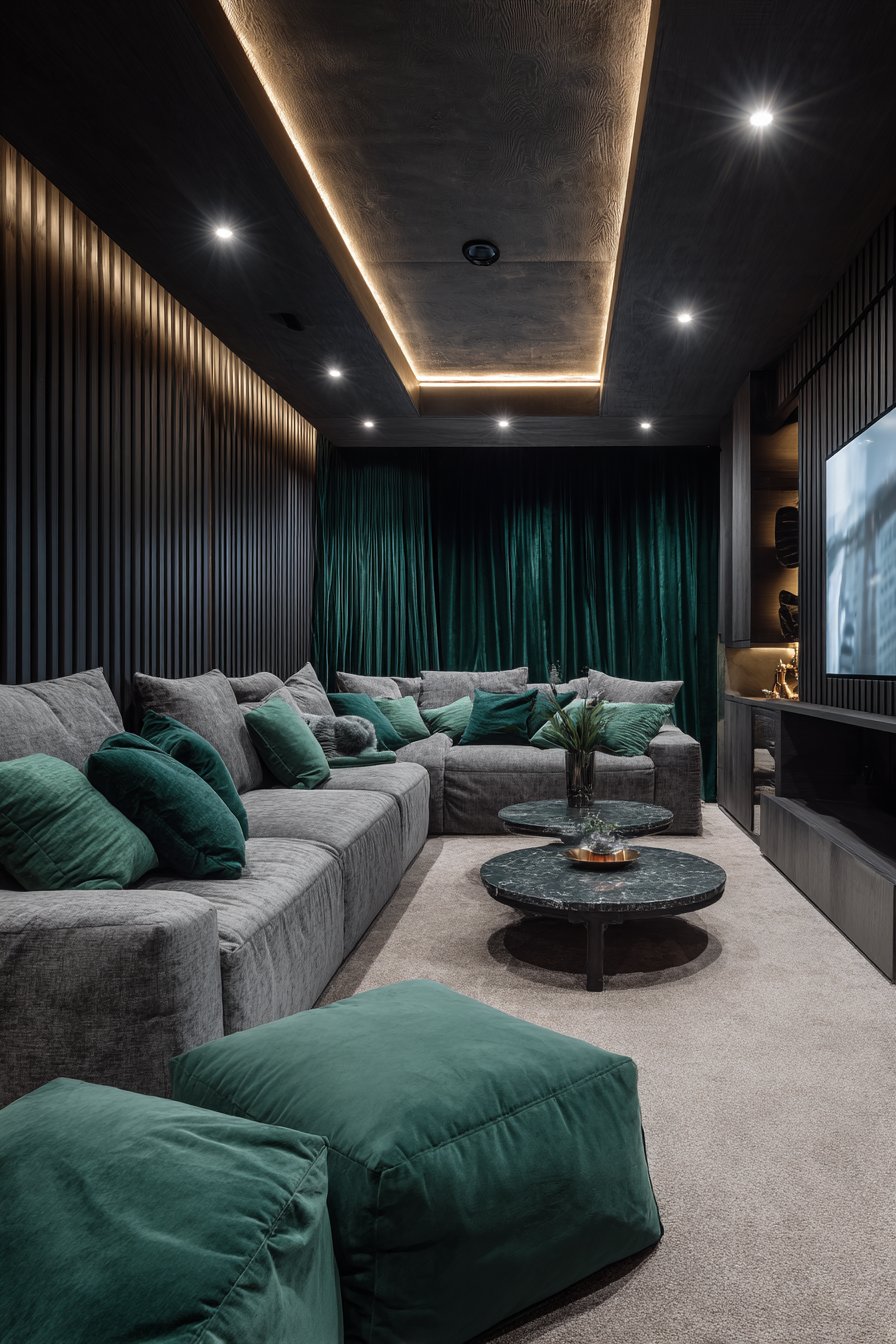
Plush reclining seating in complementary grey faces the large screen, providing movie-theater comfort in residential setting. The grey upholstery prevents the space from feeling monochromatic while its soft texture invites extended viewing sessions. Reclining mechanisms allow viewers to find their optimal comfort position, whether sitting upright for gaming or fully reclined for movie marathons. The substantial padding and supportive construction ensure the seating remains comfortable even during long viewing sessions.
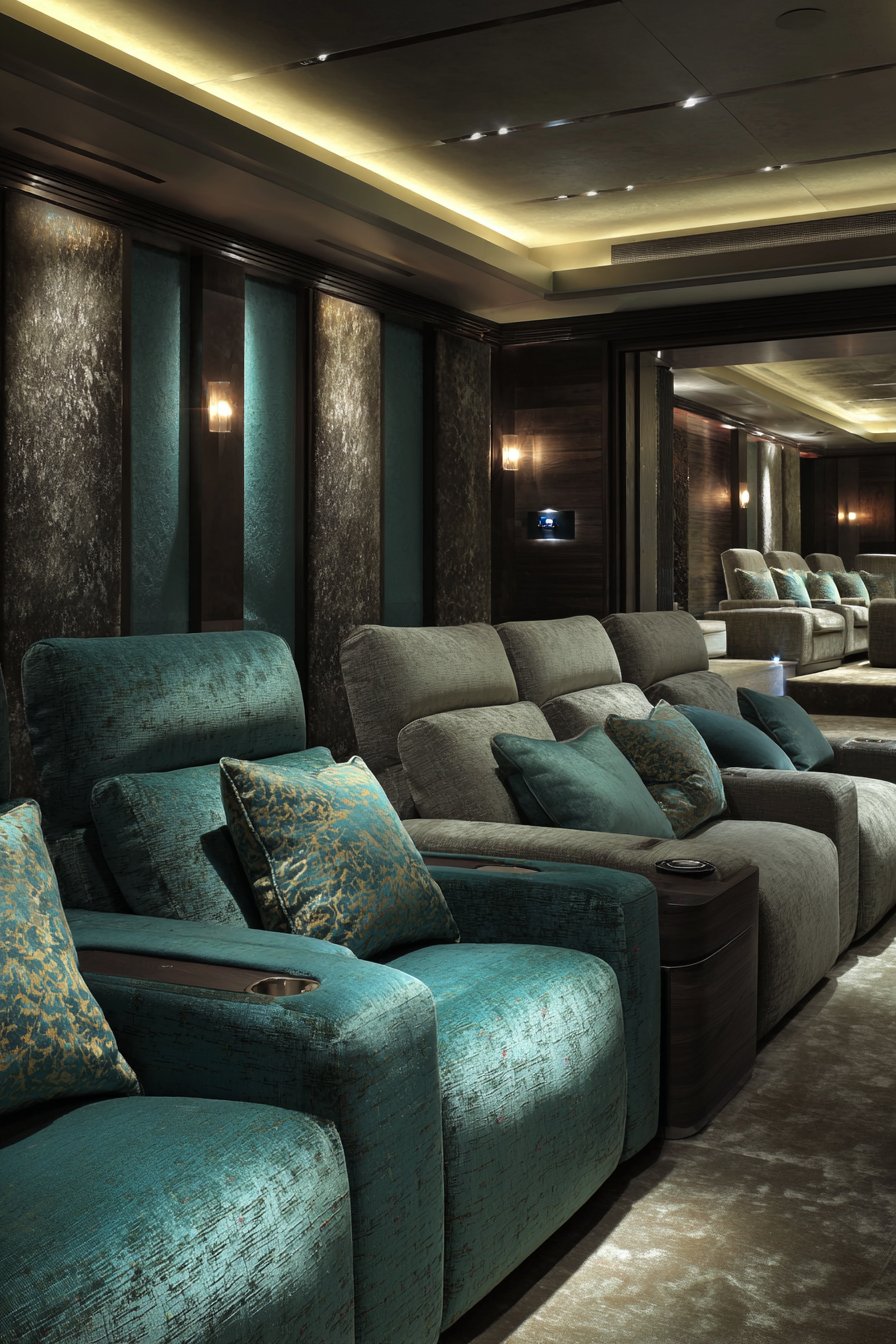
Recessed lighting with dimmer controls sets the mood for different activities—bright for gaming and casual TV watching, dimmed to near-darkness for cinematic movie experiences. This flexible lighting system proves essential in media rooms where appropriate ambient light levels change dramatically based on content and personal preference. The dark green acoustic panels remain visible even in low light, their textured surfaces catching and reflecting the minimal available illumination to prevent the room from feeling completely black and void-like during movie viewing.
Key Design Tips: Install acoustic panels strategically at first reflection points where sound waves bounce between speakers and listeners. Choose recliners with quiet mechanisms that won’t disturb viewing experience when adjusted. Install dimmers on all lighting circuits to allow precise control over ambient light levels. Position screen at appropriate height with center approximately eye-level when seated for optimal viewing comfort. Include USB charging ports in seating for device charging without leaving seats. Choose dark green in matte finish for acoustic panels to minimize light reflection on screen during viewing. Consider blackout curtains or shades to completely control natural light during daytime viewing.
17. Organic Modern with Botanical Elements
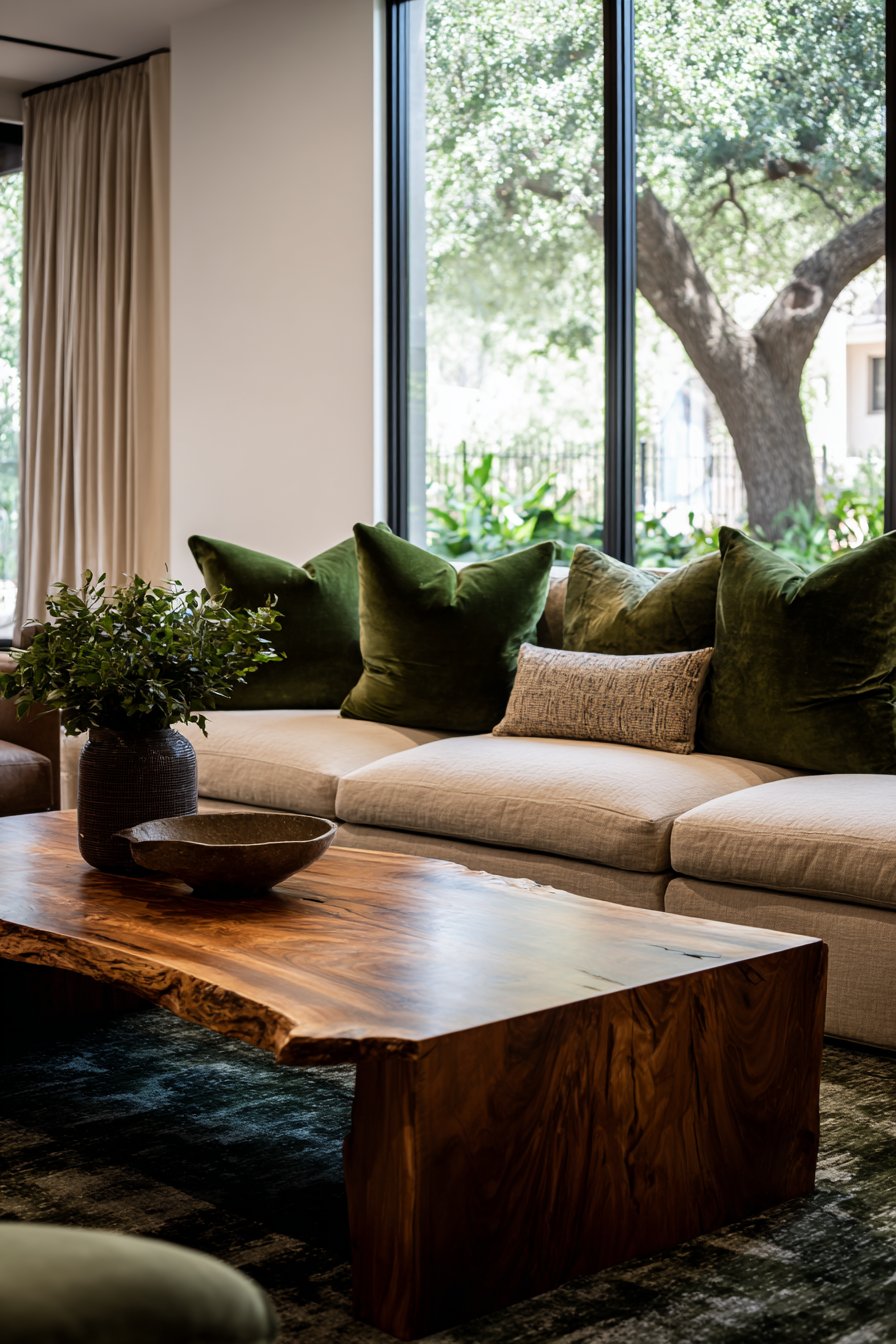
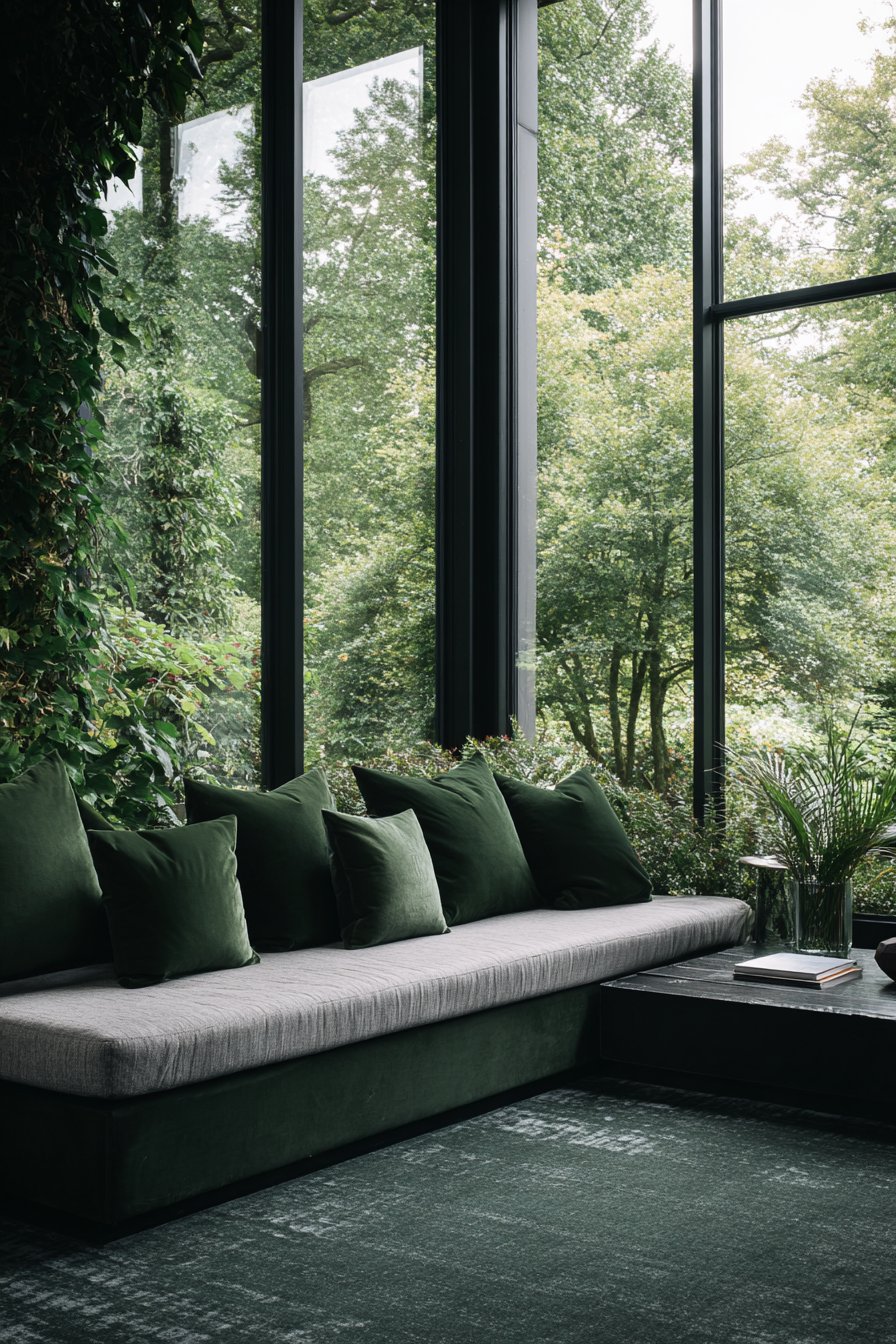
Organic modern design celebrates natural materials, botanical elements, and clean contemporary lines—an aesthetic perfectly suited to dark green living room ideas. This approach features a live edge wood coffee table atop a dark green area rug with subtle botanical pattern, immediately establishing the natural theme. The coffee table’s irregular edge preserves the tree’s original form, creating organic sculptural presence that contrasts beautifully with the room’s rectilinear elements. The wood’s natural grain patterns, color variations, and possible knots or burls add visual interest and connect the interior to the natural world.
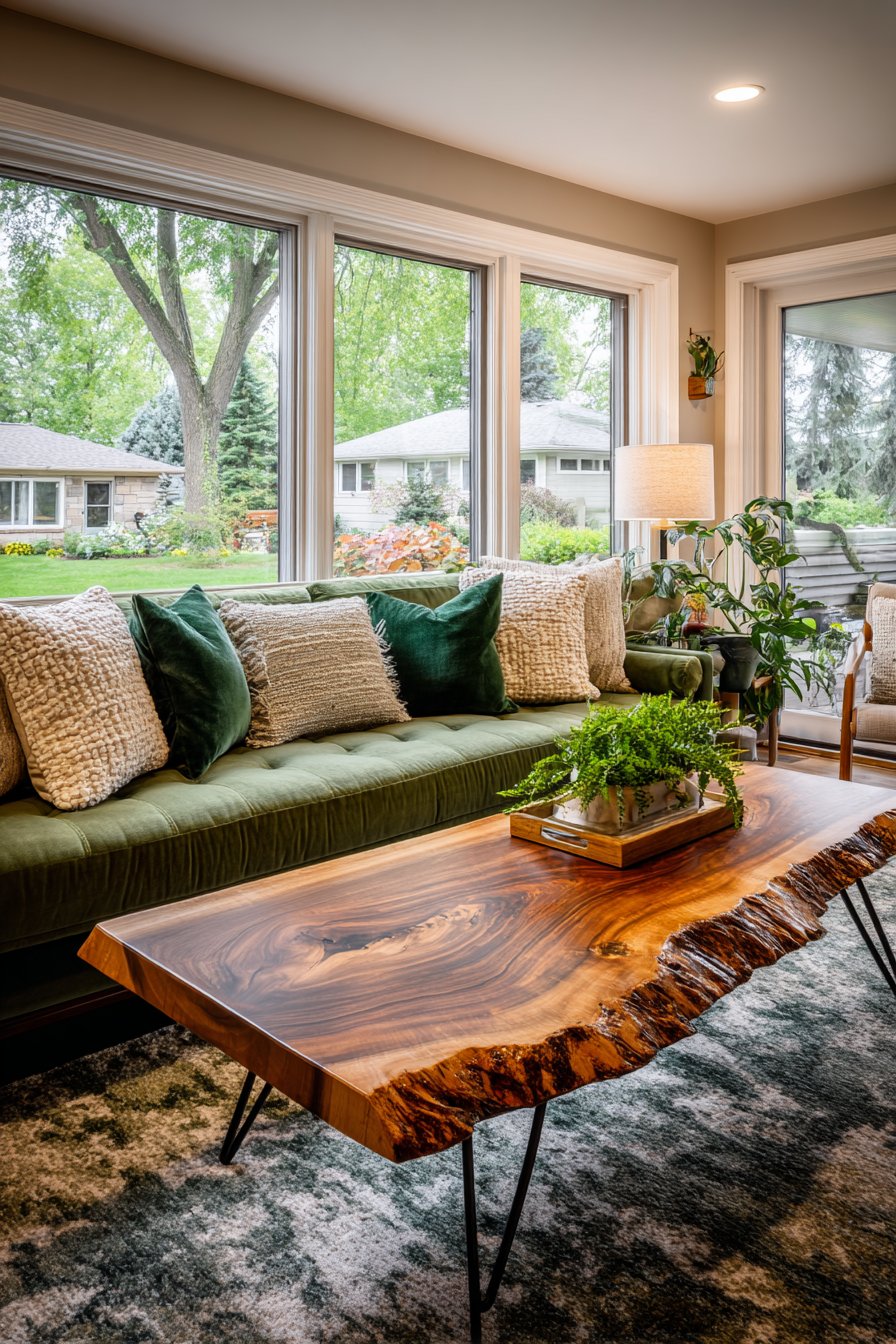
The neutral sofa provides a calm backdrop for an abundance of green velvet and linen pillows in varying shades, creating a layered botanical palette that moves from deep forest through sage to chartreuse. This tonal variety within the green family adds dimensional richness while maintaining color harmony. The mix of velvet and linen textures engages multiple senses while the varied pillow sizes create casual, inviting arrangement.
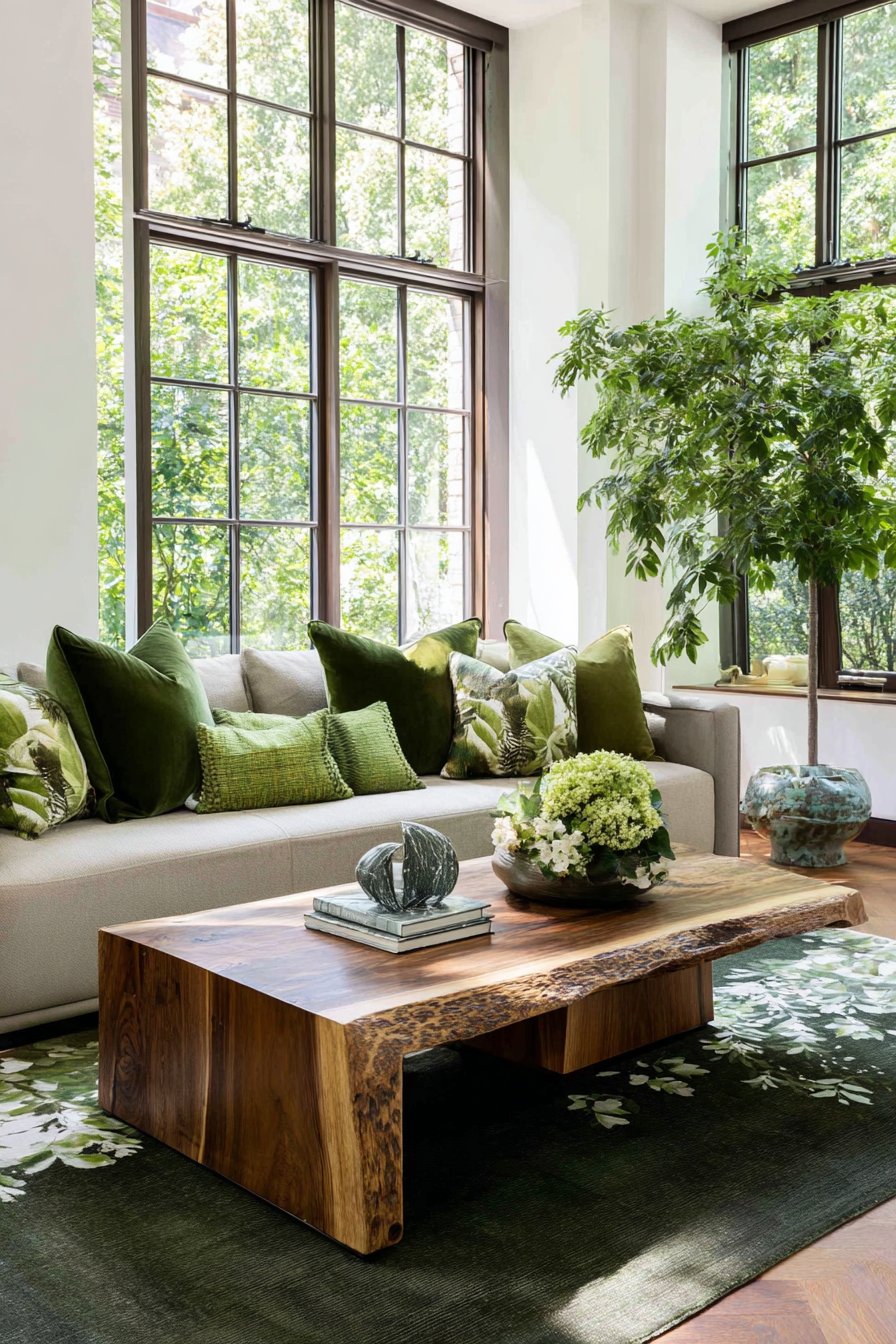
Large windows framing garden views prove essential to this design’s success, literally connecting the dark green interior palette to the verdant landscape beyond. This visual continuity between inside and outside makes the living room feel like an extension of the garden rather than a space separated from nature. During daytime, the garden views become living artwork, their colors and movement adding ever-changing natural decoration. The natural lighting flooding through these windows reveals the depth and complexity of the various green tones, preventing them from appearing flat or one-dimensional.
Key Design Tips: Choose live edge furniture pieces from sustainably harvested wood with interesting grain patterns and natural edge irregularities. Layer multiple shades of green from deep forest through pale sage to create tonal richness within single color family. Position seating to maximize views of outdoor greenery to reinforce interior-exterior connection. Include at least 5-7 substantial indoor plants in varying sizes to strengthen botanical theme. Select area rugs with subtle botanical patterns rather than bold graphics for sophisticated interpretation of natural motifs. Use natural fiber fabrics like linen, cotton, and wool alongside synthetics for authentic organic feeling. Install window treatments that can completely retract to maximize garden views during optimal daylight hours.
18. Traditional Formal Dark Green Parlor
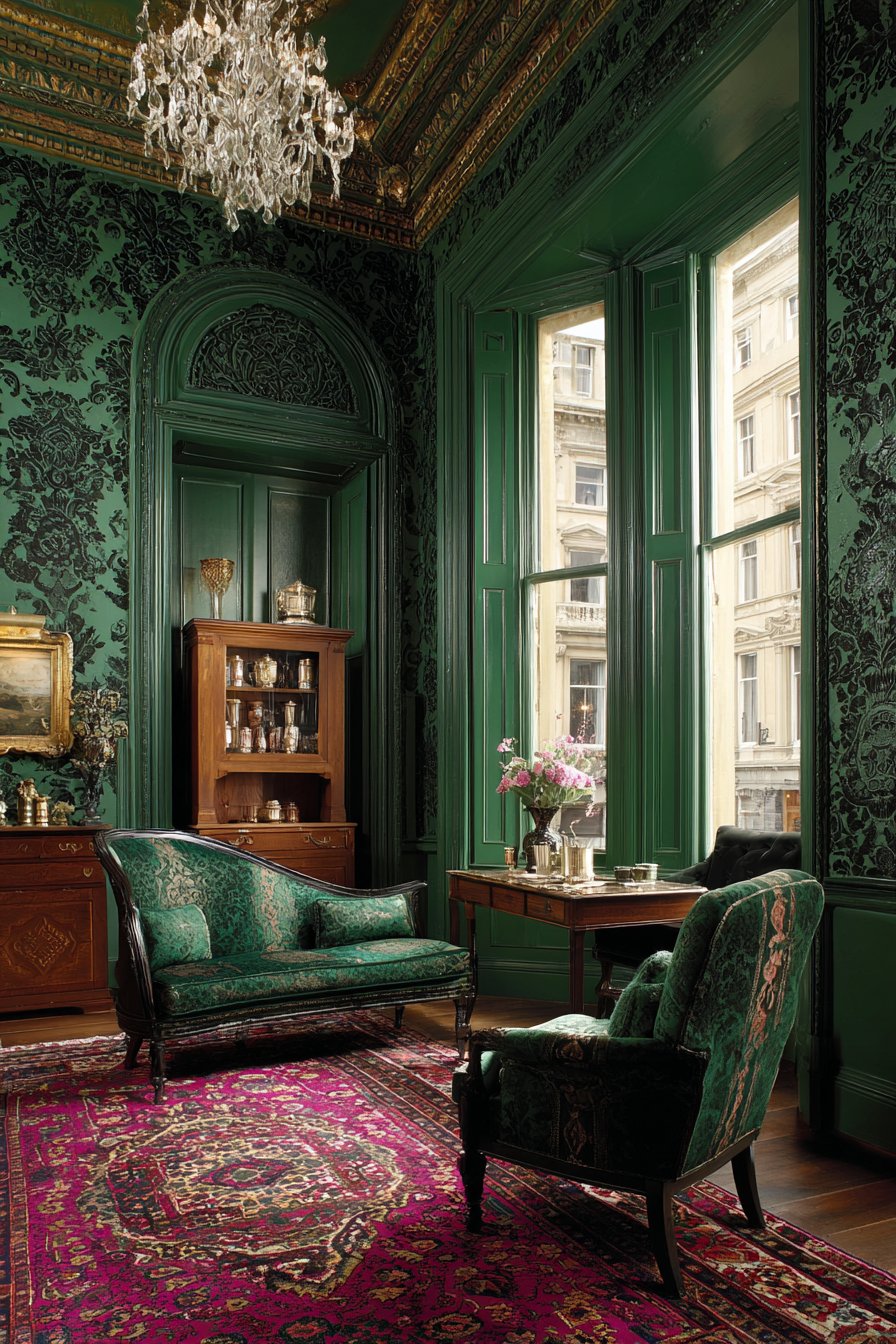
Traditional formal parlors celebrate classical design principles including symmetry, quality materials, and refined ornamentation—all enhanced by rich dark green color palettes. This design showcases traditional dark green damask wallpaper with its raised pattern creating textural dimension, the damask’s sophisticated botanical motifs adding visual interest without overwhelming the space. Matching upholstered furniture including a camelback sofa and bergère chairs demonstrates the symmetrical arrangements characteristic of formal traditional design, their complementary forms creating visual harmony.
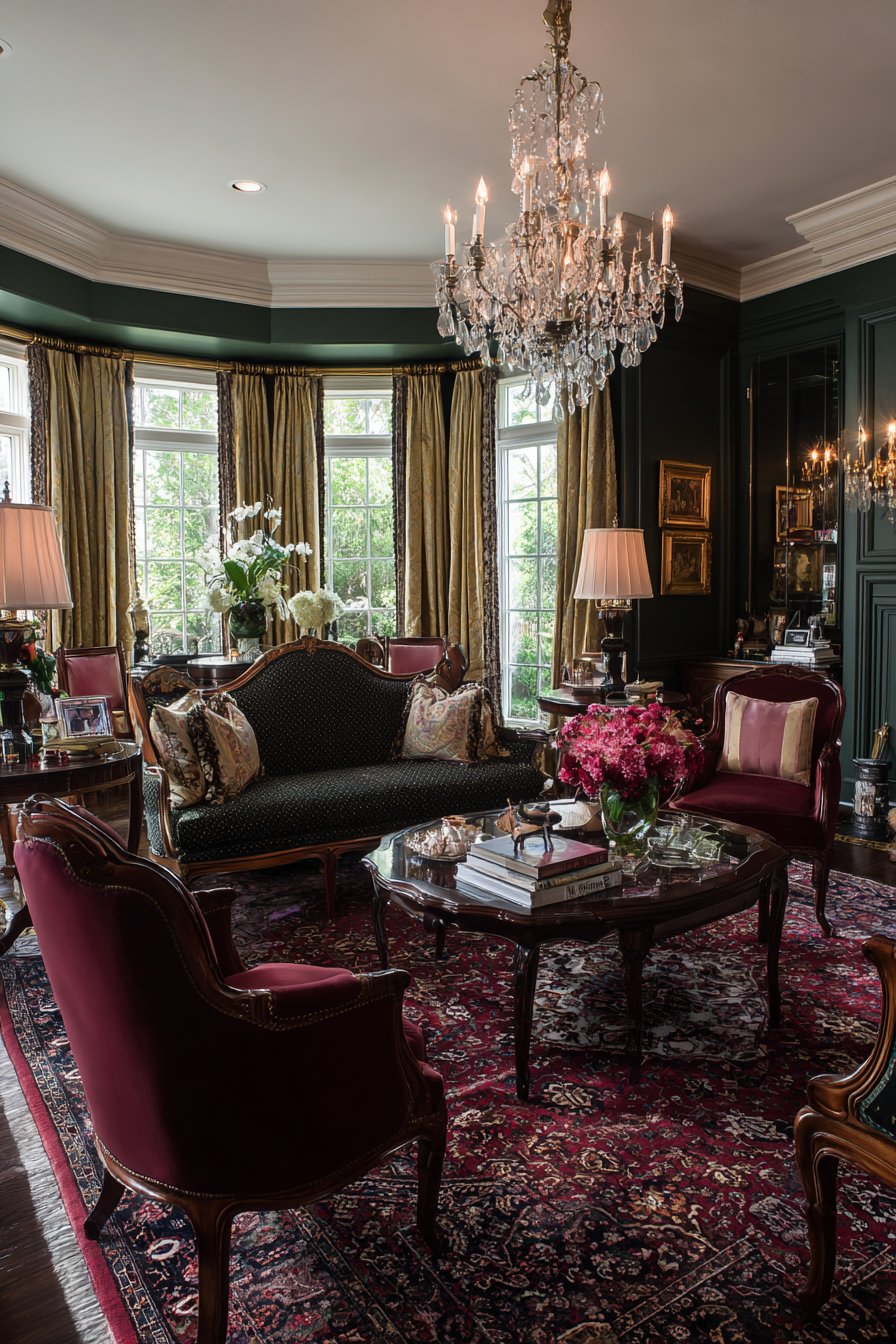
Antique Persian rugs in burgundy and green anchor the space while their intricate patterns add another layer of visual complexity. These investment-quality rugs bring history and craftsmanship into the room, their naturally dyed wools displaying the subtle color variations that distinguish handmade from manufactured pieces. The burgundy tones in the rugs provide warm counterpoint to the cool greens, creating a color relationship with deep historical roots in traditional interior design.
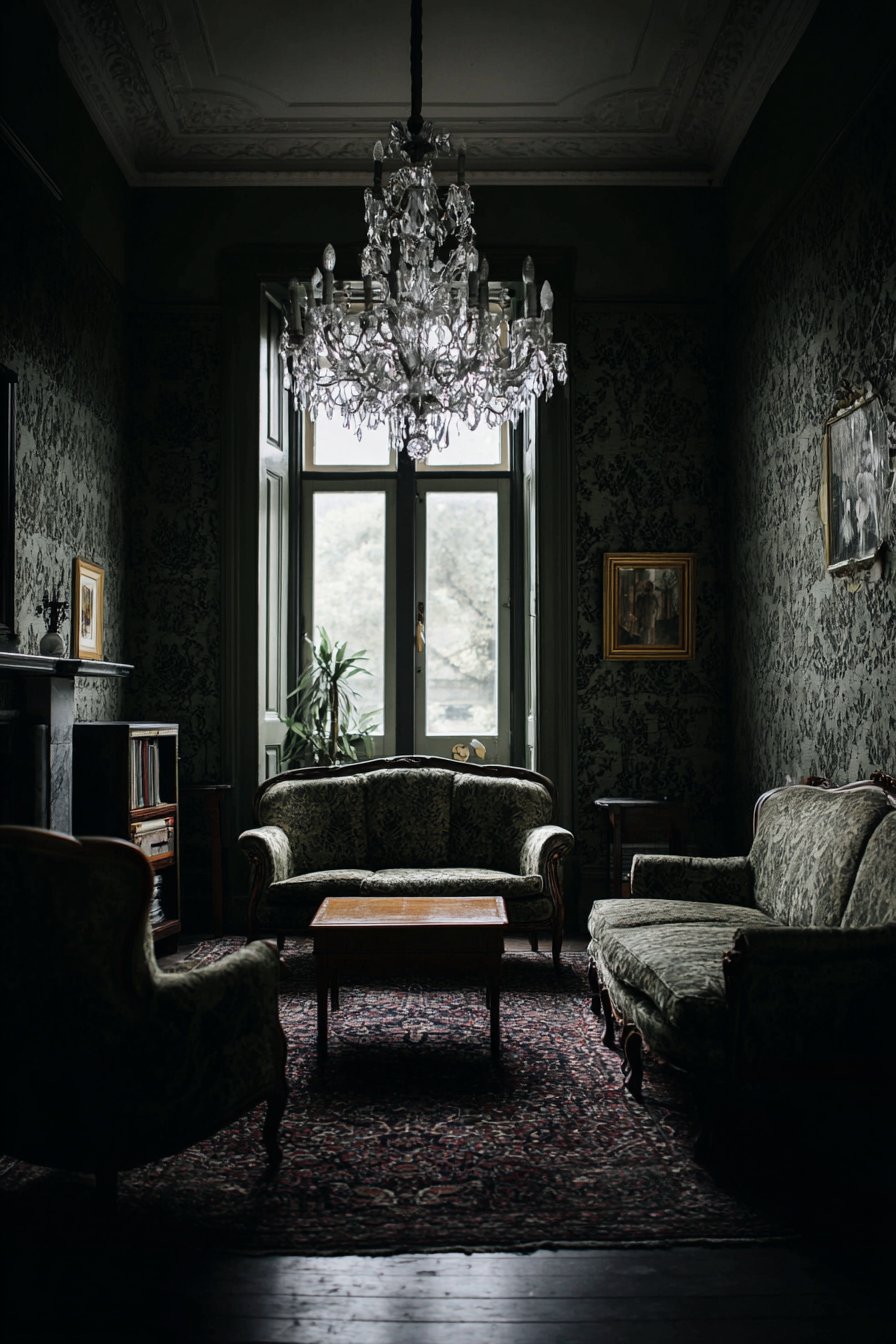
A crystal chandelier provides ambient lighting while its sparkling drops add glamour and formality appropriate to a parlor setting. The chandelier’s placement, typically centered in the room or over a primary seating arrangement, emphasizes symmetry and creates a focal point that draws the eye upward. Tall windows with elaborate treatments allow natural light to filter into the space, their formal draperies adding vertical emphasis and architectural presence.
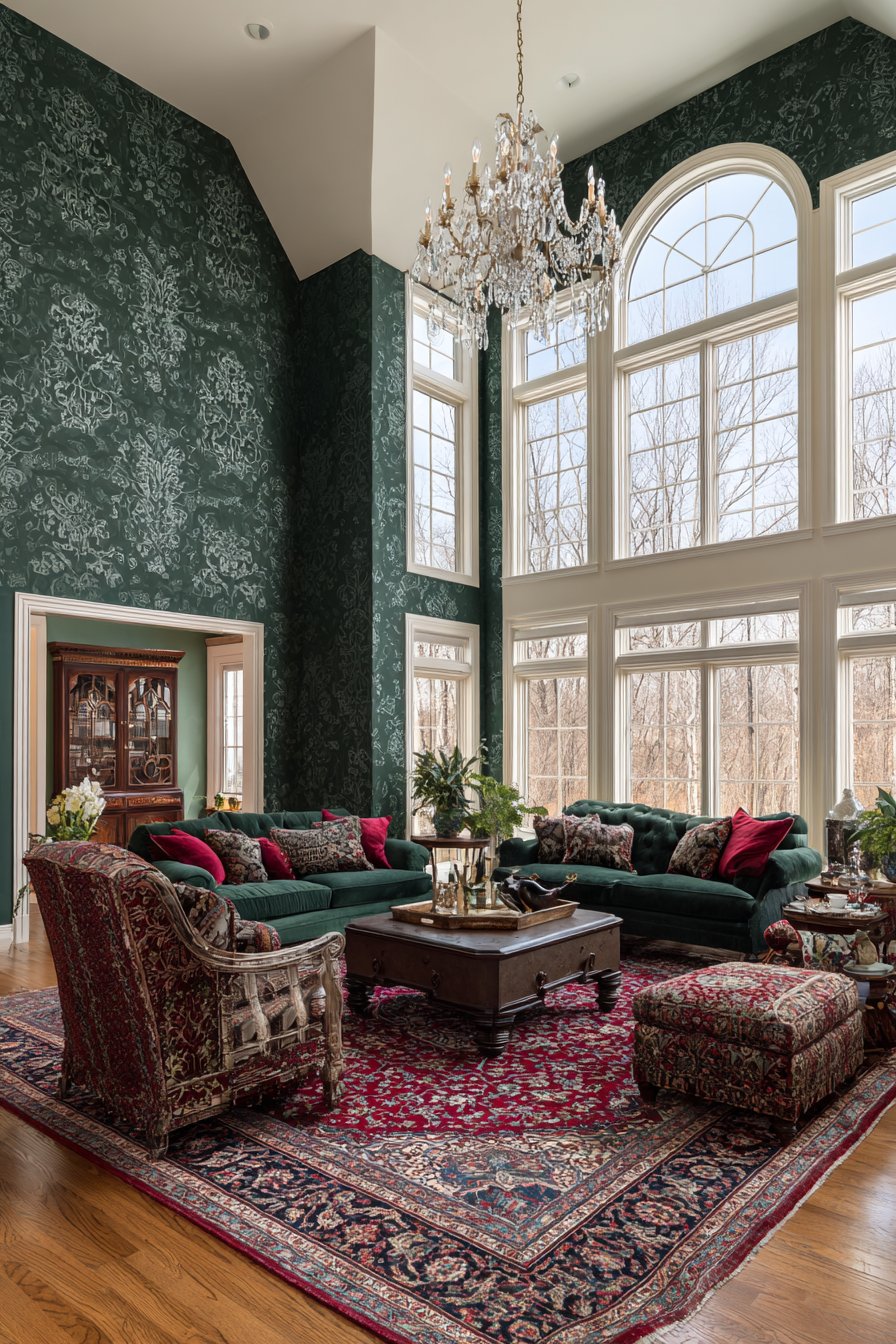
Key Design Tips: Select wallpaper with subtle sheen in damask or other traditional patterns to add dimension and light reflection. Arrange furniture symmetrically around room’s central axis to achieve formal balance. Choose upholstered pieces with traditional silhouettes like camelback sofas, wingbacks, and bergère chairs. Invest in quality area rugs with traditional patterns in complementary colors. Hang crystal chandeliers with dimmer switches to control formality level and light intensity. Include classical architectural elements like crown molding, ceiling medallions, and elaborate window treatments. Display collections like porcelain, silver, or books in symmetrical arrangements on matching tables or shelving.
19. Industrial Loft with Green Brick Feature
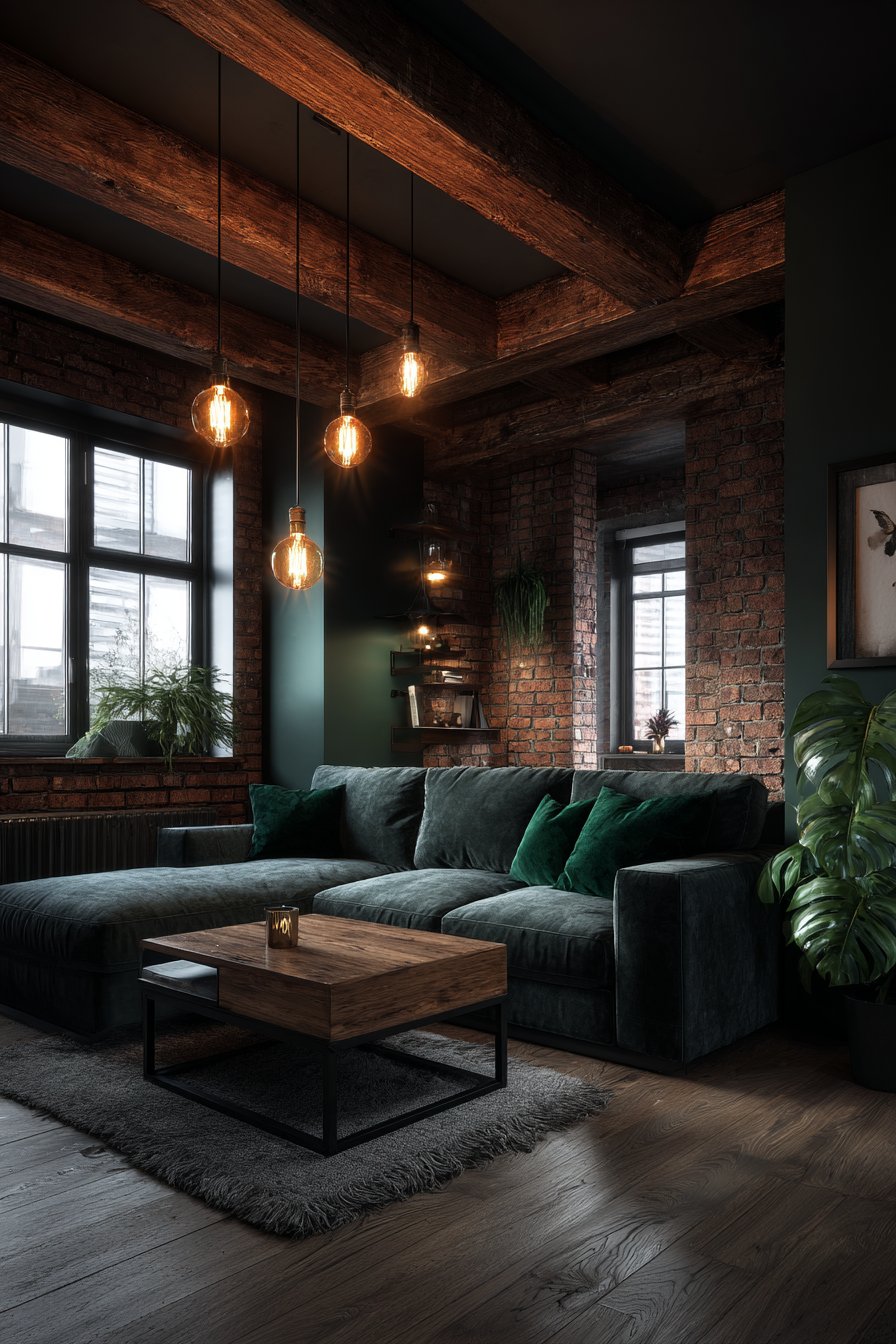
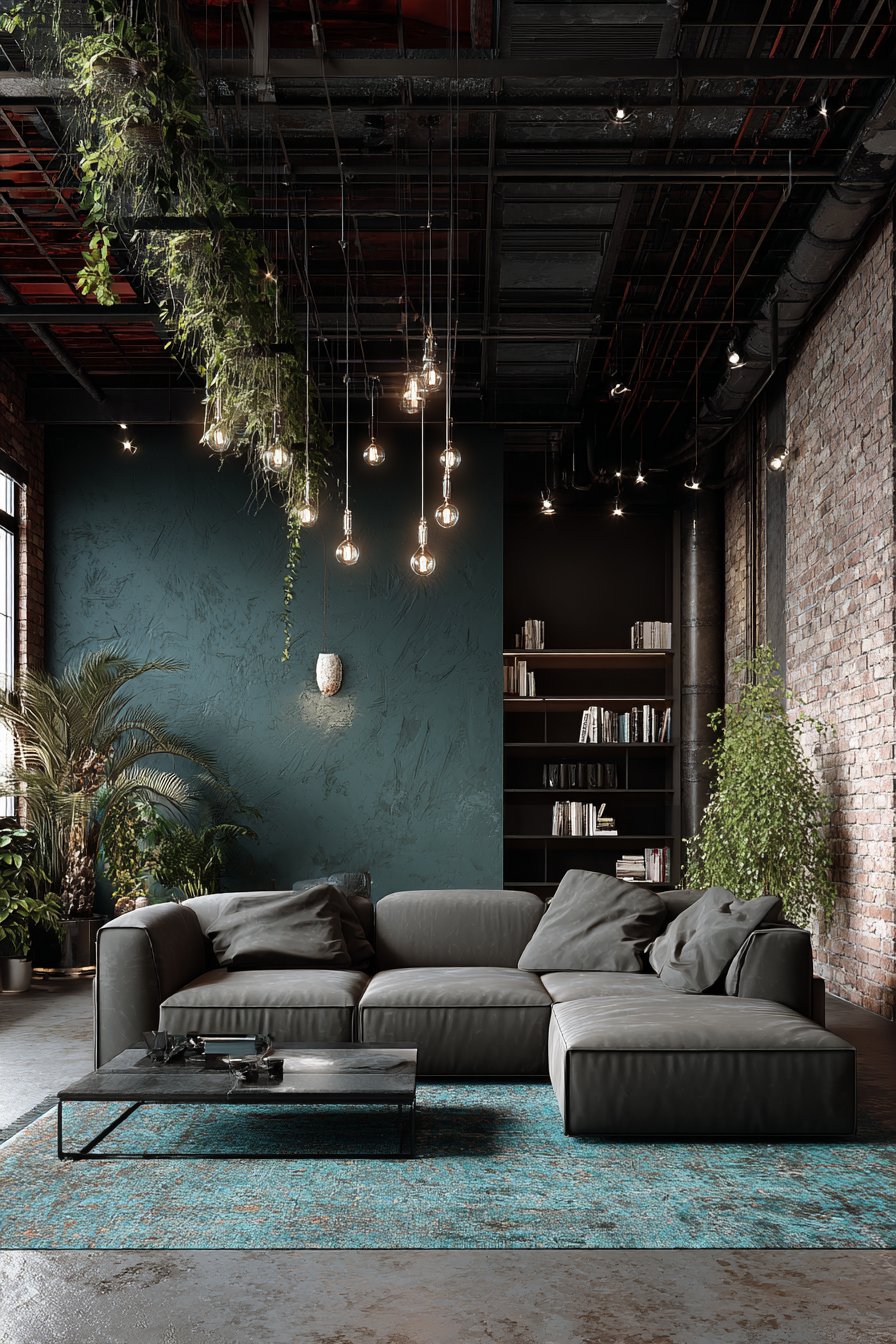
Industrial design celebrates raw materials, exposed structure, and urban edge—qualities that gain unexpected sophistication when combined with dark green living room ideas. This approach transforms exposed brick by painting it deep forest green, creating a feature wall that maintains industrial texture while introducing sophisticated color. The painted brick retains its dimensional quality, shadows between individual bricks creating depth and visual interest, while the deep green color elevates the raw material into refined design element.
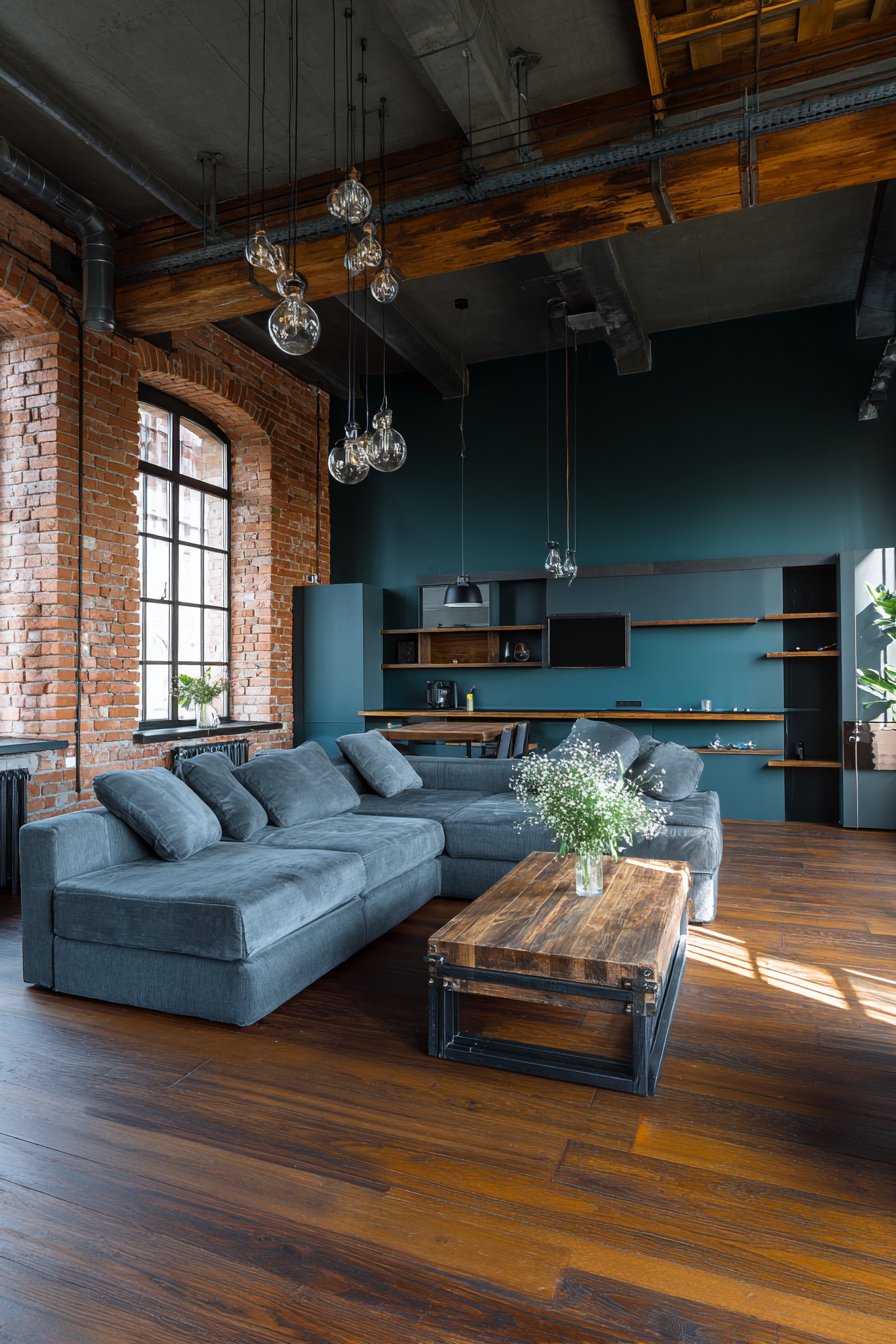
The modern grey sectional provides ample comfortable seating while its clean contemporary lines complement rather than compete with the industrial architecture. The neutral grey allows the green brick feature wall to command attention while offering visual rest from the bold color. Metal and glass coffee table continues the industrial material story, its transparent top maintaining openness while metal frame adds structural interest characteristic of industrial style.
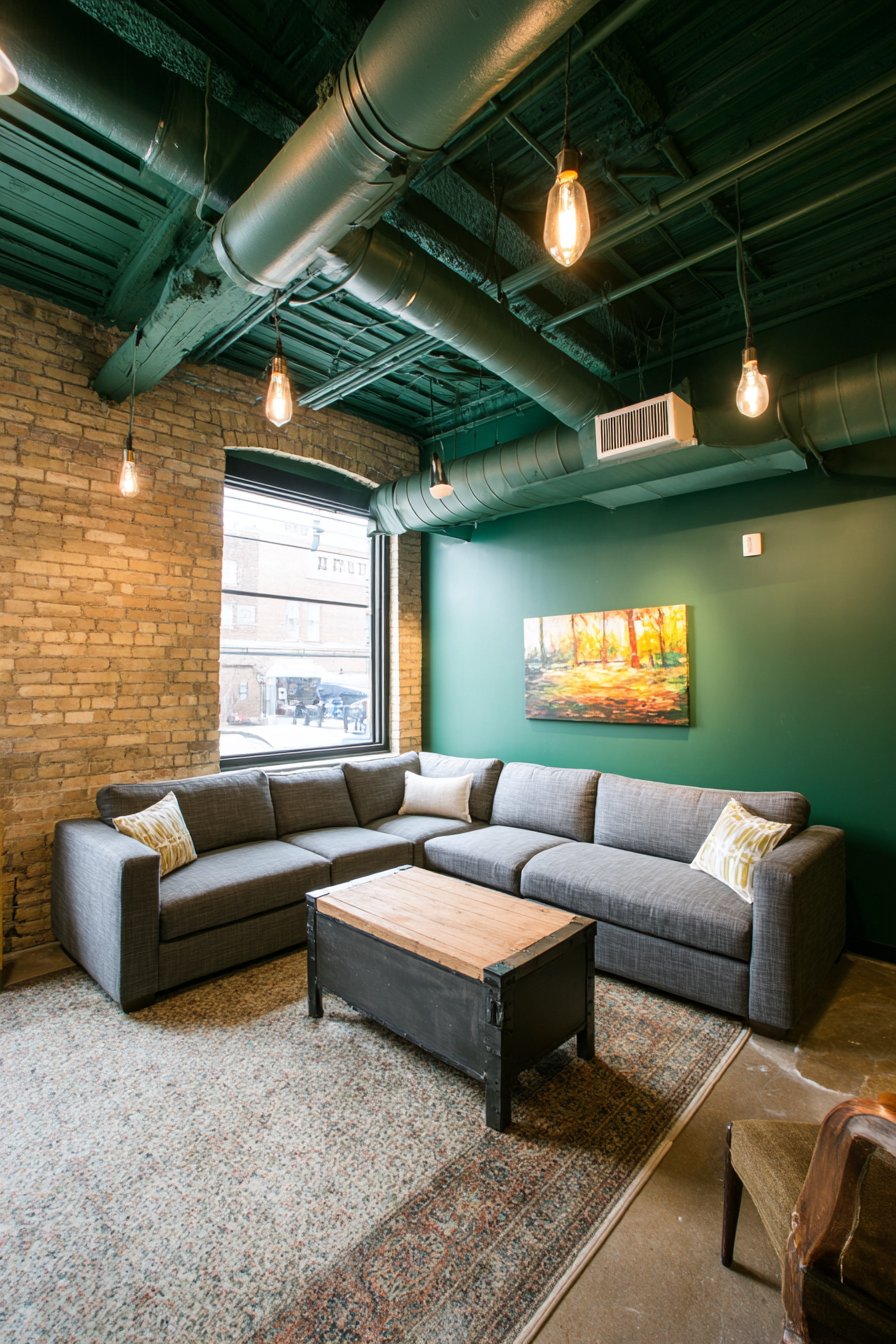
Edison bulb pendant lights provide atmospheric lighting while their visible filaments celebrate the beauty of functional elements—a core principle of industrial design. These fixtures create warm ambient glow while their exposed bulbs add sculptural interest. The combination of rough painted brick, smooth upholstery, transparent glass, and raw metal creates the material diversity that makes industrial spaces engaging rather than monotonous.
Key Design Tips: Use high-quality masonry paint formulated specifically for brick to ensure proper adhesion and coverage. Clean brick thoroughly and apply bonding primer before painting to ensure lasting finish. Choose matte or flat paint finishes on brick to avoid shiny appearance that reads as inauthentic. Balance rough industrial materials with soft upholstered furniture for livability. Install exposed lighting with dimmers to control ambiance from bright functional to moody atmospheric. Include some polished elements like mirrors or glossy accessories to prevent space from feeling too raw. Leave some architectural elements like ductwork or beams exposed to maintain authentic industrial character.
20. Coastal-Inspired Dark Green Haven
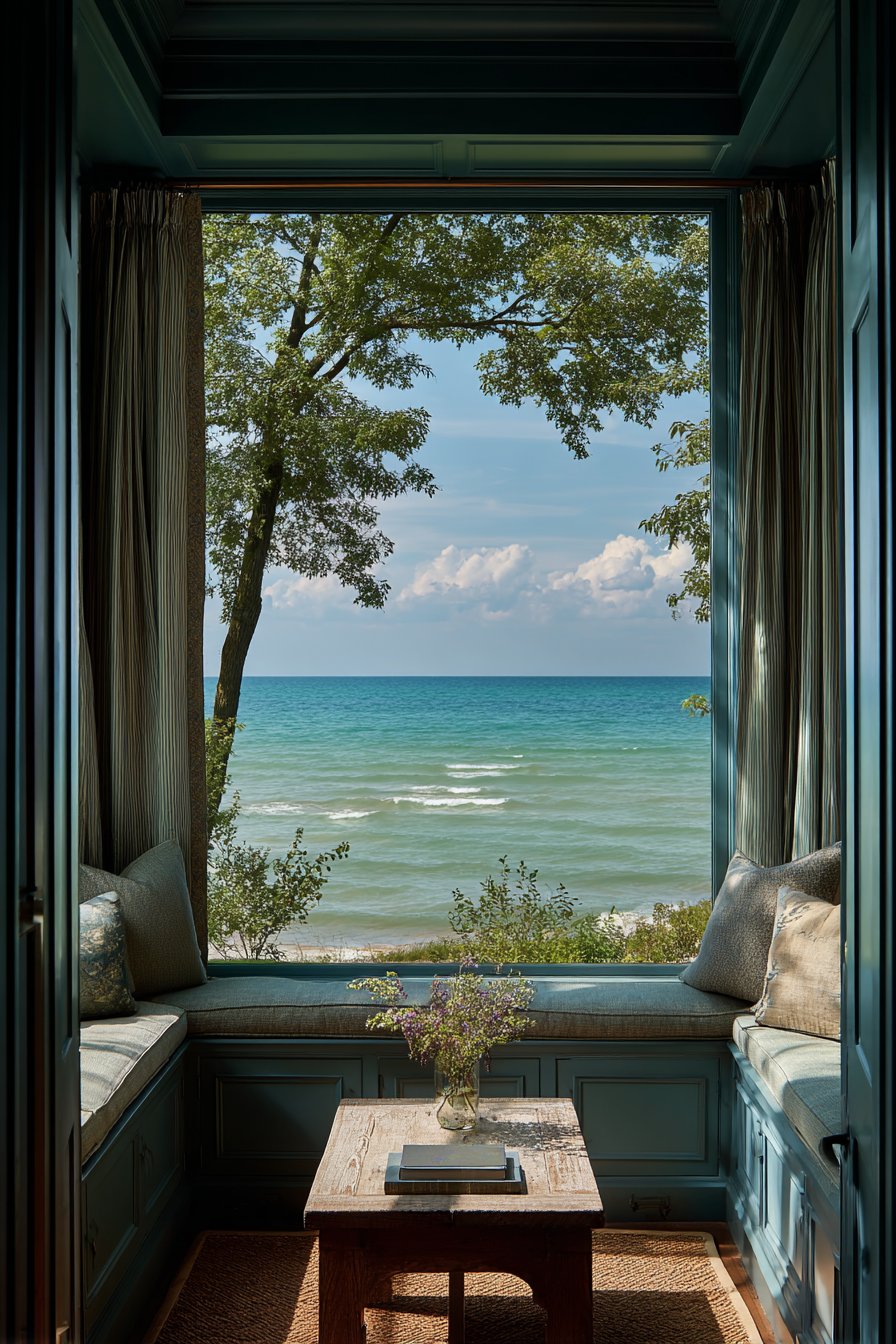
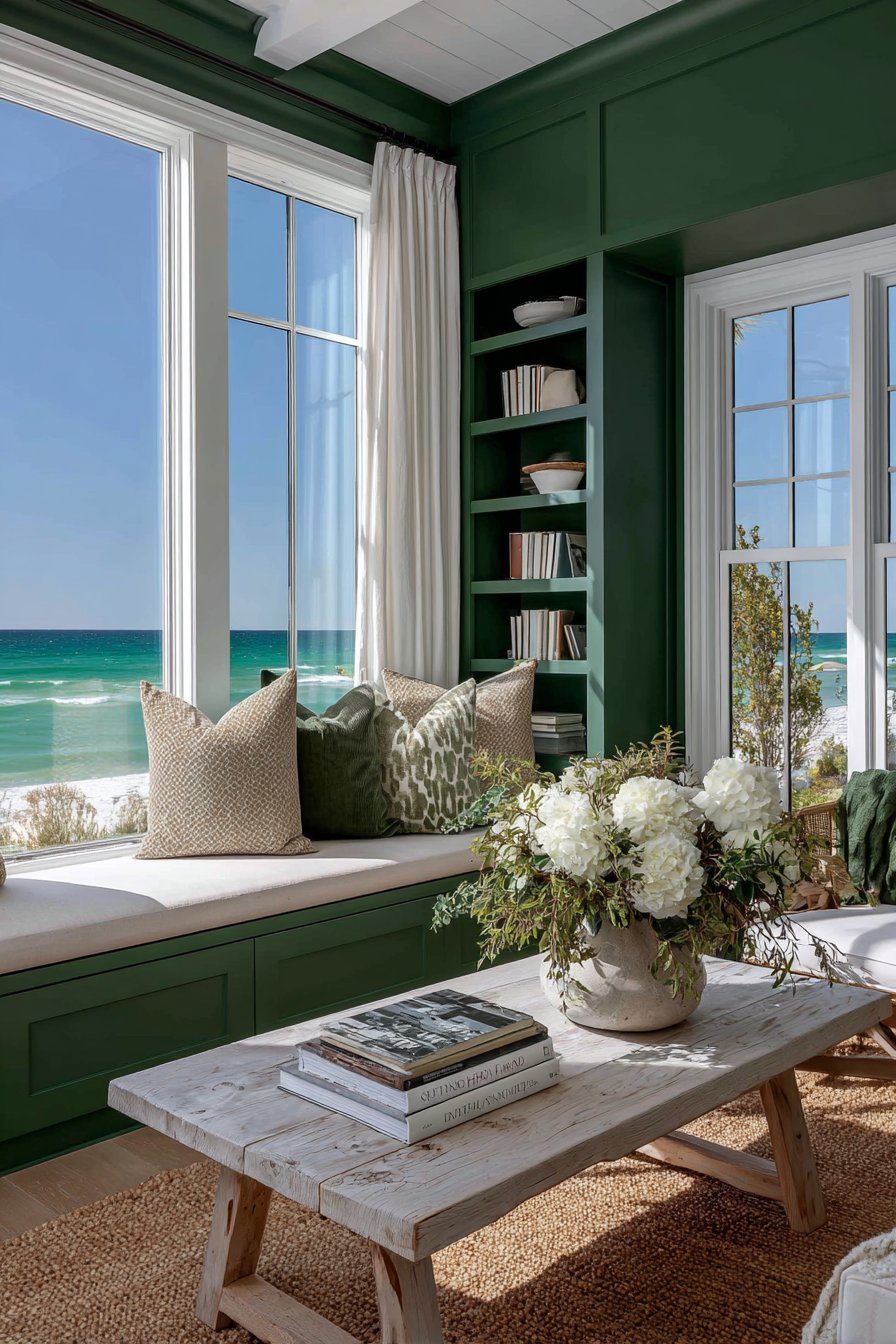
Coastal design typically emphasizes light, bright spaces, making dark green living room ideas seem contradictory—yet when executed thoughtfully, the combination creates sophisticated coastal interiors with depth and maturity. This approach features dark green painted built-in window seats flanking large windows with ocean views, the deep green providing dramatic framing for the water vistas beyond. The window seats offer comfortable perches for enjoying views while their built-in nature maximizes space efficiency and creates architectural presence.
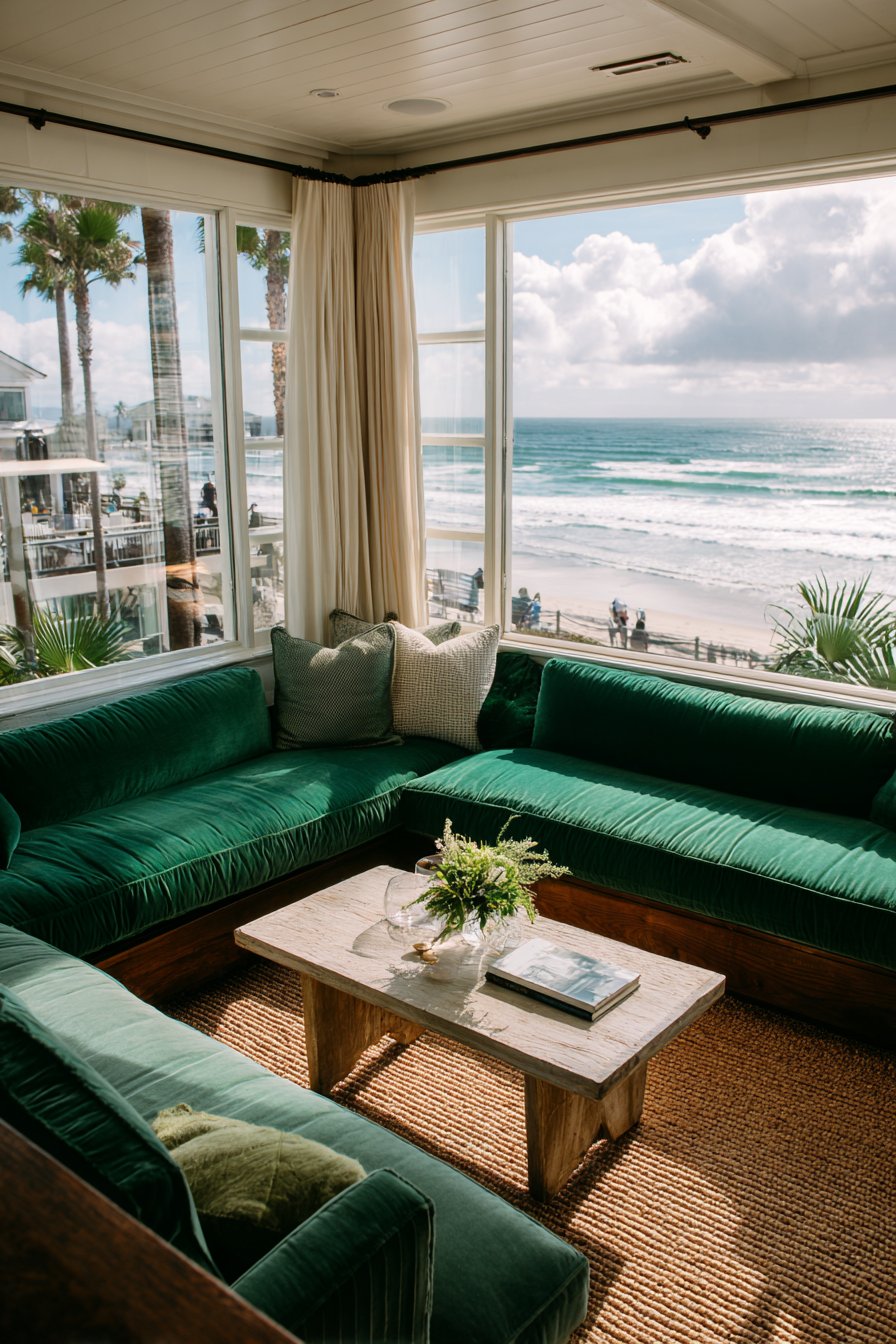
Natural linen curtains in soft white frame the ocean vista while their lightweight fabric allows them to move gently with sea breezes, adding kinetic element to the static interior. The curtains’ simple beauty aligns with coastal design’s emphasis on natural materials and understated elegance. Bleached wood coffee table and sisal rug maintain the coastal aesthetic through their natural materials and light neutral tones, providing textural contrast to the deep green while keeping the overall palette cohesive.
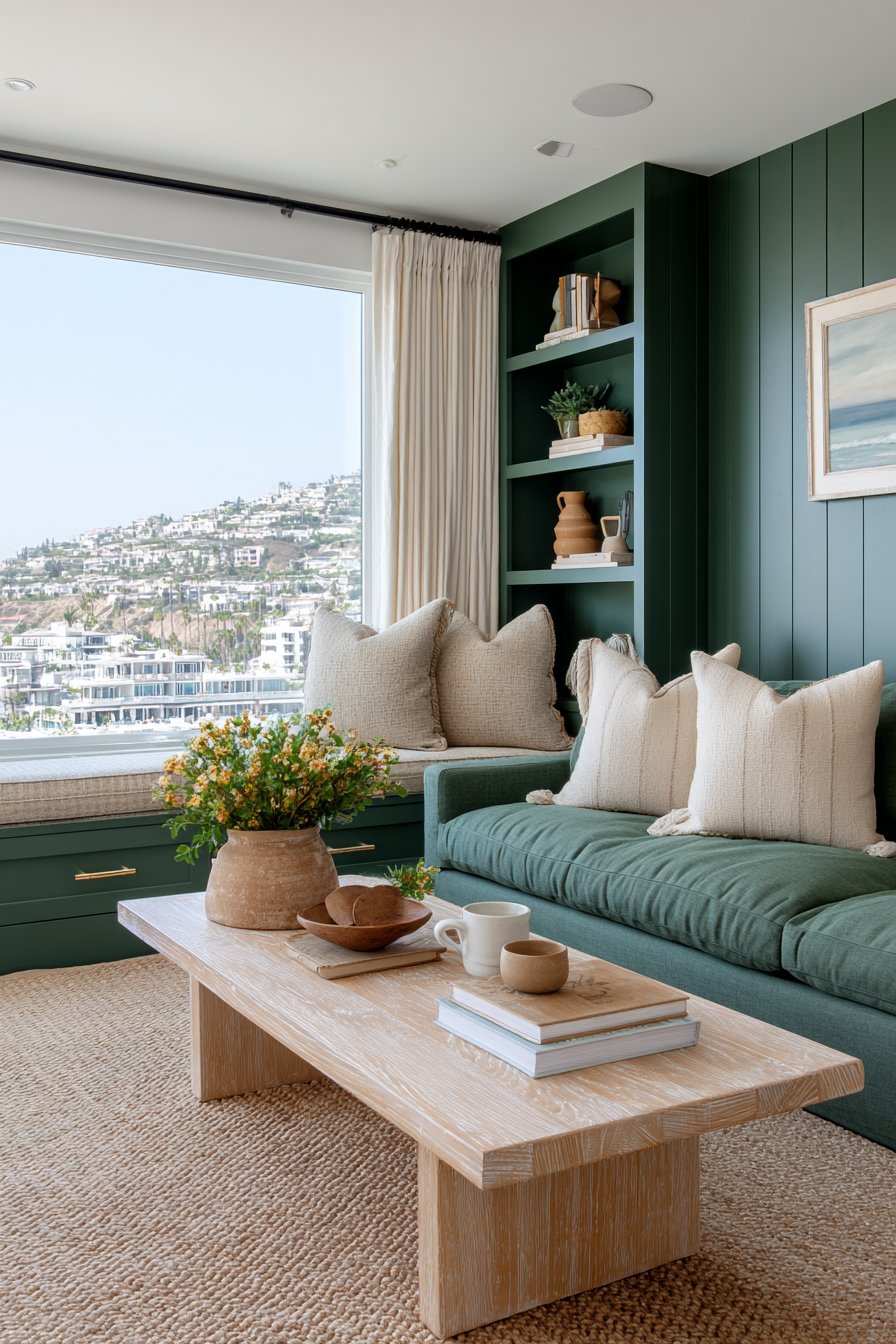
The abundant natural light pouring through the large windows proves essential to preventing the dark green from feeling too heavy in a coastal context. This light bounces off the water, creating reflected sparkle and movement that animates the entire space. The balance between deep green architectural elements and bright, airy surfaces demonstrates how seemingly opposing design principles can coexist when united by thoughtful planning and quality natural light.
Key Design Tips: Position built-in seating to maximize water views while maintaining comfortable scale proportions. Choose deep green in cooler tones with blue undertones to harmonize with ocean views. Use natural fiber textiles like linen and sisal to maintain coastal aesthetic’s emphasis on natural materials. Paint woodwork and trim in crisp white to create clean contrast with dark green elements. Include nautical elements subtly through rope details, maritime artwork, or ship-inspired lighting rather than obvious anchors and shells. Maximize natural light through large windows and minimal window treatments that can fully retract. Consider moisture-resistant paint formulas in coastal environments to combat humidity and salt air.
21. Maximalist Jewel-Toned Abundance
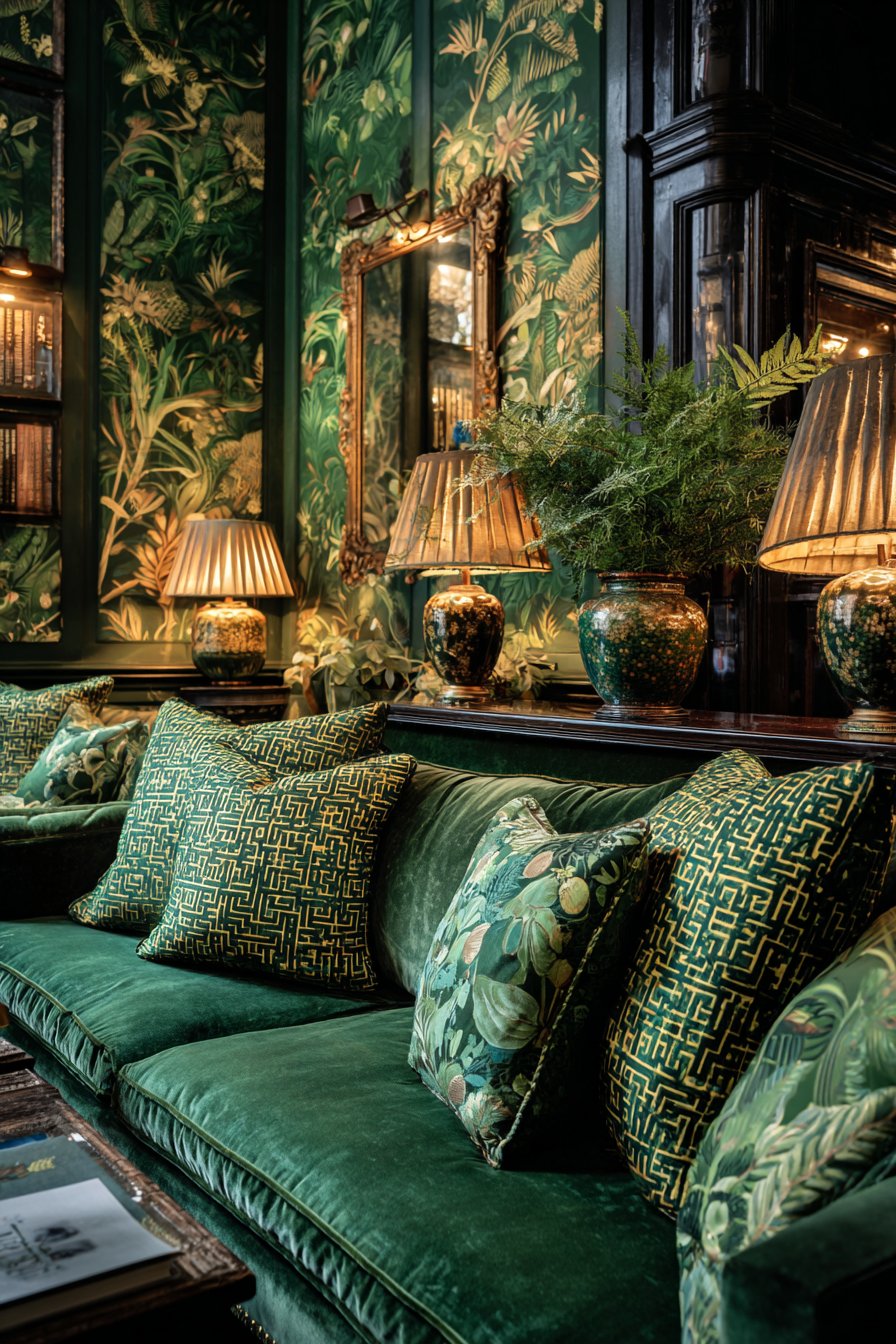
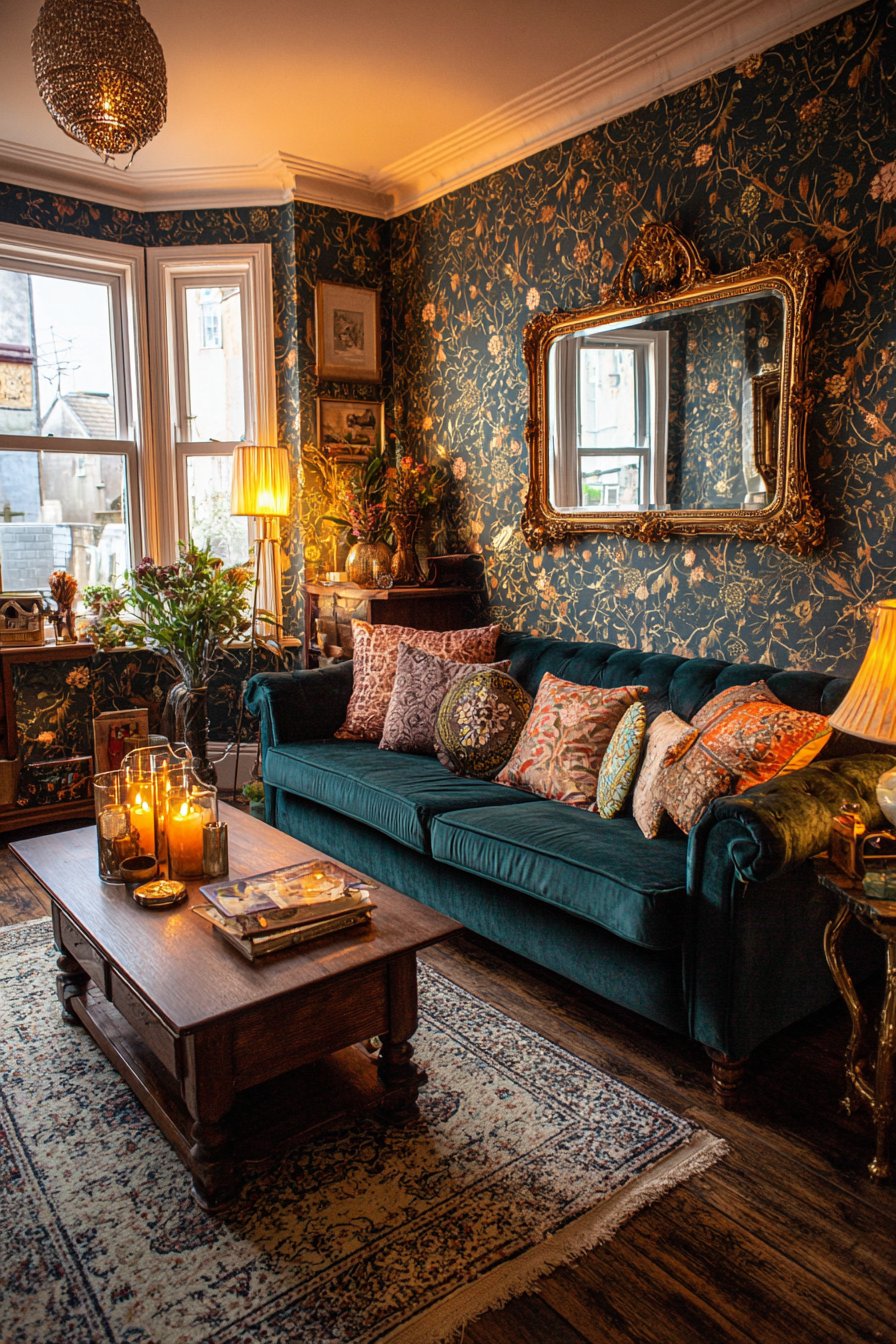
Maximalist design celebrates “more is more” philosophy, layering patterns, colors, and textures to create visually rich environments that reflect personal style boldly. This approach features a dark green velvet sofa as foundation, layered with patterned pillows in jewel tones including sapphire, ruby, and amethyst that complement rather than match the green. The sofa positions against wallpaper featuring large-scale botanical prints in deep green and gold, creating an immersive environment where walls and furniture work together to establish the room’s dramatic character.
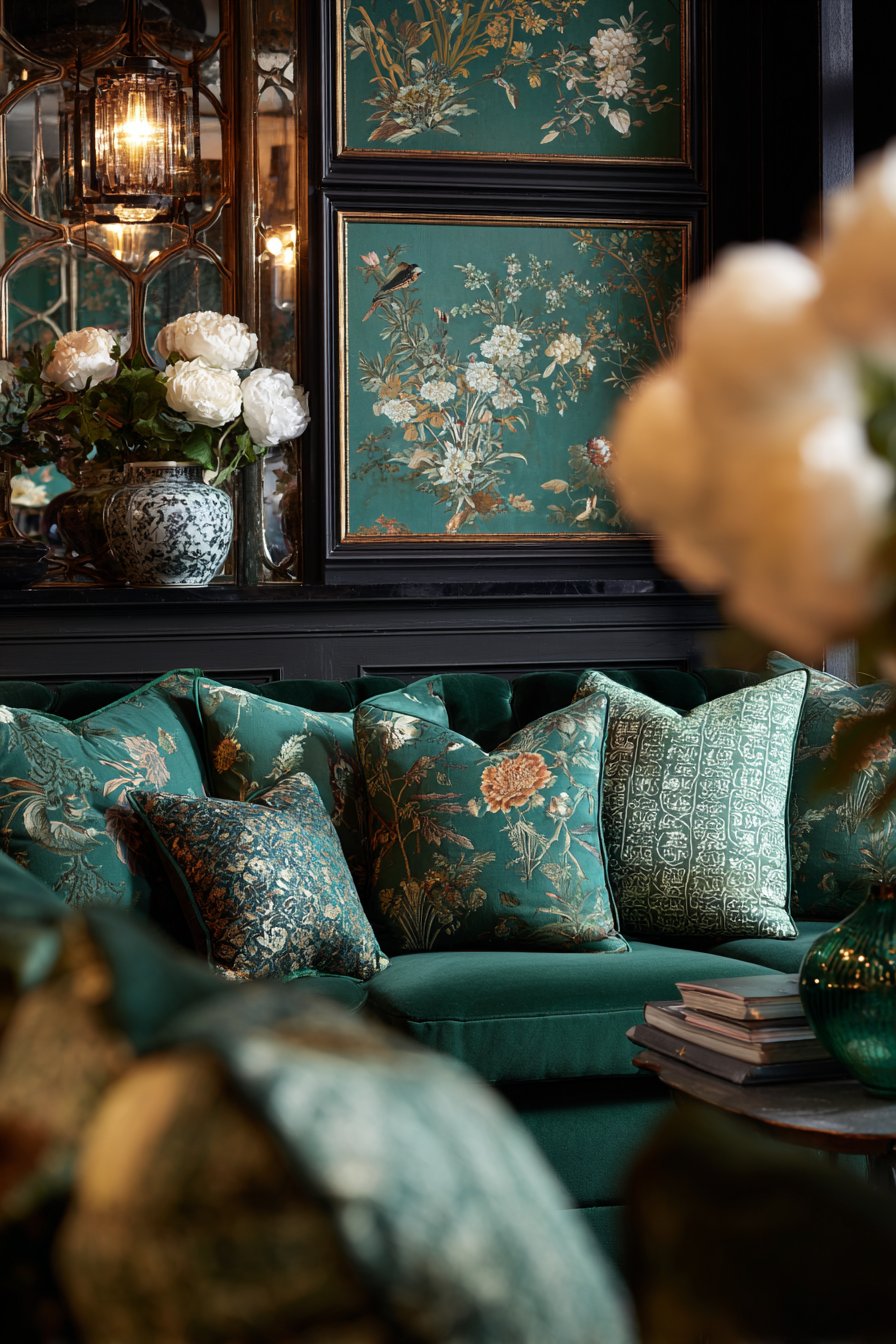
Ornate mirrors and abundant accessories create visual richness characteristic of maximalist style. These elements—collected art, decorative objects, books, plants—tell the inhabitant’s story through displayed treasures. The key to successful maximalism lies in intentional curation rather than random accumulation; each piece should earn its place through beauty, meaning, or both. The dark green provides visual anchor within this abundance, its substantial presence grounding the various patterns and colors.
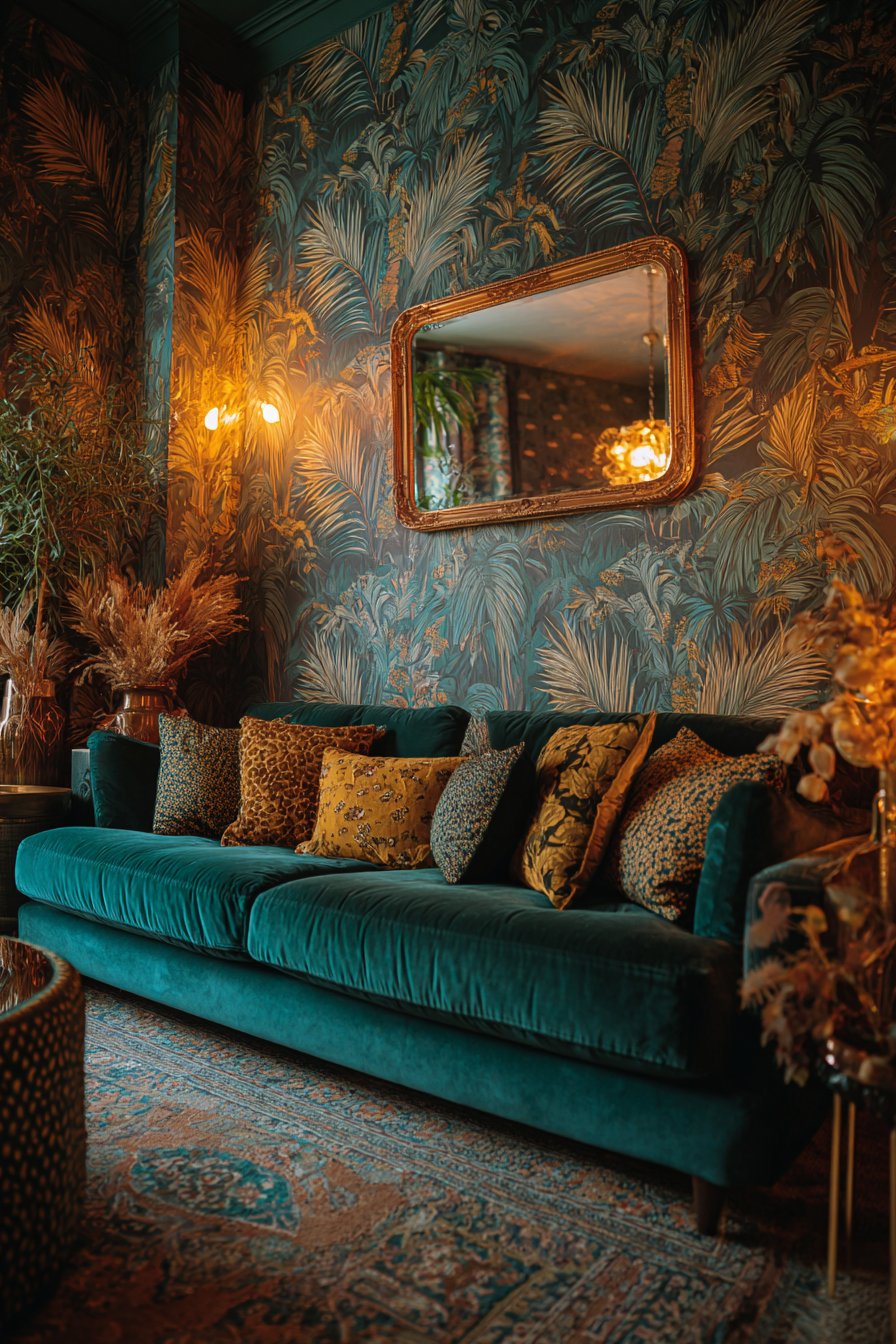
Natural and artificial lighting work together to showcase the depth and complexity of the layered design. Natural light during daytime reveals the true colors and patterns, while evening artificial lighting from multiple sources creates dramatic shadows and highlights that add another dimension to the already rich environment. This careful attention to illumination ensures the maximalist design remains legible and engaging rather than descending into visual chaos.
Key Design Tips: Layer at least three different pattern scales (large botanical, medium geometric, small detailed) for visual interest without confusion. Maintain color palette cohesion even when mixing multiple colors—stick to jewel tones or analogous colors. Provide visual rest areas through solid-colored elements among patterns to prevent overwhelming effect. Display collections in grouped arrangements rather than scattered individually throughout space. Include substantial furniture pieces like large sofas or substantial tables to ground abundant accessories. Use dark green as anchor color that appears multiple times throughout space to create cohesion. Install multiple light sources at different heights to ensure proper illumination of all displayed collections and artworks.
22. Serene Japandi Dark Green Sanctuary
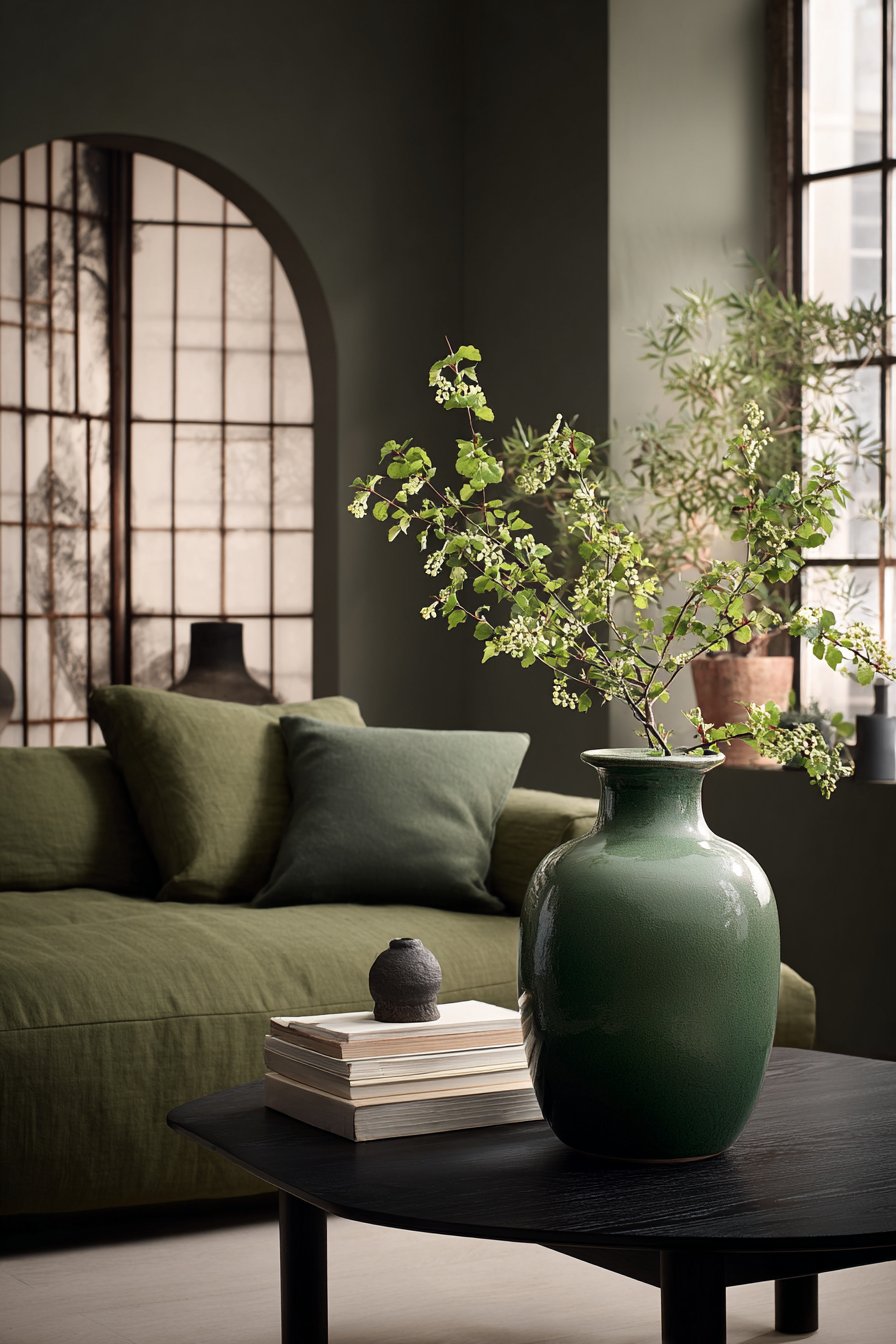
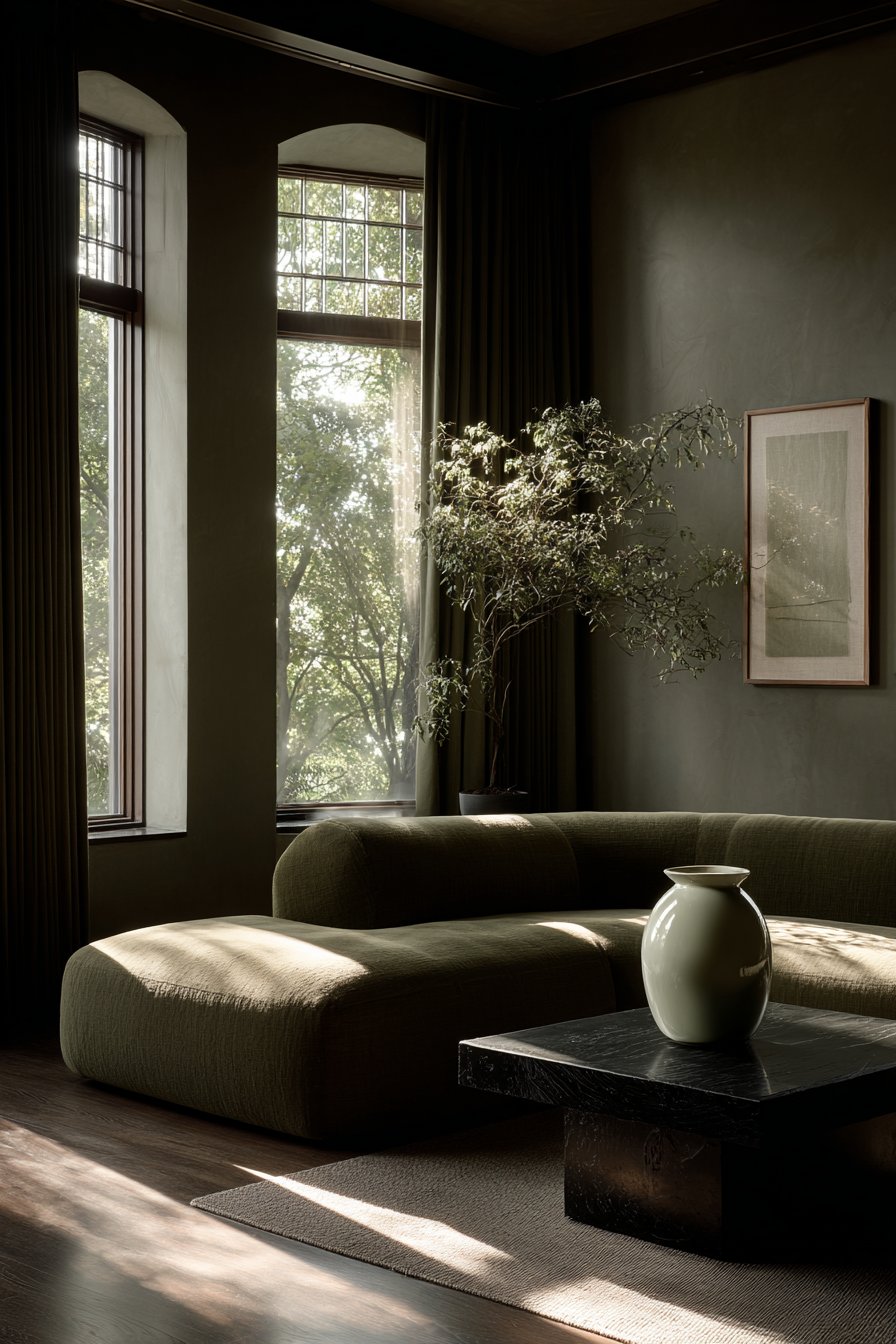
Japandi design fuses Japanese minimalism with Scandinavian functionality, creating spaces that emphasize quality over quantity and serenity over stimulation—principles that adapt beautifully to dark green living room ideas when executed with restraint. This approach features a low-profile dark green linen sofa with clean lines and minimal ornamentation, its simple form allowing the quality of materials and construction to speak for themselves. The linen upholstery introduces subtle texture through its natural weave while maintaining the calm aesthetic central to both Japanese and Scandinavian design traditions.
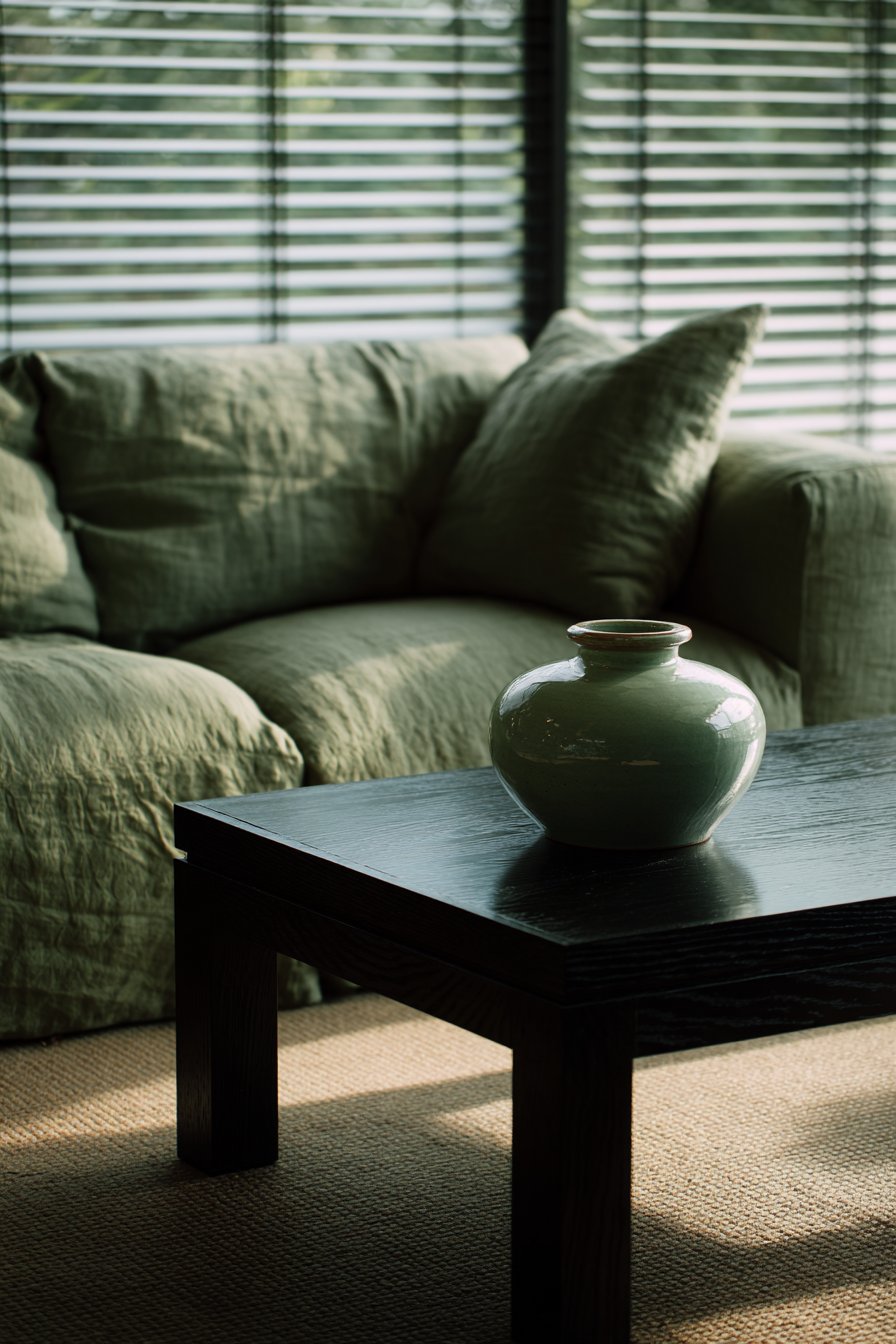
A single statement pottery piece in celadon green sits on a black wood coffee table, embodying the Japandi principle of mindful curation where each object receives careful consideration. The pottery’s simple form and monochromatic glaze celebrate craftsmanship and natural materials while its solitary placement on the table creates breathing room—the negative space proving as important as the object itself. The black wood coffee table grounds the composition with its substantial presence while its low height maintains the horizontal emphasis characteristic of Japanese design.
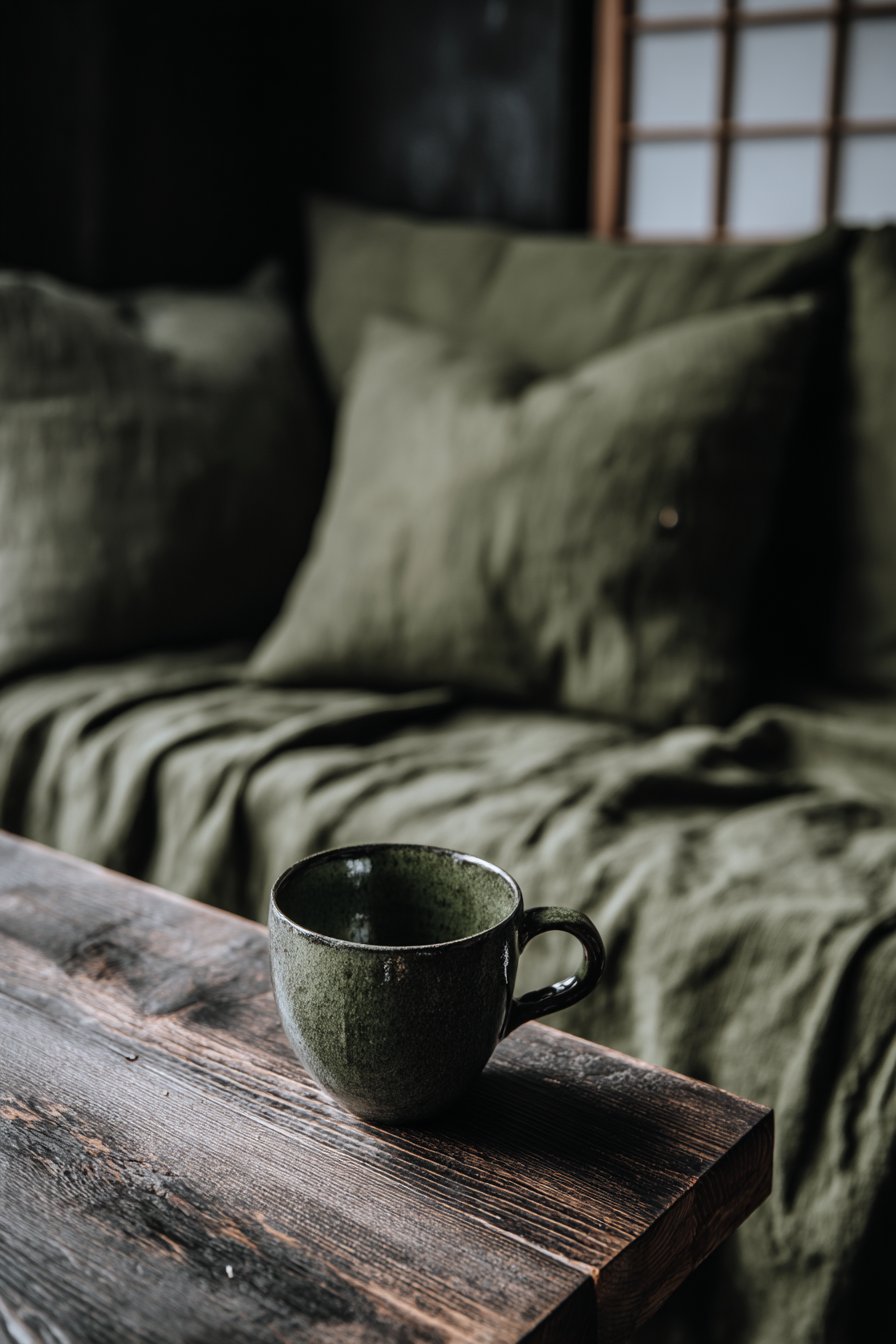
Shoji-inspired screens filter natural light entering the space, diffusing it into soft ambient glow that changes subtly throughout the day. These screens reference traditional Japanese architecture while serving practical functions including privacy control and light modulation. The filtered light quality they create reduces harsh shadows and bright spots, promoting the calm, meditative atmosphere central to Japandi design philosophy.
Key Design Tips: Limit furniture to essential pieces only, choosing quality over quantity in every selection. Select neutral and earth-toned color palettes with dark green serving as subtle accent rather than dominant feature. Incorporate natural materials like linen, wood, ceramic, and stone throughout space. Create negative space intentionally, leaving walls and surfaces largely bare to promote visual calm. Choose furniture with clean lines and minimal ornamentation that emphasizes form and function. Display only one or two carefully selected decorative objects rather than collections. Install window treatments that diffuse rather than block natural light to maintain connection with outdoors while ensuring privacy.
23. Family-Friendly Dark Green Great Room
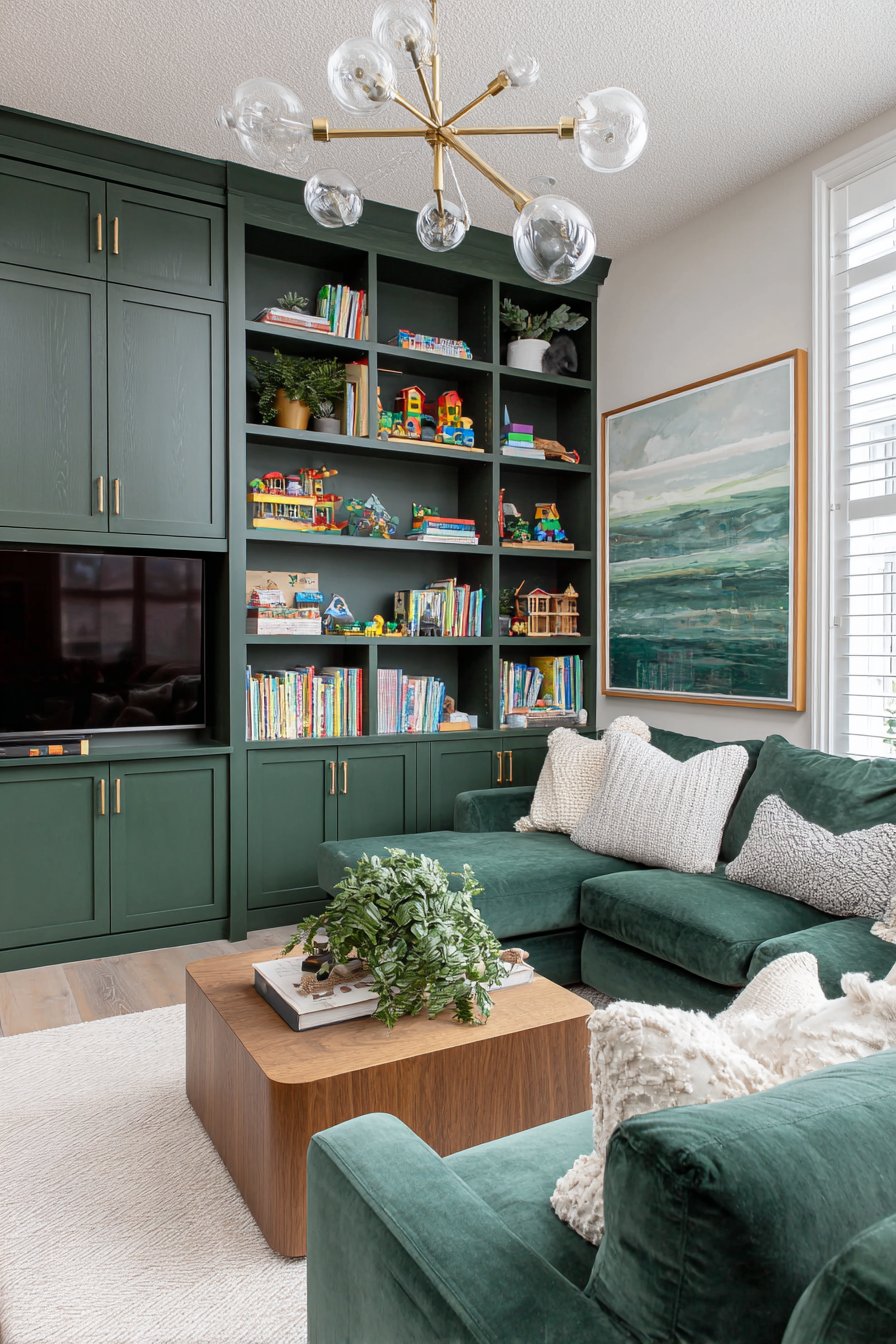
Real family living requires spaces that balance aesthetic appeal with practical durability—a challenge that dark green living room ideas address successfully when planned thoughtfully. This design features a durable dark green performance fabric sectional arranged for both conversation and TV viewing, its stain-resistant upholstery withstanding the inevitable spills and wear of active family life. The generous seating accommodates multiple family members comfortably while the sectional configuration allows flexible arrangement for various activities from movie nights to homework sessions.
Built-in toy storage painted in matching green keeps clutter organized while maintaining the room’s cohesive aesthetic. This practical consideration proves essential in family spaces where toys and games can quickly overwhelm visual harmony. The matching paint color allows the storage to blend seamlessly with the overall design rather than reading as utilitarian afterthought. Closed storage conceals messier items while open bins allow easy access for frequently used toys, balancing tidiness with functionality.
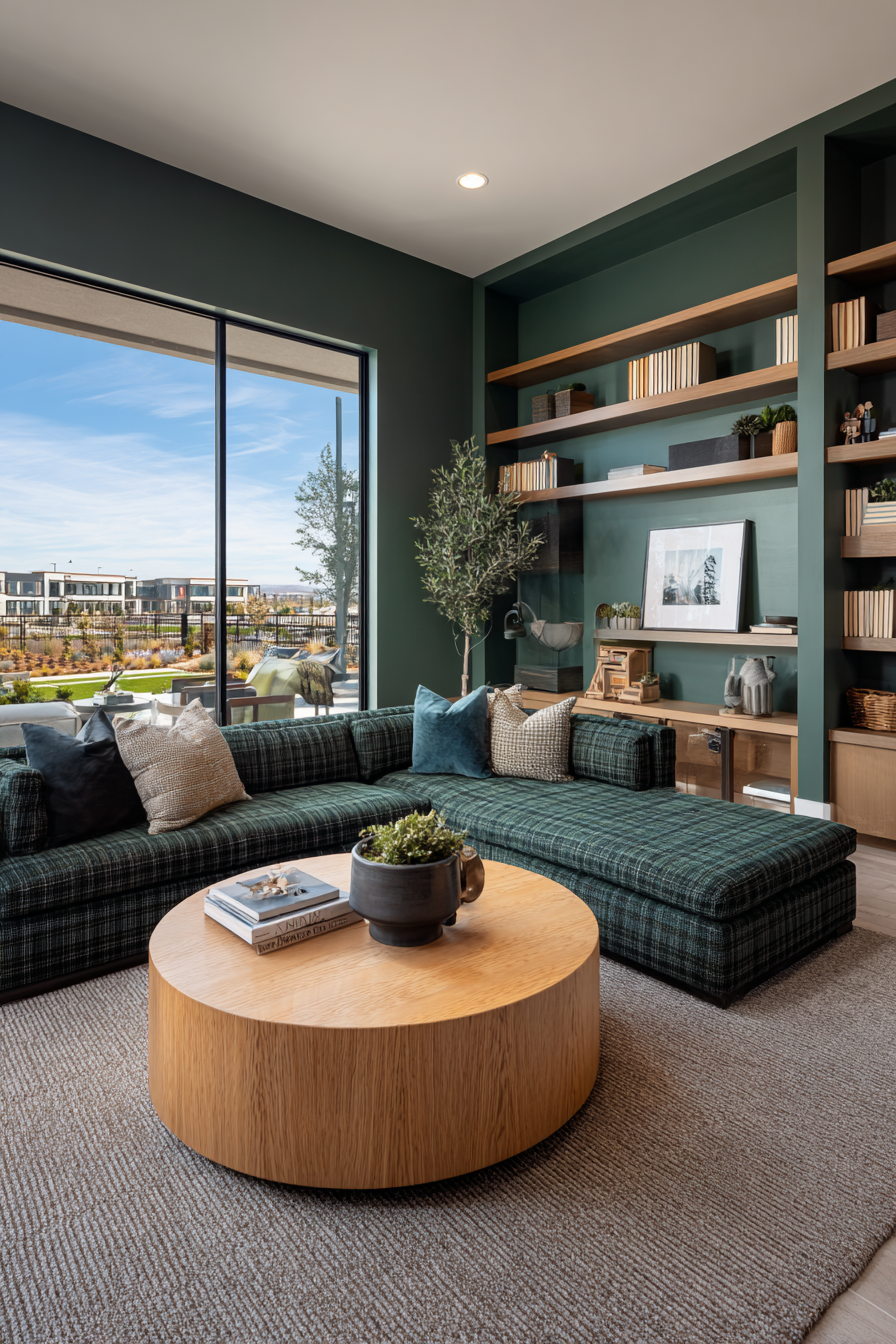
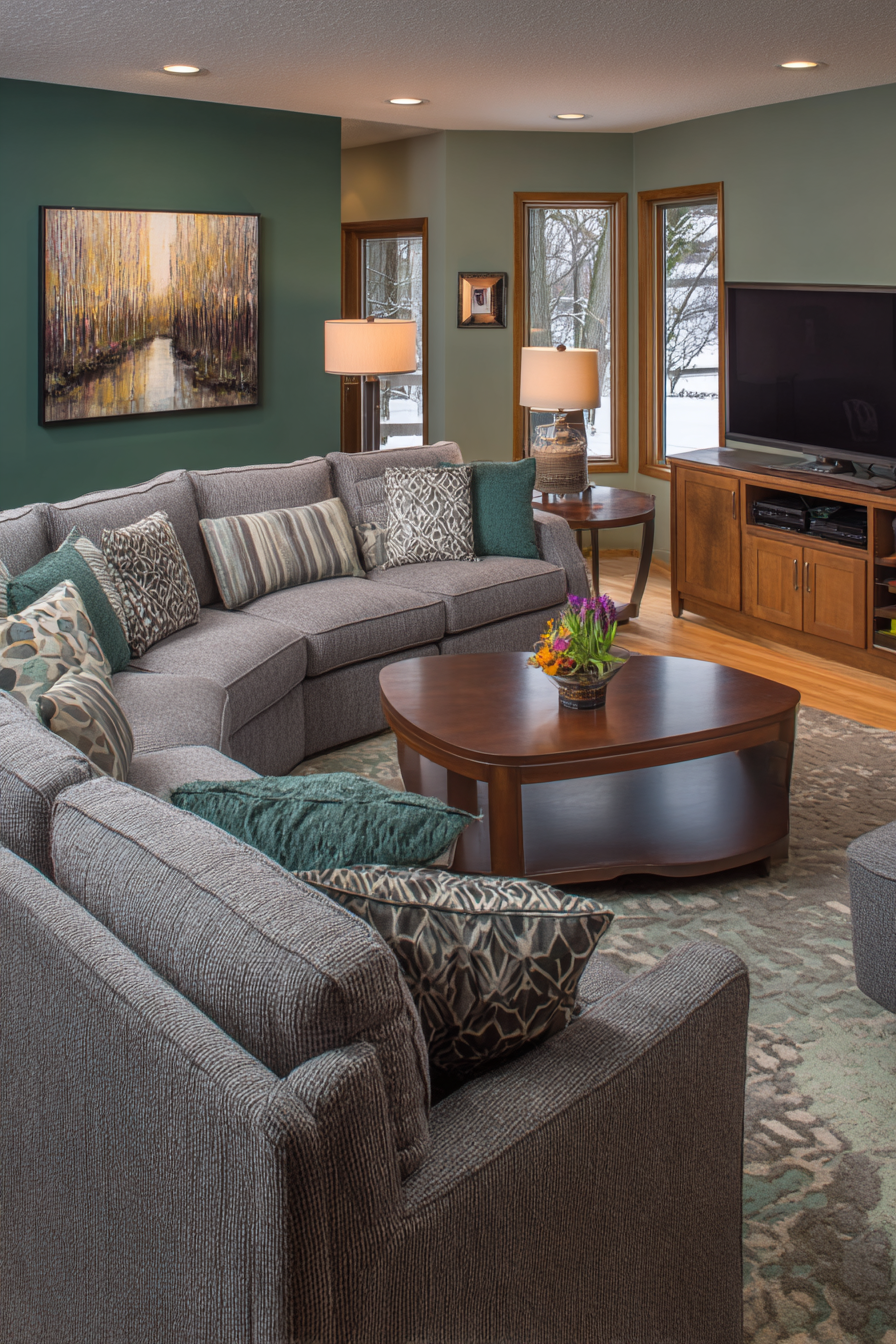
The large coffee table with rounded edges ensures safety while providing ample surface for board games, homework, and casual dining. The rounded edge detail prevents painful collisions while maintaining substantial surface area. The table’s durable surface withstands the wear of daily family life without showing excessive damage. Natural lighting throughout the space highlights the livable, functional arrangement, proving that family-friendly design need not sacrifice style for practicality.
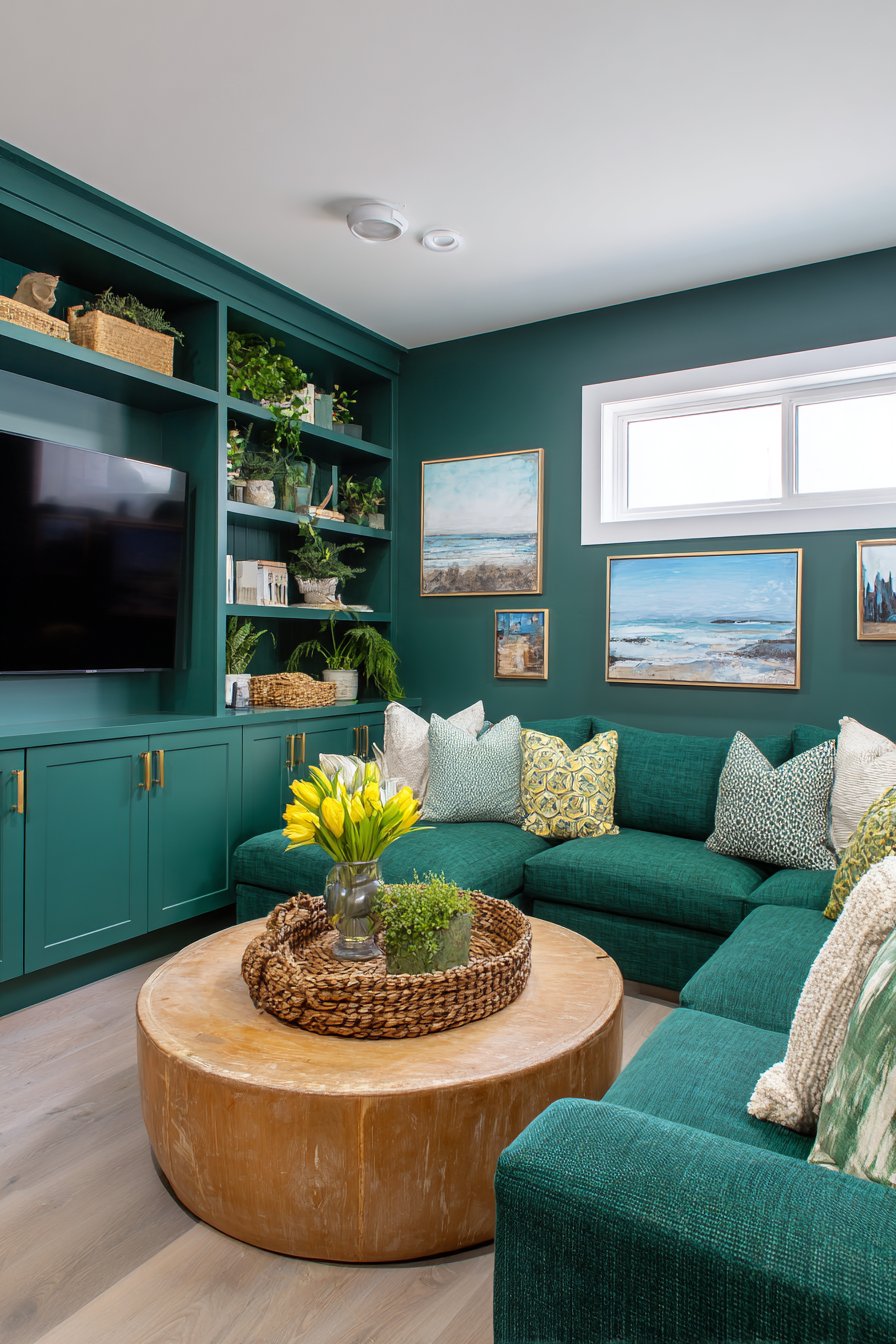
Key Design Tips: Specify performance fabrics with stain resistance and high rub counts (40,000+ double rubs) for upholstery that withstands family use. Choose dark or medium green tones that hide minor stains and wear better than very light colors. Include abundant closed storage to conceal toys, games, and media when not in use. Select furniture with rounded edges and stable bases to prevent tip-overs and injuries. Install dimmable lighting for flexibility from bright homework sessions to cozy movie viewing. Choose coffee tables at appropriate height for children to use comfortably (typically 16-18 inches). Consider machine-washable slipcovers for easy cleaning and seasonal refresh. Avoid delicate materials like silk, untreated velvet, or glass accents in high-traffic family spaces.
24. Vintage Eclectic Green Parlor
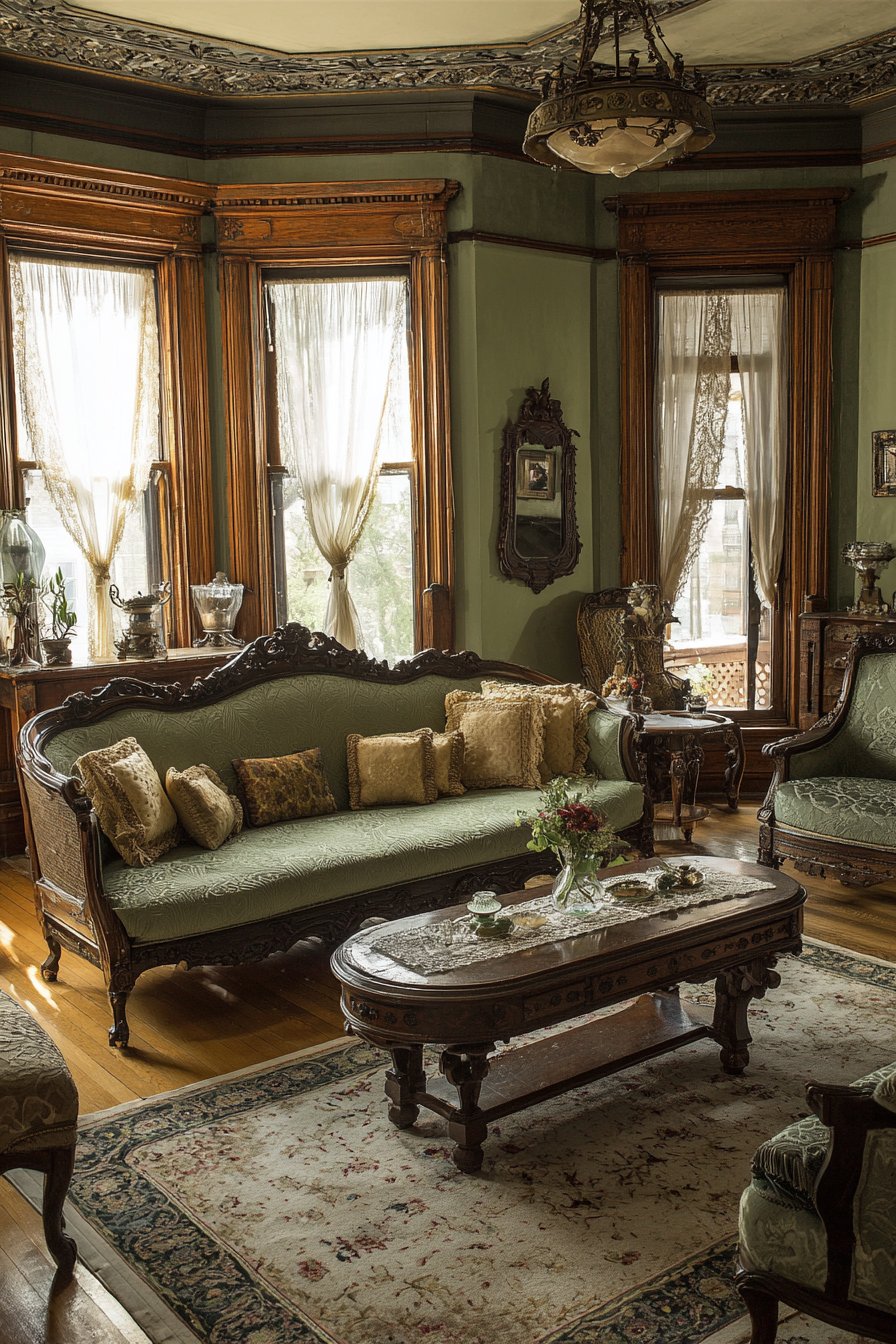
Authentic vintage style celebrates furniture and accessories from past eras, particularly mid-century pieces that have gained renewed appreciation in contemporary design. This approach features a restored Victorian sofa reupholstered in emerald green velvet, the combination of historical furniture form with contemporary fabric choice creating interesting temporal dialogue. The Victorian sofa’s ornate carved wood frame and tufted back demonstrate the craftsmanship of earlier eras while the vibrant emerald upholstery prevents the piece from feeling like museum artifact.
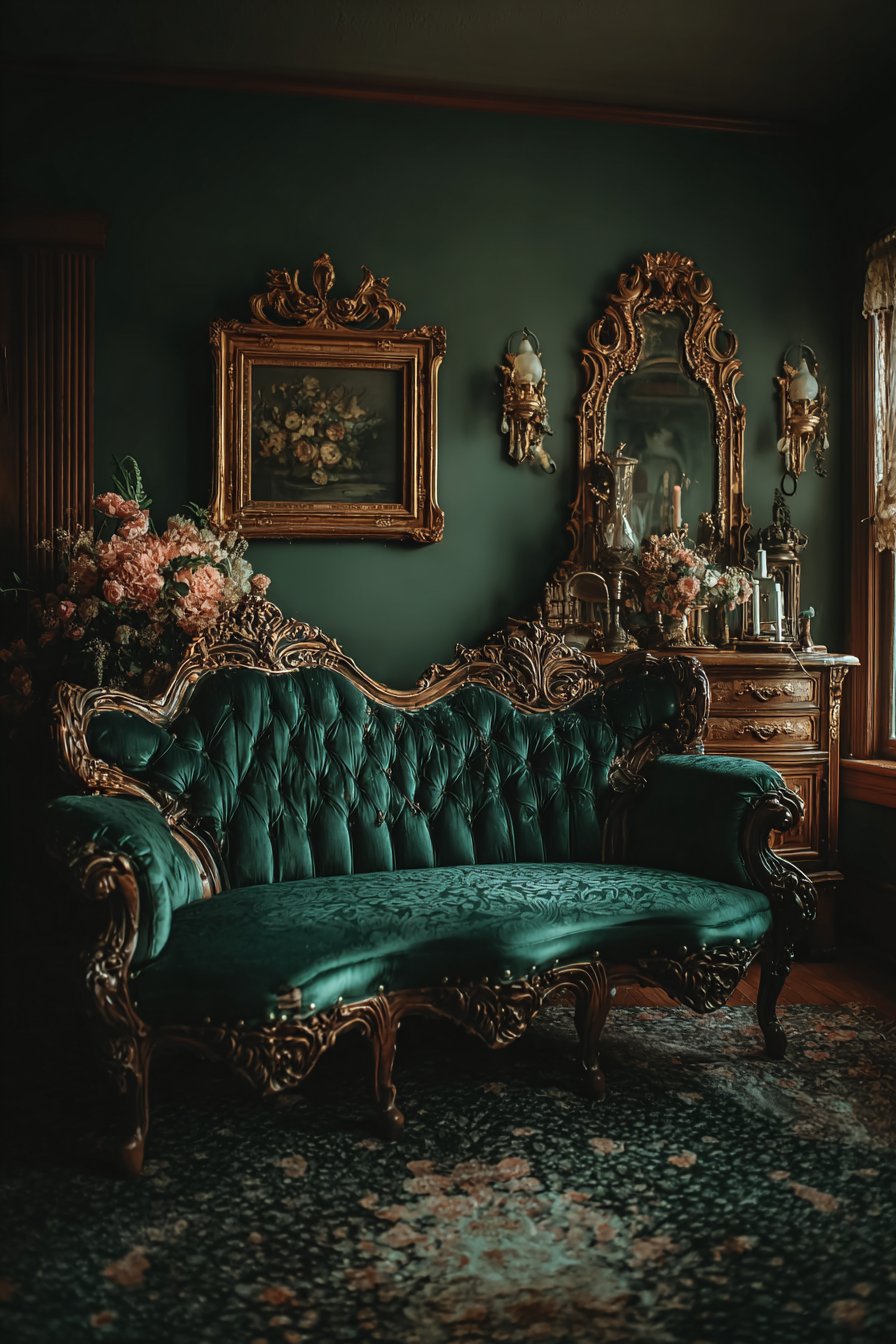
Mismatched vintage furniture pieces in complementary greens and wood tones create the collected charm essential to authentic vintage spaces. These pieces—acquired from estate sales, antique markets, and family inheritance—tell stories through their forms and wear patterns. The varied styles, eras, and finishes prevent the room from feeling like a period recreation, instead creating a living space that honors the past while remaining firmly rooted in present-day life.
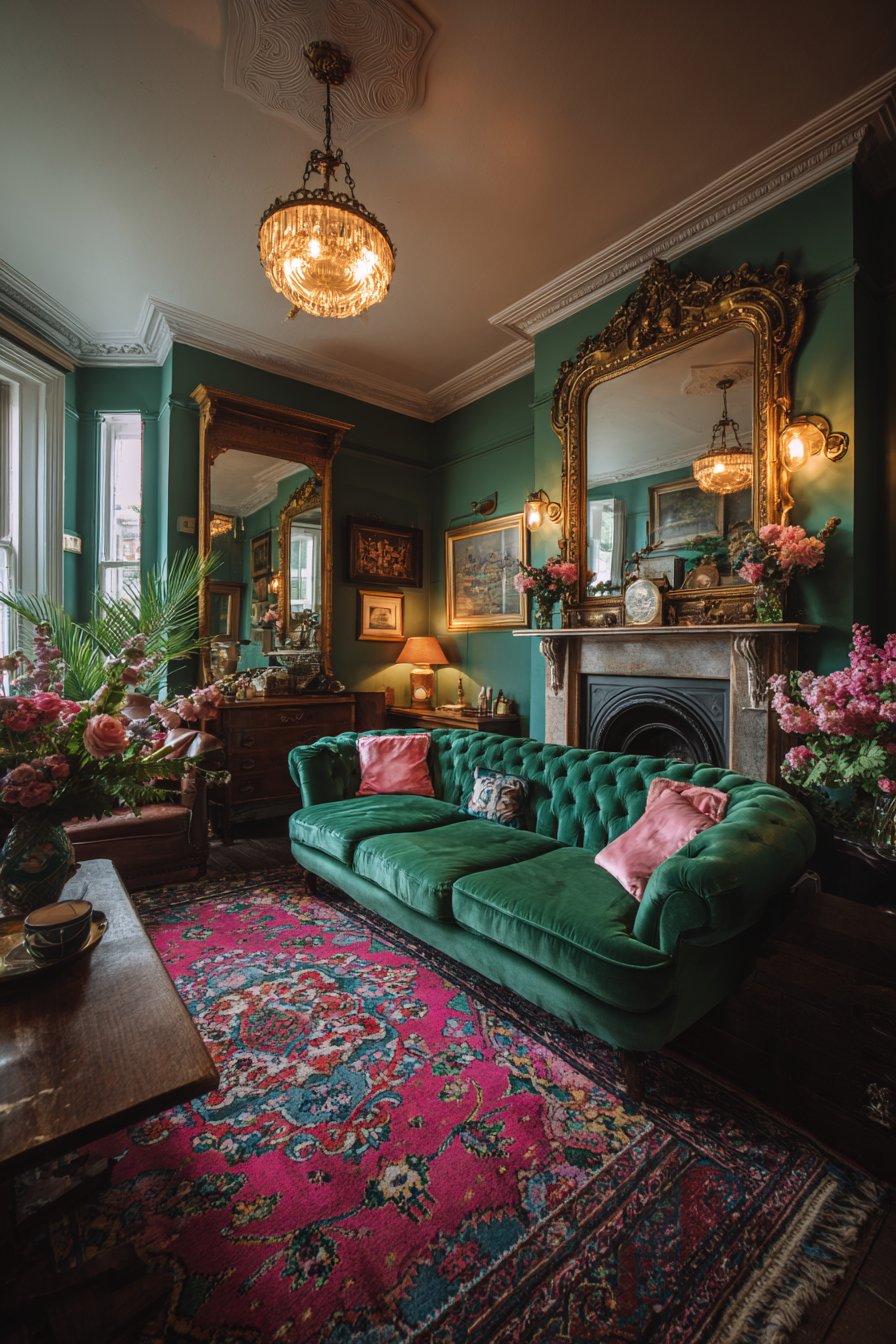
Ornate picture frames and antique mirrors adorn sage green walls, their varied sizes and styles creating gallery-wall effect that displays collected artwork and photographs. The sage green provides softer backdrop than the deeper emerald upholstery, allowing the Victorian sofa to command attention while maintaining color harmony. Period-appropriate lighting from vintage fixtures creates warm ambient glow, their designs reflecting the eras from which the furniture originated.
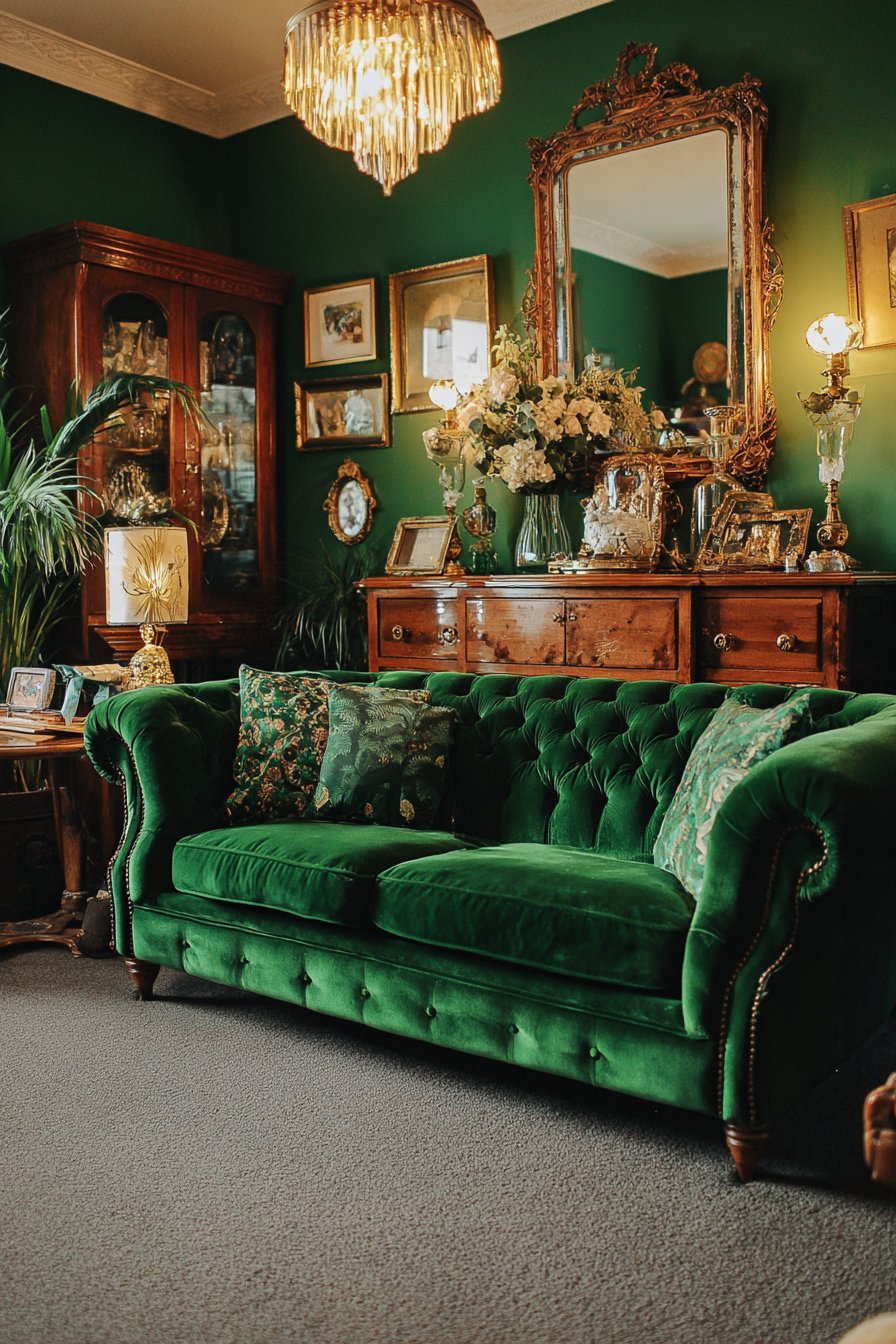
Key Design Tips: Invest in quality vintage pieces with solid construction that can withstand continued use rather than decorative-only furniture. Have vintage upholstered furniture professionally reupholstered in contemporary performance fabrics for durability while maintaining historical forms. Mix furniture from different eras (Victorian, Art Deco, Mid-Century) for collected rather than matched appearance. Display vintage accessories like books, photographs, and decorative objects to add personal story. Choose dark green upholstery for Victorian pieces to maintain traditional feel while adding contemporary color. Clean and restore vintage wood furniture properly to preserve patina without damaging original finishes. Pair vintage furniture with contemporary pieces to prevent room from feeling like period recreation.
25. Contemporary Open Concept with Green Definition
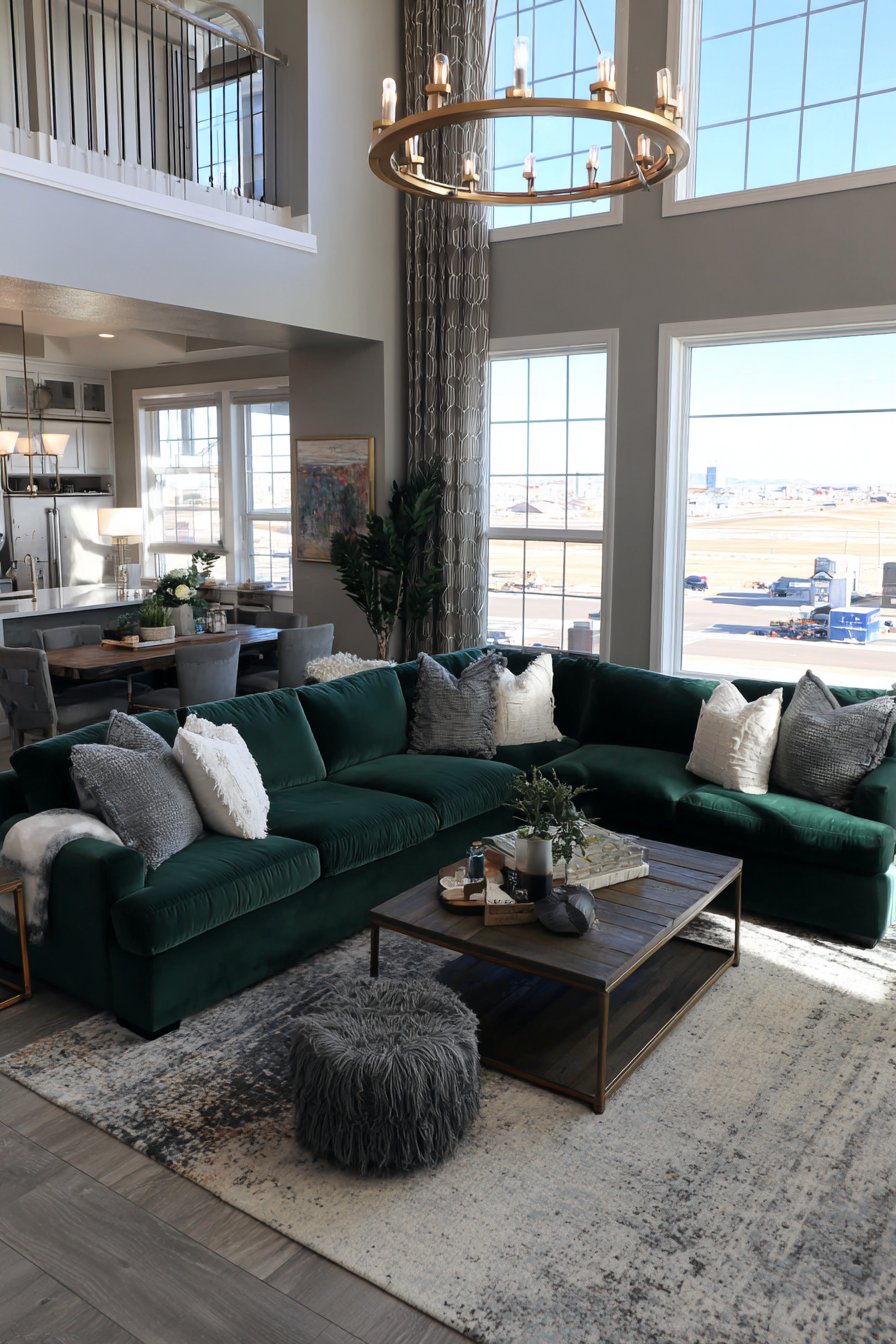
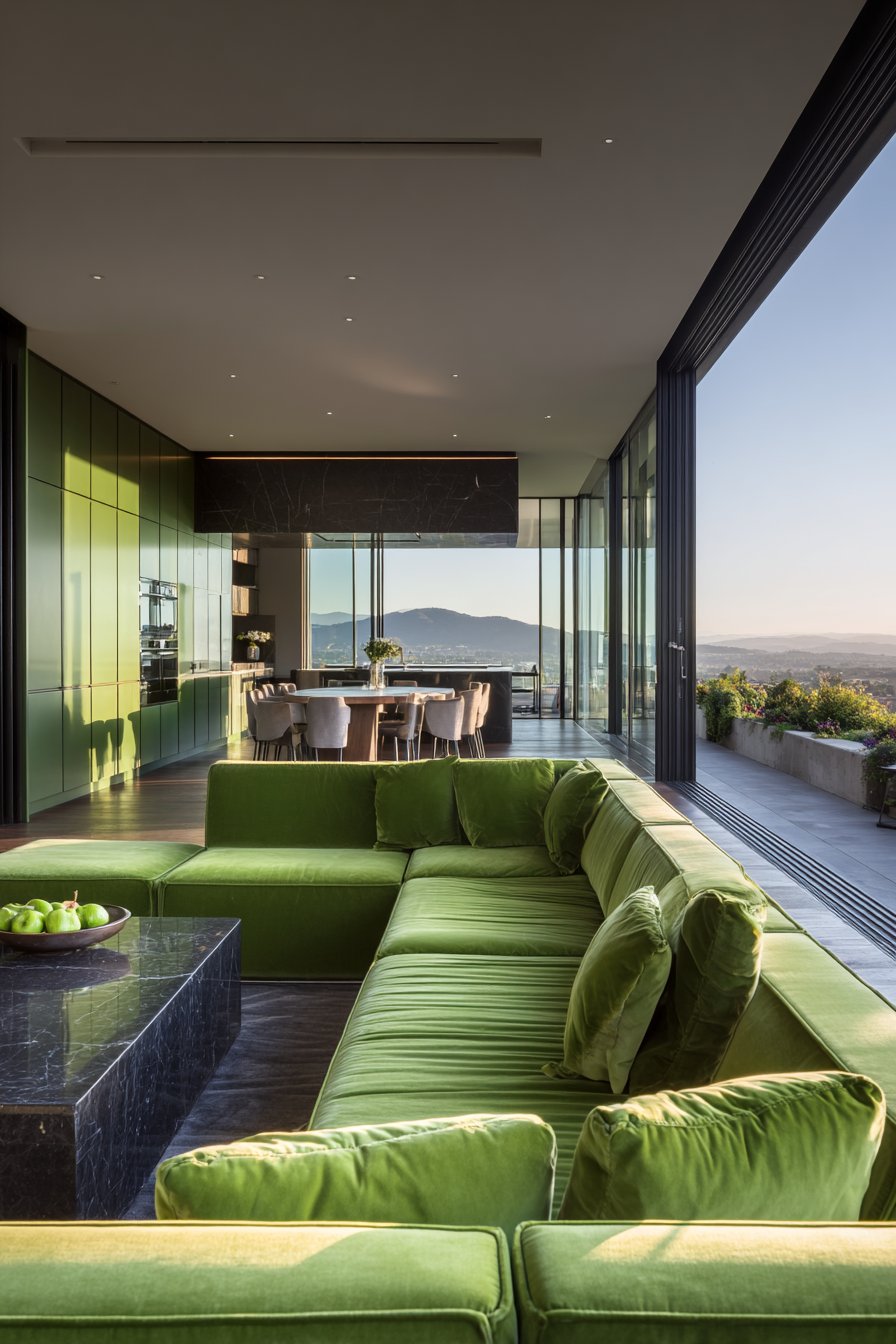
Open concept floor plans present unique design challenges including zone definition without physical walls and maintaining cohesion across large spaces—challenges that dark green living room ideas address effectively. This design features a striking dark green sectional that defines the living zone through its substantial presence and bold color. The sofa’s positioning creates implied boundary between living and dining areas without requiring physical barriers that would interrupt open sightlines and light flow.
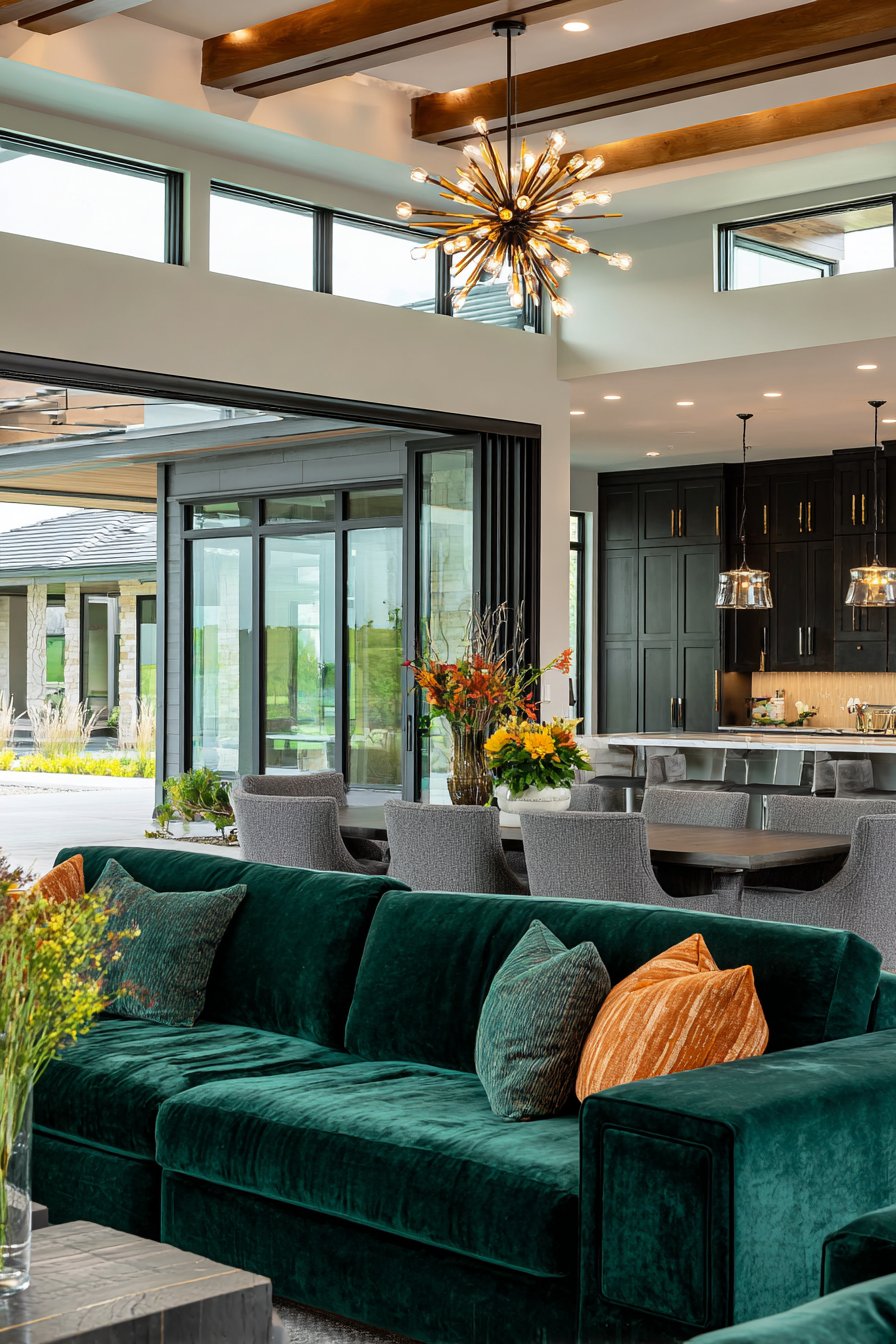
The sectional backs onto the dining area, creating natural separation while maintaining visual and physical connection between spaces. This arrangement allows conversation between zones while providing the sense of distinct areas necessary for different activities. Consistent green accents throughout both spaces—perhaps dining chair cushions, artwork, or accessories—create color flow that unifies the open concept while allowing each zone its specific function and character.
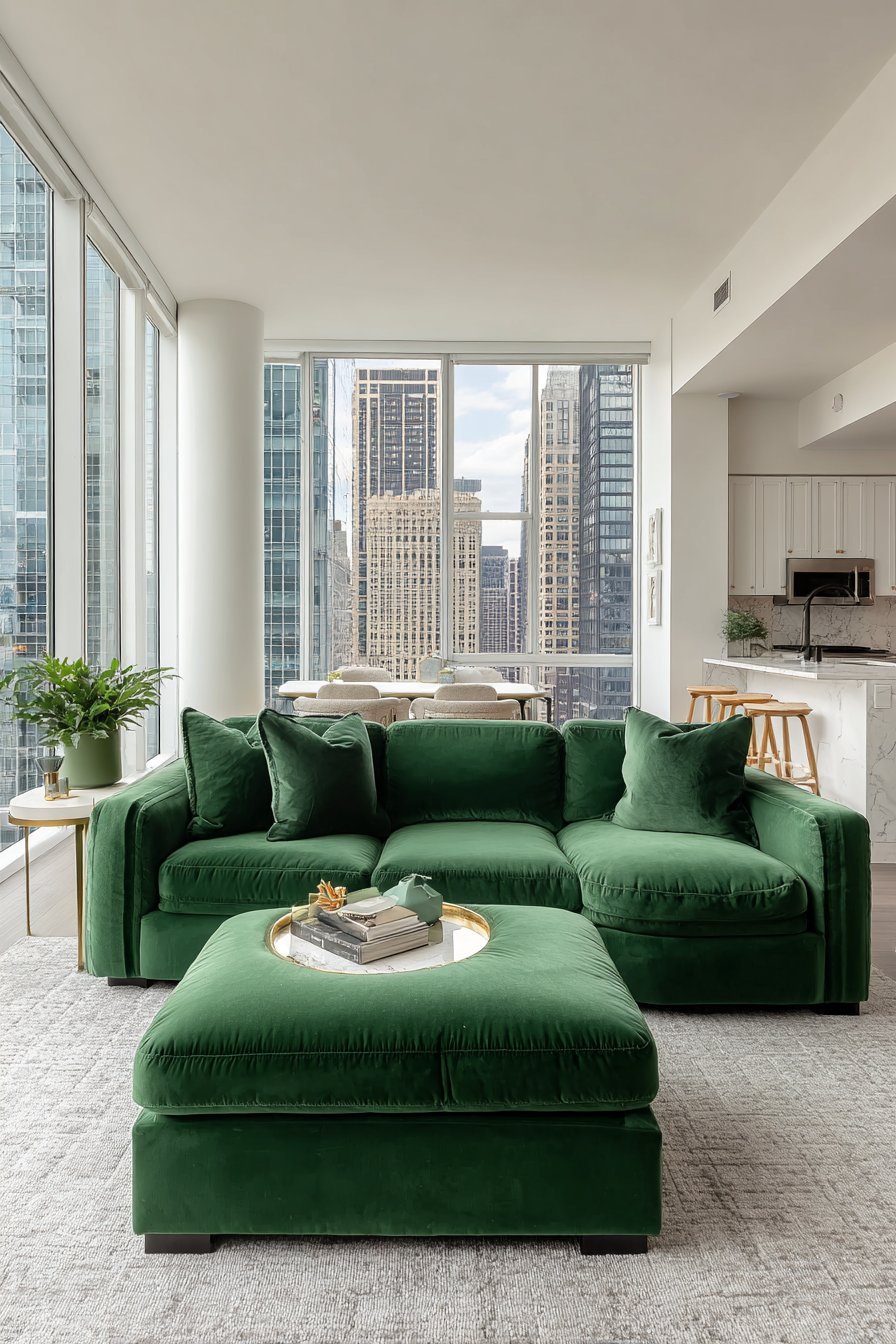
Floor-to-ceiling windows provide abundant natural light throughout the open space, essential for preventing the dark green sectional from making the area feel smaller or confined. This natural light changes throughout the day, revealing different qualities in the green upholstery from vibrant emerald in morning light to deep forest in evening shadow. The professional architectural photography perspective showcases how dark green living room ideas integrate successfully into modern open floor plans, with balanced exposure highlighting the cohesive color flow between adjacent spaces.
Key Design Tips: Choose substantial sectionals with high backs to create implied walls between zones in open floor plans. Maintain consistent color palette across all zones for visual cohesion despite functional separation. Position furniture perpendicular to main traffic flows to define zones without blocking movement. Use area rugs to anchor each distinct zone within larger open space. Install lighting specific to each zone’s function while maintaining consistent style throughout. Maintain clear sightlines through zones to preserve open concept’s spacious feeling. Consider ceiling treatments like varying heights or materials to distinguish zones overhead. Choose dark green as unifying element that appears in each zone to create cohesive design narrative across entire space.
Why These Dark Green Living Room Ideas Represent the Best in Contemporary Interior Design
The comprehensive collection of dark green living room ideas presented throughout this article demonstrates the remarkable versatility and sophistication this color brings to residential interiors. From the luxurious depths of emerald velvet to the subtle sophistication of sage green walls, from traditional formal parlors to contemporary open concepts, dark green proves its adaptability across virtually every design aesthetic, spatial configuration, and lifestyle requirement. These designs represent the best current thinking in interior design because they balance timeless elegance with contemporary relevance, demonstrating how a single color can anchor spaces ranging from minimalist Scandinavian to maximalist bohemian without losing its inherent sophistication.
The psychology of green as a color rooted in nature provides inherent benefits that transcend mere aesthetics. Studies in environmental psychology consistently demonstrate that green hues reduce stress, promote relaxation, and enhance concentration—qualities that make living rooms more successful as spaces for unwinding, entertaining, and family connection. Dark green specifically offers these benefits while adding depth, drama, and visual weight that lighter greens cannot achieve. The color’s association with luxury materials—from Victorian-era velvet curtains to Art Deco emerald accessories—lends spaces an elevated quality that speaks to quality and thoughtfulness in design execution.
Each design concept presented addresses specific challenges common in residential living spaces. The small apartment design demonstrates how dark green living room ideas scale successfully to compact urban environments through careful attention to proportion, light management, and tonal variation. The family-friendly great room proves that sophisticated design and practical durability need not conflict, with performance fabrics and thoughtful storage solutions maintaining aesthetic integrity while withstanding the realities of active household life. The coastal-inspired design challenges conventional wisdom about beach house palettes, proving that dark green’s sophisticated depth enhances rather than diminishes the connection to ocean views and natural light.
Material combinations throughout these designs reflect current best practices in interior design, emphasizing natural fibers, sustainable materials, and authentic finishes over synthetic alternatives and applied veneers. The consistent pairing of dark green with natural oak, brass metallics, and linen textiles creates material relationships that feel both contemporary and timeless—combinations that will remain relevant far longer than trend-driven alternatives. The emphasis on layered lighting—ambient, task, and accent illumination from multiple sources—ensures these spaces function successfully throughout the day and adapt to various activities and moods. This attention to lighting proves particularly crucial with darker color palettes, where inadequate illumination can transform sophisticated depth into dreary dimness.
The architectural integration evident in many designs—built-in window seats, floor-to-ceiling cabinetry, paneled walls, and custom entertainment centers—elevates dark green from paint choice to architectural feature. This approach creates cohesion between structure and decoration, suggesting permanence and investment rather than temporary styling. The painted built-ins specifically demonstrate how dark green transforms functional storage into architectural focal points, proving that practical necessities can serve double duty as design features when executed with proper detail and finish quality.
Color theory principles evident throughout these designs provide valuable lessons applicable far beyond dark green specifically. The consistent use of warm metallics (brass, copper, gold) with cool-toned greens demonstrates complementary color relationships that create visual interest without conflict. The layering of multiple green shades from deep hunter through sage to chartreuse shows how tonal variation within a single color family creates dimensional richness without introducing competing hues that might fragment the cohesive design narrative. The strategic use of neutral elements—grey sofas, natural wood, white trim—provides visual rest areas that allow the dark green to command attention without overwhelming.
Pattern and texture combinations showcase sophisticated understanding of how varied surfaces create visual and tactile interest even within monochromatic schemes. The consistent pairing of smooth velvet upholstery with rough jute rugs, sleek brass with textured linen, glossy painted surfaces with matte wall finishes demonstrates how surface quality variation prevents monotony. This attention to textural diversity ensures spaces remain engaging across multiple scales of viewing—from across the room where silhouettes and color dominate, to close examination where texture and material quality become apparent.
The adaptability of these dark green living room ideas across various design styles—traditional, contemporary, transitional, eclectic, and everything between—demonstrates the color’s fundamental versatility. Unlike trend-driven colors that work only within specific aesthetic frameworks, dark green’s roots in both nature and design history allow it to integrate successfully into virtually any style direction. This flexibility provides practical value for homeowners whose taste may evolve over time; dark green foundations accommodate style shifts through accessories and accent changes without requiring complete redesign.
Conclusion
The journey through these twenty-five distinctive dark green living room ideas reveals a color of remarkable depth, versatility, and enduring appeal. Far from being merely trendy, dark green draws on centuries of design history while remaining completely relevant to contemporary living. From the intimate reading nook cocooned in forest green walls to the dramatic gallery wall against deep emerald, from the family-friendly great room with durable performance fabrics to the serene Japandi sanctuary emphasizing quality and restraint, these designs demonstrate that dark green adapts successfully to virtually any lifestyle, space constraint, or aesthetic preference.
The practical strategies presented throughout this article—from lighting considerations and material pairings to furniture scale and tonal variation—equip you with actionable knowledge for implementing these ideas in your own home. Whether you’re ready to commit to floor-to-ceiling dark green cabinetry or prefer to start with a single accent wall or statement sofa, the principles remain consistent: balance bold color with thoughtful lighting, layer varied textures for dimensional interest, incorporate natural materials for warmth, and allow your personal style to guide specific choices within the dark green framework.
As you embark on your own dark green living room journey, remember that the most successful spaces result from thoughtful planning combined with willingness to trust your instincts. Study the designs that resonate most strongly with you, identify the specific elements that create that resonance, and adapt those principles to your particular circumstances. Consider your space’s natural light, existing architectural features, daily functional requirements, and long-term style aspirations. Dark green’s inherent sophistication and natural associations ensure that choices made thoughtfully will reward you with a living room that feels both current and timeless—a space that welcomes you home, accommodates your life fully, and continues to delight year after year.
