
In the ever-evolving world of interior design, few color combinations have proven as enduringly elegant and universally appealing as brown and beige. These warm, earthy neutrals create a foundation of comfort and sophistication that transcends fleeting trends, offering homeowners a canvas that’s both timeless and remarkably versatile. The beauty of brown and beige living room ideas lies in their ability to adapt to virtually any design style—from rustic farmhouse charm to sleek contemporary minimalism—while maintaining an atmosphere of welcoming warmth that makes a house feel like a true home.
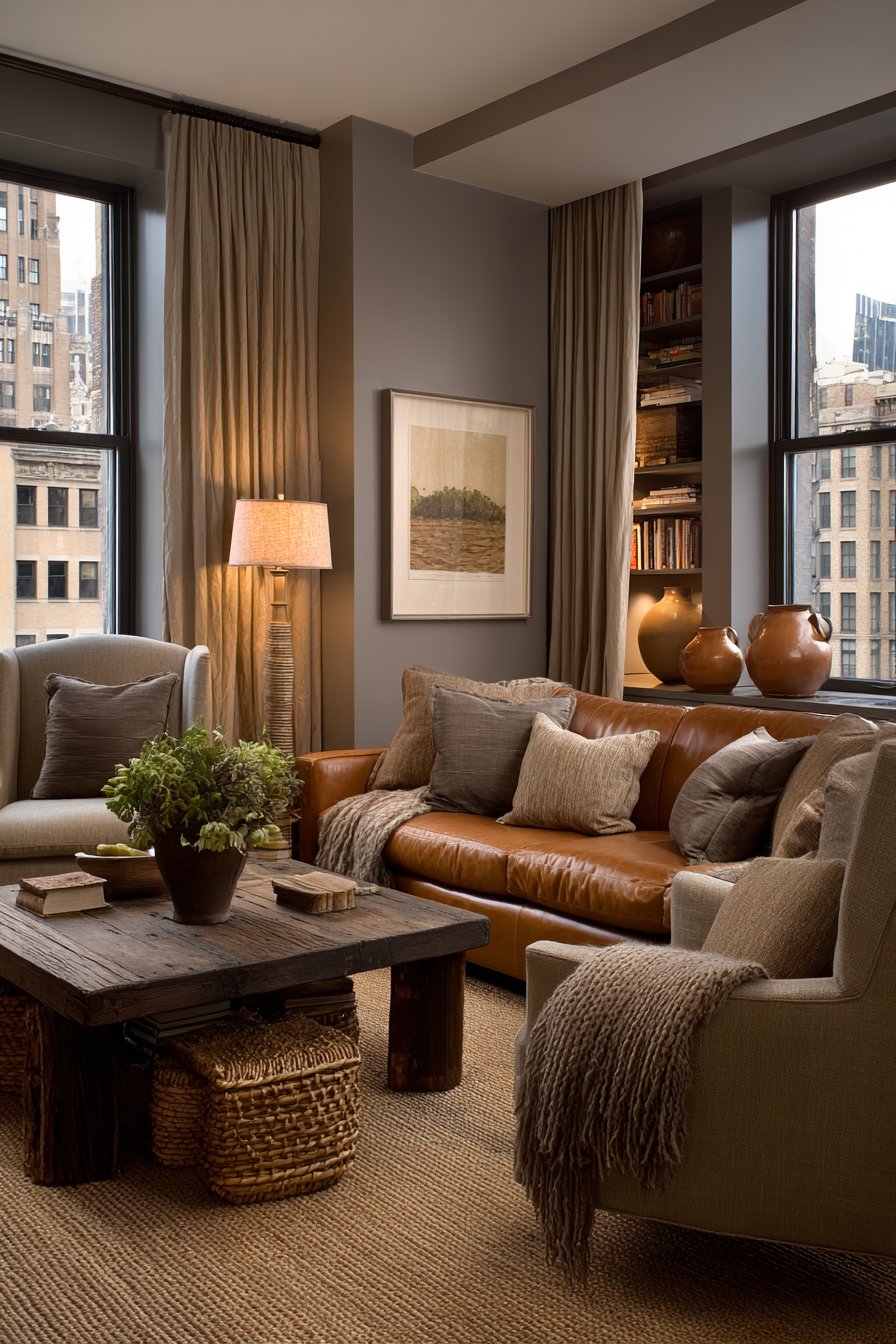
The psychological impact of these neutral tones cannot be overstated. Brown evokes feelings of stability, reliability, and connection to nature, while beige brings lightness, calm, and airiness to a space. Together, they create a balanced environment that soothes the senses without sacrificing visual interest. Whether you’re working with a compact apartment living room or a spacious open-concept area, the strategic use of brown and beige allows for endless creative possibilities in texture, pattern, and material selection that can transform an ordinary space into an extraordinary sanctuary.
This comprehensive guide explores twenty-one distinctive brown and beige living room ideas, each showcasing unique approaches to incorporating these classic neutrals into your home. From luxurious leather furnishings and natural wood accents to layered textiles and architectural details, you’ll discover practical inspiration for creating a living room that reflects your personal style while embracing the timeless appeal of earth-toned elegance. Whether you’re planning a complete redesign or simply looking to refresh your current space, these ideas will demonstrate how brown and beige can work together to create living rooms that are both beautiful and livable.
1. The Caramel and Linen Sanctuary
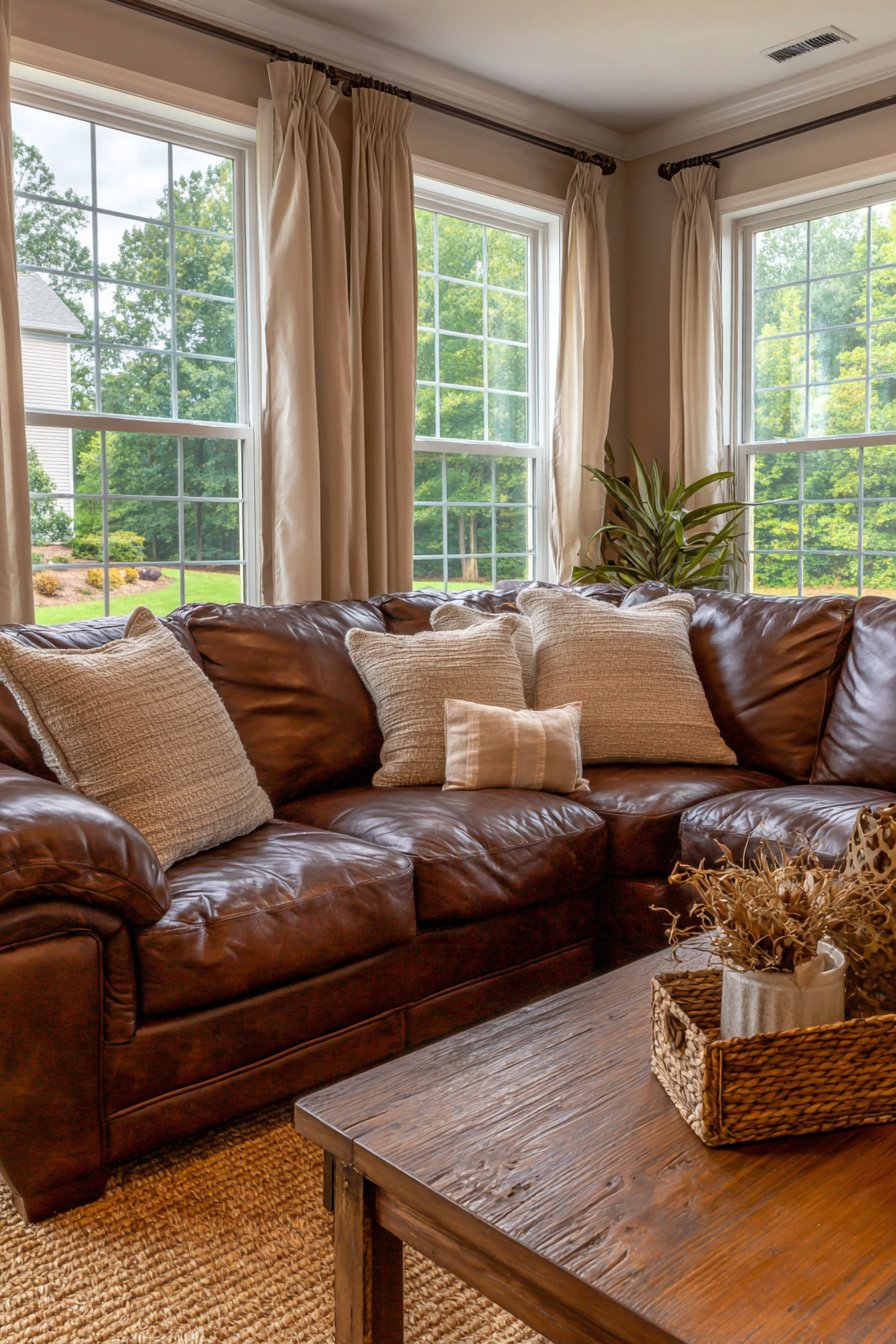
The foundation of this welcoming brown and beige living room centers on the luxurious appeal of a plush sectional sofa upholstered in warm caramel brown leather. The leather showcases deep cushions with visible natural grain texture that speaks to quality craftsmanship and promises years of comfortable use. This substantial piece becomes the heart of the living space, inviting family and guests to sink in and stay awhile. The natural variations in the leather’s surface catch light differently throughout the day, creating subtle visual interest that prevents the monochromatic scheme from feeling flat.
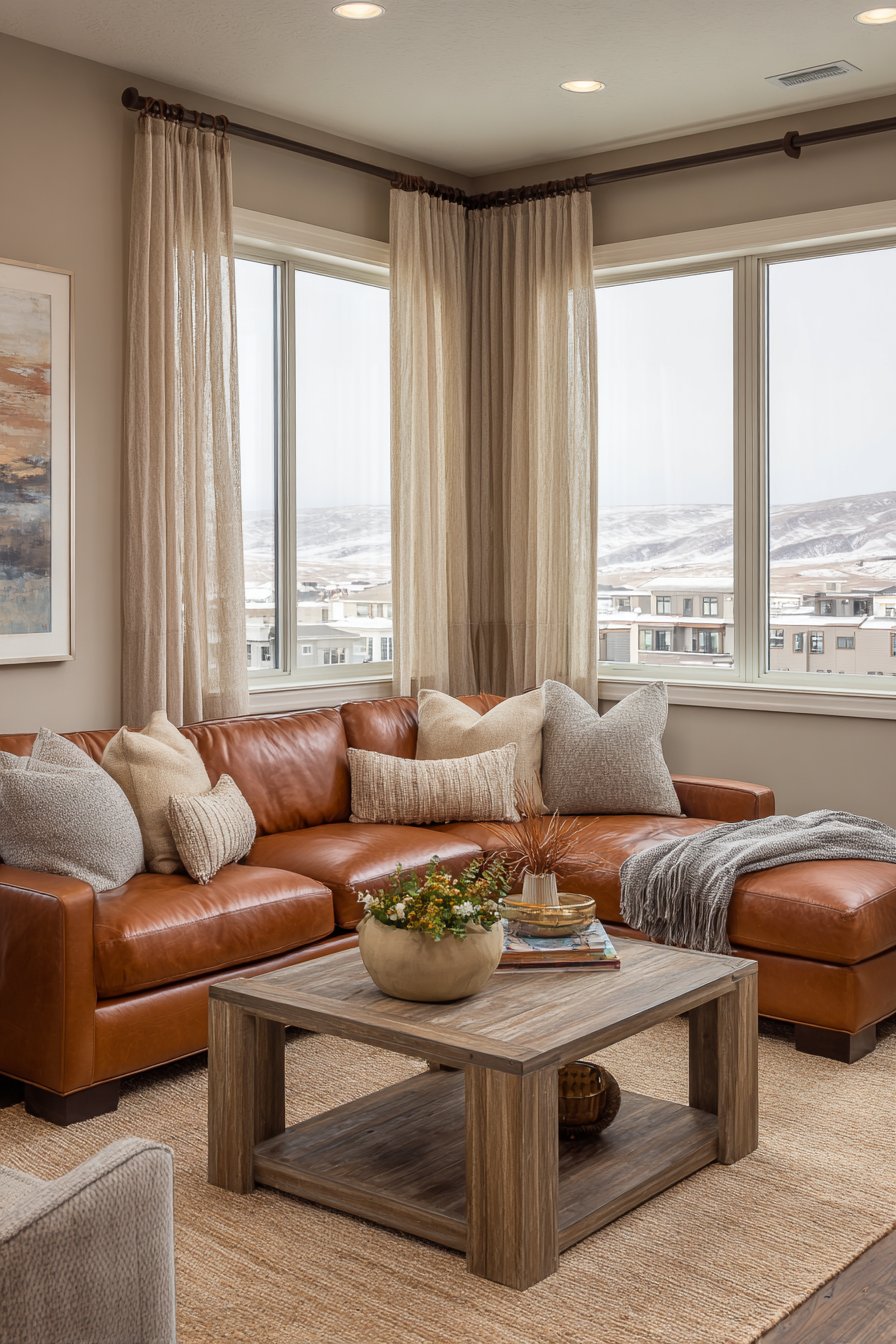
Complementing the rich brown leather, beige linen throw pillows introduce a contrasting texture that softens the overall aesthetic. These pillows feature subtle texture variations inherent to natural linen fabric, with some displaying the characteristic slubs and irregularities that make linen so appealing to touch and view. The interplay between the smooth, slightly glossy leather and the matte, organic texture of linen creates a sophisticated layering effect that exemplifies thoughtful design.
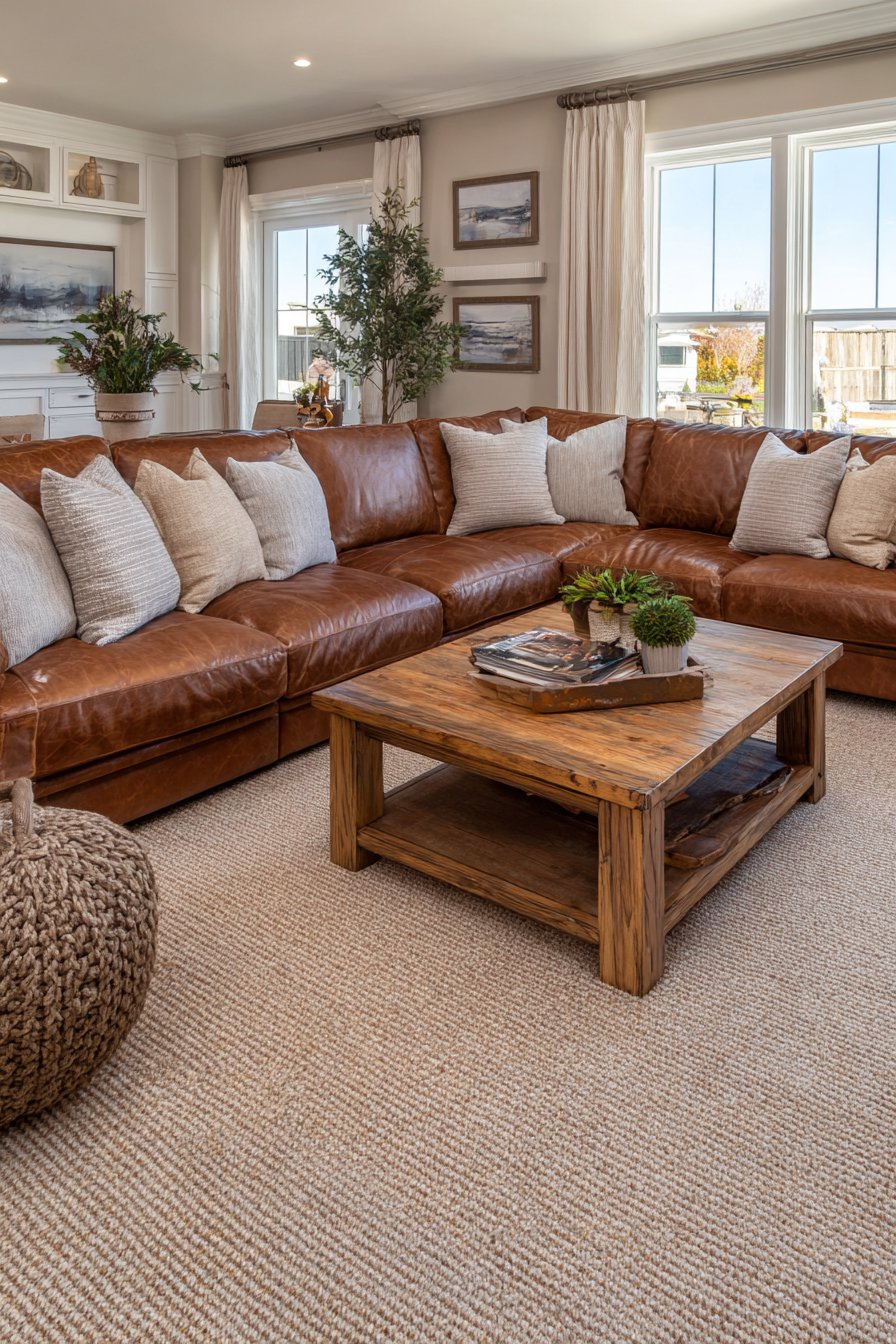
At the center of the seating arrangement sits a reclaimed wood coffee table finished in a warm honey brown tone. This piece brings an eco-conscious element to the space while adding another layer of brown variation to the color palette. The table’s surface shows the authentic marks of its previous life—minor imperfections, nail holes, and weathering that tell a story and add character to the room. Underneath, a natural fiber area rug in sandy beige grounds the entire arrangement, its woven texture adding yet another tactile dimension to the space.
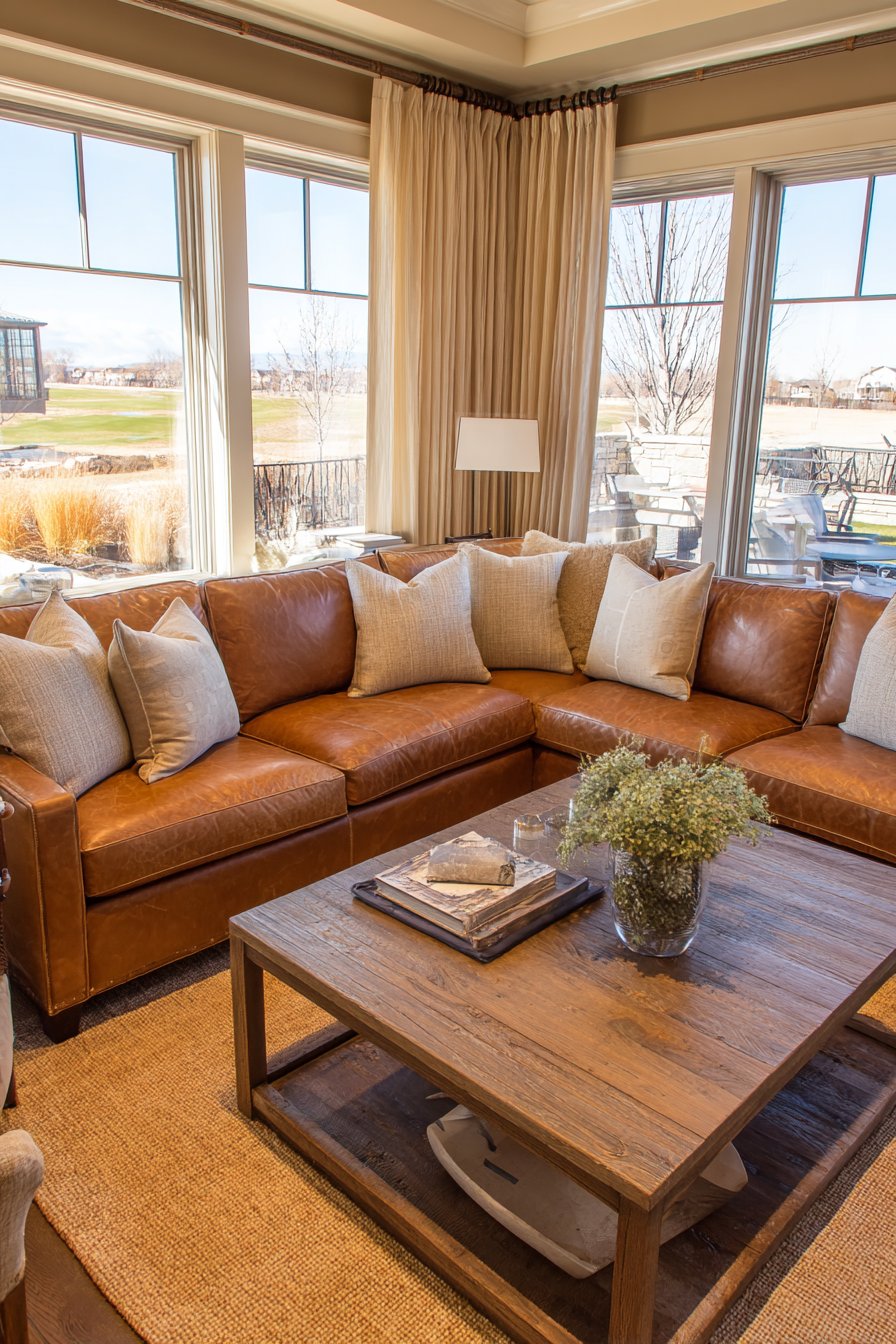
The room’s connection to the outdoors is enhanced through large windows dressed with sheer beige curtains that filter natural light beautifully. These lightweight window treatments allow sunshine to flood the space while maintaining privacy, creating that coveted soft, diffused glow that makes brown and beige tones appear even more inviting. The overall effect is a living room that feels both sophisticated and approachable, perfect for everyday family life and special gatherings alike.
Key Design Tips:
- Choose leather furniture in warm brown tones for durability and timeless appeal
- Layer multiple textures through pillows, throws, and rugs to prevent monotony
- Incorporate reclaimed or sustainably sourced wood pieces for environmental consciousness
- Position seating near natural light sources to maximize the warmth of earth tones
- Select natural fiber rugs like jute or sisal in beige to add organic texture
2. Modern Entertainment Wall in Walnut and Cream
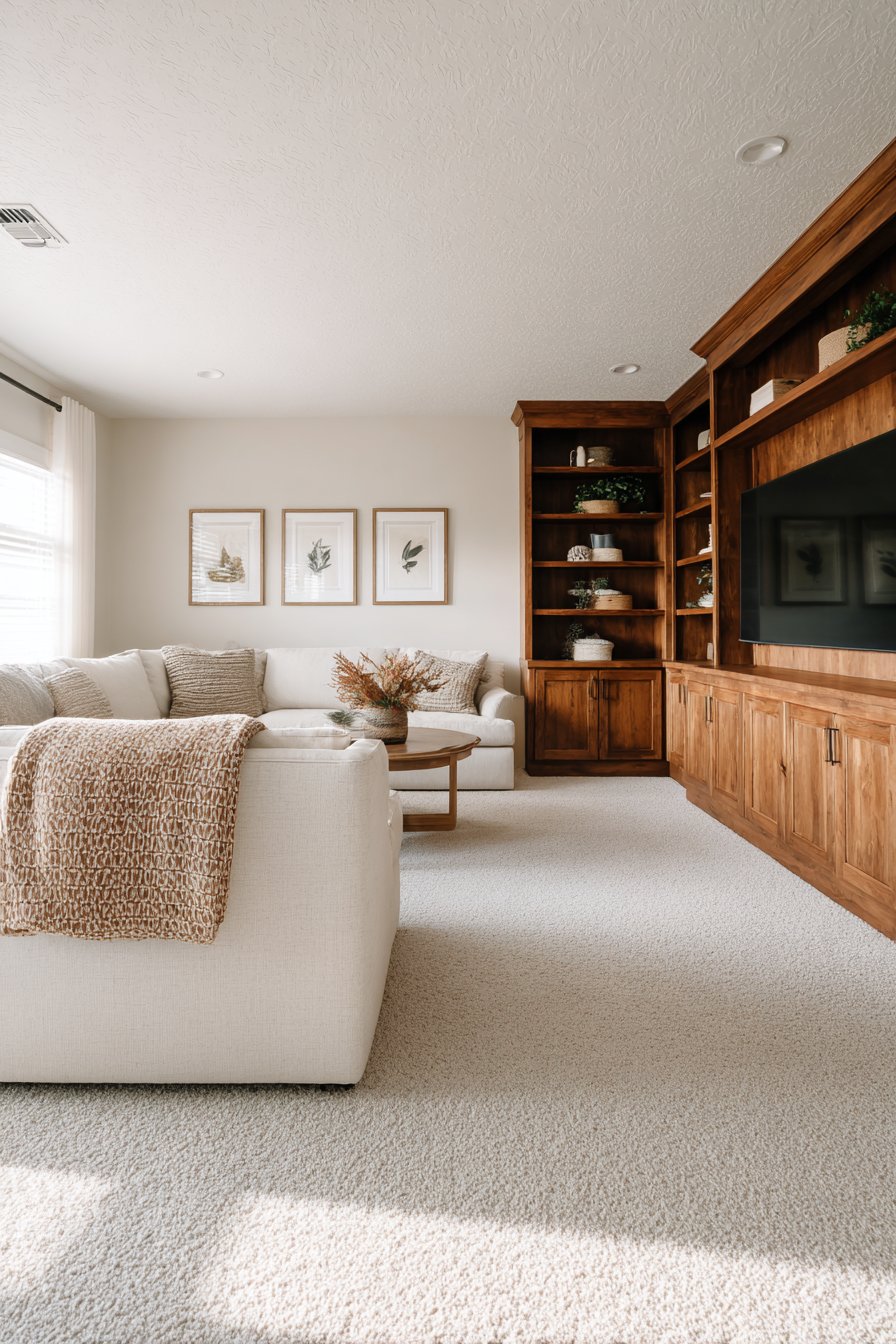
This brown and beige living room idea showcases how built-in storage can become a stunning focal point rather than merely functional furniture. The entertainment wall features custom shelving crafted from rich walnut brown wood, with clean lines that speak to contemporary design sensibilities. The floating media console continues this aesthetic with its streamlined profile and elegant brass hardware that catches light and adds subtle metallic accent without overwhelming the neutral palette.
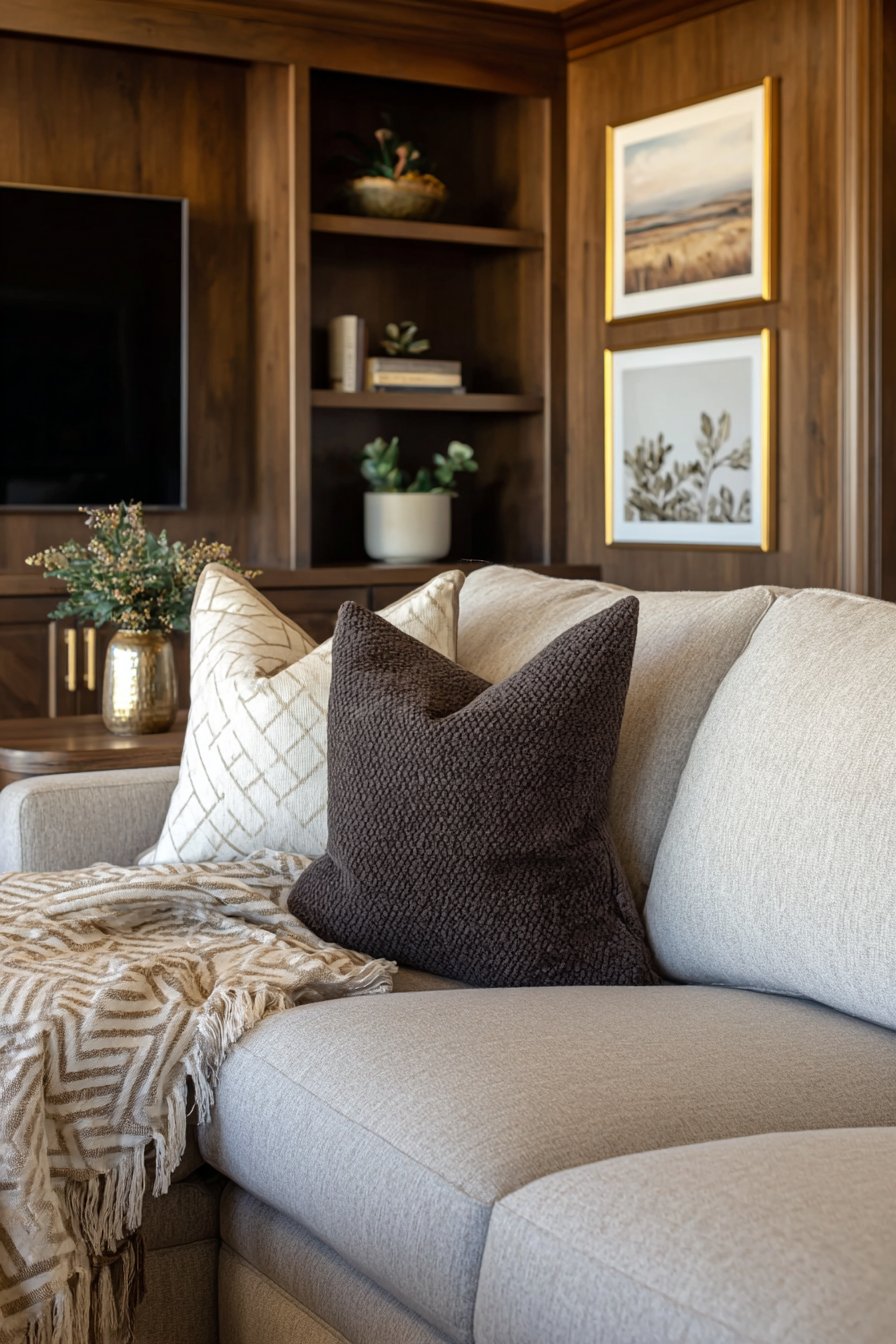
The walnut’s deep, chocolate-brown tones provide visual weight and grounding to the room, while the natural wood grain patterns create organic visual interest that draws the eye across the entire wall unit. Open and closed storage compartments are thoughtfully arranged to display curated decor items, family photos, and favorite books while concealing less attractive necessities like cables and electronics. This balance between display and concealment is essential in maintaining the room’s sophisticated appearance.
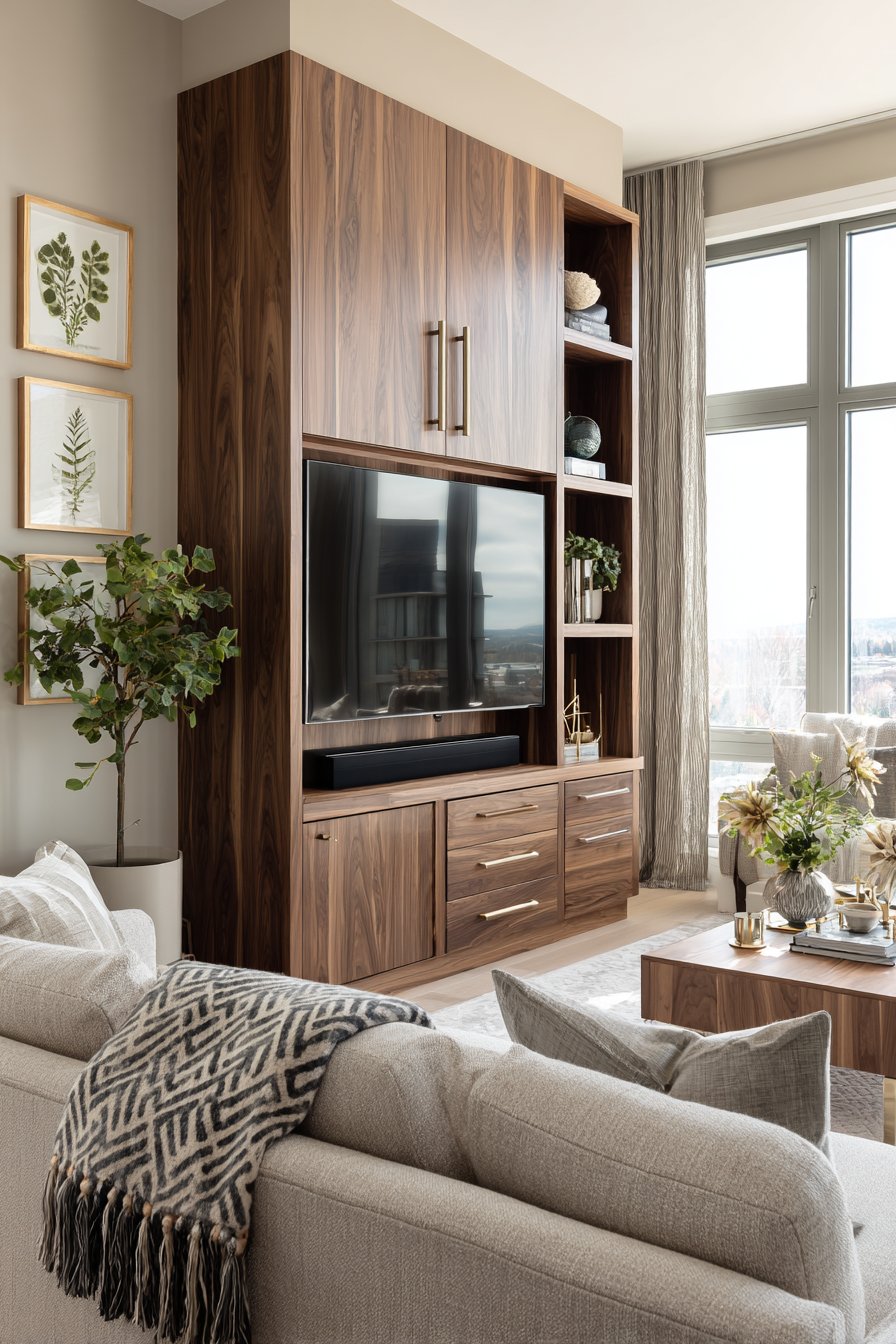
Surrounding walls painted in a warm beige create the perfect neutral backdrop for framed botanical prints that bring a touch of nature indoors. These artistic elements introduce subtle color variations within the beige spectrum—from cream to tan to soft taupe—adding depth without disrupting the cohesive color scheme. The beige walls also help reflect light throughout the space, preventing the dark walnut from making the room feel heavy or cave-like.
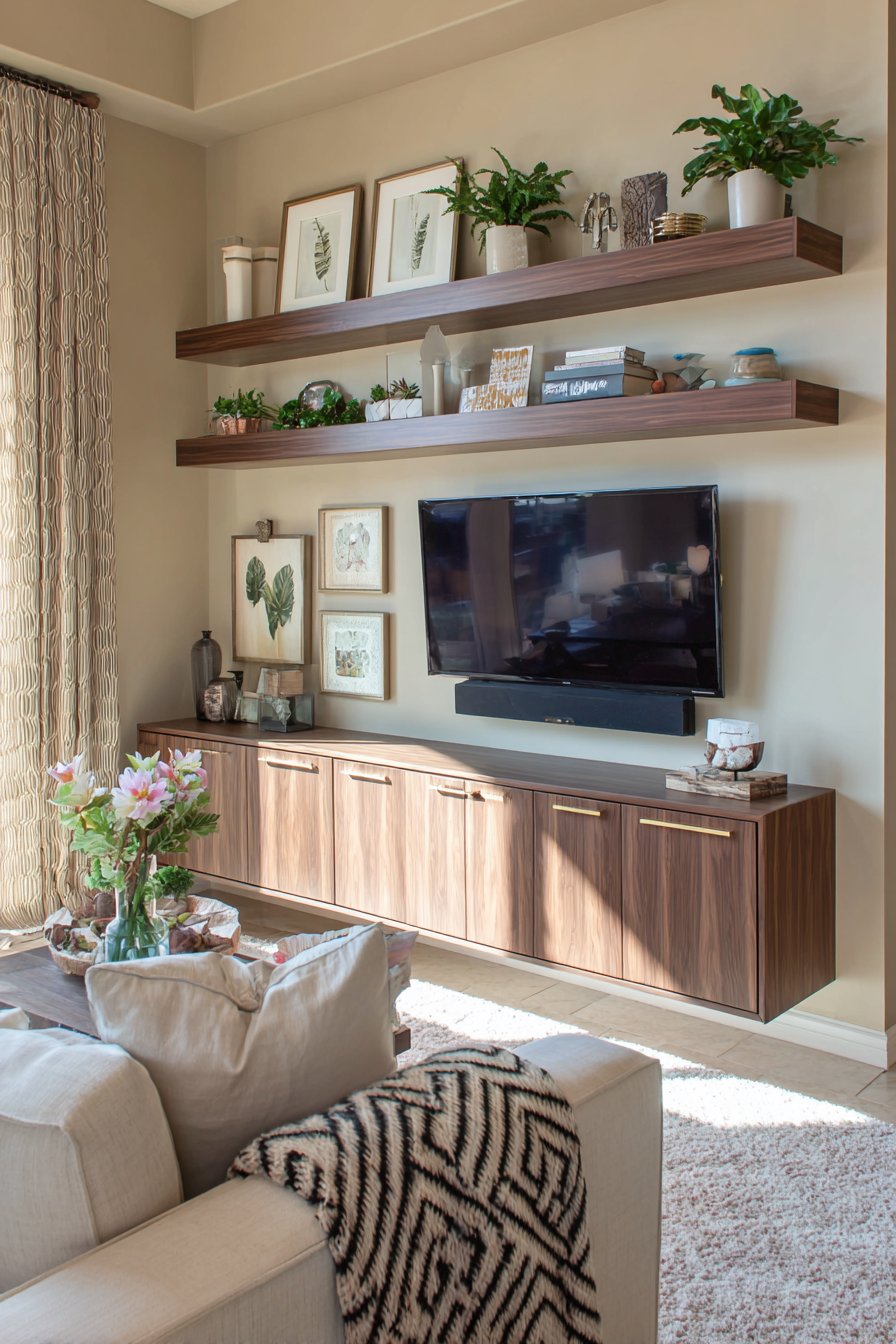
Facing the entertainment center, a beige performance fabric sofa offers practical luxury. This family-friendly upholstery choice resists stains and wear while maintaining a refined appearance that complements the room’s modern aesthetic. A geometric patterned throw in complementary brown tones drapes casually across the sofa back, introducing pattern and visual texture while reinforcing the brown and beige color story throughout the space.
Key Design Tips:
- Invest in built-in cabinetry for a custom, high-end appearance
- Mix open and closed storage to balance display and functionality
- Choose performance fabrics in beige for sofas in high-traffic family rooms
- Use brass or gold-toned hardware as subtle metallic accents
- Incorporate botanical or nature-inspired artwork to soften modern lines
3. Fireside Gathering in Espresso and Taupe
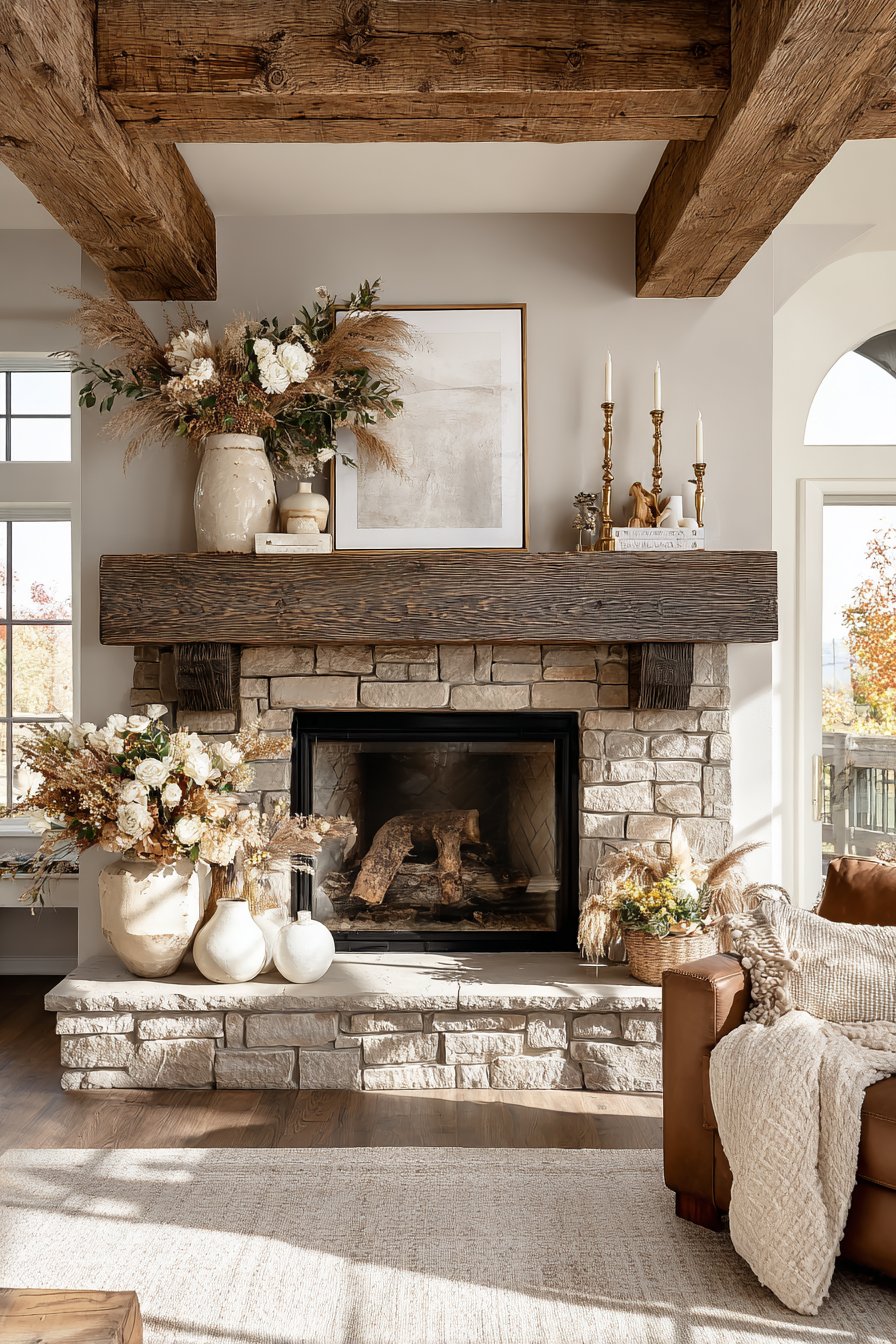
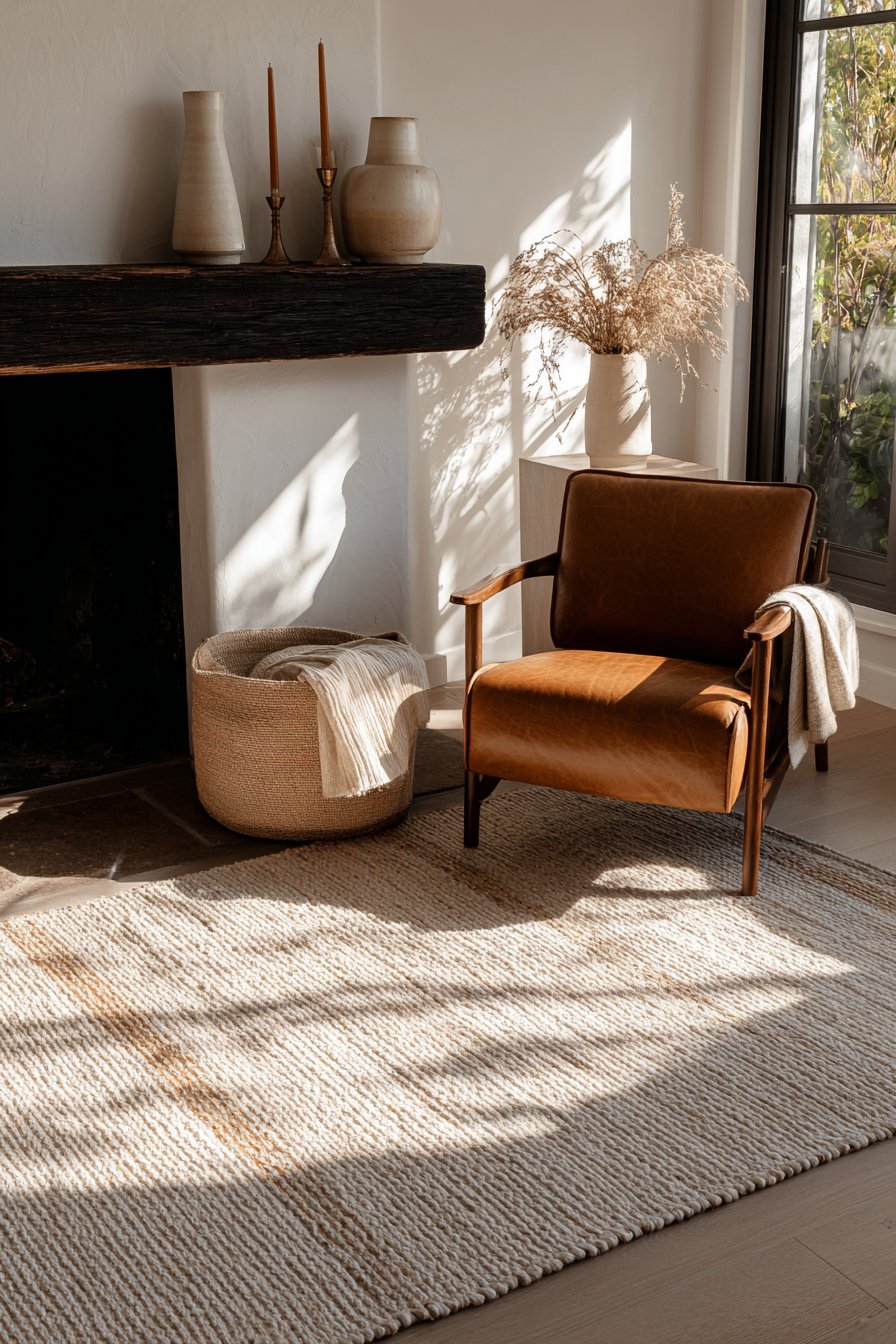
The traditional fireplace serves as the undeniable focal point in this cozy brown and beige living room, with its rustic wood mantel crafted from deep espresso brown timber. This substantial architectural element brings immediate warmth and character to the space, providing both visual interest and practical functionality during cooler months. The mantel’s rich, dark finish creates a striking contrast against lighter surrounding elements, drawing the eye and establishing a natural gathering point for the room’s design.
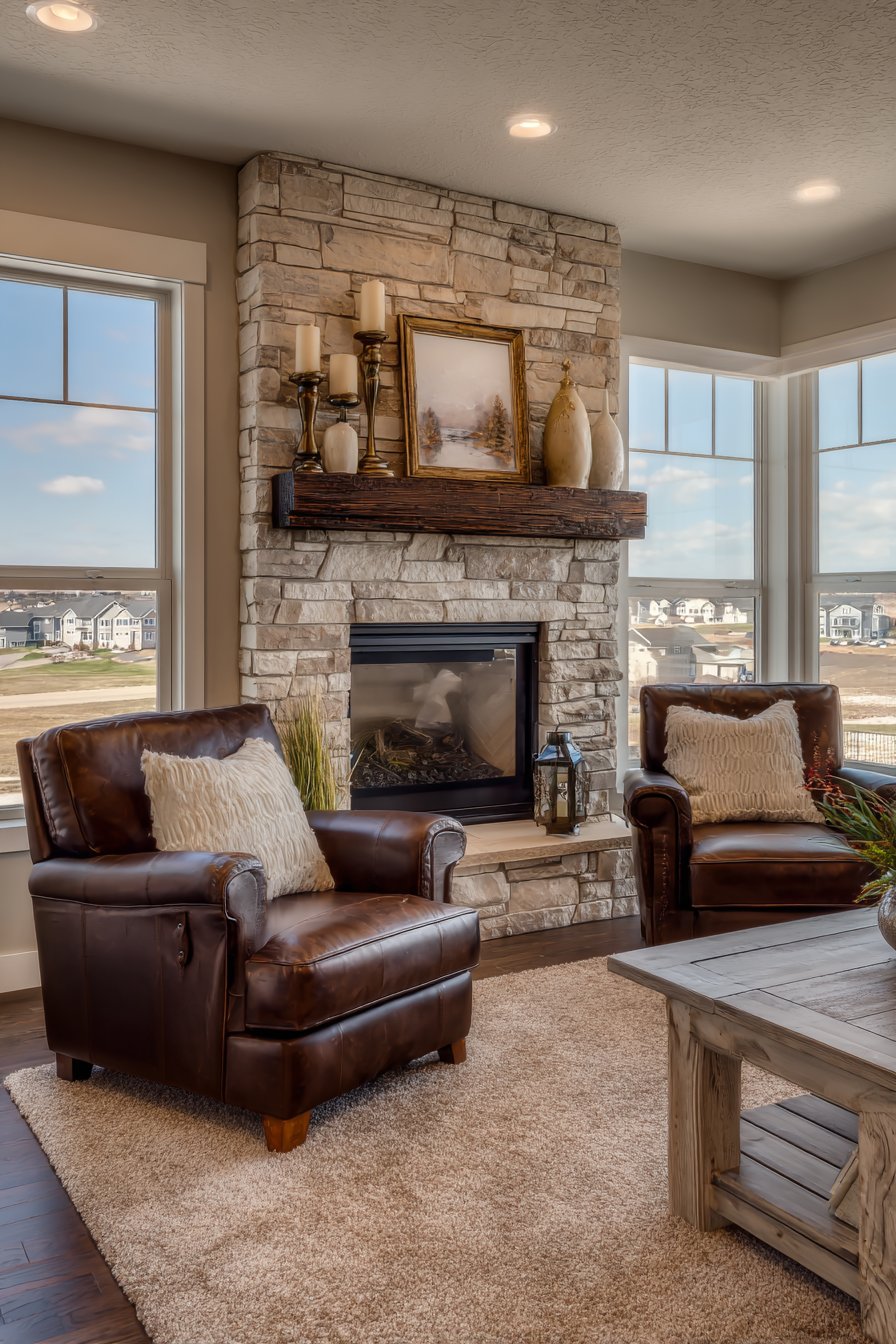
The mantel styling demonstrates the art of curated simplicity, displaying ceramic vases in cream and taupe tones that echo the room’s neutral palette while adding sculptural interest. Brass candlesticks introduce a touch of metallic warmth that complements both the brown and beige tones beautifully. This careful arrangement avoids the cluttered appearance that can result from over-styling, instead creating a balanced, intentional display that feels both elegant and approachable.
Anchoring the seating area in front of the fireplace, a beige wool area rug features a subtle brown border that ties the floor covering to the room’s deeper tones. The rug’s high-quality wool construction provides both comfort underfoot and durability for years of use, while its neutral coloring ensures it won’t compete with other design elements. Two brown leather club chairs positioned for conversation flank the fireplace, their classic silhouettes and rich patina suggesting quality craftsmanship and timeless style.
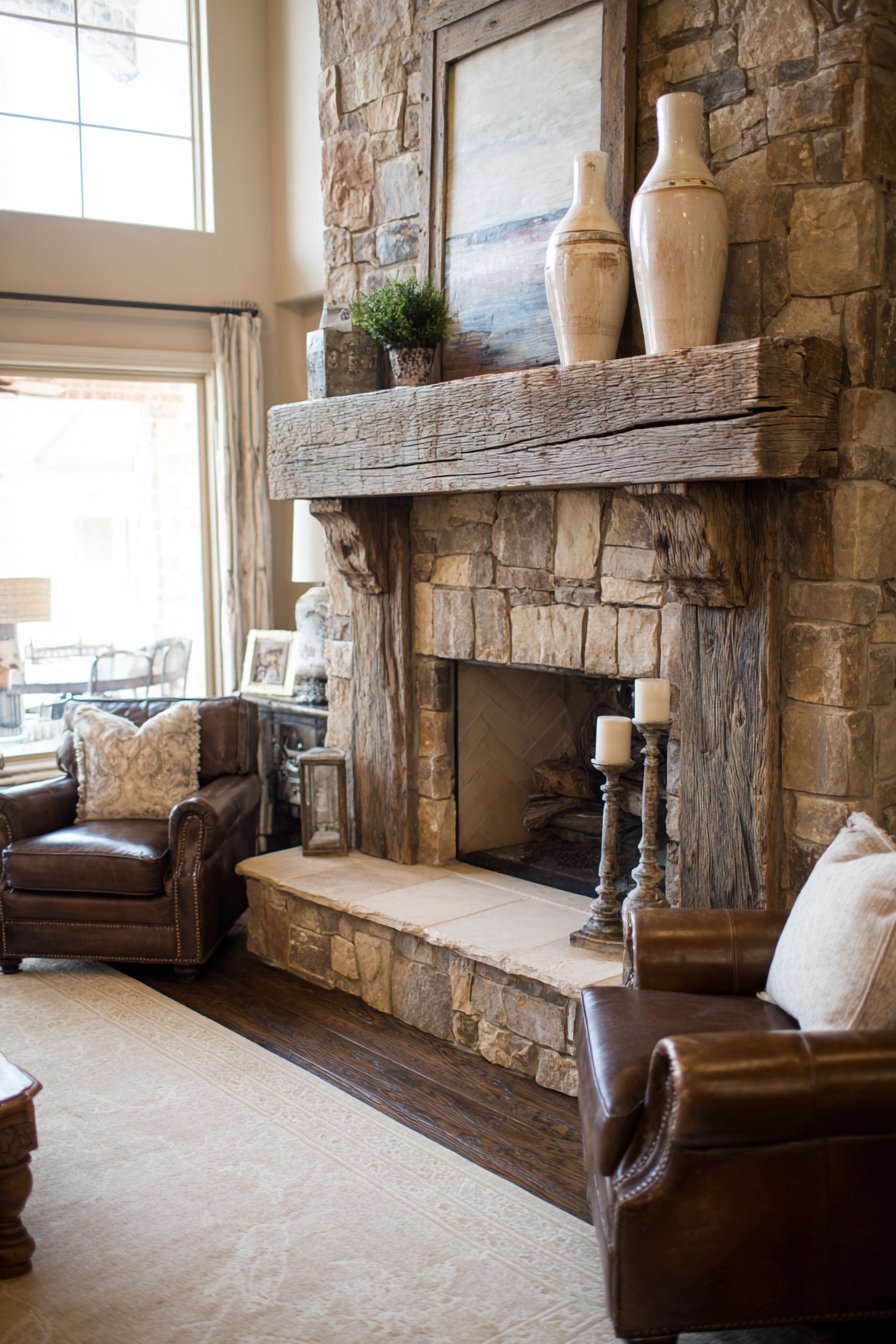
Natural light streaming through nearby windows creates an ever-changing play of light and shadow throughout the day, highlighting the room’s varied textures and tones. Soft afternoon sunshine particularly enhances the warmth of the brown leather and espresso wood, making them glow with inviting richness. This connection to natural light cycles helps the space feel alive and dynamic rather than static, changing subtly with the passing hours.
Key Design Tips:
- Style mantels with odd-numbered groupings for visual balance
- Choose leather club chairs for classic sophistication and aging character
- Position conversation seating to encourage face-to-face interaction
- Layer lighting with both ambient and task options for evening use
- Select wool rugs for durability in high-traffic areas around fireplaces
4. Tufted Velvet Elegance with Nested Tables
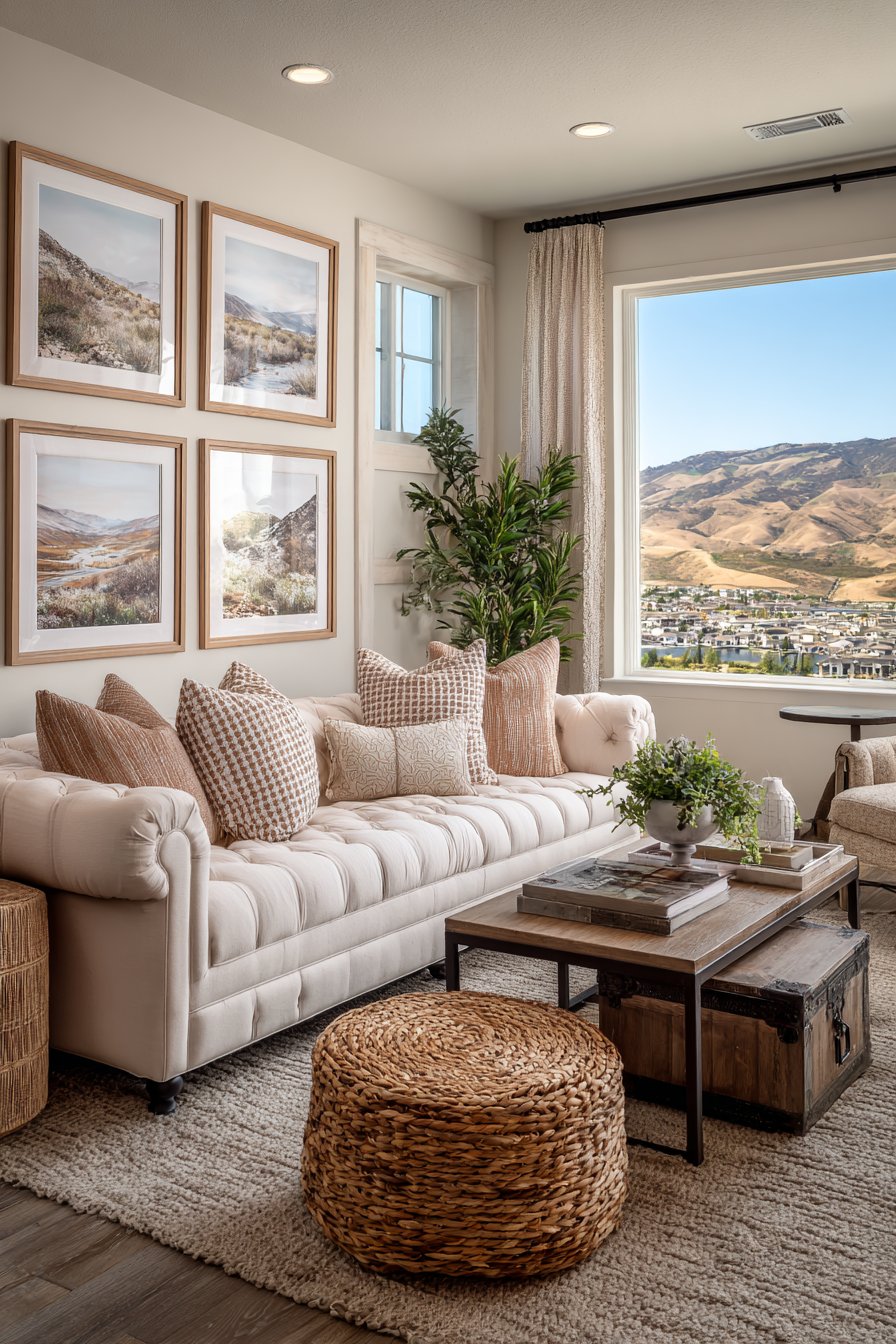
Sophisticated texture takes center stage in this brown and beige living room idea, where an elegant tufted beige velvet sofa commands attention as the room’s centerpiece. The button-tufted upholstery creates a quilted pattern across the sofa’s back and arms, adding dimension and visual interest to what could otherwise be a simple neutral piece. The velvet’s inherent light-reflecting properties mean the sofa appears to change tone throughout the day, sometimes appearing more golden-beige in morning light and cooler taupe in evening hours.
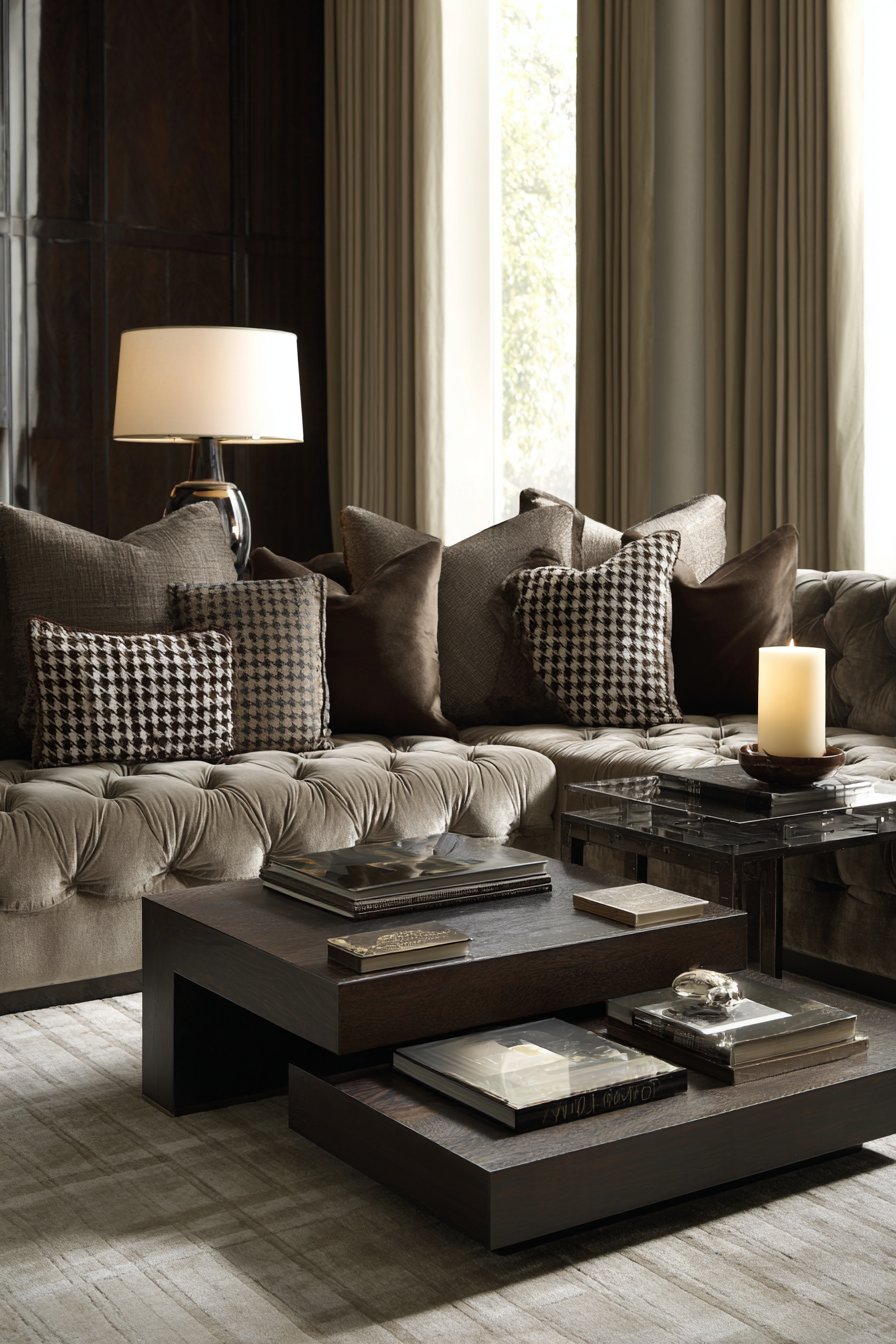
The accent pillows layered across the velvet sofa demonstrate the design principle of pattern mixing within a limited color palette. Houndstooth patterns in brown and beige create classic visual texture, while subtle brown stripes add linear interest. Each pattern works because it maintains the same color story, proving that you can introduce multiple patterns successfully when you keep the palette cohesive. The varying sizes and shapes of the pillows—square, rectangular, and lumbar—add to the collected, lived-in feel.
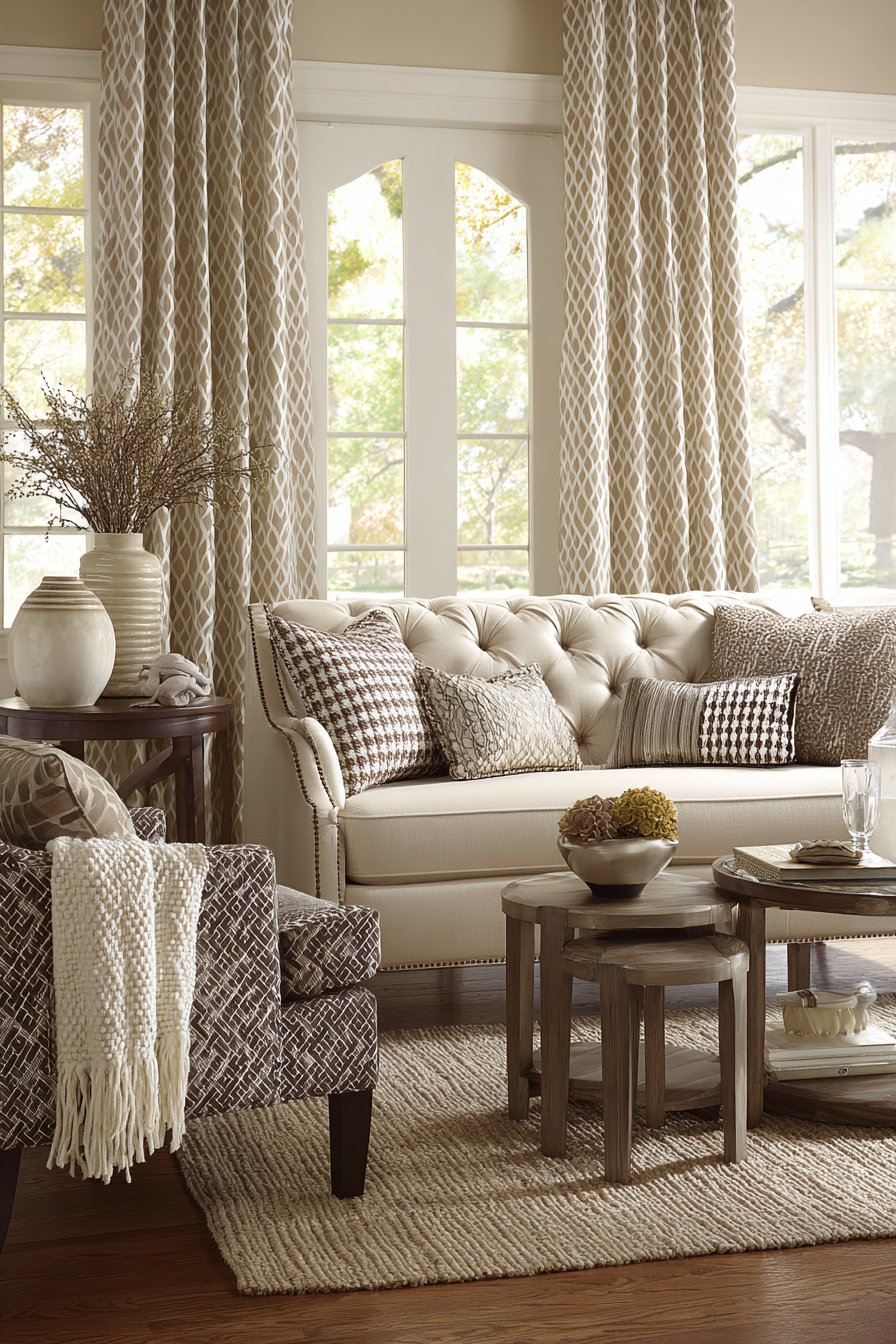
A nesting coffee table set in light and dark brown wood tones provides the flexibility modern living requires. These versatile pieces can be used together for a layered look or separated when additional surface space is needed for entertaining. The contrast between the lighter natural wood and darker stained wood adds visual depth while maintaining the brown and beige theme. This functional furniture choice proves that practical considerations and beautiful design need not be mutually exclusive.
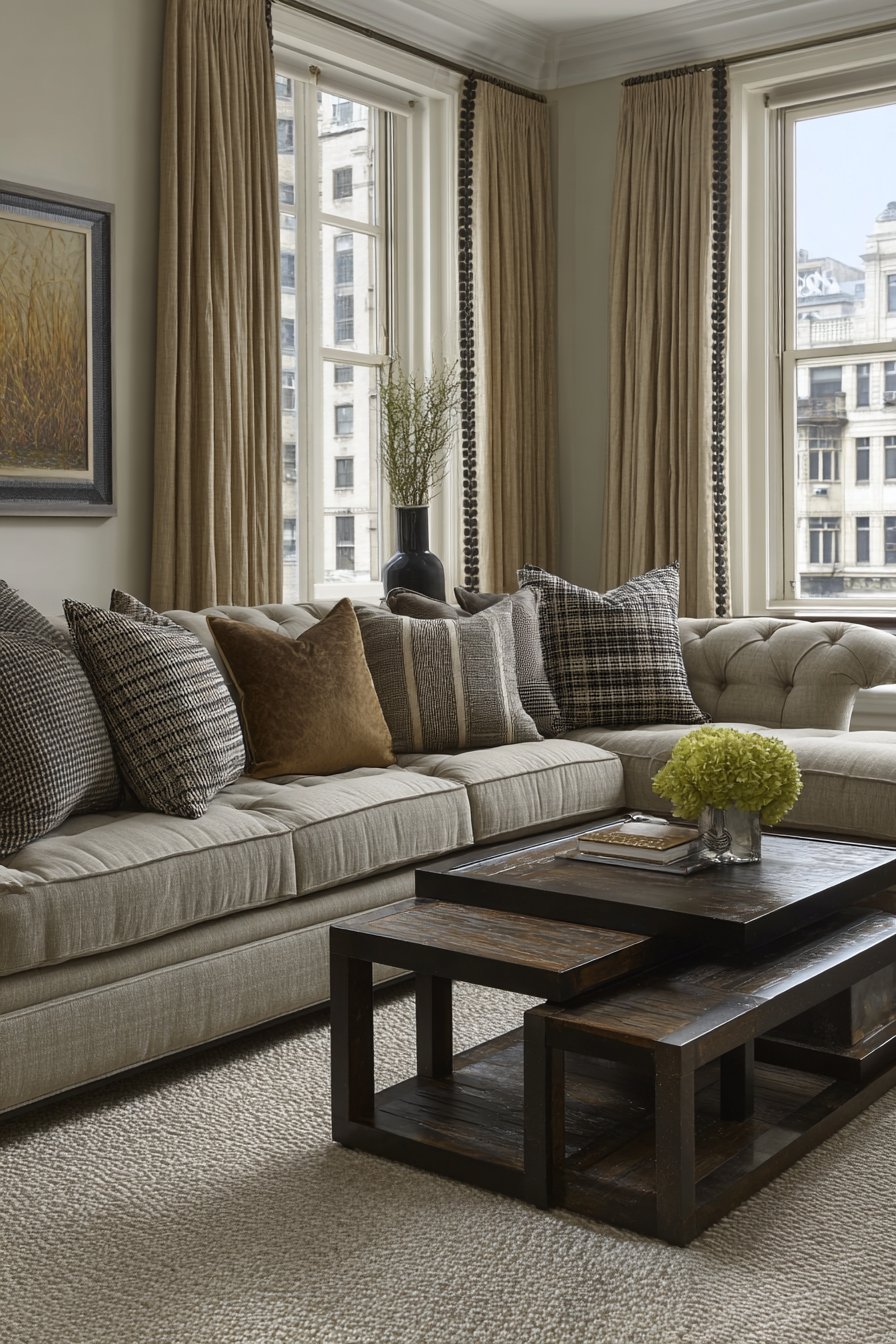
Natural jute curtains in beige filter sunlight beautifully while adding another layer of organic texture to the space. Unlike synthetic window treatments, these natural fiber curtains have inherent texture variations that catch light interestingly and contribute to the room’s overall emphasis on tactile richness. The curtains’ neutral tone ensures they blend seamlessly with the walls while their texture makes them a considered design element rather than an afterthought.
Key Design Tips:
- Choose velvet upholstery in beige for luxurious texture that reflects light
- Mix patterns with confidence when maintaining a consistent color palette
- Invest in nesting tables for flexibility in small to medium-sized spaces
- Layer pillows in varying sizes for a designer-approved collected look
- Use natural fiber window treatments to add organic texture
5. Vaulted Ceilings with Exposed Oak Beams
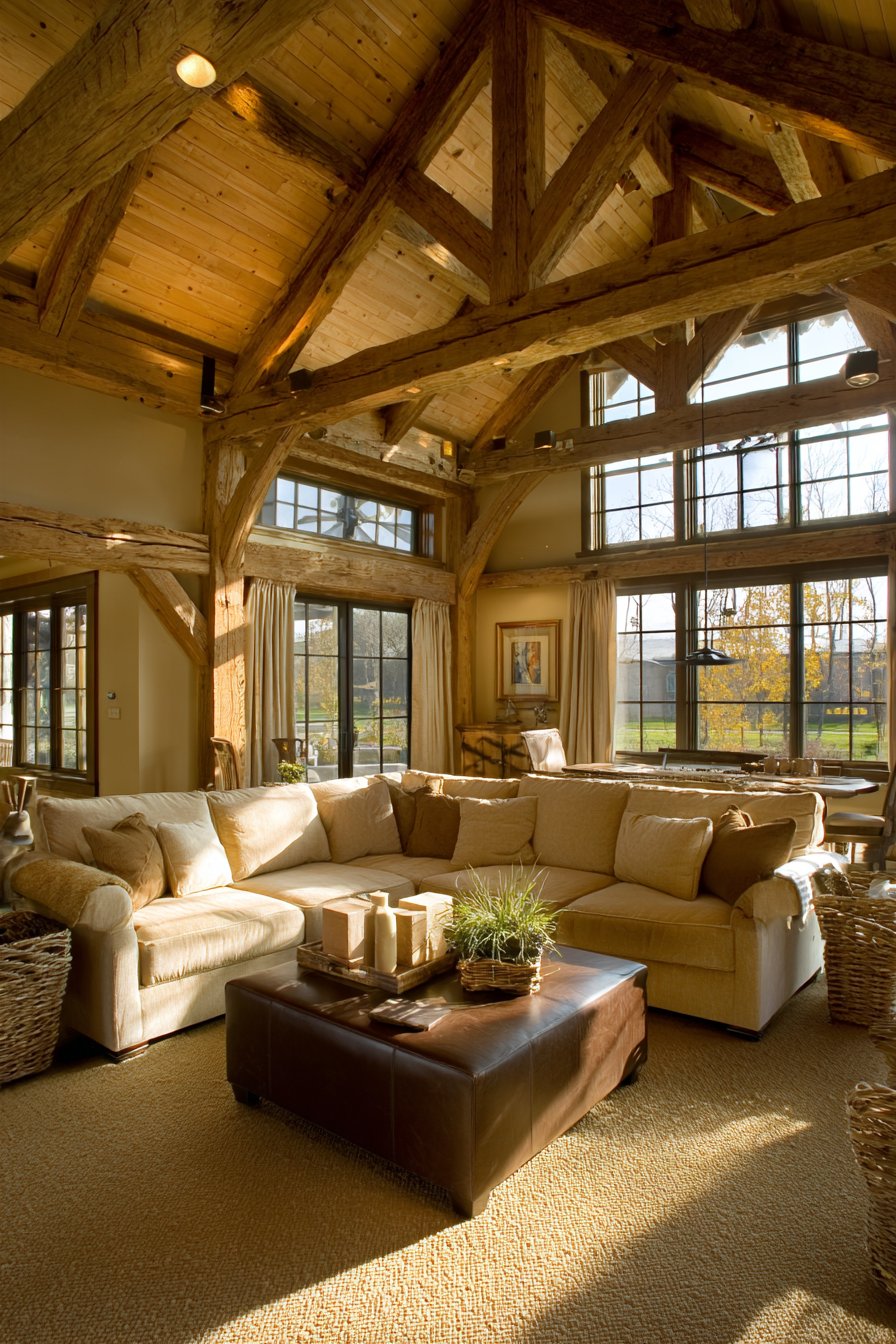
Architectural drama defines this spacious brown and beige living room, where vaulted ceilings feature exposed wooden beams in natural oak brown that draw the eye upward and emphasize the room’s impressive vertical scale. These substantial structural elements serve both aesthetic and practical purposes, adding rustic warmth while celebrating the home’s architectural bones. The beams’ natural wood grain creates linear patterns across the ceiling that add visual interest to what could otherwise be an overwhelming expanse of empty space.
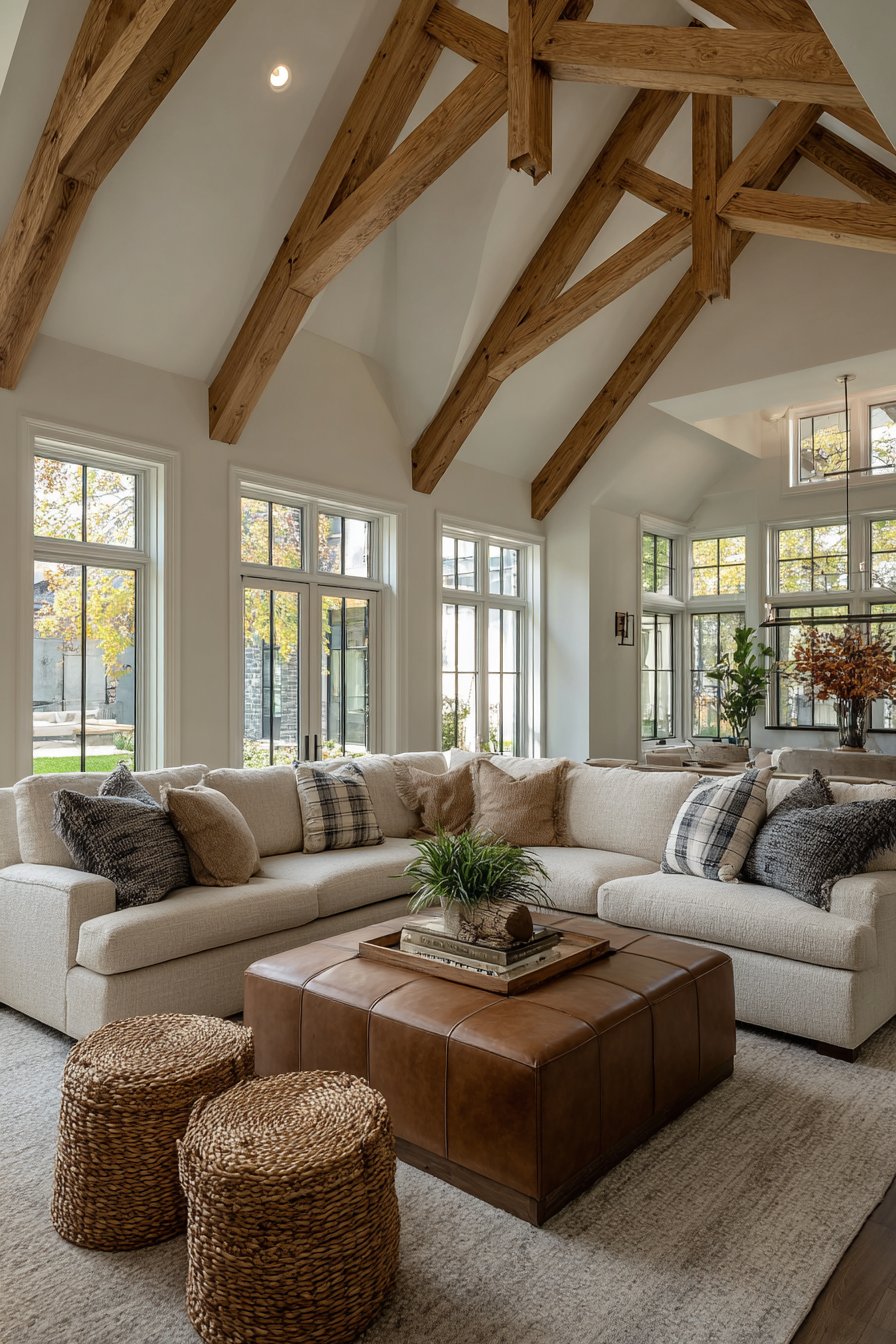
Below this architectural canopy, a large L-shaped sectional upholstered in oatmeal beige fabric provides ample seating for family gatherings and entertaining. The sectional’s generous proportions match the room’s scale appropriately—a crucial consideration in spaces with high ceilings where standard-sized furniture can appear diminished. The neutral beige upholstery ensures the large piece doesn’t visually overwhelm the space despite its substantial size, while its comfortable, deep-cushioned construction invites relaxation.
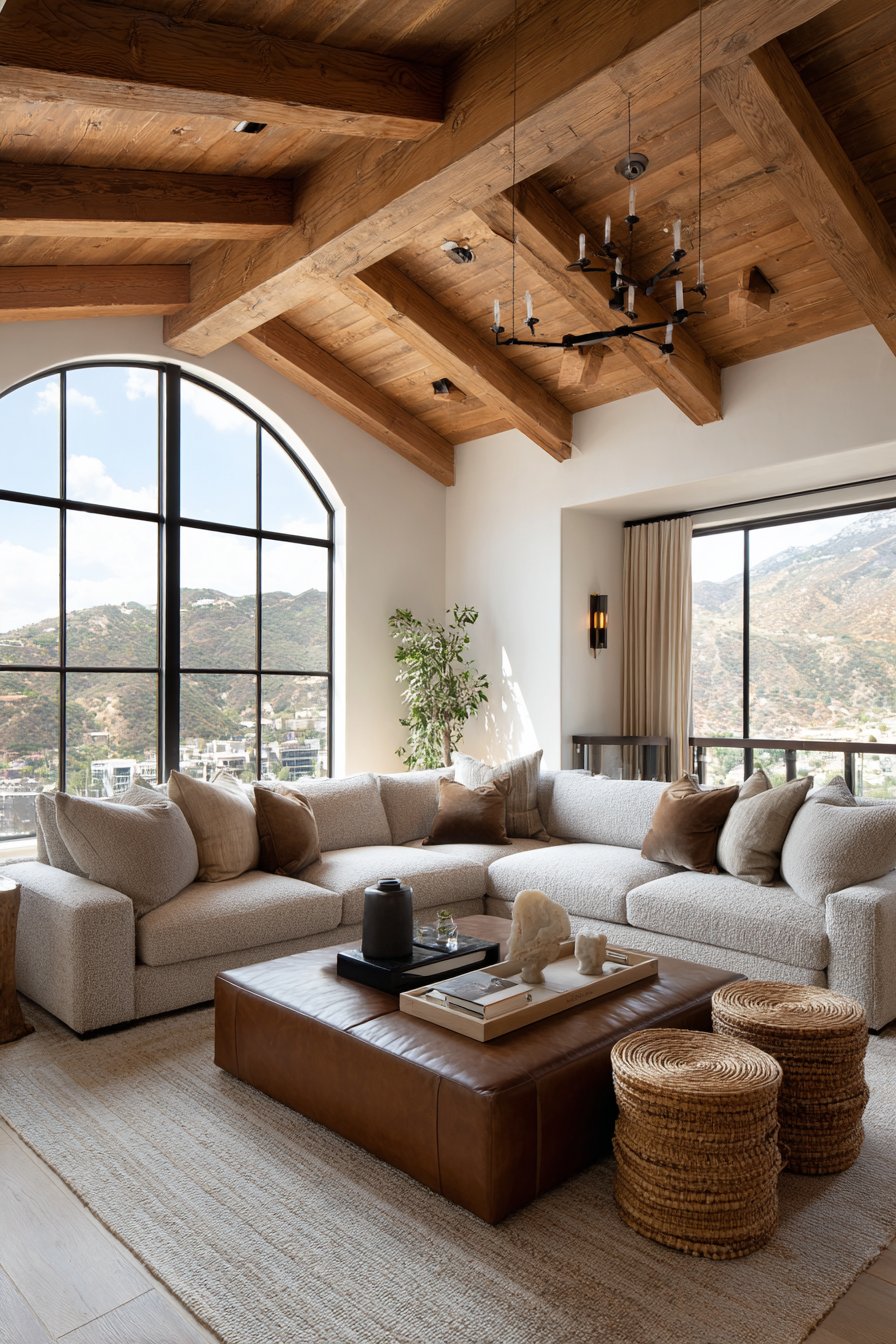
Centered within the sectional arrangement, a square ottoman coffee table with brown leather upholstery serves multiple functions. It provides a soft-edged surface for drinks and books, offers additional seating when needed, and can even serve as a comfortable footrest for movie nights. The leather’s rich brown tone ties back to the ceiling beams, creating visual continuity between the room’s upper and lower elements. This connection helps unify the tall space and prevents the ceiling from feeling disconnected from the living area below.
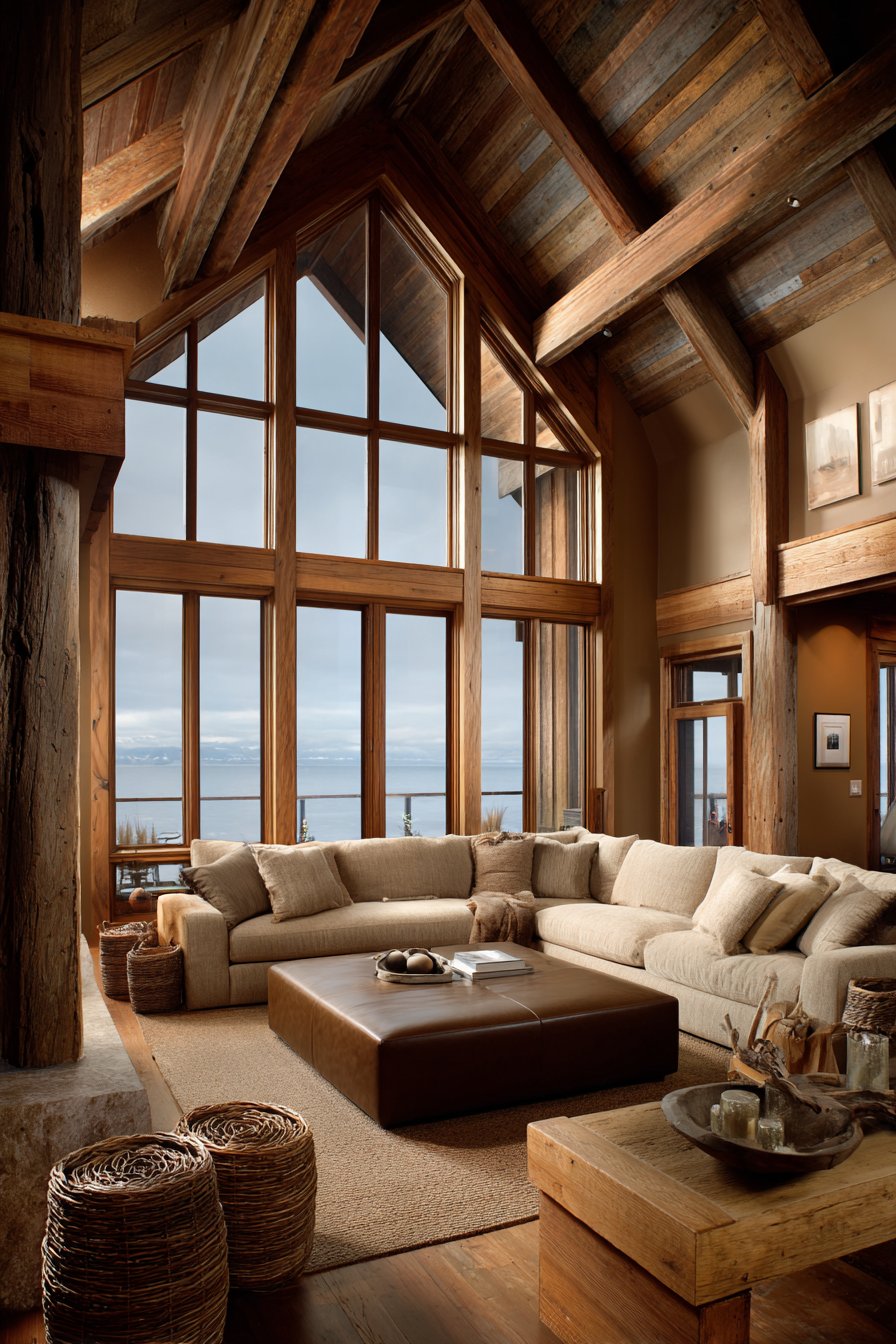
Woven baskets in varying brown tones provide stylish storage solutions while reinforcing the room’s natural, organic aesthetic. These practical accessories might hold throw blankets, children’s toys, or magazine collections, proving that storage needs can be addressed without sacrificing design integrity. Floor-to-ceiling windows create an airy feel and flood the space with natural light, which is essential in rooms with dramatic architecture to prevent them from feeling cavernous or cold.
Key Design Tips:
- Scale furniture appropriately for rooms with high ceilings
- Use exposed beams to add warmth to modern or contemporary spaces
- Choose ottoman coffee tables for flexibility and soft edges in family rooms
- Incorporate natural storage solutions like woven baskets in coordinating tones
- Maximize natural light in large spaces to maintain warmth and connection
6. Window-Side Reading Retreat
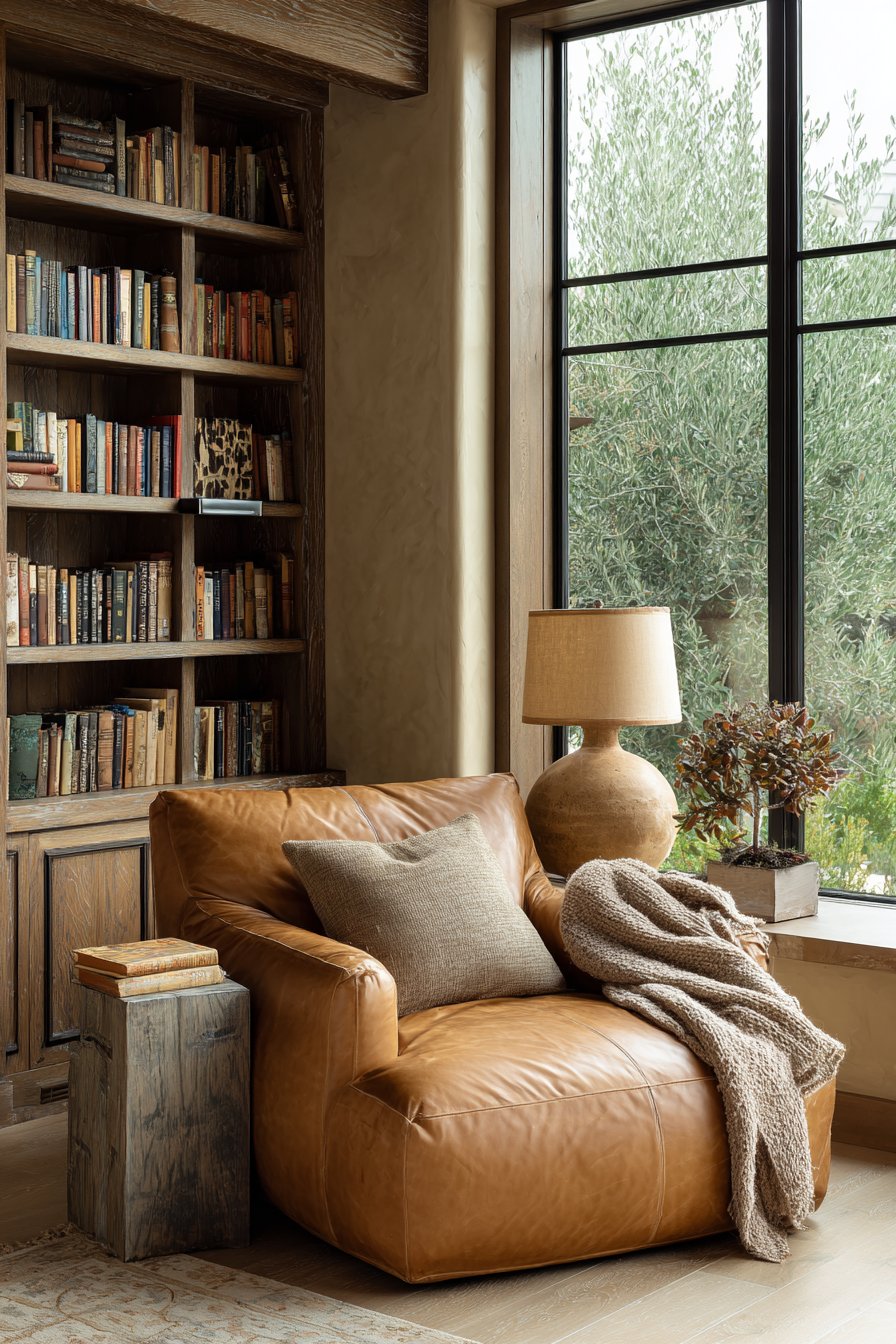
This brown and beige living room idea demonstrates how thoughtful space planning can create intimate zones within a larger room. Positioned strategically near a large window to capitalize on natural light, a comfortable oversized armchair in cognac brown leather becomes a dedicated reading nook. The leather’s rich color has aged beautifully, showing the kind of authentic patina that only develops with regular use—creases along the arms, slight variations in tone, and a supple quality that suggests years of comfort.
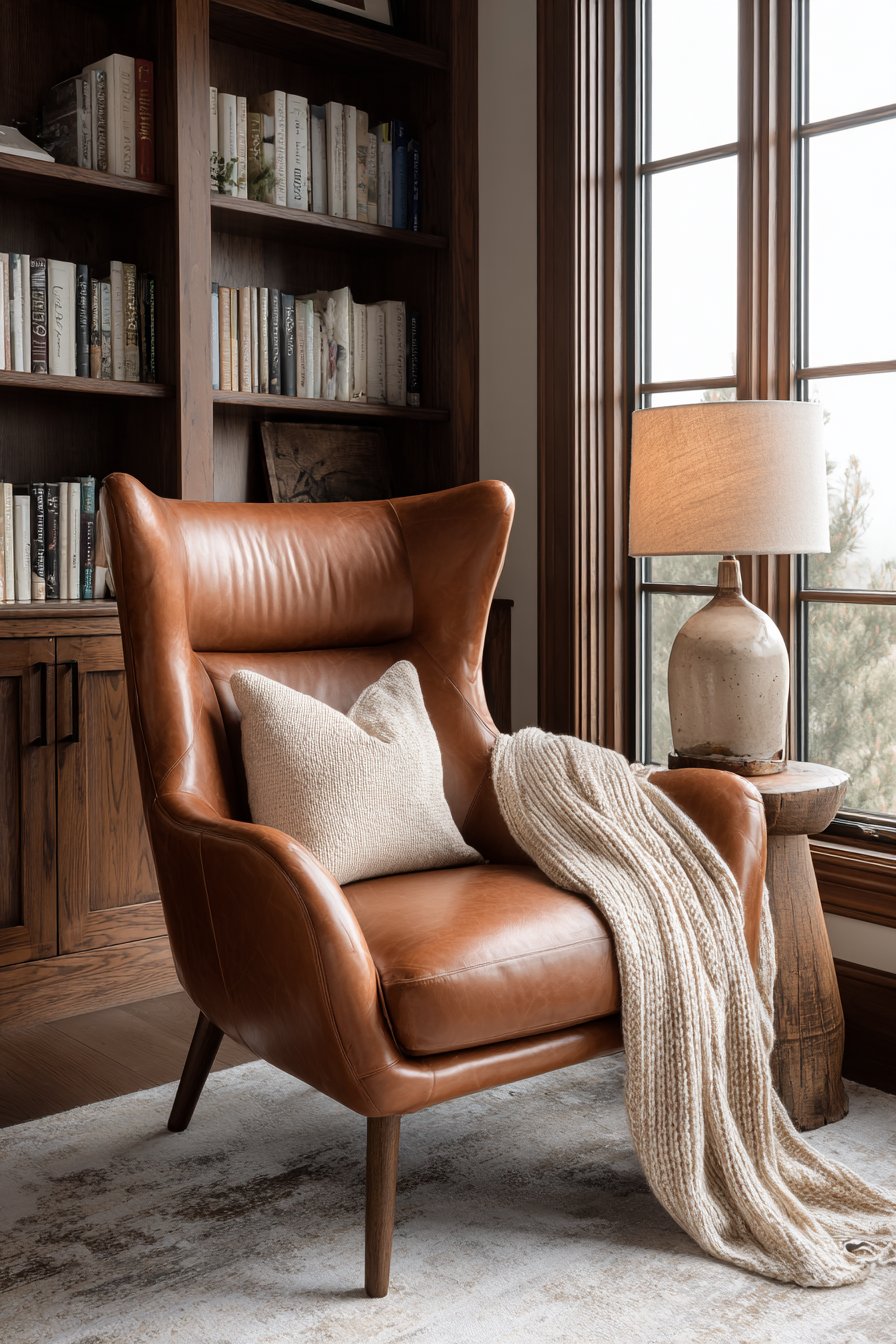
A beige knit throw blanket drapes casually over the chair’s arm, its chunky texture providing both visual interest and practical warmth for cooler reading sessions. This deliberately casual styling makes the space feel lived-in rather than staged, suggesting actual use rather than just aesthetic consideration. The throw’s neutral beige tone ensures it complements rather than competes with the leather’s statement-making brown, while its handcrafted quality adds to the nook’s cozy appeal.
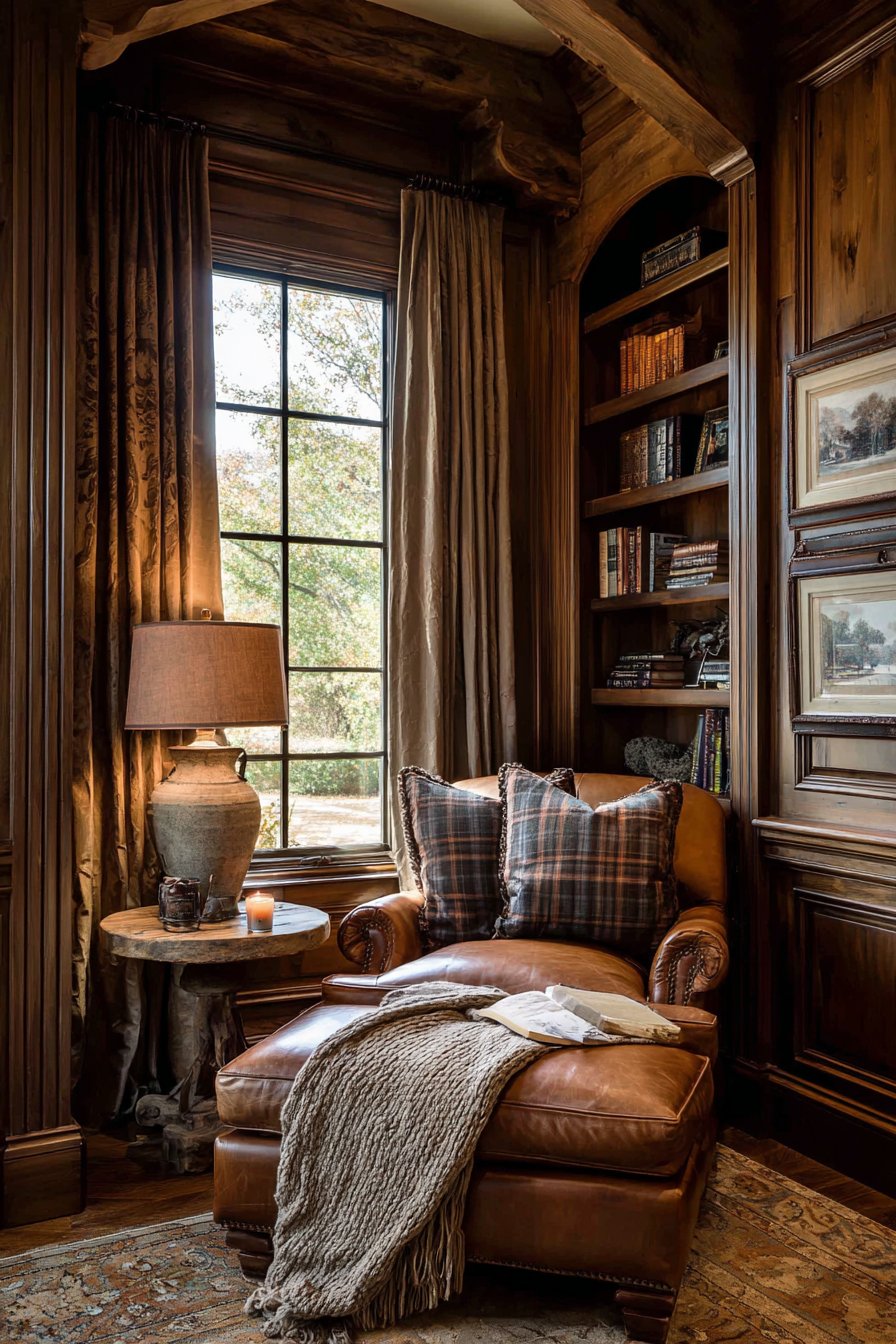
A small side table in reclaimed wood sits within easy reach, holding a ceramic lamp with a beige linen shade that provides focused task lighting for evening reading. The reclaimed wood’s weathered surface tells a story through its imperfections—nail holes, subtle color variations, and aged patina that add character impossible to replicate in new furniture. The lamp’s linen shade diffuses light softly, creating a warm glow that’s easy on the eyes during extended reading sessions.
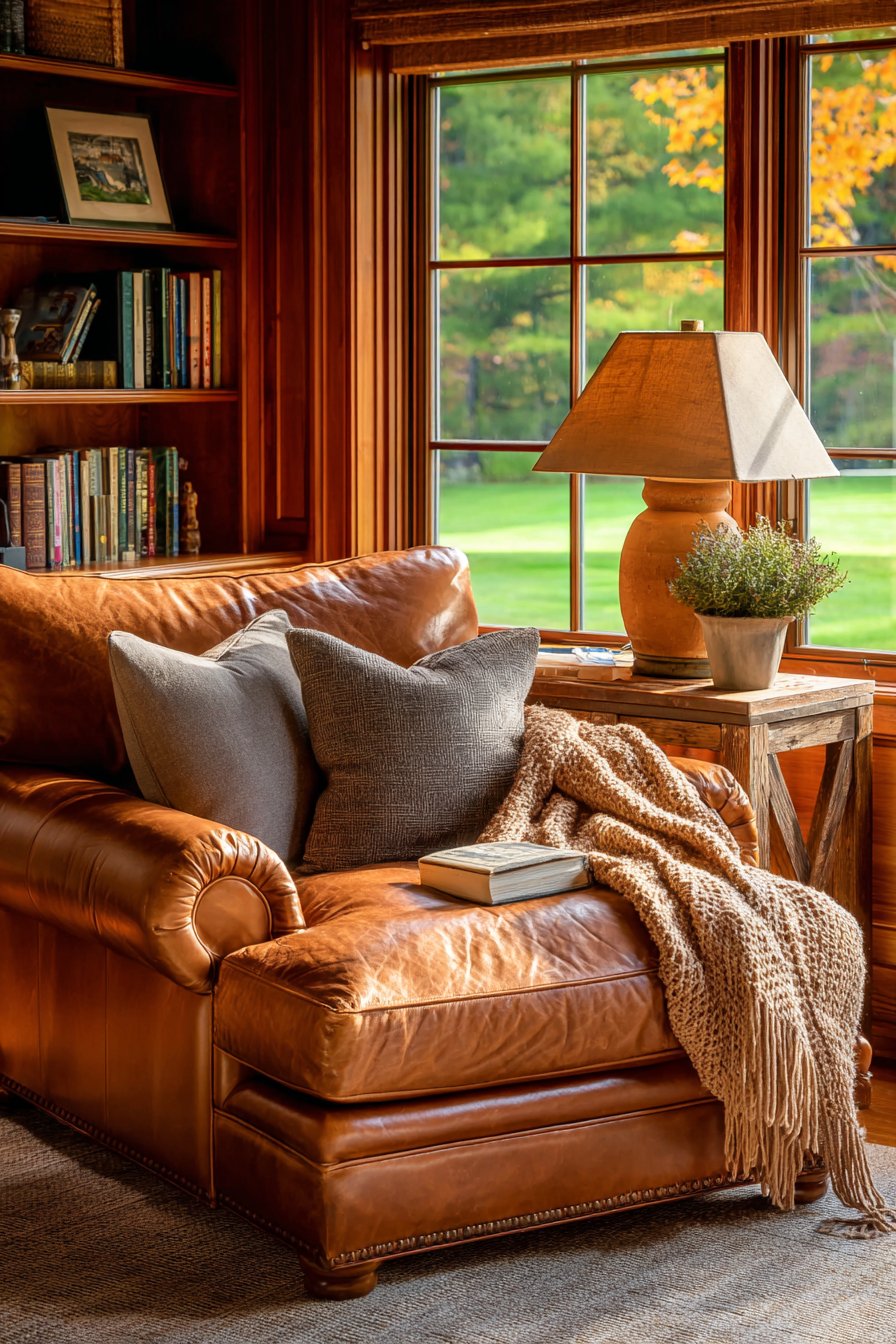
Built-in bookshelves in warm brown wood flank the window, turning the reading nook into a true library corner. These custom shelves display beloved book collections, small potted plants, and meaningful decorative objects, creating a personalized space that reflects the homeowner’s interests and personality. The brown wood of the shelving ties back to the leather chair and side table, creating a cohesive vignette that feels intentionally designed yet naturally evolved.
Key Design Tips:
- Position reading chairs near natural light sources for comfortable daytime reading
- Choose oversized seating for reading nooks to accommodate various sitting positions
- Add task lighting for evening use with warm-toned bulbs
- Include side tables within easy reach for books, drinks, and reading glasses
- Use built-in shelving to create dedicated library spaces in living rooms
7. Contemporary Low-Profile Sophistication
Modern minimalism meets warm neutrals in this brown and beige living room idea featuring a low-profile sofa in taupe beige with clean lines that epitomize contemporary design. The sofa’s streamlined silhouette avoids unnecessary ornamentation, instead allowing quality construction and thoughtful proportions to speak for themselves. Wooden legs in medium brown walnut finish provide subtle contrast and visual lightness, elevating the piece both literally and figuratively off the floor.
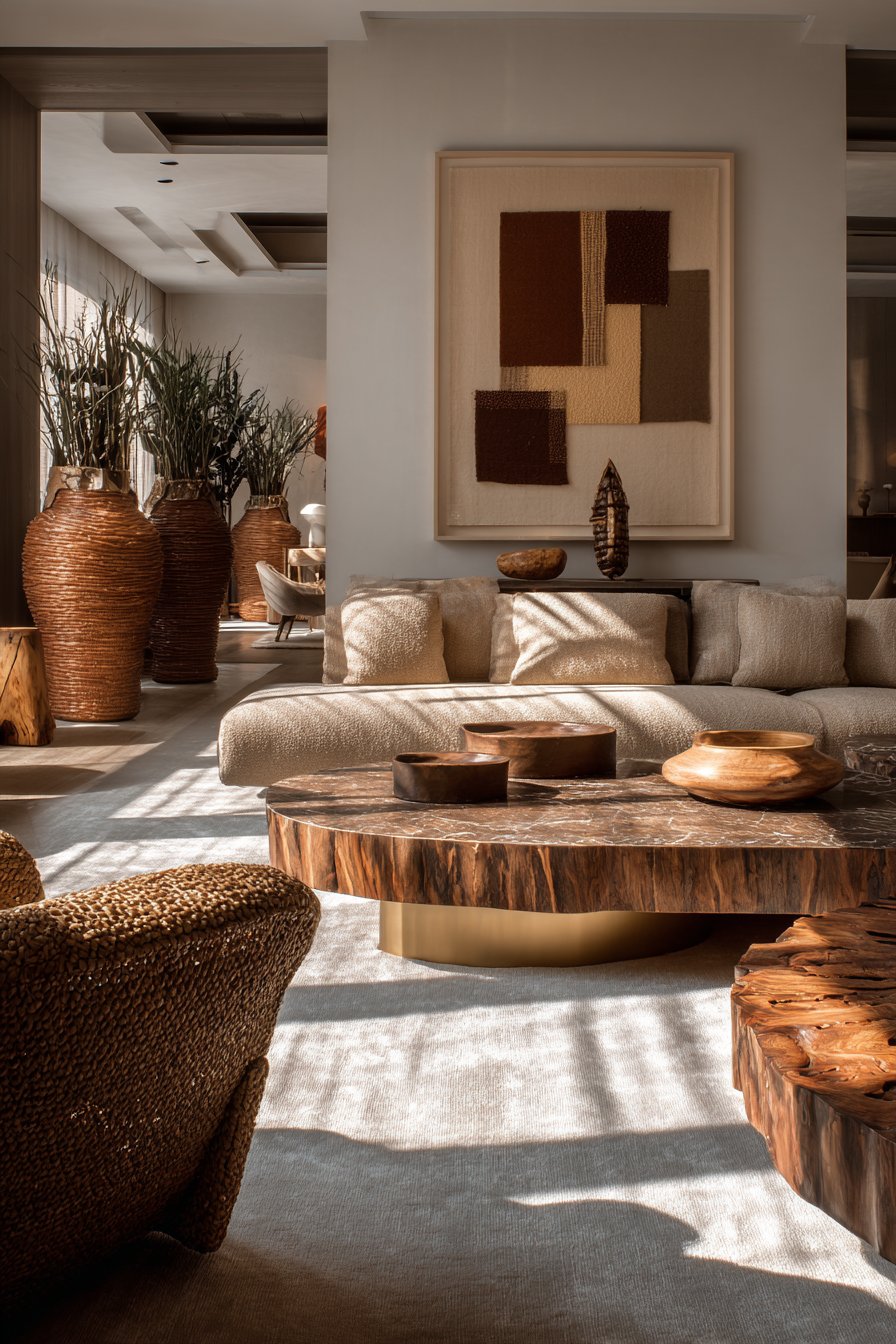
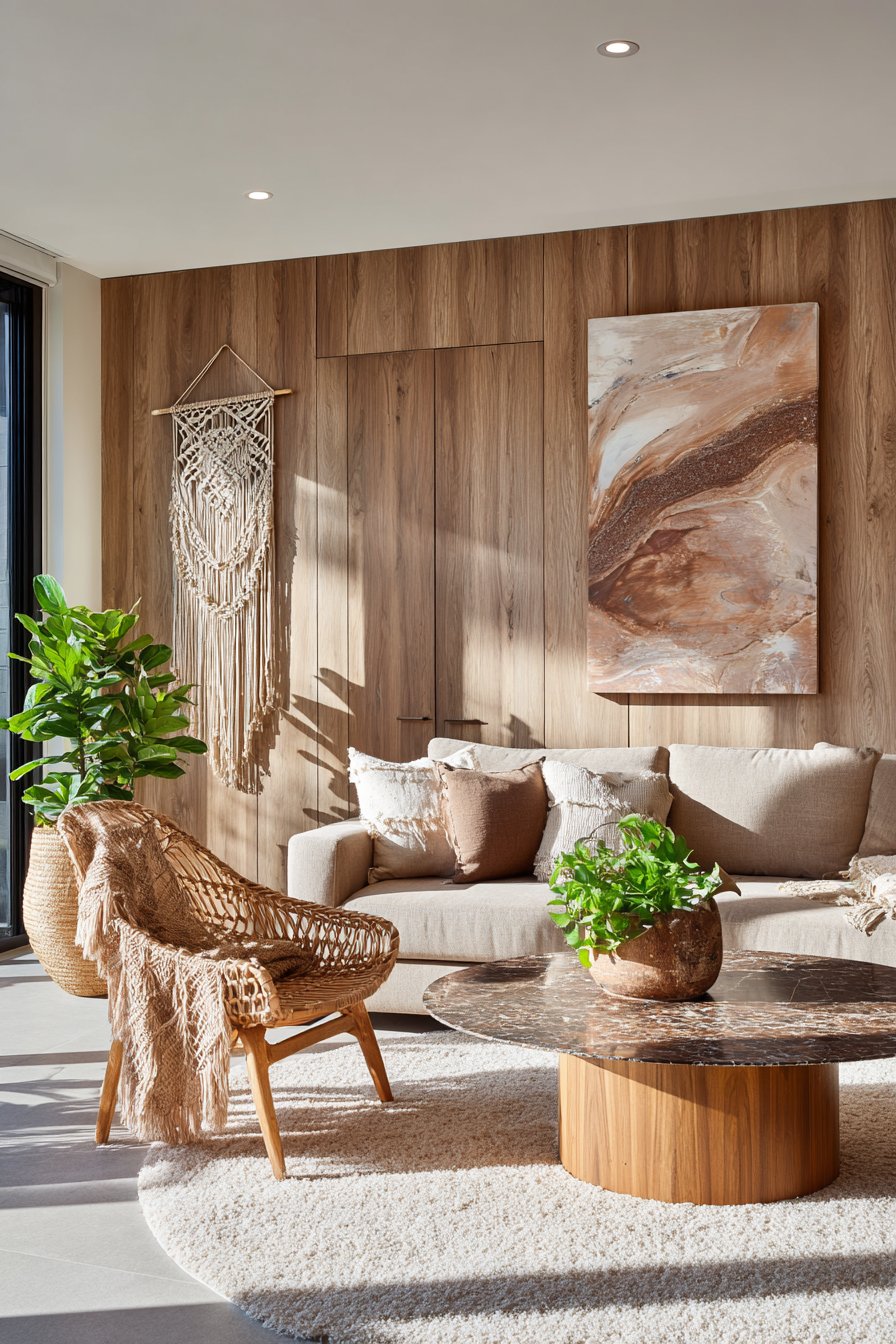
Above the sofa, abstract artwork in brown and cream tones serves as the room’s focal point, its organic shapes and earthy palette reinforcing the space’s connection to natural tones. The oversized scale of the artwork—proportioned appropriately for the wall space—creates impact without requiring multiple smaller pieces that could fragment the visual field. The abstract nature of the art allows viewers to interpret it personally, making it a conversation starter that adds interest without imposing a specific narrative on the space.
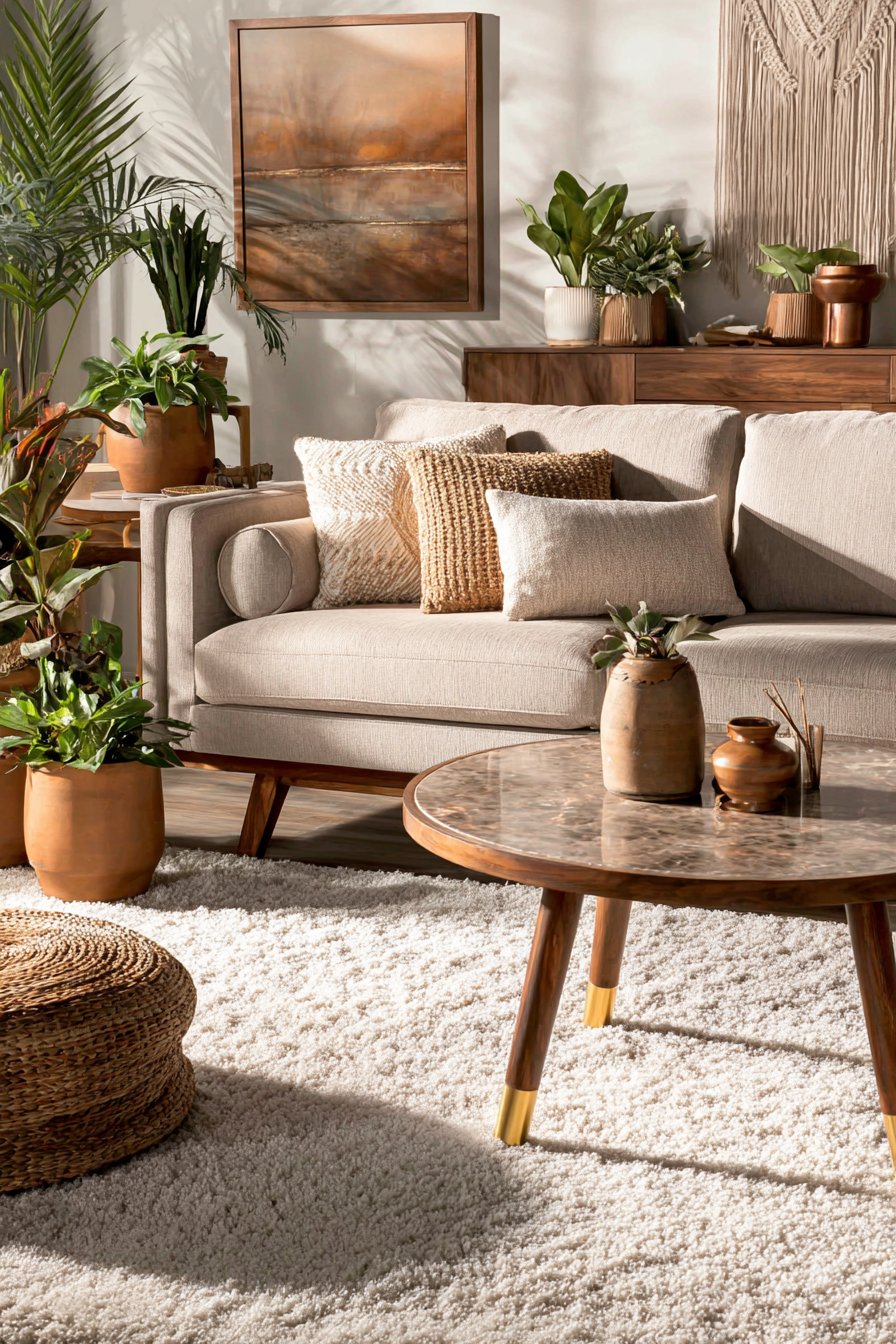
A round coffee table with a brown marble top and brass base centers the room, its circular form providing a pleasing contrast to the sofa’s linear geometry. The marble’s natural veining creates organic patterns in shades of cream, tan, and chocolate brown, ensuring that even this simple form contains visual complexity. The brass base adds a metallic accent that catches light and introduces an element of glamour without overwhelming the understated aesthetic.
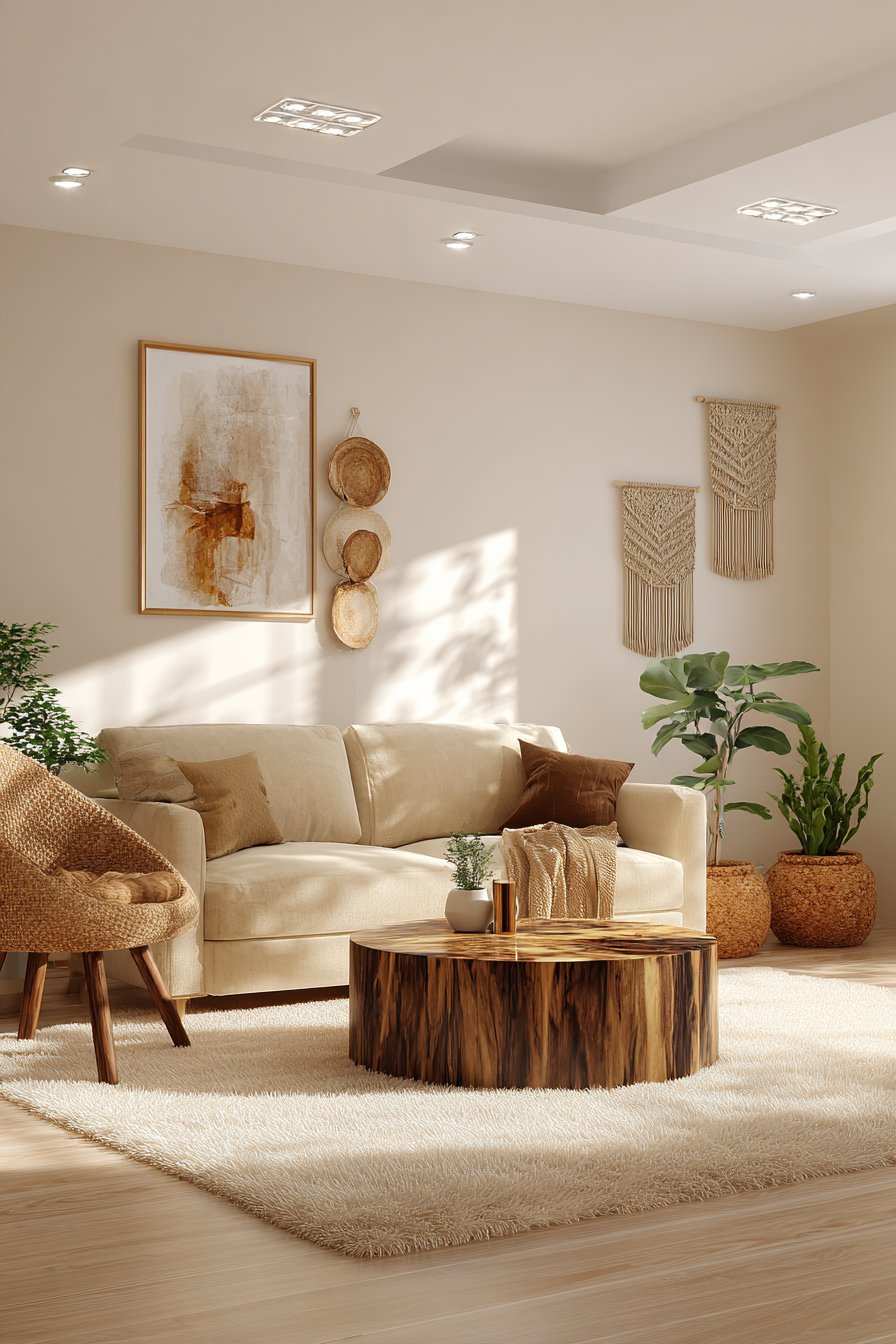
Underfoot, a plush beige area rug with high pile texture adds comfort and sound absorption—practical considerations in contemporary spaces with hard flooring surfaces. The rug’s thick construction creates a luxurious feel underfoot while its neutral tone maintains the room’s sophisticated restraint. Soft diffused lighting from recessed fixtures highlights the contemporary aesthetic without creating harsh shadows or dramatic contrasts that would conflict with the space’s serene atmosphere.
Key Design Tips:
- Choose low-profile furniture to create the illusion of more vertical space
- Scale artwork appropriately—oversized pieces work better than gallery walls in minimalist spaces
- Incorporate natural stone like marble for organic pattern within simple forms
- Use round coffee tables to soften the linear quality of modern furniture
- Layer soft textures through high-pile rugs to add warmth to contemporary spaces
8. Bohemian Natural Textures and Greenery
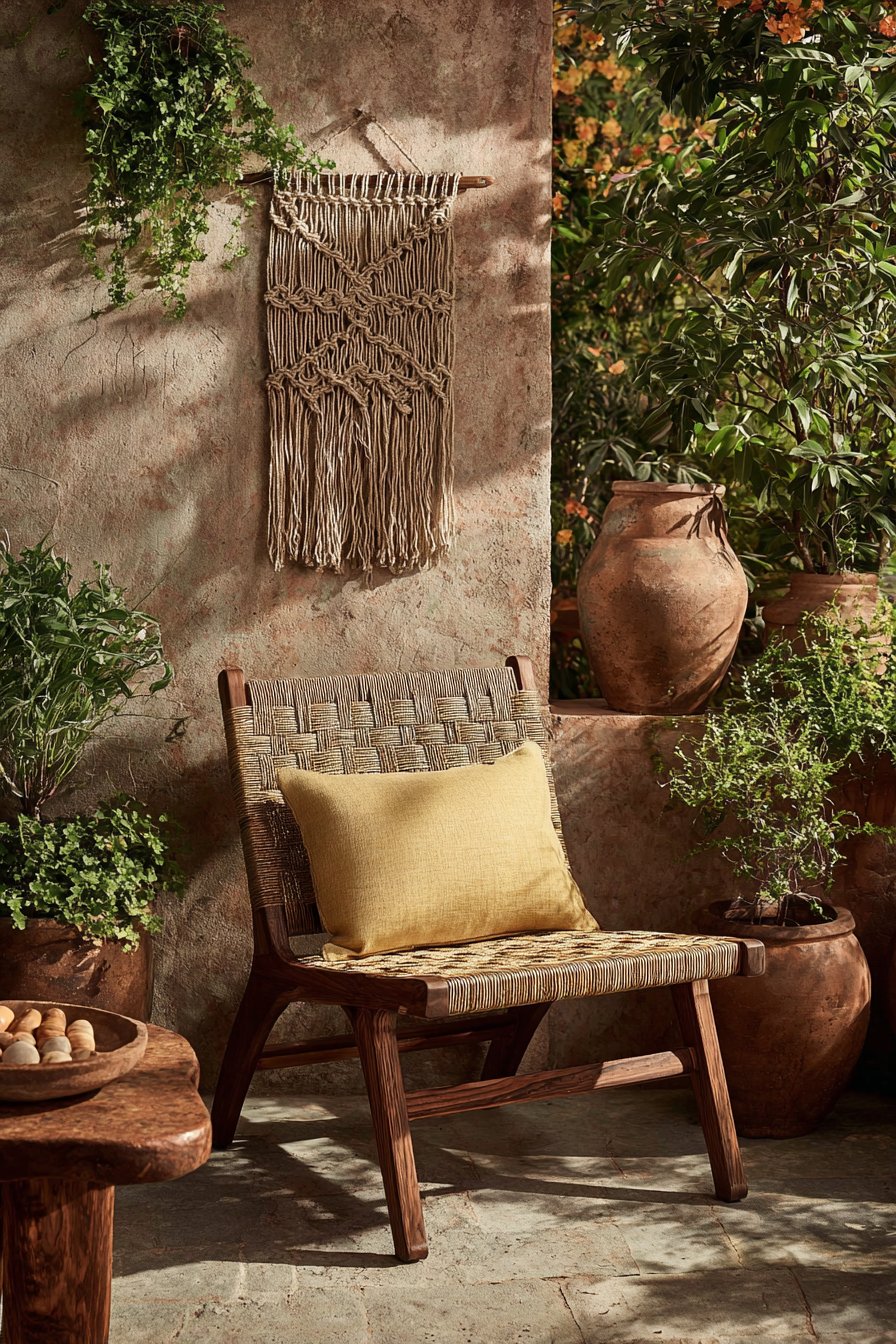
Organic materials and living elements combine in this brown and beige living room idea that celebrates bohemian style through natural textures and abundant greenery. A rattan accent chair in honey brown provides sculptural seating, its woven construction creating interesting shadow patterns and visual texture. The chair’s curved, organic form contrasts beautifully with more rectilinear furniture pieces, while a beige cushion ensures comfort without obscuring the beautiful rattan work.
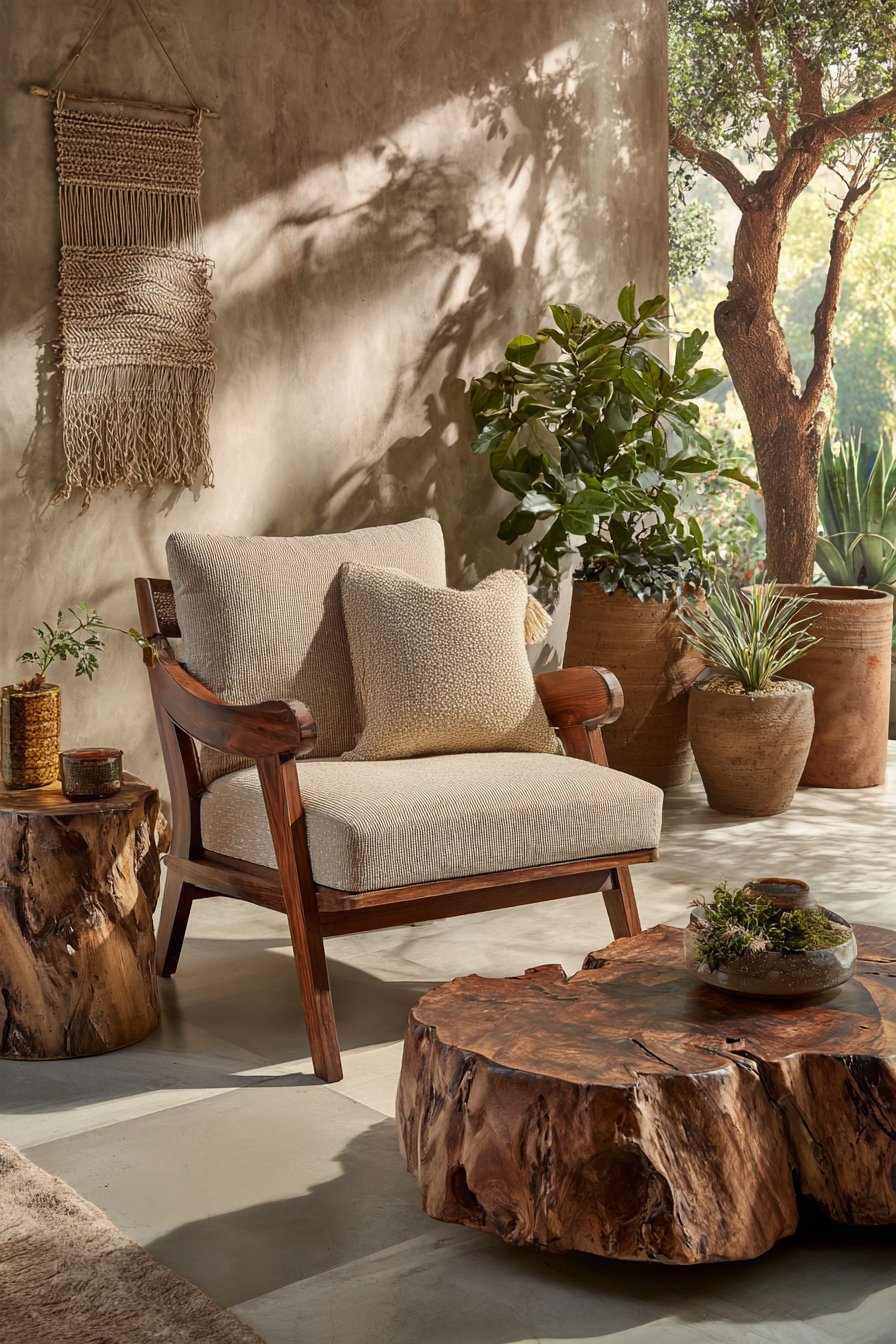
A macramé wall hanging in natural cotton beige adds bohemian charm and handcrafted appeal. This large-scale fiber art piece introduces vertical interest and softness to the wall surface, creating visual texture through knotted patterns that cast subtle shadows throughout the day. The macramé’s neutral tone ensures it enhances rather than dominates the space, while its artisanal quality adds personality and suggests the homeowner’s appreciation for handcrafted items.
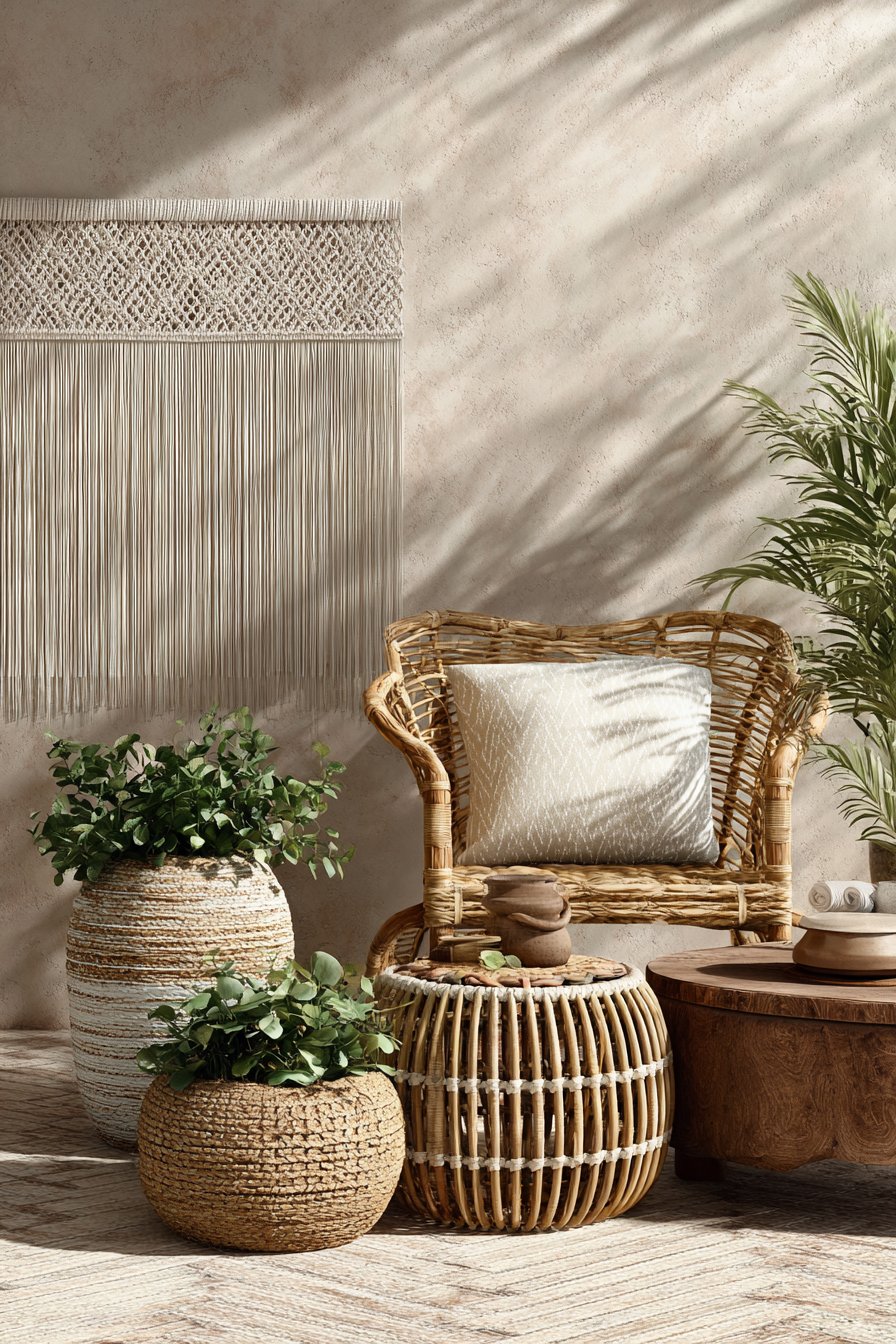
The coffee table showcases a live edge design in rich walnut brown, where one or both edges of the wood slab retain the tree’s natural contour rather than being cut straight. This organic edge celebrates the wood’s origins and ensures each table is truly one-of-a-kind, with growth rings, knots, and grain patterns telling the tree’s story. The dark walnut’s deep brown tones ground the lighter beige elements, providing necessary visual weight.
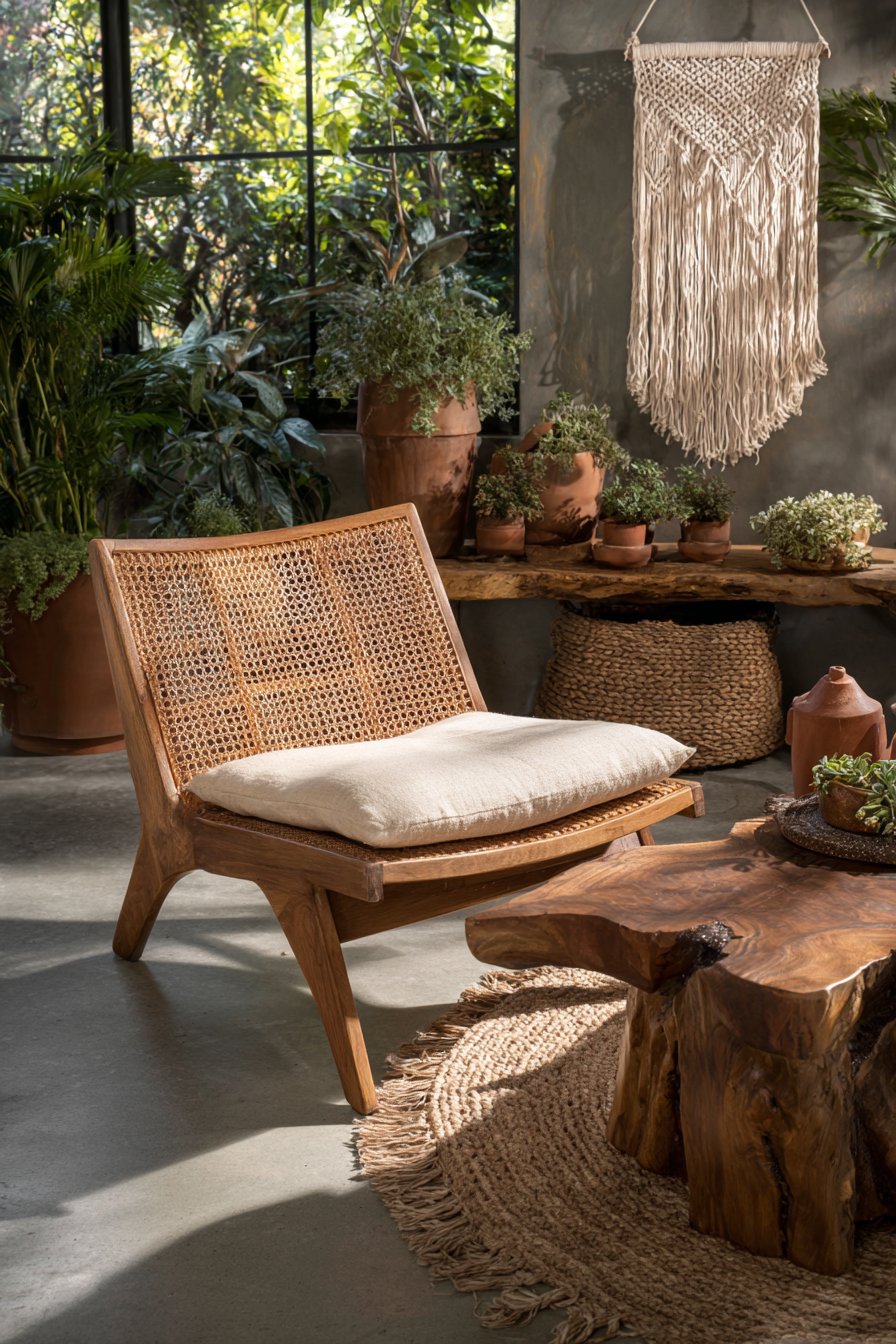
Terra cotta planters in various brown shades house lush greenery throughout the room, bringing life and air-purifying benefits to the space. These clay pots’ earthy tones perfectly complement the brown and beige palette while their matte, porous surface adds yet another texture to the room’s collection. The plants themselves—whether trailing pothos, sculptural snake plants, or leafy monstera—introduce organic shapes and the only true color accent needed in this earth-toned sanctuary.
Key Design Tips:
- Incorporate rattan furniture for textural interest and bohemian appeal
- Add handcrafted elements like macramé for personality and artisanal quality
- Choose live edge wood furniture to celebrate natural forms
- Use terra cotta planters to reinforce earth-tone palettes
- Include abundant plants to bring life and air quality benefits to neutral spaces
9. Color-Blocked Mocha and Beige Sophistication
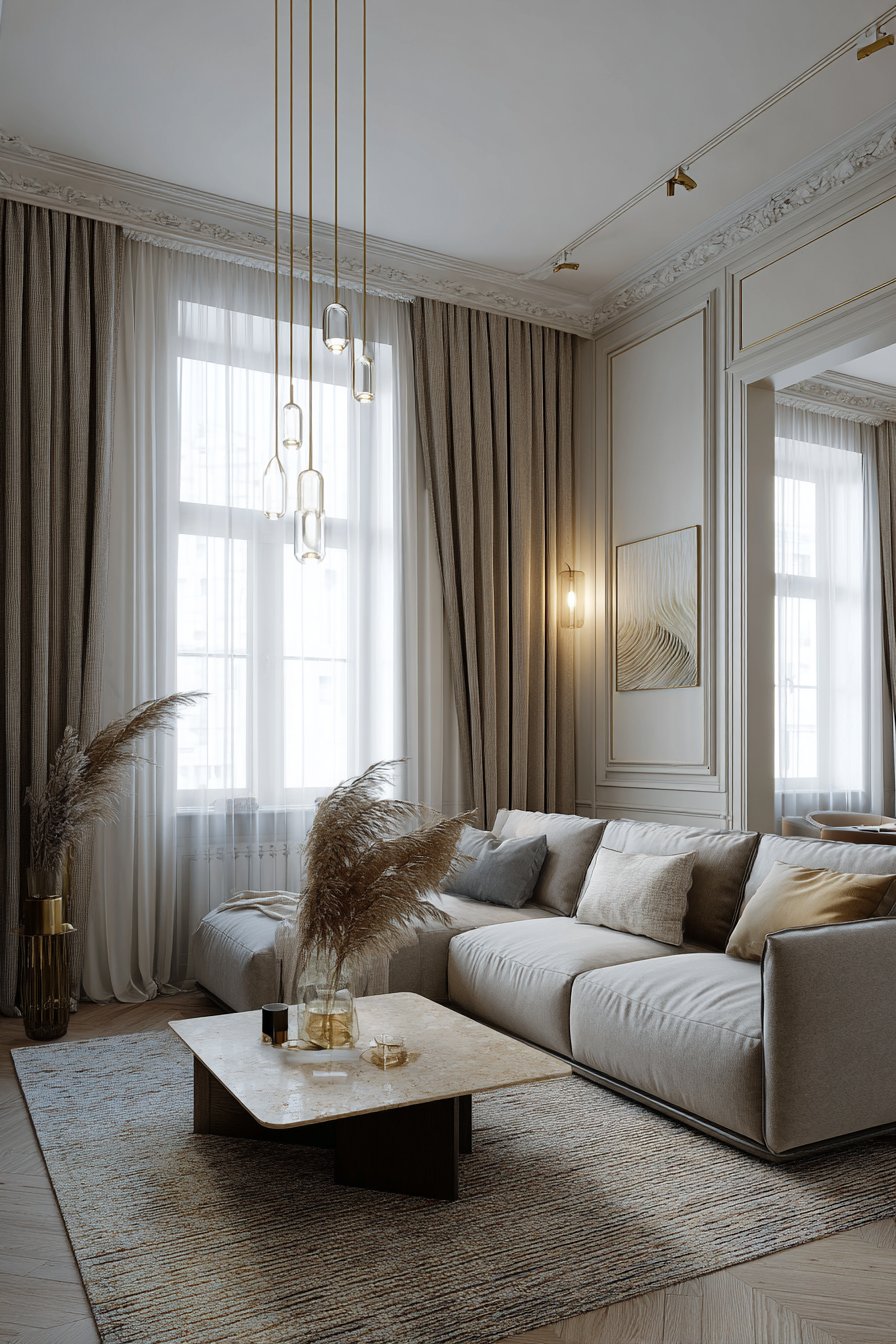
Strategic color placement elevates this brown and beige living room idea through an intentional color-blocking approach that adds visual interest while maintaining the neutral palette. One accent wall painted in warm mocha brown creates a rich backdrop that anchors the seating area and provides depth. This darker wall prevents the room from feeling washed out while establishing a focal point that draws the eye and creates a sense of intimacy within the larger space.
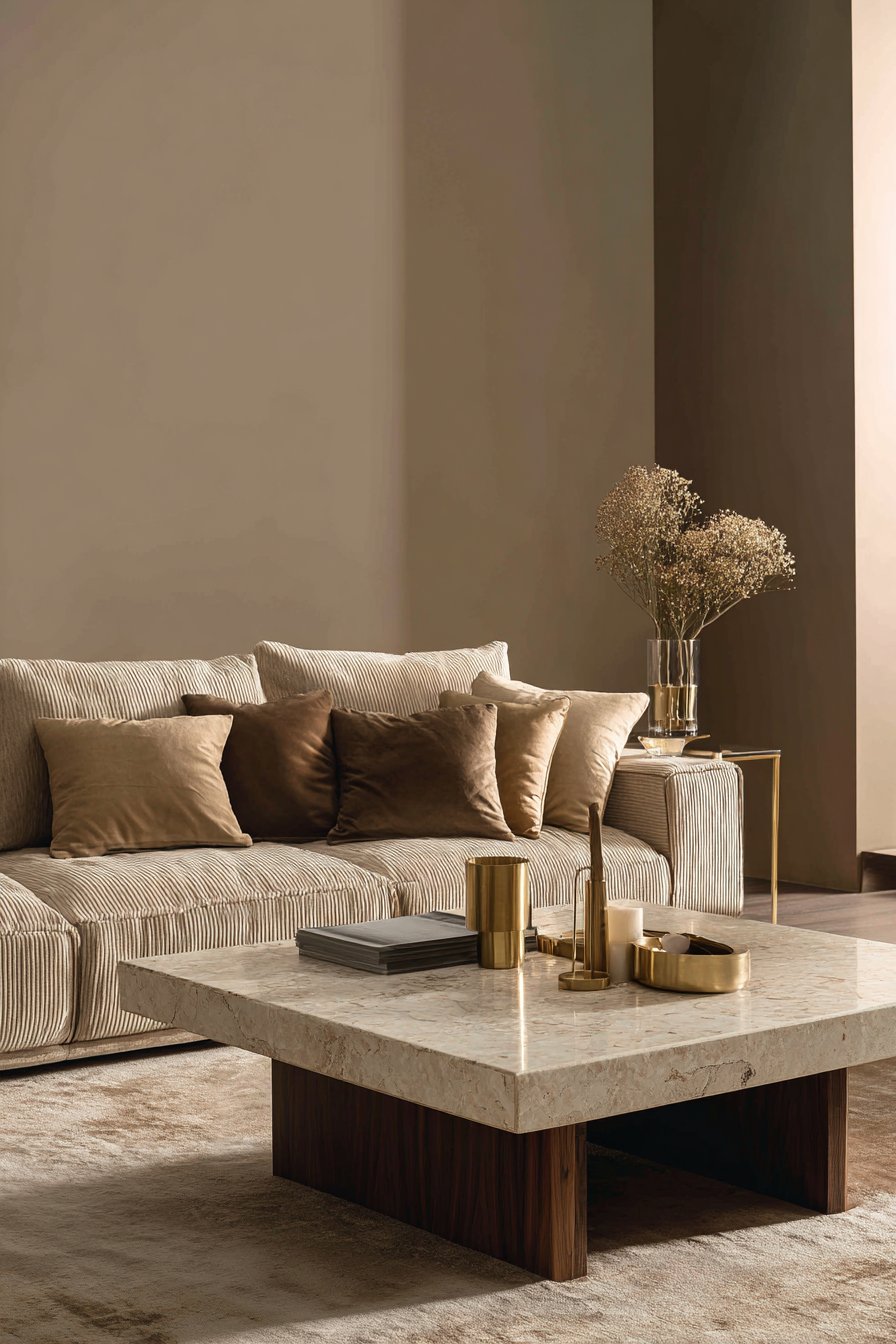
Surrounding walls painted in soft beige create contrast and ensure the mocha wall stands out rather than making the entire room feel dark or enclosed. This lighter neutral also helps reflect and distribute natural light throughout the space, maintaining brightness and airiness. The color transition between walls is clean and intentional, demonstrating how careful paint selection can create architectural interest in rooms lacking original architectural details.
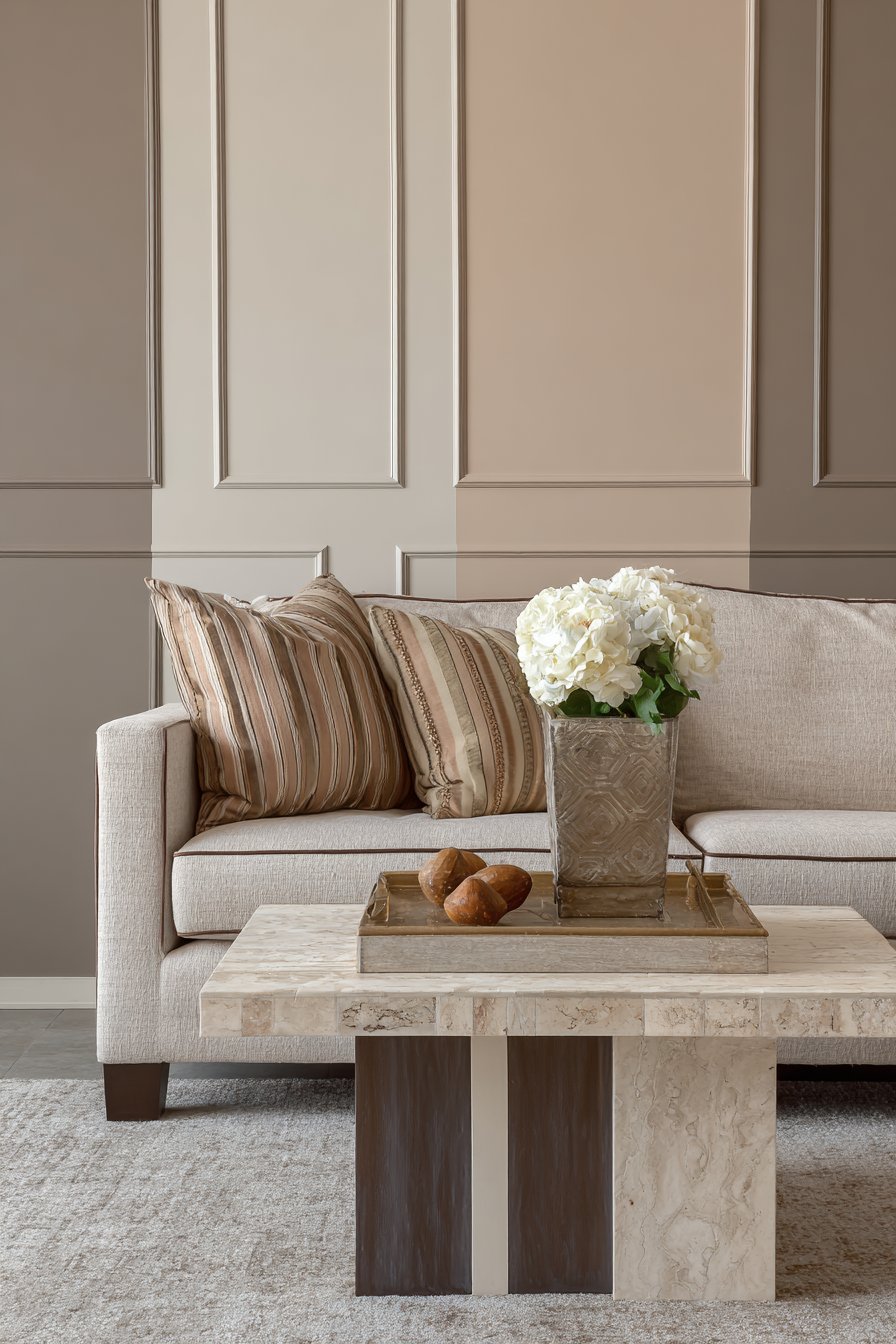
A contemporary sofa in beige linen features brown piping details that create visual definition along the seams and edges. This subtle trim work ties the sofa to the mocha wall while adding a custom, tailored appearance. The piping’s precision suggests quality construction and attention to detail—small touches that elevate the overall design from ordinary to exceptional.
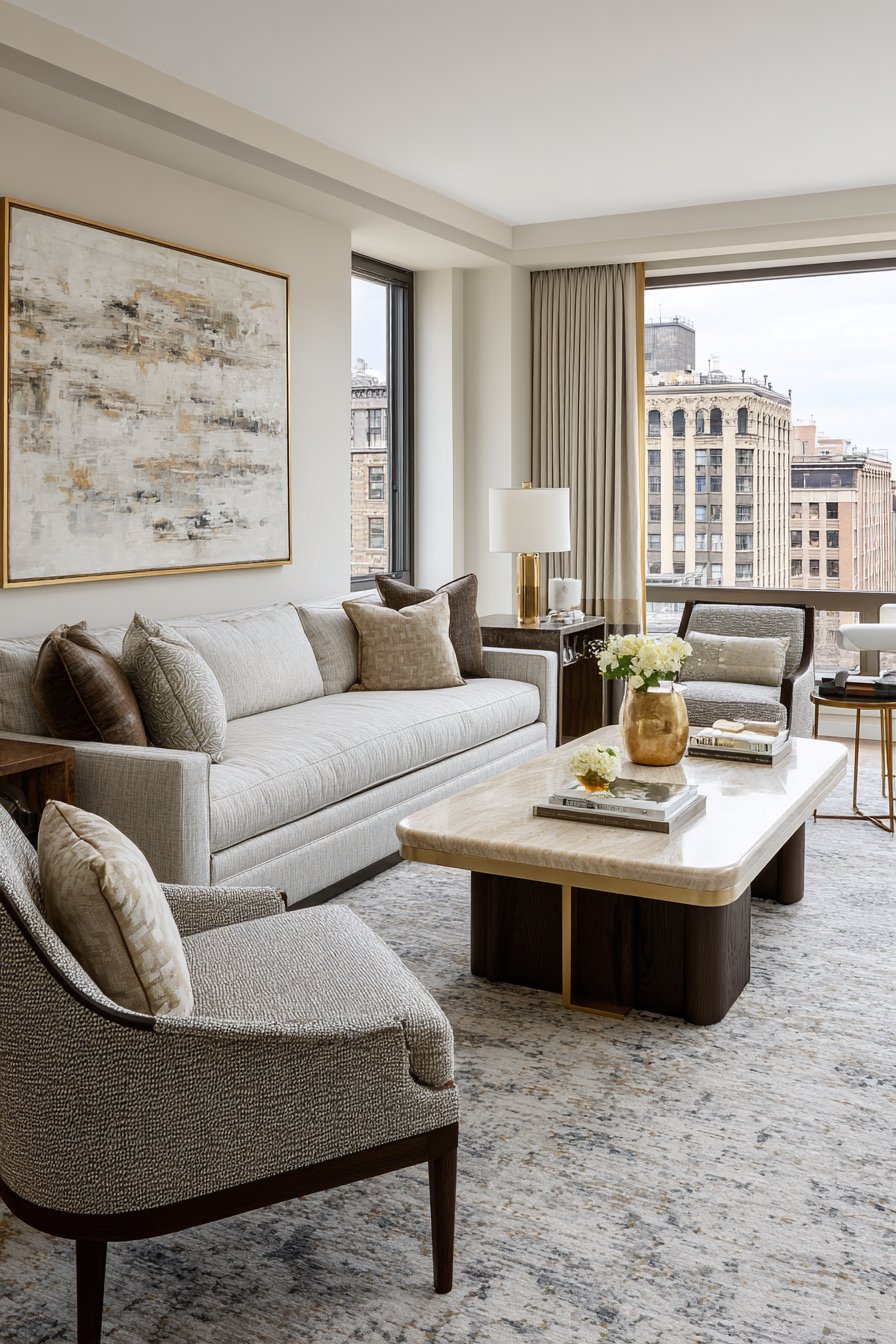
The coffee table combines materials beautifully, featuring a beige travertine top that introduces natural stone’s organic texture and subtle color variations. The stone sits atop a dark brown wooden base, creating a two-tone effect that bridges the room’s light and dark elements. Metallic accents in antique brass—perhaps on the table’s hardware, nearby lamps, or decorative accessories—add subtle glamour without introducing colors outside the established palette.
Key Design Tips:
- Use accent walls in darker tones to create focal points and depth
- Choose piping or trim in contrasting tones for custom-looking upholstery
- Combine materials within single furniture pieces for added interest
- Keep surrounding walls light when using dark accent walls
- Add metallic accents in warm tones like brass or bronze to complement earth tones
10. Layered Lighting for Day-to-Night Functionality
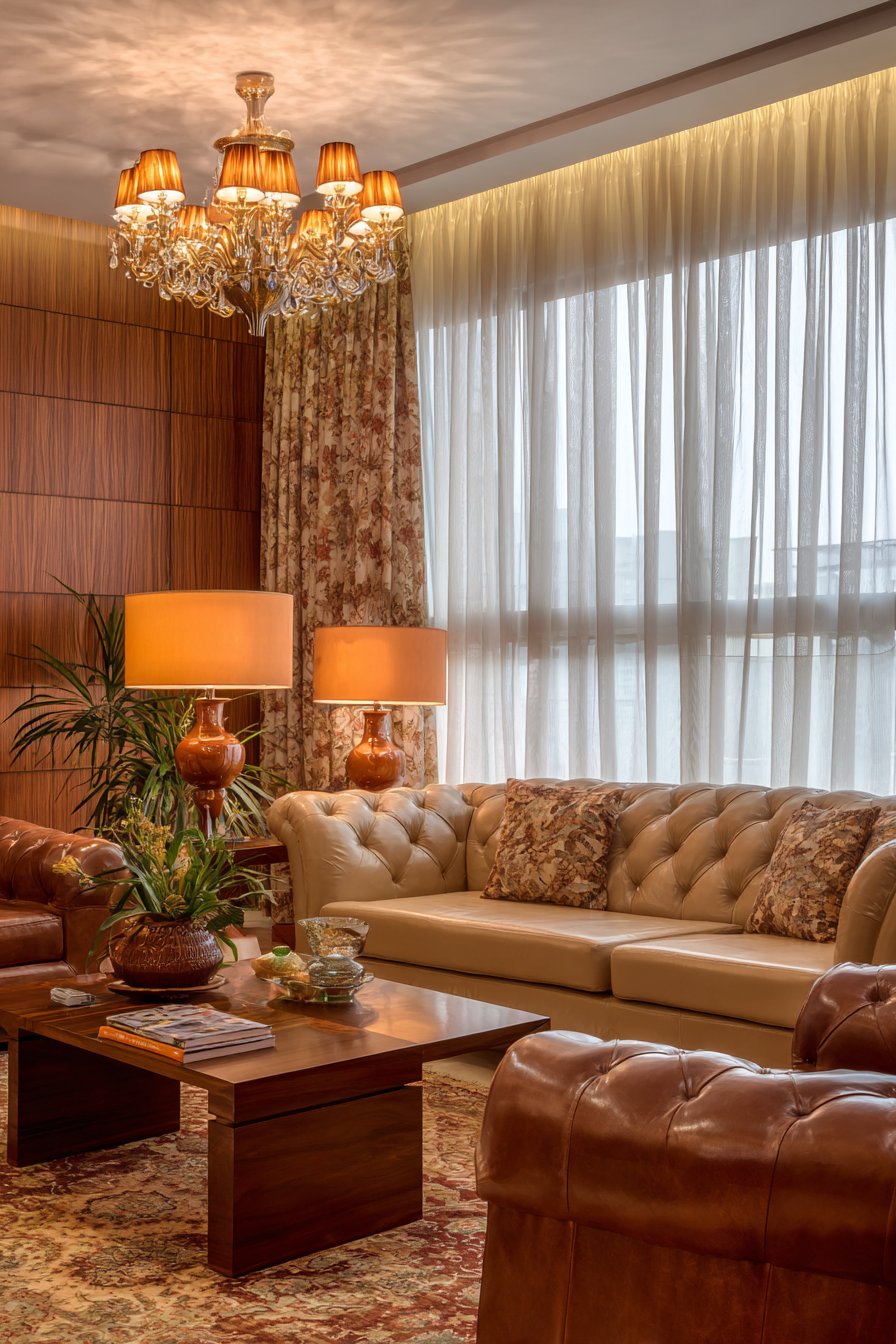
This brown and beige living room idea demonstrates the transformative power of thoughtful lighting design through multiple light sources working in harmony. An aged brass chandelier suspended above the seating area serves as both functional lighting and sculptural focal point. The fixture’s warm metallic finish catches and reflects light beautifully, while its aged patina adds character and prevents it from appearing too shiny or new. The chandelier’s positioning creates a defined zone within the larger room, anchoring the conversation area below.
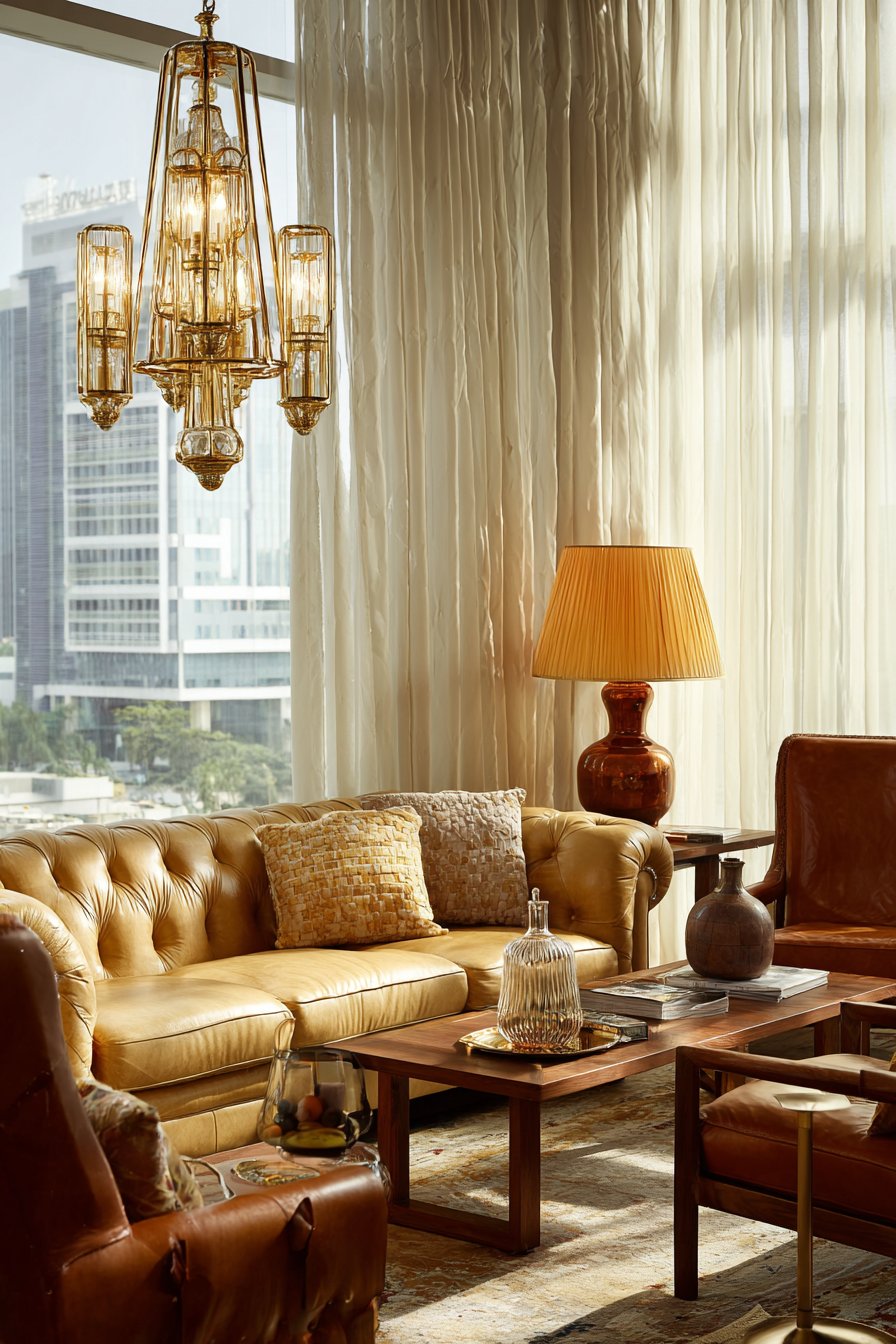
A beige tufted sofa provides comfortable seating beneath this overhead lighting, its button-tufted upholstery creating dimensional shadows that change with different lighting conditions. Paired with brown leather accent chairs, the seating arrangement creates an inviting conversational grouping that encourages face-to-face interaction. The leather’s rich brown tones appear even warmer in the evening when artificial lighting predominates, demonstrating how material choices should consider both natural and artificial light conditions.
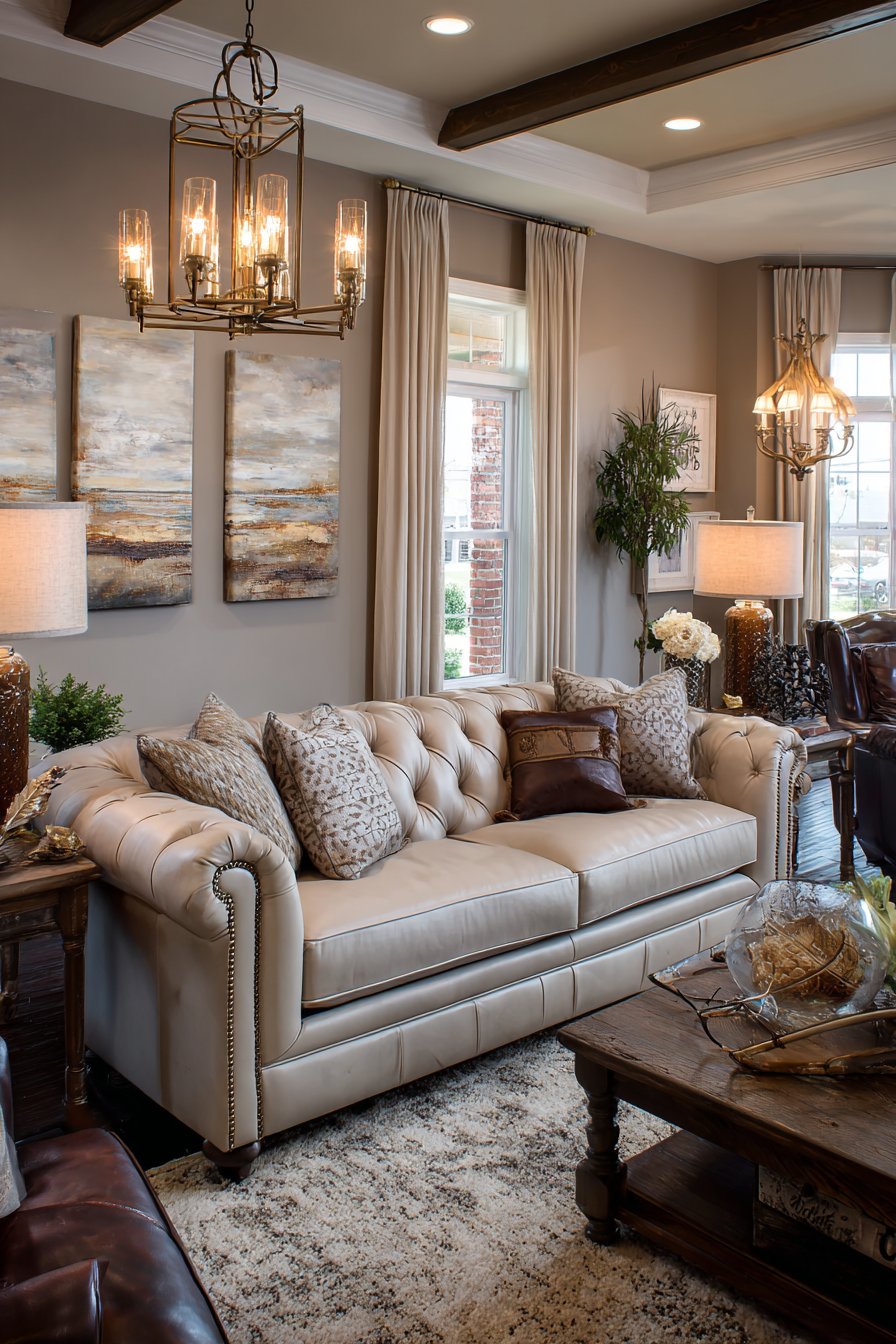
Side tables in varying brown wood tones—perhaps one in honey oak and another in deeper walnut—add dimension through subtle variation rather than exact matching. This approach feels more collected and less formulaic than matching side tables, suggesting the room evolved over time. Each table supports a lamp with brown ceramic bases that provide localized task lighting for reading or conversation, allowing different areas of the room to be lit independently based on use.
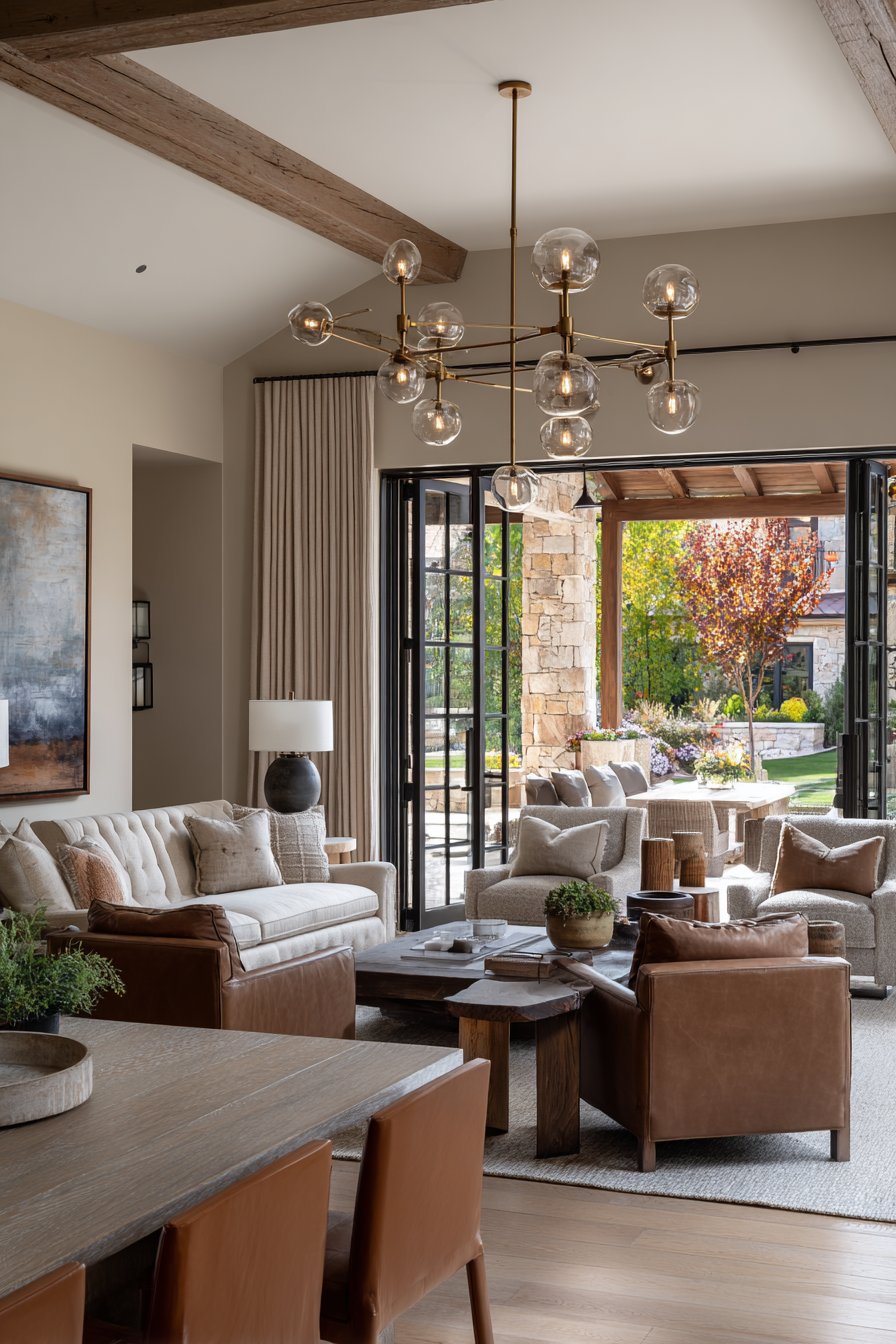
Sheer beige curtains diffuse natural daylight during daytime hours, creating soft, flattering illumination that makes brown and beige tones glow warmly. As evening approaches, the layered artificial lighting takes over—overhead chandelier for general illumination, table lamps for task lighting and ambiance, and perhaps hidden LED strips or recessed fixtures for additional ambient glow. This lighting flexibility allows the room to adapt to different activities and times of day while always maintaining its warm, inviting character.
Key Design Tips:
- Layer three types of lighting: ambient (overhead), task (table lamps), and accent
- Choose aged or antique brass finishes for warmth that complements earth tones
- Position overhead lighting to define and anchor conversation areas
- Include dimmers on all light sources for maximum flexibility
- Select lamp bases in materials that tie back to the room’s color scheme
11. Rustic Stone Fireplace with Distressed Leather
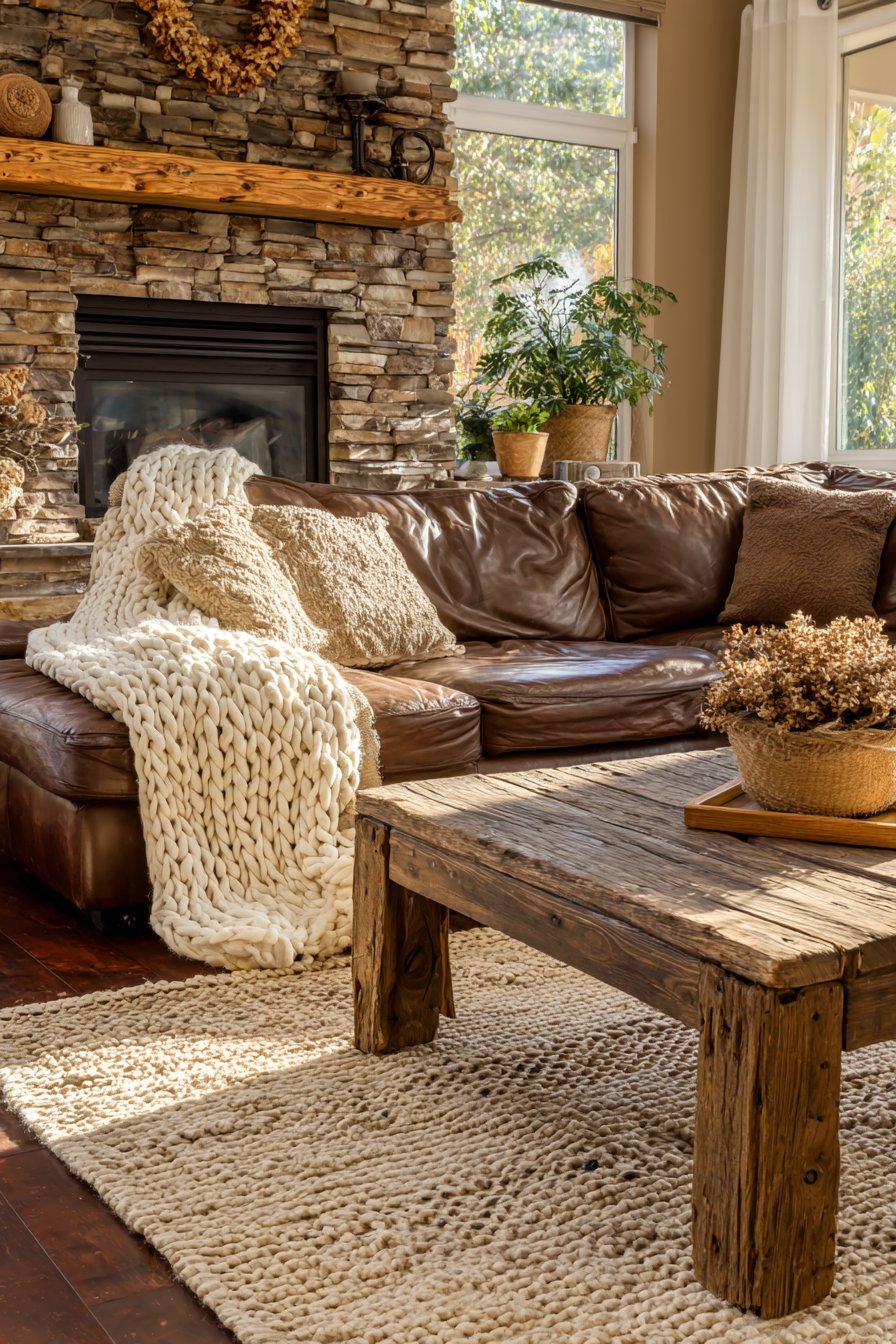
Authentic rustic character permeates this brown and beige living room idea, where a stone fireplace constructed from natural brown and beige stone variations becomes the room’s architectural centerpiece. The stones’ mixed tones create organic pattern and texture, with some displaying warm honey browns, others showing cool beige grays, and still others featuring tan and cream tones. The natural variation prevents monotony while maintaining the cohesive color palette, proving that staying within brown and beige doesn’t mean sacrificing visual interest.
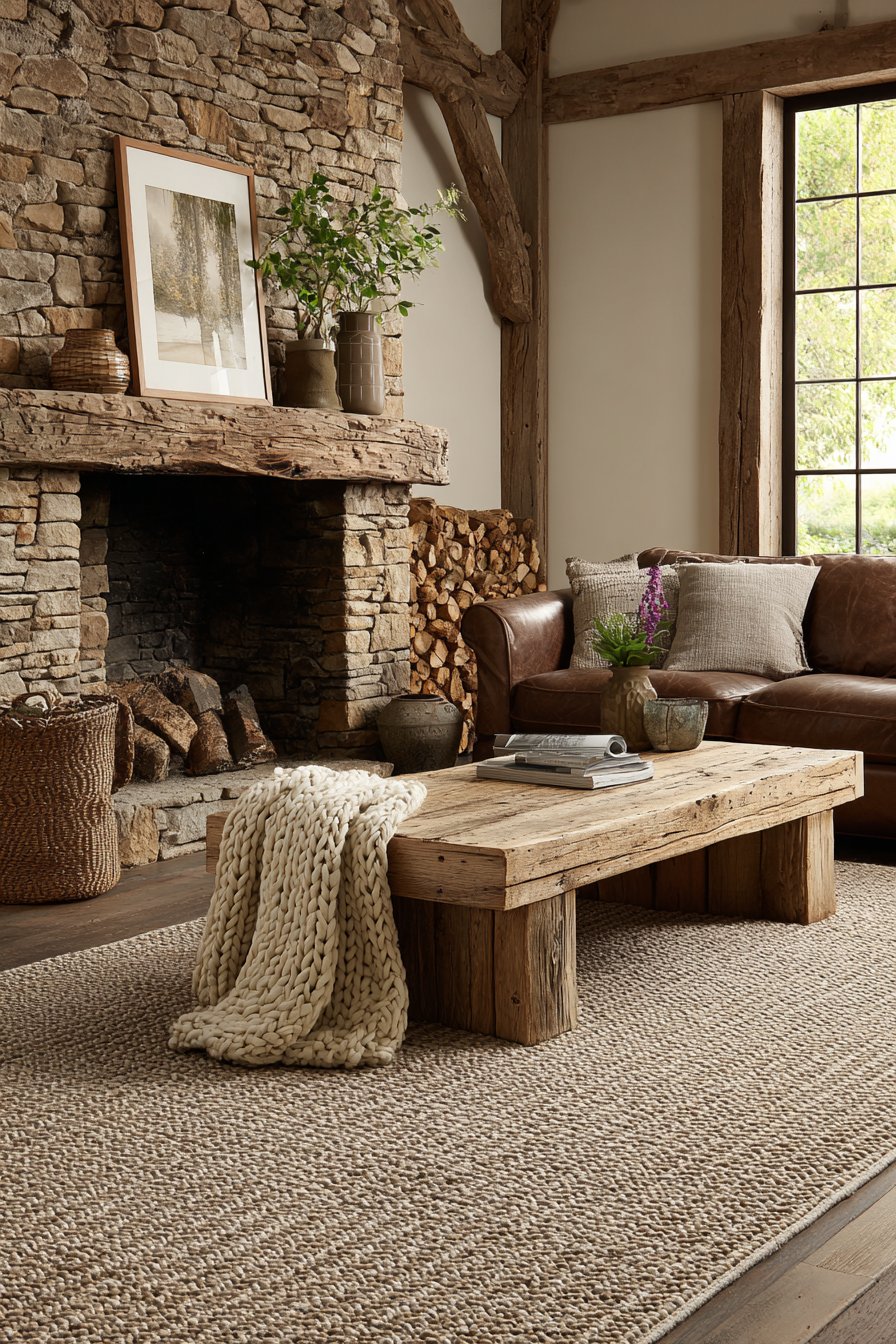
A distressed leather sofa in saddle brown shows authentic wear patterns and natural creasing that come only with age and use. Rather than appearing worn out, these characteristics add character and suggest a well-loved piece that will continue serving the family for years to come. The leather’s patina—darker in high-use areas, lighter where less touched—tells a story of real life happening in this space. This authentic aging is far more appealing than artificially distressed furniture attempting to mimic natural wear.
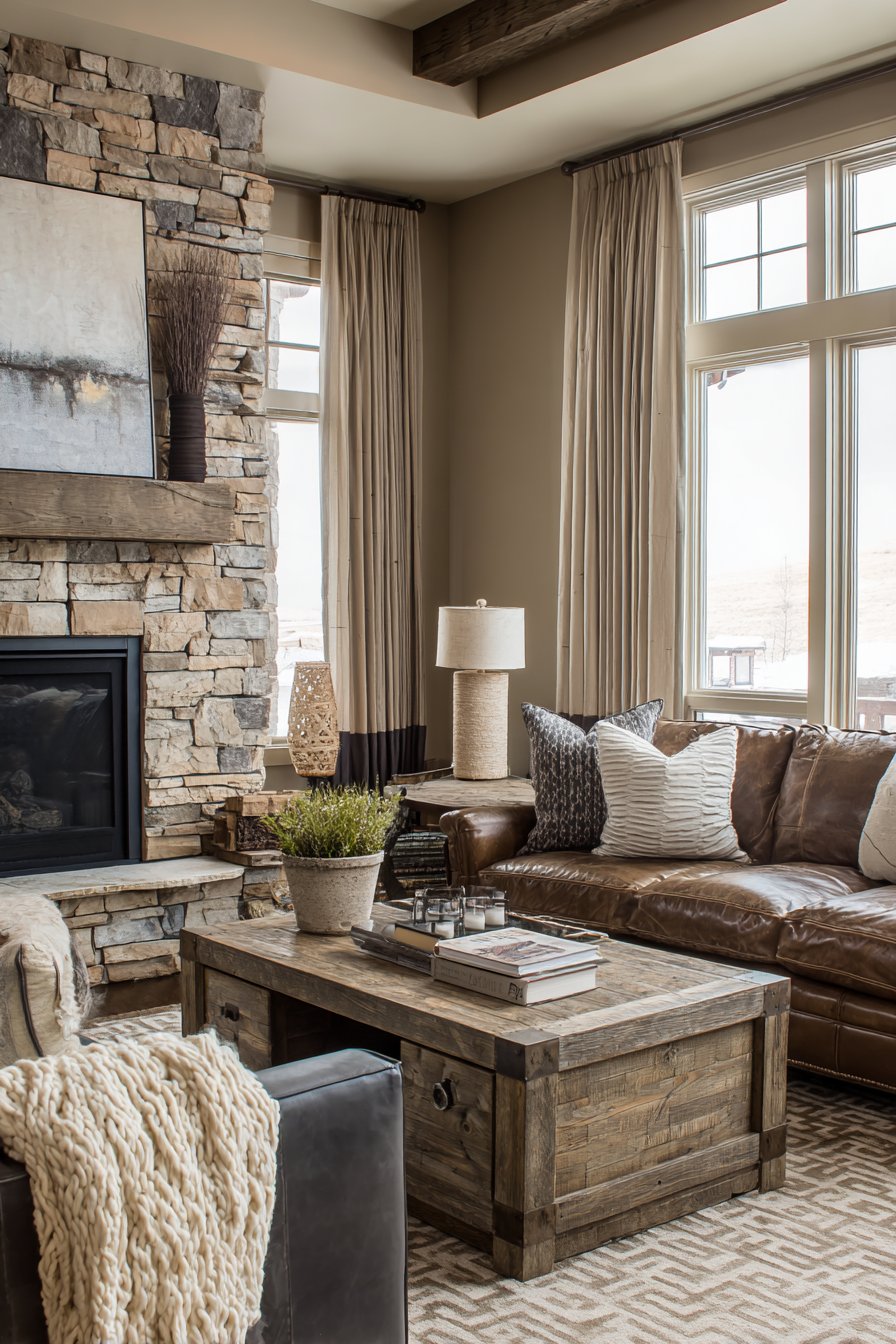
A chunky knit throw in cream beige drapes casually over the sofa’s arm, its oversized stitching and thick texture adding cozy warmth both visually and practically. This handcrafted textile introduces softness that balances the harder surfaces of stone and leather, while its neutral tone ensures it enhances rather than disrupts the color scheme. The throw’s positioning—casually draped rather than perfectly folded—suggests actual use and reinforces the room’s lived-in comfort.
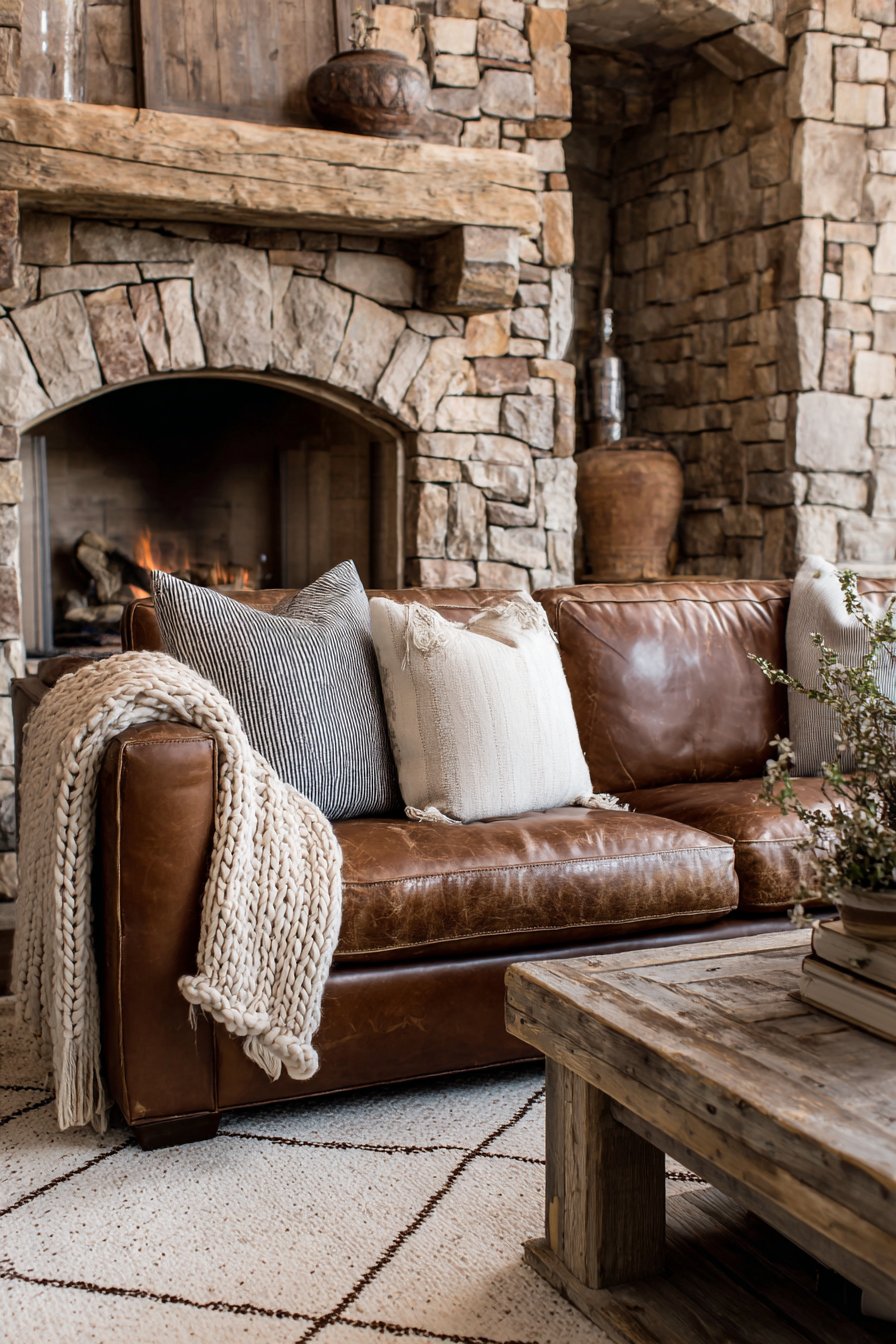
A weathered wood coffee table with visible grain patterns and knots centers the space, its surface showing the authentic marks of time and use. The wood’s natural imperfections—perhaps a small knot that created an interesting pattern, growth rings revealing the tree’s age, or slight variations in color—add character impossible to replicate in perfect, uniform pieces. A wool area rug in beige with brown geometric pattern grounds the arrangement, its durable natural fiber construction appropriate for the rustic aesthetic while adding pattern without overwhelming the space.
Key Design Tips:
- Embrace authentic wear in leather furniture rather than seeking perfection
- Mix hard surfaces (stone, wood) with soft textiles (knits, wool) for balance
- Choose natural stone for fireplaces to introduce organic color variation
- Display throws casually rather than formally for lived-in appeal
- Select area rugs with subtle patterns that add interest without dominating
12. Coffered Ceiling Architectural Elegance
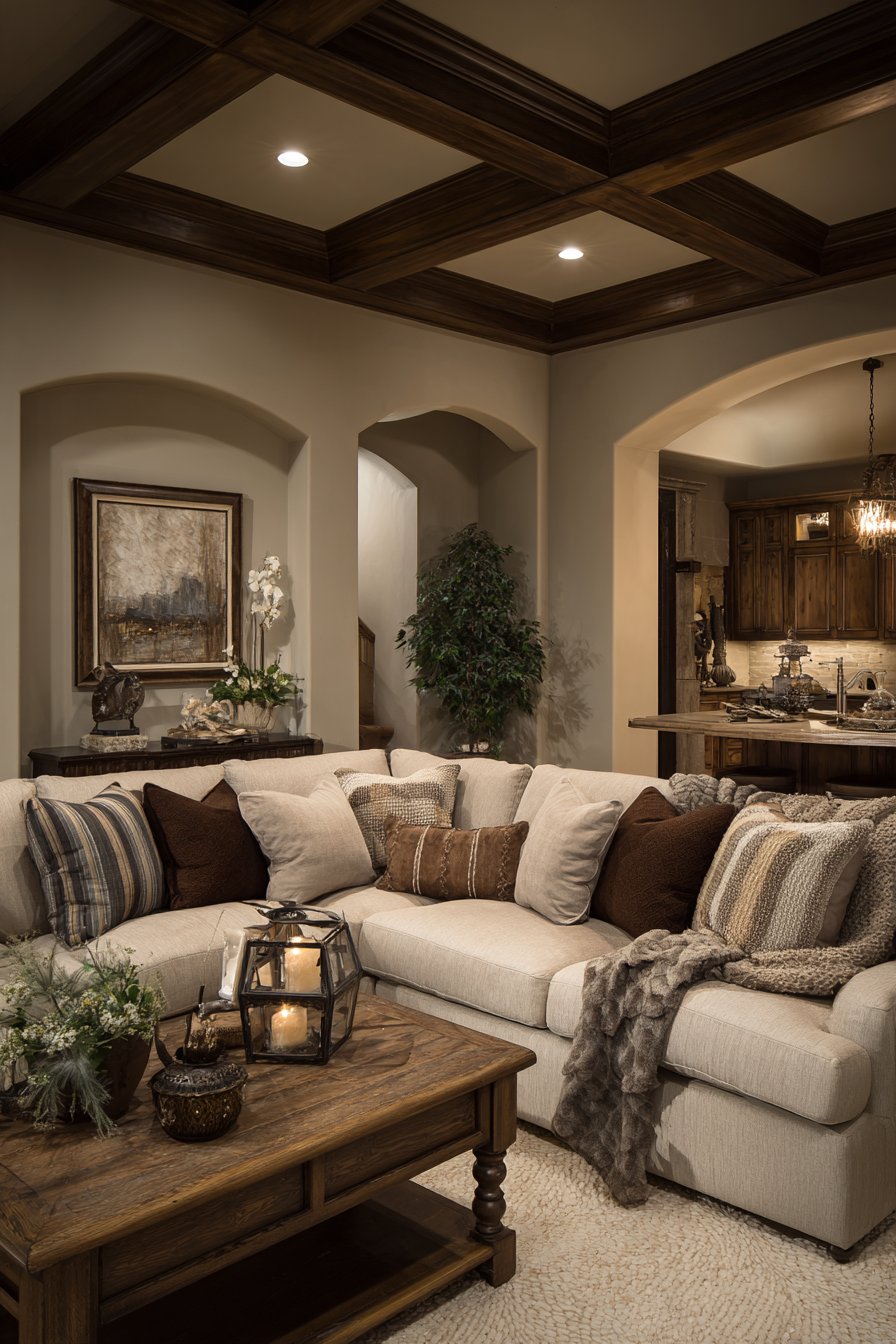
Sophisticated architectural detailing elevates this brown and beige living room idea through a coffered ceiling featuring stained beams in medium brown. These recessed ceiling panels create dimensional interest overhead, transforming what could be a flat, featureless ceiling into an elegant architectural statement. The brown stained beams define each coffer, adding both visual weight and warmth while demonstrating the level of craftsmanship invested in the home’s construction.
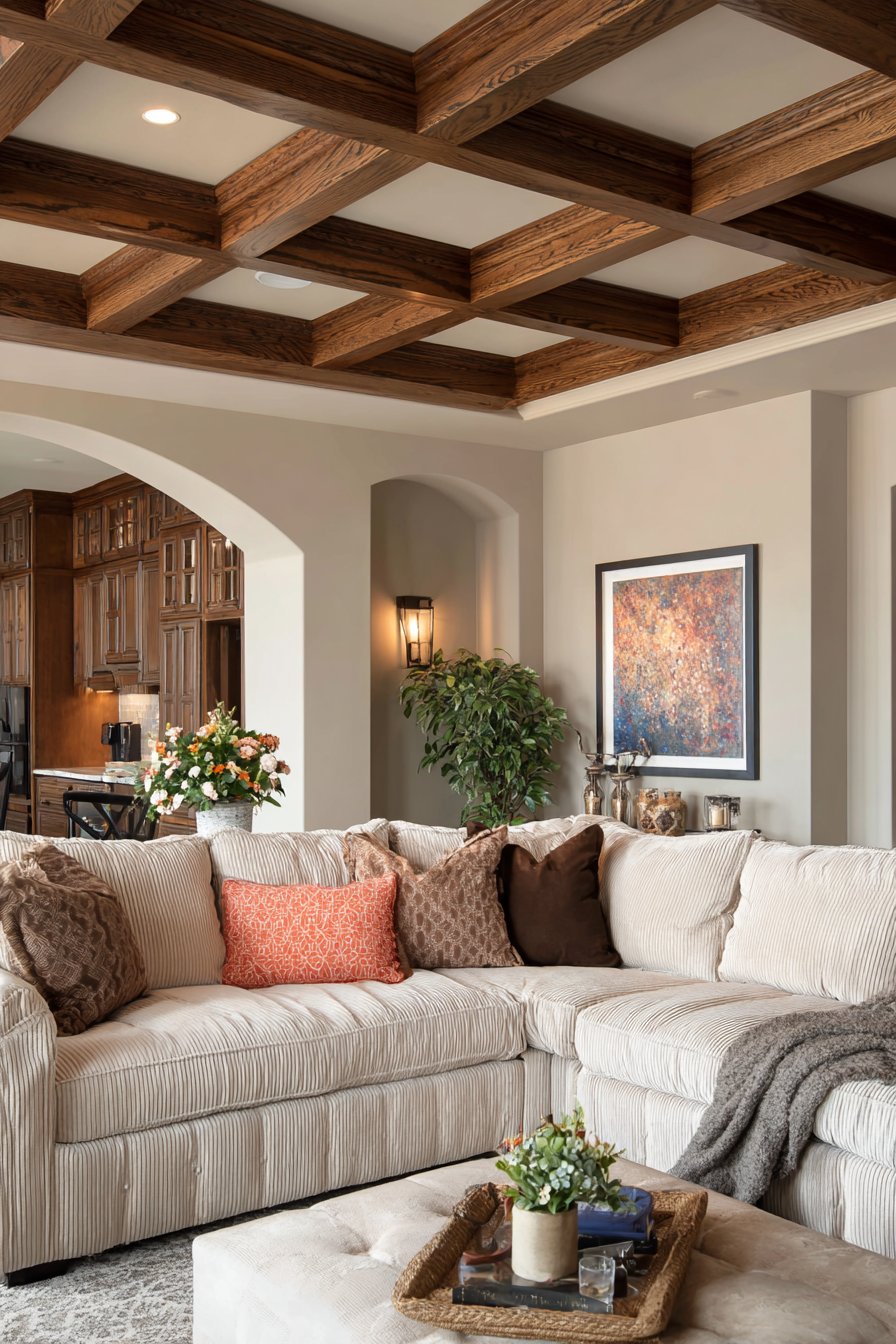
Built-in cabinetry in matching brown wood provides ample storage while maintaining the room’s refined aesthetic. These custom units might house entertainment equipment, display family heirlooms, or store everyday items, but their most important function is establishing the room’s sense of permanence and quality. The wood grain patterns visible in both the ceiling beams and cabinetry create visual continuity, connecting the room’s upper and lower elements in a cohesive design statement.
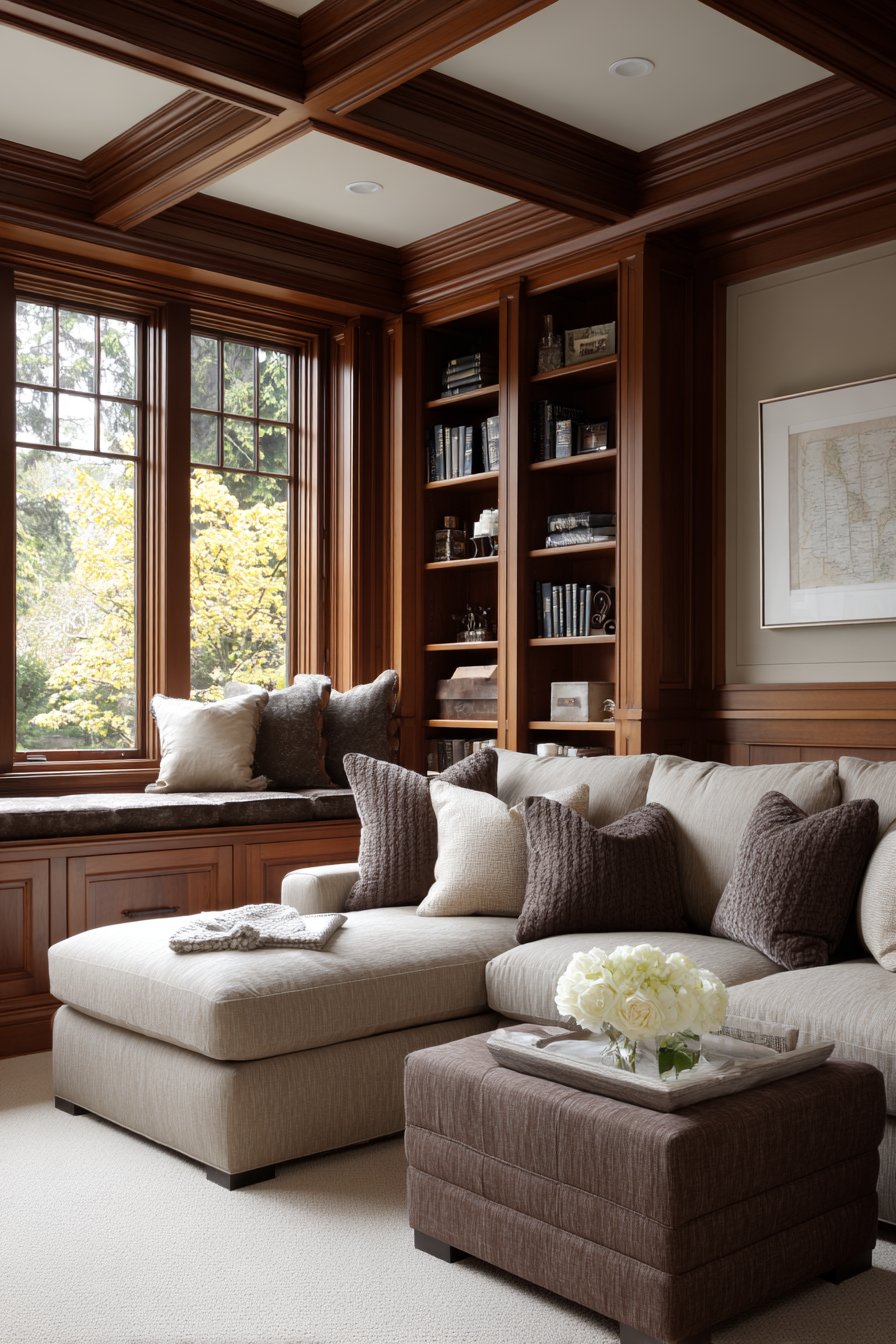
Beige painted wall panels between the built-ins create contrast that prevents the brown wood from overwhelming the space. These lighter panels also provide neutral backdrops for displaying artwork, family photos, or decorative objects without creating visual competition. The panel details—perhaps simple flat panels or more elaborate raised panels—add subtle texture to wall surfaces while reinforcing the room’s traditional or transitional character.
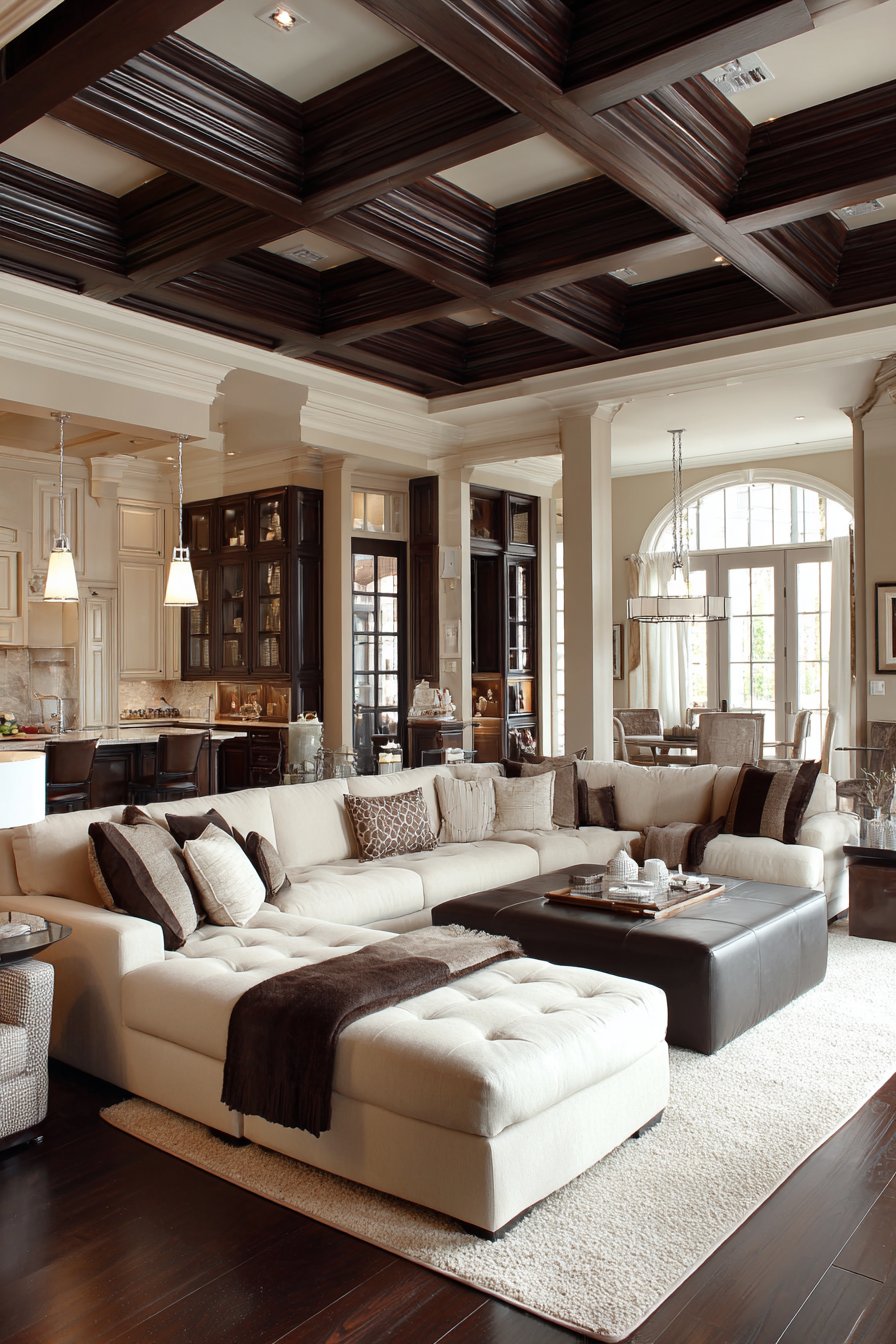
A sectional in beige performance velvet accommodates family living while maintaining a refined appearance. This practical fabric choice resists stains and wear better than standard velvet, making it appropriate for homes with children or pets without sacrificing the luxurious appearance and soft texture that makes velvet so appealing. Accent pillows in brown suede and beige linen add texture variation and tie the seating back to the room’s wood tones.
Key Design Tips:
- Install coffered ceilings to add architectural interest and perceived height
- Choose built-in cabinetry for custom, high-end appearance and functionality
- Paint wall panels in light tones to balance dark wood elements
- Select performance fabrics for family-friendly spaces without sacrificing style
- Mix velvet, suede, and linen textures within your pillow collection
13. Minimalist Serenity in Warm Neutrals
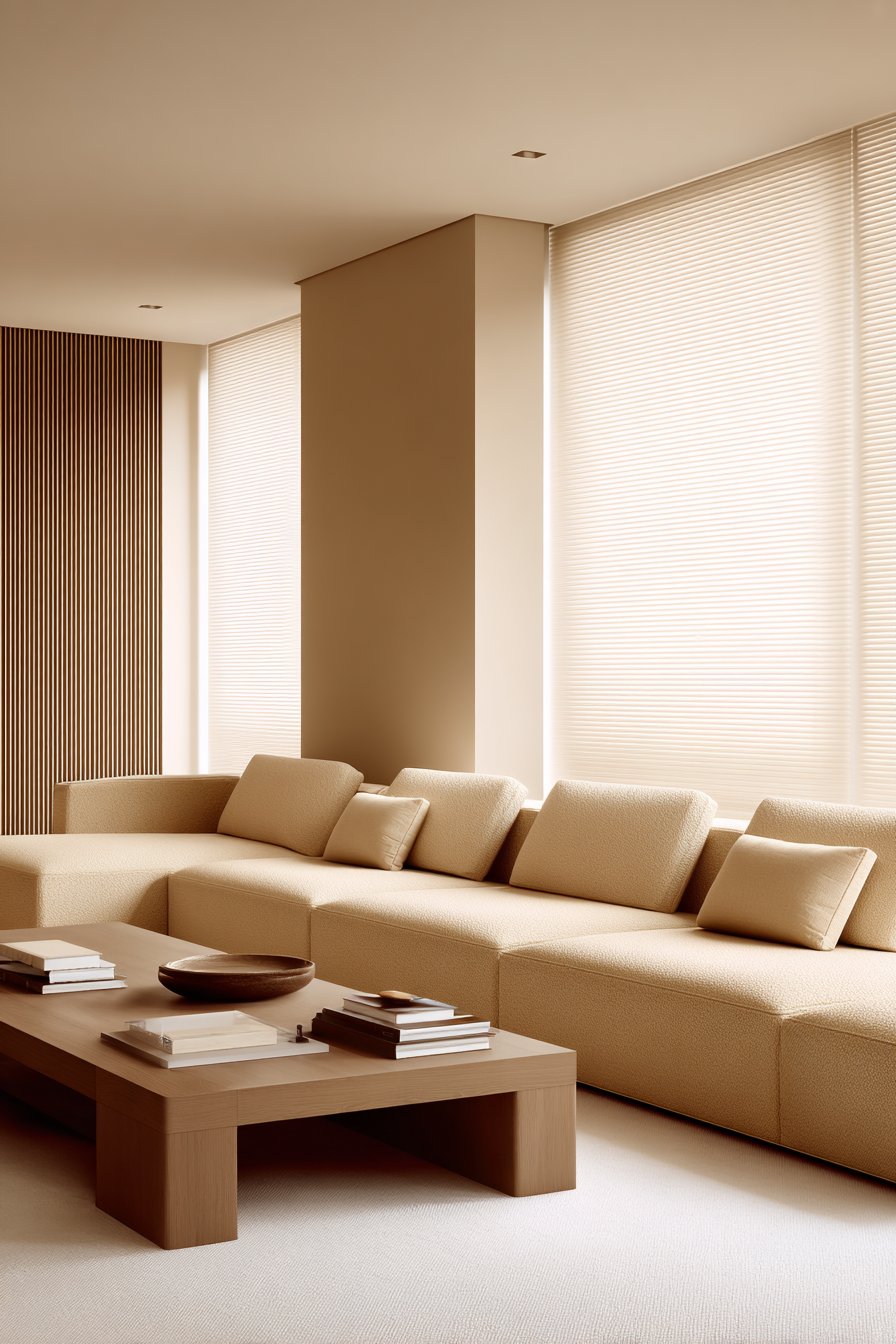
Intentional simplicity defines this brown and beige living room idea, where a minimalist aesthetic creates calm through careful editing and restraint. A streamlined sofa in warm beige features low wooden legs in light brown oak that elevate the piece visually while maintaining the clean lines essential to minimalist design. The sofa’s simple silhouette avoids decorative details like tufting or rolled arms, instead allowing quality construction and perfect proportions to create impact through restraint.
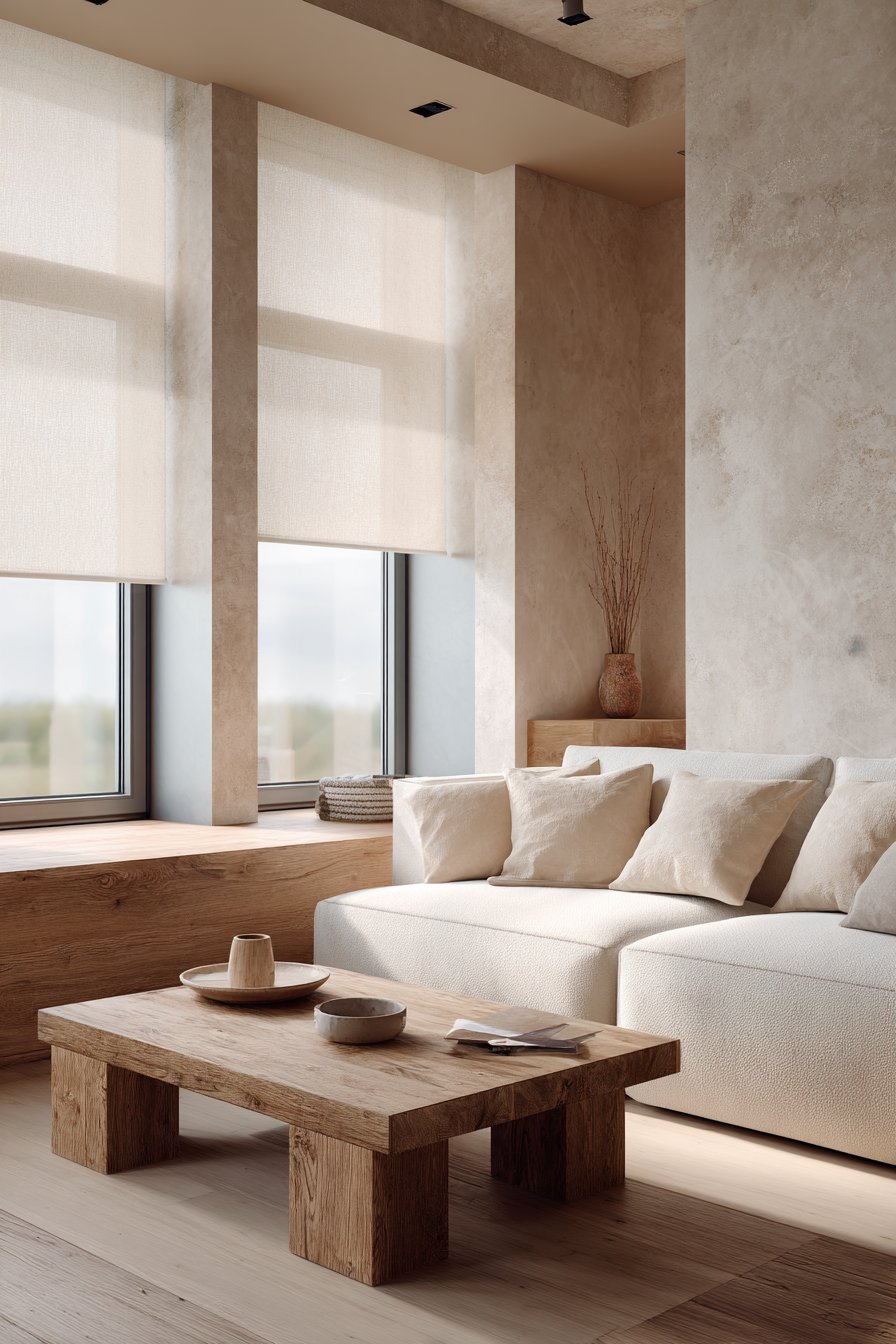
A simple rectangular coffee table in brown wood with minimal ornamentation serves as the room’s centerpiece, its honest, straightforward design celebrating the wood’s natural beauty rather than obscuring it with excessive detail. The table’s surface might display a single carefully chosen object—perhaps a sculptural bowl in beige ceramic or a small arrangement of dried grasses—demonstrating the minimalist principle that less is indeed more when each element is thoughtfully selected.
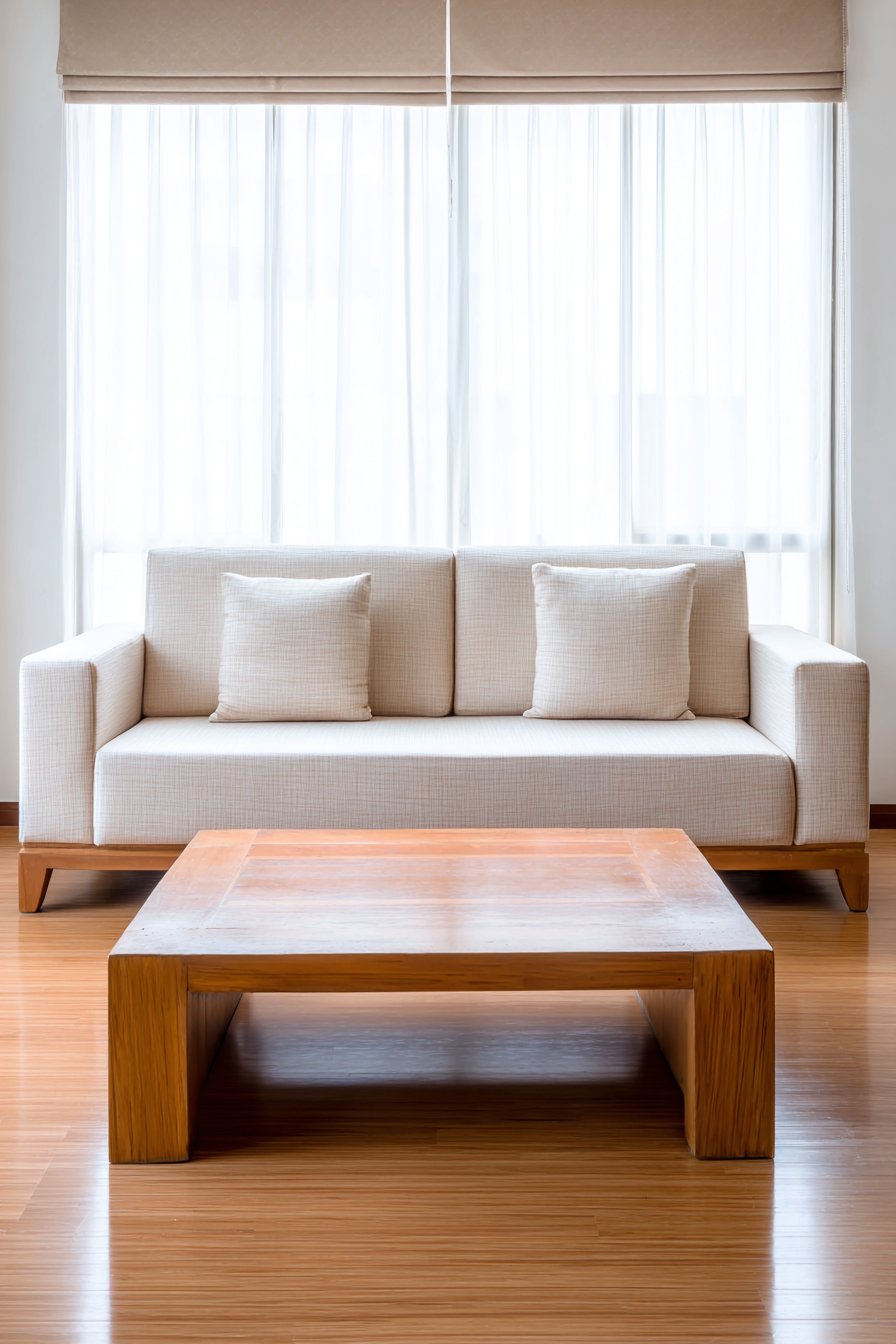
Beige roller shades provide window coverage without adding visual weight or fuss, their simple mechanism and clean lines maintaining the room’s pared-down aesthetic. Unlike curtains with fabric folds, rods, and finials, these streamlined shades disappear when raised and provide clean rectangles of color when lowered. Their neutral tone ensures they blend with the walls rather than creating contrast that would draw attention.
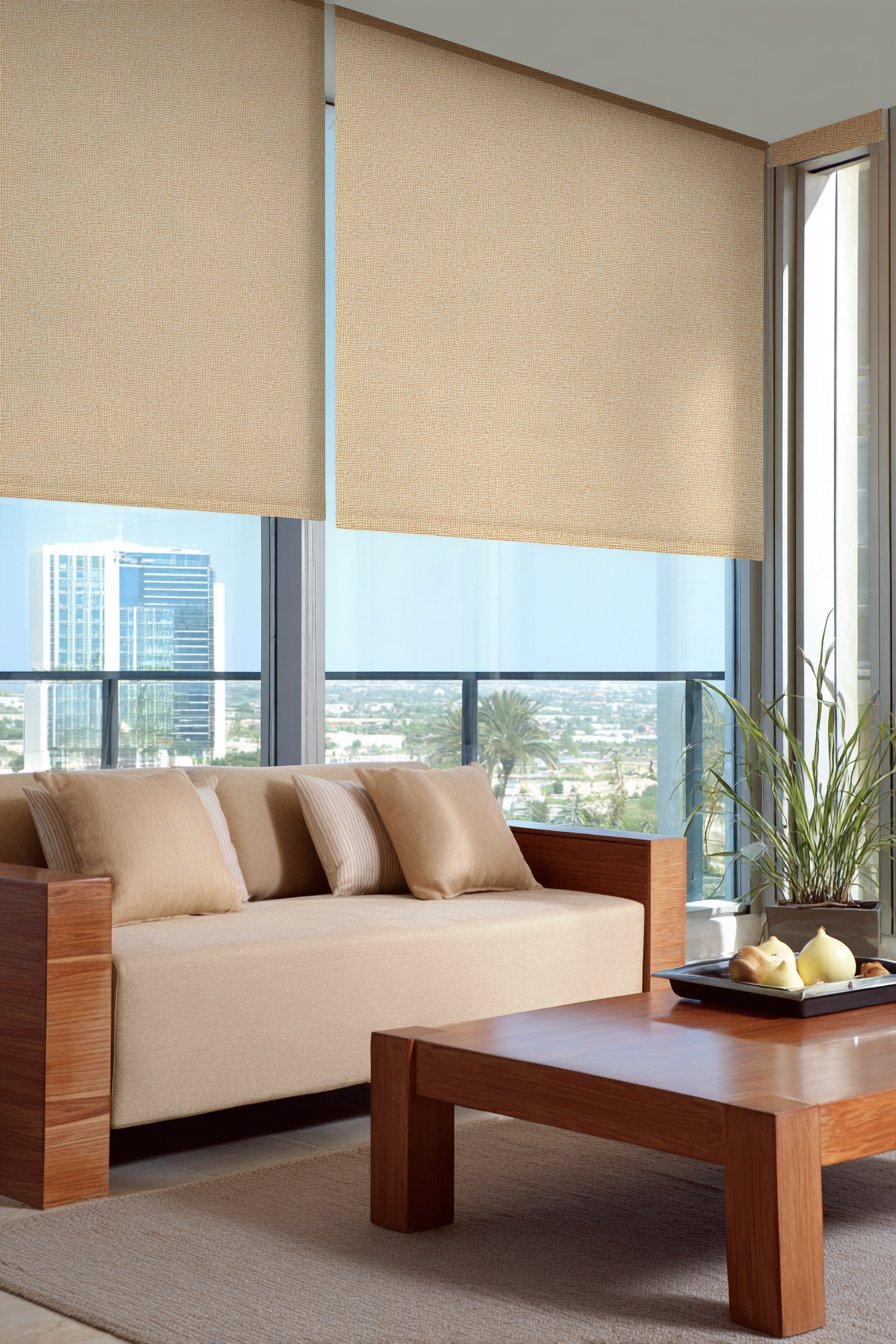
Negative space is intentionally preserved throughout the room, with furniture arrangements leaving ample circulation space and walls remaining largely unadorned. This breathing room prevents the space from feeling cluttered or claustrophobic, instead creating a sense of calm and order. The brown and beige palette enhances this serene atmosphere, with warm neutrals creating comfort without the stimulation of bright colors.
Key Design Tips:
- Edit ruthlessly, keeping only furniture and decor that serves a clear purpose
- Choose furniture with clean lines and minimal ornamentation
- Preserve negative space rather than filling every wall and surface
- Limit decorative objects to a few carefully selected pieces
- Use window treatments that disappear rather than create visual weight
14. Mixed Wood Tones for Added Depth
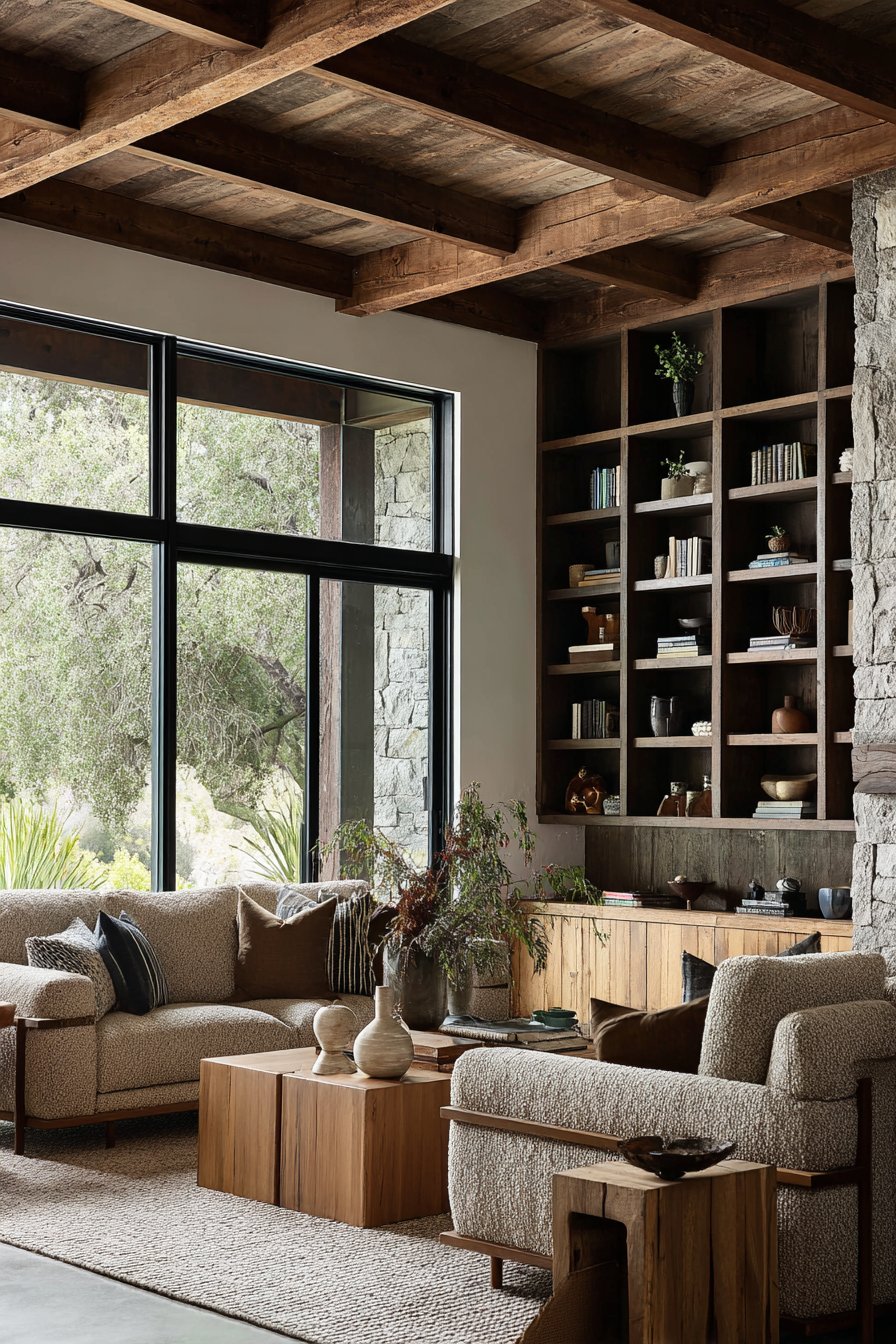
Sophisticated layering through varied wood finishes characterizes this brown and beige living room idea, where multiple brown tones create depth without breaking the neutral palette. A media console in dark brown walnut anchors the entertainment wall, its rich chocolate tones providing visual weight and grounding. The deep color serves as the room’s darkest element, ensuring adequate contrast and preventing the space from appearing washed out.
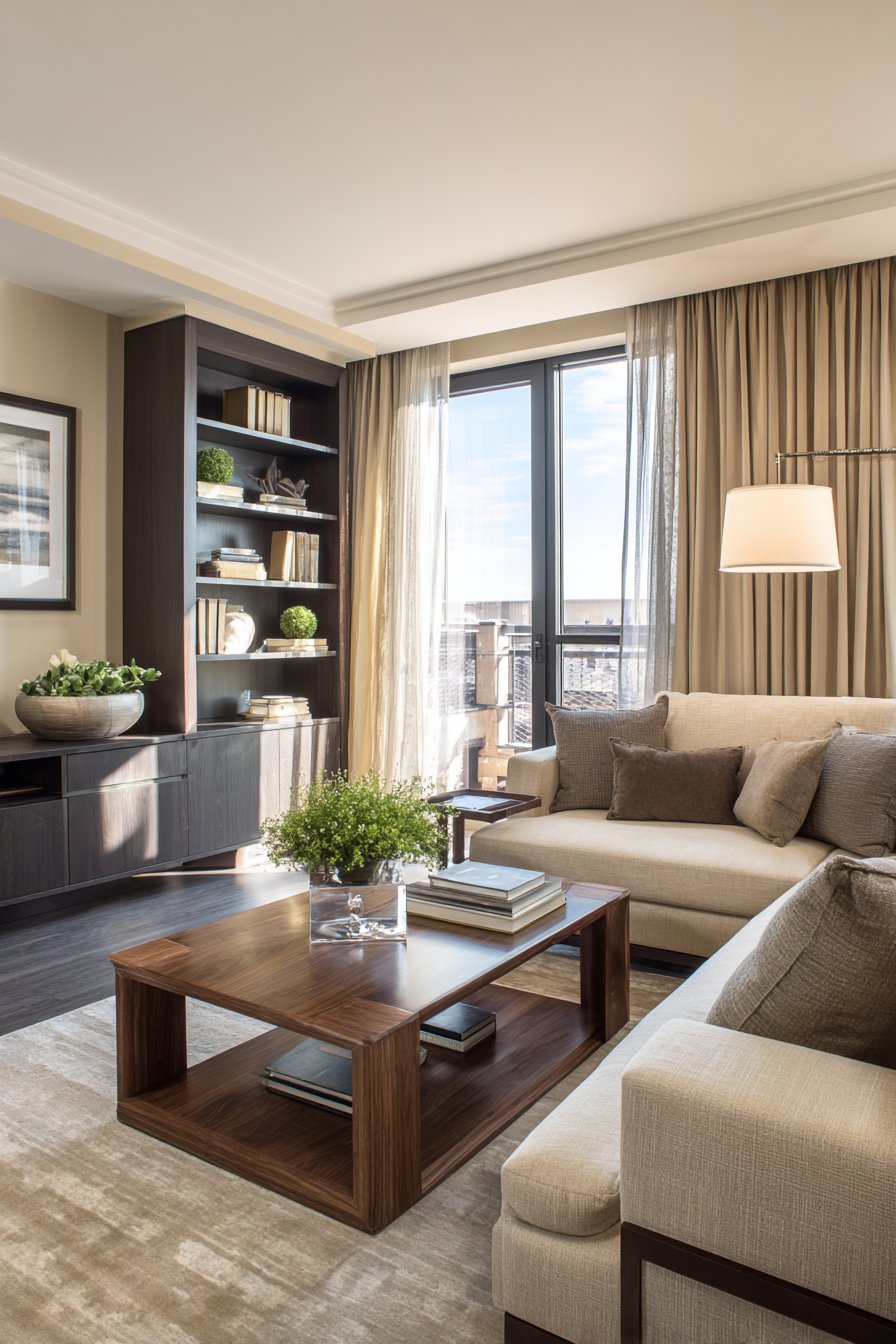
Side tables in lighter honey brown oak flank the seating area, their warmer, golden tones creating brightness and preventing the room from feeling heavy despite the dark media console. This intentional variation in wood tones adds complexity and interest, mimicking how wood naturally occurs in varied shades in nature. The lighter wood also reflects more light, contributing to the room’s overall brightness.
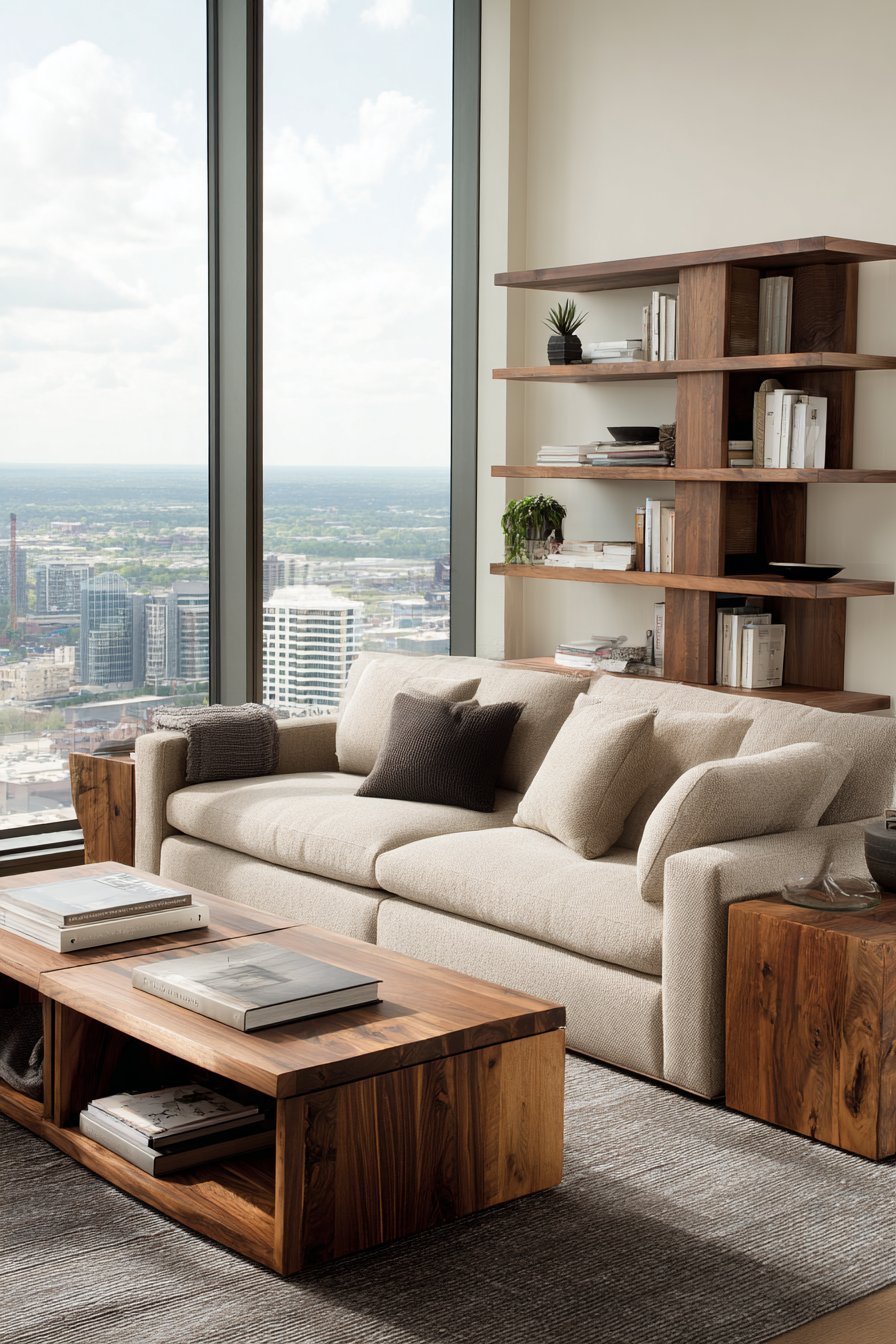
The beige fabric sofa includes wooden frame details in medium brown—perhaps exposed legs or arm details—that serve as the middle tone between the dark walnut and light oak. This three-tone approach to wood creates a sophisticated gradation that adds depth and dimension. The medium brown acts as a bridge, preventing the contrast between dark and light from feeling too stark or disconnected.
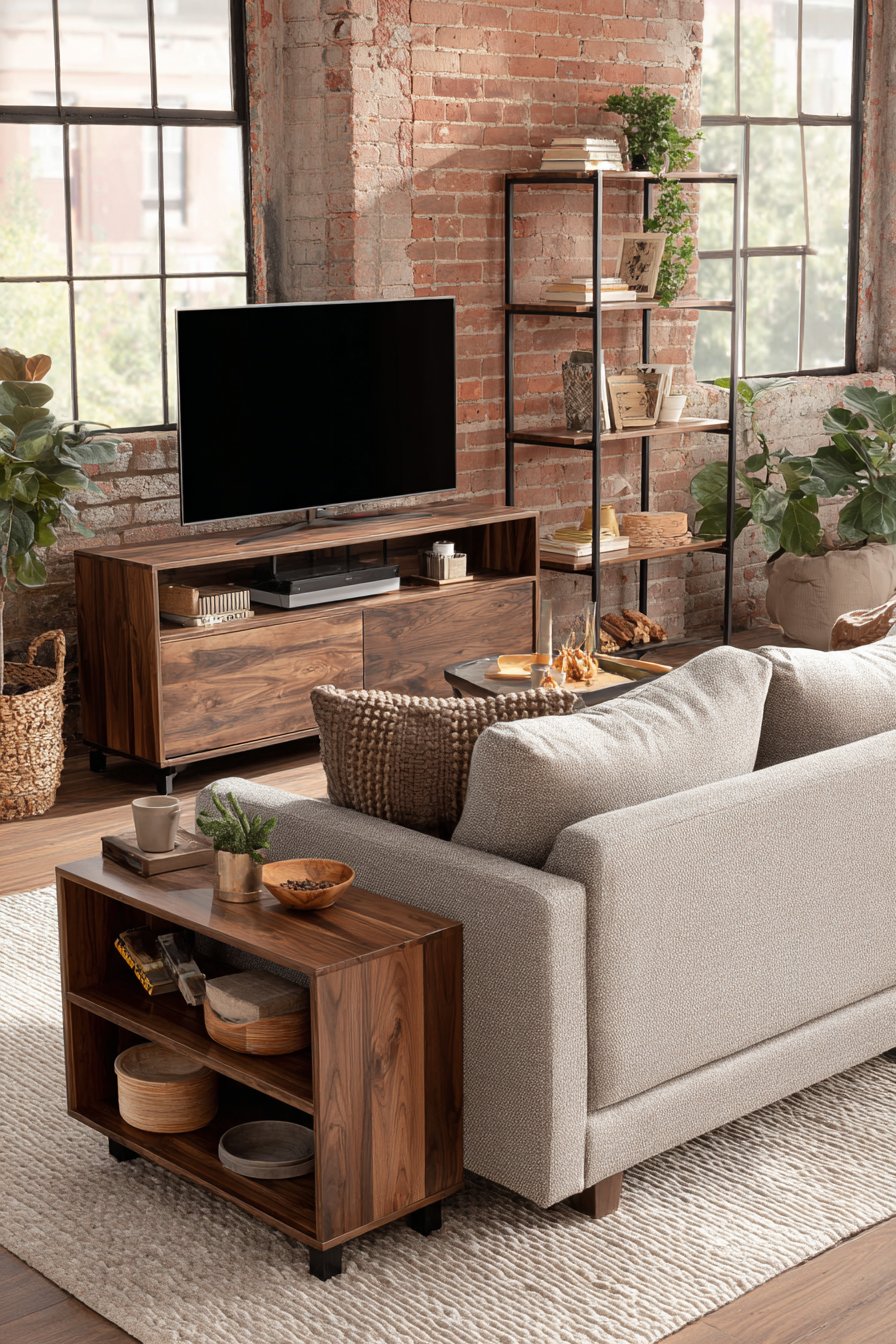
Open shelving displays books and decorative objects in complementary brown and beige tones, creating a curated collection that reinforces the color story. Perhaps books are arranged with spines showing beige, tan, brown, and cream tones, while accessories include beige ceramics, brown leather-bound books, and natural wood objects. Large windows without treatments maximize natural light, allowing the various wood tones to show their true colors and the space to feel open and airy.
Key Design Tips:
- Mix three wood tones (light, medium, dark) for sophisticated depth
- Ensure wood undertones harmonize (all warm or all cool)
- Use the darkest wood tone sparingly for grounding and contrast
- Include medium-tone wood as a bridge between extremes
- Maximize natural light to show wood tones accurately
15. Small Space Solutions in Compact Layouts
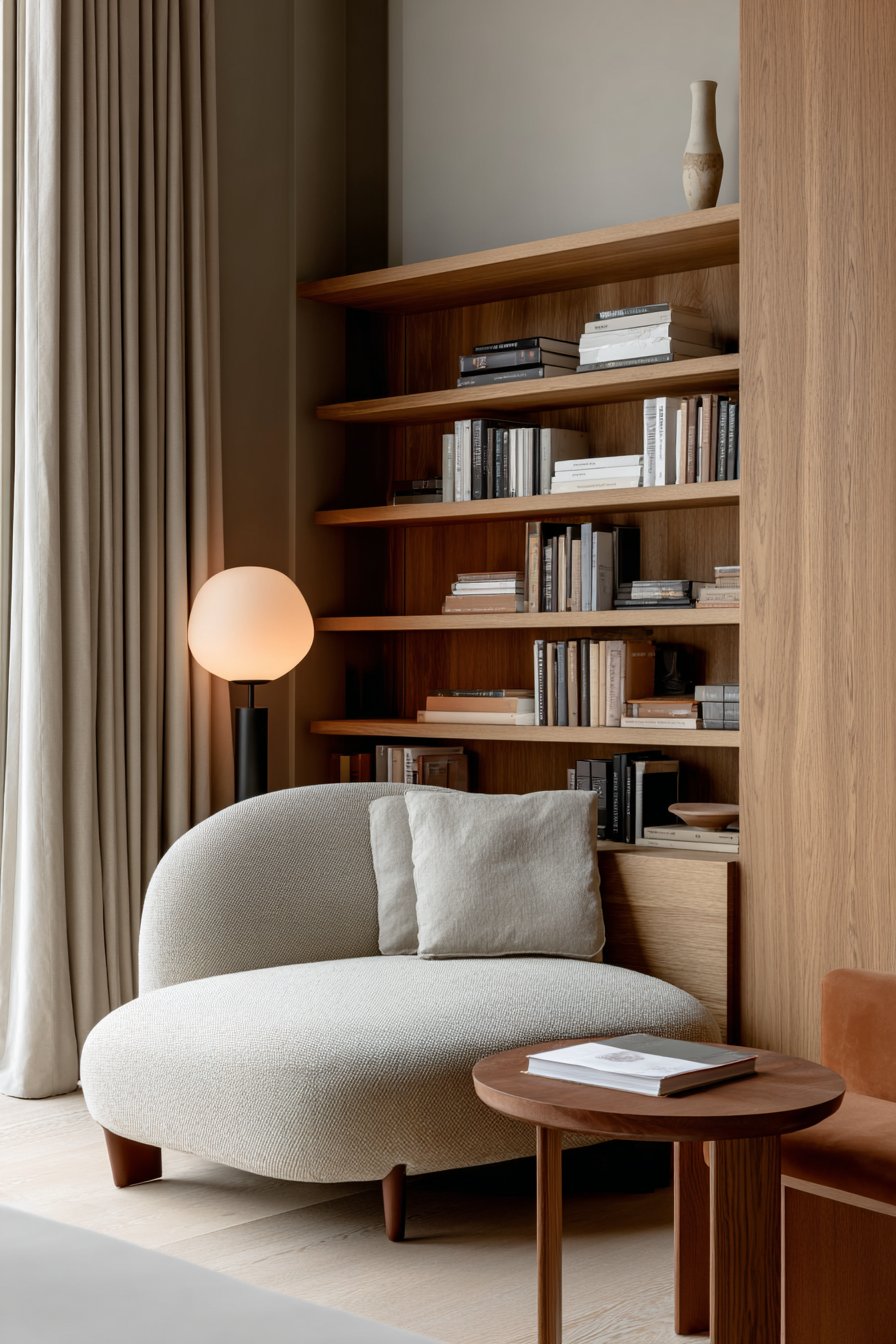
Thoughtful space planning transforms this compact brown and beige living room idea into a functional, beautiful space that proves good design isn’t about square footage. A loveseat in beige linen with brown wooden legs fits perfectly against one wall, its smaller scale appropriate for the room’s dimensions without making residents feel they’ve sacrificed comfort. The linen upholstery’s neutral tone helps the substantial piece blend with the walls, creating a sense of spaciousness through visual continuity.
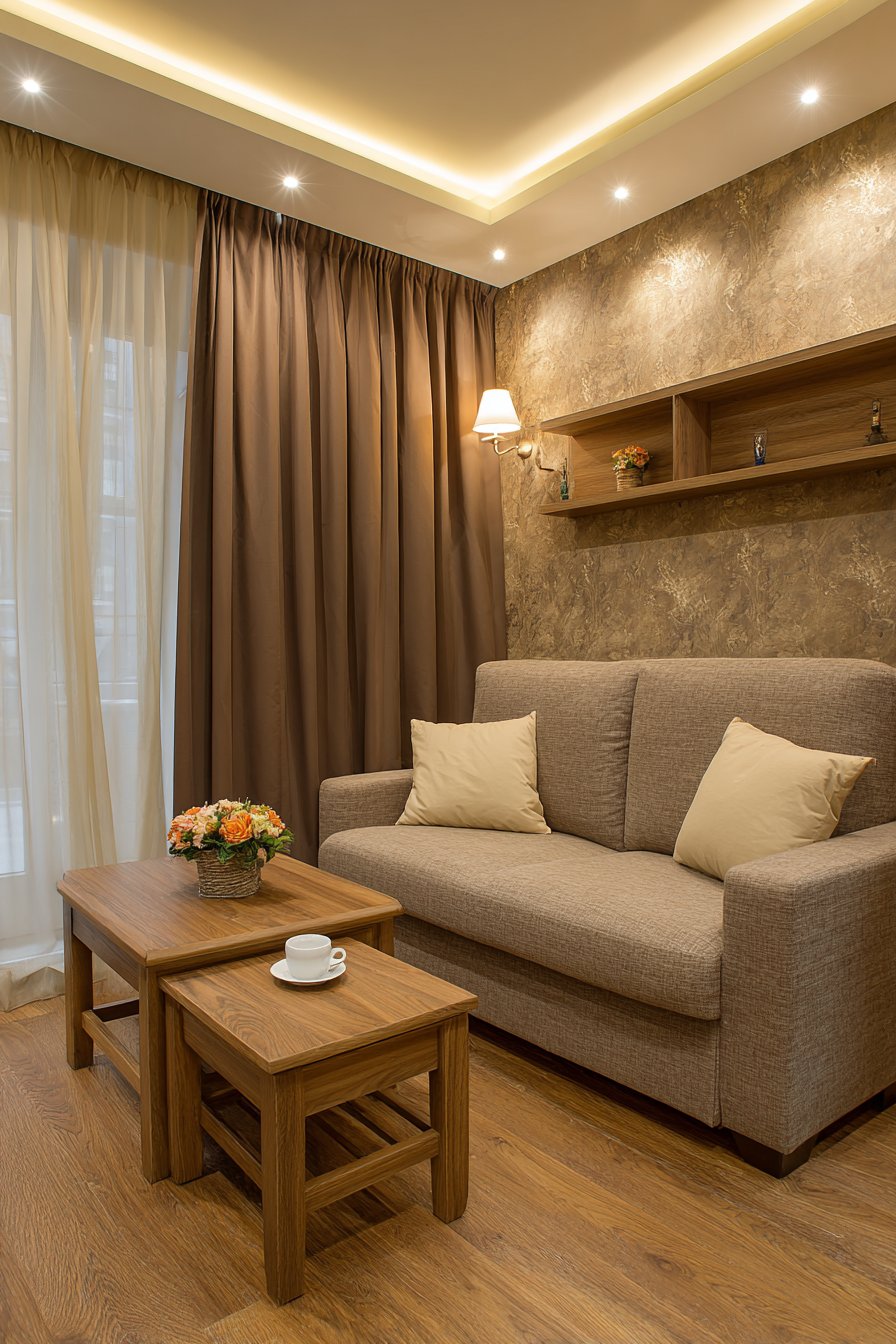
A nesting coffee table set in brown and natural wood provides flexible functionality essential in small spaces. These tables can be arranged together for a layered look during everyday use, then separated when additional surface space is needed for entertaining or projects. The ability to tuck the smaller table under the larger one when not needed preserves precious floor space, while the varied wood tones add visual interest without requiring additional furniture pieces.
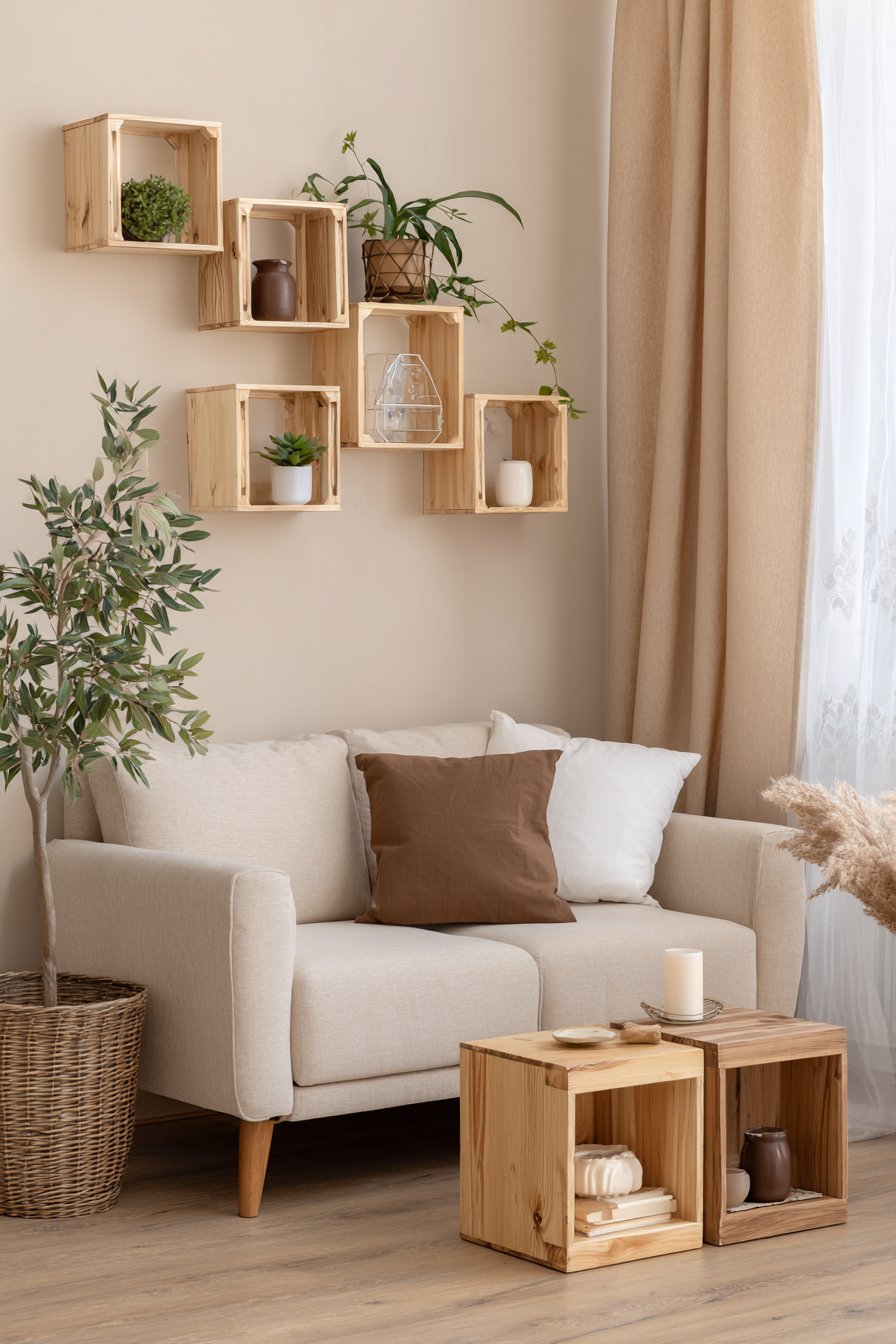
Wall-mounted shelving in brown wood maximizes vertical storage without cluttering floor space—a crucial consideration in compact rooms where every square foot matters. These floating shelves might display books, plants, and decorative objects, providing the storage and personalization that makes a house feel like home without the visual weight of freestanding bookcases. The brown wood ties back to the loveseat’s legs and the coffee tables, maintaining color continuity.
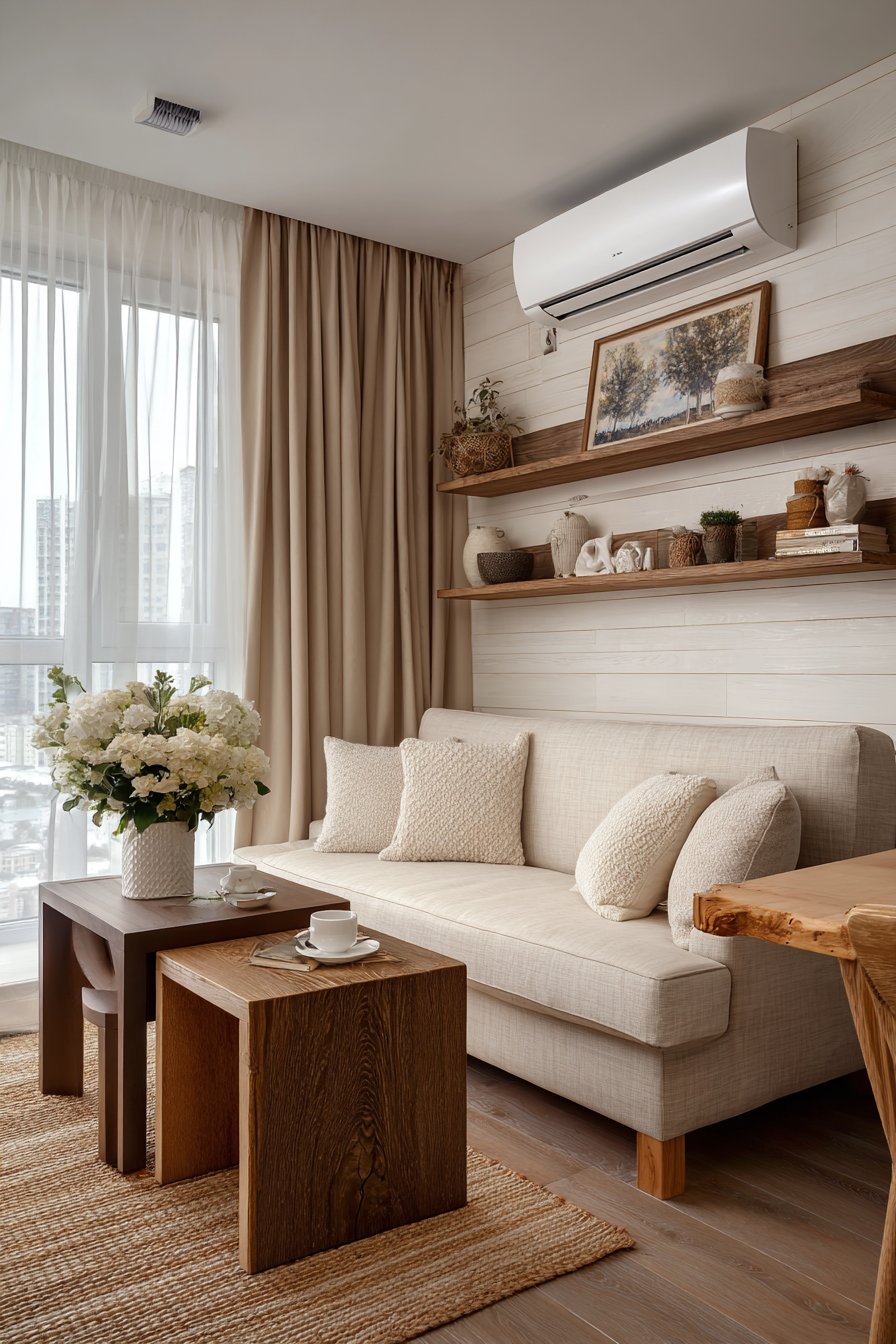
Beige curtains add softness to the window while helping to blur the room’s boundaries, making the space feel larger than its actual dimensions. The curtains’ light color reflects light rather than absorbing it, contributing to the room’s brightness and airiness. Their soft folds add subtle texture without overwhelming the small space, proving that even compact rooms can incorporate layers and interest when done thoughtfully.
Key Design Tips:
- Scale furniture appropriately for room size—smaller spaces need smaller pieces
- Choose multi-functional furniture like nesting tables for flexibility
- Utilize vertical space through wall-mounted storage
- Keep the color palette light to maximize the sense of spaciousness
- Use mirrors strategically to reflect light and create depth
16. Pattern Play with Coordinated Textiles
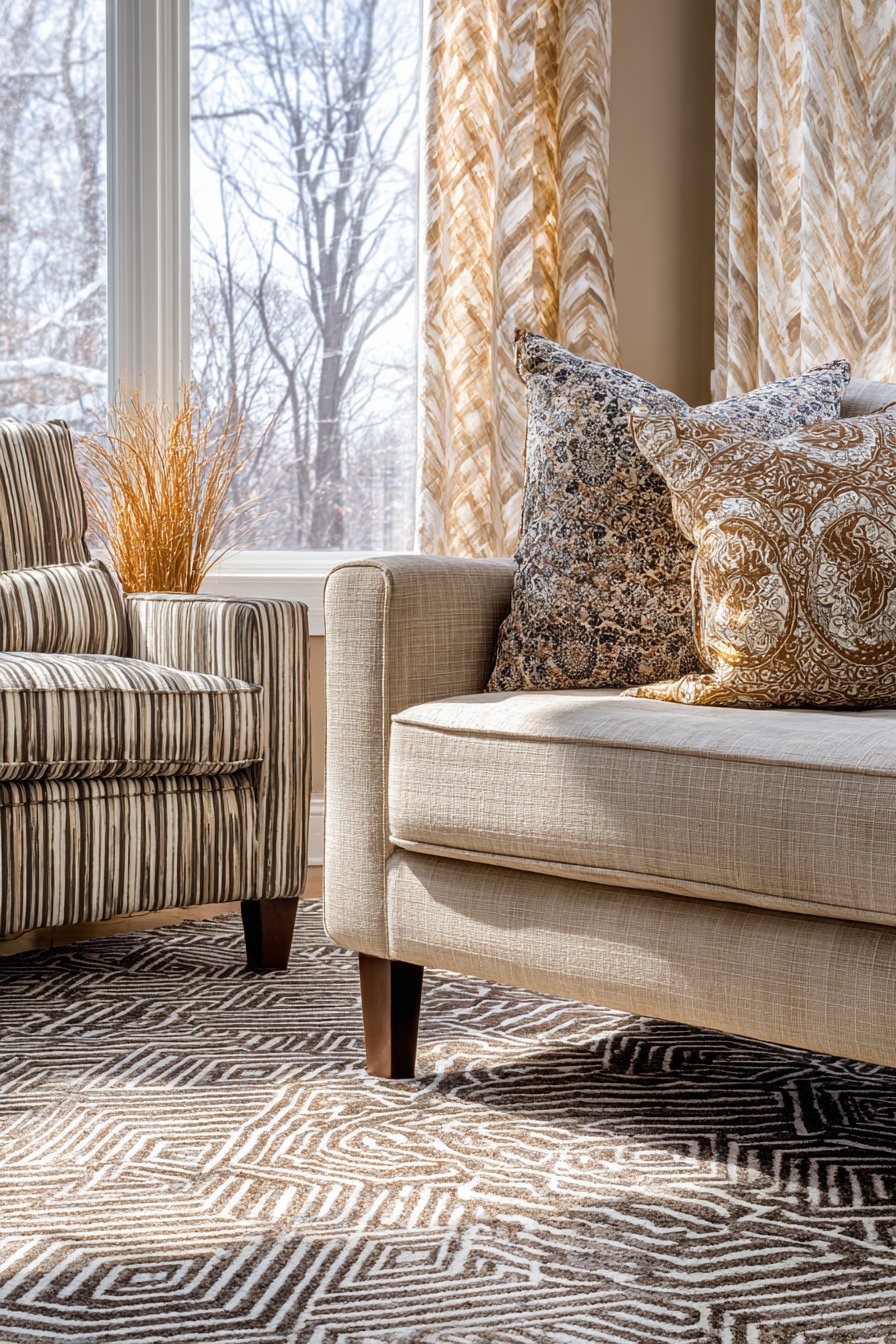
Confident pattern mixing distinguishes this brown and beige living room idea, where varied designs work together through their shared color palette. A beige sofa serves as the neutral foundation, its solid color providing a calm backdrop that allows pattern to take center stage without creating visual chaos. The sofa’s simple silhouette ensures the focus remains on the textiles rather than competing furniture details.
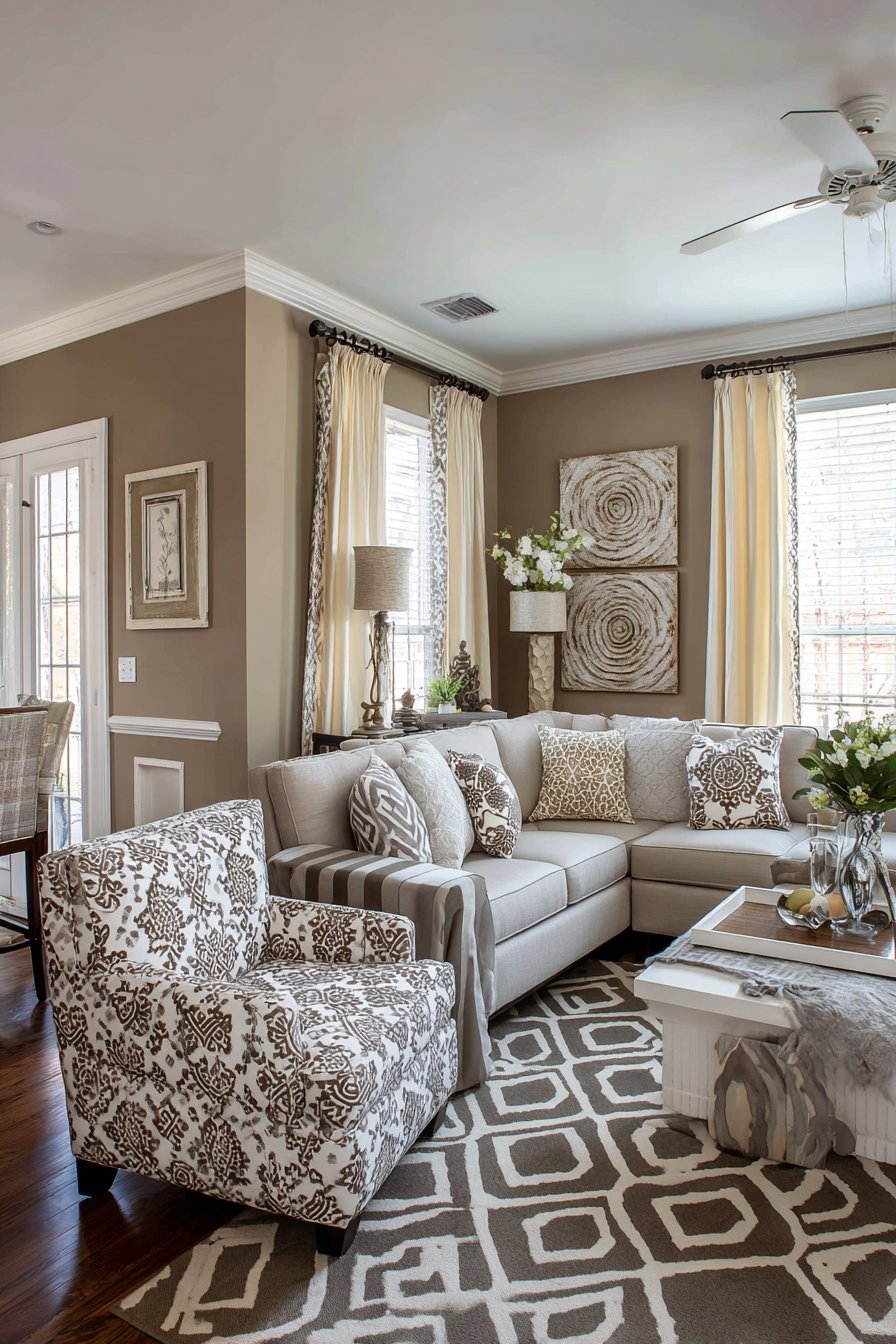
Brown and beige striped accent chairs complement the solid sofa while introducing linear pattern. The stripes might run vertically to create the illusion of height or horizontally to suggest width and stability. Either orientation adds graphic interest while maintaining the established color story. The chairs’ pattern provides enough visual interest to make them focal points without overwhelming the space or clashing with other patterns.
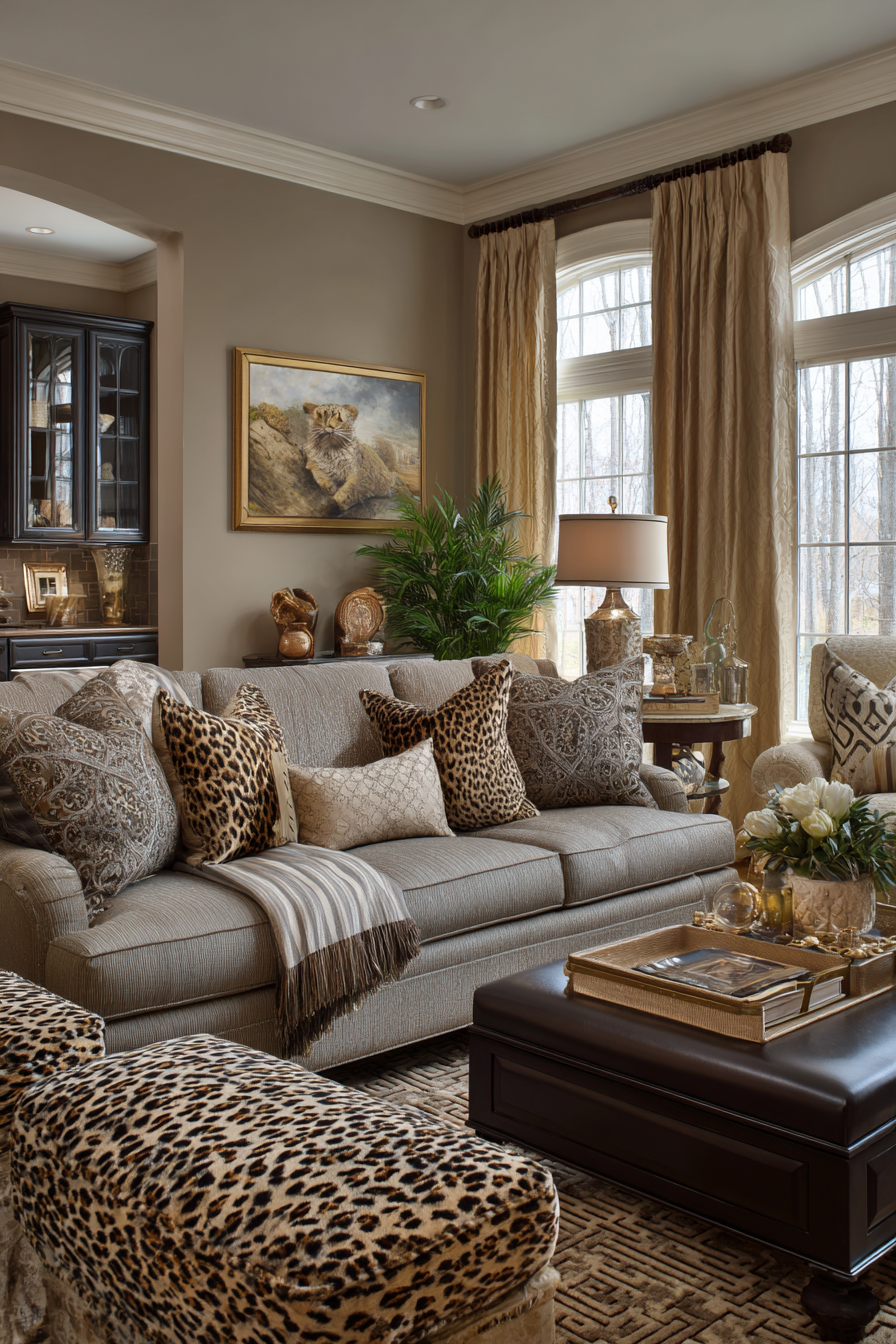
A geometric patterned area rug in coordinating brown and beige tones grounds the seating arrangement, its angular designs creating a foundation that anchors the various furniture pieces into a cohesive grouping. The rug’s pattern might include triangles, hexagons, or abstract shapes that add contemporary flair while maintaining the neutral palette. Its placement defines the living area within the larger room, creating a sense of intimacy and purpose.
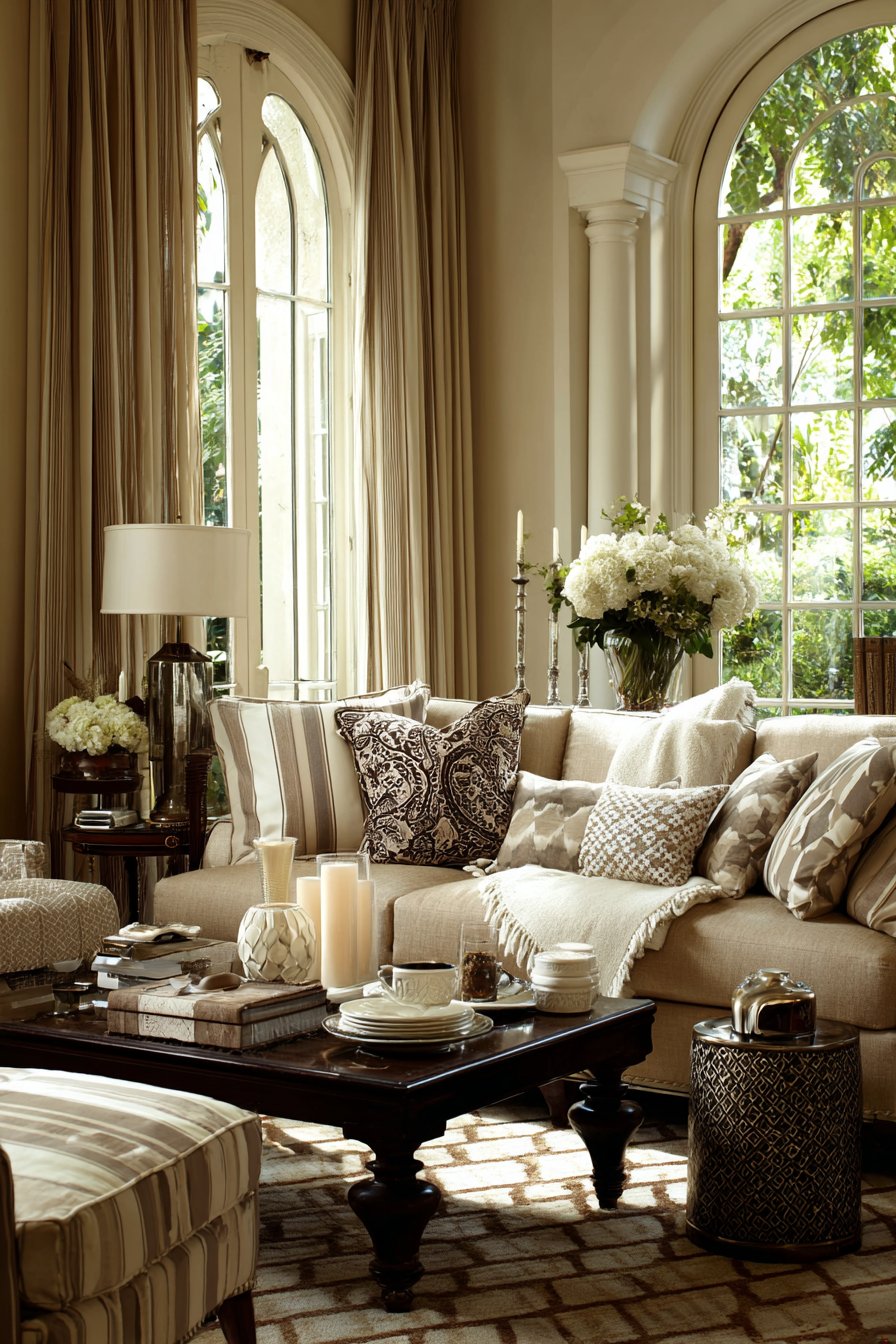
Throw pillows demonstrate successful pattern mixing through varied designs that share the brown and beige color scheme. Perhaps one pillow features brown paisley swirls, another displays beige herringbone in a subtle texture, and a third shows a small-scale plaid in both colors. Each pattern works because it maintains color discipline, proving that successful pattern mixing is more about color coordination than pattern coordination. Solid beige curtains balance the pattern play, ensuring the eye has places to rest amid the visual activity.
Key Design Tips:
- Start with a solid-colored anchor piece as your foundation
- Mix patterns in different scales (large, medium, small) for balance
- Maintain strict color discipline when combining multiple patterns
- Include solid elements to provide visual rest between patterns
- Vary pattern types (geometric, organic, linear) for interesting contrast
17. Monochromatic Tonal Sophistication
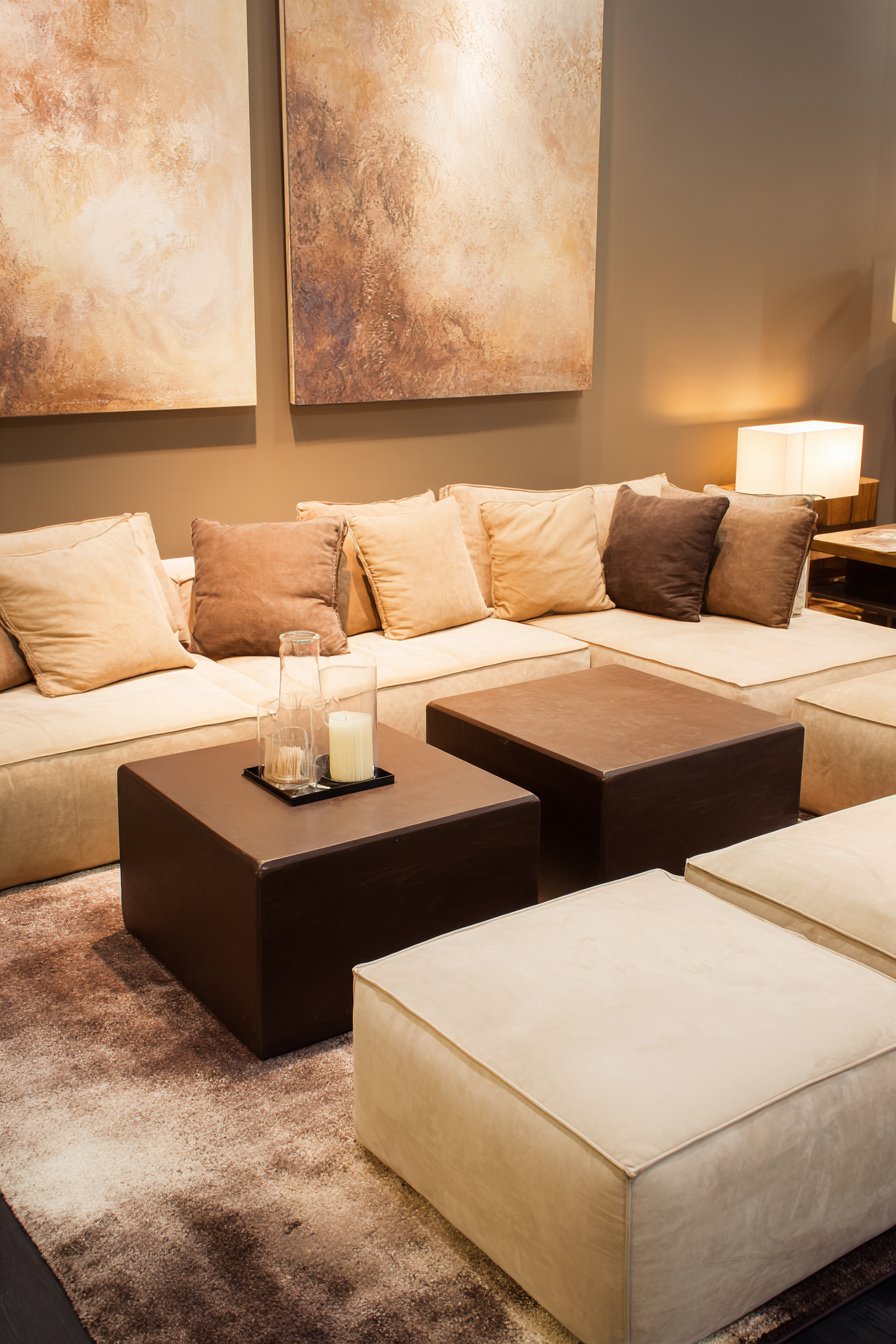
Subtle color gradation creates sophistication in this brown and beige living room idea that embraces a monochromatic approach with varying shades from cream beige to deep chocolate brown. A modular sofa system in mid-tone beige creates flexible seating that can be rearranged based on need—perfect for accommodating different group sizes or changing room layouts over time. The sofa’s neutral mid-tone position allows both lighter and darker elements to shine.
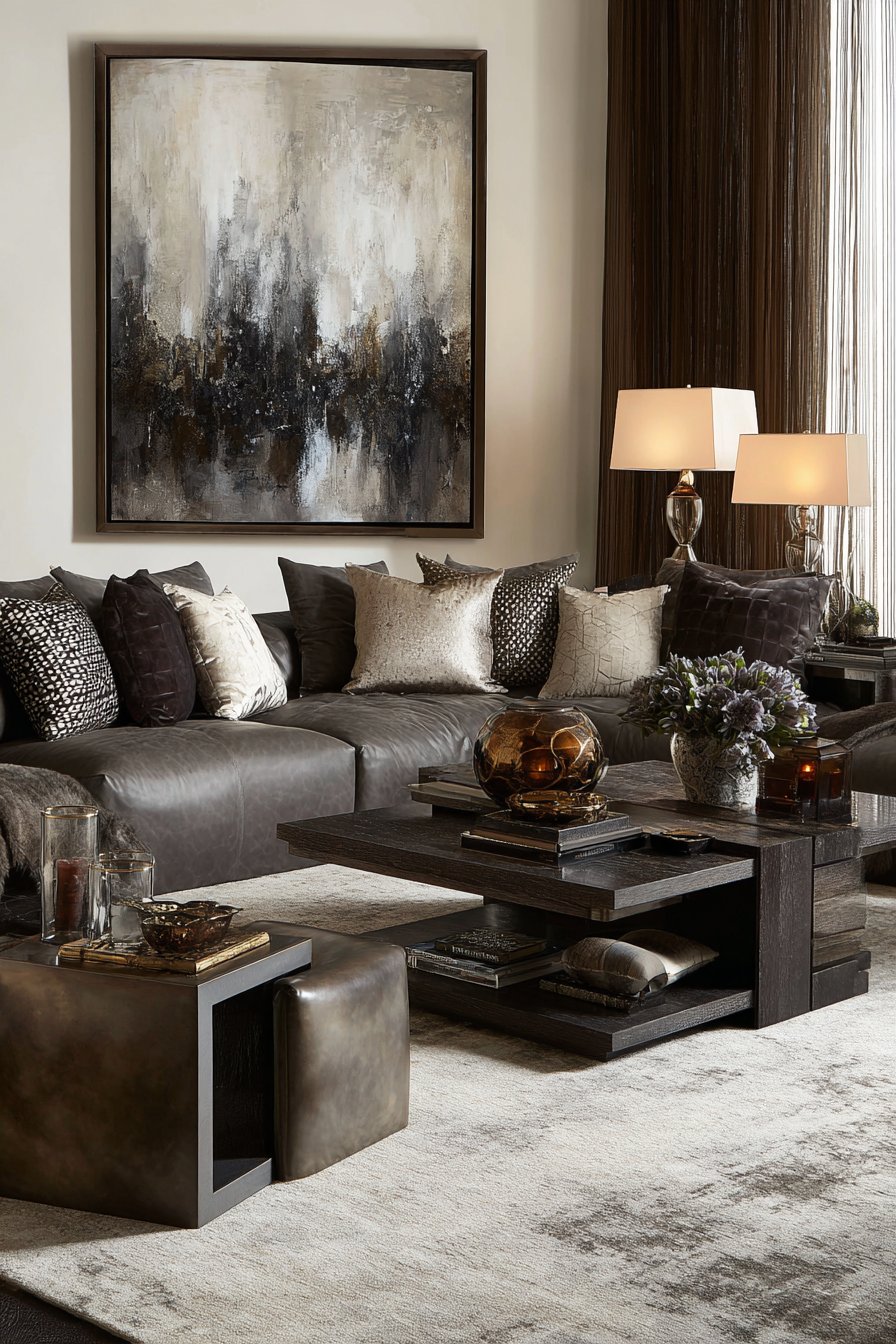
Accent tables in graduated brown tones—perhaps one in blonde wood, one in medium walnut, and one in espresso—create visual interest through color gradation rather than contrasting colors. This approach adds depth and dimension while maintaining the monochromatic scheme’s inherent calm. The subtle shifts from light to dark create a sense of movement and progression around the room.
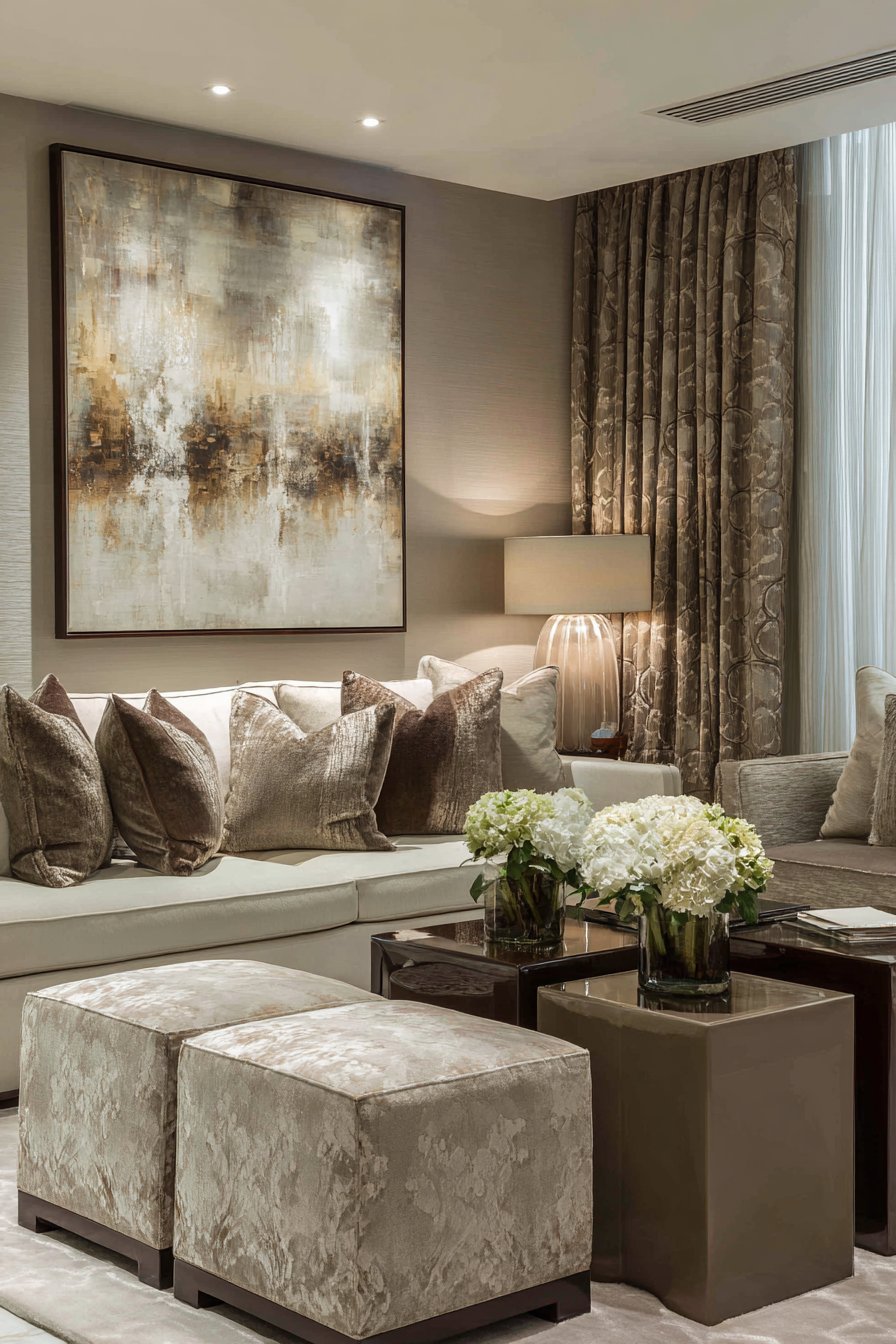
Artwork in brown and beige abstract patterns ties the tonal palette together, its organic shapes and flowing forms adding visual interest without introducing new colors. The abstract nature ensures the art complements rather than dictates the space’s design, allowing it to work harmoniously with the furniture and accessories. The artwork might show gradual color shifts from light beige through tan and taupe to rich brown, demonstrating the full range of the palette.
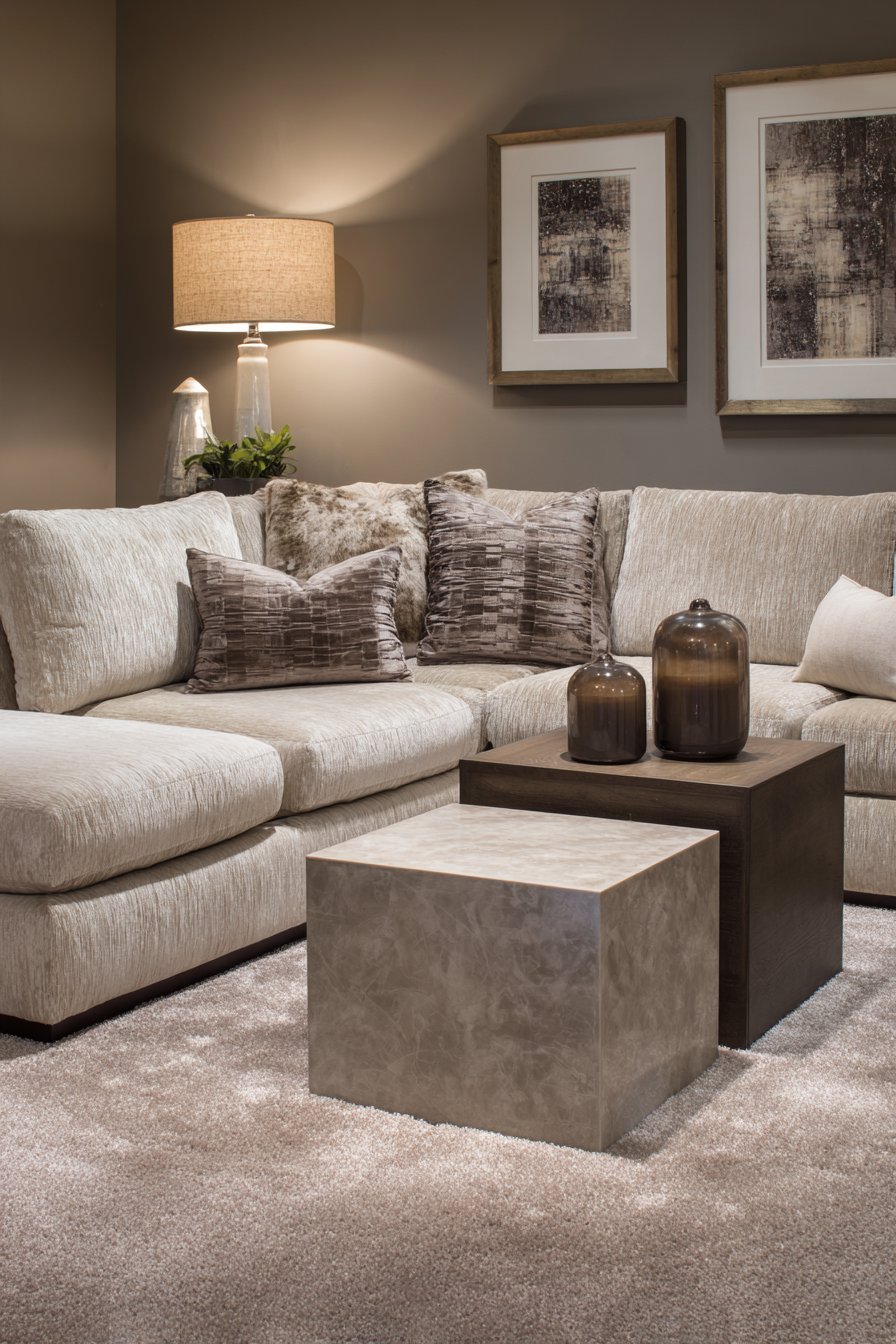
Soft diffused lighting creates depth through subtle highlighting and shadowing, essential in monochromatic spaces where color contrast isn’t available to create dimension. Strategic lighting placement ensures that even though the color palette is limited, the space maintains visual interest through varied tones, shadows, and highlights that change throughout the day and evening.
Key Design Tips:
- Include the full range of tones from light to dark within your chosen palette
- Use graduated color to create visual movement around the room
- Employ strategic lighting to create depth through shadow and highlight
- Choose abstract art that demonstrates the full tonal range
- Select modular furniture for flexibility in monochromatic schemes
18. Sustainable Design with Eco-Friendly Materials
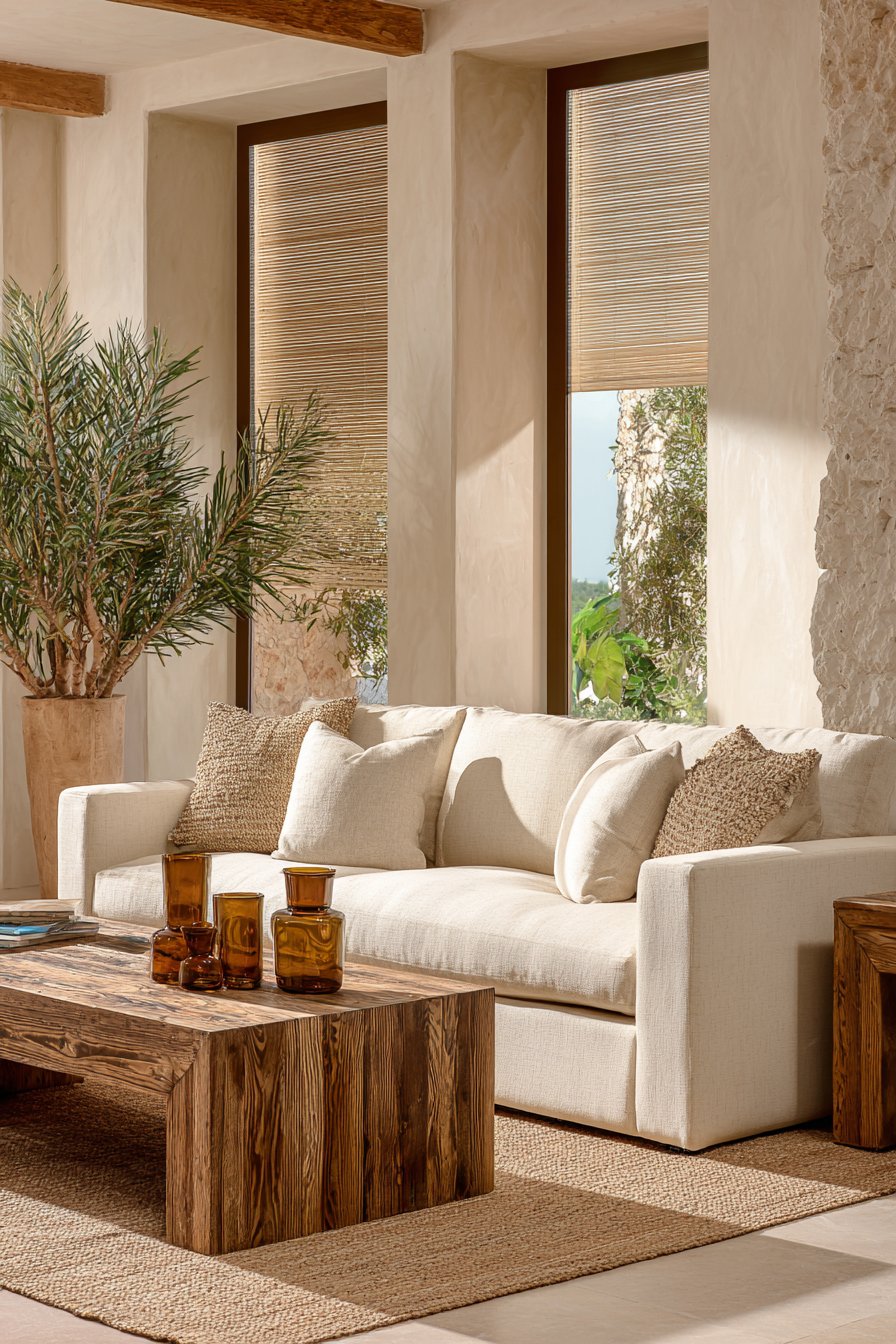
Environmental consciousness guides material selection in this brown and beige living room idea that proves sustainable choices can be beautiful and stylish. A sofa upholstered in organic beige cotton showcases the fabric’s visible natural weave, with irregular texture variations that come from minimally processed fibers. Unlike synthetic upholstery treated with harsh chemicals, this organic cotton brings health benefits for residents while reducing environmental impact.
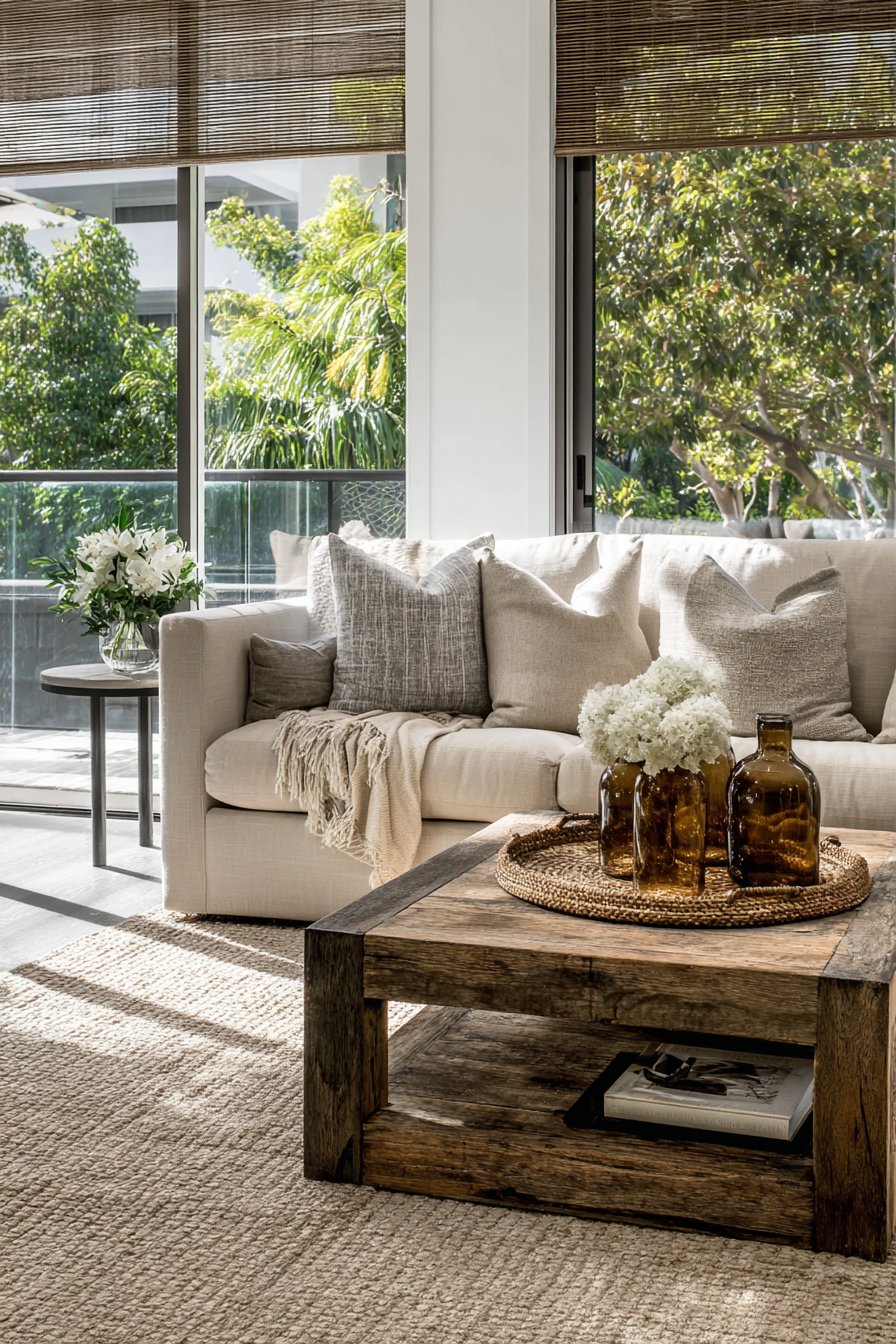
A reclaimed wood coffee table in weathered brown shows authentic age and character, its surface bearing the marks of its previous life. Perhaps this wood came from a dismantled barn, old warehouse, or fallen tree, giving it a second life as beautiful, functional furniture. The weathered appearance—silvered grain, subtle color variations, and natural imperfections—tells a story while preventing new wood from being harvested for furniture production.
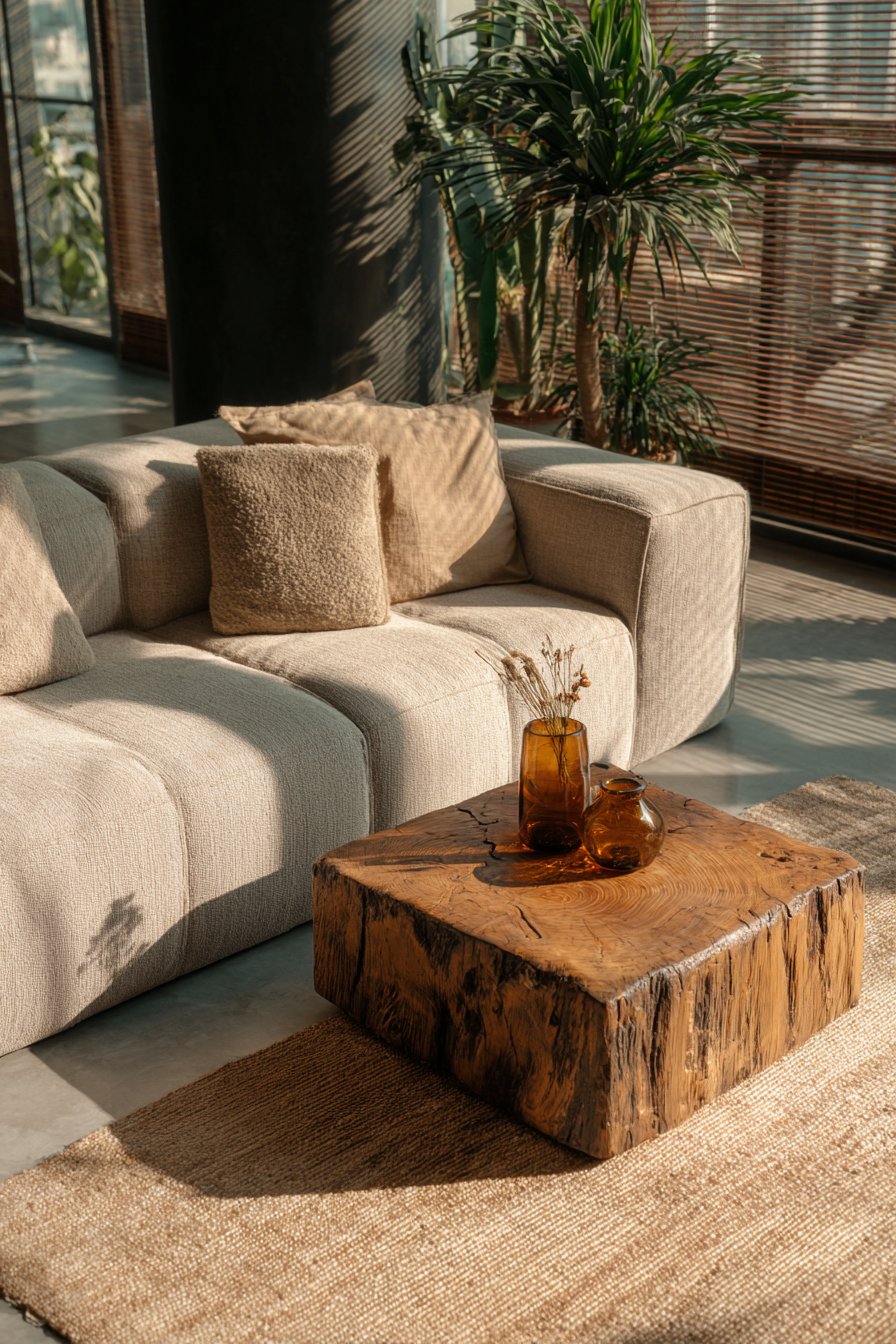
A jute area rug in natural beige provides an eco-friendly foundation, its sustainable natural fiber biodegradable and renewable. Jute grows quickly with minimal water and no pesticides, making it an environmentally responsible choice that doesn’t sacrifice style or durability. The rug’s inherent texture adds visual and tactile interest while its neutral color maintains the room’s cohesive palette.
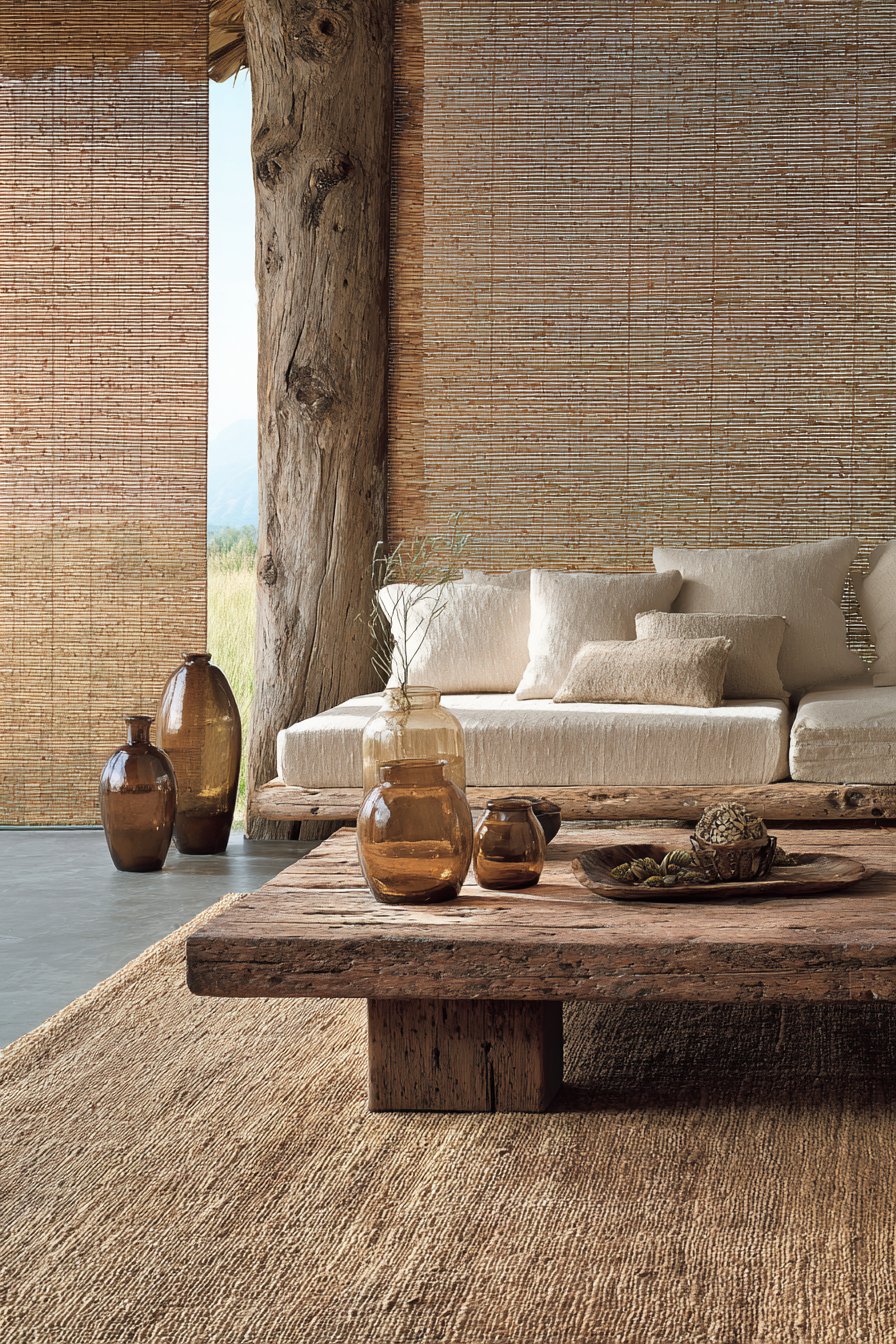
Bamboo blinds in warm brown filter light sustainably, their rapidly renewable material growing to harvest size in just three to five years compared to decades for traditional hardwoods. The blinds’ horizontal slats create interesting light patterns when partially open, casting gentle shadows that change throughout the day. Recycled glass vases in brown tones add decorative touches while reinforcing the commitment to sustainable materials throughout the space.
Key Design Tips:
- Choose organic, unbleached fabrics to reduce chemical exposure
- Source reclaimed wood furniture to prevent new tree harvesting
- Select natural fiber rugs like jute, sisal, or wool for sustainability
- Use rapidly renewable materials like bamboo for window treatments
- Display the materials’ natural characteristics rather than hiding them
19. Traditional Elegance with Classic Silhouettes
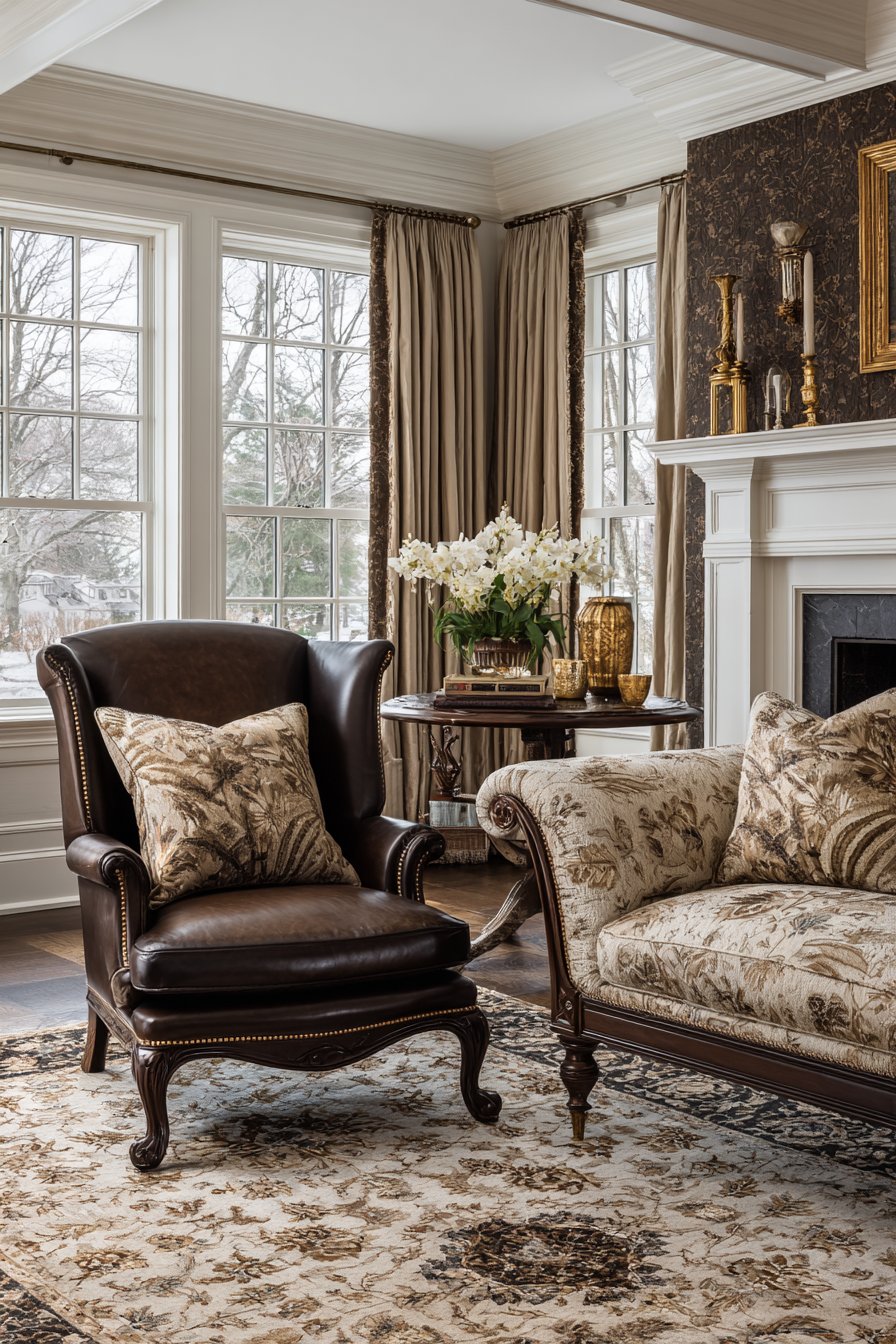
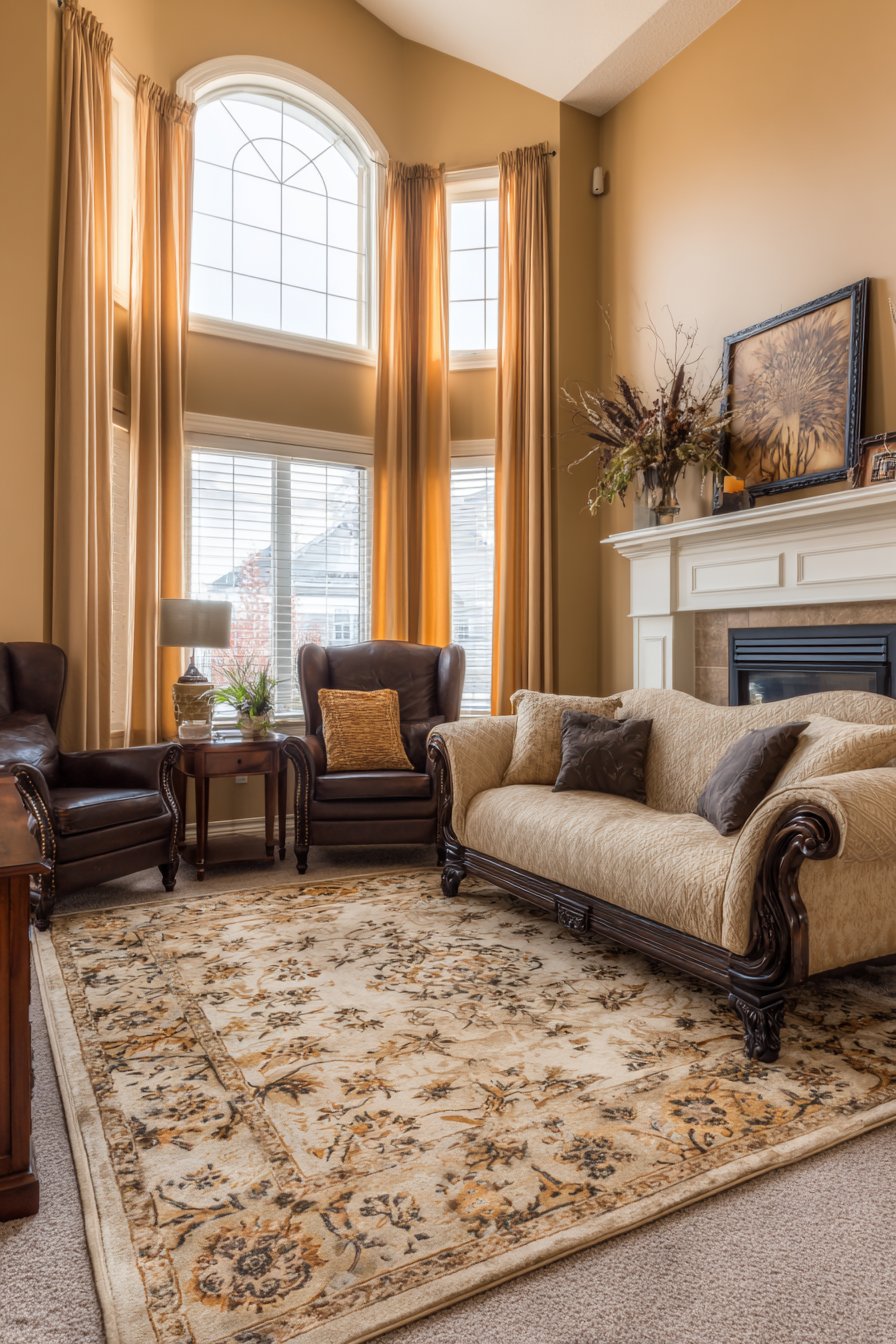
Timeless formality characterizes this brown and beige living room idea where traditional furniture silhouettes create sophisticated elegance. A camelback sofa in beige damask fabric features the gracefully curved back that defines this classic form, with carved wooden legs in dark brown adding ornamental detail. The damask’s subtle pattern—woven rather than printed into the fabric—catches light differently across its surface, creating dimensional interest without overwhelming the space.
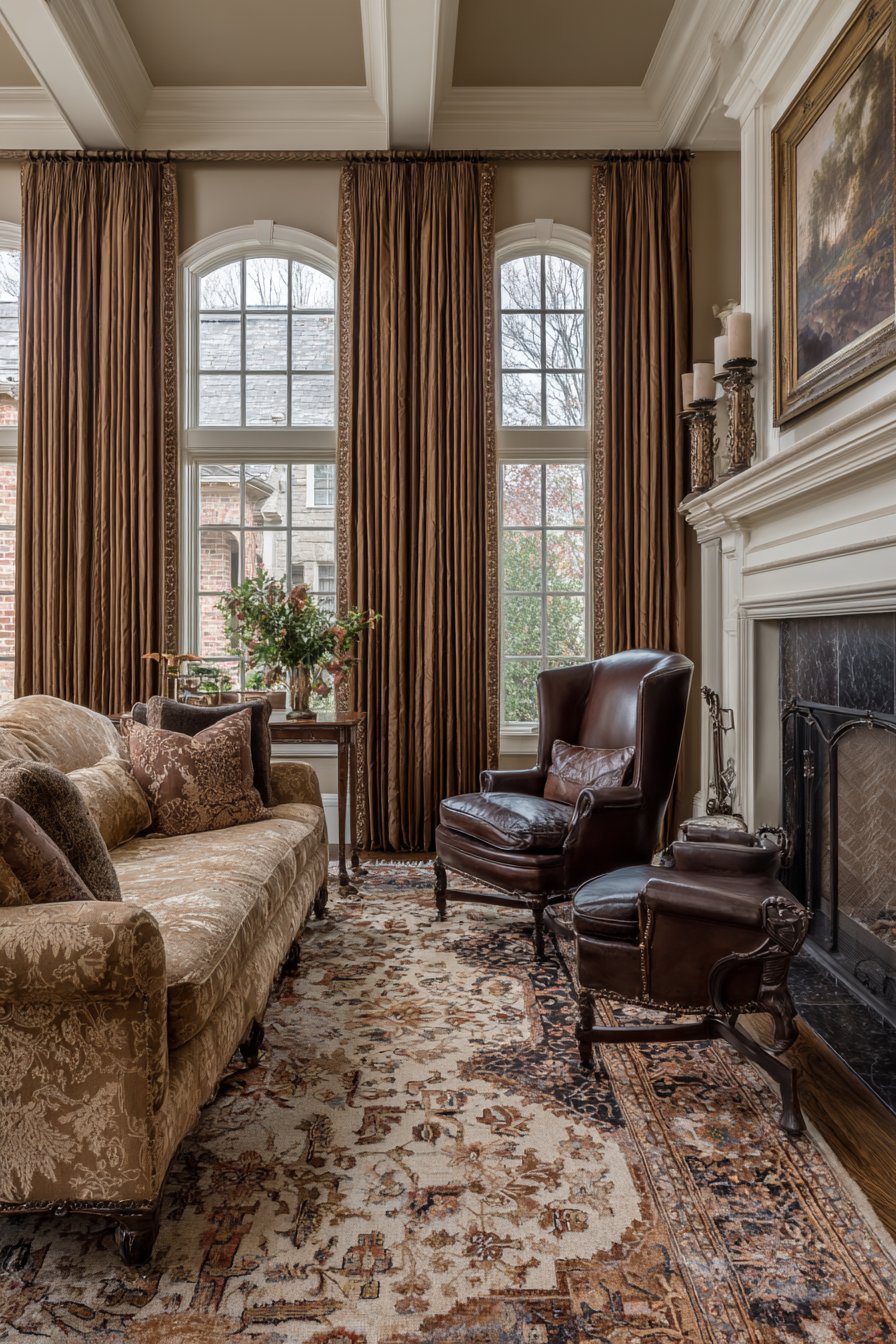
Wingback chairs in brown leather flank the fireplace, their high backs and distinctive “wing” profiles providing draft protection while creating commanding presence. These substantial chairs suggest permanence and quality, their classic forms having proven their appeal over centuries of use. The leather’s deep brown color has developed a rich patina, particularly visible on the arms and seat where regular use has burnished the surface to a warm glow.
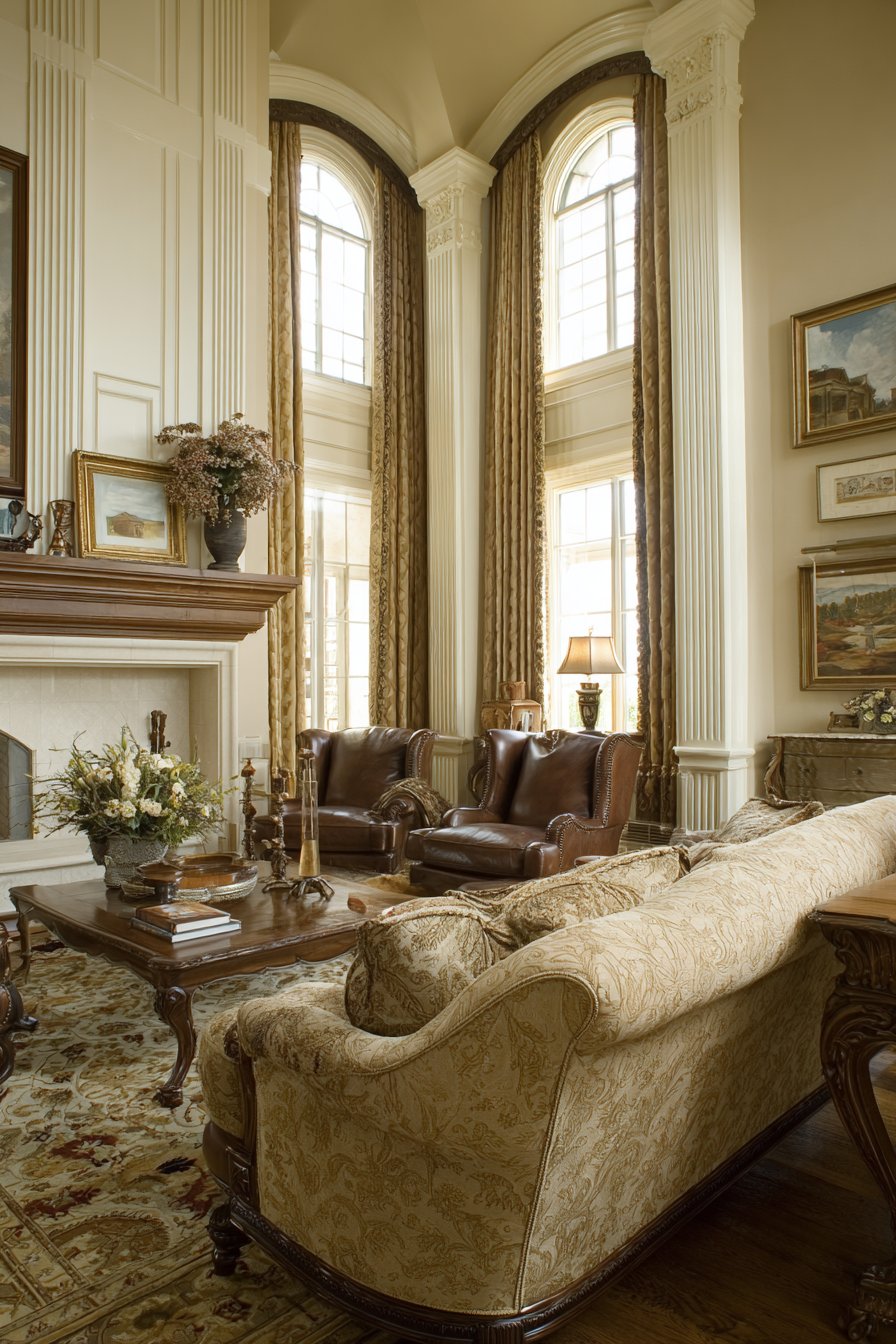
An Oriental area rug in beige background with brown patterns anchors the formal arrangement, its traditional motifs and intricate designs adding cultural richness and artisanal appeal. The rug’s hand-knotted construction represents significant craftsmanship, with each knot tied individually to create the complex pattern. The predominantly beige field provides a light foundation that prevents the room from feeling too dark despite the brown leather chairs and wood furniture.
Heavy beige drapery with brown trim frames tall windows, their substantial fabric and generous fullness suggesting luxury and formality. The drapes puddle slightly on the floor—a traditional treatment that adds elegance though not practical for everyday use in informal spaces. The brown trim defines the panels’ edges, tying them to the room’s darker elements while ensuring they read as deliberate design choices rather than plain window coverings.
Key Design Tips:
- Choose classic furniture silhouettes that have proven their appeal over time
- Invest in quality construction that will last for generations
- Use hand-knotted or high-quality rugs as foundation pieces
- Add window treatments with substance and fullness for formal spaces
- Allow leather to develop natural patina rather than preventing aging
20. Lived-In Comfort with Oversized Seating
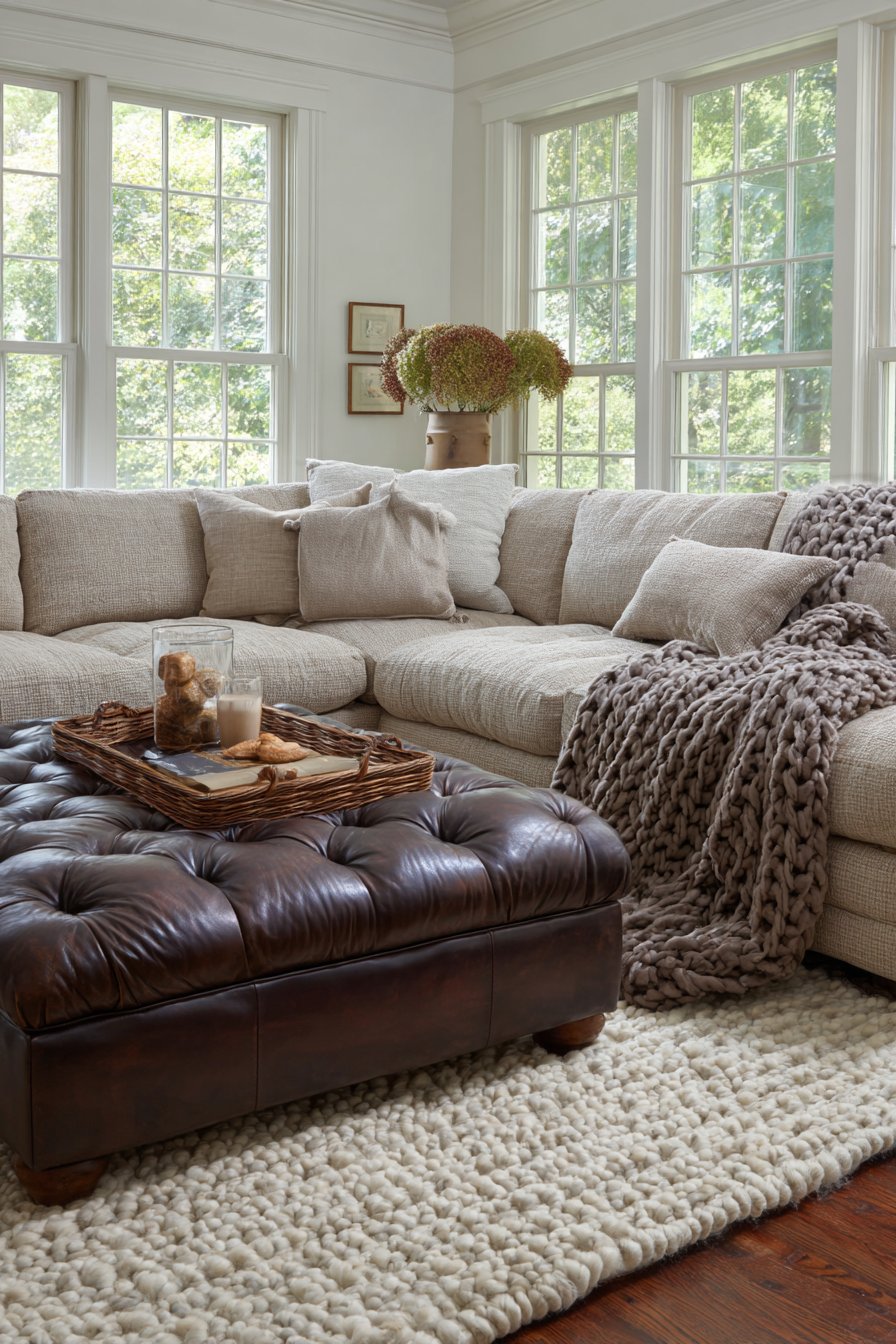
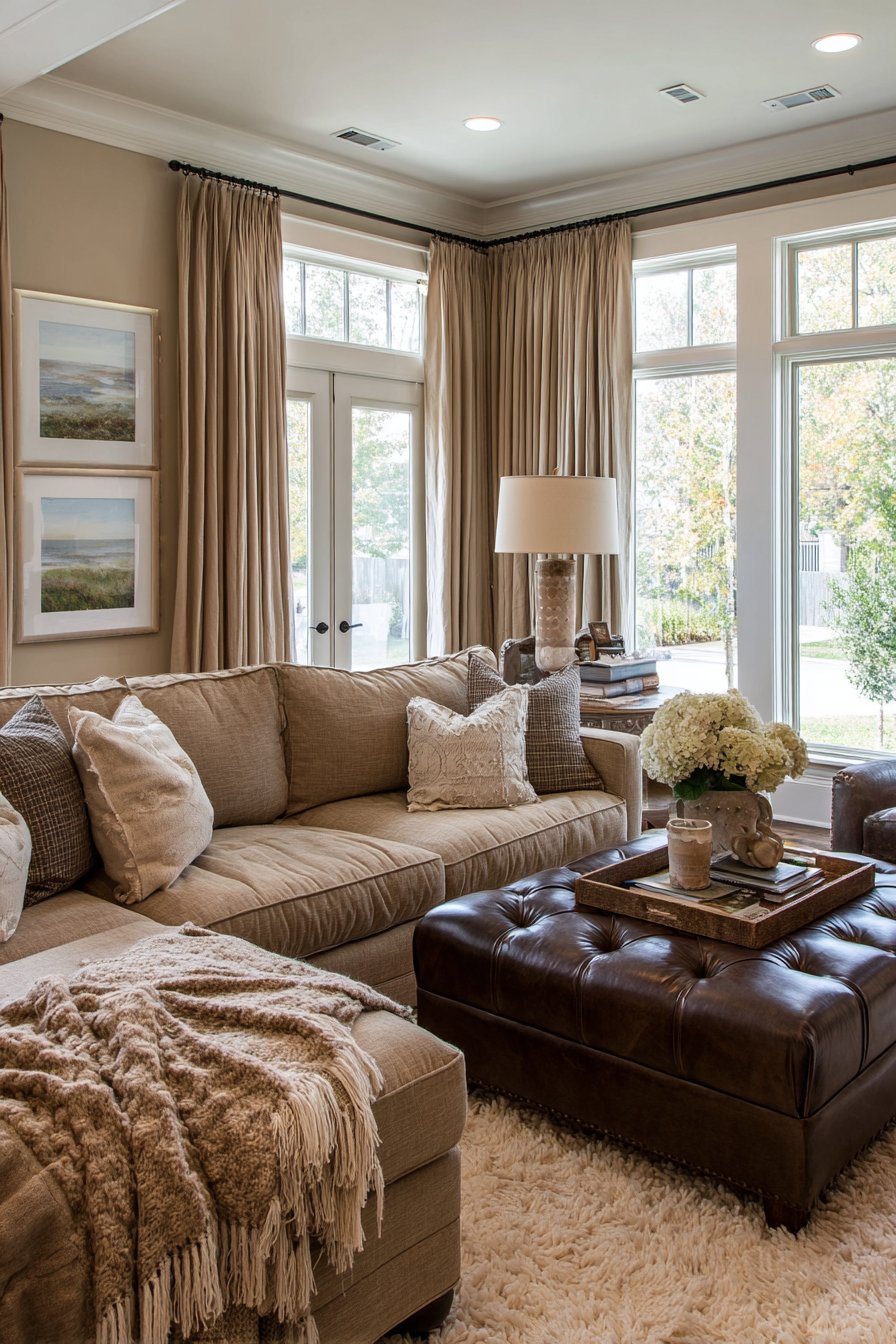
Ultimate comfort drives design decisions in this brown and beige living room idea where oversized seating invites relaxation and casual family time. A deep sectional in beige chenille fabric beckons with plush cushions showing natural compression from regular use. Rather than maintaining the stiff, perfect appearance of showroom furniture, these cushions bear the gentle indentations and settled shape that come from actually being used, suggesting a space where comfort trumps formality.
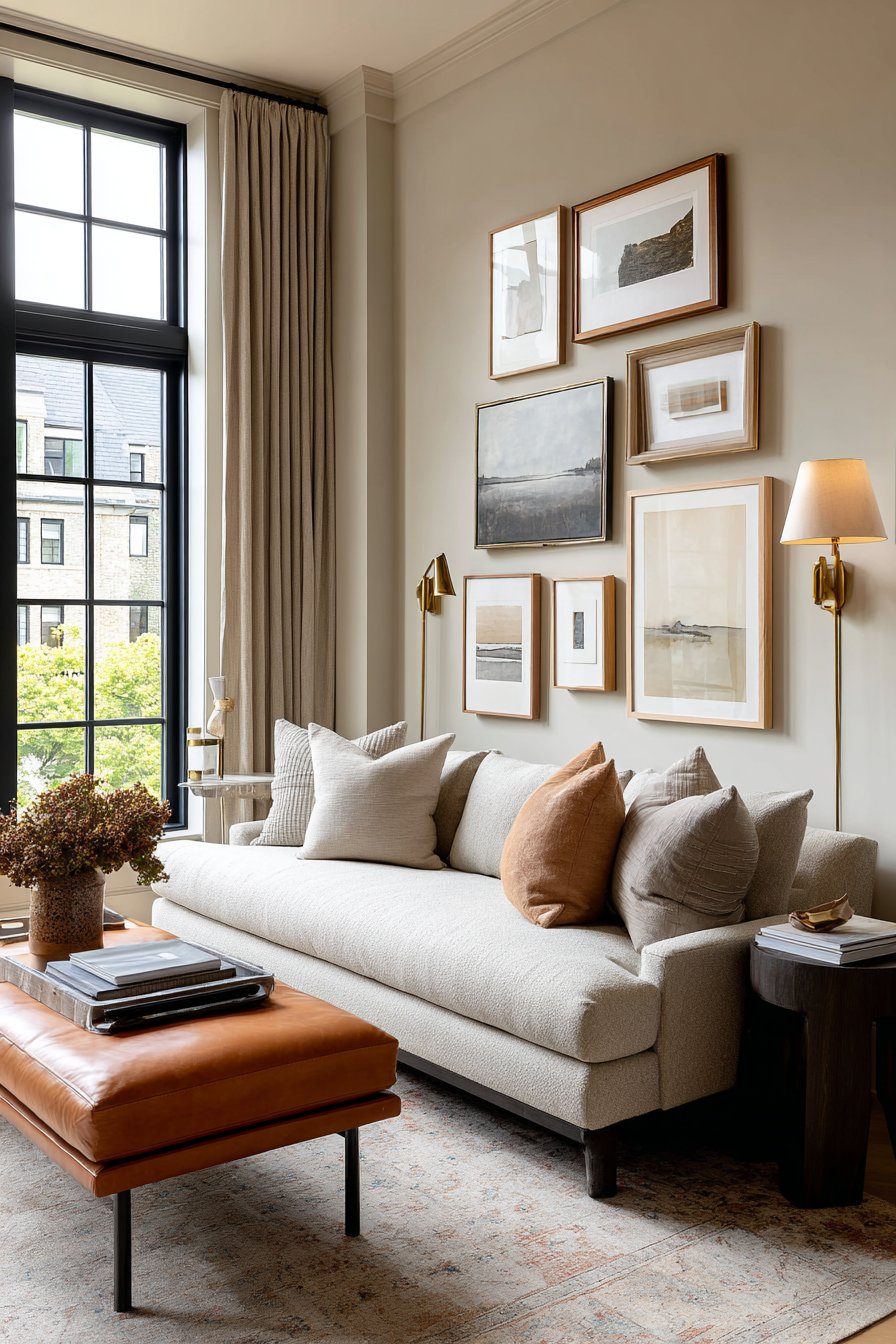
An ottoman coffee table in brown leather with button tufting serves as a casual footrest, its soft surface forgiving when little ones climb across it or adults prop up tired feet after long days. The tufted surface creates dimensional interest through its quilted pattern while the leather’s durability ensures it will withstand the inevitable bumps and spills of family life. Its height perfectly aligns with the sectional’s seat, creating a seamless extension for lounging.
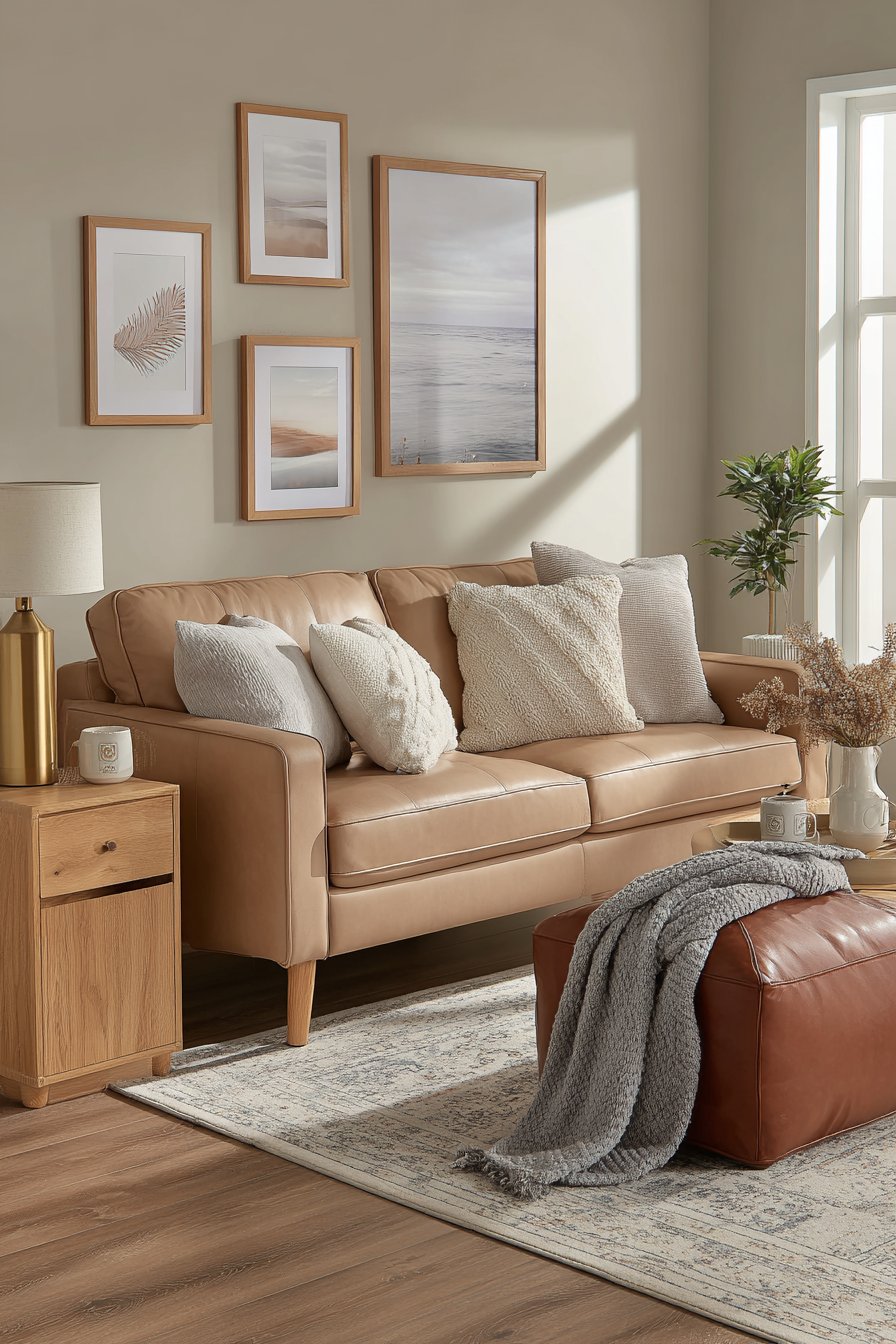
Soft throw blankets in brown and beige drape naturally over furniture arms and backs, their casual positioning suggesting they’re regularly pulled out for movie nights and reading sessions. These aren’t carefully folded decorative throws meant only for visual appeal—they’re working blankets that provide actual warmth and comfort. Their neutral tones ensure they enhance the design even when casually tossed aside, proving that functional items can be beautiful.
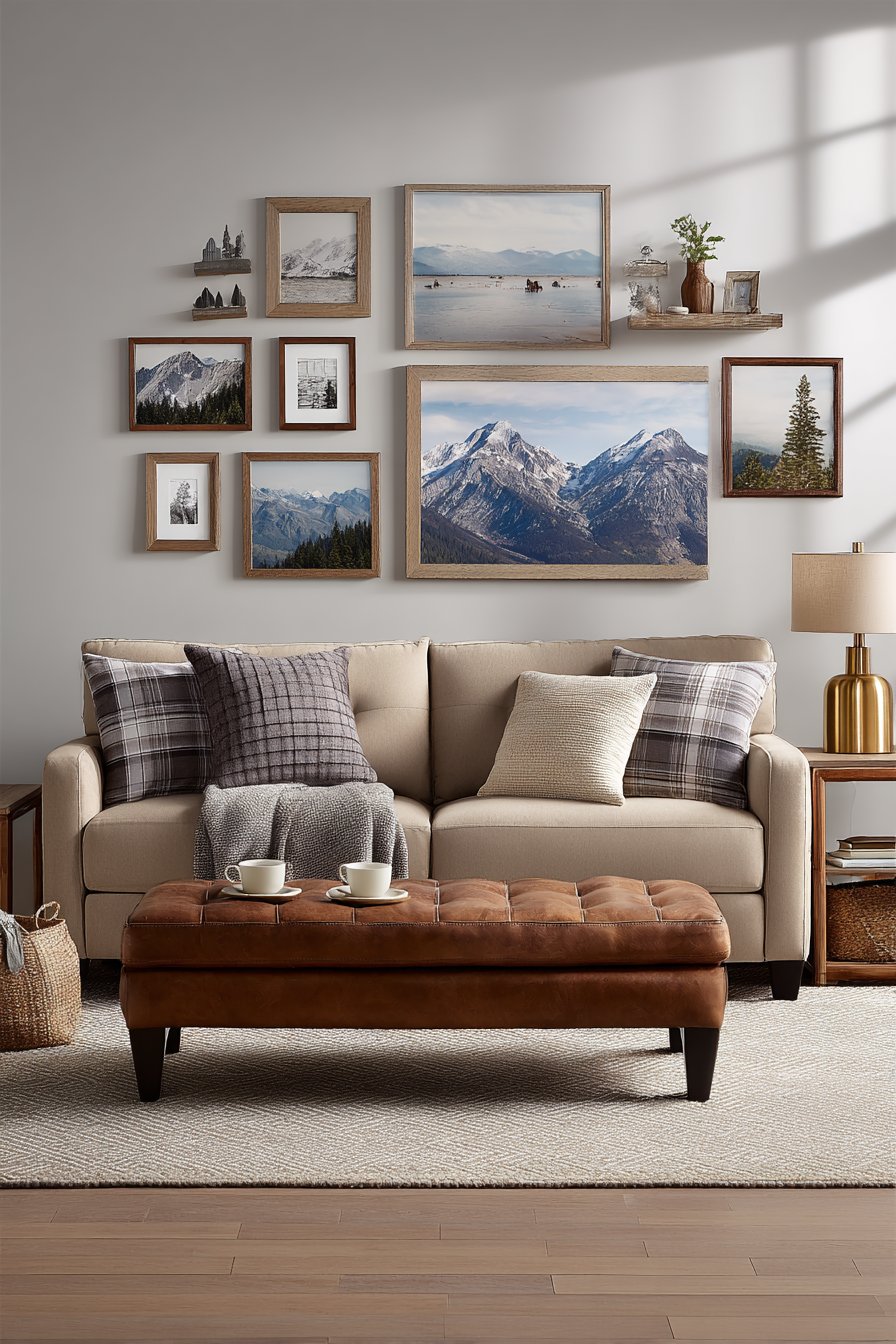
A thick pile area rug in cream beige adds underfoot luxury, its dense construction providing cushioned comfort when children play on the floor or adults stretch out for casual conversations. The rug’s high pile also provides sound absorption—important in active family spaces where hard surfaces can amplify noise. Warm natural lighting creates an inviting glow that makes the space feel welcoming at any hour, essential for a room meant for living rather than just looking beautiful.
Key Design Tips:
- Choose deep-seated furniture for maximum comfort and lounging
- Select durable, performance fabrics that can withstand family use
- Include ottoman coffee tables with soft surfaces for casual foot rests
- Display throws casually to suggest actual use rather than staging
- Prioritize comfort over perfection in family-focused living spaces
21. Curated Gallery Wall with Varied Frames
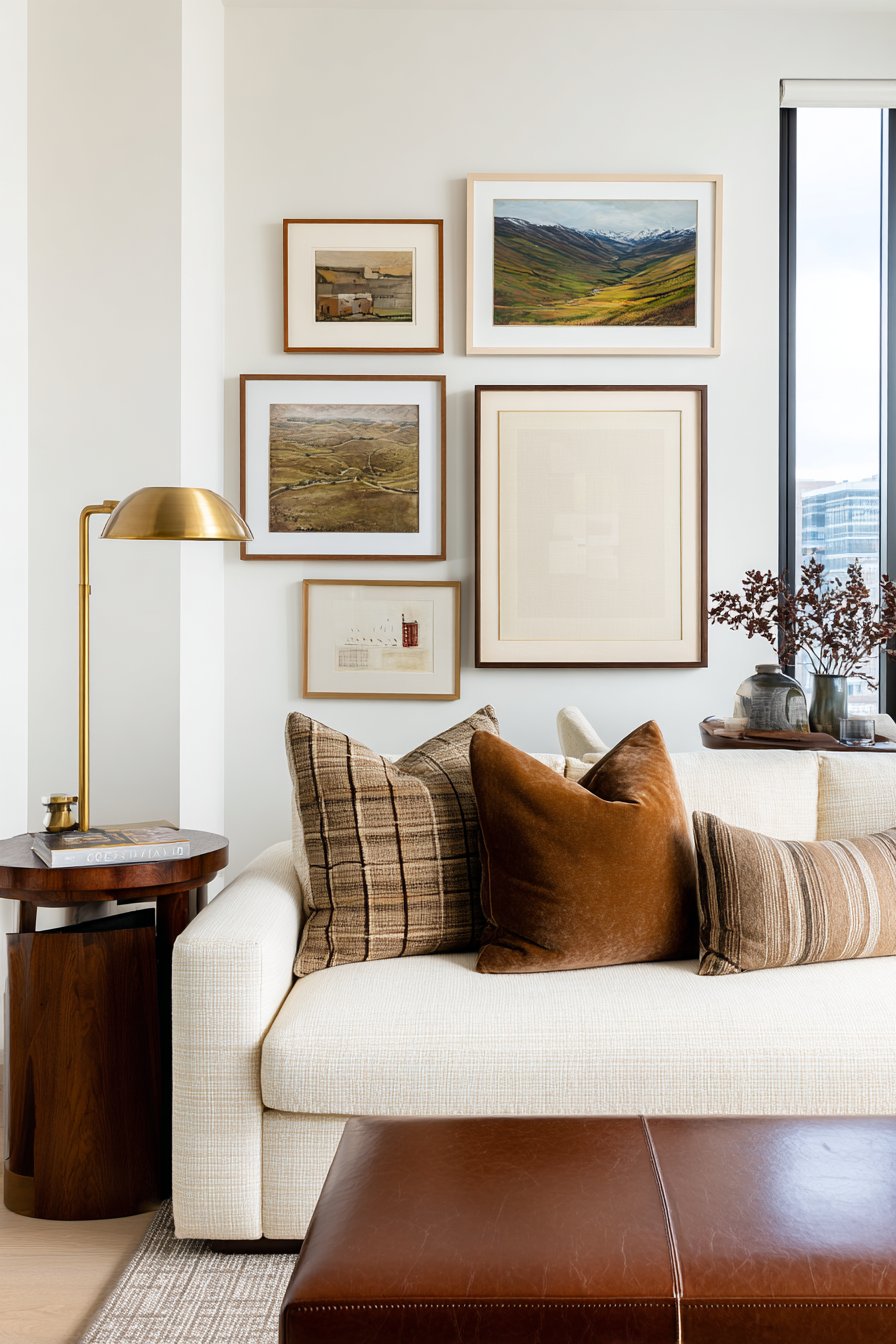
Personal expression through collected art defines this brown and beige living room idea featuring a carefully curated gallery wall. Frames in various brown wood finishes—from light oak through honey brown to deep espresso—create visual interest through subtle variation while maintaining color cohesion. The mixed frames suggest a collection assembled over time rather than purchased as a matched set, adding character and personal history to the display.
Matted prints in beige and brown tones create a cohesive display despite varied subject matter. Perhaps some prints feature abstract designs, others showcase botanical illustrations, and still others display vintage maps or architectural drawings—the unifying element being the consistent color palette rather than theme. The mats’ neutral tones provide breathing room around each image while tying disparate pieces into a unified collection.
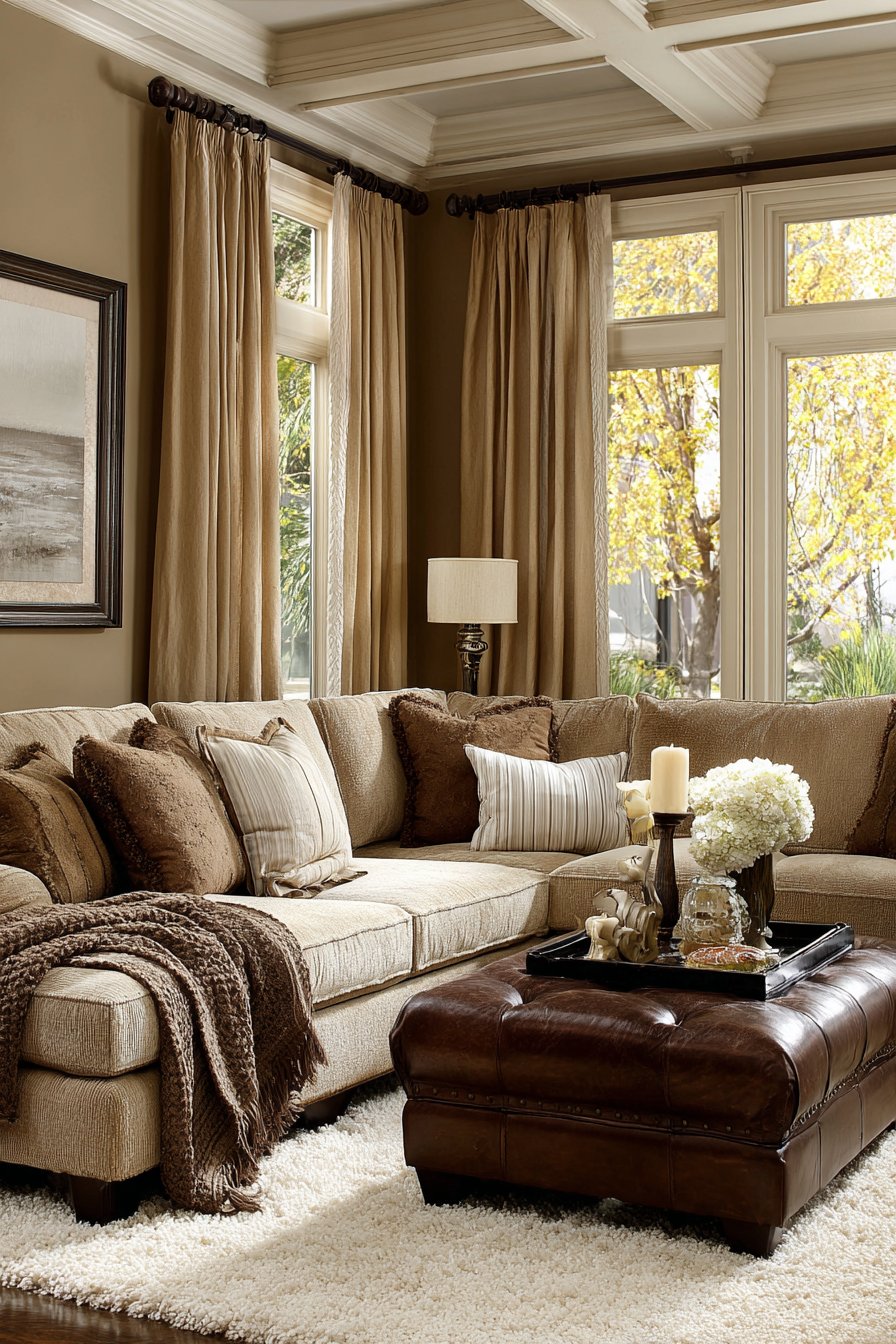
Below this artistic focal point, a low-profile beige sofa provides comfortable seating without competing with the wall display above. The sofa’s simple silhouette and neutral upholstery allow the gallery wall to command attention, demonstrating the design principle that not every element should vie for dominance—some pieces support while others shine.
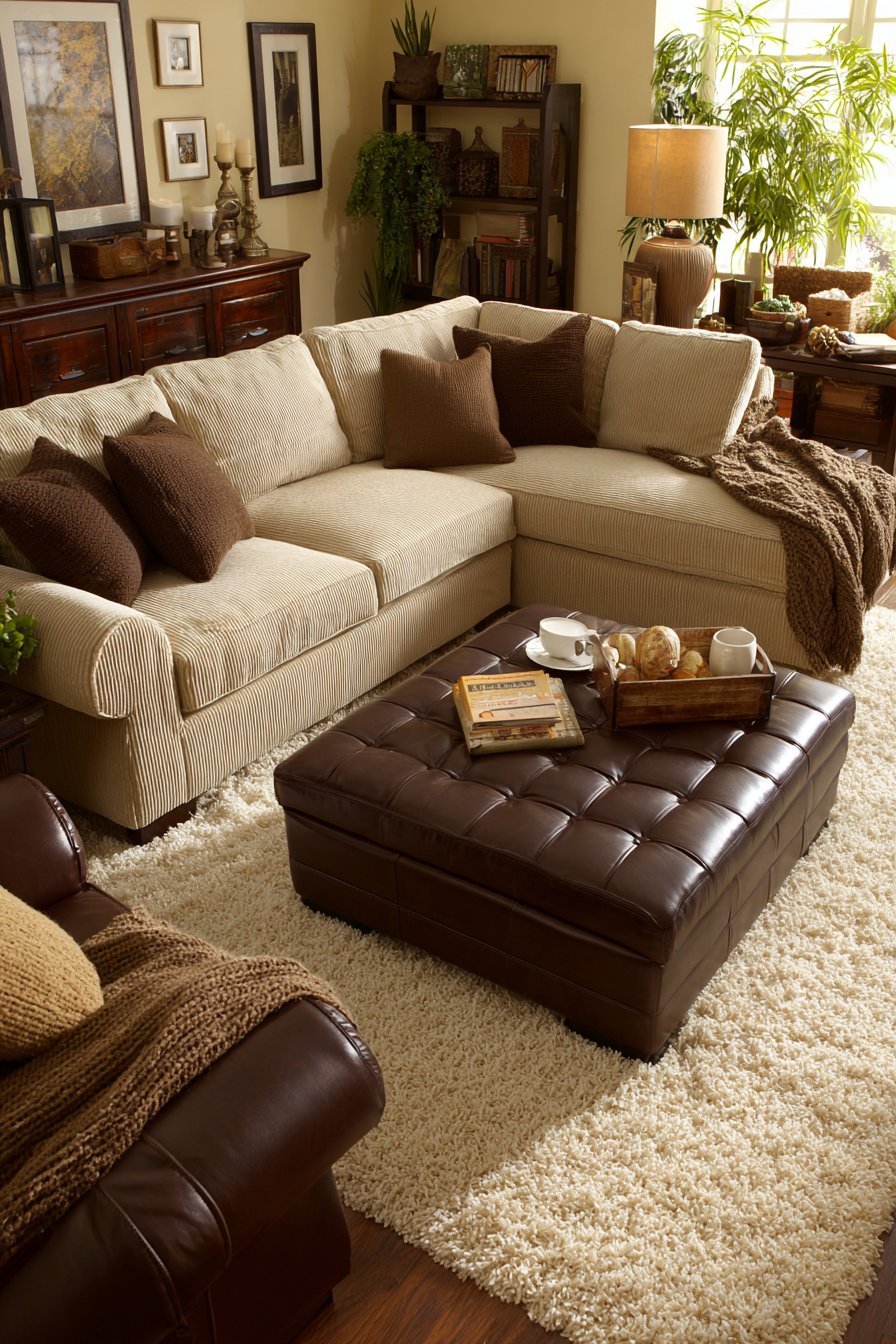
A brown leather bench at the sofa’s foot provides additional seating while creating a layered look that adds depth to the room. The bench’s rich brown tone ties back to the darker frame finishes while its lower height creates varied sight lines and visual interest. A side table in brown wood supports a brass lamp base, its warm metallic finish adding subtle glamour. Natural daylight from nearby windows highlights the artwork collection, ensuring colors appear true and details remain visible throughout the day.
Key Design Tips:
- Mix frame finishes in similar tones rather than matching exactly
- Unify diverse artwork through consistent matting and color palette
- Keep furniture simple below gallery walls to avoid visual competition
- Vary heights and shapes within gallery arrangements for interest
- Position gallery walls to receive natural light for best viewing
Why These Brown and Beige Living Room Ideas Work
The enduring appeal of brown and beige living room ideas stems from their unique ability to create spaces that are simultaneously sophisticated and comfortable, elegant and approachable, trendy and timeless. These twenty-one designs showcase the remarkable versatility of this classic color combination, demonstrating how it adapts seamlessly across diverse design styles from rustic farmhouse charm to sleek contemporary minimalism, from traditional formal elegance to casual bohemian comfort.
The psychological benefits of these warm neutrals cannot be overstated in our increasingly hectic modern lives. Brown tones evoke feelings of stability, security, and connection to the natural world—essential qualities for creating true sanctuary spaces within our homes. Beige adds lightness and airiness, preventing these grounding browns from feeling heavy or oppressive. Together, they create environments that reduce stress, promote relaxation, and provide the calming backdrop we all need for both quiet contemplation and lively family gatherings.
From a practical perspective, brown and beige living rooms offer significant advantages for real-world living. These forgiving neutrals hide minor dirt and wear far better than stark white or bold colors, making them ideal for busy households with children, pets, or simply active lifestyles. Furniture and decor in these tones tends to maintain its appearance longer, requiring less frequent replacement and offering better long-term value. Additionally, the neutral palette provides a flexible foundation that accommodates changing accent colors and evolving personal style without requiring complete redesigns.
The design versatility demonstrated across these twenty-one examples proves that working within a brown and beige palette doesn’t mean sacrificing creativity or personal expression. Through varied textures—from smooth leather to nubby linen, from glossy wood to matte ceramics—designers create visual interest and tactile richness. Pattern mixing opportunities abound when maintaining color discipline, allowing geometric prints, organic florals, and linear stripes to coexist harmoniously. Material variety from natural wood and stone to woven fibers and metals adds layers of interest while honoring the earth-tone foundation.
These brown and beige living room ideas also showcase how lighting transforms neutral spaces throughout the day and evening. Natural morning light makes these warm tones glow with golden radiance, while afternoon sun creates depth through subtle shadows. Evening artificial lighting allows these spaces to transition from bright and energetic to intimate and cozy simply through thoughtful fixture selection and placement. This lighting flexibility proves particularly valuable in multi-functional living rooms that must serve various needs at different times.
The sustainable design possibilities within brown and beige palettes deserve special recognition. Natural materials in these tones—organic cotton, reclaimed wood, bamboo, jute, and wool—provide eco-friendly options that don’t compromise aesthetic appeal. These materials bring authentic texture and honest beauty while reducing environmental impact. Their inherent variations in tone and texture add character impossible to replicate in synthetic alternatives, creating spaces with genuine soul and depth.
For those concerned about brown and beige feeling dated or boring, these diverse examples prove otherwise. The key lies in embracing texture, mixing shades from light cream through deep chocolate, incorporating varied materials, and maintaining thoughtful proportions and scale. Contemporary brown and beige spaces feel fresh and current while avoiding the pitfalls of trendy colors that quickly appear dated. This timeless quality provides both aesthetic longevity and financial wisdom, as homeowners won’t feel pressure to redecorate frequently to keep pace with changing trends.
The accessibility of brown and beige design democratizes beautiful interiors by working with varied budgets and skill levels. High-quality neutral pieces represent sound investments that work across multiple design iterations and home moves. Budget-friendly options in these tones blend seamlessly with more expensive pieces, allowing homeowners to build their spaces gradually without obvious disparity between items. DIY enthusiasts find these colors forgiving of imperfect paint jobs or woodworking projects, while rental dwellers appreciate how brown and beige furnishings work in diverse settings without clashing with existing finishes.
Conclusion
The twenty-one brown and beige living room ideas presented in this comprehensive guide demonstrate that neutral doesn’t mean boring, traditional doesn’t mean stale, and comfortable doesn’t mean compromising on style. From intimate reading nooks bathed in natural light to grand spaces with vaulted ceilings and architectural drama, from minimalist sanctuaries that embrace intentional simplicity to maximalist gatherings of texture and pattern—brown and beige prove their remarkable versatility across every design scenario.
These warm earth tones offer something increasingly rare in our fast-paced, trend-driven culture: genuine timelessness. While bold color choices and dramatic contrasts may capture attention momentarily, they often fatigue the eye and the soul over extended periods. Brown and beige provide the visual rest and psychological comfort that transform houses into true homes—spaces where we can authentically relax, connect with loved ones, and recharge from the demands of modern life.
As you consider implementing these ideas in your own living space, remember that successful design isn’t about perfectly replicating a specific look but rather adapting concepts to suit your unique circumstances, preferences, and lifestyle. Start with the elements that resonate most strongly—perhaps that’s the luxurious texture of leather furniture, the warmth of natural wood tones, the flexibility of modular seating, or the personal expression of a curated gallery wall. Build gradually, layer thoughtfully, and trust your instincts about what feels right for your home.
The beauty of working within a brown and beige palette is its forgiving nature—mistakes rarely prove catastrophic when you’re working with harmonious neutrals. Feel empowered to experiment with different shades, try unexpected textures, mix pattern with confidence, and most importantly, create a space that serves your real life rather than just looking beautiful in photographs. The most successful living rooms aren’t those that win design awards but those that draw family members in evening after evening, where genuine life happens, memories form, and comfort reigns supreme. May these ideas inspire you to create exactly that kind of space in your own home.
