
Creating a beautiful and functional living room in an apartment presents unique challenges and exciting opportunities. Unlike houses with expansive floor plans, apartment living rooms demand thoughtful design that maximizes limited square footage while reflecting personal style. Whether you’re working with a compact studio or a spacious loft, the right approach to furniture selection, color schemes, and spatial arrangement can transform your apartment living room into a welcoming sanctuary that serves multiple purposes throughout your day.
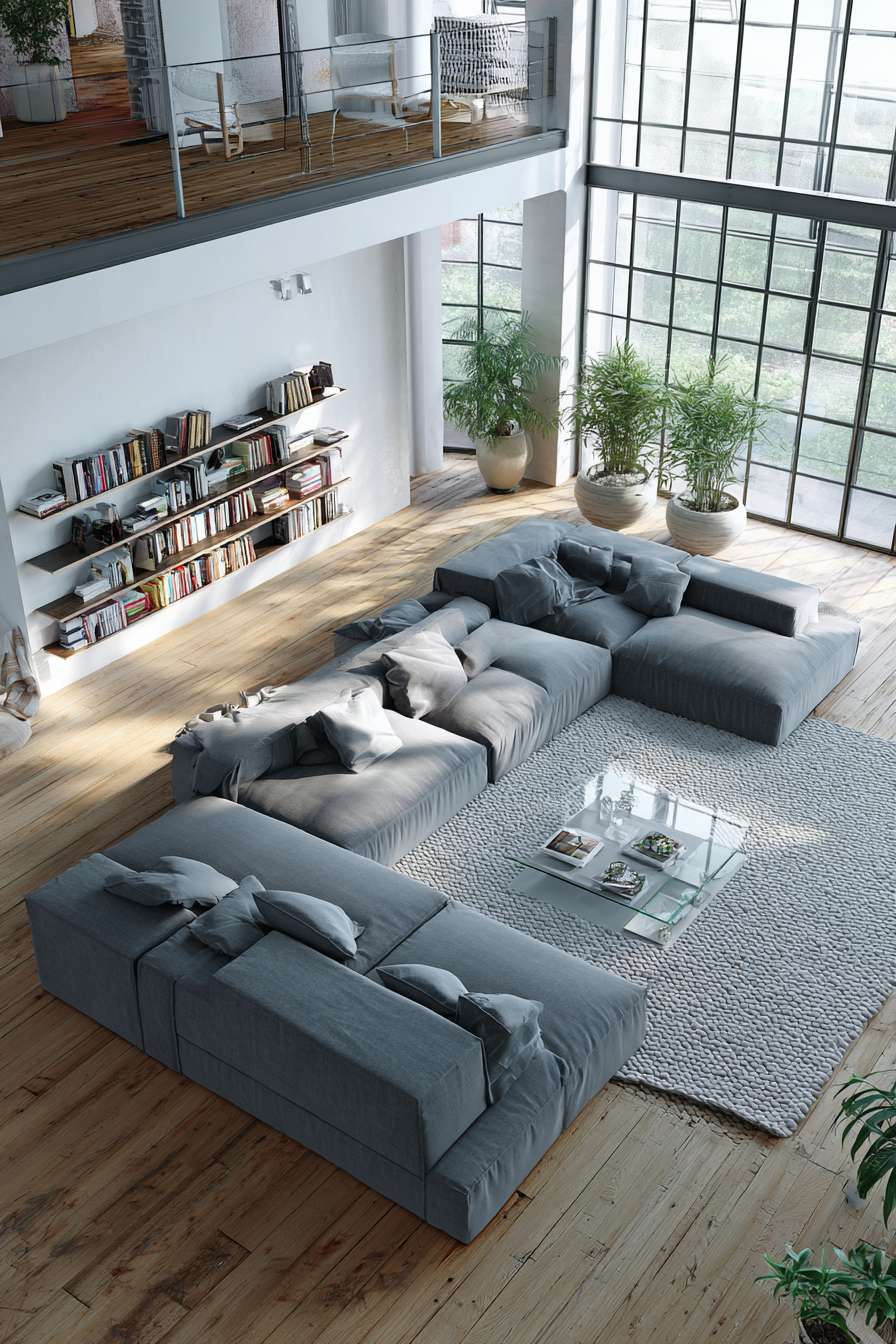
The modern apartment dweller needs spaces that adapt to changing needs—from morning coffee routines to remote work sessions, from entertaining guests to unwinding with a good book. Today’s living room designs embrace this versatility through multifunctional furniture, clever storage solutions, and layouts that create distinct zones within open floor plans. The key lies in balancing aesthetics with practicality, ensuring every element serves both form and function.
In this comprehensive guide, we’ll explore twenty-seven distinct living room apartment ideas that span a spectrum of design styles, from Scandinavian minimalism to bohemian eclecticism, industrial chic to coastal serenity. Each concept addresses common apartment challenges while showcasing how intentional design choices—in materials, lighting, color palettes, and furniture arrangement—can elevate your living space regardless of size constraints. Whether you’re drawn to the clean lines of contemporary design or the warm embrace of farmhouse aesthetics, you’ll discover actionable strategies to create a living room that truly feels like home.
1. Compact Scandinavian Serenity
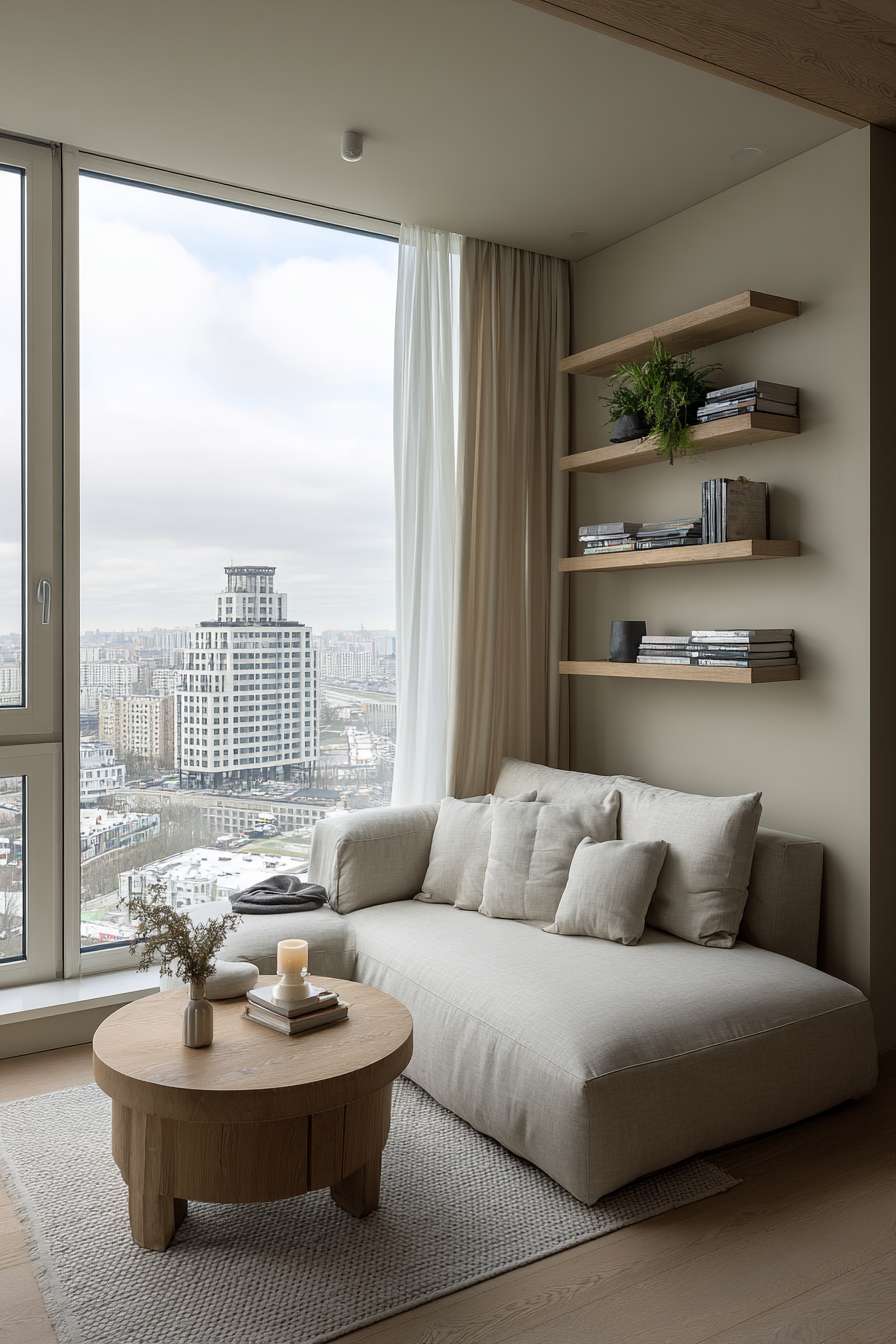
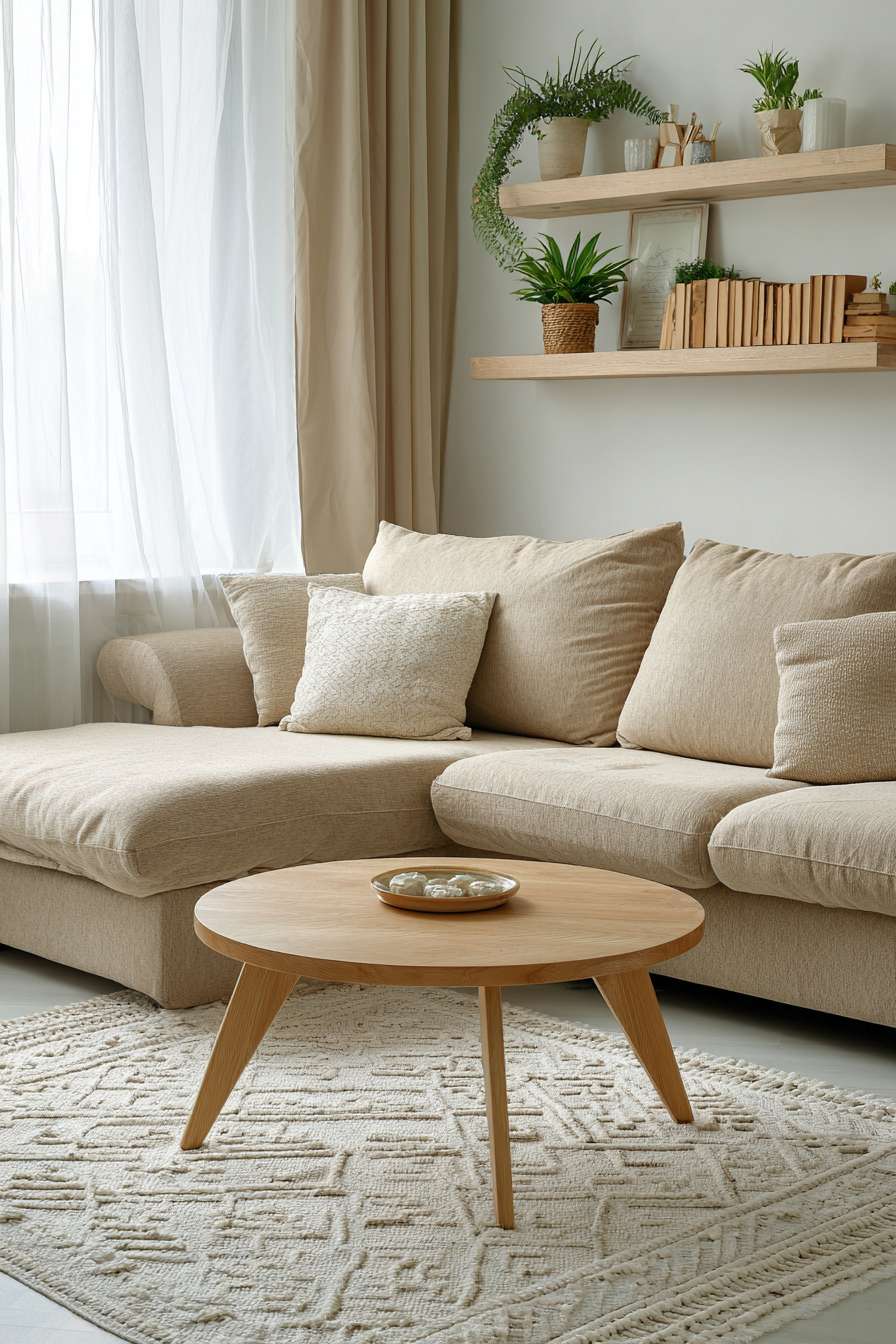
The essence of Scandinavian design shines through in this compact living room arrangement, where a warm beige linen sectional becomes the focal point against clean white walls. The visible fabric texture of the sofa invites touch while maintaining the aesthetic simplicity that defines Nordic interiors. A round wooden coffee table with slender hairpin legs provides essential surface space without overwhelming the room’s modest proportions, demonstrating how thoughtful furniture selection maximizes functionality in smaller apartments.
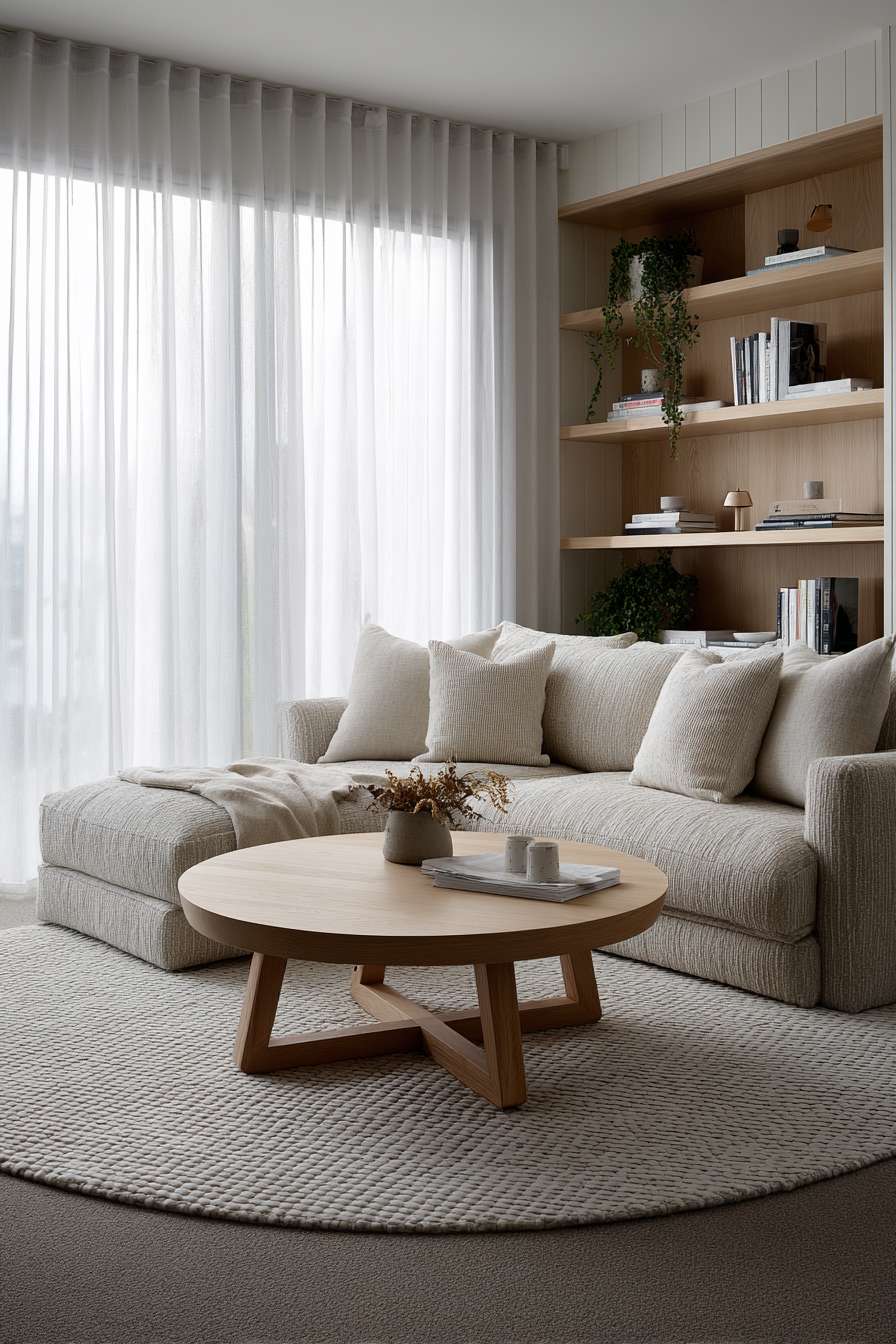
Wall-mounted floating shelves in light oak create vertical storage that draws the eye upward, making the ceiling feel higher while displaying carefully curated books and small potted plants. This approach eliminates bulky bookcases that would consume precious floor space. The geometric wool rug beneath the seating area defines the living zone while adding warmth and texture underfoot, its pattern providing visual interest without competing with the room’s serene palette.
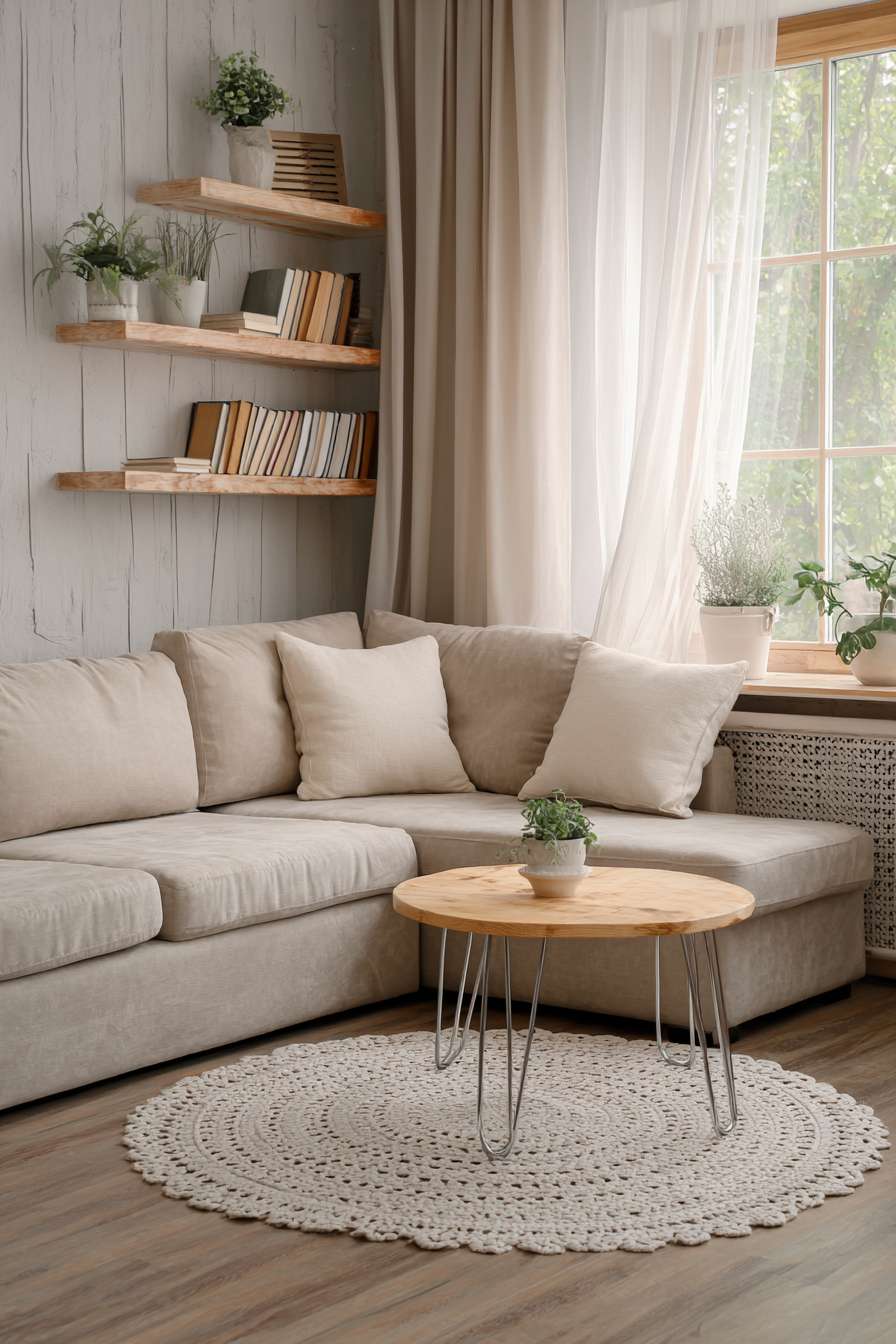
Large windows dressed with sheer curtains become the room’s greatest asset, allowing soft diffused daylight to illuminate every corner throughout the day. The natural light enhances the warm undertones of the wood elements and beige upholstery, creating an atmosphere that feels both spacious and cozy. This intelligent use of natural illumination reduces dependence on artificial lighting during daytime hours, contributing to the energy-efficient ethos of Scandinavian design.
Key Design Tips:
- Select furniture with exposed legs to maintain visual lightness and floor visibility
- Incorporate warm neutrals like beige and oak to prevent white-heavy spaces from feeling sterile
- Use geometric patterns sparingly to add interest while maintaining minimalist principles
- Maximize natural light with sheer window treatments that provide privacy without blocking illumination
- Display plants at varying heights to bring nature indoors and improve air quality
2. Multifunctional Modern Efficiency
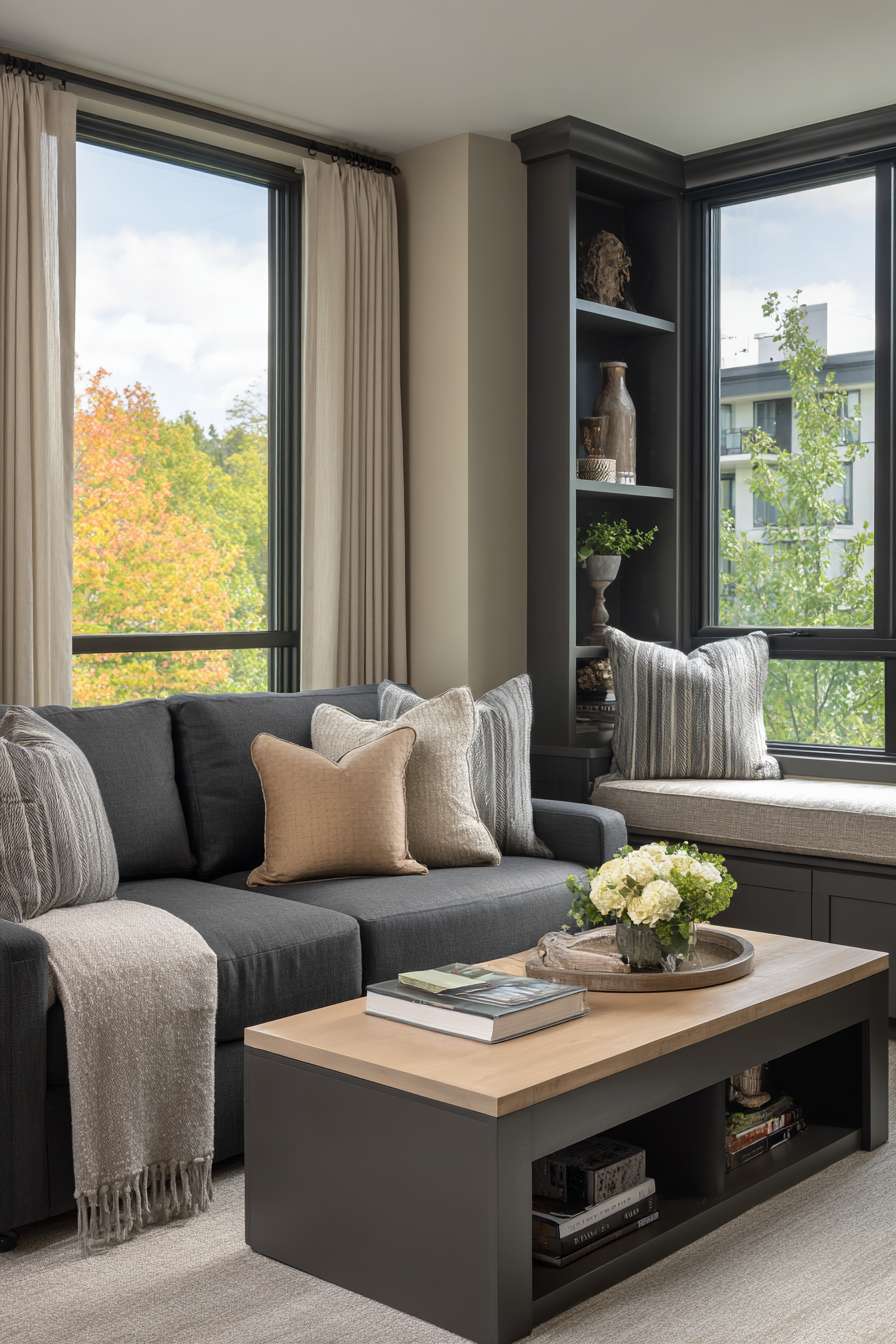
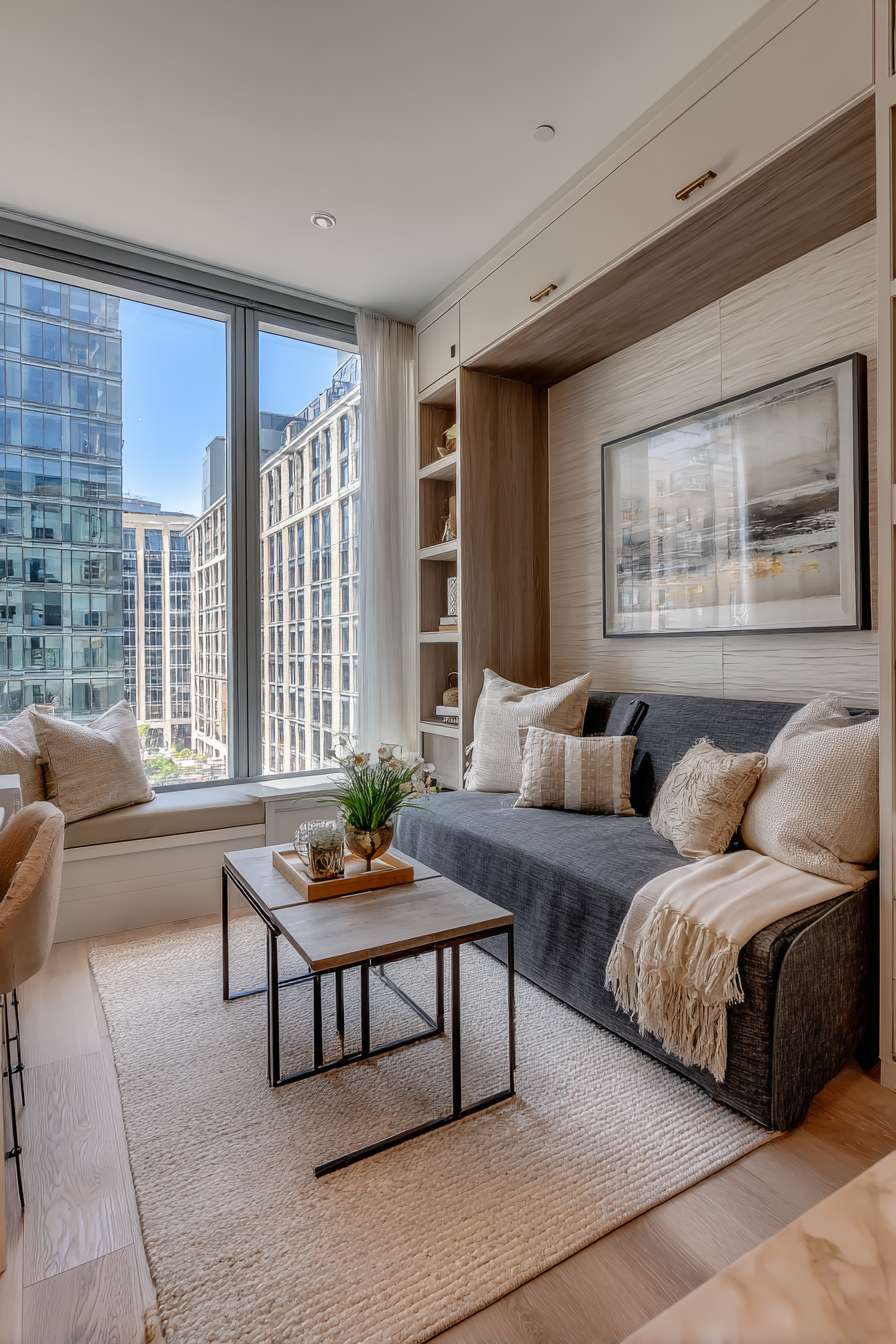
This living room exemplifies the apartment dweller’s need for furniture that works overtime, featuring a sleek sofa bed upholstered in charcoal grey fabric that transitions seamlessly from daytime seating to nighttime sleeping accommodation. Positioned against a feature wall with subtle texture, the sofa bed demonstrates how modern design can incorporate functionality without sacrificing aesthetics. The charcoal tone provides a sophisticated neutral foundation that works with various accent colors and seasonal decor changes.
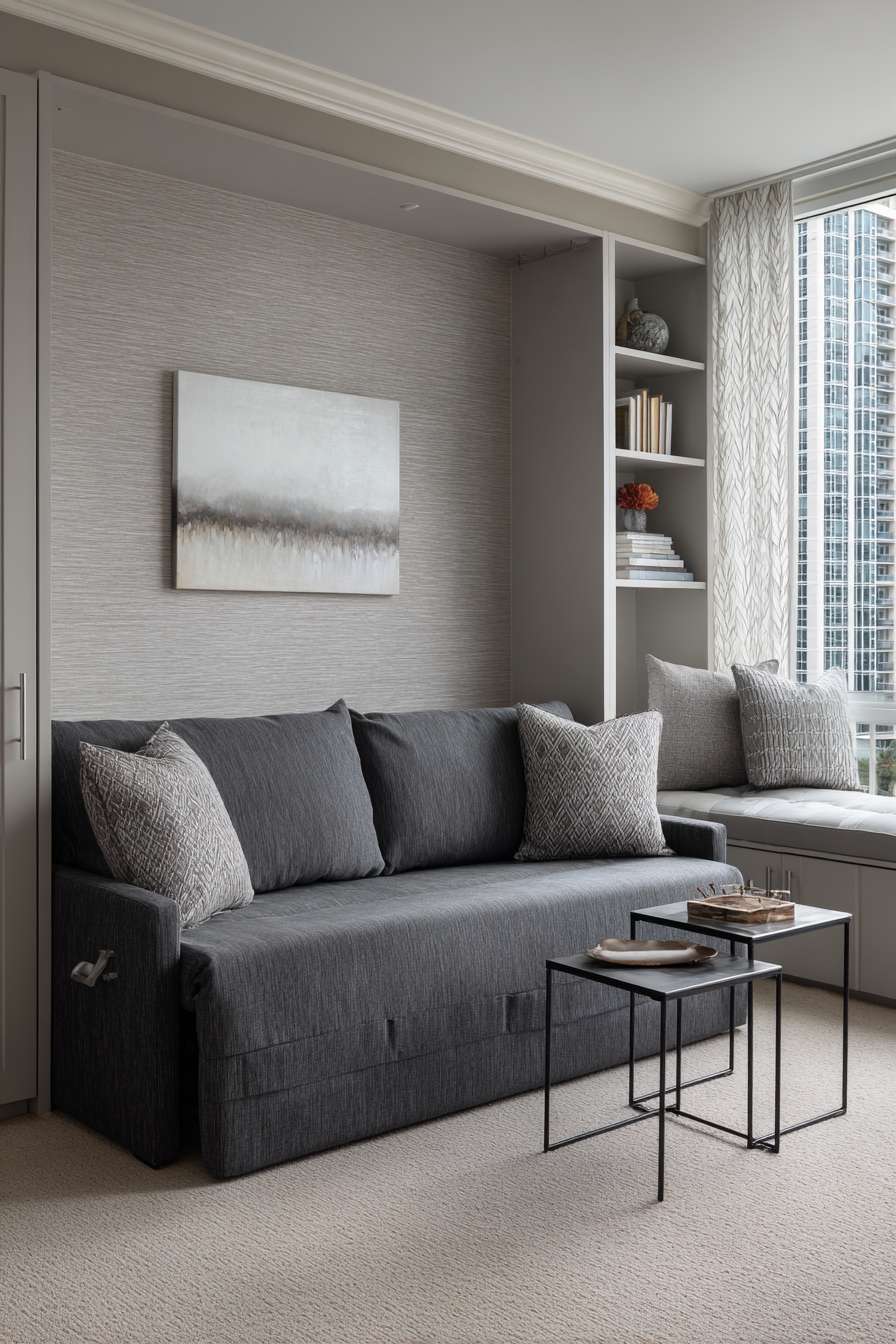
A nesting coffee table set offers remarkable flexibility for apartment living, allowing you to expand surface area when entertaining or tuck away the smaller tables to open up floor space for yoga sessions or children’s playtime. This adaptability proves essential in apartments where every square foot must serve multiple purposes. The built-in storage bench beneath the window performs triple duty as seating, storage for throw blankets and pillows, and a display platform for decorative items.
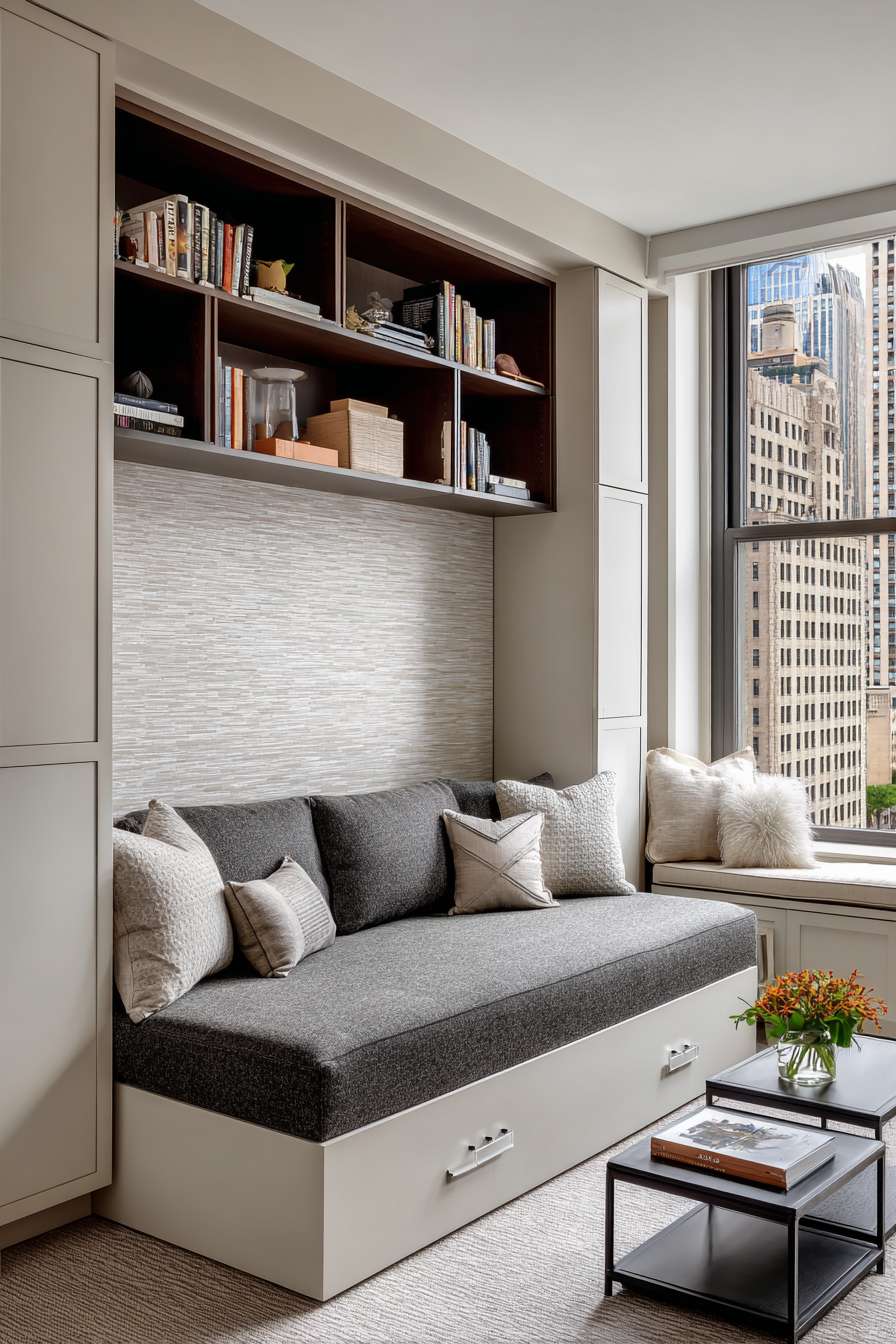
The uncluttered appearance doesn’t happen by accident—it results from strategic storage solutions that hide away everyday items while keeping essentials accessible. The feature wall adds dimension without requiring floor space, proving that visual interest can come from vertical surfaces. Natural light streaming through sheer window treatments illuminates the space while maintaining privacy, creating an environment that feels open and airy despite the compact footprint.
Key Design Tips:
- Invest in quality sofa beds with comfortable mattresses for guest-ready functionality
- Choose nesting tables that can separate or stack depending on spatial needs
- Install storage benches to maximize often-wasted window areas
- Select neutral upholstery colors that won’t show wear and pair with evolving decor
- Keep surfaces clear by designating hidden storage for everyday clutter
3. Light-Filled Scandinavian Minimalism
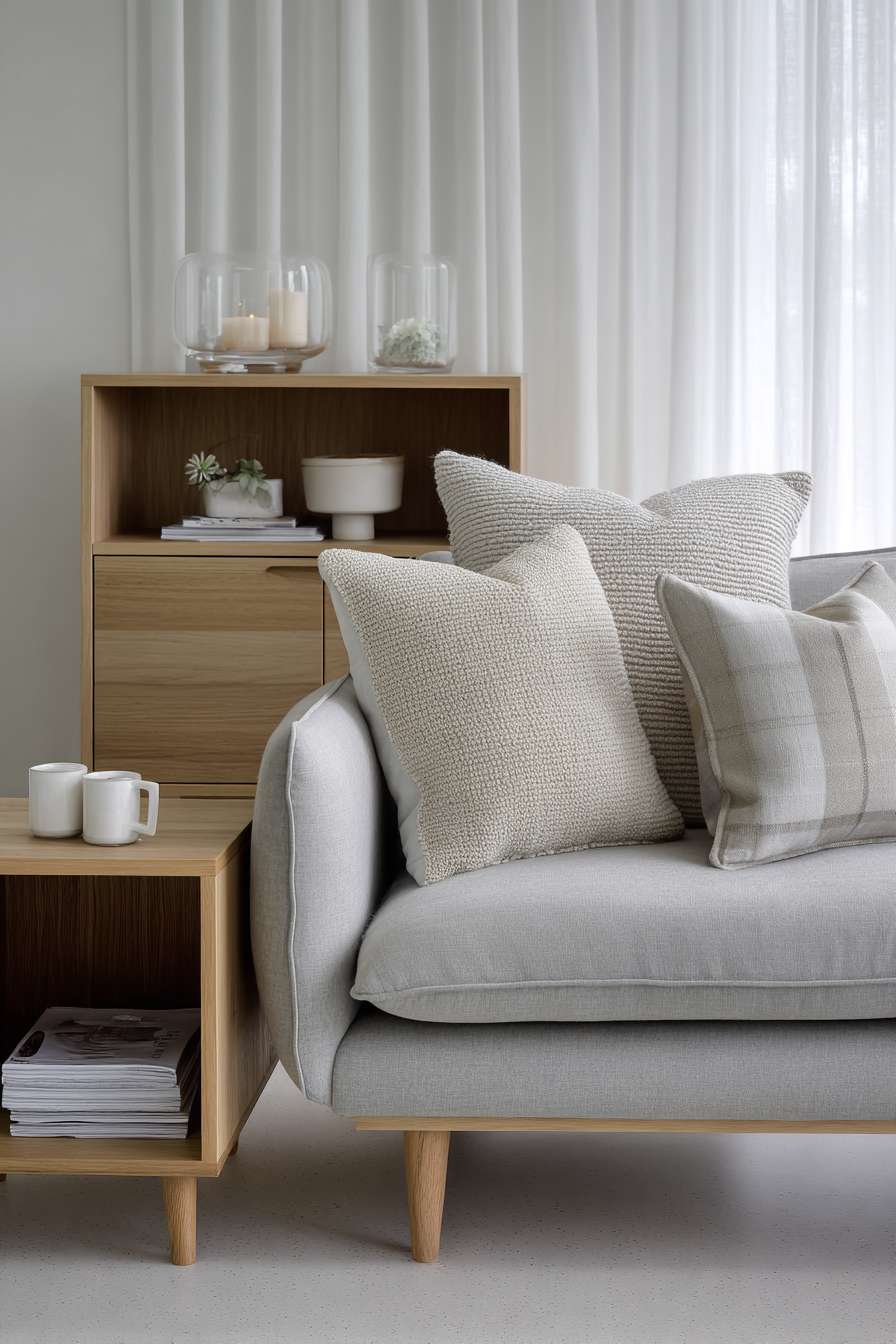
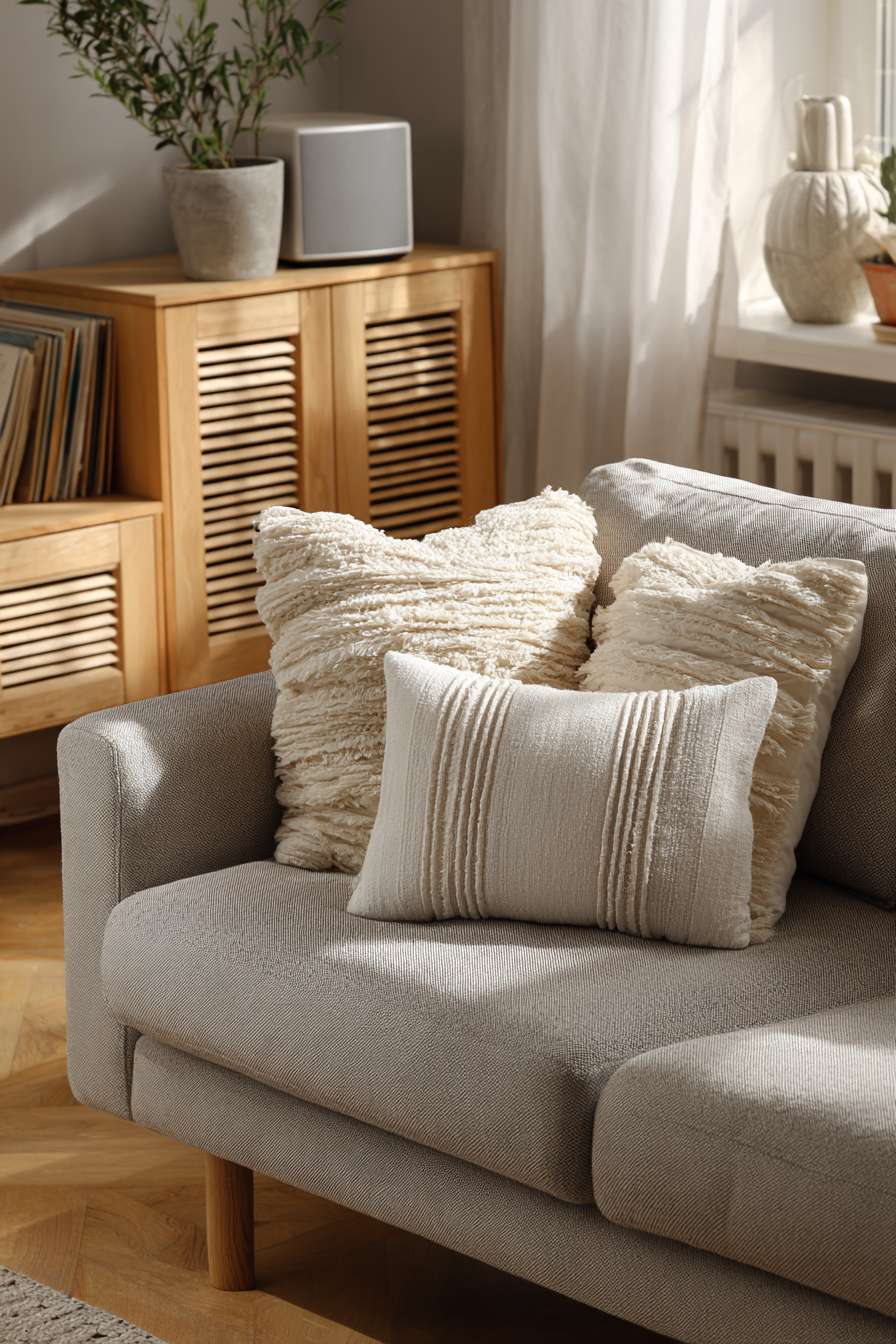
This interpretation of Scandinavian design embraces the “less is more” philosophy with a light grey two-seater sofa adorned with textured throw pillows in complementary neutral tones. The smaller-scale sofa suits apartments where a full sectional would overwhelm the space, while still providing comfortable seating for daily use and occasional guests. The natural oak media console exemplifies Nordic craftsmanship with its clean lines and visible wood grain, offering both electronic equipment housing and display space for minimal decorative objects.
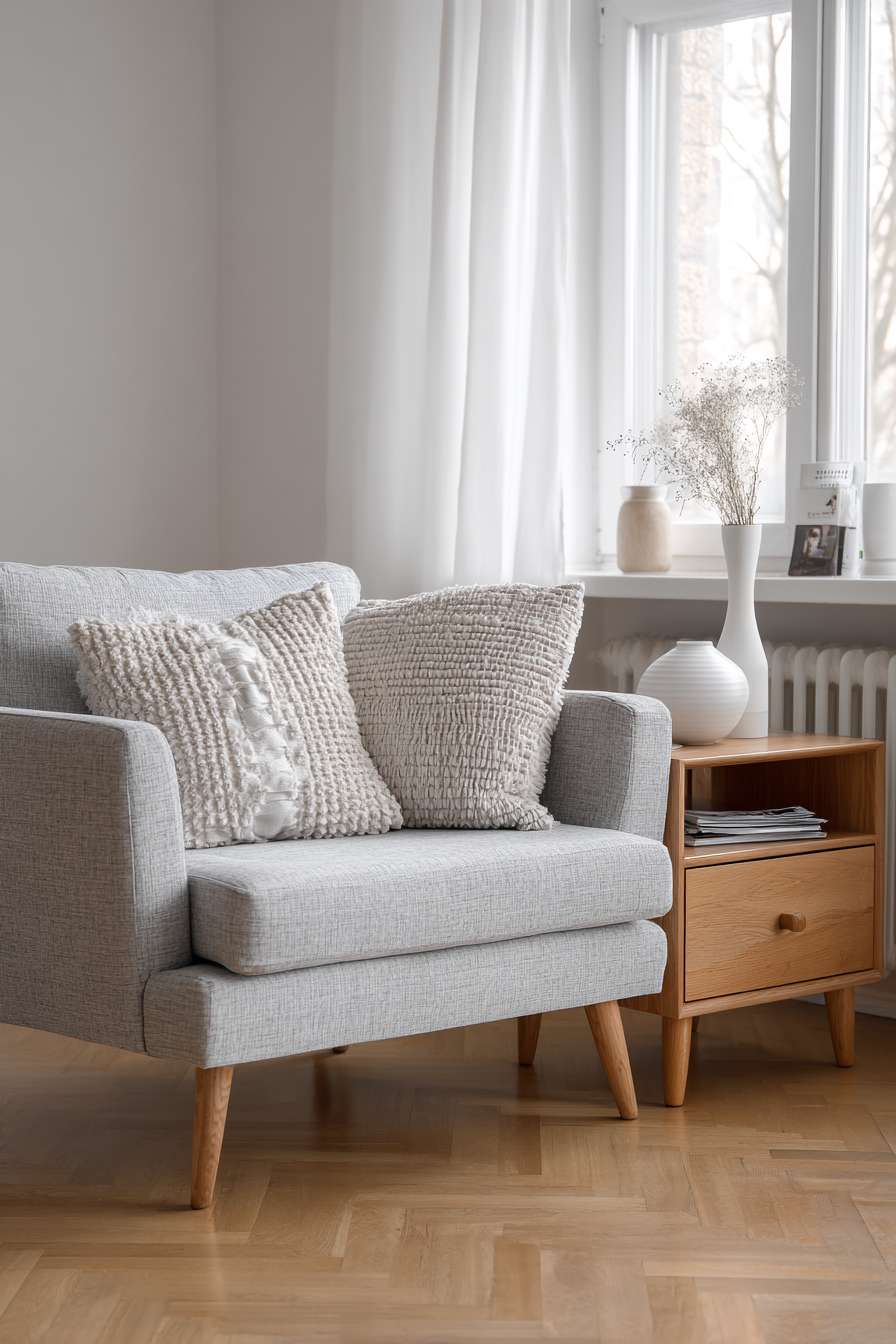
The side table beside the sofa incorporates thoughtful magazine storage, addressing the common challenge of where to keep reading materials without creating visual clutter. This attention to practical details characterizes successful apartment design—every piece must justify its presence through function or beauty, preferably both. The overall aesthetic achieves that distinctly Scandinavian balance between warmth and restraint, creating spaces that feel lived-in yet uncluttered.
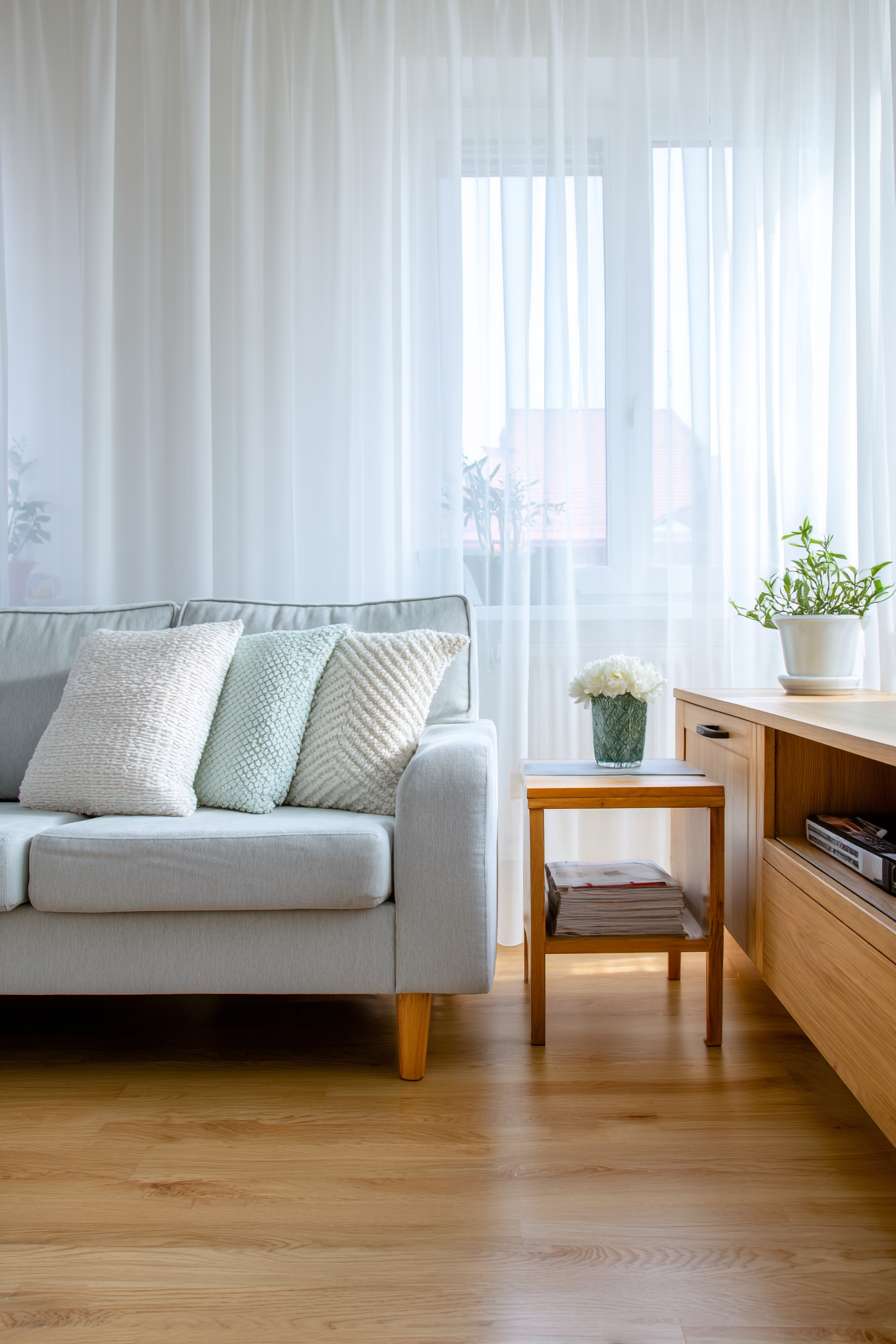
Soft morning light filtering through white curtains creates the gentle, diffused illumination that makes Scandinavian interiors feel so welcoming. This natural lighting showcases the subtle variations in the neutral color palette and highlights the beautiful grain patterns in the oak furniture. The uncluttered aesthetic extends to the window treatments themselves, which hang simply without elaborate hardware or embellishments, maintaining the room’s serene atmosphere.
Key Design Tips:
- Scale furniture proportionally to room size, choosing smaller pieces for compact spaces
- Incorporate natural materials like oak and linen for warmth within minimal palettes
- Add texture through textiles rather than decorative objects to maintain simplicity
- Choose furniture with integrated storage to reduce freestanding organizational pieces
- Use soft, diffused lighting to create the gentle ambiance characteristic of Nordic design
4. Vertical Storage Maximization
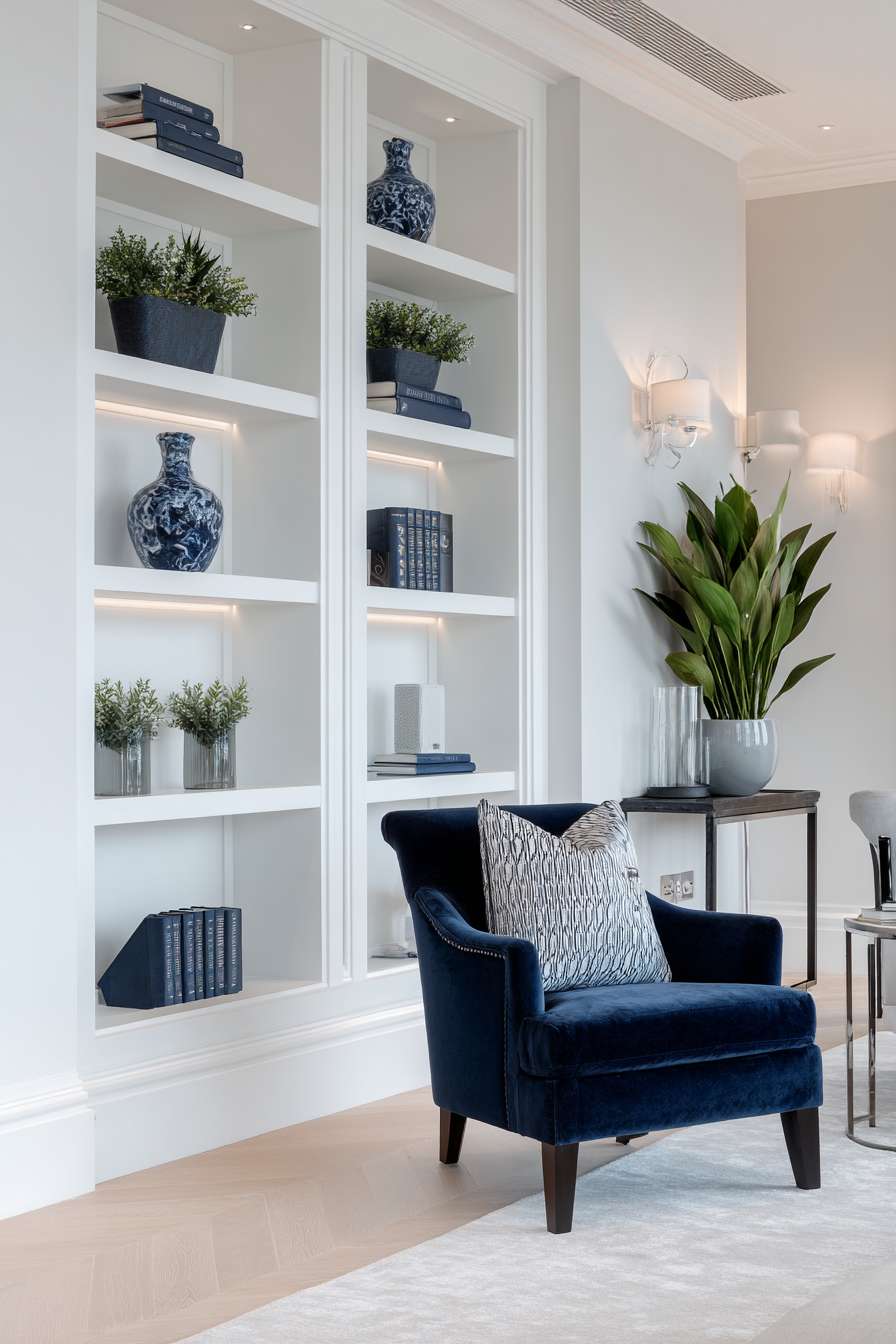
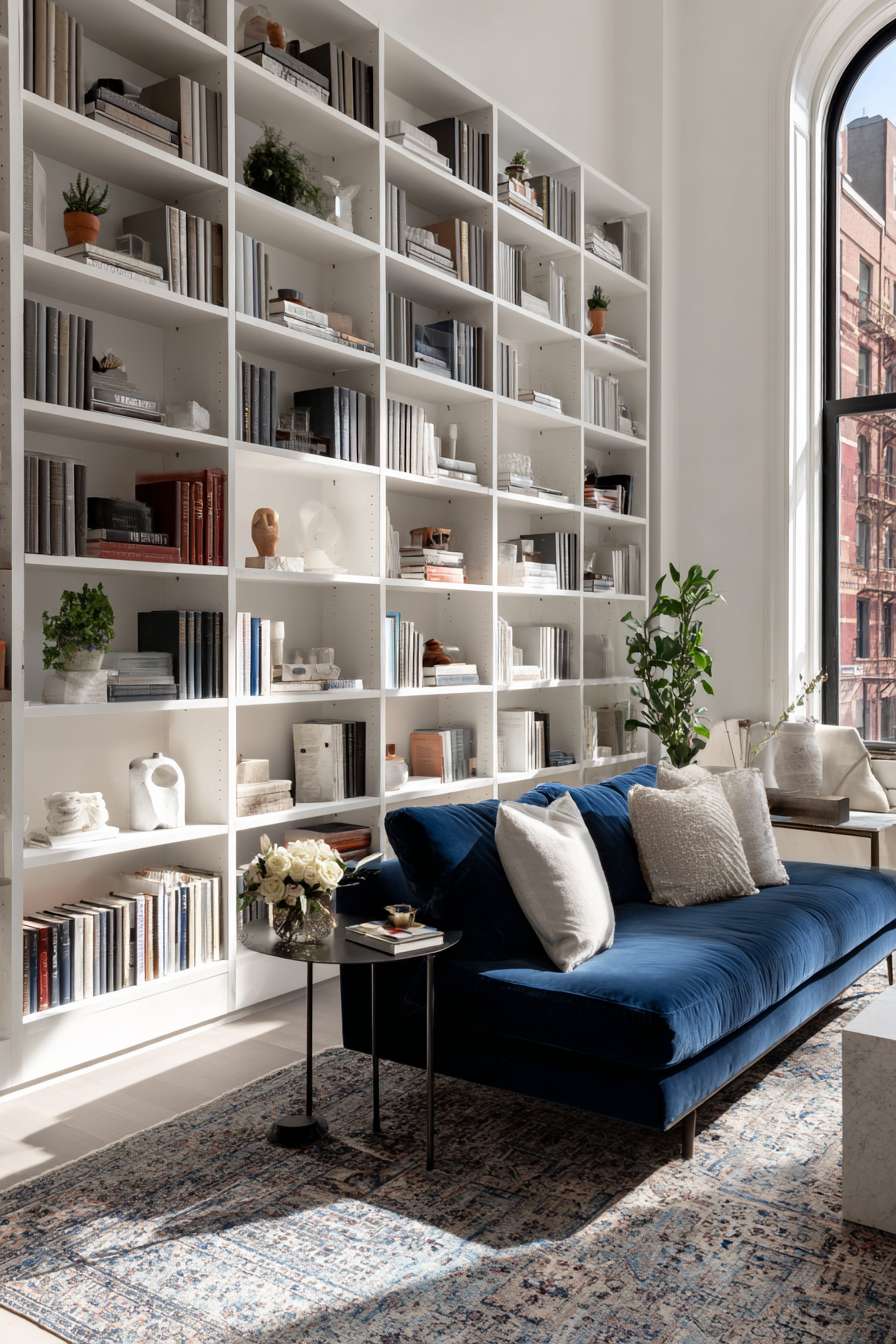
Floor-to-ceiling built-in shelving painted in soft white transforms an entire wall into a storage and display powerhouse, demonstrating how vertical space often represents the greatest untapped resource in apartment living rooms. The organized arrangement of books, plants, and decorative objects creates a curated gallery effect that reflects personality while keeping items accessible and dust-free behind glass doors on select shelves. This comprehensive shelving solution eliminates the need for multiple smaller bookcases that would fragment the floor plan.
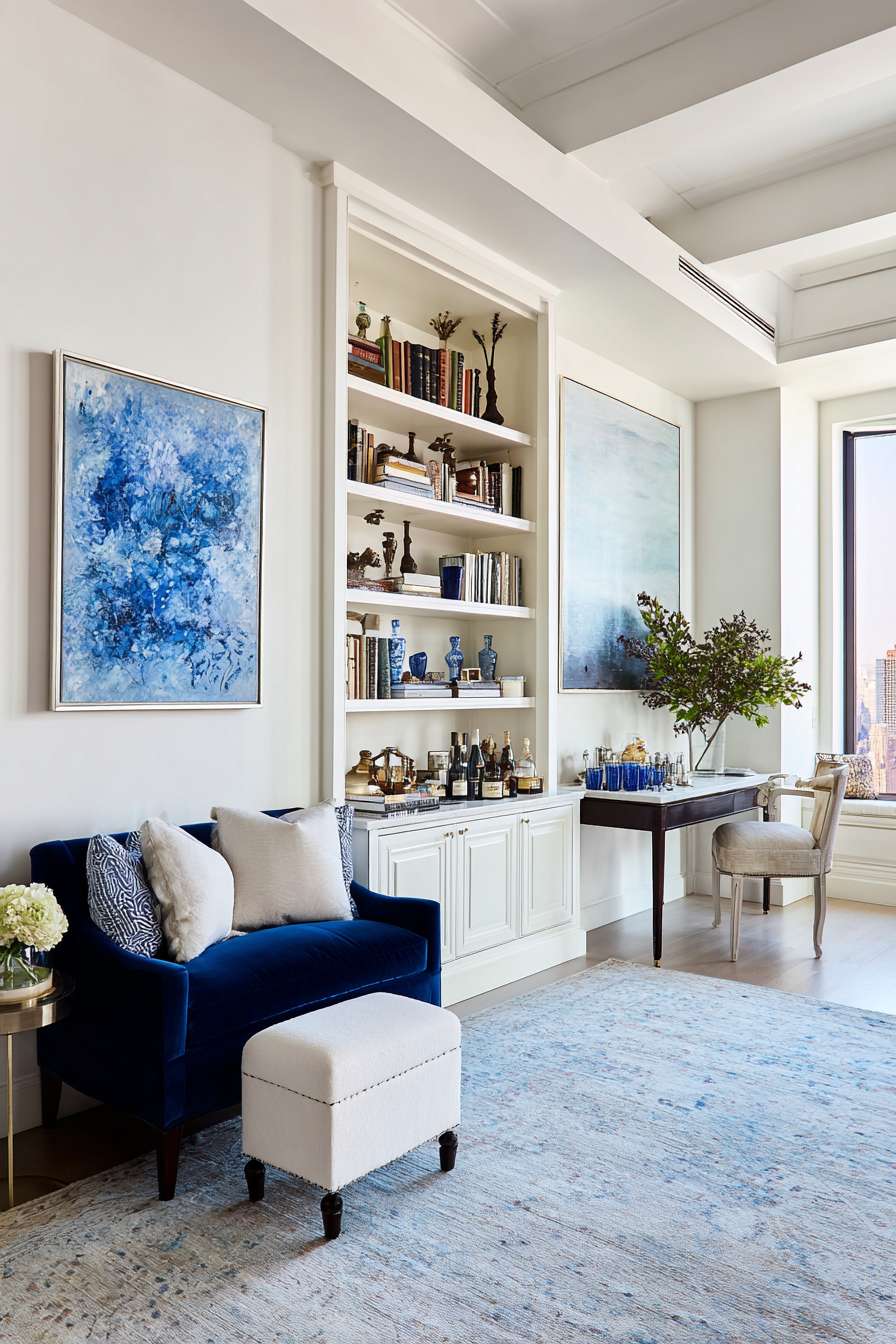
The compact loveseat upholstered in rich navy blue velvet provides a jewel-tone anchor that prevents the white-dominated space from feeling too clinical. The velvet’s luxurious texture adds sensory richness while the navy hue offers versatility, pairing equally well with warm metallics or cool silver accents. The slender console table positioned behind the sofa demonstrates creative furniture placement, utilizing the often-wasted space between furniture and walls for additional surface area and lower-shelf storage.
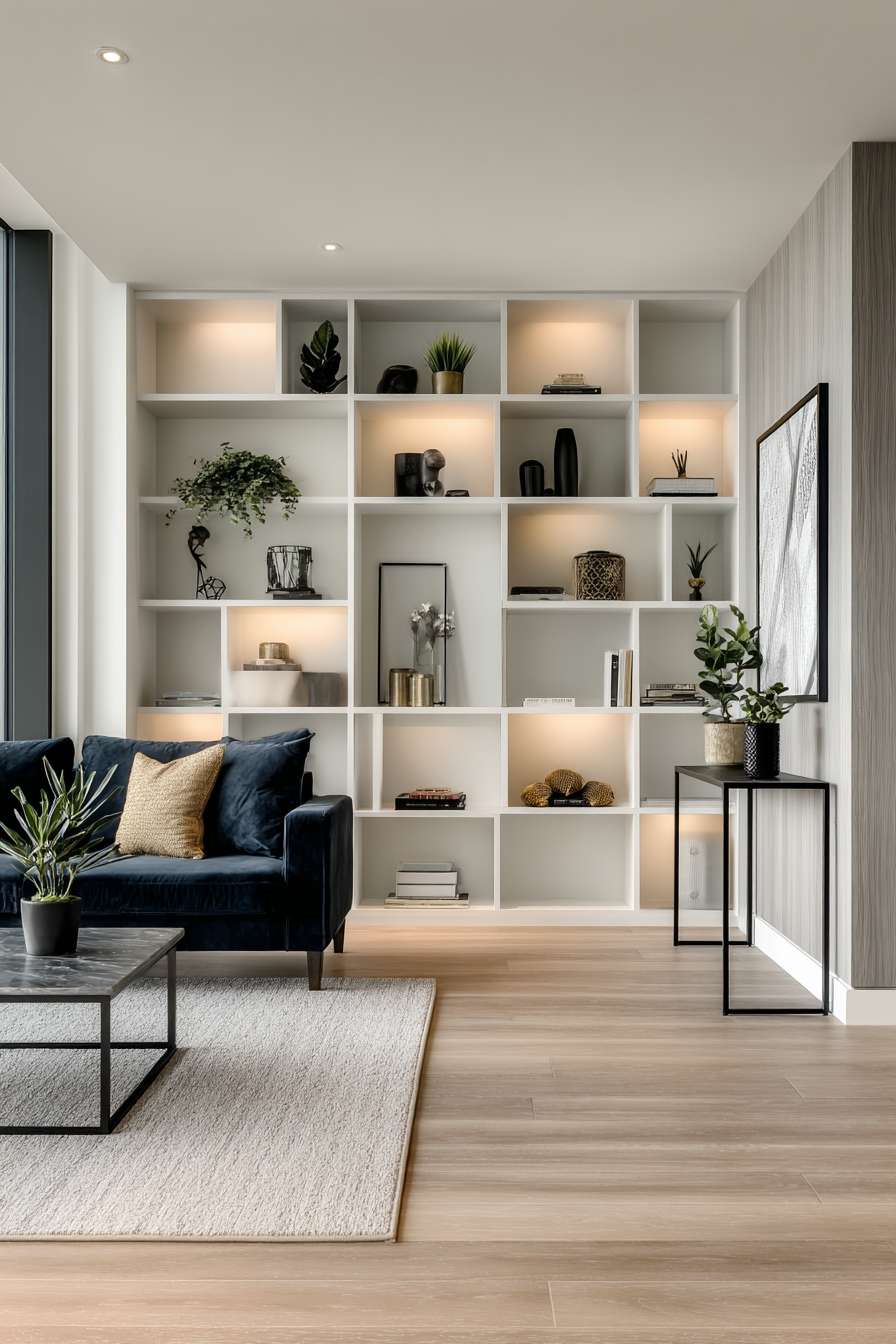
An area rug defines the seating zone within the open-plan layout, creating psychological boundaries that help organize the space even without physical walls. This zoning technique proves essential in studio apartments or lofts where living, dining, and sleeping areas flow into one another. The rug’s pattern and texture add visual interest at floor level, balancing the dramatic vertical emphasis of the towering shelving unit.
Key Design Tips:
- Utilize ceiling height with floor-to-ceiling storage to maximize apartment capacity
- Paint built-ins in room colors to make them feel architectural rather than furniture-like
- Incorporate glass doors on some shelves to reduce visual clutter while displaying collections
- Add pops of saturated color through smaller furniture pieces to energize neutral spaces
- Use console tables behind sofas to create functional zones in open floor plans
5. Modern Minimalist Sophistication
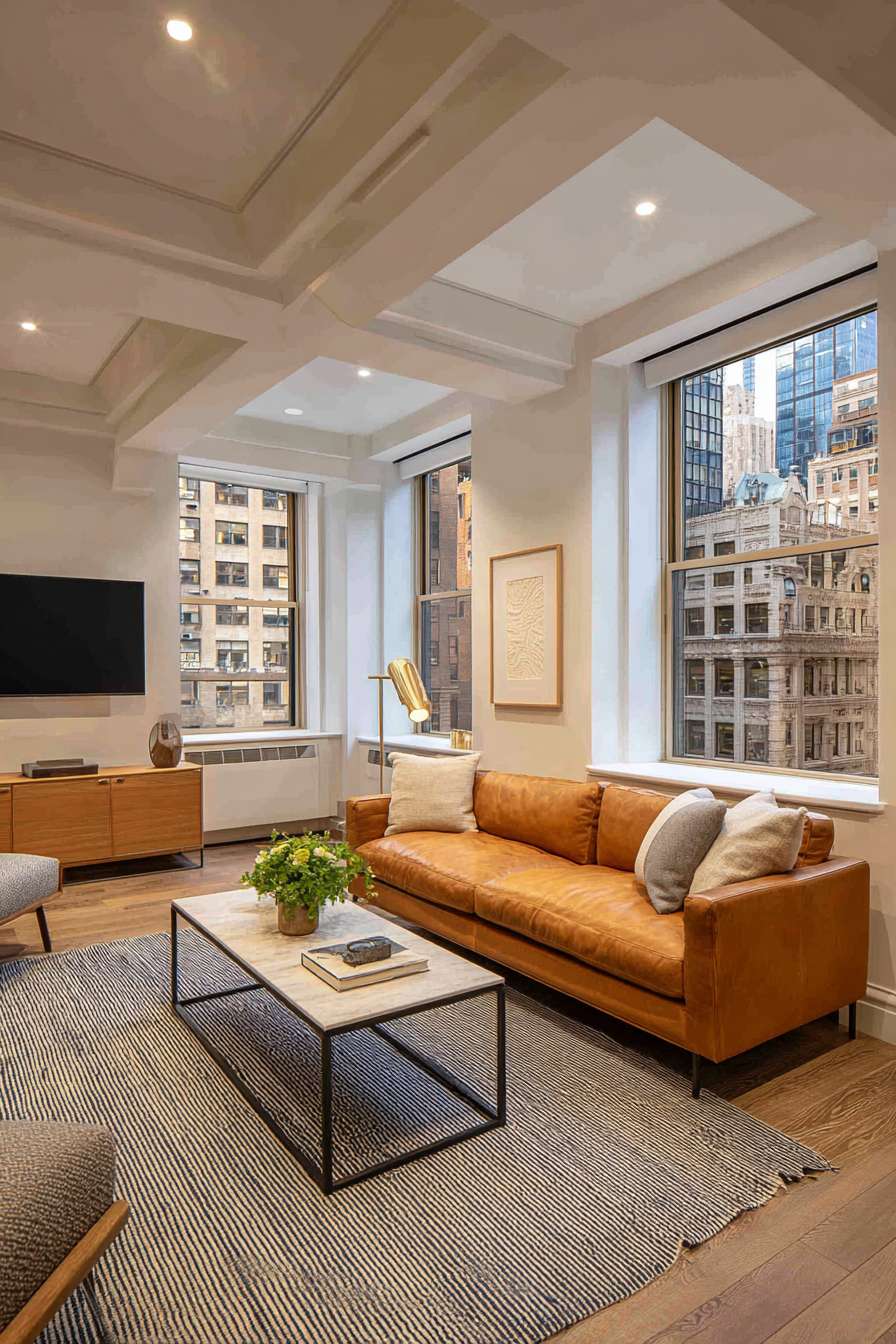
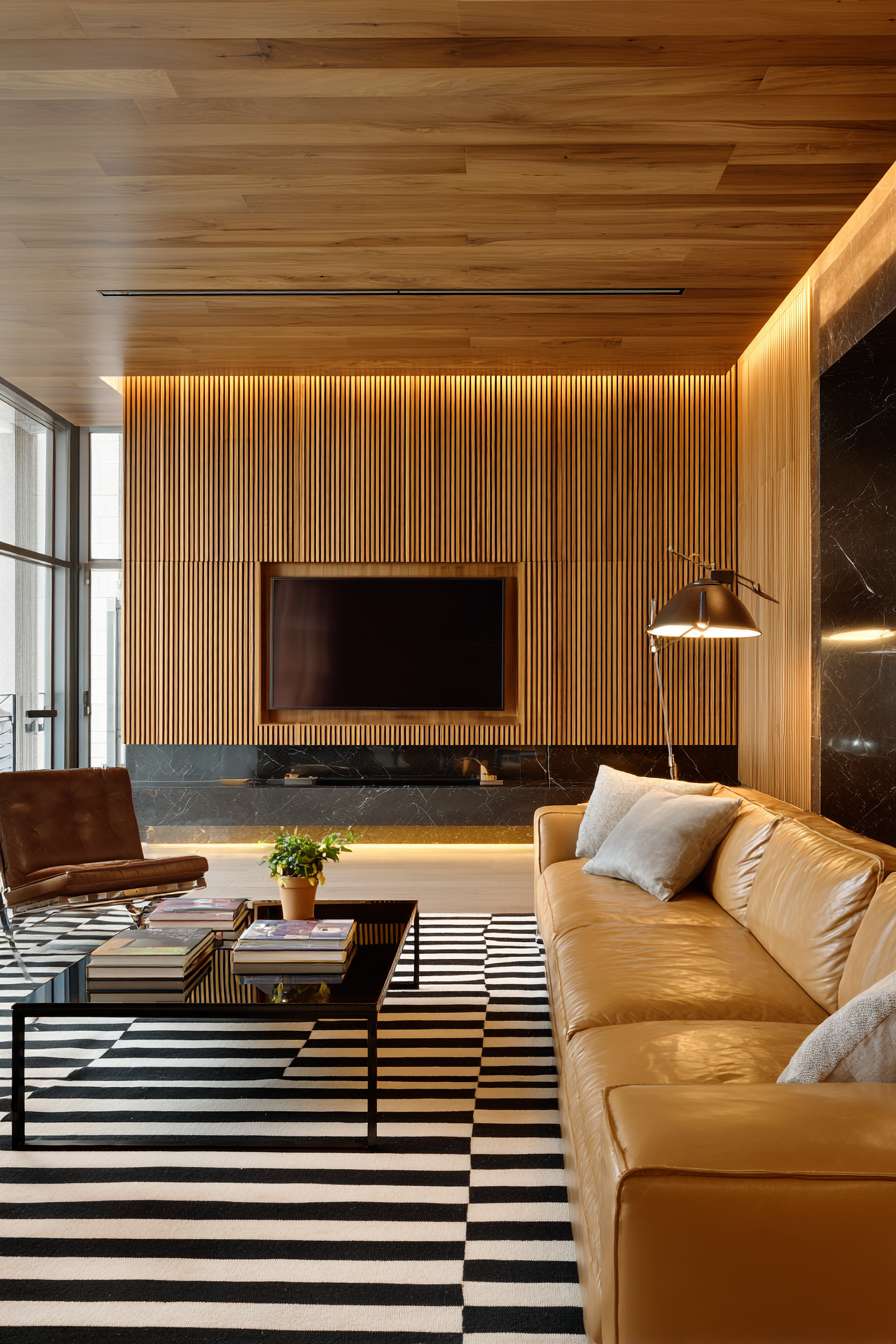
The low-profile sofa in camel-colored leather introduces organic warmth into this decidedly modern space, with its natural grain texture providing visual interest that prevents the minimalist aesthetic from feeling stark. Positioned to face a wall-mounted television, the sofa creates a clear focal point for the room while maintaining the clean sightlines that characterize contemporary design. The leather ages beautifully, developing a rich patina that adds character over time—an important consideration when investing in apartment furniture.
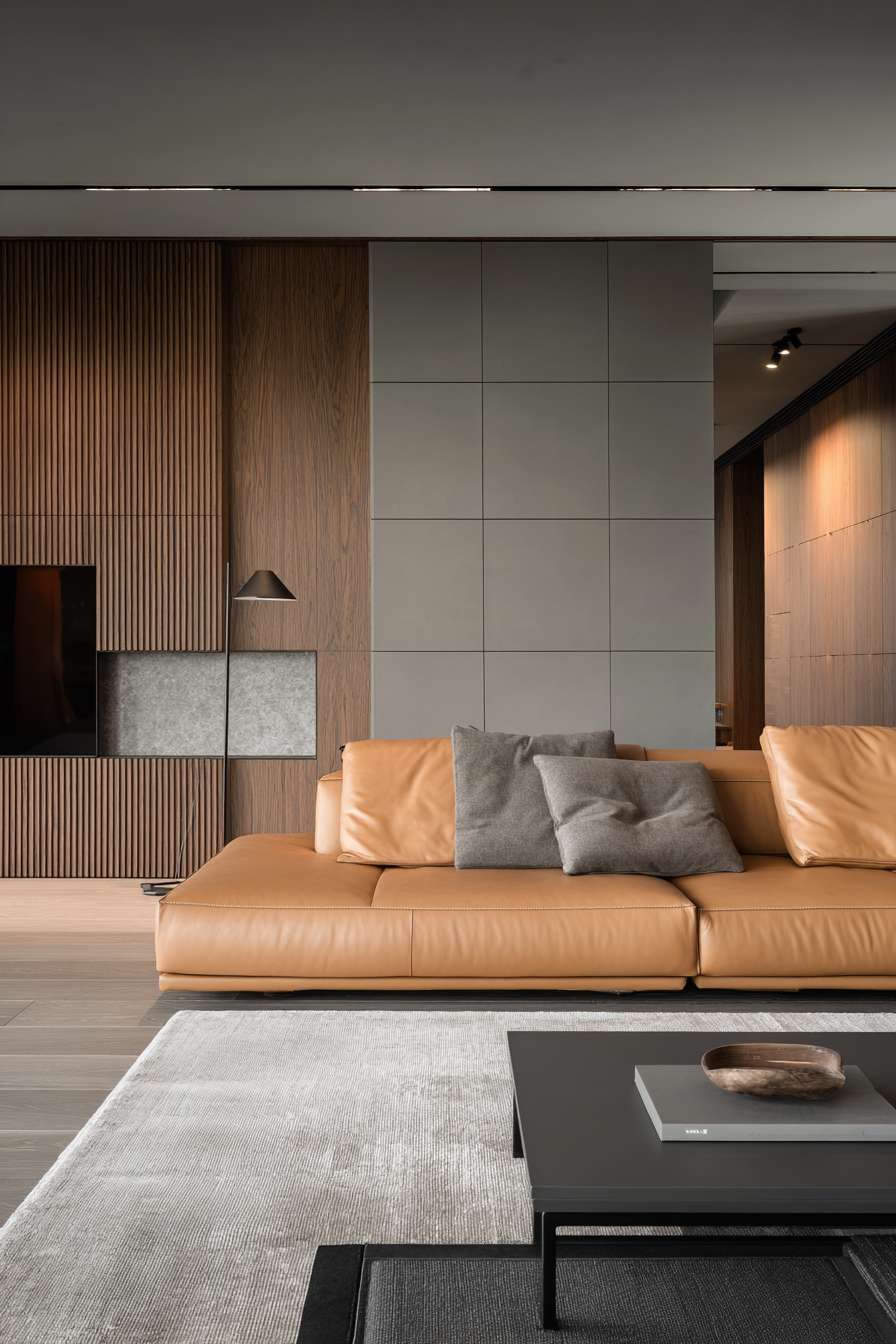
A simple rectangular coffee table combining matte black metal and glass exemplifies the material honesty valued in minimalist design. The transparency of the glass top maintains visual openness, allowing the eye to travel through the space rather than stopping at an opaque surface. The monochrome area rug beneath grounds the furniture grouping while reinforcing the sophisticated color palette of blacks, whites, and warm camel tones.
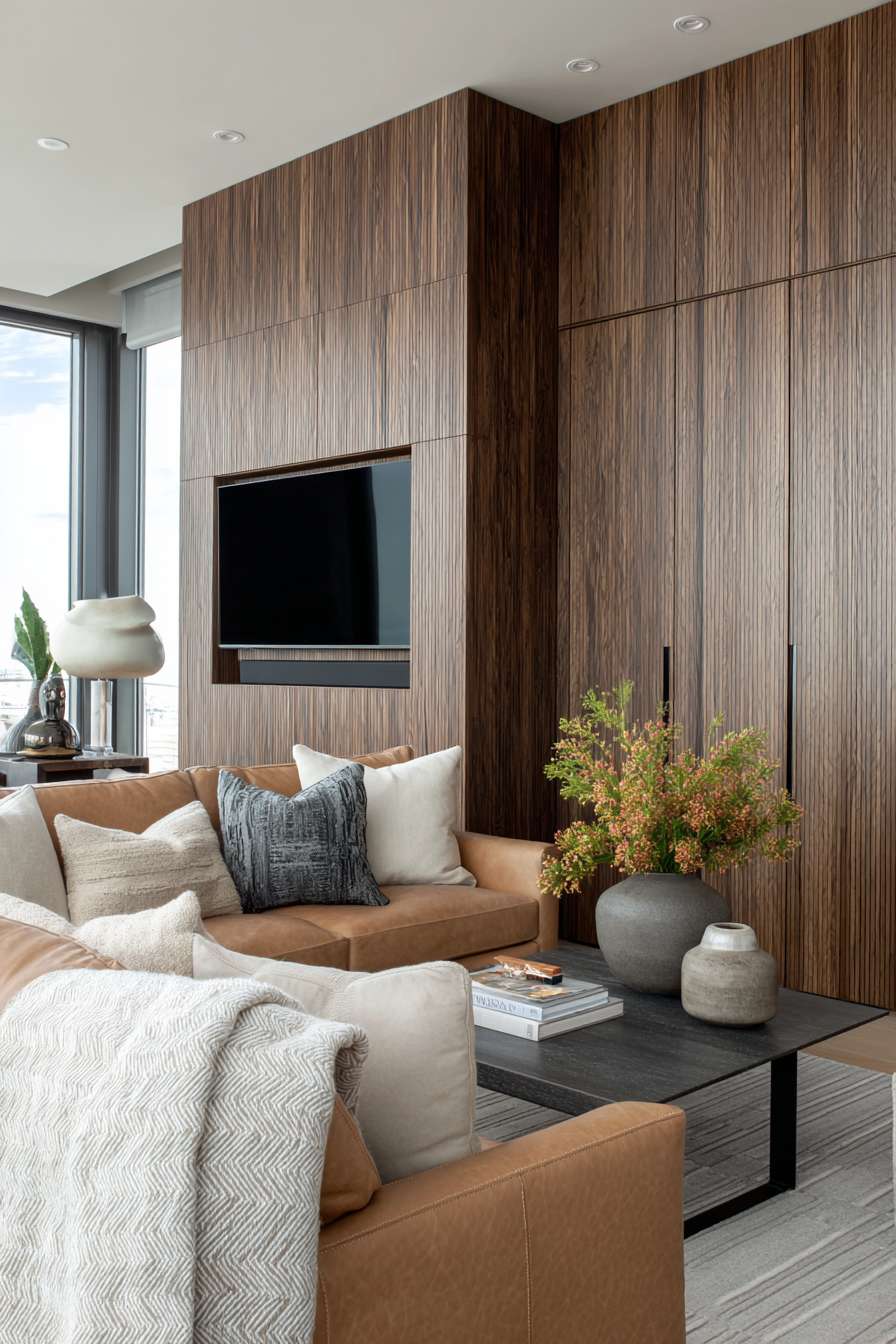
Layered lighting proves essential in this space, with recessed ceiling fixtures providing ambient illumination while a single floor lamp offers task lighting for reading or conversation. This approach allows for lighting customization based on the time of day or activity, from bright and energizing to soft and relaxing. The intentional limitation of decorative objects creates a sense of calm and order, with each item carefully selected for both aesthetic value and functional purpose.
Key Design Tips:
- Choose quality leather furniture that develops character rather than showing wear
- Incorporate transparent materials like glass to maintain visual openness in compact spaces
- Install multiple lighting sources for flexibility in mood and function
- Edit decorative items ruthlessly, displaying only meaningful pieces
- Select furniture with clean geometric forms that emphasize horizontal lines for a grounded feeling
6. Intimate Reading Nook Integration
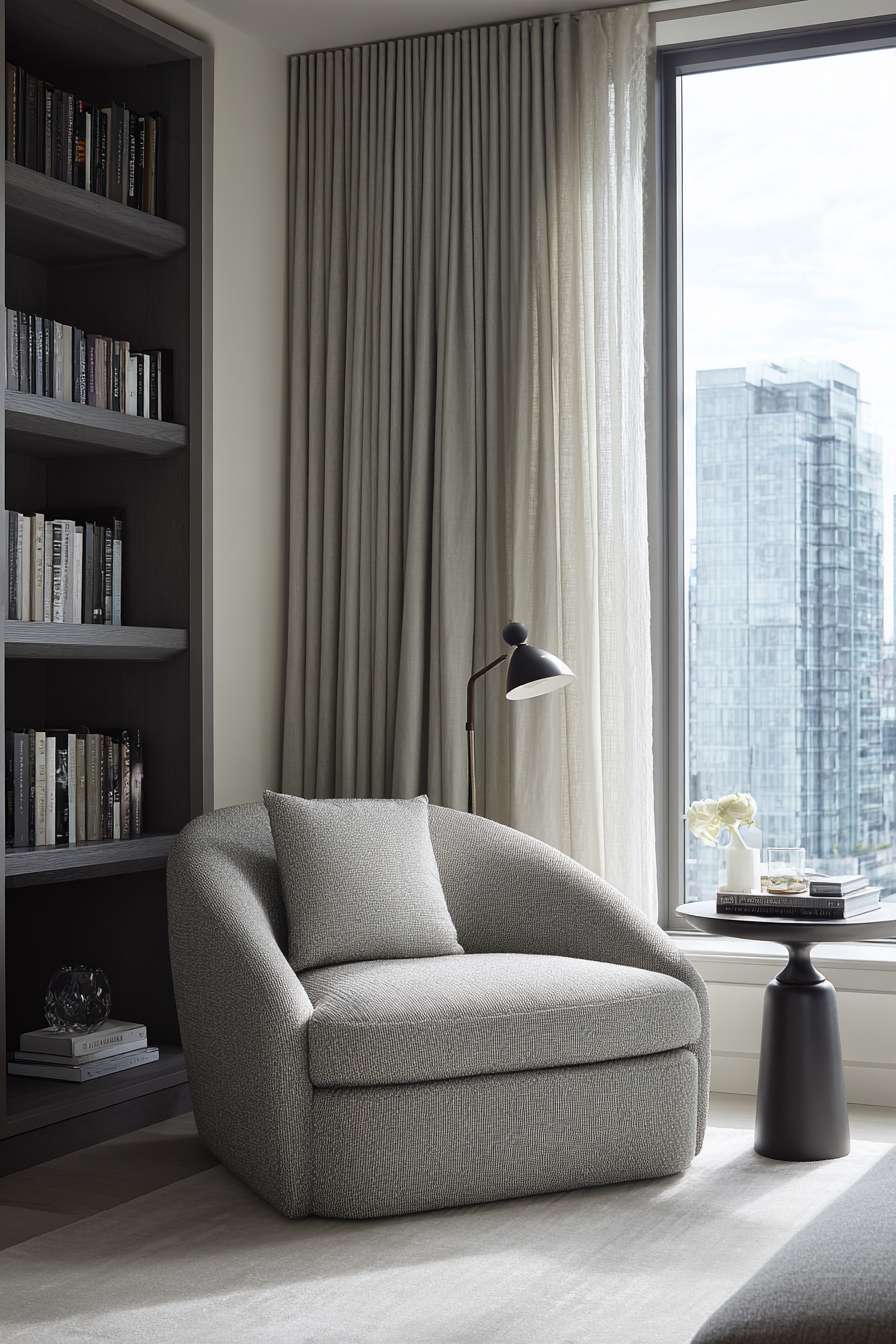
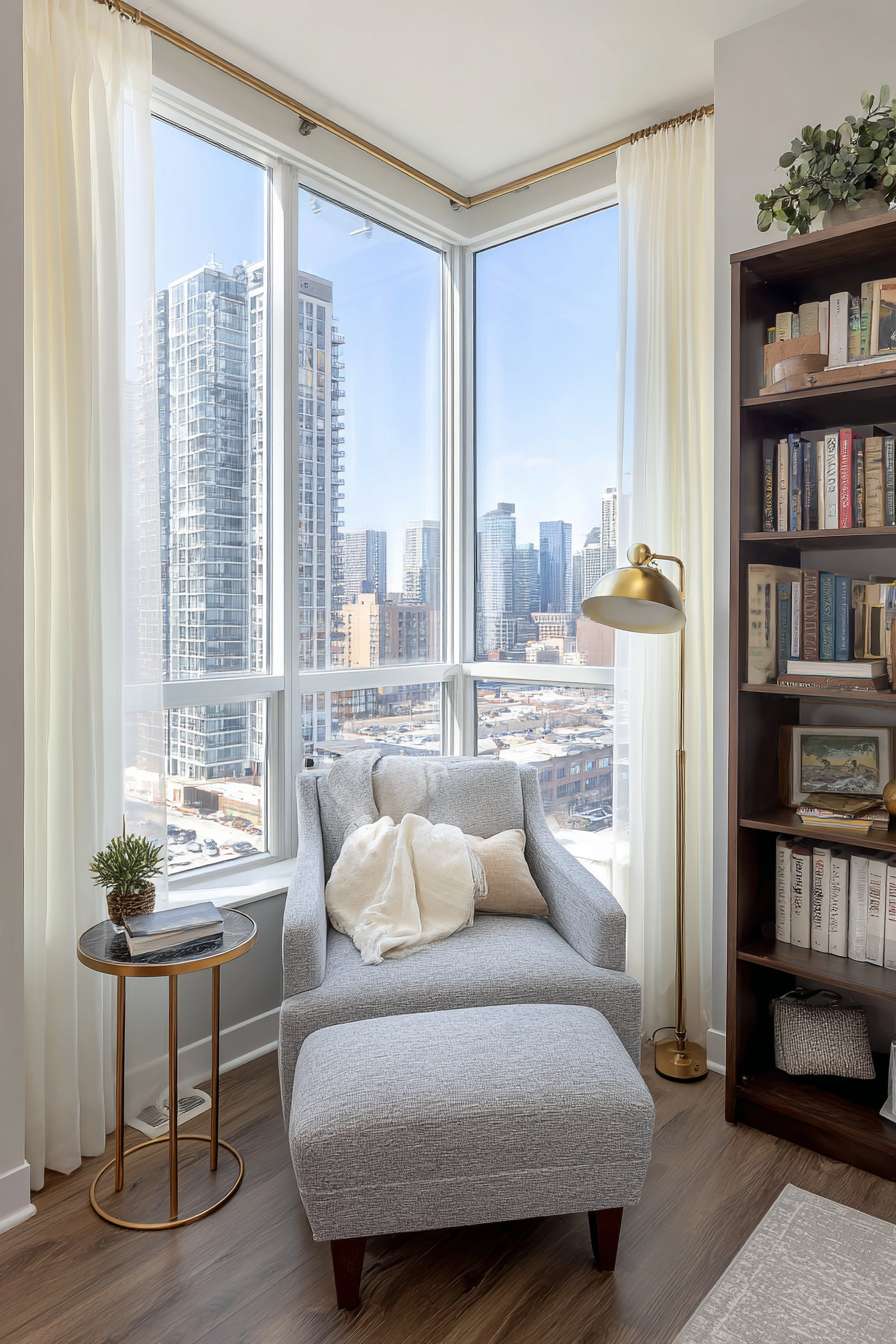
This design demonstrates how a comfortable armchair upholstered in textured grey fabric can transform an underutilized corner into a dedicated reading sanctuary. Positioned strategically near a window, the chair capitalizes on natural light—the reader’s best friend—during daylight hours while maintaining its functionality as occasional seating for conversation. The grey fabric’s visible texture adds tactile interest while hiding minor wear, a practical consideration for frequently used furniture.
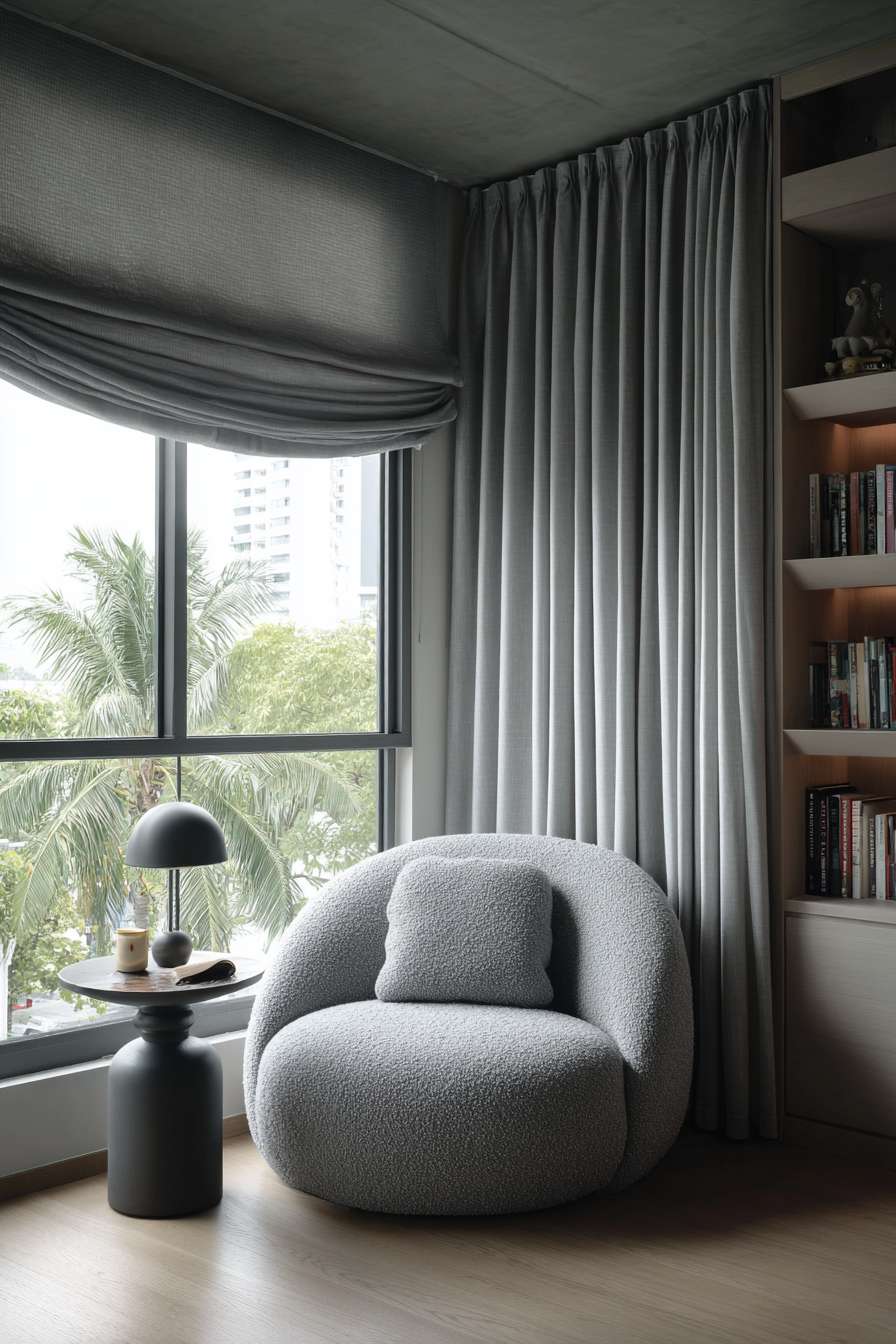
A small round side table provides essential surface space for coffee cups, reading glasses, and the current book without requiring the footprint of a larger end table. This proportional scaling ensures the nook feels intentional rather than cramped. The reading lamp—likely an adjustable floor or table model—extends the nook’s usability into evening hours, creating a cozy pool of light that encourages settling in with a good book after dark.
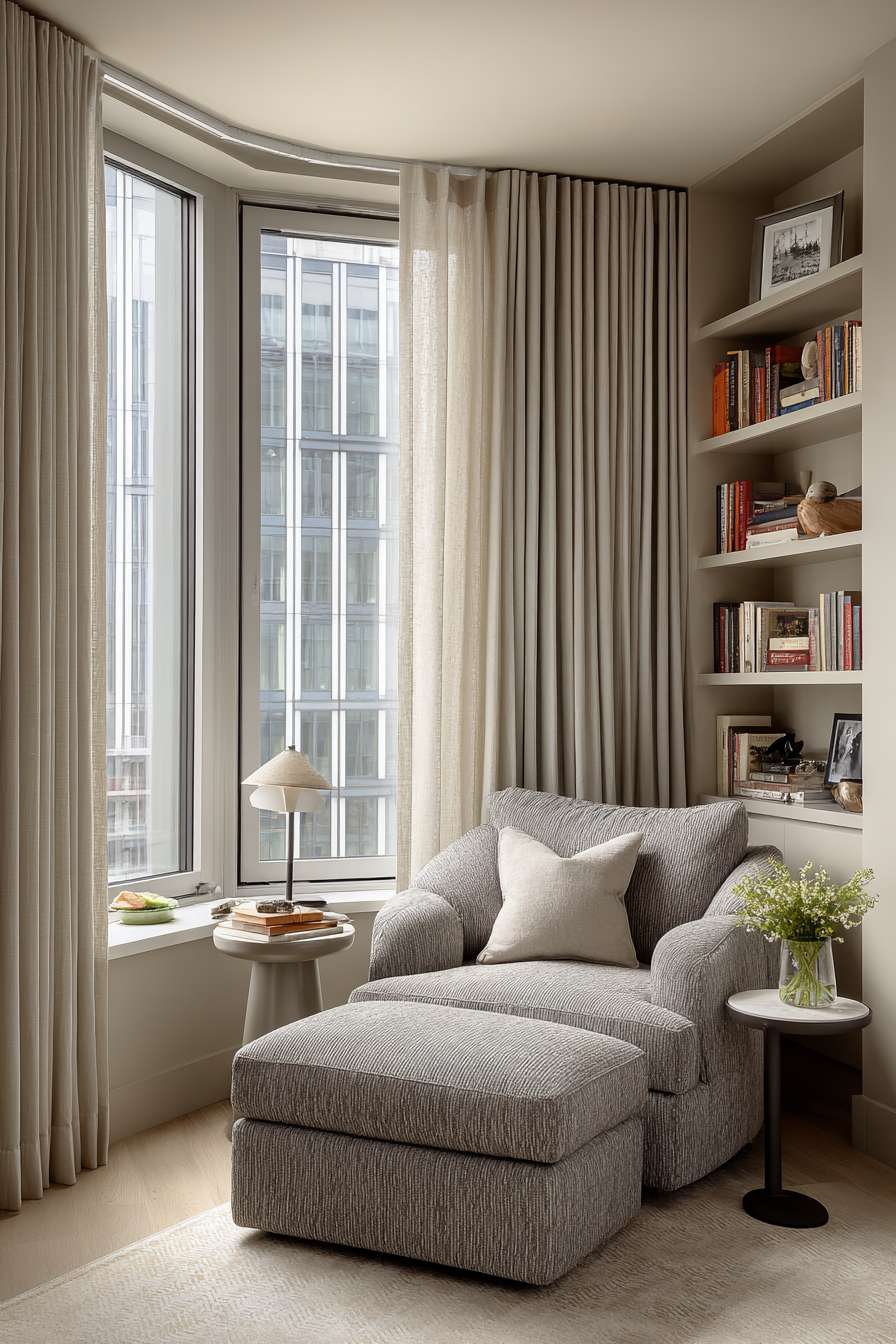
The corner shelving unit displays a curated book collection, keeping favorite volumes within arm’s reach while adding personality through spine colors and arrangement styles. This vertical storage approach makes efficient use of corner space that often goes unused in apartment layouts. Semi-sheer curtains filter harsh sunlight into gentle illumination, preventing glare on book pages while maintaining the room’s connection to exterior views and natural light cycles.
Key Design Tips:
- Position reading furniture near windows to maximize natural light during daytime
- Select armchairs with proper lumbar support for extended reading sessions
- Install adjustable lighting to prevent eye strain during nighttime reading
- Use corner shelving to activate dead space in room layouts
- Choose semi-sheer window treatments that diffuse light without blocking it entirely
7. Bohemian Layered Warmth
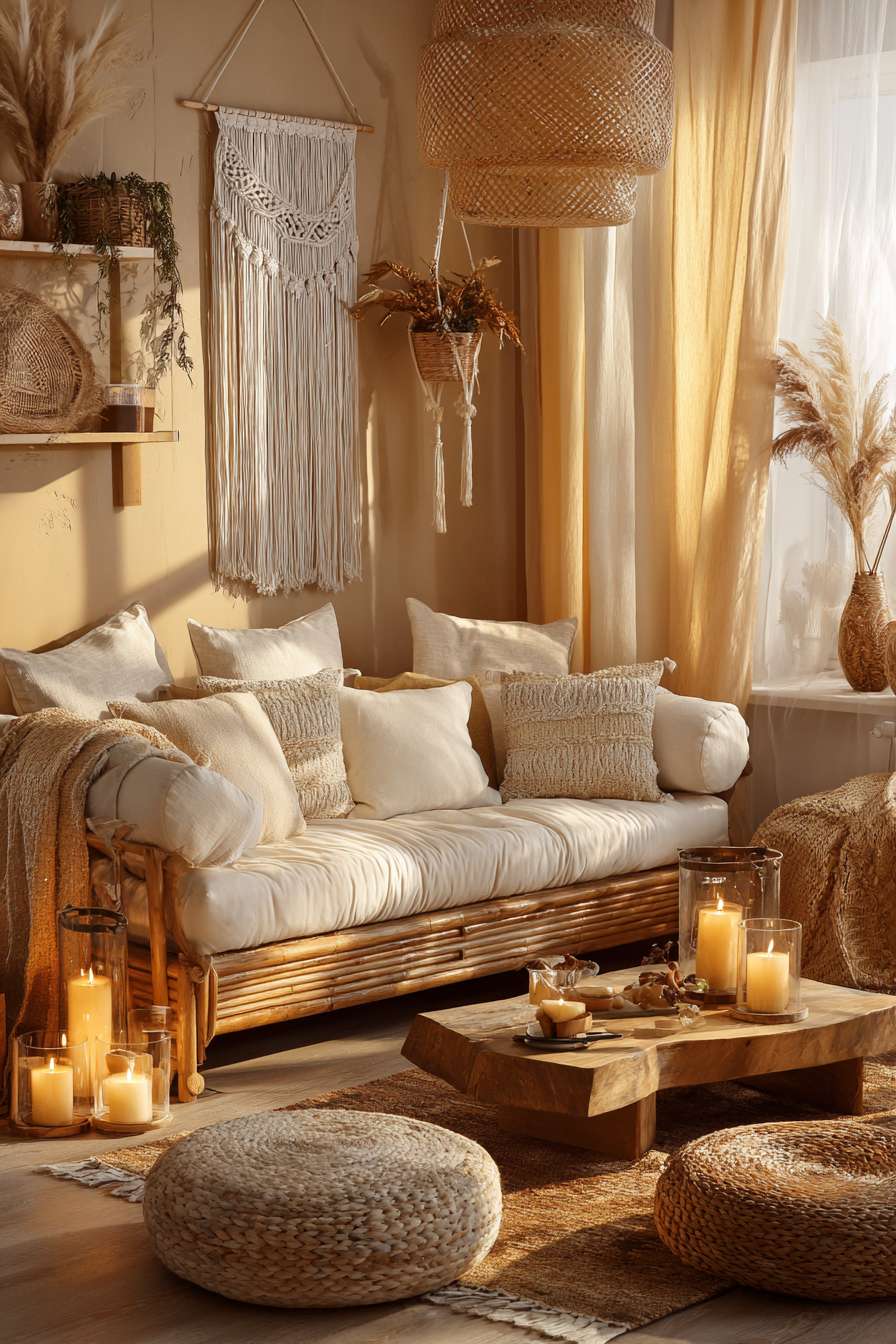
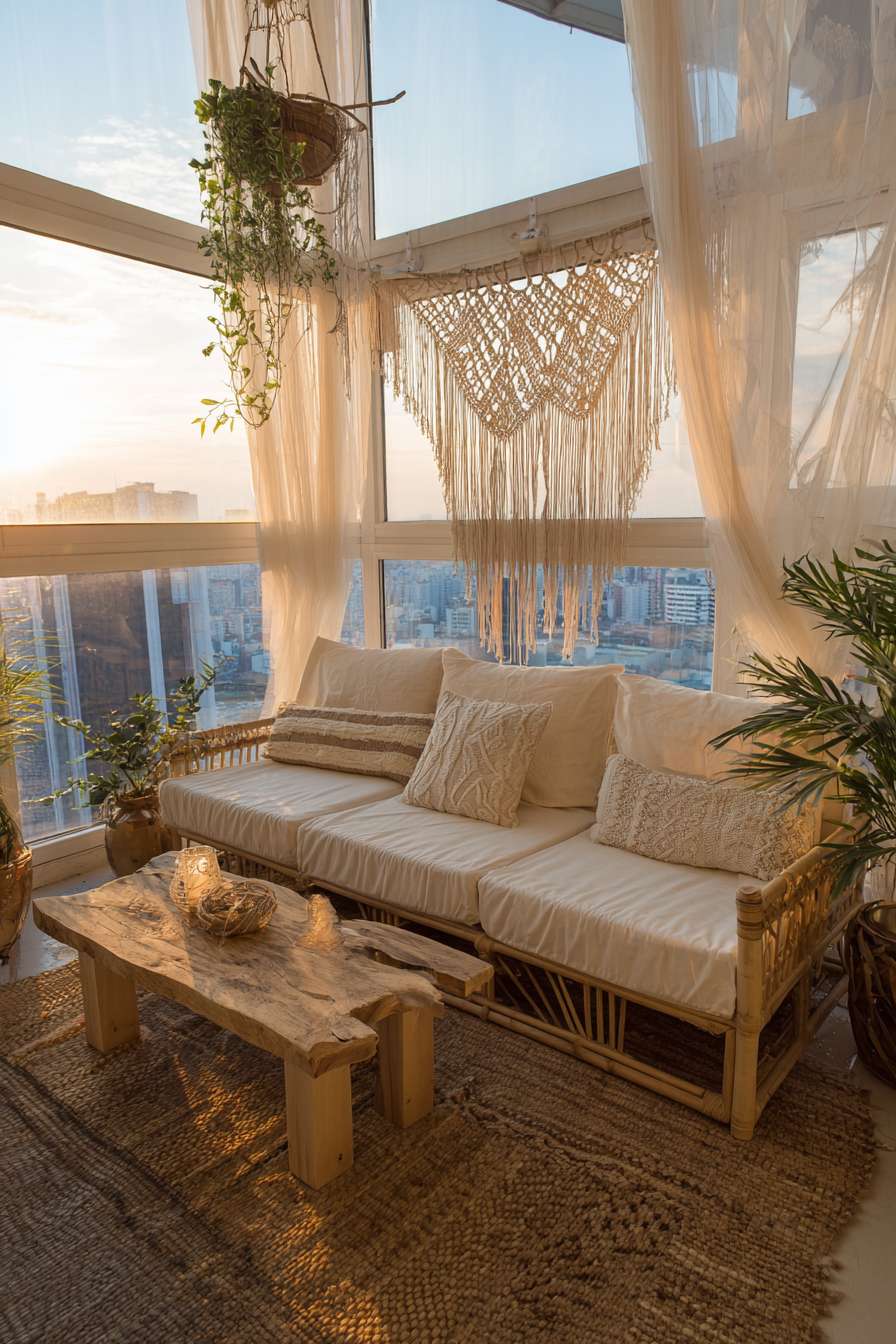
The low-slung sofa featuring a woven rattan frame and cream cushions introduces the organic, handcrafted aesthetic that defines bohemian style. The visible linen texture of the cushions adds to the natural, unpretentious feel while the rattan frame brings in the earthy, artisanal quality that characterizes boho interiors. This furniture choice immediately establishes the room’s relaxed, globally-inspired character while remaining functional for daily lounging and entertaining.
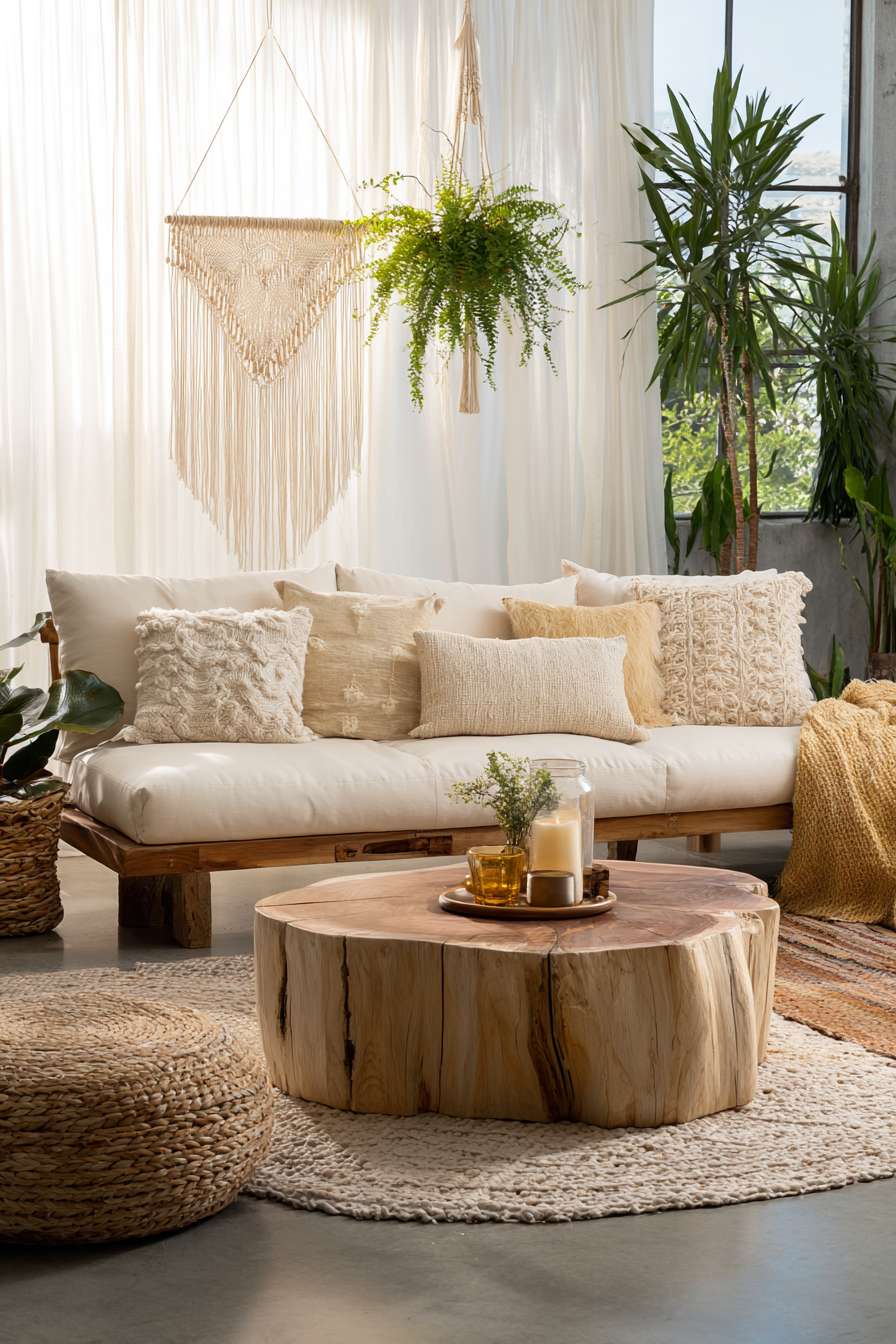
Layered area rugs in complementary earth tones create the textural richness essential to bohemian design, with each rug contributing pattern, color, and tactile variation. This layering technique adds warmth both literally and visually, creating a foundation that feels collected over time rather than purchased in a single shopping trip. The macramé wall hanging and cascading hanging plants add vertical interest and soften hard architectural lines with organic forms and flowing textures.
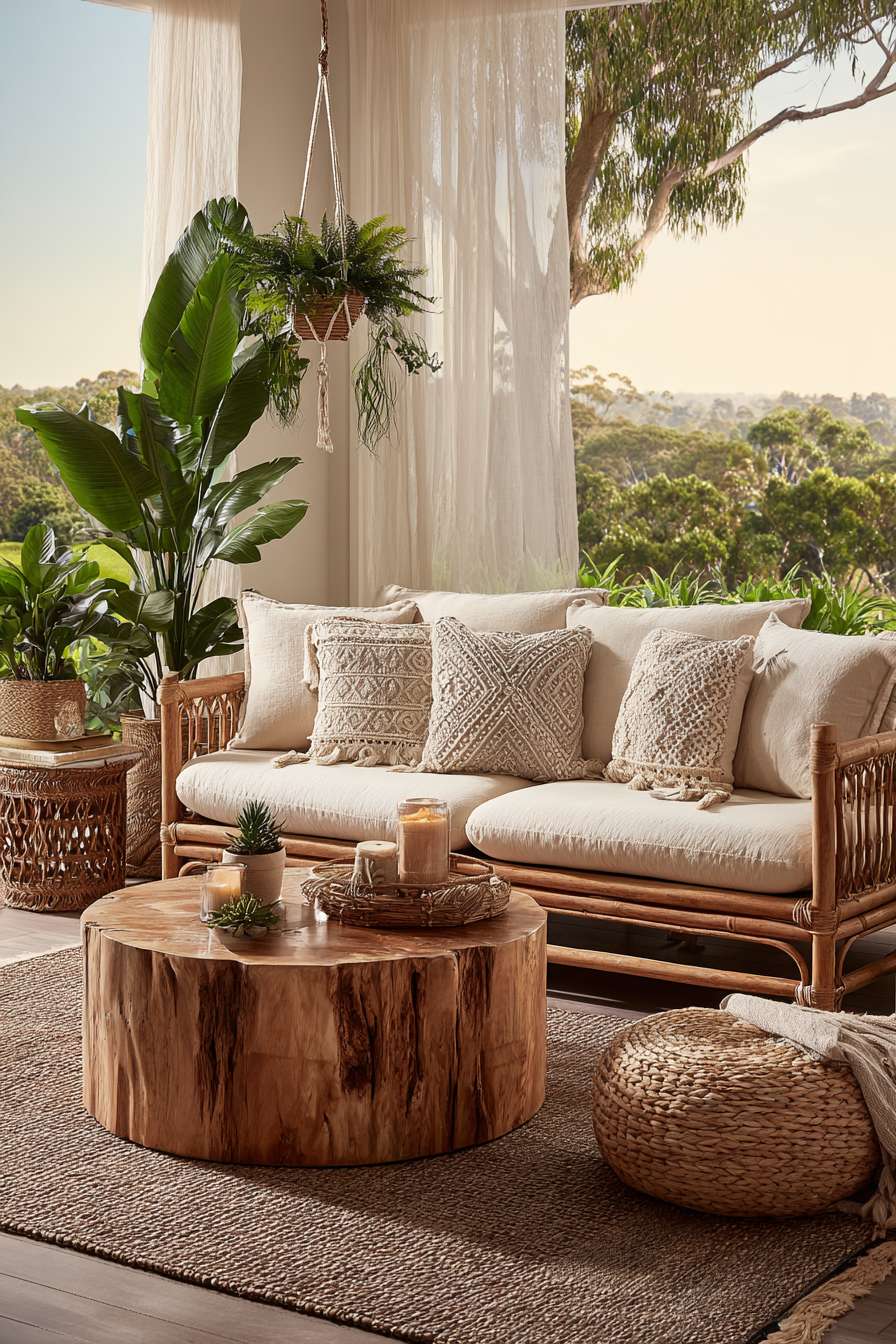
The natural wood coffee table with organic, live edges reinforces the connection to nature that grounds bohemian style. Its irregular form contrasts beautifully with the geometric patterns in the rugs, creating visual tension that keeps the space interesting. Golden hour lighting filtering through gauzy curtains bathes the space in warm, flattering illumination that enhances all the earth-toned textiles and natural materials, creating the cozy, welcoming atmosphere that makes bohemian rooms feel like warm embraces.
Key Design Tips:
- Layer multiple rugs to build depth and create the collected-over-time bohemian aesthetic
- Incorporate handcrafted elements like macramé and woven textiles for artisanal character
- Choose furniture with natural materials and organic forms over sleek modern lines
- Add abundant plants at various heights to bring nature indoors and improve air quality
- Use gauzy, flowing window treatments that diffuse light romantically
8. Industrial Urban Edge
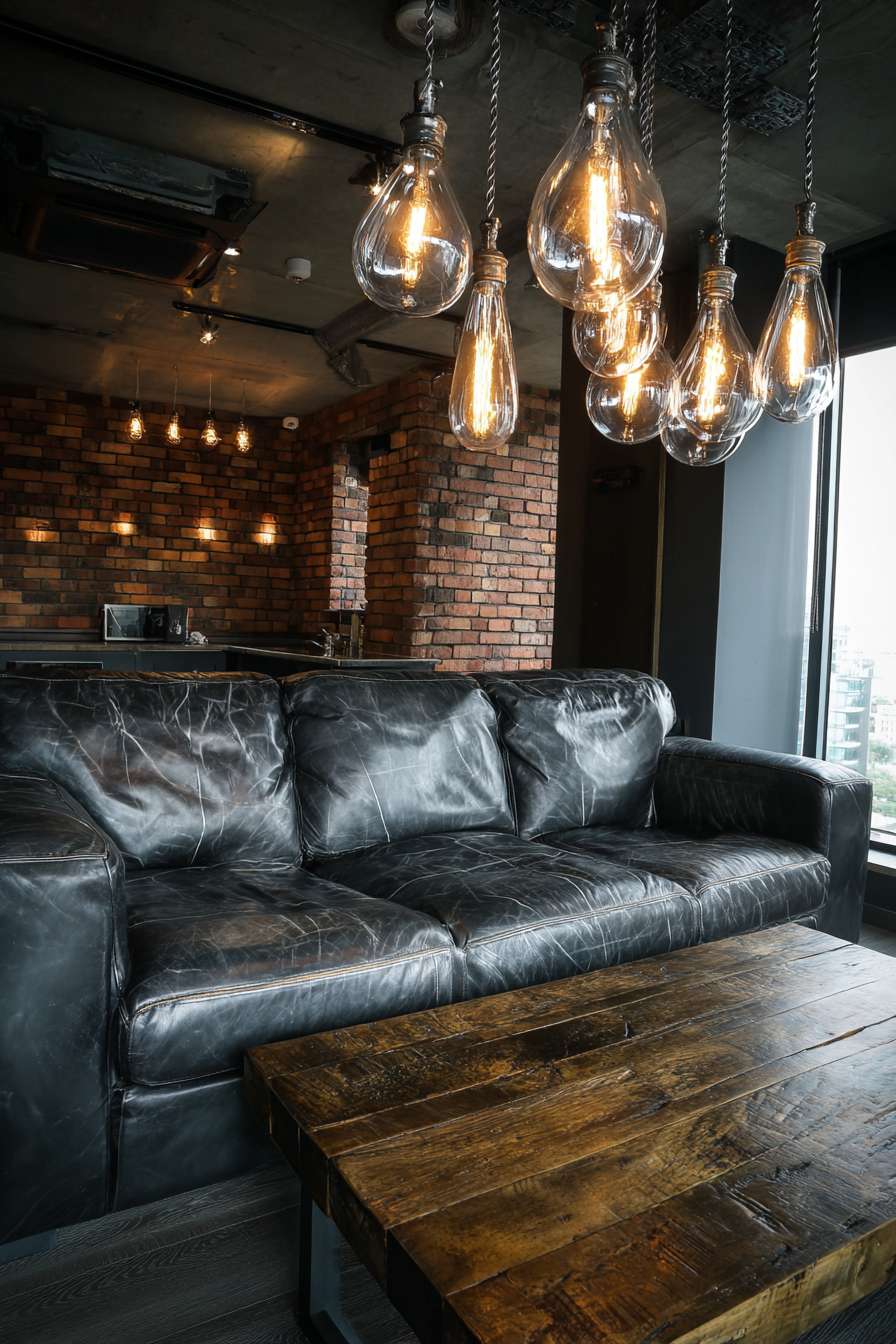
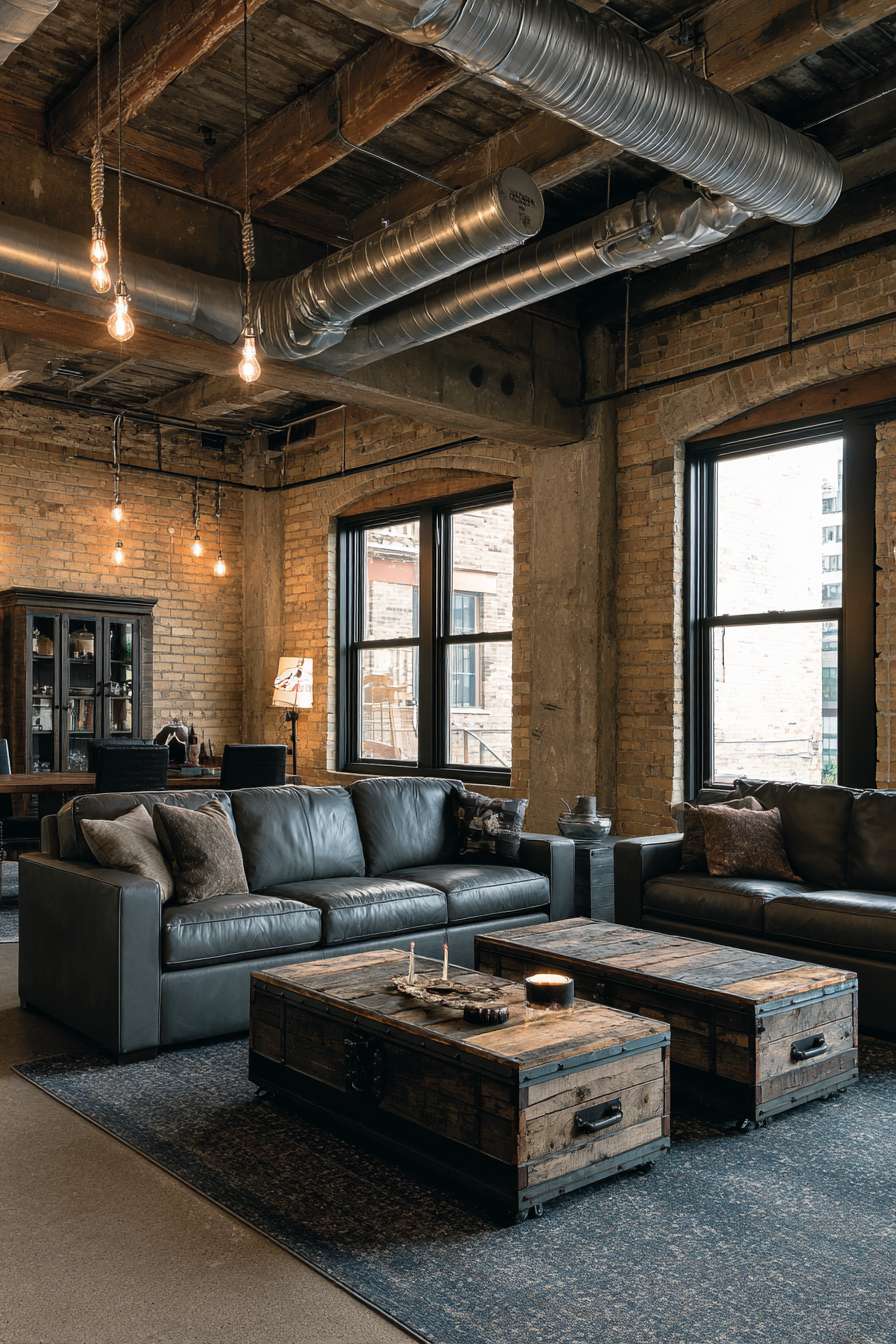
Exposed brick walls provide the authentic industrial foundation for this urban apartment living room, their warm terracotta tones and varied textures creating immediate architectural interest without additional decoration. Against this raw backdrop, a charcoal grey leather sofa anchors the space with its substantial presence and natural grain patterns that improve with age and use. The leather’s durability suits the industrial aesthetic’s emphasis on honest, long-lasting materials.
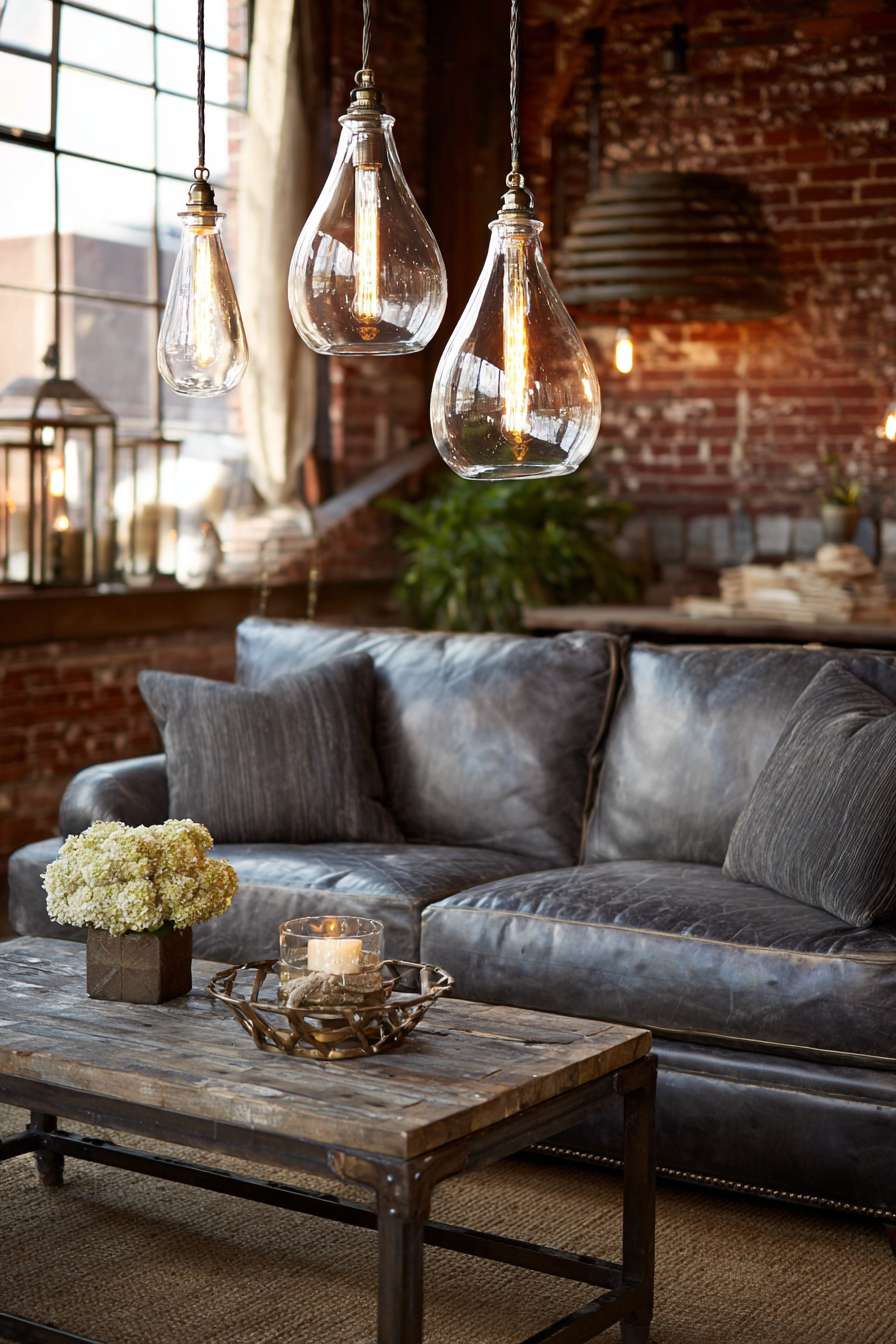
The coffee table combining metal framework with reclaimed wood planks exemplifies industrial design’s marriage of utilitarian materials with functional forms. The wood’s weathered character tells stories of previous uses while the metal structure provides contemporary stability. Edison bulb pendant lights hanging at varying heights create sculptural lighting that serves both practical and decorative purposes, their exposed filaments celebrating the beauty of functional elements rather than hiding them.
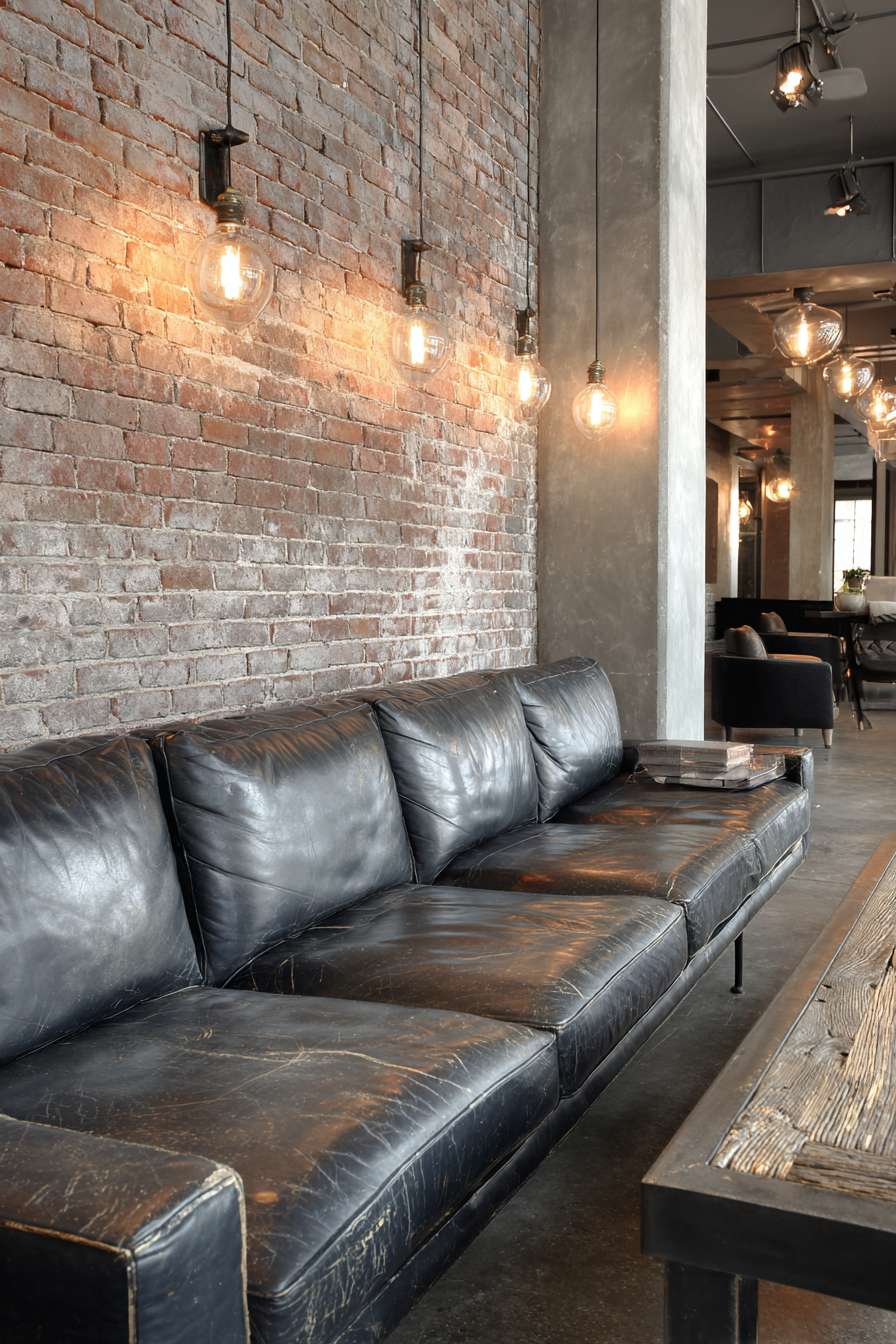
Concrete-look flooring extends the industrial vocabulary throughout the space, providing a neutral foundation that grounds the warmer elements like brick and wood. This material continuity creates cohesion while emphasizing the loft-like quality many apartment dwellers seek. Strategic lighting placement emphasizes texture variations in the brick, leather, and wood, creating dramatic shadows that add depth and dimension throughout the day.
Key Design Tips:
- Embrace architectural elements like exposed brick or concrete as decorative features
- Select furniture in materials that age beautifully like leather and wood
- Install statement lighting with exposed bulbs to celebrate industrial functionality
- Create contrast between raw materials and refined furniture pieces
- Use metal accents throughout to reinforce the urban, workshop-inspired aesthetic
9. Space-Saving Murphy Bed Integration
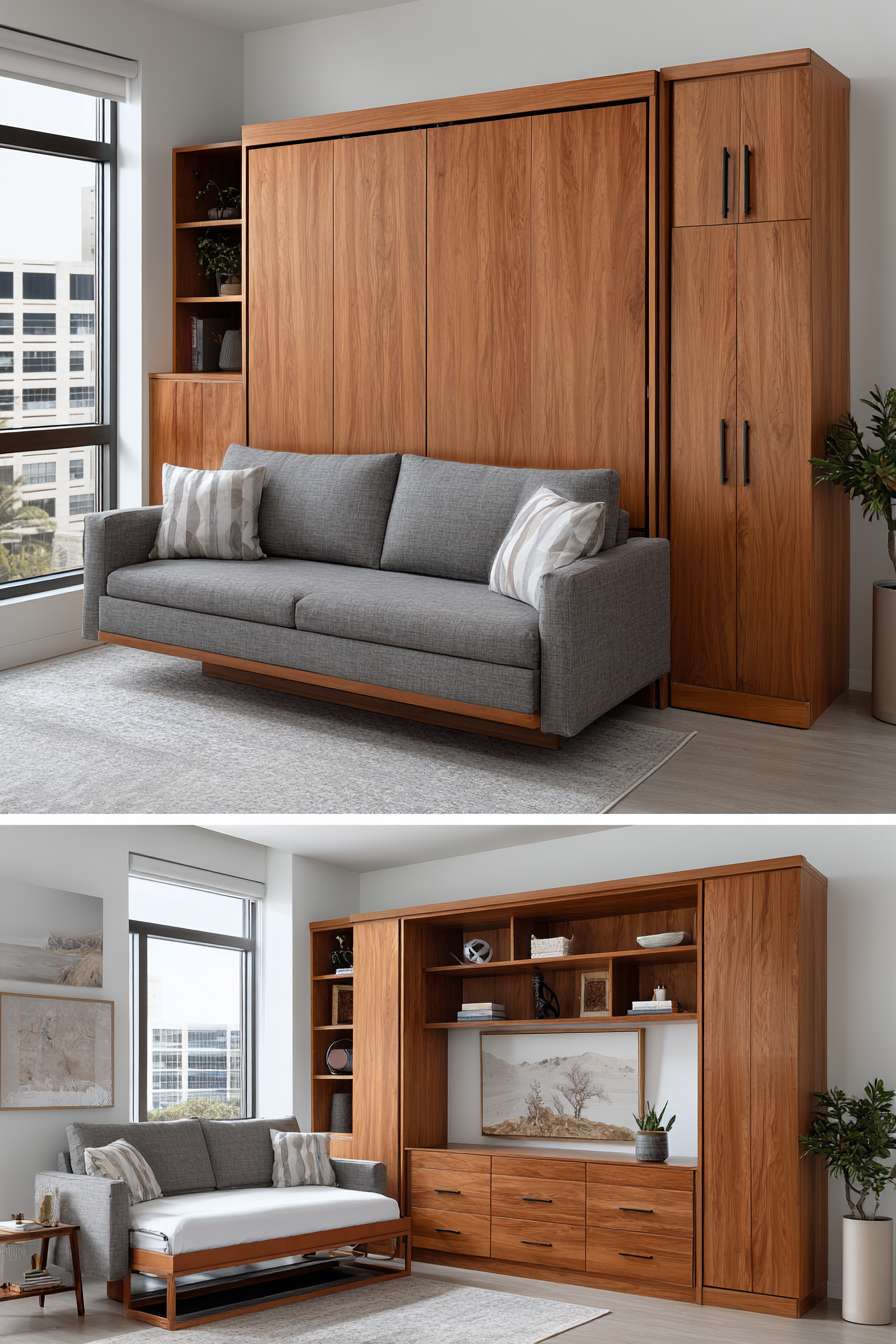
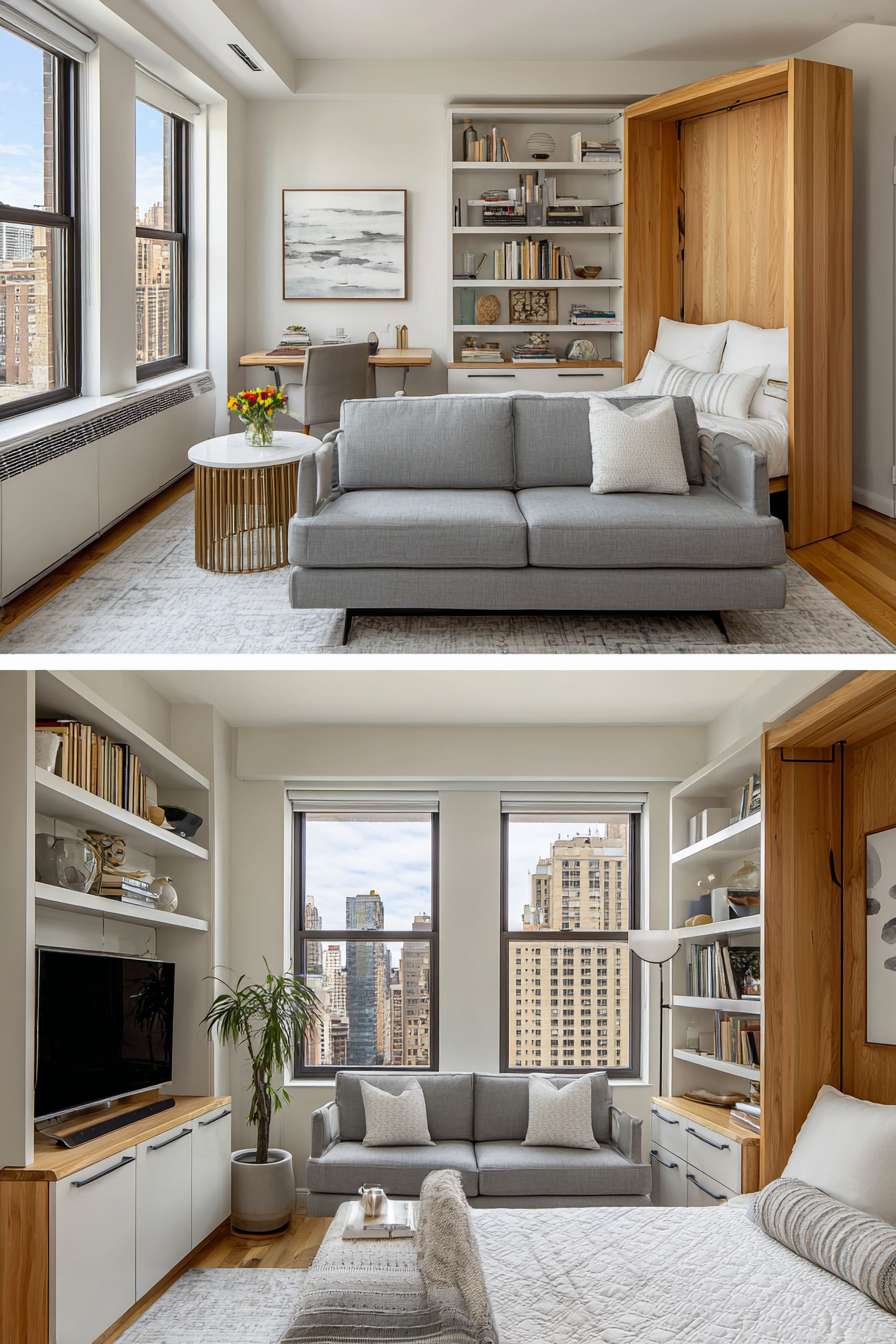
This innovative design addresses the ultimate apartment challenge—combining sleeping and living spaces in limited square footage—with a Murphy bed system that folds seamlessly into a wall unit. When stored, the bed reveals a comfortable living area centered on a streamlined sofa in medium grey fabric that maintains the room’s furniture scale without overwhelming. The sofa faces a compact entertainment center, creating a traditional living room layout that feels complete and intentional rather than compromised.
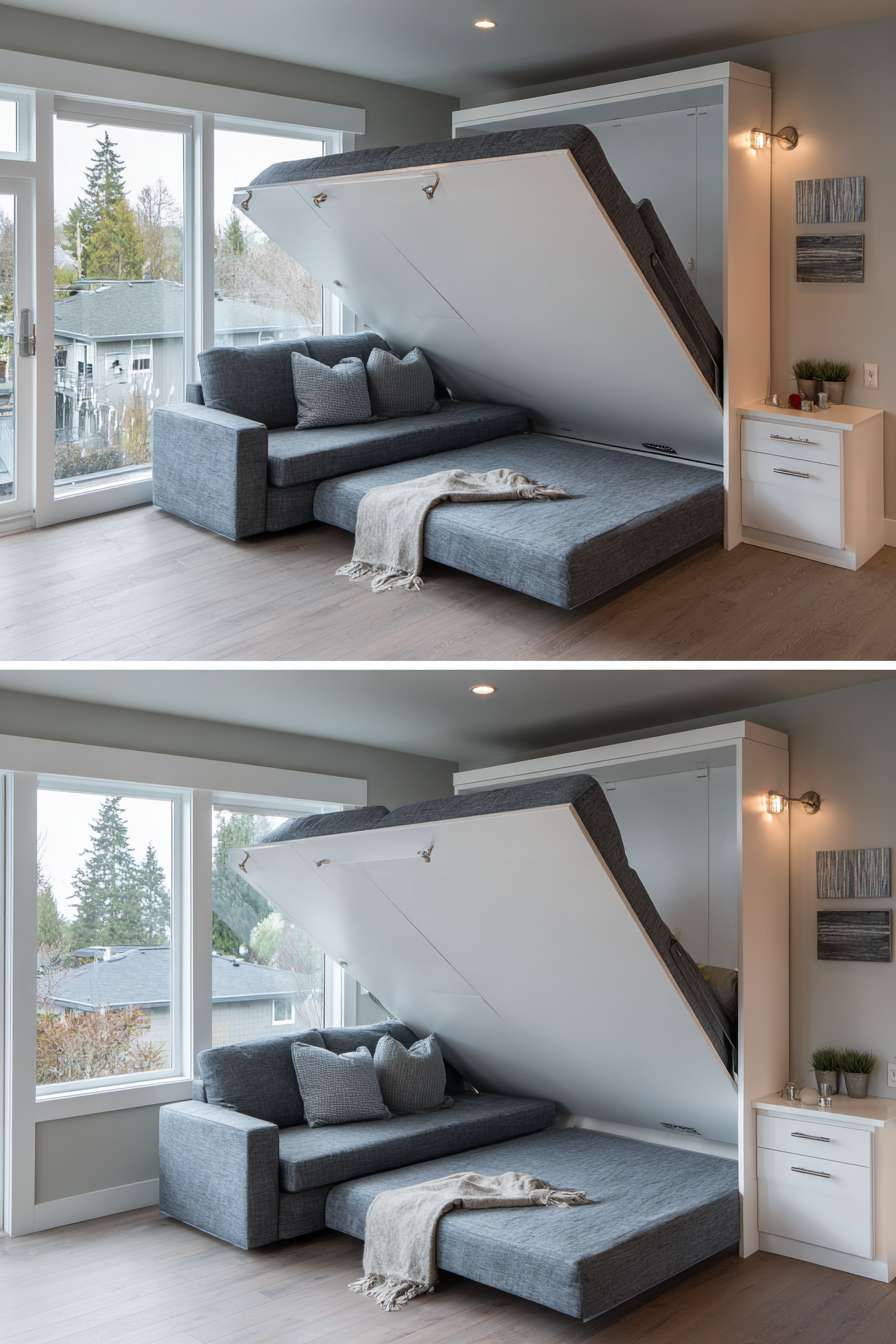
Sleek storage cabinets flanking the Murphy bed unit provide essential closed storage for clothing, bedding, and personal items, eliminating the need for a separate dresser or wardrobe that would consume additional floor space. This integrated approach to storage maintains the room’s clean lines while maximizing functionality. The cabinetry’s flush doors and minimal hardware reinforce the contemporary aesthetic, ensuring the wall unit reads as architectural rather than furniture-like.
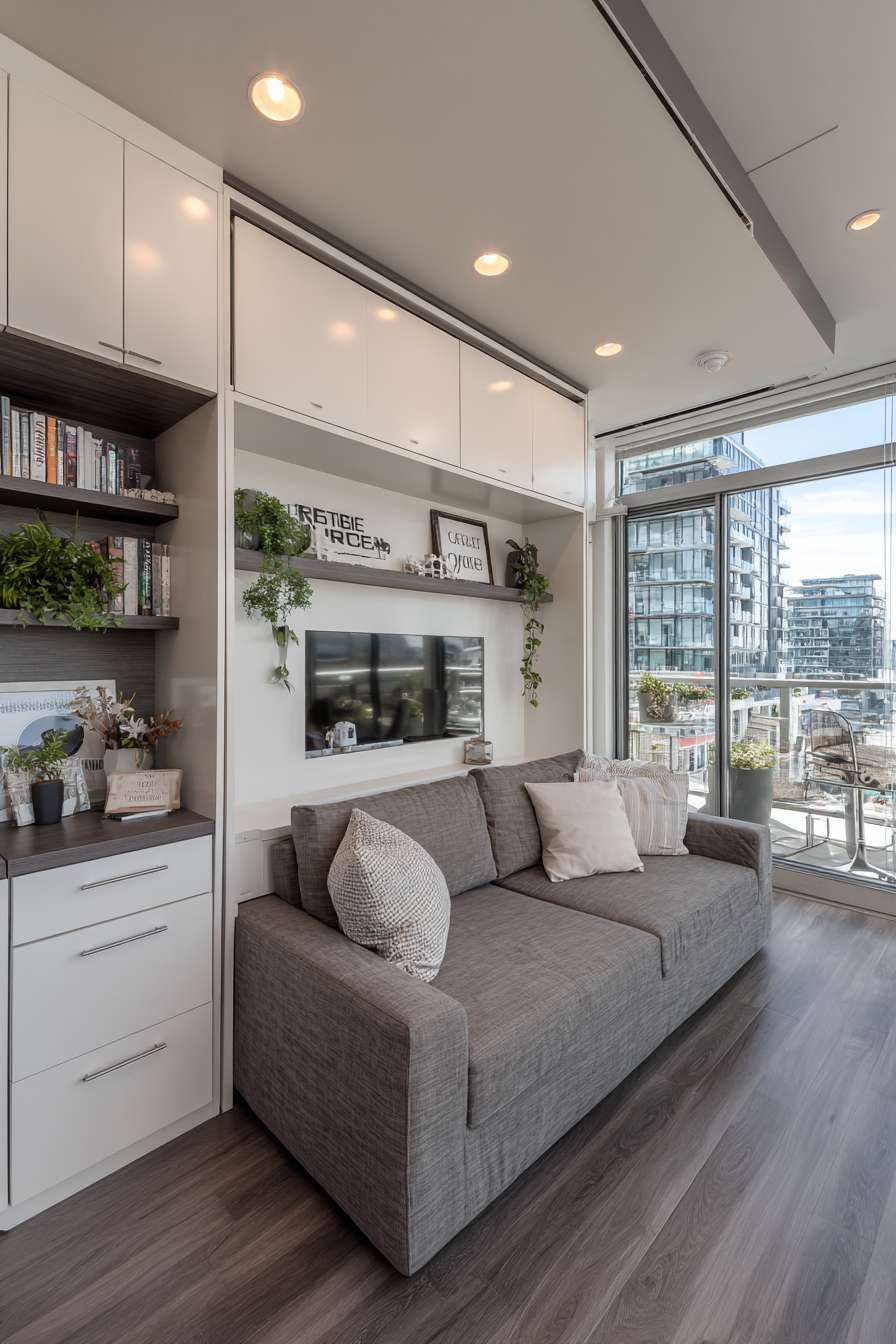
Natural light from adjacent windows illuminates the dual-purpose space throughout the day, with the ability to adjust window treatments based on whether the room is functioning as living space or bedroom. This transformation capability represents the ultimate in apartment flexibility, allowing studio dwellers to host daytime guests comfortably while maintaining proper sleeping arrangements at night. The efficient spatial arrangement proves that smart design can deliver both sleeping and living areas within a single room without sacrificing comfort or style.
Key Design Tips:
- Invest in quality Murphy bed mechanisms that operate smoothly and quietly
- Integrate storage around the bed unit to maximize vertical space utilization
- Select streamlined furniture that complements rather than competes with the wall unit
- Maintain clear pathways for easy room transformation between living and sleeping modes
- Choose medium-scale furniture appropriate for the room’s dual purposes
10. Mid-Century Modern Revival
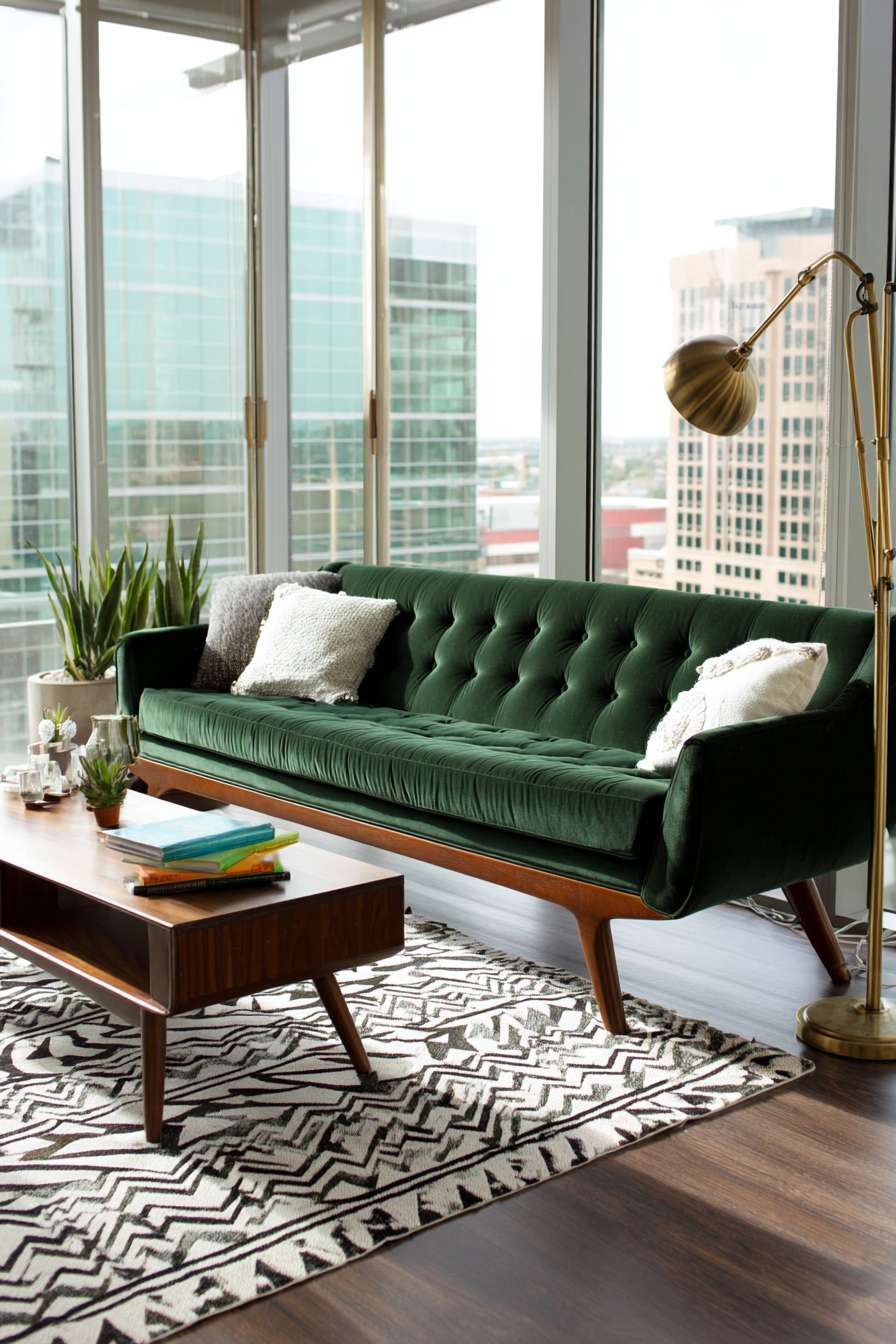
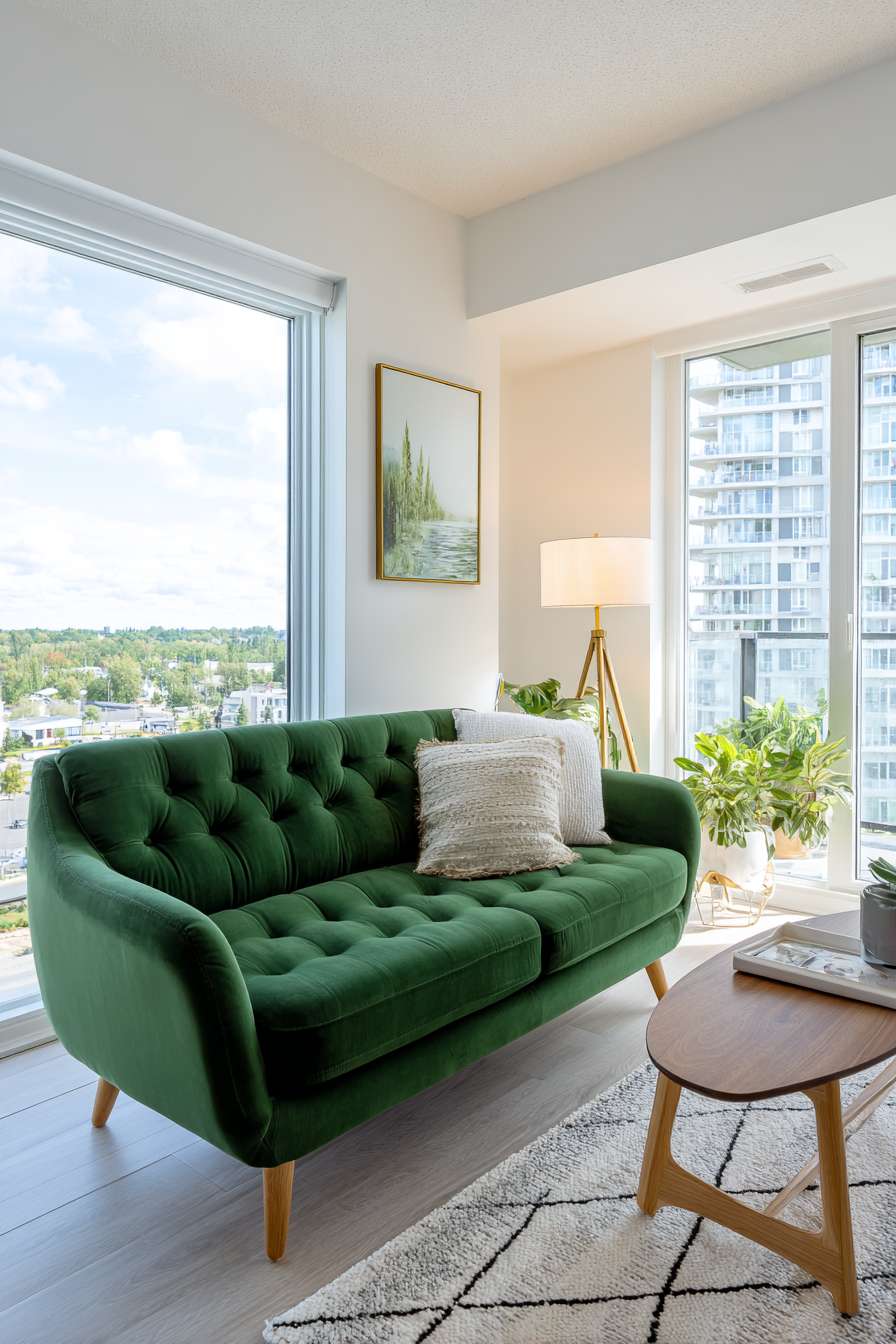
The tufted velvet sofa in forest green makes a bold statement in this mid-century modern space, its rich jewel tone and luxurious texture providing the period-appropriate glamour that characterized 1950s and 60s design. The sofa’s angled wooden legs reference classic mid-century furniture forms while elevating the piece both literally and aesthetically. This distinctive furniture choice immediately establishes the room’s design era and creates a focal point that draws attention upon entry.
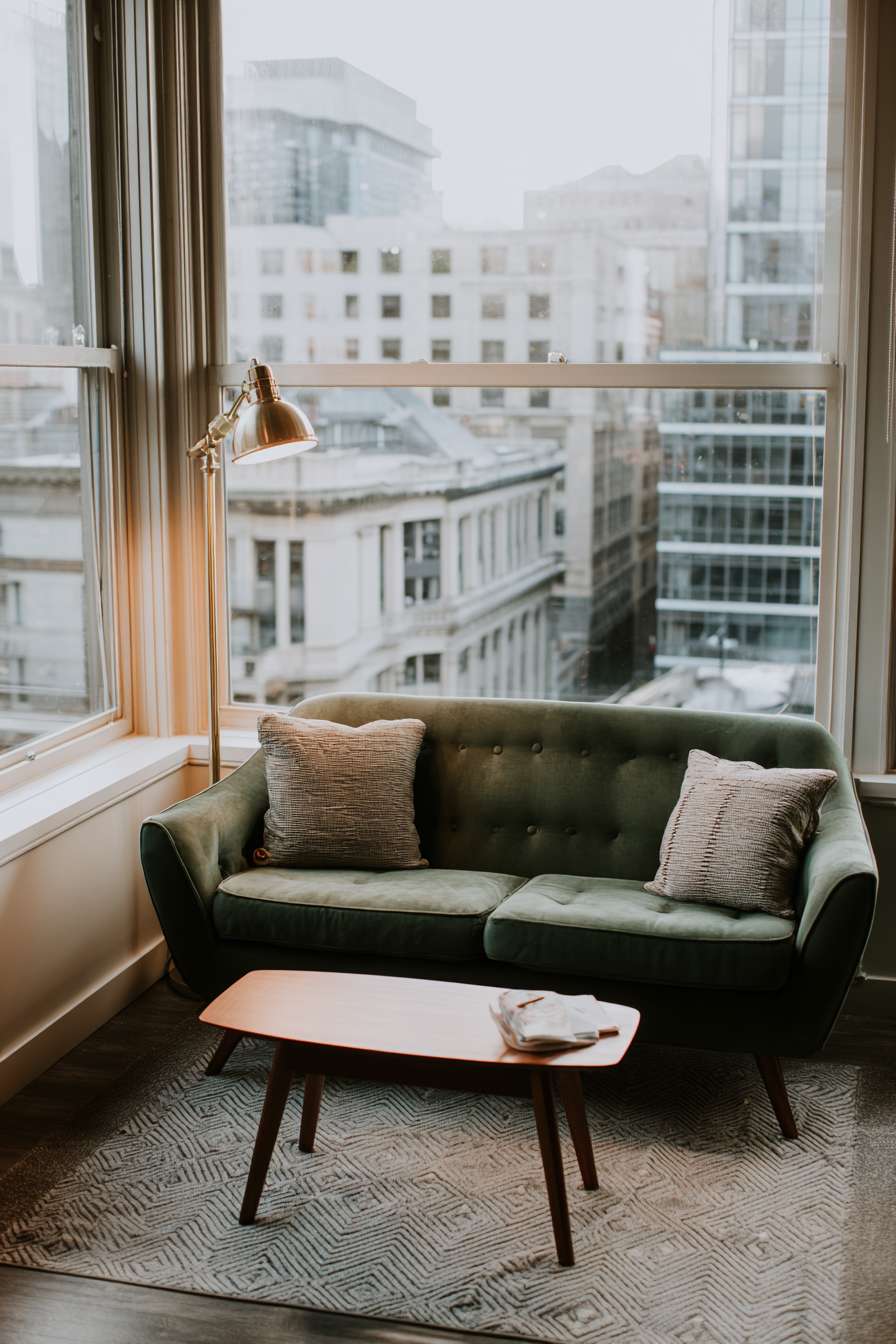
A geometric patterned area rug grounds the seating arrangement with the angular forms and contrasting colors typical of mid-century textiles. Beneath a sleek walnut coffee table with signature tapered legs, the rug adds pattern play that energizes the space without overwhelming it. The walnut’s rich brown tones and distinctive grain patterns exemplify the wood species favored during the mid-century period, providing warmth and organic beauty that balances the more geometric elements.
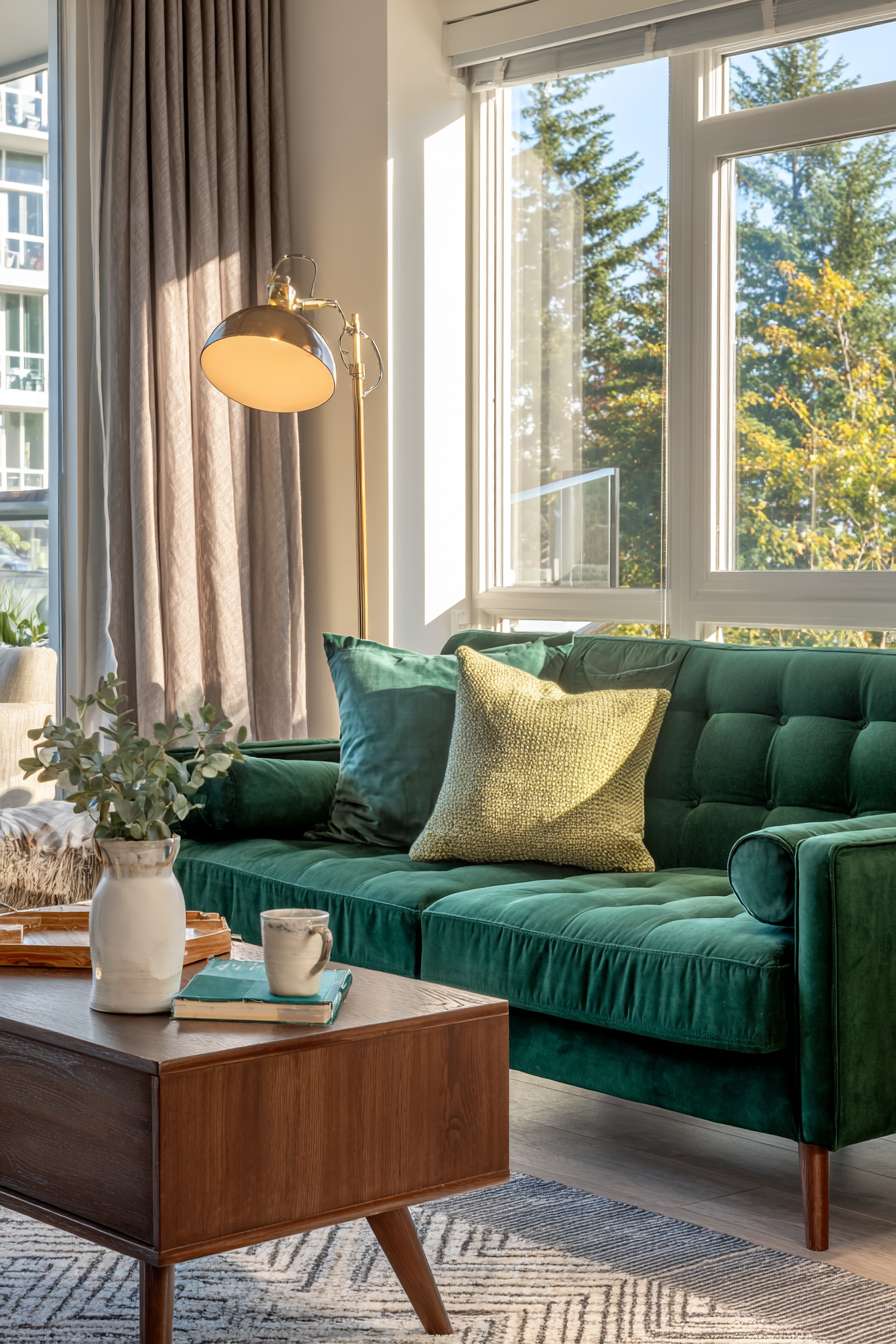
The vintage-inspired floor lamp with brass accents provides both ambient lighting and sculptural interest, its curved arm and simple shade reflecting the period’s emphasis on functional beauty. Large windows with minimal treatments honor the mid-century preference for connecting indoor and outdoor spaces, allowing abundant natural light to showcase the period-appropriate furnishings throughout the day. The soft natural shadows created by this lighting enhance the room’s dimensional qualities and material textures.
Key Design Tips:
- Choose statement furniture pieces in saturated jewel tones characteristic of the era
- Incorporate tapered wooden legs on furniture for authentic mid-century styling
- Select geometric patterns that reference the period without feeling costume-like
- Use brass and warm metallic accents to add glamour and reflect light
- Maximize natural light to showcase wood grains and rich upholstery colors
11. Hidden Storage Innovation
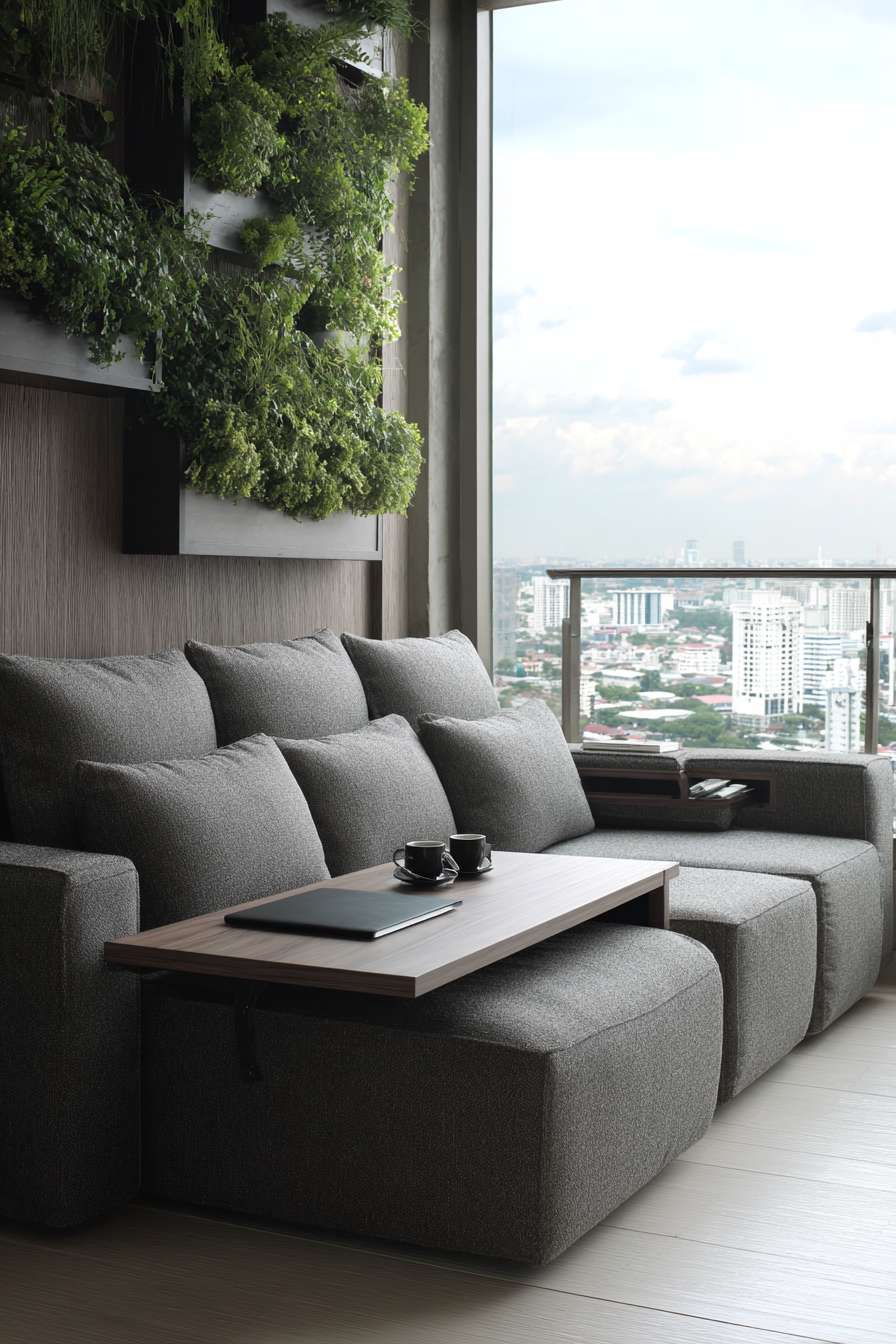
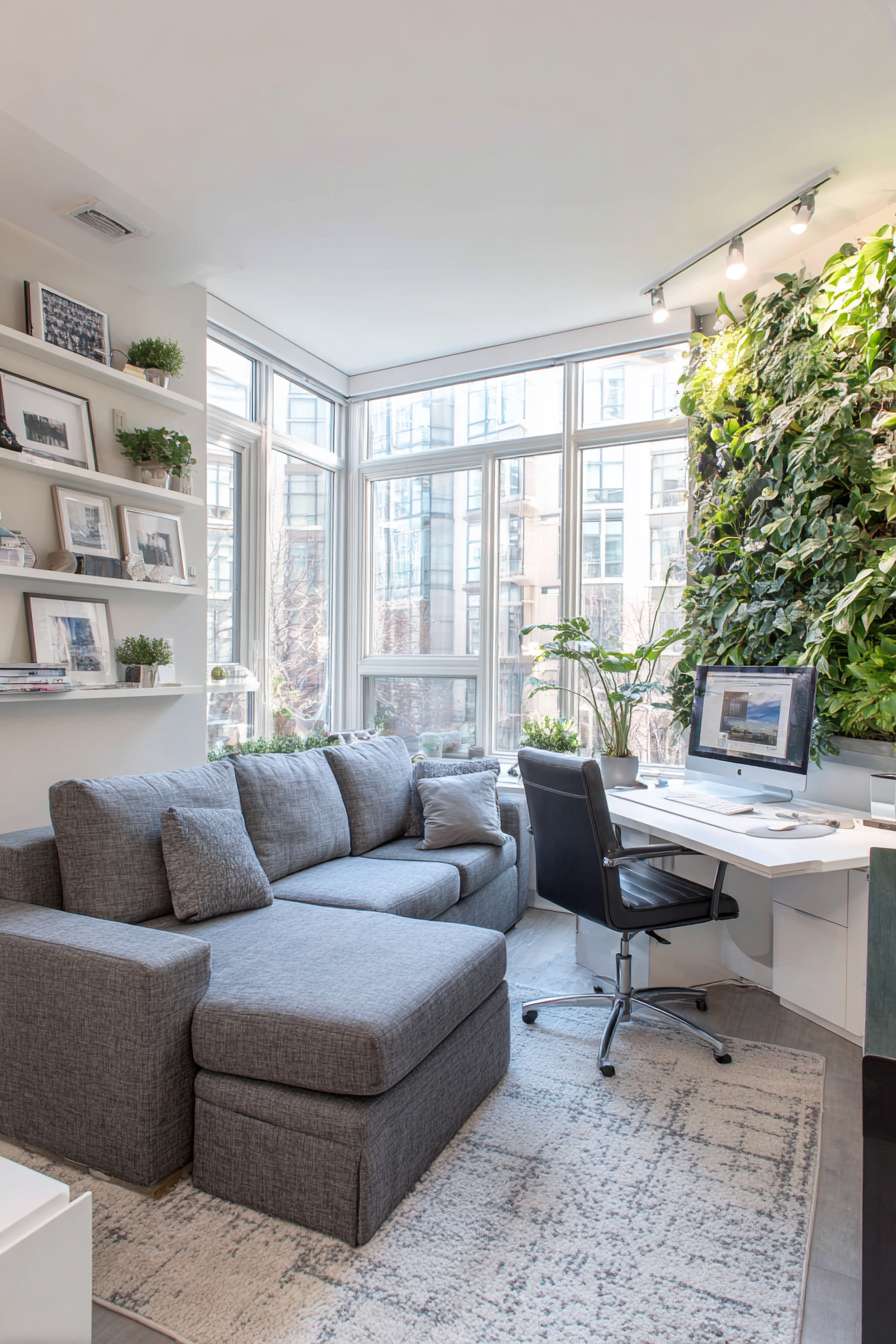
This small-space solution demonstrates remarkable ingenuity through a sectional sofa featuring storage compartments beneath the seats, upholstered in durable grey tweed fabric that hides minor wear while providing textural interest. This dual-purpose furniture eliminates the need for separate storage pieces, maximizing the room’s functional capacity without consuming additional floor space. The tweed’s nubby texture adds visual warmth while proving practical for daily use in active households.
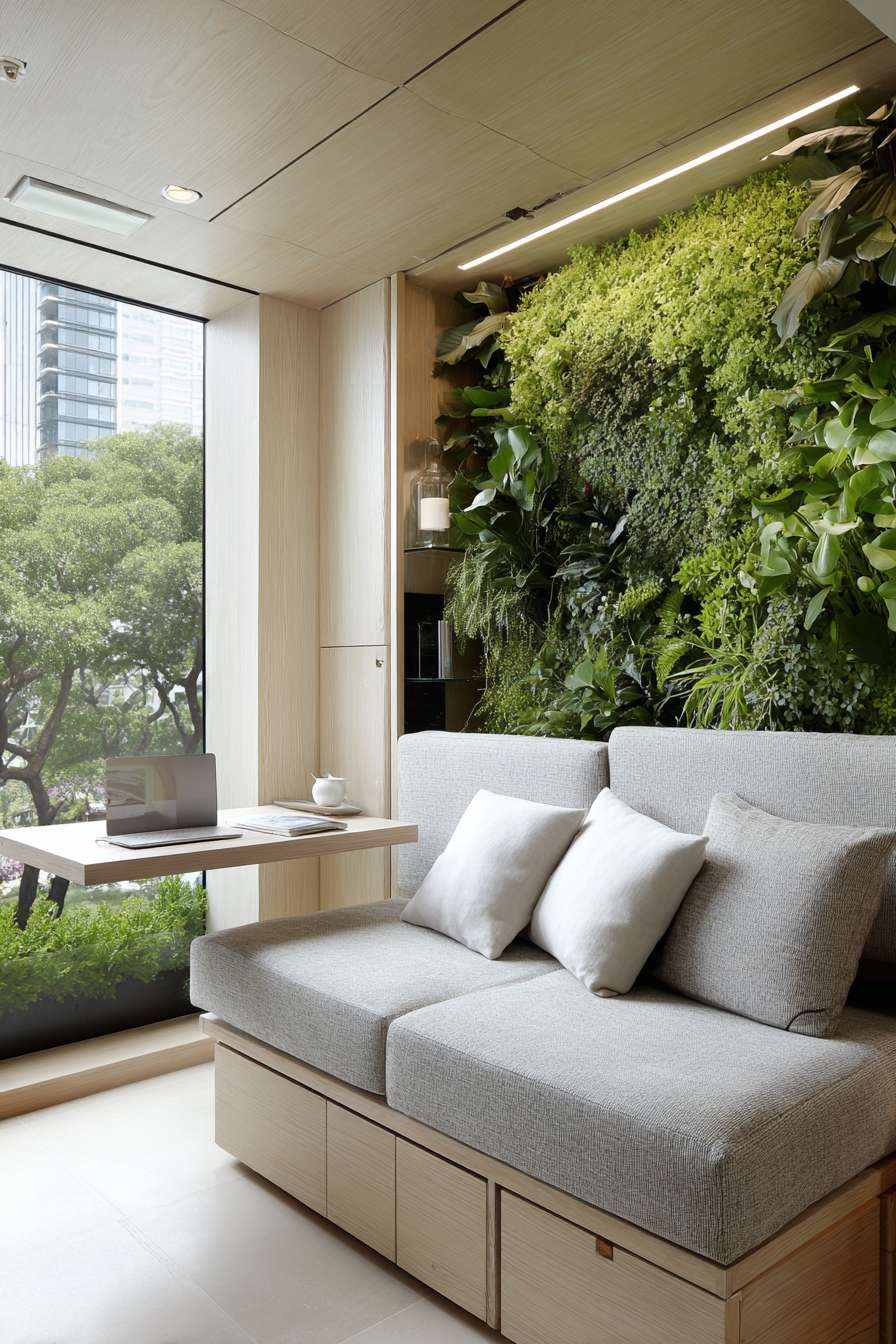
A wall-mounted fold-down desk transforms an empty wall into a functional workspace that disappears when not needed, addressing the work-from-home reality many apartment dwellers face. This clever integration allows the living room to accommodate professional video calls and concentrated work sessions without permanently sacrificing living space to office furniture. The desk folds up cleanly, revealing only a slim profile that could easily be mistaken for decorative wall paneling.
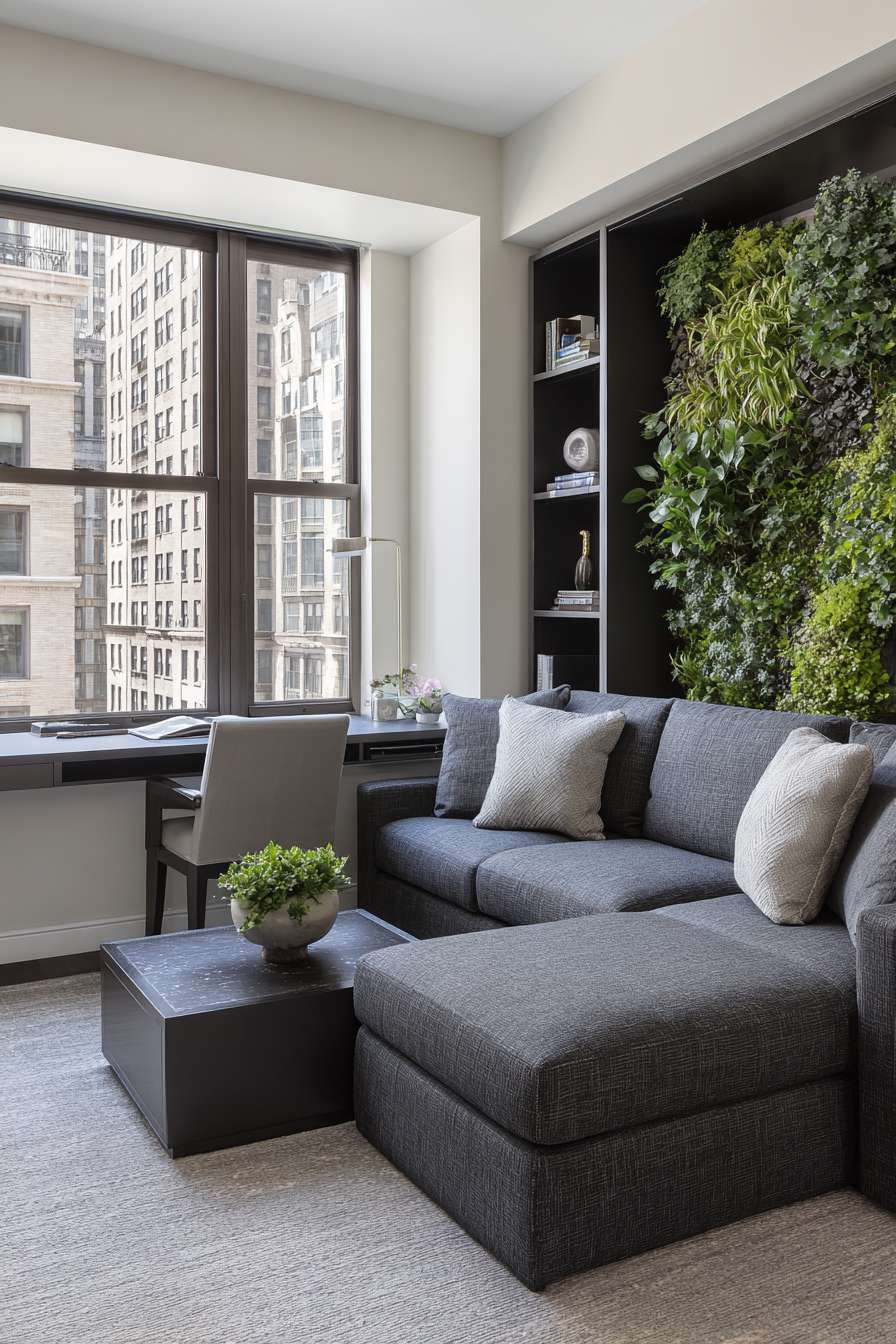
The vertical garden wall introduces abundant greenery without consuming precious floor space, creating a living art installation that improves air quality while adding biophilic design elements. This vertical approach to incorporating nature proves especially valuable in apartments with limited square footage but adequate wall space. Bright natural lighting from a large window sustains both the plants and the room’s airy atmosphere, creating an environment that feels connected to nature despite urban surroundings.
Key Design Tips:
- Select furniture with integrated storage to reduce freestanding storage needs
- Install wall-mounted solutions for occasional-use items like desks or tables
- Utilize vertical surfaces for storage, gardens, and display to preserve floor space
- Choose durable, textured fabrics that maintain appearance despite heavy use
- Maximize natural light to support both plants and positive mood
12. Coastal Breezy Comfort
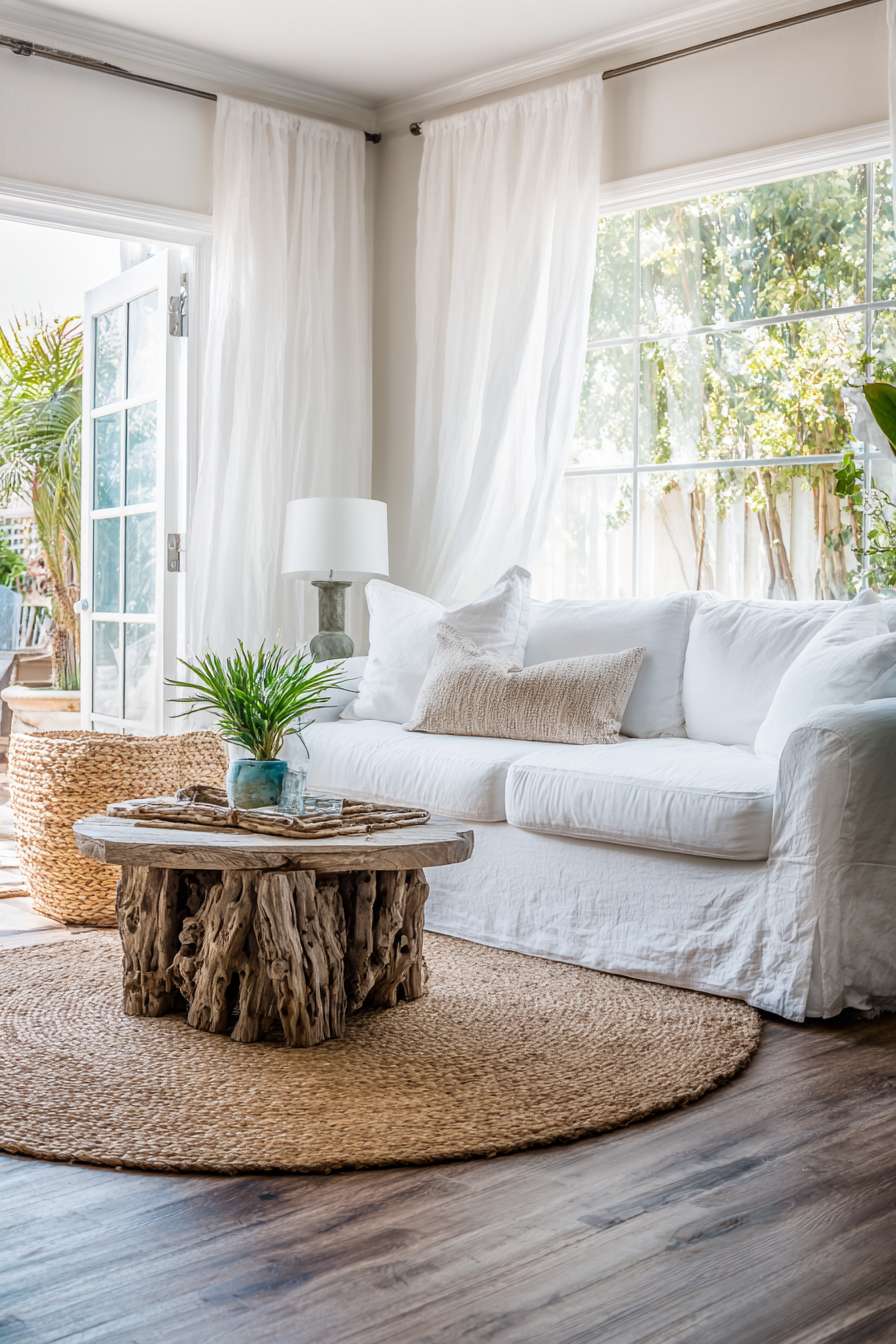
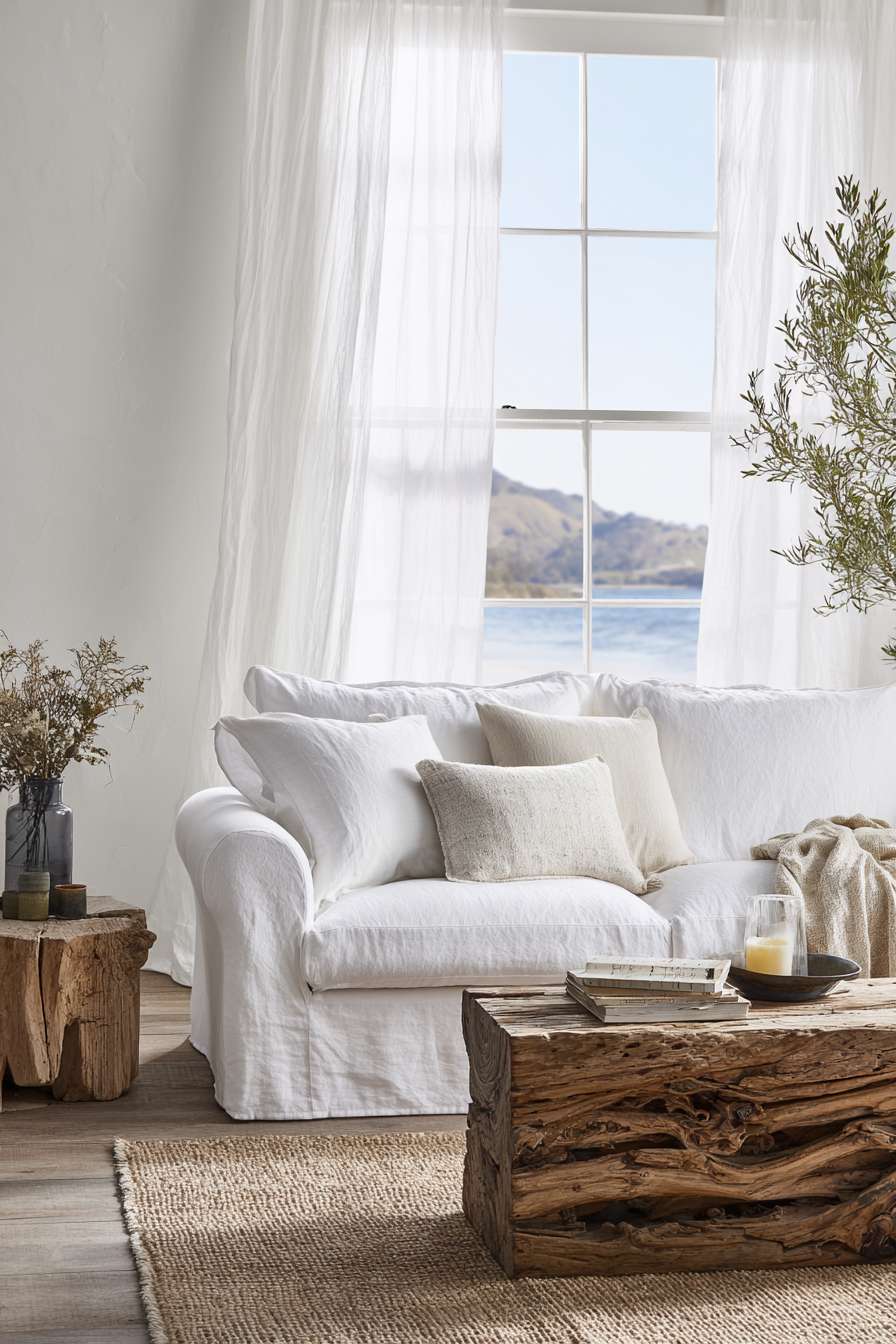
White linen slipcovers drape the sofa in relaxed folds that capture the effortless elegance of coastal design, their natural texture and casual wrinkles suggesting beachside comfort rather than formal precision. The washable slipcovers offer practical benefits for apartment living, allowing for easy cleaning and seasonal freshness. Paired with a driftwood coffee table featuring an organically weathered finish, the space immediately evokes seaside living through natural materials and sun-bleached tones.
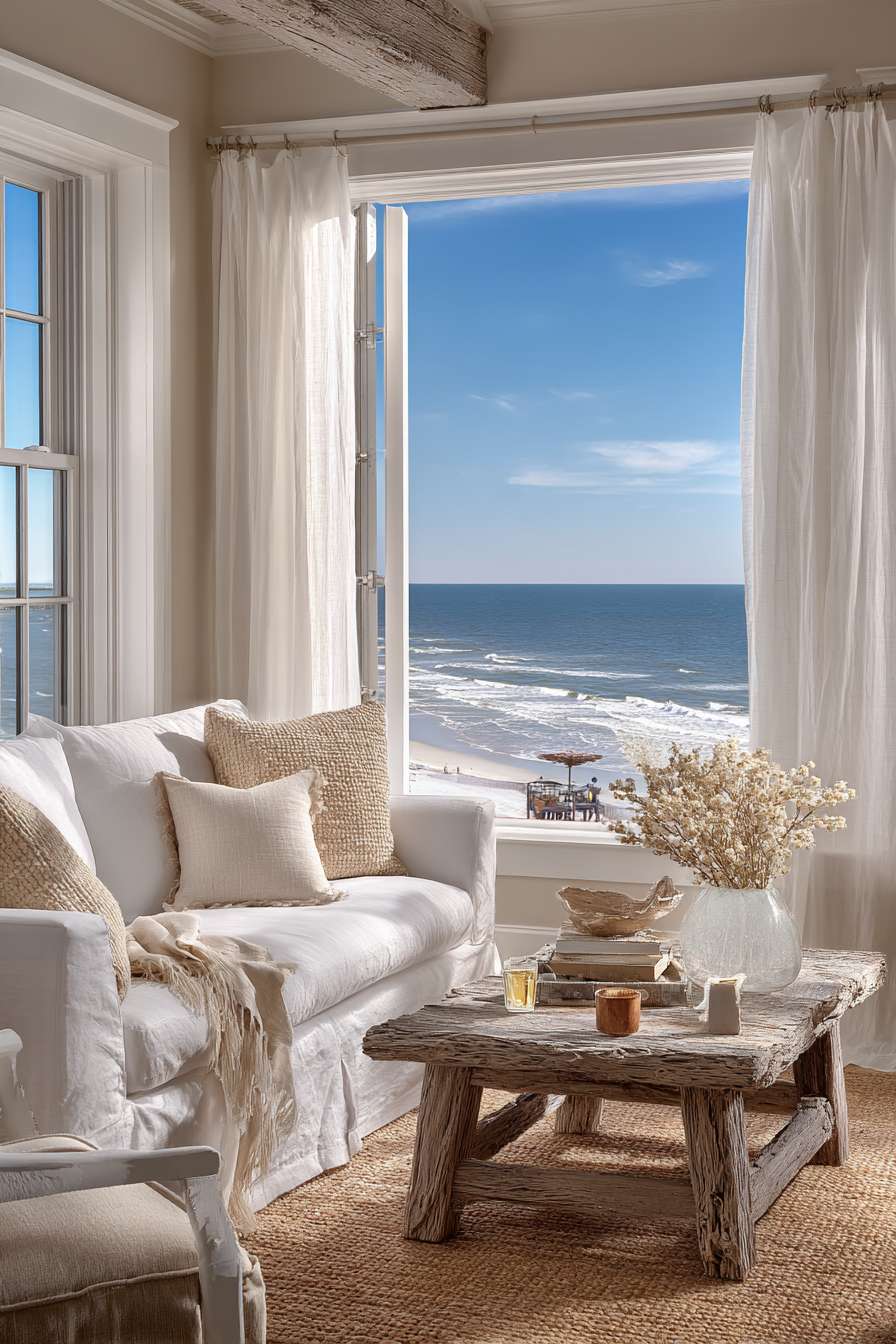
A woven jute rug adds essential texture beneath the seating area, its natural fiber composition and neutral tone reinforcing the coastal theme while providing warmth underfoot. The rug’s organic texture prevents the predominantly white palette from feeling sterile, adding visual and tactile interest that grounds the airy design. Sheer white curtains billow gently near open windows, creating movement and a sense of ocean breezes even in landlocked locations.
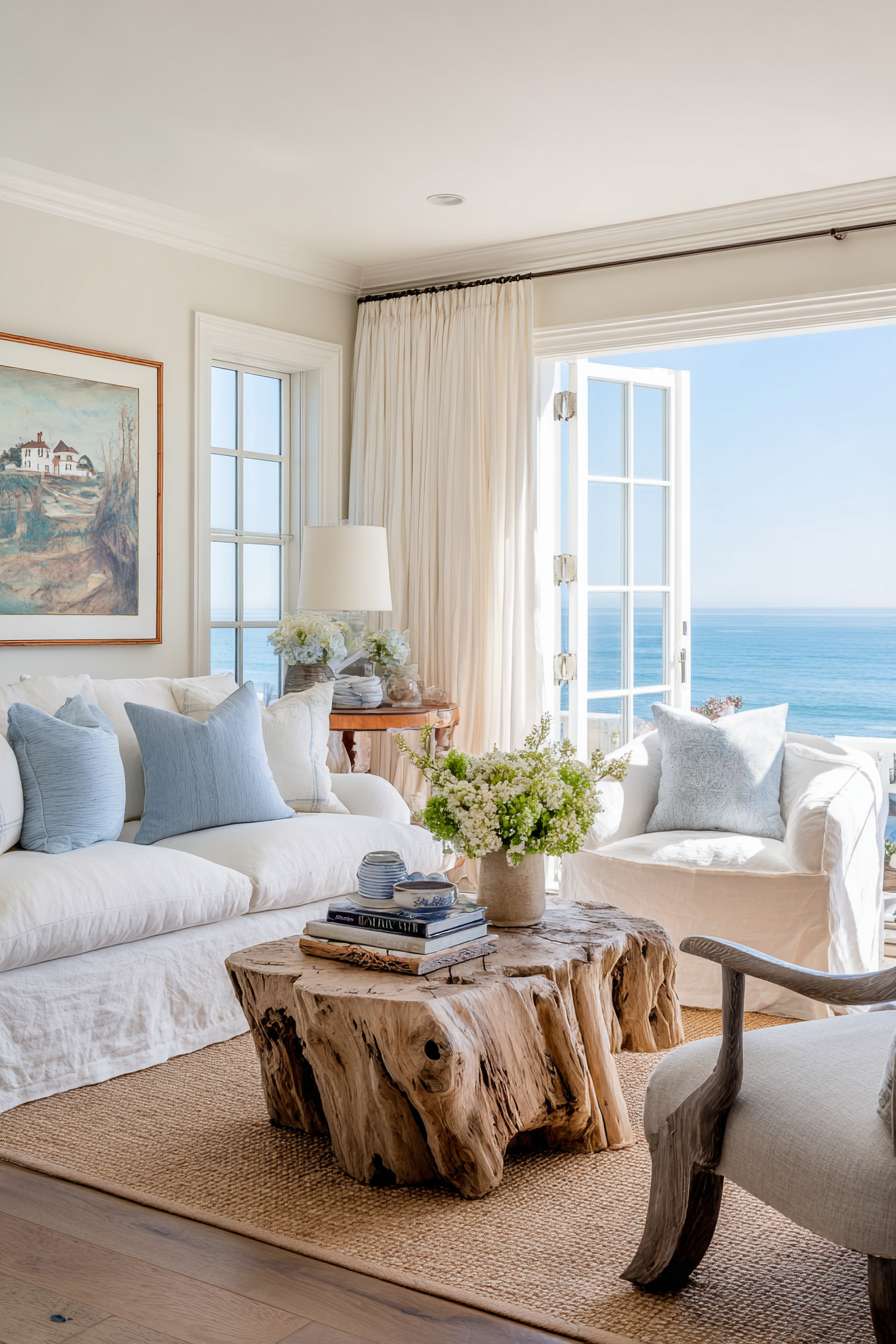
Soft, ocean-inspired light fills the space, whether from natural windows or carefully selected artificial sources that mimic daylight quality. This illumination enhances the white and natural tones throughout, creating the bright, breezy atmosphere characteristic of coastal interiors. The overall effect transports occupants mentally to seaside retreats, proving that thoughtful design can create vacation-like atmospheres in everyday apartment living.
Key Design Tips:
- Choose washable slipcovers in natural fibers for easy maintenance and casual elegance
- Incorporate weathered wood pieces to add character and coastal authenticity
- Layer natural fiber rugs for texture that prevents all-white spaces from feeling stark
- Use sheer, flowing window treatments to maximize light and create gentle movement
- Maintain a light, bright color palette focused on whites, creams, and natural tones
13. Curated Gallery Wall Focus
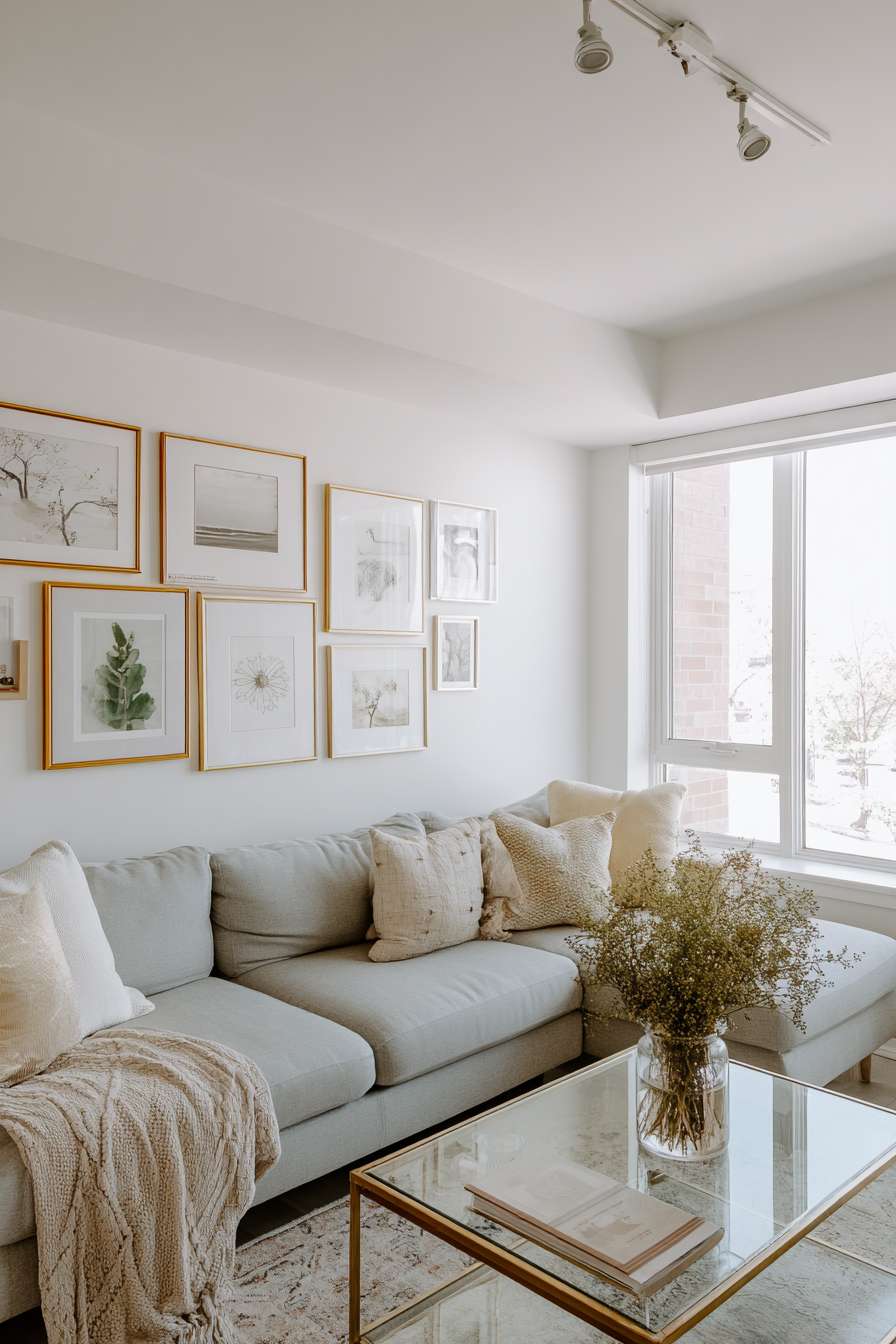
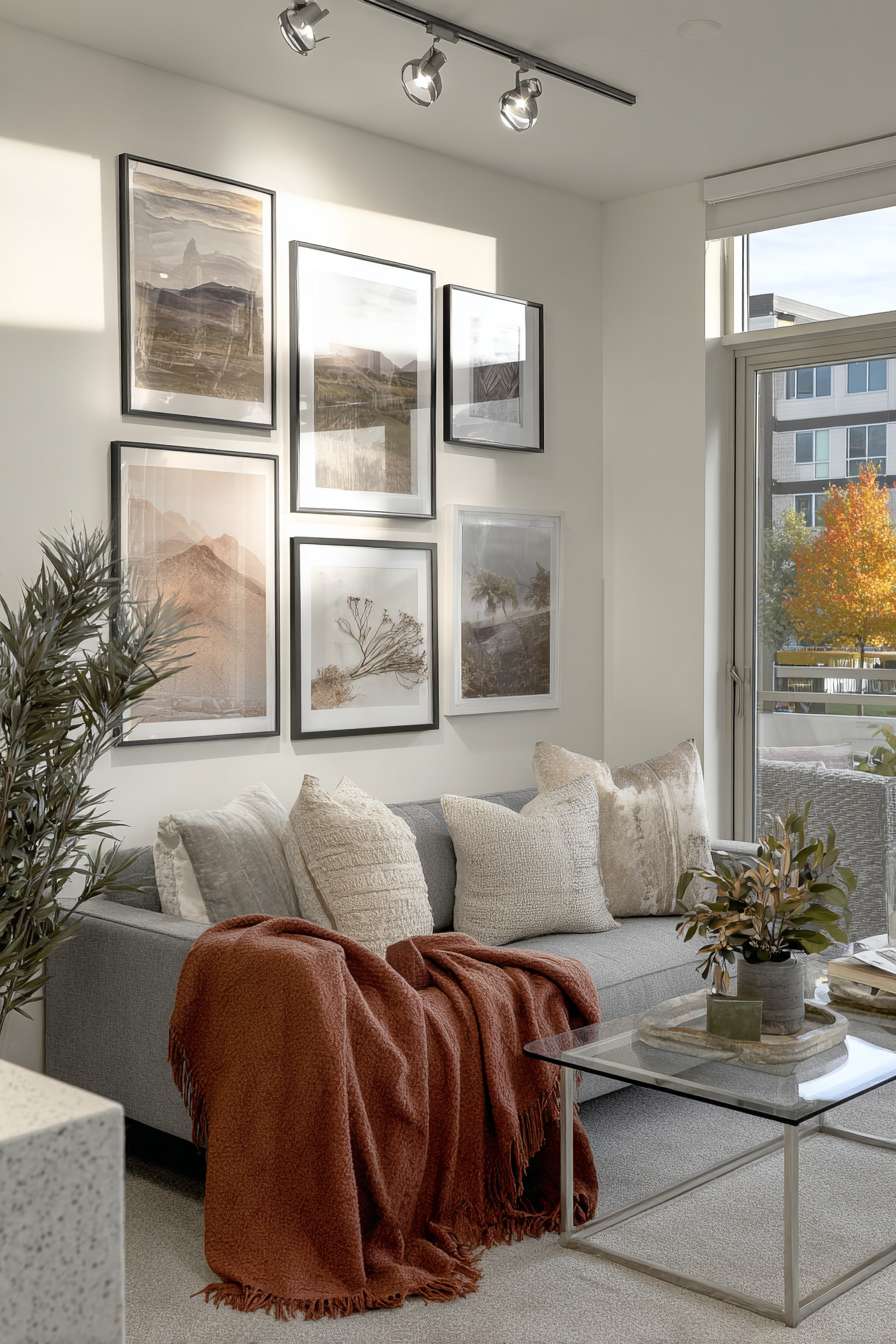
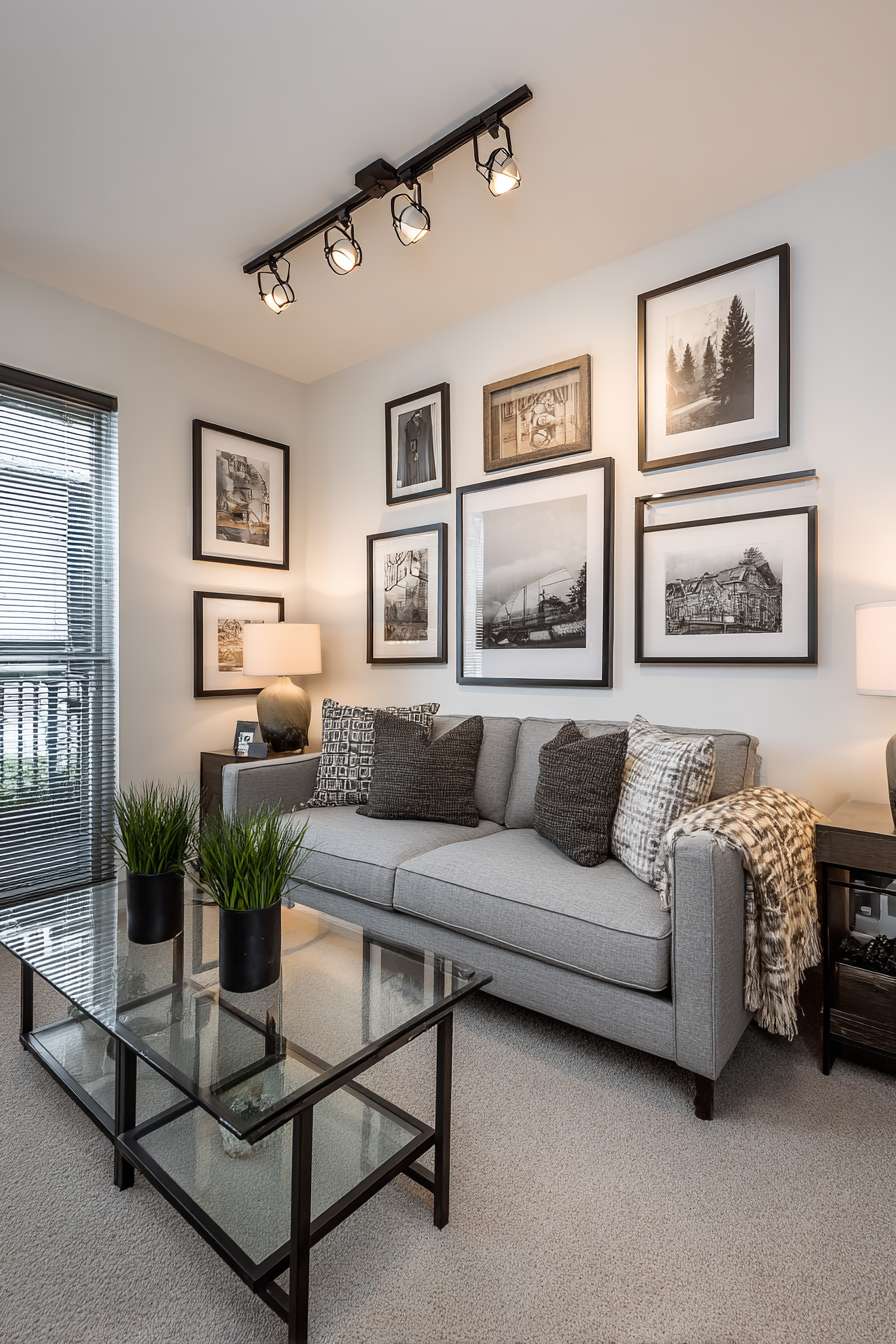
This contemporary design centers on a carefully arranged gallery wall above a streamlined grey sofa, demonstrating how artwork can become the room’s primary decorative element. The mix of framed prints and photographs in coordinating frames creates visual interest through varying sizes and subjects while maintaining cohesion through consistent framing styles. This curated approach reflects personality and interests while adding color, pattern, and focal points to otherwise neutral walls.
The grey sofa’s clean lines provide a calm foundation that allows the gallery wall to command attention without competition. Its neutral upholstery ensures the artwork remains the star while offering versatile seating that works with evolving art collections and seasonal decor changes. A glass coffee table maintains clear sightlines through the space, its transparency preventing the center of the room from feeling heavy or blocked.
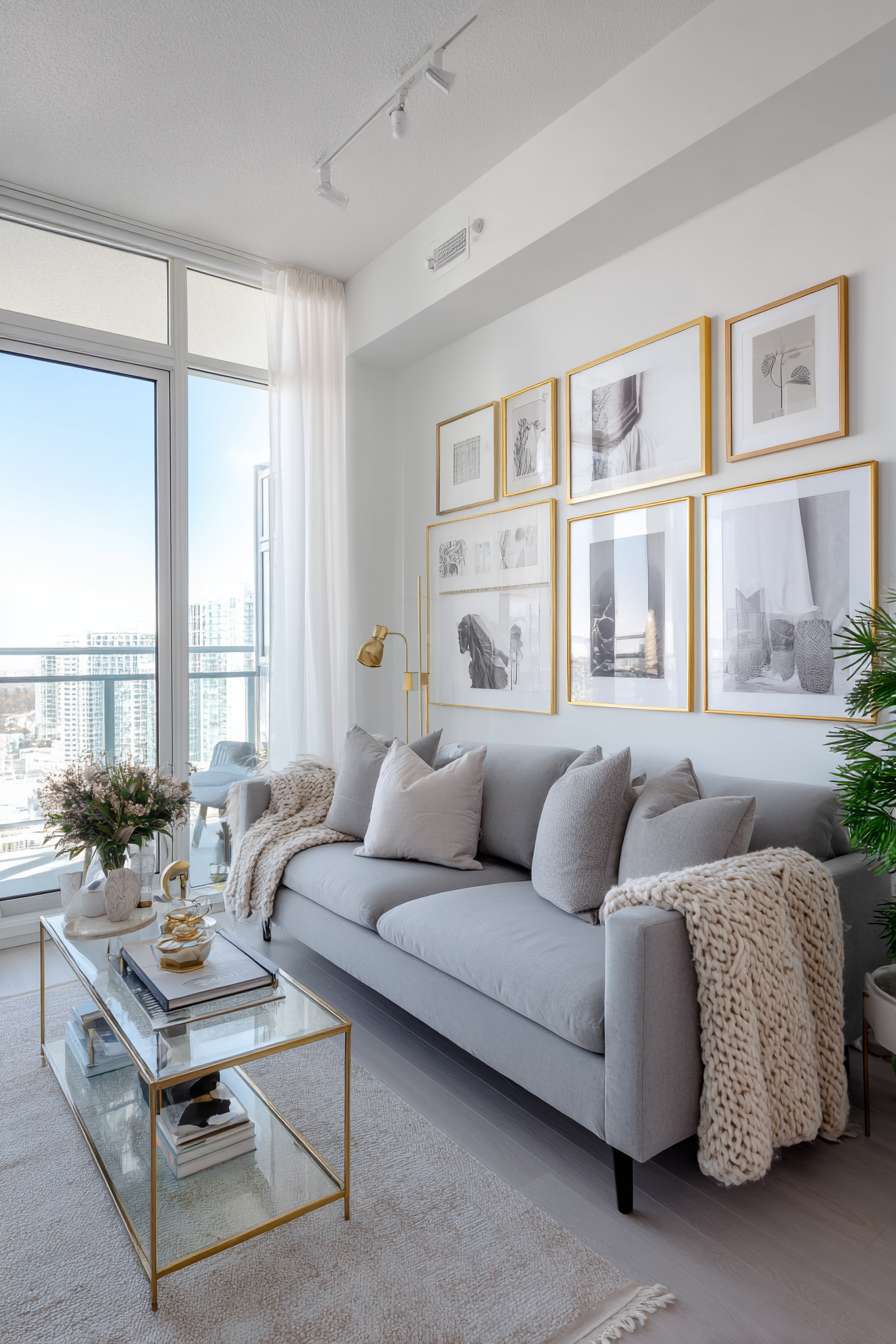
A textured throw blanket draped casually over the sofa adds warmth and invites use, preventing the contemporary space from feeling untouchable or museum-like. Track lighting highlights the artwork collection while natural window light balances the space during daylight hours, creating flexible illumination that adapts to the time of day and desired mood. This lighting strategy ensures the gallery wall remains visible and impactful regardless of exterior light conditions.
Key Design Tips:
- Plan gallery wall layouts on the floor before hanging to perfect arrangement
- Use coordinating frames to create cohesion among diverse artwork subjects
- Position artwork at eye level when seated for optimal viewing in living rooms
- Install dedicated art lighting to showcase collections during evening hours
- Keep furniture simple to allow artwork to serve as the primary decorative element
14. Japandi Fusion Serenity
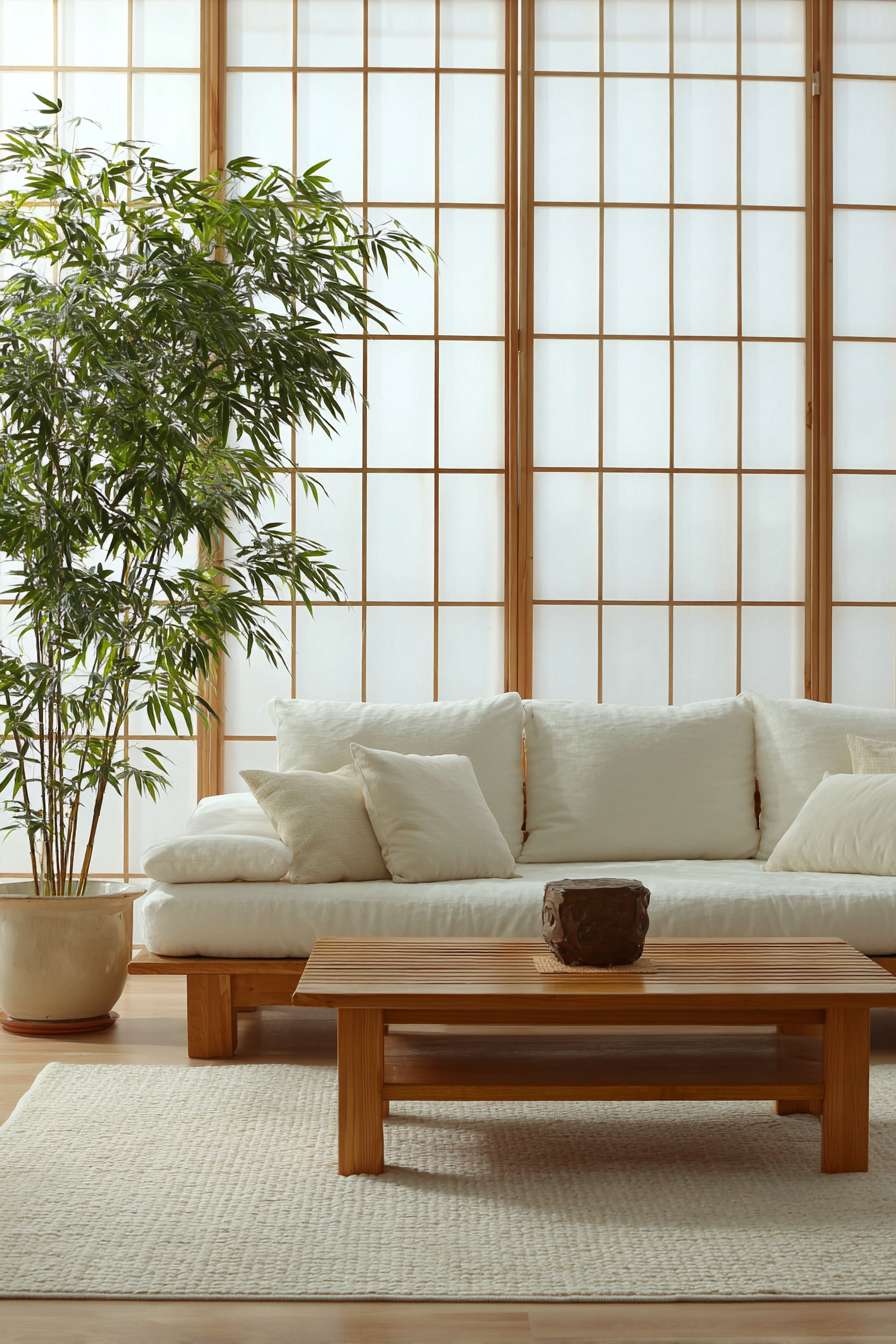
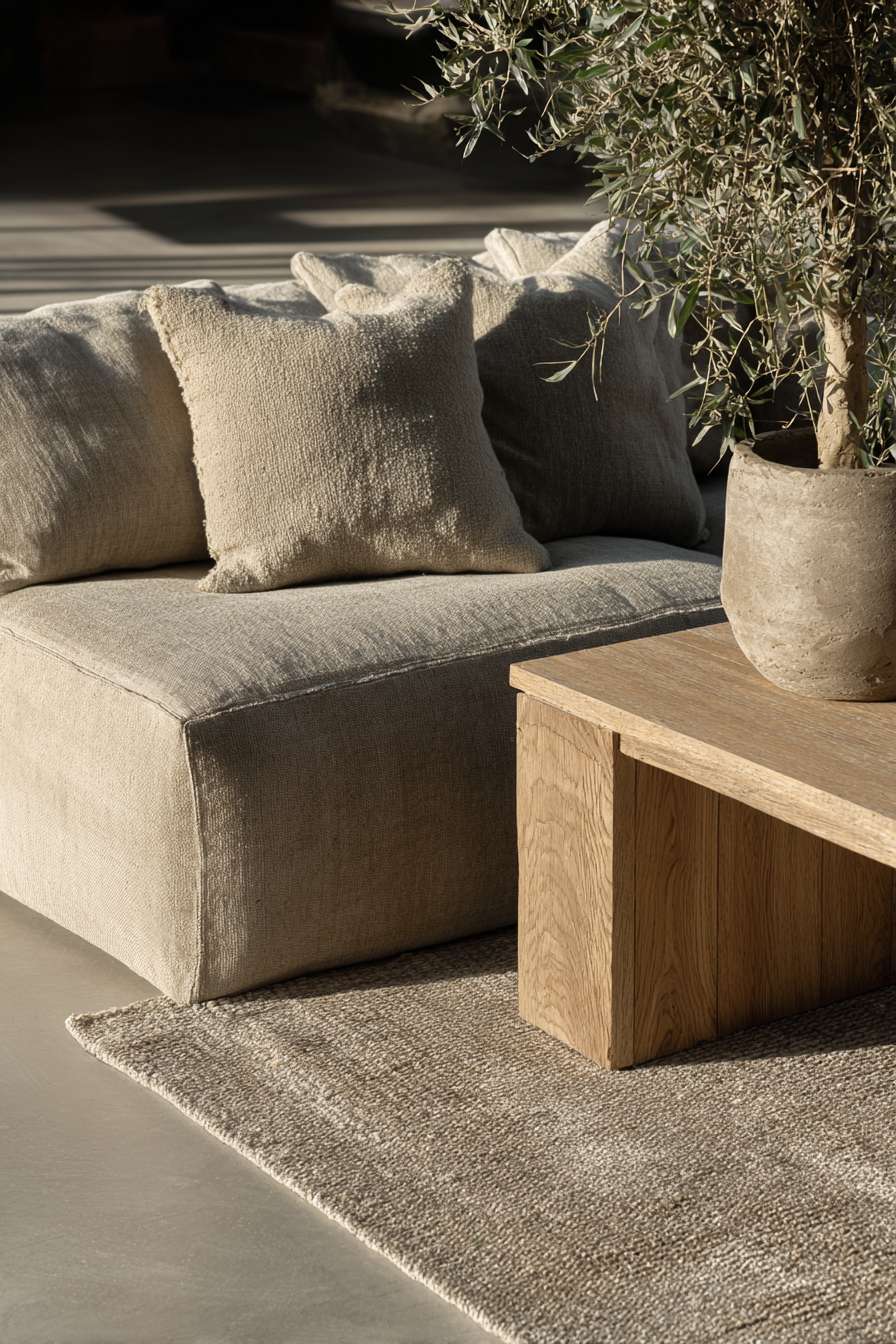
The low platform sofa upholstered in natural linen embodies the Japandi fusion of Japanese minimalism and Scandinavian warmth, sitting close to the ground in the Japanese style while featuring the Nordic love of natural textiles. Minimal cushions with visible weave texture add subtle comfort without excess, reflecting both cultures’ appreciation for restraint and quality over quantity. The linen’s natural variations and occasional slubs celebrate material authenticity rather than hiding it.
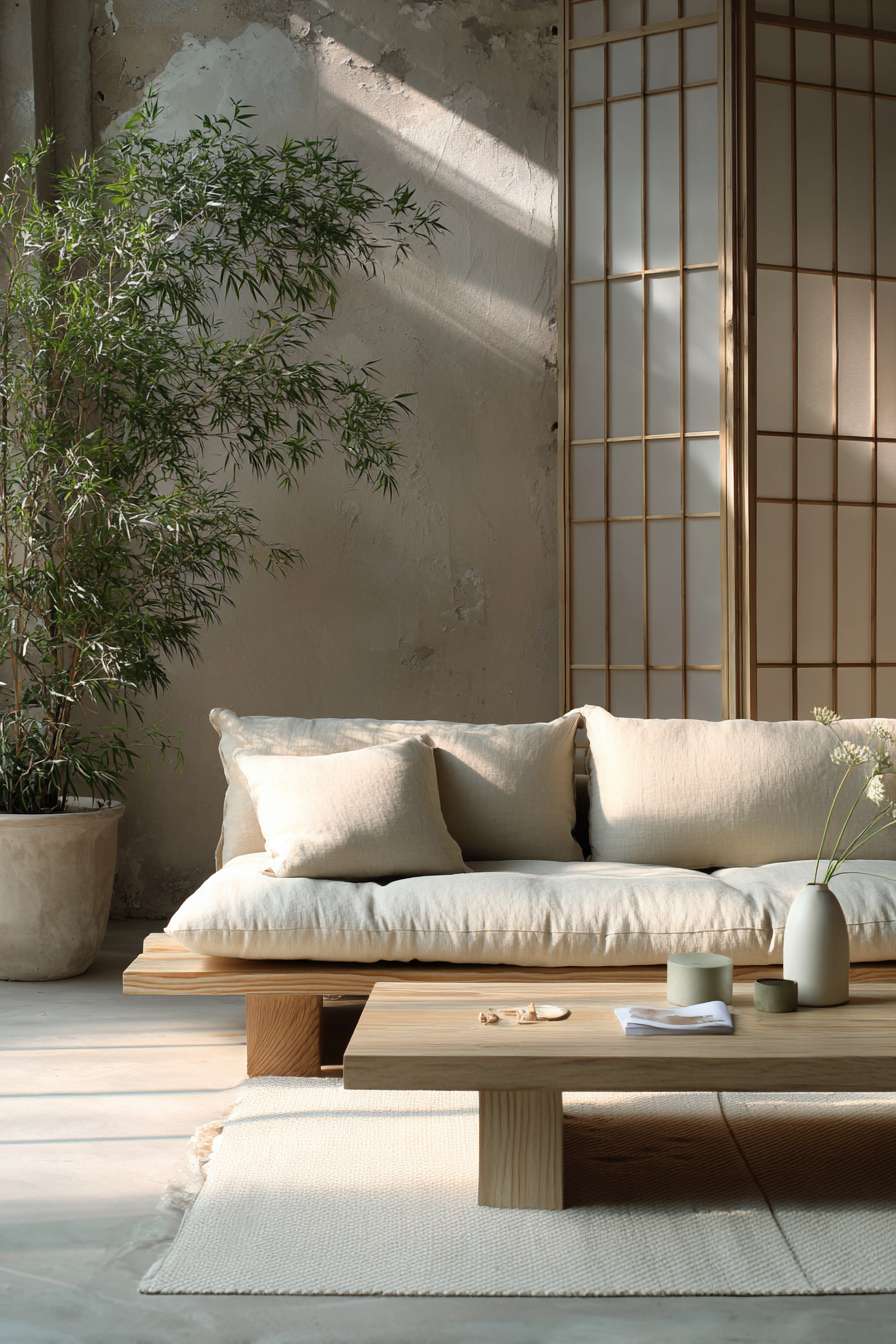
A simple wooden coffee table with clean joinery demonstrates the craftsmanship valued in both design traditions, its construction visible and honest rather than concealed. The table sits on a neutral area rug that defines the seating zone while maintaining the serene, uncluttered aesthetic. A shoji-inspired room divider creates subtle separation in the open space, filtering light beautifully while adding architectural interest without solid walls that would compartmentalize the apartment.
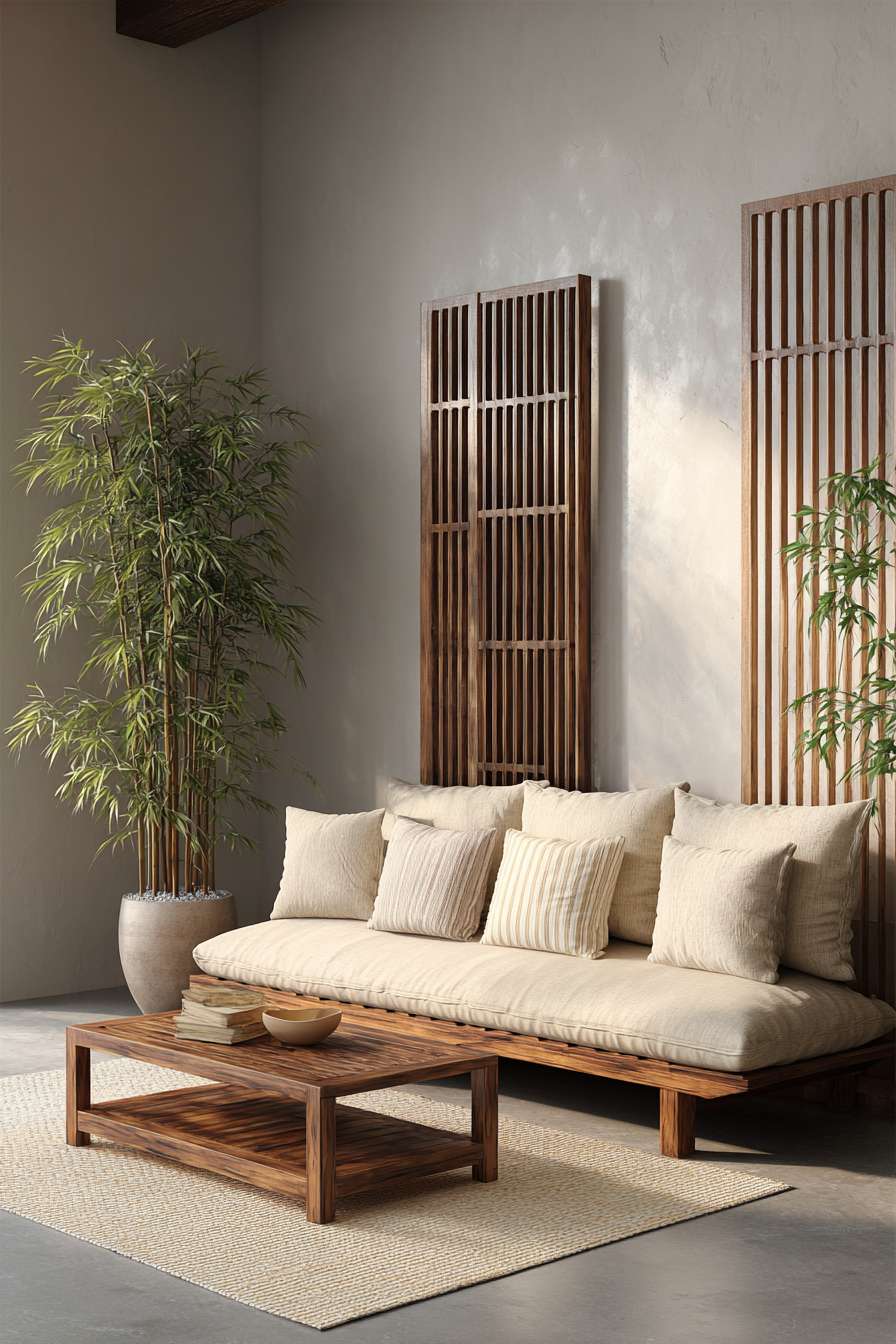
A bamboo plant in a ceramic planter adds an organic element that connects to both Japanese and Scandinavian design philosophies of bringing nature indoors. Soft diffused natural lighting creates the calm atmosphere essential to Japandi spaces, with quality over quantity extending to light sources as well as objects. The overall effect achieves remarkable tranquility, demonstrating how limiting the color palette, editing possessions, and emphasizing natural materials creates restorative living spaces.
Key Design Tips:
- Select low-profile furniture to create the grounded feeling of Japanese design
- Choose natural, undyed textiles that celebrate material authenticity
- Incorporate room dividers for spatial definition without solid walls
- Display single statement plants rather than numerous small specimens
- Maintain rigorous editing of possessions to preserve the serene aesthetic
15. Pet-Friendly Practicality
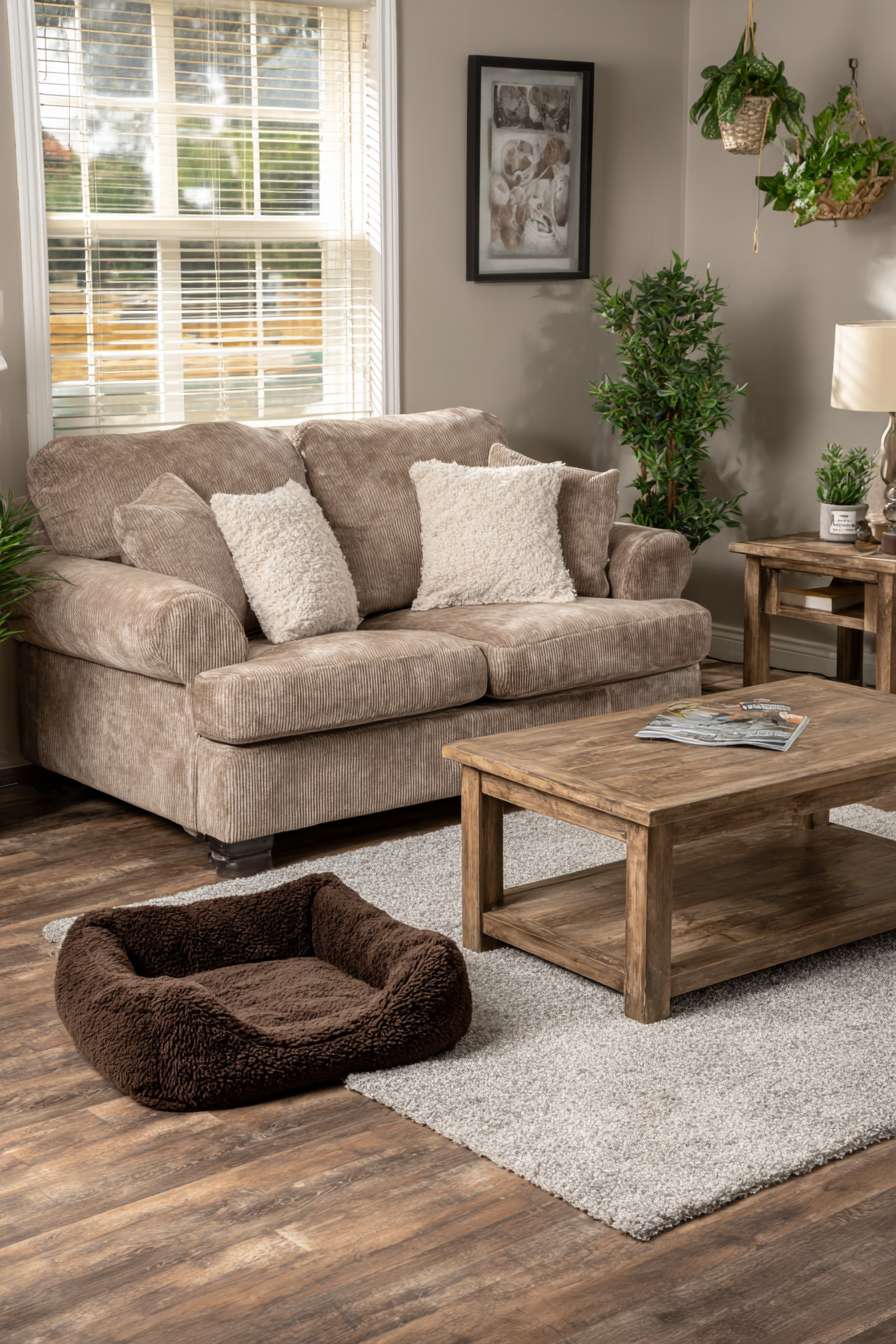
This thoughtfully designed space prioritizes both style and pet-friendliness through a durable microfiber sofa in warm taupe, featuring removable cushion covers that simplify cleaning when pets track in dirt or shed fur. The microfiber’s tightly woven construction resists pet claws better than loosely woven fabrics while remaining soft and inviting for human occupants. The warm taupe coloring strategically hides pet hair better than very dark or very light options.

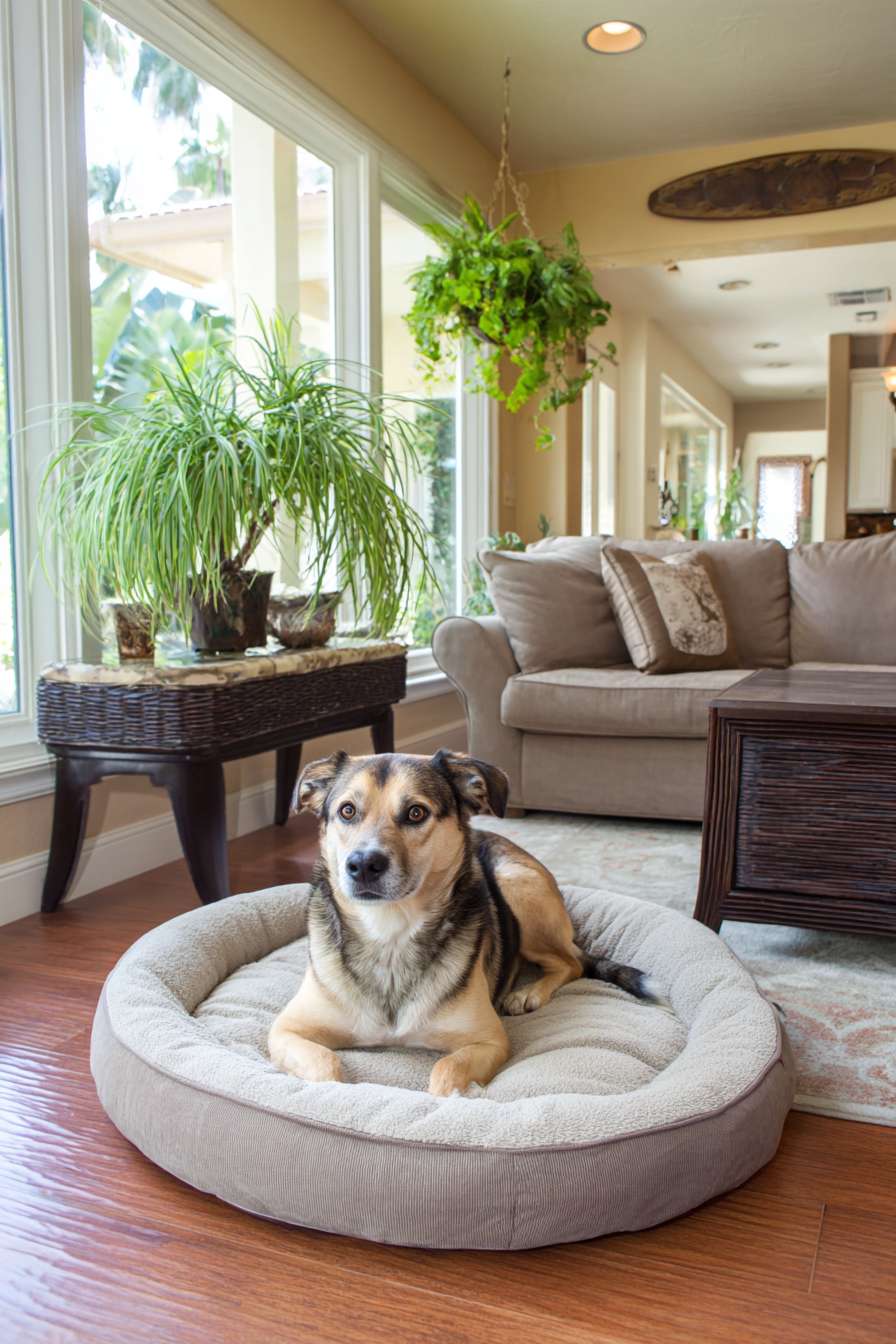
A sturdy coffee table with rounded edges ensures safety during enthusiastic play sessions, eliminating sharp corners that could cause injury to pets or owners during active moments. The rounded form also proves easier to navigate around, reducing bumped shins for humans and providing a pet-safe environment. The stylish pet bed positioned beneath the window integrates seamlessly with the decor through coordinating colors and quality construction, proving that pet accessories need not compromise design aesthetics.
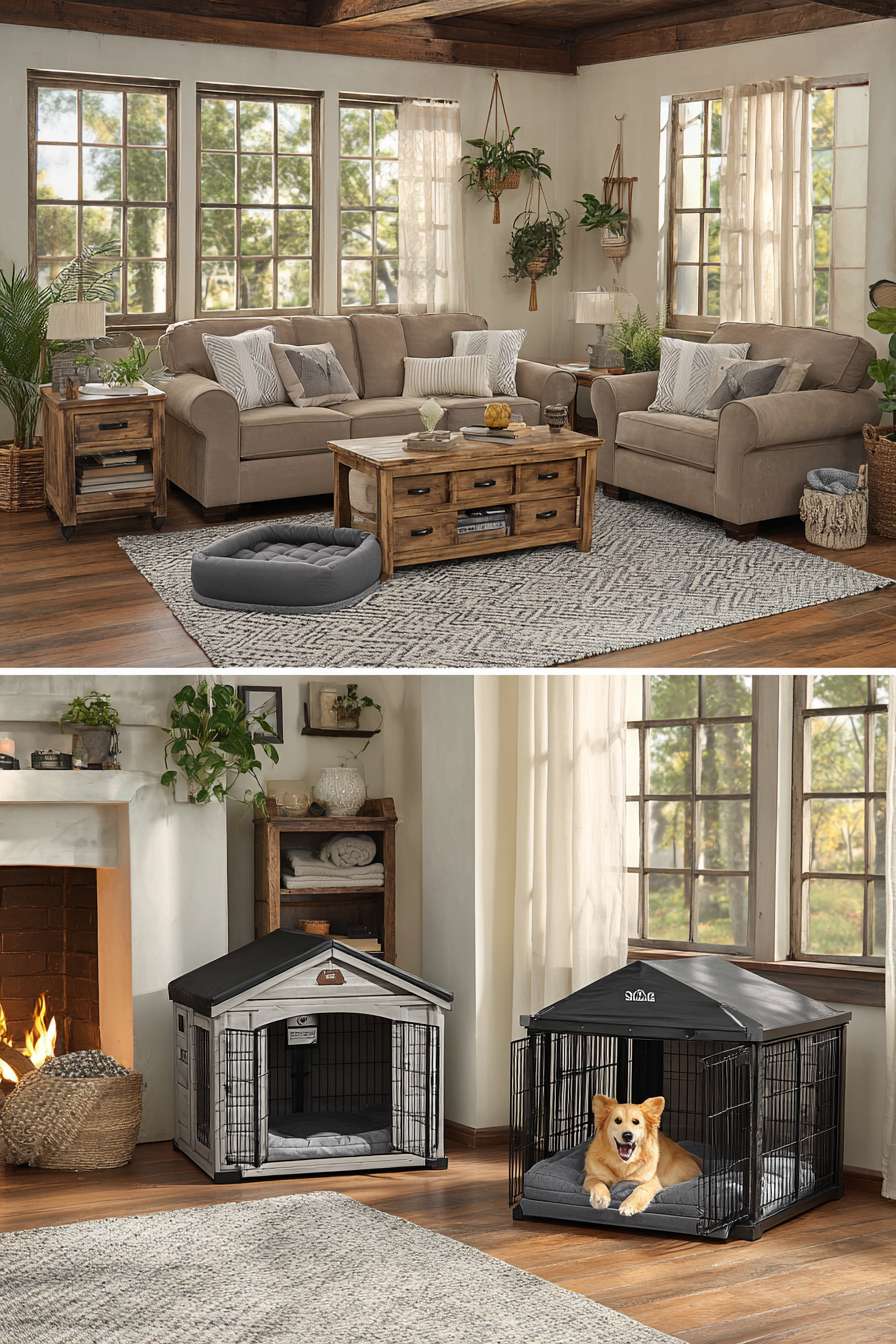
The scratch-resistant area rug anchors the space while standing up to the wear patterns pets create through regular movement and play. Positioned high above ground level, pet-safe hanging plants add greenery without risk of curious nibbling or digging. Natural light filters through these elevated plants, creating beautiful shadows while keeping toxic varieties safely out of reach. This comprehensive approach demonstrates that pet-friendly design requires forethought but need not sacrifice style.
Key Design Tips:
- Choose tightly woven, durable fabrics that resist claws and clean easily
- Select furniture with rounded edges to prevent injury during active pet play
- Integrate pet beds and accessories in coordinating colors for cohesive design
- Position plants safely out of reach if they could be toxic to pets
- Invest in high-quality area rugs designed to withstand heavy traffic and cleaning
16. Studio Apartment Zoning
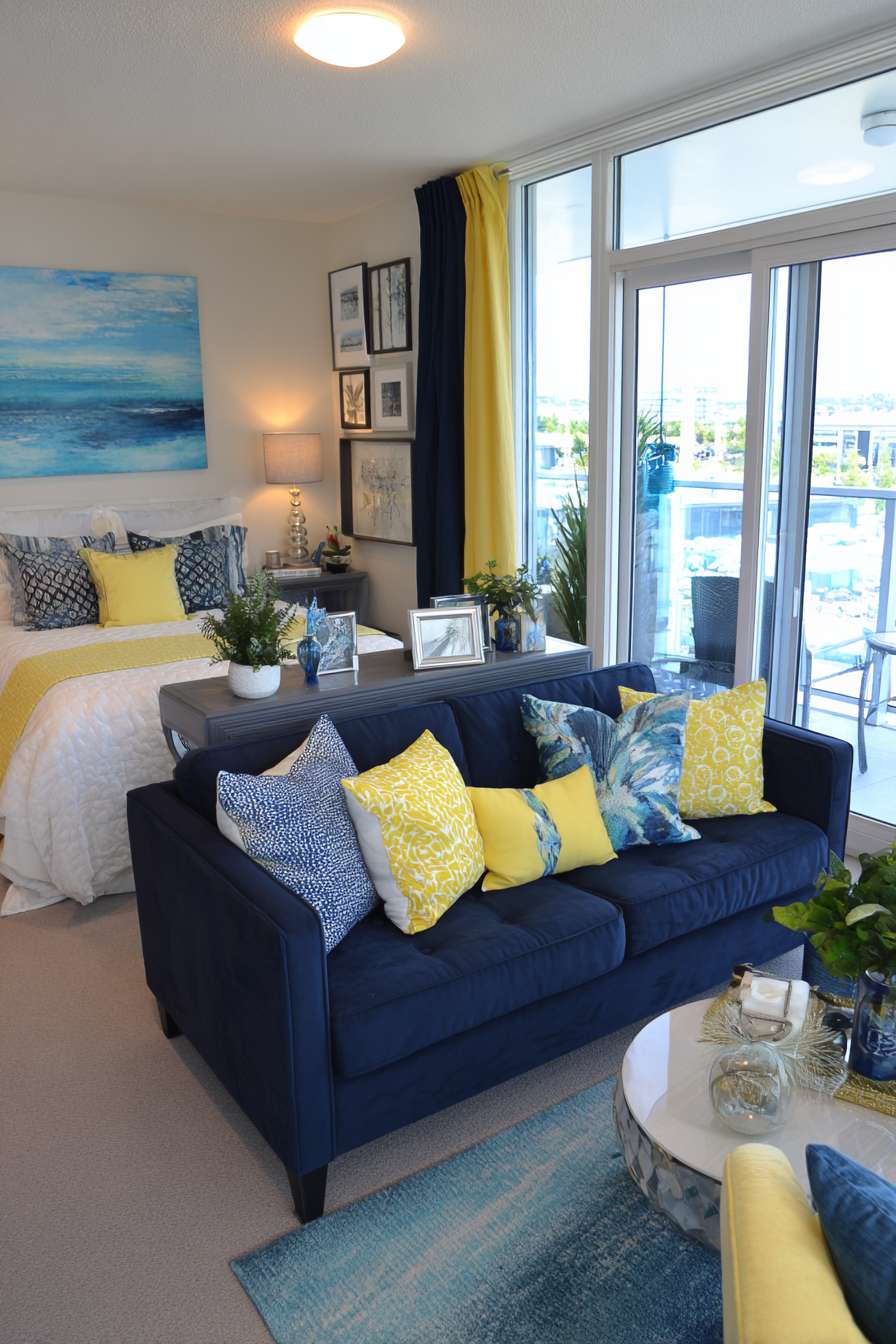
This layout demonstrates expert space planning through strategic sofa positioning that creates a room divider effect, separating sleeping and living zones within a studio apartment. The sofa’s backside becomes a natural boundary that psychologically defines distinct areas without requiring physical walls that would compartmentalize the space and reduce light flow. This approach maintains the open feeling essential to making small apartments feel larger while providing functional separation.
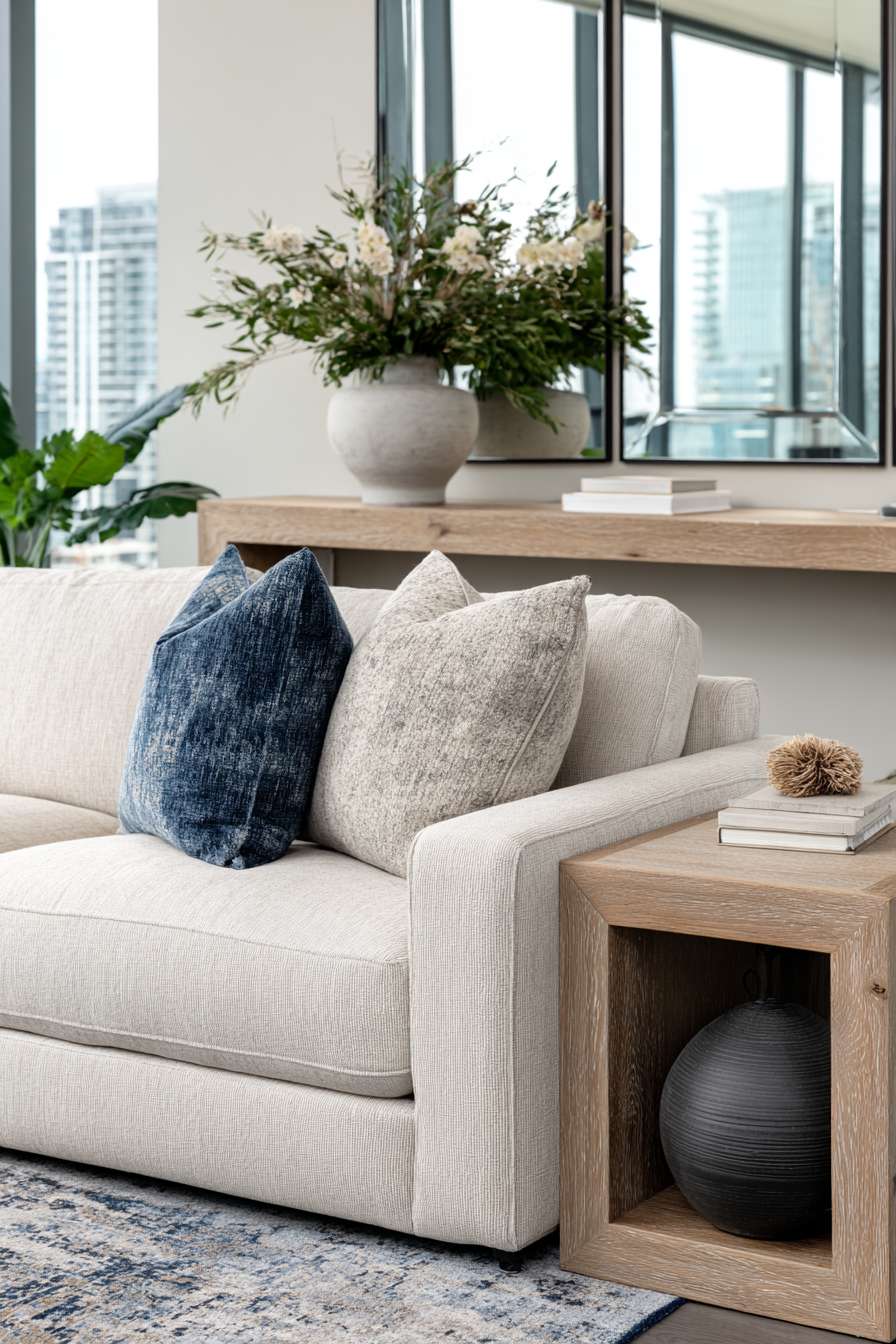
The behind-the-sofa console table maximizes the transitional space between zones, providing additional storage and display opportunities that would otherwise go unused. This slim profile piece adds functionality without consuming significant floor space, demonstrating how every inch matters in studio apartments. A coordinating area rug defines the living area boundaries, its edges establishing clear zones that organize the space visually even without architectural divisions.
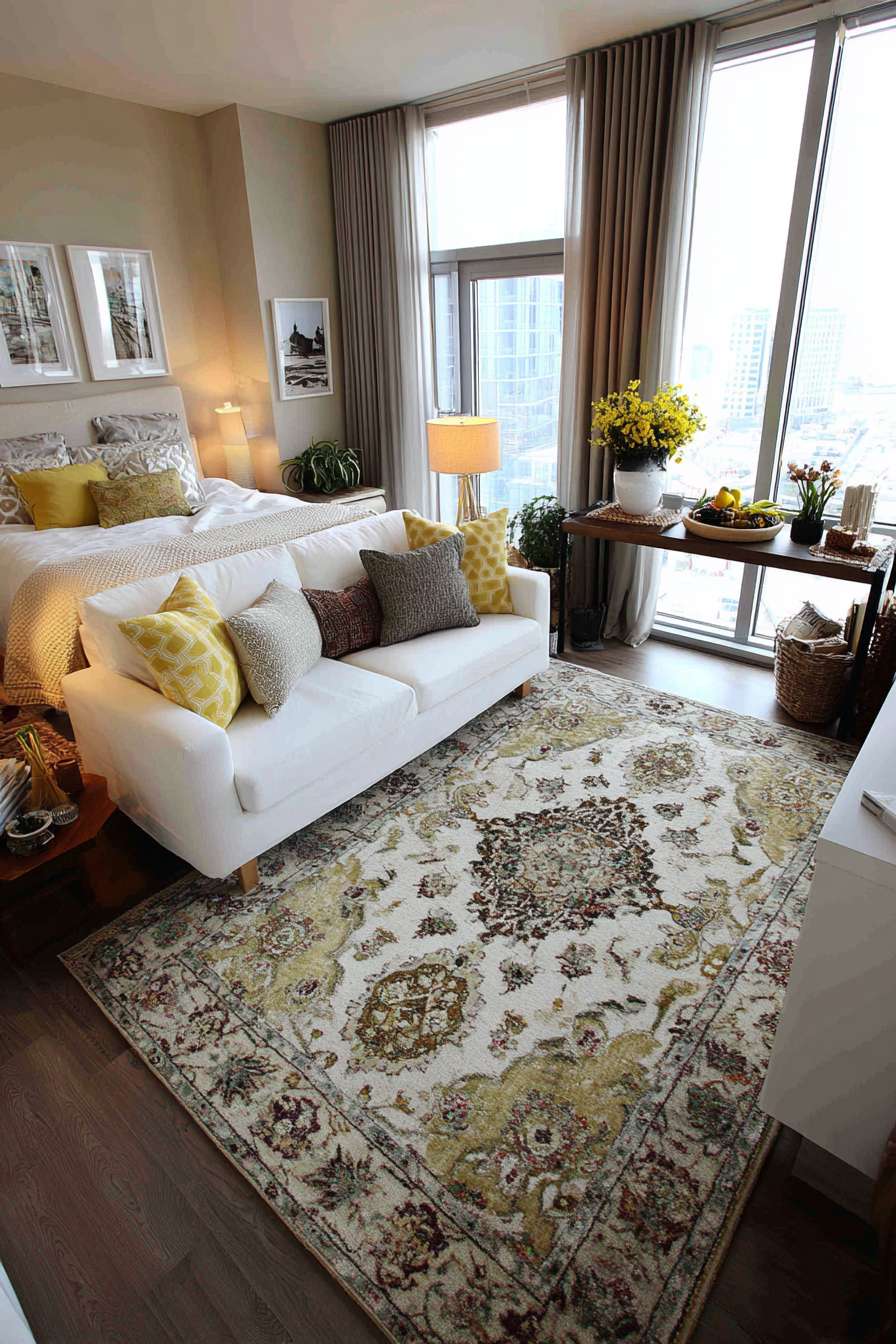
Strategically placed mirrors enhance natural light distribution while creating the illusion of expanded space, a crucial technique in studio apartment design. These reflective surfaces bounce light into darker corners and create depth through reflections, making the single room feel more spacious and brighter. Professional spatial planning creates distinct zones for sleeping, living, and potentially working, proving that studios can accommodate full adult life despite their compact footprints.
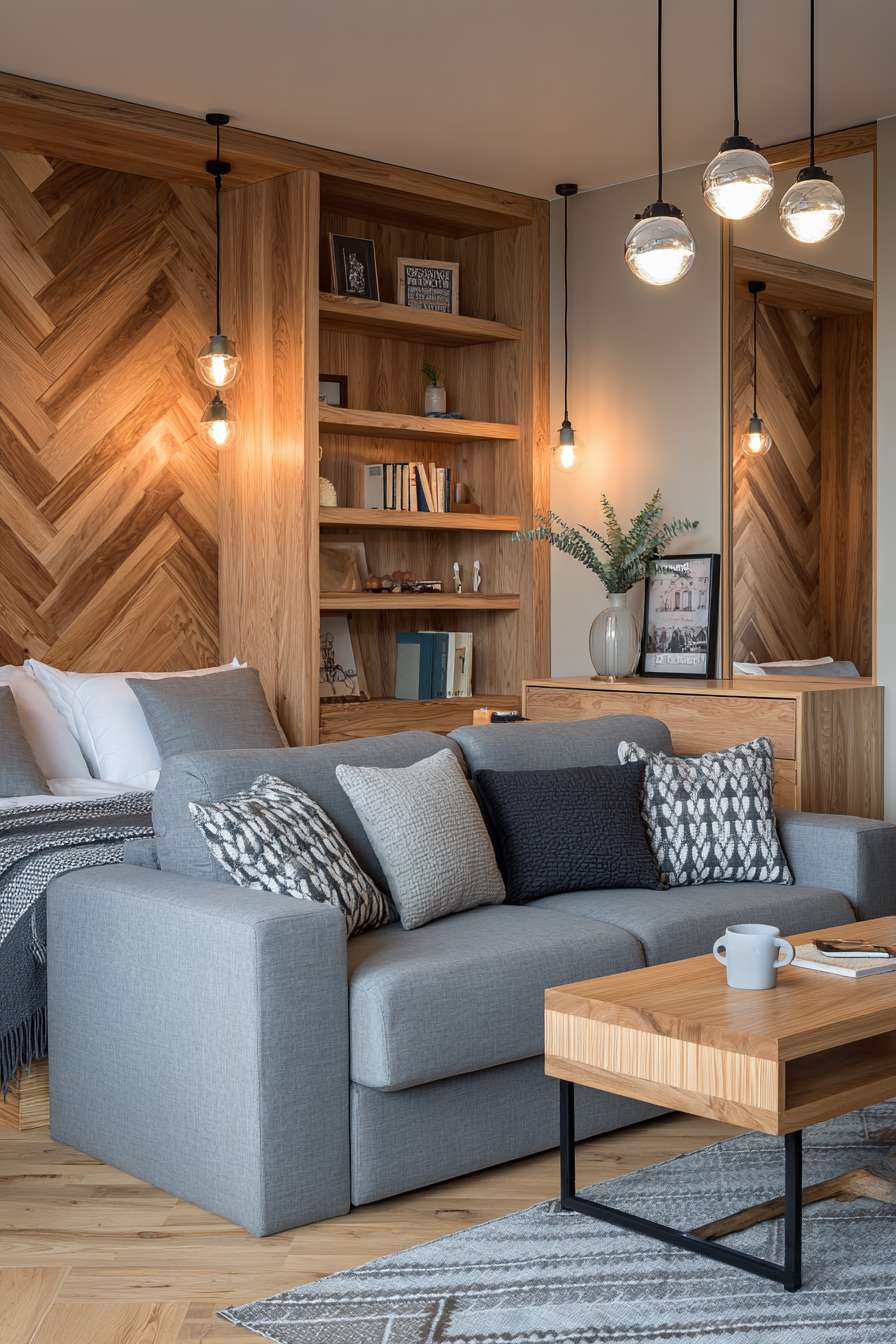
Key Design Tips:
- Position sofas to create natural boundaries between functional zones
- Add console tables behind sofas to maximize transitional space utility
- Use area rugs to define zones without permanent architectural divisions
- Install mirrors strategically to amplify natural light and create depth illusions
- Maintain consistent flooring throughout to preserve visual continuity and spaciousness
17. Conversation-Centered Layout
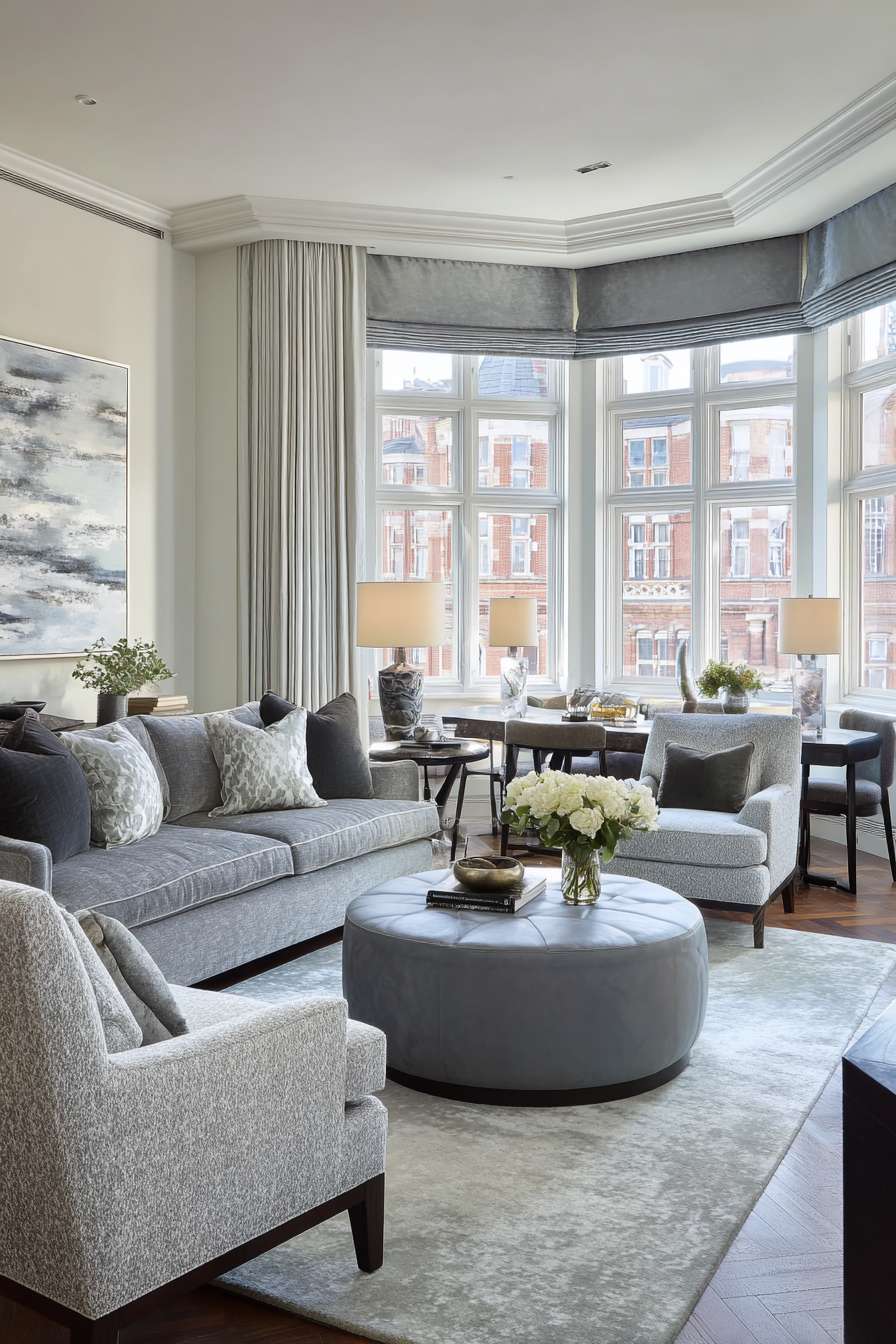
Two facing loveseats upholstered in complementary grey tones create an intimate seating arrangement that prioritizes conversation and social interaction over television viewing. This layout choice reflects a deliberate decision to make human connection the room’s primary purpose, with the furniture arrangement facilitating eye contact and comfortable conversation distances. The complementary grey tones maintain cohesion while subtle variations prevent monotony.
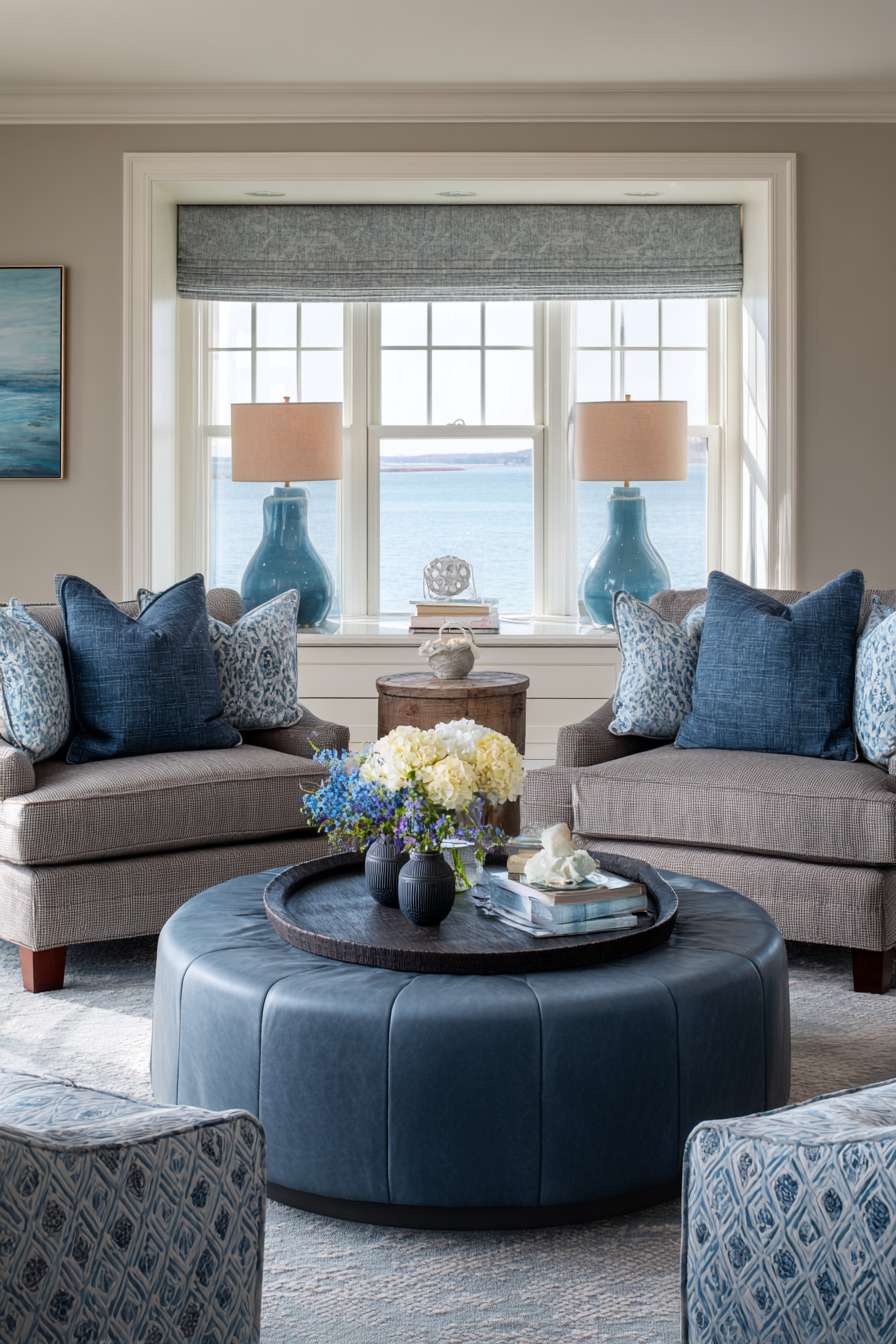
A round ottoman serves as the central coffee table while offering storage within its upholstered form, providing a soft-edged alternative to traditional hard-surface tables that suits the conversation-focused layout. Its circular shape encourages equal access from all seating positions while eliminating sharp corners in the traffic flow. Symmetrical table lamps on matching side tables provide balanced lighting that creates an intimate atmosphere conducive to conversation during evening gatherings.
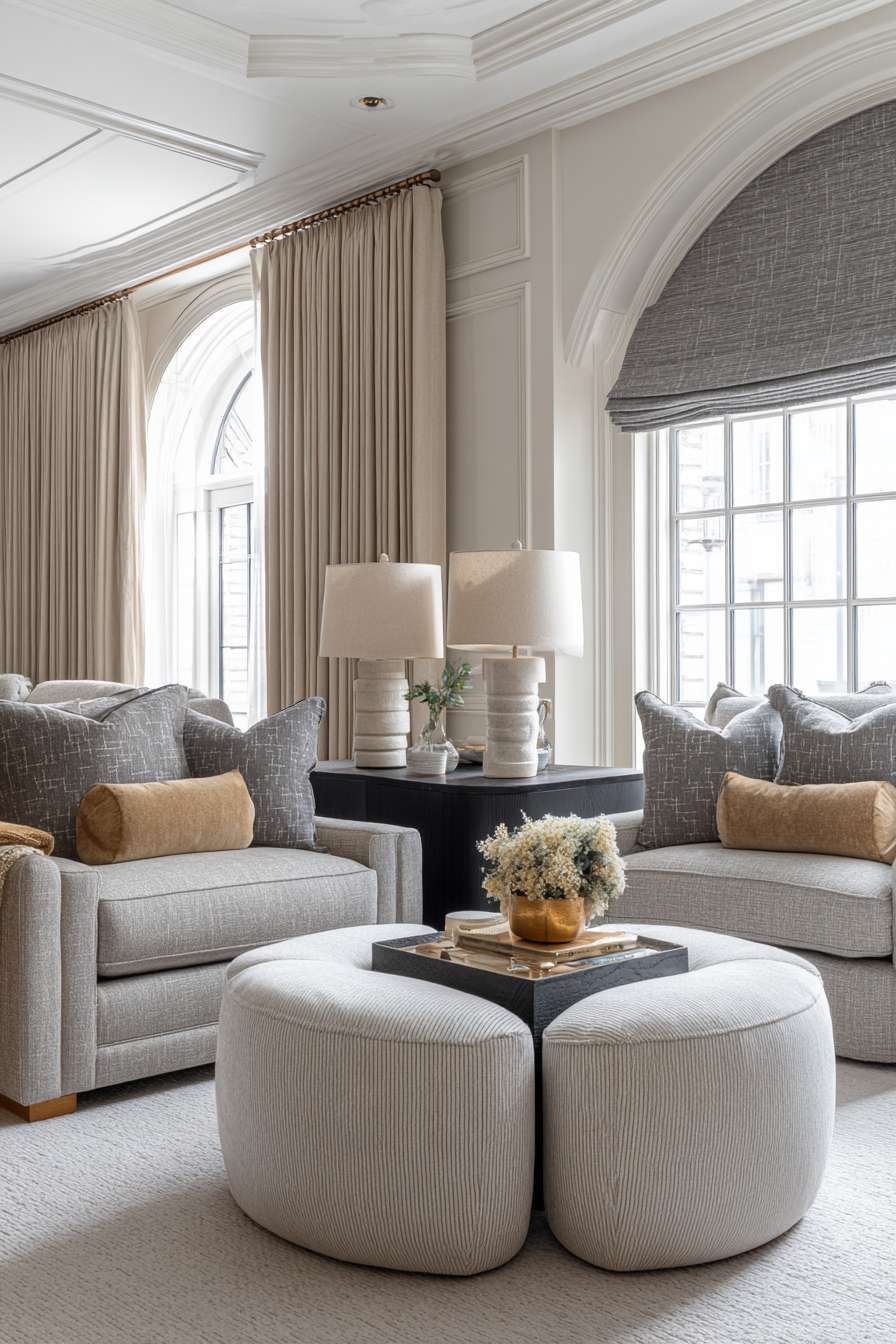
The large window with a roman shade allows controlled natural light, offering privacy options while maintaining the room’s connection to exterior views during daytime socializing. This window treatment choice provides more control than sheer curtains while appearing more tailored than flowing drapes. The overall layout creates a democratic seating arrangement where no position dominates, encouraging participation from all occupants and making everyone feel equally included in conversations.
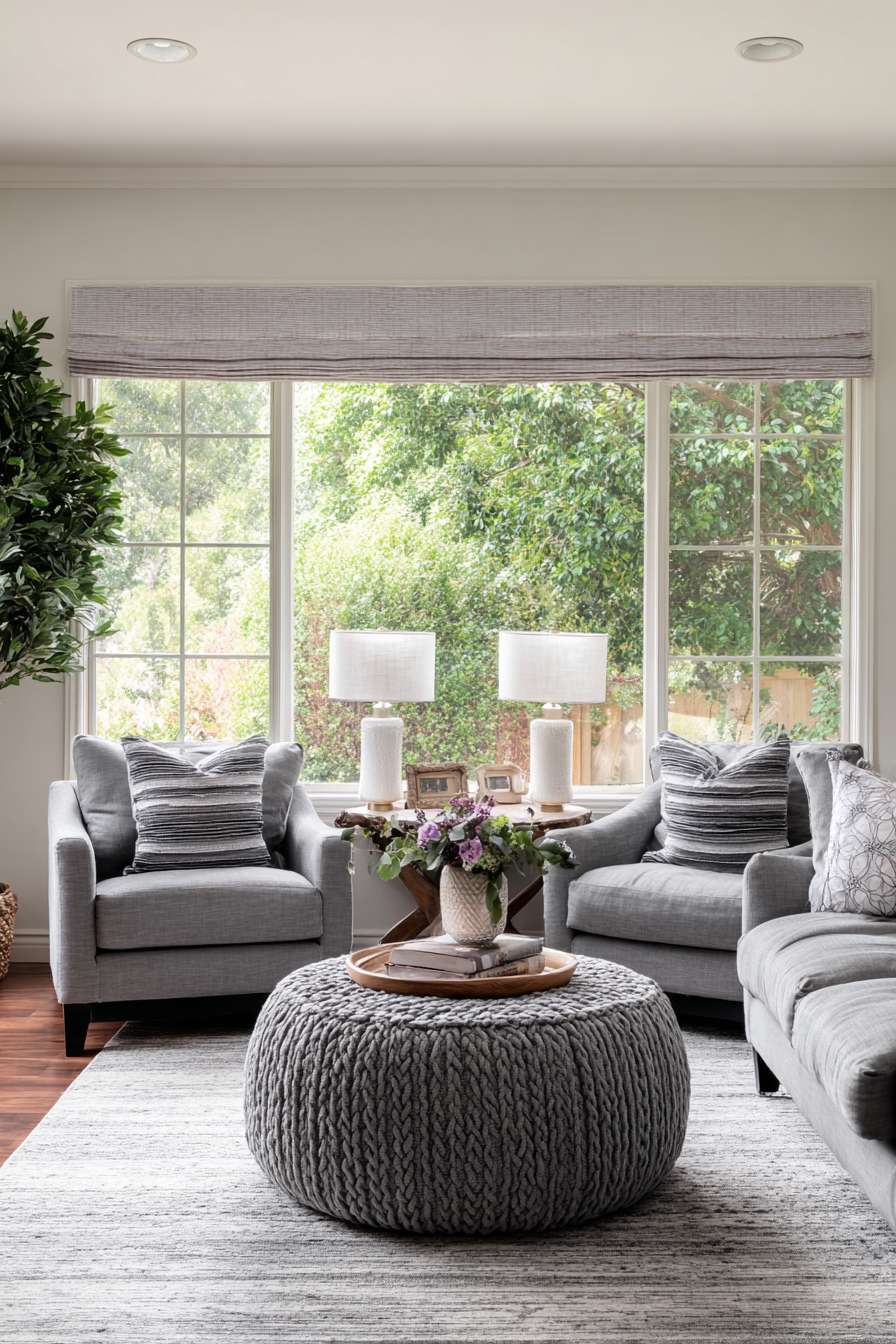
Key Design Tips:
- Arrange seating to face each other for conversation-friendly layouts
- Select round or oval coffee tables to soften the geometry and improve traffic flow
- Install symmetrical lighting to balance the space and create intimate ambiance
- Choose complementary shades within a single color family for cohesive variety
- Control natural light with adjustable window treatments for day-to-night flexibility
18. Modern Farmhouse Authenticity
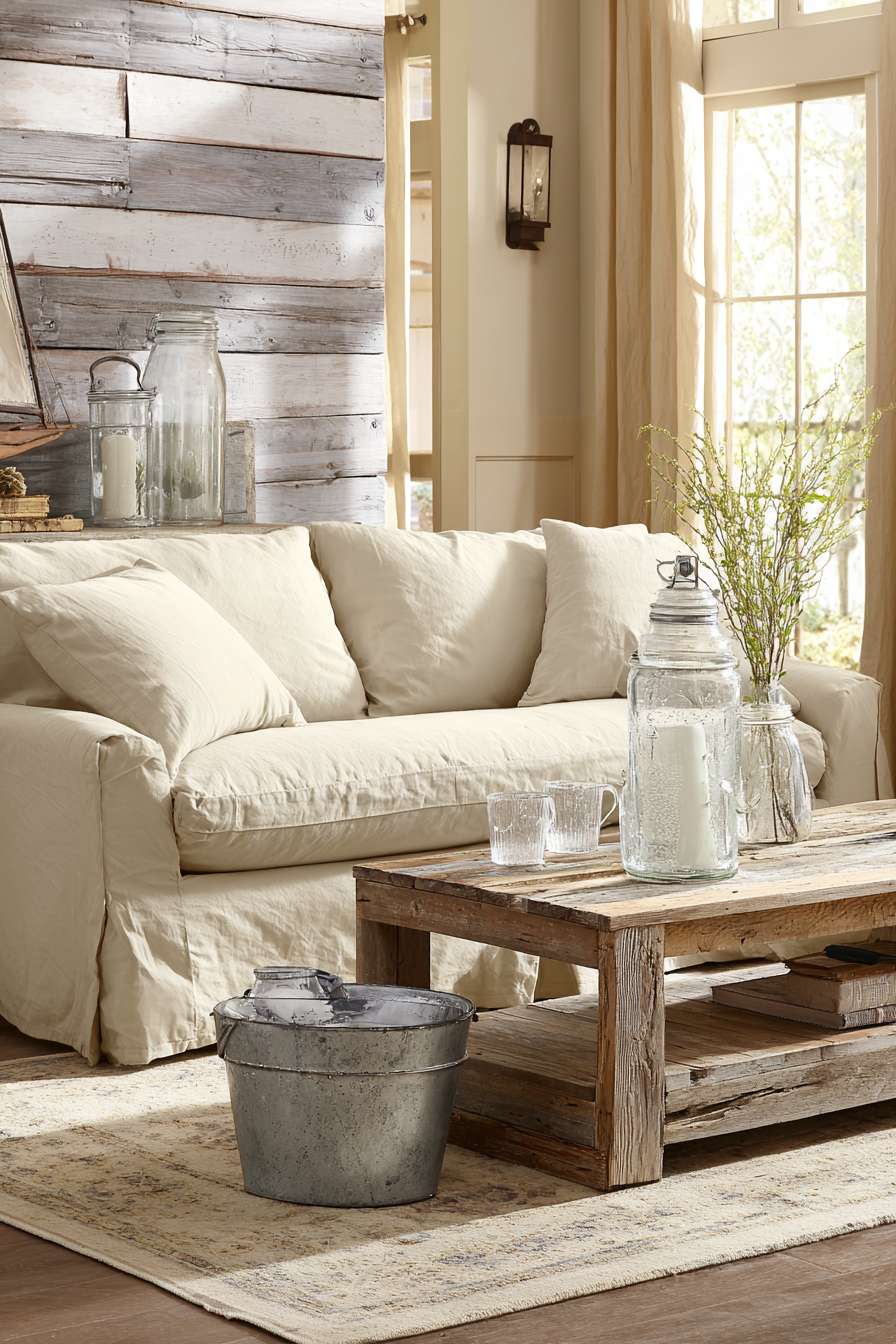
Cream-colored cotton slipcovers drape the sofa with natural texture and casual elegance, their visible weave and relaxed fit capturing the approachable comfort that defines modern farmhouse style. The washable covers offer practical benefits while maintaining the aesthetic’s signature blend of style and livability. A reclaimed wood coffee table with visible grain and authentic weathering sits as the room’s centerpiece, its history and imperfections celebrated rather than hidden.
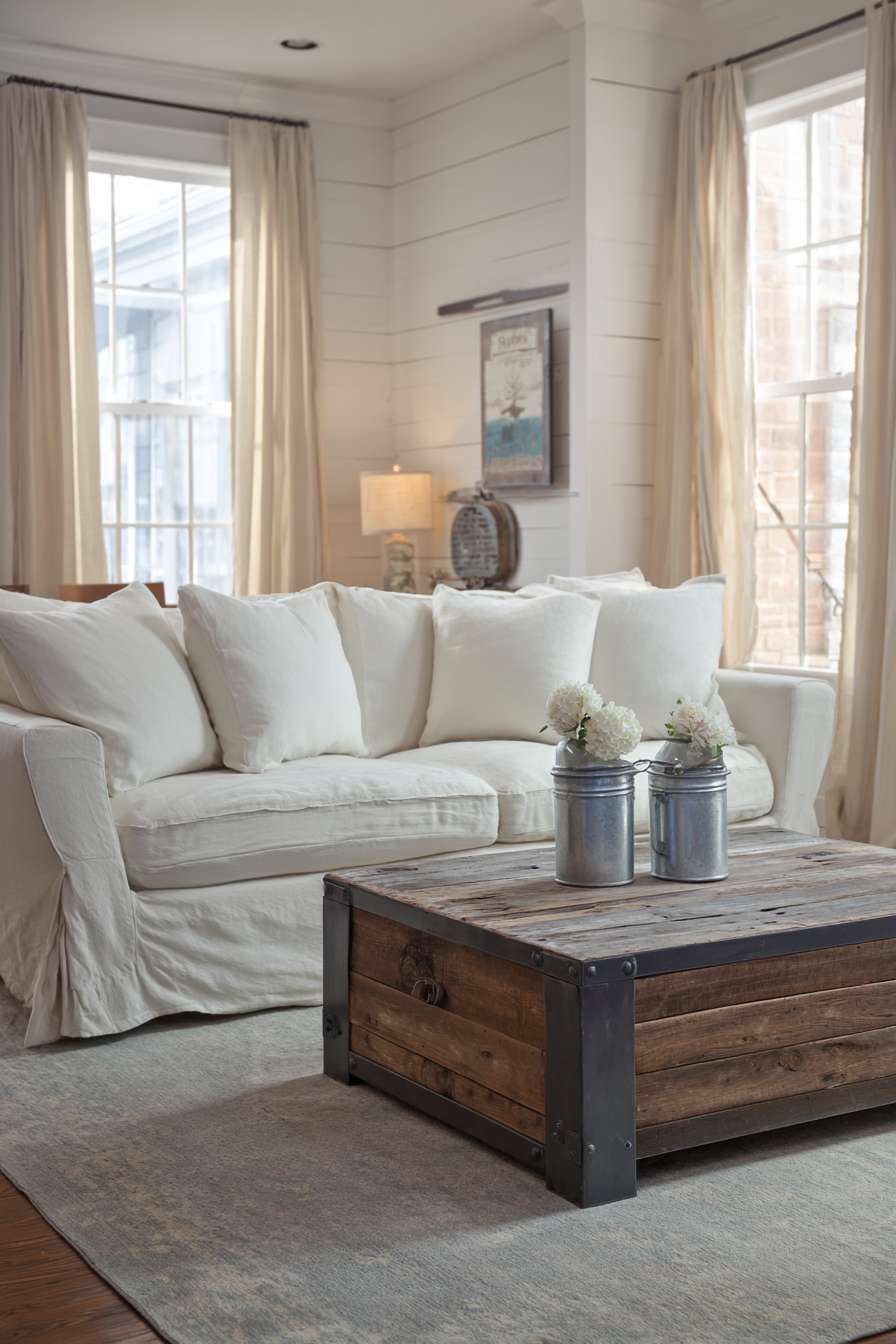
Galvanized metal accents and mason jar vases add rustic charm through materials historically associated with agricultural life, now repurposed as decorative elements. These touches reference farming heritage without feeling costume-like, walking the fine line between authentic and affected. The shiplap accent wall painted white provides the architectural backdrop modern farmhouse devotees love, adding texture and dimension while maintaining the bright, fresh palette.
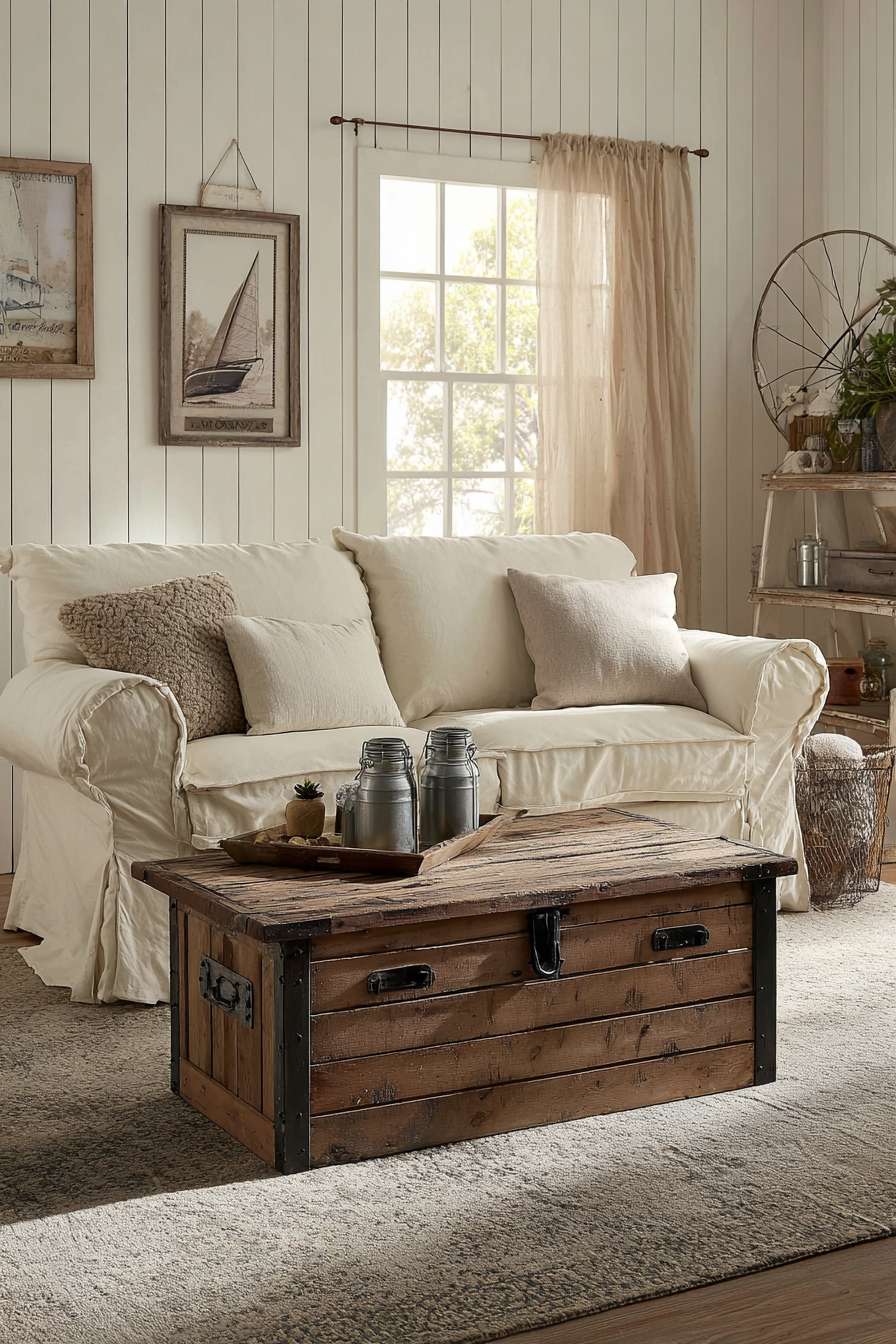
Natural sunlight streaming through simple linen curtains creates warm ambiance that enhances all the natural materials and neutral tones. The lighting quality throughout the day showcases the reclaimed wood’s character and the various white and cream tones’ subtle differences. The overall effect achieves comfortable, lived-in elegance that feels welcoming rather than precious, inviting daily use and family gatherings without fear of damaging showpiece furniture.
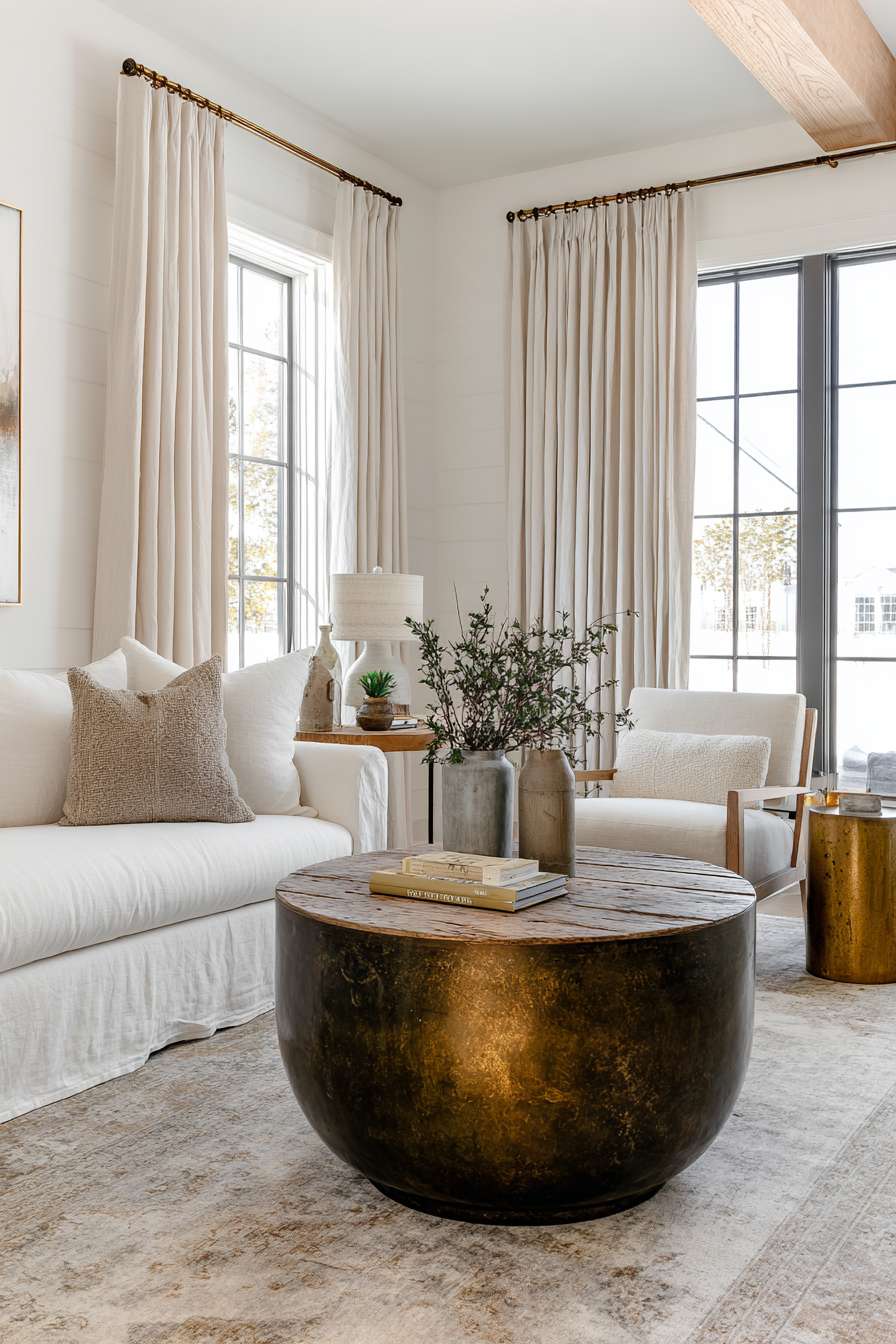
Key Design Tips:
- Choose slipcovers for easy cleaning and the casual elegance of visible draping
- Incorporate authentic reclaimed materials rather than distressed new pieces
- Add metal accents in galvanized or aged finishes for farmhouse authenticity
- Install shiplap or board-and-batten walls for architectural texture and interest
- Maintain mostly white palettes with natural wood tones for brightness and warmth
19. Home Theater Optimization
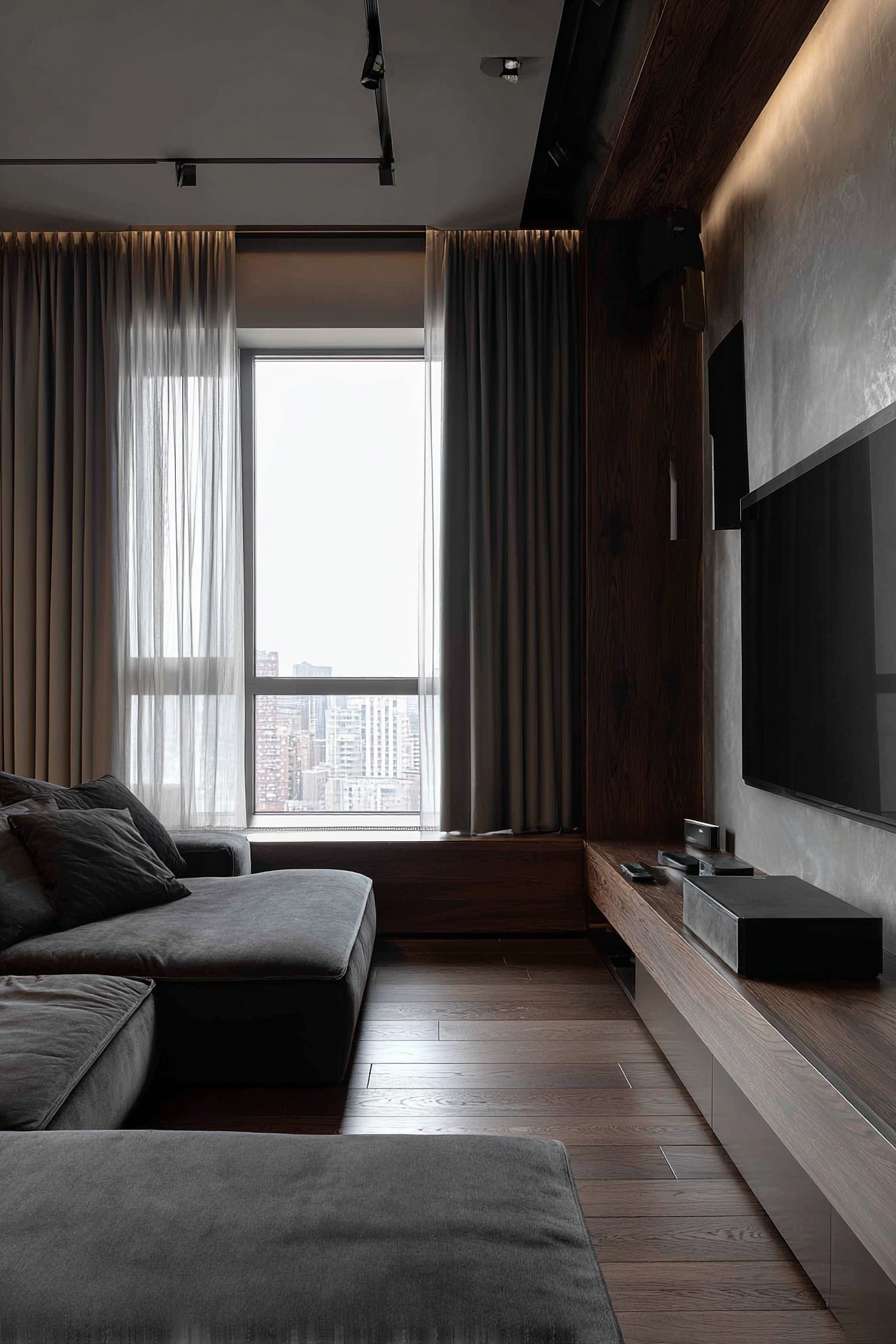
A deep charcoal sectional sofa provides generous seating for movie watching while its dark color prevents light reflection that could compromise screen visibility. The sectional’s substantial size accommodates multiple viewers comfortably, creating the cinema-like experience many apartment dwellers desire. Blackout curtains offer complete light control, essential for daytime viewing and creating the dark environment that makes colors pop on screen.
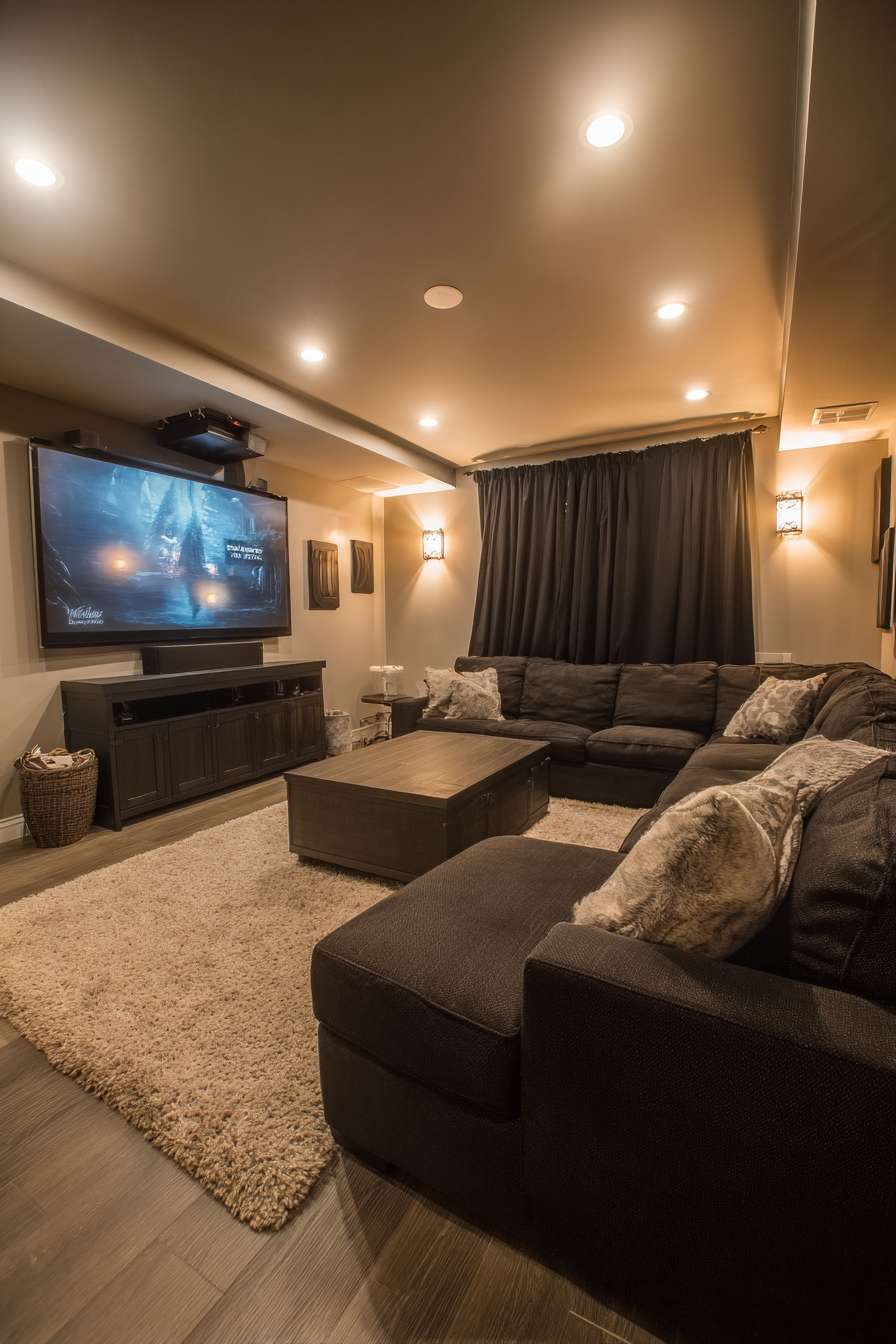
Recessed LED lighting provides subtle illumination that allows safe movement without creating screen glare, with dimming capabilities that adjust brightness based on viewing preferences. The floating media console in dark wood houses equipment while maintaining clean lines that don’t distract from the viewing experience. Acoustic panels disguised as artwork improve sound quality by reducing echo and sound reflection, a crucial but often overlooked element in home theater design.
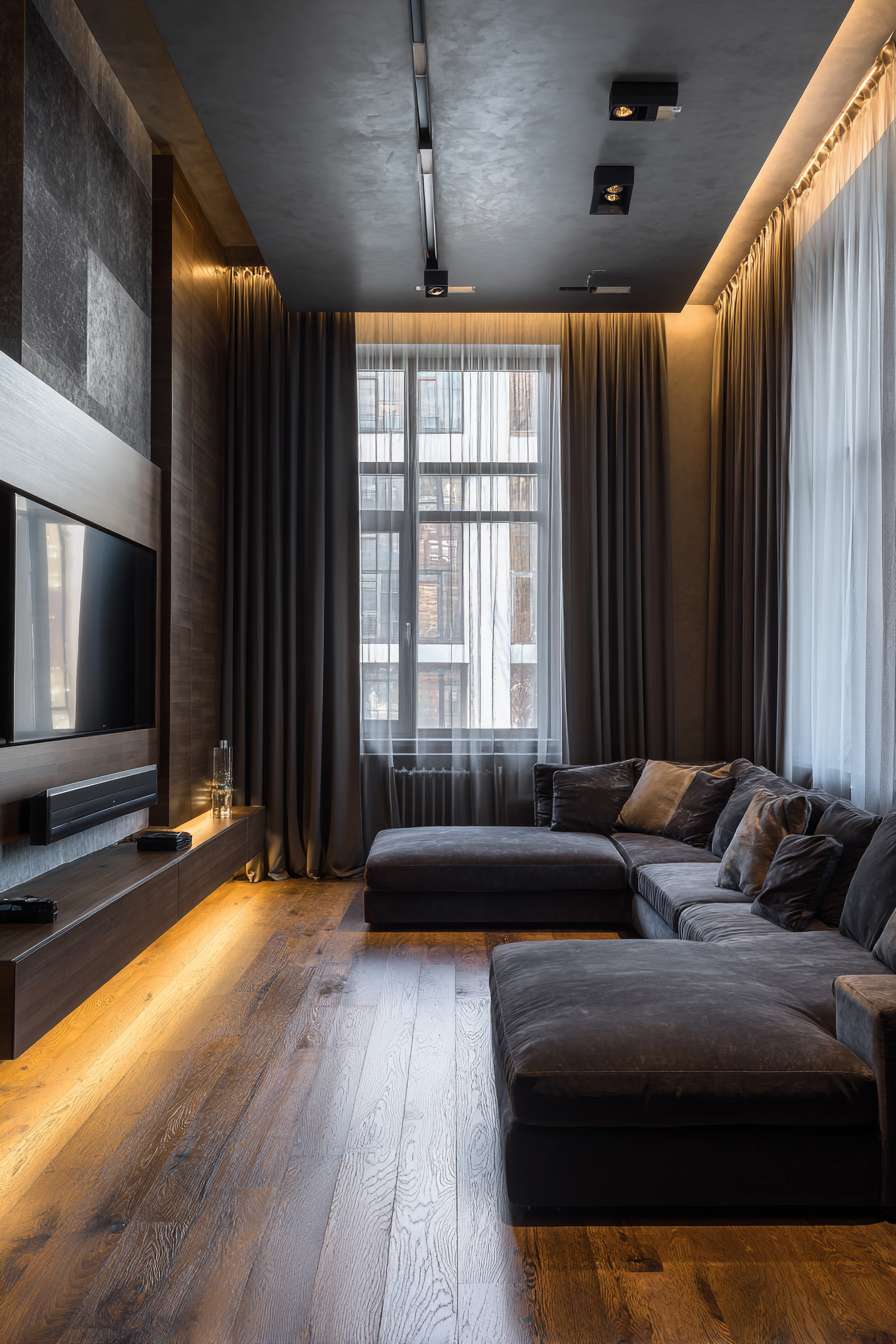
The entertainment-focused layout prioritizes optimal viewing angles and distances, with seating arranged to provide clear sightlines to the wall-mounted screen. This specialized arrangement demonstrates how apartment living rooms can be customized to support specific hobbies and interests, transforming generic spaces into personalized retreats. The cozy viewing environment rivals commercial theaters while offering the comfort and convenience of home.
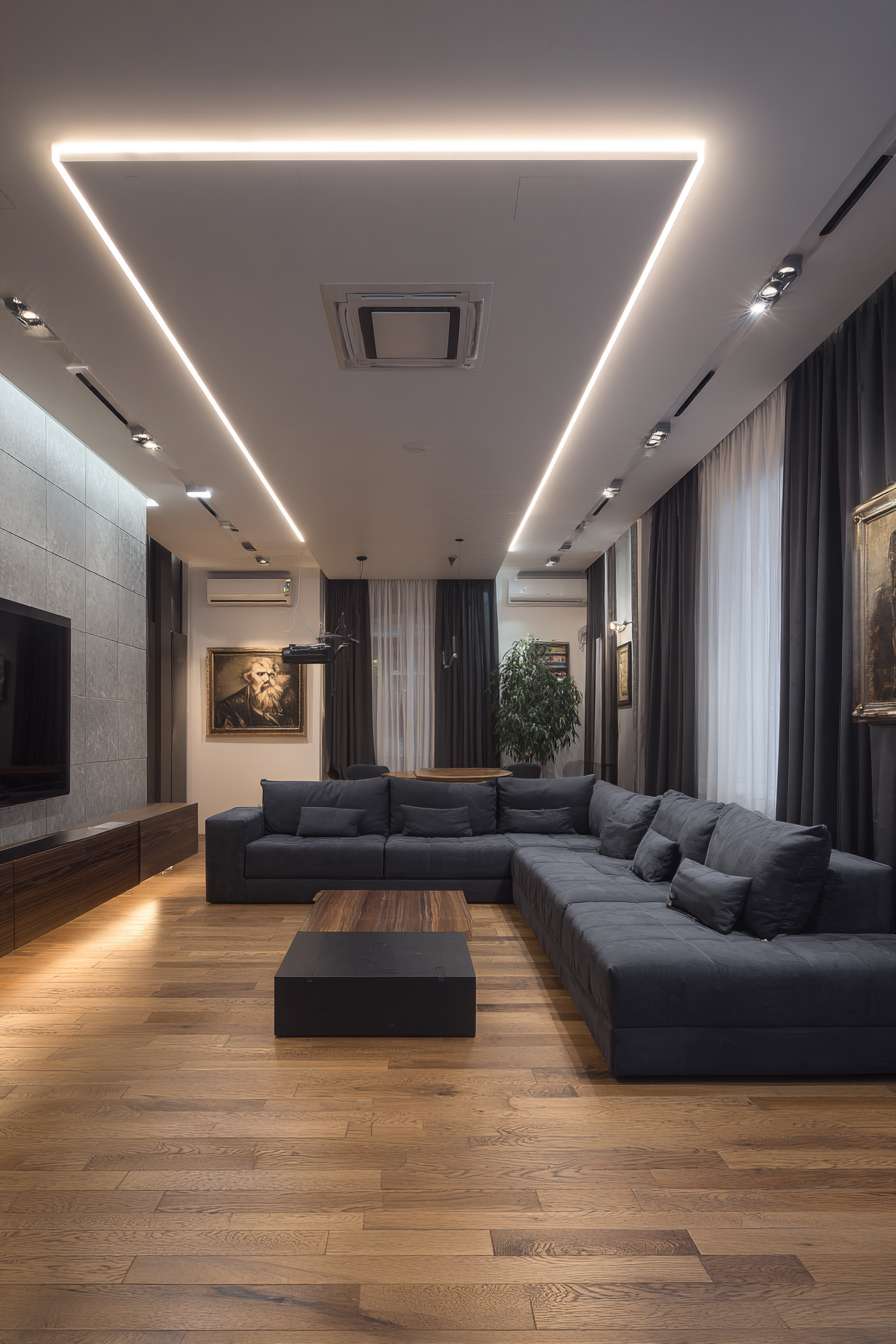
Key Design Tips:
- Select dark upholstery colors that don’t reflect light onto screens
- Install blackout window treatments for daytime viewing and glare elimination
- Use dimmable recessed lighting for safe ambient illumination during viewing
- Add acoustic treatments to improve sound quality and reduce echo
- Position seating at optimal viewing distances and angles from the screen
20. Maximalist Eclectic Energy
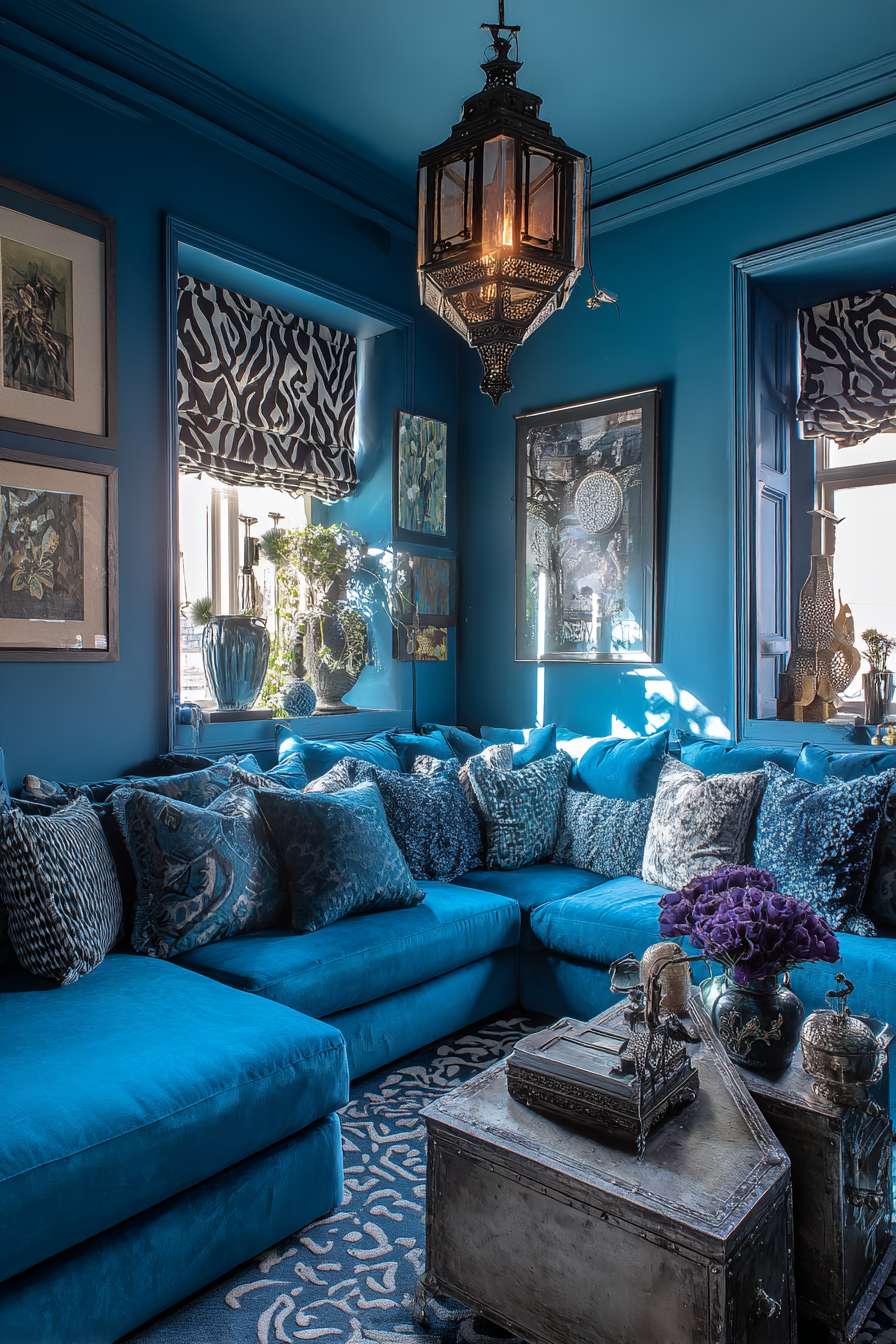
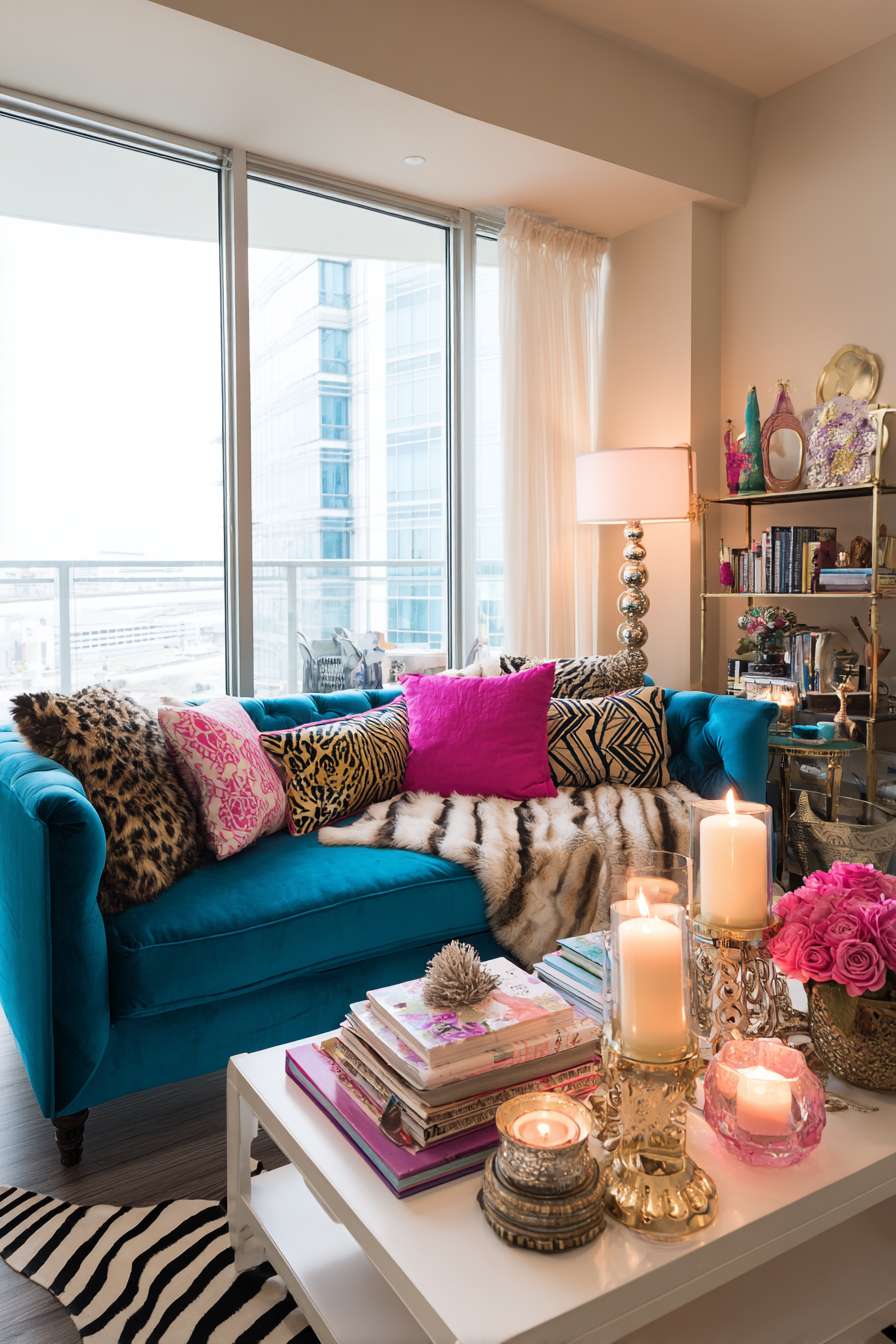
A jewel-toned velvet sofa in sapphire blue anchors this maximalist space with saturated color and luxurious texture that immediately establishes the room’s bold personality. The rich blue serves as the foundation for layering additional patterns, colors, and textures throughout the space. Layered patterns through throw pillows, area rugs, and window treatments create visual richness that celebrates abundance rather than restraint, with each element contributing to the overall sensory experience.
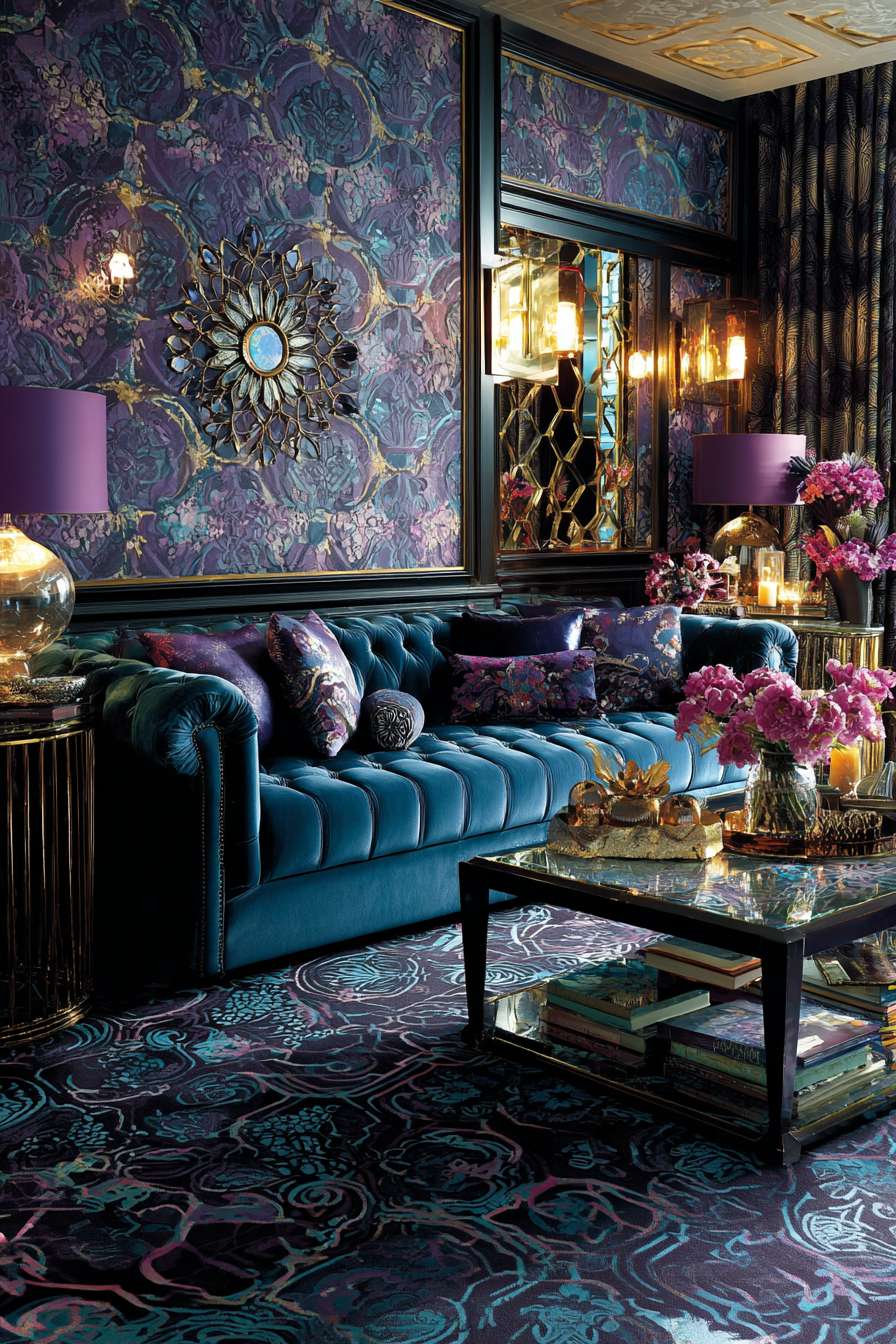
Vintage coffee tables and collected decorative pieces add personality and uniqueness, telling stories of travels, inheritances, and treasure hunts through antique markets. This curated chaos reflects individual taste and life experience, creating spaces that feel deeply personal rather than showroom-perfect. Mixed metallic finishes in lighting fixtures and accessories add glamour while the variety prevents any single metal from dominating.
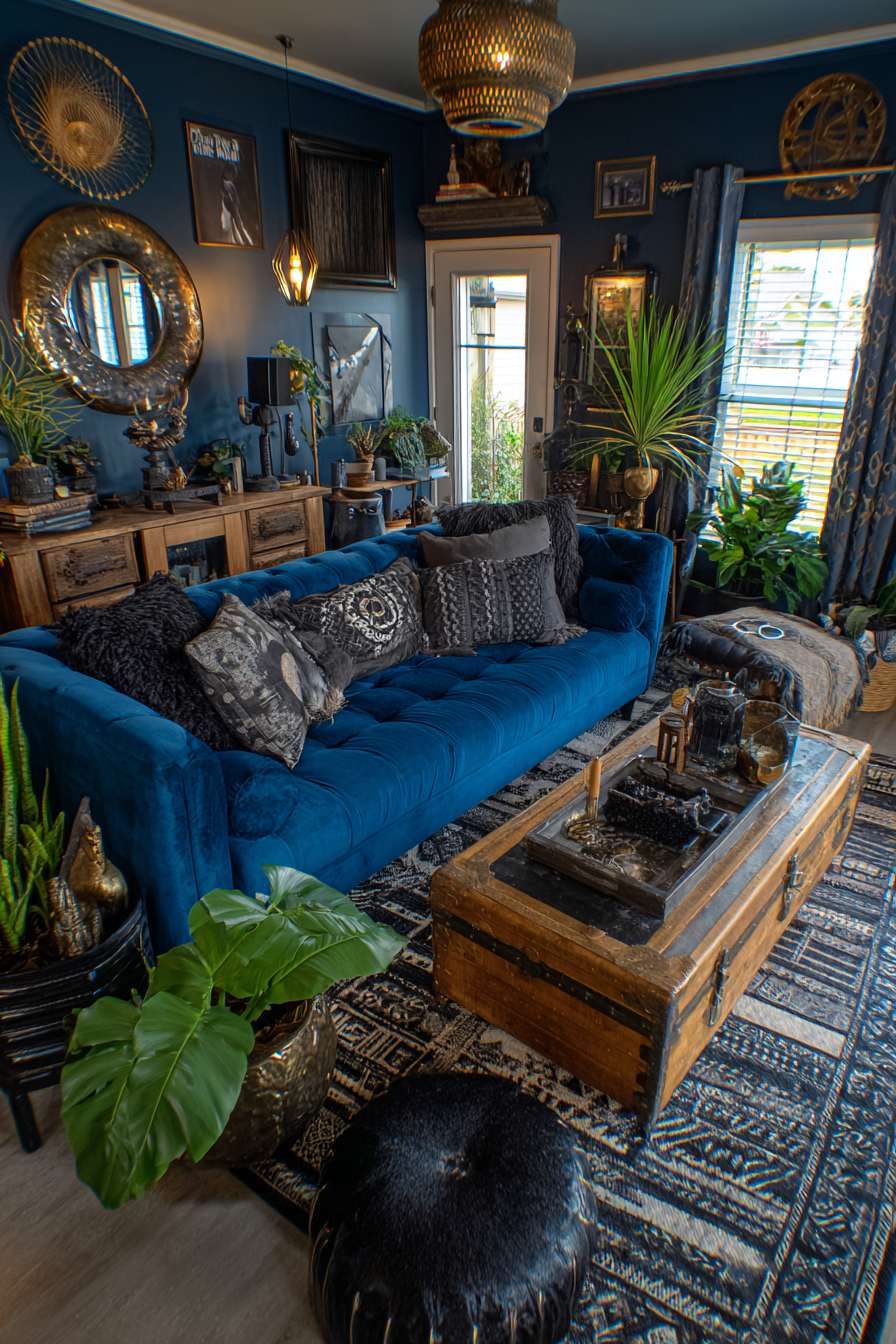
Natural and artificial lighting blend throughout the day to showcase the bold color palette and complex layering, with lighting design as crucial as furniture selection in maximalist spaces. The curated approach to maximalism demonstrates that “more is more” doesn’t mean random accumulation but rather thoughtful collection and artful arrangement. Professional styling balances the complex visual layers, ensuring the space feels intentional rather than cluttered.
Key Design Tips:
- Anchor maximalist spaces with one saturated color as the foundation
- Layer patterns in varying scales to create depth without chaos
- Mix vintage and new pieces to add character and prevent catalog uniformity
- Combine multiple metallic finishes for glamorous complexity
- Ensure adequate lighting to showcase colors and details properly
21. Work-From-Home Integration
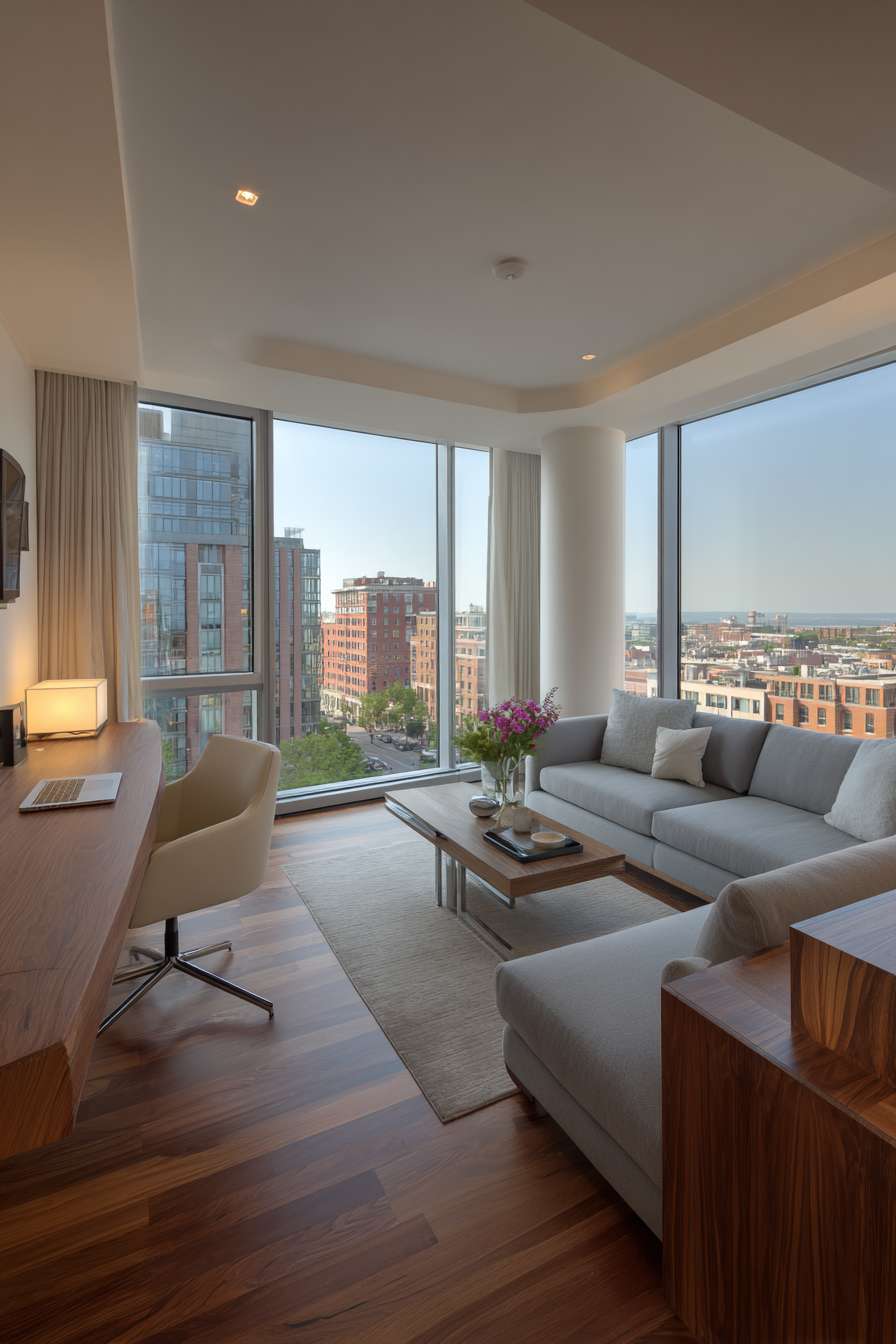
This dual-purpose layout accommodates remote work reality through a sleek sofa in neutral grey positioned to maintain living room functionality while a slim desk setup occupies the wall space behind. This arrangement allows the living room to serve professional needs during work hours while quickly transitioning to relaxation mode when the workday ends. Cable management solutions keep technology organized and visually tidy, preventing the tangle of cords that can make home offices look chaotic.
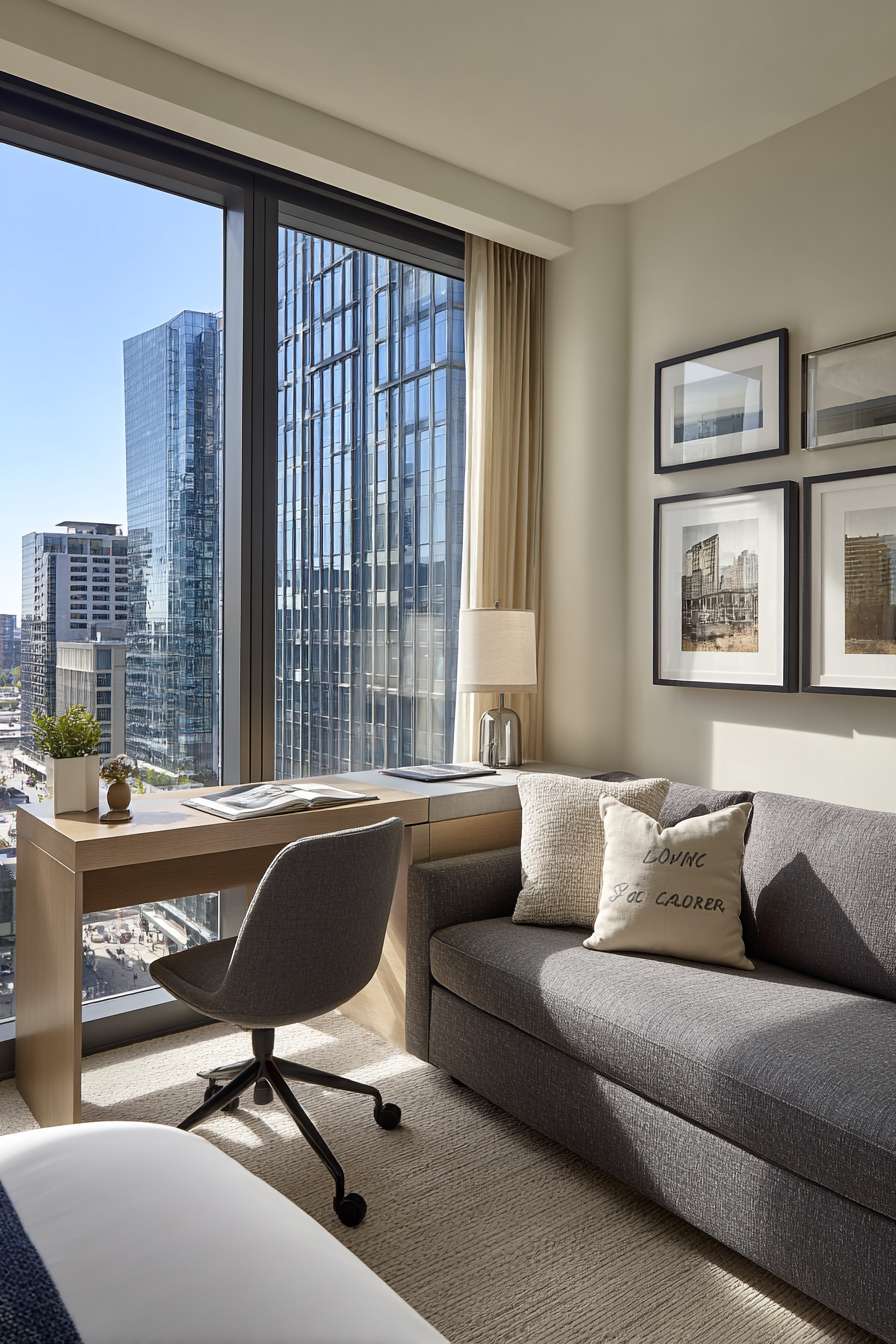
An ergonomic chair tucks neatly under the desk when not in use, minimizing its visual impact and preserving floor space for non-work activities. The chair’s design balances comfort for extended sitting with aesthetics that complement rather than clash with the living room furniture. Natural light from windows serves both zones effectively, providing the bright illumination preferred for computer work while creating the pleasant atmosphere desired for relaxation.
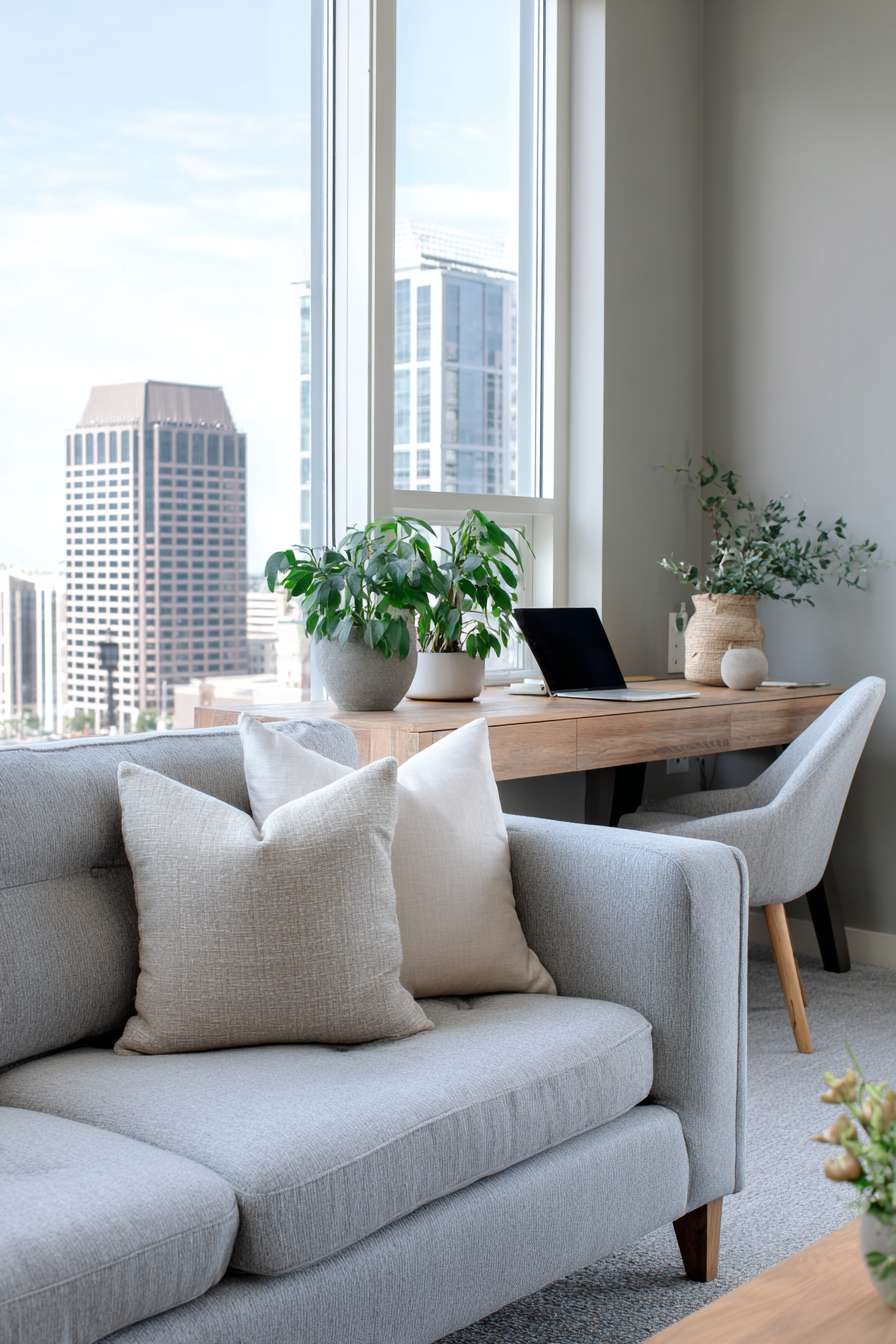
The seamless integration demonstrates that work and home life can coexist within limited apartment square footage when properly planned. The neutral color palette unifies both zones while subtle differences in furniture style distinguish the work area from the living space. This approach addresses the modern reality that many apartments must accommodate professional and personal life within shared spaces.
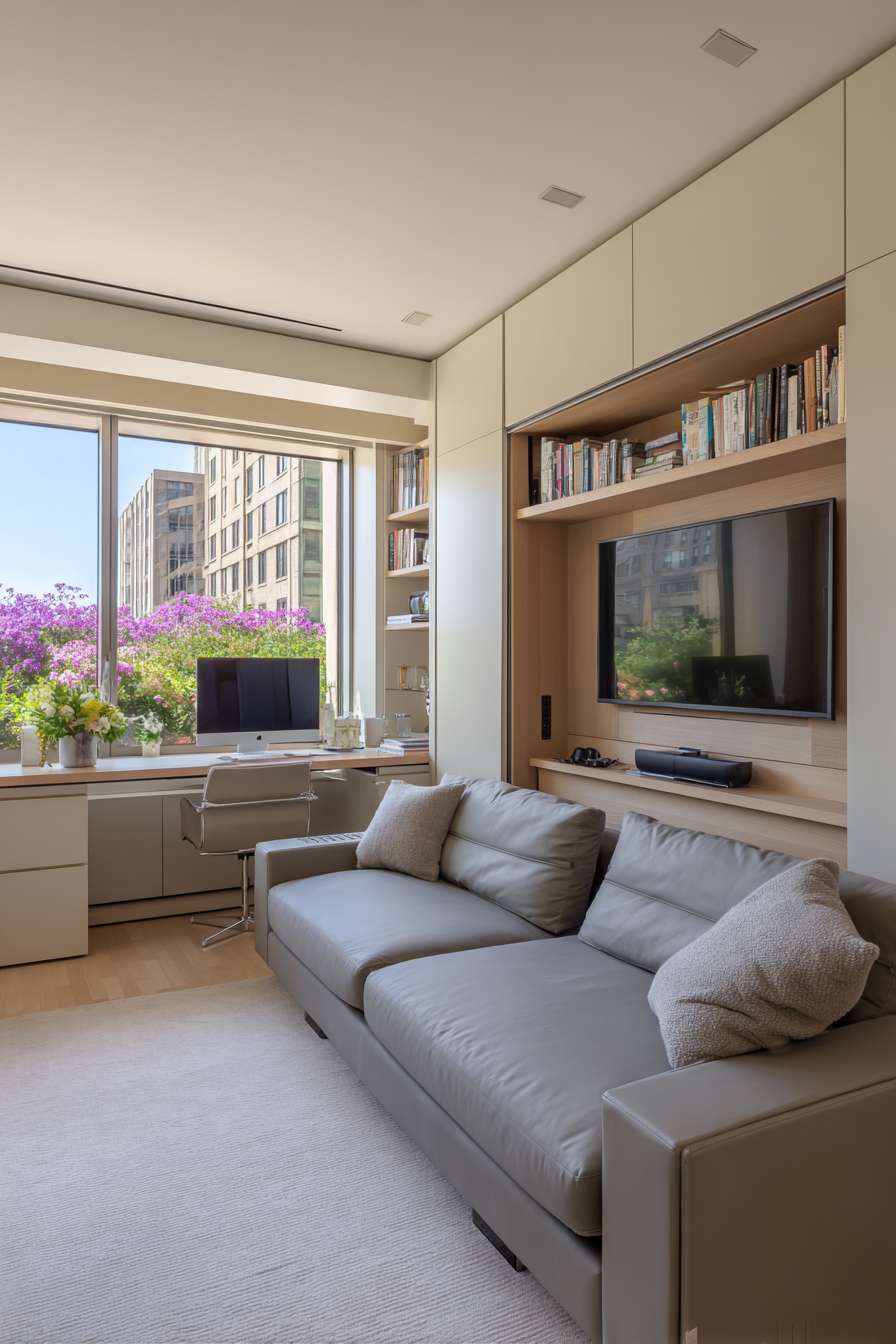
Key Design Tips:
- Position work areas to maintain living room functionality and flow
- Install comprehensive cable management to keep technology tidy
- Select ergonomic seating that complements living room aesthetics
- Use natural light to serve both work productivity and home comfort
- Choose slim-profile desks that minimize visual and spatial impact
22. Urban Jungle Abundance
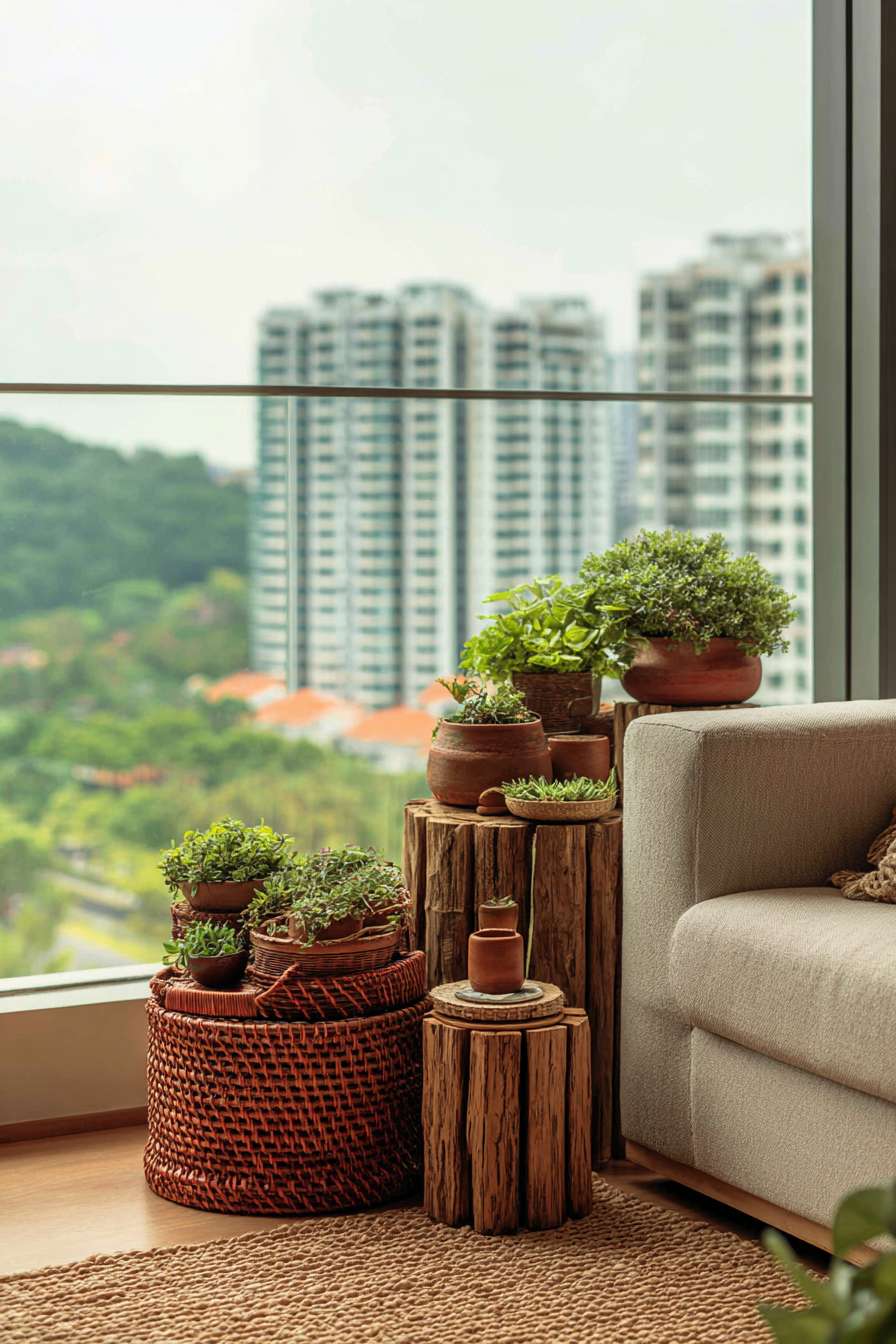
Natural linen upholstery on the sofa provides a neutral foundation surrounded by abundant greenery in terracotta and ceramic planters of varying sizes and styles. The plant-filled aesthetic transforms the apartment into an urban jungle where nature takes center stage, creating a biophilic environment that improves air quality while providing visual beauty. Varied greenery creates layered displays with different leaf shapes, sizes, and shades of green adding complexity and interest.
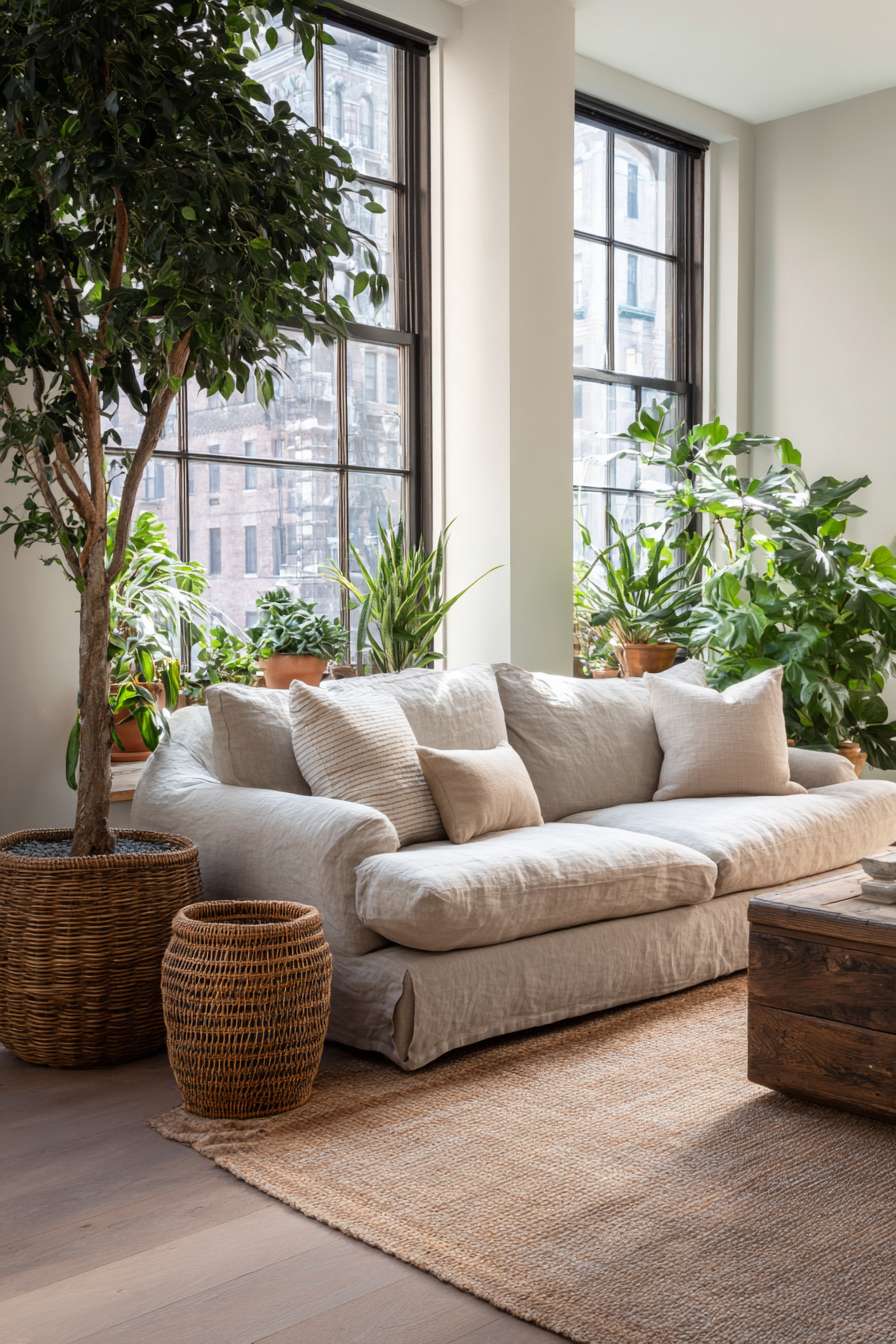
Woven basket storage contains plant care supplies, keeping watering cans, fertilizers, and pruning tools accessible yet tidy. The baskets’ natural materials complement the organic theme while providing practical organization. Wooden plant stands at different heights create the layered, dimensional displays characteristic of successful urban jungle spaces, with trailing plants cascading from elevated positions while larger specimens anchor lower levels.
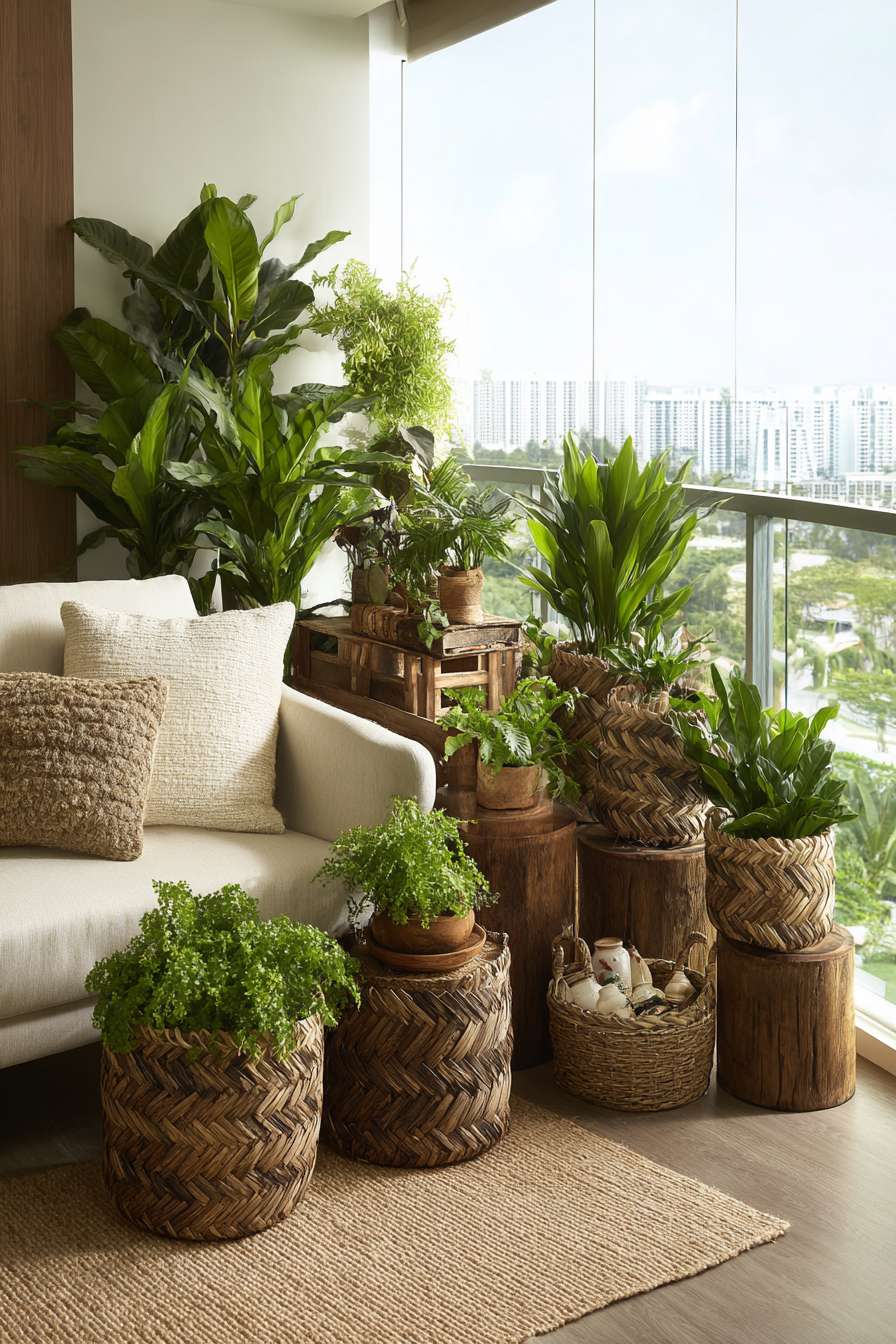
Large windows provide the necessary natural light for plant growth, making this design particularly suitable for apartments blessed with good sun exposure. The jute area rug adds organic texture at floor level, grounding the abundant greenery with earthy materiality. The lush, nature-inspired atmosphere creates a restorative environment that counterbalances urban stress, bringing outdoor tranquility indoors through thoughtful plant selection and placement.
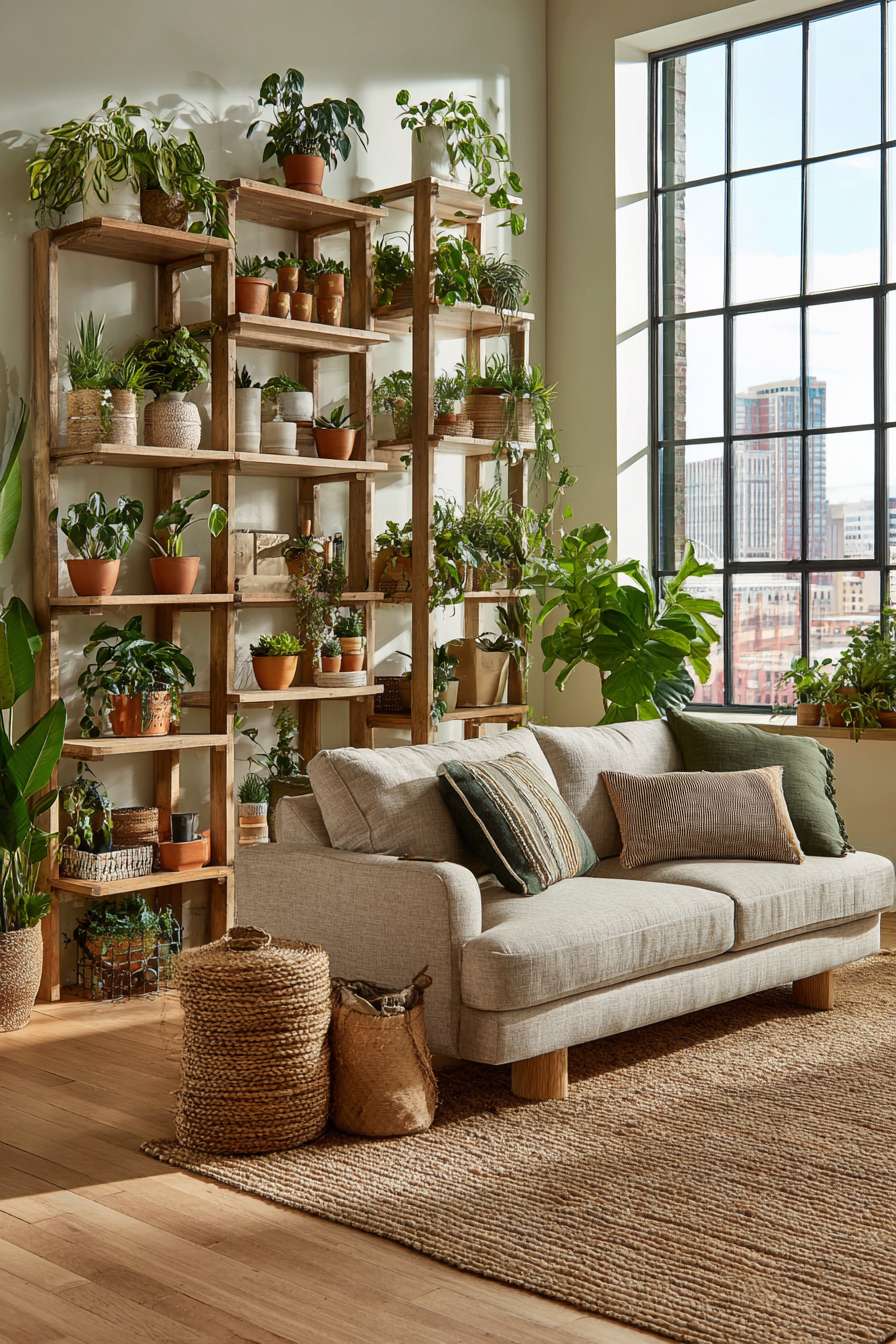
Key Design Tips:
- Choose apartments with good natural light if planning abundant plant displays
- Vary plant heights using stands, shelves, and hanging options for dimension
- Select planters in coordinating materials and colors for cohesive aesthetics
- Use baskets for attractive storage of plant care supplies and tools
- Include plants with different leaf shapes and textures for visual variety
23. Monochromatic Grey Elegance
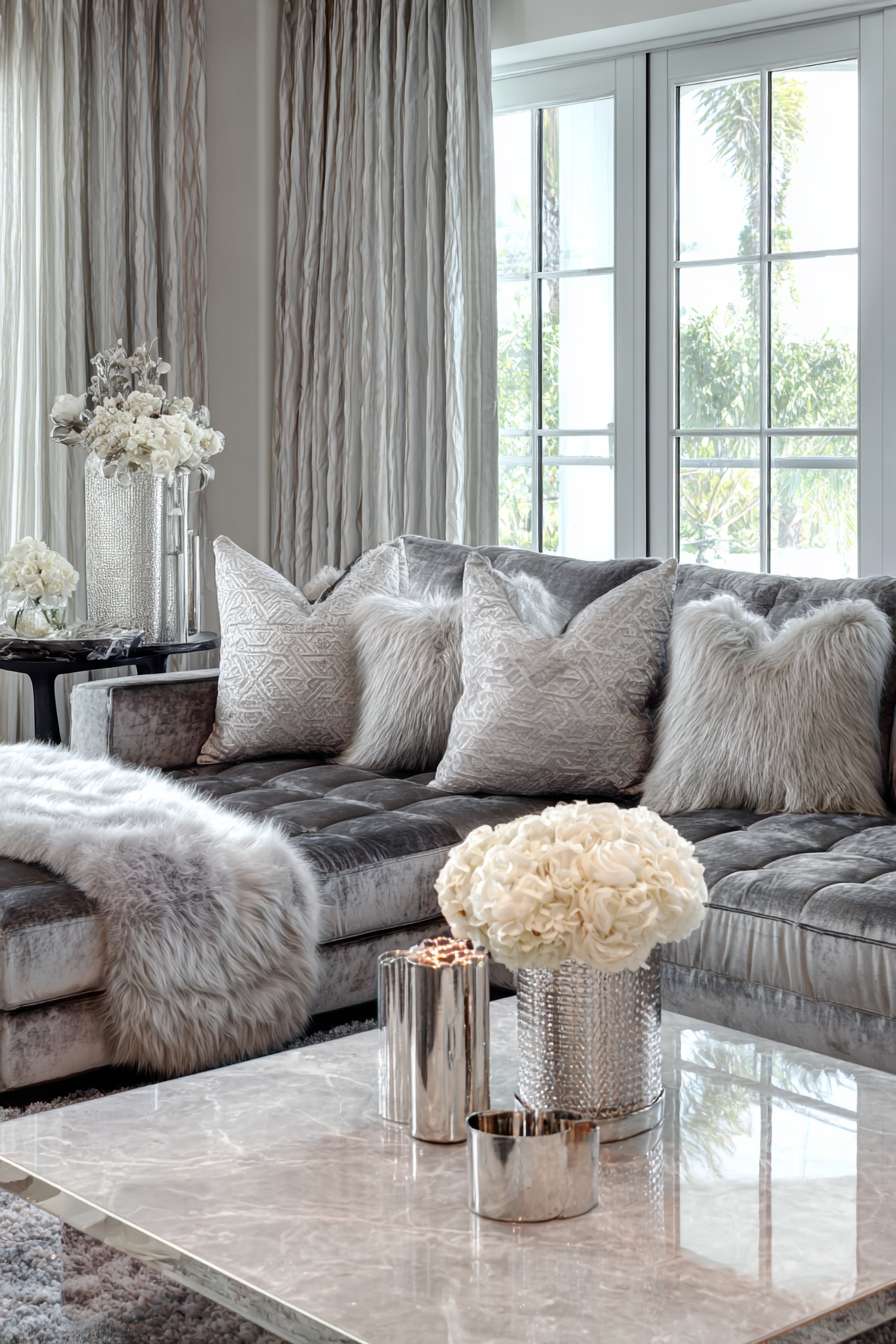
This sophisticated space explores the depth possible within a single color family through a plush velvet sofa in medium grey as the centerpiece, layered with textured throw pillows in varying grey tones from charcoal to dove. The velvet’s light-reflective quality adds dimension as the pile catches and reflects light differently depending on viewing angle. A marble-look coffee table introduces cool grey veining while metallic silver accents add sophistication without introducing new colors.
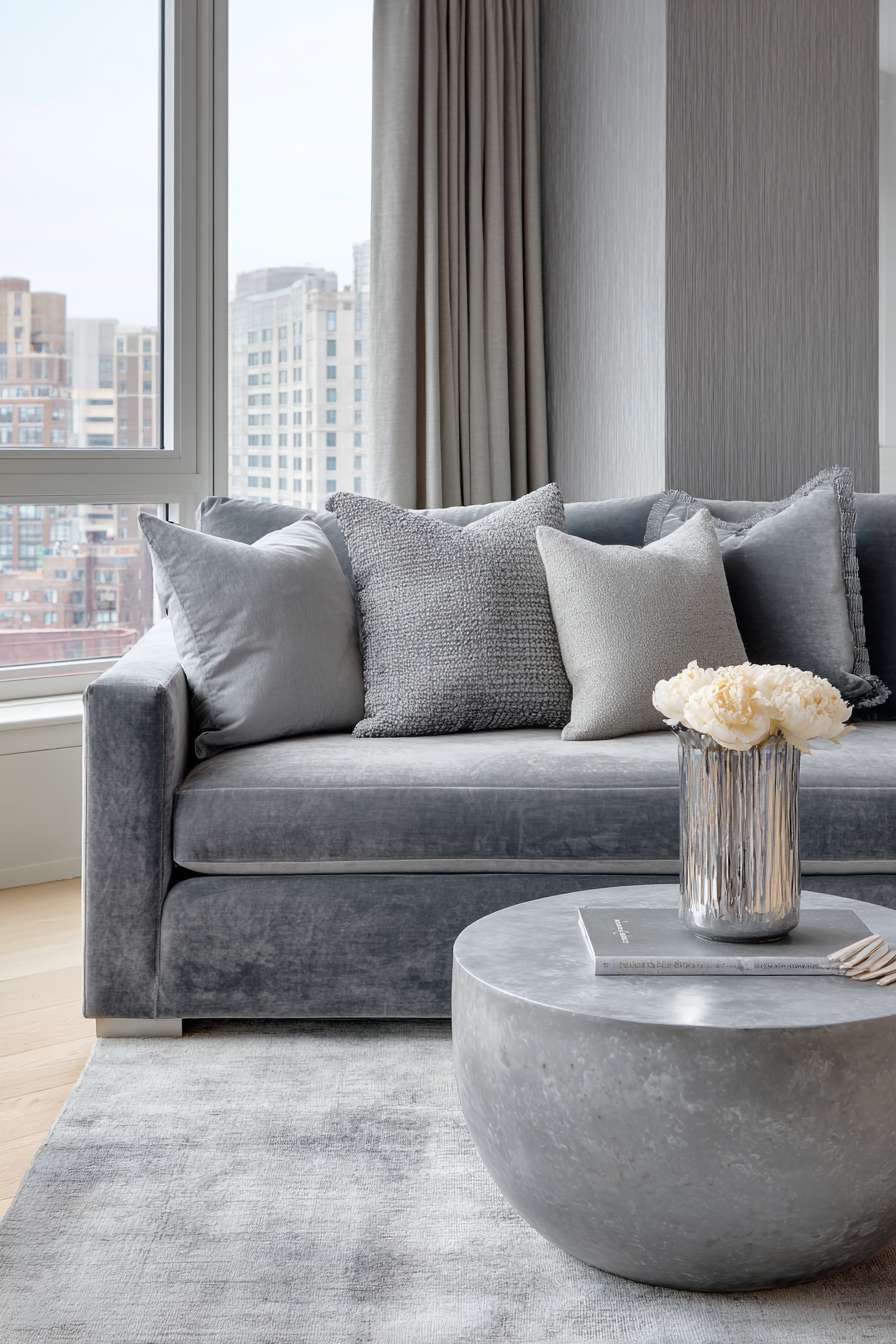
Different grey textures throughout the space—wool rug, linen curtains, smooth wall paint—create depth and prevent the monochromatic scheme from feeling flat or monotonous. This textural variety proves essential in single-color rooms, where interest must come from materials rather than color contrasts. The soft natural lighting highlights these tonal variations throughout the day, creating subtle shadows and highlights that animate the space.
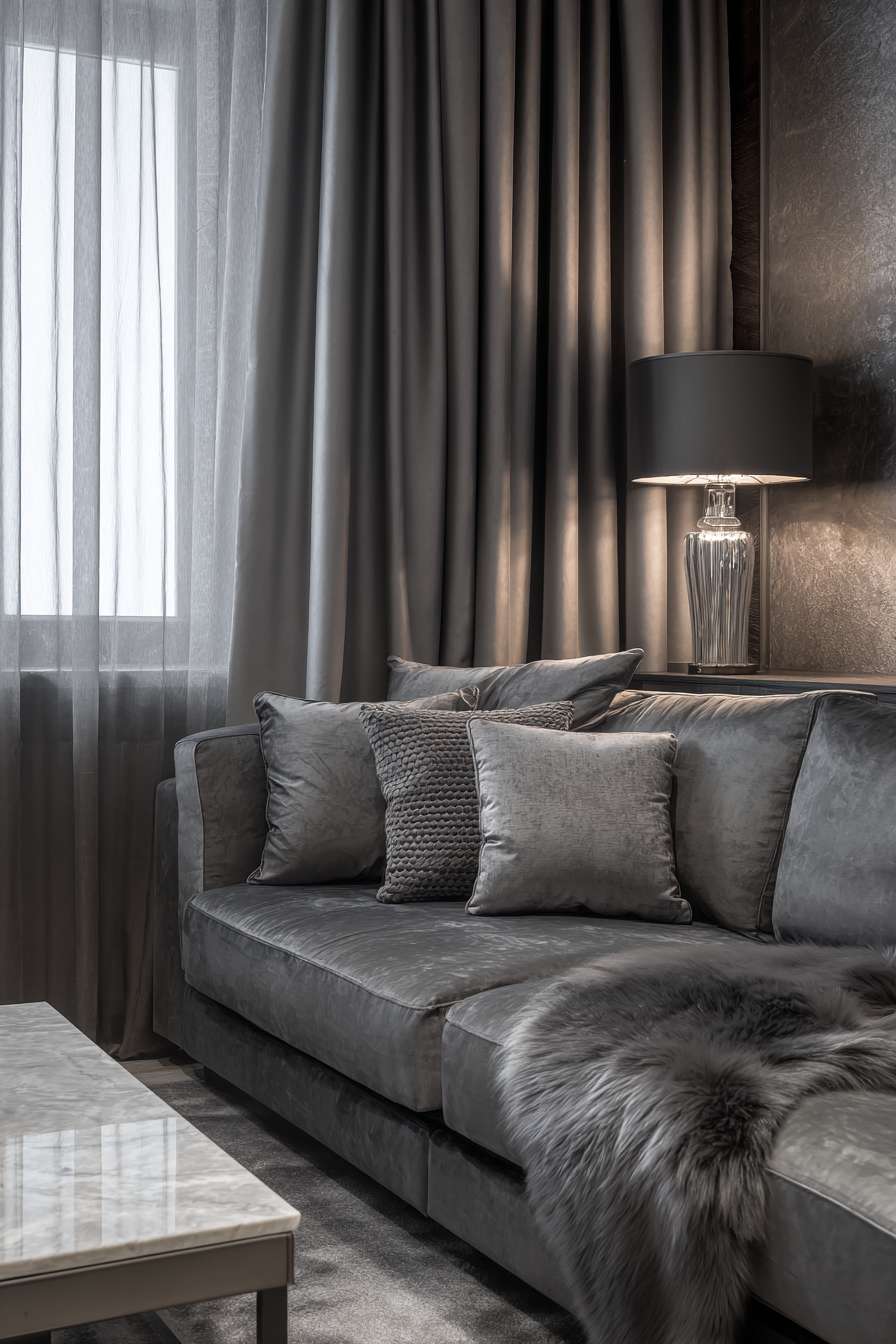
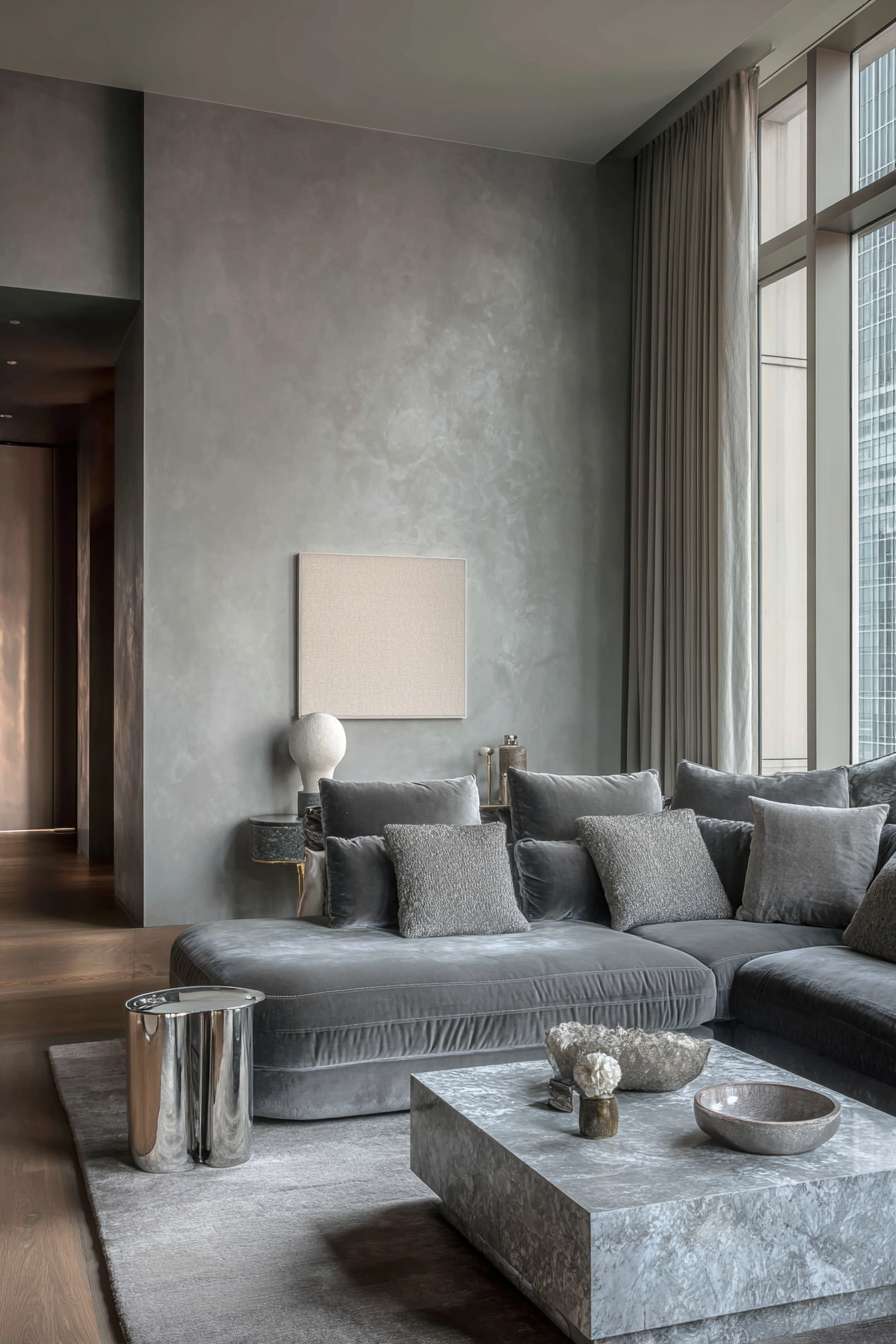
The elegant restraint of the monochromatic palette creates a calm, sophisticated environment that feels both modern and timeless. This approach demonstrates how limiting the color palette can actually expand design possibilities by focusing attention on texture, form, and spatial relationships. Professional styling ensures the grey scheme feels intentional and luxurious rather than drab or unfinished.
Key Design Tips:
- Vary textures extensively when working with monochromatic color schemes
- Include light-reflective materials like velvet or silk to add dimension
- Layer multiple shades within your chosen color family for depth
- Add metallic accents that complement rather than contrast your color
- Maximize natural light to showcase tonal variations throughout the day
24. Scandinavian Minimalist Purity
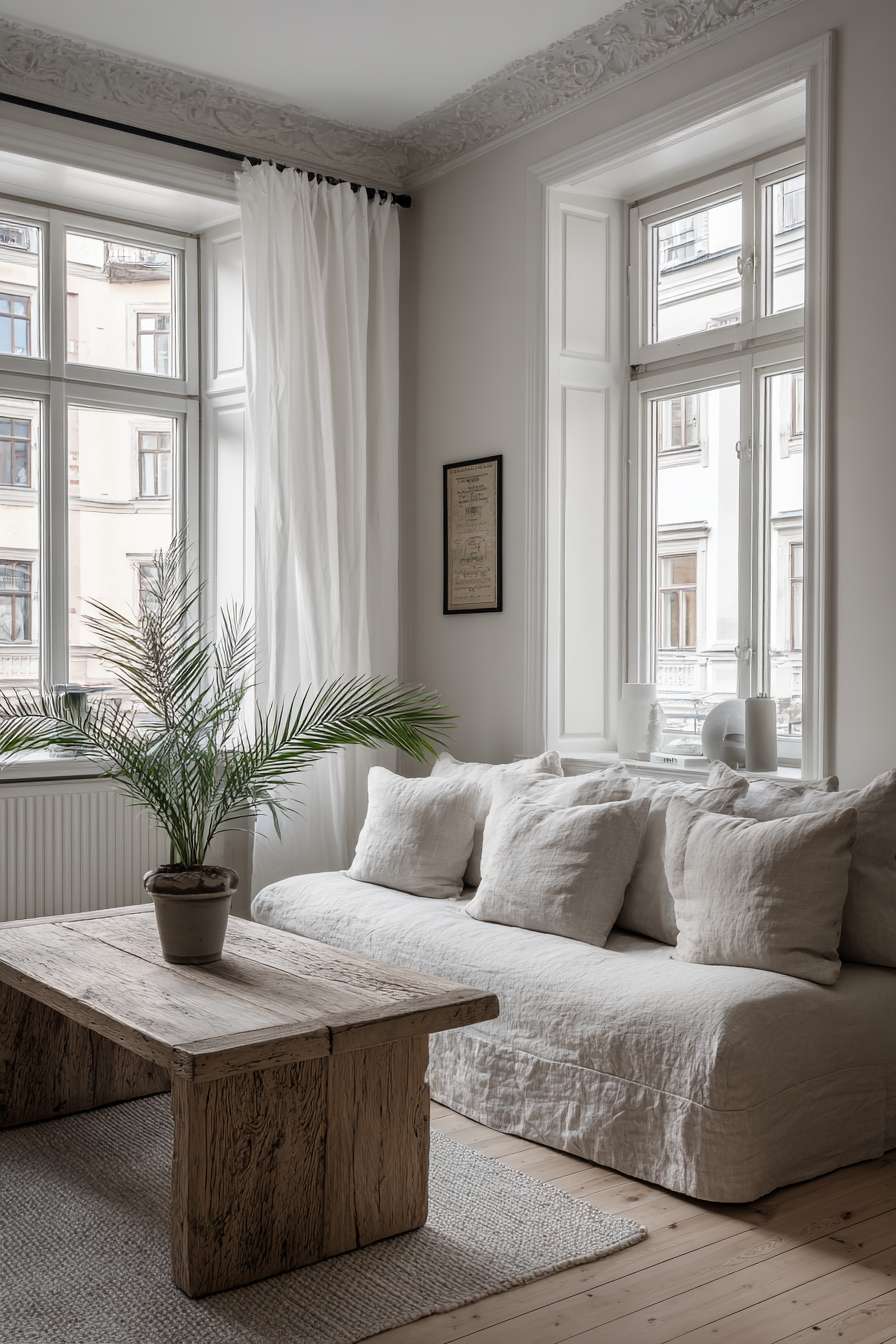
The simple two-seater sofa upholstered in light grey linen sits beneath large windows in this pared-down space that embodies Scandinavian minimalism at its purest. The minimal wooden coffee table with clean lines sits on white-washed oak flooring, its simple form and honest construction celebrating Nordic design principles. A single green plant in a ceramic pot provides the only decorative accent, its organic form offering relief from the geometric furniture forms.
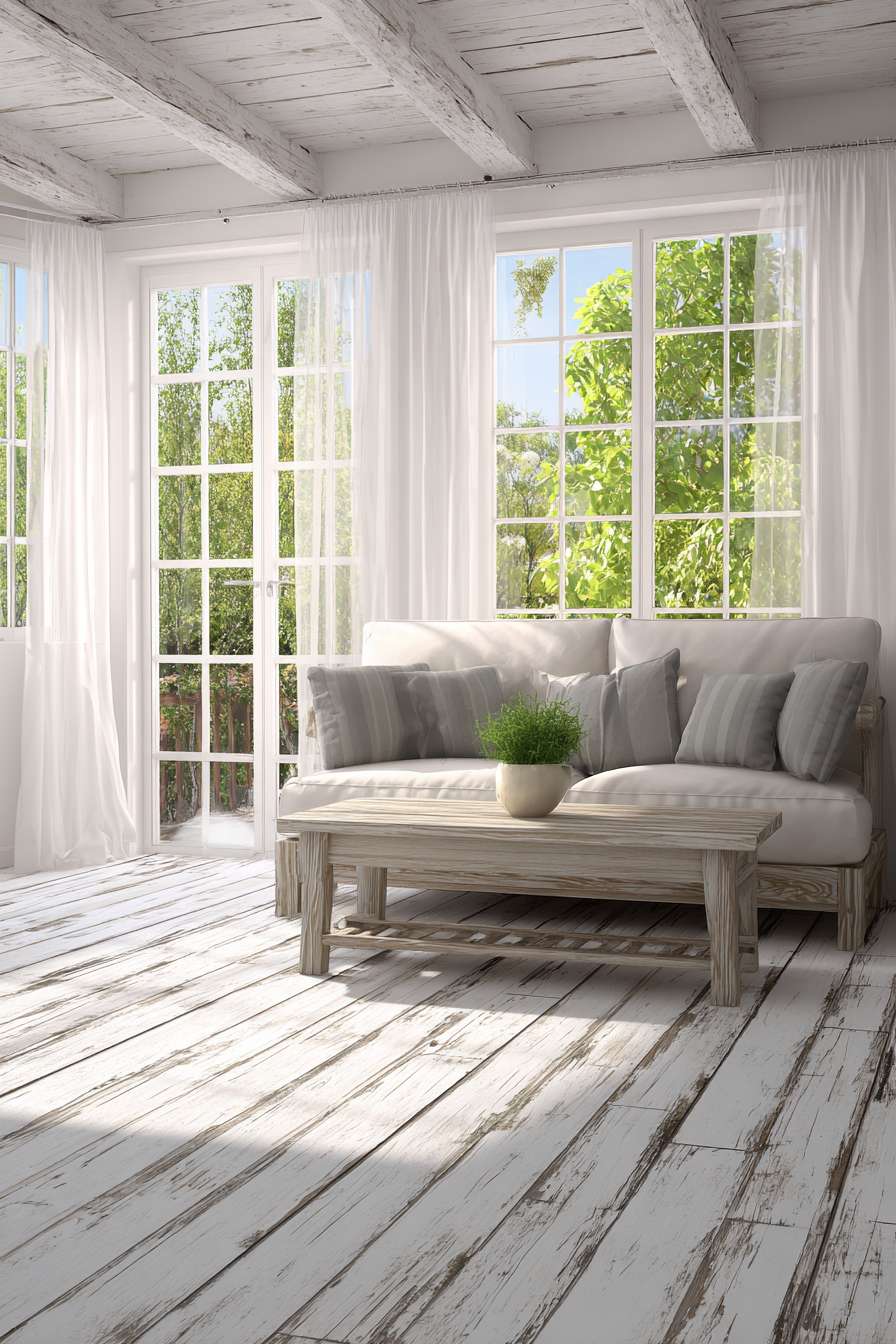
Sheer white curtains diffuse abundant natural light, creating the bright, airy atmosphere that makes Scandinavian spaces feel larger than their actual dimensions. The predominantly white walls and minimal accessories create a serene, uncluttered environment that promotes calm and mental clarity. This restraint requires discipline but delivers remarkable tranquility, proving that removing elements can be as impactful as adding them.
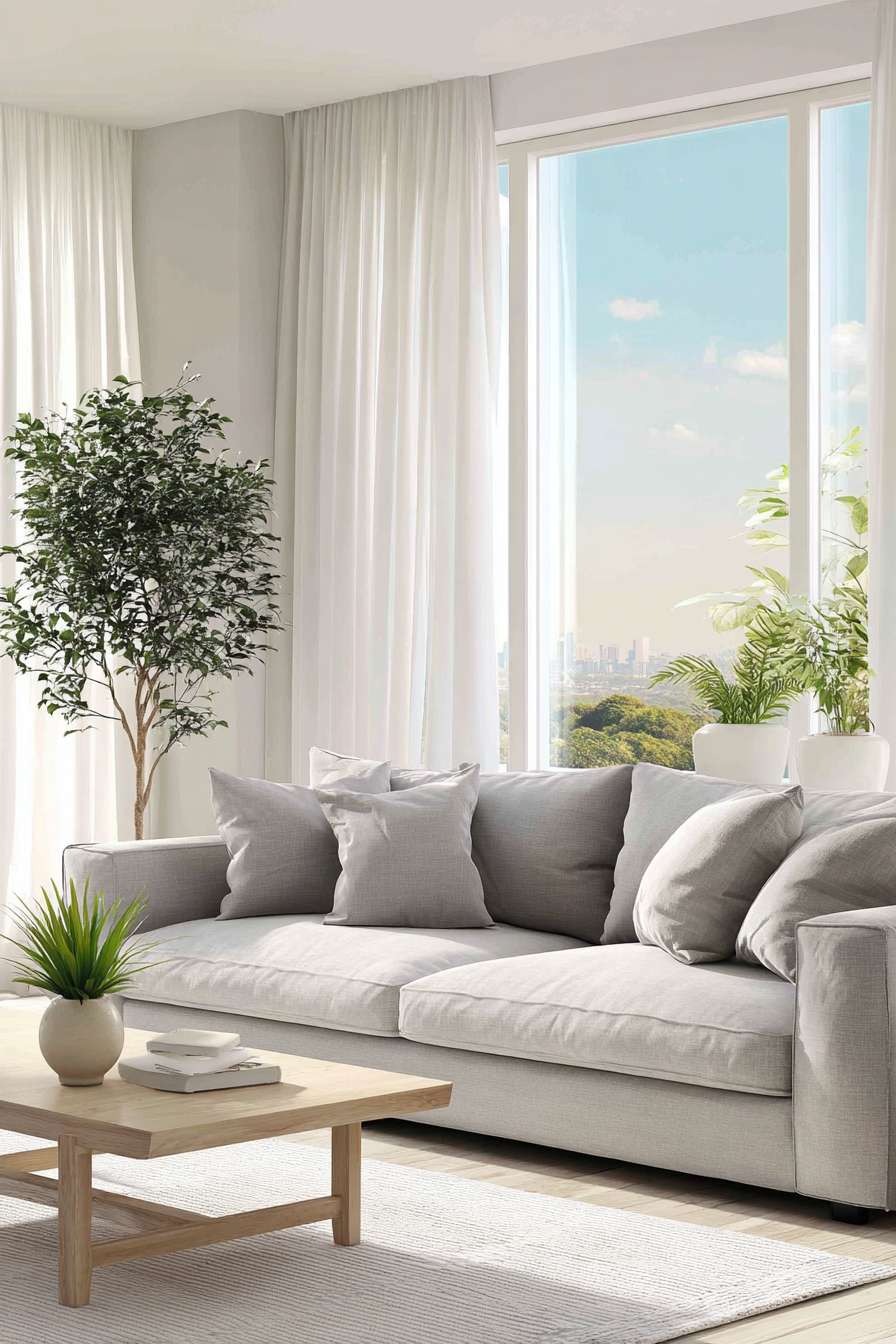
The space features mostly white surfaces with the grey sofa and natural wood providing subtle warmth that prevents the white from feeling clinical. The bright natural lighting emphasizes the airy simplicity, creating an environment that feels clean and fresh. This minimal approach suits those who find peace in simplicity and prefer edited, intentional spaces over abundant decoration.
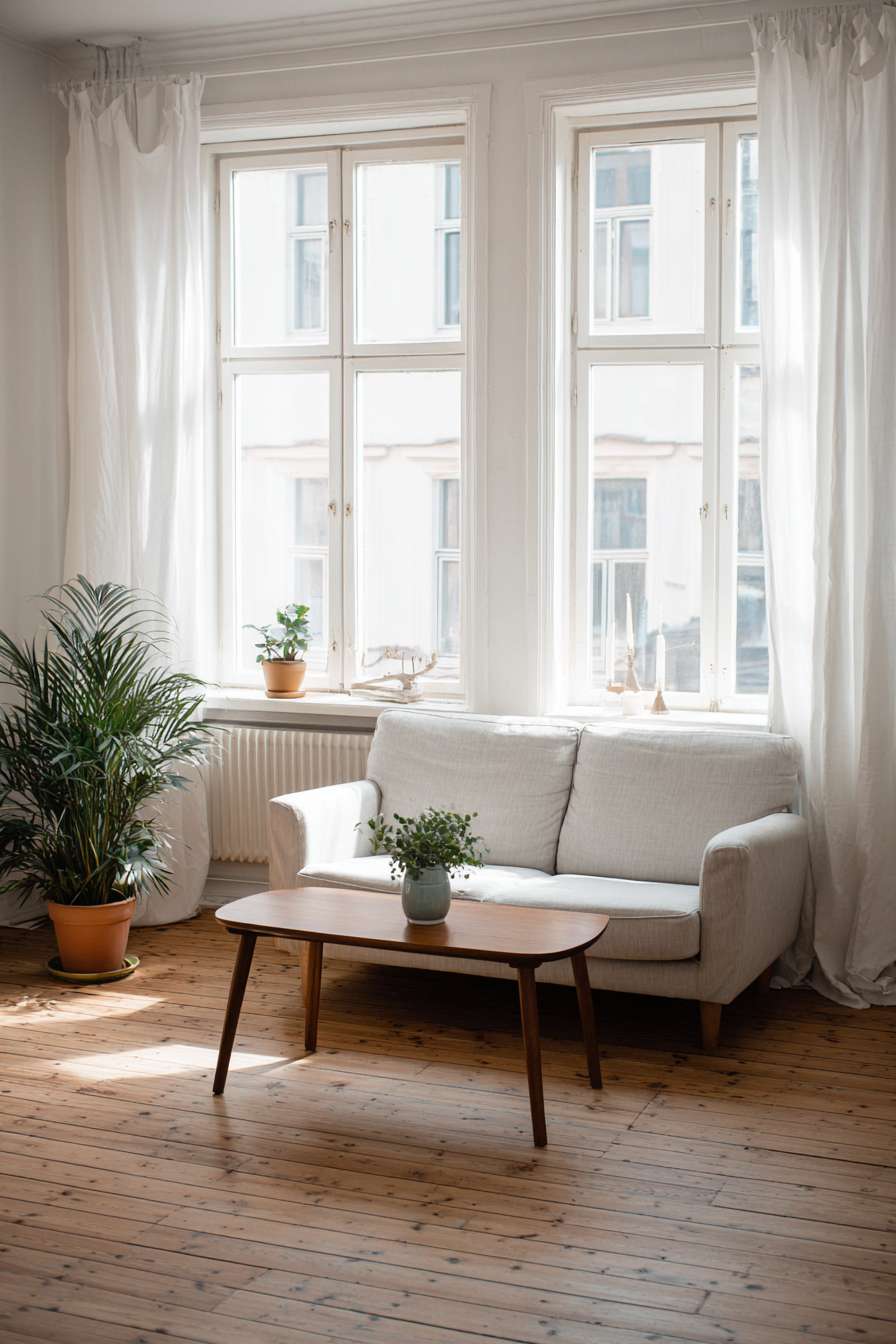
Key Design Tips:
- Edit ruthlessly, keeping only essential furniture and meaningful objects
- Maximize natural light with minimal window treatments and white surfaces
- Choose furniture with simple, clean-lined forms in natural materials
- Limit color palette to whites, greys, and natural wood tones
- Display single statement items rather than collections of smaller objects
25. Seasonal Flexibility Design
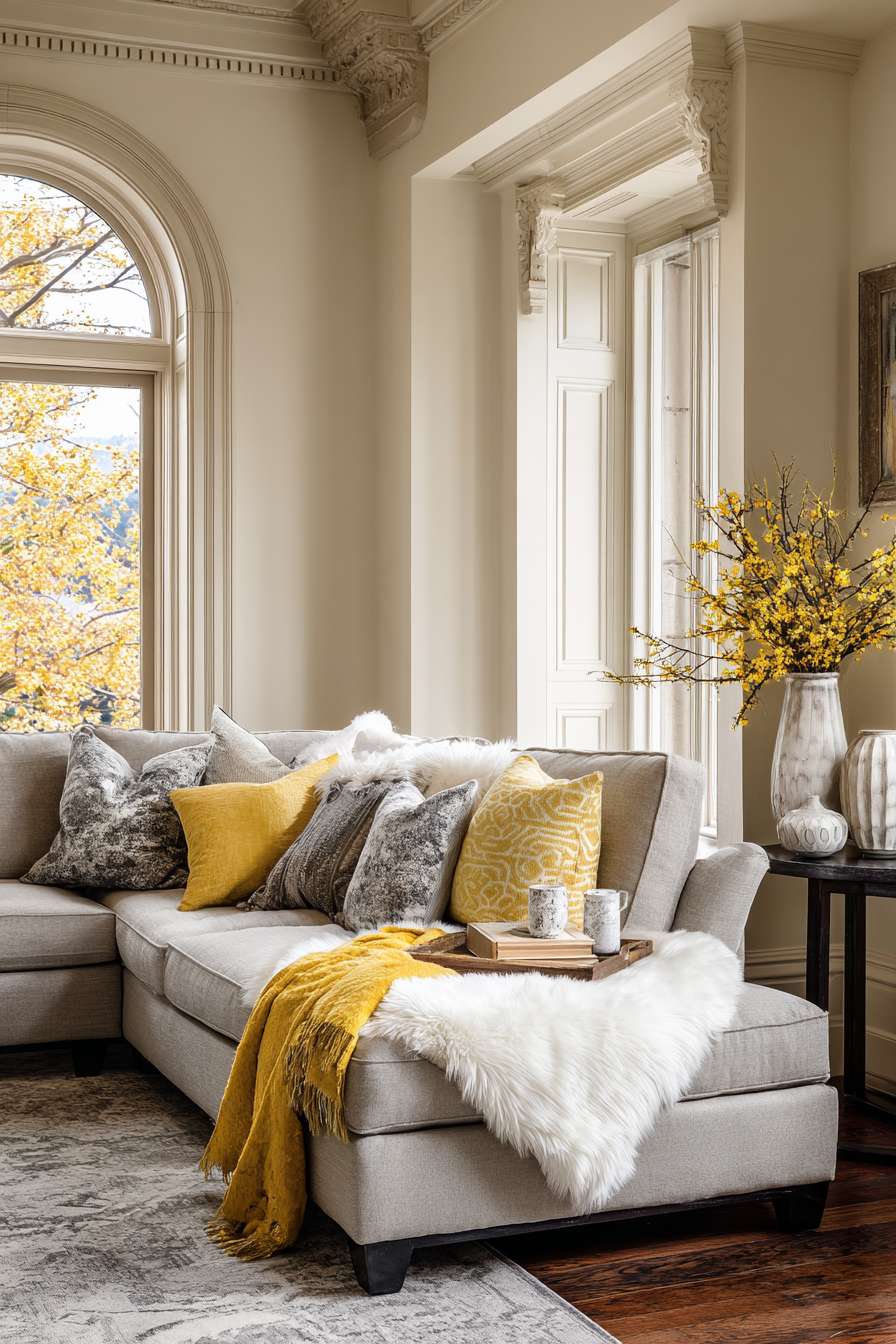
This adaptable space features a neutral-toned sofa in taupe fabric serving as the year-round foundation that works with any seasonal color scheme. Interchangeable throw pillows and blankets stored nearby allow quick seasonal updates, from warm plaids in autumn to light florals in spring, without requiring furniture changes. The lightweight area rug can be swapped seasonally, providing cool natural fibers in summer and plush wool in winter.
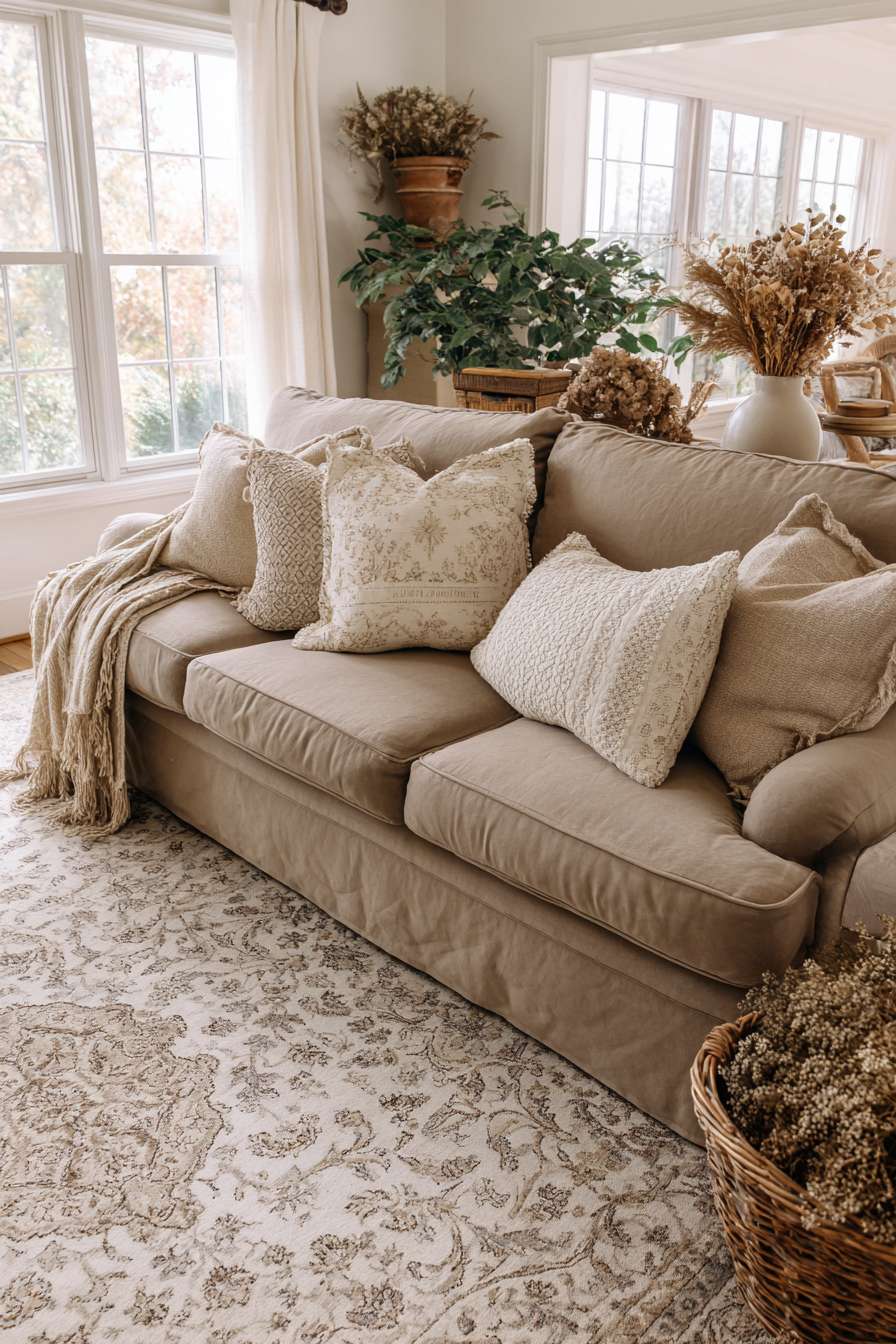
Decorative accessories displayed in neutral vessels easily update with seasonal elements—pumpkins and pinecones in fall, fresh flowers in spring, beach finds in summer. This flexible system allows the room to reflect changing seasons and holidays without major expenditure or effort. Natural light through adjustable window treatments adapts to seasonal sun angles, providing warmth in winter while reducing heat gain in summer.
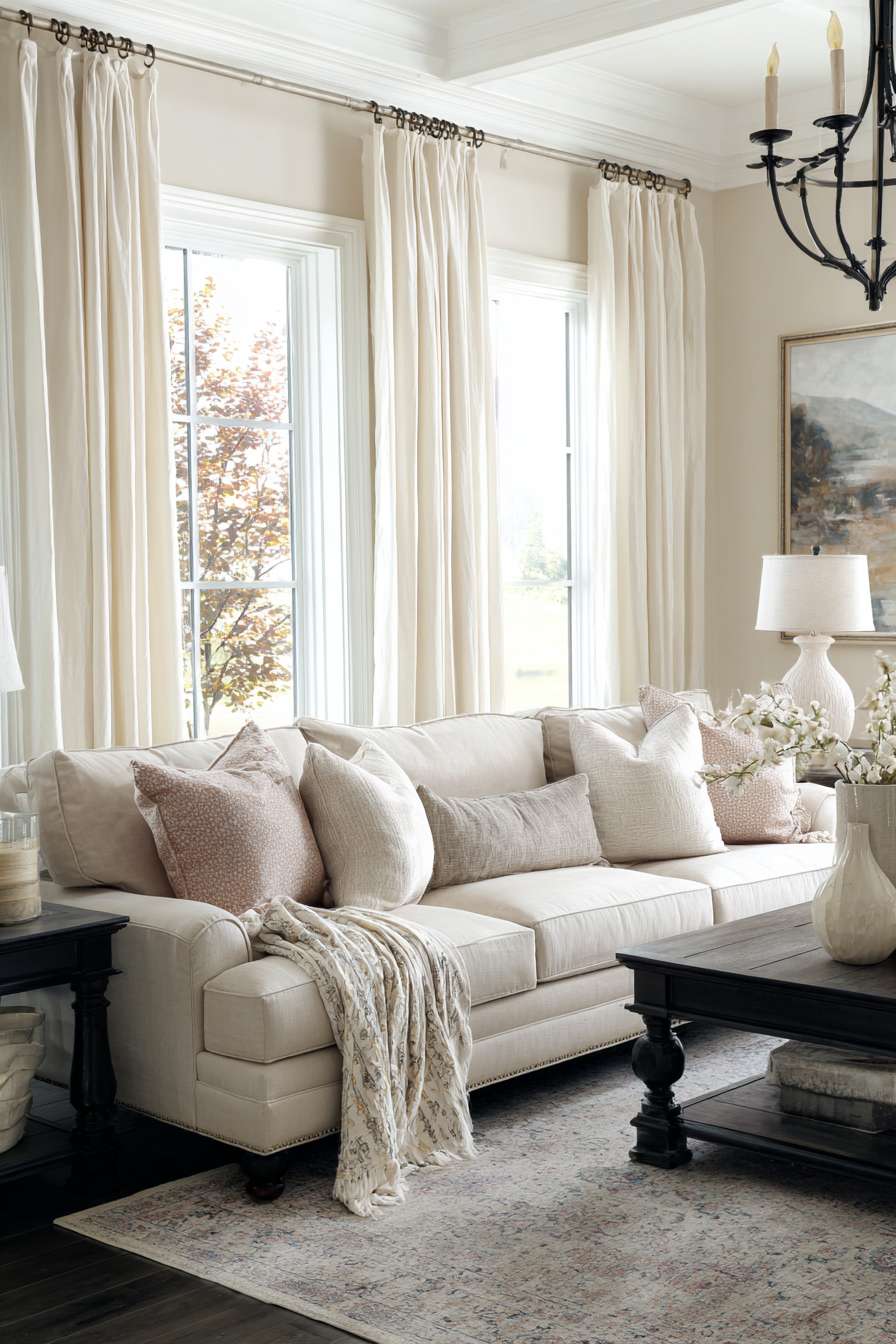
The adaptable base design demonstrates smart long-term thinking, with quality foundational pieces that justify their cost through versatility and longevity. This approach suits renters who may move seasonally or homeowners who enjoy refreshing their spaces throughout the year. The practical versatility proves that smart design accommodates change rather than fighting it.
Key Design Tips:
- Invest in neutral foundational furniture that works with any color scheme
- Create systems for storing off-season textiles and accessories
- Choose easily swappable elements like pillows and throws for seasonal updates
- Display seasonal items in neutral containers that remain visible year-round
- Select window treatments that adjust for seasonal light and temperature changes
26. Budget-Friendly Smart Styling
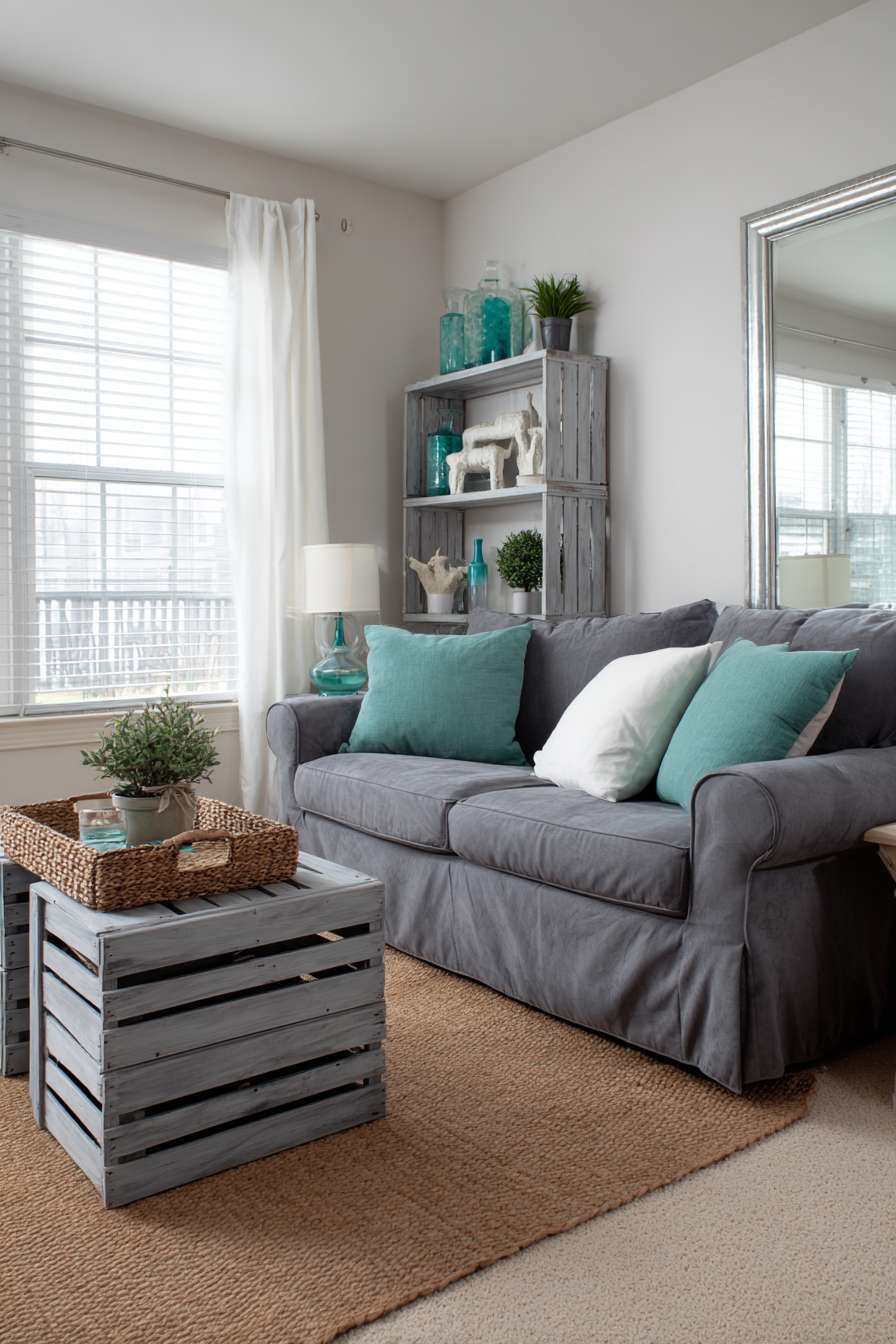
This space demonstrates that sophisticated design doesn’t require unlimited budgets through a quality sofa in durable grey fabric as the investment piece, complemented by affordable side tables made from painted wooden crates. The sofa’s quality construction and classic neutral color ensure it will serve well for years, justifying its higher cost. DIY floating shelves created from simple materials display thrifted decor finds that add personality without major expense.
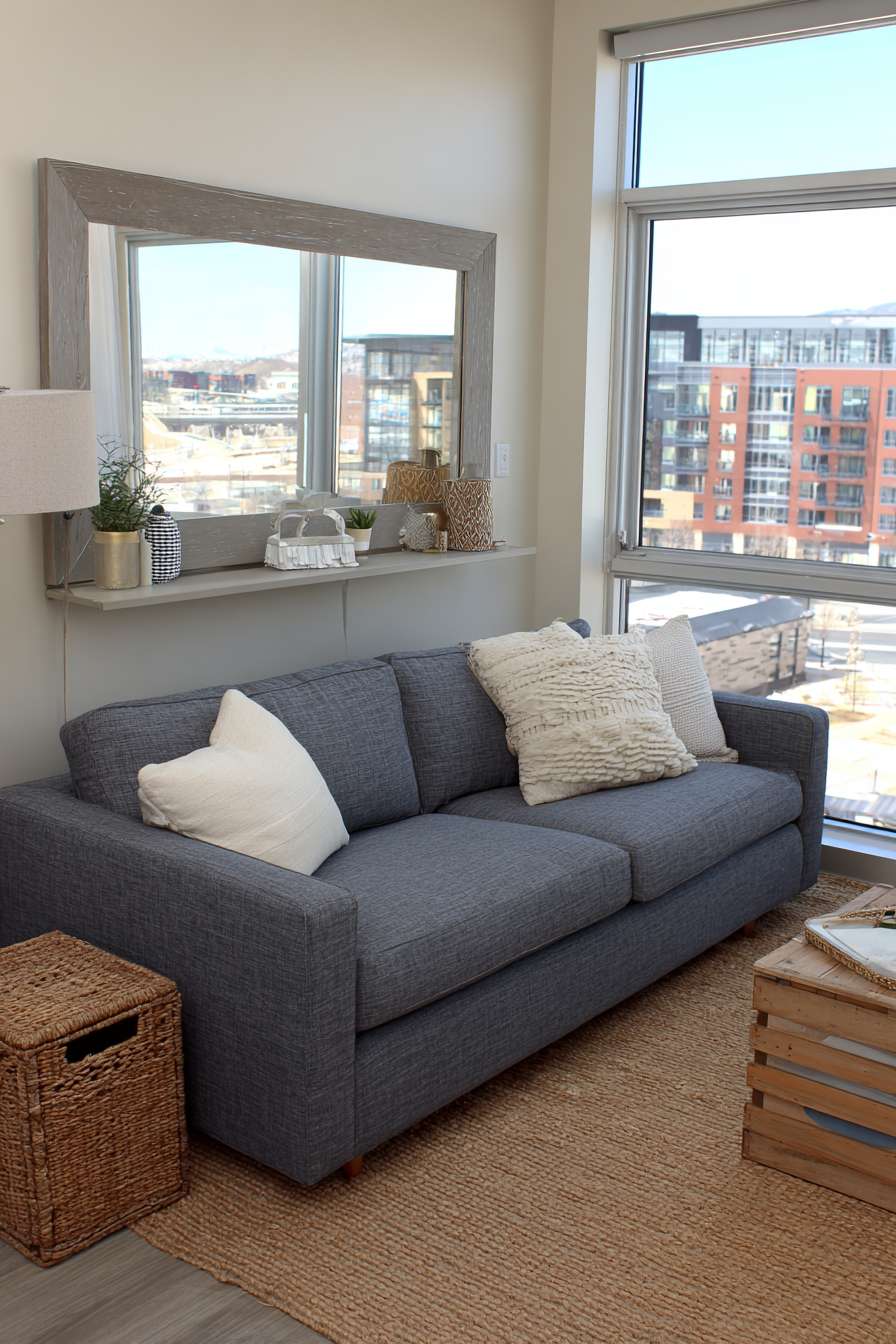
A large mirror purchased from a discount retailer enhances light and creates the illusion of expanded space, delivering high-impact results for minimal investment. The mirror’s size matters more than its frame quality in achieving the desired effect. Natural fiber rugs add texture inexpensively, with jute and sisal options providing sophisticated materials at accessible price points.
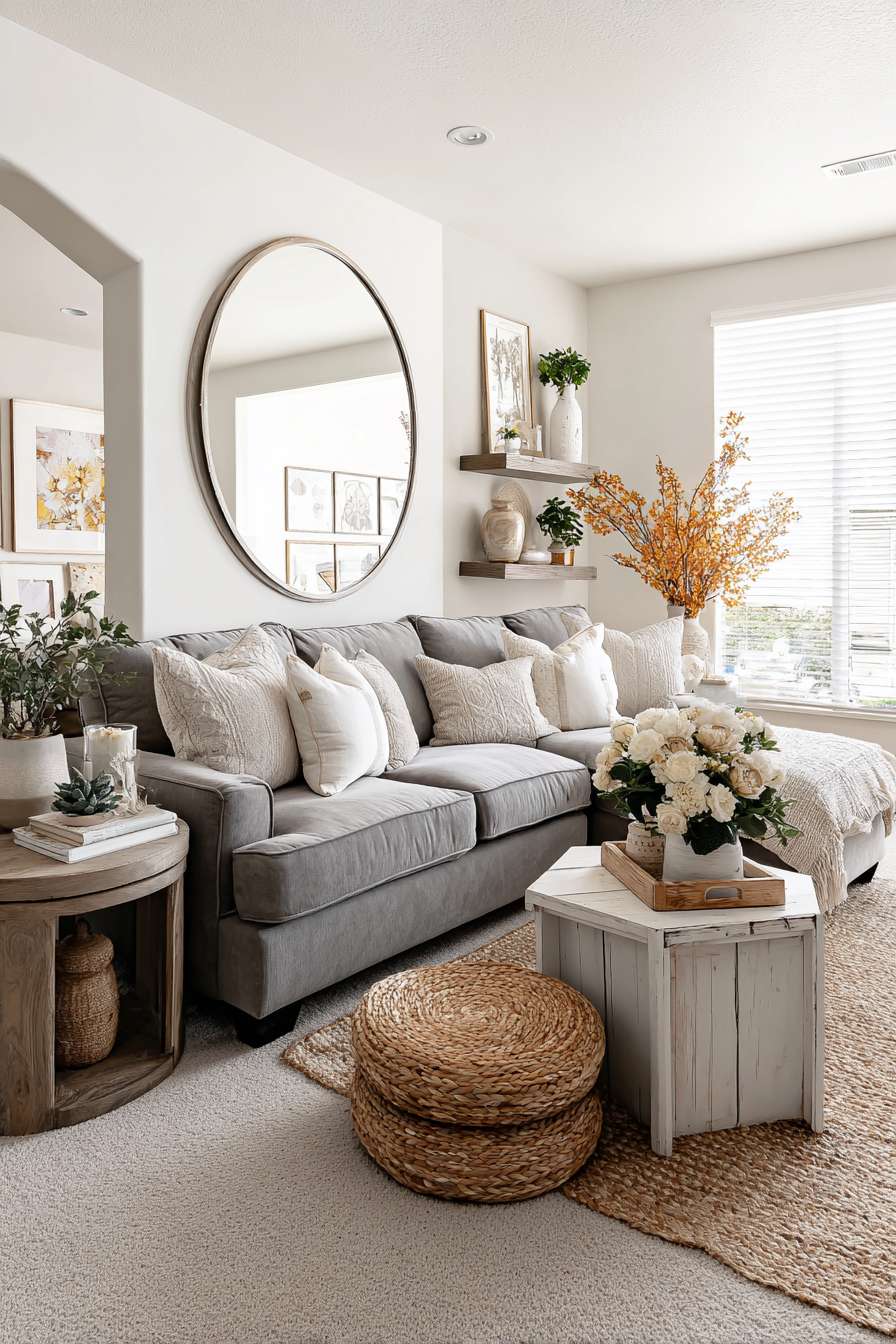
Natural window light maximizes brightness without expensive lighting fixtures, while strategic mirror placement amplifies this free resource. The smart, cost-effective styling proves that understanding design principles matters more than unlimited budgets, with thoughtful decisions creating polished results. This approach empowers apartment dwellers to create beautiful spaces regardless of financial constraints.
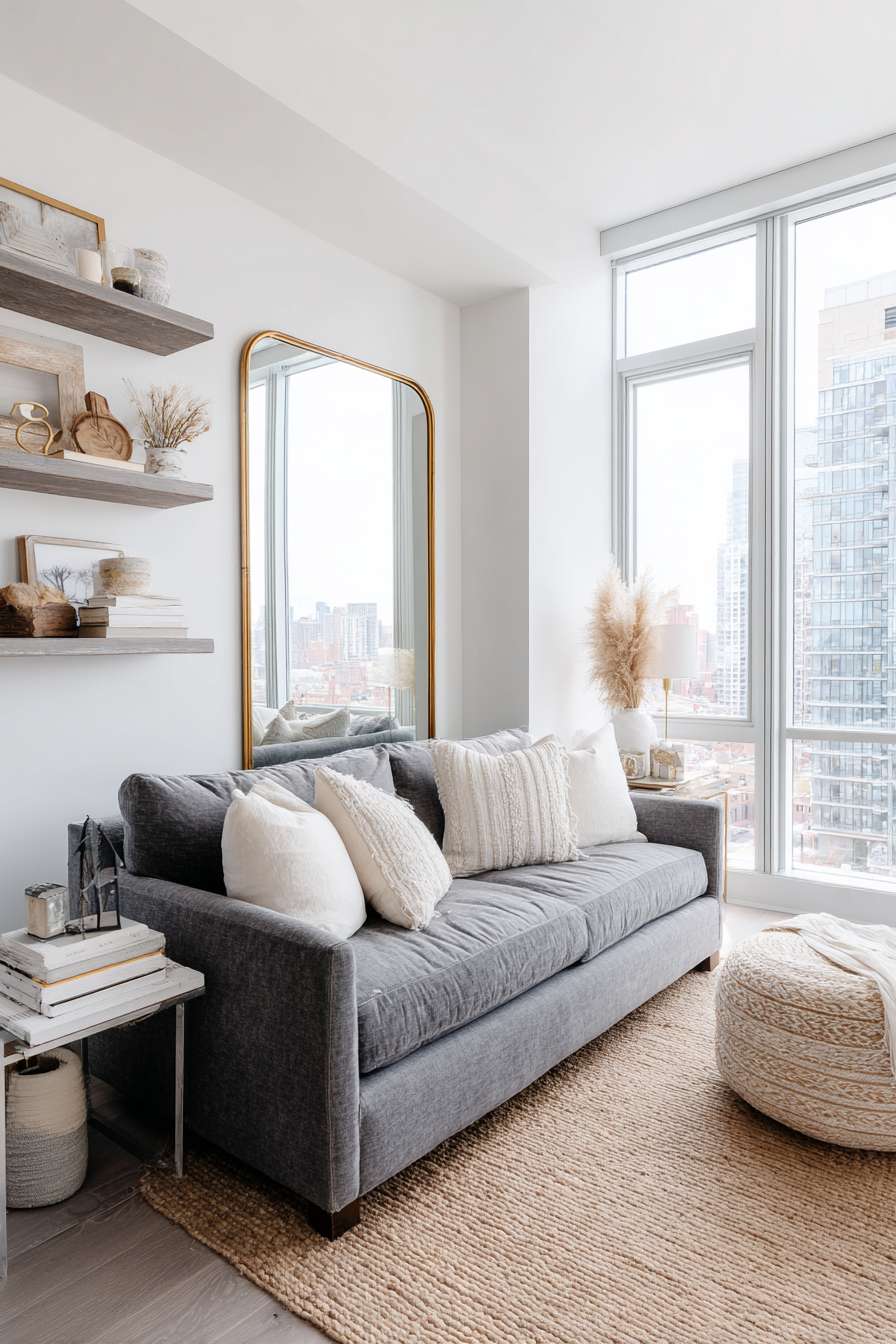
Key Design Tips:
- Invest in one quality anchor piece like a sofa or rug
- Create DIY solutions for secondary furniture using painted crates or boards
- Shop thrift stores and estate sales for unique decorative items
- Use large mirrors from discount retailers to expand space and light
- Maximize free natural light rather than investing in expensive fixtures
27. Luxury Apartment Sophistication
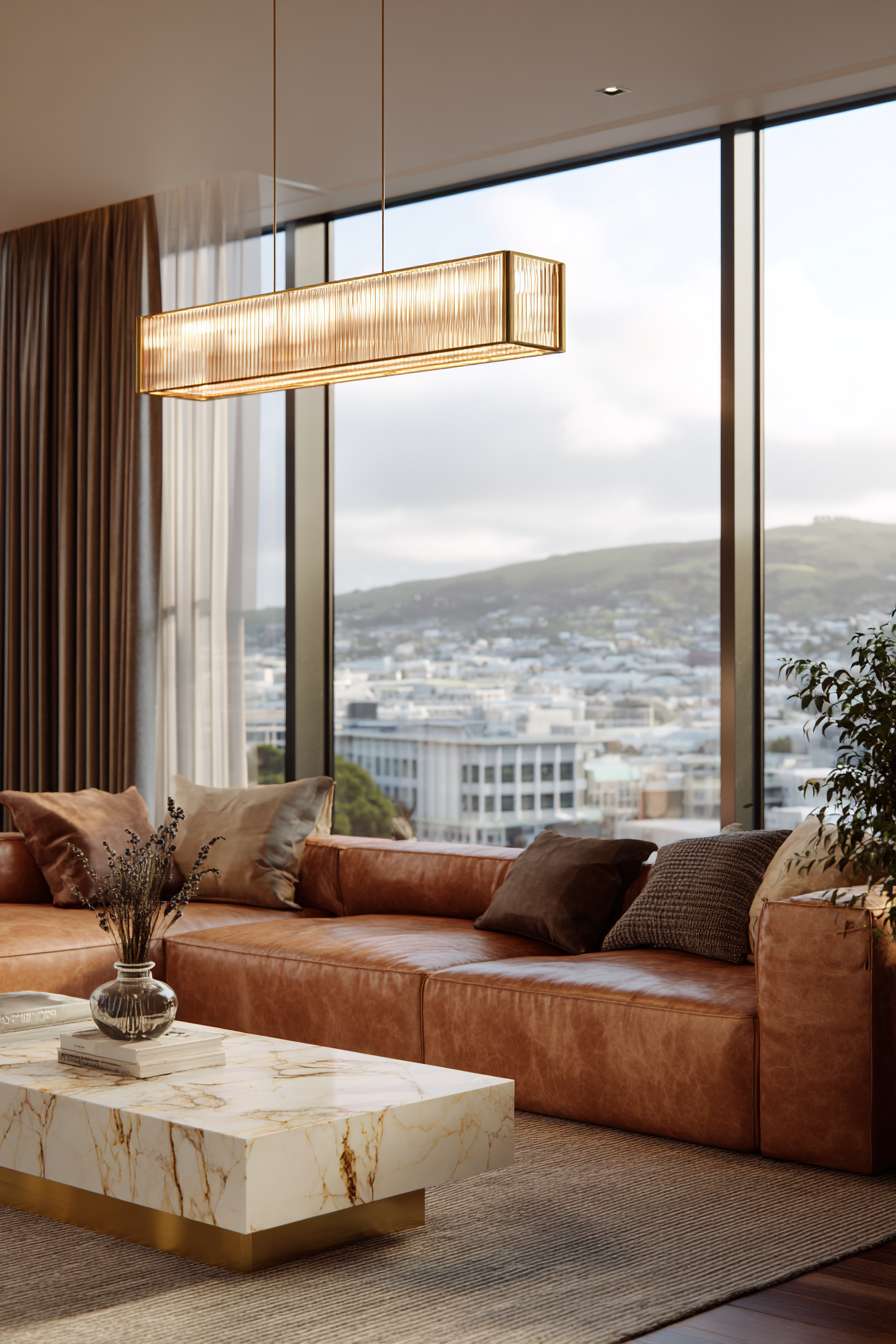
Designer furniture anchors this upscale space, starting with a sofa in rich camel leather showing premium grain texture and precise stitching details that announce quality craftsmanship. The leather’s character and aging properties justify the investment, developing patina that enhances rather than detracts from appearance. A statement marble coffee table with brass base serves as a sculptural focal point, its substantial presence and luxurious materials elevating the entire room.
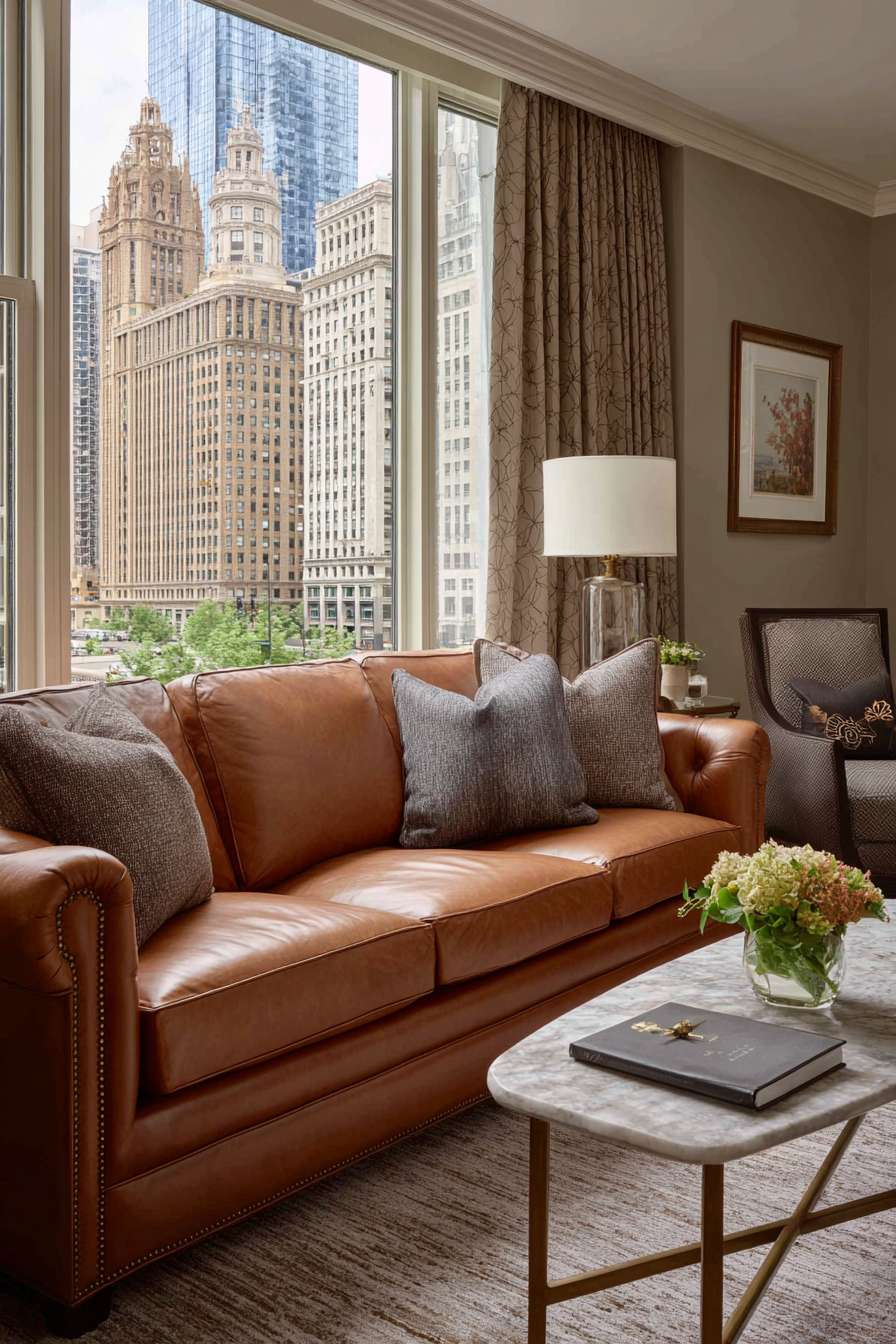
The designer pendant light fixture adds architectural interest while providing beautiful illumination, its form contributing to the room’s aesthetic as much as its function. Floor-to-ceiling windows with custom drapery in silk blend fabric frame city views while the drapery’s quality construction and luxurious hand demonstrate attention to detail. The plush area rug in a neutral tone anchors the high-end furnishings with additional comfort and acoustic benefits.
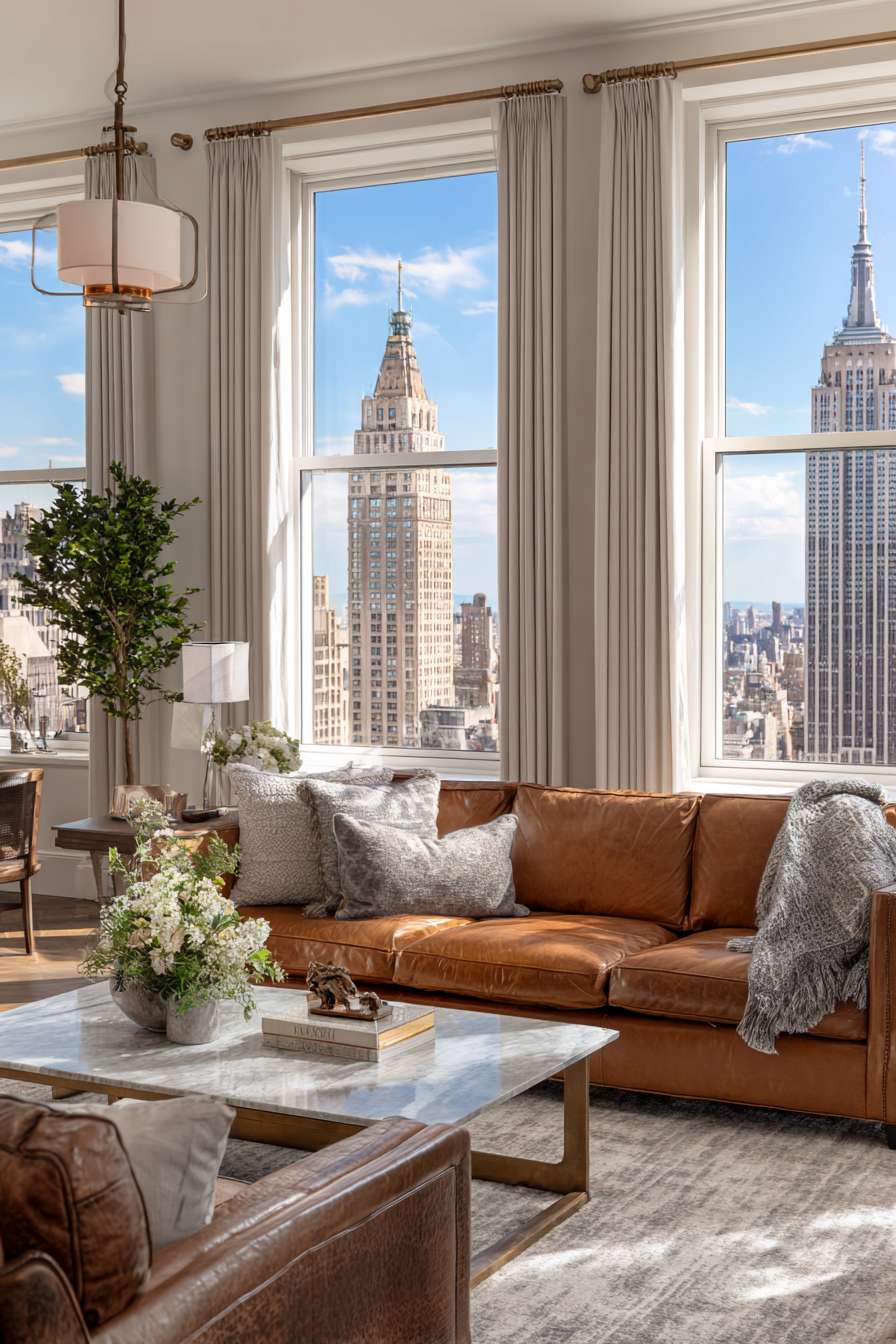
Professional interior photography captures the sophisticated materiality and upscale finishes, with natural light highlighting luxury details like the leather’s grain variations and marble’s veining. The space demonstrates how quality materials, expert craftsmanship, and thoughtful design create environments that feel genuinely luxurious rather than merely expensive. This investment approach prioritizes pieces that will serve beautifully for decades.
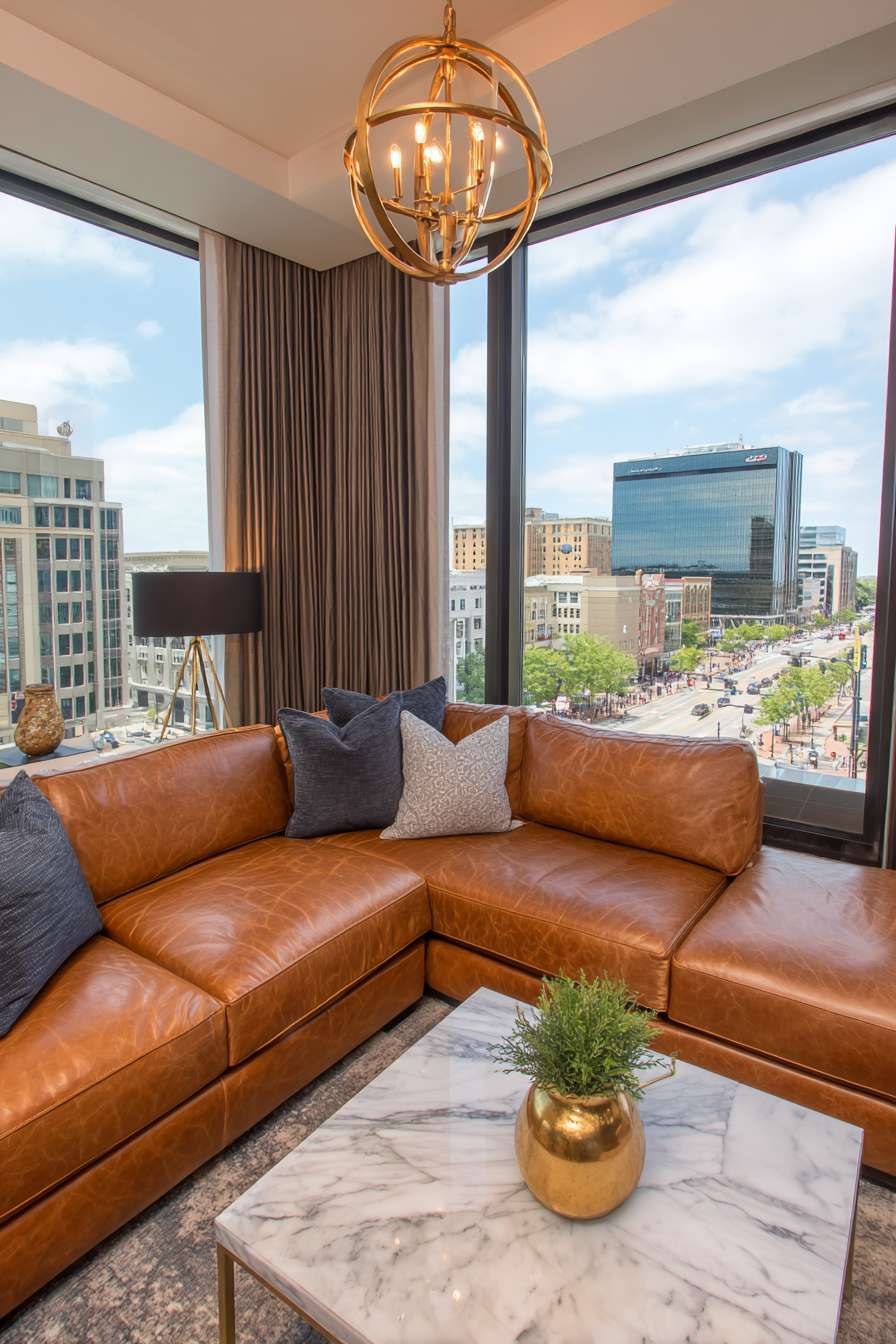
Key Design Tips:
- Invest in premium materials like quality leather and natural stone
- Select statement lighting fixtures that serve as sculptural elements
- Choose custom window treatments in luxurious fabrics for polished appearance
- Layer high-quality textiles through rugs and drapery for sensory richness
- Prioritize craftsmanship details like stitching quality and joinery precision
Why These Living Room Apartment Ideas Represent the Best Design Solutions
These twenty-seven living room apartment ideas represent the pinnacle of thoughtful interior design because they address the real challenges apartment dwellers face daily. Unlike generic design inspiration that ignores spatial constraints, these concepts acknowledge that apartment living rooms must work harder than their house counterparts, serving multiple functions within limited square footage. From Murphy bed integrations that transform sleeping spaces into living areas, to strategic sofa placement that creates room divisions without walls, each idea solves practical problems while maintaining aesthetic integrity.
The designs span diverse style preferences because beauty isn’t one-size-fits-all—what feels serene and perfect to a minimalist might seem stark to someone who thrives in maximalist environments. By presenting everything from Scandinavian simplicity to bohemian abundance, industrial edge to coastal serenity, these ideas honor individual preferences while demonstrating core design principles. Whether drawn to the clean lines of contemporary design, the warmth of modern farmhouse aesthetics, or the collected character of eclectic spaces, apartment dwellers find starting points that resonate with their personal style.
Material selection throughout these designs prioritizes durability and practicality without sacrificing beauty—crucial considerations for apartment furniture that must withstand daily use, potential moves, and evolving life stages. The emphasis on multifunctional furniture, clever storage solutions, and flexible arrangements acknowledges that apartments house real lives with changing needs. Sofa beds accommodate overnight guests, storage ottomans hide clutter, nesting tables expand for entertaining then tuck away, and wall-mounted desks serve work-from-home needs without permanently claiming living space.
Lighting strategies across all these designs recognize that apartment dwellers often lack control over architectural features like window placement or ceiling height, yet proper illumination dramatically impacts how spaces feel. The consistent emphasis on maximizing natural light through window treatment selection, mirror placement, and paint color demonstrates understanding that brightness expands perceived space—essential in compact apartments. Layered artificial lighting provides flexibility, allowing rooms to adapt from energizing morning brightness to relaxing evening ambiance.
Color palette choices throughout these ideas demonstrate sophisticated understanding of how hues affect spatial perception and mood. Light, neutral foundations make rooms feel larger and brighter—crucial in apartments with limited square footage or natural light. Strategic color pops through accent furniture, textiles, or artwork add personality without overwhelming. Monochromatic schemes create sophisticated cohesion while varied textures prevent flatness. These color strategies prove that apartment design can be both beautiful and spatially intelligent.
The storage solutions embedded in these designs address perhaps the greatest apartment challenge: finding homes for belongings without cluttering living spaces. Floor-to-ceiling shelving maximizes vertical space, furniture with hidden compartments serves double duty, and behind-sofa consoles activate transitional zones. These approaches recognize that adequate storage determines whether apartments feel spacious or cramped, regardless of actual square footage. Smart storage integration maintains clean aesthetics while providing practical functionality.
These living room apartment ideas excel because they demonstrate that design constraints can inspire creativity rather than limit possibilities. Small spaces demand thoughtful editing, resulting in curated environments where every element justifies its presence. Limited budgets encourage DIY innovation and thrift store treasure hunting. Rental restrictions inspire removable solutions and furniture-based transformations rather than permanent renovations. These challenges, properly addressed, create spaces with personality and purpose.
Finally, these designs represent best practices because they’re achievable. Unlike aspirational images showing impossible room dimensions or unlimited budgets, these ideas translate to real apartment realities. The furniture scales appropriately for typical apartment living rooms, storage solutions address actual organizational needs, and styling remains approachable rather than requiring professional intervention. This accessibility empowers apartment dwellers to implement these ideas, creating homes that reflect their style while functioning beautifully for daily life.
Conclusion
Creating a beautiful, functional living room within an apartment’s spatial constraints represents one of interior design’s most rewarding challenges. These twenty-seven ideas demonstrate that limitations need not compromise style, comfort, or personality—instead, they inspire creative solutions that often prove more interesting than unlimited-space designs. From maximizing vertical storage to incorporating multifunctional furniture, from strategic color selection to thoughtful lighting design, each concept offers actionable strategies for transforming apartment living rooms into spaces that truly feel like home.
The diversity of styles presented ensures that every aesthetic preference finds representation, whether you’re drawn to the serene simplicity of Scandinavian minimalism, the collected warmth of bohemian layering, the raw authenticity of industrial design, or the sophisticated restraint of contemporary spaces. Success lies not in following any single approach perfectly but in understanding the principles each demonstrates—space planning, material selection, lighting strategy, storage integration—and adapting them to your unique space and lifestyle.
Remember that apartment design remains perpetually evolving as your life changes, seasons shift, and tastes develop. The most successful spaces embrace this flexibility through foundational pieces that endure while allowing for smaller updates that keep rooms feeling fresh. Whether you’re furnishing your first studio or refreshing a longtime home, these ideas provide inspiration and practical guidance for creating living rooms that support how you actually live while reflecting who you are. Start with the concepts that resonate most strongly, adapt them to your specific space and budget, and enjoy the process of transforming your apartment living room into a personal sanctuary that welcomes you home every day.
