
The living room serves as the heart of every home—a sanctuary where families gather, guests are entertained, and memories are created. Within this essential space, the accent wall has emerged as one of the most powerful design tools available to homeowners and interior designers alike. An accent wall doesn’t merely add visual interest; it fundamentally transforms the character of a room, establishing focal points, enhancing architectural features, and expressing personal style in ways that few other design elements can achieve.
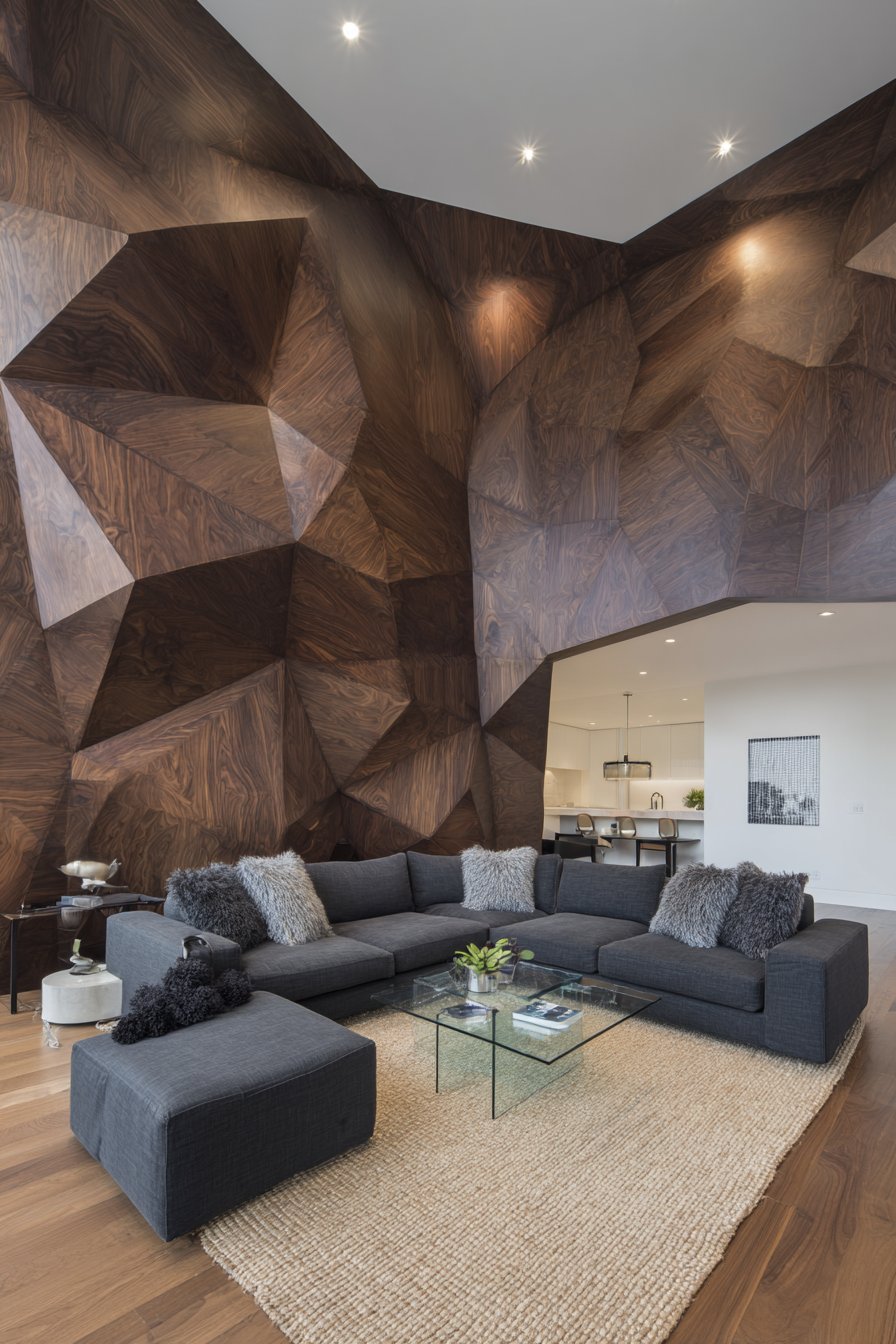
The beauty of accent wall design lies in its remarkable versatility and accessibility. Whether you’re drawn to the bold drama of deep jewel tones, the organic warmth of natural wood, the industrial edge of exposed brick, or the subtle sophistication of textured wallpapers, there exists an accent wall solution perfectly suited to your aesthetic vision and practical needs. These design features can accommodate any budget, skill level, or timeline, making them an ideal starting point for both ambitious renovations and modest refresh projects. The transformative power of a well-executed accent wall extends beyond mere aesthetics—it can visually expand small spaces, add architectural interest to plain rooms, and create cohesive design narratives that tie together disparate decorative elements.
In this comprehensive guide, we’ll explore twenty-three distinct living room accent wall ideas, each offering unique approaches to materials, colors, textures, and styles. From the timeless appeal of shiplap and board-and-batten treatments to cutting-edge geometric panels and luxurious fabric installations, these concepts represent the full spectrum of contemporary interior design possibilities. Whether you’re cultivating a coastal retreat, an urban loft, a mid-century modern homage, or a traditional sanctuary, you’ll discover actionable inspiration and expert guidance to help you create an accent wall that not only enhances your living space but truly reflects who you are and how you live.
1. Navy Blue Sophistication with Textured Finish
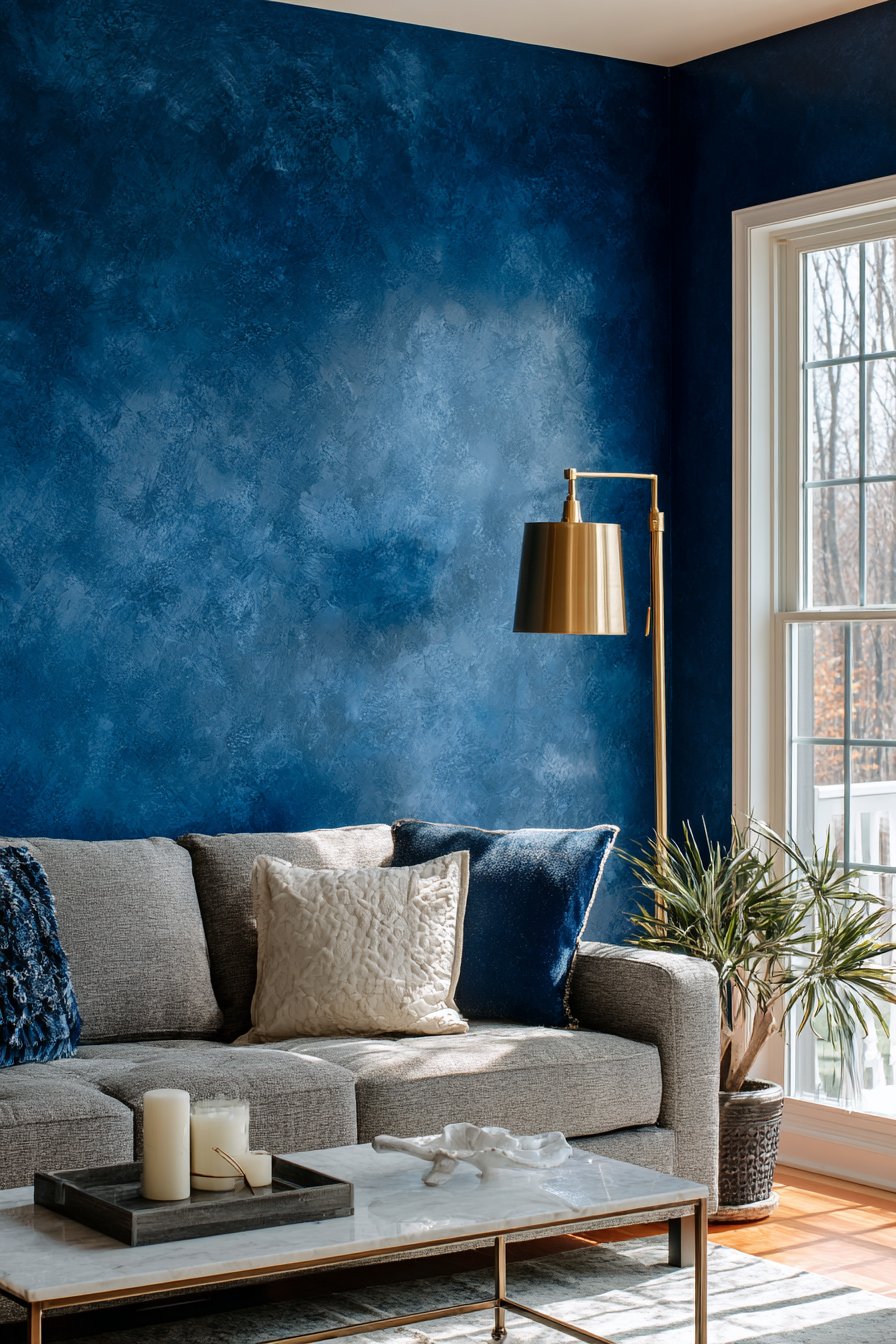
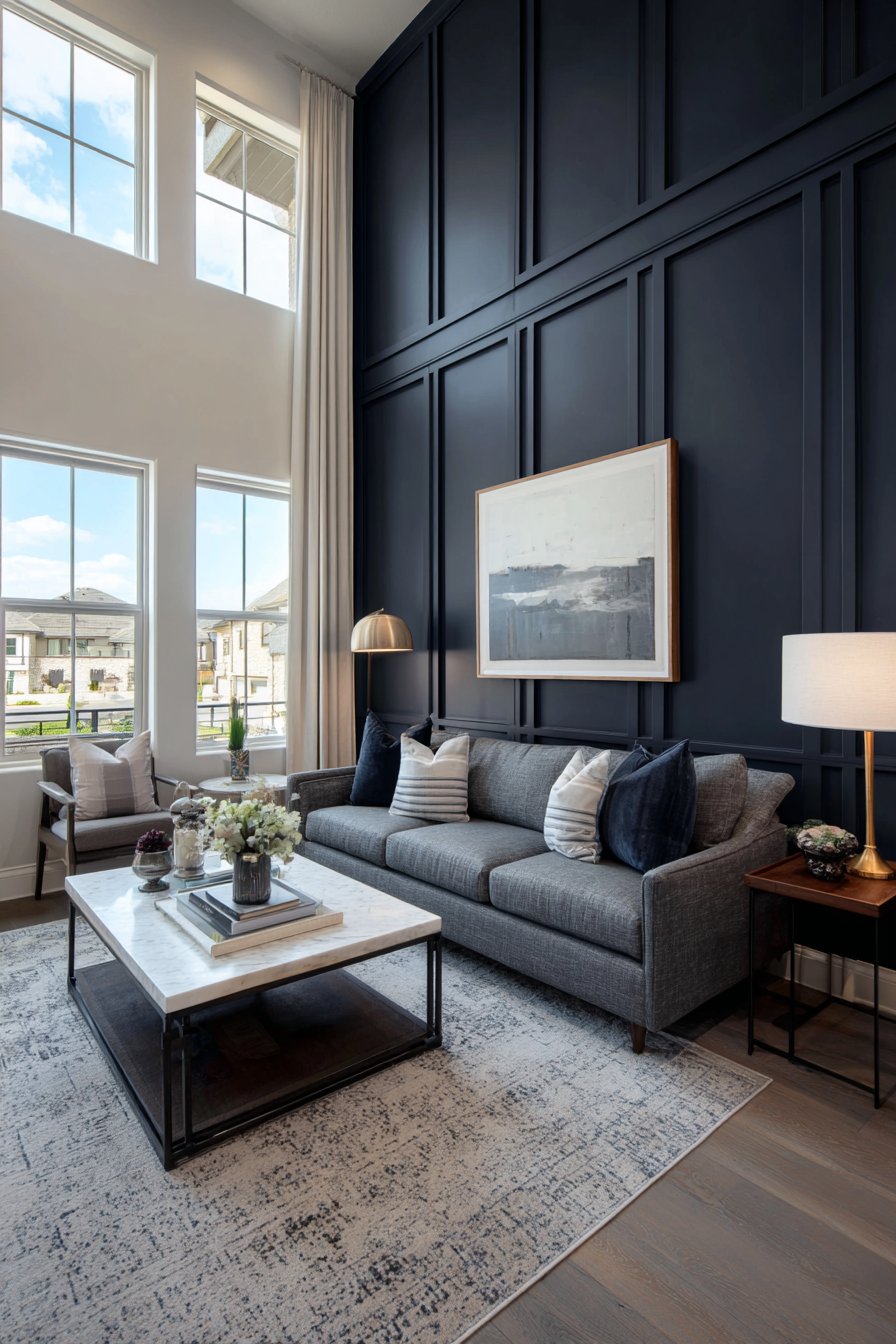
A navy blue accent wall represents the perfect marriage of boldness and refinement, offering dramatic impact while maintaining an air of timeless elegance. This sophisticated approach features a deep navy paint with a subtle textured finish that catches and reflects light throughout the day, creating dynamic visual interest that evolves with changing natural illumination. The richness of navy blue provides an exceptional backdrop for contemporary grey linen furnishings, allowing the neutral sofa to stand out while grounding the entire space in a cohesive color story. The interplay between the deep wall color and lighter furniture creates dimensional contrast that prevents the room from feeling either too heavy or too sparse.
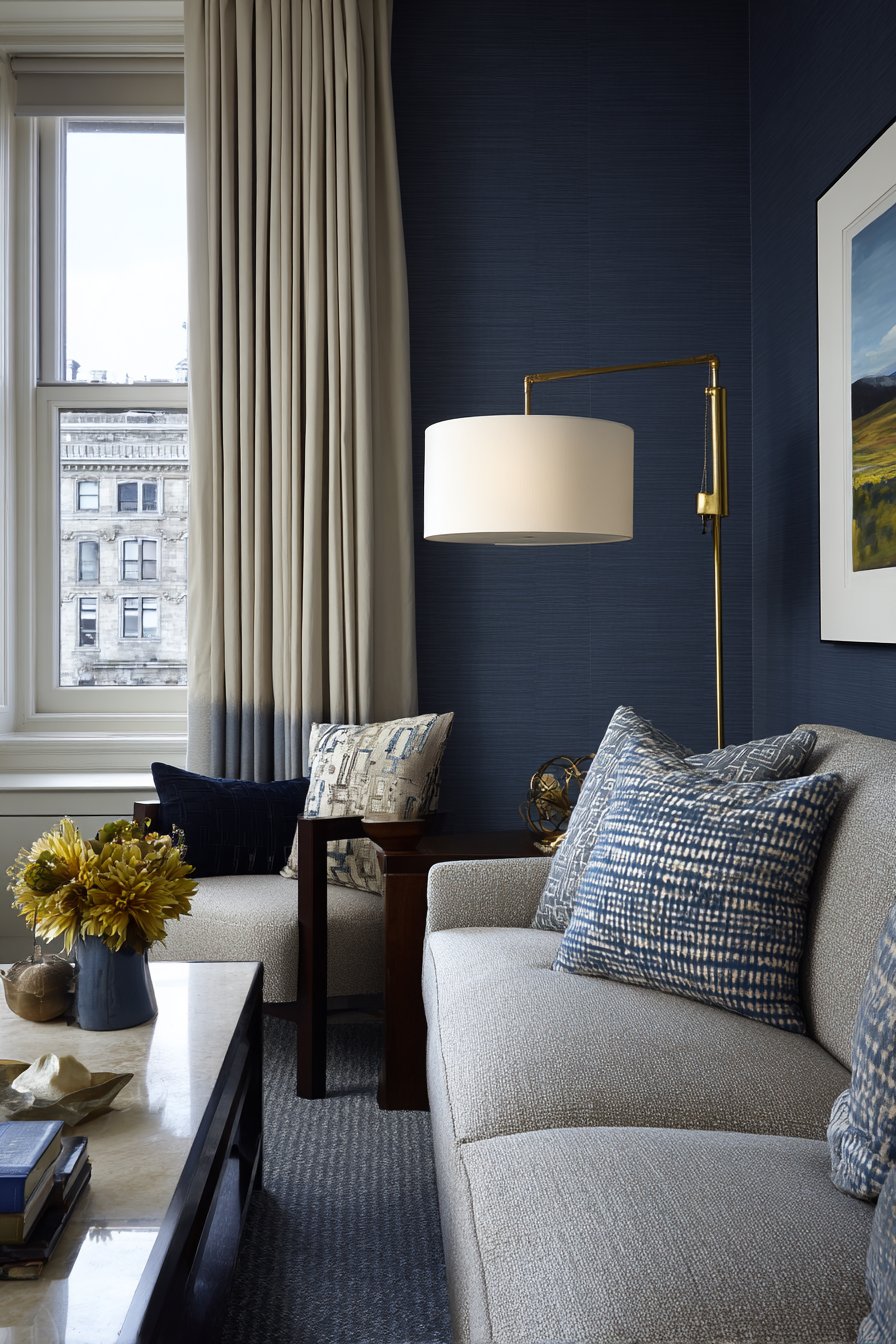
The beauty of this living room accent wall idea lies in its versatility and psychological impact. Navy blue conveys confidence, stability, and depth—qualities that transform a living room from merely functional to genuinely memorable. When paired with metallic accents like the brass floor lamp and marble-topped coffee table, the navy backdrop elevates these elements, making them appear more intentional and curated. The texture finish on the wall surface adds another layer of sophistication, preventing the flat appearance that can sometimes plague solid paint colors while creating subtle shadows that add architectural interest to an otherwise plain wall.
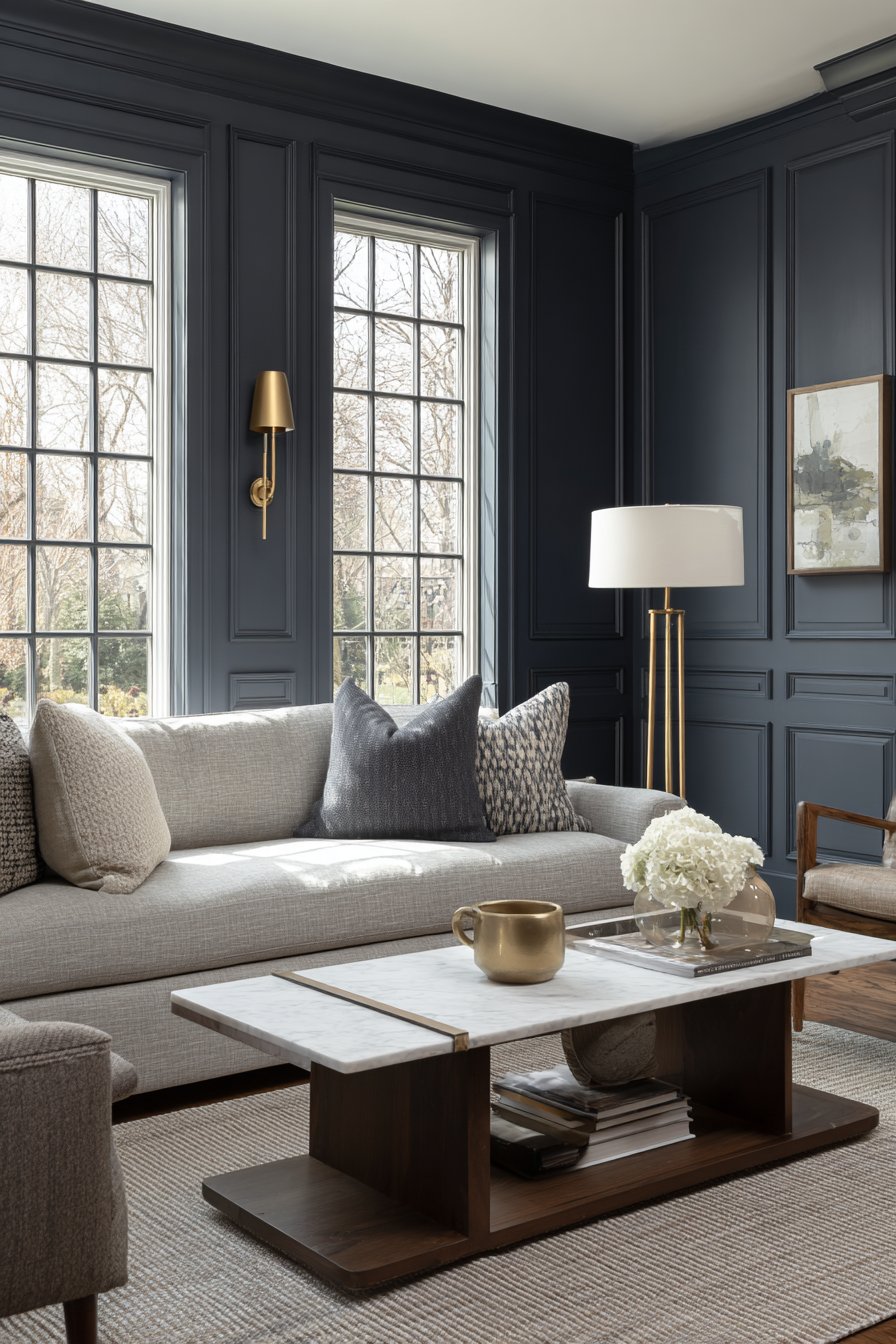
Natural light plays a crucial role in the success of this design concept. Windows positioned adjacent to the accent wall allow daylight to graze across the textured surface, highlighting the paint’s dimensional quality and preventing the dark color from overwhelming the space. This consideration of light patterns demonstrates the importance of planning accent wall placement in relation to your room’s natural illumination sources. The professional photography perspective captures this delicate balance, showing how the dramatic color creates focal-point impact while the surrounding neutral elements provide visual breathing room.
Key Design Tips: Choose a navy blue with subtle grey undertones rather than pure primary blue to ensure versatility and prevent the color from appearing juvenile. Apply texture through specialty paint techniques, textured rollers, or Venetian plaster to add depth and prevent flat appearance. Position accent walls opposite or adjacent to natural light sources to maximize the textural effect. Balance dark accent walls with lighter furniture and flooring to maintain spatial openness. Consider the room’s existing undertones when selecting navy shades to ensure harmonious color coordination. Test paint samples in various lighting conditions throughout the day before committing to the final color.
2. Sage Green Shiplap Serenity
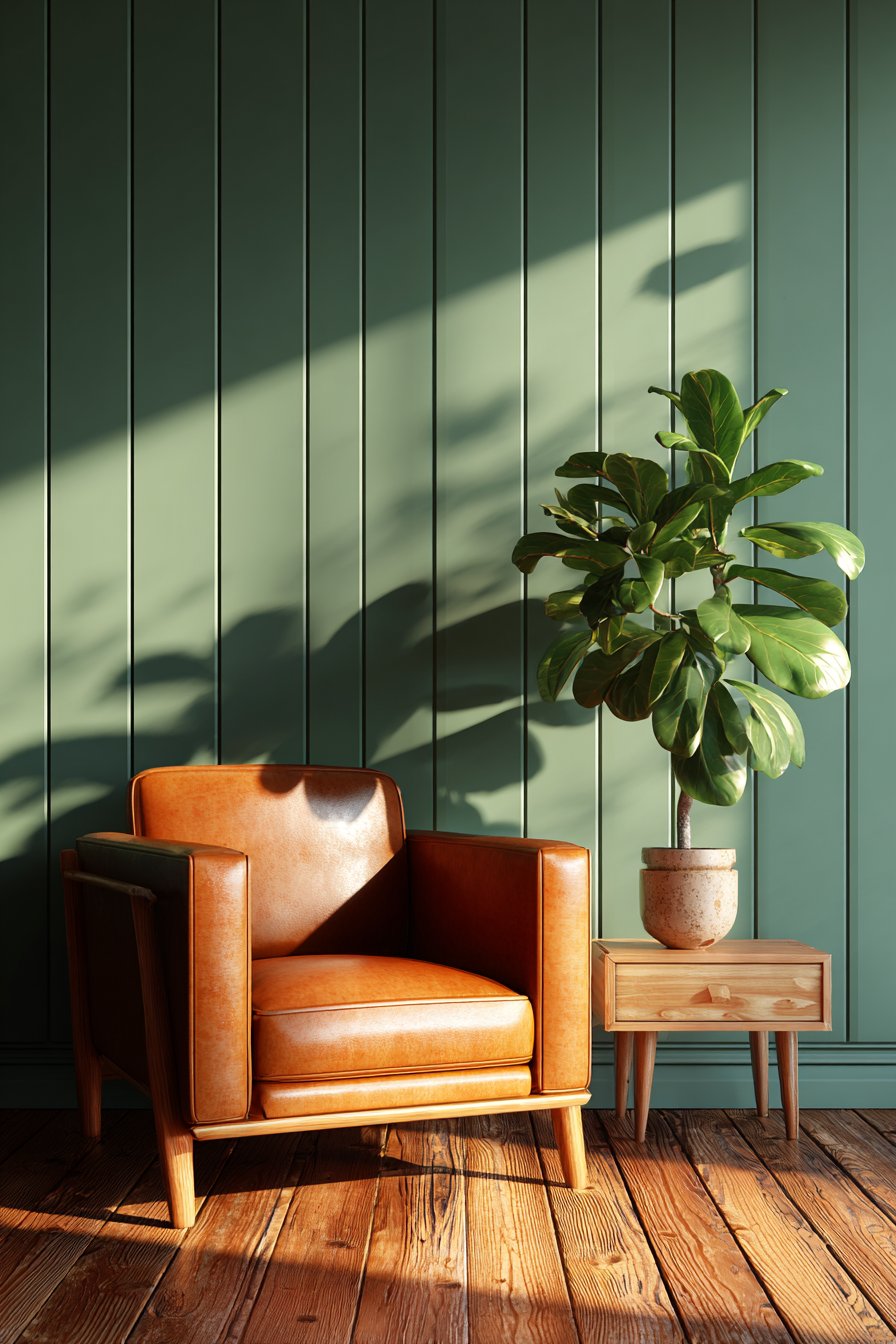
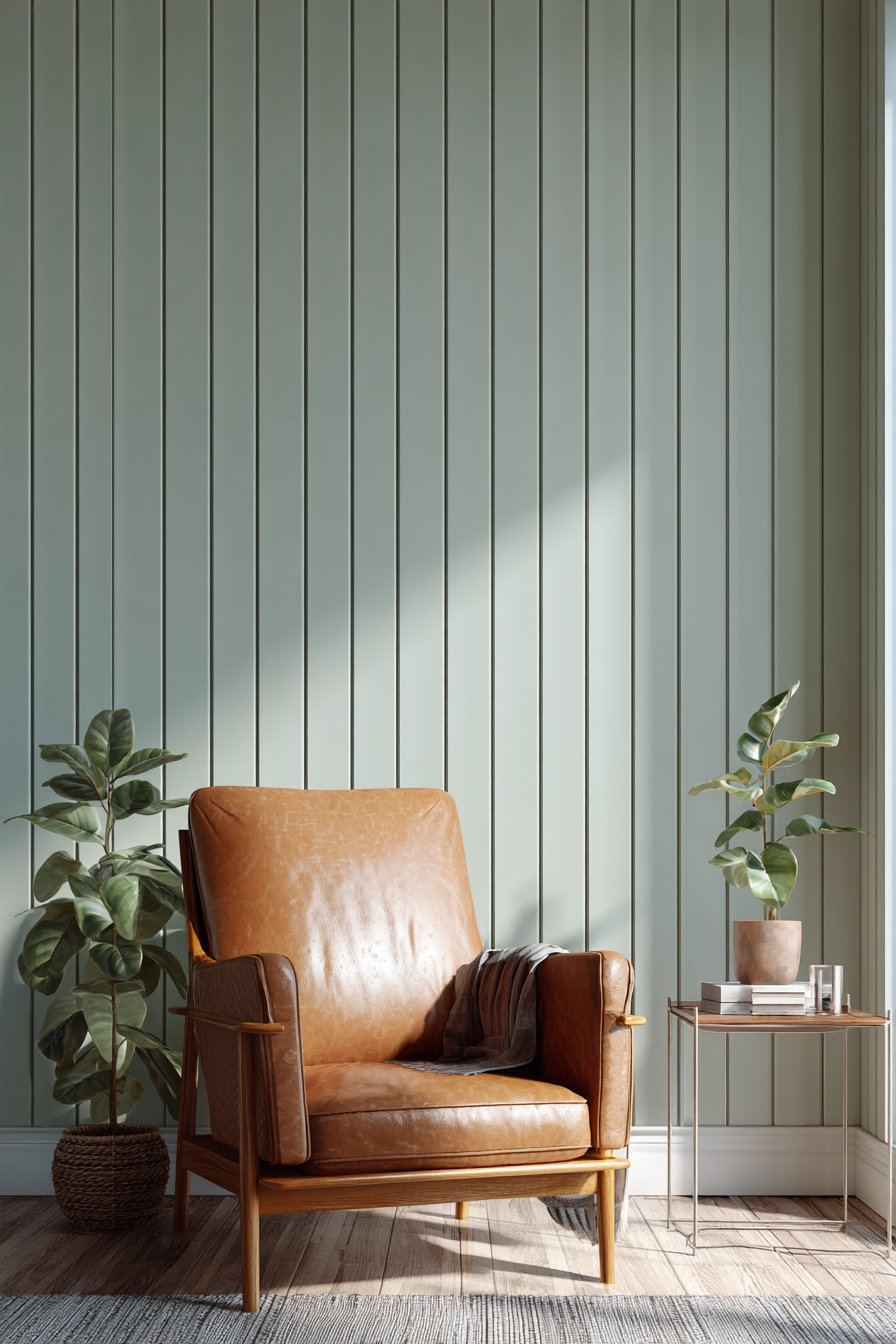
Vertical shiplap paneling painted in soft sage green creates an accent wall that feels both contemporary and timelessly classic, offering the perfect backdrop for a cozy reading nook or relaxation zone. The vertical orientation of the shiplap boards draws the eye upward, creating the illusion of higher ceilings while adding architectural character to standard walls. This living room accent wall idea combines the organic, calming properties of sage green with the textural dimension of shiplap grooves, resulting in a feature wall that engages multiple senses and provides visual warmth without overwhelming the space.
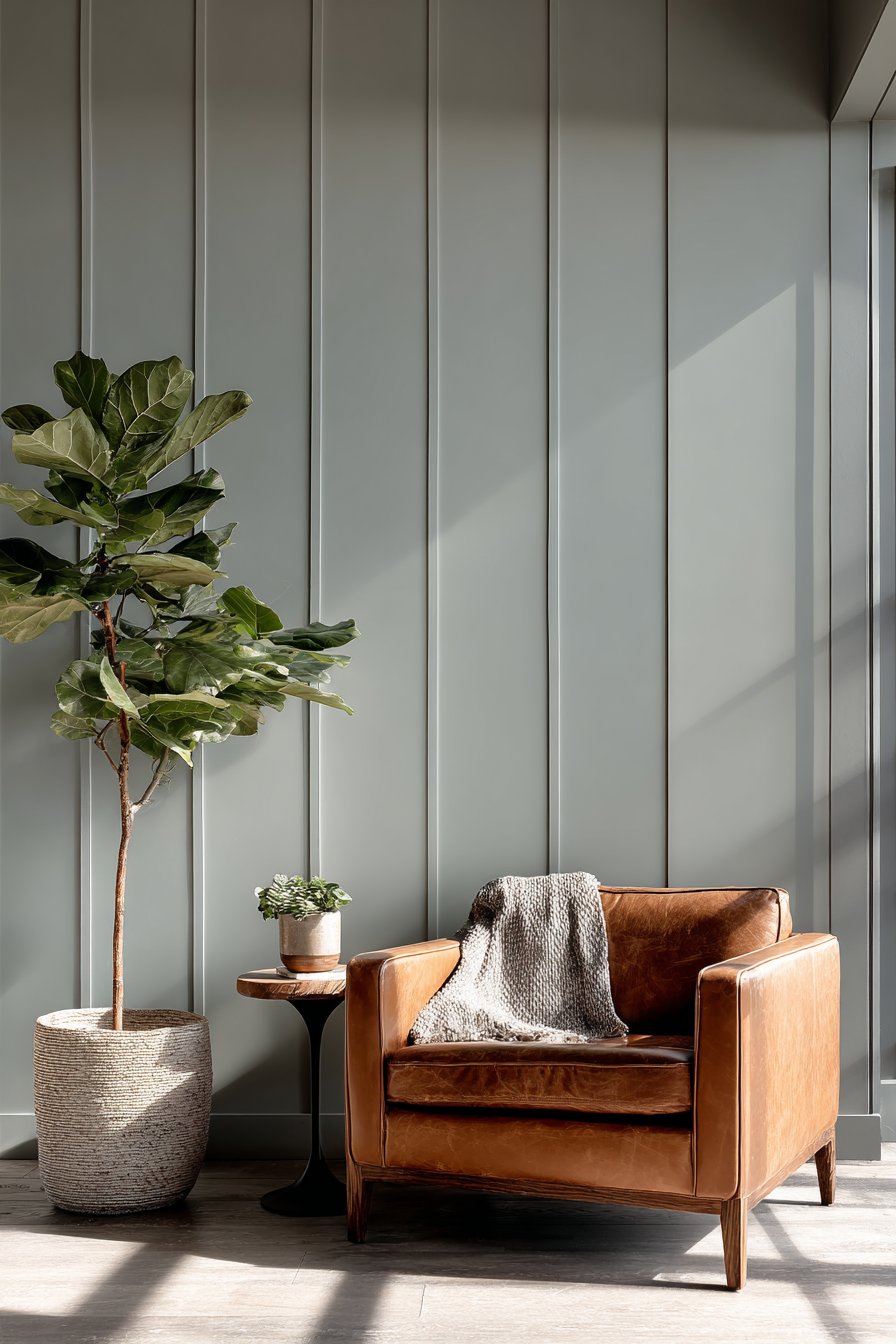
The choice of sage green as the primary color brings the tranquility of nature indoors, creating an atmosphere conducive to relaxation and contemplation. This particular shade sits perfectly between grey and green, offering the best of both color families—the sophistication of grey and the rejuvenating quality of green. When afternoon sunlight streams across the paneled surface, it illuminates the subtle shadow lines between each shiplap board, creating a gentle rhythm that adds movement and interest to the wall. The mid-century modern armchair in caramel leather provides a warm counterpoint to the cool sage tones, while the minimalist side table and potted fiddle leaf fig reinforce the natural, organic aesthetic.
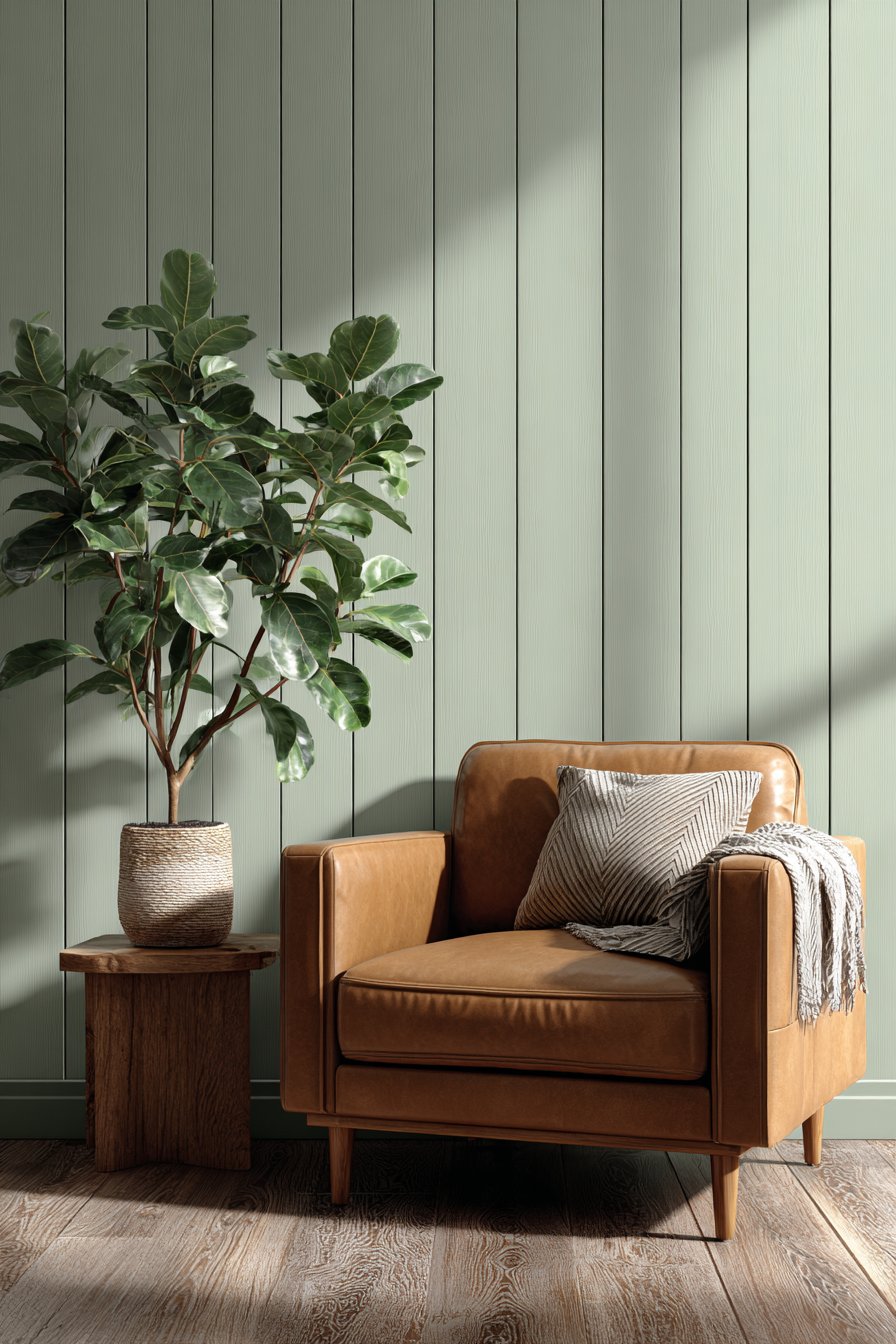
The installation of shiplap as an accent wall treatment offers practical advantages beyond aesthetics. The horizontal grooves create natural breaks that can disguise wall imperfections, while the overlapping board edges add genuine architectural dimension rather than merely painted-on texture. This three-dimensional quality becomes especially apparent in varied lighting conditions, as shadows shift throughout the day to emphasize different aspects of the wall surface. The combination of color and texture creates a sensory-rich environment that feels carefully curated without appearing overly designed or staged.
Key Design Tips: Install shiplap vertically rather than horizontally to maximize ceiling height perception in standard rooms. Sand and prime raw wood shiplap thoroughly before painting to ensure smooth, professional finish. Space boards with consistent gaps using nickel or quarter spacers for uniform appearance. Choose low or no-VOC paints in sage green to maintain the healthy, natural aesthetic. Complement sage green walls with warm wood tones and natural materials like leather, linen, and live plants. Position reading furniture near windows to capitalize on natural light while showcasing the shiplap texture. Apply matte or eggshell paint finishes to enhance the organic, relaxed character of sage green.
3. Mixed Stone Veneer with Modern Rustic Appeal
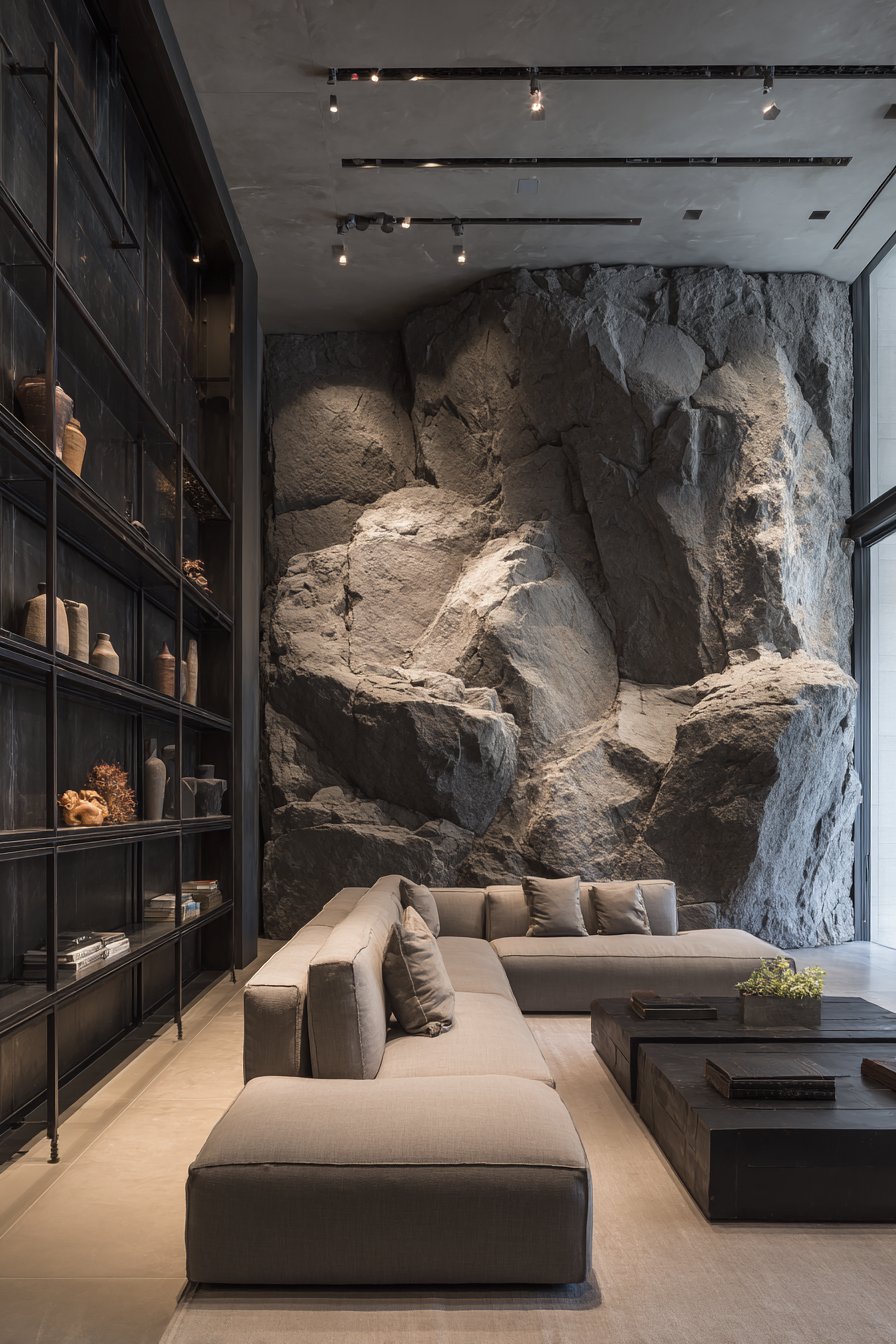
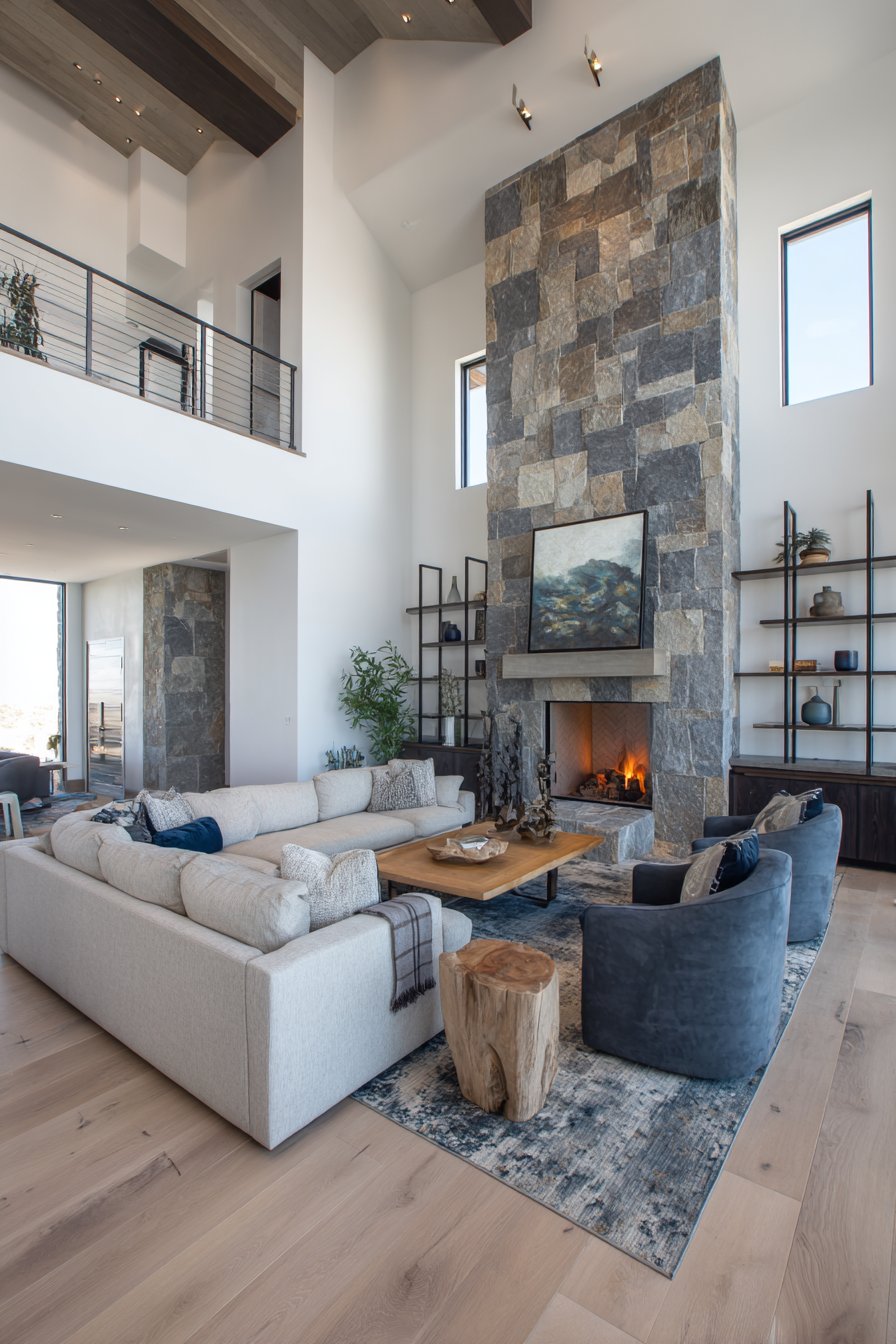
A floor-to-ceiling stone veneer accent wall in mixed grey and charcoal tones delivers substantial visual weight and organic texture that immediately establishes the living room as a space of sophisticated rusticity. This living room accent wall idea brings the raw beauty of natural stone indoors, creating a permanent architectural feature that serves as both focal point and conversation starter. The varied surface of stone veneer—with its irregular shapes, natural color variations, and dimensional depth—provides unmatched textural interest that simply cannot be replicated with painted or flat surfaces.
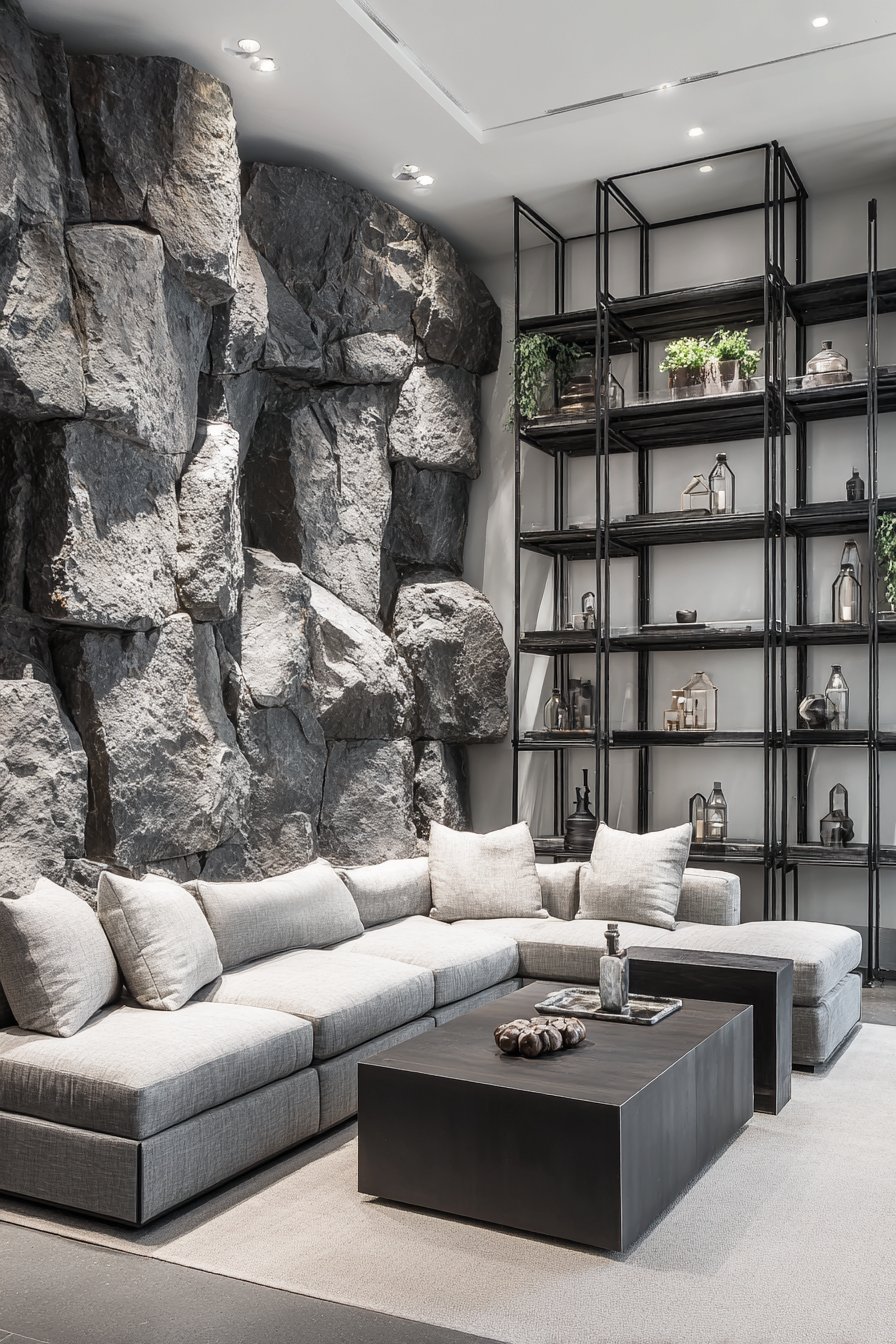
The selection of grey and charcoal tones ensures versatility while maintaining visual impact. These neutral stone colors coordinate seamlessly with contemporary furnishings like the neutral sectional, yet possess enough character to anchor more eclectic or industrial elements like the metal shelving displaying curated decor pieces. The stone veneer’s natural irregularities create an ever-changing play of light and shadow, particularly when illuminated by the strategic recessed lighting positioned above. This downlighting technique emphasizes the stone’s varied surface, casting dramatic shadows that accentuate every ridge, crevice, and color variation.
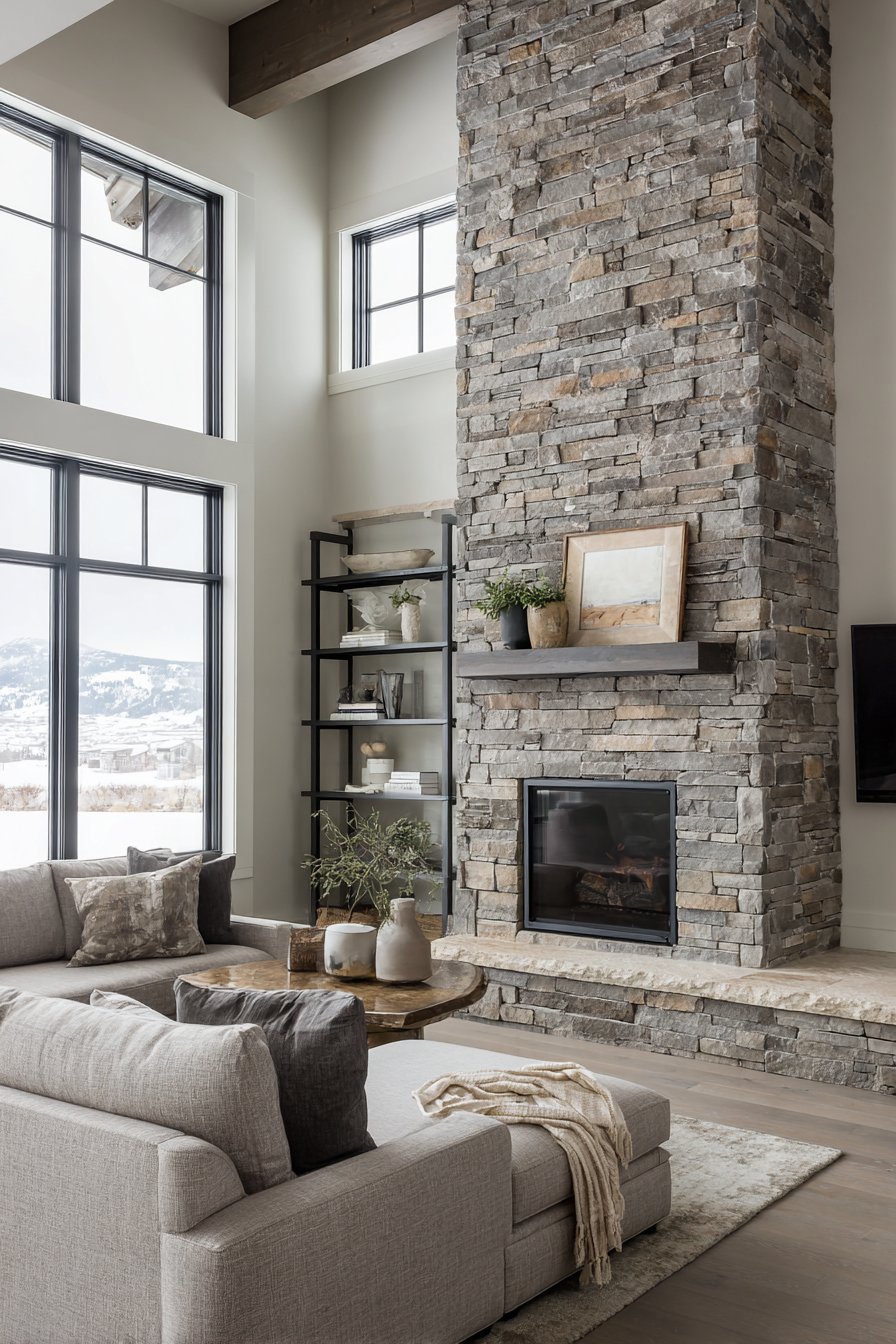
Beyond its aesthetic merits, stone veneer offers practical advantages that make it an excellent choice for high-traffic living spaces. The material proves remarkably durable, resistant to wear, and easy to maintain—requiring only occasional dusting to maintain its appearance. Unlike painted accent walls that may require periodic touch-ups, stone veneer maintains its character indefinitely, actually improving with age as it develops a natural patina. The installation of metal shelving against the stone creates a compelling material dialogue between refined industrial elements and organic natural textures, demonstrating how accent walls can serve as launching points for broader design narratives.
Key Design Tips: Select thin-cut stone veneer rather than full-thickness stone to reduce weight and installation complexity while maintaining authentic appearance. Vary stone sizes and shapes during installation to create natural-looking randomness rather than obvious patterns. Install recessed or track lighting above the stone wall to create dramatic downlighting that emphasizes texture. Ensure proper wall preparation and moisture barriers to prevent installation failures, especially in humid climates. Balance the heaviness of stone with lighter furniture and open shelving to prevent the room from feeling cave-like. Consider corner installations where stone can wrap around adjacent walls for greater architectural impact. Clean stone veneer with pH-neutral cleaners to preserve the natural color and prevent deterioration.
4. Gallery Wall on Deep Charcoal Background
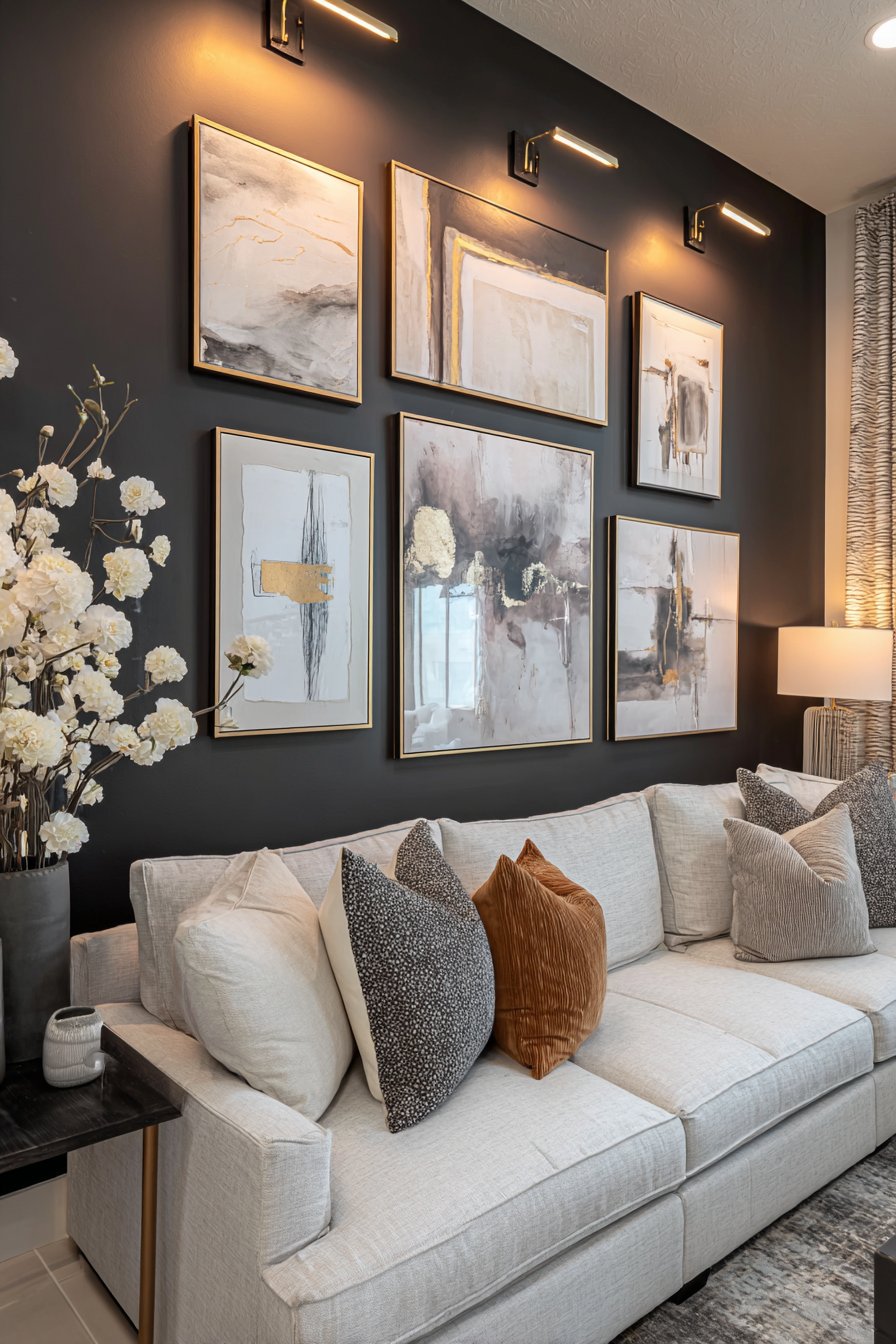
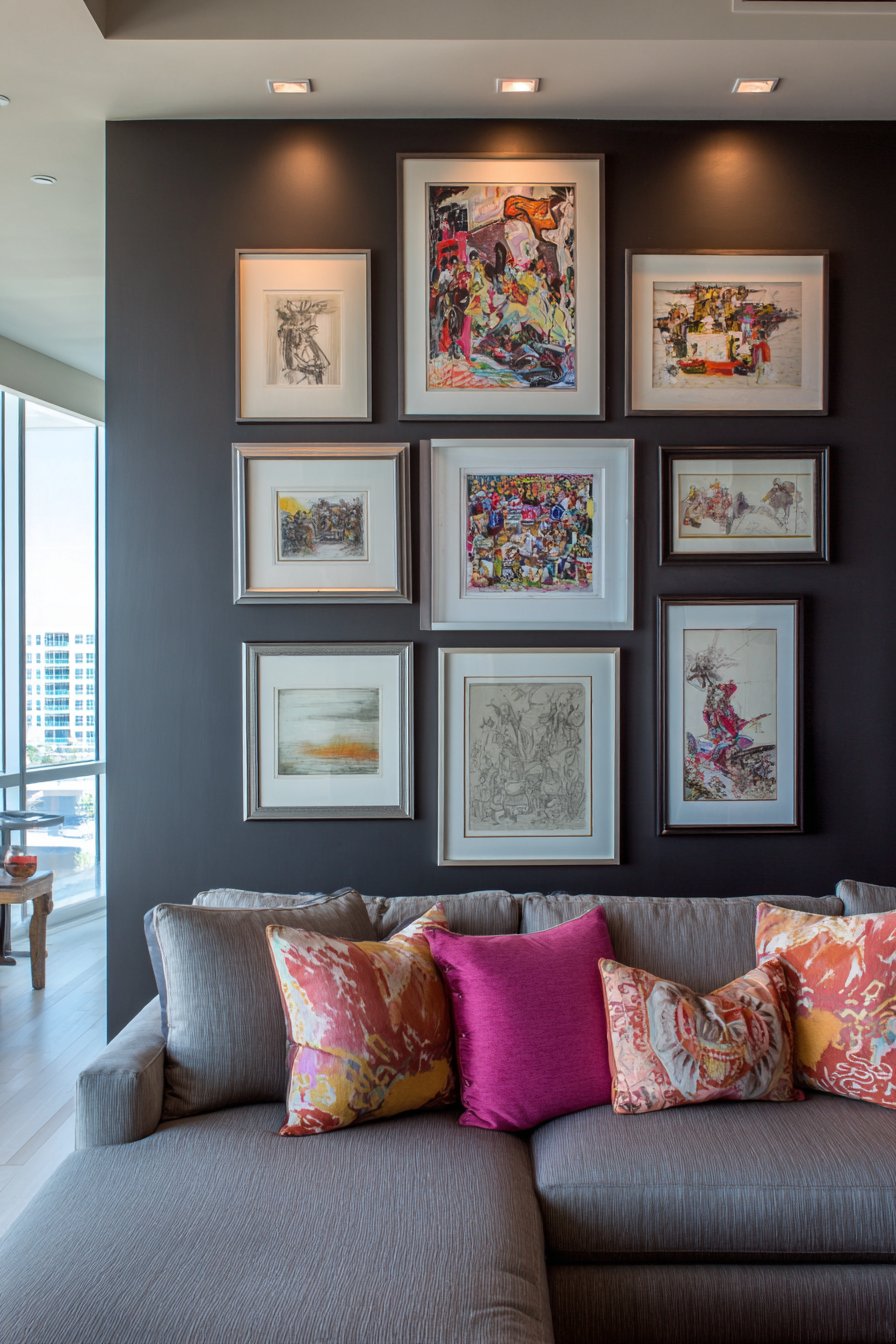
The gallery wall concept reaches new heights of sophistication when executed against a deep charcoal painted accent wall, transforming a traditional arrangement into a museum-quality display. This living room accent wall idea demonstrates how background color can fundamentally alter the perception and impact of displayed artwork, creating a cohesive visual experience that elevates both the wall itself and the art it showcases. The deep charcoal provides a dramatic yet neutral backdrop that makes artwork pop without competing for attention, allowing each piece to maintain its individual character while contributing to the overall composition.
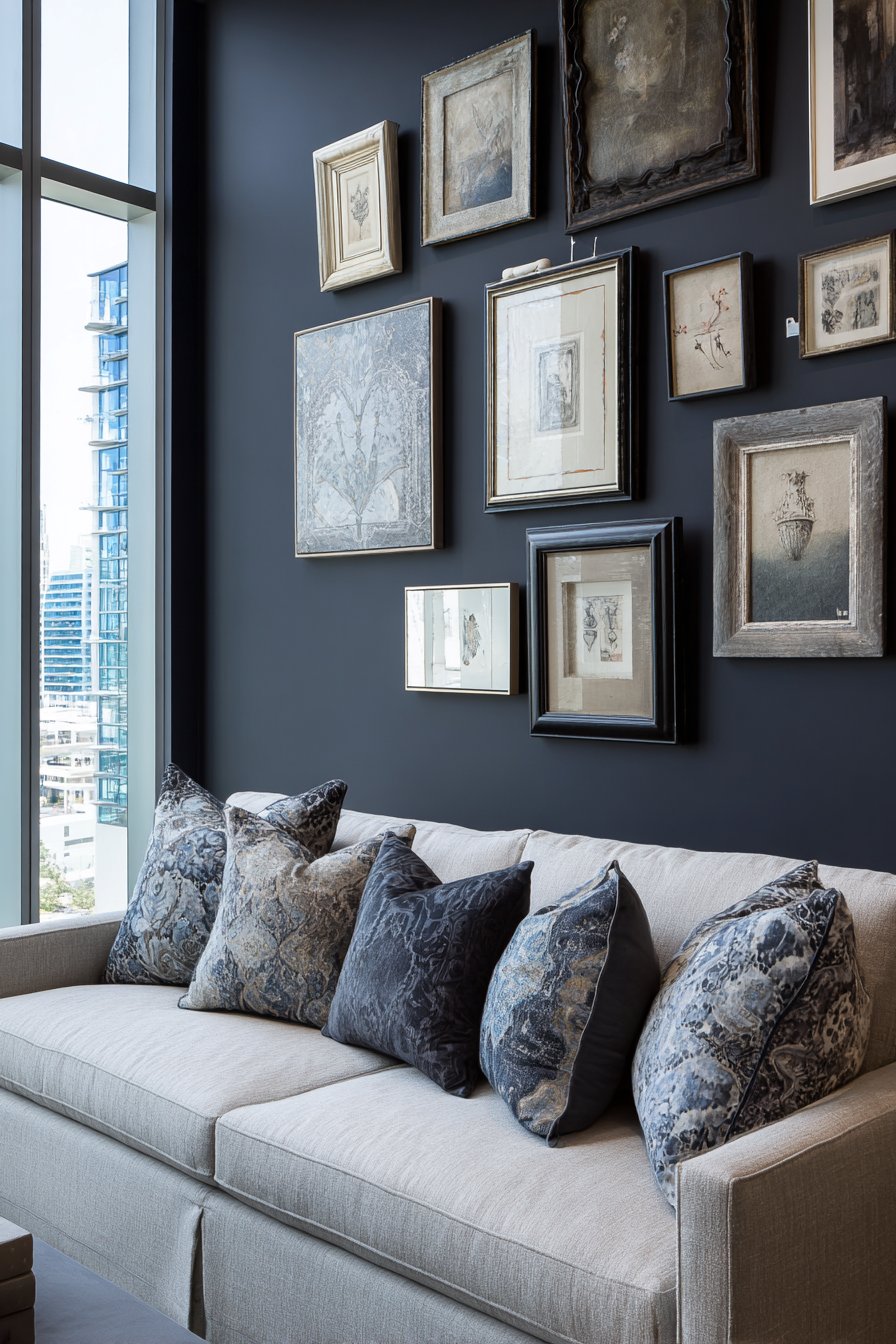
The carefully curated collection of framed artwork in varying sizes creates visual rhythm and movement across the wall surface, with cohesive black frames providing continuity that ties the diverse pieces together. This uniformity in framing against the dark background creates a gallery effect that feels professionally curated rather than haphazardly assembled. The contemporary sofa in light grey linen positioned below serves dual purposes—providing comfortable seating for viewing the artwork while offering a visual foundation that prevents the dark wall from feeling too heavy or oppressive. Decorative pillows echoing colors from the artwork create intentional connections between the wall display and the room’s furnishings.
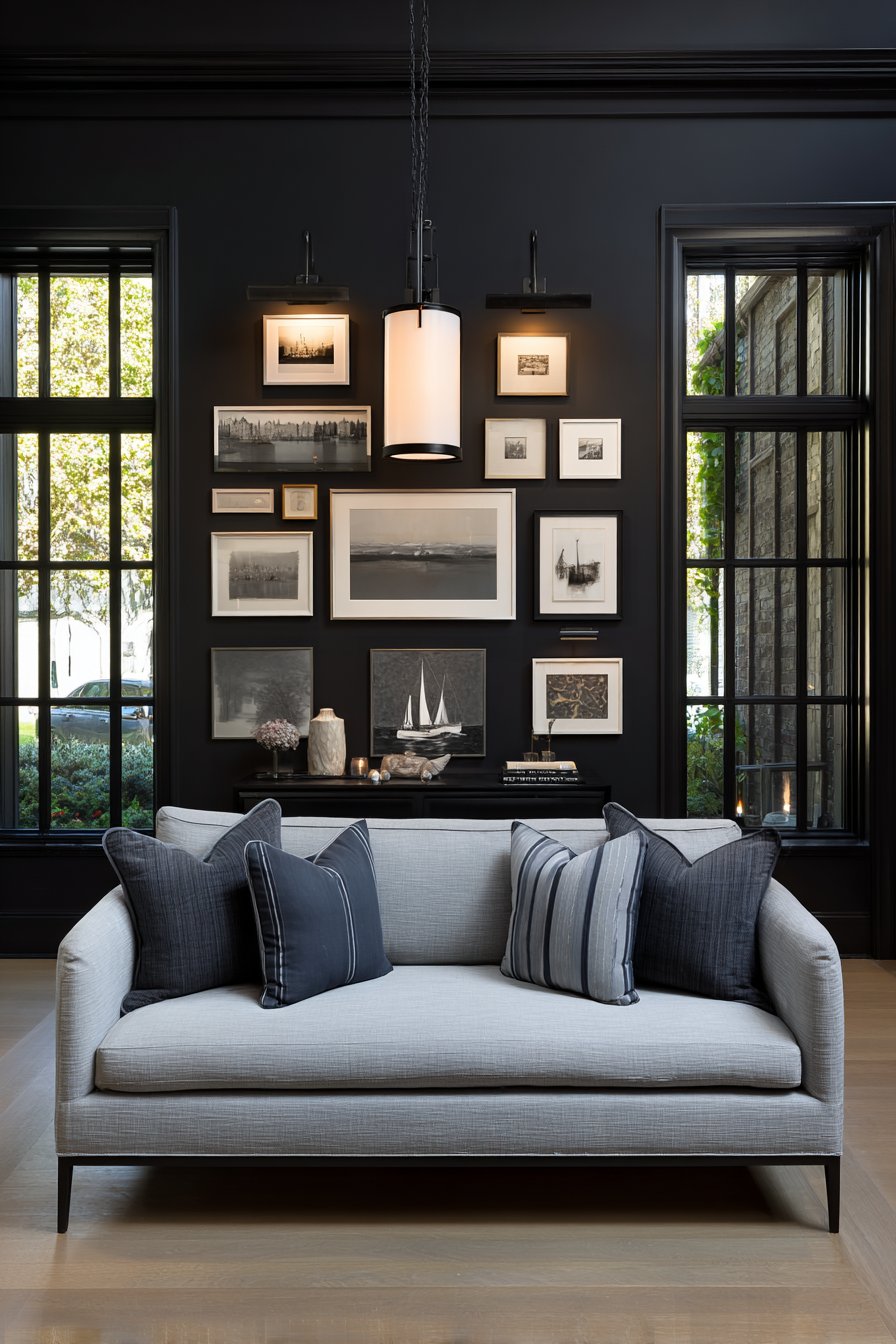
Lighting proves absolutely critical to the success of this design approach. The combination of picture lights and natural window light ensures each artwork receives appropriate illumination, preventing the dark background from creating shadowy viewing conditions. This thoughtful lighting design allows the gallery wall to function beautifully at any time of day, with daytime natural light and evening artificial illumination each offering different viewing experiences. The professional interior photography captures this balanced illumination, demonstrating how proper lighting transforms a dark accent wall from potential liability into sophisticated asset.
Key Design Tips: Paint accent walls in true charcoal rather than black to provide depth without creating a visual void that absorbs all light. Plan gallery wall layouts on the floor before installation, using kraft paper templates to visualize arrangements. Maintain consistent spacing between frames—typically 2-3 inches—for professional, intentional appearance. Install picture lights or directional track lighting to ensure each artwork receives adequate illumination against the dark background. Mix artwork sizes thoughtfully, typically using one or two larger anchor pieces supplemented by smaller supporting works. Include colors within the artwork that appear elsewhere in the room to create cohesive design narrative. Use professional hanging hardware and proper wall anchors to ensure secure installation, especially with heavier frames.
5. Rich Walnut Wood Plank Warmth
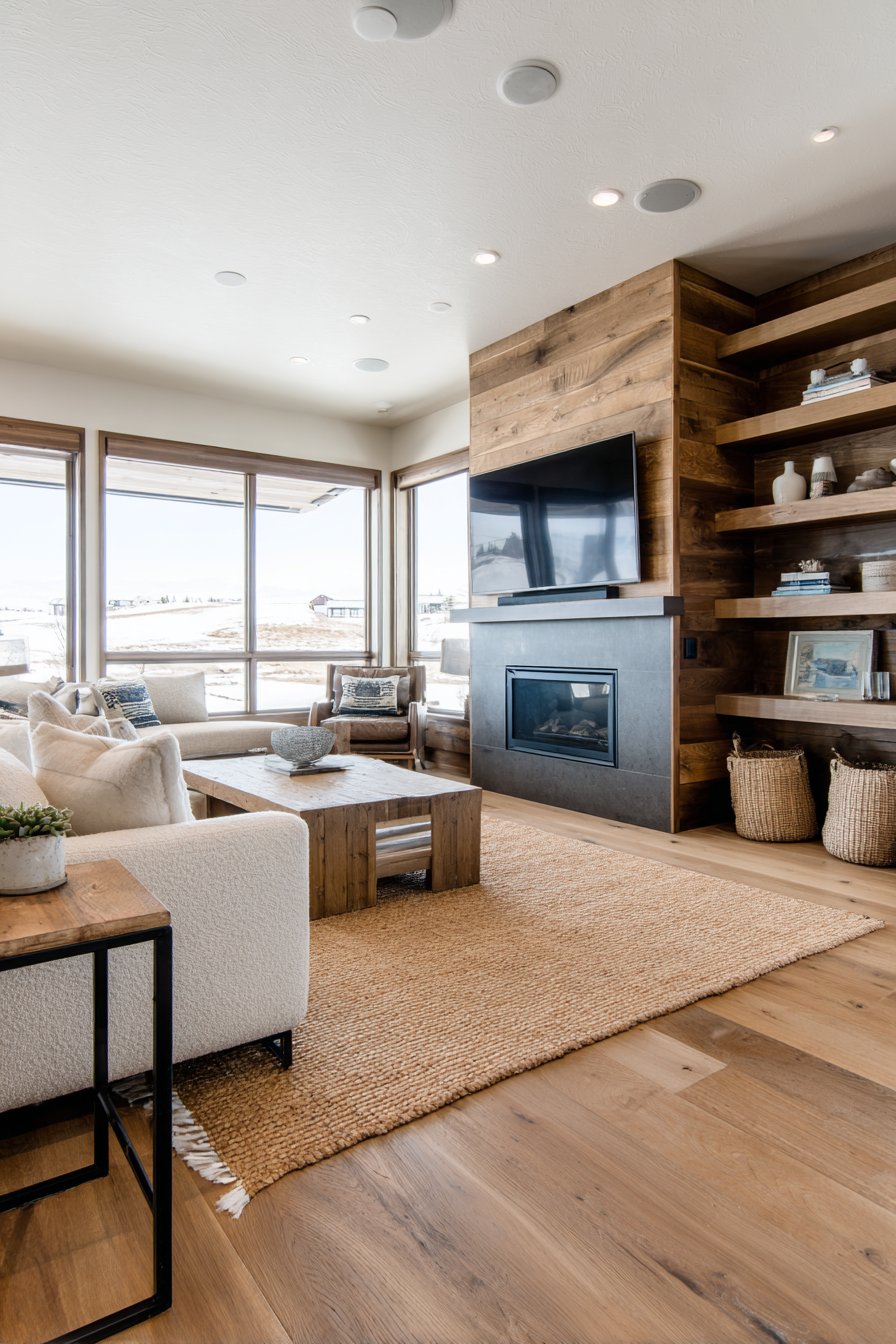
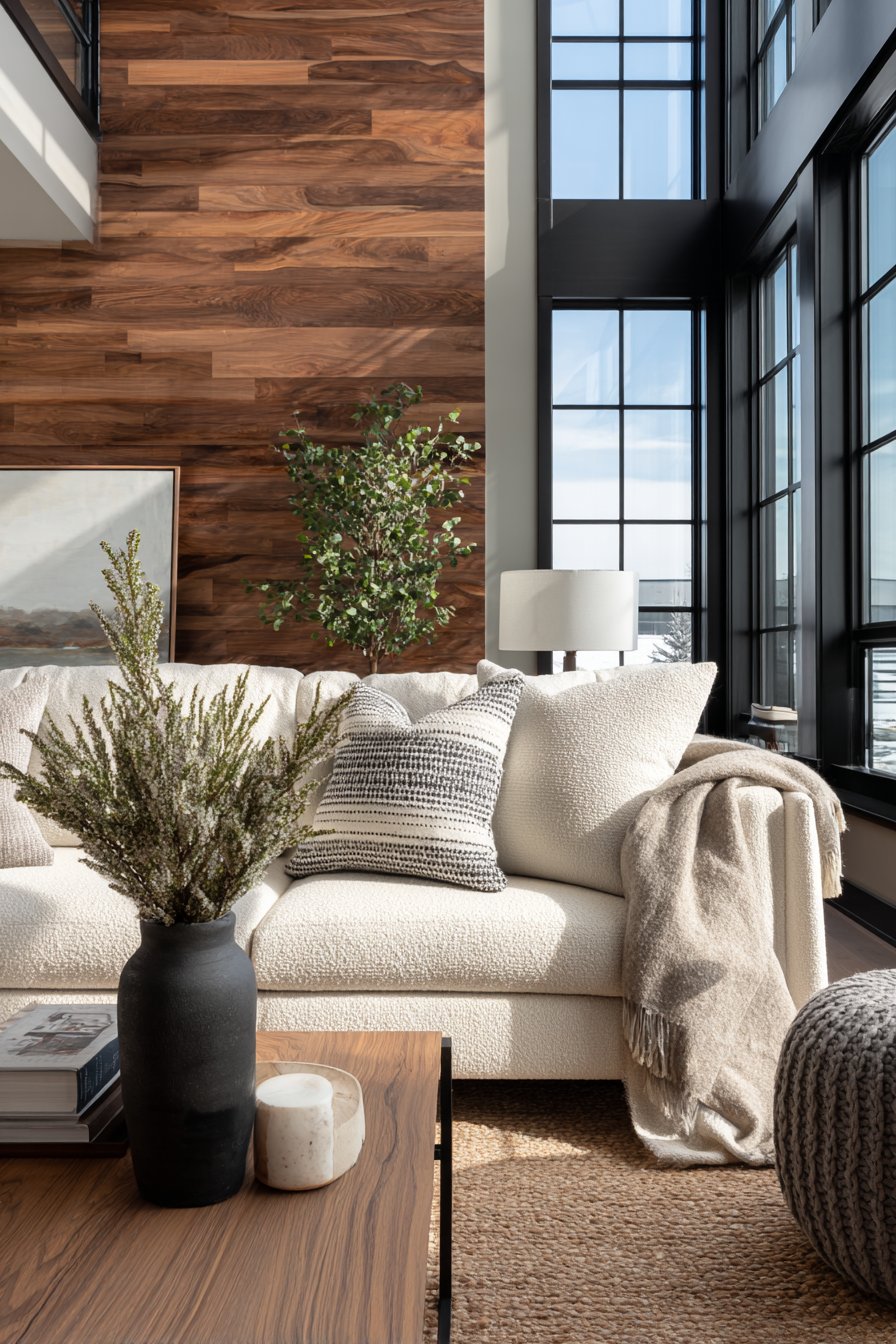
Horizontal walnut wood planks installed across an entire accent wall bring incomparable warmth and organic beauty to modern farmhouse living rooms, creating a focal point that feels both contemporary and timeless. This living room accent wall idea showcases natural wood at its finest, with the rich walnut species offering beautiful grain patterns and honey-toned coloring that adds instant coziness to any space. The horizontal orientation of the planks creates visual width, making rooms appear more spacious while establishing a strong horizontal line that grounds the overall design.
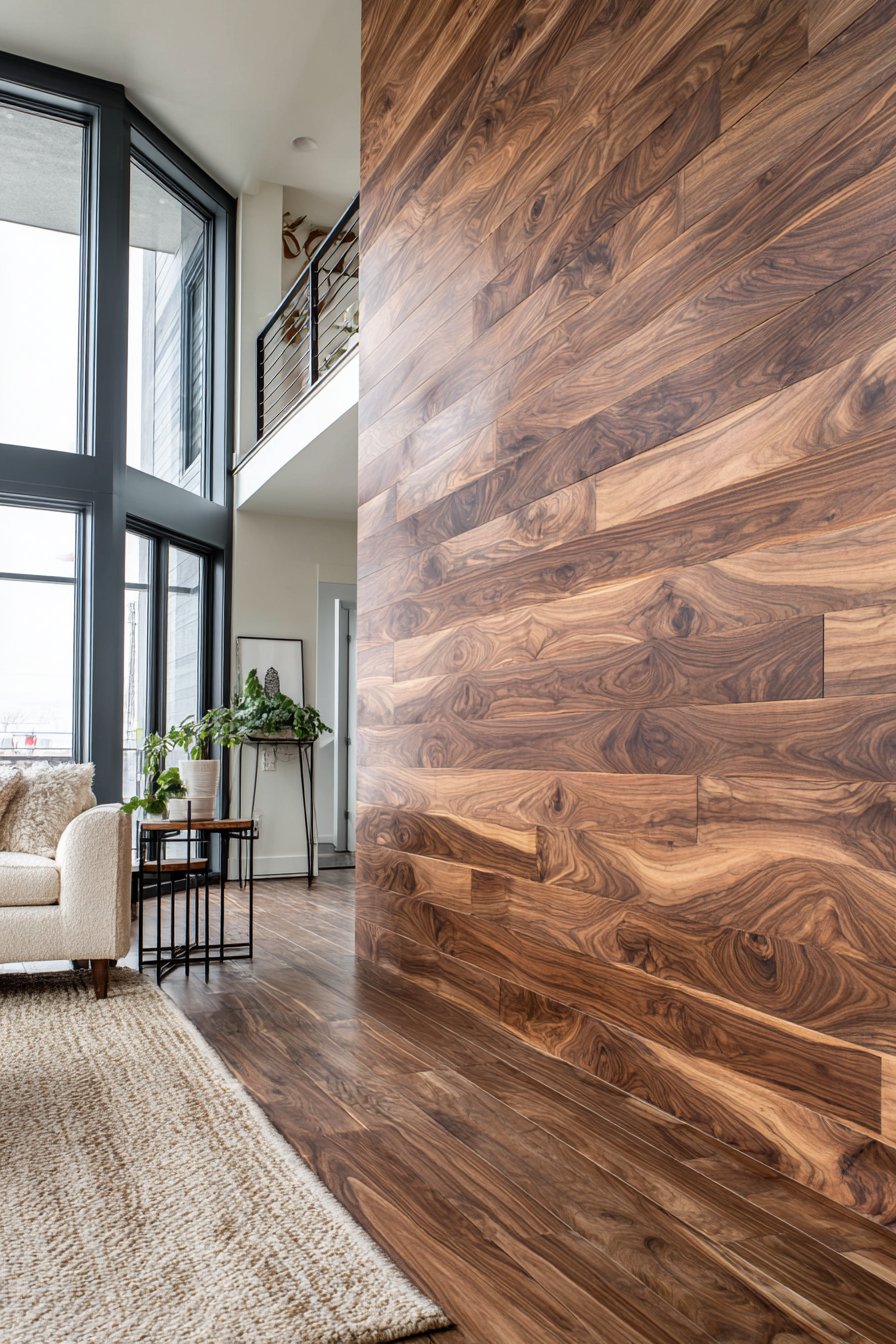
The selection of walnut specifically proves significant, as this premium hardwood species offers distinctive characteristics that elevate it above more common options like pine or oak. Walnut’s natural color variation—ranging from lighter sapwood to deep chocolate heartwood—creates built-in visual interest within a single wall surface, eliminating any concern about monotonous appearance. When natural daylight from large windows strikes the wood surface, it illuminates these color variations and highlights the intricate grain patterns, creating a living artwork that changes throughout the day as light angles shift.
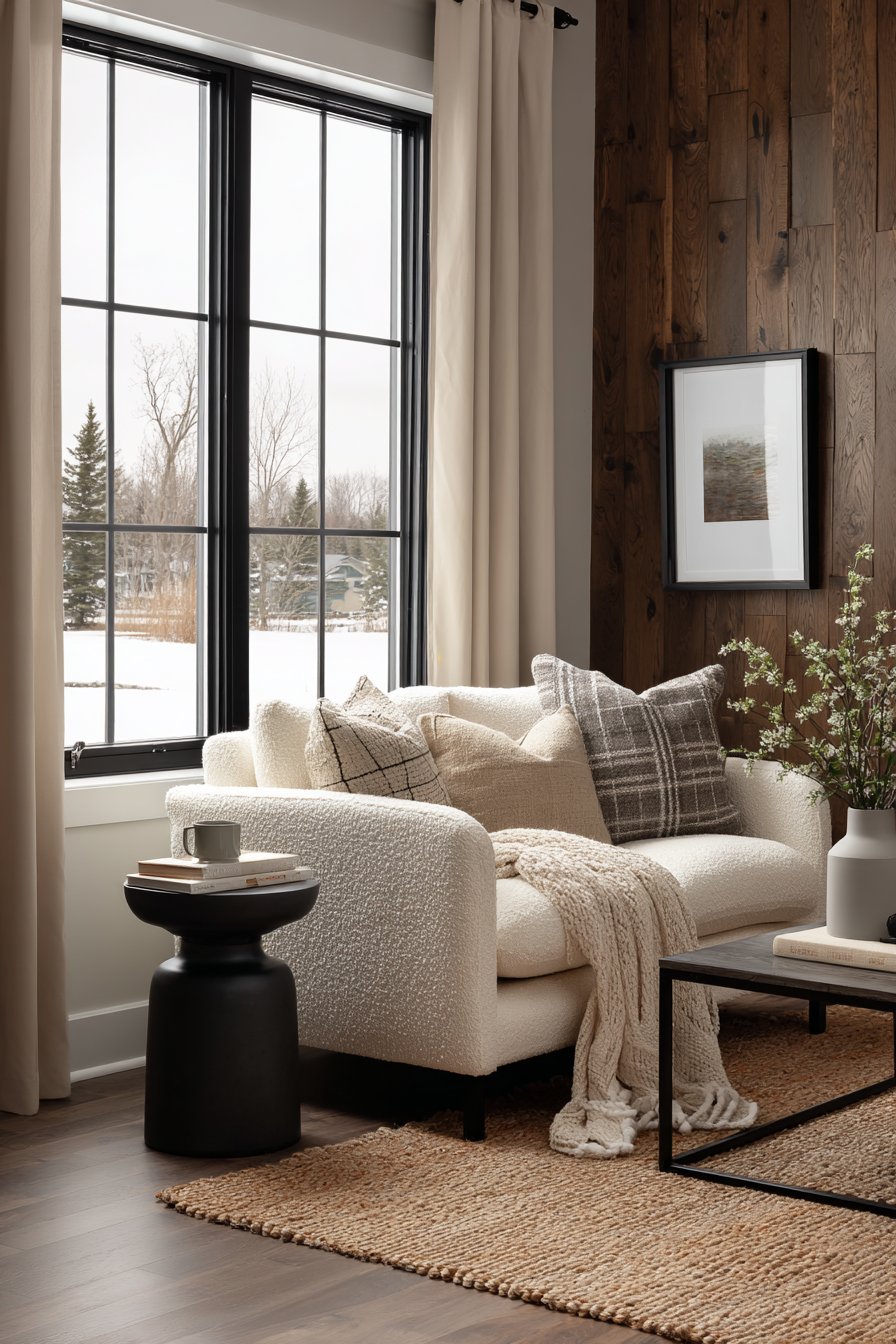
The modern farmhouse aesthetic emerges from the thoughtful pairing of the walnut accent wall with complementary furnishings and materials. The cream bouclé sofa provides textural contrast while maintaining warmth, the natural jute rug reinforces organic material themes, and black metal accents offer contemporary edge that prevents the space from feeling too country or rustic. This balance between natural warmth and modern refinement represents the essence of successful modern farmhouse design, where traditional materials meet contemporary forms and proportions.
Key Design Tips: Select solid wood planks rather than veneer when budget allows for superior longevity and authentic appearance. Apply clear protective finish to preserve natural wood color and protect against moisture damage. Install planks with slight gaps between boards to allow for natural wood expansion and contraction with humidity changes. Consider reclaimed walnut for unique character and environmental sustainability, though expect higher costs and more variation. Arrange planks to showcase grain patterns intentionally, positioning most visually striking boards at eye level. Complement walnut’s warm tones with cooler elements like metals, glass, or stone to prevent overwhelming warmth. Maintain wood accent walls with regular dusting and occasional application of wood-friendly cleaning products specifically formulated for finished wood surfaces.
6. Geometric 3D White Panel Minimalism
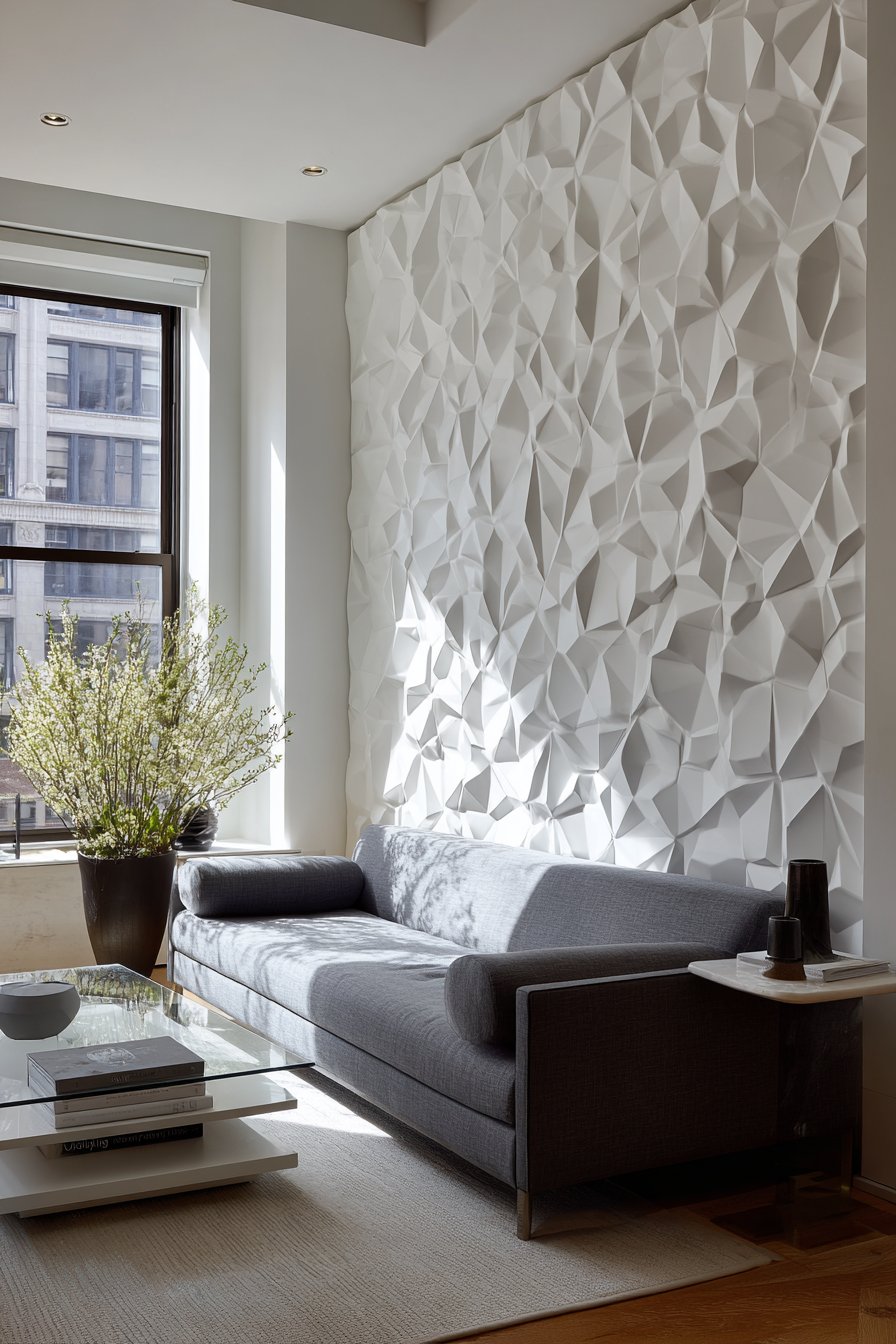
Matte white three-dimensional wall panels featuring geometric patterns represent the cutting edge of accent wall design, offering sculptural interest and sophisticated minimalism that transforms ordinary walls into architectural features. This living room accent wall idea proves that accent walls need not rely on bold colors to make dramatic statements—dimensional texture alone can create compelling focal points when executed with precision and intention. The geometric patterns create subtle relief that catches light and shadow throughout the day, producing an ever-changing visual experience that rewards attention and contemplation.
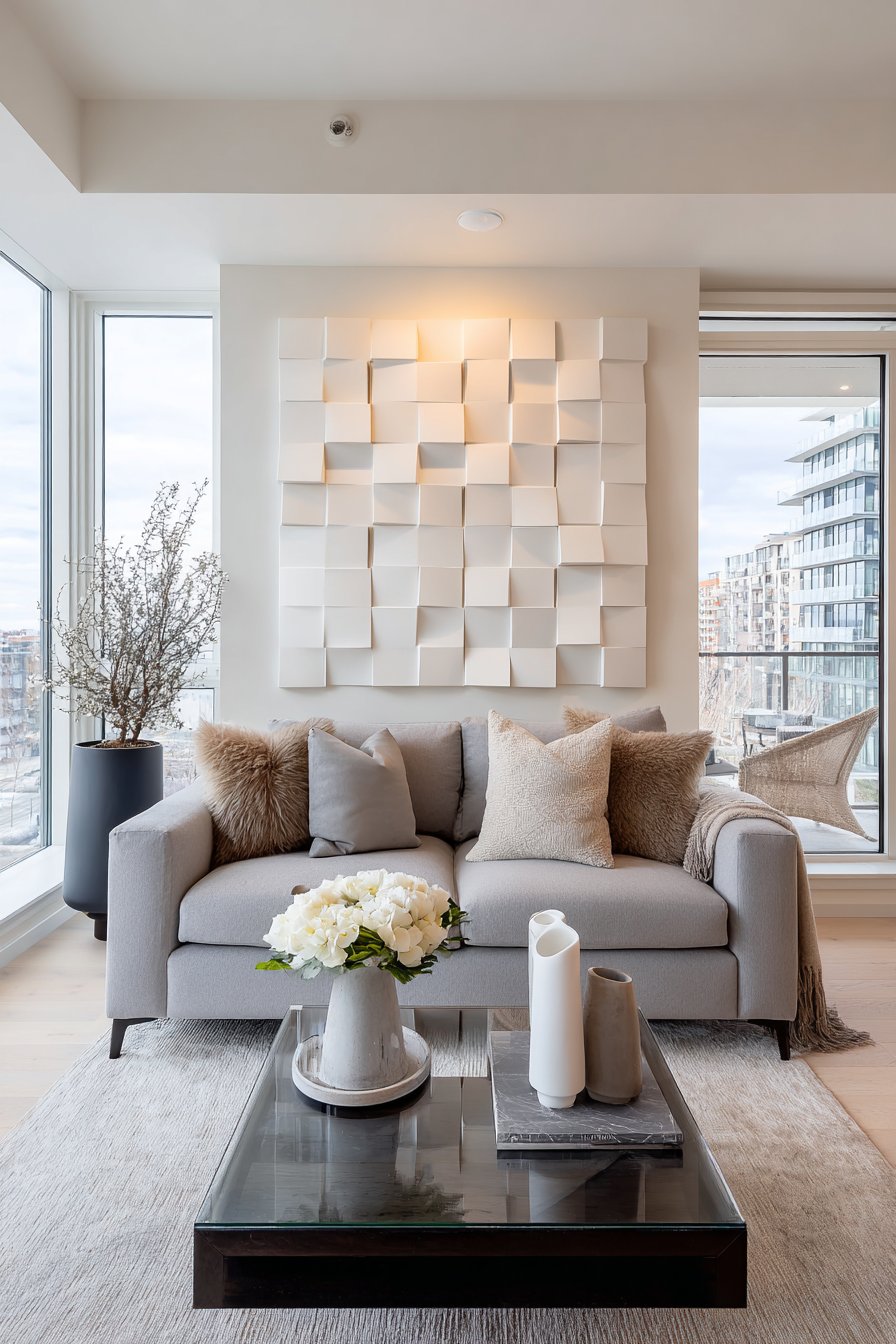
The choice of matte white for these dimensional panels serves multiple strategic purposes. White maximizes light reflection, helping smaller or darker rooms feel more spacious and bright, while the matte finish prevents glare and creates a sophisticated, gallery-like atmosphere. The geometric patterns themselves range from simple squares and rectangles to more complex tessellations, allowing homeowners to select complexity levels appropriate to their aesthetic preferences and room character. When paired with minimalist grey furnishings and simple glass accessories, the white geometric wall becomes the undisputed star of the space, demonstrating the power of restraint in contemporary design.
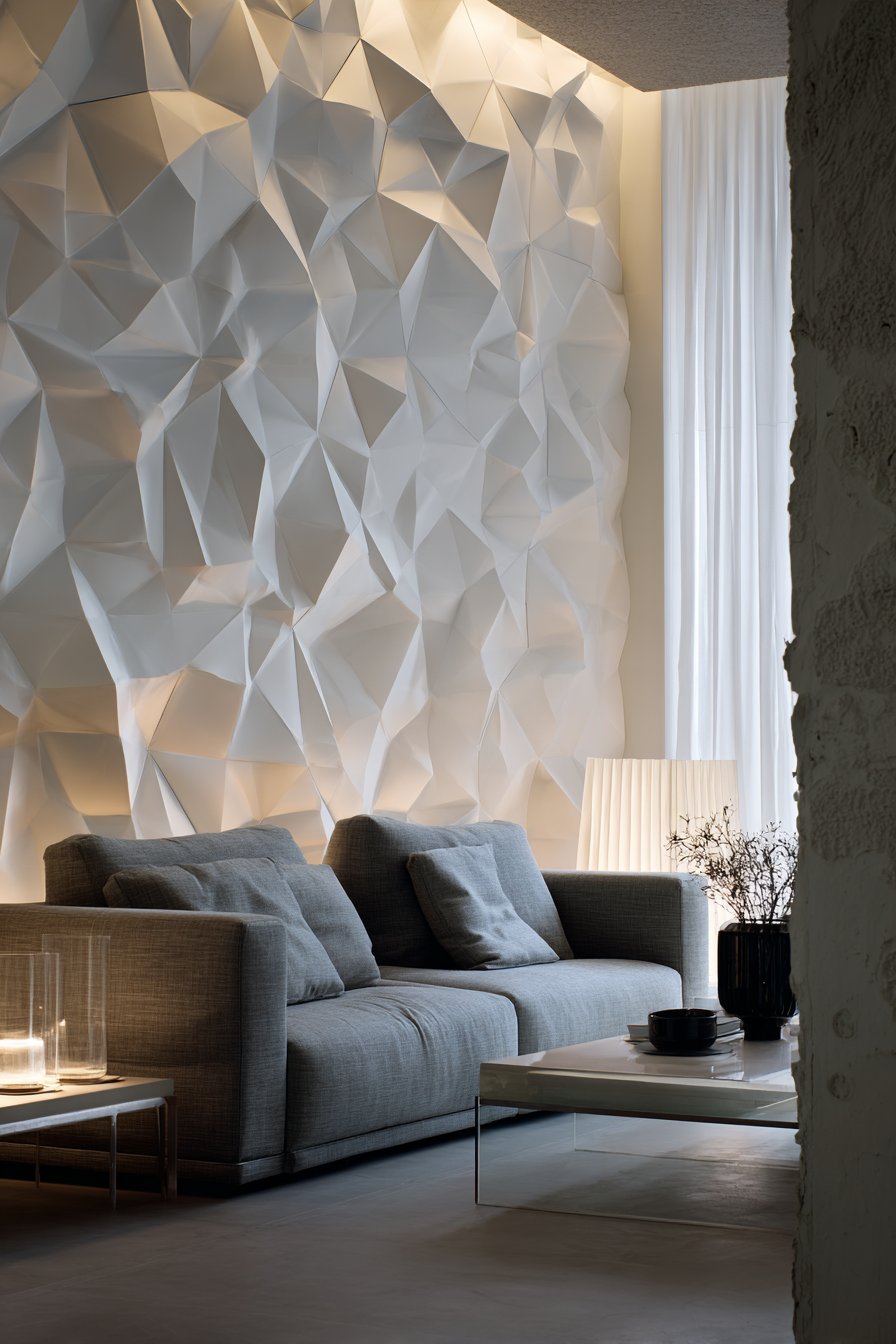
The interplay of light and shadow across the dimensional surface creates natural visual interest without requiring additional decoration or color. Soft natural lighting from nearby windows produces gentle shadows that emphasize the geometric relief, while evening artificial lighting can create more dramatic effects depending on light source positioning. This dynamic quality ensures the accent wall never appears static or boring, instead offering new visual experiences as lighting conditions change throughout the day and across seasons.
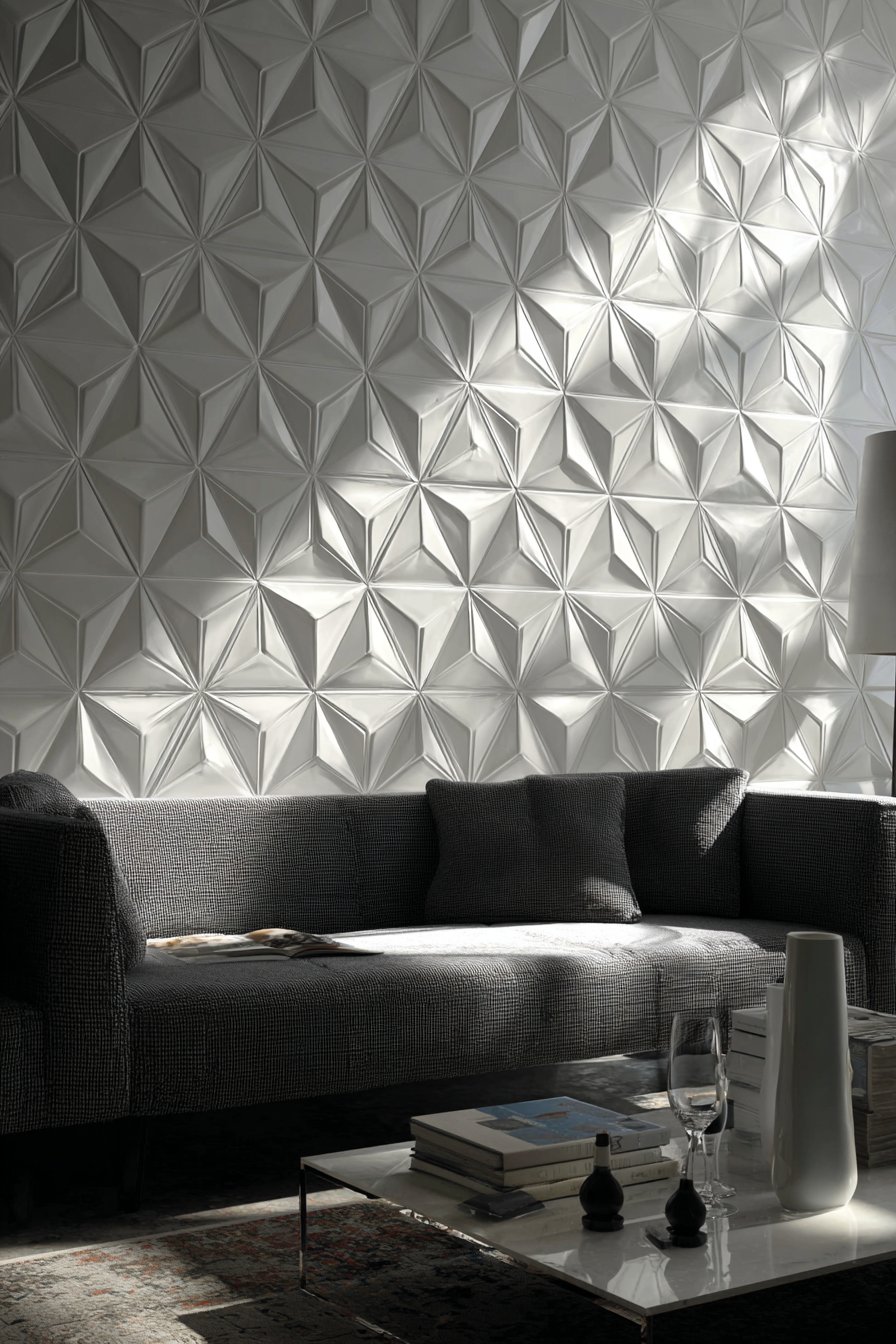
Key Design Tips: Install 3D panels over smooth, level walls to ensure proper adhesion and prevent visible irregularities. Select panel depths based on room scale—deeper relief for larger rooms, subtler dimension for smaller spaces. Position lighting sources strategically to maximize shadow effects that emphasize geometric patterns. Choose adhesive or installation methods specifically recommended by panel manufacturers to ensure long-term stability. Paint panels and adjacent walls in identical white shades to create seamless visual flow. Clean dimensional surfaces carefully with microfiber cloths or vacuum attachments to remove dust from recessed areas. Consider panels with simple geometric patterns for timeless appeal, reserving complex designs for spaces where dramatic impact justifies potential trend obsolescence.
7. Scandinavian Black Contrast with Natural Elements
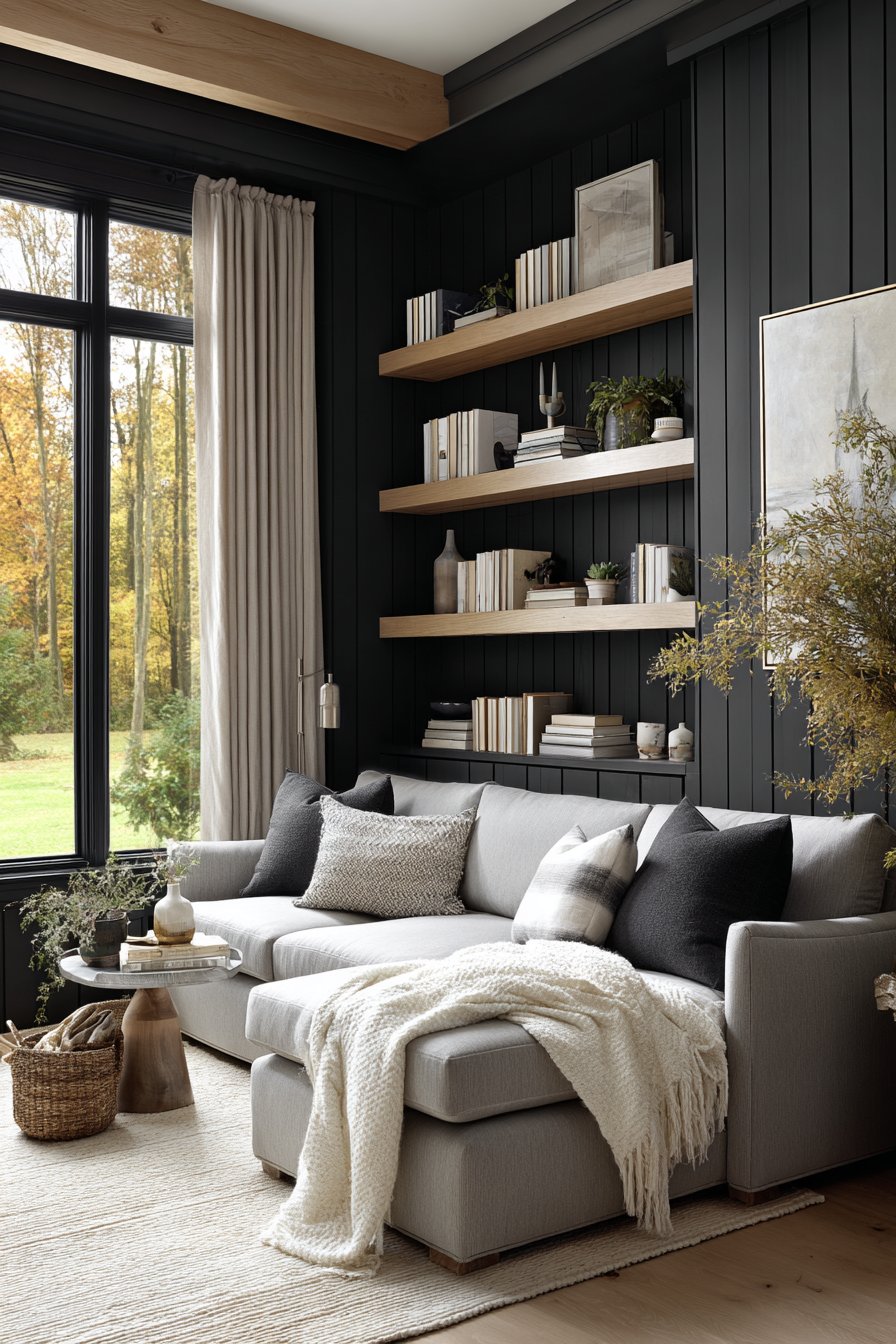
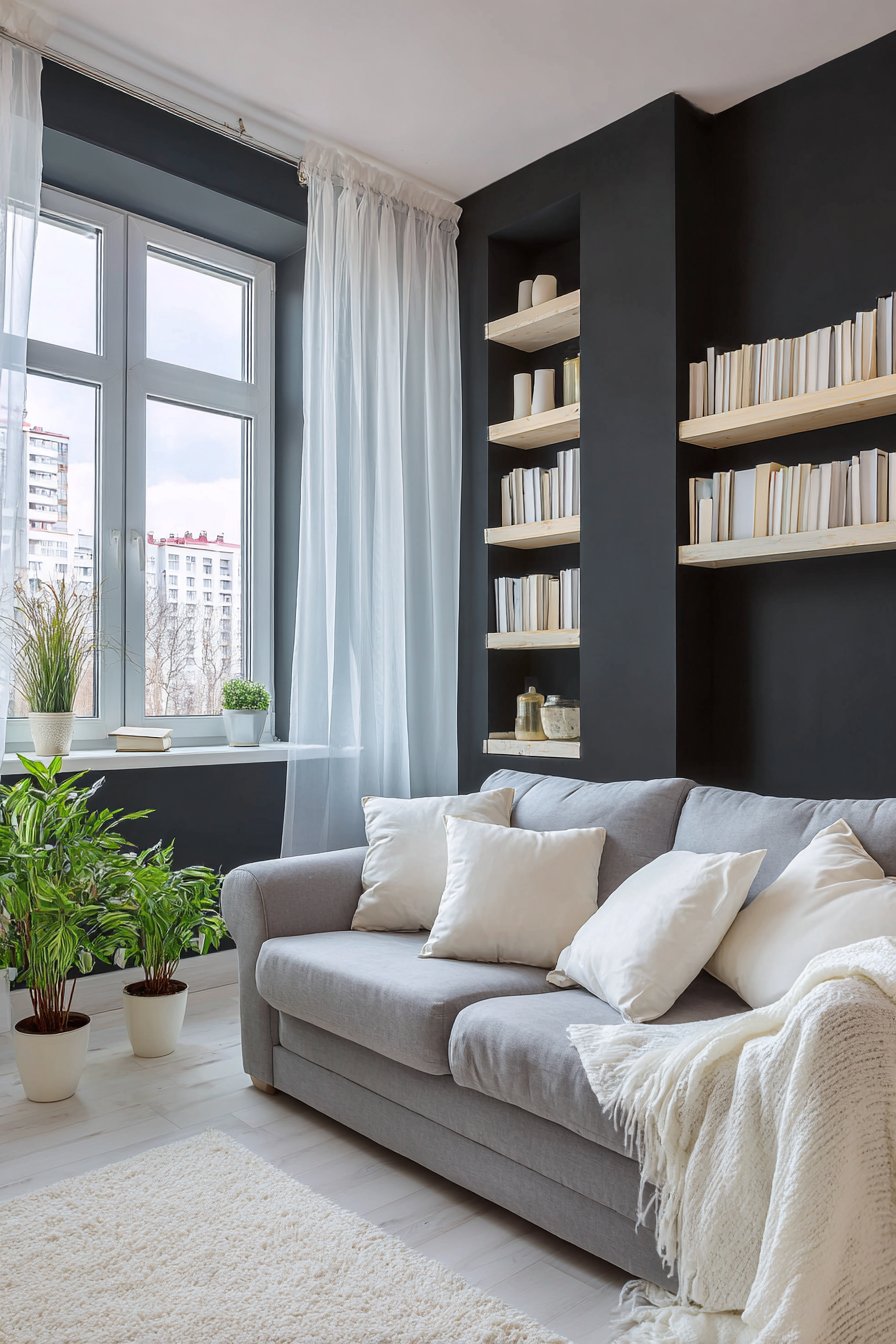
A dramatic black painted accent wall with matte finish creates striking contrast in Scandinavian-inspired living spaces, challenging the assumption that Nordic design must always embrace light colors. This living room accent wall idea demonstrates sophisticated understanding of Scandinavian design principles, which emphasize not just lightness but intentional contrast, natural materials, and functional beauty. The black wall provides powerful visual anchor while maintaining the matte finish that prevents glossy artificiality, ensuring the dark surface feels organic rather than forced or overly dramatic.
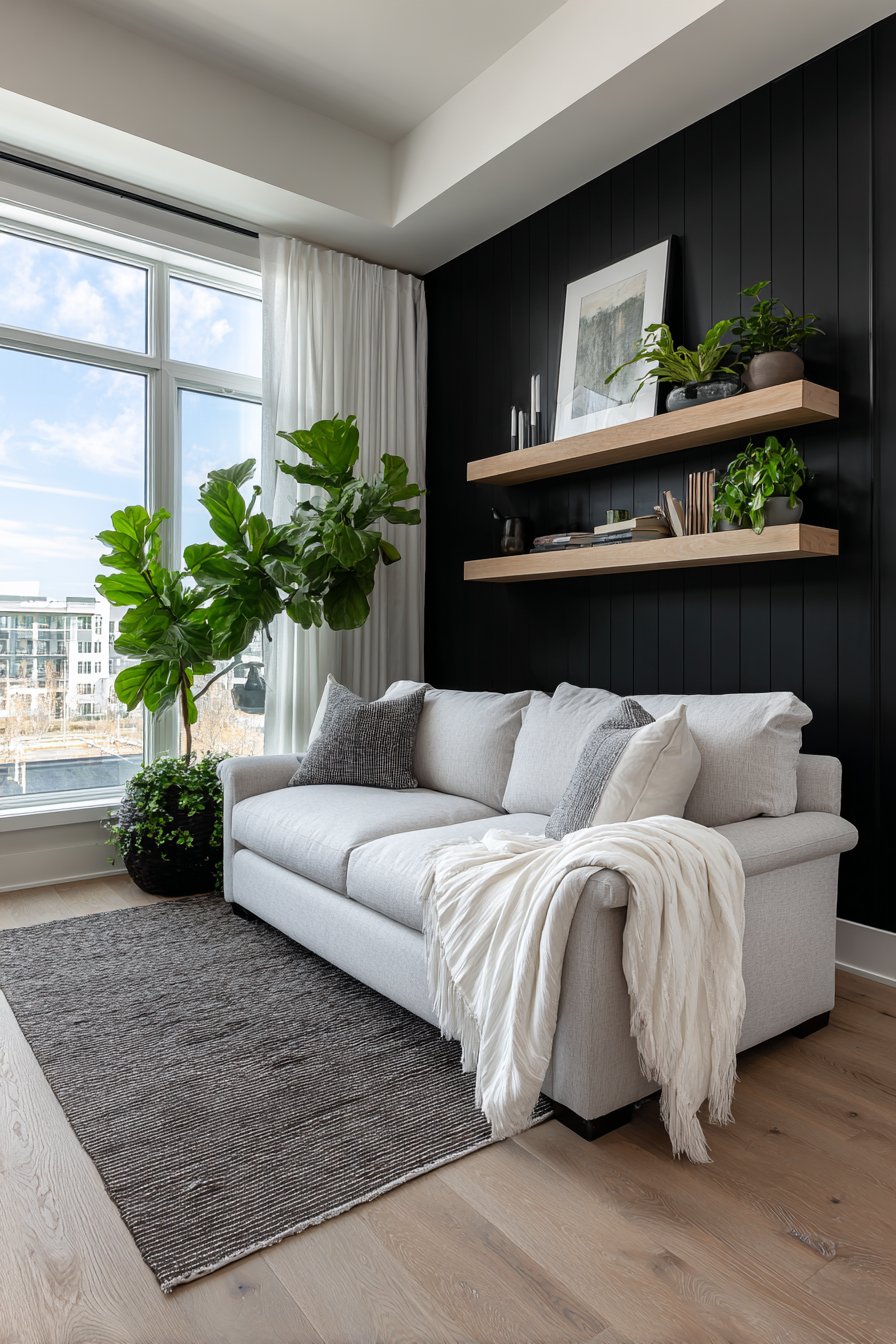
The genius of this approach lies in the careful balance between dark and light elements. Light oak floating shelves mounted against the black wall create stunning visual contrast that makes both elements more striking—the black appears deeper, the oak appears lighter and more vibrant. This material dialogue extends to the light grey sofa with white throw blankets, which provides necessary visual relief and prevents the black wall from overwhelming the space. The abundance of natural light from large windows with sheer curtains proves absolutely essential, transforming what could be an oppressive dark wall into a sophisticated design feature that actually enhances the room’s overall brightness through contrast.
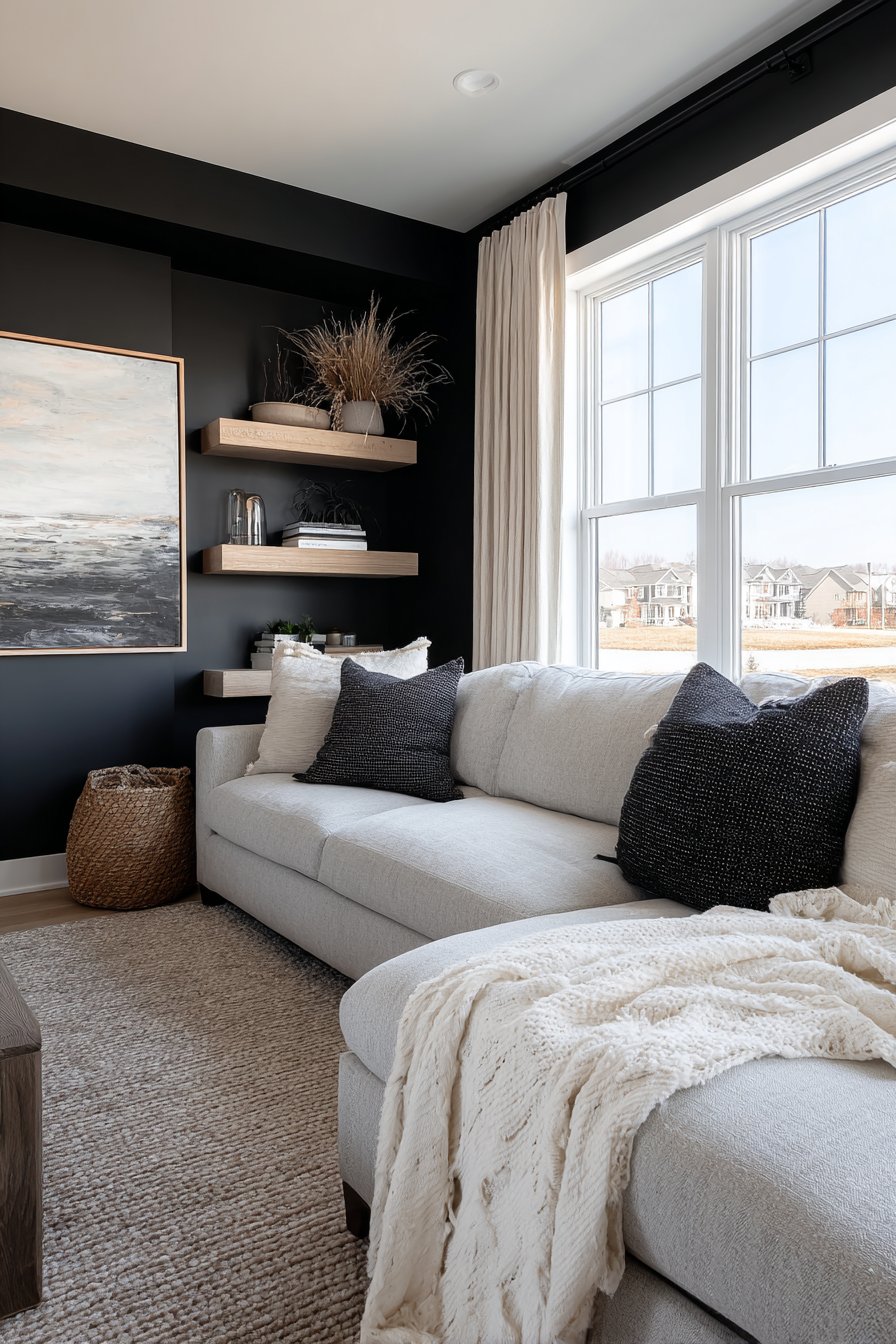
The practical considerations of black accent walls require thoughtful attention. Unlike lighter colors that forgive dust and minor imperfections, black surfaces reveal every fingerprint, smudge, and particle, necessitating more frequent maintenance. However, the matte finish significantly reduces this challenge compared to glossy or semi-gloss alternatives, showing marks less readily while maintaining the sophisticated appearance. The professional photography demonstrates this finish choice, revealing how proper matte black creates depth without the reflective complications of shinier alternatives.
Key Design Tips: Choose true black rather than very dark grey to maximize impact and ensure intentional appearance. Apply matte or flat paint finish to reduce glare and create sophisticated, modern aesthetic. Position black accent walls opposite or perpendicular to major light sources to prevent the space from feeling cave-like. Incorporate abundant natural materials like wood, linen, and plants to soften the severity of black and maintain organic warmth. Limit black to single accent walls in most residential spaces to prevent overwhelming darkness. Clean matte black walls gently with slightly damp microfiber cloths, avoiding harsh chemicals that can damage flat finishes. Balance black walls with light flooring and predominantly light-colored furniture to maintain spatial openness and prevent claustrophobic feelings.
8. Luxurious Emerald Velvet Tufted Panels
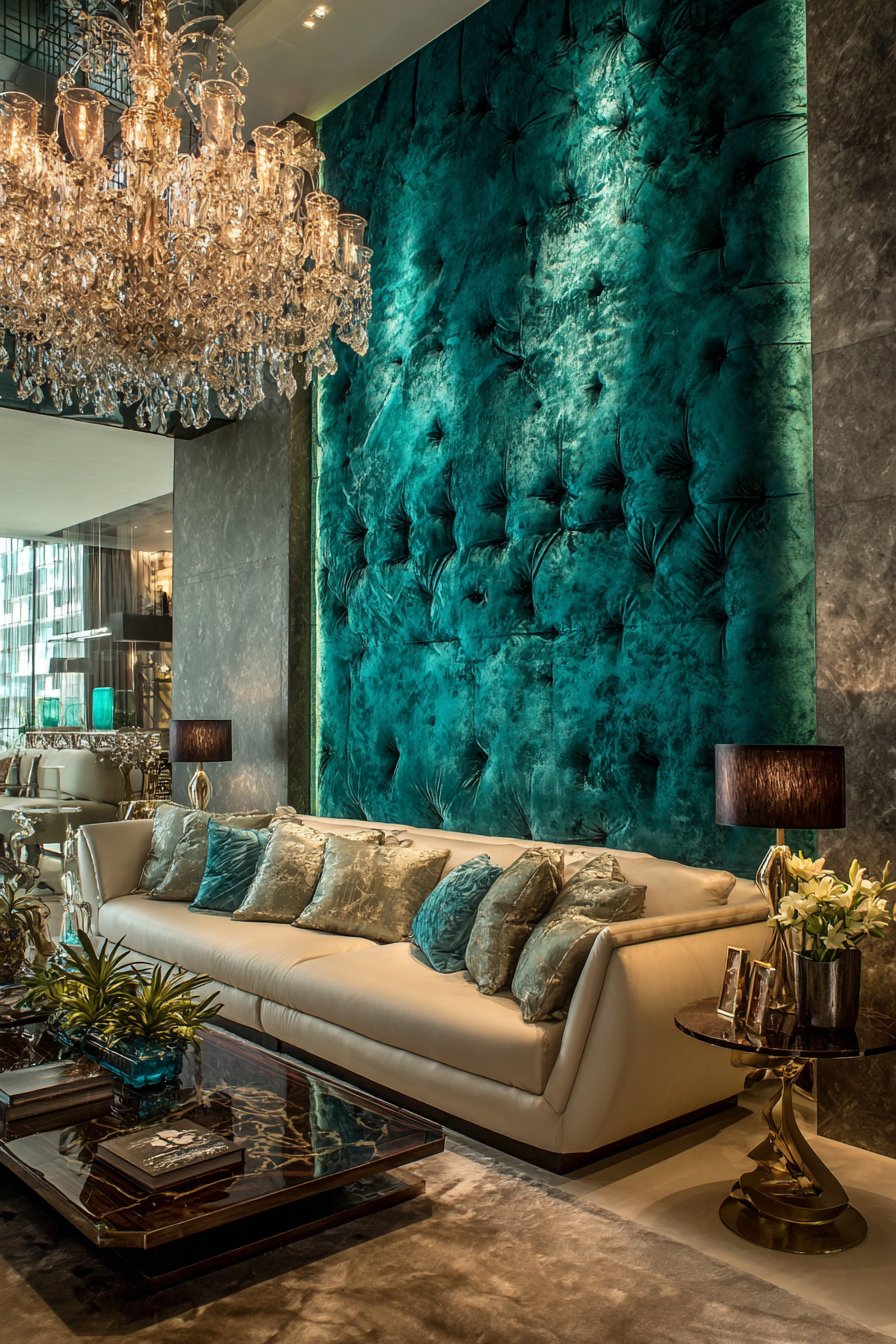
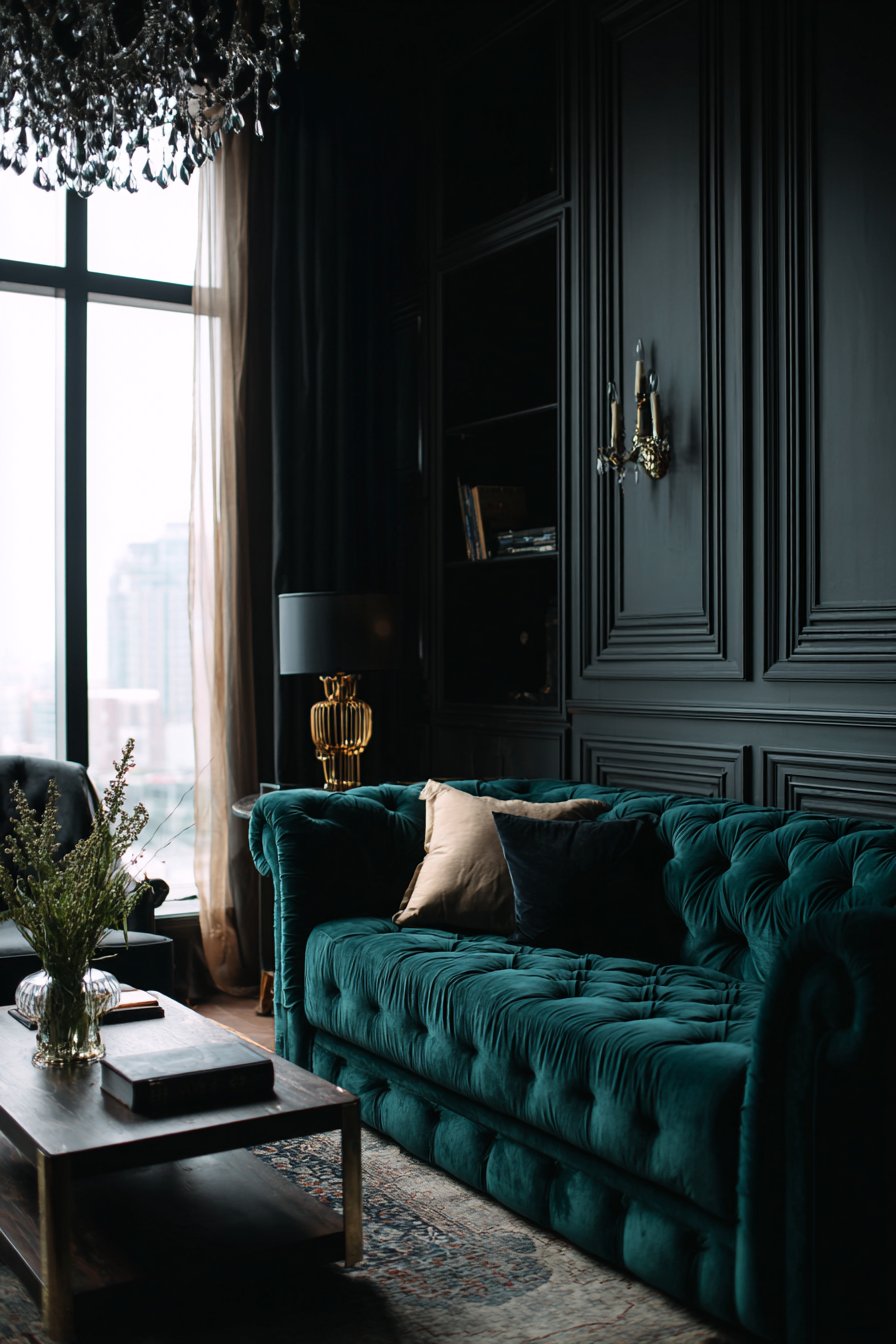
Deep emerald green tufted velvet panels create an accent wall of unparalleled opulence and tactile richness, transforming living rooms into jewel-box sanctuaries that celebrate luxury and sensory experience. This living room accent wall idea elevates accent wall concepts beyond purely visual considerations, engaging the sense of touch and creating dimensional texture that invites interaction. The deep button tufting creates rhythmic patterns across the velvet surface while the emerald green hue brings sophisticated color that feels both timeless and distinctly contemporary.
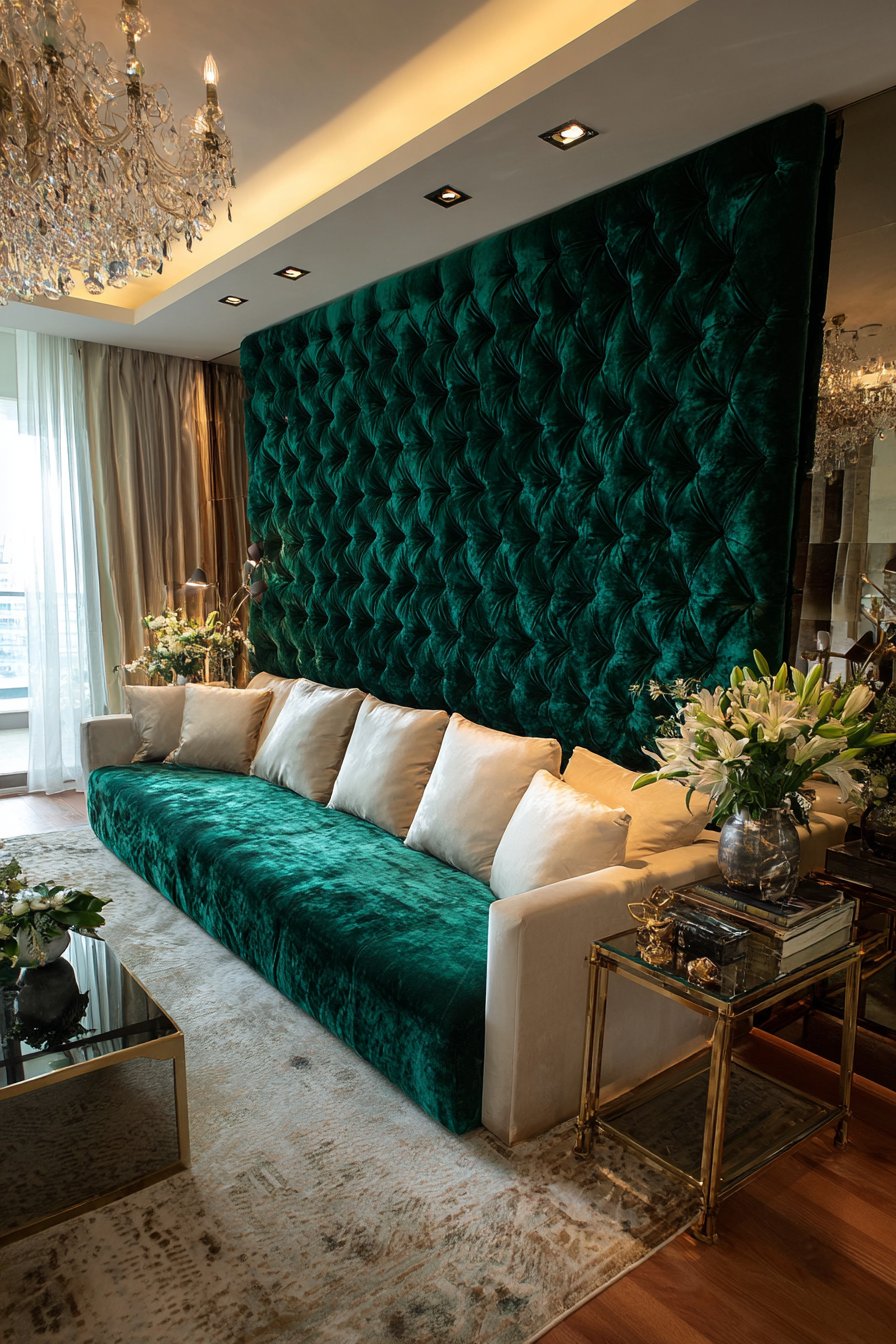
The selection of velvet as the primary material proves significant for multiple reasons. Velvet’s unique pile construction catches and reflects light in ways that change dramatically based on viewing angle and illumination conditions, creating a living surface that appears different throughout the day. This optical quality makes emerald green appear sometimes deeper and more mysterious, other times lighter and more vibrant, providing visual interest without requiring any changes to the wall itself. The cream-colored sofa positioned before this sumptuous backdrop provides essential visual breathing room, preventing the rich wall from overwhelming the space while creating color contrast that enhances both elements.
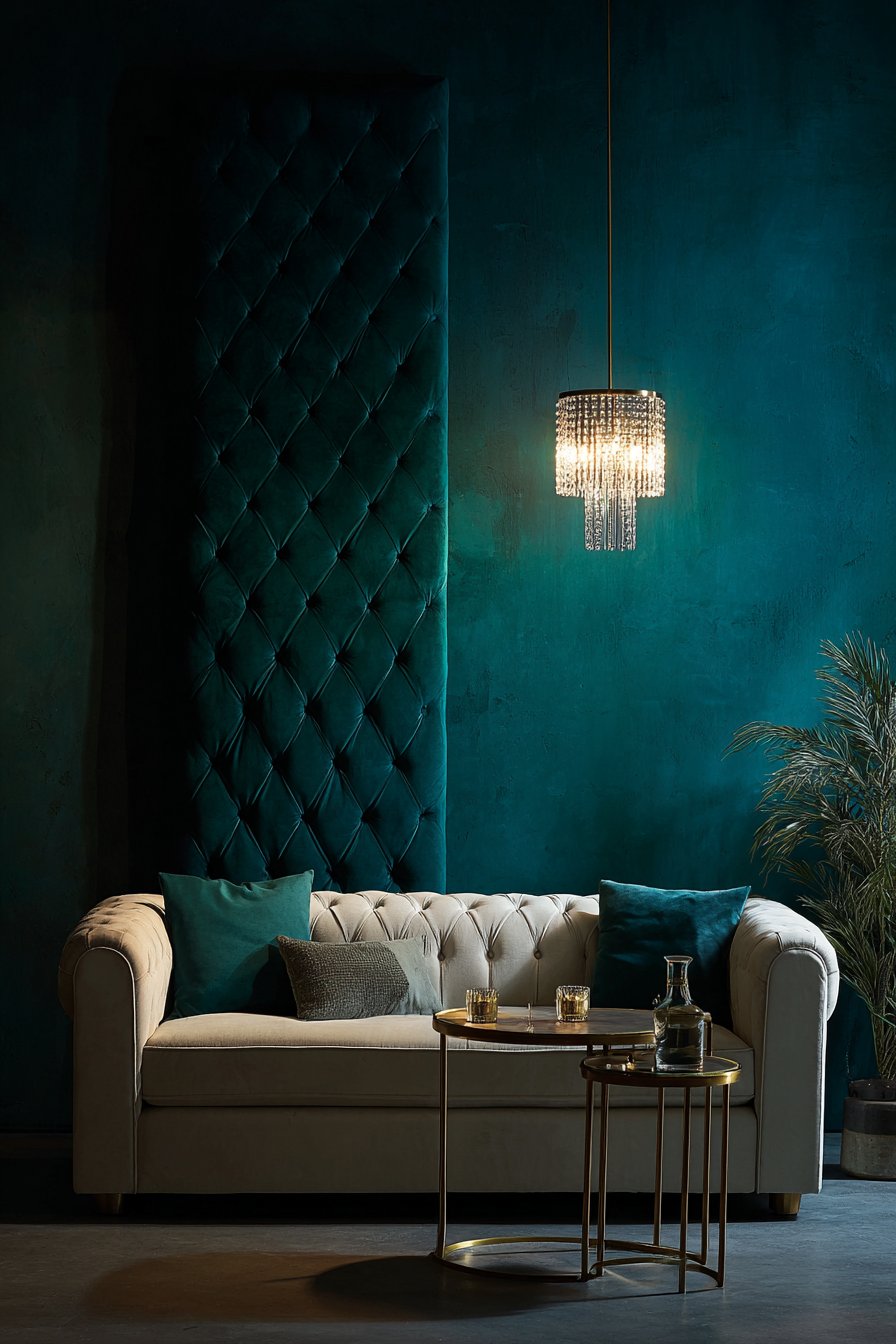
The metallic accents—brass side tables and crystal chandelier—complement the emerald velvet beautifully, creating a contemporary glam aesthetic that feels curated and intentional rather than randomly assembled. The warm brass tones pick up golden undertones within the green velvet, while the crystal chandelier’s reflective surfaces create sparkling highlights that dance across the textured wall surface. This interplay between matte velvet, warm metals, and reflective crystal demonstrates sophisticated material selection that considers how different finishes and textures interact within a cohesive space.
Key Design Tips: Install tufted velvet panels over solid backing boards to ensure uniform appearance and prevent sagging or distortion over time. Select high-quality upholstery-grade velvet specifically designed for vertical applications to ensure durability and colorfastness. Button tufting in regular patterns for traditional elegance, or vary depths and spacing for more contemporary interpretation. Protect velvet from direct sunlight with window treatments to prevent fading and preserve the rich emerald color. Vacuum velvet surfaces regularly using upholstery attachments to remove dust without damaging the pile. Consider professional installation for tufted panel walls to ensure precise execution and proper structural support. Coordinate velvet accent walls with metallic accents and luxurious materials like silk, leather, and crystal to reinforce opulent aesthetic.
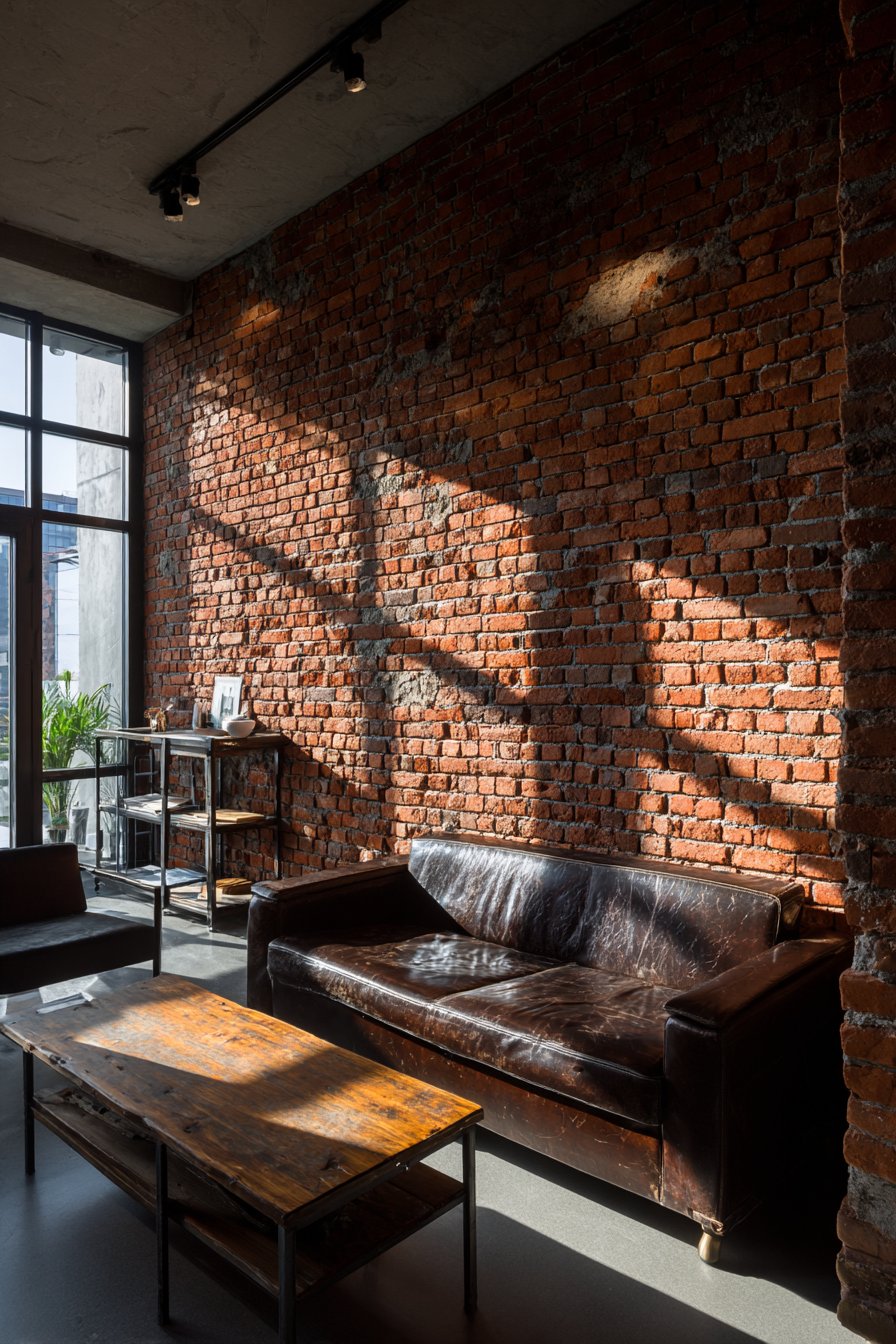
9. Industrial Exposed Brick Character
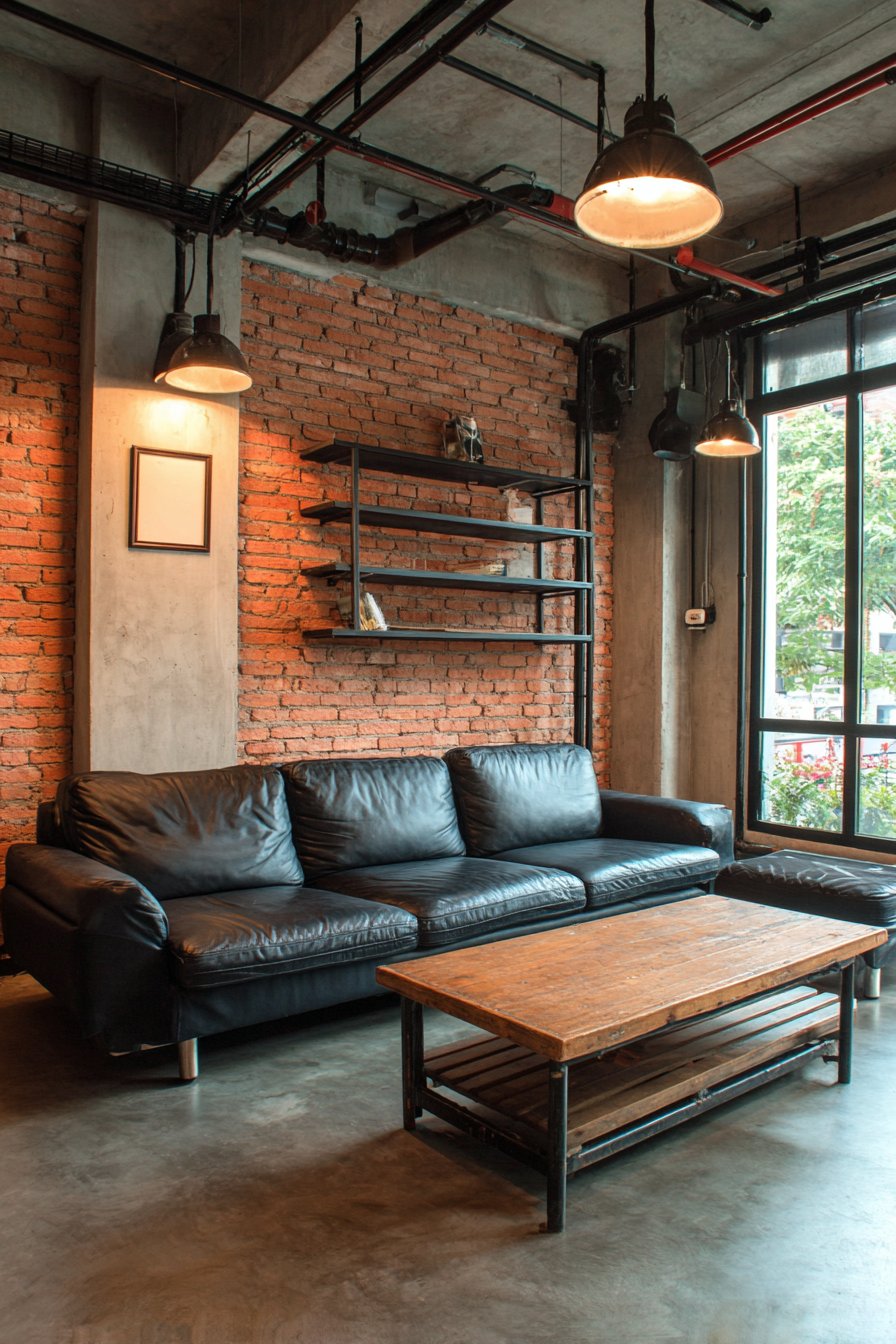
Exposed brick accent walls bring authentic industrial character and urban sophistication to loft-style living rooms, offering textural richness and historical depth that manufactured materials simply cannot replicate. This living room accent wall idea celebrates the raw beauty of traditional construction materials, with red-orange clay bricks displaying honest weathering, varied mortar lines, and the authentic imperfections that make each installation unique. The exposure of original brick reveals architectural history while creating substantial visual and textural interest that serves as both focal point and conversation piece.
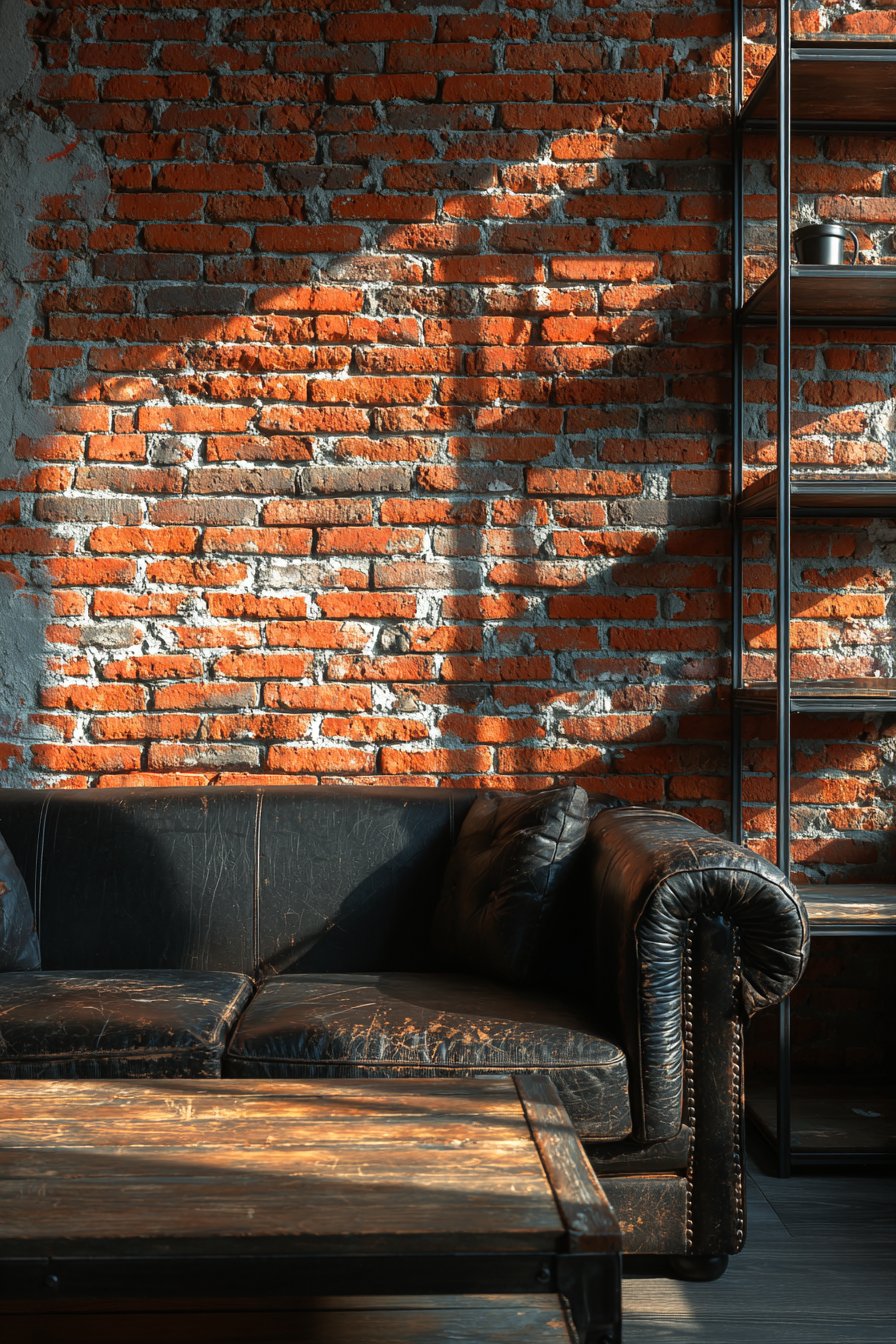
The industrial loft aesthetic emerges naturally from the combination of exposed brick with complementary materials and furnishings. Dark leather sofas reinforce the urban, masculine character while providing durable seating appropriate to casual loft living. Reclaimed wood coffee tables echo the brick’s aged authenticity, while metal shelving units complete the industrial material palette of brick, wood, and metal. Natural light from tall windows—characteristic of converted industrial spaces—creates dynamic shadow patterns across the brick texture, emphasizing every mortar joint and surface irregularity throughout the day as sun angles shift.
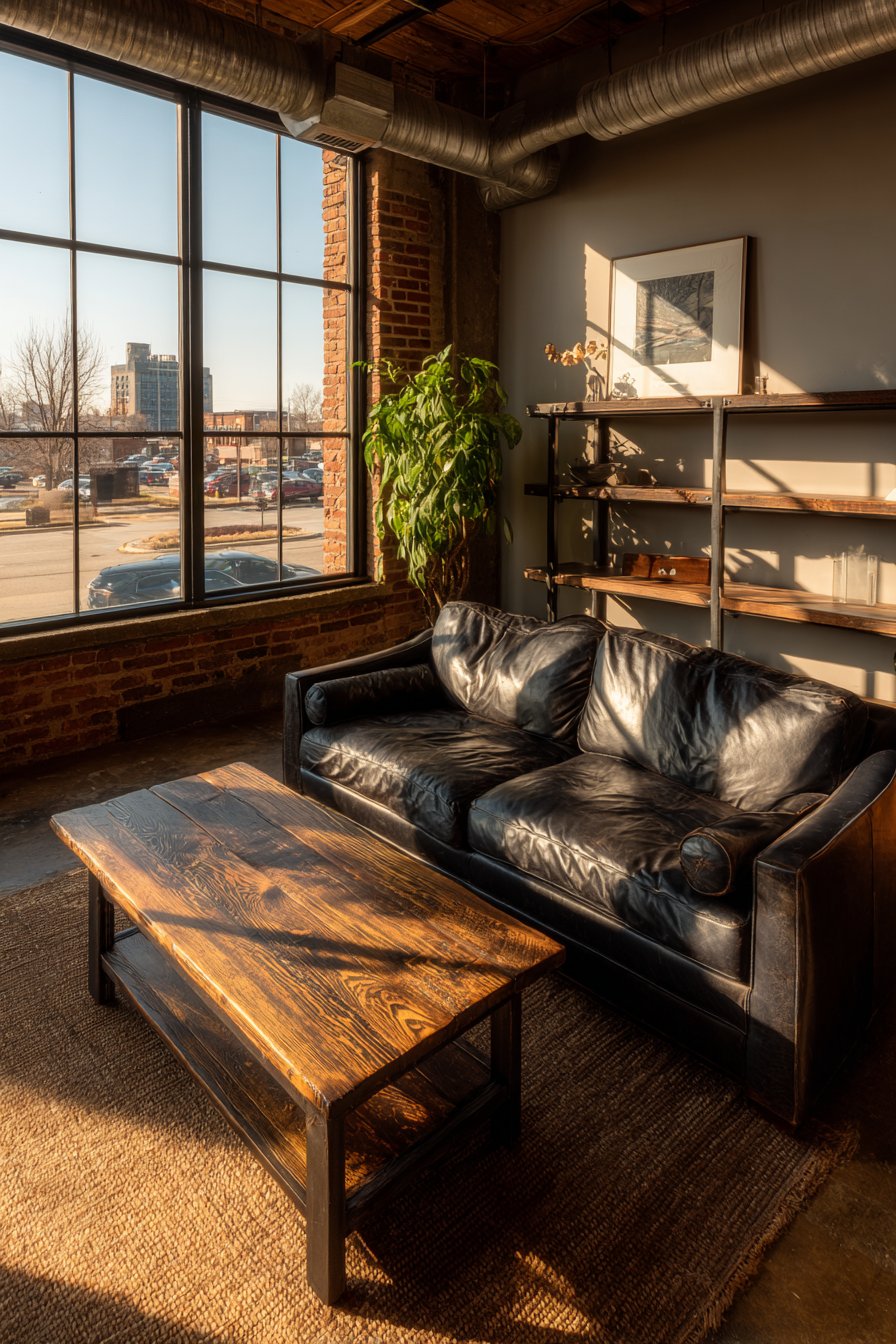
Practical considerations around exposed brick walls deserve attention, as brick presents unique challenges and opportunities compared to finished wall surfaces. Brick’s porous nature means it can harbor dust and may require periodic sealing to prevent moisture issues and facilitate cleaning. However, properly maintained brick walls prove remarkably durable and age gracefully, developing character and patina that actually enhance their appearance over time. The rough texture and irregular surface make brick unsuitable for hanging lightweight items with standard picture hooks, instead requiring masonry anchors or careful planning around mortar joints.
Key Design Tips: Seal exposed brick with clear masonry sealer to reduce dust accumulation and prevent moisture penetration while maintaining natural appearance. Clean brick walls using soft brushes or vacuum attachments rather than water, which can cause efflorescence or moisture problems. Leave original mortar when possible for authentic character, repointing only where structurally necessary. Paint brick accent walls only after careful consideration, as the process proves difficult to reverse and eliminates natural texture variations. Complement brick’s warm tones with woods, leathers, and metals rather than fighting the inherent industrial aesthetic. Install appropriate anchors and mounting hardware designed specifically for masonry when hanging items on brick walls. Consider lighting placement carefully to maximize the textural shadows that make brick visually compelling.
10. Botanical Wallpaper in Muted Sage and Cream
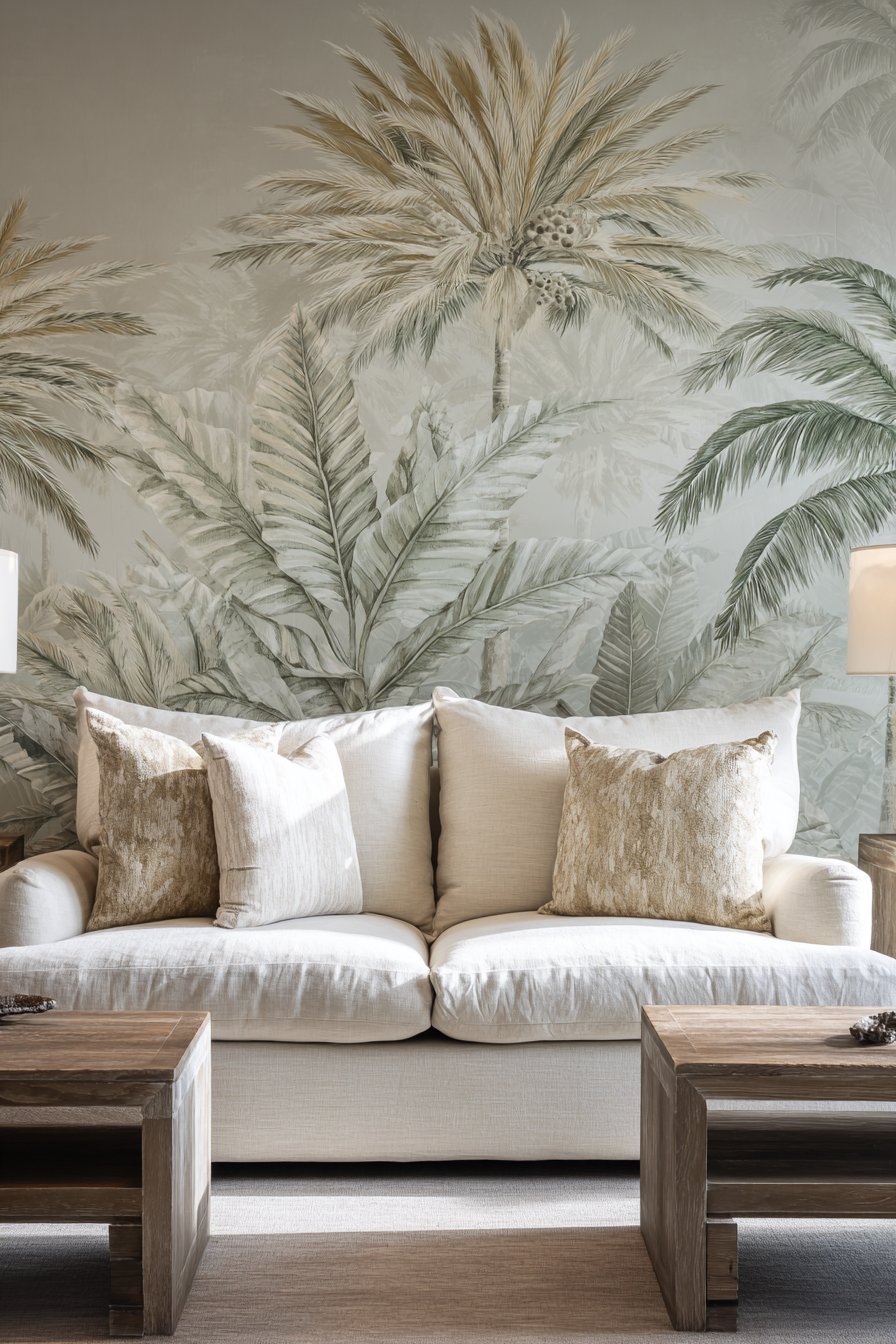
Large-scale botanical print wallpaper in muted sage and cream tones creates an accent wall that brings the serenity of nature indoors while maintaining sophisticated restraint appropriate to contemporary interiors. This living room accent wall idea demonstrates how wallpaper—when selected and installed thoughtfully—can provide pattern, color, and visual interest that painted walls simply cannot achieve. The oversized botanical motifs make bold statements without overwhelming, while the muted color palette ensures versatility and prevents the pattern from dominating the entire room.
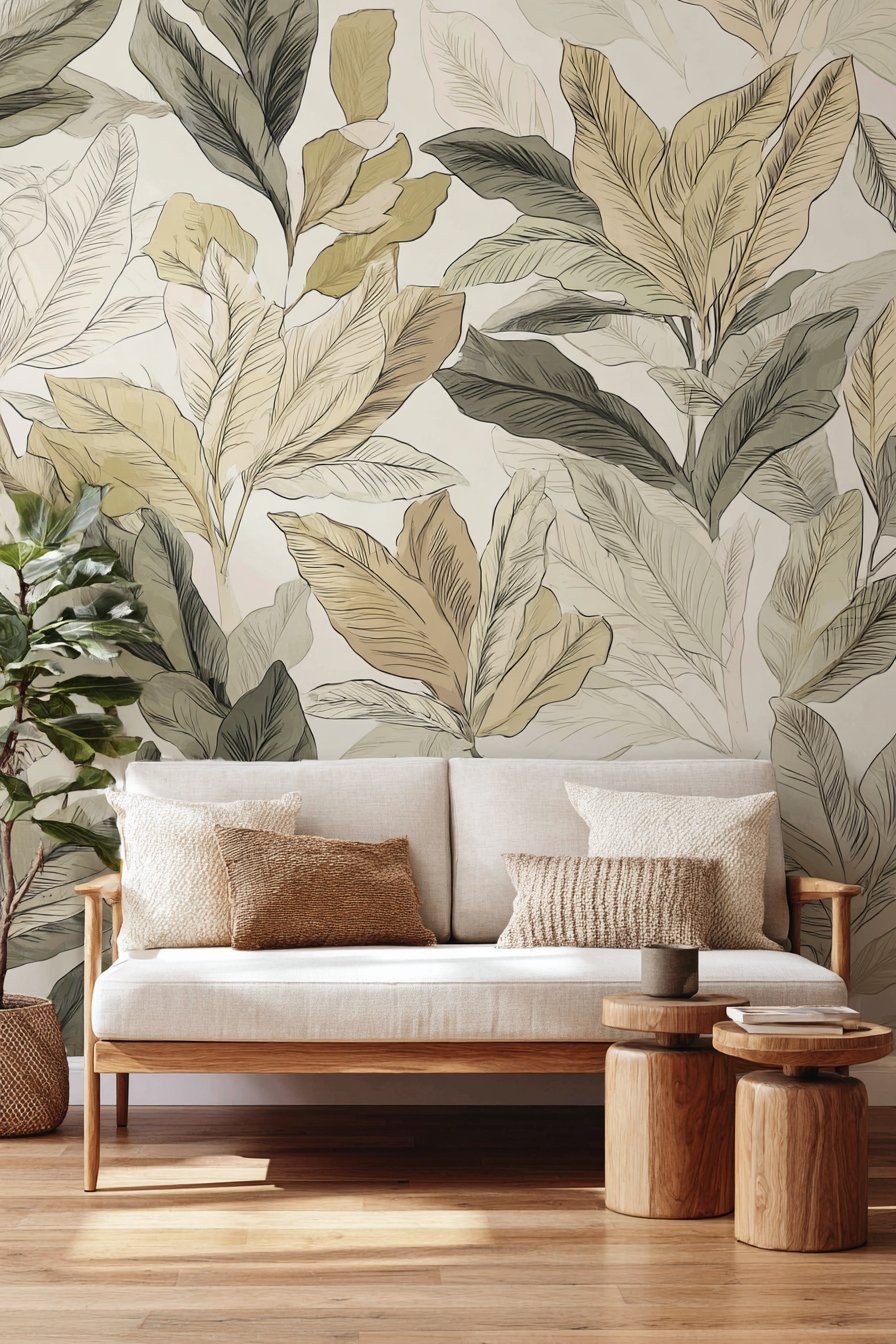
The soft grey background of this particular wallpaper proves crucial to its success, providing neutral foundation that allows the sage and cream botanical elements to read clearly without creating visual chaos. The scale of the pattern requires careful consideration—large-scale prints like these work best on uninterrupted wall surfaces where the full pattern repeat can be appreciated, rather than on walls broken up by multiple windows or doors. When paired with neutral linen upholstery and simple wooden side tables, the patterned wall becomes the clear focal point while the surrounding elements provide visual calm that prevents pattern overload.
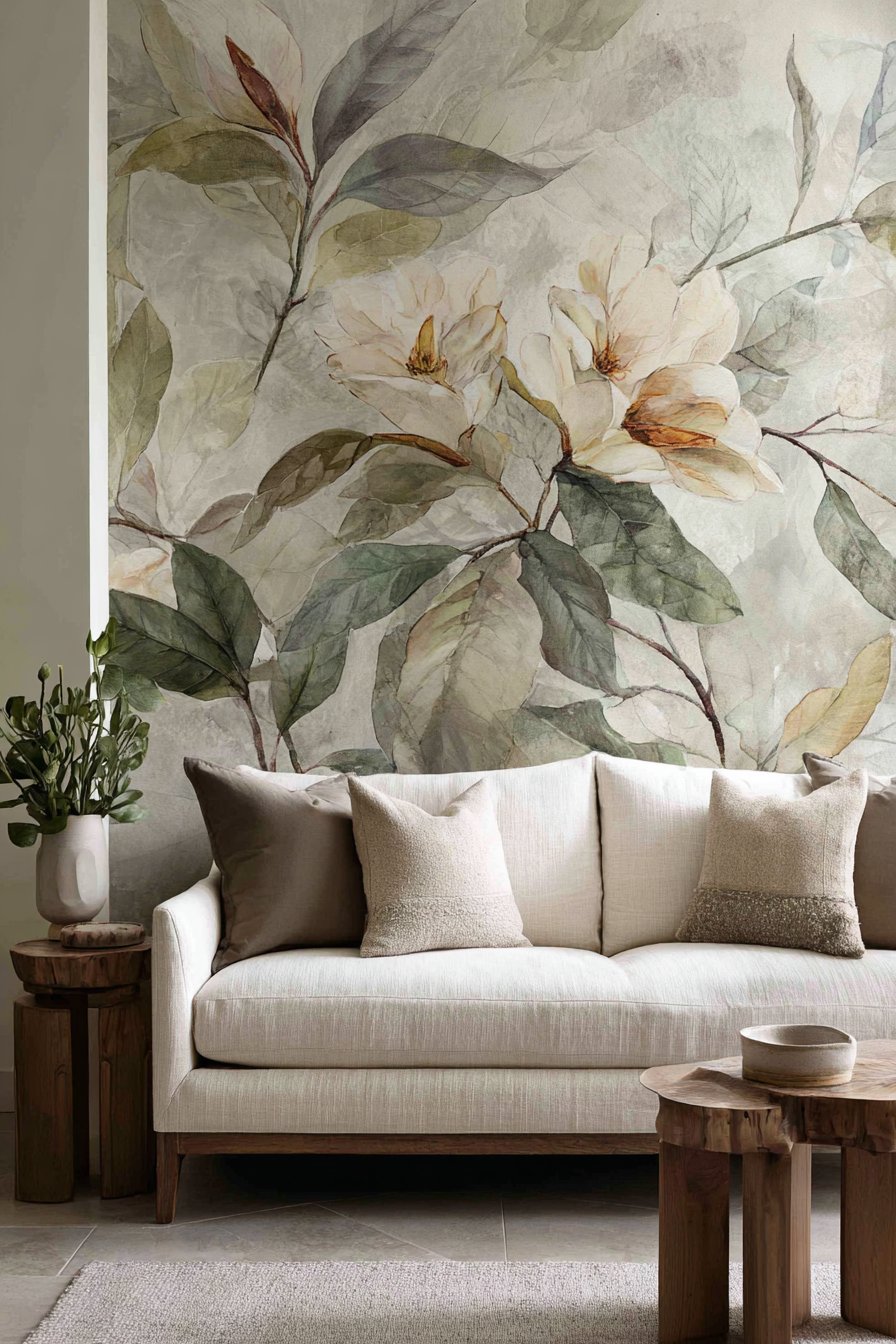
Lighting considerations prove particularly important with wallpapered accent walls, as direct harsh lighting or strong glare can create reflective hotspots that obscure the pattern and create viewing difficulties. The soft diffused natural lighting in this example prevents such issues, allowing the delicate pattern details to remain visible without glare interference. This attention to lighting demonstrates the importance of considering not just what materials and patterns you select, but how they’ll perform under your specific lighting conditions throughout the day.
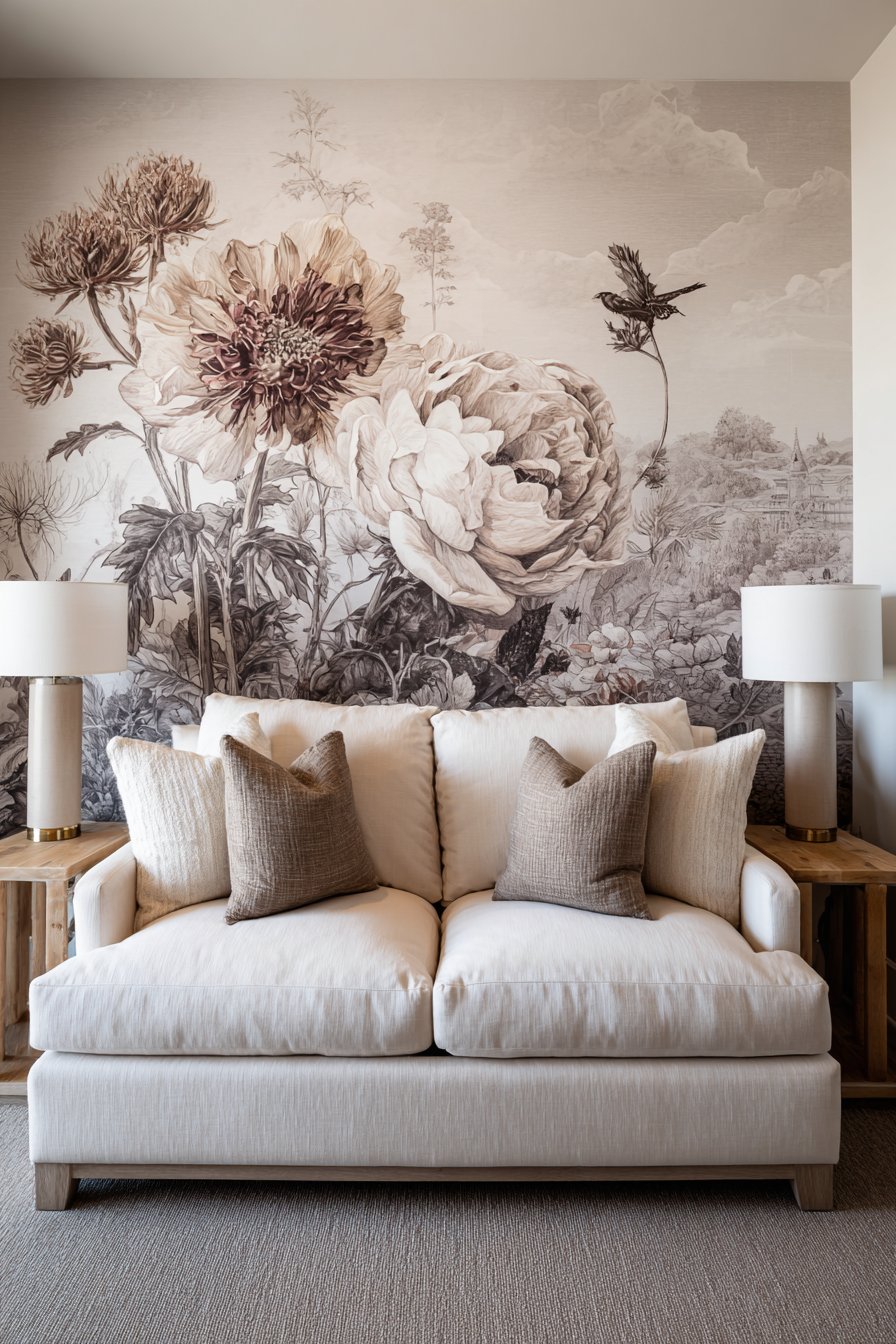
Key Design Tips: Select wallpaper specifically rated for high-traffic areas to ensure durability and cleanability in living spaces. Prepare wall surfaces meticulously before installation, as wallpaper reveals every imperfection in the underlying surface. Order extra wallpaper beyond calculated needs to account for pattern matching and future repairs. Install wallpaper in climate-controlled conditions to prevent expansion or contraction during application. Position patterned accent walls on focal wall surfaces with minimal interruptions for doors, windows, or outlets. Avoid harsh direct lighting that creates glare on wallpaper surfaces, instead using diffused or indirect illumination. Clean wallpaper with dry methods or barely damp cloths, avoiding saturating the surface which can damage adhesive or underlying paper.
11. Modern Linear Oak Slat Design with Backlighting
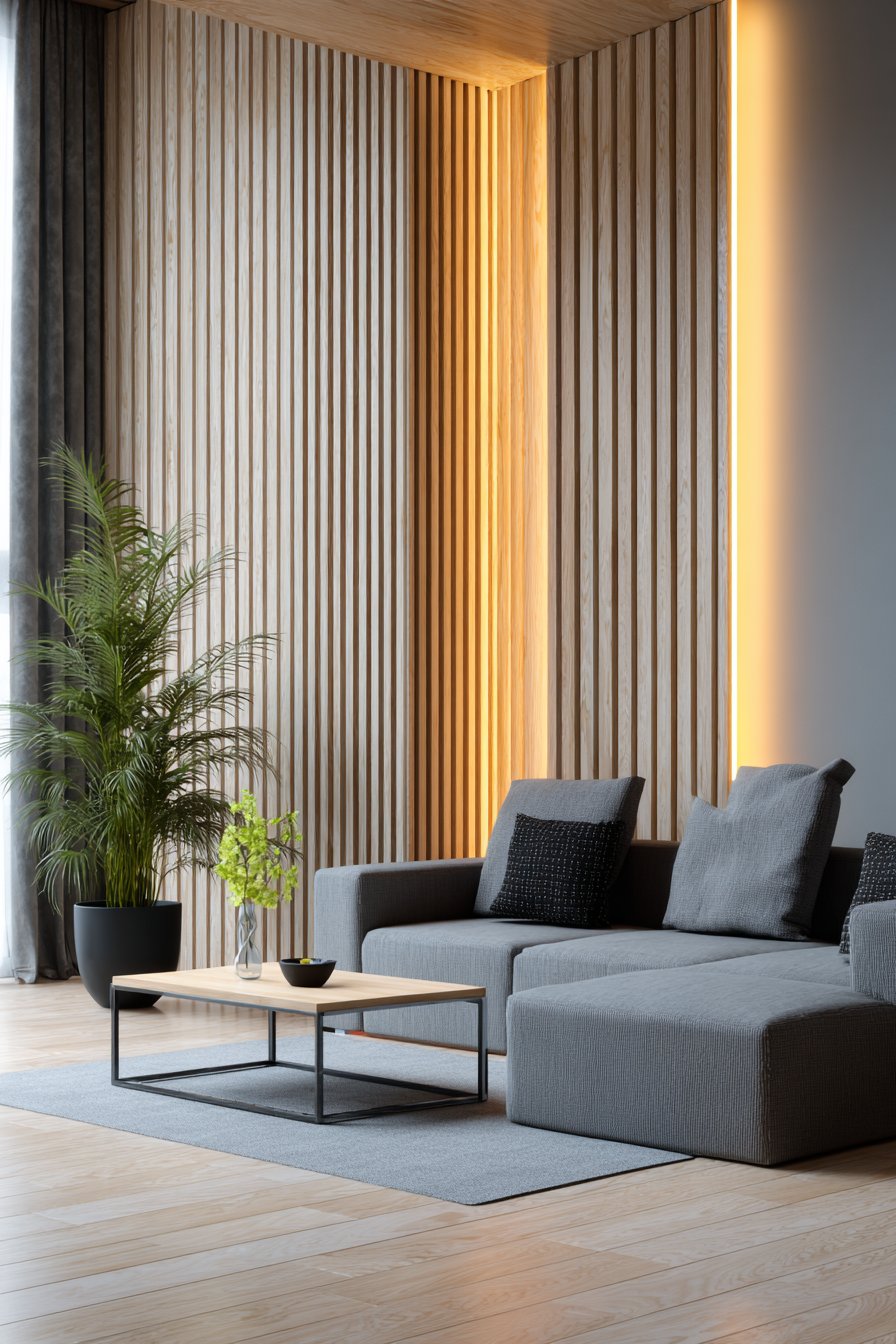
Horizontal wood slat accent walls in light oak with evenly spaced gaps represent the pinnacle of contemporary design, offering clean linear aesthetics enhanced by innovative backlighting that creates ambient evening illumination. This living room accent wall idea combines natural material warmth with modern engineering, as the carefully spaced slats allow for LED strip installation that transforms the wall from daytime focal point into evening light feature. The light oak species provides Scandinavian-inspired brightness while maintaining organic warmth that prevents the modern design from feeling cold or sterile.
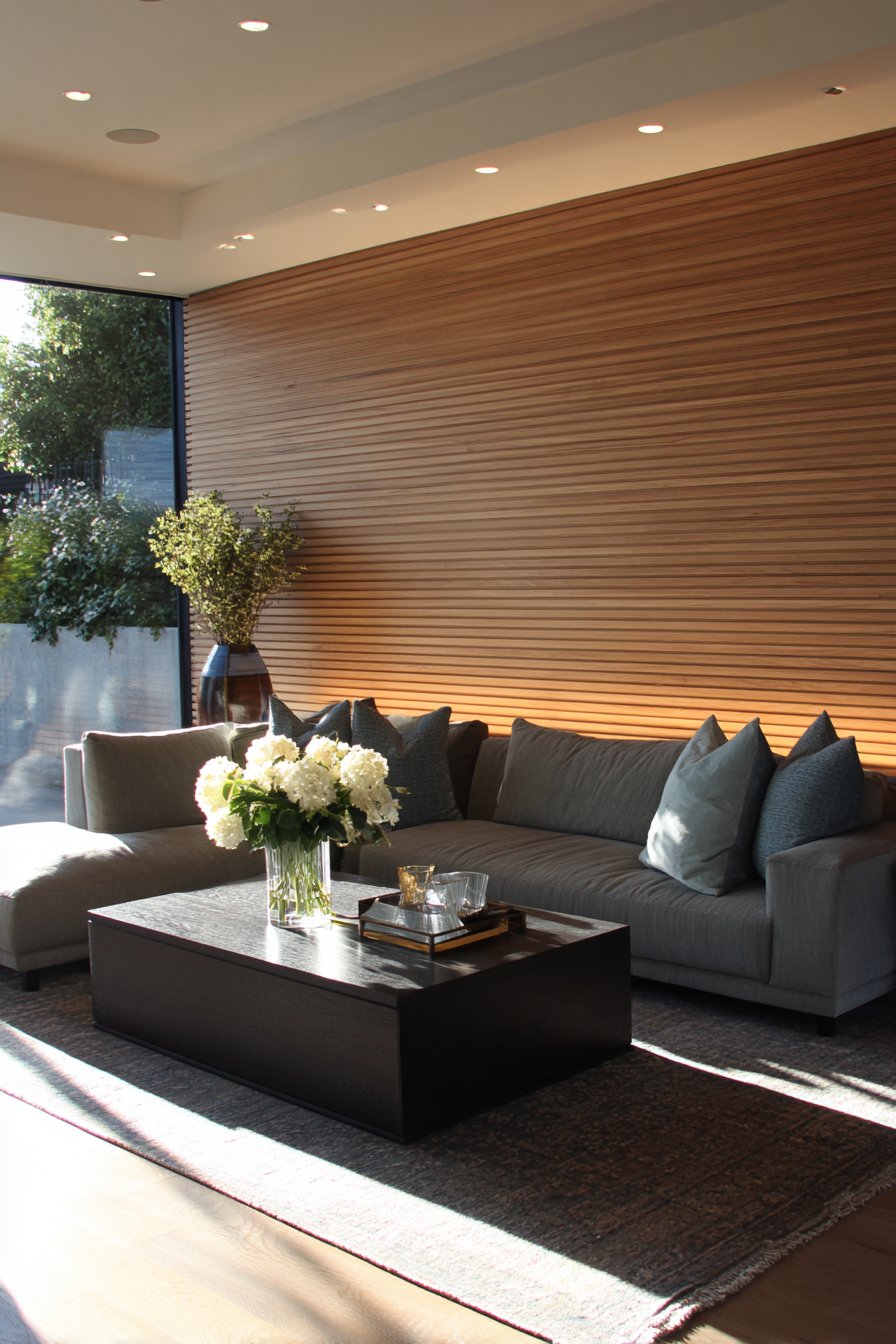
The precision of the horizontal slat installation proves critical to achieving the desired contemporary aesthetic. Evenly spaced gaps create rhythmic visual pattern that draws the eye horizontally, making rooms appear wider while establishing strong geometric order. During daylight hours, natural light highlights the wood grain and casts subtle shadows through the gaps, creating dimensional depth. As evening approaches, the integrated LED backlighting activates, creating a warm glow that emanates from behind the slats and transforms the wall into a sophisticated light sculpture that provides both ambiance and functional illumination.
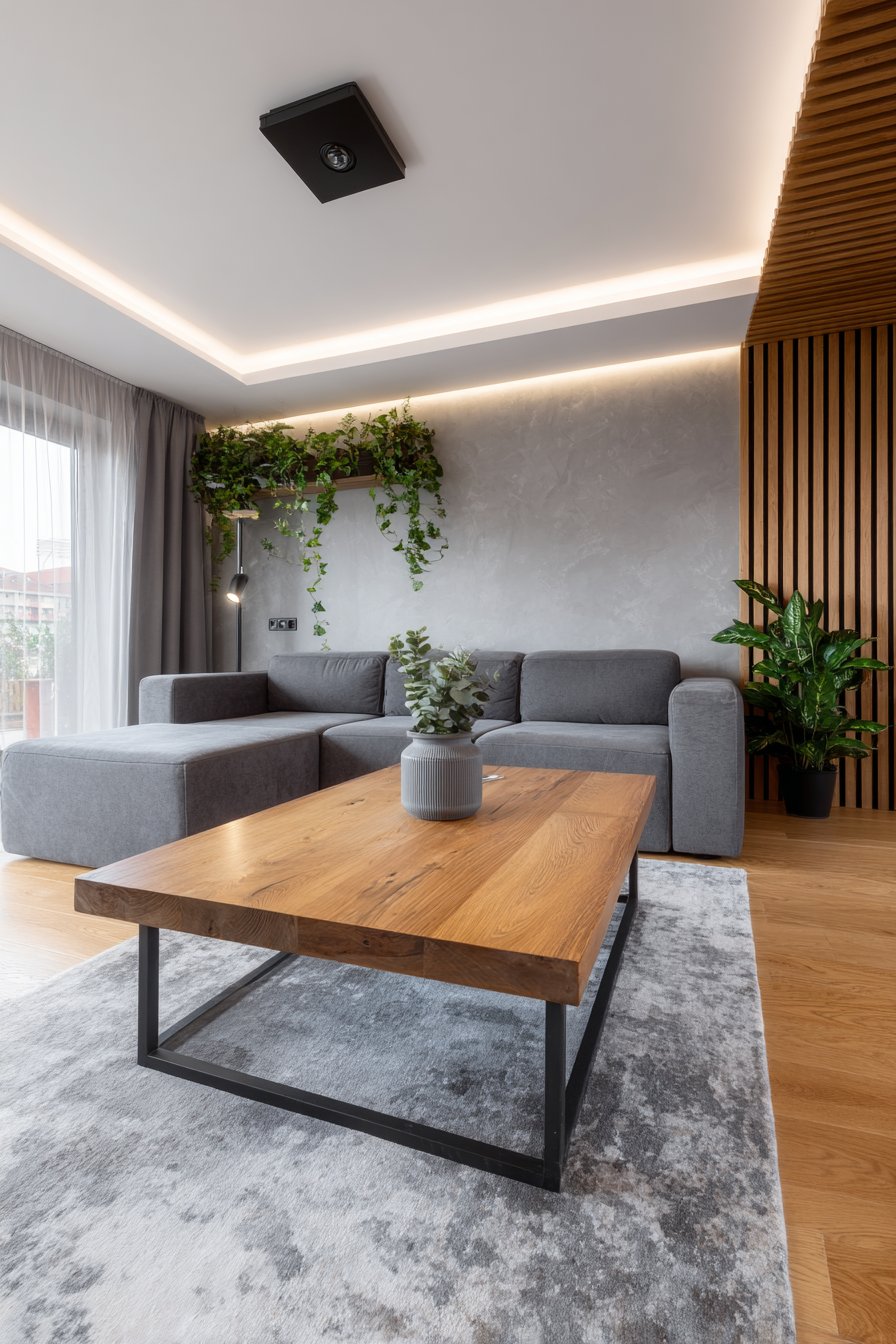
The grey modular sofa and minimalist coffee table complement the slat wall’s contemporary character while maintaining the neutral, sophisticated palette essential to modern design. The combination of natural wood with sleek furnishings demonstrates how contemporary interiors successfully blend organic materials with clean-lined forms, creating spaces that feel both warm and refined. The strategic positioning of LED strip lighting behind the slats requires careful planning during installation, but the dramatic evening effect justifies this additional complexity.
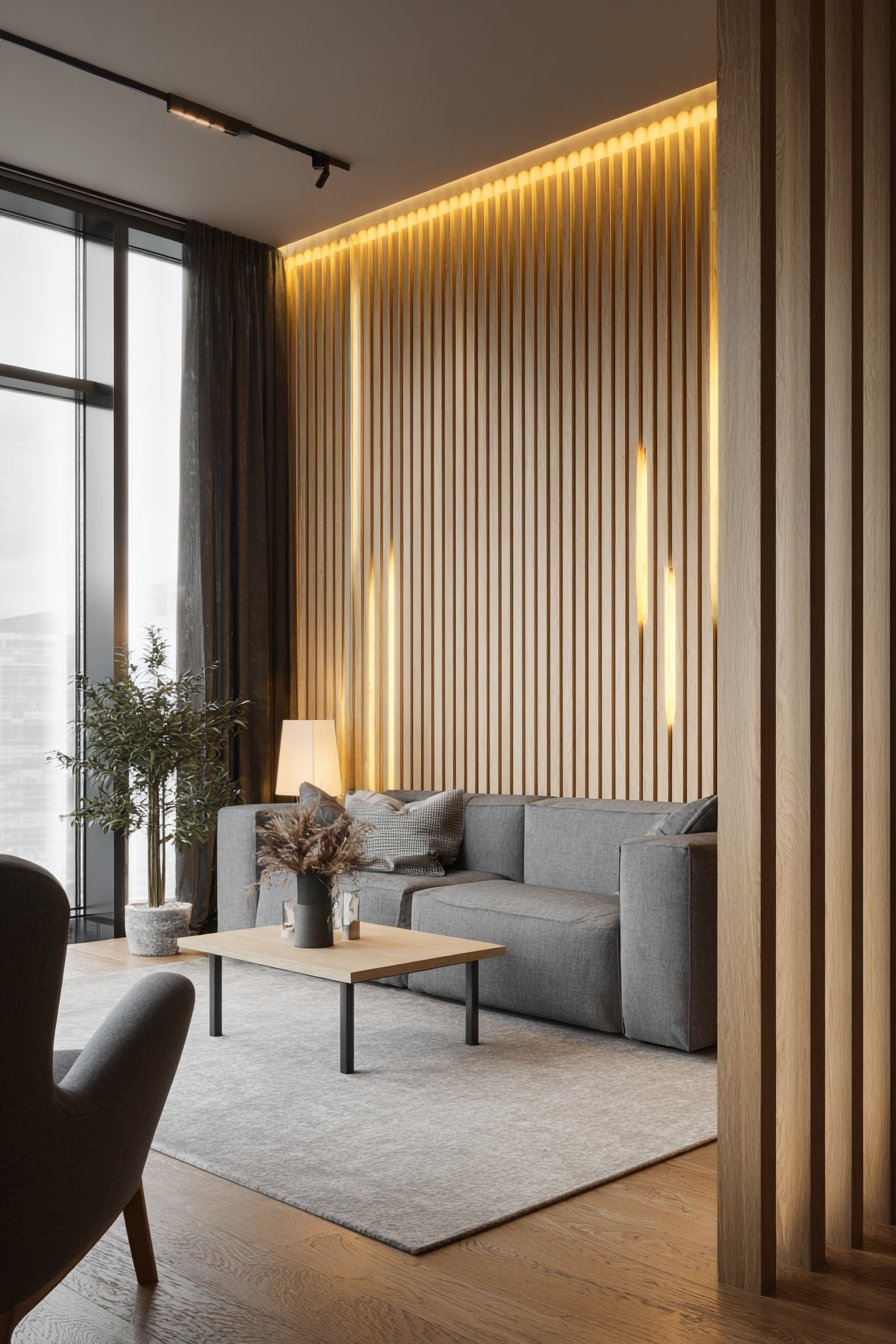
Key Design Tips: Space horizontal slats uniformly using spacer blocks or jigs to ensure consistent gaps that create clean geometric rhythm. Install LED strip lighting behind slats before final mounting, ensuring even light distribution without visible hotspots. Select light oak finishes for Scandinavian-inspired brightness, darker woods for richer, more dramatic effects. Mount slats to vertical furring strips rather than directly to walls to create necessary depth for backlighting. Use dimmable LED systems to control light intensity and create different evening moods. Finish wood slats with clear protective coating to preserve natural color and protect against dust accumulation. Ensure electrical wiring for backlighting meets code requirements and is performed by licensed electricians where regulations require.
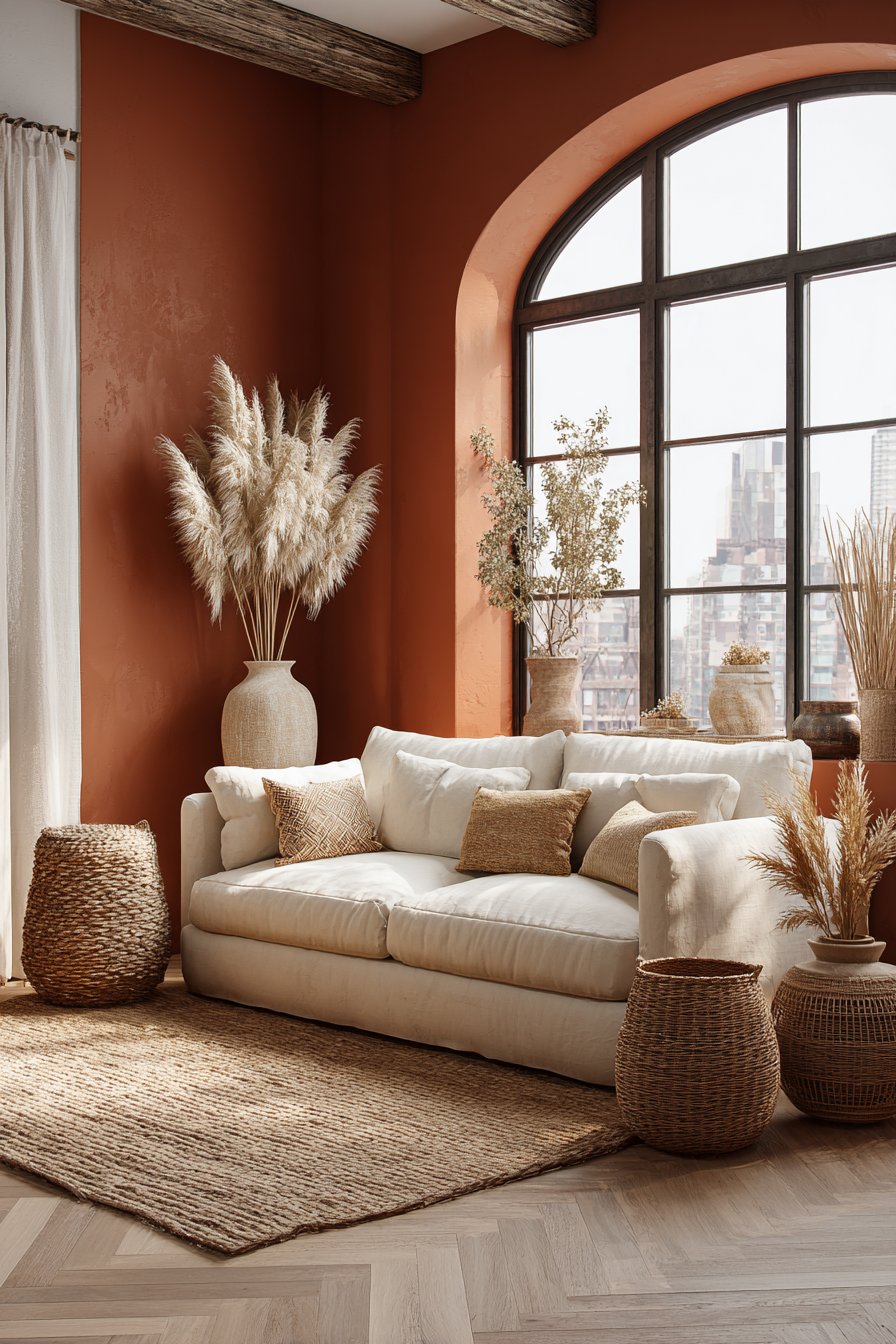
12. Mediterranean Terracotta Warmth
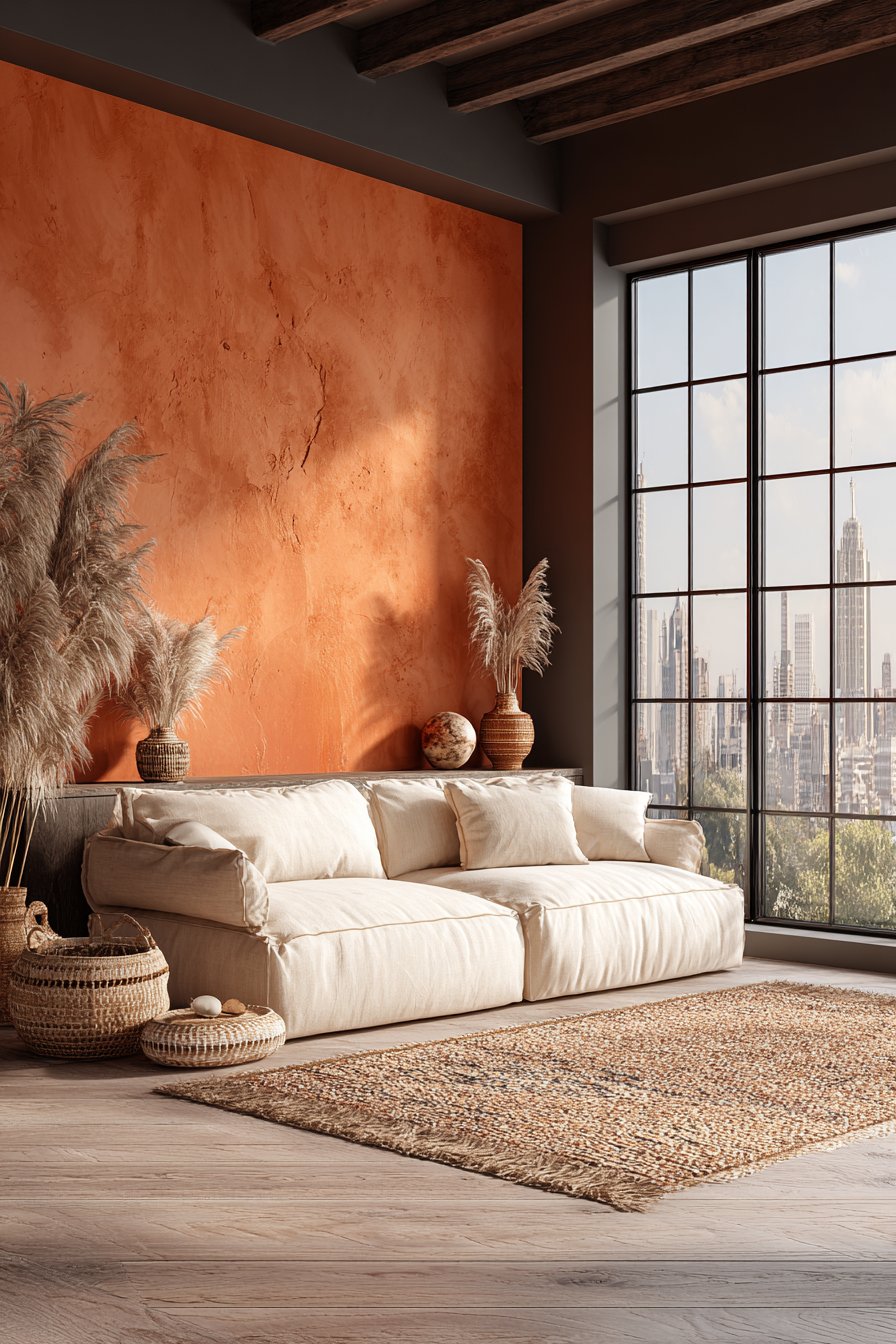
Warm terracotta painted accent walls with subtle texture bring Mediterranean-inspired warmth and earthy sophistication to modern living spaces, creating focal points that feel both grounded and luminous. This living room accent wall idea embraces the psychological and aesthetic benefits of warm earth tones, with terracotta offering a color that feels simultaneously energizing and calming, bold and neutral. The subtle texture finish prevents the solid color from appearing flat, adding dimensional interest that rewards closer inspection and creates gentle shadow patterns as light angles change throughout the day.
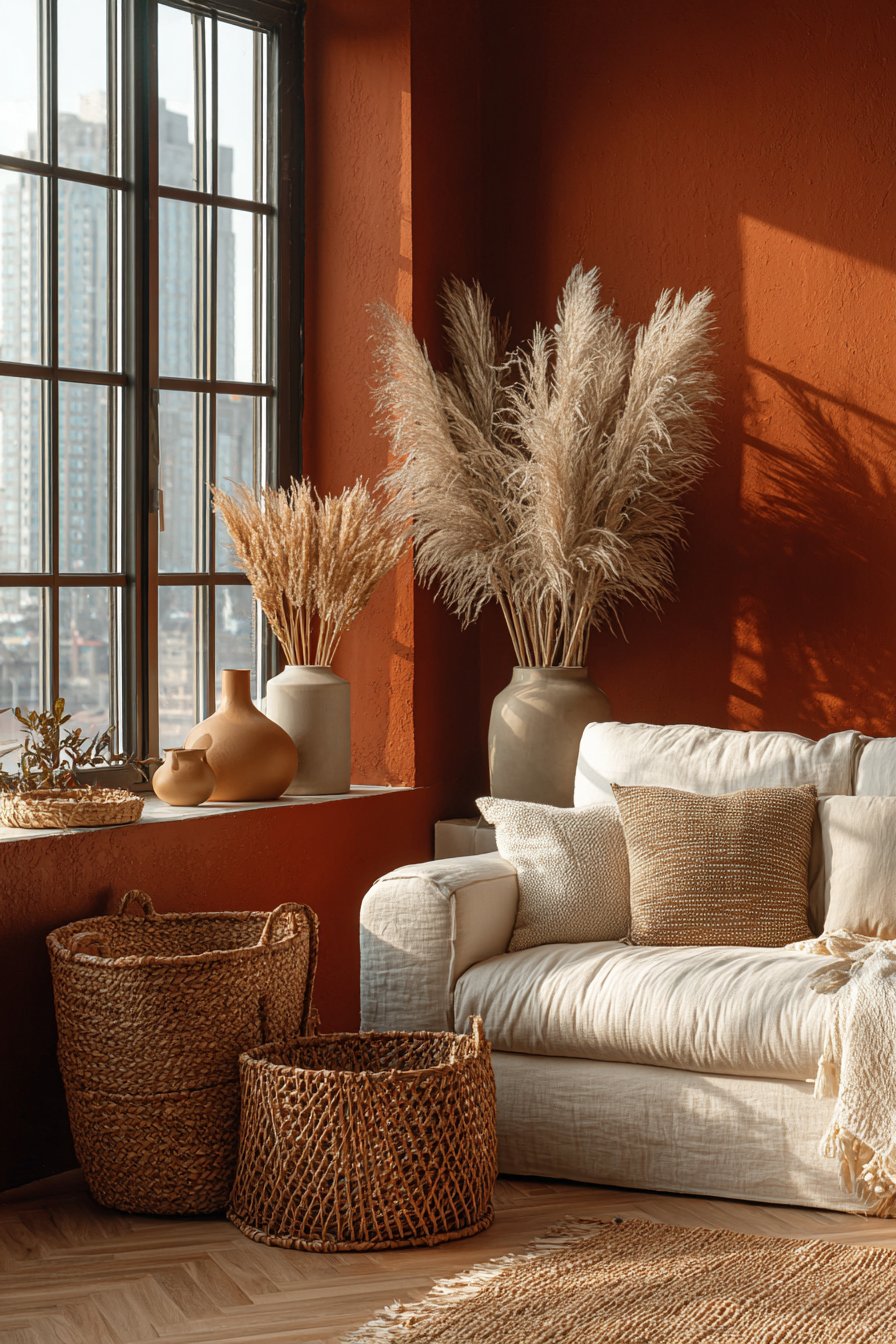
The terracotta wall serves as perfect backdrop for natural materials and organic elements, creating cohesive design narrative that celebrates earth-inspired aesthetics. Natural linen sofas in cream tones provide soft contrast that allows the terracotta to shine without competition, while woven baskets, ceramic vases, and dried pampas grass reinforce the organic material story. The abundant natural light from large windows proves essential to this design’s success, as terracotta colors glow warmly when illuminated by natural daylight, creating inviting atmosphere that draws people into the space.
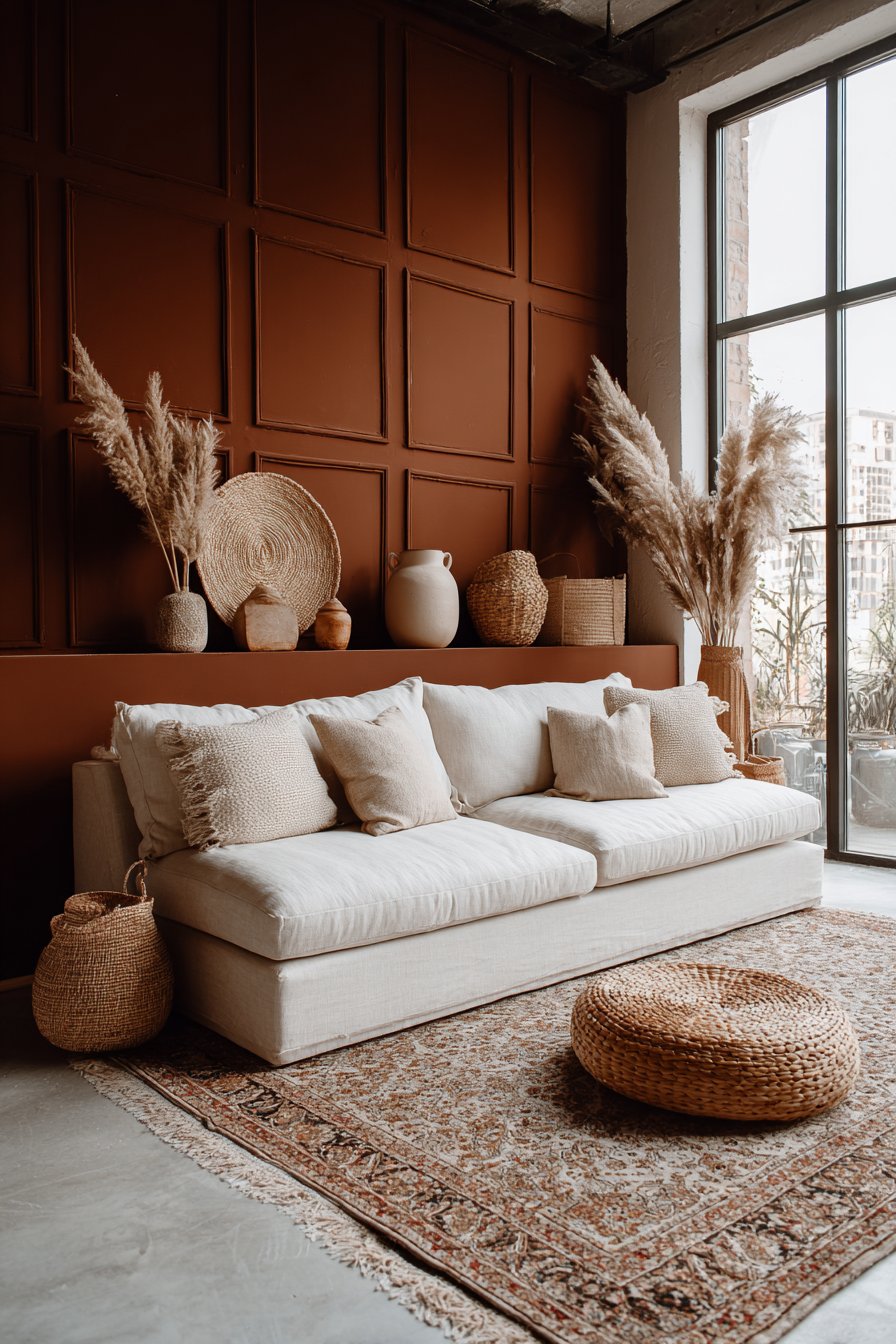
Color psychology plays important role in the success of terracotta accent walls. This warm earth tone creates feelings of comfort, stability, and connection to nature—all desirable qualities in living spaces designed for relaxation and gathering. Unlike cooler accent wall colors that can create distance or formality, terracotta invites closeness and casual interaction, making it particularly well-suited to family-oriented living rooms where warmth and approachability take priority over formal sophistication.
Key Design Tips: Test terracotta paint samples in various lighting conditions, as this color appears dramatically different under warm versus cool lighting. Add subtle texture through specialty paint techniques or textured rollers to prevent flat appearance and add dimensional interest. Balance terracotta’s warmth with cooler accent colors in textiles and accessories to prevent overwhelming heat. Position terracotta walls to receive ample natural light, as this color can appear muddy or dull in poorly lit conditions. Complement terracotta with natural materials like linen, cotton, wood, and ceramic rather than synthetic or highly processed materials. Consider the room’s existing color temperature when selecting terracotta shades—warmer spaces need cooler terracottas, cooler spaces can handle warmer iterations. Apply premium paint in multiple coats to achieve rich, saturated color that doesn’t appear thin or streaky.
13. Rustic Reclaimed Barn Wood Authenticity
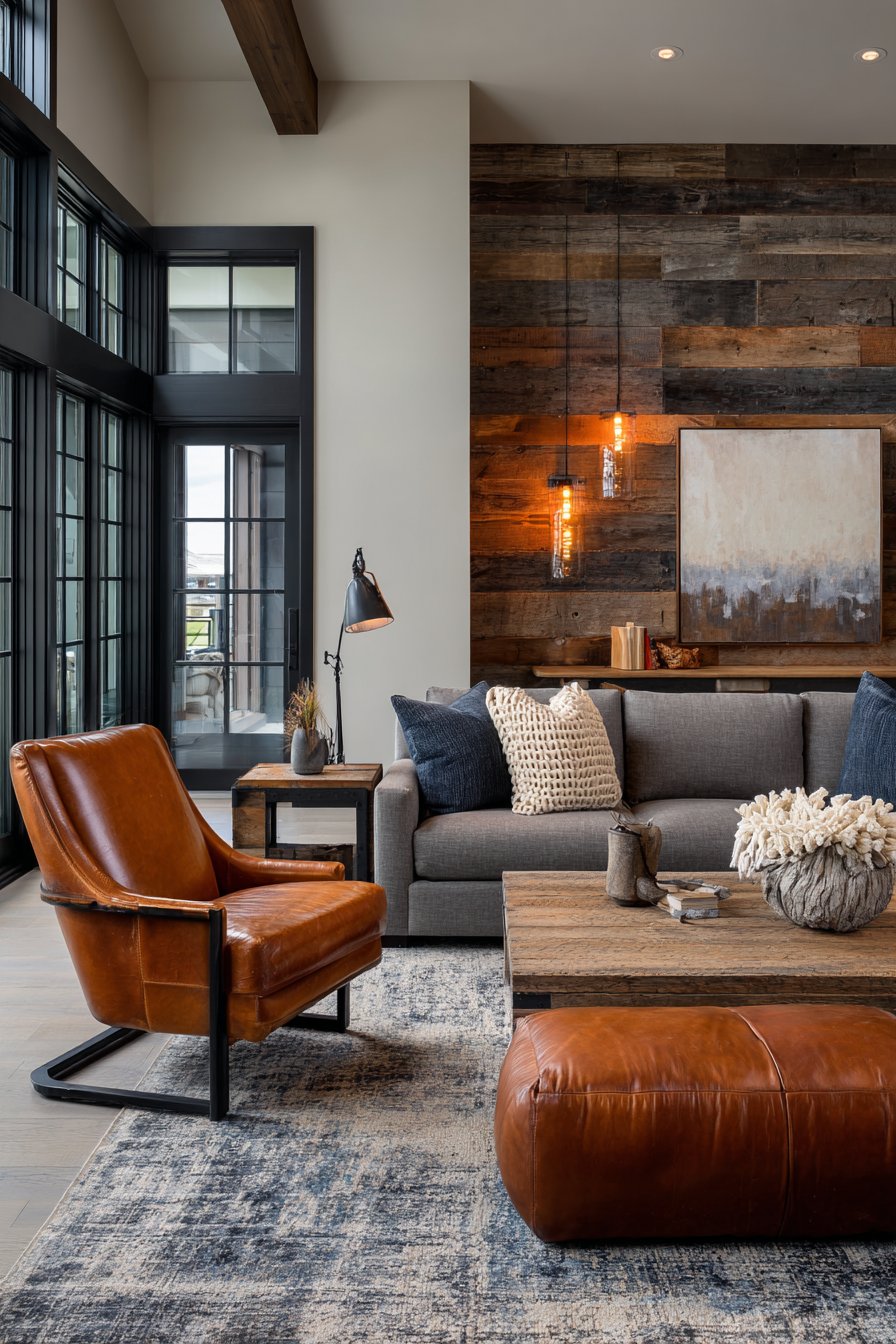
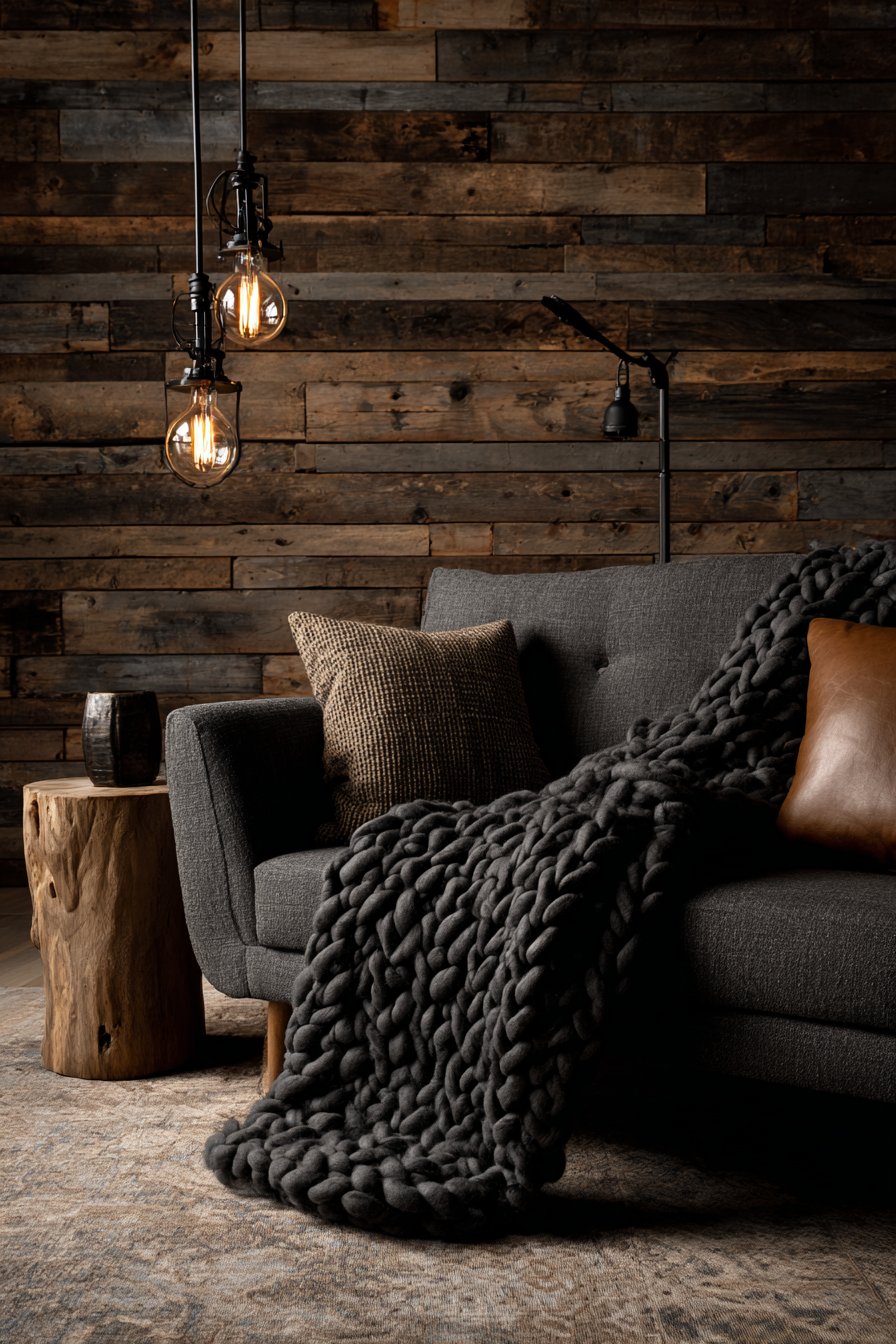
Reclaimed barn wood accent walls featuring mixed grey-brown weathered planks showcase authentic aging and character that manufactured materials cannot replicate, bringing historical depth and textural richness to modern rustic living rooms. This living room accent wall idea celebrates imperfection and authenticity, with naturally weathered wood displaying knots, nail holes, saw marks, and color variations that tell stories of previous lives in agricultural settings. The deliberate preservation of these characteristics creates accent walls with genuine soul and substance that transcend mere decoration to become conversation pieces and focal points.
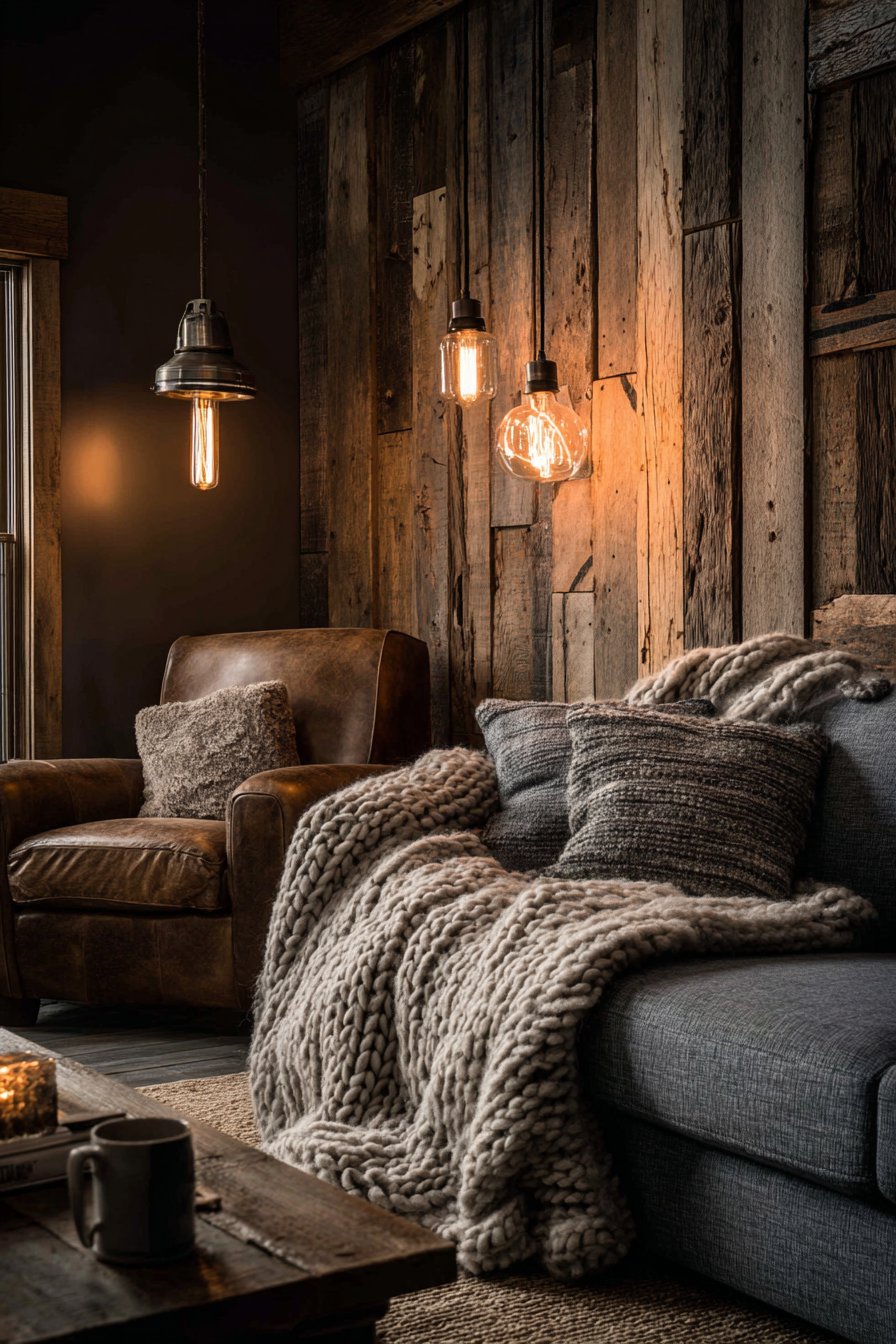
The rustic modern aesthetic emerges from the thoughtful juxtaposition of aged wood with contemporary furnishings and industrial elements. Chunky knit throws draped over grey sofas provide textural softness that balances the wood’s rough character, while vintage leather armchairs contribute warm patina that complements the weathered wood. Industrial lighting fixtures with Edison bulbs create intimate evening atmosphere while their warm glow highlights the wood’s aged character and emphasizes the natural variations across the wall surface. This material dialogue—aged wood, soft textiles, worn leather, raw metal—creates layered, collected aesthetic that feels curated over time rather than purchased all at once.
The practical sourcing and installation of reclaimed barn wood requires more consideration than standard materials. Authentic reclaimed wood must be properly cleaned, inspected for insects or rot, and often requires denailing and planing before installation. The investment proves worthwhile for those seeking genuine character, as reclaimed wood offers sustainability credentials alongside aesthetic authenticity. However, buyers should verify sources and inspect materials carefully, as the popularity of reclaimed wood has spawned various imitation products that attempt to replicate weathered appearance through artificial distressing.
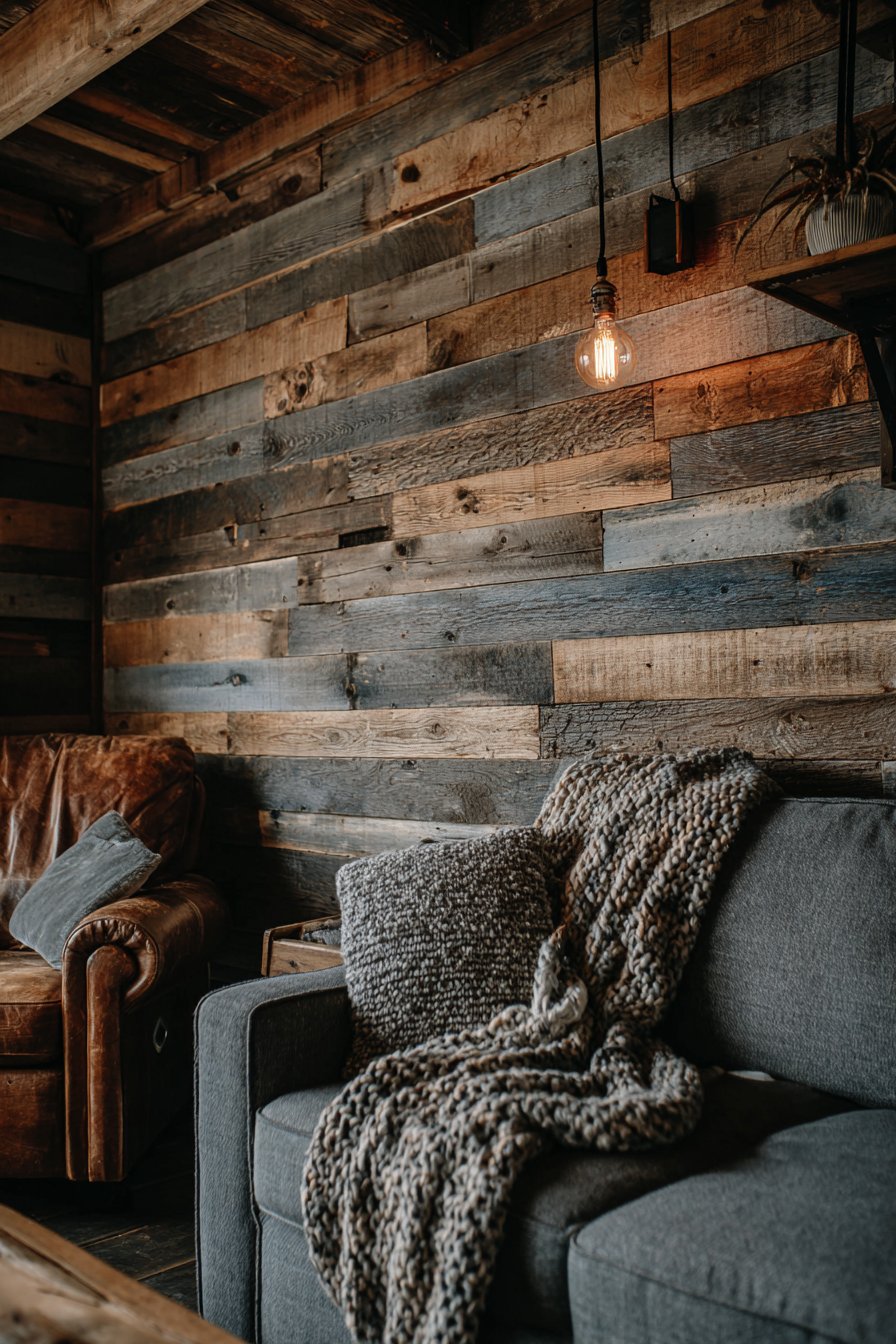
Key Design Tips: Source reclaimed barn wood from reputable suppliers who properly clean, denail, and inspect materials before sale. Inspect wood carefully for structural integrity, removing any boards showing rot or extensive insect damage. Clean reclaimed wood thoroughly but gently to remove dirt and debris while preserving natural patina and weathering. Install boards in random widths and lengths to create organic, unplanned appearance rather than obvious patterns. Apply clear sealer to preserve weathered finish and prevent continued deterioration or splinter issues. Complement rustic wood walls with warm lighting that enhances aged character rather than harsh illumination that reveals every imperfection harshly. Accept and celebrate variations in color and condition as essential character elements rather than flaws requiring correction.
14. Industrial Concrete Panel Minimalism
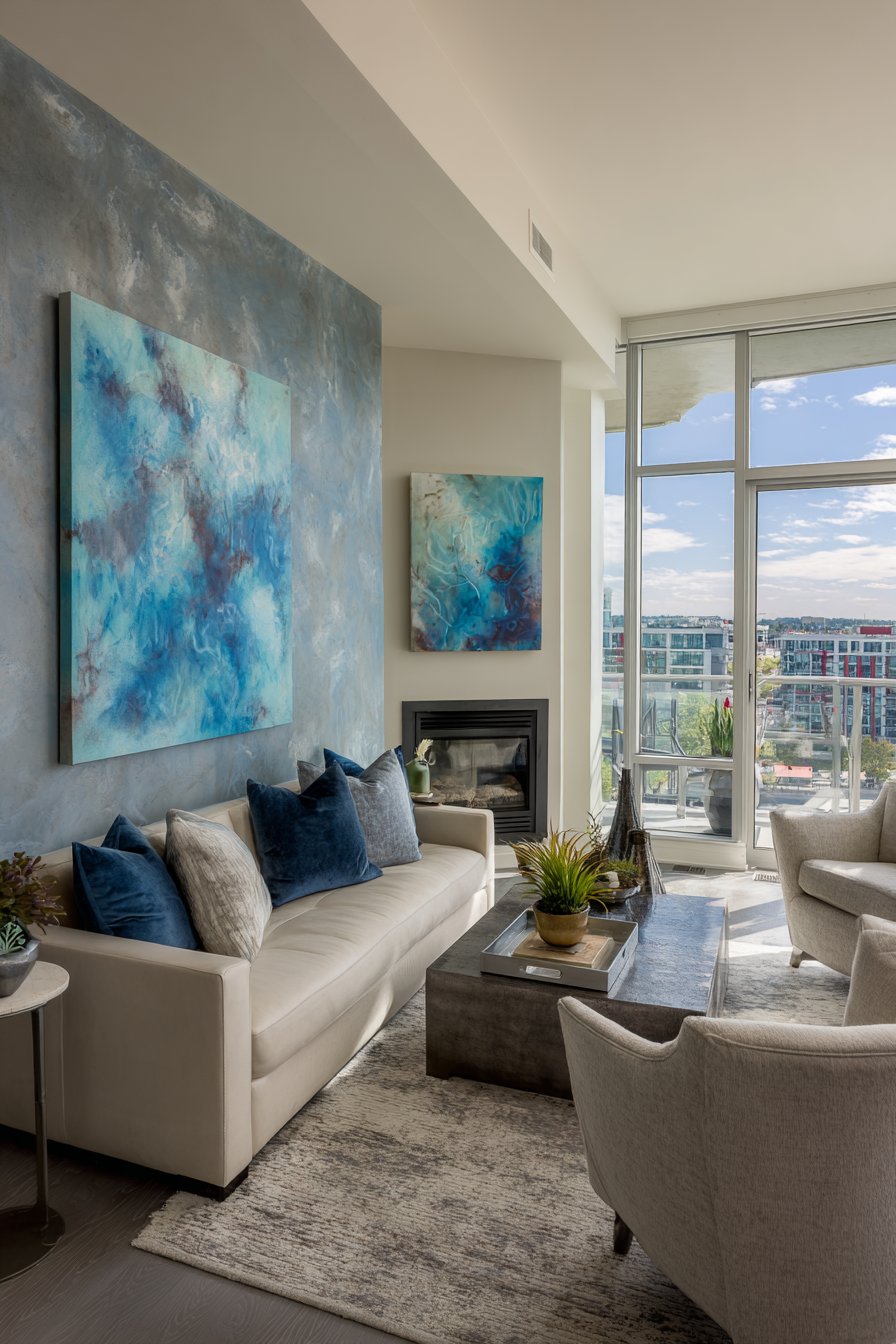
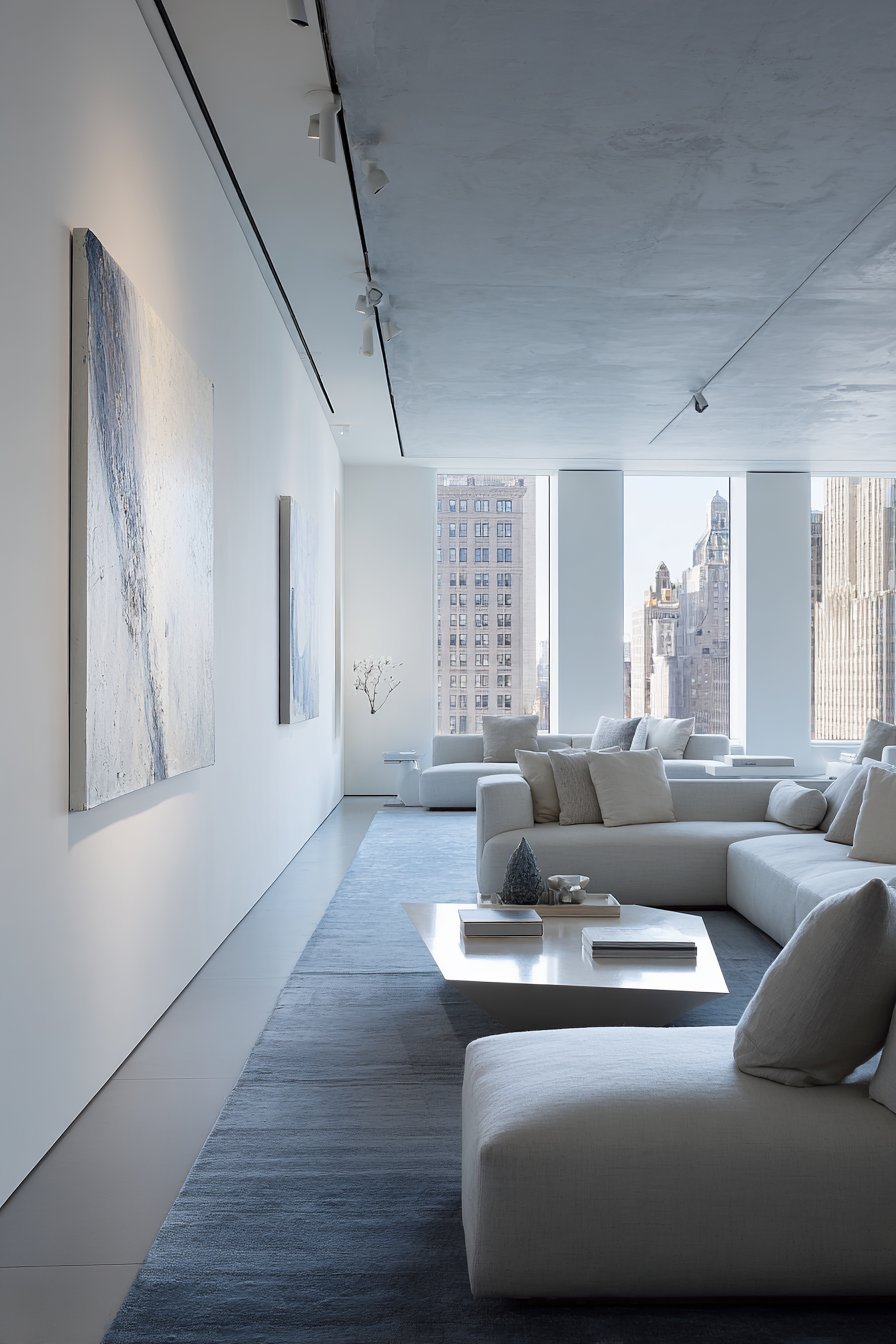
Sleek concrete panel accent walls with smooth modern finish create industrial minimalist sophistication that transforms contemporary loft spaces into urban sanctuaries. This living room accent wall idea embraces concrete’s inherent beauty—its subtle color variations, smooth yet textured surface, and solid, substantial presence that communicates permanence and intentionality. The light grey finish ensures versatility while maintaining industrial edge, providing neutral backdrop that allows architectural features and carefully selected furnishings to take center stage without competing with busy patterns or bold colors.
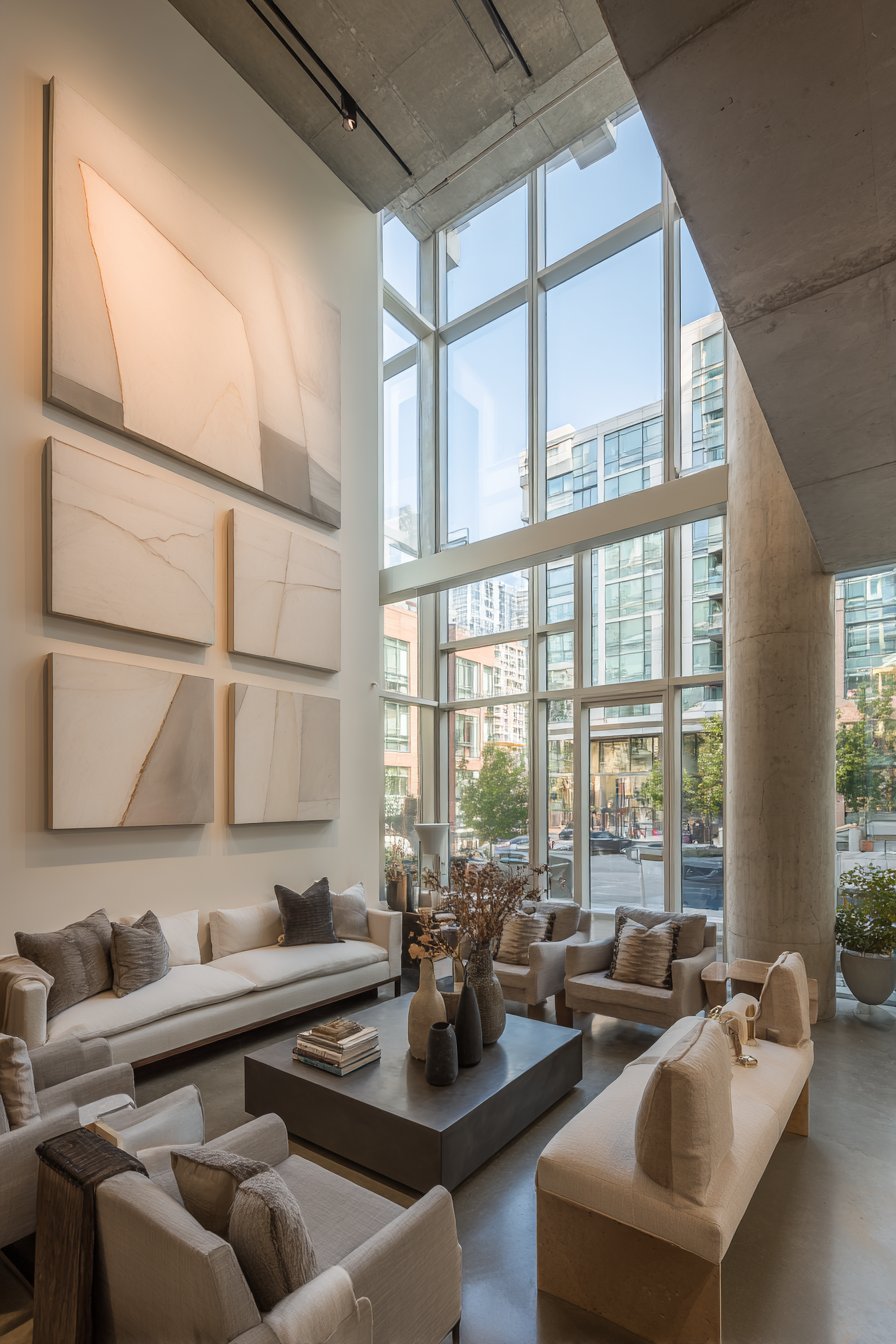
The contemporary loft aesthetic finds perfect expression in concrete accent walls, as this material references industrial heritage while presenting refined, finished appearance appropriate to modern residential spaces. Low-profile furniture in neutral tones maintains the minimalist discipline essential to successful concrete installations, while polished concrete floors create material continuity that unifies the space. Large format abstract art mounted against the concrete wall provides color and visual interest without undermining the industrial aesthetic, demonstrating how minimalist spaces can incorporate artistic expression without abandoning design principles.
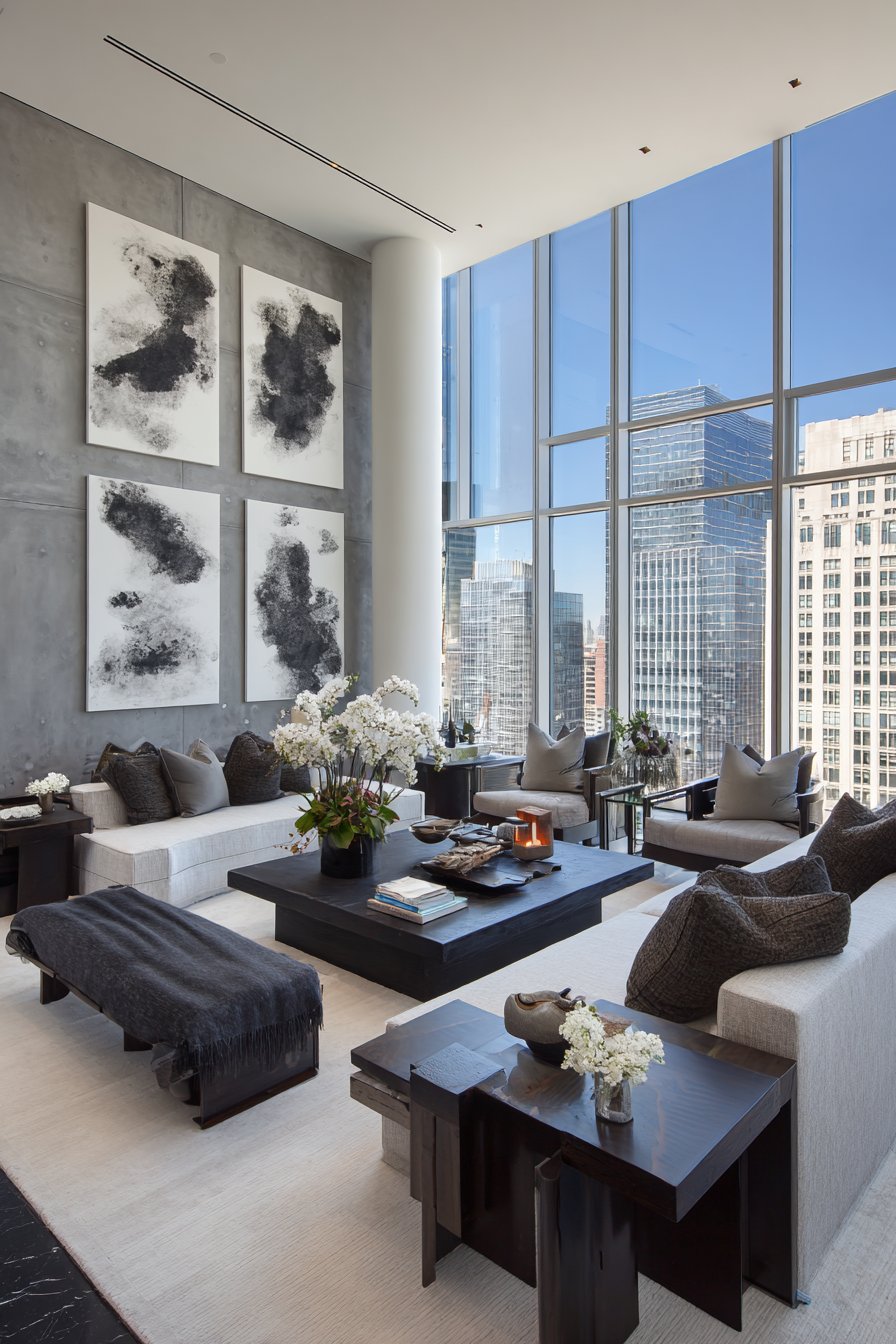
The natural light from floor-to-ceiling windows proves absolutely essential to preventing concrete walls from feeling cold or oppressive. Throughout the day, changing sunlight creates subtle variations across the concrete surface, revealing micro-textures and tonal shifts that reward attention and prevent the material from appearing monotonous. The professional photography captures this delicate interplay, showing how proper lighting transforms what might otherwise be a harsh industrial material into sophisticated design element worthy of contemporary residential spaces.
Key Design Tips: Select smooth-finish concrete panels rather than raw poured concrete for residential applications requiring refined appearance. Install concrete panels over properly prepared, level wall surfaces to ensure uniform appearance without warping or gaps. Seal concrete surfaces to prevent staining and facilitate cleaning, particularly in living spaces where food and beverages may be present. Balance concrete’s coolness with warm materials like wood, leather, and natural textiles to prevent overly cold atmosphere. Maximize natural light in rooms with concrete accent walls to prevent the grey material from creating dark, oppressive feelings. Clean sealed concrete with pH-neutral cleaners and soft cloths, avoiding acidic or harsh abrasive products. Consider radiant heating behind concrete walls in cold climates to add warmth while showcasing the material’s thermal mass properties.
15. Coastal White Board and Batten Tradition
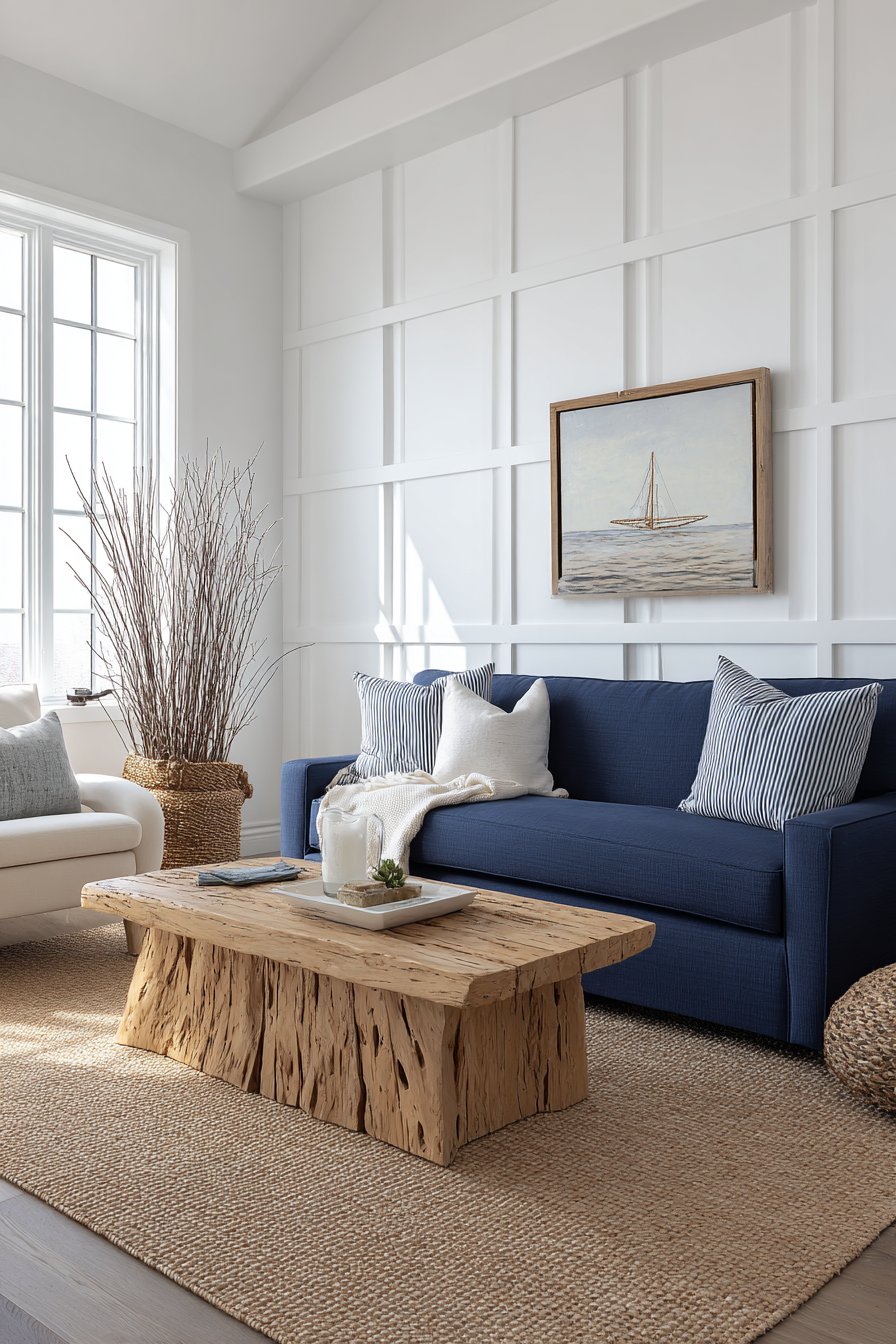
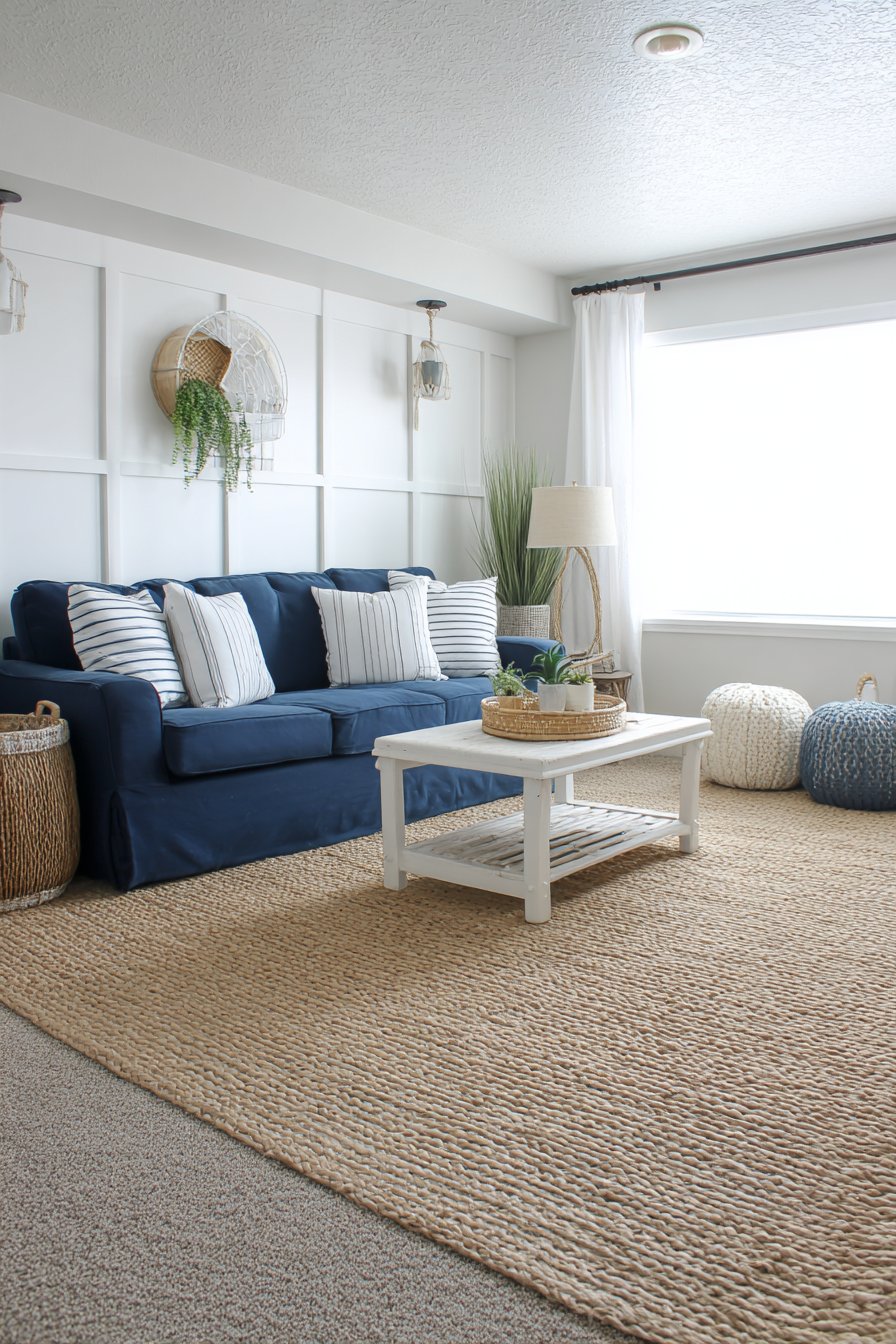
Classic board and batten accent walls painted in crisp white add architectural interest and traditional charm to coastal-inspired living rooms, creating focal points that feel both timeless and fresh. This living room accent wall idea demonstrates how simple carpentry techniques can transform plain walls into architectural features that appear original to the home’s construction. The raised battens create dimensional shadows that change throughout the day, providing visual interest through form rather than color or pattern, allowing the white surface to remain clean and bright while avoiding monotonous flatness.
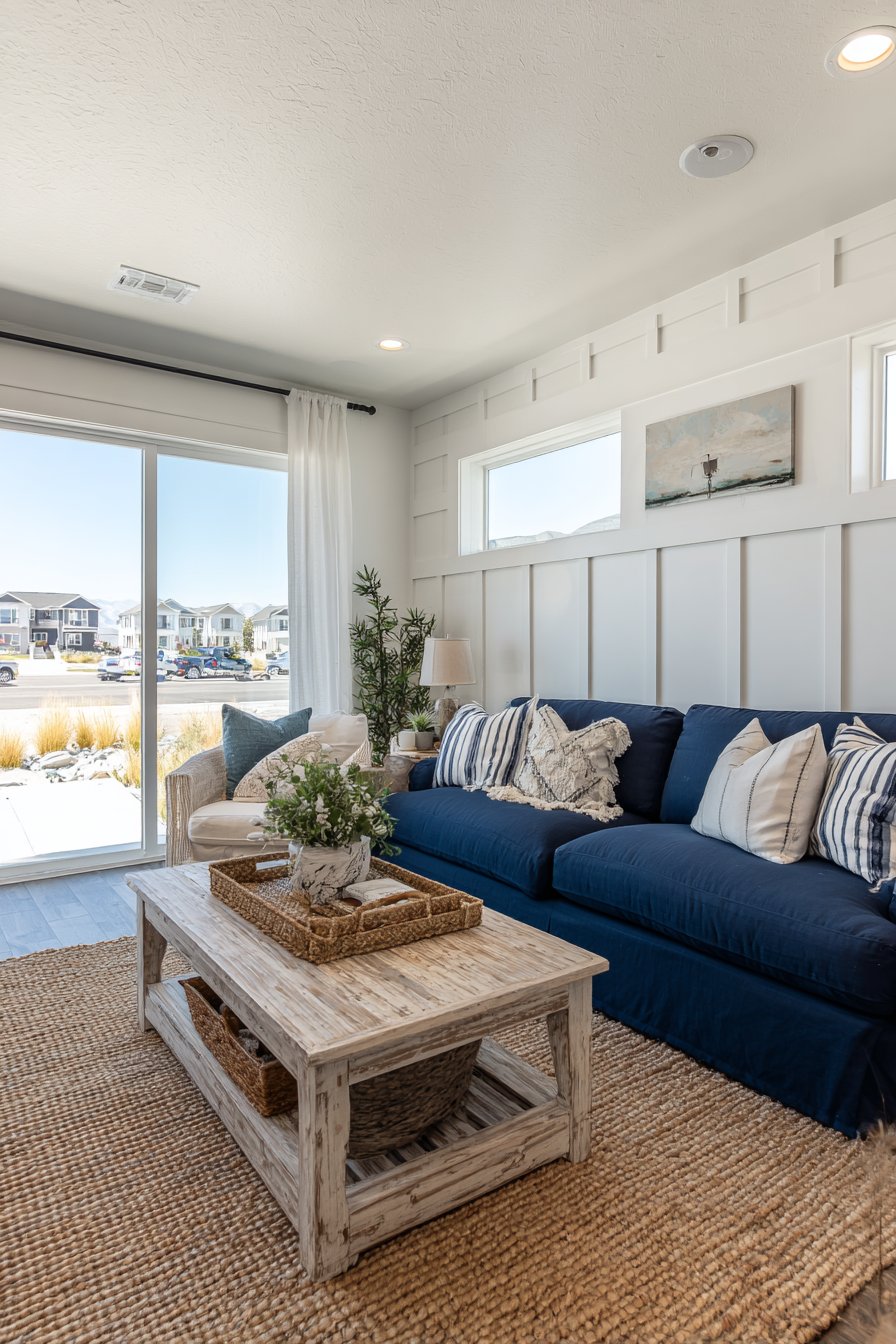
The coastal aesthetic emerges naturally from the combination of white board and batten with navy blue upholstery, striped textiles, and natural materials like jute and driftwood. The crisp white accent wall serves as perfect backdrop for these nautical-inspired elements, providing clean foundation that allows blue and natural tones to create the color story. Bright natural light—essential to coastal design—emphasizes the clean lines and dimensional shadows created by the raised battens, preventing the white surface from appearing stark or institutional. Instead, the abundant illumination makes the white walls feel fresh, airy, and inviting.
The practical installation of board and batten requires careful planning and precise execution to achieve professional results. The spacing and width of vertical battens dramatically affects the final appearance, with wider spacing creating bold, contemporary statements and closer spacing producing more traditional, refined looks. The horizontal rails—top, middle, and bottom—must be installed level to ensure the overall composition appears intentional and properly aligned. While the installation requires more labor than simply painting walls, the architectural substance it adds proves worthwhile for homeowners seeking permanent design solutions rather than temporary decorative fixes.
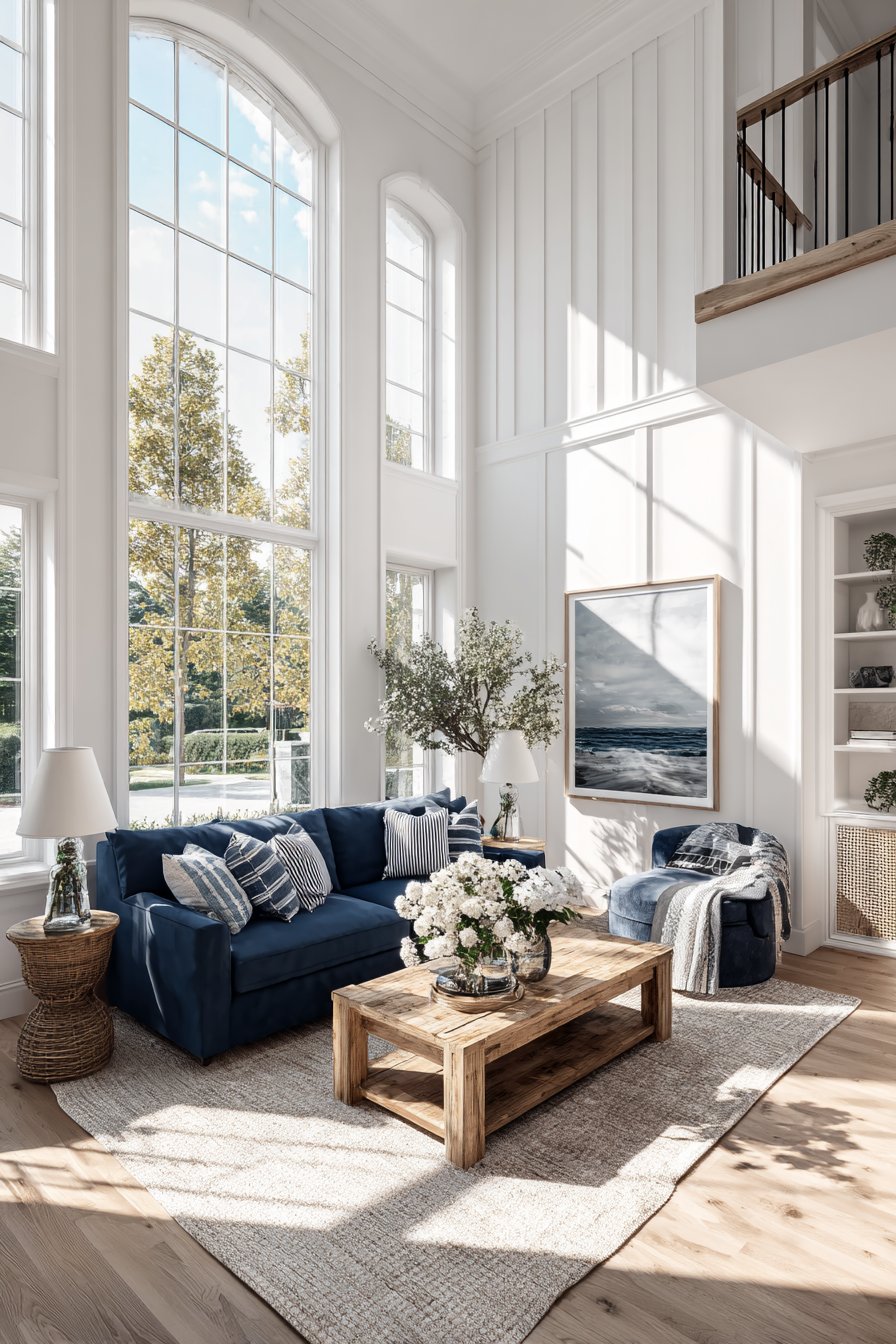
Key Design Tips: Plan batten spacing based on wall dimensions to ensure symmetrical, balanced appearance with equal spacing on both ends. Install horizontal rails first to establish level reference points, then add vertical battens at predetermined intervals. Use MDF or primed pine for battens to ensure smooth paint finish without visible grain or knots. Paint board and batten installations with semi-gloss or satin finish to enhance dimensional shadows and facilitate cleaning. Fill nail holes and seams carefully with quality wood filler, sanding smooth before painting for professional appearance. Coordinate batten width and spacing with room scale—wider spacing for larger rooms, closer intervals for smaller spaces. Extend board and batten treatment from floor to ceiling to maximize height perception and create cohesive architectural appearance.
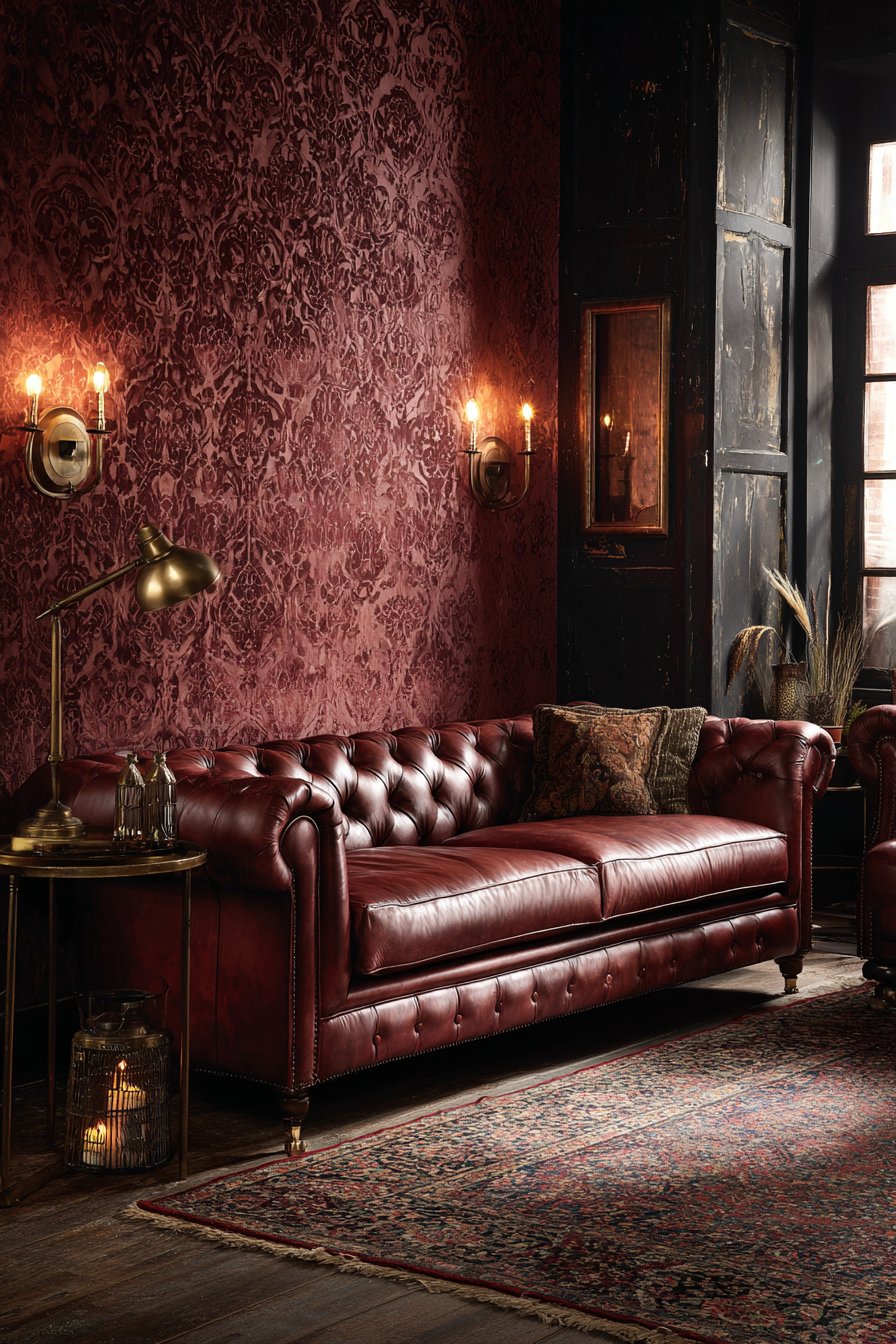
16. Luxurious Burgundy Damask Velvet
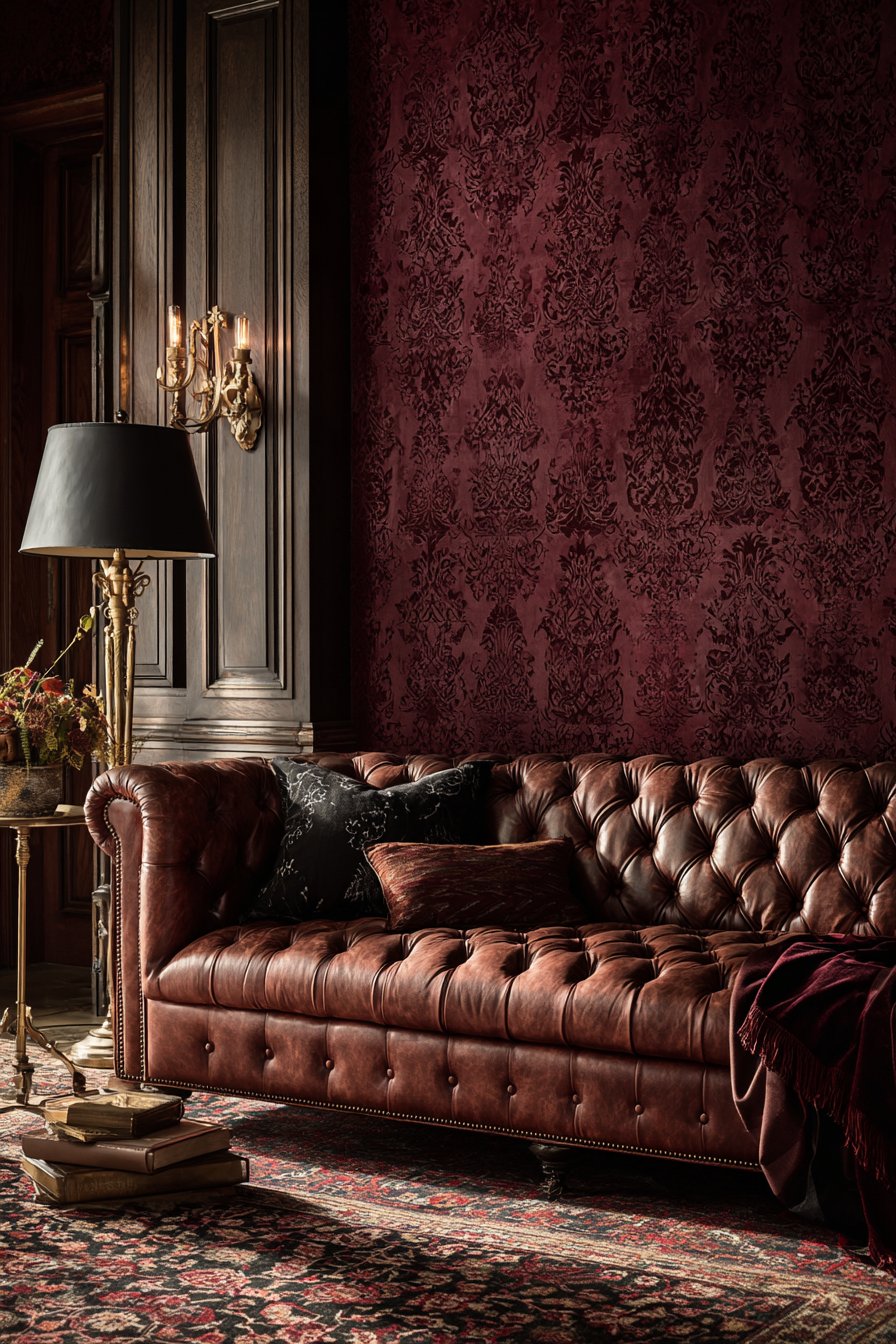
Rich burgundy velvet wallpaper featuring subtle damask patterns creates accent walls of old-world elegance and luxurious depth that transform traditional living rooms into sophisticated sanctuaries. This living room accent wall idea embraces maximalist design principles, layering rich color with complex pattern and sumptuous material to create sensory experiences that engage multiple dimensions. The burgundy hue brings jewel-tone richness that feels both royal and intimate, while the subtle damask pattern adds visual complexity without overwhelming the senses.
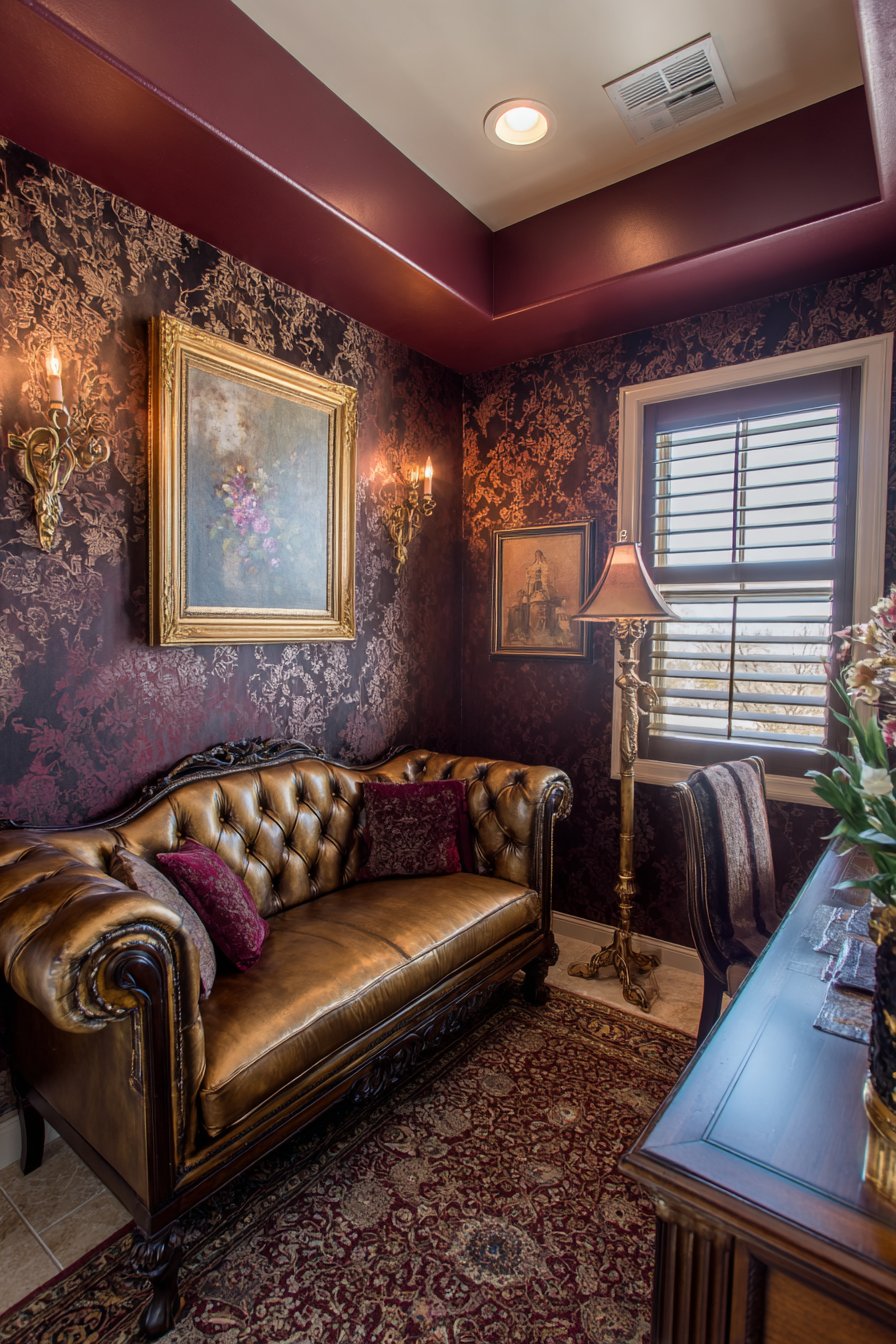
The traditional aesthetic finds perfect expression through the combination of burgundy velvet walls with classic furnishings like the tufted Chesterfield sofa in cognac leather. These traditional elements create dialogue across time, with the burgundy backdrop providing stage for the display of quality craftsmanship and timeless design. Antique brass floor lamps and Persian-style area rugs complete the layered, collected appearance characteristic of traditional interiors, while warm ambient lighting from wall sconces creates gentle highlights across the velvet texture and emphasizes the subtle damask pattern.
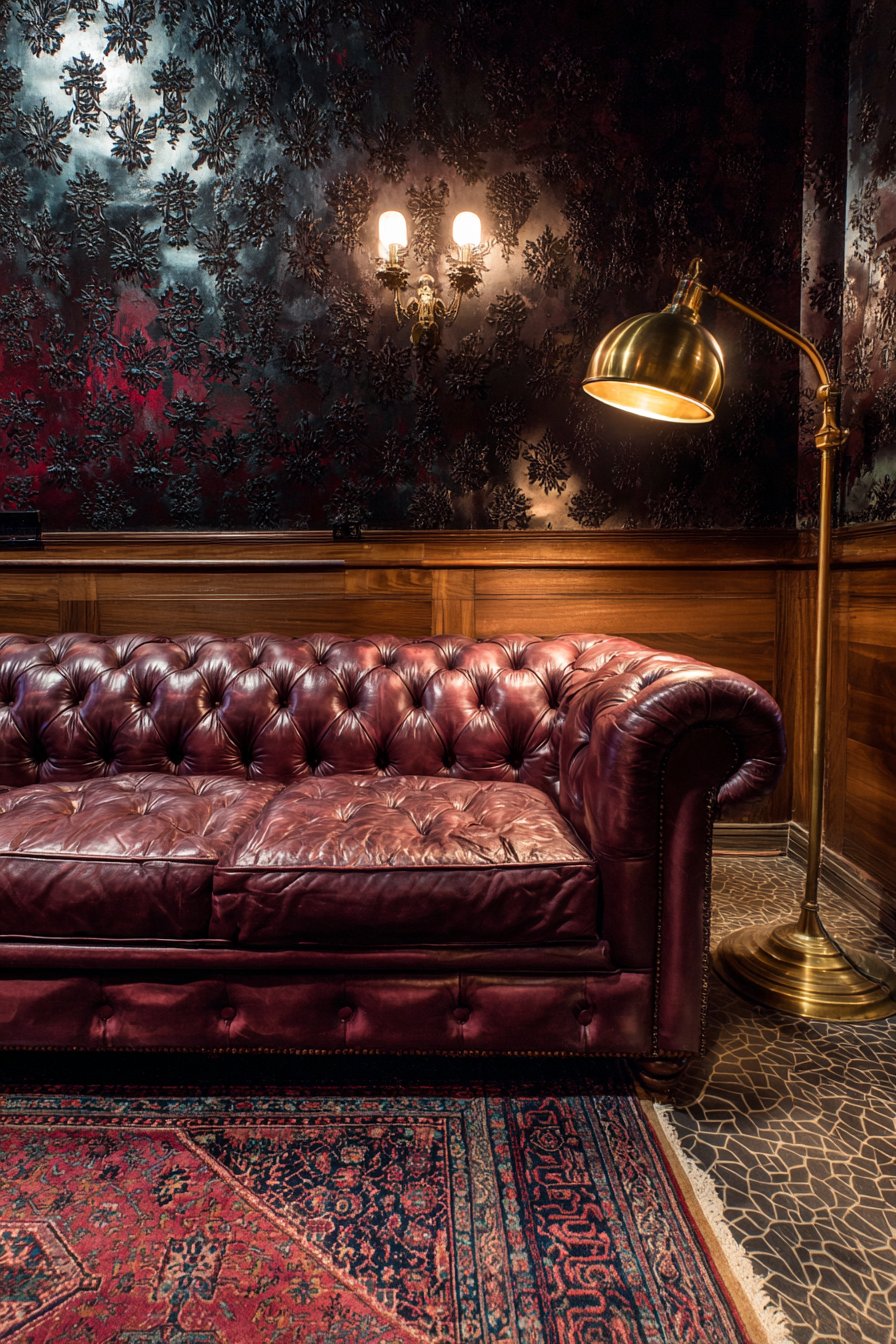
The selection of velvet wallpaper rather than painted velvet panels offers practical advantages including easier installation and lower cost, while still providing the lustrous surface and light-catching properties that make velvet so visually compelling. The damask pattern adds another layer of sophistication, with its symmetrical designs and royal heritage reinforcing the traditional, formal character. This combination of rich color, luxurious material, and complex pattern creates accent walls appropriate to formal living rooms, libraries, and sophisticated entertaining spaces where traditional elegance takes precedence over casual comfort.
Key Design Tips: Select velvet wallpapers specifically designed for vertical applications to ensure proper weight and durability. Install wallpaper in consistent lighting to ensure pattern alignment remains visible during application process. Order generous overage to account for pattern matching and potential future repairs or replacements. Protect velvet wallpaper from direct sunlight with window treatments to prevent fading and preserve rich burgundy color. Clean velvet wallpaper using gentle vacuum attachments or soft brushes, avoiding water which can damage both velvet and adhesive. Balance rich burgundy walls with metallic accents and warm lighting to prevent the space from feeling too dark or oppressive. Consider professional installation for velvet wallpapers, as the material shows every imperfection and requires experienced handling.
17. Modern White Marble Luxury
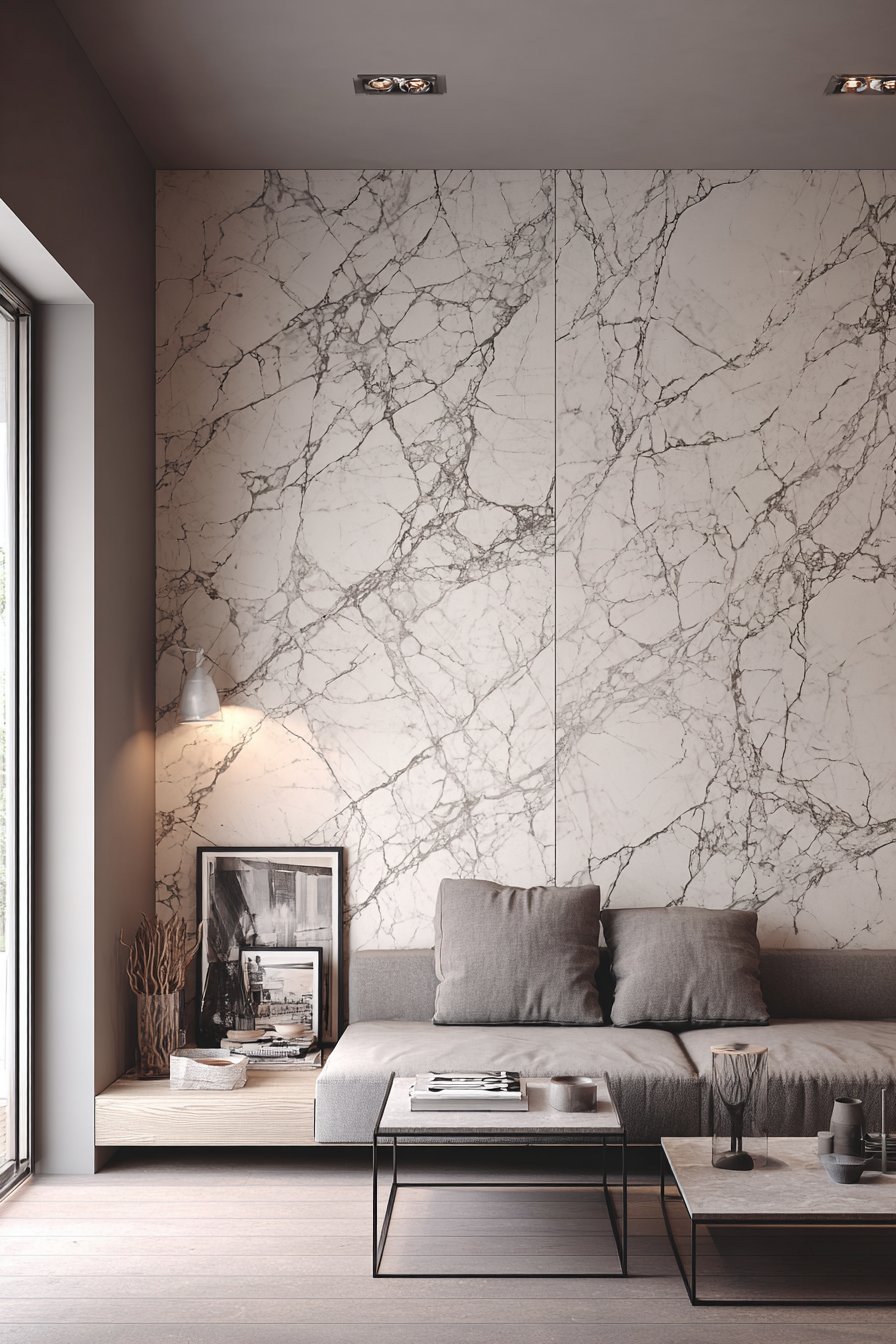
Large-format white marble tile accent walls featuring distinctive grey veining create spa-like luxury and sophisticated minimalism in contemporary living rooms. This living room accent wall idea brings natural stone’s timeless elegance indoors, with marble’s inherent beauty providing visual interest through organic veining patterns rather than applied decoration. The white background ensures brightness and spatial openness while the grey veining creates movement and prevents the solid white from appearing sterile or institutional.
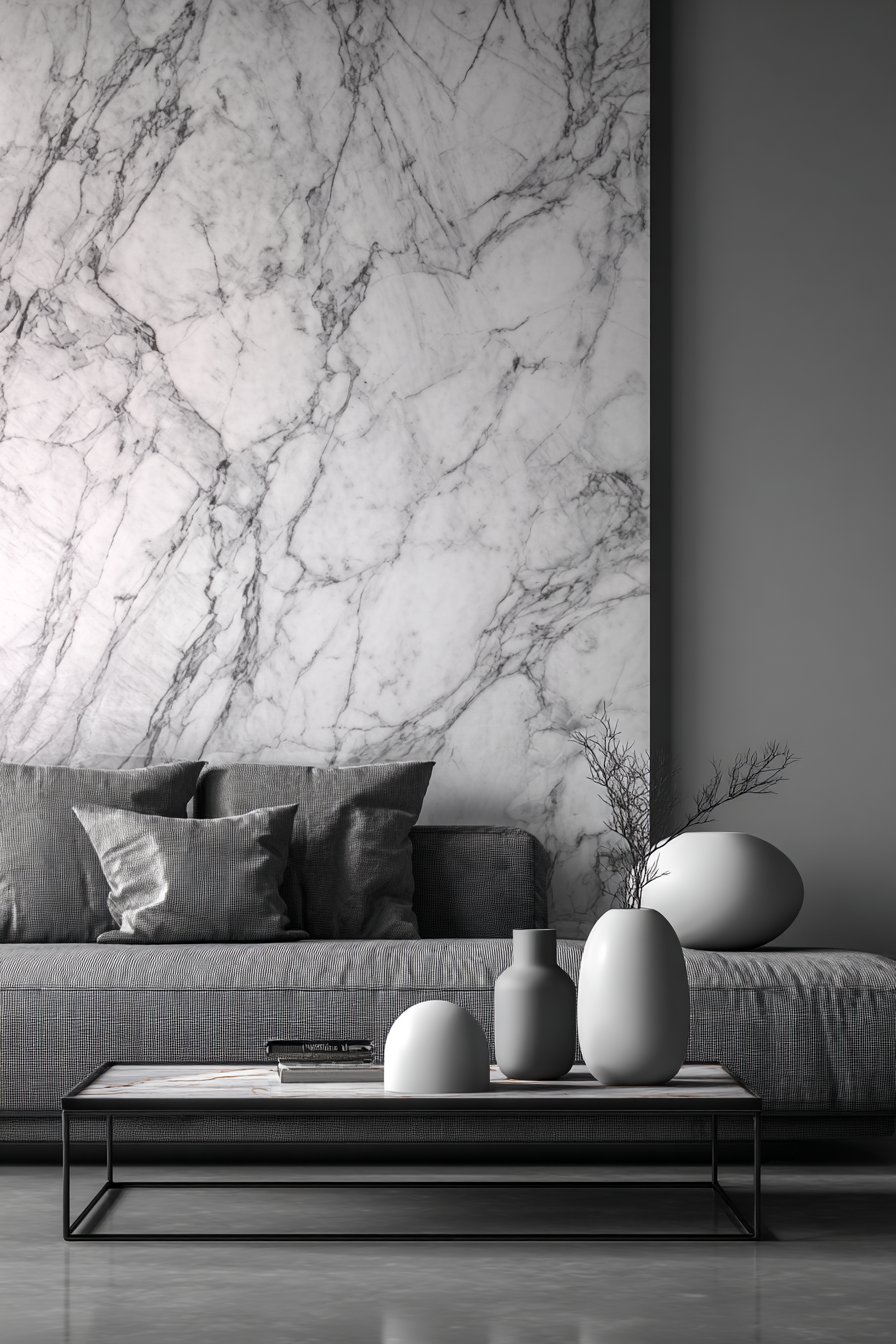
The contemporary aesthetic emerges from marble’s combination with minimalist furnishings and monochromatic color schemes. Low-profile grey sofas maintain clean lines and neutral palette essential to contemporary design, while minimalist metal coffee tables provide necessary function without visual weight. Curated accessories in monochromatic tones reinforce the disciplined color approach, creating cohesive spaces where the marble accent wall serves as focal point without competing with busy patterns or multiple colors. The polished marble surface adds subtle reflectivity that enhances light distribution throughout the room.
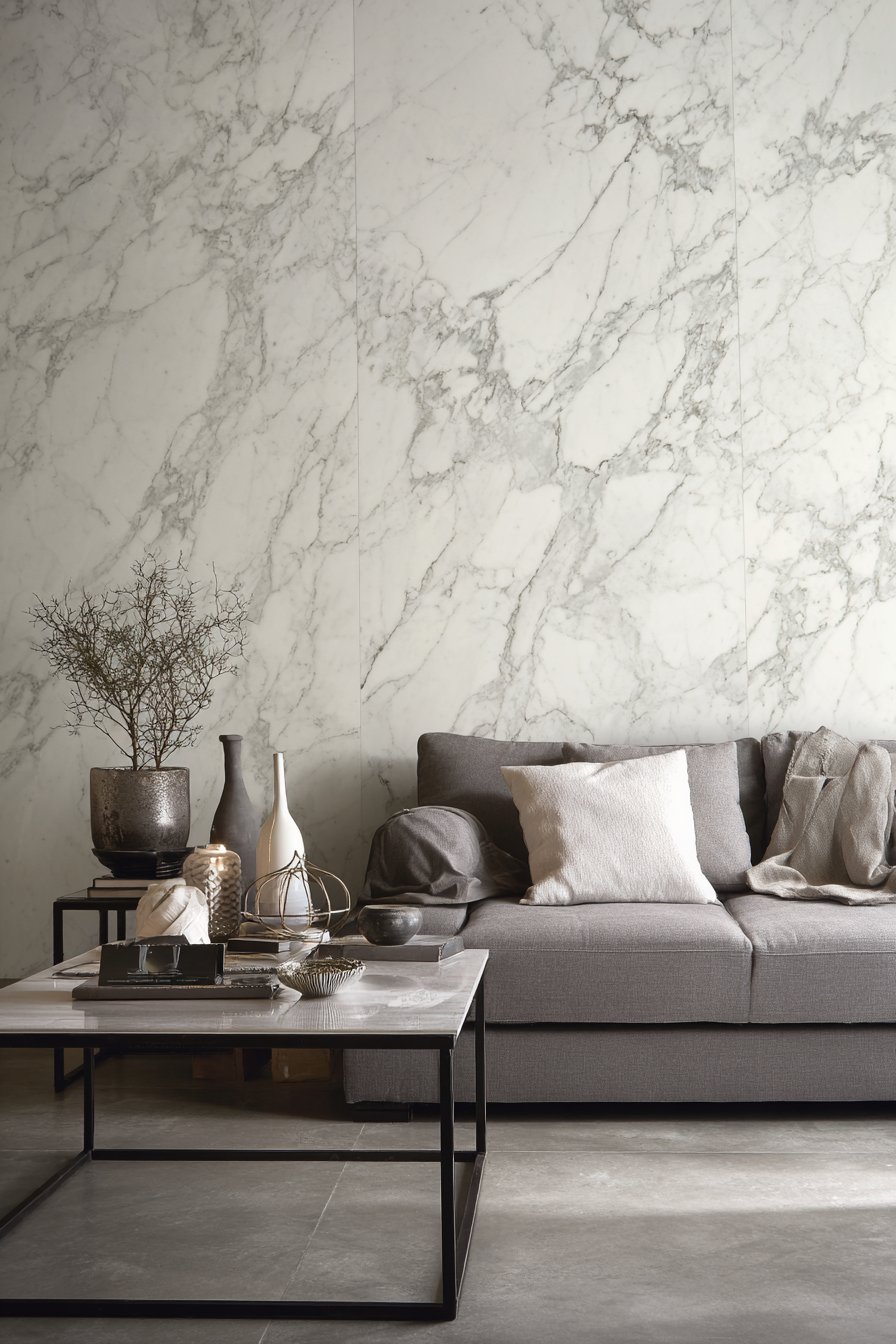
The installation of large-format marble tiles requires professional expertise and careful planning, as these heavy materials demand proper structural support and precise installation to prevent lippage or grout line irregularities. The investment in quality marble and professional installation proves worthwhile for those seeking permanent luxury features that will maintain beauty and value over decades. Unlike trendy materials that may appear dated as styles evolve, classic marble accent walls possess timeless appeal that transcends temporary design fads.
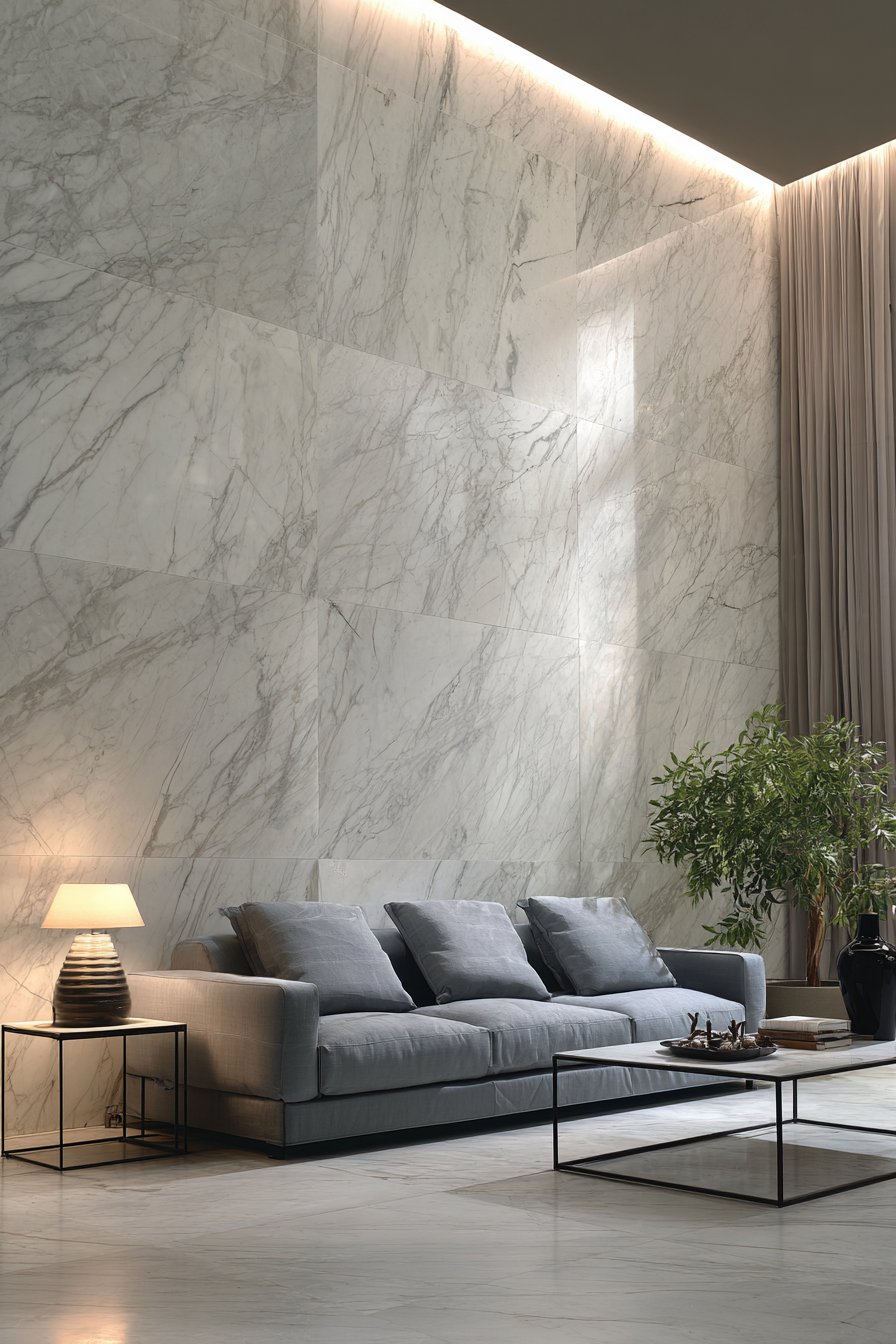
Key Design Tips: Select marble tiles with consistent veining patterns and complementary coloring to ensure cohesive appearance across the wall. Seal marble surfaces immediately after installation and periodically thereafter to prevent staining and facilitate maintenance. Install marble tiles with minimal grout lines to create seamless, high-end appearance rather than busy grid patterns. Use professional installers experienced with large-format tiles to ensure proper alignment, support, and lippage prevention. Clean marble with pH-neutral cleaners specifically formulated for natural stone, avoiding acidic products that can etch the surface. Balance marble’s coolness with warm materials and textures to prevent overly cold, austere atmosphere. Consider heated walls or radiant systems behind marble in cold climates to add warmth while showcasing the stone’s thermal properties.
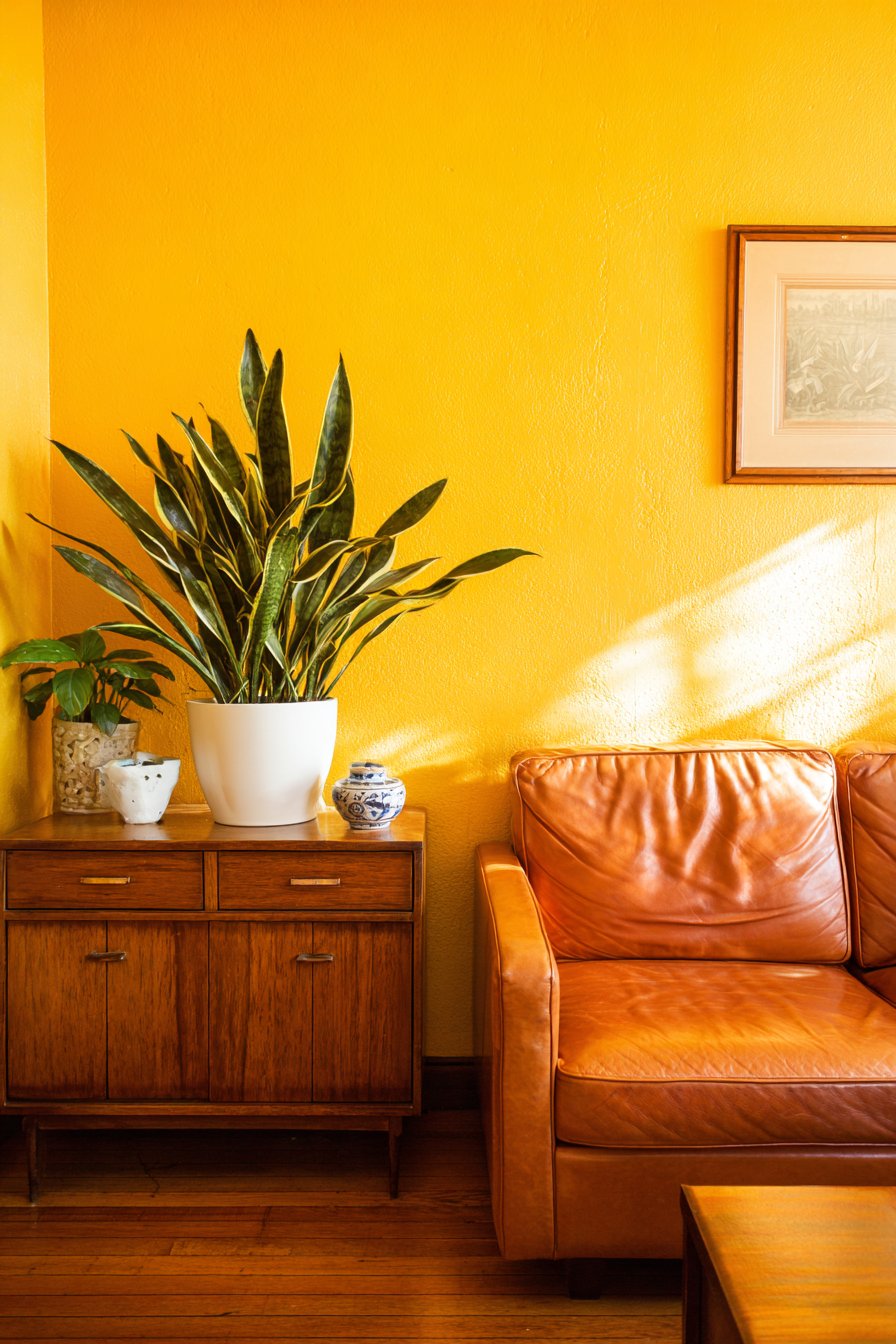
18. Mid-Century Mustard Yellow Energy
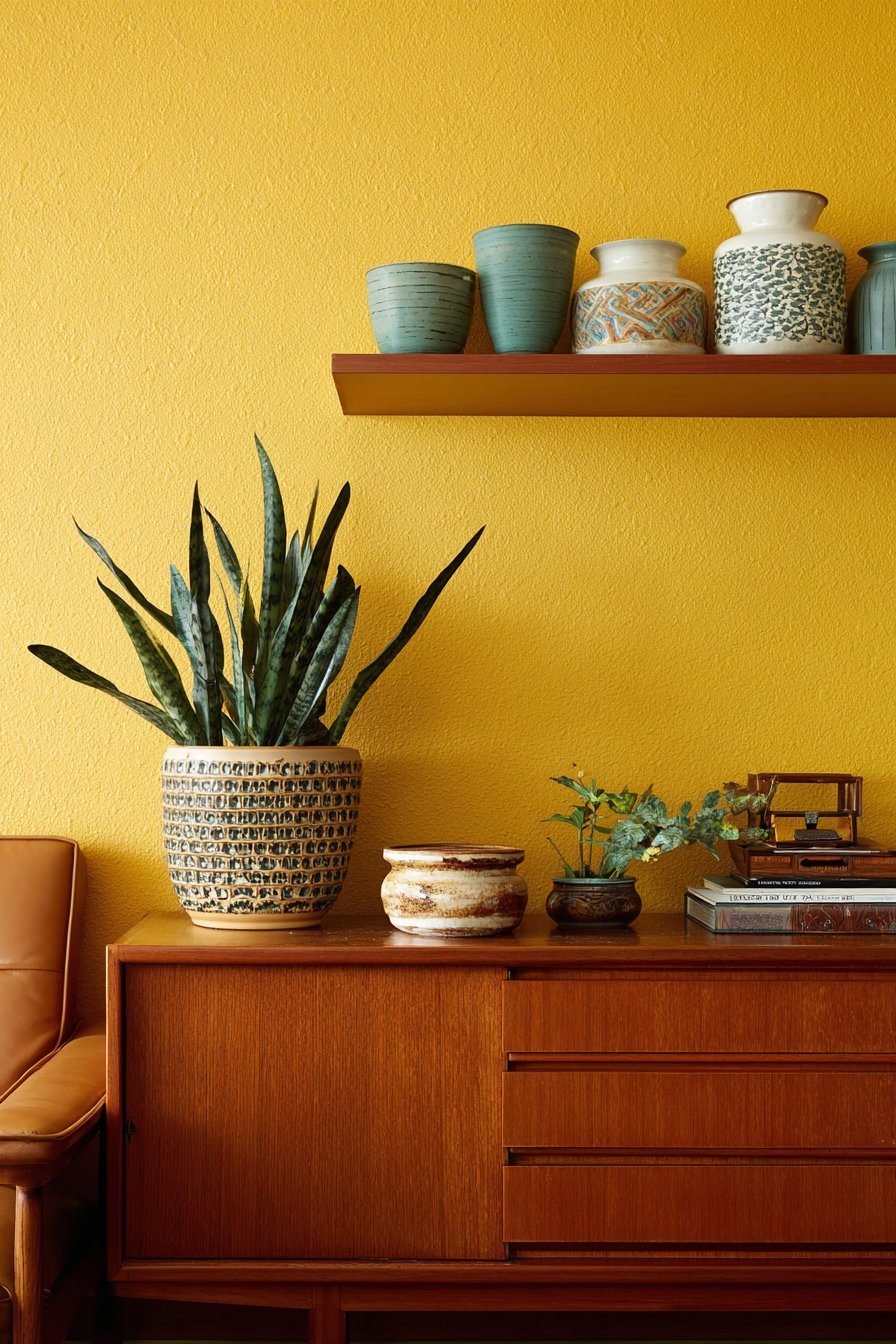
Warm mustard yellow painted accent walls with matte finish bring bold mid-century modern energy and cheerful personality to living spaces celebrating retro design. This living room accent wall idea demonstrates how color alone—when selected and executed thoughtfully—can transform entire rooms and establish clear design narratives. The mustard yellow hue references the optimistic color palettes of 1950s and 1960s design while feeling fresh and contemporary when paired with quality modern furnishings and thoughtful styling.
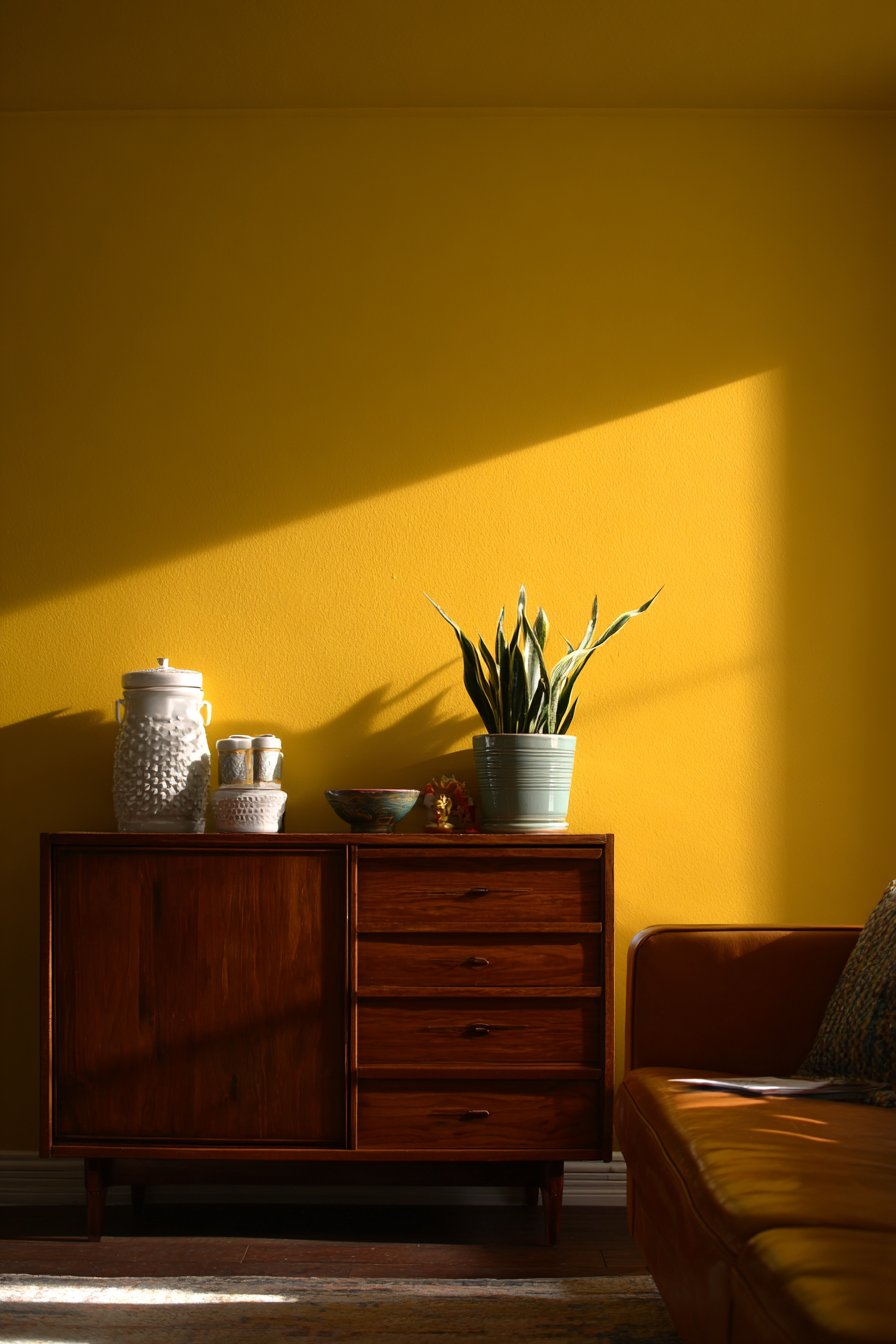
The mid-century modern aesthetic emerges clearly through the combination of mustard yellow walls with period-appropriate furnishings like teak credenzas and cognac leather sofas. These classic mid-century pieces gain additional impact against the bold yellow backdrop, which allows their clean lines and organic forms to read clearly. Vintage ceramics and potted plants displayed on the teak credenza reinforce the retro aesthetic while adding layers of visual interest and personal character. Natural afternoon light makes the yellow wall glow warmly, creating inviting atmosphere that embodies mid-century optimism and casual sophistication.
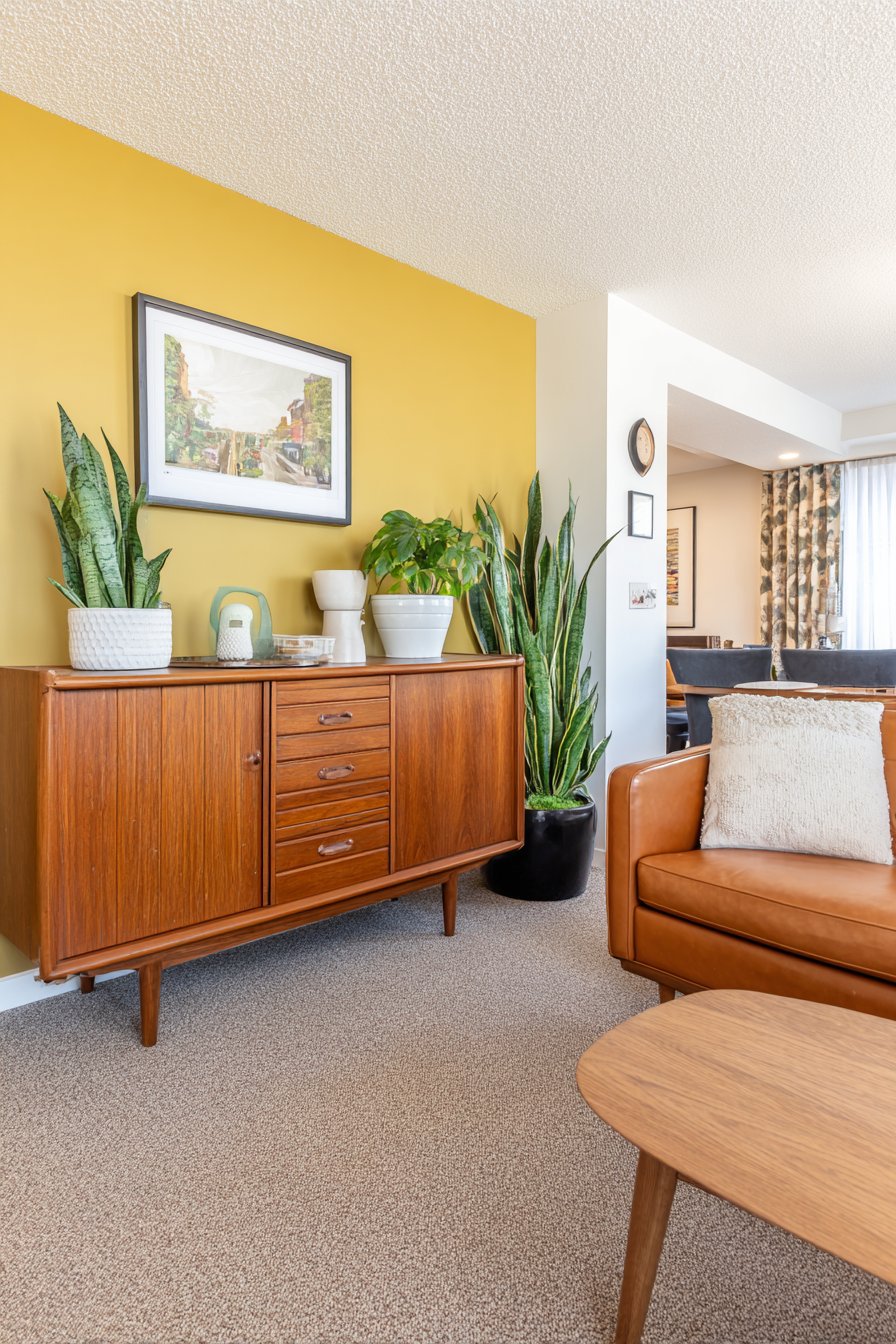
Color psychology proves particularly relevant with bold accent colors like mustard yellow. This warm, energetic hue creates feelings of happiness, creativity, and optimism—all desirable qualities in living spaces designed for gathering and entertainment. However, yellow’s intensity requires thoughtful balancing with neutral elements to prevent overwhelming the space or creating visual fatigue. The cognac leather and teak wood provide warm neutral foundations that ground the yellow without fighting it, demonstrating successful color coordination.
Key Design Tips: Test mustard yellow paint samples extensively in various lighting conditions, as this color appears dramatically different under different light sources. Choose mustard shades with slight brown or ochre undertones rather than pure primary yellow for sophisticated, period-appropriate appearance. Apply matte or flat finish to enhance retro aesthetic and prevent glossy modernization of the color. Balance yellow’s energy with substantial doses of neutral tones in flooring, major furniture pieces, and adjacent walls. Incorporate period-appropriate mid-century furnishings and accessories to reinforce the intentional retro aesthetic rather than random color choice. Position mustard accent walls to receive ample natural light, as this color can appear muddy in poorly lit conditions. Limit mustard yellow to single accent walls to prevent overwhelming brightness and maintain visual breathing room.
19. Sophisticated Herringbone Walnut Craftsmanship
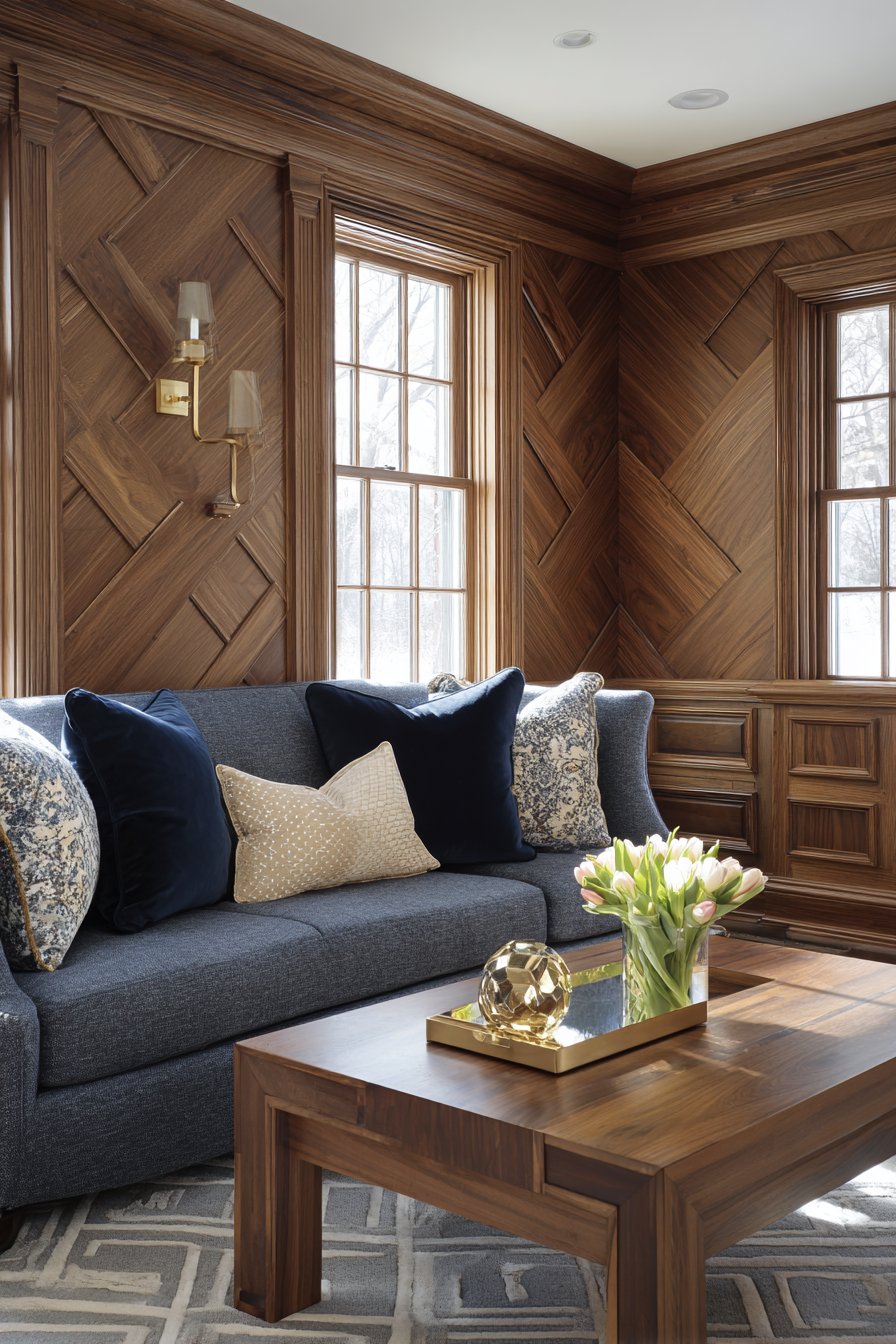
Dark walnut herringbone wood accent walls create dynamic visual movement and refined craftsmanship displays that elevate transitional living rooms through pattern and premium materials. This living room accent wall idea celebrates the art of fine woodworking, with the intricate herringbone installation demonstrating skill and attention to detail that commands respect and admiration. The diagonal grain orientation creates visual energy and movement that draws the eye across the surface, while the dark walnut species provides rich, sophisticated coloring appropriate to elegant interiors.
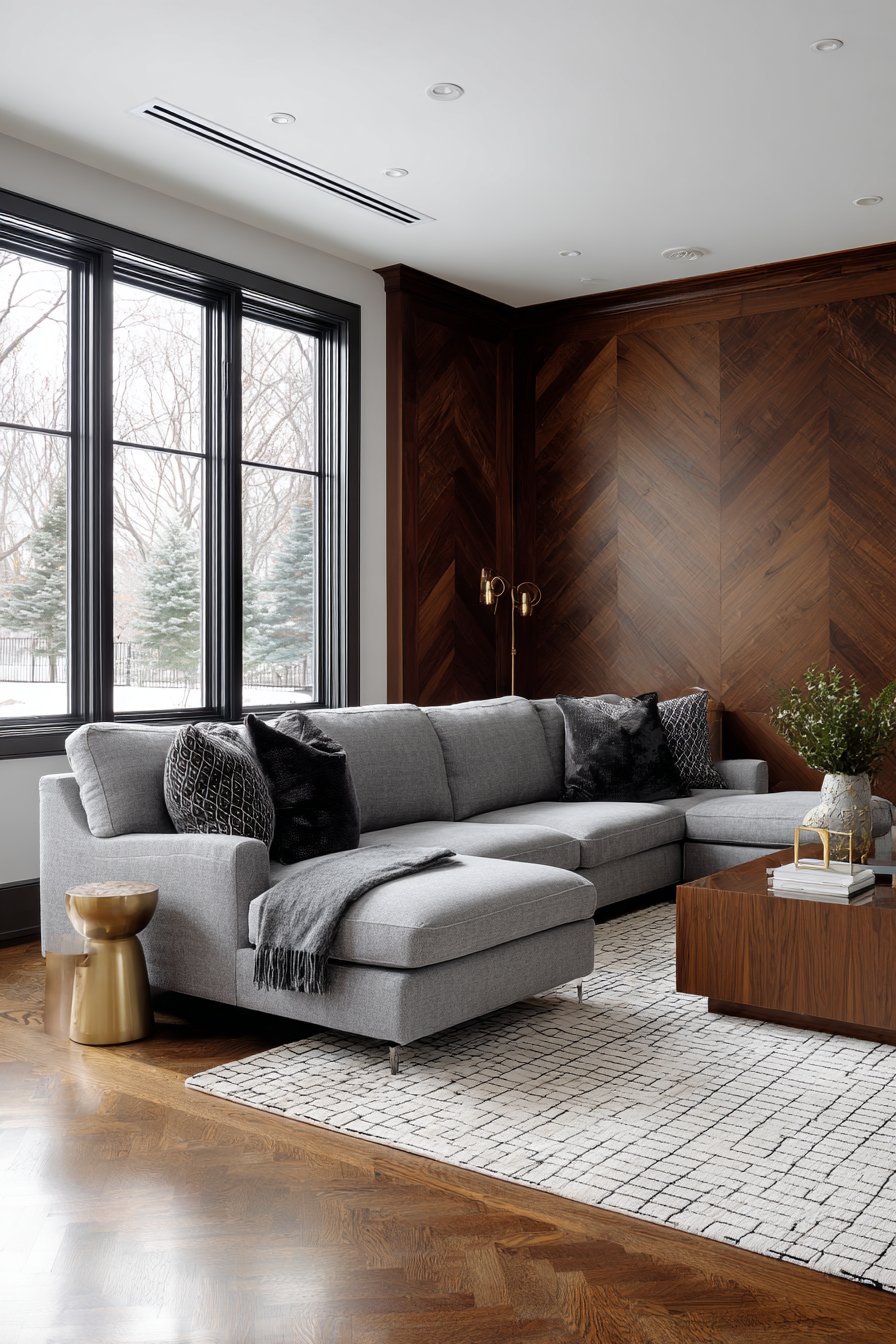
The transitional aesthetic—blending traditional craftsmanship with contemporary forms—finds perfect expression in herringbone wood walls paired with updated furnishings. Grey upholstered sofas with velvet pillows provide contemporary comfort while respecting traditional formality, brass accents add warmth without appearing outdated, and geometric area rugs echo the herringbone pattern through different medium and scale. The combination of natural wood with refined metallic finishes demonstrates how transitional design successfully bridges stylistic divides, creating spaces that feel both current and timeless.
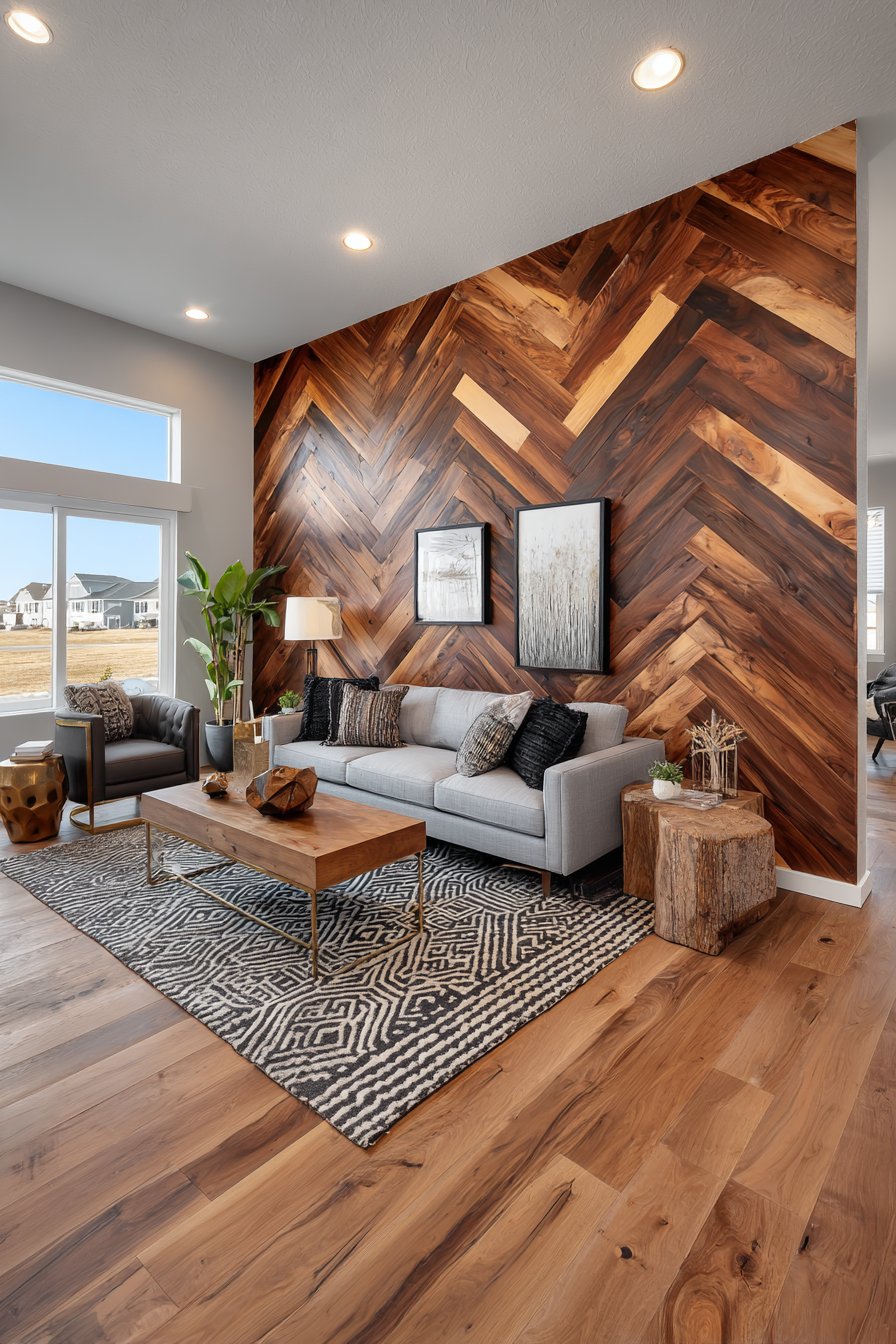
The installation complexity of herringbone patterns requires significant expertise and precision, as each wood piece must be cut at exact angles and positioned carefully to create the distinctive V-shaped weaving pattern. This labor-intensive installation justifies higher costs but results in genuine architectural features that add lasting value and visual interest. The interplay between recessed lighting and natural window illumination emphasizes the intricate pattern while highlighting the rich walnut grain, creating dimensional depth that rewards careful observation.
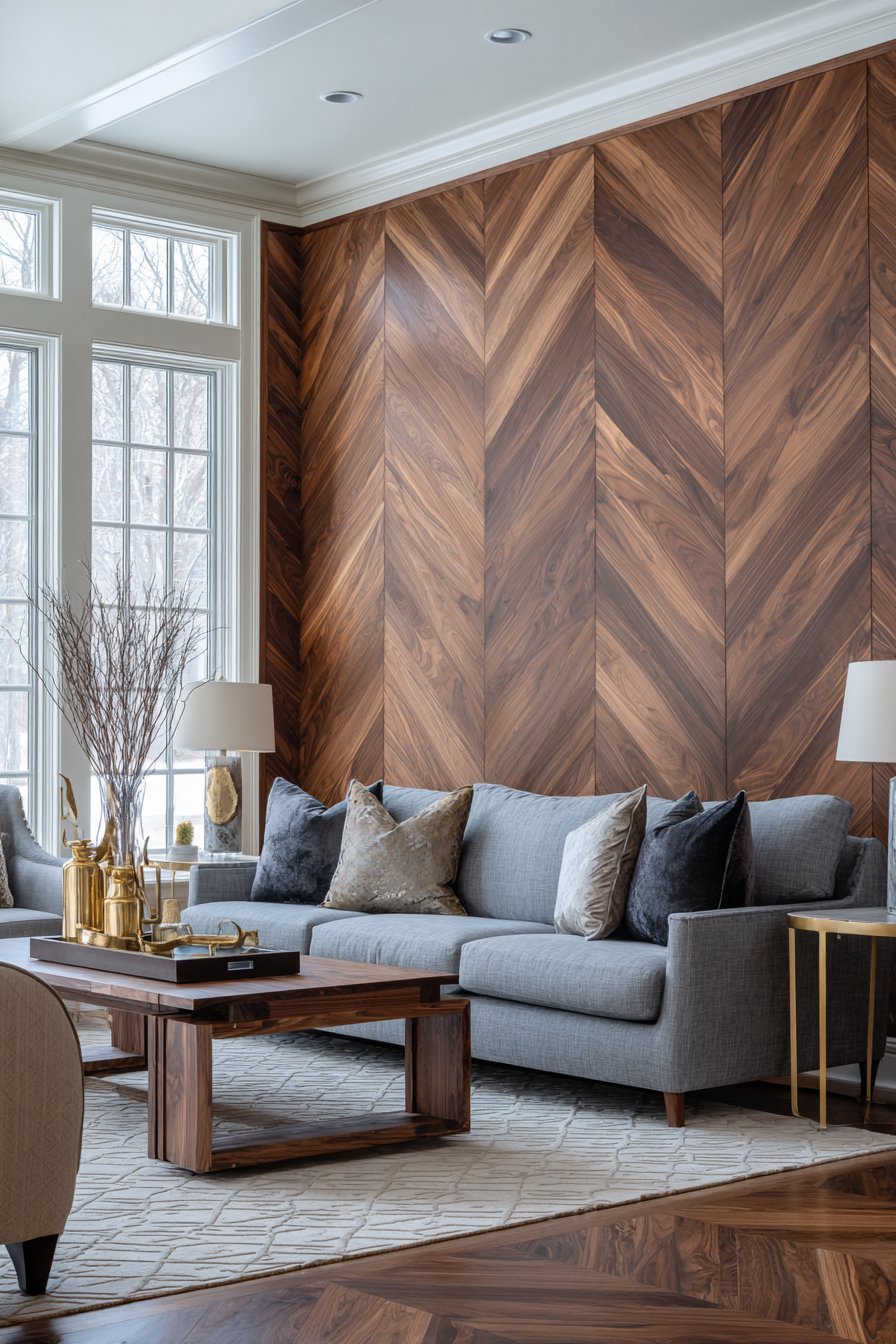
Key Design Tips: Select uniform-width wood planks for herringbone installations to ensure consistent pattern appearance and simplified installation. Cut angles precisely at 45 degrees to create clean, professional intersections where planks meet. Install herringbone patterns starting from the center and working outward to ensure symmetrical appearance on both sides. Apply clear protective finish to preserve walnut’s rich color and protect the intricate installation from wear. Plan lighting carefully to emphasize the dimensional pattern and highlight the directional grain changes. Balance dark walnut walls with lighter floors and furnishings to prevent excessive darkness. Consider professional installation for herringbone patterns, as the complexity demands expertise and specialized tools for quality results.
20. Organic Grasscloth Texture
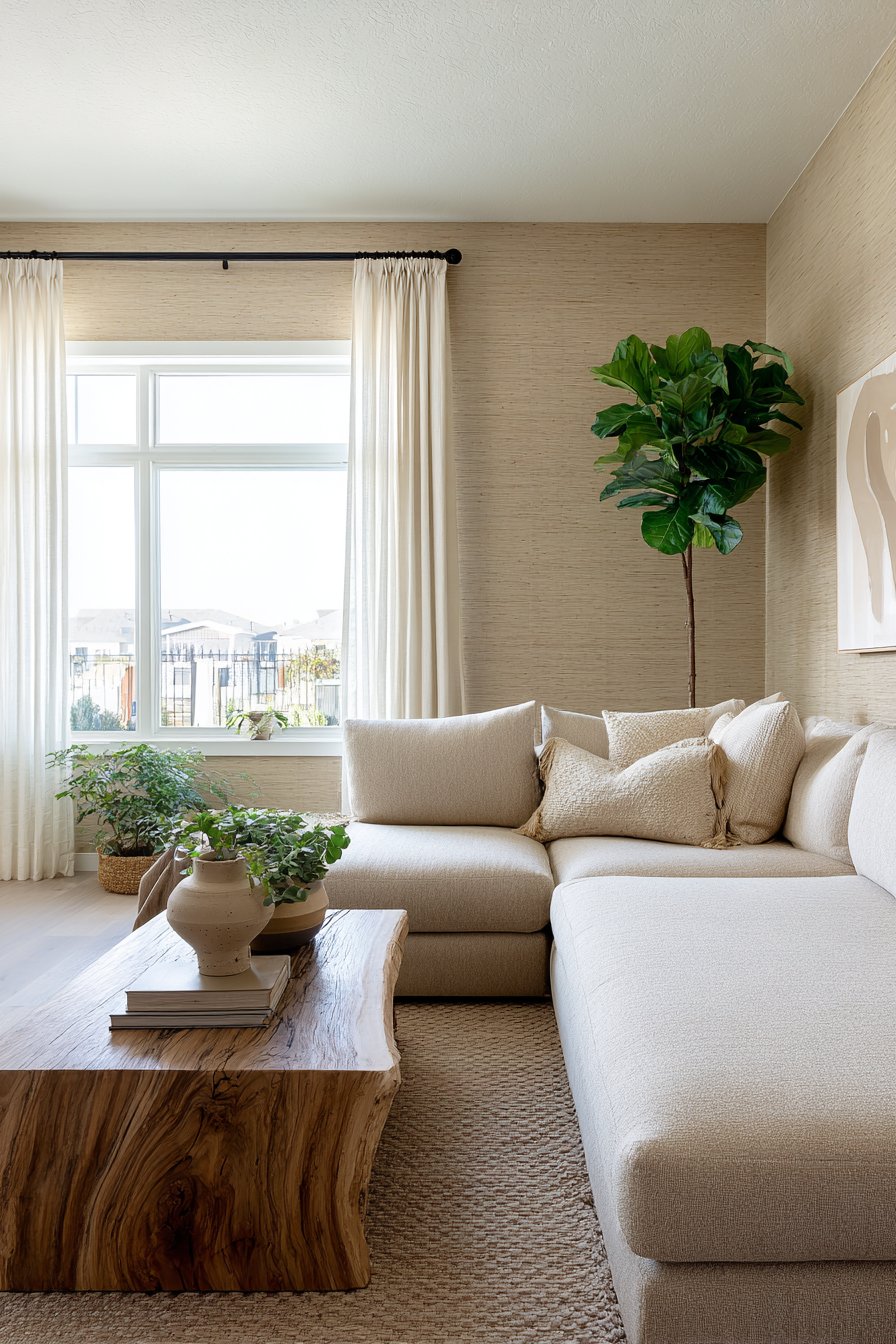
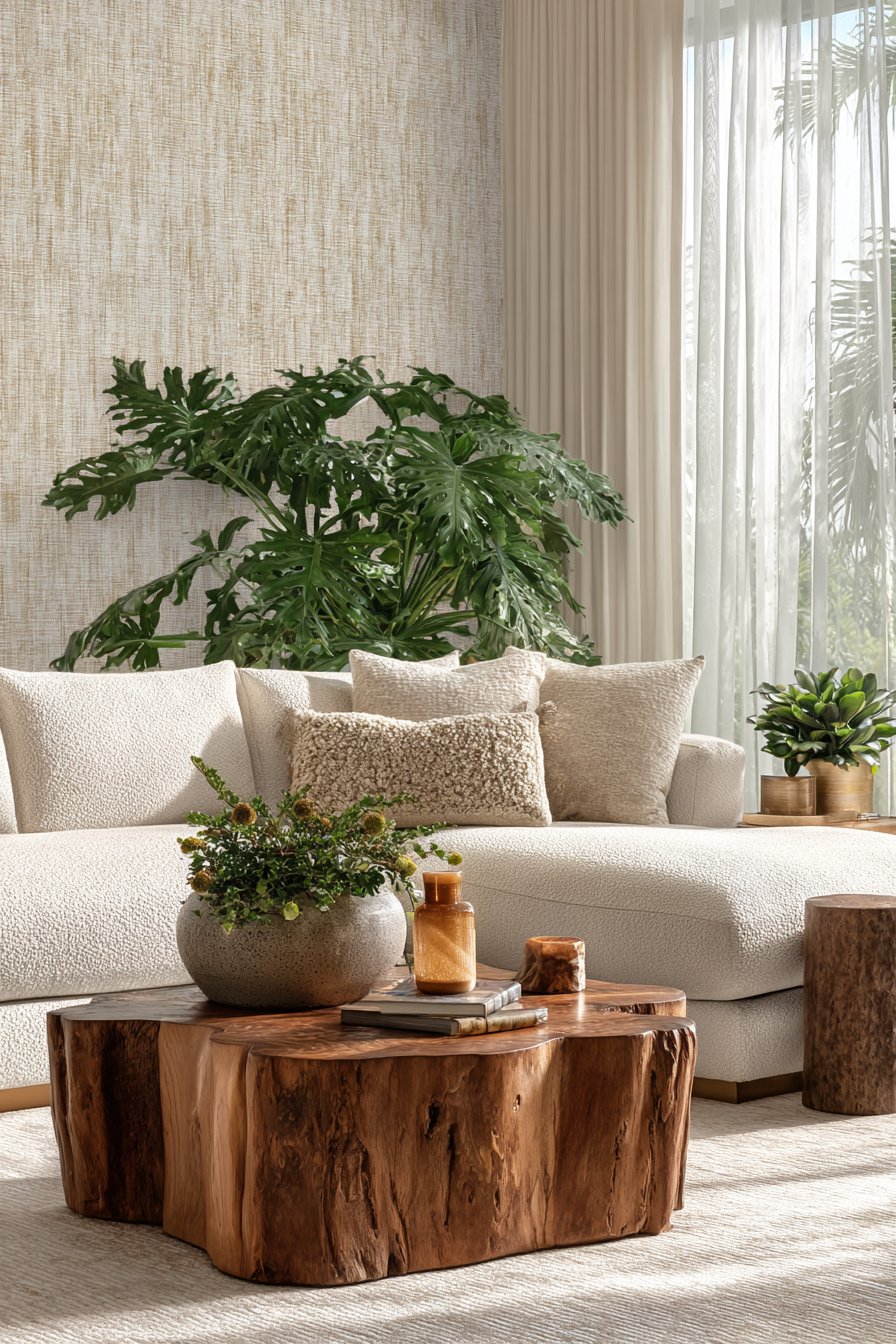
Natural beige grasscloth wallpaper accent walls with visible fibers and organic variations add subtle tactile interest and earth-inspired sophistication to modern organic living spaces. This living room accent wall idea celebrates natural materials in their most authentic forms, with grasscloth’s woven plant fibers creating textural depth that synthetic materials cannot replicate. The visible irregularities—slight color variations, occasional knots, and texture inconsistencies—represent authentic characteristics rather than manufacturing flaws, creating accent walls that feel genuinely organic and connected to natural processes.
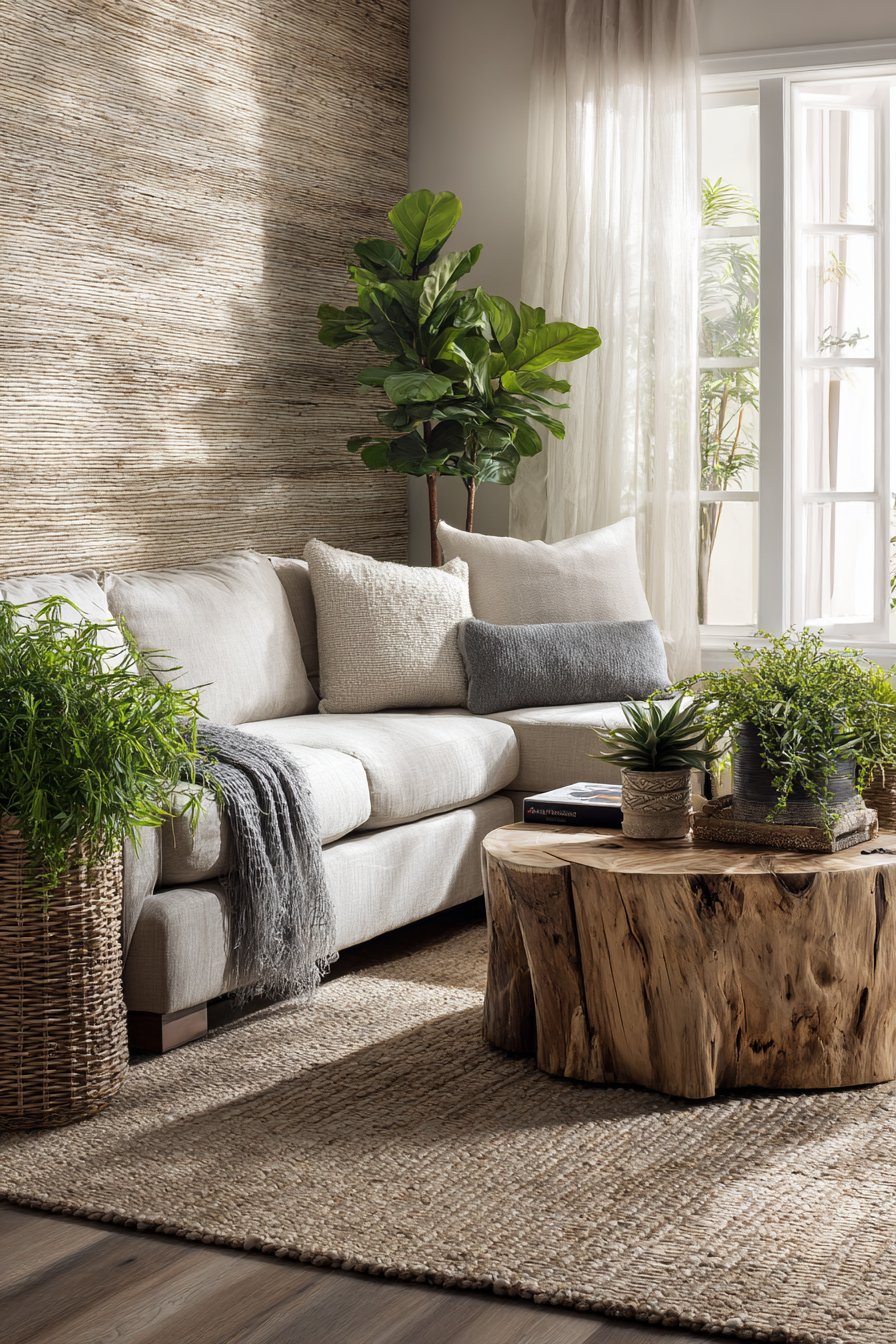
The organic modern aesthetic emerges from grasscloth’s combination with complementary natural materials like linen upholstery, live-edge wood, and ceramic planters. These elements create material harmony that reinforces biophilic design principles—the human tendency to seek connections with nature and natural processes. Abundant greenery in various planters brings living elements that complement the grasscloth’s plant-based origins, while the neutral beige coloring provides calming foundation that allows green foliage to provide color accents. Soft natural light filtering through sheer curtains highlights the grasscloth’s textural depth while preventing harsh glare that might flatten the dimensional surface.
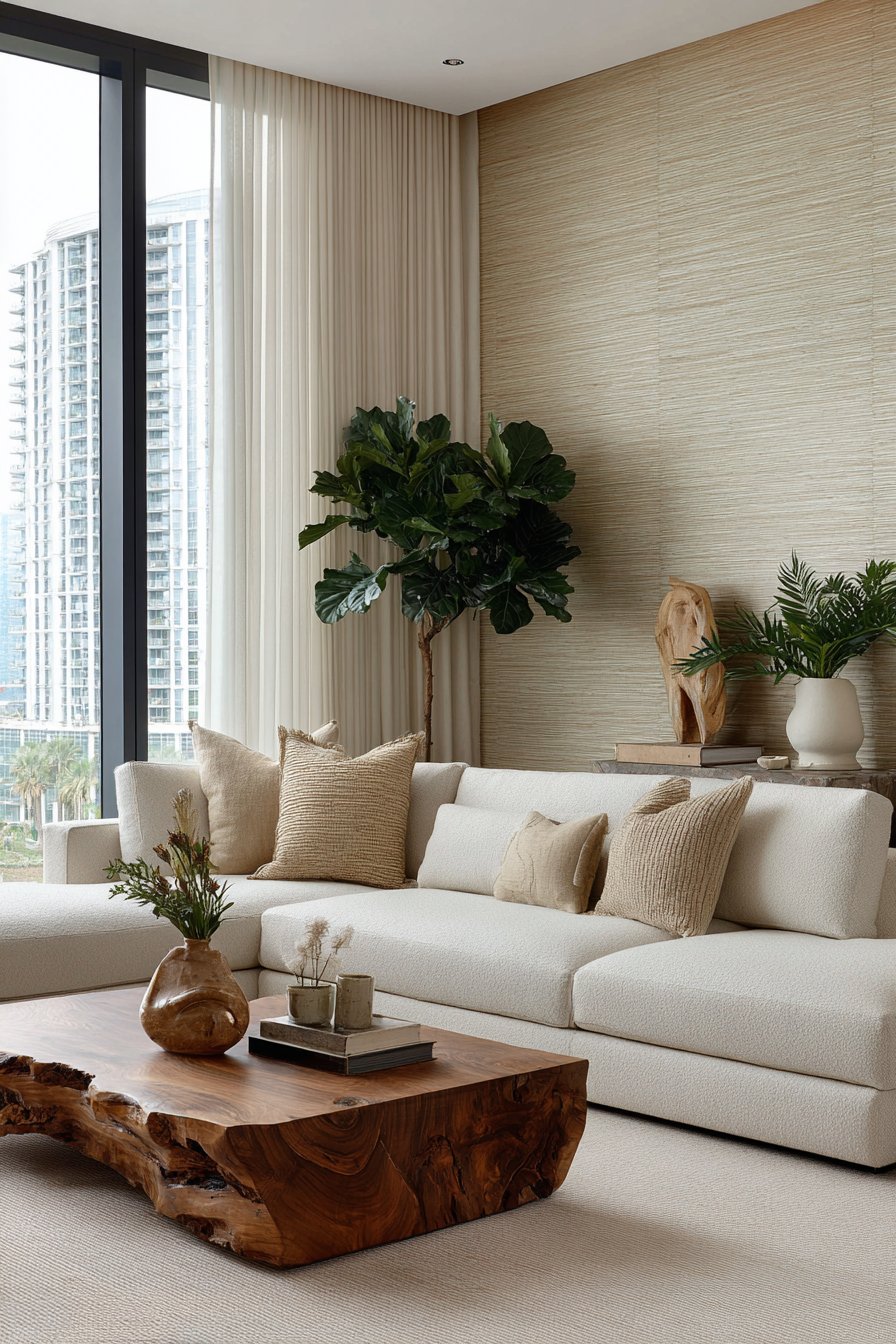
The practical considerations around grasscloth wallpaper installation require attention, as this natural material proves more delicate and challenging than standard wallpapers. Grasscloth cannot be wiped clean like vinyl wallpapers, instead requiring dry cleaning methods like gentle vacuuming or soft brushing. The natural fibers can also show seams more readily than printed wallpapers, requiring careful installation and planning to minimize visible joins. Despite these maintenance considerations, grasscloth’s unique textural qualities and sustainable credentials make it increasingly popular among environmentally conscious homeowners seeking authentic natural materials.
Key Design Tips: Select grasscloth wallpapers from reputable manufacturers offering consistent quality and coloring within each dye lot. Install grasscloth in low-traffic areas away from kitchens or dining areas where staining risks are higher. Accept natural variations in color and texture as inherent characteristics rather than defects requiring returns or corrections. Clean grasscloth using vacuum attachments with soft brushes or gentle dry dusting, avoiding water or liquid cleaners. Plan seam locations carefully during installation, positioning joins in less visible areas where possible. Protect grasscloth from direct sunlight to prevent fading and preserve the natural beige coloring. Consider professional installation, as grasscloth’s delicate nature and visible seams demand experienced handling for optimal results.
21. Moody Teal Sophistication
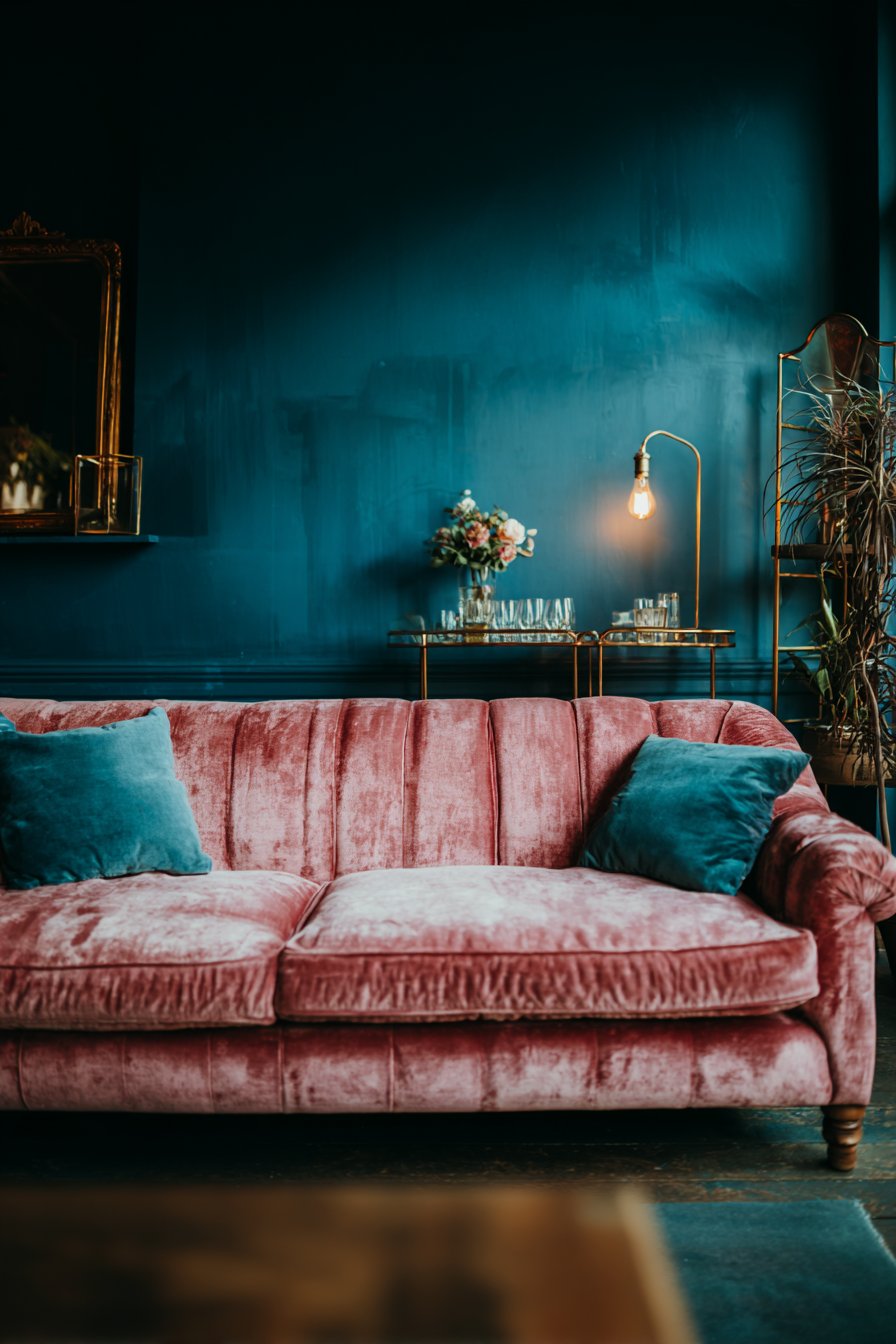
Dramatic dark teal painted accent walls with satin finish create moody sophistication and jewel-tone depth that transforms eclectic living rooms into curated spaces celebrating color confidence. This living room accent wall idea demonstrates how bold color choices—when executed with conviction and supported by thoughtful styling—create memorable spaces that reflect personality and design courage. The dark teal hue sits beautifully between blue and green, offering complexity and depth that pure primary colors cannot achieve, while the satin finish adds subtle reflectivity that enhances the rich color without creating glossy artificiality.
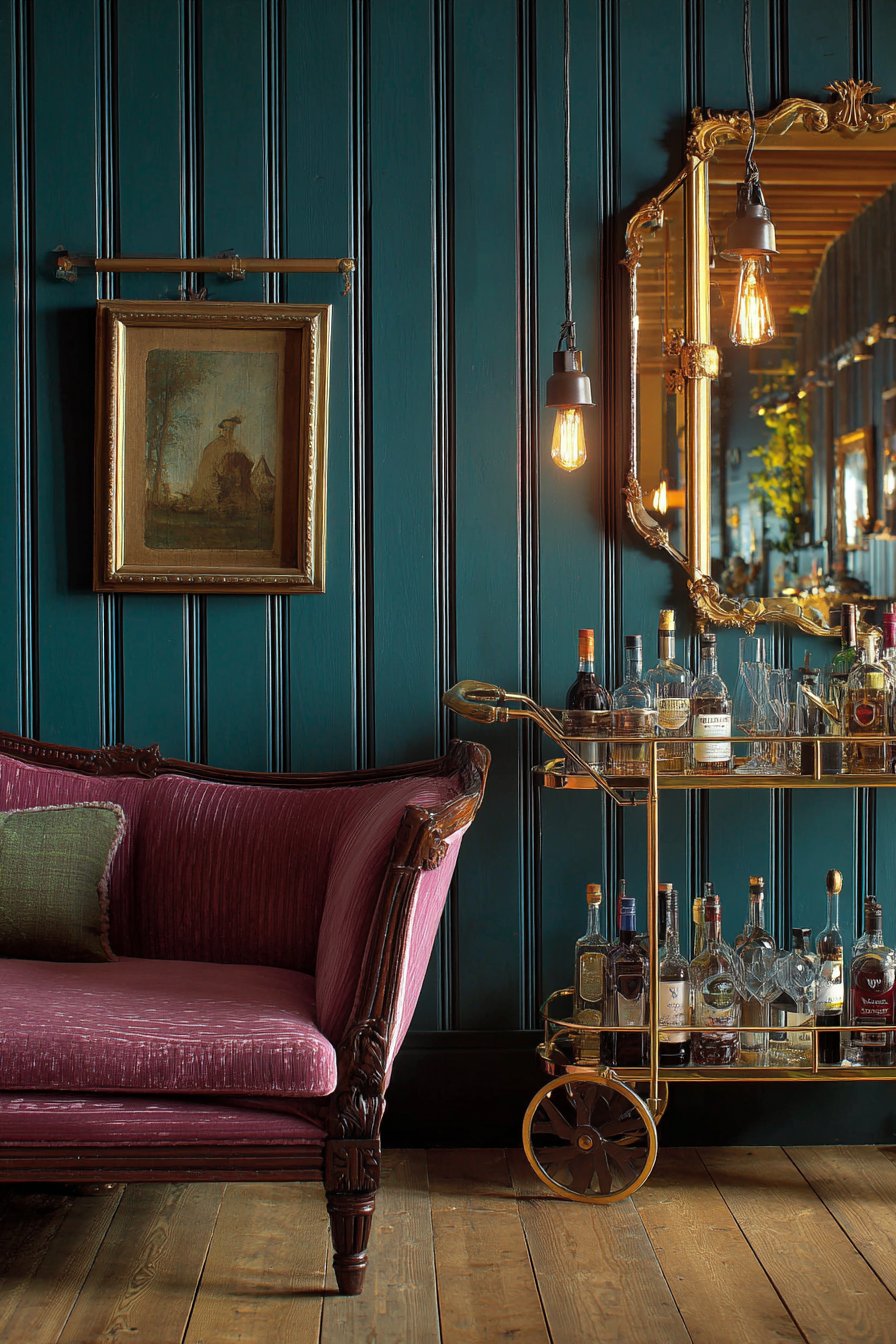
The eclectic aesthetic emerges from the intentional combination of seemingly disparate elements—vintage velvet sofa in dusty pink provides color contrast and retro charm, gold-framed mirrors add glamorous reflection and vintage elegance, while brass bar carts contribute functional style with metallic warmth. These carefully curated pieces create collected appearance that suggests accumulation over time rather than single shopping trip, with the dark teal backdrop providing unifying element that ties diverse pieces together into cohesive composition. Warm Edison bulb lighting creates intimate evening ambiance that makes the teal appear even richer and more jewel-like.
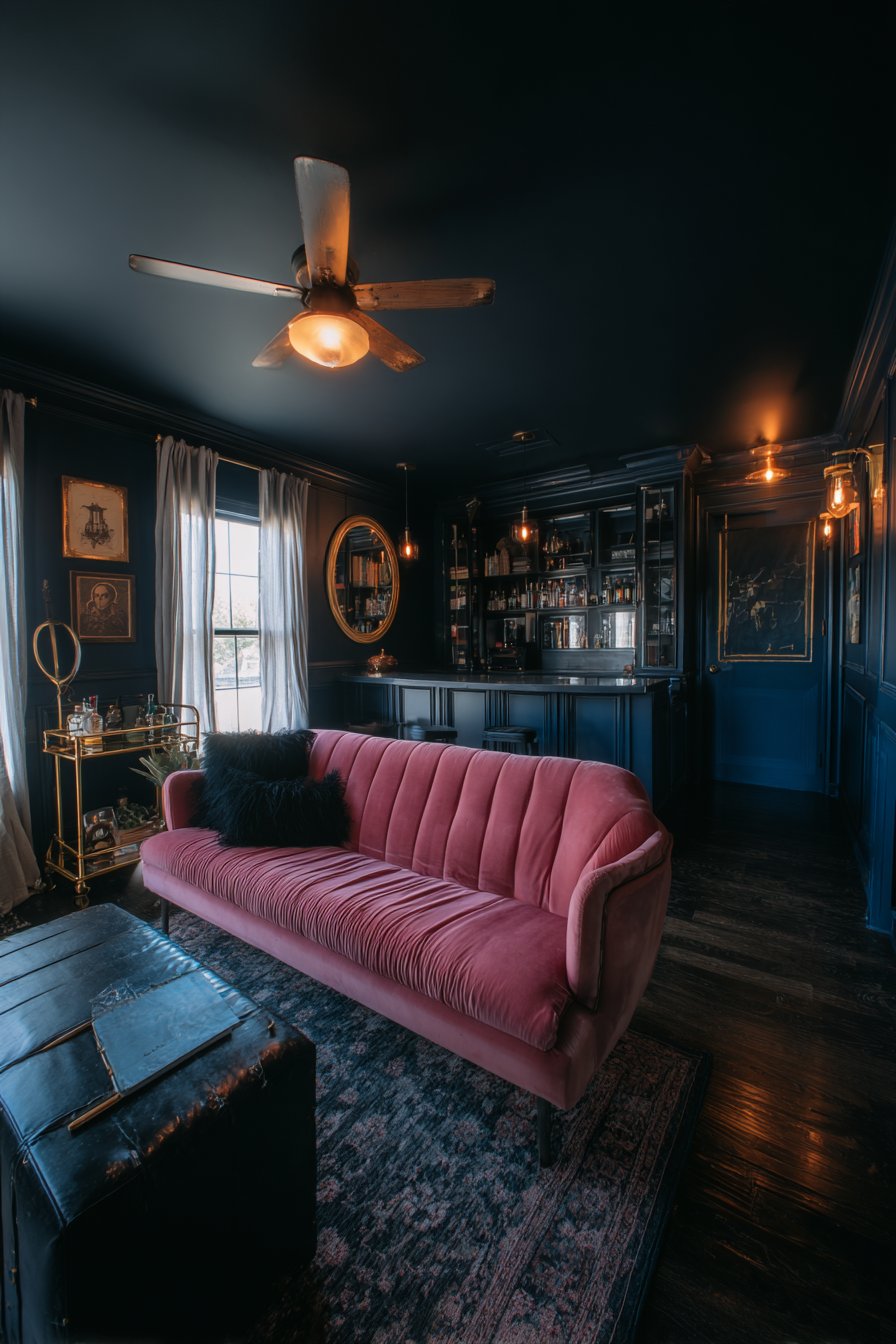
Color theory proves particularly relevant with teal accent walls, as this complex hue combines blue’s calming properties with green’s renewing qualities, creating psychological effects that feel simultaneously relaxing and energizing. The darkness of this particular teal adds drama and intimacy appropriate to sophisticated entertaining spaces, while the satin finish ensures the color reads richly without appearing flat or dull. The professional photography demonstrates how proper lighting—both natural and artificial—proves essential to showcasing deep jewel tones at their best.
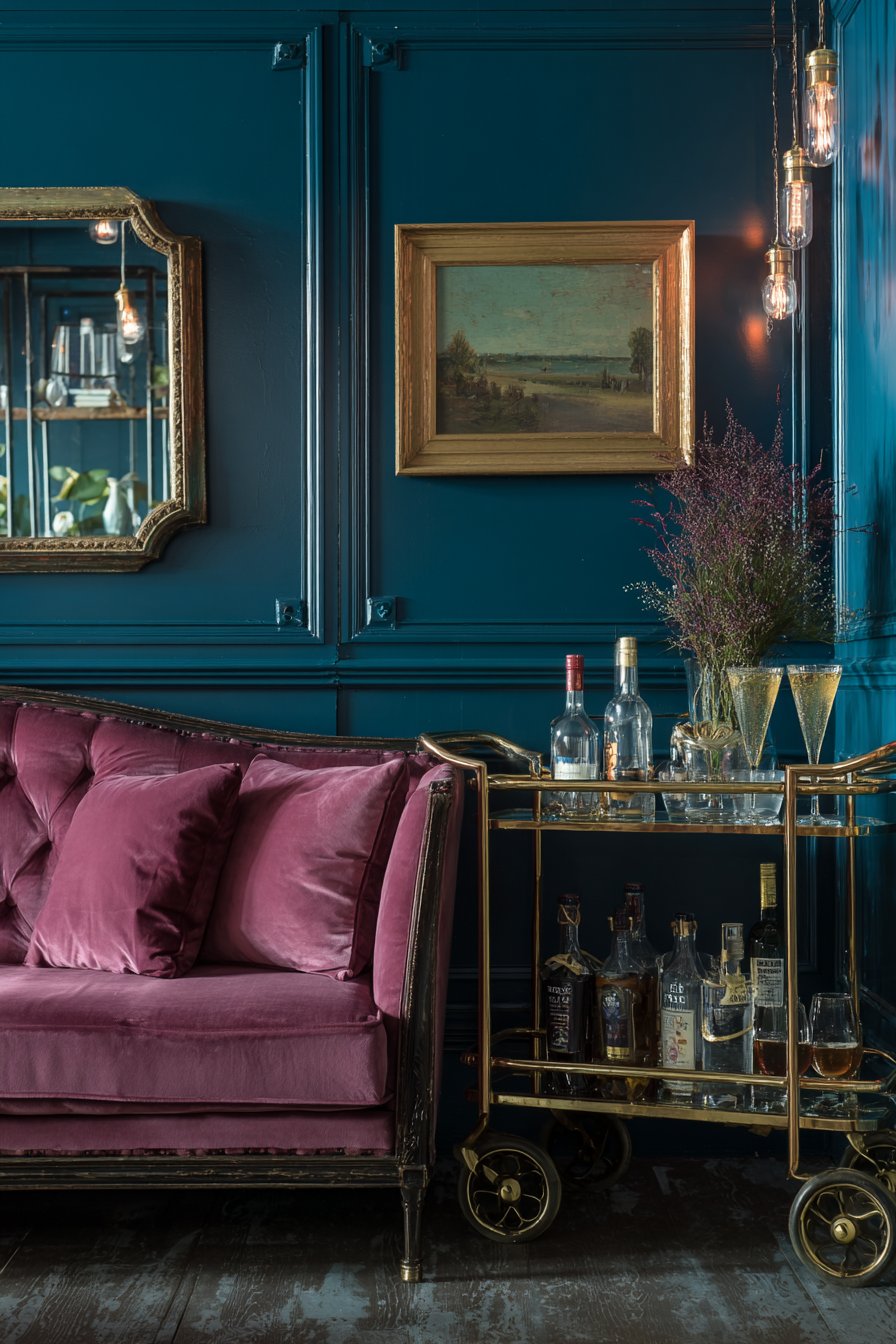
Key Design Tips: Select teal shades carefully, testing samples in various lighting conditions to ensure the blue-green balance matches your vision. Apply satin or eggshell finish rather than flat or glossy to achieve sophisticated appearance with appropriate reflectivity. Balance dark teal walls with substantial doses of lighter elements in furniture, flooring, and adjacent surfaces. Incorporate warm metallic accents like brass, copper, or gold to enhance teal’s richness and prevent cold appearance. Position dark teal walls to receive adequate natural and artificial lighting to prevent the space from feeling cave-like. Layer lighting sources—ambient, task, and accent—to create dimensional illumination that showcases the teal’s depth. Limit dark teal to single accent walls in most spaces to maintain spatial openness and prevent overwhelming darkness.
22. Contemporary Brushed Copper Metal
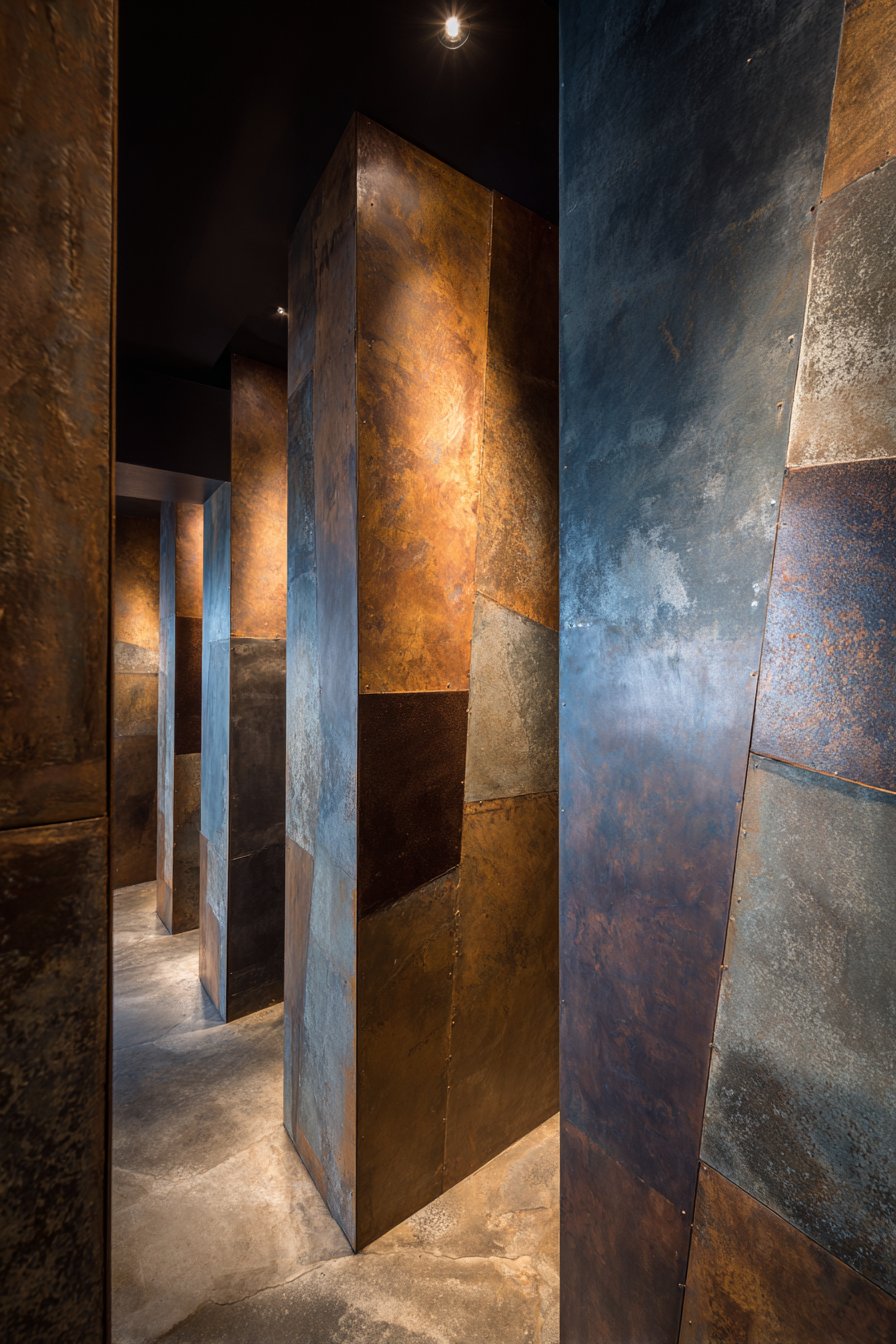
Modern brushed copper panel accent walls create warm reflective surfaces and contemporary industrial style that transforms loft living rooms into sophisticated urban dwellings. This living room accent wall idea pushes boundaries by embracing metal as primary accent wall material, celebrating copper’s unique properties including warm coloring, reflective surface, and natural patina development. The brushed finish provides subtle texture that diffuses reflections while maintaining the metallic character, creating surfaces that catch and reflect light without mirror-like intensity.
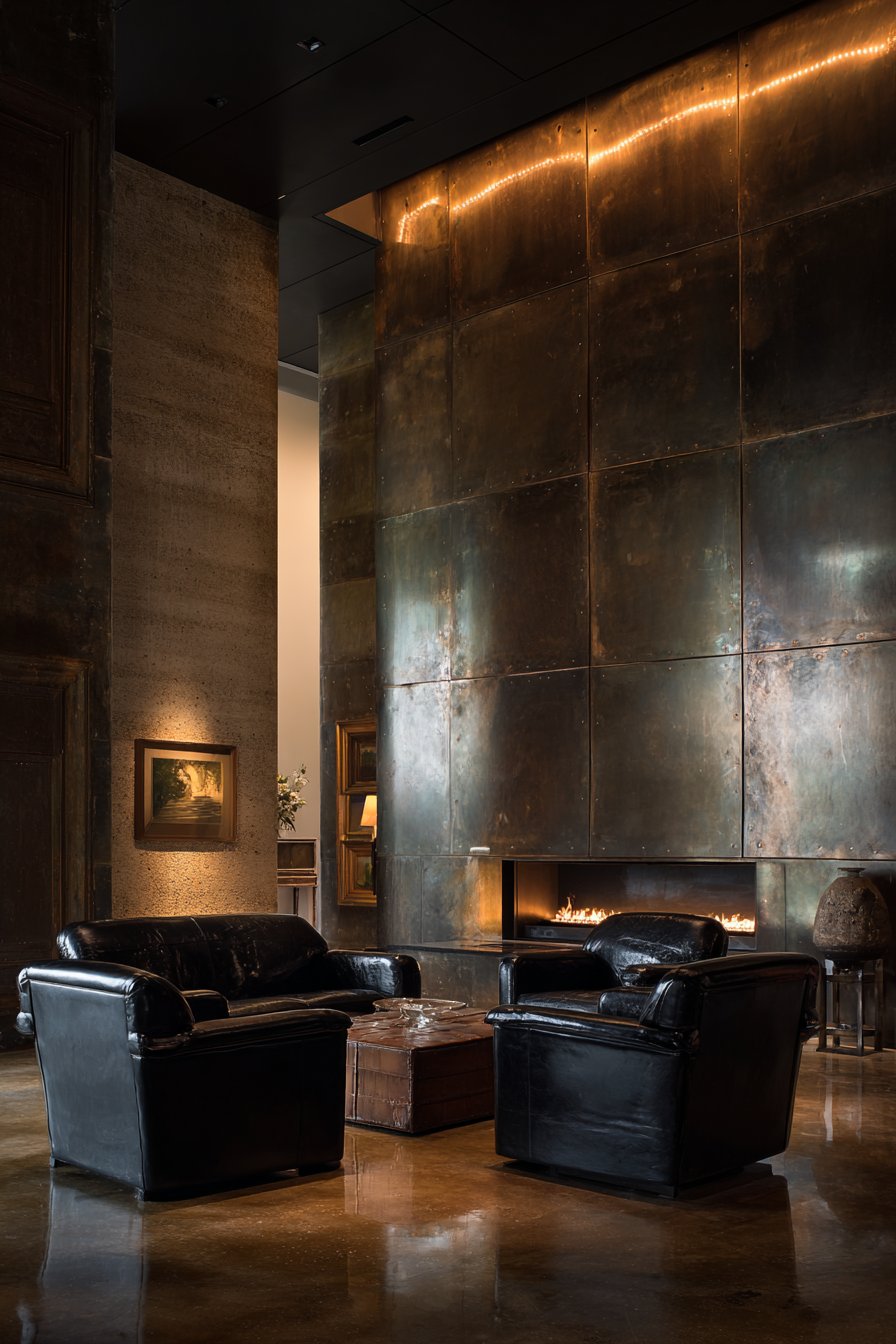
The loft-style aesthetic finds natural expression through copper’s combination with industrial materials like black leather furniture and concrete floors. These raw, honest materials create authentic urban character that references warehouse conversions and industrial heritage while presenting refined finishes appropriate to contemporary residential spaces. Minimal accessories maintain the disciplined aesthetic essential to successful industrial design, where each element must justify its presence through form or function rather than mere decoration. Strategic lighting creates subtle reflections and highlights on the copper surface, emphasizing the material’s unique light-catching properties.
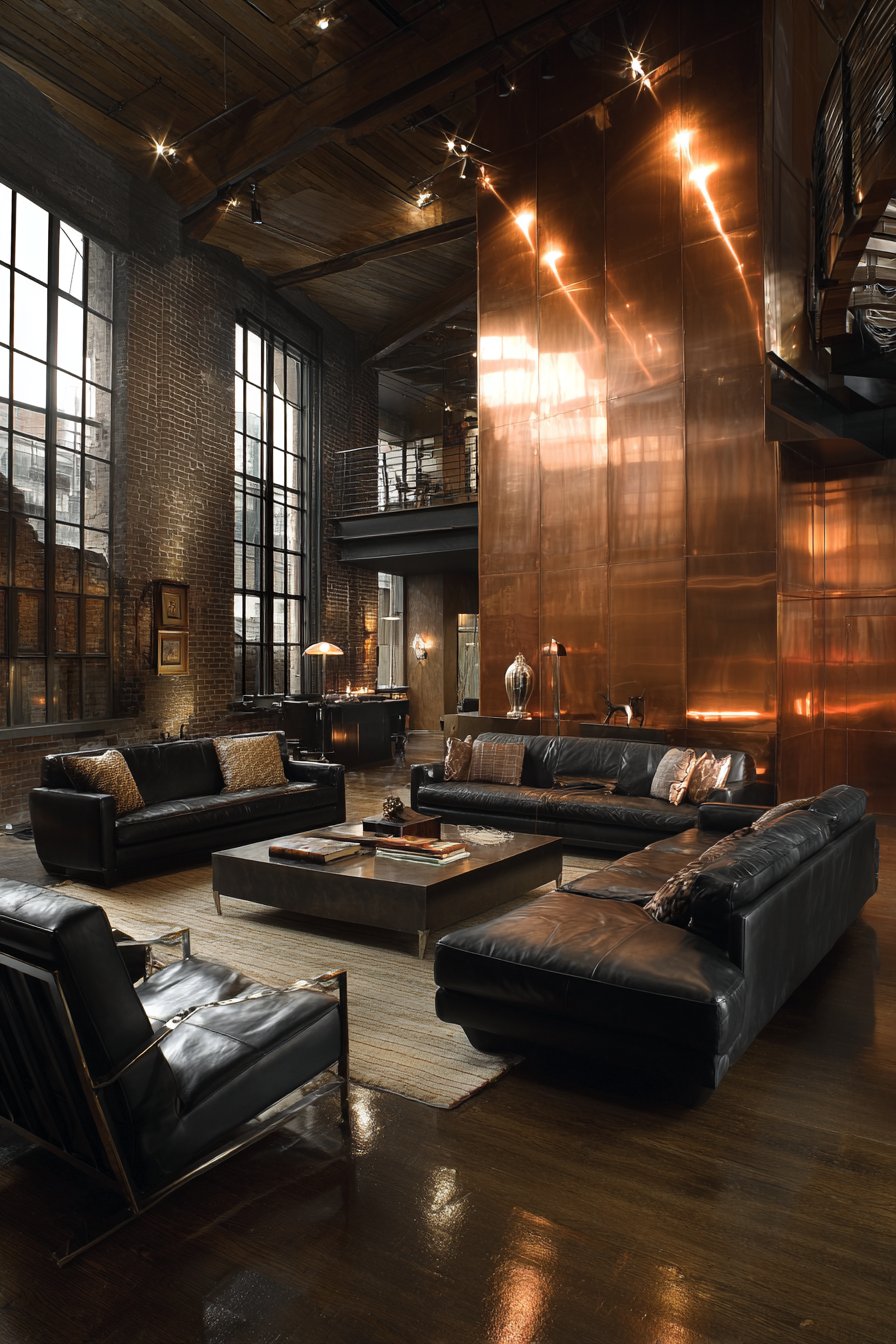
The practical considerations around metal accent walls include thermal properties, acoustic characteristics, and maintenance requirements. Copper naturally develops patina over time—a greenish oxidation layer that some find desirable and others wish to prevent through protective sealants. The metal surface also conducts temperature efficiently, potentially feeling cold in winter or warm in summer depending on ambient conditions. Despite these practical considerations, metal accent walls offer durability and unique aesthetic qualities that appeal to homeowners seeking distinctive design solutions beyond conventional materials.
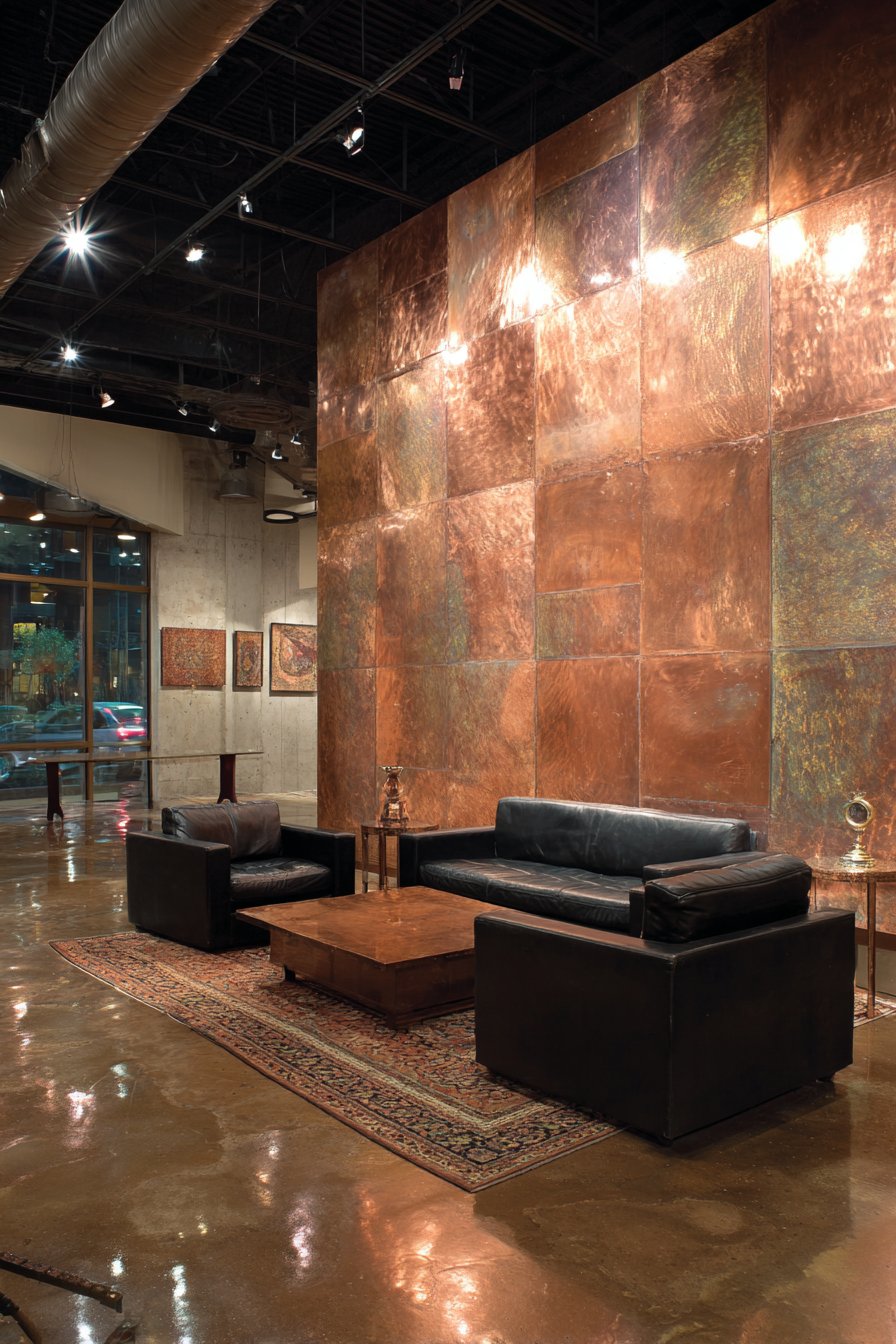
Key Design Tips: Install metal panels over solid backing with appropriate insulation to manage thermal properties and prevent excessive temperature transfer. Seal copper surfaces with clear protective coating to prevent unwanted patina development if maintaining bright metallic appearance is desired. Clean brushed copper with gentle metal cleaners specifically formulated for the material, avoiding abrasives that damage the brushed finish. Balance copper’s warmth with cooler elements in furnishings and materials to prevent overwhelming heat in the color palette. Position lighting strategically to create desired reflection patterns without producing glare or uncomfortable bright spots. Consider professional installation for metal panels, as the material requires specialized tools and techniques. Accept natural patina development as desirable characteristic if preferring authentic aging, or maintain regularly to preserve bright metallic appearance.
23. Contemporary Blush Pink Sophistication
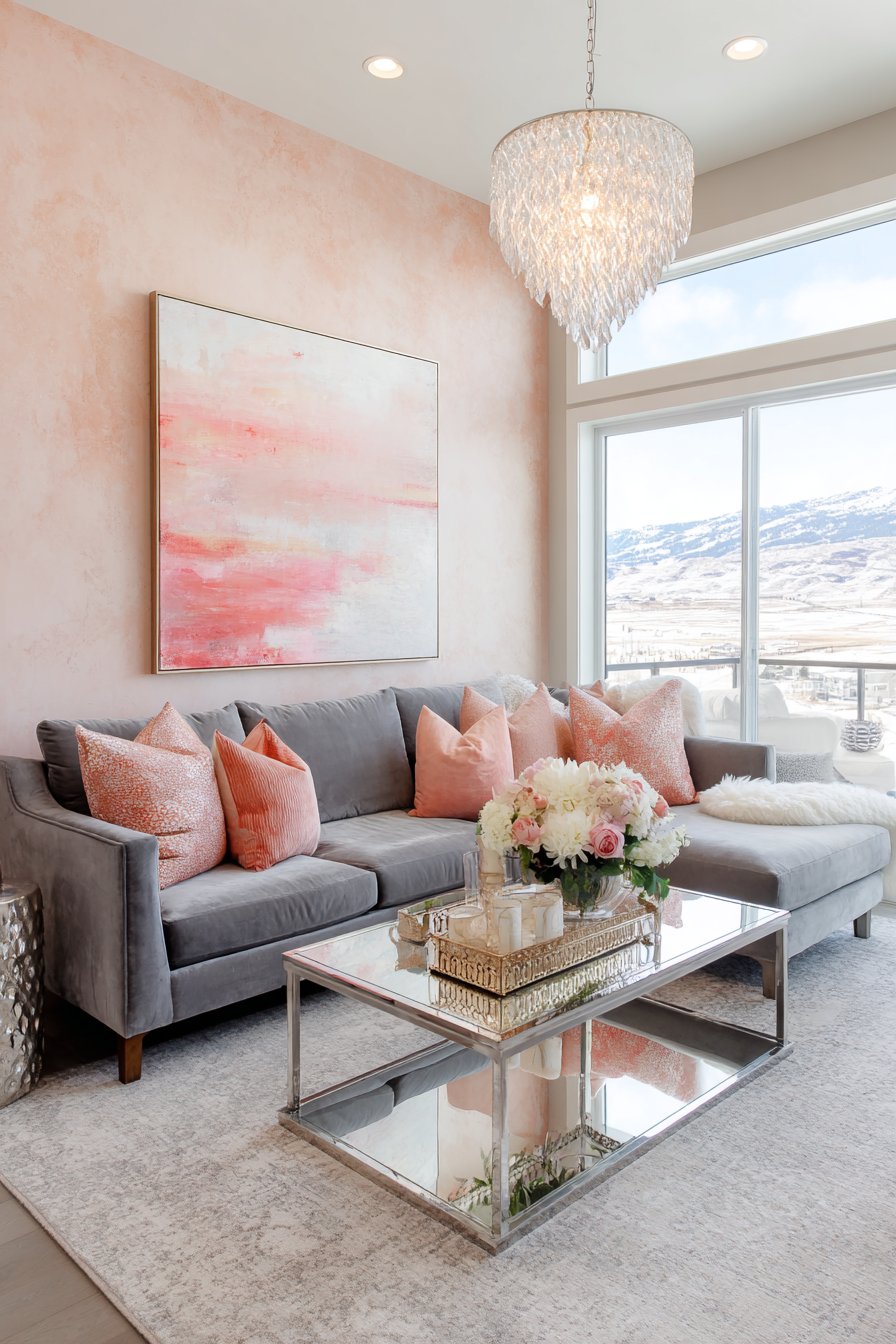
Soft blush pink painted accent walls with subtle texture create gentle warmth and contemporary femininity that transforms modern glam living rooms into refined sanctuaries. This living room accent wall idea demonstrates how traditionally feminine colors can be deployed sophisticatly in contemporary contexts, creating spaces that feel elegant rather than saccharine. The blush tone—sitting delicately between pink and beige—provides color interest while maintaining neutrality, allowing it to coordinate with diverse accent colors and metallic finishes without creating color clashes.
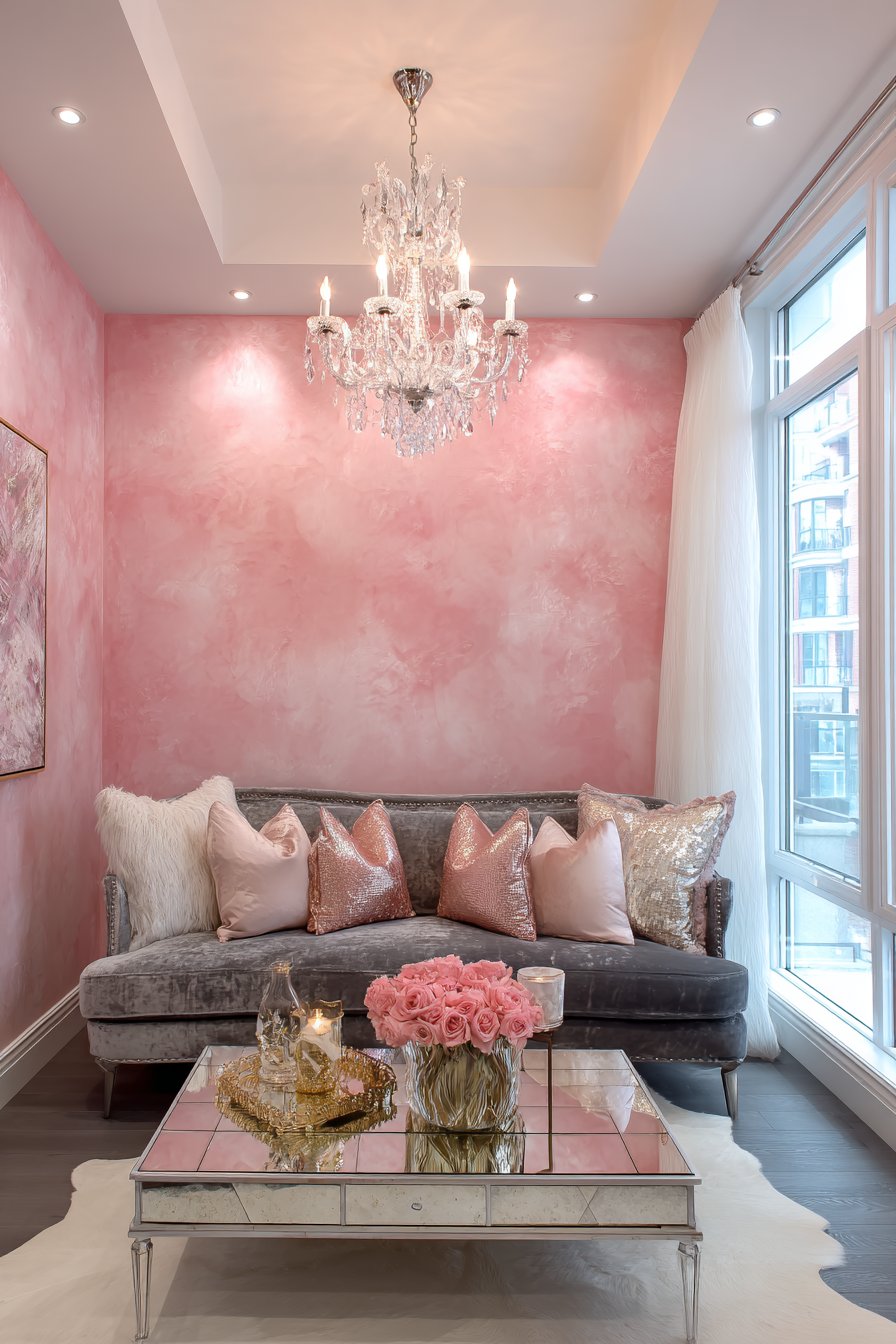
The modern glam aesthetic emerges through blush pink’s combination with luxurious materials and metallic accents. Grey velvet sofas provide sophisticated neutrality while their plush texture adds tactile luxury, pink and gold throw pillows create intentional color coordination, and mirrored coffee tables contribute glamorous reflection. The crystal chandelier—perhaps the ultimate glam lighting fixture—creates sparkling highlights throughout the space while its traditional form bridges between classic glamour and contemporary sensibilities. These carefully selected elements create layered sophistication that feels curated and intentional.
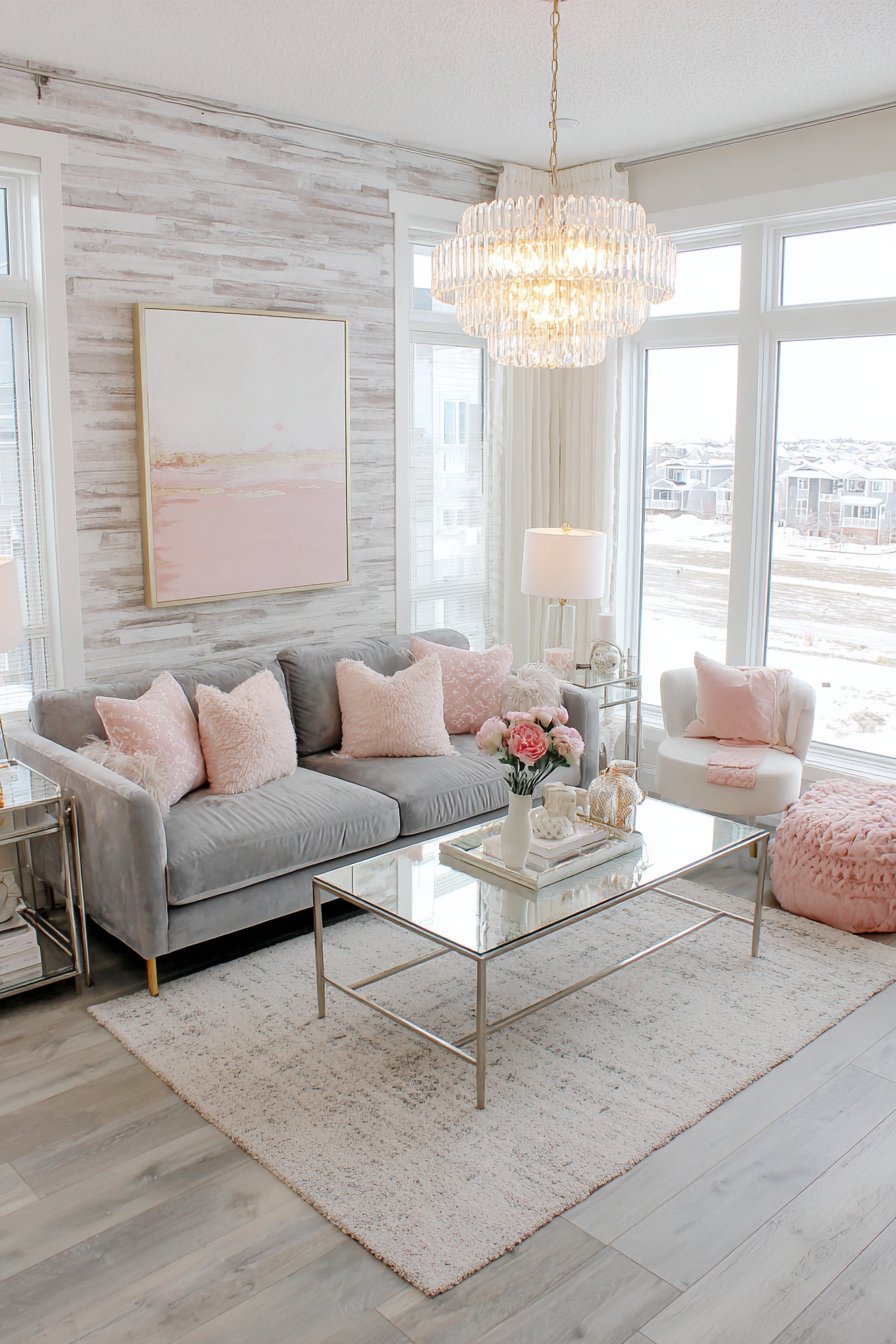
Natural daylight proves essential to the success of blush pink accent walls, as abundant illumination from large windows makes the delicate color feel fresh and sophisticated rather than overly sweet or juvenile. The soft pink absorbs and reflects light beautifully throughout the day, creating gentle warmth that makes spaces feel welcoming without the aggressive heat of stronger warm colors. The professional photography demonstrates this quality, showing how proper exposure and natural lighting allow blush pink to appear elegant and refined rather than childish or trendy.
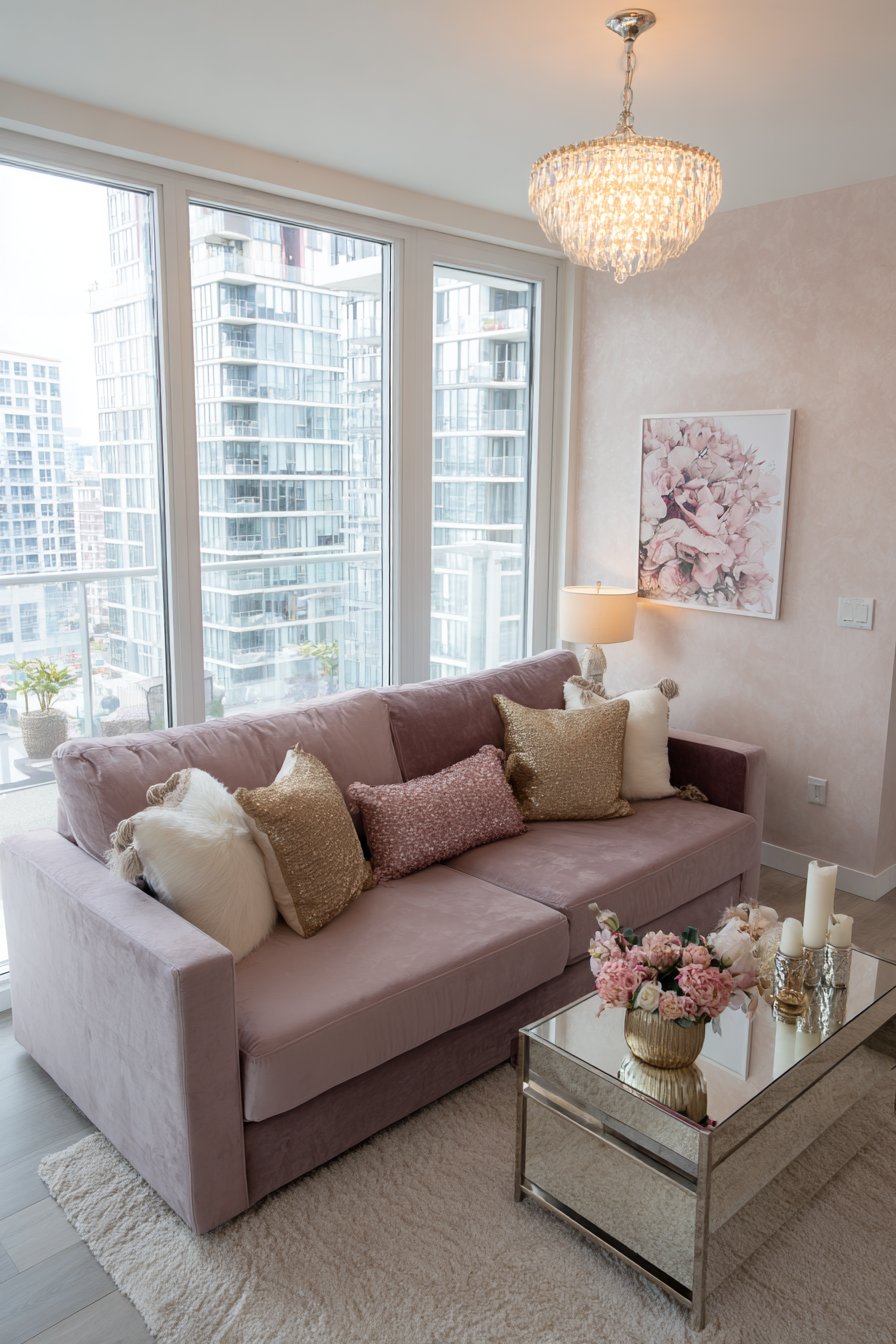
Key Design Tips: Select blush pink shades with beige or grey undertones rather than pure pink to ensure sophisticated appearance appropriate to adult living spaces. Add subtle texture through specialty paint application or textured rollers to prevent flat, one-dimensional appearance. Balance blush’s warmth with cool grey furnishings and metallic accents to prevent overwhelming sweetness. Maximize natural light in rooms with blush walls to ensure the color reads fresh rather than muddy or dull. Layer metallic finishes—gold, silver, crystal—to create glamorous aesthetic while maintaining contemporary edge. Test paint samples extensively in various lighting conditions, as blush pink appears dramatically different under warm versus cool lighting. Apply premium paint in multiple coats to achieve smooth, saturated finish that appears intentional rather than washed out.
Why These Living Room Accent Wall Ideas Represent the Best Design Solutions
These twenty-three living room accent wall ideas represent the finest contemporary approaches to accent wall design because they balance aesthetic impact with practical implementation, offer solutions for diverse design styles and personal preferences, and demonstrate professional-level understanding of materials, colors, textures, and spatial composition. Each concept addresses specific design challenges while providing flexible frameworks that homeowners can adapt to their unique circumstances, budgets, and skill levels.
The collection spans the full spectrum of accent wall possibilities—from bold painted surfaces in navy, emerald, terracotta, and teal to natural materials like stone, wood, and grasscloth, from dimensional treatments including shiplap, board and batten, and geometric panels to luxurious fabric installations and sophisticated wallpapers. This comprehensive range ensures that regardless of personal style preferences—whether leaning toward minimalist Scandinavian, rustic farmhouse, industrial loft, traditional elegance, or contemporary glam—there exist multiple applicable solutions within this collection.
The emphasis on realistic, achievable installations distinguishes these ideas from purely aspirational concepts that prove impractical for average homeowners. Each design considers practical factors including budget constraints, installation complexity, maintenance requirements, and long-term versatility. The inclusion of specific materials, finishes, colors, and complementary furnishings provides concrete guidance rather than vague aesthetic direction, enabling readers to translate inspiration into actual implementation.
The attention to lighting throughout these concepts reflects sophisticated understanding of how natural and artificial illumination fundamentally affects accent wall success. Whether emphasizing the importance of natural light for dark colors like black and teal, the backlighting potential of slatted wood walls, or the strategic positioning of picture lights for gallery walls, these designs acknowledge that accent walls exist within dynamic lighting environments that change throughout days and seasons.
Material authenticity represents another distinguishing characteristic of these superior accent wall ideas. Rather than suggesting imitation or artificial materials attempting to mimic natural counterparts, these concepts celebrate genuine materials in honest applications—real reclaimed wood rather than printed laminate, actual stone veneer rather than faux panels, authentic grasscloth rather than vinyl imitations. This commitment to material integrity ensures accent walls that age gracefully, maintain value over time, and provide genuine textural richness that photographs cannot fully capture.
The color selections demonstrate sophisticated understanding of color theory, psychology, and practical application in residential contexts. From the calming sage green and serene blush pink to the energizing mustard yellow and dramatic emerald green, each color choice considers not just aesthetic impact but psychological effects and practical coordination with common furnishing colors and materials. The emphasis on testing colors in various lighting conditions and considering undertones reflects professional-level color specification that prevents costly mistakes.
The integration of style-specific furnishings and accessories demonstrates how accent walls function within complete design schemes rather than as isolated features. The mid-century modern elements supporting the mustard yellow wall, the industrial pieces complementing exposed brick, the traditional furnishings anchoring the burgundy damask—these thoughtful pairings show how accent walls serve as launching points for comprehensive design narratives rather than afterthoughts applied to completed rooms.
Conclusion
Living room accent walls represent one of the most accessible yet impactful design interventions available to homeowners seeking to transform their spaces without complete renovations. As demonstrated through these twenty-three diverse concepts, accent walls accommodate virtually any aesthetic preference, budget level, and skill range while delivering substantial visual impact and enhanced spatial character. Whether you’re drawn to the timeless sophistication of marble and walnut, the bold personality of jewel-tone paints, the organic warmth of natural materials, or the architectural interest of dimensional treatments, there exists an accent wall solution perfectly suited to your vision and circumstances.
The key to accent wall success lies not merely in selecting appealing colors or materials, but in thoughtfully considering how these elements interact with existing architectural features, lighting conditions, furnishings, and overall design narratives. The most successful accent walls feel inevitable rather than arbitrary—they emerge naturally from spatial analysis, personal preferences, and functional requirements rather than from trend-chasing or random color selection. Take time to evaluate your space honestly, test materials and colors thoroughly, and plan implementations carefully to ensure your accent wall enhances rather than overwhelms your living room.
As you embark on your accent wall journey, remember that these designs represent starting points for personal interpretation rather than rigid templates requiring exact replication. Adapt colors to suit your preferences, substitute materials based on budget or availability, scale concepts to fit your specific room dimensions, and most importantly, trust your instincts about what feels right for your home and lifestyle. The most beautiful living rooms reflect the personalities and priorities of the people who inhabit them—let your accent wall serve as authentic expression of who you are and how you want to live, and it will inevitably succeed in creating the warm, welcoming, inspiring space you deserve.
