
The television wall has evolved from a simple functional necessity into one of the most impactful design focal points in modern living rooms. No longer just a place to mount a screen, today’s television walls represent an opportunity to showcase personal style, maximize functionality, and create stunning visual statements that elevate the entire room. Whether you’re drawn to minimalist elegance, rustic charm, or bold contemporary statements, the way you design your television wall can fundamentally transform how you experience and enjoy your living space. This crucial design element serves as both the entertainment hub and a canvas for creative expression, balancing technological integration with aesthetic appeal.
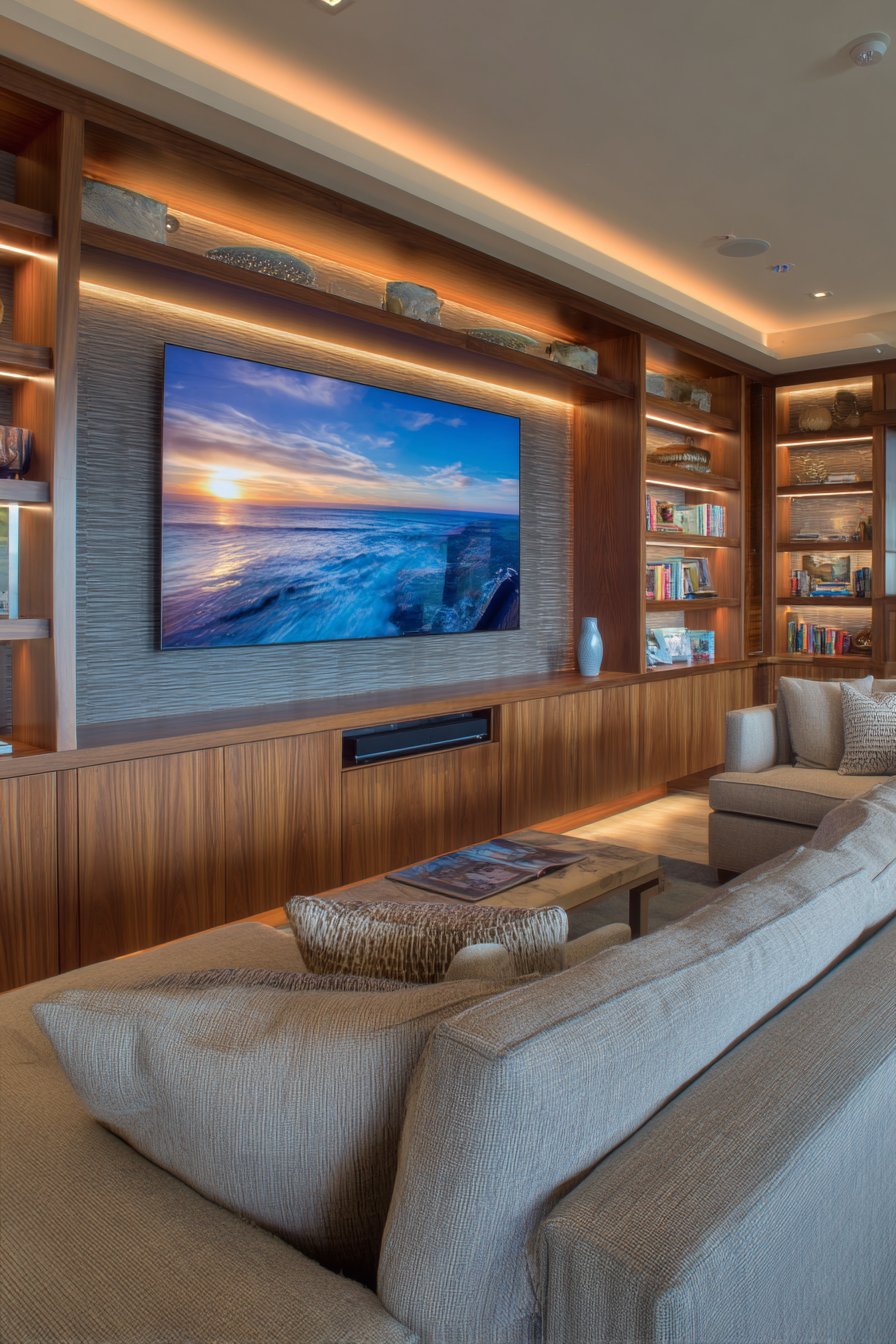
In an era where our homes serve multiple purposes—from entertainment centers to work-from-home offices—the television wall must work harder than ever before. Smart design solutions can incorporate storage, display space, and architectural interest while seamlessly integrating technology into the overall aesthetic. The right approach considers not just the television itself, but the entire wall composition, including lighting, materials, shelving, and decorative elements that work together to create a cohesive, visually striking environment.
This comprehensive guide explores twenty-five distinctive television wall ideas, each offering unique approaches to materials, styles, and functionality. From sleek modern designs featuring floating consoles and hidden cable management to warm traditional built-ins with classic millwork, these concepts demonstrate the incredible versatility available to homeowners seeking to transform their living rooms. Whether you’re working with a small apartment, a spacious family room, or anything in between, you’ll discover inspiring ideas that can be adapted to your specific space, budget, and design preferences.
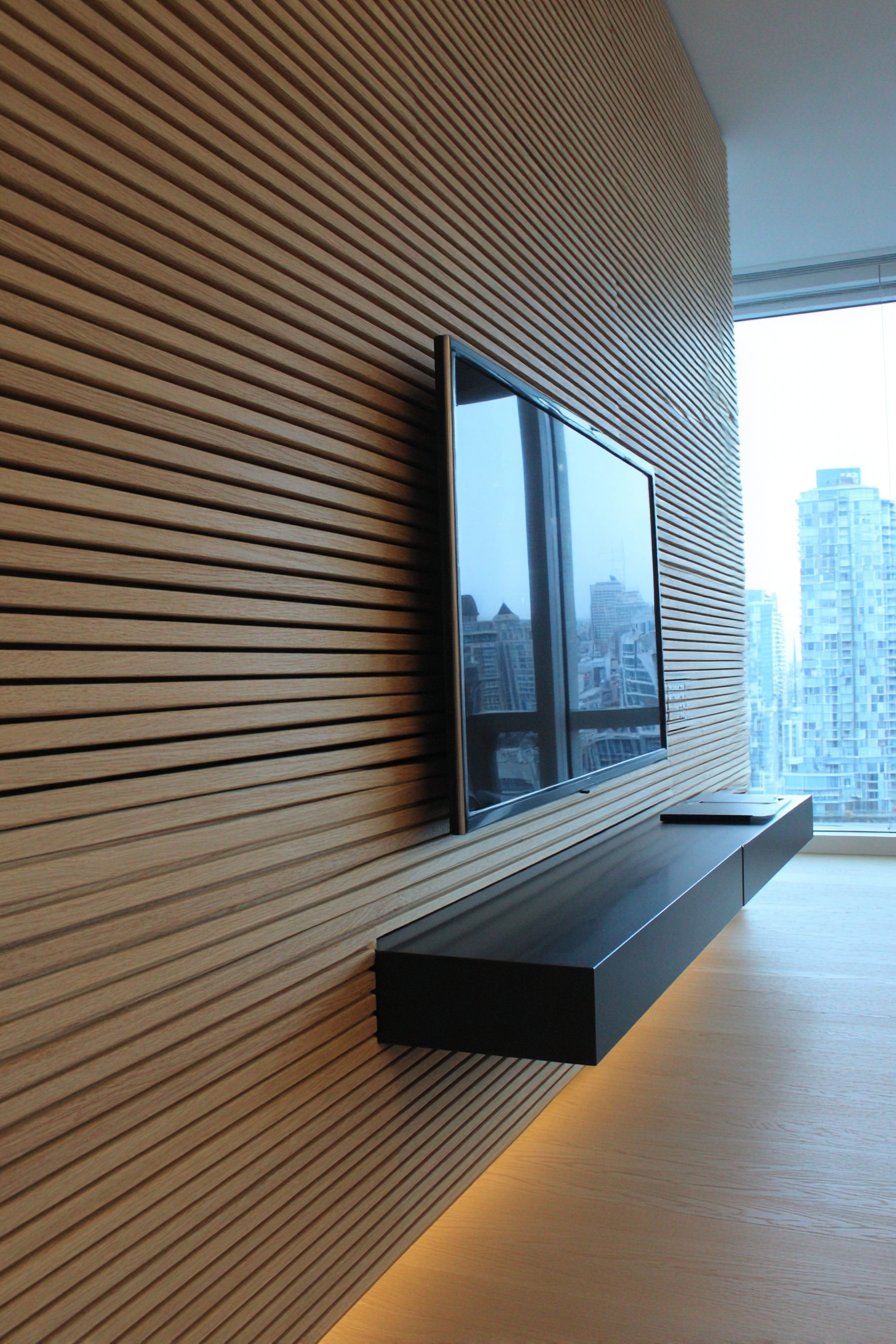
1. Modern Floating Media Console with Wood Slat Paneling
The contemporary appeal of horizontal wood slat paneling creates an immediately striking backdrop for your television wall. Natural oak slats extending across the entire wall surface introduce organic warmth while maintaining clean, modern lines that define sophisticated living spaces. The floating media console in matte black finish provides a bold contrast against the light wood tones, creating visual depth and architectural interest. This design approach perfectly balances the organic qualities of natural materials with the sleek geometry of contemporary furniture, resulting in a space that feels both welcoming and refined.
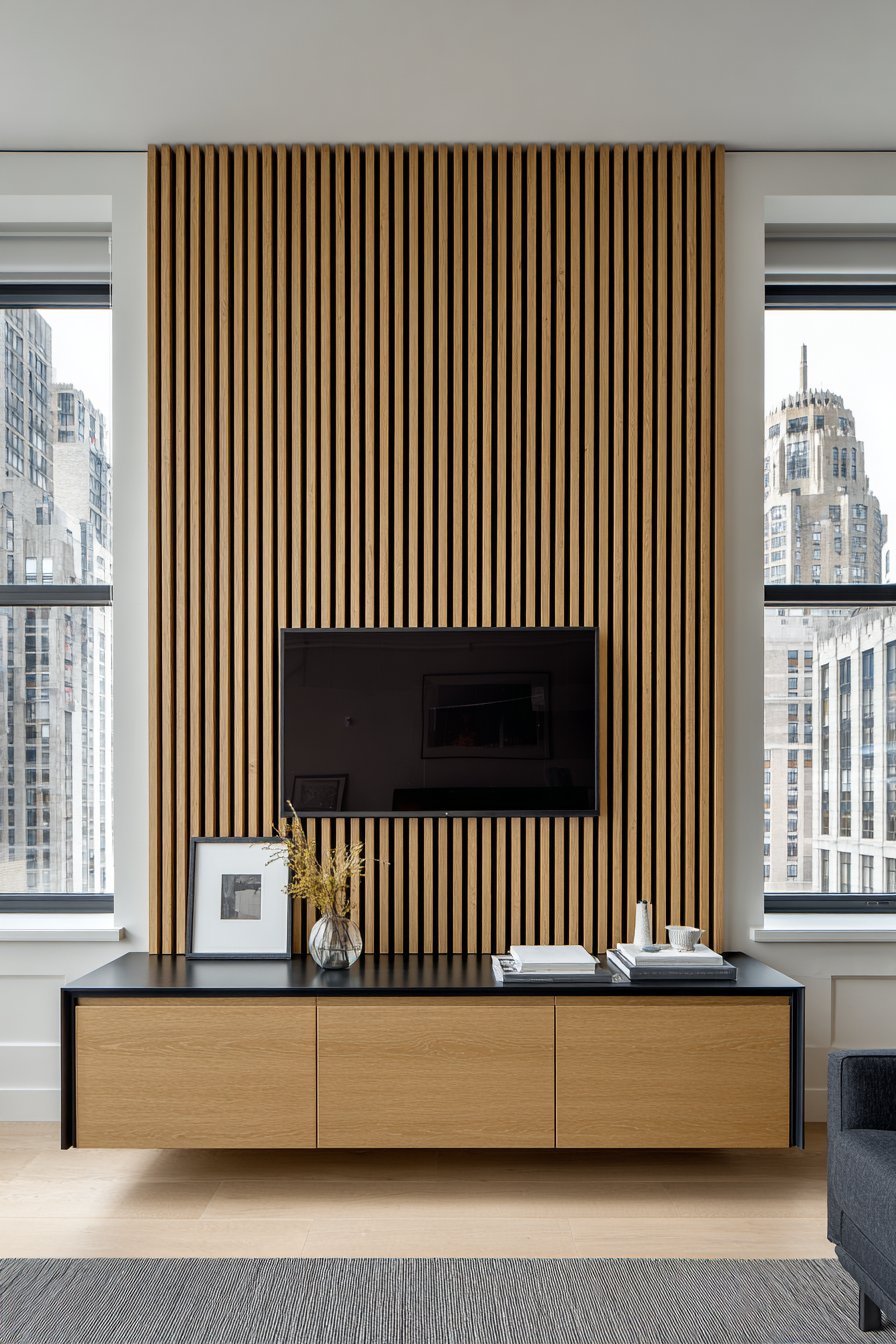
Concealed LED lighting positioned behind the wood slats serves multiple purposes in this design. The gentle backlighting casts subtle shadows that accentuate the wood grain texture while creating ambient illumination that reduces eye strain during viewing. This thoughtful lighting design also adds dimensional depth to the wall, making the slats appear to float and creating a sophisticated layered effect. The warm glow emanating from behind the panels transforms the television wall into a feature that remains visually engaging even when the screen is off.
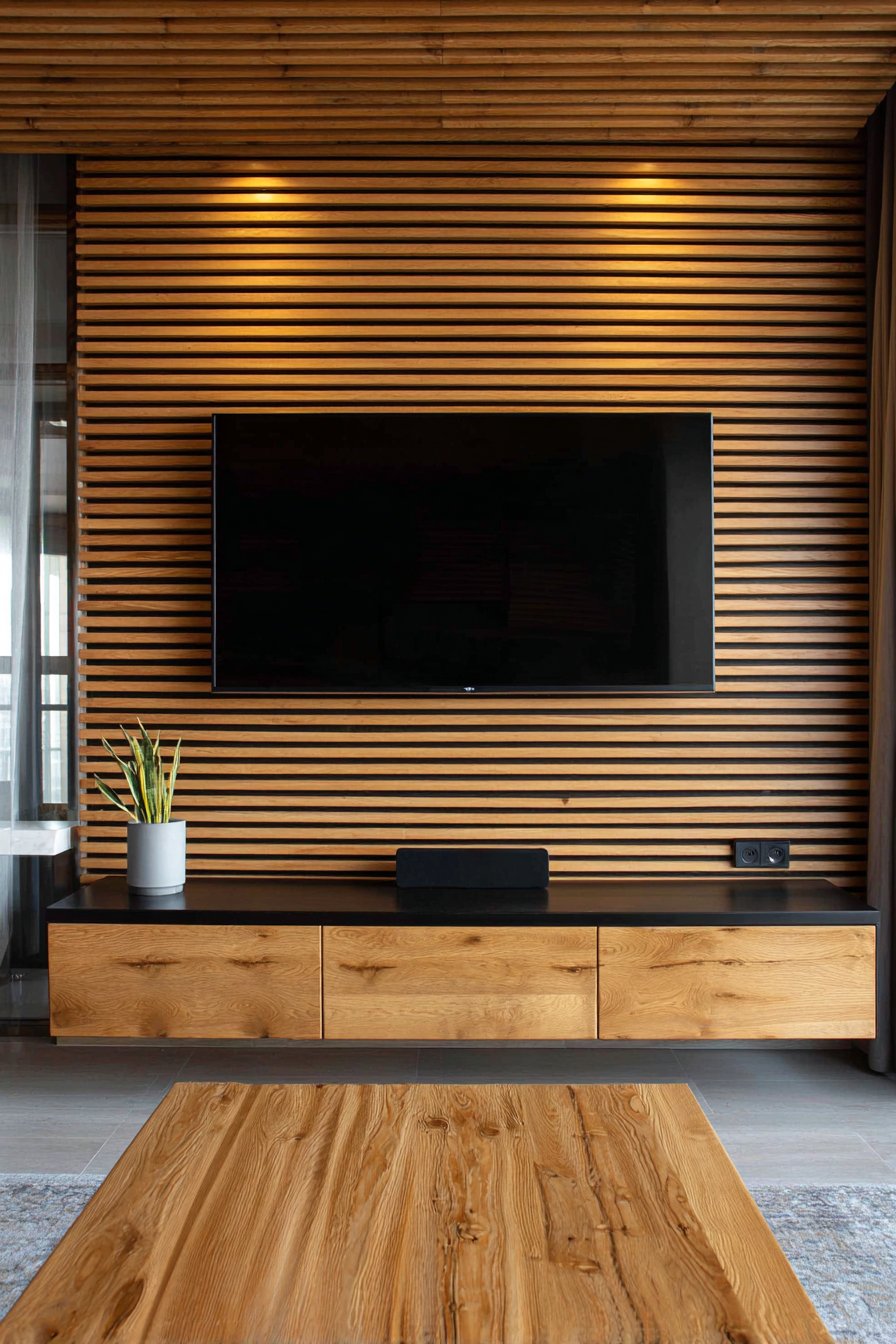
Cable management represents one of the most challenging aspects of television wall design, and this concept addresses it elegantly. All wiring disappears within the wall cavity, maintaining the clean aesthetic that defines modern interiors. The floating console’s wall-mounted installation eliminates floor clutter and creates an airy, spacious feeling even in smaller rooms. This elevated approach to storage also facilitates easier cleaning underneath the unit, a practical consideration often overlooked in television wall planning.
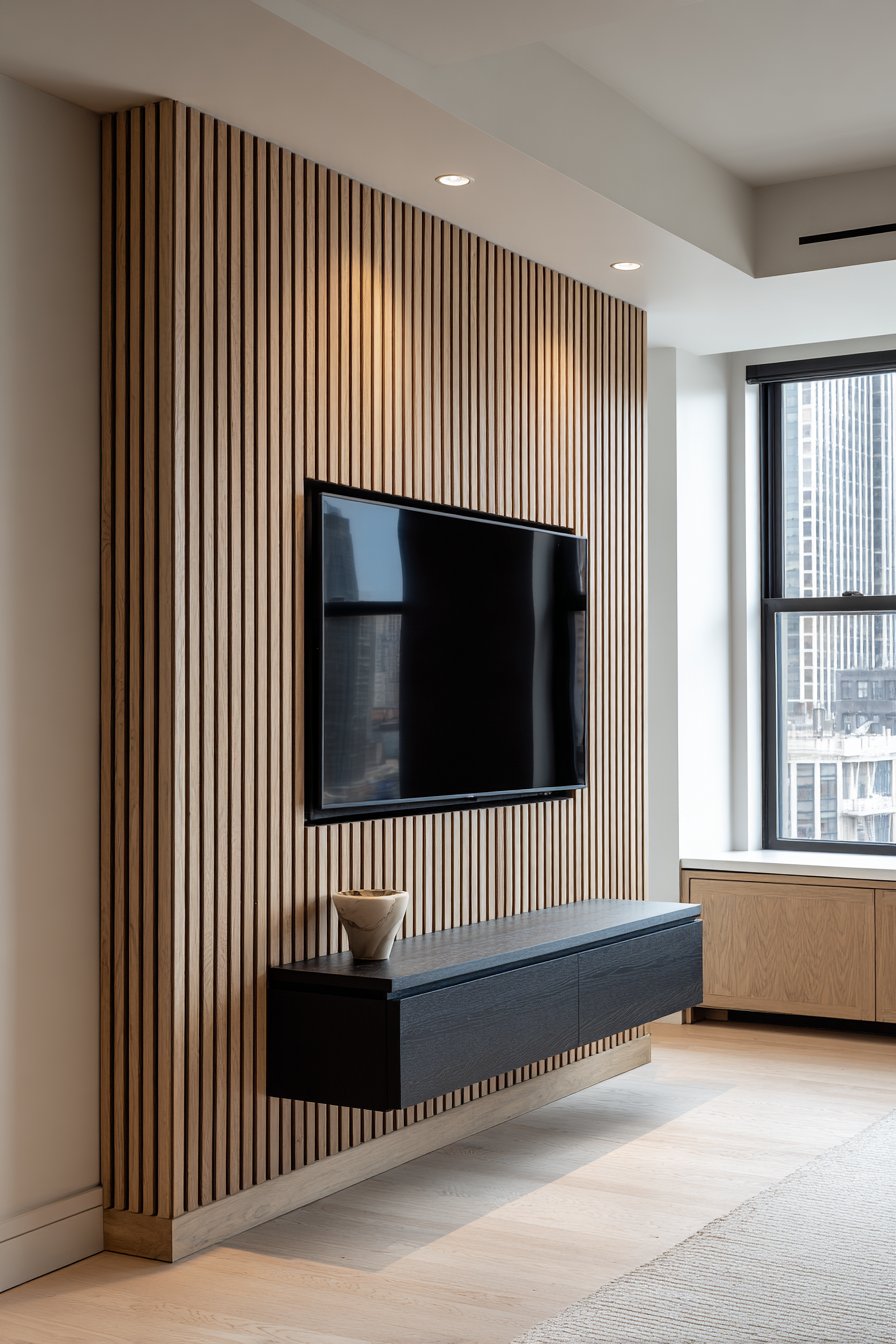
The materials and finishes in this design create a sophisticated dialogue between contrasting elements. The matte black console absorbs light and provides grounding weight, while the natural oak slats reflect and diffuse illumination throughout the space. This interplay between dark and light, smooth and textured, creates visual interest that draws the eye across the entire wall composition rather than focusing solely on the screen. Key design tips for achieving this look include selecting slats with visible grain patterns that add natural character, spacing them consistently for a professional finish, installing dimmer controls for the LED backlighting to adjust ambiance throughout the day, ensuring the floating console is properly anchored to support the weight of media components, and choosing a matte finish for the console to minimize reflections and glare on the television screen.
2. Contemporary Asymmetrical Built-In Entertainment Unit
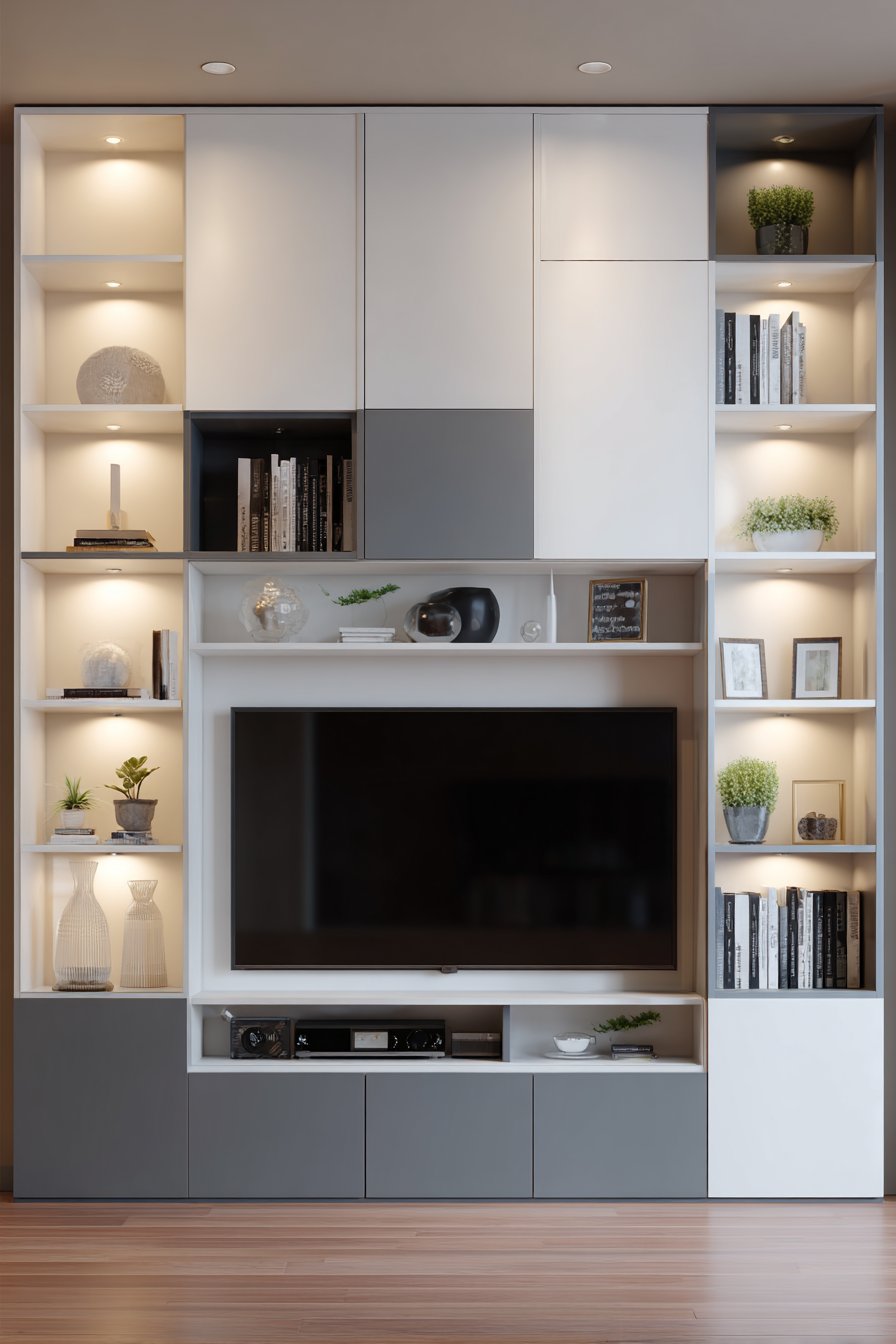
Asymmetrical design brings dynamic energy and visual intrigue to the television wall, breaking away from traditional symmetrical arrangements. This contemporary entertainment unit features a geometric composition of open white lacquered shelves and closed grey cabinet sections arranged in an intentionally unbalanced configuration. The television anchors the center while the varied shelf heights and widths create movement and rhythm across the wall. This approach transforms functional storage into an architectural sculpture that serves as both practical organization and artistic statement.
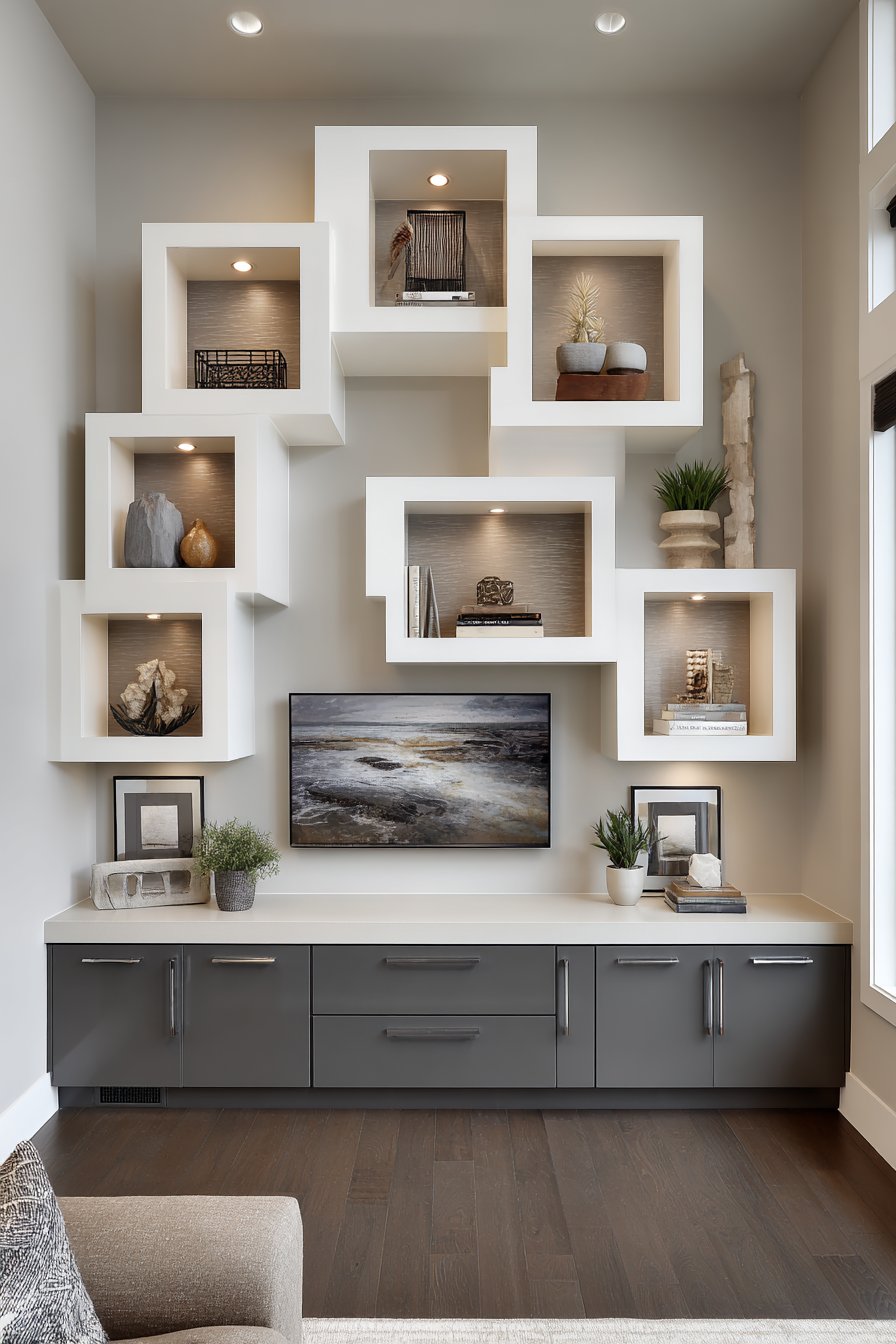
The carefully curated display within the asymmetrical shelving demonstrates how decorative objects, books, and small indoor plants can enhance rather than clutter the television wall. Each shelf compartment becomes a mini vignette, with groupings of objects arranged using odd numbers and varying heights to create visual interest. The white lacquered finish reflects light beautifully, keeping the wall feeling bright and open despite the substantial built-in structure. Grey cabinet sections provide concealed storage for less attractive necessities like gaming systems, DVD collections, and cable boxes, maintaining the clean aesthetic while maximizing functionality.
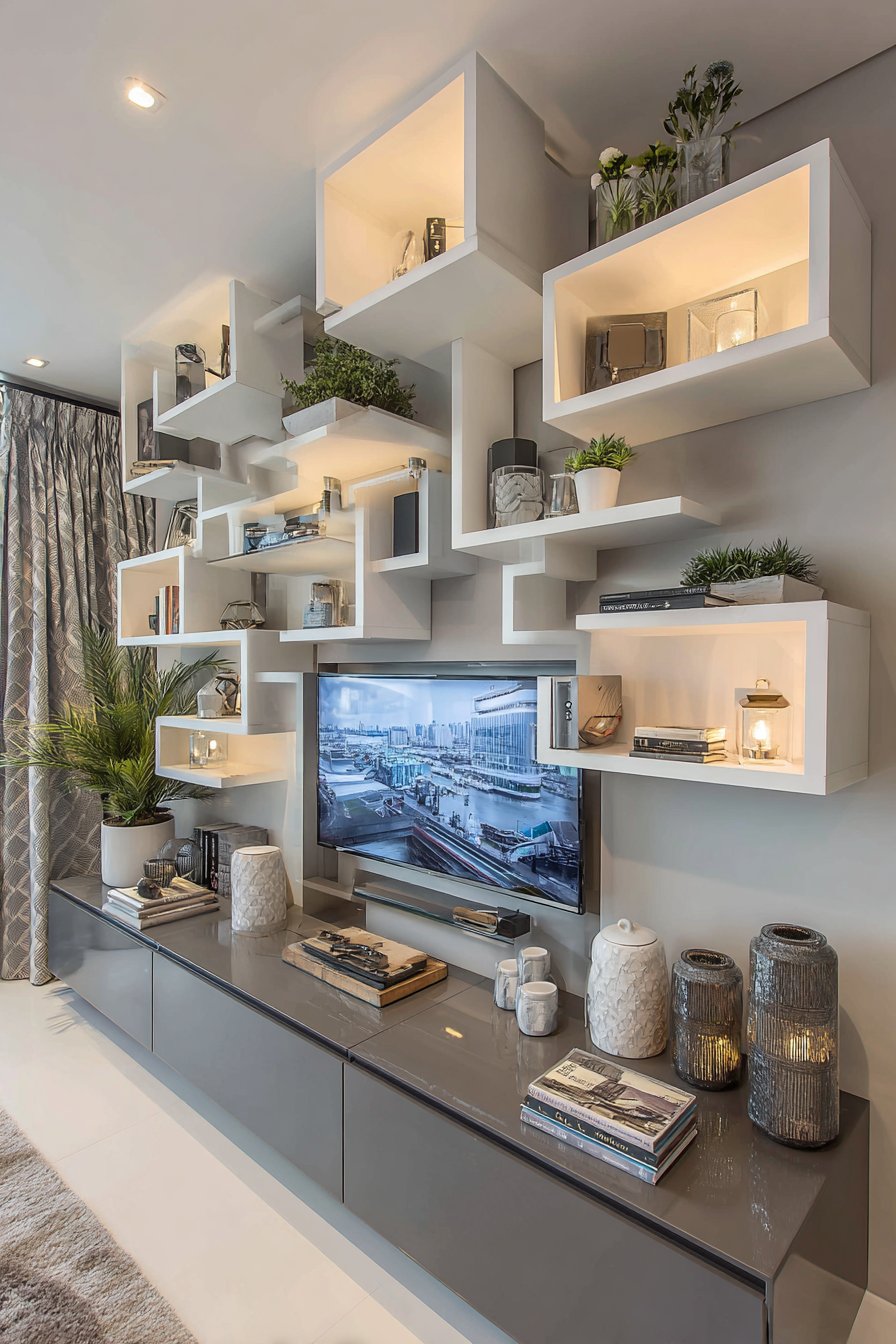
Recessed lighting within each shelf compartment adds both practical illumination and dramatic effect. These individual light sources highlight displayed items, creating depth and shadow play that makes the wall composition feel multidimensional. During evening hours, the lit shelving creates a warm, gallery-like atmosphere that transforms the living room into a sophisticated entertainment space. The lighting also serves a practical purpose, making it easy to locate items and creating focal points that guide the eye through the composition.
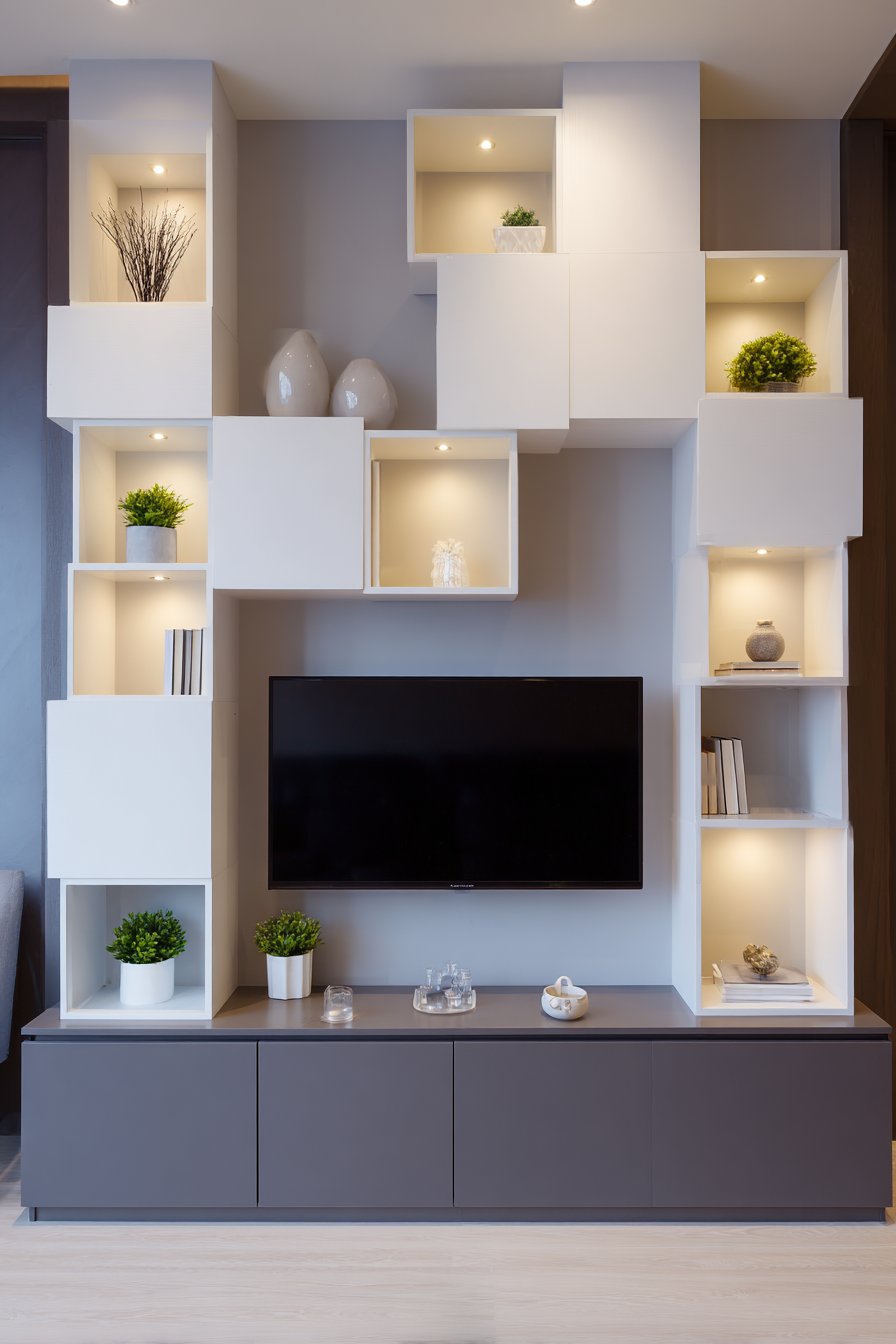
The color palette of white and grey provides a neutral foundation that works with virtually any living room style, from minimalist to transitional. This versatility means the television wall can adapt as your decorating preferences evolve, simply by changing the displayed objects and accessories. The closed storage sections maintain clean lines while hiding the inevitable clutter of modern entertainment equipment. Key design tips include planning the asymmetrical layout on graph paper before installation to ensure balanced visual weight, using the rule of thirds to position the television and major cabinet sections, incorporating adjustable shelving to accommodate changing storage needs, selecting LED recessed lights with warm color temperature to create inviting ambiance, and maintaining some negative space within the shelving to prevent visual overcrowding.
3. Minimalist Concrete-Effect Wall with Floating Credenza
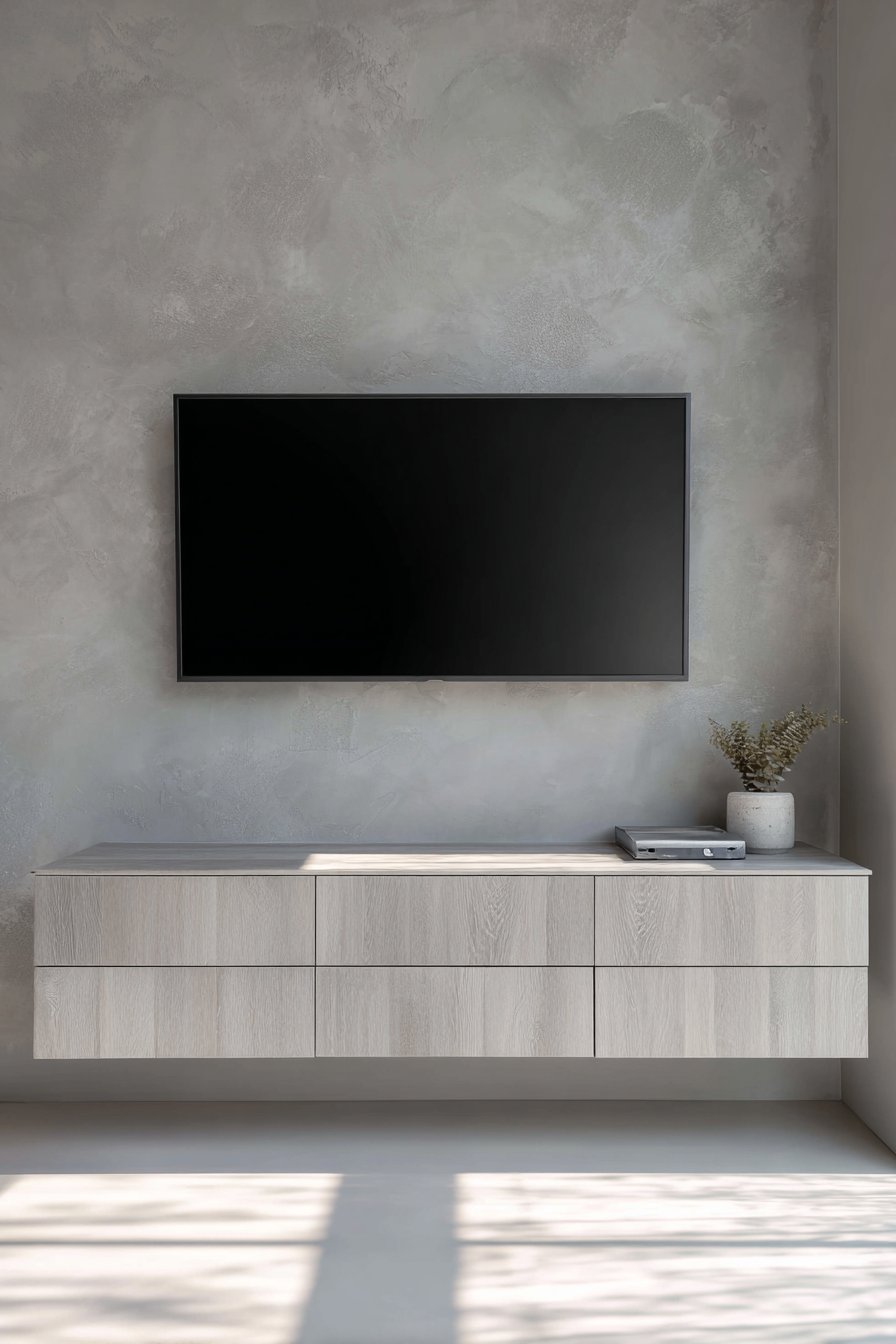
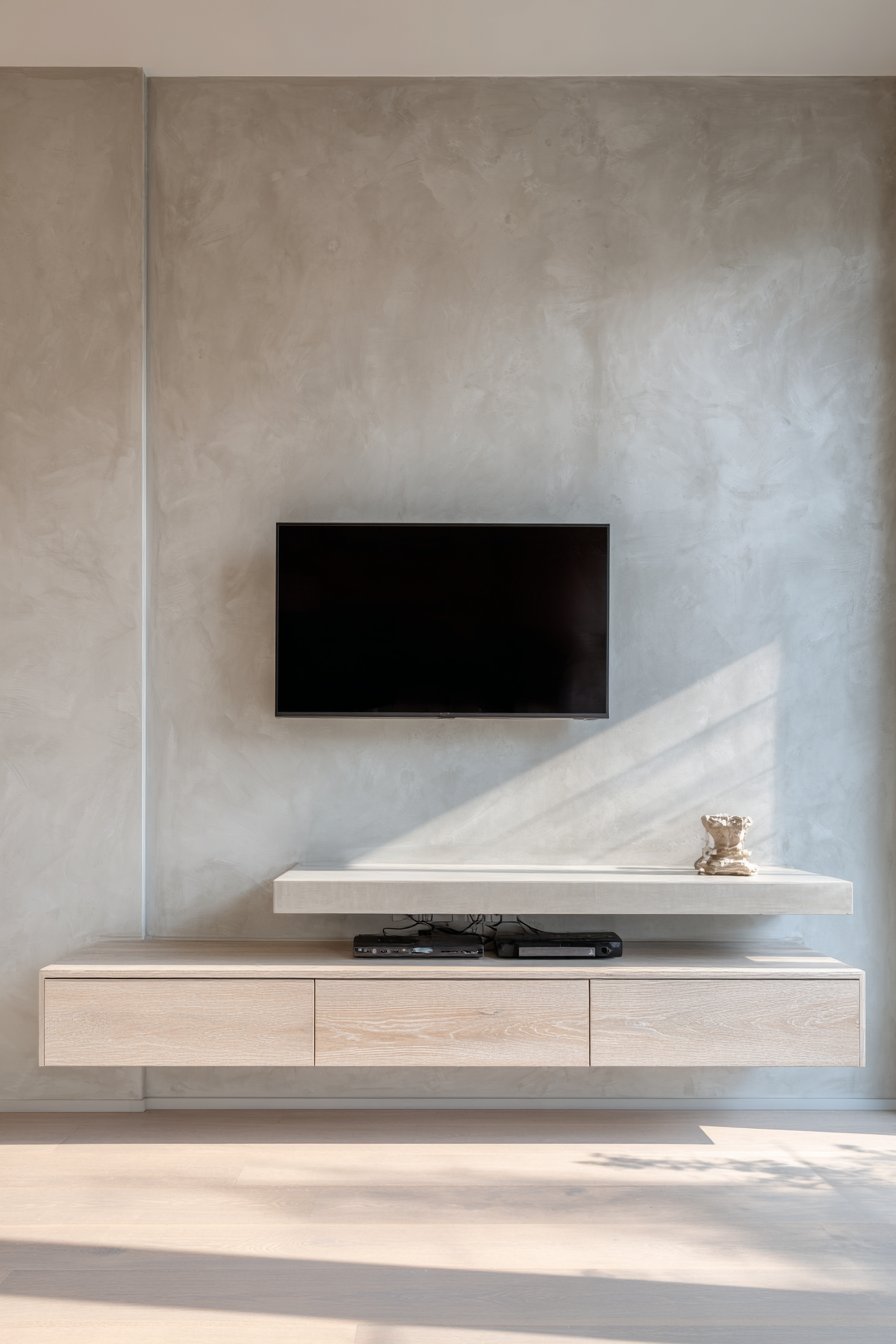
Industrial-modern aesthetics find perfect expression in the minimalist pairing of concrete-effect plaster walls with a low-profile floating credenza. The smooth grey concrete finish creates an urban, sophisticated backdrop that allows the television and credenza to stand as sculptural elements within the space. This restrained approach to television wall design embodies the “less is more” philosophy, where every element serves a purpose and nothing extraneous distracts from the clean, purposeful composition. The concrete texture adds subtle visual interest without pattern or ornament, creating a gallery-like setting for your entertainment area.
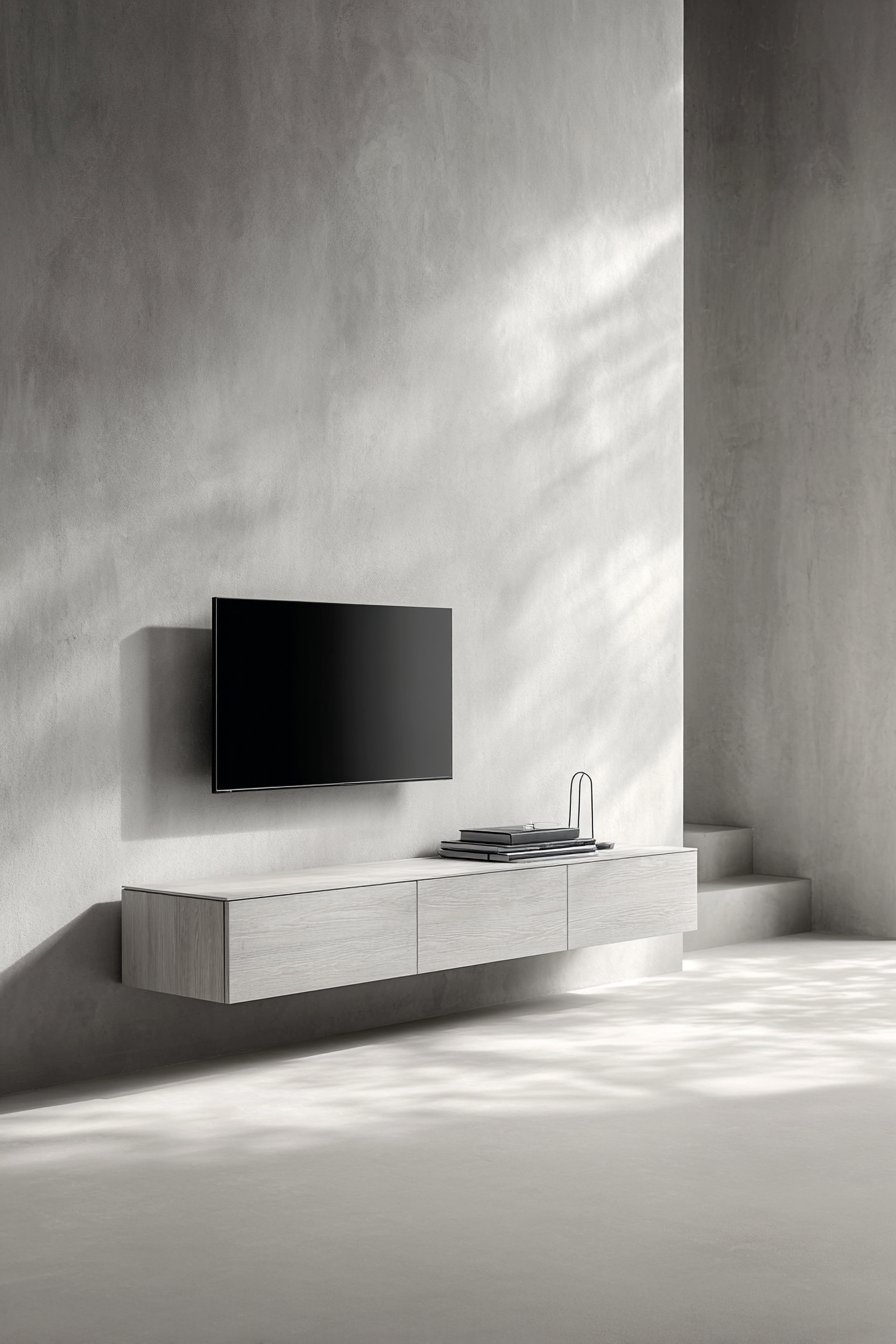
The light grey oak veneer credenza introduces organic warmth that prevents the concrete backdrop from feeling cold or institutional. The natural wood grain visible through the veneer adds just enough texture and variation to soften the industrial edge while maintaining the minimalist aesthetic. Floating installation creates the illusion of weightlessness, contributing to the airy, uncluttered feeling essential to successful minimalist design. The credenza’s low profile ensures it doesn’t compete visually with the television while providing essential storage for media components.
A single floating shelf positioned below the credenza demonstrates the power of restraint in minimalist design. Rather than filling the wall with multiple shelving units, this lone shelf houses media components with cables organized but visible—an honest acknowledgment of technology’s presence in our lives. The exposed cable management, when executed cleanly, becomes part of the aesthetic rather than something to hide. This approach resonates with industrial design principles that celebrate function and structure.
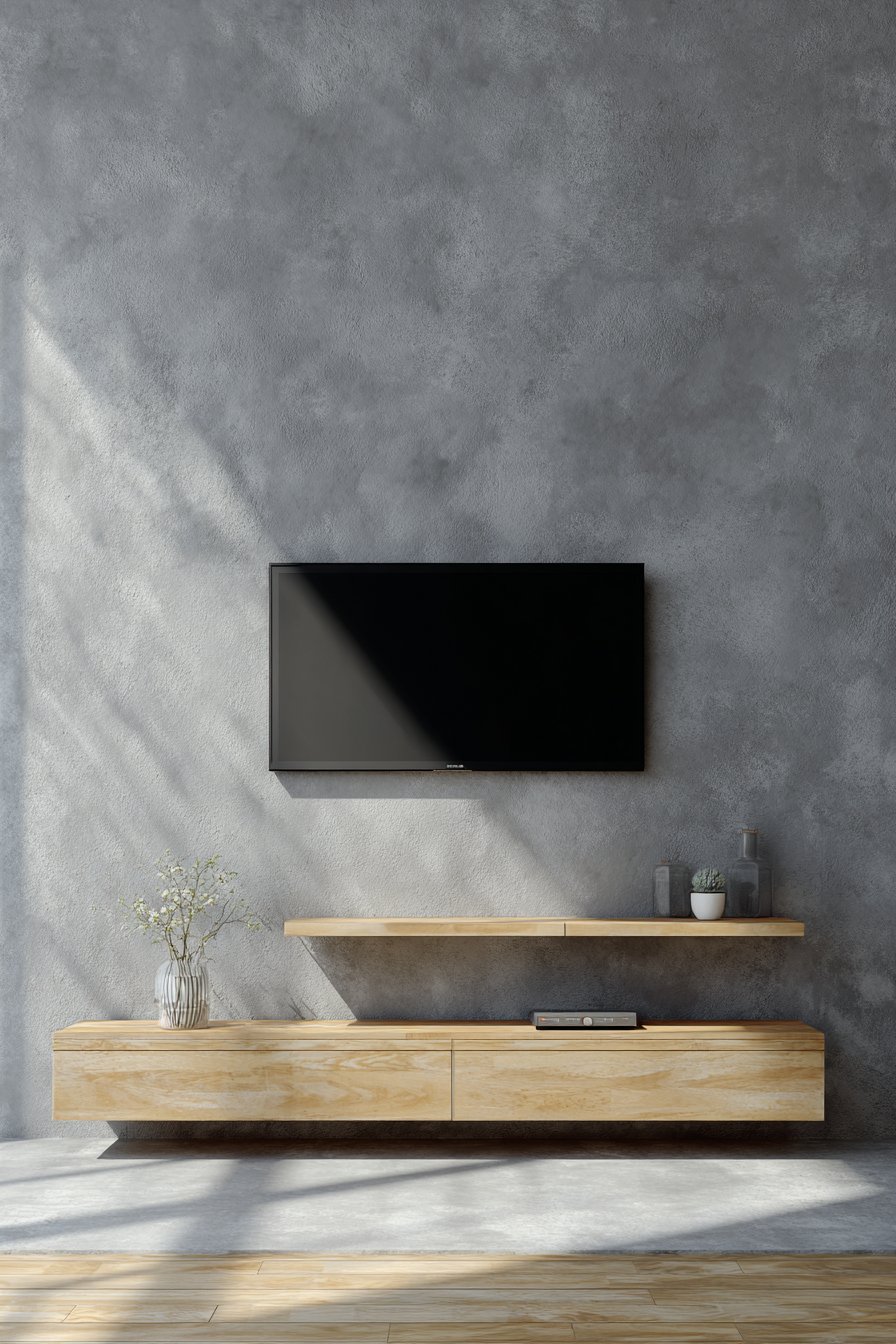
Natural daylight streaming from the side creates the subtle shadows and highlights that give this minimal composition its character and depth. The interplay of light across the textured concrete surface changes throughout the day, ensuring the wall never appears flat or static. This dynamic quality demonstrates how minimalist design relies on materials, light, and form rather than decorative objects to create visual interest. Key design tips include applying concrete-effect plaster in varied techniques to create subtle texture variations, selecting a floating credenza with integrated soft-close drawers for quiet operation, positioning the single shelf at an appropriate height for media component ventilation, using the same finish on all floating elements to maintain visual continuity, and ensuring adequate structural support for the concrete plaster application.
4. Scandinavian-Inspired Modular Wall Unit in Natural Birch
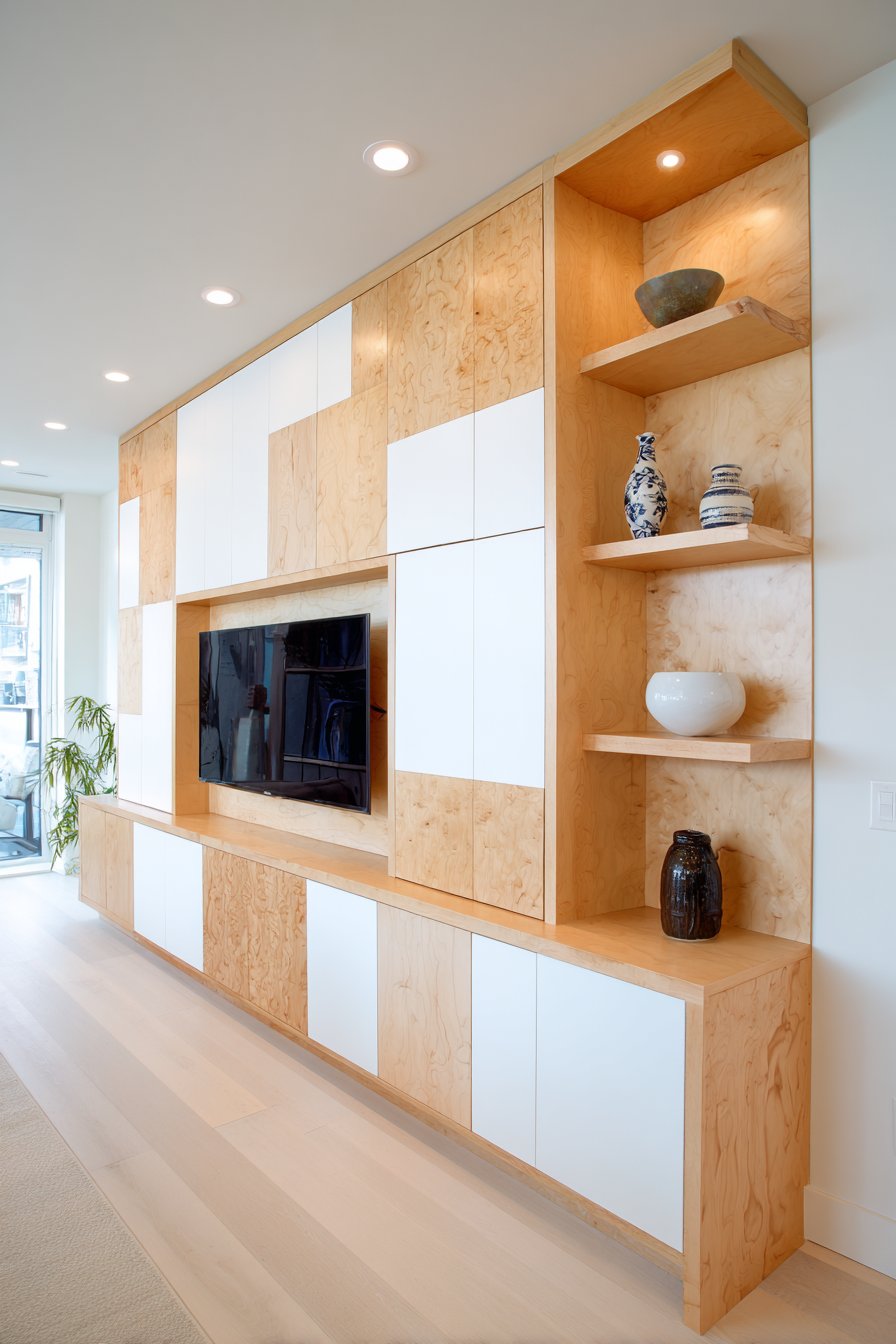
Scandinavian design principles of functionality, natural materials, and light color palettes converge beautifully in this birch wood modular wall unit system. The pale, blonde tones of natural birch create an inherently cheerful, airy atmosphere that makes living rooms feel larger and more welcoming. White accent panels interspersed throughout the modular system add brightness and visual rhythm while maintaining the characteristic Scandinavian restraint. This design approach celebrates the beauty of natural wood without heavy stains or finishes, allowing the material’s inherent character to shine.
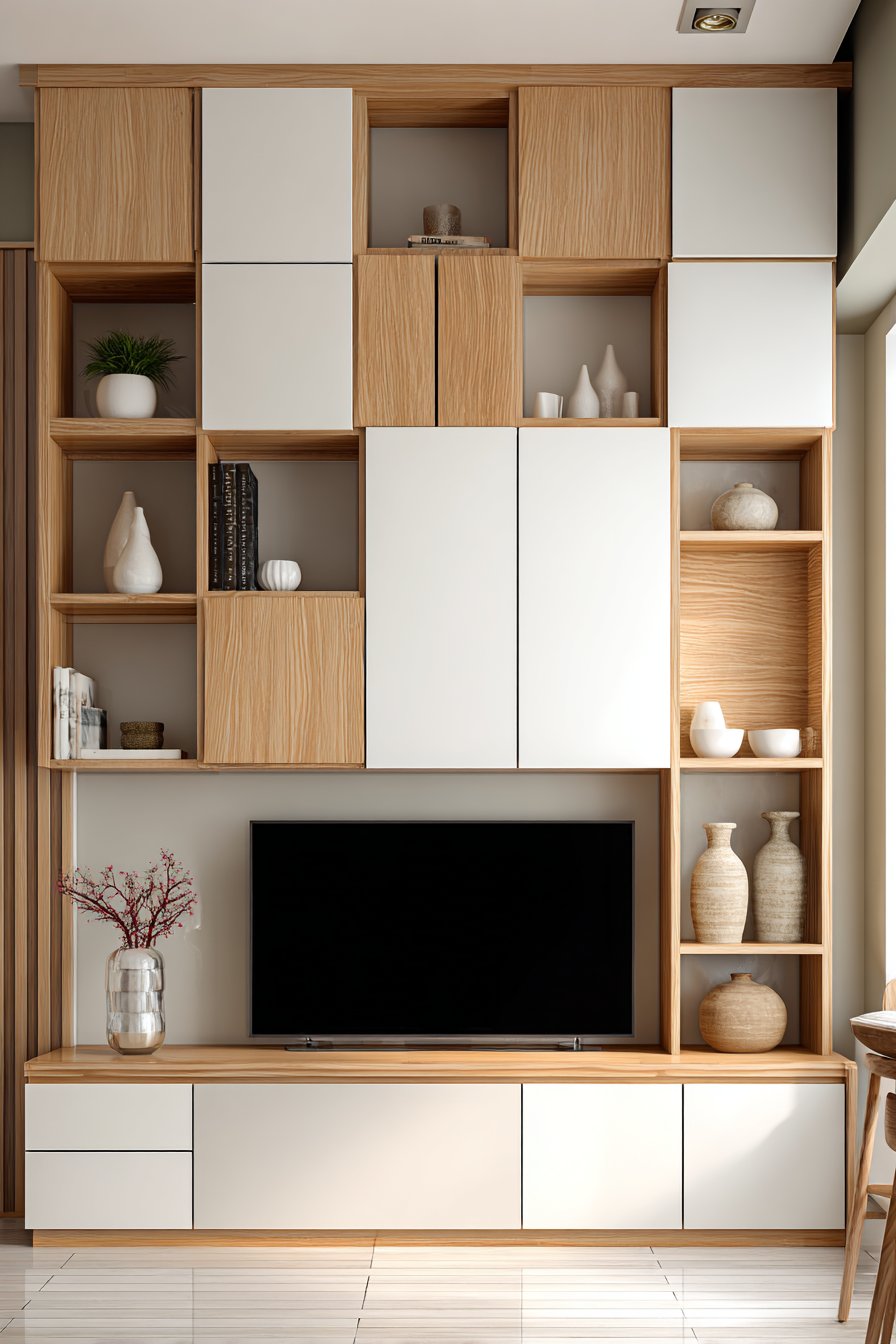
The modular nature of this wall unit system provides exceptional flexibility for customization and future reconfiguration. Individual components can be arranged to suit your specific storage needs, television size, and room proportions. Open shelving displays Nordic-style ceramics, books, and carefully selected decorative objects that reflect the Scandinavian love of hygge—the concept of cozy contentment. Closed storage cabinets at floor level hide less attractive items while providing substantial storage capacity. This combination of open and closed storage creates visual balance and practical functionality.
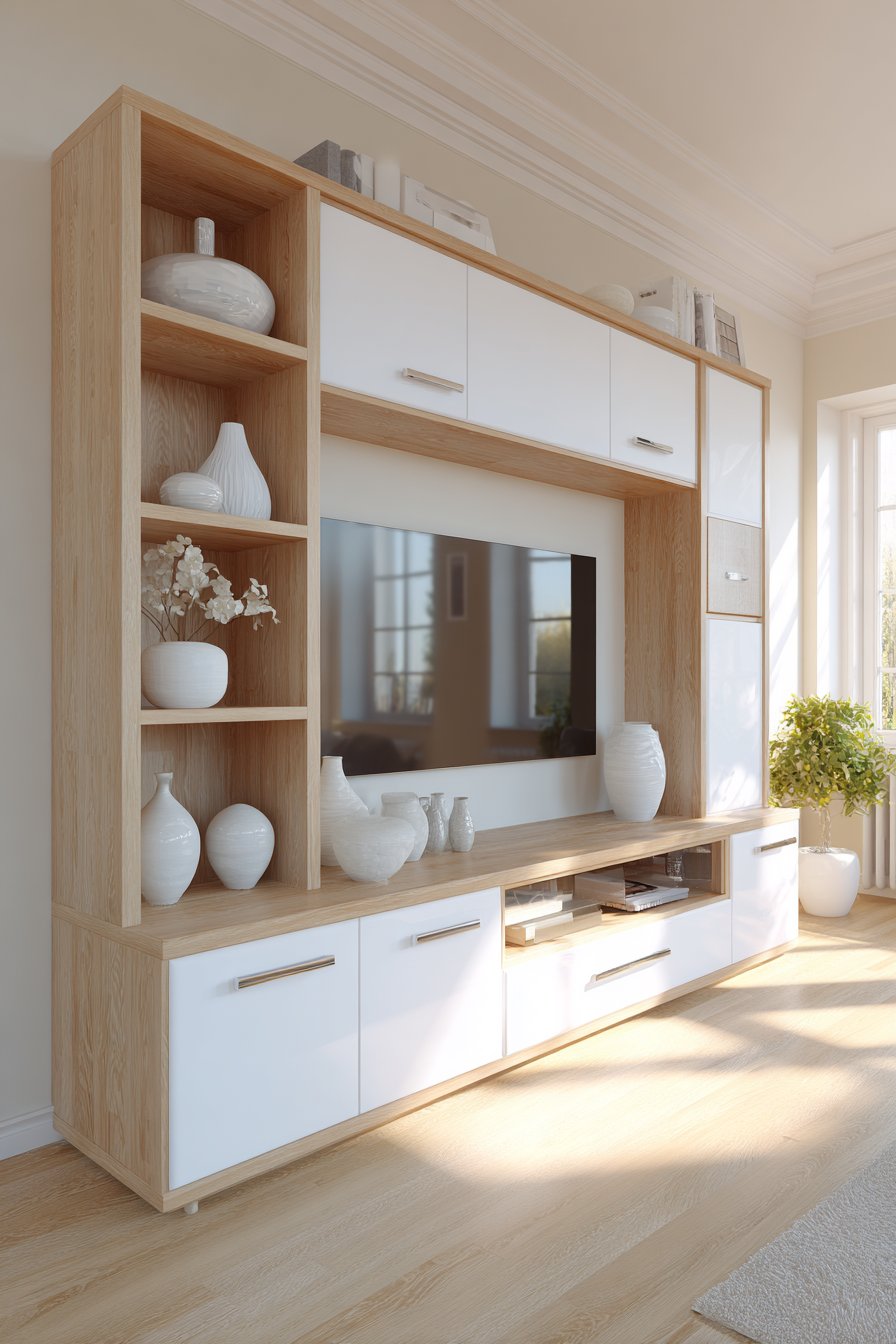
The soft warm white wall paint serves as an ideal backdrop, allowing the light birch wood to become the star of the composition. This approach reflects the Scandinavian preference for bright, light-filled interiors that combat the long, dark winters of Nordic regions. The pale wood tones and white elements work together to maximize the reflection of natural light throughout the room, creating spaces that feel vibrant and energizing even on cloudy days. The overall effect is one of calm simplicity that promotes relaxation and well-being.
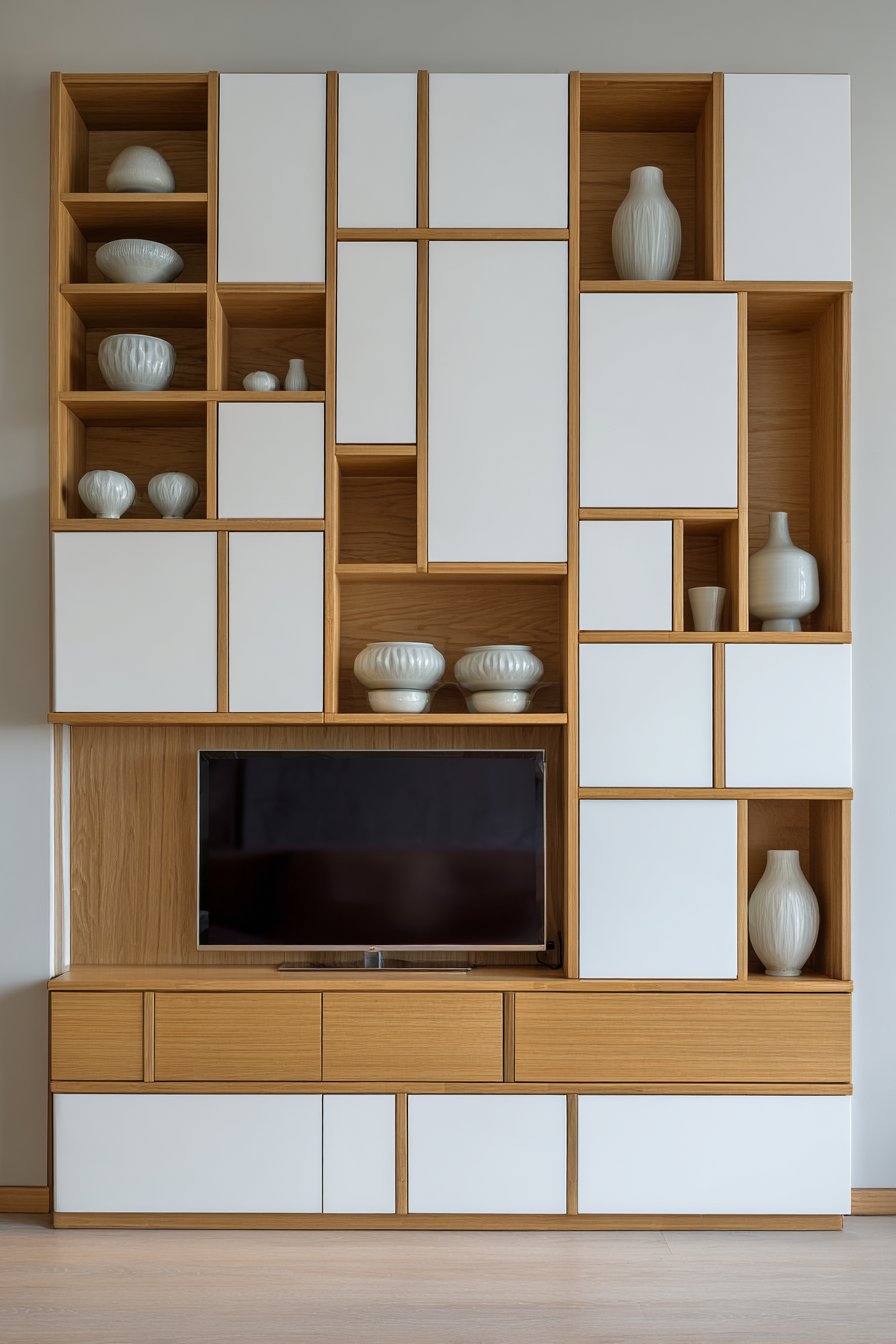
Styling the shelving with restraint embodies the Scandinavian design philosophy of lagom—not too much, not too little, just right. Each displayed object has breathing room, preventing the shelves from appearing cluttered or overwhelming. Natural elements like ceramic vases, wooden bowls, and small plants connect the interior to nature, another key principle in Nordic design. The clean lines and unadorned surfaces create a sense of order and tranquility. Key design tips include choosing birch plywood with minimal knots for a cleaner Scandinavian aesthetic, incorporating basket storage in natural fibers for concealing smaller items, limiting decorative objects to a curated selection that includes natural materials, ensuring adequate spacing between modular components for visual lightness, and positioning the unit to maximize natural light exposure throughout the day.
5. Luxurious Carrara Marble Accent Wall
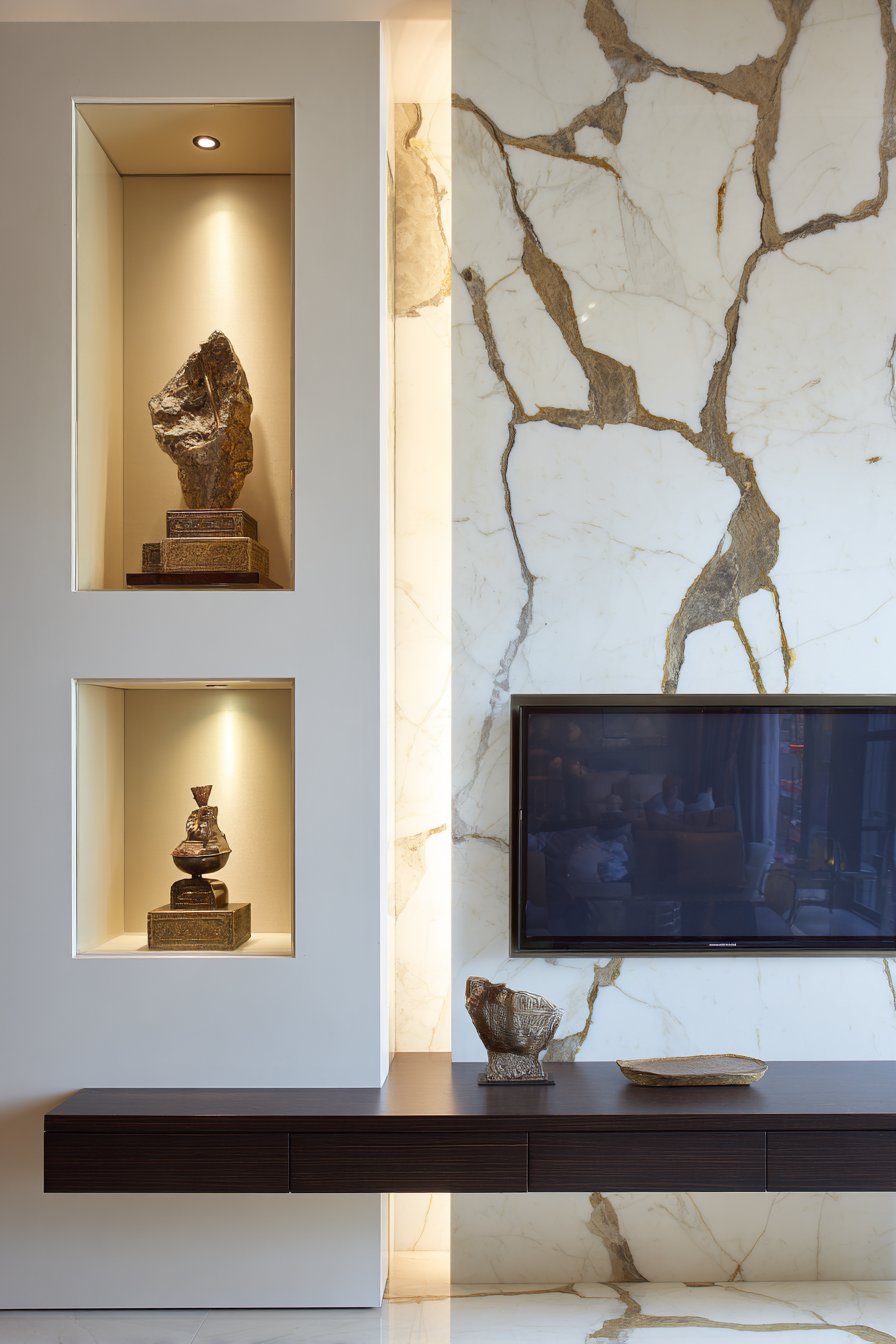
White Carrara marble with its distinctive grey veining represents the pinnacle of luxury in television wall design. The natural stone’s inherent elegance and timeless beauty transform an entertainment wall into a sophisticated architectural feature worthy of the finest interiors. Each marble slab displays unique veining patterns created over millions of years, ensuring your television wall becomes a one-of-a-kind statement. The luminous quality of white marble, with its subtle variations and depth, creates visual interest that captivates attention even when the television is off.
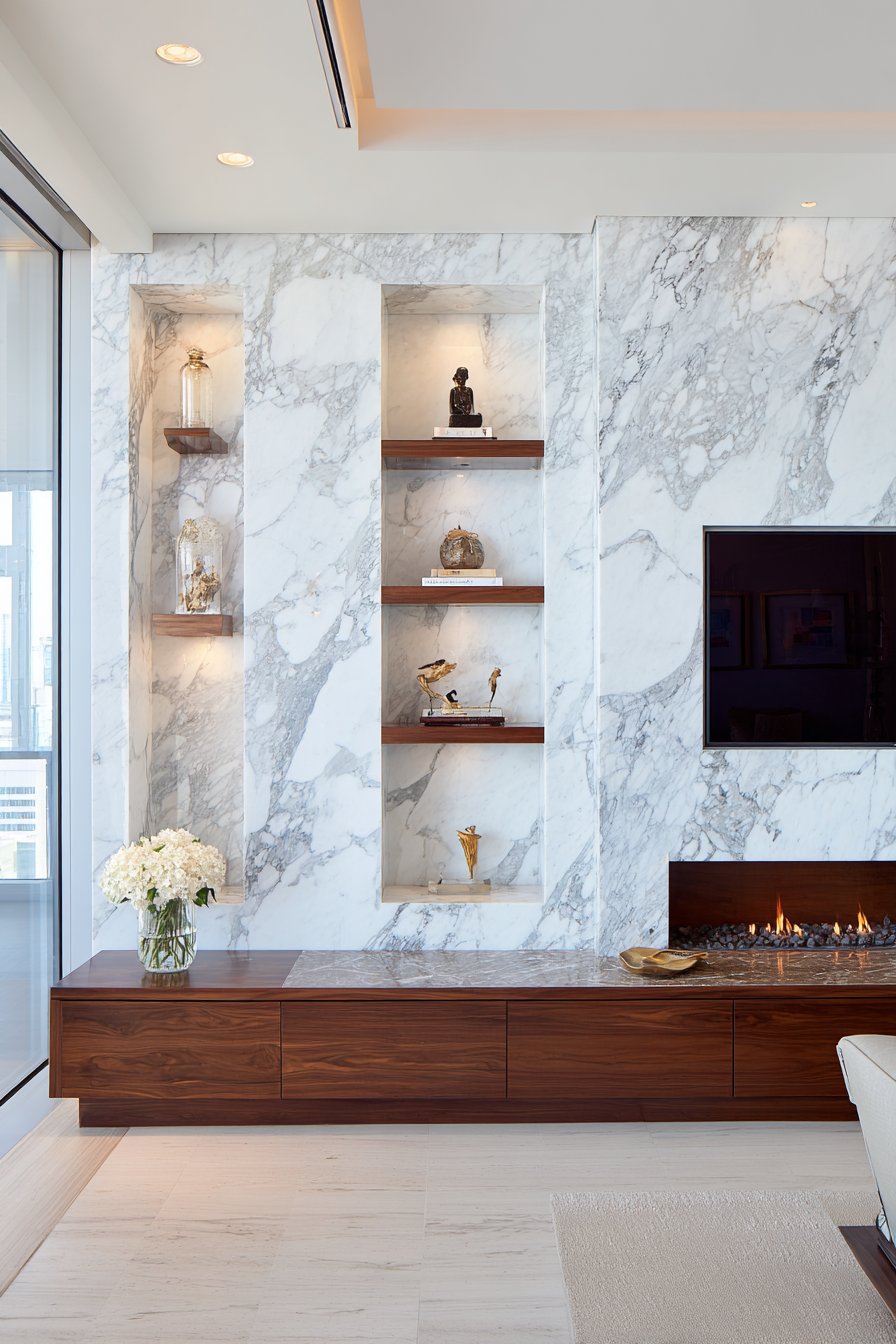
Mounting the television directly onto the marble surface requires careful planning and professional installation, but the seamless integration justifies the effort. Ultra-low-profile brackets minimize the gap between screen and stone, creating the impression that the television emerges organically from the marble itself. This flush mounting approach maximizes the dramatic impact of the luxurious backdrop while maintaining clean, contemporary lines. The technological precision of modern televisions paired with ancient natural stone creates a compelling juxtaposition of old and new.
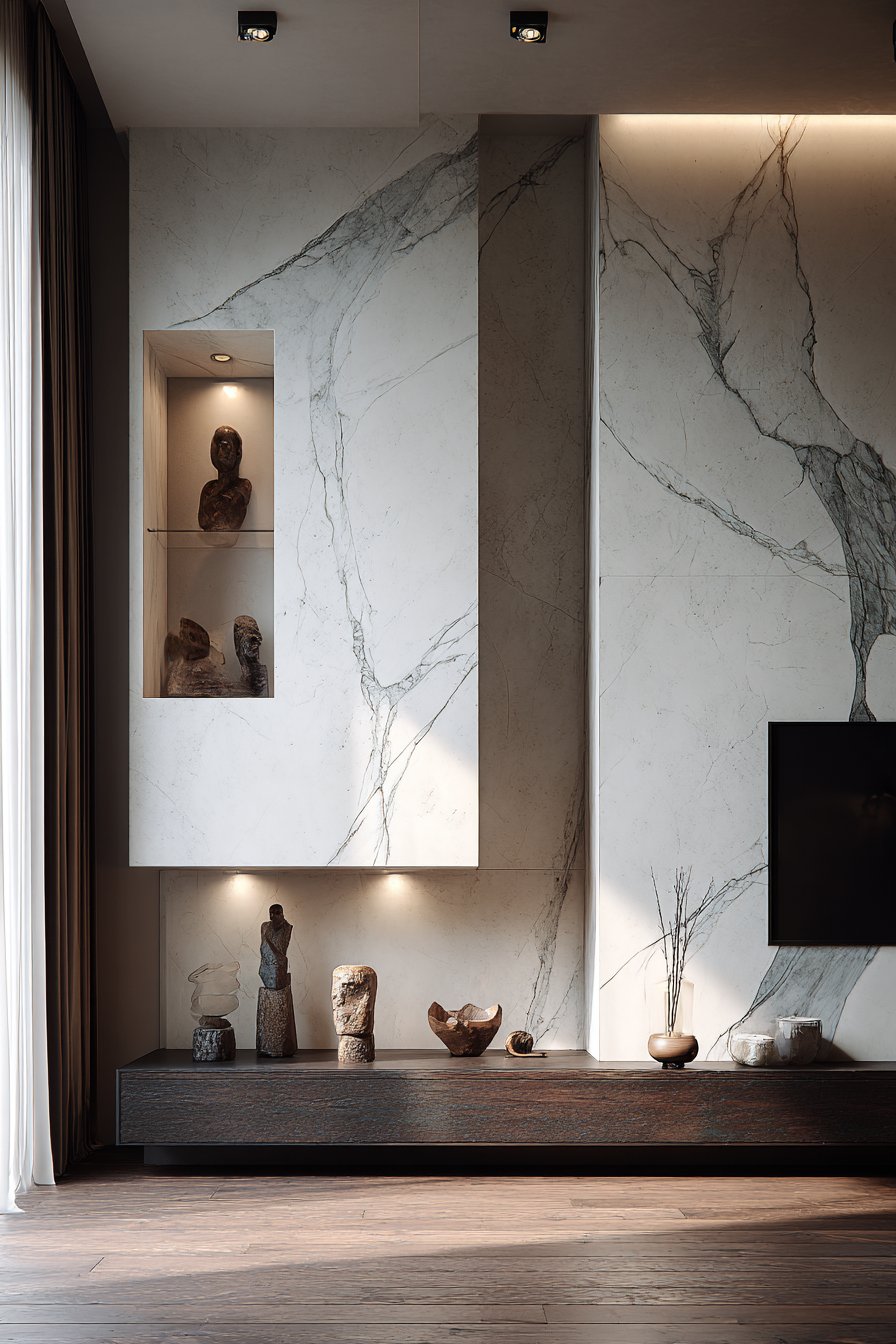
Recessed niches flanking the television provide display opportunities for art objects and small sculptures that complement the marble’s elegance. Interior lighting within these niches adds layers of illumination that highlight displayed items while creating dimensional depth. The negative space of these alcoves breaks up the expansive marble surface, preventing it from feeling overwhelming while adding architectural interest. These functional display areas also provide opportunities to introduce color and personal style against the neutral marble backdrop.
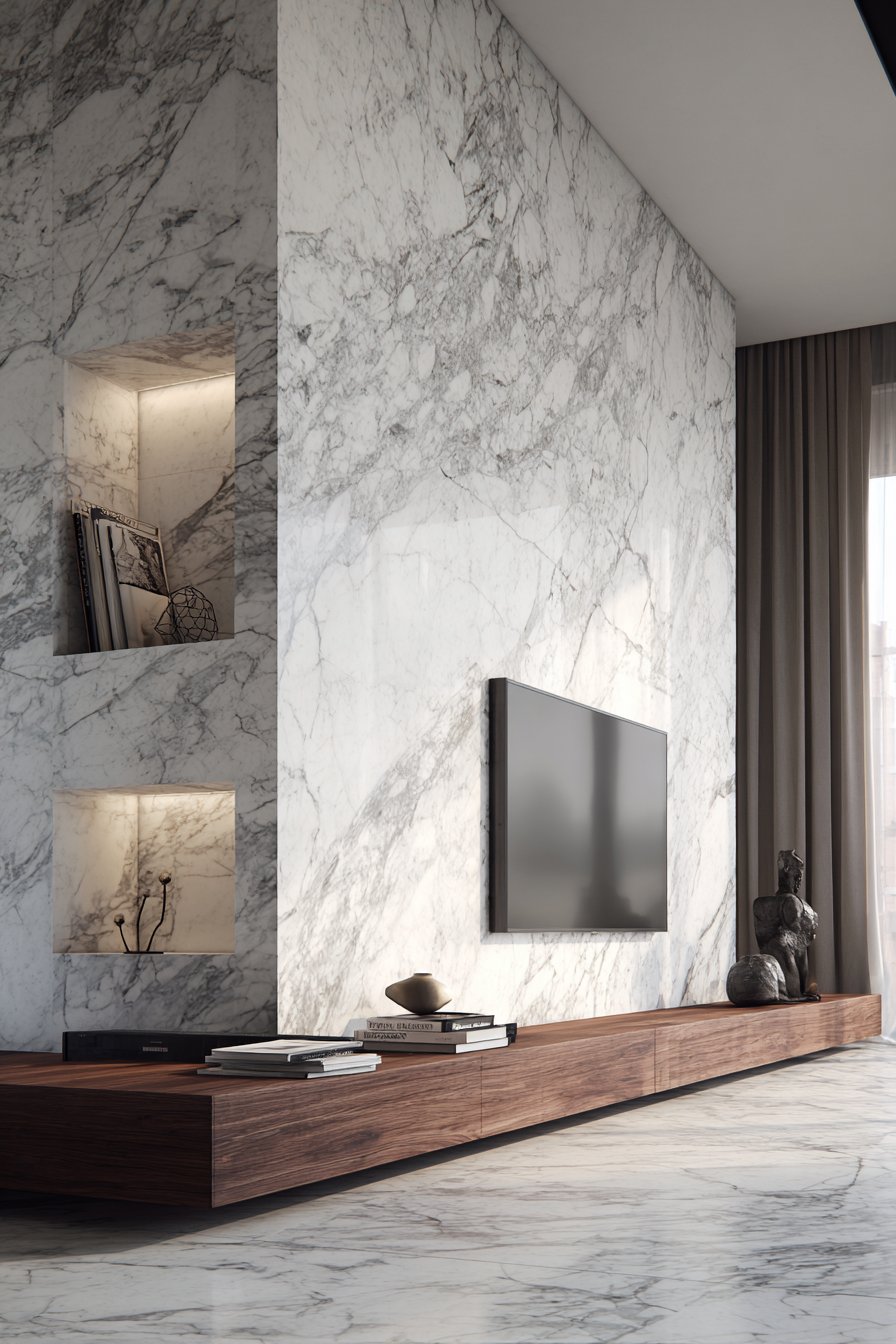
The floating console in dark walnut positioned below the marble wall creates essential contrast and visual grounding. The rich, warm tones of walnut complement the cool grey veining in the marble while providing a counterpoint that prevents the design from feeling too monochromatic. This lower element anchors the composition and provides practical storage while its floating installation maintains the sense of luxury and refinement. Key design tips include selecting marble slabs in person to approve veining patterns before installation, planning niche placement during the design phase to accommodate electrical and structural requirements, installing the marble with proper waterproofing and sealing despite the living room location, using picture lights or recessed lighting to highlight the marble’s natural patterns, and ensuring the walnut console finish is properly sealed to prevent staining.
6. Rustic Modern Reclaimed Barn Wood Feature Wall
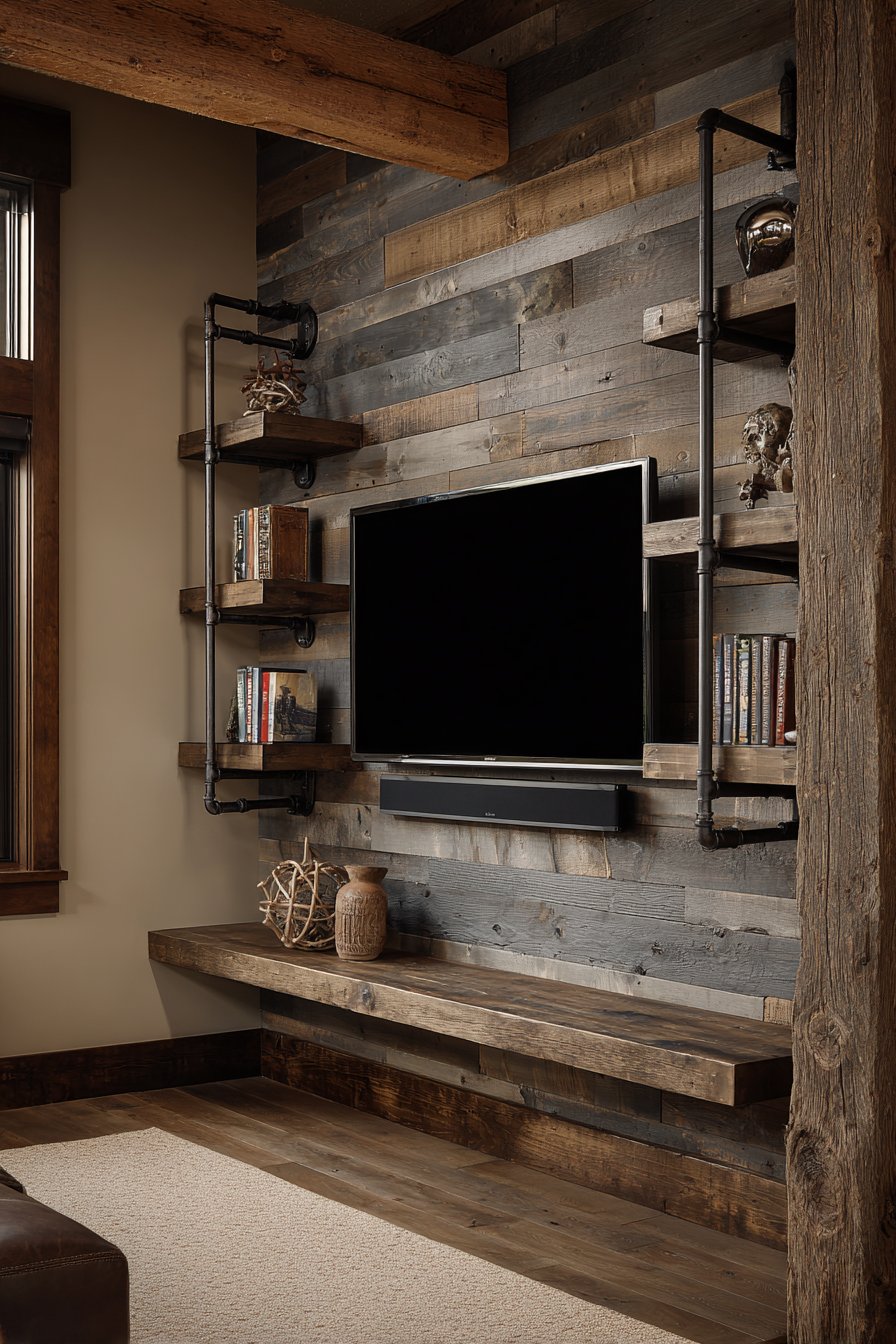
Reclaimed barn wood brings authentic character, history, and texture to the television wall in ways that new materials simply cannot replicate. The weathered grey-brown tones tell stories of decades spent protecting livestock and crops, adding narrative depth to your living space. Horizontal shiplap installation creates visual movement that draws the eye across the wall while the varied wood widths and natural imperfections prevent monotony. This approach to television wall design celebrates authenticity and craftsmanship, creating spaces that feel grounded and genuine.
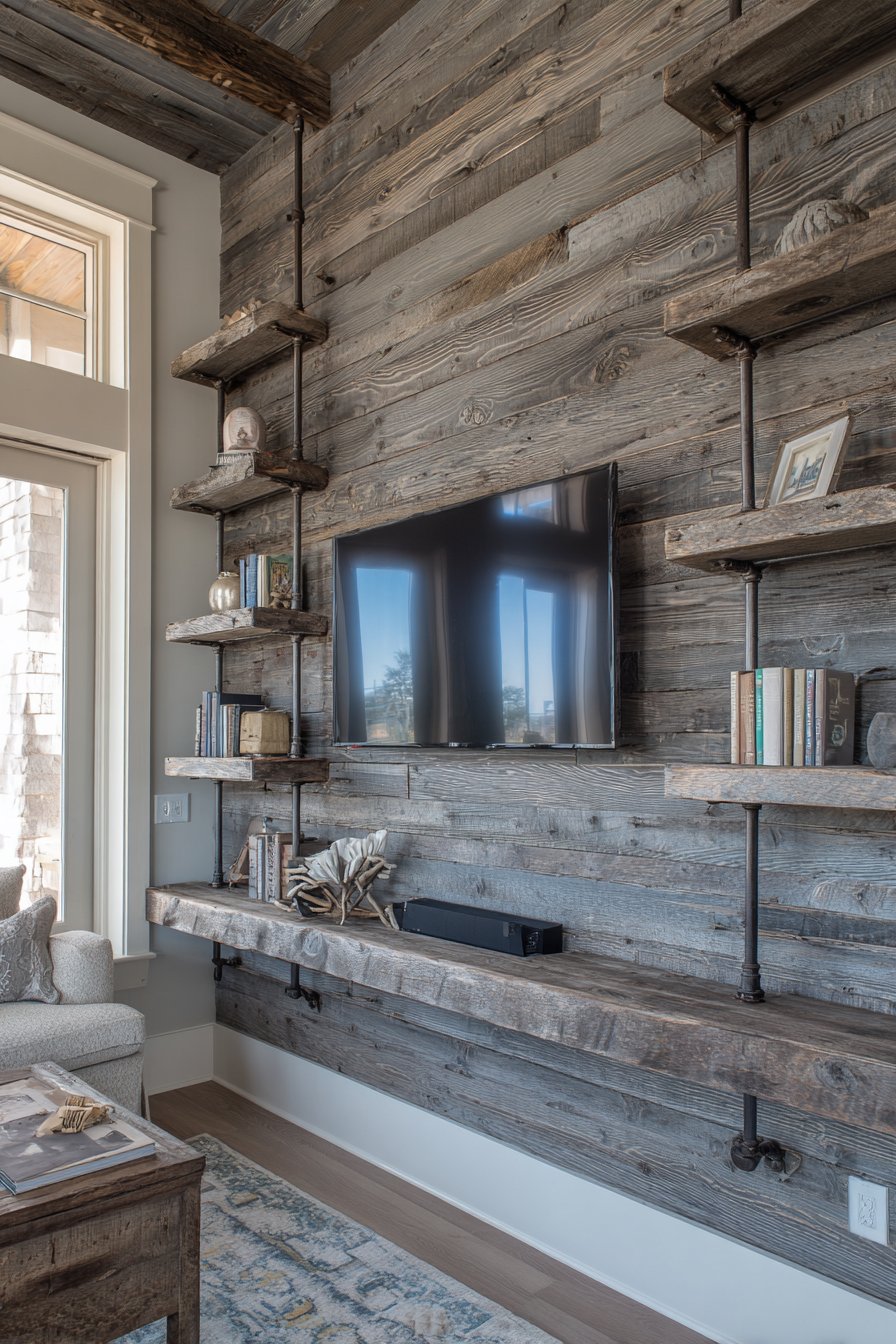
Industrial-style pipe shelving flanking the television reinforces the rustic-modern aesthetic while providing functional storage and display space. The raw, utilitarian character of black iron pipes and fittings contrasts beautifully with the organic warmth of reclaimed wood. These shelves hold books, vintage decorative items, and personal mementos that add layers of personality to the space. The combination of salvaged wood and industrial metal creates a design vocabulary that feels both honest and intentional.
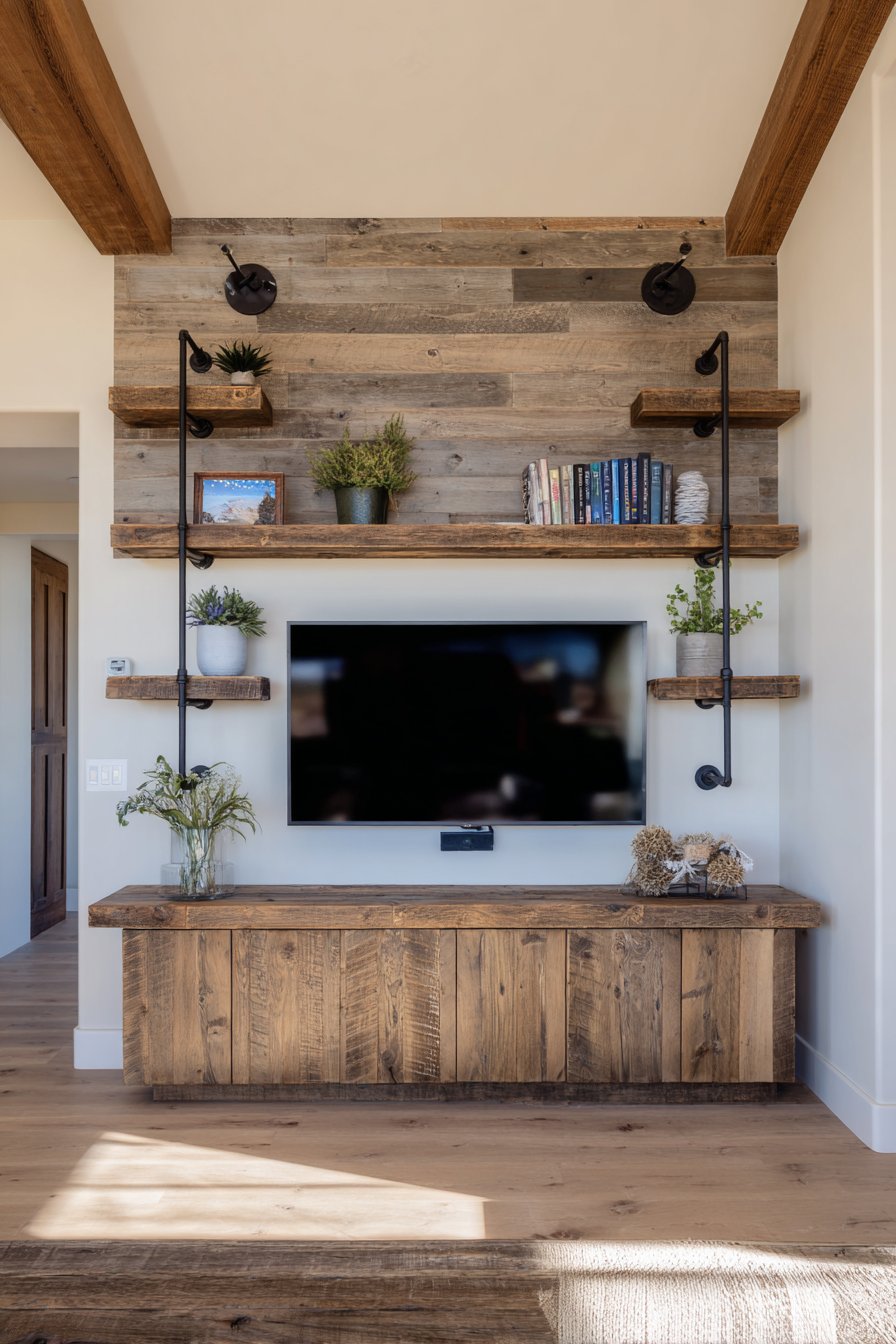
A chunky reclaimed wood beam serving as a floating shelf directly below the television adds dimensional interest while providing practical storage for media components. The substantial scale of the beam complements the robust character of the shiplap wall, ensuring design elements feel proportional and balanced. Natural variations in the beam’s surface—nail holes, saw marks, and color fluctuations—add to its authentic appeal. This piece becomes both functional necessity and sculptural element within the composition.
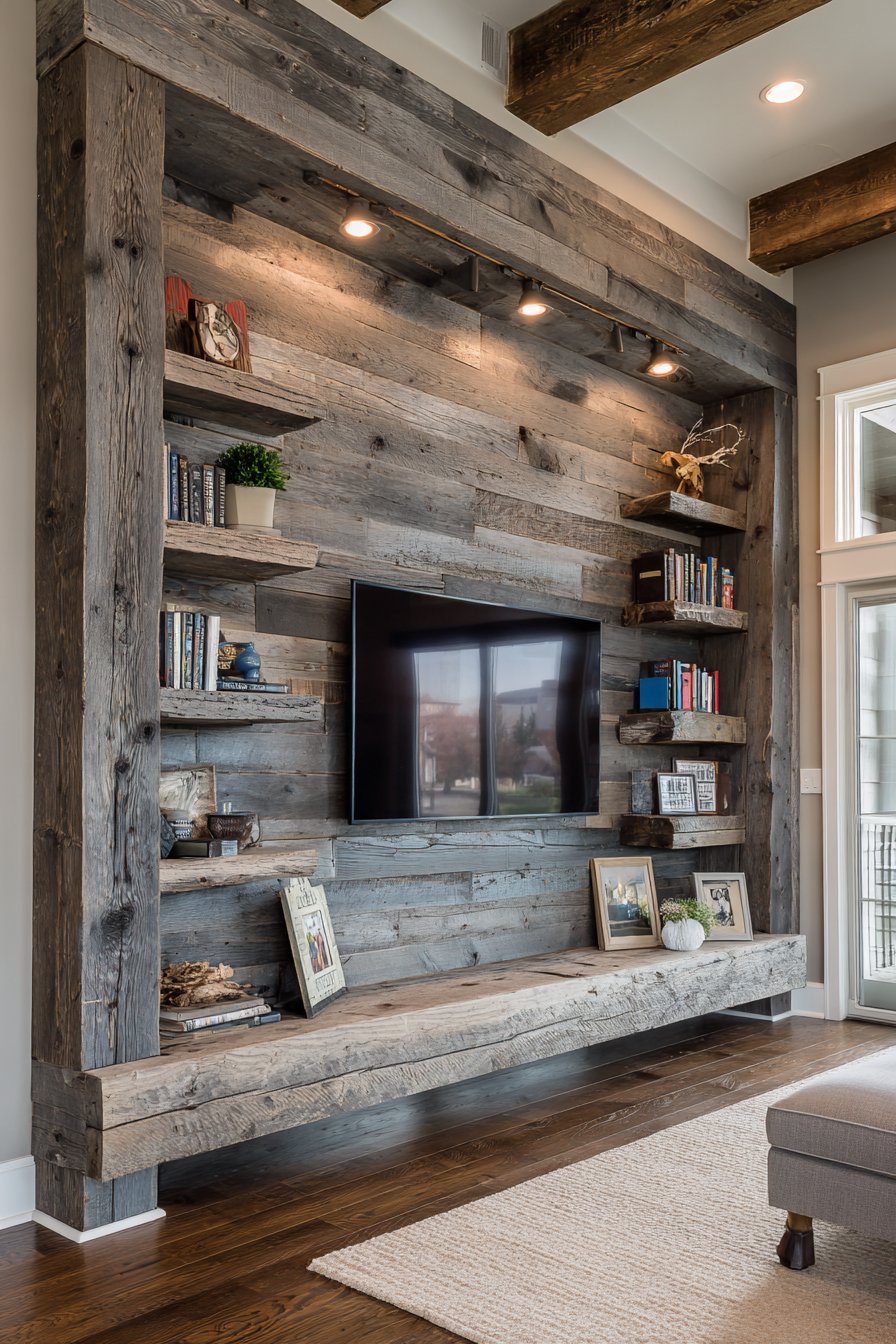
The authentic patina of reclaimed materials requires minimal additional finishing, though proper cleaning and sealing ensure longevity. The wood’s weathered surface reflects light differently than new lumber, creating subtle variations in tone that change with natural daylight throughout the day. This dynamic quality keeps the wall visually interesting and prevents the predictable uniformity common in many modern interiors. Key design tips include sourcing reclaimed wood from reputable suppliers who properly treat for insects and stability, mixing wood pieces from different original structures to increase visual variety, installing a vapor barrier behind the wood to protect against moisture issues, securing pipe shelving to wall studs rather than just the shiplap for proper weight support, and applying a matte sealant to protect the wood while maintaining its weathered appearance.
7. Contemporary High-Gloss White Lacquered Wall Unit
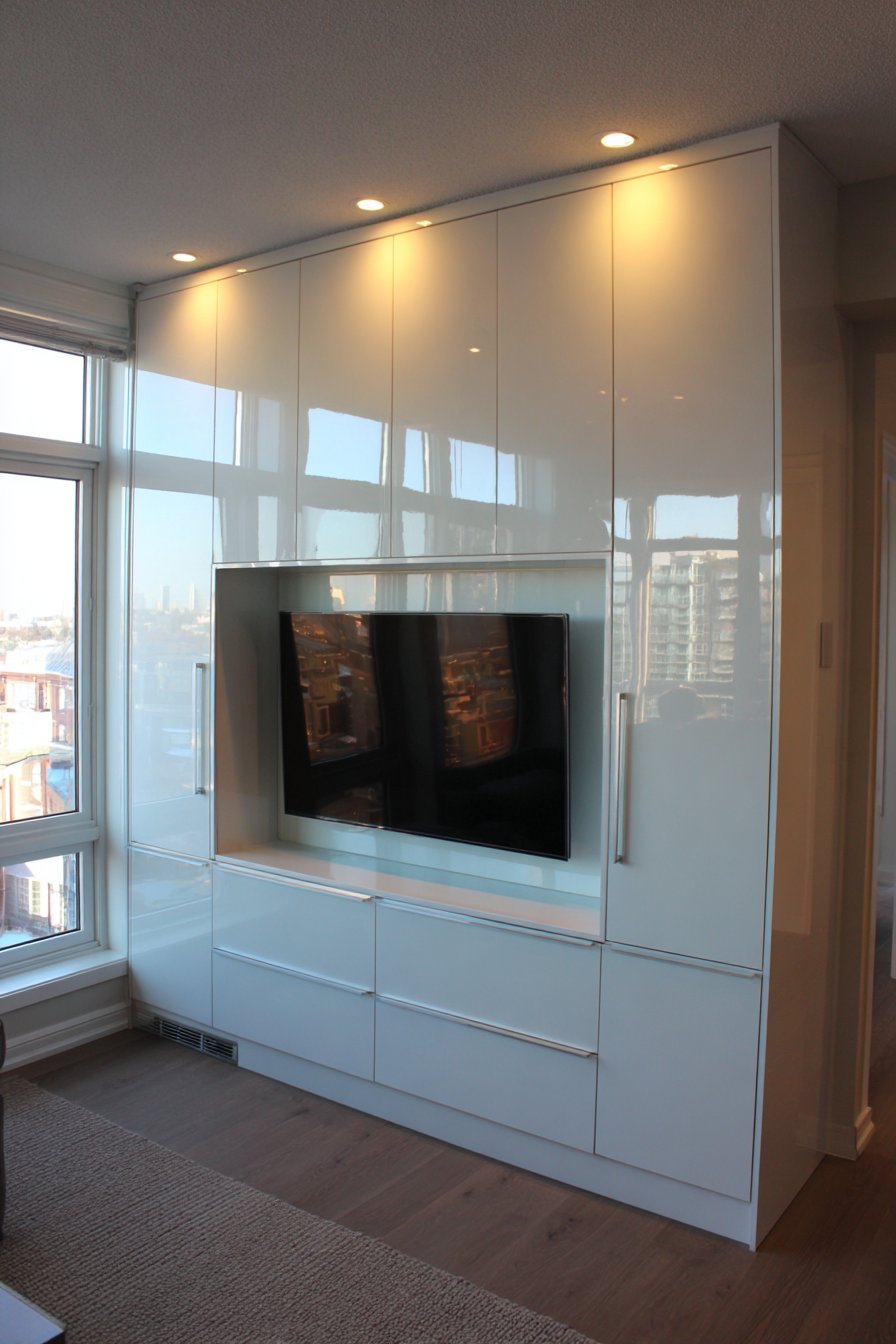
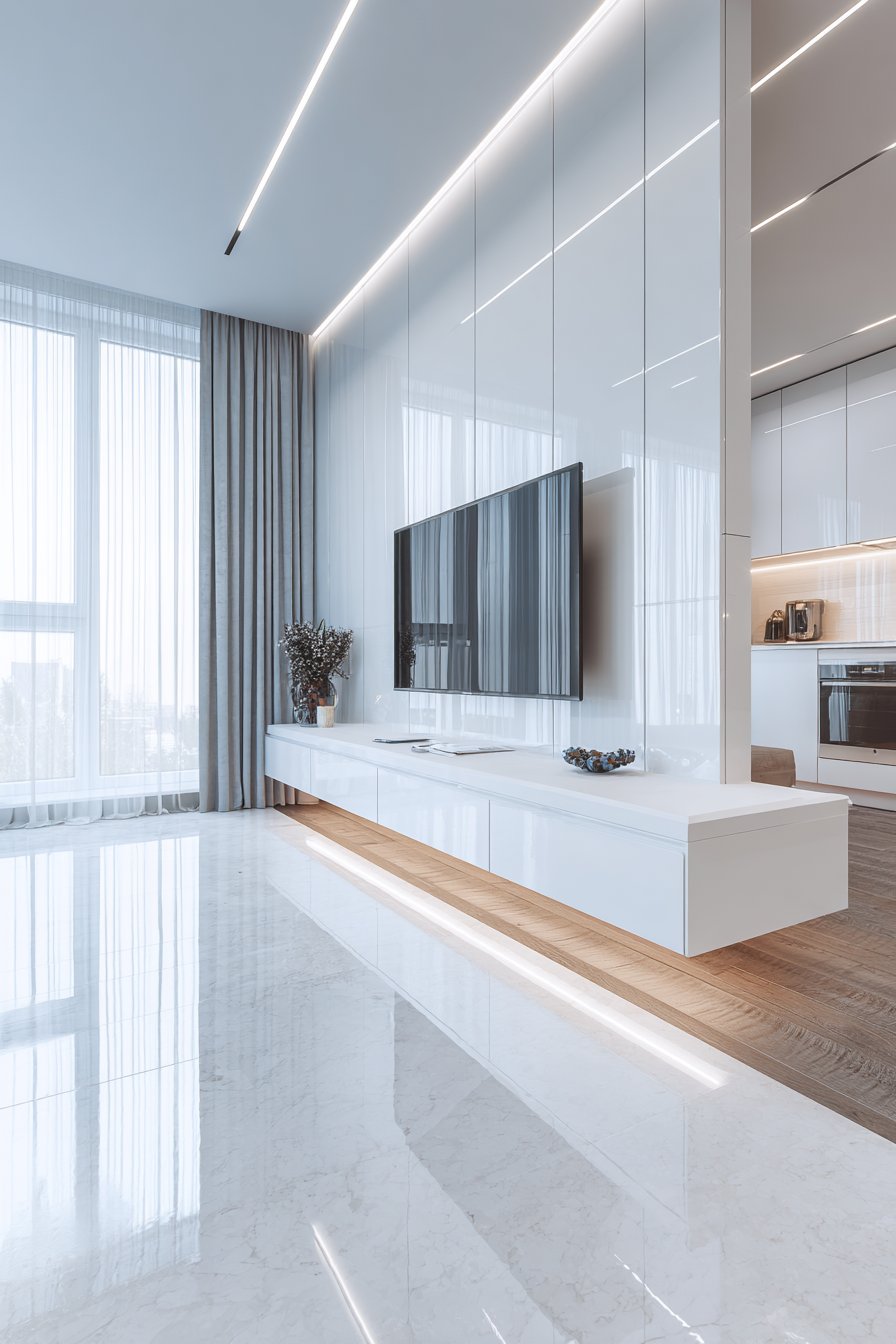
High-gloss white lacquer creates a sleek, ultra-modern television wall that epitomizes contemporary minimalism. The reflective surface multiplies light throughout the living room, creating brightness and a sense of expanded space particularly beneficial in smaller or darker rooms. Push-to-open cabinet doors eliminate visible hardware, resulting in seamless, uninterrupted surfaces that appear almost sculptural in their simplicity. This design approach represents the cutting edge of contemporary furniture design, where technology and craftsmanship combine to create seemingly effortless elegance.
Integrated television mounting within the seamless cabinetry demonstrates sophisticated planning and precision installation. The screen appears to float within the white expanse, with no visible brackets or gaps disrupting the clean aesthetic. This flush integration requires careful measurement and coordination between cabinetry and mounting systems, but the resulting visual cohesion justifies the additional complexity. The television becomes part of the architectural composition rather than an afterthought attached to furniture.
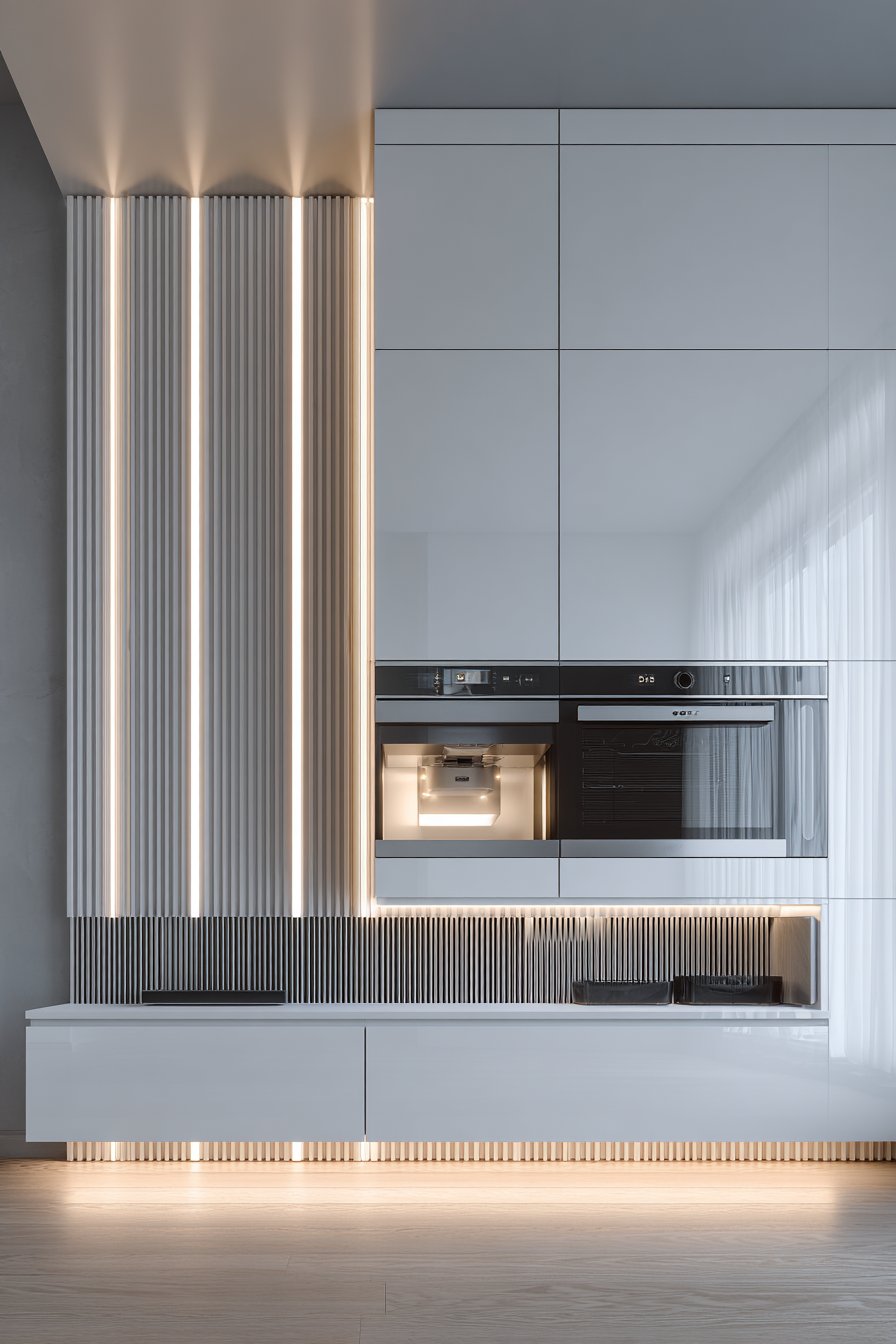
Vertical LED strip lighting recessed into channels creates architectural drama and ambient illumination that enhances the wall unit’s dimensional quality. These linear light elements add vertical emphasis that draws the eye upward, making ceilings appear higher while creating a sense of sophistication. The LED strips can typically be dimmed and sometimes color-adjusted, allowing you to customize the ambiance for different activities and times of day. This integrated lighting transforms the television wall into a multifunctional feature that provides both task and mood lighting.
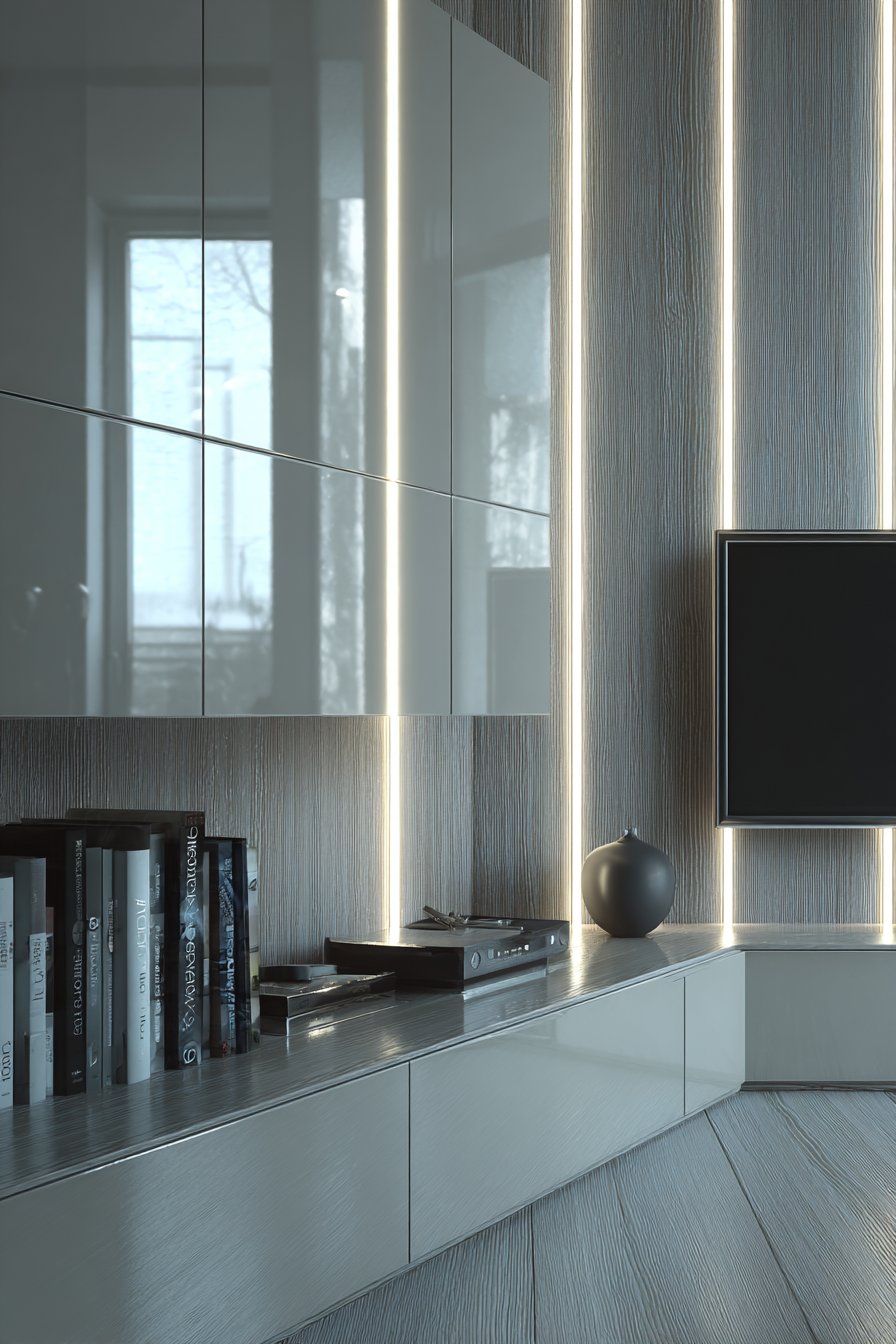
Hidden storage compartments with ventilation grilles cleverly disguised within the design demonstrate how contemporary furniture addresses practical needs without compromising aesthetics. Media equipment generates heat that requires proper airflow, and these well-planned ventilation solutions prevent overheating while remaining virtually invisible. The soft-close mechanisms on all doors and drawers provide whisper-quiet operation that reinforces the sense of luxury and quality. Key design tips include selecting cabinetry from manufacturers specializing in high-gloss finishes for superior quality, planning door and drawer sizes carefully to avoid warping in large high-gloss panels, incorporating touch-activated lighting controls for convenience, ensuring adequate ventilation for all electronic components despite the seamless appearance, and using microfiber cloths for cleaning to avoid scratching the delicate lacquer finish.
8. Mid-Century Modern Teak and Mustard Yellow
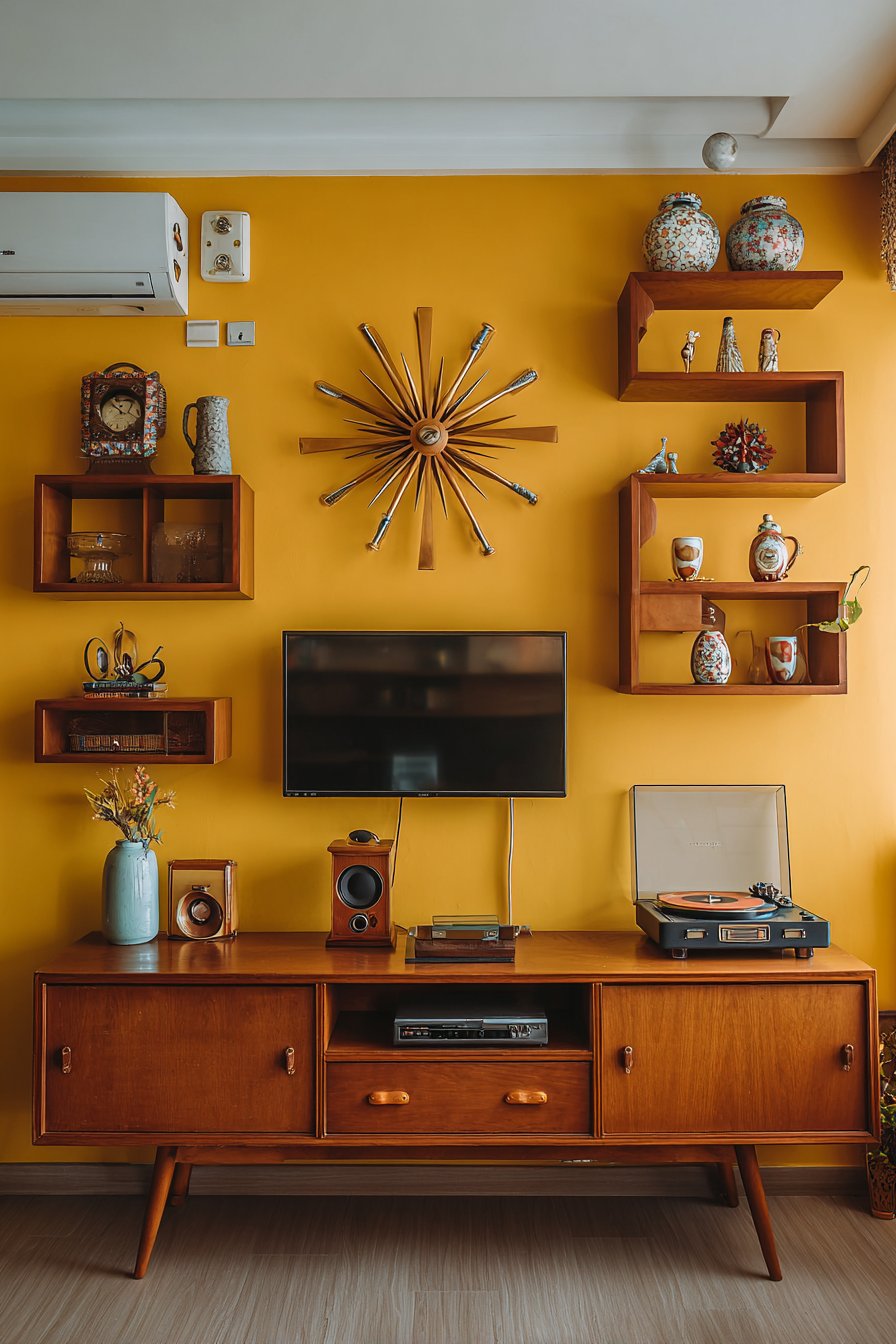
The warm, rich tones of teak wood paired with bold mustard yellow create an authentic mid-century modern television wall that channels the optimism and style of the 1950s and 60s. Teak’s distinctive grain patterns and natural luster develop deeper character over time, making it an ideal choice for furniture meant to last generations. The credenza with tapered legs represents iconic mid-century design, offering both form and function in equal measure. This classic piece provides ample storage while maintaining the light, airy proportions characteristic of the era.
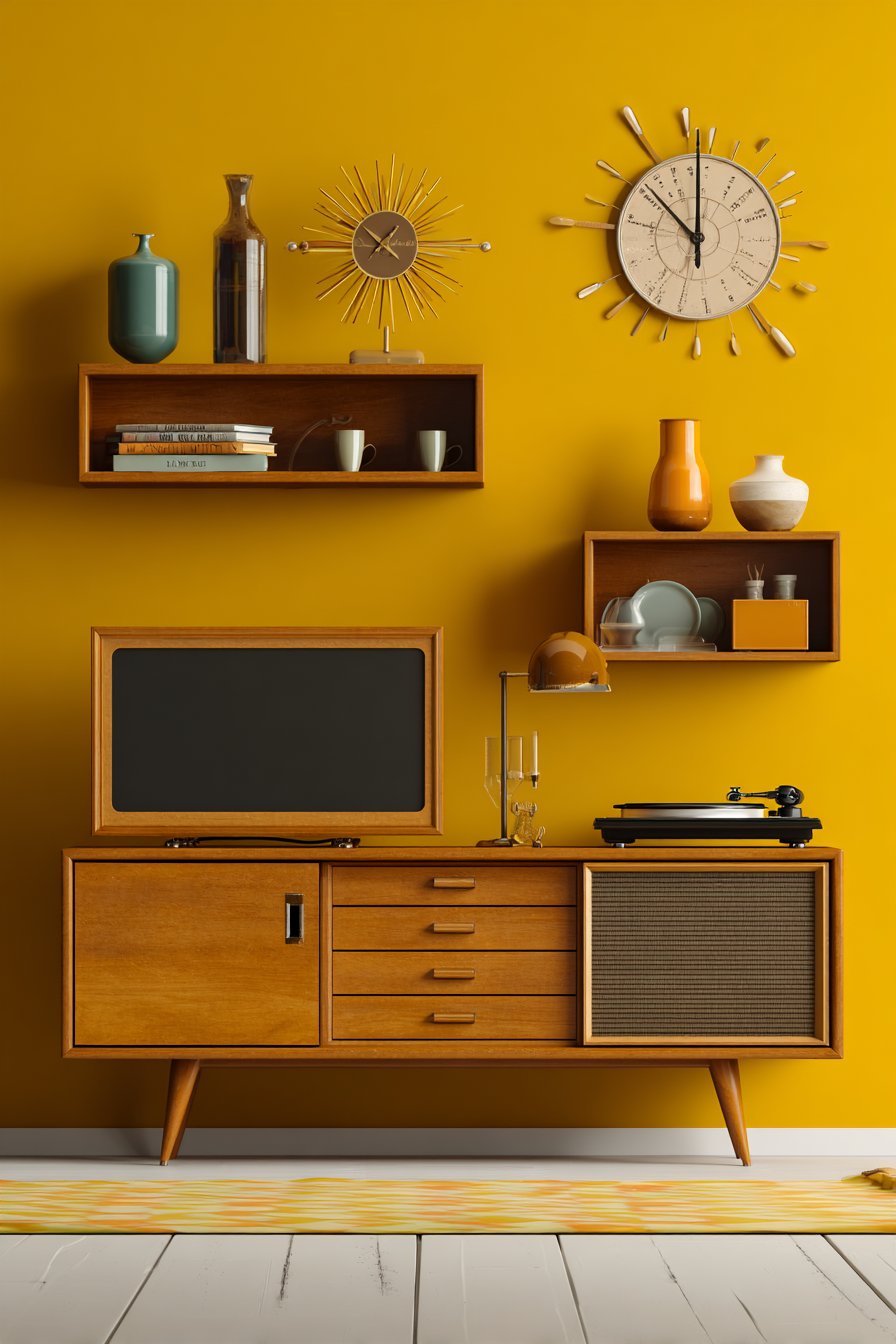
The mustard yellow accent wall serves as a dramatic backdrop that exemplifies mid-century modern’s embrace of bold color. This warm, earthy tone creates an inviting atmosphere while providing sufficient contrast to make the television and teak furniture stand out. Period-appropriate yellow paint formulations often featured slight variations that prevented flatness, adding depth and richness to the wall surface. The color choice reflects the era’s connection to nature and organic materials, grounding the space in its design heritage.
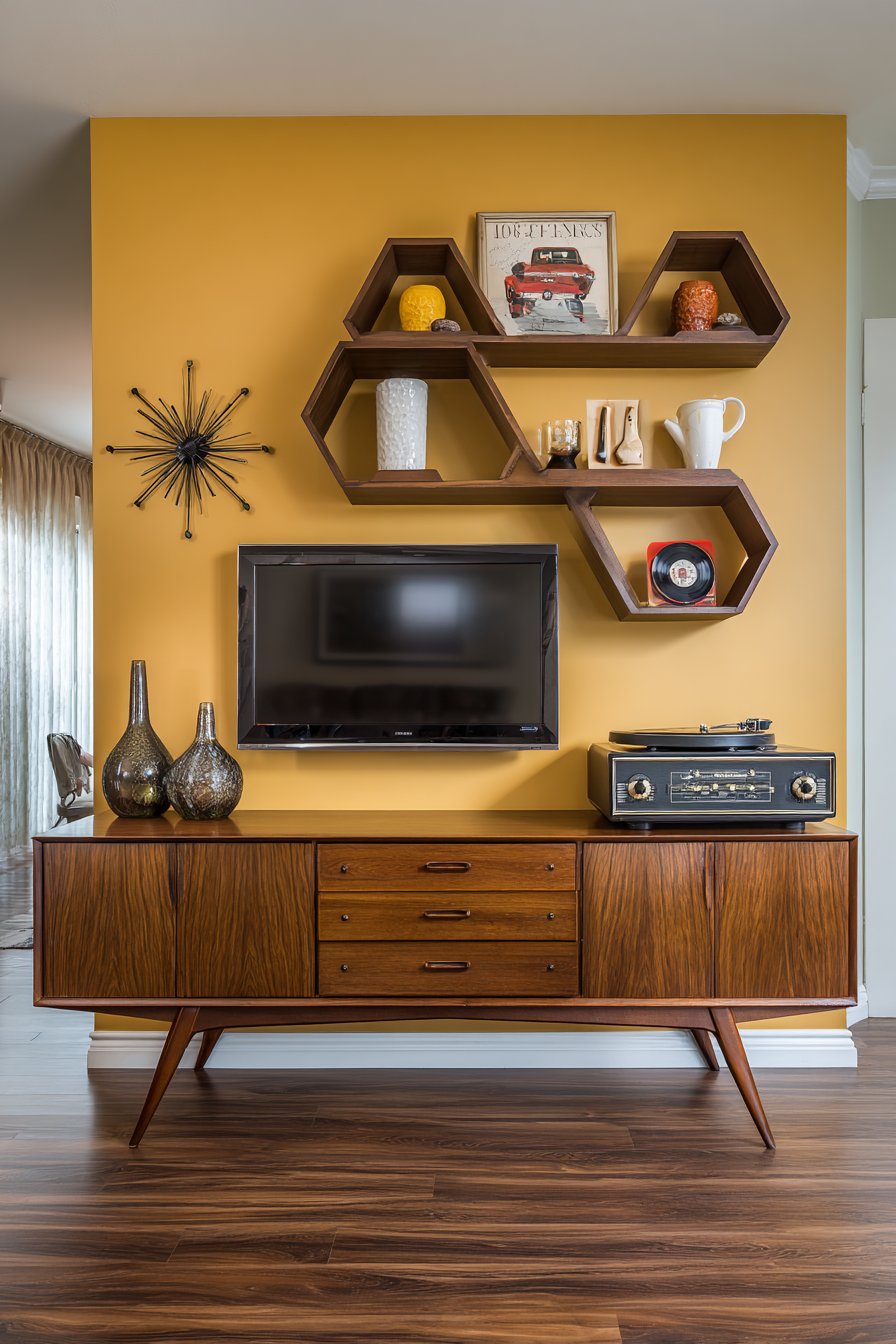
Geometric floating shelves in matching teak flank the television, creating symmetry while providing display opportunities for period-appropriate ceramics and vintage audio equipment. A record player on one shelf adds both decorative interest and functional music playback, celebrating the vinyl revival and honoring mid-century entertainment rituals. The clean geometric forms of the shelving echo the simple, honest design principles that defined this era. Each piece serves a clear purpose while contributing to the overall aesthetic composition.
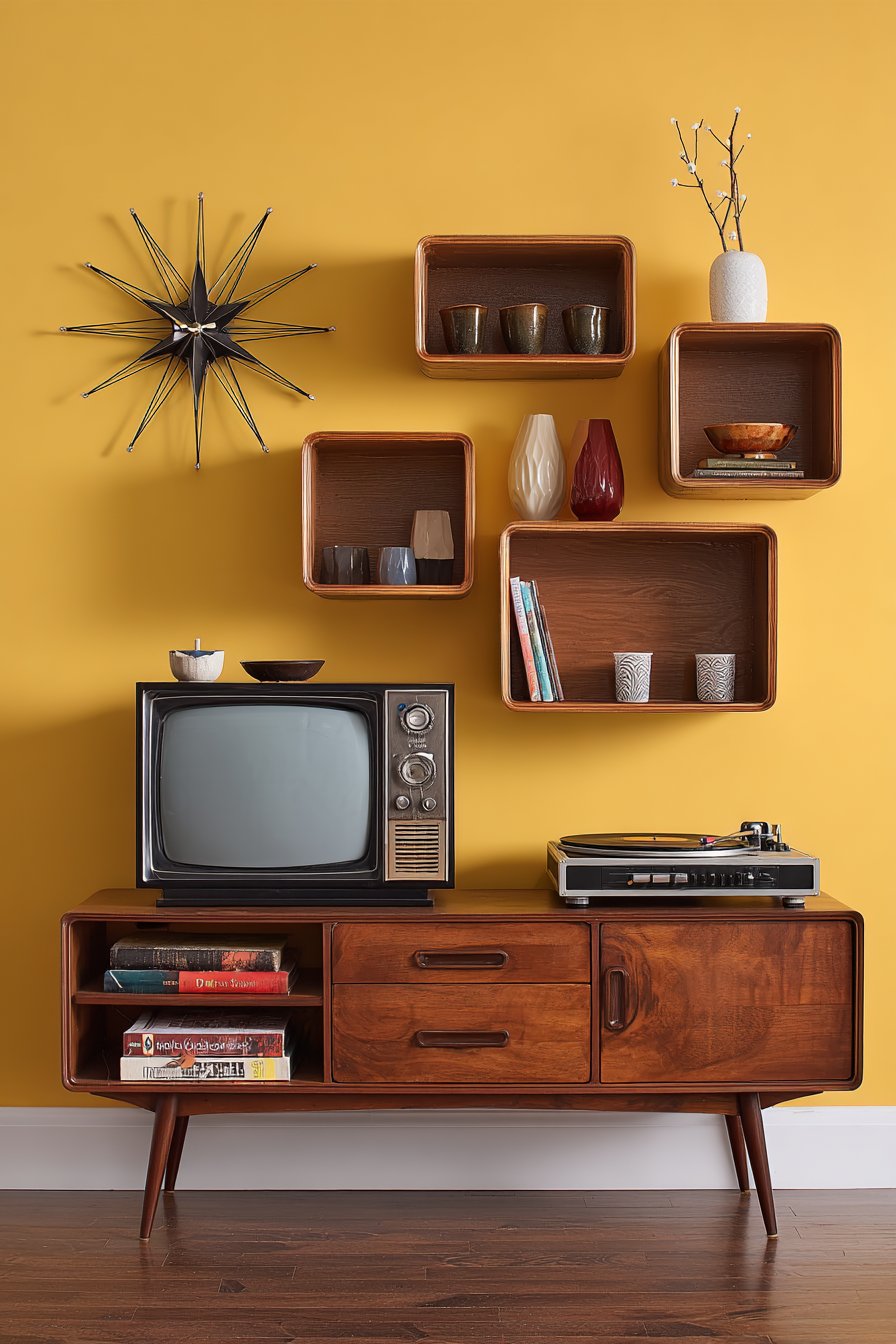
A starburst clock hanging asymmetrically on the wall represents one of the most recognizable decorative motifs of mid-century design. This sculptural timepiece adds kinetic visual interest and serves as a focal point that captures the era’s love of atomic age imagery and geometric patterns. The asymmetrical placement prevents the wall from feeling too formal or predictable, adding the element of playfulness that keeps mid-century spaces feeling fresh. Key design tips include seeking out authentic vintage teak pieces or high-quality reproductions that honor original designs, selecting a mustard yellow with warm, earthy undertones rather than bright or acidic tones, incorporating other mid-century design elements like tulip chairs or arc lamps to reinforce the period aesthetic, displaying era-appropriate ceramics in earth tones and organic shapes, and balancing vintage pieces with modern technology through thoughtful integration.
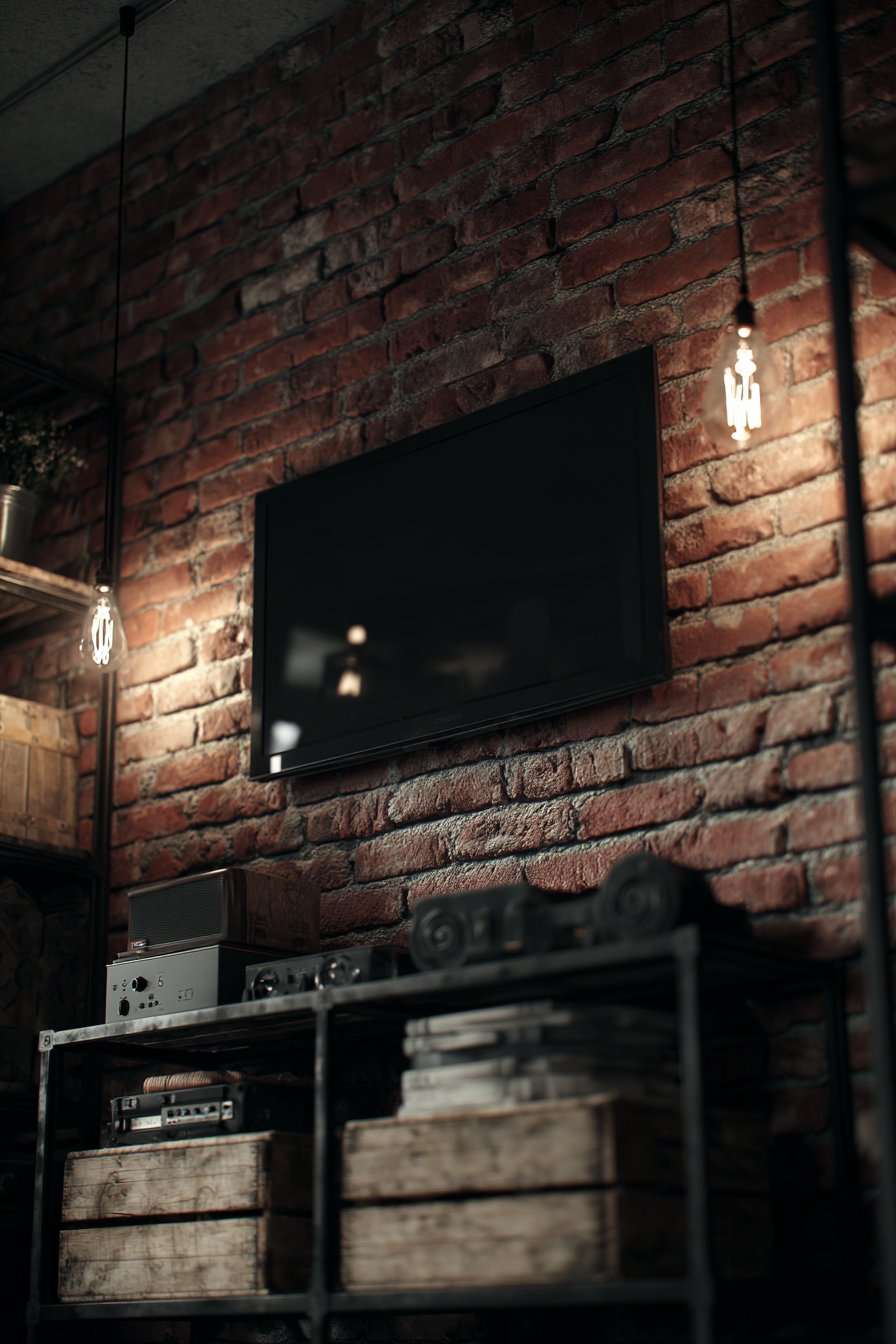
9. Industrial Loft Exposed Brick and Metal Framework
Exposed red brick walls provide textural richness and historical character that perfectly embodies industrial loft aesthetics. The varied colors, surface irregularities, and mortar joints of authentic brick create visual complexity that prevents the wall from appearing flat or monotonous. Mounting the television directly against brick requires special anchors and considerations, but the resulting contrast between old architecture and modern technology creates compelling visual tension. This juxtaposition of materials and eras defines successful industrial design.
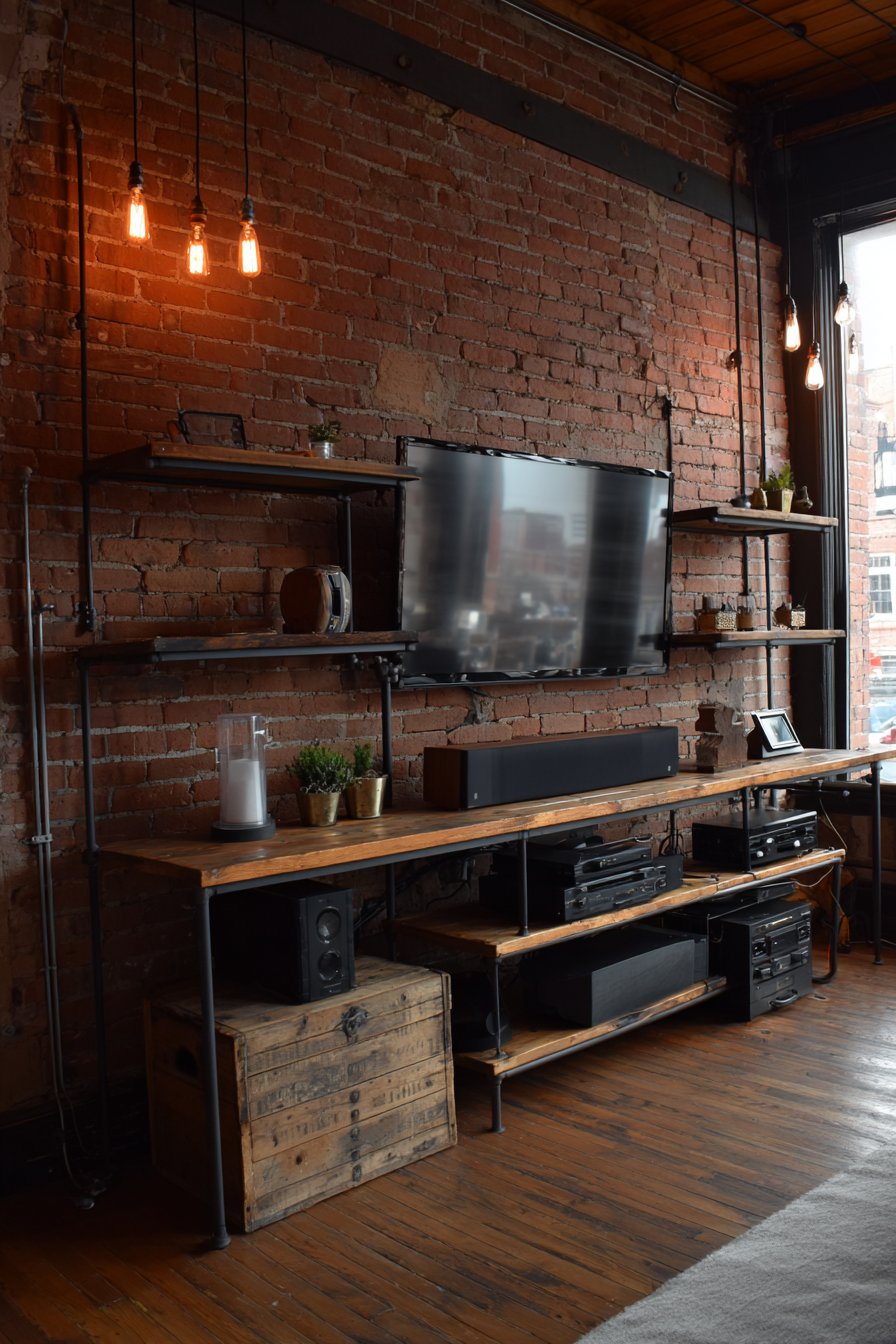
Custom-welded metal frame shelf systems in matte black powder-coated steel create modular storage that feels both utilitarian and intentionally designed. The exposed steel construction honestly expresses structure and function, key principles in industrial design philosophy. These shelving systems can be configured to accommodate different storage needs and television sizes, offering flexibility as your requirements evolve. The raw, unfinished character of metal framework celebrates manufacturing processes and materials typically hidden in traditional furniture.
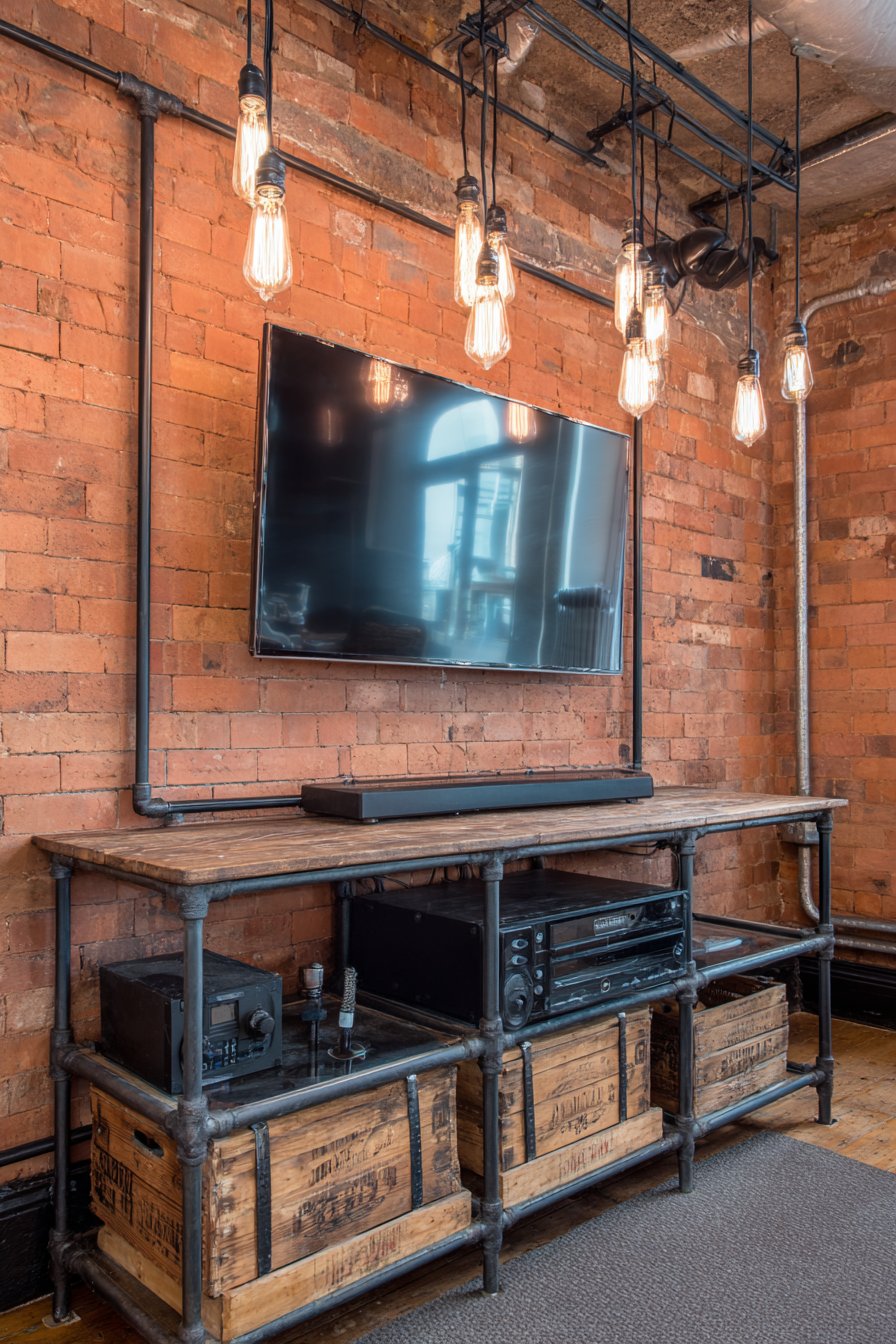
Edison bulb pendant lights hanging at varying heights add to the industrial ambiance while providing functional illumination. The visible filaments in these vintage-style bulbs create warm, intimate lighting that softens the harder edges of brick and metal. Varying the suspension lengths creates visual interest and helps define different zones within the living area. The industrial-style cord sets and minimal fixtures reinforce the aesthetic of honest, unpretentious design that characterizes loft spaces.
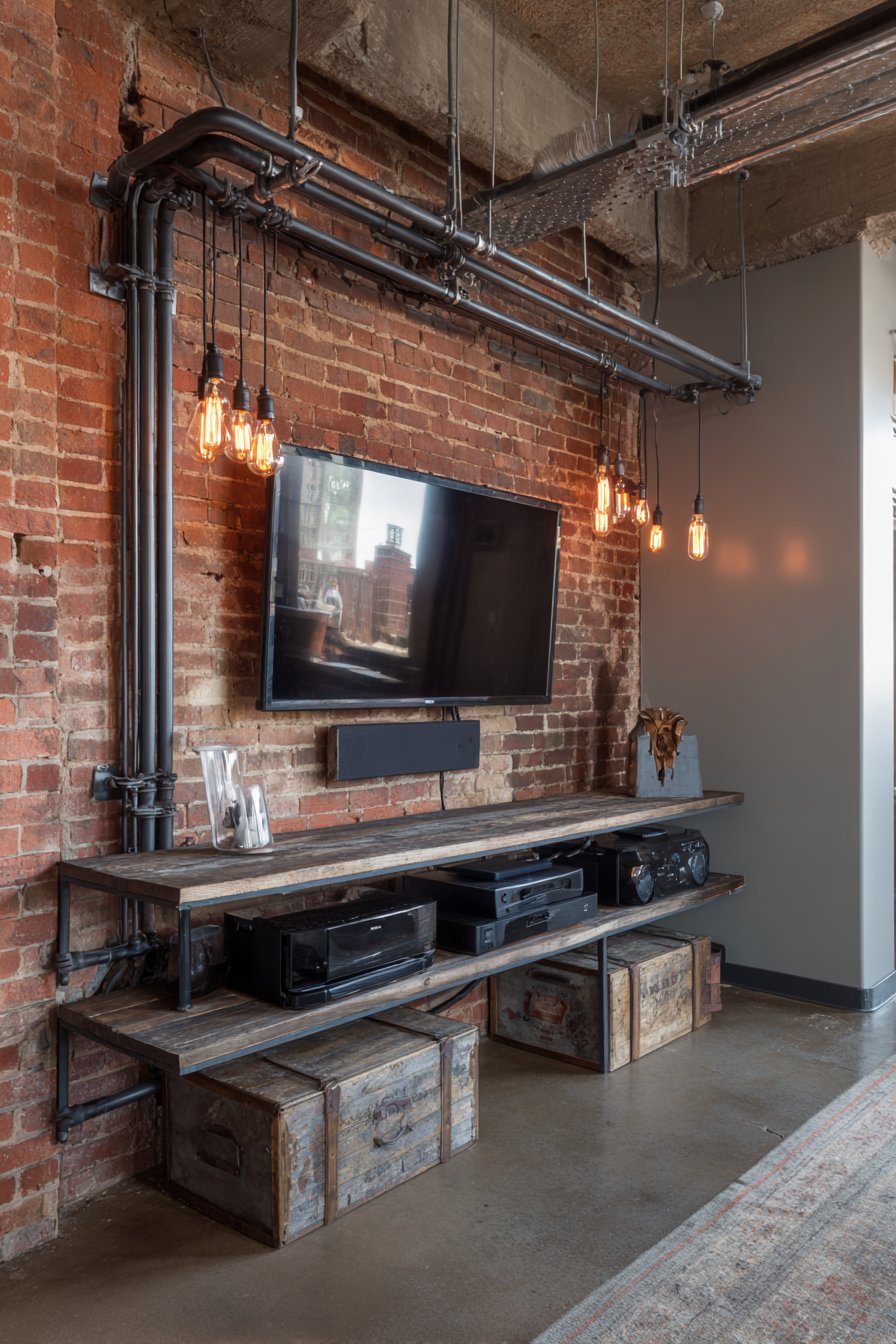
Weathered wooden crates repurposed as storage on lower shelves demonstrate the industrial approach of reusing and reimagining existing materials. These authentic utilitarian objects add warmth and organic texture that balance the harder materials of brick and steel. The patina and wear patterns on vintage crates tell stories of their previous lives, adding narrative depth to the space. This mix of materials—brick, metal, wood, and glass—creates the layered, collected-over-time feeling that makes industrial spaces so appealing. Key design tips include sealing exposed brick to prevent dust and deterioration while maintaining its raw appearance, ensuring metal shelving is properly anchored to support substantial weight, selecting Edison bulbs with appropriate wattage to provide sufficient illumination, incorporating strategic task lighting since ambient Edison bulbs may not provide adequate brightness, and balancing hard industrial materials with soft textiles like leather, canvas, or wool to prevent the space from feeling cold.
10. Farmhouse Shiplap with Sliding Barn Door
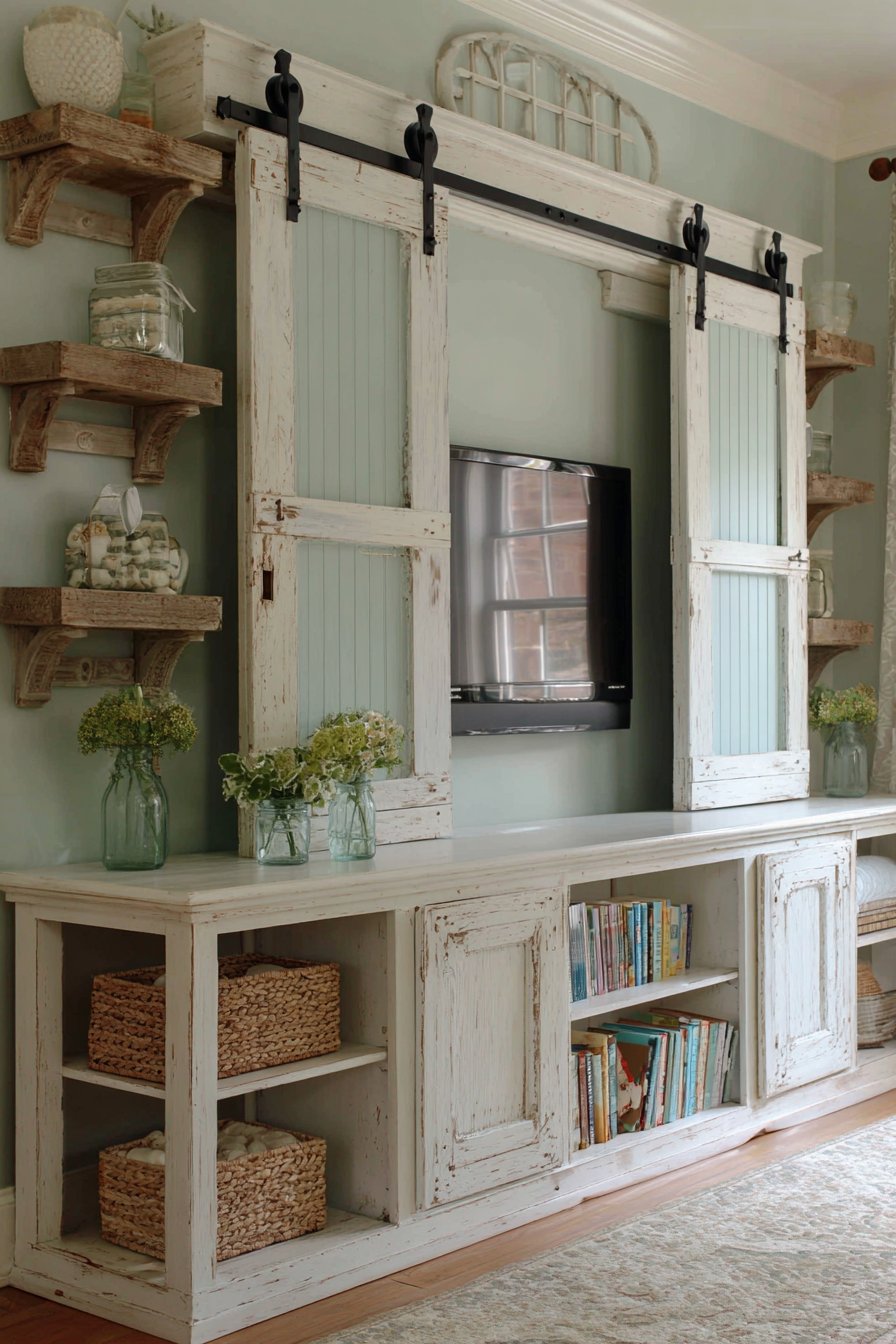
Soft sage green shiplap paneling creates a fresh, unexpected backdrop for this farmhouse-style television wall. The vertical installation of shiplap adds height to the room while the painted finish offers a modern twist on traditional white farmhouse walls. Sage green brings organic calm and connects the interior to natural landscapes, creating a soothing environment ideal for relaxation and entertainment. This color choice demonstrates how farmhouse style can evolve beyond its rustic white origins while maintaining its essential character.
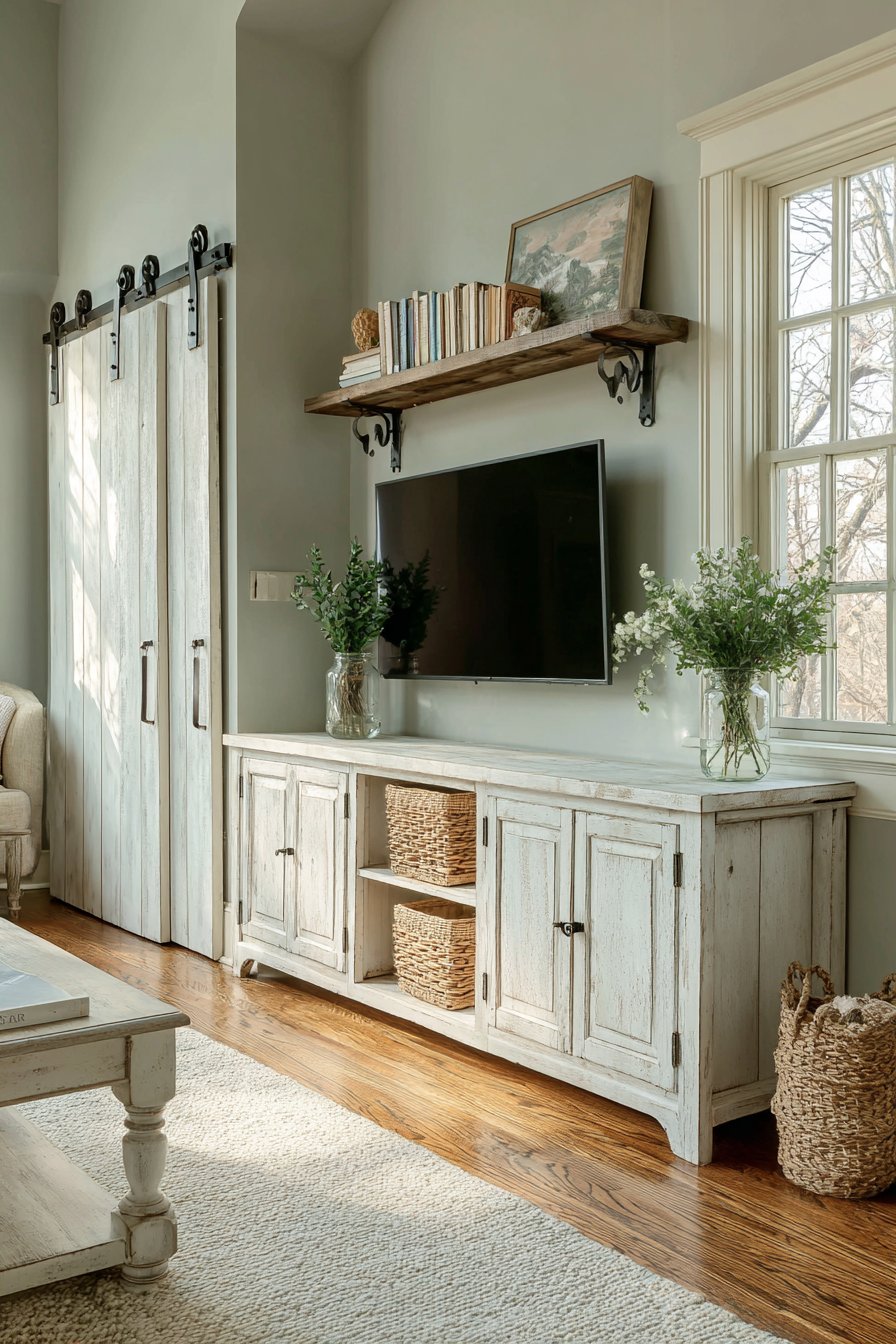
A large sliding barn door mounted on black hardware provides the unique ability to conceal the television when not in use—a thoughtful solution for those who prefer their living rooms to feel less dominated by technology. The distressed white-painted wood of the door adds authentic farmhouse character with its imperfections and worn edges telling a story of age and use. The sliding mechanism introduces kinetic interest and provides flexibility in how the wall functions throughout the day. When open, the door becomes a decorative element; when closed, it transforms the entertainment wall into a charming rustic focal point.
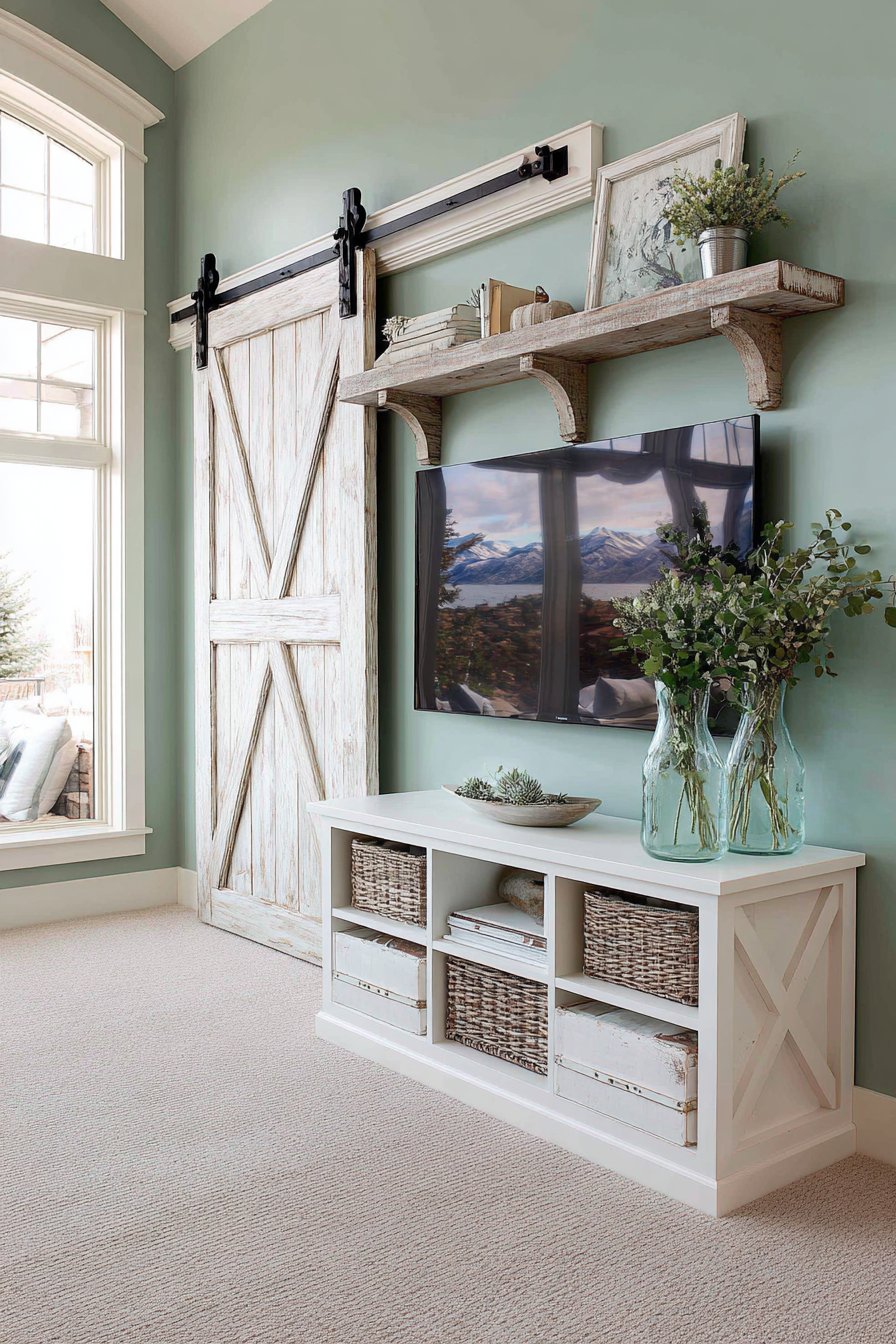
Open shelving constructed from reclaimed wood with simple metal brackets provides display space for woven baskets, vintage books, and mason jar vases filled with fresh greenery. These quintessentially farmhouse elements create vignettes that feel collected over time rather than purchased all at once. The natural textures of woven materials, aged book covers, and fresh plants add layers of visual and tactile interest. The informal arrangement prevents the shelving from feeling too styled or perfect, maintaining the relaxed, lived-in quality essential to farmhouse design.
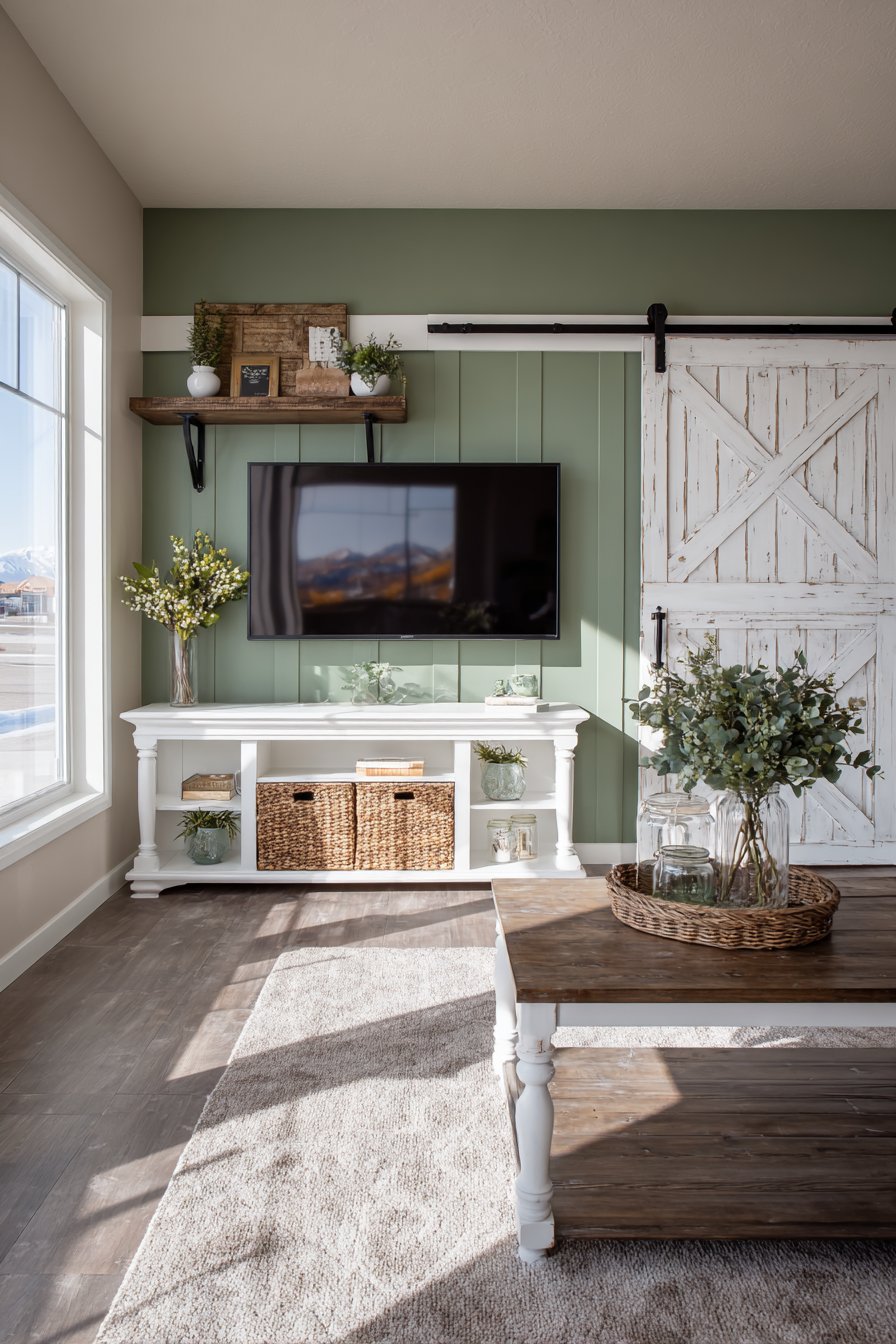
A white-painted floating console below provides additional closed storage while maintaining the light, bright aesthetic. The combination of open and closed storage addresses practical needs while preventing visual clutter. Fresh greenery in mason jars adds organic life and color that changes with seasons, keeping the wall feeling dynamic and fresh. This connection to nature and seasonal rhythms reflects farmhouse design’s agricultural roots. Key design tips include selecting barn door hardware rated for the door’s weight to ensure smooth, safe operation, applying sage green paint in several thin coats for even coverage on shiplap texture, incorporating galvanized metal buckets or pitchers as planters for authentic farmhouse character, choosing reclaimed wood shelving with visible saw marks and natural imperfections, and styling shelves with odd-numbered groupings for a more natural, less formal appearance.
11. Coastal Whitewashed Vertical Paneling
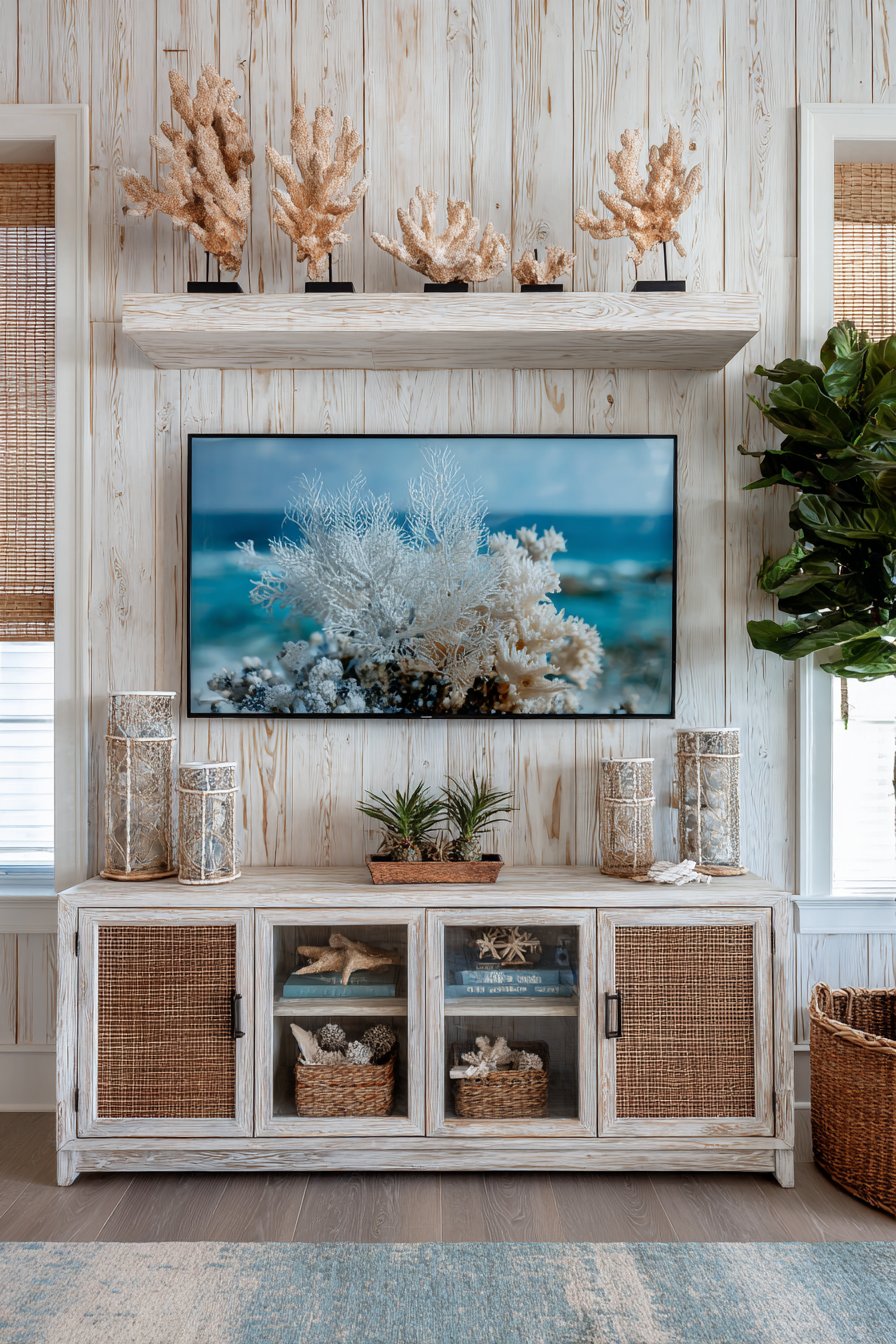
Whitewashed tongue-and-groove vertical paneling evokes the breezy, relaxed atmosphere of seaside cottages. The vertical installation draws the eye upward, creating an impression of height while the pale finish maximizes light reflection throughout the space. The subtle texture of individual boards adds dimension without overwhelming the clean, airy aesthetic essential to coastal design. This approach to the television wall creates a serene backdrop that reminds you of ocean horizons and beach houses.
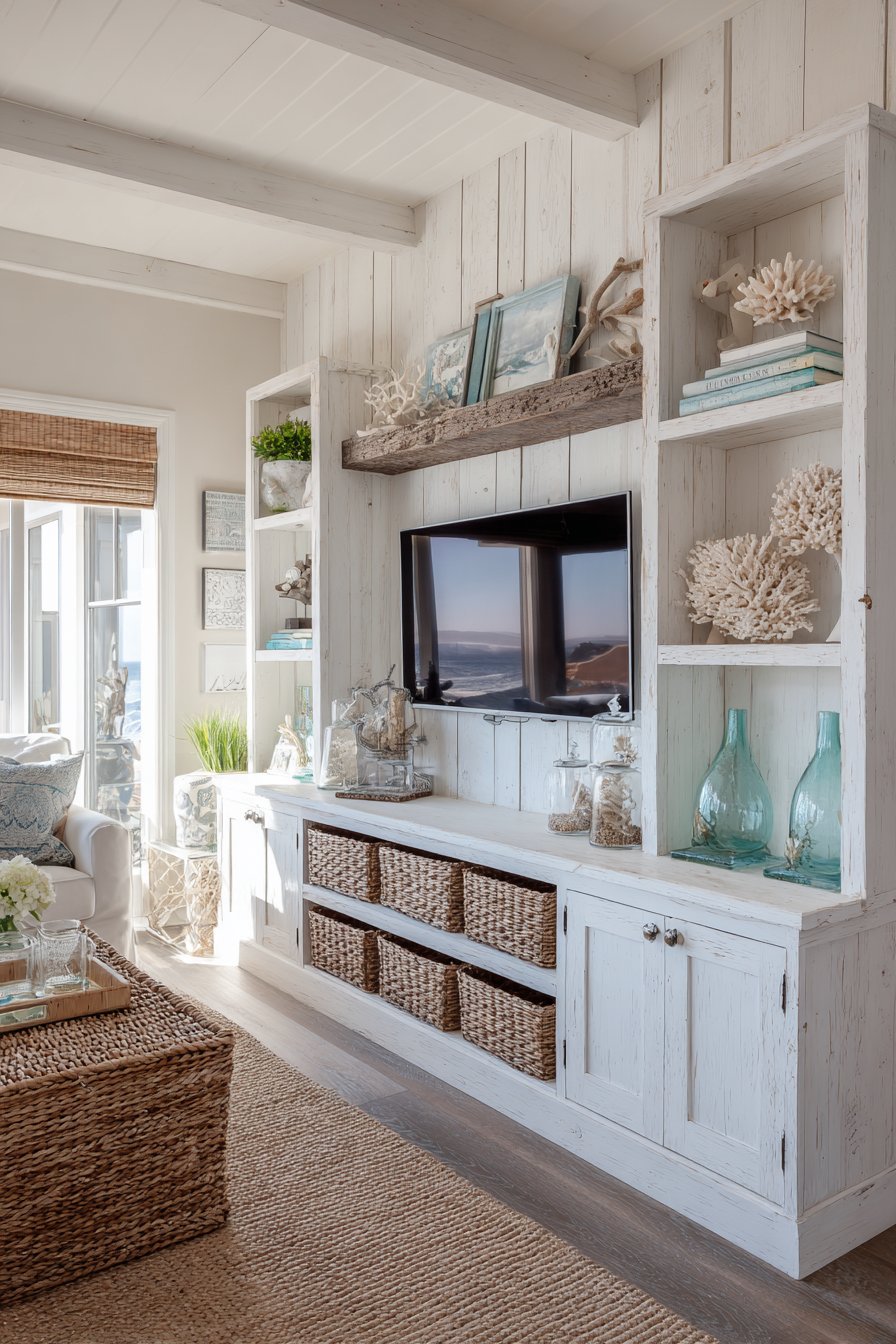
Rope-detailed floating shelves flanking the television introduce nautical elements while providing display space for coral specimens, driftwood pieces, and ocean-inspired decorative items. These natural treasures from coastal environments add organic sculptural interest and connect the interior to seaside landscapes. The rope detailing provides tactile and visual texture that reinforces the maritime theme without becoming overly literal or themed. The natural fibers and organic forms soften the harder edges of technology and furniture.
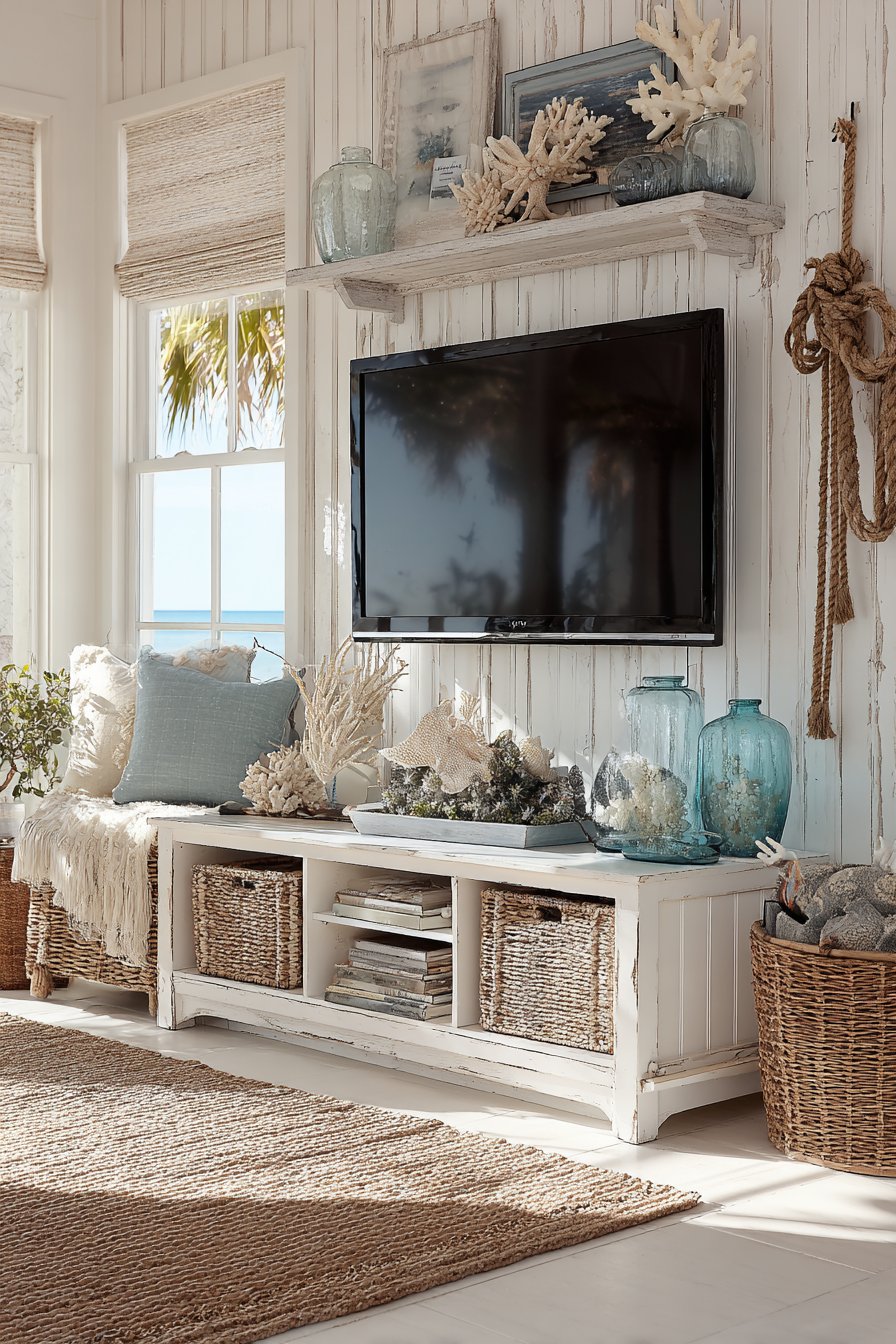
A distressed white media cabinet below features woven seagrass basket inserts that provide concealed storage while introducing additional natural texture. Seagrass’s casual, organic character perfectly complements coastal aesthetics, and the baskets allow for flexible storage that can be easily reorganized as needs change. The distressed finish on the cabinet adds character and prevents the piece from feeling too precious or formal—important qualities in coastal design that emphasizes relaxed living and easy maintenance.
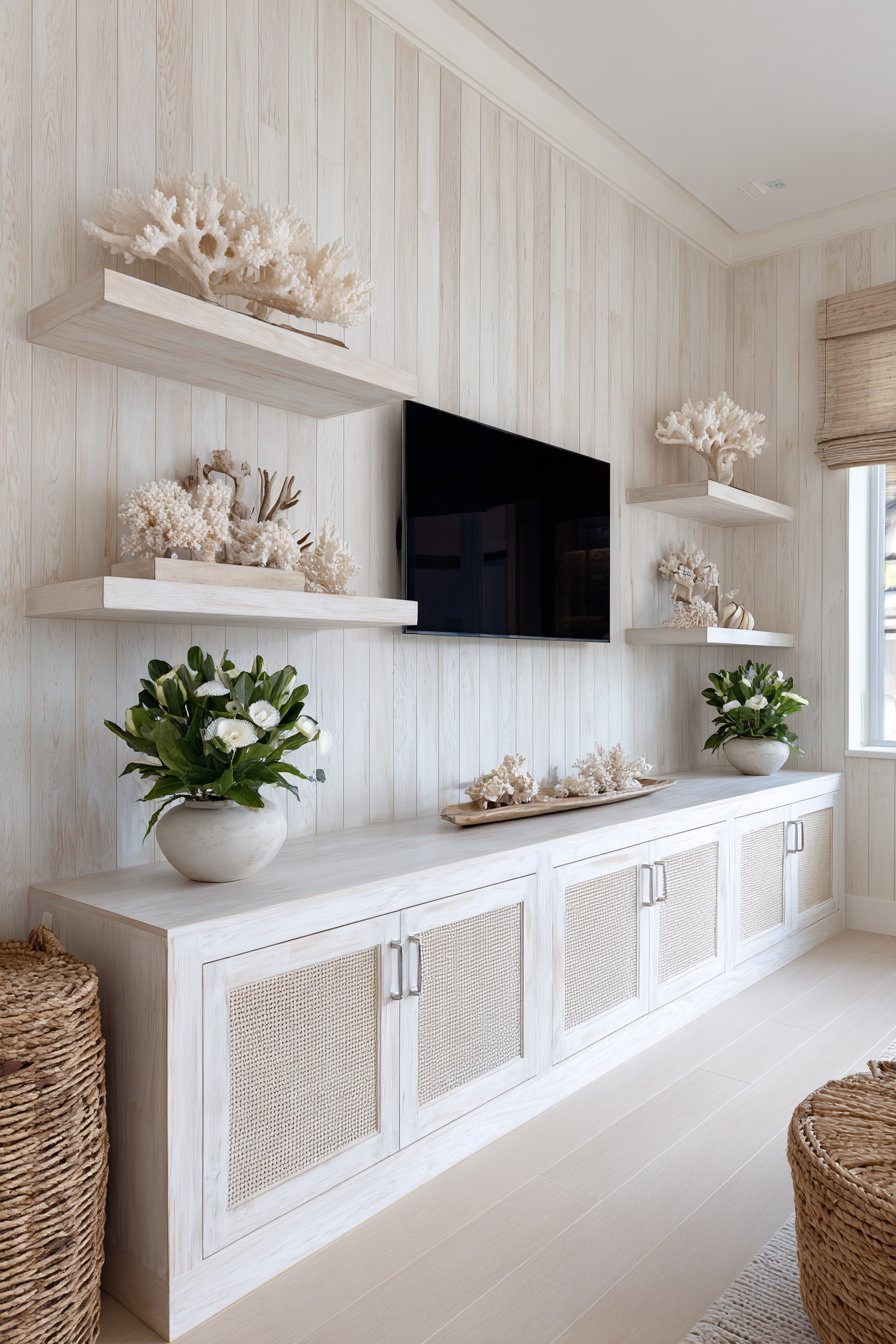
Natural linen Roman shades filter soft daylight, creating the diffused, hazy quality of light found in beachside locations. The neutral linen fabric adds another layer of natural texture while providing privacy and light control. The simple, unfussy window treatment avoids heavy drapes or formal valances that would conflict with coastal simplicity. The filtered light creates a calm, peaceful atmosphere ideal for relaxation and entertainment. Key design tips include applying whitewash in varied techniques to create authentic-looking variations across boards, incorporating blue and aqua glass accents to suggest water and sky, selecting decorative items found during beach walks for authentic coastal character, choosing furniture with weathered or driftwood-style finishes, and maintaining a light, bright color palette with whites, creams, and soft blues.
12. Traditional Mahogany Built-In with Fireplace
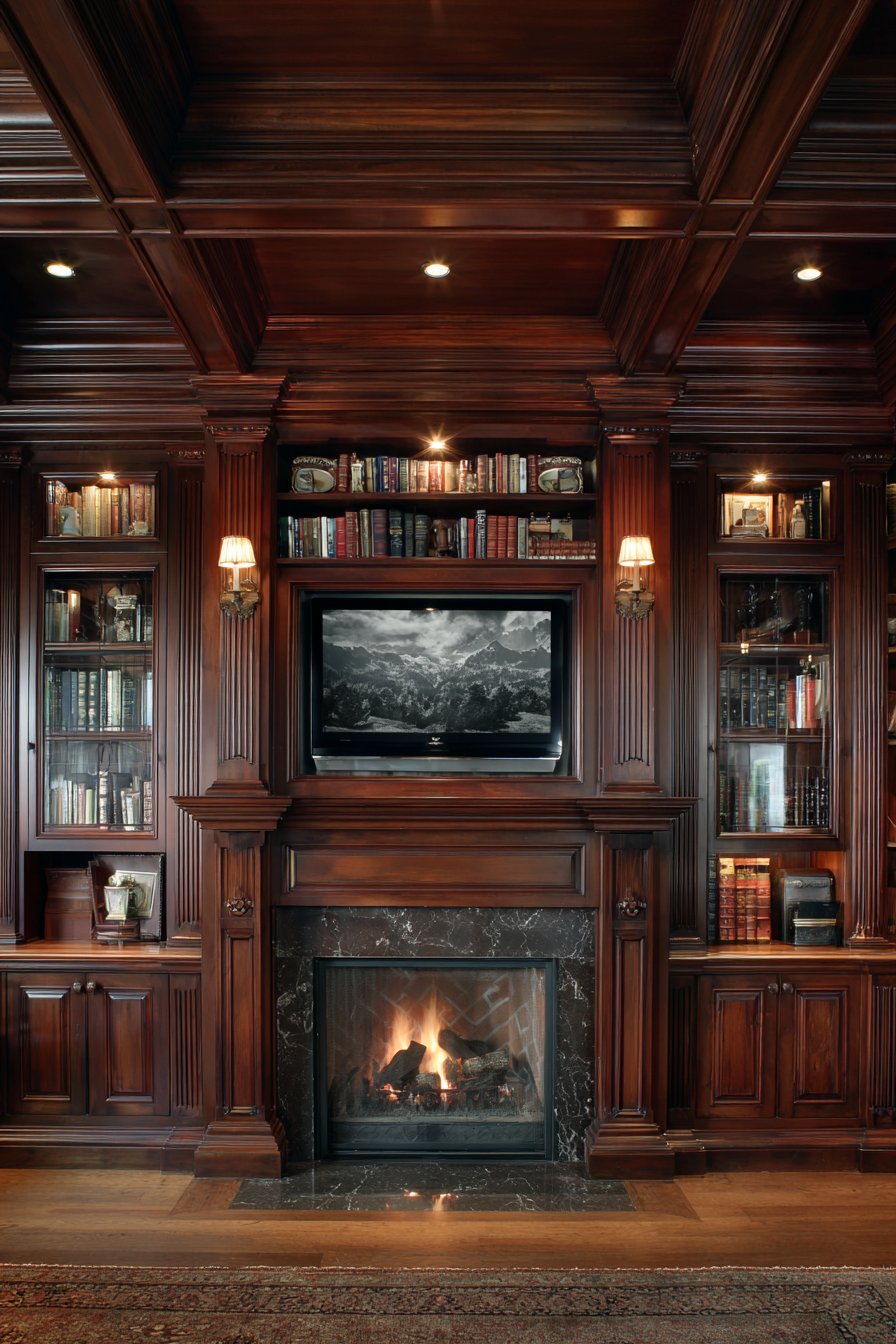
Rich mahogany cabinetry with raised panel doors and crown molding represents the height of traditional craftsmanship and classical design principles. The deep, warm tones of mahogany develop a lustrous patina over time, creating furniture that becomes more beautiful with age. Custom built-in construction allows the entertainment center to integrate seamlessly with the room’s architecture, appearing as though it was part of the original home design. This substantial millwork creates a sense of permanence and quality that manufactured furniture cannot replicate.
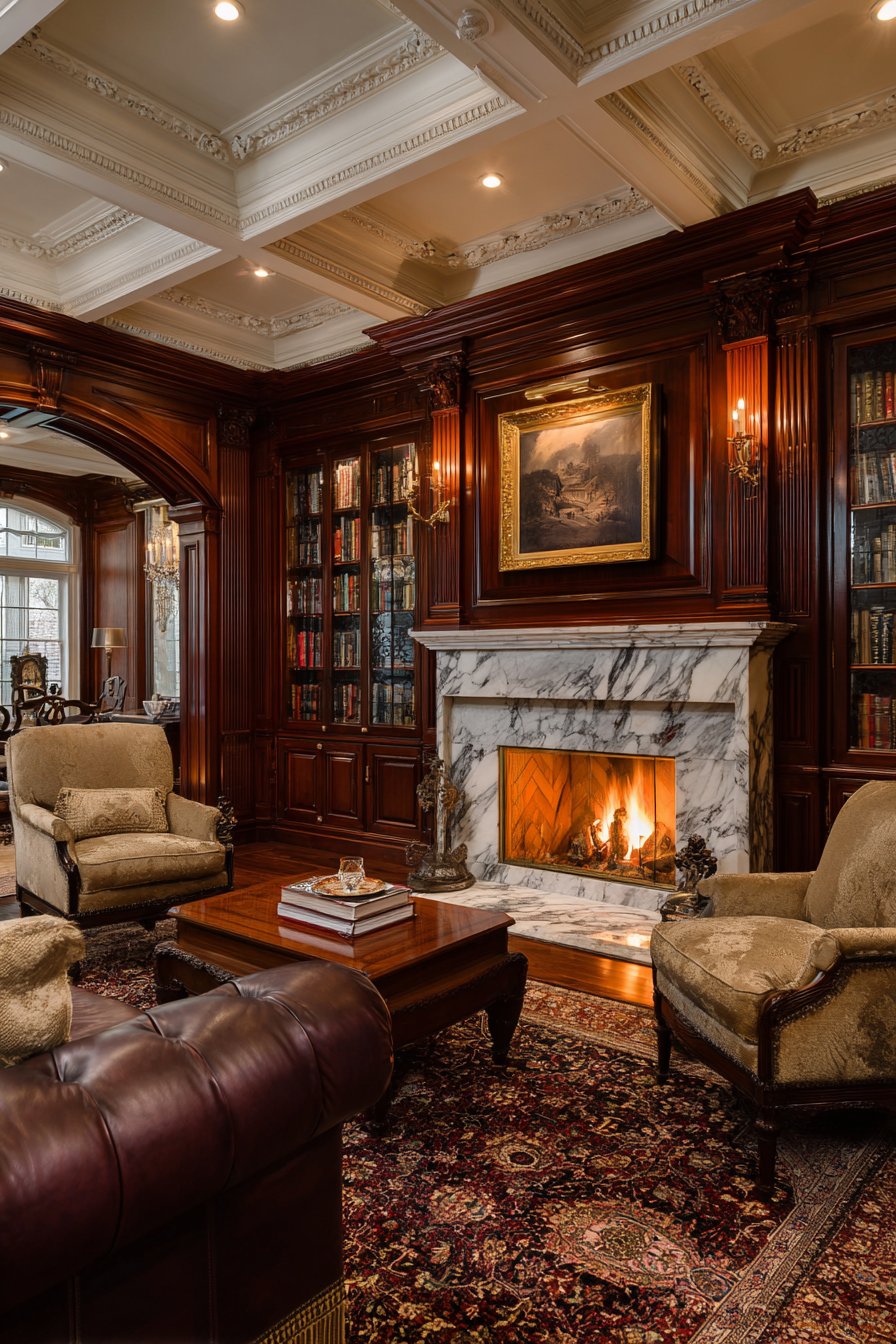
The television recesses into the center section, surrounded by glass-front display cabinets that showcase fine china, crystal, and leather-bound books. These illuminated display areas transform everyday storage into decorative features, allowing collections to be appreciated even when cabinet doors are closed. Adjustable interior lighting allows you to highlight specific pieces and create ambient illumination that adds warmth to the room. The symmetrical arrangement of cabinets creates the formal balance characteristic of traditional design.
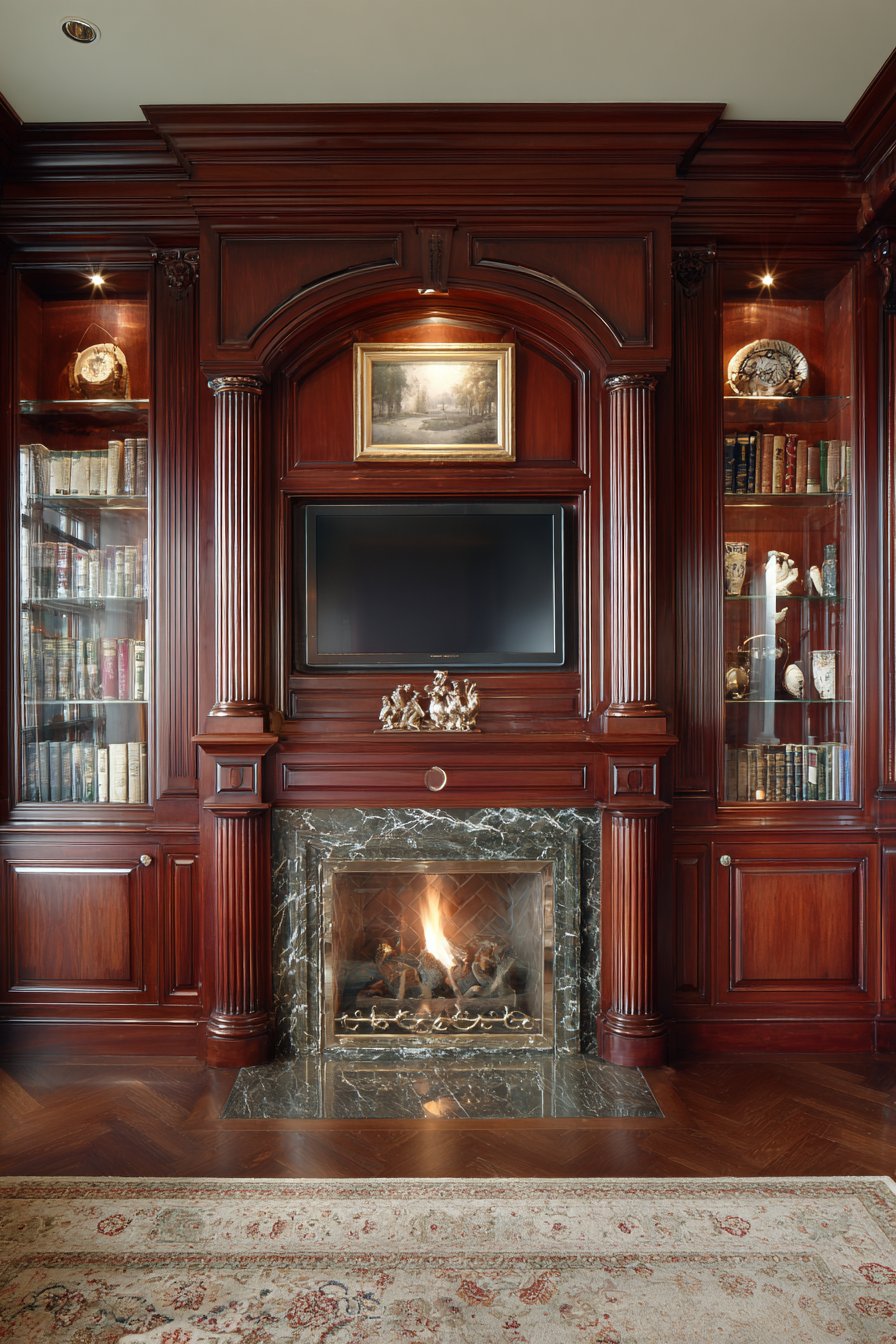
A working fireplace with marble surround positioned below the television adds both architectural grandeur and functional warmth to the entertainment wall. The fireplace serves as a traditional gathering point that predates television, and integrating both elements creates a multi-functional focal point that serves year-round. The marble surround introduces cool-toned elegance that complements the warm mahogany while adding material variety and visual interest. Crown molding, base trim, and architectural details demonstrate the craftsmanship and attention to detail that defines traditional design.
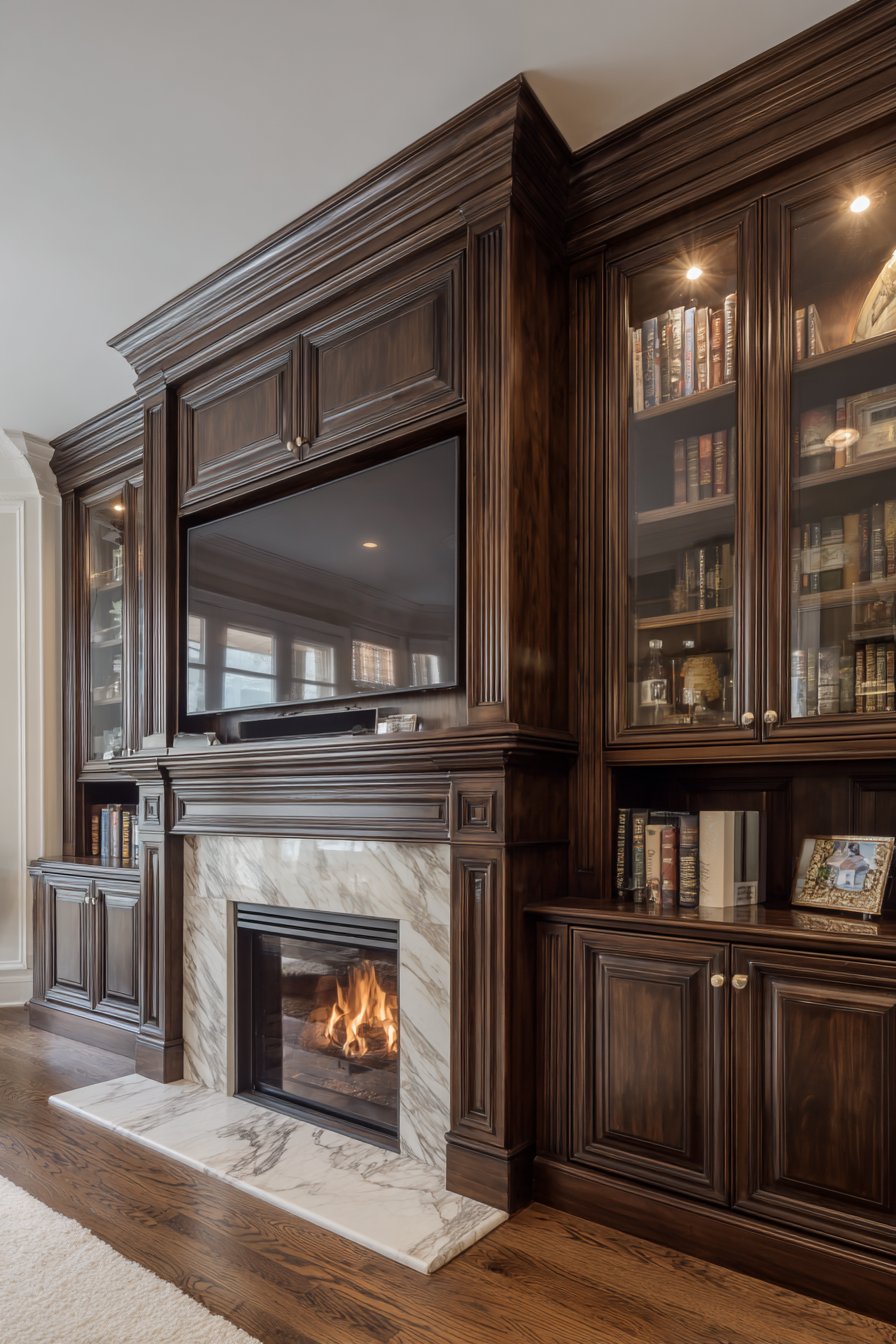
The glass-front cabinets allow light to pass through, preventing the substantial cabinetry from feeling heavy or oppressive despite its size and dark finish. This transparency creates visual breathing room and allows displayed items to add color and personality to the composition. The combination of open glass display and closed solid-door storage provides flexibility for showcasing treasured items while concealing less attractive necessities. Key design tips include ensuring the mahogany stain matches other woodwork in the room for cohesive design, incorporating adjustable shelving within cabinets to accommodate items of varying heights, consulting a professional regarding fireplace and television integration for safety and proper venting, selecting simple glass panel designs rather than leaded or etched glass for cleaner aesthetics, and including soft-close hinges and drawer slides for quiet, luxurious operation.
13. Japandi Minimalist Wood Panel Grid
Japandi design—the fusion of Japanese minimalism and Scandinavian warmth—creates television walls characterized by serene simplicity and natural beauty. Light ash wood panels arranged in a subtle grid pattern provide visual structure without busyness, creating order and calm. The minimal spacing between panels creates shadow lines that add dimension and architectural interest without requiring ornamental details. This restrained approach to design creates environments that promote tranquility and mindfulness.
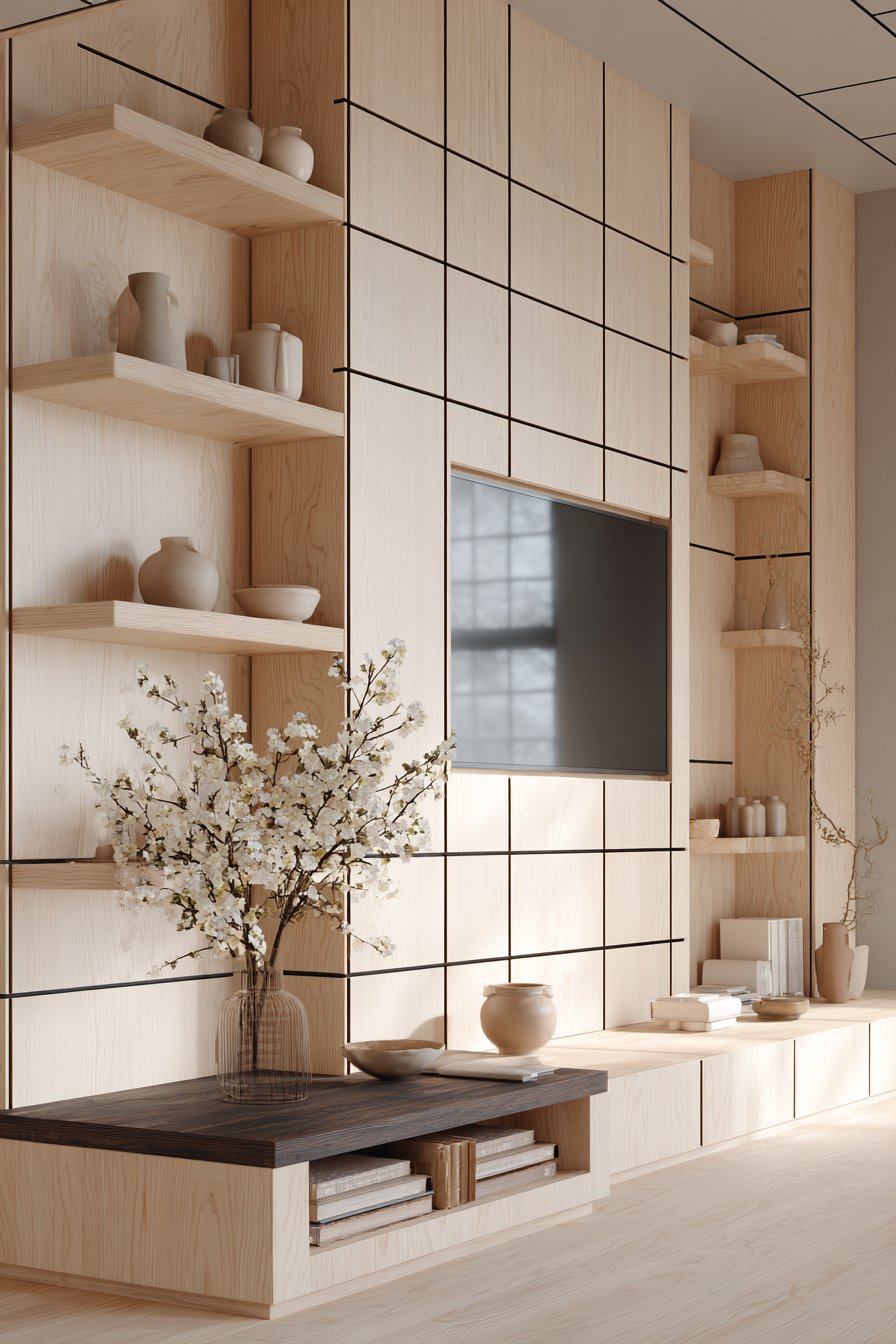
The television sits nearly flush within one panel section, integrated so seamlessly it appears almost hidden when turned off. This thoughtful integration demonstrates the Japandi preference for technology that serves function without dominating aesthetics. The clean installation eliminates visible cables and mounting hardware, maintaining the wall’s minimal, uncluttered appearance. This approach reflects the Japanese concept of ma—the meaningful void or negative space that allows design elements to breathe.
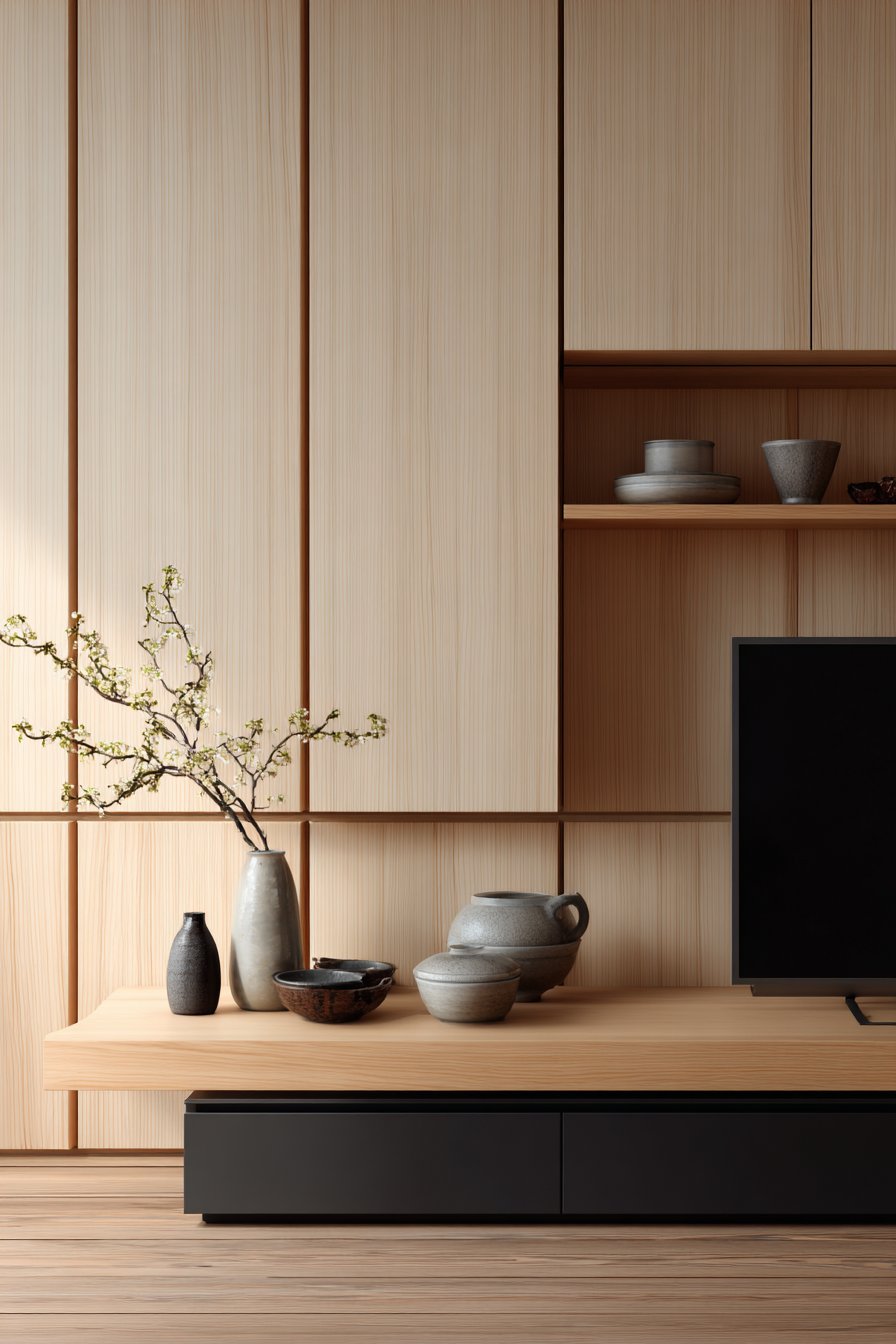
Low-profile floating shelves in matching ash wood hold minimal displays of ikebana-inspired flower arrangements and handmade ceramics. These carefully curated objects demonstrate the Japandi appreciation for craftsmanship, natural materials, and intentional design. Each piece serves both functional and aesthetic purposes, embodying the principle that beauty emerges from utility. The restrained quantity of displayed items prevents visual clutter and allows each piece to be fully appreciated.
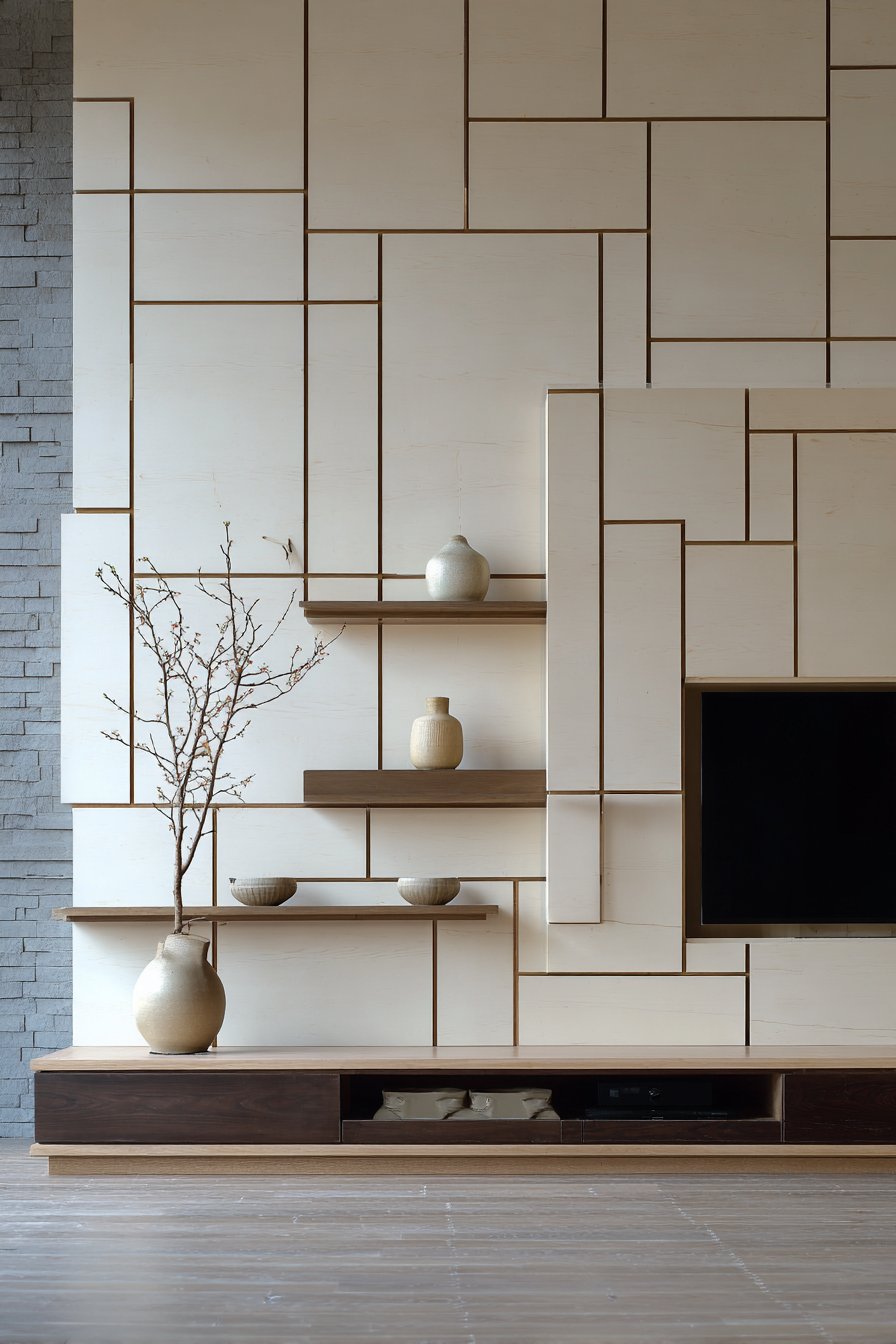
A simple platform in dark walnut below provides subtle contrast while housing media components with refined simplicity. The darker wood introduces tonal variation without creating harsh contrast, maintaining the gentle, harmonious feeling essential to Japandi aesthetics. The low profile and clean lines ensure the media storage doesn’t disrupt the wall’s serene composition. Natural materials throughout create connection to nature, a core value in both Japanese and Scandinavian design traditions. Key design tips include selecting woods with subtle, fine grain patterns for understated beauty, maintaining a neutral color palette with natural wood tones, whites, and soft grays, incorporating handmade or artisan objects that show honest craftsmanship, ensuring all elements serve clear purposes without superfluous decoration, and emphasizing quality over quantity in all furnishing and decor choices.
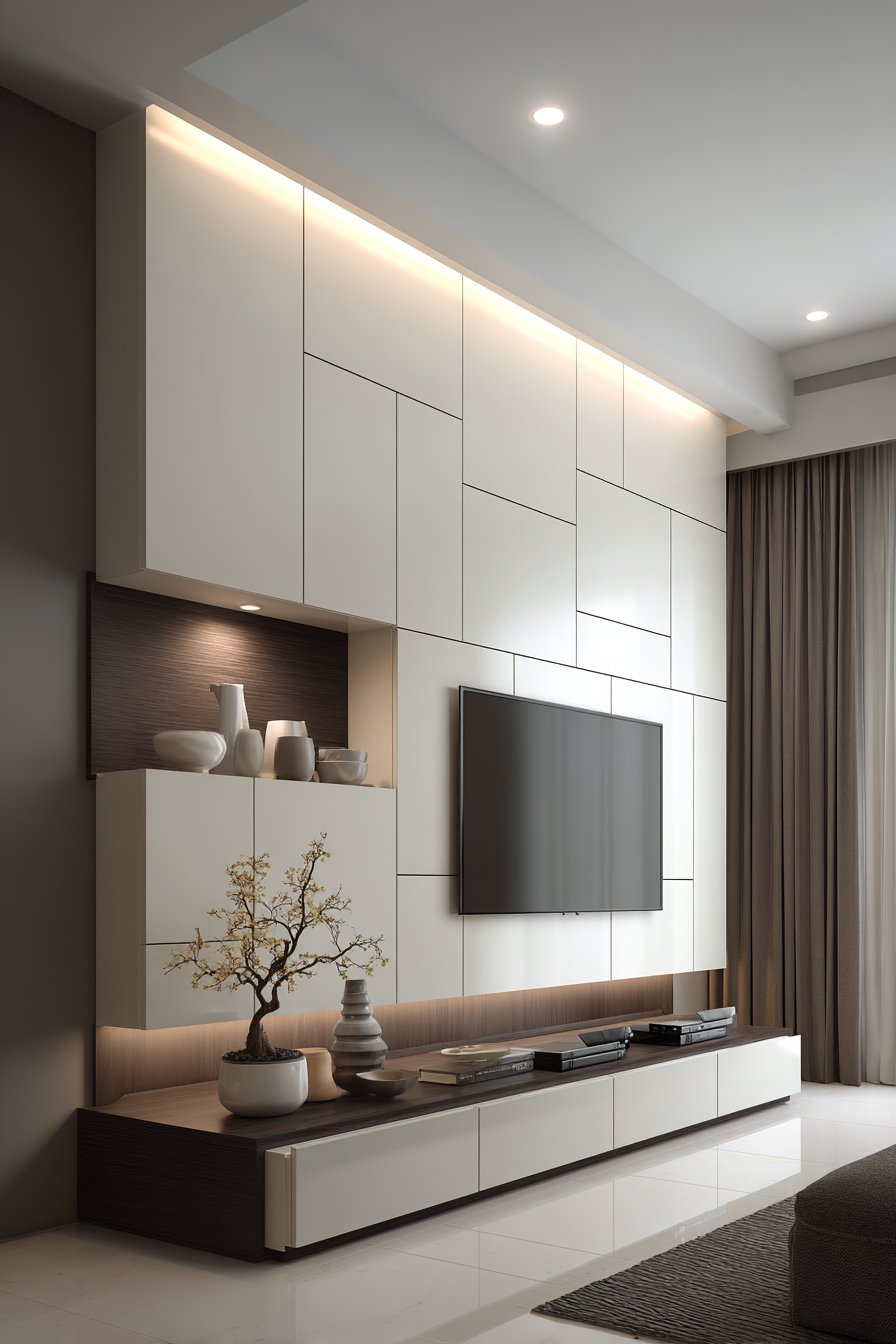
14. Bohemian Macramé and Terracotta
Bohemian design embraces eclecticism, personal expression, and global influences, creating television walls that feel artistic and unconventional. A large macramé wall hanging partially framing the television transforms utilitarian technology into part of an artistic composition. The intricate knotwork and natural cotton fibers introduce handcrafted texture and artisanal quality. This unexpected approach to television wall design demonstrates how boho style challenges conventional solutions with creative, personalized alternatives.
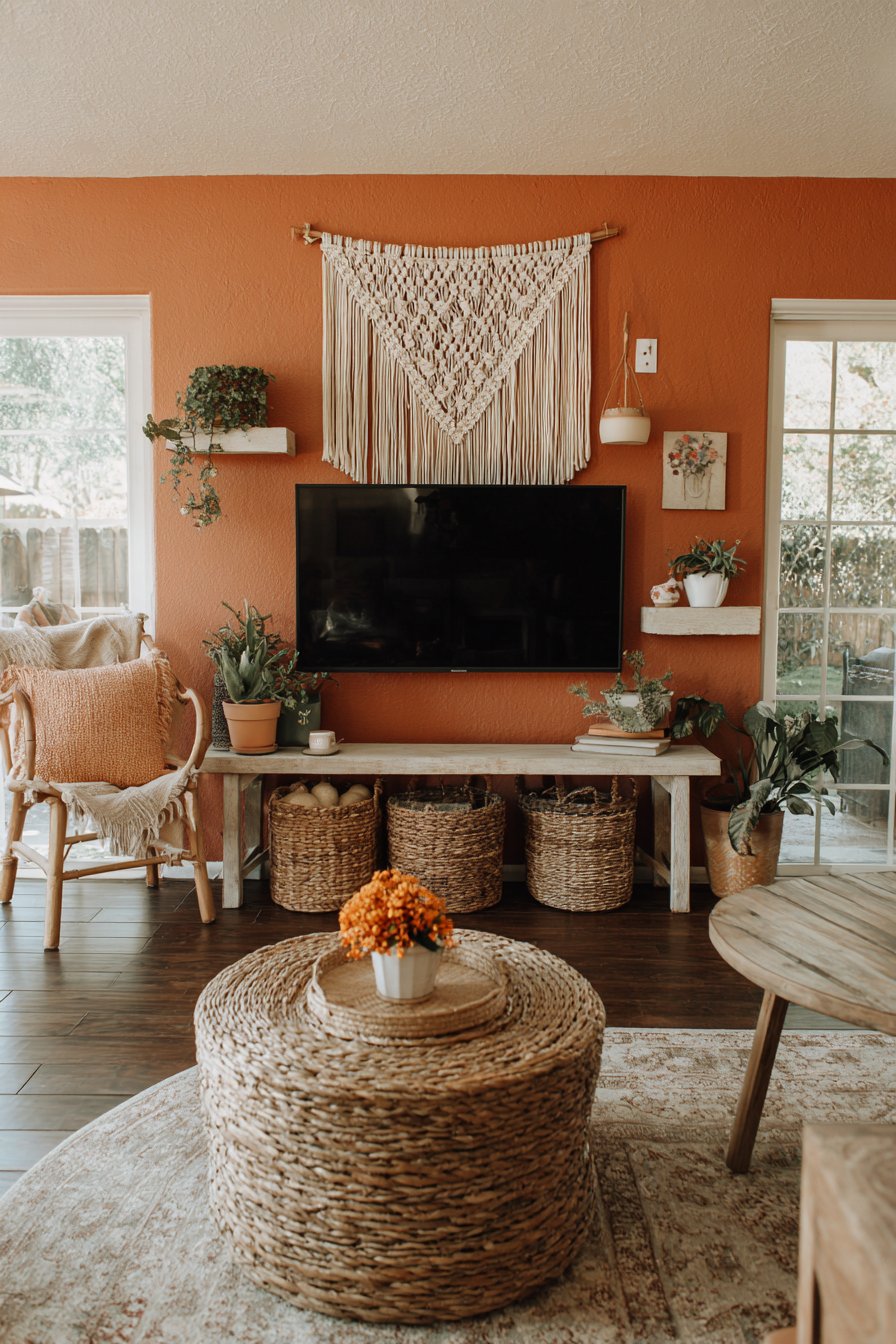
The terracotta orange wall color creates a warm, earthy backdrop that embodies bohemian connections to natural pigments and global design traditions. This bold color choice adds energy and personality while providing a rich background that makes displayed objects and plants pop visually. Terracotta’s associations with pottery, Mediterranean architecture, and desert landscapes add layers of cultural reference that enrich the space. The warm undertones create inviting, cozy atmosphere ideal for relaxed gathering and entertainment.
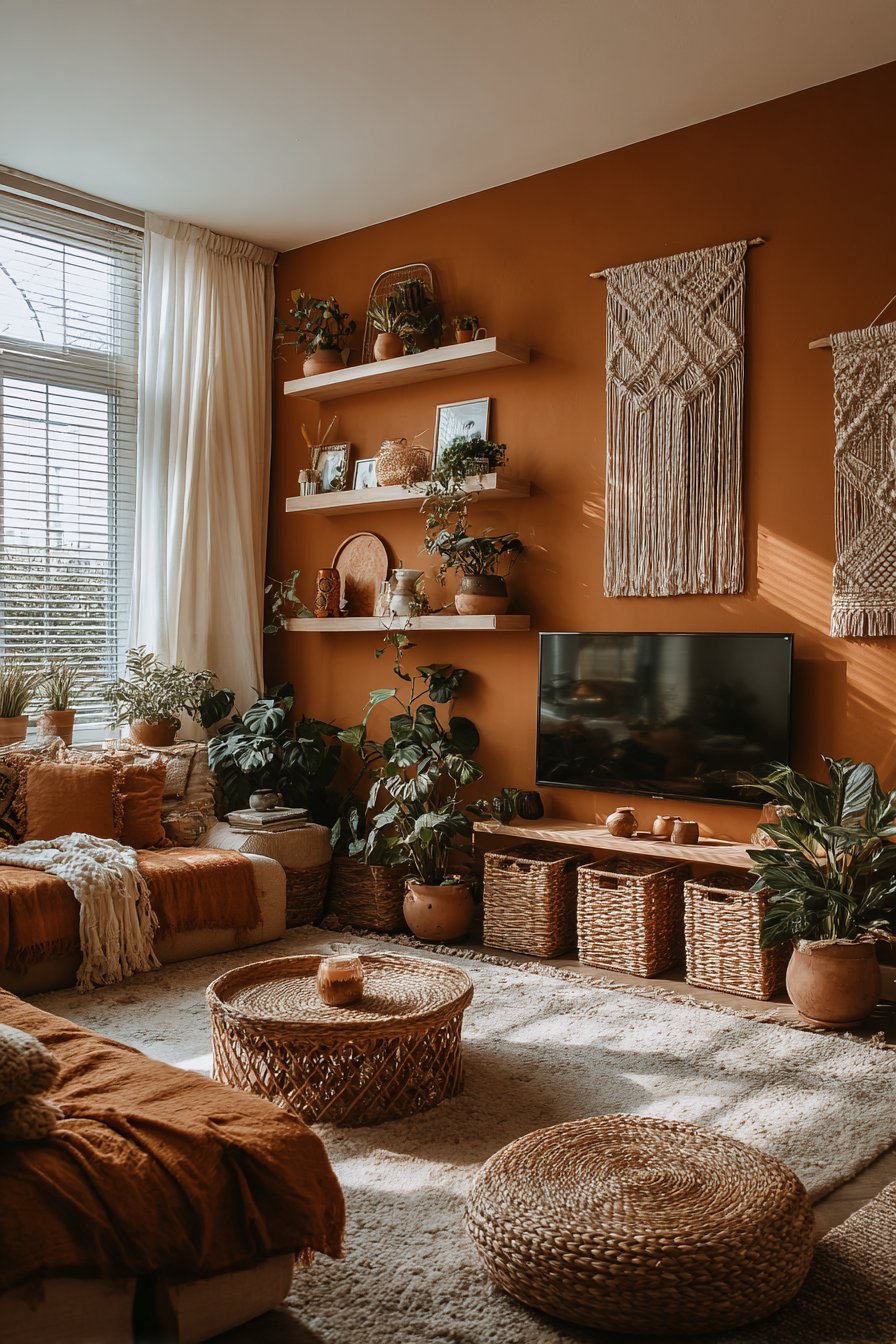
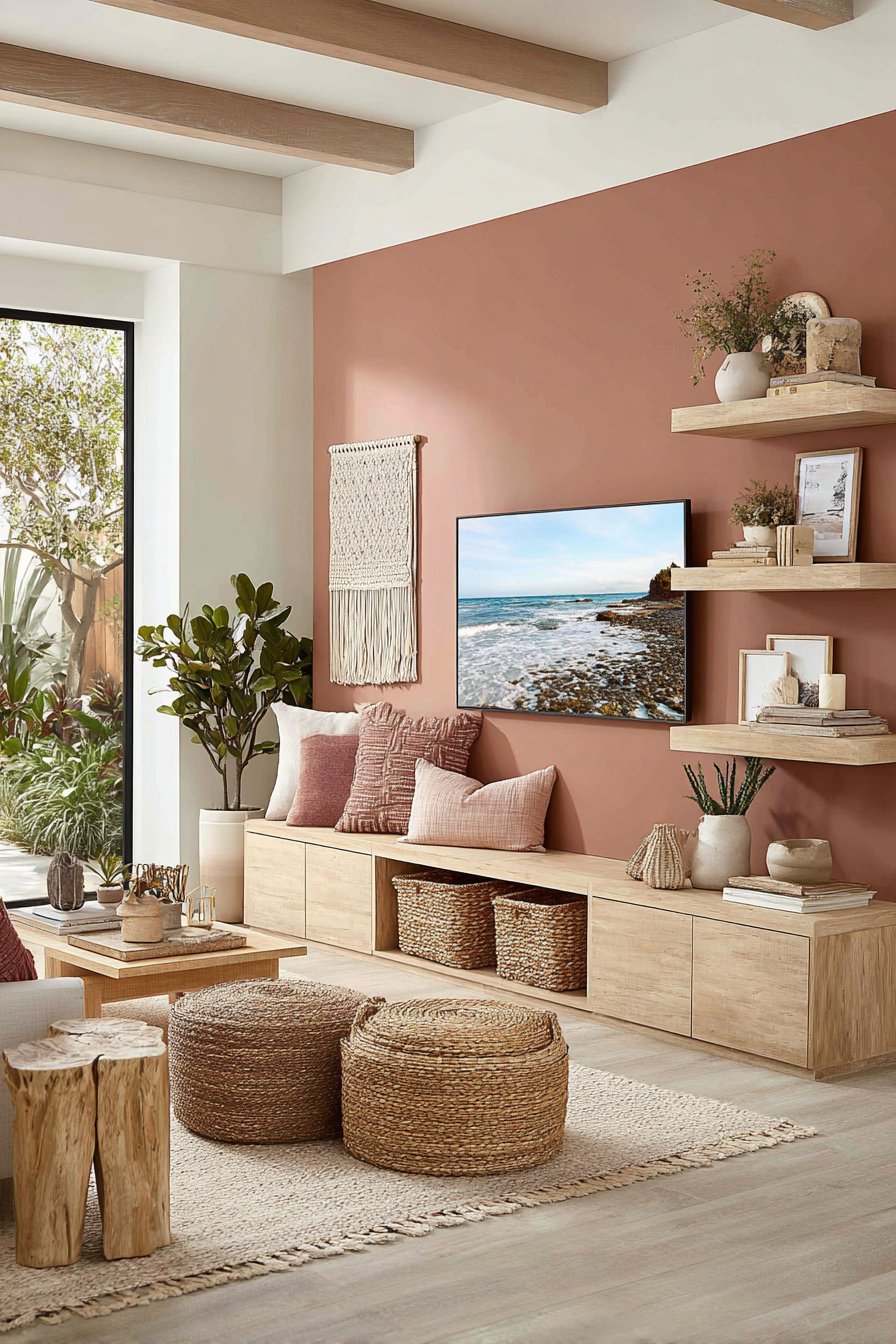
Eclectic floating shelves in various sizes, finishes, and styles display a curated collection of plants in ceramic pots, woven baskets, and global textiles. This intentional mismatch of shelving creates visual interest and reflects the bohemian practice of collecting meaningful objects over time from diverse sources. The abundance of plants introduces living greenery that purifies air, adds oxygen, and creates connections to nature. Woven baskets and textiles introduce patterns, textures, and cultural references that tell stories of global travel and artistic appreciation.
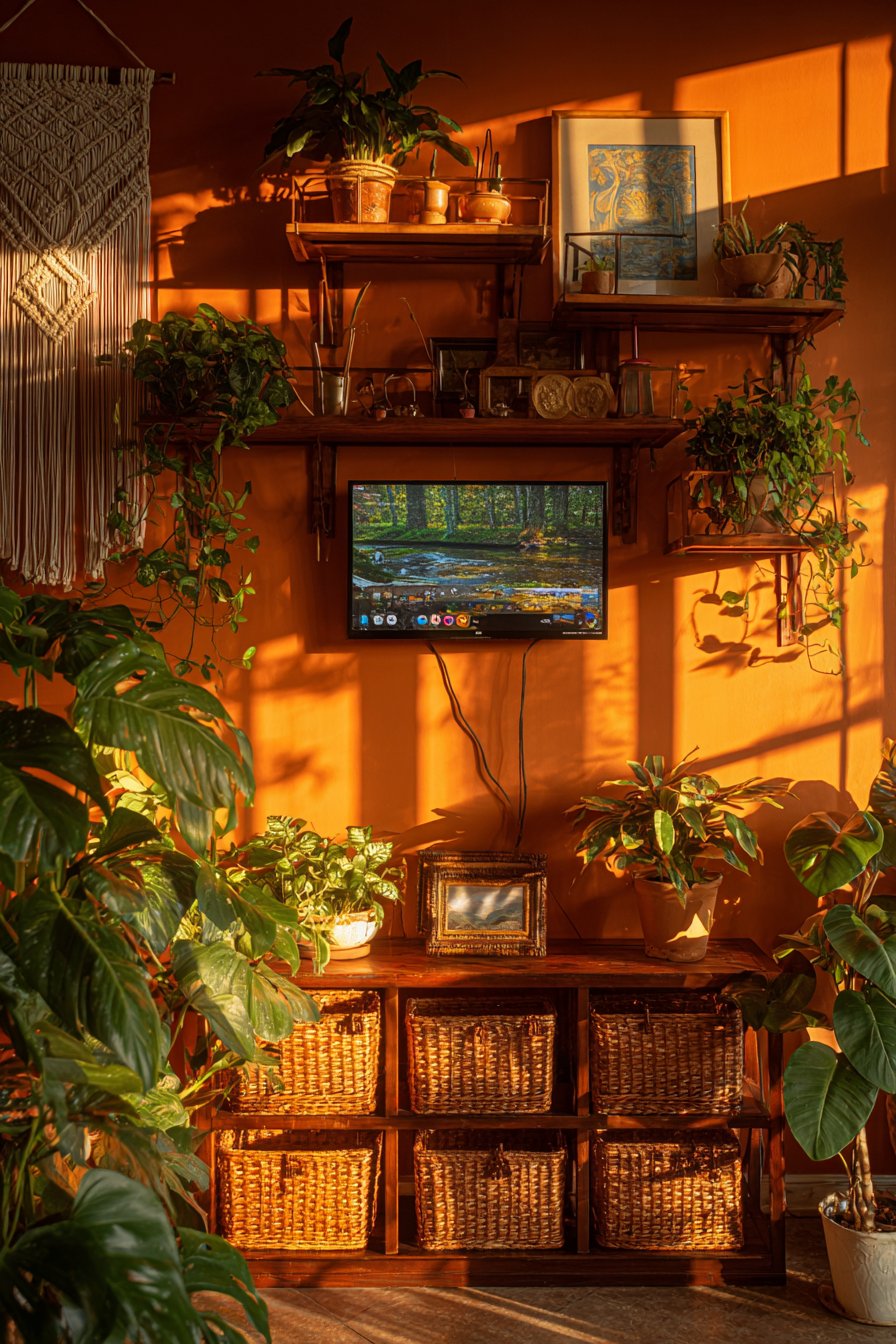
Rattan baskets positioned below provide media storage while contributing to the natural, organic material palette. Rattan’s woven texture and warm tones complement the macramé and plants while providing practical concealment for technology and cables. The casual, unfussy quality of basket storage maintains the relaxed, bohemian vibe where perfection matters less than personality. The overall effect is layered, collected, and deeply personal. Key design tips include incorporating plants of varying heights and types for visual diversity, mixing patterns and textures freely while maintaining a cohesive color story, displaying meaningful travel souvenirs and handmade items that tell your story, layering multiple light sources including string lights for ambient glow, and embracing asymmetry and imperfection as essential elements of bohemian authenticity.
15. Smart Home Motorized TV Lift System
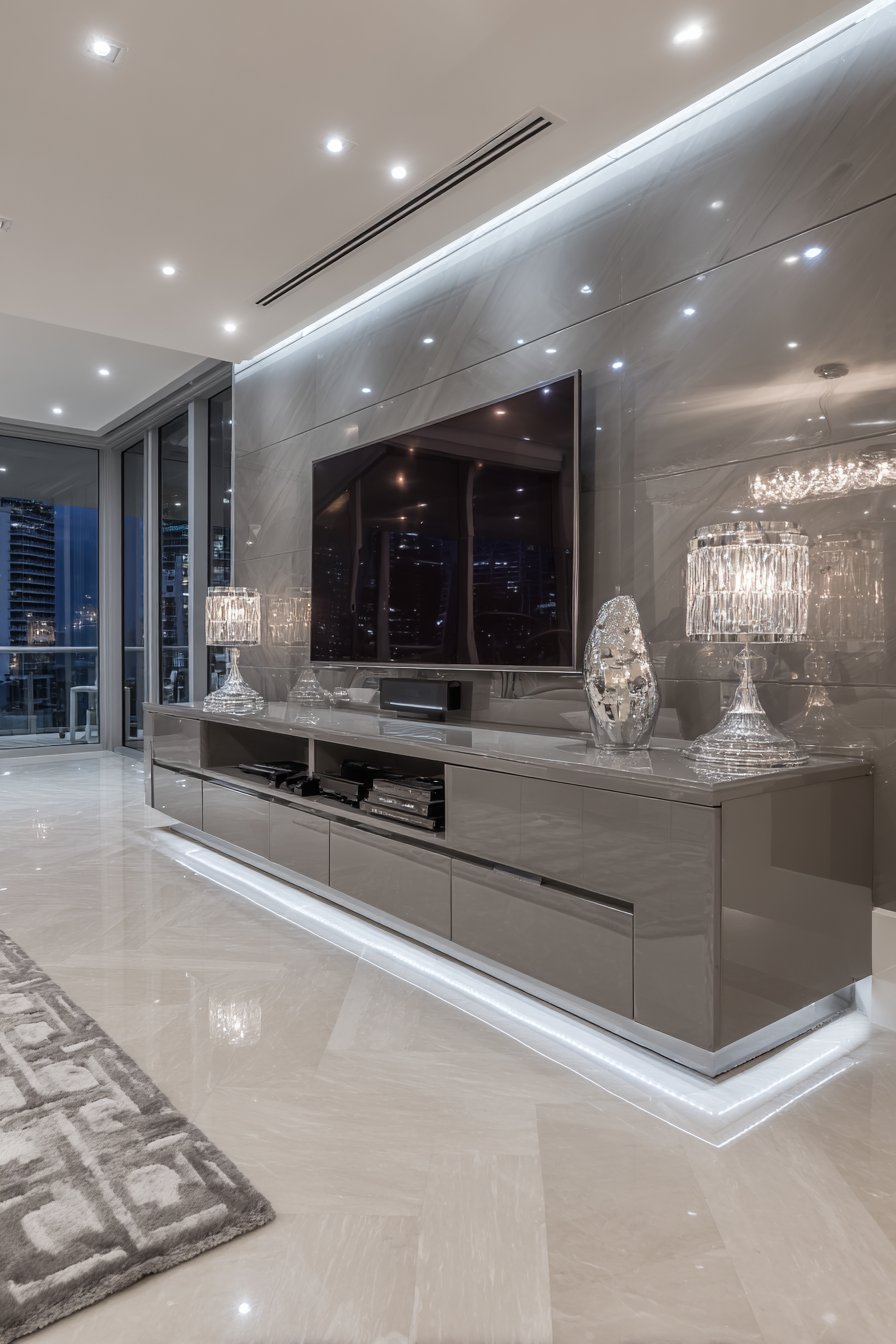
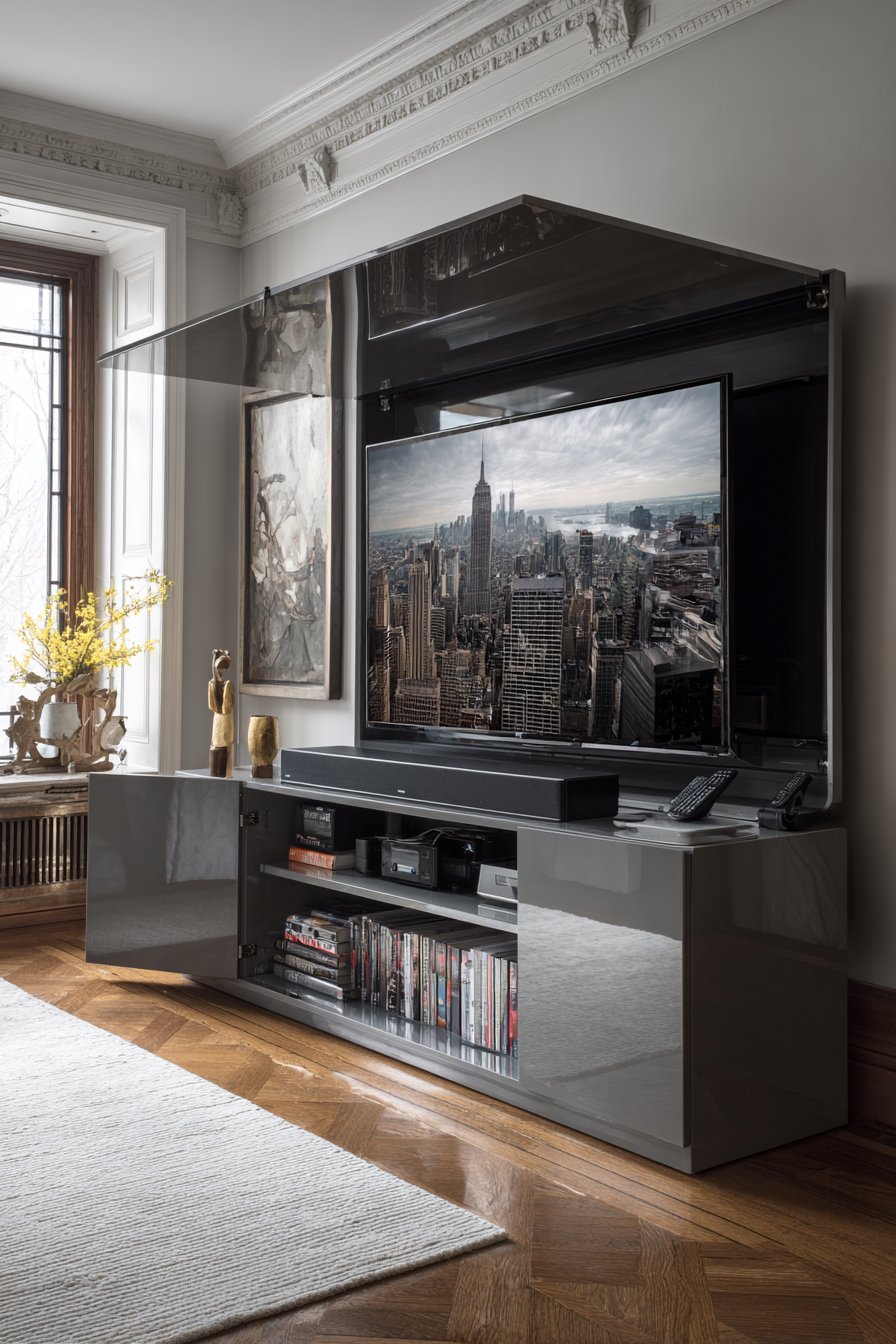
Technology integration reaches new sophistication with motorized TV lift systems that allow televisions to descend into sleek credenzas when not in use. This innovative approach addresses the common desire to minimize technology’s visual presence in living spaces, allowing walls to display artwork or simply remain beautifully empty when the television isn’t being watched. The grey lacquered credenza houses the lift mechanism while providing touch-sensitive controls and wireless charging surfaces that exemplify smart home integration.
The ability to reveal artwork when the television descends adds artistic versatility to your living room. This dual-purpose approach means your television wall can transform throughout the day, serving as entertainment center during viewing hours and art gallery during quiet moments. The motorized lift operates quietly and smoothly, rising and descending at the touch of a button or voice command. This seamless transformation demonstrates how technology can enhance rather than compromise interior design.
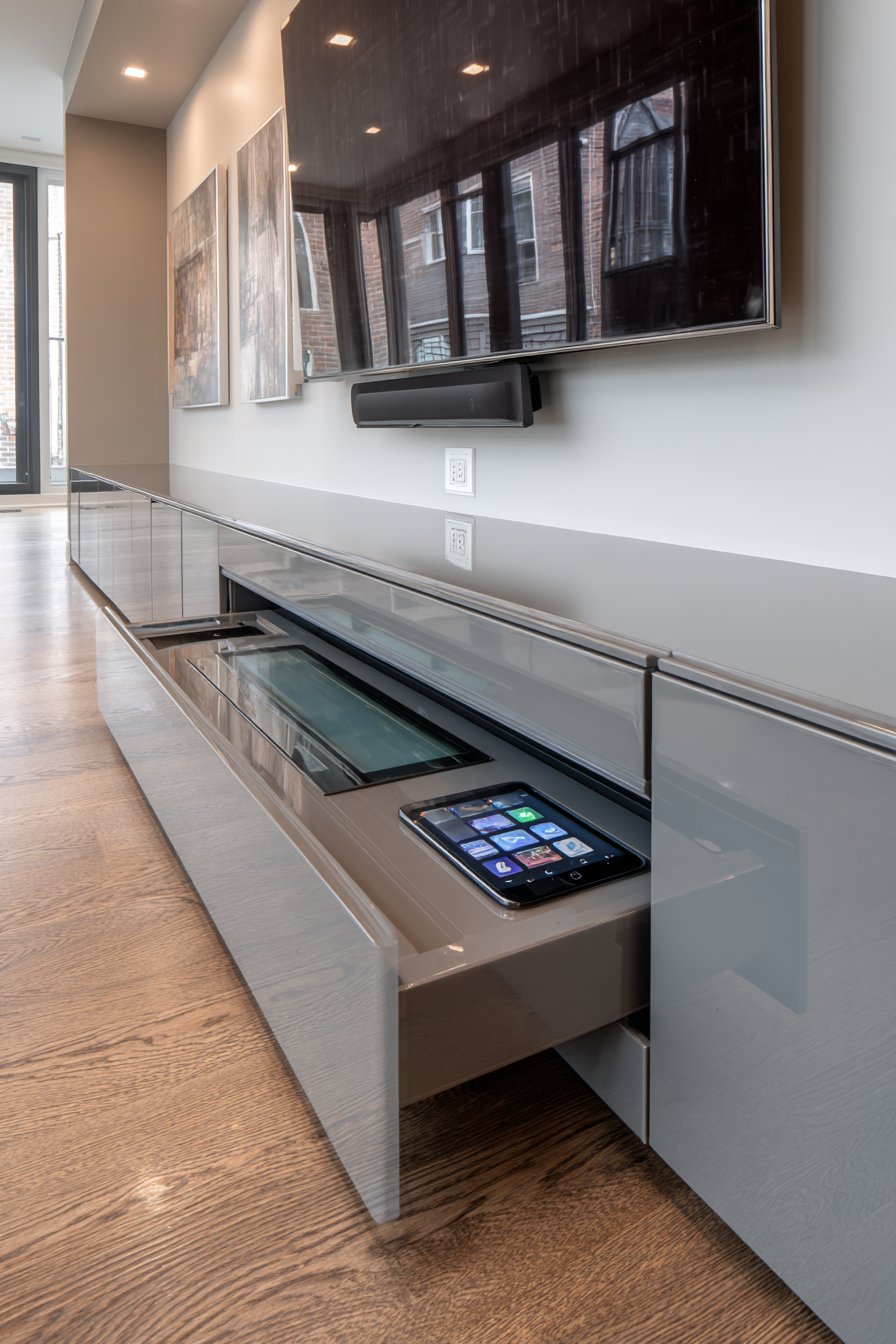
Hidden compartments with soft-close mechanisms house remotes, gaming controllers, and accessories, keeping these necessary items organized yet accessible. The soft-close technology prevents slamming and ensures whisper-quiet operation that maintains the sense of luxury and sophistication. Touch-sensitive surfaces eliminate visible buttons and switches, contributing to the credenza’s clean, uncluttered appearance. Wireless charging pads integrated into the surface allow phones and tablets to charge without visible cords.
The precision engineering required for motorized lift systems represents a significant investment, but the resulting flexibility and sophistication appeal to those seeking cutting-edge home automation. The system typically includes safety sensors that prevent operation if objects obstruct the mechanism, and backup manual controls ensure functionality even during power outages. This technology-forward approach to television walls demonstrates how smart home integration can solve design challenges while adding convenience. Key design tips include consulting with AV integration professionals to ensure proper installation and programming, selecting lift systems with sufficient weight capacity for your television, planning adequate ventilation since the television descends into an enclosed space, incorporating UPS battery backup to safely lower the TV during power outages, and choosing credenza finishes that coordinate with your overall design scheme.
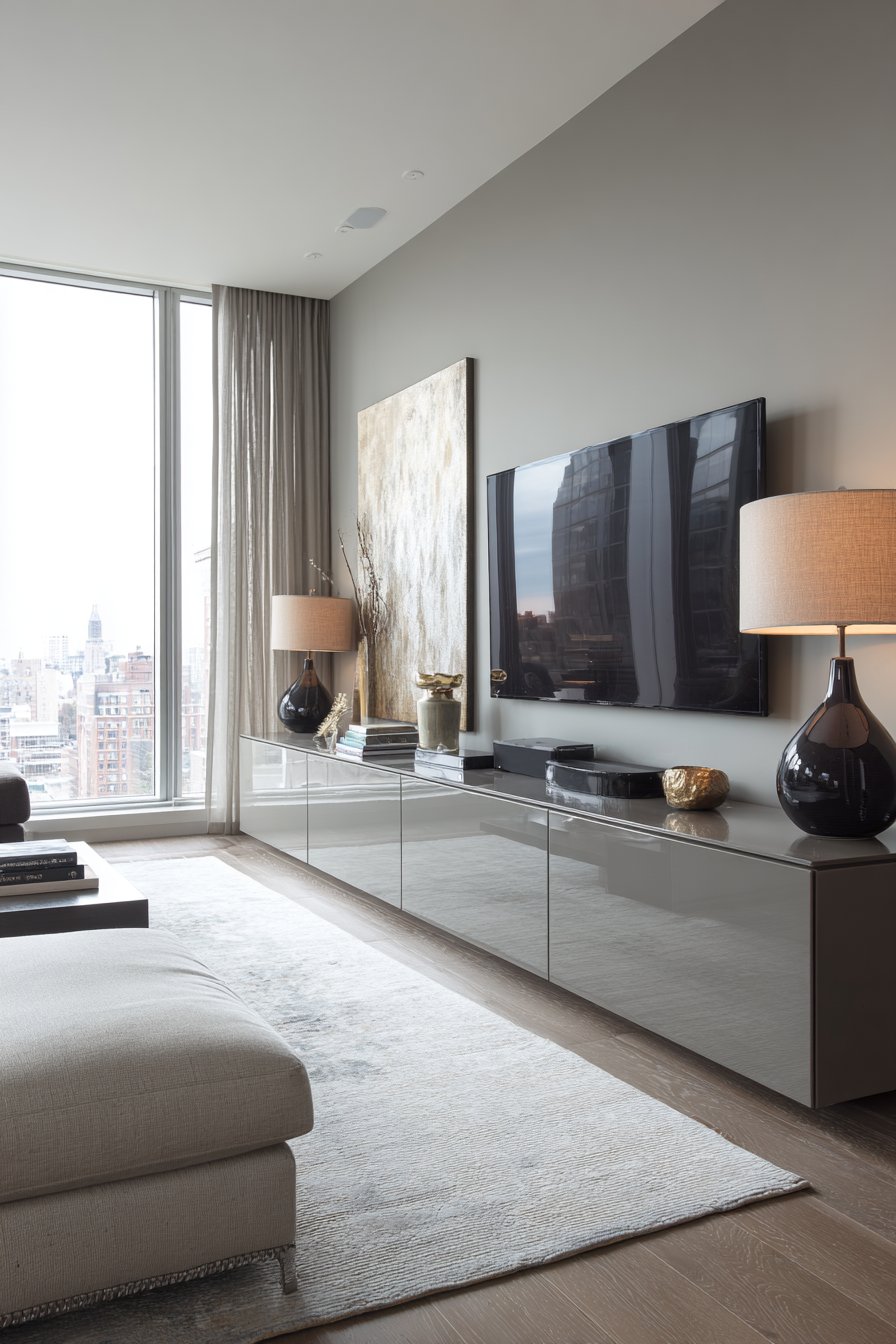
16. Compact Apartment Corner-Mounted Solution
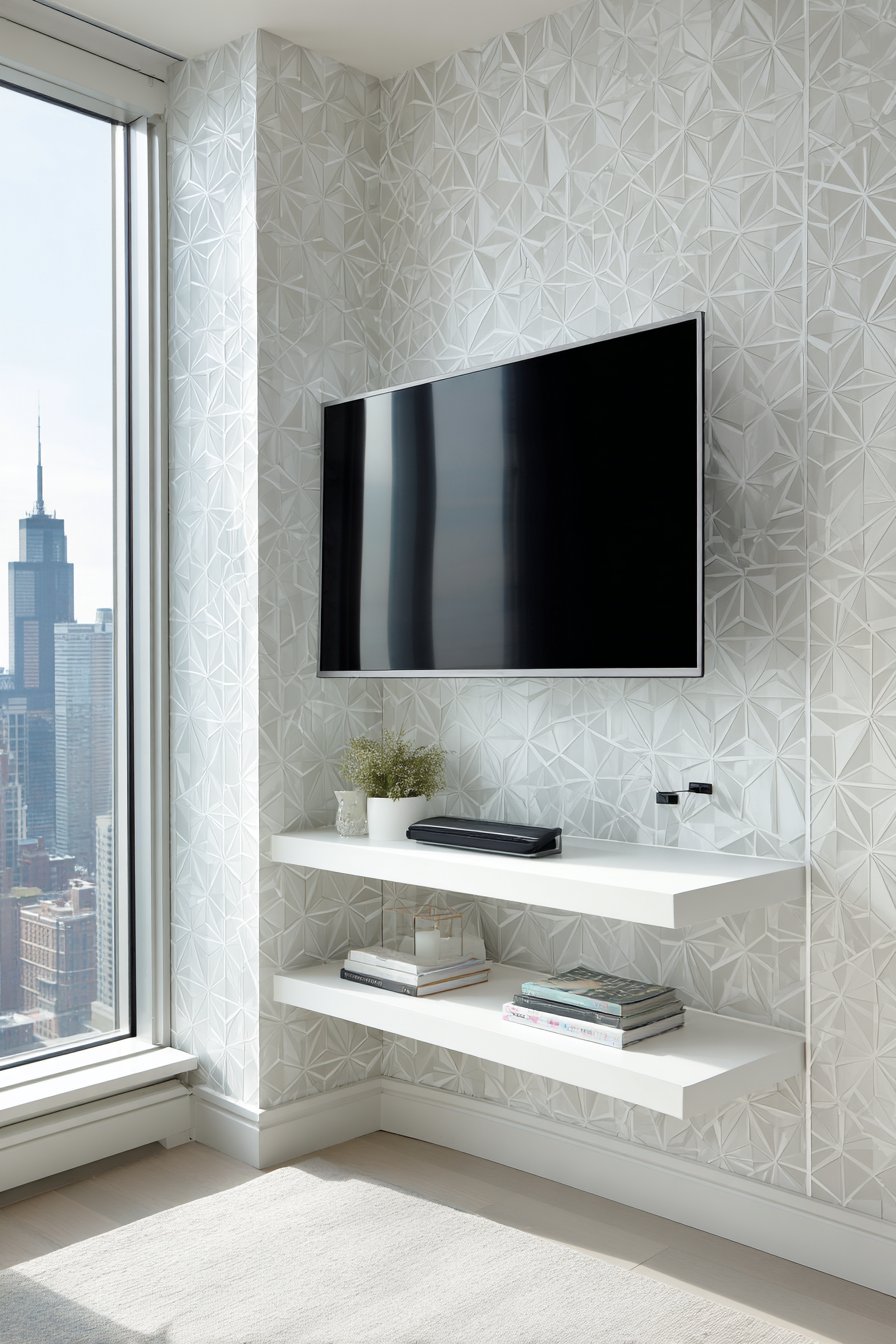
Small space living requires creative solutions that maximize functionality without overwhelming limited square footage. A corner-mounted television on an articulating arm bracket provides flexible viewing angles while utilizing wall space that might otherwise go unused. This approach frees up valuable floor space and allows the television to serve multiple seating areas within a compact layout. The articulating mount swivels and extends, adapting to different activities and viewing positions throughout the day.
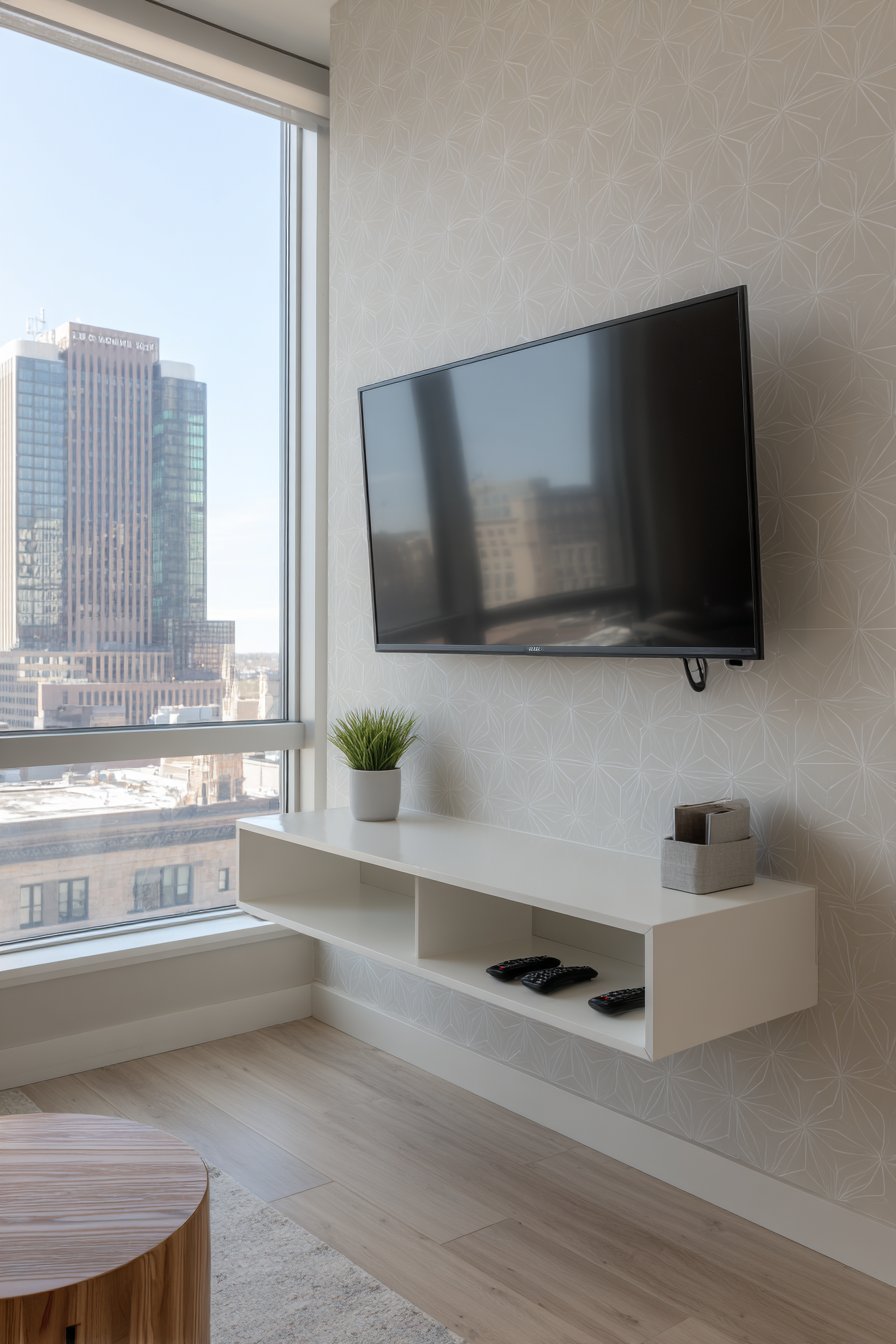
A narrow floating shelf in white melamine below the television provides essential media storage without visual bulk. The slender proportions ensure the shelf doesn’t protrude significantly into the room, maintaining the sense of openness critical in small spaces. White finish helps the shelf blend with walls, minimizing its visual presence while still providing functional storage. The floating installation keeps floor space clear, facilitating easier cleaning and creating the illusion of more spacious.
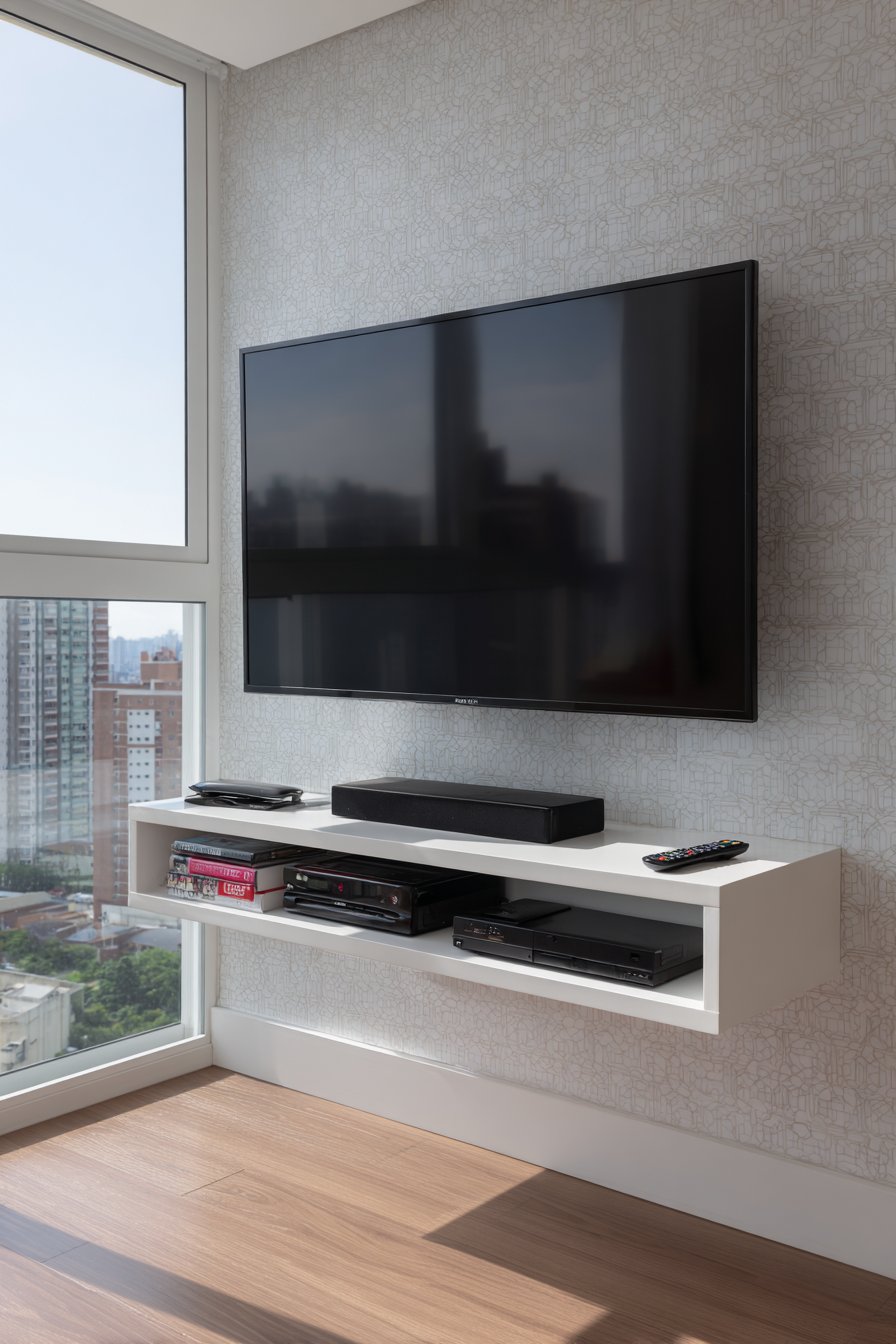
Subtle geometric wallpaper in light grey tones adds visual interest without overwhelming the compact wall. Pattern provides personality and sophistication while the light colors and small-scale design prevent the pattern from closing in the space. This approach demonstrates how small spaces can still incorporate decorative elements when chosen thoughtfully. The wallpaper transforms a potentially bland wall into an attractive backdrop that enhances rather than dominates the room.
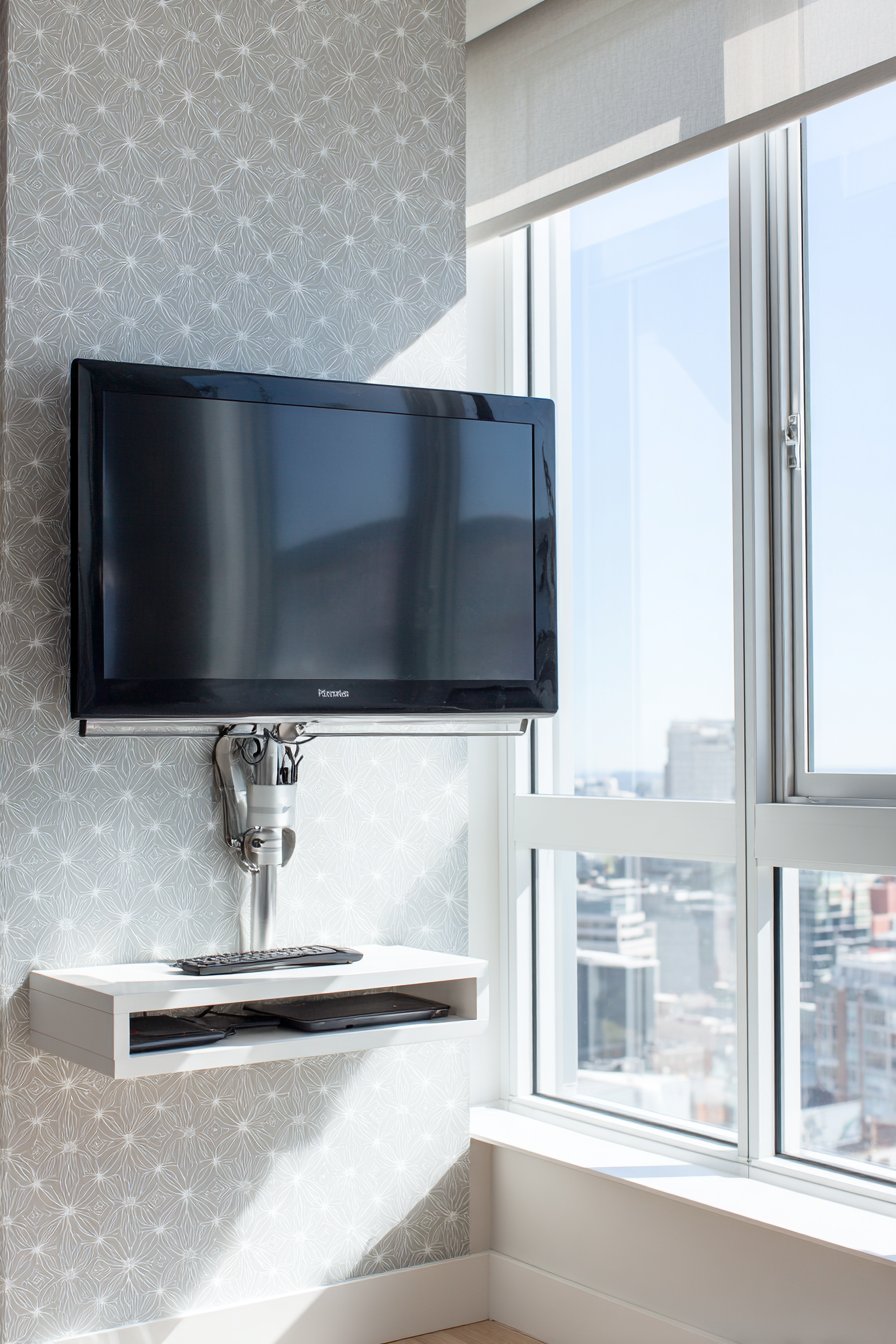
A small side pocket organizer holds remotes and keeps these essential items accessible without cluttering surfaces. This simple organizational tool prevents the common problem of lost remotes while maintaining the tidy appearance necessary in small spaces where clutter quickly becomes overwhelming. The overall approach prioritizes space efficiency, flexibility, and visual lightness. Key design tips include measuring the corner angles carefully before purchasing mounting brackets designed for corners, selecting articulating mounts that can be fully retracted when not in use, keeping the color palette light and neutral to maximize the sense of space, incorporating vertical storage solutions to utilize wall height, and using mirrors strategically to reflect light and create the illusion of expanded space.
17. Art Gallery Wall Integration
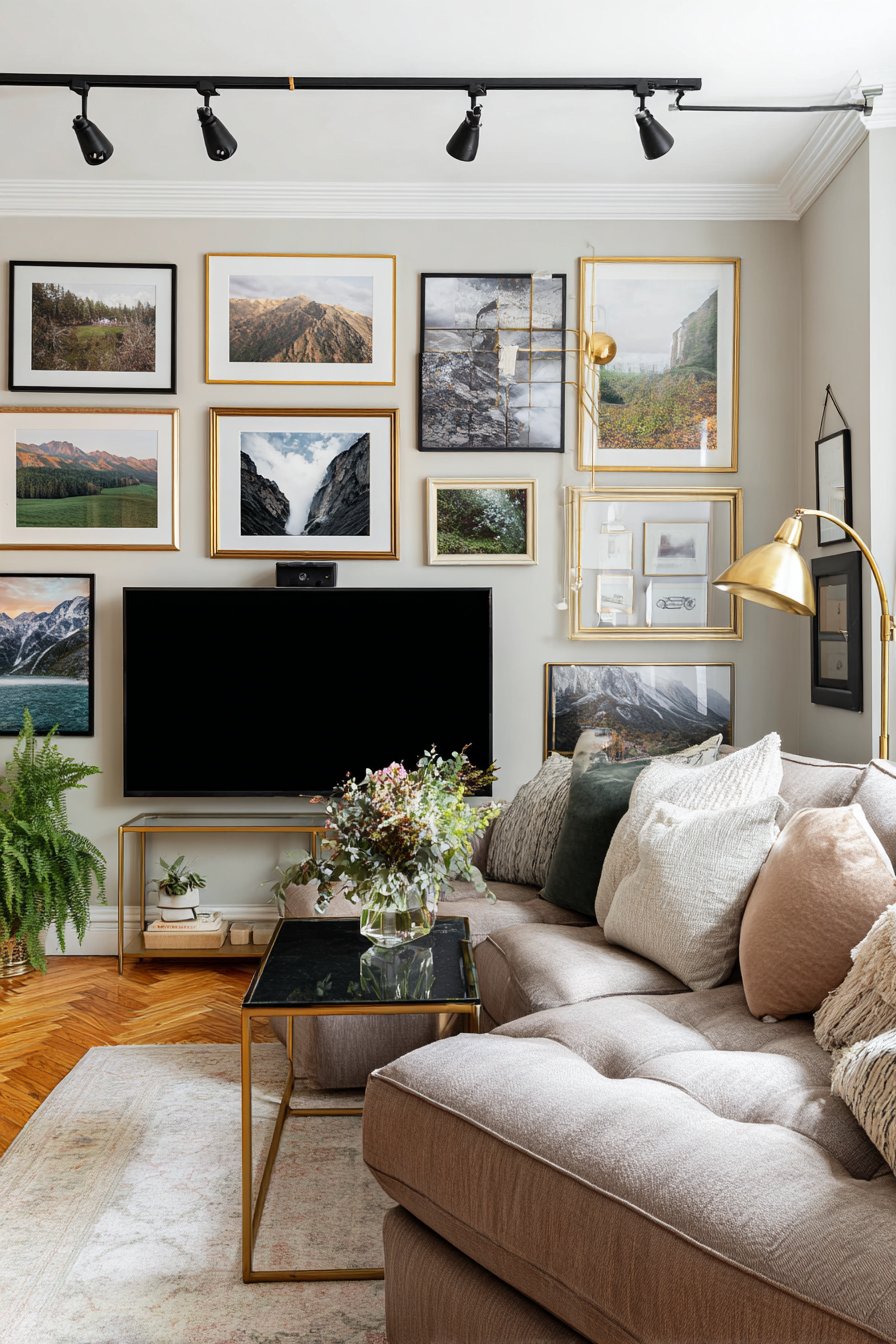
Treating the television as part of a larger art wall creates sophisticated integration that celebrates both entertainment technology and visual art. The television surrounded by a symmetric arrangement of black-framed prints and photography transforms what could be a technological eyesore into part of a curated gallery display. When the screen is off, its black surface blends seamlessly with the surrounding black frames, maintaining the gallery wall aesthetic. This clever camouflage demonstrates how thoughtful planning can minimize technology’s visual impact.
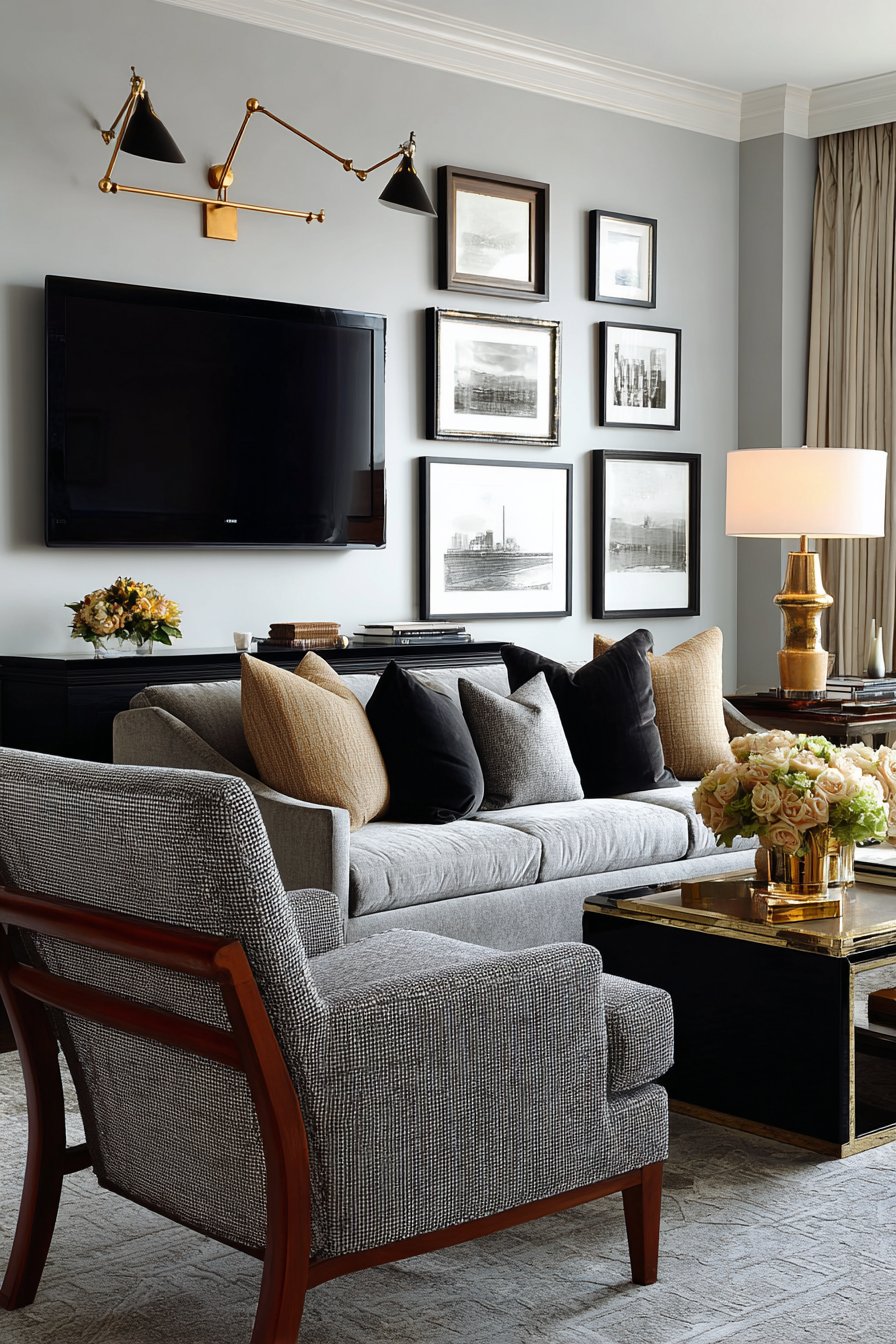
The arrangement of frames in various sizes creates visual rhythm and interest while maintaining cohesive symmetry. Careful spacing ensures each piece has adequate breathing room, following gallery principles of display. The black frames create visual continuity and contemporary elegance while allowing the artwork within to shine. This monochromatic frame treatment prevents the wall from feeling chaotic despite the multiple pieces displayed. The composition works as a unified whole rather than a collection of separate elements.
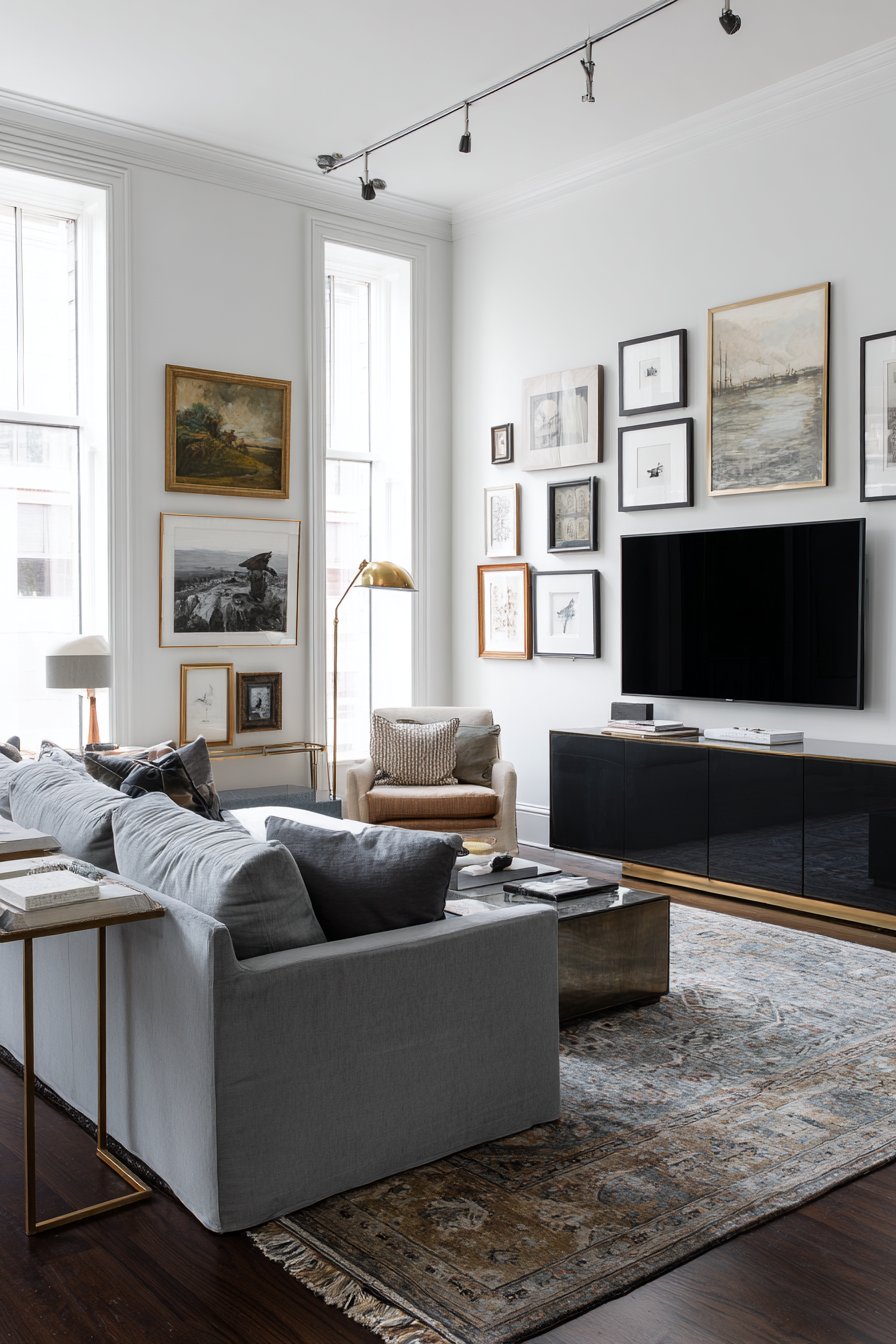
A slim console table in brushed brass and smoked glass adds elegance and refinement below the gallery wall. The metallic brass finish introduces warmth and luxury while the transparent smoked glass maintains visual lightness. This sophisticated furniture piece provides surface area for decorative objects and practical items without blocking the view of lower artwork. The elevated legs create negative space beneath that contributes to the airy, gallery-like feeling.
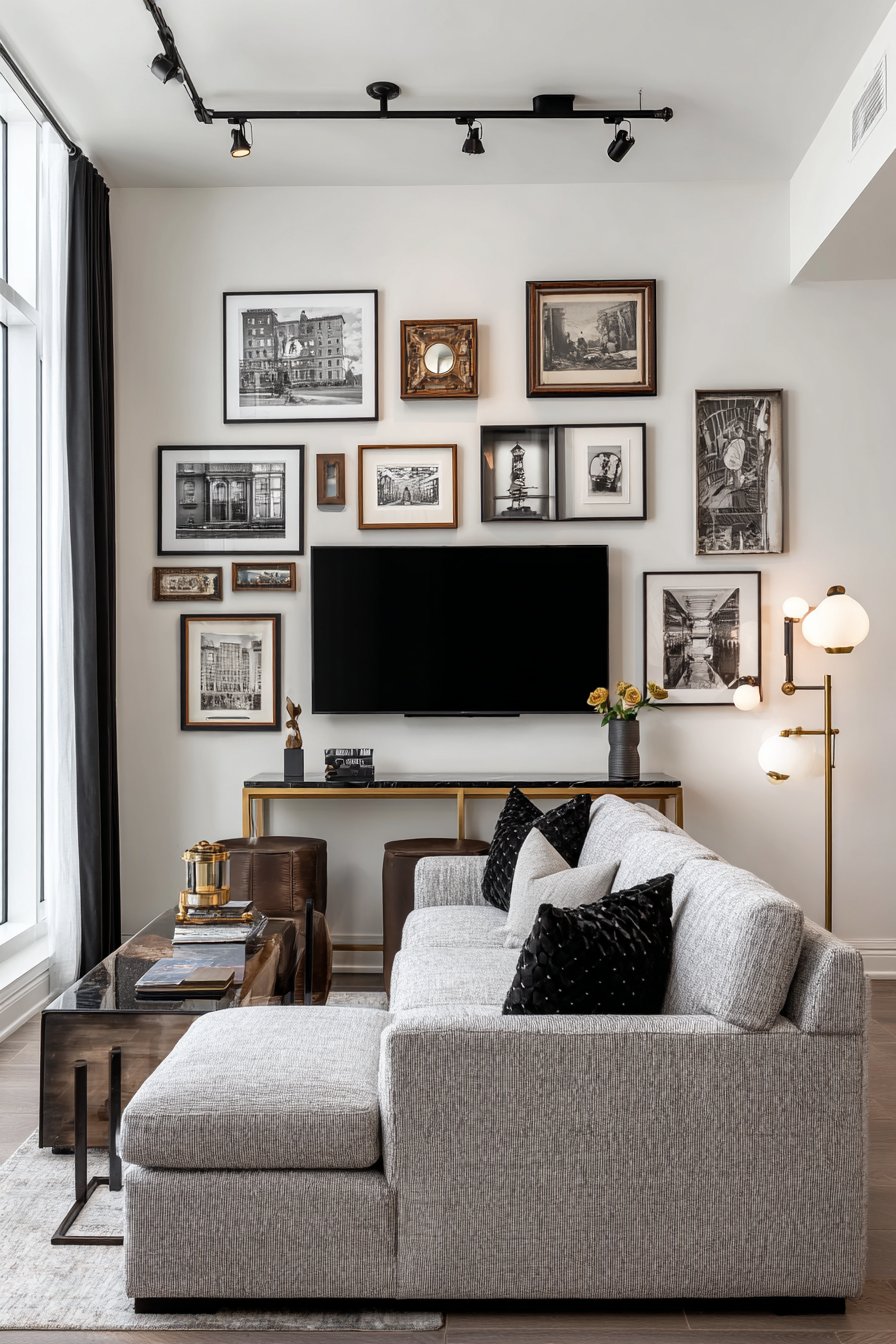
Gallery-style lighting from picture lights and track lighting above ensures proper illumination of artwork while creating dramatic ambiance. Adjustable track lights can be directed to highlight specific pieces, creating layers of light that add depth and professionalism to the display. Picture lights mounted above individual frames provide focused illumination that brings out colors and details. This thoughtful lighting design transforms the television wall into a museum-quality display. Key design tips include mapping out the entire arrangement on paper before drilling any holes, using templates or paper cutouts to visualize spacing and placement on the wall, selecting artwork that shares common elements like color palette or subject matter for cohesion, ensuring the television size coordinates proportionally with surrounding frame sizes, and installing dimmer switches on all lighting to adjust ambiance for viewing versus displaying.
18. Three-Dimensional Textured Geometric Panels
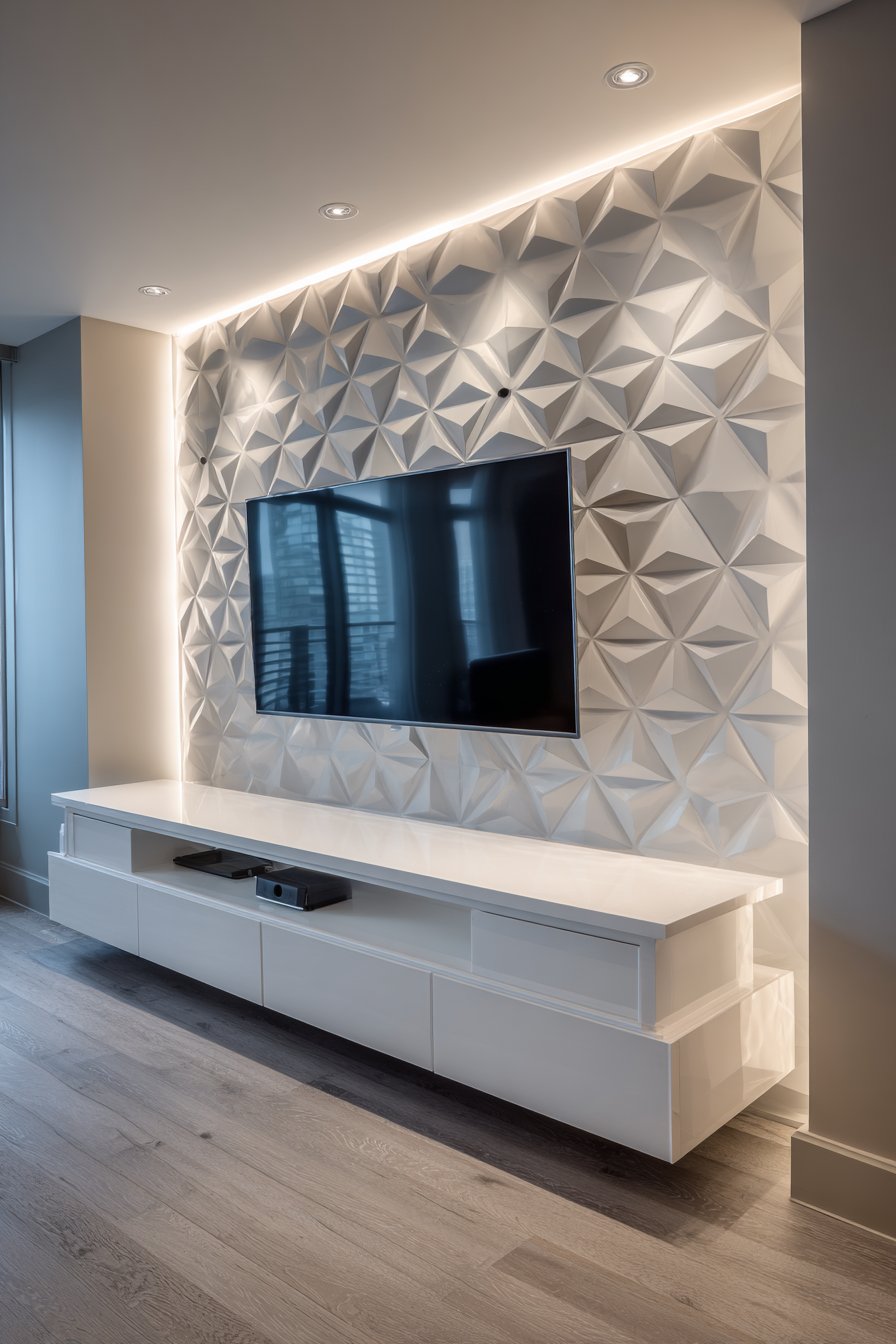
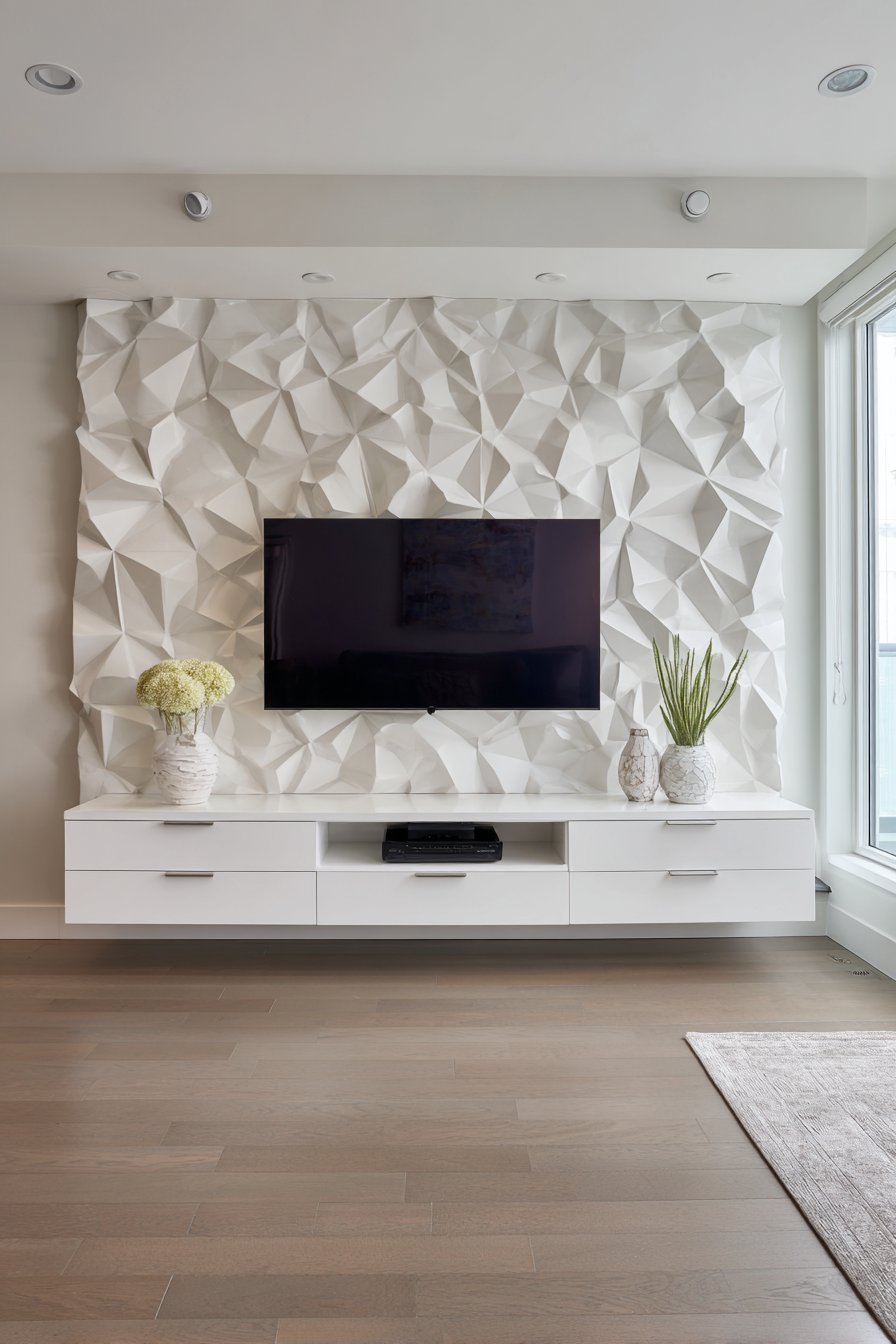
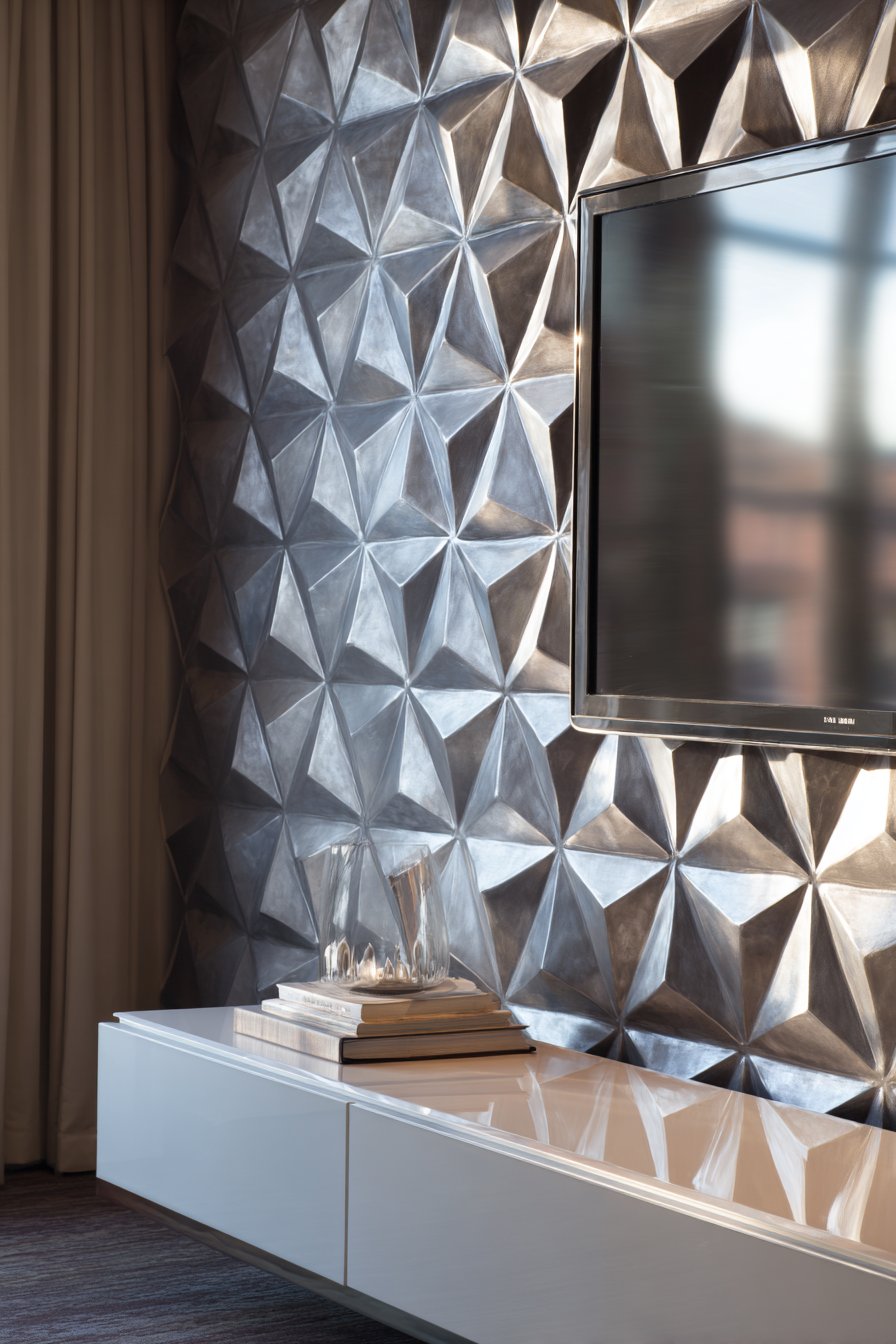
Contemporary sculptural wall panels featuring geometric three-dimensional patterns create television walls with exceptional depth and visual drama. The dimensional facets catch and reflect light differently throughout the day, creating ever-changing shadow patterns and highlights. This dynamic quality ensures the wall never appears static or boring, providing constantly evolving visual interest. The matte grey finish prevents harsh reflections while showcasing the sculptural qualities of the textured surface.
The geometric patterns range from subtle undulations to bold angular protrusions, allowing customization based on personal taste and room style. These dimensional panels often come in modular formats that can be arranged in various configurations, providing flexibility in design. The panels’ texture creates acoustic benefits as well, helping to dampen sound reflections and improve audio quality—an often-overlooked consideration in television wall design. The practical and aesthetic benefits combine to create walls that perform as well as they look.
Integrated LED perimeter lighting creates dramatic shadow emphasis that highlights the panels’ sculptural quality. This backlighting transforms the wall into an illuminated artwork, with light and shadow playing across the dimensional surfaces. The LED strips can often be programmed to change colors or intensity, allowing the wall’s appearance to shift with different moods and occasions. During movie viewing, the lighting can be dimmed; during gatherings, it can provide ambient illumination that sets the tone.
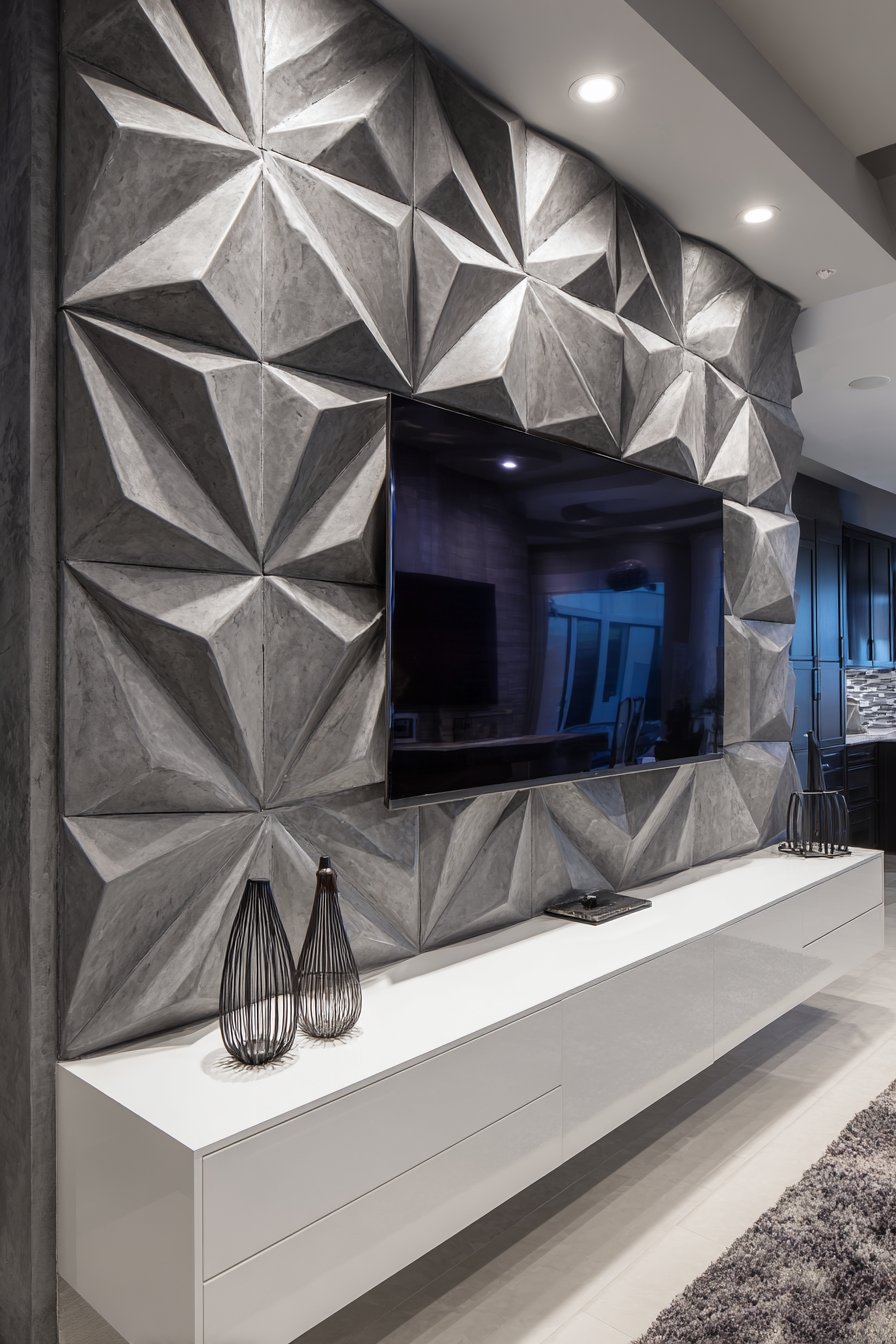
A floating media console in high-gloss white lacquer provides stark contrast against the textured grey wall. The smooth, reflective surface plays against the matte, dimensional wall covering, creating material dialogue that adds sophistication to the design. The sharp white of the console pops visually against the grey backdrop, ensuring the storage component remains a distinct element within the composition. This contrast demonstrates how pairing opposite finishes—matte and glossy, textured and smooth—creates dynamic visual interest. Key design tips include planning electrical routing for LED lighting before panel installation, selecting panels with sufficient depth to create meaningful shadows without protruding too far, ensuring proper mounting substrates can support the panel weight, coordinating the LED color temperature with room lighting for cohesive ambiance, and considering acoustic properties if sound quality is a priority in your living room.
19. Transitional Built-In Bookshelf Wall
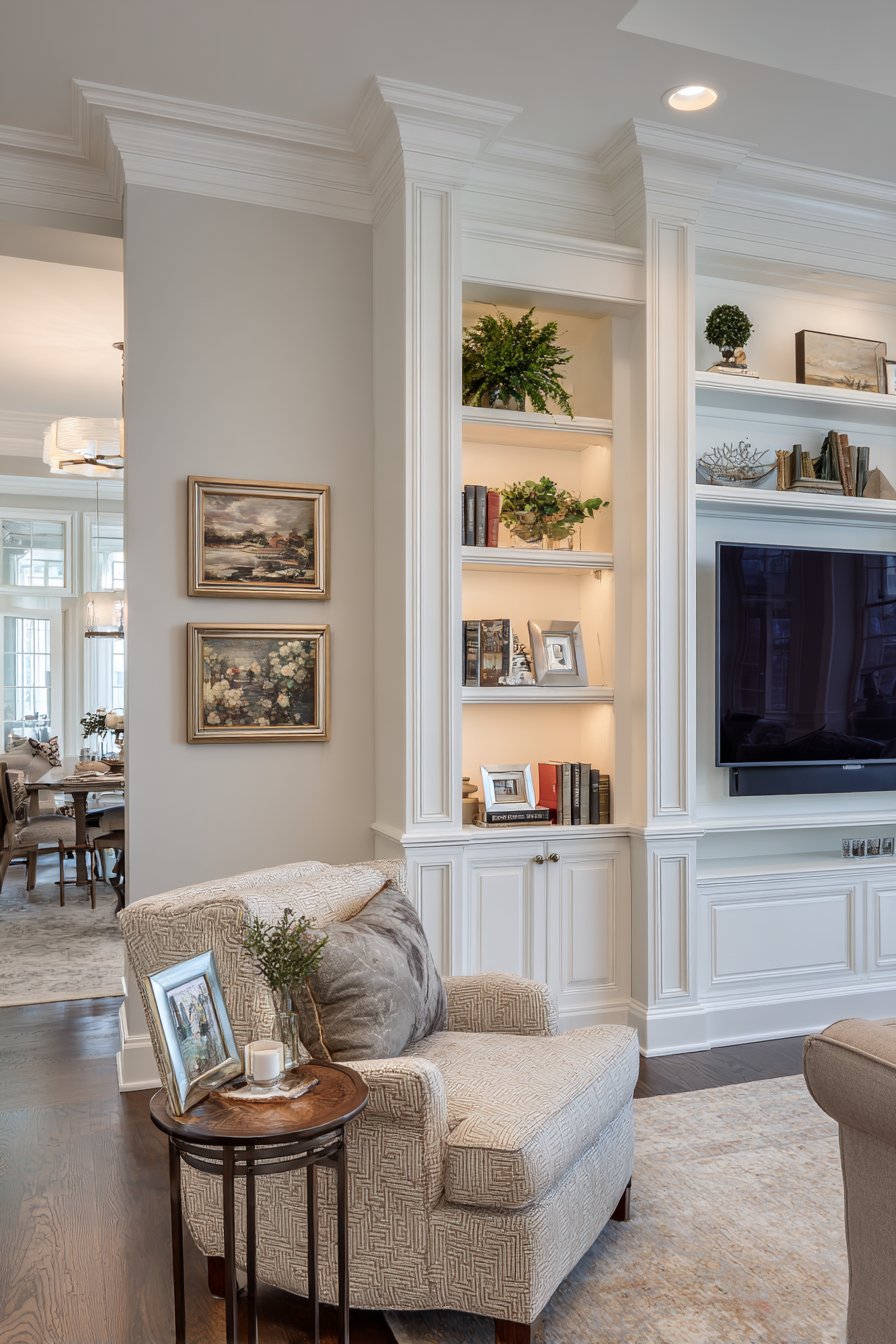
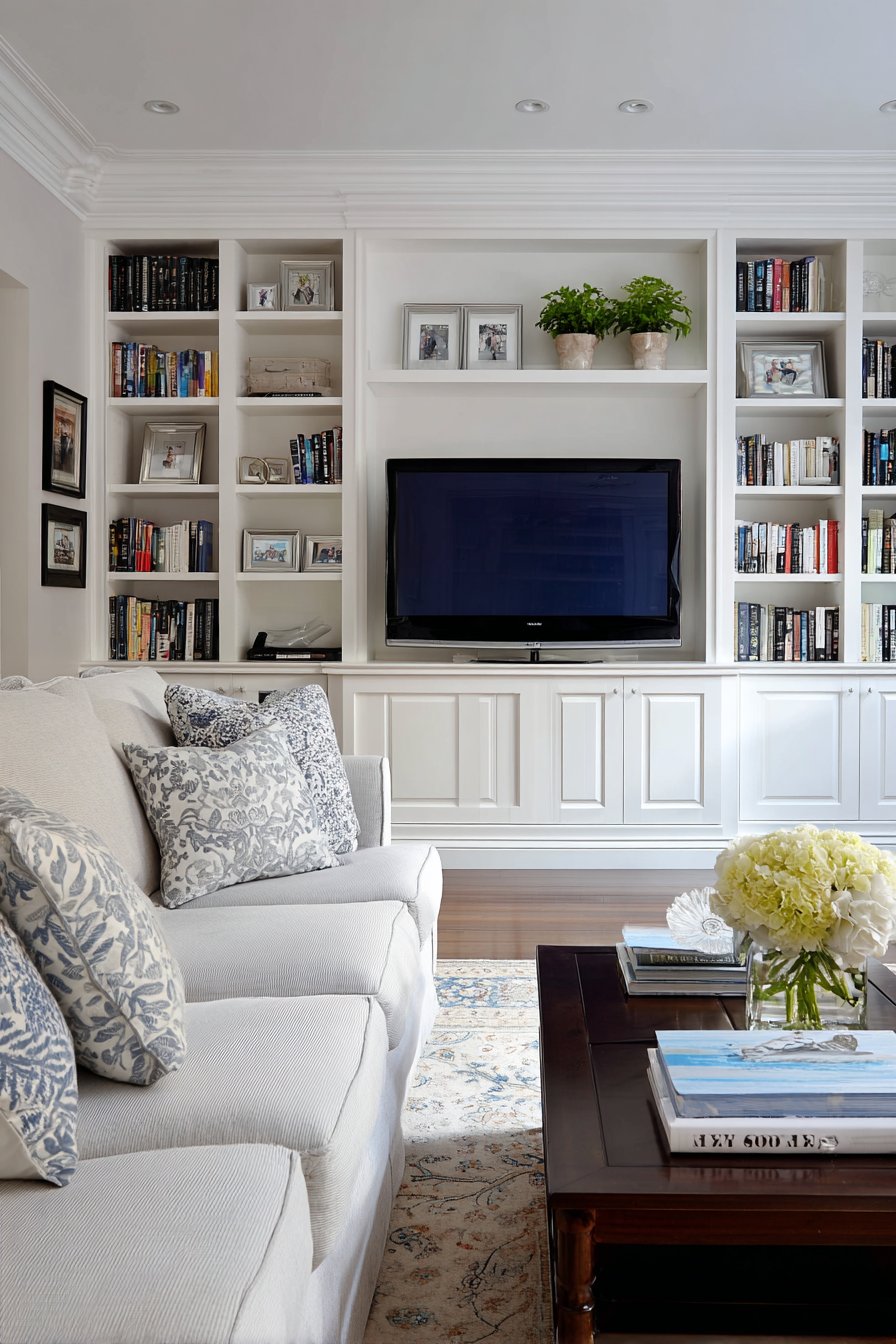
Transitional design bridges traditional and contemporary aesthetics, creating television walls that feel both timeless and current. Built-in bookshelves surrounding the television combine classic white-painted millwork with modern clean lines. The traditional language of trim, frames, and detailed molding grounds the design in classical principles while simplified profiles and minimal ornamentation acknowledge contemporary preferences. This balanced approach creates spaces that appeal to broad tastes and remain relevant through changing trends.
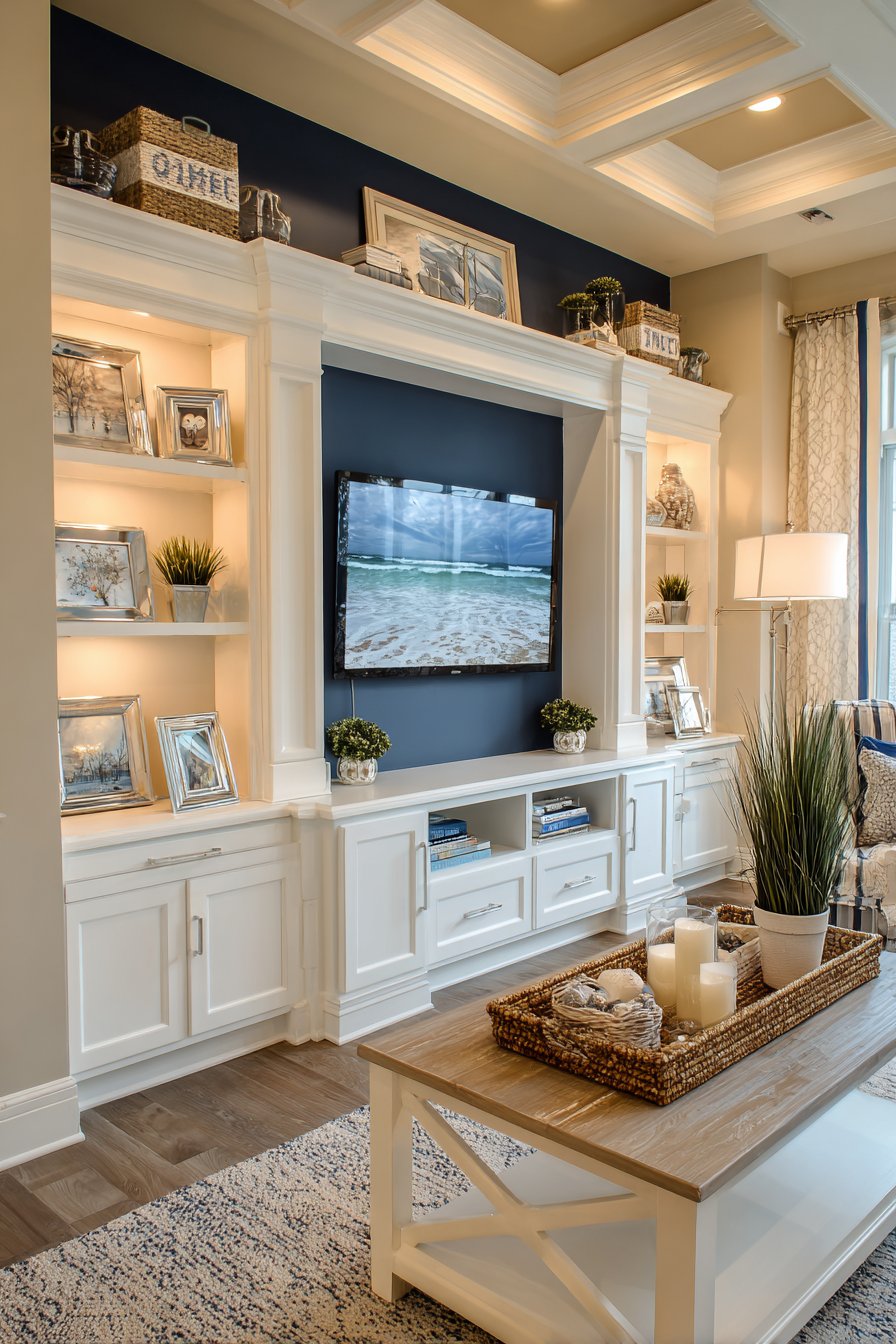
Navy blue painted shelf interiors provide dramatic depth and visual surprise within the white framework. This bold interior color adds contemporary edge while maintaining the sophistication expected in transitional spaces. The dark backdrop makes displayed books, photos, and objects pop visually, creating a gallery-like effect for your personal collections. The navy blue introduces color without overwhelming the space, demonstrating restraint even while being bold.
Decorative molding creating a frame effect around the television elevates the screen from technological necessity to intentional design element. This framing treatment gives the television importance and permanence within the composition, suggesting it belongs rather than merely being mounted as an afterthought. The molding bridges the traditional bookshelf aesthetic with modern technology, creating visual continuity across the entire wall. This thoughtful detail demonstrates the care and intentionality that characterizes successful transitional design.
Styled shelves displaying books, family photos in silver frames, and small potted plants create lived-in warmth. The mix of practical books, meaningful personal photographs, and living greenery reflects how real people actually use their homes. This authentic styling prevents the built-in from feeling like a showroom display while demonstrating the versatility of transitional design to accommodate both formal and casual elements. The silver frames add metallic shine that catches light and adds elegance. Key design tips include painting all millwork in the same white for visual continuity, selecting a navy blue with enough depth to provide contrast without appearing black, incorporating LED tape lighting under shelves to illuminate displayed items, mixing book orientations—some vertical, some horizontal—for visual interest, and including adjustable shelving to accommodate changing needs and collections over time.
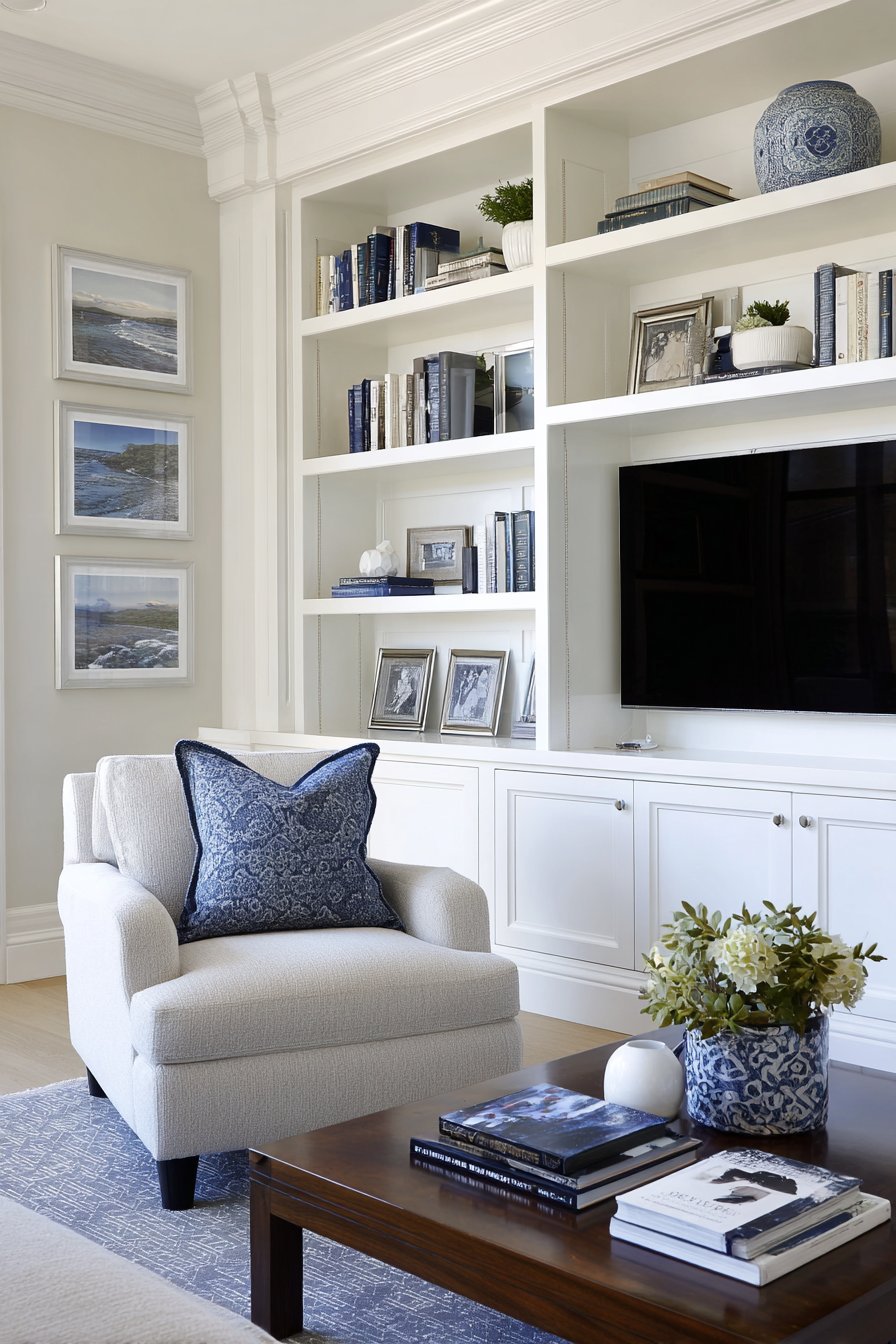
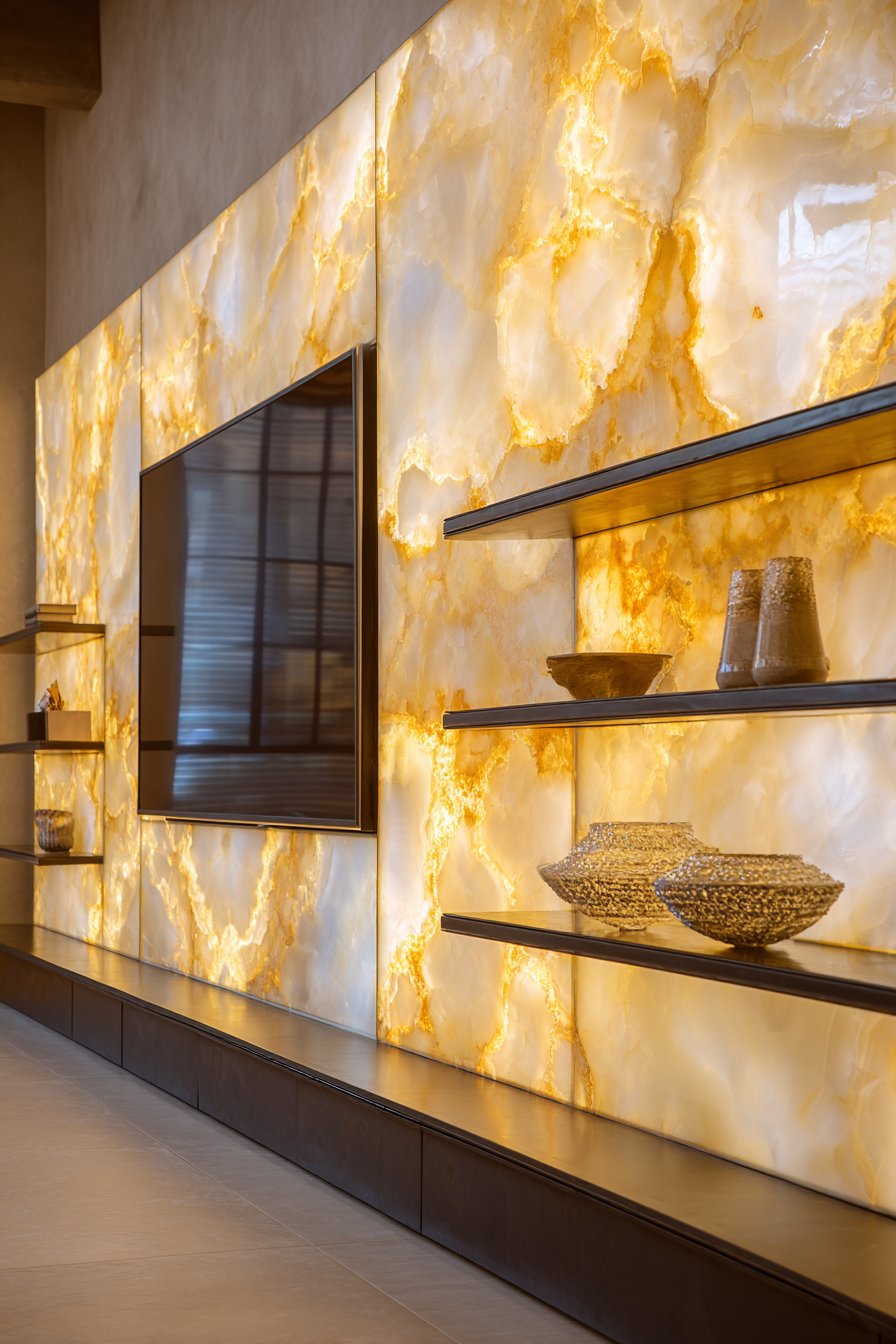
20. Backlit Onyx Stone Luxury Feature
Backlit onyx stone represents the ultimate in luxury television wall treatments. The honey-toned translucent stone with natural veining patterns creates ethereal beauty when illuminated from behind. Each onyx slab displays unique geological patterns formed over millennia, ensuring your television wall becomes a singular artistic installation. The luminous quality of backlit onyx creates ambiance that transforms the room, bathing it in warm, amber light that feels both ancient and modern.
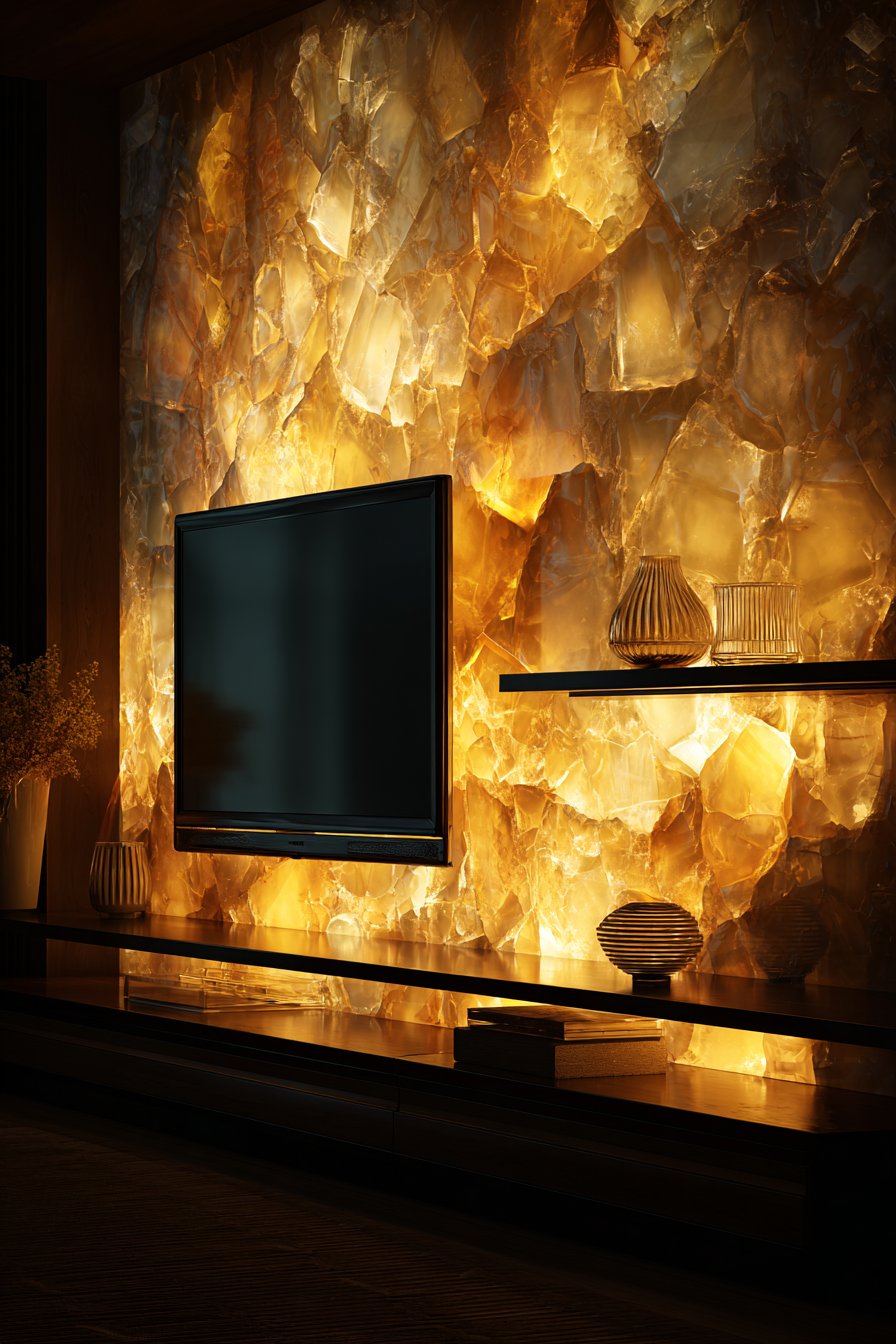
The television appears to float against this dramatic glowing backdrop, creating a truly spectacular focal point. The technological precision of modern displays paired with the organic beauty of natural stone creates compelling contrast—the pinnacle of manufactured technology against one of earth’s most ancient materials. The minimal mounting hardware becomes invisible against the dramatically lit stone, maintaining focus on the stunning material. This integration requires expert installation and planning but delivers unparalleled visual impact.
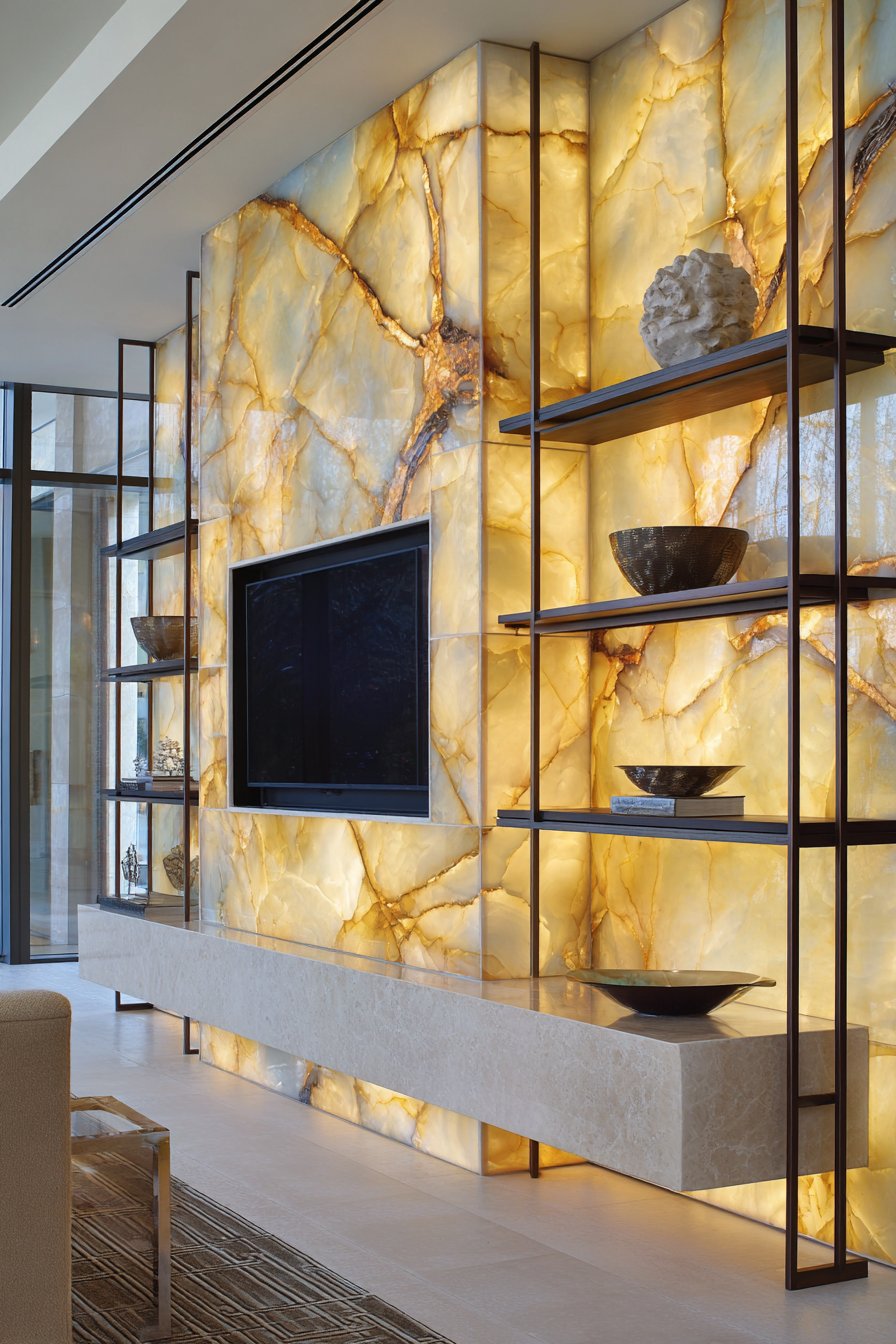
Minimal flanking shelves in bronze-finished metal hold carefully selected decorative objects that complement rather than compete with the onyx. The warm metallic finish harmonizes with the honey tones in the stone while adding reflective surfaces that catch and multiply the ambient light. These shelves remain sparse and uncluttered, understanding that the backlit stone itself provides all the visual interest required. The few displayed objects should be sculptural and significant, worthy of appearing alongside such luxurious materials.
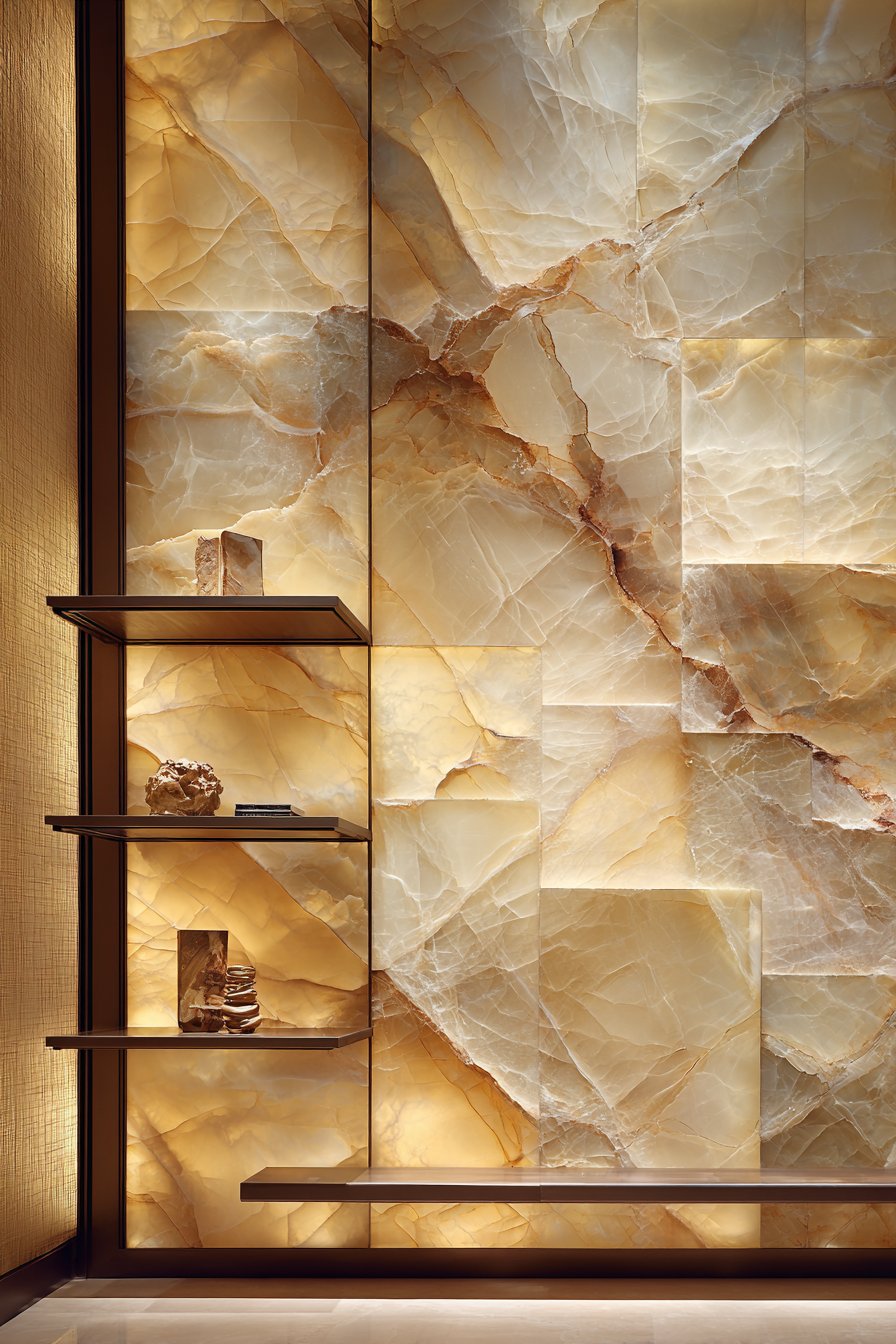
The lighting system behind the onyx can be controlled and dimmed, allowing the wall’s intensity and mood to be adjusted throughout the day. During daylight hours, minimal backlighting maintains the stone’s natural beauty; in evening, increased illumination creates dramatic ambiance for entertainment and gathering. The warm glow creates inviting atmosphere that draws people into the space. The installation requires careful attention to heat management, ensuring LED lighting systems don’t overheat within the wall cavity. Key design tips include selecting onyx slabs with translucency suitable for backlighting, working with stone fabricators experienced in backlit applications, using LED systems with appropriate color temperature to enhance the stone’s natural warm tones, planning adequate ventilation to dissipate heat from lighting systems, and incorporating dimming controls to adjust intensity for different times of day.
21. Eclectic Vintage Window Frame Repurposed
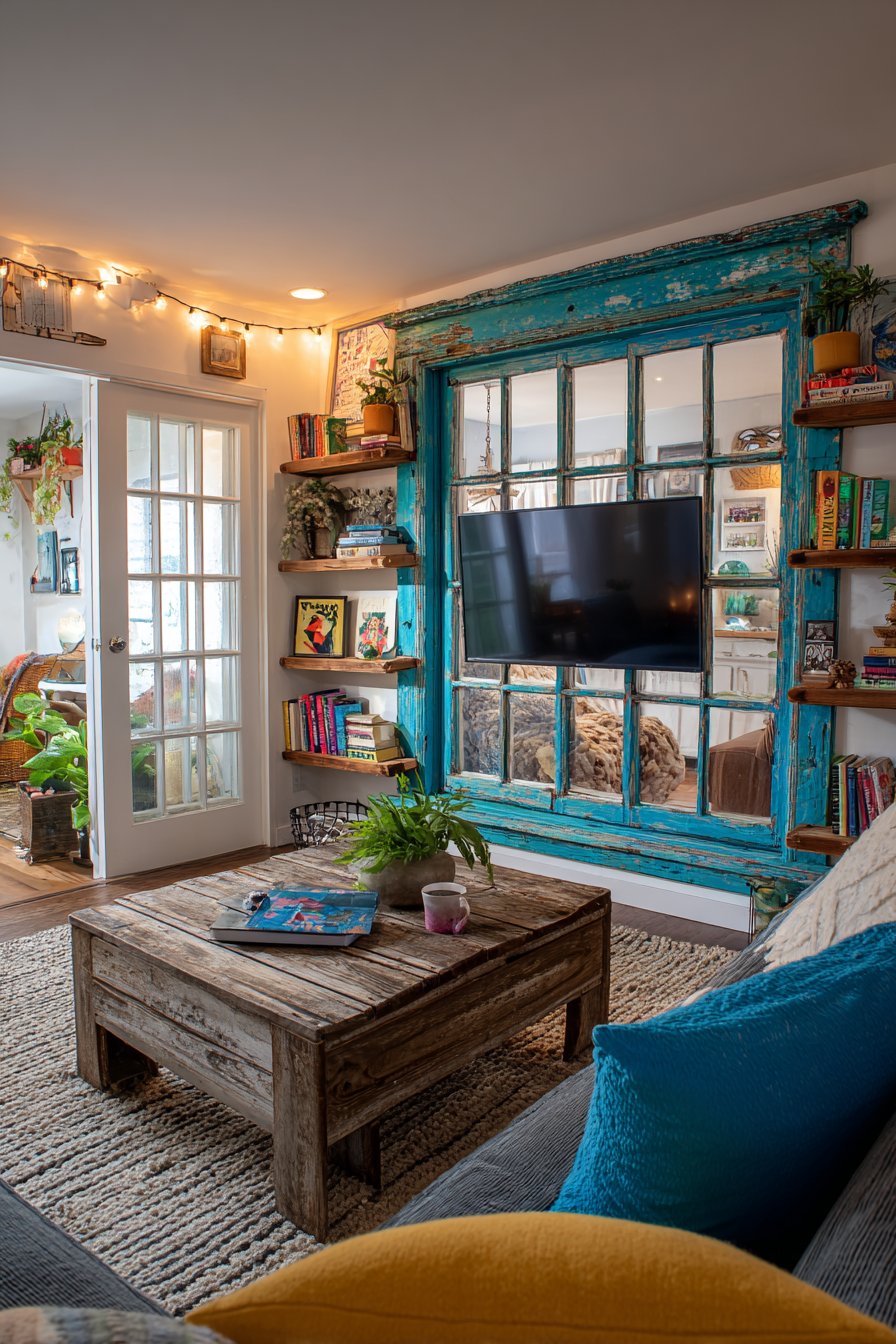
Creative repurposing of architectural salvage creates television walls with unique character and sustainable appeal. A vintage multi-pane window frame painted in distressed turquoise creates an unconventional surround for the mounted television. The individual panes of the window frame create sections around the screen, transforming standard TV mounting into artistic installation. This approach demonstrates how thinking beyond traditional furniture and materials can yield surprising, personalized results.
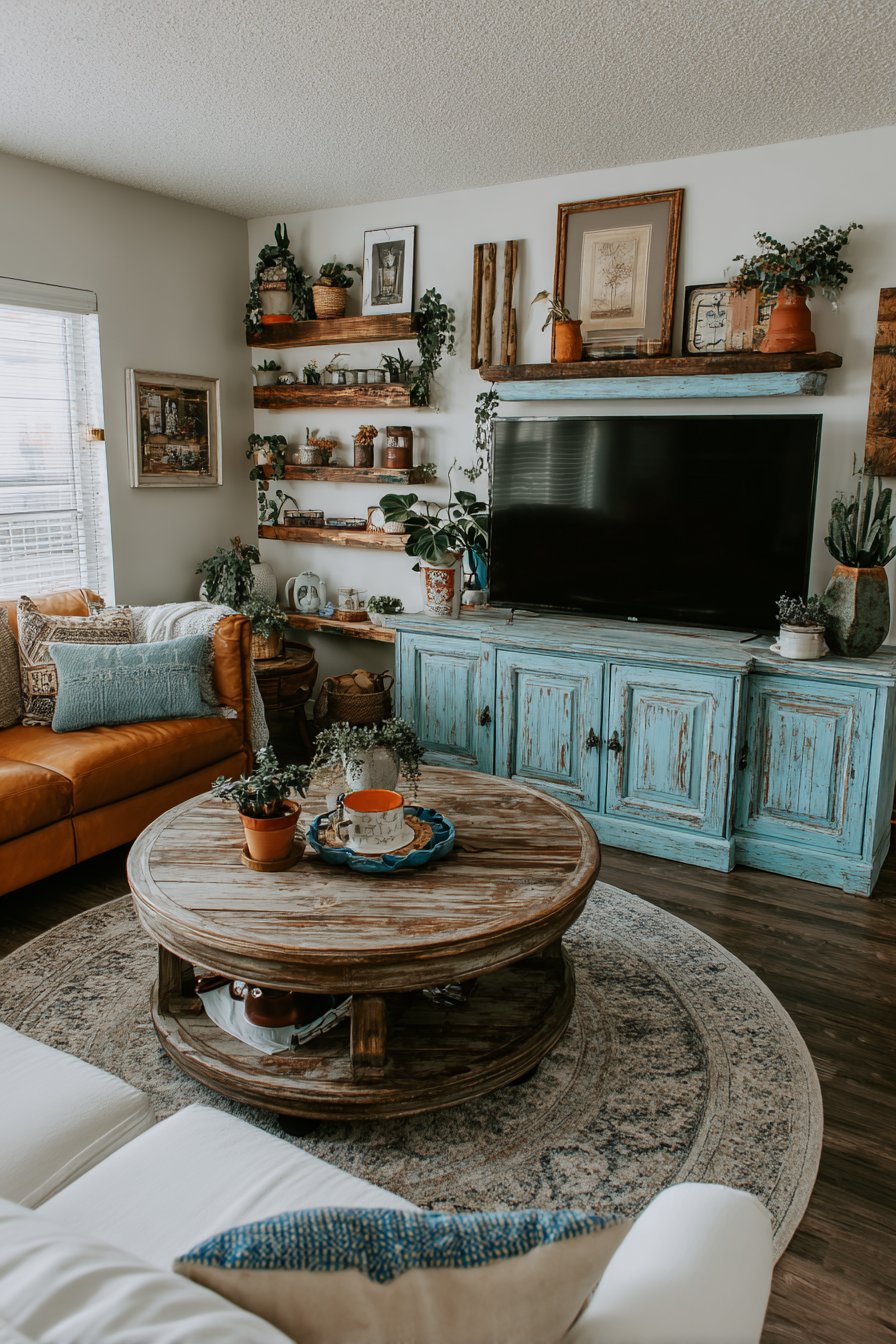
Mismatched floating shelves in various wood tones and finishes celebrate eclectic design principles where perfection matters less than personality. Each shelf tells its own story, perhaps salvaged from different sources or chosen for unique characteristics. This intentional mismatch creates visual interest and reflects the collector’s aesthetic that defines eclectic style. The varying depths, lengths, and finishes prevent monotony and encourage creative display arrangements.
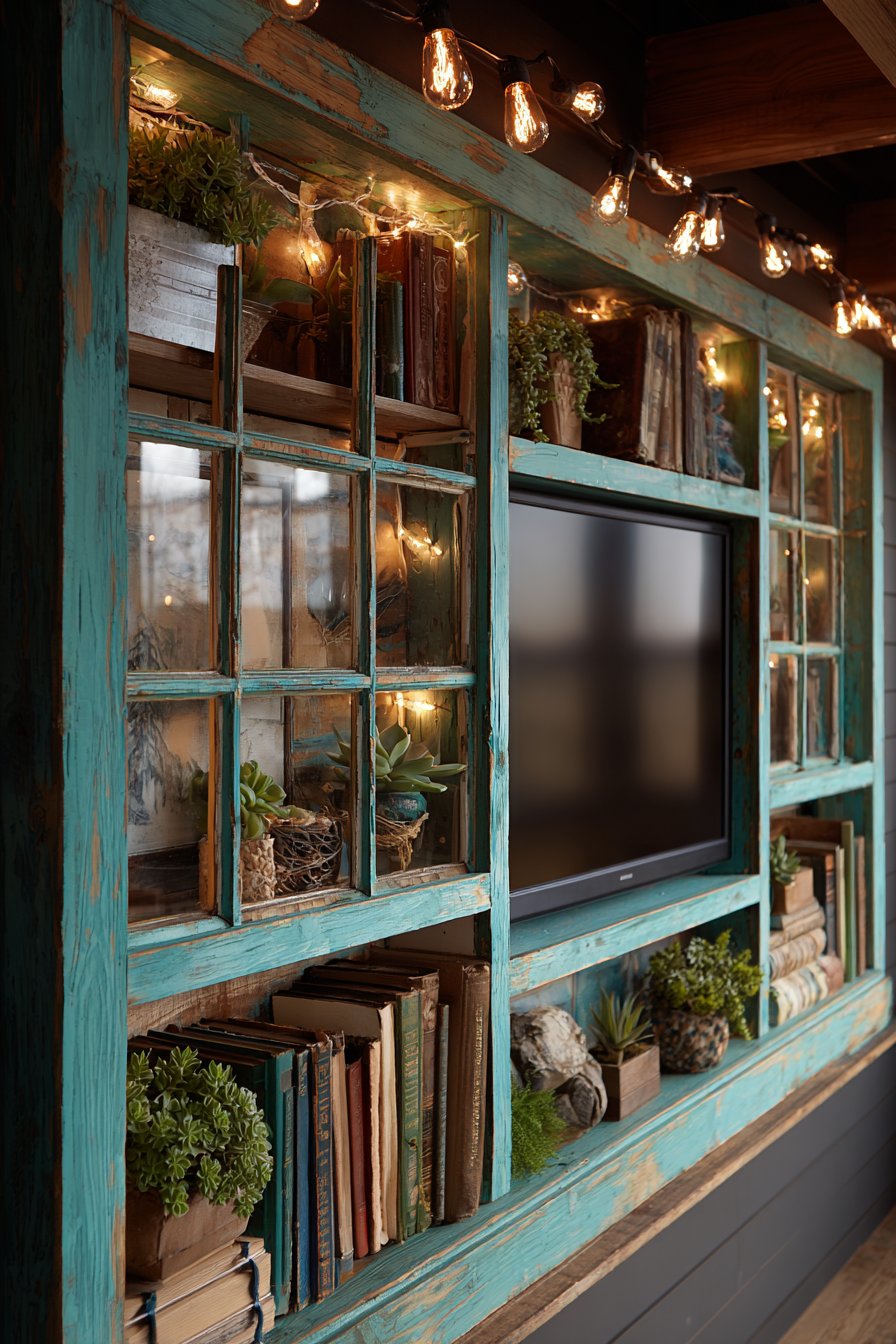
The shelves hold an assortment of plants, books, and quirky collectibles that express personal interests and style. Succulents in mismatched pots, vintage cameras, travel souvenirs, and beloved books create displays that feel authentic and collected over time. This approach to styling emphasizes individuality over design rules, creating spaces that truly reflect the inhabitants. String lights woven through the shelving add whimsy and create ambient sparkle, especially appealing during evening hours.
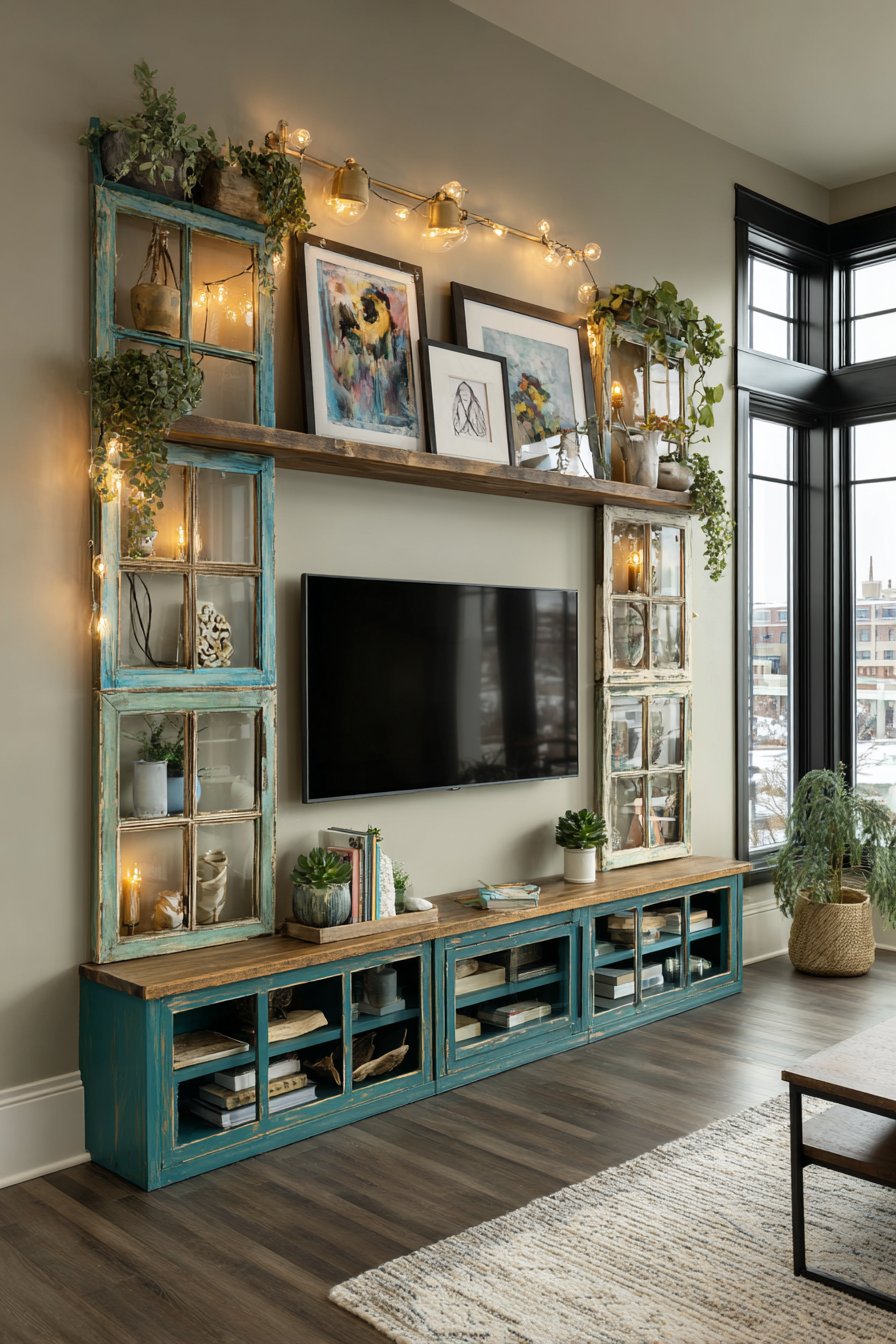
The distressed turquoise paint on the window frame adds color without excessive commitment, since the frame could be repainted if tastes change. The weathered finish suggests history and character, avoiding the too-precious feeling of new furniture. The creative reuse of architectural salvage also appeals to environmentally conscious homeowners seeking sustainable design solutions. This approach requires some DIY skills or working with craftspeople who can modify salvaged materials for modern applications. Key design tips include ensuring vintage window frames are properly cleaned and sealed before use, securing the frame safely to wall studs to support the television weight, considering whether glass panes should remain, be replaced with mirrors, or be removed entirely, balancing the eclectic shelving with some unifying element like similar bracket styles, and embracing the imperfect, collected aesthetic rather than trying to make everything match perfectly.
22. Sophisticated Monochromatic Grey and White
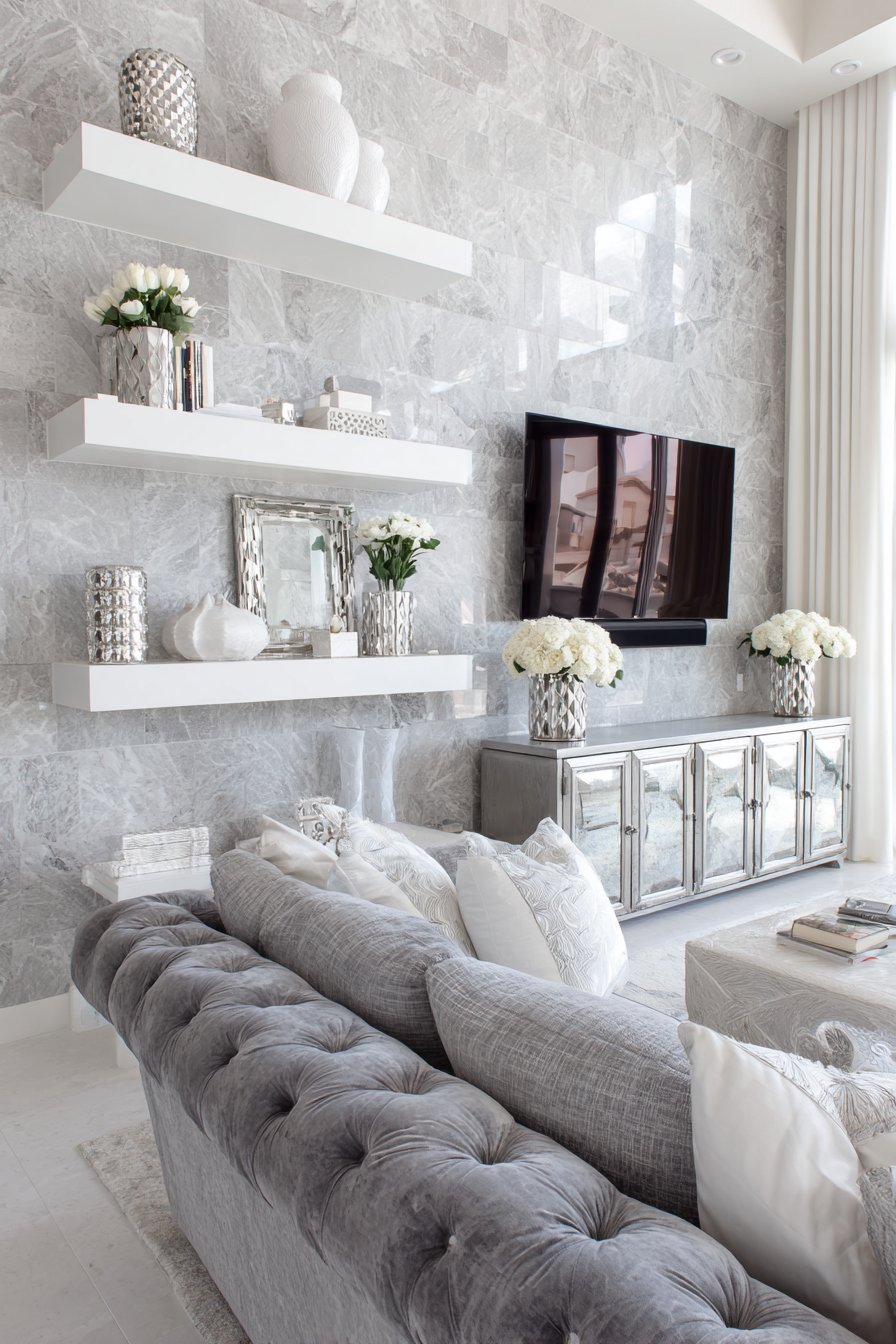
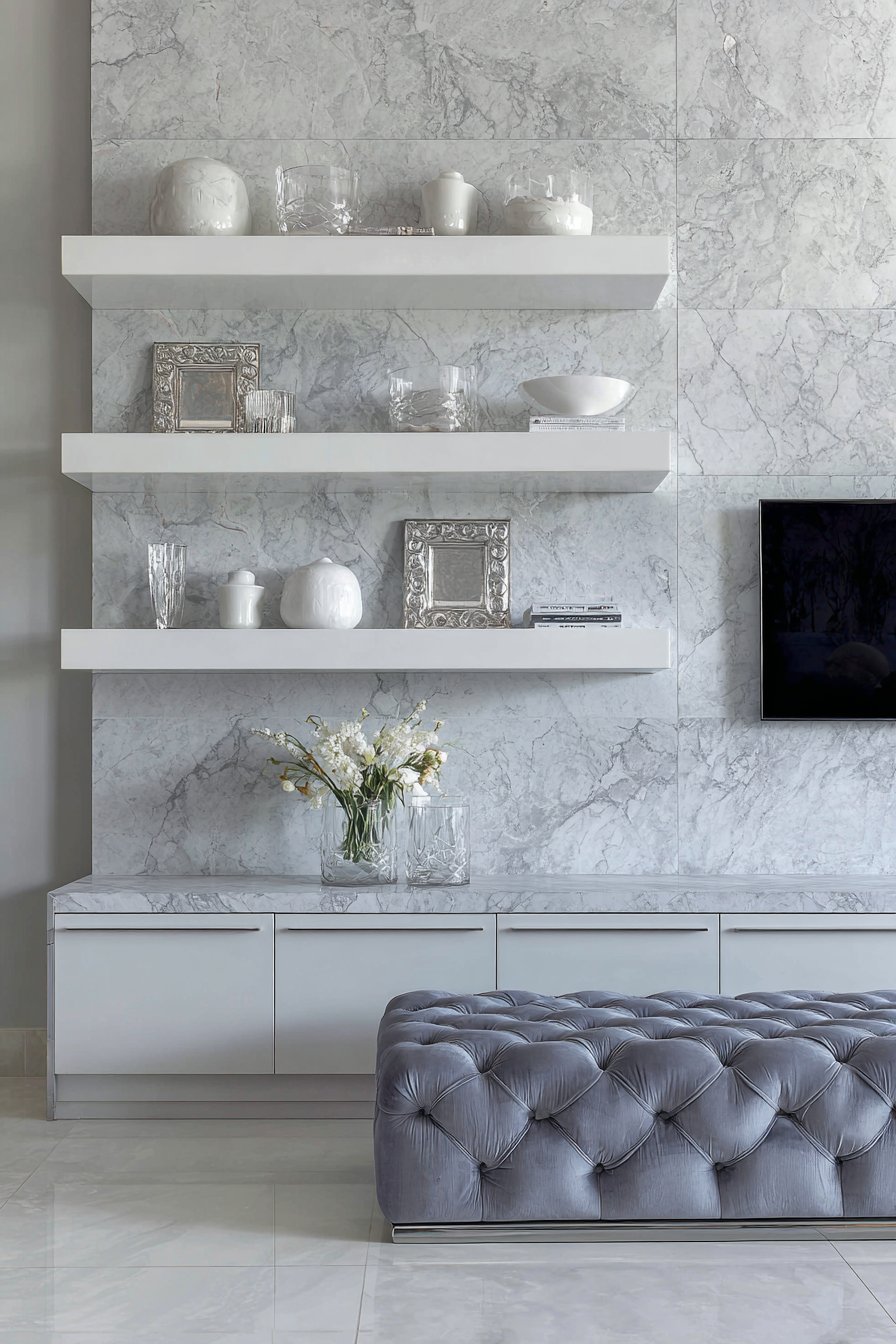
Monochromatic color schemes demonstrate how restricting palette can actually create sophisticated visual interest through texture, tone, and material variation. Large-format grey porcelain tile with subtle marble veining covers the television wall, creating an elegant, stone-like appearance with the practical benefits of porcelain. The tile’s subtle pattern adds visual interest without overwhelming, while the large format minimizes grout lines for clean, contemporary aesthetics. This approach brings the luxury look of natural stone with improved durability and easier maintenance.
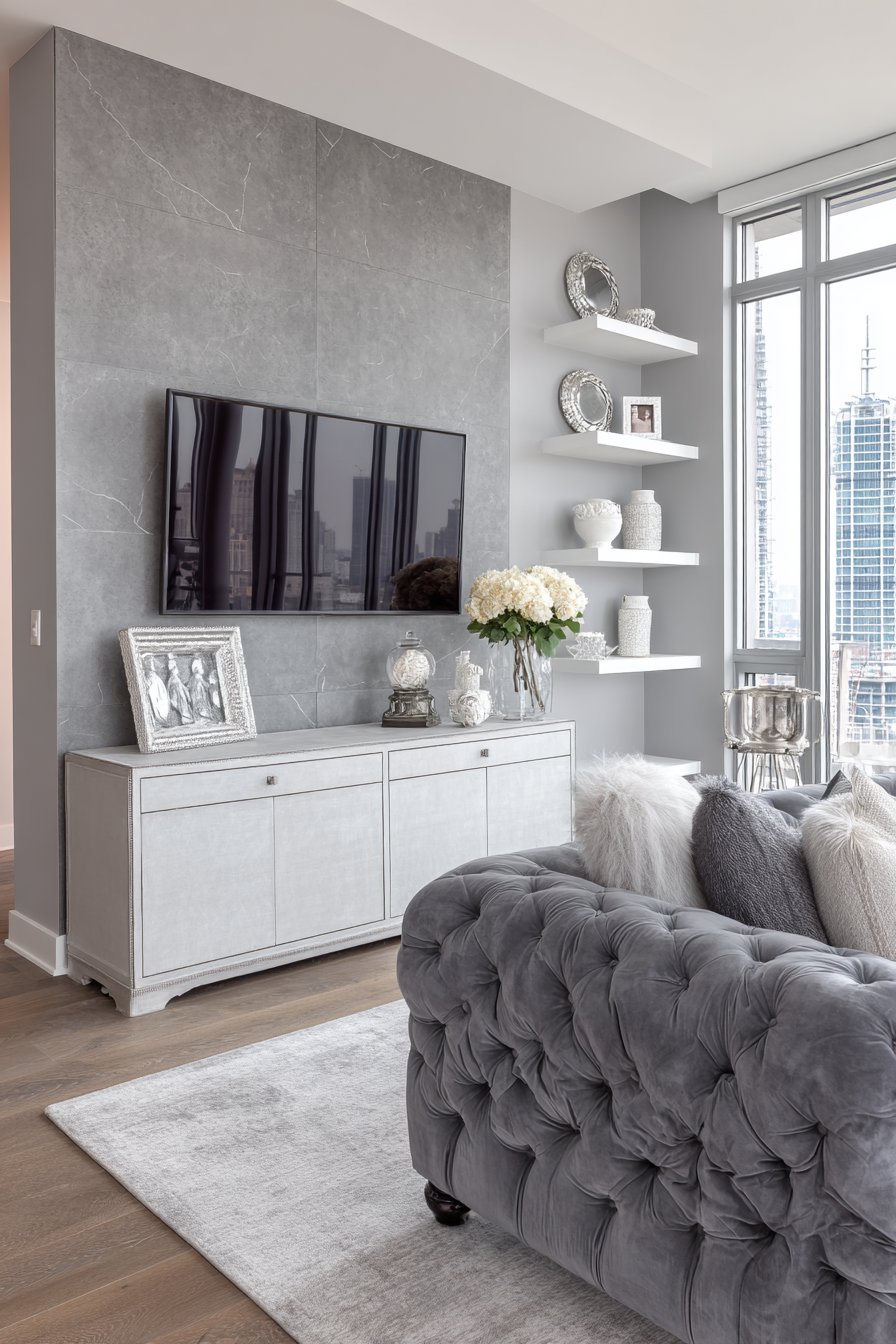
White floating shelves create geometric interest against the grey tile backdrop, their crisp lines and sharp white color providing clear definition. The shelves display white ceramics, creating tone-on-tone vignettes where form and texture become the primary visual elements. Silver-framed mirrors introduce reflective surfaces that multiply light and add metallic shine to the neutral palette. This restrained approach to color allows material qualities and spatial composition to take center stage.
A grey fabric-upholstered media console with button tufting adds textural variation and traditional detailing to the contemporary space. The soft, padded surface contrasts beautifully with hard surfaces of tile and shelving, adding tactile appeal and visual warmth. Button tufting introduces pattern through its regular geometric dimpling while maintaining the grey color story. This piece demonstrates how upholstered furniture can work in television wall designs, not just wood and metal pieces.
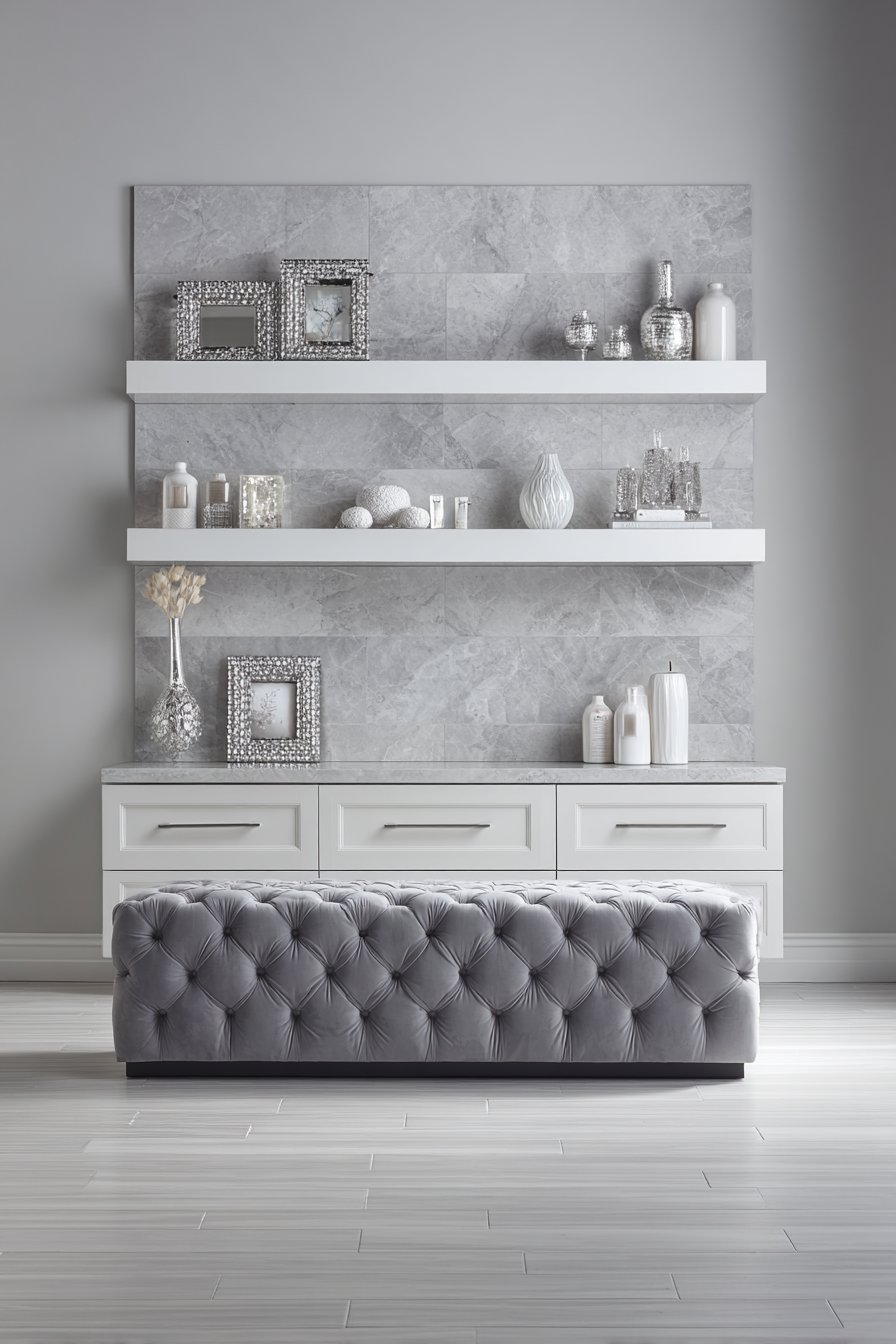
The monochromatic palette requires careful attention to lighting to prevent the space from feeling flat or dreary. Soft diffused lighting emphasizes tonal variations and highlights different material textures—the matte tile, glossy white shelves, reflective mirrors, and plush upholstery. The interplay between these varying surfaces creates depth and dimensionality despite the limited color range. This sophisticated restraint appeals to those who appreciate subtle, elegant design. Key design tips include incorporating at least five different grey tones from pale silver to deep charcoal, varying surface finishes from matte to glossy to introduce visual diversity, ensuring adequate lighting to showcase tonal variations and prevent muddiness, using texture as a primary design element since color variation is limited, and adding metallic accents in silver, chrome, or brushed nickel for subtle sparkle.
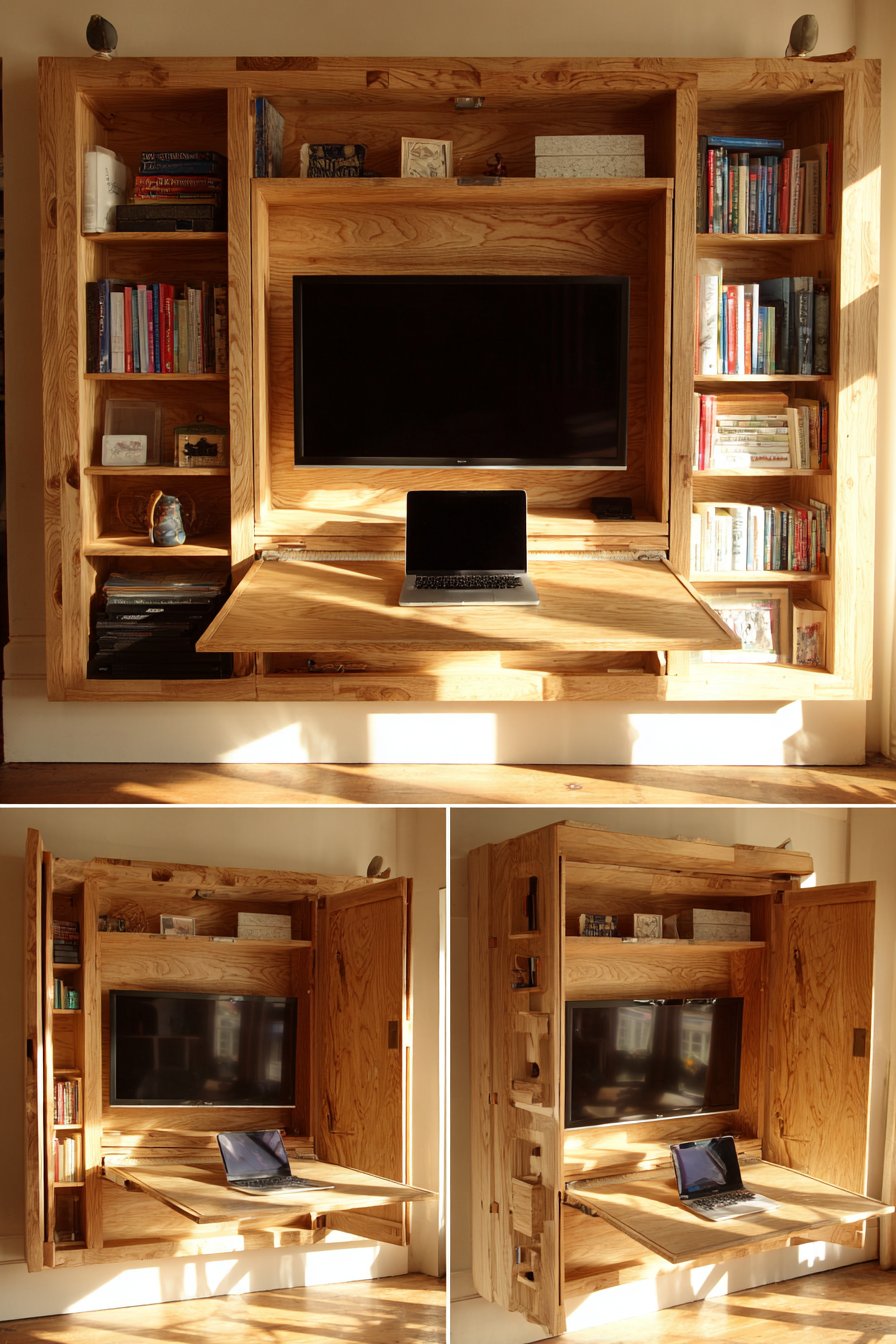
23. Multifunctional Murphy-Style Fold-Down Desk
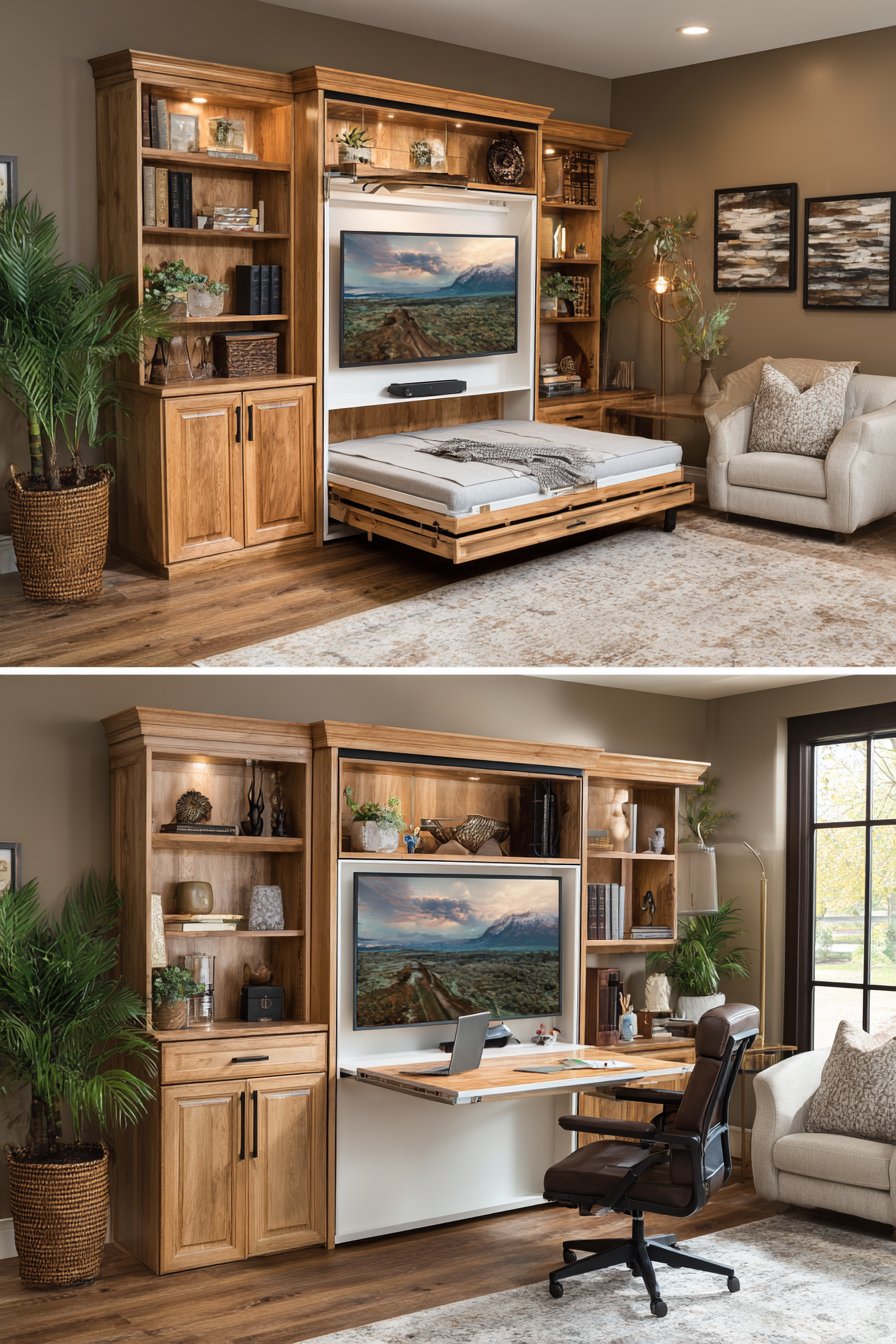
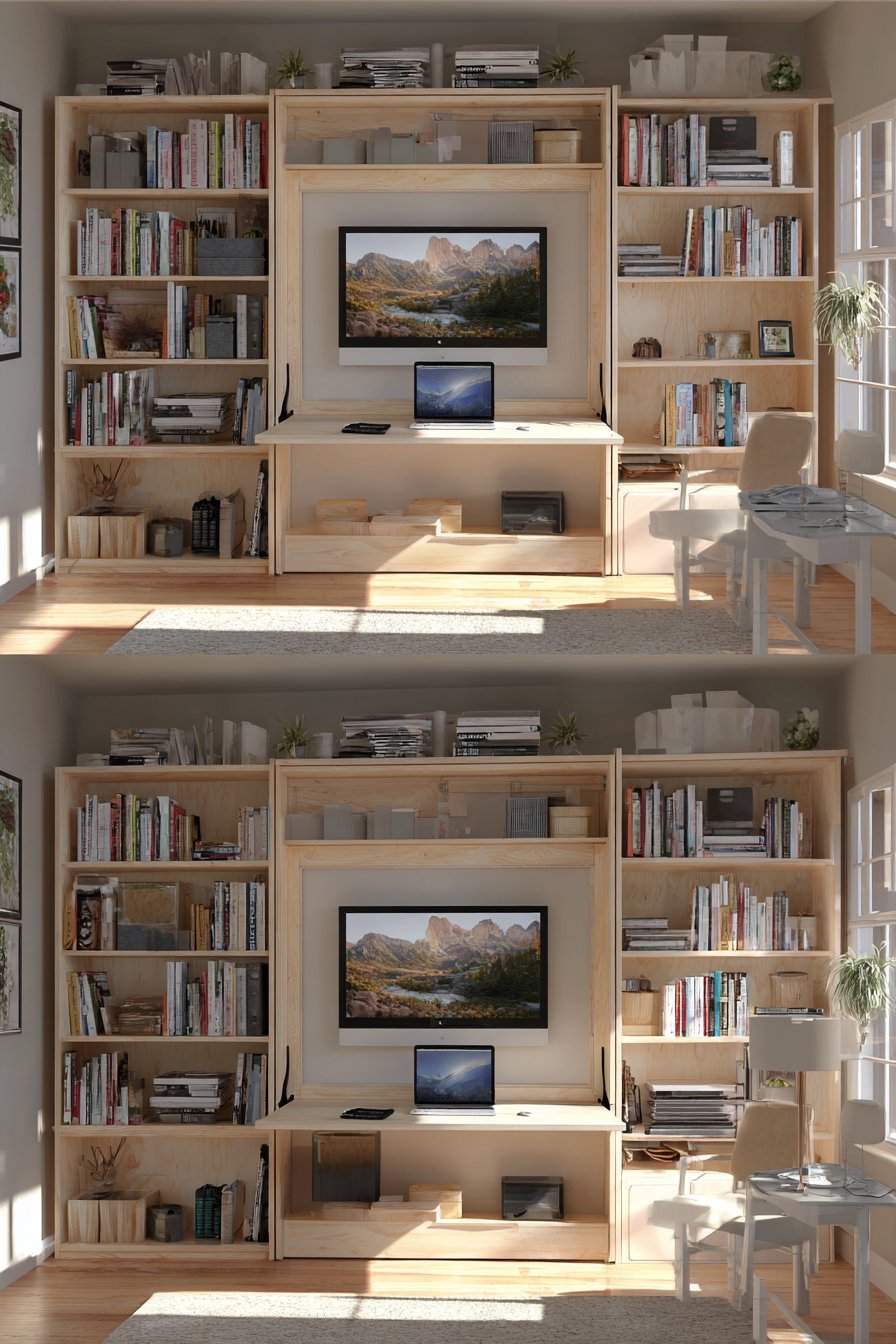
Multifunctional spaces address modern living requirements where rooms must serve multiple purposes. A television wall incorporating a Murphy-style fold-down desk transforms entertainment center into workspace, demonstrating exceptional space efficiency. The wall unit in natural oak features cabinetry that conceals the desk when folded up, with the television mounted above. When the desk is deployed, the wall becomes a functional home office; when folded away, it returns to pure entertainment focus.
The built-in shelving serves both television display and office organization, holding books, binders, and decorative objects that work in both configurations. This dual-purpose approach requires thoughtful planning to ensure items displayed work equally well for leisure and work modes. The shelving might include closed cabinets for storing office supplies that can be hidden during entertainment time, and open shelves for items that work in both contexts like plants and attractive storage boxes.
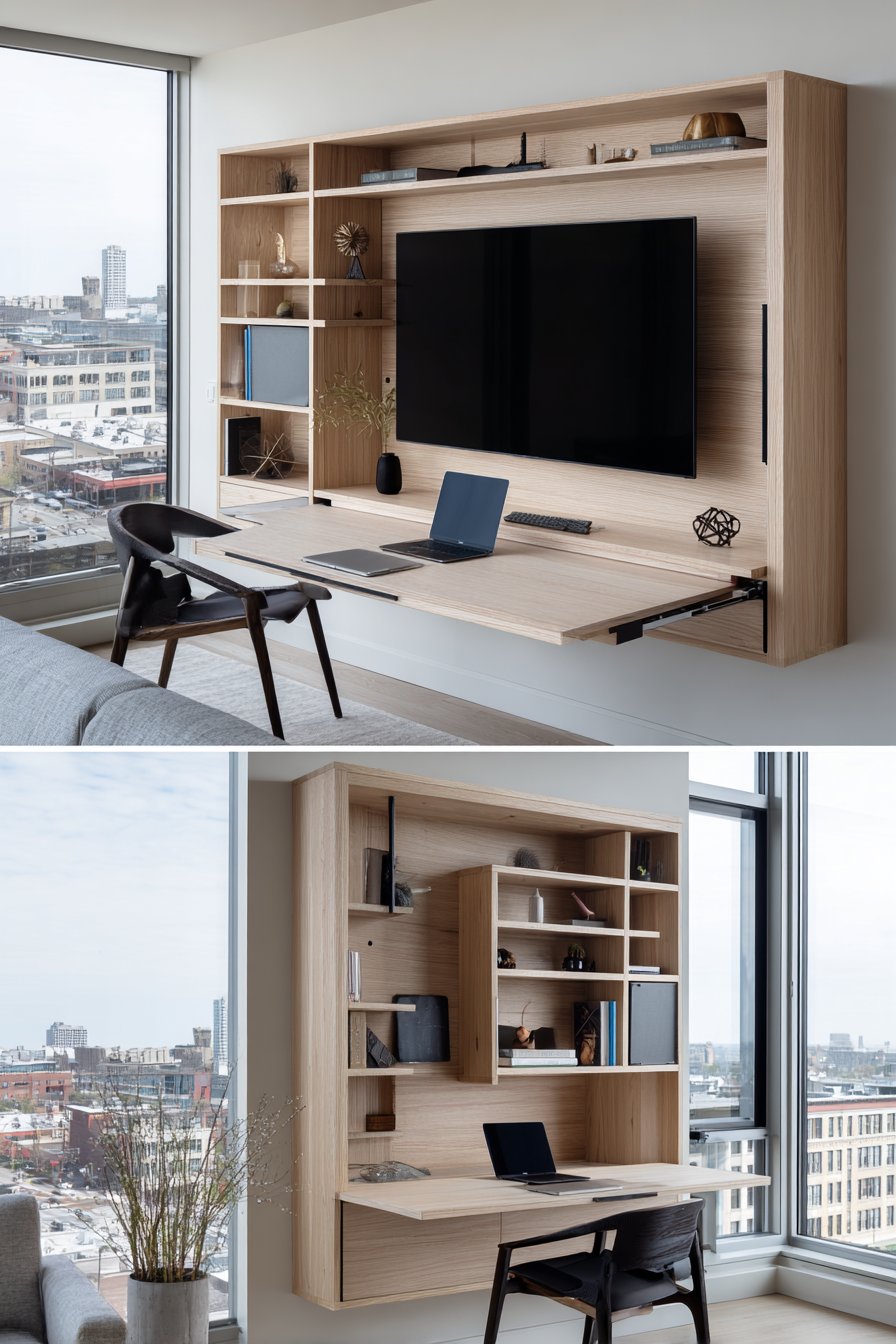
Cable management solutions allow easy connection of laptops and office peripherals when the desk is deployed, then neatly tuck away when the desk folds up. This requires planning electrical outlets and cable routing during installation to serve both television and desk requirements. USB charging ports and standard outlets at desk height provide modern convenience without visible power strips or cord tangles. The thoughtful infrastructure makes the transformation between modes seamless and practical.
Natural daylight becomes particularly important in this multifunctional configuration, as adequate lighting for work differs from entertainment lighting needs. Large windows or skylights provide the bright, even illumination necessary for productivity while adjustable window treatments allow darkening for movie viewing. Task lighting integrated into the desk area supplements natural light during work hours. This versatile design appeals to remote workers, students, or anyone managing limited space with multiple requirements. Key design tips include ensuring the fold-down desk mechanism operates smoothly and locks securely in both positions, planning desk height ergonomically for comfortable typing and writing, incorporating cable management conduits behind the wall unit, selecting a desk surface large enough for laptop and reference materials, and considering whether a chair can be stored within the unit or nearby.
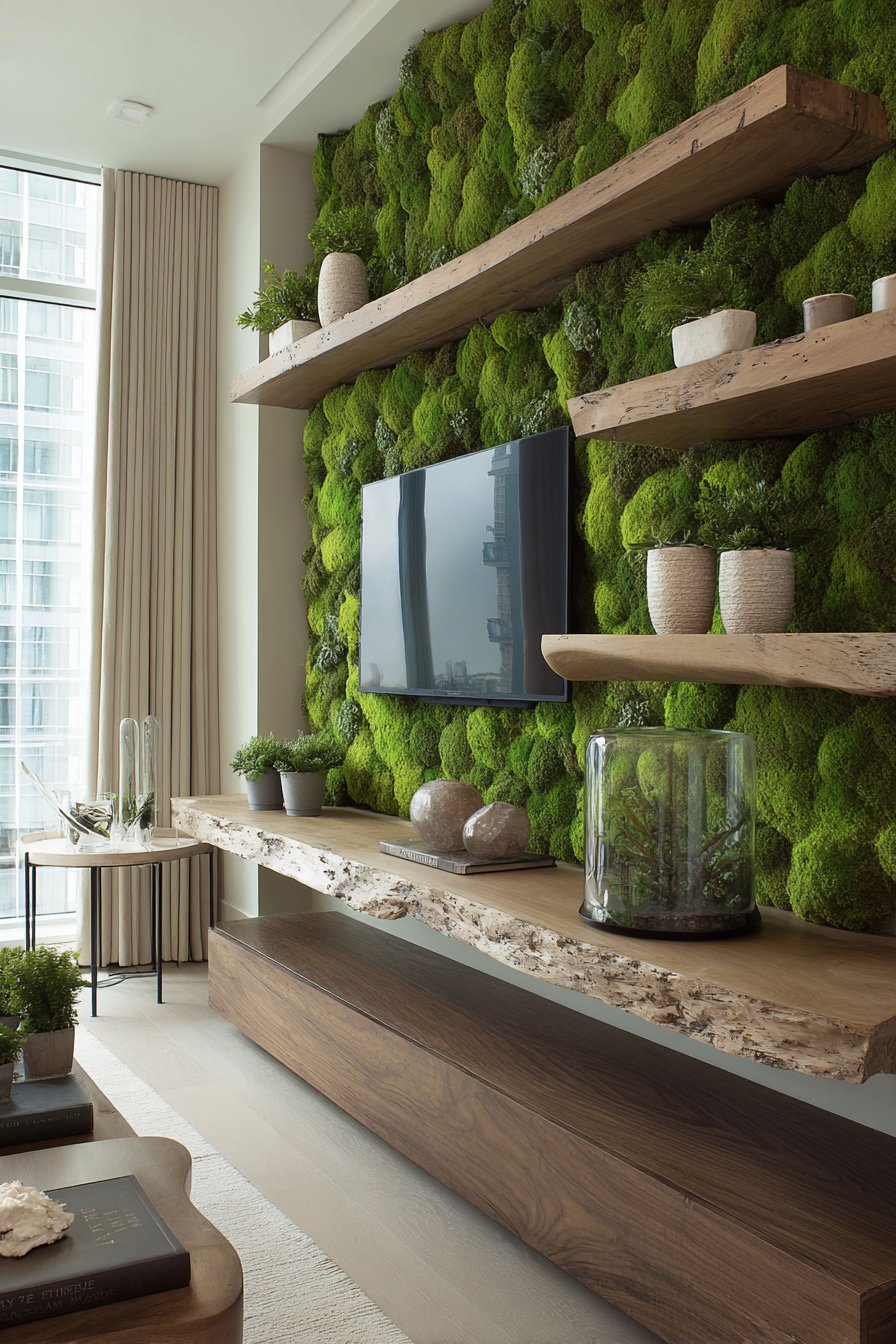
24. Biophilic Living Wall with Preserved Plants
Biophilic design principles integrating nature into interiors create television walls that promote well-being while making striking visual statements. A living wall system of preserved moss and air plants framing the television brings organic beauty indoors without the maintenance requirements of fully living walls. The vibrant green backdrop creates dramatic contrast with modern technology while introducing natural patterns and textures that reduce stress and improve air quality. This approach appeals to urban dwellers seeking nature connections within their homes.
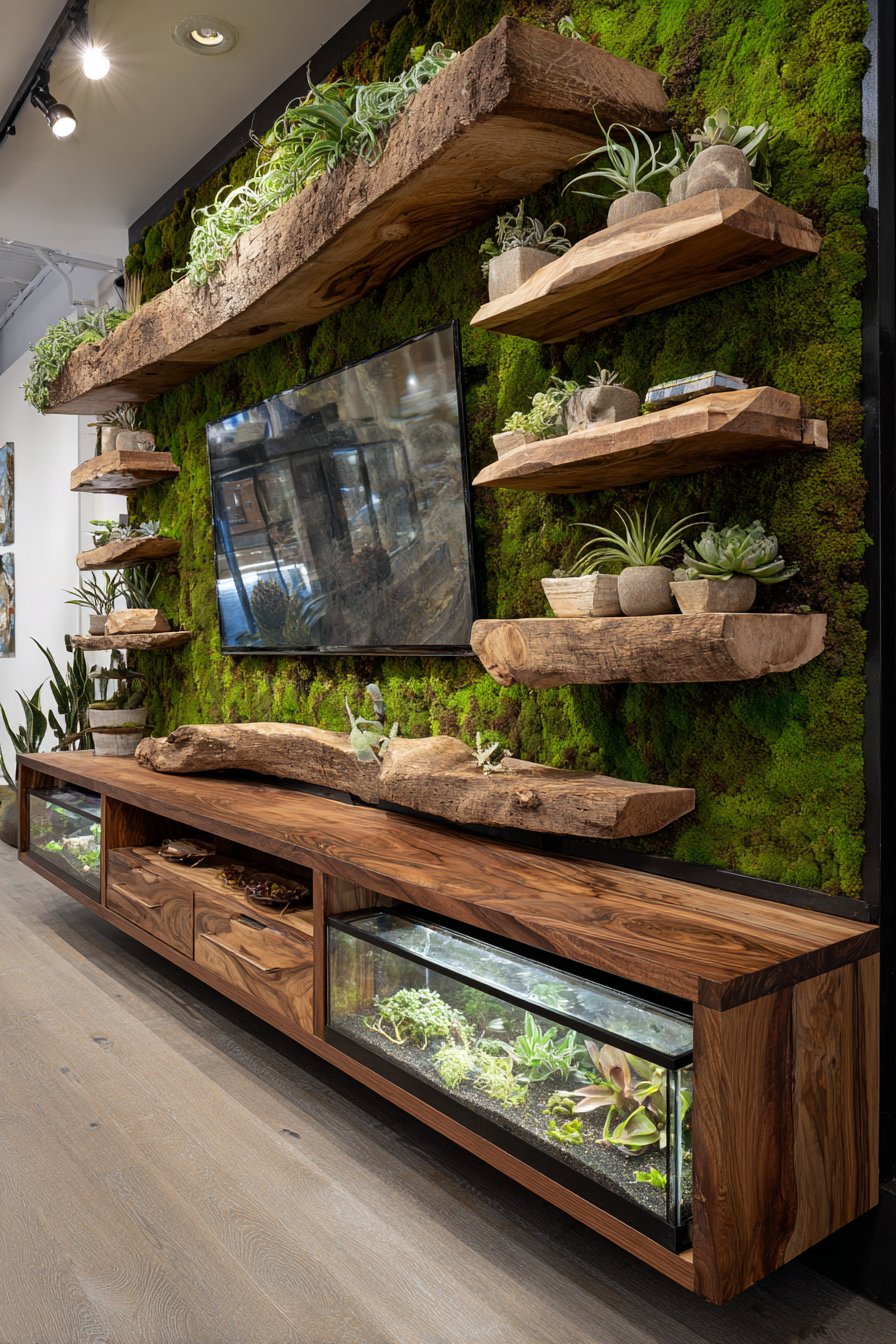
Natural wood floating shelves in live-edge walnut emphasize the organic theme with their irregular natural edges and visible grain patterns. These shelves hold small potted plants and natural stone objects, extending the biophilic concept throughout the wall composition. The live edges celebrate the tree’s original form, connecting the finished furniture to its forest origins. The warm tones and natural variations in walnut add earthiness that complements the green plant wall.
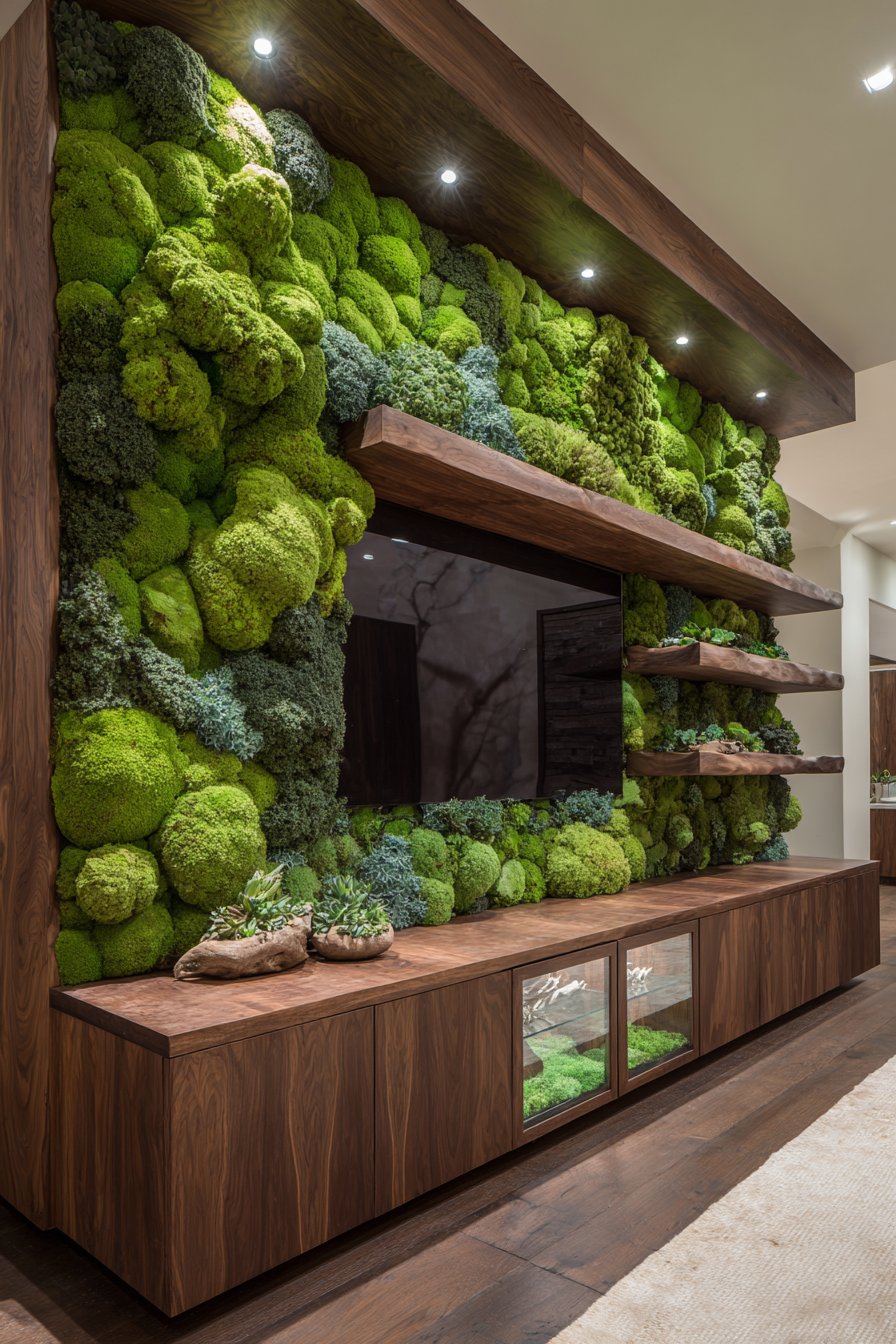
The media console features an integrated terrarium section alongside equipment storage, creating an unexpected combination of nature and technology. The planted terrarium houses small ferns or succulents visible through glass panels, bringing living greenery to eye level when seated. This creative integration demonstrates how biophilic design can permeate every aspect of the television wall rather than being isolated to a single element. The juxtaposition of electronics and plants creates thought-provoking dialogue about natural and technological elements in our lives.
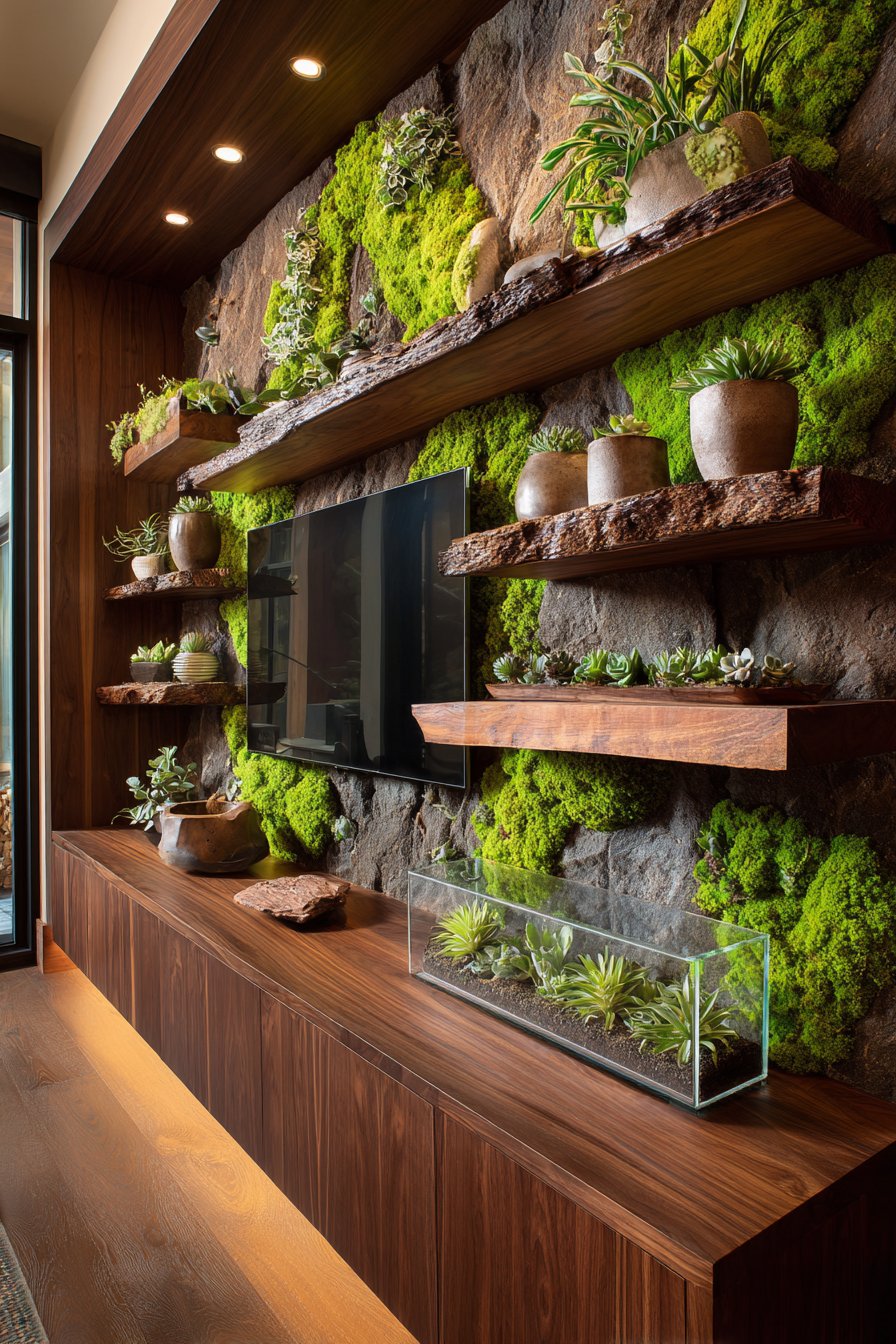
Soft natural lighting becomes crucial in this design, as both plants and viewing comfort require careful illumination consideration. Grow lights integrated discreetly within the living wall sections ensure plants receive adequate spectrum and intensity for health, while separate ambient and task lighting serves entertainment needs. The interplay of green plants against wood and technology creates a harmonious blend that feels both contemporary and timeless. Key design tips include selecting preserved moss that maintains color without irrigation or special lighting, incorporating drought-tolerant plants in terrarium sections for easier maintenance, ensuring adequate weight support for saturated soil if using living plants, planning irrigation access if choosing fully living wall systems rather than preserved materials, and balancing green plants with neutral backgrounds to prevent visual overwhelm.
25. Glamorous Hollywood Regency Mirrored Wall
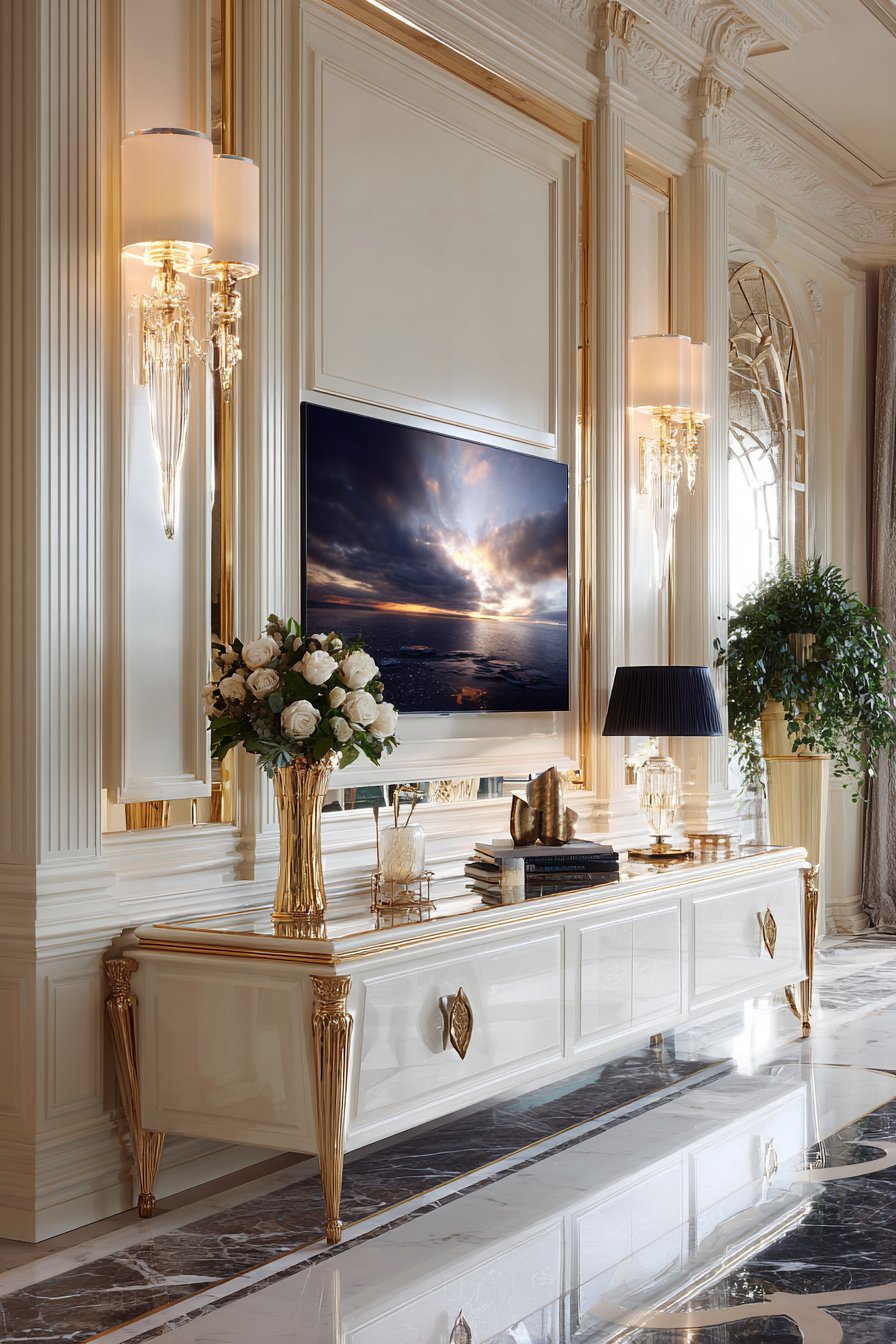
Hollywood Regency style brings theatrical glamour and sophisticated luxury to television wall design. Mirrored panels with beveled edges create a dramatic, reflective backdrop that multiplies light and space throughout the room. The beveled edges catch and refract light, creating prismatic effects and adding dimensional interest to the mirror surfaces. This bold approach transforms the television wall into a statement of luxury and drama that commands attention.
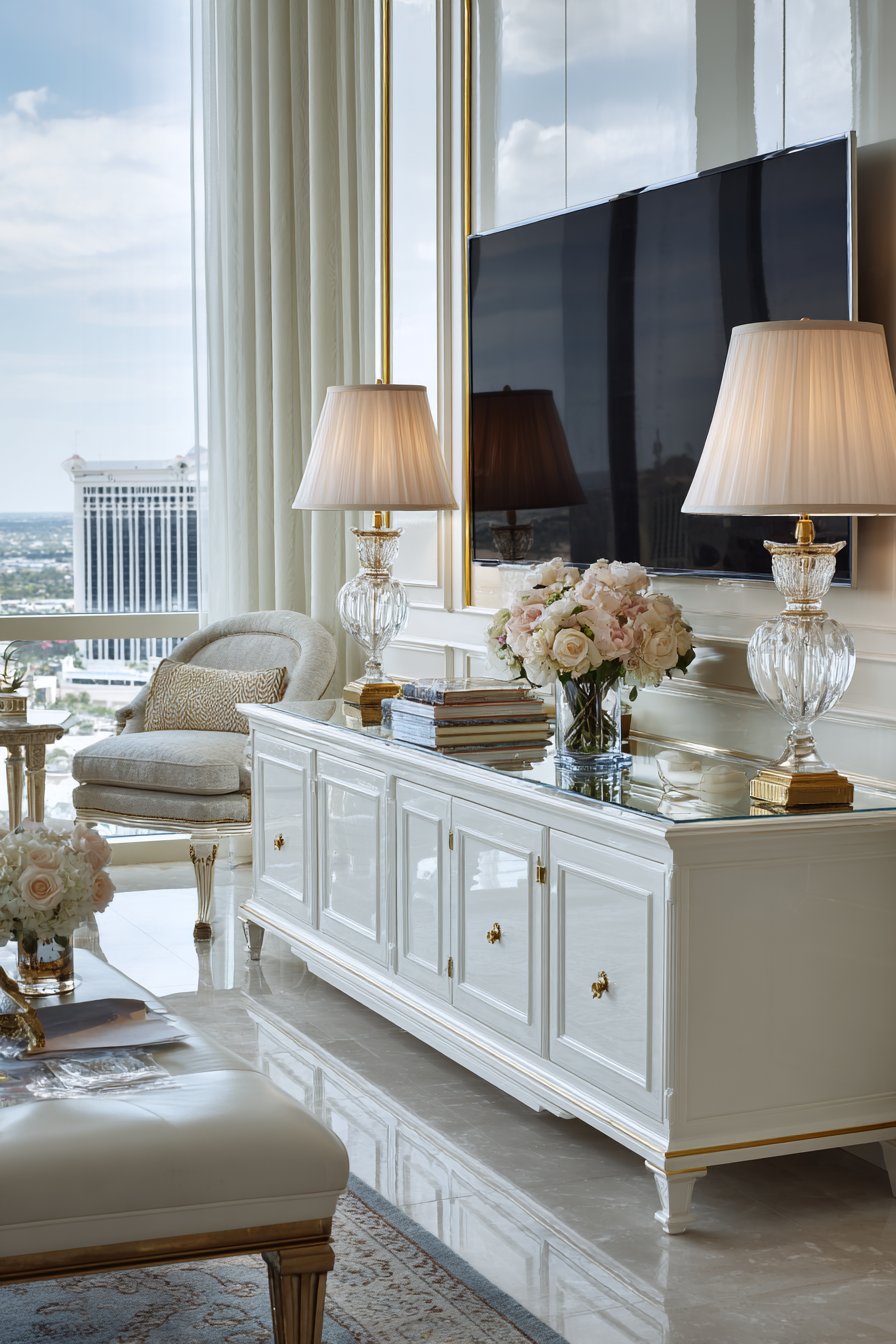
The glossy white lacquered credenza with gold hardware sits below the mirrored wall, its reflective finish and metallic accents reinforcing the glamorous aesthetic. The combination of white lacquer and gold creates the elegant palette characteristic of Hollywood Regency design, suggesting old Hollywood sophistication and red carpet glamour. Ornate gold hardware adds jewelry-like detail to the furniture, elevating it from merely functional to decorative art. The credenza’s substantial presence grounds the lighter, more ethereal quality of the mirrors above.
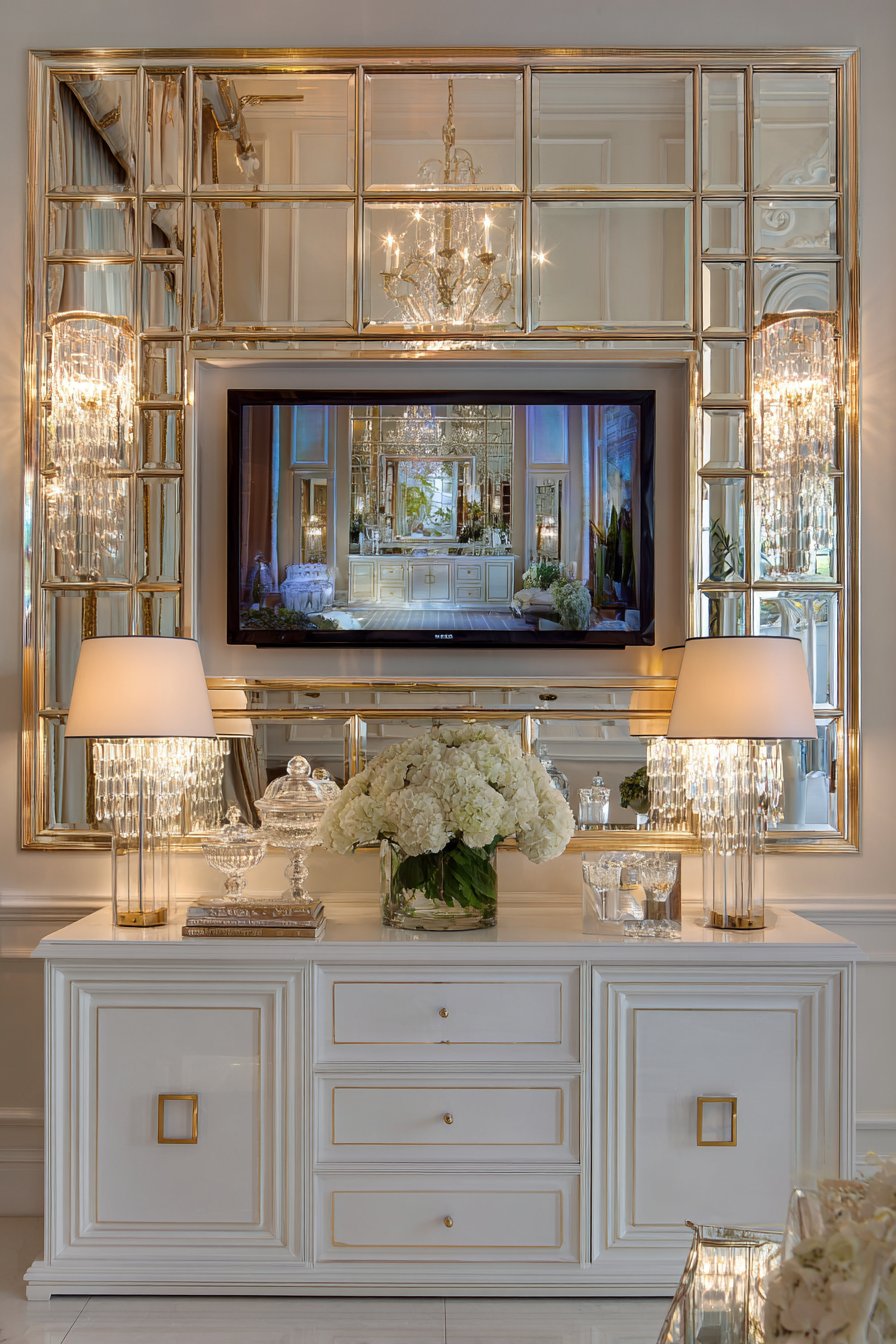
Crystal table lamps flanking the television setup add additional glamour and provide practical lighting. The faceted crystal bases create sparkle and prismatic light effects that enhance the room’s luxurious character. These lamps serve both functional and decorative purposes, their elegant forms contributing to the overall composition even when unlit. The combination of mirrored surfaces, crystal elements, and metallic finishes creates layers of light reflection and multiplication that characterize Hollywood Regency interiors.
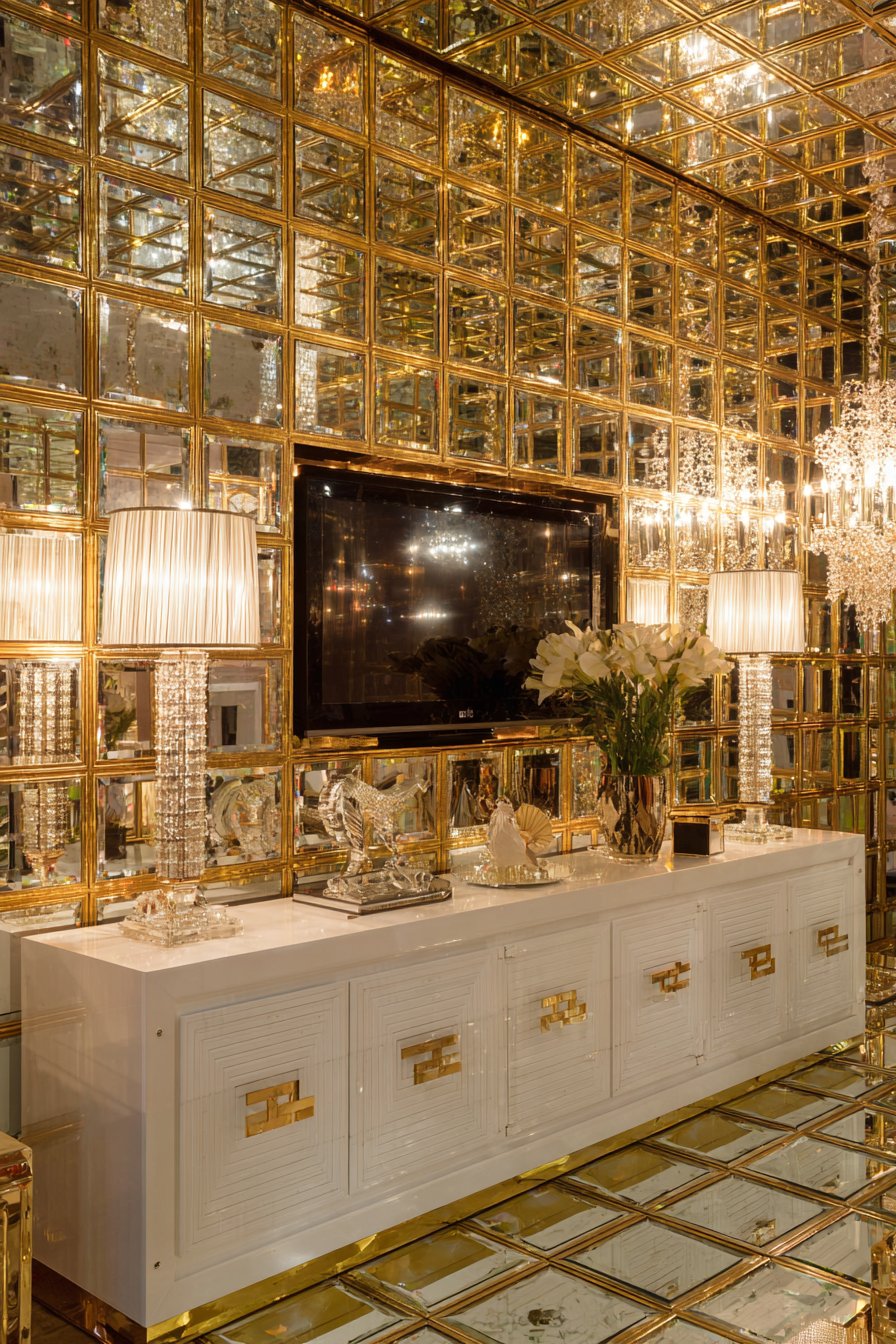
Careful lighting planning prevents overwhelming glare from the extensive mirrored surfaces. Dimmable controls allow adjustment of intensity to minimize reflections during television viewing while maximizing glamorous sparkle during entertaining. Strategic placement of light sources creates intentional reflections and highlights rather than random, distracting glare. The mirrored wall makes the room appear significantly larger and brighter, particularly beneficial in smaller spaces or rooms with limited natural light. Key design tips include using beveled mirror panels rather than standard flat mirrors for added sophistication, installing dimmer controls on all light sources to manage reflections, positioning the television carefully to minimize on-screen glare from reflected lights, incorporating metallic finishes in gold, brass, or chrome throughout the room for cohesive glamour, and balancing reflective surfaces with some matte textures to prevent the space from feeling too glitzy.
Why These Television Wall Ideas Represent the Best in Contemporary Design
The twenty-five television wall concepts presented showcase the remarkable versatility available in contemporary living room design. From minimalist restraint to maximalist glamour, rustic authenticity to sleek modernism, these ideas demonstrate how the television wall can be tailored to virtually any aesthetic preference, spatial constraint, or functional requirement. The breadth of styles ensures that regardless of your personal taste—whether you’re drawn to Scandinavian simplicity, industrial edge, coastal calm, or traditional elegance—there exists an approach that will transform your entertainment wall into a design asset rather than a necessary compromise.
Material selection plays a crucial role in each design’s success. Natural materials like reclaimed wood, marble, onyx, and live plants connect interiors to nature while adding textural richness and organic warmth. Manufactured materials including high-gloss lacquer, concrete-effect plaster, porcelain tile, and powder-coated metal provide contemporary edge and practical durability. The most successful television walls thoughtfully combine materials with contrasting properties—rough and smooth, matte and glossy, natural and manufactured—creating dynamic visual interest and tactile appeal. Understanding how different materials behave with light, age, and use allows designers to make informed choices that serve both immediate aesthetics and long-term satisfaction.
Lighting emerges as a consistent theme throughout these design concepts, recognized as fundamental to successful television wall execution. Integrated LED strips, recessed fixtures, picture lights, and ambient illumination all contribute to walls that function beautifully both during active viewing and when the television is off. Proper lighting highlights architectural details, emphasizes material textures, and creates mood and atmosphere appropriate to different activities. The ability to control and adjust lighting through dimmer switches and smart controls adds flexibility that allows the television wall to serve various purposes throughout the day. Backlighting, in particular, creates dimensional depth and dramatic effects that transform flat walls into dynamic architectural features.
Storage solutions integrated into television walls address practical needs while contributing to overall aesthetics. Floating consoles eliminate floor clutter and create visual lightness; built-in cabinetry provides substantial concealment while appearing architecturally integrated; open shelving offers display opportunities that add personality and color; and modular systems deliver flexibility to adapt as needs change. The most successful designs balance open and closed storage, providing spaces to showcase meaningful objects while hiding less attractive electronics, cables, and media collections. Thoughtful cable management, often overlooked in initial planning, proves essential to maintaining clean aesthetics—hidden wires, ventilated equipment compartments, and accessible connection points all contribute to professional-looking installations.
Color and pattern strategies vary dramatically across these designs, demonstrating multiple approaches to creating impactful television walls. Monochromatic schemes rely on tonal variation and material diversity to create sophisticated subtlety. Bold accent colors like mustard yellow, sage green, and terracotta inject personality and energy. Neutral palettes in whites, grays, and natural wood tones provide versatile backdrops that adapt easily to changing decor. Three-dimensional textured surfaces introduce pattern through form rather than applied decoration. Understanding how color affects perceived space size, mood, and light reflection allows designers to make strategic choices that serve specific goals—expanding small rooms with pale colors, creating intimacy with deeper tones, or adding vibrancy with saturated accent walls.
Style integration represents another critical success factor in these television wall designs. Contemporary minimalism emphasizes clean lines, neutral colors, and functional simplicity. Traditional approaches incorporate classic millwork, symmetrical arrangements, and quality materials with timeless appeal. Transitional designs bridge these extremes, combining traditional craftsmanship with contemporary restraint. Eclectic and bohemian styles embrace personality over perfection, mixing vintage finds with modern pieces. Industrial aesthetics celebrate raw materials and honest construction. Understanding the defining characteristics of different design styles ensures authentic execution rather than superficial imitation.
Spatial considerations influence television wall design significantly, with strategies varying based on room size and layout. Small spaces benefit from corner mounting, floating installations, and light colors that maximize the sense of openness. Large rooms can accommodate substantial built-ins and bold statements without overwhelming the space. Multipurpose rooms require flexible solutions like Murphy desks or concealing barn doors that allow the television wall to serve varying functions. Ceiling height affects vertical design decisions—high ceilings accommodate tall built-ins and vertical emphasis, while standard heights work better with horizontal compositions. Understanding how design decisions affect spatial perception allows designers to enhance rather than fight against existing architectural conditions.
Technology integration continues evolving, requiring television walls to accommodate changing equipment and connectivity needs. Smart home systems allow voice control and automation. Motorized lifts conceal televisions when not in use. Wireless connectivity reduces cable clutter. Future-proofing through thoughtful infrastructure planning—conduits for running new cables, adequate power outlets, proper ventilation for heat-generating equipment—ensures television walls remain functional as technology advances. The most successful designs integrate technology seamlessly while maintaining the flexibility to adapt to future innovations without requiring complete redesigns.
Sustainability considerations increasingly influence material and design choices. Reclaimed wood offers environmental benefits while adding character. LED lighting provides energy efficiency and longevity. Local sourcing reduces transportation impacts. Durable, quality materials prevent premature replacement and waste. Preserved plants bring biophilic benefits without intensive water and maintenance requirements. Timeless design that transcends temporary trends delivers sustainability through longevity—well-designed television walls continue serving beautifully for decades rather than requiring replacement as fashions change. Choosing quality over disposability and classic over trendy creates more sustainable homes.
The personal expression possibilities within television wall design allow homeowners to create spaces that genuinely reflect individual tastes, interests, and lifestyles. Gallery walls showcase personal art collections and family photographs. Display shelving holds treasured objects and travel souvenirs. Color choices express personality and preferences. Material selections demonstrate values—perhaps prioritizing sustainability, craftsmanship, luxury, or practicality. The television wall becomes more than furniture; it becomes a canvas for self-expression and storytelling. The most successful designs balance personal authenticity with design principles, creating spaces that feel both beautiful and genuinely lived-in.
Conclusion
The television wall has evolved into one of the most important design opportunities in contemporary living rooms, offering possibilities far beyond simple screen mounting. As demonstrated through these twenty-five diverse concepts, successful television wall design balances aesthetics with functionality, integrates technology gracefully with intentional design, and creates focal points that enhance rooms even when screens are dark. Whether you’re drawn to the clean minimalism of floating consoles and concrete walls, the warm authenticity of reclaimed barn wood, the sophisticated luxury of backlit onyx, or any style in between, the key lies in thoughtful planning that considers materials, lighting, storage, color, and personal expression.
Begin your television wall transformation by honestly assessing your space, needs, and preferences. Consider how you actually use your living room—do you primarily watch movies, entertain guests, work from home, or combine multiple functions? What practical requirements must the wall address, from equipment storage to cable management? Which design styles genuinely resonate with your aesthetic sensibilities rather than simply following current trends? By grounding your design decisions in authentic needs and preferences, you’ll create television walls that serve beautifully for years to come.
Don’t hesitate to combine elements from multiple concepts to create hybrid solutions tailored to your unique situation. Perhaps you love the industrial aesthetic of exposed brick but need the storage capacity of built-in cabinetry—combine them. Maybe you’re drawn to Scandinavian simplicity but want the technological sophistication of motorized lifts—integrate both. The most successful designs often emerge from creative combinations that address specific circumstances and preferences. Trust your instincts, invest in quality materials and installation, and create television walls that transform your living room into spaces you’ll genuinely love experiencing every day.
