
In the ever-evolving landscape of interior design, few elements offer the versatility and transformative power of well-designed shelf walls. These architectural features have transcended their purely functional origins to become statement pieces that define spaces, showcase personality, and solve storage challenges with aesthetic grace. Whether you’re working with a compact urban apartment or a spacious family home, shelf wall ideas provide endless opportunities to merge practicality with visual appeal, creating environments that are both organized and inspiring.
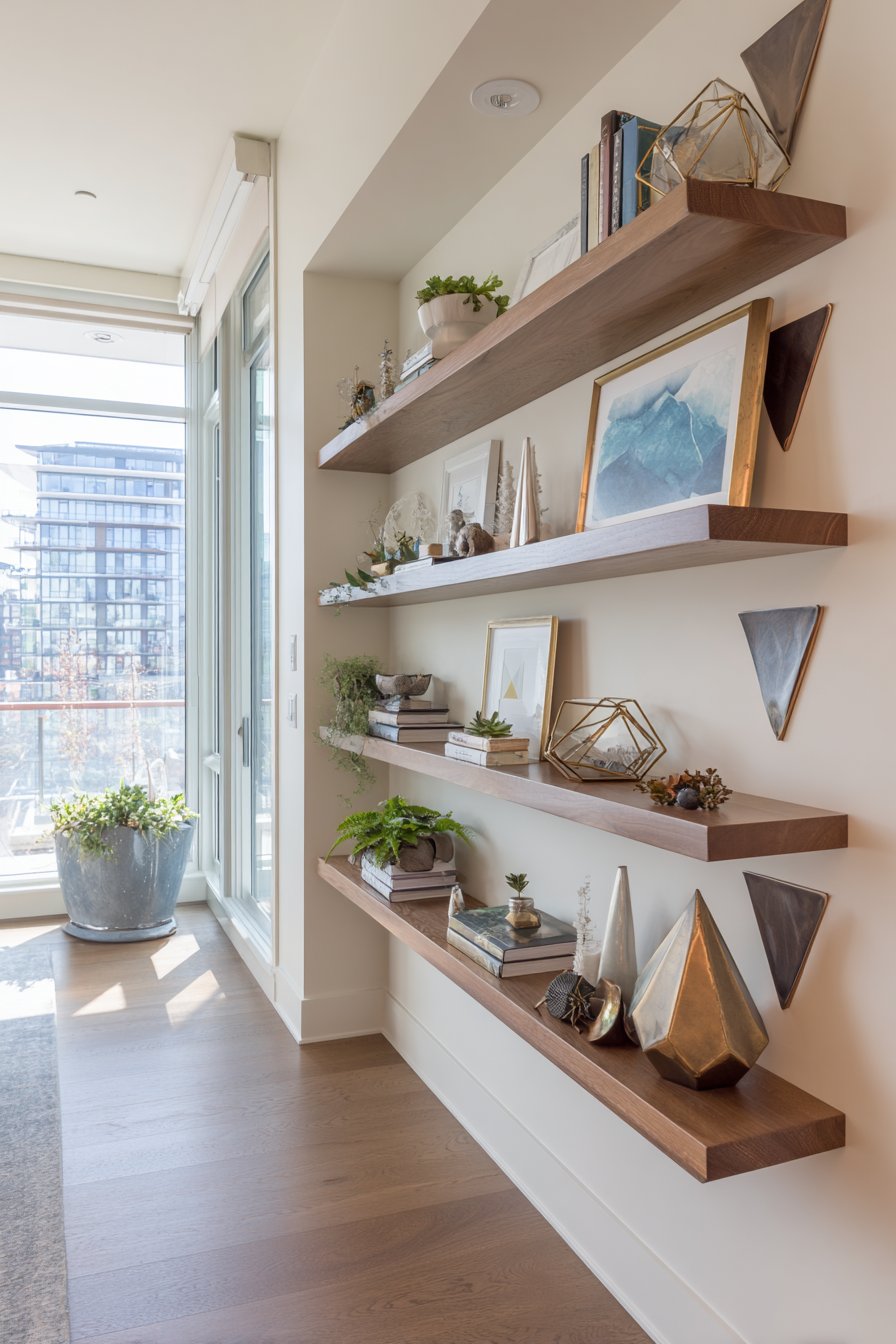
The beauty of shelf wall design lies in its adaptability across diverse interior styles and spatial requirements. From the clean minimalism of Scandinavian-inspired floating shelves to the raw industrial character of pipe-bracket installations, each approach offers unique benefits and aesthetic contributions. These solutions cater to various lifestyles—supporting the book collector’s literary passion, the plant enthusiast’s green oasis, the family’s photographic memories, or the minimalist’s carefully curated objects. The right shelf wall can anchor a room’s design narrative while providing essential storage that keeps clutter at bay and treasured items beautifully displayed.
This comprehensive guide explores twenty-five distinctive shelf wall concepts, each offering a different perspective on how to maximize vertical space while enhancing your home’s character. From dedicated home office solutions to whimsical nursery designs, from sophisticated dining room displays to practical garage workshops, you’ll discover approaches that span the full spectrum of design possibilities. Each concept has been carefully developed with attention to materials, spatial considerations, lighting integration, and real-world functionality, ensuring that these ideas translate seamlessly from inspiration to implementation in your own living spaces.
1. Modern Floor-to-Ceiling Home Office Shelving
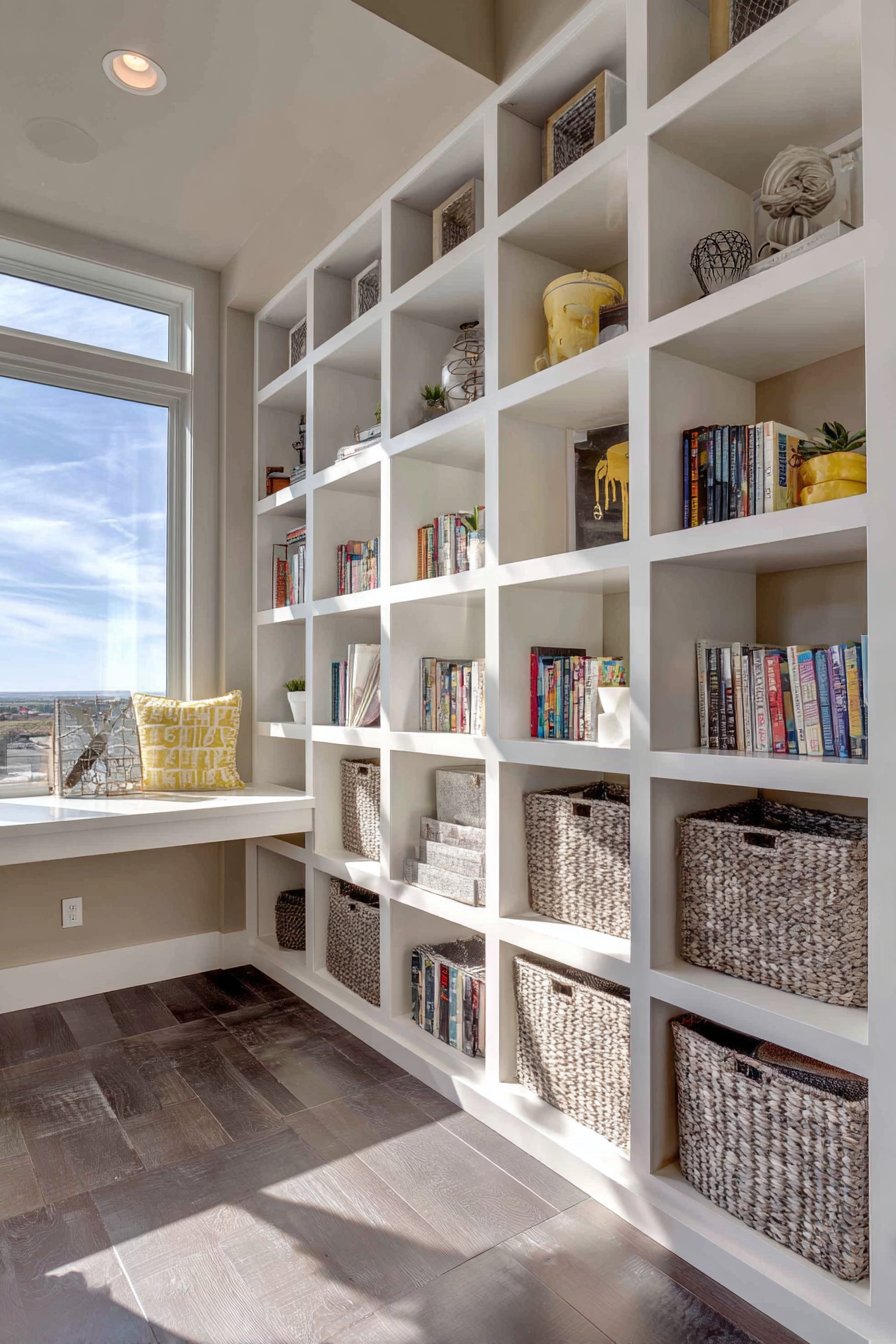
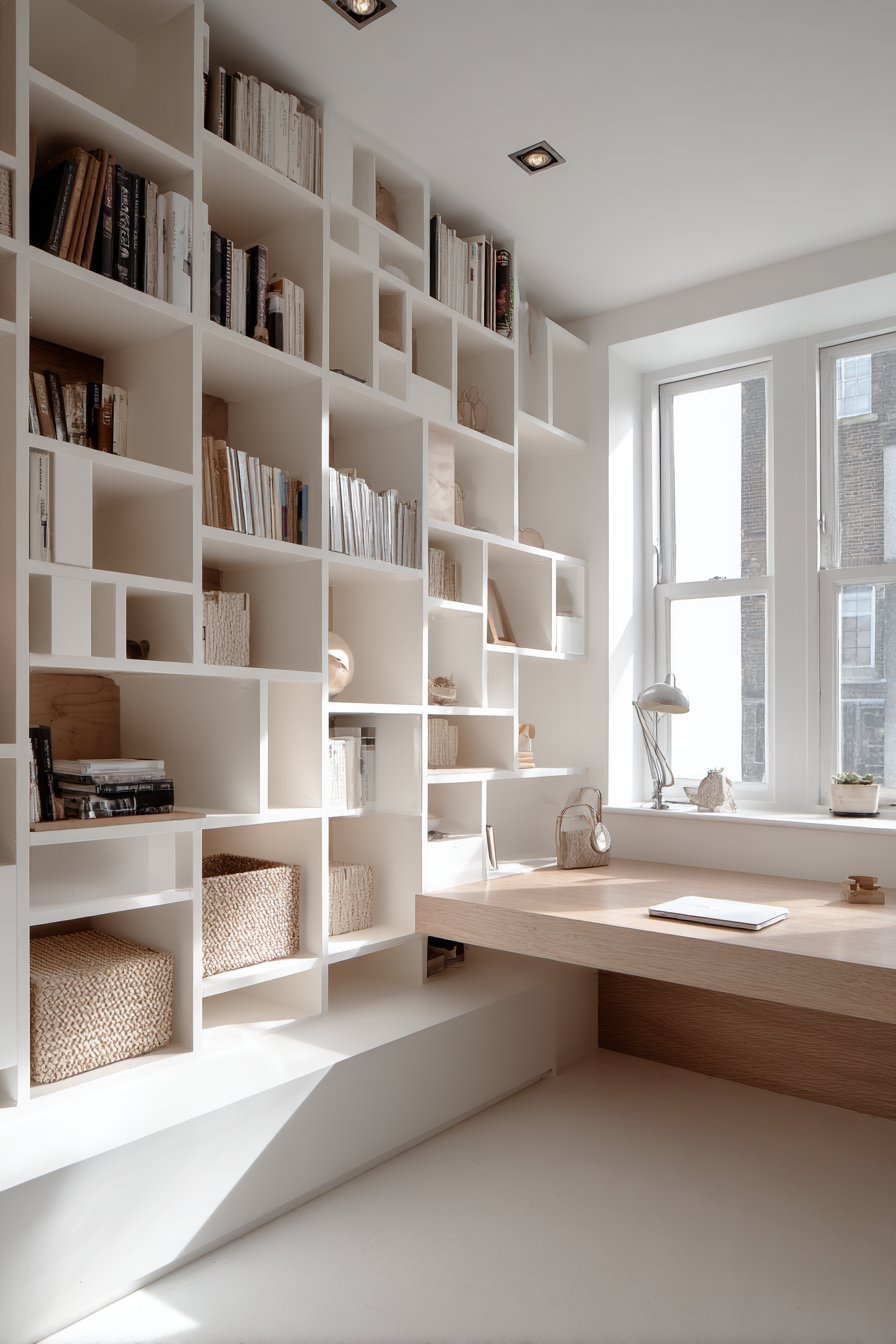
The contemporary home office demands both organizational efficiency and visual sophistication, and floor-to-ceiling built-in shelving delivers on both fronts with remarkable elegance. This shelf wall idea features white painted wood construction with adjustable brackets that allow for customization as your storage needs evolve. The vertical expanse maximizes every inch of wall space, transforming what might otherwise be wasted vertical territory into a highly functional organizational system. The integration of a floating desk surface at ergonomic height creates a seamless workspace that feels custom-designed rather than afterthought furniture placement.
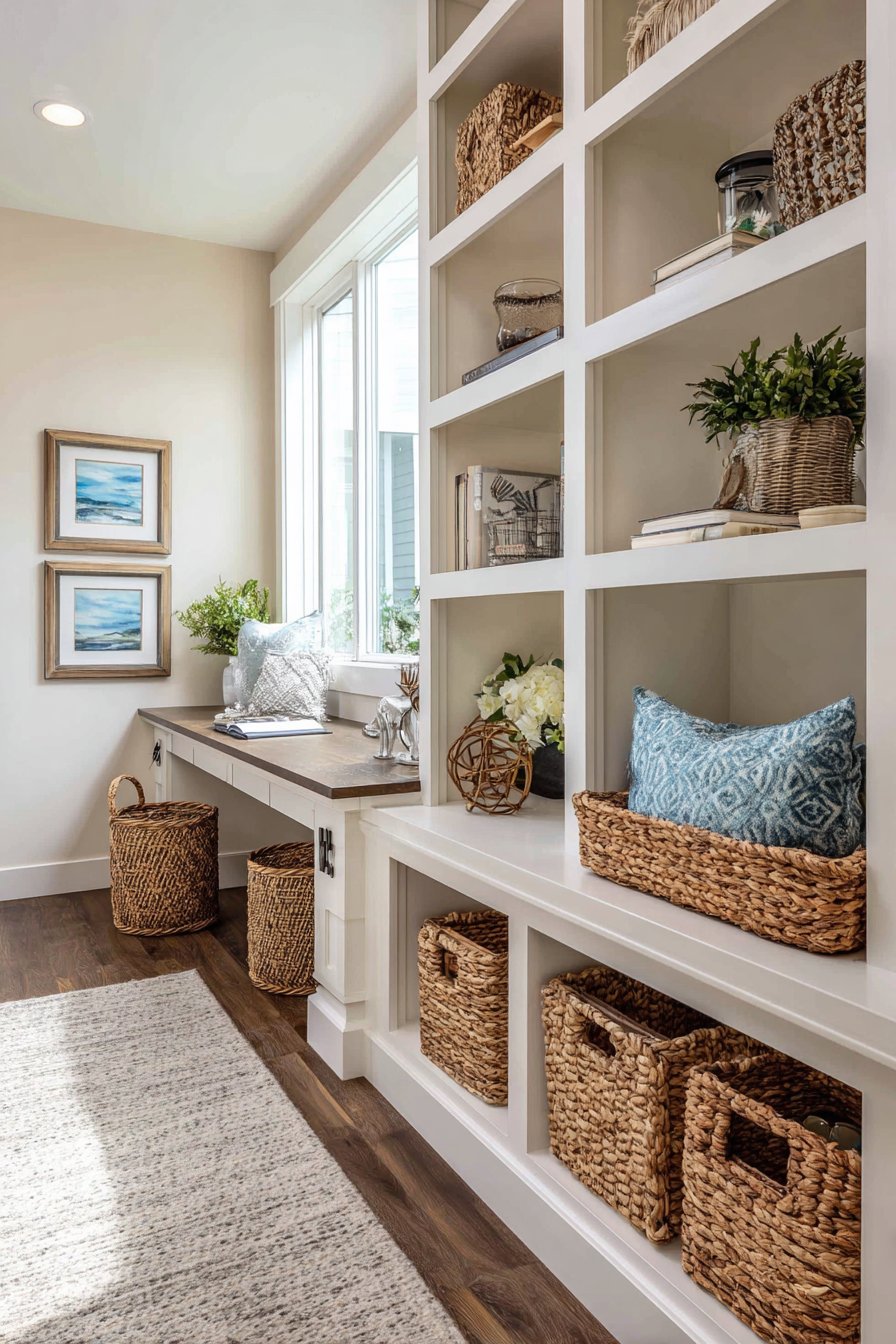
Natural daylight streaming from adjacent windows plays across the white shelving, creating subtle shadows that add dimensional interest to what could otherwise feel flat. The careful arrangement balances practical storage baskets containing office supplies with books organized both vertically and horizontally for visual rhythm. Minimal decorative accents prevent the space from feeling cluttered while adding personality—a small succulent here, a meaningful photograph there. This restraint demonstrates sophisticated design thinking where every element serves a purpose without overwhelming the senses.
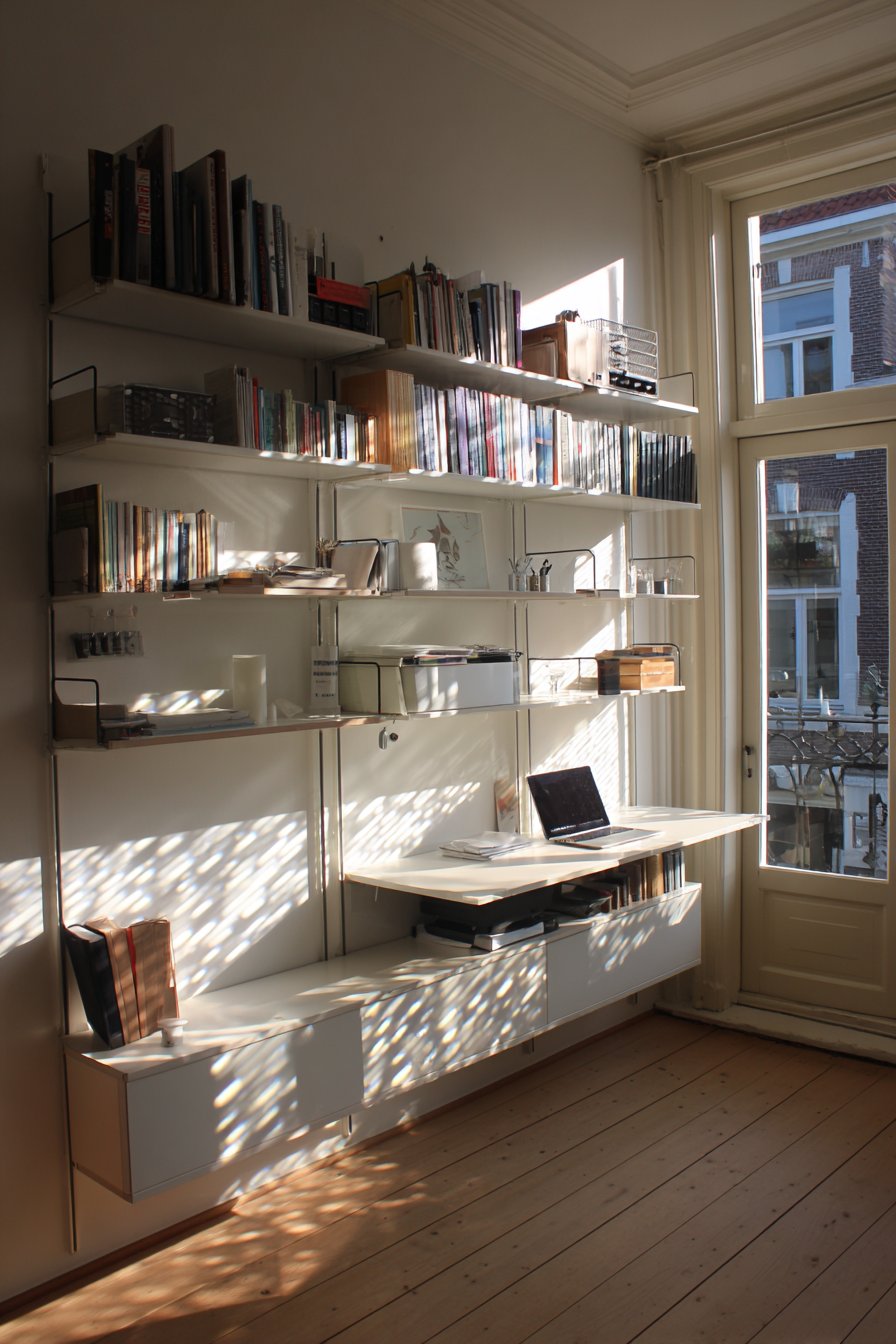
The adjustable bracket system represents forward-thinking design, acknowledging that life circumstances change and storage requirements shift over time. Unlike fixed shelving that locks you into permanent configurations, this flexibility means your investment continues serving your needs for years to come. The white finish creates a bright, energizing environment conducive to productivity while maintaining a professional appearance suitable for video calls and virtual meetings. The integration of the desk surface eliminates the visual disconnect often created when freestanding furniture sits awkwardly against shelving units.
Key Design Tips:
- Install adjustable shelving brackets to accommodate changing storage needs and object heights over time
- Maintain consistent spacing between shelves in the upper sections while varying lower shelf heights for larger items
- Use matching storage baskets or boxes to conceal clutter while maintaining visual cohesion across the wall
- Position the integrated desk surface at standard ergonomic height (28-30 inches) for comfortable extended use
- Paint shelving in white or light neutrals to maximize light reflection and create an energizing work environment
- Allow approximately 12-15 inches between shelves for standard book storage and decorative object display
2. Rustic Reclaimed Wood Floating Shelves Against Brick
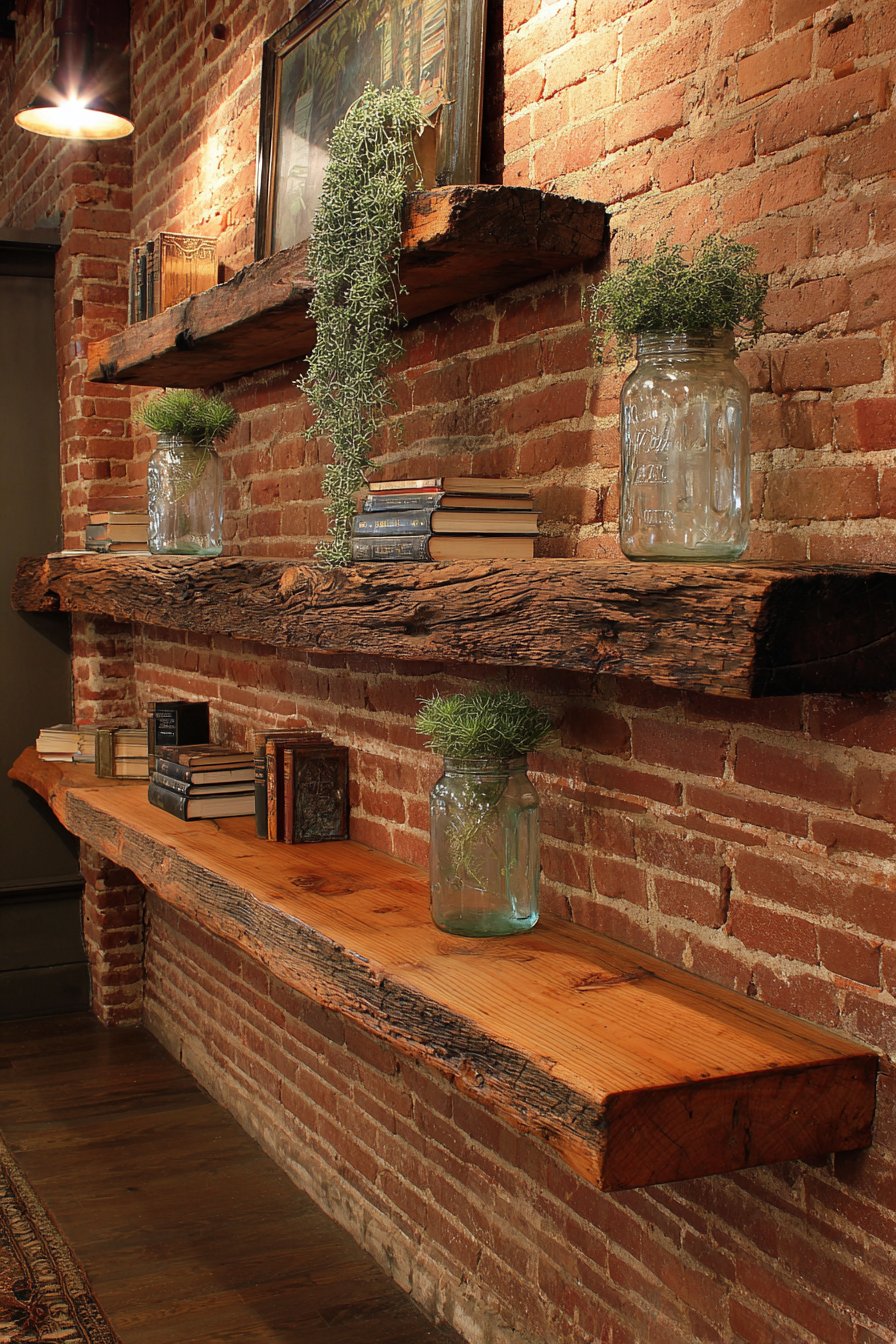
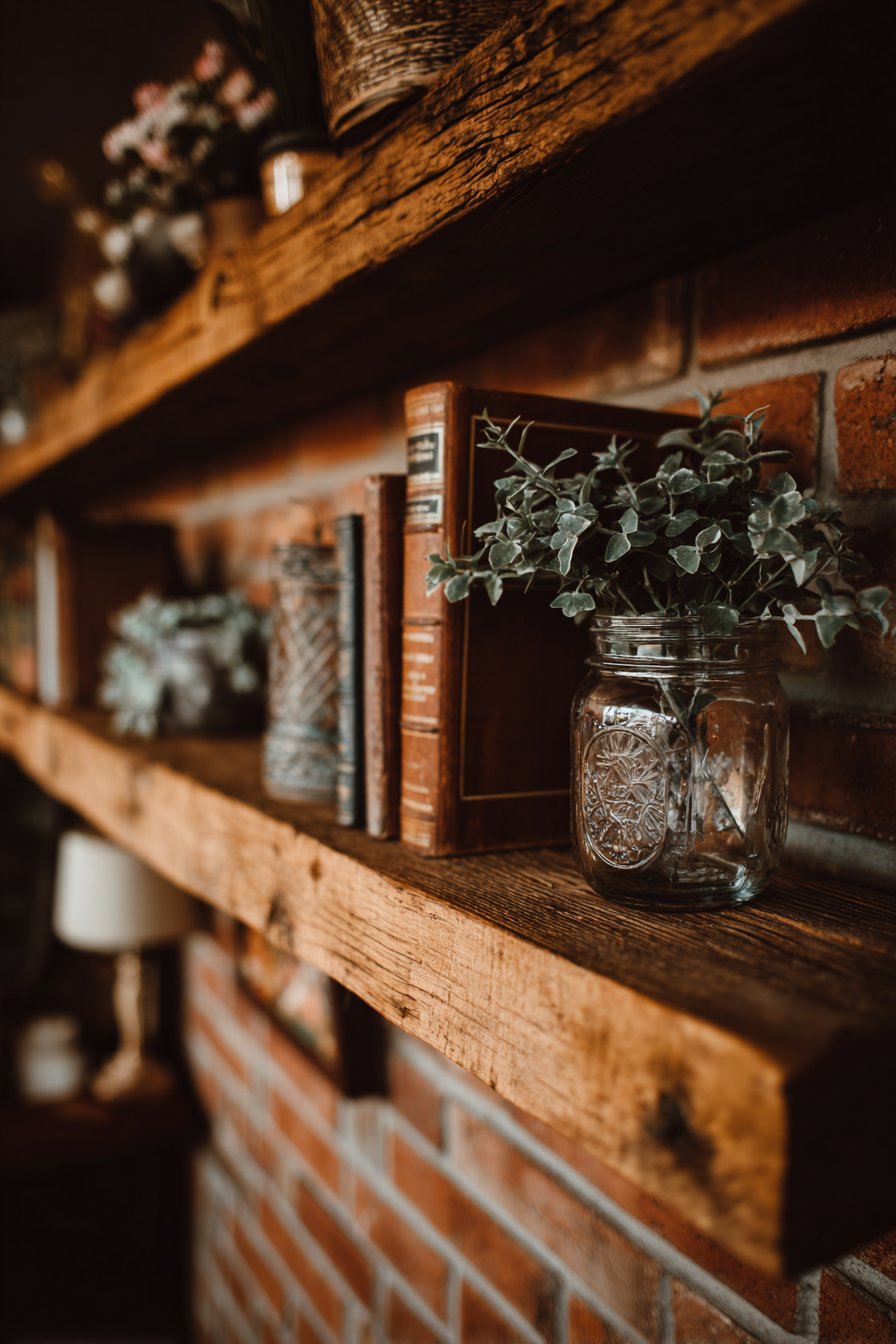
There’s an undeniable romance in the marriage of reclaimed wooden planks and exposed brick—two materials that carry history in their very fibers and surfaces. This shelf wall idea celebrates authenticity and character, featuring weathered wood planks of varying lengths mounted as floating shelves against a brick accent wall. Each board tells its own story through grain patterns, subtle discoloration, and the gentle wearing that comes only with age. The staggered arrangement creates visual interest while maintaining practical accessibility, with shelves positioned at heights that feel natural for both display and daily use.
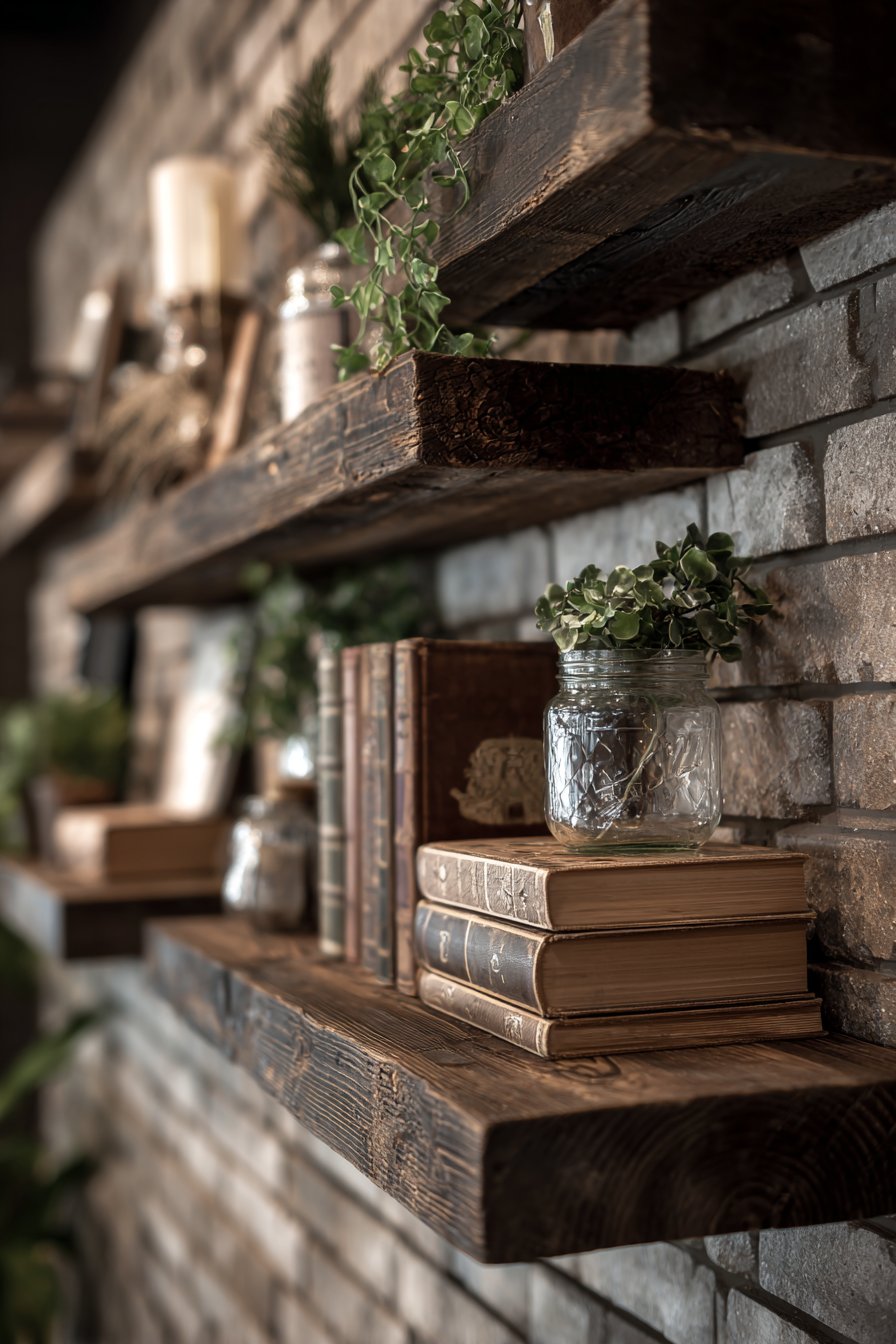
The curated display strikes a perfect balance between function and aesthetics. Vintage books lean casually against weathered bookends, their aged spines complementing the reclaimed wood perfectly. Mason jar planters introduce living elements, with trailing greenery softening the hard edges of brick and wood while adding movement and organic shapes to the composition. Weathered decorative items—perhaps a vintage scale, an antique clock, or collected curiosities—complete the vignette without overcrowding. Each element appears thoughtfully placed yet relaxed, achieving that enviable “collected over time” aesthetic rather than an overly designed appearance.
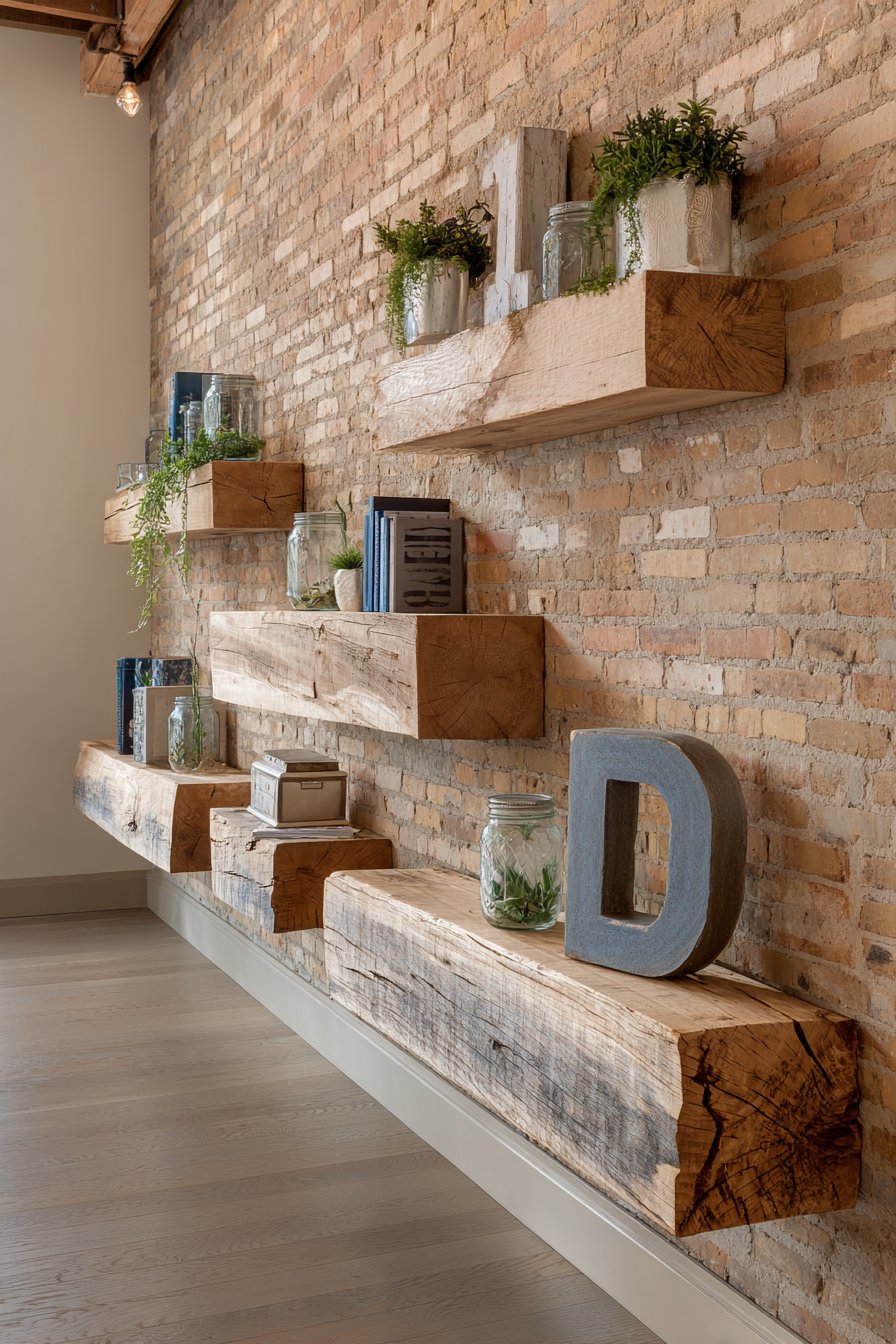
Warm ambient lighting becomes crucial in this design scheme, highlighting the wood grain’s natural beauty and creating pools of light that draw the eye along the wall. The interplay between the rough brick texture, smooth worn wood, and organic plant forms creates a tactile richness that invites closer inspection. This approach works particularly well in living rooms, home offices, or even kitchen spaces where you want to introduce farmhouse charm without committing to a full rustic renovation. The floating installation keeps sight lines clean beneath the shelves, preventing the visual heaviness that can occur with bracket-supported systems.
Key Design Tips:
- Source reclaimed wood from architectural salvage yards or specialty suppliers to ensure authentic character and patina
- Vary shelf lengths between 24-48 inches to create dynamic visual rhythm rather than uniform repetition
- Allow wood to retain natural imperfections like knots, nail holes, and color variations that contribute to authentic character
- Space shelves 14-18 inches apart vertically to accommodate both books and decorative objects comfortably
- Use concealed floating shelf hardware rated for appropriate weight loads, especially when displaying books
- Balance the visual weight by distributing books, plants, and objects across shelves rather than clustering similar items together
- Consider applying a clear matte sealer to protect wood while preserving its natural appearance
3. Minimalist Black Metal Geometric Shelving
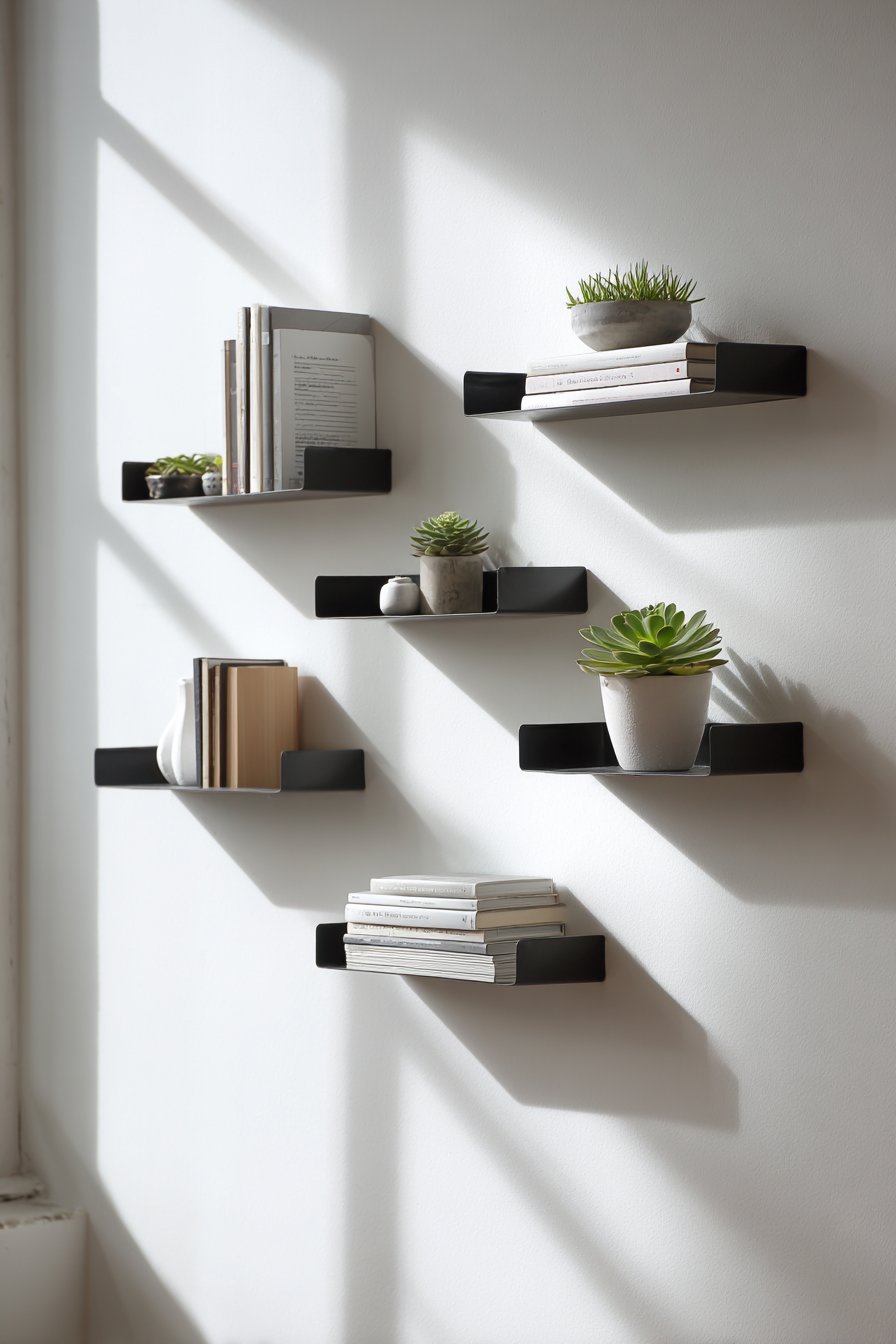
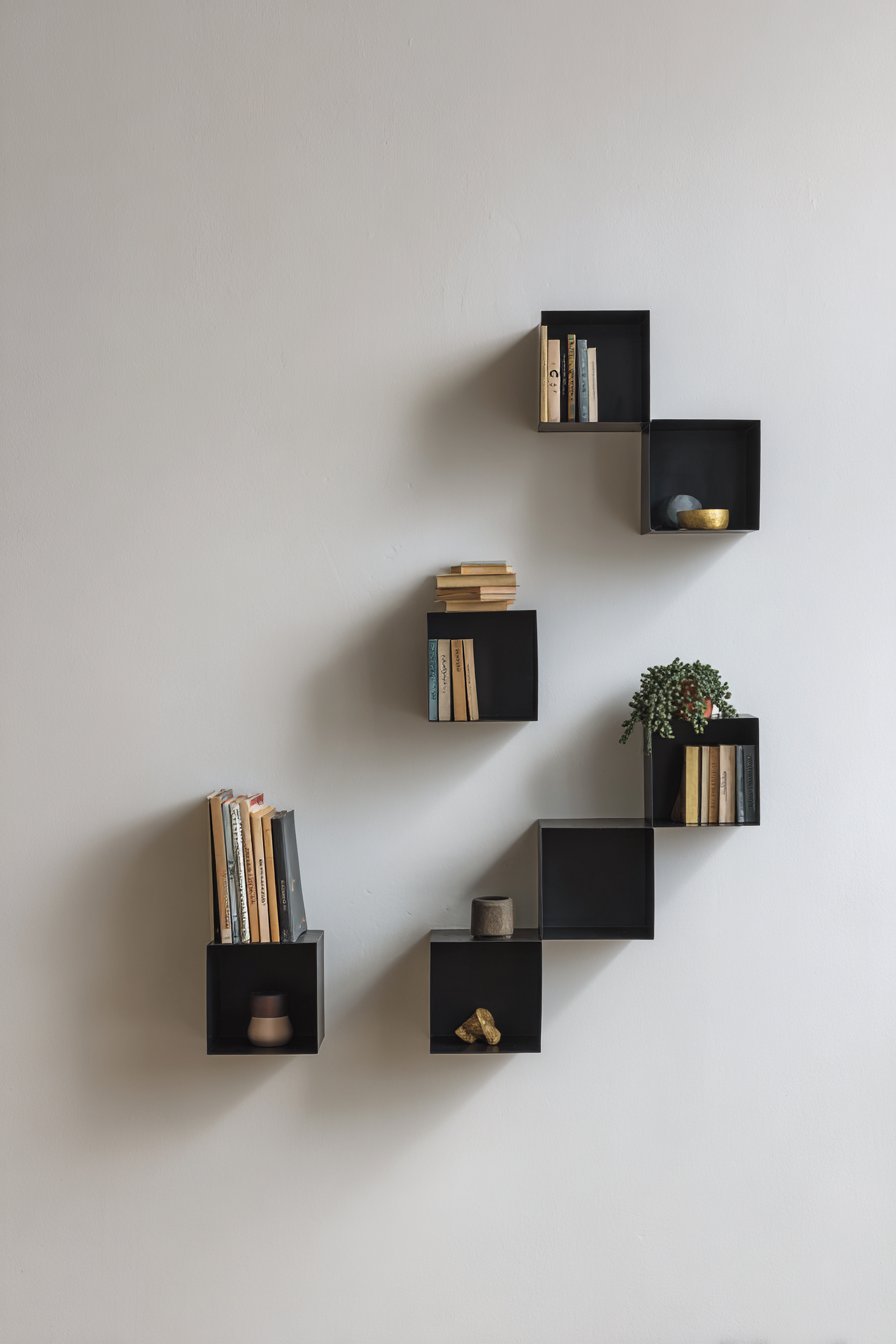
In the realm of minimalist design, less truly becomes more when executed with precision and intentionality. This shelf wall idea showcases sleek black metal floating shelves arranged in a staggered geometric pattern against pristine white walls, creating a striking visual statement through contrast and negative space. The deliberate asymmetry draws the eye across the composition while maintaining perfect balance—a sophisticated design principle that feels both contemporary and timeless. Each shelf becomes a platform for carefully selected objects that have earned their place through meaning or aesthetic contribution rather than mere decoration.
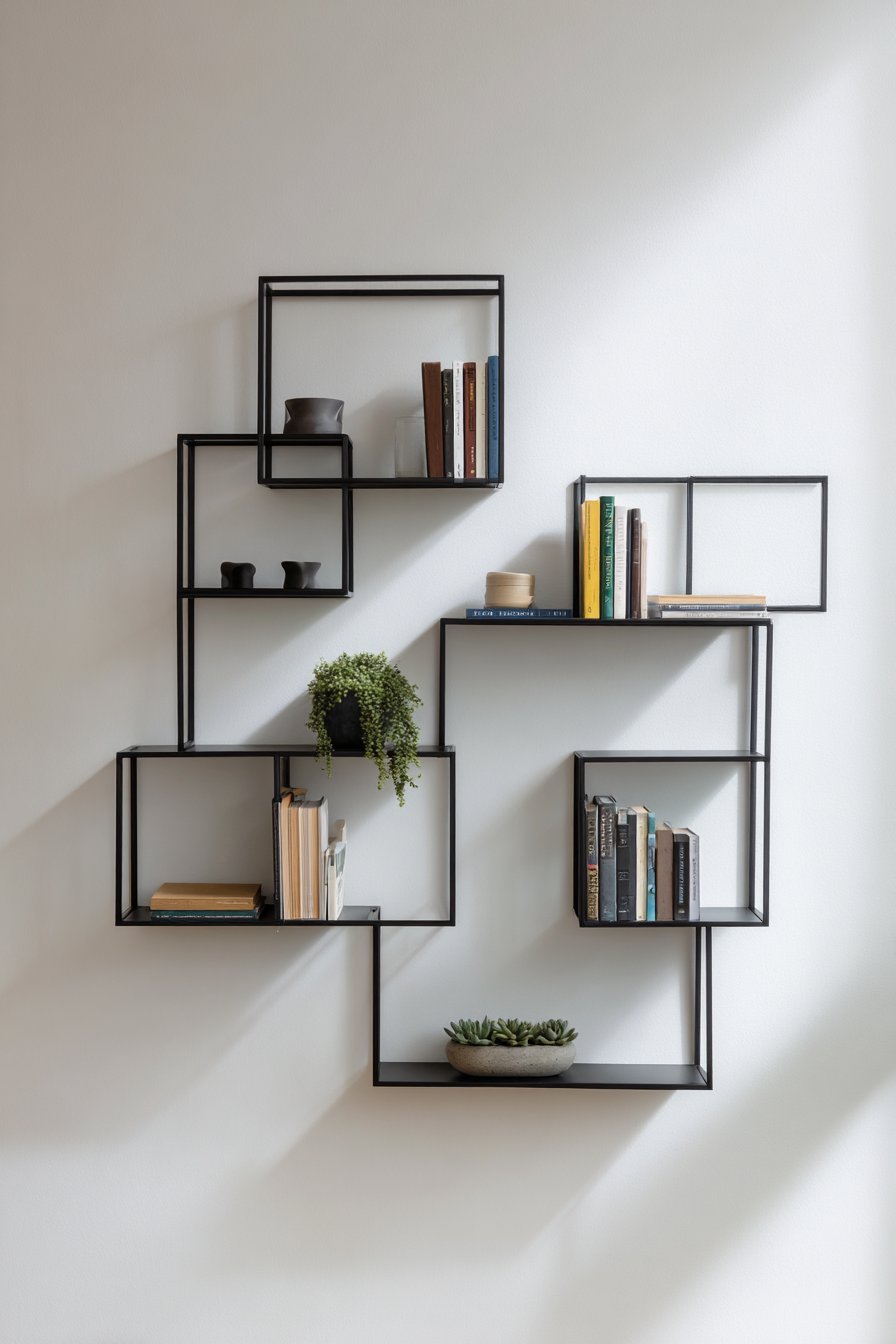
The restrained display philosophy elevates this approach beyond simple storage into the realm of curated gallery presentation. A carefully selected collection of books—perhaps art monographs or design volumes with beautiful spines—stands vertically on one shelf. Small sculptural objects occupy another, their forms celebrated by the breathing room around them. A single succulent plant introduces organic life without overwhelming the composition’s clean geometry. This editing process, deciding what makes the cut and what doesn’t, represents the heart of minimalist thinking: quality over quantity, intention over accumulation.
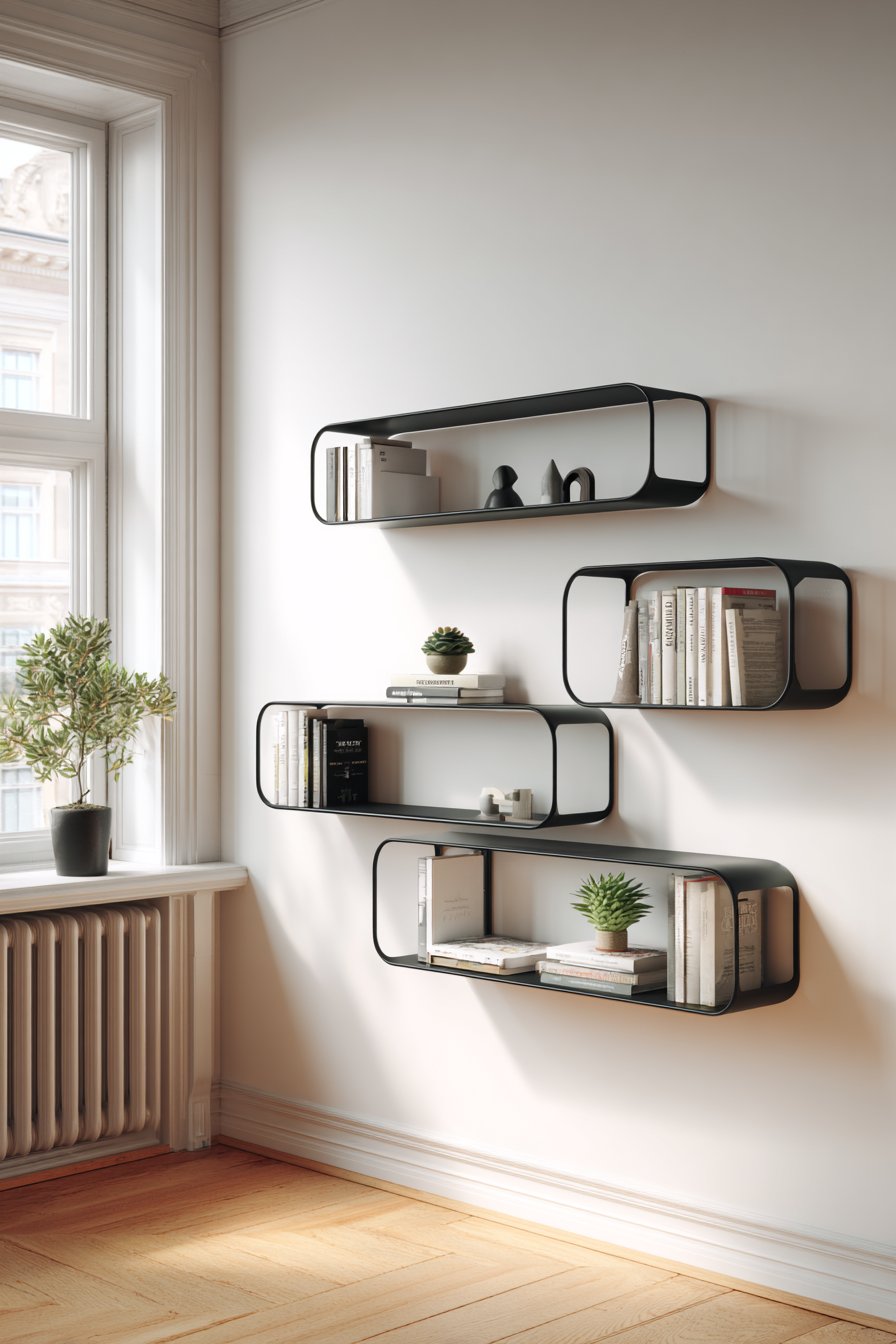
Soft natural lighting plays a crucial role in this design’s success, casting subtle shadows that emphasize the shelves’ geometric arrangement and creating depth against the white wall. The black metal finish reads as confident and contemporary without feeling cold or industrial, especially when balanced with the warmth of natural light and organic elements. This shelf wall idea works beautifully in modern bedrooms where you want functional storage without visual clutter, in contemporary living rooms as an alternative to bulky entertainment centers, or in entryways where a few select items can make a powerful first impression.
Key Design Tips:
- Plan the geometric arrangement on paper first, ensuring visual balance even with asymmetrical placement
- Limit displayed items to 3-5 objects per shelf to maintain the minimalist aesthetic and prevent visual clutter
- Choose shelves in consistent widths (8-10 inches deep) but vary lengths between 18-36 inches for geometric interest
- Maintain at least 12 inches of empty wall space between shelves to preserve the design’s breathing room
- Select objects with simple, sculptural forms that read as intentional design pieces rather than casual clutter
- Use the rule of thirds when positioning shelves to create naturally pleasing visual balance
- Ensure shelves are perfectly level during installation as any deviation becomes obvious in minimalist compositions
4. Industrial Loft Pipe Bracket Shelving
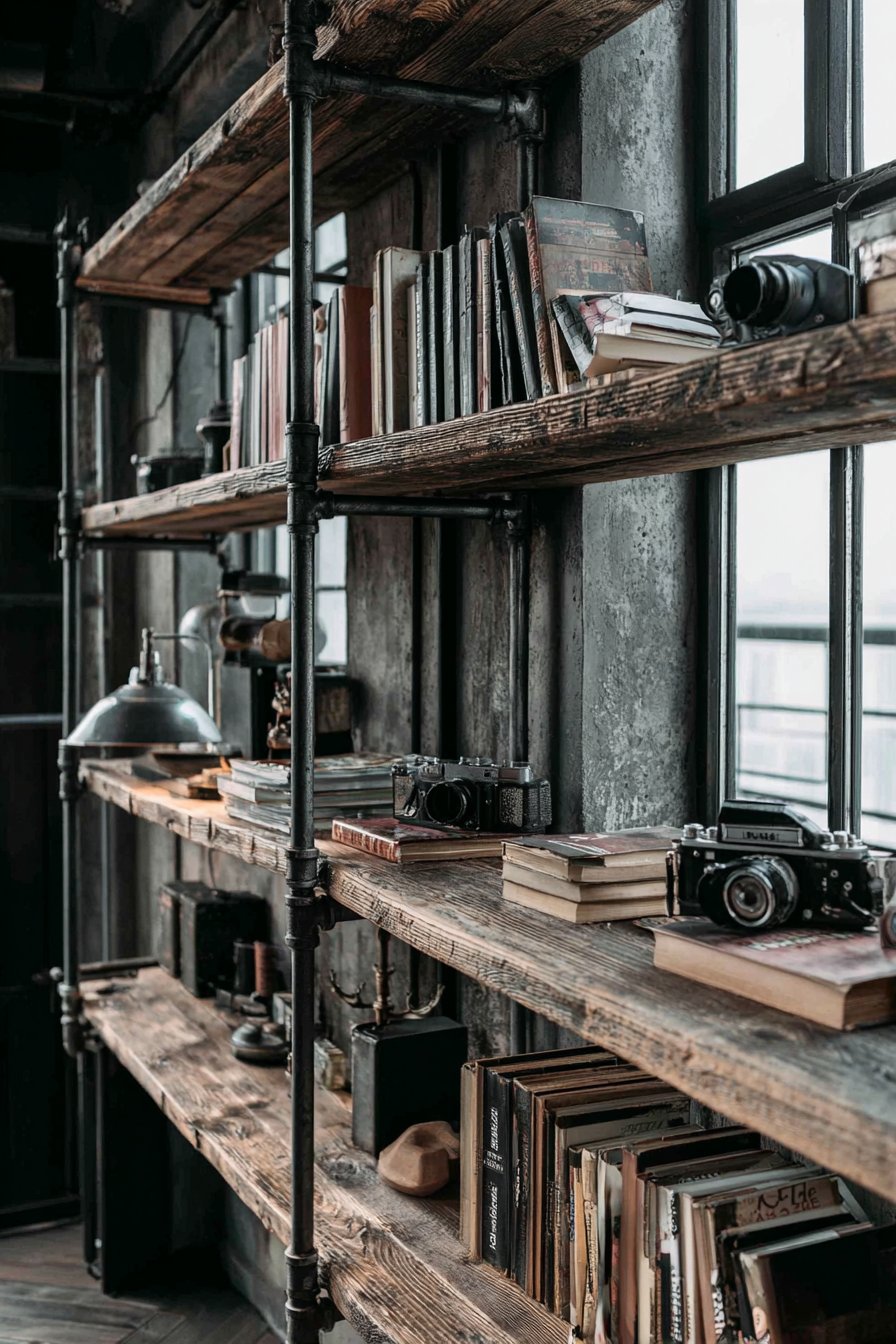
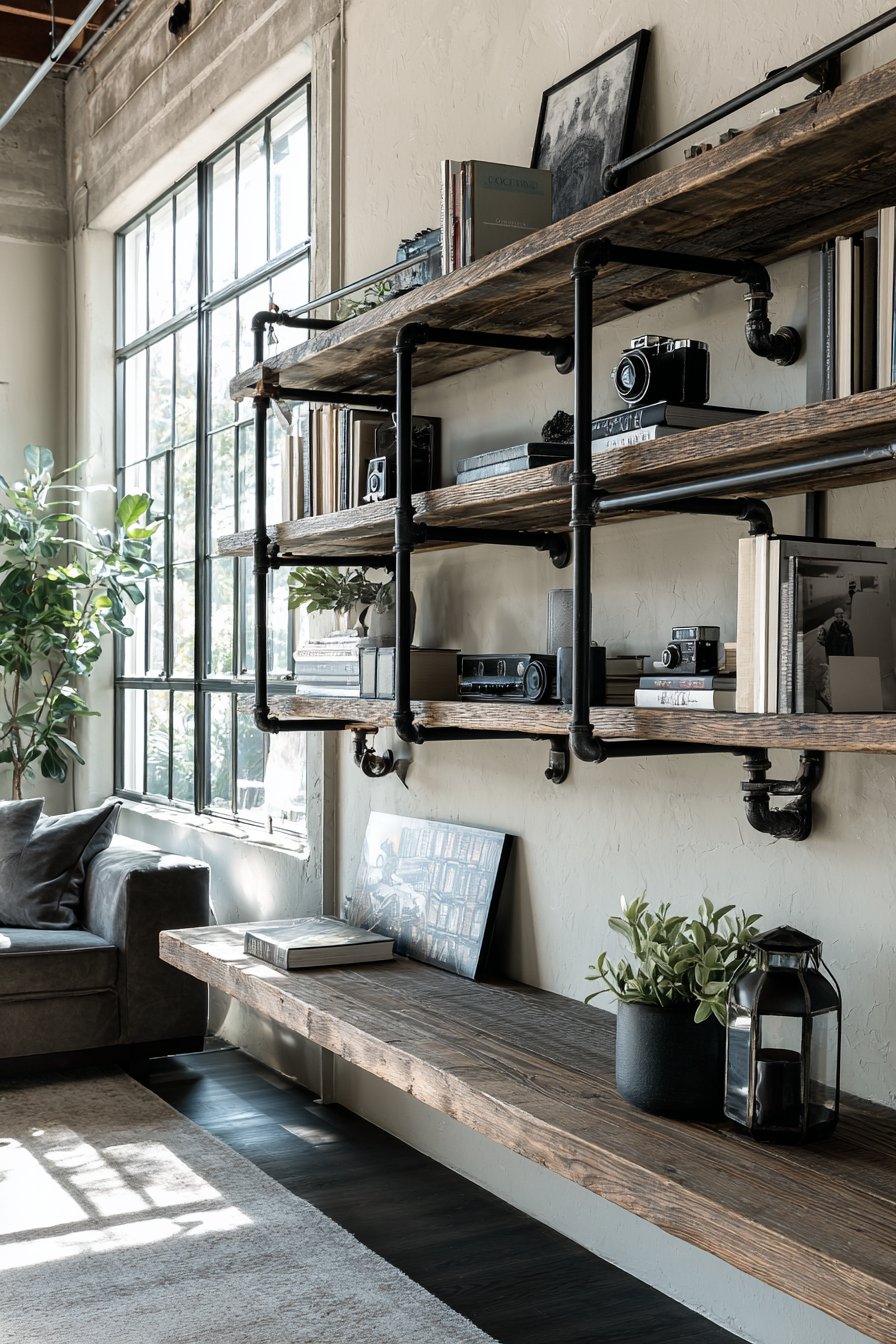
The industrial aesthetic has evolved from its warehouse origins into a sophisticated design language that celebrates honest materials and utilitarian beauty. This shelf wall idea embraces that evolution with exposed metal pipe brackets supporting thick wooden planks across an entire loft-style living room wall. The raw, unfinished quality of the materials creates authentic industrial character—black metal pipes show subtle variations in finish, while substantial wood planks display natural grain patterns and subtle imperfections that machine-made materials can never replicate. This is design that wears its construction methods proudly rather than concealing them.
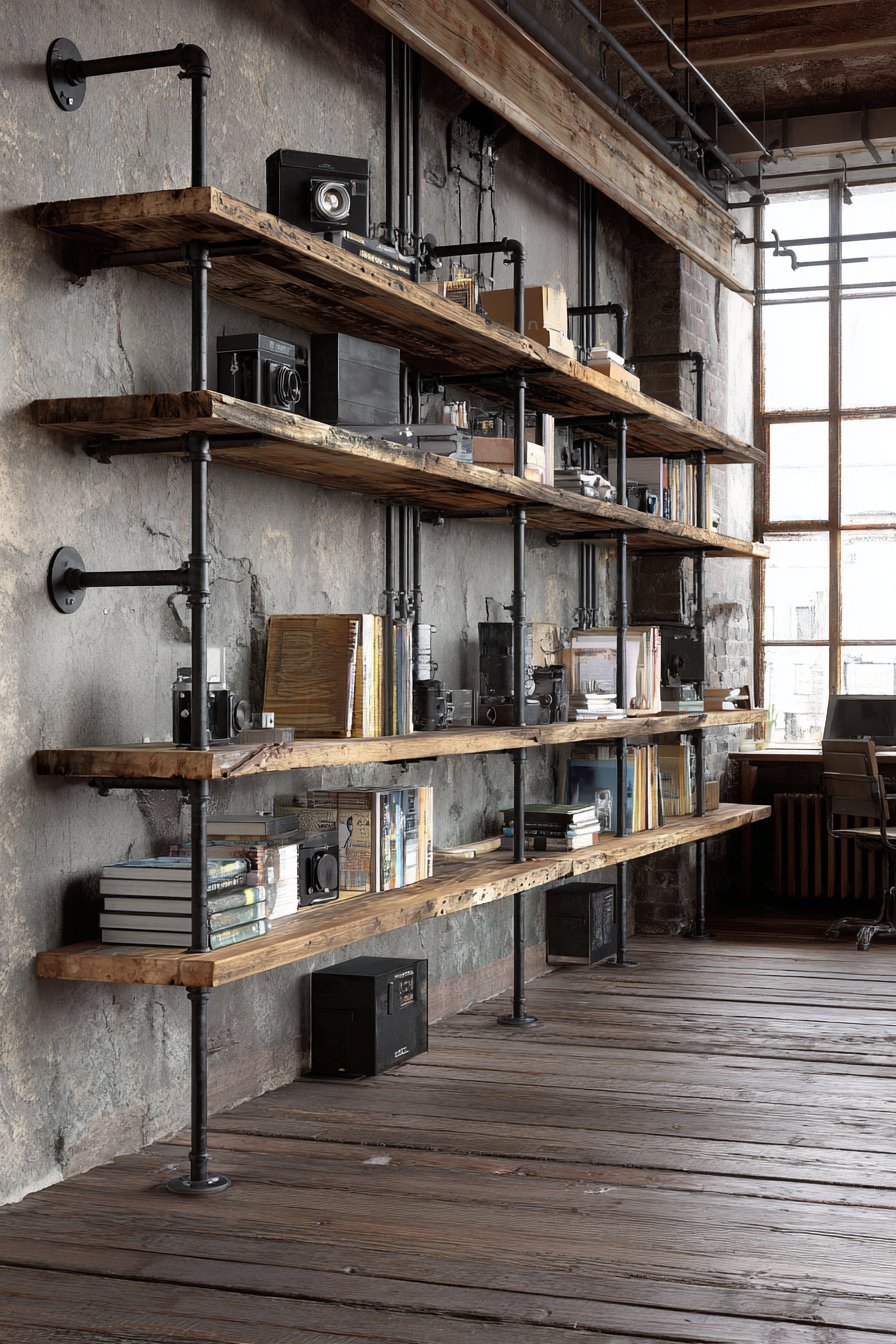
The substantial scale of this installation makes it a true focal point, commanding attention while providing serious storage capacity. Books fill several shelves, their varying heights and colors creating organic visual texture. Vintage cameras, collected over time, occupy prominent positions where they’re both displayed and accessible. Industrial-style accessories—perhaps factory molds, vintage signs, or metal containers—reinforce the aesthetic cohesion. The key lies in the arrangement feeling collected rather than contrived, with enough variation to maintain interest but sufficient repetition to create rhythm across the expansive wall.
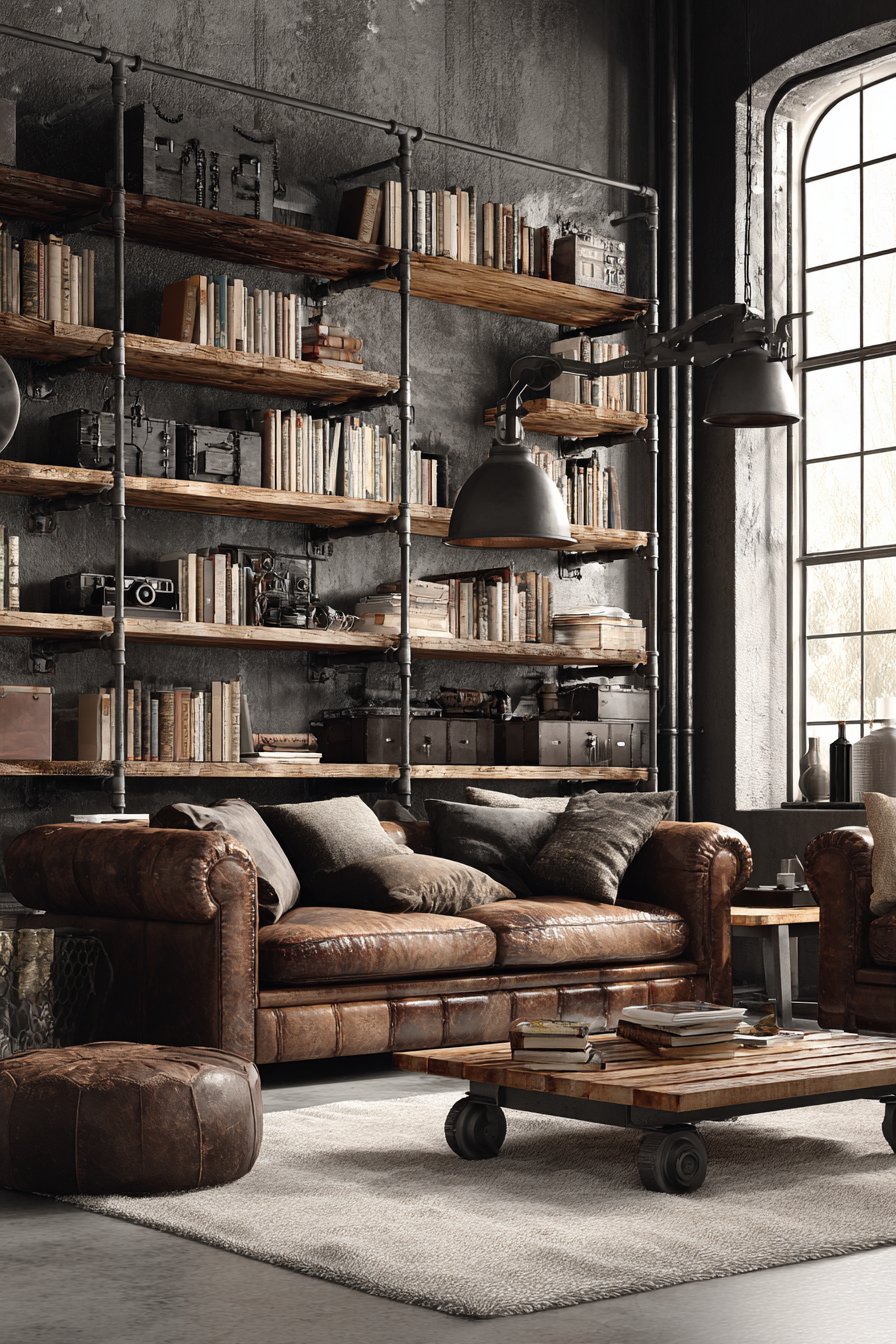
Natural light streaming through large windows becomes essential to this design’s success, highlighting the material contrasts between dark metal and warm wood while preventing the industrial elements from feeling heavy or oppressive. The combination of robust materials and honest construction creates furniture that could easily last decades, even generations—a sustainability statement in an era of disposable furniture. This approach works particularly well in open-concept living spaces, converted loft apartments, or any environment where you want to introduce urban edge and maximize storage without traditional cabinetry’s visual weight.
Key Design Tips:
- Use black iron or steel pipes with floor flanges and elbow joints for authentic industrial construction
- Select wood planks at least 2 inches thick and 10-12 inches deep for appropriate visual weight and load capacity
- Space pipe brackets every 24-30 inches along shelf length to prevent sagging under book weight
- Leave wood unsealed or use clear matte finish to preserve natural character and prevent overly polished appearance
- Arrange shelves with 14-18 inch vertical spacing to accommodate various book sizes and decorative objects
- Mix horizontal and vertical book arrangements to break up visual monotony across the large wall span
- Ensure proper anchoring into wall studs given the substantial weight capacity these shelves will support
5. Scandinavian Light Birch Floating Shelves
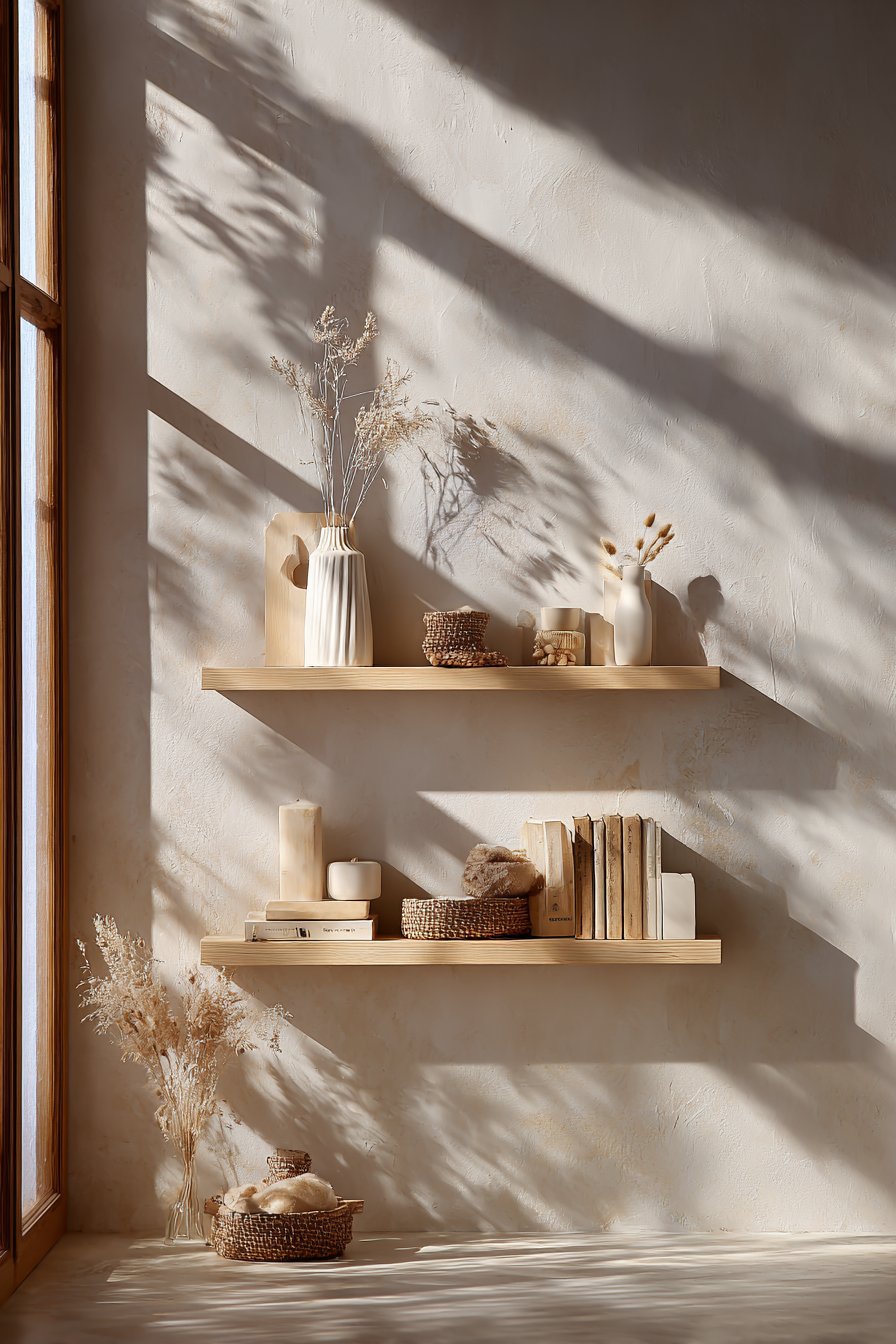
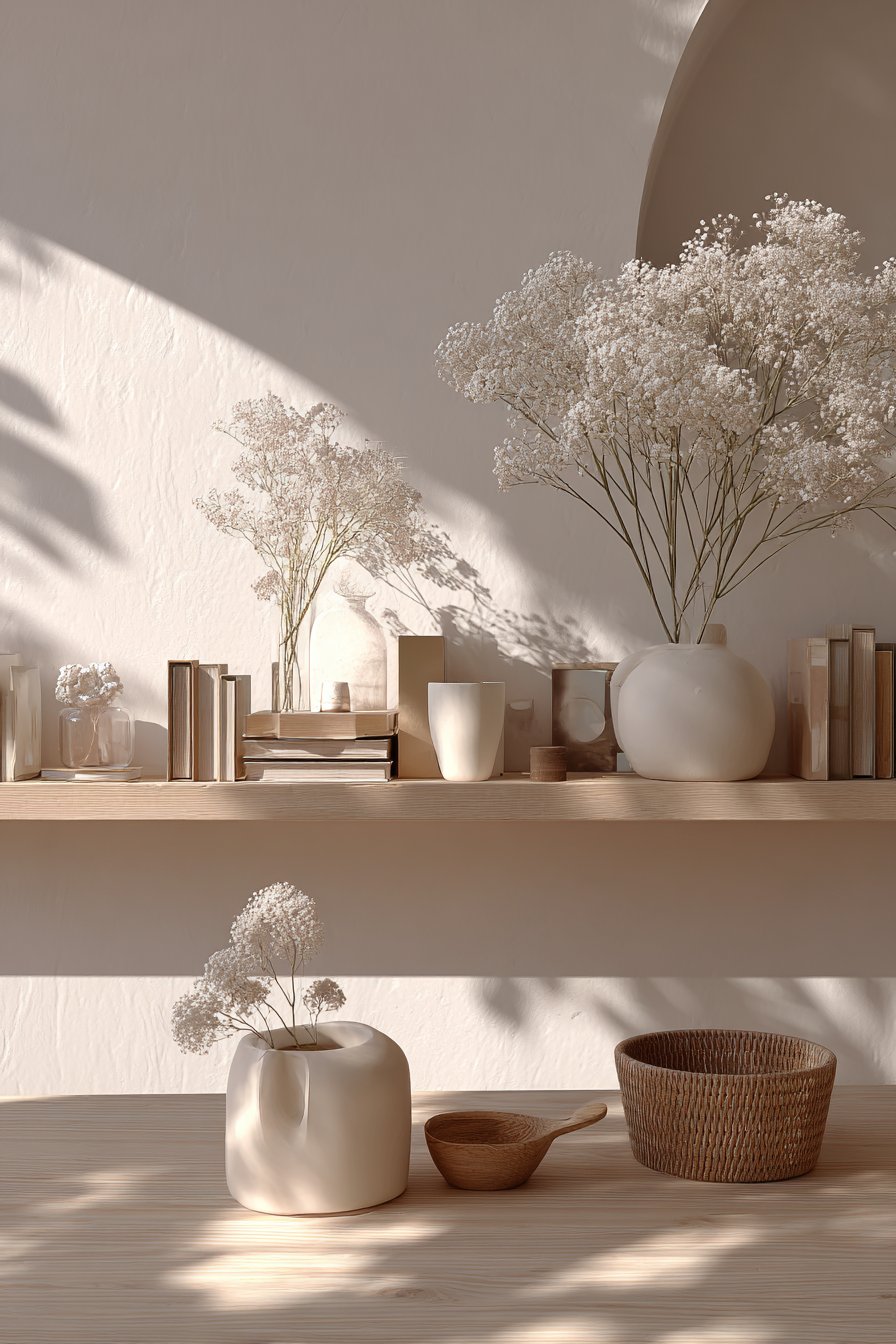
Scandinavian design philosophy finds perfect expression in this shelf wall idea, where light birch wood floating shelves create serene horizontal lines against soft gray walls. The Nordic approach to interior design emphasizes natural materials, functional simplicity, and abundant natural light—principles that converge beautifully in this understated yet sophisticated installation. The pale birch wood brings warmth without heaviness, its fine grain and honey-toned color creating visual softness that prevents the minimalism from feeling stark or cold. The horizontal arrangement creates calm, orderly rhythm rather than dynamic energy, perfectly suited to spaces designed for relaxation and contemplation.
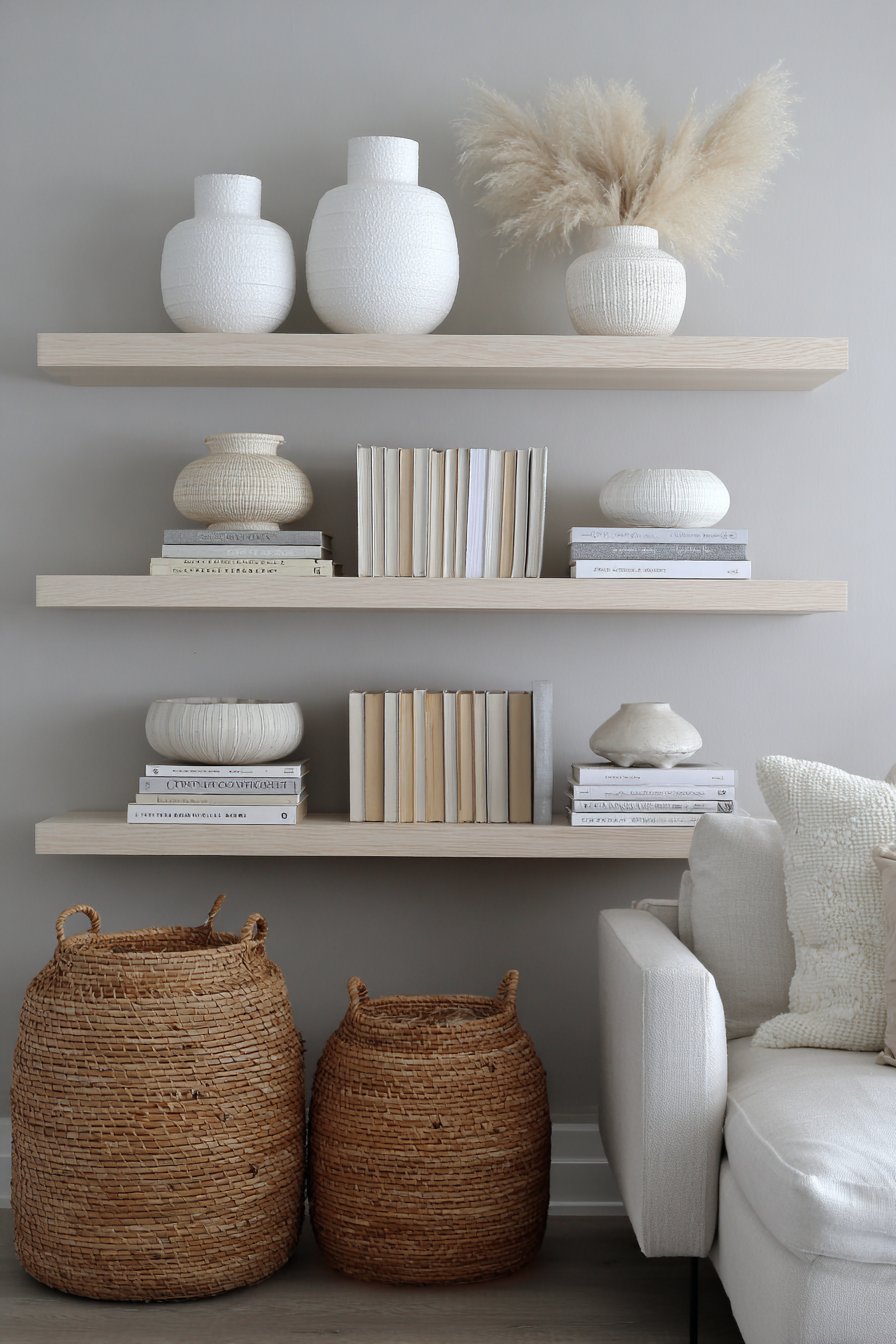
The carefully curated display embodies hygge—that quintessentially Scandinavian concept of cozy contentment. White ceramic vases in simple, sculptural forms hold fresh branches or single stems, celebrating natural beauty without excess. Natural fiber baskets provide practical storage for items you’d rather conceal while contributing textural interest through their woven patterns. Books arranged with neutral-toned covers facing outward create subtle color harmony rather than the rainbow effect that can feel chaotic. Every element serves a purpose while contributing to the overall sense of peaceful order.
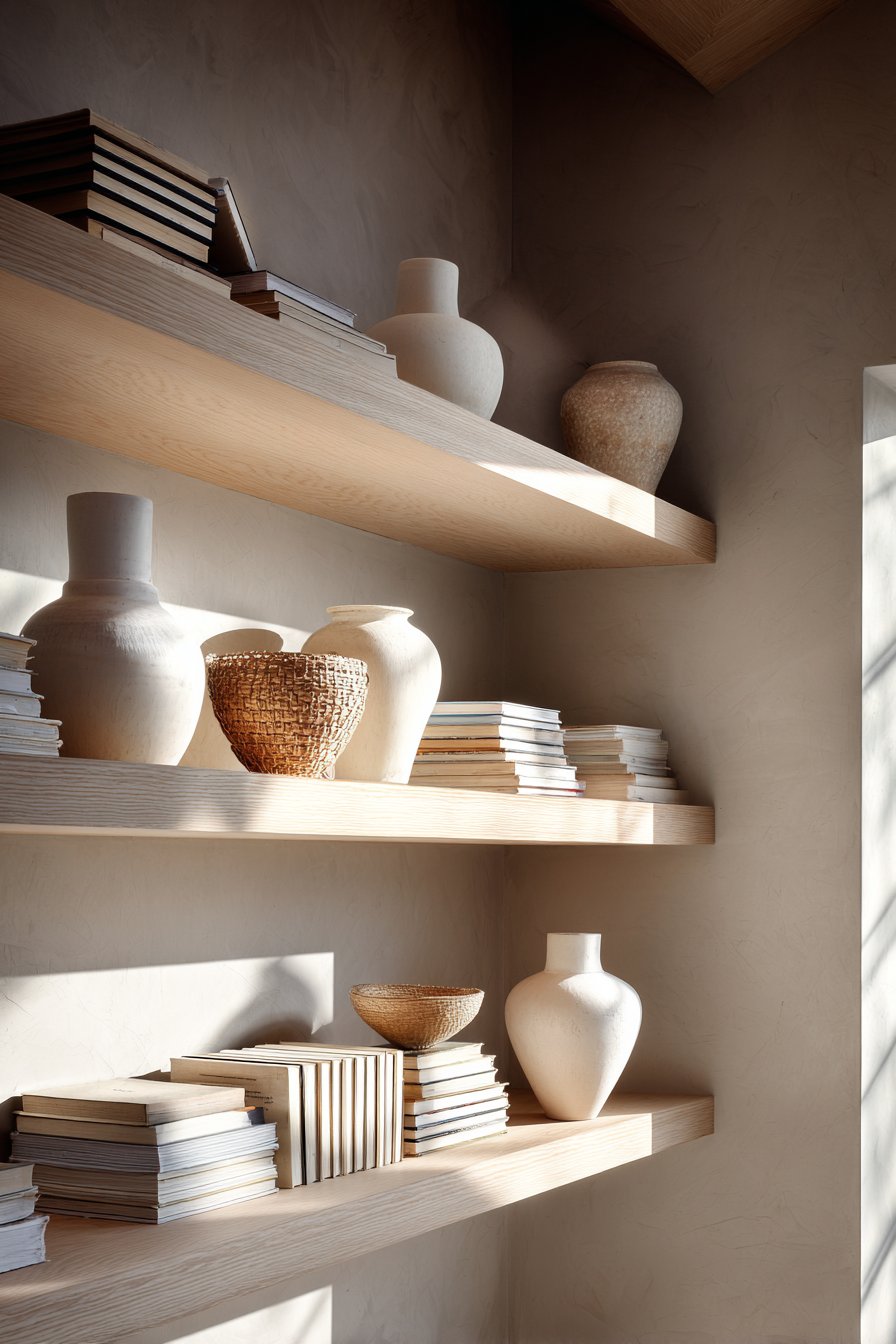
Abundant natural light becomes the final essential ingredient, flooding the space with soft, diffused illumination that highlights the wood’s subtle grain patterns and creates gentle shadows. The gray wall color, chosen in a sophisticated mid-tone with warm undertones, provides enough contrast to define the shelves without harsh division. This design approach works beautifully in living rooms where you want to create calm gathering spaces, in bedrooms where serenity supports restful sleep, or in home offices where visual simplicity helps maintain focus. The result feels effortlessly elegant—a space that appears unstudied despite thoughtful design decisions.
Key Design Tips:
- Choose birch or light maple wood with visible grain for authentic Scandinavian character and natural warmth
- Paint walls in warm gray tones (greige) rather than cool grays to maintain the cozy Scandinavian atmosphere
- Limit color palette to whites, grays, natural wood tones, and soft neutrals for cohesive visual calm
- Space shelves 16-20 inches apart vertically to create generous breathing room between displayed objects
- Select simple ceramic or stoneware vessels in white or cream to display natural elements like branches or flowers
- Use natural fiber storage baskets in matching sizes for visual consistency while concealing necessary clutter
- Arrange books with neutral covers facing forward or wrap books in kraft paper for cohesive appearance
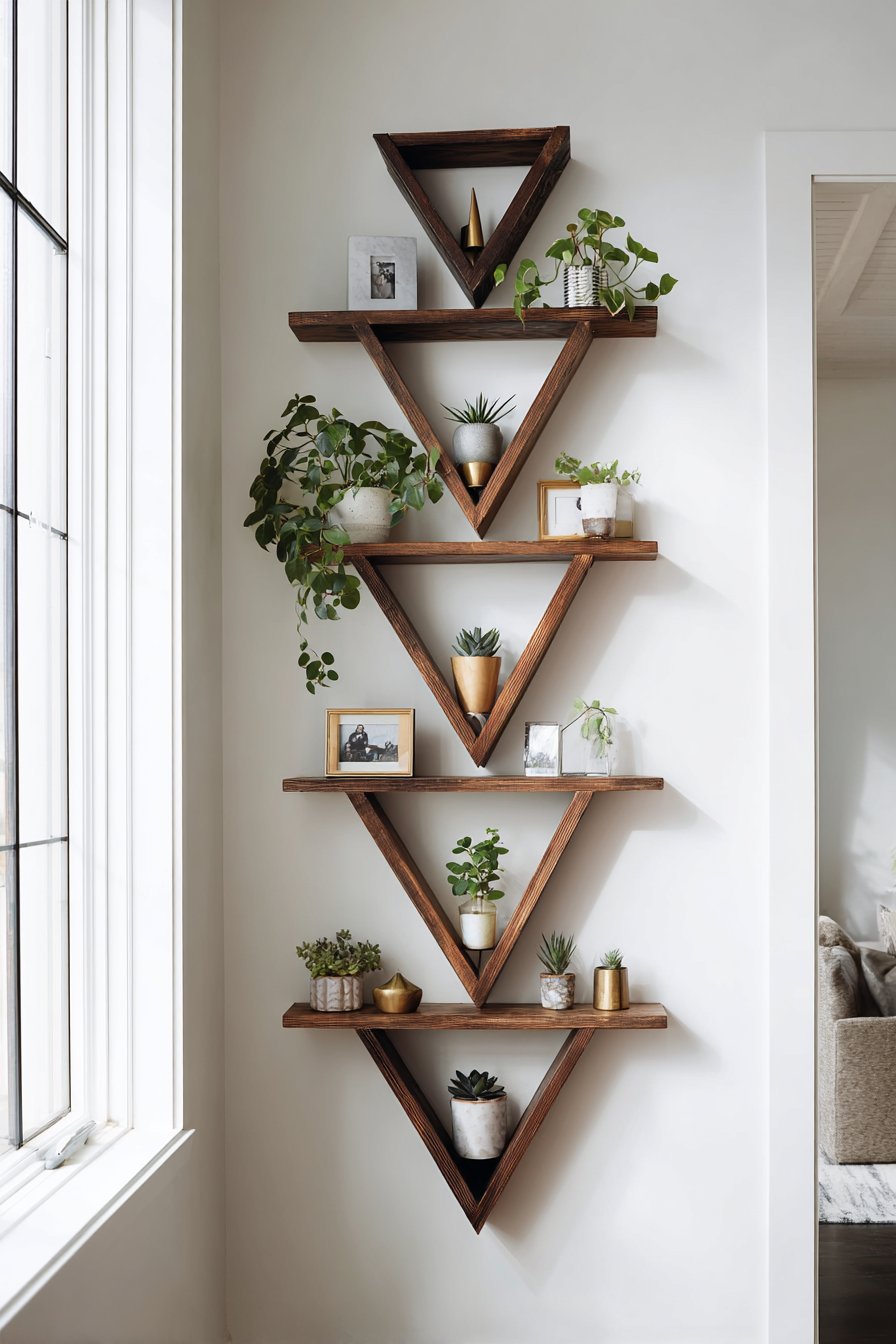
6. Corner-Maximizing Triangular Shelves
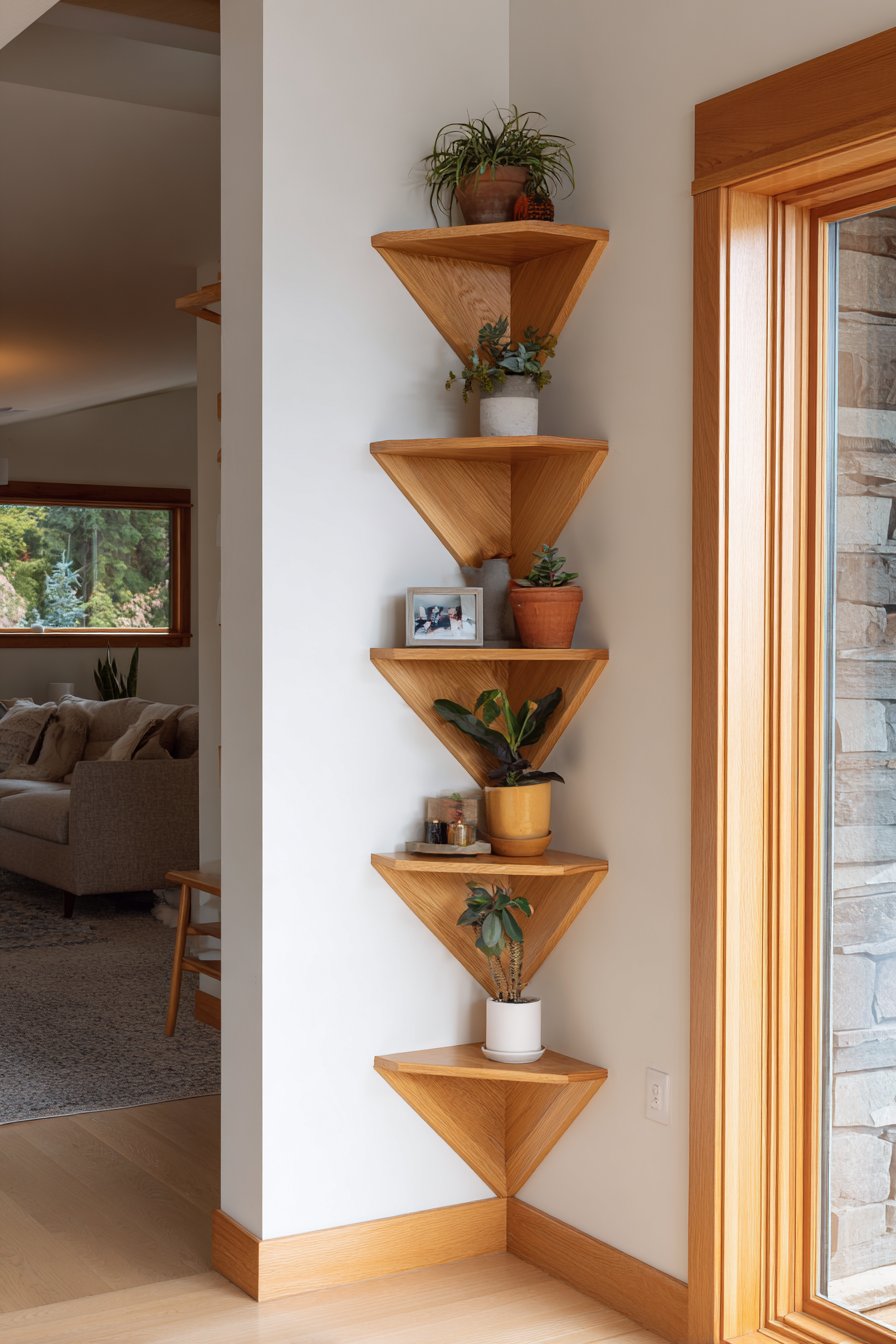
Small space living demands creative solutions, and this shelf wall idea demonstrates how thoughtful design can transform overlooked corners into valuable storage and display territory. Triangular floating shelves in rich walnut finish ascend vertically along the corner line, creating a sculptural installation that’s both practical and visually striking. The geometric form fits perfectly into the 90-degree angle, utilizing space that typically remains empty or awkwardly furnished. Each shelf provides a platform for display while the vertical arrangement draws the eye upward, emphasizing ceiling height and making rooms feel more spacious—a crucial consideration in compact apartments.
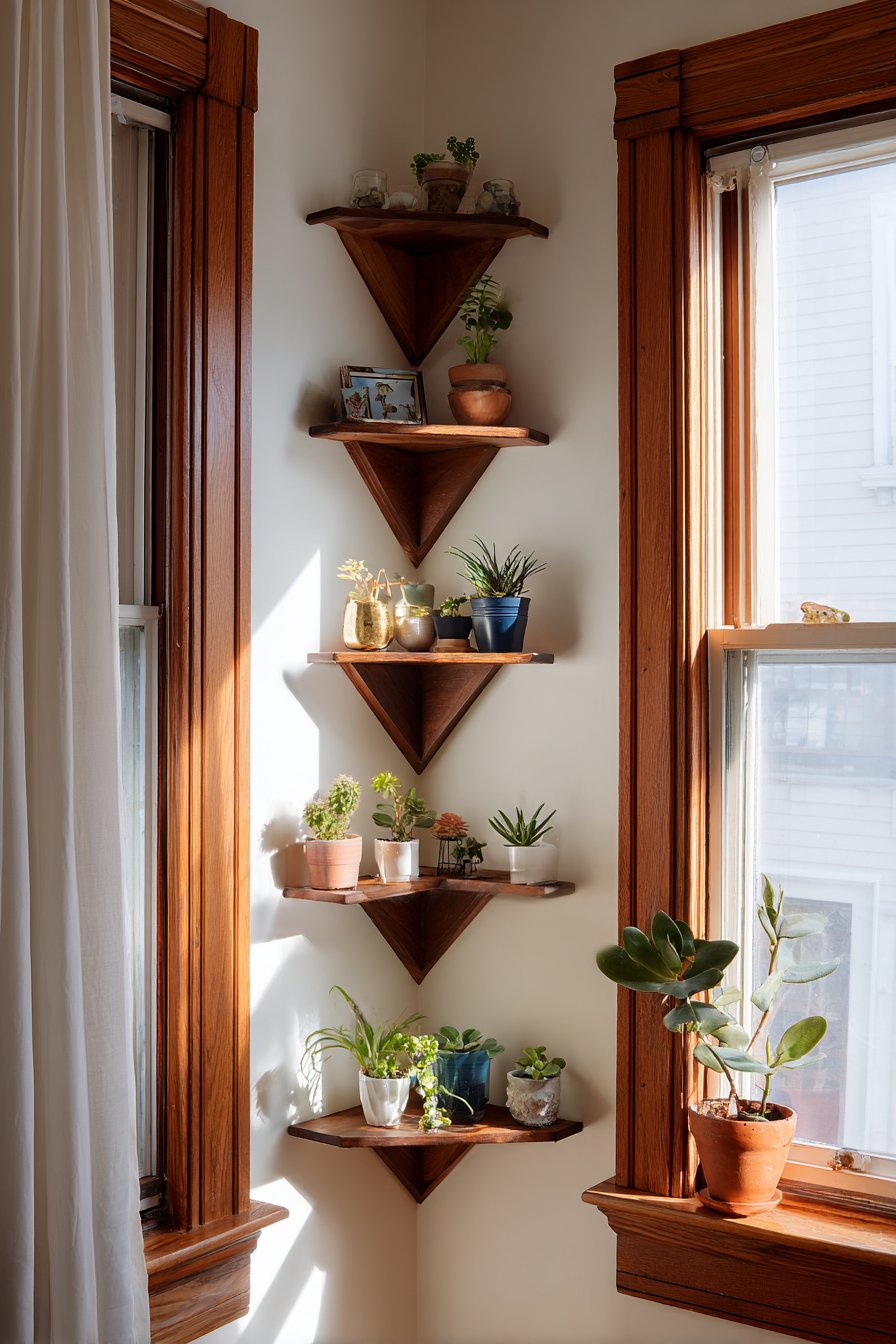
The display strategy here balances living greenery, personal photographs, and small decorative objects, creating a personal gallery that climbs the corner like a three-dimensional timeline. Trailing plants on upper shelves cascade down, their foliage softening the geometric precision and introducing movement. Mid-level shelves showcase framed photographs in complementary frames, creating family history or travel memories that occupy minimal footprint. Lower shelves hold small sculptural objects or books, positioned at eye level where details can be appreciated. This vertical arrangement tells a story, with placement decisions feeling both intentional and organic.
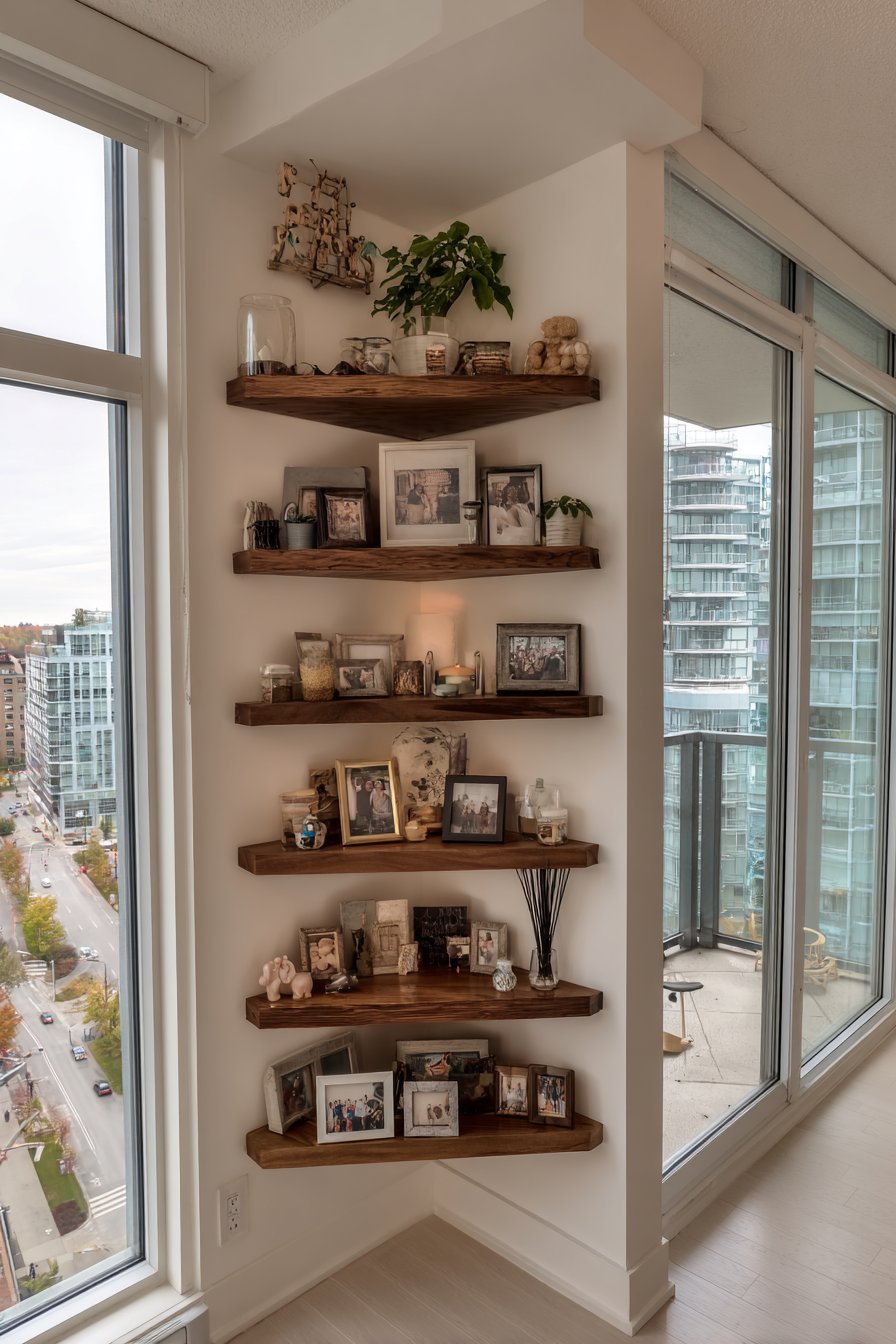
Natural lighting from nearby windows plays across the walnut’s warm tones, creating shifting patterns throughout the day that keep the installation feeling dynamic rather than static. The rich wood finish adds sophistication to even modest apartments, proving that small spaces can incorporate quality materials and thoughtful design. This approach works particularly well in studio apartments where every square foot matters, in awkward room corners that resist traditional furniture placement, or in children’s rooms where vertical storage keeps floor space clear for play. The result transforms a forgotten zone into a celebrated feature.
Key Design Tips:
- Measure corner angles carefully as walls aren’t always perfectly square, adjusting shelf angles accordingly for flush fit
- Graduate shelf sizes with larger triangles at bottom (12-14 inch sides) tapering to smaller at top (8-10 inch sides)
- Space shelves 12-16 inches apart vertically for comfortable object display without overcrowding
- Install heaviest items on lower shelves to maintain visual balance and prevent top-heavy appearance
- Use LED puck lights beneath upper shelves to illuminate lower displays and create ambient evening glow
- Limit items to 2-3 per shelf to prevent cluttered appearance and maintain breathing room
- Ensure proper weight distribution across the shelf triangle rather than concentrating weight at one corner
7. Bohemian Macramé and Wood Combination
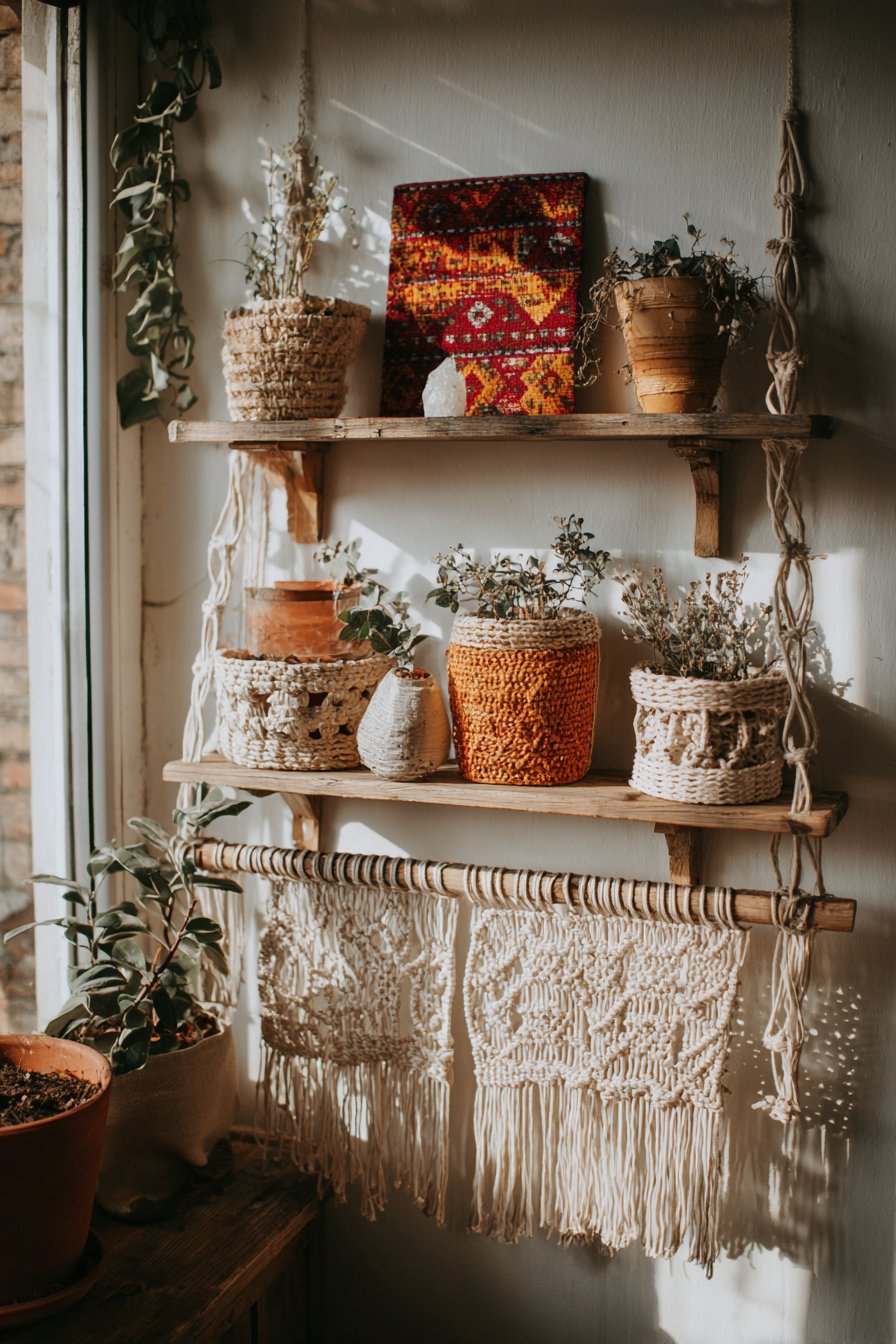
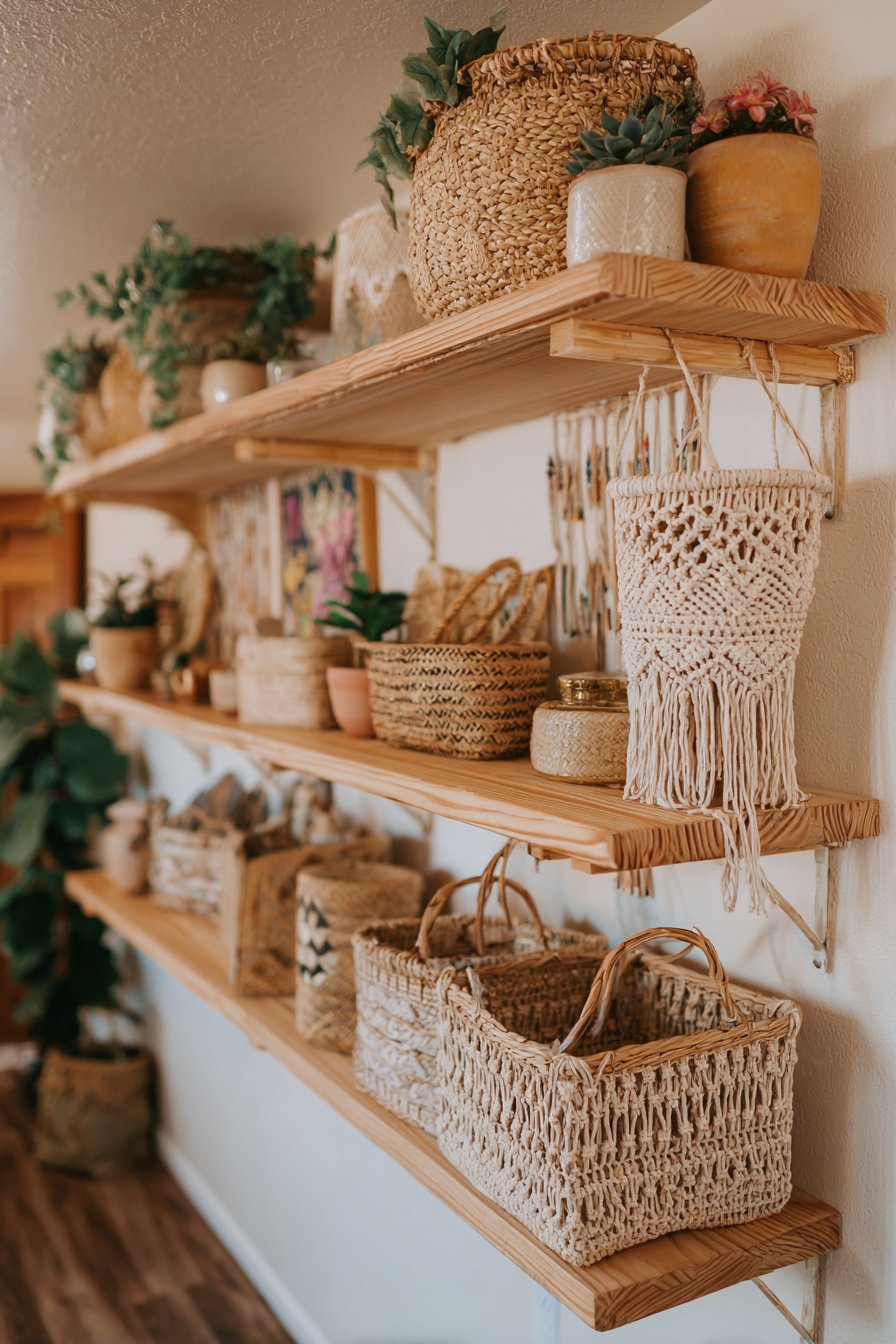
The bohemian aesthetic celebrates eclecticism, texture, and handcrafted character—qualities beautifully embodied in this shelf wall idea that combines macramé hanging shelves with traditional wooden floating shelves. The layered approach creates dimensional interest, with suspended macramé shelves hanging at various heights in front of wall-mounted wood shelves, establishing visual depth that flat installations cannot achieve. Natural cotton macramé rope, knotted in intricate patterns, introduces soft organic texture that contrasts beautifully with wood’s solid presence. This combination speaks to the boho philosophy of mixing materials, cultures, and craft traditions into harmonious, personally meaningful compositions.
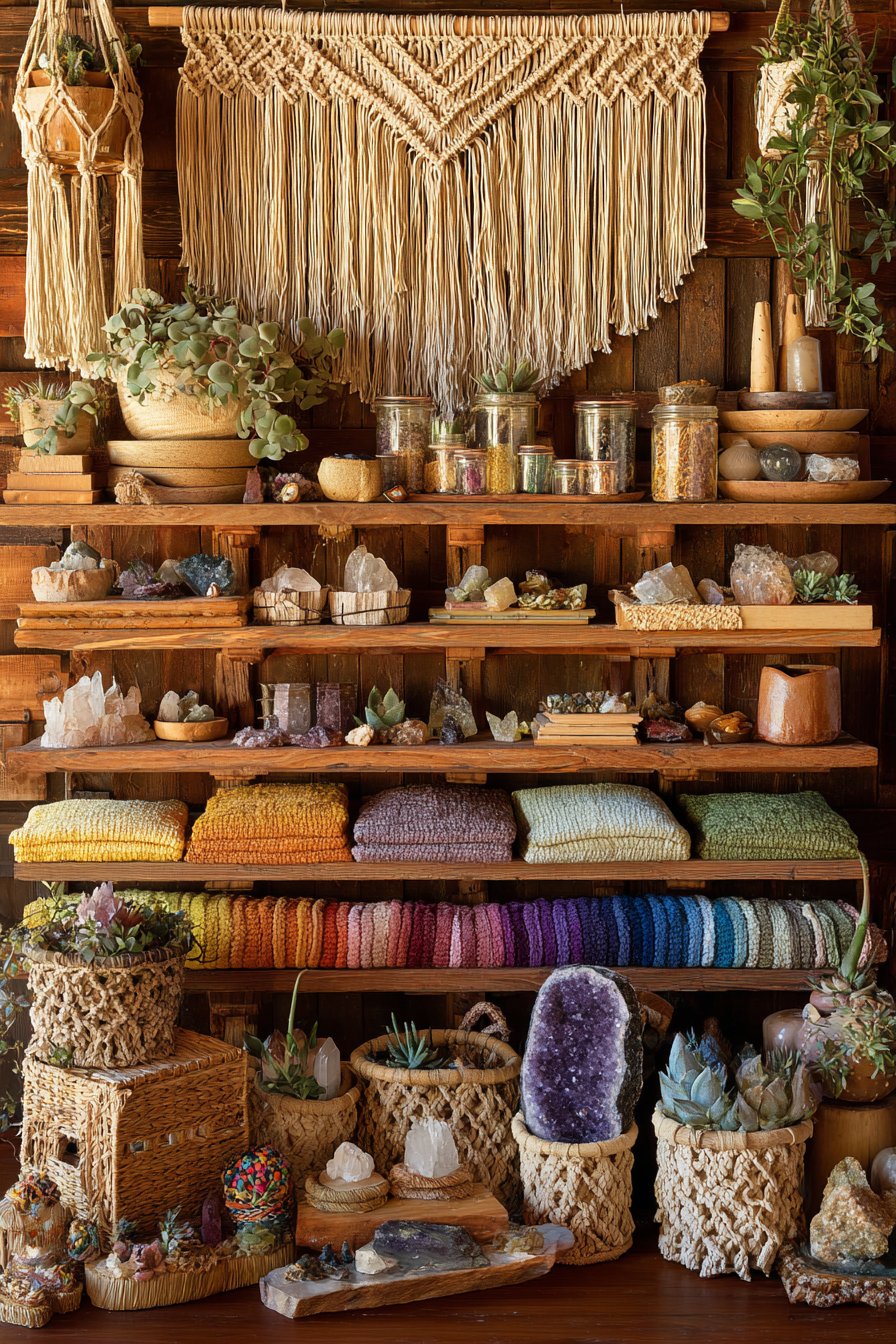
The display leans heavily into natural materials and global influences. Potted plants occupy prominent positions—perhaps a trailing pothos cascading from a macramé hanger, succulents clustered on wooden shelves, or a small fiddle leaf fig claiming its space. Crystals and geodes catch light, their natural facets creating tiny prisms. Woven baskets in various sizes provide practical storage while contributing textural richness. Colorful textiles—a small vintage kilim runner, embroidered fabric, or batik cloth—drape casually, introducing pattern and vibrant color. The arrangement feels collected over time through travels and treasure hunts rather than purchased in a single shopping trip.
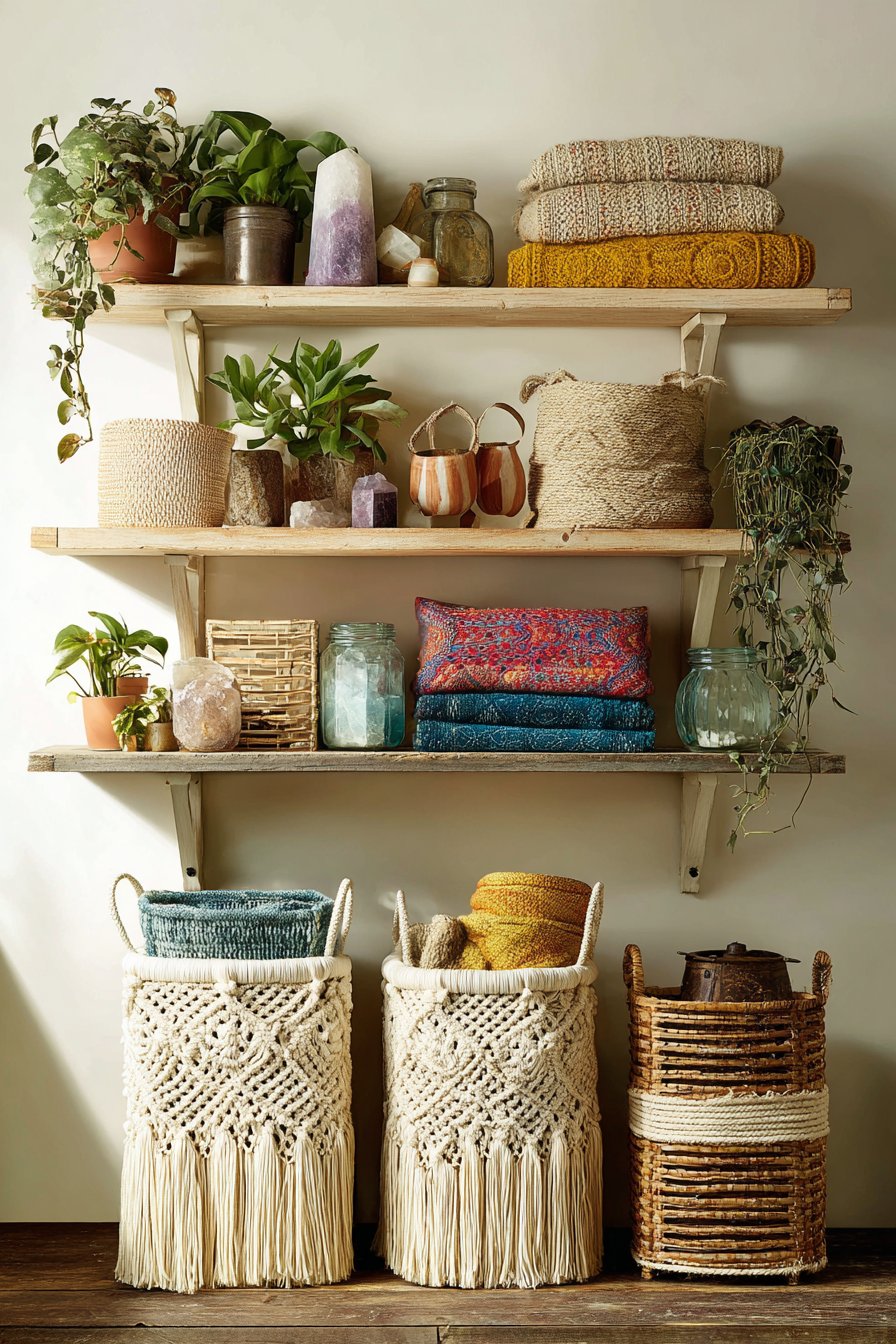
Soft diffused lighting enhances the textural variety, creating gentle shadows in the macramé’s depth and highlighting the woven basket patterns. The layering principle extends beyond just the shelving itself to the display philosophy—objects overlap slightly, creating vignettes within the larger composition. This approach works wonderfully in bedrooms where you want to create peaceful, personal sanctuary spaces, in meditation or yoga rooms where natural materials support mindful practice, or in creative studios where eclectic inspiration fuels artistic work. The result feels alive, warm, and deeply personal.
Key Design Tips:
- Combine 2-3 macramé hanging shelves with 3-4 traditional floating wood shelves for balanced layering
- Use natural cotton rope in cream or beige rather than synthetic materials for authentic bohemian character
- Vary shelf heights dramatically rather than evenly spacing to create organic, collected-over-time appearance
- Include multiple plant varieties with different leaf shapes and growth habits for visual diversity
- Layer textiles, baskets, and objects at varying depths to create dimensional interest rather than flat display
- Choose wood shelves in natural or light-stained finishes that complement rather than compete with macramé
- Ensure macramé shelves hang from ceiling studs or use appropriate anchors rated for plant weight including soil and water
8. Kitchen Open Shelving in White Oak
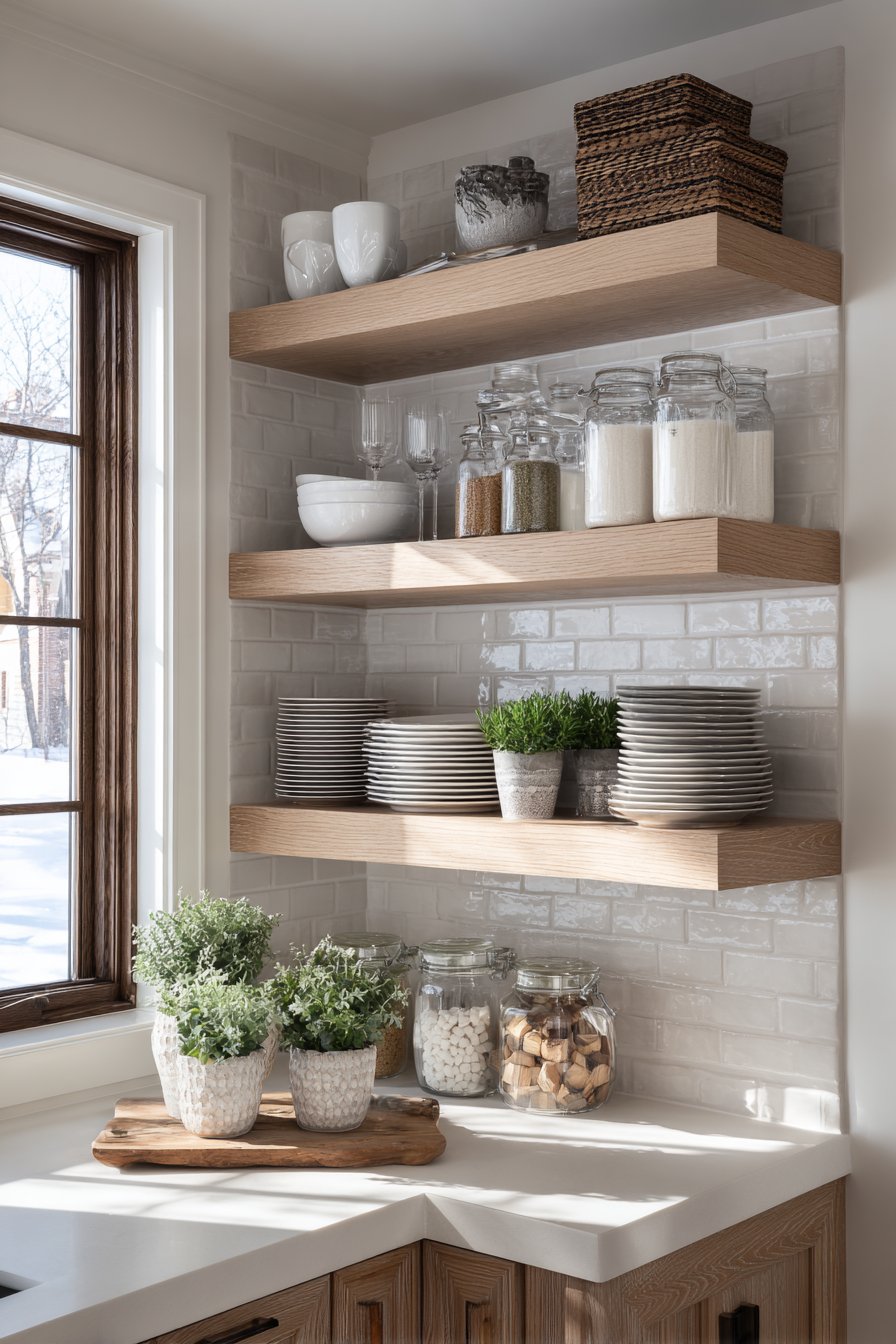
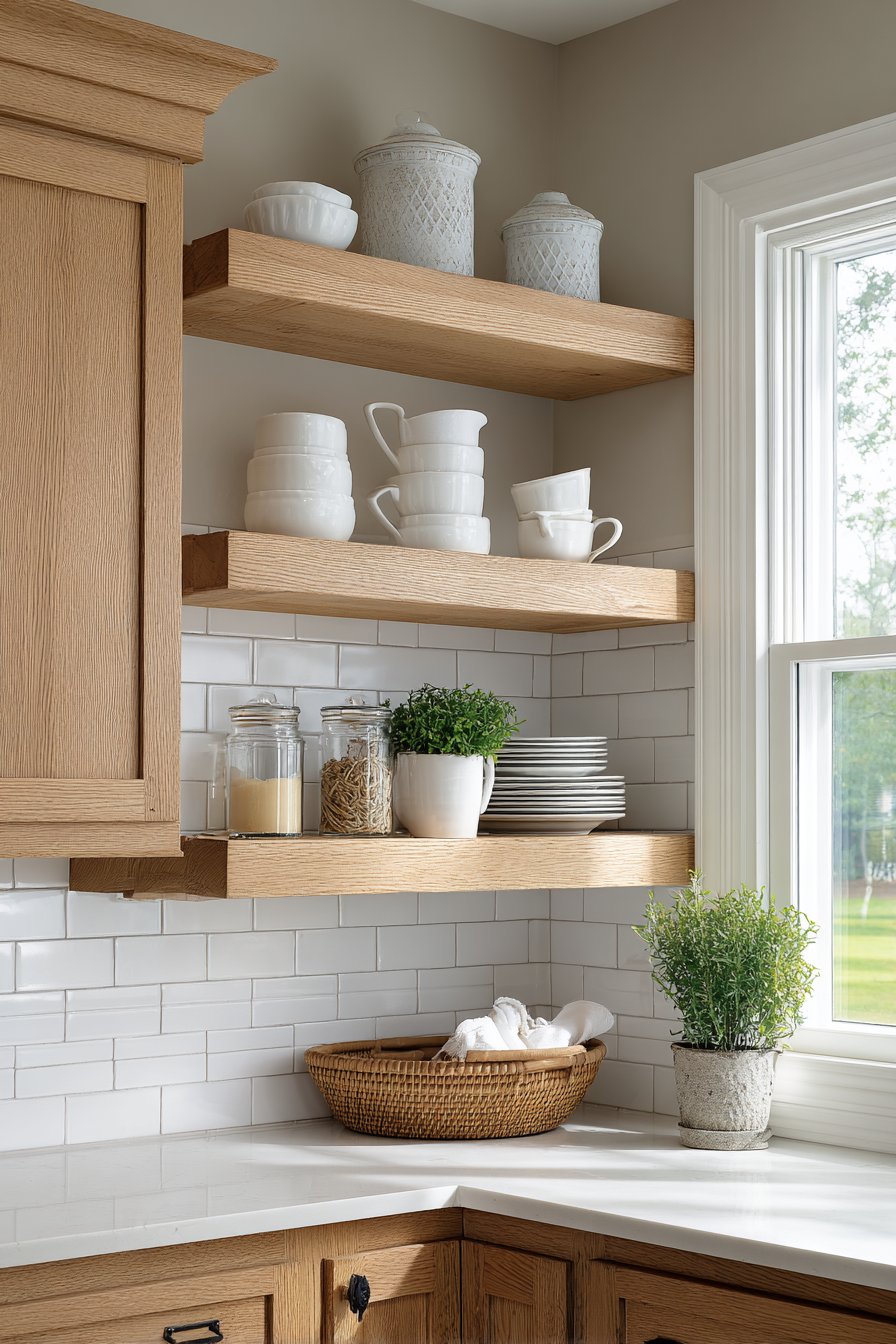
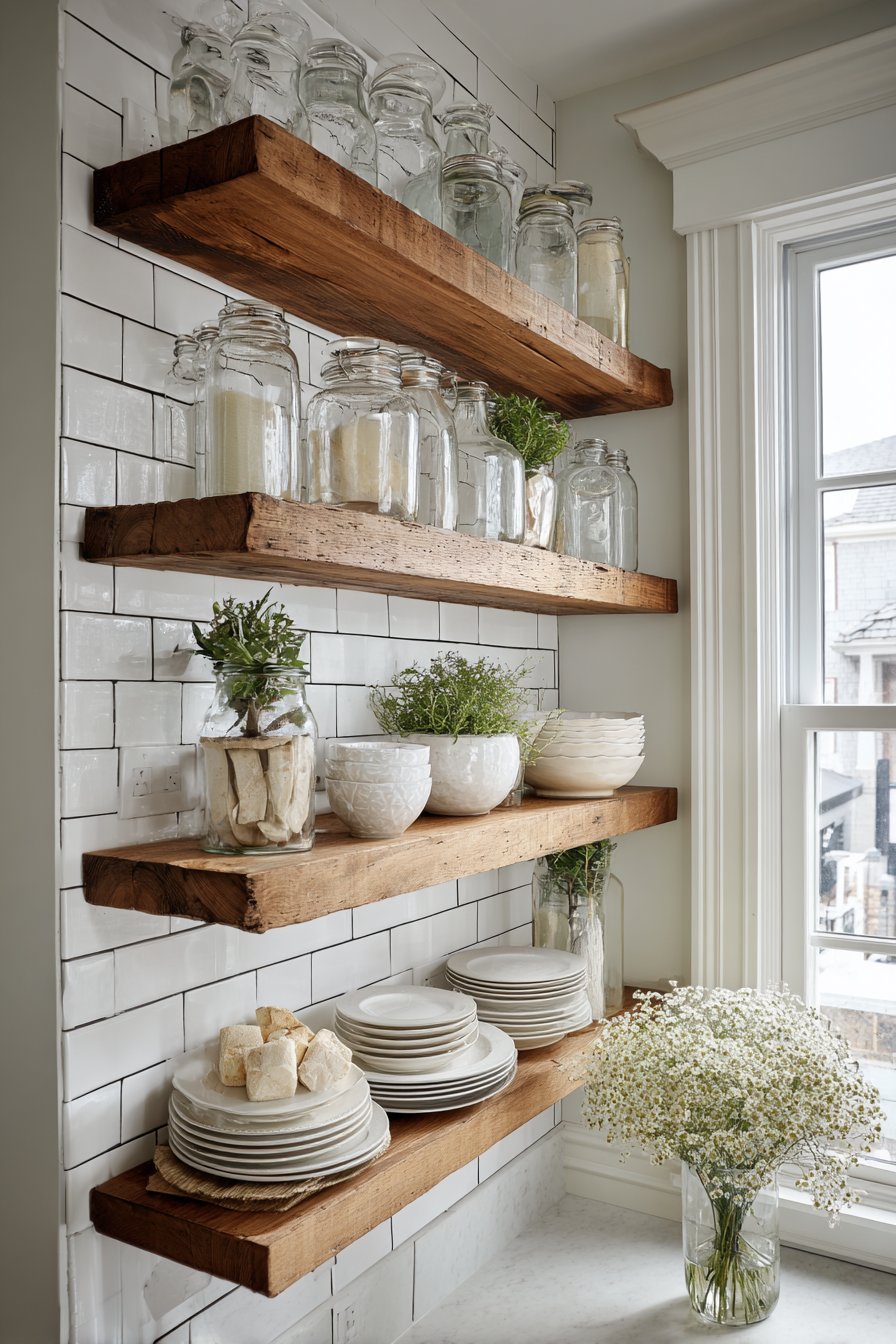
The kitchen remains the heart of most homes, and this shelf wall idea transforms traditional closed cabinetry into an open, accessible, and visually appealing storage solution. White oak floating shelves span the wall where upper cabinets might traditionally hang, creating a gallery-like display of everyday dishware, glassware, and cooking ingredients. The decision to showcase rather than conceal represents a philosophical shift toward edited ownership—keeping only pieces you genuinely use and find beautiful, as everything remains visible. The warm honey tones of white oak bring natural warmth that balances stainless steel appliances and prevents kitchen spaces from feeling clinical or cold.
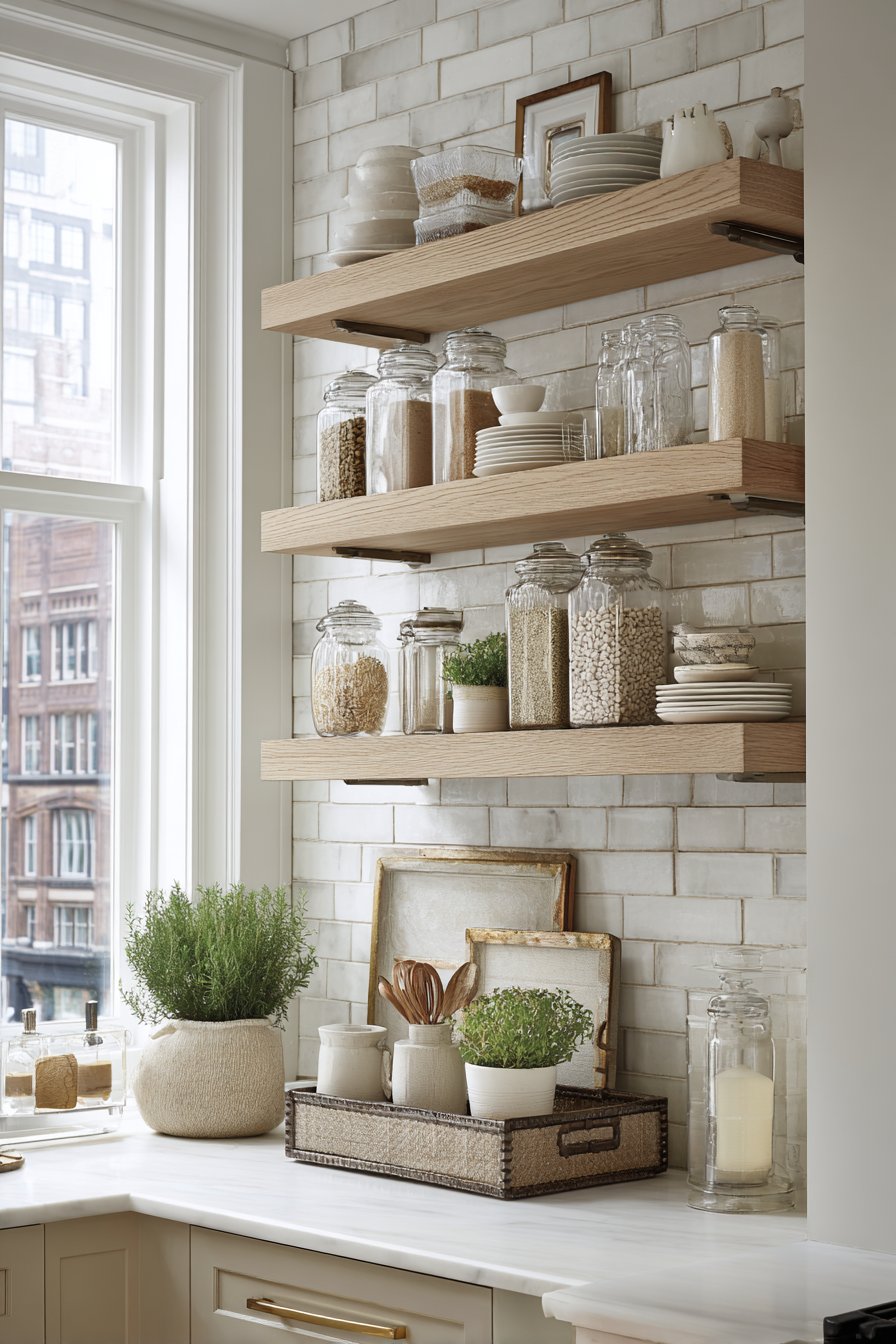
The organizational approach combines practicality with aesthetic consideration. Everyday white dishes stack in neat rows, their simple forms creating visual calm. Clear glass jars contain pantry staples—flour, sugar, pasta, rice—transforming functional ingredients into decorative elements through transparency and uniform containers. Glassware clusters by type, creating visual rhythm through repetition. Small potted herbs sit near the window end of the shelving, providing fresh flavoring within arm’s reach while introducing living greenery. The subway tile backsplash in pristine white creates a clean backdrop that allows the shelving and its contents to command attention.
Natural daylight streaming through kitchen windows creates practical task lighting while highlighting the wood grain’s subtle variations. The open shelving encourages thoughtful organization and regular editing—when everything’s visible, you’re naturally motivated to maintain order and eliminate unused items. This approach works particularly well in galley kitchens where traditional cabinets would make narrow spaces feel claustrophobic, in kitchens designed for passionate home cooks who want quick access to tools and ingredients, or in spaces where you want to soften modern appliances with natural materials. The balanced exposure of practical items with balanced arrangement creates approachable elegance.
Key Design Tips:
- Install shelves 15-18 inches deep to accommodate dinner plates (typically 10-11 inches diameter) with space behind
- Space shelves 14-16 inches apart vertically for comfortable plate stacking and glassware storage
- Choose white oak over red oak for more subtle grain and contemporary appearance that ages beautifully
- Apply food-safe clear finish to protect wood from kitchen moisture and grease while maintaining natural appearance
- Group similar items together (all plates, all glasses) for visual cohesion and practical accessibility
- Use uniform containers for dry goods to create visual calm and make ingredients easily identifiable
- Position most frequently used items at easy reach height (48-60 inches from floor) with less-used items higher or lower
9. Dark Espresso Modular Cube Shelving
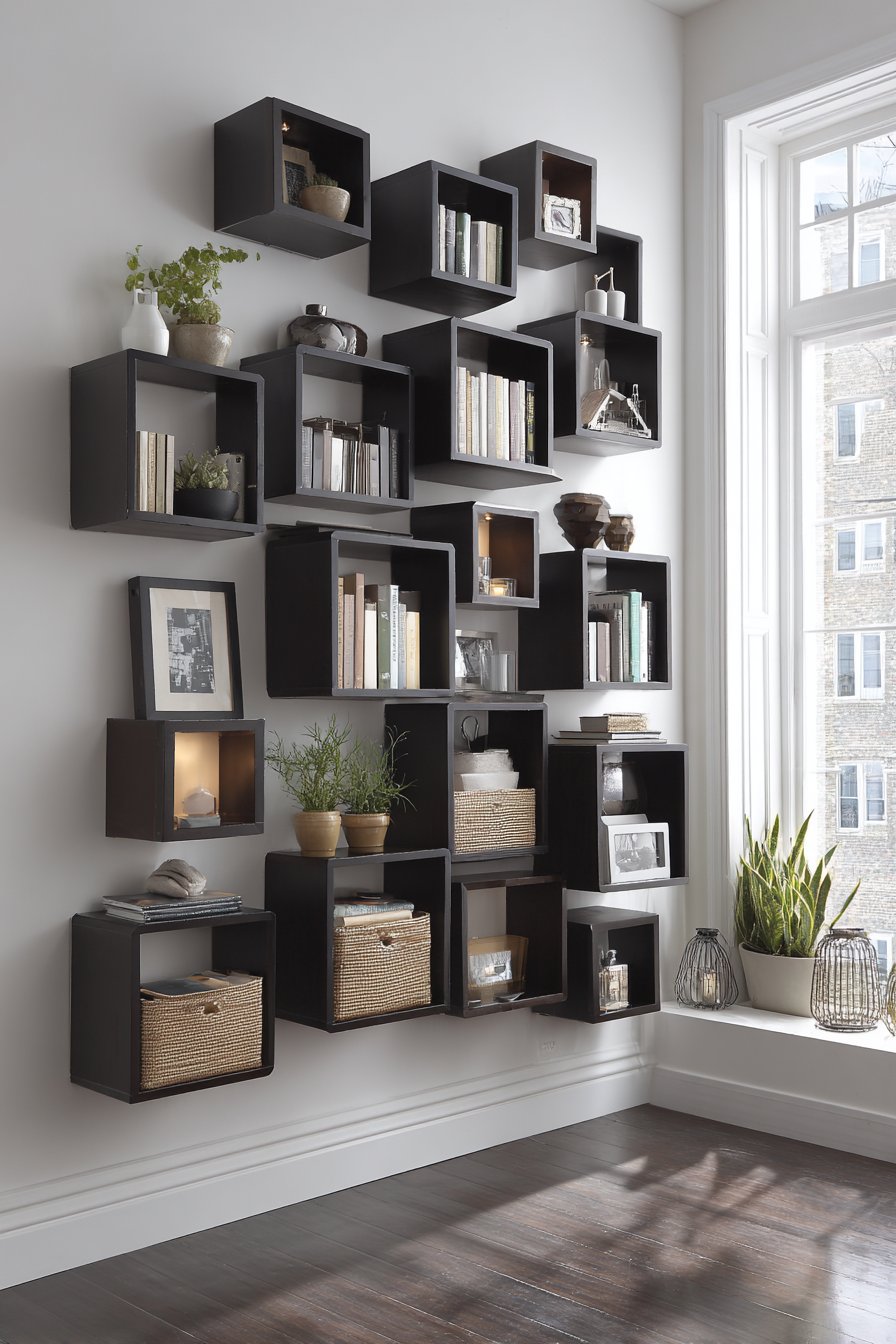
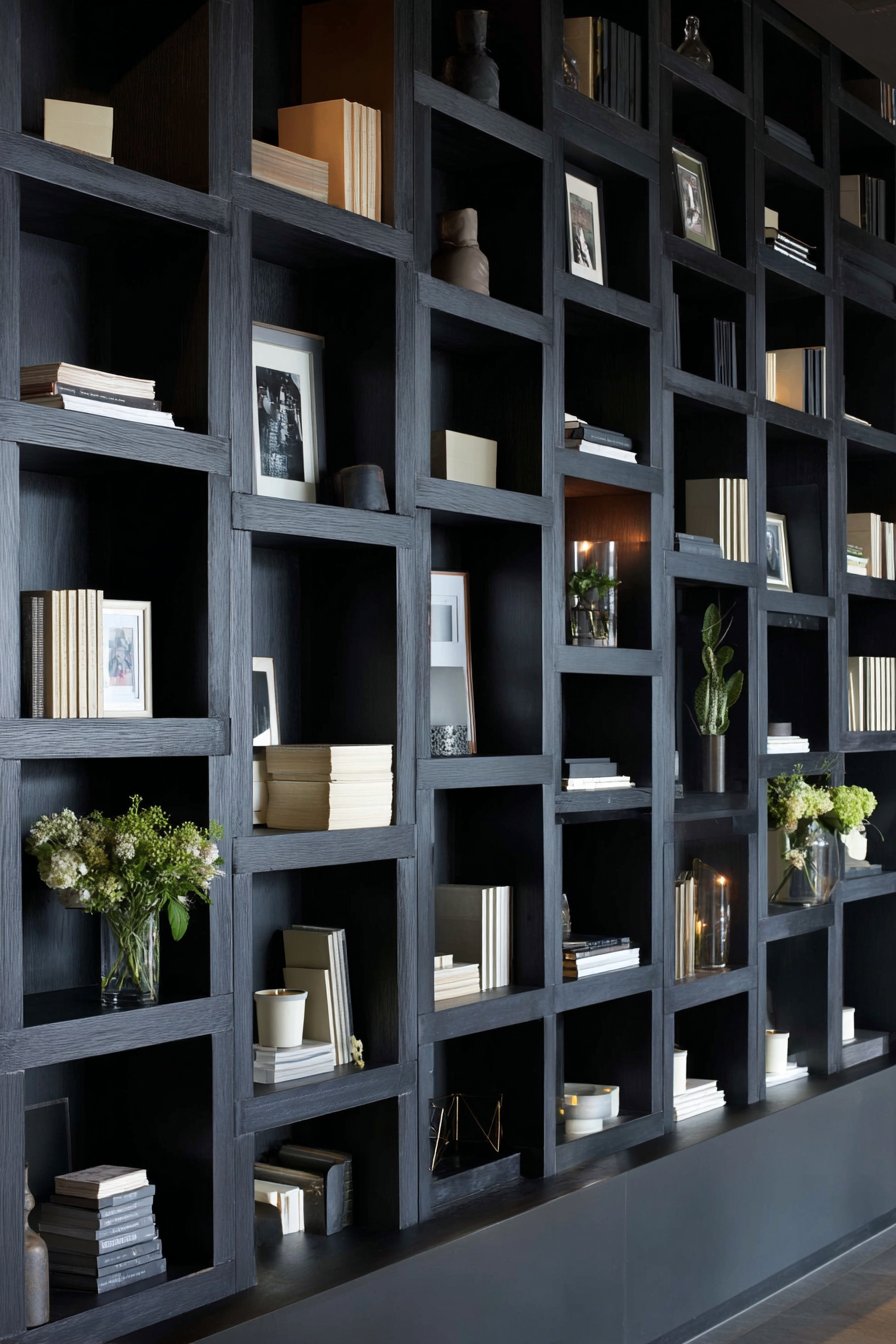
Contemporary living rooms benefit from storage solutions that balance organization with architectural interest, and this modular cube shelving system delivers both with sophisticated dark espresso wood. The geometric grid pattern creates strong visual structure, transforming a blank wall into a three-dimensional focal point with depth and shadow play. Individual cubes measure consistently, perhaps 14 or 16 inches square, creating repetitive rhythm that feels orderly without monotony. The dark finish brings dramatic contrast against lighter walls, making the shelving unit read as intentional furniture rather than utilitarian storage, elevating its role from functional necessity to design statement.
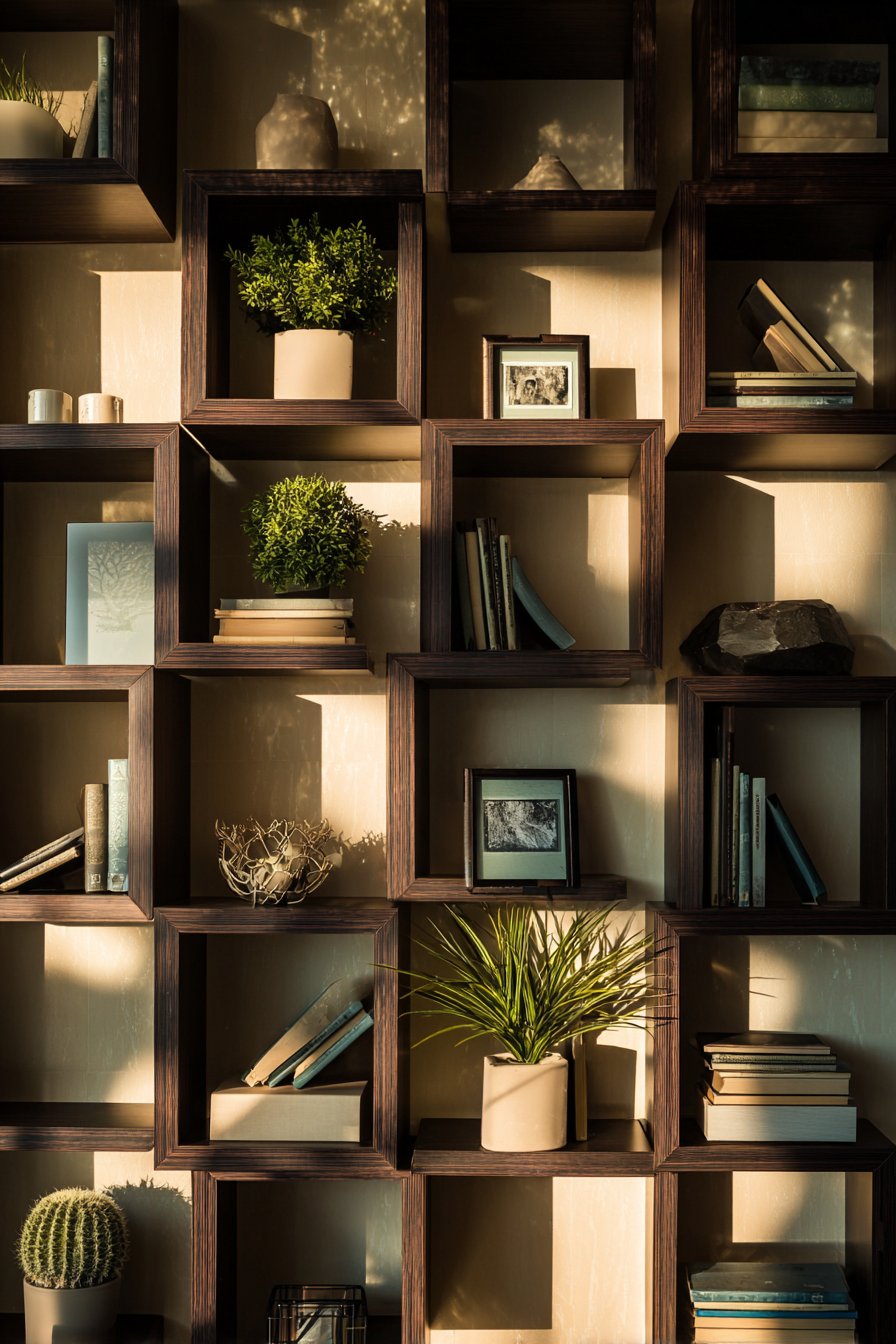
The styling strategy employs thoughtful balance between filled and empty cubes—a crucial decision that prevents the unit from feeling cluttered or overwhelming. Some cubes house books arranged both vertically and horizontally, their spines creating color and textural variation. Others contain decorative boxes that conceal less attractive necessities while contributing to the color palette. Framed photographs occupy select cubes, propped casually or mounted to back panels. Small plants introduce organic forms that soften the rigid geometry. The pattern of empty versus filled cubes creates secondary rhythm, with breathing room preventing visual exhaustion.
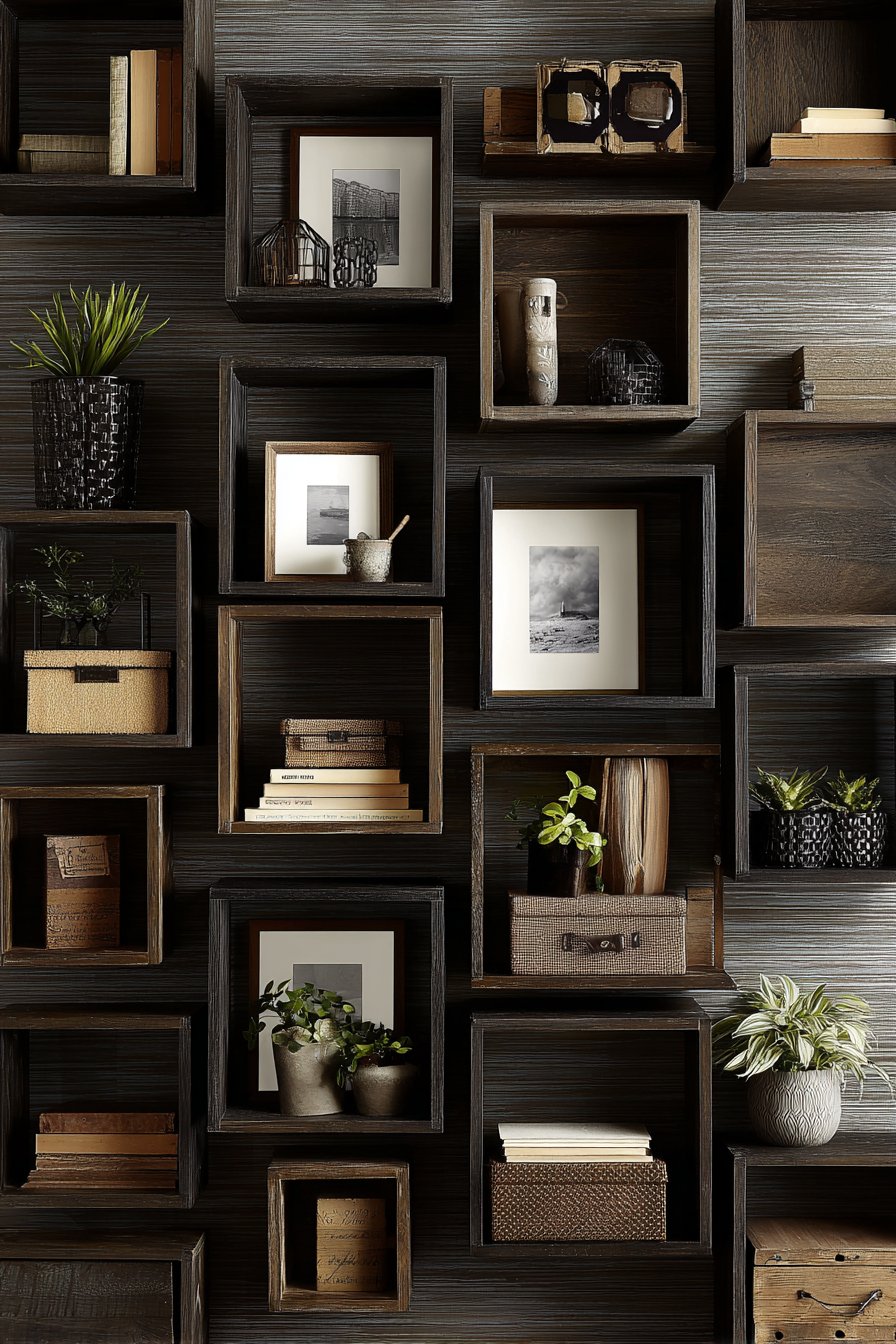
Even ambient lighting becomes essential, preventing the dark wood from feeling heavy while highlighting the three-dimensional structure. The cube openings create natural shadow boxes, with light falling from above creating gradient effects within each space. This modular approach offers flexibility—cubes can be added, removed, or rearranged as needs change, making it investment furniture that evolves with your life. The design works beautifully as room dividers in open-concept spaces, as entertainment centers housing media equipment in select cubes, or as comprehensive storage walls in home offices. The contemporary aesthetic appeals to modern sensibilities while providing serious organizational capacity.
Key Design Tips:
- Choose cube modules in consistent sizes (14×14 or 16×16 inches) for visual cohesion and future expansion flexibility
- Arrange modules in symmetrical grid patterns for contemporary formality or asymmetrical for casual modern feel
- Follow the rule of thirds when filling cubes: approximately one-third filled, one-third partially filled, one-third empty
- Vary visual weight across the wall by distributing filled cubes rather than clustering them in one area
- Use decorative boxes or baskets in complementary colors to conceal clutter while maintaining design aesthetic
- Position media equipment (if applicable) in lower cubes for cable management and practical access
- Secure modular units together and to walls, especially in earthquake-prone areas or homes with children
10. Spa-Inspired Bathroom Ladder Shelving
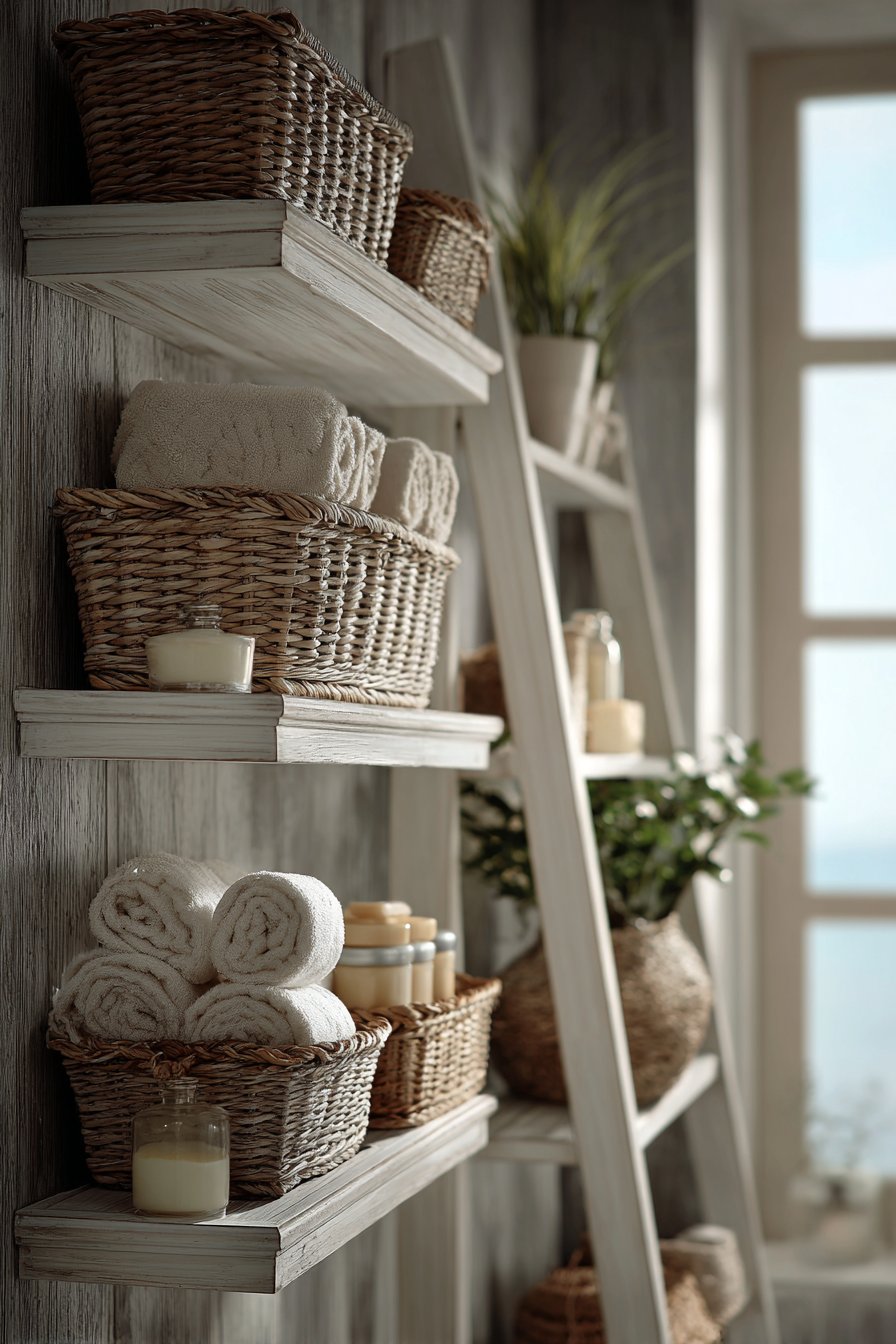
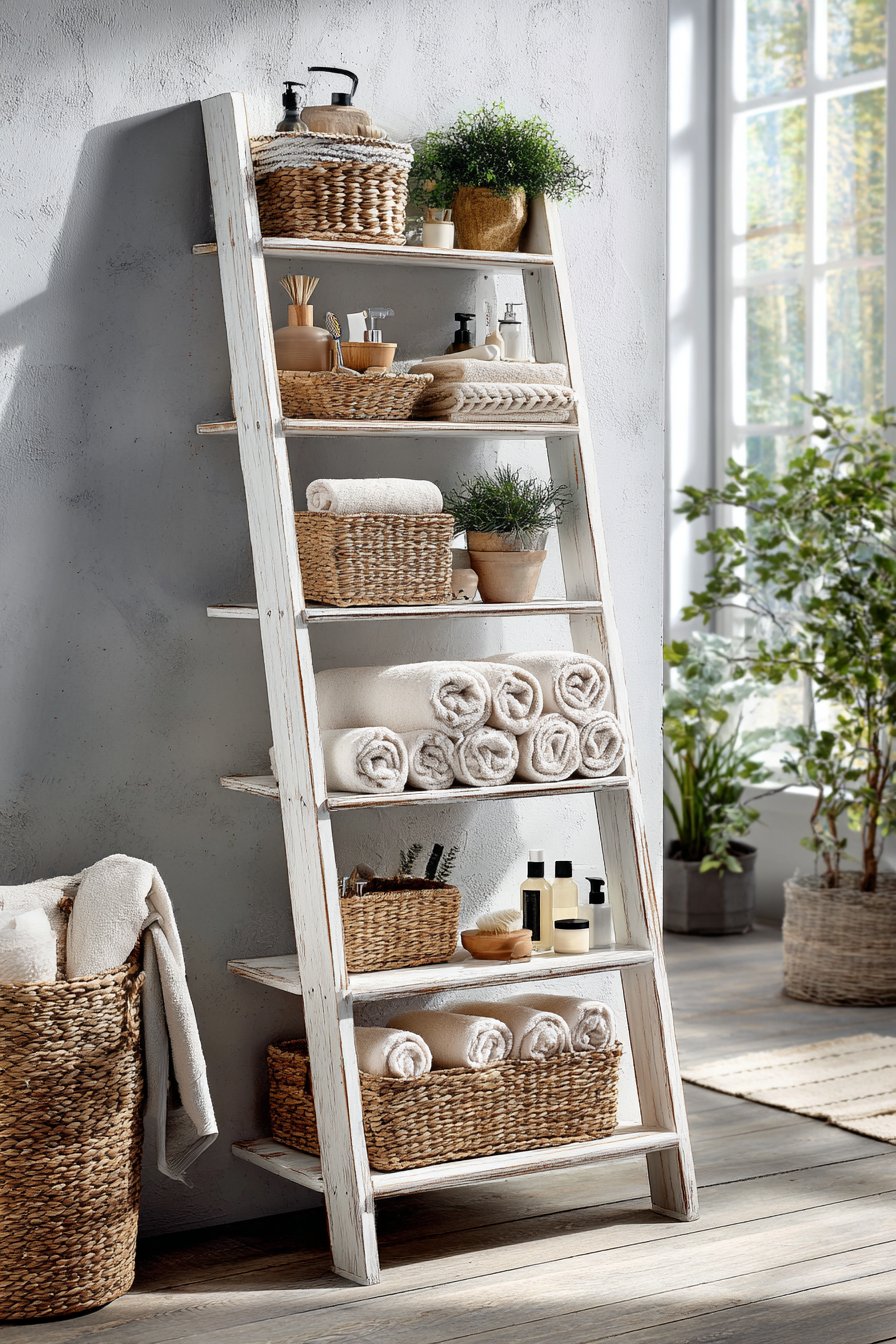
Bathrooms deserve the same design attention as living spaces, and this ladder-style shelf wall idea brings organic warmth and practical storage to what’s often the home’s most utilitarian room. The whitewashed wood ladder leans casually against the wall near the vanity, its relaxed stance introducing softness into spaces dominated by hard tile and fixtures. The ladder rungs become natural shelf surfaces, creating tiered storage at varying heights that work perfectly for towel display, toiletry organization, and decorative elements. The whitewashed finish lightens the wood while allowing grain texture to show through, creating beachy, spa-like character.
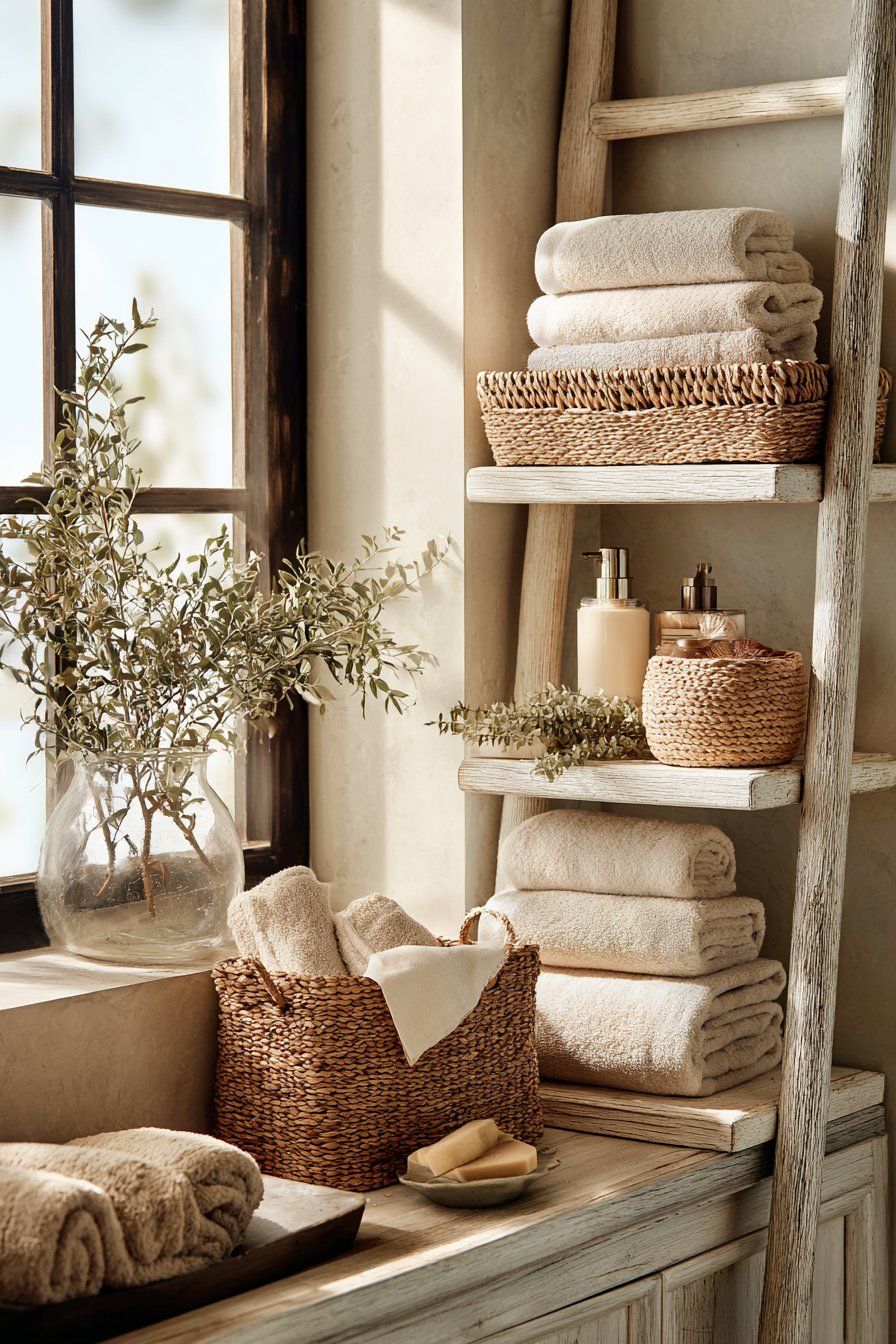
The organizational approach transforms everyday bathroom necessities into attractive displays. Plush towels roll neatly, their ends facing outward to showcase quality fabric and create cylindrical forms that stack beautifully. Woven baskets in natural fibers nestle on wider rungs, containing toiletries, extra products, and daily essentials while contributing textural warmth. Small potted plants—perhaps air plants, small succulents, or moisture-loving ferns—introduce living elements that soften hard surfaces and improve air quality. The arrangement feels considered yet relaxed, achieving that enviable hotel-spa aesthetic that balances luxury with approachability.
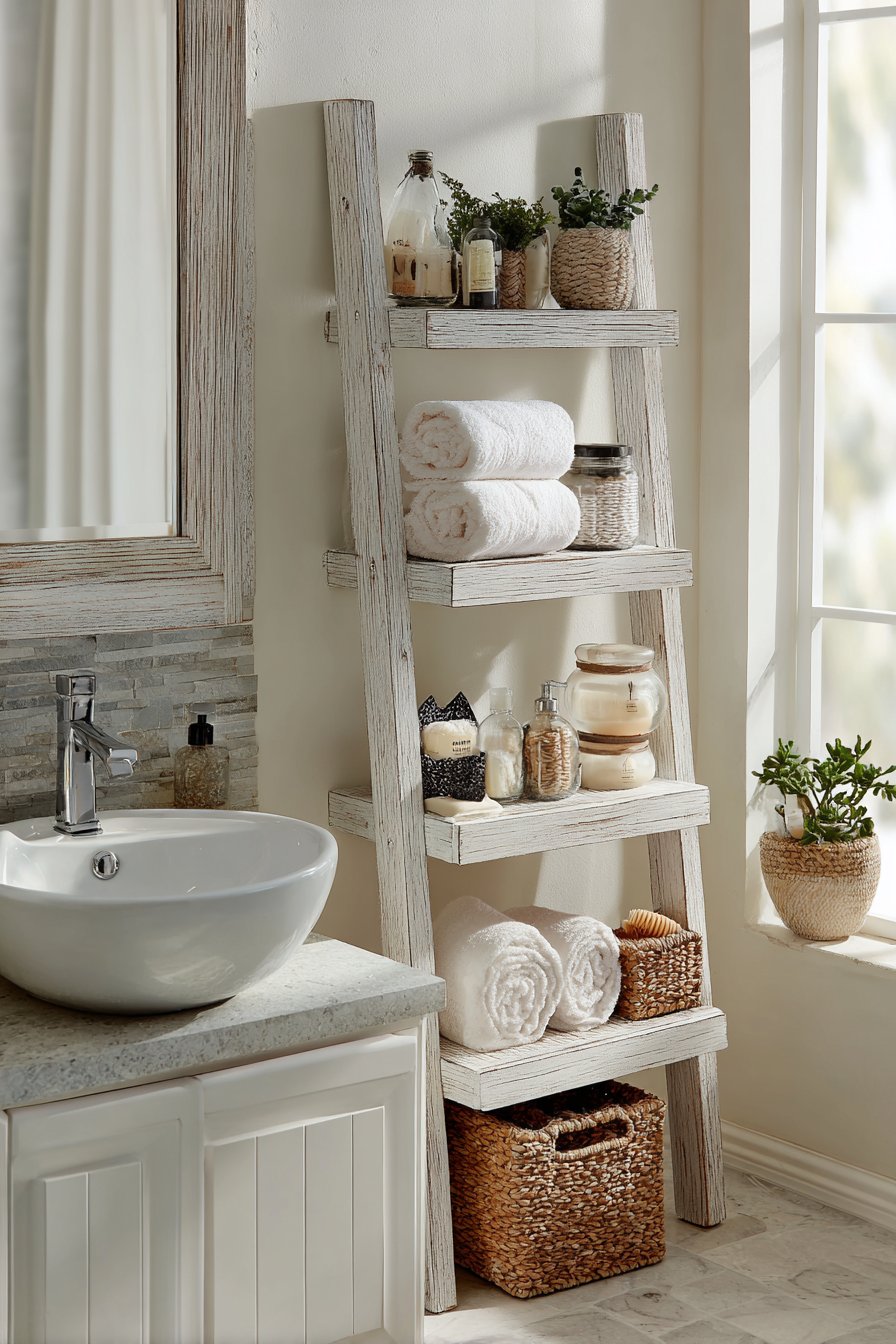
Soft natural lighting filtered through frosted windows creates serene atmosphere, the diffused quality preventing harsh shadows while maintaining privacy. The ladder’s angled position creates visual interest compared to standard perpendicular shelving, while the gaps between rungs maintain the light, airy feeling essential in smaller bathrooms. This approach works particularly well in compact bathrooms where traditional linen closets don’t exist, in powder rooms where a single statement piece can elevate the entire space, or in primary bathrooms where you’re cultivating spa-like retreat character. The result feels fresh, accessible, and thoughtfully composed.
Key Design Tips:
- Select ladders 6-7 feet tall for appropriate scale in standard 8-foot ceiling bathrooms
- Position ladder 12-18 inches from wall to create depth and allow items to nestle between rungs and wall
- Choose wood treated for moisture resistance or apply waterproof sealer to protect from bathroom humidity
- Roll towels rather than folding for visual interest and efficient storage on narrow ladder rungs
- Use matching baskets in similar sizes and materials for visual cohesion across multiple rungs
- Limit decorative items to create spa-like simplicity rather than cluttered appearance
- Anchor ladder securely at top and bottom to prevent shifting, especially important near bathtubs or showers
11. Whimsical Cloud-Shaped Nursery Shelves
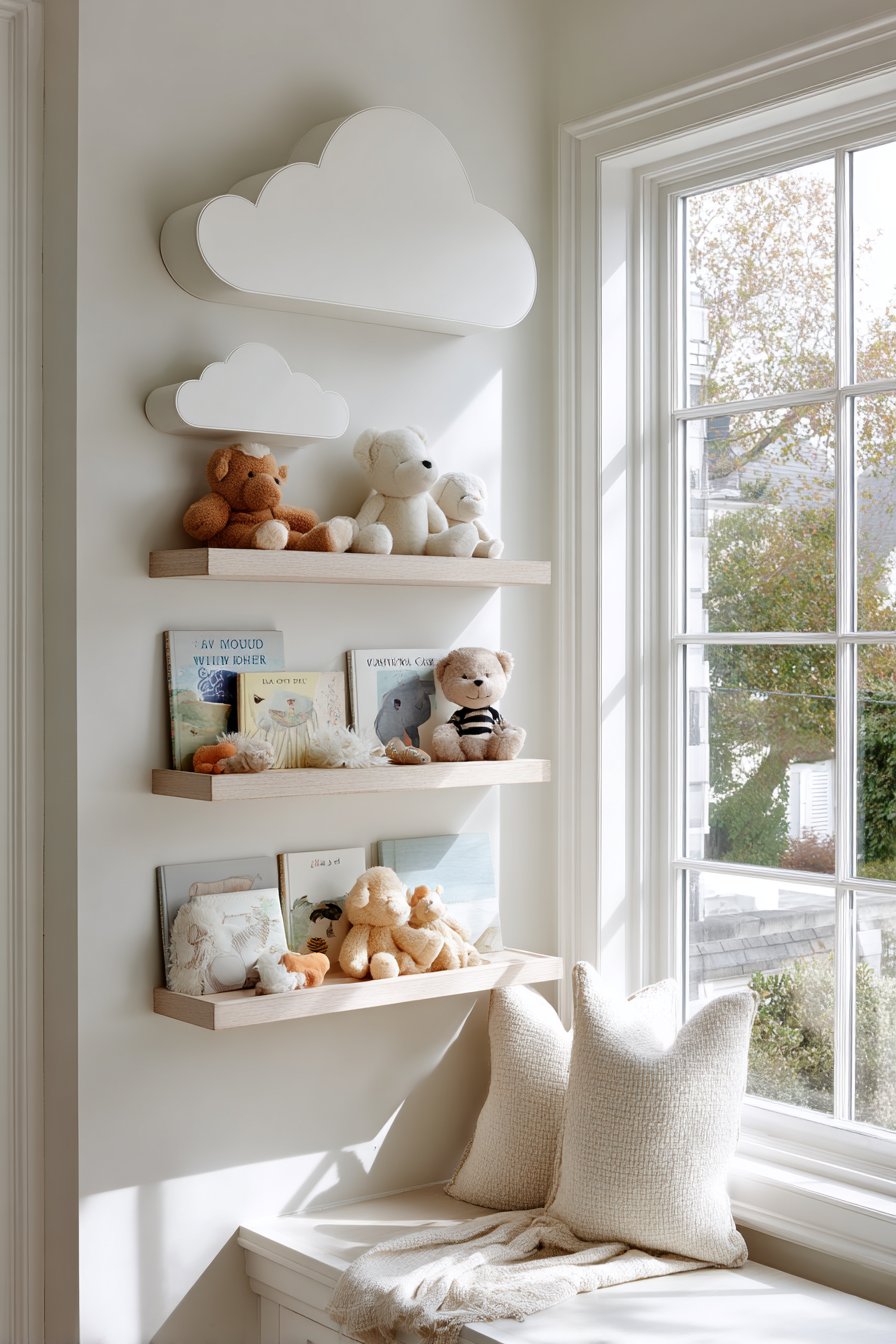
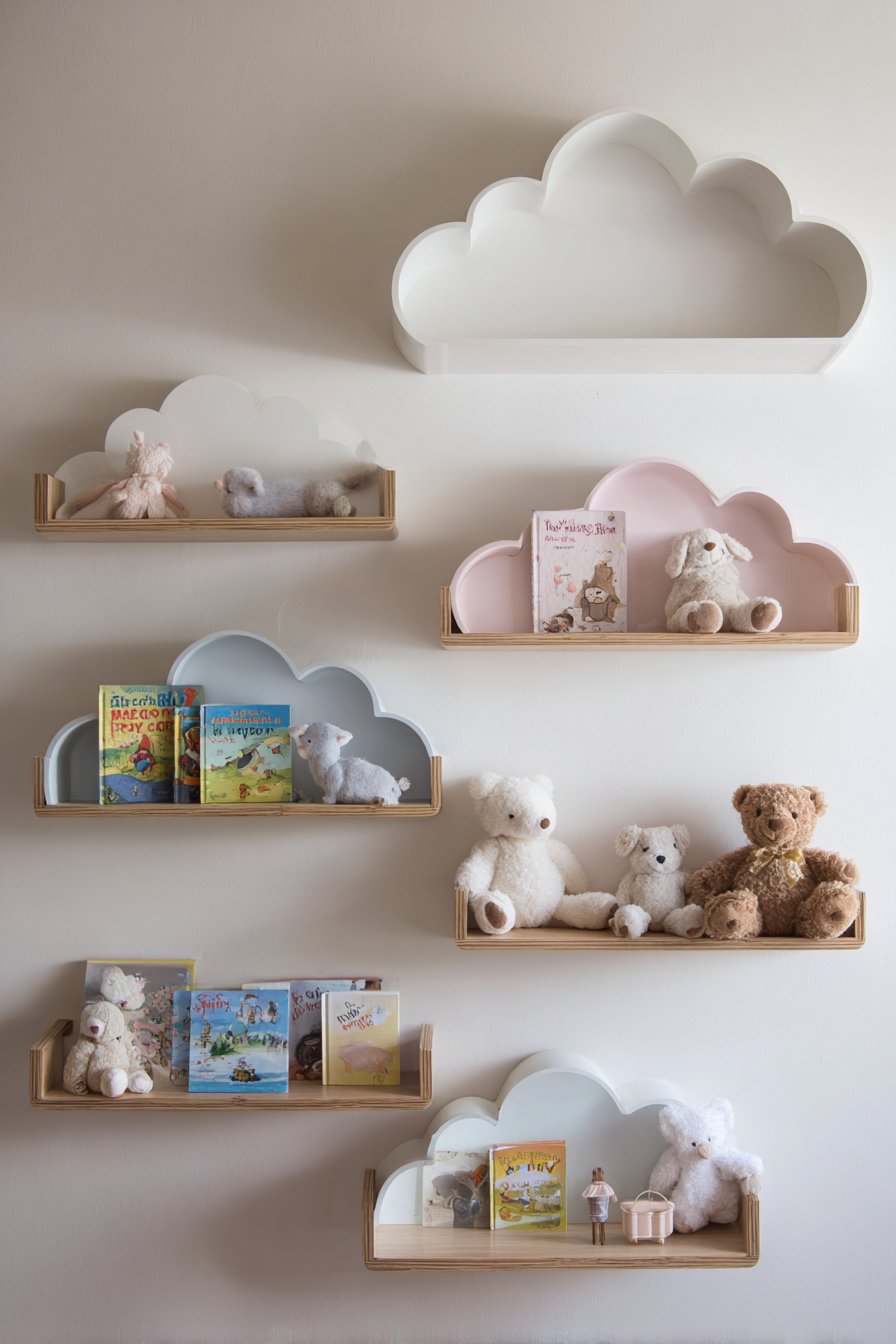
Designing spaces for children offers opportunities to introduce playfulness and imagination, and this nursery shelf wall idea embraces that potential with cloud-shaped floating shelves paired with traditional wooden shelving. The cloud shelves, cut from smooth white-painted wood, create whimsical focal points that delight while serving practical purposes. Their organic, irregular shapes contrast beautifully with the clean geometry of standard rectangular shelves, creating visual interest that engages young minds. This combination balances playfulness with functionality—the traditional shelves provide serious storage capacity while the cloud shelves add character without sacrificing too much practical space.
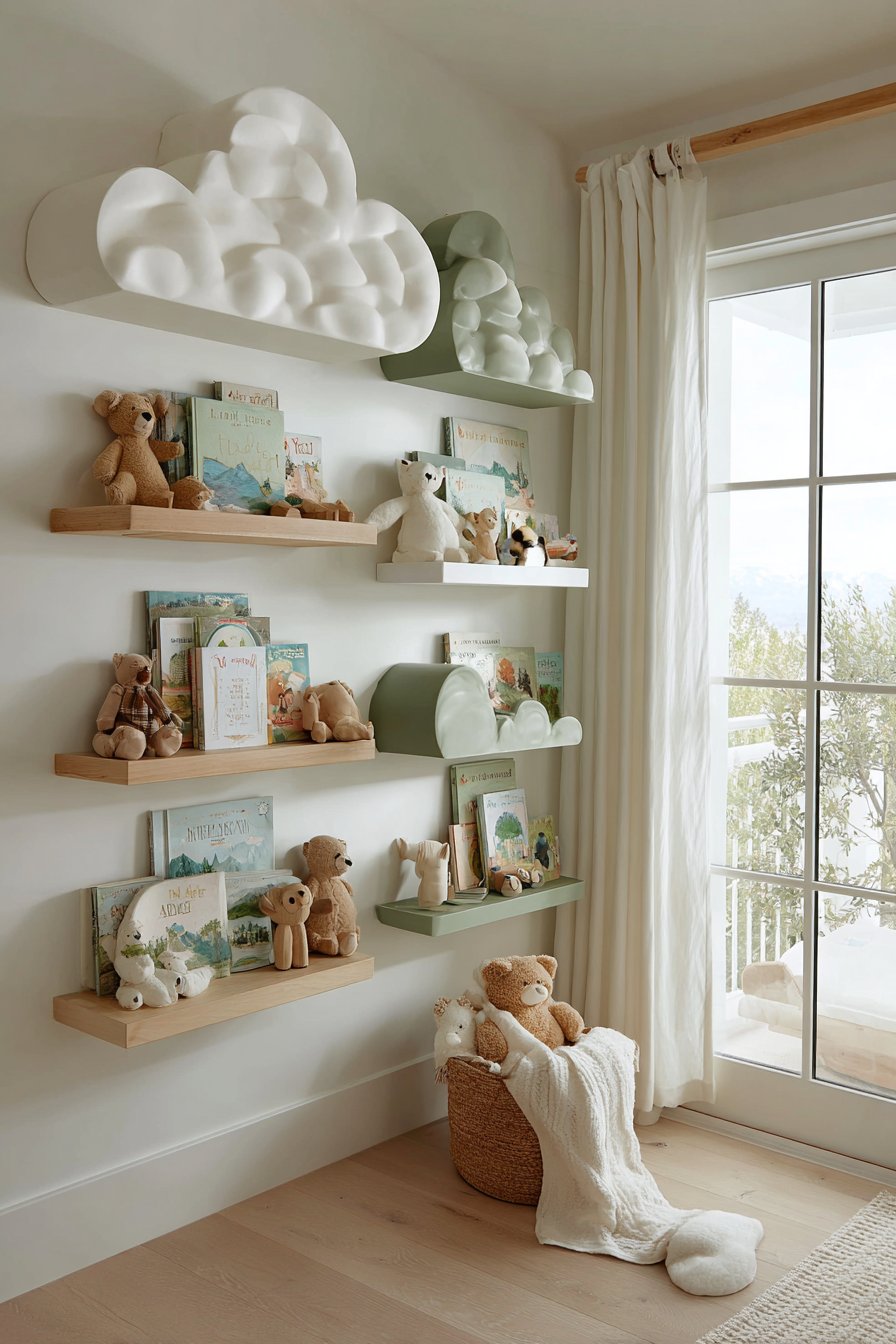
The display focuses on age-appropriate items in soft, soothing color palettes. Children’s board books stand vertically on traditional shelves, their colorful spines creating gentle rainbow effects. Stuffed animals claim spaces on cloud shelves, their soft forms complementing the rounded shelf shapes. Decorative items in pastel tones—perhaps a small night light, a music box, or framed nursery art—occupy carefully chosen positions. The arrangement maintains organization while feeling magical and special, creating an environment that stimulates without overwhelming developing senses. Every element chosen with child safety in mind, from rounded edges to secure mounting.
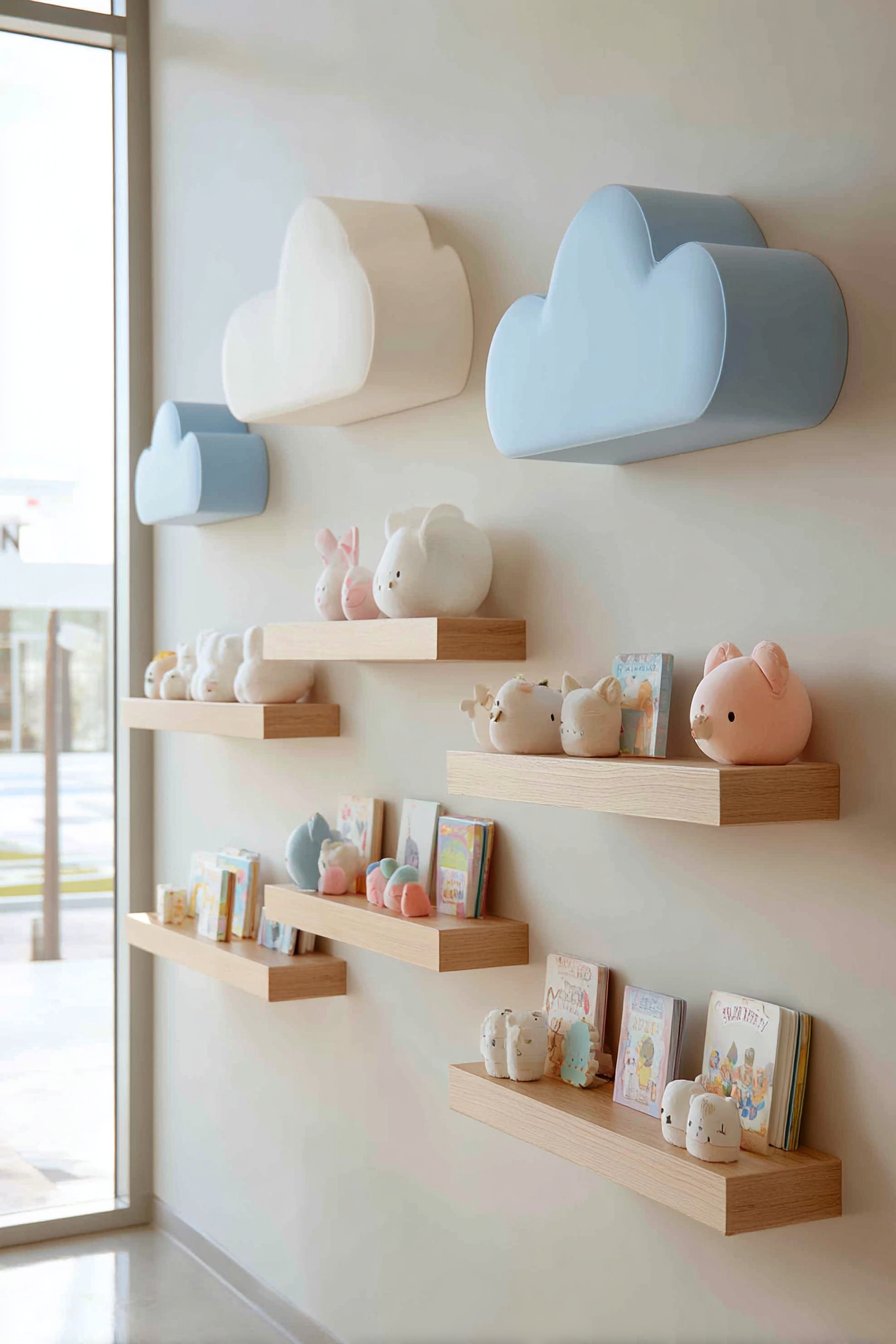
Gentle natural light creates peaceful environment essential for nursery spaces where sleep and calm matter most. The white cloud shelves appear to float ethereally against soft wall colors—perhaps the palest blue, gentle mint, or warm blush. The design consideration extends beyond aesthetics to safety, with all shelves mounted well above crib height and secured with appropriate hardware. This approach works beautifully for infants through early childhood, with the design growing with the child as books and toys evolve. The result creates a nurturing environment where function, safety, and imagination coexist harmoniously.
Key Design Tips:
- Cut cloud shapes from 3/4-inch plywood and sand all edges until perfectly smooth with no sharp points
- Paint with zero-VOC paint in matte white finish safe for children’s environments
- Mount all shelves above 48 inches from floor, well above crib rail height for safety
- Round all corners on traditional shelves and ensure hardware is fully concealed or covered
- Limit items on shelves to prevent overwhelming visual stimulation in sleep environment
- Arrange heavier items on traditional shelves and lightweight items on cloud shelves given their smaller size
- Use earthquake-proof mounting hardware rated for appropriate weight, especially important in children’s spaces
12. Elegant Dining Room Built-In Shelving
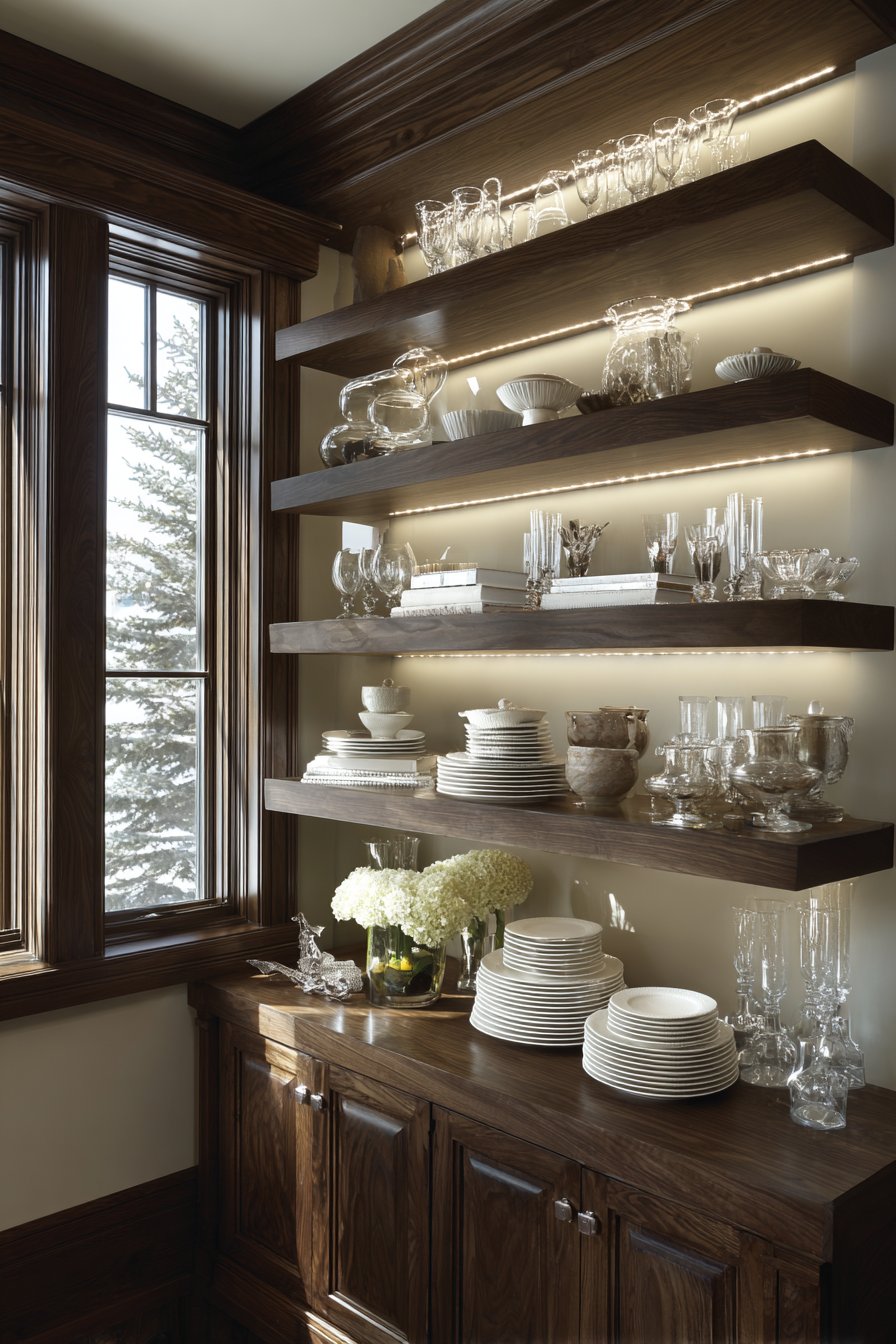
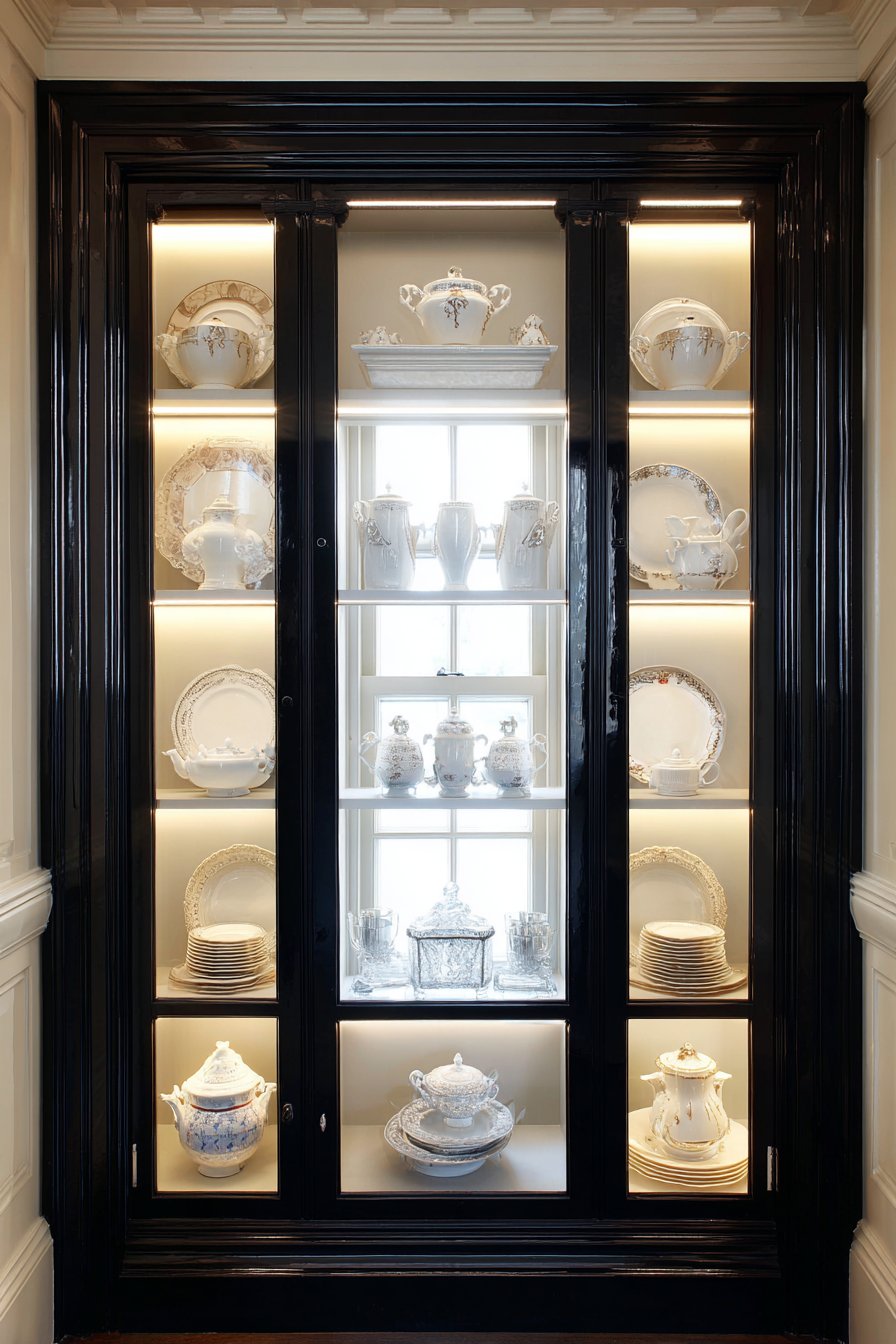
Formal dining rooms benefit from storage that celebrates beautiful tableware while providing practical organization, and this built-in shelving flanking a window achieves both with traditional elegance. The dark-stained wood shelving creates symmetrical balance on either side of natural light source, framing the window while maximizing wall space that often remains underutilized. The rich wood tones bring warmth and sophistication, creating furniture-quality presence rather than afterthought storage. The shelves display fine china, crystal glassware, and decorative serving pieces, transforming everyday necessities into curated collections worthy of appreciation even when not in active use.
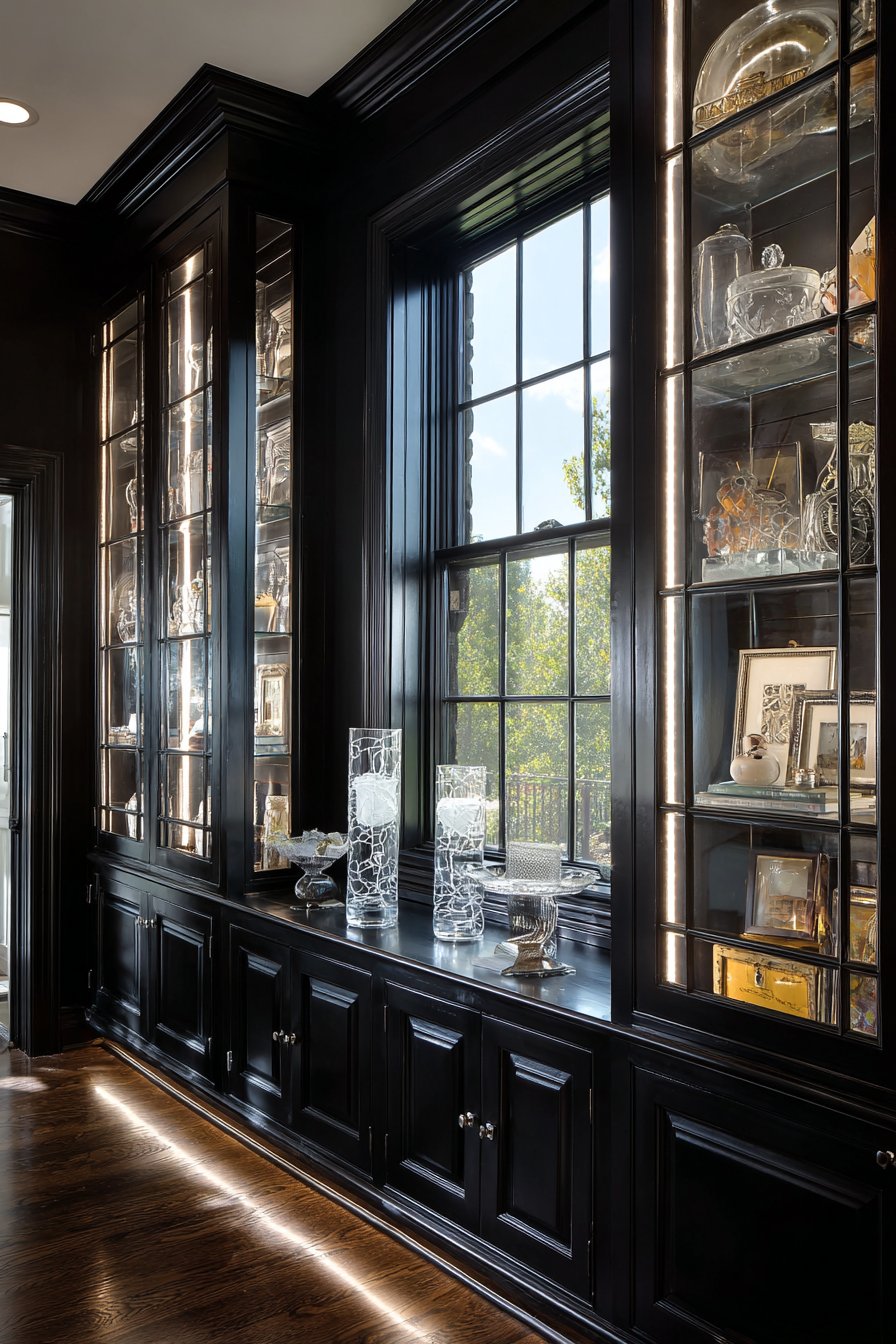
The integrated LED strip lighting represents thoughtful design consideration, illuminating displays from above or below to create dramatic effects after dark. Crystal catches and refracts this light, creating sparkle that elevates the entire room. China patterns become visible art, their designs showcased rather than hidden in closed cabinets. Silver serving pieces gleam, their polished surfaces reflecting light. The combination of natural daylight during meals and artificial accent lighting during evening entertaining creates flexible ambiance that adapts to occasions. The symmetrical arrangement satisfies classical design principles while providing balanced visual weight.
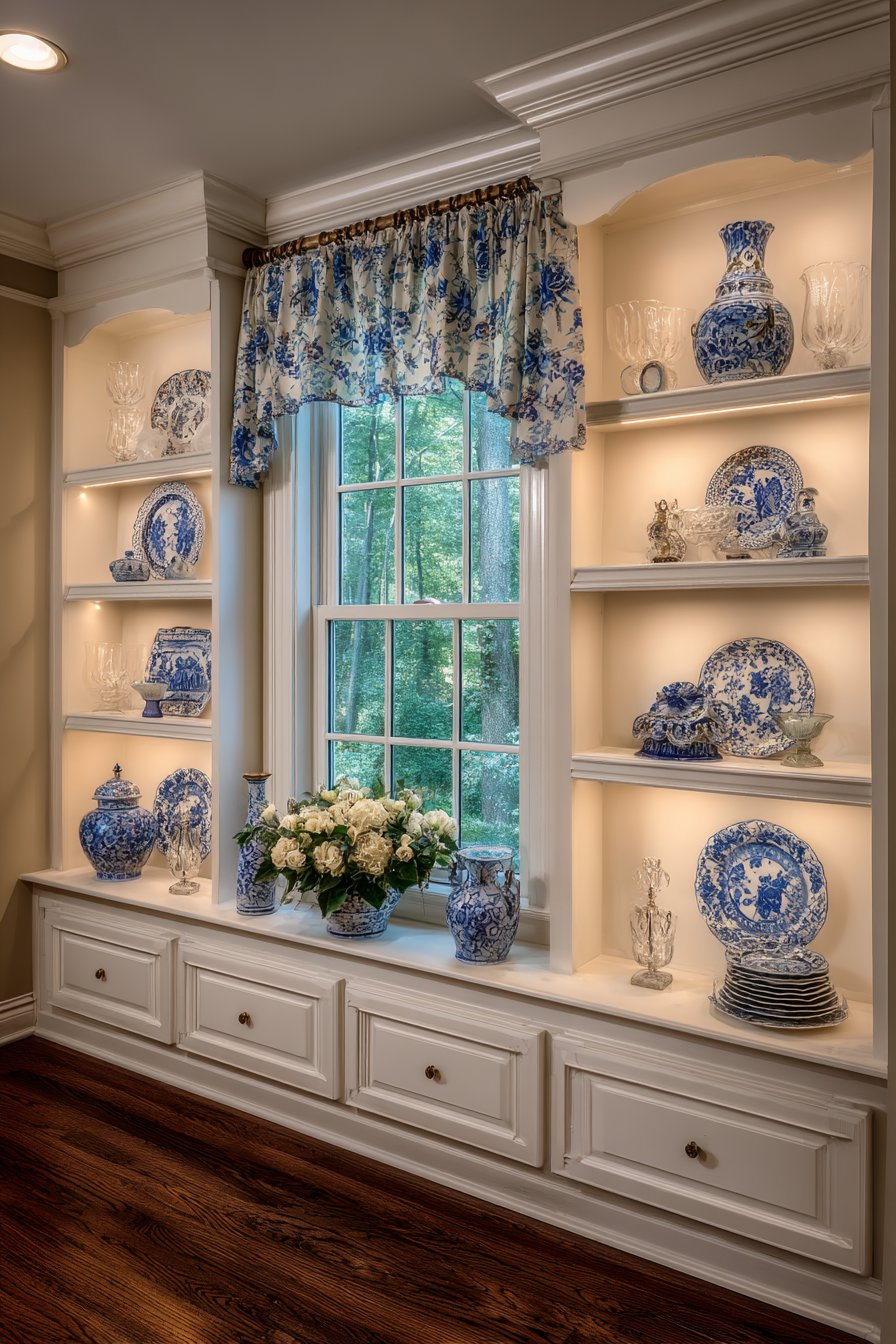
The crown molding detail at shelving tops and traditional wood stain create cohesion with existing dining room furniture and architectural details. This approach works particularly well in traditional or transitional dining rooms where you want to showcase inherited china or collected serving pieces, in spaces where closed storage would feel heavy or dark, or in rooms where you’re creating gallery-like appreciation for beautiful objects. The result feels both sophisticated and lived-in, honoring special pieces while making them accessible for regular use rather than reserved only for exceptional occasions.
Key Design Tips:
- Build or install shelving units symmetrically on both sides of windows for classical balance and proportion
- Space shelves 12-14 inches apart vertically to accommodate dinner plates (10-11 inches) with comfortable clearance
- Install dimmable LED strip lighting with warm color temperature (2700-3000K) for flattering illumination
- Apply glass shelves in front sections if displaying crystal to maximize light transmission and sparkle effects
- Choose wood stain that coordinates with dining table and chairs for cohesive furniture suite appearance
- Include adjustable shelving to accommodate various serving piece heights from gravy boats to tall pitchers
- Use plate stands or rail systems to display decorative plates vertically rather than stacking flat
13. Small Apartment Vertical Storage Maximization
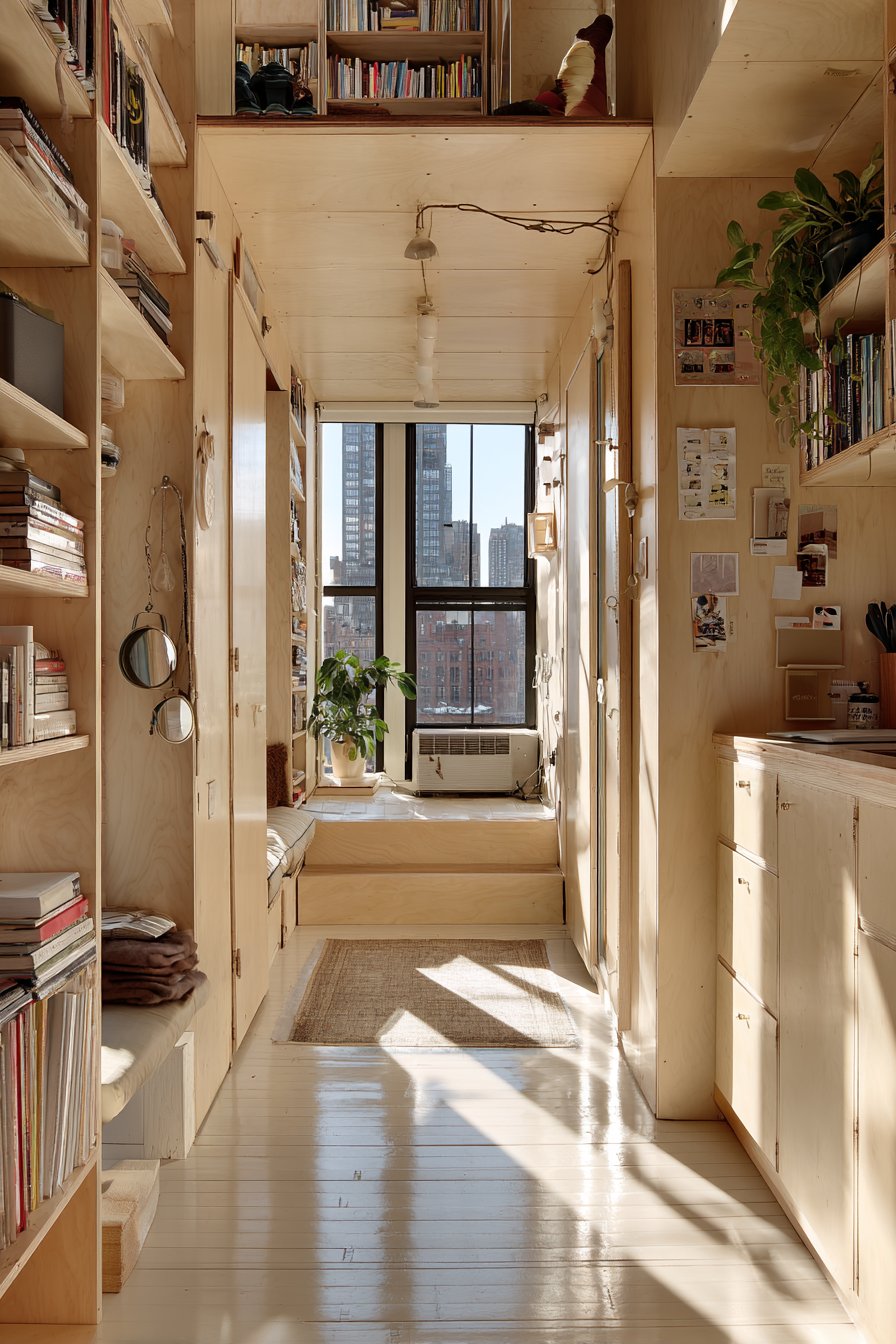
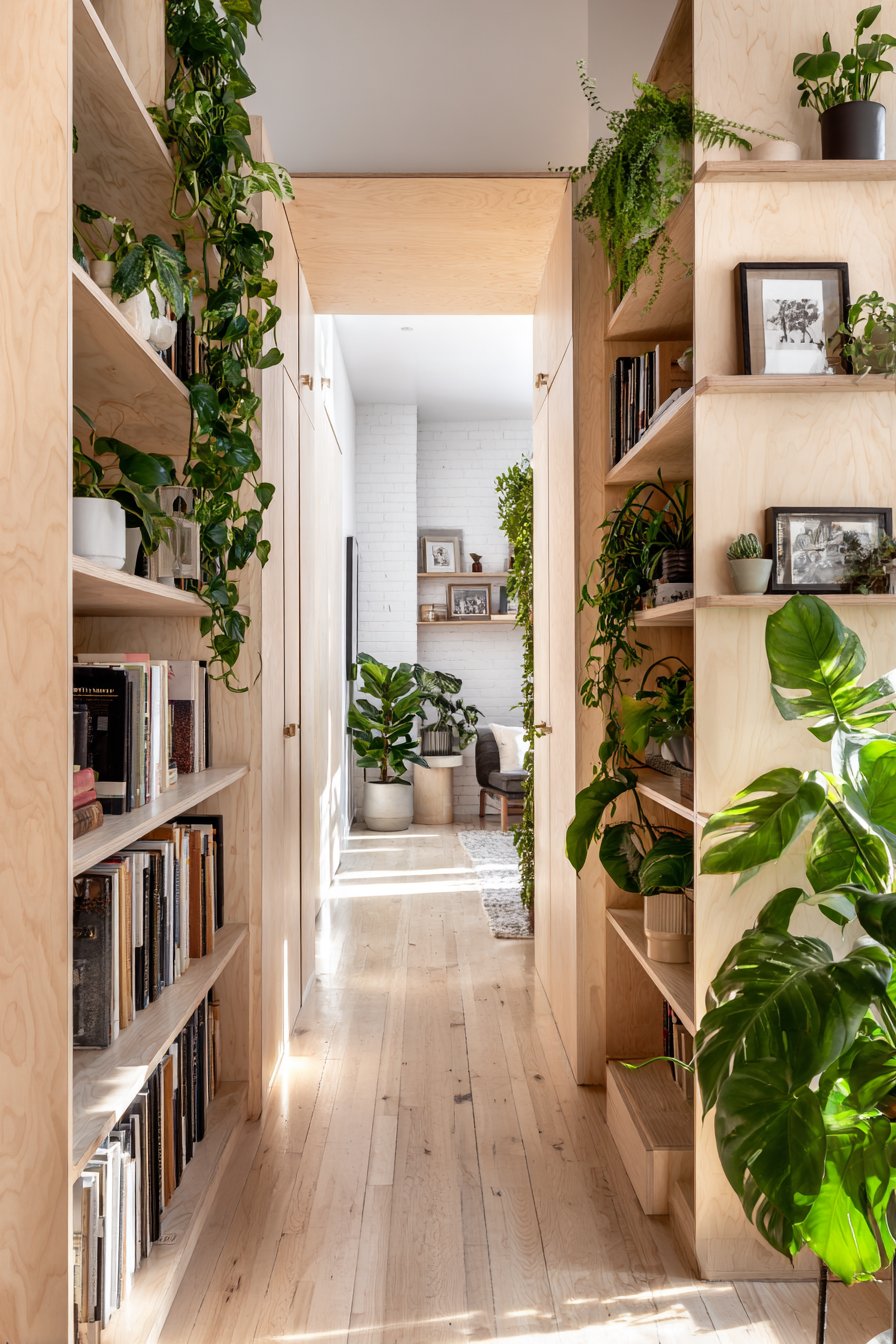
Urban apartment living often means working with limited square footage, and this shelf wall idea demonstrates how vertical space can compensate for restricted floor area. Narrow floating shelves in light ash wood ascend along an entire wall at varying heights, creating dynamic storage without overwhelming the compact room. The slender profile—perhaps only 6-8 inches deep—maintains crucial floor space while providing platforms for books, plants, photographs, and daily essentials. The light ash finish reflects available light, preventing the extensive shelving from making the space feel darker or smaller. The varying heights create visual interest while accommodating different object sizes from small succulents to tall vases.
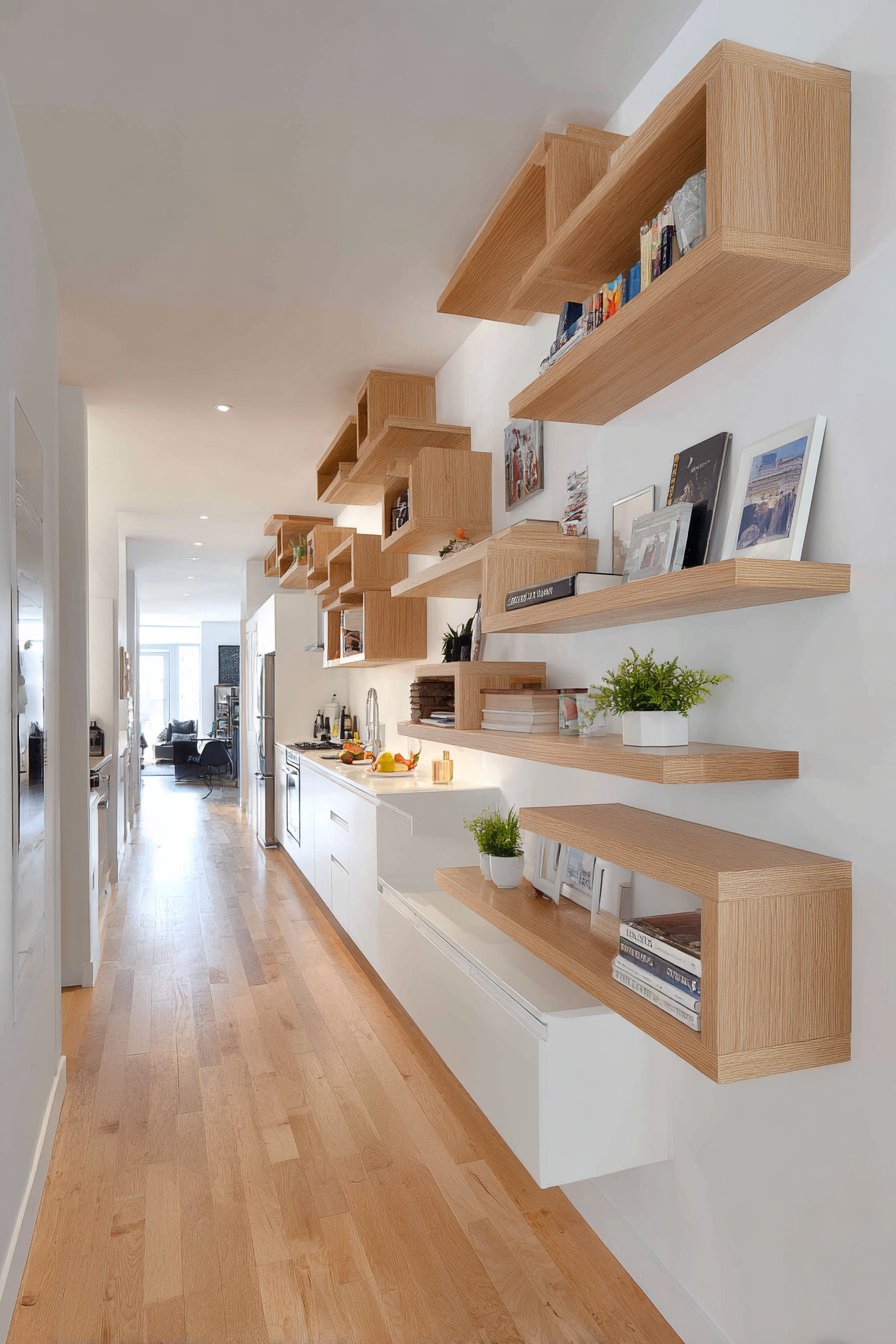
Strategic placement creates visual flow that guides the eye around the room rather than creating static horizontal bands. Some shelves align horizontally in groups of two or three, establishing anchor points. Others position individually at heights determined by furniture placement—perhaps one above a desk to hold current reading, another near the bed for nighttime essentials, or another by the entrance for keys and daily carry items. This responsive placement demonstrates how shelf walls can work with rather than against existing furniture arrangements, filling the vertical zones between and around other room elements.
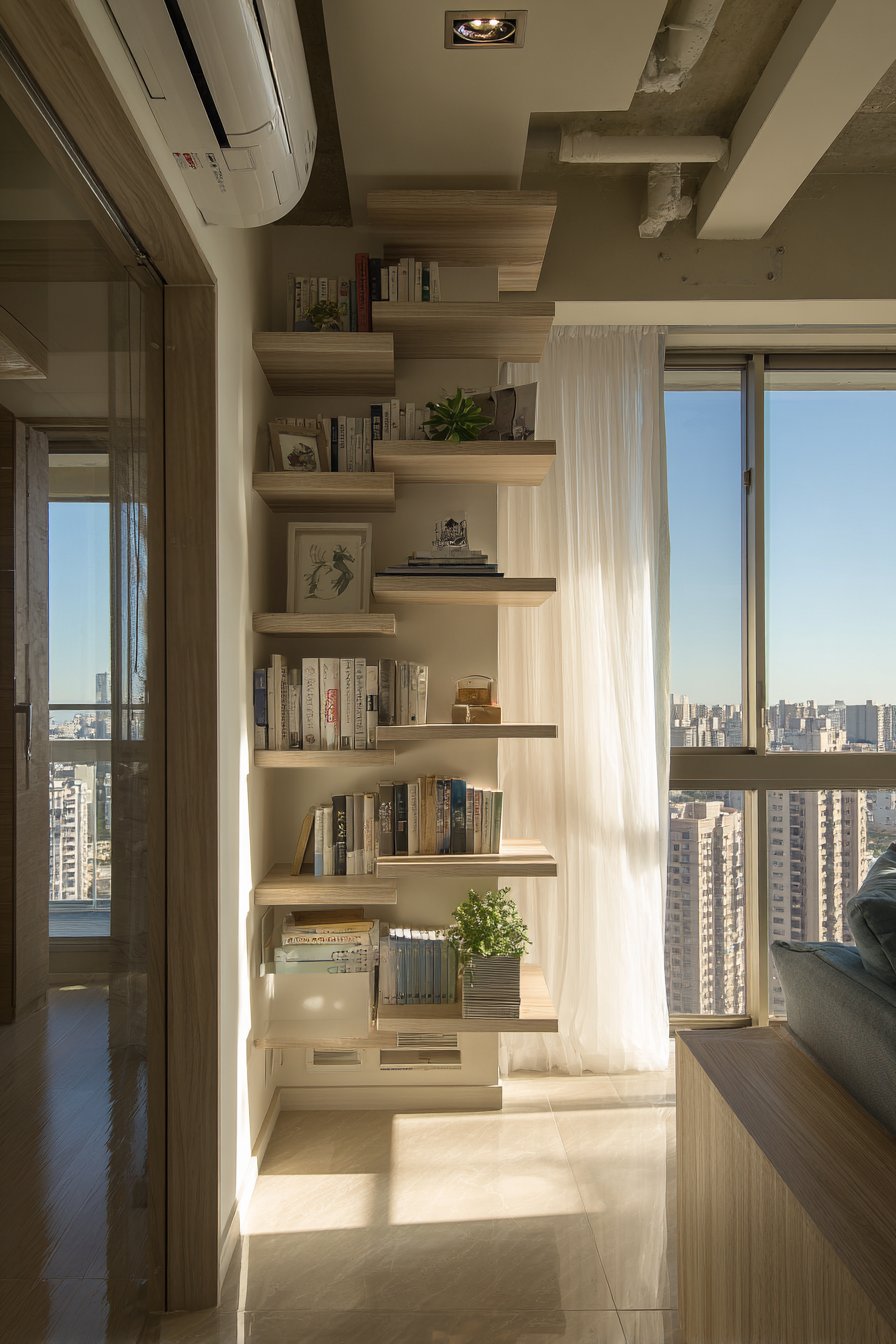
Natural daylight takes on crucial importance in smaller spaces, and the light wood finish maximizes reflection rather than absorption. The narrow depth prevents shelves from casting significant shadows, maintaining the open feeling essential in compact environments. This approach works beautifully in studio apartments where single rooms serve multiple functions, in small bedrooms where floor space must accommodate bed and dresser, or in any space where vertical expansion offers the only growth opportunity. The result proves that limited square footage needn’t mean limited storage when vertical territory becomes design opportunity.
Key Design Tips:
- Keep shelf depth narrow (6-8 inches) in small spaces to preserve precious floor area and circulation paths
- Vary shelf heights to create visual interest while accommodating actual storage needs for different objects
- Use light wood finishes or white paint to reflect light and prevent shelving from darkening compact rooms
- Position shelves to work with existing furniture rather than forcing furniture rearrangement to accommodate shelves
- Limit items per shelf to prevent visual clutter that can make small spaces feel chaotic and cramped
- Create groupings of 2-3 shelves at similar heights to establish visual anchor points amid the variation
- Measure furniture first and plan shelf positions that utilize vertical space above and between existing pieces
14. Classic Home Library Floor-to-Ceiling Bookshelves
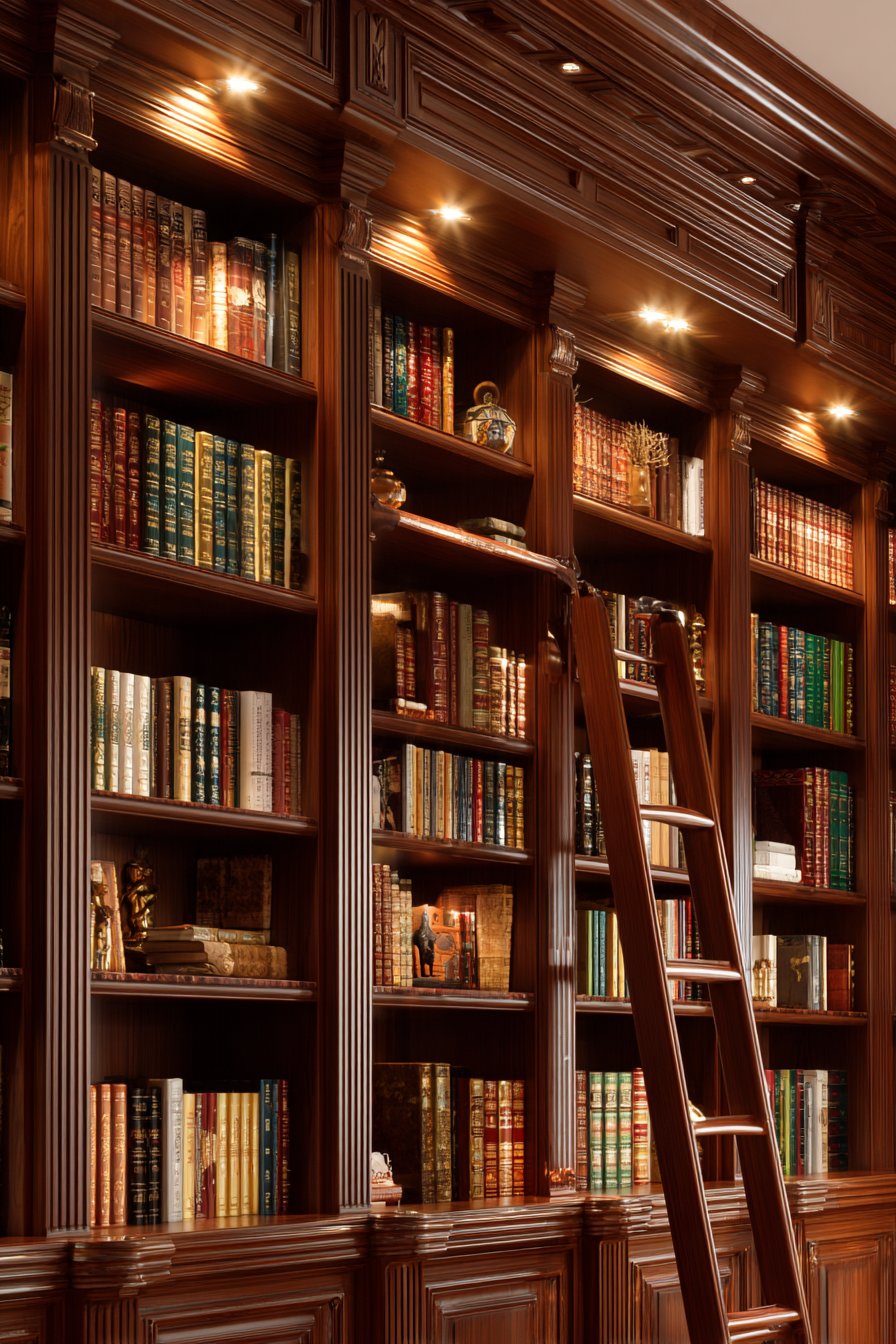
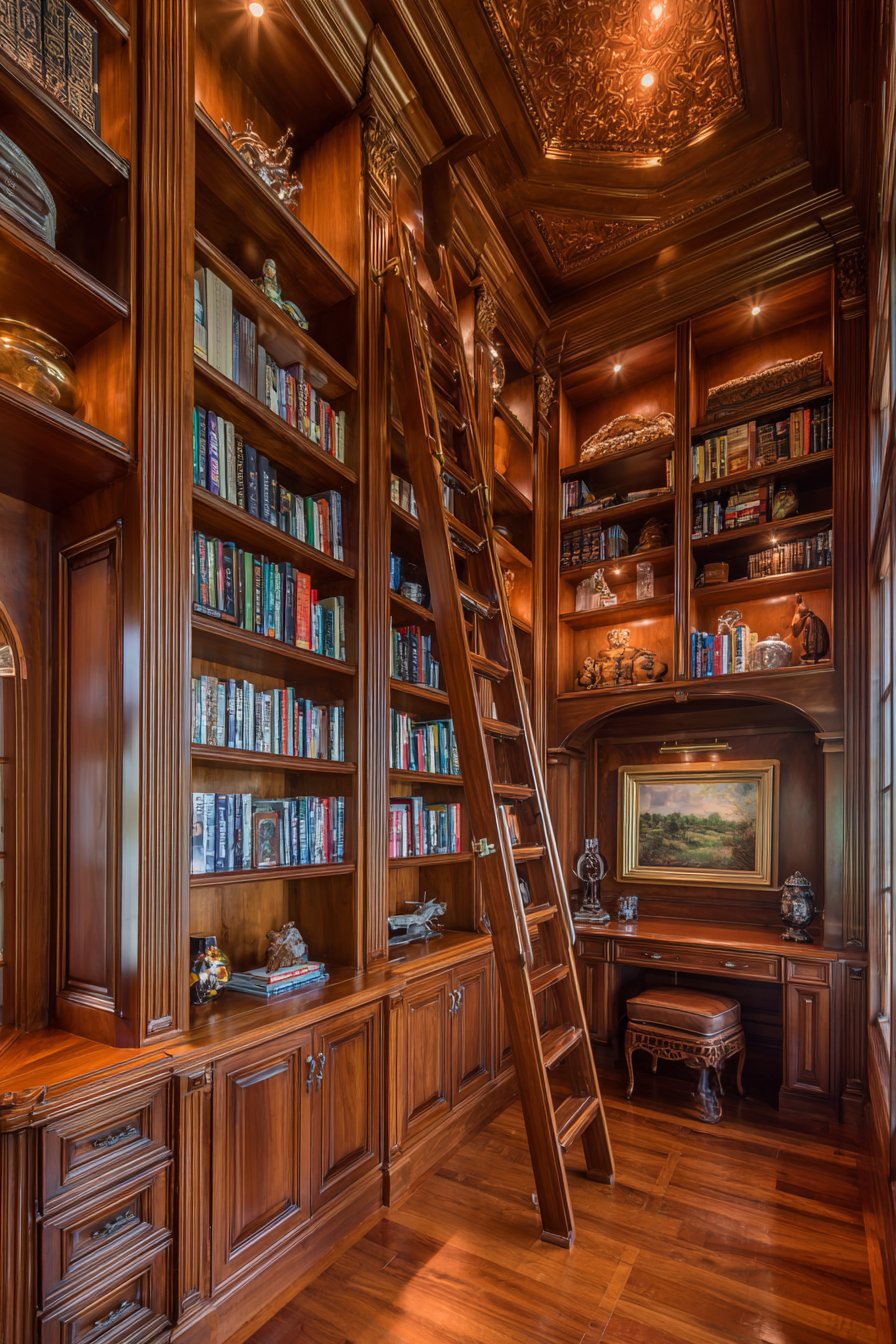
For dedicated readers and book collectors, few spaces inspire greater joy than a personal library, and this floor-to-ceiling custom built-in shelving realizes that dream with traditional elegance. Rich cherry wood construction creates warmth and gravitas, the deep tones aging beautifully over time as natural light subtly darkens and enriches the finish. The rolling library ladder—perhaps in matching wood or contrasting metal—provides both practical access to upper shelves and romantic nostalgia, evoking grand libraries and scholarly pursuits. Crown molding at the ceiling and baseboard details at the floor create furniture-quality finish that integrates the shelving architecturally rather than presenting it as mere storage.
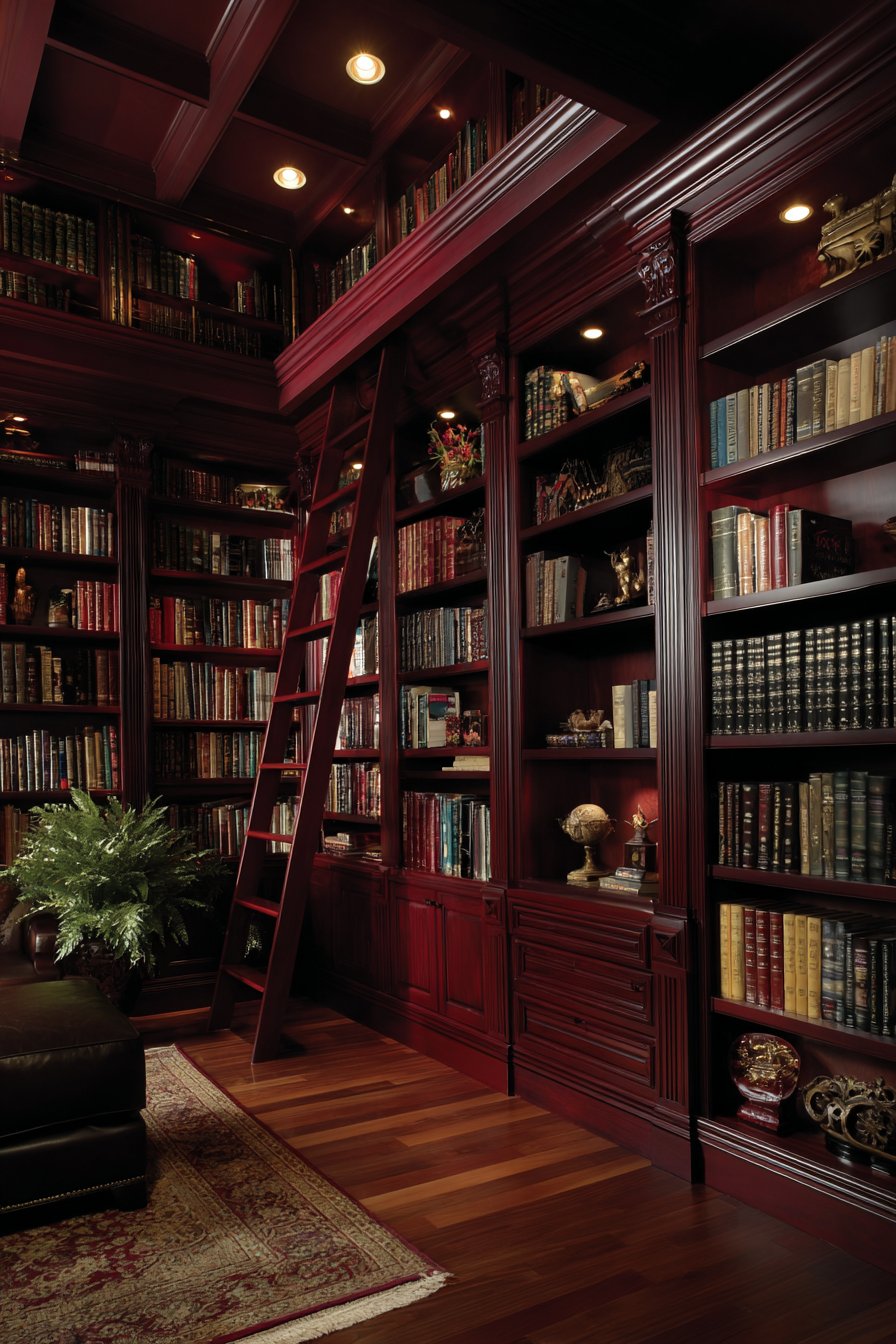
The extensive book collection becomes the room’s defining feature, with volumes organized thoughtfully—perhaps by genre, author, color, or size depending on personal preference. Some shelves break up book rows with occasional decorative objects: a small sculpture, a vintage globe, framed photographs, or a meaningful award. These visual pauses prevent monotony across the large wall span while personalizing the collection. Books arranged both vertically and horizontally create rhythm, with horizontal stacks providing platforms for small objects or breaking up tall vertical runs. The sheer volume of collected knowledge and stories creates inspiring atmosphere for reading, working, or contemplation.
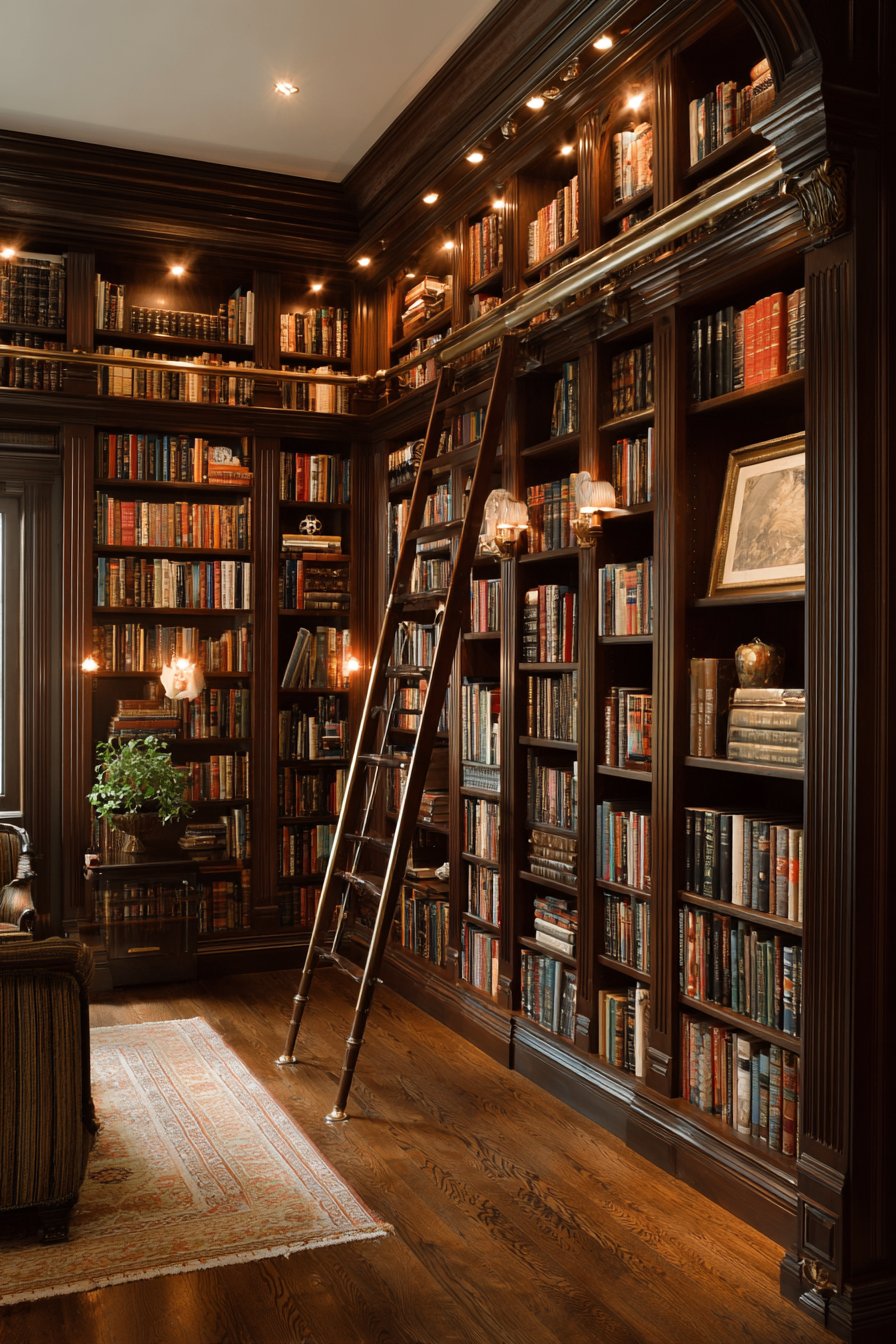
Warm ambient lighting from table lamps, floor lamps, or integrated shelf lighting illuminates the space without harsh overhead glare. The multiple light sources create layered illumination suitable for reading while highlighting the wood’s beautiful grain and rich color. This approach works wonderfully in dedicated libraries or reading rooms, in large home offices for professionals who reference books regularly, or in living rooms where books represent primary decoration and entertainment. The result creates a deeply personal space that reflects intellectual curiosity and celebrates the enduring pleasure of physical books.
Key Design Tips:
- Specify hardwood construction (cherry, walnut, or maple) for durability and aging beauty appropriate to library quality
- Space shelves 10-12 inches apart for standard hardcover books with 8-inch spacing for paperback-only collections
- Install rolling ladder hardware rated for appropriate weight and ensure smooth operation along entire length
- Include architectural details like crown molding, baseboard, and face frames for furniture-quality appearance
- Plan for approximately 10 books per linear foot of shelving when estimating capacity needs
- Add adjustable shelving on some sections to accommodate oversized art books or particularly tall volumes
- Consider closed cabinet storage in lower sections for items you prefer concealed or for protecting valuable first editions
15. Practical Mudroom Entryway Organization
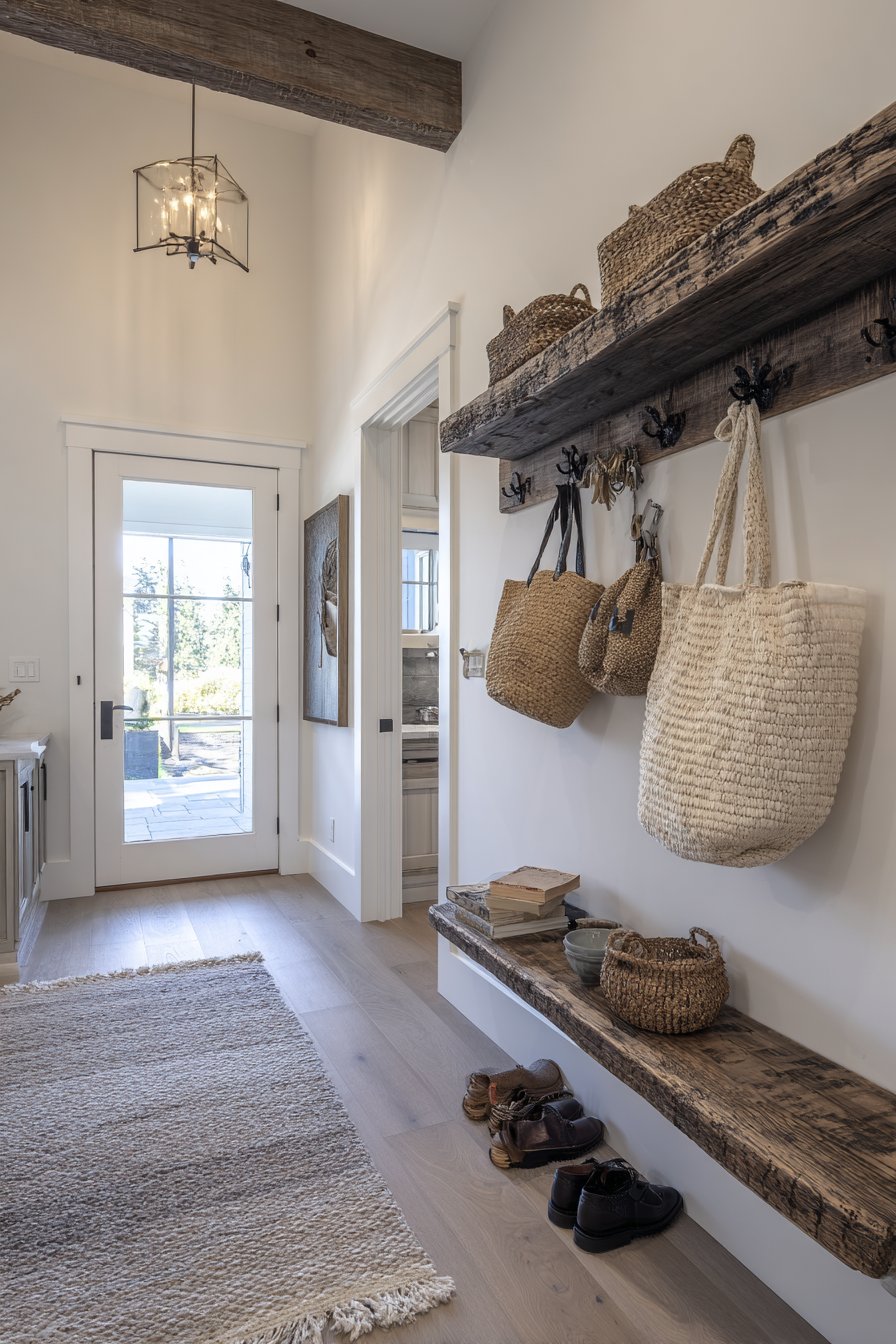
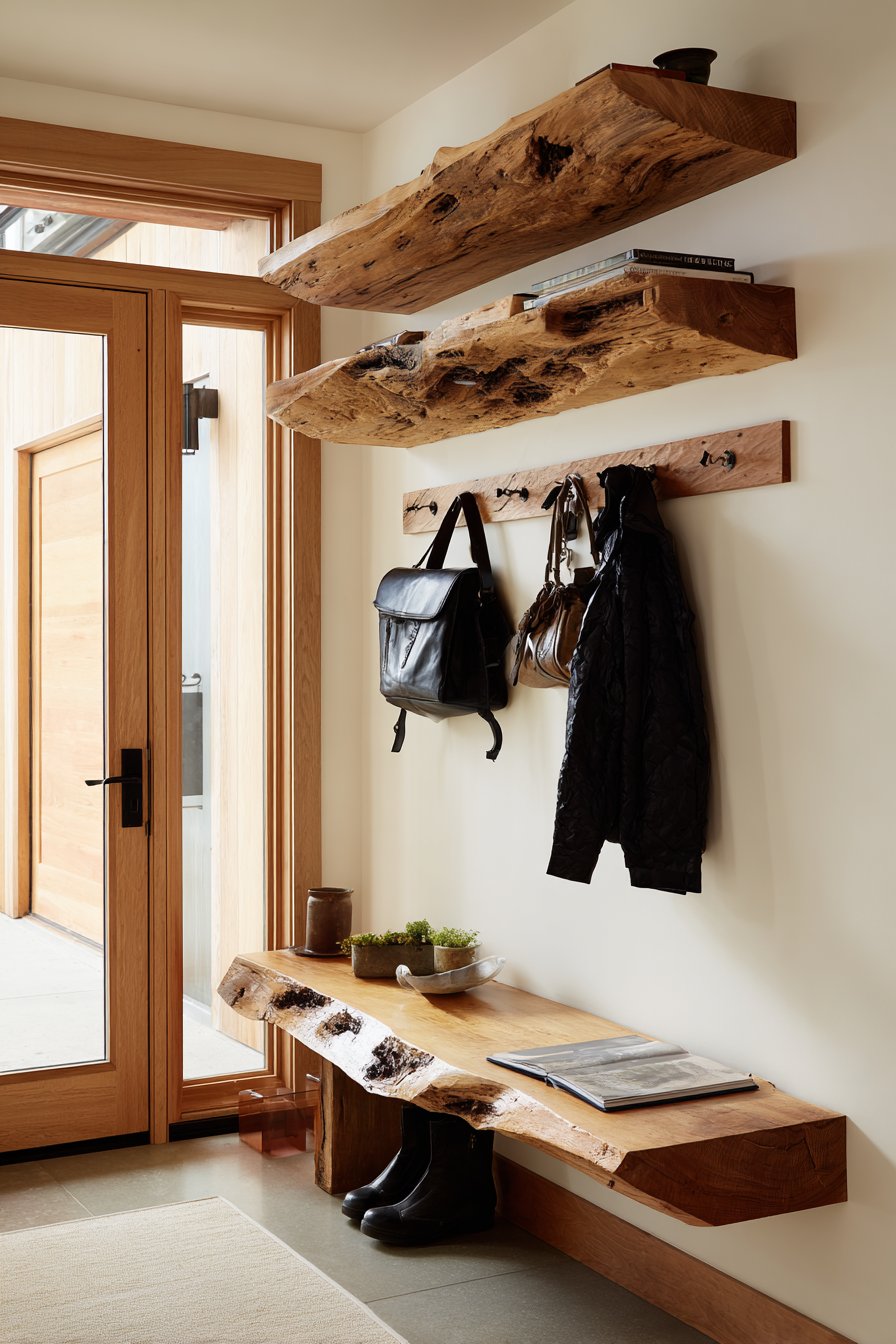
Entryways set the tone for homes while serving crucial organizational functions, and this compact shelf wall idea with integrated hooks creates hardworking mudroom-style storage even in modest spaces. Wall-mounted shelving in reclaimed wood combines with coat hooks positioned strategically below open shelves, maximizing vertical utility in minimal footprint. The natural edge details and visible grain patterns in the reclaimed wood bring character and warmth to a space that could otherwise feel purely utilitarian. Upper shelves provide platforms for keys, mail, and small daily essentials while hooks below accommodate coats, bags, and scarves. A small bench beneath offers seating for shoe removal and additional storage opportunity.
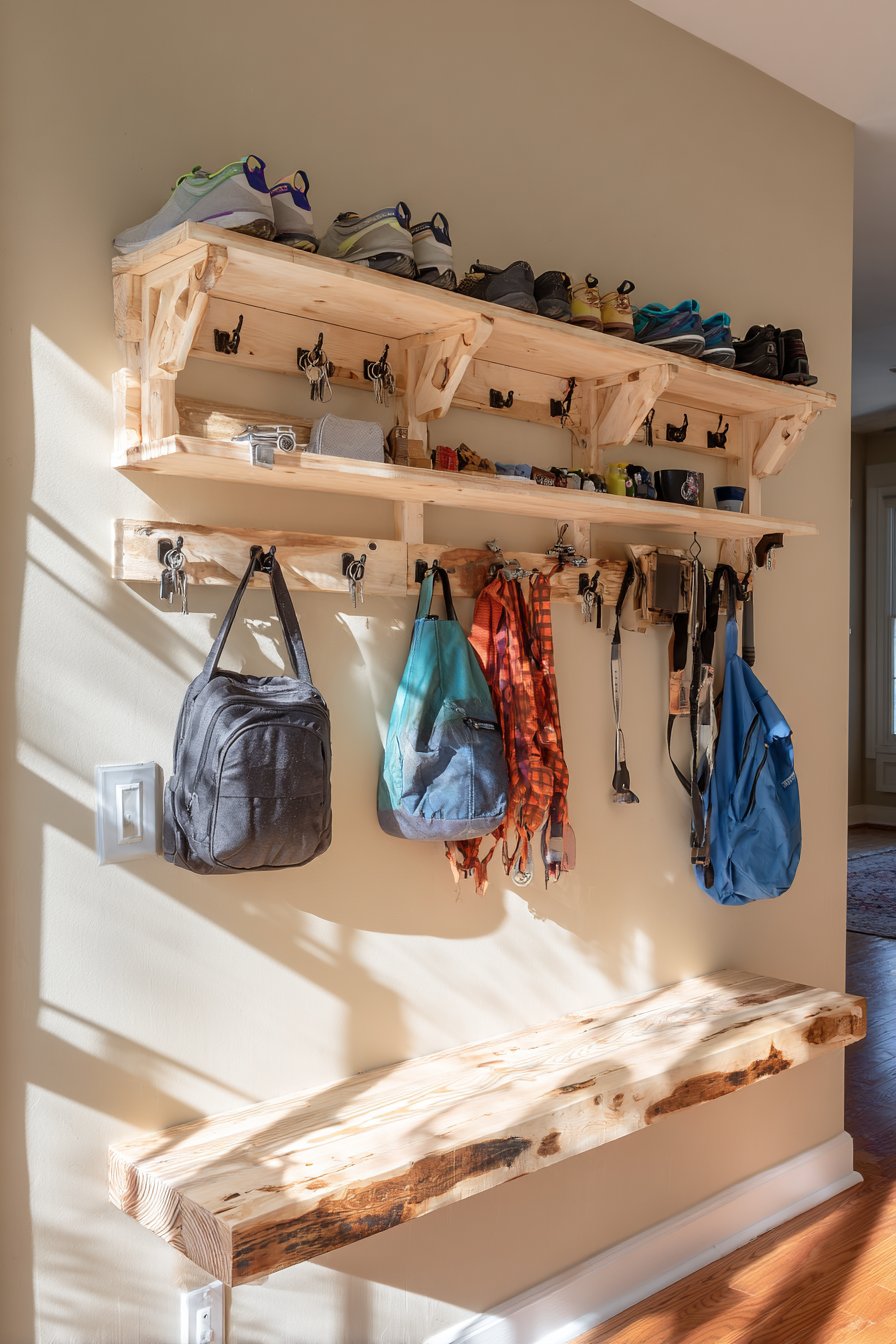
The organizational approach emphasizes everyday functionality—this is storage that must work hard during daily routines rather than merely looking attractive. A small tray or dish on the upper shelf corrals keys, change, and pocket items. Hooks rated for appropriate weight hold winter coats without sagging. The bench cushion in durable, easily cleaned fabric provides comfort while resisting the wear of daily use. Small baskets on shelves contain gloves, dog leashes, or other frequently needed items. The system encourages family members to maintain order by making organization effortless—everything has its designated place within easy reach.
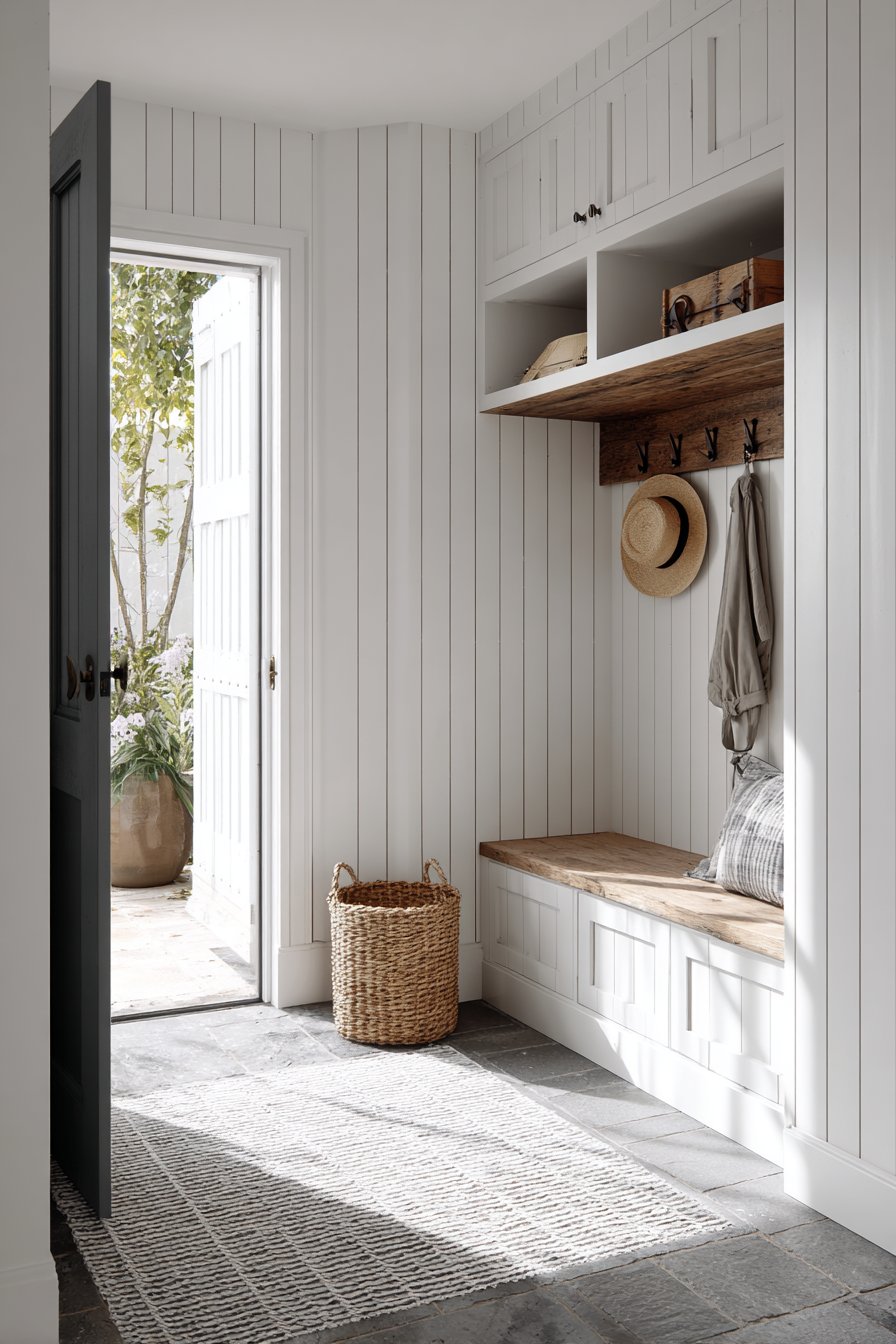
Natural light from an adjacent door or window illuminates the practical organization while highlighting the reclaimed wood’s authentic character. The combination of open storage for daily items and hooks for hanging pieces creates the quick drop-and-go convenience modern families need. This approach works wonderfully in small entryways where dedicated mudrooms don’t exist, in back entries where family members actually enter homes, or in apartment entries where space premium demands multi-functional solutions. The result creates order at life’s transition point between outside world and home sanctuary.
Key Design Tips:
- Position shelves 72-78 inches from floor for comfortable adult access without stepstool requirement
- Install heavy-duty hooks rated for 10-15 pounds each to accommodate winter coats and loaded bags
- Mount bench 18 inches from floor at standard seating height with sturdy brackets supporting appropriate weight
- Use reclaimed wood sealed with water-resistant finish to protect from umbrella drips and wet outerwear
- Include 4-6 hooks spaced 6-8 inches apart to prevent coat overcrowding and maintain neat appearance
- Choose bench cushion in dark colors or patterns that disguise inevitable dirt from daily use
- Ensure adequate clearance (minimum 12 inches) between bench and wall shelving for comfortable seating
16. Mid-Century Modern Teak and Brass Shelving
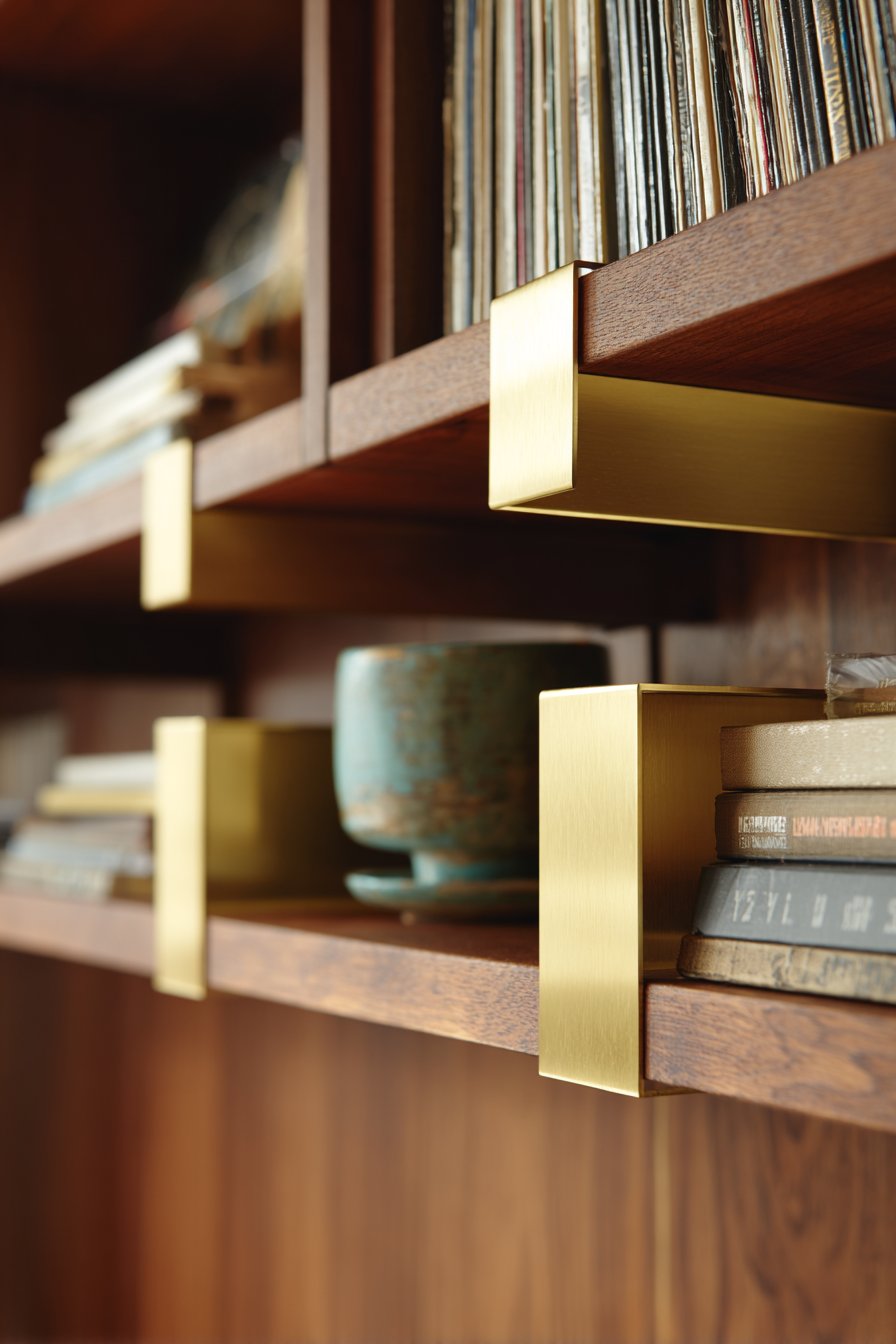
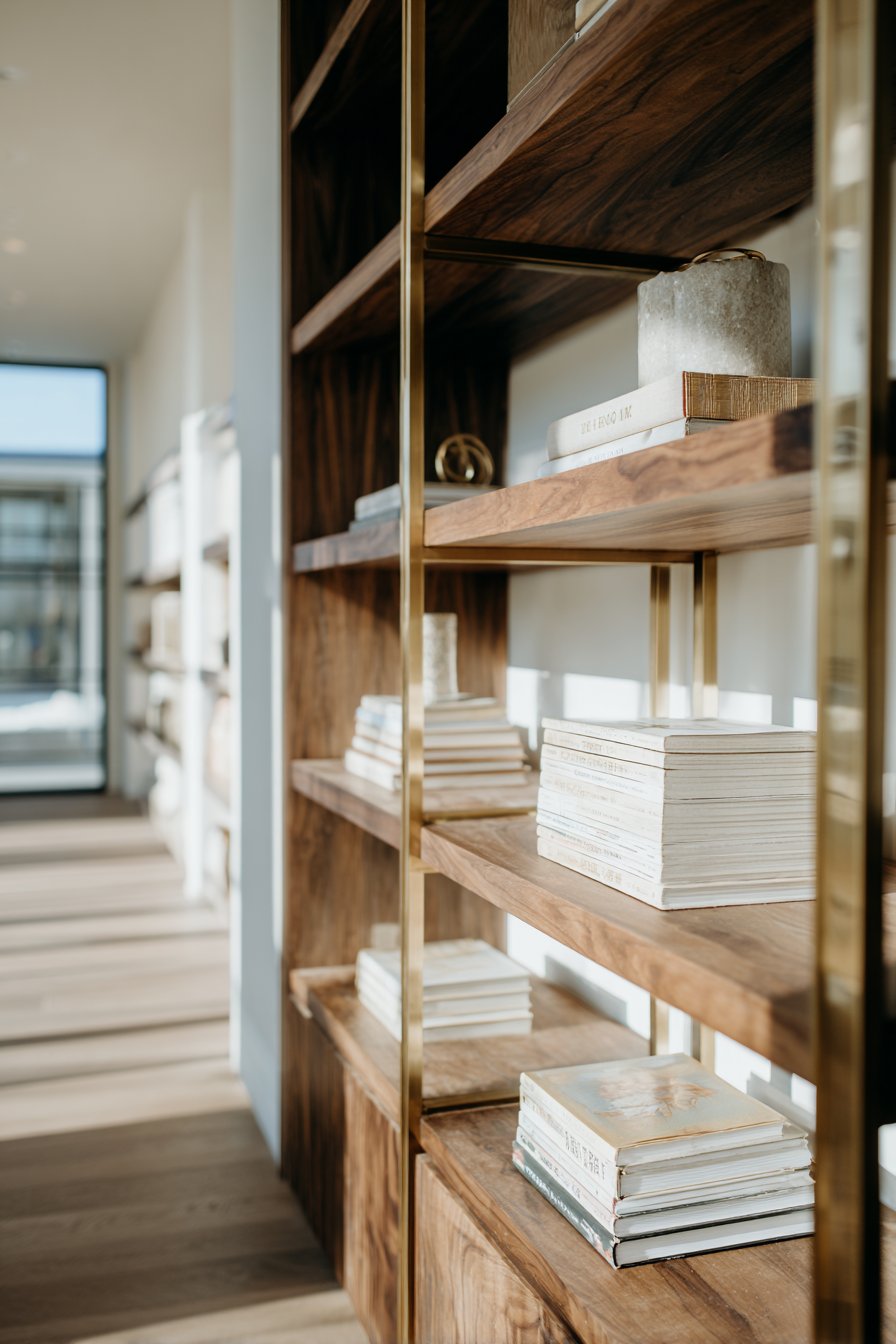
The mid-century modern aesthetic remains timelessly appealing, and this shelf wall idea captures that period’s essential characteristics through authentic material choices and signature design elements. Teak wood shelving with distinctive angled brass brackets creates the warm, sophisticated look that defined 1950s and 60s design excellence. The teak’s rich honey tones and beautiful grain patterns bring natural warmth, while the brass brackets add metallic gleam without the coldness of chrome or steel. The angled support brackets represent characteristic mid-century form, where functional elements became decorative features through thoughtful geometric design rather than hiding structure.
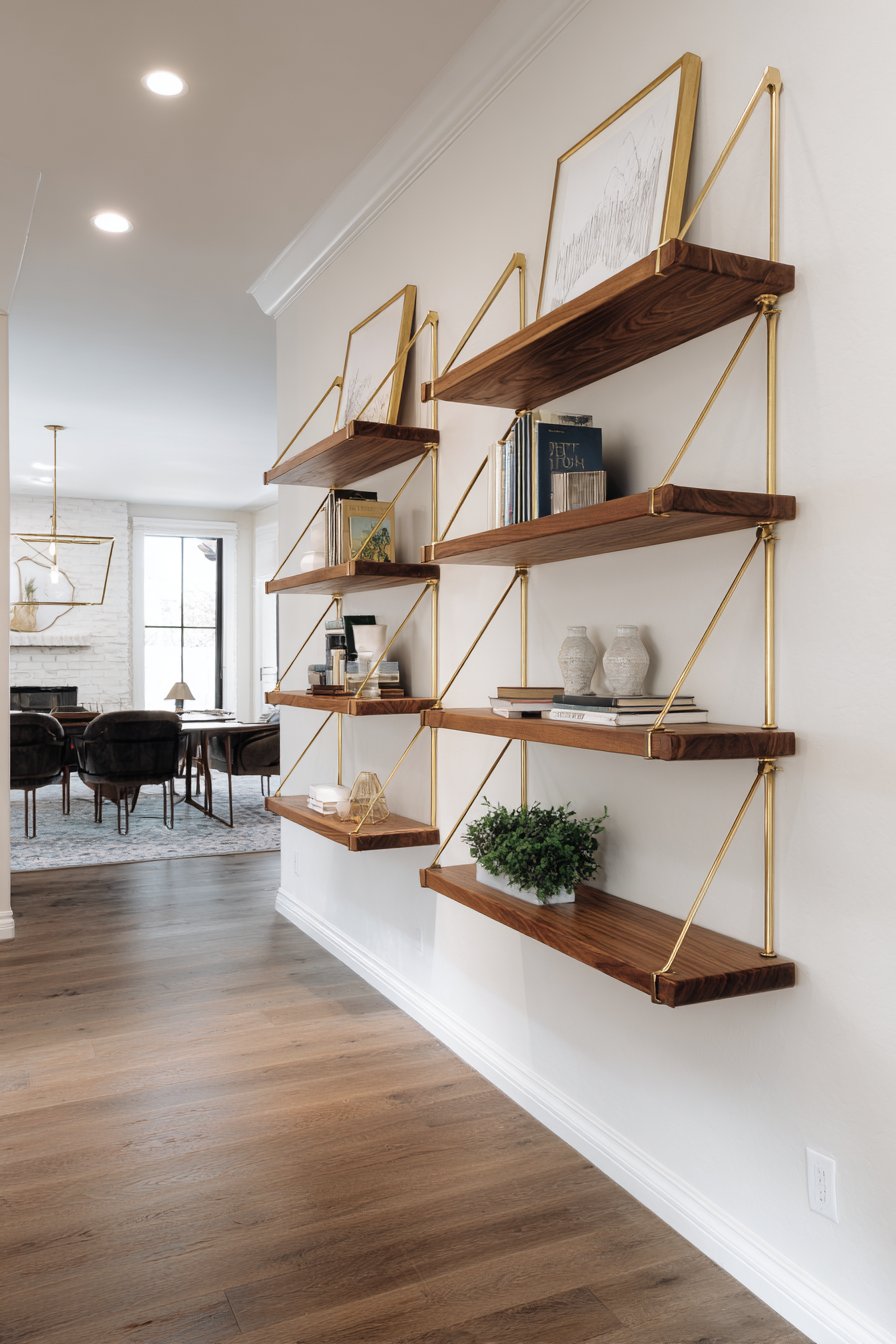
The display curated to reflect period-appropriate aesthetics makes this installation feel authentic rather than merely inspired by mid-century style. Vintage ceramics in organic shapes and period colors—perhaps chartreuse, burnt orange, or teal—occupy prominent positions. Vinyl records, whether functional collection or decorative elements, evoke the era’s primary music format. Select books with classic mid-century cover designs add visual interest. A small succulent or snake plant in a period-appropriate planter introduces living elements. The arrangement balances the era’s love of clean lines with careful curation, avoiding both cluttered excess and sterile minimalism.
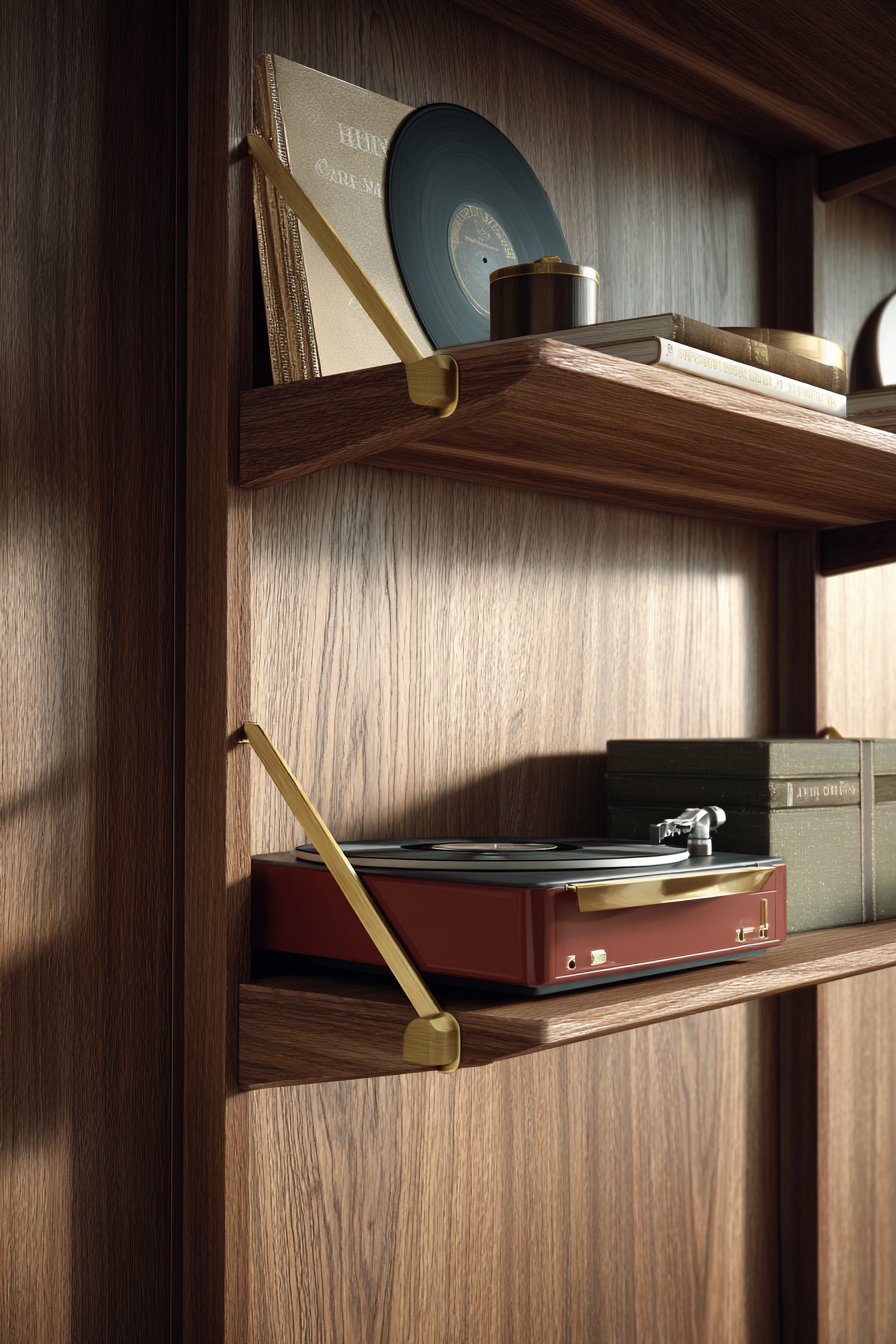
Soft natural lighting plays across the warm wood tones and catches the brass details, creating the inviting ambiance central to mid-century residential design philosophy. The horizontal shelf arrangement creates calm rhythm rather than dynamic energy, reflecting the period’s emphasis on serenity and uncluttered living. This approach works beautifully in living rooms furnished with mid-century pieces, in home offices where you’re creating inspiring creative environment, or in any space where you’re honoring authentic period design rather than generic retro styling. The result feels genuinely vintage rather than contemporary imitation.
Key Design Tips:
- Source authentic teak or select teak-look alternatives with similar warm tones and prominent grain patterns
- Choose brass brackets in angled or tapered forms characteristic of mid-century design rather than simple L-brackets
- Space shelves 16-20 inches apart vertically for the horizontal emphasis typical of mid-century installations
- Display objects with organic, sculptural forms in period colors like mustard yellow, avocado green, or burnt orange
- Limit items per shelf to reflect mid-century preference for edited, uncluttered display aesthetic
- Apply Danish oil or teak oil to wood to enhance grain and create authentic aged patina over time
- Polish brass brackets periodically to maintain gleam or allow natural patina to develop for aged authenticity
17. Bedroom Headboard Shelf Integration
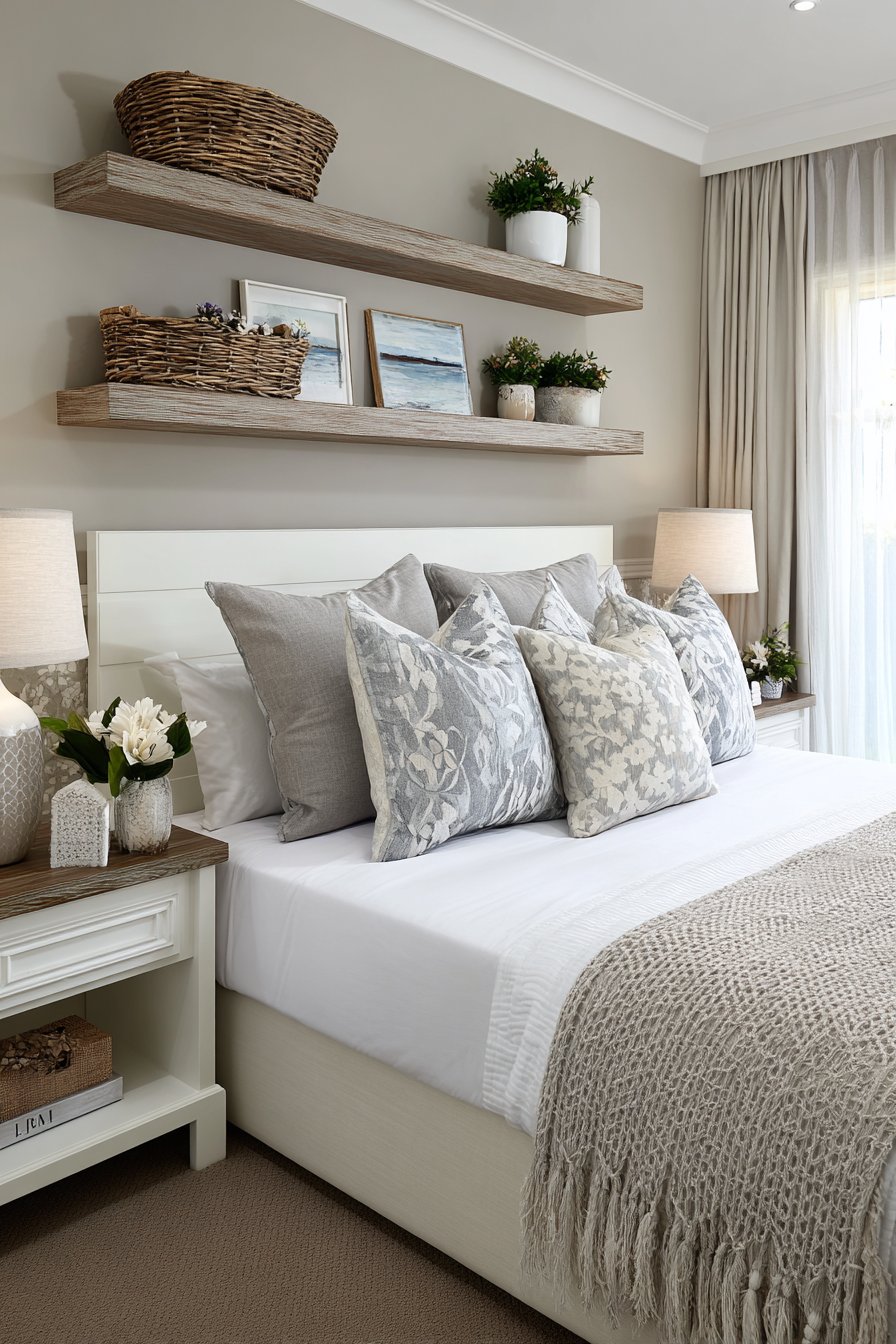
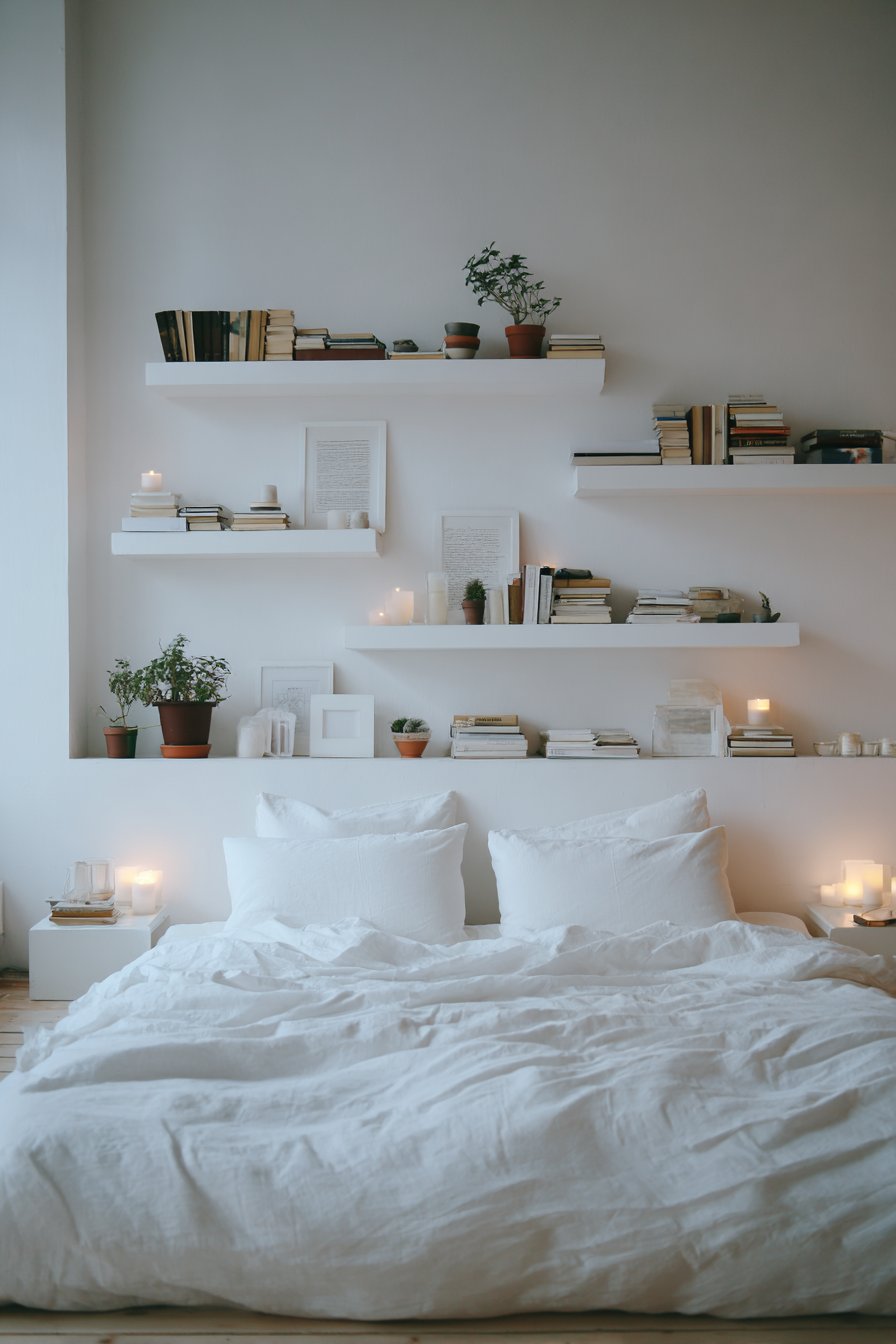
Bedrooms often lack dedicated nightstand space or benefit from creative storage alternatives, and this shelf wall idea transforms the area above the headboard into practical and decorative territory. Shallow floating shelves in painted white wood create clean, simple lines that don’t compete with bedding patterns or room décor. The limited depth—perhaps only 4-6 inches—ensures the shelves don’t protrude awkwardly over the bed while still providing sufficient platform for essential bedside items. Multiple shelves at varying heights create flexibility for different object sizes from small alarm clocks to taller reading lamps.
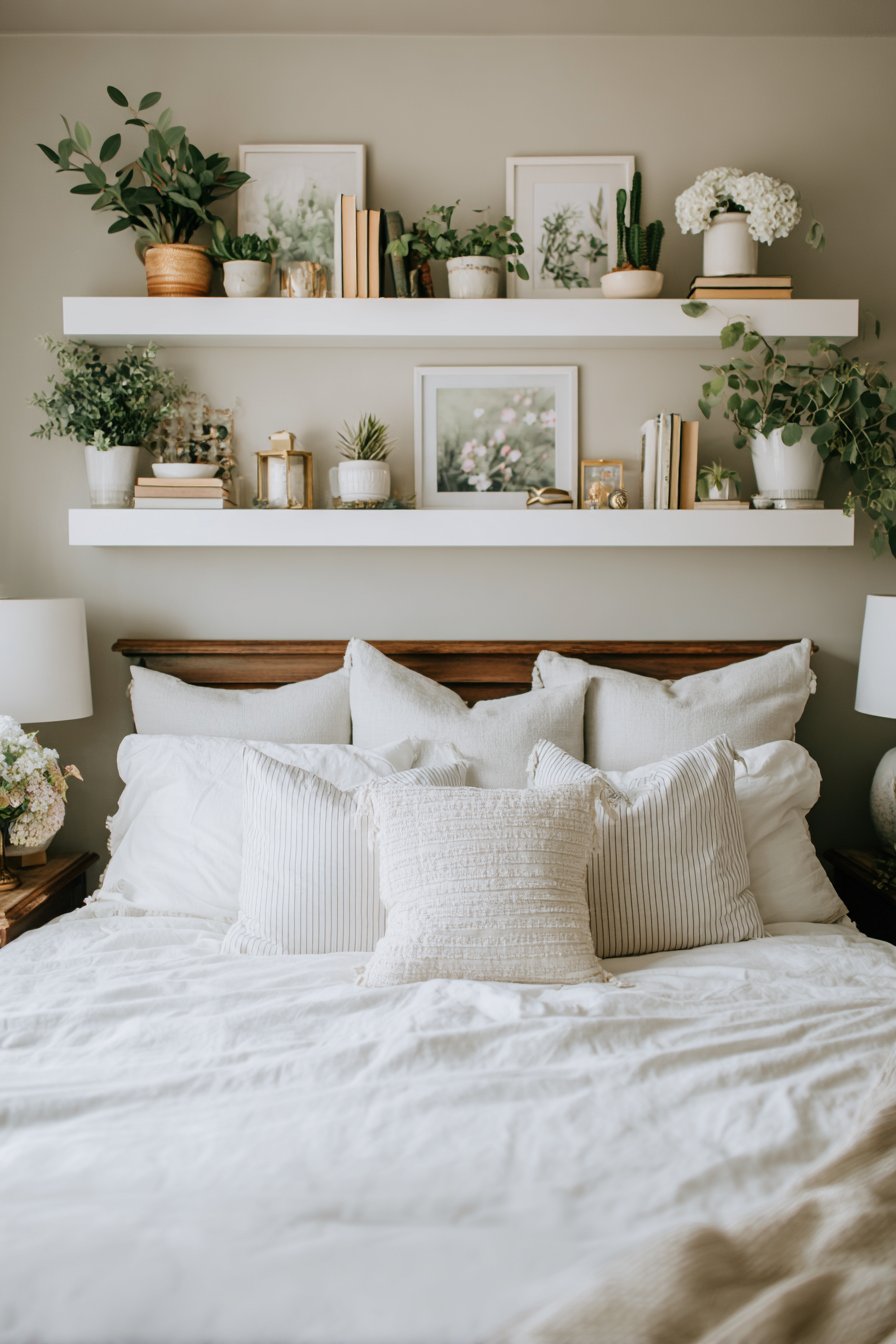
The functional approach focuses on genuine bedside needs while maintaining peaceful bedroom atmosphere. A small plant introduces living element and improves air quality during sleep. Books currently being read rest within easy reach for nighttime reading sessions. Personal mementos—perhaps a special photograph, meaningful gift, or collected treasure—personalize the space without creating visual clutter. The arrangement remains intentionally minimal, respecting the bedroom’s primary purpose of rest and rejuvenation rather than display or storage. The white painted finish maintains bedroom serenity while disappearing against light wall colors.
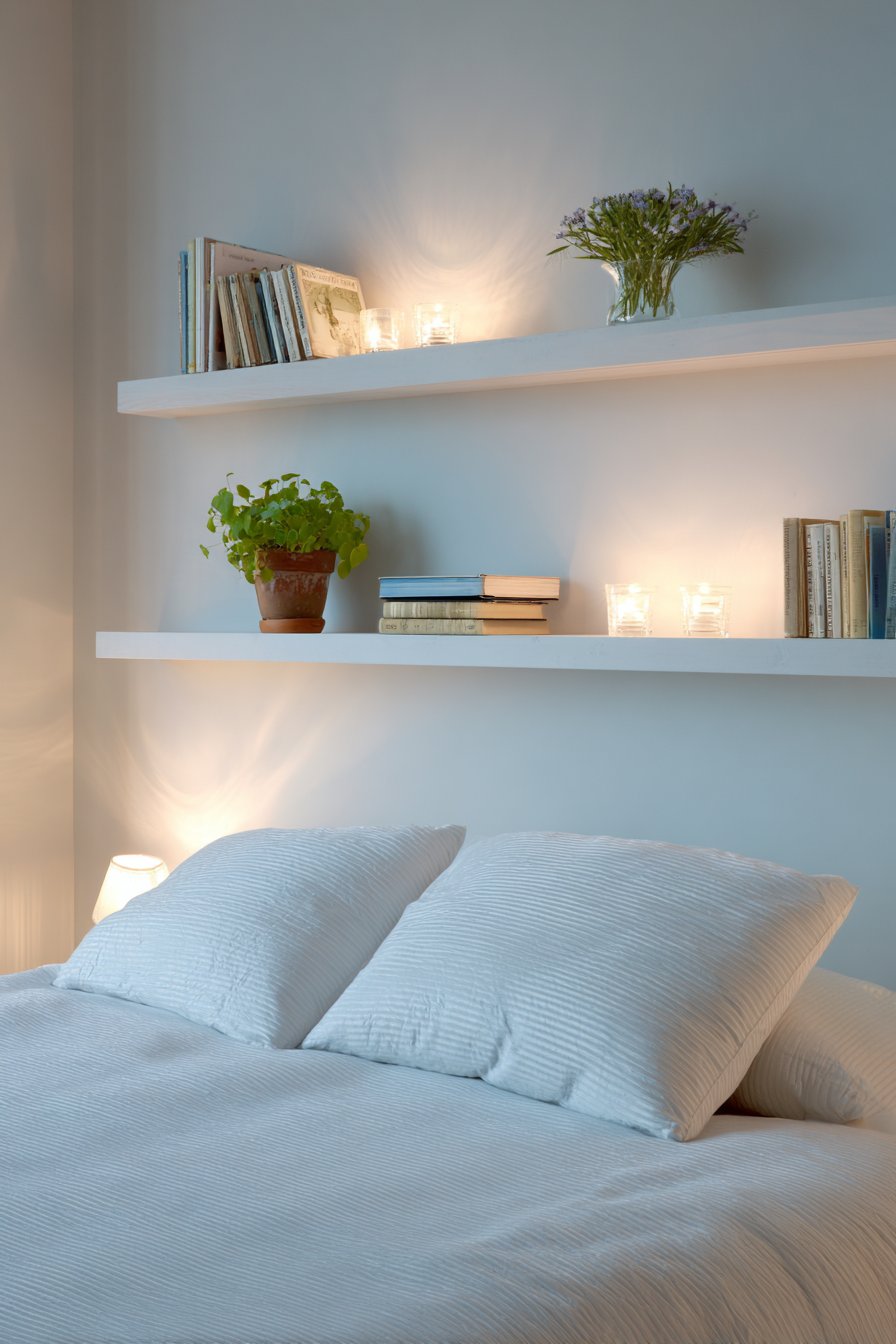
Soft bedside lamp lighting creates intimate ambiance suitable for pre-sleep reading and nighttime navigation without harsh overhead glare. The integration with the headboard creates custom furniture appearance rather than afterthought storage addition. This approach works particularly well in small bedrooms where traditional nightstands consume precious floor space, in guest rooms where you’re maximizing functionality with minimal furniture, or in children’s rooms where floor-level nightstands might pose tripping hazards. The result provides practical benefits while maintaining the peaceful simplicity essential to restorative bedroom environments.
Key Design Tips:
- Keep shelf depth shallow (4-6 inches) to prevent awkward protrusion over bed and maintain comfortable headboard relationship
- Position lowest shelf at least 24 inches above mattress top to allow sitting up without head contact
- Space shelves 10-14 inches apart vertically to accommodate books, small lamps, and decorative objects
- Paint shelves in white or wall color to create subtle integration rather than contrasting statement
- Limit items to essential bedside needs to maintain peaceful bedroom atmosphere conducive to rest
- Ensure shelves are securely mounted as items will be accessed frequently including in dark or drowsy states
- Include small reading light on upper shelf or wall-mounted beside shelves to eliminate bedside table lamp need
18. Heavy-Duty Garage Workshop Storage
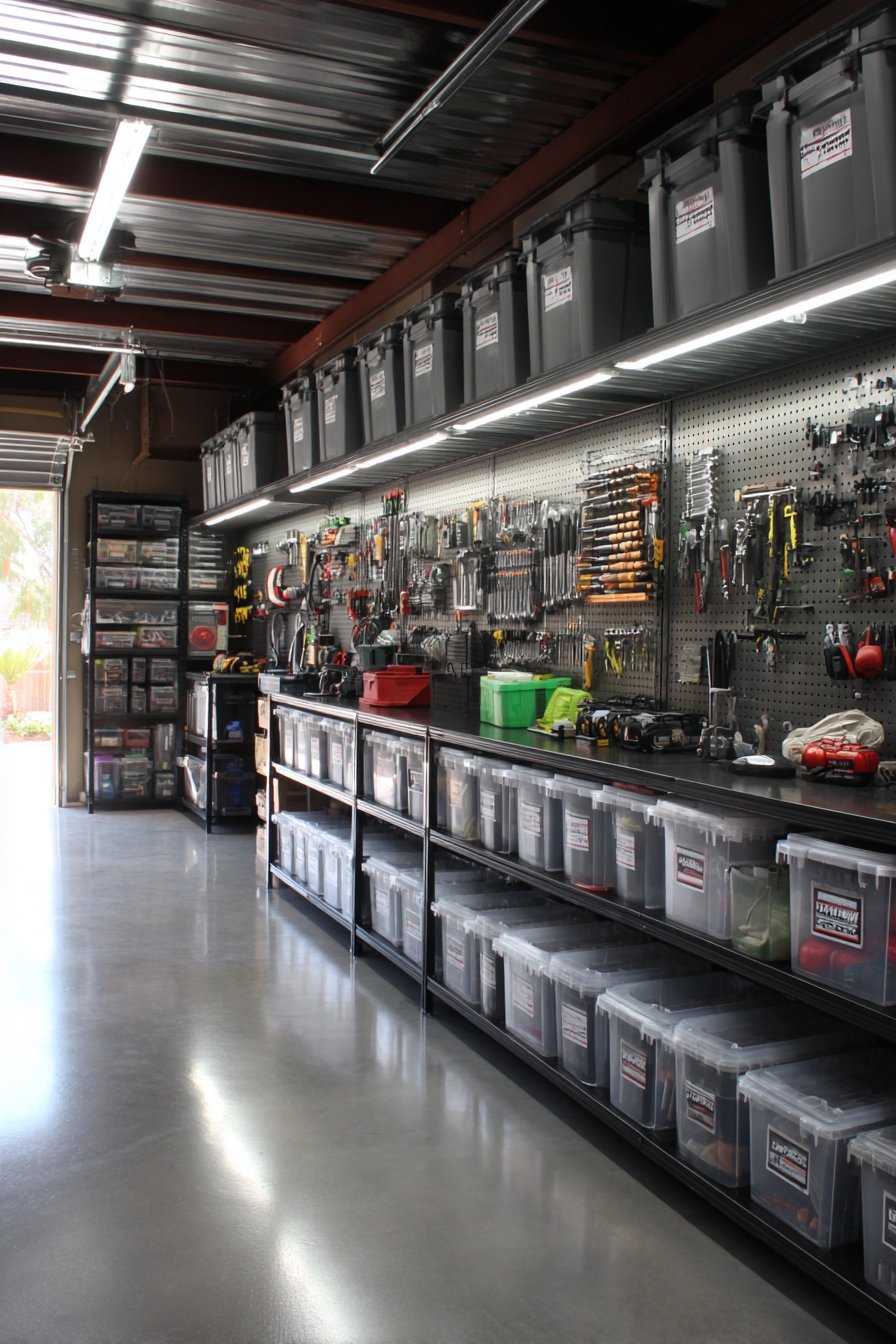
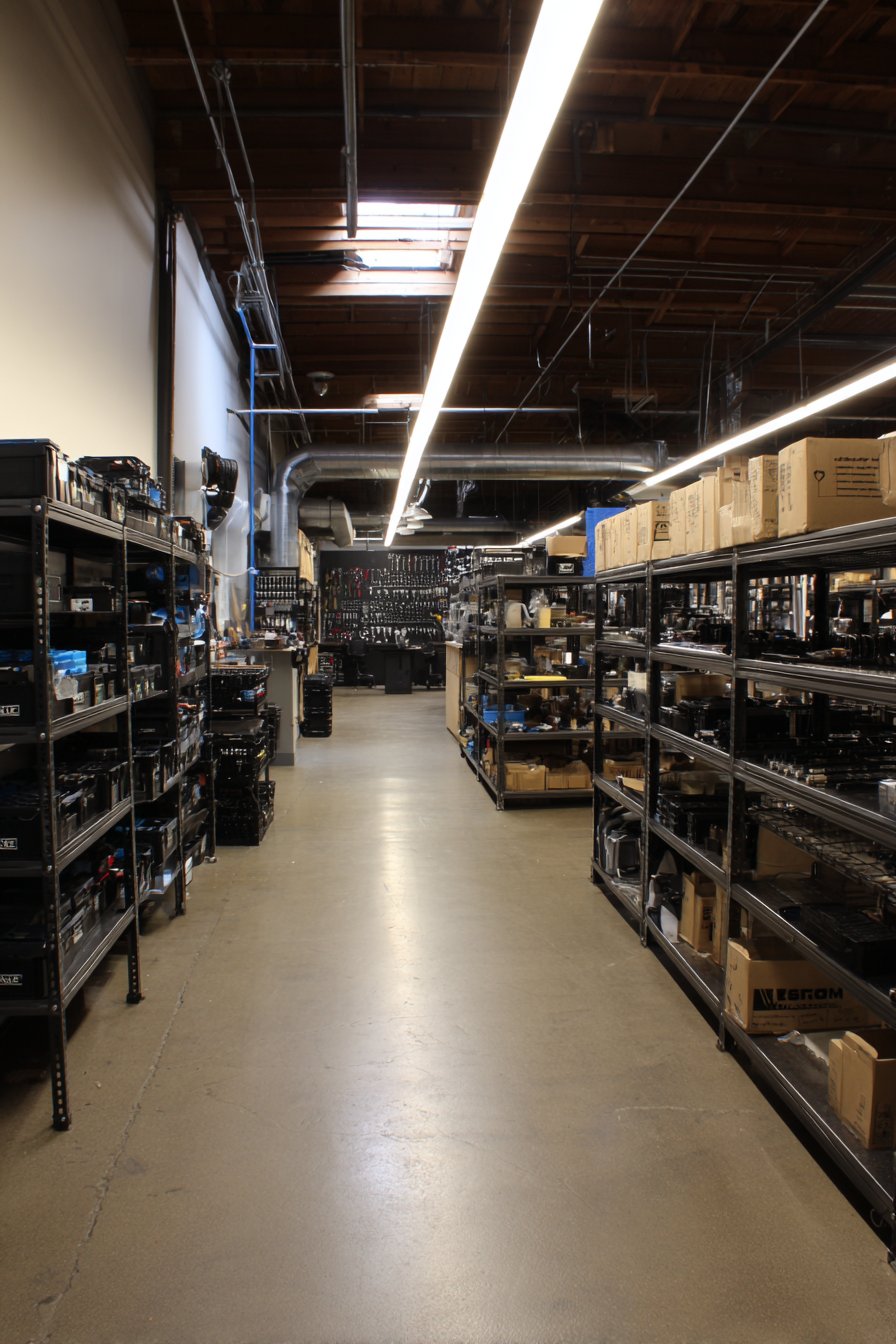
Garages serve as workshops, project spaces, and general storage zones requiring robust organizational systems, and this shelf wall idea addresses those demands with industrial-strength solutions. Heavy-duty metal shelving combined with pegboard sections creates comprehensive storage wall capable of handling significant weight from tools, equipment, and materials. The metal construction resists damage from impacts, chemicals, and moisture that wood shelving wouldn’t tolerate in garage environments. Adjustable shelf heights accommodate varying item sizes from small hardware bins to large power tools, providing flexibility as tool collections and project needs evolve.
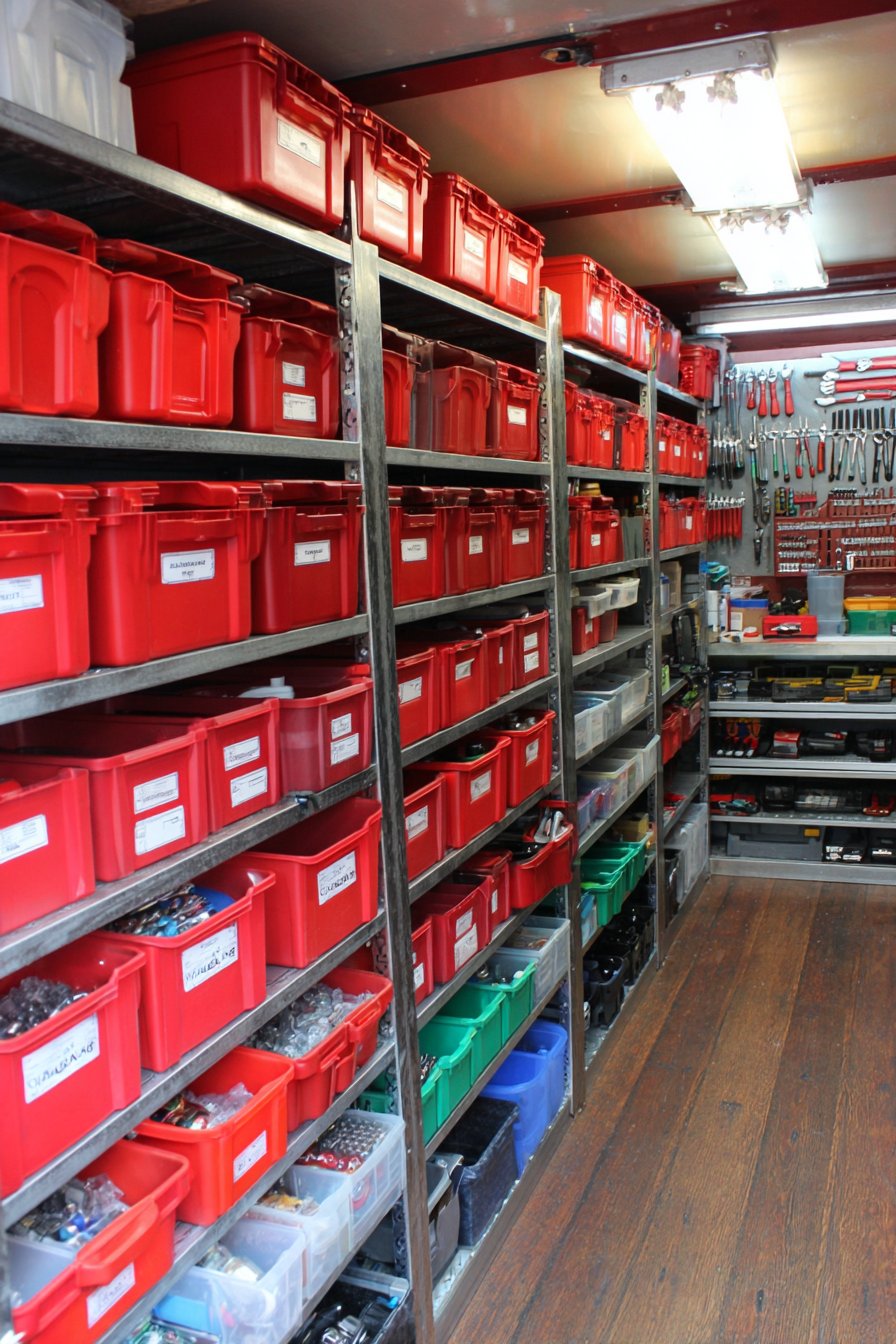
The organizational approach emphasizes accessibility and visibility—when you need a specific tool or supply, finding it quickly matters more than aesthetic presentation. Labeled plastic bins organize small hardware by type and size, their transparency allowing quick visual confirmation of contents. Power tools occupy lower shelves within easy reach, their cords coiled and managed to prevent tangling. Pegboard sections display hand tools in organized arrangements where each tool’s shape creates its own visual marker for return placement. Lumber or long materials might rest on highest shelves where their length doesn’t obstruct access to more frequently needed items.
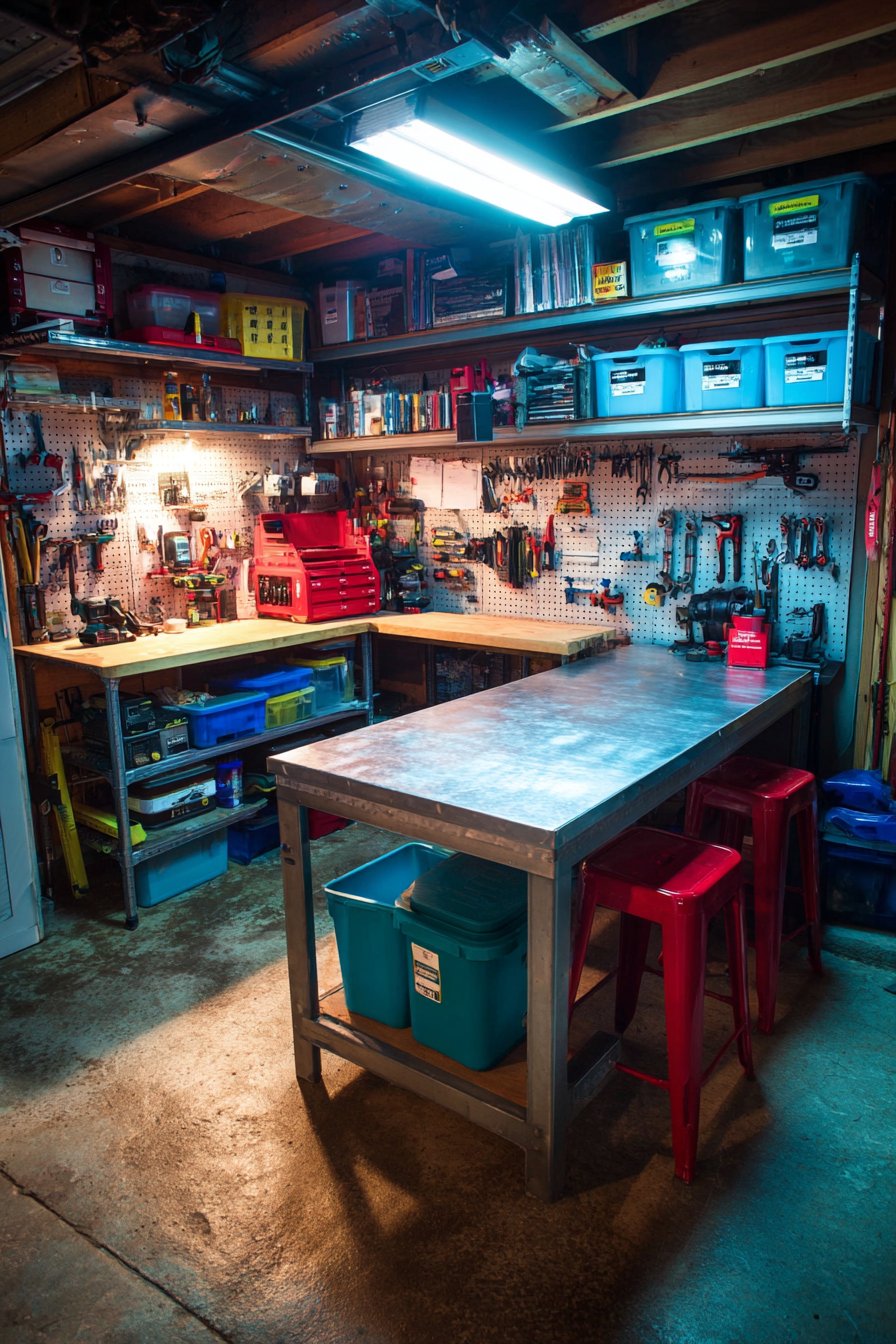
Overhead fluorescent lighting provides bright, even task illumination essential for detail work and accurate color perception when matching paints or stains. The utilitarian aesthetic prioritizes function over form—this is workspace storage where efficiency and durability matter most. This approach works perfectly in garage workshops, basement workrooms, or dedicated hobby spaces where serious making happens. The result creates organized efficiency that transforms frustrating tool-hunting expeditions into simple retrieval, allowing more time for actual project work rather than searching and reorganizing.
Key Design Tips:
- Choose heavy-duty steel shelving rated for 500-1000 pounds per shelf for serious workshop capacity
- Install pegboard sections between or beside shelving units for hand tool storage and visual organization
- Position frequently used power tools on shelves at comfortable working height (36-48 inches from floor)
- Use clear plastic bins with labels for small hardware organization enabling quick visual contents verification
- Install shelving units 24 inches deep to accommodate power tools, paint cans, and larger equipment
- Space shelves 16-24 inches apart vertically to accommodate various tool and equipment heights
- Ensure proper anchoring into wall studs given the substantial weight these shelves will support when fully loaded
19. Coastal Driftwood and Rope Shelving
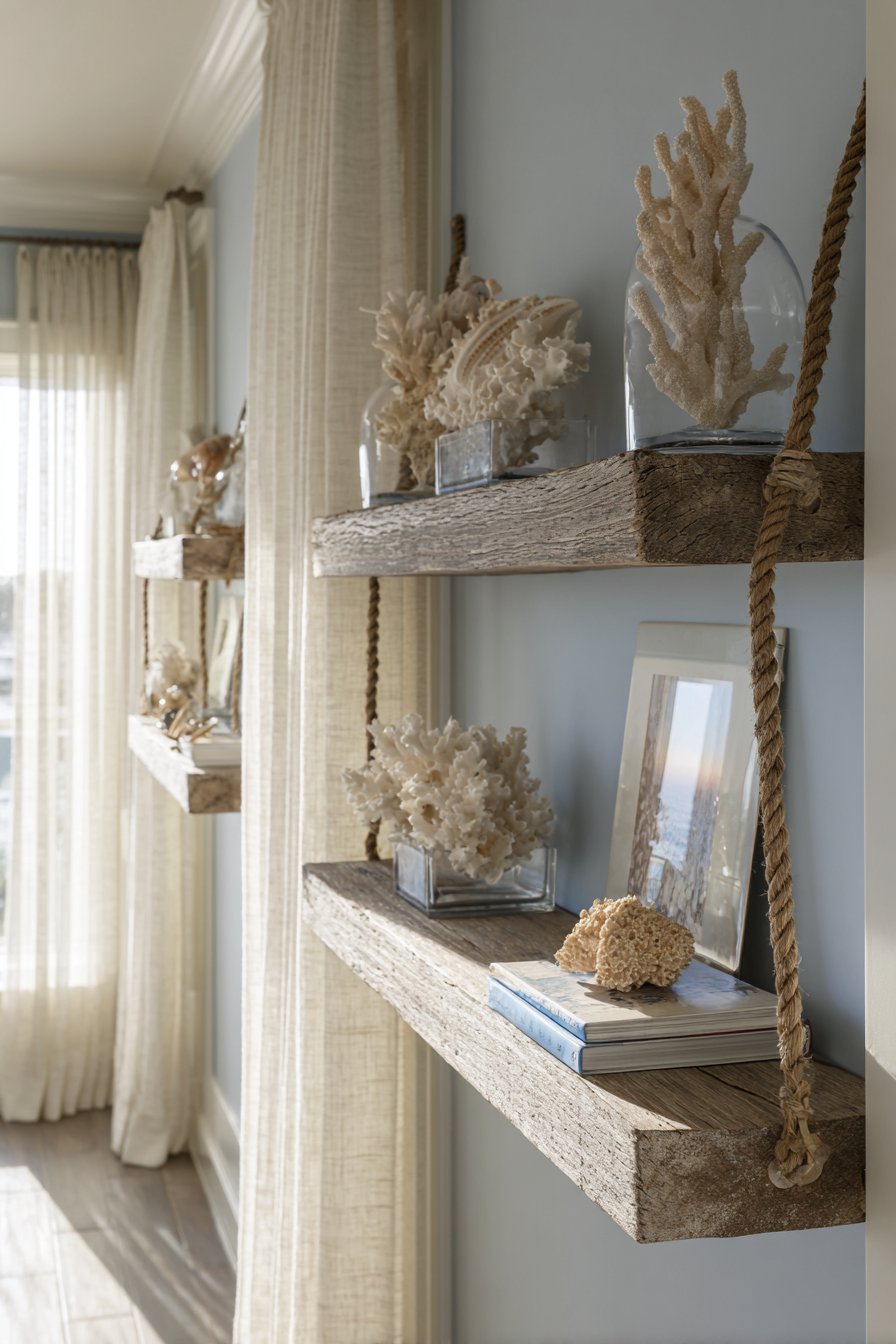
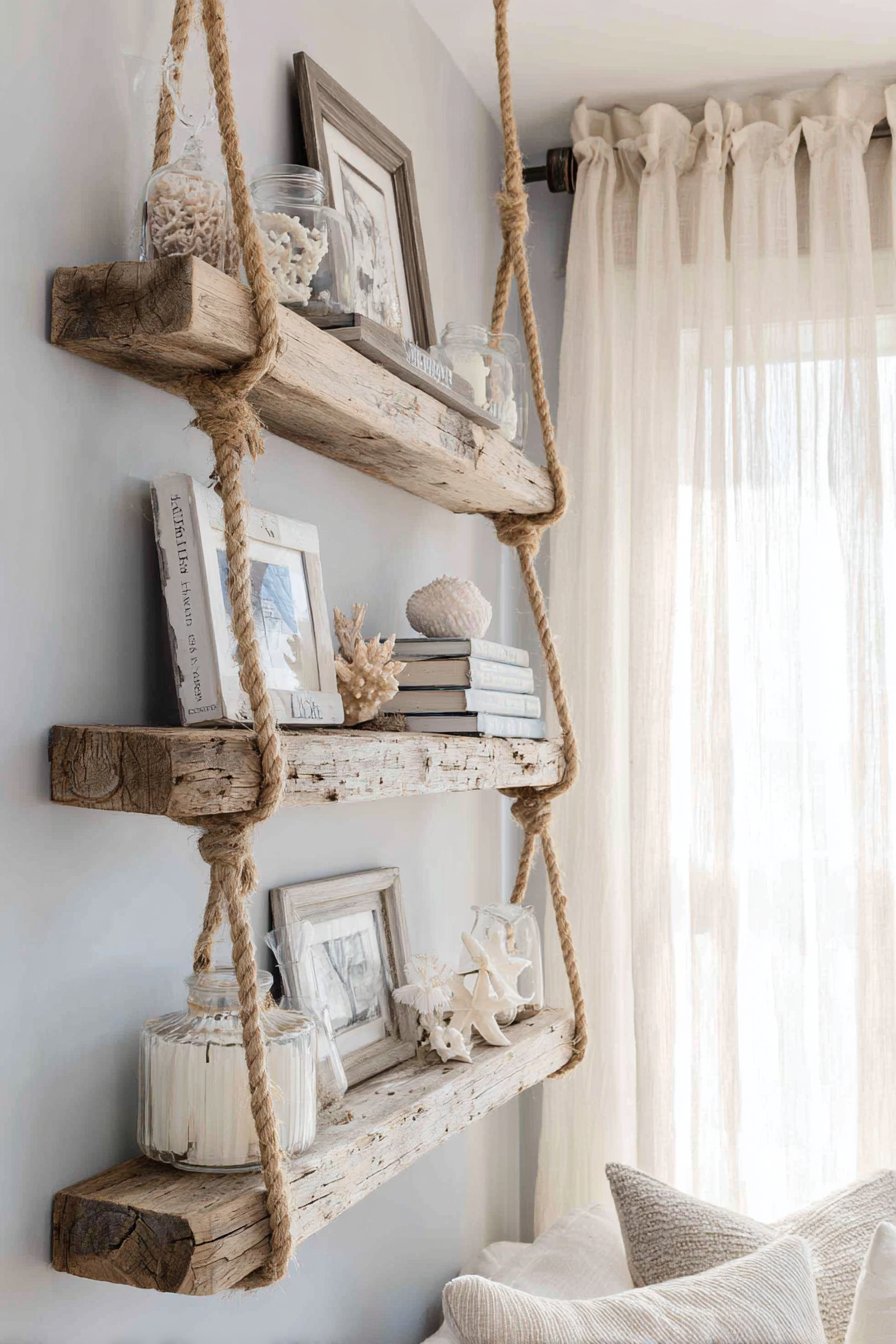
Coastal design evokes the relaxation and natural beauty of seaside living, and this shelf wall idea captures that essence through authentic materials and beachy styling. Driftwood-style shelves with natural weathered appearance combine with decorative rope accents to create nautical character without feeling theme-park artificial. The wood’s silver-gray weathered finish, subtle variations, and organic edge details suggest pieces reclaimed from shore, whether authentically sourced or artfully created to replicate natural aging. Rope details—perhaps wrapped around shelf ends or used as decorative supports—introduce nautical elements while softening the wood’s linear edges.
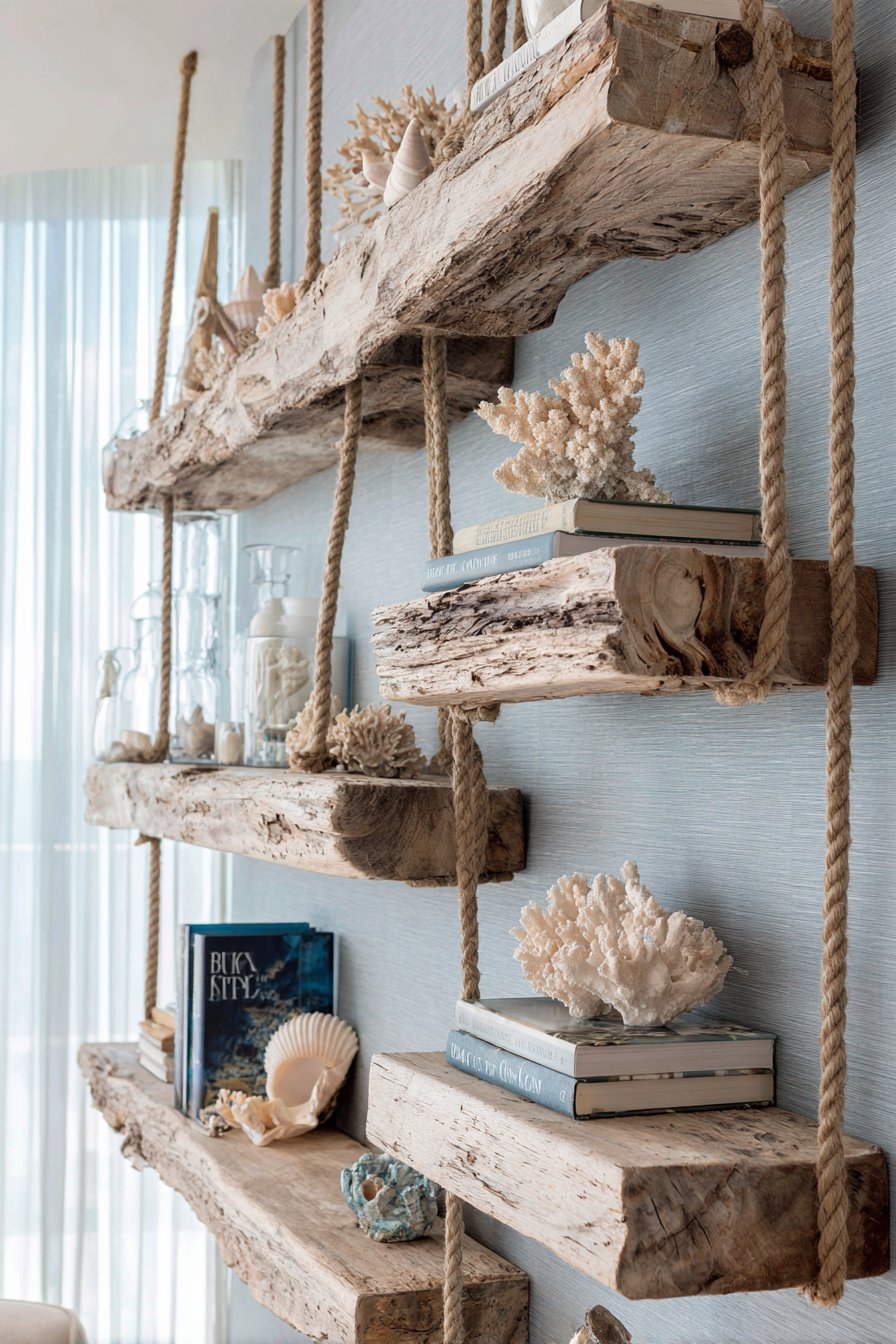
The display celebrates beach-found treasures and coastal-themed décor. Seashell collections occupy glass vessels or arrange directly on shelves, their varied forms and subtle colorations creating natural interest. Coral specimens (ethically sourced or replica) add dimensional texture and organic sculptural form. Nautical-themed books about sailing, marine life, or coastal travel lean casually. Beach glass in blues and greens catches light in small bowls. The arrangement feels collected during beach walks rather than purchased at a store, with meaningful found objects taking precedence over manufactured coastal merchandise.
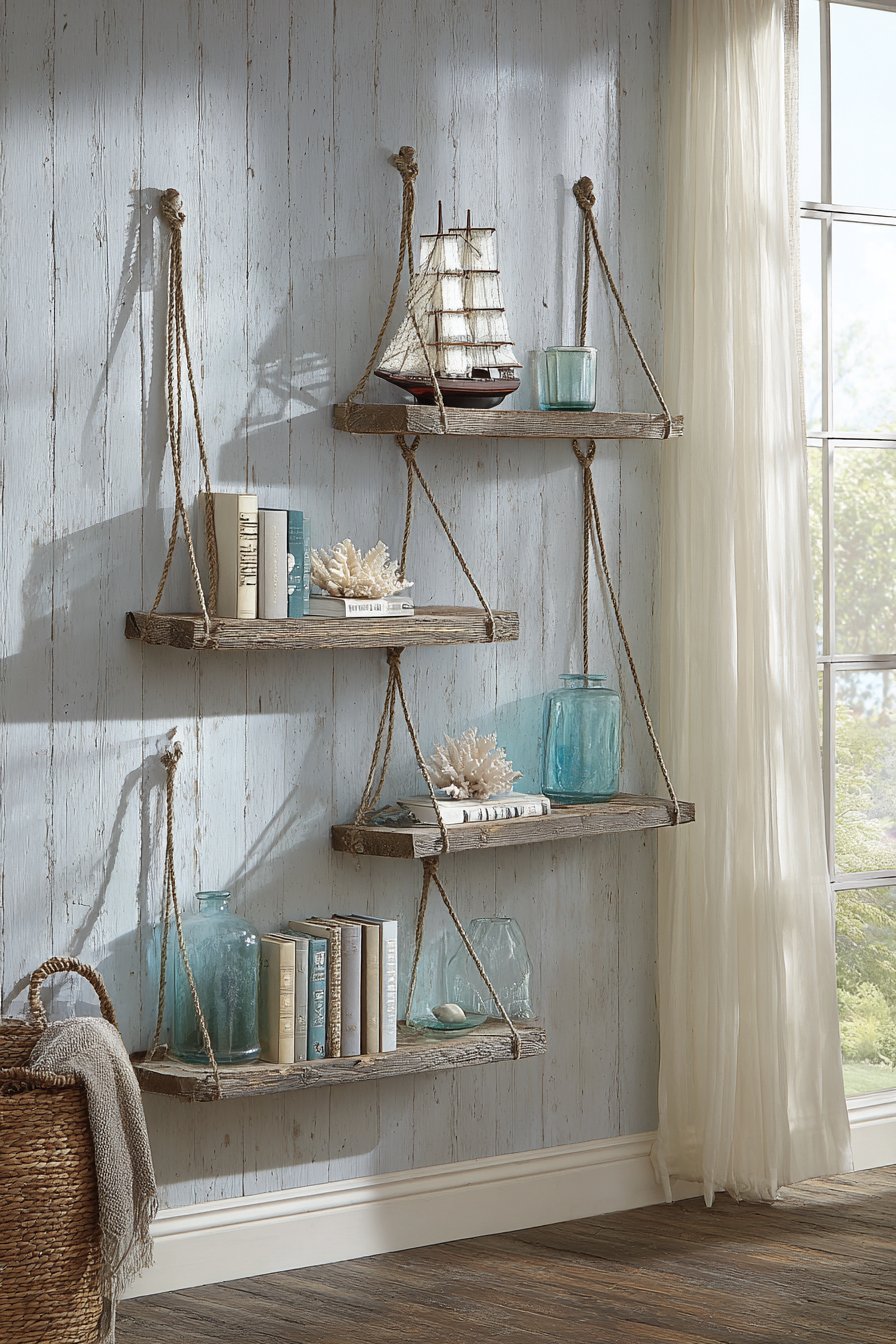
Natural light filtered through sheer curtains creates the airy, sun-washed atmosphere central to coastal design philosophy. The pale wood tones and light blue-gray wall color enhance rather than compete with the natural light, maintaining brightness even on overcast days. This approach works beautifully in beach houses or coastal properties where authentic context supports the styling, but also translates successfully to inland homes where you’re creating vacation-like escape from daily routines. The result evokes peaceful days spent beachcombing, sailing, or simply watching waves.
Key Design Tips:
- Source driftwood or weathered wood with natural silver-gray patina for authentic coastal character
- Apply whitewash or gray stain to regular wood to achieve driftwood appearance if authentic pieces unavailable
- Use natural manila or hemp rope rather than synthetic for authentic nautical feel and appearance
- Display shells, coral, and beach glass in curated groupings rather than crowded collections
- Paint walls in soft blue-grays, sandy beiges, or warm whites to support coastal color palette
- Include white or cream ceramics and natural fiber elements to support the beachy, relaxed aesthetic
- Seal wood appropriately for moisture resistance, especially important in actual coastal environments with salt air
20. Child-Height Colorful Playroom Cubes
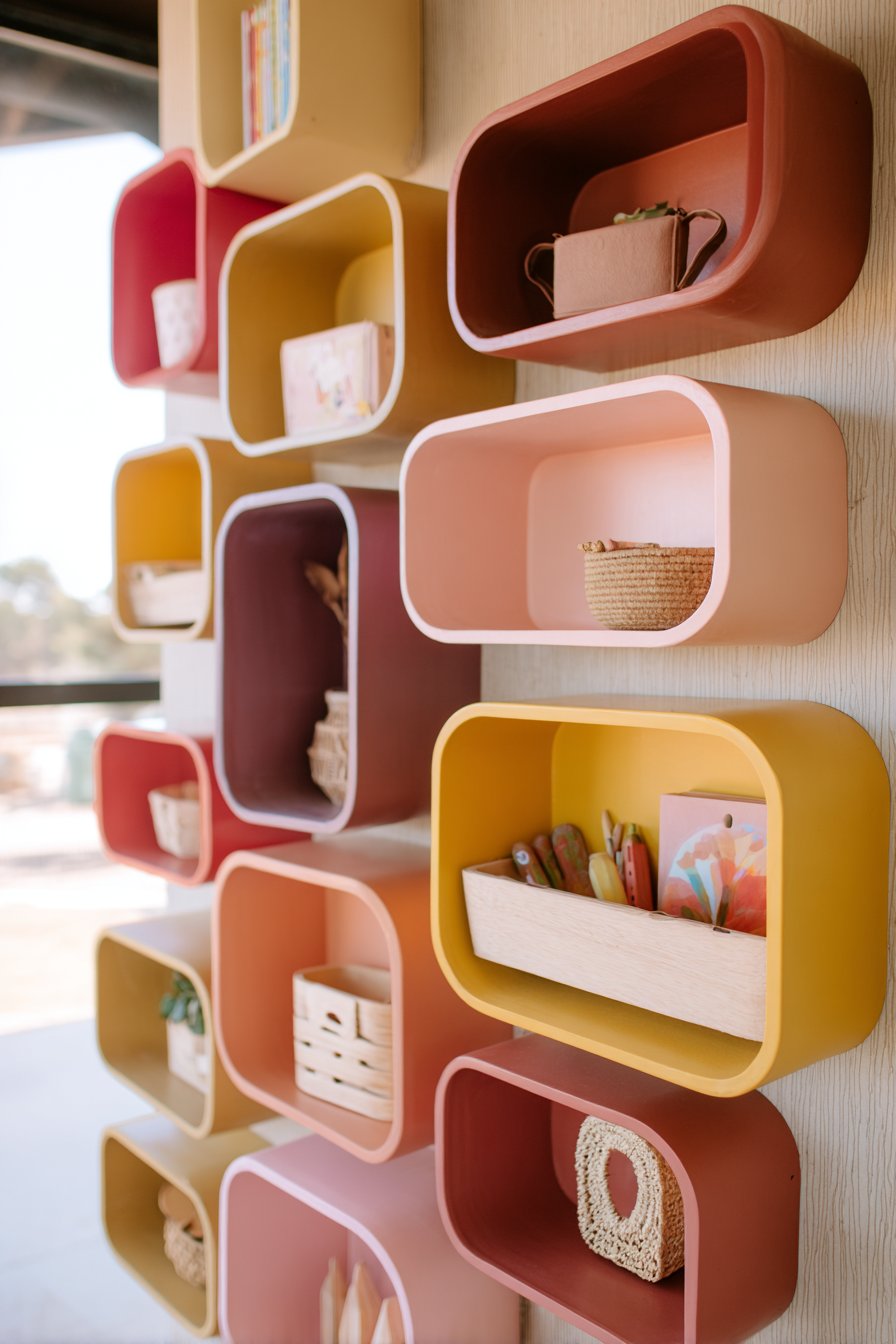
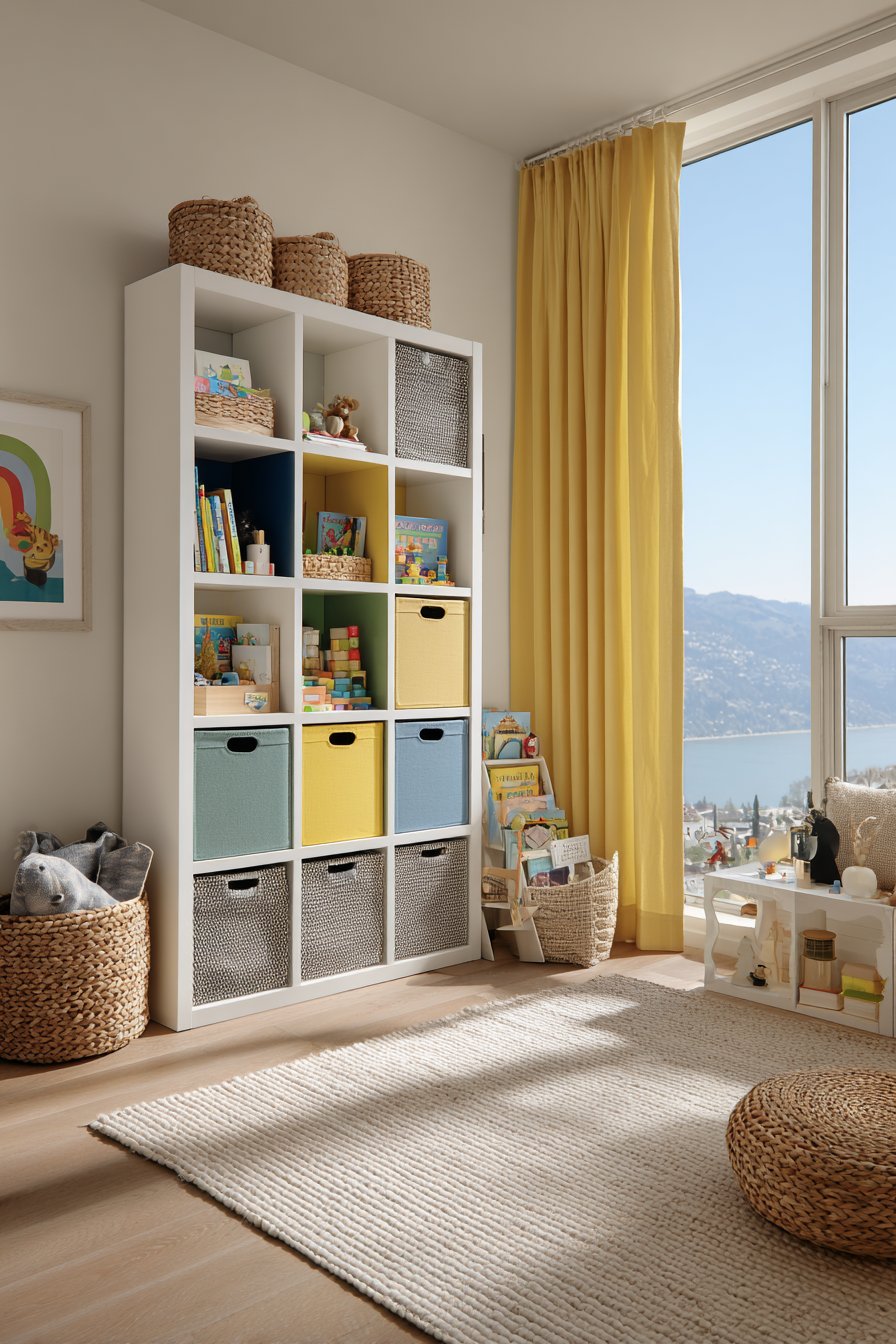
Children’s playrooms require storage that encourages independence and makes cleanup achievable, and this shelf wall idea creates accessible organization with bright, engaging design. Colorful cube storage shelves positioned at child height feature bright painted finishes and integrated toy bins that small hands can easily reach and manage. The rainbow of colors—perhaps primary brights or softer pastels depending on overall room design—creates energetic, playful atmosphere while color-coding can help children remember where different toy categories belong. The cube size scaled appropriately for children’s toys, books, and art supplies rather than adult items.
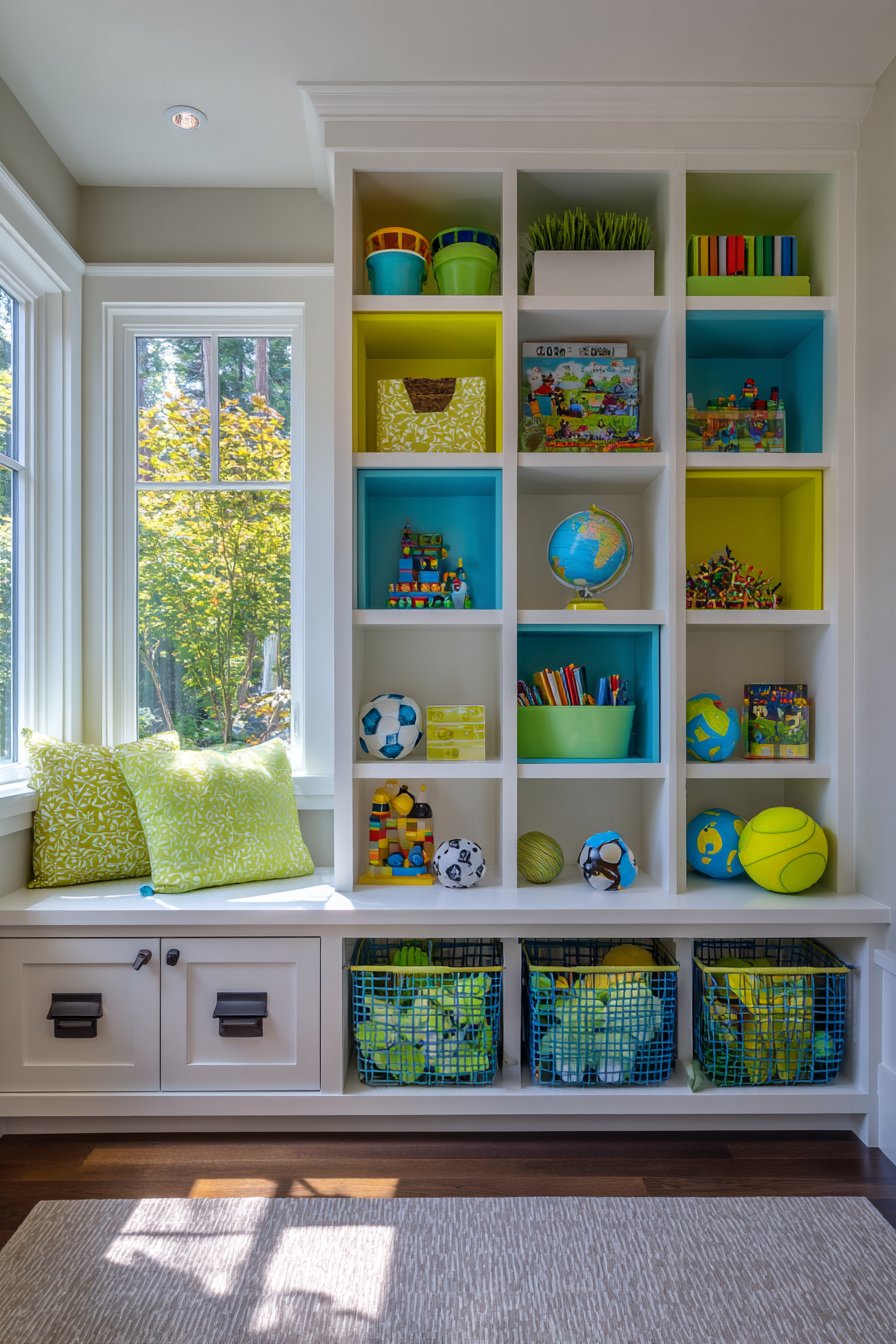
The organizational system balances open display with concealed storage. Some cubes house fabric bins or baskets that slide out easily, containing smaller toys, building blocks, or craft supplies. Other cubes remain open for book display with covers facing forward for easy young-reader selection. Puzzle boxes stack in designated cubes. Larger toys claim their own cube spaces. The system’s accessibility means children can participate in cleanup, building organizational skills and room care responsibility from early ages. The bright colors and clear categorization make the system approachable and even fun rather than punitive chore.
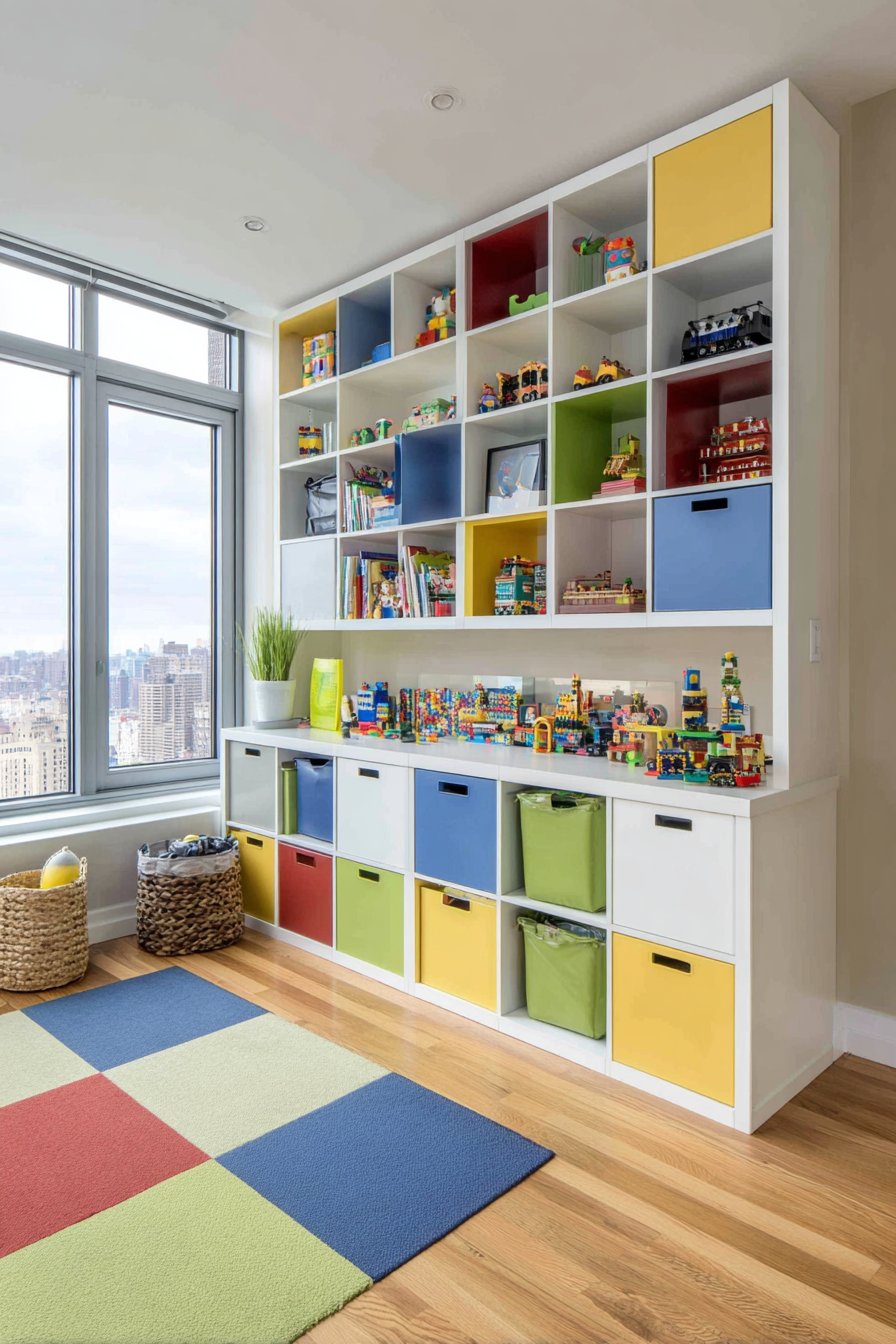
Bright natural light creates cheerful, energetic play environment, while the colorful storage adds to rather than detracts from the vibrant atmosphere. Safety considerations guide every design decision—rounded corners eliminate sharp edges, secure mounting prevents tipping, and finishes use child-safe, non-toxic paints. This approach works wonderfully in dedicated playrooms, in bedroom play zones, or in family room corners designated for children’s activities. The result creates organized space where play can flourish without chaotic clutter overwhelming the environment.
Key Design Tips:
- Position cube shelving with top shelf no higher than 48 inches for elementary-age child access
- Use rounded corners and edges throughout to prevent injury during active play
- Paint with zero-VOC, child-safe paints in colors that coordinate with overall room palette
- Include fabric bins or baskets that are lightweight enough for children to handle independently
- Assign colors or bins to specific toy types to help children learn organizational systems
- Secure units to walls with anti-tip hardware required for furniture in children’s spaces
- Choose washable, durable finishes that will tolerate the inevitable impacts, spills, and wear from daily play
21. Farmhouse Kitchen Chunky White Shelving
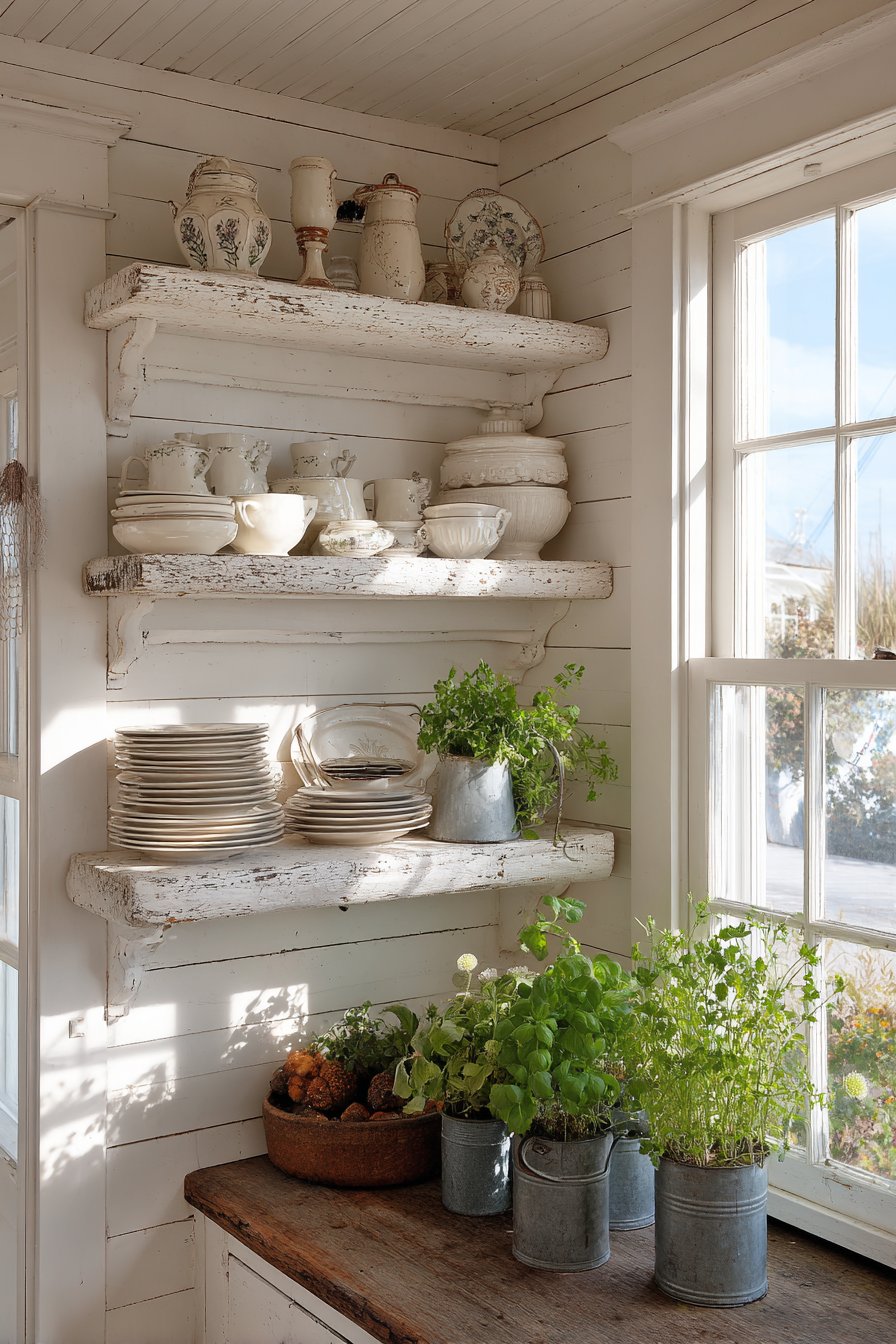
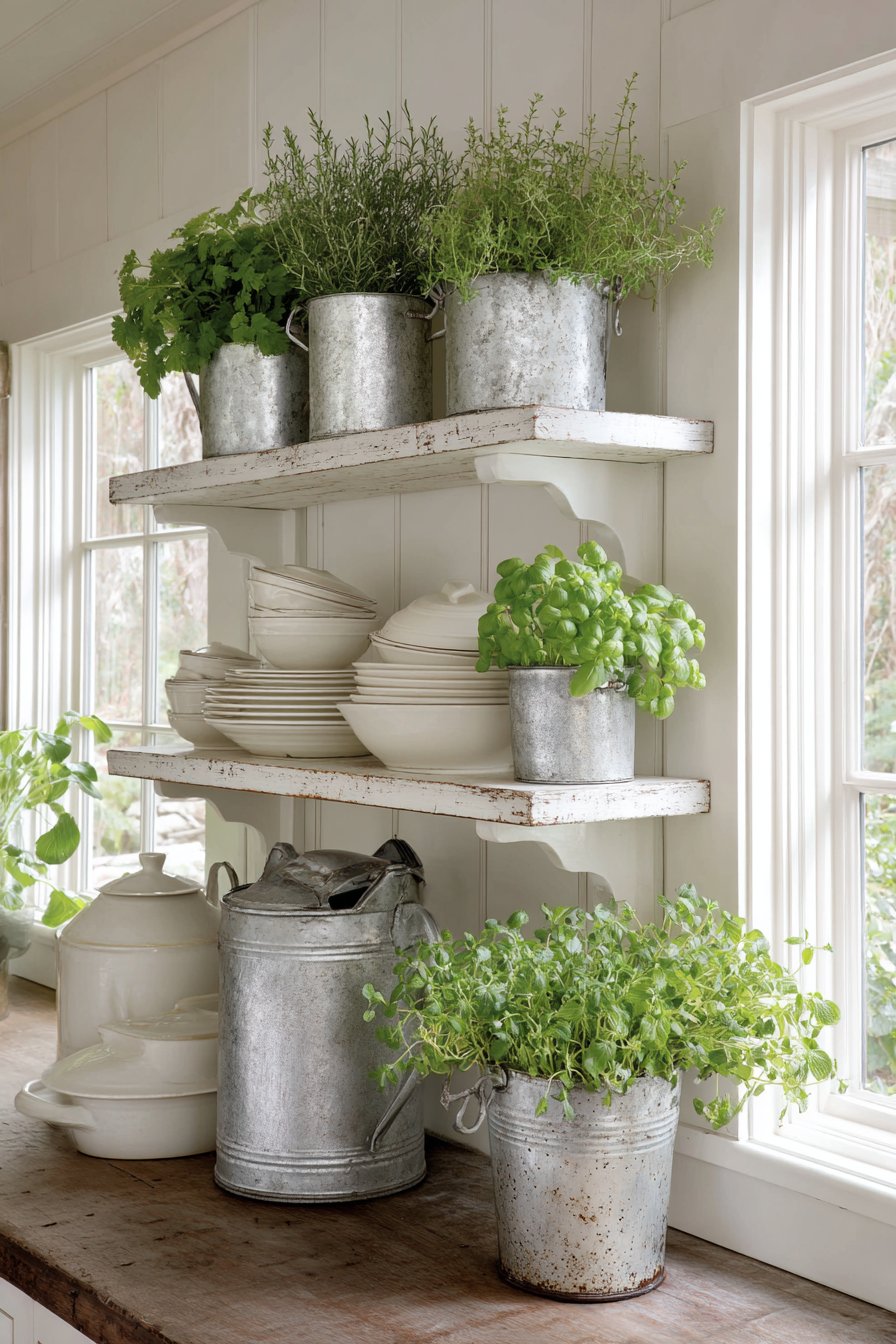
The farmhouse aesthetic celebrates simplicity, functionality, and warm lived-in character, and this kitchen shelf wall idea embodies those qualities through substantial construction and vintage-inspired styling. Chunky wooden floating shelves in distressed white finish create the foundational aesthetic, their robust proportions suggesting furniture pieces rather than mere shelving. The distressing reveals wood beneath the paint in high-wear areas, creating authentic aged character that new pristine white couldn’t replicate. Shiplap walls behind the shelving reinforce the farmhouse vernacular architecture, creating textured backdrop that adds dimensional interest beyond flat drywall.
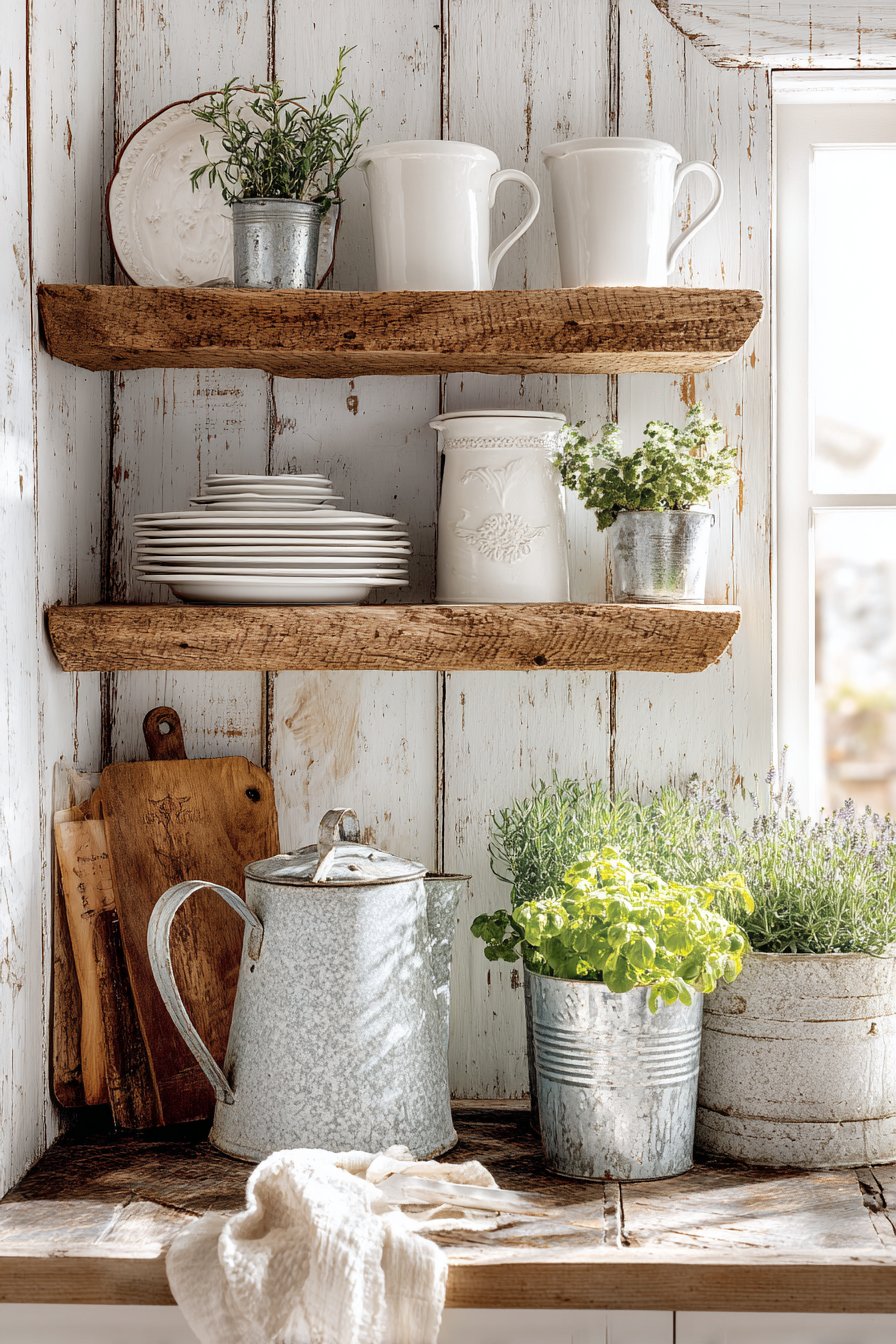
The display focuses on white ironstone dishes, vintage enamelware, and practical kitchen items that work as hard as they look beautiful. White dishes stack simply, their pure color creating clean visual impact against the white shelves and shiplap. Vintage enamelware pieces—perhaps a farmhouse sink basin used for utensil storage or old coffee pots repurposed as vases—introduce nostalgic character. Fresh herbs in galvanized metal containers bring living greenery while providing cooking ingredients. The arrangement feels collected over time through flea market finds and inherited pieces rather than matching set purchased new.
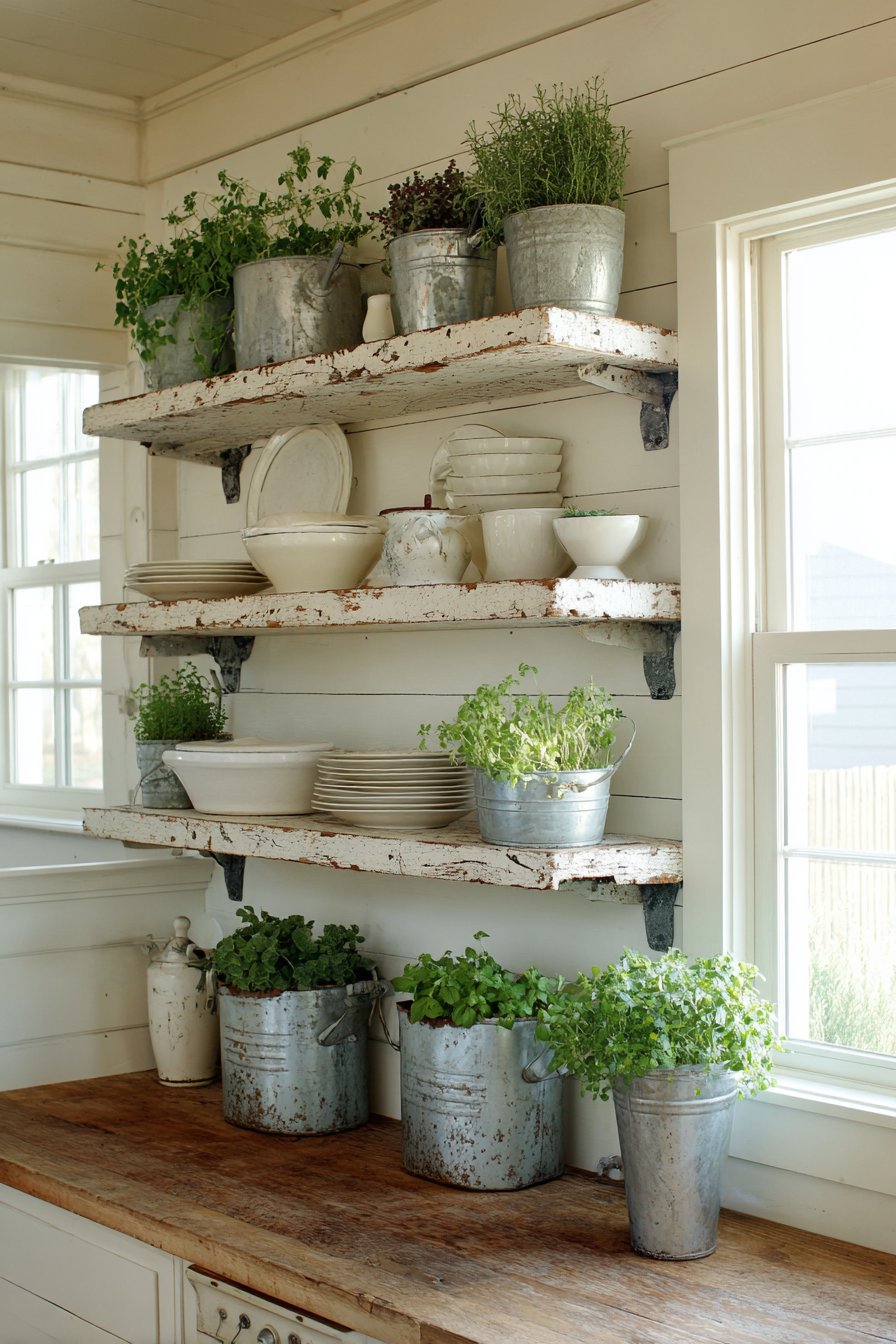
Natural daylight through kitchen windows creates warm, inviting atmosphere essential to farmhouse hospitality traditions. The multiple white layers—shelves, dishes, shiplap—reflect and multiply the light rather than absorbing it, keeping the kitchen bright even with substantial shelving coverage. This approach works beautifully in farmhouse-style kitchens, country cottages, or any space where you’re celebrating traditional craftsmanship and simpler living aesthetics. The result feels welcoming, authentic, and practical—a kitchen designed for actual cooking, baking, and gathering rather than mere display.
Key Design Tips:
- Choose shelves at least 3-4 inches thick for appropriate farmhouse proportion and visual weight
- Distress white paint with sandpaper on edges and high-wear areas for authentic aged appearance
- Space shelves 14-16 inches apart vertically to accommodate white ironstone and serving pieces
- Display white or cream dishware predominantly with occasional vintage color accents for farmhouse authenticity
- Use galvanized metal containers for plants or utensil storage to introduce industrial farmhouse elements
- Install shiplap horizontally at standard 6-8 inch board width for authentic farmhouse wall treatment
- Apply matte or satin finish paint rather than glossy for period-appropriate sheen level
22. Contemporary Glass and Chrome Floating Shelves
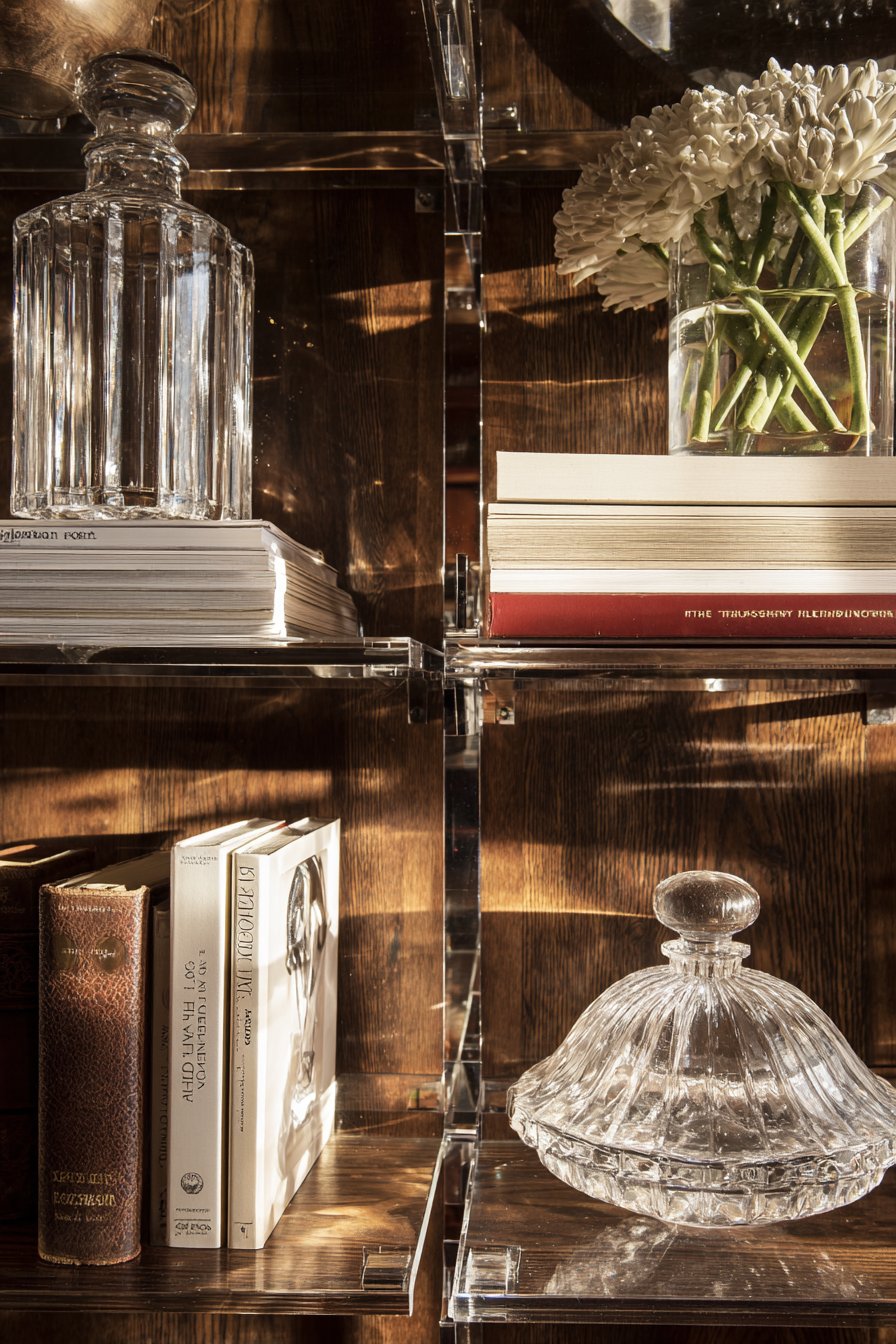
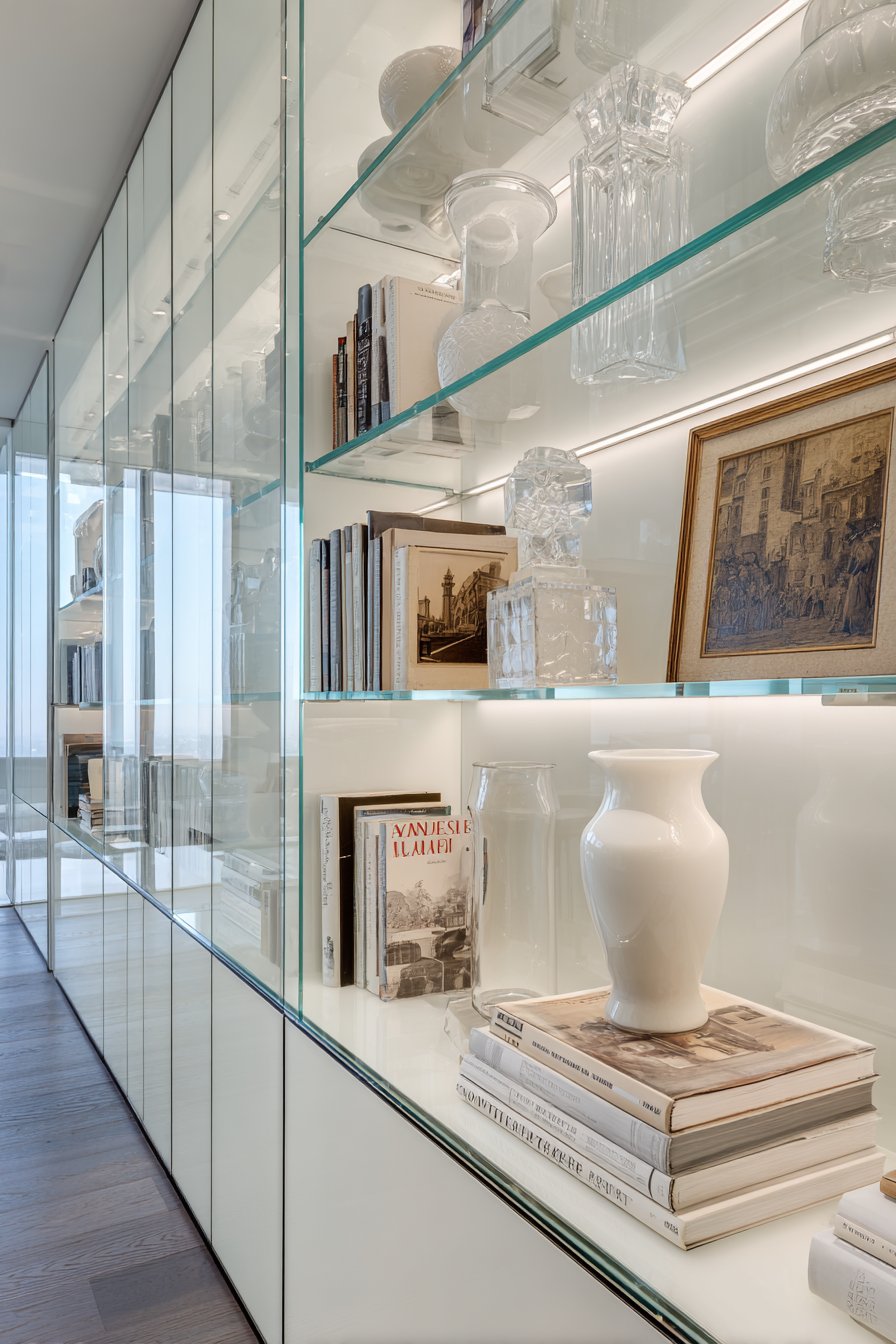
Contemporary design celebrates materials in their purest forms, and this shelf wall idea showcases that philosophy through transparent glass shelves supported by minimalist chrome brackets. The glass shelves create the illusion of objects floating against the wall, maintaining visual openness while providing practical display surfaces. Light passes through the glass, preventing the visual weight solid shelves would introduce. The chrome brackets read as precise technical elements, their thin profiles and reflective finish embodying contemporary design’s love of refined industrial materials. This transparency creates opportunities to display objects as sculptural elements rather than mere possessions.
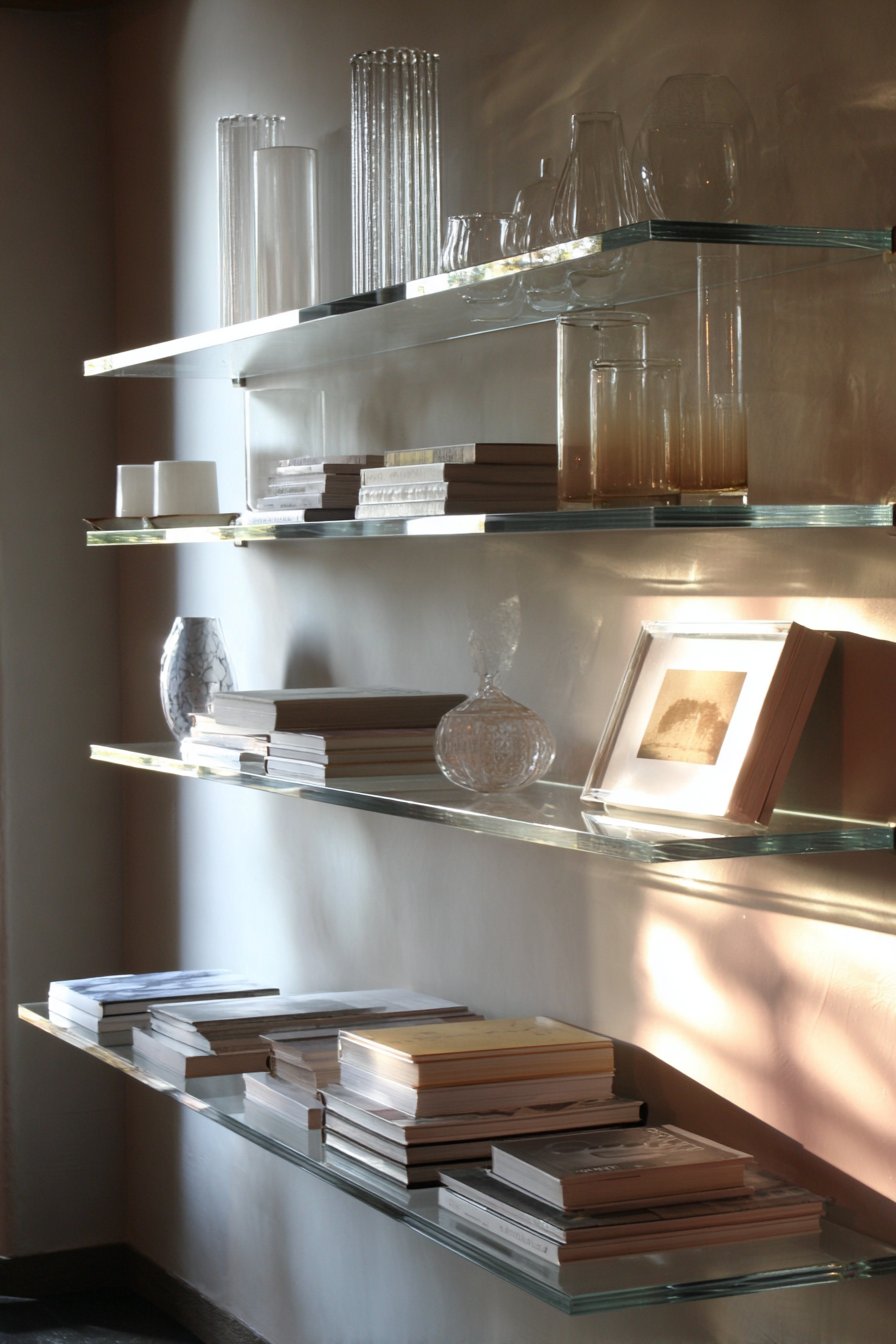
The carefully curated display emphasizes quality over quantity, showcasing art books, crystal vases, and sculptural objects with generous space around each piece. Oversized design and architecture books lay flat, their beautiful covers becoming art in themselves. Clear or colored glass vessels catch and refract light, creating prismatic effects. Small sculptures in metal, stone, or ceramic occupy positions where their forms can be appreciated from multiple angles. The see-through nature allows wall color or texture behind the shelves to remain visible, creating layered visual interest. Each object earns its placement through aesthetic merit or personal significance.
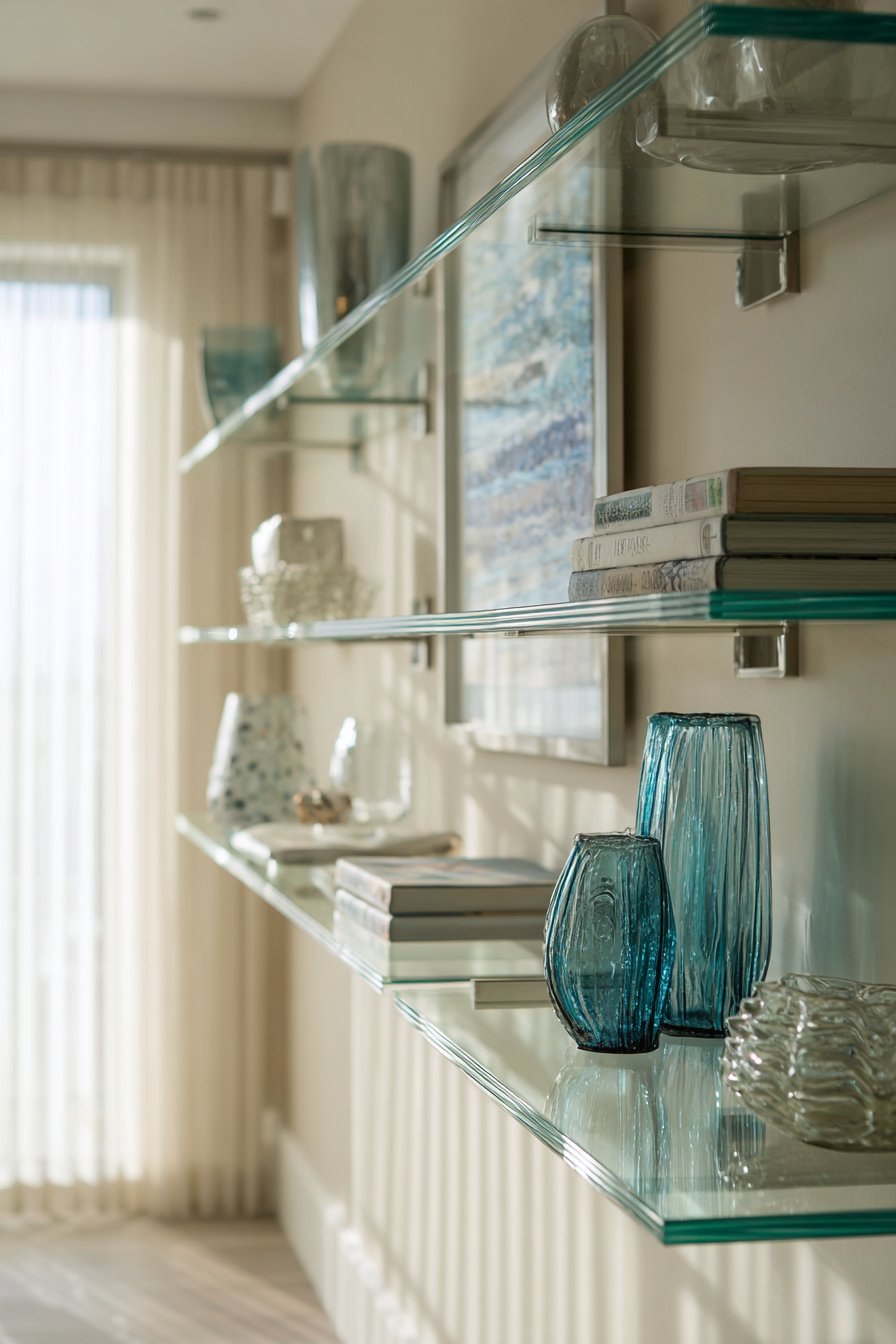
Even ambient lighting becomes crucial, preventing glare on glass surfaces while creating subtle reflections that add visual interest. The chrome brackets catch light, creating linear gleams that emphasize their precise geometry. During daytime, natural light plays through the glass, creating shifting patterns as sun angles change. At night, carefully positioned accent lighting can create dramatic effects, with light passing through glass vessels and highlighting sculptural forms. This approach works wonderfully in modern living rooms, contemporary entryways where first impressions matter, or minimalist office spaces where refined aesthetic supports focused work. The result feels sophisticated, uncluttered, and deliberately composed.
Key Design Tips:
- Specify tempered glass shelves at least 3/8 inch thick for appropriate strength and safety
- Polish all glass edges to prevent sharp surfaces and create professional finished appearance
- Space shelves 16-24 inches apart vertically to provide generous display space for curated objects
- Limit items to 2-4 carefully selected pieces per shelf to maintain contemporary aesthetic and visual breathing room
- Use LED puck lights above or below shelves to create dramatic lighting effects through glass
- Clean glass regularly with streak-free cleaner to maintain transparency and polished appearance
- Position chrome brackets at approximately 18-inch intervals along shelf length for adequate glass support
23. Sophisticated Home Bar Backlit Shelving

Entertainment spaces benefit from dramatic design elements, and this backlit home bar shelf wall idea creates sophisticated display that elevates ordinary glassware and bottles into illuminated gallery. Dark walnut wood shelving provides rich backdrop, the deep chocolate tones creating contrast essential for the lighting to have maximum impact. LED strip lighting integrated behind or below shelves creates ethereal glow, transforming functional storage into architectural feature. Mirror backing behind the shelves doubles the visual impact, reflecting both the illuminated bottles and creating the illusion of greater depth. This layering of light, reflection, and material creates complexity that rewards close inspection.
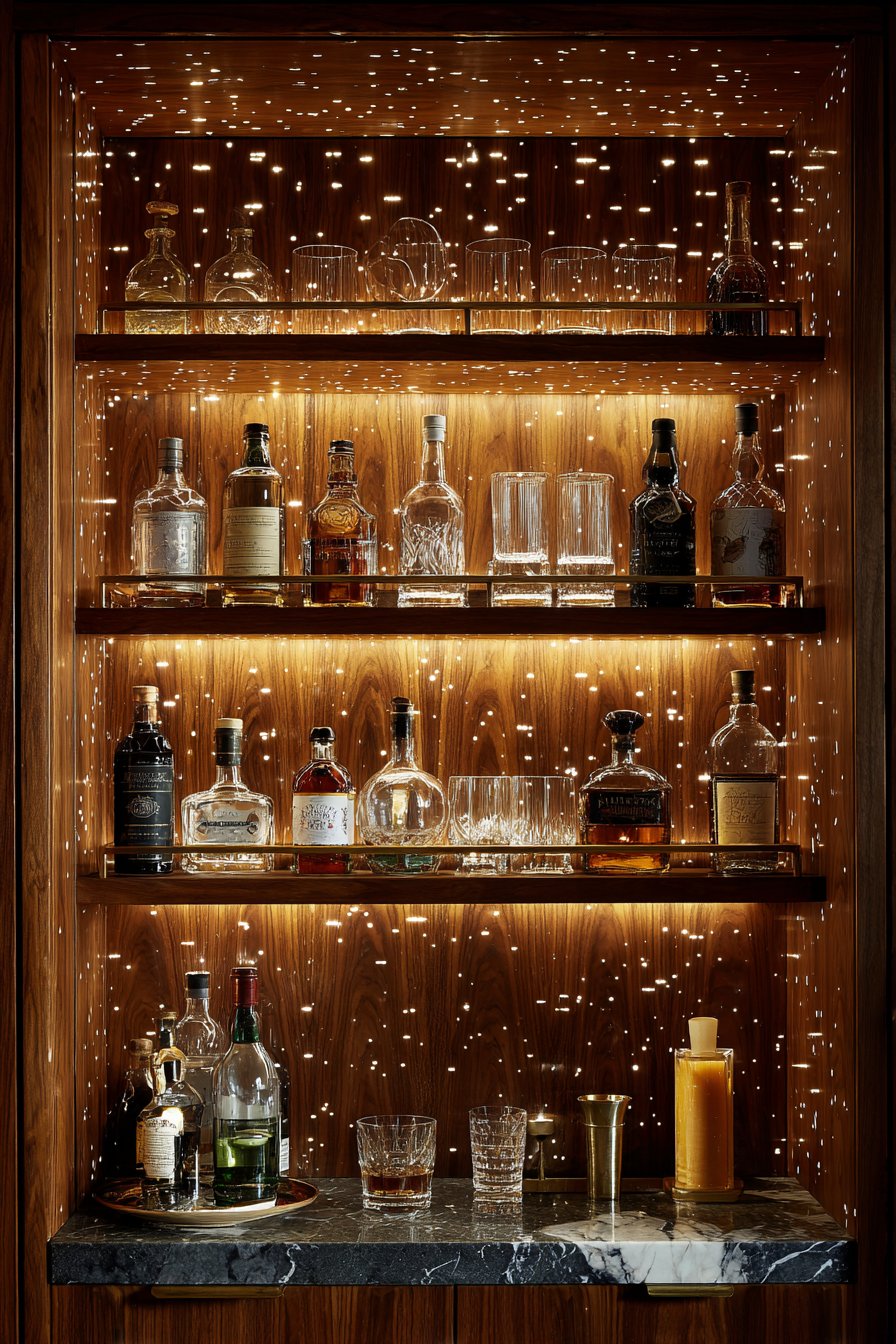
The organizational approach balances aesthetic display with bartending functionality. Glassware arranges by type—martini glasses, rocks glasses, wine stems, beer pilsners—creating visual rhythm through repetition of forms. Spirit bottles organize by category, their varying heights, shapes, and colors creating organic composition when backlit. The lighting reveals the amber of whiskey, the clear purity of vodka, the green of certain liqueurs, transforming bottles into colored glass sculpture. Brass hardware accents on the shelving or nearby bar area pick up the warm light, creating metallic gleams that add luxury.

The dramatic lighting creates ambiance essential for entertainment spaces, transforming the bar area into focal point even when not actively in use. During parties, the illuminated display becomes conversation piece and practical bar station. The sophisticated setup suggests serious cocktail capability while maintaining residential rather than commercial character. This approach works beautifully in dedicated home bars, in wet bar areas of finished basements, or in dining rooms with integrated bar storage. The result elevates home entertaining, creating spaces that feel professionally designed while remaining warmly residential.

Key Design Tips:
- Install dimmable LED strip lighting in warm white (2700-3000K) for flattering illumination and ambiance control
- Use mirror backing behind shelves to double visual impact and create illusion of expanded depth
- Choose dark wood stains (walnut, mahogany, espresso) to maximize contrast with illuminated elements
- Space shelves 12-15 inches apart vertically to accommodate various bottle heights including tall wine bottles
- Include 10-12 inch shelf depth to accommodate glassware and standard spirit bottles (most are 9-10 inches tall)
- Position brass hardware and accents to catch and reflect the shelf lighting for additional metallic gleam
- Organize bottles and glasses with careful attention to creating visual balance across the wall span
24. Functional Craft Room Pegboard and Shelf System
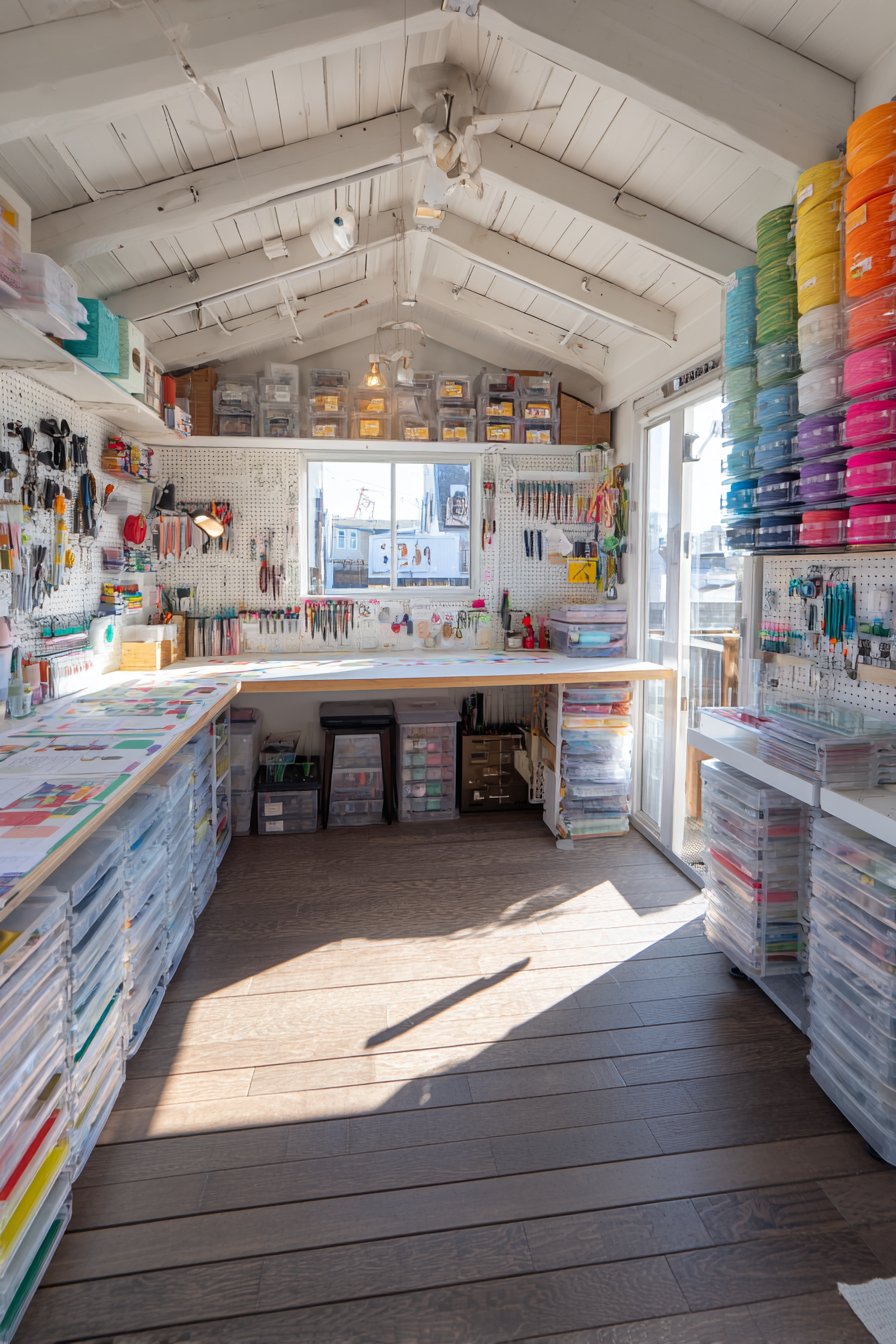
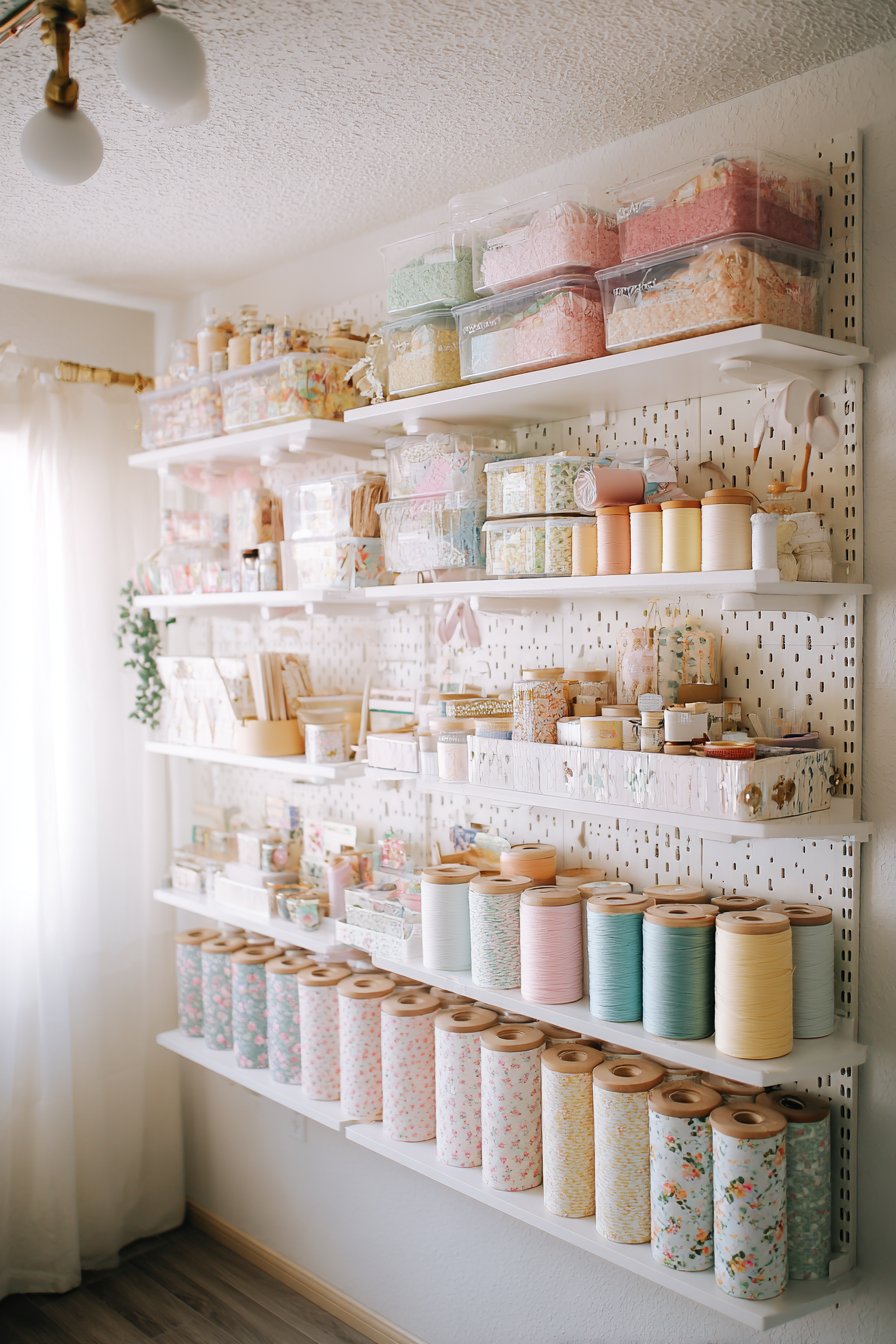
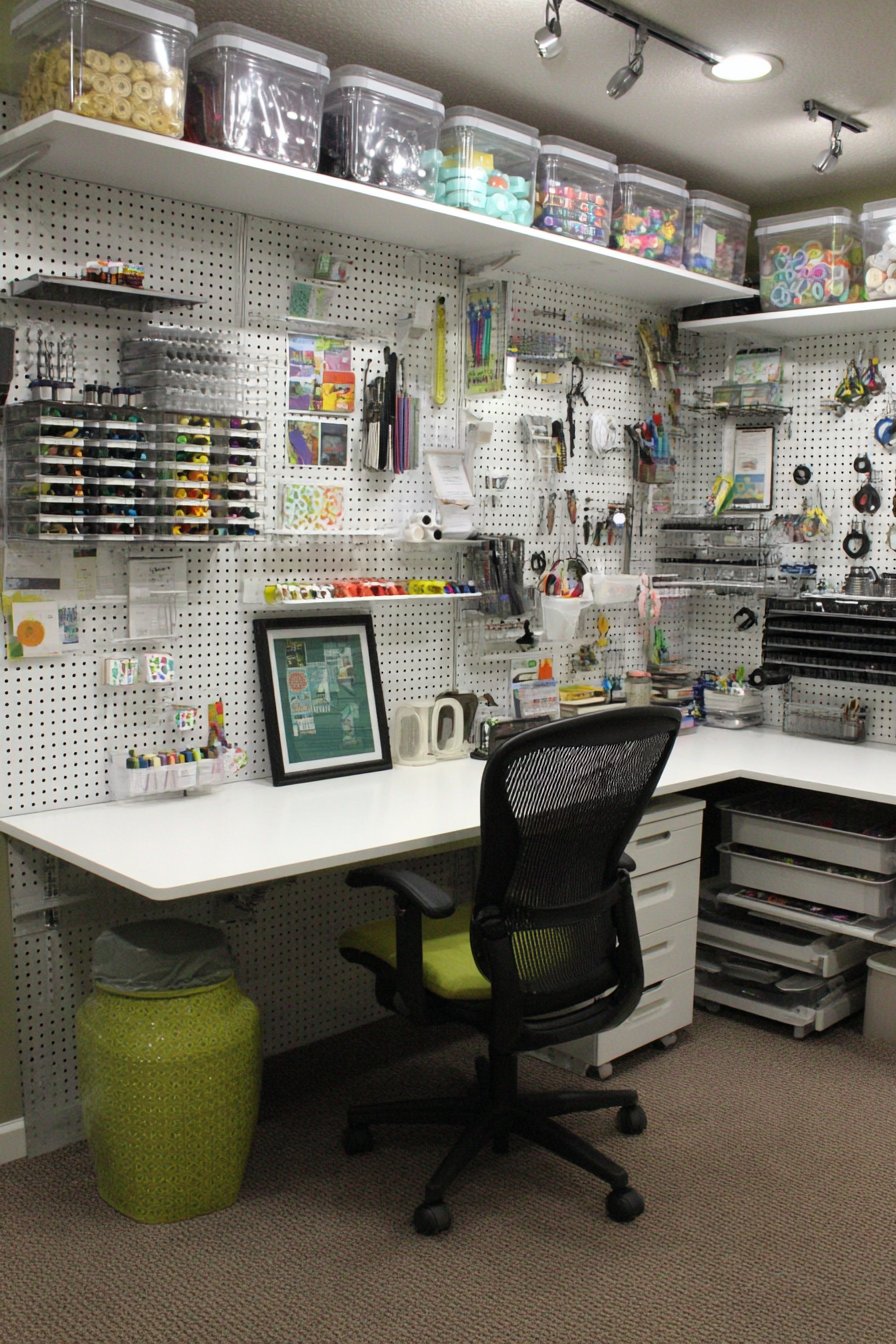
Creative spaces require organizational systems that keep supplies visible and accessible while maintaining order, and this craft room shelf wall idea combines pegboard and adjustable shelving for ultimate flexibility. White painted finish creates bright, clean backdrop that helps colored craft materials stand out visually. The pegboard sections provide vertical tool storage where scissors, rulers, ribbon spools, and small tools hang within immediate reach. Adjacent shelving holds organized craft supplies in clear containers, spools of thread on wall-mounted holders, and bins containing papers, fabrics, or other materials. The adjustable configuration means the system evolves as craft interests and supply needs change.
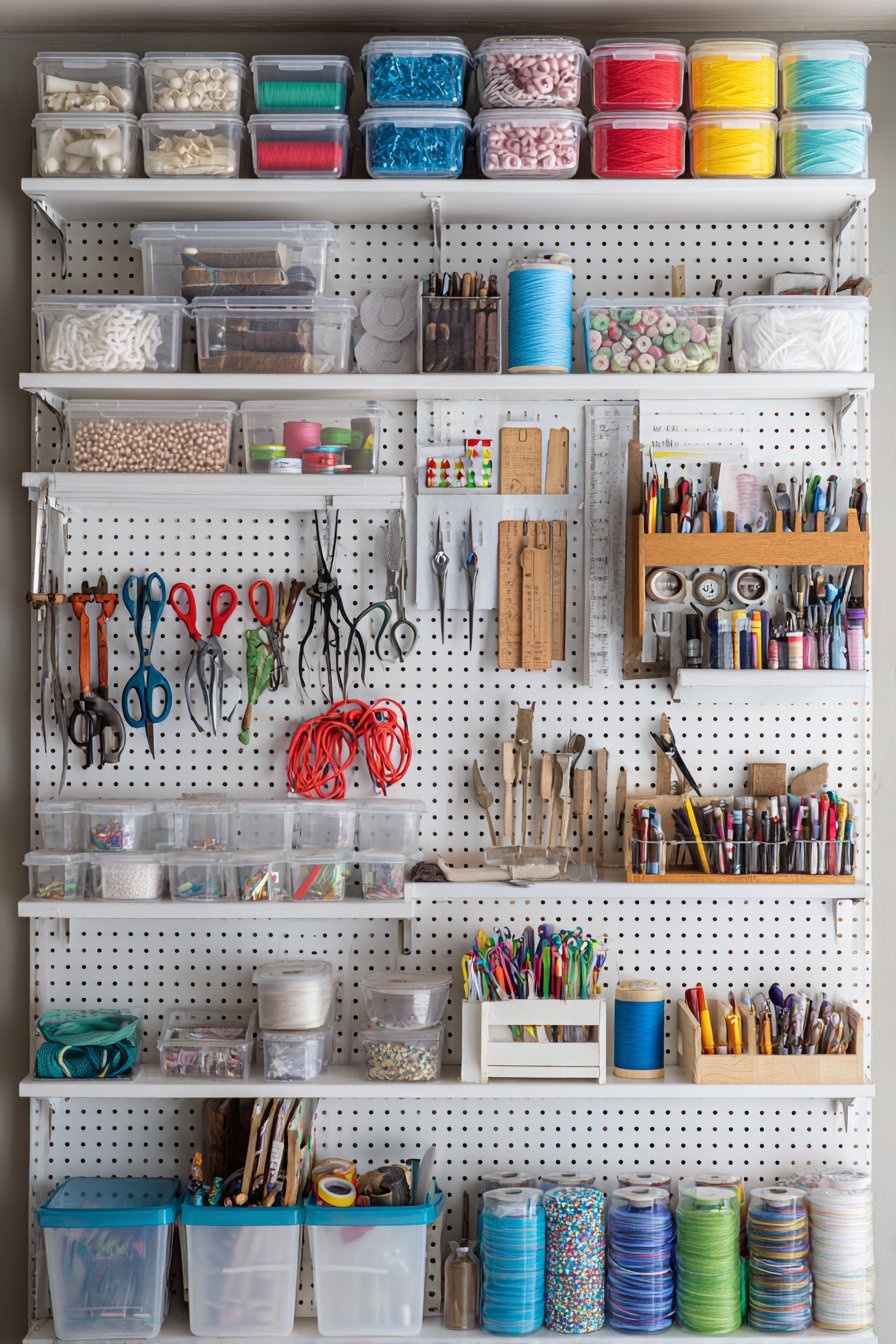
The organizational philosophy prioritizes visibility and accessibility—craft projects often require specific materials, and being able to see everything available sparks creativity while preventing duplicate purchases. Clear containers allow instant visual confirmation of contents without opening each box. Color-coordinated supply storage creates additional visual organization—all blue materials together, all red materials together, or all papers separate from fabrics. The pegboard’s flexibility means tools return to their hung positions, with shadowed outlines or labels marking where each item belongs. This visible system encourages maintaining order because disorganization becomes immediately obvious.
Bright overhead lighting provides excellent task illumination essential for detail work involving small beads, precise cutting, or color matching. The white surfaces maximize light reflection, creating bright environment that reduces eye strain during extended creative sessions. The practical organization means less time searching for supplies and more time actually creating. This approach works wonderfully in dedicated craft rooms, in multipurpose spaces where sewing or crafting shares room with other activities, or in corner workstations carved from larger rooms. The result creates inspiring creative workspace where organization supports rather than constrains artistic expression.
Key Design Tips:
- Install pegboard sections at least 2 feet wide to provide adequate tool hanging space
- Choose clear plastic containers in standardized sizes for visual cohesion and easy stacking
- Space shelves 10-14 inches apart vertically to accommodate various craft supply container heights
- Use white paint on both pegboard and shelving to create bright, cohesive craft room environment
- Include adjustable shelving that can be reconfigured as craft interests and supply needs change
- Organize supplies by color, type, or project to create visual order and easier material location
- Install bright LED overhead lighting (4000-5000K color temperature) for accurate color perception and detail visibility
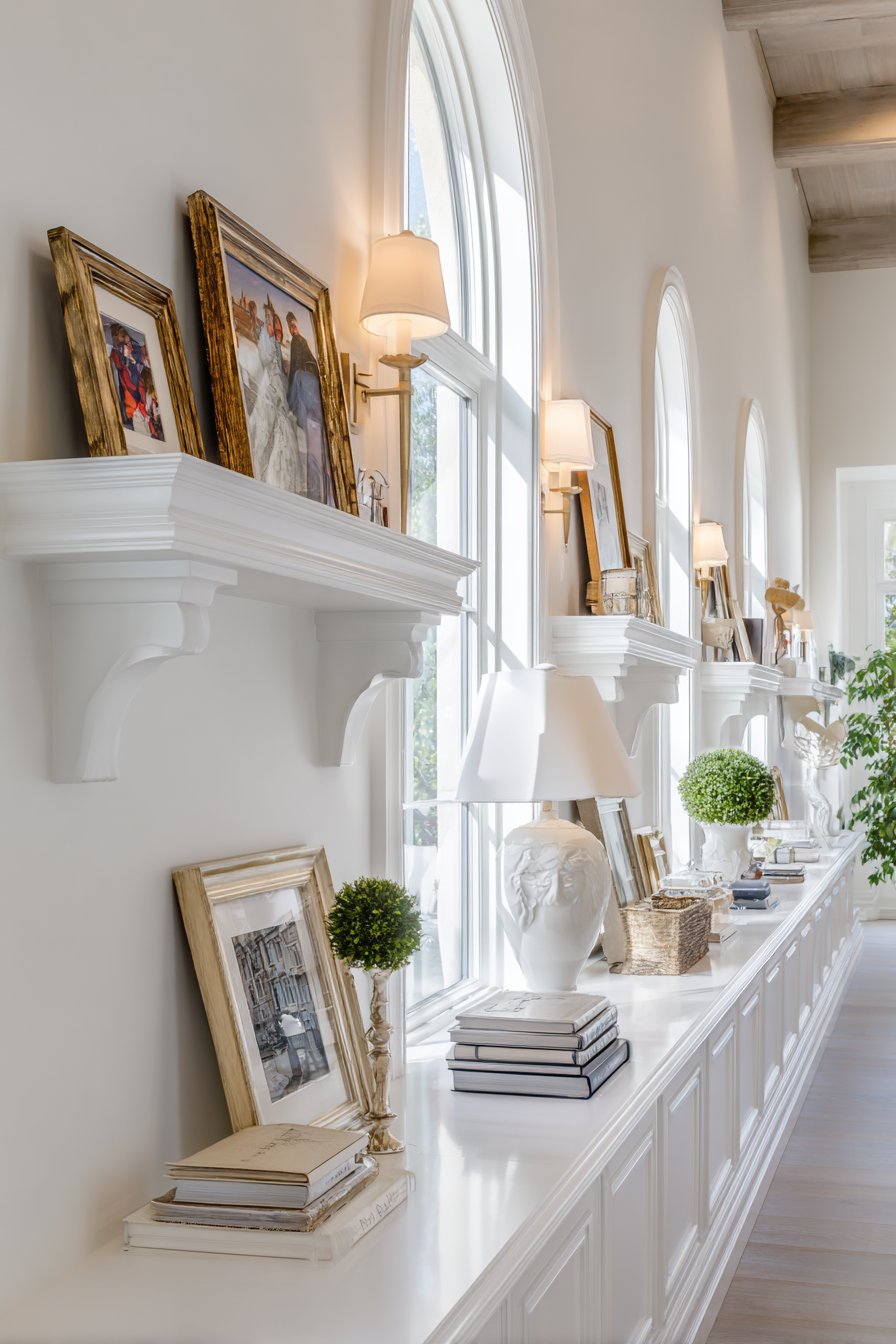
25. Transitional Painted White Shelving with Corbels
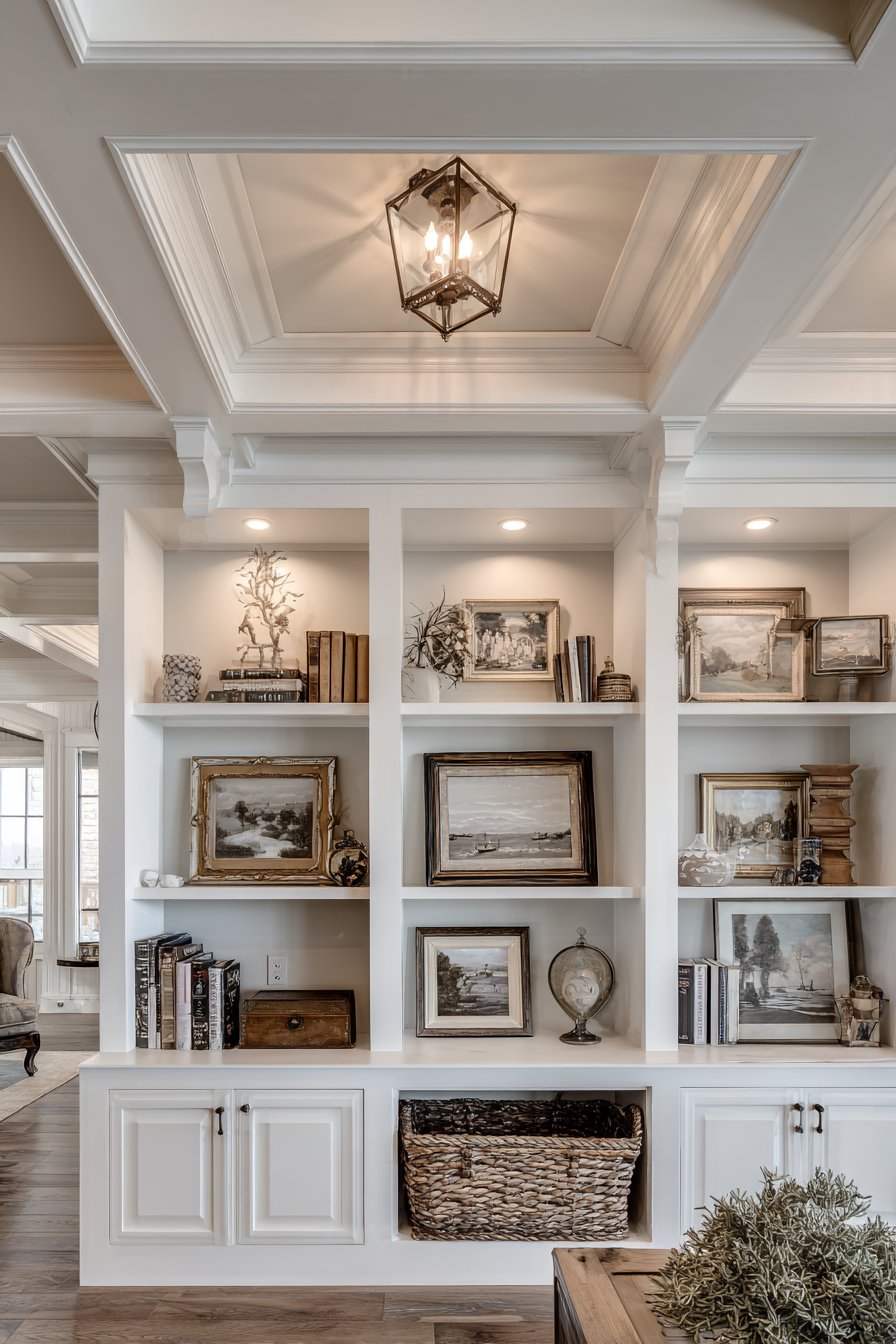
Bridging traditional and contemporary aesthetics requires careful balance, and this shelf wall idea achieves that synthesis through painted white shelving featuring decorative corbel brackets paired with clean horizontal lines. The corbels introduce classical architectural detail, their scrolled or geometric forms adding visual interest beyond simple L-brackets. However, the white paint and simplified forms prevent them from reading as overly ornate or historical, keeping the overall impression fresh rather than costume-like. The horizontal shelf lines create contemporary order while the corbels add traditional craftsmanship detail, resulting in timeless design that works across changing trend cycles.
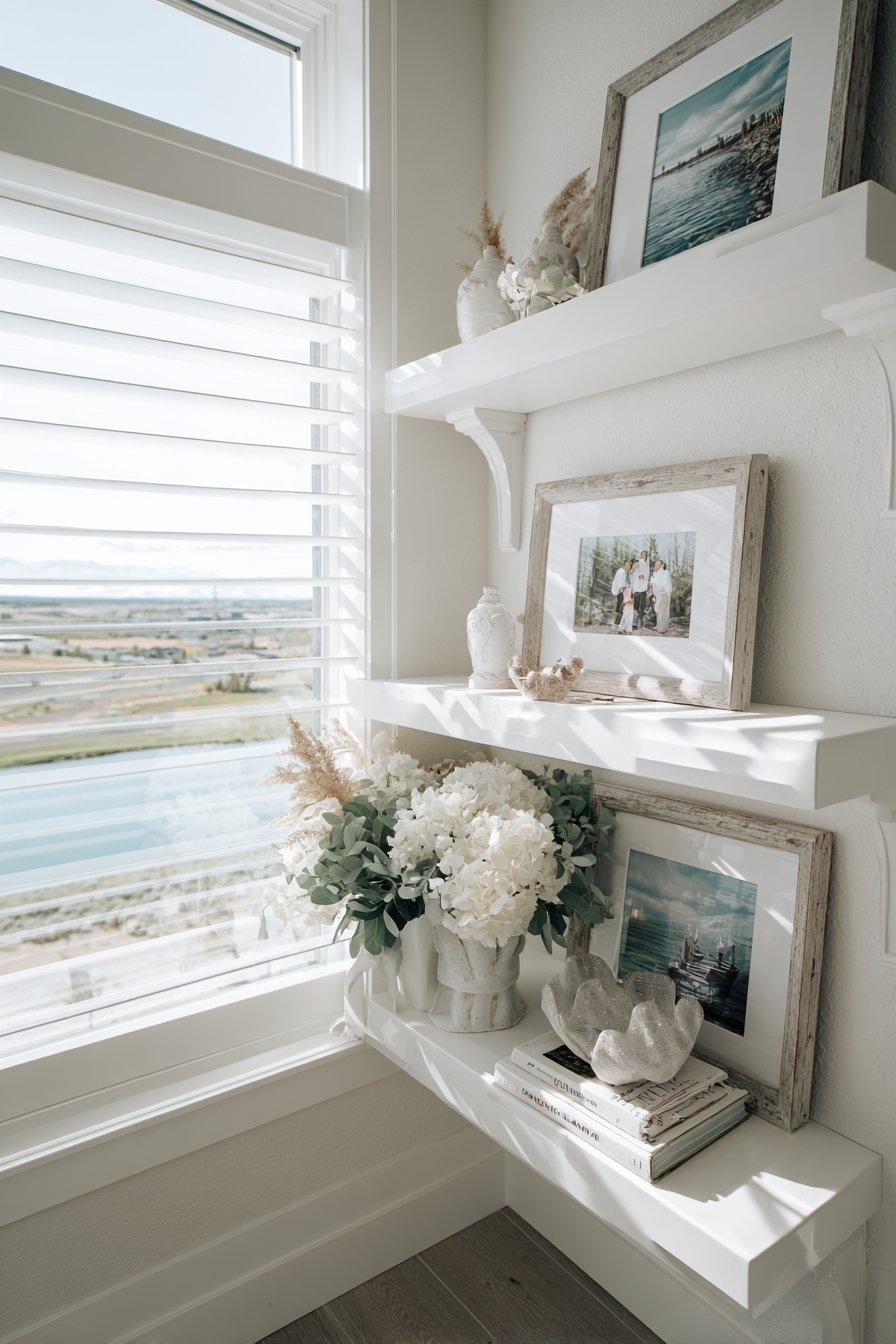
The display balances books, family photographs in classic frames, and tasteful decorative accessories, creating personal gallery that honors both past and present. Hardcover books mix with select paperbacks, arranged with attention to color harmony rather than rainbow organization or strict size ordering. Framed family photographs occupy positions where they’re easily visible and appreciated, their classic metal or wood frames coordinating with the overall color scheme. Decorative accessories—perhaps a small ceramic piece, a collected object, or seasonal element—provide visual variety without clutter. The styling feels neither formally traditional nor starkly modern but comfortable and collected.
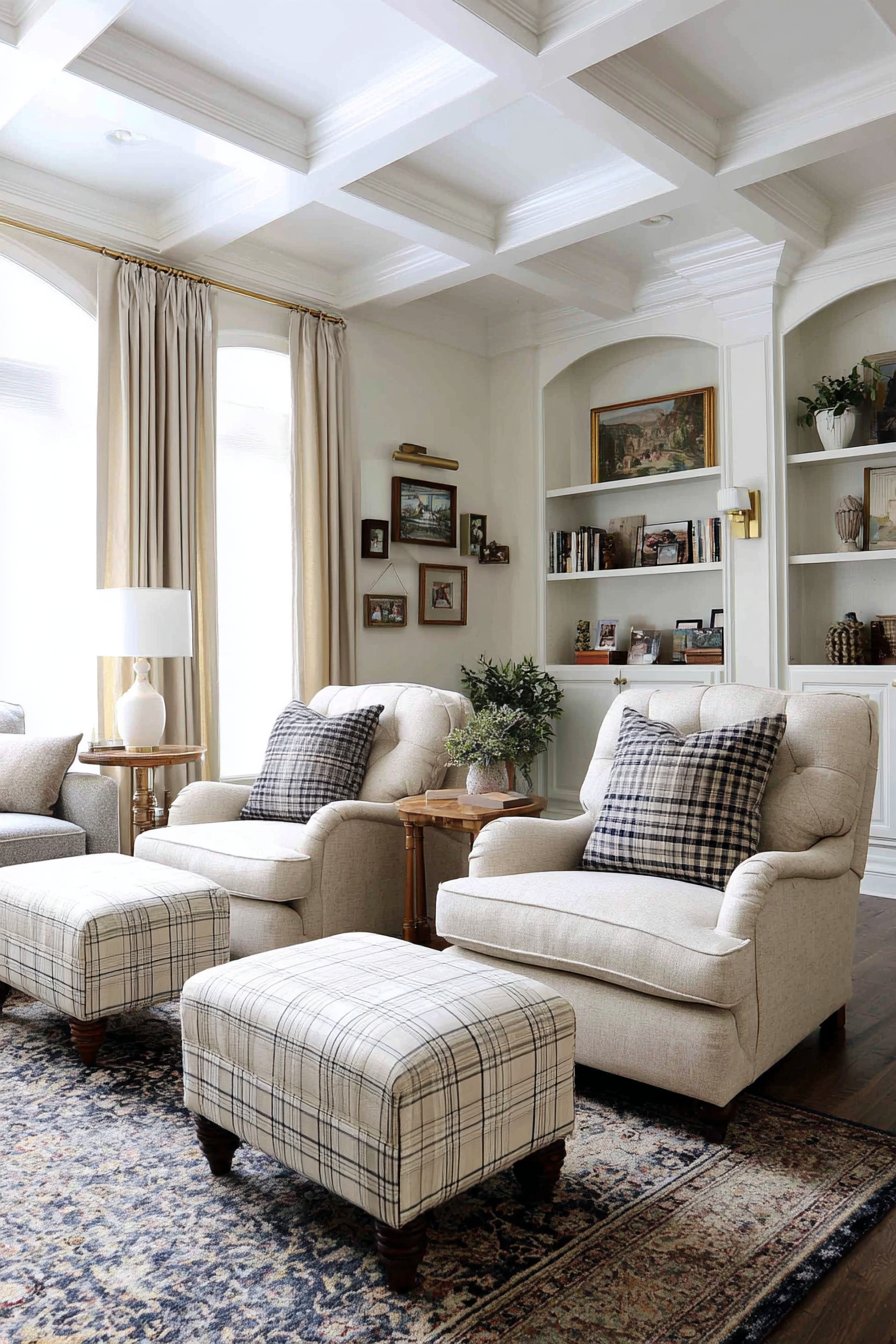
Natural window light combined with picture lighting creates layered illumination that adapts to different times of day and activities. During bright afternoon, natural light suffices. During evening, integrated picture lights or nearby lamps create warm ambiance suitable for reading or relaxing. The white shelving reflects available light, maintaining brightness even in rooms with limited natural illumination. This approach works beautifully in homes with transitional architecture, in spaces where you’re blending inherited traditional furniture with contemporary pieces, or in rooms where you want timeless rather than trendy design. The result feels balanced, welcoming, and enduringly attractive.
Key Design Tips:
- Select corbel brackets with simplified forms that suggest tradition without excessive ornamentation
- Paint both shelves and corbels in matching white or cream for cohesive appearance
- Space corbels 24-32 inches apart along shelf length for structural support and visual rhythm
- Display family photographs in matching or complementary frame styles for visual consistency
- Arrange books with attention to color groupings in 2-3 book clusters rather than strictly by spine color
- Include 2-3 decorative accessories per shelf to add personality without overwhelming the display
- Position shelves using rule of thirds principles for naturally pleasing spatial relationships
- Choose matte or satin paint finish for sophisticated appearance without high-gloss contemporary sheen
Conclusion: Transforming Walls into Functional Art
The twenty-five shelf wall ideas explored throughout this comprehensive guide demonstrate that storage solutions need never sacrifice aesthetic appeal for practicality. From the whimsical cloud shapes in nurseries to the sophisticated backlit displays in home bars, each approach offers unique benefits while addressing specific spatial and functional requirements. The key lies in understanding that shelf walls represent opportunities rather than necessities—chances to express personal style, showcase treasured collections, and create organizational systems that actually work with your lifestyle rather than against it.
Successful shelf wall implementation requires thoughtful consideration of multiple factors: the room’s existing architecture and style, the items you need to store or display, the available natural and artificial lighting, and the overall atmosphere you wish to create. Material choices matter enormously—the warmth of reclaimed wood creates entirely different feelings than industrial metal or contemporary glass. Color decisions impact both the shelving’s visibility and the room’s brightness. Installation quality determines both safety and longevity, particularly crucial for shelves bearing substantial weight or installed in children’s spaces.
As you contemplate incorporating these shelf wall ideas into your own home, remember that the best designs balance aspiration with achievability. Start with clear understanding of your needs and constraints—available wall space, budget parameters, existing furniture and décor, and genuine storage requirements. Draw inspiration from these concepts but adapt them to your specific circumstances rather than attempting exact replication. The most successful shelf walls feel integrated into their spaces, as if they’ve always belonged there, supporting daily life while elevating the environment. Whether you’re organizing a compact apartment kitchen, creating a dramatic living room focal point, or transforming a child’s playroom into an organized haven, the right shelf wall solution awaits—one that combines beauty, function, and enduring appeal in perfect proportion to your unique needs and vision.
