
The walls of our homes are blank canvases waiting to be transformed into expressions of creativity, personality, and joy. While mass-produced artwork and vinyl decals certainly have their place, there’s something uniquely magical about hand-painted wall art that brings warmth and character to any space. Cute wall painting ideas offer an opportunity to infuse rooms—especially children’s spaces—with personalized charm that reflects individual tastes while creating environments that inspire imagination and comfort. From whimsical woodland creatures to dreamy celestial scenes, the possibilities for adorable wall paintings are as limitless as your creativity.
In an era where authenticity and personalization are increasingly valued in interior design, hand-painted walls have emerged as a beloved trend that bridges the gap between professional artistry and accessible DIY projects. Whether you’re preparing a nursery for a new arrival, refreshing a playroom to spark creativity, or simply seeking to add a touch of playful elegance to your home, cute wall painting ideas provide solutions that are both visually stunning and emotionally resonant. The beauty of these designs lies not only in their aesthetic appeal but also in their ability to grow with your family, serving as cherished backdrops for countless memories.
This comprehensive guide explores twenty-seven distinct approaches to cute wall painting ideas, ranging from serene watercolor landscapes to interactive educational designs. Each concept has been carefully curated to demonstrate the versatility of hand-painted walls while providing practical inspiration for homeowners, parents, and design enthusiasts. Whether you prefer minimalist modern aesthetics, vintage charm, or vibrant playful scenes, you’ll discover ideas that resonate with your style and space requirements. Let’s embark on this creative journey and explore how these delightful wall painting concepts can transform ordinary rooms into extraordinary sanctuaries.
1. Serene Watercolor Mountain Nursery
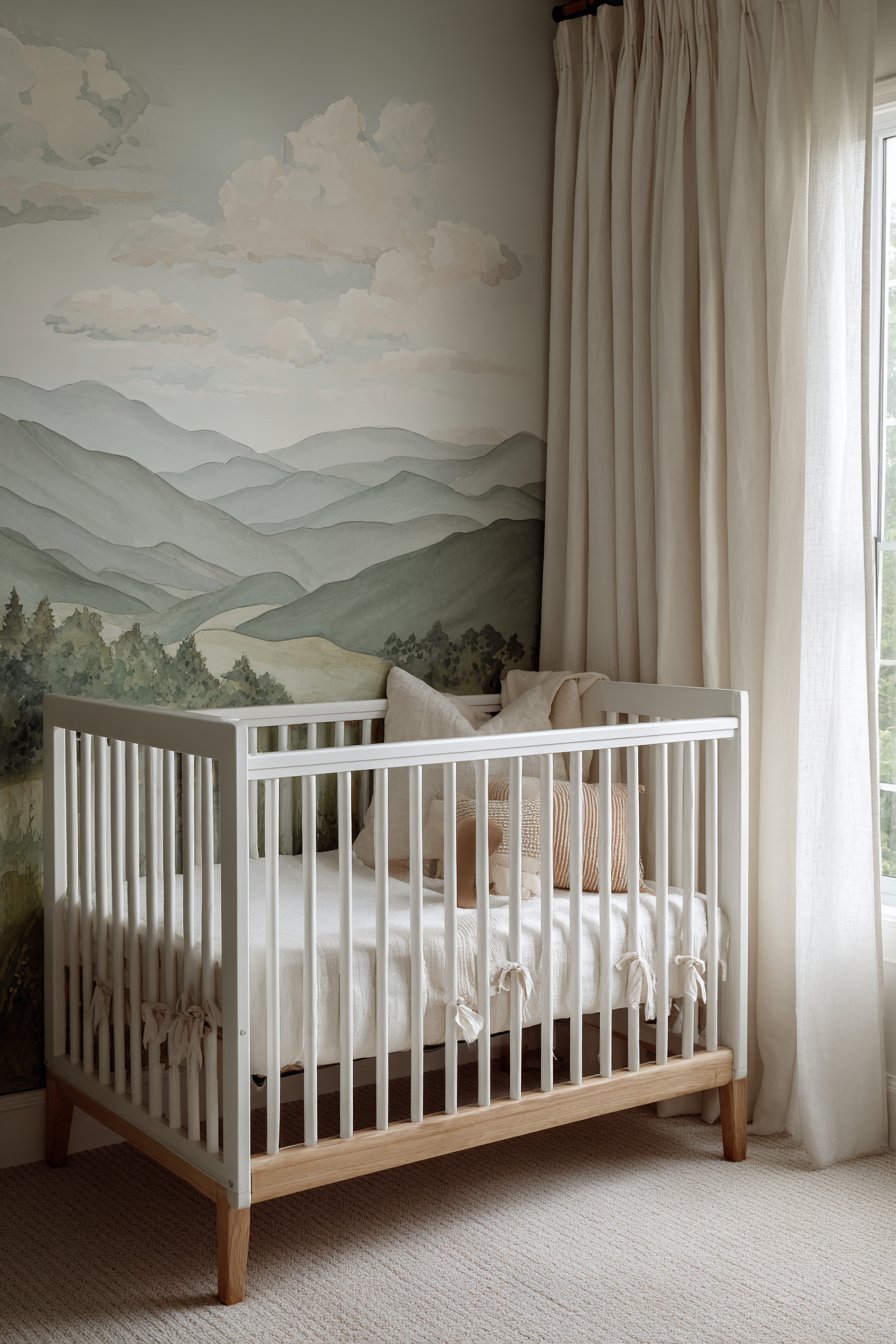
Soft, dreamy watercolor mountains create an atmosphere of tranquility that’s perfect for a nursery environment. This cute wall painting idea features gentle mountain landscapes rendered in sage green, dusty rose, and cream tones, with delicate brushstrokes that give the mural an ethereal, almost floating quality. The hand-painted design serves as a serene backdrop behind a white wooden crib, establishing a peaceful foundation for restful sleep and quiet moments. The beauty of watercolor-style wall paintings lies in their ability to introduce color and interest without overwhelming the senses—ideal for creating a calming environment for infants and young children.
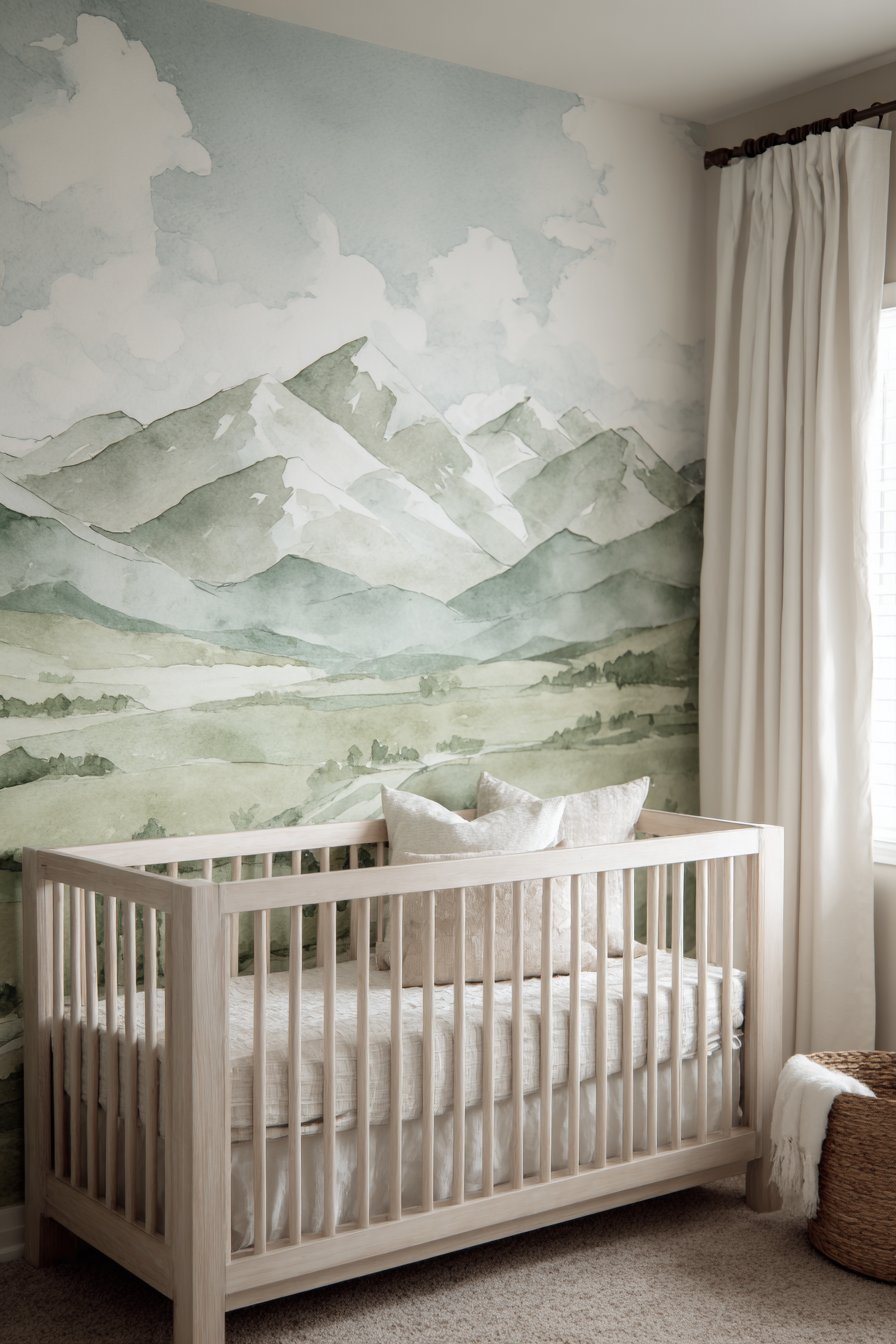
The subtle color transitions within this design demonstrate the sophistication that hand-painted murals can achieve. Unlike stark, digitally-produced designs, the watercolor technique allows colors to blend organically, creating depth and movement that feels alive yet soothing. Natural morning light filtering through sheer curtains enhances these subtle variations, making the painting appear to change throughout the day as light conditions shift. This dynamic quality ensures the nursery never feels static or boring, even as children spend countless hours in the space.
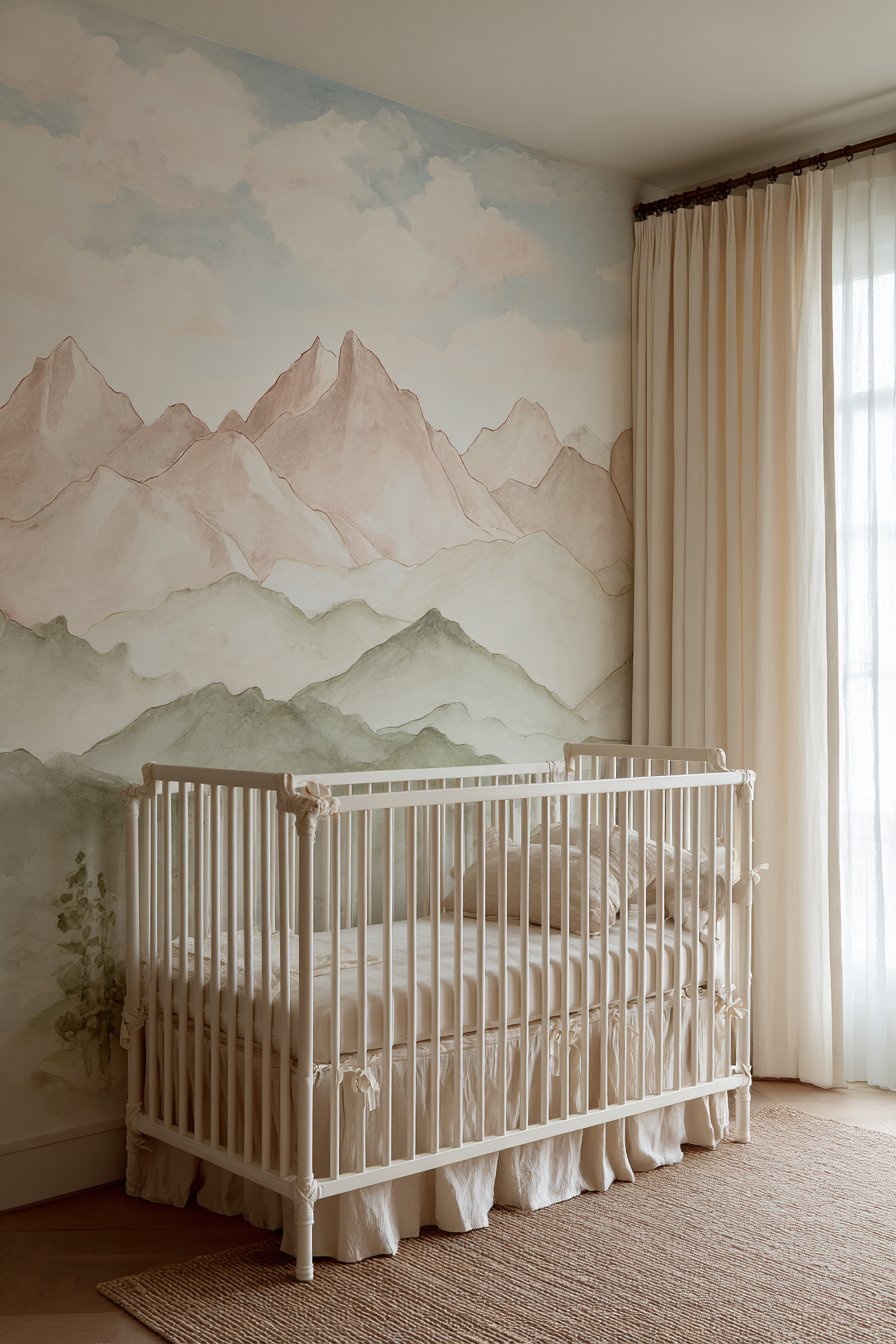
When implementing this cute wall painting idea, consider the placement carefully to maximize its impact. Positioning the mural on the wall behind the crib creates a focal point that draws the eye without requiring additional wall decorations that might overstimulate young children. The muted color palette also provides excellent versatility for coordinating with bedding, curtains, and other nursery accessories, allowing you to refresh the room’s look over time without needing to repaint.
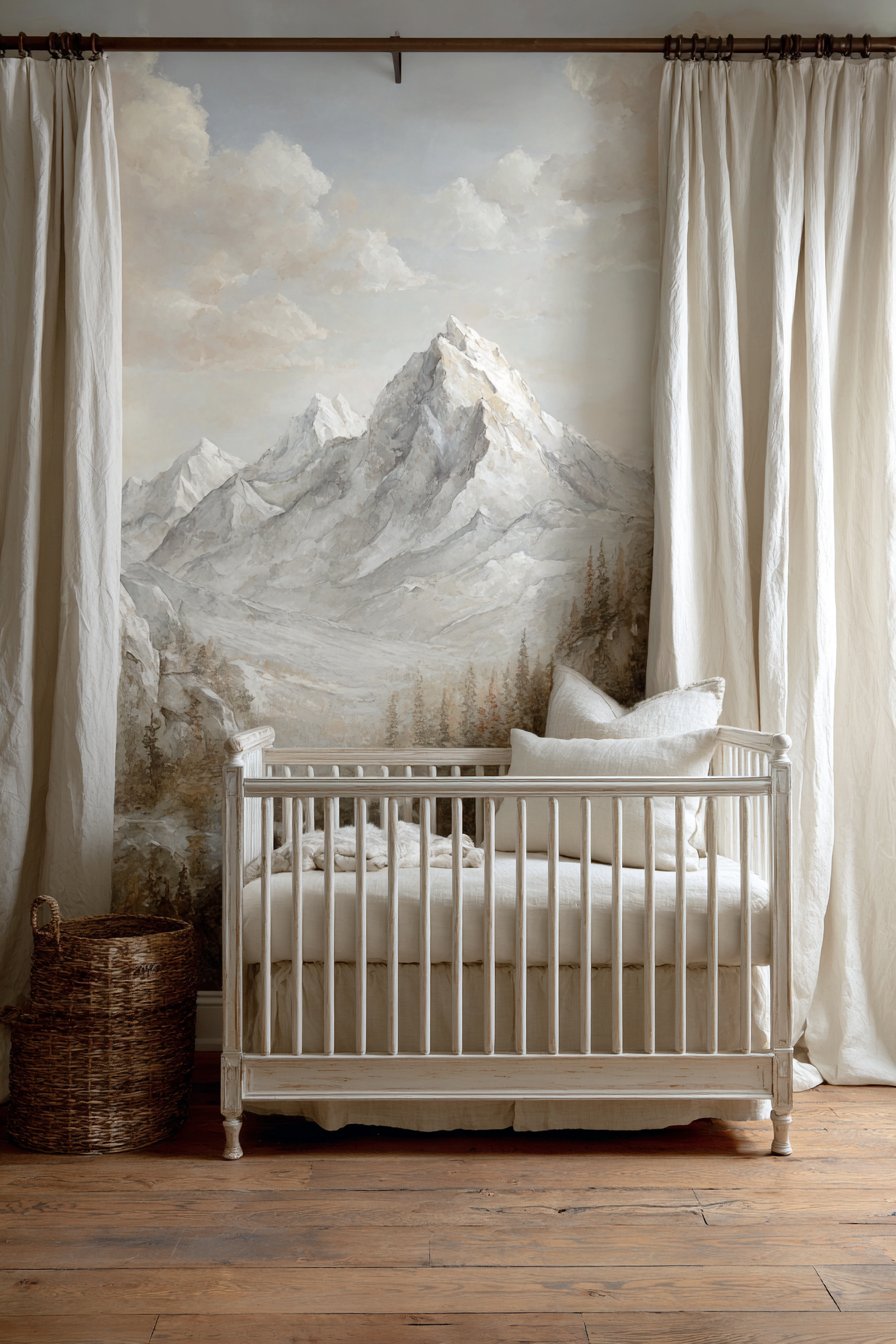
Key Design Tips: Start with a light pencil sketch to map out mountain shapes before painting. Use a large, soft brush to apply diluted acrylic paints in layers, allowing each layer to dry before adding the next for authentic watercolor effects. Blend colors while still wet for seamless transitions. Keep the design simple with 3-5 mountain peaks to avoid visual clutter. Seal the finished mural with a matte varnish to protect against moisture and make cleaning easier. Consider extending subtle cloud details across adjacent walls to create a cohesive, immersive environment.
2. Cheerful Tree with Woodland Friends
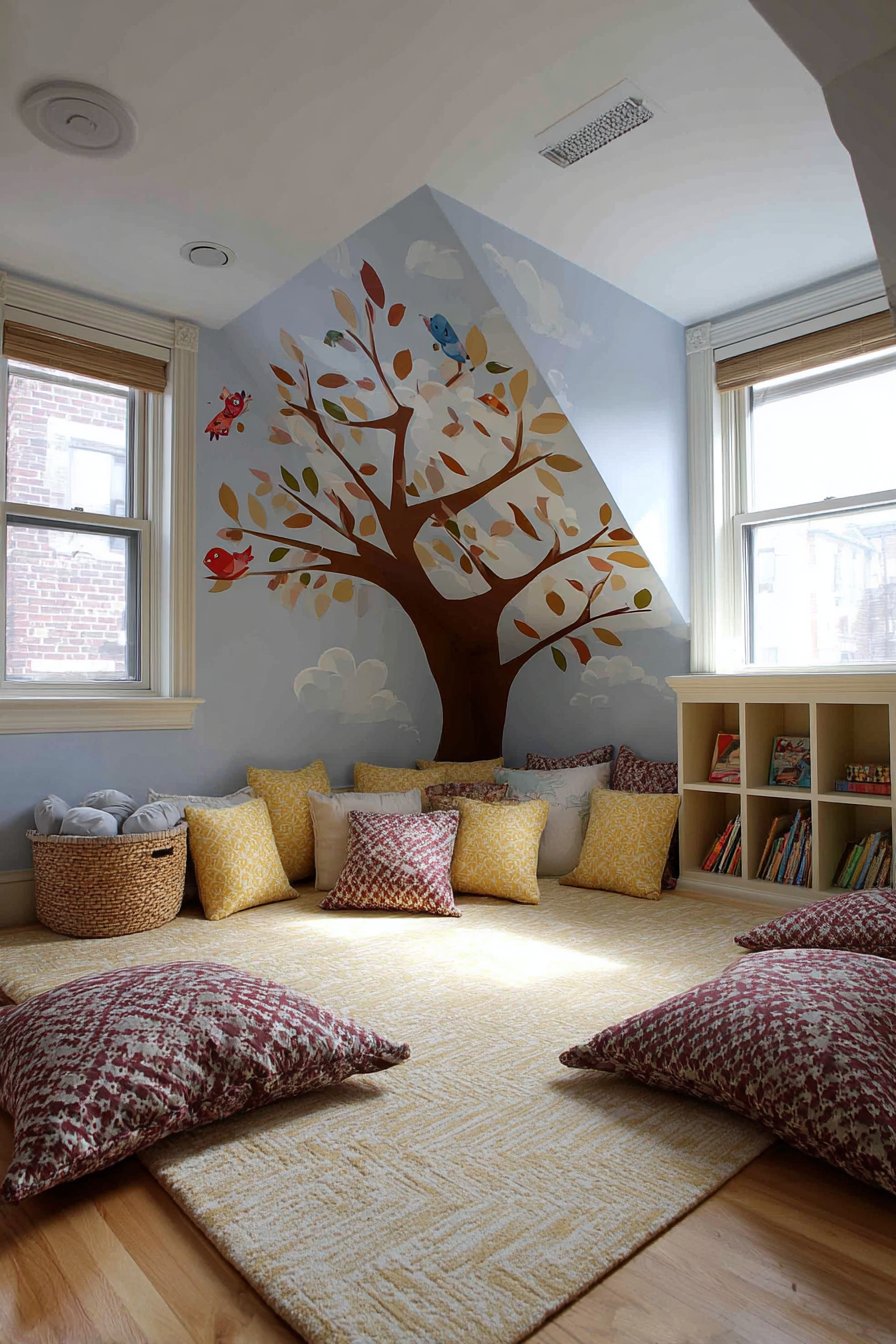
A playroom comes alive with a cheerful hand-painted tree that stretches its friendly, rounded branches across an entire wall. This cute wall painting idea combines warm brown tones for the trunk and branches with colorful accents of painted birds, butterflies, and perhaps a friendly owl or squirrel perched among the foliage. The painted grass details anchoring the bottom of the tree help ground the design and create a sense of place, transforming an ordinary wall into a whimsical woodland scene that encourages imaginative play.
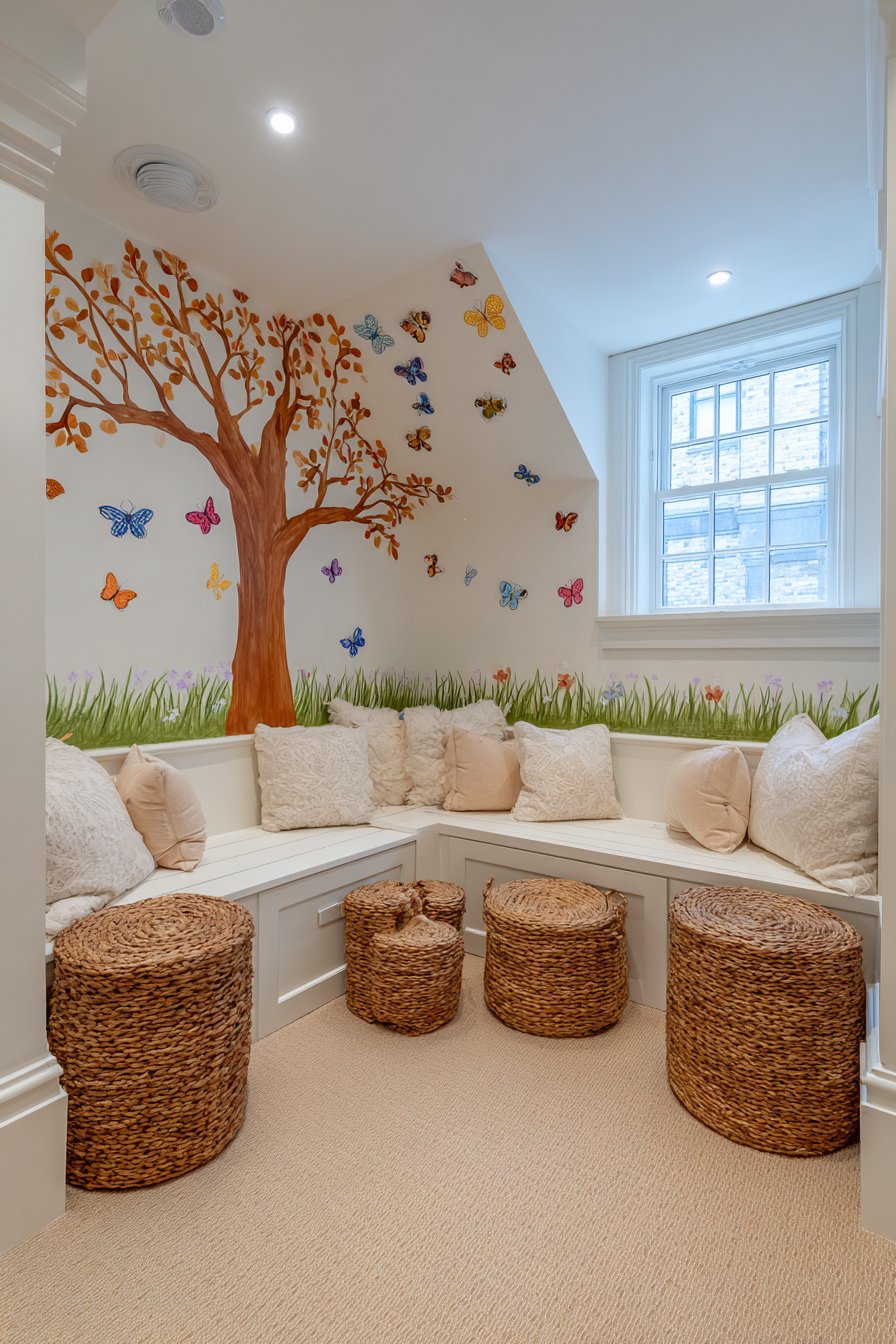
The genius of this design lies in its interactive potential. Children can easily imagine themselves climbing the painted branches, hiding behind the trunk, or befriending the various creatures that inhabit this hand-painted tree. As a backdrop for a cozy play area with soft floor cushions and woven storage baskets, the tree creates a natural gathering spot where children feel sheltered and comfortable. The organic shapes and friendly aesthetic appeal to a wide age range, making this a long-lasting cute wall painting idea that won’t need updating as quickly as more age-specific designs.
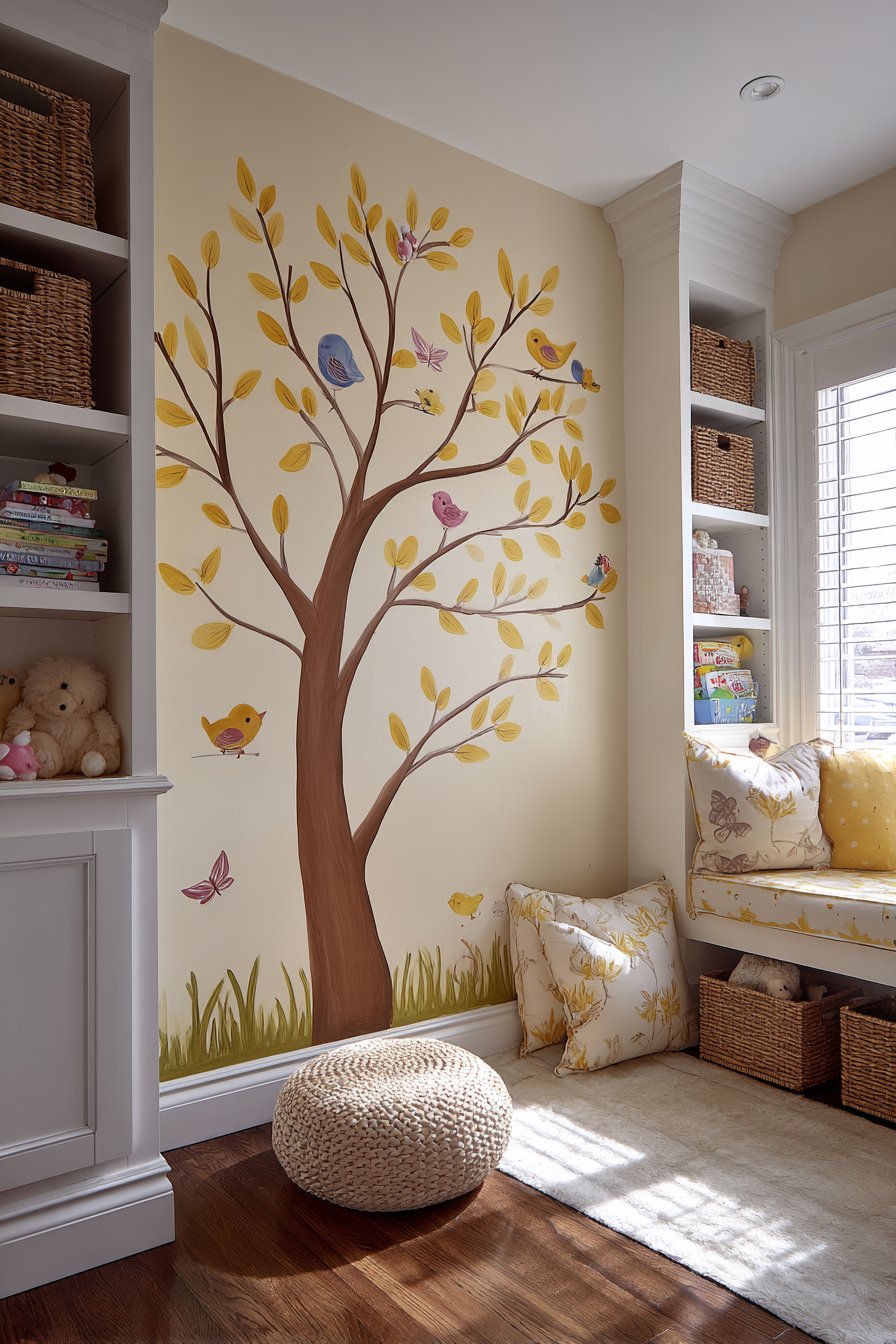
Wide-angle interior photography captures how effectively this mural transforms the entire room’s atmosphere. Natural daylight emphasizes the whimsical details—the texture of painted bark, the delicate wings of butterflies, the individual leaves that seem to dance in an invisible breeze. These small touches make the difference between a simple painted tree and a truly captivating piece of functional art that becomes a beloved feature of childhood memories.
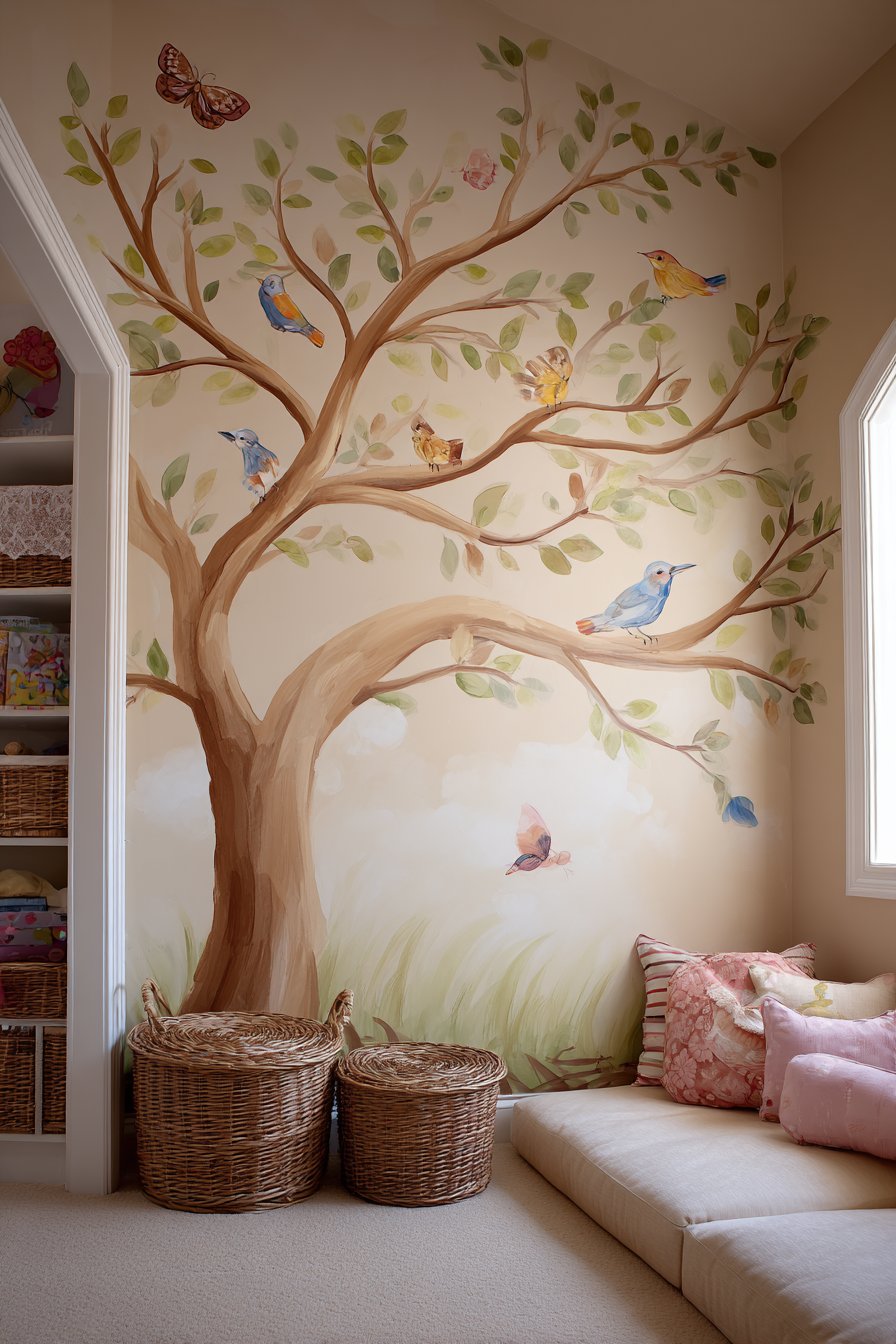
Key Design Tips: Use a projector to trace the basic tree outline for accurate proportions and balanced branch placement. Paint the trunk and major branches first in darker browns, then add lighter brown highlights to create dimension and texture. Add leaves in clusters rather than individually for a more natural appearance and faster completion. Include animals at varying heights to create visual interest throughout the vertical space. Use non-toxic, washable acrylic paints specifically formulated for children’s spaces. Consider painting some branches extending onto the ceiling for enhanced immersion.
3. Enchanting Rainbow Hills Landscape
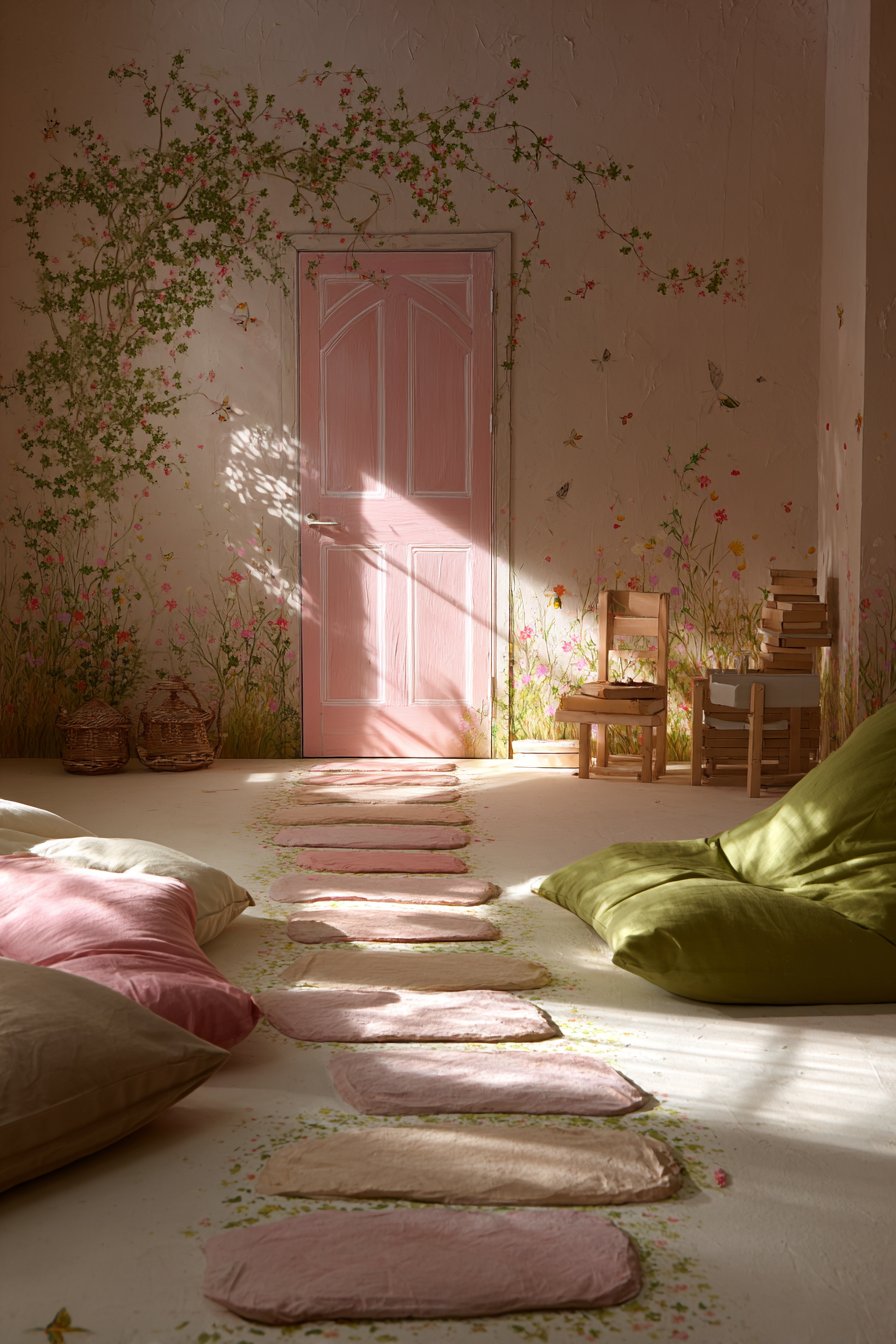
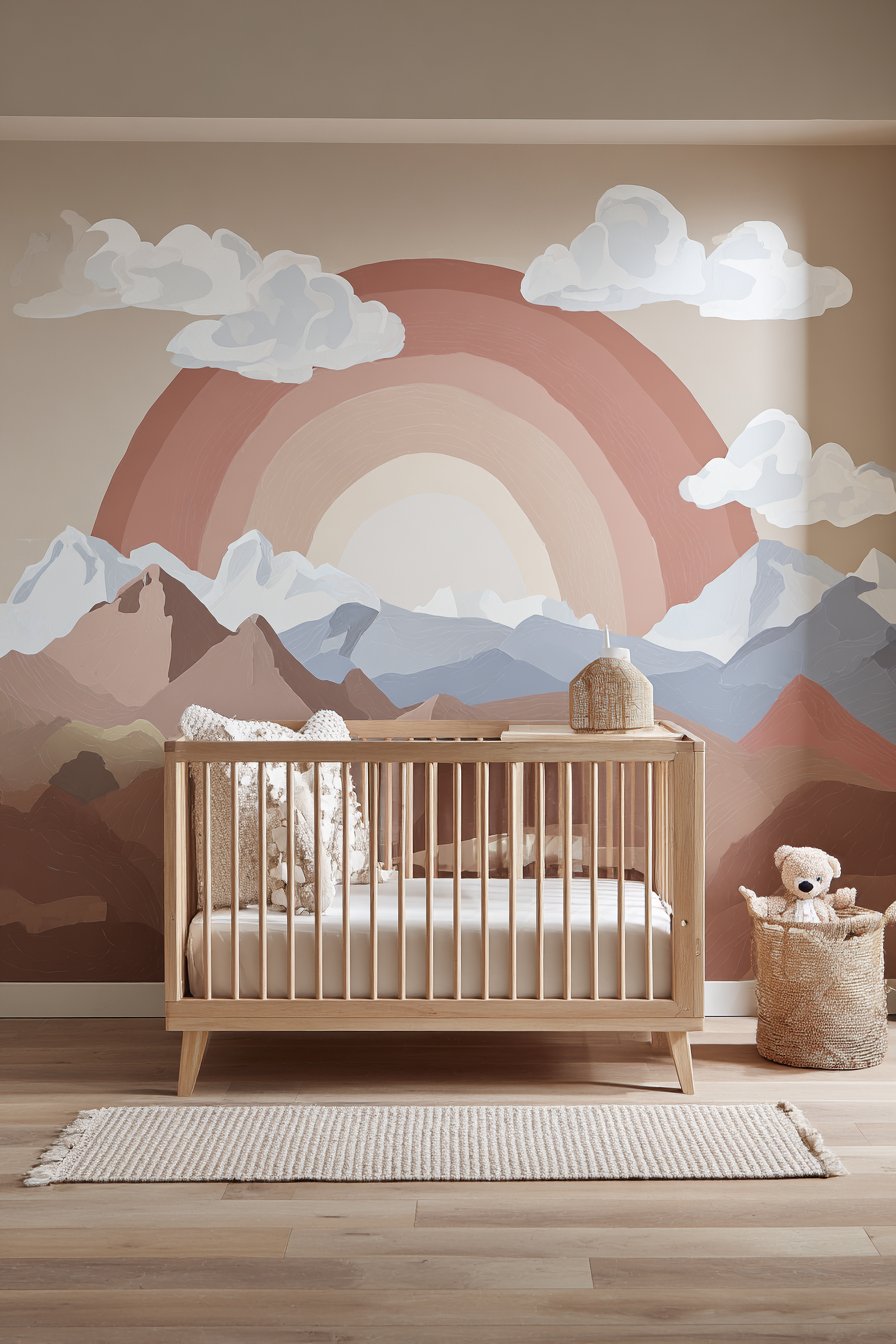
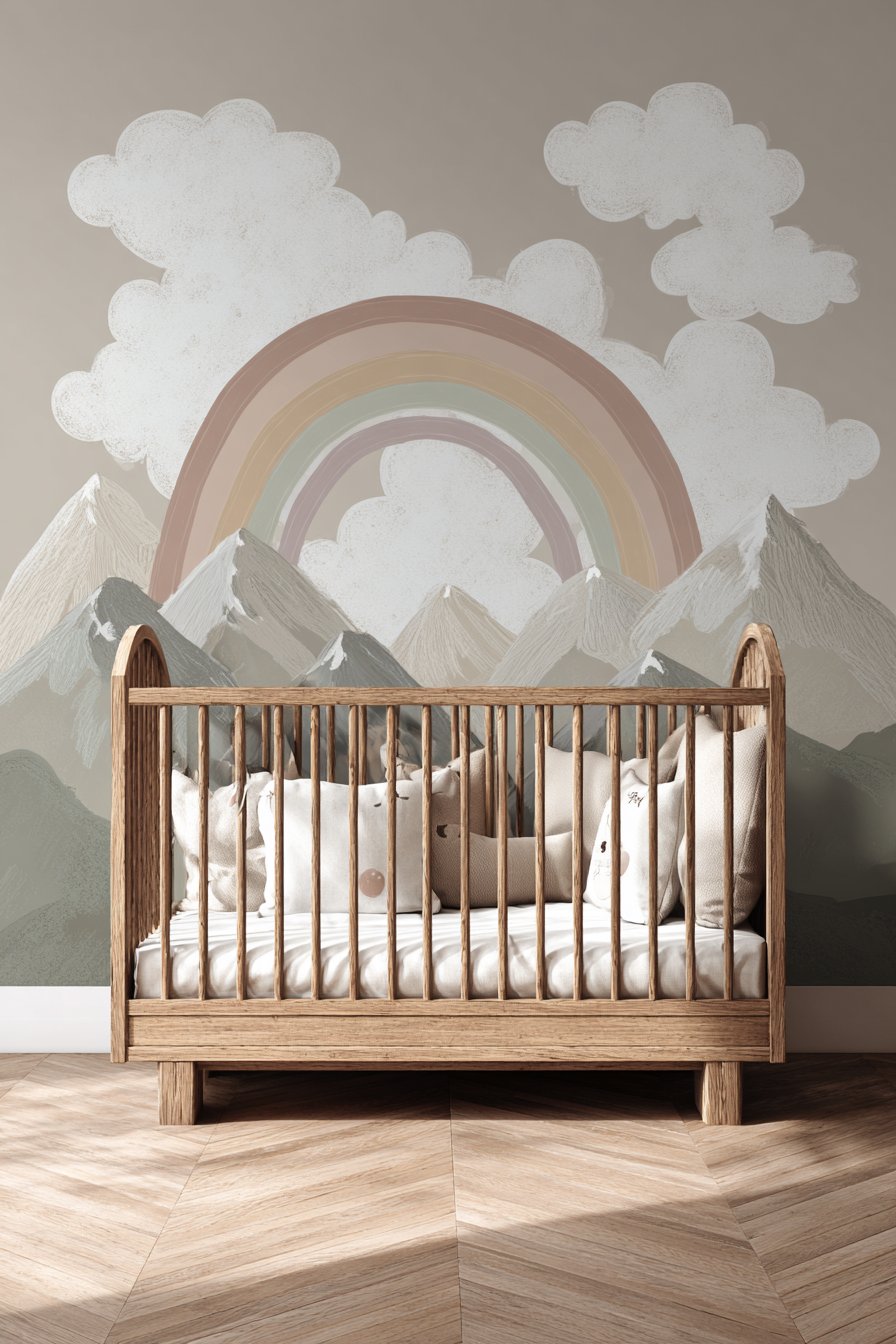
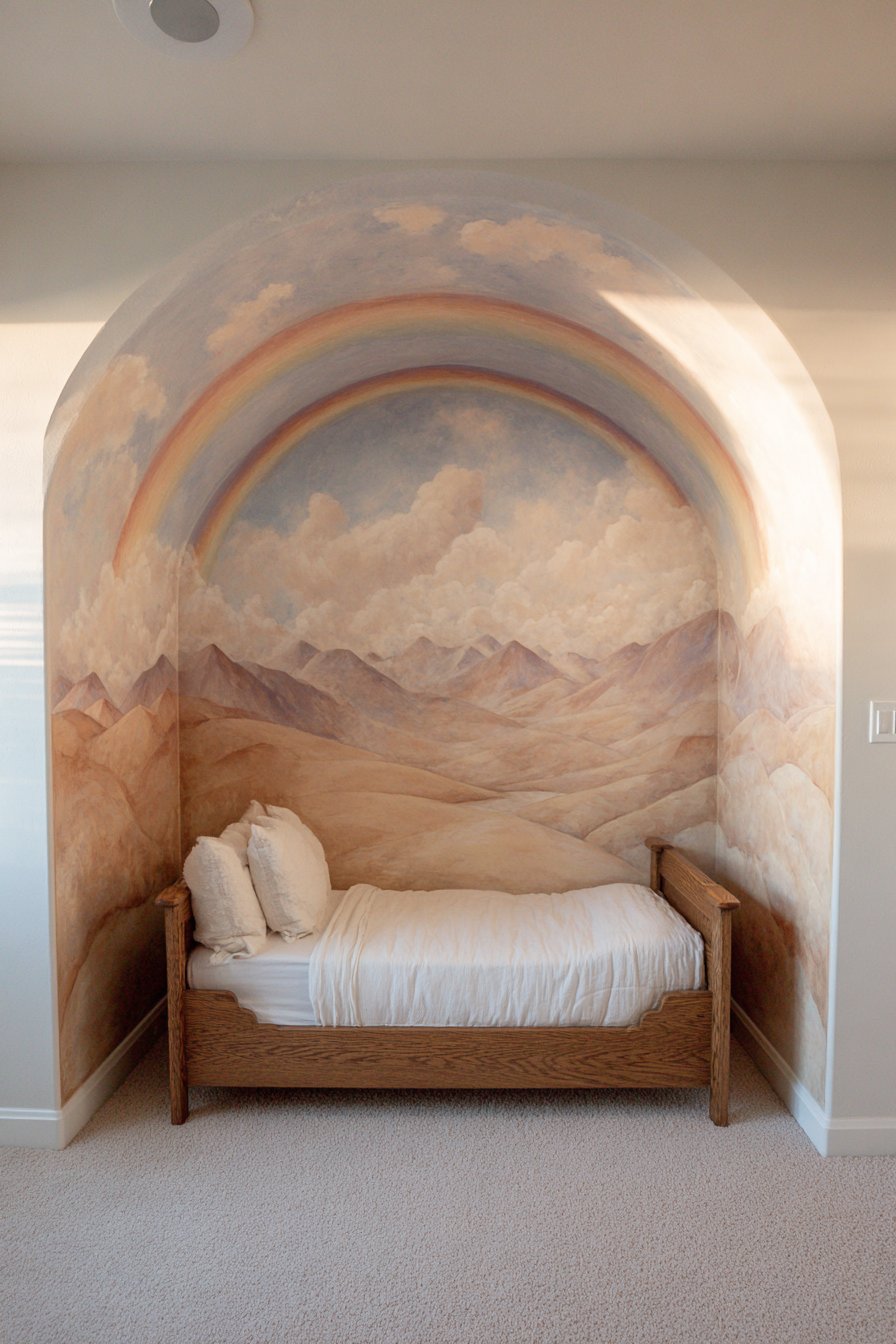
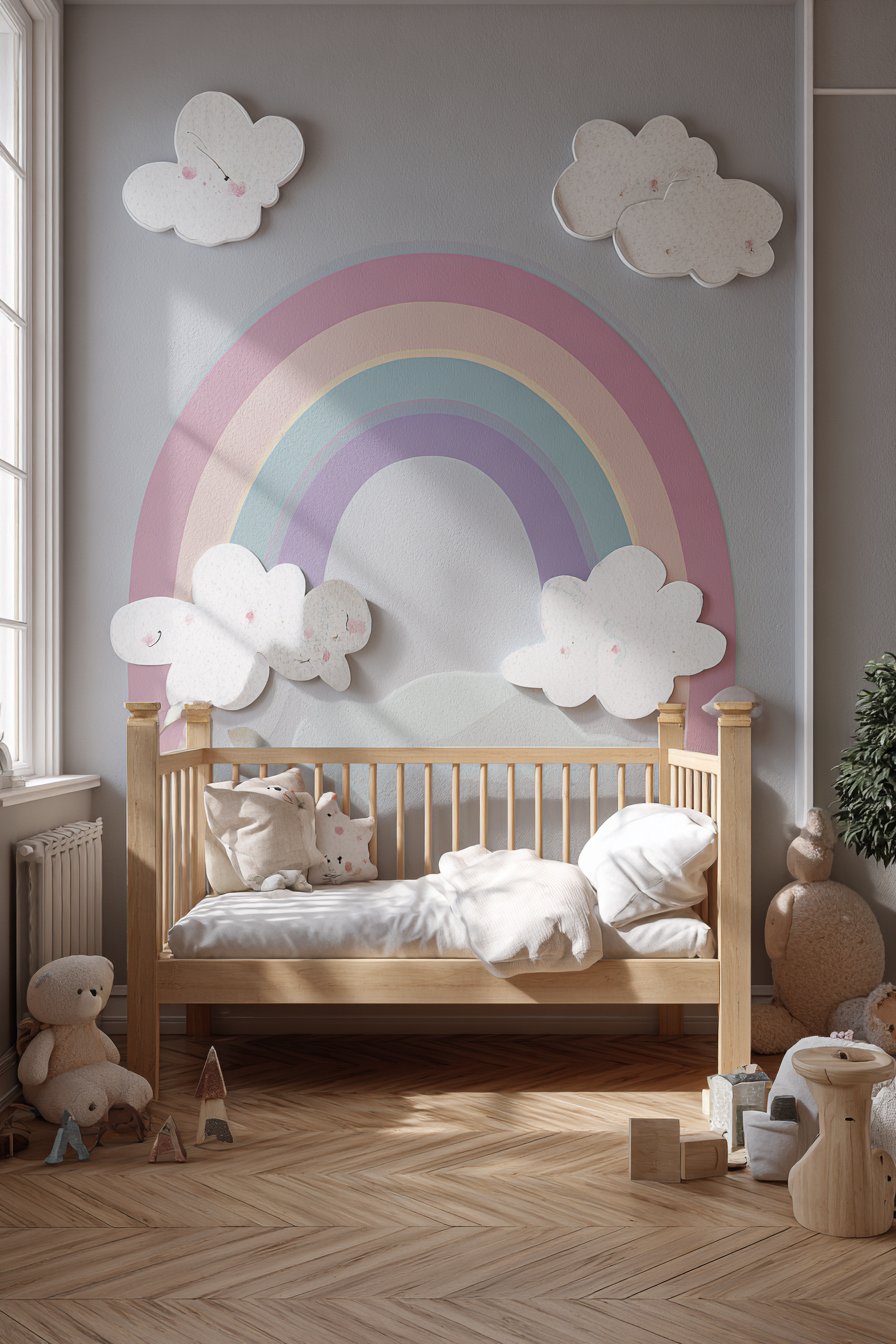
The timeless appeal of rainbows meets sophisticated design sensibility in this enchanting cute wall painting idea that features a gentle arc over rolling hills rendered in muted pastels. Unlike bright, primary-colored rainbows that can feel overwhelming, this version uses soft, harmonious tones that create a calming rather than stimulating effect. The hand-painted rainbow arches gracefully over a simple landscape of rolling hills, with gentle cloud shapes framing the composition and adding depth to the overall design.
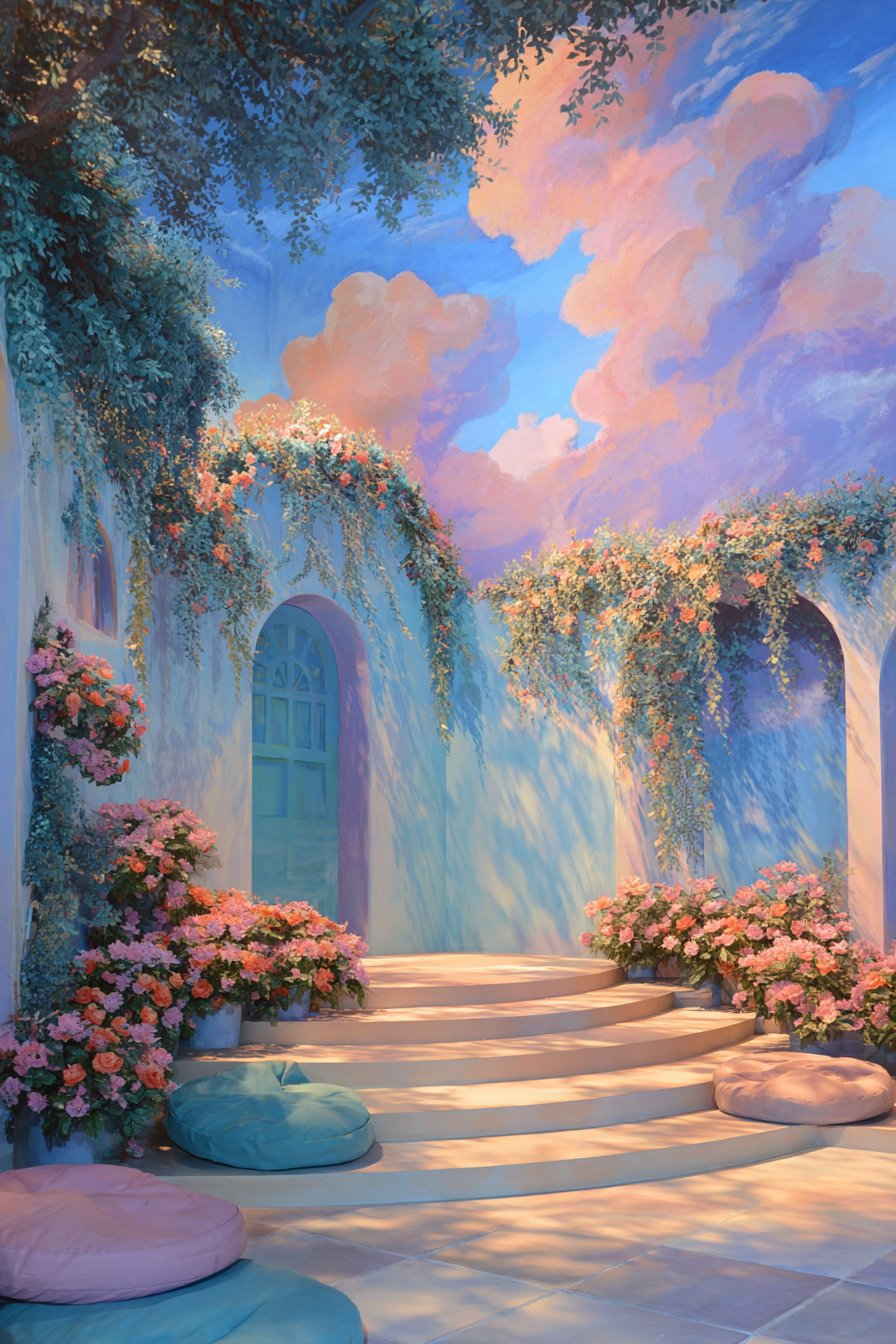
This approach to rainbow wall painting demonstrates how traditional children’s motifs can be adapted for more refined aesthetic sensibilities. The soft color blending and restrained palette make this suitable not just for nurseries and playrooms but also for older children’s bedrooms where a more mature look is desired. The symbolism of rainbows—hope, promise, beauty after storms—adds emotional resonance that makes this more than just decorative; it becomes a meaningful element of the room’s character.
Positioning a low wooden bed with white linens centered below the artwork creates a balanced, intentional composition that feels professionally designed. The rainbow serves as a natural headboard alternative, eliminating the need for additional wall decor while providing a focal point that anchors the room’s design. Professional interior photography with soft natural lighting showcases how beautifully this hand-painted element integrates with practical bedroom furniture, proving that cute wall painting ideas can be both adorable and sophisticated.
Key Design Tips: Map out the rainbow arc using a large compass or string tied to a central point to ensure perfect curves. Paint each color band separately, allowing edges to dry before adding adjacent colors to prevent muddy blending. Use at least 5-7 colors for a full rainbow effect, but consider using tinted whites and pastels rather than saturated hues. Add subtle shading to hills using slightly darker tones of the base color to create depth. Include small painted details like flowers or grass texture in the foreground to enhance the landscape quality. Position the rainbow to align with the bed placement for optimal visual impact.
4. Storybook Painted Bookshelf Illusion
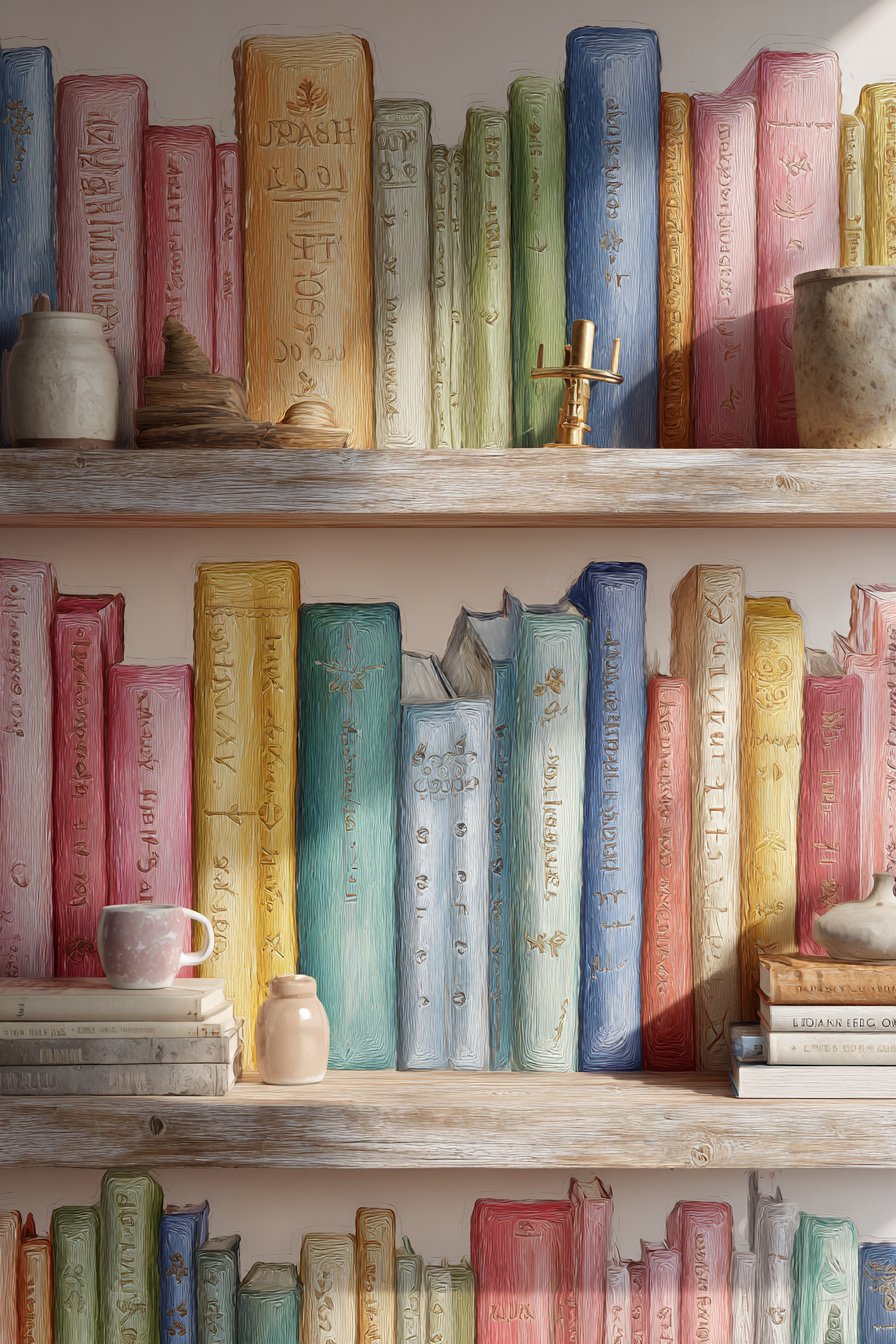
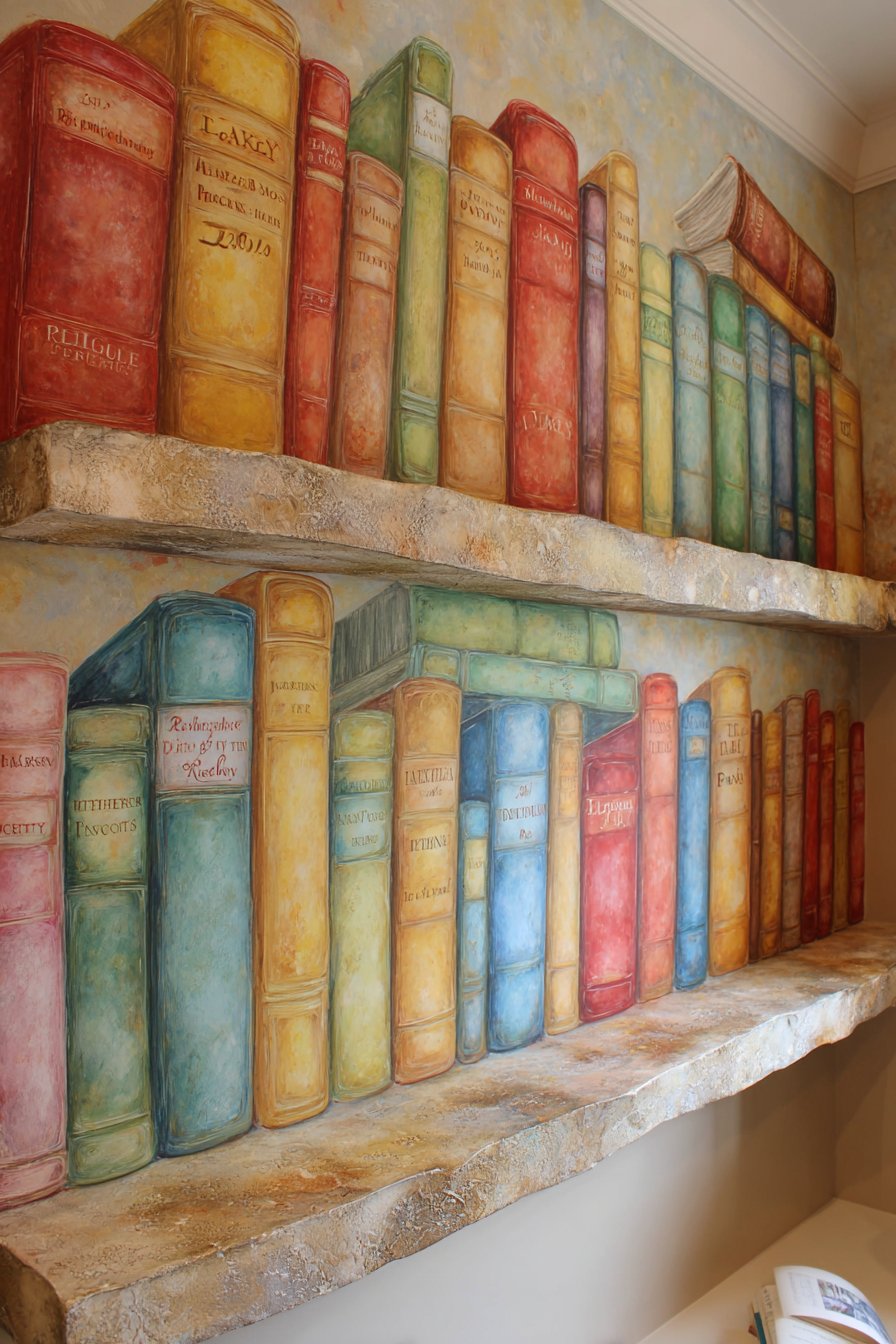
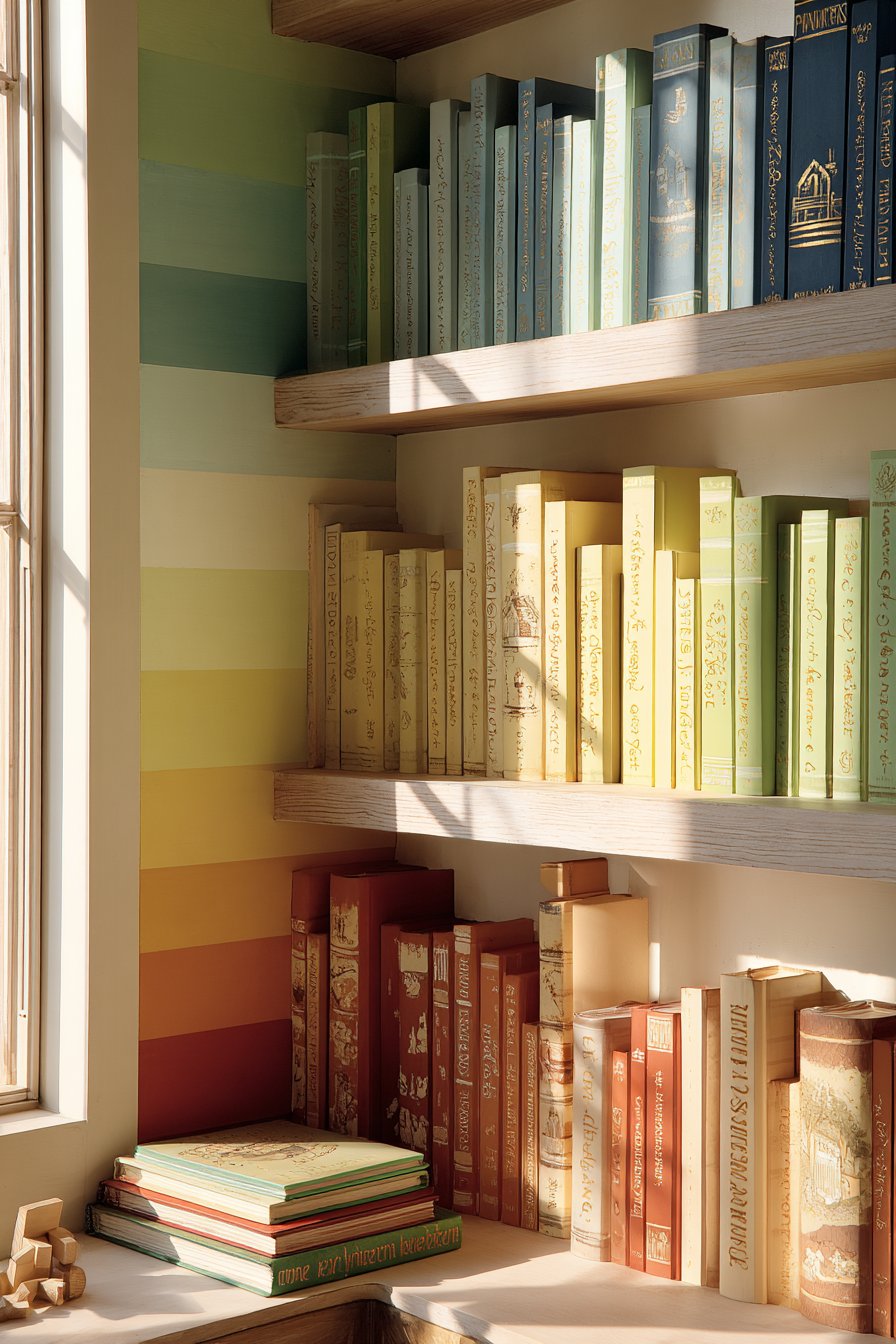
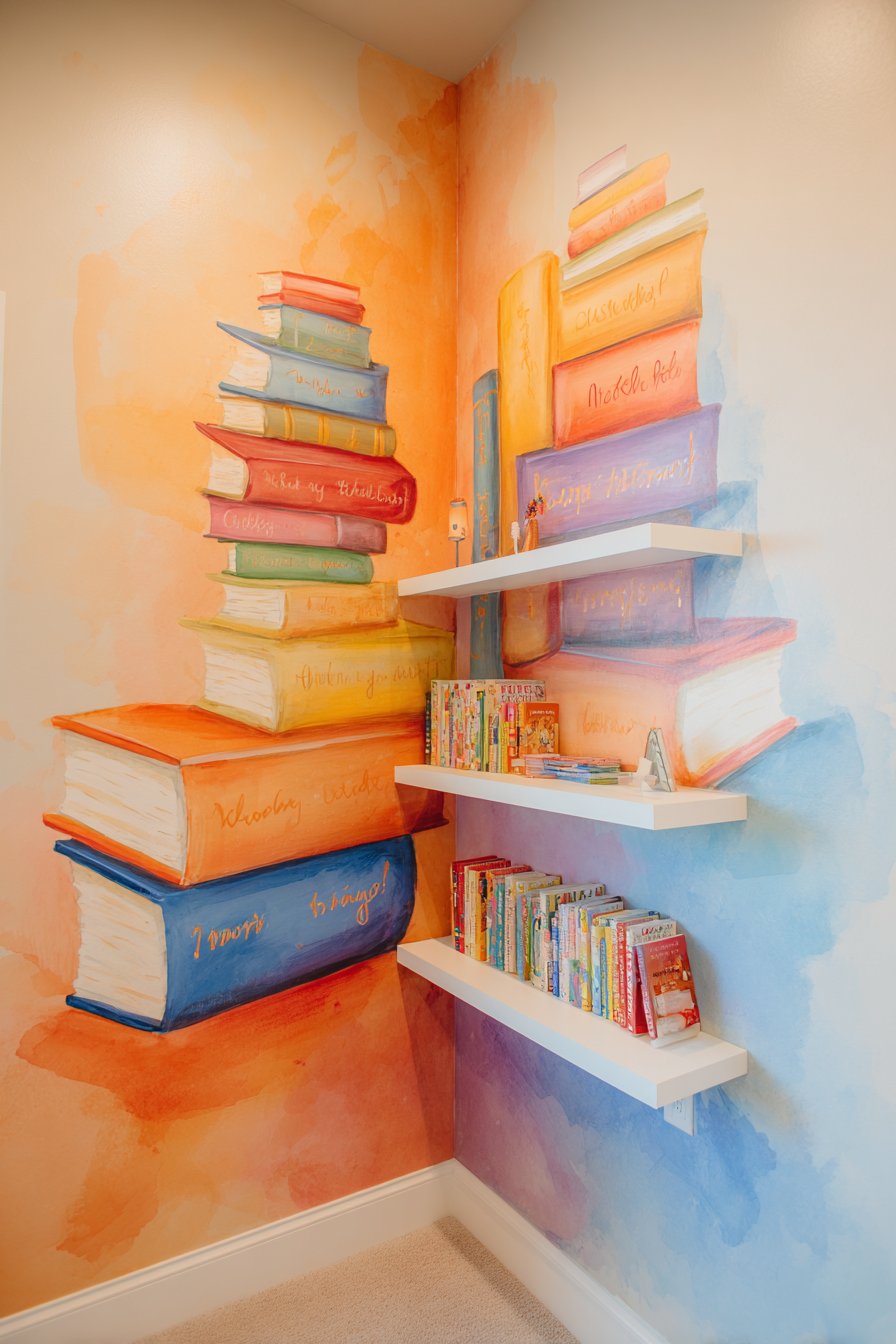
Imagination meets functionality in this clever cute wall painting idea that transforms a flat wall into a trompe-l’oeil bookshelf filled with whimsical, storybook-inspired volumes. Each painted book spine features charming titles and colorful designs in gentle hues, creating the illusion of a well-stocked library that celebrates reading and learning. This painted bookshelf serves as both art and inspiration, subtly encouraging literacy while providing visual interest to a children’s reading corner.
The brilliance of this design approach lies in its combination of painted illusion and physical reality. Real floating shelves installed below the painted bookshelf hold actual books, creating a seamless transition between the imaginary and tangible. This layering effect adds dimension and functionality while reinforcing the reading theme in a playful, engaging manner. Children delight in the interplay between painted and real books, often choosing their reading material while standing before this whimsical wall feature.
Warm afternoon light highlights the playful brushwork and careful details that make individual book spines recognizable and interesting. Some might feature classic children’s literature titles, while others display invented whimsical names that spark curiosity and conversation. The varied heights, widths, and colors of the painted books create a realistic library appearance while maintaining the charming, hand-painted quality that distinguishes this from printed wallpaper or decals.
Key Design Tips: Research real book spines for authentic proportions and details like spine ridges and title placement. Use a level and measuring tape to create straight, evenly-spaced “shelves” as guides for book placement. Vary book widths and heights naturally—avoid making them too uniform. Add small details like painted bookmarks peeking out or slight shadows beneath books for enhanced realism. Use metallic paint pens for titles to add visual interest and make text readable. Coordinate painted book colors with the room’s overall palette for cohesive design. Consider incorporating actual book titles that hold special meaning for the family.
5. Dreamy Hot Air Balloon Sky
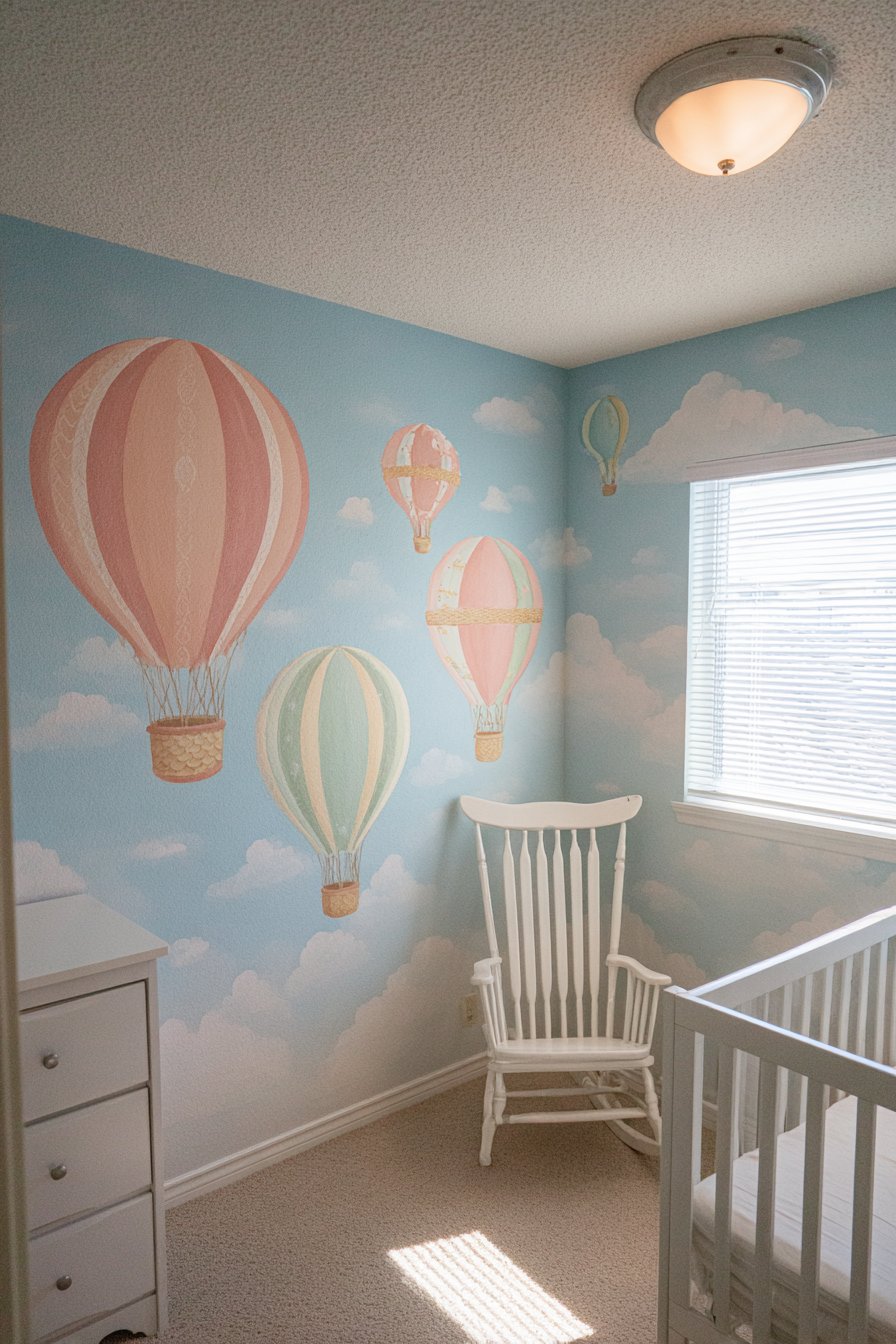
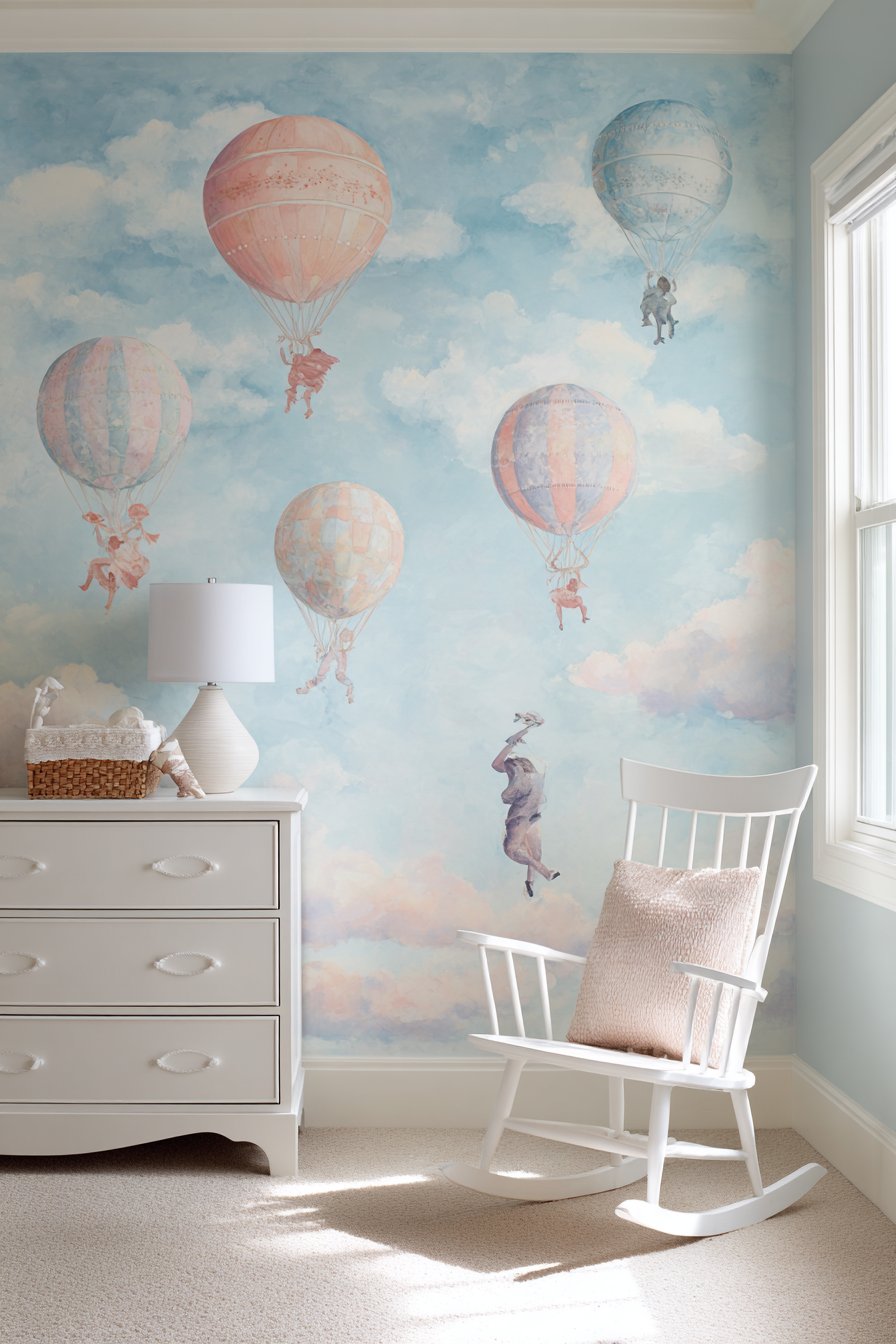
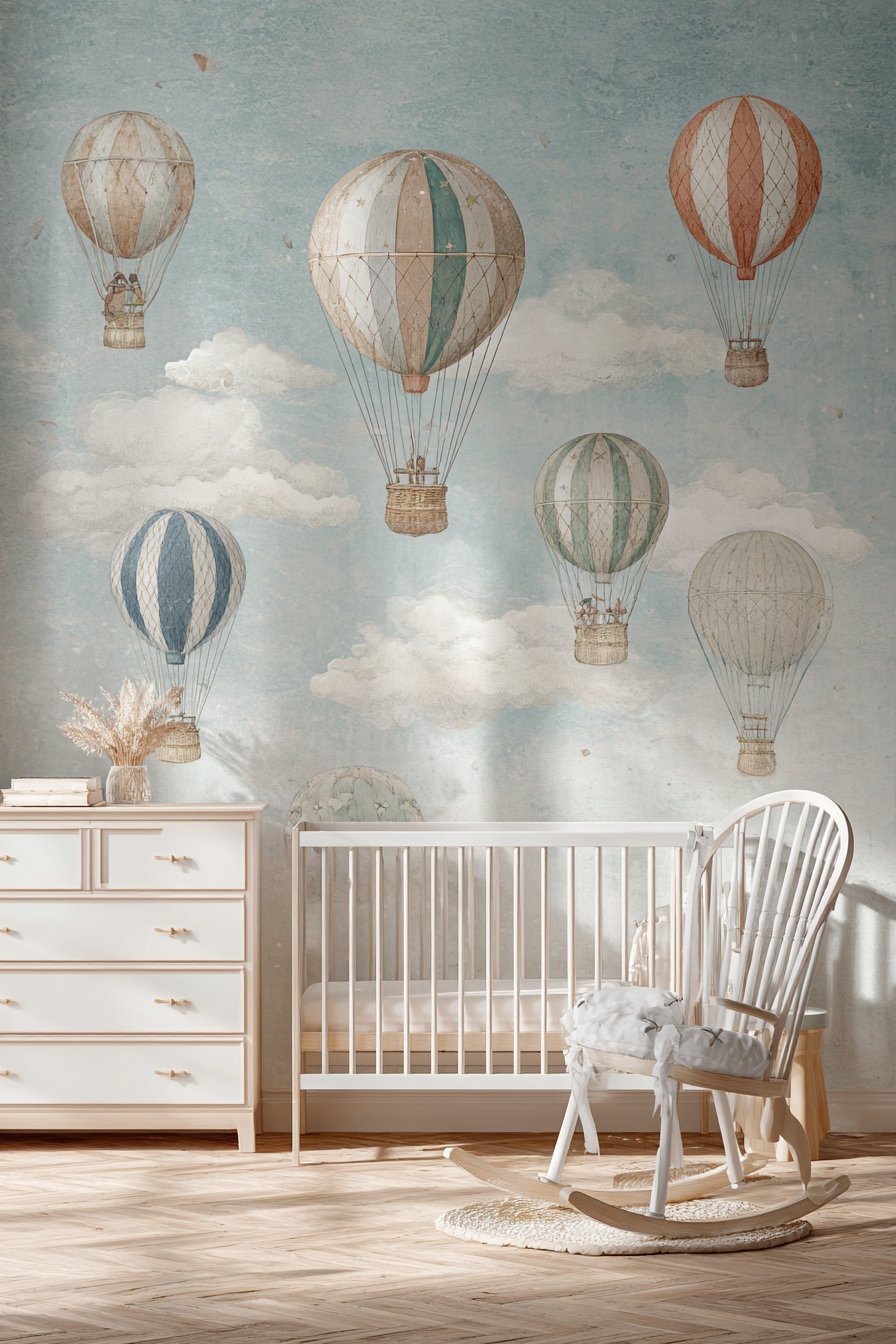
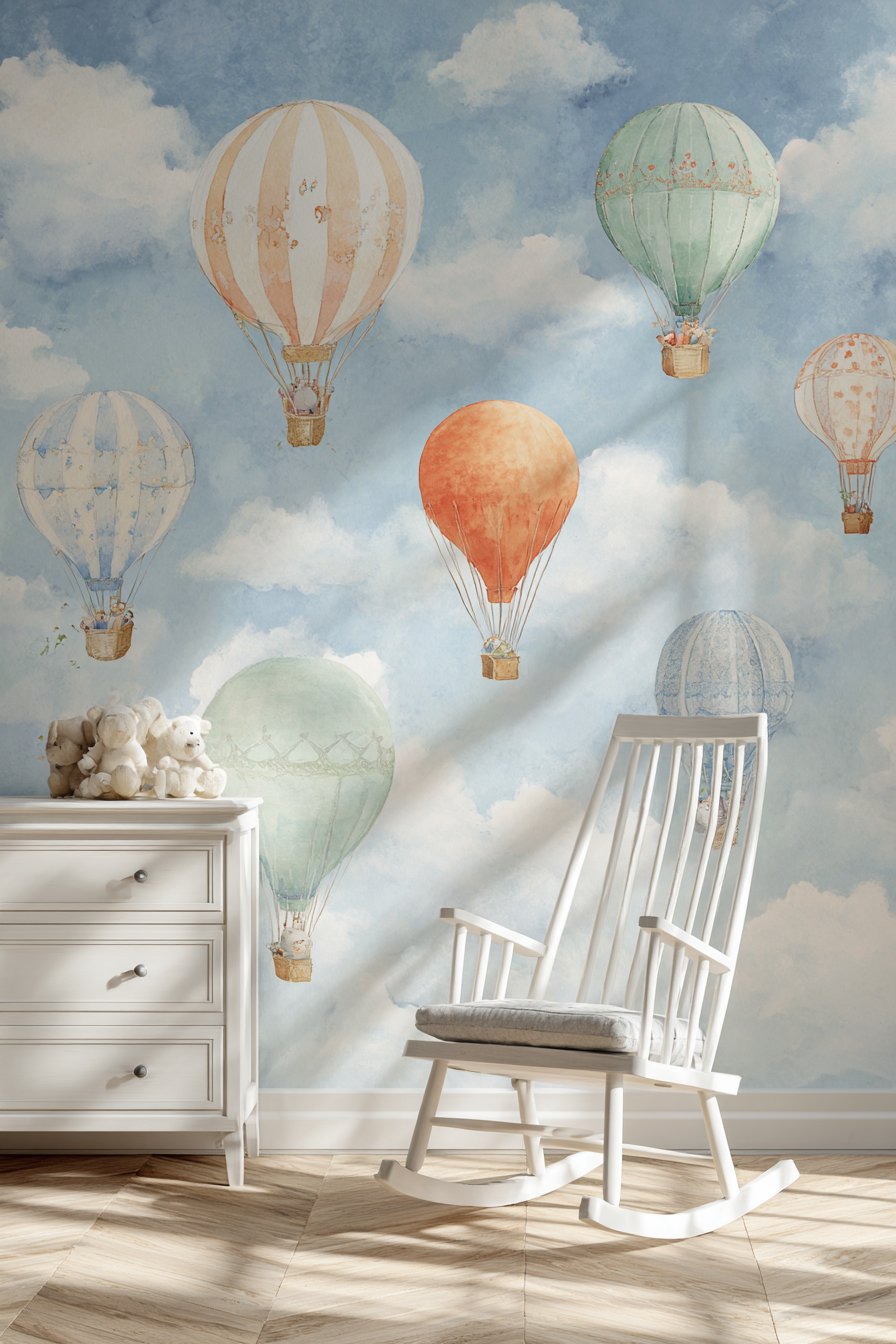
Delicate hot air balloons float gracefully across a soft blue sky in this utterly charming cute wall painting idea perfect for nurseries. Each balloon features different pastel colors—soft pink, gentle yellow, mint green, lavender—and subtle patterns that add visual interest without overwhelming the peaceful composition. Wispy clouds rendered with visible, gentle brushstrokes create texture and movement, making the wall feel alive with subtle motion. This design captures the essence of childhood wonder while maintaining the serene atmosphere essential for infant sleep spaces.
The placement and arrangement of balloons across the wall requires thoughtful consideration to achieve visual balance. Rather than clustering them together, spacing them at varying heights and distances creates a sense of depth and encourages eye movement across the entire composition. Some balloons might appear closer (larger, more detailed) while others drift further away (smaller, softer edges), creating the illusion of three-dimensional space on a flat surface.
A white rocking chair and simple dresser complement the serene scene without competing for attention, allowing the hand-painted wall to remain the undisputed focal point. Natural window light creates soft shadows on the painted surface, adding another dimension to the artwork that changes throughout the day. This dynamic quality ensures the mural never becomes background noise but rather continues to engage and delight both children and adults who spend time in the space.
Key Design Tips: Sketch balloon positions lightly in pencil before committing to paint, ensuring balanced composition across the wall. Paint sky background first using horizontal brushstrokes for subtle texture variation. Use round templates or freehand circles for balloon shapes, keeping proportions realistic. Add basket details using fine brushes and darker tones for contrast. Create clouds with a dry-brush technique for soft, wispy effects. Include tiny painted birds or butterflies as subtle additional details. Consider adding painted strings extending from balloons to add movement and connection. Use a color palette that coordinates with nursery bedding and accessories for cohesive design.
6. Functional Growth Chart Giraffe
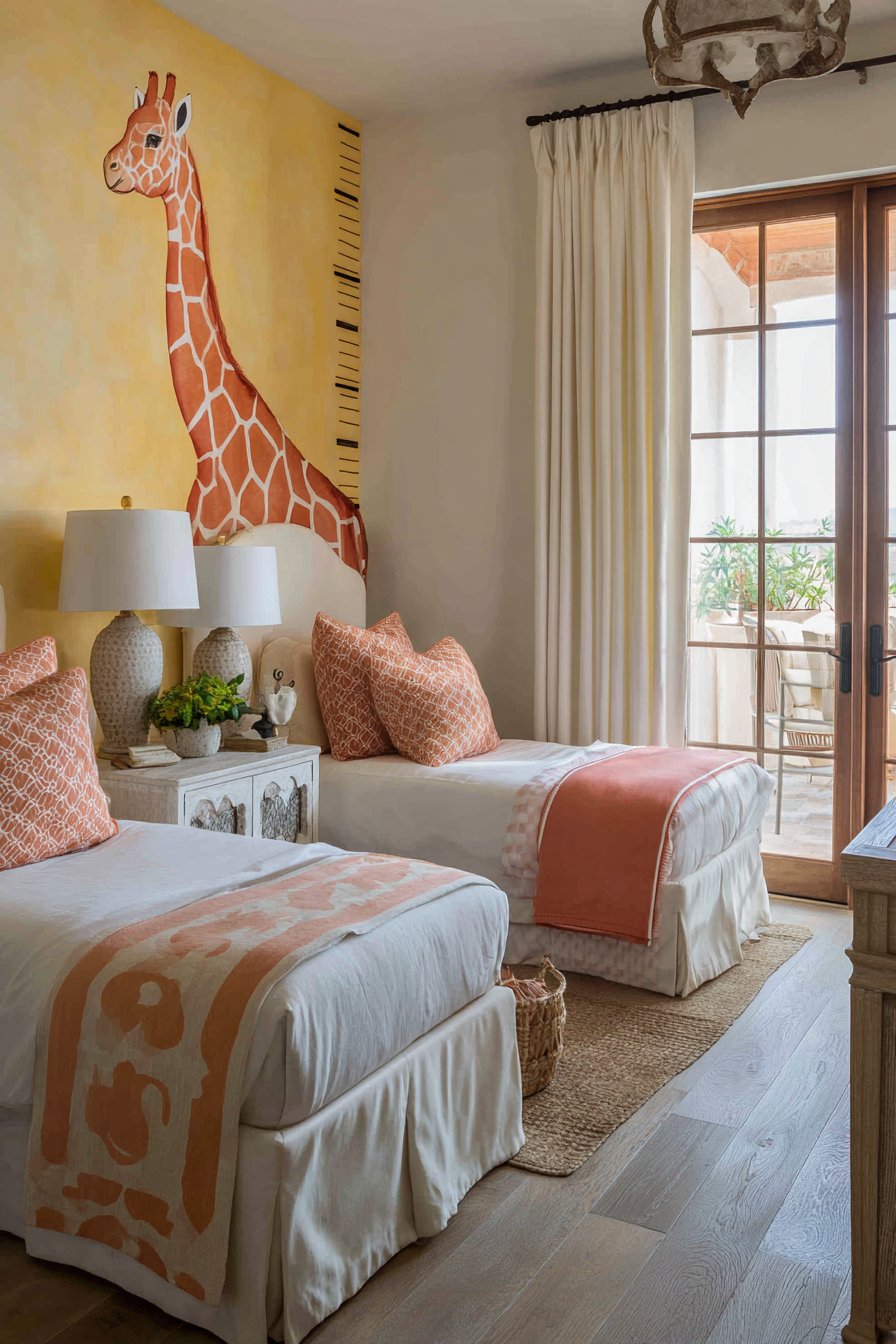
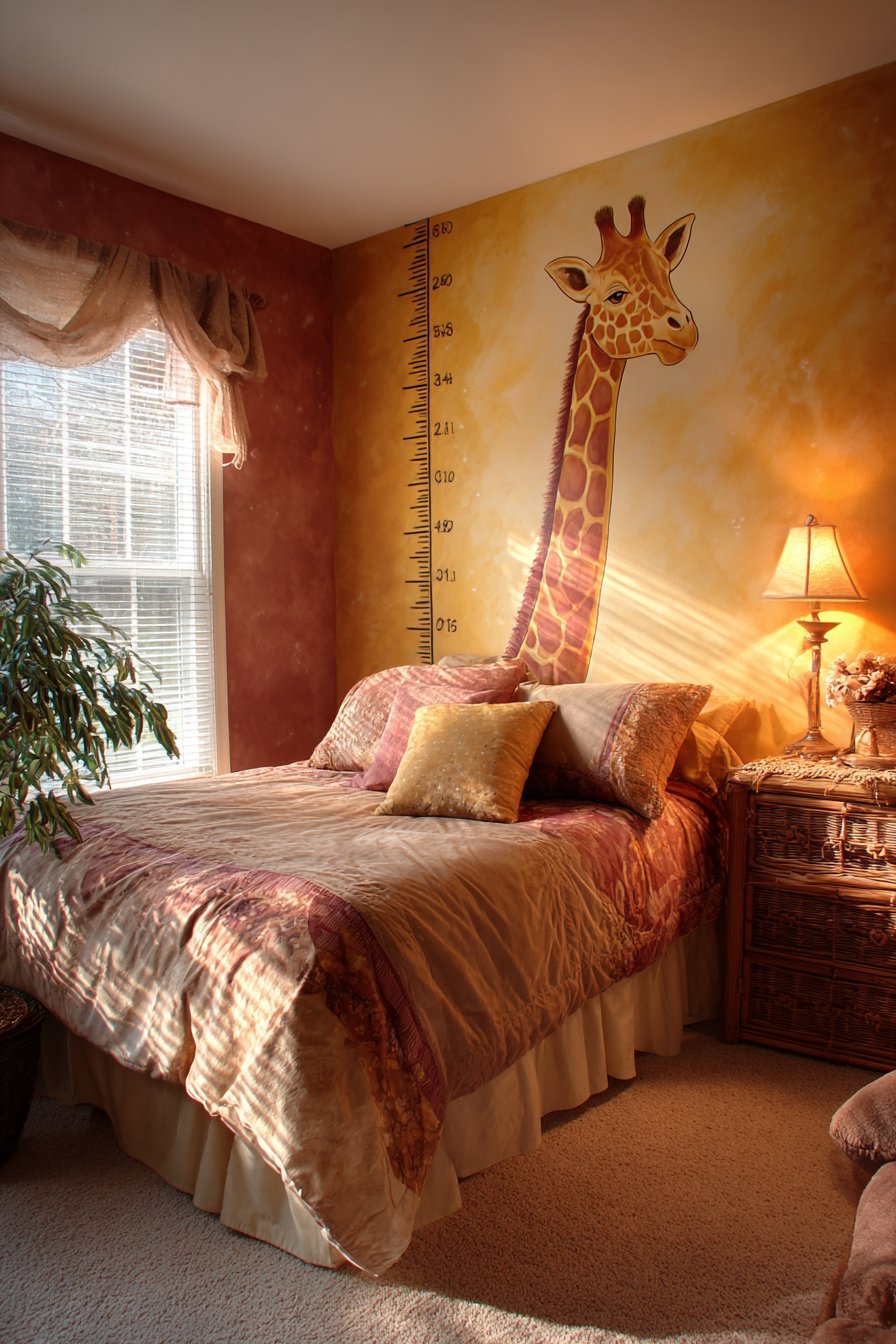
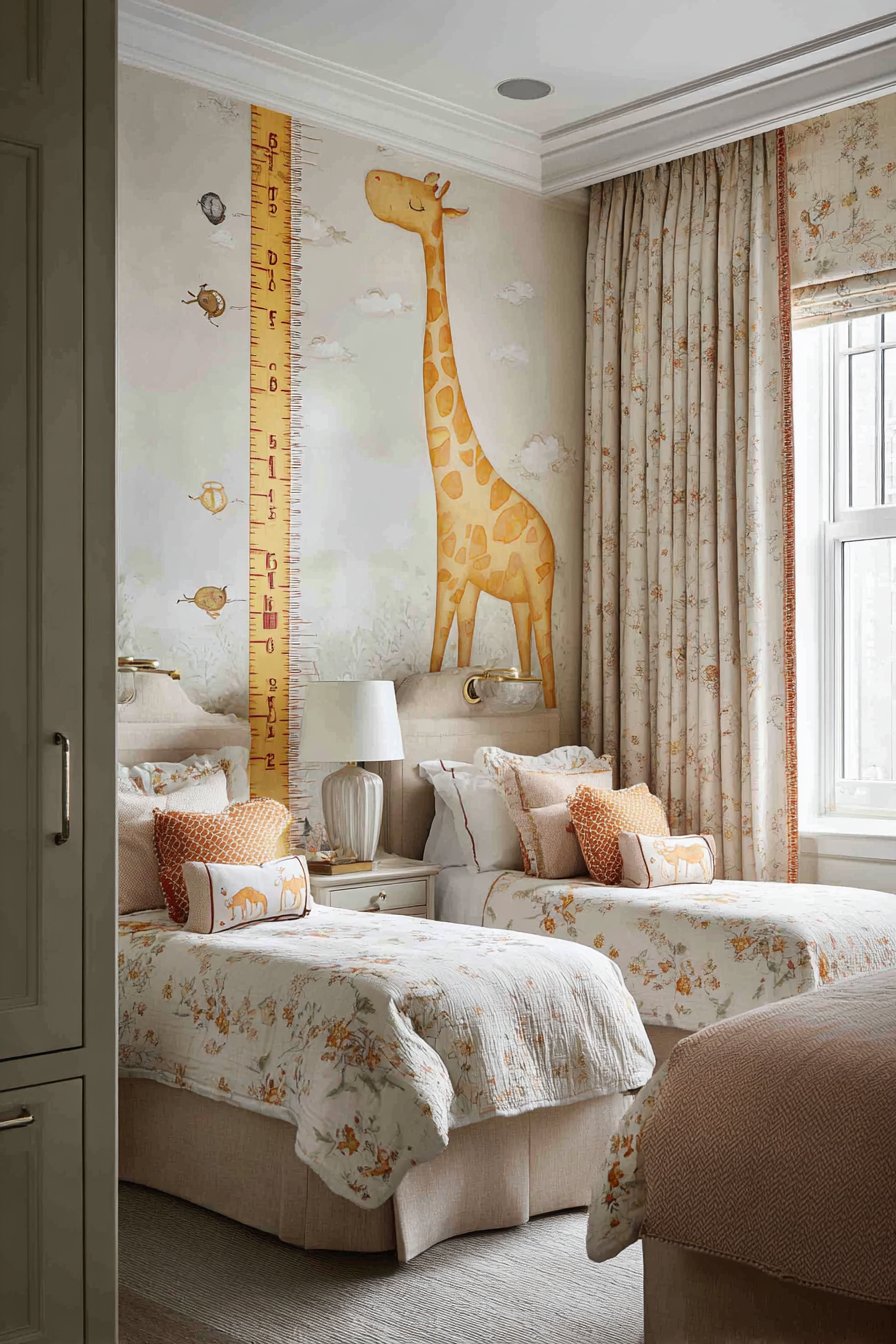
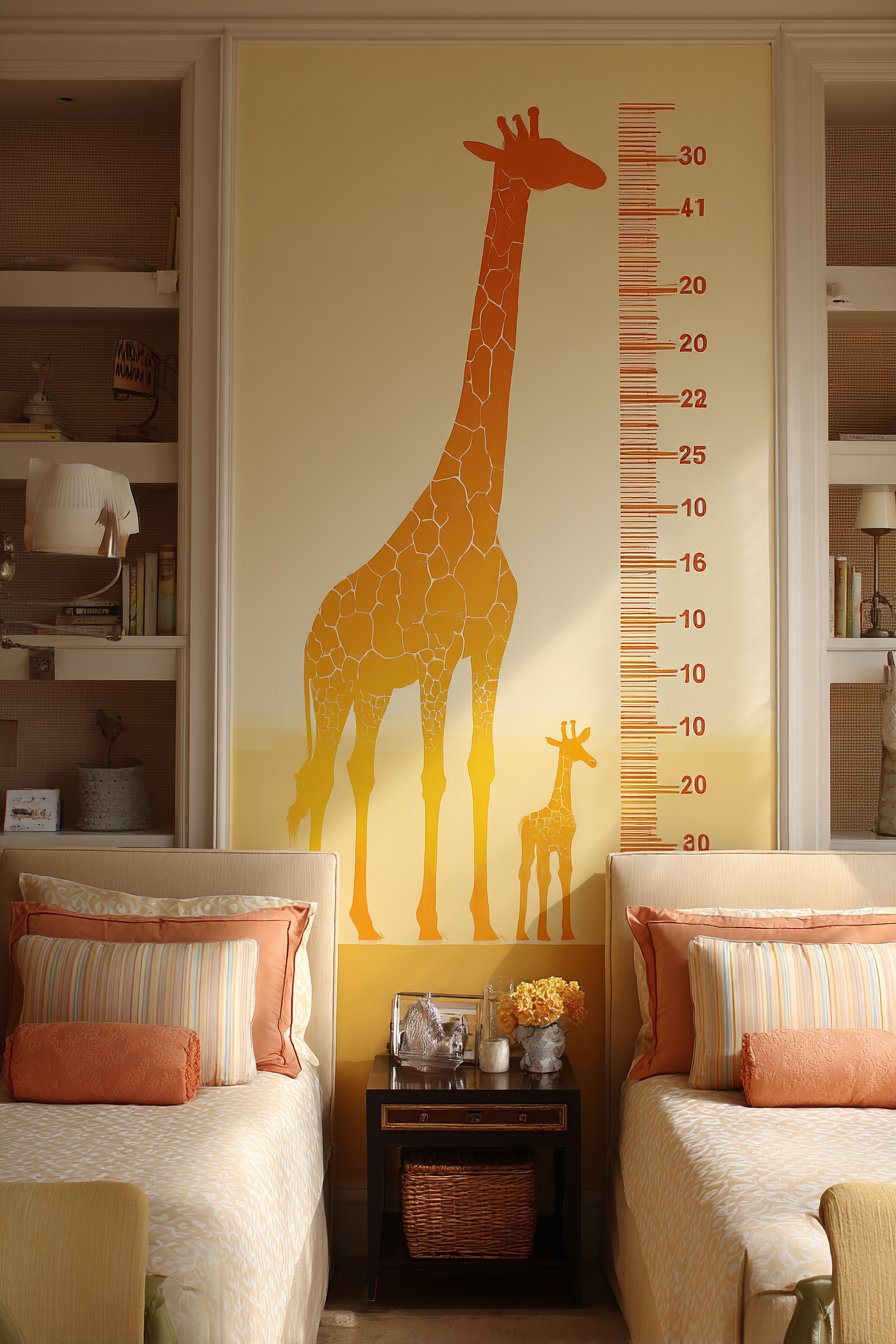
Combining adorable aesthetics with practical functionality, this cute wall painting idea features a friendly giraffe that doubles as a height growth chart. The giraffe’s elongated neck stretches upward along the wall in warm yellows and soft oranges, with hand-painted measurement marks cleverly integrated into the giraffe’s distinctive spot pattern. This dual-purpose design becomes a cherished family tradition, documenting children’s growth over years while serving as a beloved decorative element that never feels purely utilitarian.
The genius of this design lies in its ability to make height tracking feel special rather than clinical. Instead of stark measuring lines, children see themselves growing alongside their giraffe friend, creating positive associations with development and the passage of time. The spots provide natural markers for measurements, while the giraffe’s friendly face near the bottom creates a welcoming starting point for even the smallest children being measured.
Twin beds with coordinating bedding flank the painted wall in a shared children’s bedroom, with the giraffe serving as a central focal point that unifies the space. Balanced natural lighting highlights the practical artistry—the careful attention to realistic giraffe features combined with the whimsical, approachable style that makes it perfect for children’s spaces. This demonstrates how cute wall painting ideas can solve design challenges while adding personality and function simultaneously.
Key Design Tips: Research giraffe proportions to ensure a realistic silhouette that reads clearly as a giraffe rather than an abstract shape. Mark measurement increments (inches or centimeters) accurately using a level and measuring tape before incorporating into the design. Paint the giraffe’s body first, then add spots, incorporating measurement numbers within or beside strategic spots. Use a permanent marker or paint pen for numbers to ensure durability. Start measurements at an appropriate height (often 2 feet from the floor) to accommodate young children. Include the giraffe’s friendly face at the bottom to create engagement at child eye-level. Consider painting the giraffe on a central wall where both sides are equally visible for balanced room composition.
7. Calming Underwater Adventure
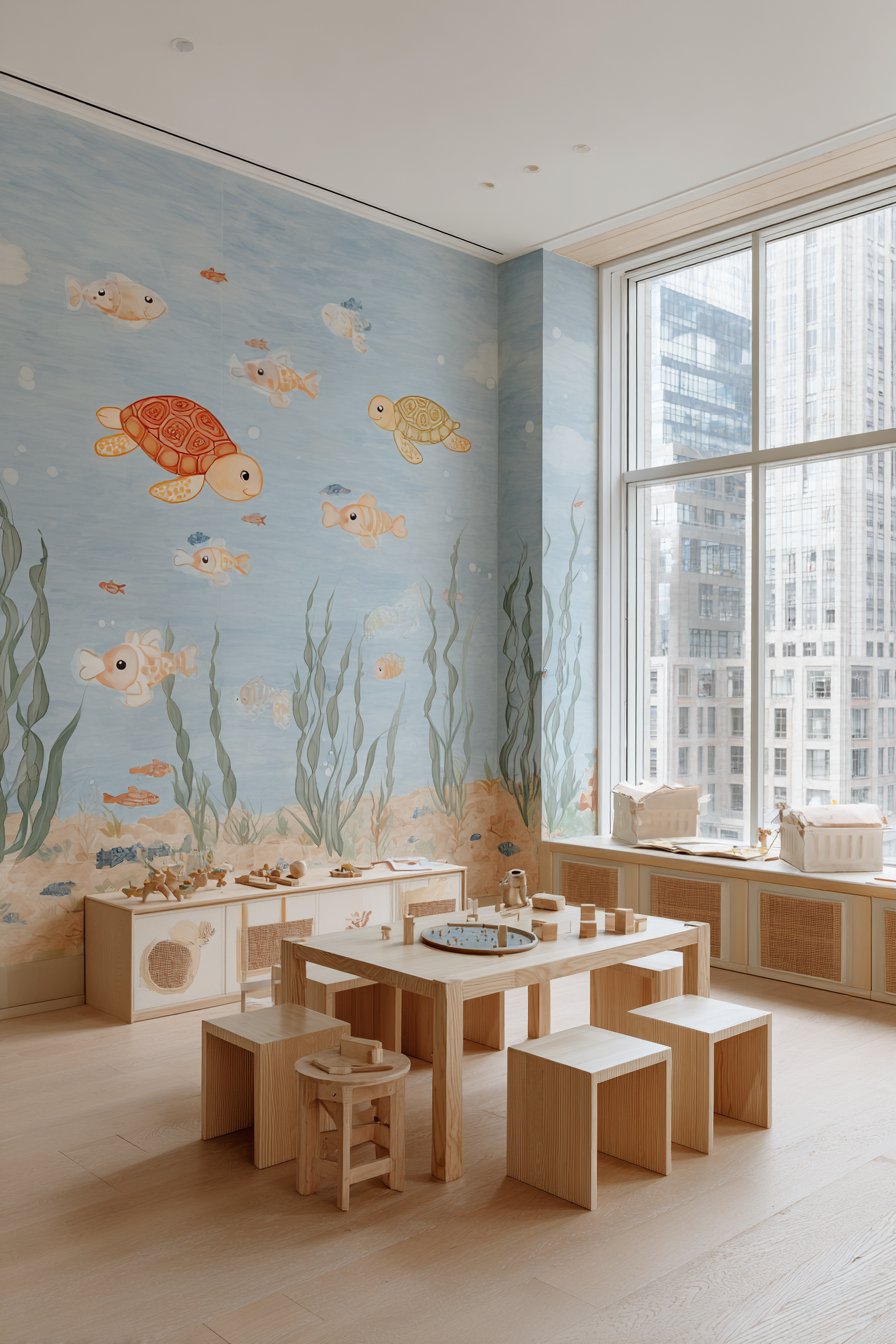
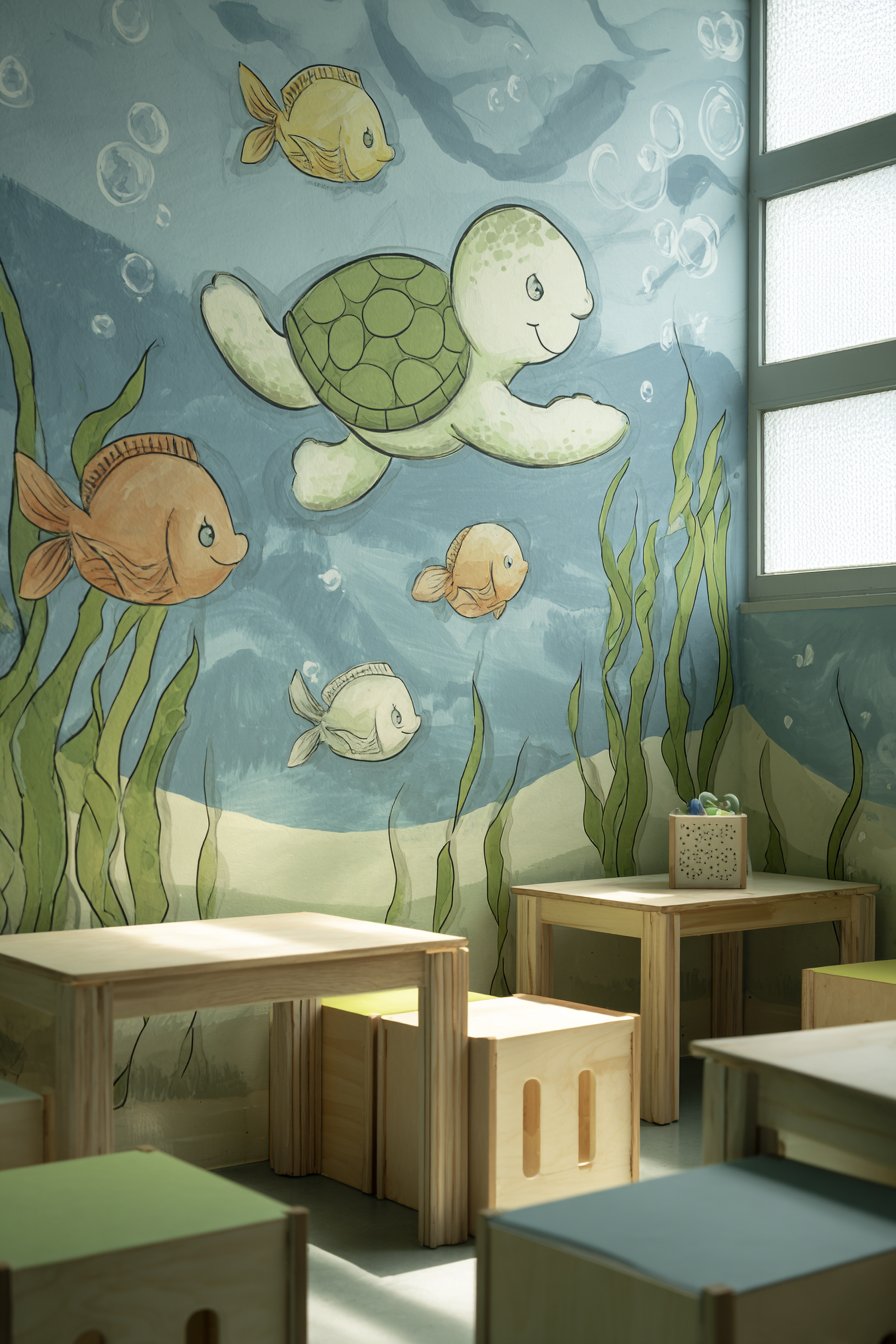
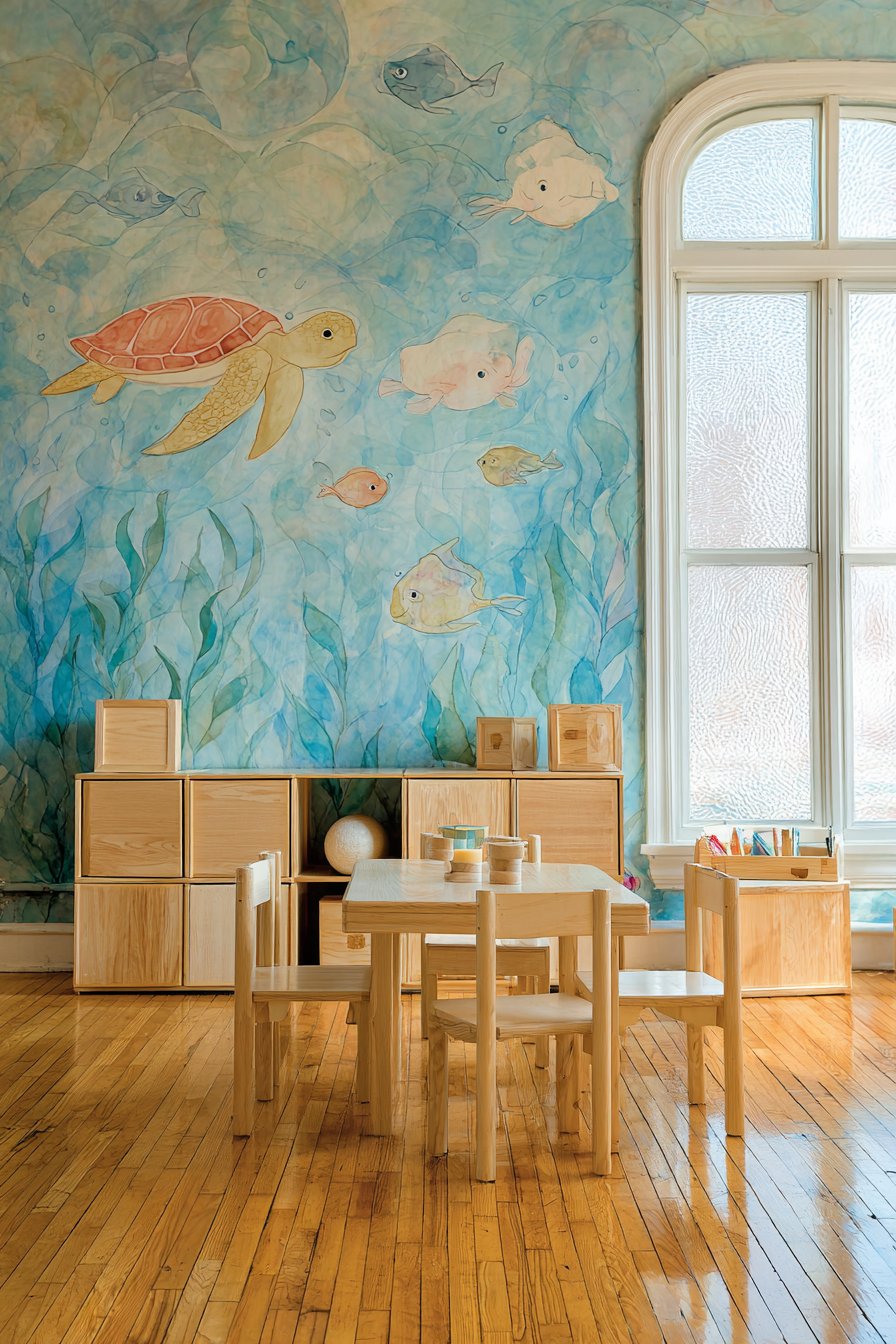
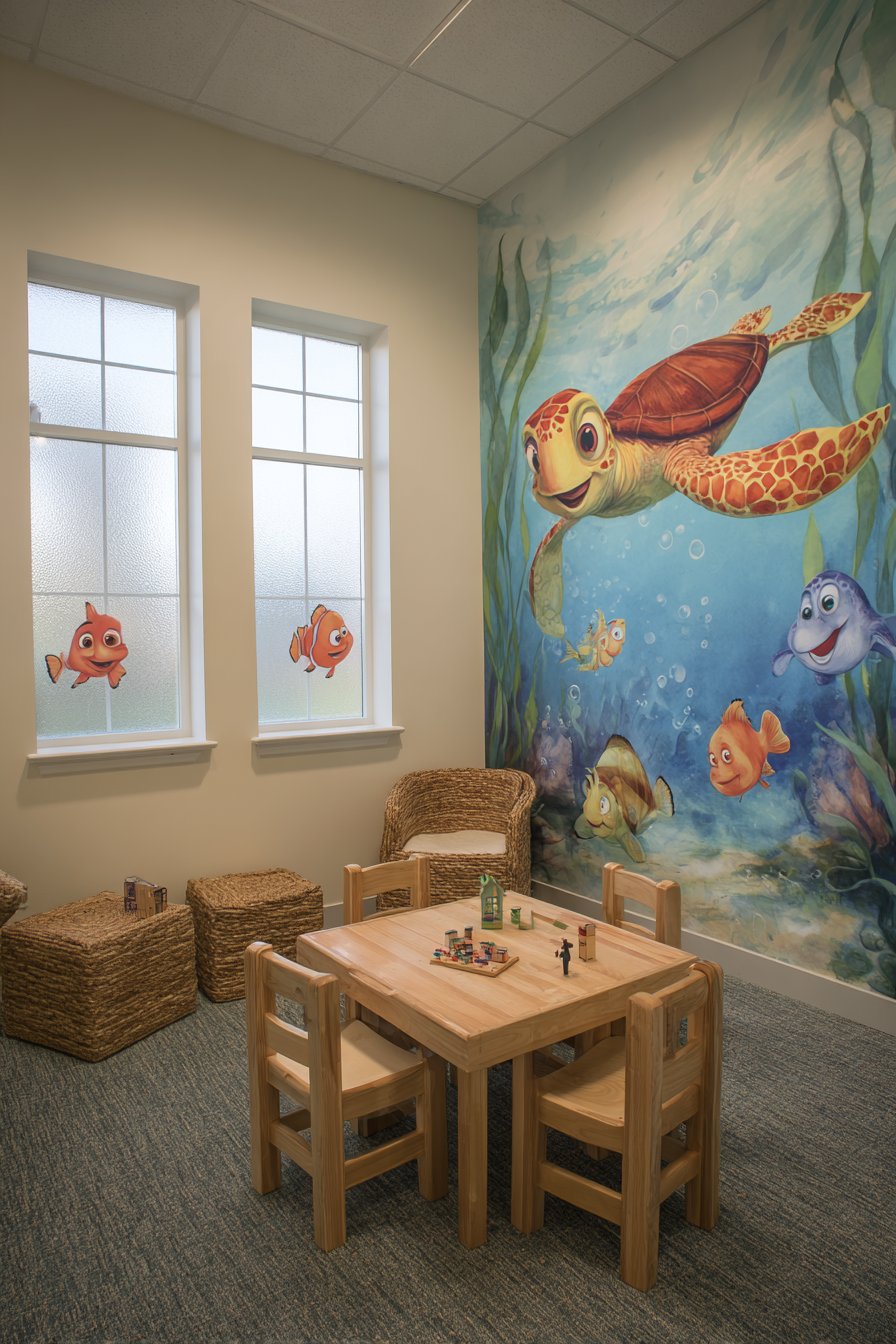
Dive into tranquility with this soothing cute wall painting idea that transforms a playroom into an underwater wonderland. Smiling fish, gentle sea turtles, and swaying kelp dance across the wall in calming blues and greens, creating a marine environment that feels peaceful rather than overstimulating. The soft brushstrokes create movement and depth, suggesting water currents and the gentle flow of ocean life without creating visual chaos. This design demonstrates how active, playful themes can be rendered in ways that promote calm focus rather than hyperactivity.
The color palette deserves special attention—various shades of blue and green create a cohesive, immersive environment while providing enough variation to maintain interest. Deeper teals might anchor the bottom of the wall, suggesting ocean depths, while lighter aquamarines and sky blues near the ceiling evoke shallow, sunlit waters. This gradient effect adds sophisticated dimension to what might otherwise be a flat, single-color approach.
A low play table and storage cubes in natural wood tones ground the room, providing visual weight that balances the airy, floating quality of the underwater scene. Diffused daylight from frosted windows illuminates the aquatic painting beautifully, creating the impression of sunlight filtering through water. This lighting consideration is crucial for underwater themes, as harsh direct light can make the design feel less authentic and immersive.
Key Design Tips: Paint the background in gradient blues first, darker at bottom and lighter toward top to suggest water depth. Use flowing, curved brushstrokes when painting kelp and seaweed to create natural movement. Keep marine creature faces simple and friendly—rounded features, gentle smiles, large eyes—to maintain cute appeal. Add bubbles of varying sizes throughout the composition for playful detail and visual interest. Use a sea sponge to dab on texture for coral or rocks at the bottom of the wall. Include variety in fish sizes, shapes, and orientations to create a lively but not crowded scene. Consider extending the design onto adjacent walls for fully immersive effect.
8. Gentle Celestial Night Sky
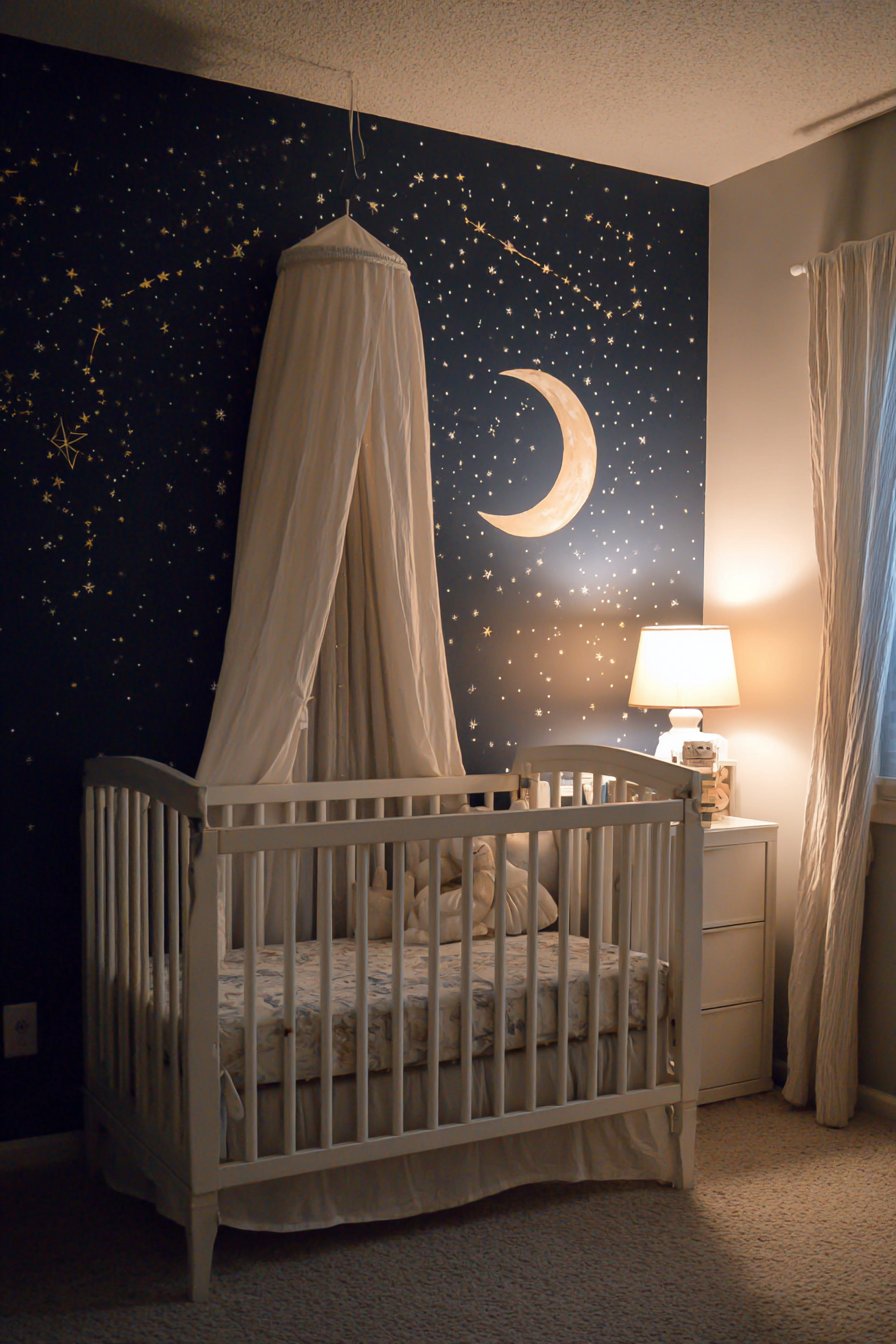
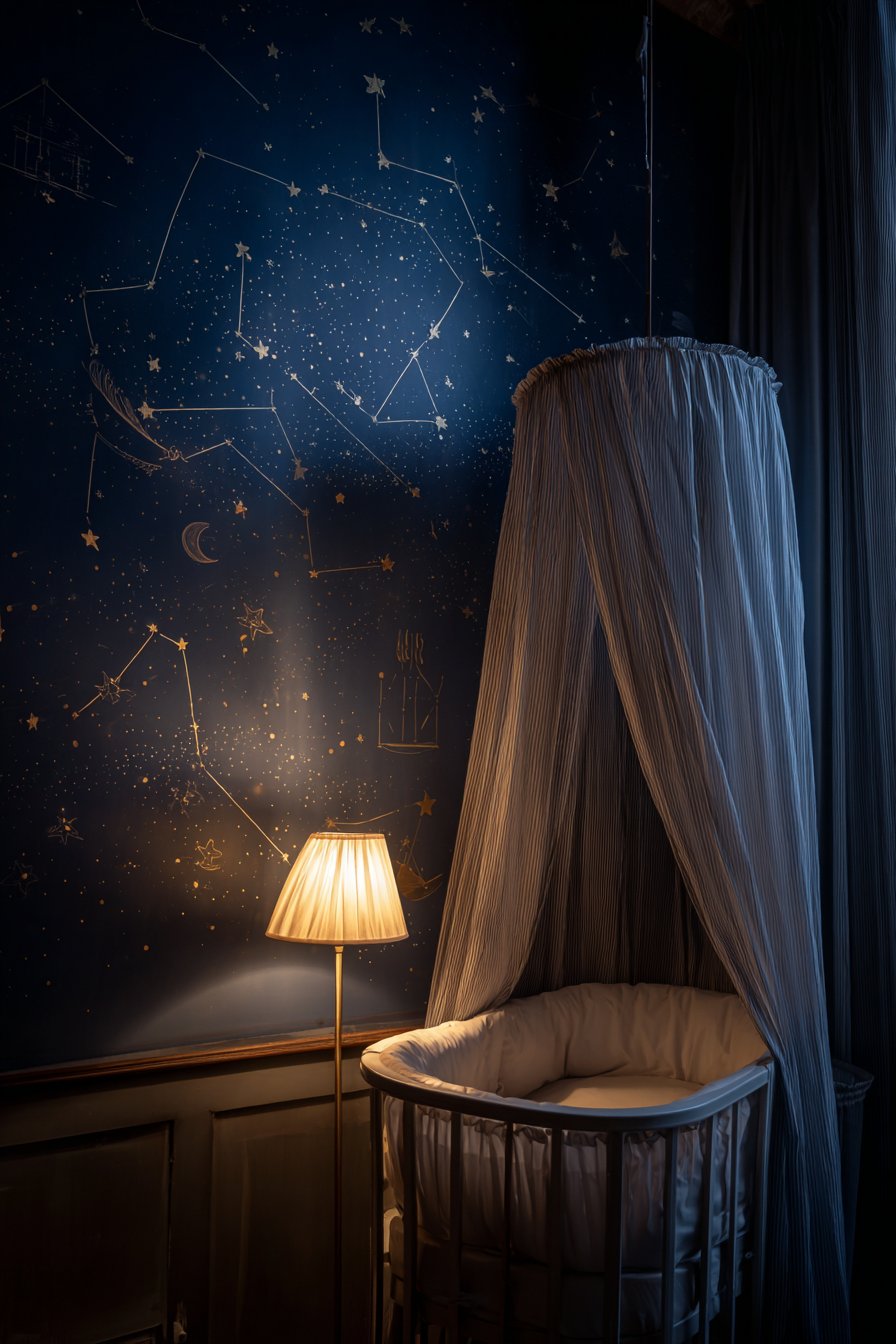
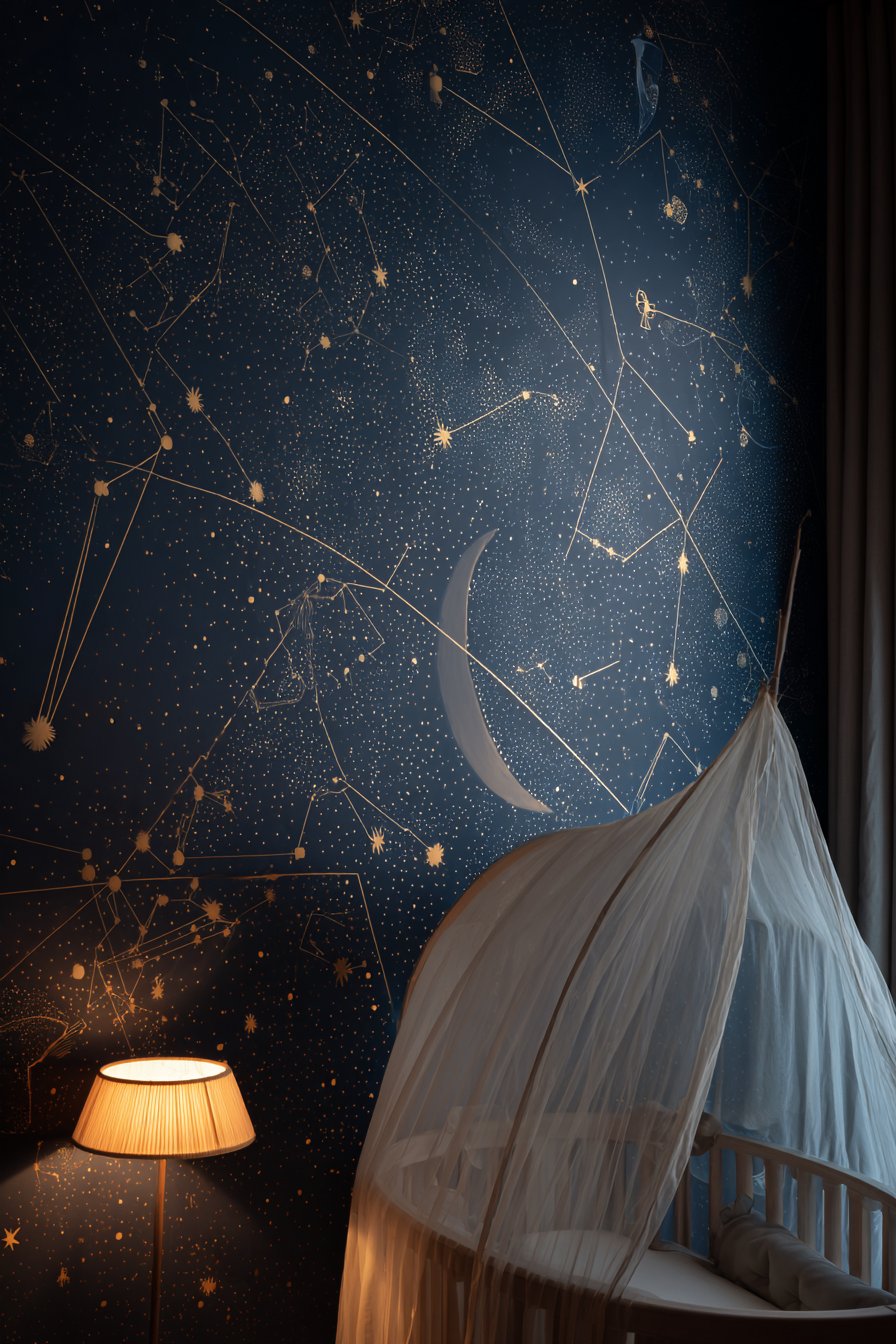
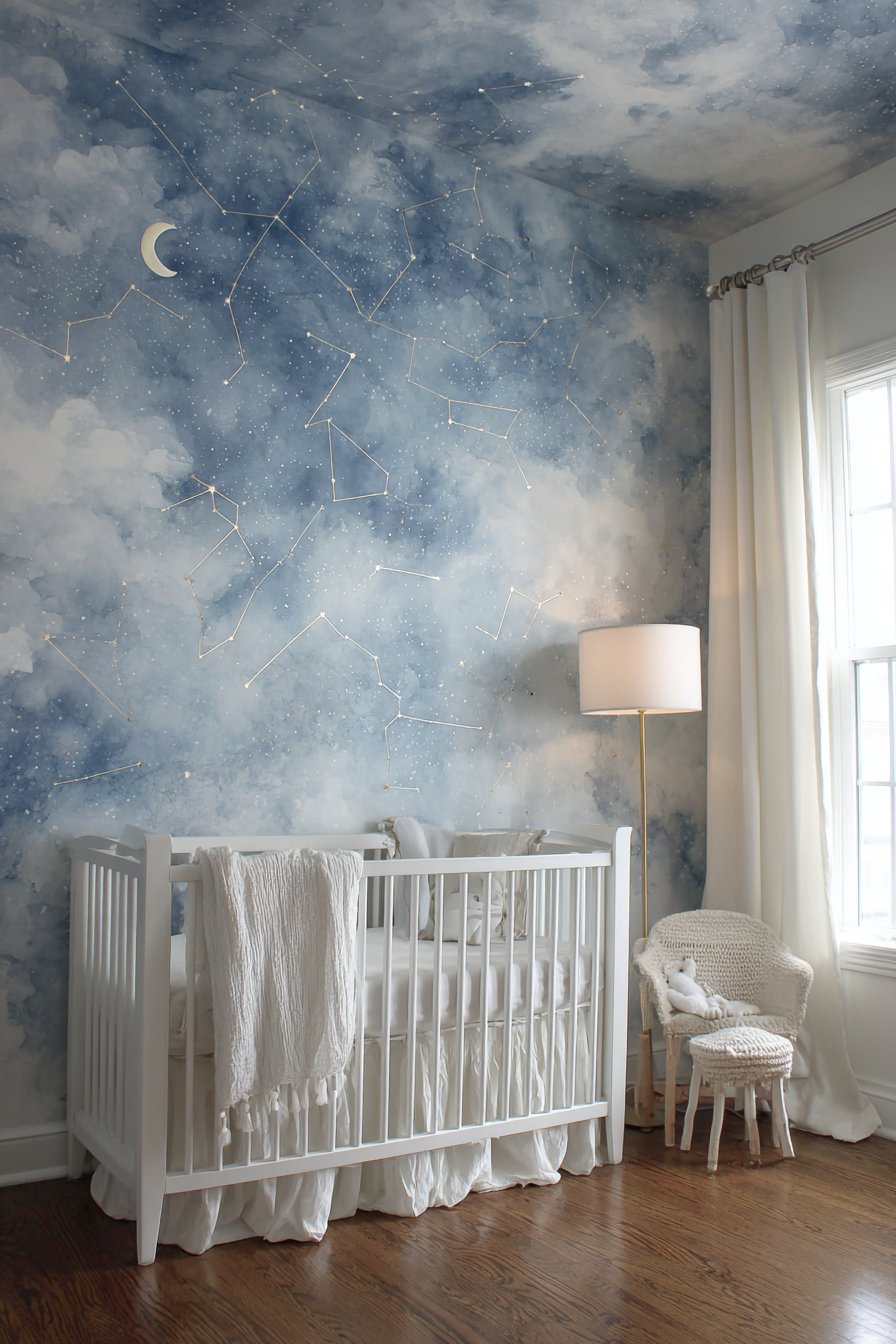
Stars twinkle and a gentle crescent moon smile down in this enchanting cute wall painting idea that creates the perfect bedtime atmosphere. The night sky rendered in silvery whites and deep navy blue establishes a peaceful environment conducive to sleep while sparking wonder about the cosmos. Delicate hand-painted constellations connected with thin golden lines add educational value, subtly introducing children to astronomy concepts while serving as beautiful decorative elements.
The sophistication of this design lies in its restraint. Rather than covering every inch of wall with stars and celestial objects, strategic spacing allows the deep blue background to breathe, creating a truly night-like atmosphere. The moon’s gentle crescent shape and friendly face provide a focal point without being overly whimsical or cartoonish—it walks the fine line between cute and elegant, making it suitable for nurseries that will evolve into older children’s rooms.
A white bassinet positioned below the celestial scene becomes part of the overall composition, with sheer fabric draping adding ethereal texture that echoes the dreamy quality of the painted sky. Soft evening light from a table lamp creates a warm glow that contrasts beautifully with the cool tones of the night sky painting, establishing the perfect ambiance for bedtime routines and nighttime feedings.
Key Design Tips: Paint the base coat in deep navy or midnight blue, ensuring even coverage for a rich, saturated background. Use a small round brush to paint stars in varying sizes—some larger and more prominent, others tiny and distant. Add white or silver highlights to stars for sparkle effect, or use metallic paint for subtle shimmer. Paint constellation connecting lines in very thin gold or silver strokes. Research actual constellations for authentic patterns that can later serve as learning tools. Consider painting the moon with subtle shading to suggest three-dimensional form. Include a few shooting stars with delicate tails for added whimsy. Use glow-in-the-dark paint for select stars to create nighttime magic.
9. Vibrant Rainbow Stripe Energy
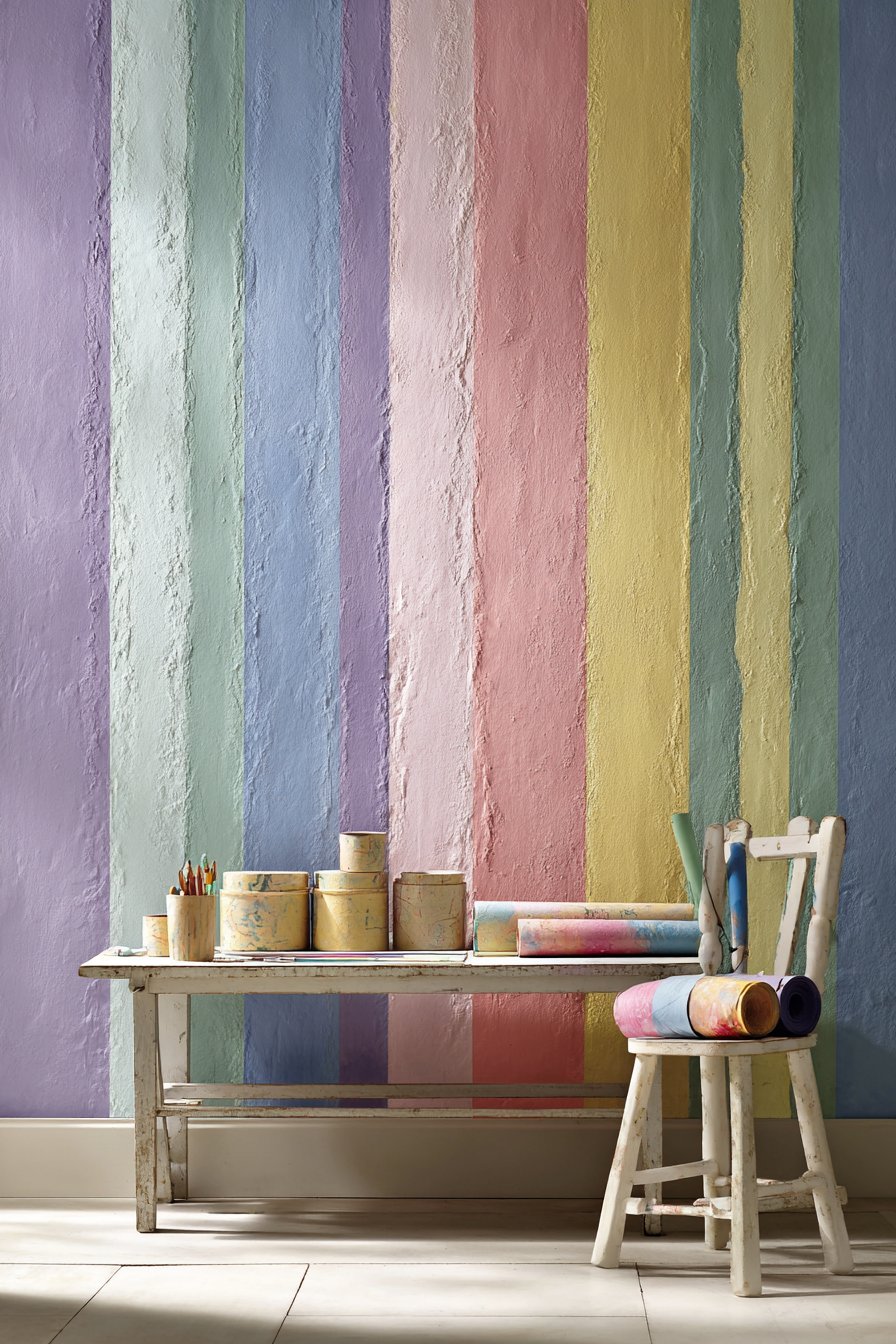
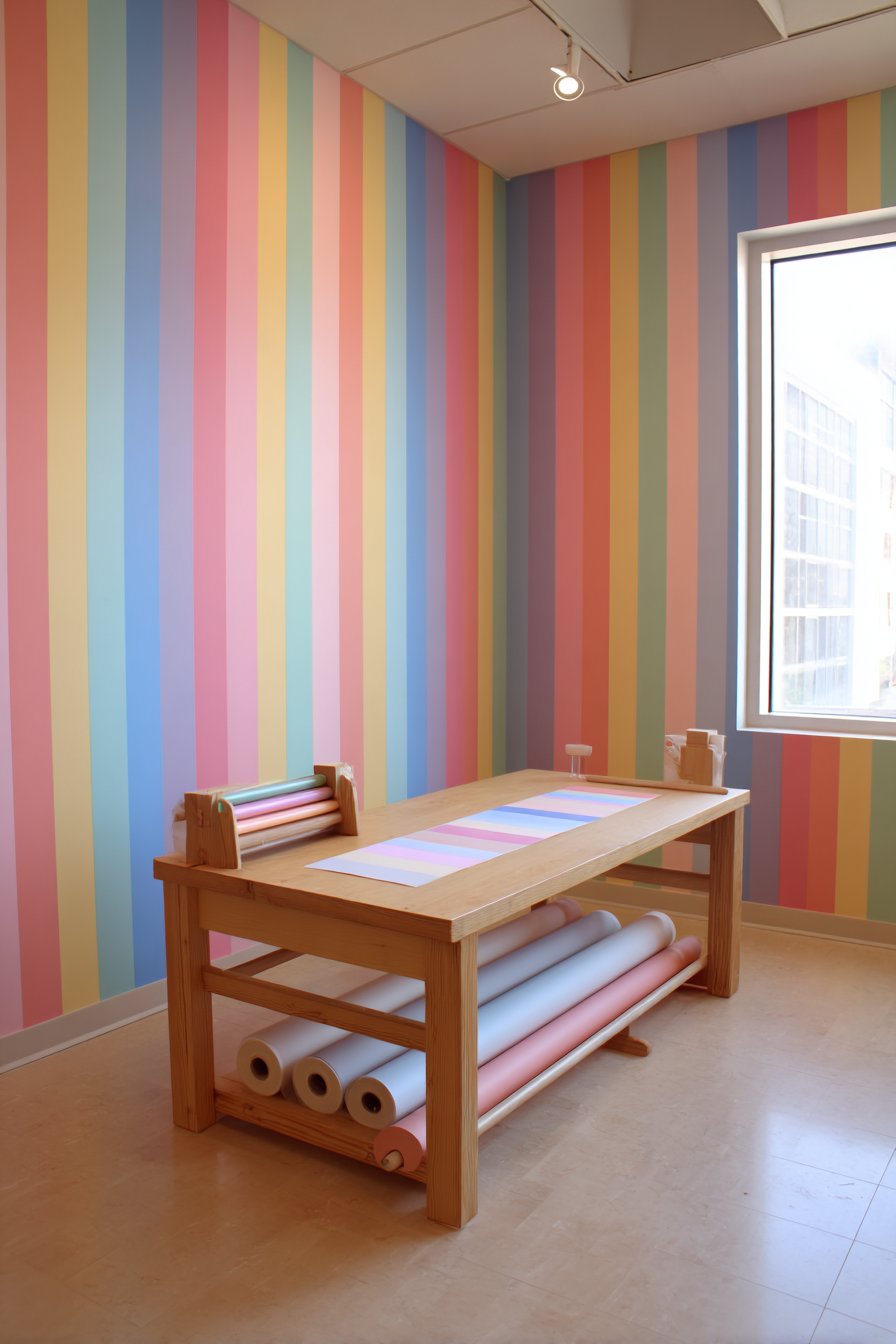
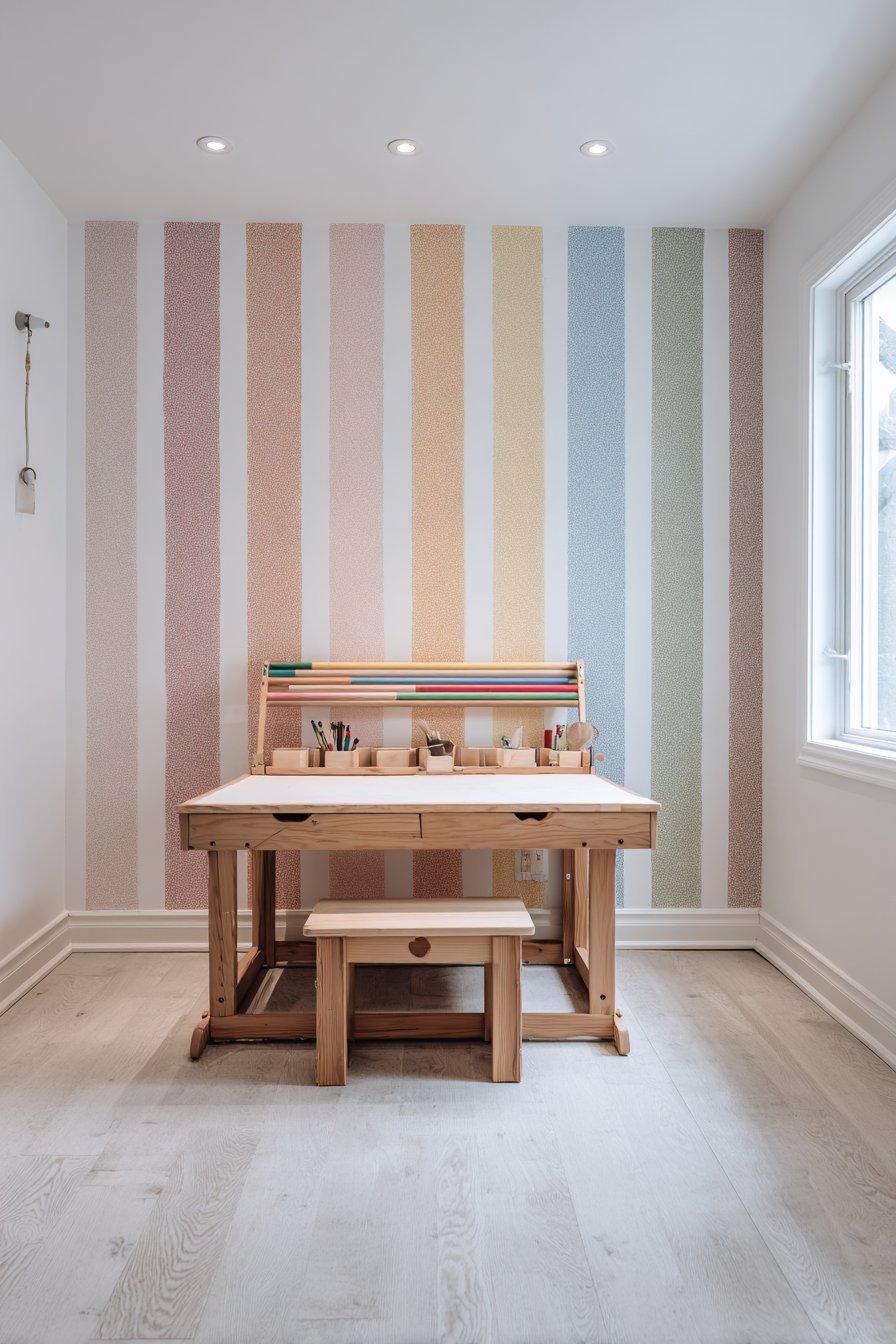
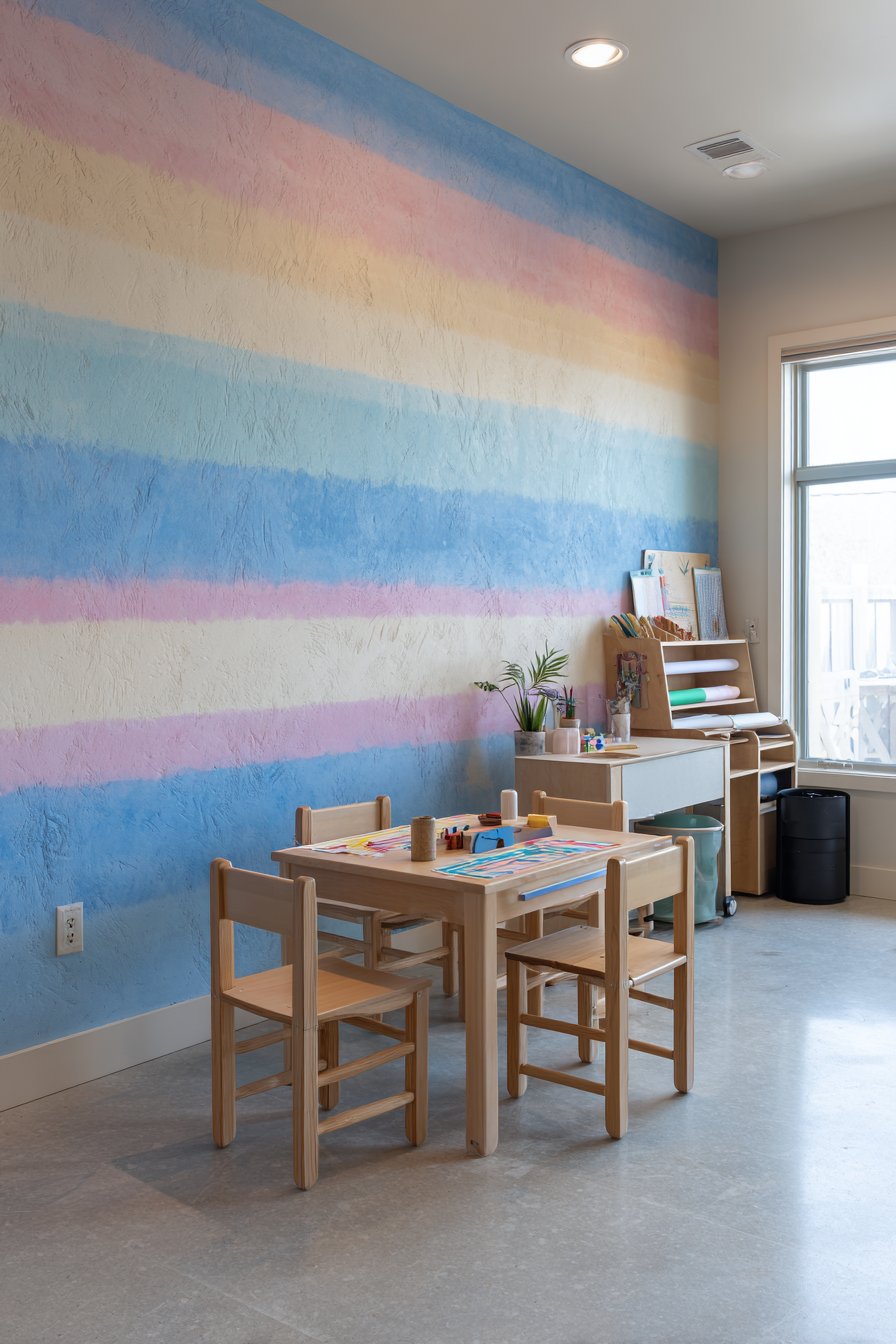
Infuse creative energy into an art studio space with this cheerful cute wall painting idea featuring rainbow stripes in soft, muted tones. Unlike bright, primary-colored rainbows that might overwhelm, this approach uses dusty pinks, sage greens, soft yellows, and muted blues to create visual interest without sensory overload. Each stripe features subtle color variations and visible hand-painted texture, emphasizing the artisanal quality and rejecting the perfect uniformity of printed patterns.
The vertical orientation of stripes offers several design advantages. Vertical lines visually heighten ceilings, making rooms feel more spacious—a valuable trick for standard-height spaces. The varying widths of stripes add organic interest; some might be four inches wide while others span six or eight inches, creating rhythm without rigid predictability. This variation keeps the eye moving and prevents the design from feeling mechanical or boring.
A child-sized art table equipped with paper rolls and washable supplies sits ready for creative exploration, benefiting from the inspirational backdrop of colorful stripes. Natural north-facing light provides even, consistent illumination throughout the day—ideal for art spaces where color accuracy matters. The rainbow stripes subtly encourage color exploration and creativity while demonstrating how different hues can coexist harmoniously.
Key Design Tips: Use painter’s tape to create clean, straight stripe edges, removing tape while paint is still slightly wet to prevent peeling. Measure and mark stripe widths across the wall before taping to ensure balanced distribution. Paint alternate stripes first, allowing them to dry completely before taping and painting the remaining stripes. Use slightly different shades within each color family for subtle variation—not just one pink, but perhaps dusty rose, blush, and mauve. Add texture by using slightly diluted paint or a textured roller for visual interest. Consider orienting stripes vertically to heighten the room visually, or horizontally to make it feel wider. Extend stripes across multiple walls for immersive, cohesive effect.
10. Friendly Woodland Creature Forest
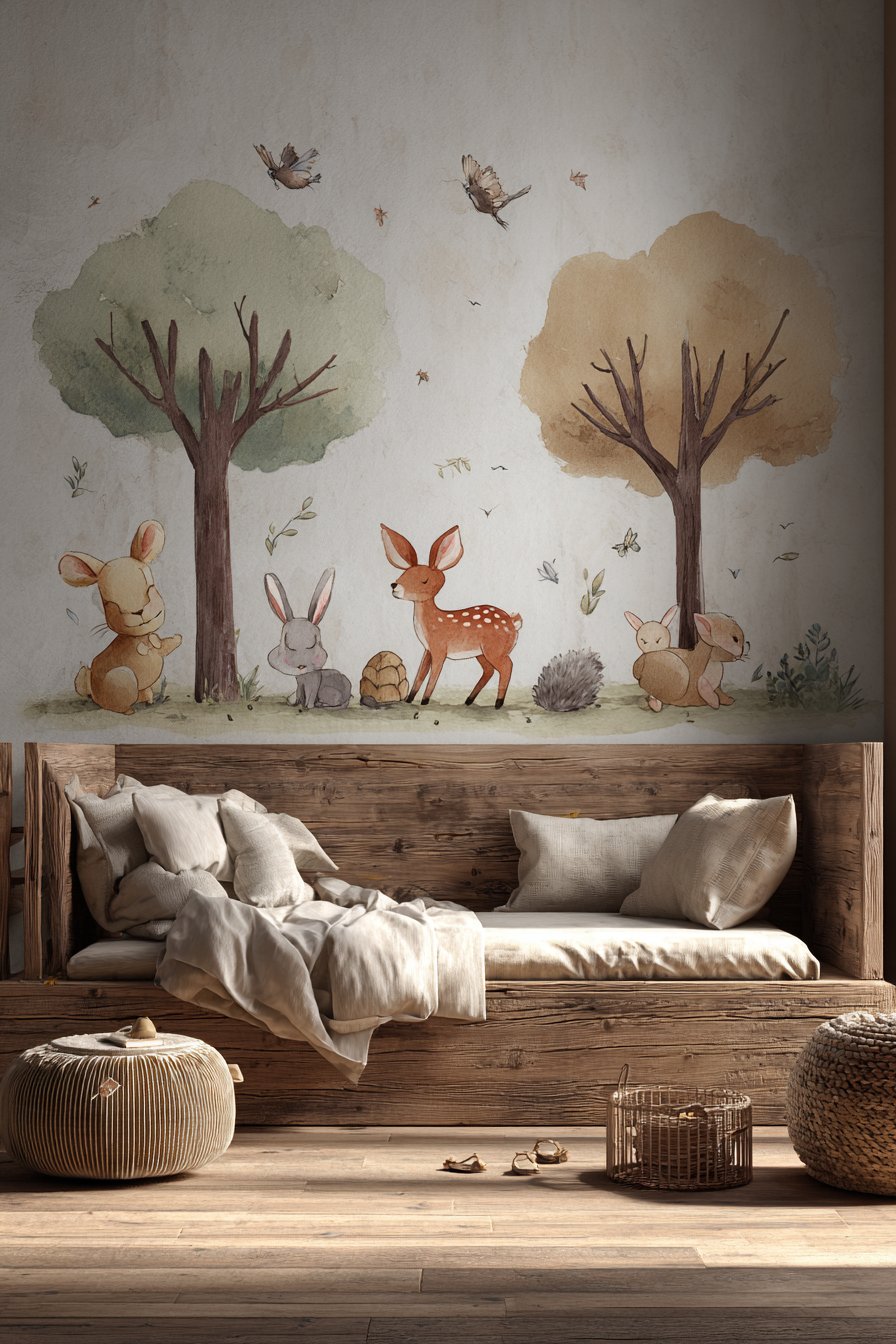
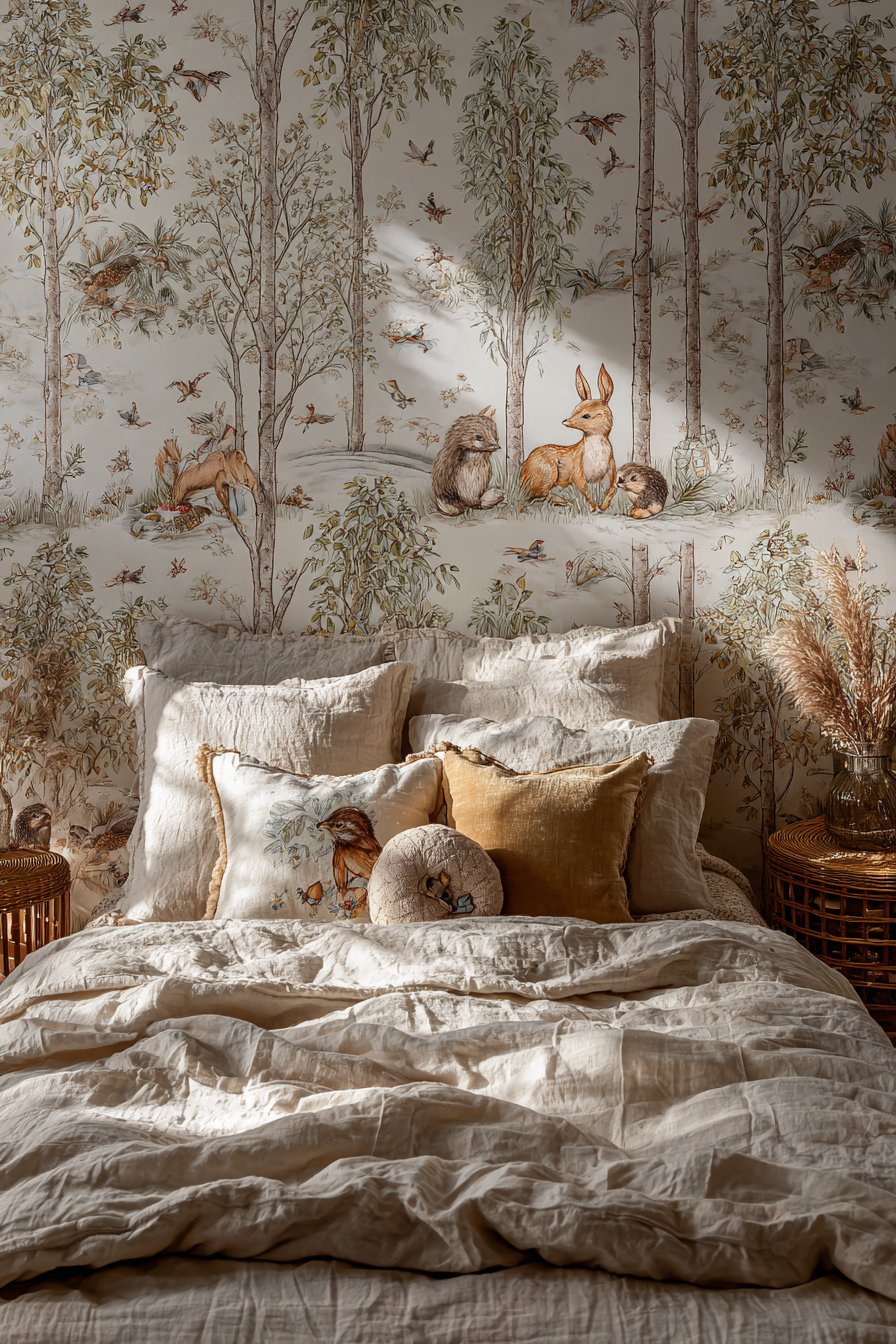
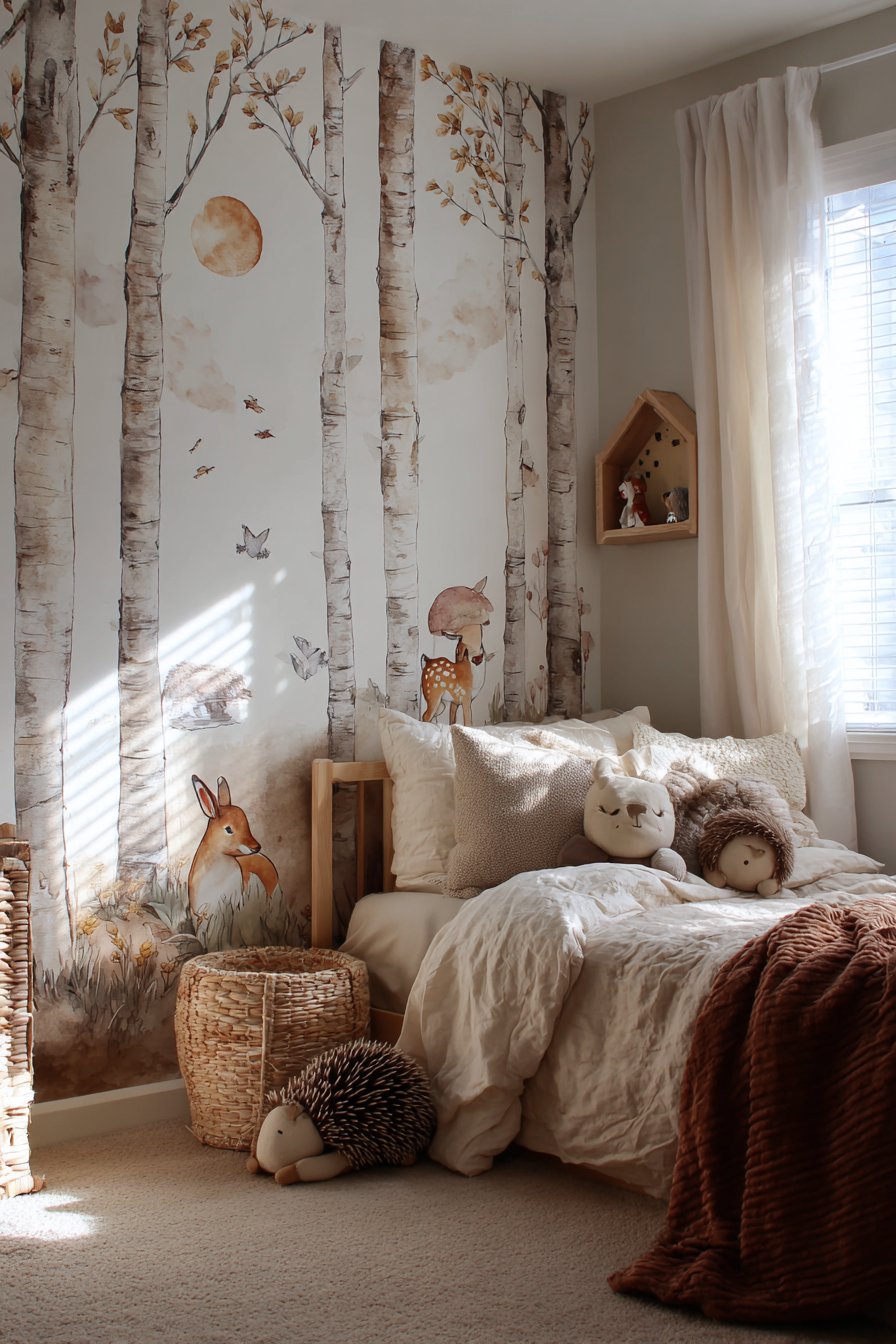
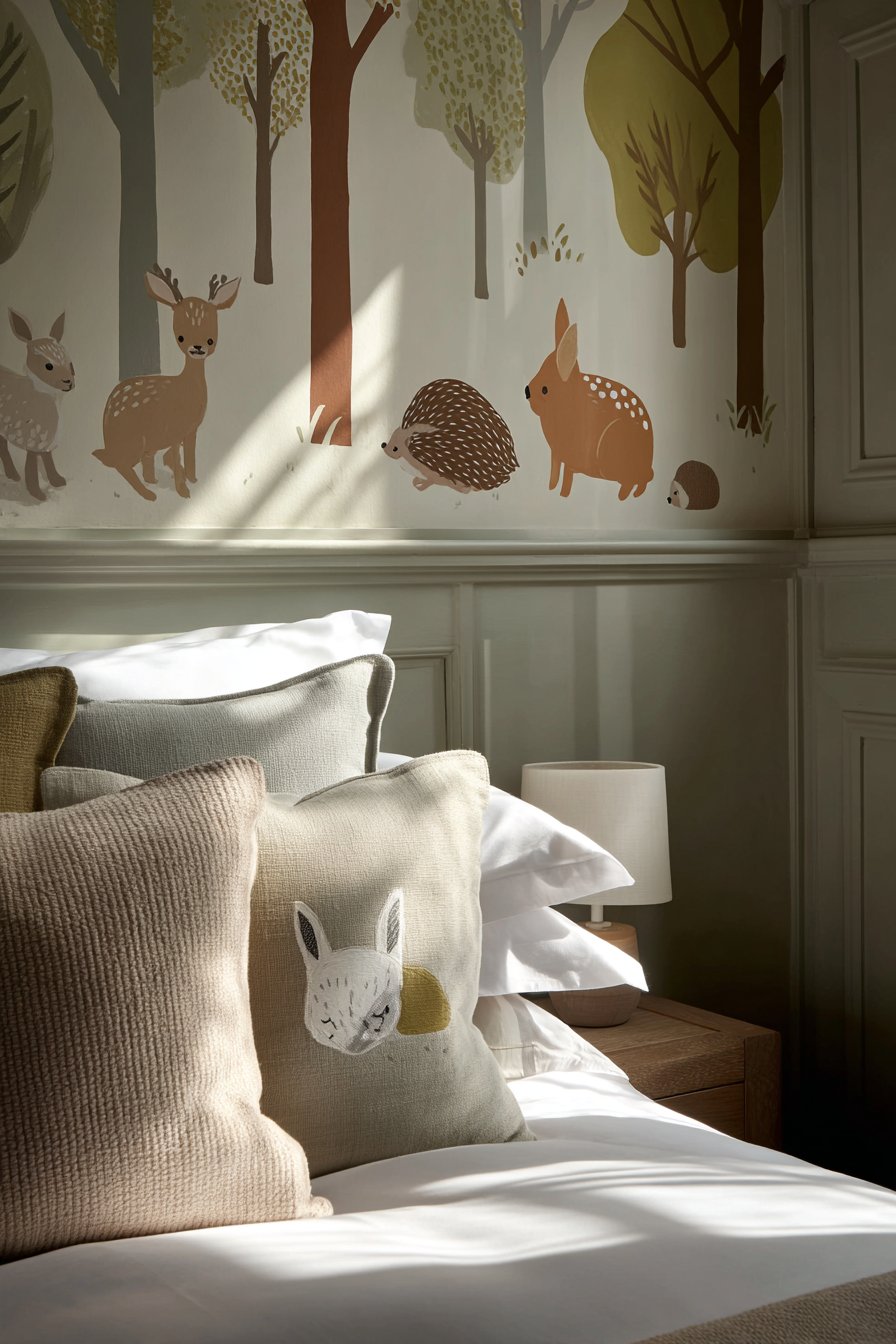
Transport children into an enchanted forest with this charming cute wall painting idea featuring friendly woodland creatures among simplified tree trunks. Deer with gentle eyes, soft-eared rabbits, and adorable hedgehogs peek out from behind trees rendered in earthy browns and soft greens. The key to this design’s success lies in its approachability—the animals maintain realistic features while being stylized just enough to feel friendly and non-threatening to young children.
The careful balance between realism and whimsy requires thoughtful execution. Animals should be recognizable and proportionally accurate enough to have educational value, yet simplified and sweetened sufficiently to avoid any potentially scary elements. Deer might have especially large, innocent eyes; rabbits could have particularly fluffy cottontails; hedgehogs might smile gently. These small adjustments transform wildlife into friendly forest companions.
A low platform bed with natural linens complements the nature theme beautifully, creating a cohesive design story that celebrates organic materials and earth-connected living. Morning sunlight highlights the organic brushwork, emphasizing the hand-crafted quality that distinguishes this cute wall painting from commercial alternatives. The varying heights of trees and creatures create visual interest while allowing different details to capture attention depending on viewing angle and distance.
Key Design Tips: Research woodland animals for accurate proportions and features before simplifying them into cuter versions. Paint tree trunks first in varying widths and slight angles to create natural forest feel. Use darker browns for bark shadows and lighter browns for highlights to suggest three-dimensional trees. Keep animal bodies simplified with soft, rounded edges rather than angular or sharp features. Position animals at varying heights and distances for depth—some partially hidden behind trees, others more prominent. Add simple ground details like painted grass, mushrooms, or fallen leaves to enhance forest atmosphere. Use a limited color palette of browns, greens, and soft accent colors for cohesive, calming effect. Consider painting a few trees extending onto adjacent walls to wrap the forest around the room.
11. Whimsical Secret Garden Door
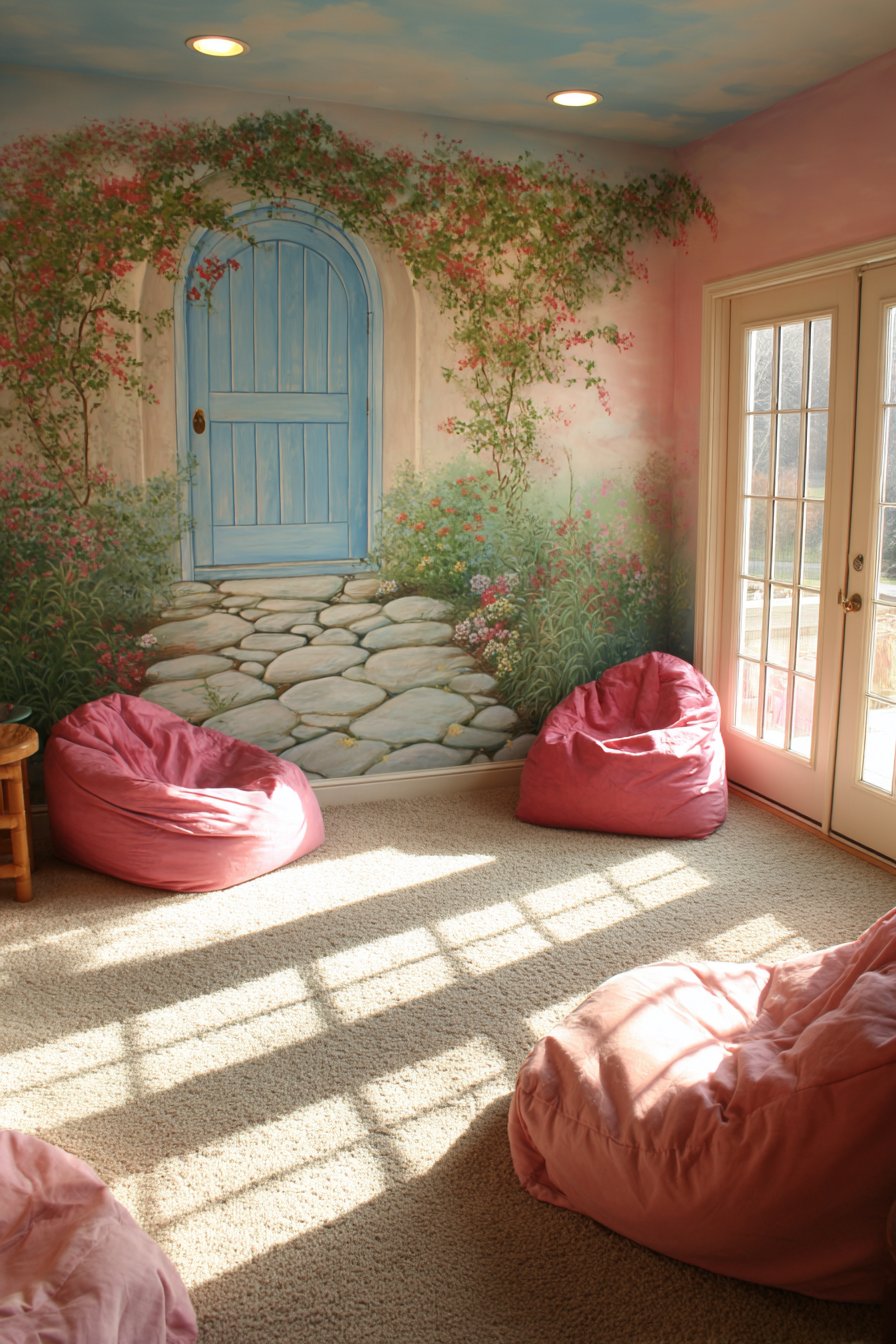
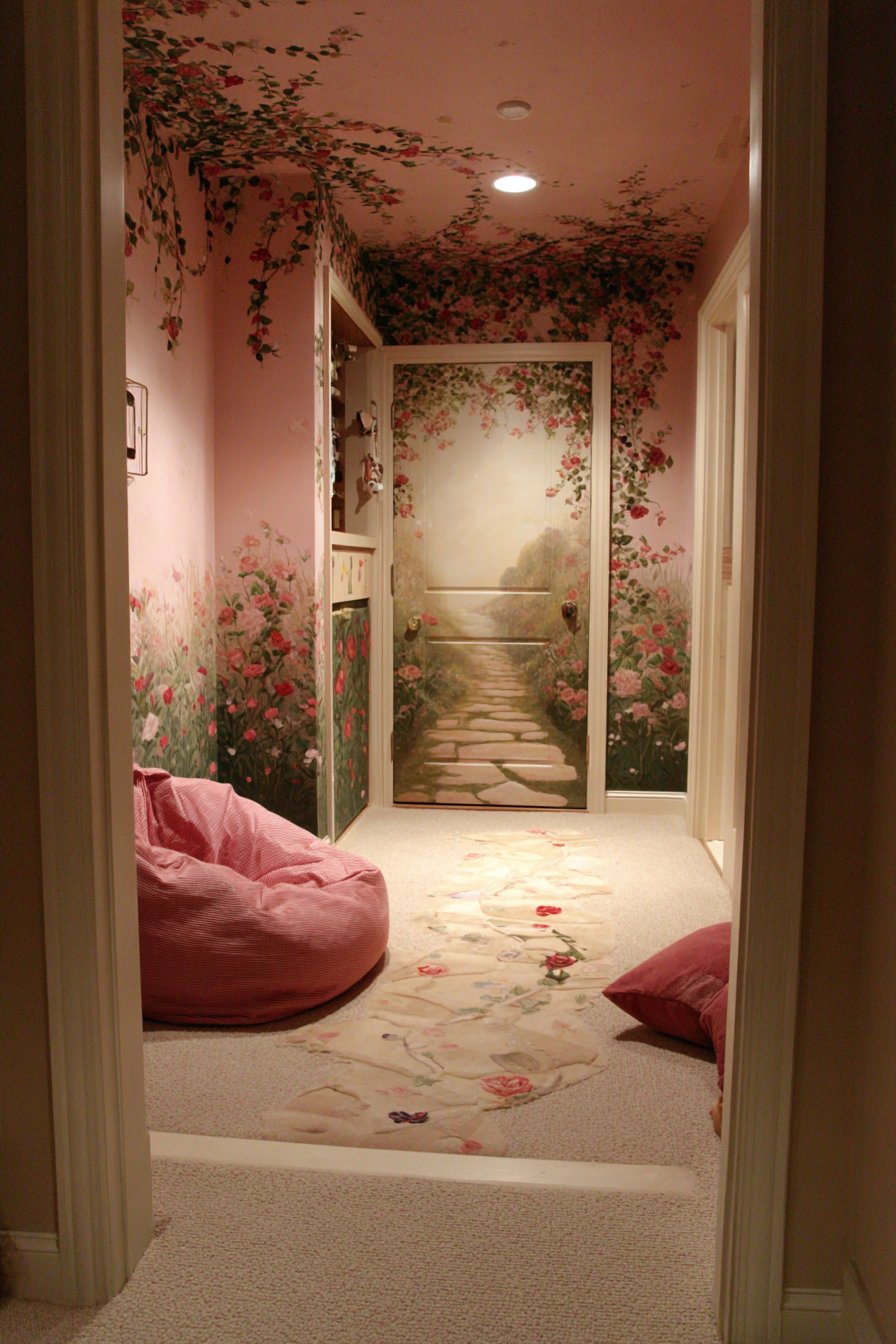
Invite imagination through a painted doorway with this creative cute wall painting idea that suggests passage to a secret garden. A charming painted door complete with detailed hardware, climbing vines, and small flowers in cheerful pastels creates the illusion of a portal to magical outdoor spaces. The trompe-l’oeil technique creates convincing depth on a flat surface, with careful attention to shadows, highlights, and perspective making the door appear genuinely three-dimensional.
The storytelling potential of this design makes it particularly engaging for children’s play spaces. The door becomes a launching point for imaginative adventures—where does it lead? What’s growing in the garden beyond? Who tends those climbing roses? This narrative quality transforms the wall from mere decoration into an interactive element of play, demonstrating how cute wall painting ideas can serve both aesthetic and developmental purposes.
Bean bag chairs and soft floor mats invite children to sit before the painted door, gazing at its details while creating stories and scenarios. Afternoon light casts gentle shadows that enhance the dimensional illusion, particularly if the painted door includes clever shadowing that responds to the room’s actual light sources. Professional interior photography captures the magical yet achievable quality that makes this design appealing to both children and design-conscious parents.
Key Design Tips: Study actual door proportions and details for realistic rendering—standard interior door dimensions provide good reference points. Sketch the door outline first, including frame, panels, and hardware placement. Paint the door in layers: base color first, then add panel shadows and highlights for dimension. Include detailed hardware like a painted doorknob, hinges, and perhaps a keyhole for authenticity. Paint climbing vines using thin brushes, starting with stems and adding leaves and flowers afterward. Add shadow along the door’s edges and under climbing elements to enhance three-dimensional illusion. Consider painting the door slightly ajar with light peeking through for enhanced magic. Position the painted door at child height to maximize engagement and imagination.
12. Sophisticated Botanical Branch
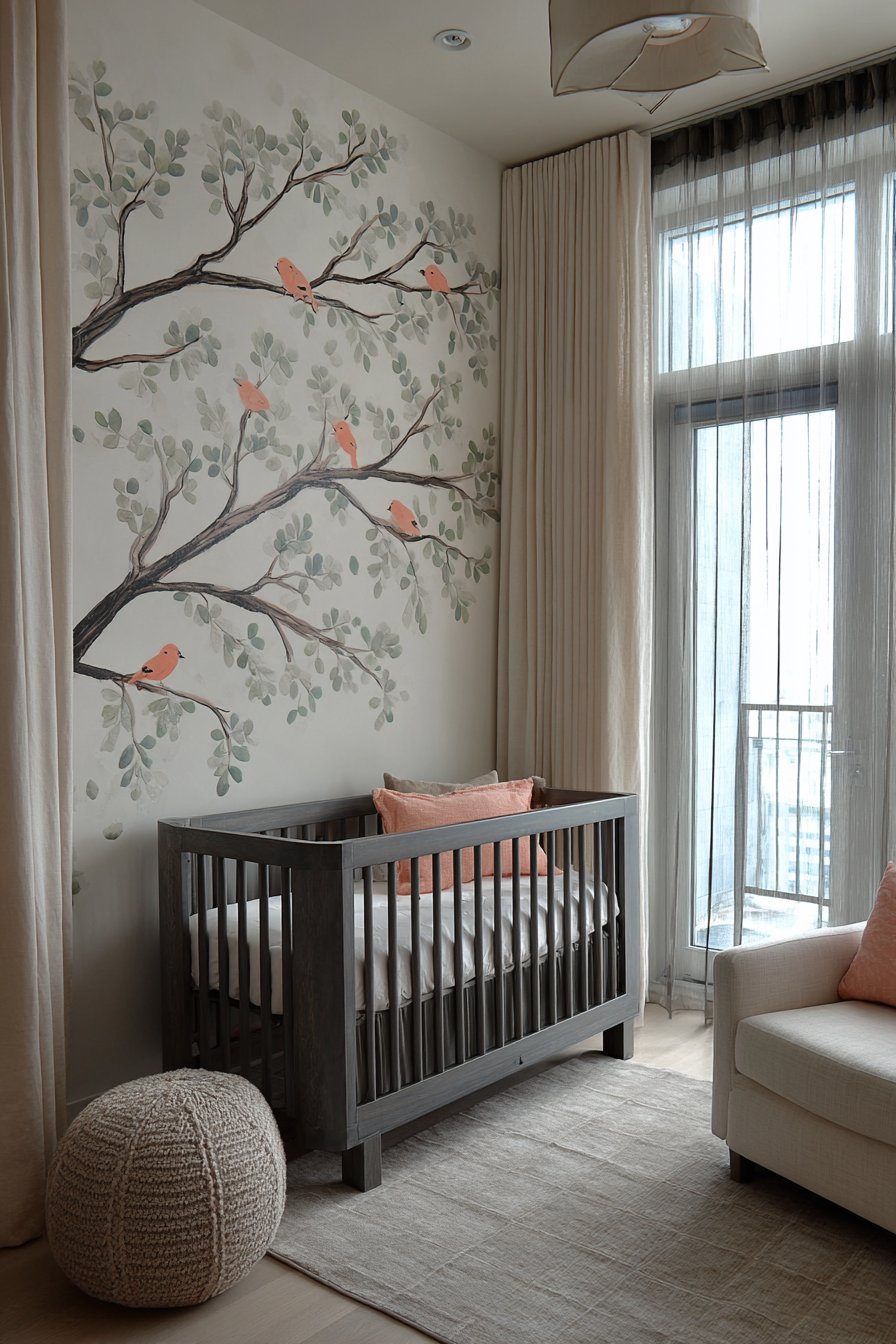
Elegance meets playfulness in this minimalist cute wall painting idea featuring a simple hand-painted branch extending gracefully across the wall. Delicate leaves in sage green and soft painted birds in muted coral and cream create a sophisticated yet playful aesthetic that works beautifully in modern nurseries. The restraint of this design—focusing on a single branch rather than an entire tree or forest—demonstrates how simplicity can create powerful visual impact.
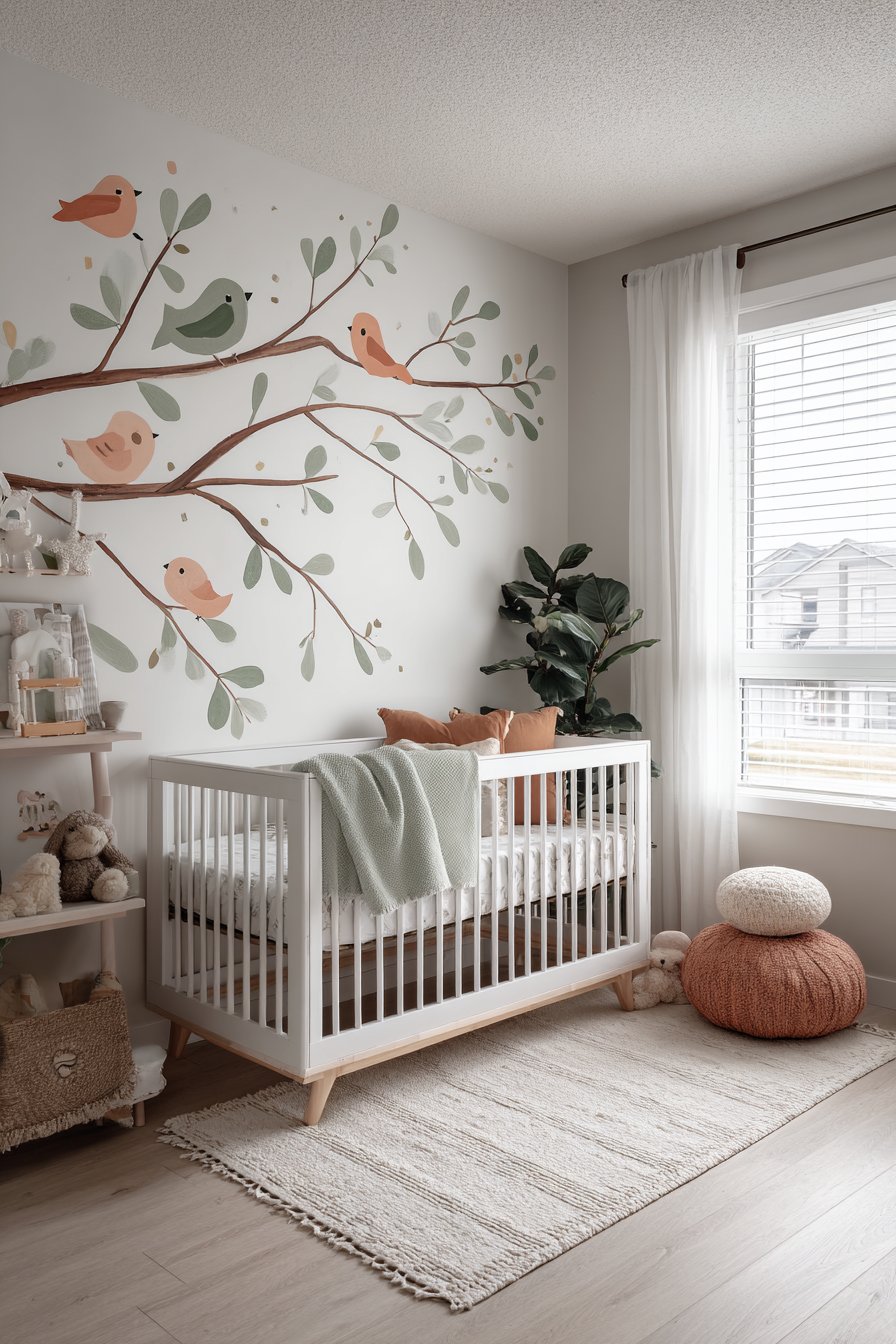
The organic, asymmetrical nature of a branch creates visual interest through natural irregularity. Unlike geometric patterns that might feel rigid, the branch’s gentle curves and varied leaf placement provide softness and movement. The carefully chosen muted color palette ensures the design reads as contemporary and refined rather than overly childish, appealing to parents who want nursery decor that aligns with their overall home aesthetic.
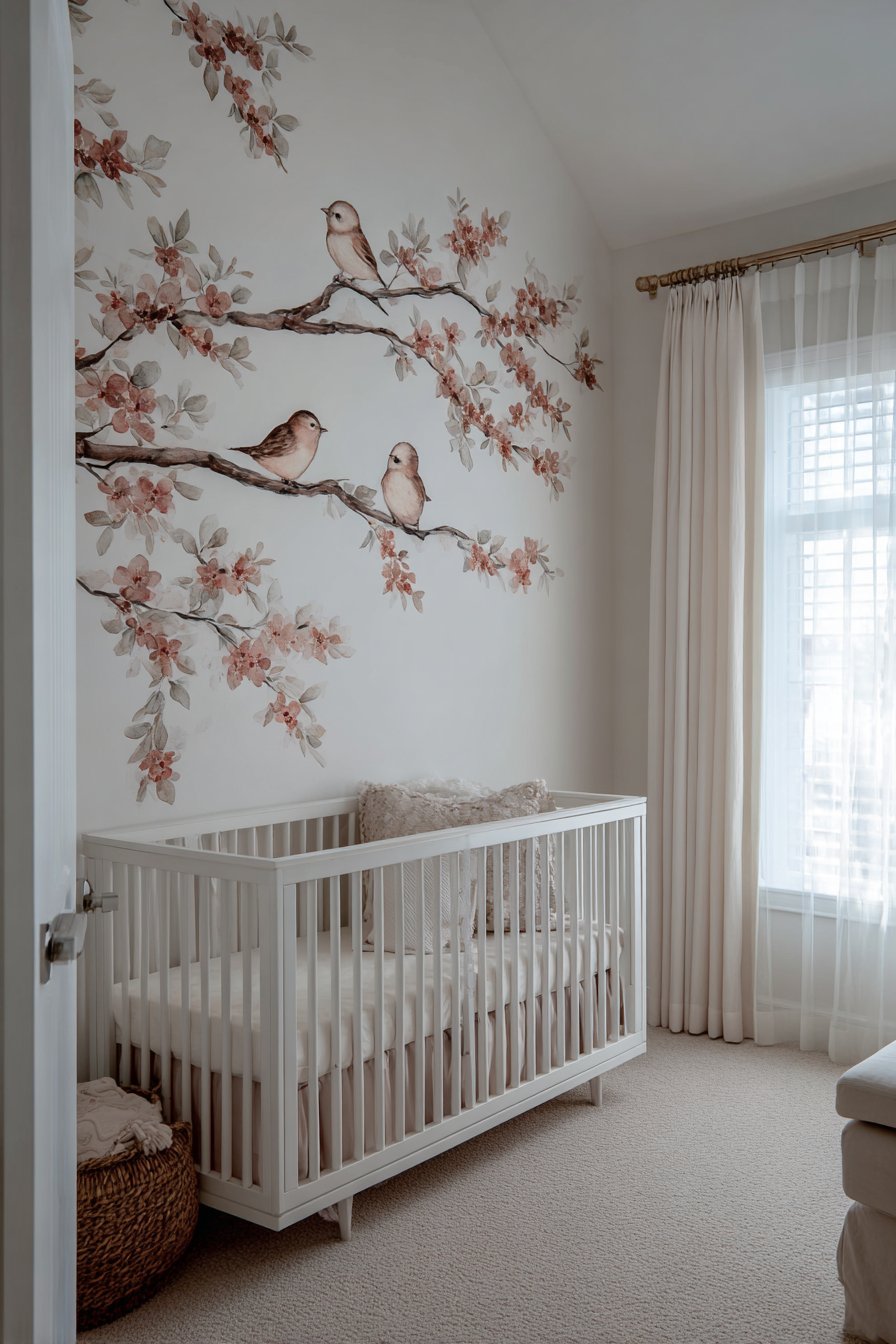
A modern crib with clean lines sits below the organic artwork, creating pleasing contrast between the geometric furniture and the natural, flowing branch design. Diffused natural light from sheer window treatments illuminates the subtle painting throughout the day, with shifting shadows adding dimension and life to the static design. This demonstrates how lighting considerations should influence both the design itself and its placement within the room.
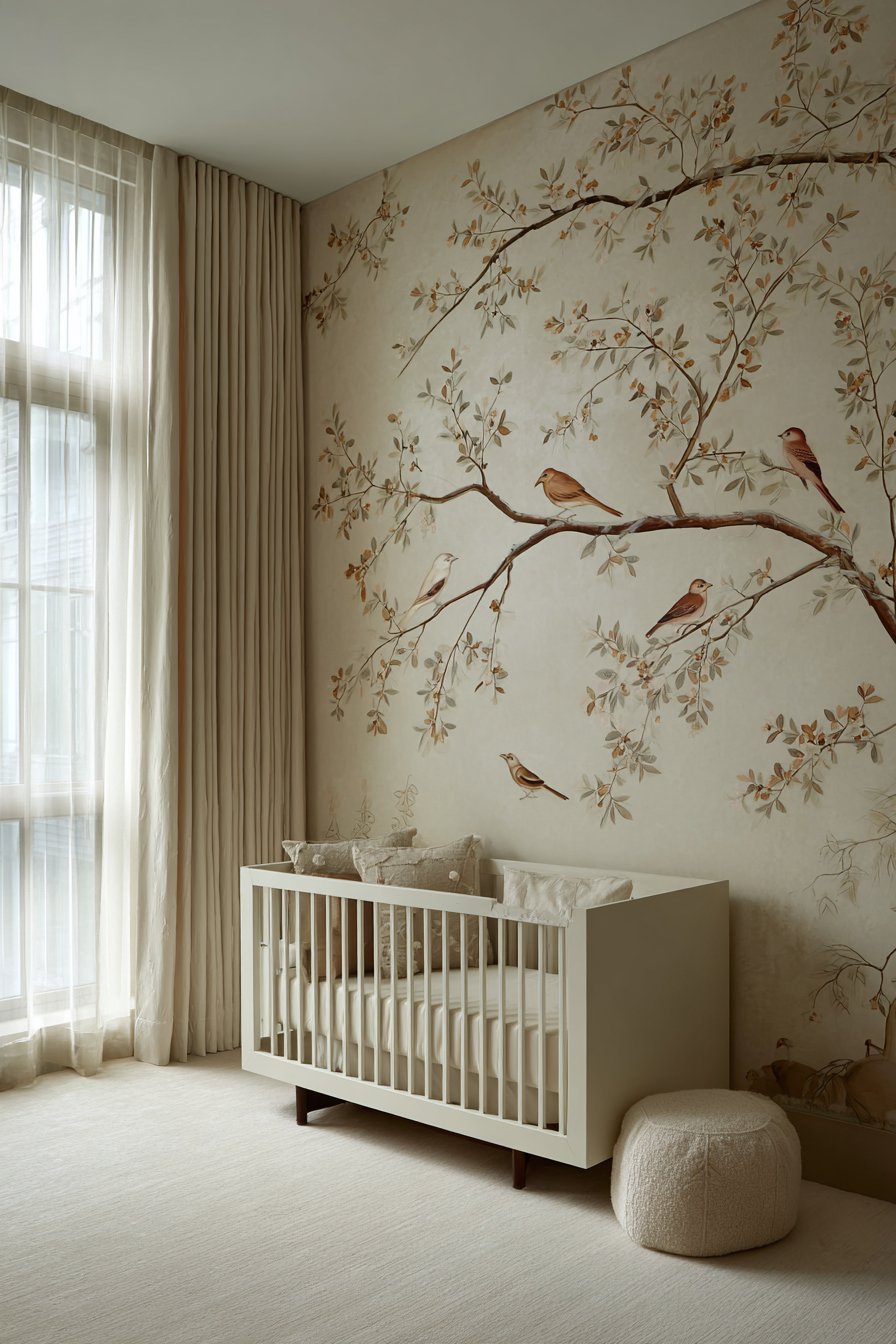
Key Design Tips: Photograph or sketch real branches for authentic curves, angles, and leaf placement patterns. Paint the main branch stem first in medium brown or gray-green, using a medium-sized brush. Add smaller offshoots and twigs with a finer brush, maintaining organic angles and proportions. Paint leaves in clusters of 3-5 rather than individually for natural appearance and faster execution. Vary leaf sizes and orientations for realistic diversity. Add birds sparingly—1-3 total—positioning them on the branch rather than floating separately. Use simple bird silhouettes with minimal detail for contemporary, stylized effect. Consider extending the branch across a corner to create dramatic diagonal composition. Seal with matte varnish for protection while maintaining the painted aesthetic.
13. Dreamy Castle Silhouette
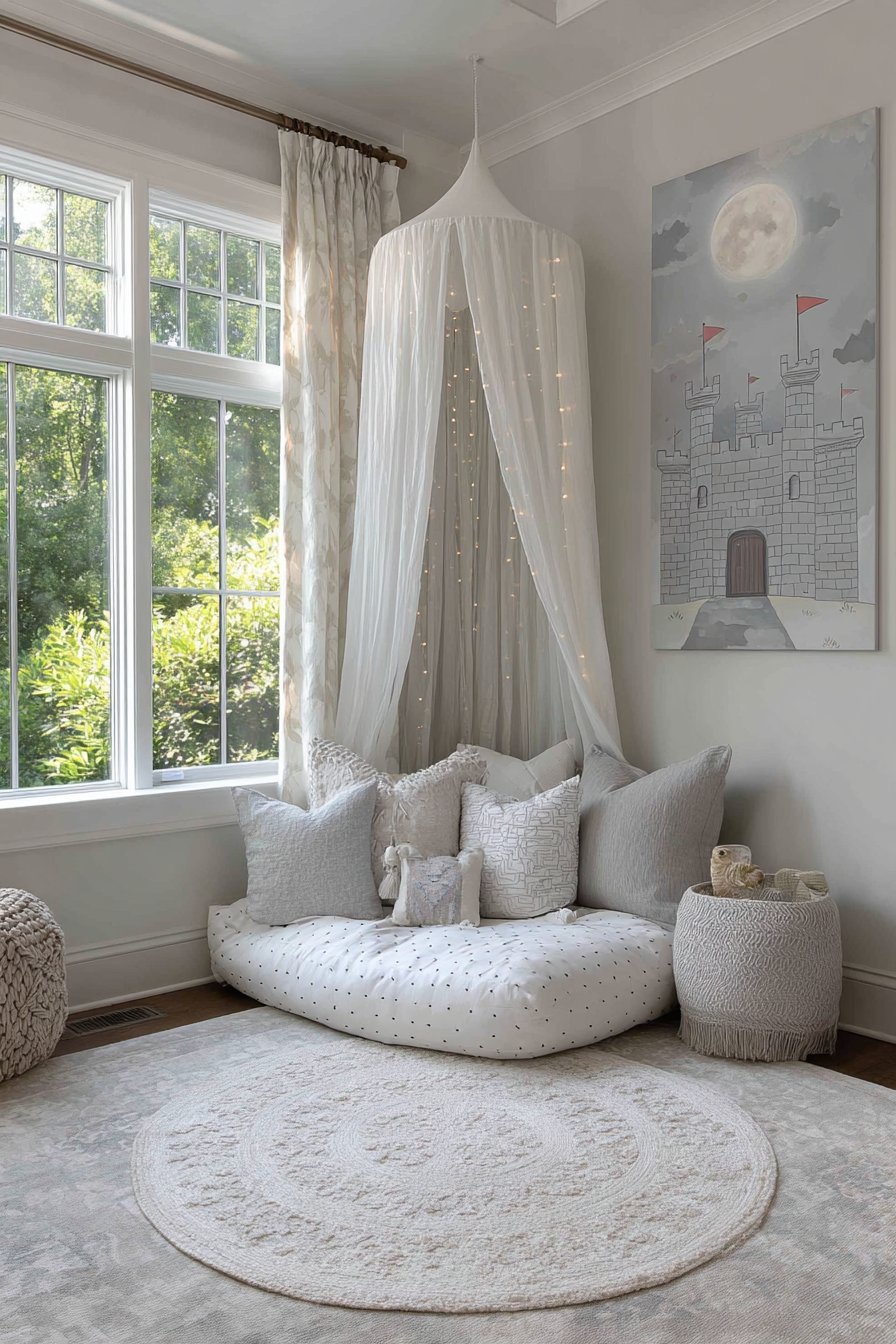
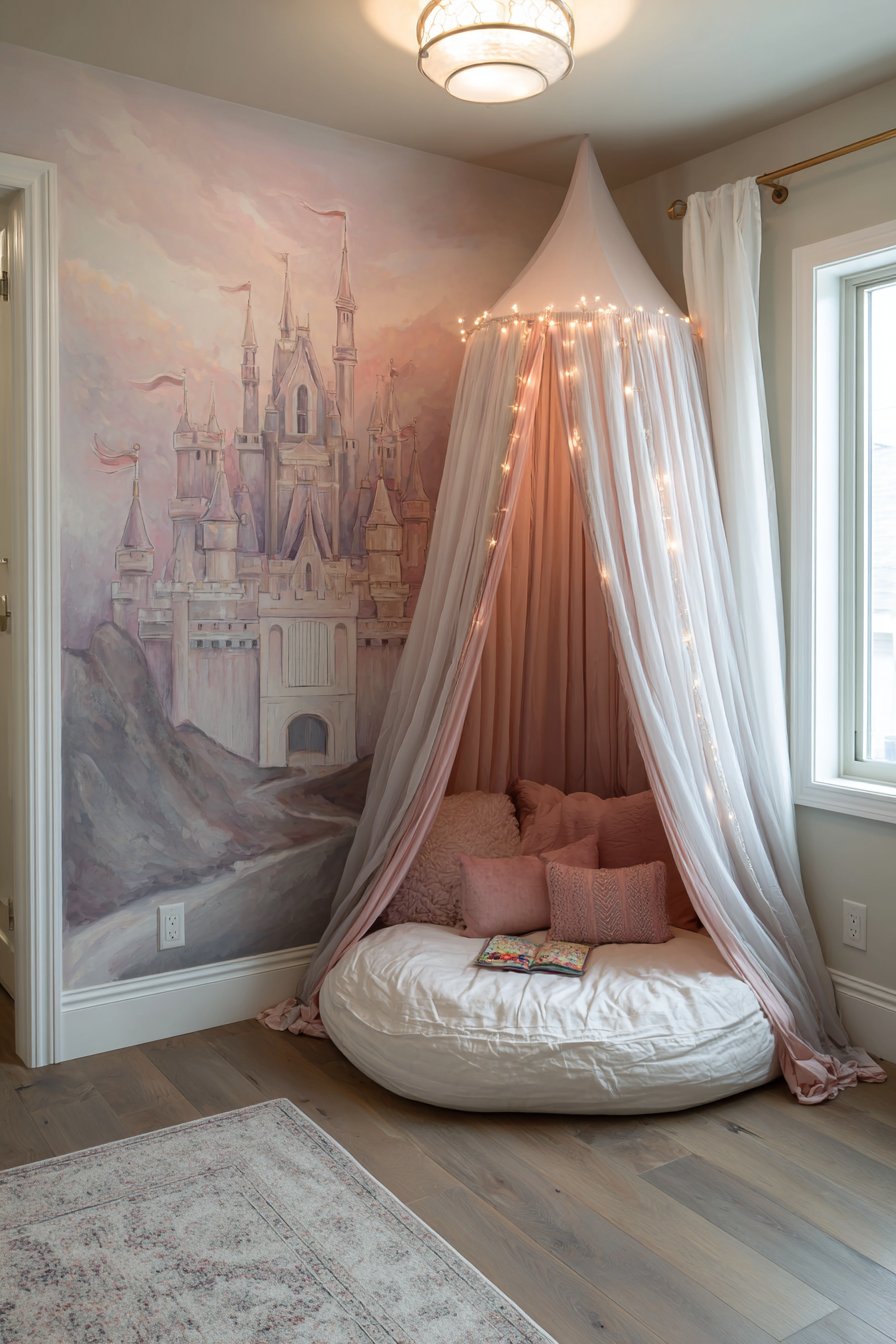
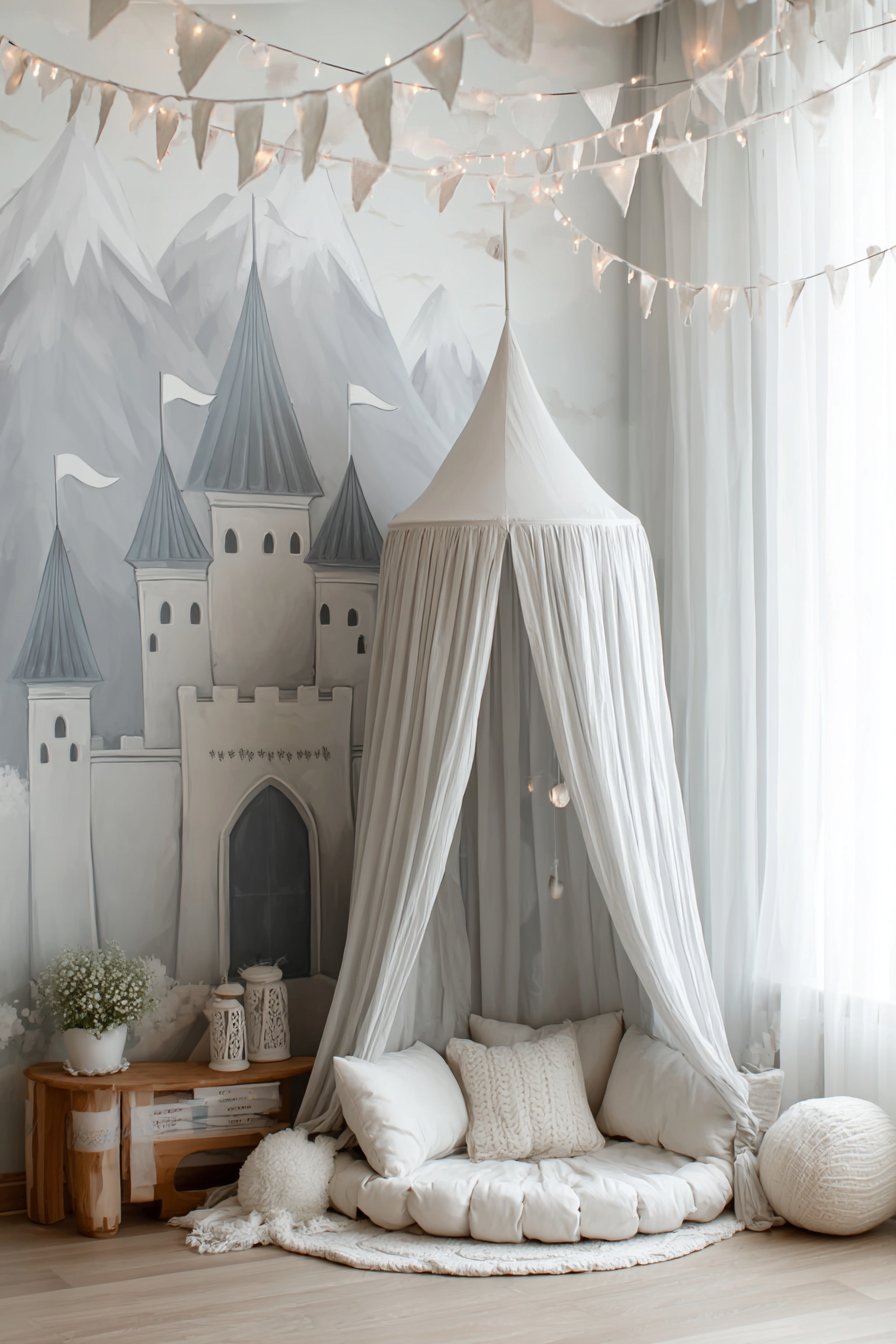
Fairy tale magic comes to life with this enchanting cute wall painting idea featuring a castle silhouette in gentle grays and whites. Simple turrets and delicate flags suggest storybook charm without overwhelming detail or overly literal representation. The silhouette approach—rendering the castle as a simplified shape rather than detailed architecture—creates a dreamlike quality perfect for sparking imagination while maintaining visual calm.
The sophisticated use of limited color demonstrates how restraint can enhance rather than diminish impact. By working within a narrow tonal range of grays and soft whites, the design feels cohesive and serene rather than busy or chaotic. This approach also provides excellent longevity; as children age, the subtle castle silhouette remains appropriate where more literal, colorful versions might feel too juvenile.
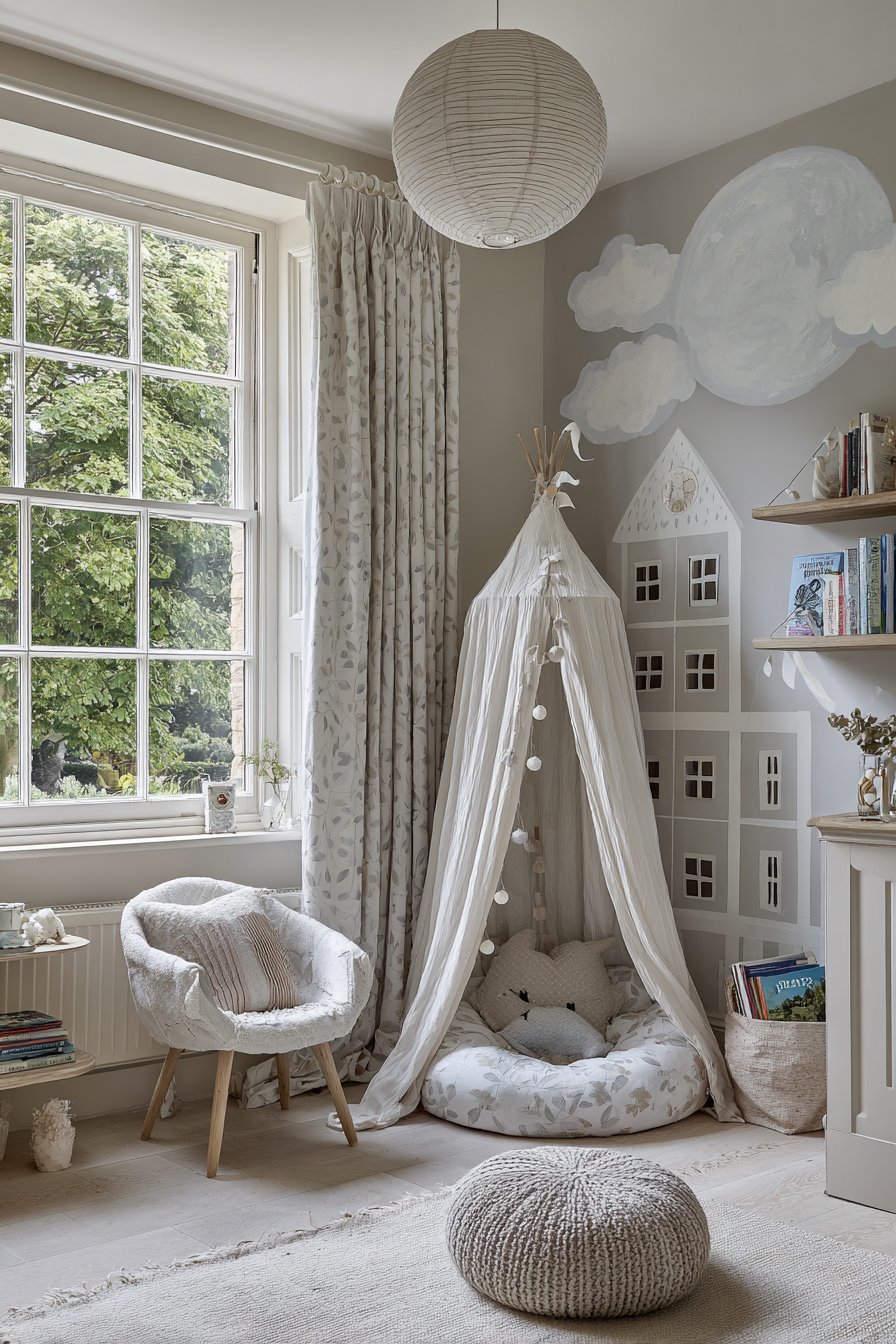
A canopy reading tent with string lights positioned below the painted castle creates a magical reading nook that feels truly enchanted. Soft twilight filtering through windows adds ambiance, particularly when the string lights illuminate, creating the impression of castle windows glowing in the distance. This layering of painted elements with three-dimensional decor demonstrates how wall paintings can anchor and inspire entire room vignettes.
Key Design Tips: Research castle silhouettes and simplified architectural drawings for inspiration and proportion guidance. Sketch the castle outline lightly in pencil before committing to paint. Paint the entire silhouette in solid color first—medium gray works well—then add lighter highlights and details afterward. Keep architectural details minimal—simple tower shapes, basic flags, suggested windows as small rectangles. Add subtle shading using slightly darker gray to suggest dimension without losing the silhouette effect. Consider painting stars or a moon in the sky around the castle for enhanced fairy tale atmosphere. Position the castle to align with specific furniture pieces like beds or reading nooks for intentional composition. Use painter’s tape for straight edges on towers and walls to maintain clean, graphic quality.
14. Heavenly Cloud Ceiling
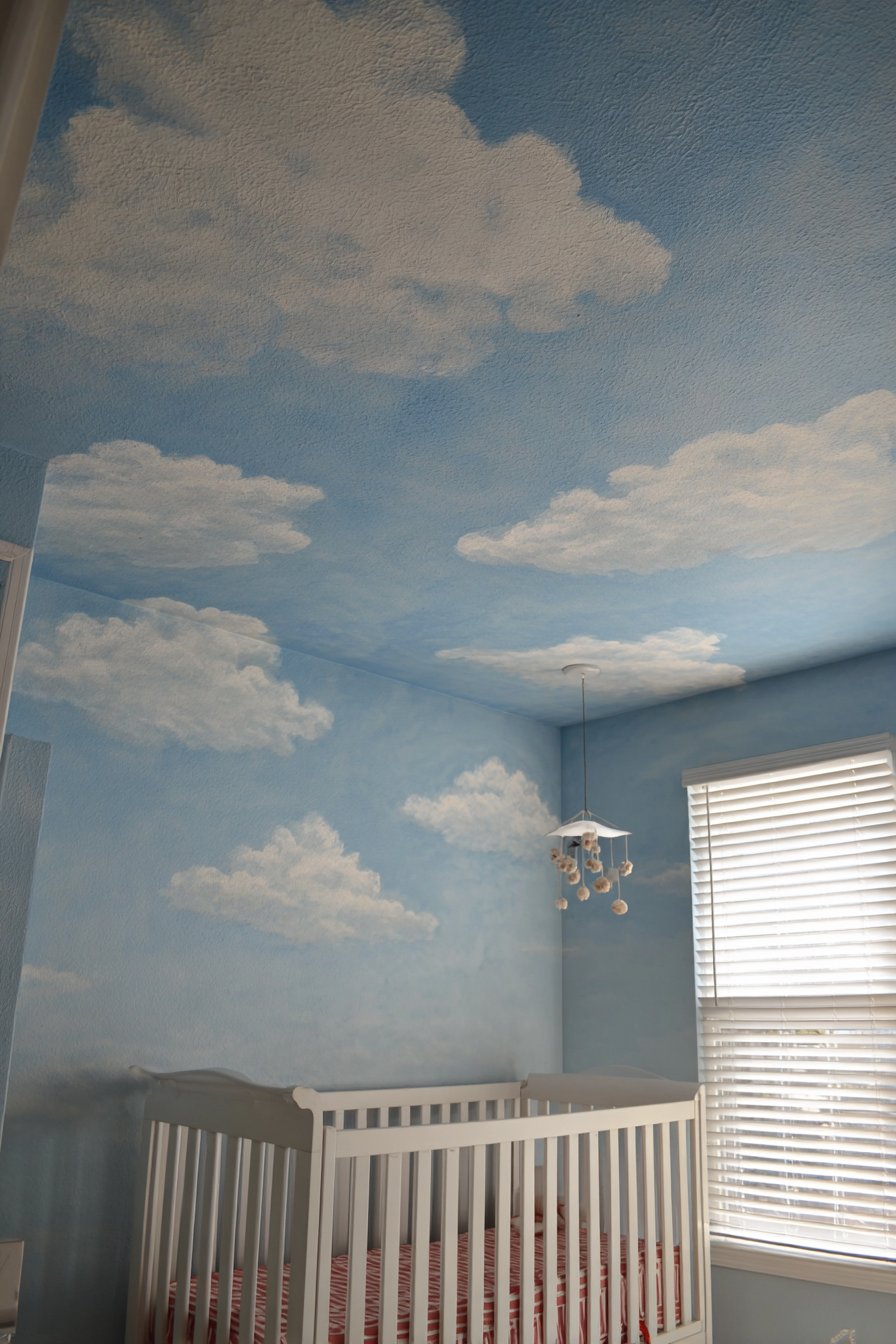
Look up to find wonder with this innovative cute wall painting idea that brings fluffy clouds across the ceiling and down onto the upper walls. Hand-painted clouds in varying sizes float across a pale blue expanse, with subtle shading giving dimension to each cloud through gentle brushwork. This ceiling treatment creates an immersive sky experience that’s particularly perfect for nurseries, where infants spend considerable time gazing upward during diaper changes and quiet moments.
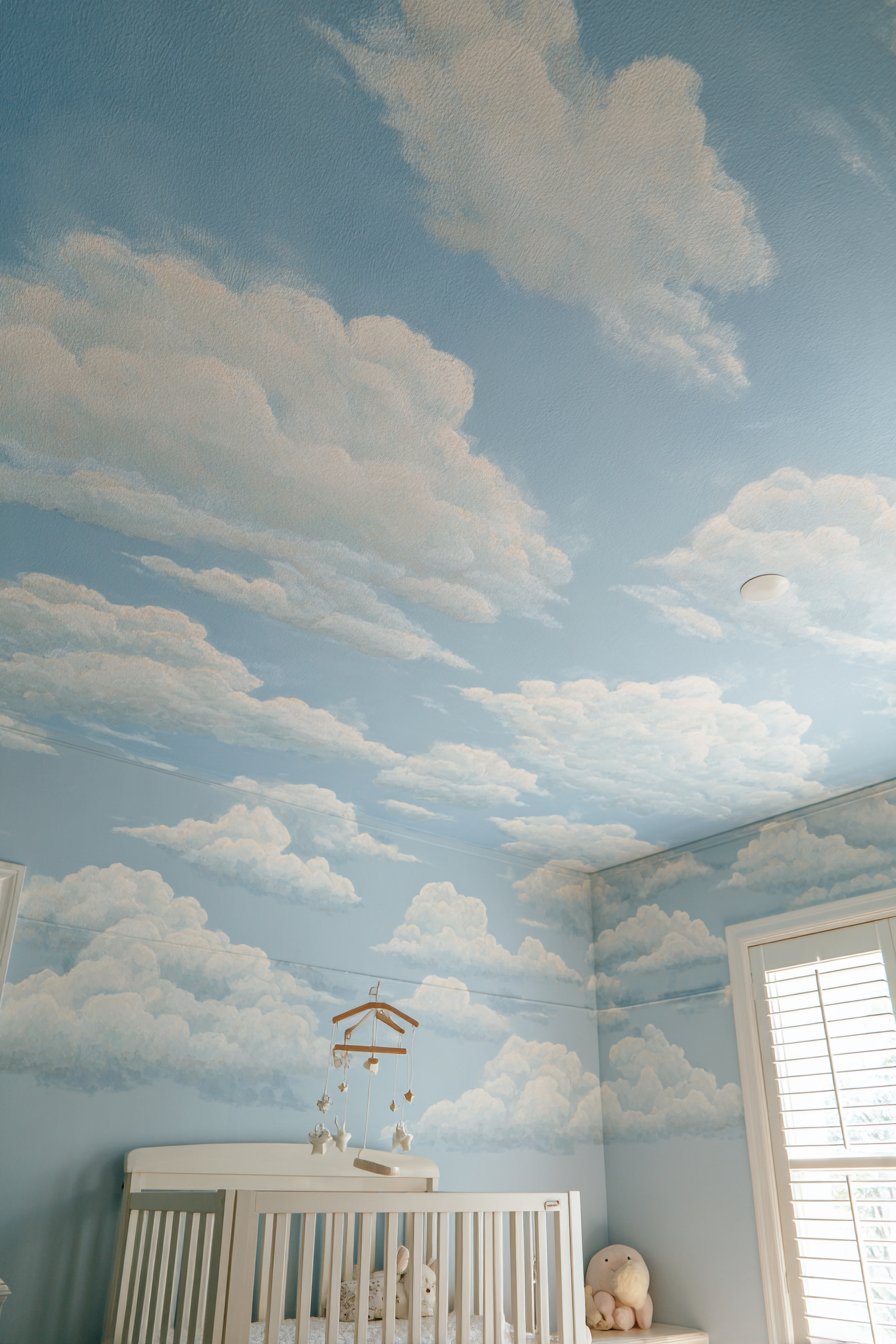
The technical execution of ceiling painting requires different considerations than wall painting. Working overhead presents physical challenges but offers unique opportunities—painted clouds on ceilings feel more authentic since that’s where we naturally encounter clouds in reality. The slight downward extension onto walls helps the ceiling feel less isolated and creates better integration with the overall room design.
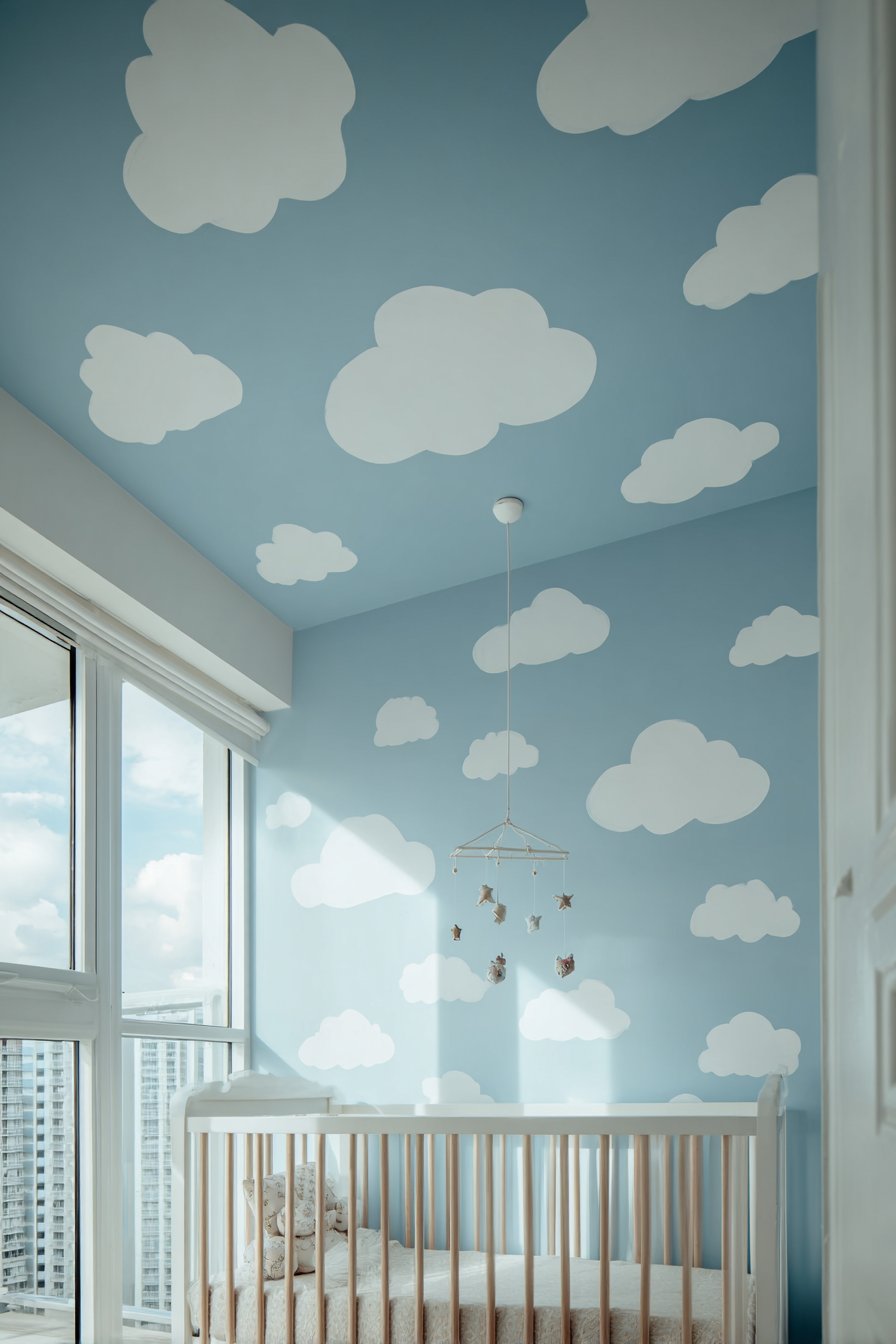
A white wooden crib positioned centrally benefits most from this overhead artwork, providing infants with engaging views during wakeful moments. Natural overhead lighting and window light create authentic cloud-like shadows and highlights, making the painted clouds appear to change subtly throughout the day as real clouds do. Professional interior photography captures the serene atmosphere created by this innovative approach to cute wall painting ideas.
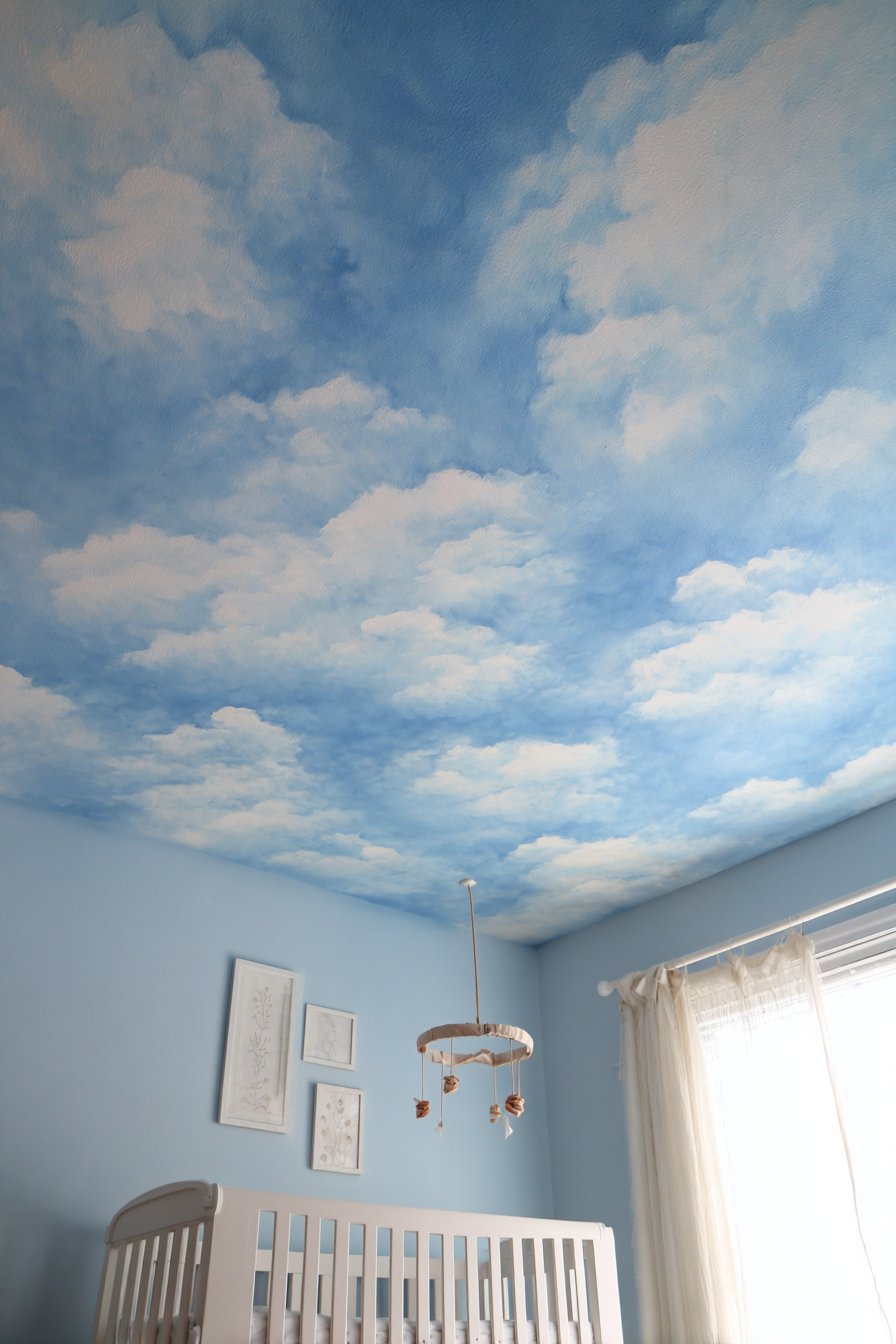
Key Design Tips: Use a high-quality ladder or scaffolding for safe ceiling access and comfortable working position. Paint the ceiling base coat in pale blue first, using a roller for even coverage. Sketch cloud shapes lightly with pencil before painting to ensure balanced distribution across the ceiling. Use a large, soft brush or sea sponge to create fluffy cloud edges—avoid hard, precise lines. Paint clouds in white or very pale gray, adding slightly darker gray undersides for dimension and realism. Vary cloud sizes and shapes naturally—avoid making them too uniform or symmetrical. Allow clouds to extend slightly onto upper walls to integrate ceiling design with vertical surfaces. Work in good lighting conditions to see subtle value changes as you paint. Consider adding a few birds or a painted rainbow as accent elements.
15. Interactive Road System Play Wall
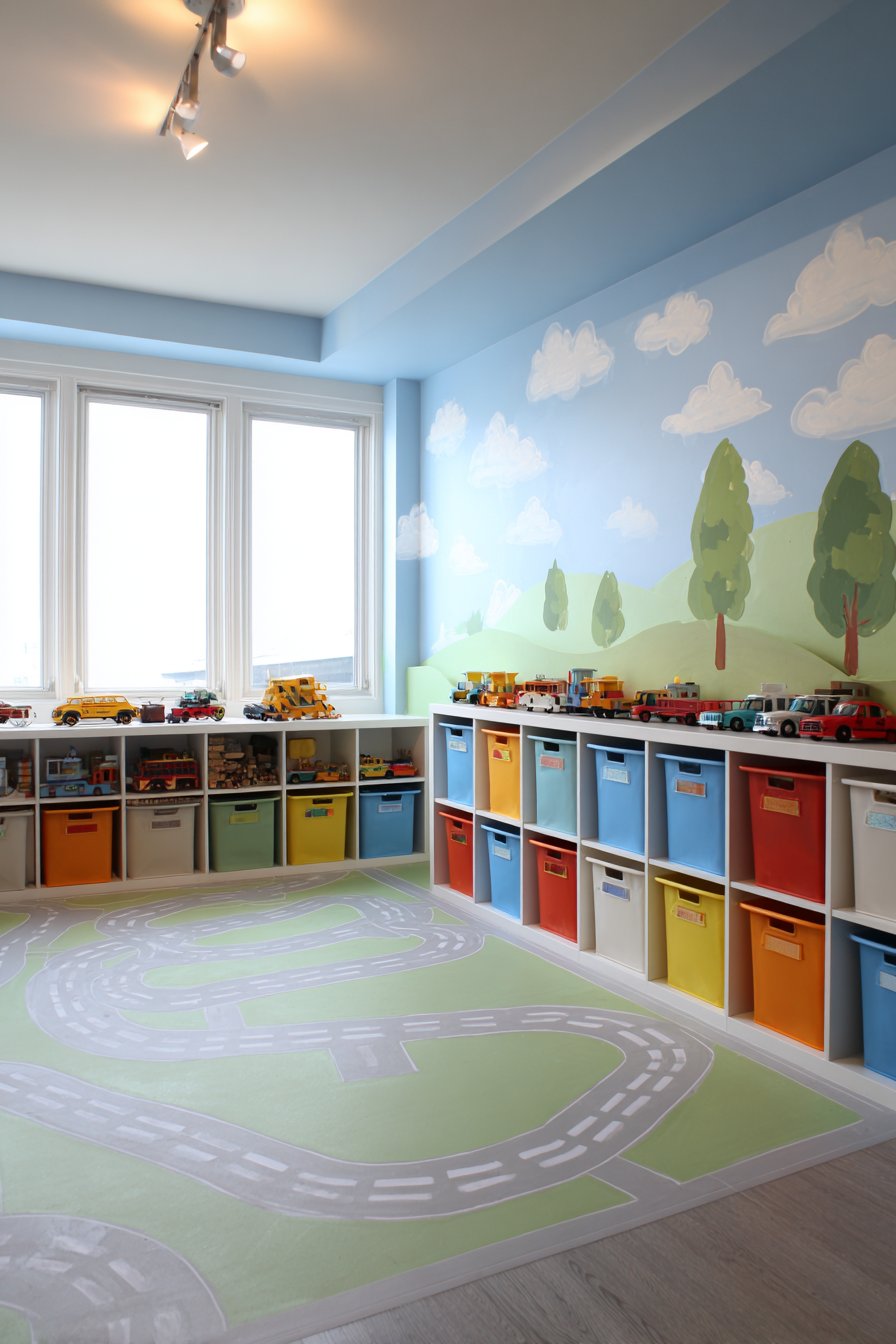
Transform playtime with this clever cute wall painting idea that turns the lower portion of playroom walls into an interactive road system. Gentle curves, intersections, and simple landscape elements like painted grass patches and trees in soft earth tones create an engaging backdrop for toy vehicle play. This floor-level painting encourages active, imaginative play while demonstrating how wall art can be functional rather than purely decorative.
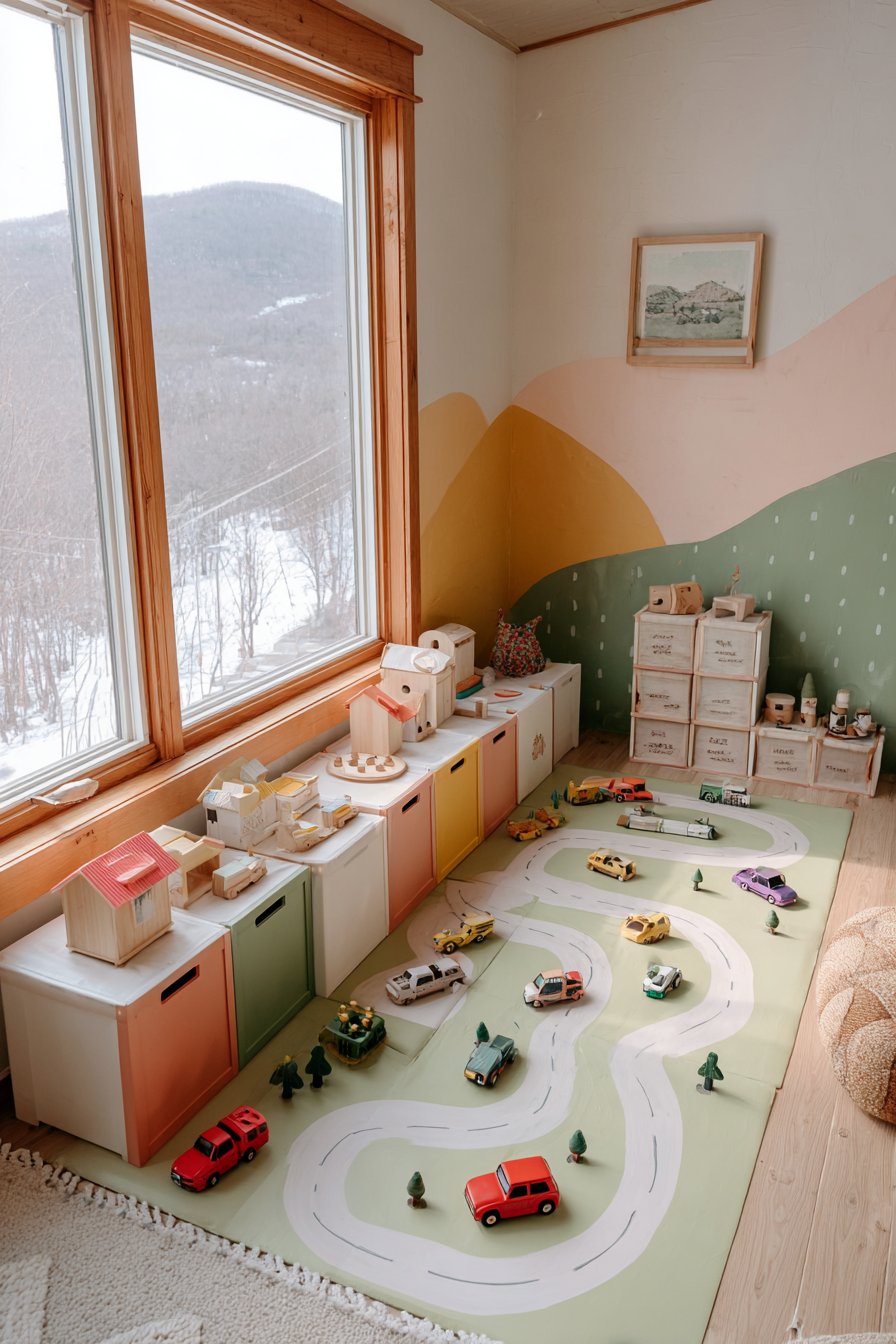
The strategic positioning near the floor makes this design accessible and engaging for young children who naturally play on the ground. Unlike typical wall art positioned at adult eye-level, this low placement acknowledges children’s perspective and creates art specifically for their interaction. The painted roads connect to actual play, becoming integral to games and scenarios rather than background decoration.
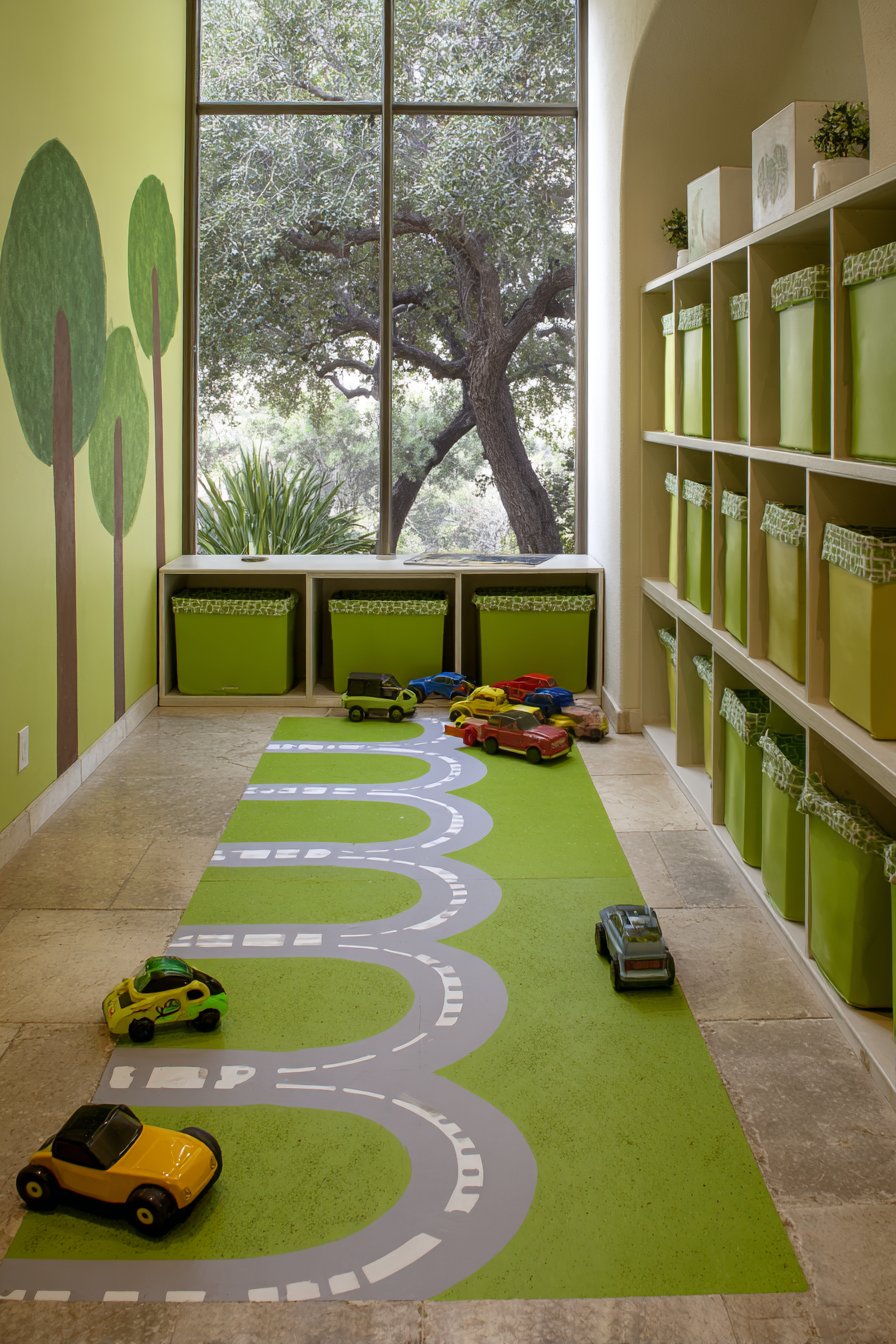
Storage bins in coordinating colors line adjacent walls, maintaining the organized, intentional aesthetic while providing practical toy storage. Bright natural light from large windows illuminates the play surface clearly, essential for active play areas where children need good visibility. The cohesive color palette—soft earth tones that feel natural rather than garish—ensures the play wall enhances rather than overwhelms the room’s design.
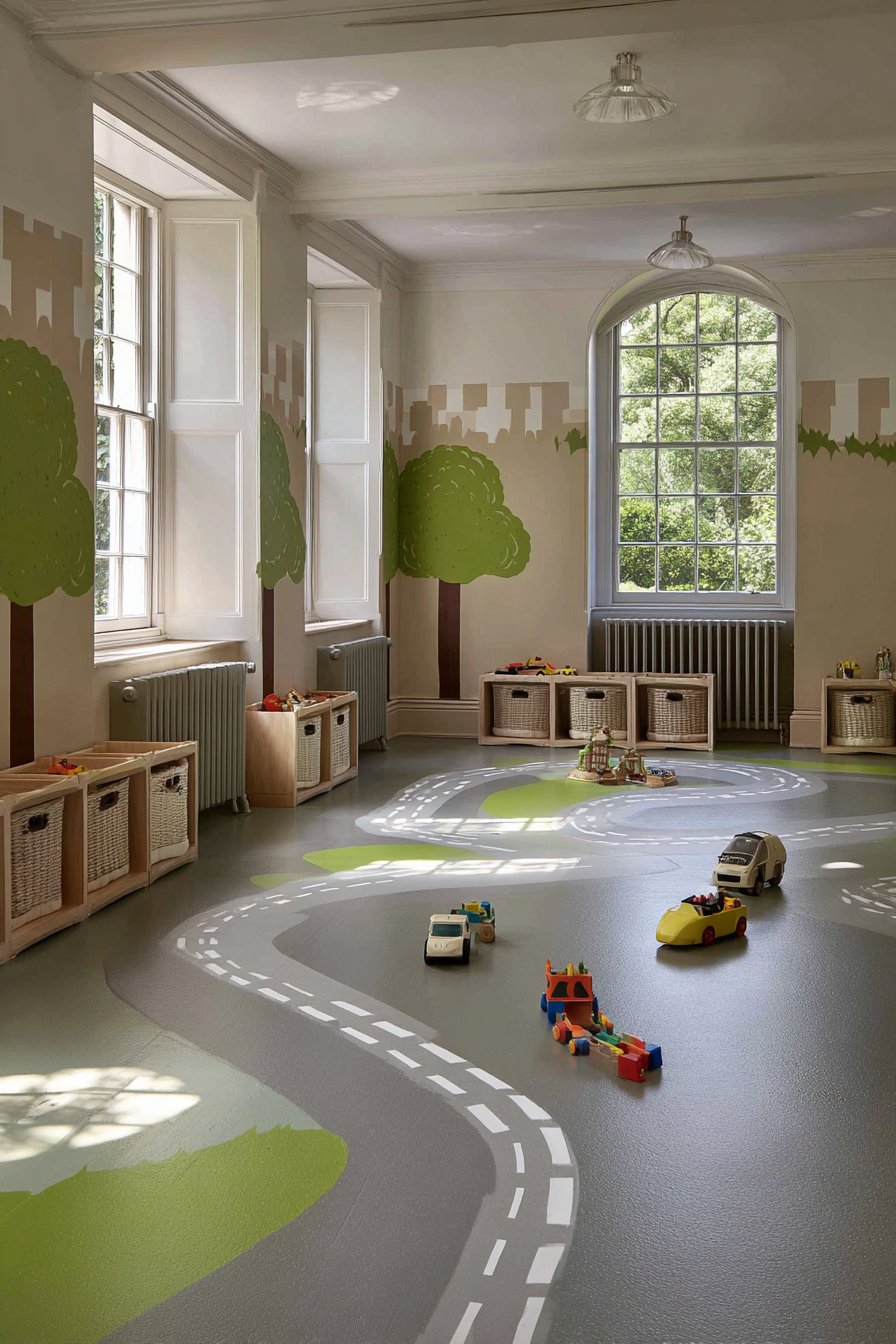
Key Design Tips: Plan the road layout on graph paper first to ensure good traffic flow and interesting intersections before transferring to the wall. Use painter’s tape to create straight road edges and clean corners for intersections. Paint roads in neutral grays or tans, adding center line dashes in white or yellow for authentic detail. Include parking spaces, crosswalks, and simple traffic signs for added realism and play value. Paint simple landscape elements like grass, trees, or buildings to create context and play scenarios. Keep the painted area to the lower 2-3 feet of wall for child accessibility. Use washable, durable paint formulated for high-traffic areas. Consider adding a clear protective coating to withstand toy traffic and easy cleaning. Extend the road system across corners to create more extensive play opportunities.
16. Personalized Floral Name Wreath
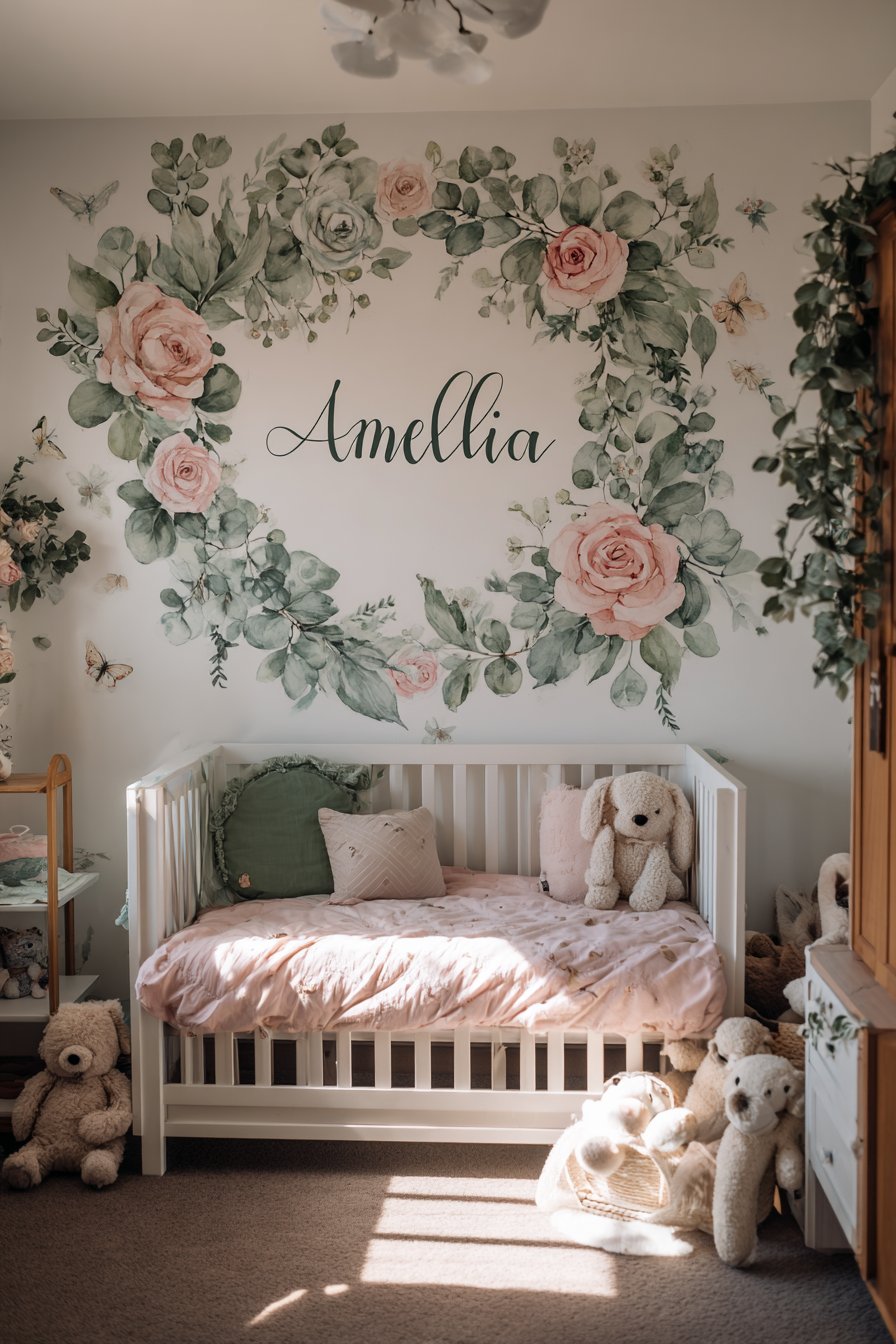
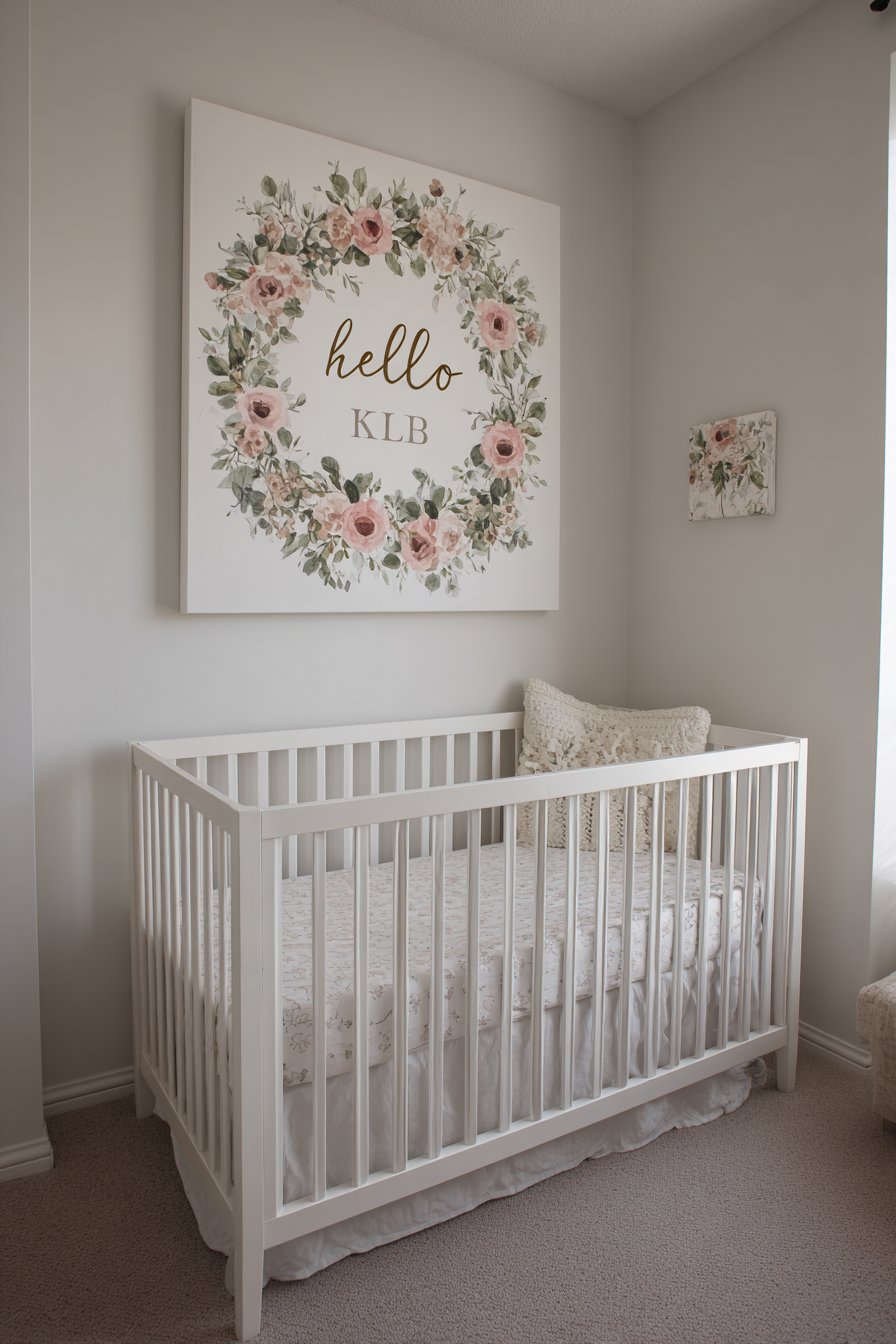
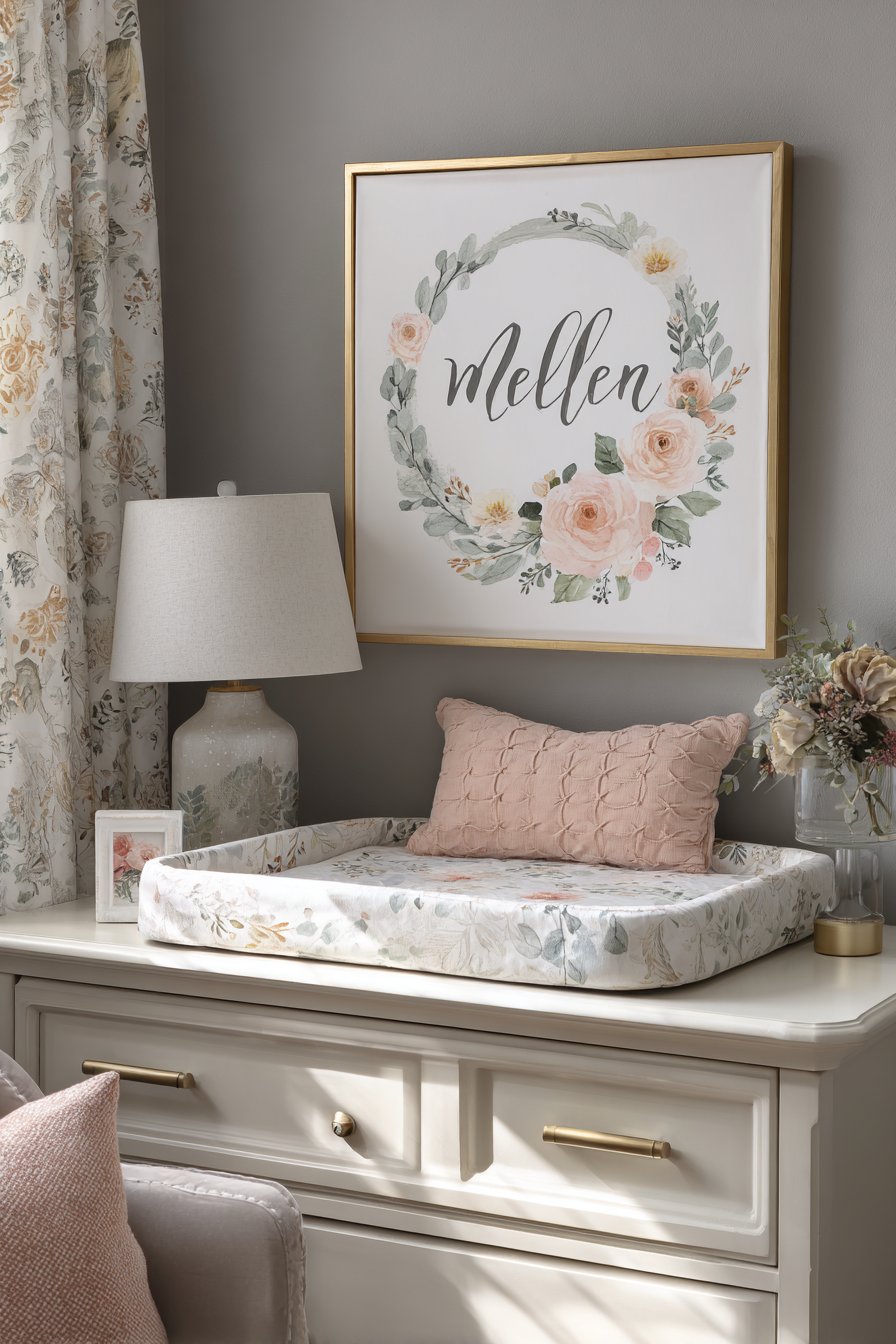
Celebrate a child’s identity with this sweet cute wall painting idea featuring a hand-painted floral wreath surrounding the baby’s name in elegant script. Soft pink roses, eucalyptus leaves, and delicate wildflowers rendered in watercolor style create a beautiful, personalized focal point that feels both decorative and meaningful. The custom nature of this design—incorporating the child’s specific name—makes it uniquely special and unreproduceable, adding sentimental value beyond its aesthetic appeal.
The watercolor technique lends itself beautifully to floral subjects, with soft color bleeds and varied opacity creating natural, organic flower appearances. Roses might show gradual color shifts from deep pink centers to pale edges; eucalyptus leaves could display the characteristic blue-green with silvery undertones; wildflowers might feature delicate petal details that seem to float weightlessly. This artistic approach elevates the design beyond craft-project aesthetics into genuine artwork.
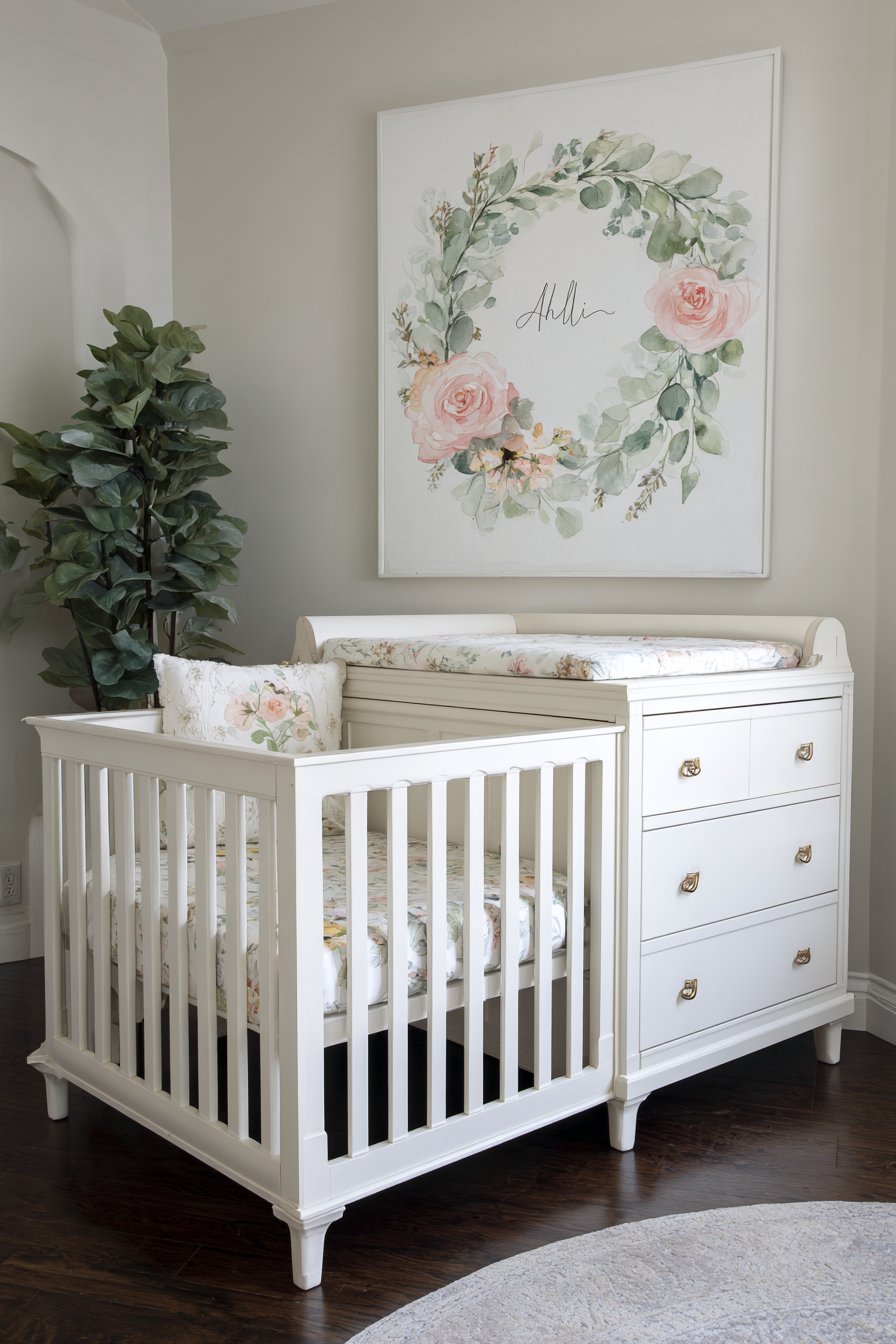
Positioned above the changing table, the personalized wreath serves as a focal point during daily care routines, providing visual interest during diaper changes while reinforcing name recognition. Coordinating floral accents in textiles—perhaps bedding, curtains, or throw pillows—echo the painting’s botanical theme, creating cohesive design throughout the nursery. Gentle morning light highlights the botanical details beautifully, with natural illumination revealing the subtle brushwork and color variations.
Key Design Tips: Practice writing the name in various script fonts on paper before committing to the wall—ensure legibility and appropriate size. Sketch the wreath circle lightly in pencil, using a large compass or string tied to a central point for perfect roundness. Paint the name first in a neutral color like soft gray or muted gold, allowing it to dry completely. Plan floral placement around the name, balancing larger focal flowers with smaller filler blooms and greenery. Paint flowers in loose watercolor style using diluted acrylics and soft brushes. Layer flowers from background to foreground, allowing elements to overlap slightly for depth. Use varied flower types, sizes, and orientations for natural, organic appearance. Add delicate leaves and stems to connect floral elements and fill gaps. Consider painting some petals extending slightly beyond the wreath circle for organic, uncontained feel.
17. Modern Geometric Safari Animals
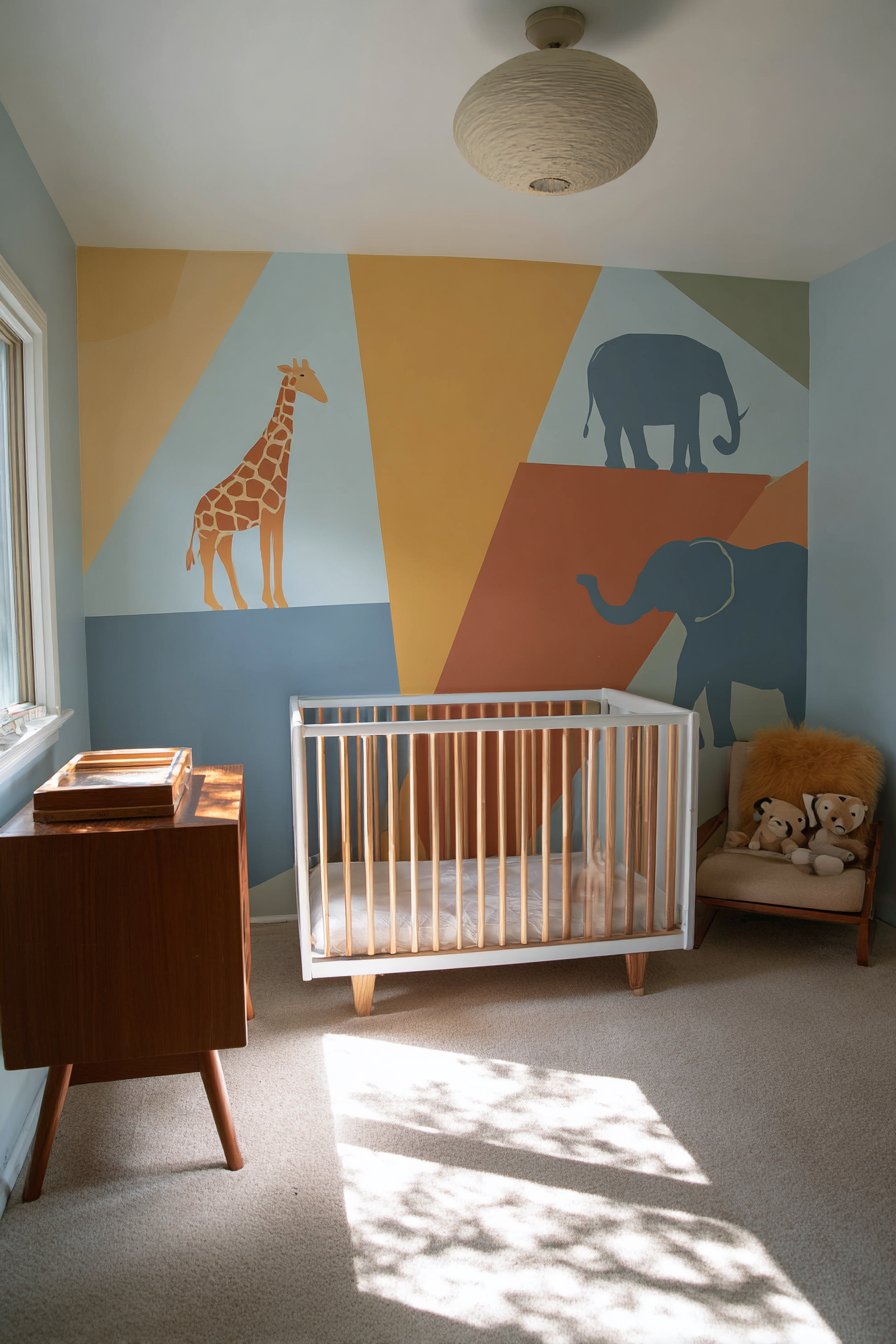
Contemporary design meets playful subject matter in this stylish cute wall painting idea featuring animal silhouettes in geometric, modern style. A painted giraffe, elephant, and lion rendered in single solid colors—mustard yellow, dusty blue, and terracotta—create a stylized safari without excessive detail or literal representation. This approach demonstrates how traditional children’s themes can be adapted for modern aesthetics, appealing to design-conscious parents seeking age-appropriate decor that aligns with contemporary home styles.
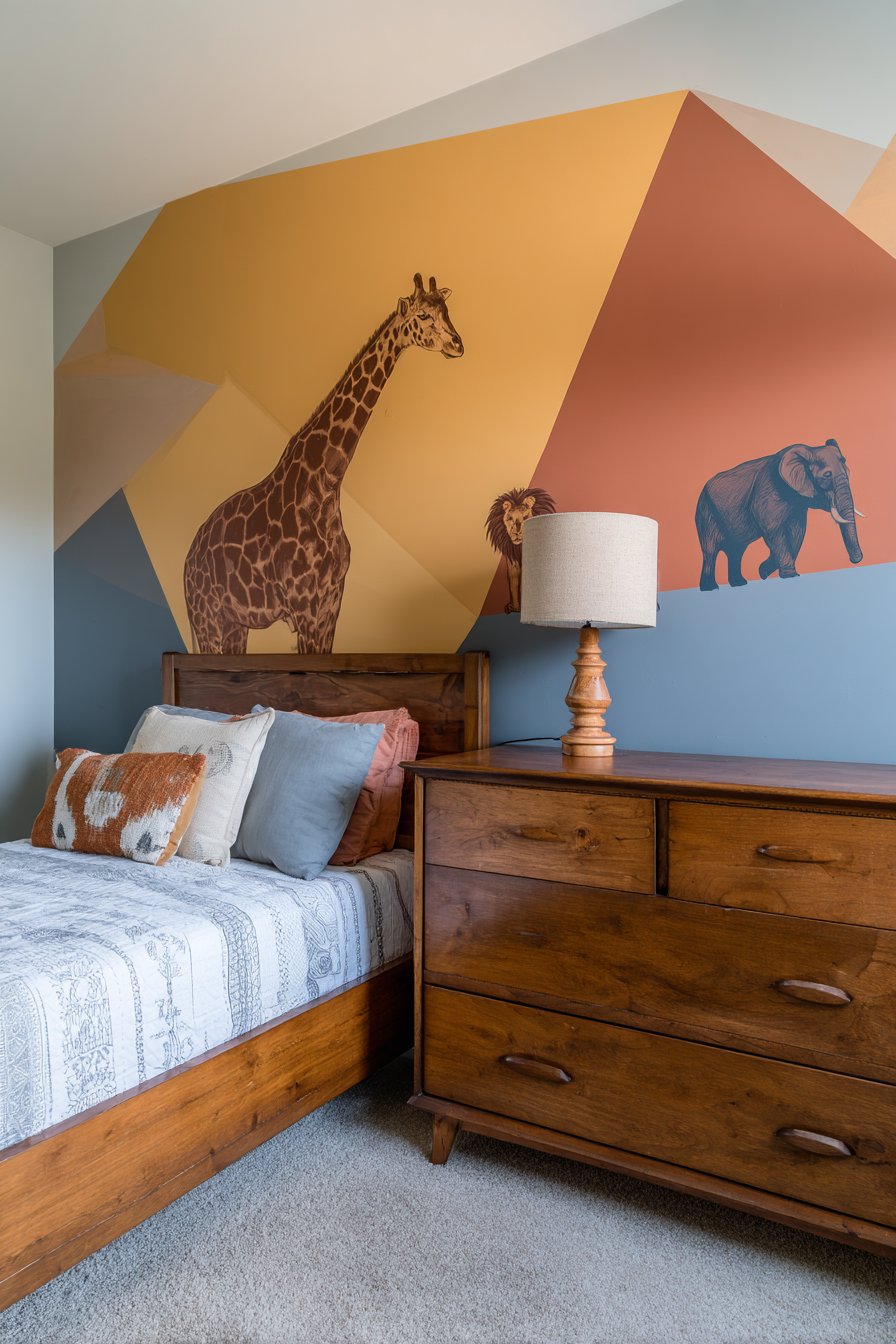
The geometric interpretation of animals requires careful consideration of essential identifying features. A giraffe needs its characteristic long neck and small head; an elephant requires its distinctive trunk and large ears; a lion must have its recognizable mane. By reducing these animals to their most essential shapes while maintaining these key features, the design achieves instant recognition while feeling fresh and contemporary rather than clichéd.
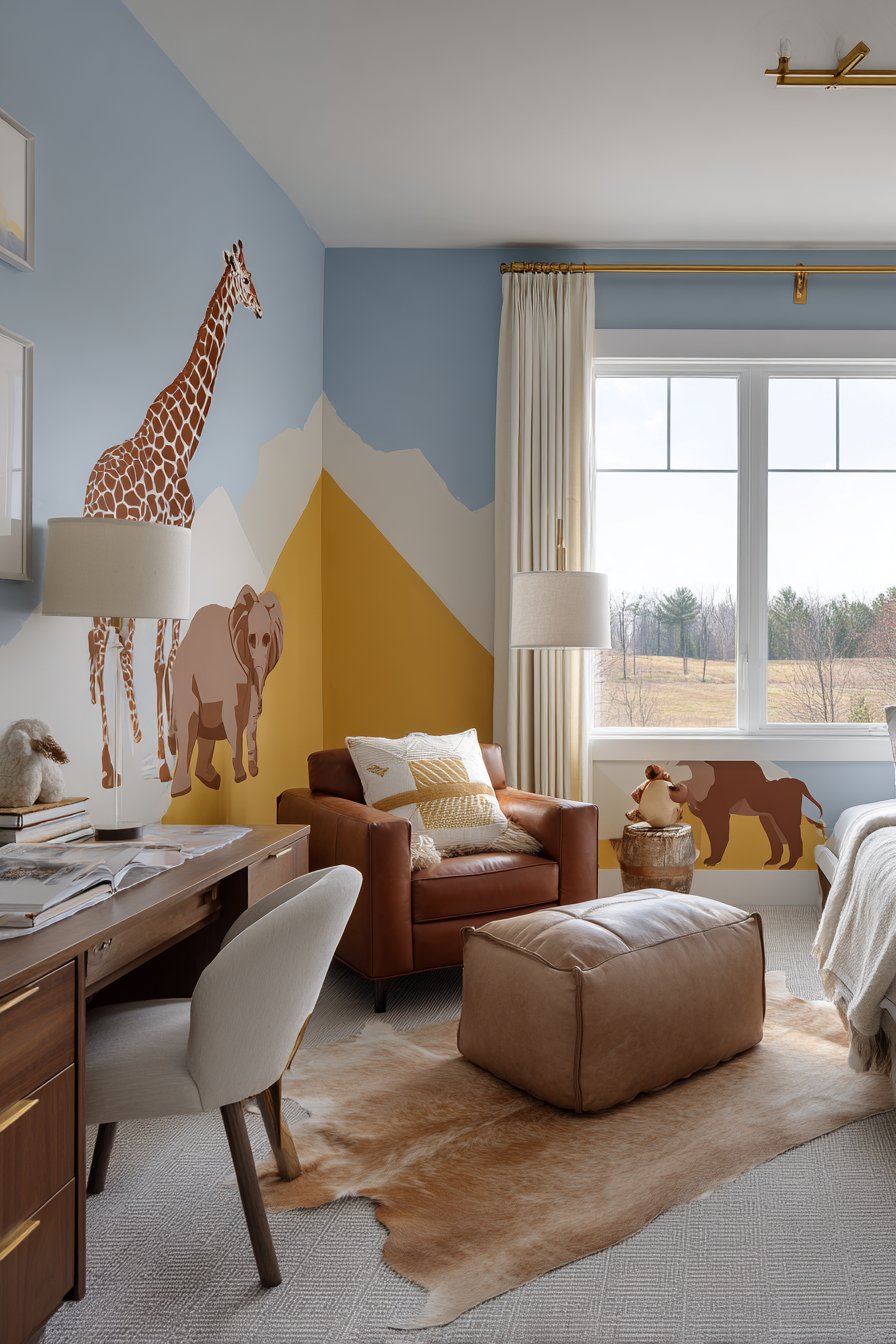
Mid-century modern furniture complements the contemporary painted approach perfectly, creating cohesive design that feels intentional and curated. Even natural lighting shows the clean edges and intentional brushwork—the crisp boundaries between colors, the deliberate simplification of forms. This professional execution elevates the design beyond typical children’s room decoration into sophisticated interior design.
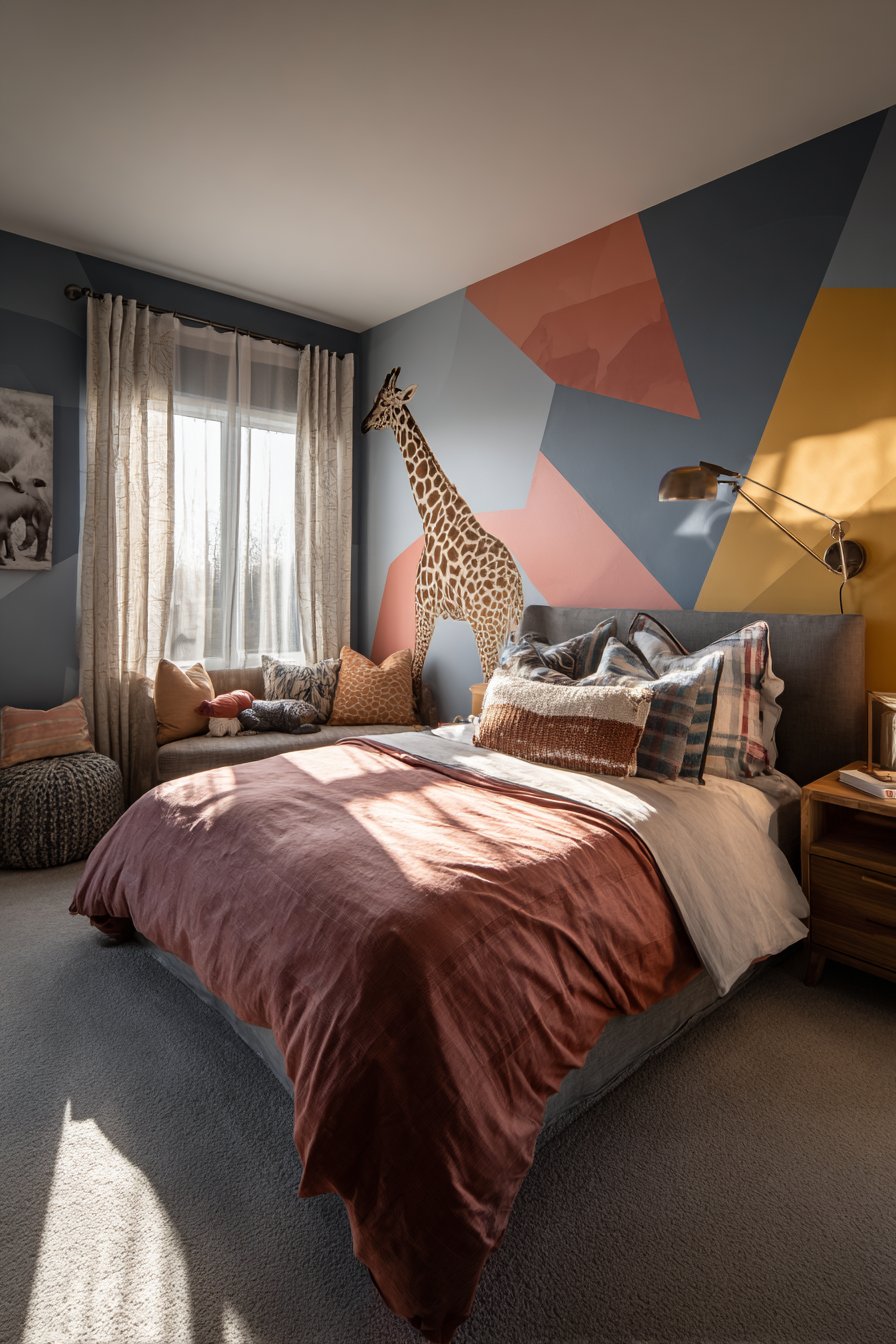
Key Design Tips: Research geometric animal art and mid-century modern design for inspiration on simplified forms and color palettes. Sketch animal outlines in basic geometric shapes—circles, triangles, rectangles—before refining into recognizable creatures. Use painter’s tape for crisp, clean edges between different colored sections. Choose a cohesive color palette of 3-5 muted, sophisticated colors rather than bright primaries. Paint each animal in solid color without shading or texture for true geometric effect. Position animals at varying heights and orientations across the wall for dynamic composition. Keep background minimal—either leave it unpainted white or use a single soft neutral color. Consider adding small geometric shapes like triangles or circles as accent elements. Scale animals appropriately—larger pieces make stronger statements while smaller versions create patterns.
18. Charming Garden Gate Illusion
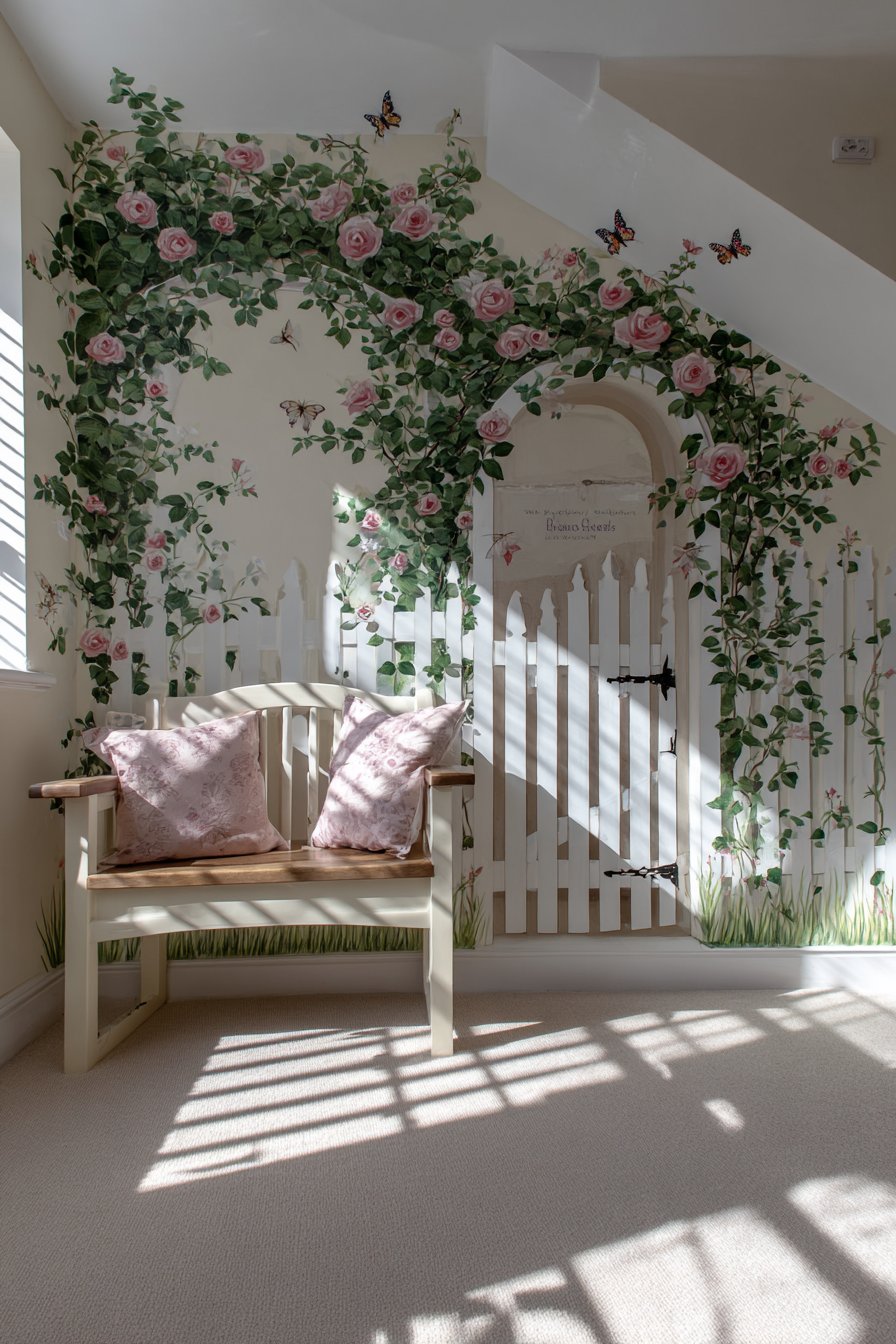
Step through to enchantment with this delightful cute wall painting idea featuring a trompe-l’oeil garden gate and picket fence. The crisp white painted fence with climbing roses in soft pinks creates the illusion of a passage to outdoor gardens, complete with painted grass and delicate butterflies adding life and movement. This design transforms an interior wall into a window to nature, bringing the outside in and creating visual expansion in potentially confined spaces.
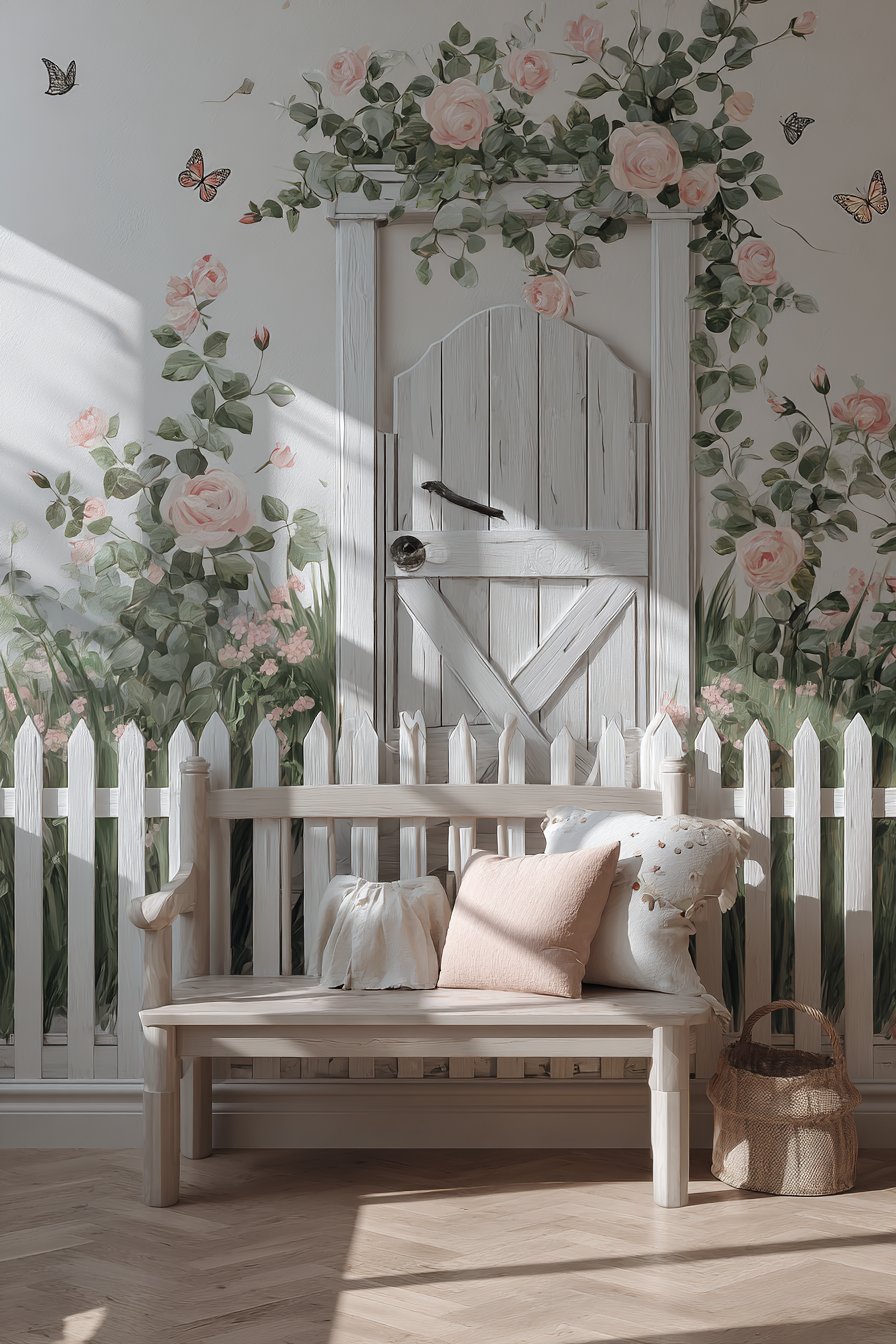
The success of trompe-l’oeil painting depends on careful attention to perspective, proportion, and light-shadow relationships. The fence pickets must be consistently sized and spaced; the gate should show realistic hinges and latch details; the roses need to appear as though truly growing over physical surfaces. These details sell the illusion, making viewers momentarily unsure whether they’re seeing painting or reality.
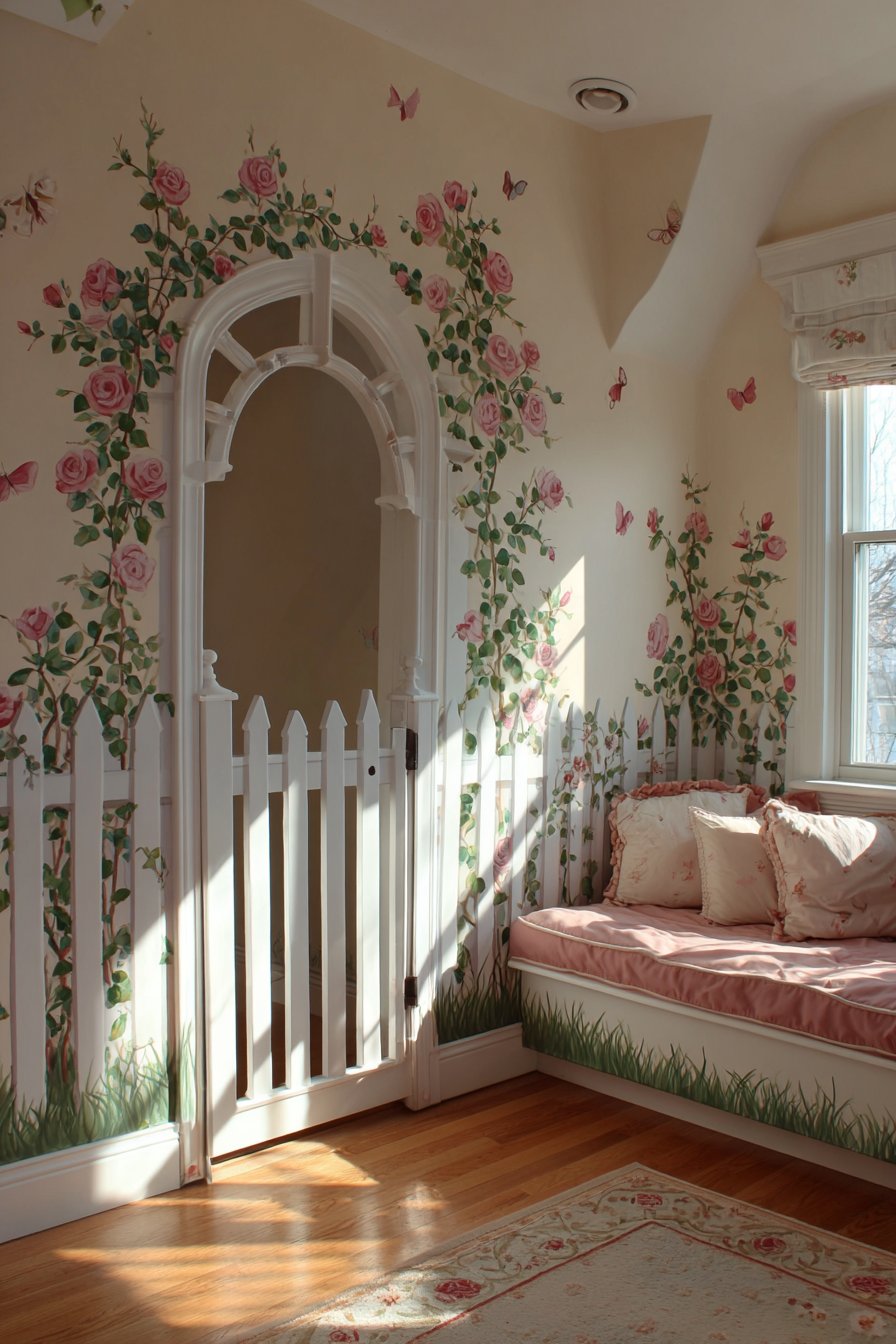
A small bench with cushions positioned below the painted gate completes the garden vignette, creating the impression of sitting before a real garden entrance. Afternoon sunlight casts realistic shadows on the painted fence, enhancing the three-dimensional illusion particularly when shadows align with the fence’s painted shadows. Wide-angle interior photography captures the dimensional quality and shows how effectively architectural trompe-l’oeil can transform space perception.
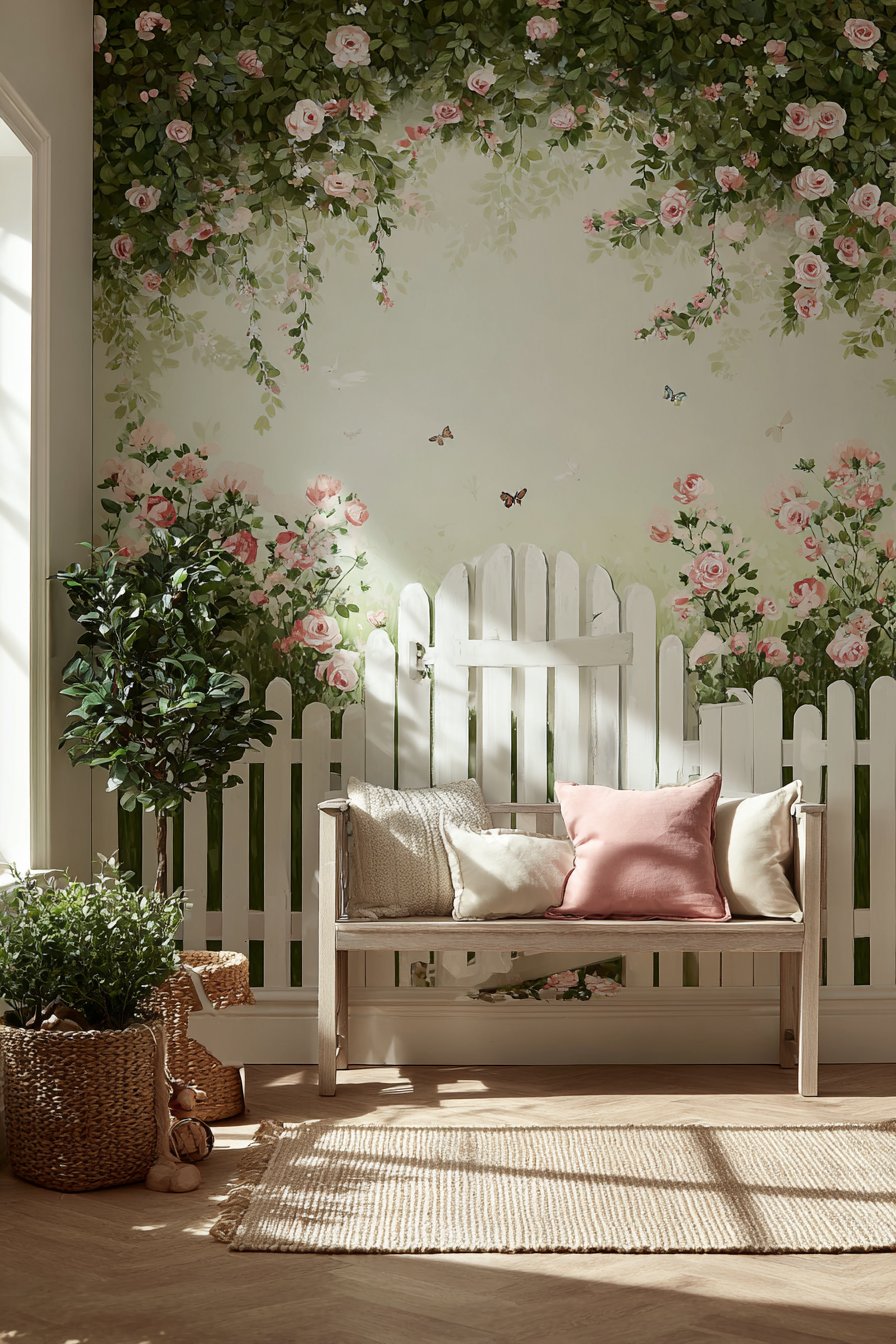
Key Design Tips: Study real picket fences and garden gates for accurate proportions and construction details. Use a level and measuring tape to create straight, evenly-spaced pickets. Paint the fence structure first in white, allowing it to dry completely before adding details. Add shadows along picket edges and under horizontal fence rails using soft gray to create dimension. Paint climbing roses starting with stems and leaves, adding flowers last for layered depth. Include realistic hardware details like hinges, latch, and perhaps a decorative gate topper. Add painted grass along the fence bottom and perhaps peeking through picket gaps for authenticity. Position butterflies and flowers at varying distances from the fence for depth perception. Consider painting the gate slightly open to enhance the invitation to imagine what lies beyond.
19. Minimalist Mountain Sunrise
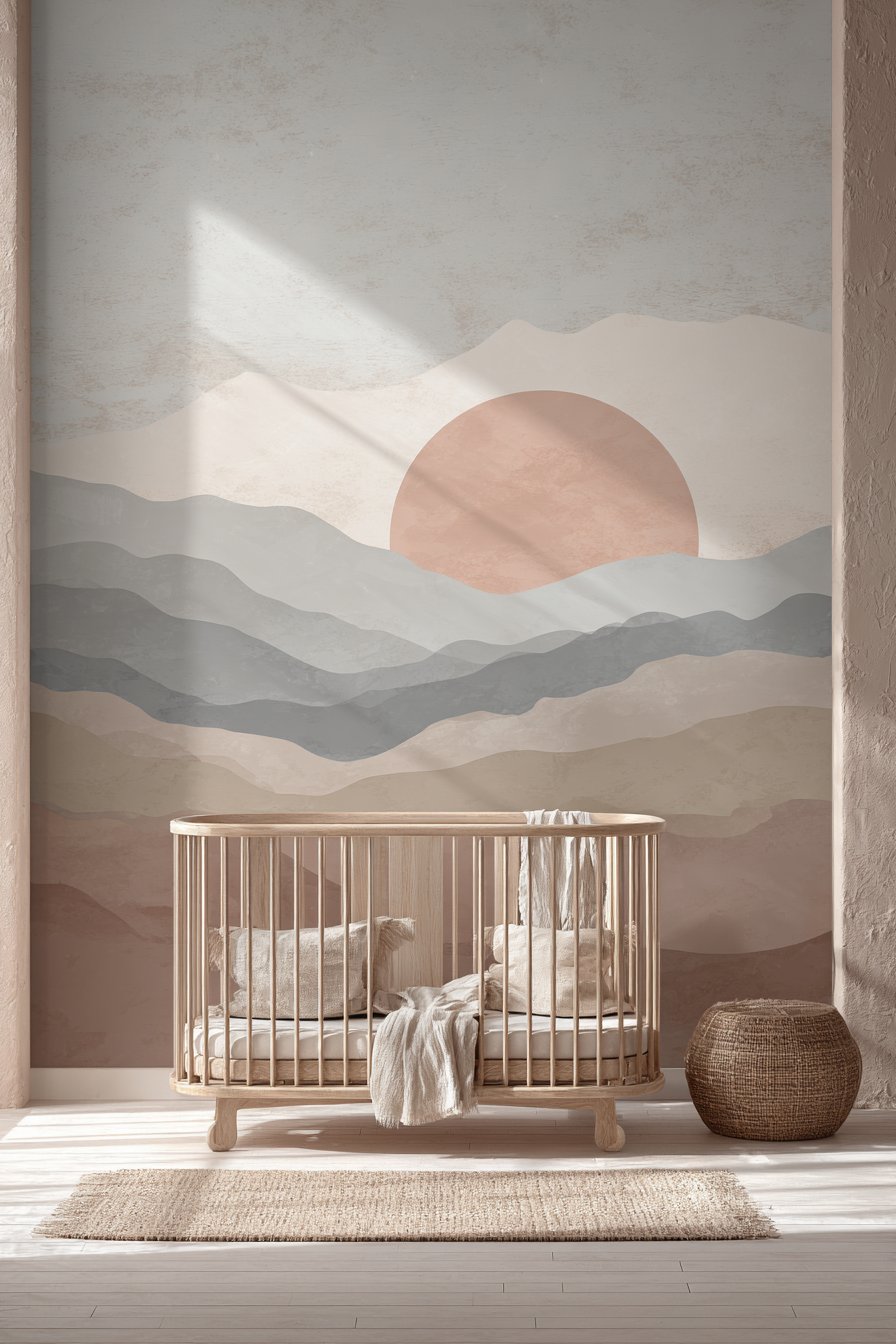
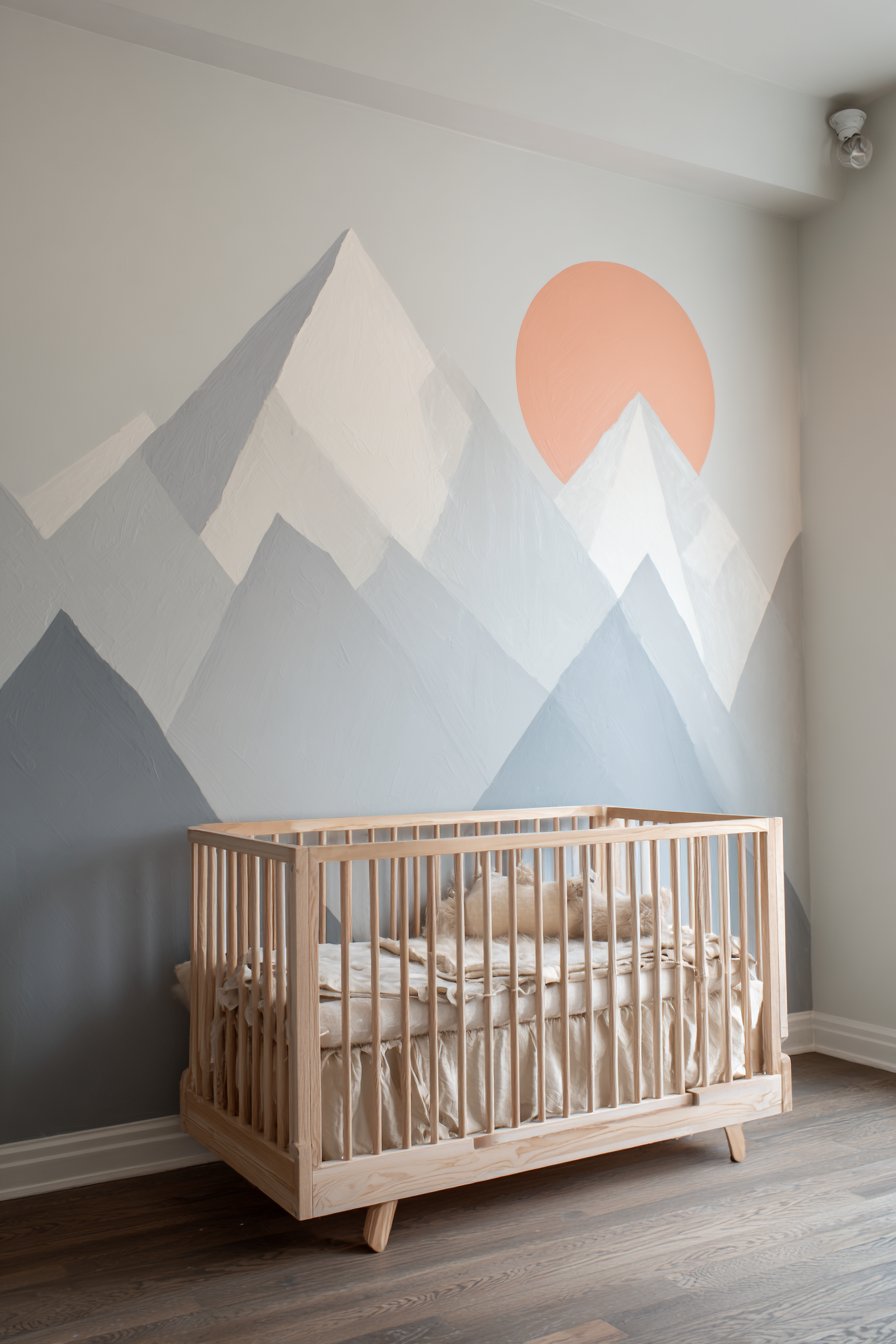
Sophisticated simplicity defines this elegant cute wall painting idea featuring a minimalist painted mountain range in soft monochromatic grays with a small sunrise in gentle peach tones. The simple geometric shapes create a calming, modern aesthetic that proves cute doesn’t require complexity or bright colors. This restrained approach offers timeless appeal that transitions beautifully as children grow, eliminating the need for frequent repainting to match changing age-appropriateness.
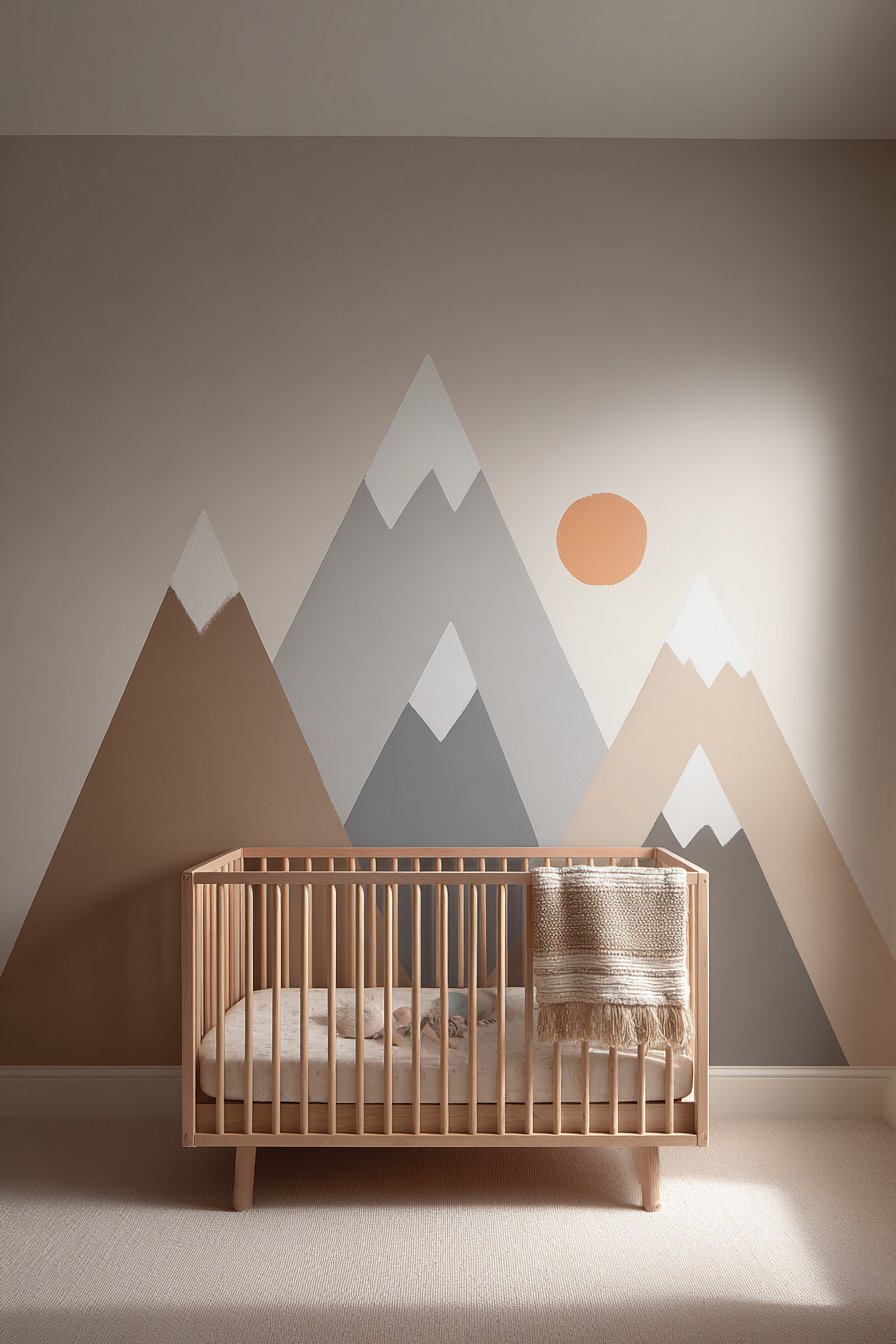
The power of this design lies in its subtlety and negative space. Rather than covering the entire wall with painted elements, the mountains occupy perhaps only the bottom third or half, leaving ample white or neutral space above. This restraint feels modern and breathable, avoiding the visual overwhelm that can result from maximalist approaches. The gentle sunrise—just a soft peach semi-circle peeking above the mountains—adds warmth without compromising the design’s minimalist integrity.
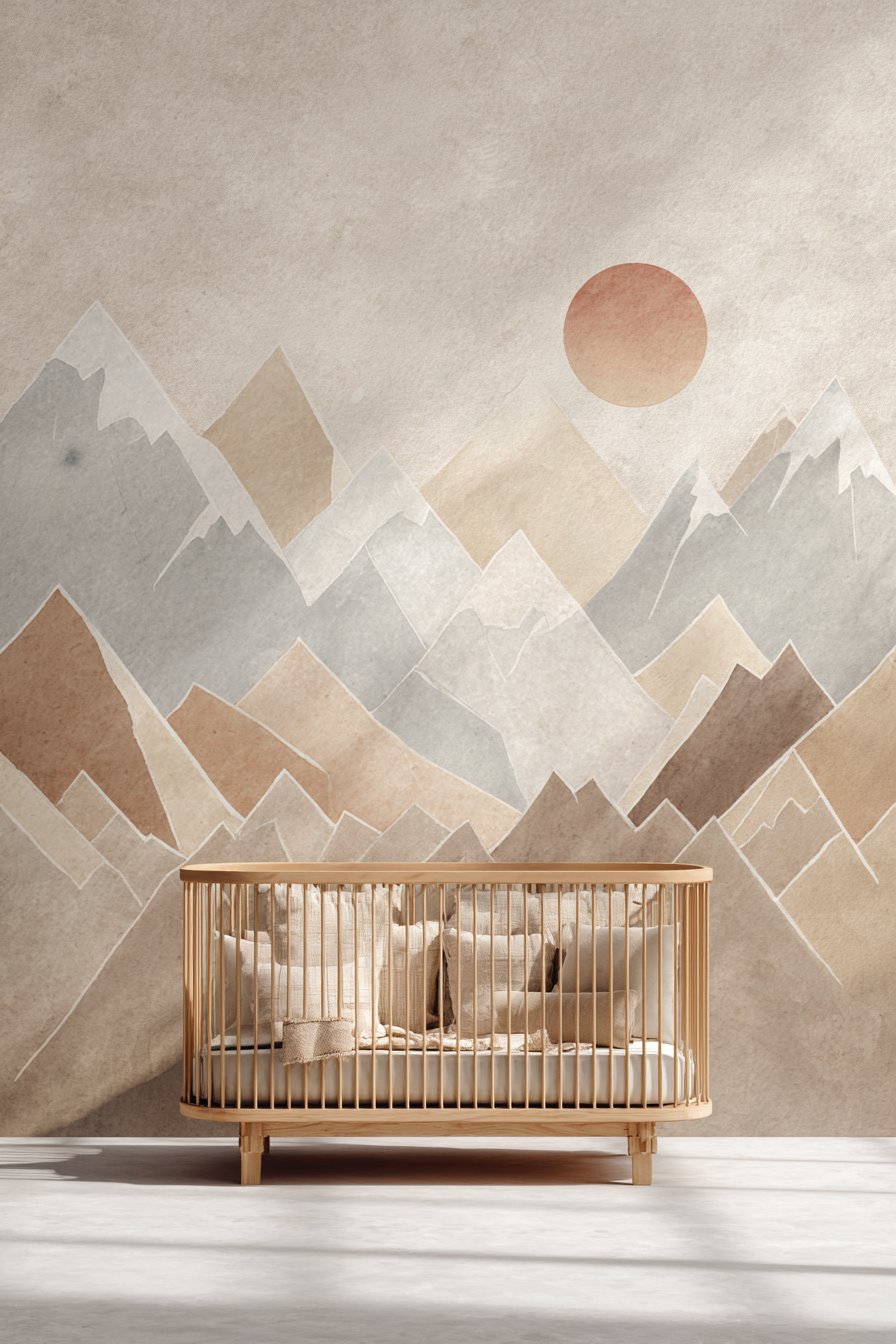
A Scandinavian-style wooden crib with natural textiles sits centered below the artwork, its clean lines and organic materials perfectly complementing the painting’s aesthetic. Diffused natural light emphasizes the subtle tonal variations in the monochromatic mountain range, revealing depth and dimension that might not be immediately obvious. This demonstrates how sophisticated color work—multiple shades within a single color family—creates visual interest without chromatic complexity.
Key Design Tips: Sketch mountain profiles lightly in pencil, using varying heights and overlapping shapes for natural mountain range appearance. Paint mountains in layers from background to foreground, using progressively darker grays for each layer to create atmospheric perspective. Keep mountain shapes simple and geometric rather than highly detailed or jagged. Add the sunrise element last, positioning it just above the furthest mountain peaks. Use subtle gradation in the sunrise colors, blending peach into pale yellow or cream at the edges. Consider adding minimal snow caps to mountain peaks using white paint for small detail interest. Leave substantial wall space unpainted to maintain minimalist aesthetic. Position the mountain range at lower two-thirds of wall to create grounding effect. Use matte finish paint to avoid distracting shine or reflections.
20. Educational Solar System Adventure
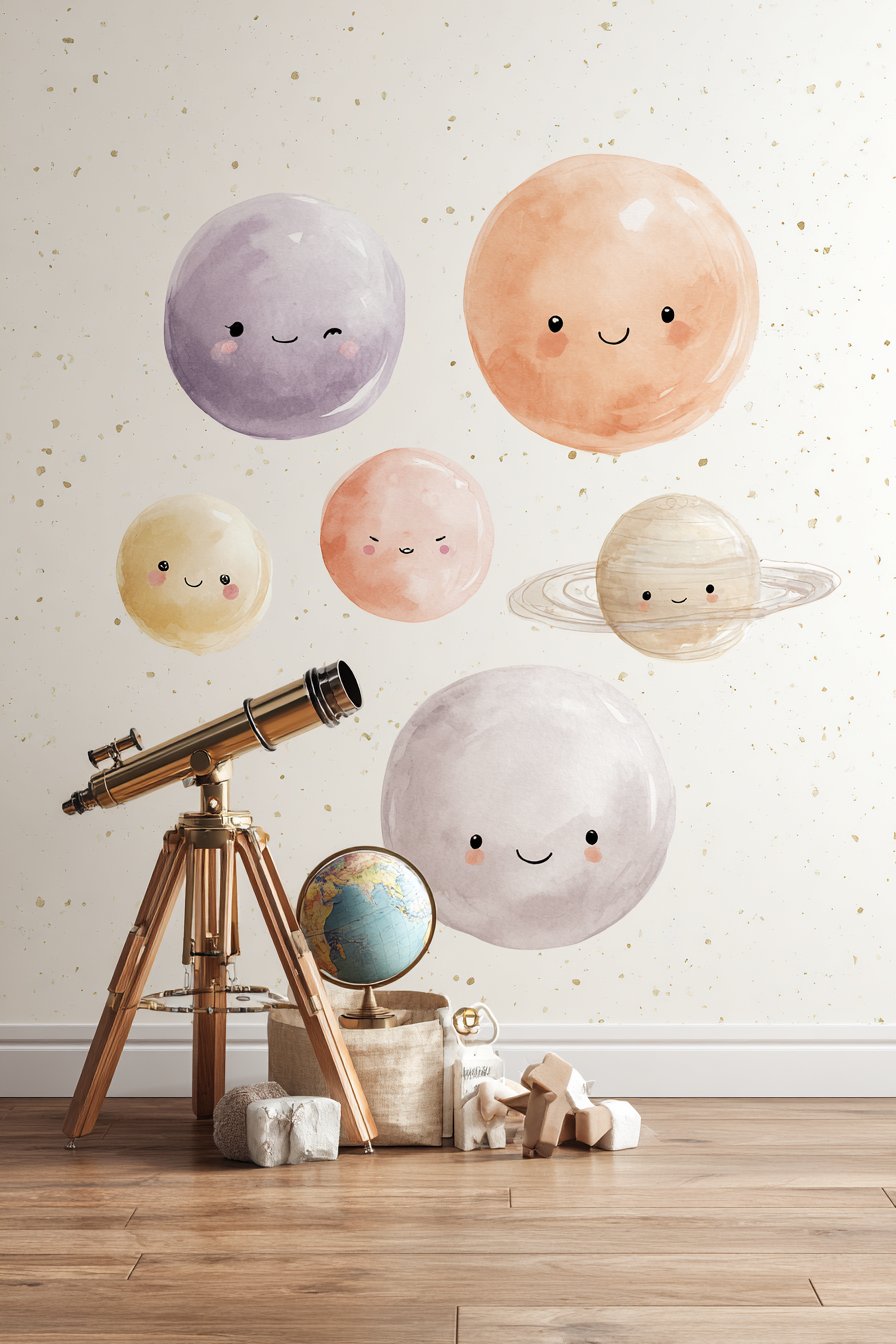
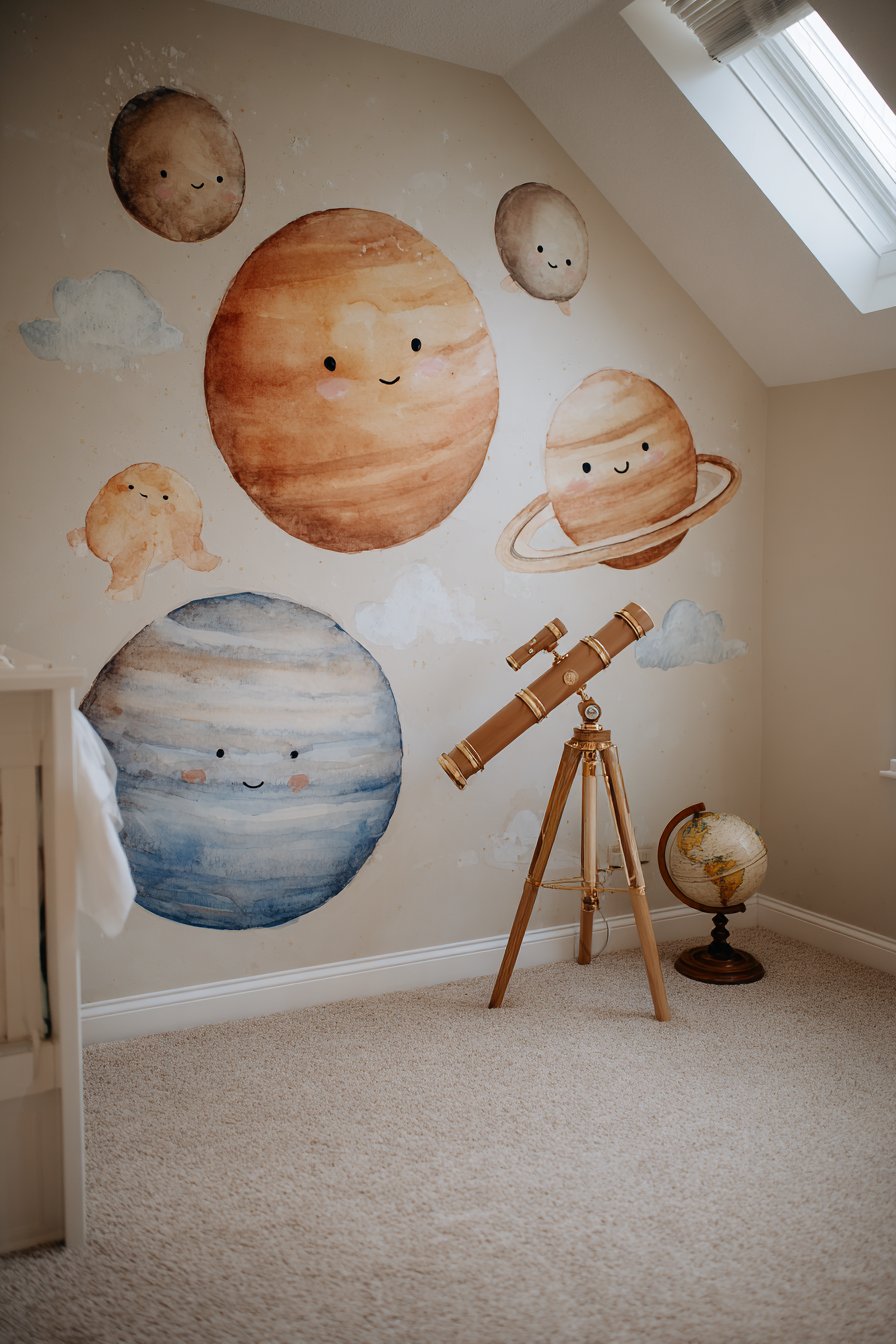
Combine learning with beauty in this engaging cute wall painting idea featuring a hand-painted solar system with friendly-faced planets. Each planet maintains its accurate relative position while sporting whimsical, approachable expressions and appearing in soft cosmic colors. This design demonstrates how educational content can be rendered in cute, engaging ways that make learning feel natural and fun rather than forced or didactic.
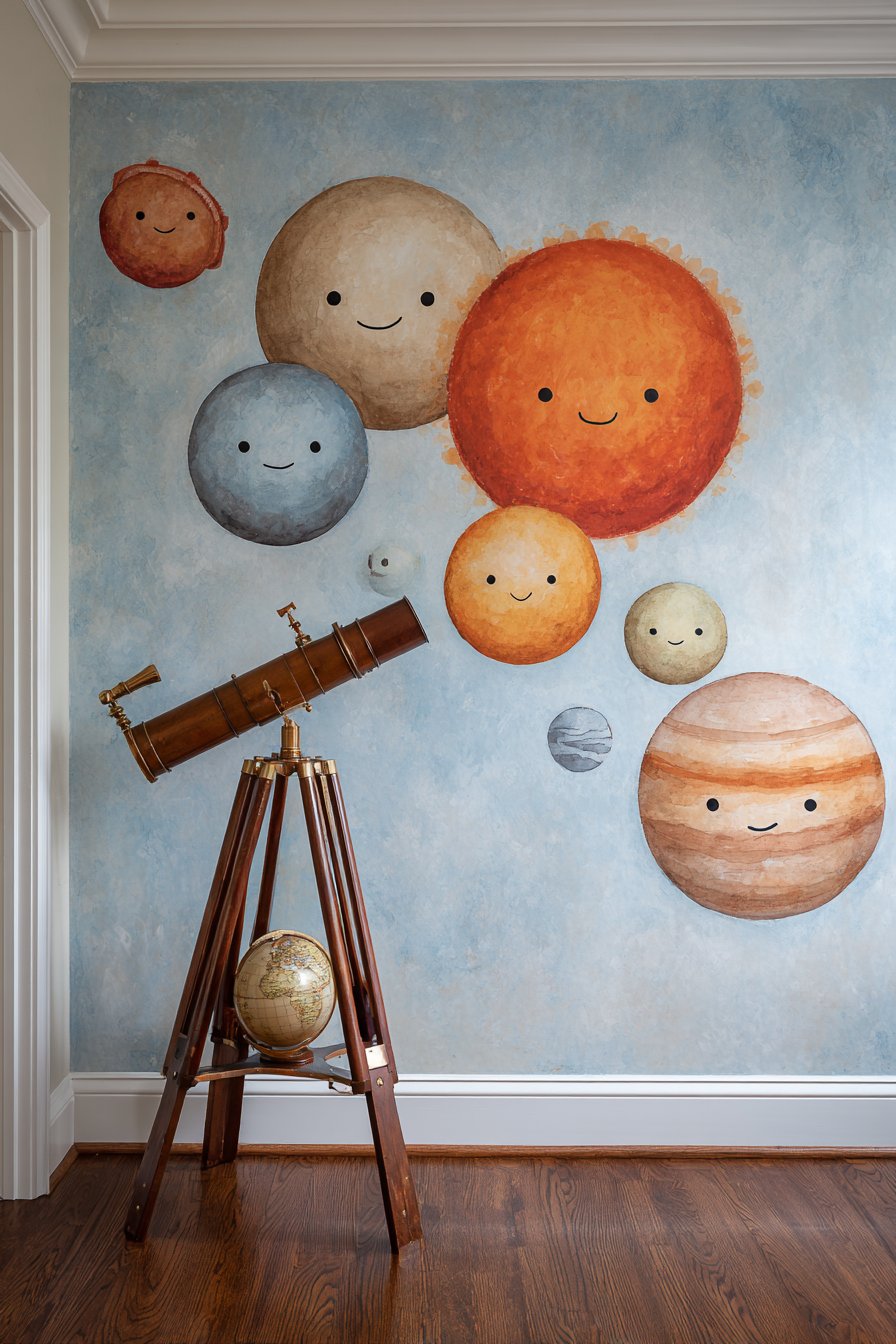
The challenge and opportunity of this design lie in balancing scientific accuracy with aesthetic appeal and age-appropriateness. Planets should be recognizable—Jupiter’s Great Red Spot, Saturn’s rings, Mars’ reddish color—but simplified and sweetened sufficiently for young children. Adding friendly faces transforms celestial bodies into characters that children can relate to and remember, making planetary identification easier and more engaging.
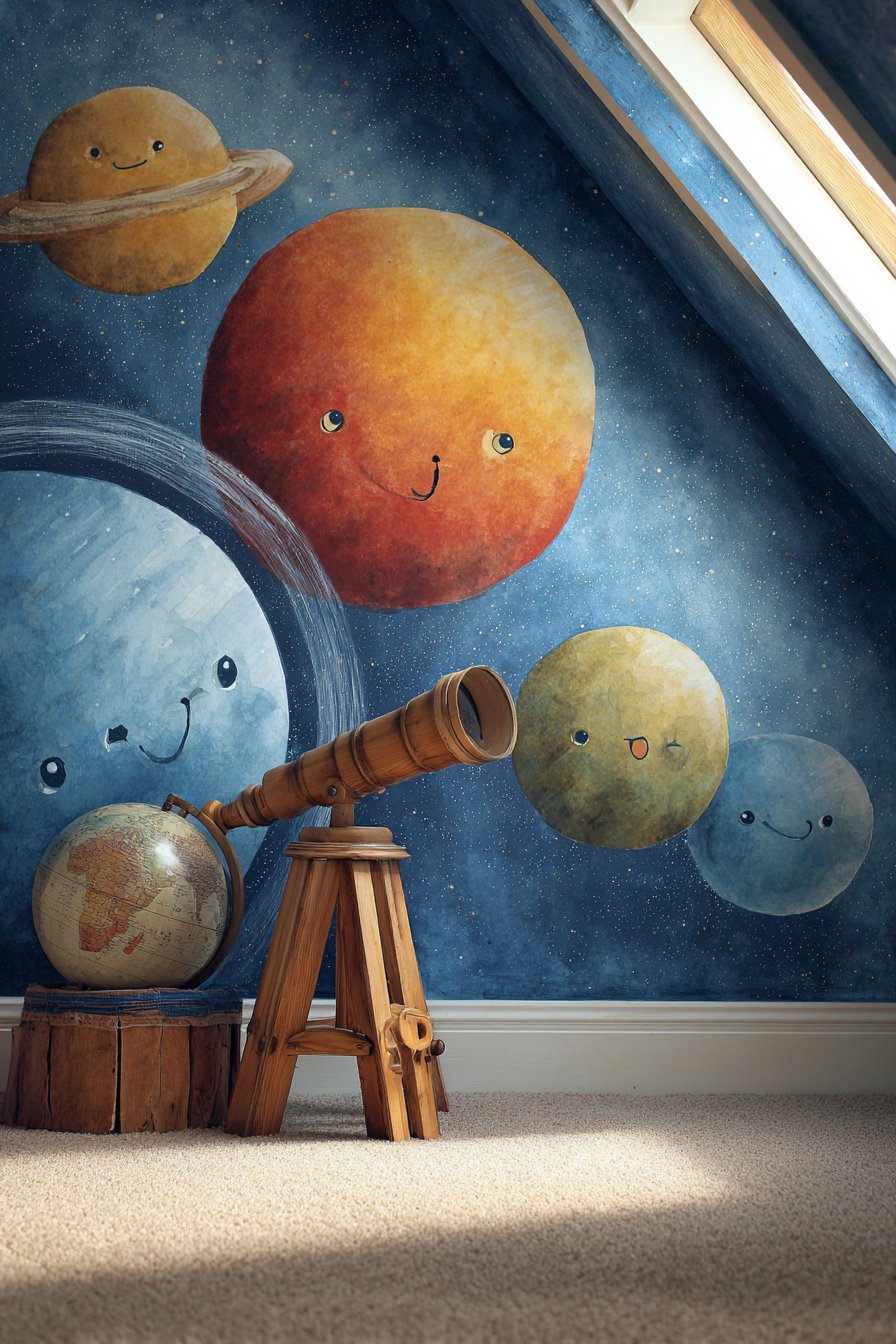
A telescope on a wooden stand and a globe positioned nearby encourage astronomical learning and exploration, creating a cohesive educational environment where the wall painting serves as inspiring backdrop. Natural light from skylights creates particularly appropriate illumination, mimicking the daylight that allows us to study and learn about the cosmos. Professional photography demonstrates how educational cute wall painting ideas can be both charming and intellectually stimulating.
Key Design Tips: Research planetary sizes, colors, and relative positions for basic accuracy despite stylization. Paint the background in deep space navy or black first, creating the cosmic canvas. Add stars of varying sizes using white or silver paint before painting planets. Paint planets in approximately accurate relative sizes while adjusting for visual balance and wall space. Use planet-appropriate colors—blue-green for Earth, red for Mars, banded browns for Jupiter. Add simple, friendly faces using minimal detail—just eyes and perhaps a smile. Include identifying labels below each planet for educational value. Paint Saturn’s rings and perhaps Earth’s moon as recognizable features. Consider adding the sun to one side, larger and with warm yellow-orange tones. Create a subtle orbit line connecting planets for spatial relationship clarity.
21. Magical Tree Canopy Ceiling
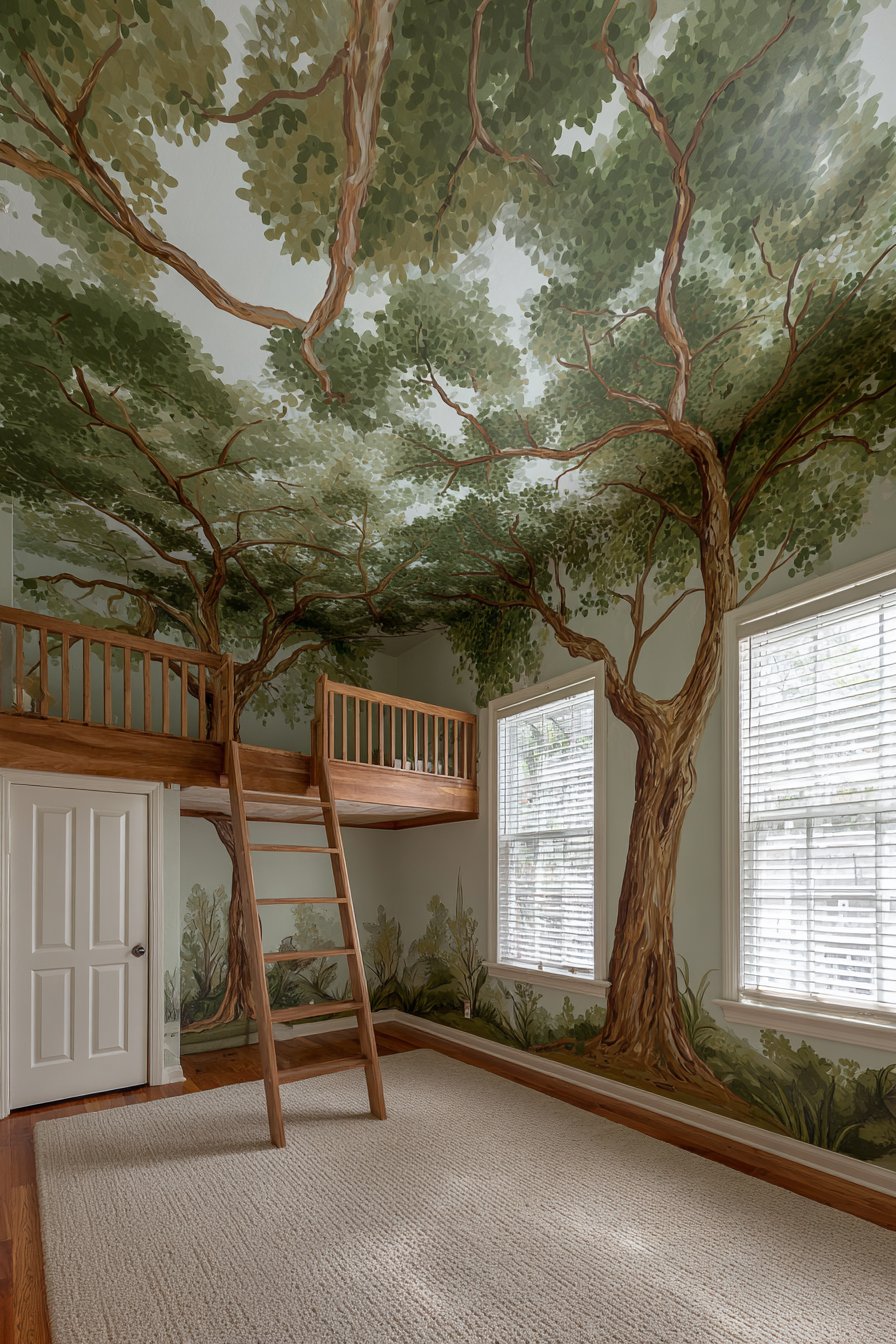
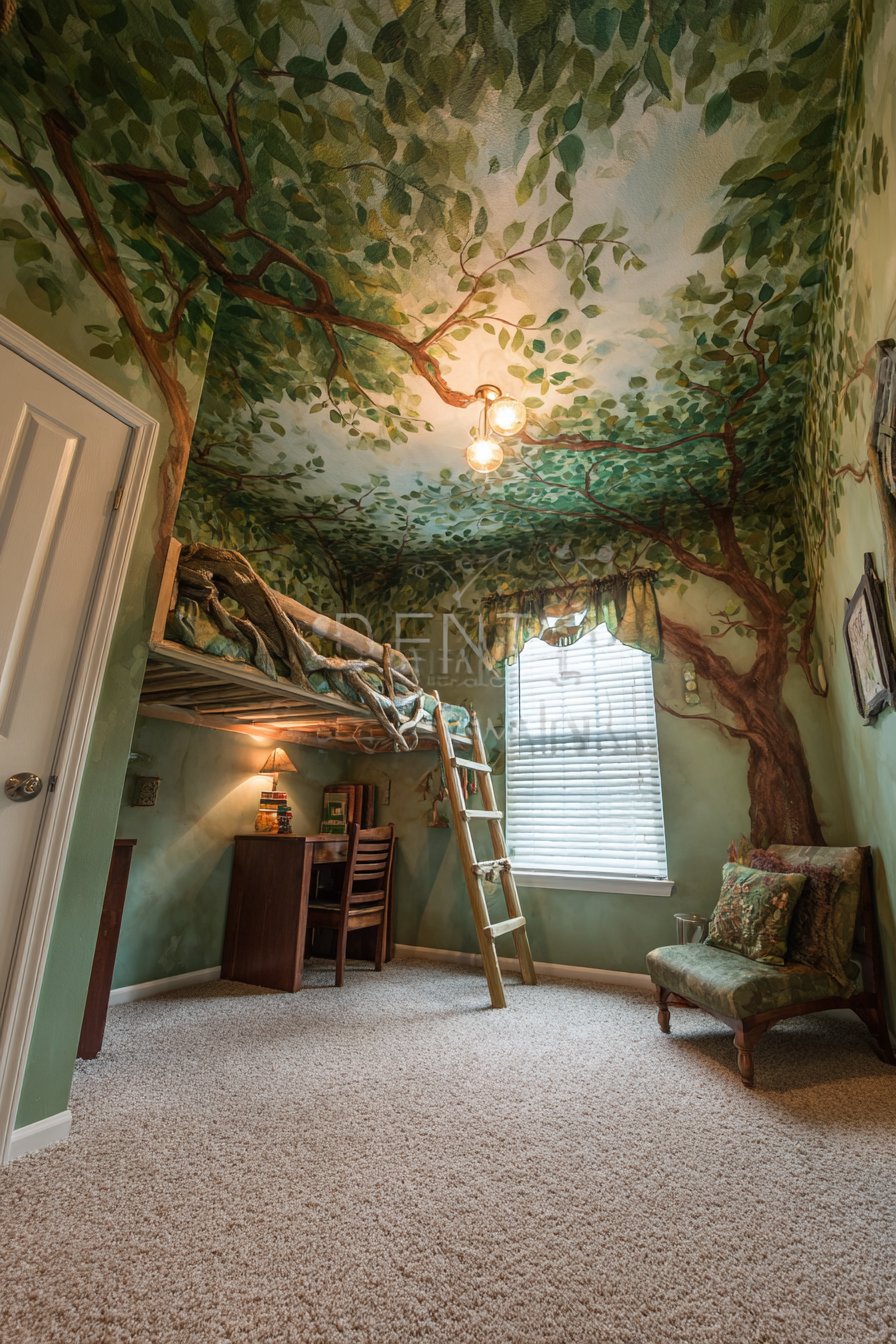
Bring the outdoors overhead with this immersive cute wall painting idea extending a tree canopy across the ceiling. Leaves in various shades of green create a treehouse illusion that transforms an ordinary room into an elevated forest dwelling. Delicate hand-painted branches show natural movement and organic shapes, with careful attention to how real tree canopies filter and scatter light creating authenticity in the artistic interpretation.
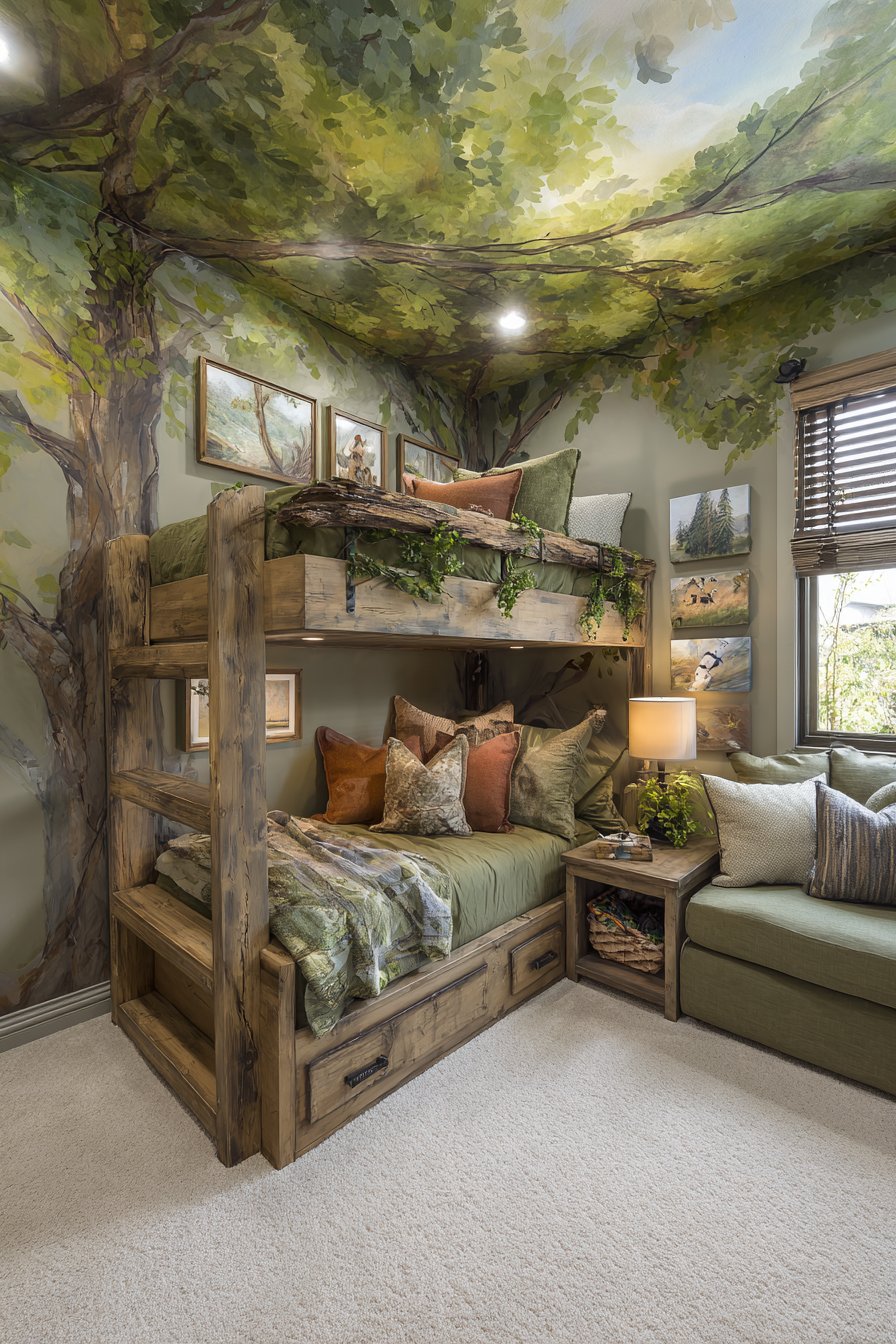
The overhead placement creates unique visual interest that many wall paintings cannot achieve. Looking up to see green leaves and brown branches mimics the experience of lying beneath a real tree, tapping into deeply positive human associations with nature and outdoor comfort. This biophilic design principle—incorporating natural elements into interior spaces—has documented benefits for wellbeing and stress reduction.
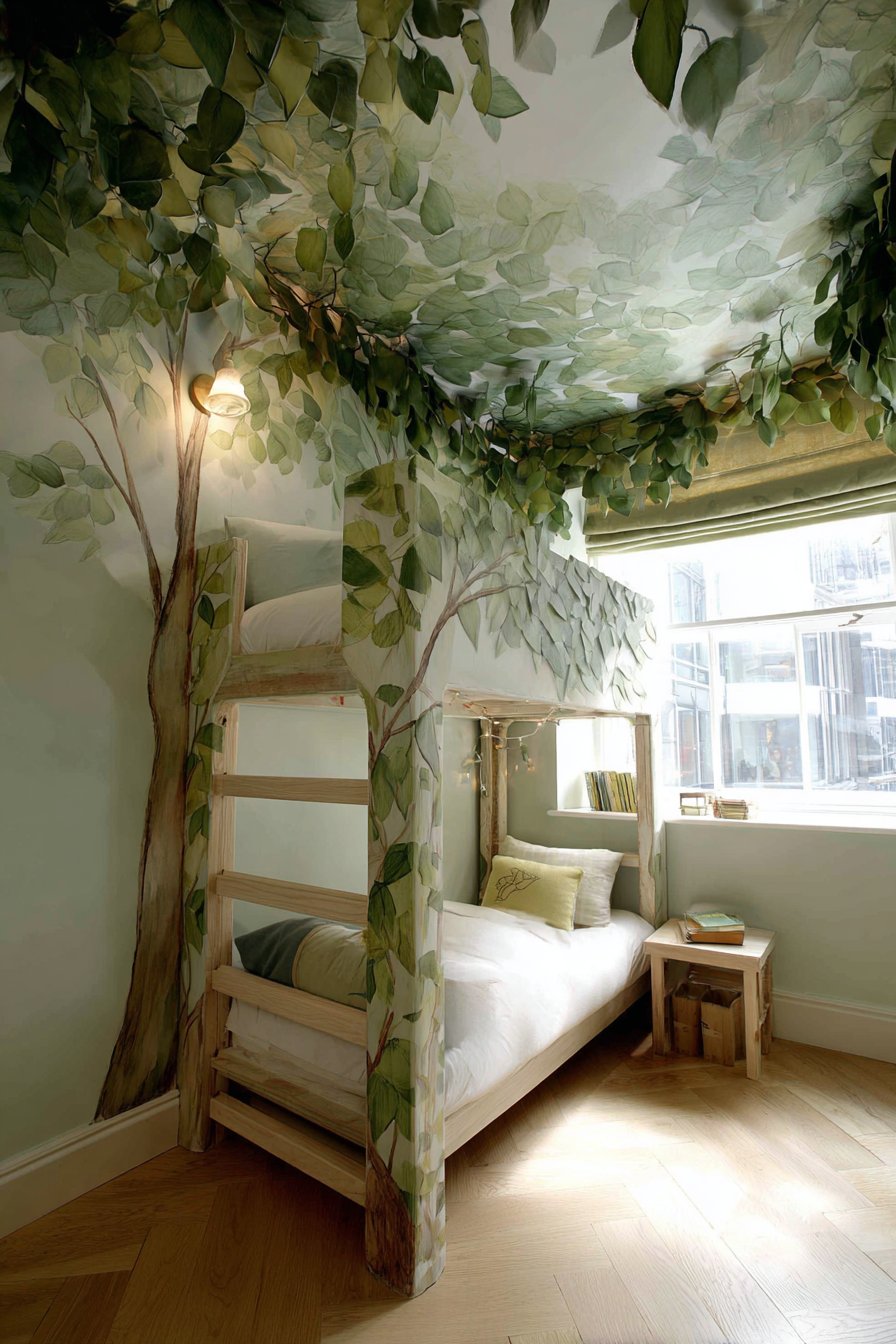
A loft bed positioned below enhances the elevated, treehouse feeling, creating vertical interest and maximizing the room’s spatial potential. Dappled light effects from window treatments complement the forest canopy beautifully, with fabric that filters light mimicking how leaves scatter sunlight in actual forests. Wide-angle interior photography captures the immersive quality, showing how ceiling paintings can completely transform spatial perception and atmosphere.
Key Design Tips: Paint ceiling background in sky blue first for daytime canopy effect, or consider darker blue for twilight forest feeling. Sketch major branch placement across ceiling, ensuring branches extend from walls inward for natural growth pattern. Paint larger branches first in browns with visible bark texture, then add progressively smaller twigs. Add leaves in clusters using various green shades—forest green, sage, olive, lime—for natural color variation. Use a sponge or stippling technique to create leaf texture rather than painting individual leaves. Allow some ceiling background to show through leaves for authentic dappled effect. Extend some branches and leaves down onto upper walls to integrate ceiling design with vertical surfaces. Consider painting a bird’s nest or tree hollow as special detail element. Work with proper scaffolding or ladder for safe ceiling access and comfortable working position.
22. Vintage Americana Hot Rod
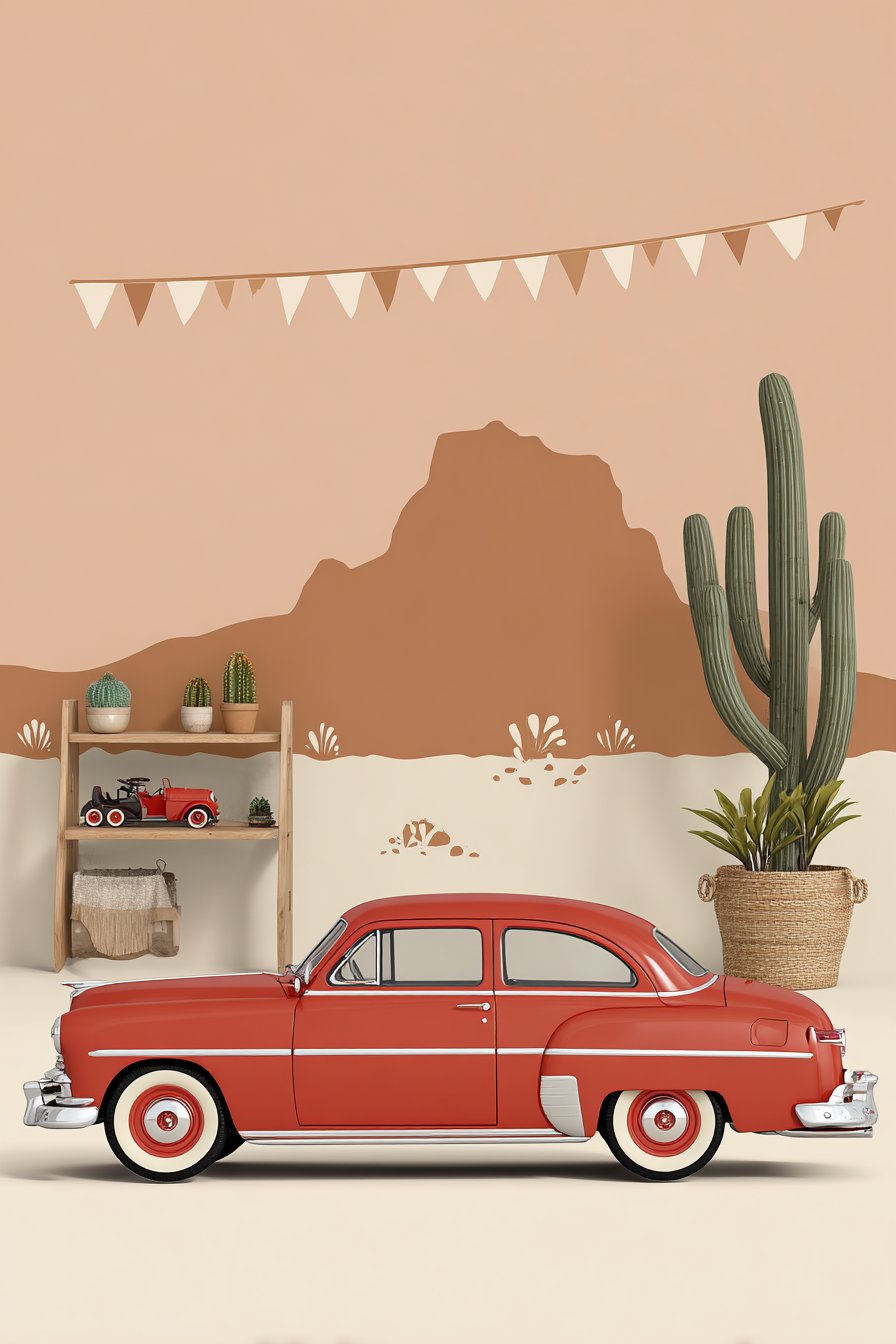
Rev up nostalgia with this charming cute wall painting idea featuring a painted vintage hot rod or classic car in cheerful red with white-wall tires and suggested chrome details in silver paint. This design creates a nostalgic Americana feel perfect for children (particularly boys) interested in vehicles and classic culture. Simple landscape elements ground the vehicle in a scene rather than leaving it floating in space, adding context and completing the composition.
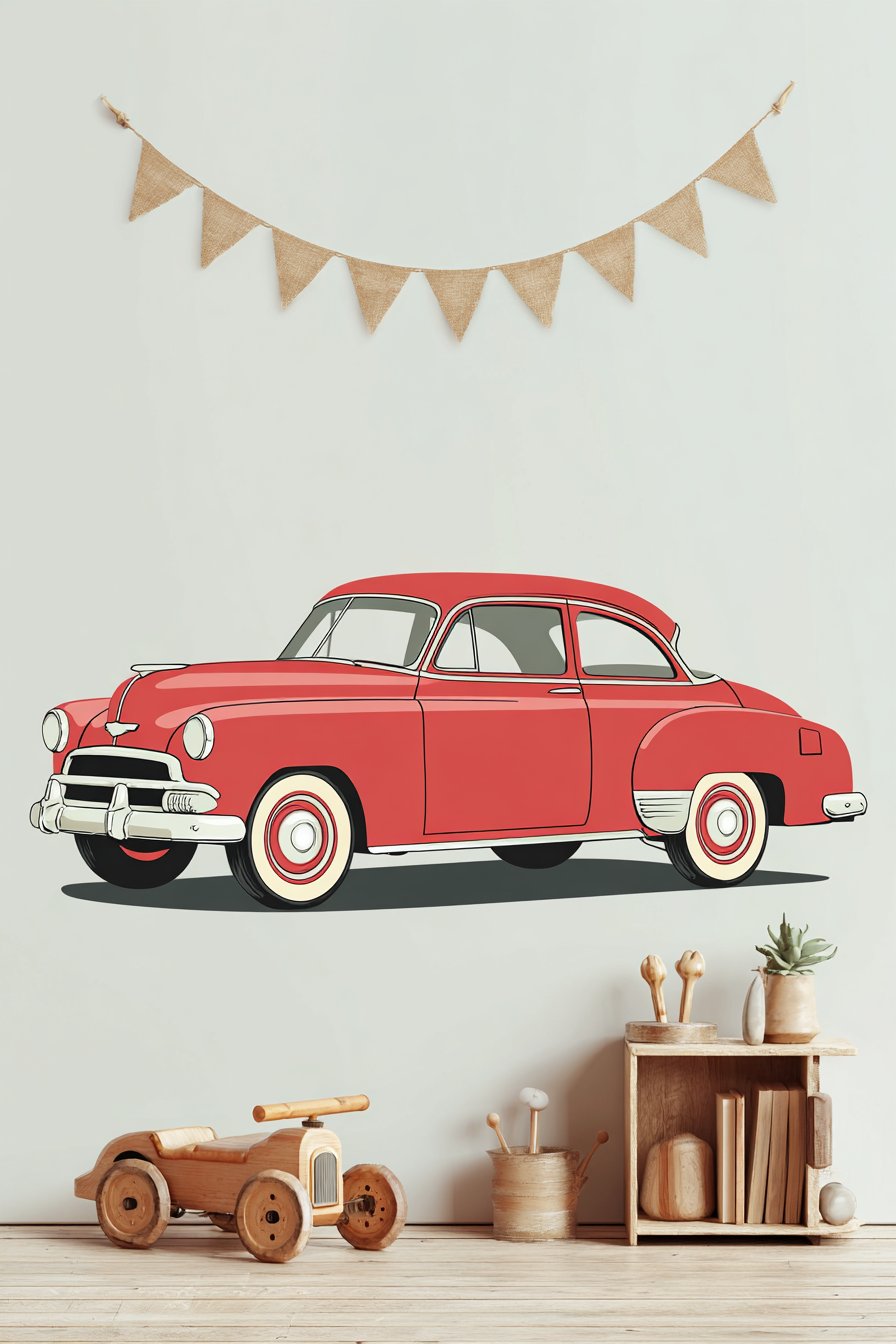
The vehicle choice matters significantly for achieving the right aesthetic balance. A vintage hot rod—with its rounded fenders, whimsical proportions, and friendly face-like front grills—reads as much cuter and more appropriate for children’s spaces than modern sports cars or realistic vehicles. The simplified rendering, with minimal detail and bold colors, maintains the playful quality essential for cute wall painting ideas while celebrating automotive design.
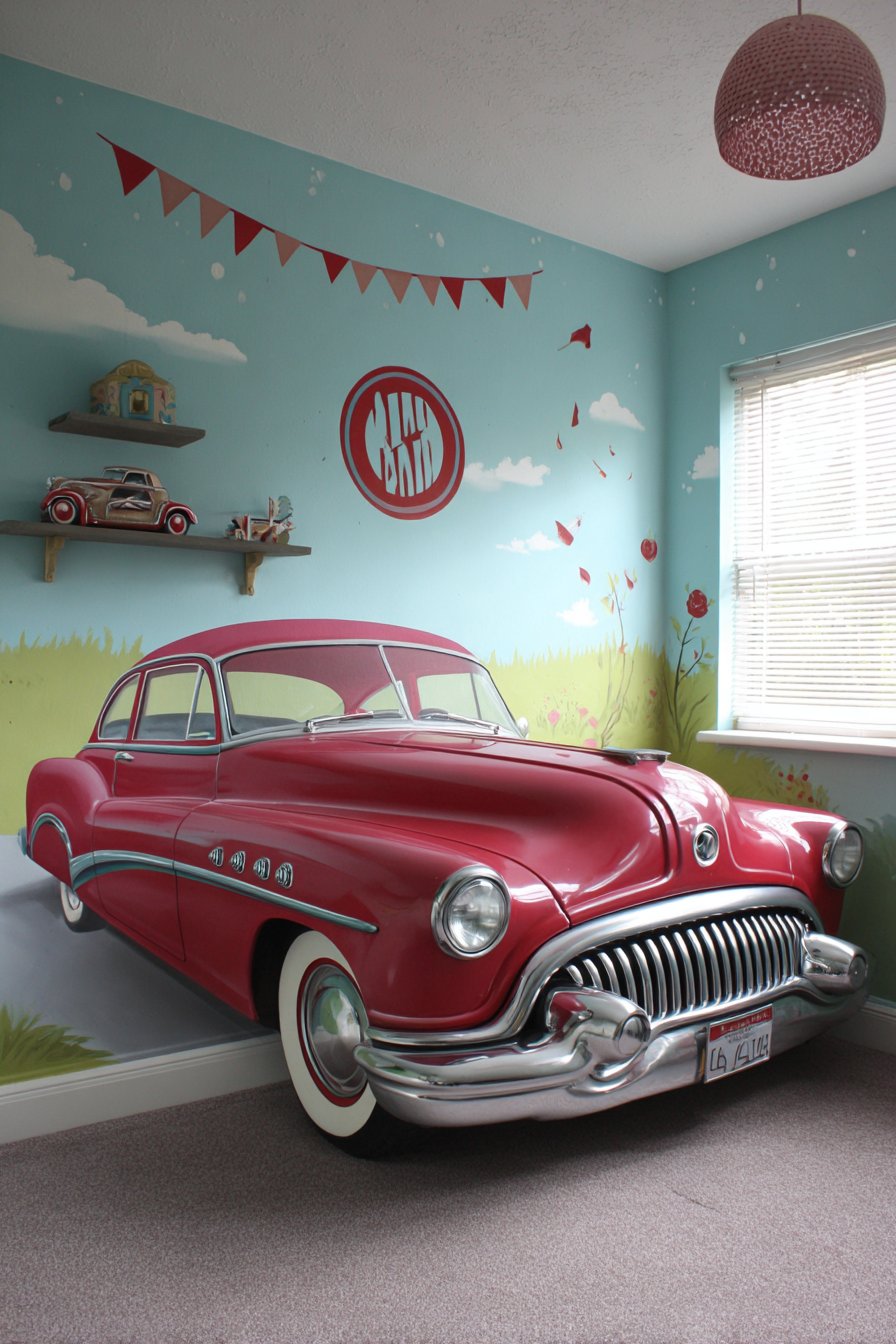
A coordinating pennant banner and vintage toy car display continue the theme throughout the room, creating cohesive design that feels curated and intentional. Warm afternoon light highlights the glossy painted details—perhaps areas of the car where shine has been suggested through careful highlight placement. Interior photography shows the themed cohesiveness that transforms a simple painted car into the anchor of an entire room’s design story.
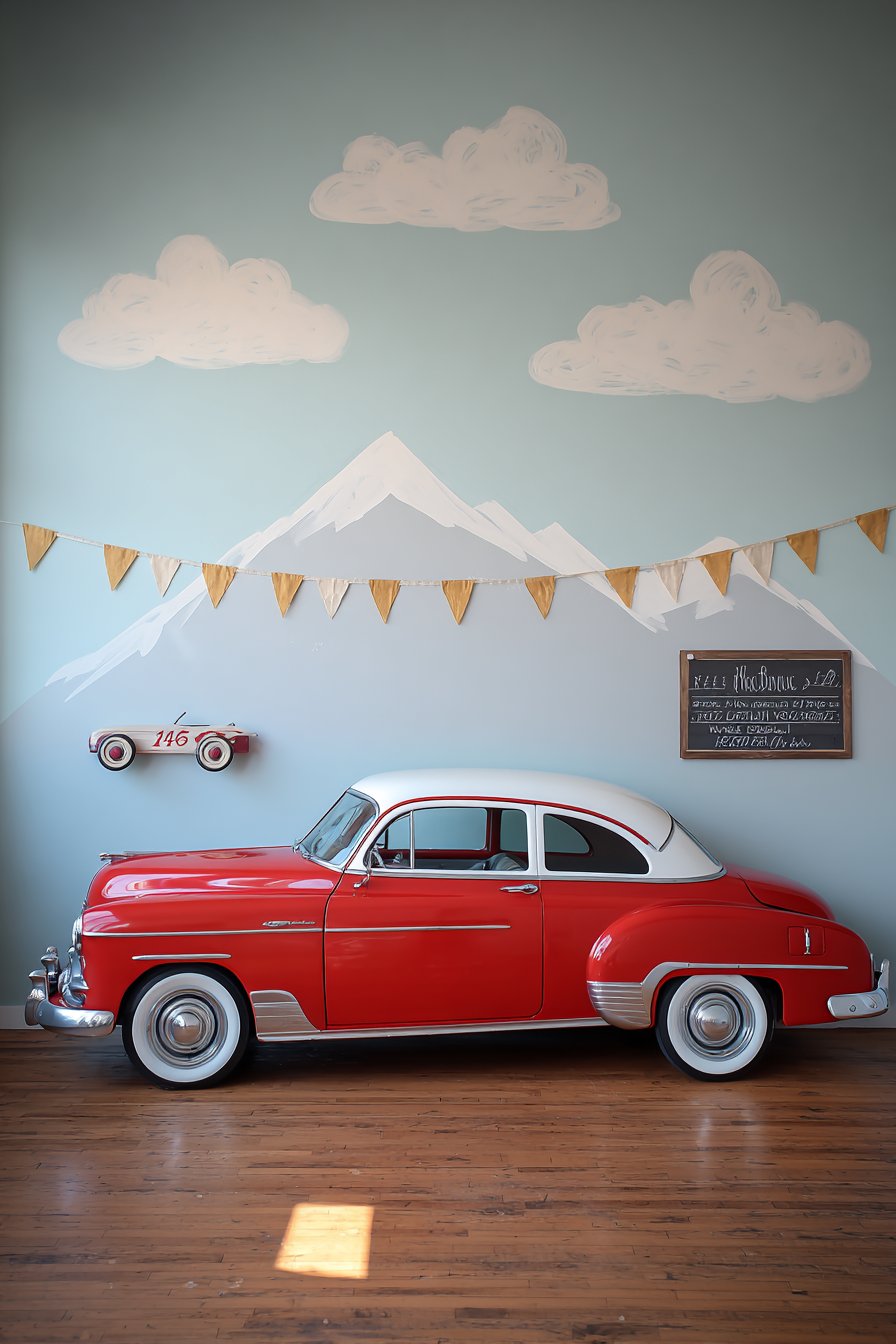
Key Design Tips: Research vintage car silhouettes and classic hot rod designs for inspiration and proportion reference. Sketch the car outline lightly in pencil, ensuring correct wheel placement and body proportions. Paint the car body in solid red or your chosen color first. Add white-wall tire details by painting tires black and adding white bands. Suggest chrome details on bumpers, hubcaps, and trim using silver paint with white highlights for shine effect. Keep the car’s face-like front friendly—round headlights as eyes, grille as a smile. Add simple landscape elements like a painted road, grass, or retro signage for context. Consider adding motion lines or small painted exhaust puffs for dynamic feeling. Include a painted license plate with the child’s name or birth year for personalization. Use painter’s tape for straight edges and clean color separation.
23. Educational Alphabet Landscape
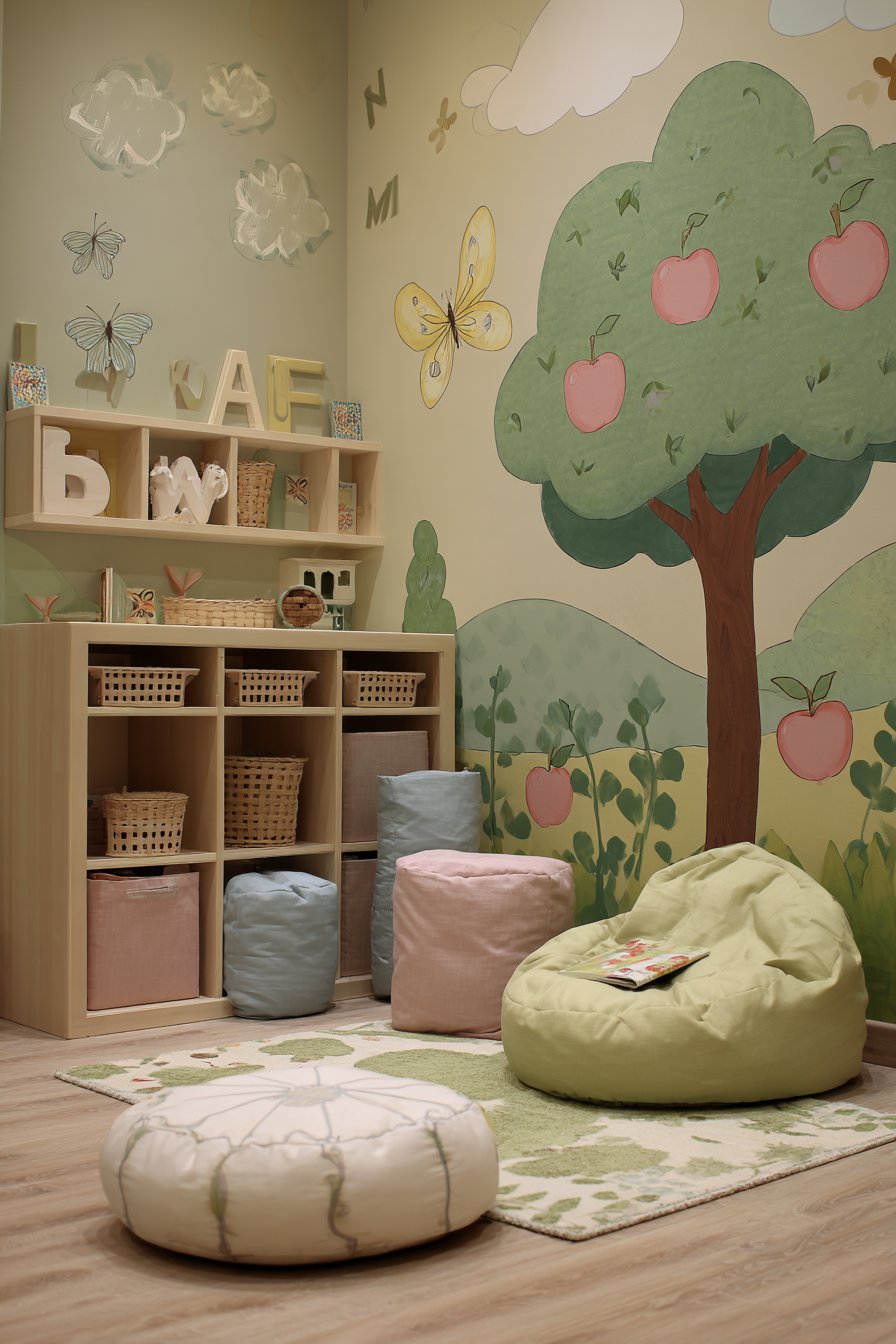
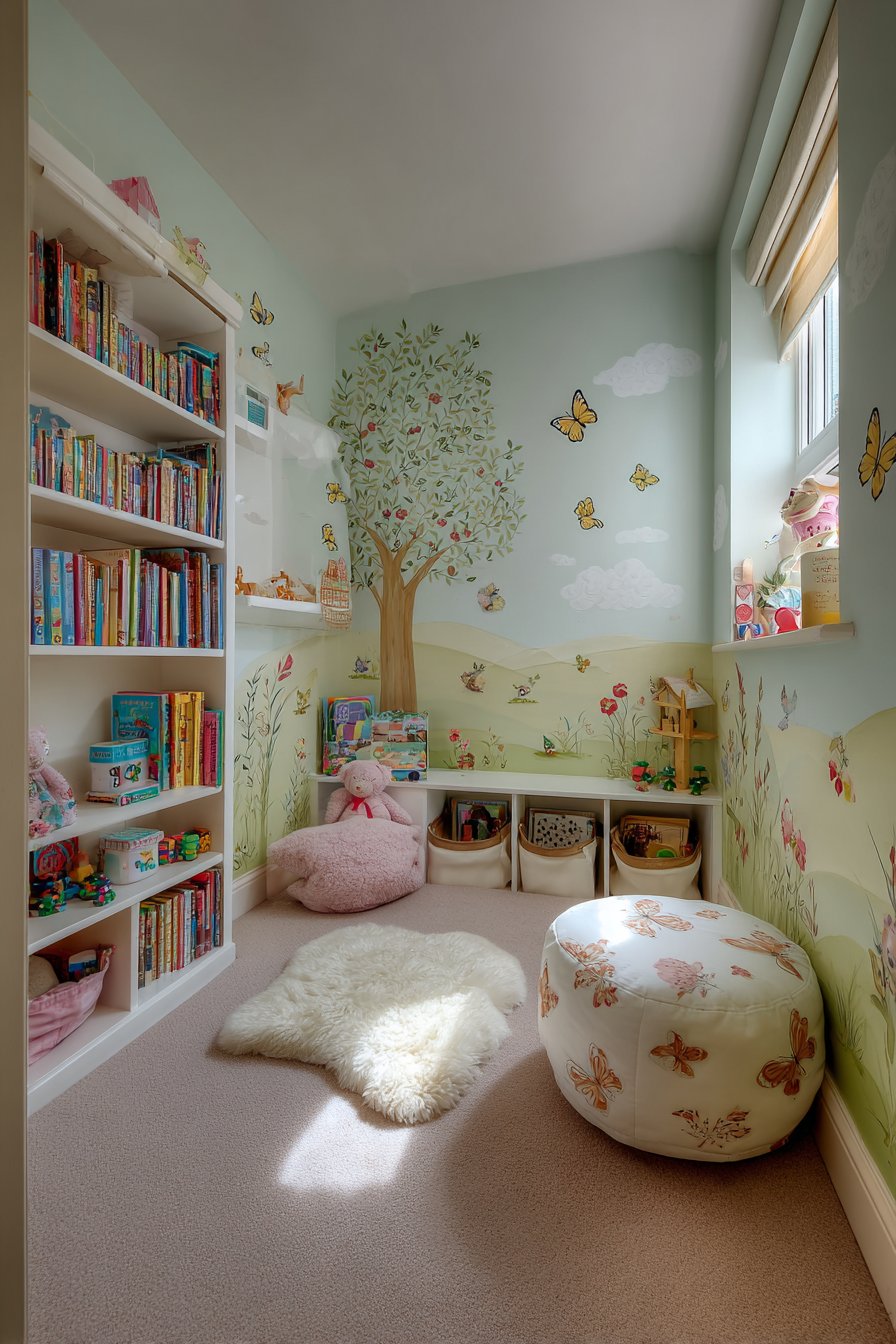
Learning becomes beautiful with this creative cute wall painting idea that integrates hand-painted alphabet letters into a continuous whimsical landscape. Each letter corresponds to a painted object—A for apple tree, B for butterfly, C for cloud—creating educational content that feels natural and engaging rather than didactic. This wraparound design positioned at child eye-level makes letter recognition and alphabet learning constant, casual, and fun.
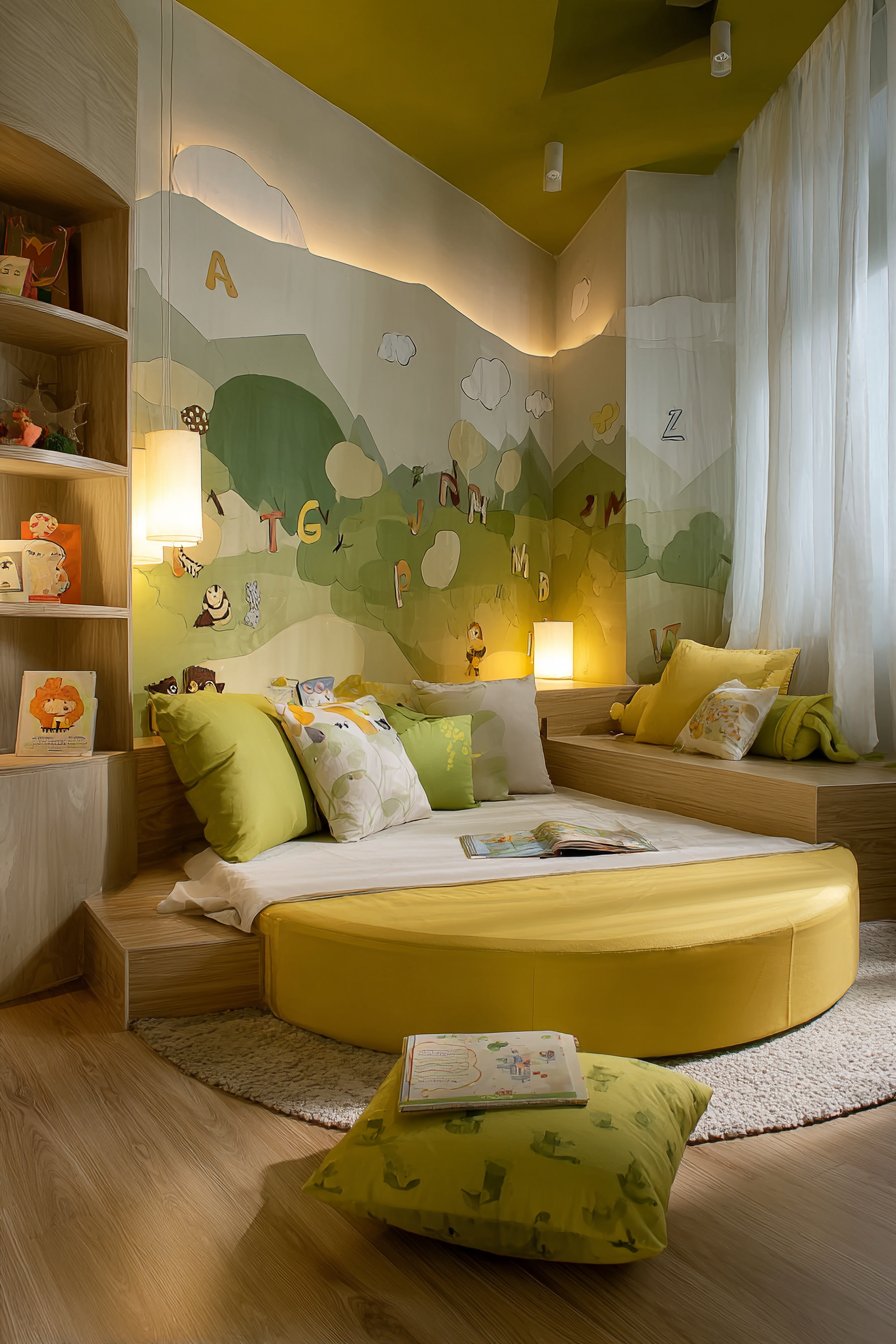
The genius of this approach lies in its integration of education into environment. Rather than alphabet posters that children might ignore, this immersive painted alphabet becomes part of the room itself, impossible to overlook and constantly reinforcing letter-object associations. The landscape continuity—perhaps rolling hills, a simple road, or a garden path—connects individual letter-object pairs into a cohesive narrative that children can follow around the room.
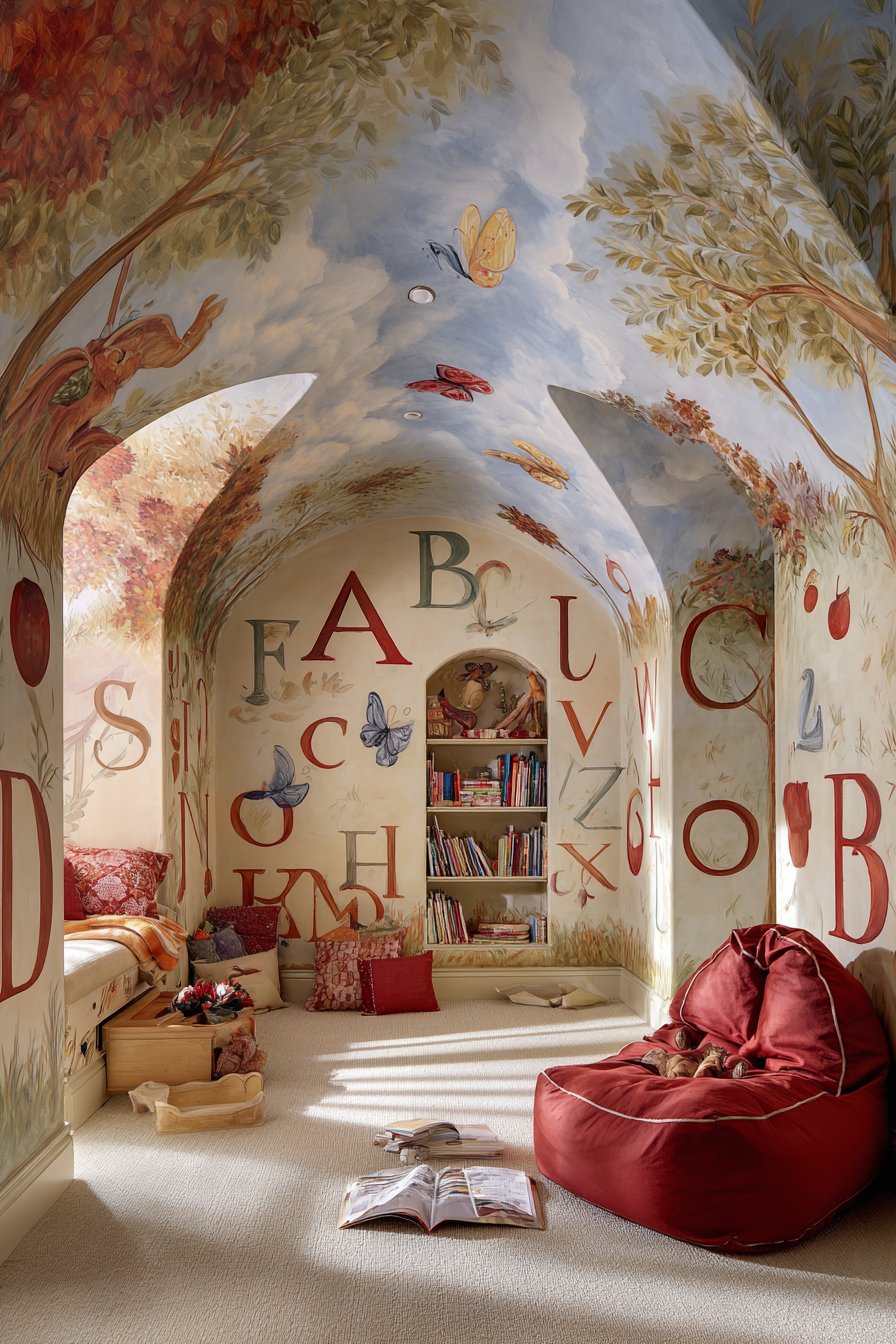
Low shelving and a comfortable reading cushion encourage letter recognition practice and early literacy activities, with the painted alphabet serving as constant reference and inspiration. Even natural lighting ensures all painted elements remain clearly visible throughout the day, essential for educational materials. Professional interior photography demonstrates how educational cute wall painting ideas can be both pedagogically valuable and aesthetically beautiful.
Key Design Tips: Plan the complete alphabet sequence around the room before starting to ensure proper spacing and layout. Position the painted strip at child eye-level, typically 2-3 feet from the floor. Choose objects that clearly represent each letter—avoid ambiguous items that could confuse learning. Paint the landscape background first—perhaps grass, sky, a path—in soft, non-distracting colors. Add alphabet letters in consistent size and clear font, ensuring excellent legibility. Paint corresponding objects near or integrated with their letters, making associations obvious. Use consistent style across all 26 letter-object pairs for cohesive appearance. Include simple details to make each object recognizable and interesting. Consider using slightly different colors for different letter-object sets to create visual variety while maintaining overall palette cohesion. Add directional elements like a painted path to guide eye movement through the alphabet sequence.
24. Festive Circus Tent Ceiling
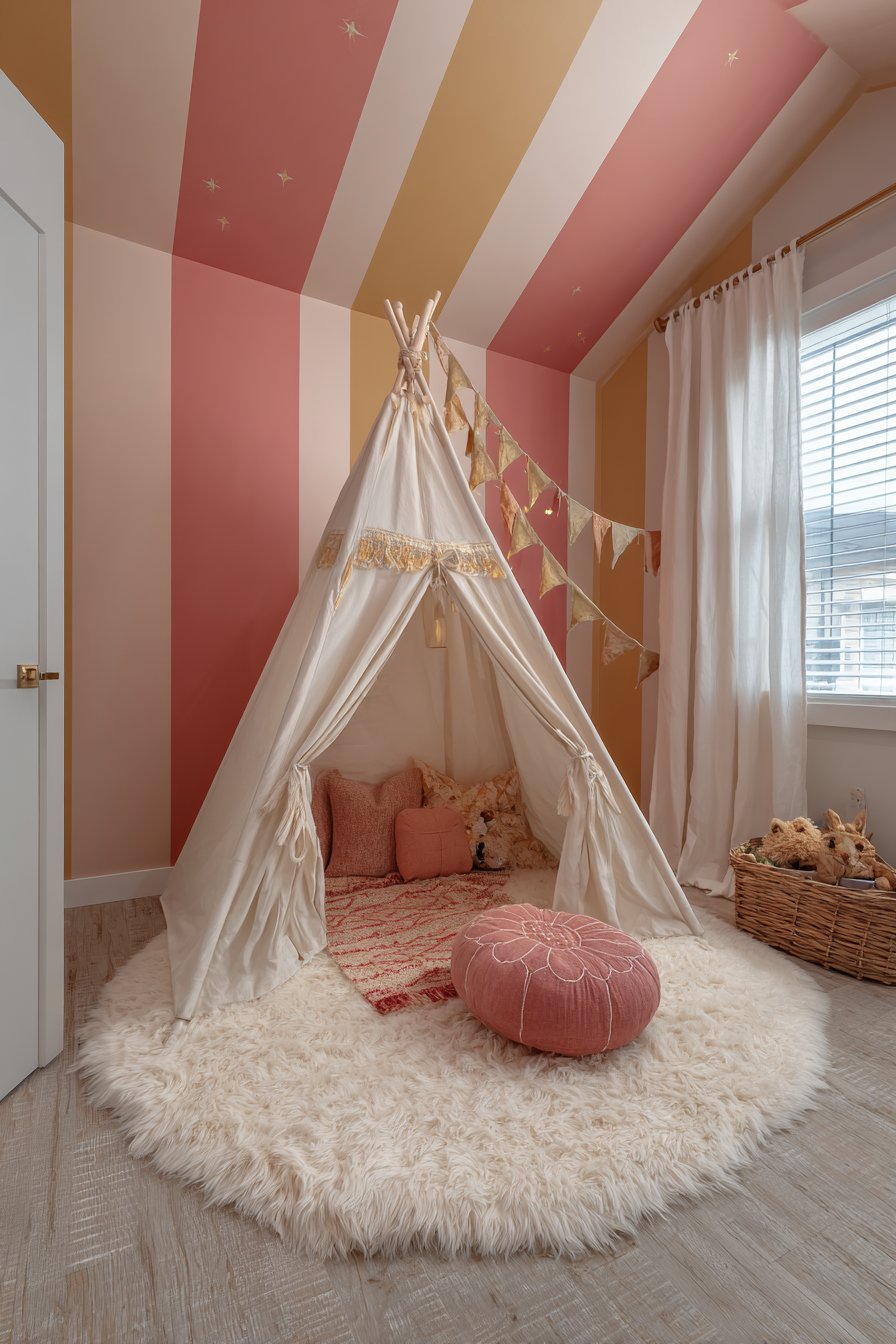
Step right up to wonder with this playful cute wall painting idea transforming the ceiling into a circus tent top. Cheerful stripes in cream, soft red, and goldenrod radiate from a central point, creating a big-top atmosphere that’s festive without being overwhelming. Hand-painted pennant flags and subtle star details complete the festive look, bringing the magic and excitement of the circus into everyday play spaces.
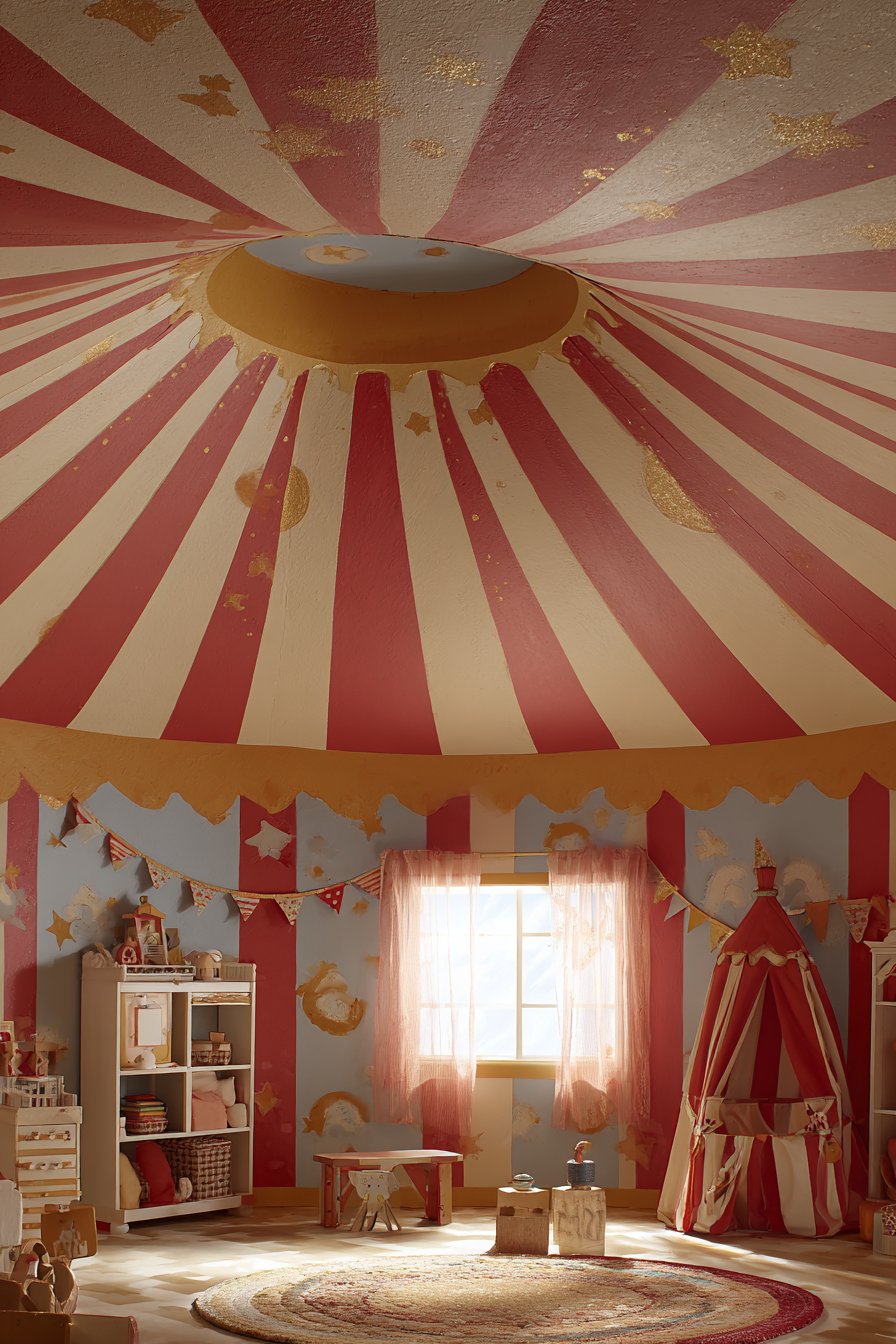
The technical execution of radiating stripes presents interesting challenges and opportunities. The stripes must emanate from a central point—perhaps the center of the ceiling or the location of a light fixture—and widen as they extend outward, maintaining consistent proportional increase. This geometric precision creates convincing tent-top illusion while requiring careful planning and measurement before painting begins.
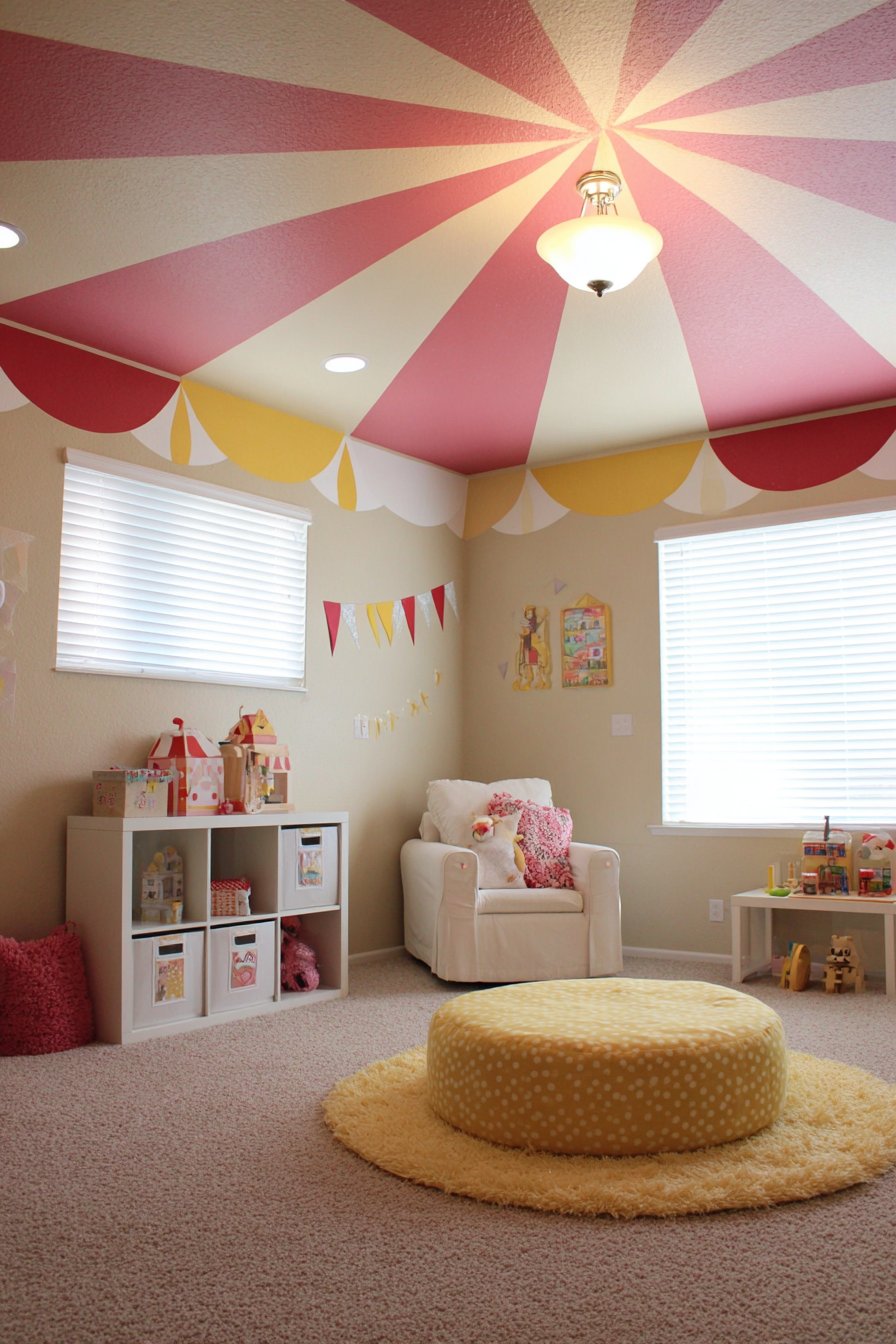
A central play rug and coordinated toy storage maintain the organized, intentional aesthetic while supporting active play. Natural overhead light emphasizes the dimensional stripes, with lighting angle affecting how prominently the painted pattern appears throughout the day. Wide-angle interior photography captures the playful ambiance and shows how ceiling treatments can completely transform a room’s character and energy.
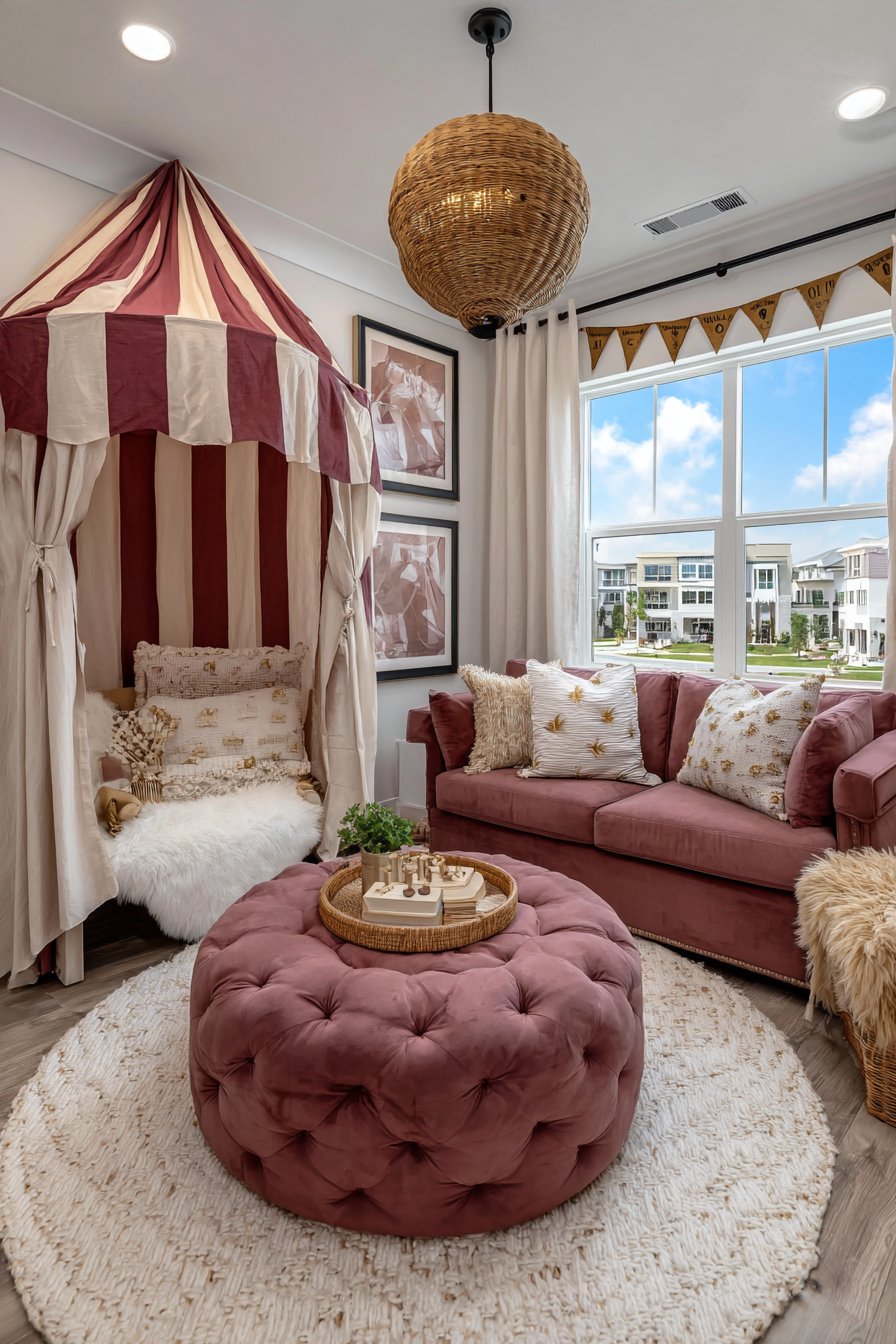
Key Design Tips: Mark the ceiling center point and use chalk lines or a laser level to map out stripe boundaries radiating outward. Calculate stripe widths to ensure they terminate at walls without awkward partial stripes. Use painter’s tape carefully along chalk lines to create clean stripe edges. Paint alternate stripes first in your chosen colors, allowing them to dry before taping and painting remaining stripes. Keep stripe colors soft and muted rather than bright and intense to avoid overwhelming effect. Add painted pennant flags around the ceiling perimeter where tent would meet walls. Include small painted stars or circus motifs sparingly as accent details. Consider painting the center point as a painted chandelier or decorative medallion. Work safely with proper scaffolding or ladder system for ceiling access. Use consistent paint sheen across all stripes for uniform appearance.
25. Serene Countryside Window Illusion
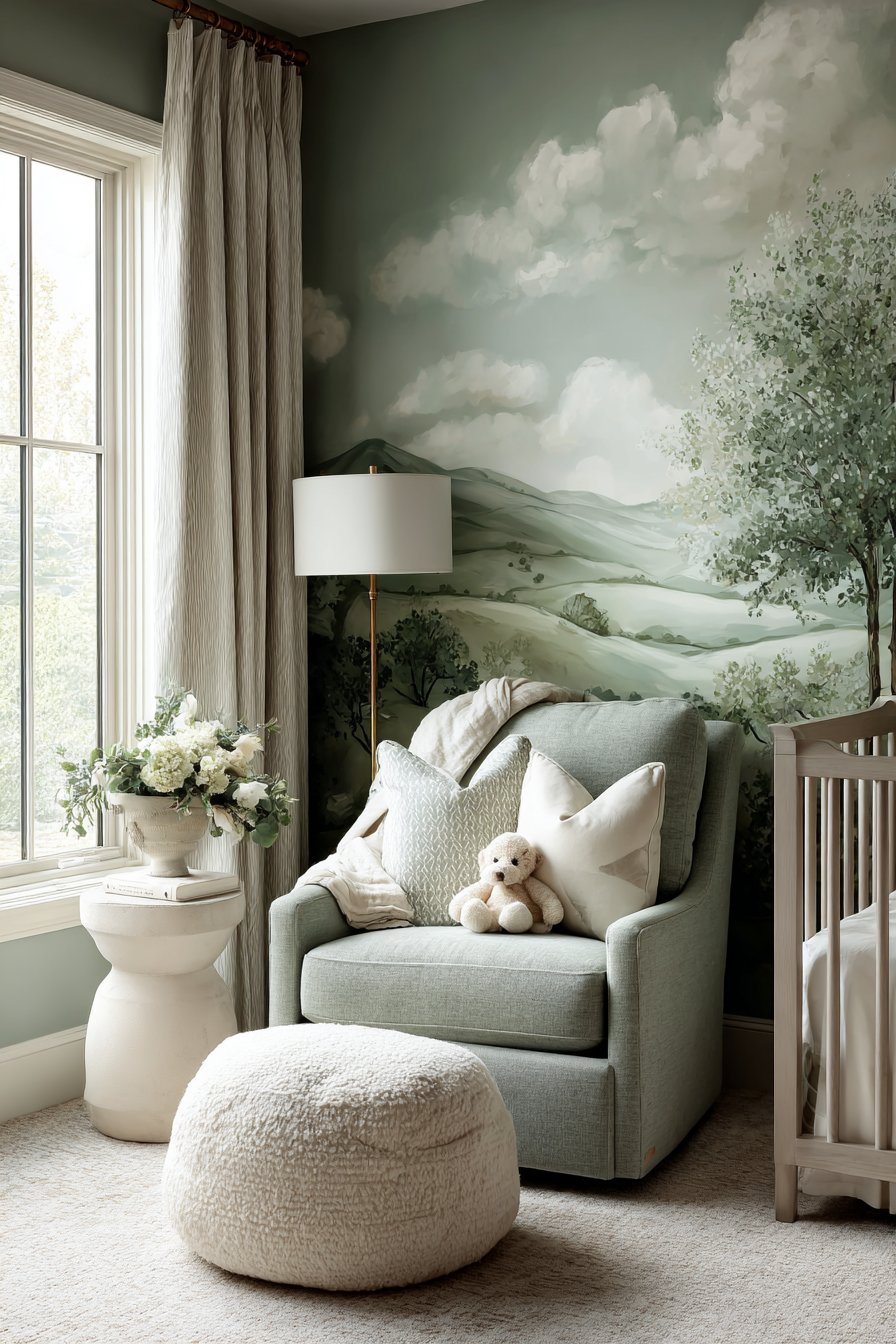
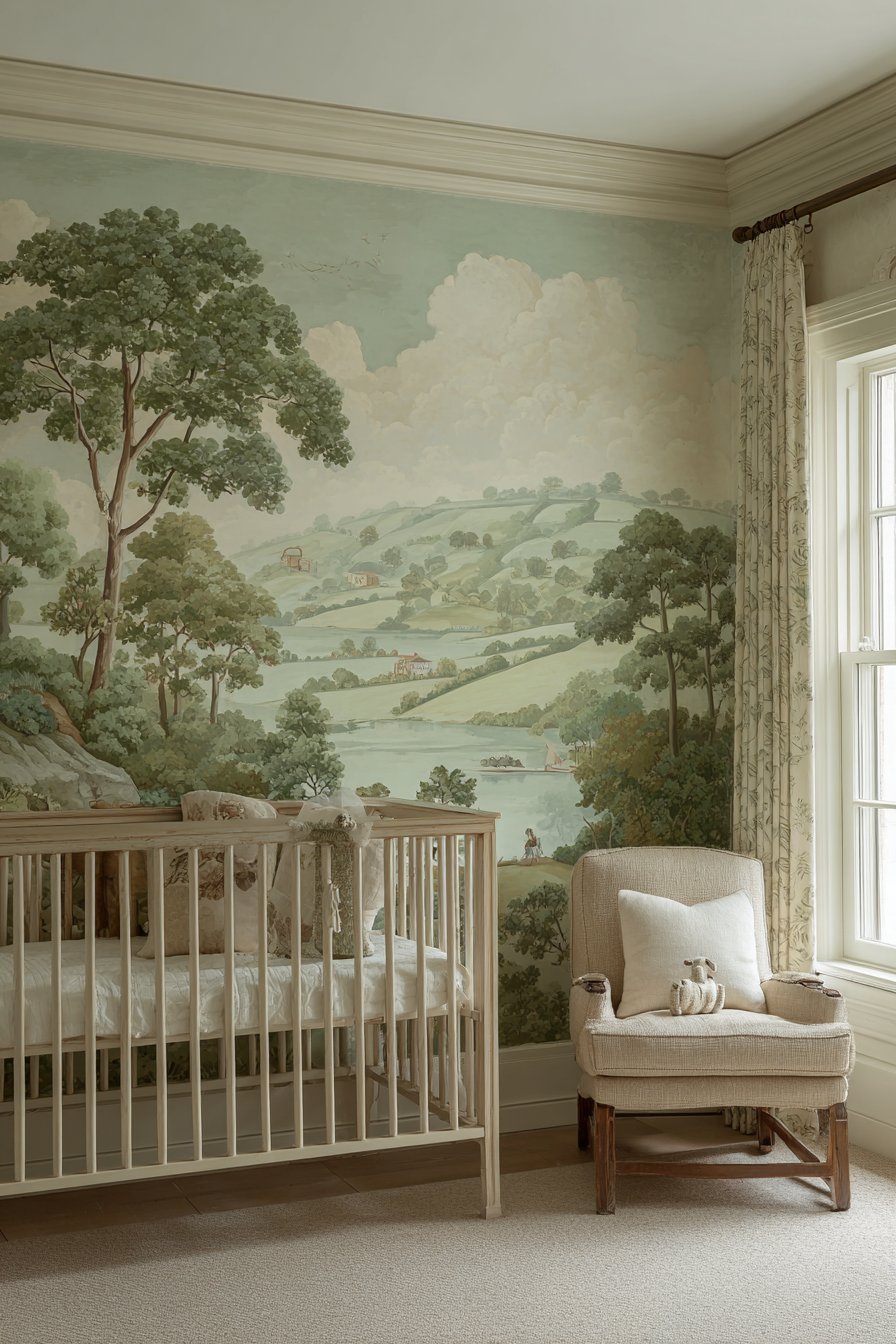
Expand space visually with this sophisticated cute wall painting idea featuring a trompe-l’oeil window showing a serene countryside view. Rolling hills, a painted tree, and soft sky in muted greens and blues create depth and the illusion of an actual window opening onto peaceful landscapes. Delicate brushwork suggests distance and perspective, with careful attention to atmospheric effects making far elements appear hazier and less detailed than near objects.
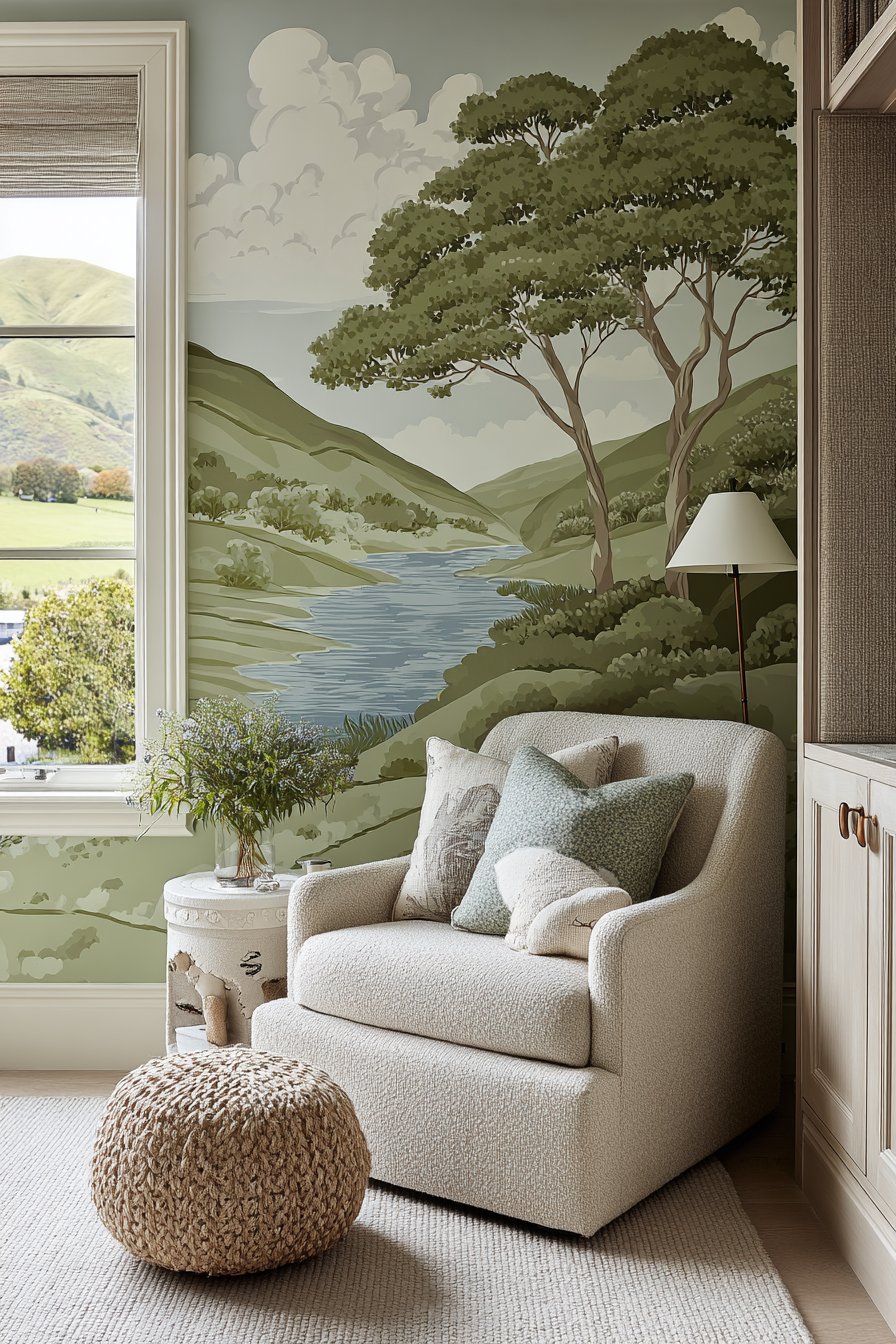
The psychological impact of this design extends beyond aesthetics into spatial perception and emotional wellbeing. Rooms without windows or with limited natural light benefit enormously from painted window illusions, which provide visual escape and the suggestion of connection to outdoor spaces. The countryside view—pastoral, peaceful, unpopulated—offers calm and tranquility without the stimulation of urban scenes or complex landscapes.
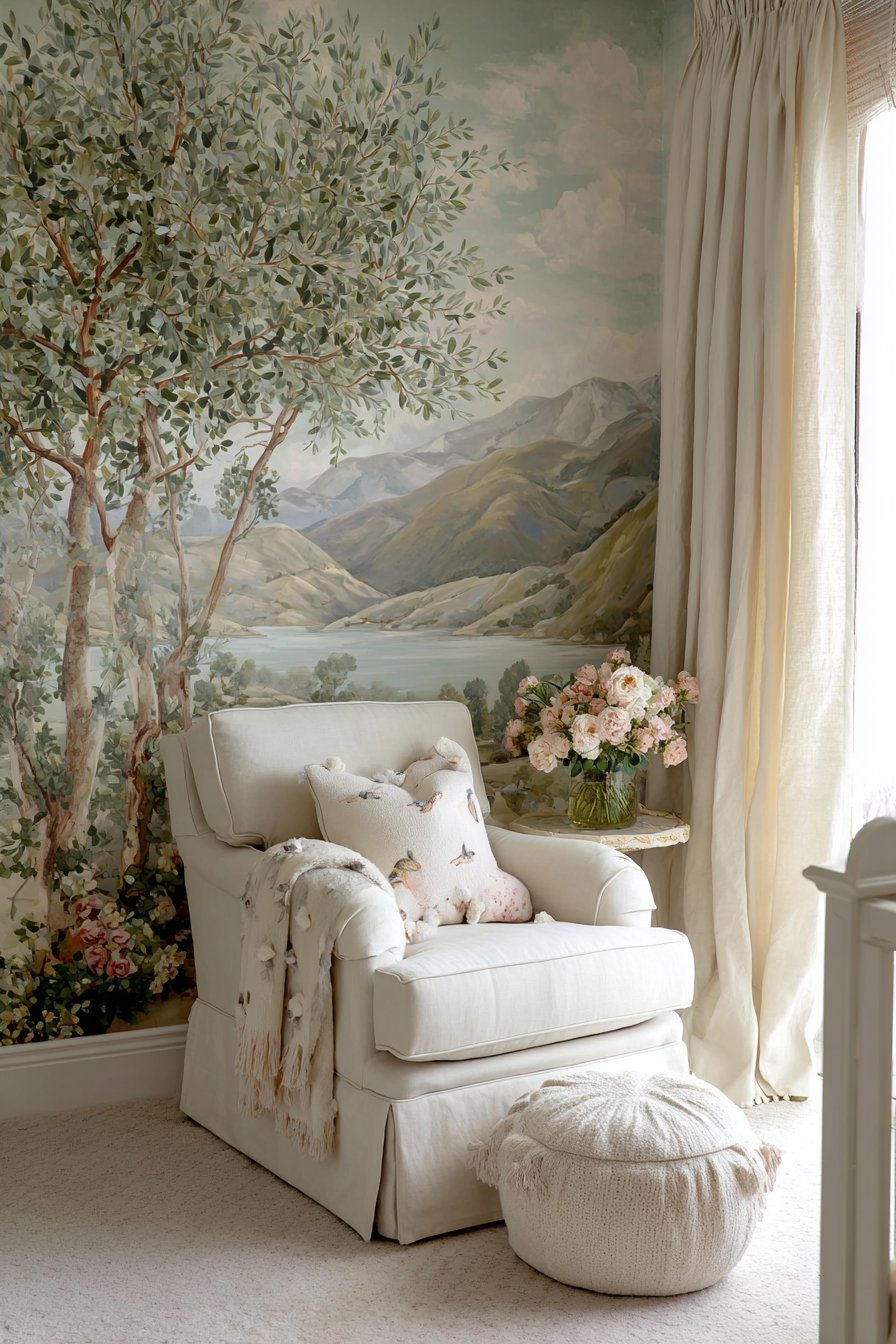
A comfortable nursing chair positioned as if looking out the painted window creates a perfect spot for feeding, reading, or quiet bonding. Soft natural light from an actual adjacent window enhances the illusion by providing real illumination that can appear to come from the painted window as well. Interior design photography shows how space-expanding effects of trompe-l’oeil create rooms that feel significantly larger and more open than their actual dimensions.
Key Design Tips: Study real window frames and proportions for authentic rendering of the window structure itself. Paint the window frame first, including muntins if using multi-pane design. Create the landscape using atmospheric perspective—cooler, lighter colors and less detail for distant elements. Paint the sky first, then work forward through landscape layers—far hills, middle trees, near grass. Add window details like painted glass reflections or slight glare for realism. Consider painting the window slightly open with painted curtains to enhance dimensional illusion. Include window sill painted in appropriate perspective with perhaps a small painted object like a vase or plant. Add subtle shadows around window frame where it would naturally create depth. Position painted window to align with actual light sources when possible for enhanced believability.
26. Inspiring World Map Adventure
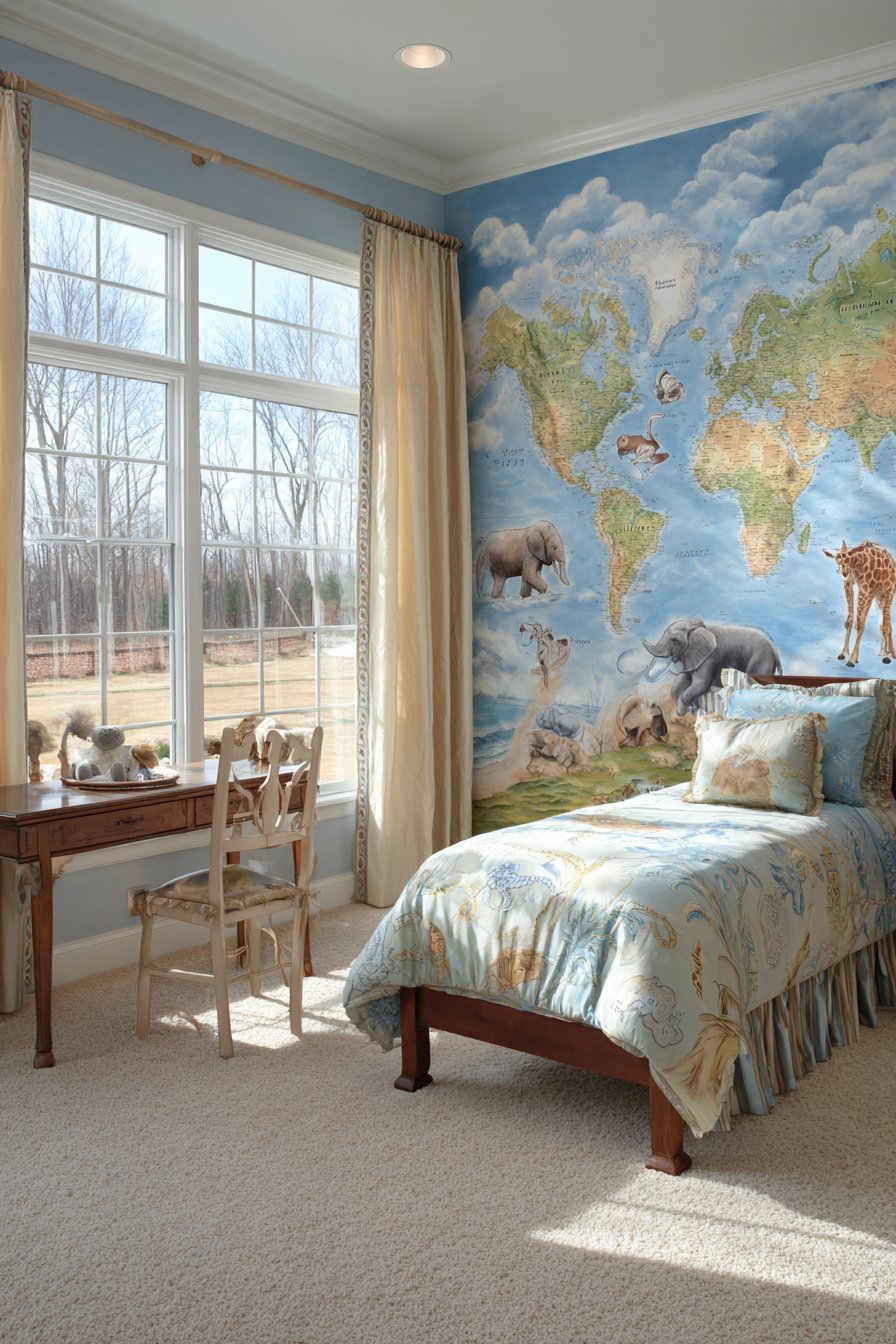
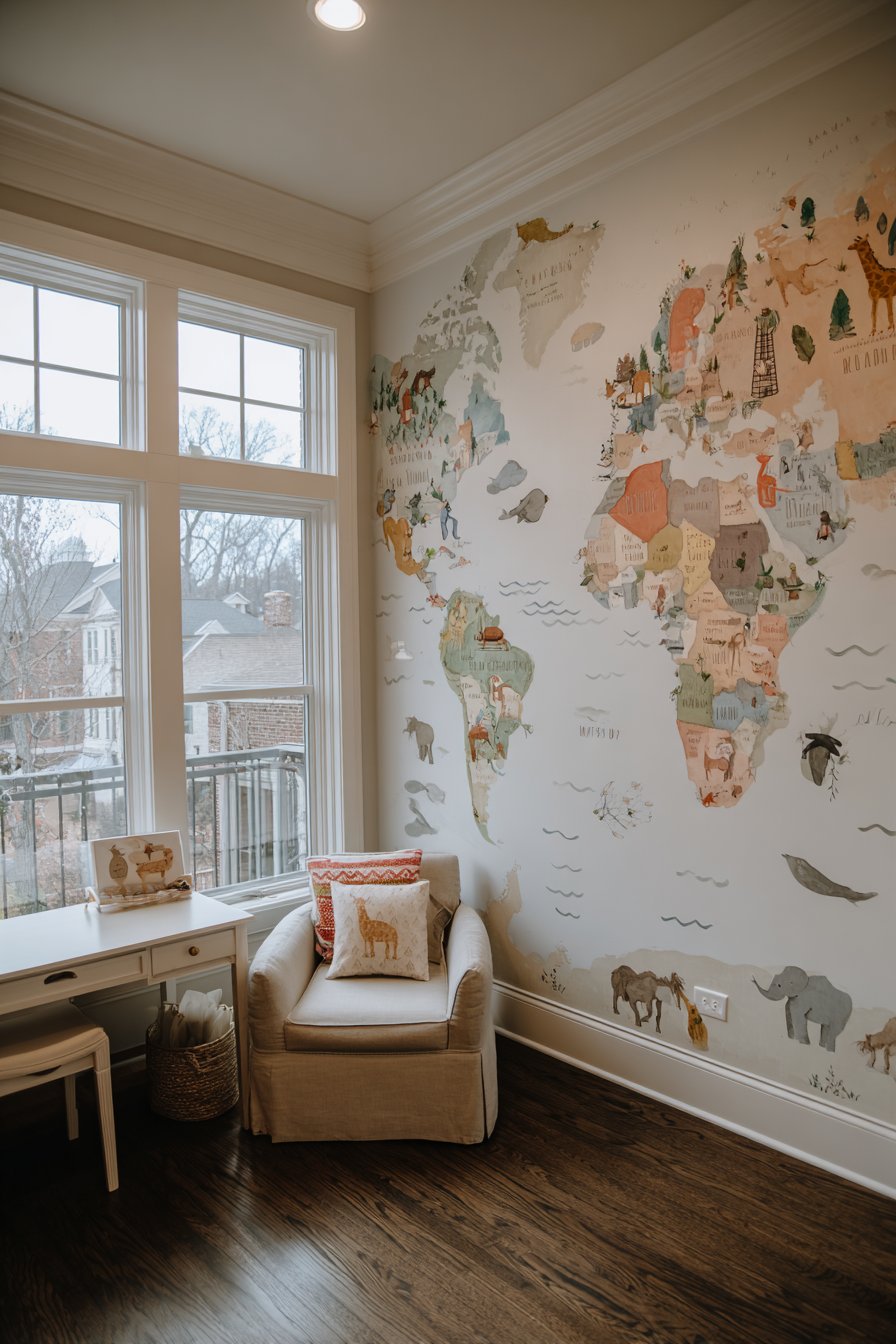
Expand horizons with this educational cute wall painting idea featuring a hand-painted world map in soft pastels showing continents, simple ocean waves, and whimsical painted animals native to each region. The map serves dual purposes—decorative artwork and educational tool—introducing geography and biodiversity in accessible, engaging ways. Simplified geography makes the map readable and clear rather than overwhelming with excessive detail.
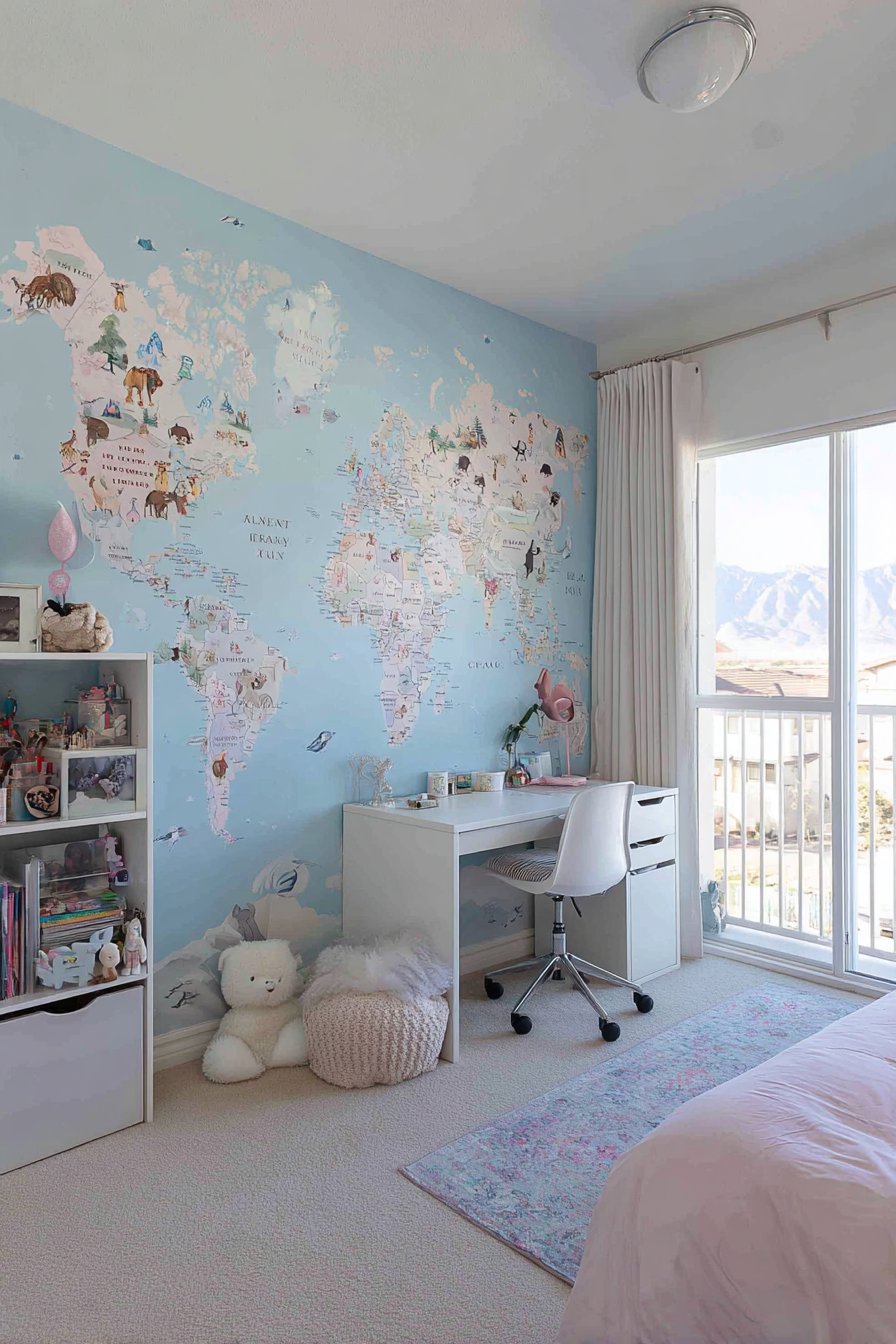
The animal additions transform what might be a dry educational map into an engaging exploration of global wildlife. A painted elephant in Africa, polar bear in the Arctic, kangaroo in Australia, and toucan in South America create visual interest while teaching habitat and species distribution. These animals should be rendered in the same cute, approachable style as other wall painting ideas, maintaining consistency in aesthetic approach.
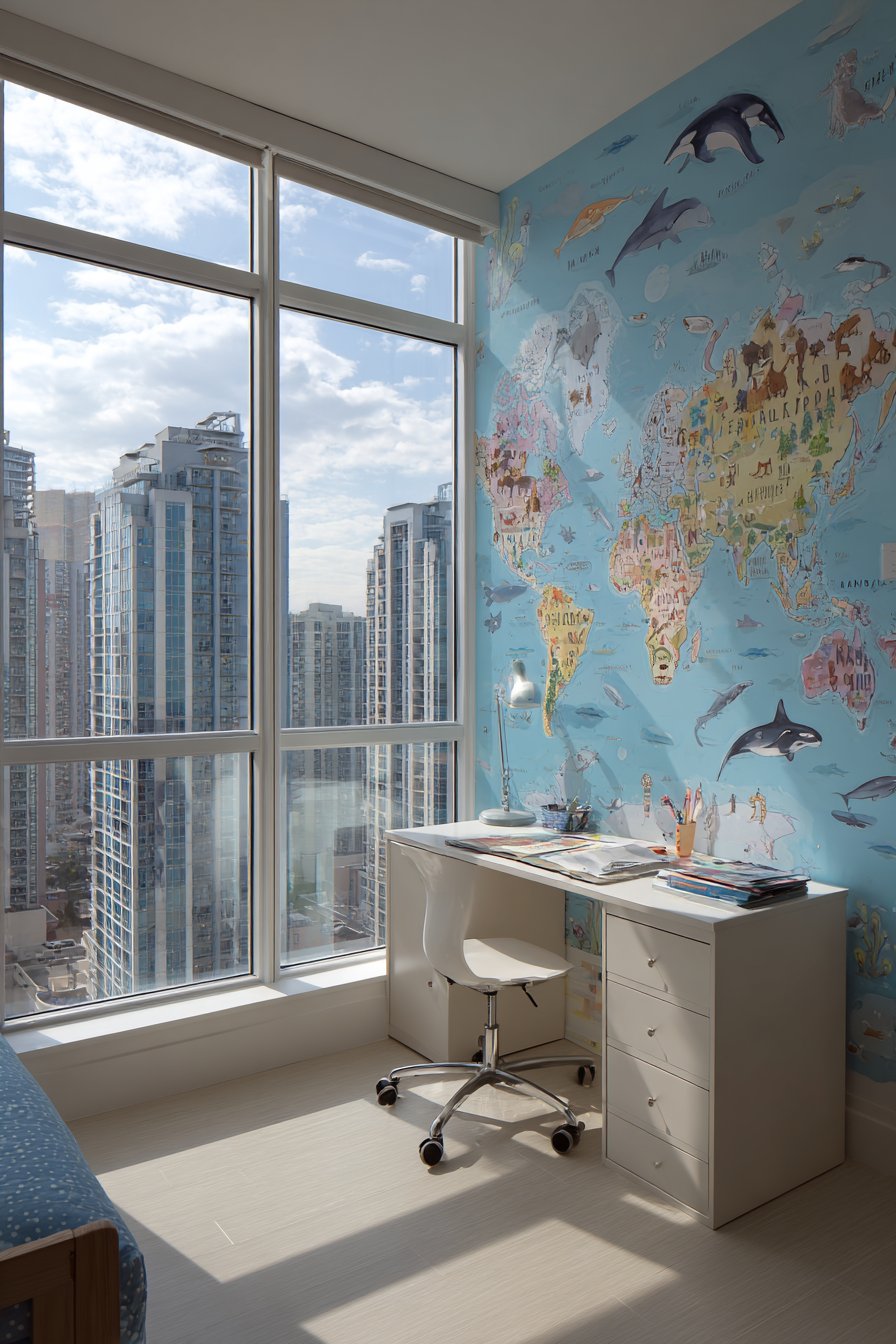
A desk area for homework positioned below the map encourages learning and study, with the geography always present as reference for school assignments. Bright natural light from large windows illuminates the entire painted wall beautifully, ensuring all continents and details remain visible. Professional photography demonstrates how educational and decorative elements can coexist beautifully in cute wall painting ideas.
Key Design Tips: Use a projector to trace a world map outline for accurate continent shapes and relative positions. Simplify geography by showing only major continents and largest islands, eliminating small details. Paint oceans in soft blue with simple wave patterns suggesting water rather than detailed topographic information. Use different soft colors for each continent to differentiate them clearly—pastels work well for cute aesthetic. Add 2-4 animals per continent, positioning them roughly in their native regions. Keep animals simple and recognizable, maintaining consistent style across all species. Include compass rose and perhaps equator line for educational value. Consider adding small painted ships or boats in oceans for additional interest. Label continents with clear, readable text in complementary color. Use matte finish to reduce glare on this educational reference wall.
27. Ethereal Dandelion Dreams
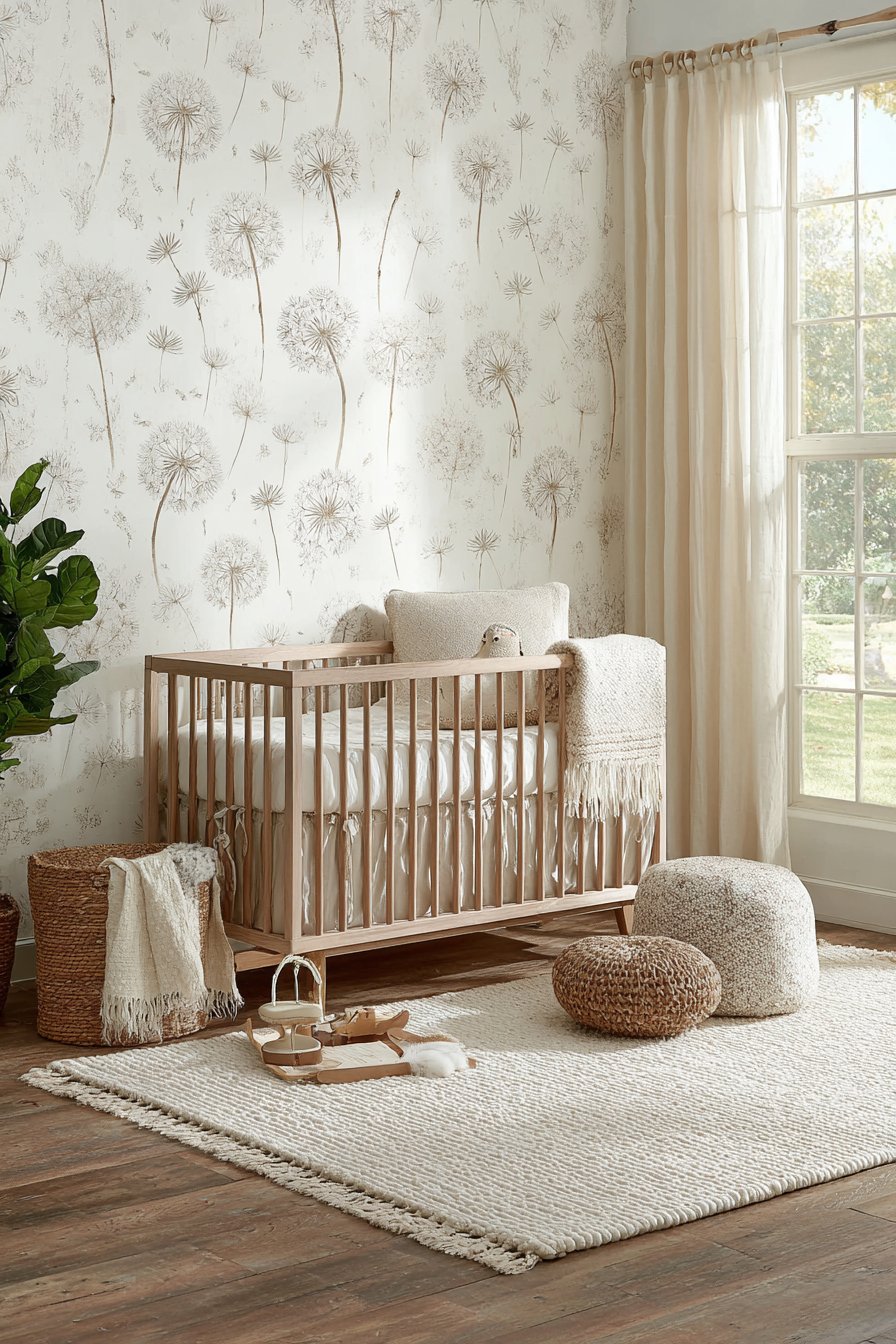
Float away on wishes with this delicate cute wall painting idea featuring painted dandelion puffs in various stages of dispersal. Delicate seeds float across the wall in soft grays and whites on a pale cream background, creating gentle movement and ethereal beauty. The wispy hand-painted details require patience and fine brushwork but result in stunning, nature-inspired artwork that feels both sophisticated and whimsical.
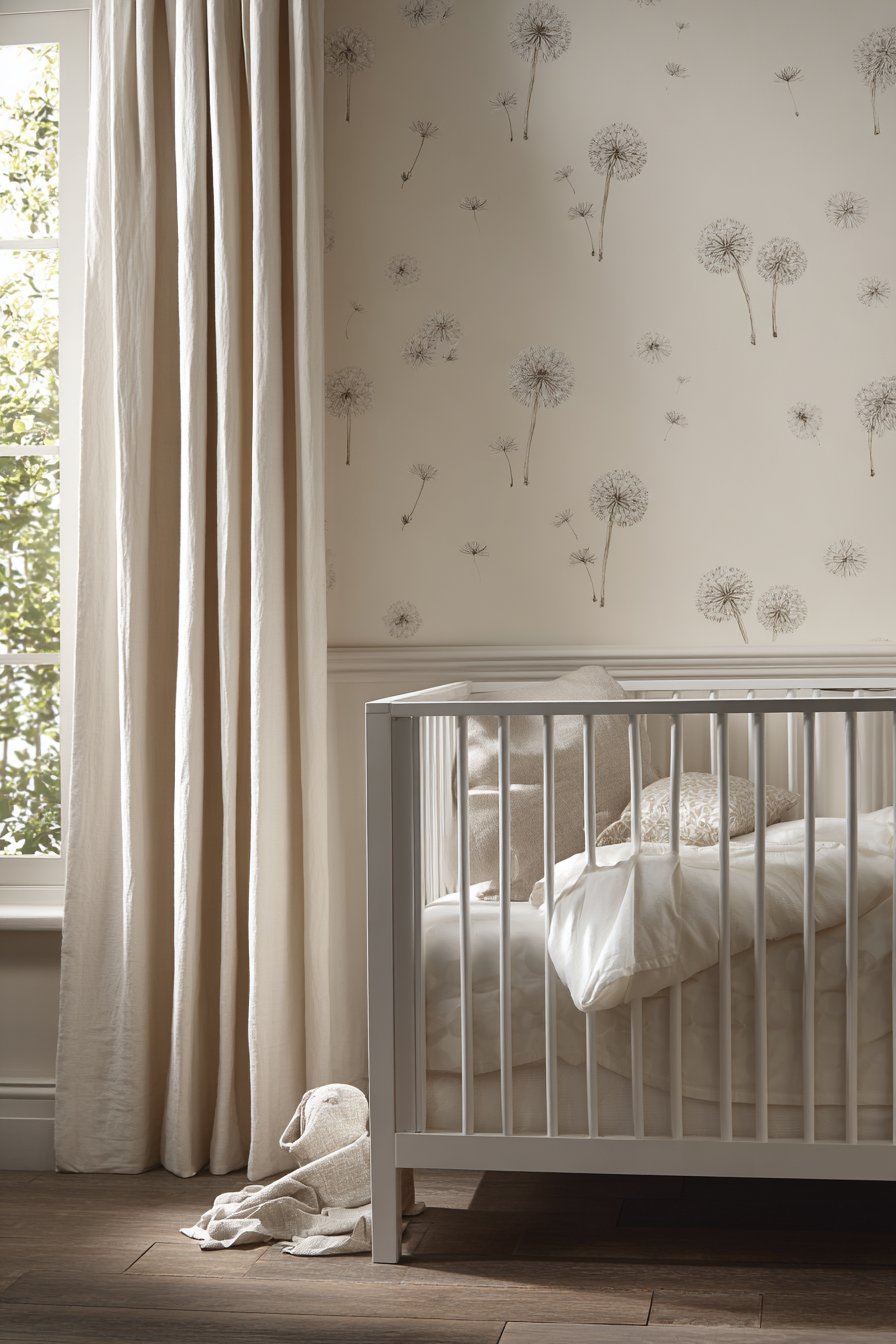
The dandelion motif carries wonderful symbolism—wishes, dreams, gentle transformation, the passage of time—making it particularly meaningful for nurseries and children’s spaces where parents hold so many hopes for their little ones. The natural, organic forms feel current and fresh while avoiding trendy elements that might date quickly. The monochromatic or near-monochromatic palette ensures versatility and longevity.
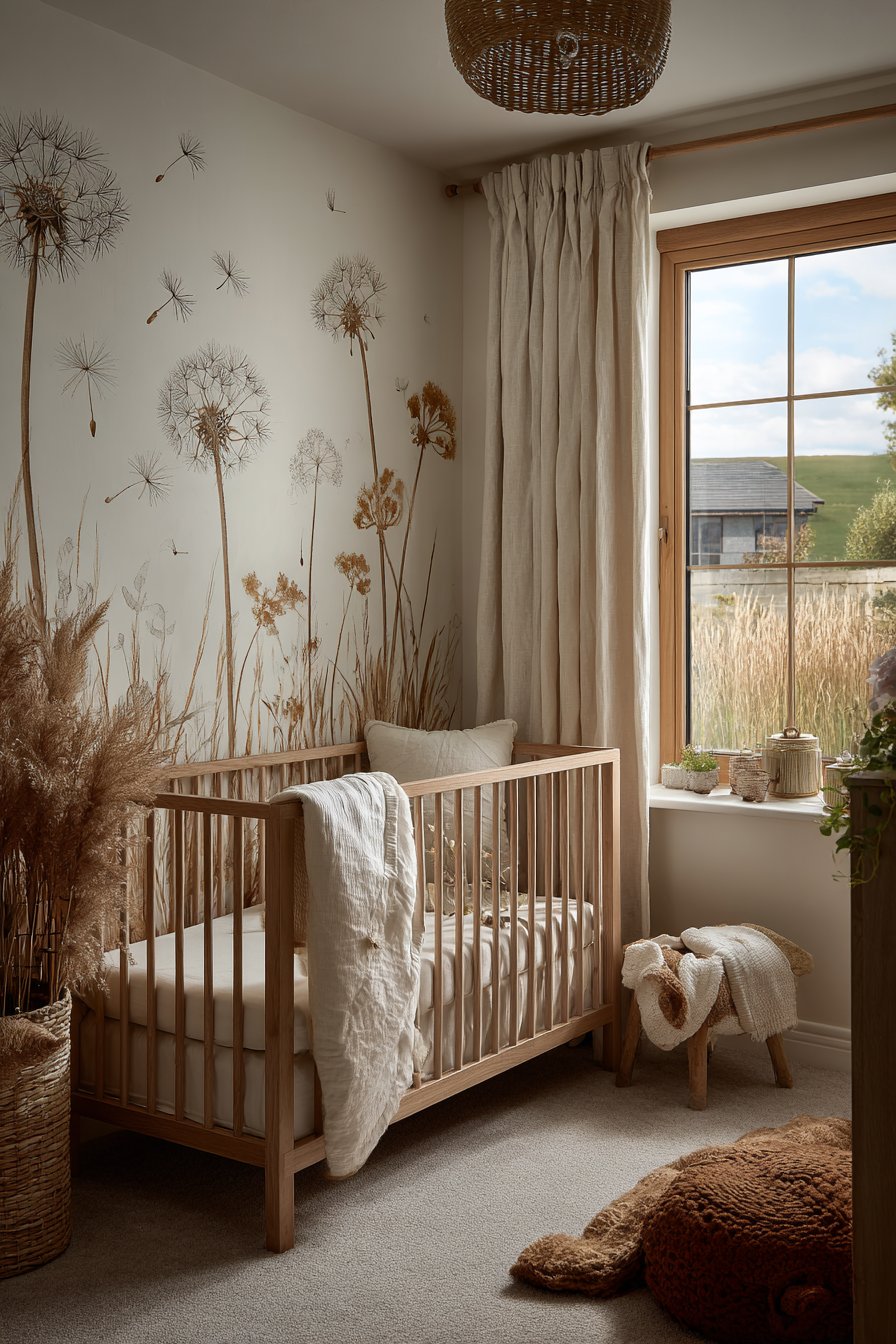
A simple white crib with organic cotton bedding maintains the natural, pure aesthetic established by the delicate dandelion painting. Diffused morning light through linen curtains highlights the wispy painted details beautifully, with the subtle shadows and highlights making individual seeds appear to float three-dimensionally despite being rendered on a flat surface. Balanced interior photography showcases the serene, nature-inspired quality of these subtle cute wall painting ideas.
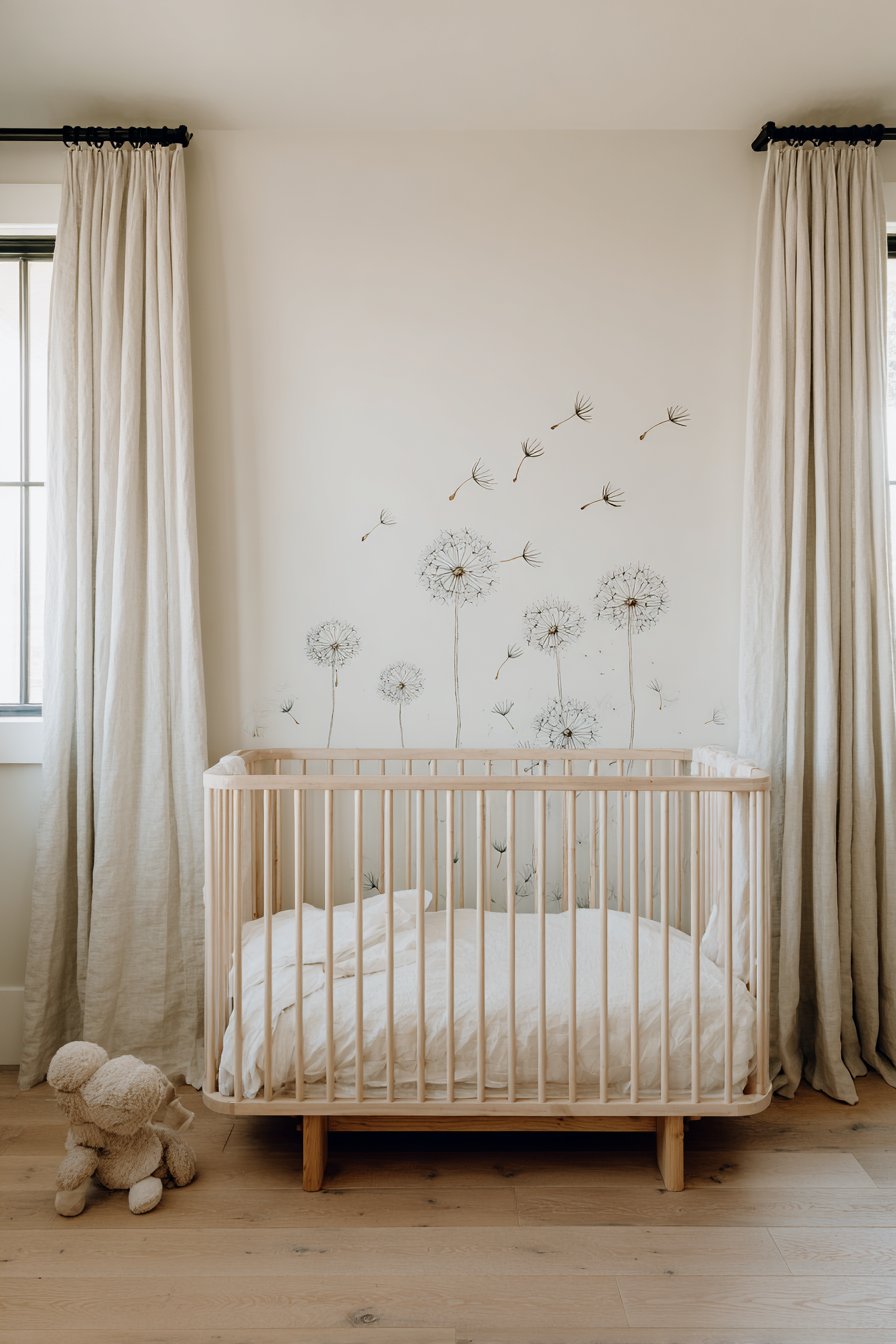
Key Design Tips: Study dandelion seed heads and dispersing seeds for accurate rendering of these delicate structures. Paint the pale background color first if not leaving wall white. Sketch dandelion positions lightly in pencil, varying sizes and stages of dispersal across the wall. Paint dandelion seed heads first using very fine brushes, creating the spherical structure with delicate radiating lines. Add individual floating seeds using thin brushes or even toothpicks for finest lines, each showing the seed body and feathery parachute structure. Vary seed orientations and positions as if caught in gentle breeze. Use very light gray or off-white for seeds on cream background to create subtle, barely-there effect. Consider adding one or two painted dandelion stems with leaves at lower wall for grounding. Keep the overall effect sparse and airy rather than dense. Seal with matte varnish to protect the delicate details.
Why These Cute Wall Painting Ideas Are Perfect for Your Home
These twenty-seven cute wall painting ideas represent the pinnacle of personalized interior design for children’s spaces and family homes. Each concept demonstrates how hand-painted walls transcend ordinary decoration to become meaningful, functional art that enhances daily life. The versatility showcased—from educational alphabet landscapes to serene watercolor mountains, from interactive road systems to sophisticated botanical branches—proves that cute doesn’t mean childish or temporary. These designs offer aesthetic appeal that grows with families, providing backdrops for countless memories while maintaining visual interest and design integrity.
The practical advantages of hand-painted walls over commercial alternatives deserve emphasis. Unlike vinyl decals that peel and fade, or mass-produced artwork that appears in thousands of identical homes, hand-painted walls offer true customization and durability. The painted surface becomes part of the wall itself, resistant to the damage and deterioration that affects applied decorations. Parents can choose colors that perfectly coordinate with existing decor, adjust designs to fit specific architectural features, and incorporate personalized elements like children’s names or birth dates. This customization creates spaces that feel genuinely unique and special rather than catalog-ordered.
From a child development perspective, these cute wall painting ideas provide more than aesthetic benefits. The educational designs—alphabet landscapes, world maps, solar systems—make learning constant and casual, embedding knowledge acquisition into everyday environment. The whimsical, imaginative designs—secret garden doors, castle silhouettes, tree canopies—encourage creative thinking and storytelling, supporting cognitive development through environmental enrichment. Even purely decorative designs contribute by demonstrating that beauty and thoughtfulness matter, teaching children to value aesthetically pleasing surroundings and artistic expression.
The accessibility of these projects deserves attention. While some designs require advanced artistic skills or professional execution, many can be successfully completed by determined DIY enthusiasts with basic painting skills and patience. The watercolor mountain landscape, rainbow stripes, and growth chart giraffe, for instance, use forgiving techniques that accommodate imperfection—indeed, the hand-painted quality with its slight irregularities often adds charm rather than detracting from appeal. For more complex trompe-l’oeil or detailed designs, hiring a local muralist or artist supports creative professionals while ensuring professional results.
The sustainability angle of hand-painted walls aligns beautifully with contemporary values around reducing waste and choosing durable, long-lasting home improvements over disposable decor. A well-executed wall painting can last decades with minimal maintenance, far outlasting trendy wall decals, posters, or printed wallpapers that need frequent replacement. When eventually painting over becomes necessary, the process is straightforward—simply prime and repaint—whereas removing wallpaper or decals often damages wall surfaces requiring extensive repair. This longevity makes hand-painted walls an environmentally responsible choice that reduces consumption and waste.
The emotional resonance of these cute wall painting ideas extends beyond childhood. Adults who grew up with hand-painted walls often describe them as cherished memories, remembering specific details and the stories their parents told about choosing designs. This emotional legacy—creating meaningful memories through thoughtful environmental design—represents perhaps the greatest value of these projects. Years from now, children will remember their rainbow bedroom, their tree-canopy hideaway, their wall of floating hot air balloons, and these memories will carry warmth and love.
The creative keywords and concepts embedded throughout these designs—nursery wall art, children’s room murals, hand-painted nursery, custom wall painting, DIY wall murals, kids room wall art, painted accent walls, nursery decor ideas, playroom wall designs, bedroom wall painting, personalized children’s art, educational wall murals, whimsical room decor, painted ceiling designs, trompe-l’oeil techniques, watercolor wall painting, botanical wall art, celestial nursery themes, interactive wall designs, growth chart wall art, alphabet wall paintings, world map murals, animal wall art, nature-inspired nurseries, geometric wall designs, vintage children’s decor—demonstrate the incredible diversity within this single category of home improvement.
Conclusion
Cute wall painting ideas offer limitless possibilities for transforming children’s spaces and family homes into personalized sanctuaries filled with beauty, meaning, and joy. From the serene watercolor mountains that create peaceful nursery environments to the playful circus tent ceilings that inspire imagination, from educational alphabet landscapes that make learning natural to sophisticated botanical branches that grow with children—these designs prove that wall painting is both art form and functional home improvement.
The twenty-seven concepts explored in this article represent merely a starting point for your own creative journey. Each design can be adapted, combined, or reimagined to suit your specific space, style preferences, and family needs. Perhaps you’ll combine the soft color palette of the watercolor mountains with the friendly animals of the woodland forest. Maybe you’ll adapt the geometric safari animals to feature your child’s favorite creatures. The growth chart concept could be reimagined with any tall animal or even a painted rocket ship. This flexibility and adaptability make hand-painted walls endlessly versatile.
As you consider which cute wall painting ideas resonate with your vision, remember that perfection isn’t the goal—personal meaning is. A slightly wobbly painted rainbow created with love carries more value than any flawlessly executed but impersonal decoration. The time invested in planning, painting, and perfecting these designs becomes part of the gift you give your children—the gift of a thoughtfully prepared environment that celebrates their arrival and honors their growing years.
Don’t hesitate to start small if the scope feels overwhelming. A single accent wall, a corner vignette, or even a painted growth chart can introduce hand-painted elements into your home while building confidence for larger projects. Many of the simplest designs—rainbow stripes, minimalist mountains, botanical branches—deliver significant visual impact with relatively straightforward execution. As skills and confidence grow, more ambitious projects like trompe-l’oeil windows or detailed educational maps become achievable.
These cute wall painting ideas await your personal interpretation and creative expression. Gather your supplies, choose your design, and begin transforming blank walls into cherished backdrops for the beautiful, messy, joyful adventure of family life. The results will bring daily delight and create lasting memories that extend far beyond childhood, reminding us all that home truly is where the art is.
