
The coffee table serves as the heart of any living room, anchoring the space while offering both functionality and style. When it comes to selecting the perfect centerpiece for your seating area, glass coffee tables stand out as versatile, sophisticated choices that seamlessly blend with virtually any interior design aesthetic. Their transparent nature creates an illusion of spaciousness, making them particularly valuable in today’s homes where open, airy atmospheres are highly coveted.
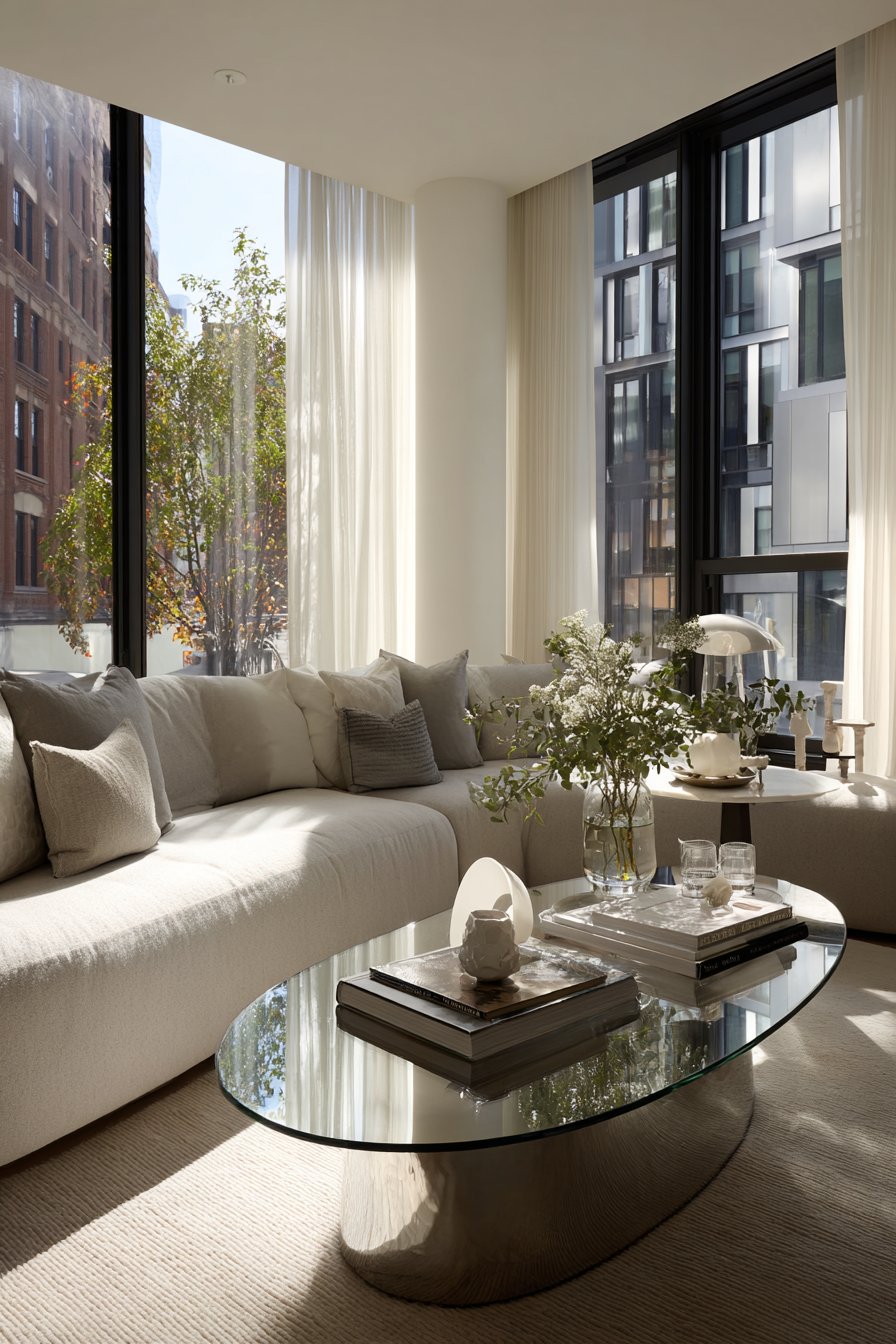
Glass coffee tables possess a unique ability to complement rather than compete with surrounding décor. Unlike solid wood or opaque materials that can visually fragment a room, glass allows light to flow freely, maintaining visual continuity and preventing smaller spaces from feeling cramped. This transparency doesn’t mean sacrificing style—modern glass coffee tables come in an astounding variety of designs, from minimalist contemporary pieces with sleek metal frames to rustic combinations featuring reclaimed wood bases, and everything in between. Whether you’re furnishing a compact studio apartment or a sprawling open-concept living area, the right glass coffee table can elevate your interior design while serving practical daily needs.
In this comprehensive guide, we’ll explore twenty-three distinctive glass coffee table concepts that span the full spectrum of interior design styles. From mid-century modern classics to industrial loft aesthetics, coastal-inspired designs to traditional elegance, you’ll discover how versatile glass coffee tables truly are. Each design demonstrates how thoughtful material combinations, strategic styling, and attention to detail can transform a functional furniture piece into a stunning focal point. We’ll examine everything from space-saving nested tables perfect for apartment living to luxury designer pieces that serve as functional art, providing you with the inspiration and practical knowledge needed to select or style the perfect glass coffee table for your home.
1. Contemporary Minimalist Design with Black Metal Frame
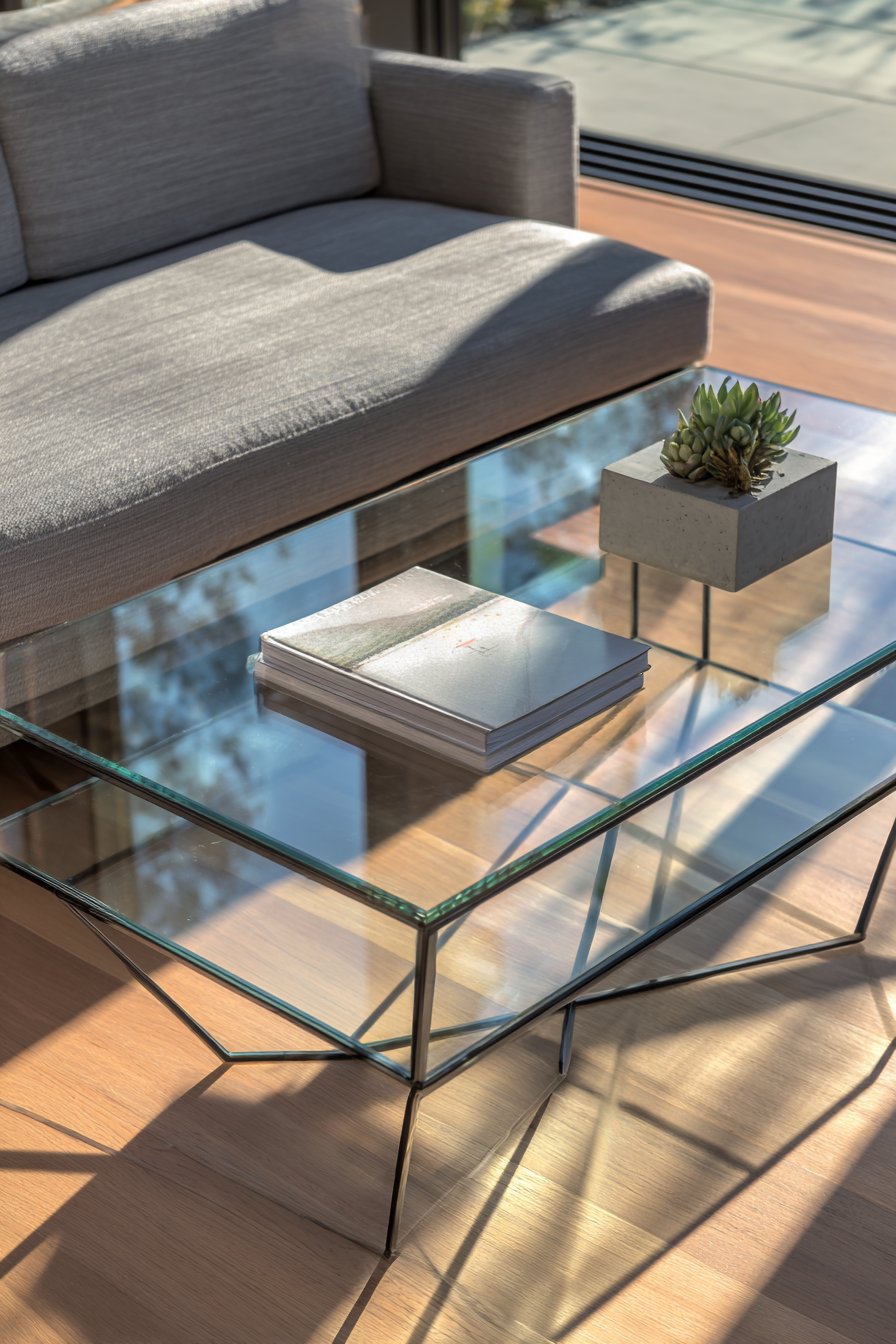
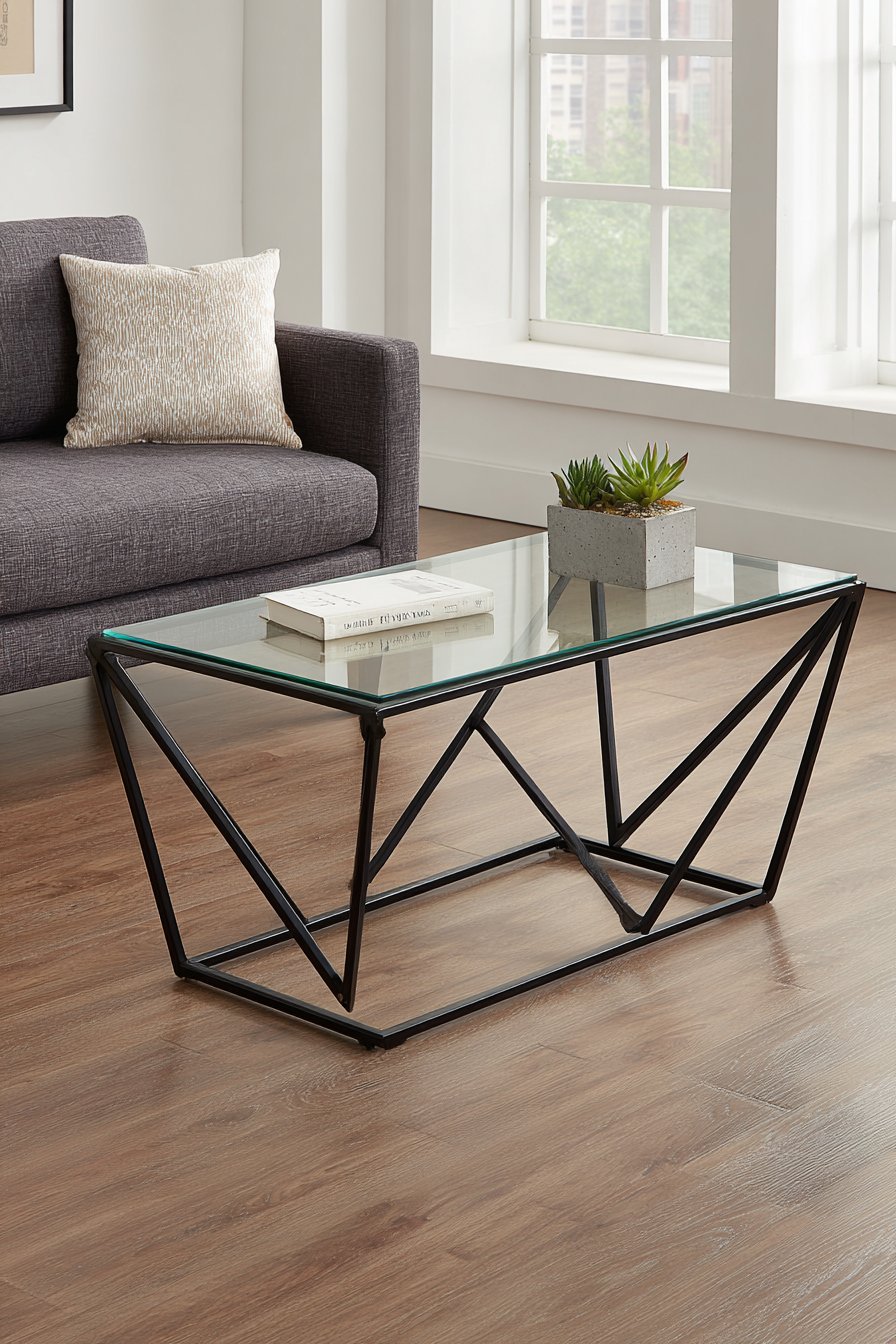
The marriage of tempered glass and geometric black metal creates a striking contemporary aesthetic that epitomizes modern minimalist design. This rectangular glass coffee table features beveled edges that catch and refract light beautifully, while the matte black metal frame provides bold structural contrast. The clean lines and deliberate simplicity make this design particularly well-suited for urban apartments and modern homes where less truly becomes more. Positioned against a backdrop of grey linen upholstery and white oak flooring, the table demonstrates how restraint in design can create maximum visual impact.
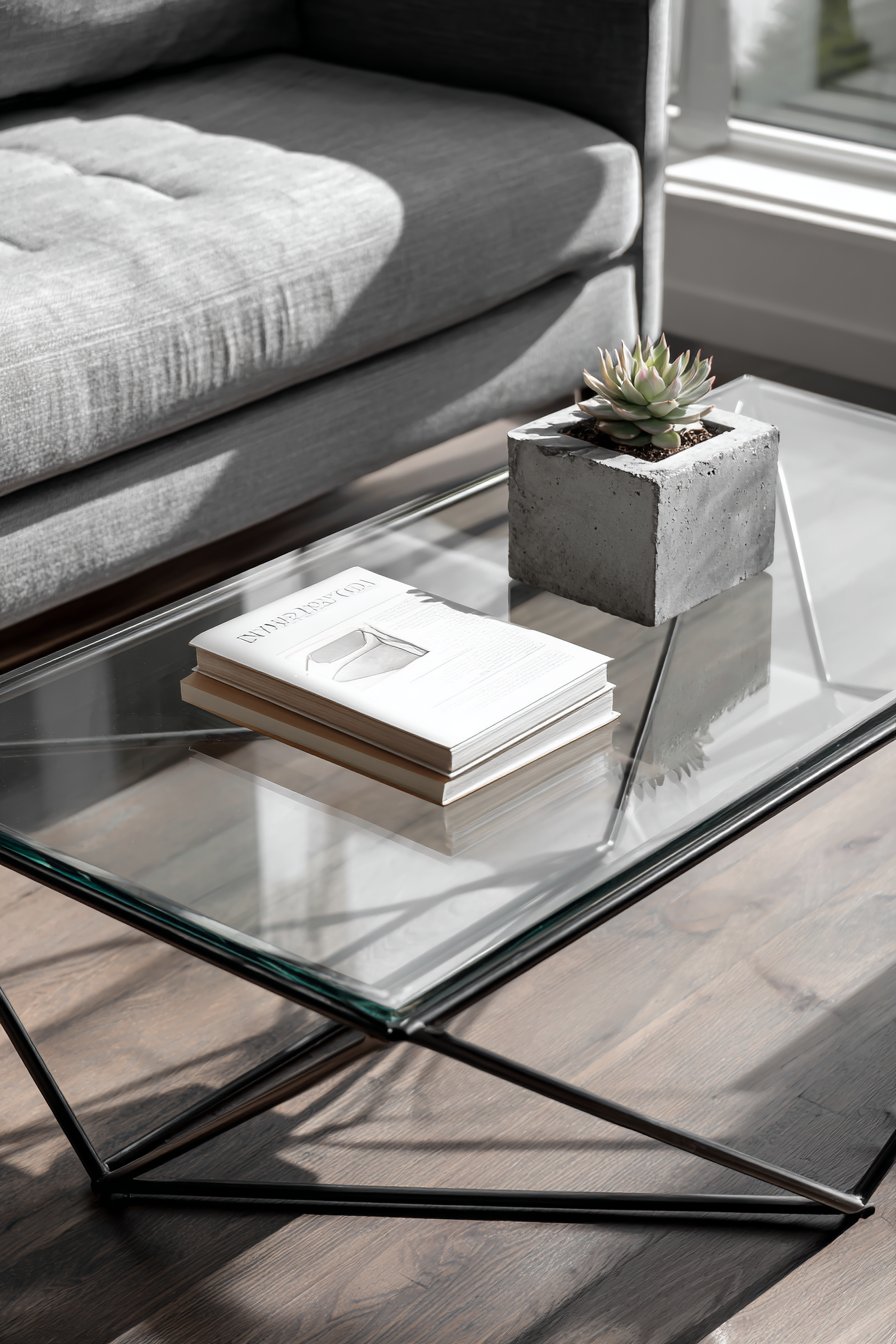
What makes this configuration especially practical is its ability to showcase intentional styling without appearing cluttered. A single hardcover book and a small succulent in a concrete planter occupy the glass surface, demonstrating the minimalist principle of displaying only what adds value or beauty. The transparent tabletop allows the natural wood grain of the flooring beneath to remain visible, maintaining visual flow throughout the room. Natural light streaming from nearby windows creates subtle reflections on the glass surface, adding dimension and interest without additional decorative elements.
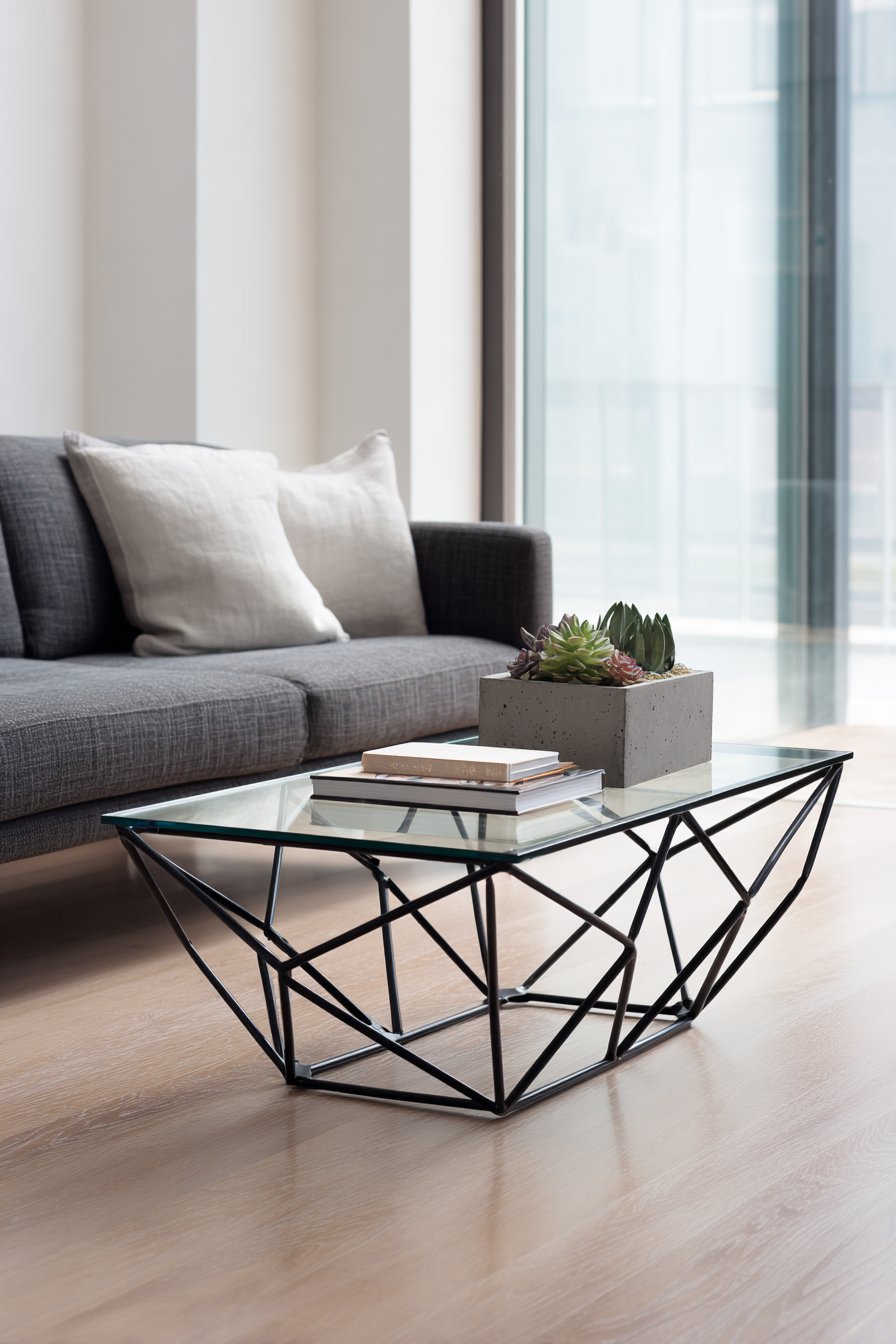
The material combination here is particularly thoughtful—the industrial edge of matte black metal softens when paired with transparent glass, creating a balance between strength and lightness. This interplay prevents the piece from feeling too severe or cold, a common pitfall in minimalist spaces. The beveled glass edges add a refined detail that elevates the design beyond basic functionality, proving that minimalism doesn’t mean sacrificing craftsmanship or quality.
Key Design Tips: Choose furniture with clean geometric lines to reinforce the minimalist aesthetic. Limit surface styling to one or two carefully selected items that serve either functional or aesthetic purposes. Ensure your flooring remains visible beneath glass surfaces to maximize the sense of openness. Select matte finishes for metal components to avoid overwhelming reflections. Position the table to capture natural light, which will highlight the glass edges and create dynamic visual interest throughout the day.
2. Scandinavian Warmth with Natural Walnut Base
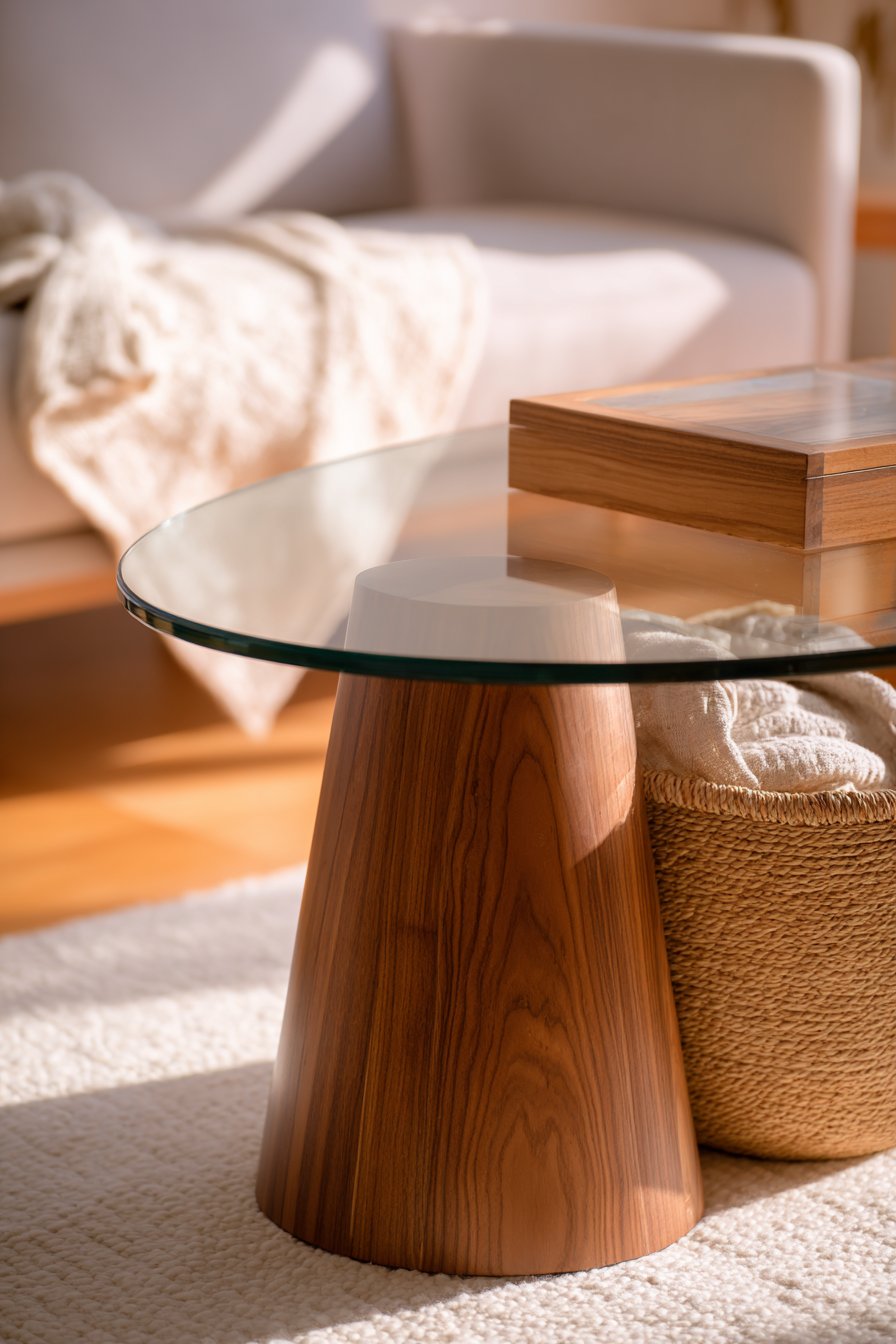
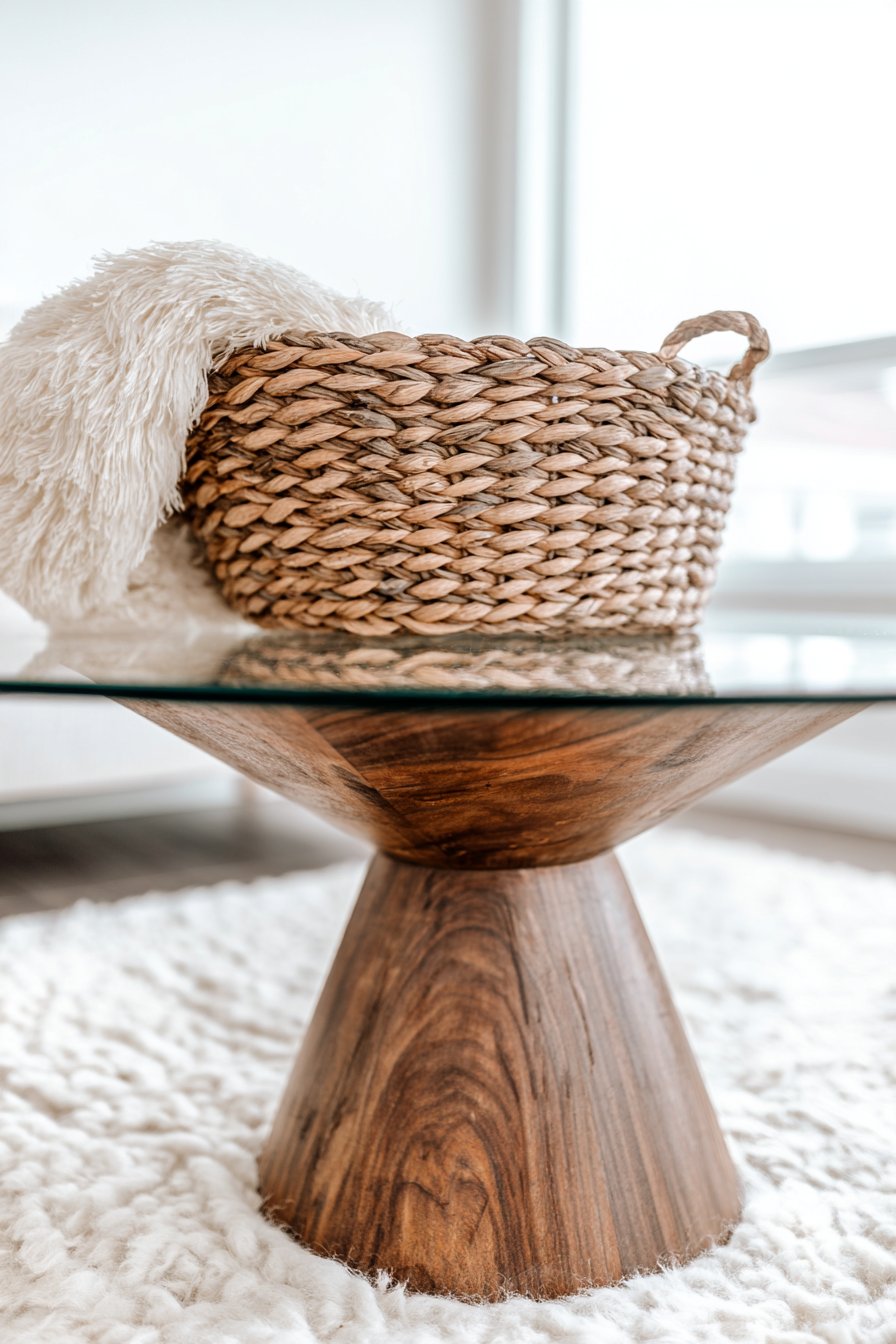
The Scandinavian design philosophy of combining natural materials with functional simplicity shines in this round glass coffee table concept. A solid walnut pedestal base with visible grain patterns provides organic warmth and textural interest, while the circular glass top maintains the airy, uncluttered feeling central to Nordic aesthetics. The table rests on a cream-colored wool area rug that adds softness underfoot and visually grounds the piece within the broader room composition. This design perfectly illustrates how Scandinavian interiors achieve their characteristic balance between minimalism and coziness.
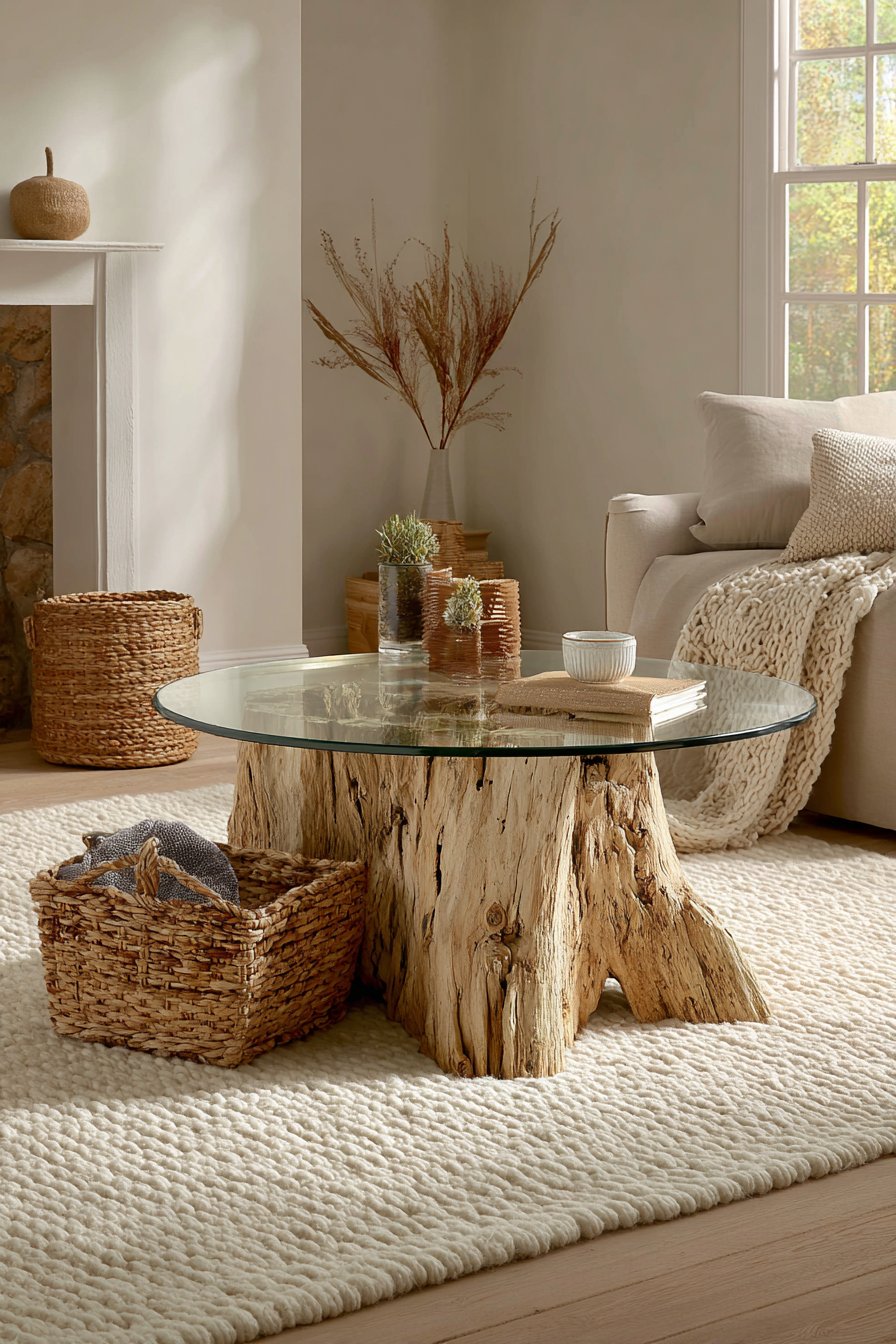
The integration of practical storage demonstrates the Scandinavian commitment to functional design. A woven basket tucked beneath the table stores throw blankets, making them easily accessible while keeping the space organized and clutter-free. This thoughtful detail addresses real-life needs without compromising the clean aesthetic—a hallmark of good Scandinavian design. The natural fiber basket echoes the organic quality of the walnut base, creating material harmony that feels intentional rather than matched.
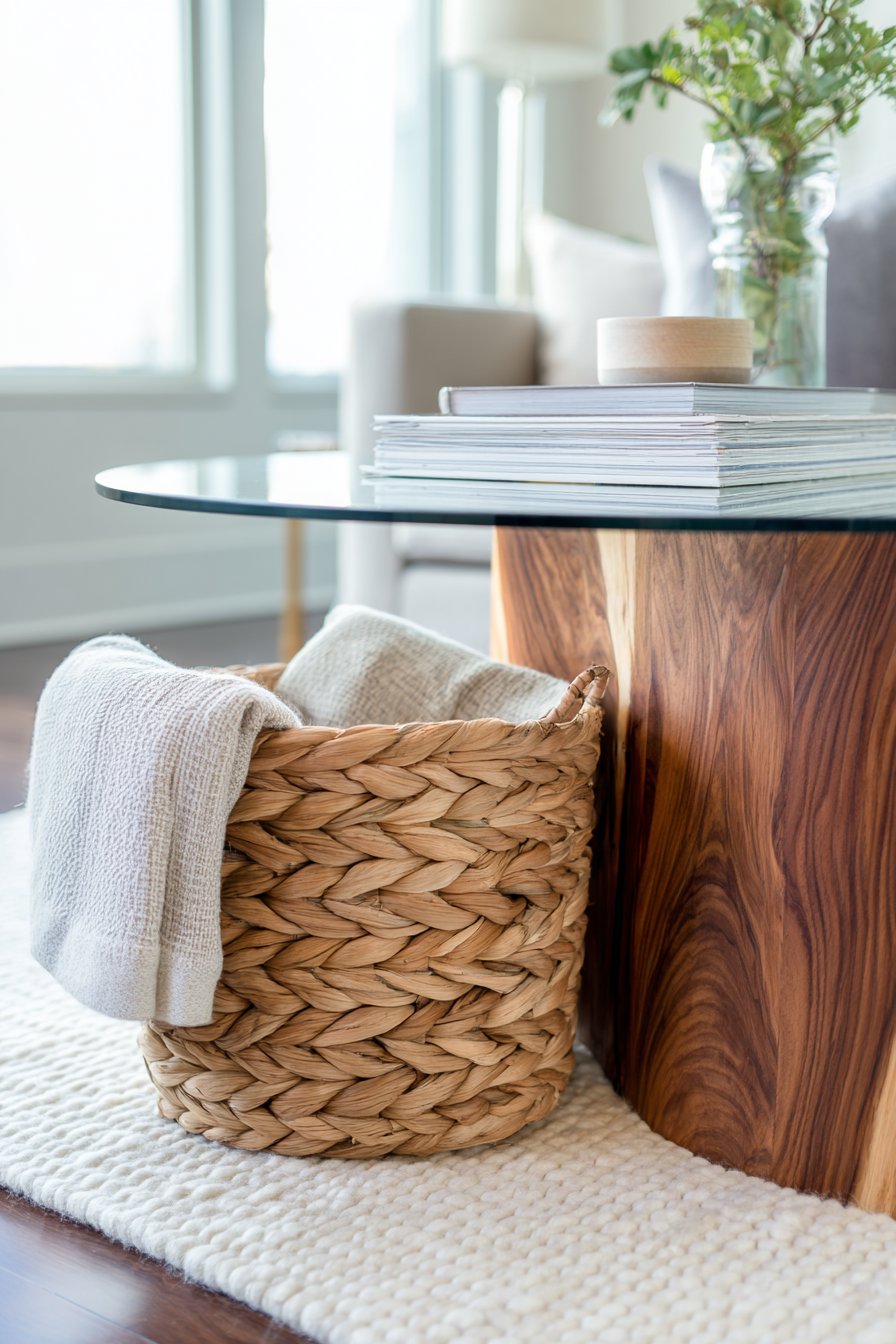
Soft diffused daylight plays a crucial role in bringing this design to life. The natural illumination highlights the beautiful contrast between the transparent glass top and the warm wooden base, emphasizing the wood’s grain patterns and natural color variations. This interplay between materials creates visual interest without relying on bold colors or decorative accessories. The circular shape encourages conversation and creates gentle traffic flow around the table, making the space feel welcoming and accessible from all angles.
Key Design Tips: Select wood with prominent grain patterns to add natural visual interest to the design. Choose round table shapes to soften angular rooms and improve traffic flow in smaller spaces. Incorporate natural fiber storage solutions that complement organic wood tones. Use wool or cotton area rugs to add warmth and texture beneath glass tables. Position furniture to maximize natural light exposure, which enhances wood tones and creates beautiful reflections on glass surfaces.
3. Art Deco Glamour with Two-Tier Chrome Structure
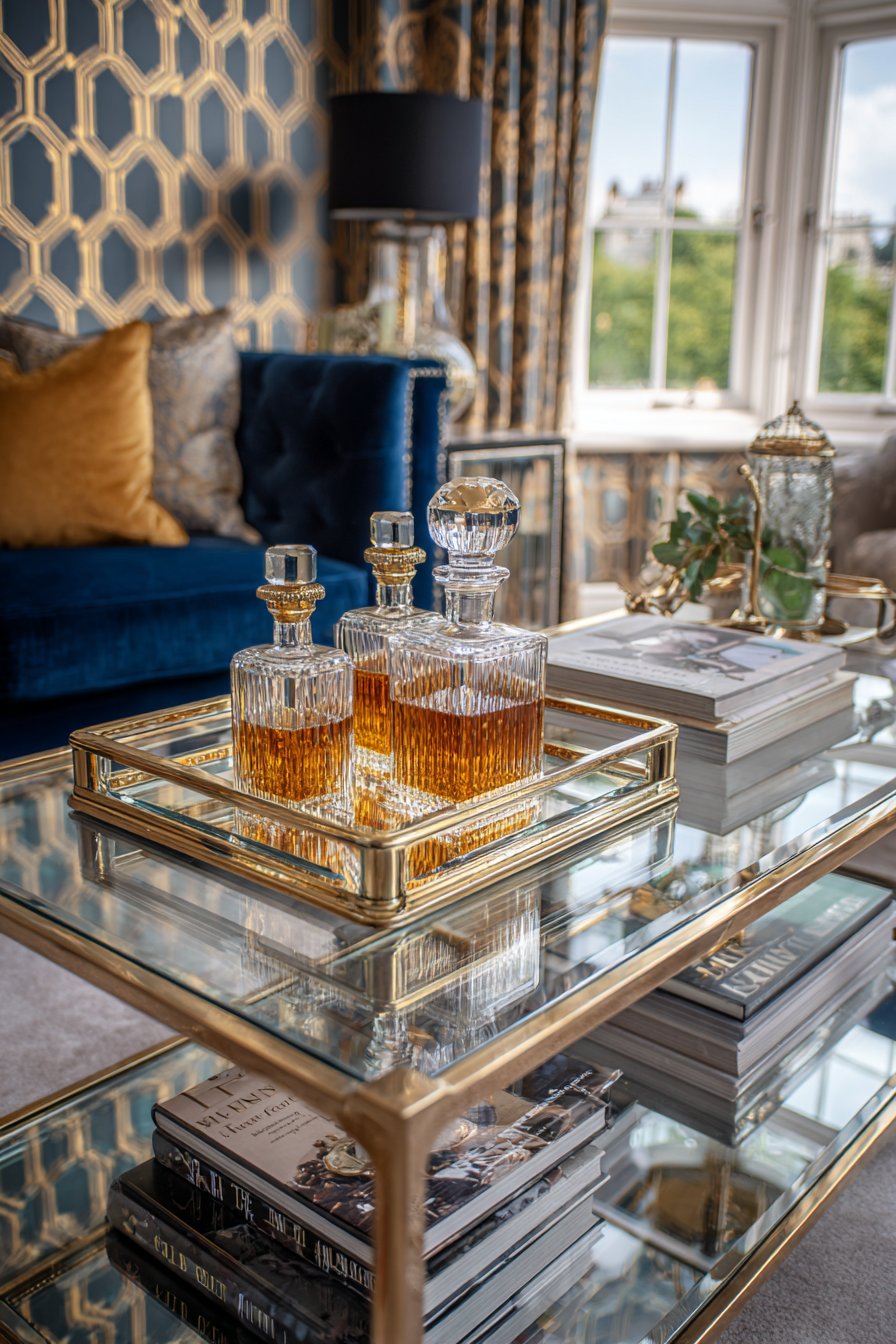
Art Deco design celebrates geometric patterns, luxurious materials, and sophisticated glamour—all beautifully exemplified in this two-tier glass coffee table with chrome support columns. The dual glass levels create practical storage and display opportunities while maintaining the visual lightness that glass furniture provides. The upper tier showcases a vintage brass tray holding crystal decanters, nodding to the cocktail culture of the Art Deco era, while the lower shelf accommodates art books and magazines, balancing decoration with function.
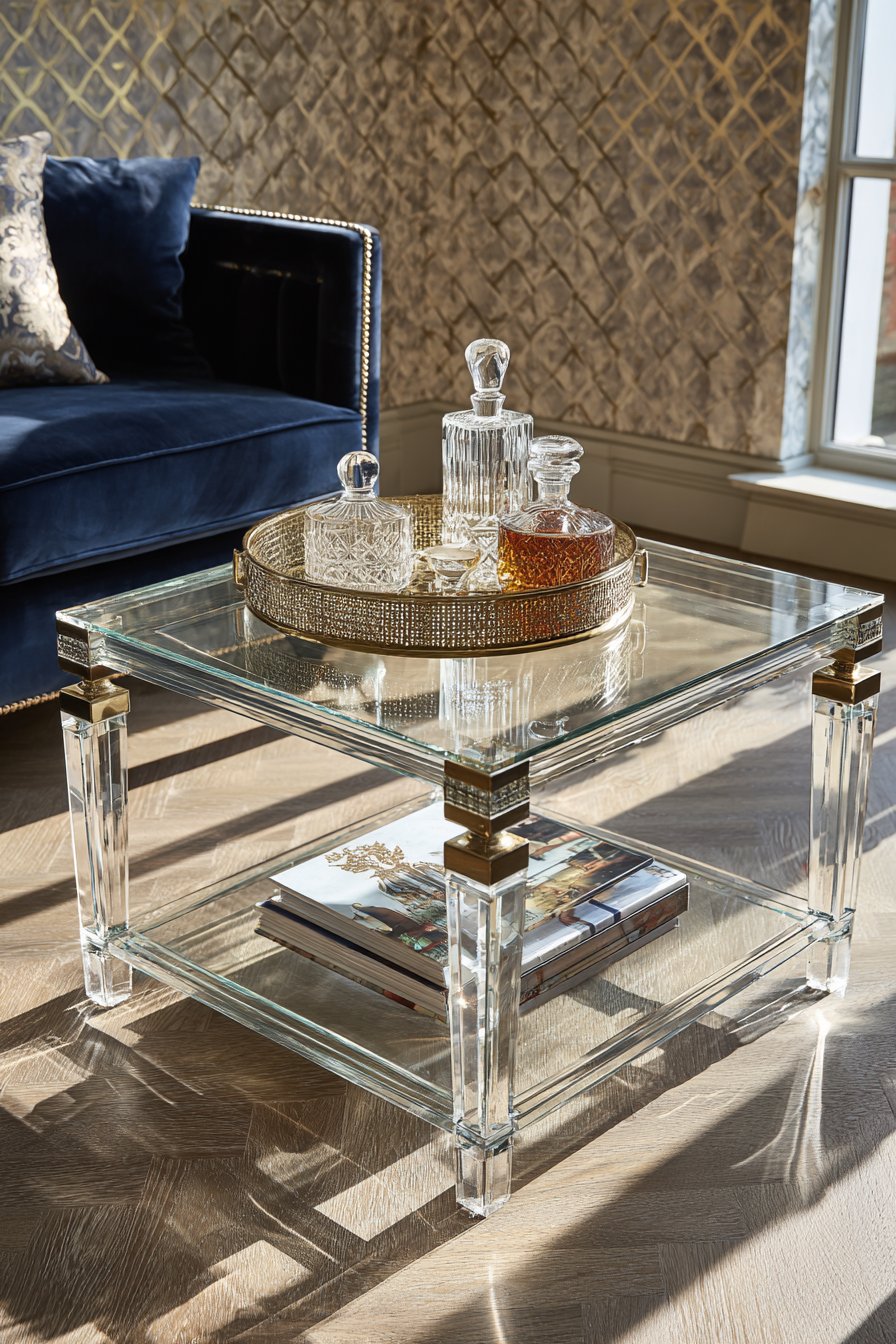
The chrome supports gleam with period-appropriate shine, their cylindrical form echoing the streamlined aesthetic of 1920s and 1930s design. Against a backdrop of navy velvet upholstery and geometric patterned wallpaper, the table becomes a focal point that anchors the room’s vintage-inspired aesthetic. The transparent glass prevents the layered structure from feeling heavy or overwhelming, allowing the eye to appreciate the room’s other design elements—the plush velvet textures, the intricate wallpaper patterns, and the carefully curated accessories.
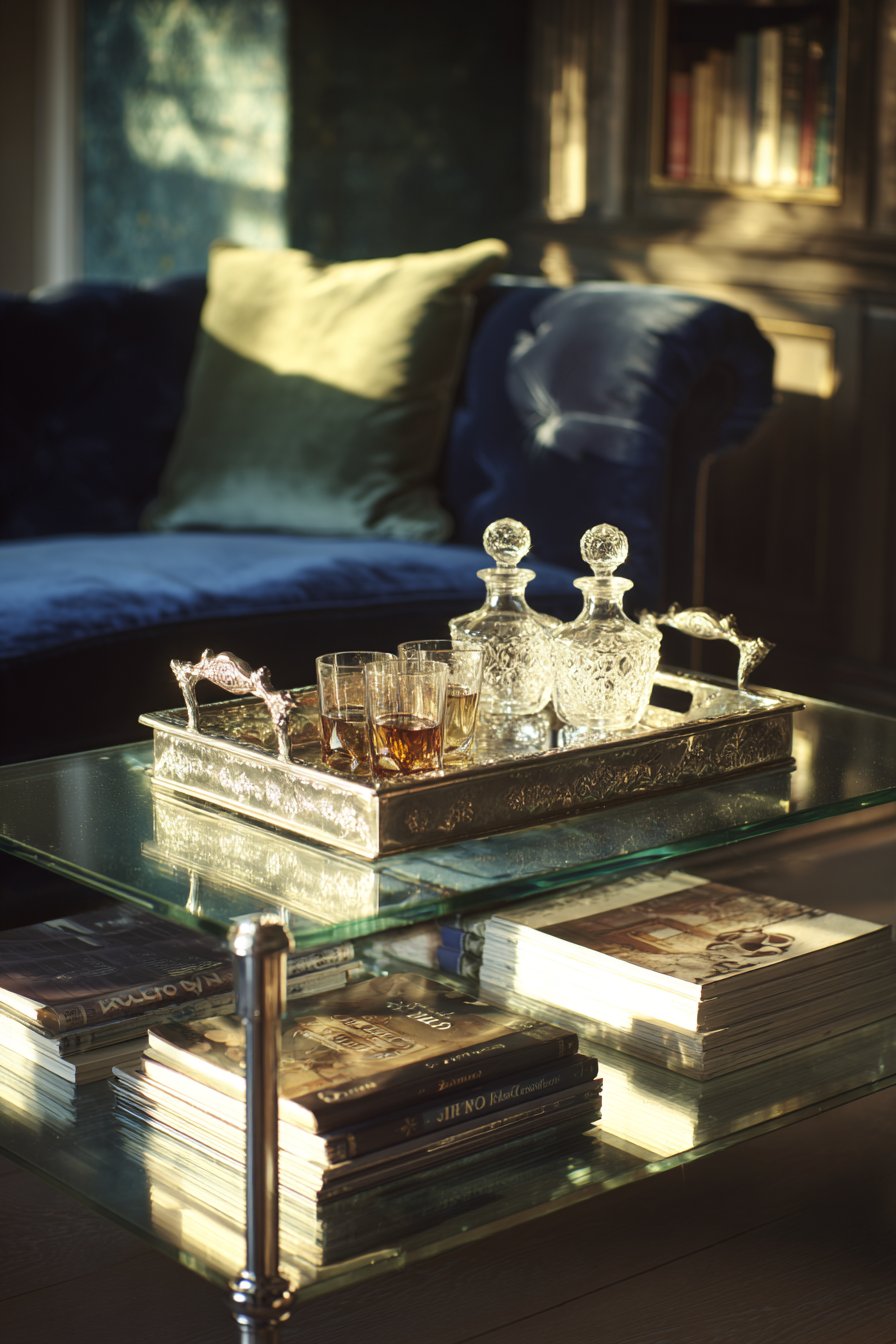
Golden hour lighting transforms this space into something truly magical. As warm afternoon light streams through windows, it creates luminous reflections on both glass tiers and the polished chrome supports, enhancing the luxurious atmosphere. This natural lighting mimics the warm glow of the original Art Deco period, when gas and early electric lighting created similar amber tones. The interplay of light, reflection, and transparency elevates what could be a purely functional piece into something that feels genuinely glamorous and special.
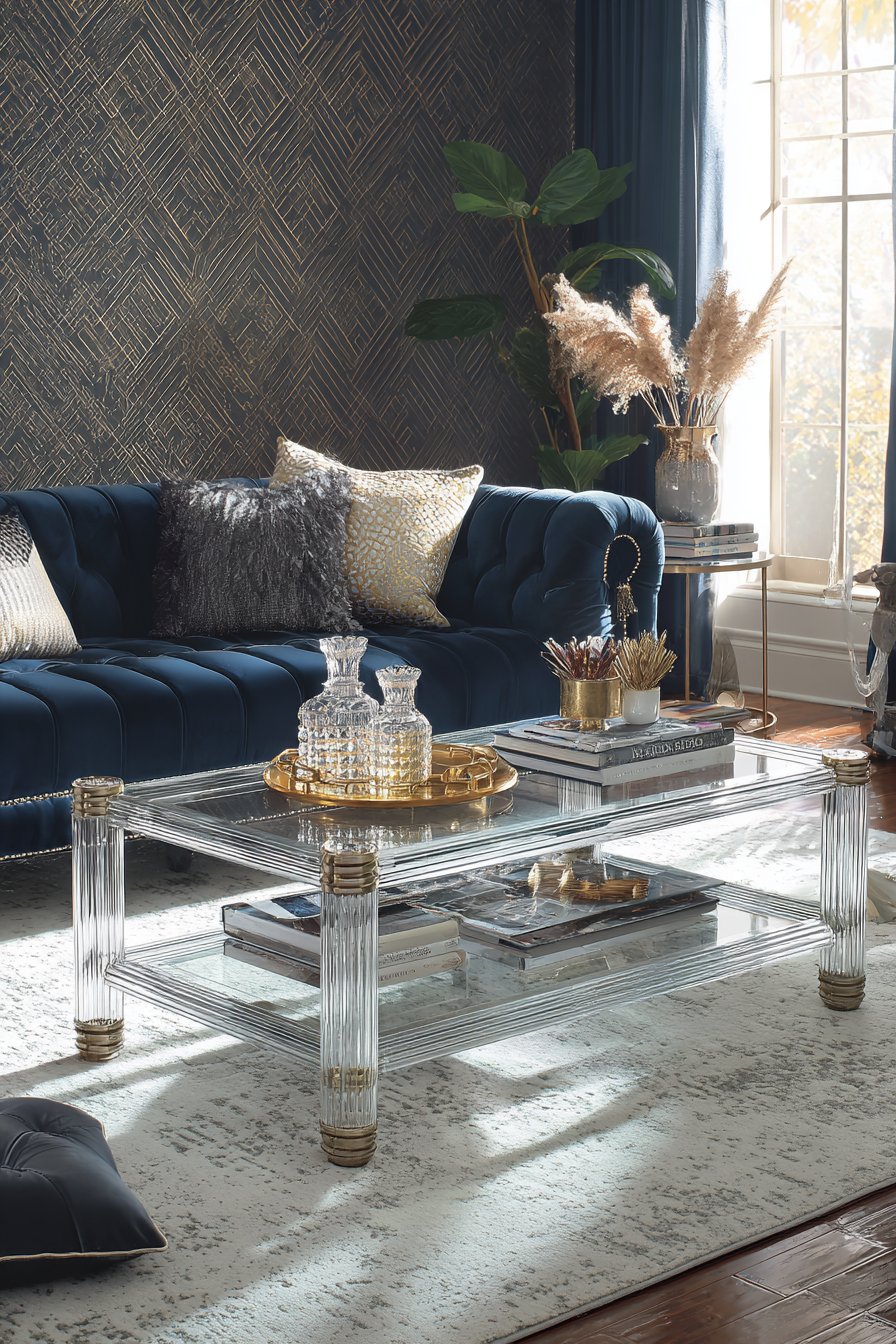
Key Design Tips: Layer glass surfaces to create display and storage opportunities without visual weight. Polish chrome or brass regularly to maintain the reflective quality essential to Art Deco aesthetics. Style upper surfaces with period-appropriate accessories like crystal, brass, or geometric objects. Choose rich, saturated colors for upholstery to create dramatic contrast with transparent glass. Position tables to capture golden hour light, which emphasizes metallic finishes and creates atmospheric warmth.
4. Family-Friendly Functionality with Oak Frame Storage
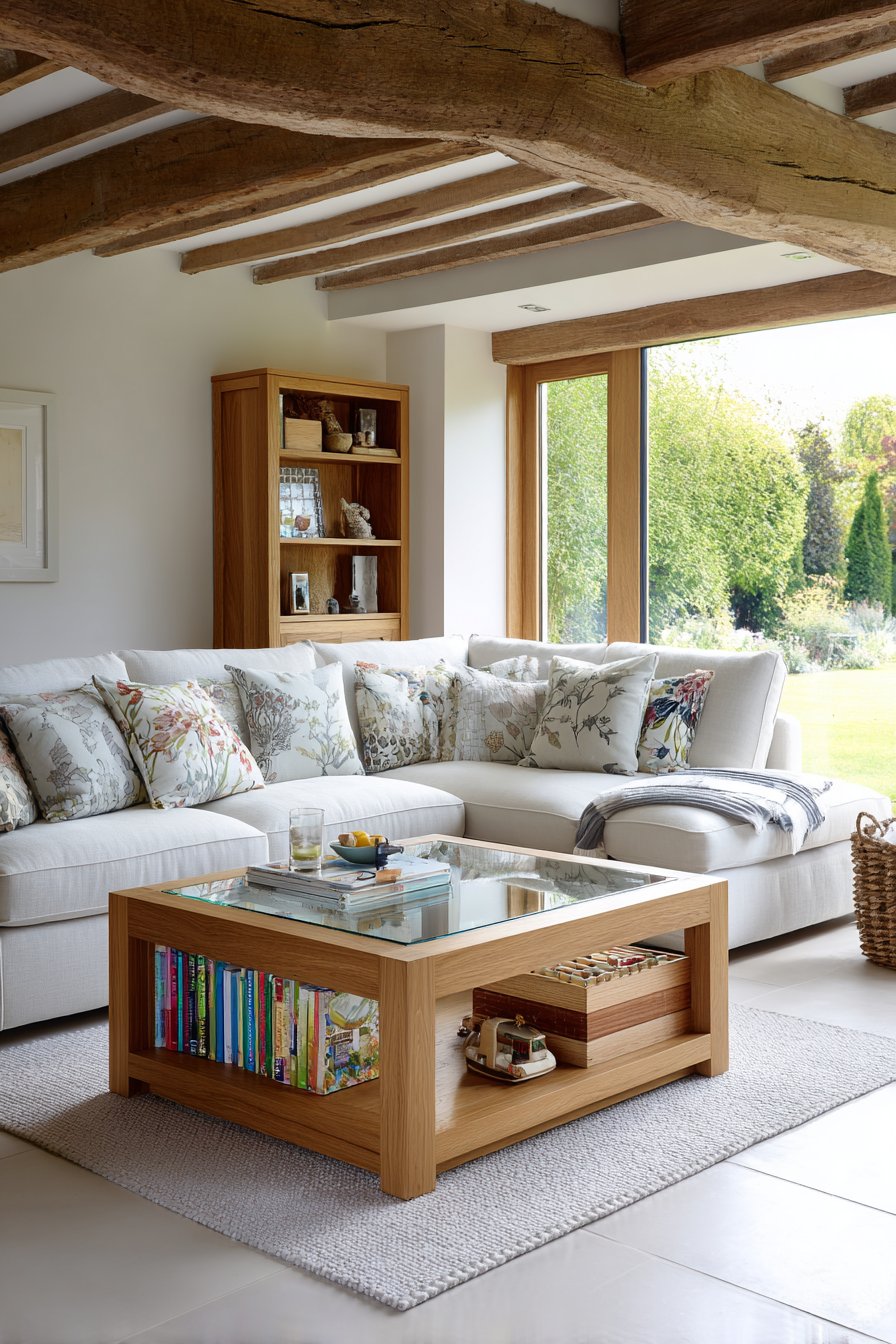
Real life requires furniture that can withstand daily use while maintaining style, and this square glass coffee table delivers on both fronts. The sturdy oak wood frame provides robust support and visual warmth, while the lower shelf offers practical storage that keeps living spaces organized. This design acknowledges that homes with children need furniture that serves multiple purposes—looking good while standing up to the rigors of family life. The performance fabric on the comfortable sectional sofa echoes this practical approach to interior design.
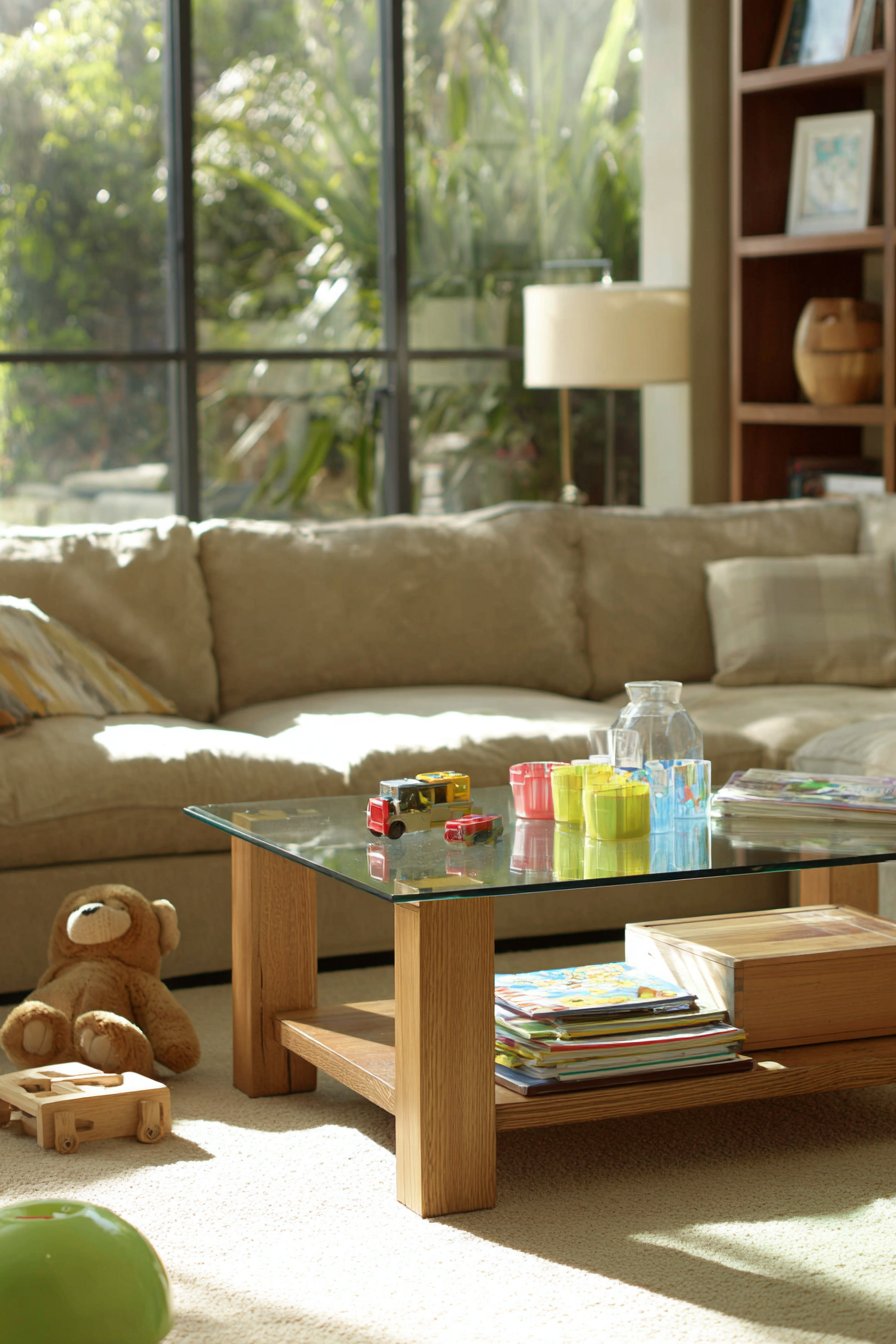
The lower shelf’s contents tell the story of an active household: children’s books arranged neatly alongside a wooden toy box demonstrate how thoughtful design can accommodate real-world needs without sacrificing aesthetics. The natural oak finish develops character over time, with minor scuffs and marks becoming part of the furniture’s story rather than defects to hide. This honest approach to materials means the table improves with age rather than showing wear.
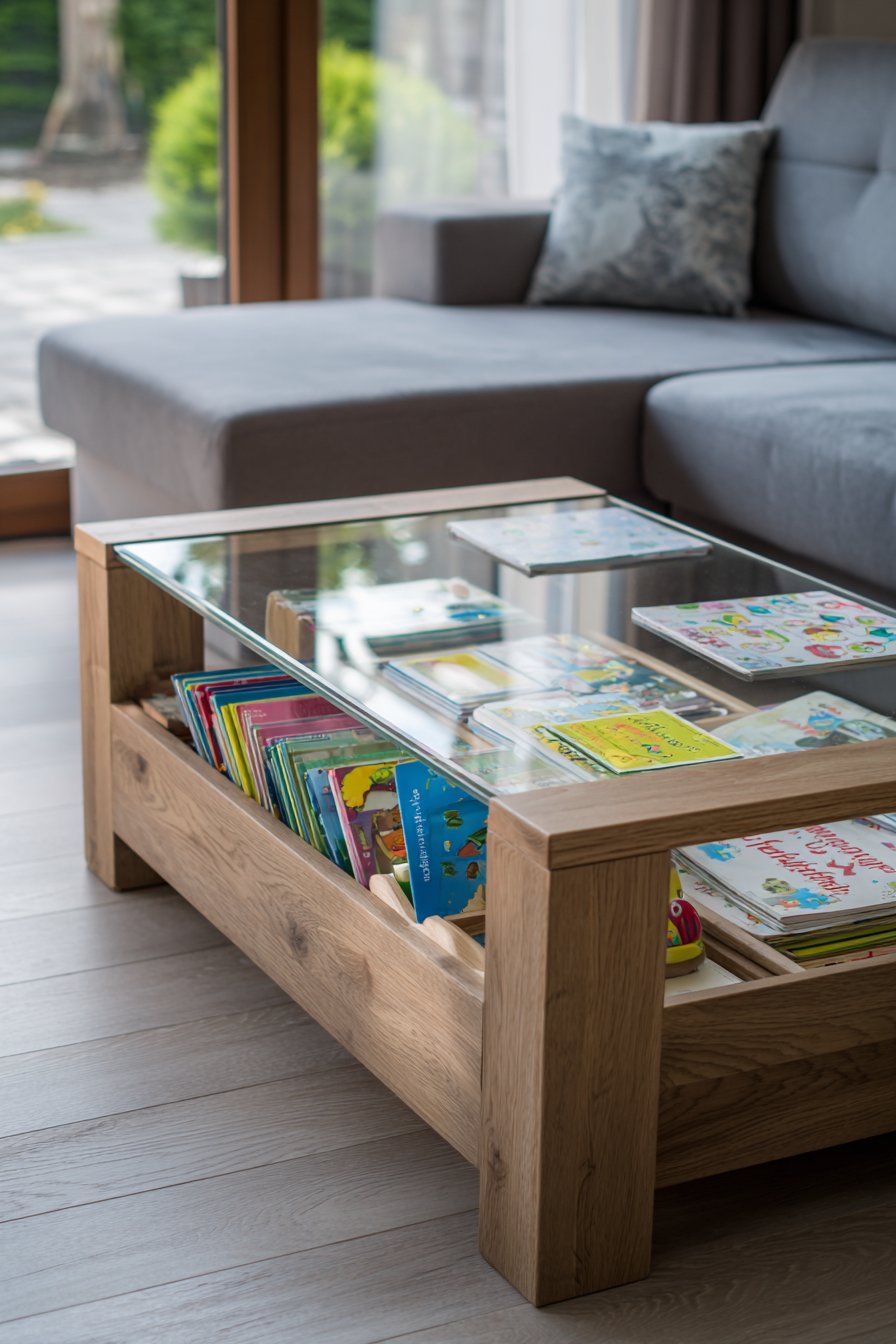
Natural lighting from large windows highlights the fingerprint-resistant coating on the glass—a practical feature that might seem minor but proves invaluable in high-traffic family spaces. The coating maintains the glass’s clarity while reducing constant cleaning, addressing one of the primary concerns parents have about glass furniture. The oak frame’s natural grain patterns provide visual interest that doesn’t require accessories or styling, making maintenance straightforward even in busy households.
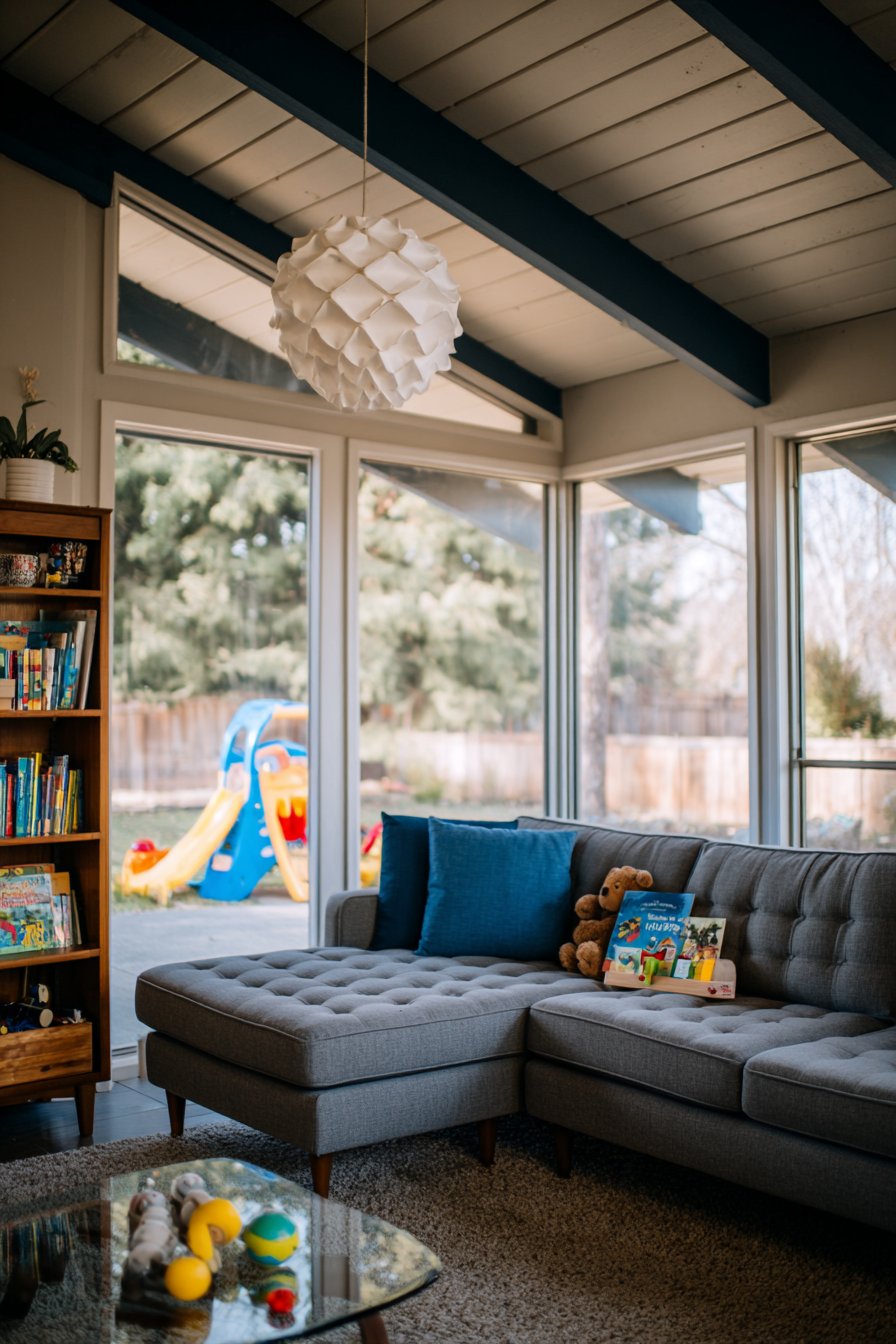
Key Design Tips: Choose tempered glass with protective coatings to reduce fingerprints and increase durability. Select solid wood frames that can withstand daily use and develop attractive patina over time. Incorporate lower shelf storage to keep frequently used items organized and accessible. Opt for performance fabrics on surrounding furniture to create a cohesive, family-friendly space. Arrange furniture to allow easy cleaning access around and beneath the coffee table.
5. Ultra-Thin Minimalism with Floating Aesthetic
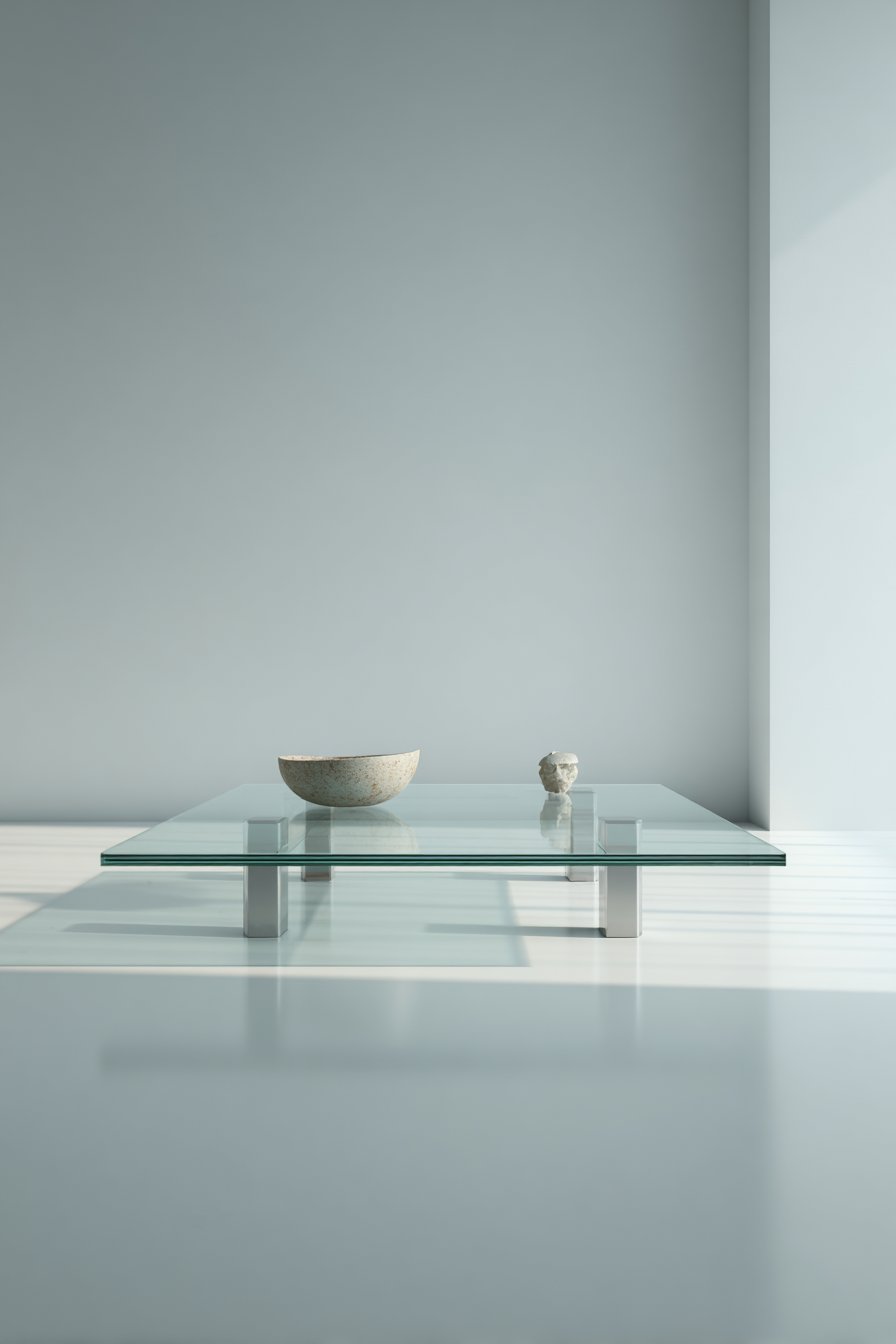
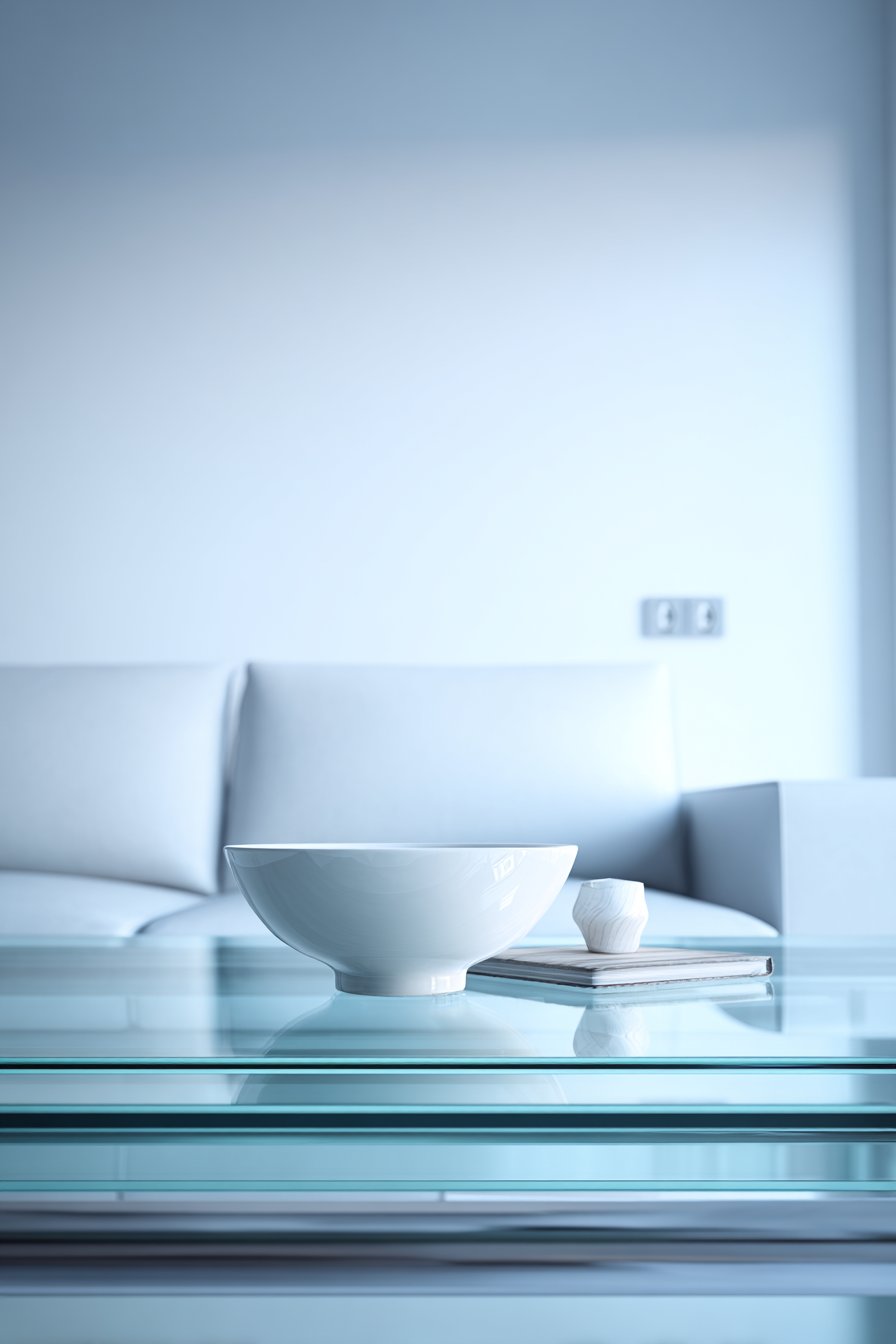
This ultra-thin tempered glass coffee table pushes minimalist design to its purest expression, appearing to float above impossibly slim stainless steel legs. The near-invisible support structure creates a stunning visual effect that seems to defy physics, making the glass surface appear weightless and ethereal. In a monochromatic living room with white walls and light grey furniture, this table becomes an exercise in restraint and precision, proving that exceptional design doesn’t require ornamentation or complexity.
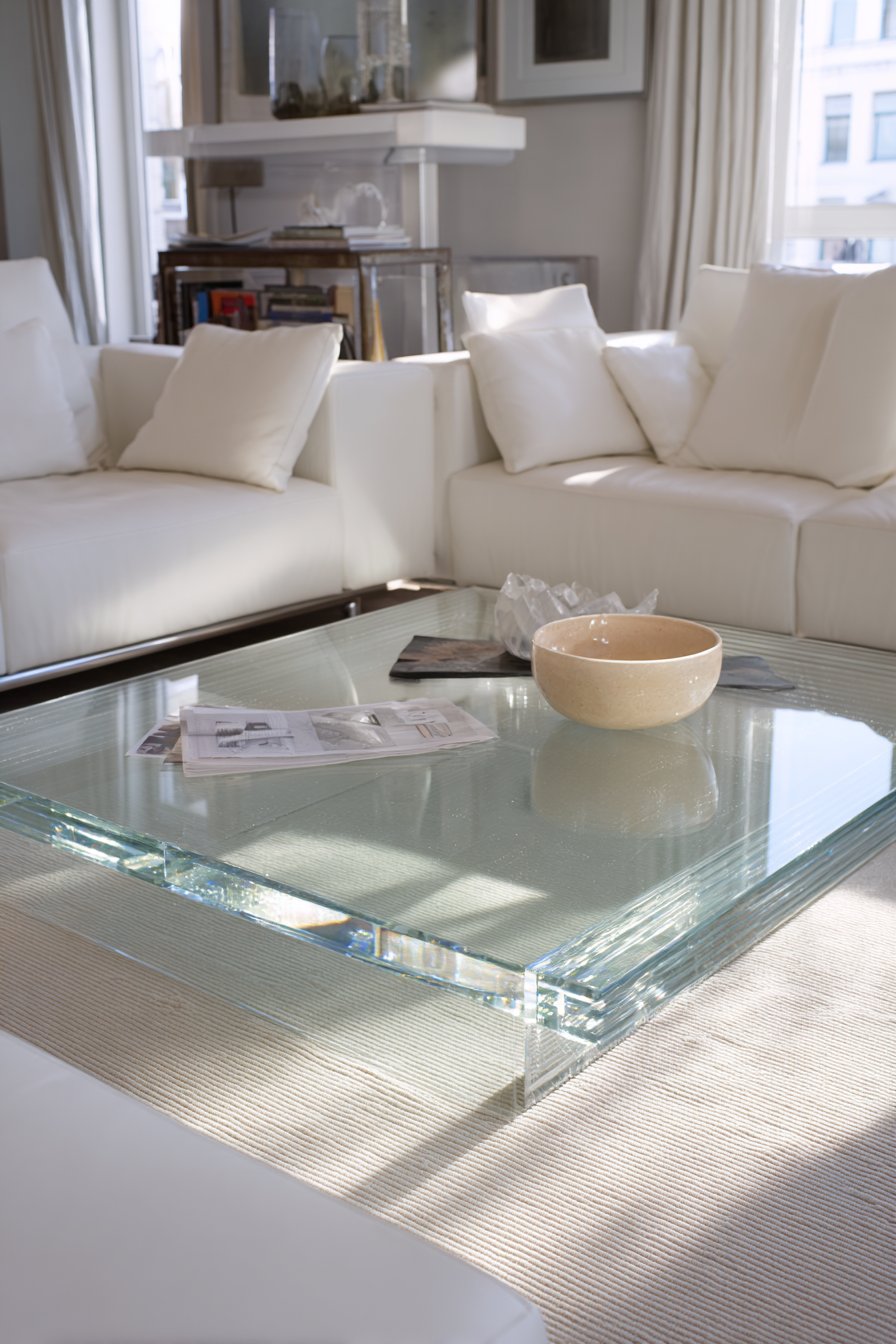
The styling approach here is equally disciplined. Only essential items occupy the surface—a single ceramic bowl and a small sculptural object—demonstrating the minimalist philosophy of intentional curation. Each item has been selected not just for its appearance but for its contribution to the overall composition. The negative space becomes as important as the objects themselves, creating breathing room that allows the eye to appreciate the table’s refined simplicity and architectural quality.
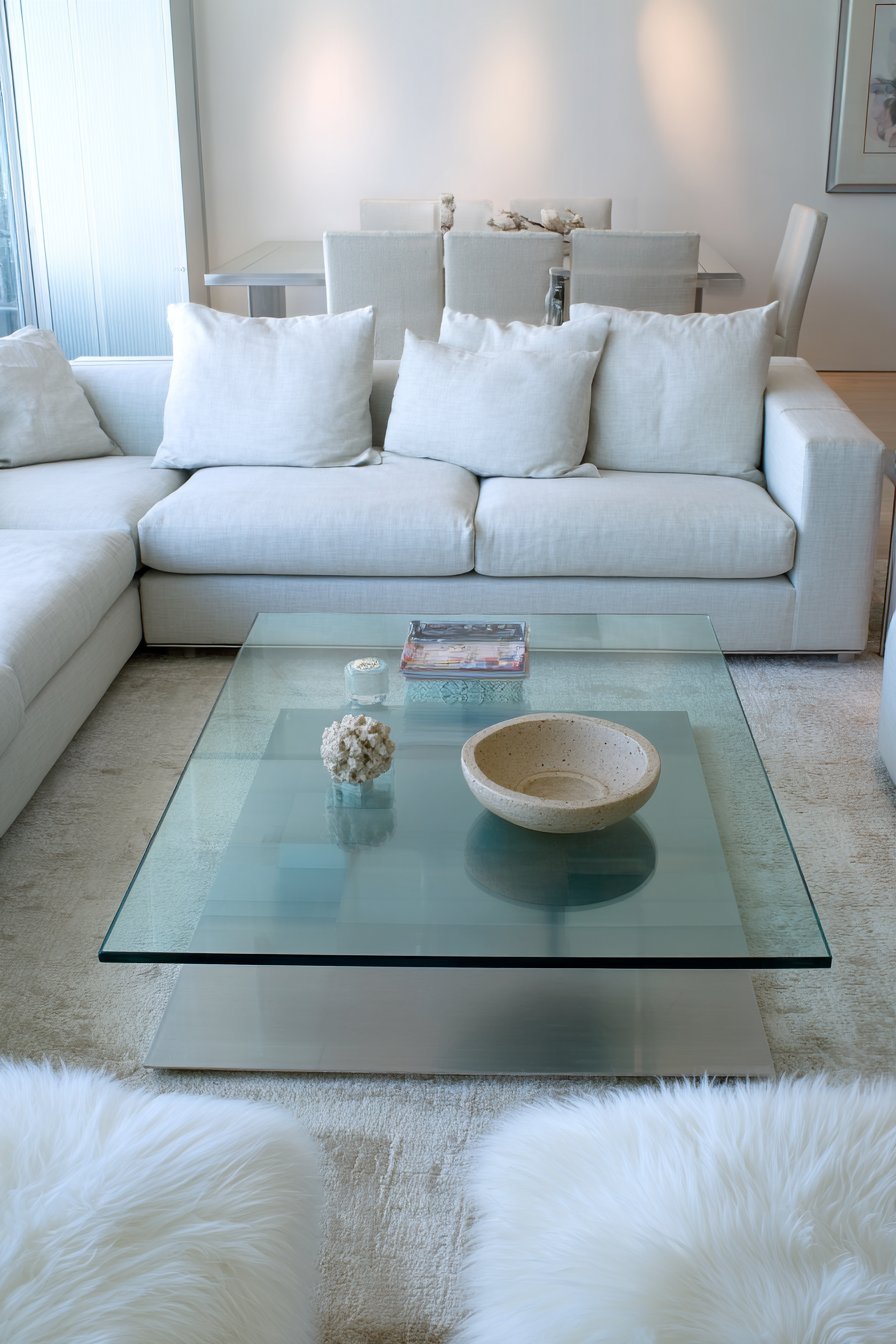
Soft natural shadows beneath the glass create subtle depth that prevents the design from appearing flat or sterile. These delicate shadows change throughout the day as light moves through the space, adding dynamic interest to the static composition. The transparent glass maintains visual continuity with the light-colored flooring, creating an uninterrupted flow that makes the room feel larger and more open than its actual dimensions might suggest.
Key Design Tips: Select the thinnest tempered glass appropriate for your needs to maximize the floating effect. Choose support structures in materials that visually recede, like slim stainless steel or clear acrylic. Limit surface styling to one or two sculptural objects with clean, simple forms. Maintain a monochromatic or neutral color palette in surrounding furnishings to emphasize the table’s minimalist qualities. Ensure adequate natural light to create the subtle shadows that give minimal designs depth and dimension.
6. Rustic Modern Fusion with Reclaimed Wood Beam
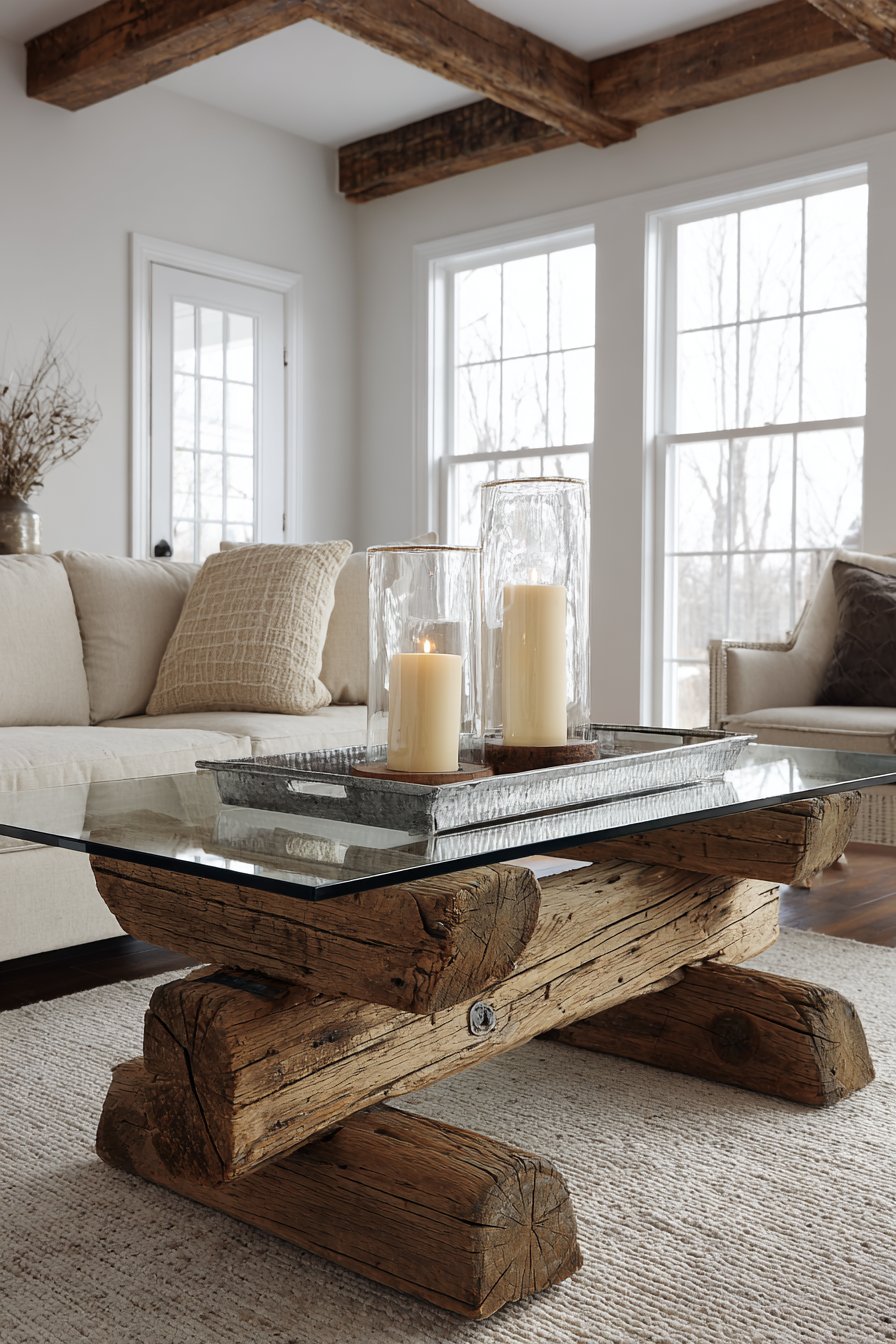
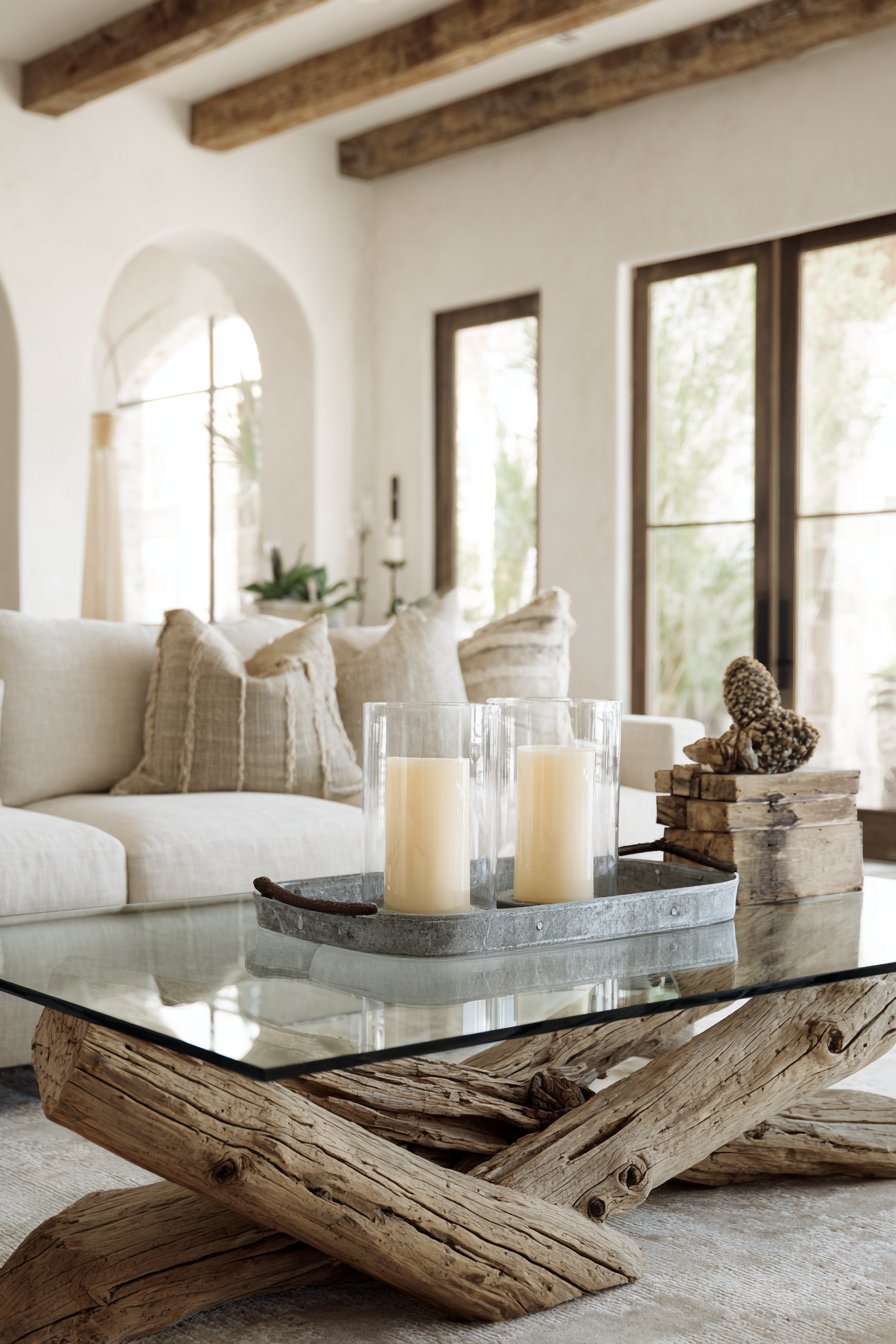
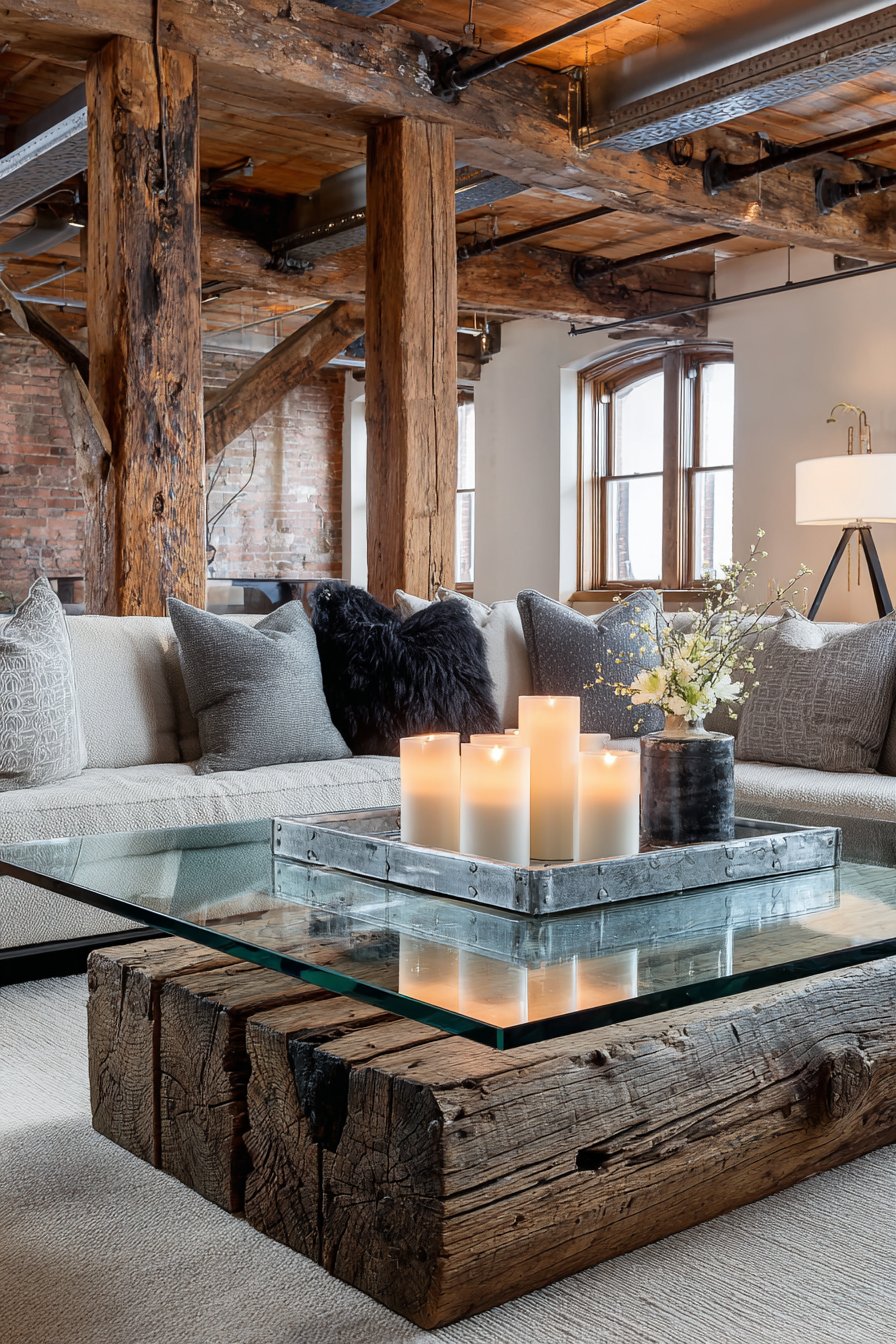
The combination of smooth glass and weathered reclaimed wood creates a stunning material dialogue in this design, where a thick glass top rests upon a reclaimed wood beam base displaying authentic texture and natural knots. This juxtaposition of refined and rustic elements exemplifies the modern farmhouse aesthetic, where contemporary clean lines meet authentic vintage materials. The exposed ceiling beams overhead echo the table’s reclaimed wood base, creating cohesive design continuity throughout the space.
The wood beam’s weathered surface tells a story of previous use, with natural imperfections and aged patina adding character that new materials simply cannot replicate. These authentic details ground the space in history and craftsmanship, providing visual and emotional warmth that balances the glass top’s cool smoothness. The neutral-toned furnishings allow these material contrasts to shine without competition, while a galvanized metal tray on the glass surface introduces additional textural variety through its industrial finish.
Natural daylight streaming through windows emphasizes the beautiful contrast between the smooth, reflective glass and the rough-hewn wood base. This lighting reveals the wood’s varied surface texture—the grain patterns, knots, and subtle color variations that make reclaimed materials so compelling. The glass top protects the wood while allowing its beauty to remain fully visible, and its transparency ensures the substantial beam doesn’t visually overwhelm the space despite its physical presence.
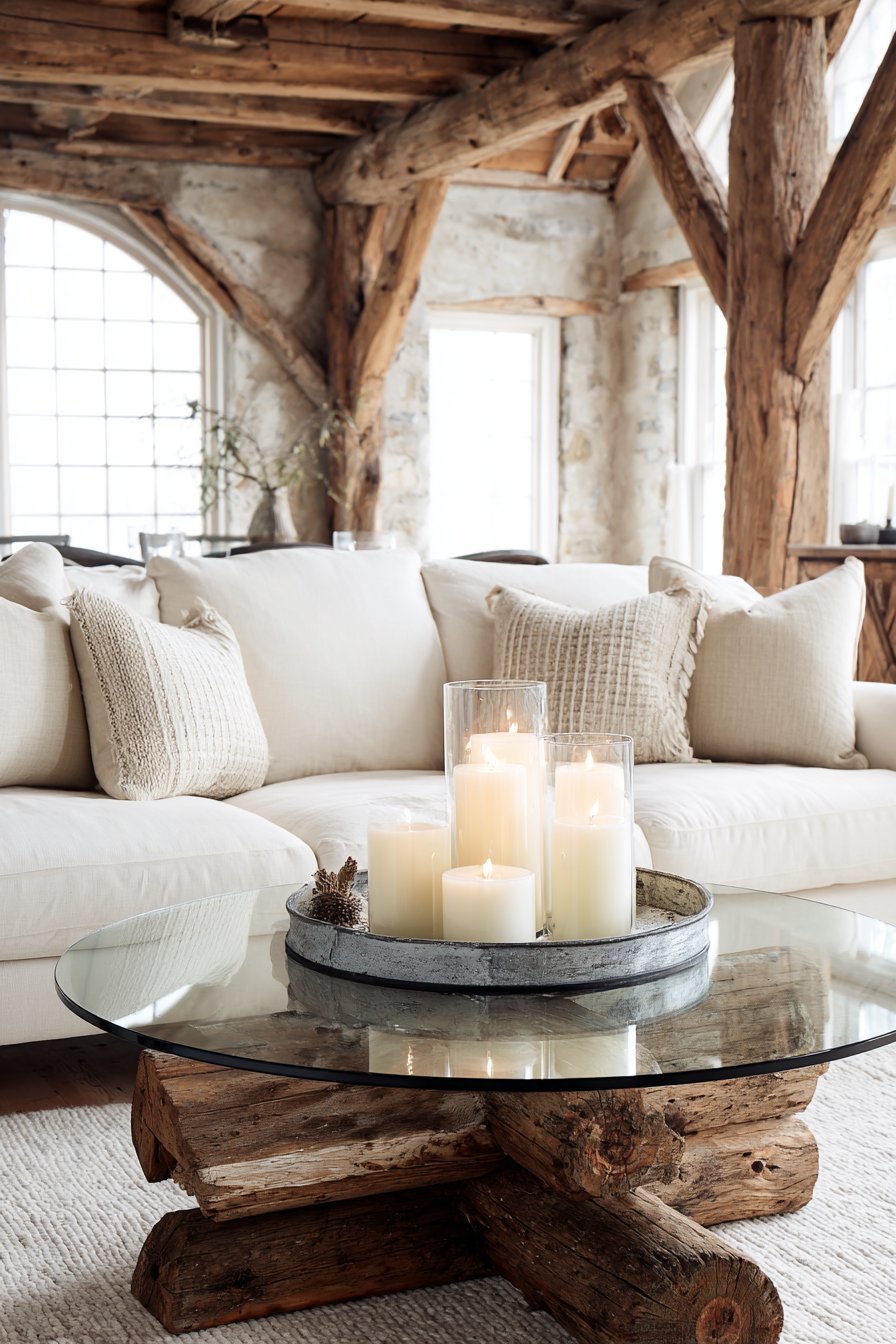
Key Design Tips: Source authentic reclaimed wood with genuine patina and weathering for maximum character. Allow the wood’s natural imperfections—knots, cracks, and color variations—to show as design features. Use thick glass that can safely span the beam’s width without additional support structures. Balance rustic elements with refined contemporary pieces to prevent the space from feeling themed. Incorporate metal accessories in aged finishes like galvanized steel or weathered iron to bridge the rustic-modern divide.
7. Space-Saving Oval for Compact Living
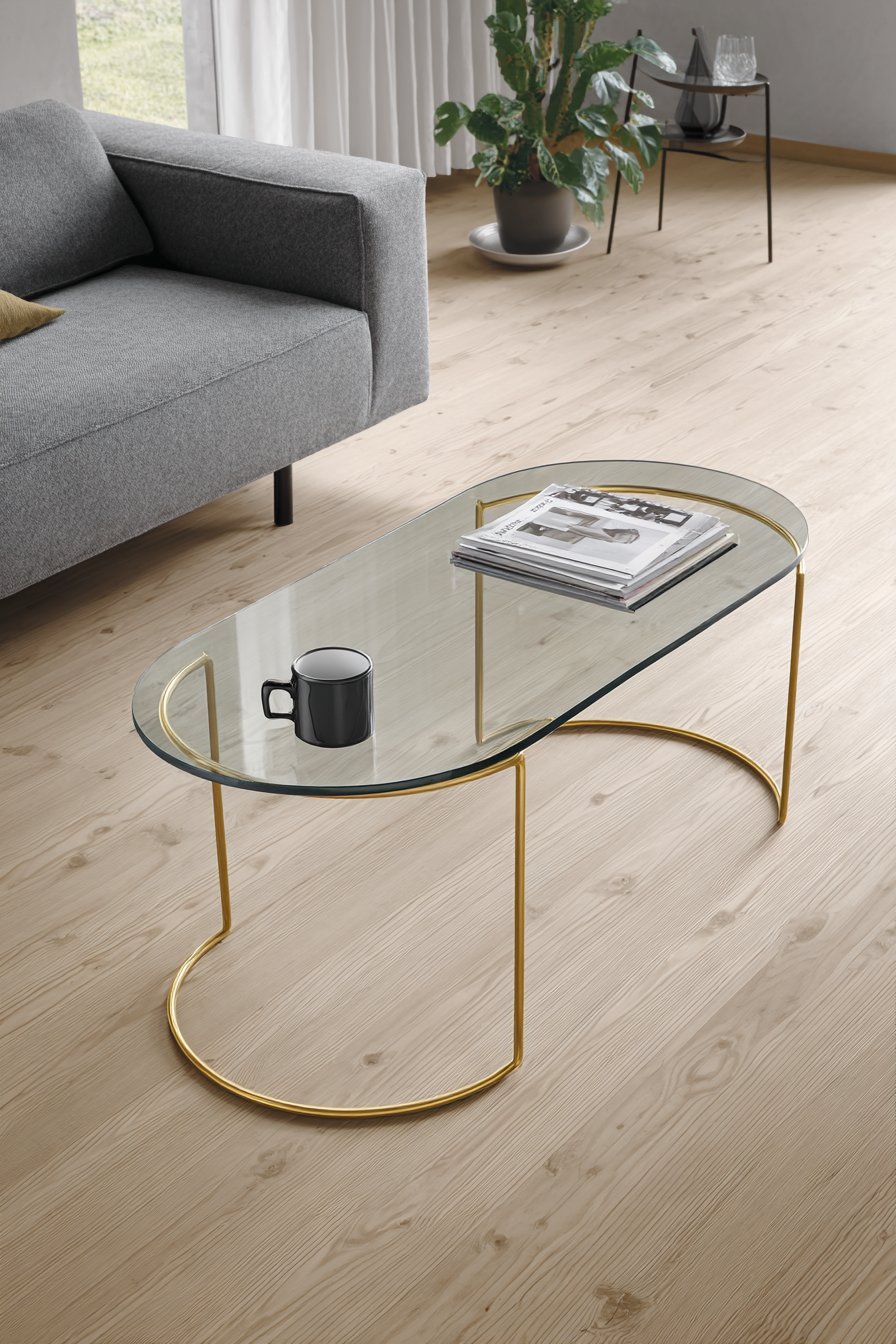
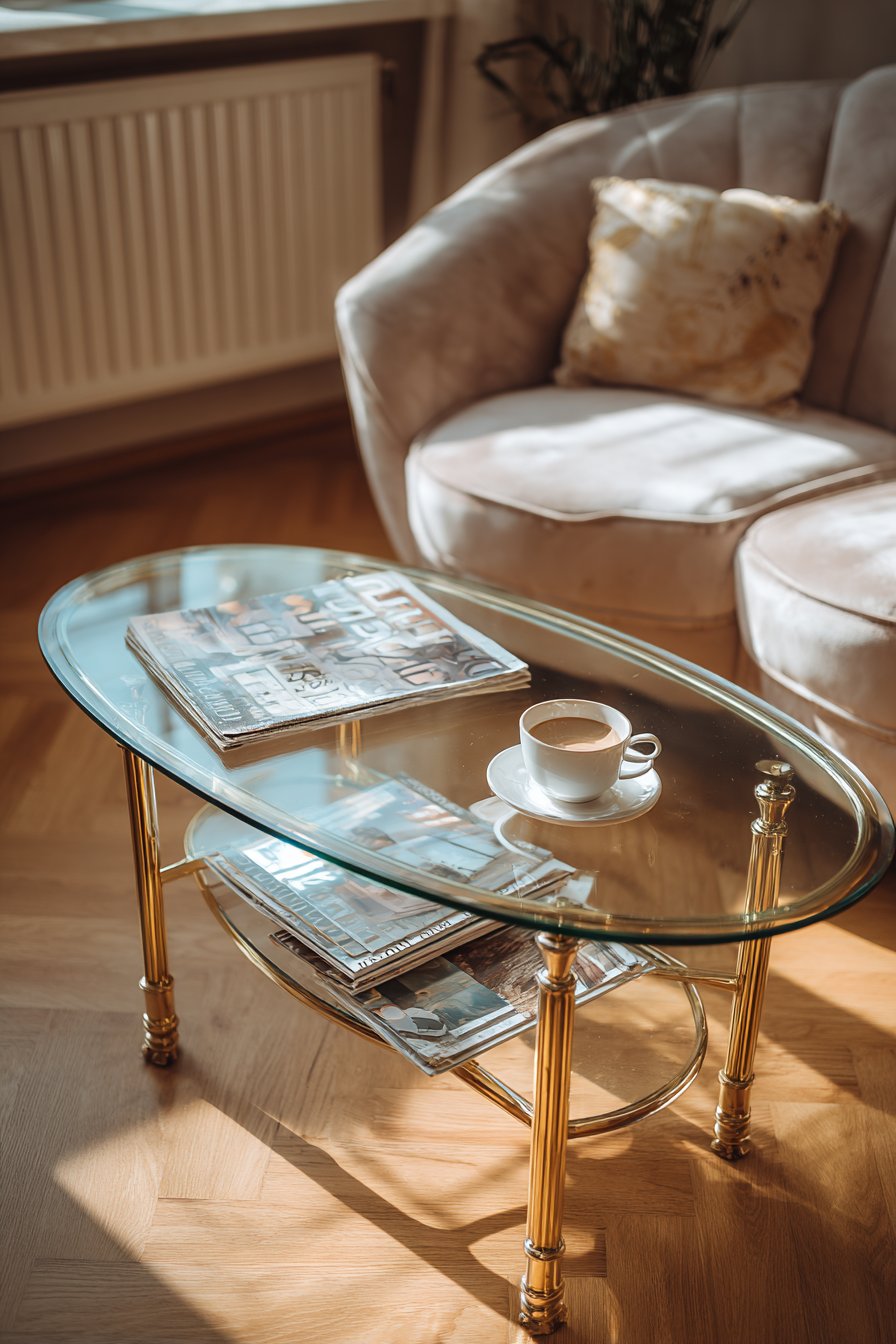
Small-space living demands furniture that maximizes both function and visual openness, making this compact oval glass coffee table with a slim brass-finished metal base an ideal solution for studio apartments and cozy living areas. The oval shape eliminates sharp corners that can make tight spaces feel cramped while creating elegant curves that guide traffic flow naturally around the furniture. The brass finish adds warmth and sophistication without the visual weight of darker metals, helping maintain the light, airy feeling essential in compact rooms.
The table’s transparent quality becomes its greatest asset in limited square footage. Unlike solid tables that create visual barriers and fragment space, this glass design allows sightlines to flow uninterrupted from one area to another, making the room feel significantly larger than its actual dimensions. Positioned between a loveseat and an accent chair, the table facilitates conversation and provides surface space without dominating the floor plan or making movement feel constrained.
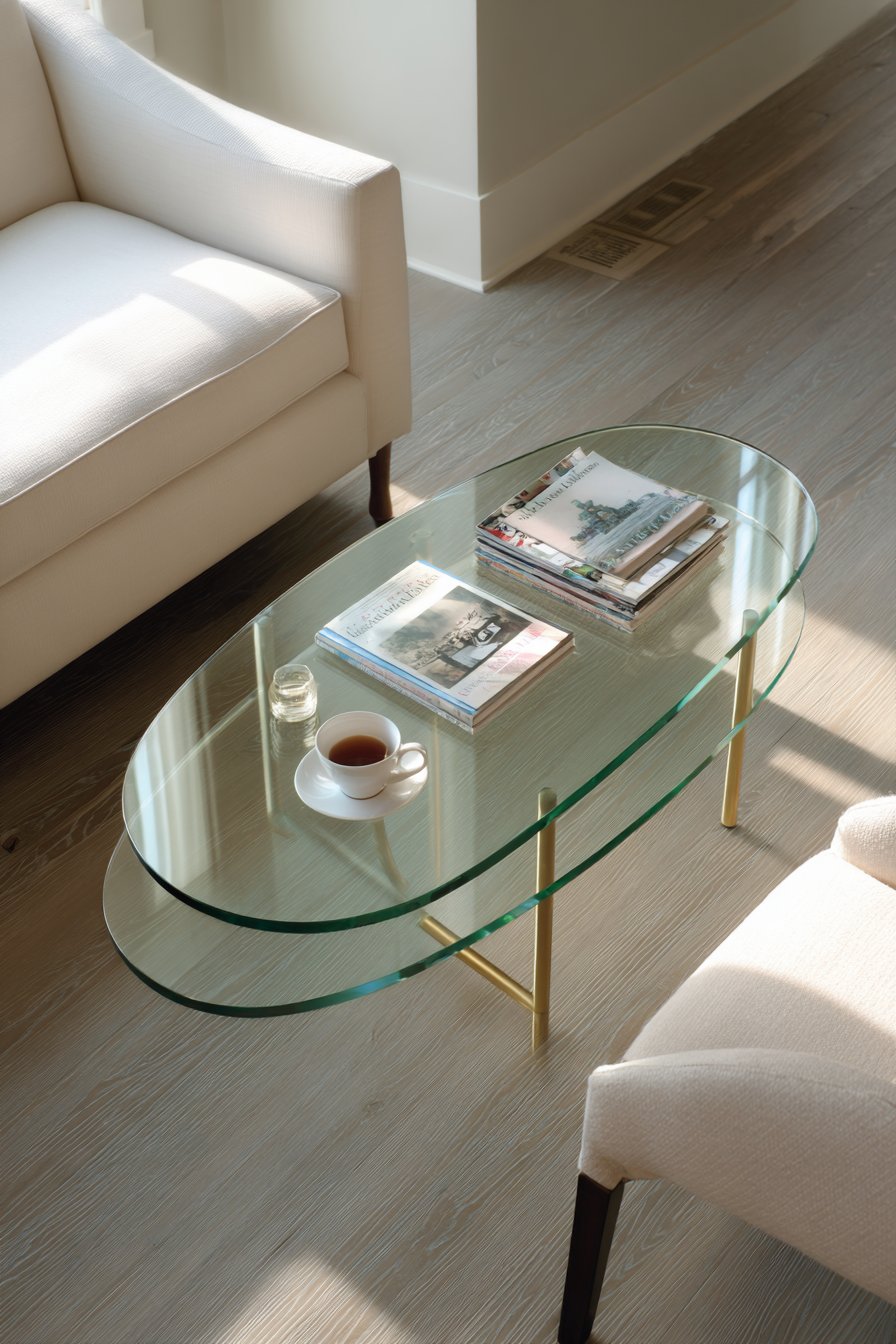
Practical styling demonstrates appropriate scale for small spaces—a modest stack of magazines and a coffee cup show the table in everyday use without overcrowding the surface. This restrained approach prevents visual clutter, which can make small rooms feel chaotic and uncomfortable. Soft natural lighting creates gentle reflections that add visual interest without overwhelming the space, while the brass finish catches and warms the light, adding subtle luxury to the compact setting.
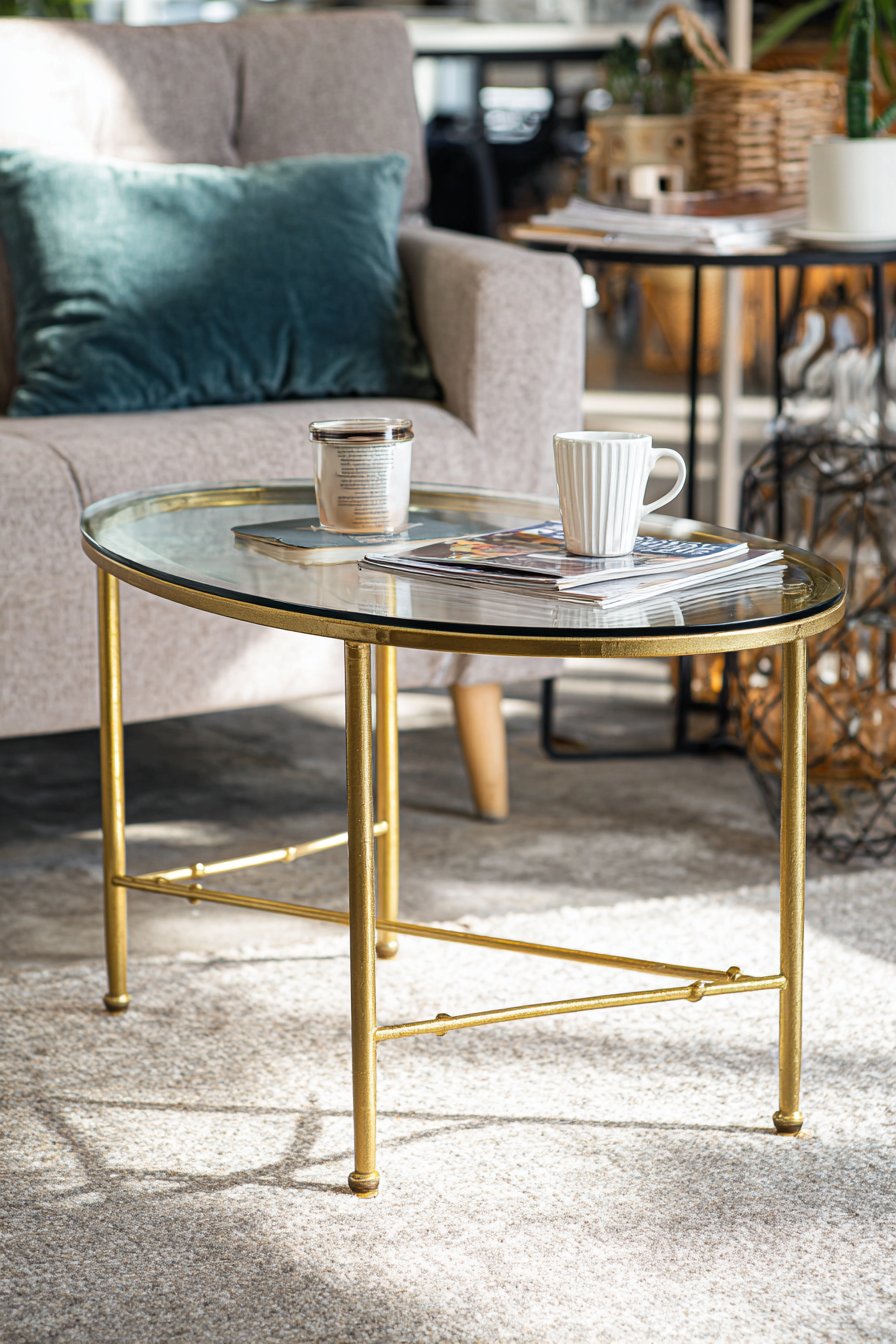
Key Design Tips: Choose oval or round shapes to improve traffic flow in tight spaces and eliminate sharp corner hazards. Select tables with slim profile bases that don’t consume valuable floor space. Keep surface styling minimal in small rooms to prevent visual clutter. Use warm metallic finishes like brass or rose gold to add sophistication without darkness. Measure carefully to ensure at least 18 inches of clearance around all sides for comfortable movement.
8. Luxury Designer Statement with Sculptural Bronze
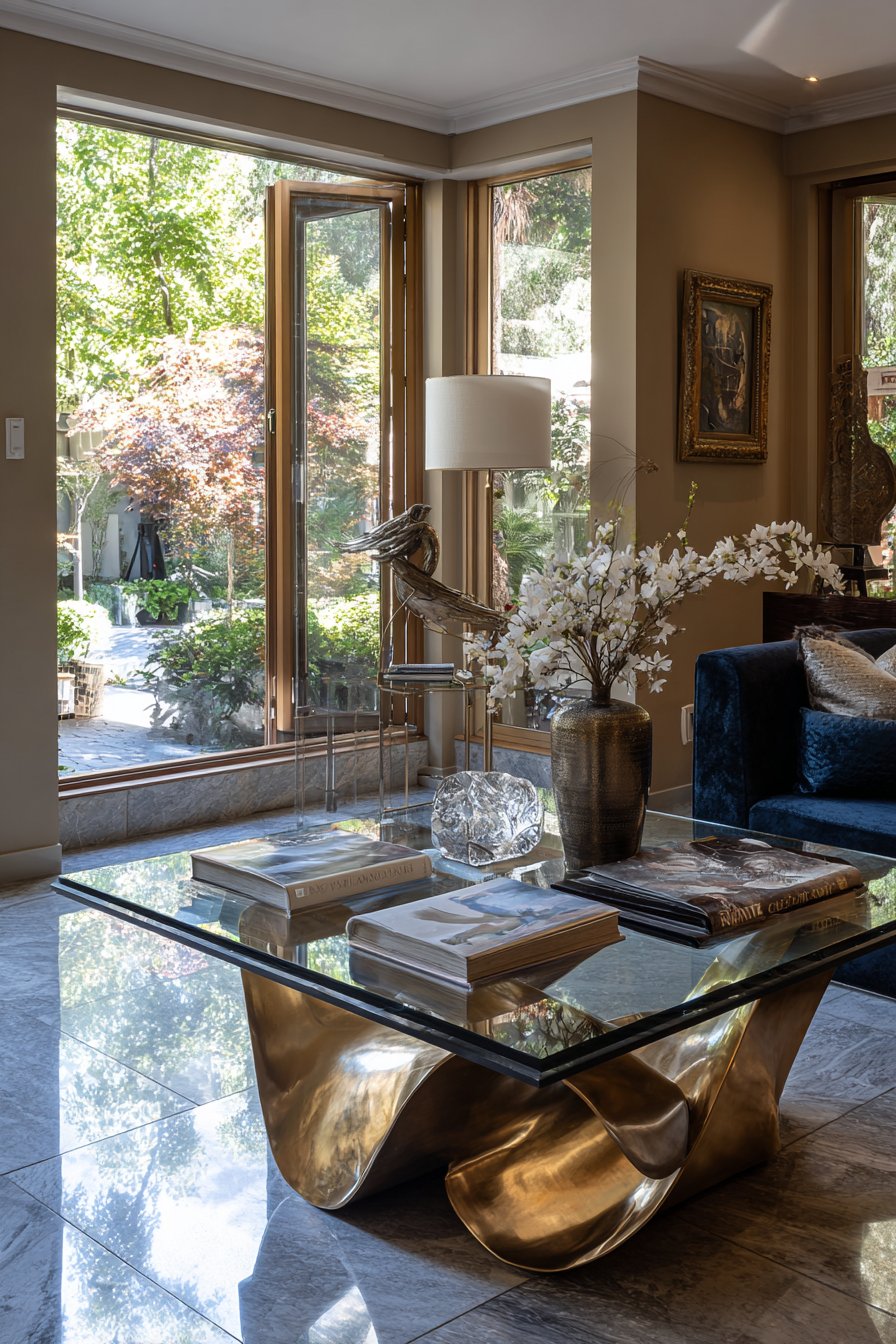
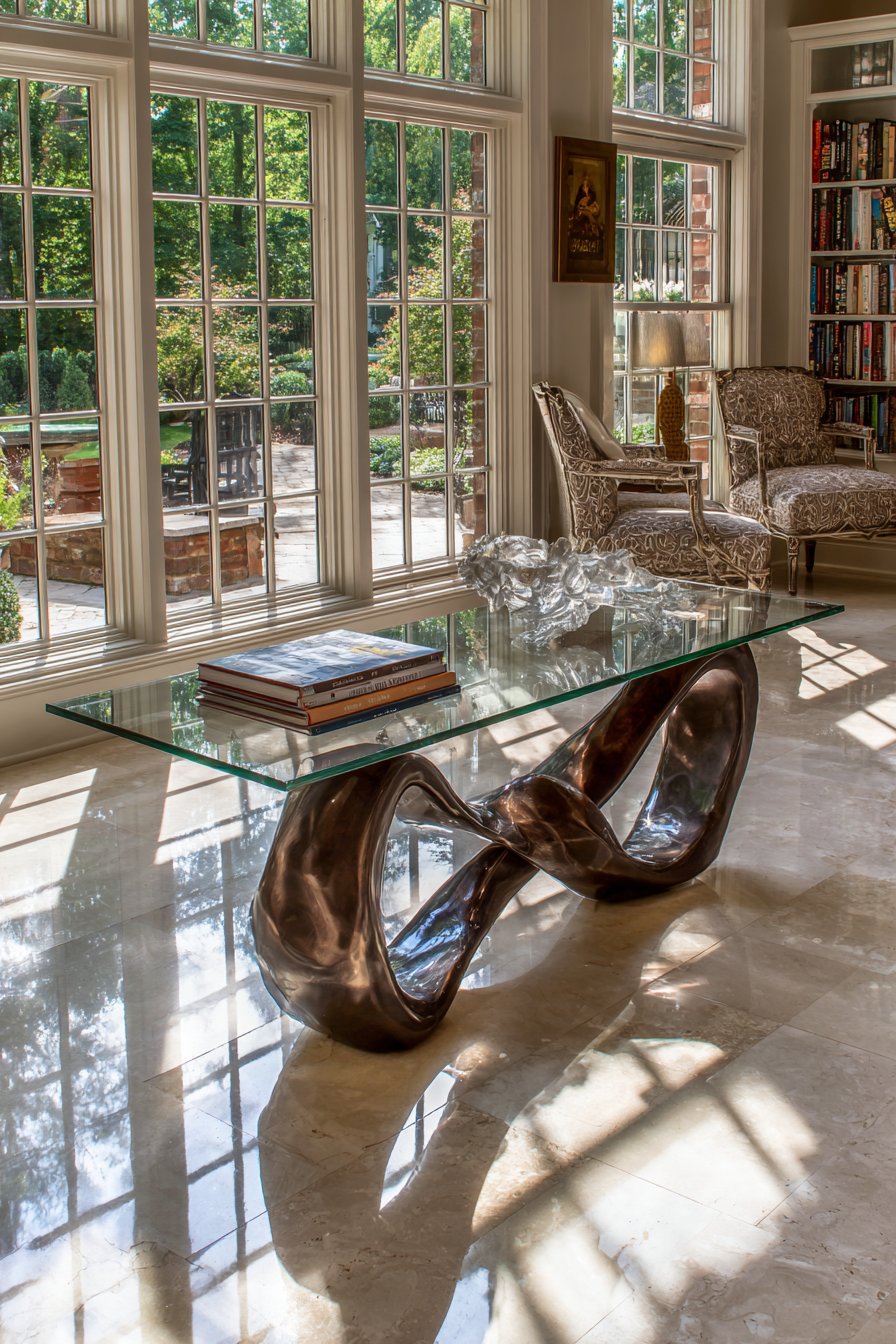
Some glass coffee tables transcend mere functionality to become legitimate works of art, and this designer piece with an abstract sculptural base in polished bronze exemplifies that elevated approach. The base itself commands attention as a three-dimensional sculpture, its organic forms and polished surface creating a museum-quality aesthetic that transforms the living room into a curated gallery space. Against marble flooring and surrounded by custom furnishings, this table makes an unambiguous statement about quality, craftsmanship, and refined taste.
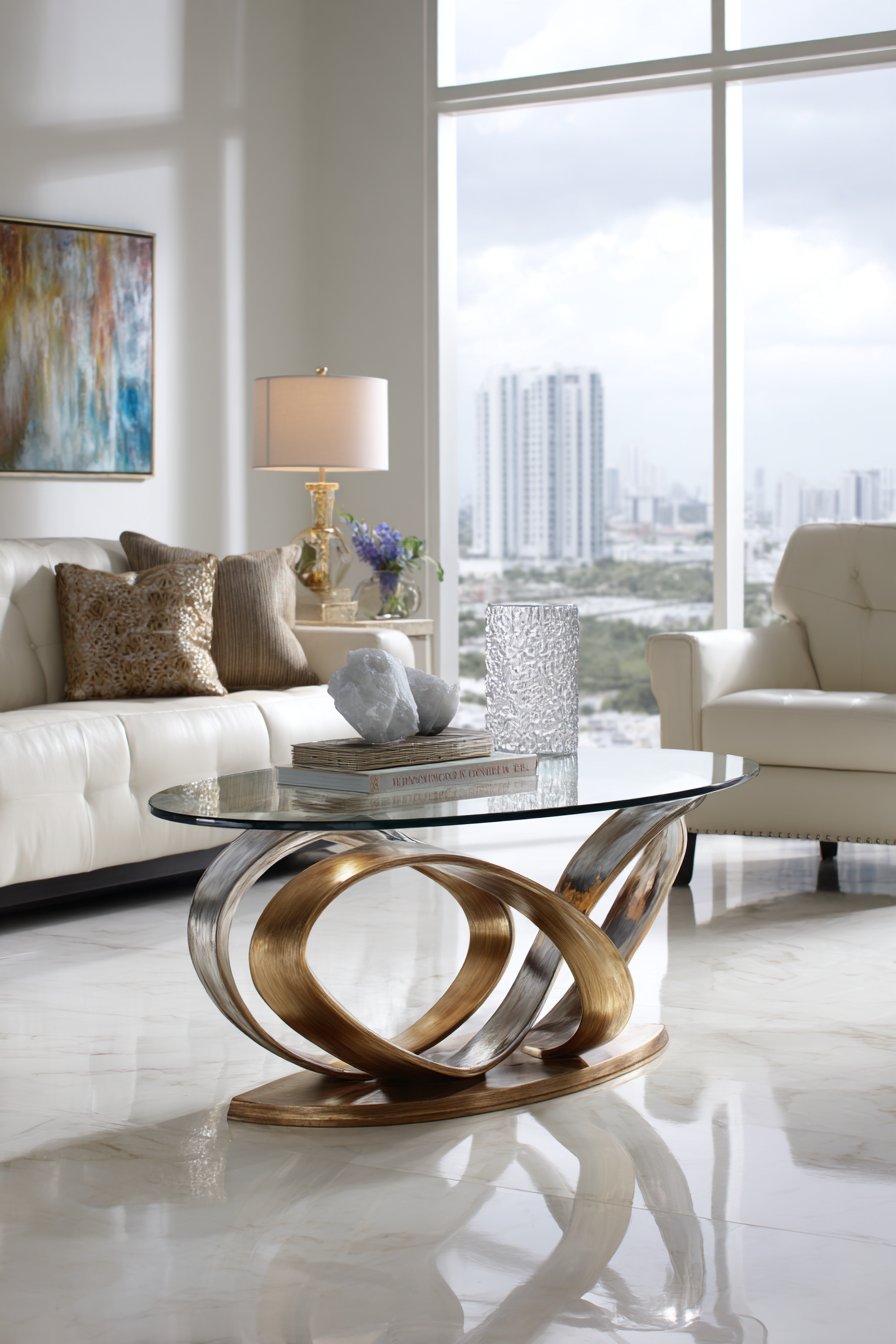
The glass top serves multiple purposes in this luxury context. Practically, it provides a stable surface for display and use while protecting the valuable bronze sculpture beneath. Aesthetically, it allows the sculptural base to remain fully visible from above, ensuring that the artistry doesn’t go unnoticed from any viewing angle. The transparency creates a fascinating visual dynamic where the base appears to support nothing and everything simultaneously—a paradox that sophisticated design often embraces.
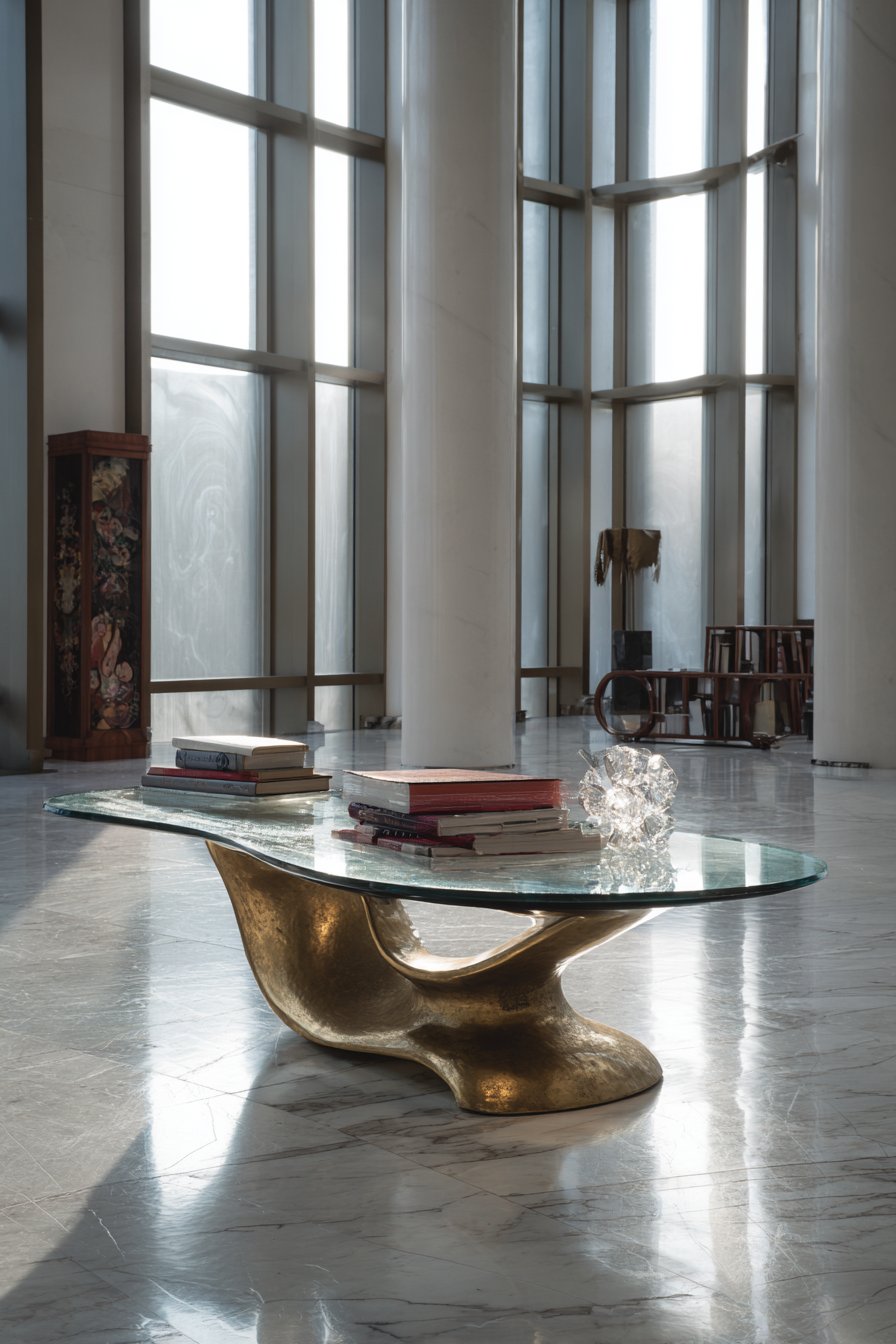
Dramatic natural lighting from tall windows plays across the polished bronze surface, creating constantly shifting highlights and shadows that bring the sculpture to life throughout the day. The glass top displays a curated arrangement of art books and a crystal decorative object, items carefully selected for their own aesthetic merit and their complementary relationship to the table’s artistic qualities. This level of intentional curation transforms everyday objects into components of a larger design composition.
Key Design Tips: Invest in tables where the base itself qualifies as sculpture to create legitimate focal points. Position designer pieces in prominent locations with excellent natural light to showcase their artistic qualities. Curate surface displays with museum-level intention, choosing objects for aesthetic merit and complementary design. Maintain polished metal finishes regularly to preserve their reflective beauty. Surround high-end statement pieces with equally refined furnishings to create cohesive luxury environments.
9. Coastal Tranquility with Driftwood Base
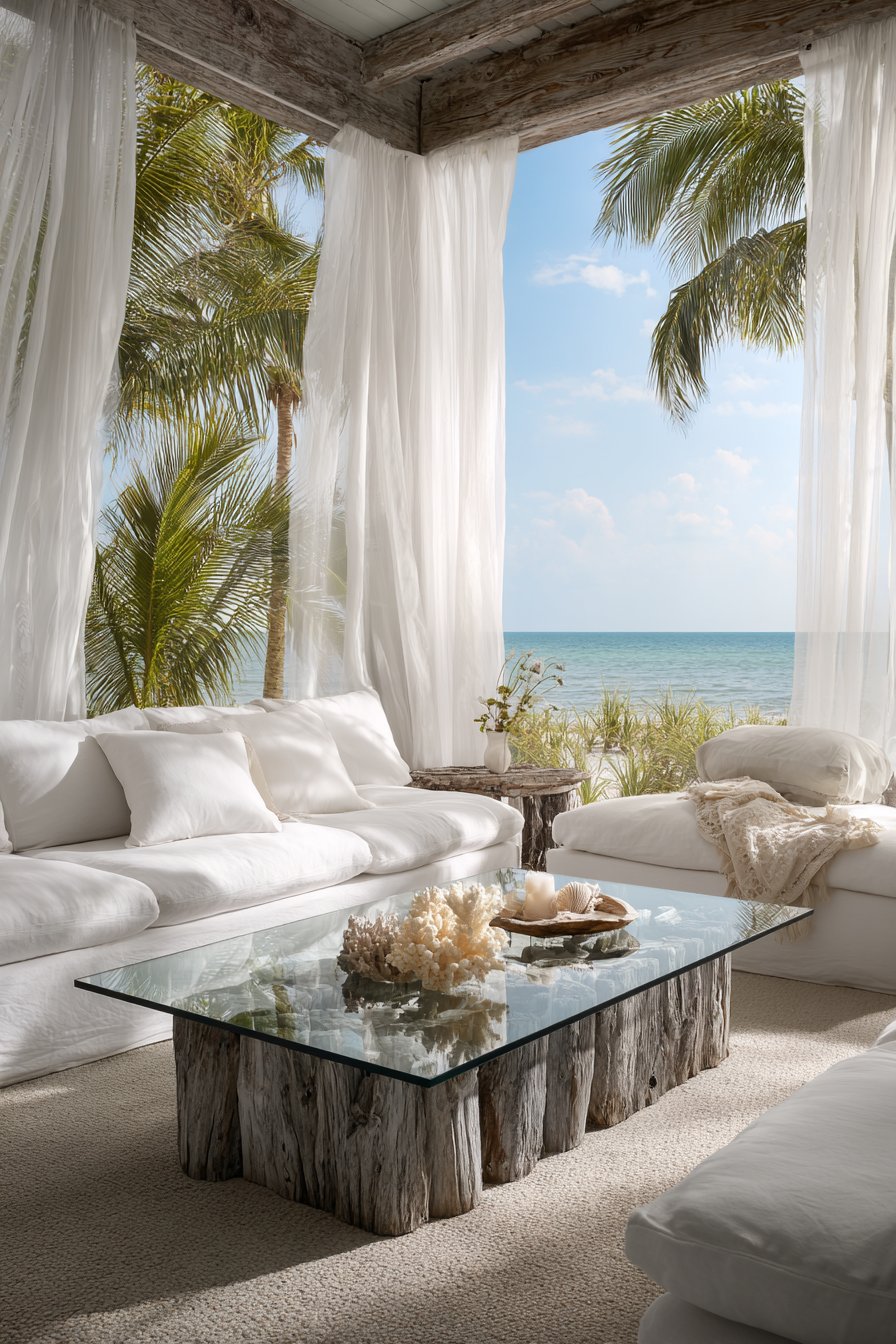
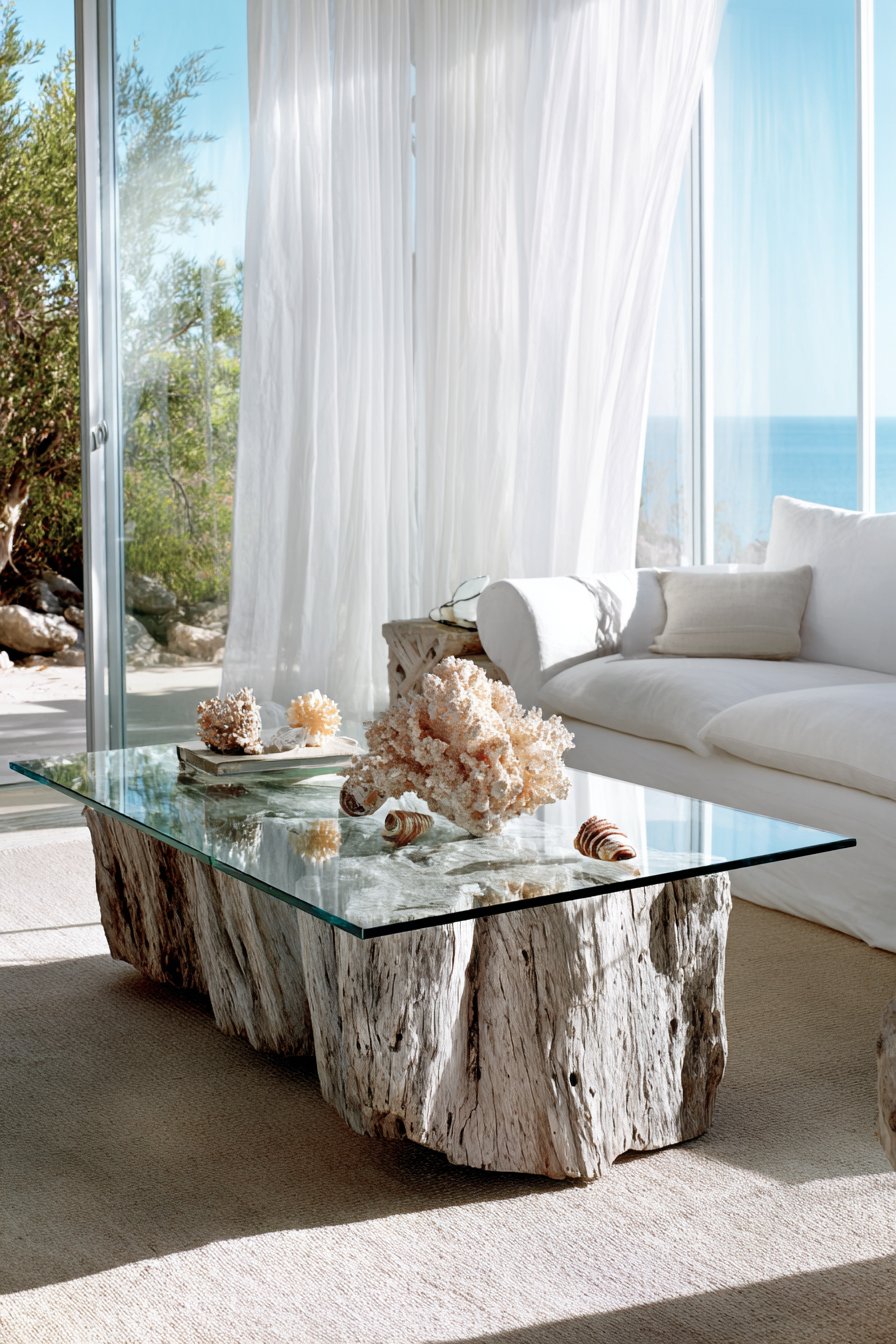
Beach-inspired interiors celebrate natural materials and relaxed elegance, both beautifully embodied in this glass coffee table featuring a driftwood base in weathered grey tones. The organic, irregular forms of beach-weathered wood create a sculptural base that appears shaped by nature rather than manufactured, bringing the organic beauty of coastal environments indoors. Thick rectangular glass provides stable functionality while allowing the driftwood’s unique character to remain the visual focus.
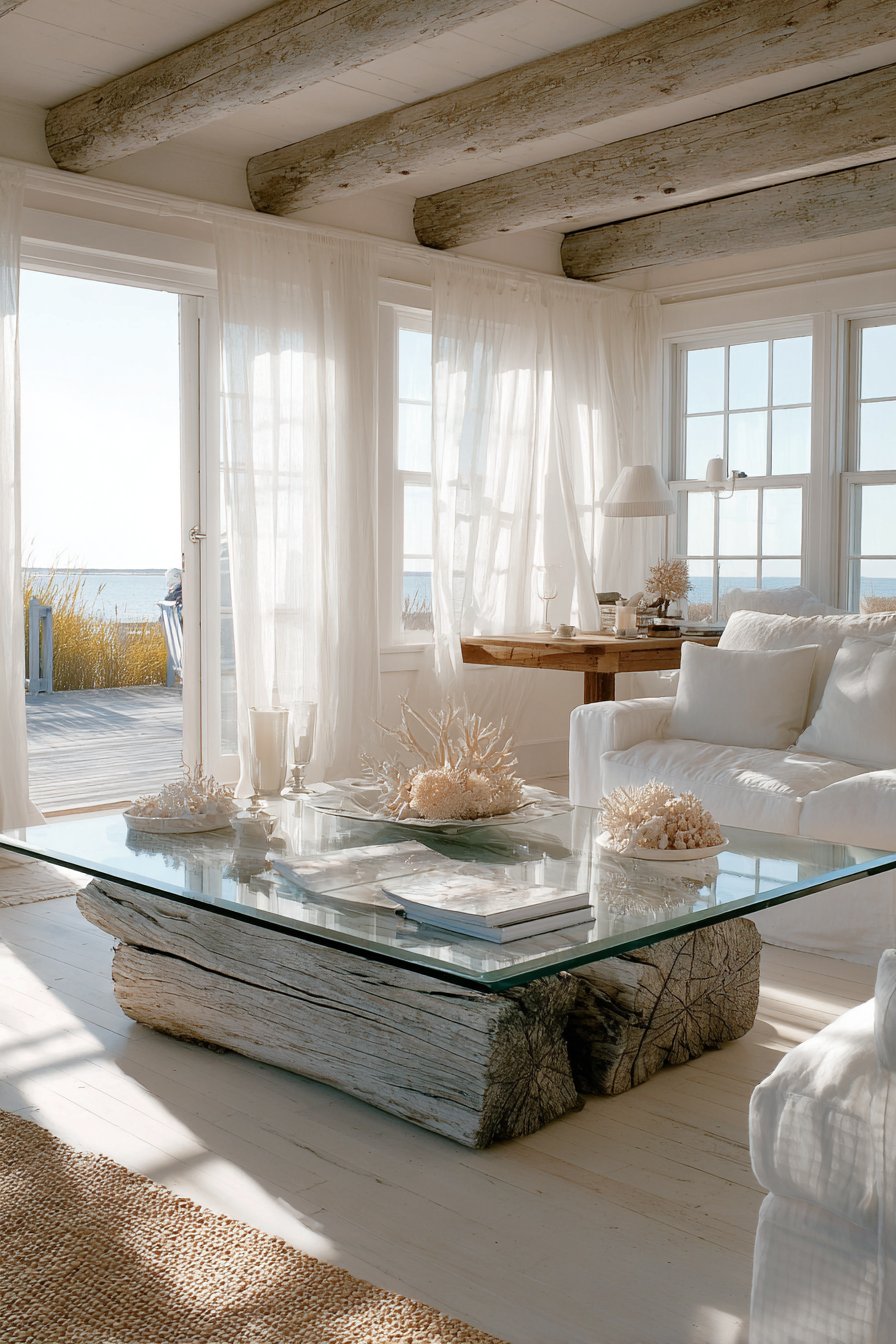
The surrounding white slipcovered furniture and natural fiber textures reinforce the coastal aesthetic, creating a light, breezy atmosphere reminiscent of seaside living. The weathered grey of the driftwood base coordinates beautifully with these neutral elements while introducing organic texture that prevents the space from feeling too pristine or formal. Shells and coral arranged on the glass surface provide authentic beach references that feel collected rather than contrived, suggesting personal connection to coastal environments rather than generic theme-driven design.
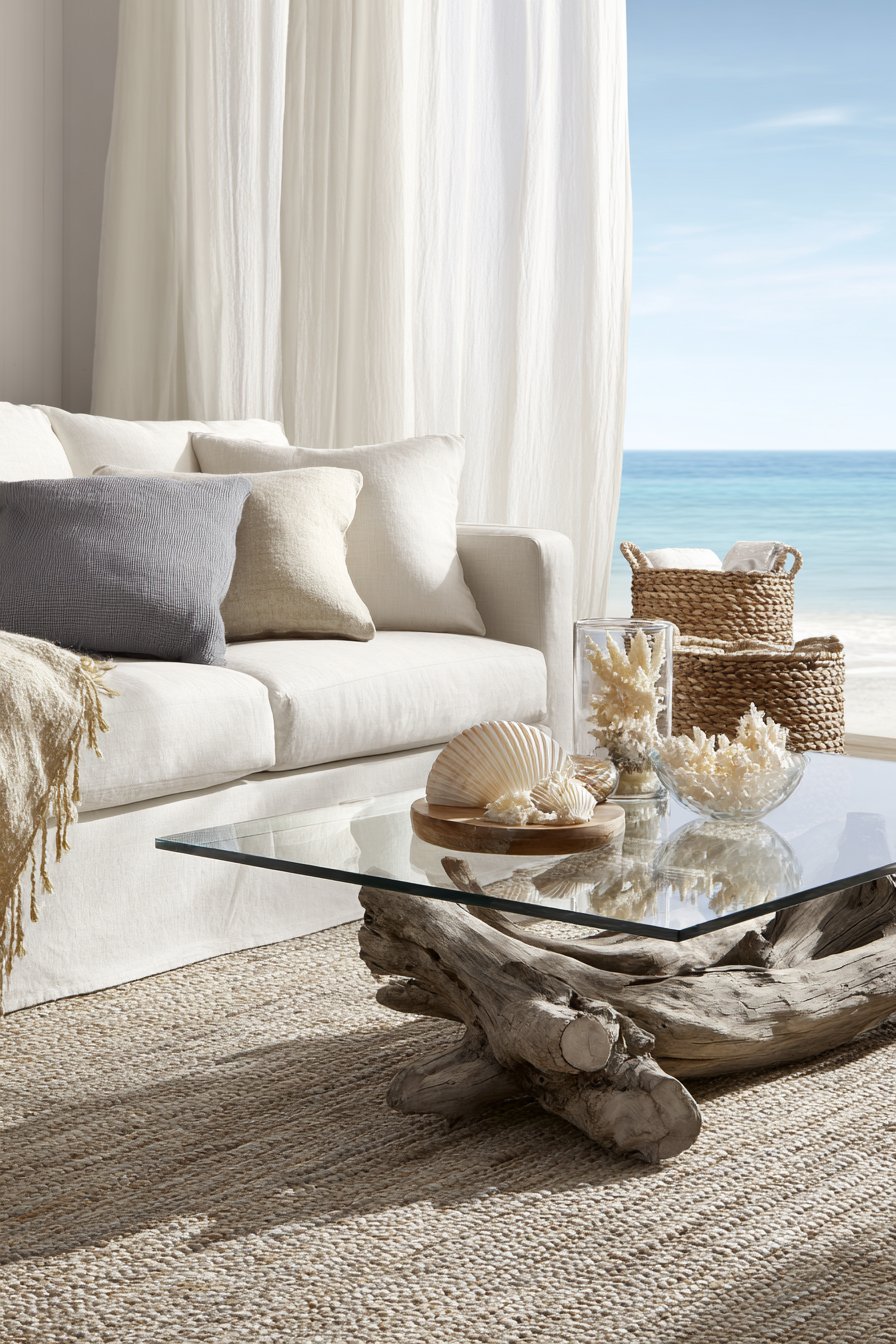
Bright natural daylight streaming through sheer linen curtains creates the sun-washed atmosphere characteristic of beach houses, where strong sunlight filters through lightweight fabrics to create luminous, airy spaces. This abundant natural light highlights the driftwood’s sculptural qualities and natural color variations while creating gentle reflections on the glass surface. The overall effect evokes the relaxed sophistication of coastal living, where natural materials and organic forms take precedence over formal arrangements.
Key Design Tips: Select authentic driftwood pieces with genuine beach weathering for the most convincing coastal aesthetic. Keep the color palette light and neutral with whites, soft greys, and natural fiber tones. Use sheer natural fabric curtains to filter bright light while maintaining luminosity. Display beach-found objects sparingly to suggest personal collection rather than purchased theme decor. Incorporate natural fiber rugs, baskets, and upholstery to reinforce organic, casual elegance.
10. Mid-Century Modern Authenticity with Tapered Walnut Legs
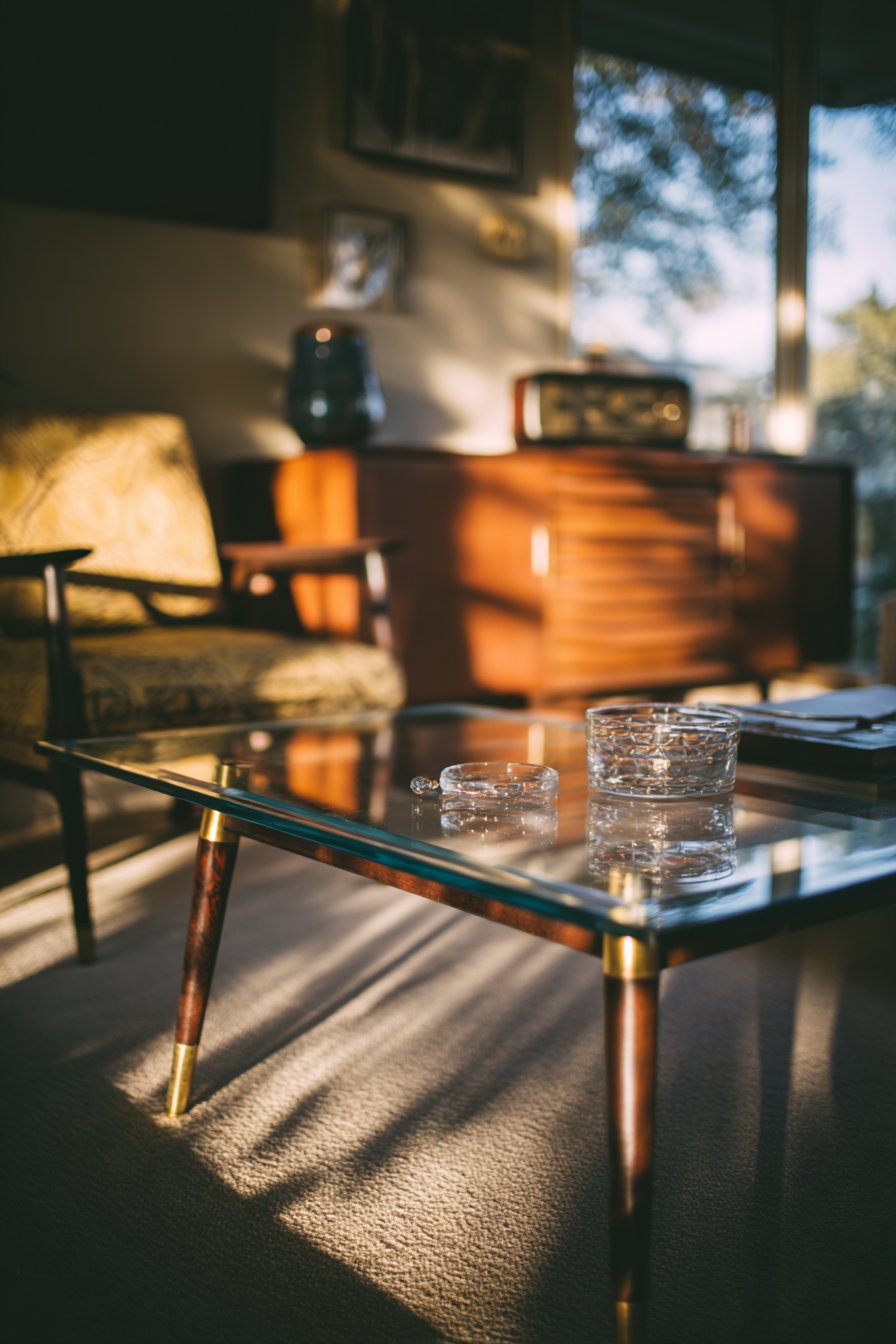
True mid-century modern design represents a specific historical period with distinctive characteristics, all authentically represented in this glass coffee table featuring tapered walnut wood legs and brass ferrules. The tapered leg profile—wide at the attachment point and narrowing toward the floor—exemplifies the period’s emphasis on light, elevated forms that appeared to float rather than sit heavily on the floor. The brass ferrules protecting the leg tips add both practical durability and the warm metallic accent characteristic of 1960s design.
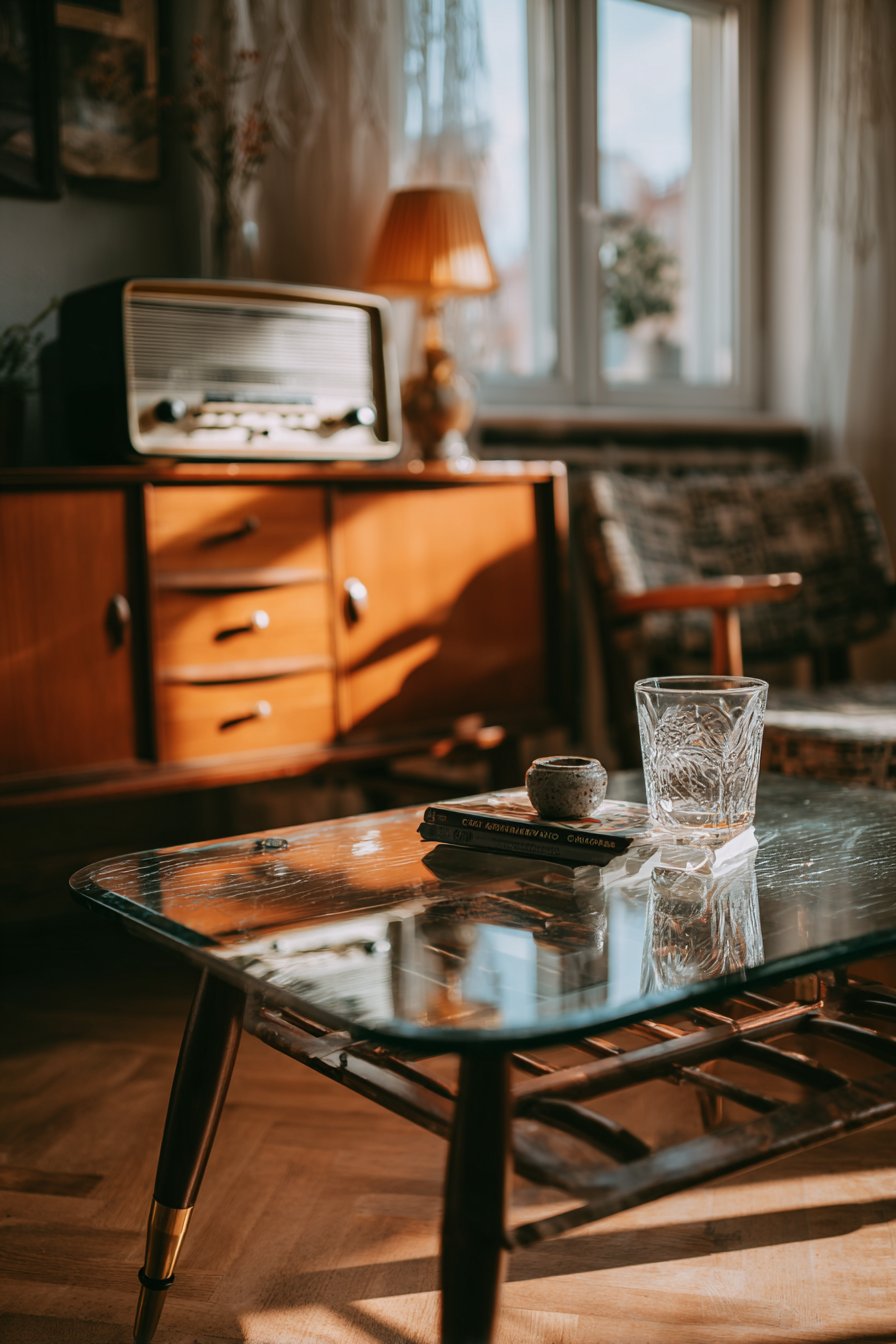
Positioned in a space with vintage teak credenza and an Eames-style lounge chair, this table anchors an interior that respects mid-century design’s authentic aesthetic rather than merely nodding to its visual cues. The walnut wood’s rich, warm tones coordinate beautifully with other period-appropriate wood pieces, creating the layered wood aesthetic common in well-designed mid-century interiors. The glass top maintains the era’s preference for light, transparent materials that enhanced the sense of openness essential to the modern movement.
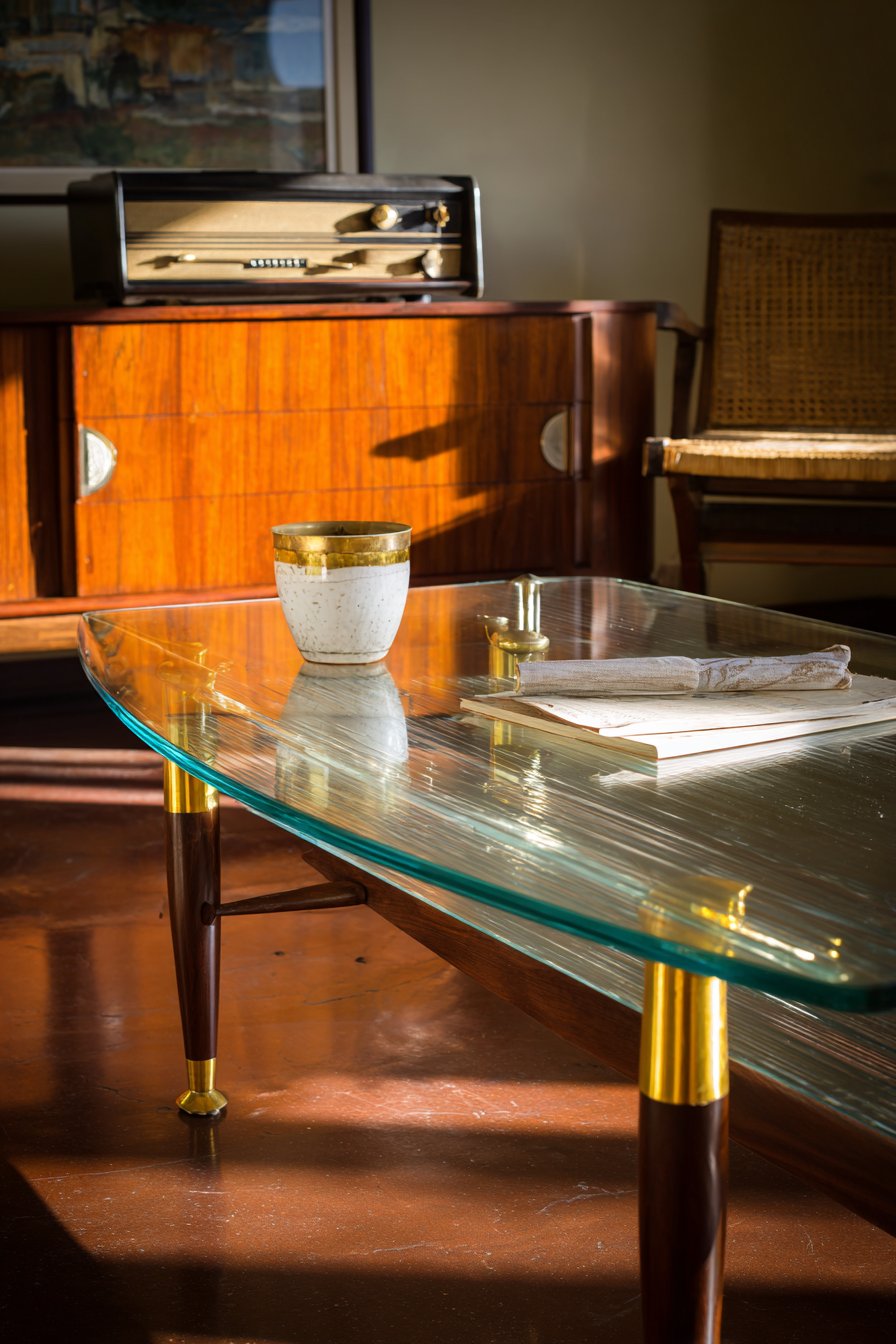
Period-appropriate accessories complete the authentic mid-century atmosphere. A ceramic ashtray and vintage radio on the glass surface reference the era’s lifestyle and technology, grounding the design in its historical moment. Warm natural lighting creates nostalgic ambiance while highlighting the clean lines and quality craftsmanship that made mid-century furniture enduring rather than trendy. The overall composition demonstrates how respecting a design period’s authentic characteristics creates more compelling interiors than mixing incompatible styles.
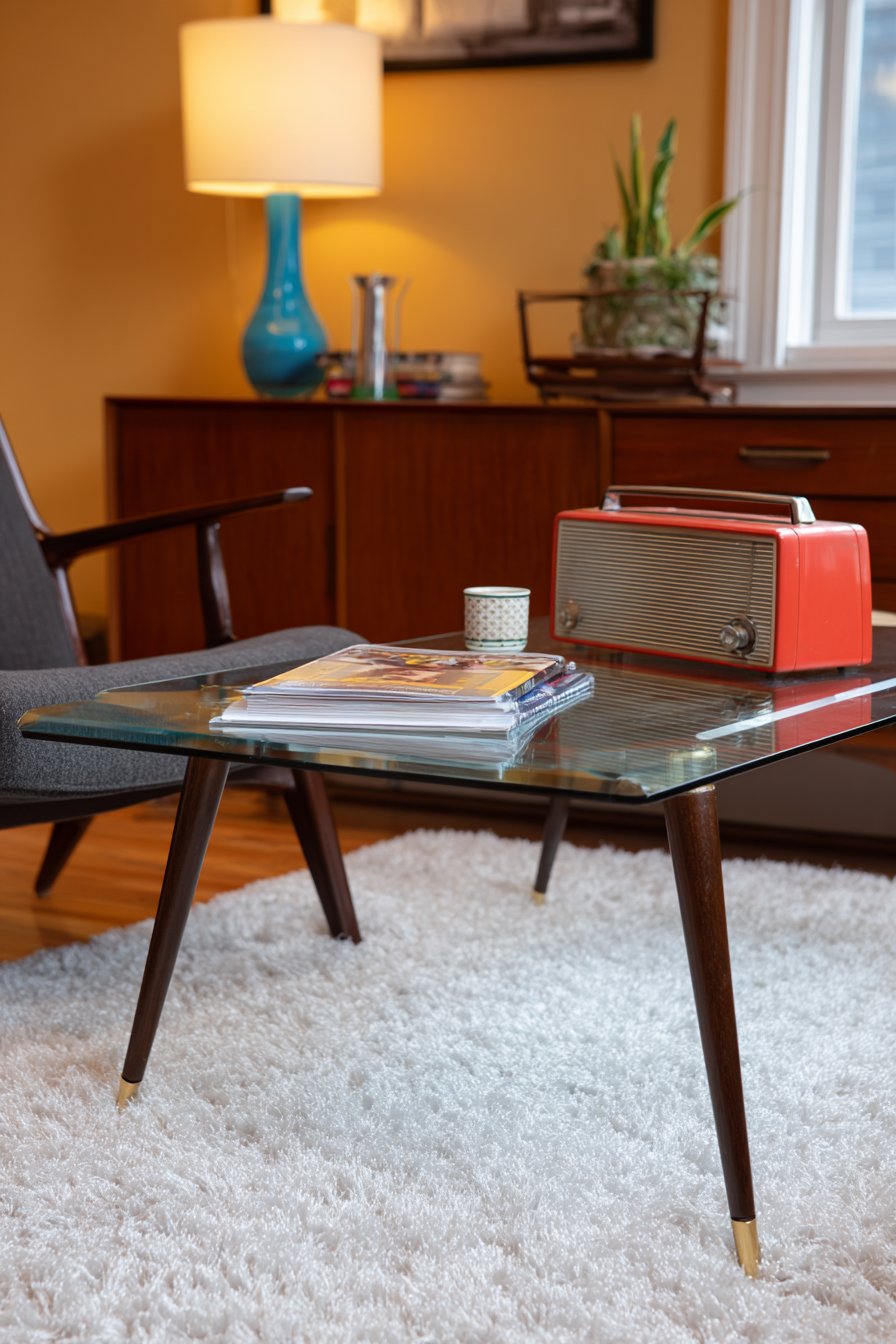
Key Design Tips: Source furniture with authentic mid-century proportions like tapered legs and low profiles for genuine period aesthetics. Use walnut, teak, or rosewood to capture the warm wood tones central to 1960s design. Add brass or brass-finished hardware and accents as period-appropriate metallic elements. Include vintage or vintage-style accessories that reference the era’s lifestyle and technology. Maintain clean lines and avoid ornamental details that contradict the modern movement’s simplified aesthetic.
11. Flexible Nesting Configuration for Versatile Living
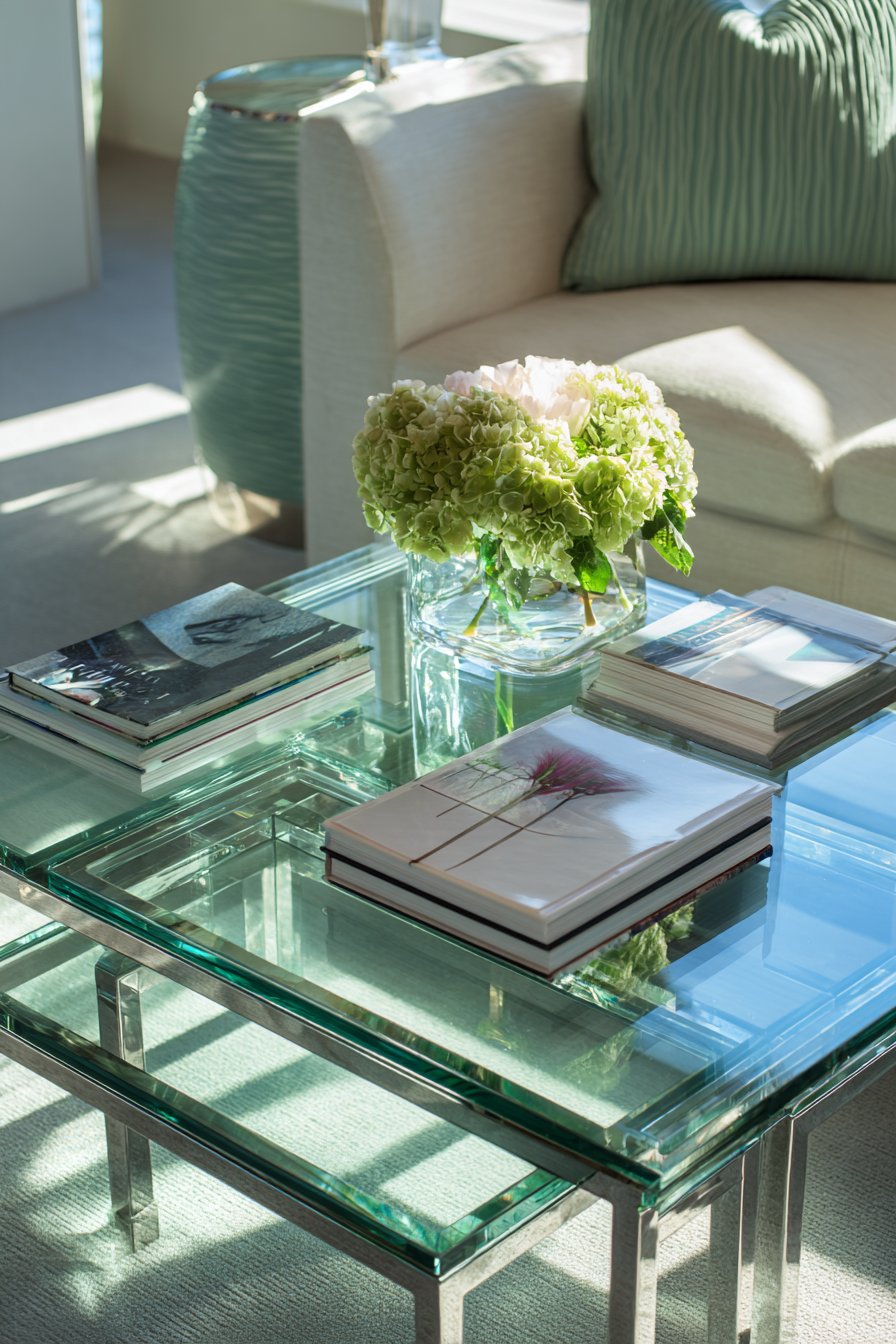
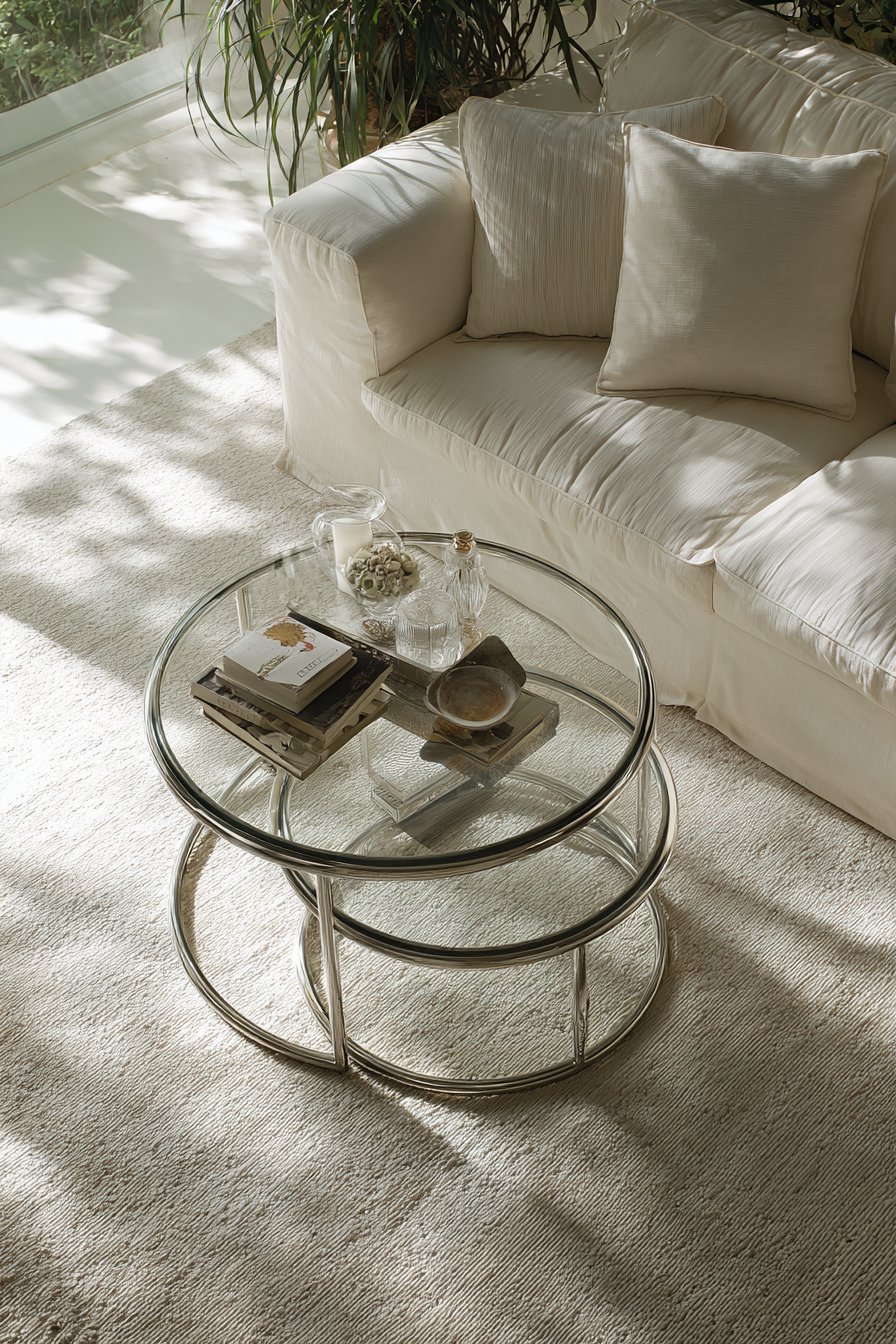
Modern living demands furniture that adapts to changing needs, and this set of two nesting glass coffee tables with graduated sizes delivers remarkable versatility. The brushed nickel frames on both tables create visual cohesion while the size variation allows flexible arrangement based on current requirements—fully nested for maximum floor space, partially separated for serving multiple seating areas, or completely independent to accommodate guests and entertaining scenarios. This adaptability makes the design particularly valuable in smaller homes or apartments where multi-functional furniture isn’t just desirable but essential.
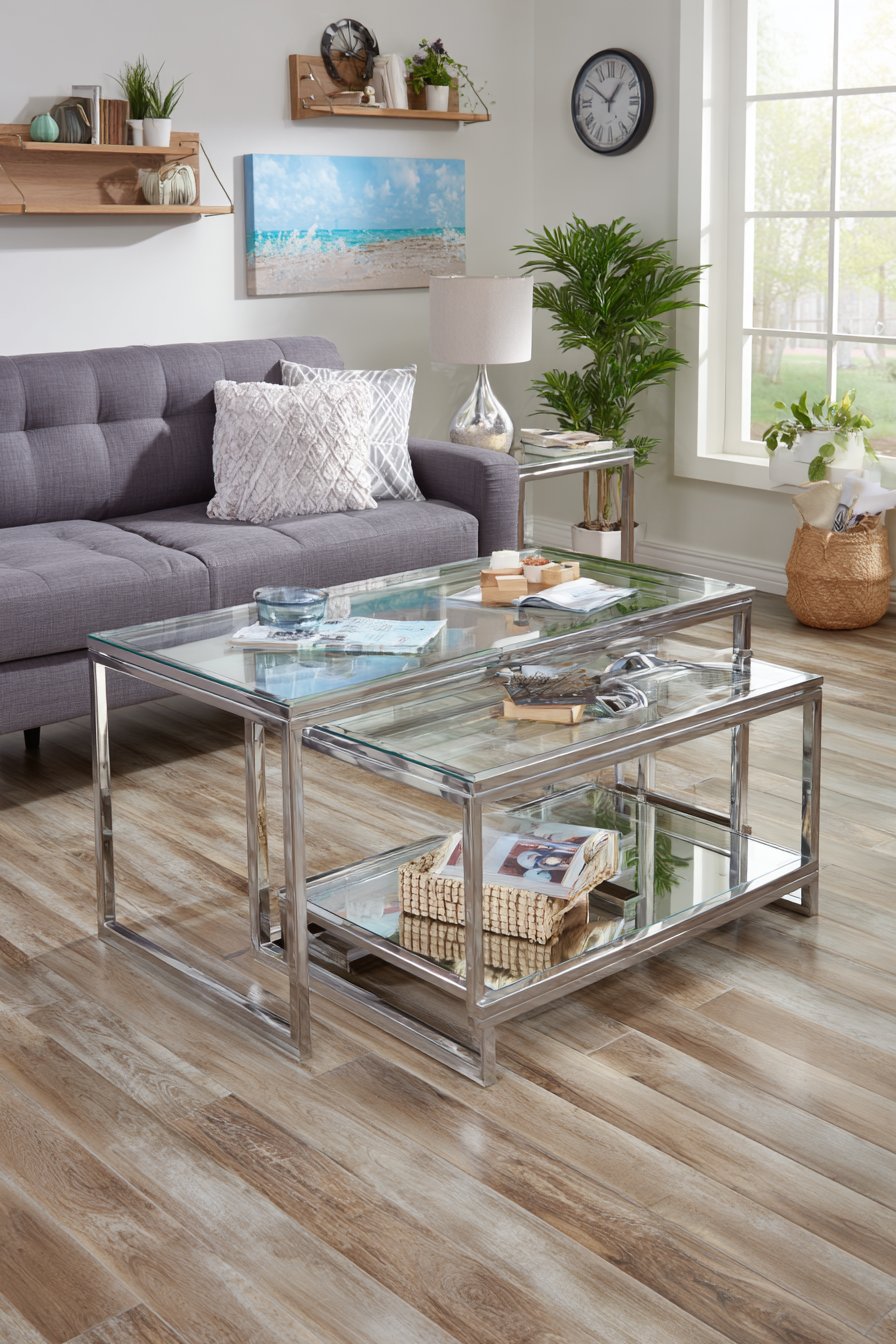
The larger table handles everyday display and use, accommodating the usual coffee table items like remote controls, coasters, and decorative objects. Meanwhile, the smaller table nests beneath when not needed, consuming minimal floor space while remaining instantly accessible when additional surface area becomes necessary. This practical storage approach addresses one of furniture’s most common challenges—where to keep occasional-use items when they’re not actively needed. The solution here is elegantly simple: hide them in plain sight.
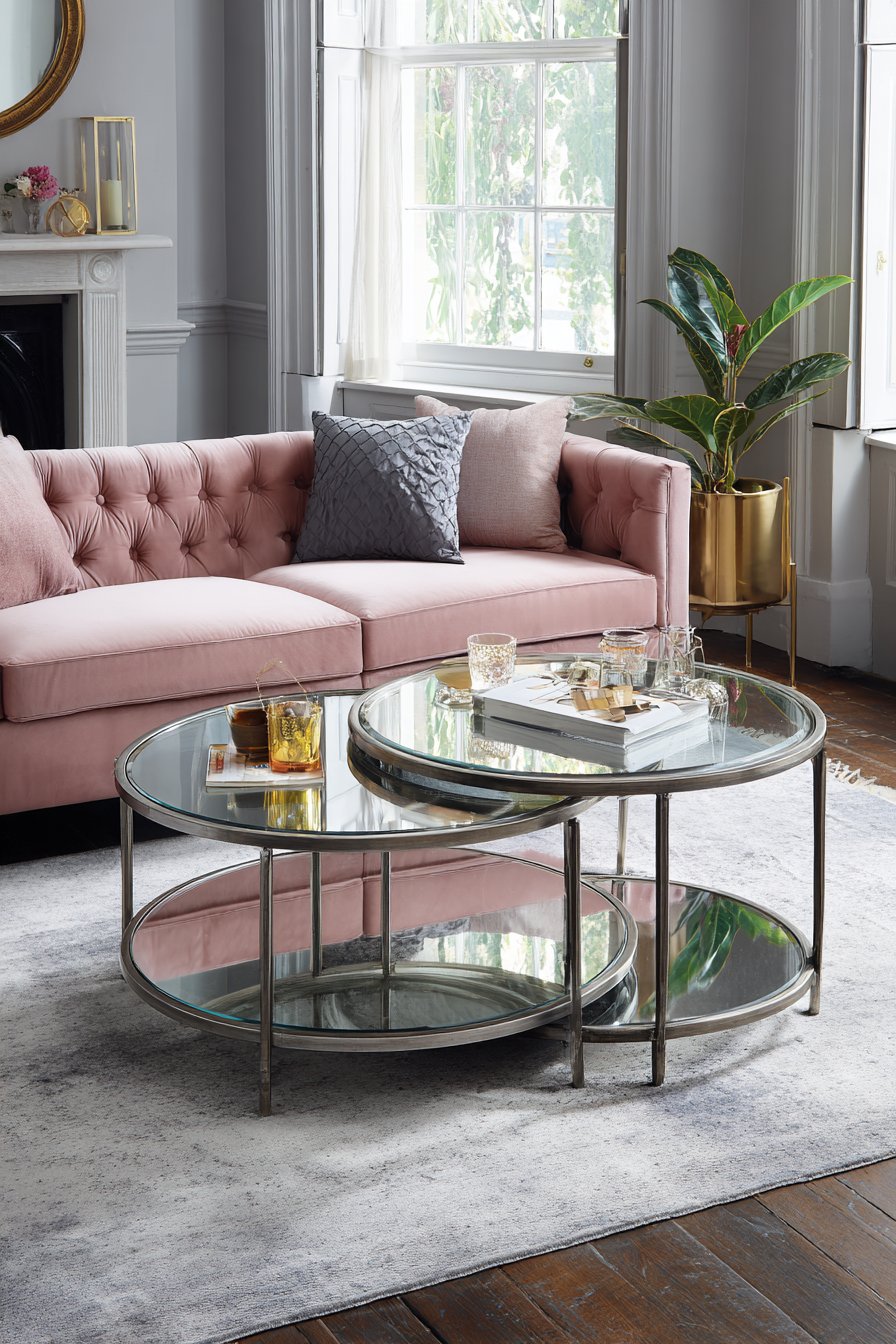
When nested together, the tables create fascinating layered reflections as light passes through multiple glass surfaces and reflects off the brushed nickel frames. These optical effects add visual interest to what might otherwise be a simple furniture arrangement, demonstrating how transparent materials create complexity through light and reflection rather than through form or ornamentation. Wide-angle photography captures the practical versatility while the natural lighting emphasizes the tables’ ability to adapt while maintaining aesthetic cohesion.
Key Design Tips: Choose nesting sets with consistent frame materials and finishes to maintain visual unity when separated. Ensure graduated sizes have sufficient height differences to nest comfortably without scratching surfaces. Style the larger table for everyday use while keeping the smaller one ready to deploy for entertaining. Select frames in neutral metallic finishes that complement multiple décor styles. Test nesting and separation ease before purchasing to ensure smooth operation.
12. Industrial Edge with Welded Steel Pipe Base
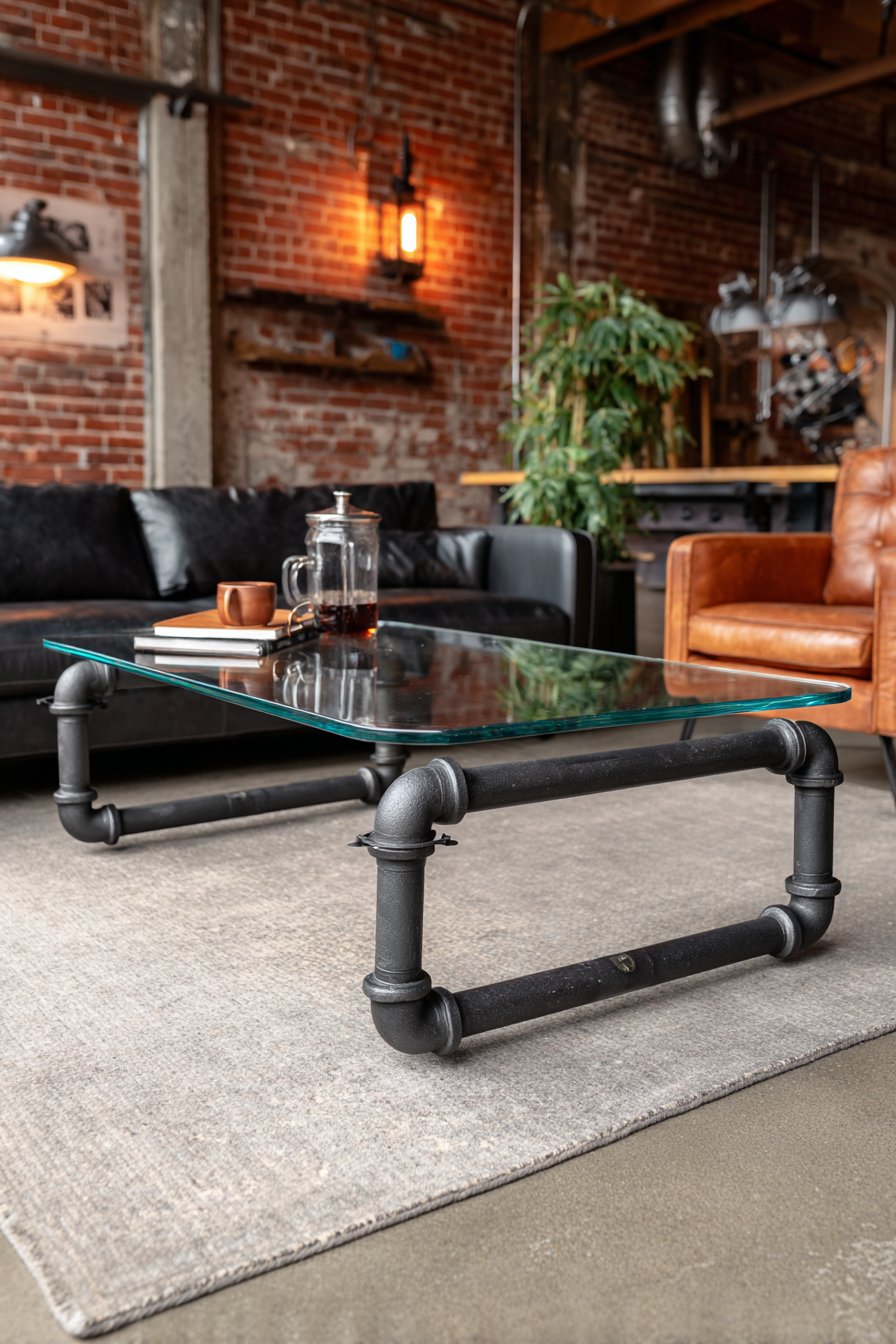
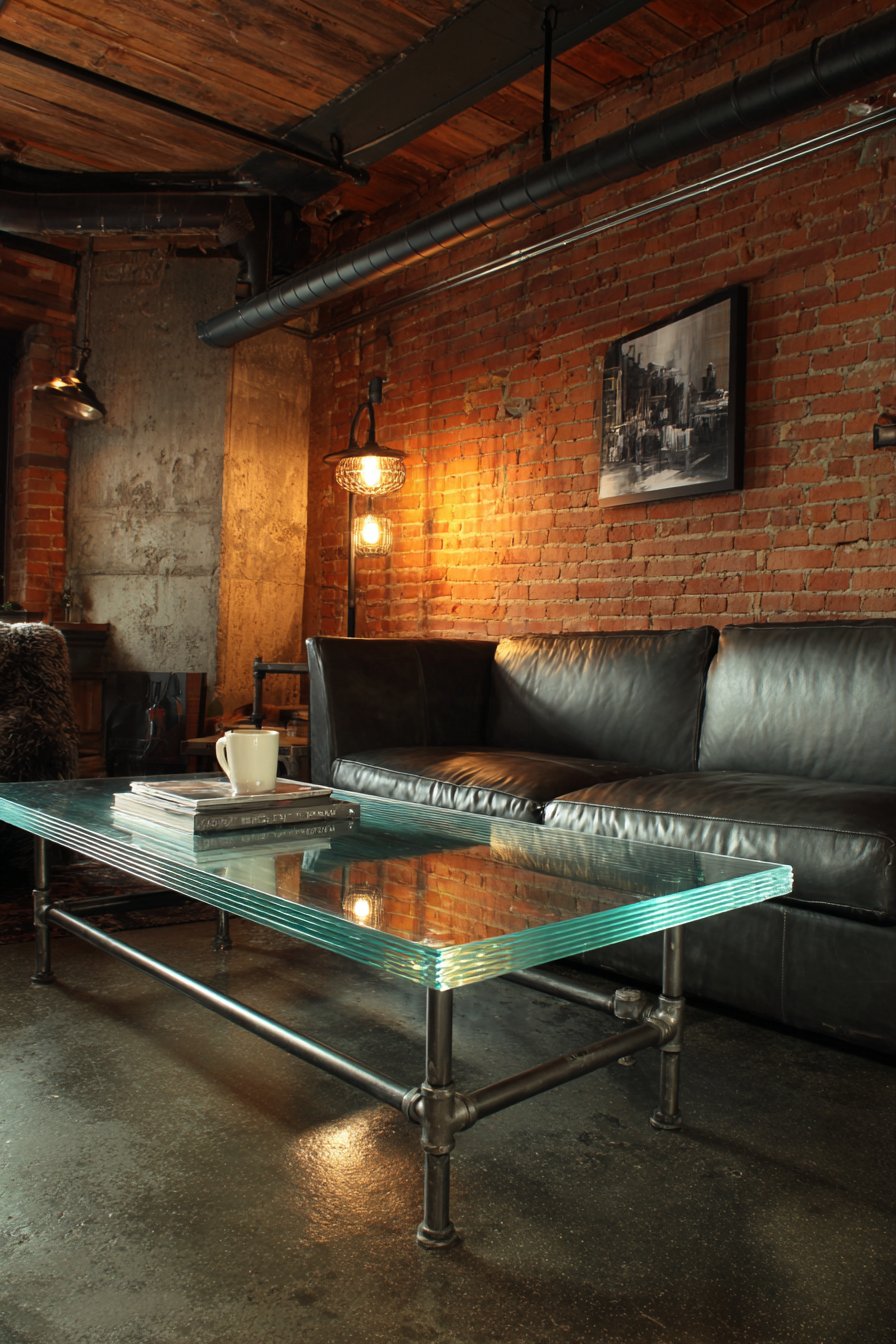
Industrial design celebrates raw materials and honest construction, both powerfully expressed in this glass coffee table with a welded black steel pipe base showing visible joints and utilitarian connections. The base’s exposed construction reveals rather than conceals how it’s assembled, embracing the industrial aesthetic’s appreciation for functional honesty and manufacturing processes. Against exposed brick walls and concrete floors in a converted loft space, this table feels contextually perfect, complementing rather than fighting the architecture’s industrial heritage.
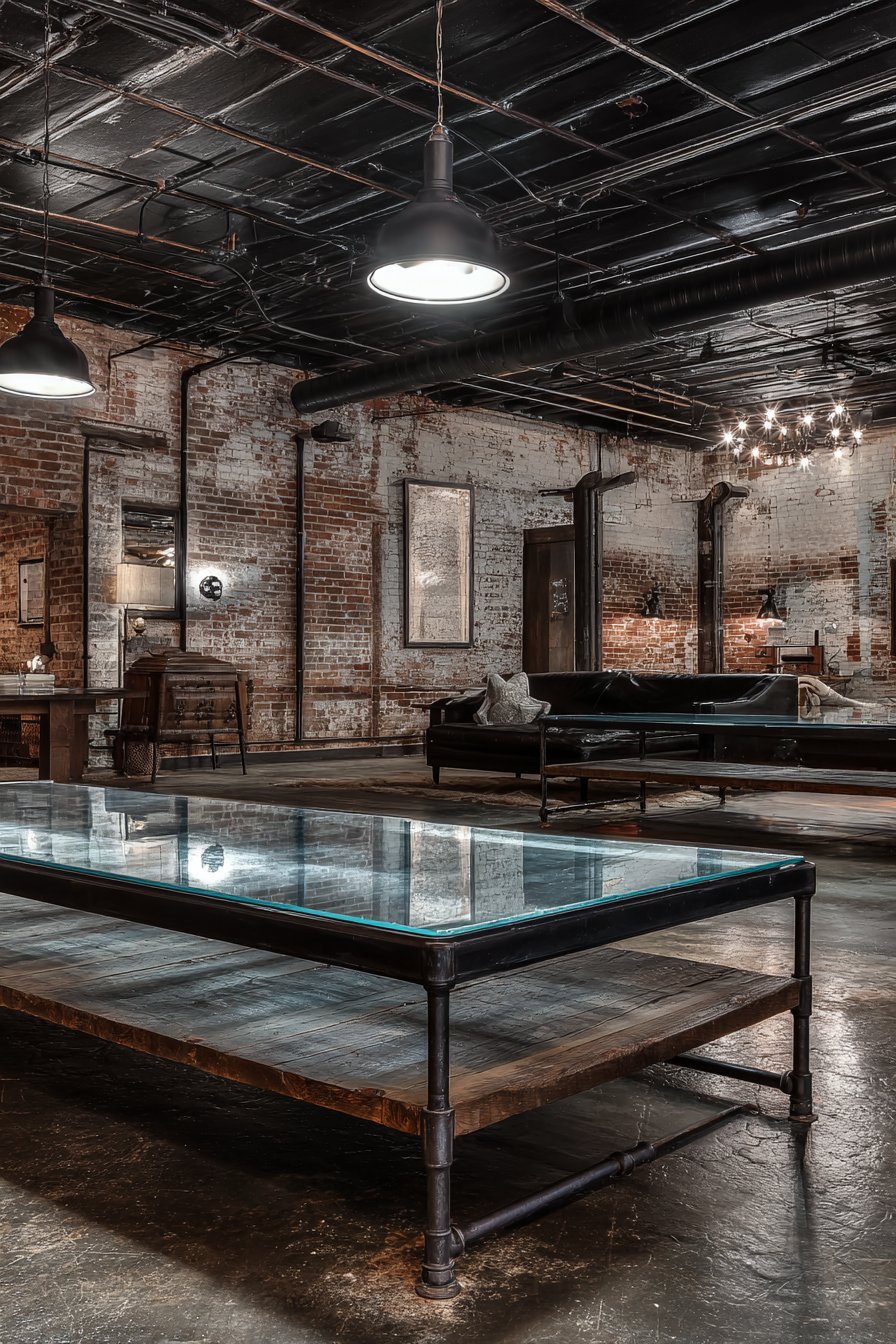
The black steel pipe’s raw texture and matte finish create striking contrast with the glass top’s smooth, reflective surface. This material opposition—rough versus smooth, opaque versus transparent, industrial versus refined—generates visual tension that energizes the design. Metal and leather accents throughout the room reinforce the industrial vocabulary, creating a cohesive environment where materials typically found in factories and warehouses become elements of residential design.
Workshop-style pendant lighting creates dramatic highlights on both the glass surface and the metal pipe frame, emphasizing the base’s geometric structure and creating bold shadows that add depth and dimension. The lighting choice itself reinforces the industrial theme, bringing warehouse-style illumination into the living space. The overall composition demonstrates how industrial design can create sophisticated, comfortable living environments rather than cold, unwelcoming spaces when materials are carefully balanced and lighting is thoughtfully considered.
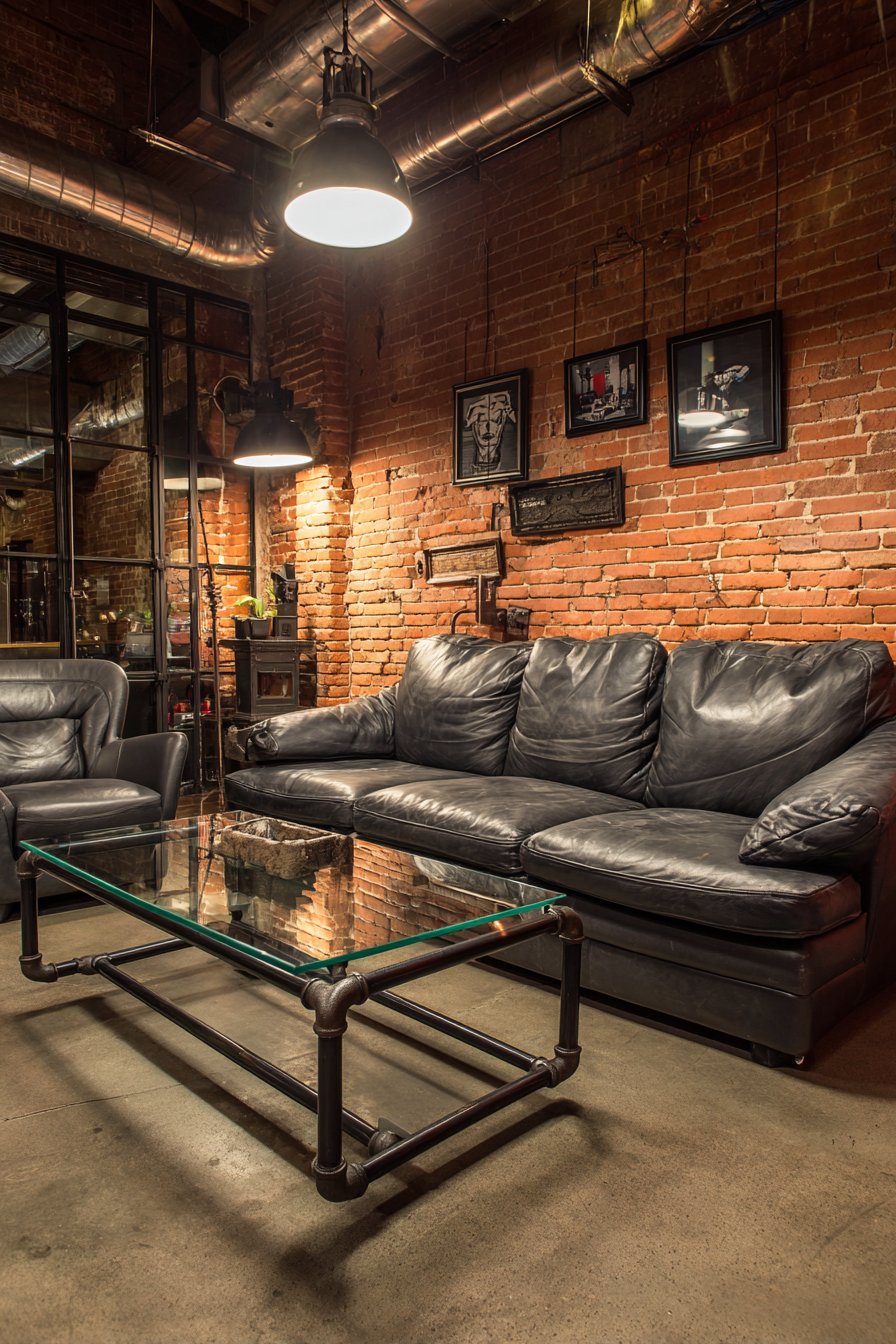
Key Design Tips: Choose welded steel or pipe construction that shows rather than hides connection points for authentic industrial aesthetics. Embrace raw or minimally finished metals that develop natural patina over time. Balance hard industrial materials with soft textiles in leather, canvas, or wool to maintain comfort. Incorporate architectural elements like exposed brick, concrete, or ductwork to reinforce the industrial vocabulary. Use industrial-style lighting fixtures that reference warehouse or factory origins.
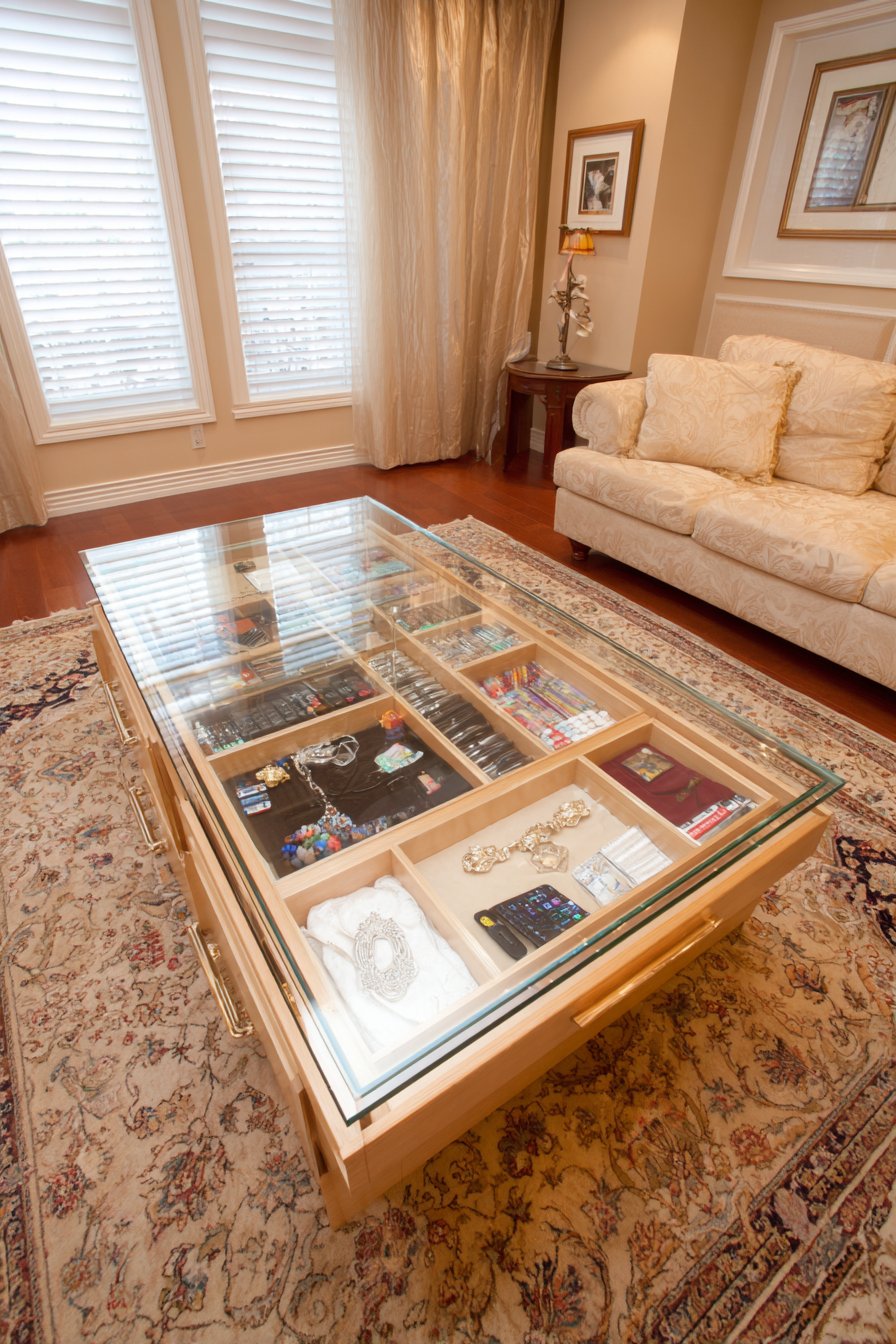
13. Integrated Storage Solution with Wooden Drawers
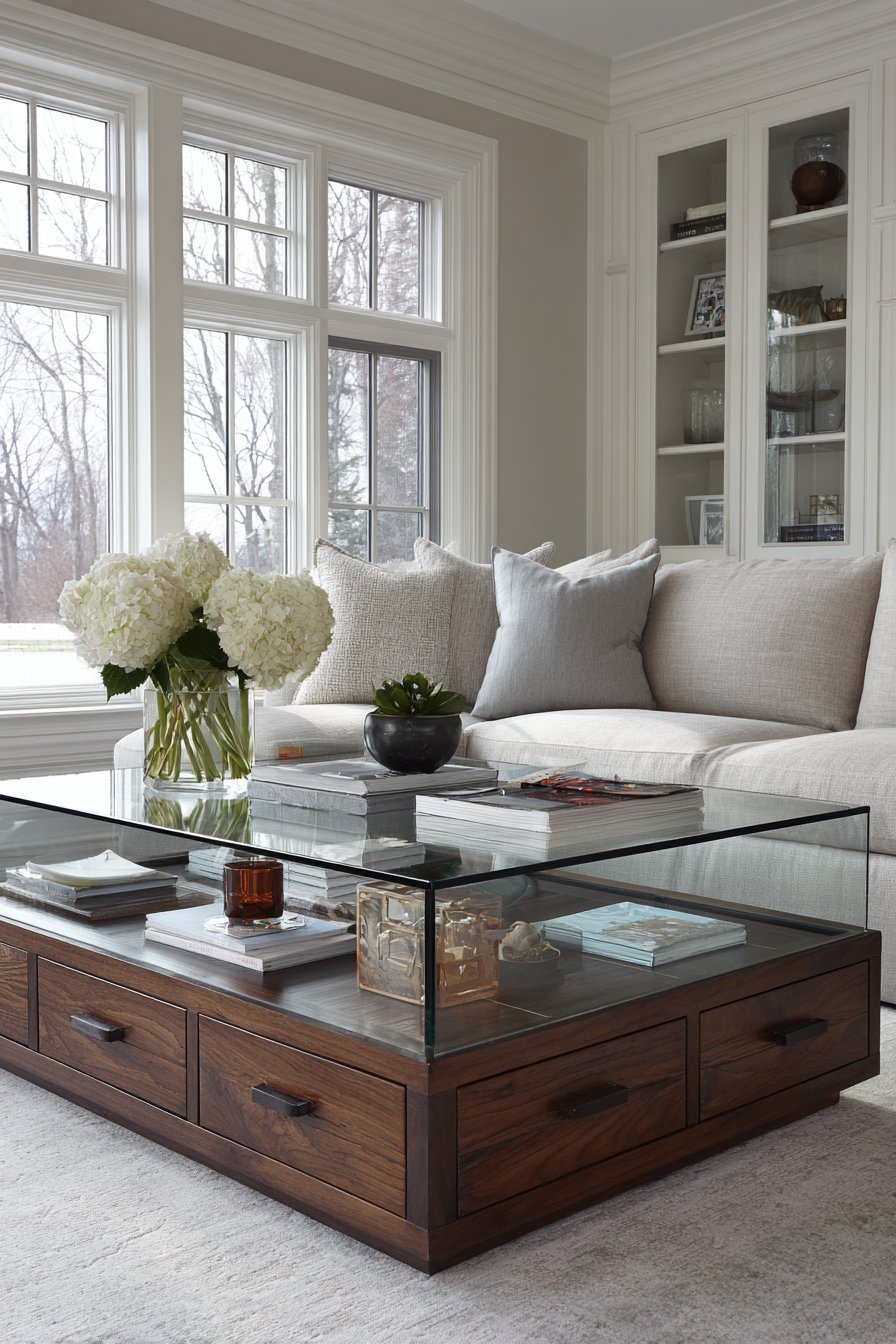
The best furniture designs combine beauty with practical functionality, exemplified perfectly in this glass coffee table featuring built-in wooden drawers along one side. This clever integration provides concealed storage for items better kept out of sight—remote controls, coasters, charging cables, and other living room essentials—while maintaining the glass surface for display and daily use. The wooden drawer fronts introduce warmth and tactile interest that prevents the design from feeling too cold or minimal, creating balance between transparency and solidity.
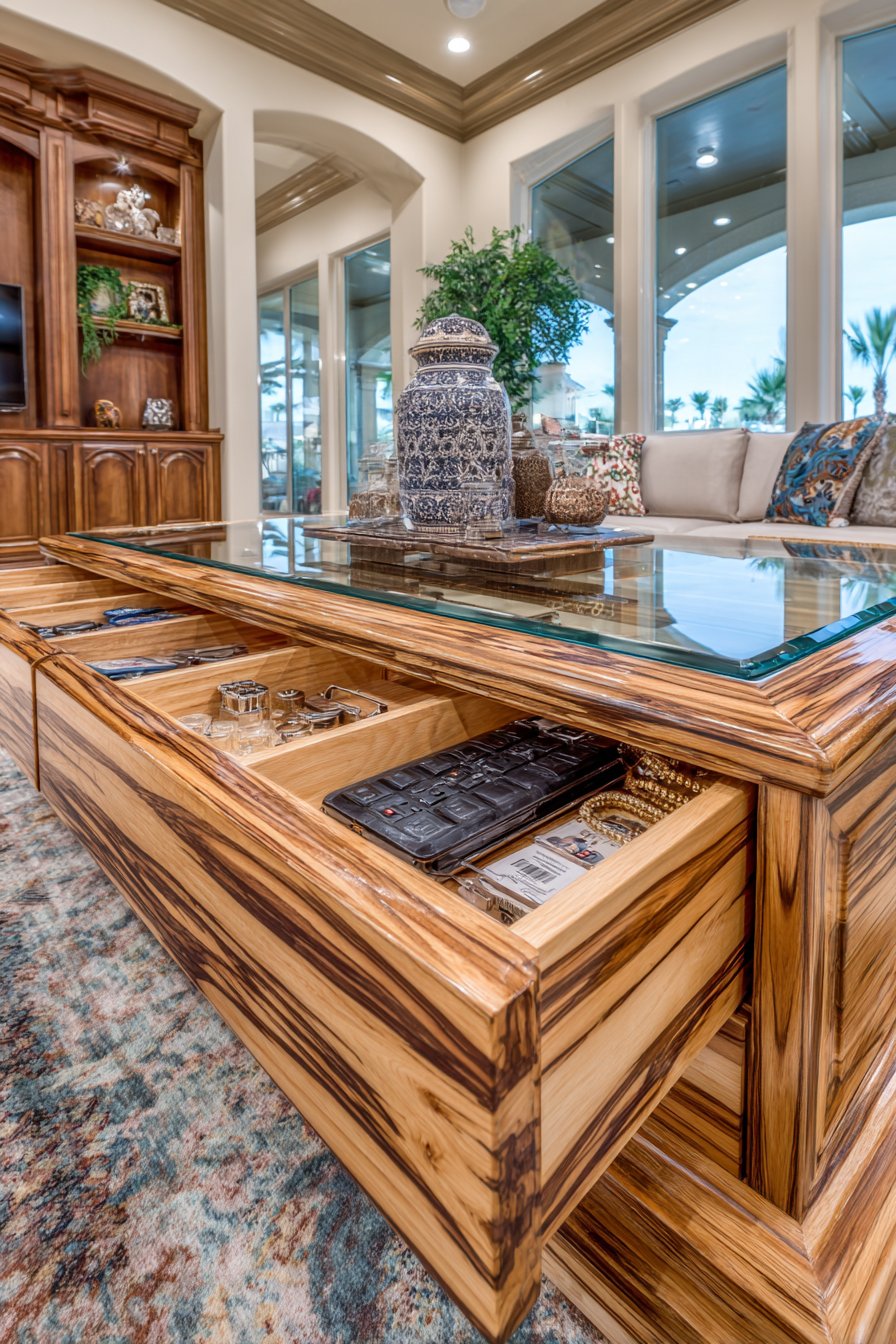
Positioned in a transitional living room that bridges traditional and contemporary styles, this table demonstrates versatility that extends beyond storage functionality. The combination of glass and wood allows it to complement both traditional crown molding and contemporary furniture, serving as a bridge element that helps disparate styles coexist comfortably. The neutral upholstery and balanced color palette reinforce this transitional approach, creating a room that feels neither stuck in the past nor aggressively modern.
Natural window light illuminates both the transparent glass top and the warm wood grain of the drawer fronts simultaneously, highlighting the beautiful material contrast. The drawers operate smoothly thanks to quality hardware concealed within the construction, demonstrating that functional features can integrate seamlessly without compromising aesthetics. This thoughtful approach to storage transforms a potential design challenge—where to keep everyday clutter—into an elegant solution that actually enhances the table’s appeal.
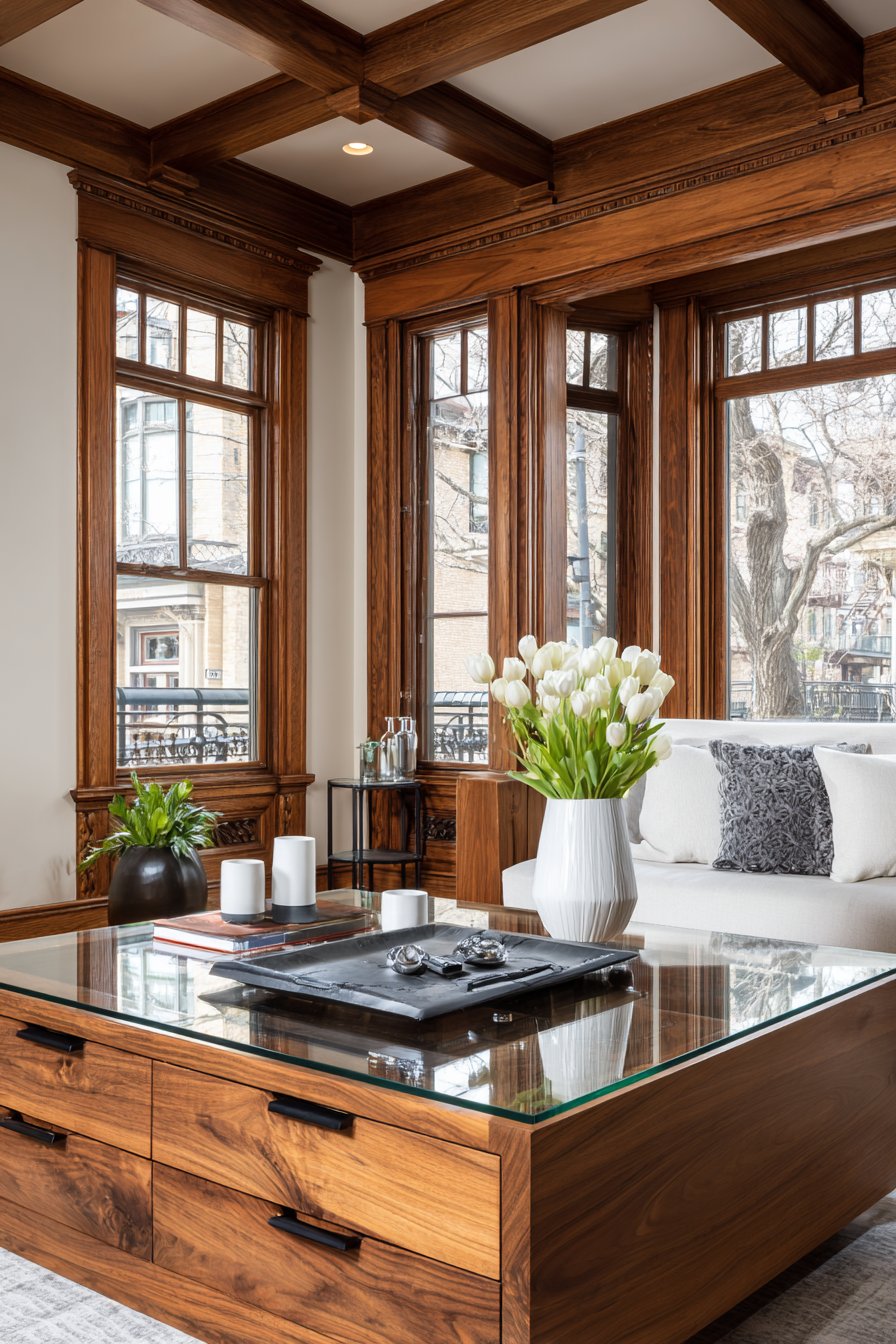
Key Design Tips: Select tables with smooth-operating drawer mechanisms and quality hardware for long-term reliability. Choose wood tones that complement existing furniture while adding warmth to transparent glass. Use drawers for items needed frequently but better kept hidden like remotes and chargers. Position drawer access where it’s convenient from primary seating areas. Maintain clean drawer fronts with minimal hardware to preserve the table’s streamlined appearance.
14. Organic Contemporary with Rose Gold Asymmetry
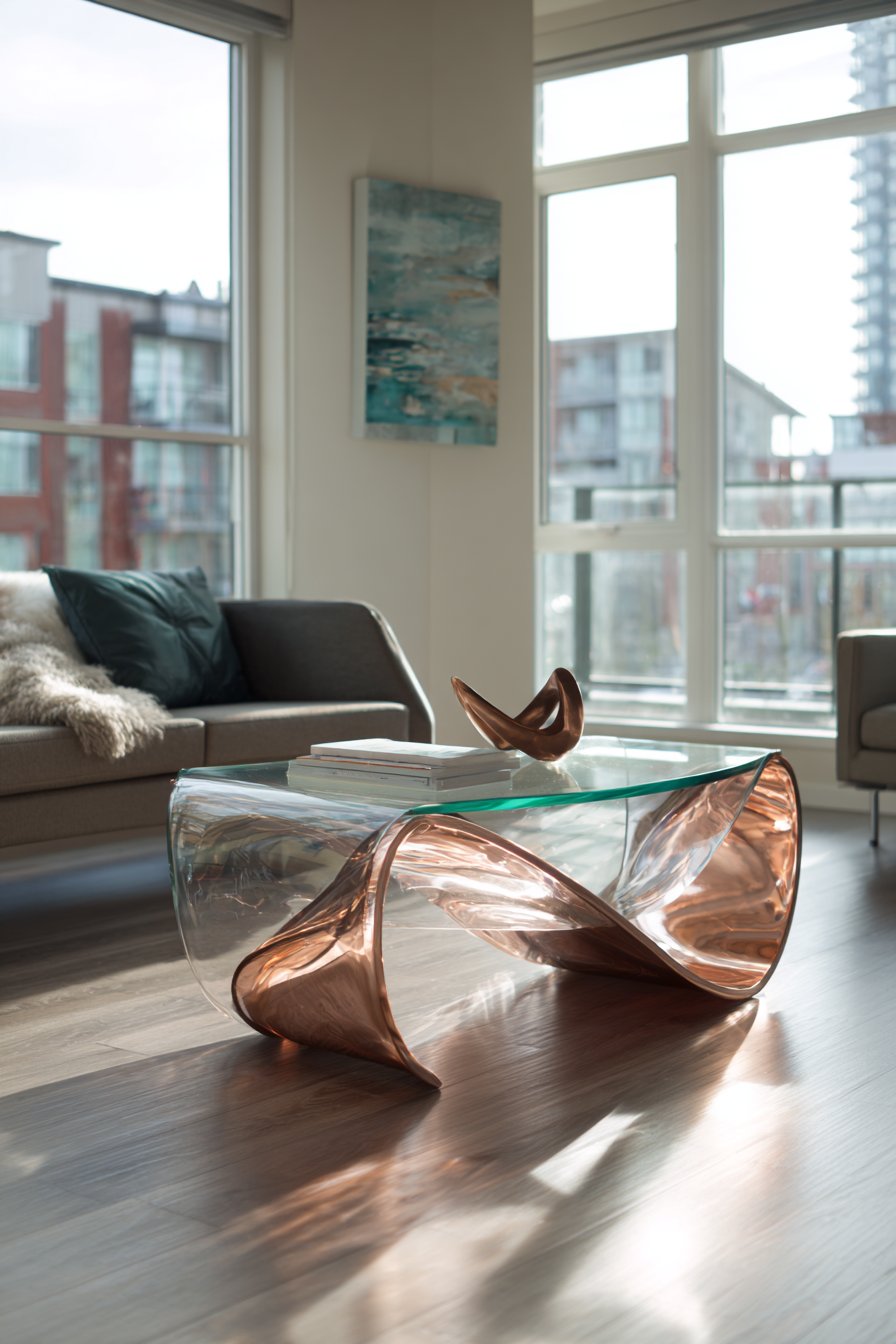
Contemporary design embraces innovation and artistic expression, both evident in this free-form glass coffee table with an asymmetrical rose gold metal base. The unconventional organic shape breaks from traditional rectangular or circular forms, creating a sculptural presence that commands attention as functional art. The fluid glass edges appear almost liquid, their irregular curves catching and refracting natural light in constantly changing patterns that transform throughout the day. Against clean-lined contemporary furniture and abstract artwork, this table establishes itself as the room’s artistic focal point.
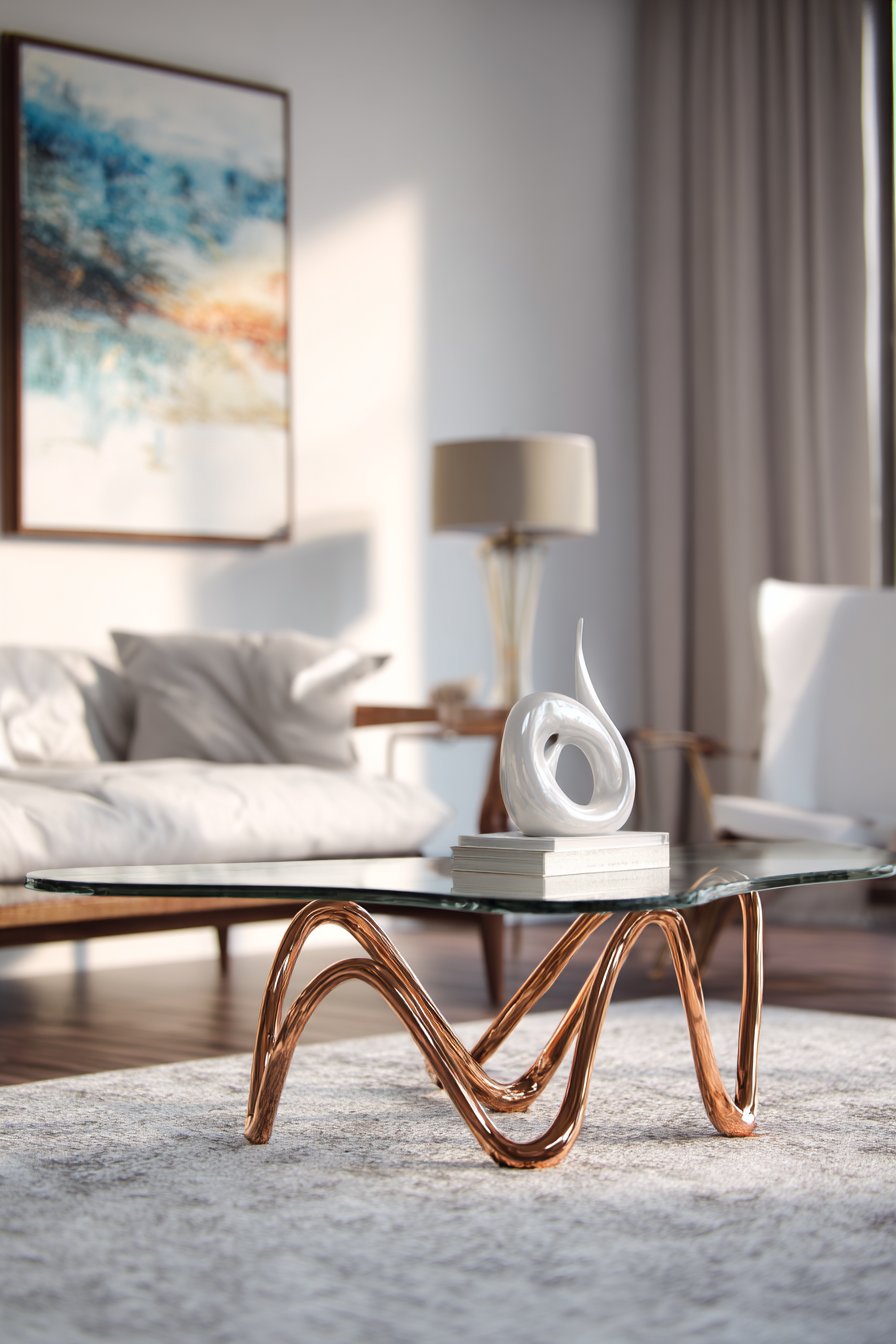
The rose gold base finish adds warm metallic sophistication that feels current and luxurious without the formality of traditional gold or the coolness of chrome. This contemporary metallic finish has gained popularity for its ability to introduce warmth while maintaining modern sensibilities, making it ideal for bridging minimalist aesthetics with inviting livability. The asymmetrical base structure creates visual intrigue from multiple viewing angles, ensuring the table looks compelling whether viewed from the sofa, doorway, or across the room.
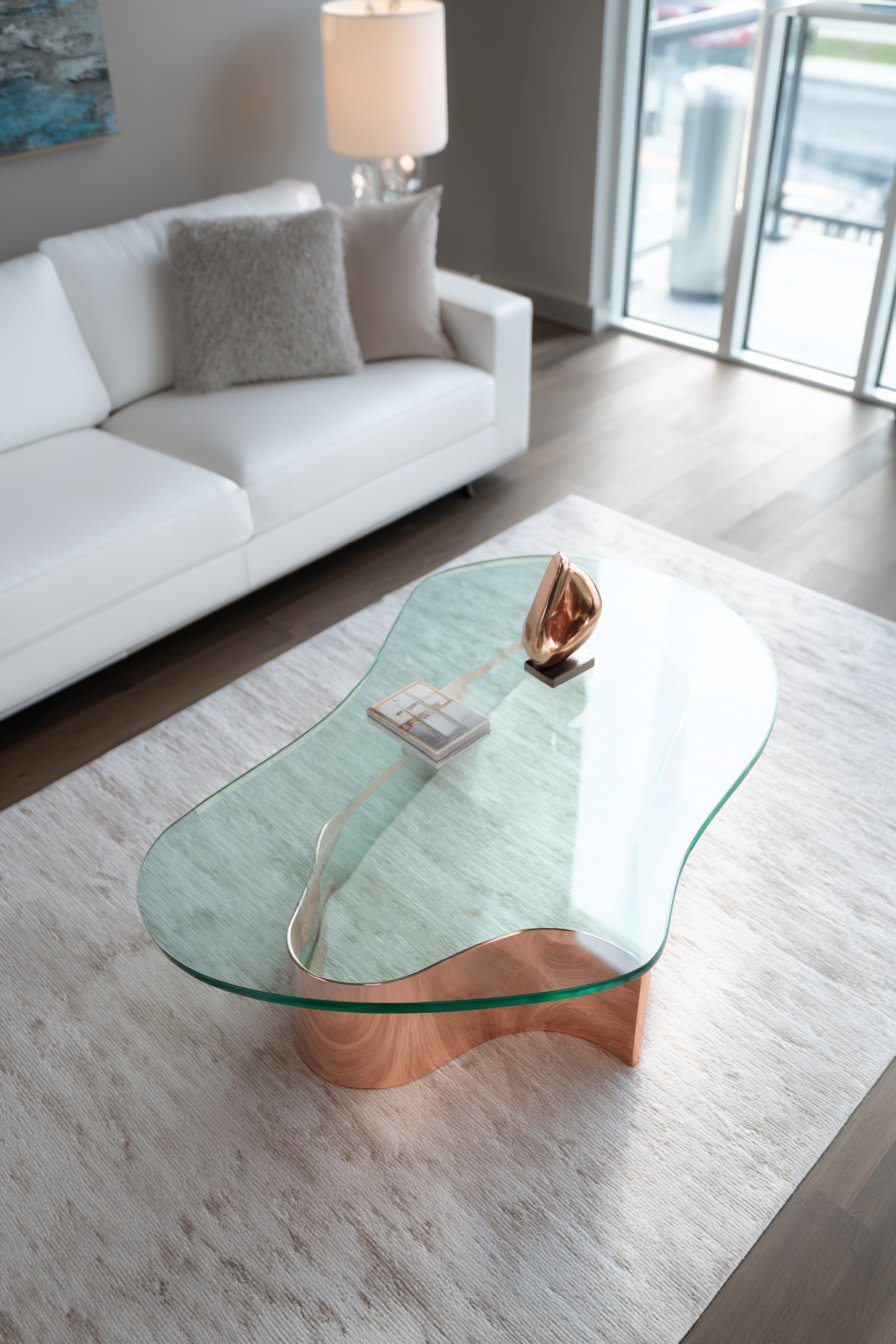
A single modern sculpture displayed on the surface emphasizes the table’s own sculptural qualities rather than competing with them. This restraint in styling allows the table’s artistic design to remain the primary focus while suggesting that the owner appreciates contemporary art and design. The overall composition demonstrates how contemporary interiors can celebrate bold design statements while maintaining the sophistication and livability essential to successful residential spaces.
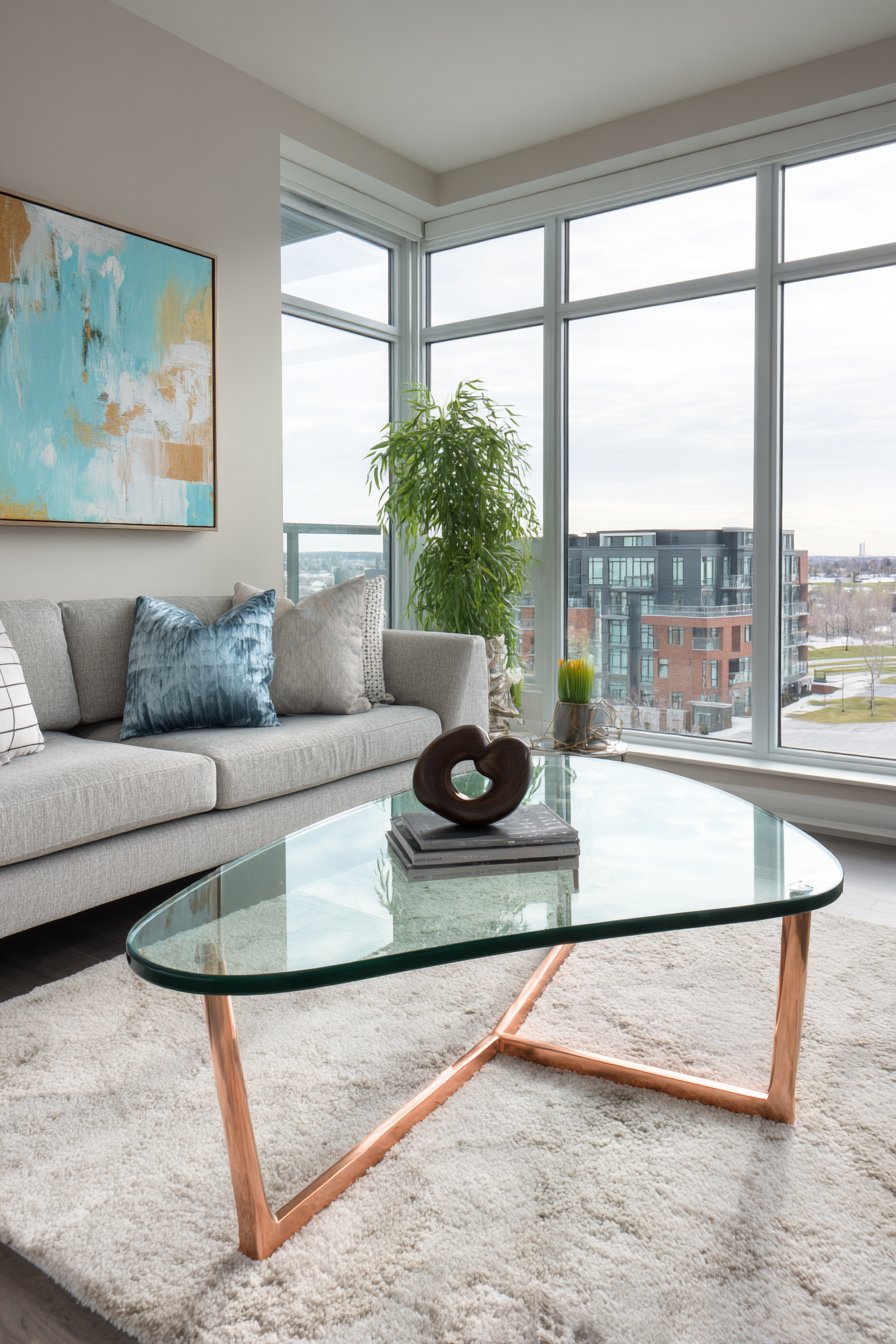
Key Design Tips: Select asymmetrical designs with balanced proportions that create visual interest without instability. Choose contemporary metallic finishes like rose gold, brushed brass, or gunmetal for warm sophistication. Style sculptural tables minimally to let their form remain the primary focus. Surround artistic statement pieces with cleaner-lined furniture to prevent visual competition. Position tables where their sculptural qualities can be appreciated from multiple viewing angles.
15. Compact Urban Solution with Minimal Chrome Frame
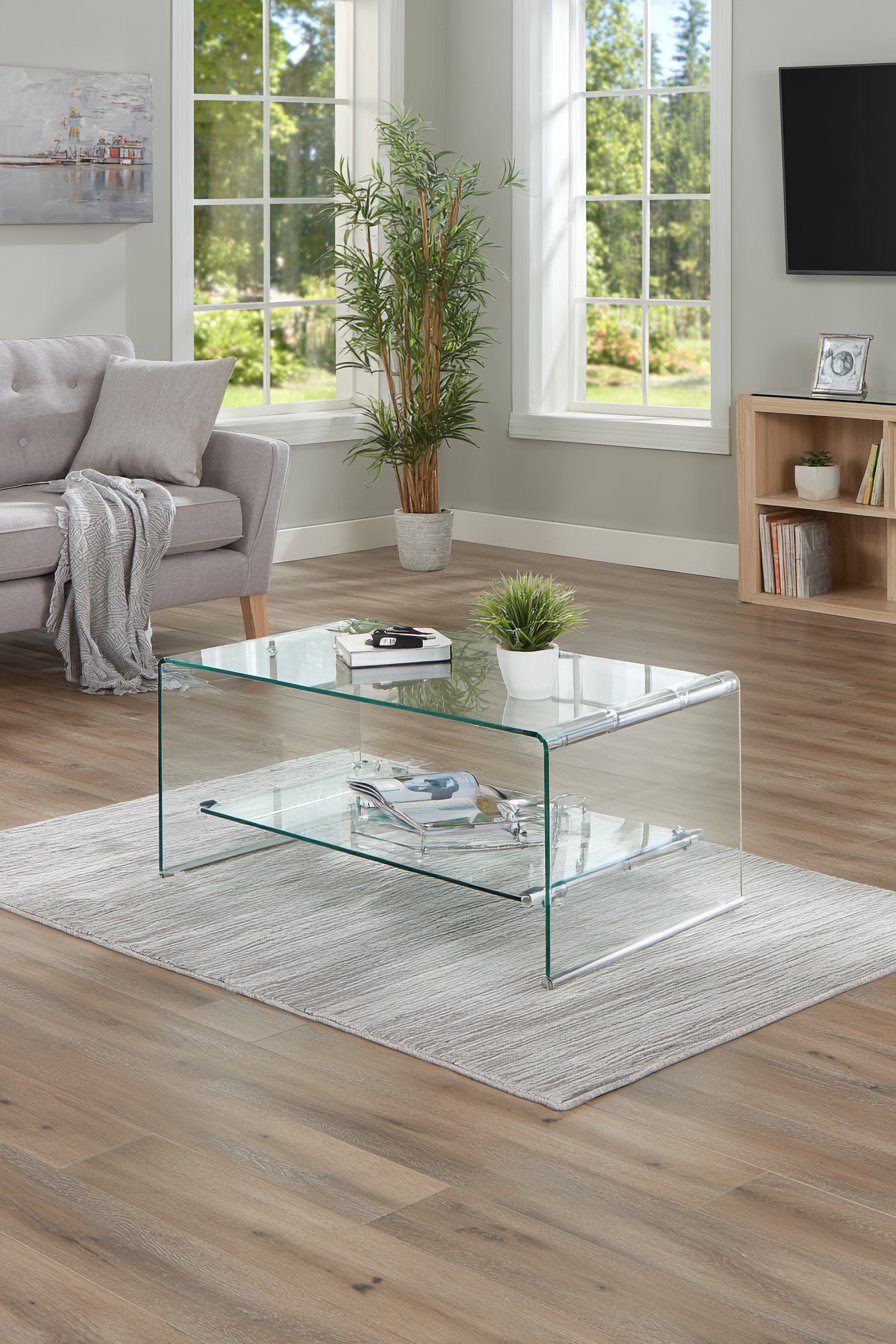
Urban apartment living often means working with limited square footage, making this narrow rectangular glass coffee table with a minimal chrome frame an ideal solution. The elongated proportions maximize surface area while minimizing floor space consumption, fitting efficiently in front of compact sofas without obstructing movement through the room. The chrome frame’s slim profile virtually disappears against most backgrounds, allowing the glass surface to appear almost floating while maintaining necessary structural support.
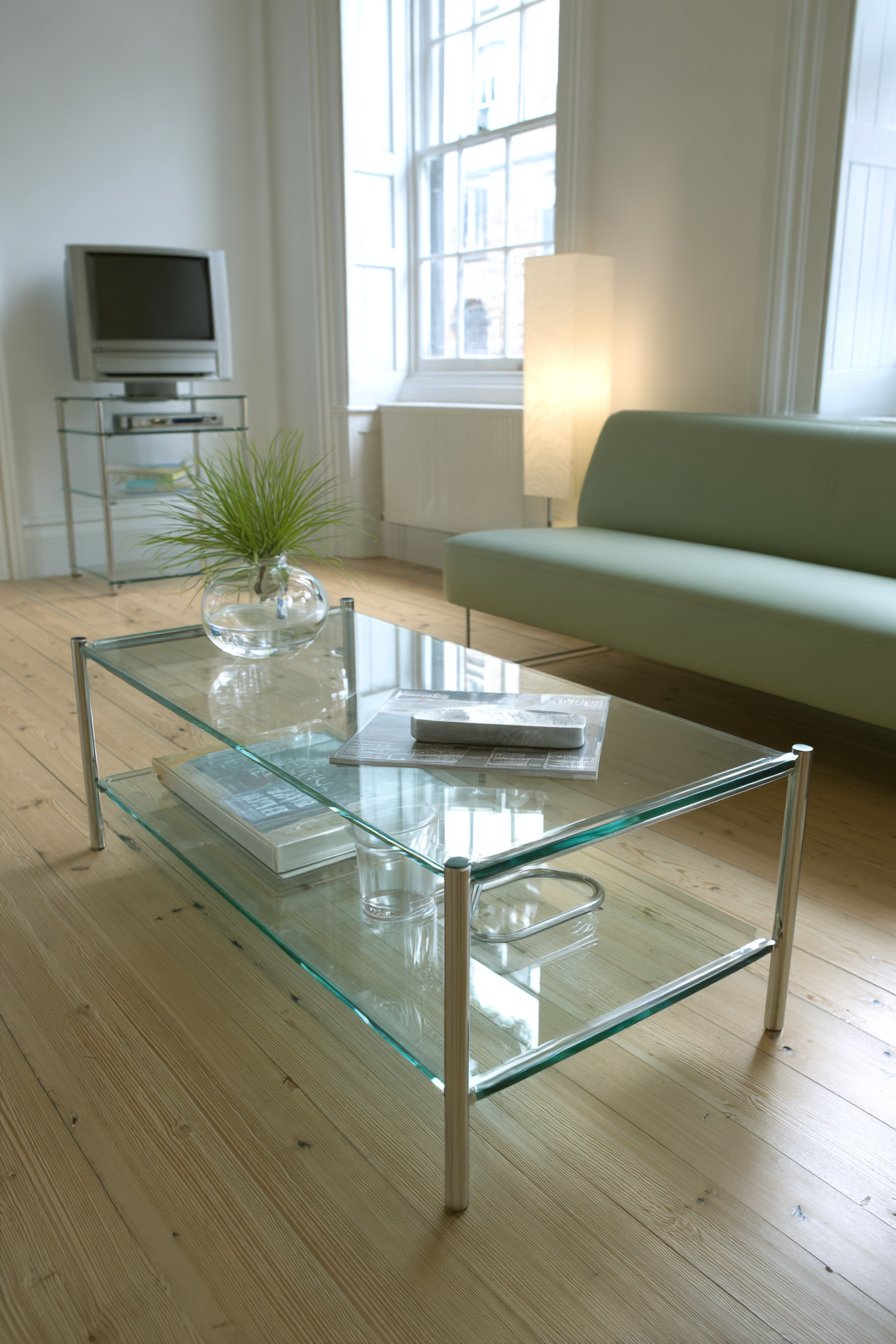
The table’s transparency becomes crucial in small spaces where every visual obstruction impacts perceived spaciousness. Unlike solid tables that create barriers between seating areas and other parts of the room, this glass design allows sightlines to flow uninterrupted, making the apartment feel more open and connected. Essential items only—a remote caddy and a small plant—occupy the surface, demonstrating the disciplined approach to styling necessary in compact living where clutter quickly becomes overwhelming.
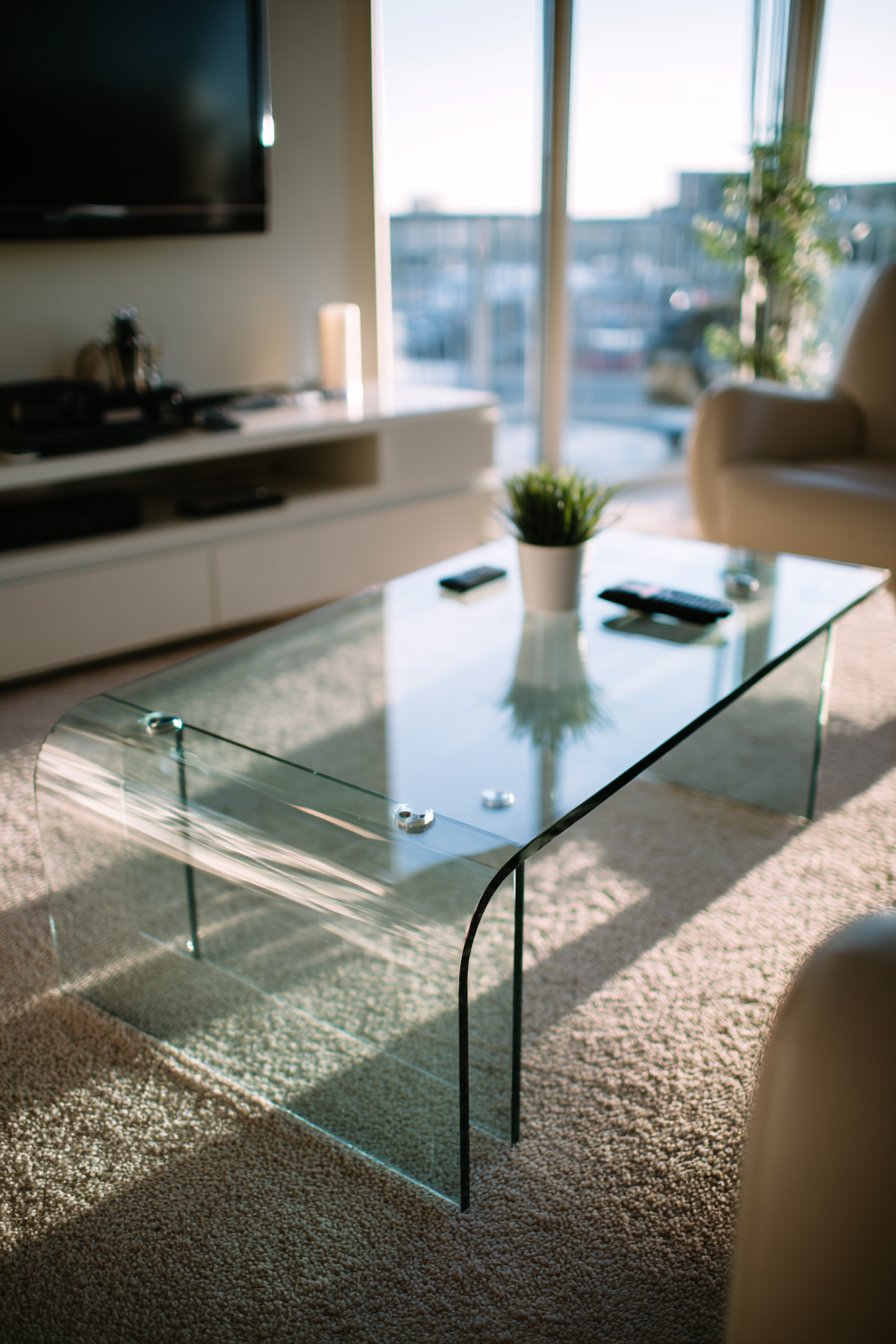
Abundant natural light from a single window passes directly through the transparent table, effectively allowing that precious light to reach deeper into the room rather than being blocked by opaque furniture. This light transmission capability makes glass furniture particularly valuable in urban apartments where natural light often comes from limited sources. The chrome frame catches and reflects available light, adding subtle brightness without requiring additional floor or table lamps that would consume valuable space.
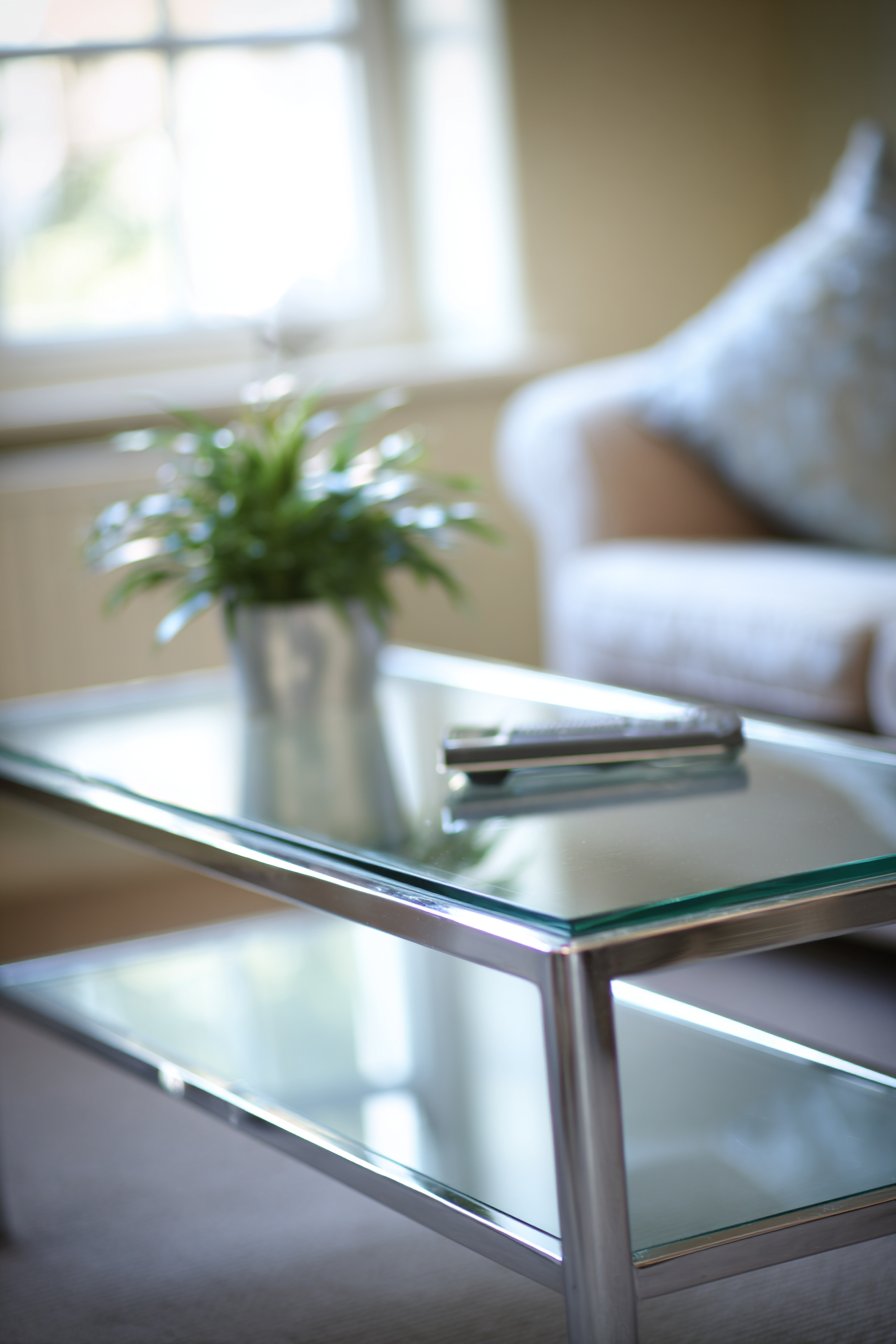
Key Design Tips: Choose narrow rectangular shapes that provide surface area while minimizing floor space consumption. Select frames with the slimmest possible profile to reduce visual weight in compact rooms. Keep surfaces rigorously uncluttered with only essential items to prevent visual chaos. Position glass furniture to maximize natural light transmission throughout the space. Measure carefully to ensure comfortable clearance for movement around all sides of the table.
16. Traditional Elegance with Ornate Carved Base
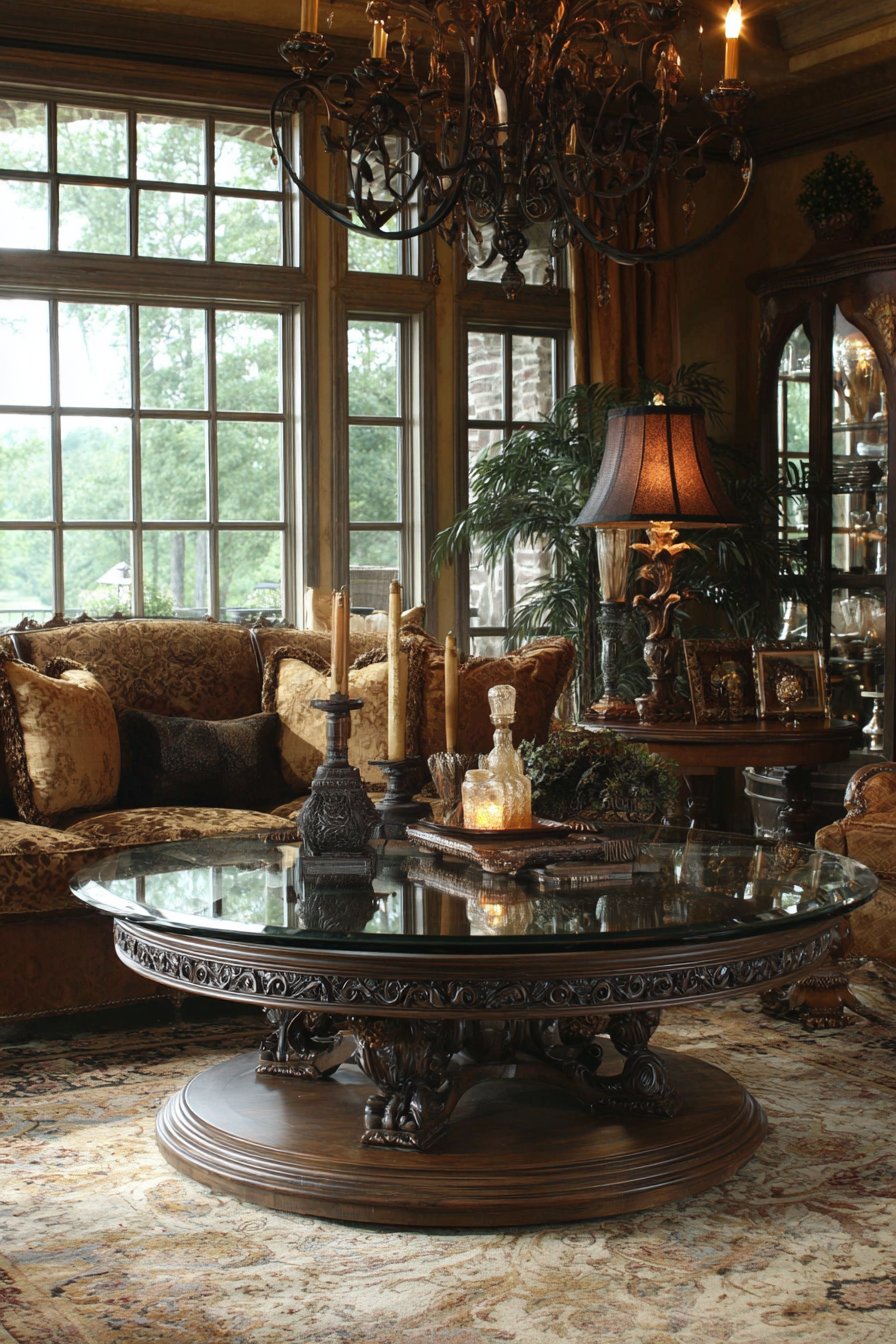
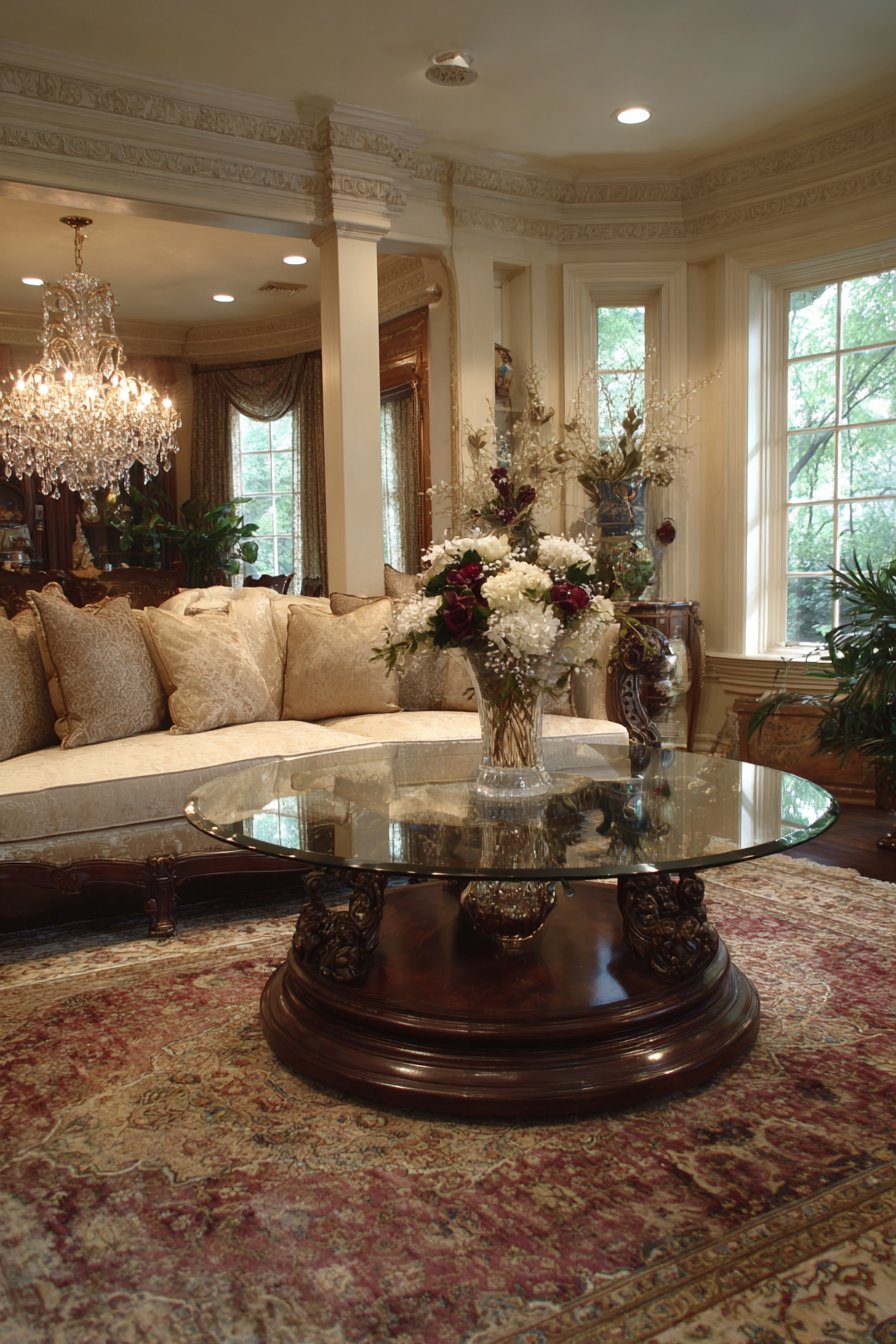
Glass and traditional design might seem incompatible, but this coffee table proves they can create stunning synergy when thoughtfully combined. The ornate carved wood base in dark cherry finish showcases traditional craftsmanship with detailed woodwork that would typically be hidden beneath a solid top. The glass surface protects this intricate carving while keeping it fully visible, allowing admirers to appreciate the artisanship from above—a viewing angle impossible with conventional table construction. This clever design bridges classic and contemporary sensibilities, honoring traditional woodworking while embracing modern materials.
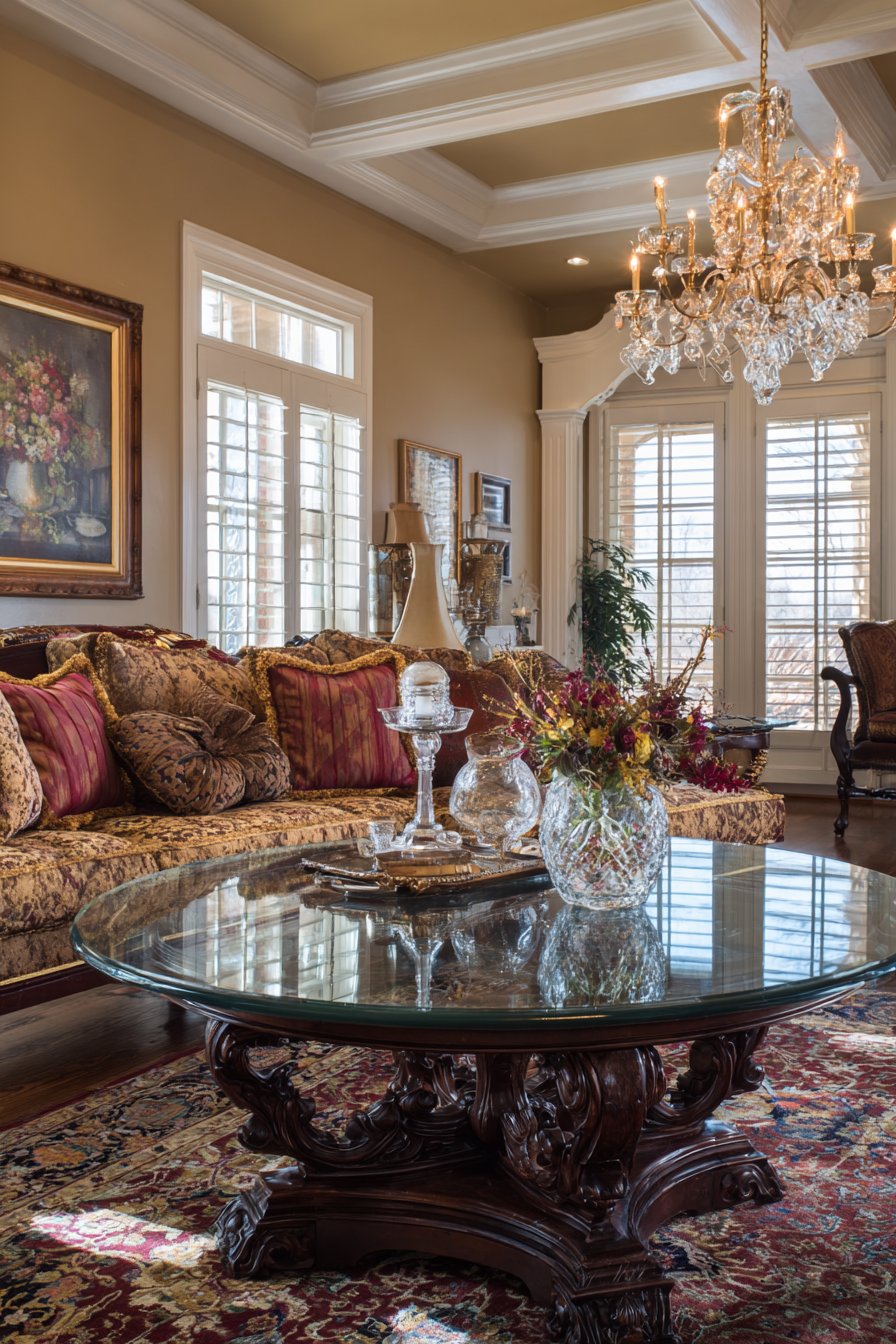
The formal living room setting reinforces the traditional aesthetic with crown molding, damask upholstery, and Persian rugs creating layers of classical detail. Against this backdrop, the glass top prevents the overall space from feeling too heavy or dark—a common challenge in traditional interiors where multiple wood furniture pieces can create visual weight. The transparency lightens the composition while the dark cherry base maintains connection to other traditional wood elements in the room.
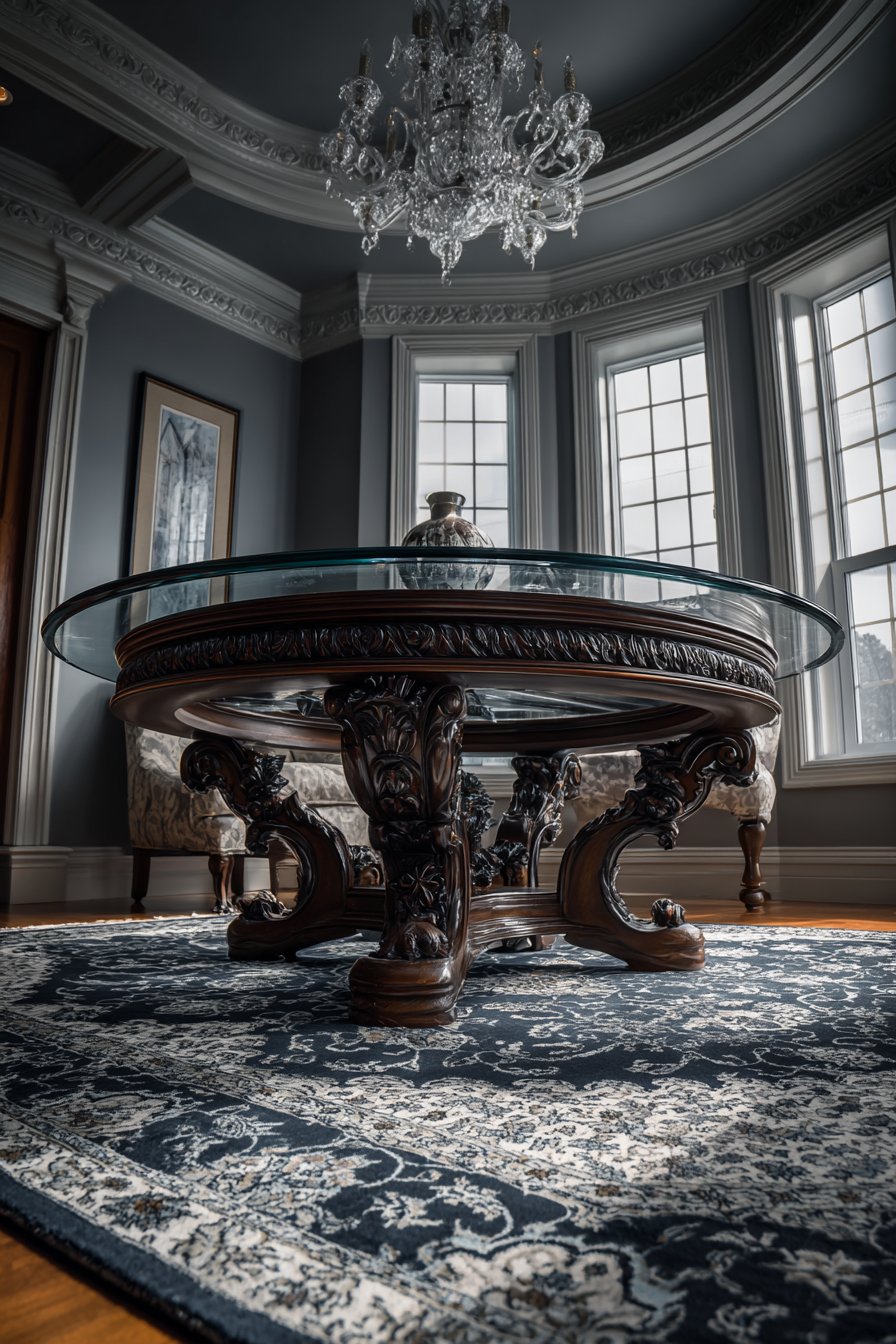
Chandelier lighting combined with natural window light creates elegant reflections on the glass surface that change throughout the day, adding dynamic interest to the formal space. The glass captures and scatters light in ways that solid wood never could, creating subtle sparkle and luminosity that enhances the room’s sophisticated atmosphere. This interplay of light, transparency, and traditional craftsmanship demonstrates how thoughtfully combining materials from different design periods can create spaces that feel both timeless and fresh.
Key Design Tips: Choose bases with genuine carved detail worthy of display beneath protective glass. Select dark wood finishes like cherry or mahogany to ground the transparency with traditional weight. Position tables where overhead lighting can create reflections and sparkle on glass surfaces. Balance heavy traditional elements with glass transparency to prevent rooms from feeling dark or oppressive. Maintain traditional styling with formal accessories while allowing the glass top to lighten the composition.
17. Bohemian Spirit with Woven Rattan Base
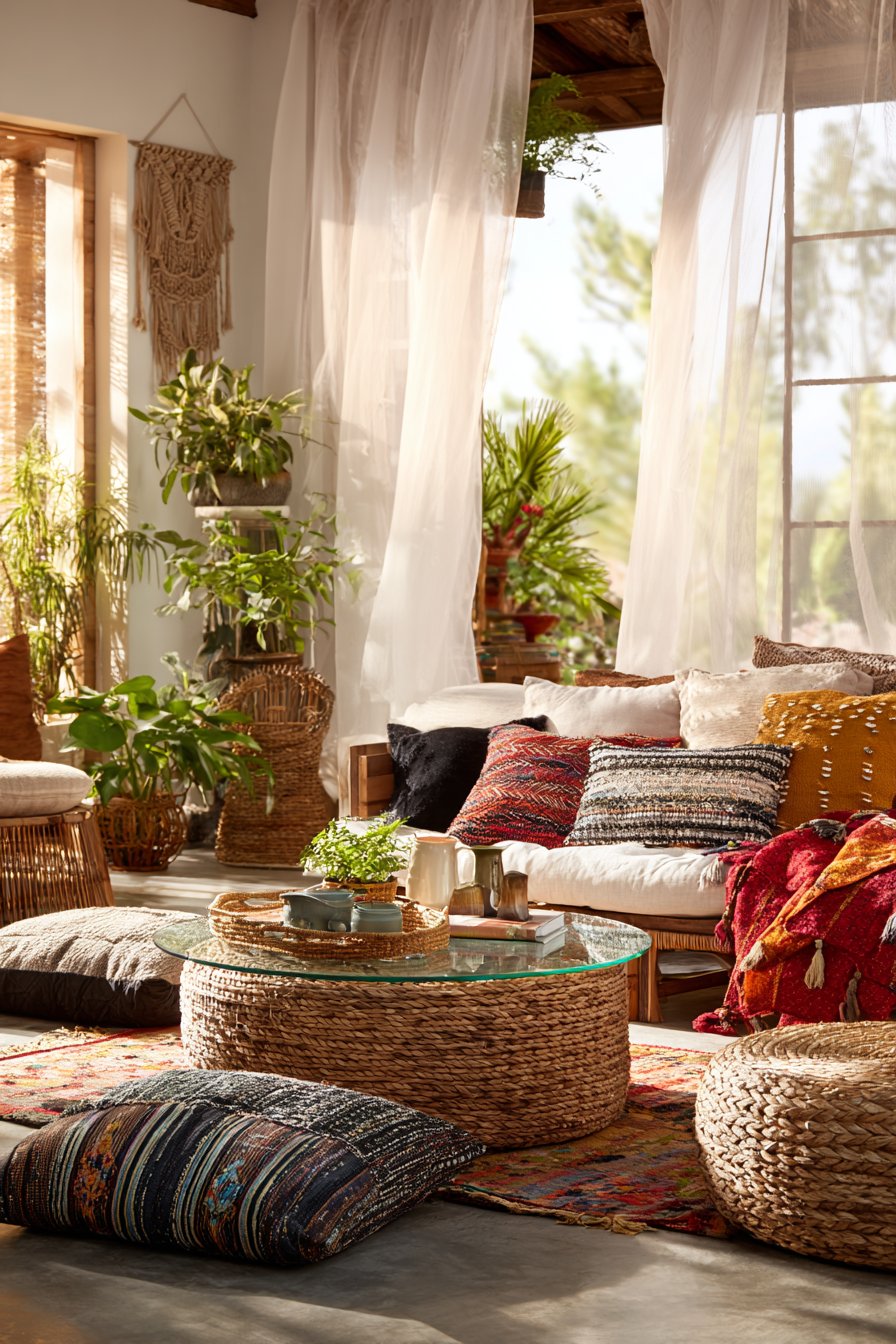
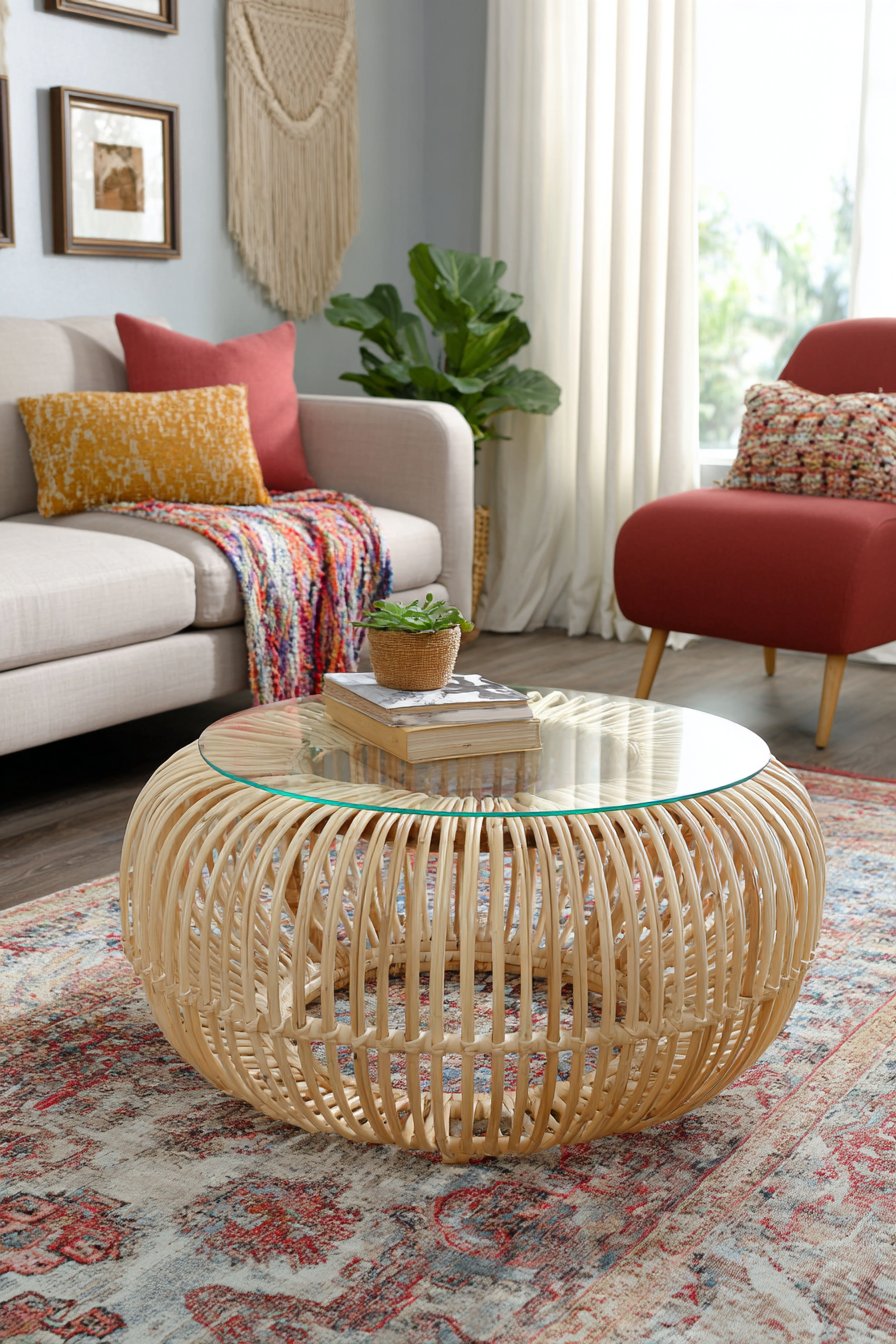
Bohemian interiors celebrate eclectic collections, natural materials, and relaxed sophistication—all embodied in this glass coffee table with a rattan or wicker base woven in natural tones. The handwoven base brings organic texture and artisanal craftsmanship into the space, while the glass top provides stability for drinks and display items that woven materials alone couldn’t reliably support. Surrounded by layered rugs, macramé wall hangings, and abundant greenery, this table fits perfectly into the collected-over-time aesthetic that defines bohemian style.
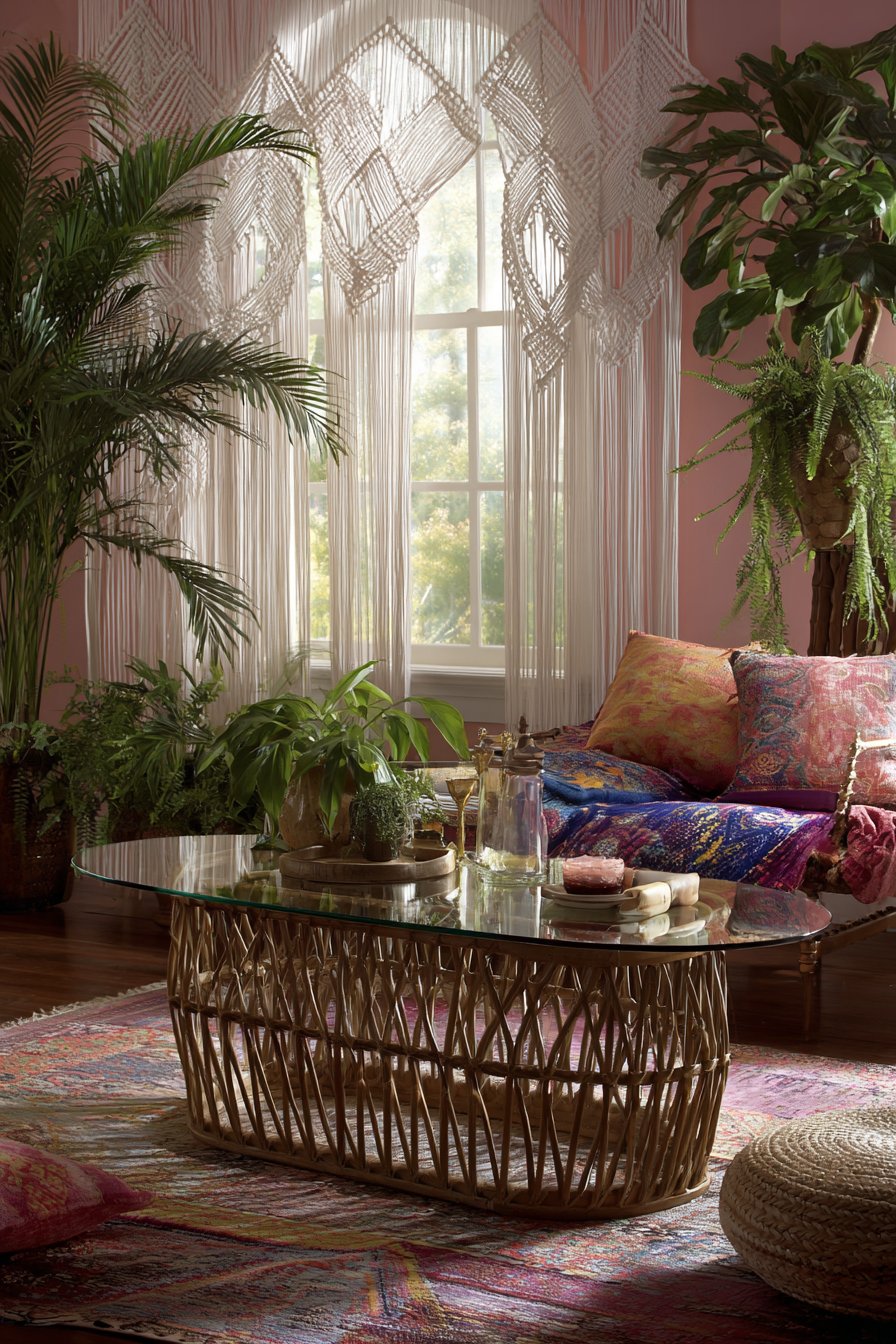
The natural rattan tones coordinate beautifully with the room’s eclectic textiles while providing textural contrast to smooth glass and soft fabrics. Colorful cushions and ethnic-print throws on nearby seating create vibrant visual interest that the neutral table base balances rather than competes with. This restraint allows the table to anchor the space without dominating it, providing calm neutral grounding for the room’s more exuberant elements. The glass top catches colors and patterns from surrounding textiles in its reflections, subtly integrating the table into the overall color story.
Soft natural lighting filtering through gauzy curtains creates the warm, inviting atmosphere essential to bohemian interiors. This diffused light prevents harsh contrasts while creating gentle shadows that emphasize the rattan’s woven texture. The overall effect feels relaxed and welcoming, suggesting a space that evolved organically rather than being designed all at once—exactly the impression successful bohemian interiors should create.
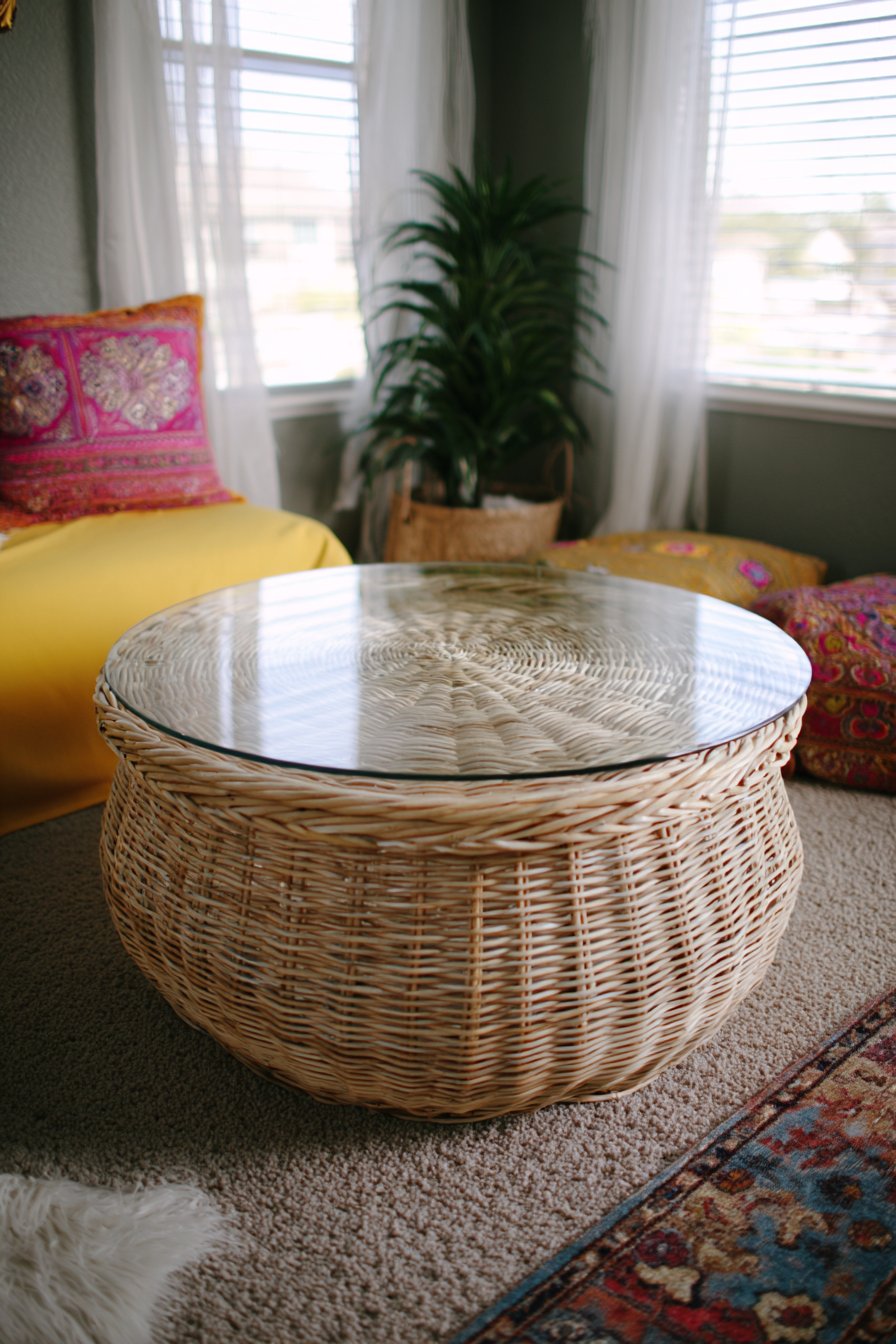
Key Design Tips: Choose natural rattan or wicker with visible weave patterns that showcase artisanal craftsmanship. Layer multiple rugs in complementary patterns and textures beneath and around the table. Surround the table with abundant plants in varied containers to reinforce the natural, organic aesthetic. Use lightweight, gauzy curtains to create soft, diffused natural lighting. Mix textiles freely in varied colors, patterns, and textures while keeping furniture tones neutral to ground the eclectic composition.
18. Luxurious Material Pairing with Carrara Marble
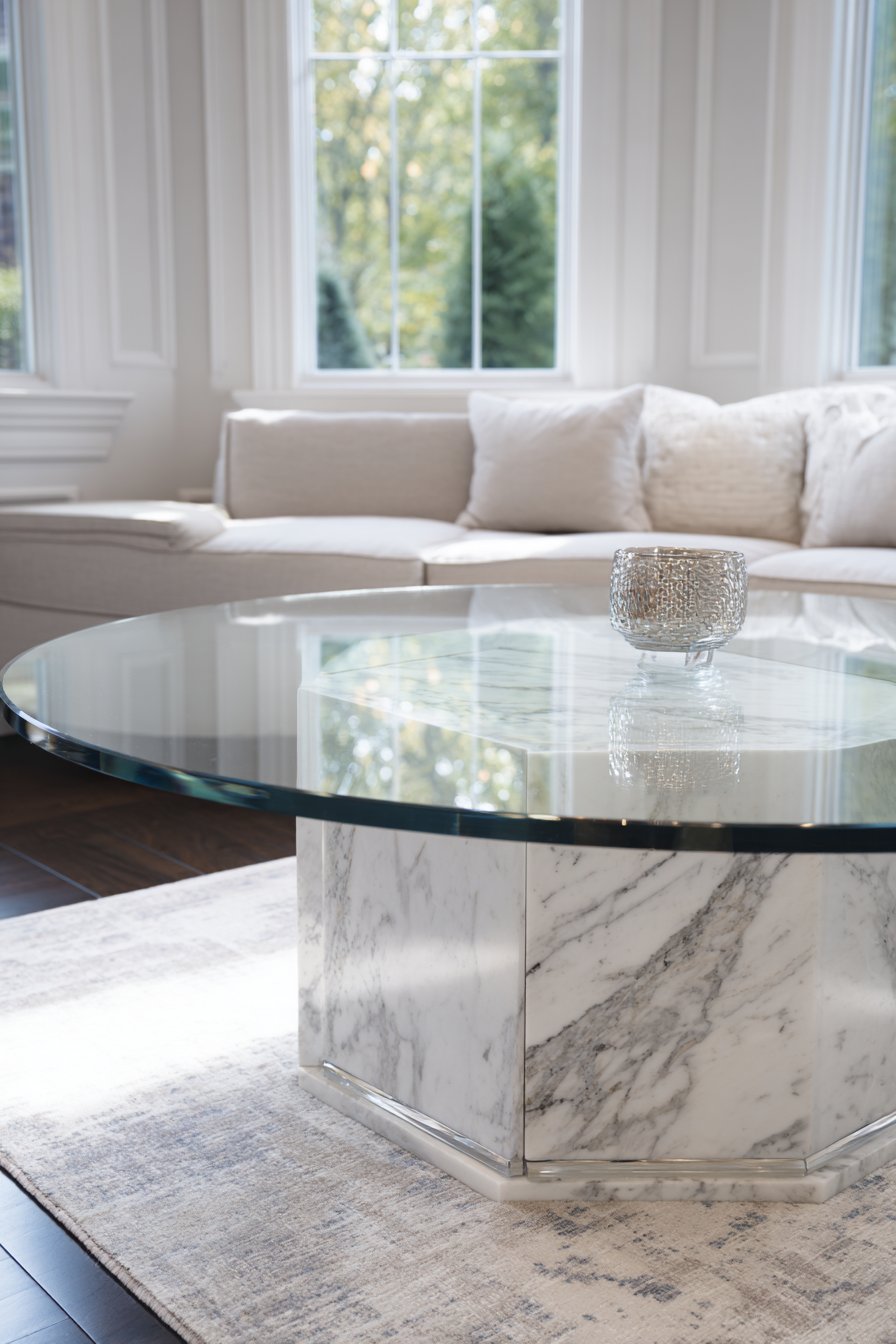
The combination of transparent glass and white Carrara marble creates understated opulence in this sophisticated coffee table design. The marble base displays distinctive grey veining that makes each piece unique, celebrating natural stone’s inherent beauty and variations. This pairing of two luxurious materials—glass and marble—creates a table that feels special and refined without ostentation, embodying the quiet luxury increasingly valued in contemporary interiors. The white marble’s cool elegance complements rather than overwhelms the glass transparency, allowing both materials to shine.
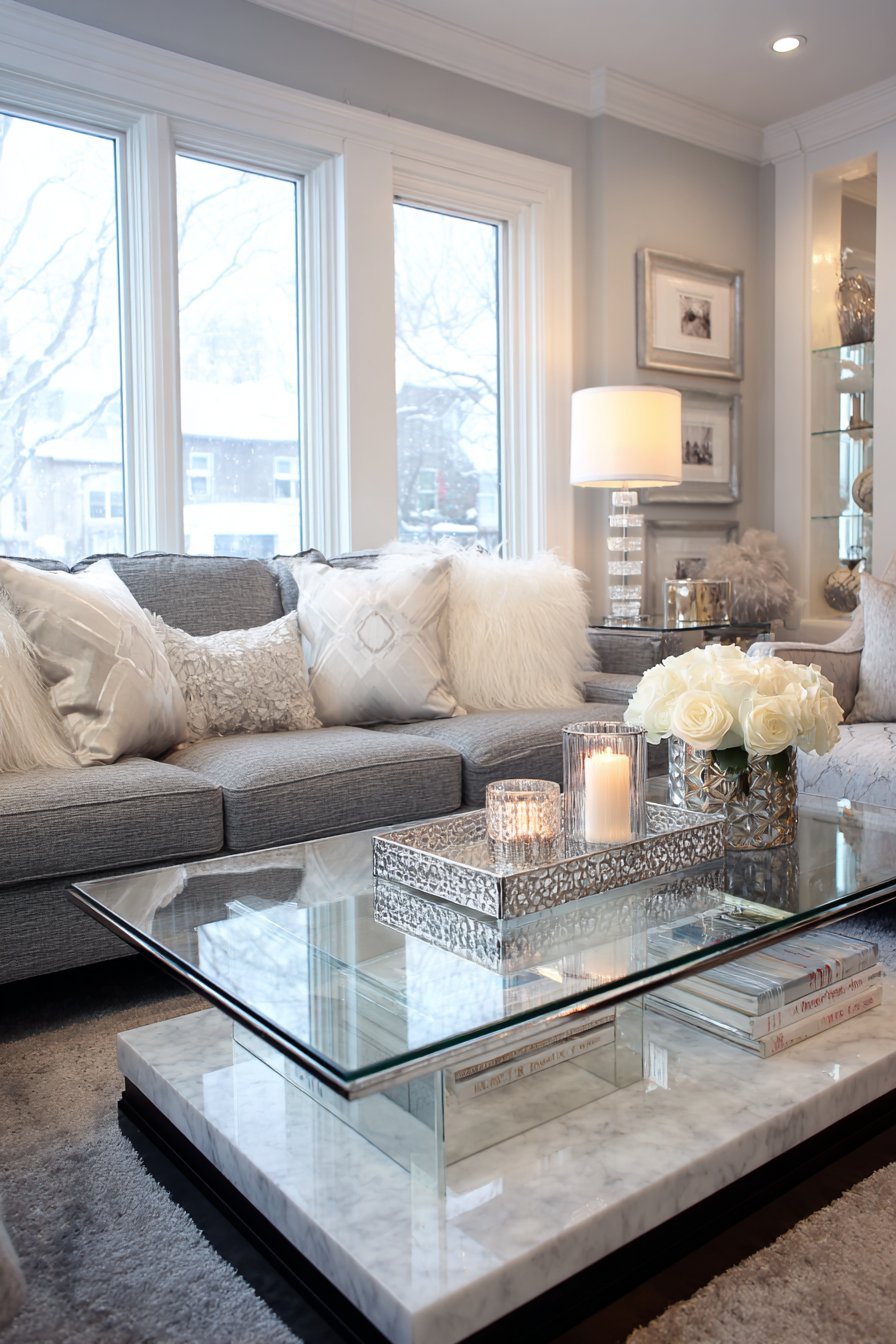
Positioned in an elegant transitional living room with sophisticated neutral furnishings and metallic accessories, this table demonstrates how premium materials can elevate an entire space. The marble base provides substantial visual weight that grounds the room’s composition while the glass top maintains openness and light flow. This balance prevents the space from feeling either too airy and insubstantial or too heavy and oppressive—achieving the equilibrium that defines successful transitional design.
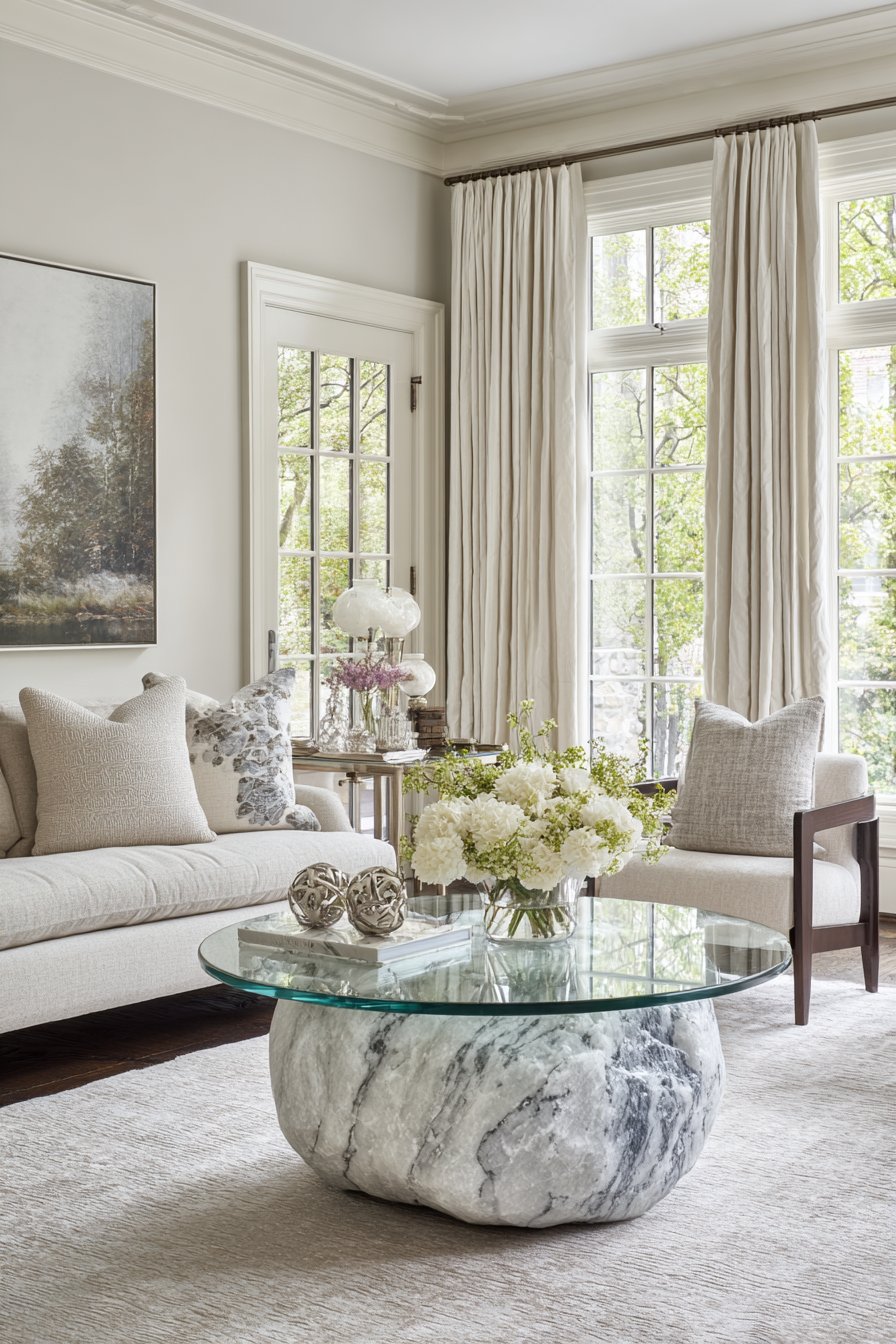
Natural light becomes particularly important in showcasing these premium materials. Sunlight highlights the marble’s natural veining patterns, revealing the subtle color variations and depth that make natural stone so compelling. Simultaneously, the glass top creates gentle reflections and allows light to play across the marble’s surface from above, adding dimension and visual interest. The refined material pairing speaks to quality and timelessness, suggesting furniture that will remain beautiful and relevant for decades rather than following temporary trends.
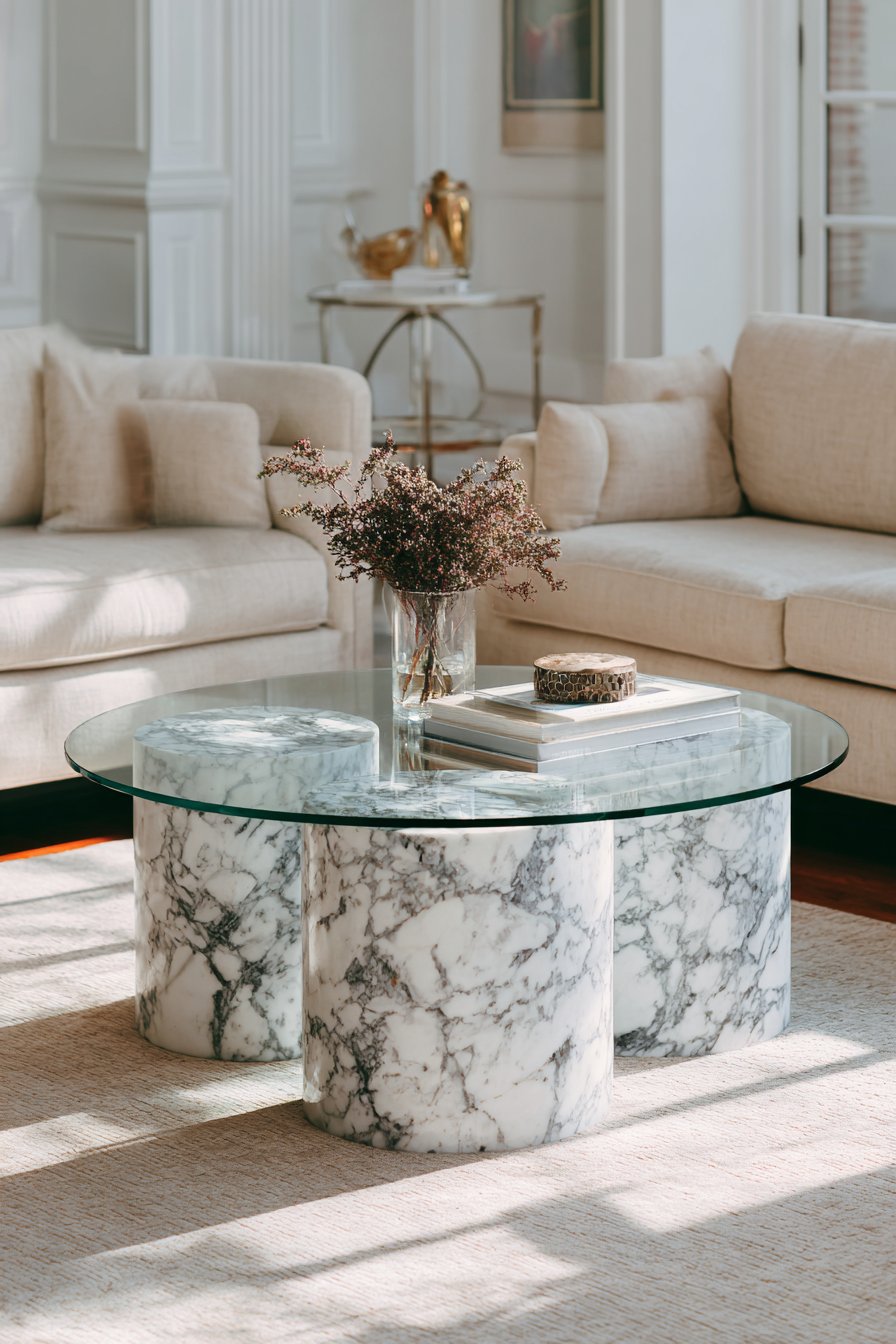
Key Design Tips: Select marble pieces where veining patterns are clearly visible and aesthetically balanced. Pair marble bases with glass tops thick enough to feel substantial and luxurious. Keep surrounding furnishings refined and neutral to let premium materials take center stage. Ensure excellent natural lighting to showcase marble’s natural variations and depth. Maintain marble with appropriate sealers and cleaning products to preserve its beauty and prevent staining.
19. Open Concept Definition with Concrete Base
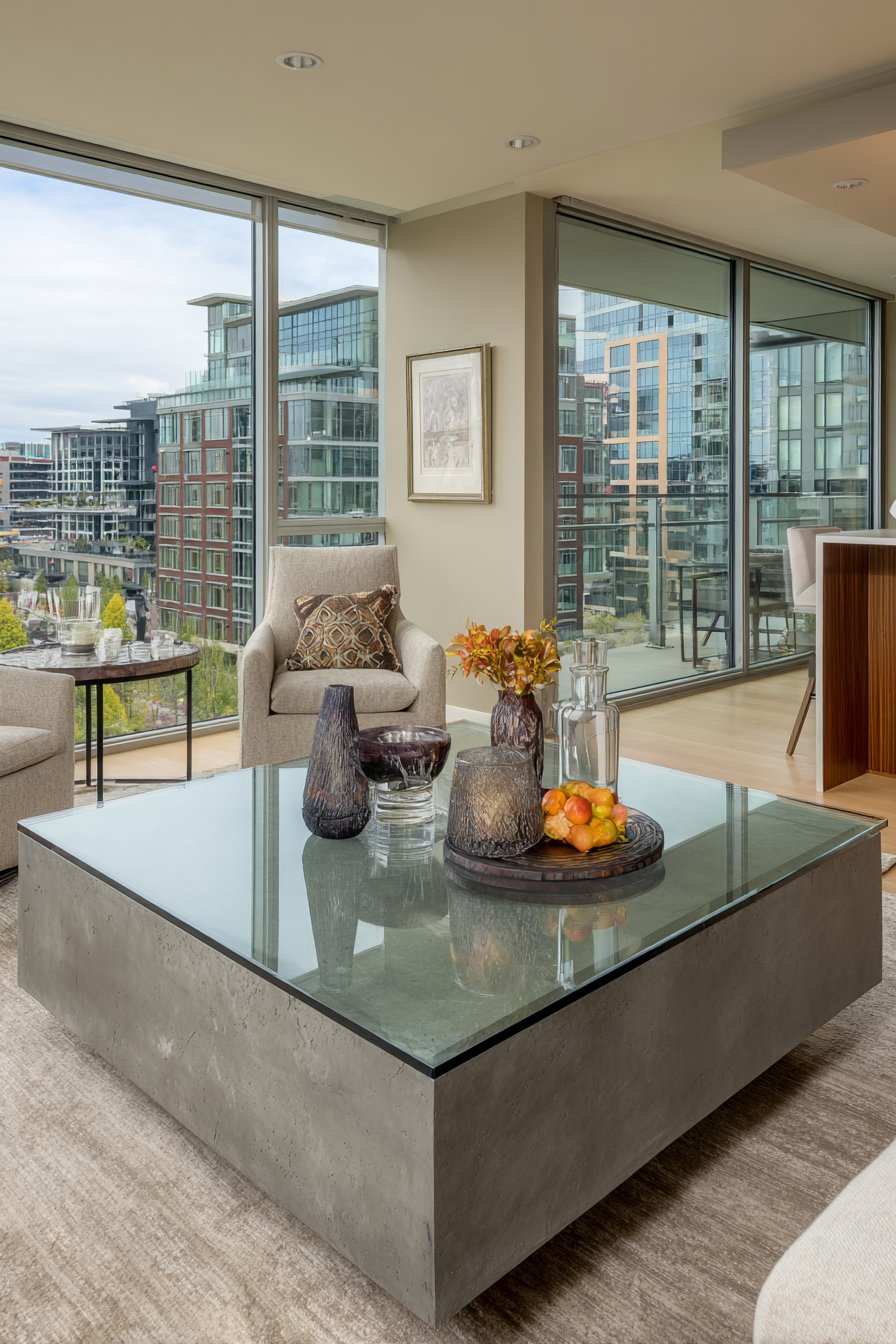
Open floor plans present unique design challenges, particularly defining distinct zones without creating visual barriers. This substantial glass coffee table with a solid concrete base in smooth grey finish perfectly addresses this challenge. The table anchors the living zone within a loft-style open space without blocking visual connections to kitchen and dining areas beyond. The concrete base provides physical and visual weight that establishes territory while the glass top maintains crucial transparency that preserves the open, flowing quality essential to successful open-plan living.
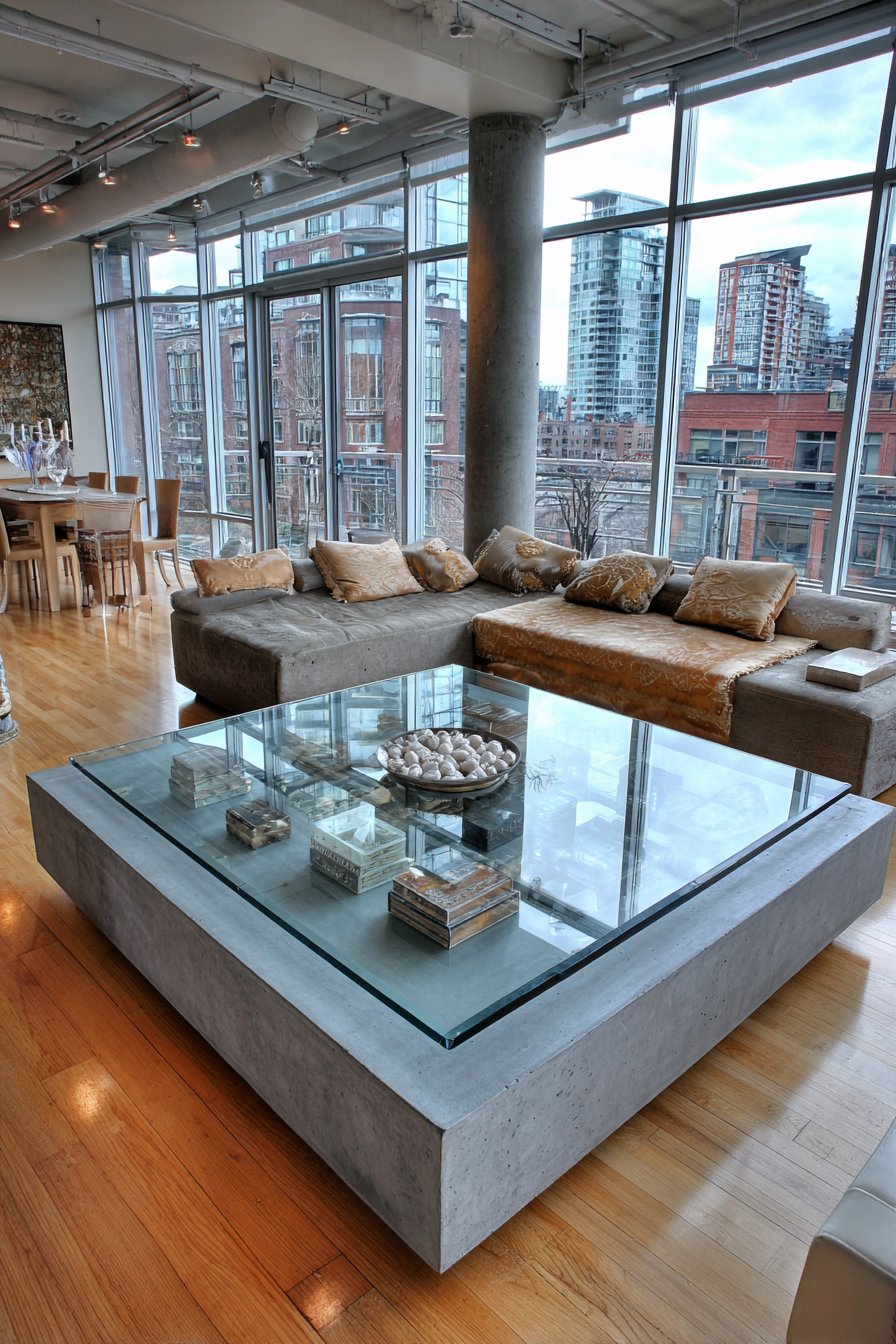
The concrete base’s smooth grey finish and minimalist form complement the industrial aesthetic common in loft spaces while feeling refined rather than raw. This polished industrial approach creates residential warmth within architectural spaces originally designed for manufacturing or commercial use. Decorative objects on the glass create focal points that draw the eye and help define the living area as a distinct zone, while the transparency ensures these objects don’t block sightlines across the broader space.
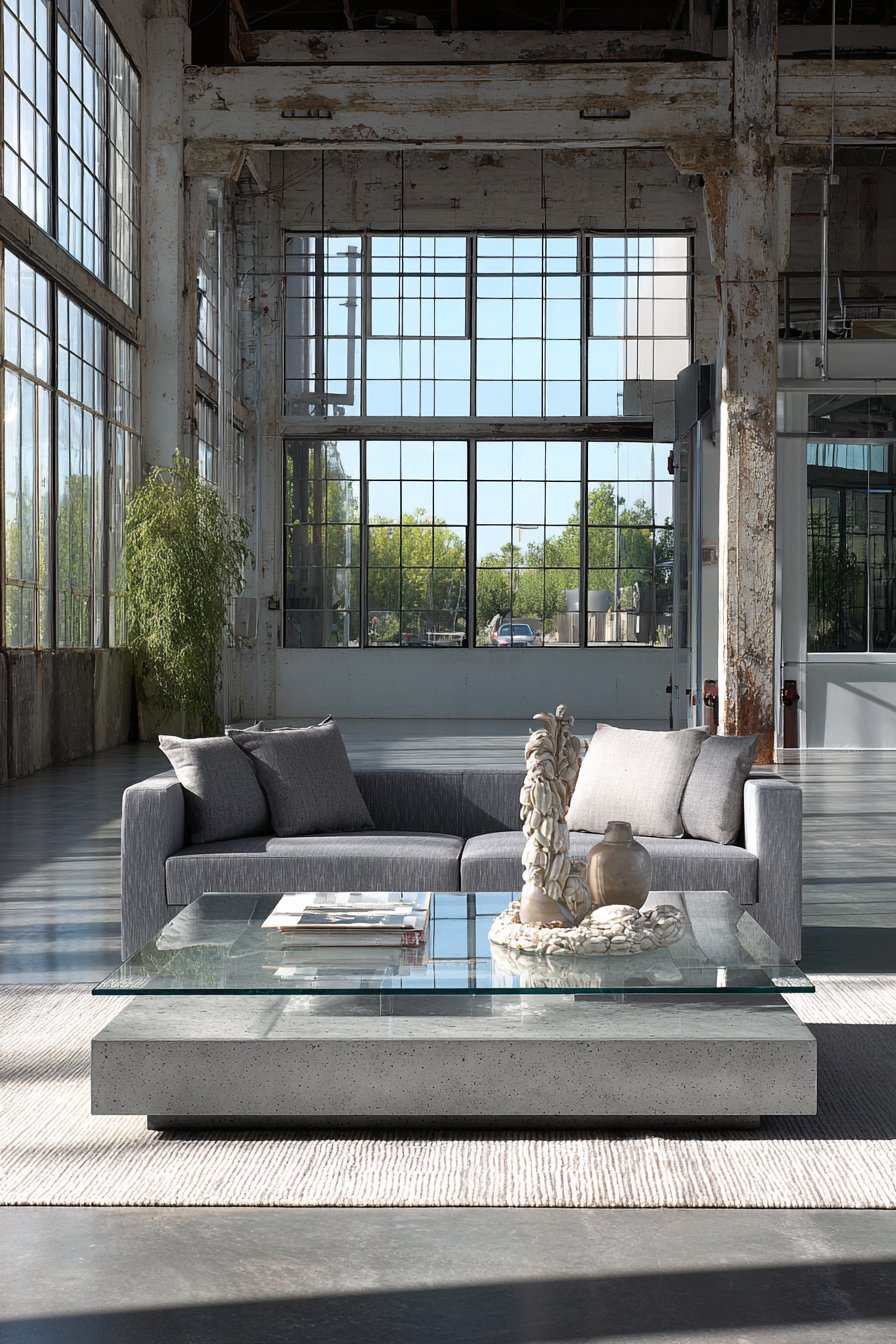
Large factory-style windows flood the space with natural light, creating dynamic reflections on the glass surface throughout the day. The concrete base remains visually solid and grounding even as reflections and light patterns change, providing consistency within the shifting natural lighting conditions. This interplay between permanence and change, solidity and transparency, creates visual interest that keeps the open space feeling dynamic rather than static.
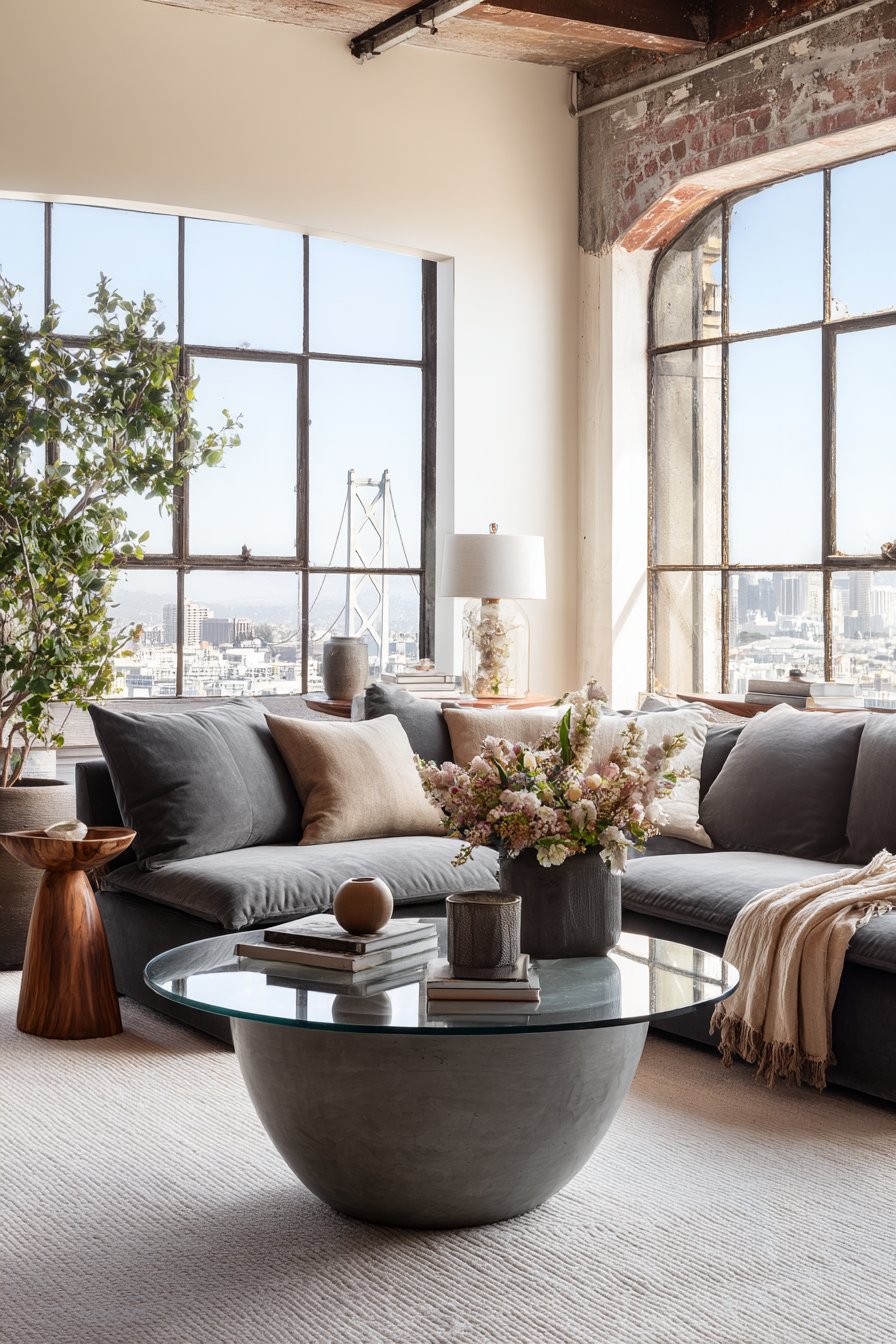
Key Design Tips: Choose substantial bases that can anchor zones without requiring walls or partitions. Maintain transparency through glass tops to preserve open sightlines across connected spaces. Position tables at natural transition points between functional zones to create subtle boundaries. Use concrete, stone, or solid wood bases for grounding weight in minimal open environments. Display carefully selected objects on glass surfaces to create focal points that define territories without blocking views.
20. Architectural Geometry with Powder-Coated Steel
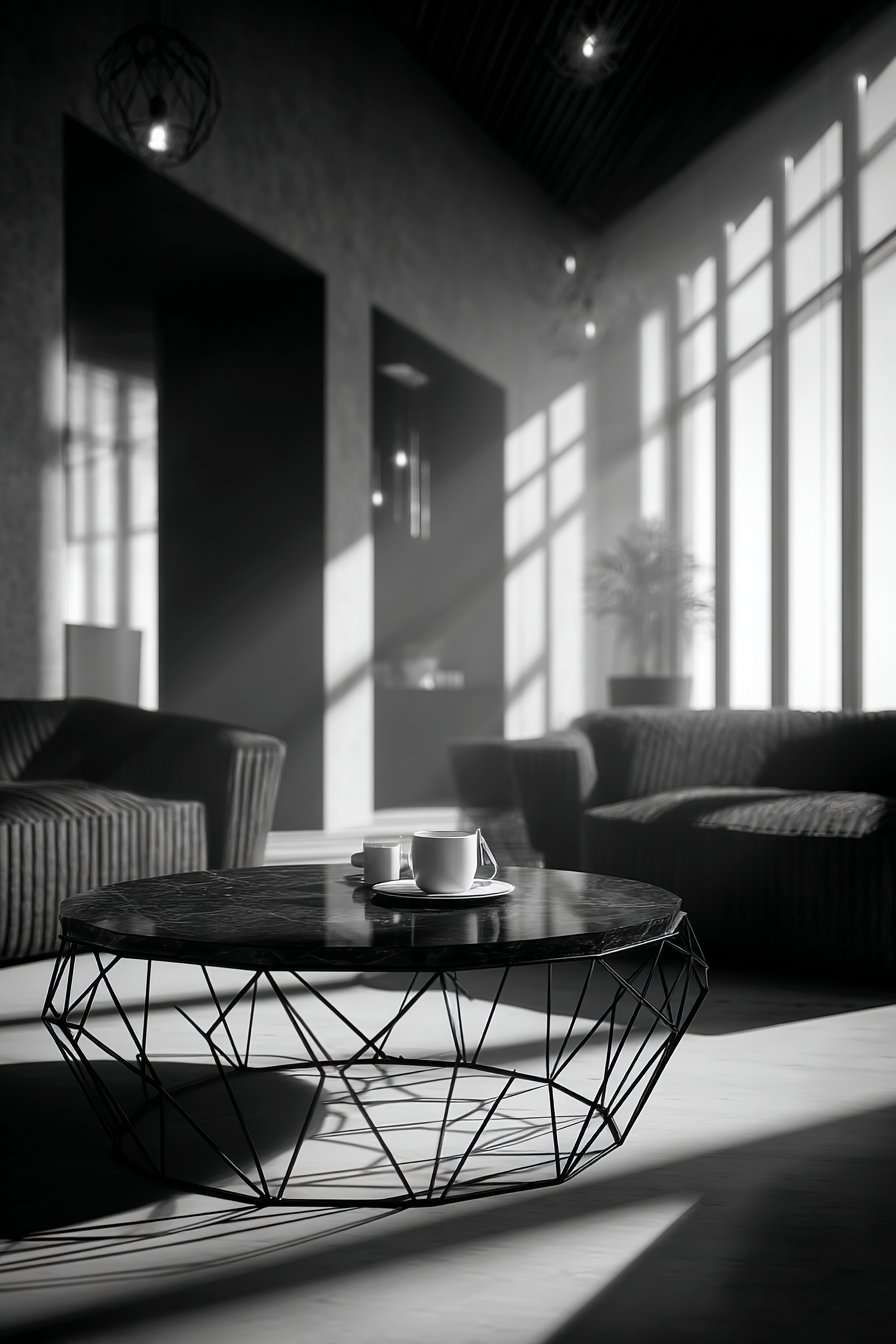
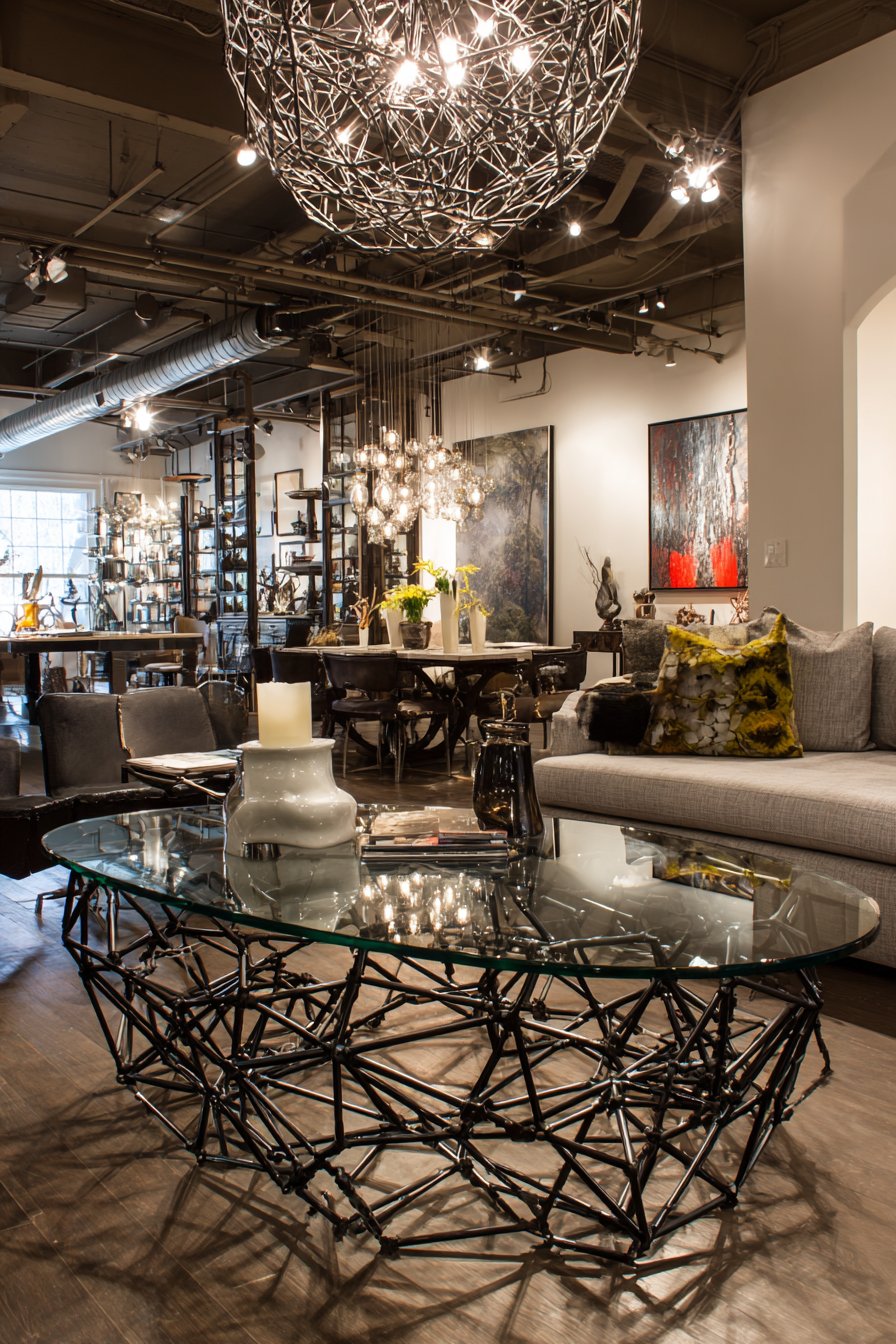
Geometric patterns create visual fascination, particularly when they form three-dimensional structures that interact with light and shadow. This glass coffee table features a geometric metal framework in matte black powder-coated steel forming an intricate architectural pattern that serves as both structure and sculpture. The complex base creates visual interest from every angle while the glass top maintains simplicity and clarity above, allowing the geometric complexity to remain the design focus. In a modern living room with a monochromatic color scheme and statement lighting fixtures, this table provides the perfect balance of structural intrigue and functional clarity.
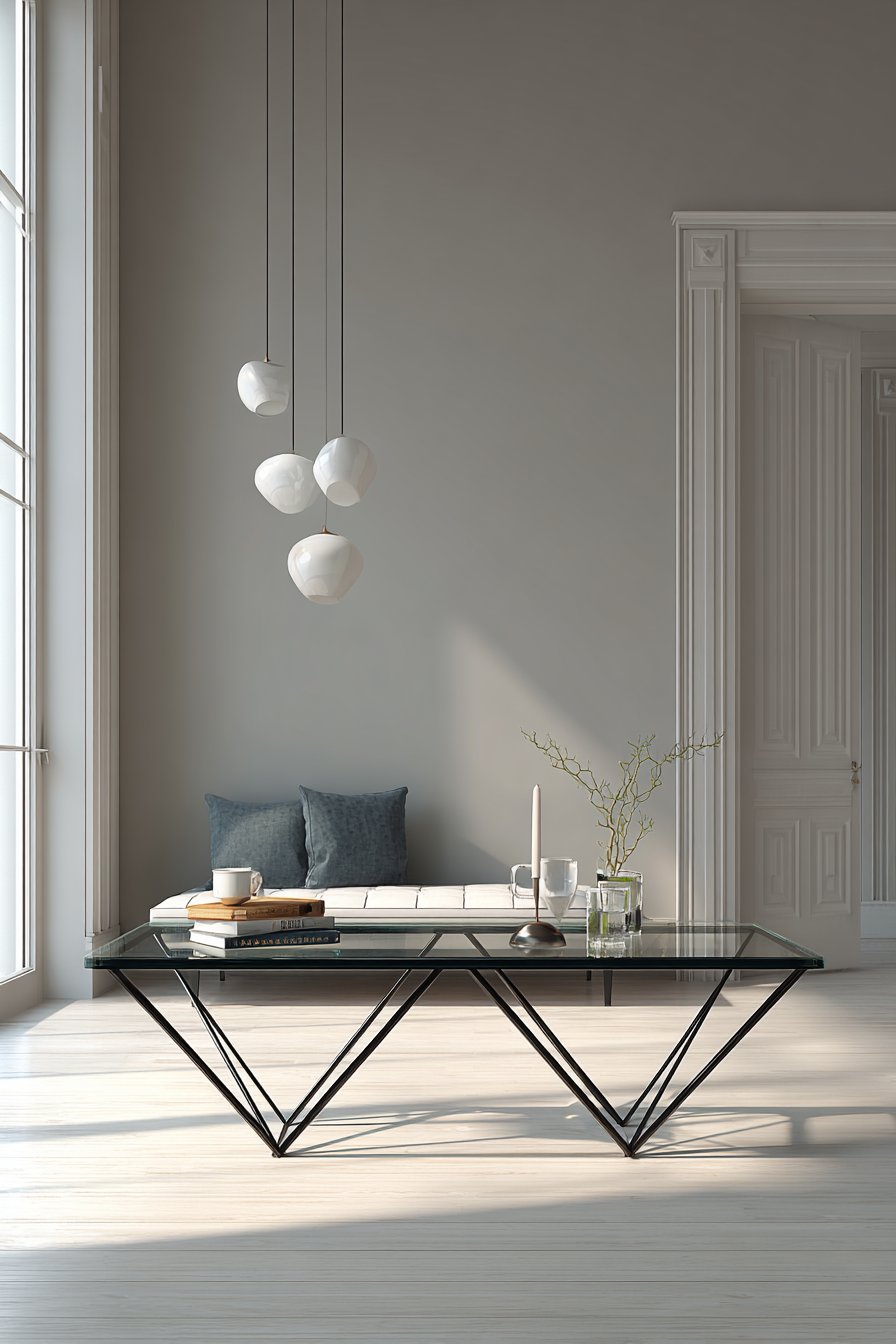
The matte black finish creates strong visual presence without the distraction of reflective surfaces competing with the glass top’s transparency. This finish choice allows the geometric framework to read as solid structure, emphasizing the architecture-inspired base design. The negative spaces within the geometric pattern become as important as the steel framework itself, creating fascinating interplay between solid and void, material and emptiness. This sophisticated approach to structure elevates the table beyond simple furniture into a piece that engages viewers intellectually as well as aesthetically.
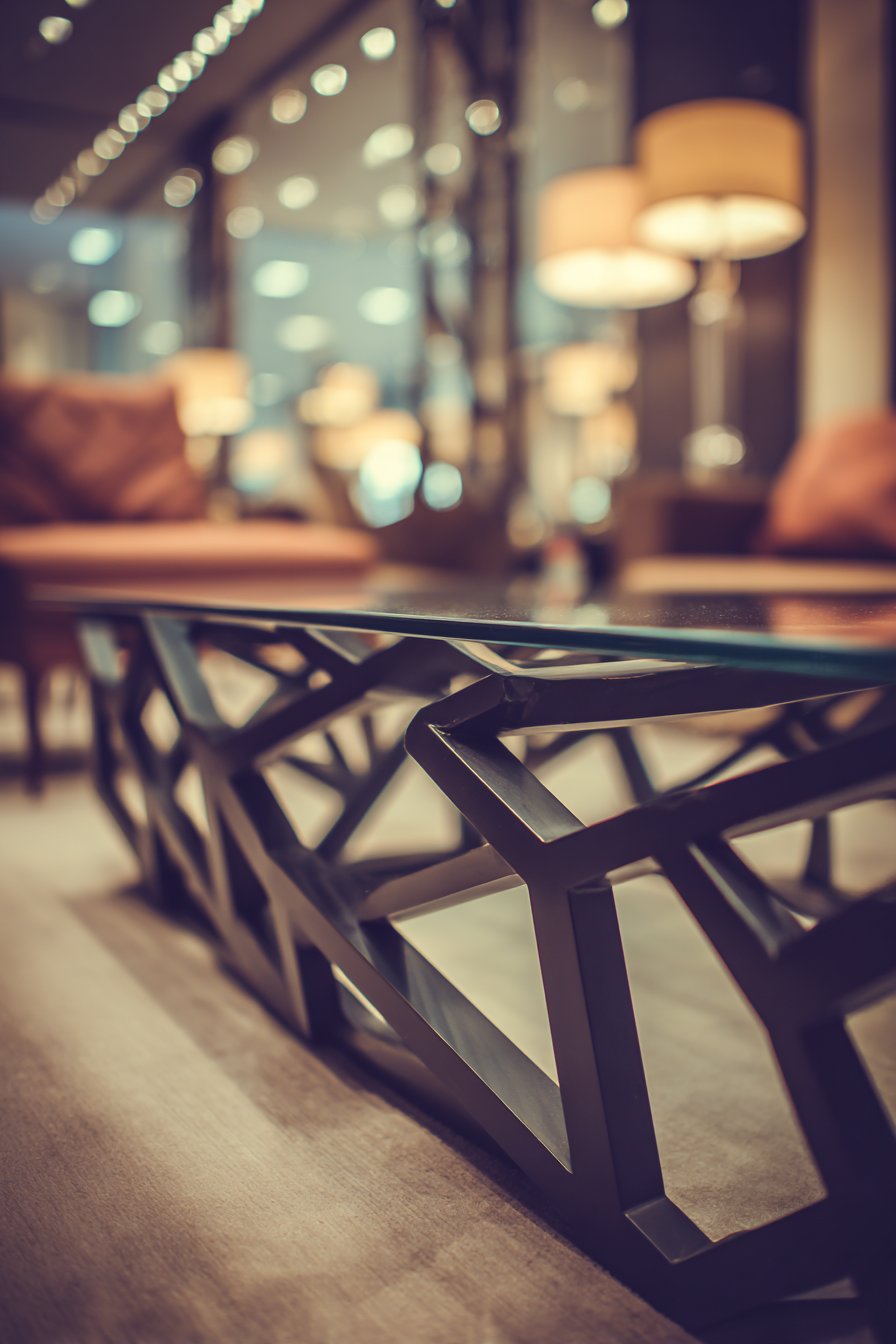
Natural and artificial lighting create fascinating shadow patterns from the geometric base, adding another dimension to the table’s visual appeal. As light sources move or change throughout the day, the shadows shift and transform, creating dynamic patterns on the floor and surrounding surfaces. This interaction between structure, light, and shadow demonstrates how thoughtfully designed furniture can create constantly evolving visual interest without any change to the physical object itself.
Key Design Tips: Choose geometric patterns with balanced proportions that create visual interest without appearing chaotic. Select matte powder-coated finishes to emphasize structure over reflection. Position tables where both natural and artificial light can create shadow patterns from the base. Pair geometric complexity with simple glass tops to maintain visual clarity and functionality. Photograph or observe the table from multiple angles to appreciate how the geometric pattern reads from different viewpoints.
21. Nordic Simplicity with Ash Wood Legs
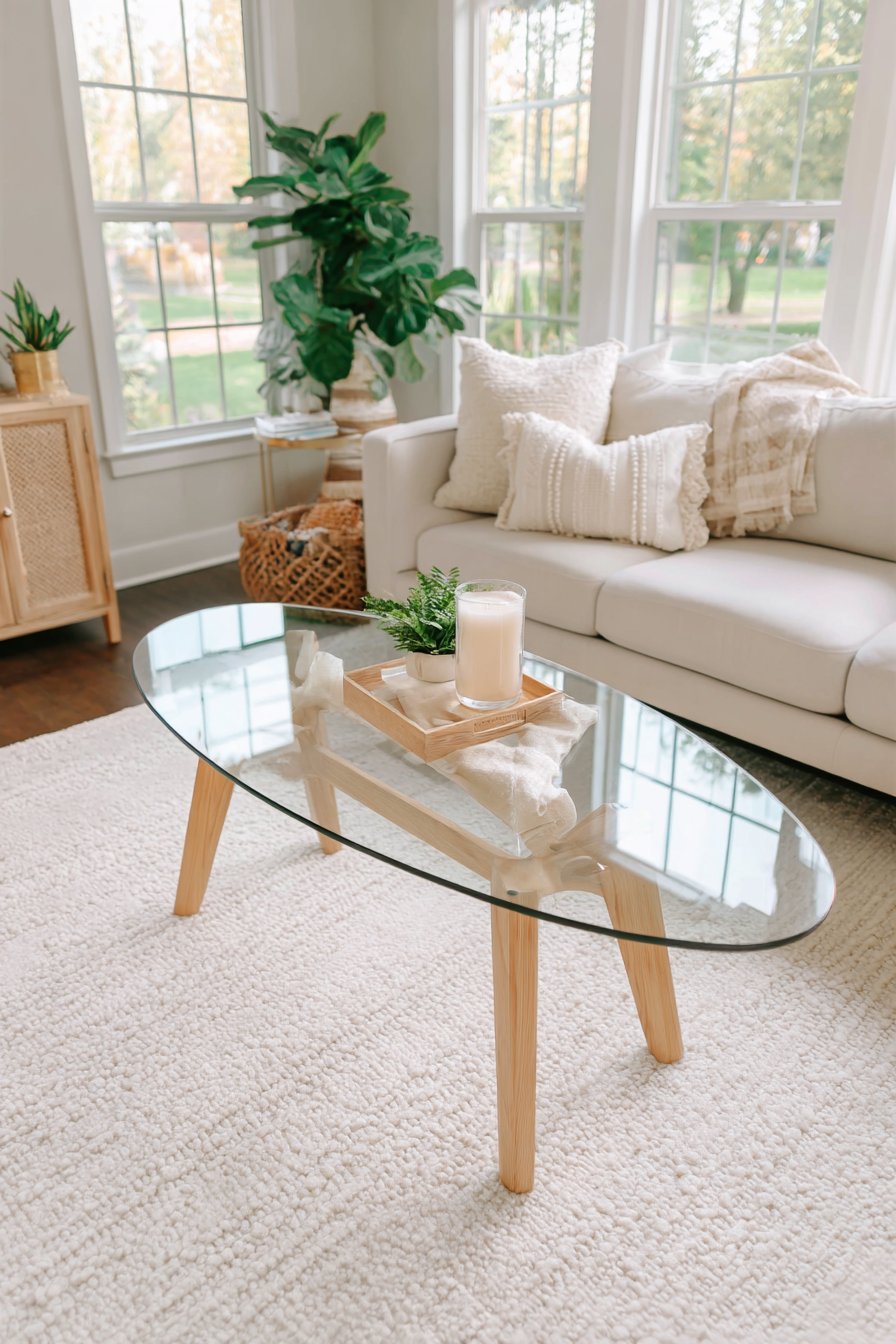
Scandinavian design philosophy emphasizes simplicity, natural materials, and functional beauty—principles perfectly embodied in this glass coffee table with blonde ash wood legs and minimal joinery. The light wood tone brings warmth without darkness, complementing the bright living room’s white walls and natural textiles. The minimal joinery showcases skilled craftsmanship that makes connections appear effortless and inevitable, celebrating construction techniques rather than concealing them. This honest approach to materials and assembly reflects core Scandinavian values of authenticity and quality.
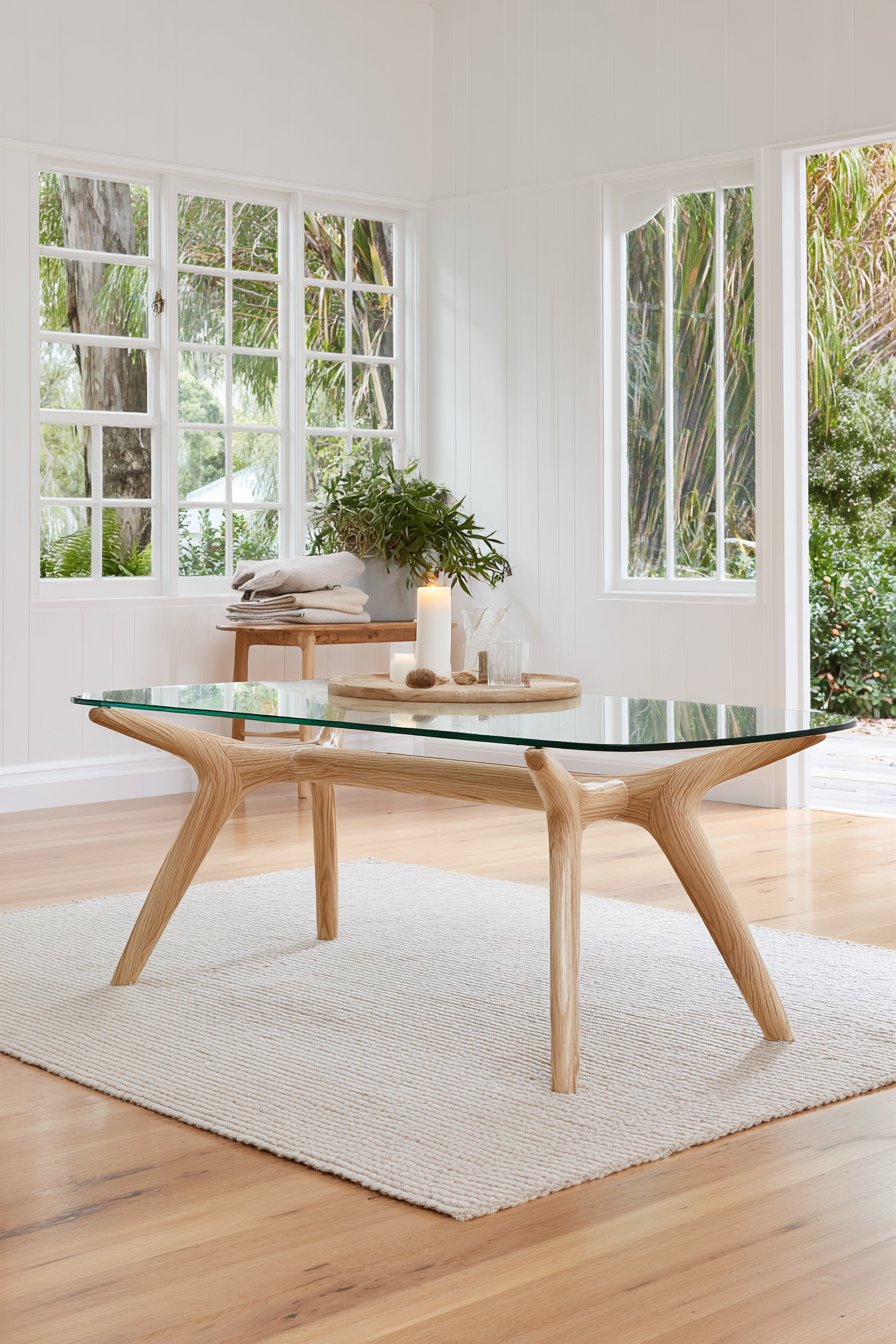
The table centers a space designed around hygge—the Danish concept of cozy contentment—with soft textiles, candles, and carefully curated accessories creating an atmosphere of comfortable simplicity. A few carefully selected items on the glass surface demonstrate the Scandinavian principle of lagom (just right, not too much or too little): a candle, a small plant, and a linen coaster provide just enough visual interest without crossing into clutter. This restraint creates breathing room that feels peaceful rather than sparse.
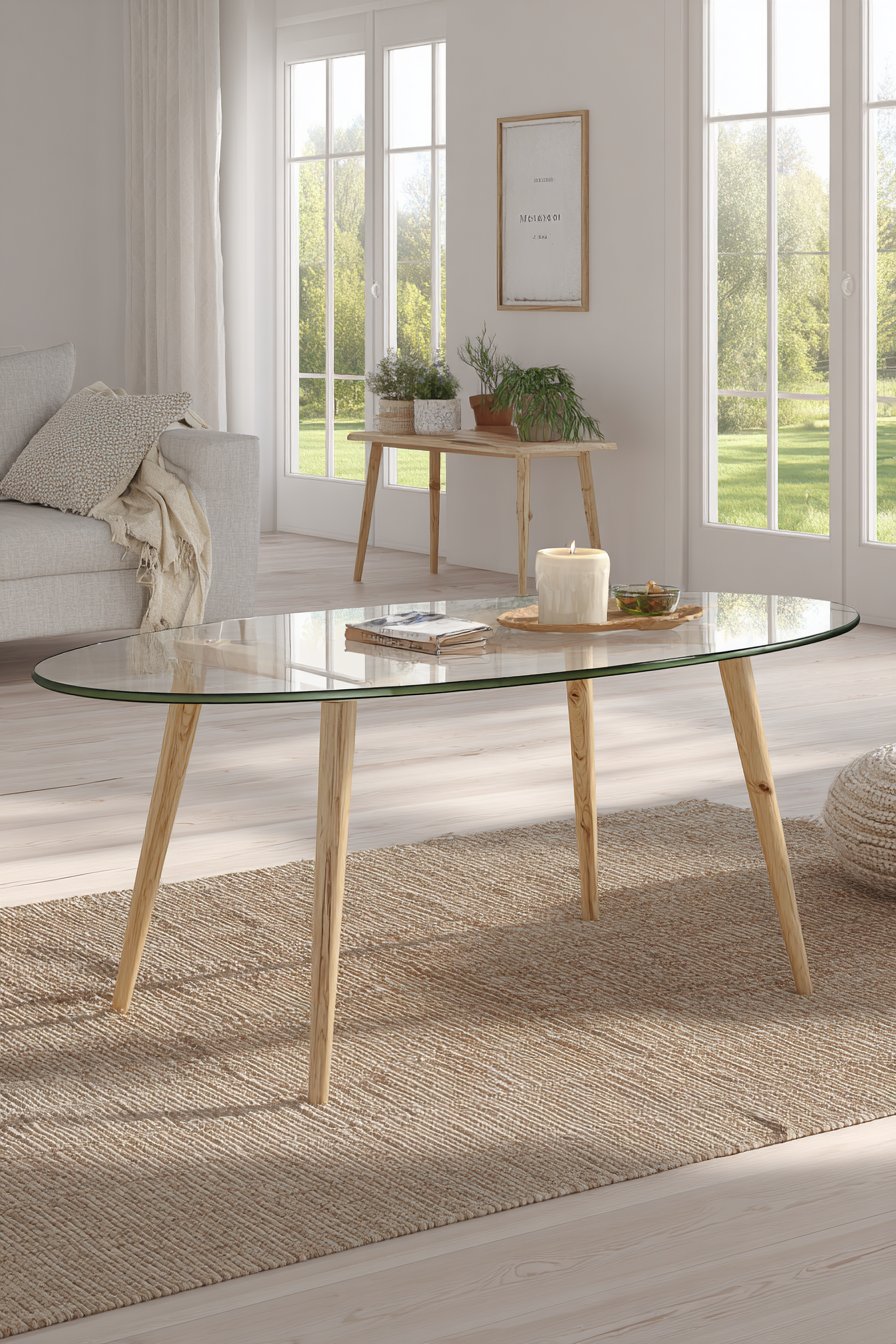
Abundant natural light from multiple windows creates the fresh, airy atmosphere essential to Scandinavian interiors, where maximizing precious daylight becomes a design imperative in northern climates with long dark winters. The light wood and transparent glass work together to bounce and transmit light throughout the room, creating brightness that feels natural rather than forced. This emphasis on light, simplicity, and natural materials creates spaces that feel both calming and uplifting—exactly what Scandinavian design strives to achieve.
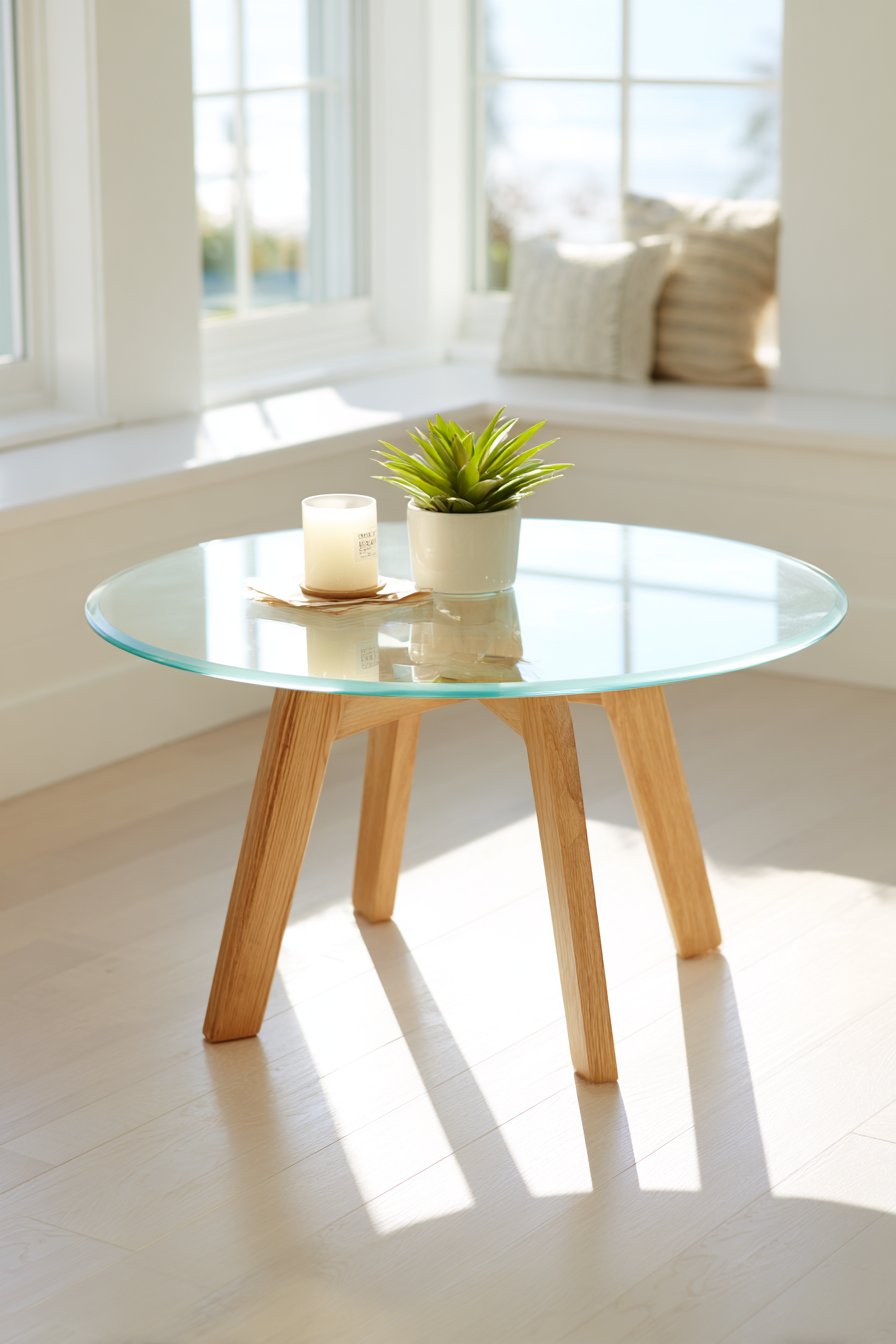
Key Design Tips: Select light woods like ash, birch, or pine that brighten rather than darken spaces. Embrace minimal joinery that showcases quality craftsmanship and honest construction. Limit surface styling to essential items that serve function or create atmosphere. Maximize natural light through unobstructed windows and light-reflecting surfaces. Create cozy atmosphere through soft textiles and candles rather than through heavy furniture or dark colors.
22. Ambient LED Integration with Modern Technology
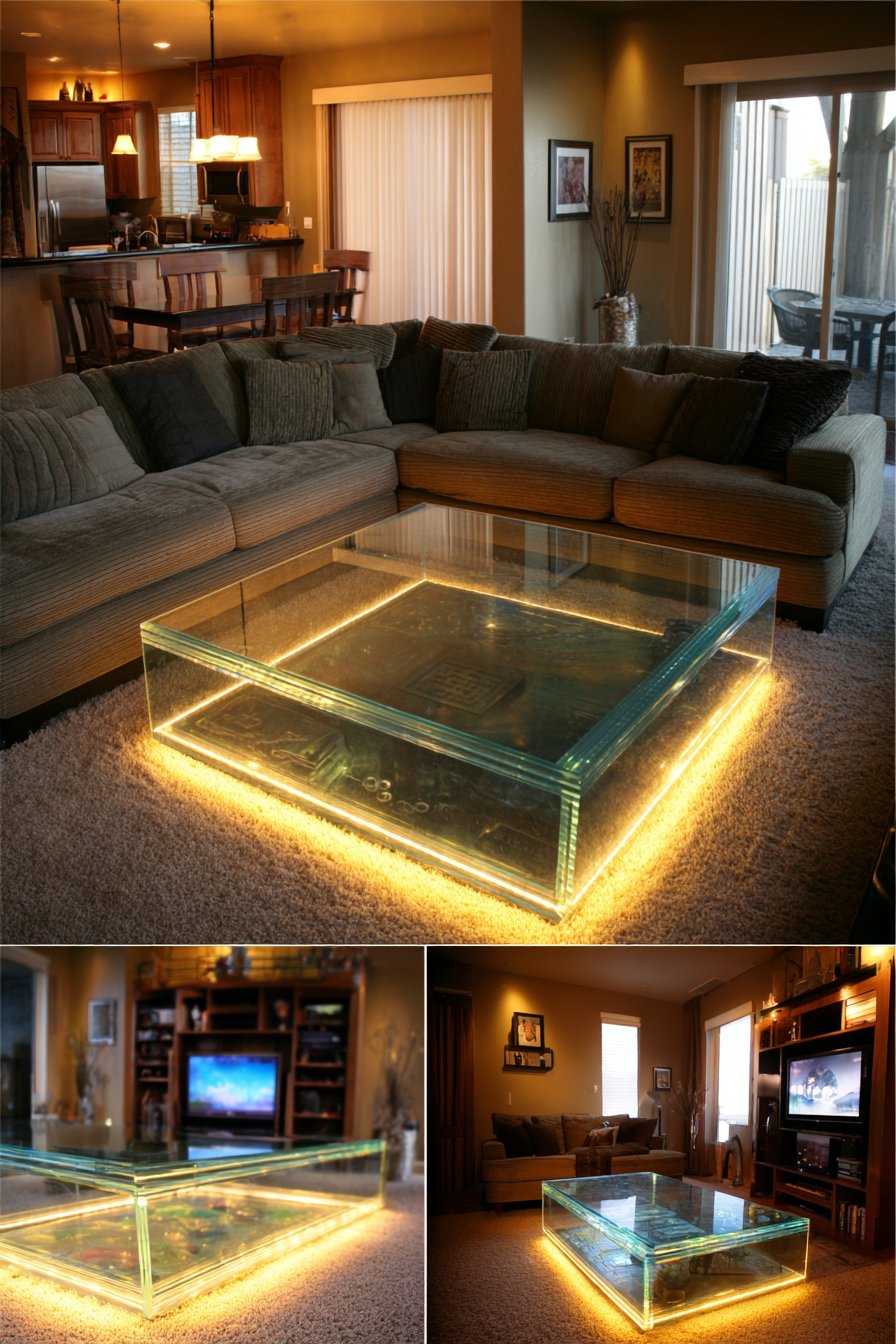
Technology integration can enhance furniture functionality while creating unique aesthetic experiences, demonstrated in this modern glass coffee table with integrated LED strip lighting along the base perimeter. The edge lighting creates a stunning floating effect, making the glass surface appear to hover above an ambient glow. This contemporary feature serves both practical and atmospheric purposes: providing subtle illumination for evening movie watching while creating visual drama that transforms the table from daytime furniture into nighttime focal point.
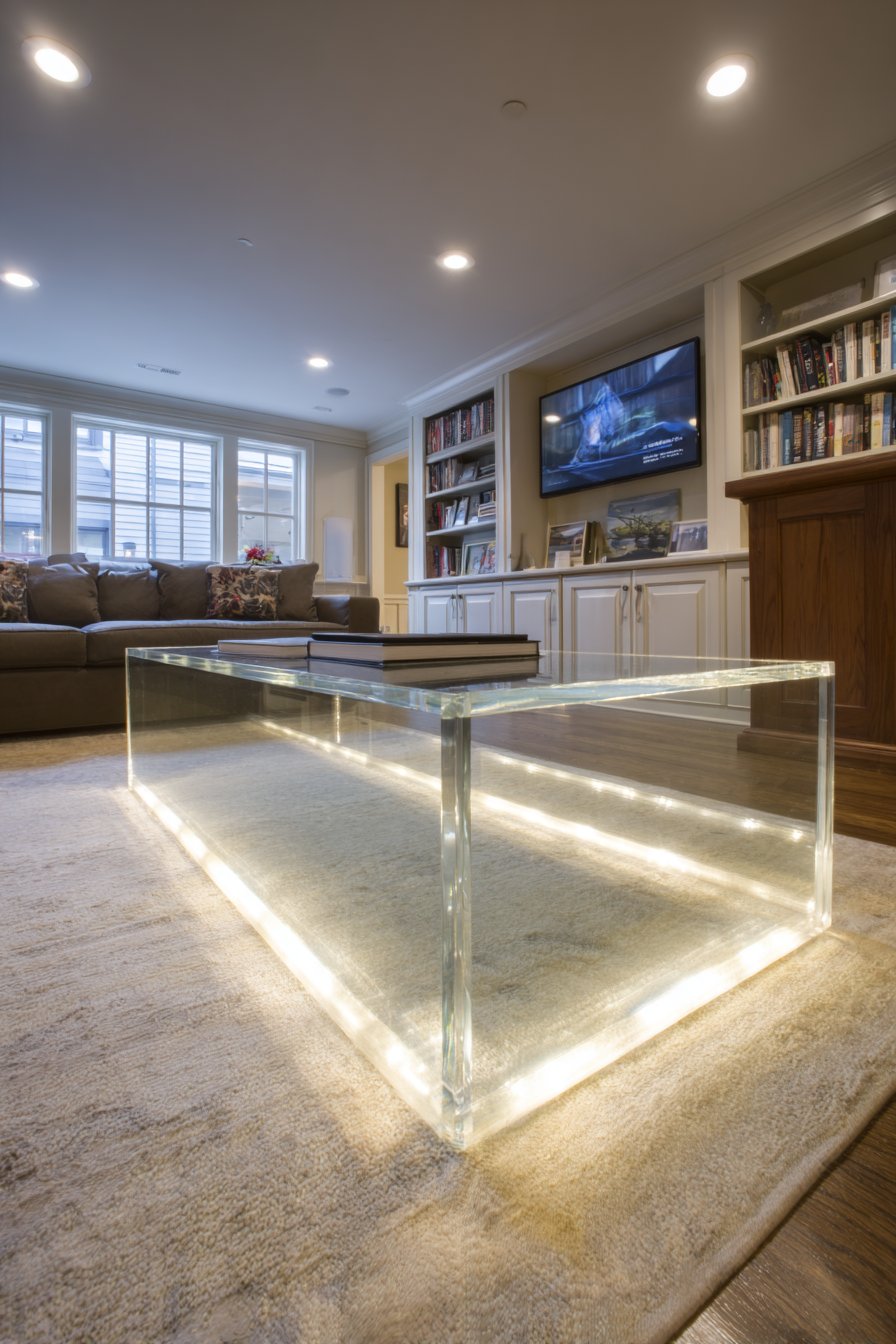
The table serves an entertainment-focused living room with a large sectional and media center, where ambient lighting becomes particularly valuable. The LED strips provide enough light for safe movement and finding items without the harsh brightness of overhead fixtures that would interfere with screen viewing. The warm glow creates inviting atmosphere during evening relaxation, demonstrating how thoughtful lighting integration can enhance both functionality and mood. The seamless installation keeps technology invisible during daytime while making it impactful when activated.
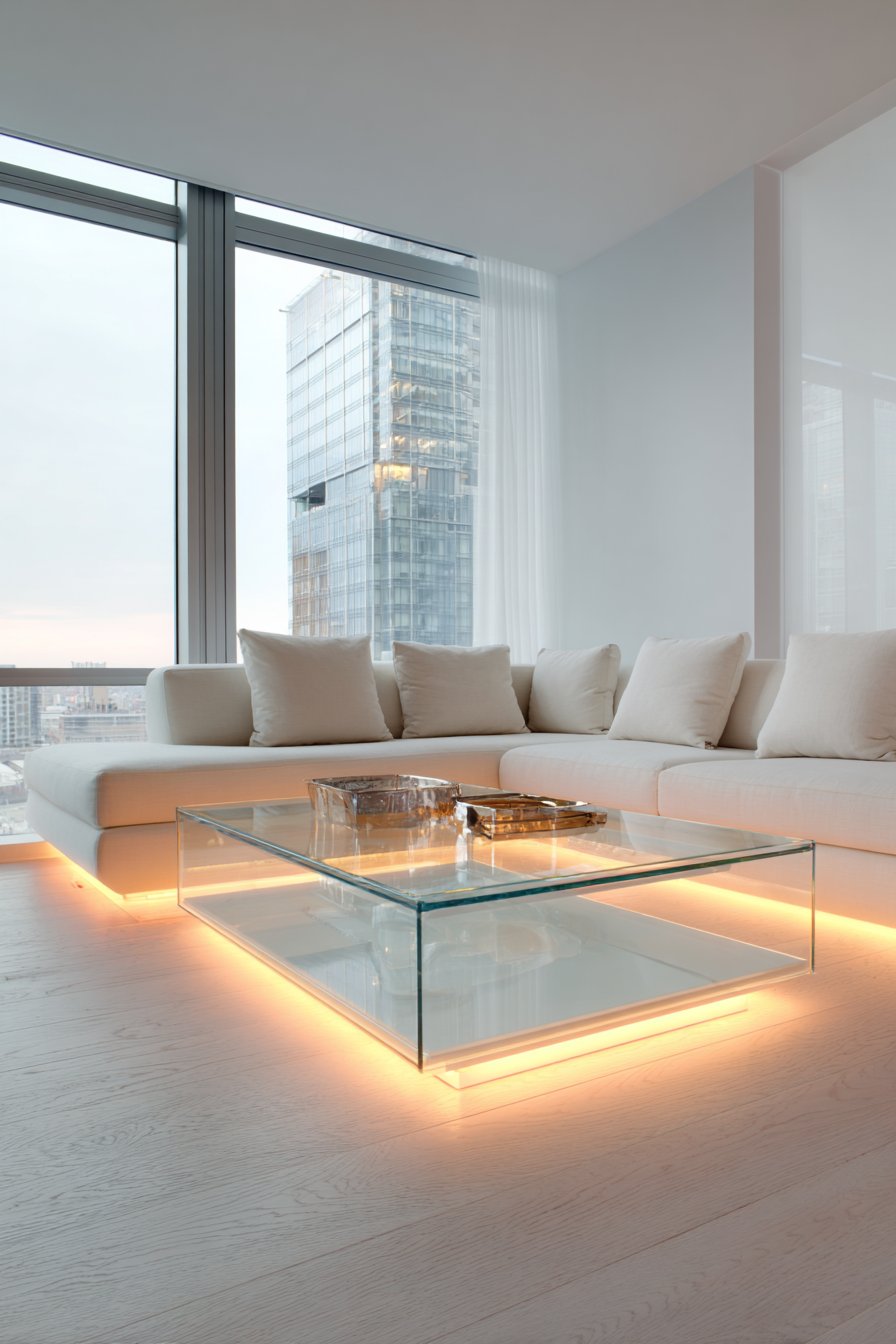
Photography capturing both daytime and evening scenarios reveals the table’s versatility. Natural daylight shows clean lines and contemporary styling that works beautifully in bright spaces, while evening shots demonstrate the LED lighting’s warm glow creating entirely different atmosphere in the same room. This dual functionality makes the table particularly valuable in spaces that shift from active daytime use to relaxed evening entertainment, adapting to changing needs and moods throughout the day.
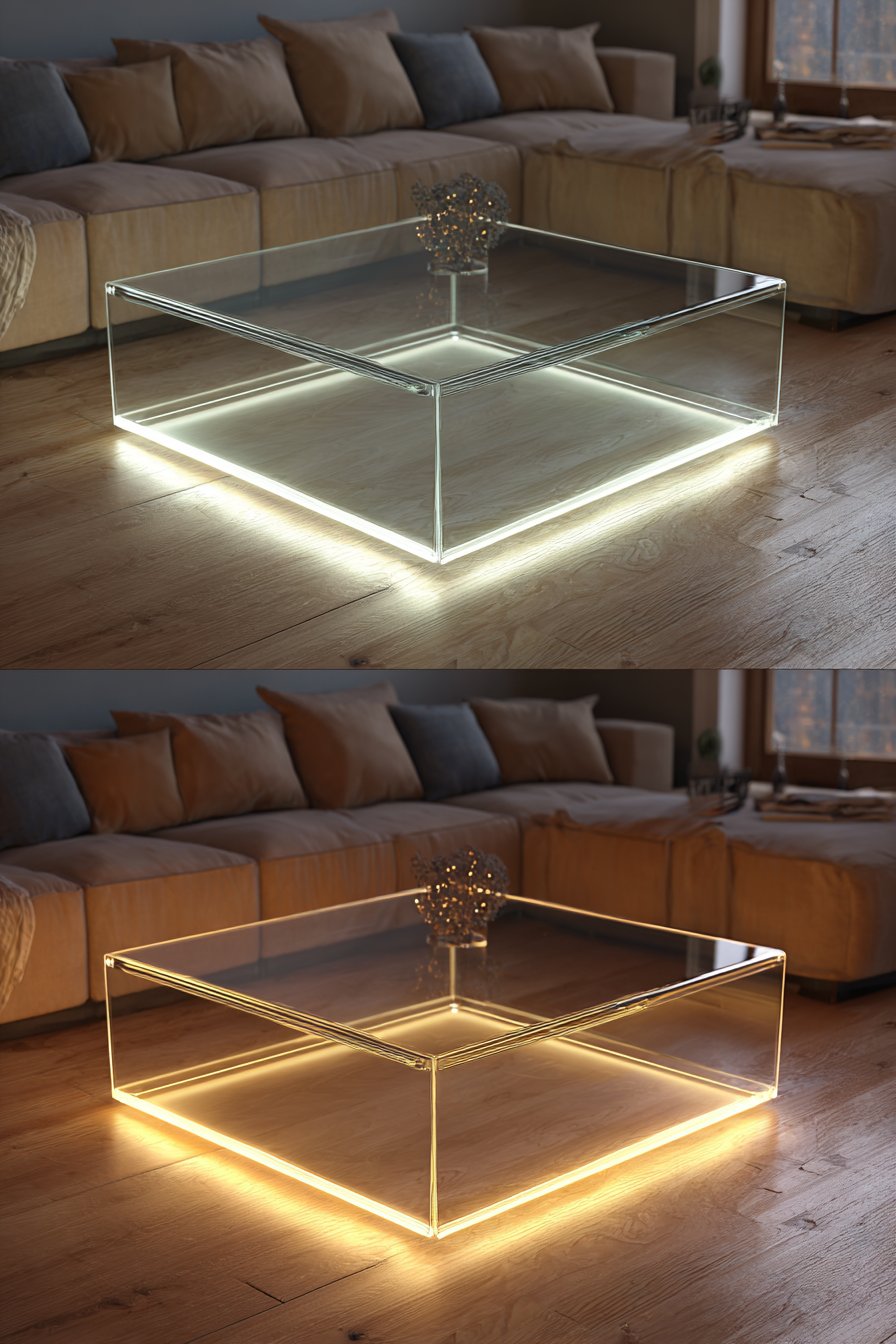
Key Design Tips: Choose LED systems with dimming capability to adjust brightness based on needs and preferences. Select warm color temperatures (2700-3000K) for residential comfort rather than cool commercial lighting. Ensure seamless integration where LED strips and power sources remain hidden during daytime. Test lighting in evening conditions before purchasing to verify the glow effect meets expectations. Consider smart home integration for voice or app control of lighting features.
23. Transitional Harmony with Mixed Material Balance
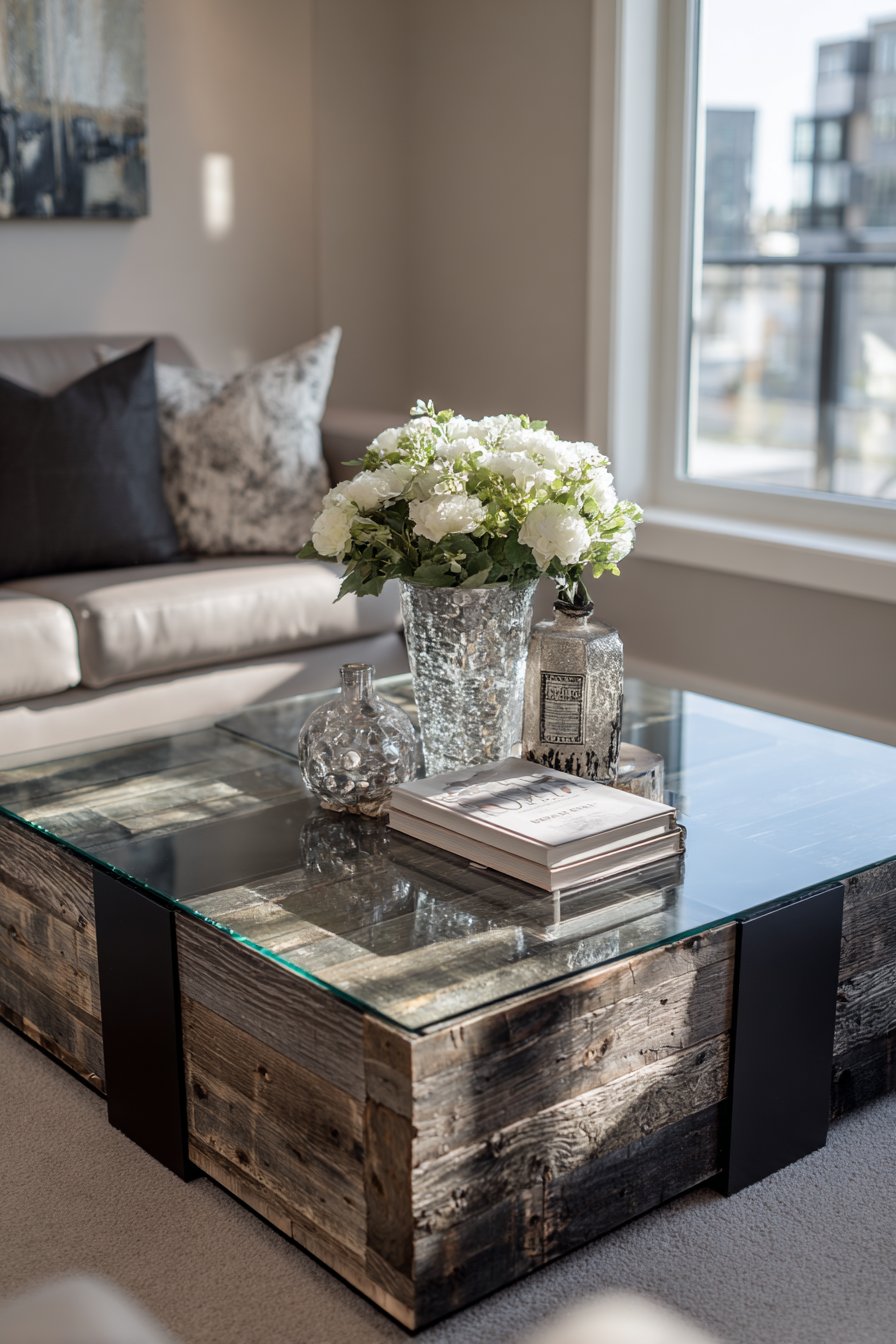
The most versatile furniture bridges multiple design styles, allowing it to work in various contexts and evolve with changing tastes. This glass coffee table with a combined base of natural wood planks and black metal accents exemplifies transitional design—the art of balancing traditional and contemporary elements. The wood planks provide organic warmth and natural texture that appeals to traditional sensibilities, while the black metal accents introduce contemporary edge and industrial influence. Together, these materials create a piece equally comfortable in traditional settings or modern spaces.
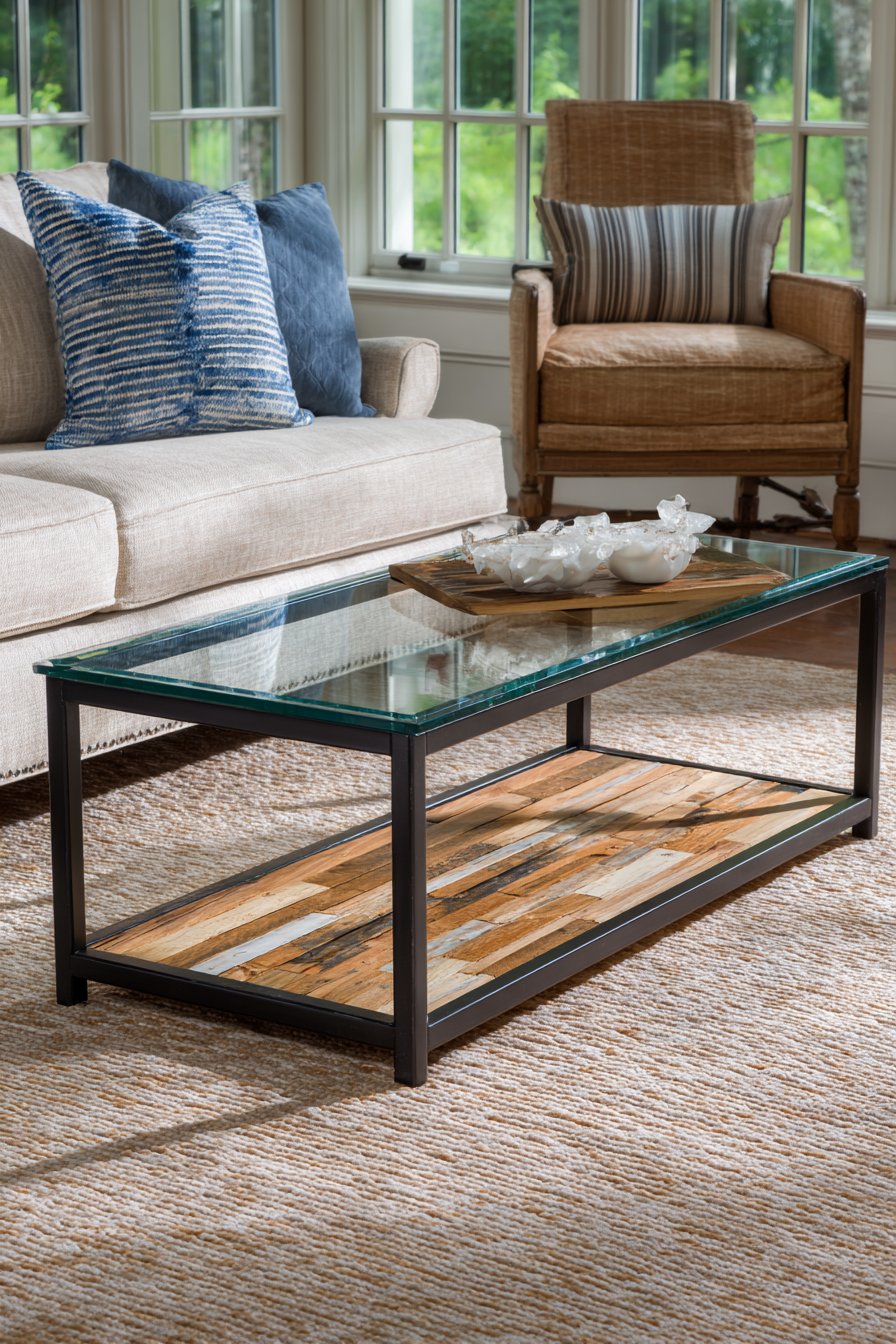
The table succeeds in an eclectic living room precisely because it doesn’t commit exclusively to any single style. The varied furniture styles surrounding it—from classic wing chairs to modern occasional tables—all find common ground in this carefully balanced transitional piece. The transparent glass top serves as the great unifier, its neutrality allowing disparate elements to coexist comfortably. This diplomatic approach to design makes the table remarkably versatile, capable of adapting as the room evolves over time.
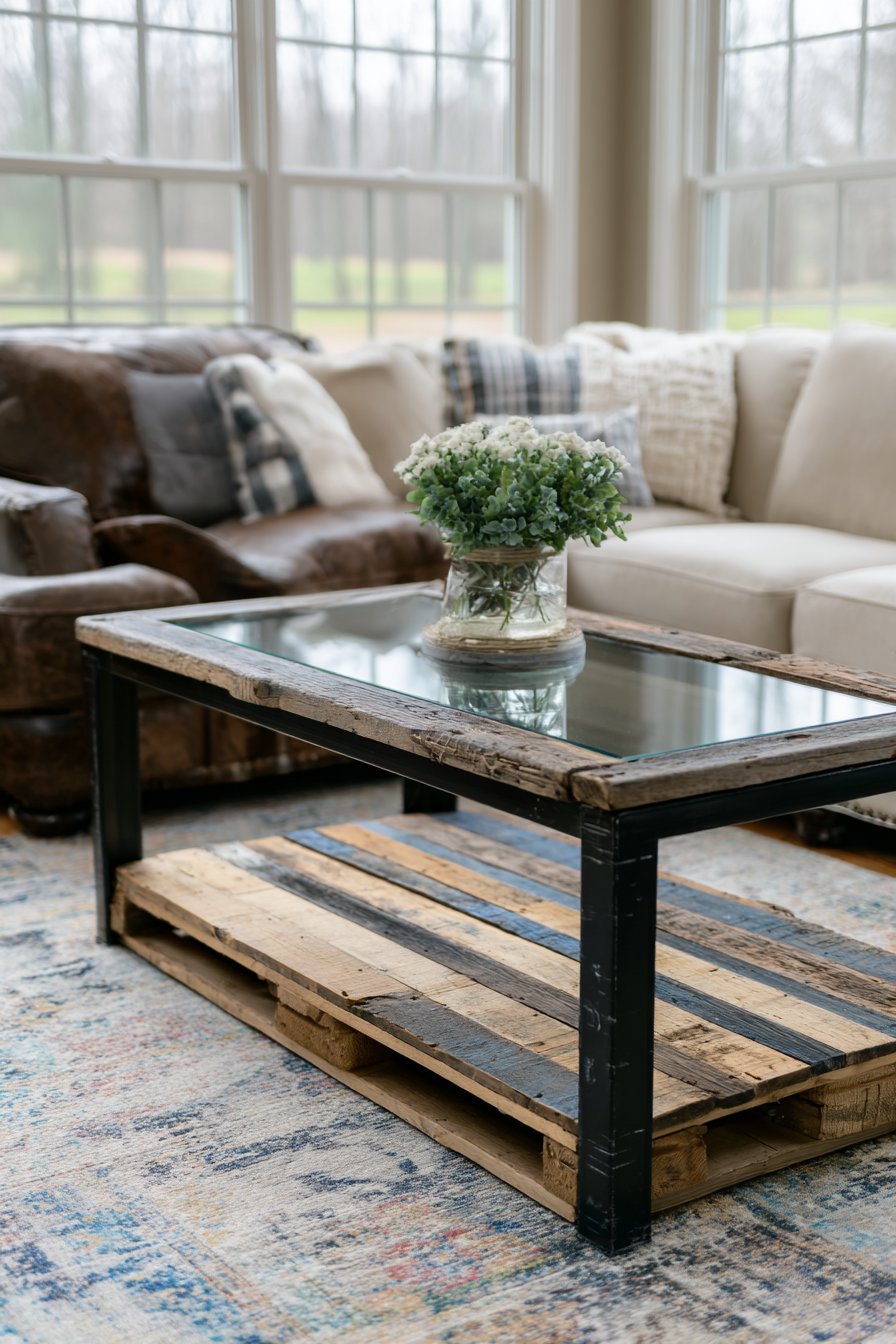
Natural lighting highlights the wood grain, metal finish, and glass clarity simultaneously, revealing how these different materials interact and complement each other. The wood’s warmth softens the metal’s industrial edge while the metal’s structure provides counterpoint to the wood’s organic quality. The glass transparency allows both base materials to remain visible and appreciated, creating a complex visual experience that rewards closer examination. This thoughtful fusion demonstrates how successfully combining materials from different design vocabularies can create pieces with broad appeal and lasting relevance.
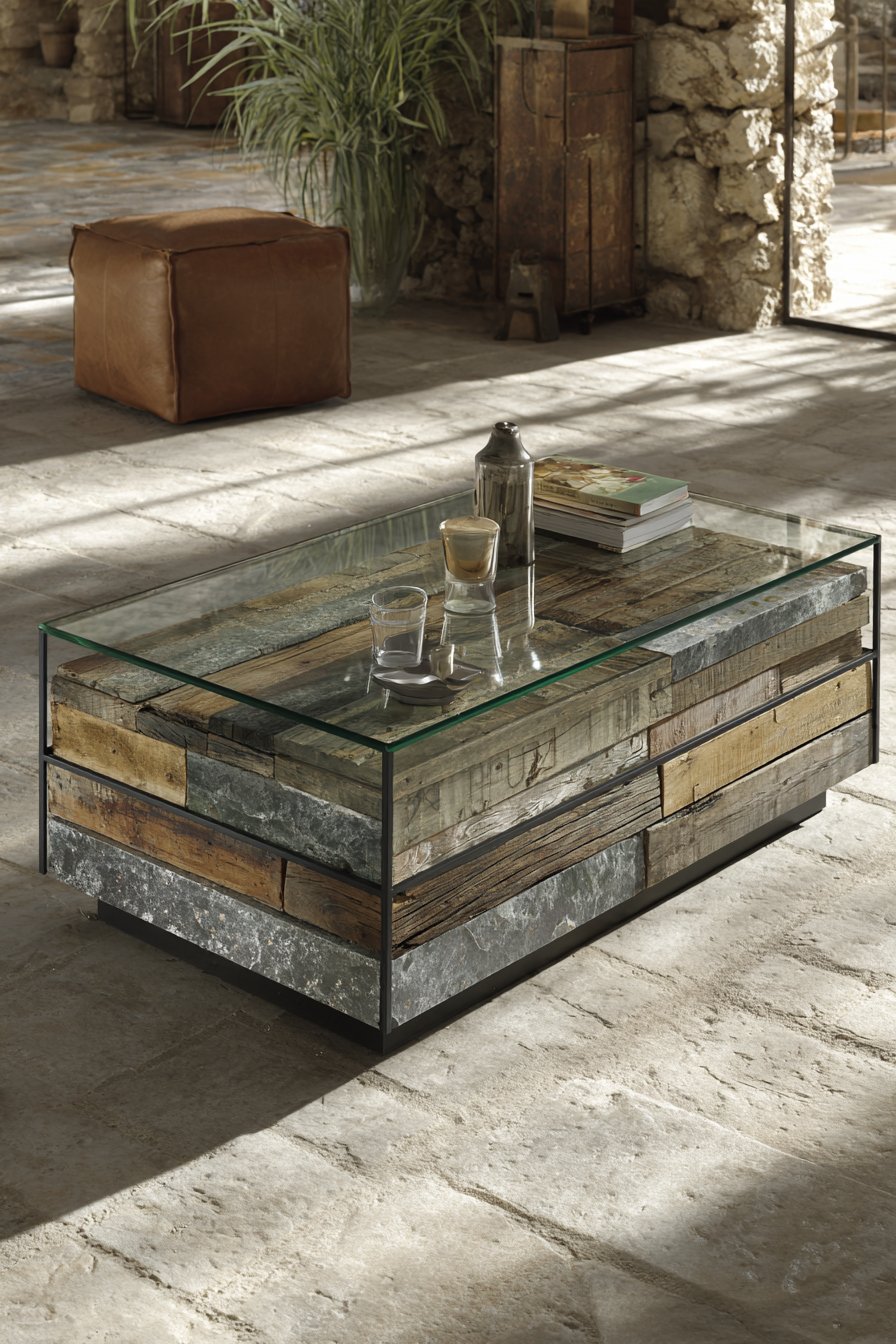
Key Design Tips: Balance warm and cool materials to create transitional appeal that bridges style preferences. Choose wood tones in medium ranges that work with both traditional and contemporary palettes. Use metal accents in matte black or brushed finishes that read as contemporary without appearing aggressively modern. Maintain clean lines overall while allowing subtle traditional details in wood grain and finishing. Position transitional pieces where they can successfully bridge different furniture styles and create cohesion in eclectic spaces.
Why These Glass Coffee Table Designs Represent the Best in Home Décor
The twenty-three glass coffee table concepts explored in this comprehensive guide represent the finest examples of how this versatile furniture type can transform living spaces across all design styles and practical requirements. From minimalist contemporary aesthetics to traditional elegance, from compact urban solutions to luxury statement pieces, these designs demonstrate glass coffee tables’ remarkable adaptability and enduring appeal in residential interiors.
What makes these particular designs exceptional is their thoughtful consideration of both form and function. Each concept addresses real-world needs—whether that’s storage integration for family living, space-saving solutions for apartments, or material combinations that bridge conflicting design styles. The best glass coffee table designs don’t merely look attractive in photographs; they solve practical problems while enhancing aesthetic appeal. This dual focus on beauty and utility ensures furniture remains relevant and valued over time rather than becoming decorative but impractical showpieces.
Material quality and craftsmanship distinguish superior glass coffee tables from mediocre alternatives. The designs featured here emphasize premium materials like tempered safety glass, solid hardwoods with beautiful grain patterns, quality metals with appropriate finishes, and authentic natural materials like marble and rattan. These material choices ensure durability and longevity while providing the visual and tactile qualities that make furniture genuinely satisfying to own and use. Cheap materials and poor construction might create initial savings, but they compromise both safety and aesthetics in ways that ultimately prove false economy.
The versatility of glass as a primary material deserves special recognition. Unlike opaque materials that create visual barriers and fragment spaces, glass maintains openness and light flow while providing necessary functionality. This transparency becomes particularly valuable in contemporary homes where open floor plans, abundant natural light, and visual spaciousness rank among top design priorities. Glass coffee tables enhance these qualities rather than working against them, making spaces feel larger, brighter, and more connected.
Style diversity represents another key strength of these featured designs. The collection spans minimalist contemporary, Scandinavian, mid-century modern, industrial, bohemian, coastal, traditional, Art Deco, and transitional aesthetics—demonstrating that glass coffee tables work beautifully across the entire design spectrum. This stylistic range ensures that regardless of personal aesthetic preferences or existing interior design commitments, appropriate glass coffee table options exist. The material’s neutrality allows it to adapt to various style vocabularies while maintaining its essential character.
Scale considerations receive appropriate attention across these designs, from ultra-compact solutions for small apartments to substantial pieces for spacious open-concept areas. The ability to select glass coffee tables in appropriate proportions for specific spaces proves crucial to successful interior design. Oversized tables overwhelm small rooms while diminutive pieces disappear in large spaces—achieving proper scale relationship between furniture and room dimensions remains essential to cohesive, comfortable environments.
The incorporation of contemporary features like LED lighting integration and smart storage solutions demonstrates how traditional furniture types can evolve to meet modern lifestyle requirements. Today’s glass coffee tables go beyond simple display surfaces to incorporate technology, provide organization solutions, and adapt to multiple uses throughout the day. This functional evolution ensures glass coffee tables remain relevant despite changing how people use their living spaces.
Material combinations featured in these designs showcase creative approaches to mixing textures, finishes, and substances. Glass pairs beautifully with wood, metal, marble, concrete, rattan, and numerous other materials—each combination creating distinct aesthetic and tactile experiences. Understanding these material relationships and their design implications allows for more informed furniture selection that truly complements existing interiors and personal preferences.
Lighting interaction emerges as a recurring theme throughout these designs, highlighting how glass coffee tables transform spaces through their relationship with natural and artificial light. The material’s transparency, reflectivity, and ability to create interesting shadow patterns adds dynamic visual interest that changes throughout the day. This interactive quality makes glass furniture particularly engaging, creating spaces that feel alive and responsive rather than static.
The featured designs also address important practical considerations like safety, maintenance, and durability. Tempered glass, protective coatings, quality construction, and thoughtful design details ensure these tables can withstand daily use while remaining beautiful and safe. These practical considerations prove especially important in homes with children, pets, or high traffic where furniture faces constant demands.
Sustainability and timeless appeal represent final crucial factors. Quality glass coffee tables constructed from durable materials with classic design principles remain attractive and functional for decades, avoiding the disposable furniture cycle that harms both budgets and environment. Investing in well-designed, quality-constructed pieces creates less waste while building homes filled with furniture genuinely worth keeping and cherishing over time.
These glass coffee table designs excel because they balance aesthetic appeal with practical function, embrace quality materials and construction, adapt to diverse design styles and space requirements, incorporate contemporary features while respecting timeless principles, and demonstrate the remarkable versatility glass offers as a primary furniture material. Whether you’re furnishing a first apartment or refreshing an established home, these concepts provide inspiration and guidance for selecting glass coffee tables that will serve beautifully for years to come.
Conclusion
Glass coffee tables occupy a unique position in interior design, offering versatility, elegance, and practical functionality that few furniture types can match. The twenty-three designs explored throughout this comprehensive guide demonstrate the remarkable range of aesthetics, materials, and features available within this single furniture category. From sleek minimalist pieces that virtually disappear into contemporary spaces to ornate traditional designs that showcase exquisite craftsmanship, glass coffee tables adapt seamlessly to diverse design visions and practical requirements.
The transparent nature of glass creates opportunities impossible with opaque materials—maintaining visual flow, maximizing natural light transmission, showcasing beautiful base materials and construction, and creating fascinating interactions with reflections and shadows. These qualities make glass coffee tables particularly valuable in modern homes where openness, brightness, and spatial continuity rank among primary design objectives. Whether you’re working with a compact studio apartment or a spacious open-concept living area, the right glass coffee table enhances rather than compromises your spatial goals.
As you consider incorporating a glass coffee table into your home, reflect on the key principles demonstrated throughout these designs: material quality matters tremendously for both safety and longevity; appropriate scale ensures furniture fits comfortably within your specific space; thoughtful styling enhances rather than clutters surfaces; and the best pieces balance aesthetic appeal with genuine practical functionality. Consider how the table will serve your daily needs while contributing to your desired aesthetic—the most successful furniture choices satisfy both requirements simultaneously.
Don’t hesitate to experiment with material combinations, base designs, and styling approaches that reflect your personal taste and lifestyle requirements. The glass coffee table designs presented here should inspire your own creative thinking rather than limiting options to exact reproductions. Use these concepts as starting points for discovering what works best in your unique space, with your specific furnishings, and for your particular way of living. The perfect glass coffee table for your home awaits—whether it’s a space-saving nested set, a luxurious designer statement piece, or a practical family-friendly design with integrated storage, the right choice will transform your living room into a more beautiful, functional, and personally meaningful space.
