
The chimney wall stands as one of the most commanding architectural features in any home, serving not only as a functional necessity but as a dramatic focal point that can define the entire character of a living space. Whether you’re building new, renovating an existing fireplace, or simply seeking inspiration to refresh your interior, the chimney wall offers endless possibilities for creative expression and practical design solutions. From rustic stone installations that evoke the warmth of a mountain lodge to sleek contemporary designs that embody modern minimalism, the right chimney wall can transform an ordinary room into an extraordinary sanctuary.
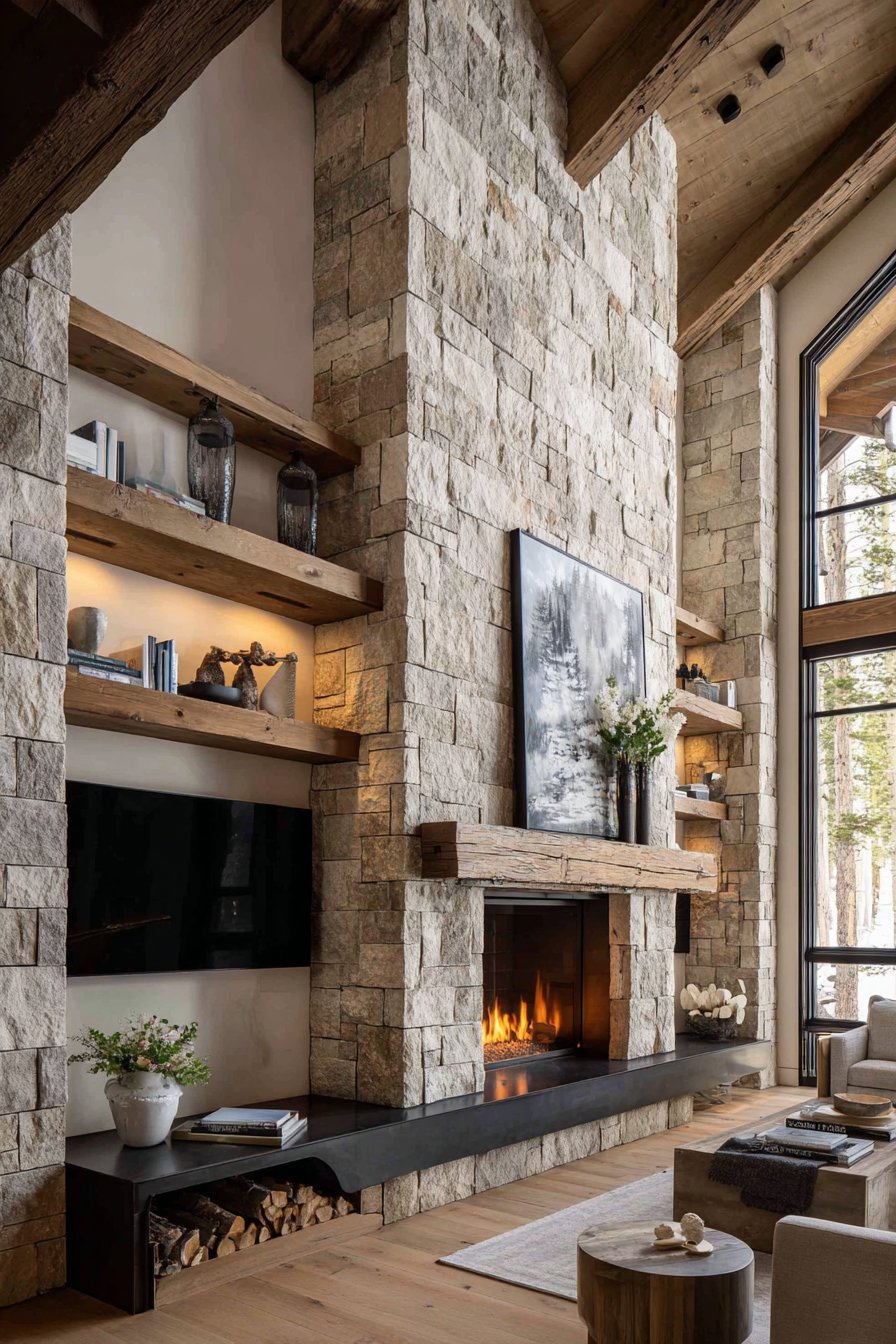
In today’s evolving design landscape, homeowners are increasingly recognizing the chimney wall as an opportunity to make bold statements while maintaining functionality and comfort. The integration of smart storage solutions, innovative materials, and carefully considered lighting has elevated chimney wall design beyond simple brick-and-mortar construction. Modern chimney walls now incorporate floating shelves, built-in cabinetry, artistic tile work, and architectural lighting that work together to create cohesive, multifunctional spaces that reflect individual style while meeting practical needs.
This comprehensive guide explores twenty-one distinctive chimney wall ideas, each offering unique approaches to materials, styles, and spatial arrangements. From the timeless appeal of traditional brick and the organic beauty of natural stone to the clean lines of contemporary concrete and the warmth of reclaimed wood, these designs span the full spectrum of interior aesthetics. Whether your home leans toward farmhouse charm, industrial edge, coastal serenity, or mid-century sophistication, you’ll discover inspiring chimney wall concepts that can be adapted to suit your space, budget, and personal design vision.
1. Rustic White-Painted Brick with Built-In Alcoves
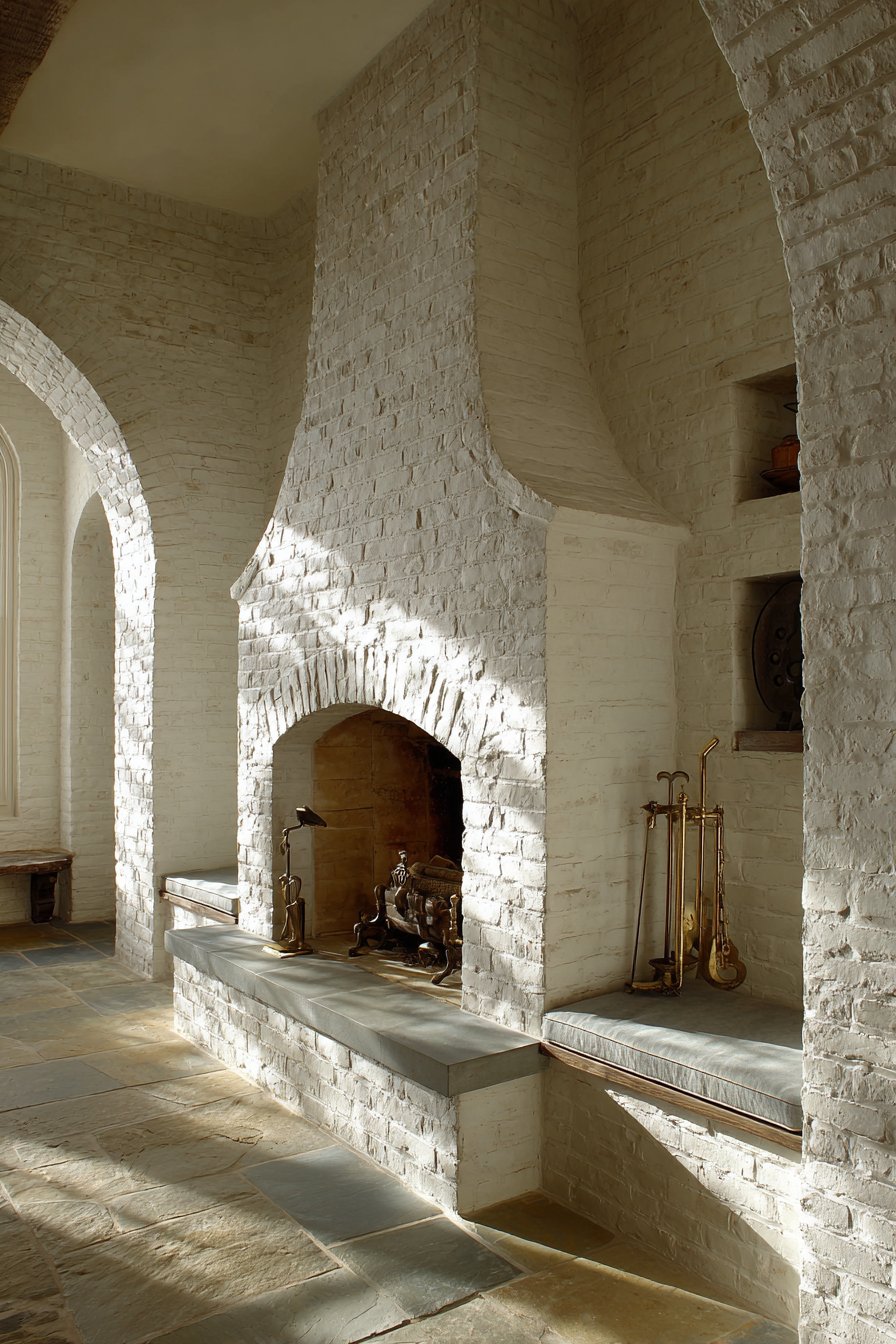
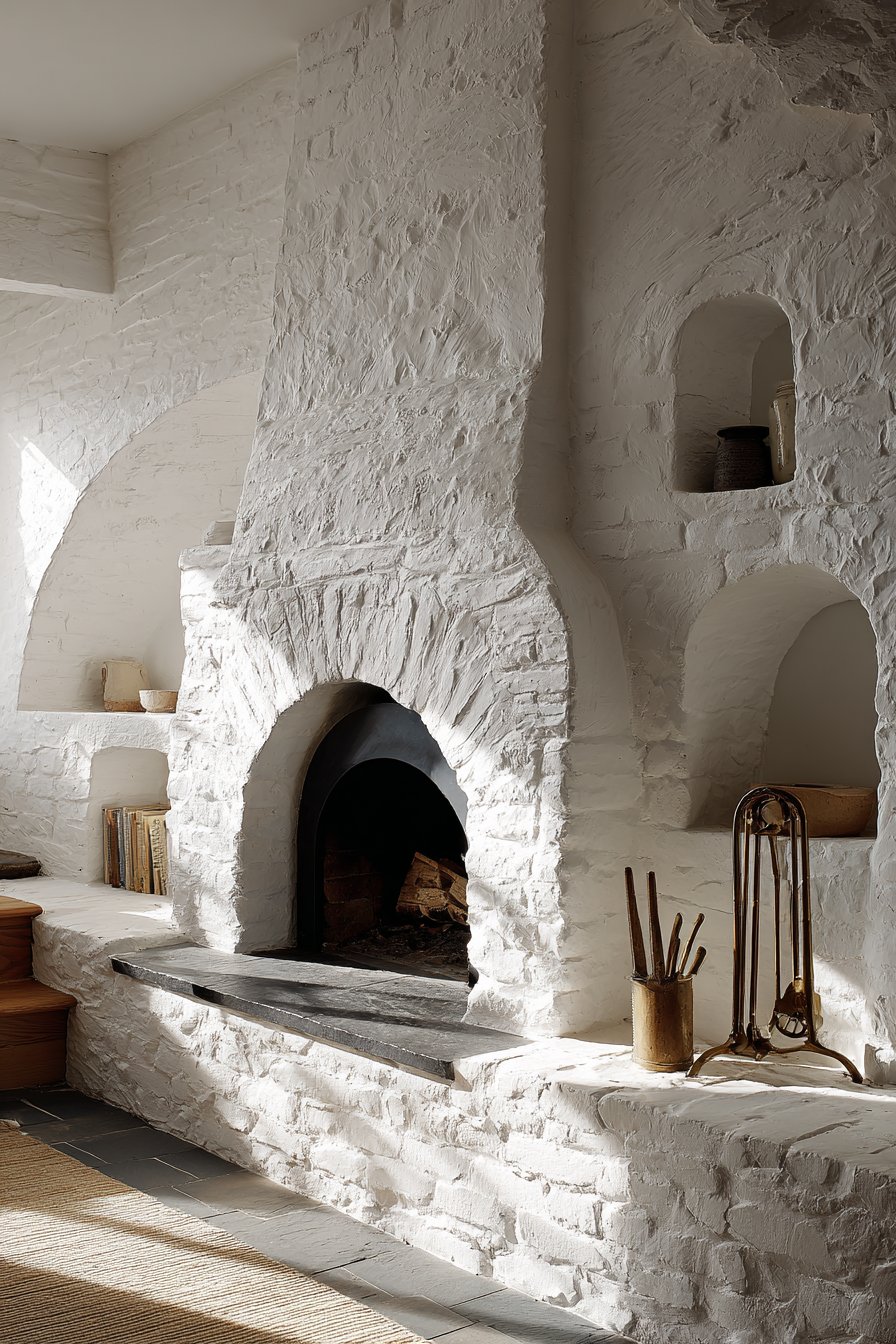
Step into a room where tradition meets functionality through a stunning floor-to-ceiling brick chimney wall painted in warm white tones. This rustic implementation showcases the timeless beauty of exposed brick while softening its industrial edge through a carefully applied paint finish that allows the mortar lines to remain visible, creating subtle texture and depth. The chimney wall extends majestically from the hardwood floor to the ceiling, commanding attention as the undisputed centerpiece of the living area, while built-in alcoves flanking the main structure provide practical recessed shelving that transforms dead space into valuable display and storage areas.
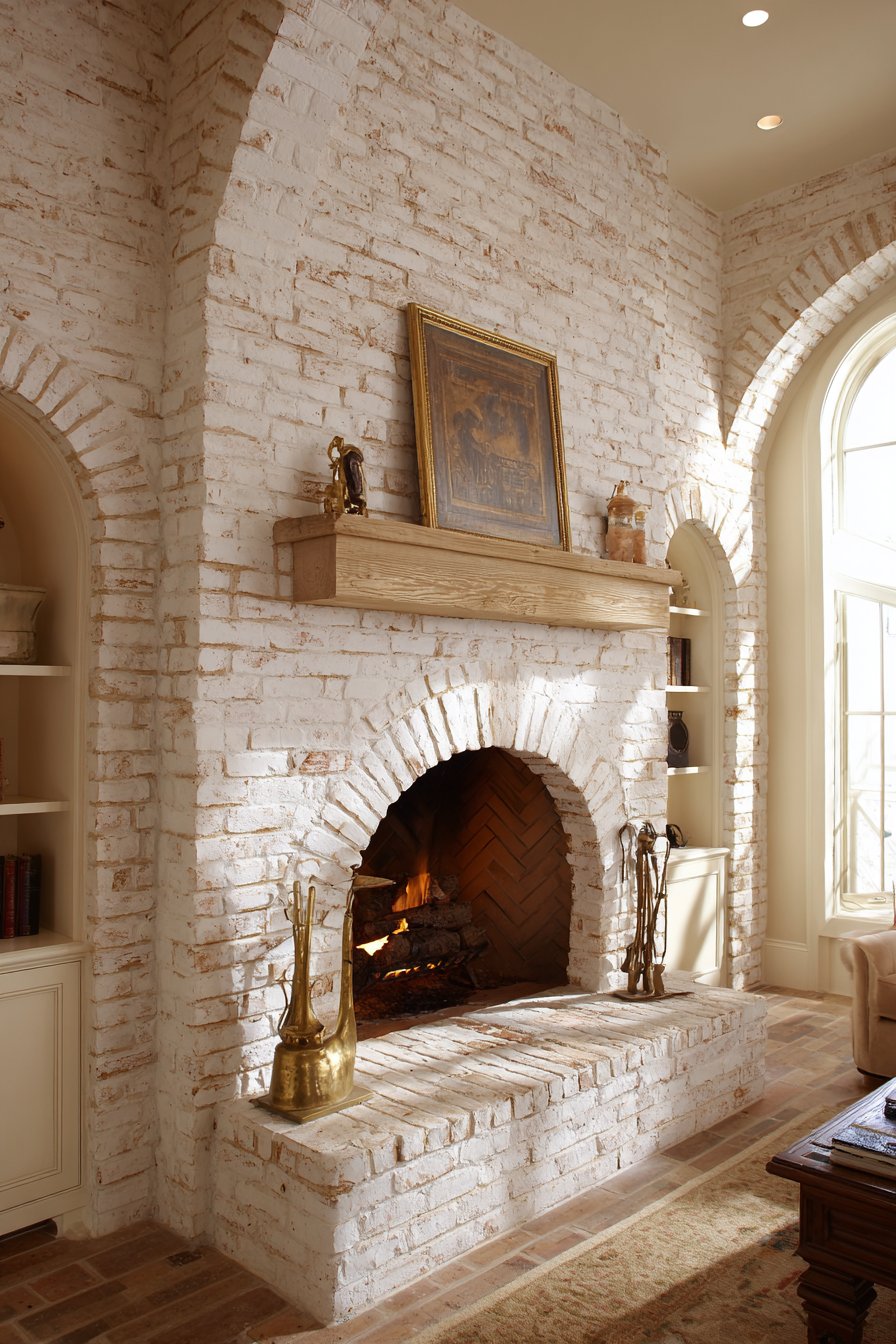
At the heart of this design sits a traditional cast iron wood-burning fireplace insert nestled within an elegant arched opening, its black metal surface providing dramatic contrast against the white brick backdrop. The arch itself speaks to classical architectural sensibilities, creating visual interest through its curved form while drawing the eye naturally toward the dancing flames within. The hearth, constructed from natural slate tiles with their characteristic variations in color and texture, extends outward to provide a practical landing zone while introducing an earthy element that grounds the design in organic materiality.
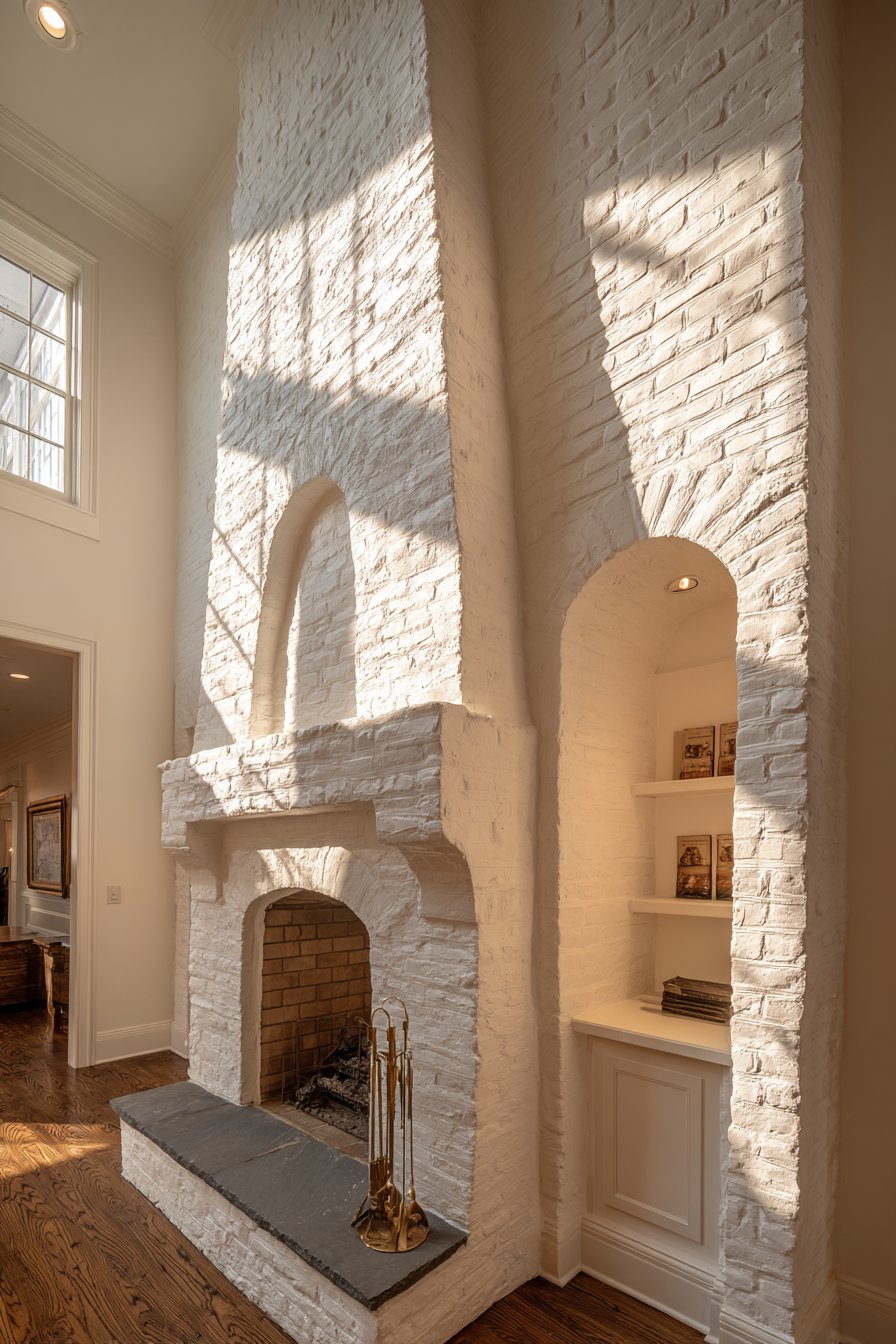
Vintage brass fireplace tools rest against the slate hearth, their burnished surfaces catching and reflecting the warm glow of the fire, adding both functional utility and decorative appeal. The overall composition achieves a perfect balance between rustic charm and refined elegance, with the white-painted brick serving as a neutral canvas that allows architectural details and carefully chosen accessories to shine. Wide-angle interior photography captures the full impact of this design, with soft natural lighting streaming through nearby windows highlighting the dimensional quality of the brick texture and creating gentle shadows that emphasize the depth of the alcoves and the commanding presence of the chimney wall structure.
Key Design Tips:
- Apply white paint with a dry brush technique to allow some brick color to show through for added character
- Position alcove shelving at varying heights to create visual interest and accommodate different decorative objects
- Choose slate tiles with natural color variation to add organic texture to the hearth area
- Install proper lighting within alcoves to highlight displayed items and create ambiance during evening hours
- Maintain the integrity of mortar lines during painting to preserve the brick’s authentic texture
2. Minimalist Concrete Chimney with Suspended Fireplace
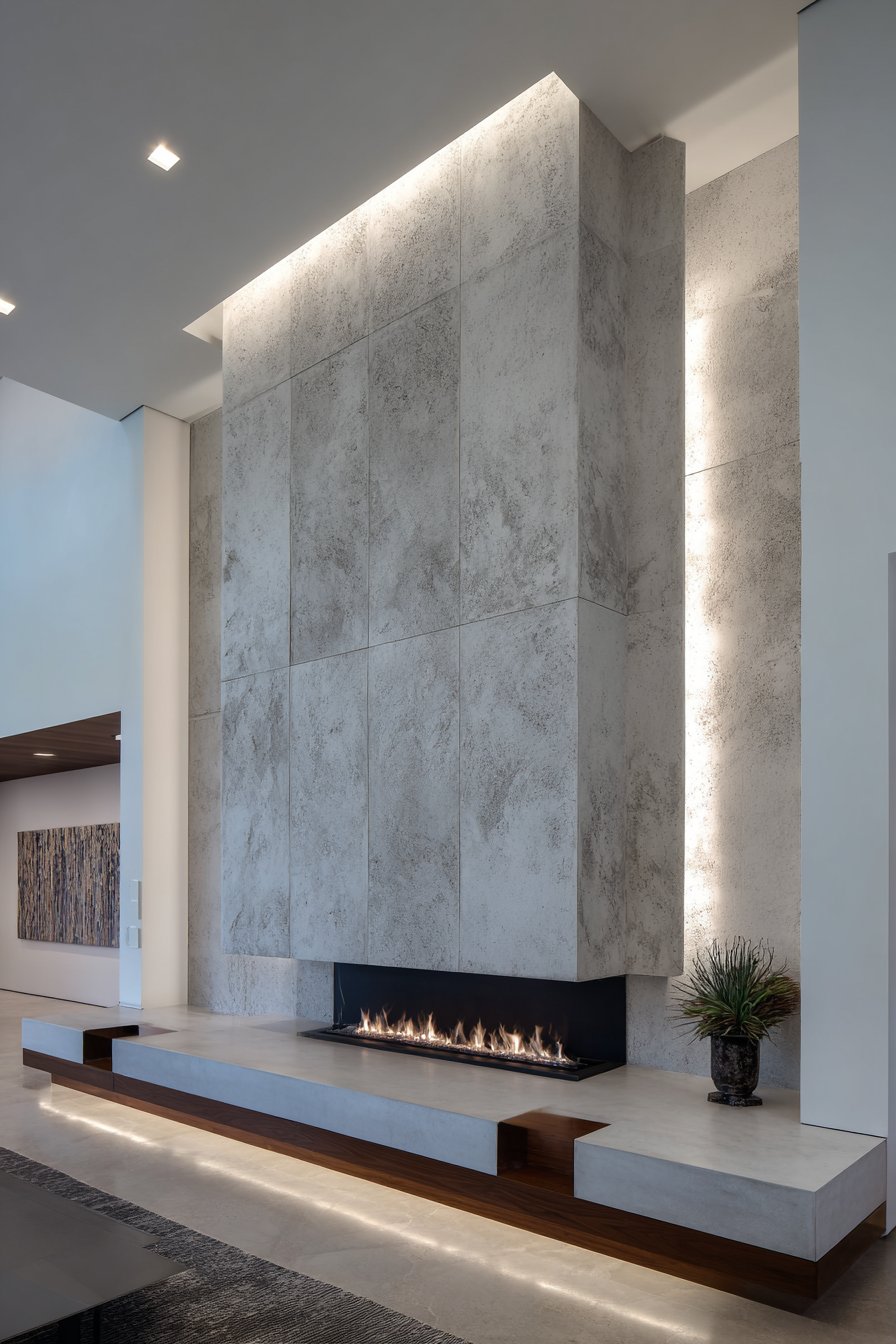
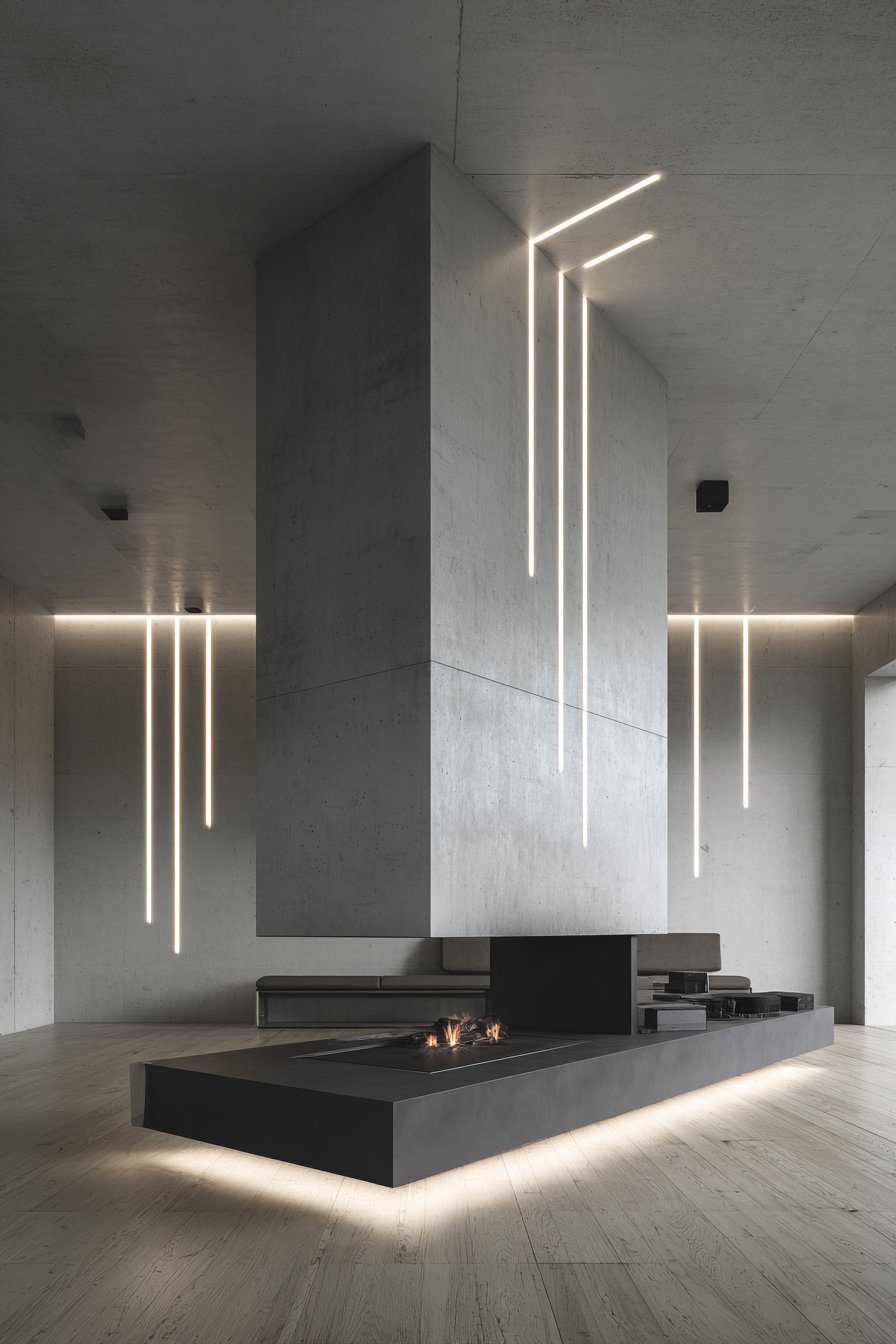
Modern architecture reaches new heights in this striking minimalist chimney wall design that celebrates the raw beauty of concrete while pushing the boundaries of conventional fireplace installation. The smooth, troweled concrete surface in light gray creates a monolithic presence that serves as both structural element and artistic statement, its seamless finish achieved through expert craftsmanship that eliminates joints and creates the illusion of a single poured element rising through the space. This contemporary chimney wall embodies the “less is more” philosophy, stripping away ornamentation to reveal the inherent beauty of industrial materials treated with precision and care.
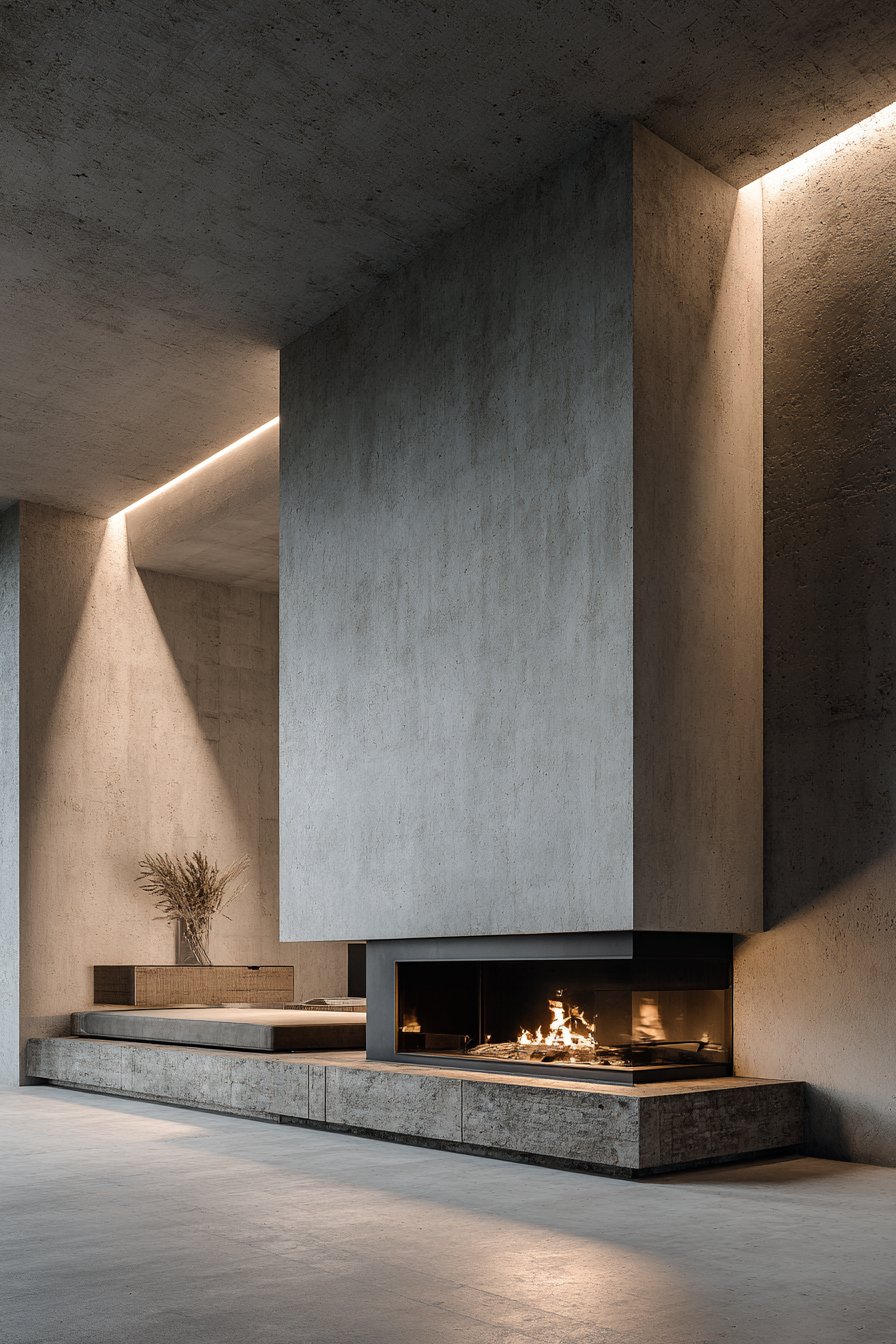
The focal point of this design is a contemporary suspended steel fireplace box that appears to defy gravity, floating against the concrete surface without visible support mechanisms. This engineering marvel creates a sense of lightness and sophistication, with the geometric fireplace form contrasting beautifully against the smooth backdrop while the flames visible through its glass viewing panel add warmth and movement to the otherwise static composition. Linear LED strips recessed vertically on either side of the chimney wall introduce dramatic uplighting that washes over the concrete surface, emphasizing its texture and creating subtle shadows that change throughout the day.
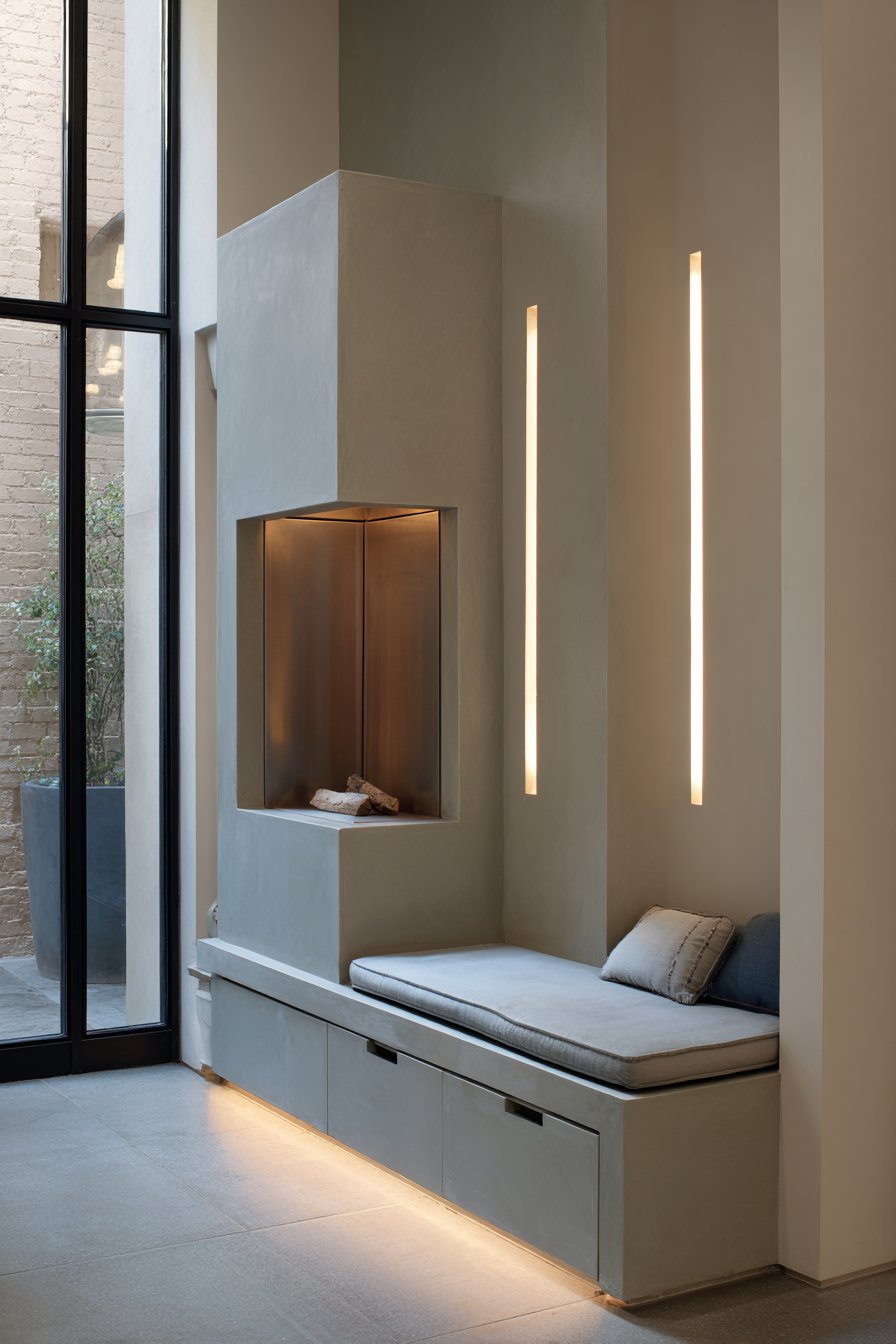
At the base of this architectural feature, a low-profile built-in bench with hidden storage demonstrates the practical applications of minimalist design principles. The bench provides additional seating while maintaining clean lines that don’t compete with the chimney wall’s visual impact, and concealed compartments offer storage solutions without cluttering the aesthetic. Professional interior photography captures the interplay of light and shadow across the concrete surface, with balanced exposure highlighting the subtle variations in the troweled finish and the sophisticated integration of functional elements within a rigorously minimal framework.
Key Design Tips:
- Work with experienced concrete specialists to achieve a perfectly smooth, uniform finish without visible seams
- Plan electrical infrastructure early to accommodate recessed LED lighting without disrupting the concrete surface
- Select a suspended fireplace model with proper weight distribution and hidden mounting systems
- Incorporate subtle texture in the concrete through troweling techniques to prevent a completely flat, lifeless appearance
- Design the built-in bench with proportions that complement rather than overwhelm the vertical chimney wall element
- Use neutral furnishings in the surrounding space to maintain the minimalist aesthetic
3. Farmhouse Whitewashed Brick with Reclaimed Wood Mantel
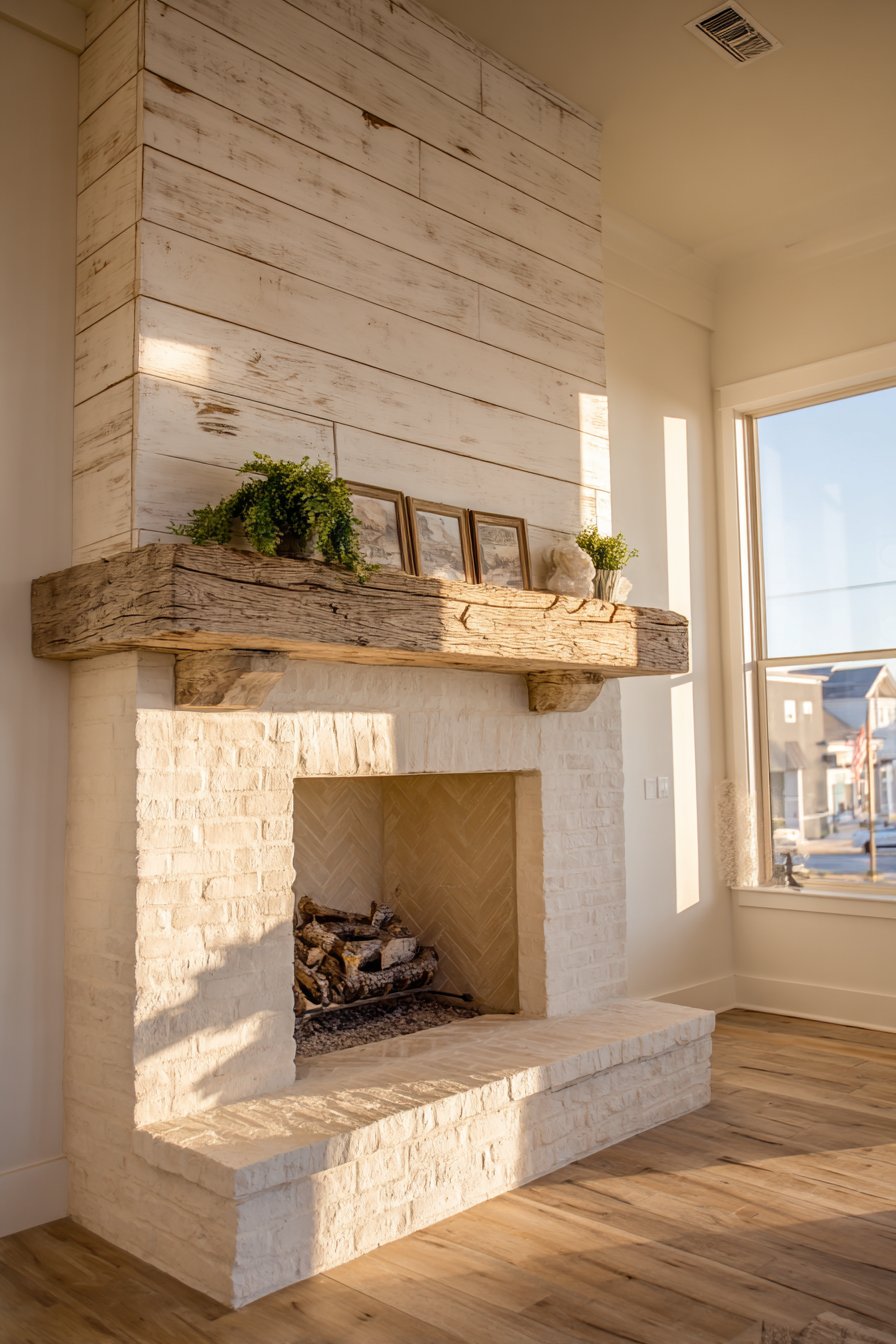
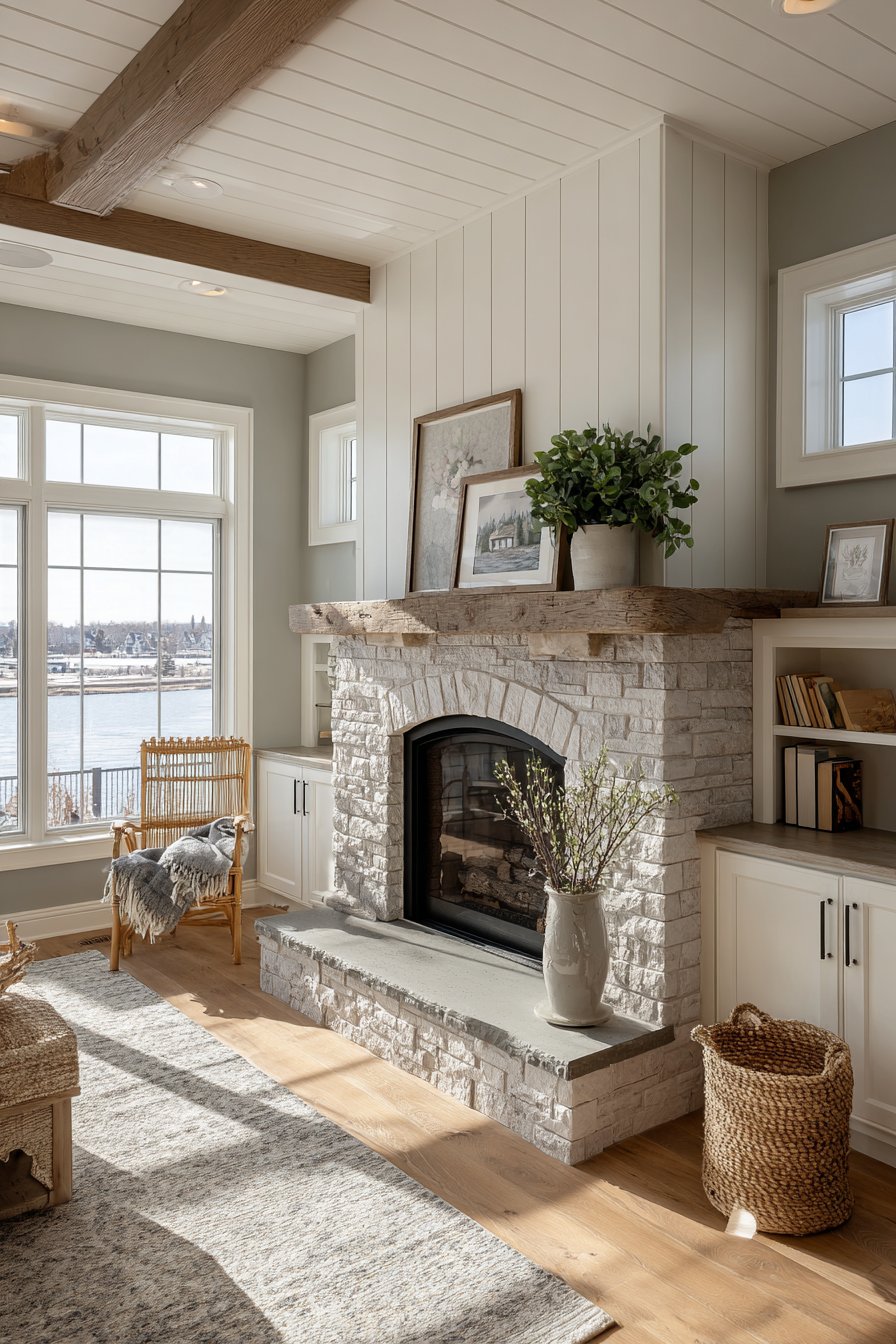
Warmth and nostalgia converge in this charming farmhouse chimney wall that transforms an open-concept living area into a cozy gathering space centered around the comforting presence of a traditional fireplace. The whitewashed brick technique applied to this floor-to-ceiling chimney wall creates a soft, aged appearance that evokes countryside cottages and simpler times, with the diluted white paint allowing the natural brick color to show through in places, creating organic variation that tells a story of time and use. This treatment brightens the space while maintaining the textural interest and architectural substance that solid brick provides, making it an ideal choice for homes seeking that perfect balance between rustic authenticity and light-filled modern living.
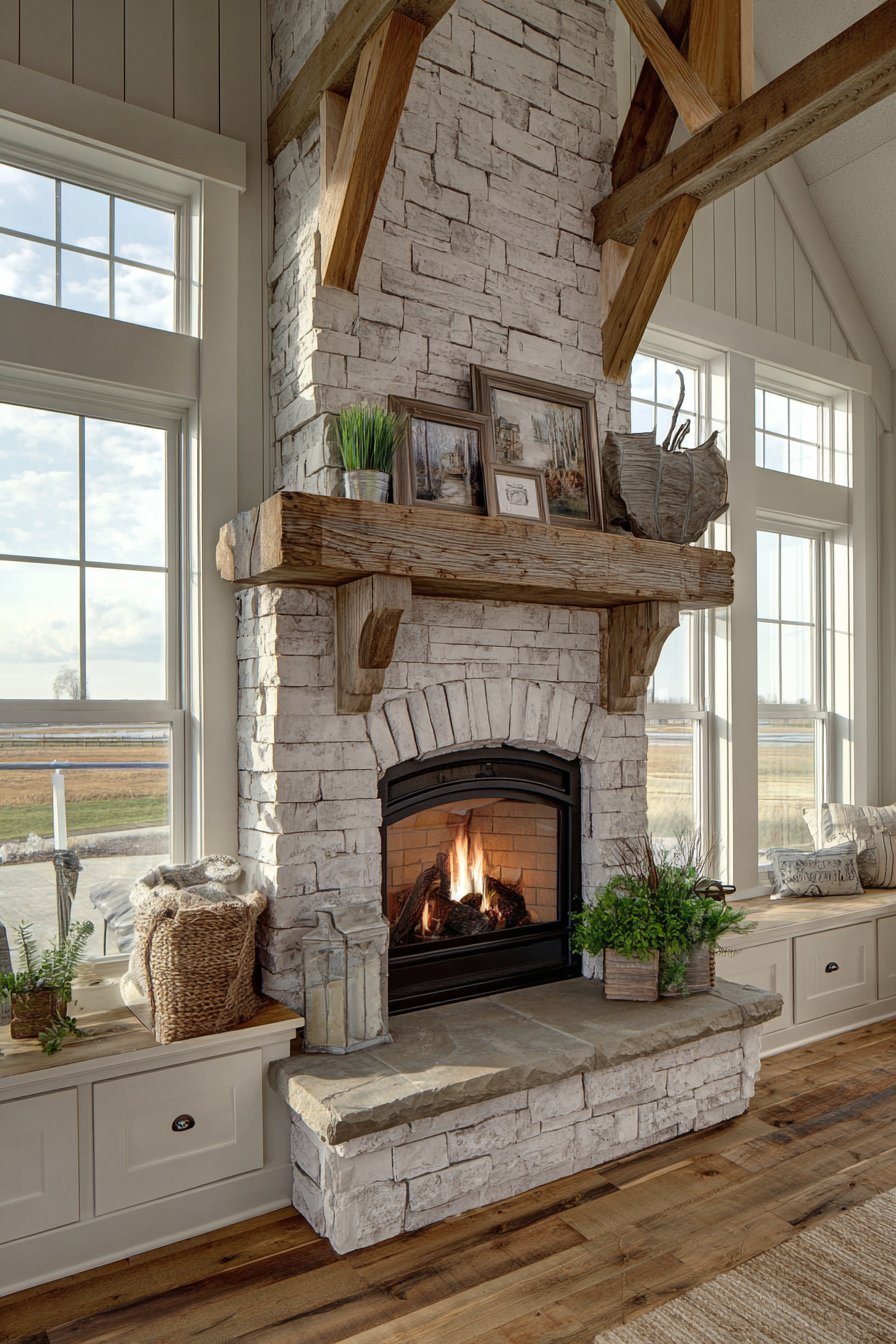
A traditional wood-burning fireplace serves as the functional heart of this design, its opening framed simply to allow the natural beauty of the brick to take center stage. The chunky reclaimed wood mantel represents the crown jewel of this composition, a substantial beam showing the honest marks of its previous life—saw cuts, nail holes, natural grain patterns, and perhaps even the ghostly outlines of old hardware. This mantel provides the perfect display surface for family photos in mismatched frames, potted herbs in galvanized containers, and seasonal greenery that brings life and color to the neutral palette. The intentional imperfection and lived-in quality of these elements create an authentic farmhouse aesthetic that feels collected over time rather than designed in a single day.
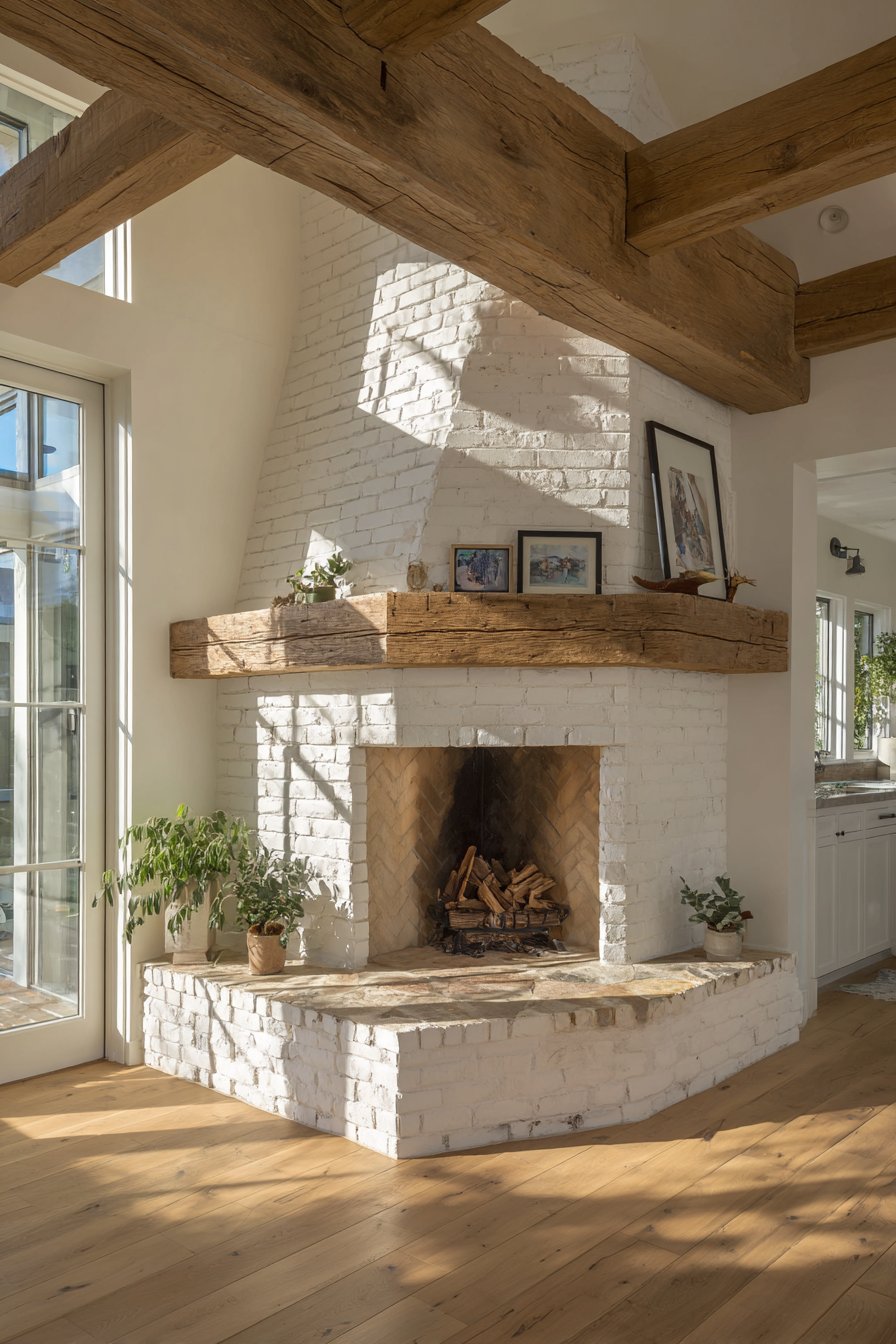
Shiplap paneling wrapping around the sides of the chimney wall base extends the farmhouse vocabulary throughout the space, creating visual continuity while adding another layer of texture and interest. Natural oak flooring flows seamlessly up to a stone hearth, the transition between materials handled gracefully to maintain the room’s organic, unfussy character. Interior design photography captured during golden hour bathes the entire scene in warm, honey-colored light streaming through nearby windows, emphasizing the inviting, homey character of the chimney wall and creating the kind of atmosphere that makes people want to linger, share stories, and create memories around the fire.
Key Design Tips:
- Create whitewash by diluting white paint with water, testing on hidden brick areas to achieve desired opacity
- Source authentic reclaimed wood for the mantel from architectural salvage yards or barn deconstruction companies
- Install the mantel at a height that provides adequate clearance from the firebox while maintaining visual balance
- Layer shiplap horizontally at the base to create visual grounding and protect walls from foot traffic
- Arrange mantel decor in odd-numbered groupings with varying heights for the most pleasing composition
- Use the mantel to display seasonal elements that can be easily changed throughout the year
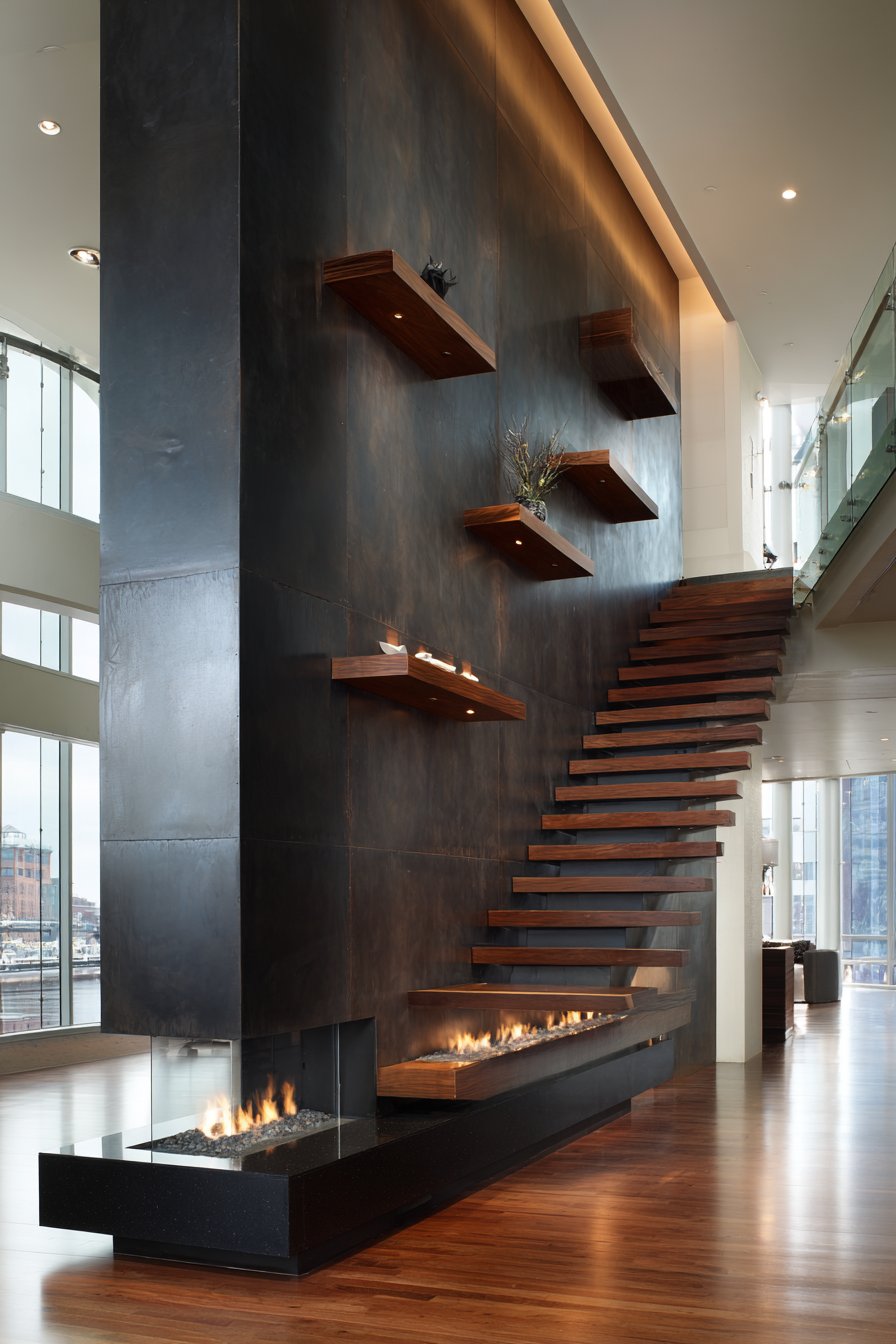
4. Contemporary Black Metal-Clad Double-Height Design
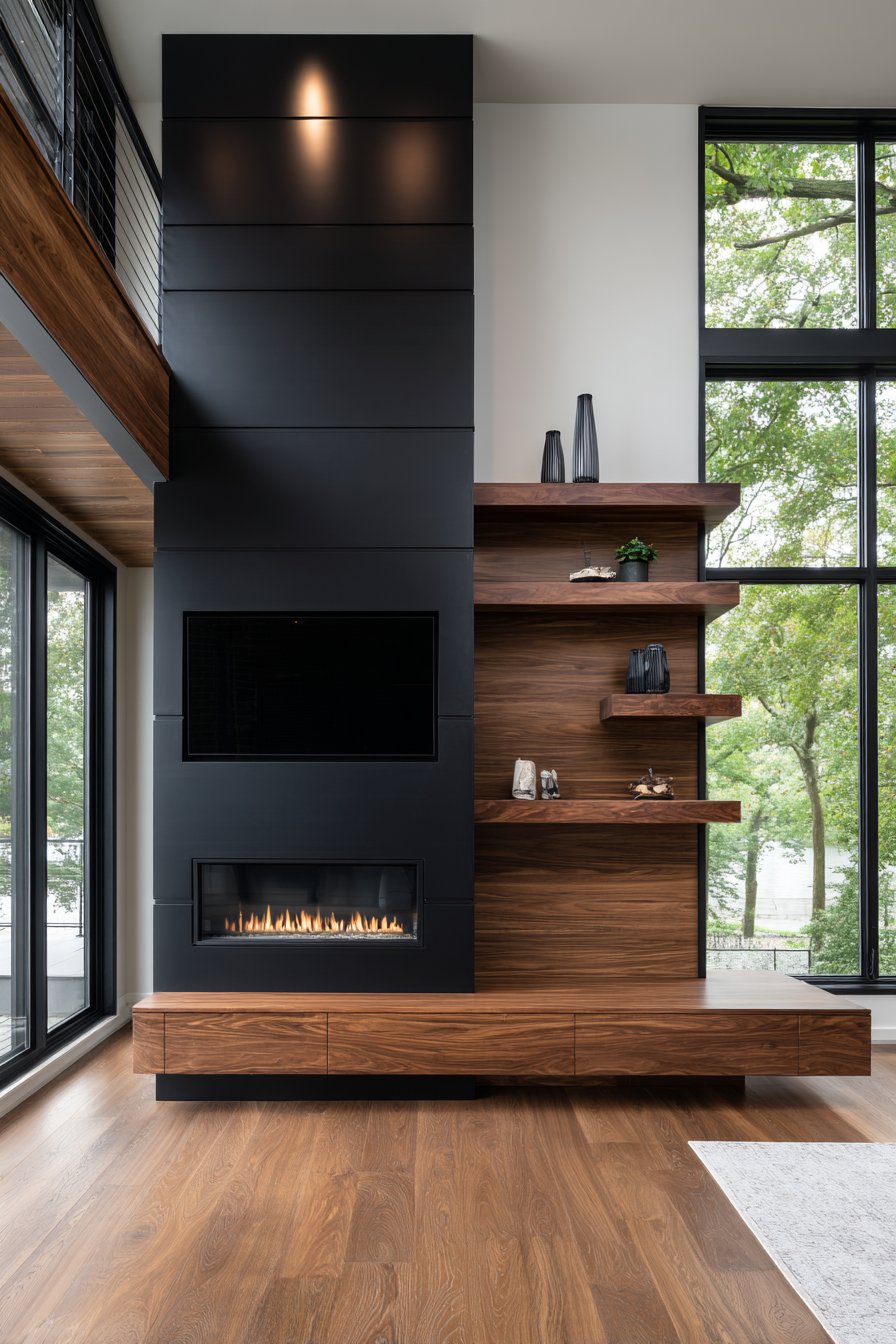
Dramatic verticality defines this contemporary chimney wall that soars through a double-height ceiling space, creating an architectural moment that commands attention from the moment you enter the room. The sleek black metal cladding wraps the chimney structure from floor to soaring ceiling, its dark surface reflecting light in subtle ways that change throughout the day, from matte absorption in diffused morning light to gentle gleaming when struck by afternoon sun. This bold material choice makes a strong design statement while providing a sophisticated backdrop for the modern horizontal gas fireplace that serves as the functional centerpiece of the composition.
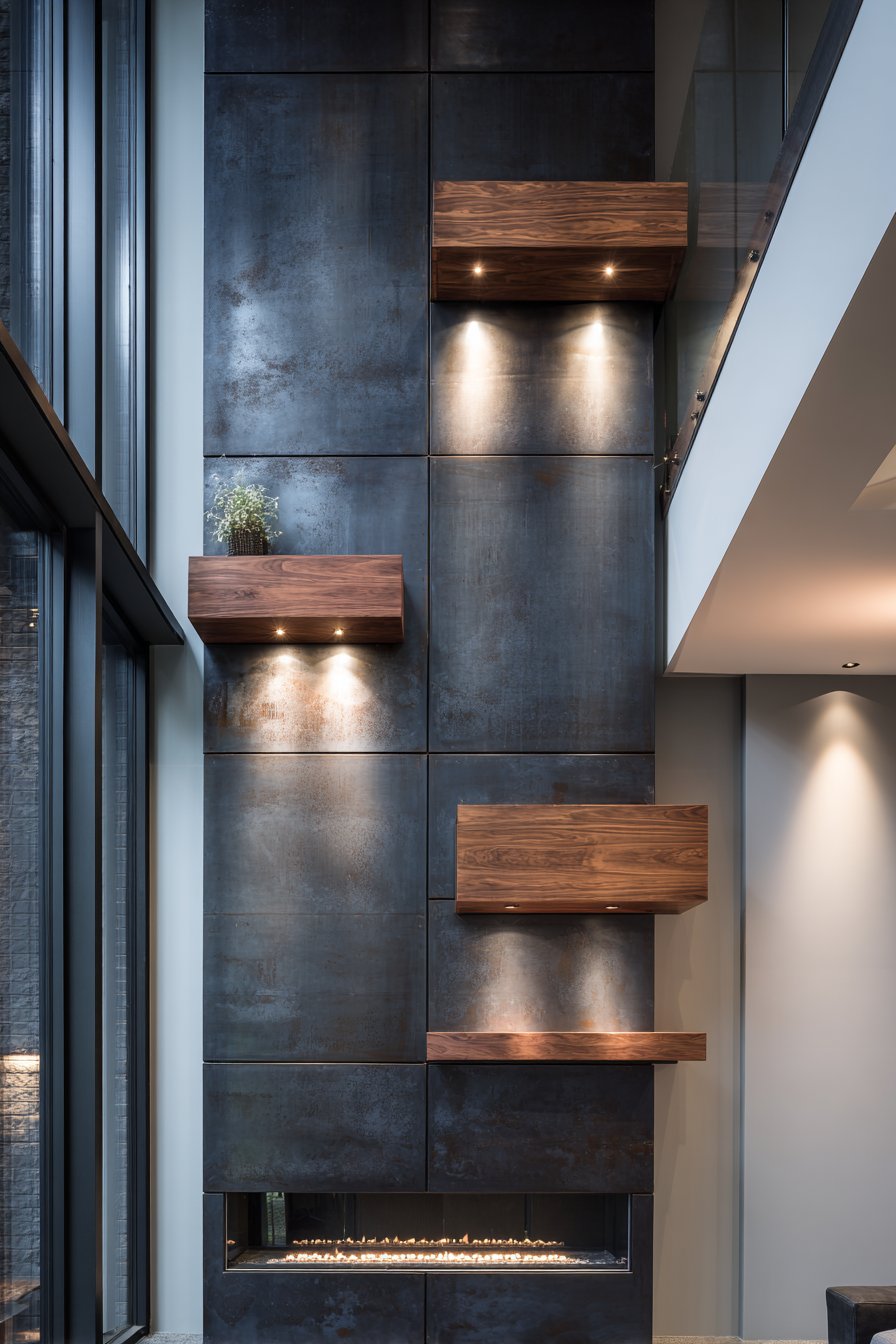
The frameless glass viewing panel of the fireplace creates an unobstructed window into the dancing flames, the fire appearing to float within the black metal structure like a glowing ribbon of warmth and light. This horizontal orientation represents a departure from traditional fireplace design, creating a wider, more contemporary viewing experience that suits modern living patterns and furniture arrangements. Integrated floating shelves in natural walnut wood flank the fireplace at carefully considered staggered heights, their warm honey tones providing essential contrast against the cool black metal while offering display surfaces for books, art objects, and carefully curated decor that adds personality to the space.
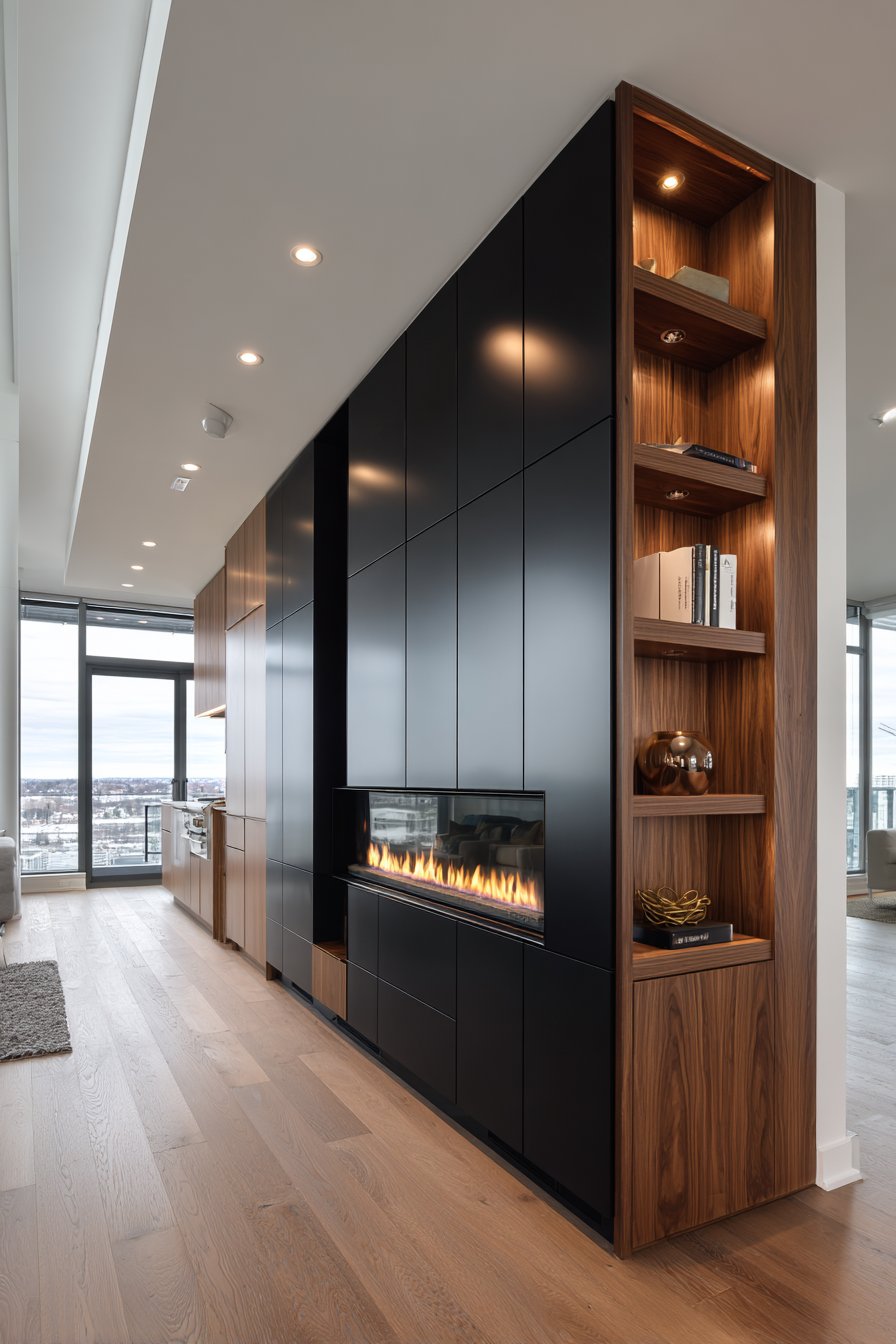
Recessed lighting installed above the chimney wall casts gentle illumination downward, creating pools of light that highlight the shelving and the objects displayed upon them while contributing to the overall ambient lighting scheme. The vertical scale of this chimney wall creates drama and draws the eye upward, emphasizing the generous ceiling height and making the space feel even more expansive and grand. Wide-angle architectural photography captures the full vertical journey of this design element, with professional lighting creating subtle reflections on the metal surface that reveal its depth and quality while demonstrating how this contemporary chimney wall serves as both functional heating element and sculptural architectural feature.
Key Design Tips:
- Choose metal cladding with a low-gloss or matte finish to avoid excessive reflection that could create visual discomfort
- Position the horizontal fireplace at a height that allows comfortable viewing from standard seating arrangements
- Stagger floating shelves asymmetrically to create visual interest and avoid a rigid, predictable appearance
- Install dimmers on recessed lighting to control ambiance and adapt lighting levels for different times and activities
- Ensure proper ventilation for the gas fireplace with hidden venting that doesn’t disrupt the clean metal surface
- Balance the dark chimney wall with lighter elements in the surrounding space to prevent the room from feeling heavy
5. Industrial Exposed Brick with Vintage Cast Iron Details
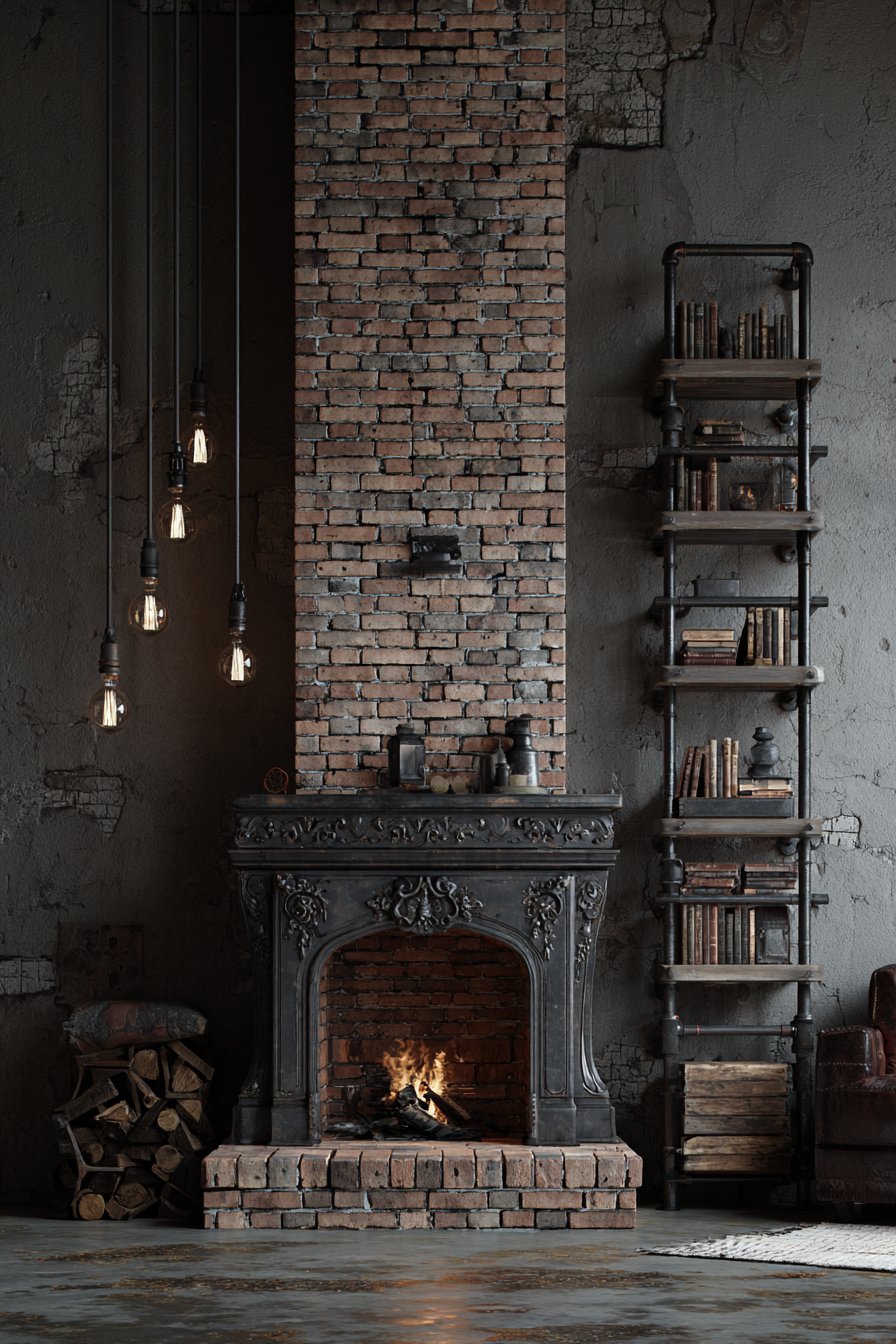
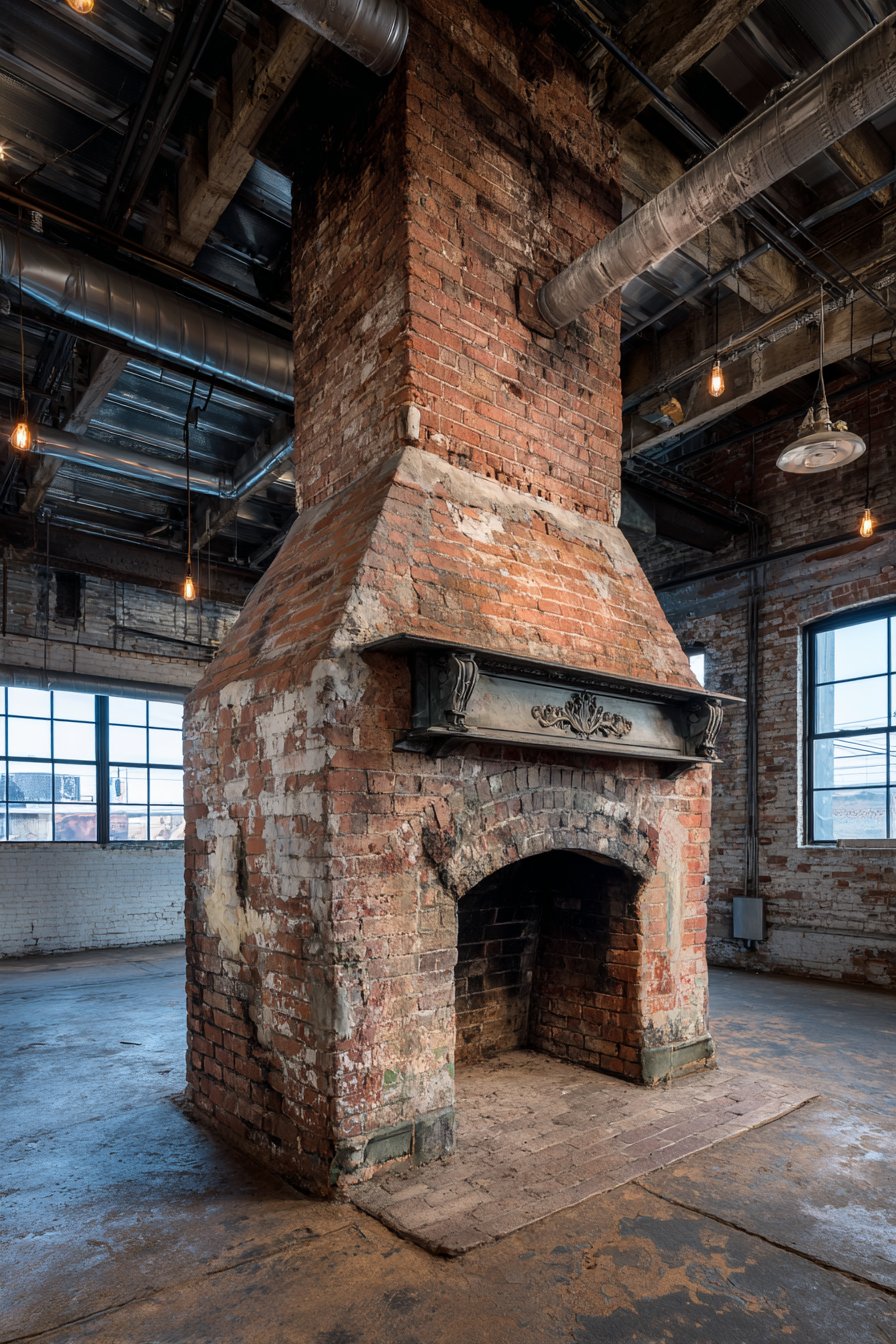
Raw authenticity meets urban sophistication in this industrial chimney wall design that celebrates the honest beauty of aged materials and the character that only time can create. The exposed brick chimney wall displays its original mortar and natural patina with pride, each brick telling a story through its color variations, slight imperfections, and the weathered appearance that comes from decades or even centuries of service. This commitment to preserving original materials rather than covering or refinishing them speaks to the industrial aesthetic’s core values of honoring function, history, and the inherent beauty of working elements.
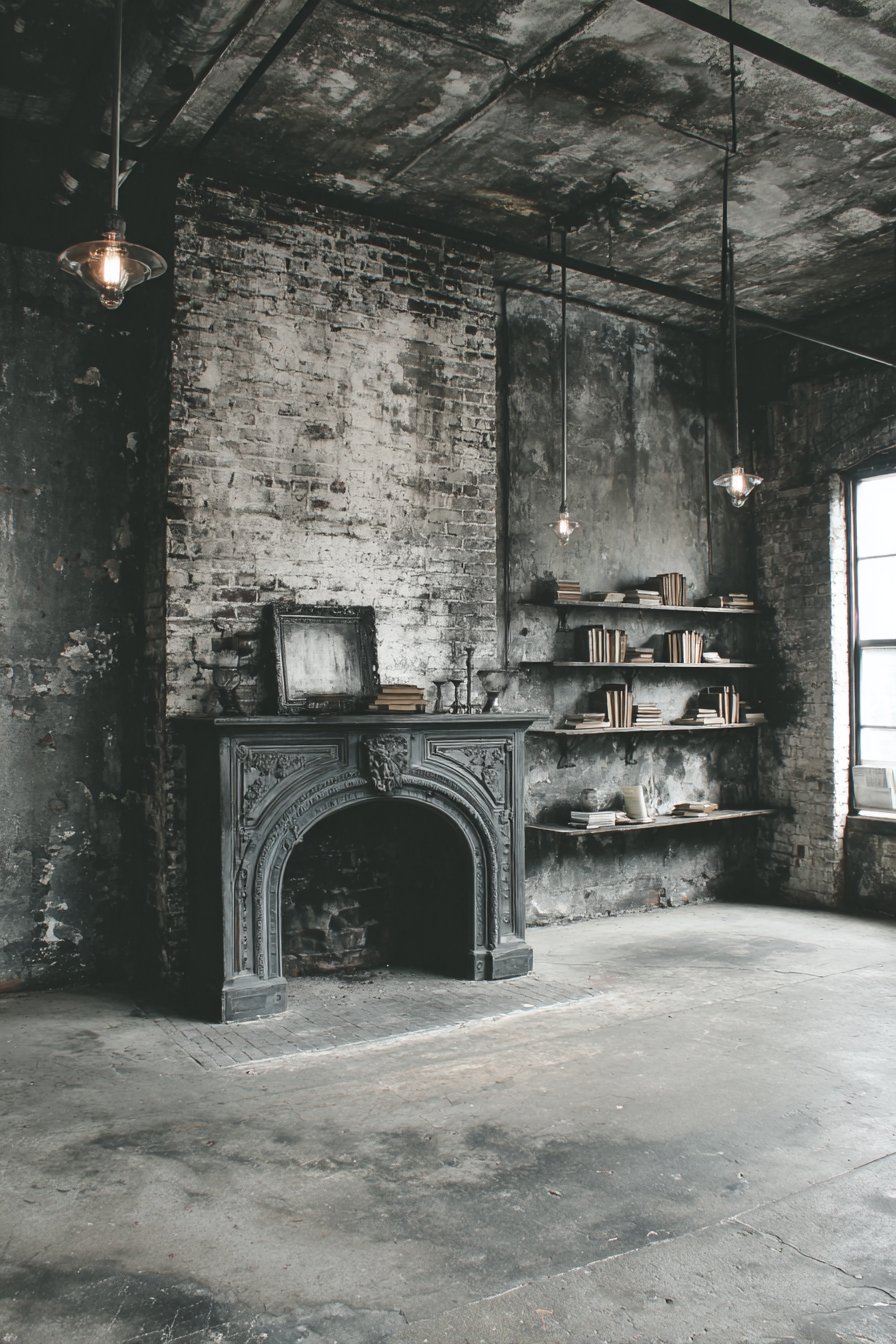
The restored vintage cast iron fireplace represents a treasure rescued from architectural salvage, its ornate detailing showcasing the craftsmanship of an earlier era when even functional elements received artistic attention. Decorative motifs cast into the metal surround demonstrate the kind of hand-work and attention to detail that modern mass production rarely achieves, making this fireplace insert not just a heating element but a genuine piece of functional art. Black metal pipe shelving mounted on both sides of the chimney wall extends the industrial vocabulary, its utilitarian construction providing sturdy support for books, vintage industrial objects, and collected curiosities that reinforce the aesthetic while adding practical storage.
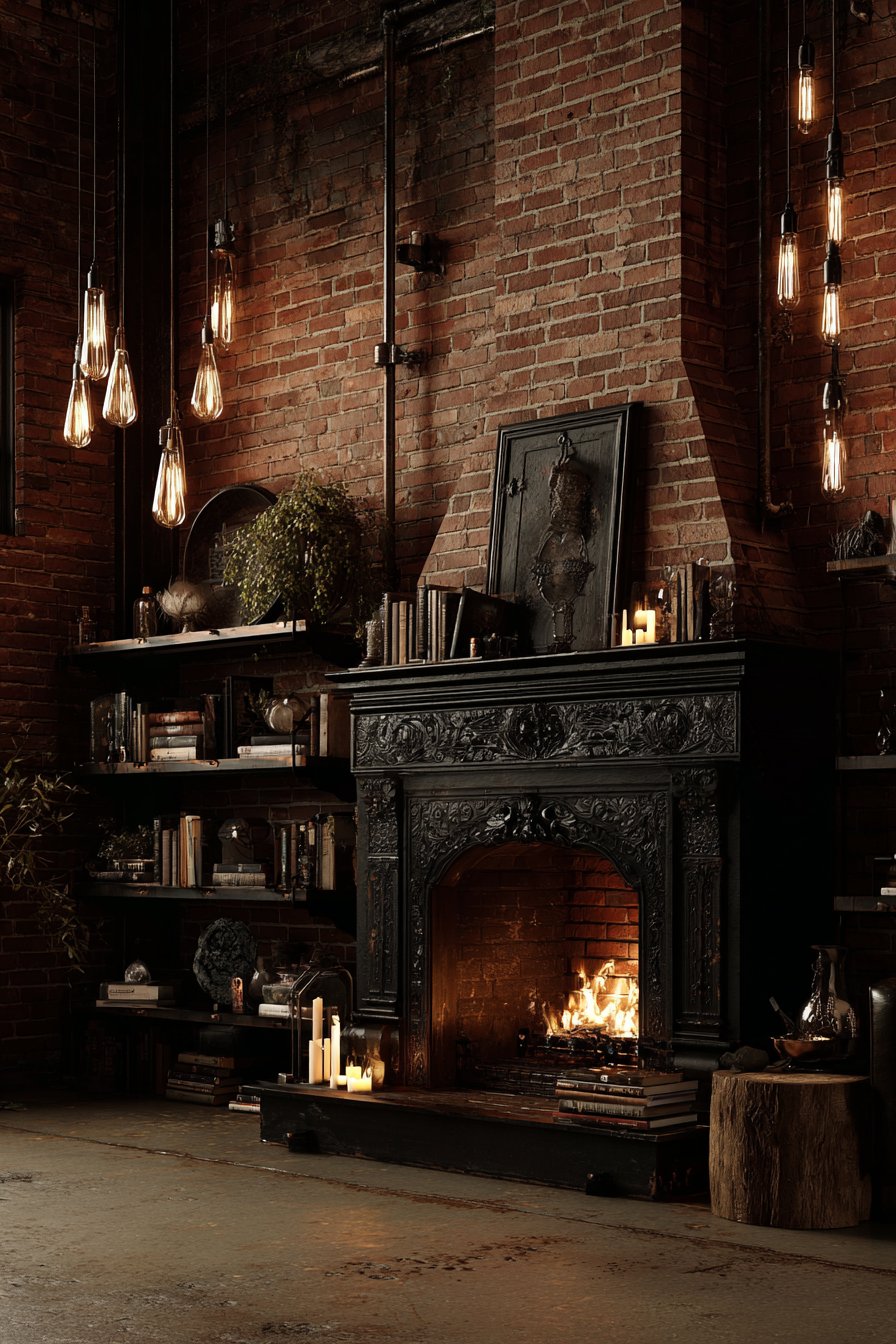
Edison bulb pendant lights hanging nearby contribute both illumination and atmosphere, their visible filaments glowing warmly like miniature sculptures while casting a golden light that enhances the rich tones of the aged brick and burnished metal. The concrete floor shows natural wear patterns—scuffs, slight discoloration, and the patina of use—that ground the space in reality and reinforce the industrial commitment to authentic materials showing honest age. Interior design photography with moody lighting emphasizes the textural richness of the exposed brick chimney wall, capturing the play of light and shadow across the irregular surface while the warm glow from both fireplace and Edison bulbs creates an inviting atmosphere within this celebration of industrial heritage.
Key Design Tips:
- Seal exposed brick with a clear matte sealer to protect against dust and moisture while maintaining its natural appearance
- Research architectural salvage companies and estate sales to find authentic vintage fireplace inserts with period-appropriate detailing
- Mount pipe shelving using industrial flanges and black iron pipes for authentic industrial construction
- Choose Edison bulbs with appropriate wattage to provide sufficient light while maintaining the vintage aesthetic
- Embrace imperfections in the brick and mortar as design features rather than flaws to be corrected
- Balance the rough textures with some softer elements in furnishings to prevent the space from feeling too hard and cold
6. Scandinavian Light Gray Stucco with Bio-Ethanol Insert
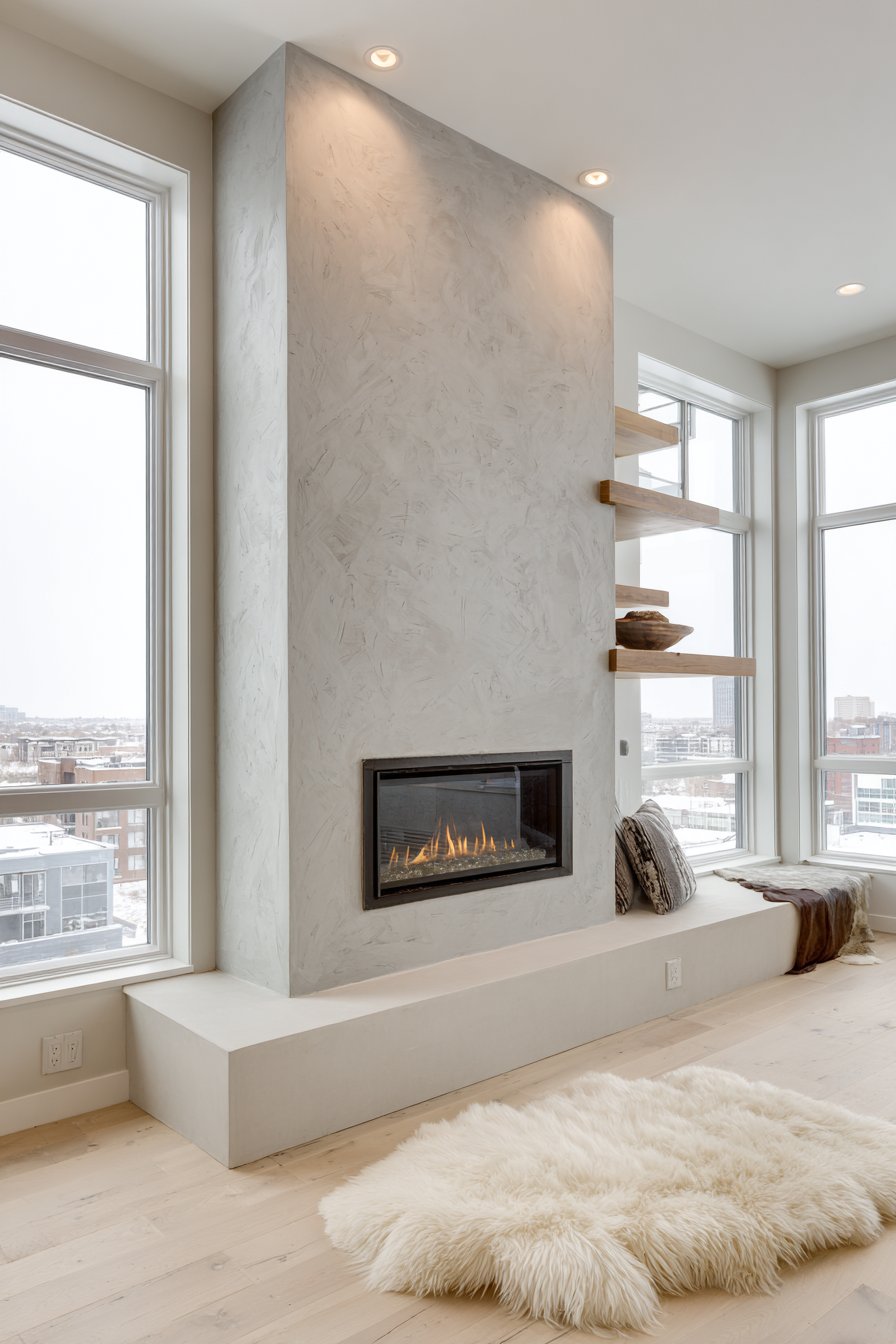
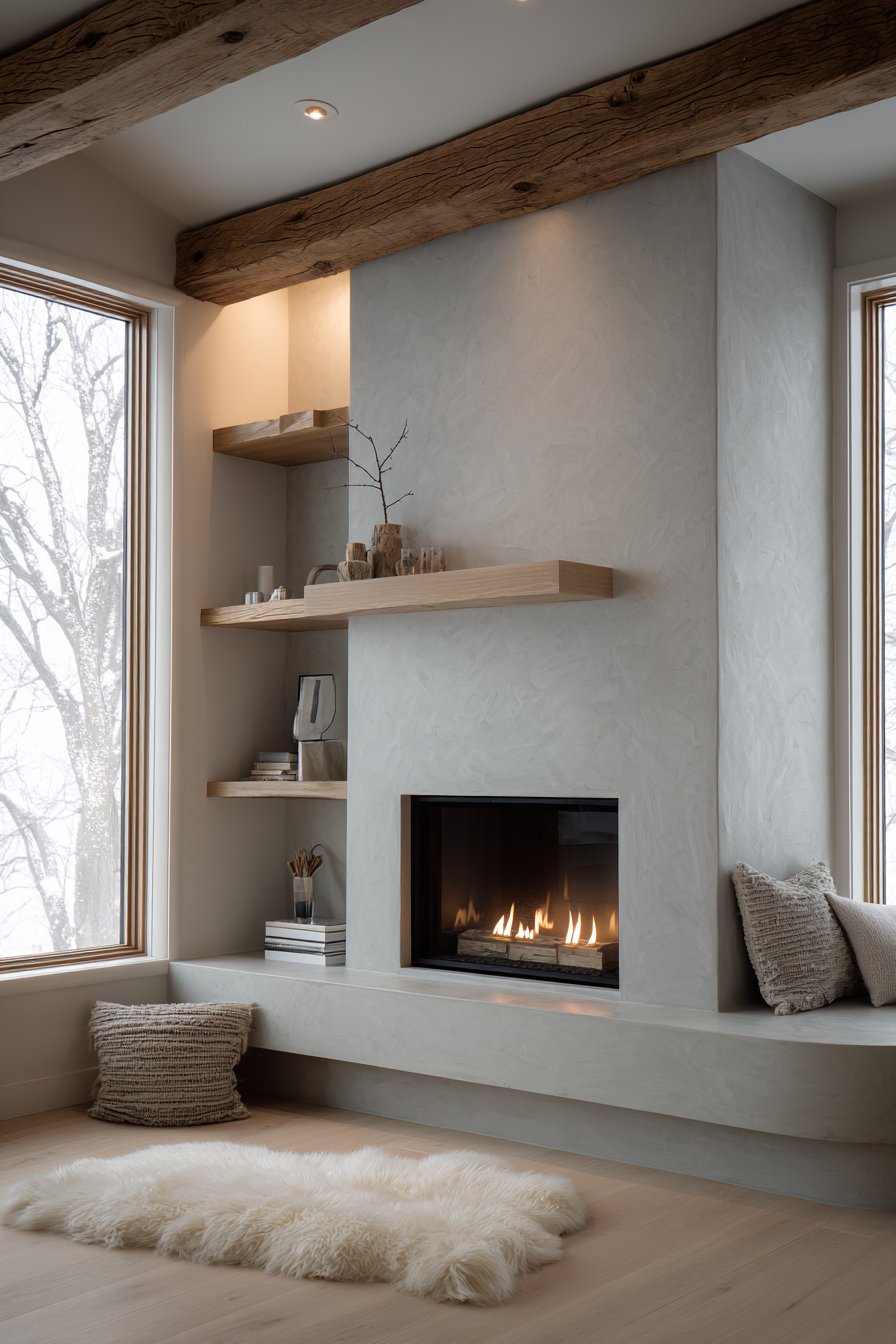
Serene minimalism and environmental consciousness unite in this Scandinavian-inspired chimney wall that embodies the Nordic design principles of simplicity, functionality, and connection to nature. The light gray stucco surface with its subtle texture variations creates a soft, calming presence that serves as a neutral backdrop rather than demanding attention, allowing the space’s other elements and the life that happens within it to take center stage. This restrained approach to the chimney wall reflects the Scandinavian philosophy that good design should enhance daily living without overwhelming it, creating spaces that feel both beautiful and genuinely livable.
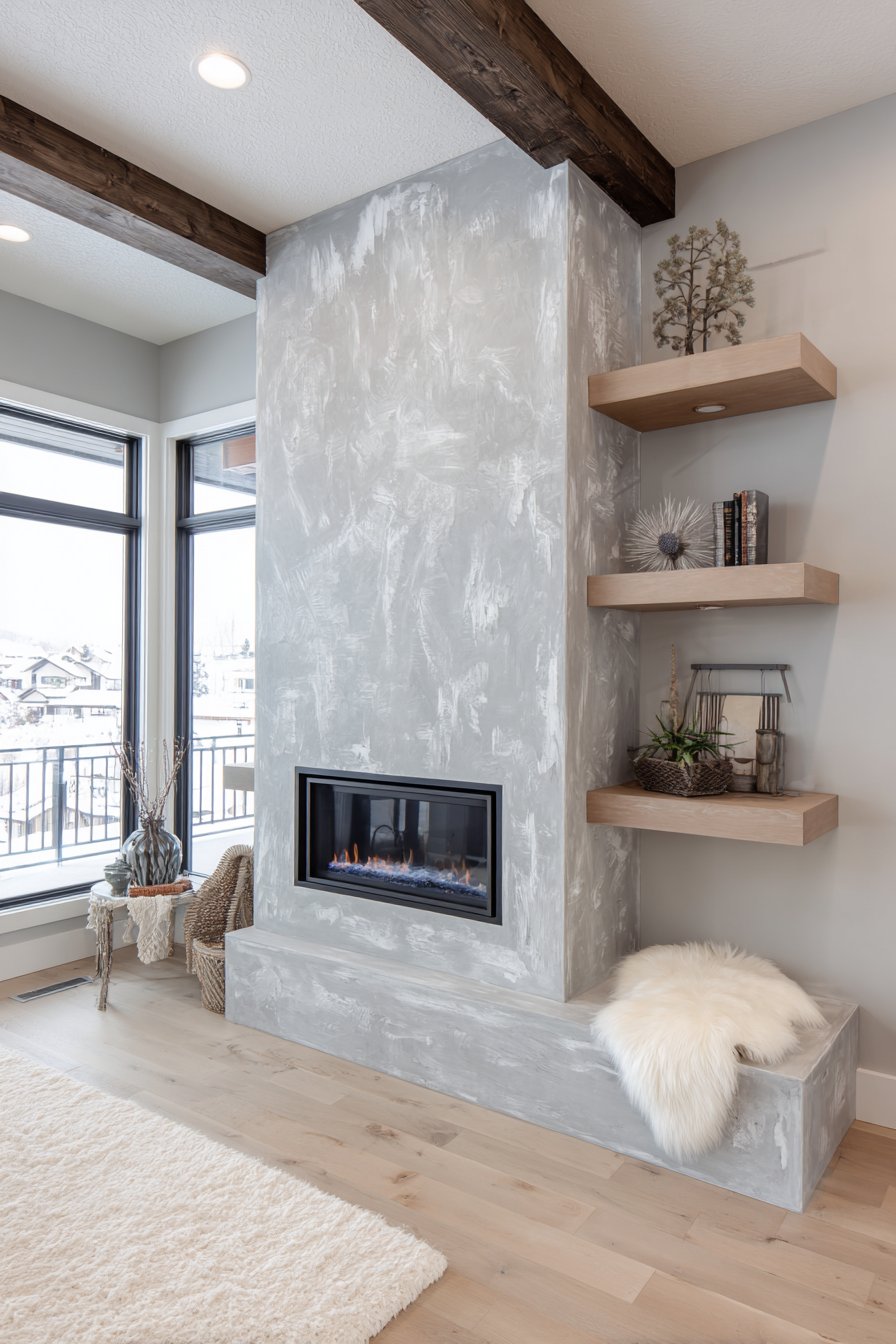
The modern bio-ethanol fireplace insert represents a contemporary solution for homes where traditional wood-burning or gas fireplaces aren’t practical, offering real flames without requiring a chimney or venting system. Its clean lines and minimal frame disappear into the stucco surface, emphasizing the fire itself rather than the mechanics of its containment. Simple floating shelves in pale oak are mounted asymmetrically at carefully considered heights, their light wood tone harmonizing with the overall neutral palette while providing display surfaces for a few carefully chosen objects—perhaps a single ceramic vase, a small potted succulent, or a beloved book—arranged with the restraint that characterizes Scandinavian styling.
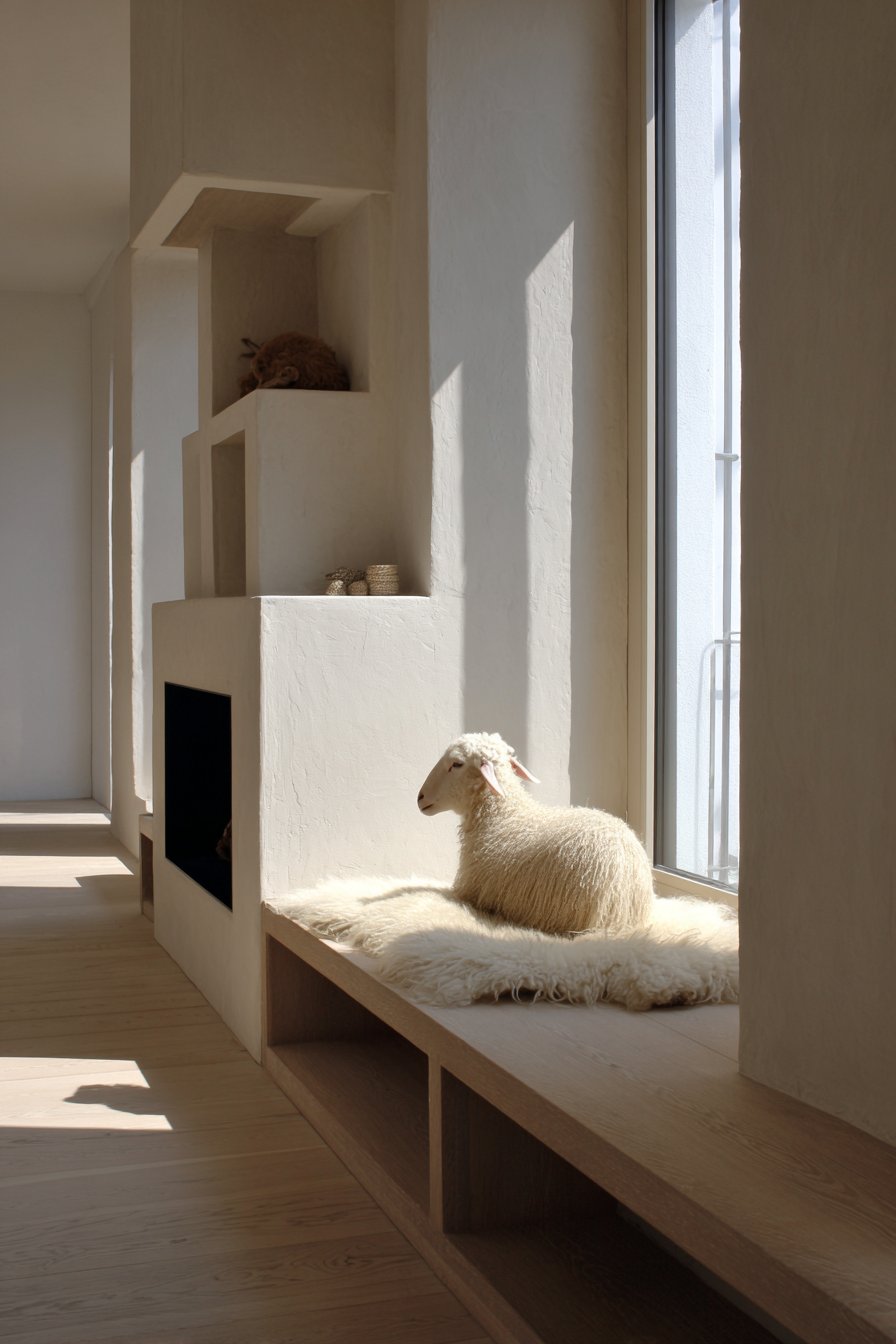
A cozy sheepskin rug positioned on the light wood floor in front of the fireplace invites barefoot comfort and adds a layer of natural texture that softens the space’s clean lines. Natural diffused daylight from large windows floods the room, creating the bright, airy quality that Scandinavian design prizes, with soft shadows that shift throughout the day adding subtle visual interest to the simple stucco surface. Professional interior photography captures the peaceful, contemplative quality of this chimney wall design, with careful attention to the way natural light interacts with the various textures and the overall sense of calm simplicity that defines the Scandinavian aesthetic.
Key Design Tips:
- Apply stucco in thin layers with varied hand troweling to create subtle texture without heavy relief
- Research bio-ethanol fireplace models carefully to ensure adequate heat output and safety certifications
- Mount pale wood shelves with hidden brackets to maintain the floating appearance and clean lines
- Keep decorative objects to a minimum, choosing each piece deliberately for both beauty and meaning
- Maximize natural light through window treatments that provide privacy without blocking daylight
- Incorporate natural materials like wool, wood, and linen to add warmth to the minimal palette
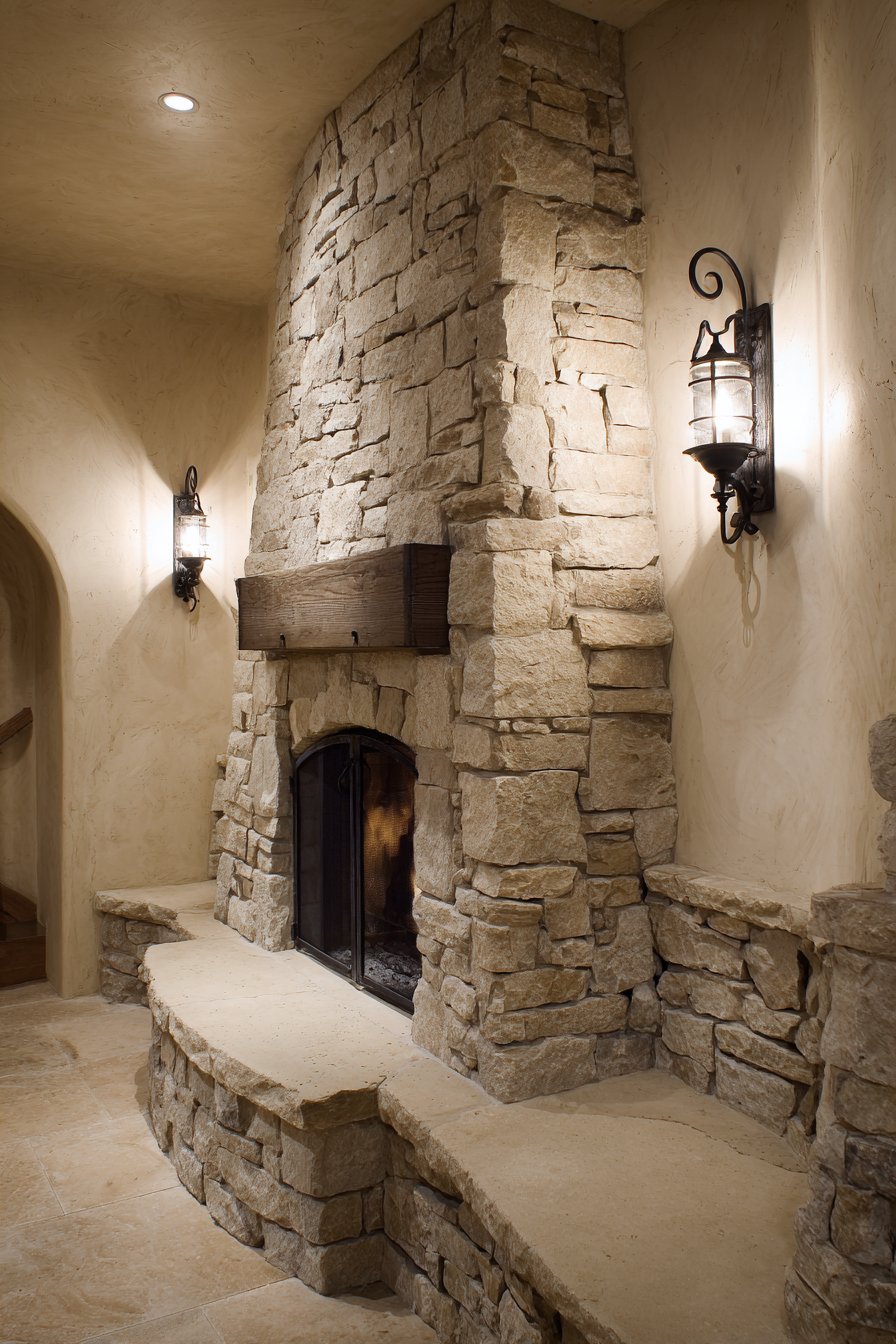
7. Natural Stacked Limestone Floor-to-Ceiling Feature
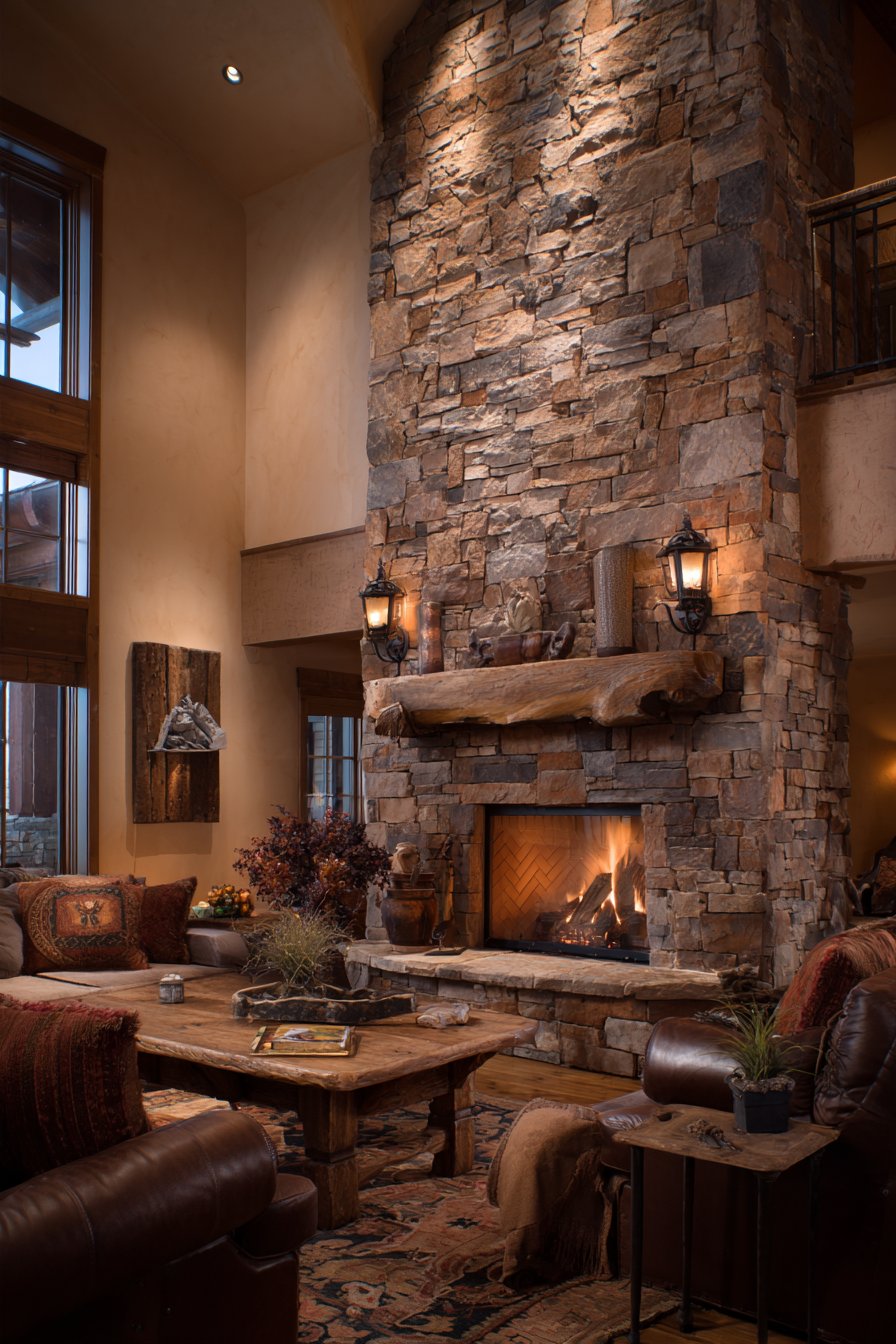
The raw power of natural stone takes center stage in this dramatic chimney wall design that brings the rugged beauty of the outdoors inside, creating a connection to nature that resonates on a primal level. Natural stacked limestone pieces in varying sizes and shapes are carefully fitted together to create a floor-to-ceiling feature wall with incredible dimensional texture, each stone selected for its individual character while contributing to the harmonious whole. The neutral color palette of the limestone—ranging from cream to soft gray with occasional hints of tan and gold—provides visual interest through natural variation while maintaining an earthy cohesiveness that grounds the space in organic materiality.
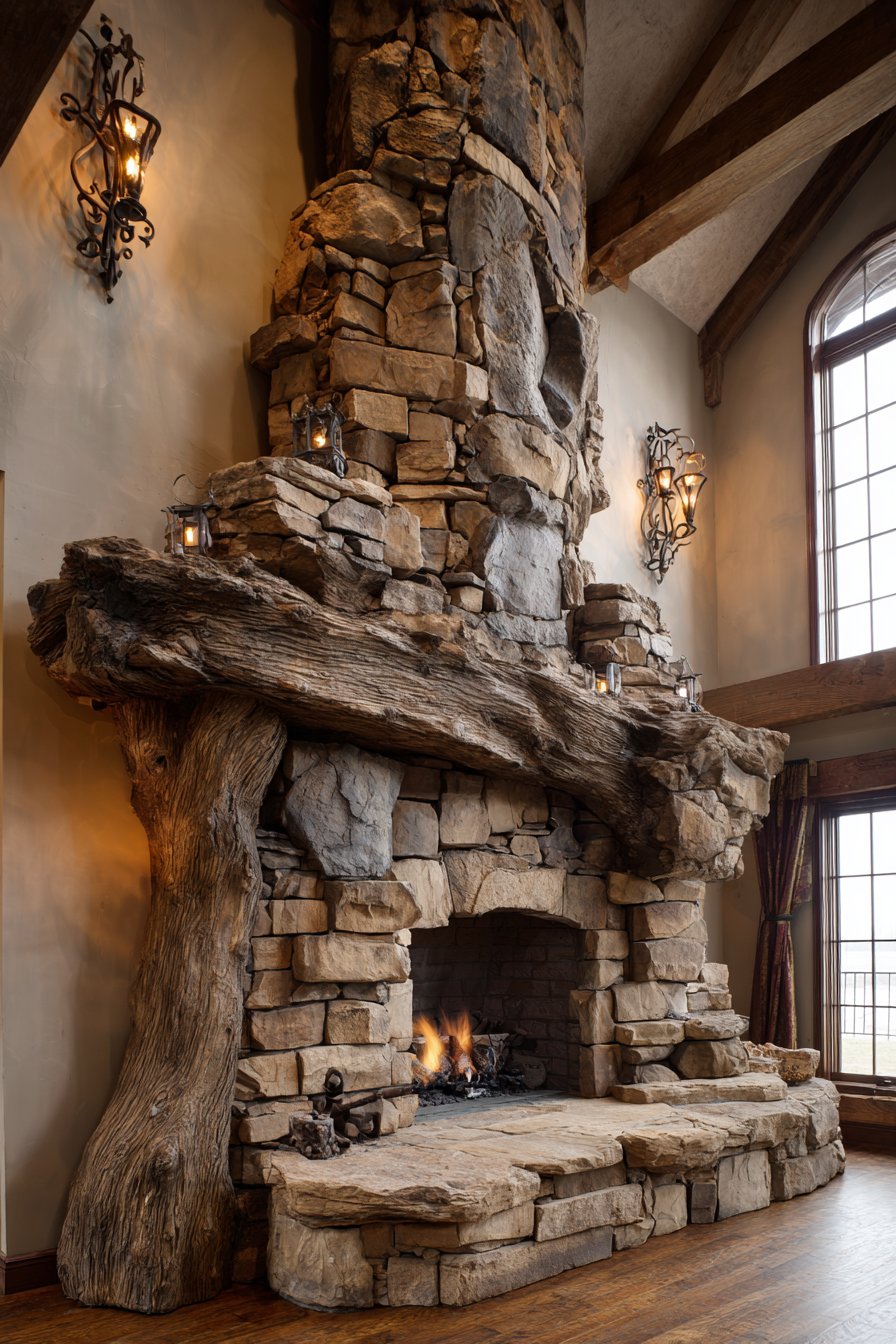
A large wood-burning fireplace opening commands attention at the heart of this stone composition, its generous proportions allowing for substantial fires that provide both warmth and the mesmerizing visual spectacle of dancing flames. A massive hand-hewn timber mantel crowns the fireplace, its substantial presence matched to the weight of the stone below, with visible adze marks and natural checking that tell the story of the tree it came from and the craftsman who shaped it. River rock fills the hearth area, introducing rounded forms and smaller scale that provide textural contrast to the angular stacked stone while maintaining the natural material vocabulary.
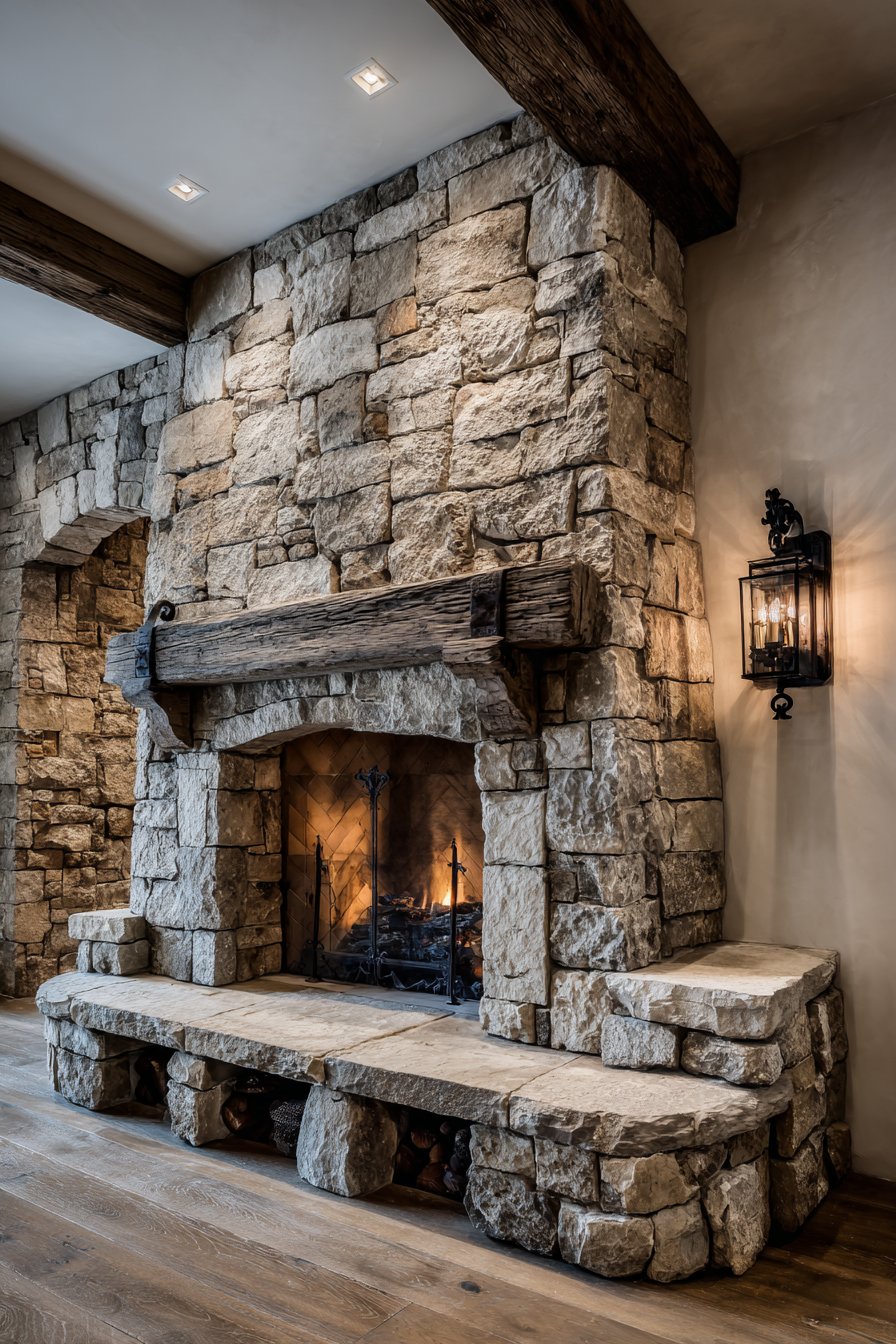
Wrought iron wall sconces flank the fireplace, their handcrafted character and matte black finish providing the perfect complement to the organic stone while offering ambient lighting that washes over the textured surface, creating dramatic shadows that emphasize every ridge and valley. The surrounding walls finished in neutral plaster step back visually, allowing the chimney wall to dominate without competition. Wide-angle interior photography with warm lighting captures the incredible depth and texture of the stacked limestone, highlighting how shadows change across the irregular surface throughout the day while demonstrating why natural stone remains one of the most compelling choices for creating a chimney wall with genuine presence and character.
Key Design Tips:
- Work with experienced stonemasons who understand how to fit irregular stones securely without excessive mortar visibility
- Select a timber mantel with dimensions proportional to the scale of the stone wall to avoid looking overwhelmed or insufficient
- Fill the hearth with river rocks that complement the limestone’s color palette while providing textural variety
- Install wall sconces on adjustable dimmers to control how dramatically shadows are cast across the stone surface
- Seal natural stone with a penetrating sealer that protects without creating artificial shine
- Keep the stone wall as the dominant feature by using restraint with other decorative elements in the room
8. Two-Tone Transitional Design with Stone and Painted Brick
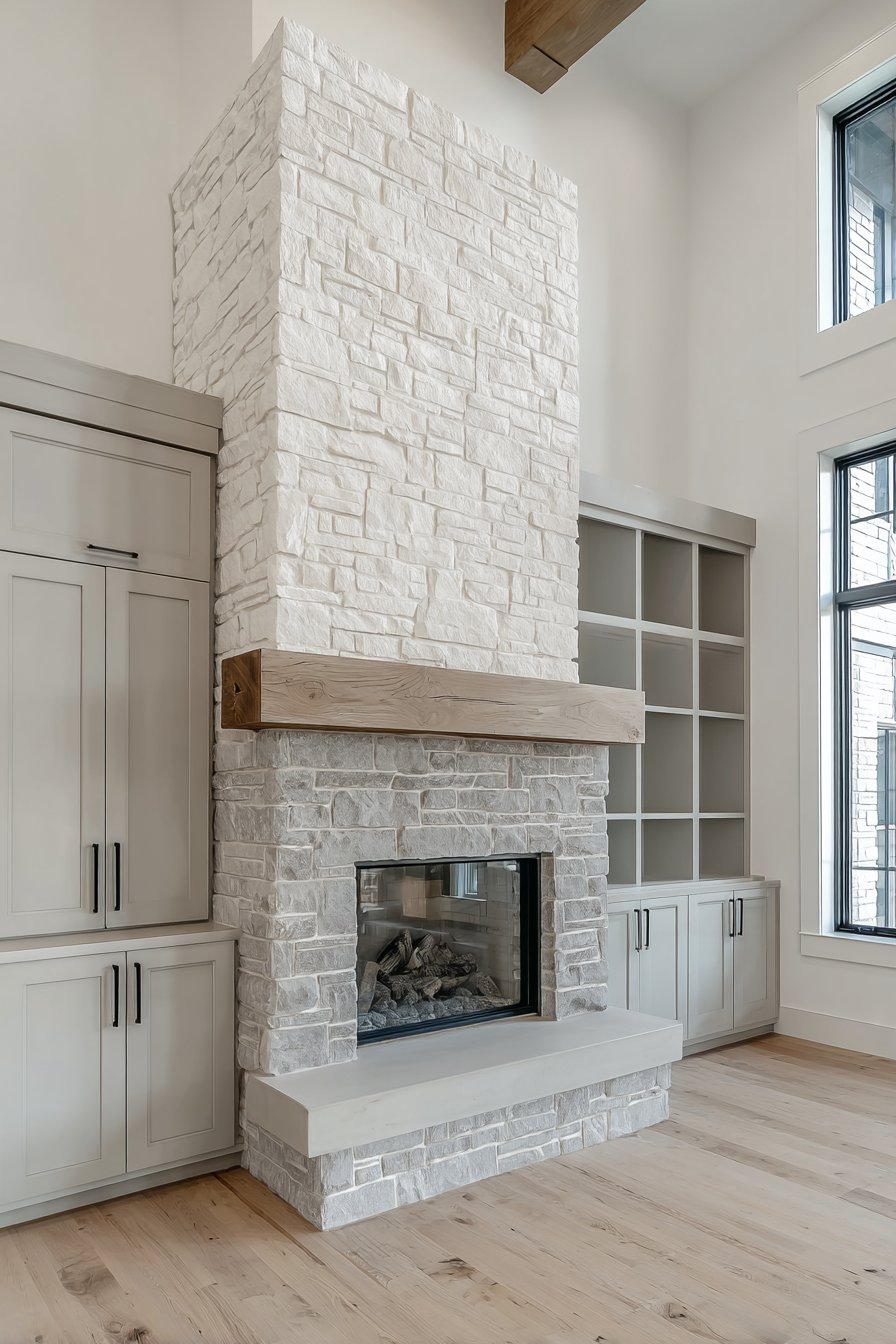
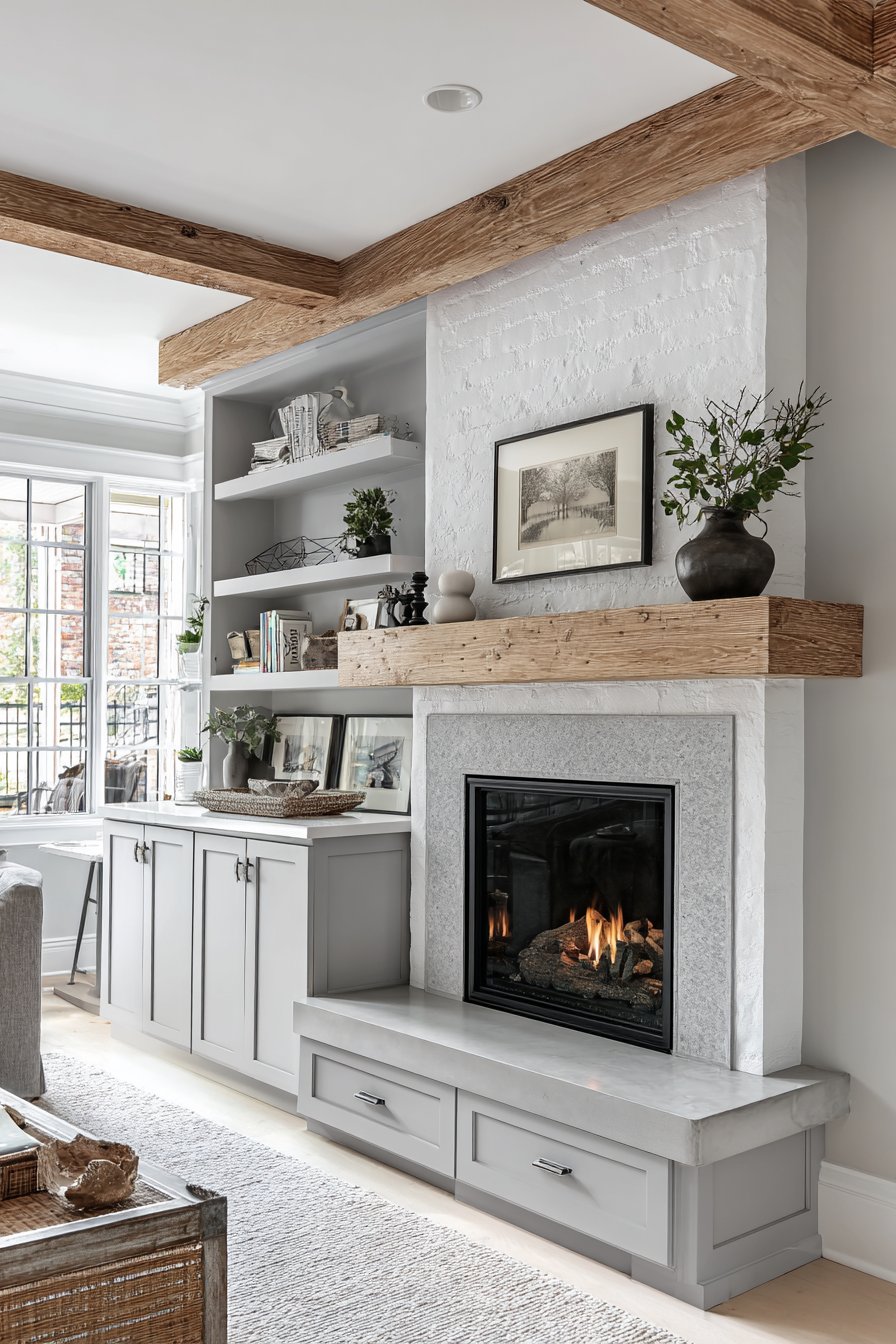
Sophisticated balance defines this transitional chimney wall that masterfully combines materials, colors, and styles to create a design that feels both current and timeless, formal and approachable. The two-tone composition divides the vertical space thoughtfully, with white-painted brick on the upper portion creating a light, airy quality that draws the eye upward while natural gray stone veneer below provides visual weight and grounding. This intentional division of the chimney wall into distinct zones creates architectural interest and allows each material to shine in its designated area while working together as a cohesive whole.
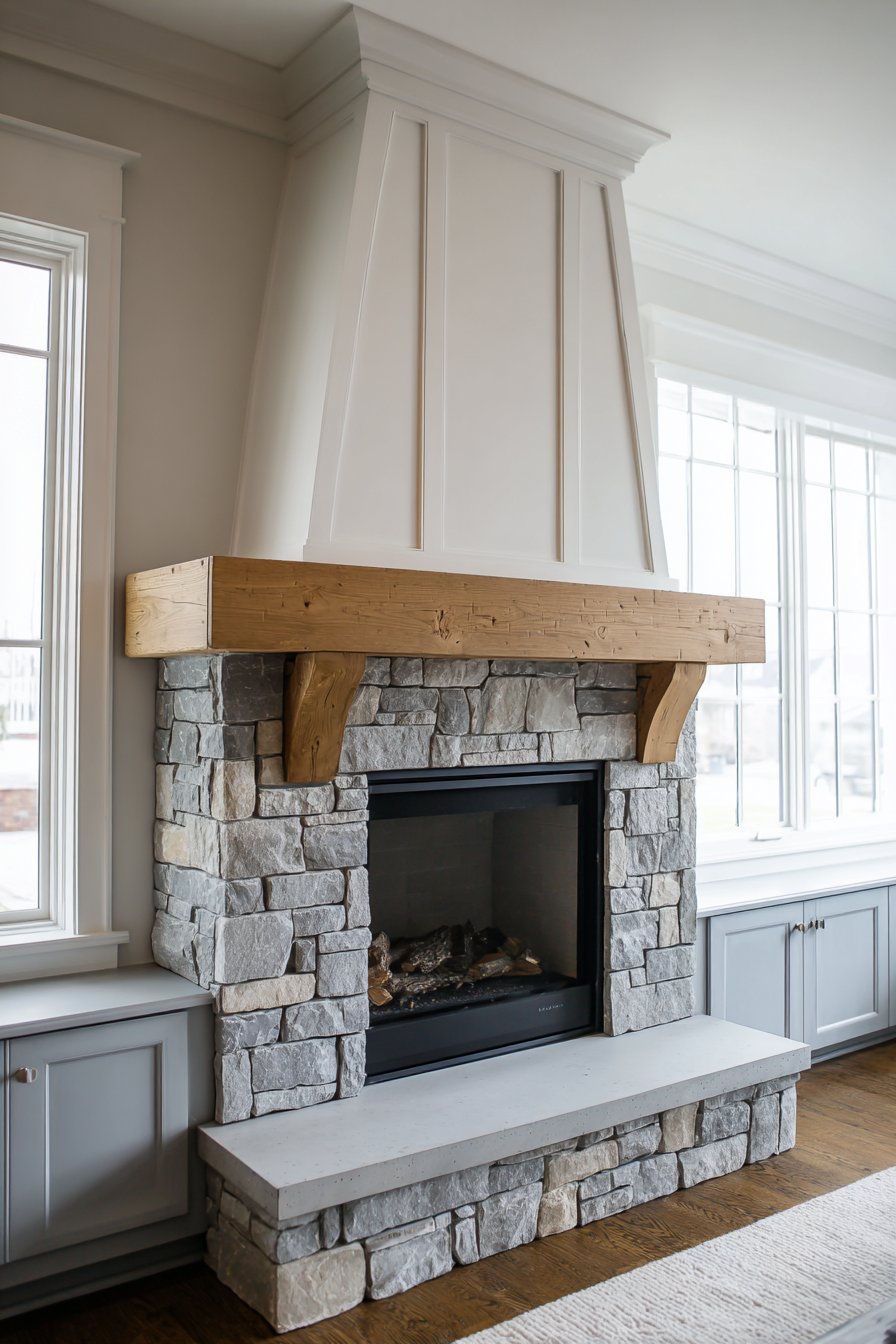
The modern gas fireplace sits at the transition point between materials, its sleek form bridging the two zones while a floating concrete hearth extends outward like a minimalist shelf, providing a subtle landing surface without the visual bulk of traditional hearth construction. Built-in cabinetry flanking the fireplace base in soft gray introduces essential storage and display capabilities while the shaker-style doors reference traditional craftsmanship in a simplified, contemporary way. This cabinetry grounds the composition and provides practical function, with the option to conceal less attractive necessities behind closed doors while displaying treasured items on open surfaces.
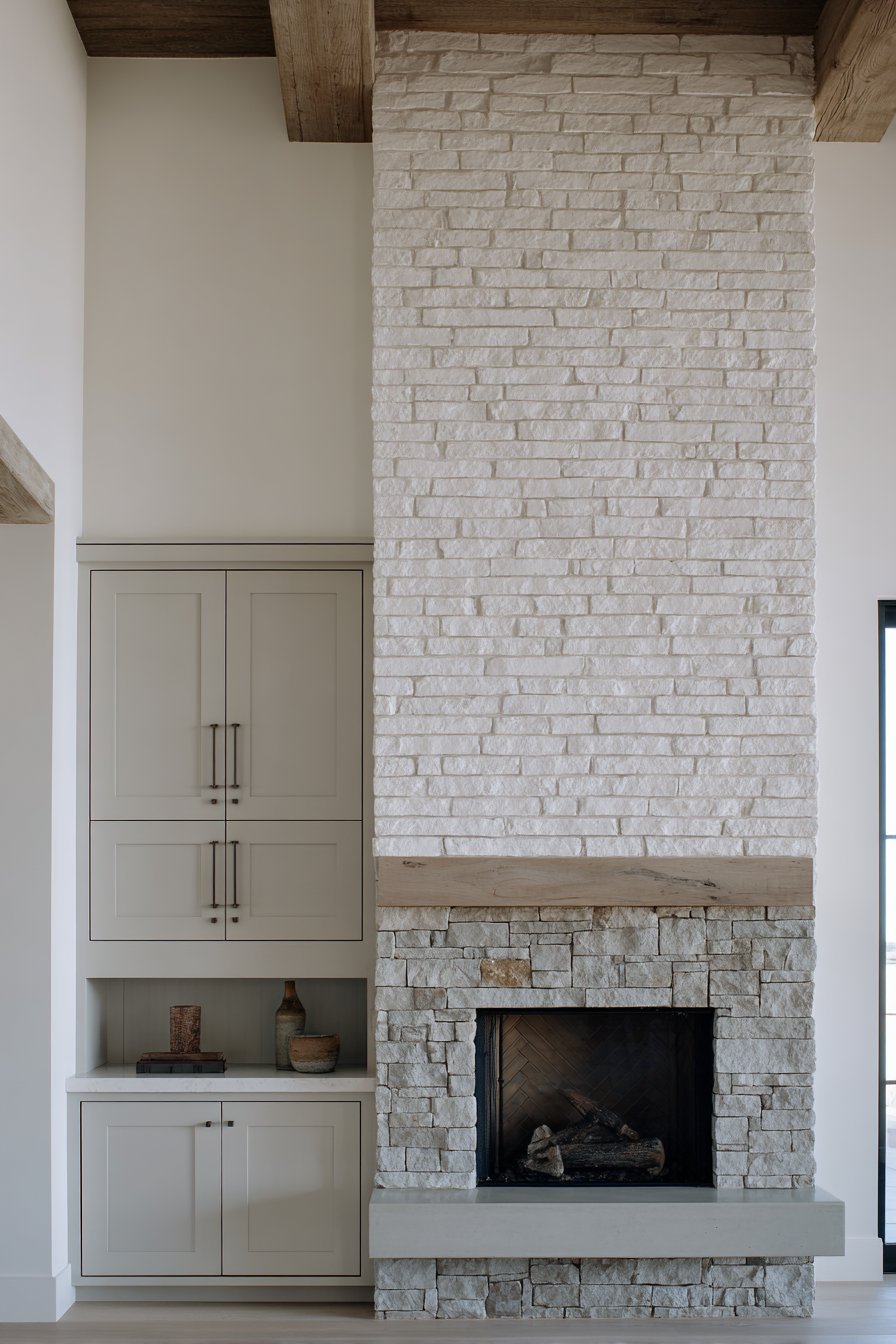
A simple wood beam mantel in natural finish provides the horizontal accent that the predominantly vertical composition needs, its understated profile and honest wood grain adding warmth without competing with the carefully balanced material composition below. Interior design photography with balanced natural lighting showcases how all these elements work together, the white painted brick reflecting light to keep the upper space bright, the natural stone adding earthy substance below, and the transitional style elements creating a design that appeals to both traditional and contemporary sensibilities while avoiding the extremes of either.
Key Design Tips:
- Determine the division point between upper and lower materials based on mantel height and fireplace proportions
- Paint brick in a true white rather than cream or off-white to create clear contrast with the gray stone
- Choose natural stone with subtle gray variations that harmonize with the soft gray cabinetry
- Install the floating concrete hearth with proper structural support hidden within the wall
- Select shaker-style cabinet doors with simple, clean lines rather than overly decorative profiles
- Finish the wood beam mantel naturally or with a clear matte sealer to preserve wood character
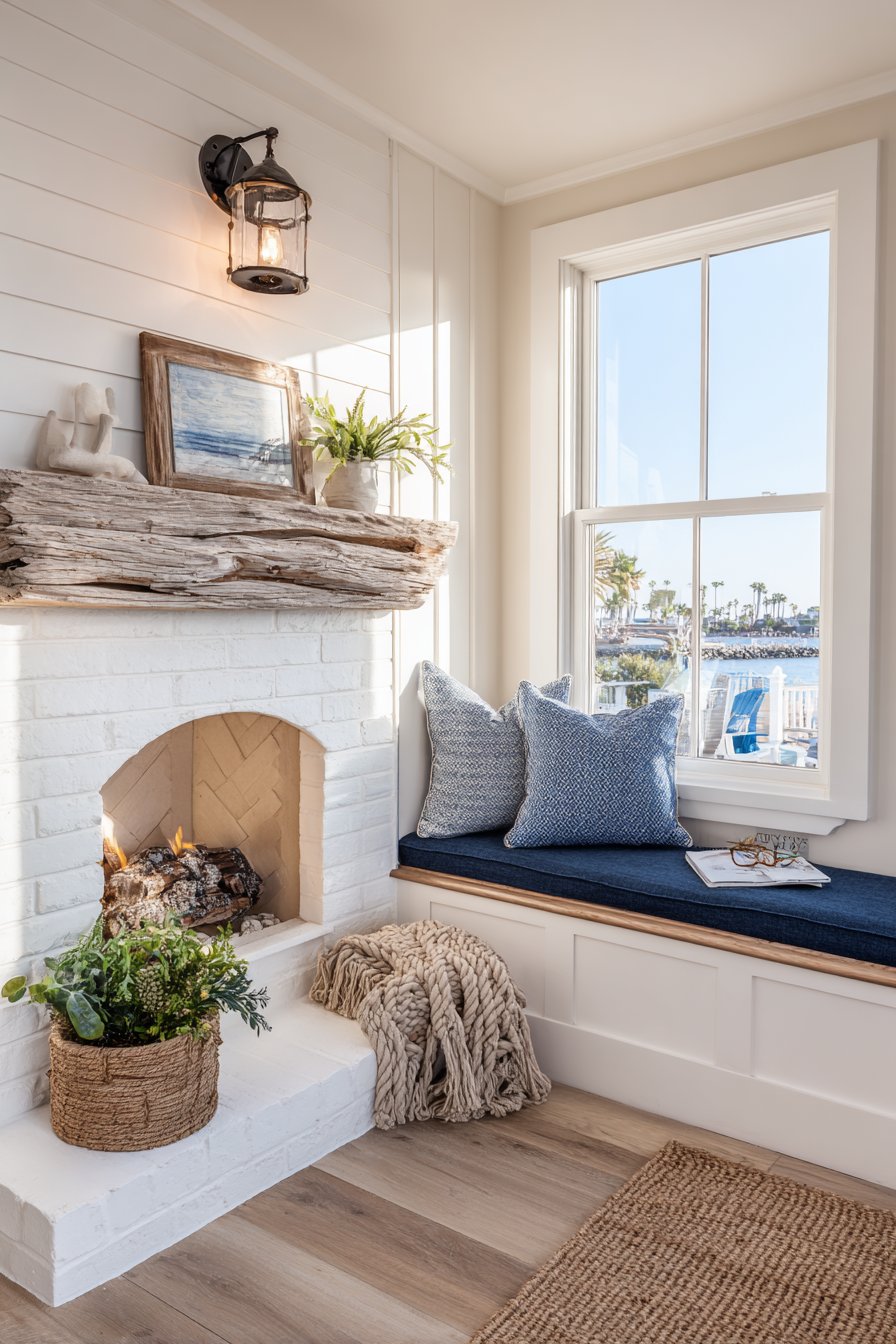
9. Coastal Whitewashed Shiplap with Driftwood Mantel
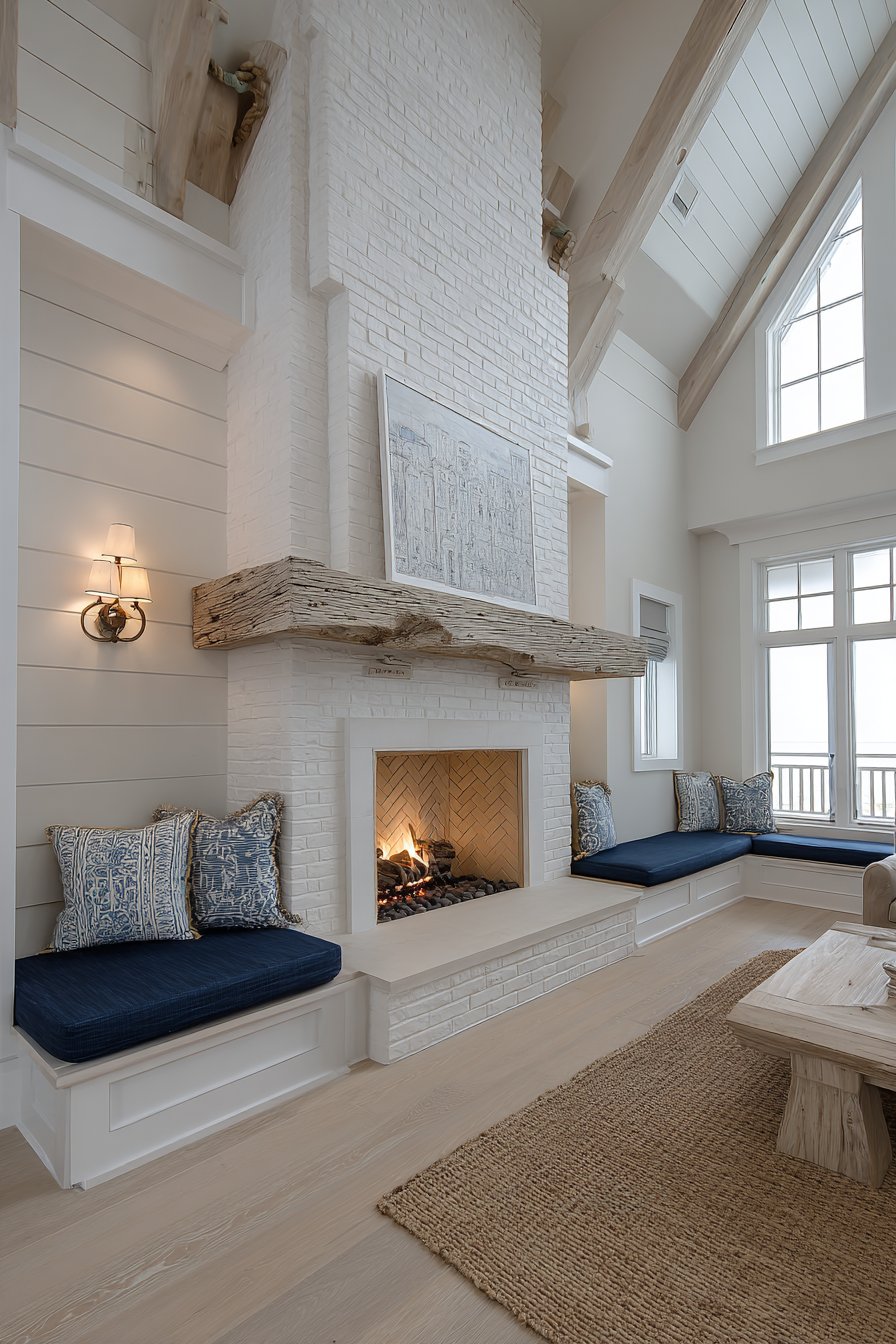
Ocean breezes and relaxed seaside living inspire this coastal chimney wall design that transforms any room into a beach house retreat, regardless of its actual proximity to the shore. Whitewashed shiplap planks create the chimney wall surface, their horizontal orientation and characteristic shadow lines adding texture and visual rhythm while the pale finish maximizes light reflection to create the bright, sun-washed quality that defines coastal aesthetics. This treatment evokes weathered beach structures and driftwood fences, bringing the casual elegance of coastal architecture indoors while providing a perfect backdrop for the room’s other beach-inspired elements.
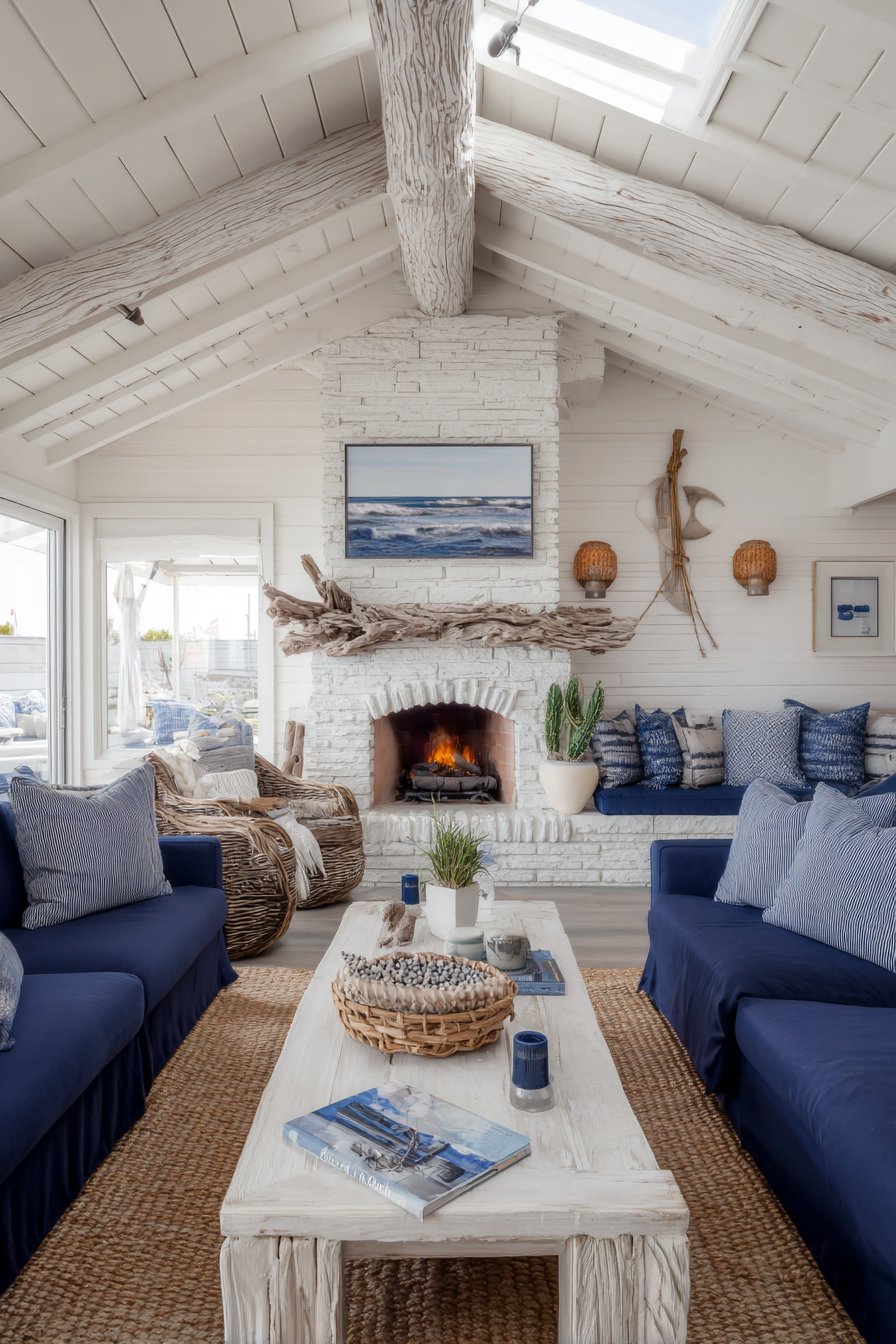
The white-painted brick fireplace surround provides subtle textural contrast against the smooth shiplap, its traditional construction methods grounding the design in substance while the white-on-white color scheme maintains the light, airy quality essential to coastal styling. A driftwood-style mantel—whether actual driftwood or wood treated to achieve that silvered, weathered appearance—adds an organic focal point, its irregular form and smooth, wave-worn surface bringing a piece of the beach directly into the room. This natural element introduces sculptural interest while maintaining the casual, unpretentious character that makes coastal design feel so relaxed and welcoming.
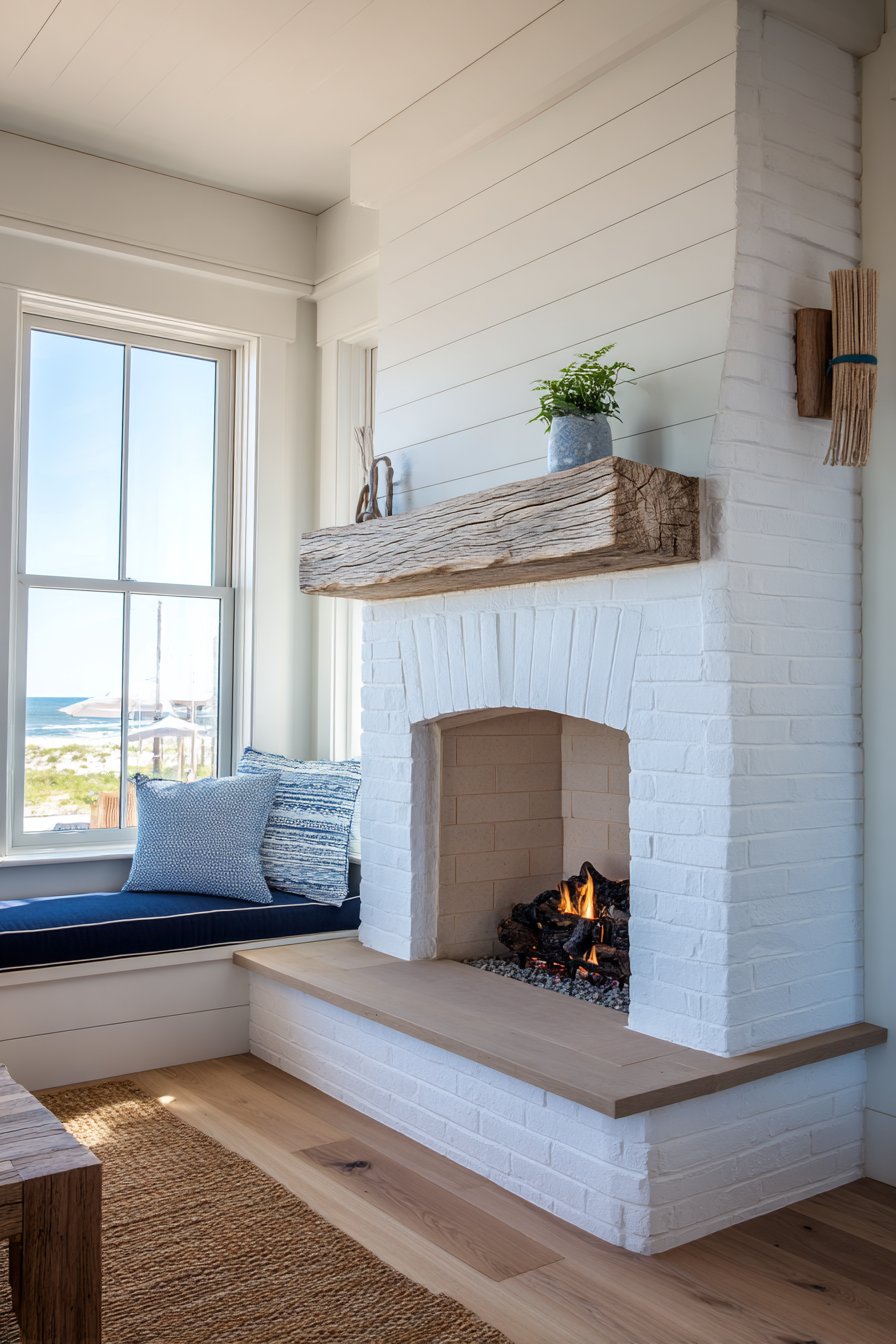
Built-in bench seating flanking the fireplace base extends the functional capabilities of the chimney wall while creating cozy nooks perfect for reading, conversation, or quiet contemplation. Navy cushions on these benches introduce the essential pop of deep blue that coastal palettes require, evoking ocean depths while providing comfortable seating surfaces. Rope-wrapped wall sconces contribute nautical charm through their maritime-inspired detailing, their natural fiber texture adding another layer of coastal authenticity. Light wood flooring and natural fiber rugs complete the beach house atmosphere, with professional interior photography capturing how soft natural light streaming through windows creates the breezy, casual elegance that makes coastal chimney wall designs feel like a permanent vacation.
Key Design Tips:
- Install shiplap with appropriate spacing to create the characteristic shadow lines without gaps large enough to collect dust
- Whitewash shiplap using diluted paint or specialized whitewash products to achieve the right level of transparency
- Source driftwood mantels from coastal suppliers or create the look using gray wood stain and weathering techniques
- Build bench seating with lift-up seats to provide hidden storage for blankets, games, or seasonal items
- Choose navy cushions in durable, easy-clean fabrics suitable for high-traffic family areas
- Incorporate beach-found objects and nautical decor sparingly to avoid crossing into theme-park territory
10. Mid-Century Modern Ochre Stone with Teak Details
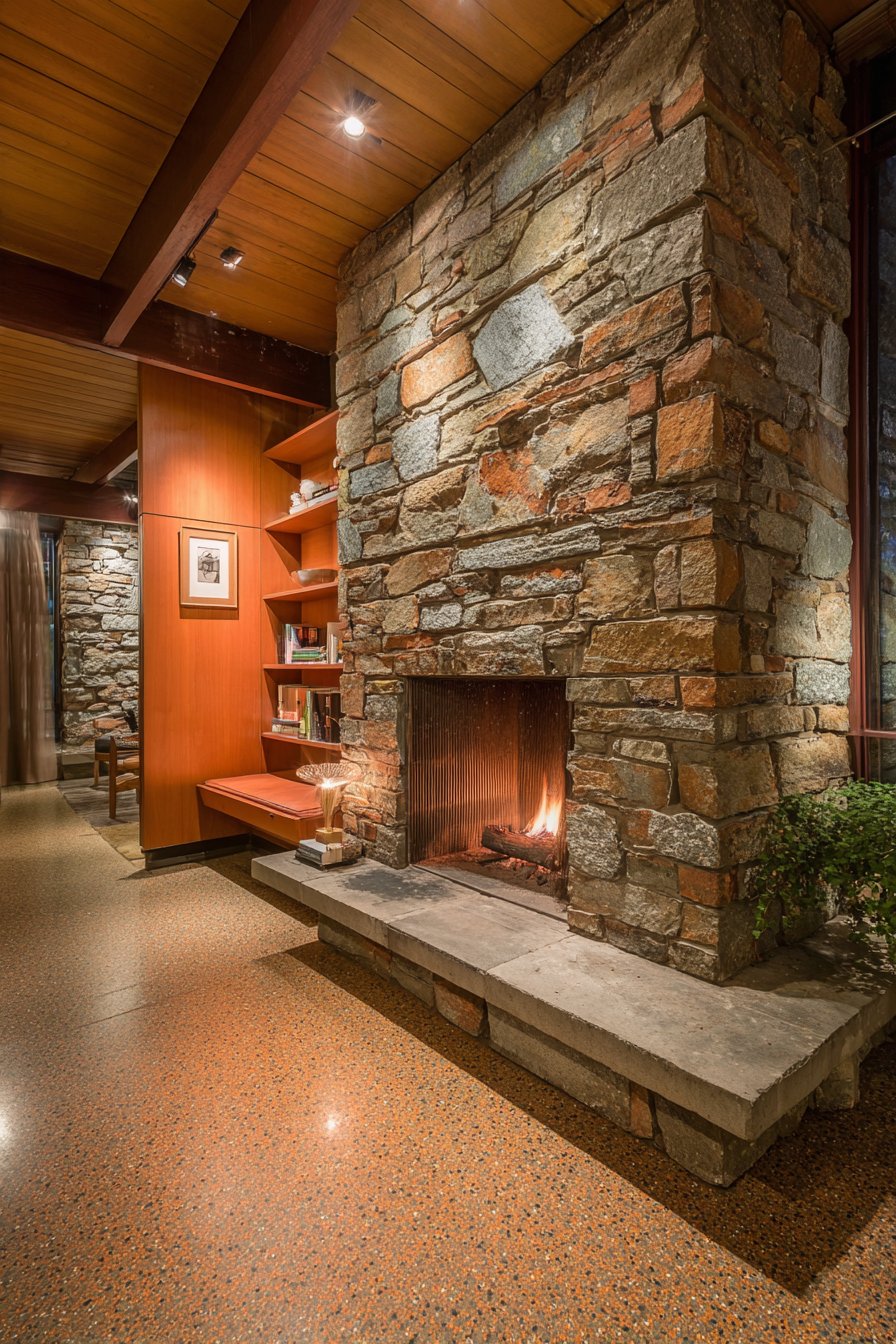
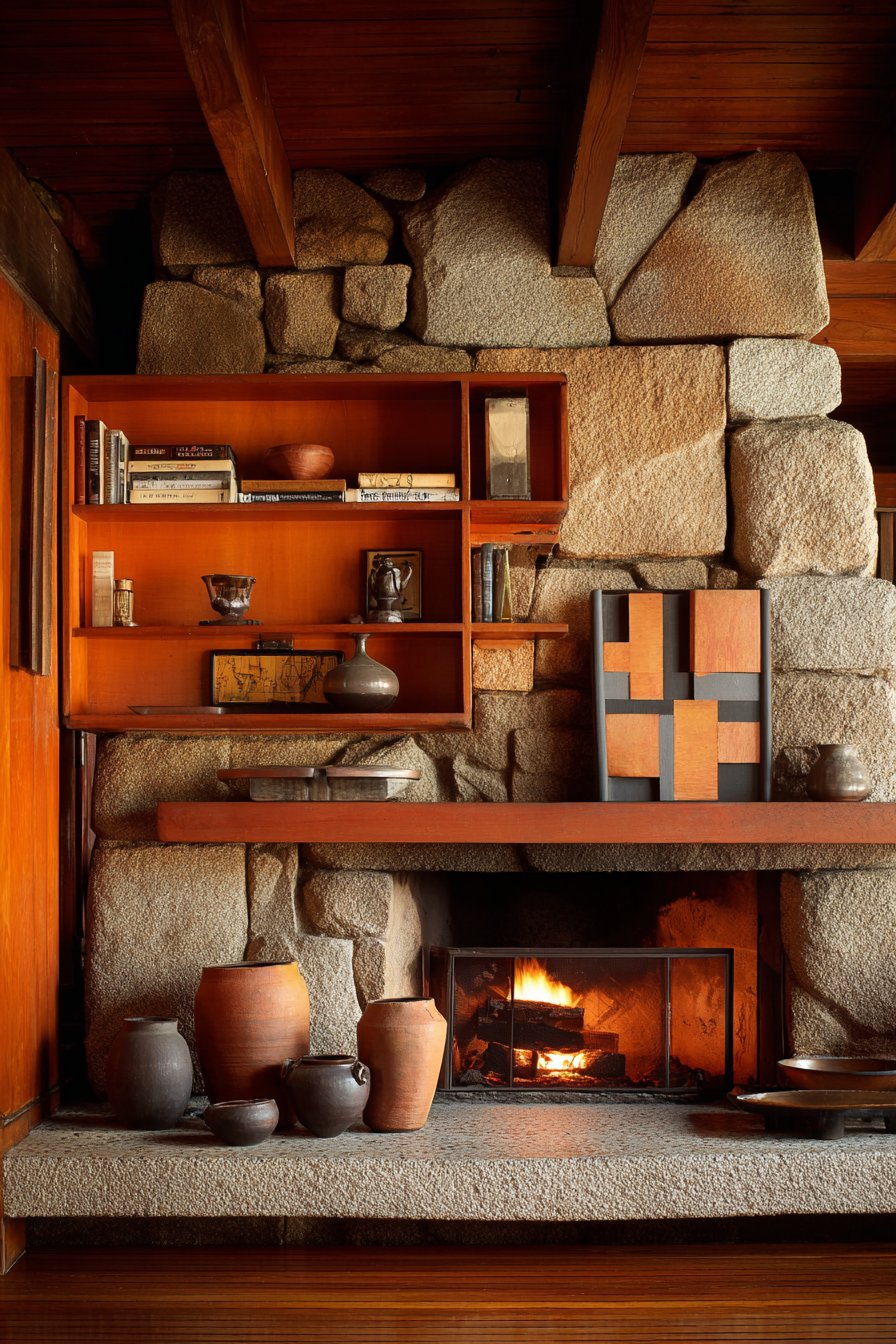
Time travel to the optimistic modernism of the 1950s and 60s through this mid-century modern chimney wall that celebrates the era’s love affair with natural materials, warm colors, and clean geometric forms. The floor-to-ceiling stone chimney wall showcases stones in warm ochre and burnt orange tones, their earthy hues evoking the desert landscapes and natural materials that mid-century designers favored. This stone selection moves away from conventional grays and tans, embracing the period’s adventurous color palette while maintaining the organic authenticity that grounds mid-century design in nature rather than artifice.
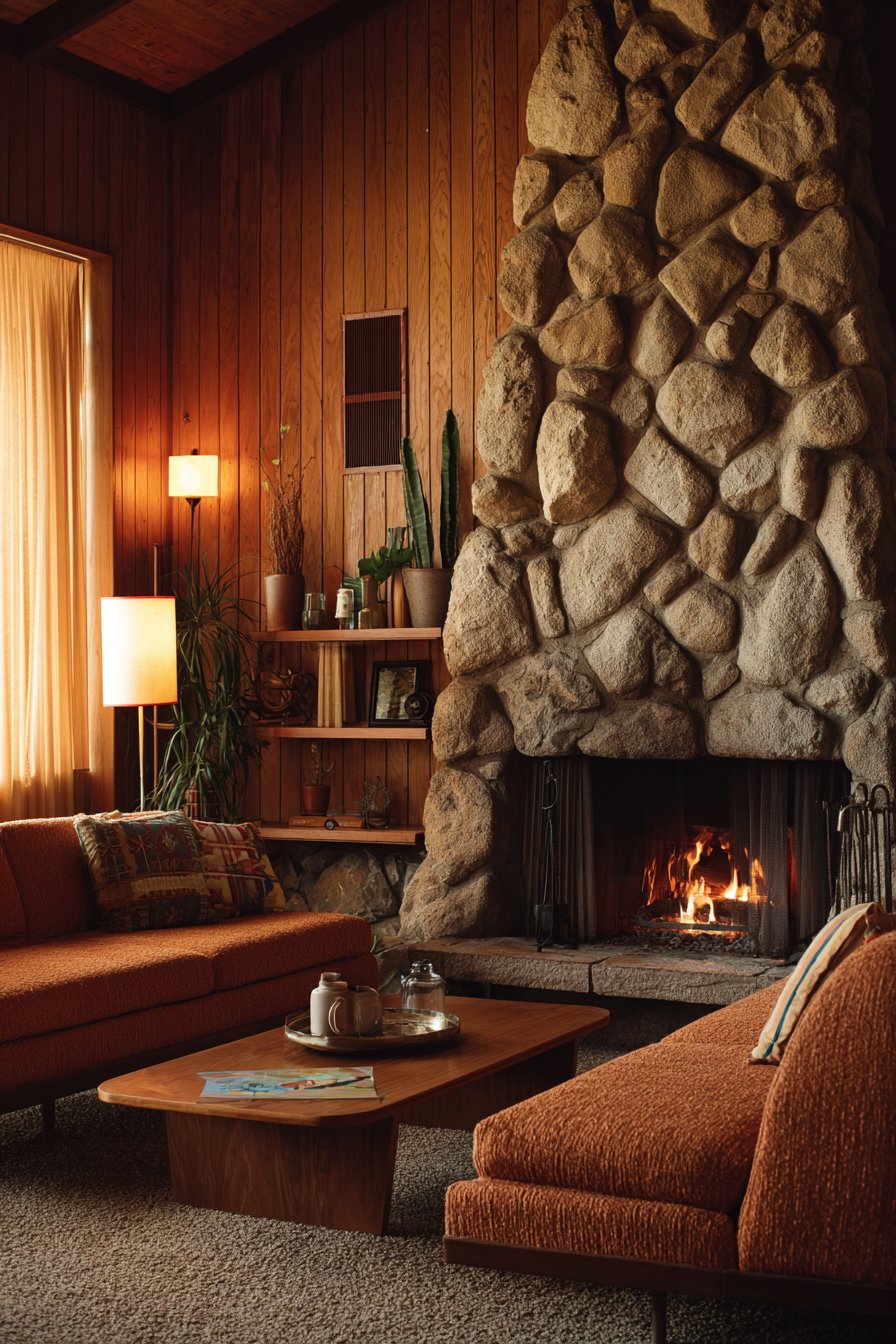
The rectangular fireplace opening with its simple black metal surround embodies mid-century modernism’s commitment to honest materials and straightforward function, eschewing ornamental flourishes in favor of clean lines that let the fire itself provide the visual drama. A slim walnut floating mantel extends horizontally with the characteristic restraint of the period, its modest dimensions and rich wood grain adding warmth without overwhelming the composition. Asymmetrical built-in shelving in teak wood demonstrates the era’s embrace of dynamic, off-center compositions, with staggered shelves creating visual interest while displaying period-appropriate decor—perhaps ceramic vessels, abstract sculptures, or vintage books.
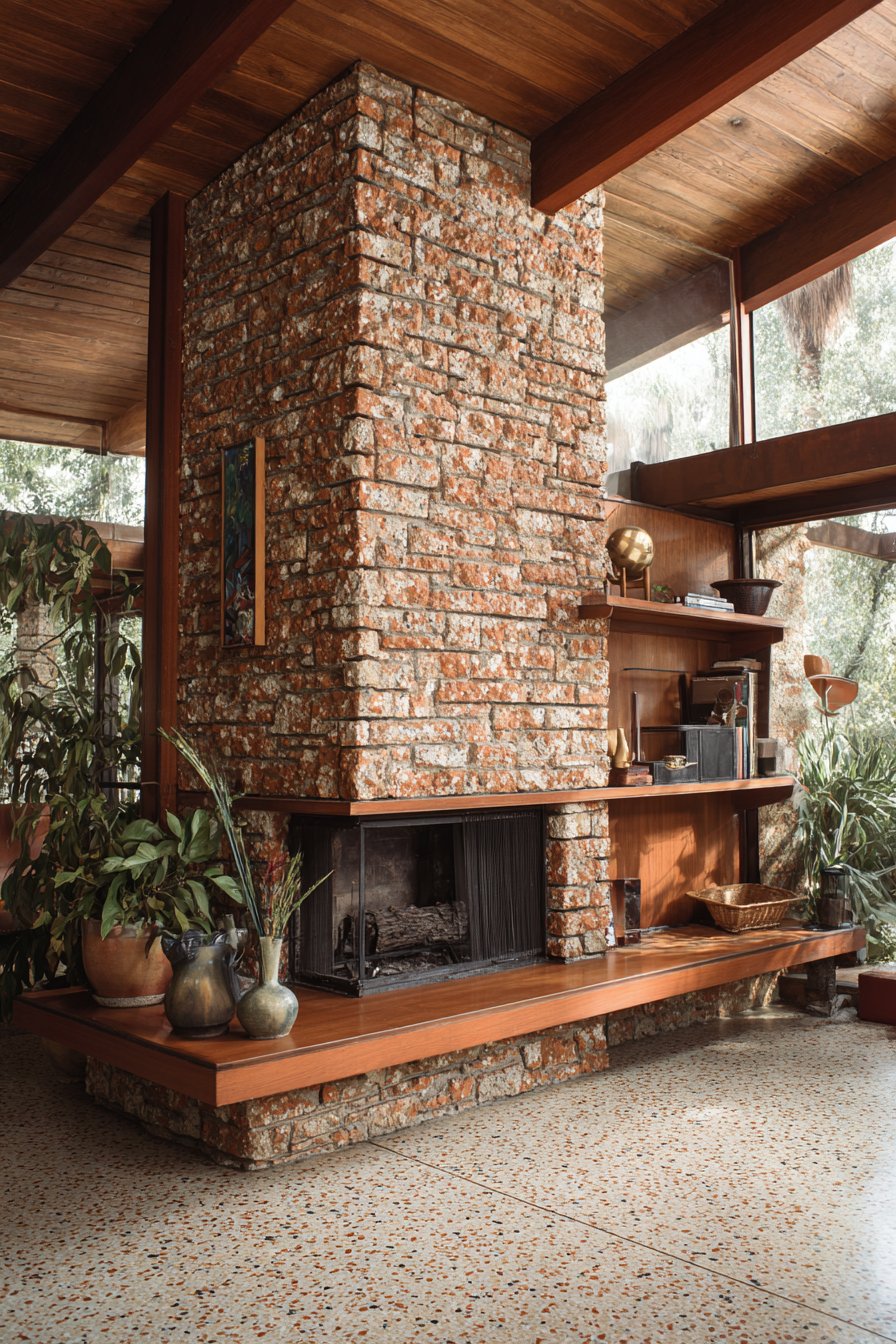
Terrazzo flooring extending to the hearth area introduces another signature mid-century material, its speckled surface combining marble chips in complementary colors with the structural matrix, creating a decorative yet durable floor treatment that captures the era’s innovation in materials technology. Interior design photography with warm ambient lighting emphasizes the retro character and organic materials of this chimney wall design, capturing the honey tones of the teak wood, the earthy warmth of the ochre stone, and the overall sense of optimistic modernism that makes mid-century design feel simultaneously nostalgic and eternally contemporary.
Key Design Tips:
- Source stone in authentic mid-century color palettes, avoiding the gray-dominant selections that feel too contemporary
- Select walnut or teak for wood elements to achieve the correct period appearance
- Design asymmetrical shelving with mathematical precision—mid-century asymmetry was deliberate, not random
- Install the fireplace opening at a height that maintains proper proportions with the overall wall composition
- Choose terrazzo with color chips that complement the stone wall’s warm tones
- Display period-appropriate decor to reinforce the mid-century theme without creating a museum effect
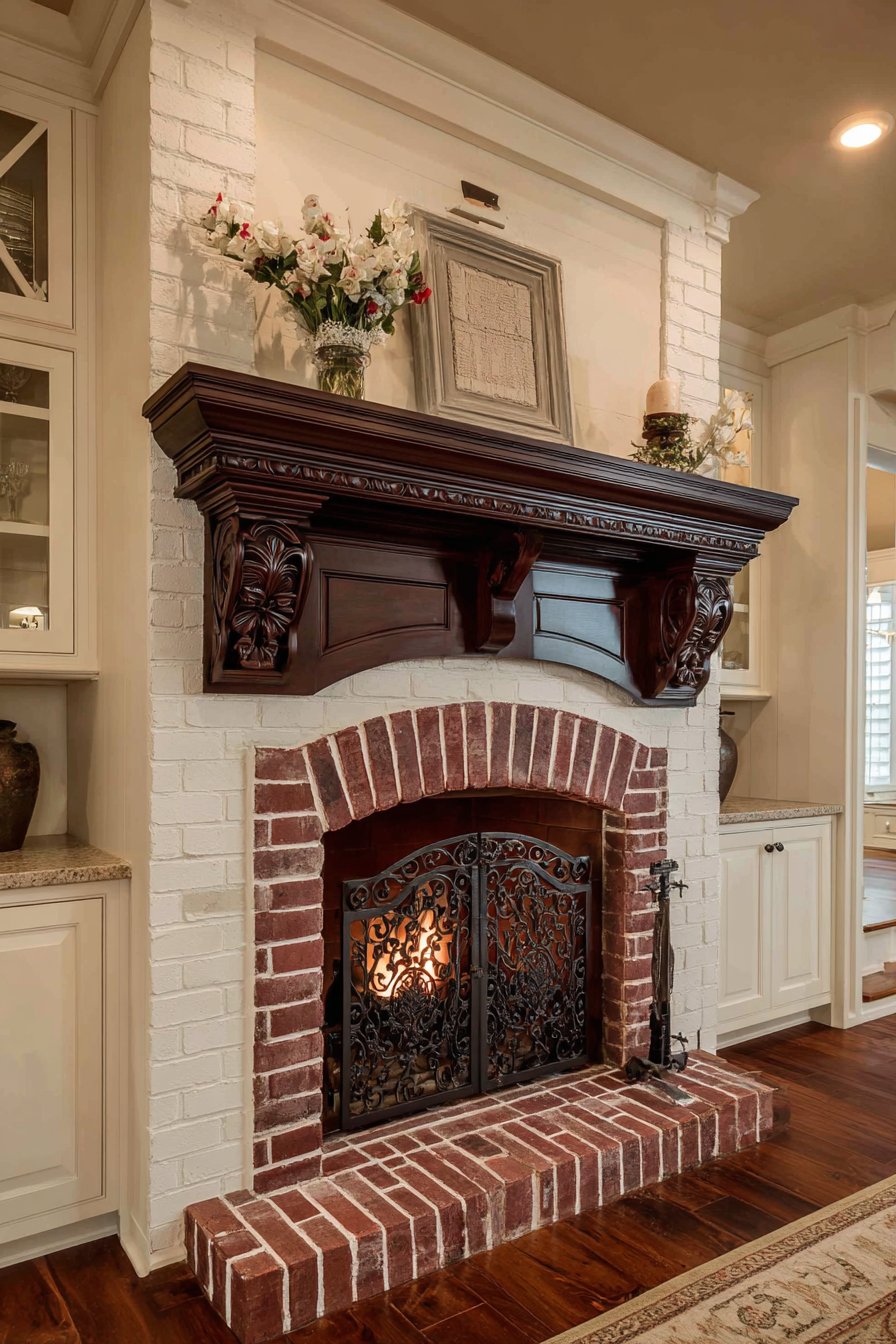
11. Traditional Red Brick with Mahogany Mantel
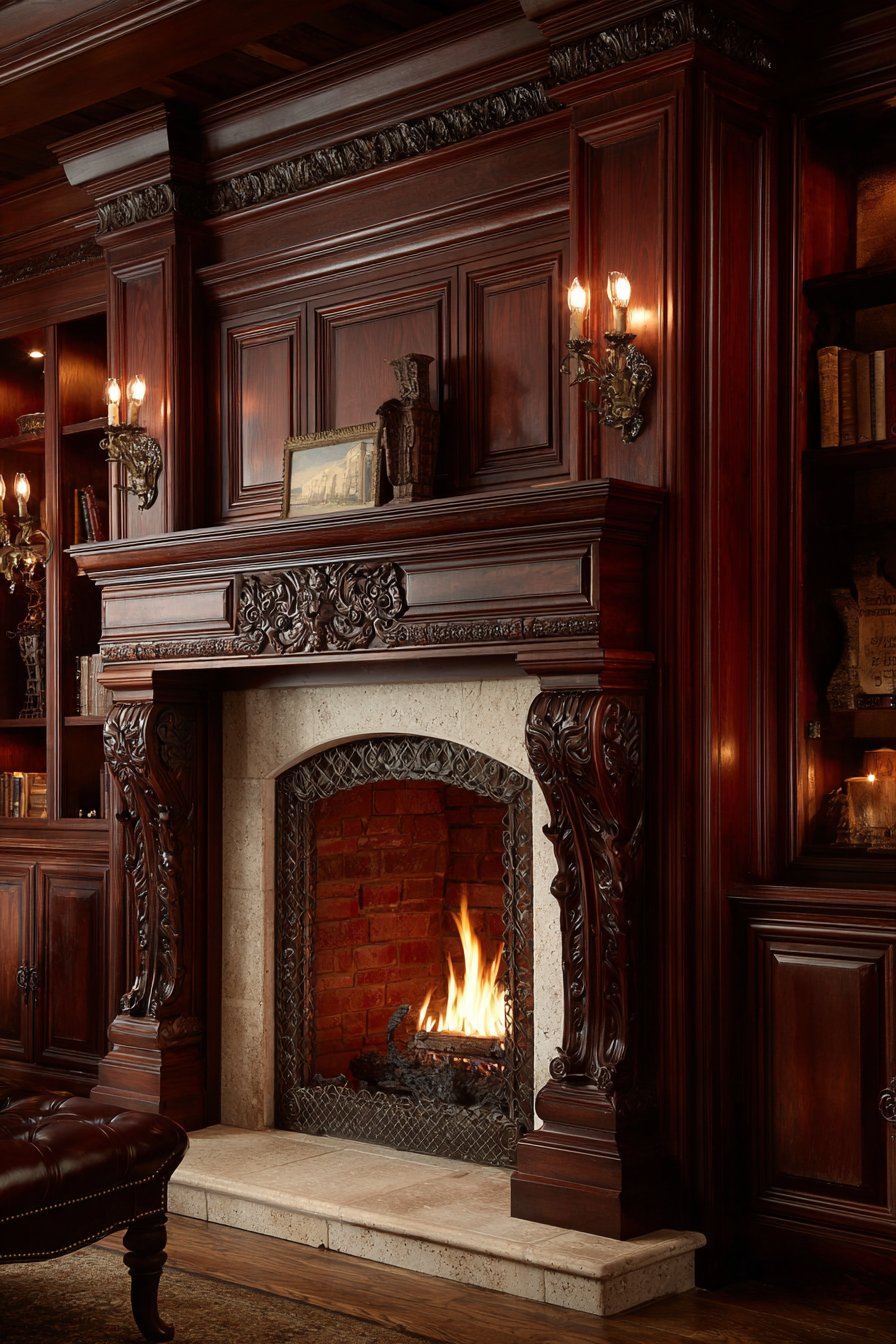
Timeless elegance and classical craftsmanship converge in this traditional chimney wall that honors centuries of fireplace design evolution while creating a sophisticated focal point appropriate for formal living spaces. The classic red brick chimney wall with white-painted mortar joints creates the archetypal fireplace appearance that feels familiar and comforting, its warm reddish-brown tones providing richness and depth while the white mortar creates a grid that adds visual organization and refinement to the brick surface. This traditional approach never goes out of style because it addresses fundamental human needs for warmth, gathering places, and the visual pleasure of natural materials arranged with skill.
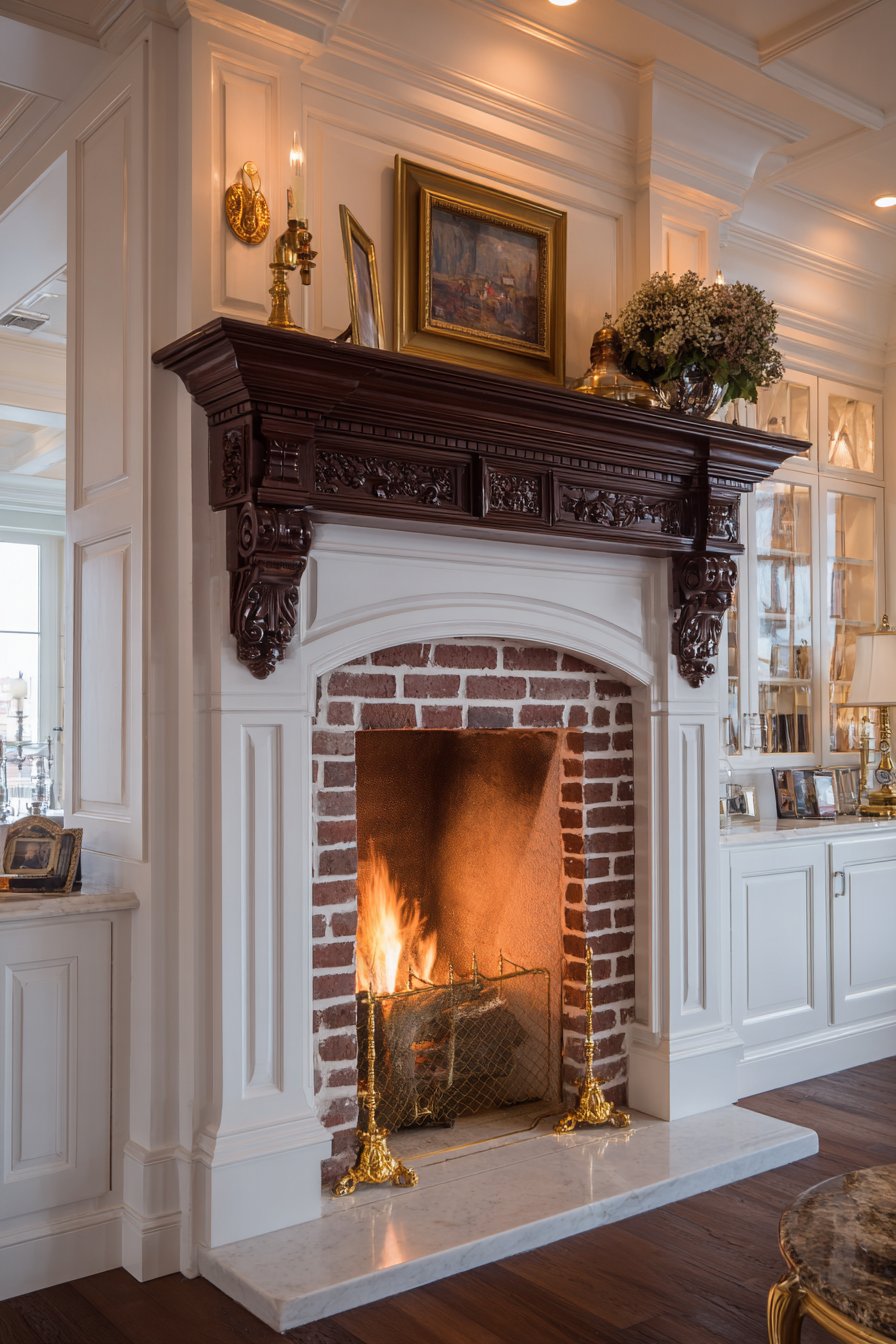
The ornate carved wood fireplace mantel in dark mahogany represents the pinnacle of traditional fireplace design, with decorative corbels supporting a substantial shelf detailed with classical moldings and perhaps carved rosettes or other period-appropriate ornamental elements. This level of craftsmanship elevates the chimney wall from purely functional element to genuine furniture piece, with the rich mahogany finish glowing warmly in firelight and aging beautifully over time. The firebox is fitted with a brass mesh screen and matching andirons, these gleaming metal elements providing both practical fire containment and visual richness that catches and reflects light.
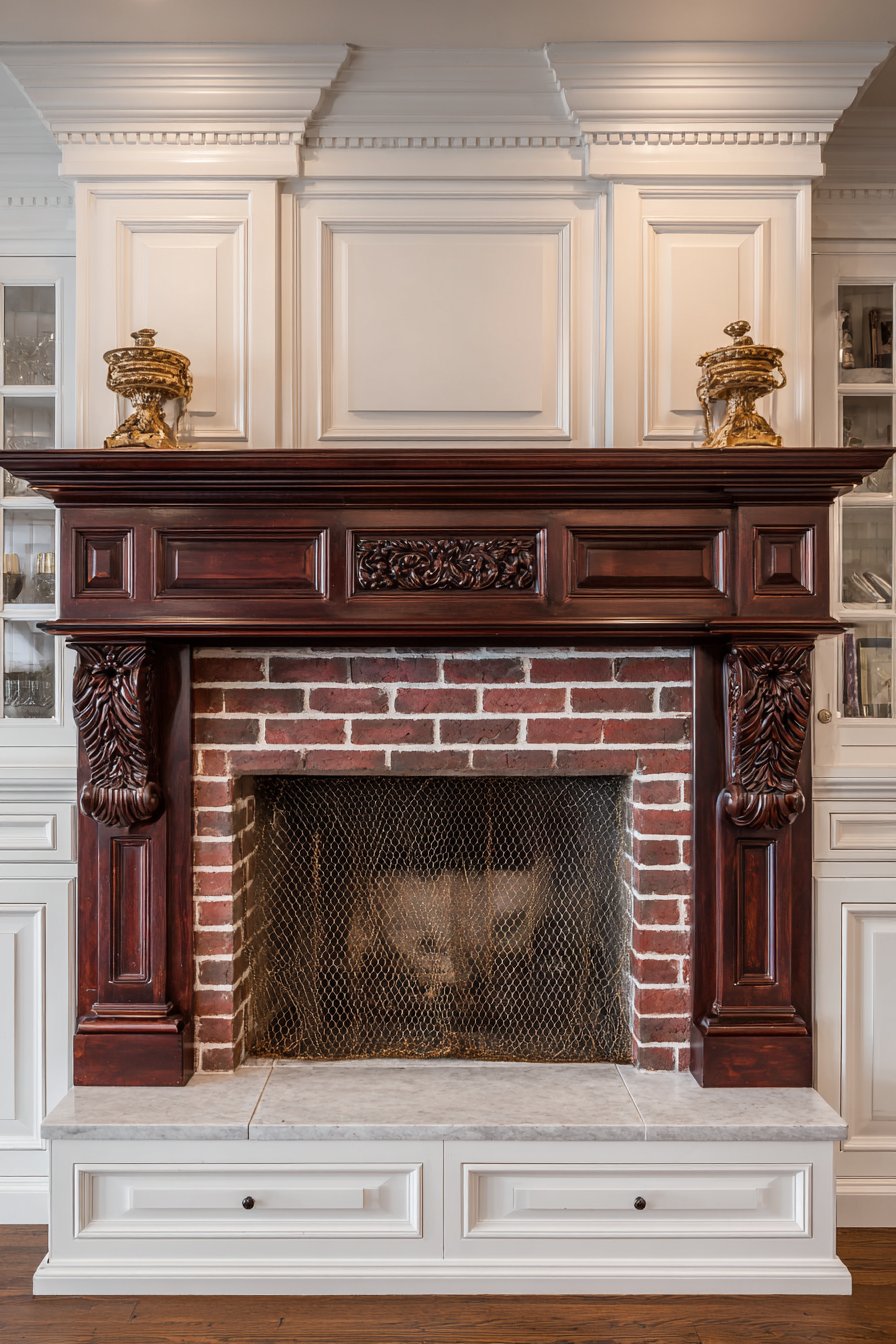
Built-in cabinetry with raised panel doors and crown molding flanks both sides of the chimney wall, providing symmetrical balance and abundant storage while reinforcing the traditional aesthetic through period-appropriate millwork details. This cabinetry might house books, display fine china or collectibles behind glass doors, or conceal media equipment and other modern necessities that would otherwise disrupt the traditional atmosphere. Professional interior photography with warm lighting highlights the timeless elegance and expert craftsmanship of this traditional chimney wall, capturing the way firelight dances across the brass fixtures, reflects in the polished mahogany, and creates an atmosphere of refined comfort that formal traditional design achieves at its best.
Key Design Tips:
- Select brick in traditional red tones and have mortar joints tooled to create clean, refined lines
- Invest in a high-quality carved mantel from architectural specialists who understand period detailing
- Choose brass fixtures in unlacquered brass that will develop natural patina over time
- Design built-in cabinetry with proportions that balance the chimney wall without overwhelming it
- Apply crown molding at the ceiling to create architectural continuity throughout the room
- Maintain the traditional aesthetic through furniture and decor selections that respect the formality
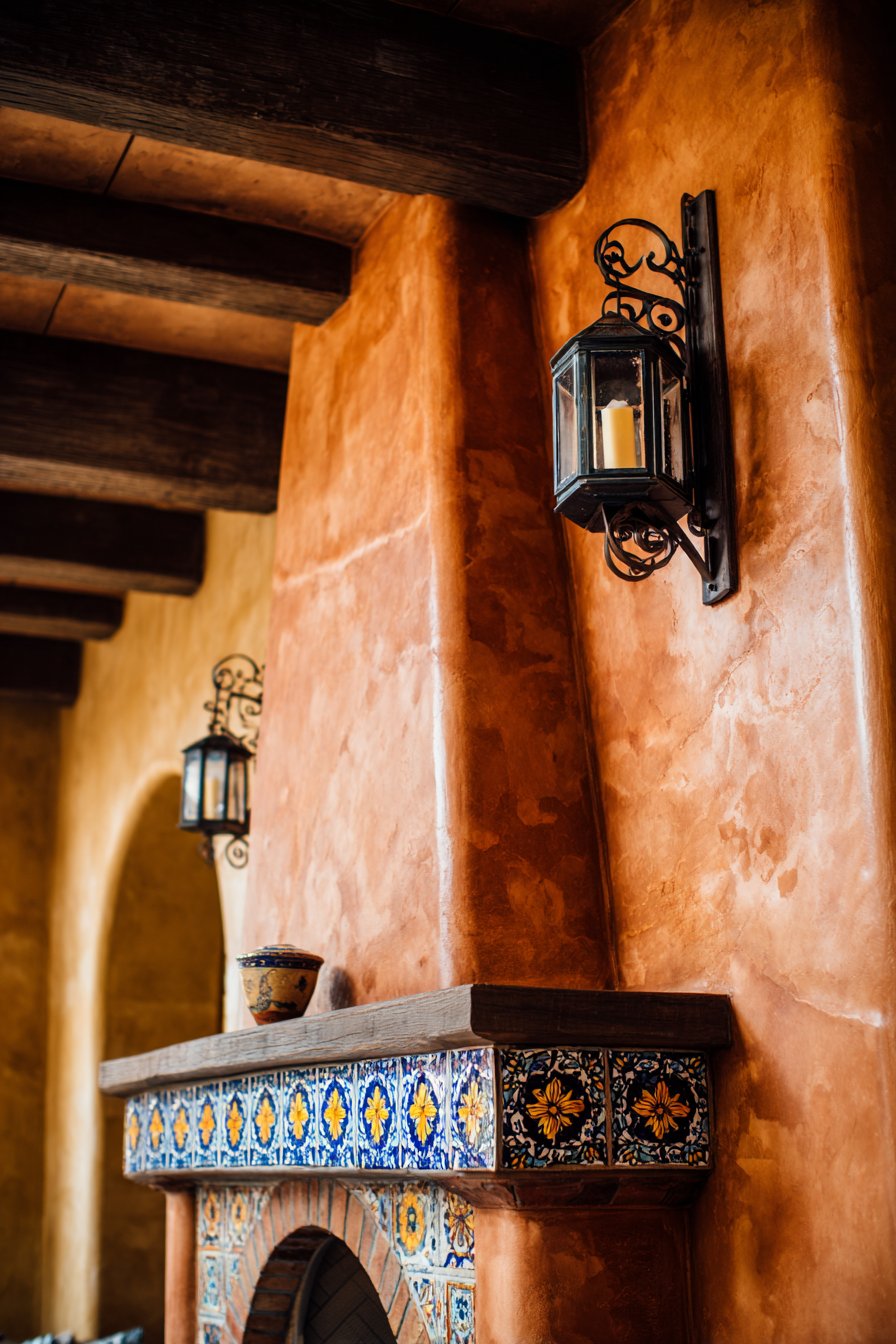
12. Mediterranean Terracotta Stucco with Decorative Tile
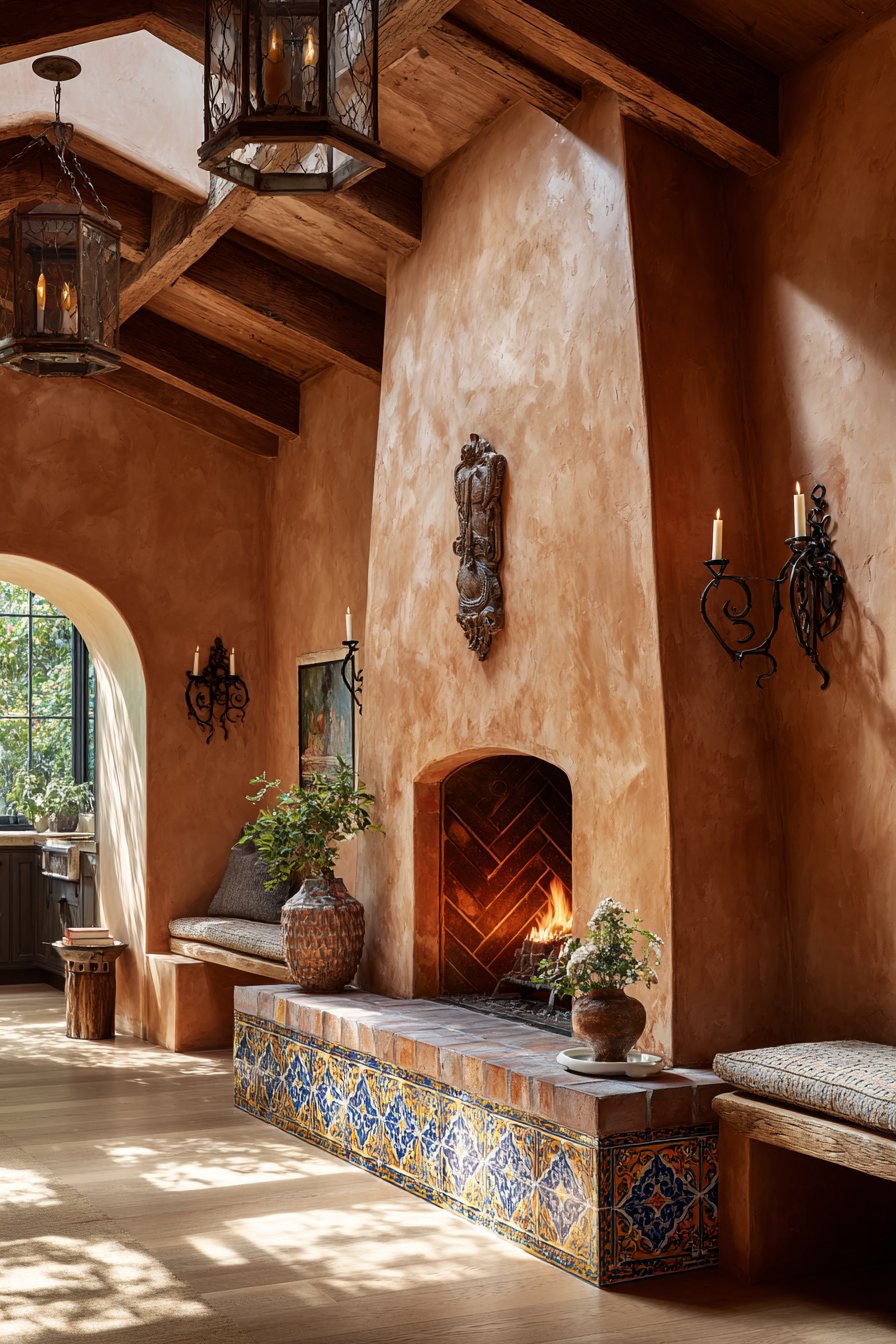
The warmth and romance of Mediterranean architecture comes alive in this chimney wall design that transports you to sun-drenched villas overlooking azure seas. Textured stucco in warm terracotta tones covers the chimney wall surface, applied with hand-troweling techniques that create subtle irregularities celebrating the artisan’s touch rather than the uniformity of machine production. This slightly uneven finish captures authentic Mediterranean plaster work, where perfection is found in imperfection and the human element remains visible in the finished work, creating surfaces with soul and character that mass-produced materials cannot match.
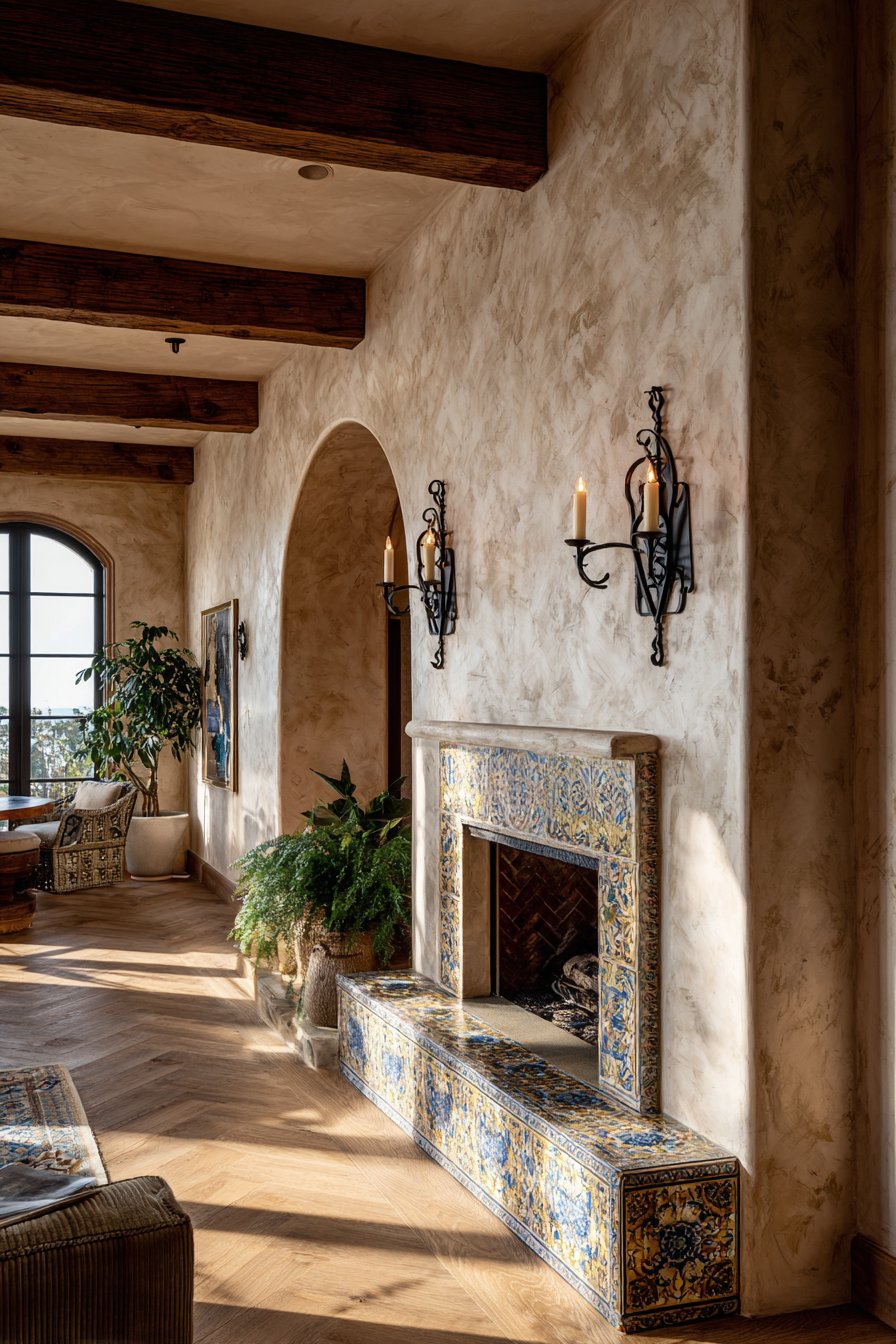
The arched fireplace opening pays homage to Moorish and Spanish architectural traditions, its curved form creating visual softness while the decorative tile surround in blue and yellow patterns introduces the vibrant colors and intricate designs characteristic of Mediterranean tilework. These hand-painted or traditionally glazed tiles might feature geometric patterns, floral motifs, or stylized natural elements, each tile contributing to a larger composition that transforms the fireplace into a work of art. The combination of warm terracotta plaster and cool blue tiles creates color harmony reminiscent of earth meeting sky, warm adobe structures against brilliant Mediterranean skies.
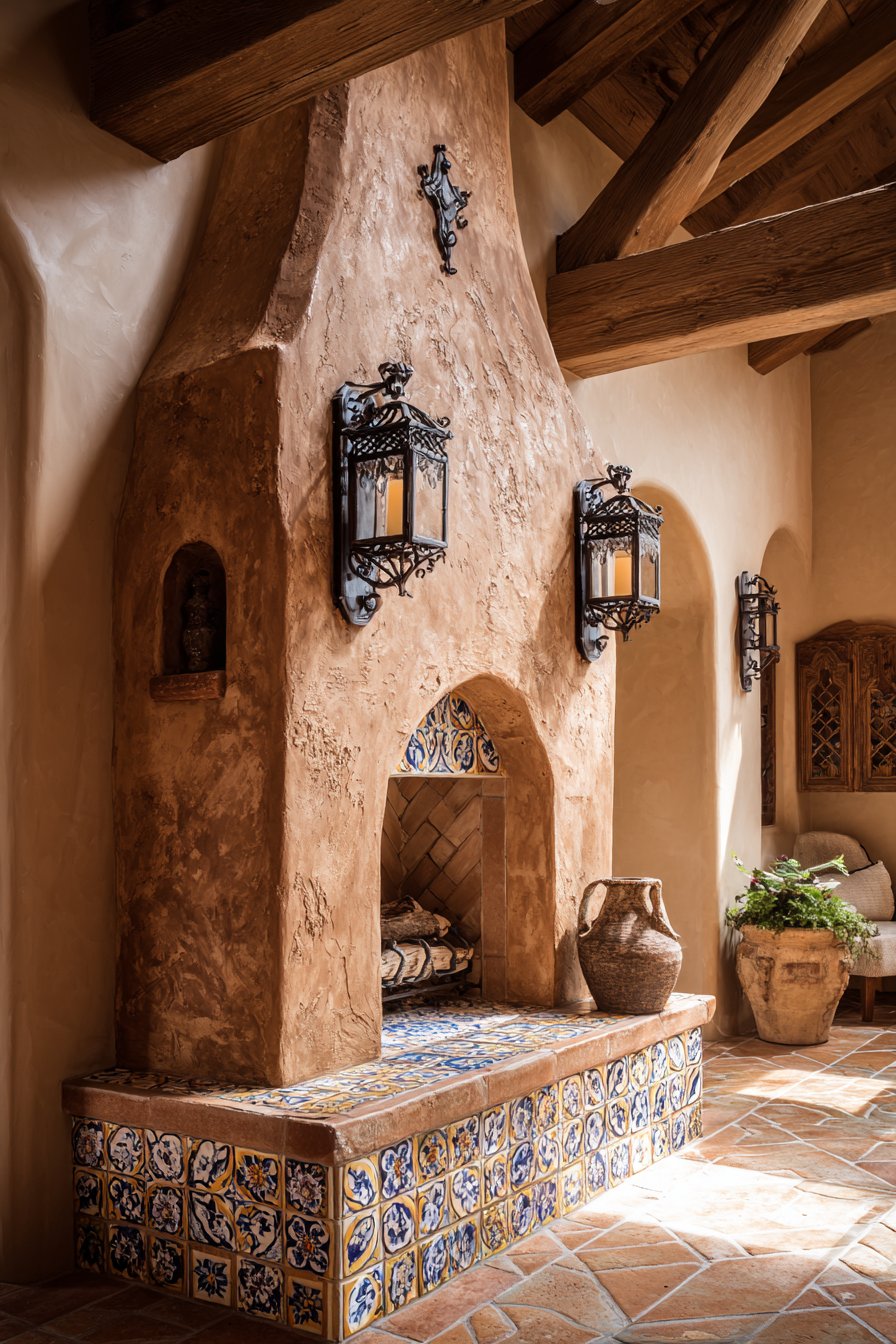
Wrought iron wall-mounted candle sconces add Old World charm and functional ambiance, their hand-forged construction and matte black finish providing the kind of authentic period detailing that makes Mediterranean design feel genuine rather than theme-park approximation. Exposed wooden ceiling beams visible above the chimney wall extend the European country house vocabulary, suggesting age, solidity, and traditional construction methods. Interior design photography captured in golden afternoon light emphasizes the rustic European character of this chimney wall, the warm light enhancing the terracotta’s earthy richness while the shadows cast by the textured surface and wrought iron elements add depth and drama to this romantic, time-honored design approach.
Key Design Tips:
- Apply stucco in multiple thin coats with varied troweling directions to achieve authentic texture
- Source decorative tiles from specialists in Mediterranean or Spanish reproduction tiles
- Create the arched opening with proper masonry techniques that ensure structural integrity
- Select wrought iron sconces with genuine hand-forged character rather than mass-produced imitations
- Expose ceiling beams or add faux beams if authentic exposed structure isn’t available
- Embrace slight irregularities in the stucco as signs of authentic hand application
13. Minimalist Polished Concrete Monolith
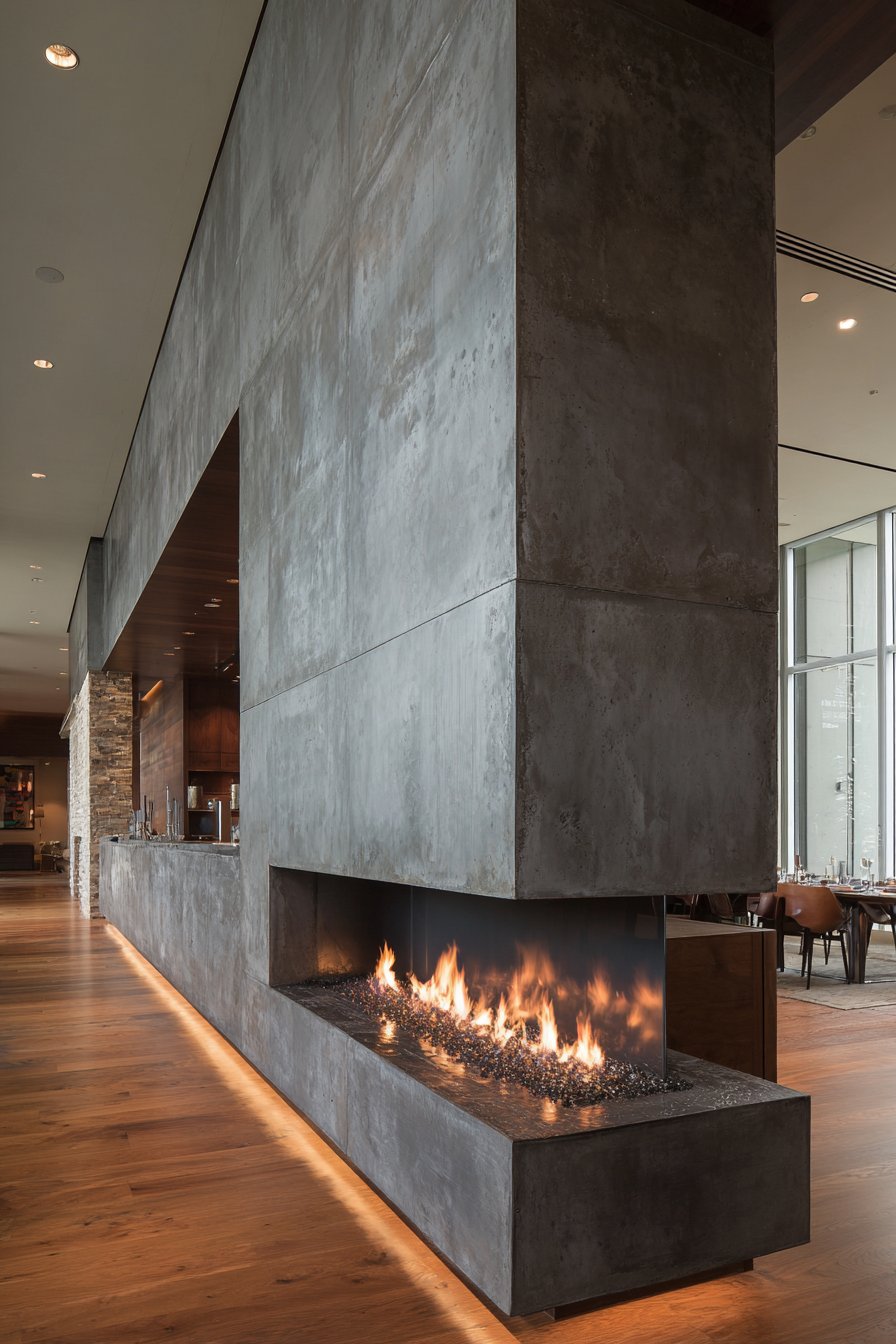
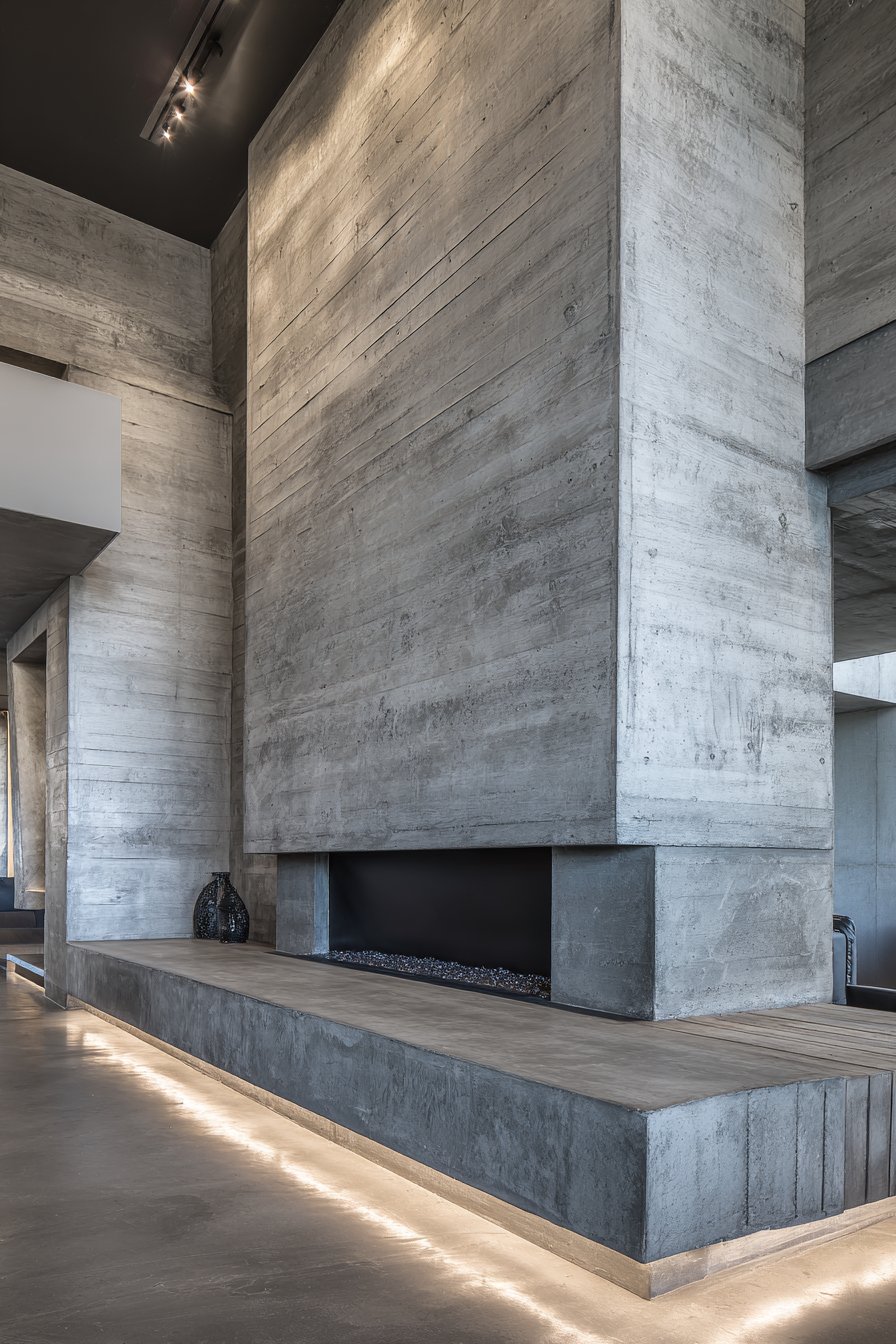
Austere beauty and architectural purity define this minimalist chimney wall that strips away all excess to reveal the essential relationship between material, form, and space. The monolithic chimney wall in polished concrete with seamless finish represents the ultimate expression of minimalist design philosophy, its uninterrupted surface rising from floor to ceiling without joints, seams, or decorative interruptions. This tour de force of concrete finishing creates a surface of meditative simplicity, the subtle variations in the polished finish providing just enough visual interest to prevent monotony while maintaining the rigorous discipline that characterizes minimalism at its most uncompromising.
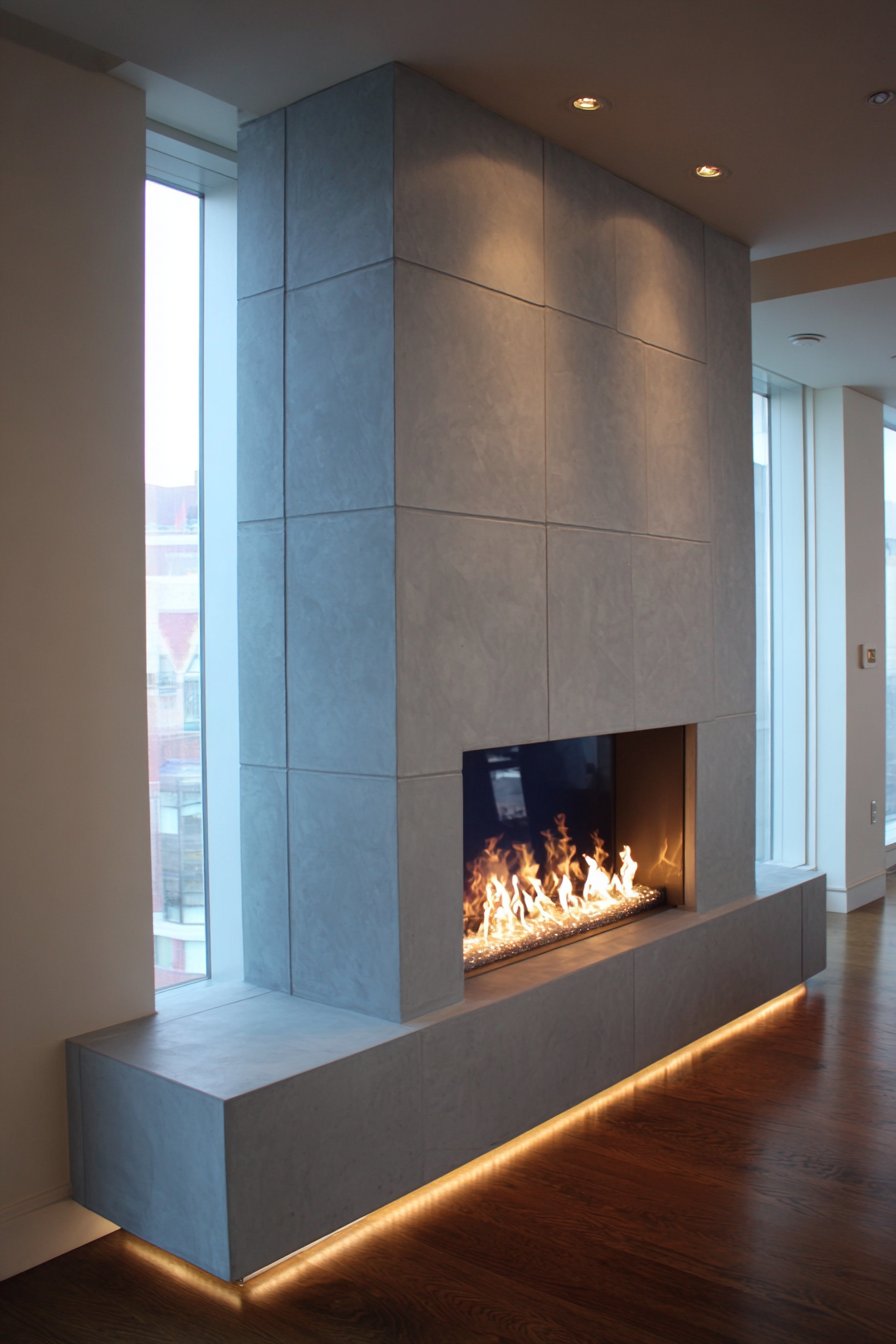
The linear ribbon fireplace spans horizontally across the concrete surface, its flames visible through a long, narrow opening that emphasizes width over height, creating a contemporary viewing experience dramatically different from traditional fireplace proportions. This horizontal orientation suits modern furniture arrangements and creates a focal point that reads as an architectural element rather than a piece of equipment inserted into the wall. The absence of a mantel or shelving maintains the wall’s uninterrupted visual flow, refusing to compromise the design’s sculptural purity for conventional fireplace elements.
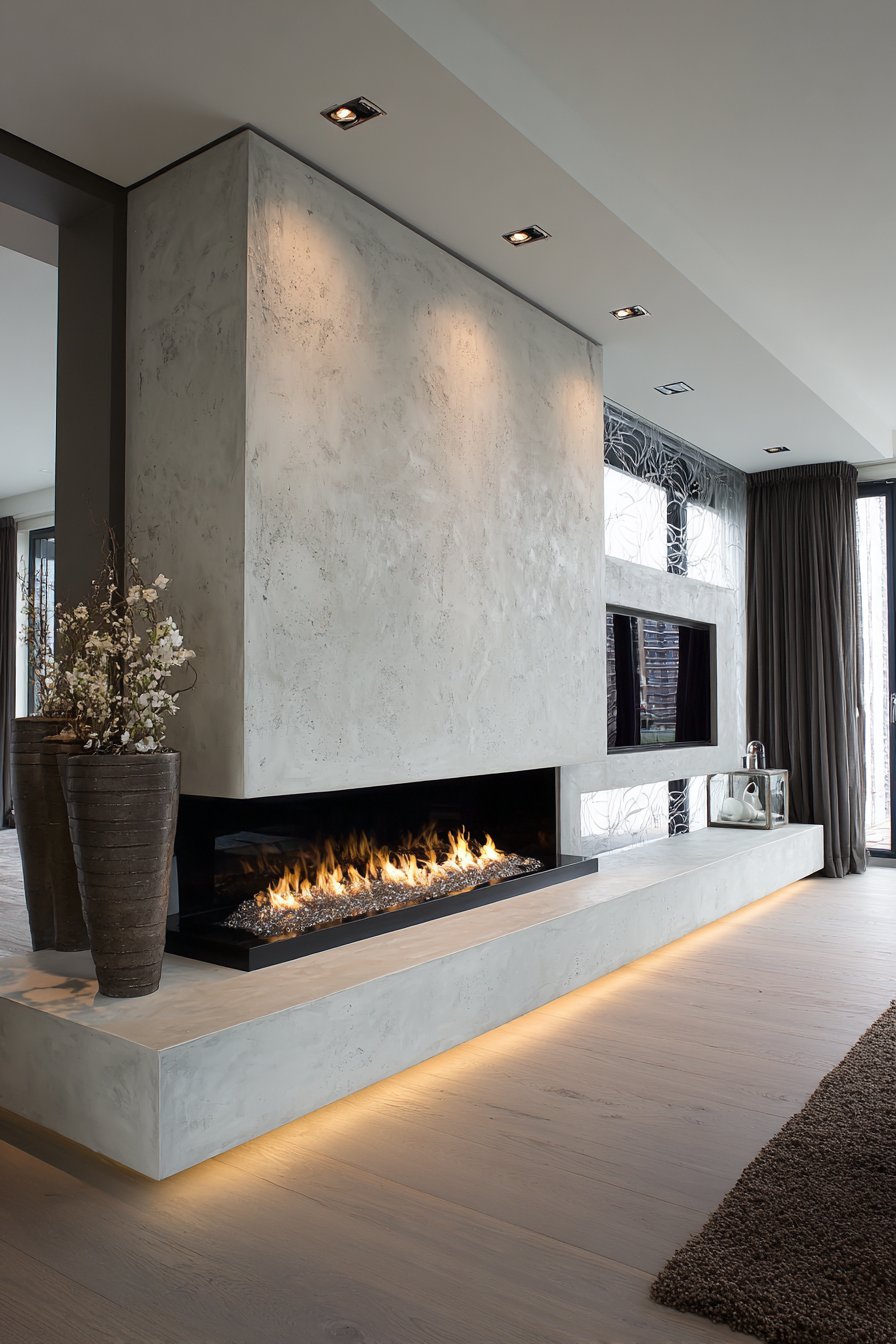
The floor-to-ceiling design creates powerful architectural drama through sheer scale and presence, the chimney wall functioning as a room divider, focal point, and sculptural object simultaneously. LED strip lighting recessed in the floor casts uplighting that washes across the polished concrete surface, creating subtle gradations of light and shadow that change the wall’s appearance dramatically from day to night. Professional interior photography with precise exposure captures the austere beauty and sculptural quality of this minimalist chimney wall, demonstrating how restraint and rigorous editing can create spaces of profound calm and visual power that speak through material and form rather than decoration and ornament.
Key Design Tips:
- Hire concrete specialists with proven experience in creating seamless, polished concrete installations
- Plan all electrical, gas, and structural elements before concrete work begins, as modifications are nearly impossible
- Choose a ribbon fireplace with installation requirements compatible with monolithic concrete construction
- Install LED uplighting on dimmers to control the dramatic effect and adapt to different moods
- Keep all surrounding elements equally minimal to support rather than dilute the chimney wall’s impact
- Accept that this level of minimalism requires significant investment in execution quality
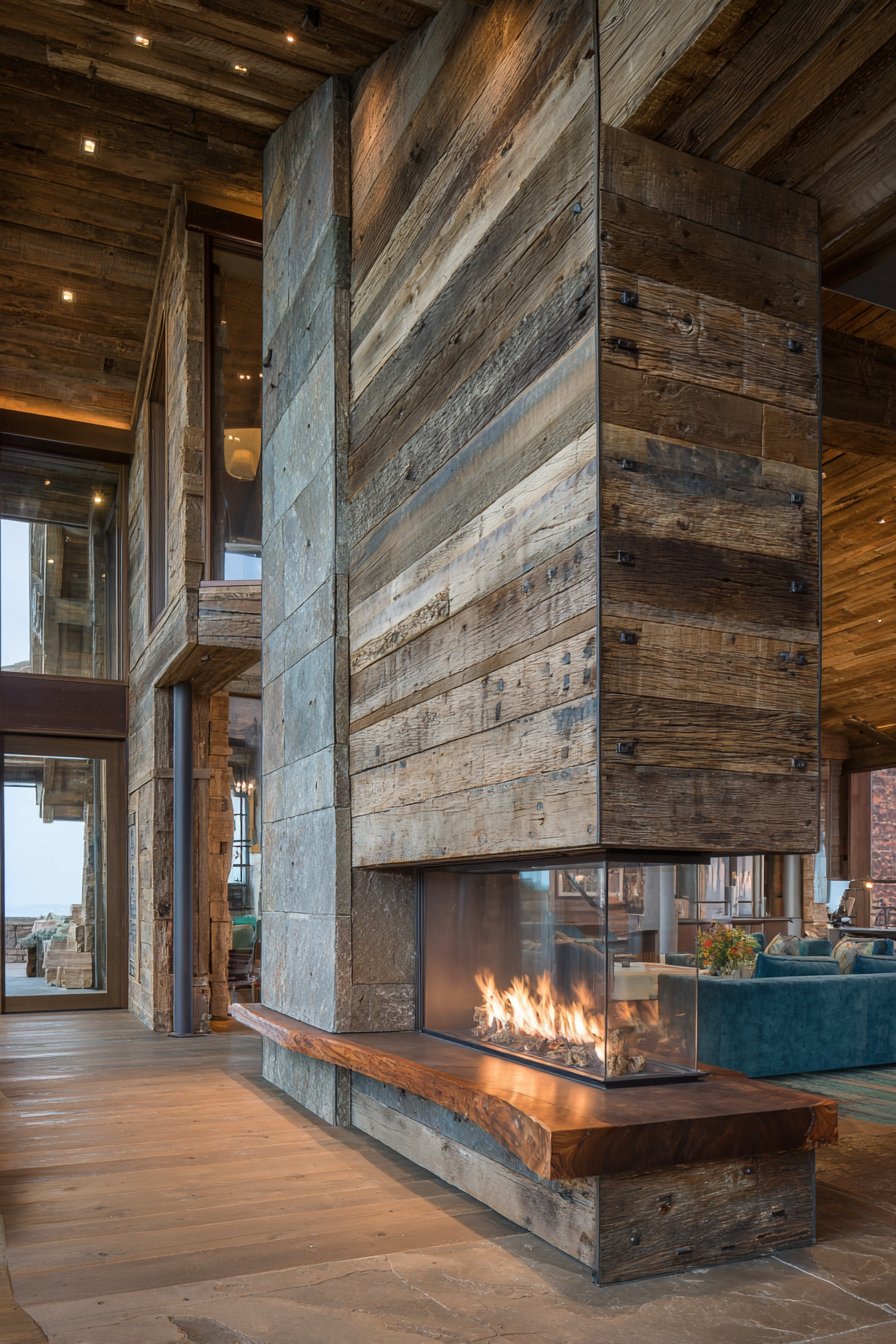
14. Rustic Modern Reclaimed Wood with Steel Insert
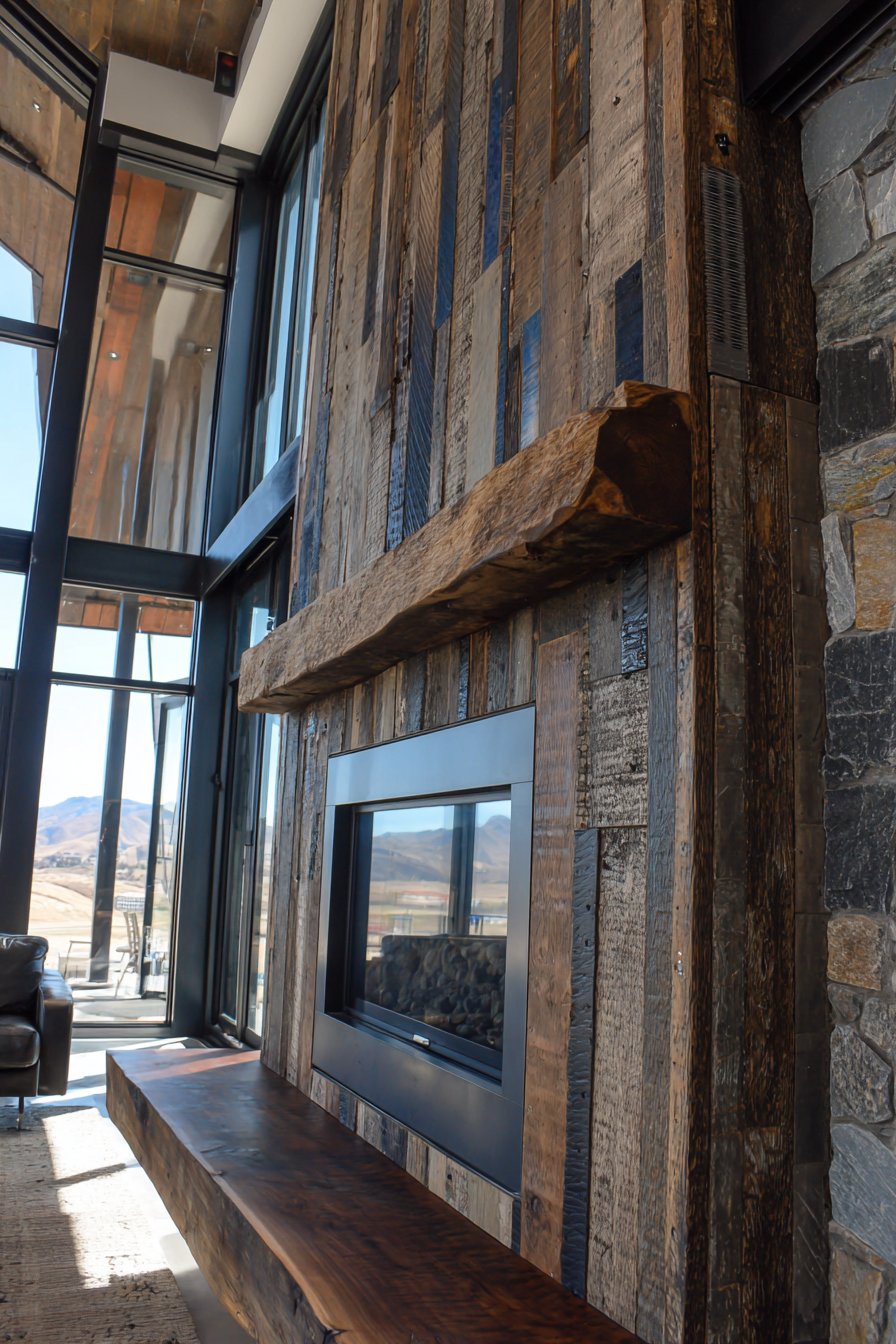
The marriage of rough and refined, old and new, natural and industrial creates compelling tension in this rustic modern chimney wall that celebrates contrasts while achieving unexpected harmony. Reclaimed barn wood planks arranged vertically create the chimney wall surface, each board telling stories through its weathered appearance, nail holes, saw marks, and the variations in color that come from decades of exposure to sun, rain, and time. This vertical orientation emphasizes the chimney wall’s height while the irregular widths and varied patinas of the reclaimed boards create visual texture and authentic character that new materials simply cannot replicate.
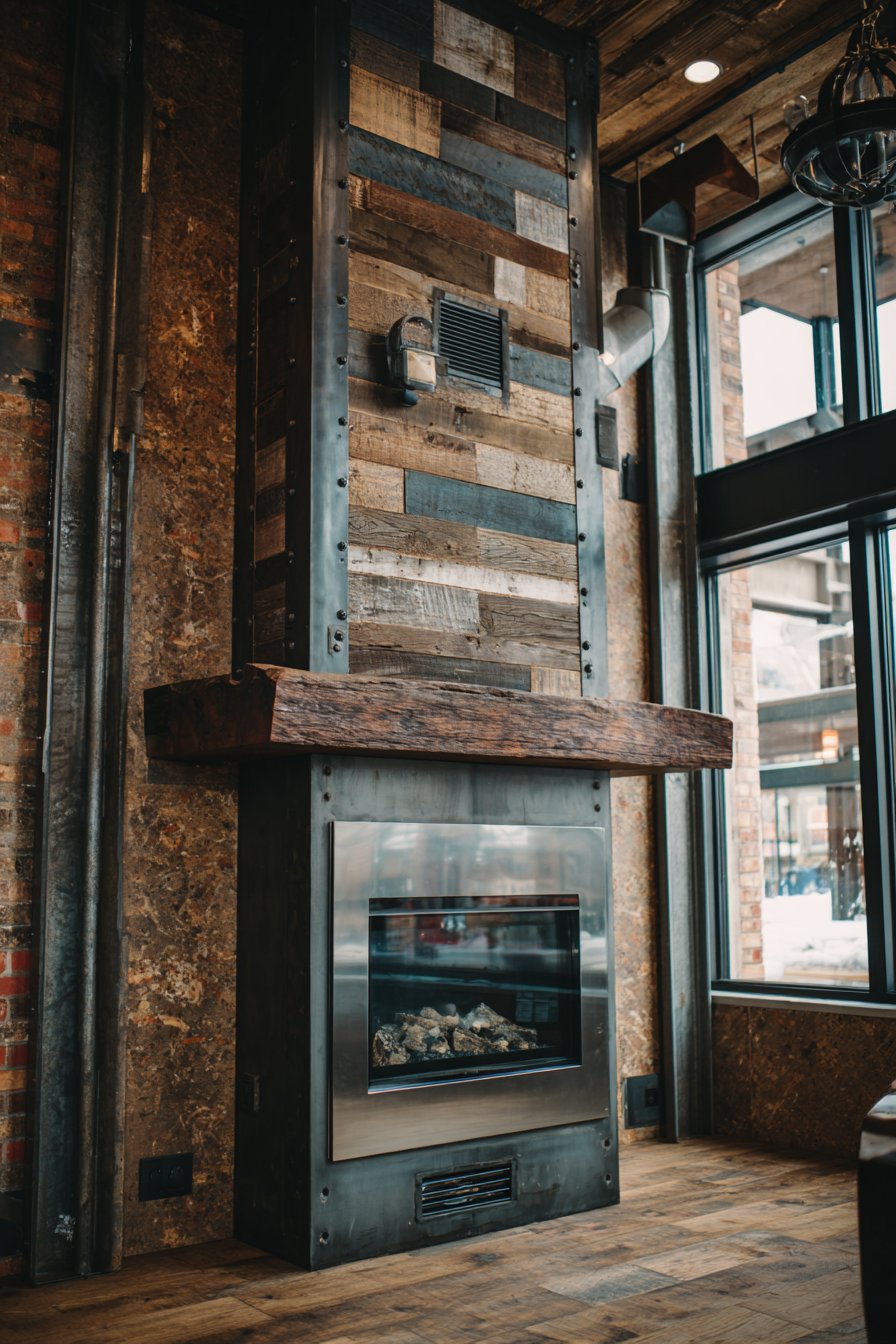
The contemporary steel fireplace insert with tempered glass doors represents modern technology and design, its clean geometric form and industrial materials creating stark contrast against the organic, weathered wood backdrop. This juxtaposition between old barn wood and new steel exemplifies the rustic modern aesthetic’s core strategy of combining elements that logically shouldn’t work together but create dynamic visual interest through their differences. A live-edge walnut slab serves as the mantel, its natural edge preserving the tree’s original form while the polished top surface reveals the wood’s beautiful grain patterns and rich color.
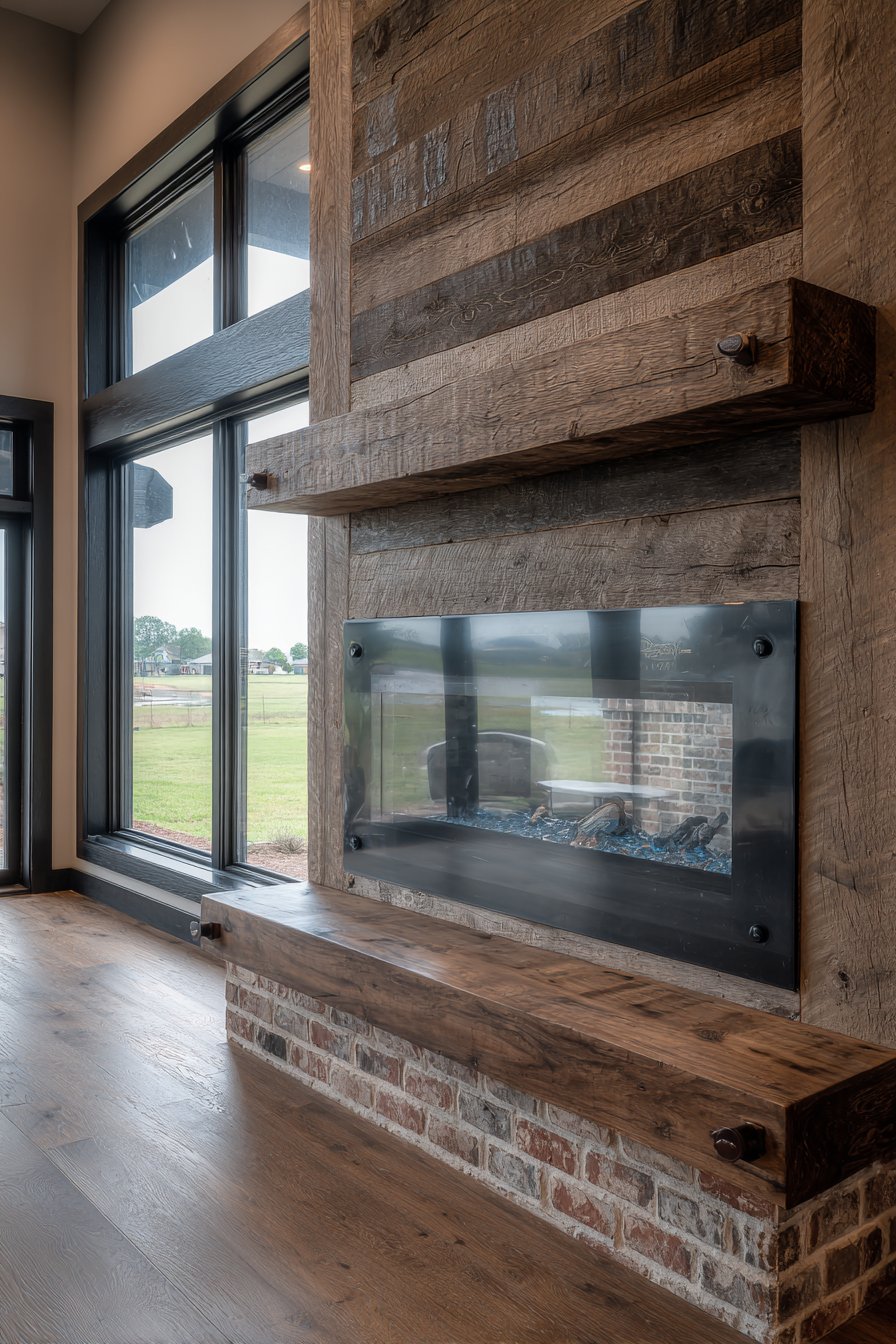
Industrial metal brackets provide functional support for the live-edge mantel while contributing to the design’s industrial component, their honest construction and visible fasteners celebrating function rather than hiding it. Exposed brick peeking through on the sides of the chimney wall adds another layer of texture and history, suggesting that this reclaimed wood treatment was applied to an original brick chimney, thus layering time periods and materials in a way that tells the story of a home’s evolution. Wide-angle interior photography with natural window light captures how sunlight moves across the varied surfaces, highlighting the contrast between rustic materials and modern elements while demonstrating how thoughtful material combinations can create chimney wall designs with depth, character, and contemporary relevance.
Key Design Tips:
- Source reclaimed wood from reputable suppliers who can verify its origin and ensure it’s properly treated for indoor use
- Seal reclaimed wood to stabilize it and protect against insects while maintaining its weathered appearance
- Select a steel fireplace insert with proportions that balance the wood surround without looking lost or overwhelming
- Choose a live-edge slab with interesting natural edge character but sufficient flat surface for practical use
- Install metal brackets with honest industrial construction rather than decorative fake brackets
- Allow some original brick to show through to suggest authentic material layering and building history
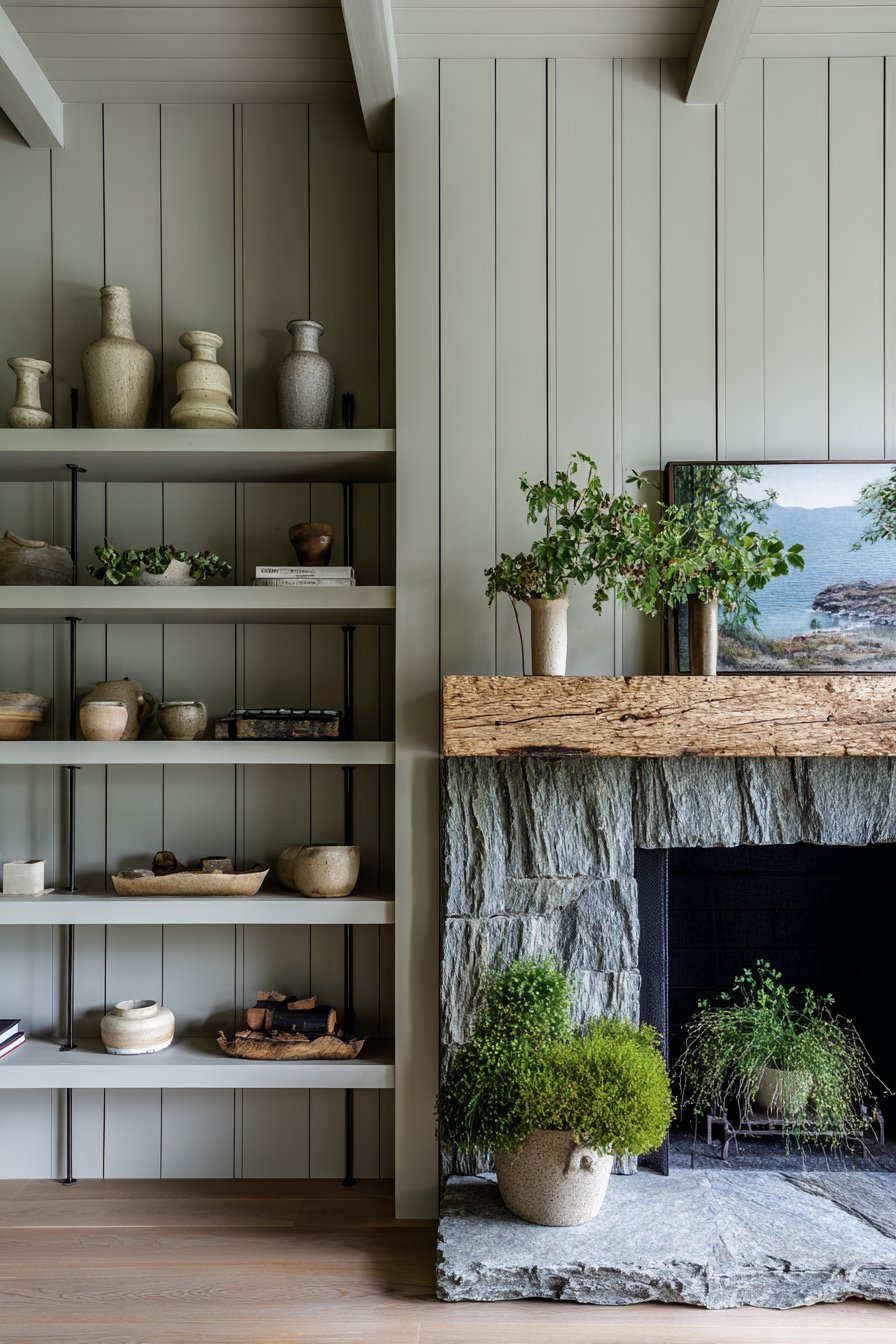
15. Contemporary Farmhouse Gray Shiplap with Black Insert
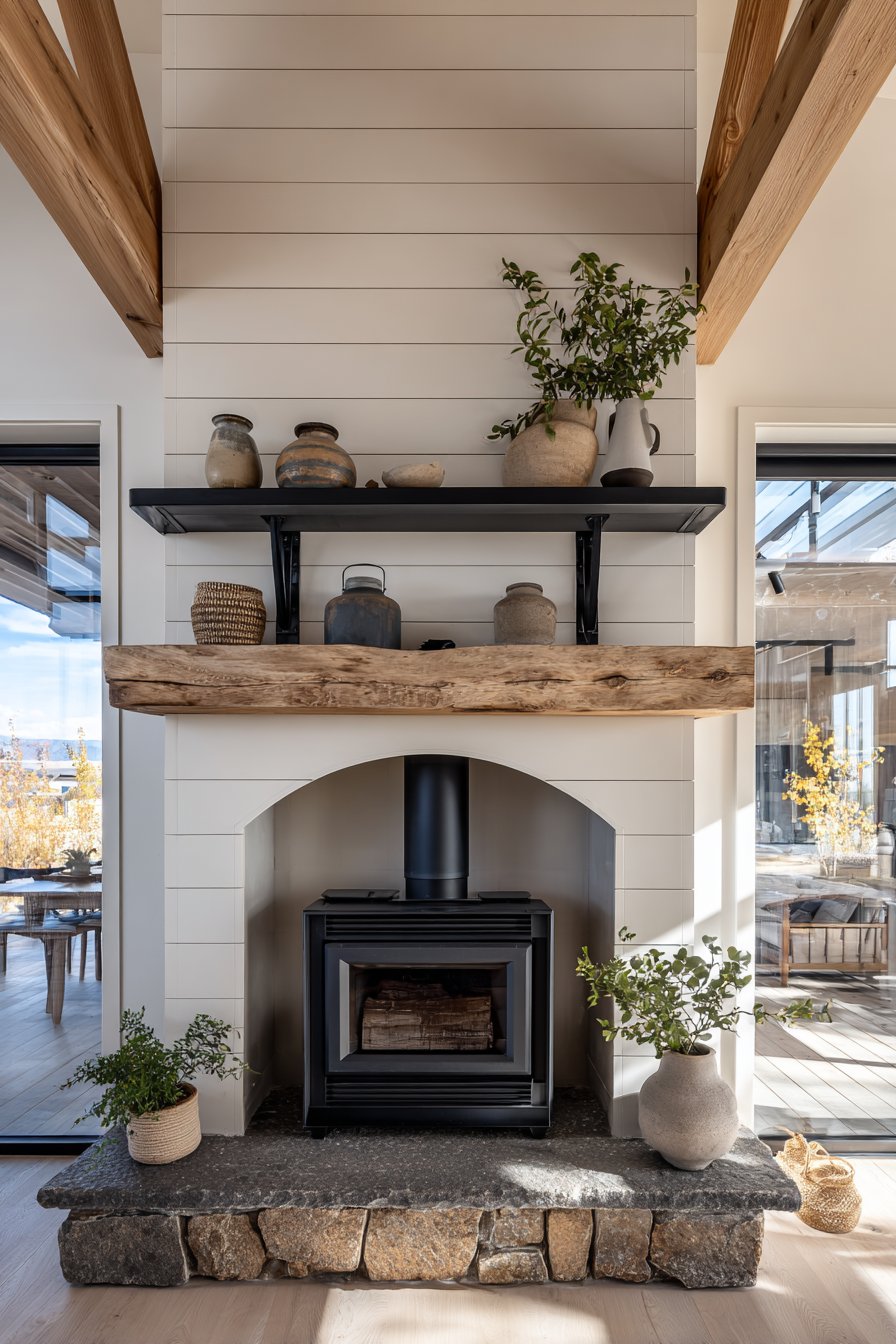
Modern sensibilities meet farmhouse charm in this contemporary farmhouse chimney wall that updates classic rural aesthetics for current tastes while maintaining the welcoming warmth that makes farmhouse design perennially popular. The floor-to-ceiling shiplap chimney wall painted in soft gray-white achieves that difficult balance between traditional material and contemporary color, with the gray tones providing more sophistication than pure white while the shiplap’s horizontal lines add texture and visual rhythm that prevents the surface from reading as flat or boring. This color choice represents the evolution of farmhouse design from its white-dominated origins toward more nuanced, complex neutral palettes that feel both fresh and timeless.
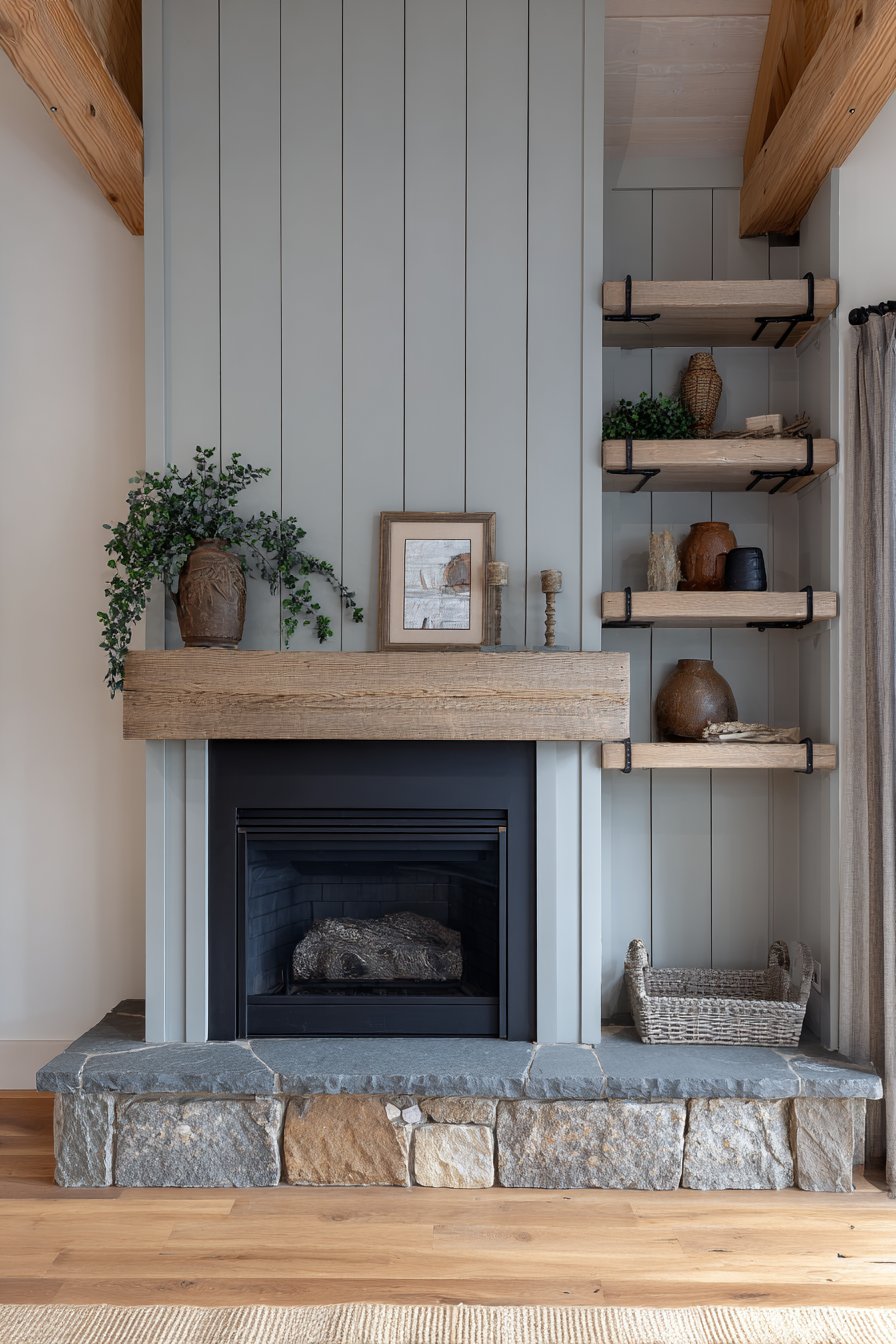
The black metal fireplace insert creates dramatic contrast against the soft gray shiplap, its contemporary styling with clean lines and geometric form preventing the design from becoming too sweet or nostalgic. This black-and-white contrast anchored by the fireplace gives the composition graphic punch while a chunky wooden beam mantel in natural finish introduces essential warmth and organic texture that softens the crisp color scheme. Open shelving with metal brackets flanks the fireplace on both sides, providing display surfaces for pottery, greenery, and carefully chosen farmhouse-appropriate decor that adds personality without cluttering the composition.
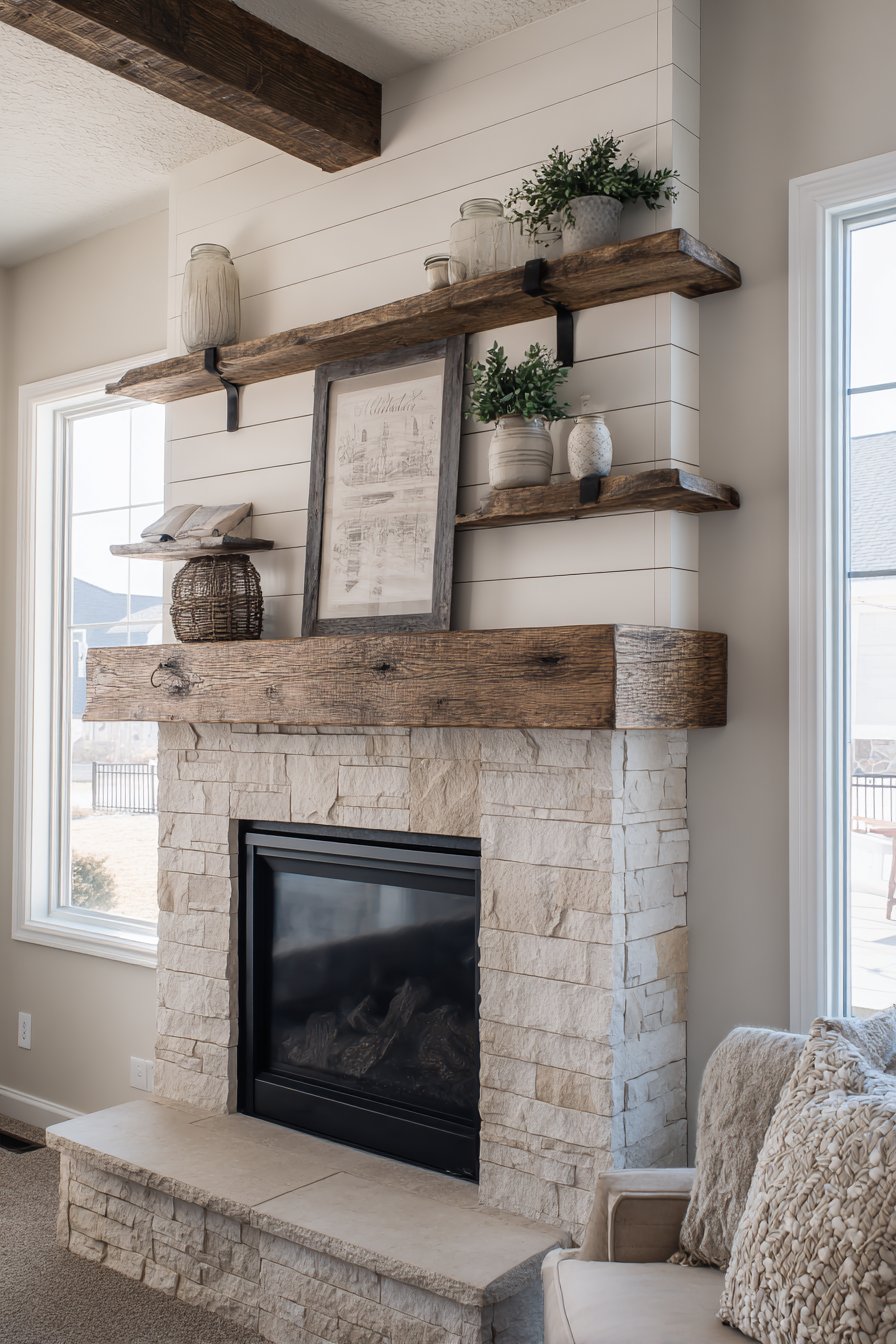
A stone hearth with irregular edges adds textural contrast to the smooth shiplap and introduces natural materiality that grounds the design in the farmhouse tradition of combining man-made and natural elements. The rough stone edges suggest authenticity and handcraft while providing visual weight at the base of the composition. Interior design photography with soft natural lighting captures the sophisticated blend of modern and rustic elements that defines contemporary farmhouse chimney wall design, showing how updated color palettes and clean-lined modern fixtures can refresh traditional materials and forms for contemporary homes while maintaining the approachable, livable character that makes farmhouse style feel like home.
Key Design Tips:
- Mix gray and white paint to achieve custom soft gray-white tones rather than using straight gray
- Install shiplap with real wood planks rather than composite materials for authentic character
- Choose a black metal fireplace insert with simple, clean lines rather than ornate traditional styling
- Select a wooden beam mantel with enough heft to balance the chimney wall’s scale
- Style open shelving with restraint, editing displays frequently to prevent visual clutter
- Source irregular-edge stone for the hearth to add organic contrast to the geometric shiplap
16. Eclectic Colorful Tile with Global Influences
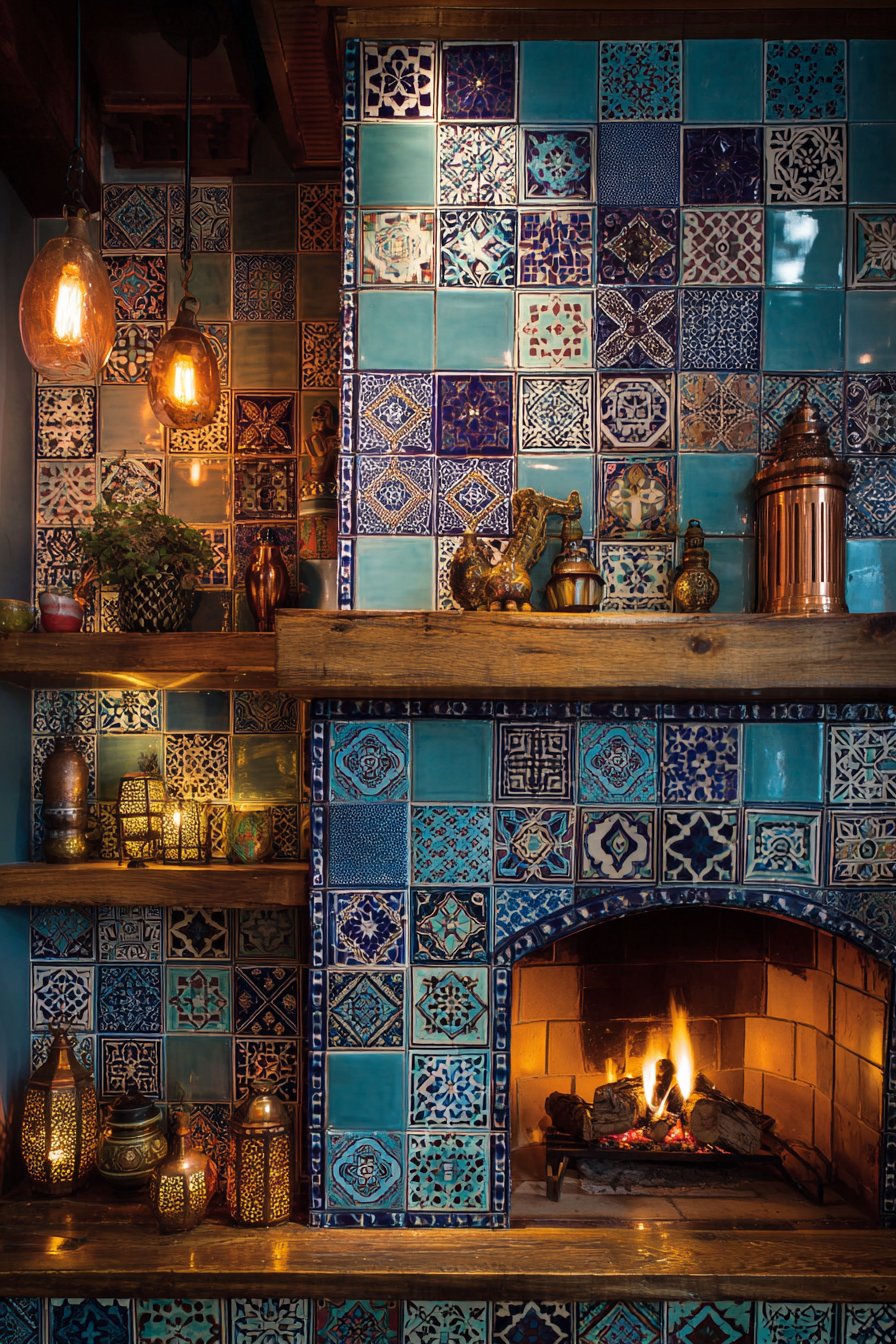
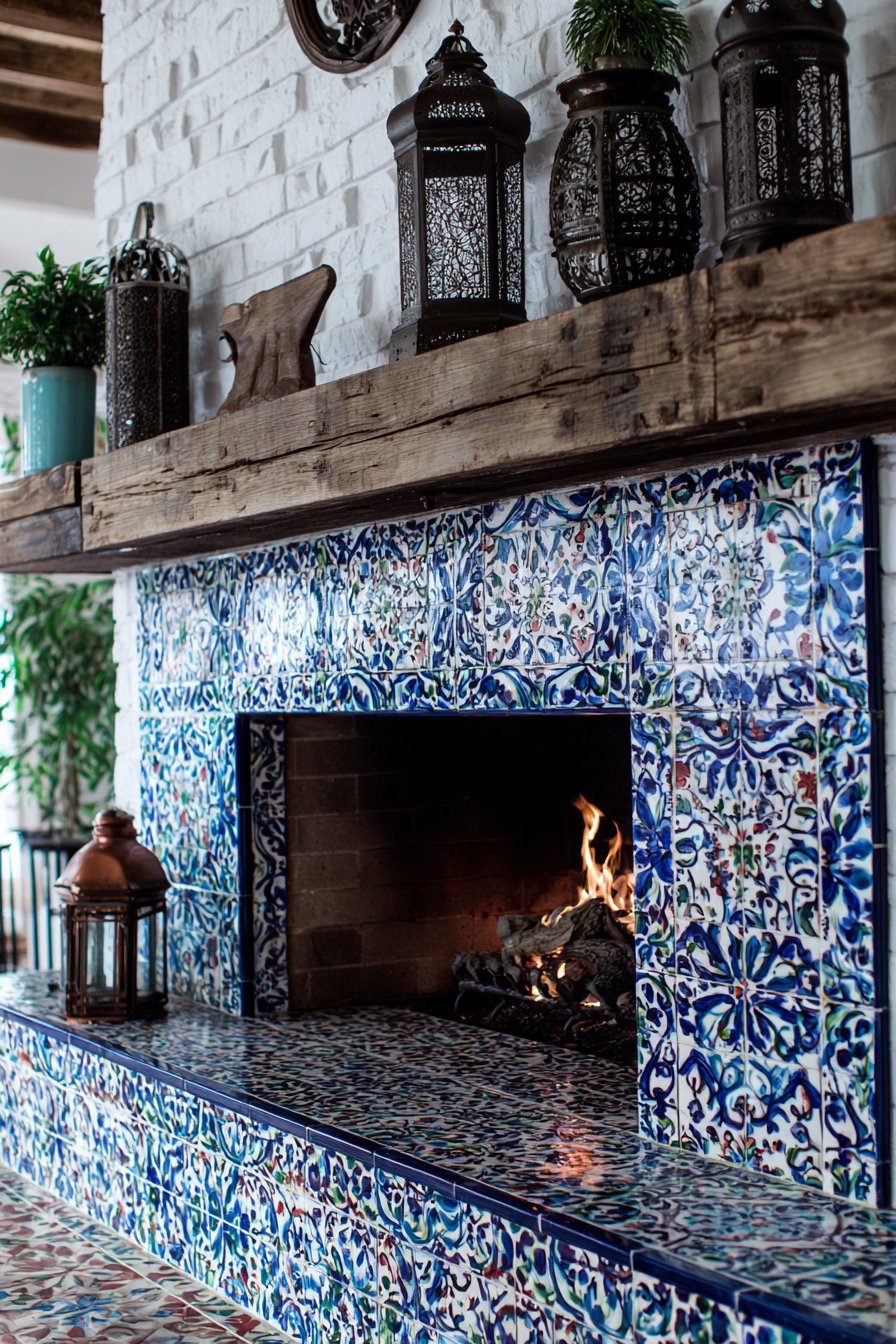
Creative expression and artistic fearlessness shine in this eclectic chimney wall design that throws out design rulebooks to create something uniquely personal and visually exciting. Handmade ceramic tiles in deep blue, turquoise, and white patterns cover the chimney wall surrounding the fireplace, each tile a small work of art contributing to a larger mosaic of color and pattern that draws the eye and demands attention. This bold approach to chimney wall design requires confidence and commitment, as the colorful tile becomes an undeniable focal point that sets the tone for the entire room’s decorating scheme.
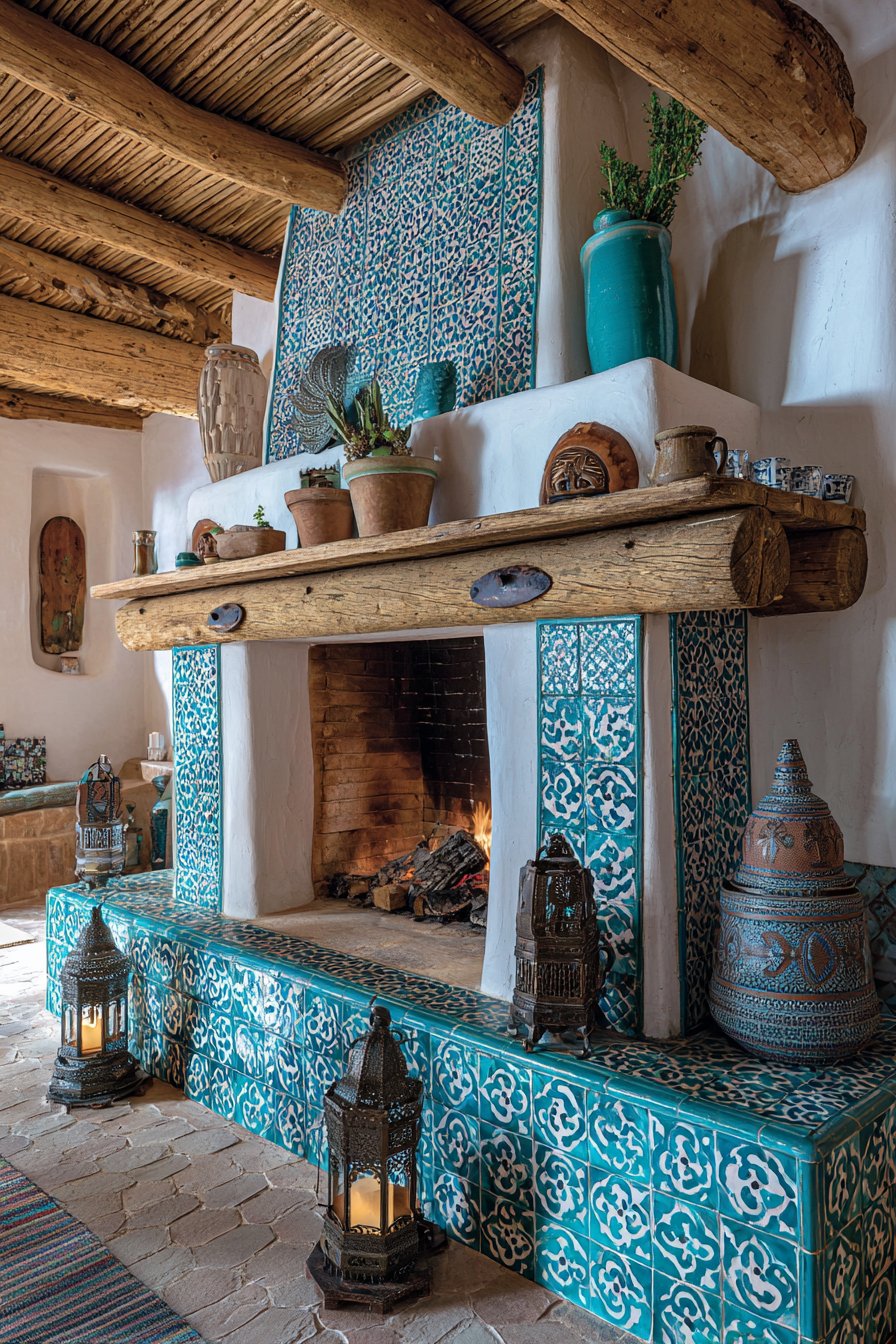
The traditional wood-burning firebox with copper hood introduces warm metallic tones that complement the cool blues of the tile while the copper’s hand-hammered texture and natural patina add artisanal quality that matches the handmade character of the ceramic tiles. This combination of materials—ceramic, copper, wood, metal—creates layers of texture and visual interest while the global influences evident in the tile patterns suggest collections from travels and an appreciation for craftsmanship from different cultures. Floating shelves in reclaimed wood display global artifacts, textiles, and plants, creating a collected-over-time appearance that tells stories and reflects the homeowner’s interests and experiences.
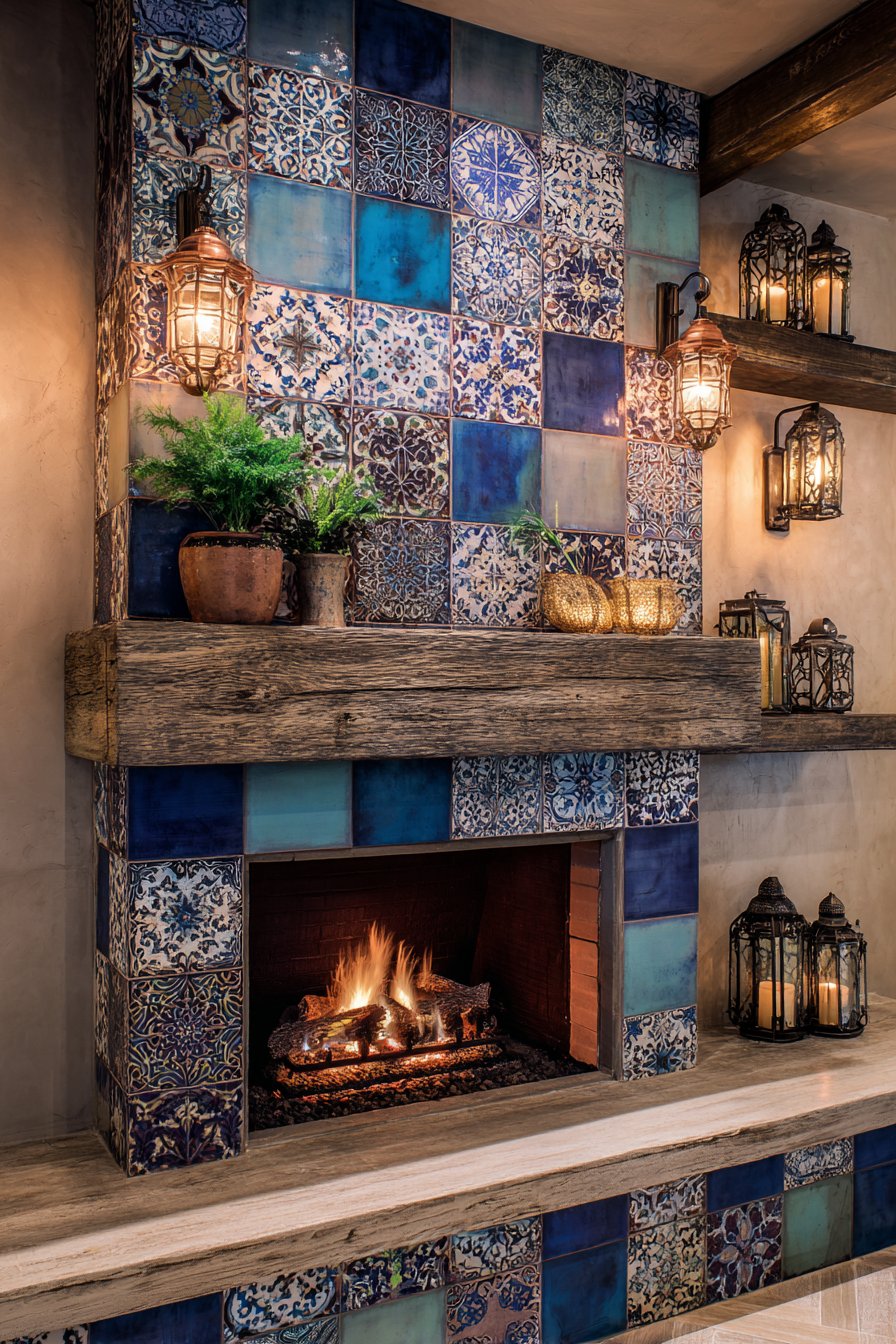
Moroccan-inspired metal lanterns provide accent lighting while reinforcing the global aesthetic, their pierced patterns casting intricate shadows across surrounding surfaces when candles burn within. The overall effect is richly layered, full of personality, and unapologetically bold—an eclectic chimney wall that celebrates color, pattern, and the mixing of styles and influences from around the world. Professional interior photography captures the vibrant personality and artistic character of this decorative chimney wall, showing how confident use of color and pattern can transform a functional architectural element into a genuine expression of personal style that makes a home feel truly individual.
Key Design Tips:
- Plan the tile layout carefully on paper before installation to ensure pattern distribution feels balanced
- Source handmade tiles from artisans or importers specializing in traditional tile-making regions
- Install tiles with appropriate spacing and grout color that enhances the pattern
- Choose a copper hood that complements the tile colors without matching too perfectly
- Style shelving with authentic global pieces rather than mass-produced “exotic” decor
- Balance the busy tile wall with calmer elements in surrounding areas to prevent visual overload
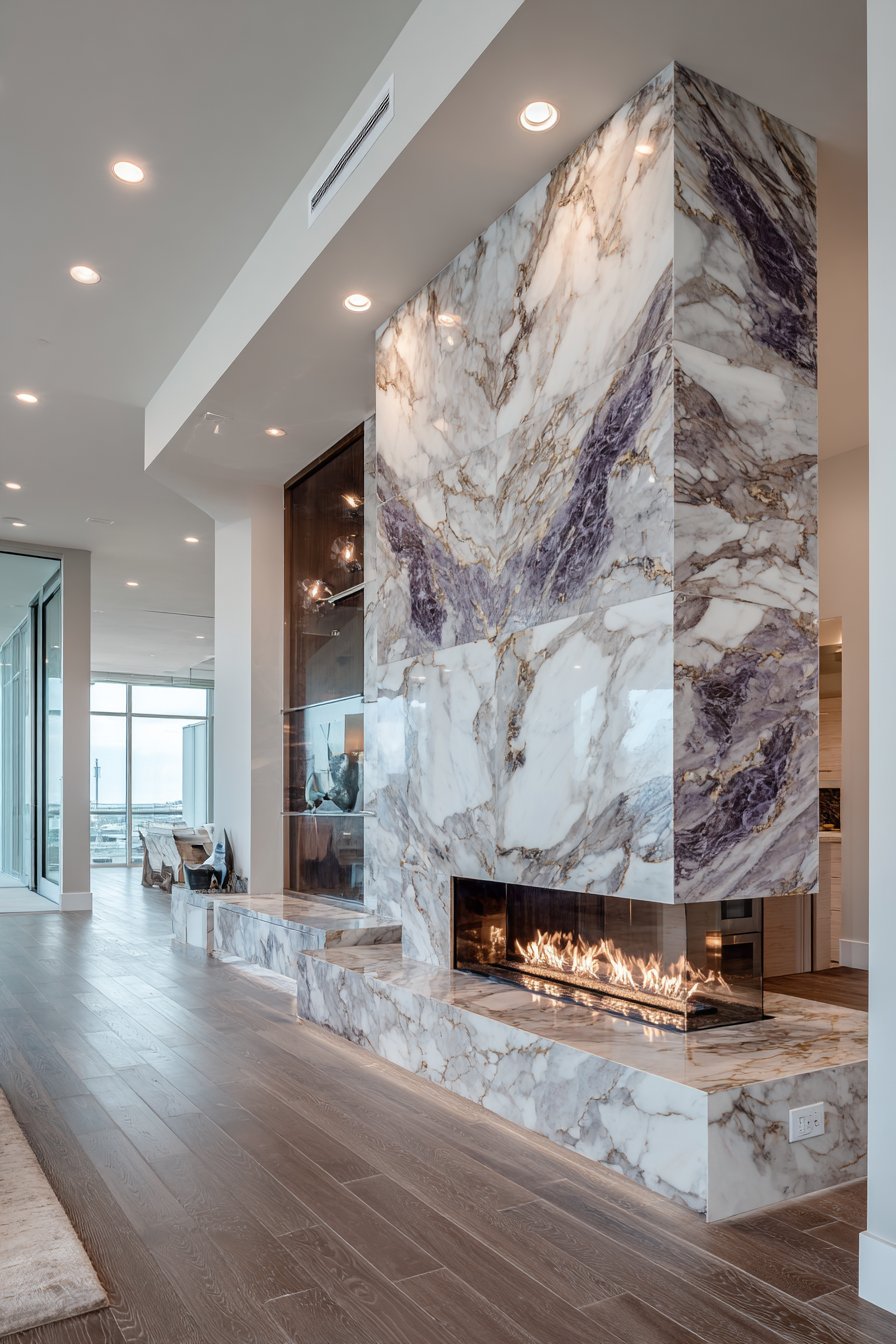
17. Luxury Marble Book-Matched Feature Wall
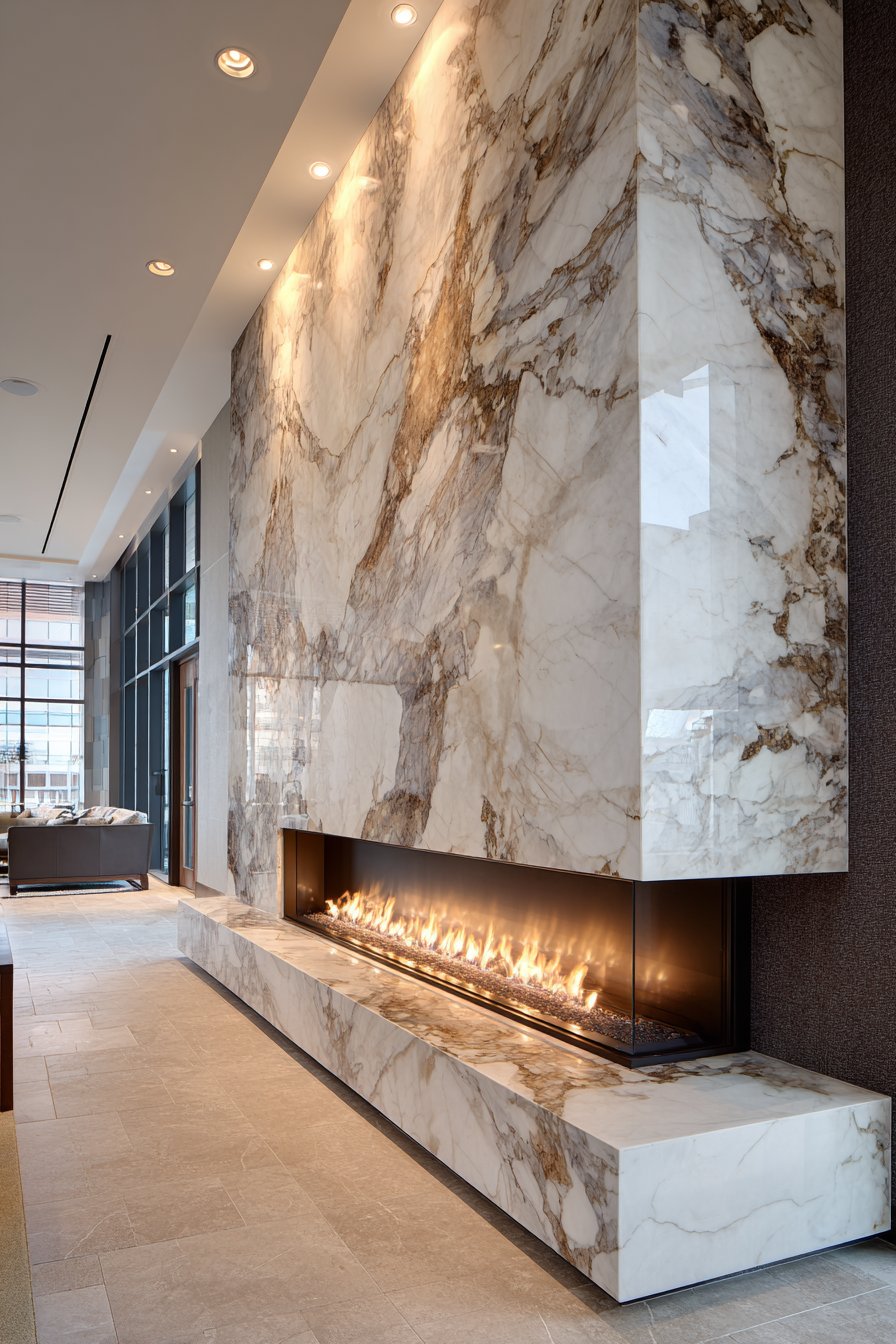
Opulence and architectural sophistication reach their zenith in this luxury chimney wall design that showcases marble in all its natural glory. Dramatic book-matched Calacatta gold marble slabs create a mirror-image pattern where the stone’s veining flows symmetrically across the chimney wall surface, with prominent gray and gold veining creating natural artwork that no human hand could design. This book-matching technique—cutting adjacent slabs from the same block and arranging them to mirror each other—represents the ultimate expression of luxury stone installation, transforming precious material into architectural jewelry that elevates the entire space.
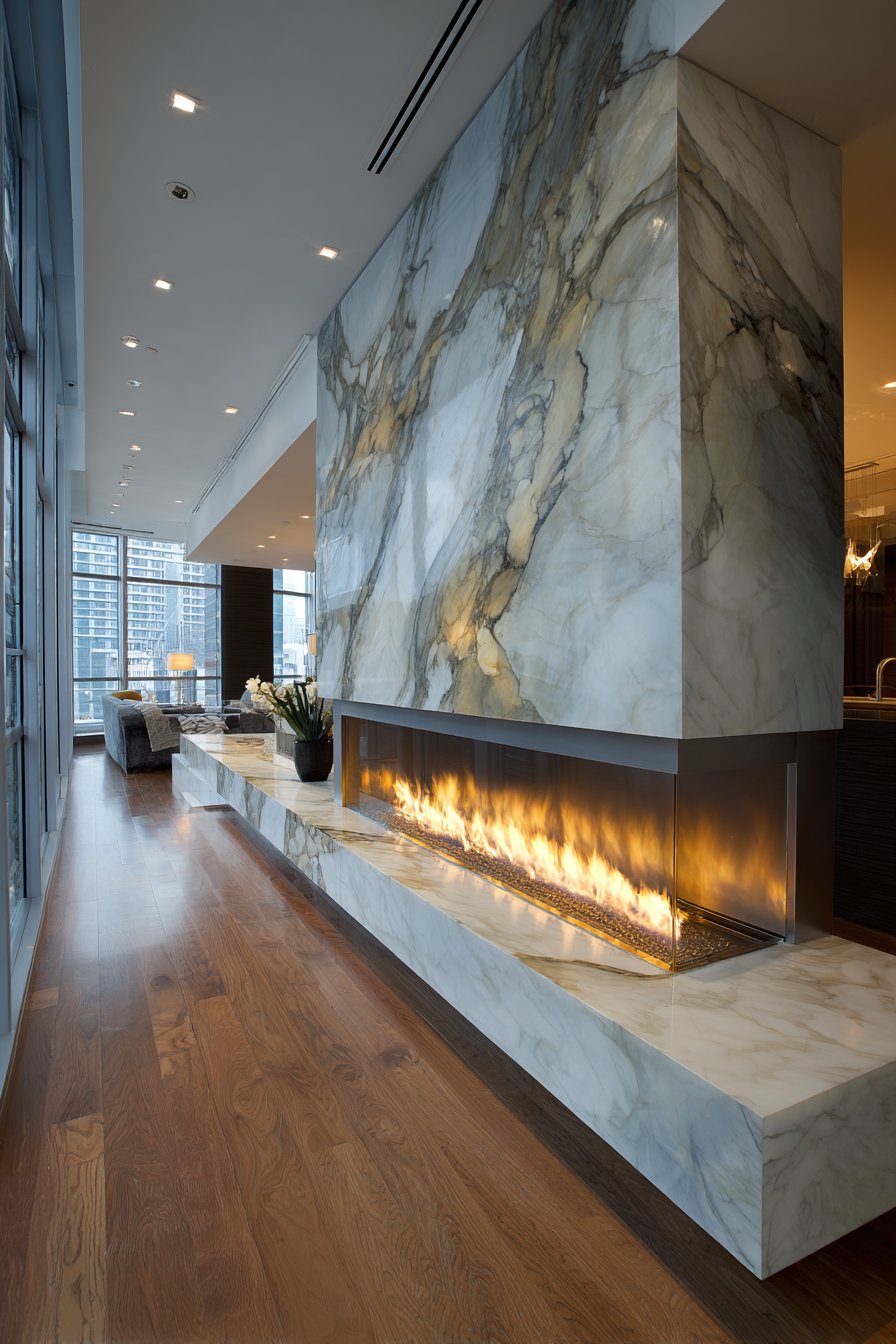
The linear fireplace with polished chrome surround maintains the luxury aesthetic through its contemporary styling and reflective finish, the chrome catching and throwing light while its clean lines prevent competition with the marble’s dramatic veining. Integrated recessed lighting washes down the marble surface, emphasizing the stone’s natural patterns and creating subtle shadows that reveal depth and three-dimensionality in the veining. The marble extends from floor to ceiling, creating a monumental presence and leaving no question about where the room’s focal point lies.
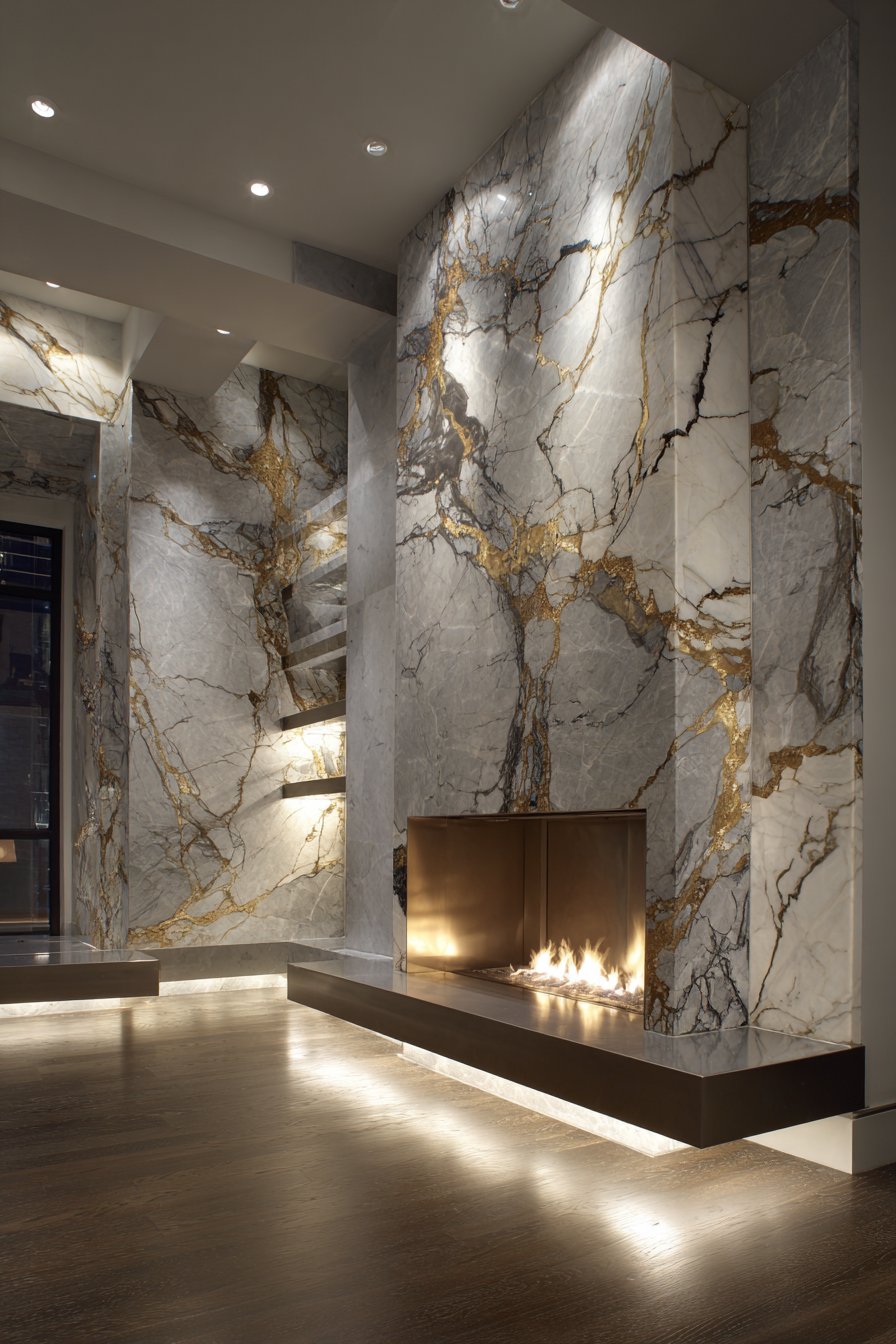
This installation requires significant investment not only in materials—Calacatta marble ranks among the most expensive natural stones—but also in skilled fabrication and installation that can handle large-format slabs and achieve the precise alignment necessary for successful book-matching. Wide-angle interior photography with professional lighting showcases the opulent materials and refined execution of this luxury chimney wall, capturing how light moves across the polished marble surface, how the veining creates natural visual flow, and how the entire composition achieves the rarefied aesthetic that defines true luxury interior design.
Key Design Tips:
- Work with stone specialists experienced in book-matching to select and fabricate slabs from the same block
- Ensure structural support can handle the significant weight of full-height marble installation
- Choose recessed lighting with adjustable fixtures to highlight the marble’s best features
- Seal marble appropriately to protect against staining while maintaining its natural luster
- Keep surrounding design elements refined and simple to allow the marble to dominate
- Budget appropriately for this luxury installation, including materials, fabrication, and expert installation
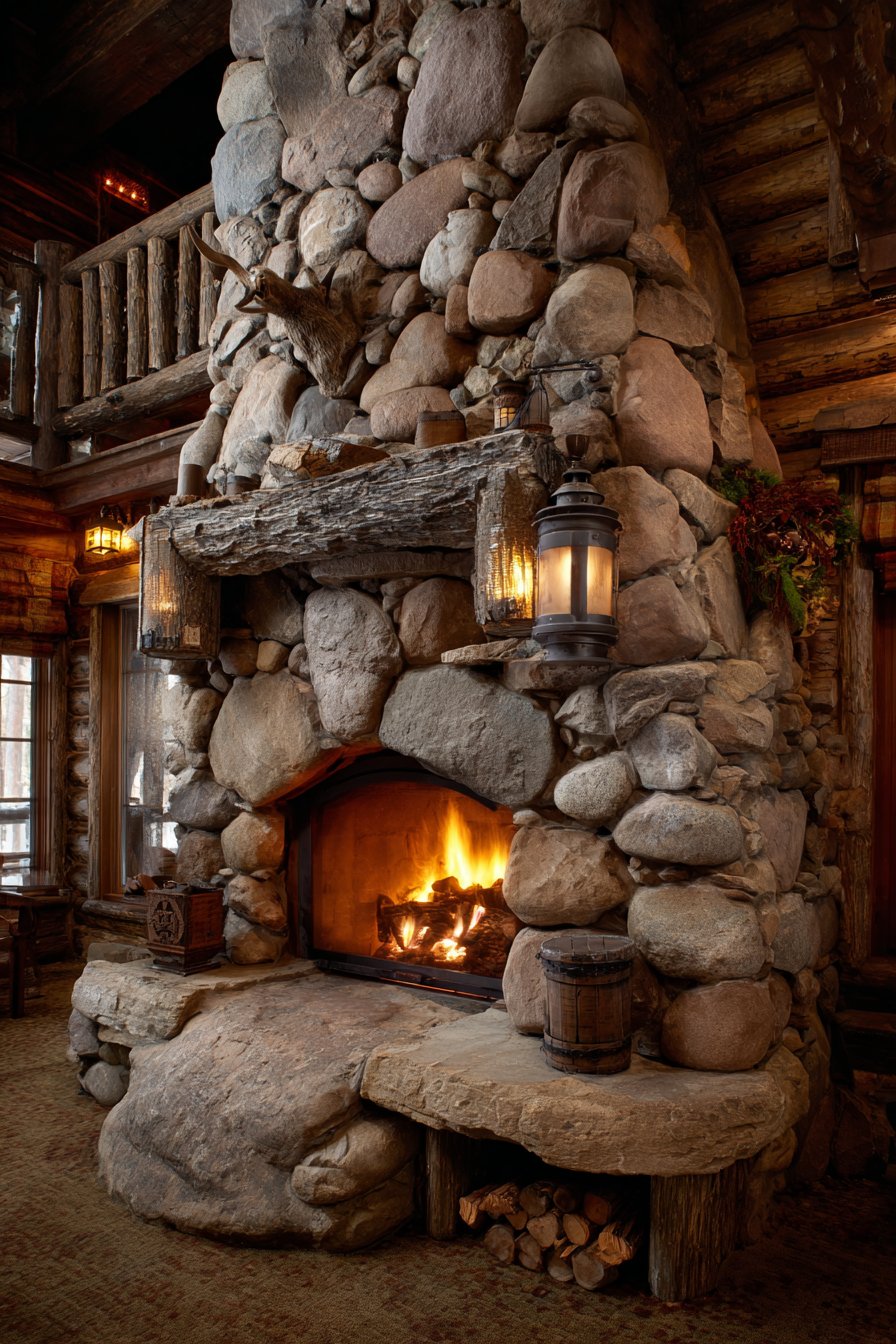
18. Cabin-Style Massive River Rock Construction
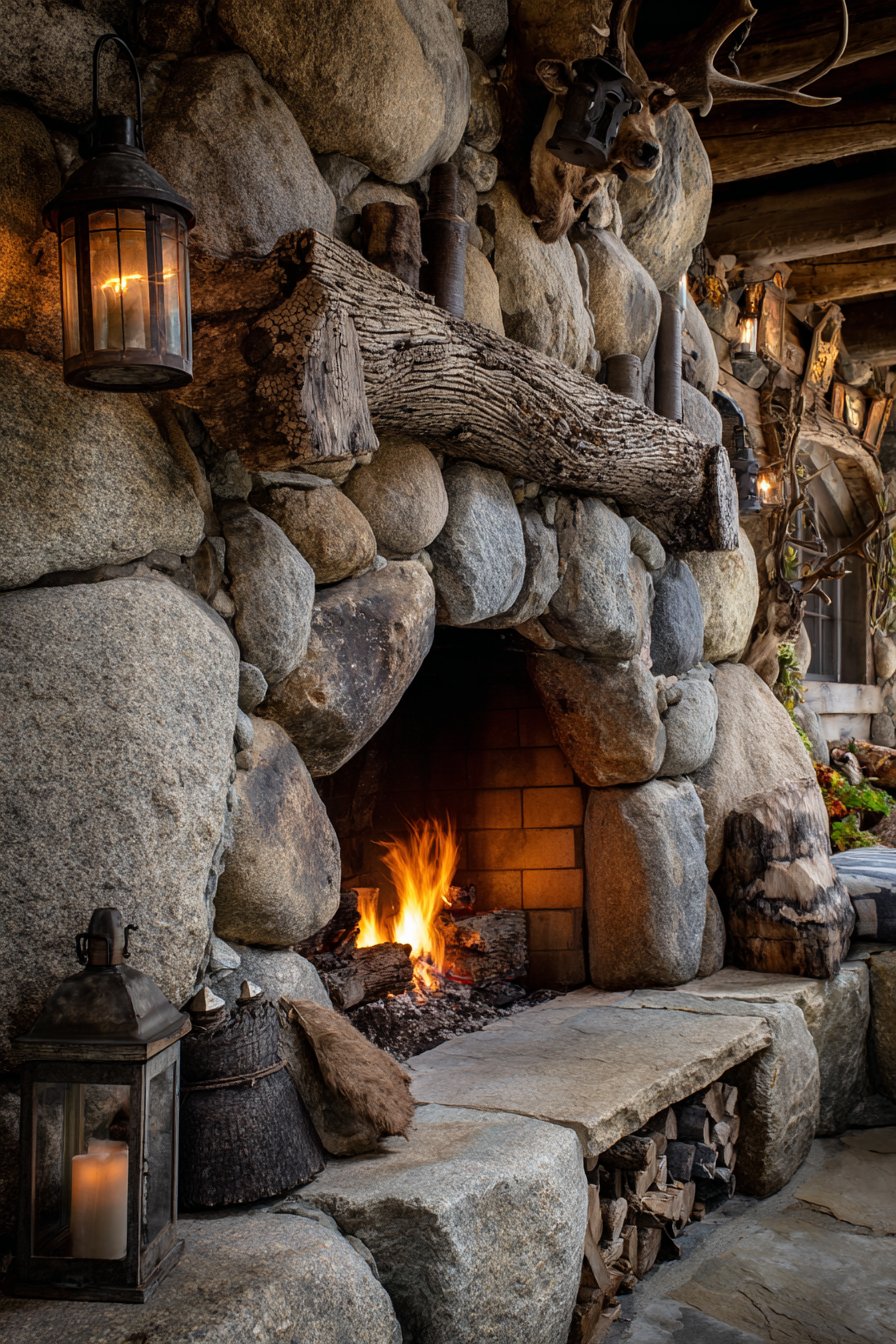
The rugged beauty of wilderness architecture comes indoors through this cabin-style chimney wall that could anchor a mountain lodge or bring outdoor spirit into suburban homes. The massive river rock chimney wall showcases stones in varied earth tones—grays, browns, tans, with occasional rust and cream—creating organic texture and visual variety that mirrors natural stone formations found alongside mountain streams. Each stone’s smooth, water-worn surface tells a story of time and geological processes, while their irregular shapes fitted together through skilled masonry create a wall of incredible substance and presence.
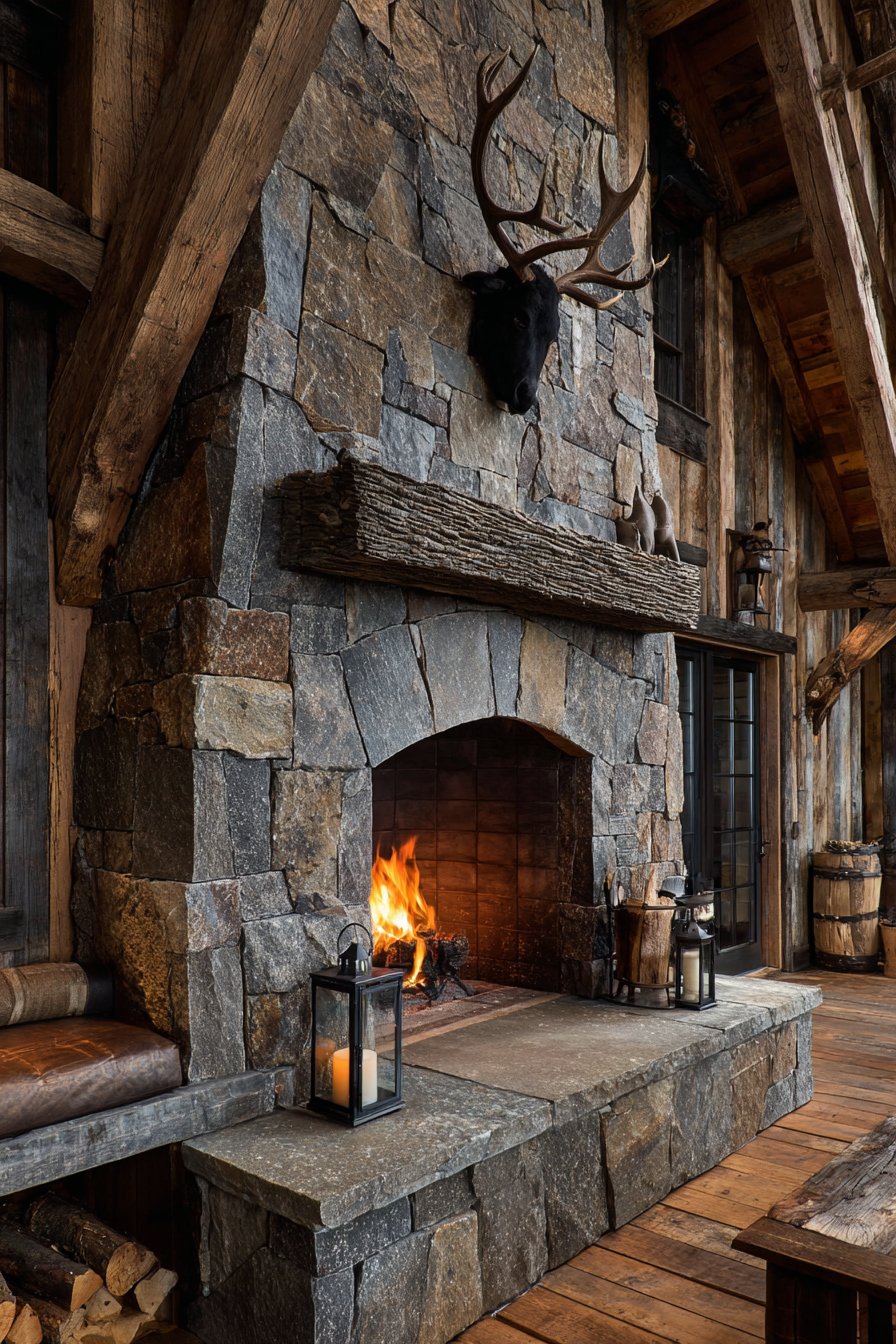
The large stone fireplace opening with thick log mantel showing natural bark edges celebrates raw, unprocessed materials in their most authentic form, the log’s irregular diameter and natural character providing rustic charm that manufactured materials cannot replicate. Built-in wood storage nooks flank the fireplace base, these practical recesses providing convenient fuel storage while their dark interiors create visual depth and shadow that enhances the dimensional quality of the stone wall. Antler wall mounts and vintage lanterns add rustic charm and reinforce the cabin aesthetic, suggesting hunting lodges and wilderness retreats where functionality and connection to nature take precedence over refined decoration.
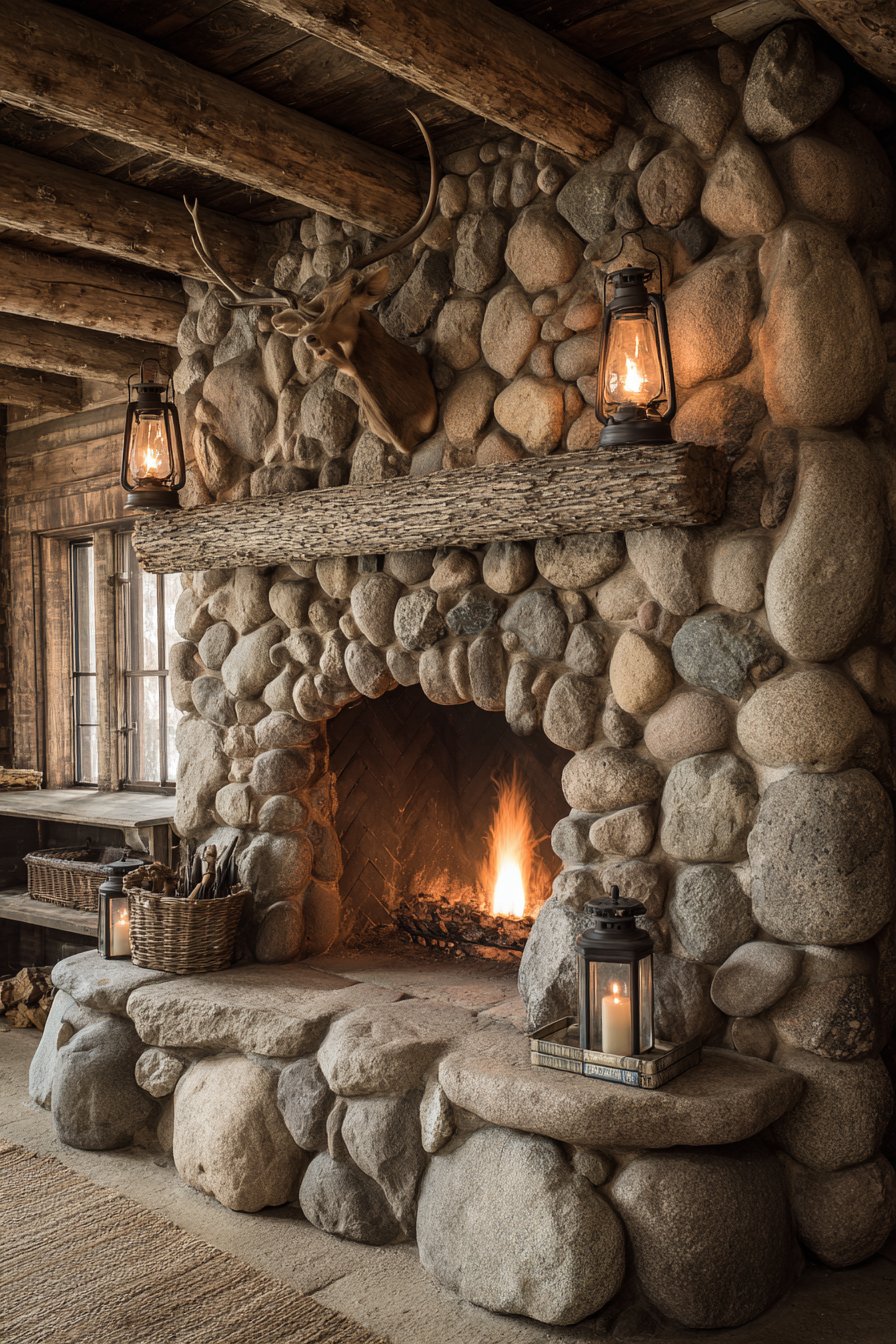
Interior design photography captures this chimney wall both in the warmth of firelight—which creates flickering shadows and emphasizes the stones’ irregular surfaces—and in natural daylight streaming through nearby windows, which reveals the subtle color variations and textures that make each stone unique. The overall effect transports viewers to high mountain retreats, evoking the romance of cabin life while creating a substantial, permanent focal point with the kind of authentic character that only natural materials and skilled craftwork can achieve.
Key Design Tips:
- Source river rocks in appropriate sizes with enough variety to create natural-looking composition
- Hire masons experienced in large-format stone installation who understand weight distribution and structural requirements
- Select a log mantel with interesting natural character but sufficient flat surface for practical use
- Build wood storage nooks deep enough for real wood storage but not so deep they create dark caverns
- Choose authentic antlers from ethical sources or high-quality reproductions if preferred
- Seal stone with penetrating sealer that protects without creating artificial shine
19. Modern Farmhouse Charcoal Painted Brick
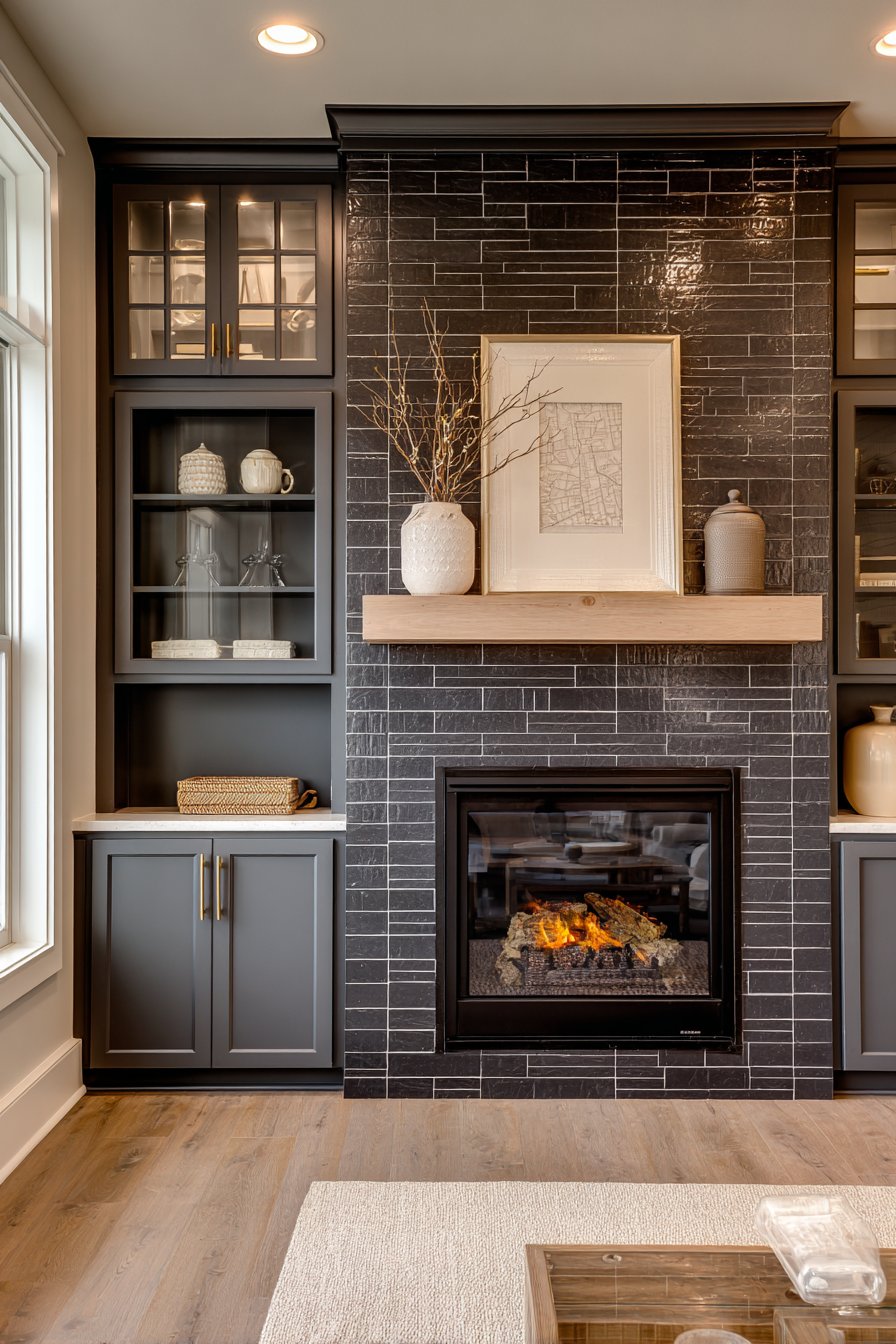
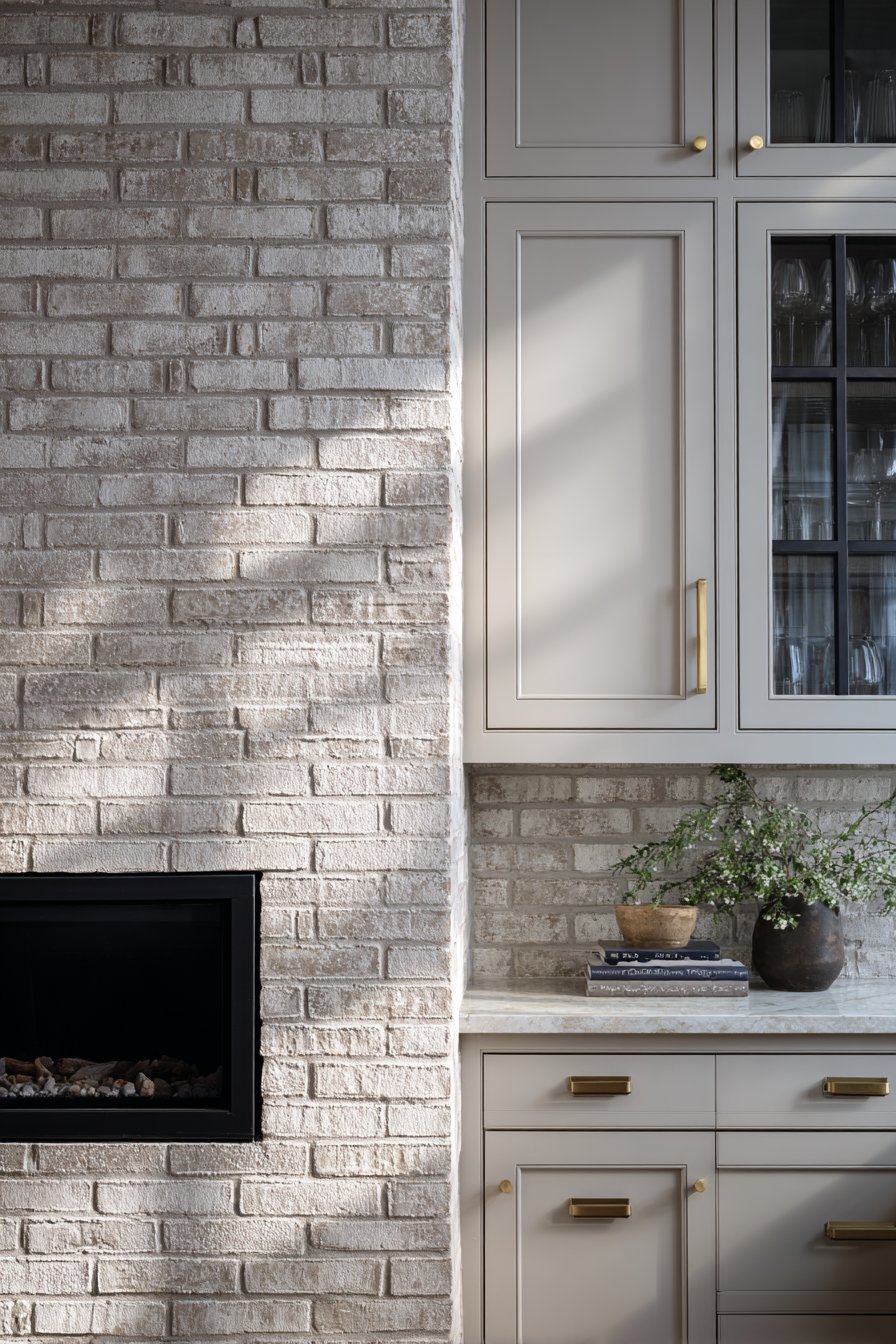
Sophisticated color choices elevate traditional farmhouse materials in this modern farmhouse chimney wall that demonstrates how paint can transform conventional brick into contemporary design statements. The painted brick chimney wall in charcoal gray with white grout lines creates dramatic visual impact through color alone, the dark charcoal providing depth and richness while the white grout creates a grid pattern that adds architectural interest and prevents the dark color from feeling heavy or oppressive. This contemporary color palette represents the evolution of farmhouse design beyond its beige-and-white origins toward more complex, sophisticated neutral schemes.
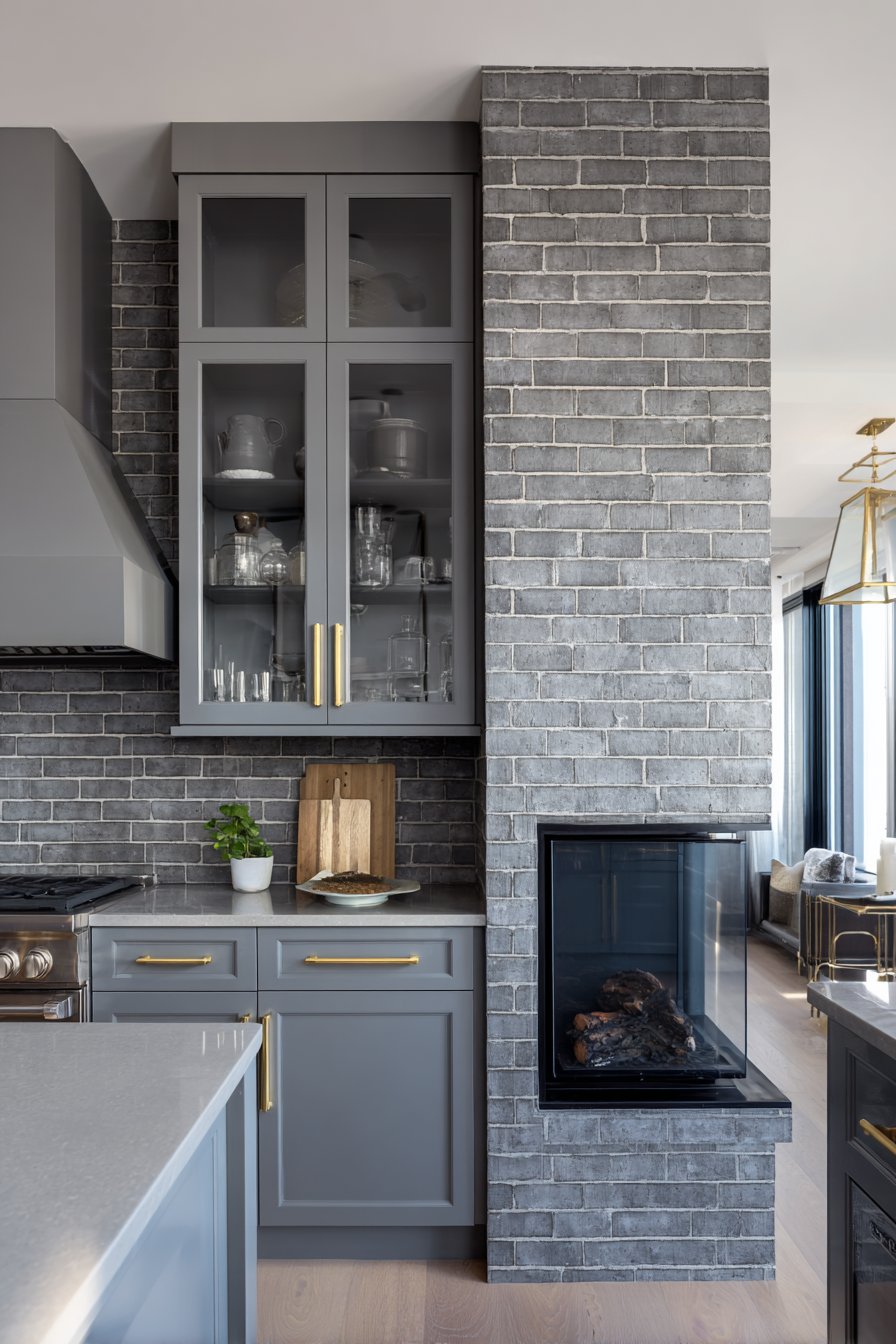
The clean-lined gas fireplace with black steel frame maintains the modern aesthetic while providing practical, easy-operation heating that suits contemporary lifestyles. A simple white oak floating mantel provides essential horizontal balance without bulk, its light wood tone creating contrast against the dark brick while the floating installation maintains clean lines and visual lightness. Built-in cabinetry in matching charcoal gray flanks the fireplace, with glass-front upper cabinets allowing display of treasured items while maintaining the design’s sophisticated character through their refined construction and thoughtful proportions.
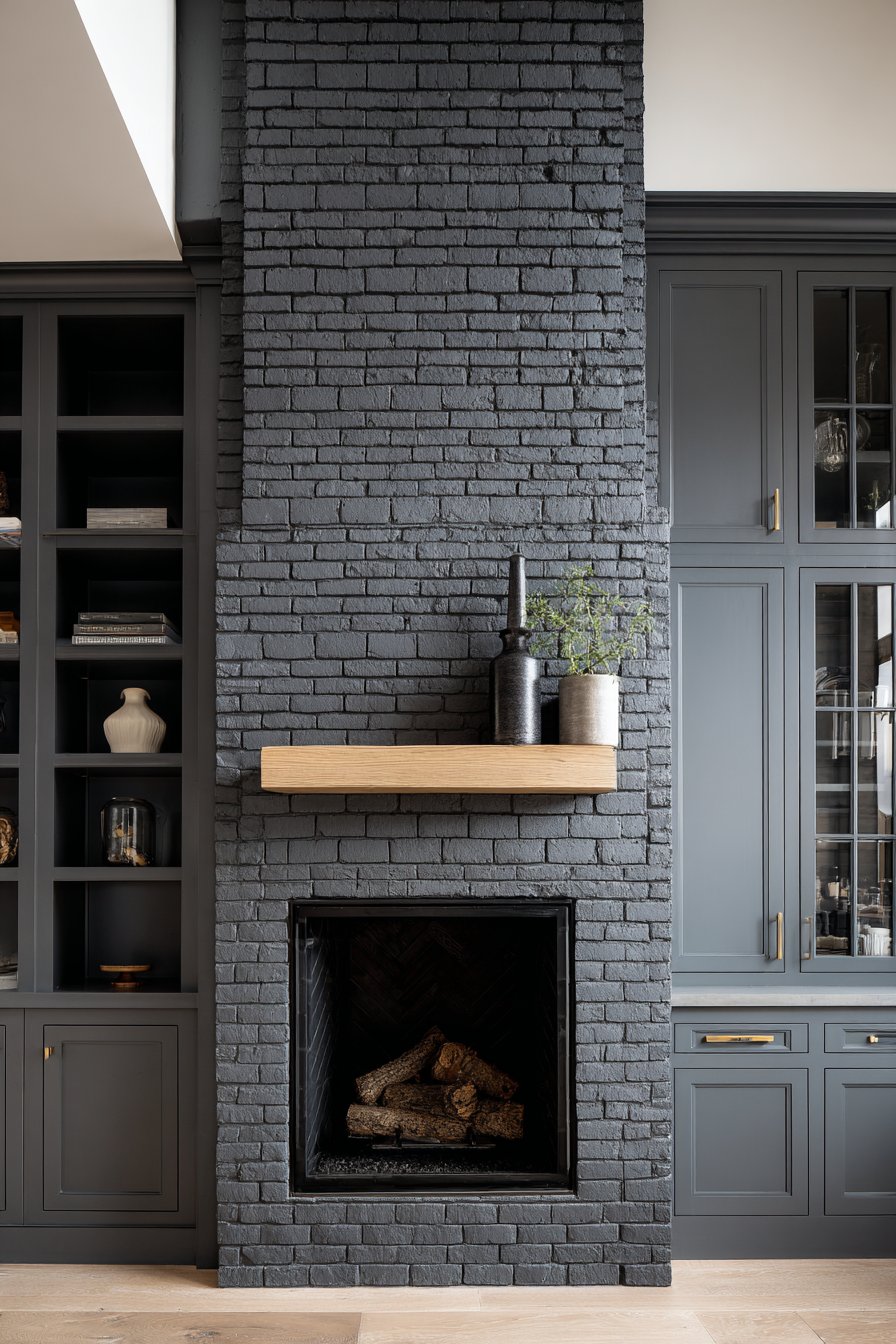
Brushed brass hardware on the cabinetry introduces warm metallic accents that prevent the gray palette from feeling cold, the brass providing visual warmth and a touch of luxury that elevates the overall composition. Professional interior photography with balanced lighting highlights the sophisticated color palette of this chimney wall design, showing how the charcoal brick creates drama without darkness, how the white oak mantel provides essential contrast, and how the brass hardware adds jewelry-like detail that catches light and eye alike.
Key Design Tips:
- Apply multiple coats of paint to brick to achieve even coverage with rich color saturation
- Use paint specifically formulated for masonry to ensure proper adhesion and durability
- Install the white oak mantel with hidden brackets to maintain the floating appearance
- Design cabinetry proportions that balance the chimney wall without overwhelming it
- Choose brushed brass hardware in a consistent finish across all cabinet doors and drawers
- Install lighting inside glass-front cabinets to showcase displayed items and add ambient glow
20. Bohemian Whitewashed Brick with Textile Layers
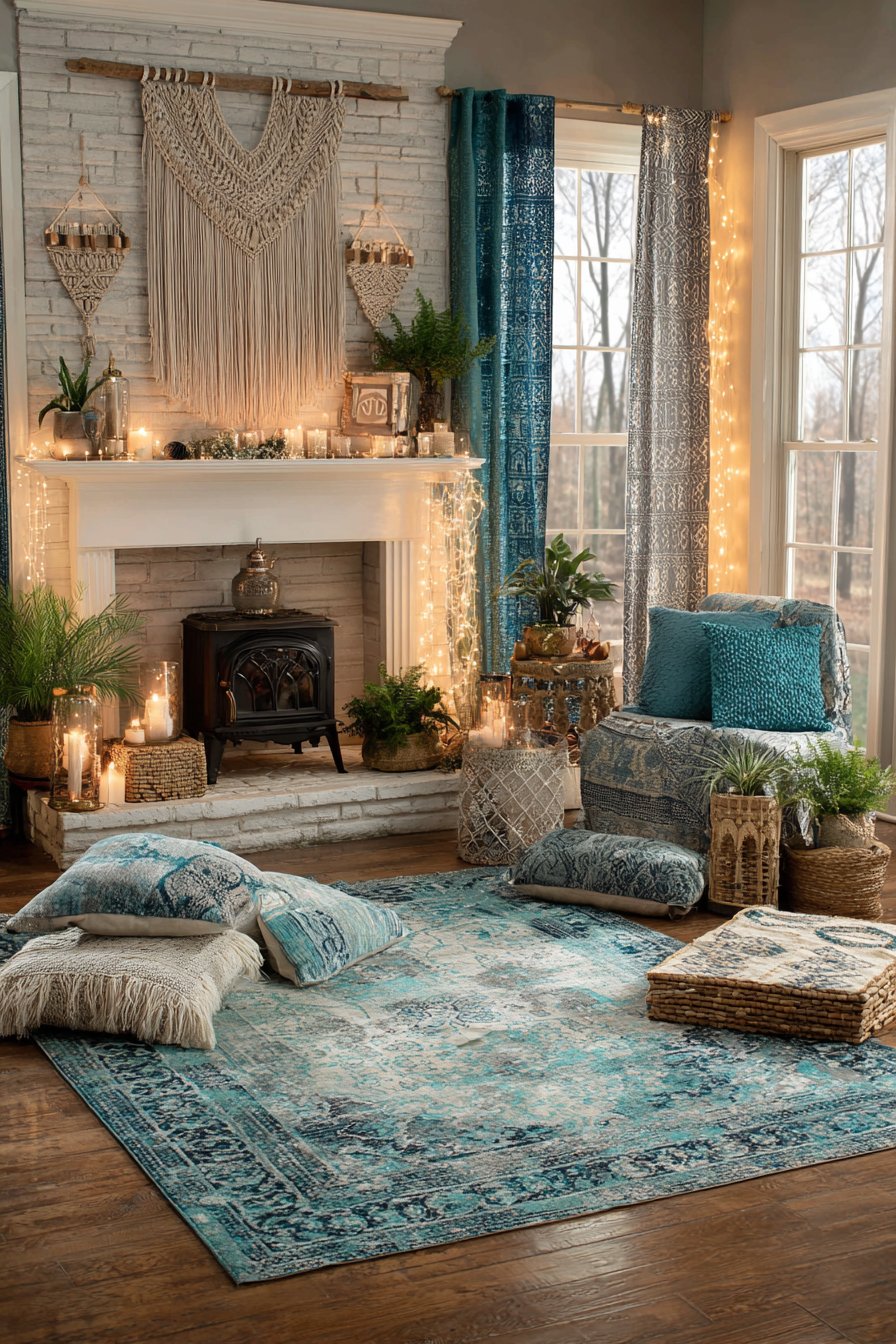
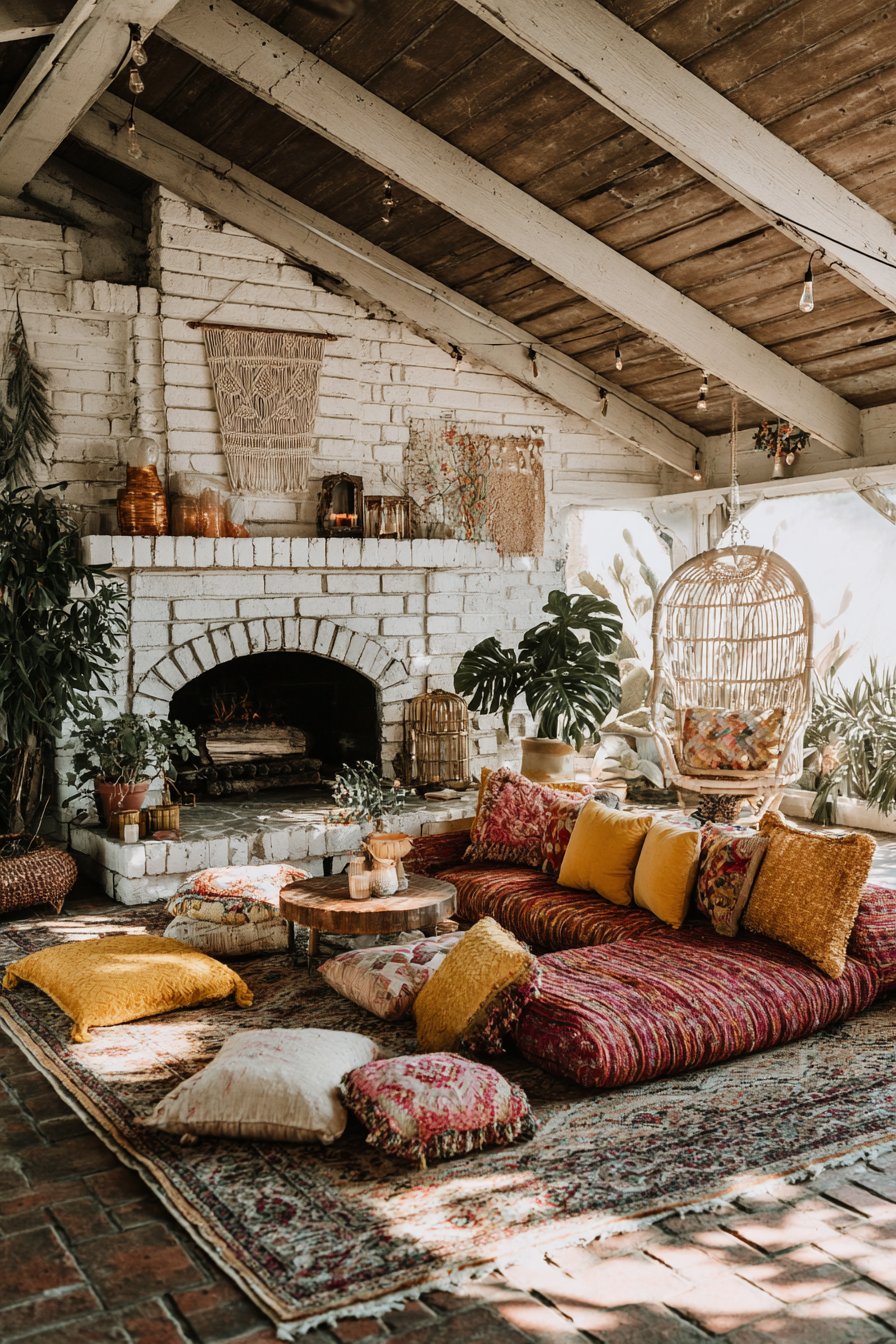
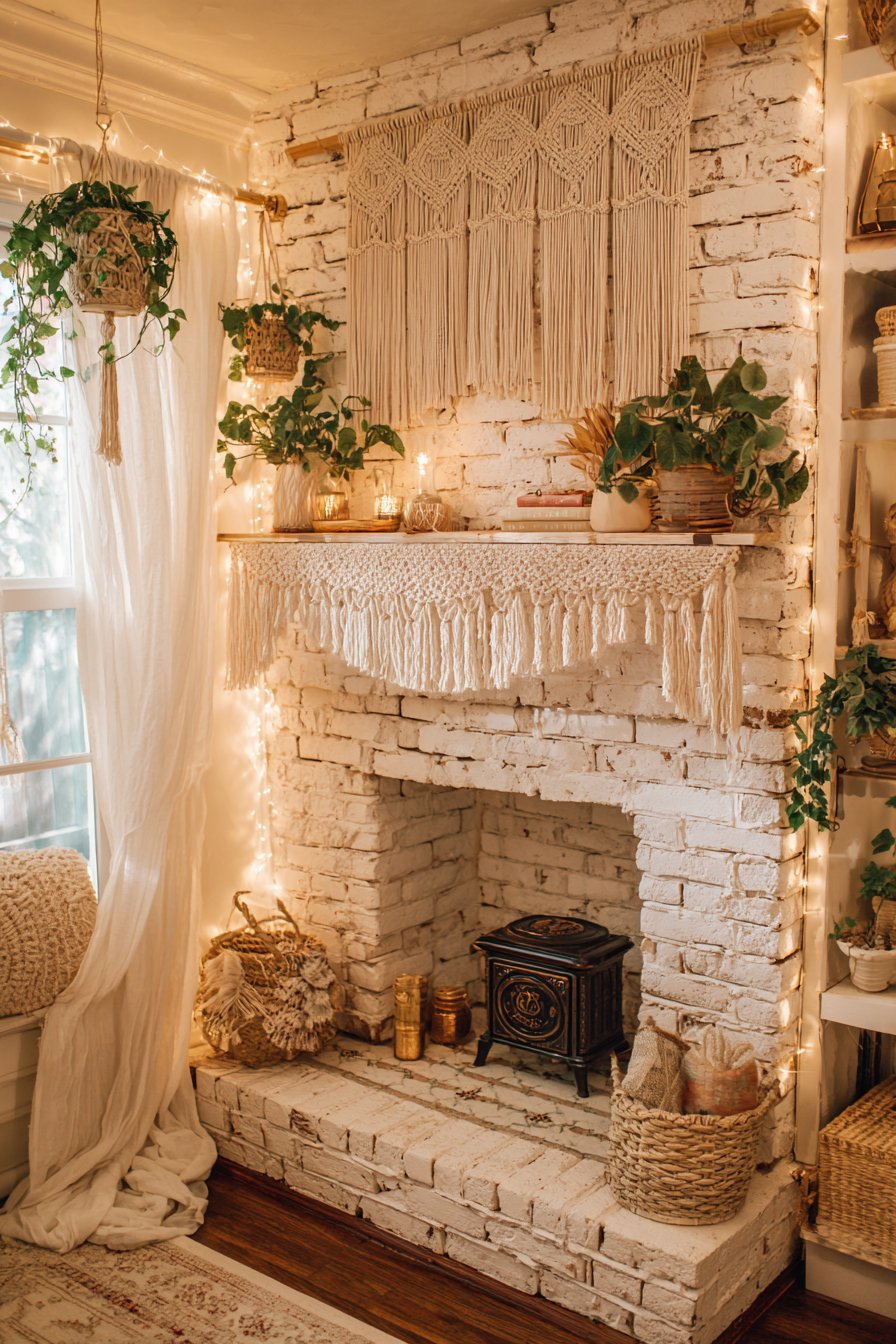
Free-spirited creativity and global influences combine in this bohemian chimney wall design that layers textures, patterns, and collected treasures to create an environment rich in personality and visual interest. The whitewashed brick chimney wall provides a neutral foundation that allows the layered bohemian styling to shine, its textured surface adding depth while the white finish keeps the space bright and prevents the eclectic accessories from overwhelming the room. Macramé wall hangings with their intricate knotwork and woven baskets in varied natural fibers create dimensional texture against the brick, their handcrafted quality reinforcing the bohemian aesthetic’s appreciation for artisan work and natural materials.
The small cast iron wood stove sitting on a decorative tile hearth provides functional heating while its modest scale and vintage character suit the bohemian preference for collected, found, and repurposed objects over new purchases. The tile hearth might feature colorful patterns, geometric designs, or vintage reproduction tiles that add color and pattern at floor level while protecting surrounding surfaces. Floating shelves throughout the chimney wall area display an abundance of plants—pothos trailing downward, succulents in colorful pots, perhaps a fiddle leaf fig reaching upward—along with candles in varied holders and collected treasures that tell stories and reflect interests.
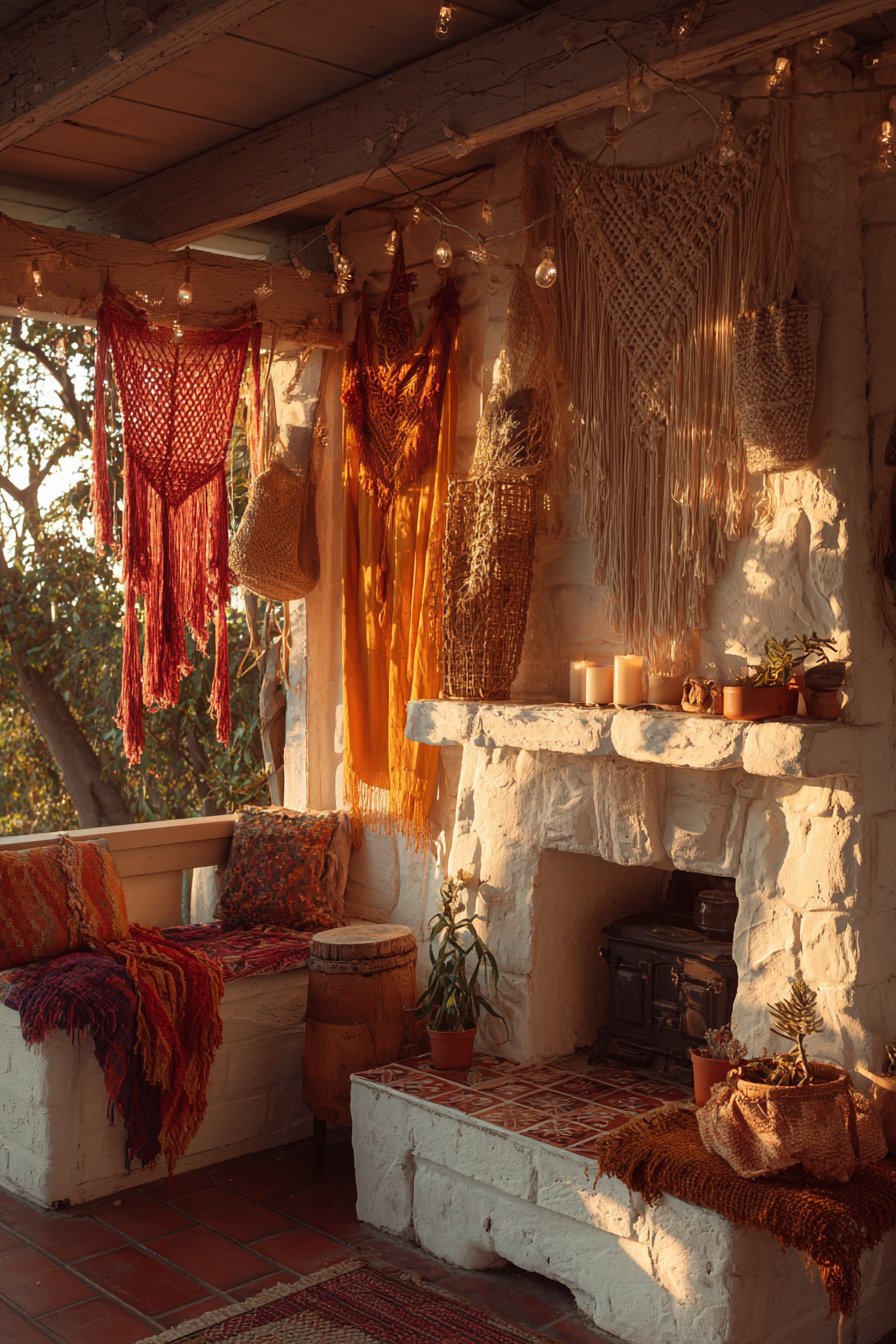
Colorful textiles drape nearby, introducing pattern, color, and softness that balance the hard surfaces of brick and metal. String lights woven through plants or draped across the chimney wall add ambient glow and whimsical character. Interior design photography captured in soft natural light showcases the relaxed, artistic vibe and layered textures that define bohemian chimney wall styling, demonstrating how abundant accessories, living plants, and collected objects can transform a simple whitewashed brick wall into a richly personal expression of individual style that feels lived-in, welcoming, and genuinely bohemian rather than decorated.
Key Design Tips:
- Apply whitewash lightly to allow some brick color variation to show through for added character
- Create or source authentic macramé pieces rather than mass-produced imitations
- Mix plant varieties to create visual interest through different leaf shapes, colors, and growth patterns
- Layer textiles in complementary colors and varied patterns without matching everything perfectly
- Arrange collections in odd-numbered groupings at varying heights
- Embrace abundance while editing occasionally to prevent crossing from bohemian to cluttered
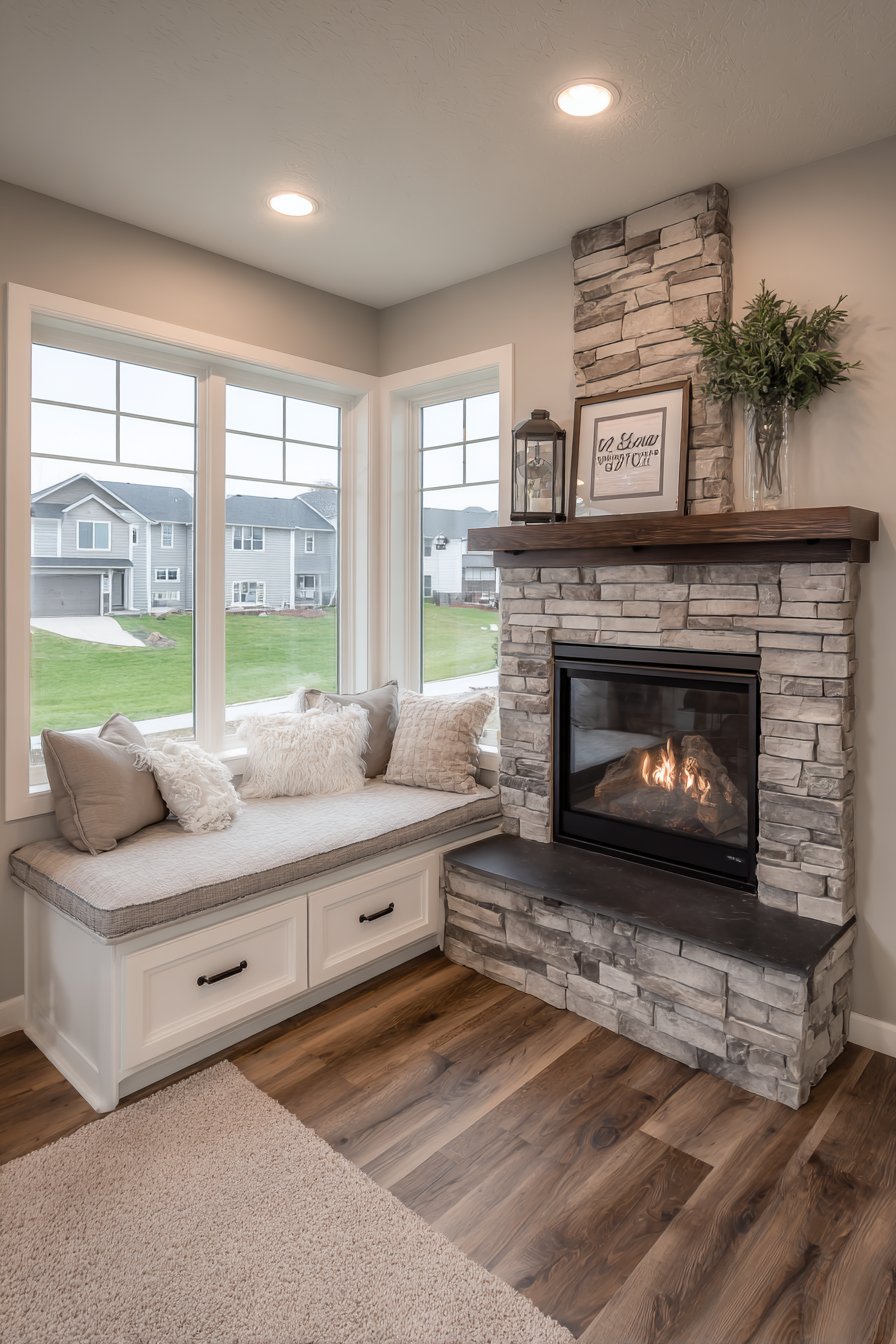
21. Transitional Stacked Stone Veneer with Built-In Seating
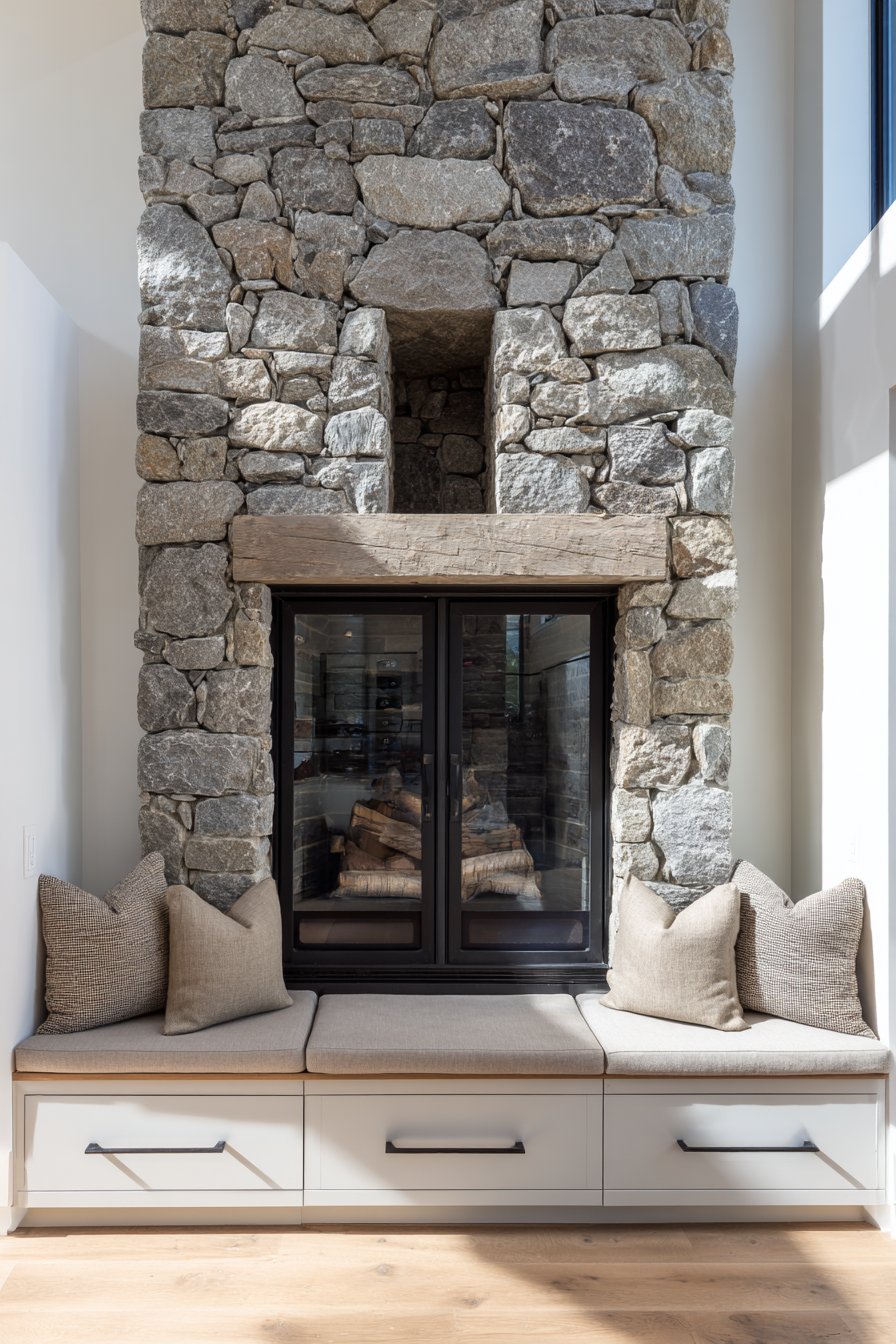
Versatile design that bridges traditional and contemporary sensibilities defines this transitional chimney wall that creates broad appeal through its balanced approach to materials, colors, and styling. Stacked stone veneer in neutral gray tones covers the chimney wall, with varied stone sizes creating dimensional texture and visual interest while the neutral palette ensures compatibility with diverse decorating schemes. This stone treatment provides the substance and presence of natural stone installation at reduced weight and cost, making it accessible for more homeowners while still delivering authentic texture and architectural impact.
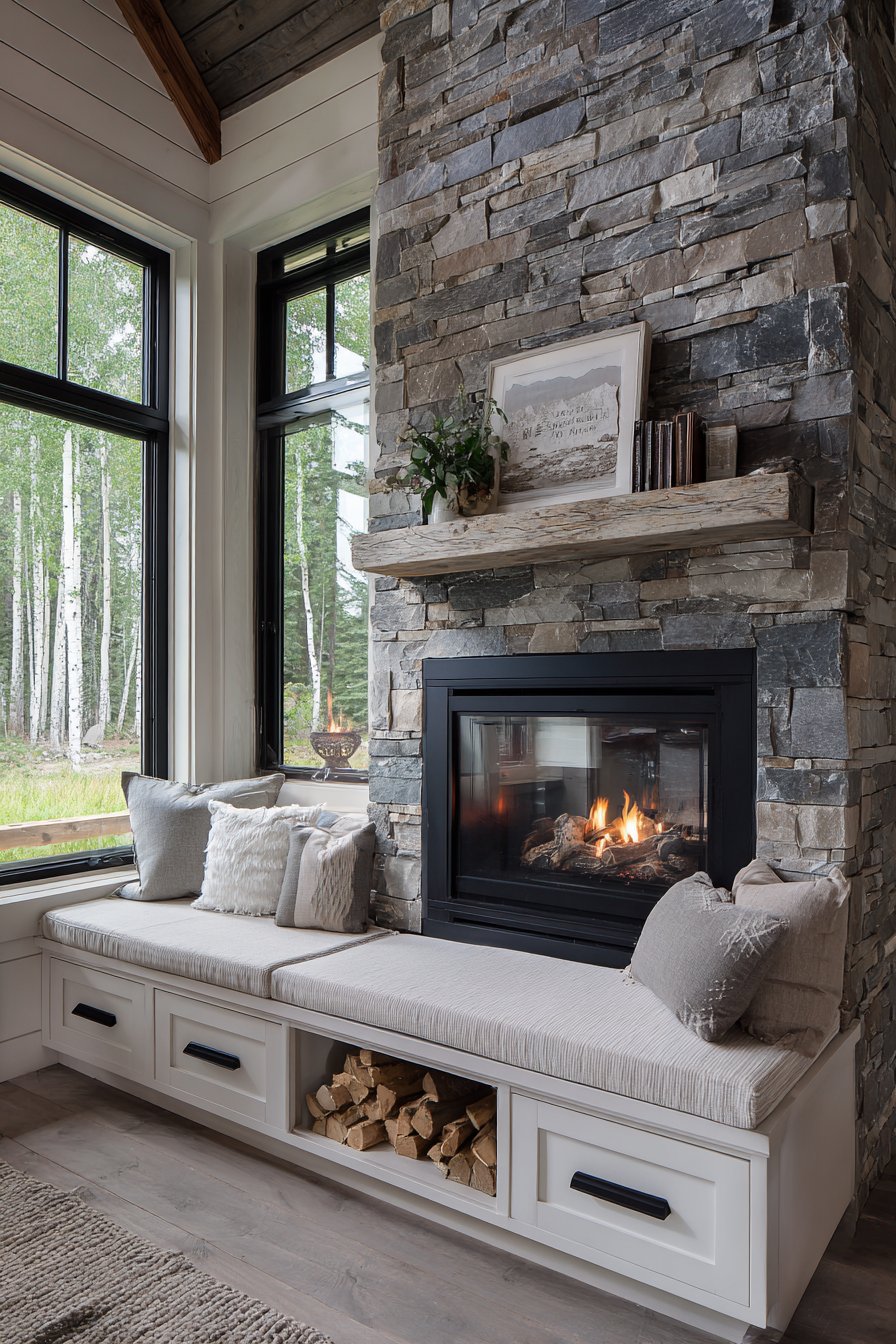
The modern fireplace with black metal surround and tempered glass doors represents contemporary technology and styling, its clean lines and efficient operation suiting modern lifestyles while the glass doors provide safety and increase heating efficiency. A simple painted wood mantel in soft white creates contrast against the gray stone while its modest proportions maintain transitional restraint, avoiding both the chunky rusticity of farmhouse mantels and the complete absence of mantels in strict contemporary design. Built-in bench seating flanking the fireplace base with storage drawers and neutral cushions maximizes the chimney wall’s functionality, creating cozy spots for reading or conversation while the storage drawers provide practical organization.
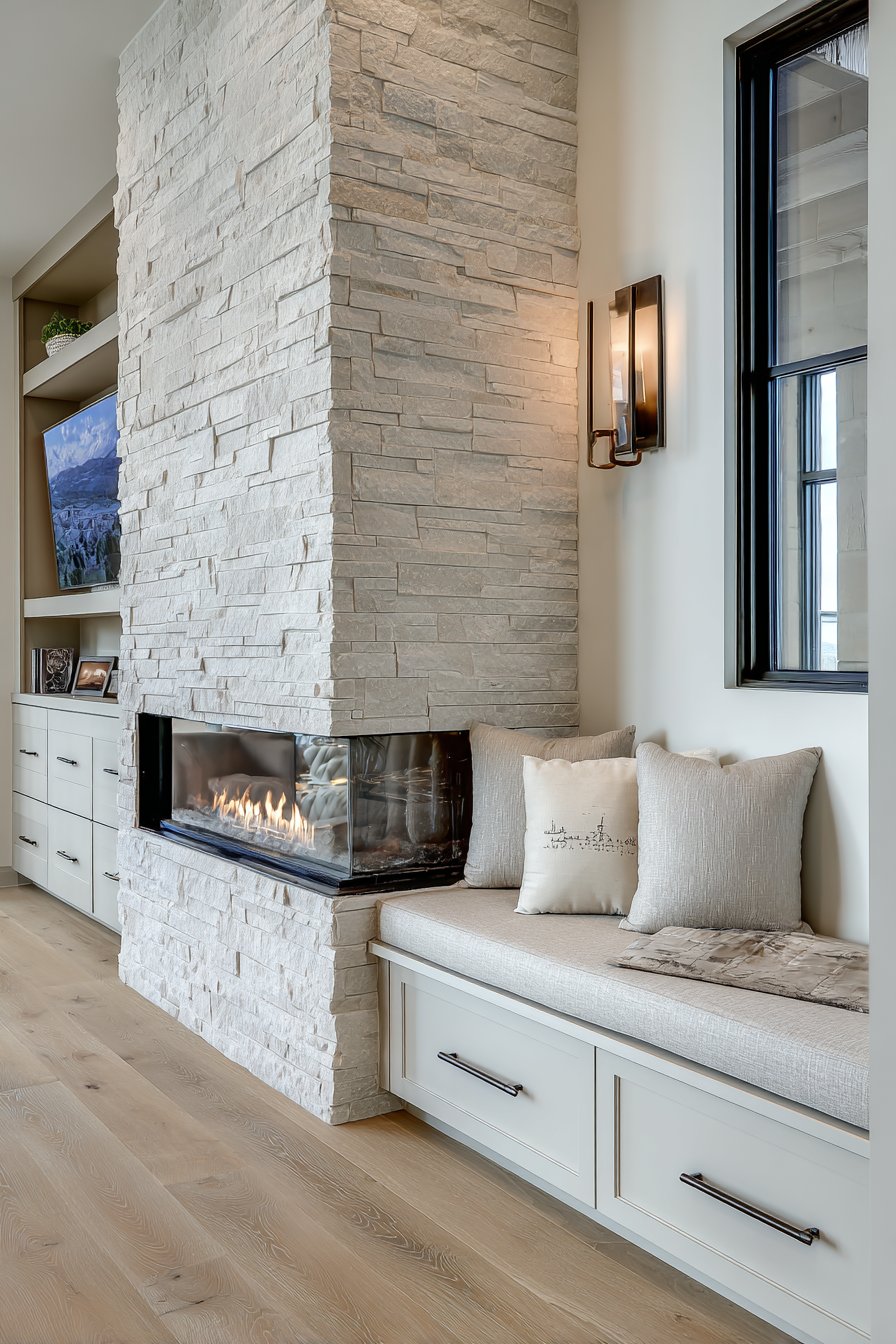
Wide-angle interior photography with natural lighting showcases the balanced blend of traditional stone and contemporary elements that characterizes transitional chimney wall design, demonstrating how this approach creates spaces that feel current without being trendy, classic without being dated. The neutral palette, clean lines, and thoughtful proportions create a chimney wall design with lasting appeal that can evolve with changing tastes through simple updates to cushions, accessories, and surrounding decor rather than requiring major renovation.
Key Design Tips:
- Choose stone veneer with natural color variation to avoid a manufactured, too-uniform appearance
- Select a fireplace model with glass doors that can be opened or closed depending on preference
- Paint the mantel in soft white or warm gray that complements but doesn’t match the stone
- Build bench seating with comfortable depth and height appropriate for actual sitting
- Choose cushion fabrics in durable, easy-clean materials suitable for high-traffic areas
- Style the space with restraint, allowing the architecture to shine rather than overwhelming it with accessories
Why These Chimney Wall Ideas Represent the Best in Design
The twenty-one chimney wall designs presented in this comprehensive guide represent the pinnacle of contemporary fireplace design for several compelling reasons that extend far beyond mere aesthetics. Each design has been carefully selected to demonstrate different approaches to material selection, style integration, functional planning, and spatial composition, creating a resource that serves homeowners across all design preferences, budget ranges, and architectural contexts. These chimney wall ideas succeed because they address real challenges—limited space, awkward proportions, budget constraints, conflicting style preferences—while providing inspiration that remains grounded in achievable reality rather than unrealistic fantasy.
The material diversity showcased across these designs—from natural stacked stone and reclaimed wood to polished concrete and book-matched marble—demonstrates the incredible range of possibilities available to homeowners seeking to create or refresh a chimney wall. Natural stone installations provide timeless beauty and connection to organic materials, their varied textures and earth-toned palettes creating warmth and substance that synthetic materials cannot replicate. Brick options ranging from traditional red to painted white to charcoal gray show how this classic material adapts to diverse aesthetics through color selection and treatment techniques. Wood applications including shiplap, reclaimed barn boards, and hand-hewn mantels introduce natural warmth and textural interest while honoring traditional construction methods. Contemporary materials like polished concrete and metal cladding push design boundaries and create dramatic modern statements that feel sculptural and architectural.
The style spectrum represented—traditional, contemporary, farmhouse, industrial, coastal, Scandinavian, Mediterranean, mid-century modern, bohemian, and various transitional blends—ensures that readers can find inspiration matching their personal aesthetic preferences while perhaps discovering new styles worth exploring. Traditional designs honor centuries of fireplace evolution with carved mantels, built-in cabinetry, and classical proportions that create formal, refined spaces appropriate for traditional architecture and furnishings. Contemporary approaches embrace minimalism, clean lines, and innovative materials to create chimney walls that function as architectural sculpture. Farmhouse variations in both traditional and contemporary iterations celebrate rustic materials and practical functionality with the welcoming warmth that makes this style perennially popular. Industrial designs honor raw materials and honest construction with exposed brick, metal elements, and utilitarian aesthetics that appeal to urban loft dwellers and anyone attracted to this edgy aesthetic.
The functional solutions integrated throughout these designs—built-in shelving, hidden storage, bench seating, wood storage nooks, display cabinetry—demonstrate how chimney walls can serve purposes beyond merely housing a fireplace. Modern homes demand efficiency and multi-functionality, with every architectural element expected to justify its footprint through practical contribution to daily life. These chimney wall designs rise to that challenge by incorporating storage solutions that eliminate clutter, display opportunities that showcase treasured possessions, and seating arrangements that create additional gathering spaces without requiring additional floor area. The integration of these functional elements within the chimney wall design itself creates cohesive compositions where form and function work together rather than competing for attention or space.
The lighting strategies employed across these designs—from recessed uplighting and integrated shelf lighting to decorative sconces and ambient firelight—show how thoughtful illumination enhances chimney walls dramatically. Proper lighting highlights material textures, creates atmospheric shadows, provides task lighting for reading nooks, and transforms the chimney wall’s appearance from day to night. These varied lighting approaches demonstrate that successful chimney wall design requires thinking beyond daylight conditions to consider how the space will appear and function during evening hours when artificial lighting dominates and the fireplace itself may contribute ambient glow.
The scale and proportion considerations evident in these designs address a critical challenge in chimney wall planning—creating compositions that feel balanced and appropriate regardless of ceiling height, room size, or architectural context. The double-height contemporary design shows how chimney walls can embrace generous vertical space to create drama and emphasize architectural volume, while more modest designs demonstrate how to create impact within standard ceiling heights. The relationship between fireplace opening size, mantel proportions, surrounding materials, and overall wall dimensions receives careful attention across all designs, showing how getting these relationships right separates successful chimney walls from awkward failures.
The color palettes employed range from monochromatic neutrals to bold color statements, demonstrating how color choices dramatically affect the chimney wall’s visual weight, mood, and relationship to surrounding spaces. Neutral schemes in whites, grays, and natural stone tones create versatile backdrops that adapt to changing decor while providing calm, sophisticated foundations. Bolder approaches with charcoal painted brick, colorful decorative tiles, or warm terracotta stucco show how chimney walls can introduce significant color that sets the tone for entire rooms. These varied color strategies help readers understand how to use color intentionally rather than defaulting to safe neutrals without considering whether more adventurous choices might better serve their goals.
The integration of sustainable and eco-conscious elements throughout many designs—reclaimed materials, bio-ethanol fireplaces, natural stone, and wood from managed forests—reflects growing awareness of environmental responsibility in interior design. These sustainable chimney wall ideas prove that environmental consciousness and design excellence are not mutually exclusive but can work together to create spaces that are both beautiful and responsible. The use of reclaimed barn wood, salvaged fireplace inserts, and locally sourced stone demonstrates how sustainable choices often bring additional benefits in character, uniqueness, and storytelling potential that new materials cannot match.
The accessibility of these designs varies intentionally, from achievable DIY projects like painting existing brick or adding floating shelves to substantial undertakings requiring professional masons, custom fabrication, and significant budgets. This range ensures that readers at all budget levels and skill levels can find ideas they can implement, whether through complete chimney wall construction, thoughtful renovation of existing fireplaces, or simple styling updates that refresh appearance without major construction. The inclusion of both aspirational luxury designs and practical, budget-conscious approaches acknowledges that inspiration serves multiple purposes—sometimes motivating major investment in dream projects, other times guiding achievable improvements within real-world constraints.
The timeless versus trendy balance struck throughout these designs addresses a fundamental challenge in interior design—creating spaces that feel current without being so trend-driven they’ll appear dated within a few years. Classic elements like natural stone, traditional brick, and quality craftsmanship provide lasting value and appeal that transcends temporary trends. Contemporary elements including linear fireplaces, floating mantels, and innovative materials introduce current design thinking without relying on fleeting fads. This balanced approach helps readers invest wisely in chimney wall designs that will provide satisfaction for years or even decades rather than requiring frequent updates to remain relevant.
The emphasis on authentic materials and honest construction throughout these designs reflects growing resistance to superficial treatments and fake finishes that characterized earlier design eras. Real stone rather than cultured stone, genuine reclaimed wood rather than distressed new lumber, actual hand-troweled plaster rather than printed wallpaper textures—these authentic material choices create depth, character, and longevity that justify their higher costs and installation challenges. The designs celebrate materials’ inherent properties and honest expression of their nature rather than making materials pretend to be something they’re not.
The practical installation considerations woven throughout the design tips—structural support requirements, proper ventilation planning, electrical infrastructure, building code compliance—ground these inspiring designs in reality by acknowledging the technical challenges involved in bringing visions to life. Beautiful designs that ignore practical implementation requirements serve little purpose beyond fantasy, while designs accompanied by thoughtful consideration of how they’ll actually be built and maintained provide genuine value to readers planning real projects. This practical grounding makes the article useful for readers in planning phases, not just those seeking general inspiration.
The photography and presentation techniques described throughout—wide-angle perspectives, natural lighting emphasis, attention to material texture, balanced exposure—teach readers how to both appreciate chimney wall designs in published images and document their own projects effectively. Understanding how professional interior photography works helps readers evaluate design images more critically while providing tools to showcase their own completed projects through thoughtful photography that does justice to their investment and effort.
Conclusion
The chimney wall stands as one of home design’s most powerful opportunities to make bold architectural statements while meeting practical needs for warmth, gathering spaces, and focal points that anchor room compositions. These twenty-one chimney wall ideas demonstrate the incredible diversity available to homeowners, from traditional brick and stone installations honoring centuries of fireplace evolution to cutting-edge contemporary designs pushing boundaries with innovative materials and forms. Whether you’re drawn to the rustic charm of whitewashed brick with reclaimed wood accents, the sophisticated drama of book-matched marble, the casual elegance of coastal shiplap styling, or the minimalist purity of polished concrete monoliths, there’s a chimney wall approach perfectly suited to your aesthetic preferences, architectural context, and practical requirements.
The key to successful chimney wall design lies in thoughtful consideration of multiple factors working together—material selection that suits your style and budget, proportions that balance fireplace size with surrounding elements, functional additions that maximize utility, lighting strategies that enhance appearance and mood, and color choices that create appropriate visual weight while harmonizing with your overall design scheme. By studying these diverse examples and understanding the principles underlying their success, you can make informed decisions about your own chimney wall project, whether that means building from scratch, renovating an existing fireplace, or simply refreshing styling through paint, accessories, and thoughtful arrangement.
Remember that the best chimney wall for your home is the one that serves your specific needs while reflecting your personal style, not the one that follows trends or mimics magazine spreads without consideration of your unique situation. Use these ideas as springboards for your own creativity rather than rigid templates to copy exactly. Adapt materials to your budget, adjust proportions to your space, modify styles to suit your preferences, and most importantly, create a chimney wall that you’ll love living with for years to come. Whether you implement these ideas yourself or work with design professionals, let this guide inform your decisions and inspire your vision as you transform your chimney wall from purely functional element into a genuine design asset that elevates your entire living space.
