
Mirrors are among the most versatile and transformative elements in interior design, serving dual purposes as both functional necessities and striking decorative statements. Far beyond their practical use for personal grooming, mirrors possess the remarkable ability to manipulate space, amplify light, and create visual intrigue in ways that few other design elements can match. Whether you’re working with a compact urban apartment that desperately needs the illusion of expanded square footage, or a spacious home where you’re seeking to add depth and luminosity, strategic mirror placement can fundamentally alter the perception and ambiance of any room.
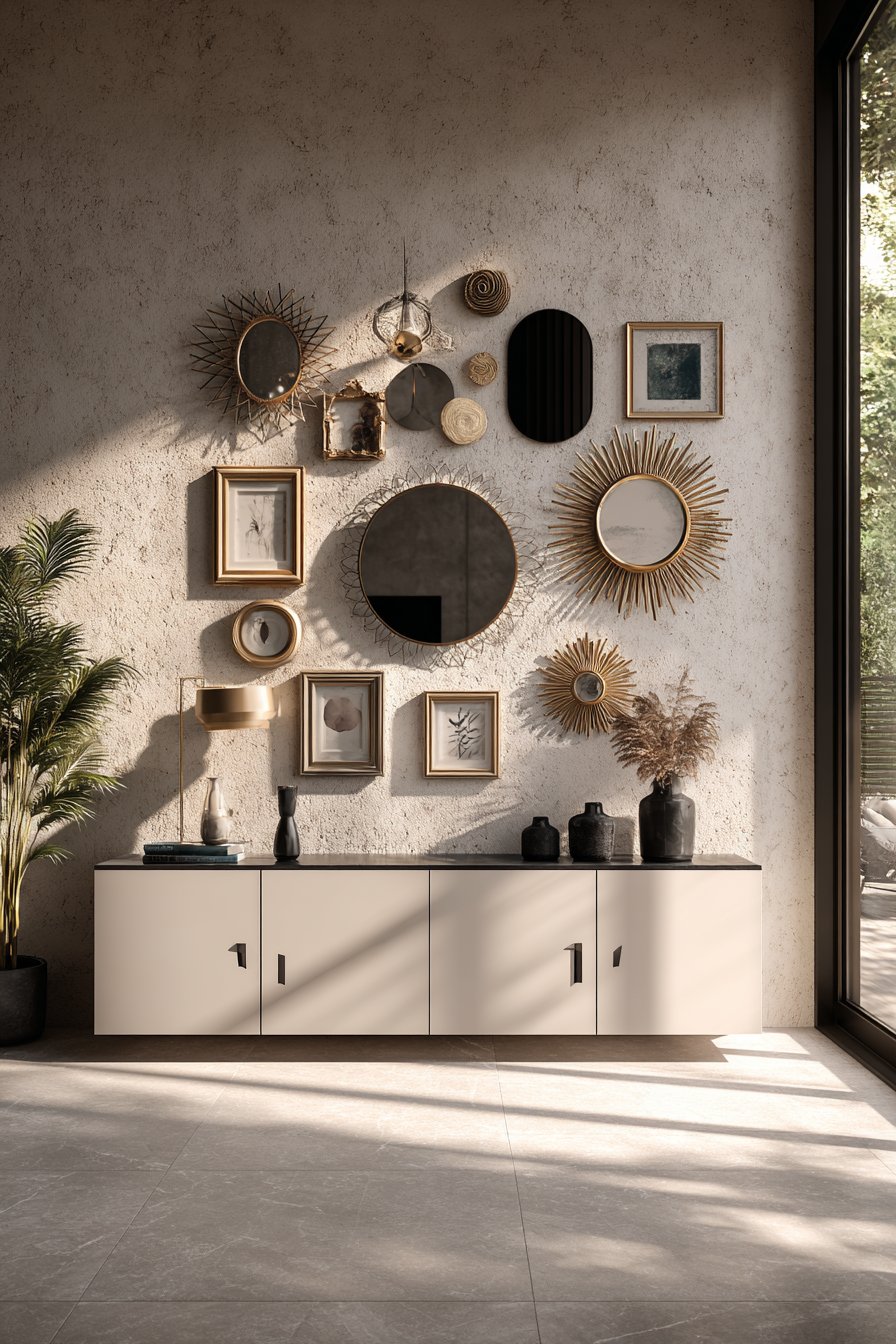
The beauty of mirror decoration ideas lies in their extraordinary diversity and adaptability to virtually any design aesthetic. From ornate baroque frames that evoke the grandeur of European palaces to sleek, frameless contemporary designs that embody minimalist sophistication, mirrors can be tailored to complement every style preference and architectural context. They serve as reflective canvases that capture and redistribute natural light, creating dynamic interplay between illumination and shadow throughout the day. Beyond aesthetics, mirrors contribute to the psychological comfort of a space—making rooms feel more open, brighter, and more welcoming.
This comprehensive guide explores twenty-nine distinctive mirror decoration ideas that span the full spectrum of interior design styles and functional applications. You’ll discover innovative approaches to mirror placement in every room of your home, from dramatic statement pieces that command attention to subtle integrations that enhance without overwhelming. We’ll examine how different frame materials, shapes, and arrangements can transform ordinary walls into captivating focal points, and how mirrors can solve common design challenges like narrow hallways, windowless rooms, and awkward architectural features. Whether you’re drawn to vintage charm, contemporary minimalism, or eclectic bohemian style, these ideas will inspire you to see mirrors not merely as reflective surfaces, but as powerful design tools capable of revolutionizing your living spaces.
1. Architectural Drama: The Oversized Arched Floor Mirror
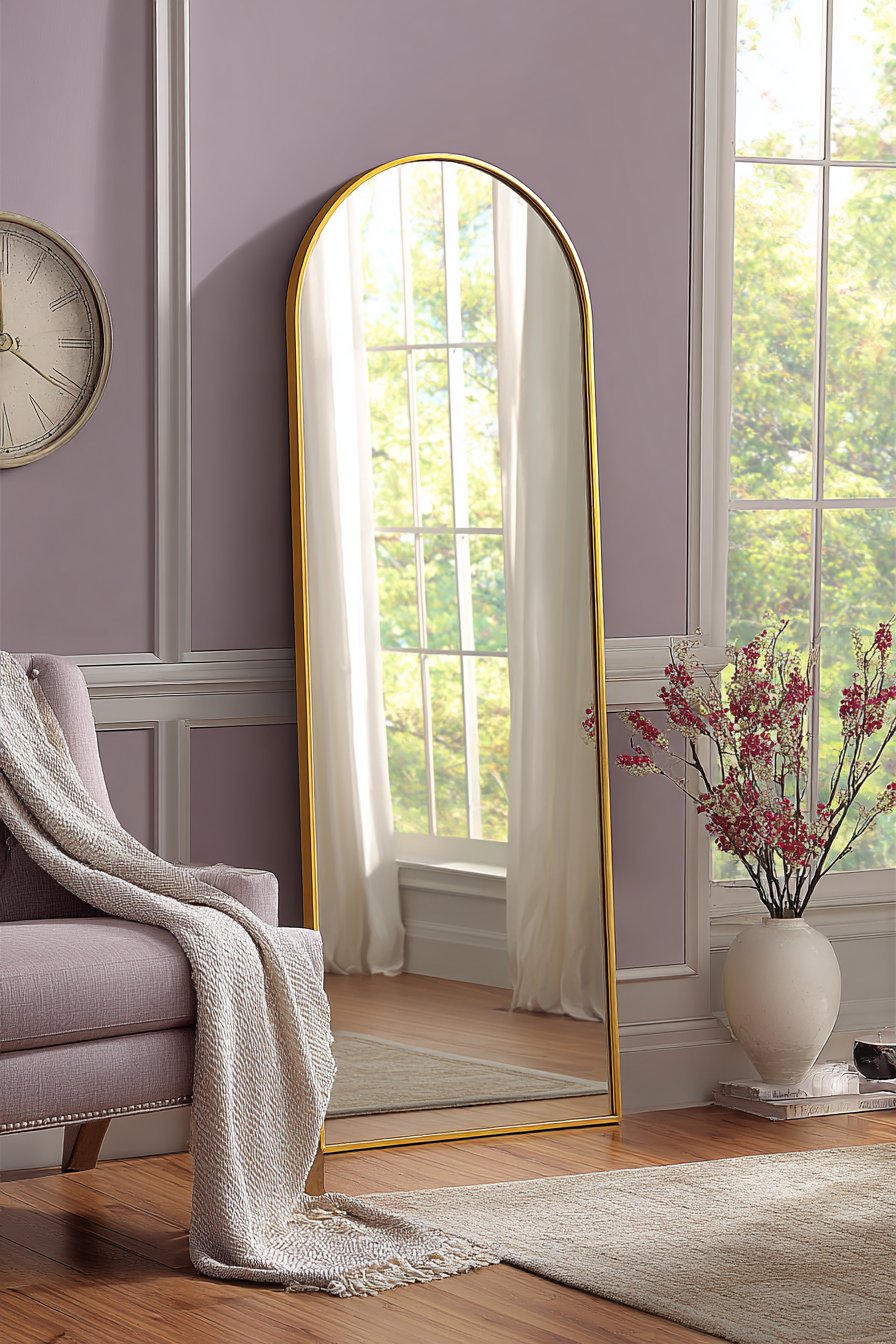
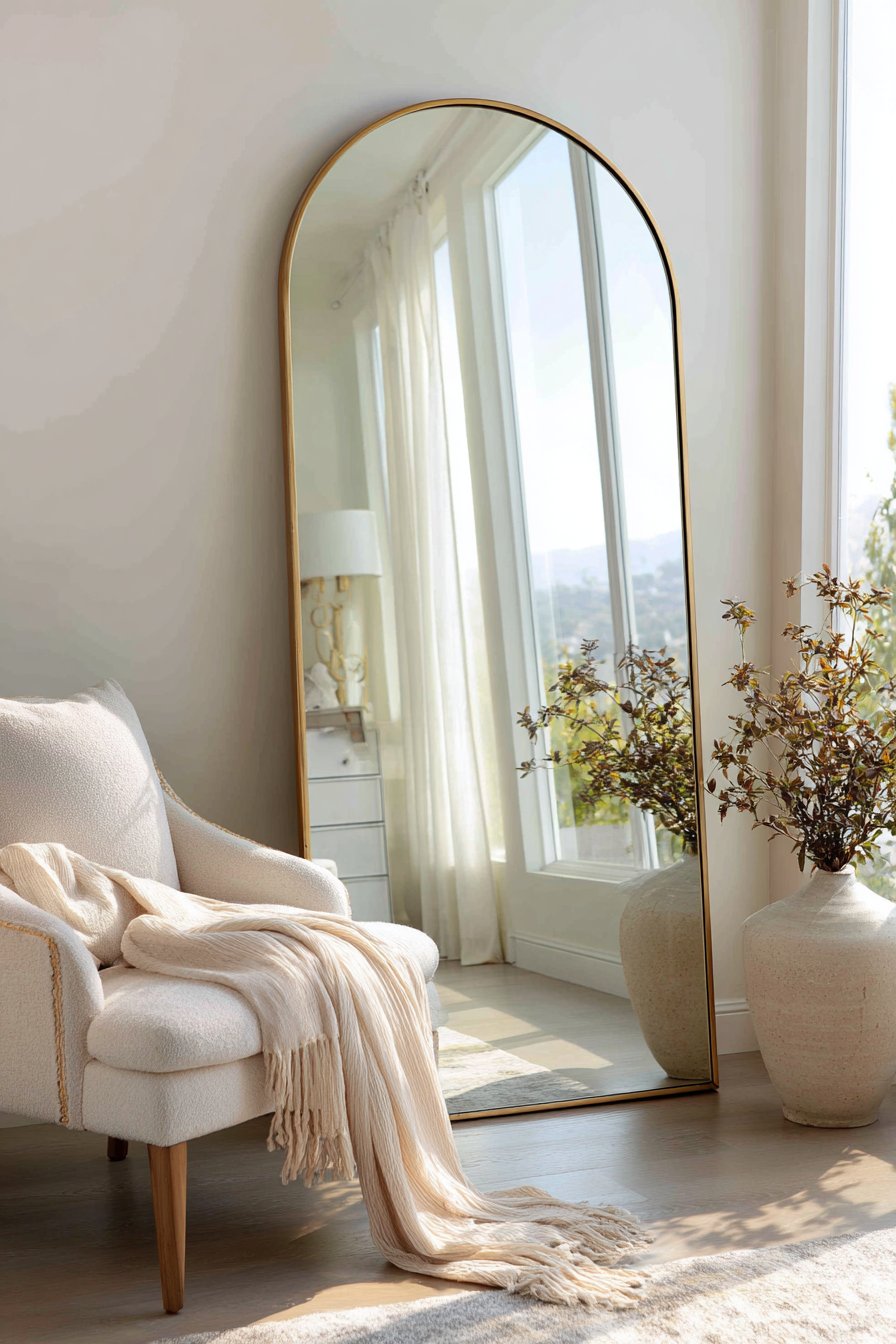
The oversized arched floor mirror has emerged as a signature piece in contemporary bedroom design, offering both functional utility and architectural presence. This mirror decoration idea features a substantial floor mirror with graceful arched top and thin brass frame that leans casually against the wall rather than being mounted, creating an effortlessly chic aesthetic that’s become synonymous with Instagram-worthy interiors. The leaning position adds an element of relaxed sophistication while making the mirror easily repositionable as your design needs evolve.
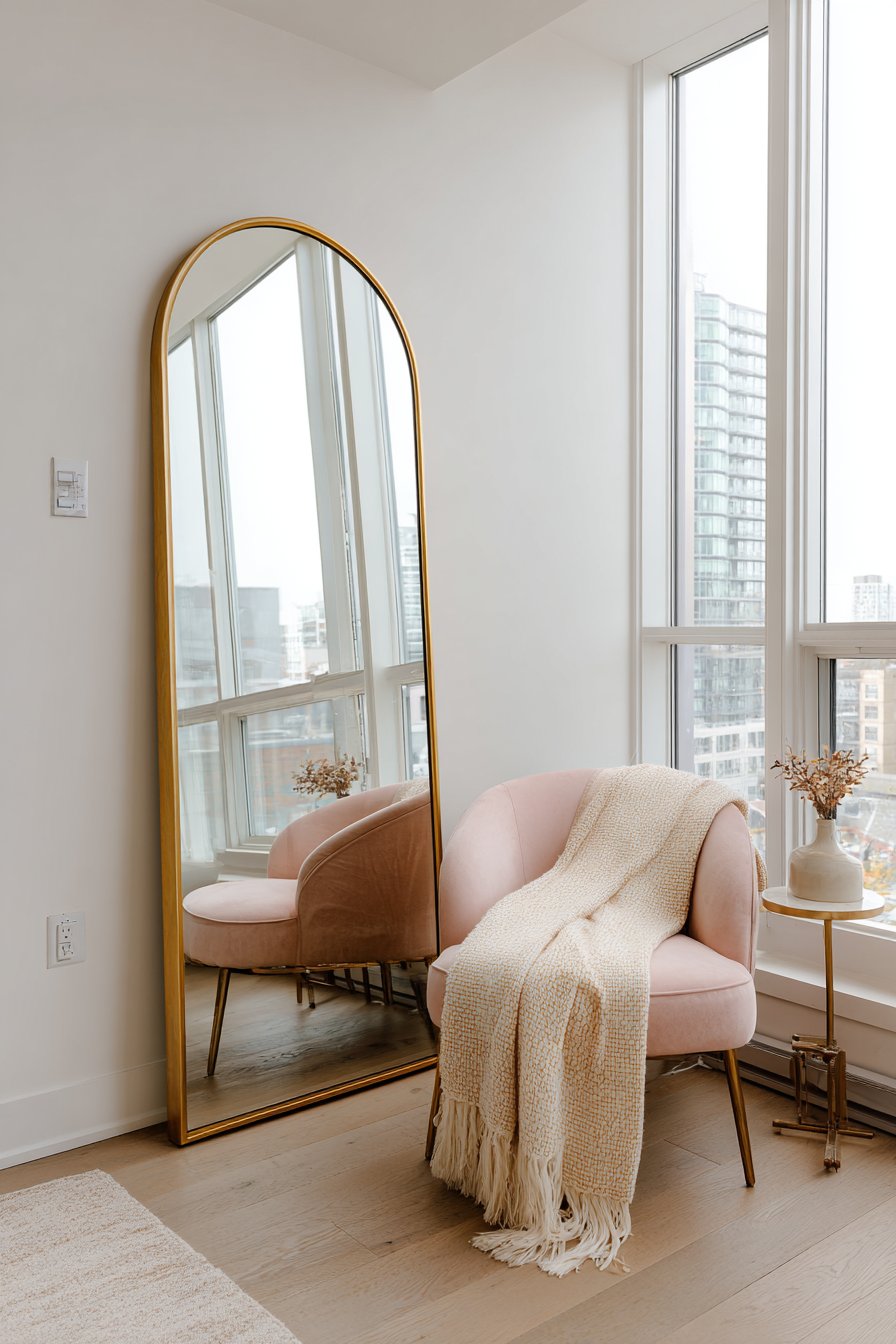
Positioned beside an upholstered reading chair with a soft throw blanket, this arrangement creates a dedicated dressing area that’s both practical and visually appealing. The mirror’s generous proportions—typically ranging from six to eight feet in height—provide full-body viewing while its reflective surface captures and bounces natural light from nearby windows throughout the space. This light amplification effect is particularly valuable in bedrooms where creating bright, airy ambiance contributes to the room’s restful quality. The warm metallic brass frame adds just enough decorative detail without overwhelming the clean lines of the arched silhouette.
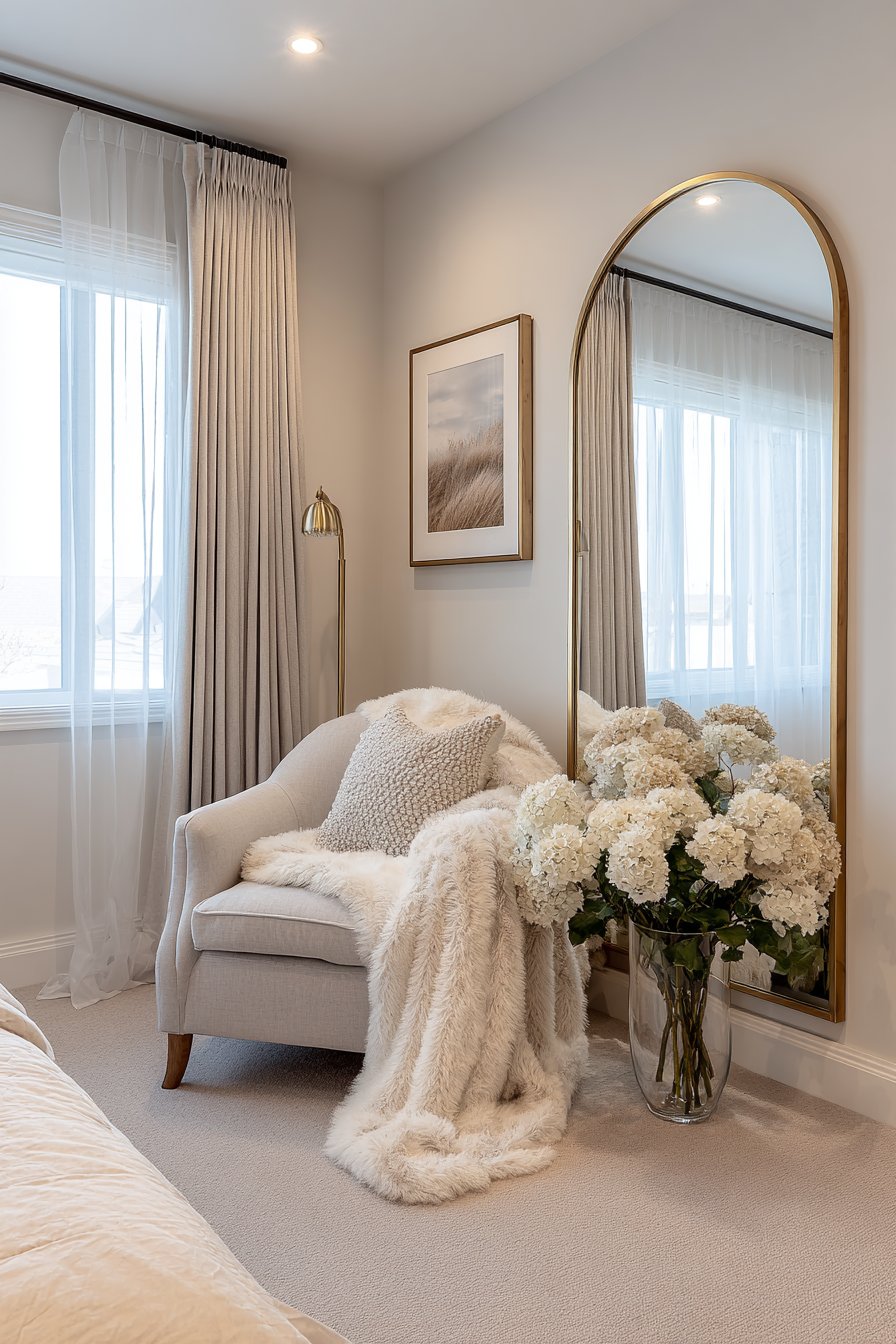
The beauty of this mirror decoration approach lies in its ability to visually expand the room while adding an elegant focal point that doesn’t require permanent wall mounting. Interior design photography of these spaces typically employs soft diffused lighting to capture the mirror’s reflective qualities and demonstrate its capacity to enhance both room brightness and perceived depth. The arched shape itself introduces classical architectural references that soften the angularity of modern bedroom furniture, creating a balanced composition that feels both current and timeless.
Key Design Tips:
- Ensure the wall behind the mirror is finished and attractive, as leaning mirrors may shift slightly, revealing the wall surface
- Position the mirror to reflect the most visually appealing part of your room—ideally a window, attractive furniture arrangement, or architectural feature
- Consider placing the mirror on a slight angle rather than perfectly flush with the wall to create subtle dimensional interest
- Use furniture anchors or wall attachments for safety, especially in households with children or pets, despite the casual leaning appearance
- Pair with complementary metallic accents in lighting fixtures or hardware throughout the room to create design cohesion
2. Linear Elegance: Horizontal Mirror Sequence for Narrow Spaces
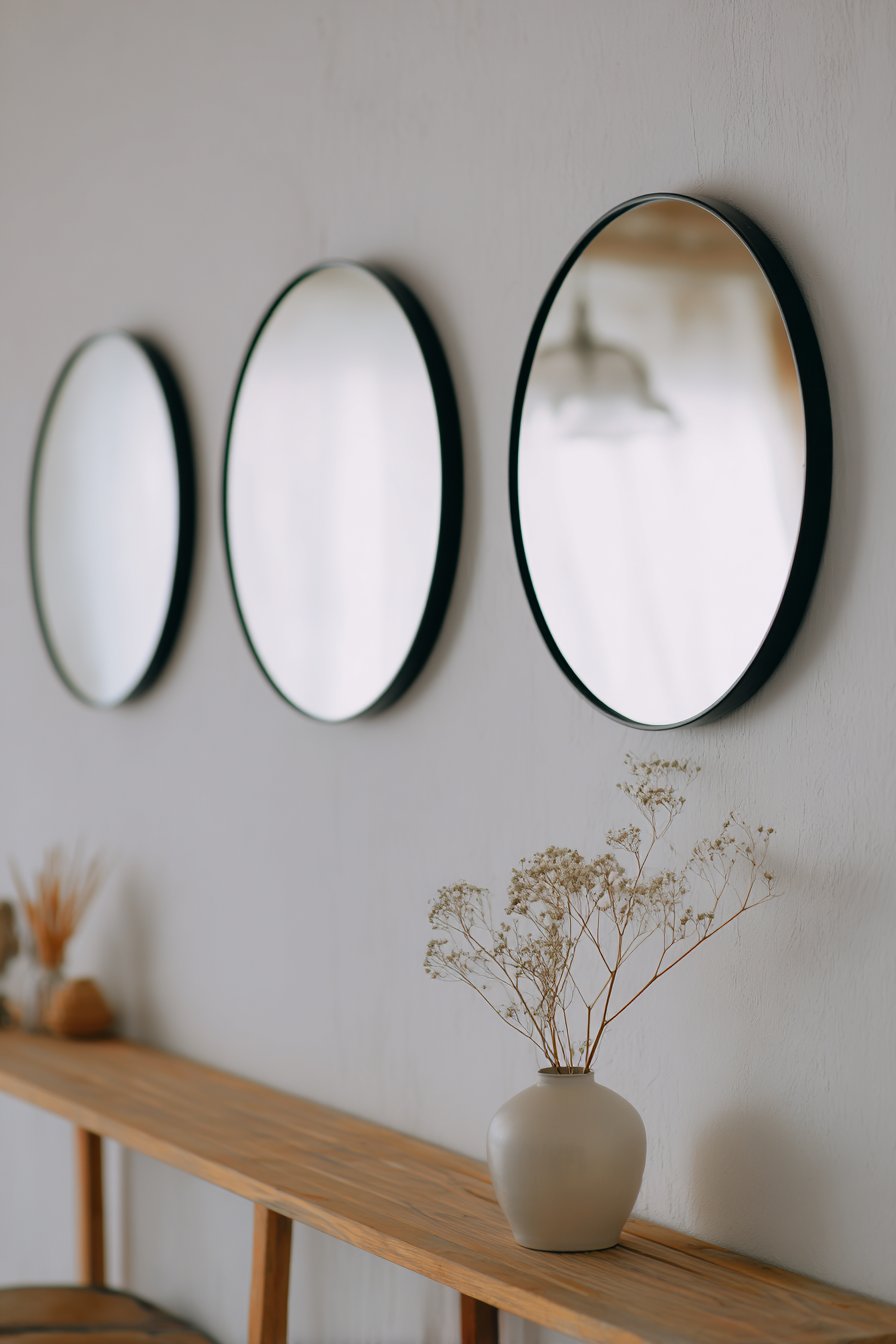
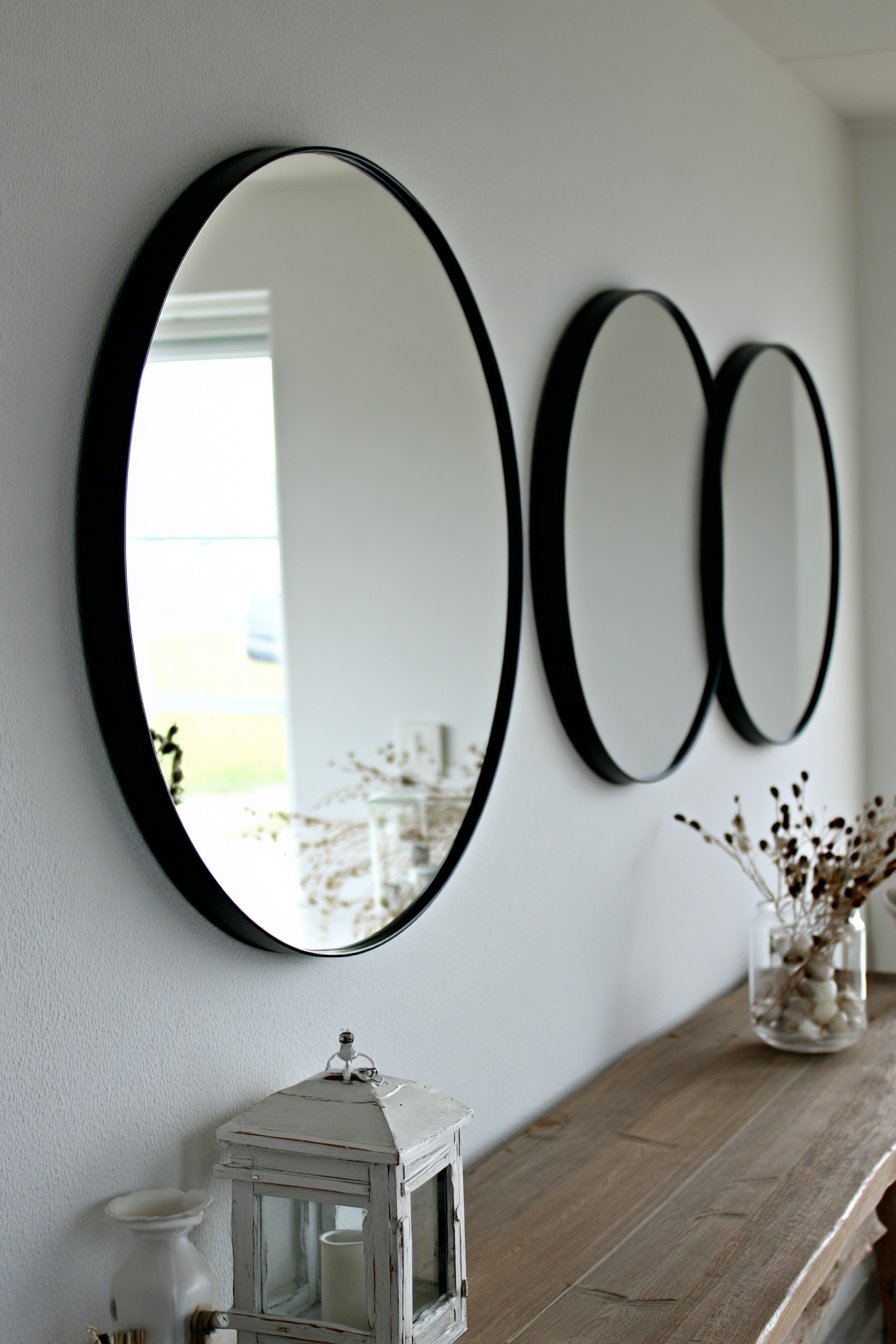
Narrow hallways present unique design challenges that mirror decoration ideas can elegantly solve, and the horizontal sequence of identical round mirrors demonstrates this principle beautifully. This approach features three uniformly sized circular mirrors with black metal frames mounted in a horizontal line along the hallway wall, creating visual rhythm and continuity in a space that often feels like an afterthought in home design. The repetition of form establishes pattern without overwhelming the confined area, while the circular shape softens the linear nature of hallway architecture.
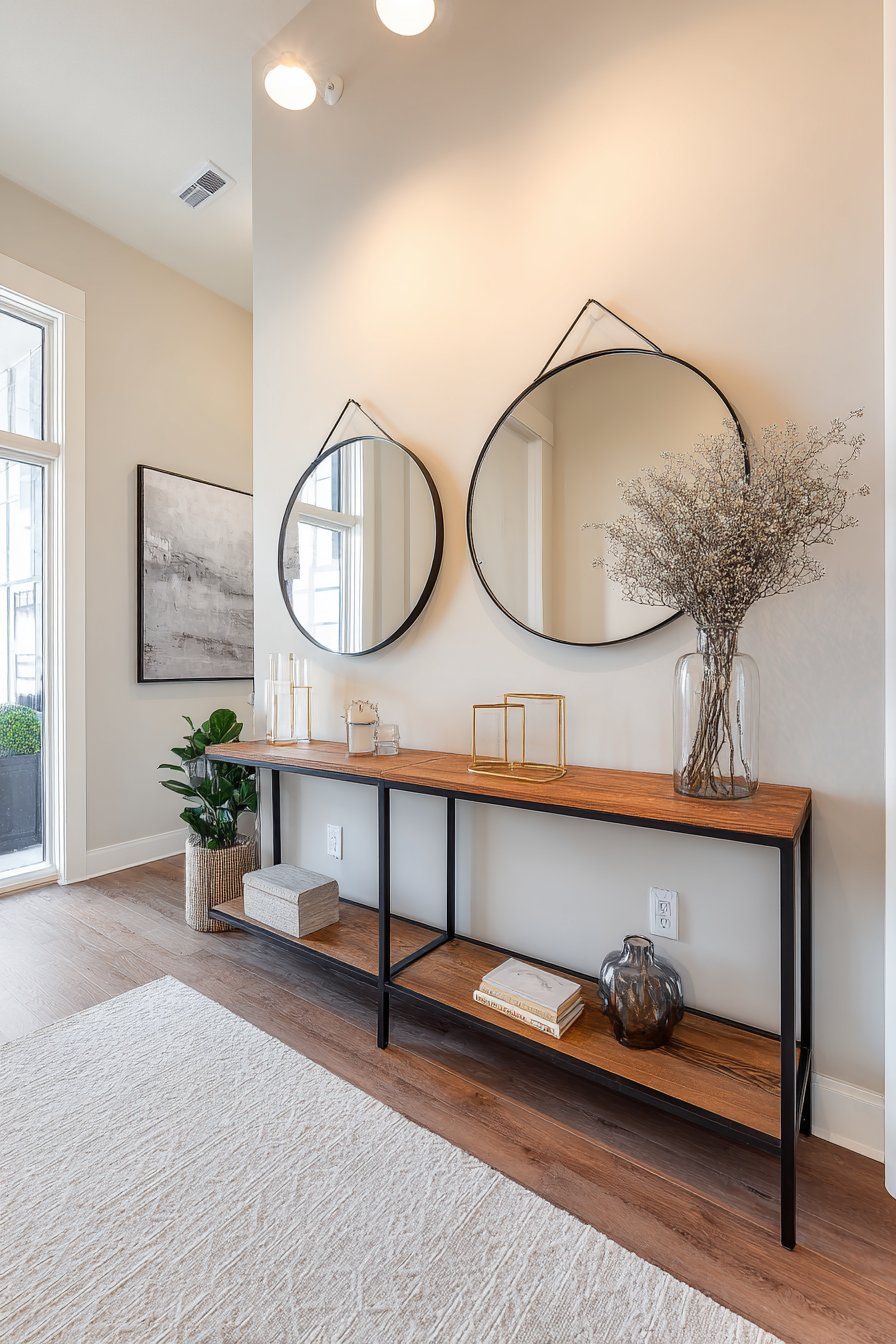
Below this mirror trio, a slim wooden console table provides both functional utility and visual grounding for the composition. The table serves as a landing spot for keys, mail, and decorative accessories while its minimal depth ensures it doesn’t impede traffic flow through the hallway. The mirrors positioned above reflect light from both ends of the corridor, effectively brightening what might otherwise be a dim transitional space. This reflective quality is particularly valuable in hallways lacking windows, where mirrors become crucial for introducing luminosity.
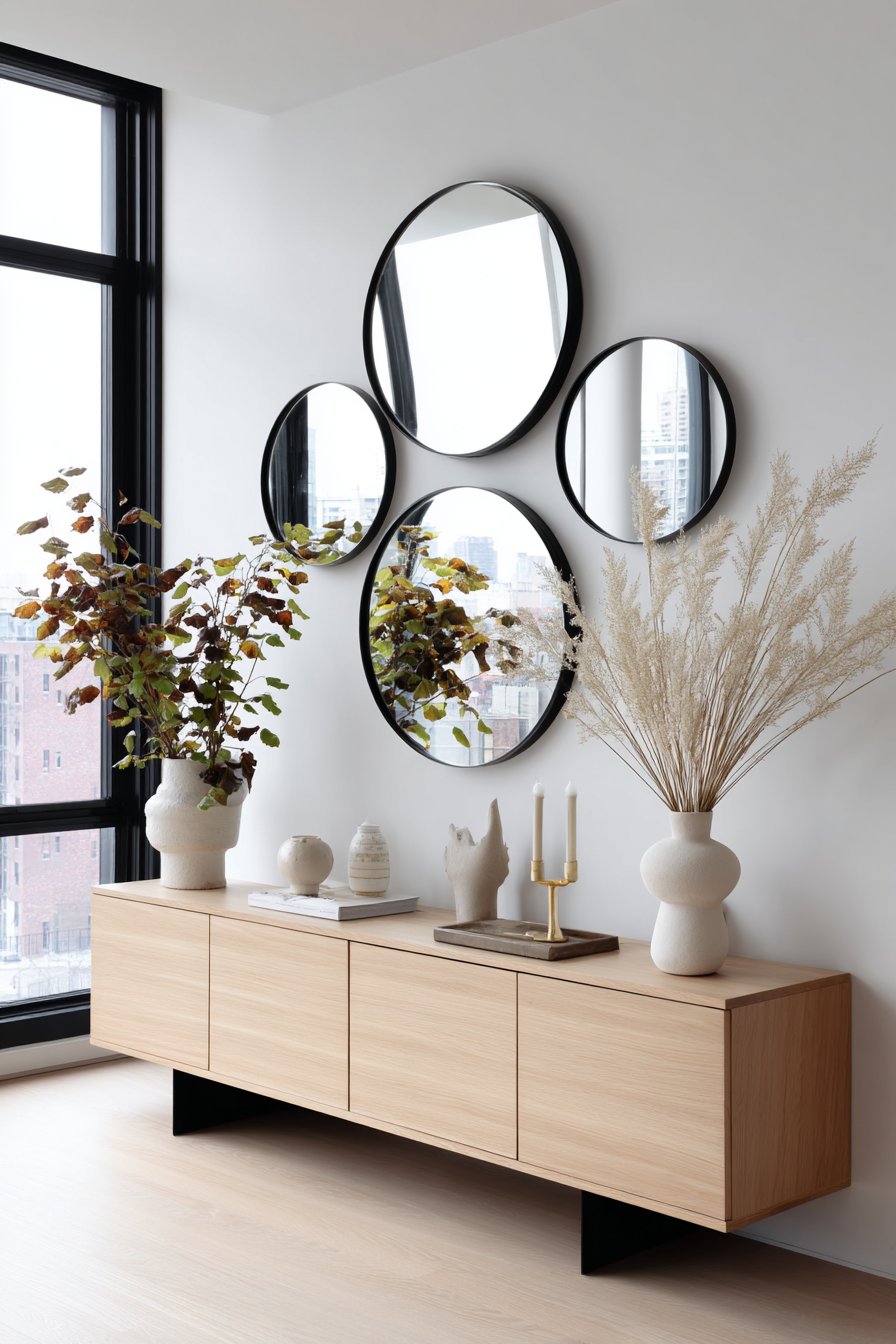
Wide-angle interior photography captures how these mirrors work collectively to create the illusion of expanded width—a critical consideration in narrow passages where claustrophobia can be a concern. The black metal frames provide crisp definition against light-colored walls while maintaining visual lightness due to their slender profile. This mirror decoration idea exemplifies how thoughtful repetition and strategic placement can transform a purely functional space into an attractive design feature that enhances the overall flow of your home.
Key Design Tips:
- Maintain precise alignment and equal spacing between mirrors for a polished, intentional appearance
- Choose a frame color that provides contrast with your wall color to ensure the mirrors read as distinct design elements
- Position the central mirror at eye level, with flanking mirrors aligned to the same center point for visual harmony
- Keep console table styling minimal to avoid creating visual clutter in the already narrow space
- Consider the view from both directions of the hallway when positioning mirrors to maximize their spatial enhancement effect
3. Bohemian Soul: Macramé-Framed Mirror as Artistic Centerpiece
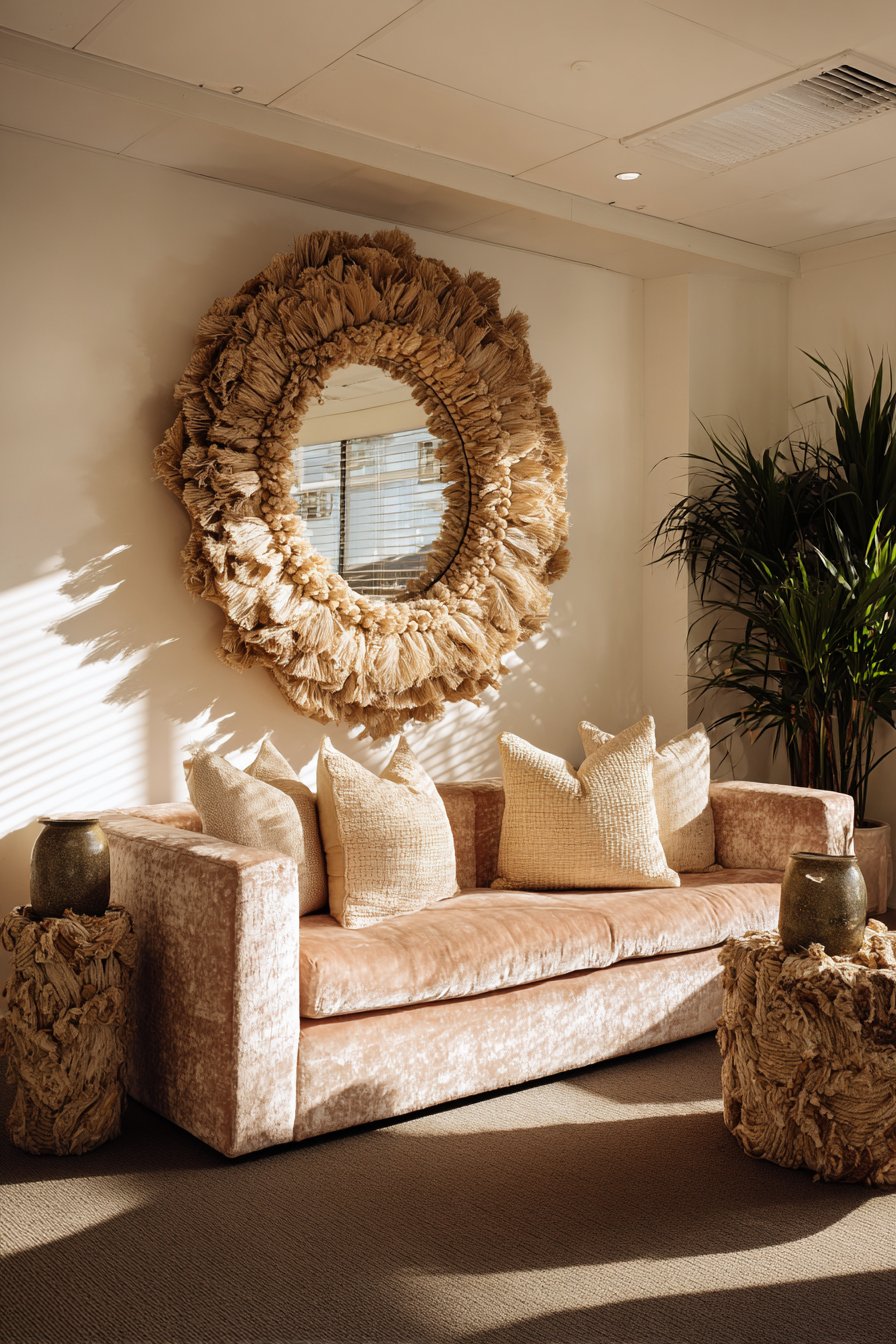
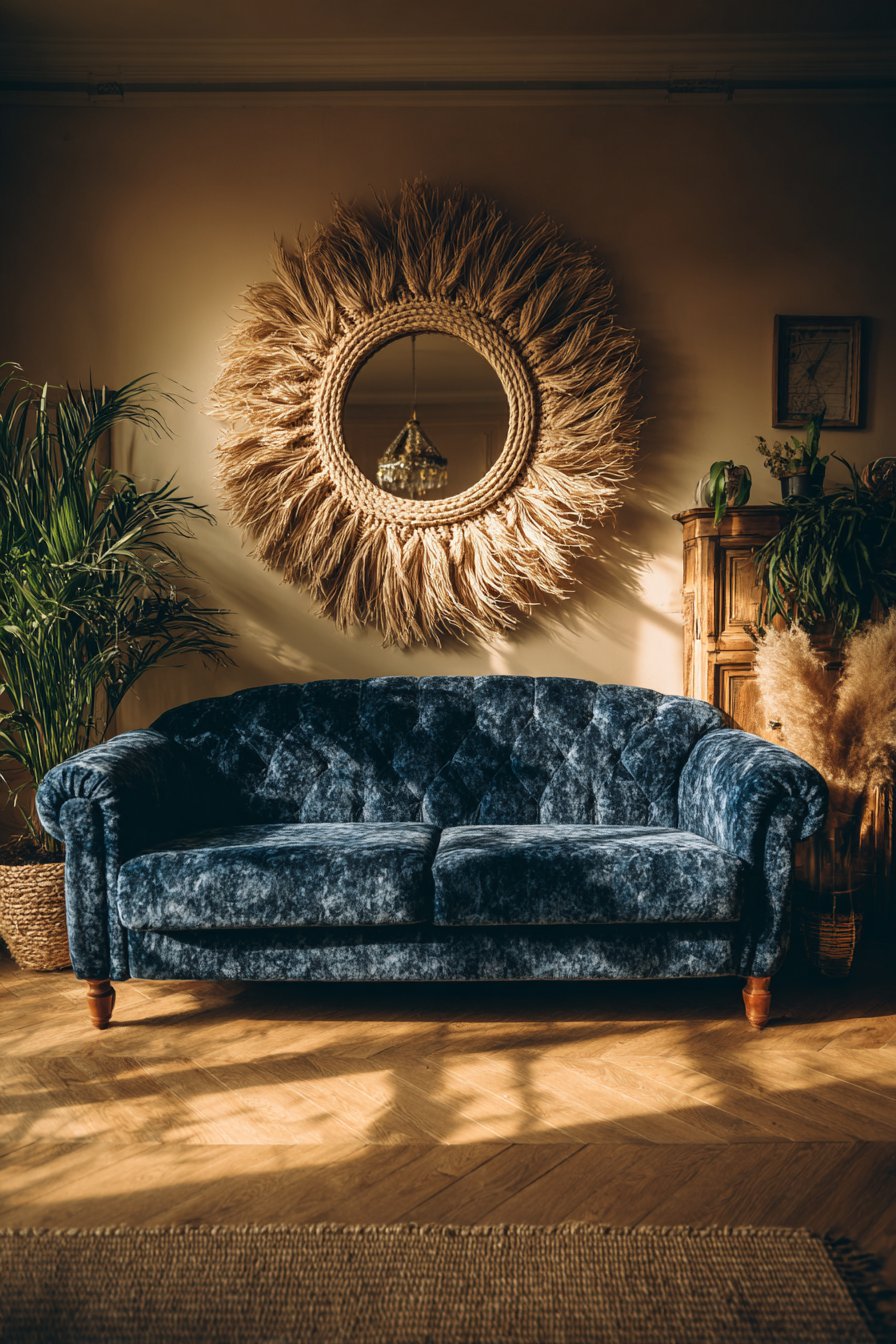
The macramé-framed circular mirror represents a perfect fusion of artistic craftsmanship and functional design, embodying the free-spirited aesthetic that defines bohemian interiors. This mirror decoration idea showcases how traditional textile arts can be reimagined as structural frame elements, with handwoven rope creating an intricate halo around the reflective surface. The organic, irregular quality of the macramé work adds textural warmth and artisanal character that contrasts beautifully with the smooth, precise surface of the mirror itself.
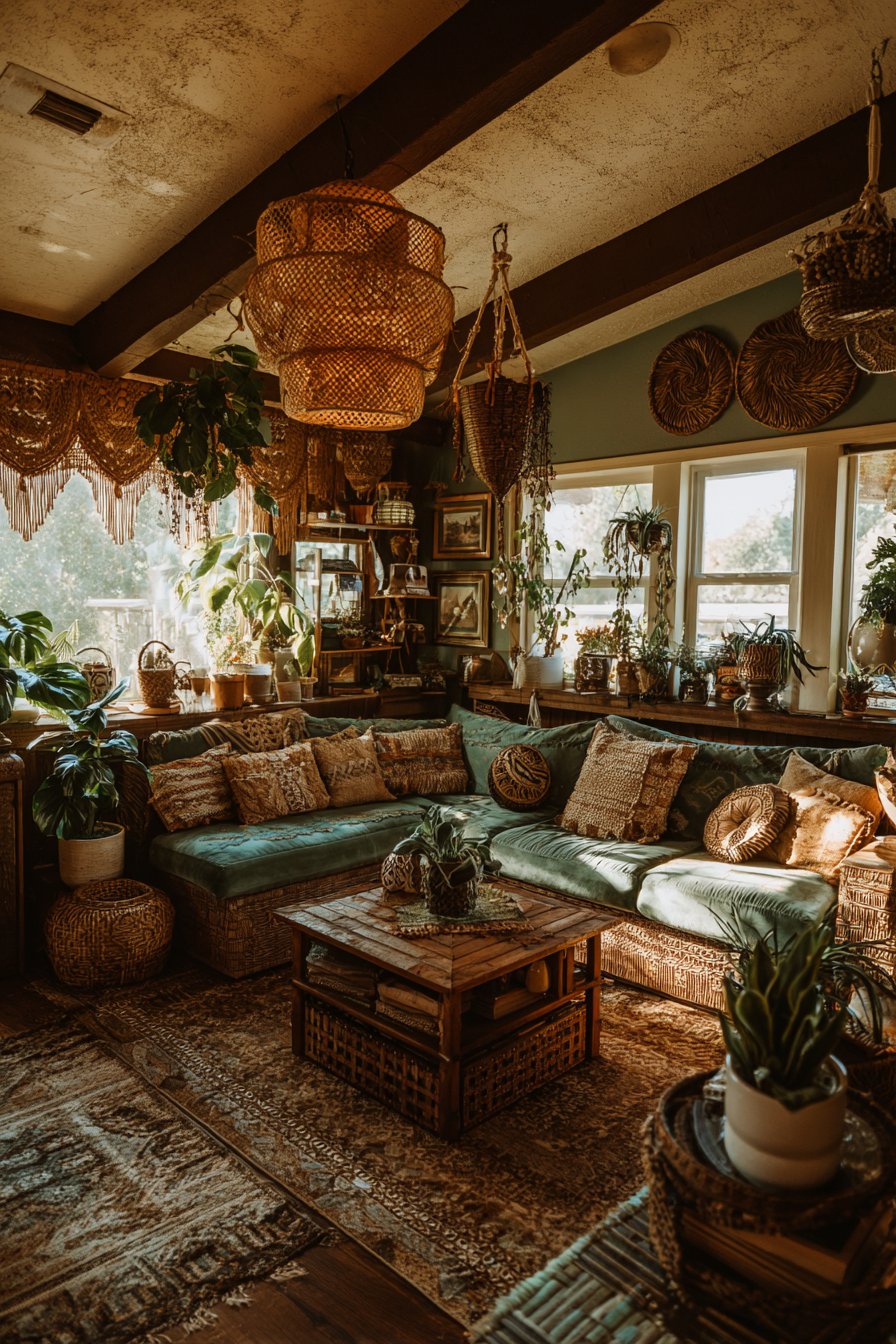
Positioned as the centerpiece above a velvet sofa in a bohemian living room, this mirror becomes more than a functional object—it transforms into a statement artwork that anchors the eclectic decor style. The surrounding environment of potted plants and woven textiles creates a cohesive narrative of natural materials and handcrafted elements. The mirror’s placement at this focal point allows it to reflect the room’s collected treasures—perhaps a cluster of hanging plants, colorful throw pillows, or an interesting ceiling fixture—creating depth and visual interest through these captured reflections.
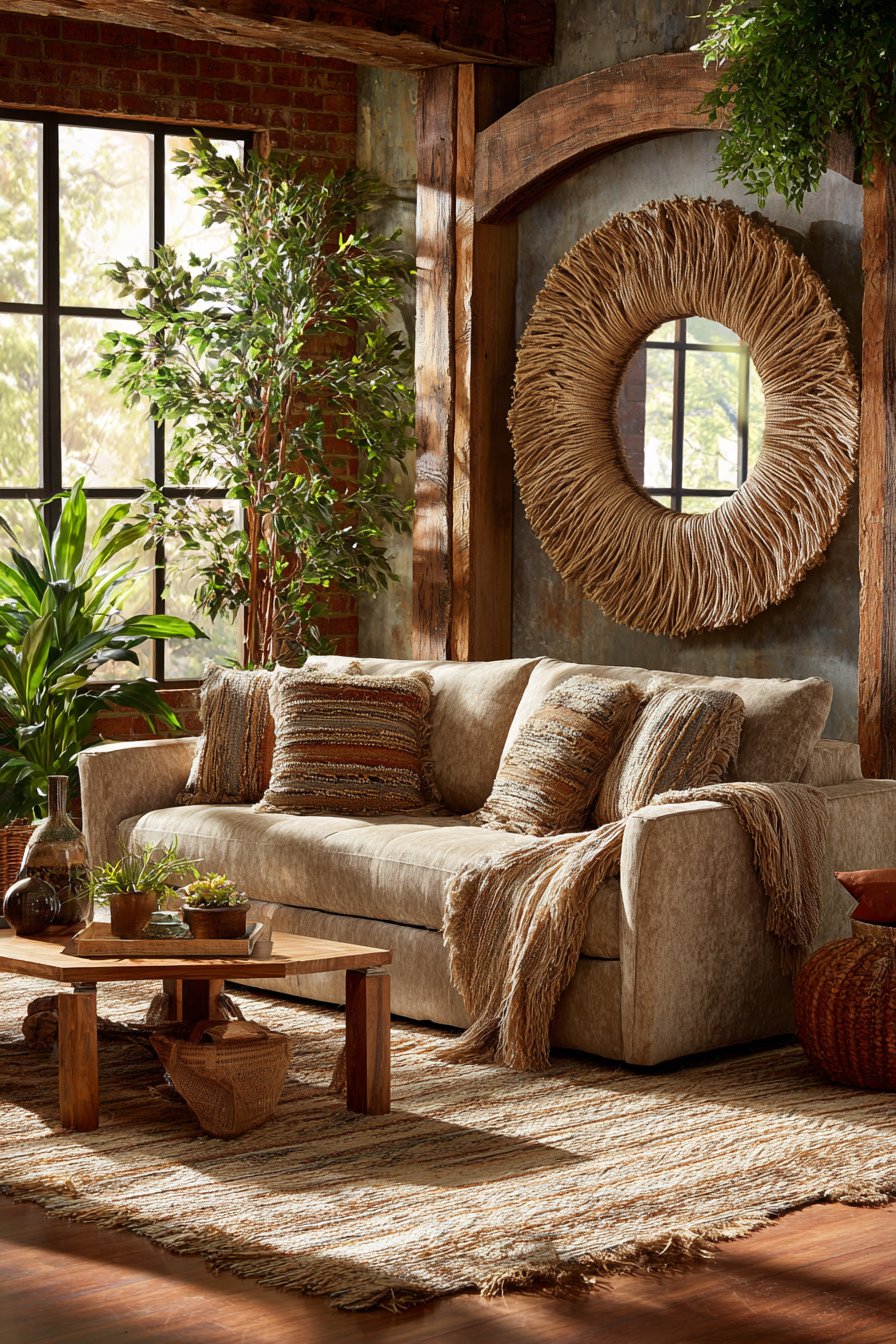
Natural light plays a crucial role in bringing this mirror decoration to life, as it highlights the intricate knot work and creates soft shadows within the macramé’s dimensional surface. Professional interior photography employs balanced exposure to showcase both the delicate rope details and the mirror’s reflective properties without washing out either element. This approach to mirror decoration appeals particularly to those who value handmade items, sustainable materials, and designs that tell a story about craftsmanship and cultural tradition.
Key Design Tips:
- Select macramé work with varied knot patterns and textures to create visual interest within the frame itself
- Ensure the mirror is securely mounted, as macramé frames can be heavier than traditional materials due to the rope density
- Coordinate the rope color with other natural fiber elements in your room—cotton, jute, or linen textiles
- Position the mirror where it can reflect interesting room elements rather than blank walls to maximize its decorative impact
- Consider the scale carefully—macramé frames appear more substantial than simple metal or wood, so size accordingly
4. Spa-Inspired Illumination: LED Backlit Bathroom Mirror
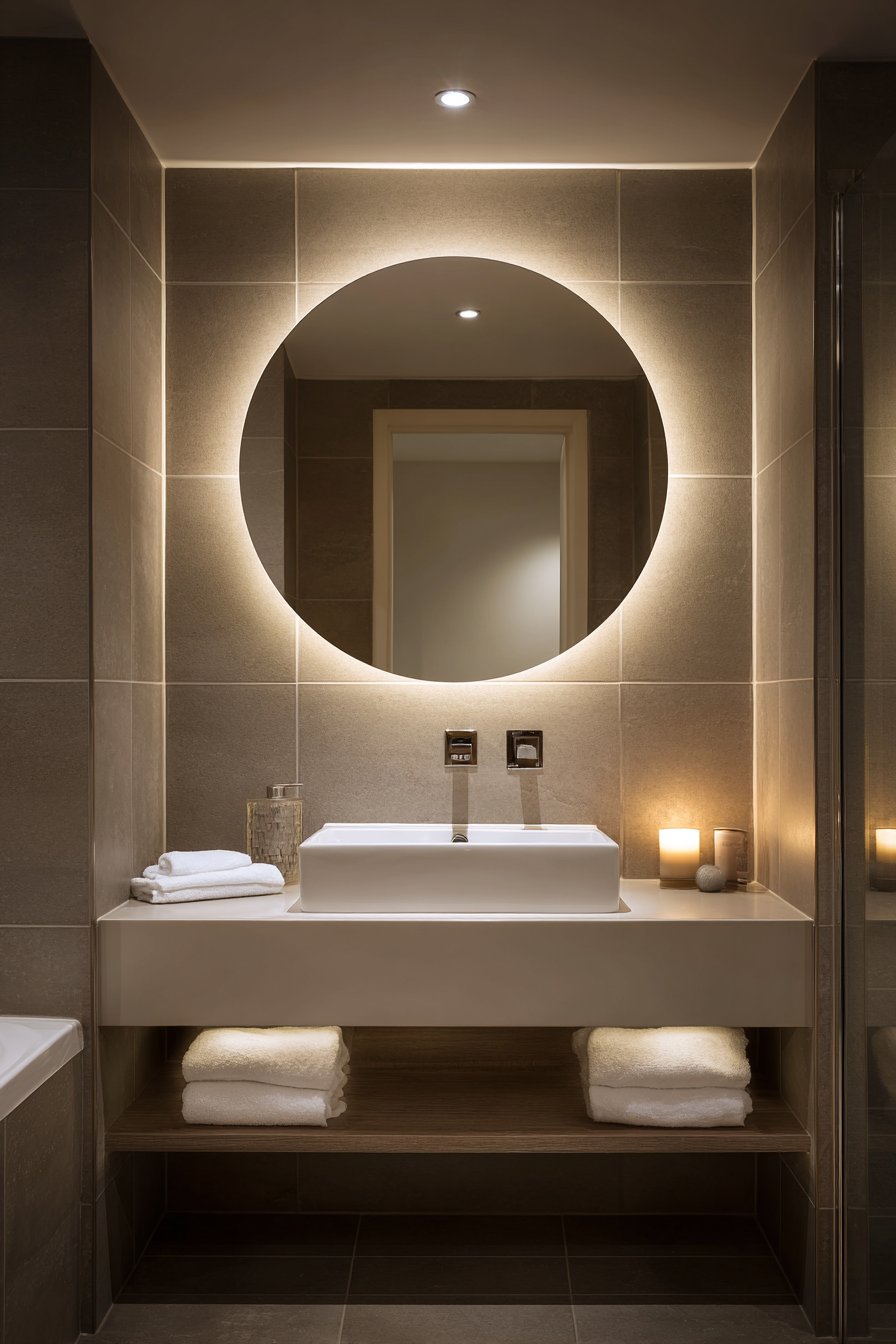
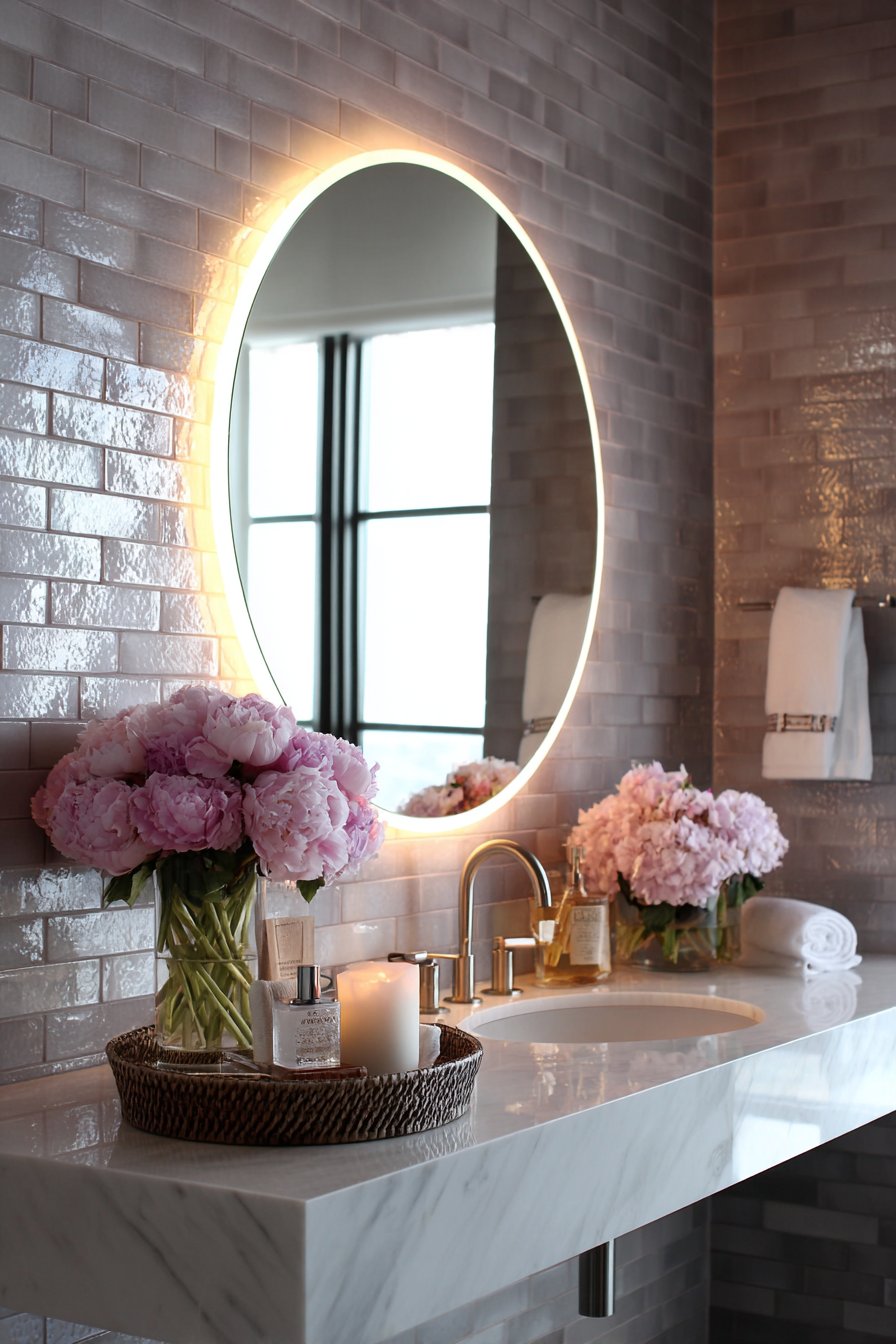
Modern bathroom design has been revolutionized by the integration of LED backlighting into mirror decoration ideas, creating functional illumination that doubles as ambient design feature. This approach features a round frameless mirror with integrated LED lights around the perimeter, producing a soft halo effect that seems to make the mirror float ethereally against the wall. The warm backlighting creates a spa-like atmosphere that transforms routine grooming tasks into moments of self-care luxury while providing excellent task lighting for precise activities like makeup application or shaving.
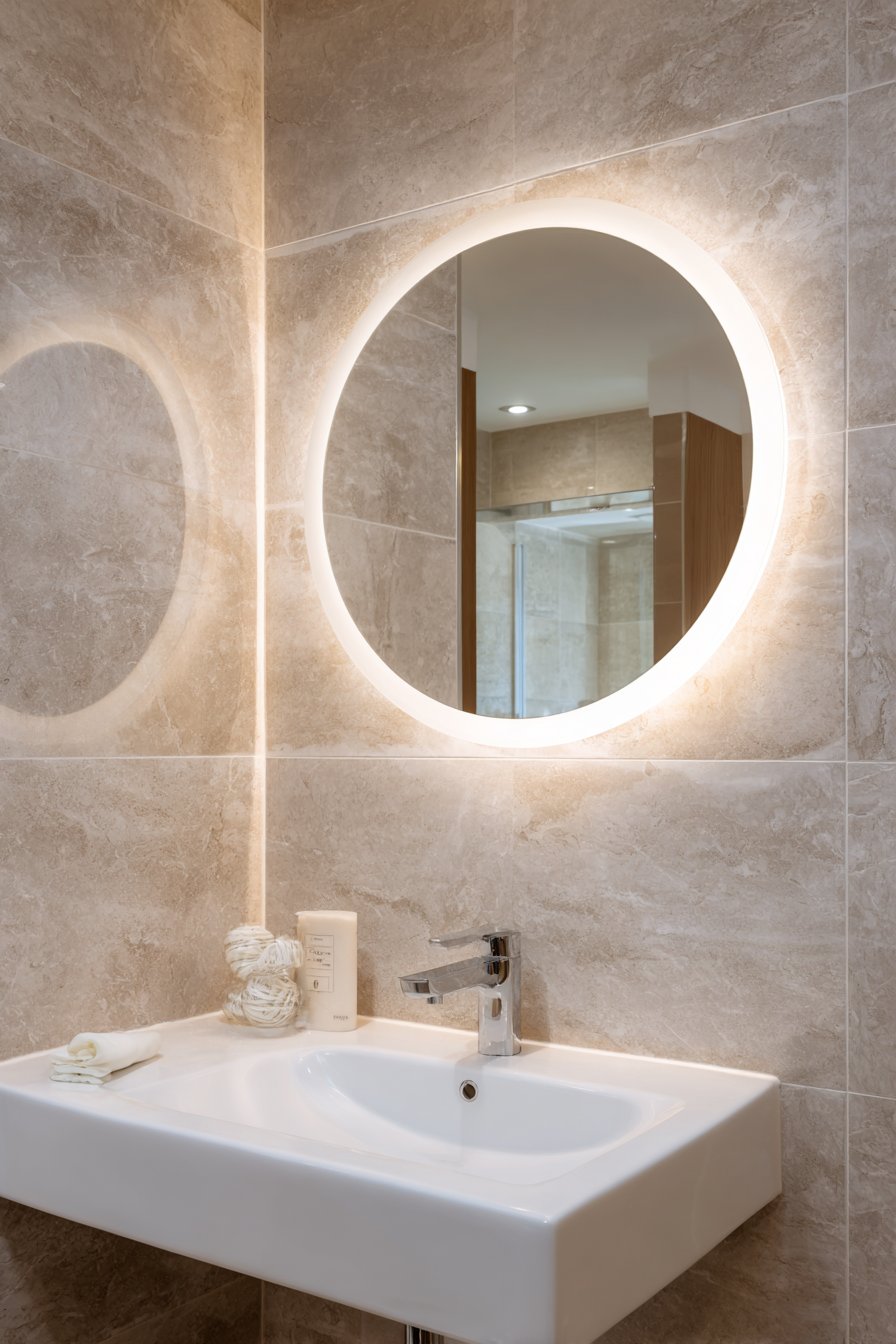
Mounted above a floating vanity in a contemporary bathroom with matte white tiles and brushed nickel fixtures, this mirror establishes the room’s modern aesthetic while solving practical lighting challenges. Unlike harsh overhead bathroom lighting that can create unflattering shadows, the perimeter illumination from the backlit mirror provides even, diffused light that flatters skin tones and reveals true colors. The frameless design maintains visual simplicity, allowing the mirror to integrate seamlessly into minimalist bathroom schemes where every element serves multiple purposes.
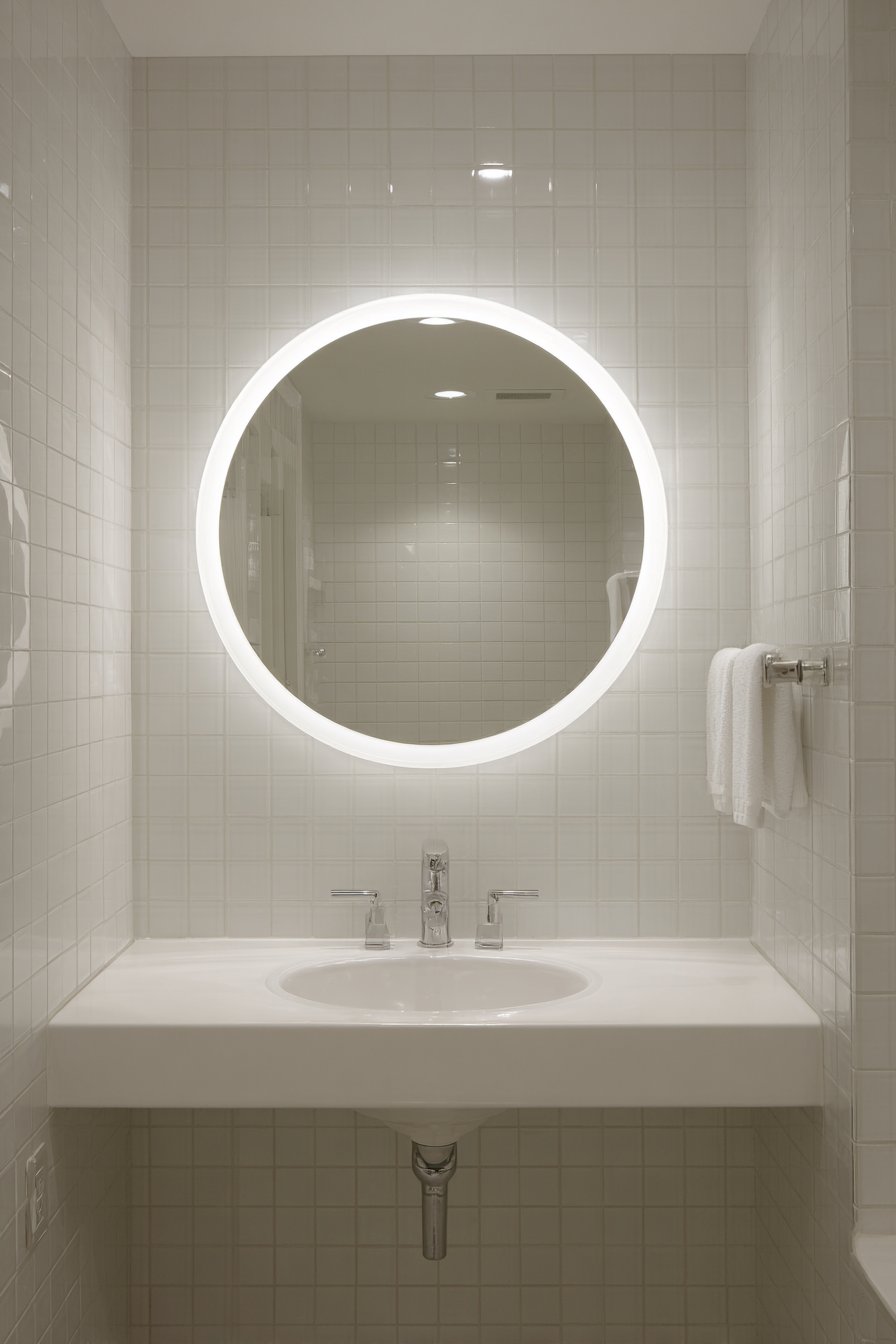
Detail-focused interior photography captures the subtle glow of the LED backlighting and demonstrates how this functional element contributes to the overall ambiance of the space. The soft halo effect becomes particularly beautiful during evening hours when it can serve as gentle nighttime illumination, eliminating the need to turn on harsh overhead lights. This mirror decoration idea represents the intersection of technology and design, where practical innovations enhance both the functionality and aesthetic appeal of essential home spaces.
Key Design Tips:
- Choose LED color temperature carefully—warm white (2700-3000K) creates relaxing ambiance while cool white (4000-5000K) provides clarity for detailed tasks
- Ensure the mirror includes dimming capabilities to adjust lighting intensity for different times of day and activities
- Consider mirrors with built-in defoggers to prevent steam accumulation after hot showers
- Verify electrical code compliance and hire licensed electricians for installation to ensure safety
- Position at appropriate height for all household users—typically centered at 60-65 inches from the floor for standard ceiling heights
5. Classical Elegance: Ornate Gold Frame Above the Sideboard
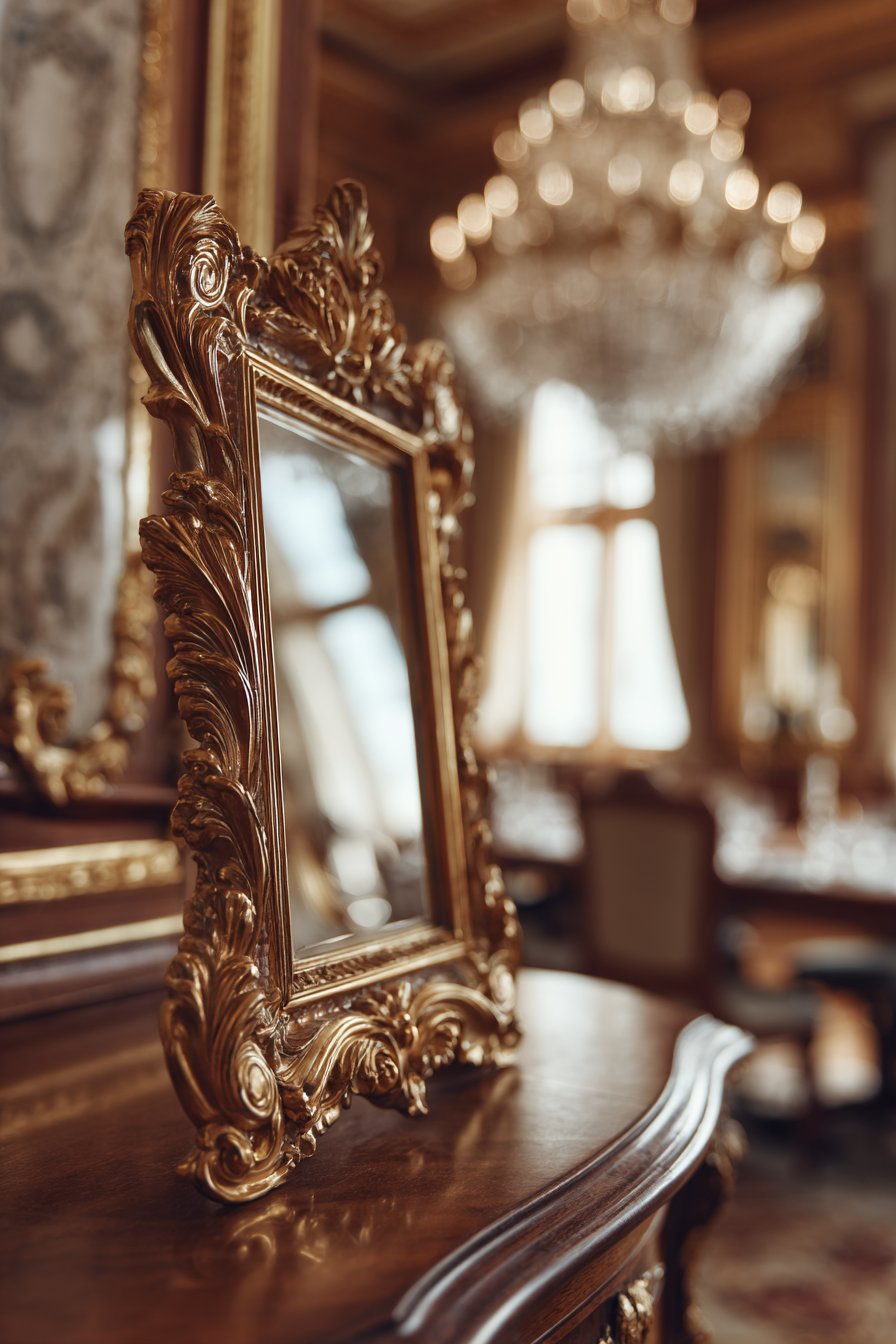
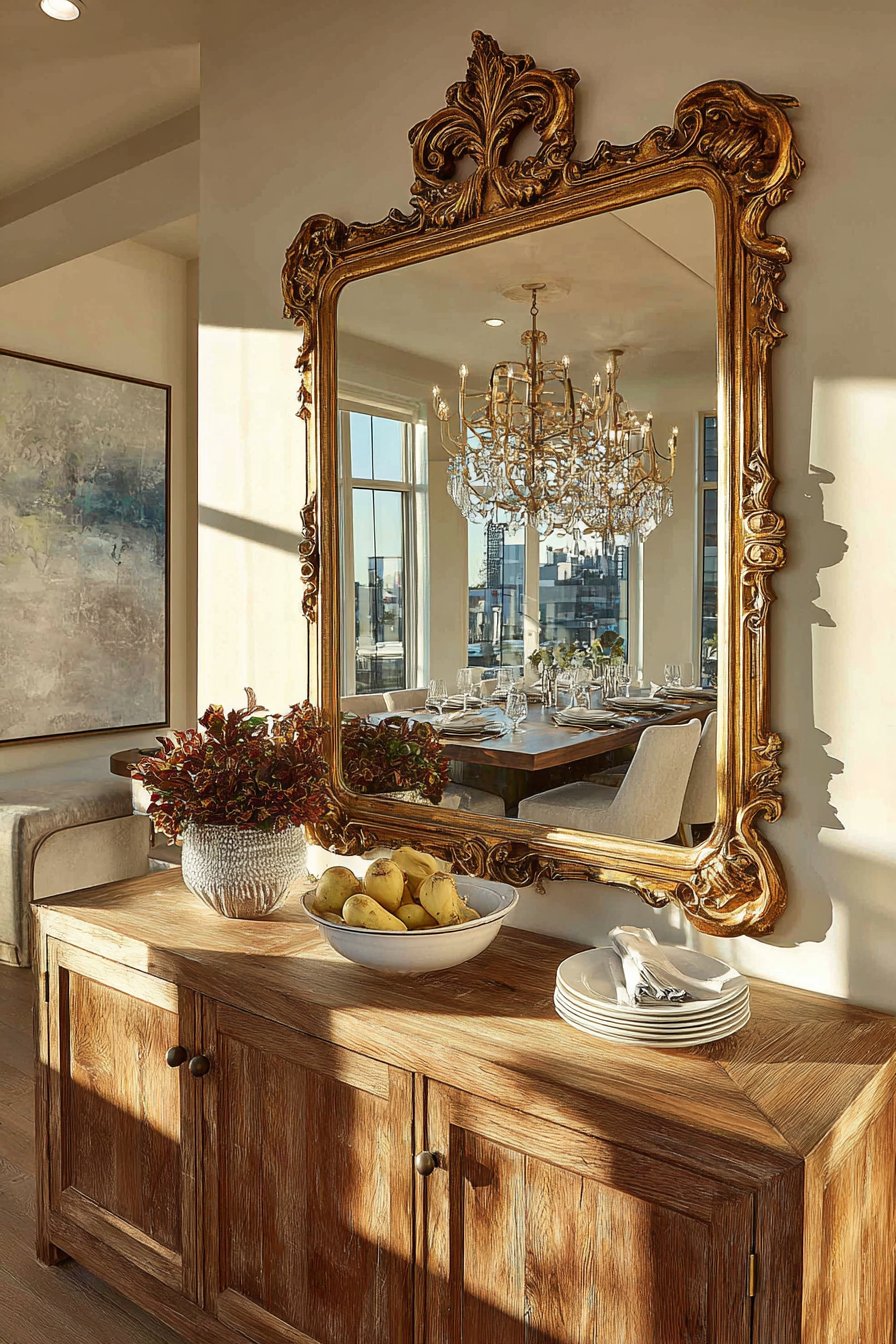
The ornate antique gold-framed rectangular mirror positioned above a rustic wooden sideboard exemplifies how mirror decoration ideas can bridge historical periods and design styles. This approach features an elaborate baroque-style frame with intricate carved details, scrollwork, and gilded finish that evokes the grandeur of European palaces and manor houses. The substantial frame transforms the mirror from a simple reflective surface into a significant architectural element that commands attention and establishes the formal character of the dining room.
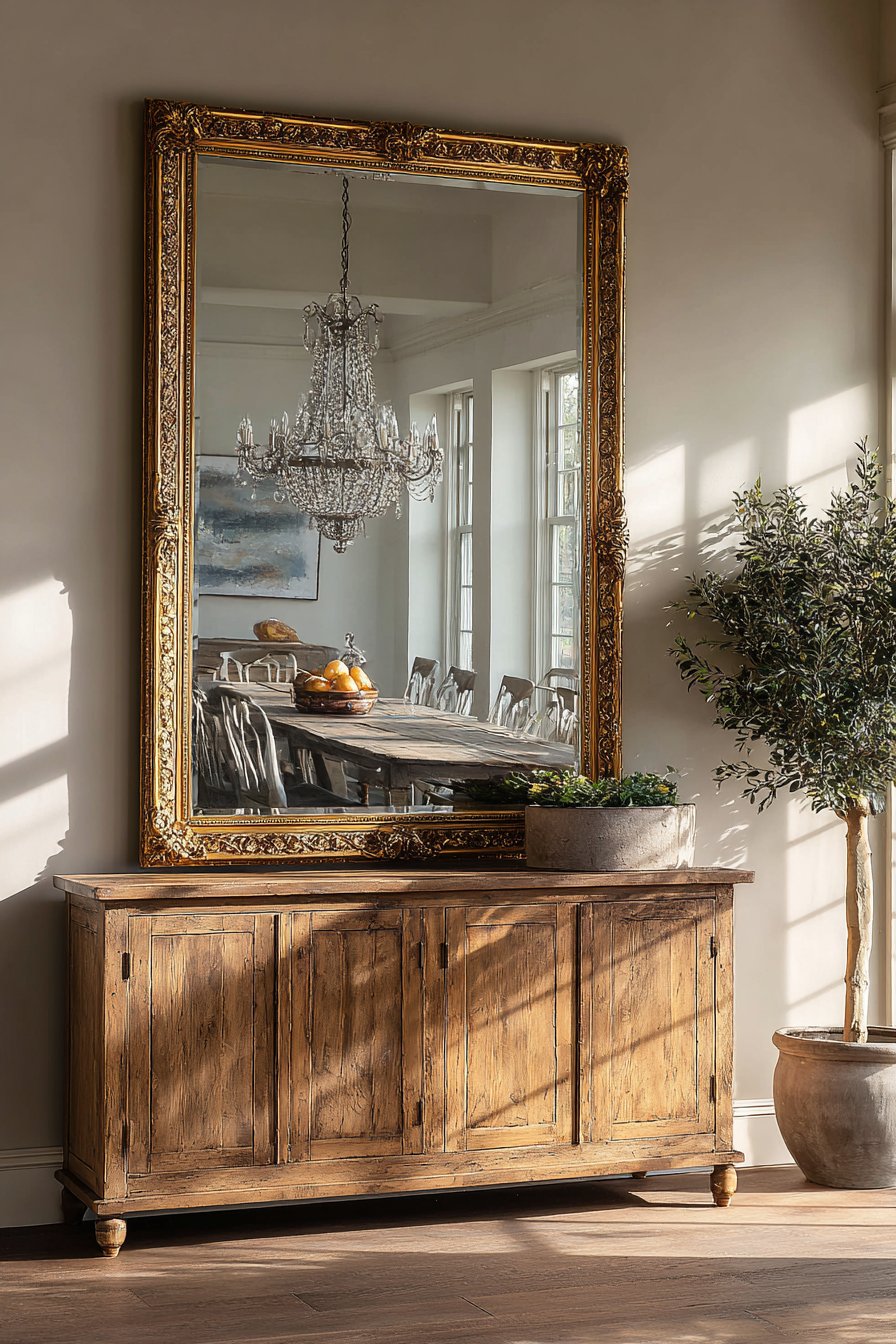
The strategic positioning above the sideboard creates a classic furniture arrangement that has remained popular for centuries due to its functional and aesthetic success. The mirror’s reflective surface captures and multiplies the light from the chandelier suspended above the dining table, effectively doubling the illumination while adding sparkle and movement to the space. This reflected chandelier creates a mesmerizing visual echo that adds depth and luxury to formal dining experiences. The mirror also reflects portions of the dining table and chairs, making the room appear more spacious and creating interesting visual layers.
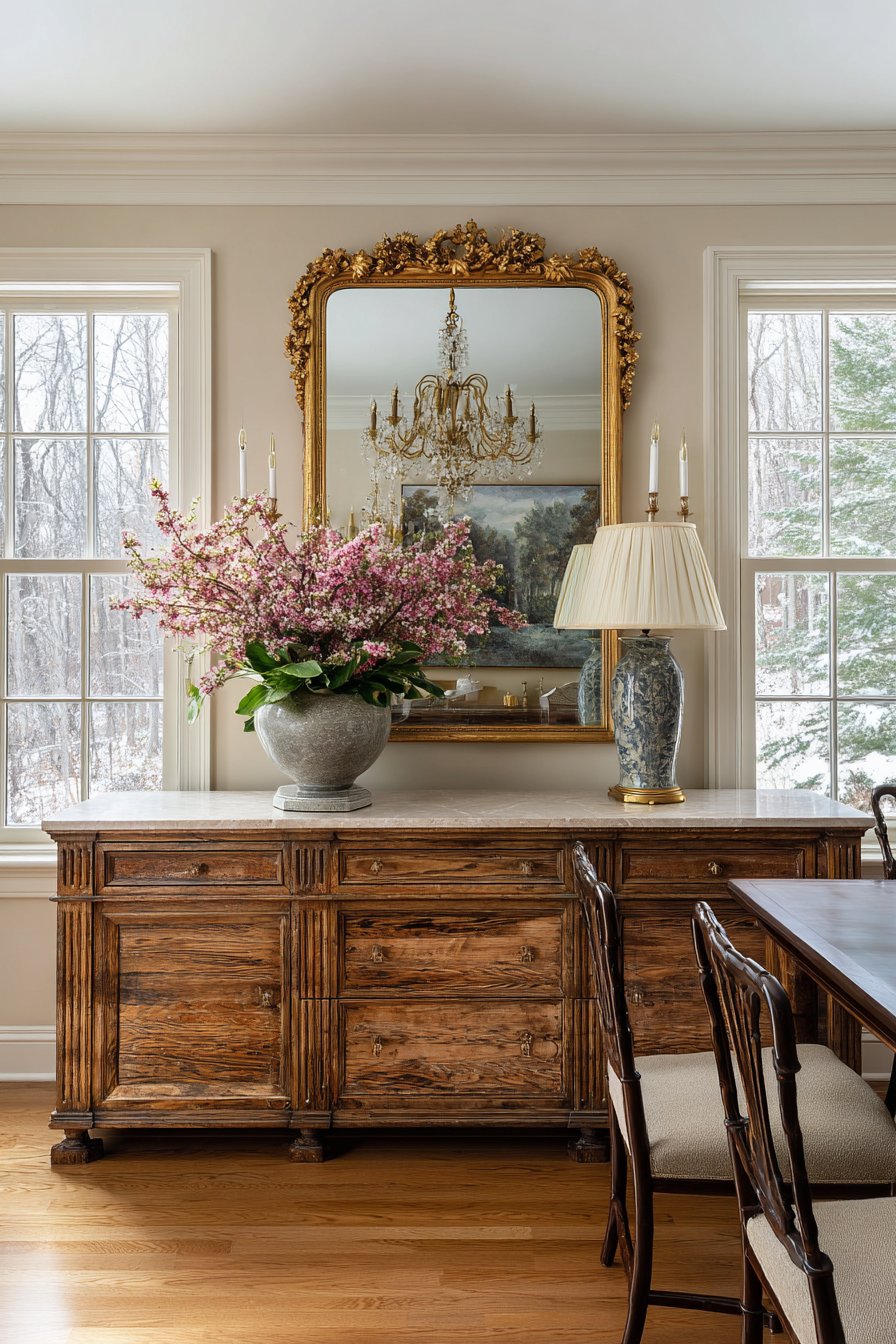
Professional interior photography highlights how natural daylight interacts with the ornate frame details, casting subtle shadows within the carved recesses and making the gilded surface shimmer with warmth. The juxtaposition of the refined, formal mirror against the rustic wooden sideboard creates an appealing contrast between sophisticated elegance and casual, organic texture. This balance prevents the space from feeling overly precious or museum-like, instead creating an approachable grandeur suitable for both everyday family meals and special occasion gatherings.
Key Design Tips:
- Ensure the mirror’s proportions relate appropriately to the sideboard width—typically the mirror should be 50-75% of the furniture’s width
- Hang the mirror 4-6 inches above the sideboard top to create visual connection without making the pieces appear cramped
- Consider the room’s ceiling height when selecting frame elaboration—higher ceilings can accommodate more ornate frames
- Use the mirror to reflect your most attractive design elements—chandelier, window with view, or beautiful table setting
- Maintain the gold frame’s finish with appropriate cleaning methods to preserve its luster without damaging the gilding
6. Contemporary Geometry: Hexagonal Mirror Cluster
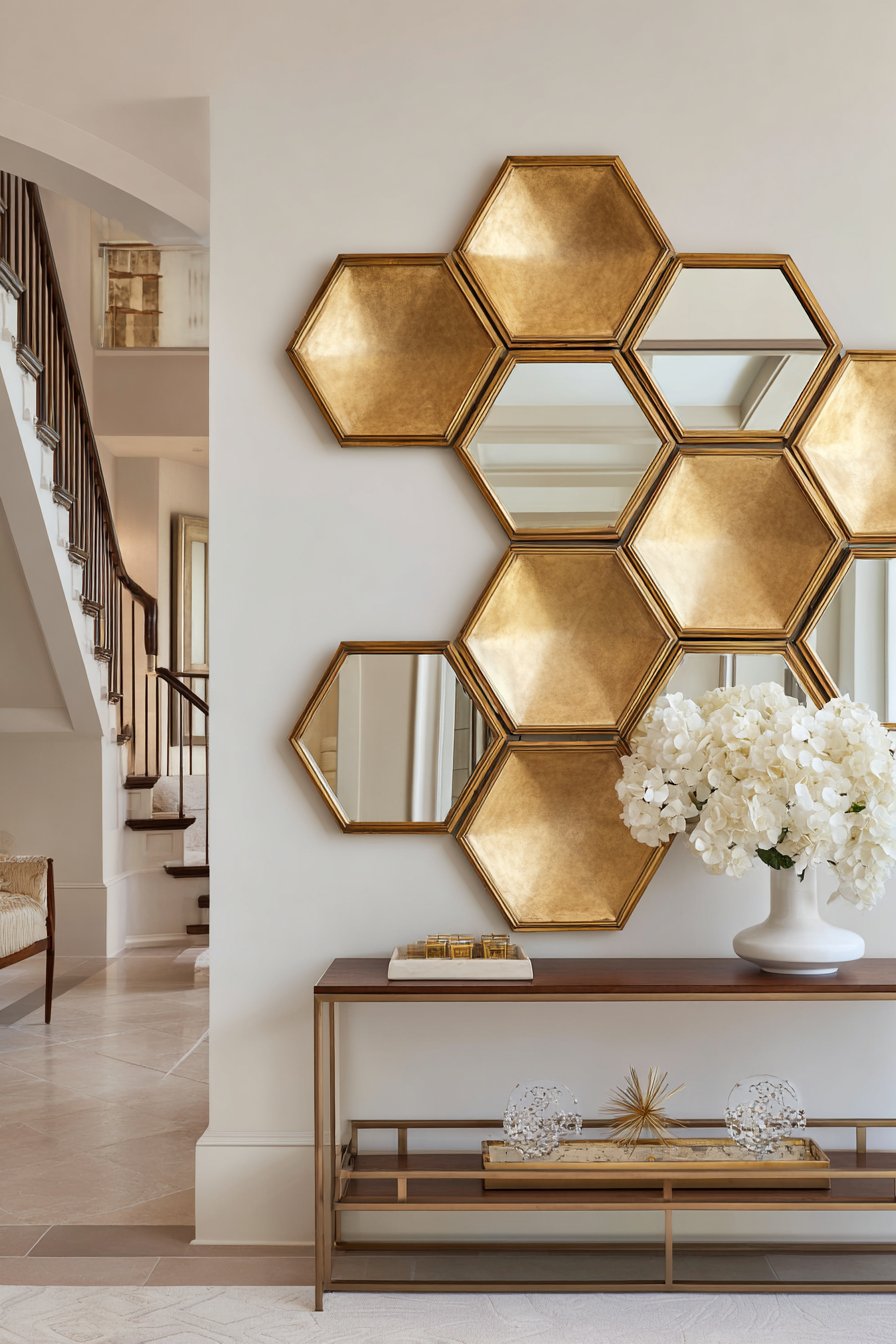
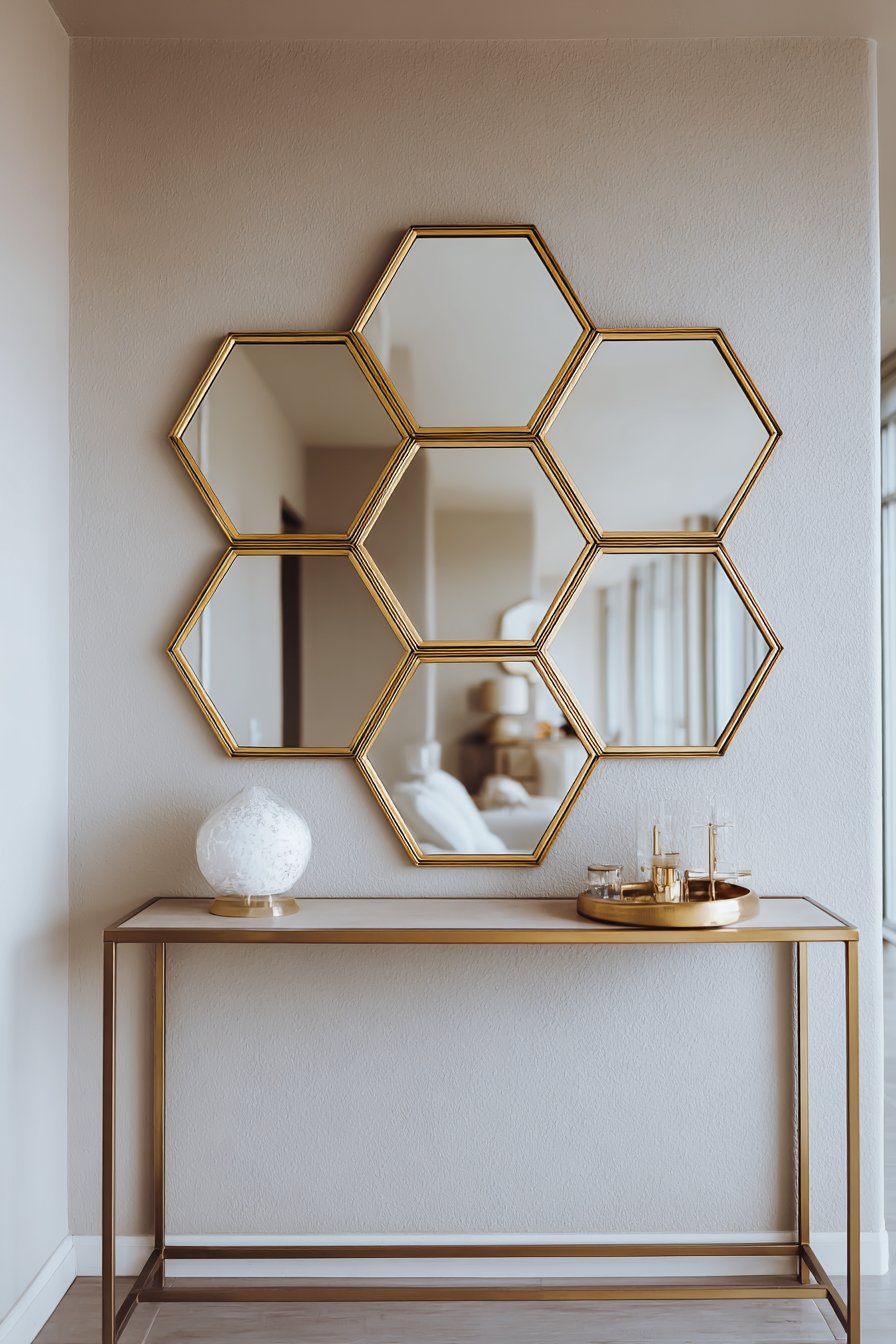
The geometric hexagonal mirror cluster represents a distinctly modern approach to mirror decoration ideas, utilizing mathematical precision and modular design to create striking visual impact in entryways. This installation features six brass-framed hexagonal mirrors arranged in a honeycomb pattern, where each mirror functions independently while contributing to the cohesive overall composition. The repetition of the six-sided shape creates hypnotic visual rhythm while the brass frames add warmth and refinement to what might otherwise feel like a purely technical exercise in geometry.
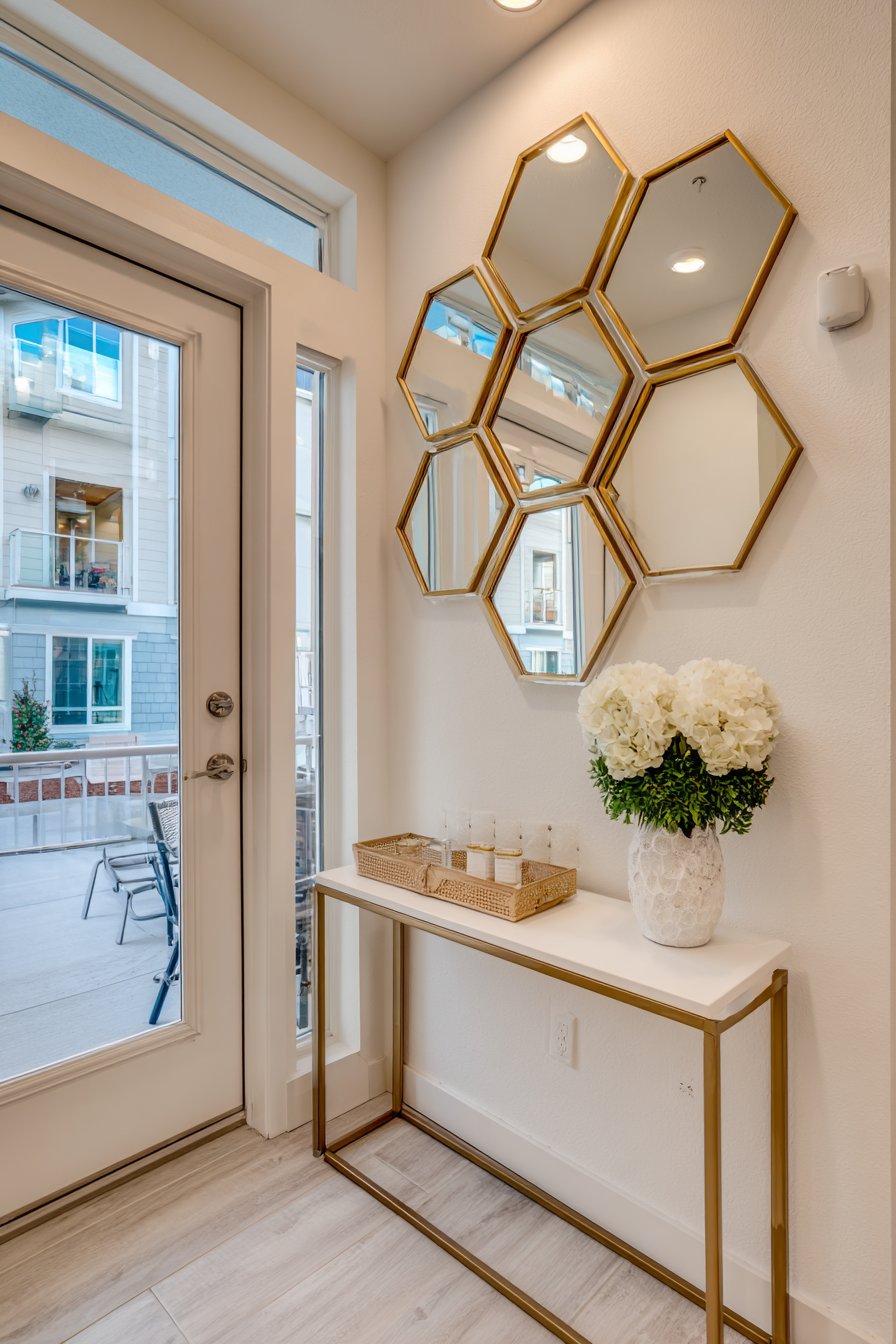
Positioned near the front door in an entryway, this mirror arrangement serves both aesthetic and practical purposes. The modular nature means that each hexagon can capture different angles and reflections, creating a fragmented, kaleidoscopic view that adds visual intrigue. Functionally, the mirrors provide quick appearance checks before leaving the house—a practical consideration often overlooked in purely decorative mirror arrangements. Below the mirror cluster, a compact console table with a catchall tray reinforces the entryway’s organizational function while maintaining the modern, streamlined aesthetic.
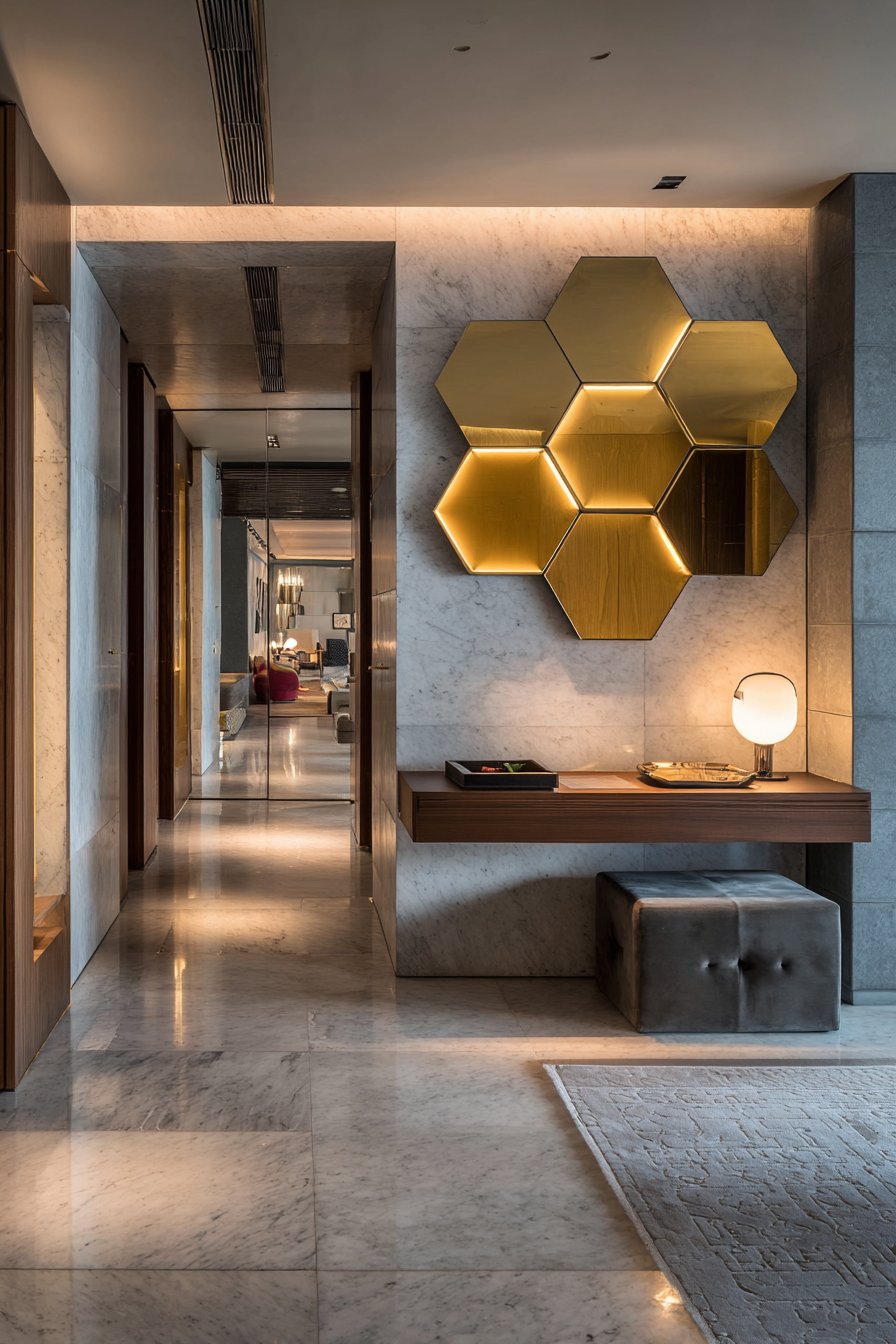
Wide-angle interior design photography showcases how this contemporary mirror solution maximizes impact while maintaining relatively modest overall dimensions—perfect for entryways where space is at a premium. The hexagonal shape itself carries associations with natural efficiency and organic structure (honeycomb), softening what could otherwise feel like an overly rigid geometric installation. This mirror decoration idea appeals particularly to those who appreciate contemporary design, mathematical precision, and installations that make bold statements while remaining functional.
Key Design Tips:
- Use a template or precise measurements to ensure perfect alignment of the honeycomb pattern
- Consider installing one hexagon at a time, checking alignment before committing to the full pattern
- Ensure all brass frames match in finish and patina for visual cohesion
- Position the cluster at a height that accommodates all household members for practical use
- Maintain the surrounding wall area relatively unadorned to allow the geometric pattern to command full attention
7. Radiant Drama: Sunburst Mirror Above the Mantel
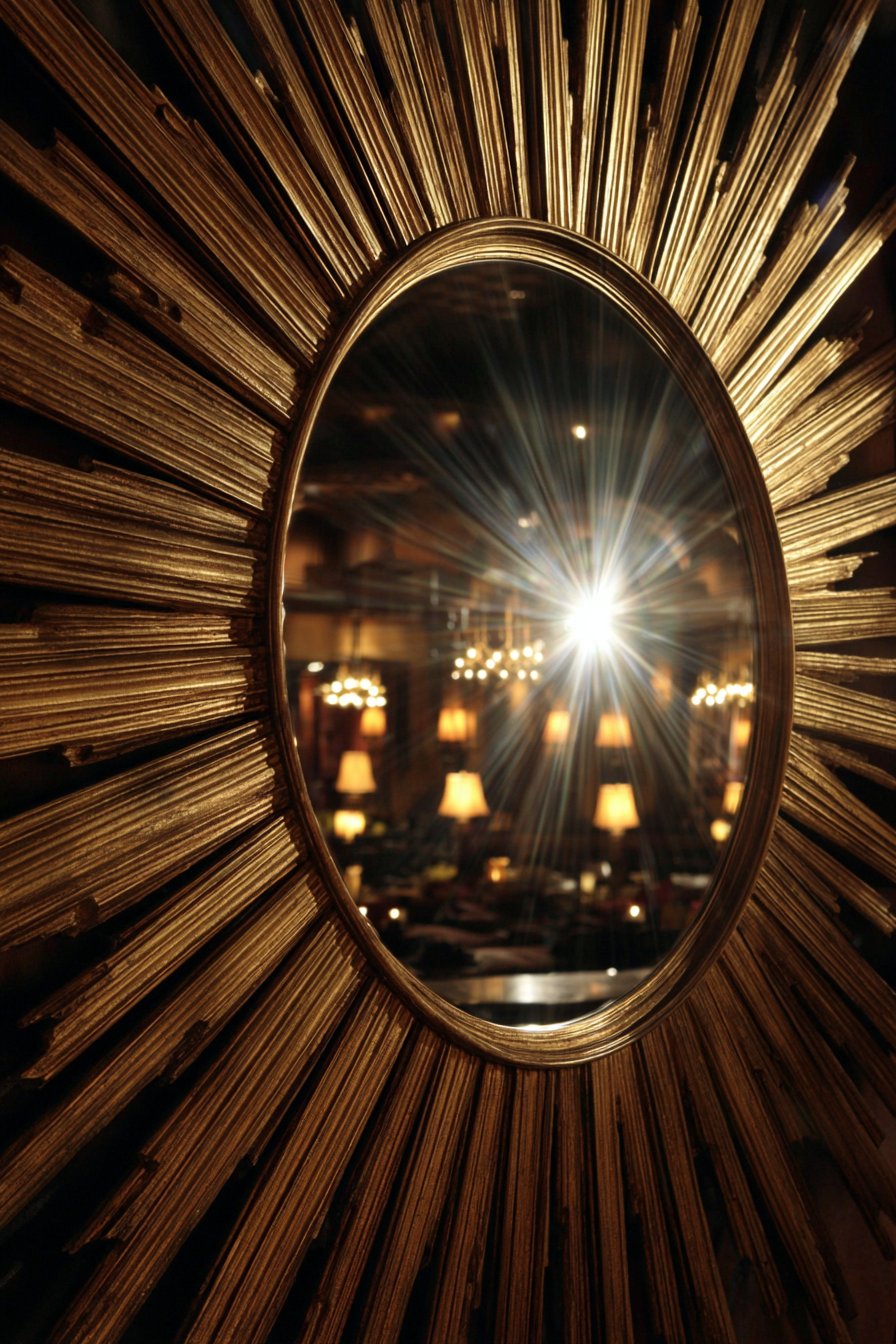
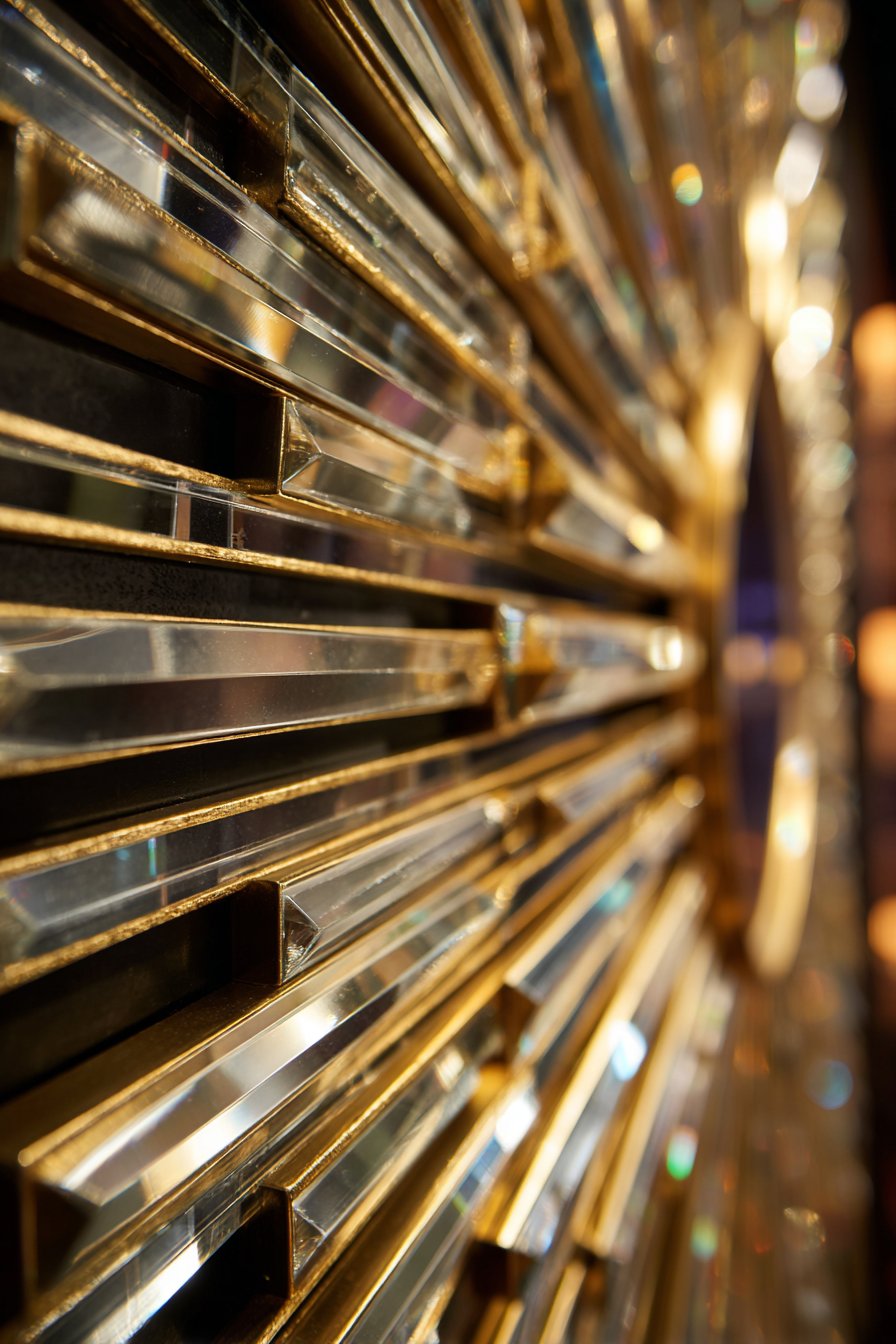
The sunburst mirror positioned above a fireplace mantel represents one of the most dramatic and iconic mirror decoration ideas in classical interior design. This approach features gold-finished rays extending outward from a central circular mirror, creating a radiating pattern that evokes both celestial imagery and art deco glamour. The dimensional quality of the extending rays creates fascinating shadow play as ambient light from table lamps and the fireplace itself shifts throughout the day and evening, making the mirror a dynamic rather than static design element.
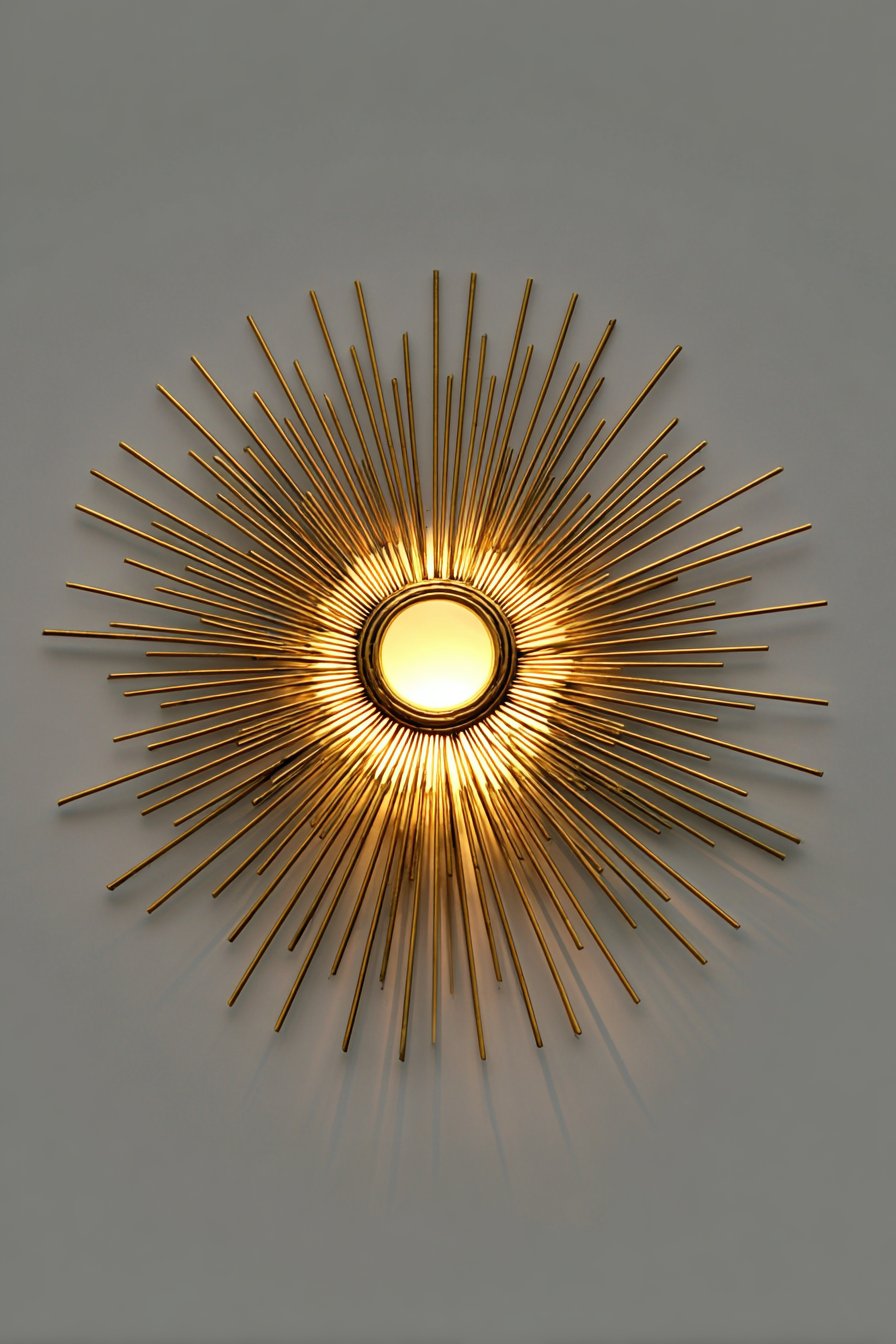
The strategic placement above the fireplace mantel maximizes the mirror’s impact as a focal point—the fireplace already draws attention as an architectural feature, and the dramatic mirror amplifies this natural hierarchy. During evening hours, the mirror reflects the warm glow from table lamps positioned around the living room, redistributing this light and enhancing the room’s cozy ambiance. The gold finish of the sunburst rays coordinates beautifully with brass or gold hardware details often found in traditional living room furnishings, creating subtle repetition that ties the design scheme together.
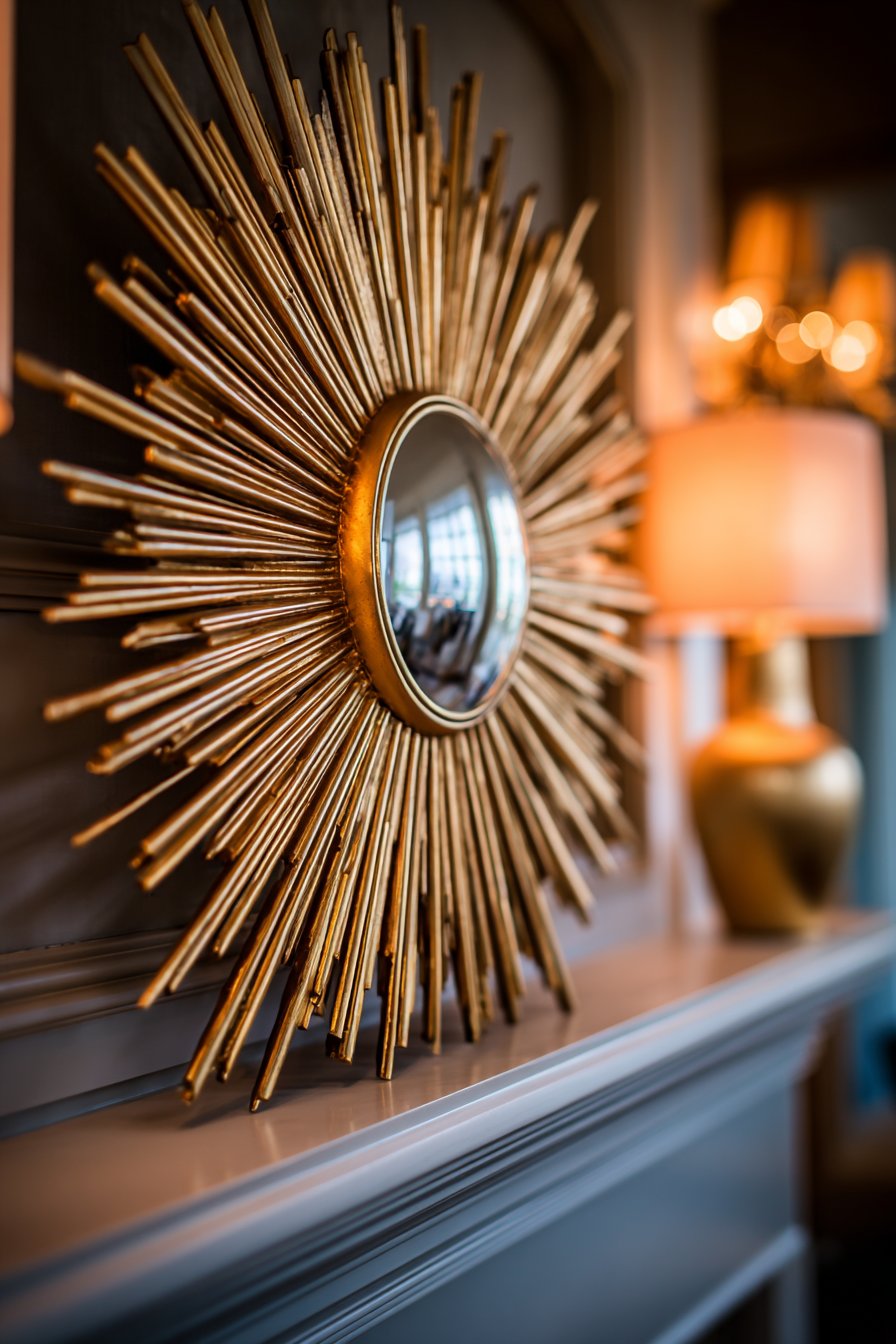
Professional interior photography employs soft lighting to capture the dimensional quality of the extending rays and demonstrate how they create depth beyond the flat wall surface. The sunburst design has enjoyed enduring popularity precisely because it transforms a functional mirror into sculptural artwork that happens to be reflective. This mirror decoration idea works equally well in traditional, transitional, and even eclectic interiors, demonstrating remarkable versatility despite its distinctive appearance.
Key Design Tips:
- Choose a sunburst mirror sized appropriately for your mantel width—typically 60-80% of the mantel’s width for balanced proportions
- Hang the mirror 4-8 inches above the mantel to create visual connection while preventing the piece from appearing cramped
- Consider the rays’ finish in relation to your room’s hardware and lighting fixtures for cohesive metal coordination
- Clear the mantel of excessive decoration to allow the mirror to command attention as the primary focal point
- Ensure the mirror reflects attractive elements—avoid positioning where it primarily reflects ceiling or doorways
8. Minimalist Functionality: Vertical Black-Framed Full-Length Mirror
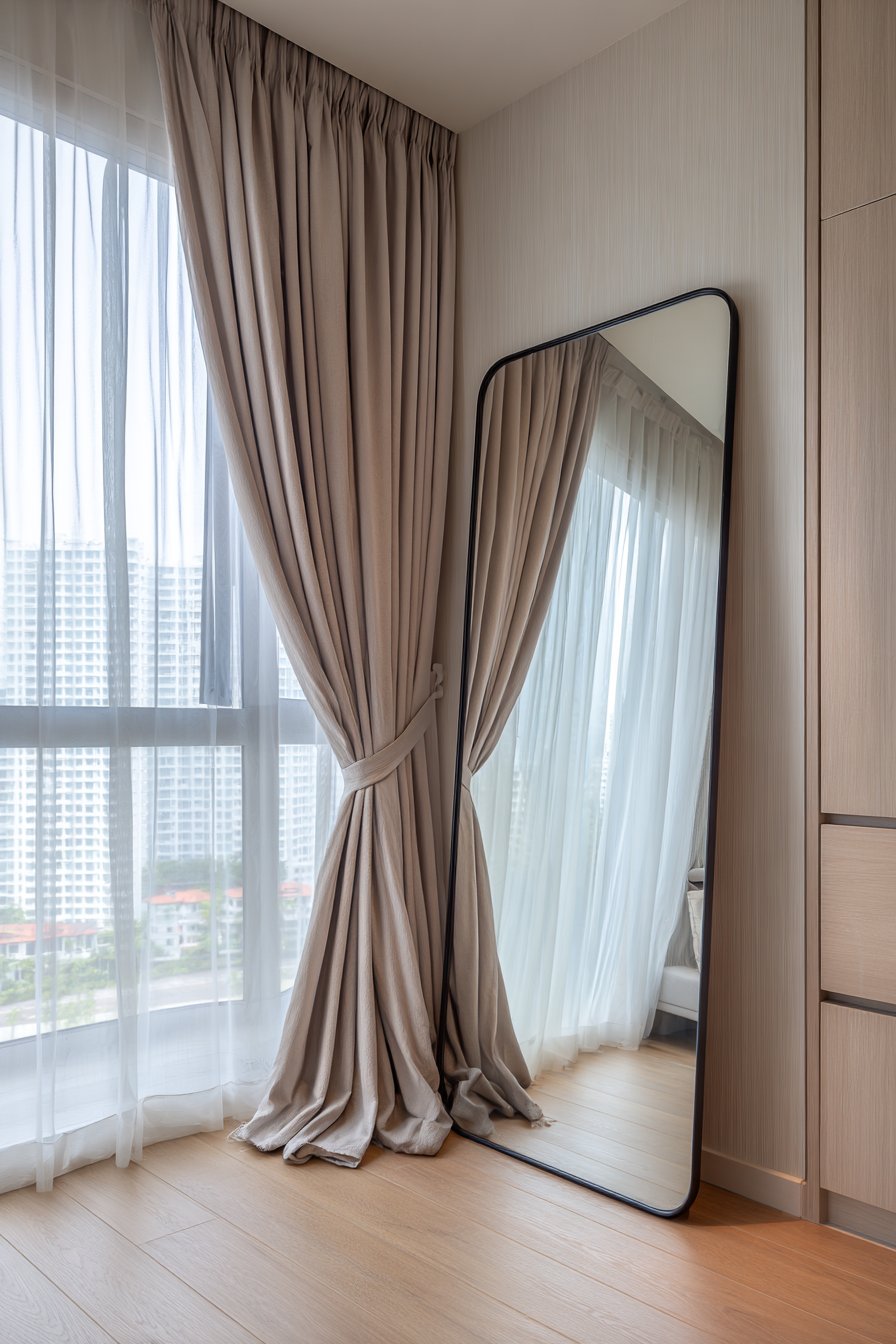
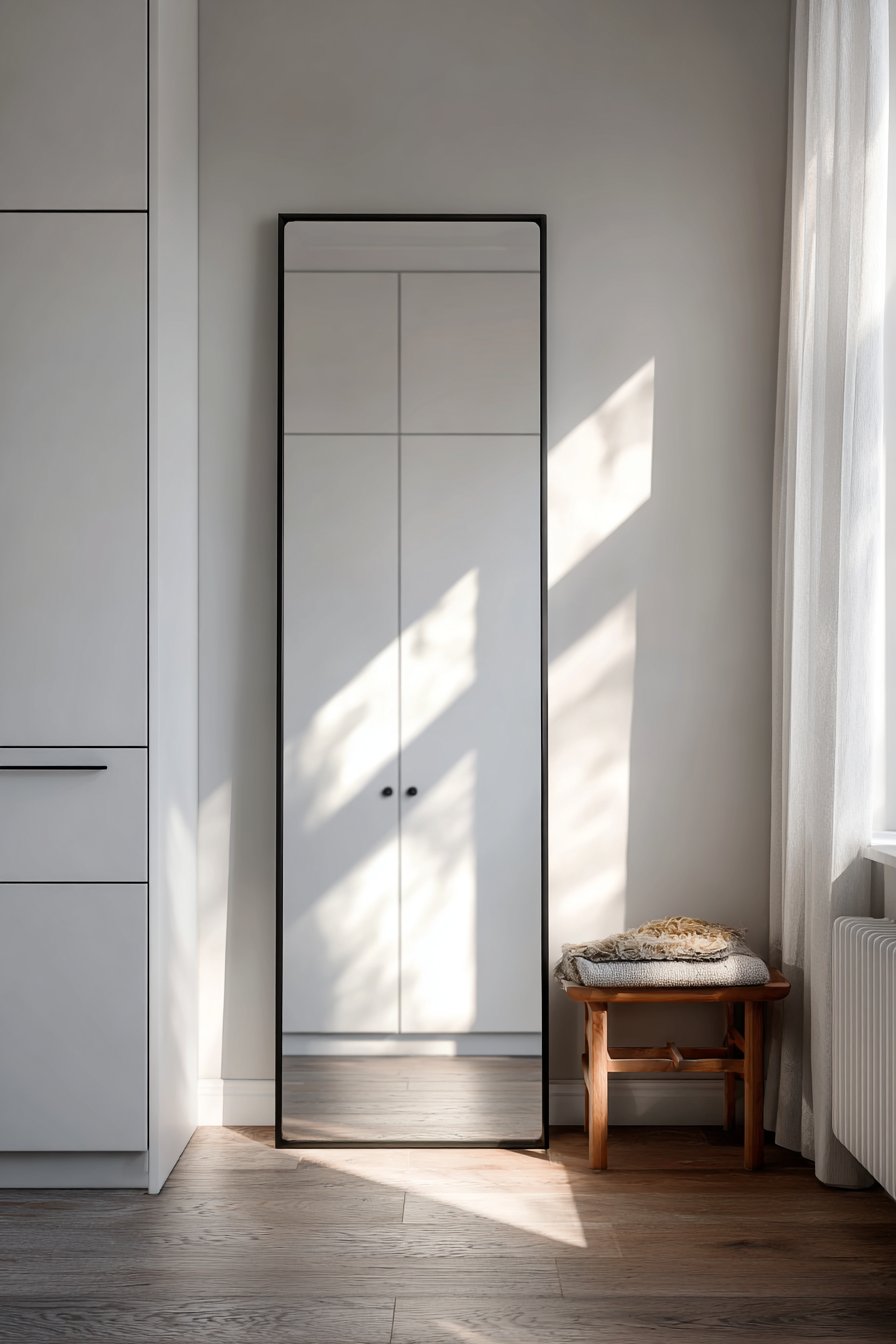
The full-length rectangular mirror with minimalist black wooden frame mounted vertically represents the epitome of form following function in mirror decoration ideas. This approach prioritizes practical utility—providing complete head-to-toe viewing for outfit coordination—while maintaining aesthetic simplicity that integrates seamlessly into modern Scandinavian bedroom design. The slim black frame provides crisp definition without adding decorative embellishment, allowing the mirror to recede visually when not in active use while remaining readily accessible when needed.
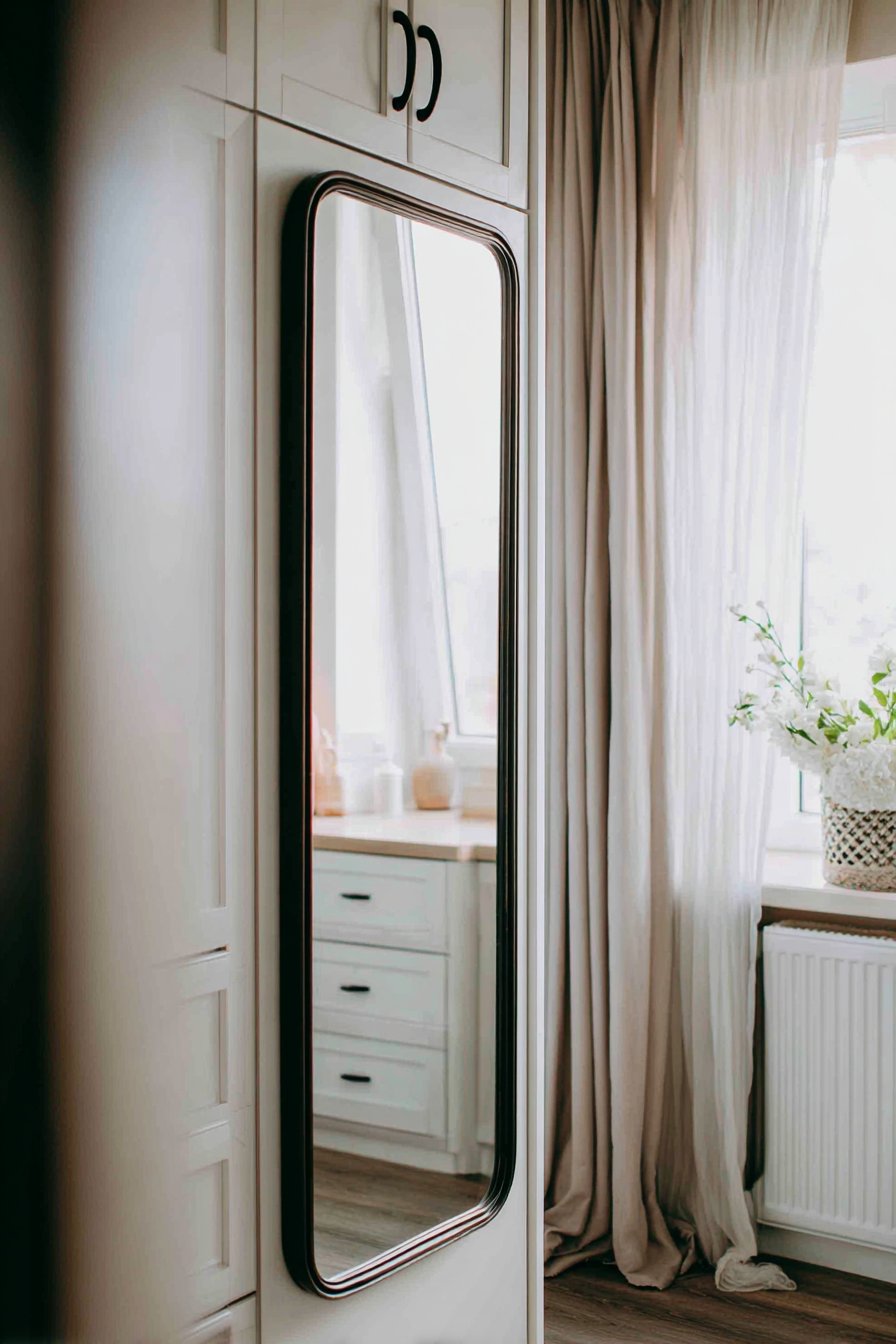
Positioned on the wall adjacent to a wardrobe, this mirror placement demonstrates thoughtful spatial planning that considers the practical workflow of getting dressed. The vertical orientation and substantial height ensure that users can see their complete silhouette without stepping back excessively—a crucial consideration in bedrooms where floor space may be limited. Natural morning light streaming through sheer curtains creates clean, accurate reflections that reveal true colors and details, essential for making informed wardrobe decisions.
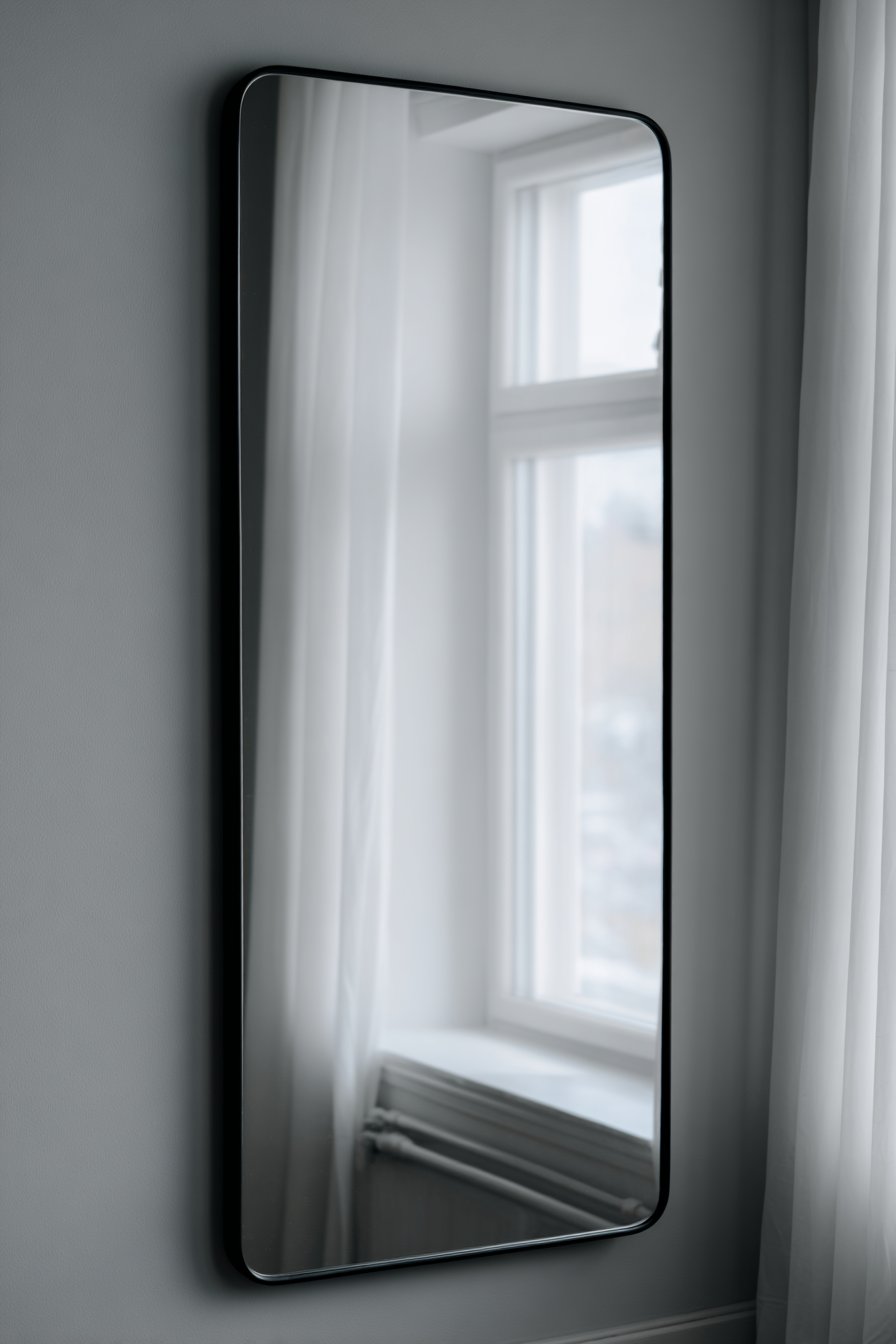
Interior design photography techniques showcase the mirror’s clean lines and demonstrate how its simple profile complements rather than competes with surrounding furniture. The black frame provides subtle contrast against light-colored walls typical of Scandinavian interiors while coordinating with other black accent elements often found in this design style—perhaps lighting fixtures, drawer pulls, or decorative objects. This mirror decoration idea exemplifies how functional necessities can be incorporated into home design without compromising aesthetic principles.
Key Design Tips:
- Mount the mirror so its bottom edge sits 2-4 inches above the floor for full-length viewing while protecting the frame from baseboard contact
- Ensure the mounting is secure—full-length mirrors are substantial and require appropriate wall anchors or stud mounting
- Position the mirror where natural light will illuminate you when standing before it, rather than creating backlighting that obscures details
- Consider a slightly tilted mounting angle (leaning away from the wall at the top) to accommodate viewing at various distances
- Maintain clear floor space in front of the mirror—at least 3-4 feet—to allow stepping back for full perspective
9. Vintage Romance: Oval Mirror with Antiqued Silver Frame
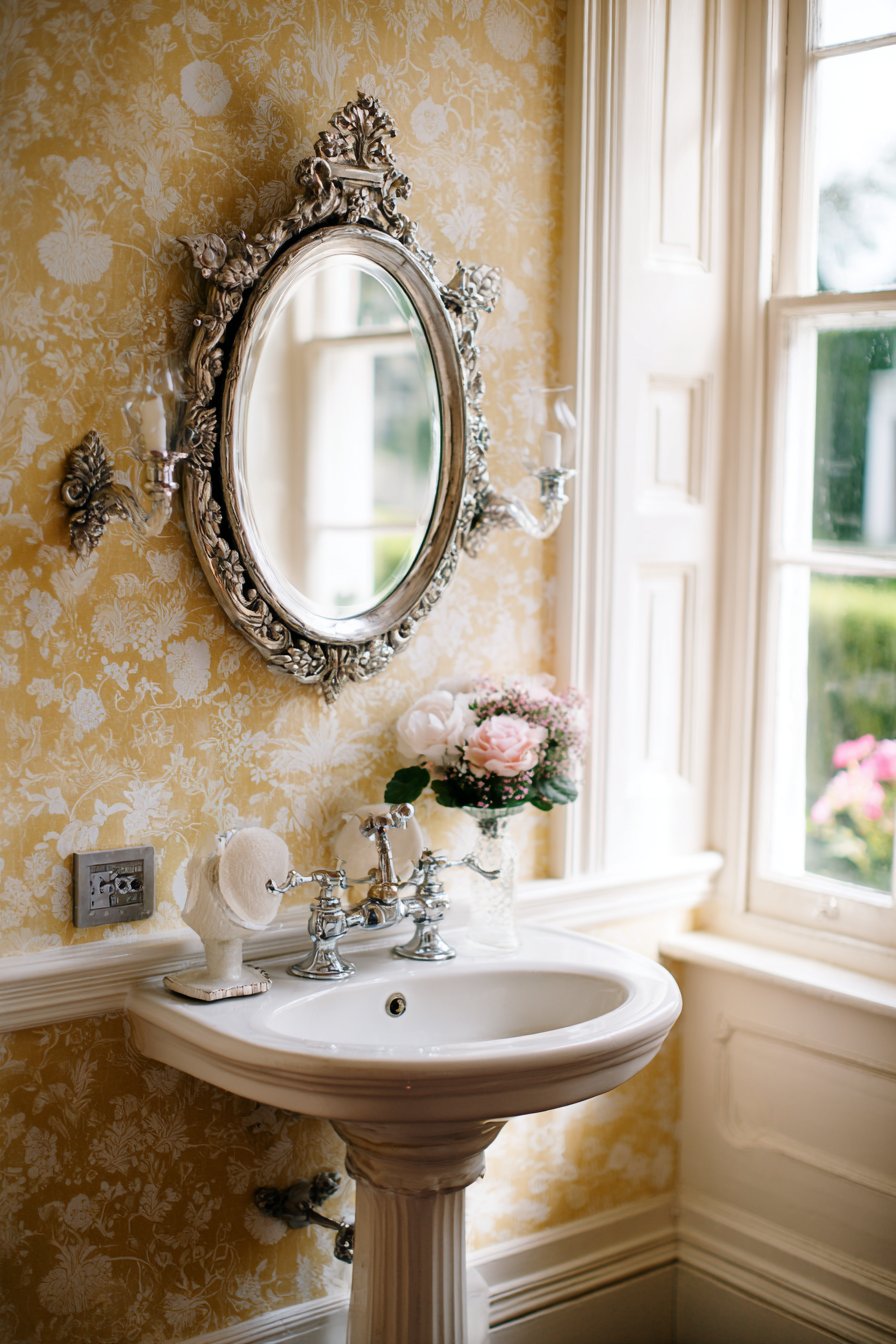
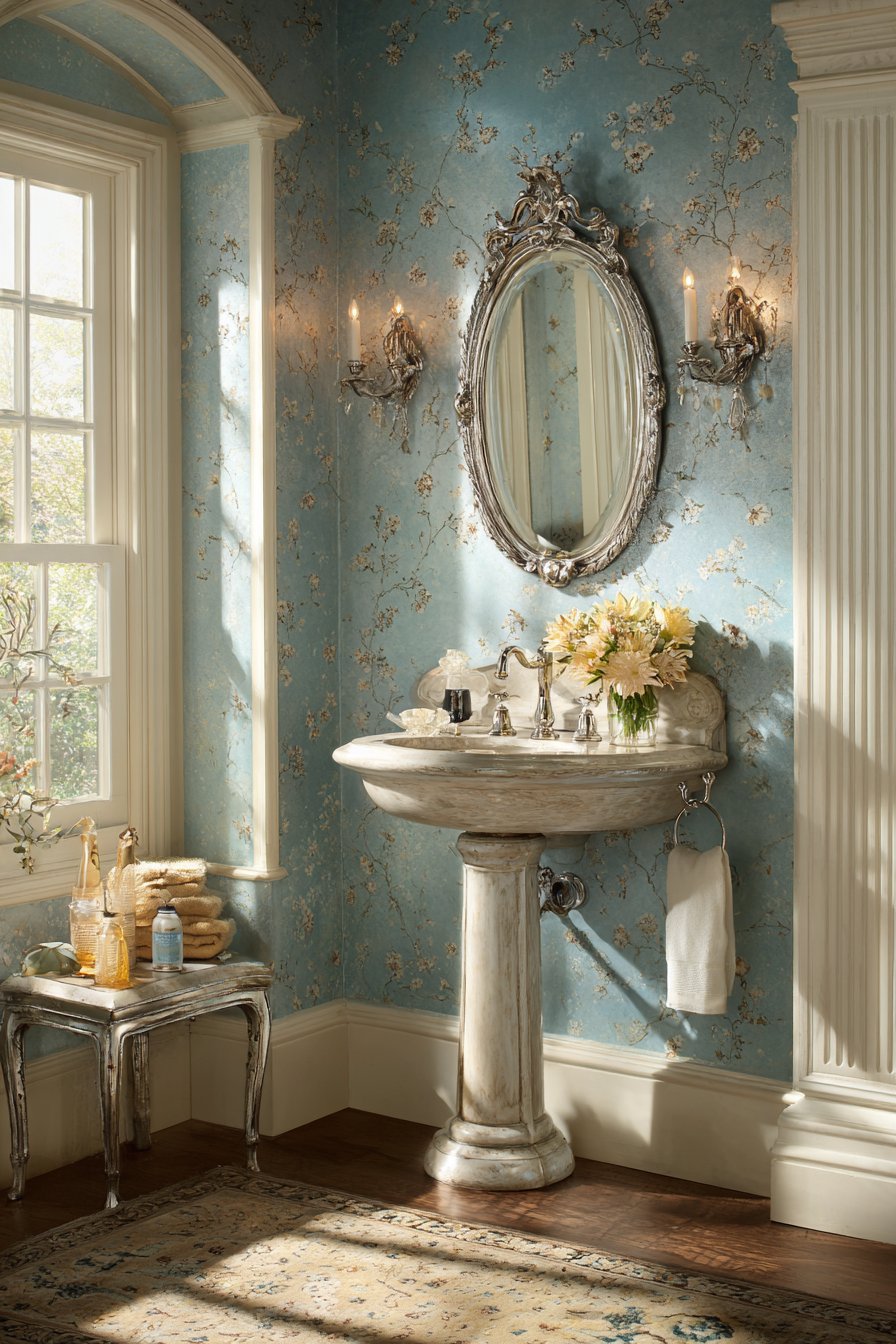
The vintage-inspired oval mirror with antiqued silver frame adorned with delicate floral embellishments brings romantic elegance to powder room mirror decoration ideas. This approach celebrates ornamental detail and historical craftsmanship, featuring a frame with dimensional flower and leaf motifs that appear to cascade around the oval perimeter. The antiqued silver finish—characterized by deliberately darkened recesses and slightly tarnished patina—creates an heirloom quality that suggests the piece has been treasured across generations.
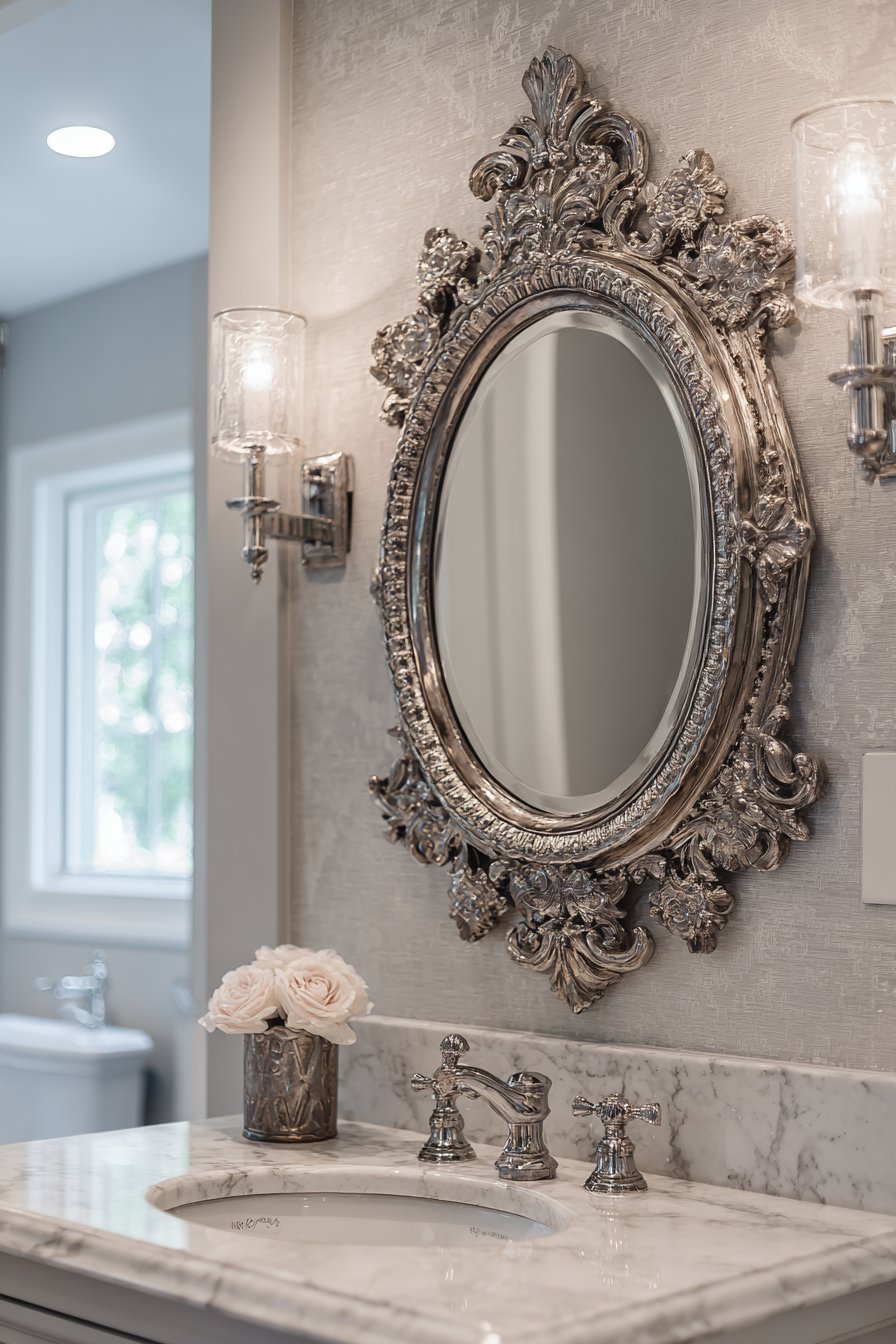
Positioned above a traditional pedestal sink with classic fixtures, this mirror establishes the powder room’s elegant focal point while maintaining appropriate scale for the typically compact dimensions of these spaces. The oval shape itself carries feminine associations and classical references that complement the romantic styling, while its vertical orientation works well in the proportions of most powder rooms. Soft natural lighting from a nearby window highlights the intricate frame details, revealing the depth and craftsmanship of the floral embellishments.
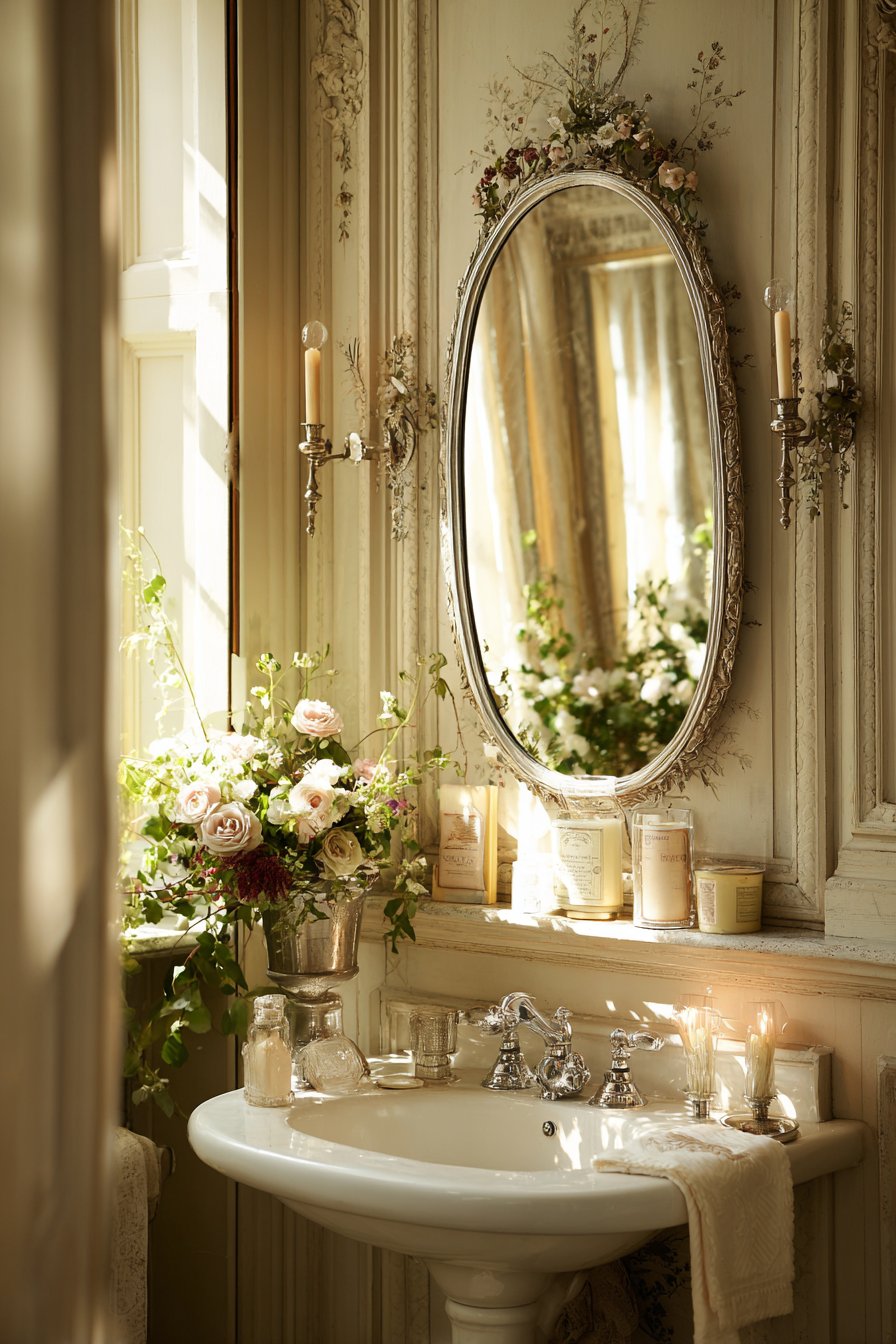
Interior photography with balanced exposure captures the delicate interplay between the ornate frame and the clear reflective surface, demonstrating how decorative elements can enhance rather than overwhelm functional utility. The powder room context is ideal for this level of decorative elaboration—these small spaces can accommodate more ornate styling precisely because they’re experienced in short intervals for specific purposes. This mirror decoration idea appeals to those who appreciate vintage aesthetics, fine detail work, and designs that elevate everyday functional spaces into special environments.
Key Design Tips:
- Choose frame finish based on your existing powder room fixtures—silver tones complement chrome and brushed nickel
- Ensure adequate lighting illuminates both the mirror and frame details for full appreciation of the decorative elements
- Consider the sink style carefully—pedestal, console, or vintage-style vanity work well, while ultra-modern vessels may create stylistic conflict
- Keep powder room wall color relatively neutral to allow the ornate mirror to command attention without visual competition
- Maintain the antiqued finish with gentle cleaning to preserve the intentional patina without accelerating tarnishing
10. Professional Enhancement: Horizontal Mirror Above Desk Workspace
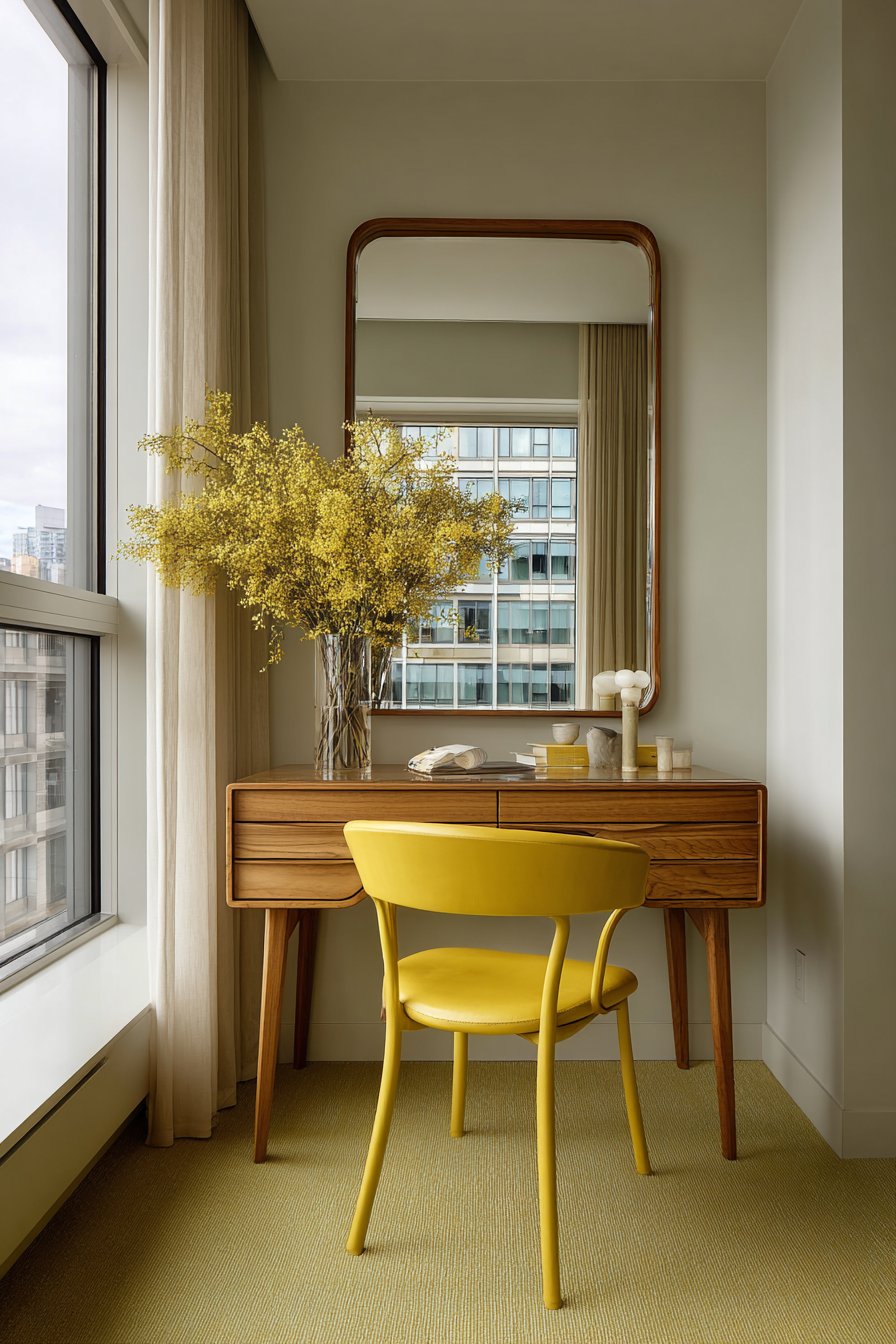
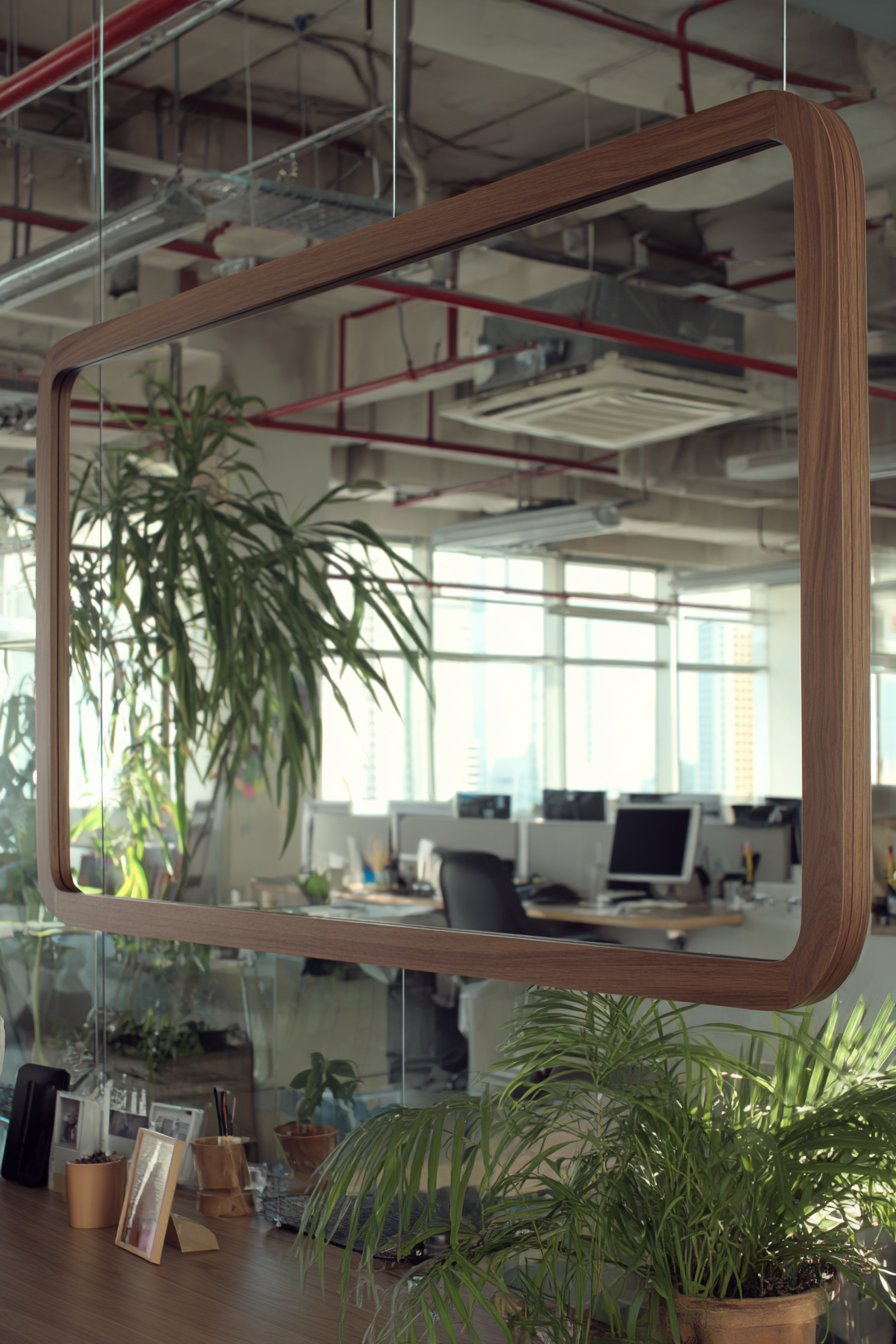
The large horizontal rectangular mirror with slim walnut wood frame positioned above a desk workspace demonstrates how mirror decoration ideas can enhance productivity environments while adding visual sophistication to home offices. This approach recognizes that mirrors serve purposes beyond personal grooming—they can manipulate natural light, create spatial expansion, and add architectural interest to functional work areas. The horizontal orientation and substantial width allow the mirror to span much of the desk’s length, creating strong visual connection between these elements.
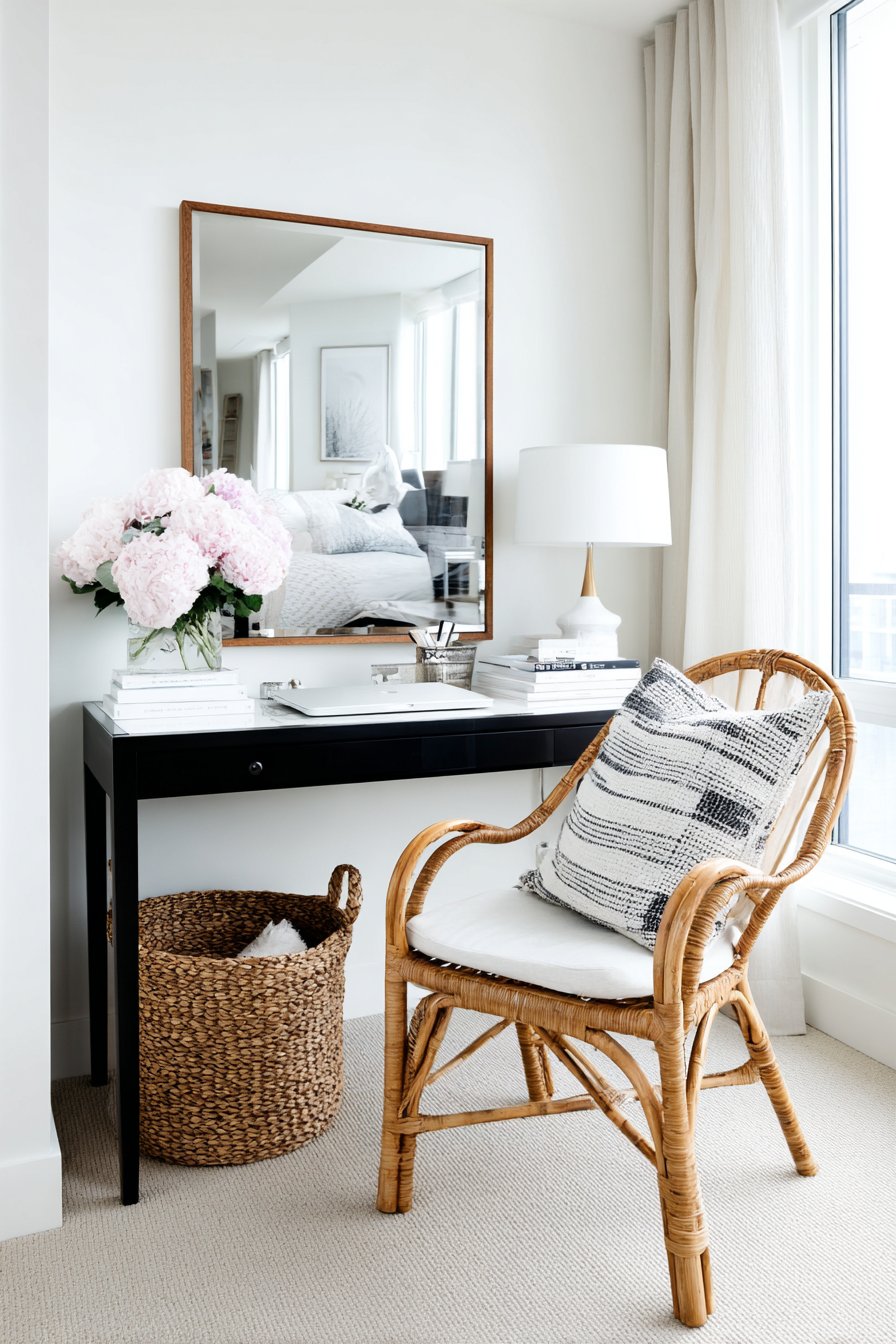
The mirror’s strategic value lies in its ability to reflect natural light from a window positioned behind the viewer, effectively bouncing this illumination back into the workspace. This reflected light supplements direct window lighting, reducing shadows and creating more even illumination across the desk surface—crucial for reducing eye strain during extended work sessions. The warm walnut wood frame adds organic texture and natural color that softens the typically hard-edged character of office furniture and equipment, creating a more inviting and less clinical work environment.
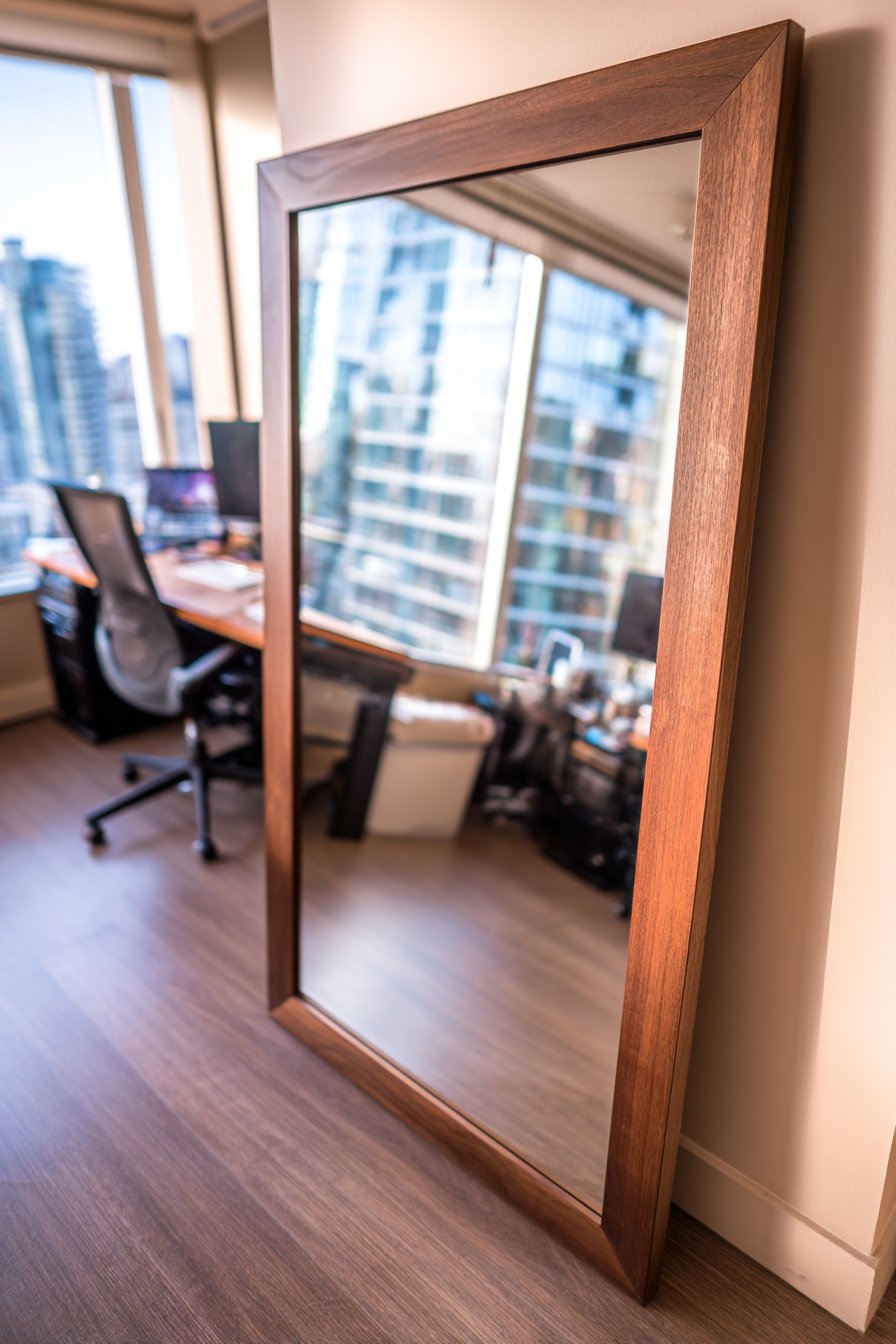
Wide-angle interior photography demonstrates how this mirror enhances both the room’s practical lighting and its aesthetic appeal, showing that functional spaces need not sacrifice beauty for utility. The slim frame profile maintains visual lightness, preventing the mirror from appearing heavy or overwhelming despite its substantial size. This mirror decoration idea works particularly well in home offices where creating comfortable, well-lit environments directly impacts productivity and wellbeing throughout the workday.
Key Design Tips:
- Position the mirror to reflect your primary natural light source, maximizing illumination without creating glare on computer screens
- Mount at a height where you’ll see inspiring reflections (artwork, plants, attractive views) rather than utilitarian objects when glancing up from work
- Choose frame width proportional to desk dimensions—typically the mirror should be 60-80% of the desk width
- Ensure the mirror doesn’t reflect your computer screen, which can create distracting visual echoes during video calls
- Coordinate frame wood tone with desk finish or other wood elements in the office for cohesive design
11. Coastal Serenity: Driftwood-Framed Round Mirror
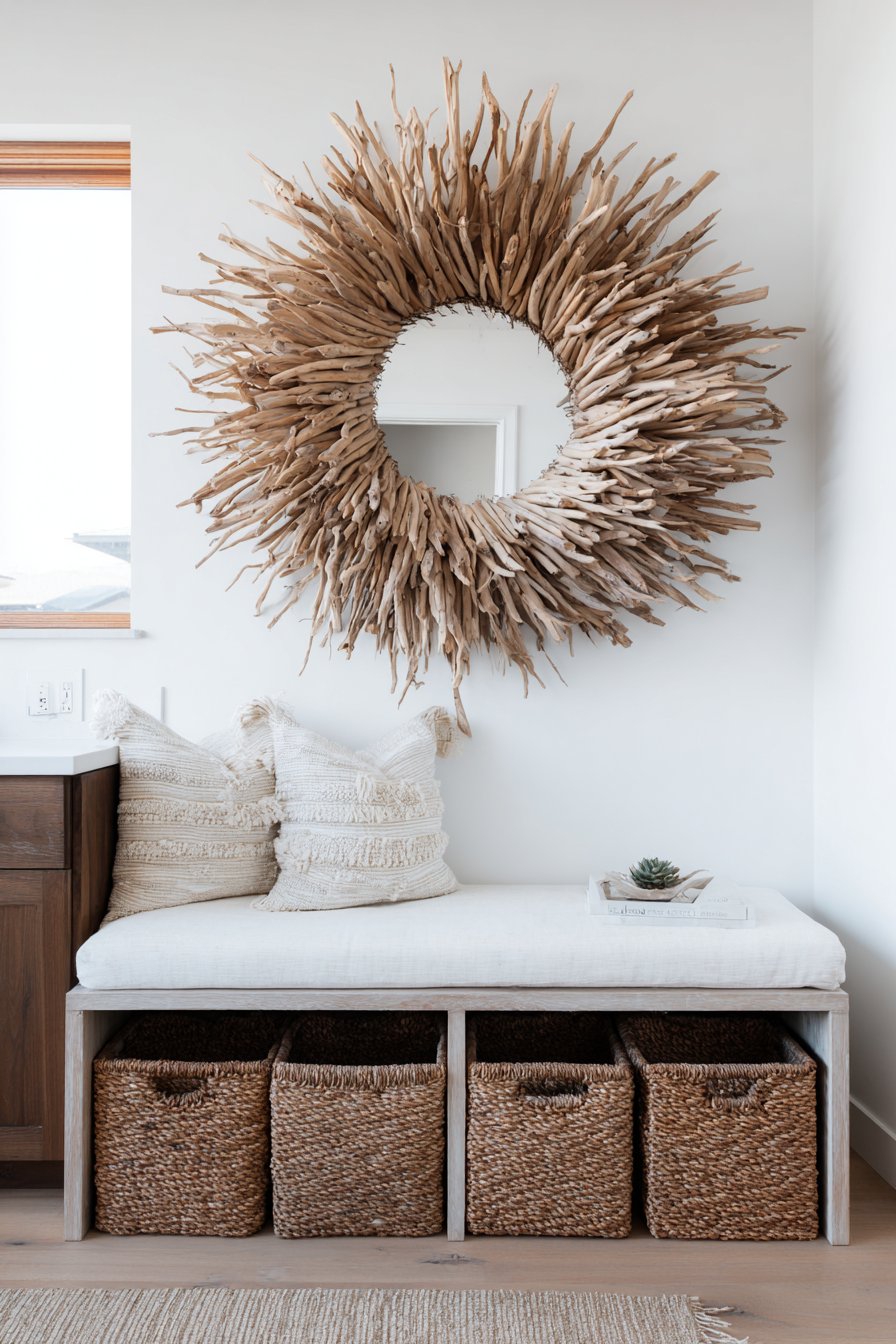
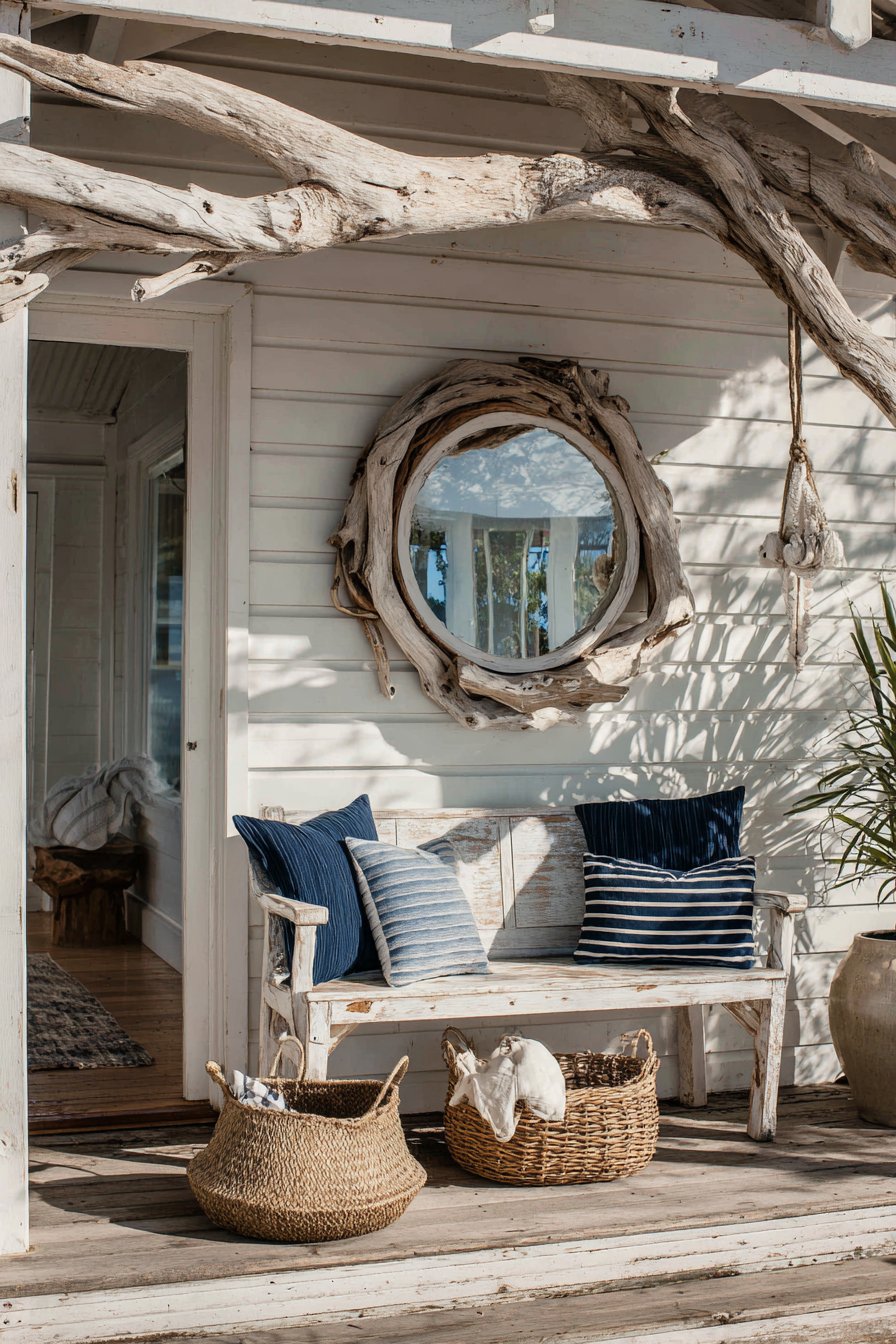
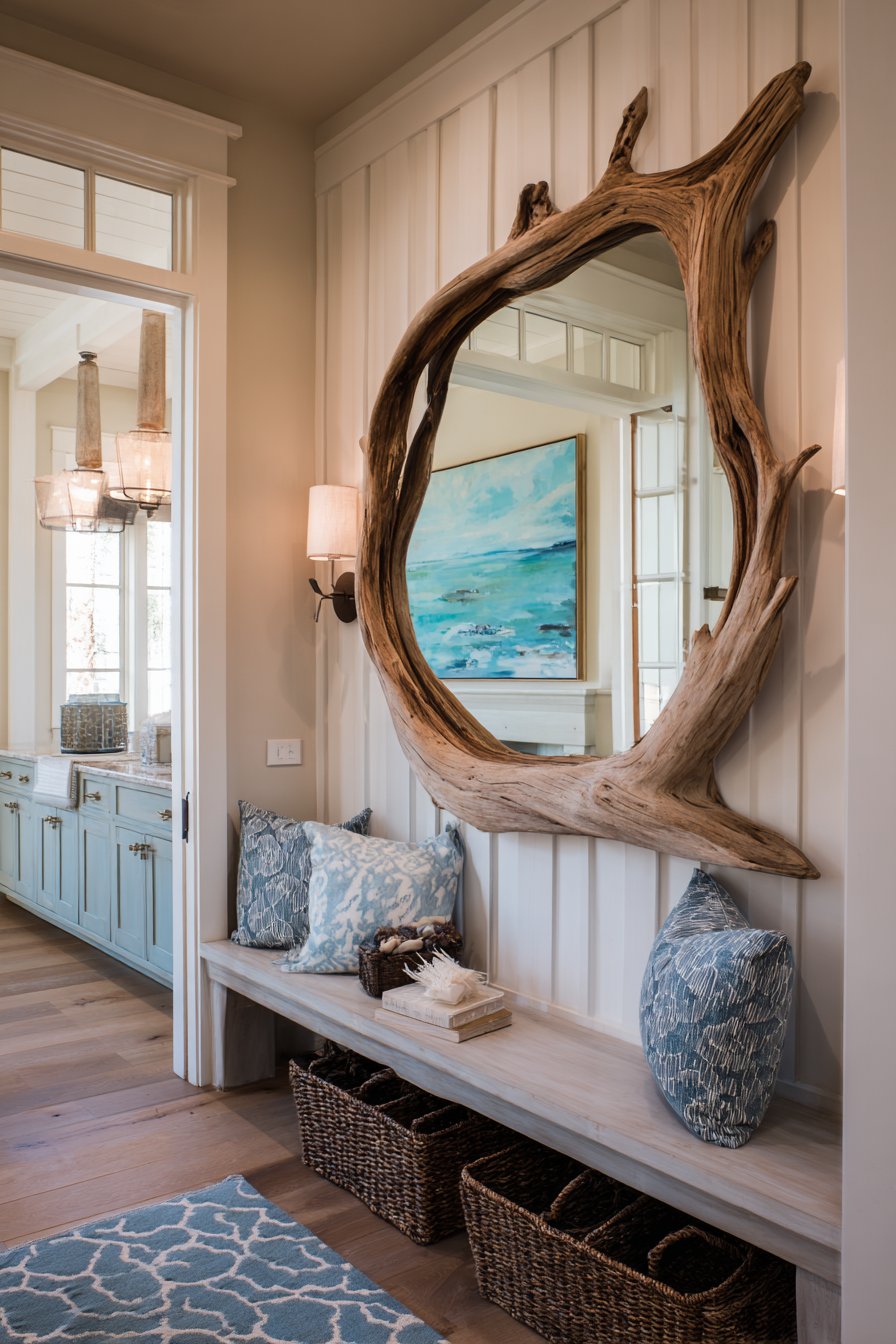
The driftwood-framed round mirror embodies the relaxed, nature-inspired aesthetic central to coastal design, making it an ideal mirror decoration idea for beach houses and homes seeking to capture seaside serenity. This approach features natural weathered wood pieces arranged around a circular mirror, with each driftwood segment displaying unique textures, colors, and organic shapes created by years of ocean and sand exposure. The irregular, asymmetrical frame creates organic visual interest that stands in beautiful contrast to the perfect circular mirror it surrounds.
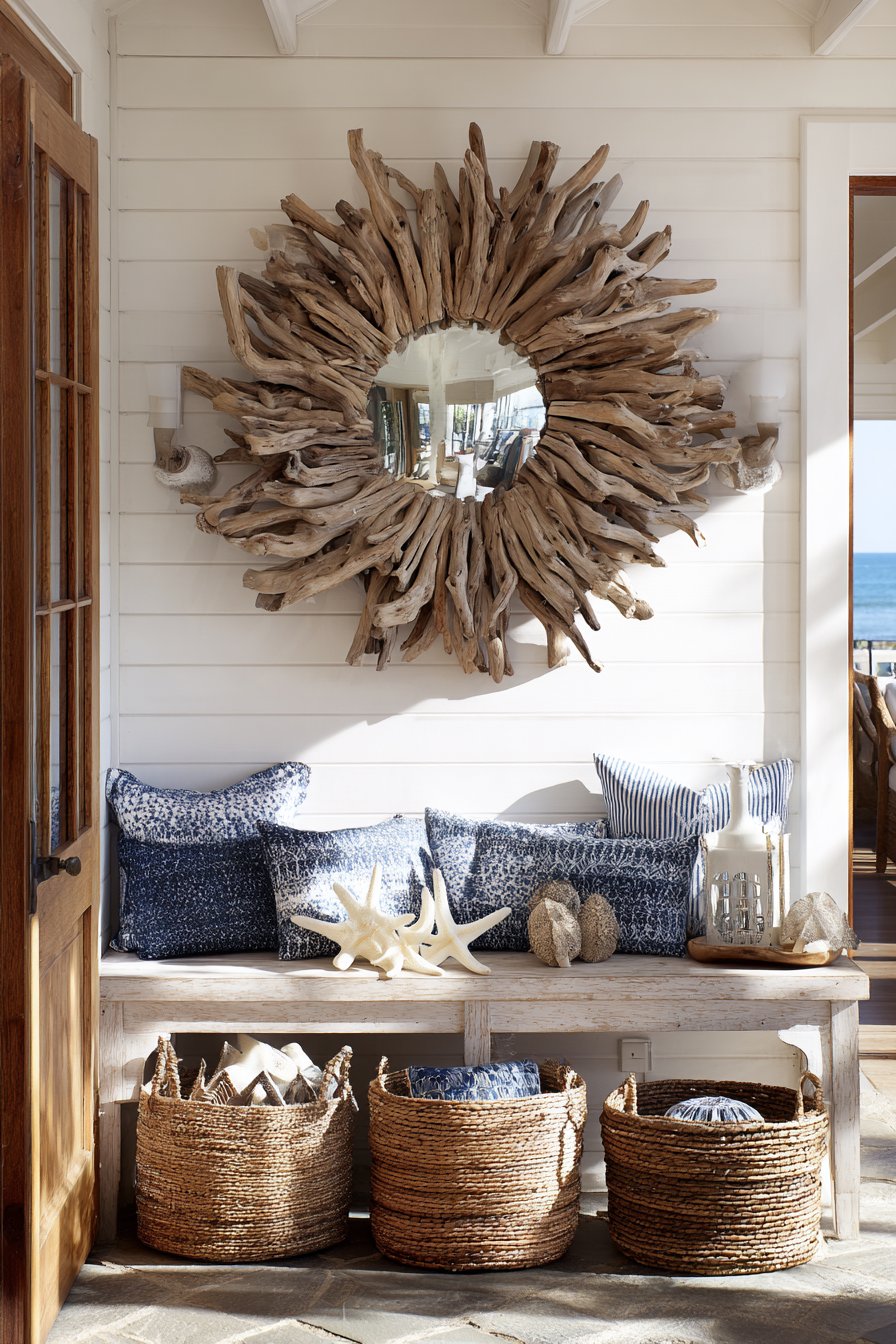
Positioned above a whitewashed wooden bench with woven baskets for storage in a beach house entryway, this mirror establishes the home’s coastal character from the moment guests arrive. The natural materials palette—weathered wood, woven fibers, whitewashed finishes—creates cohesive narrative about relaxed coastal living and connection to natural environments. The round mirror shape echoes the organic, flowing forms found in nature, reinforcing the biophilic design principles that make coastal interiors feel so inherently calming and restorative.
Professional interior photography captures the varied textures and subtle color variations within the driftwood frame—ranging from silvered grays to warm honeys to bleached whites—demonstrating the natural artistry of beach-weathered wood. Soft daylight reveals the three-dimensional quality of the frame, where individual driftwood pieces extend forward from the wall plane at varying depths. This mirror decoration idea appeals particularly to those who value sustainability, natural materials, and designs that tell stories about place and environment.
Key Design Tips:
- Ensure driftwood pieces are properly cleaned, dried, and sealed to prevent wood deterioration or insect issues
- Verify the frame is securely constructed—driftwood’s irregular shapes require careful engineering for structural integrity
- Coordinate with other natural materials in your space—jute, linen, cotton, rattan—to reinforce the coastal aesthetic
- Keep surrounding decor relatively simple to allow the intricate driftwood frame to command attention
- Consider the mirror’s weight carefully—authentic driftwood frames can be surprisingly heavy and require robust mounting
12. Space-Maximizing Practicality: Tri-Fold Vanity Mirror
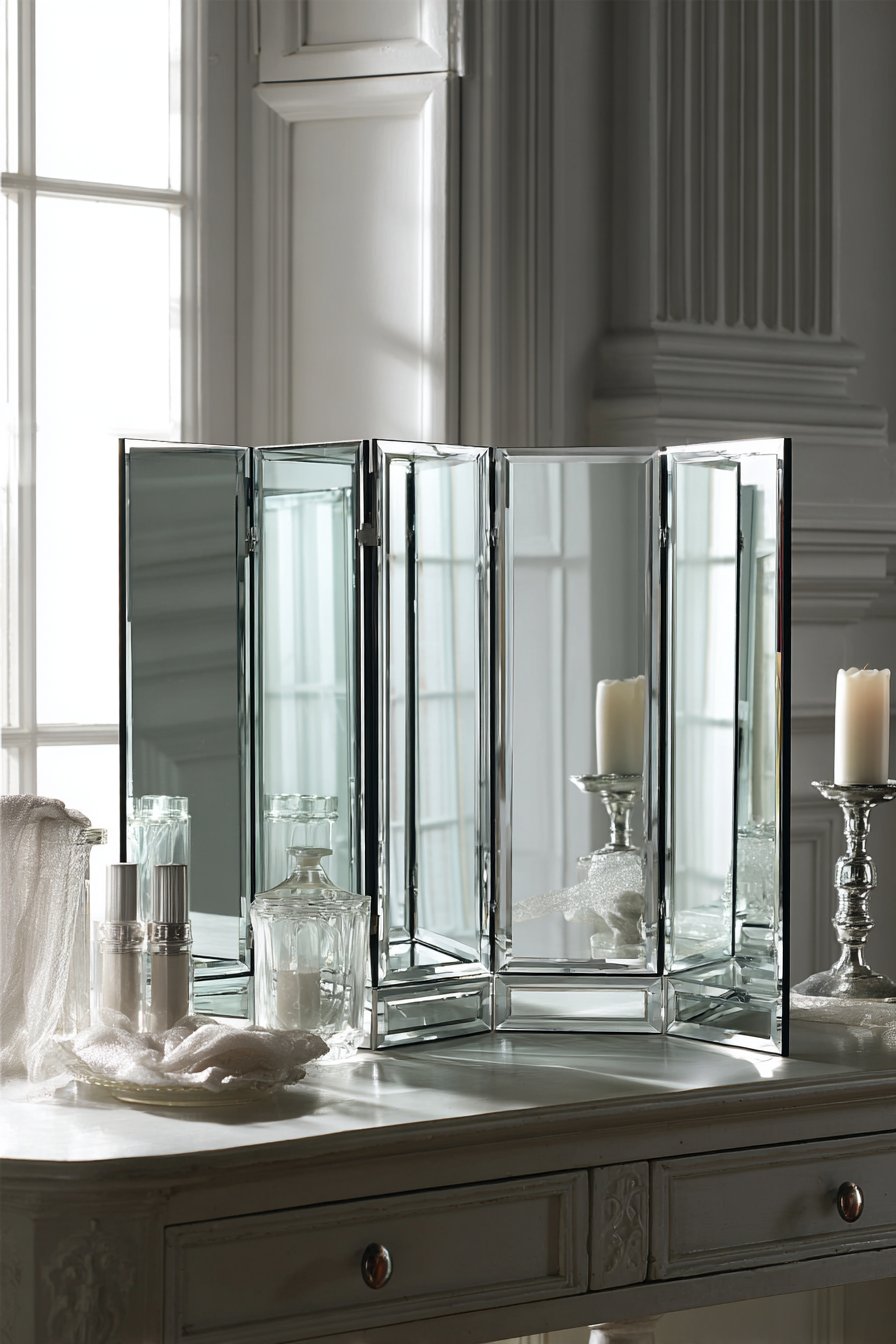
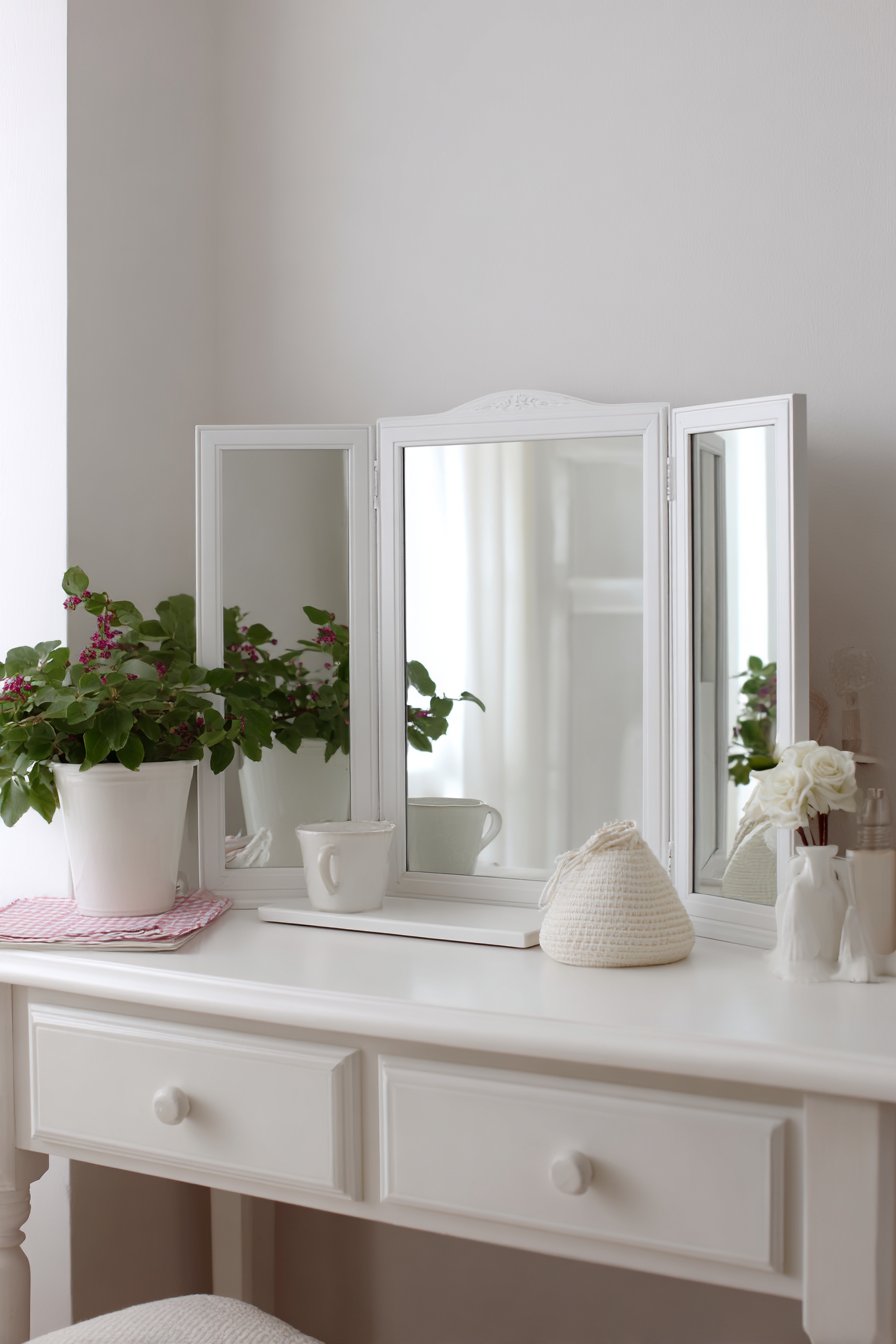
The tri-fold hinged vanity mirror with adjustable panels represents a brilliantly practical mirror decoration idea that addresses the functional needs of personal grooming while maintaining elegant aesthetics. This approach features three mirror panels connected by hinges, allowing the side panels to angle inward or outward depending on viewing needs. The beveled edges catch and refract light, adding subtle sparkle, while the simple frame maintains visual refinement without unnecessary decoration. Positioned on a bedroom dresser, this mirror transforms a simple furniture piece into a dedicated beauty station.
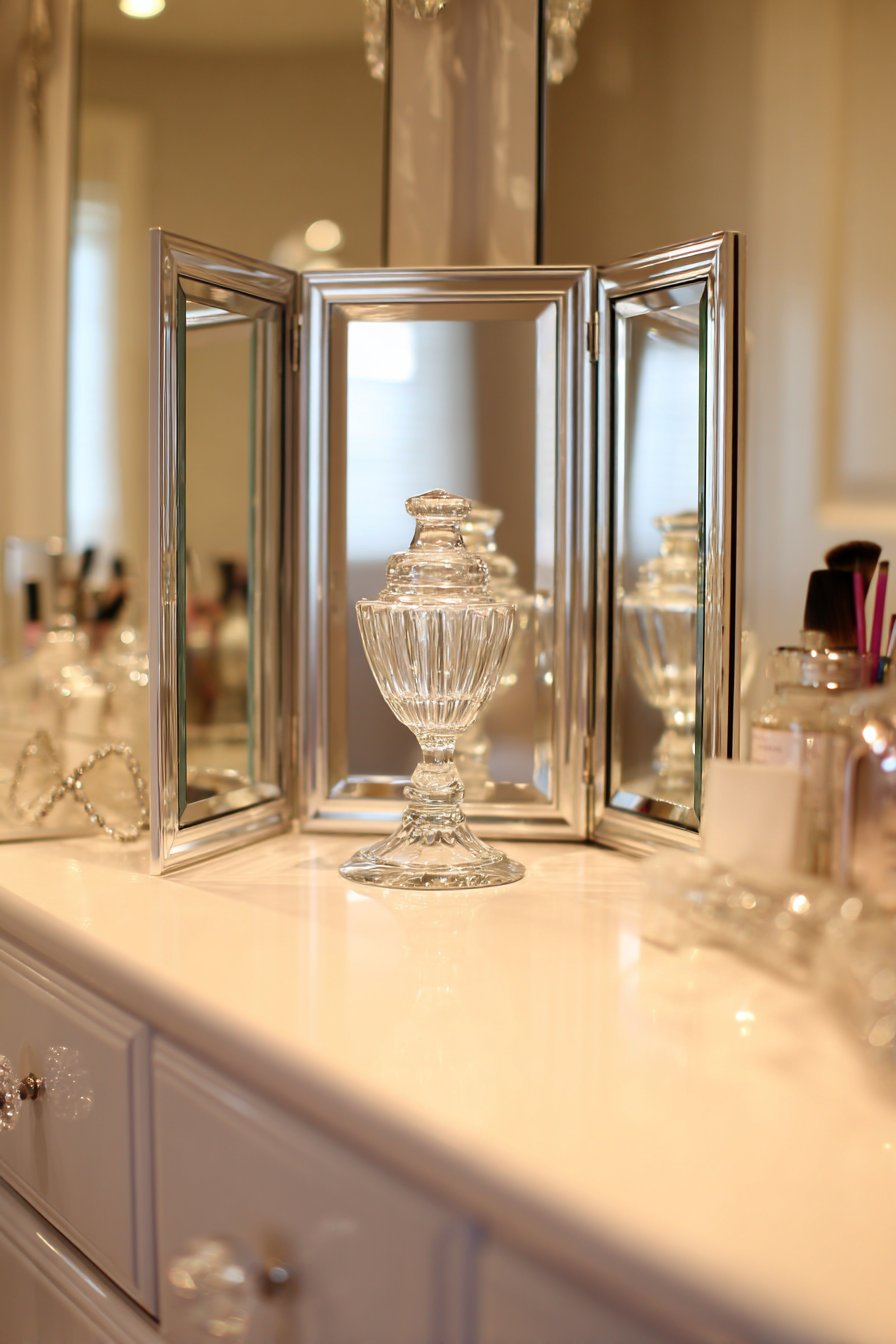
The practical advantages of the tri-fold design are substantial—the adjustable side panels allow users to see multiple angles simultaneously, eliminating the awkward maneuvering required with single fixed mirrors. This multi-angle viewing proves invaluable for hairstyling, makeup application, and ensuring outfit details are perfect from every perspective. The compact footprint when the panels are folded makes this mirror ideal for smaller bedrooms where permanent wall mounting of multiple mirrors might not be feasible. Surrounding the mirror with minimal accessories maintains an uncluttered appearance that allows the mirror to function optimally.
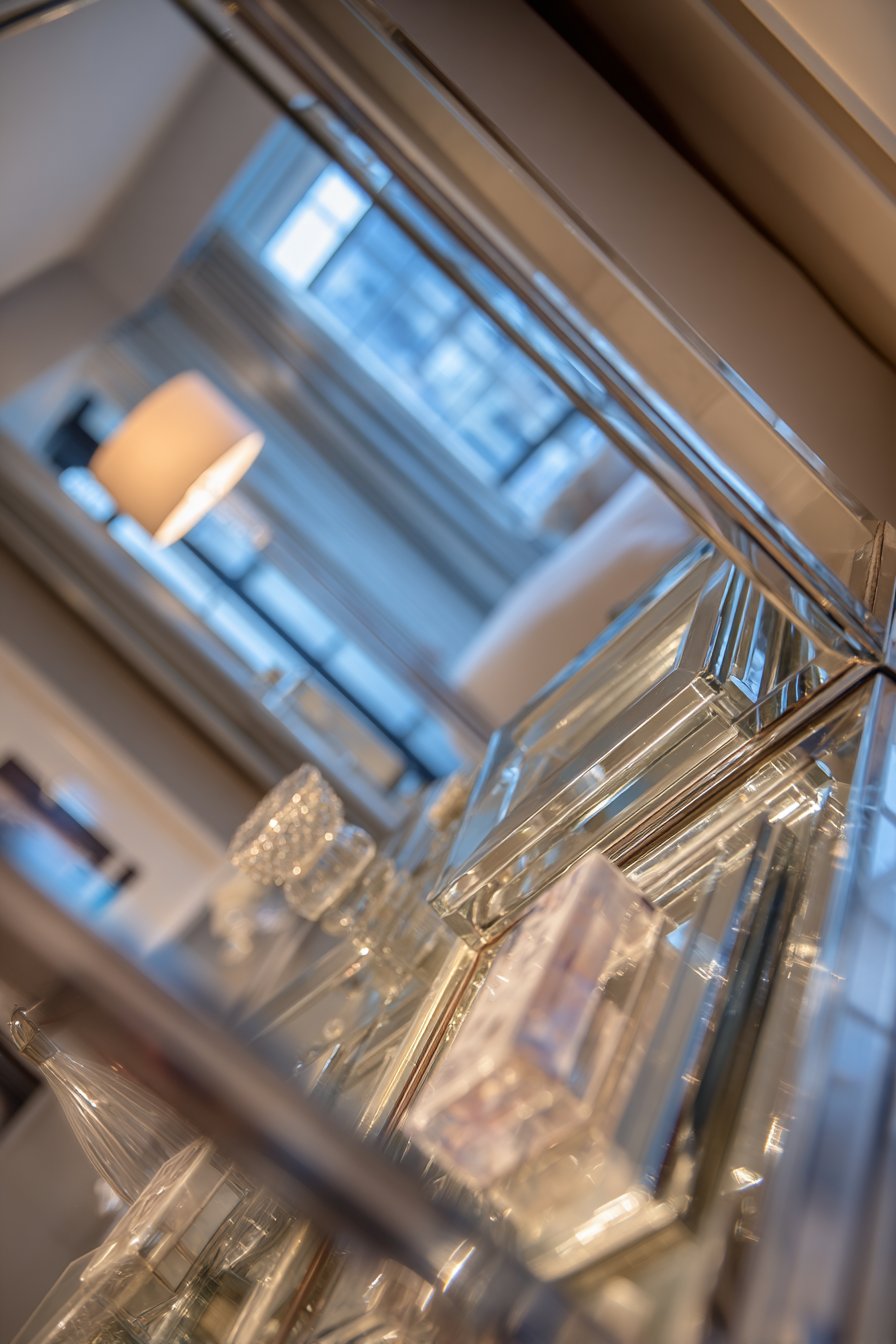
Detail-focused interior photography showcases the mirror’s functional versatility, demonstrating how the adjustable panels can be configured for different uses while highlighting the quality craftsmanship evident in the beveled edges and smooth hinges. The tri-fold mirror represents the marriage of Victorian-era vanity table tradition with contemporary space-saving practicality. This mirror decoration idea appeals to those who value functional design solutions that don’t sacrifice aesthetic appeal for utility.
Key Design Tips:
- Ensure the dresser top is level and stable to prevent the mirror from tipping—consider non-slip pads underneath
- Position the mirror where natural light will illuminate your face when seated, rather than creating backlighting
- Keep the immediate area around the mirror organized with small trays or organizers for cosmetics and accessories
- Clean beveled edges carefully to maintain their light-catching clarity without damaging the delicate angled cuts
- Consider the mirror’s proportions relative to your dresser—it should appear balanced rather than oversized or dwarfed
13. Industrial Character: Reclaimed Wood Mirror Against Brick
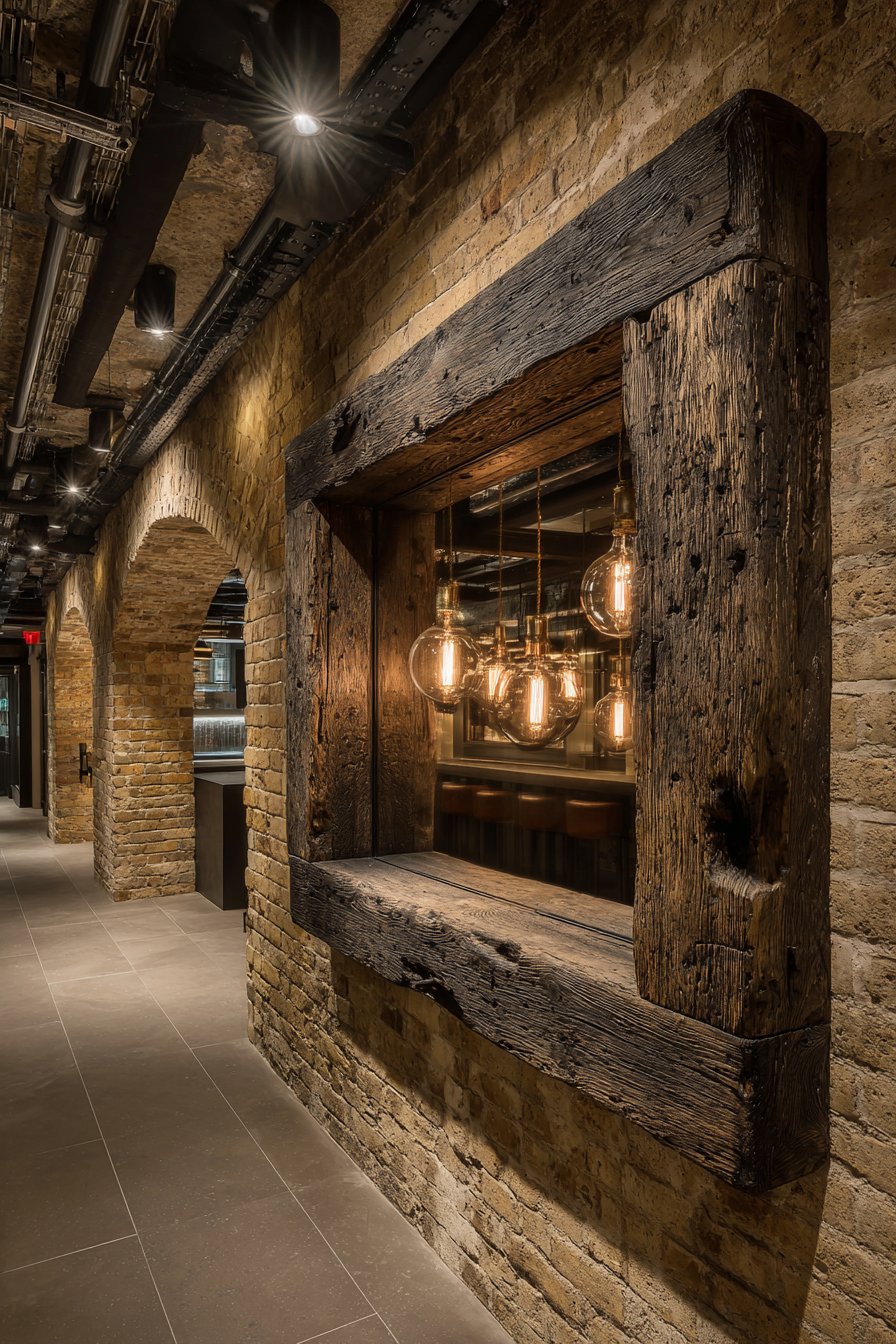
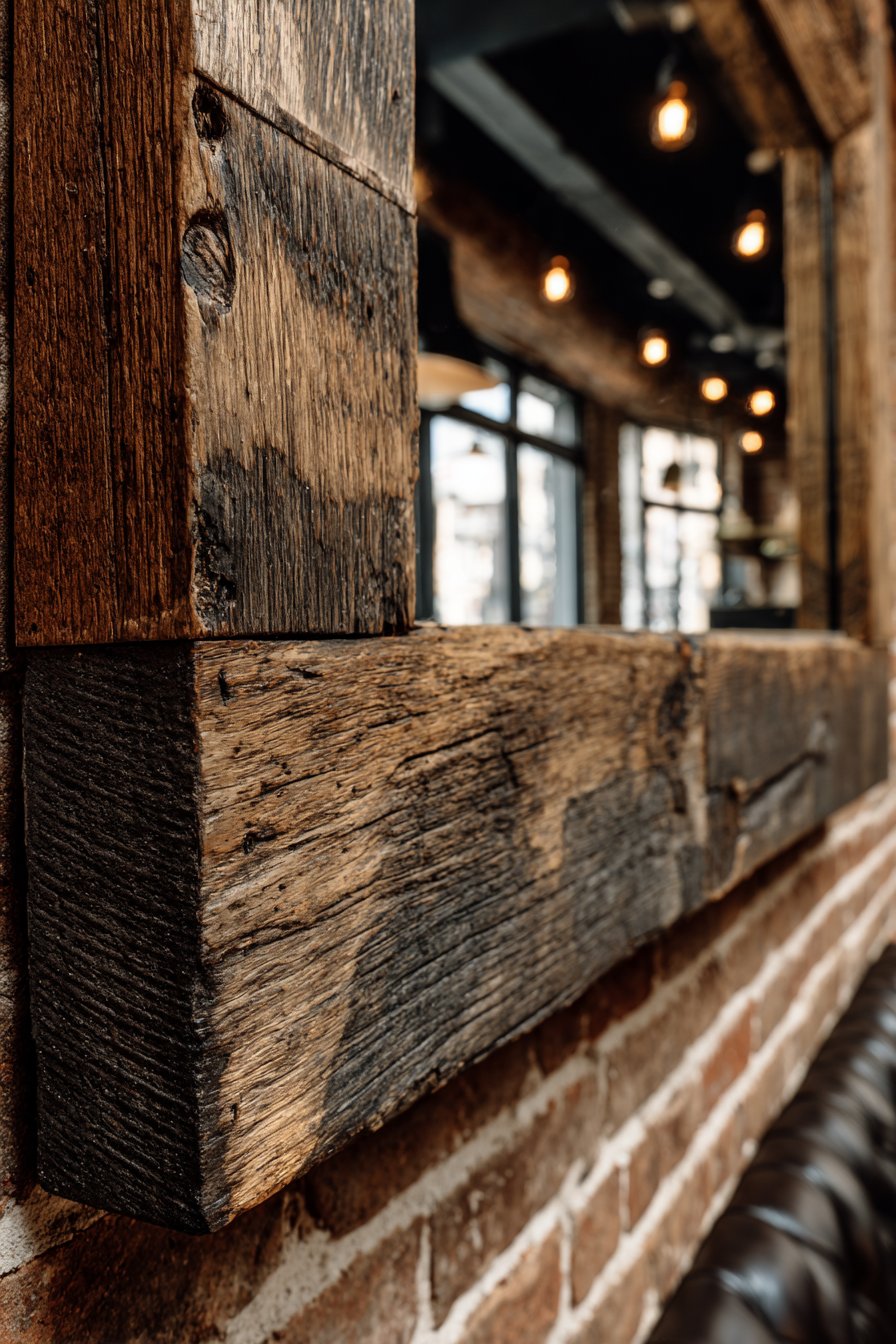
The large square mirror with chunky reclaimed wood frame showing natural weathering and nail holes exemplifies how mirror decoration ideas can incorporate industrial design elements while adding warmth to raw architectural spaces. This approach celebrates imperfection and history, with each nail hole, crack, and weathered surface telling stories about the wood’s previous life in barns, factories, or warehouses. The substantial frame—often four to six inches wide—creates significant visual weight that can hold its own against the dramatic architectural elements typical of industrial loft spaces.
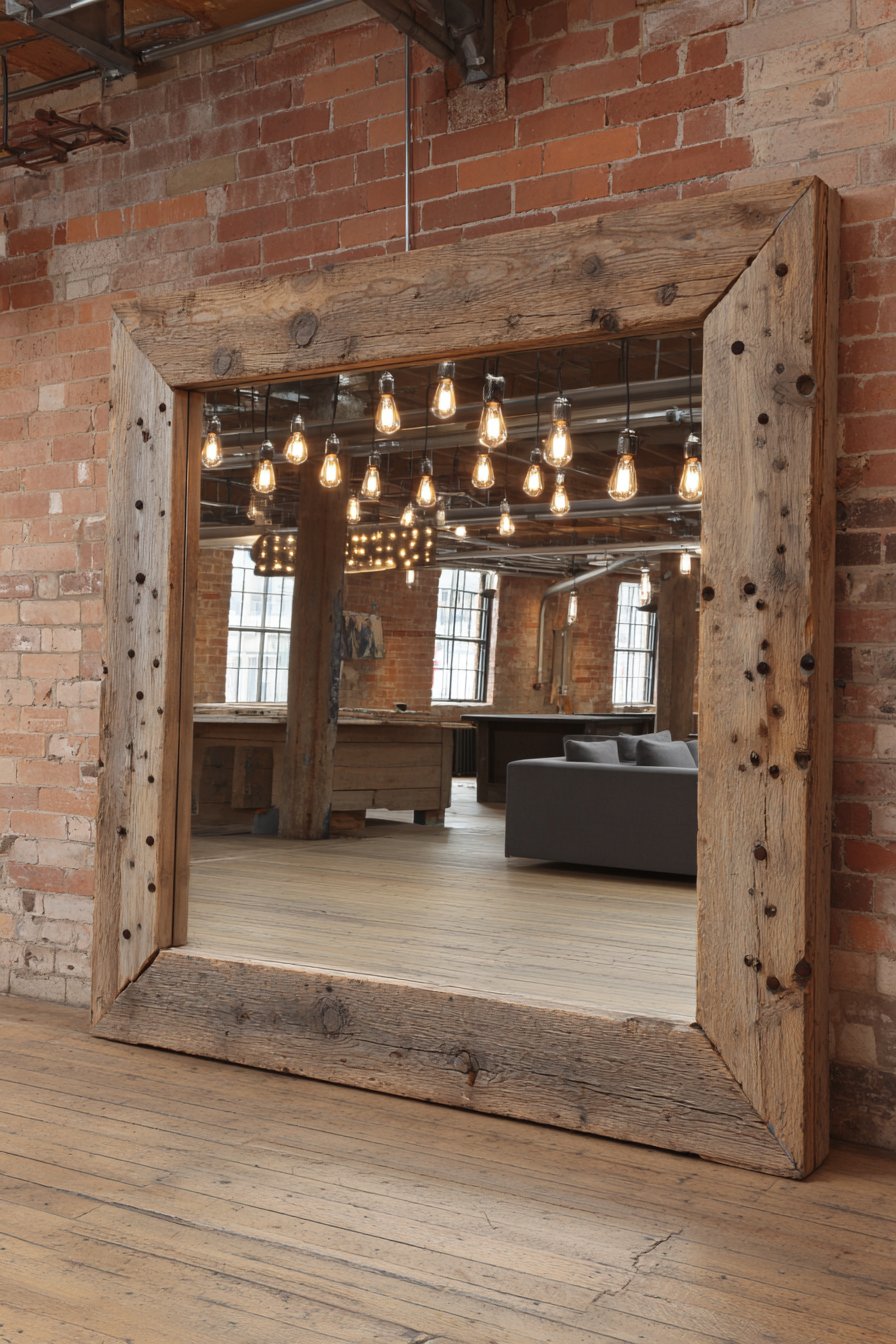
Positioned leaning against an exposed brick wall in a converted warehouse space, this mirror creates compelling material conversation between refined reflective surface and deliberately rough, authentic textures. The warm wood tones soften the cool, hard quality of concrete and brick, making the industrial space feel more inhabitable and inviting. Edison bulb lighting creates warm reflections in the mirror that glow against the neutral industrial backdrop, adding crucial softness during evening hours when these spaces can feel cold or harsh.
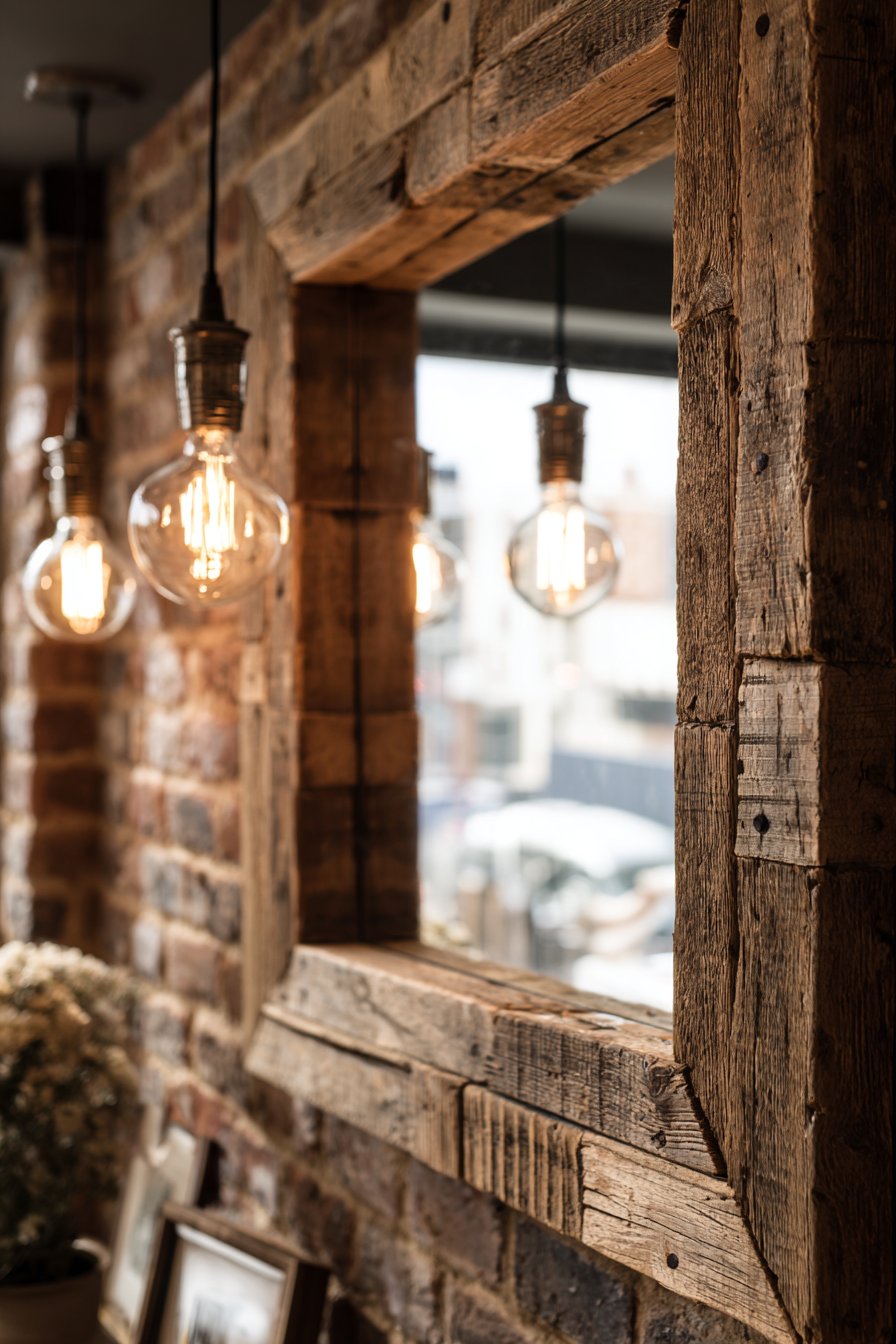
Interior design photography with wide-angle perspective captures the juxtaposition of refined mirror styling within the raw industrial aesthetic, demonstrating how thoughtful design can honor architectural character while ensuring spaces remain comfortable for daily living. The square shape itself carries associations with stability and strength appropriate to industrial design, while the reclaimed wood introduces organic irregularity that prevents the space from feeling too rigid or prescribed. This mirror decoration idea works beautifully in lofts, urban apartments, and any space seeking to balance industrial edge with residential warmth.
Key Design Tips:
- Ensure reclaimed wood is properly treated and sealed to prevent splinters while maintaining its weathered appearance
- Verify the leaning angle is stable—consider discreet wall anchors for safety while maintaining the casual leaning aesthetic
- Position the mirror to reflect interesting architectural features like exposed ductwork, brick walls, or large industrial windows
- Coordinate with other warm wood elements in the space to prevent the mirror from appearing isolated in its material choice
- Keep the surrounding wall area relatively unadorned to allow the substantial frame to command full attention
14. Symmetrical Sophistication: Dual Bathroom Mirrors
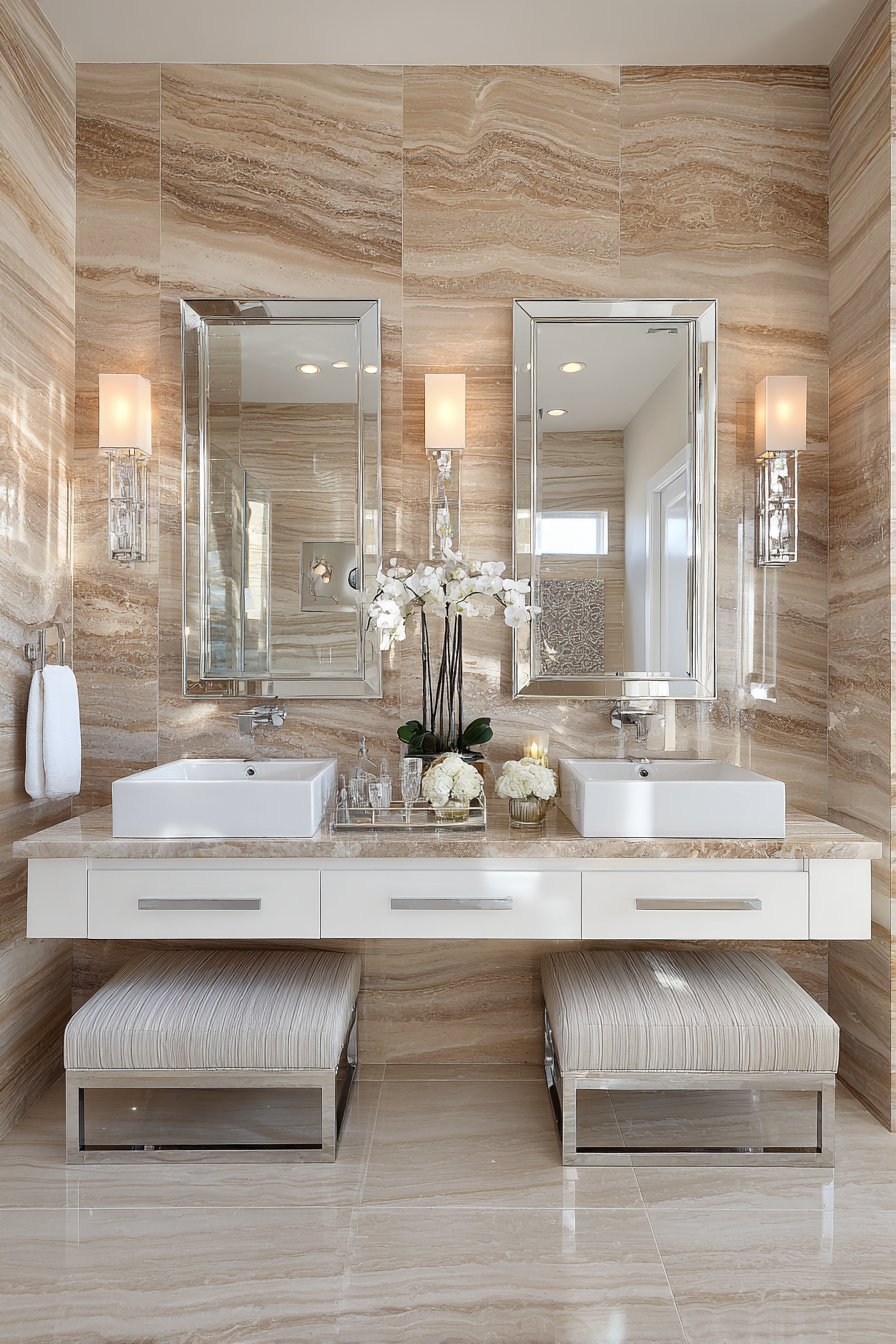
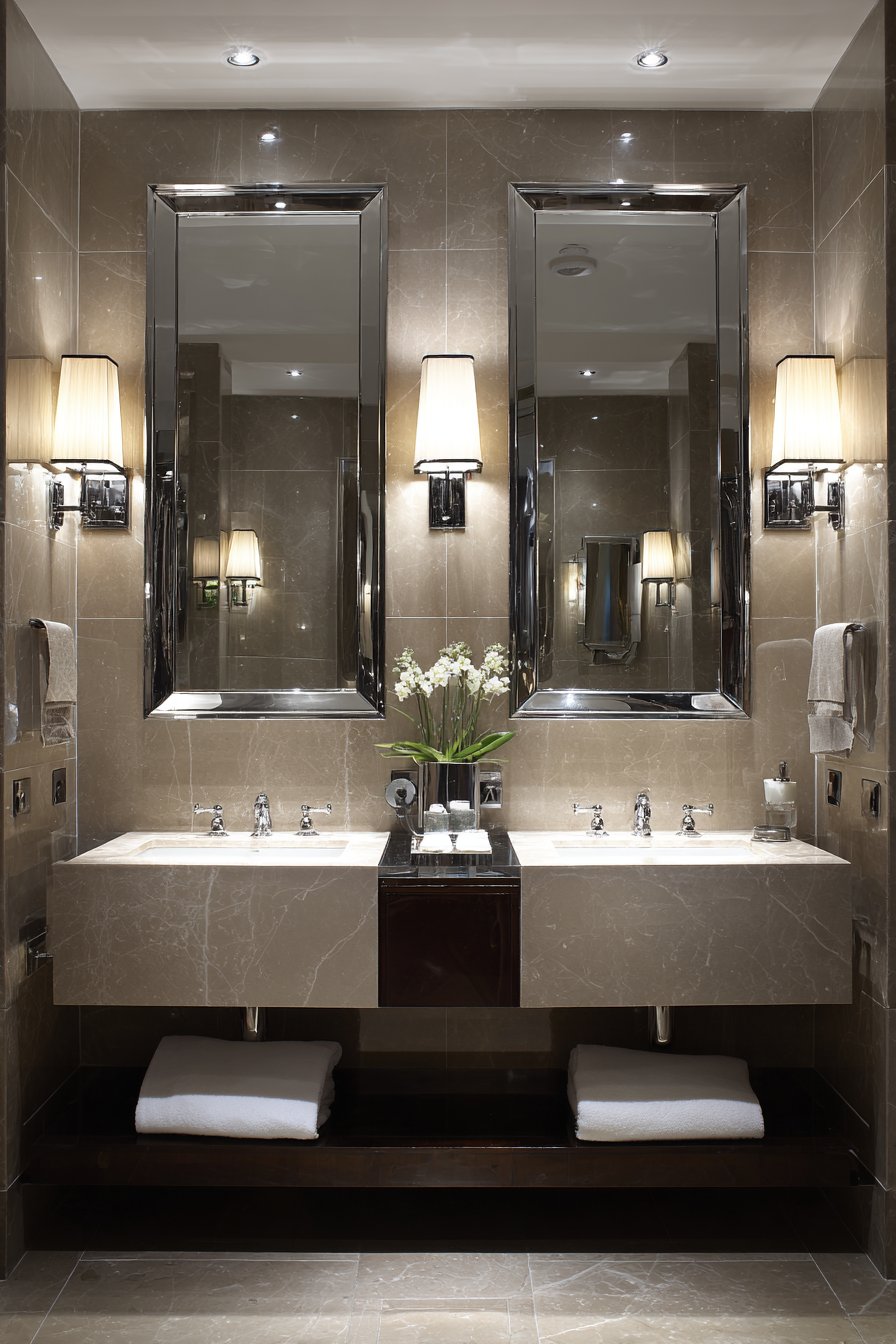
The dual rectangular mirrors with polished chrome frames mounted above a double vanity represents a mirror decoration idea that prioritizes both functionality and aesthetic balance in luxurious bathroom design. This approach features two identical mirrors positioned symmetrically, each serving one of the vanity’s sink stations while creating pleasing visual rhythm through repetition. The matching polished chrome frames coordinate with contemporary plumbing fixtures and hardware, creating material cohesion throughout the bathroom. Wall-mounted sconces positioned between the mirrors provide balanced task lighting that illuminates faces evenly without harsh shadows.
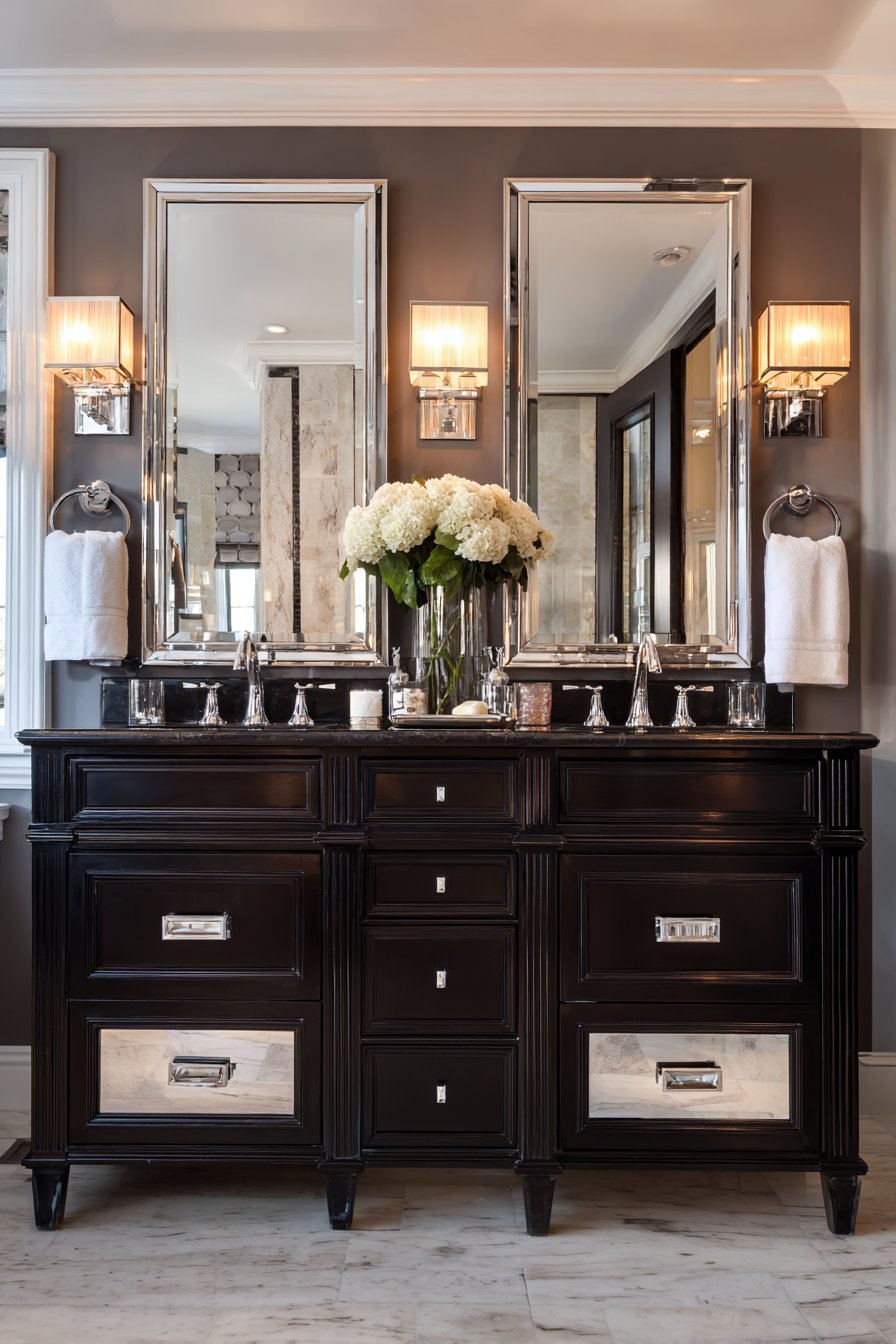
The symmetrical arrangement satisfies both practical and psychological needs—each user has dedicated mirror space with equivalent lighting and viewing angles, eliminating the territorial conflicts that can arise when sharing bathroom facilities. The matching mirrors also create formal balance that suits the refined character of luxury bathroom design, where precision and polish are valued aesthetic qualities. The chrome frames add subtle reflective sparkle that amplifies the polished, sophisticated atmosphere while their slim profiles maintain visual lightness despite the substantial mirror dimensions.
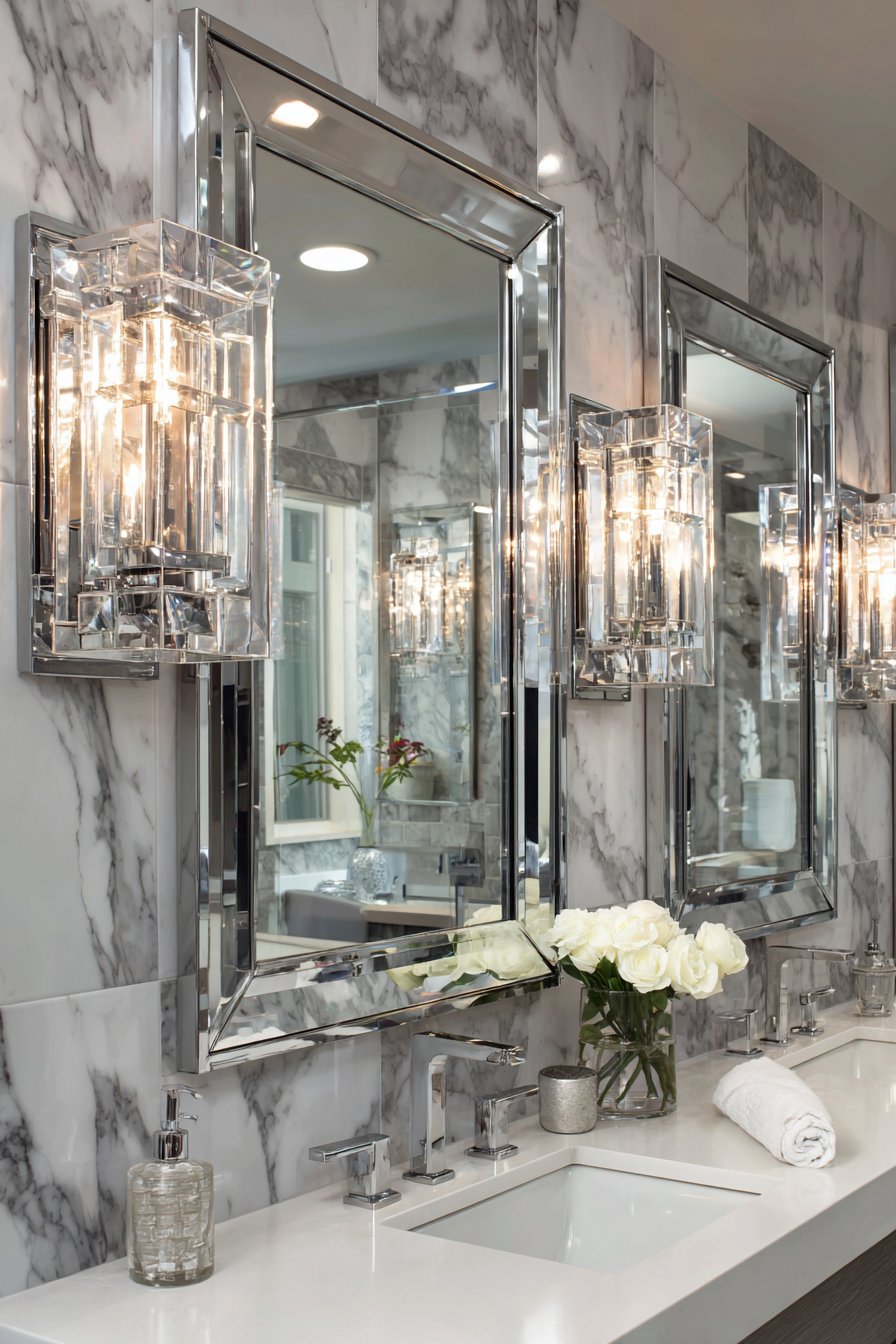
Professional interior photography with soft diffused lighting showcases the coordinated mirror arrangement and demonstrates its role in the sophisticated overall bathroom design. The dual mirror approach creates interesting visual depth as each mirror reflects portions of the opposite side of the bathroom, effectively expanding the perceived space while creating layered reflections. This mirror decoration idea works particularly well in master bathrooms where design can be more elaborate, as daily use justifies investment in both function and beauty.
Key Design Tips:
- Ensure mirrors are identical in size, frame style, and mounting height for true symmetry
- Position sconces at eye level (approximately 60-65 inches from floor) between mirrors for optimal task lighting
- Maintain consistent spacing—the gap between mirrors should equal the gap from each mirror to the nearest wall
- Consider the vanity width carefully—mirrors typically should each span about 70-80% of their respective sink area
- Coordinate frame finish precisely with faucets, cabinet hardware, and other bathroom fixtures for cohesive design
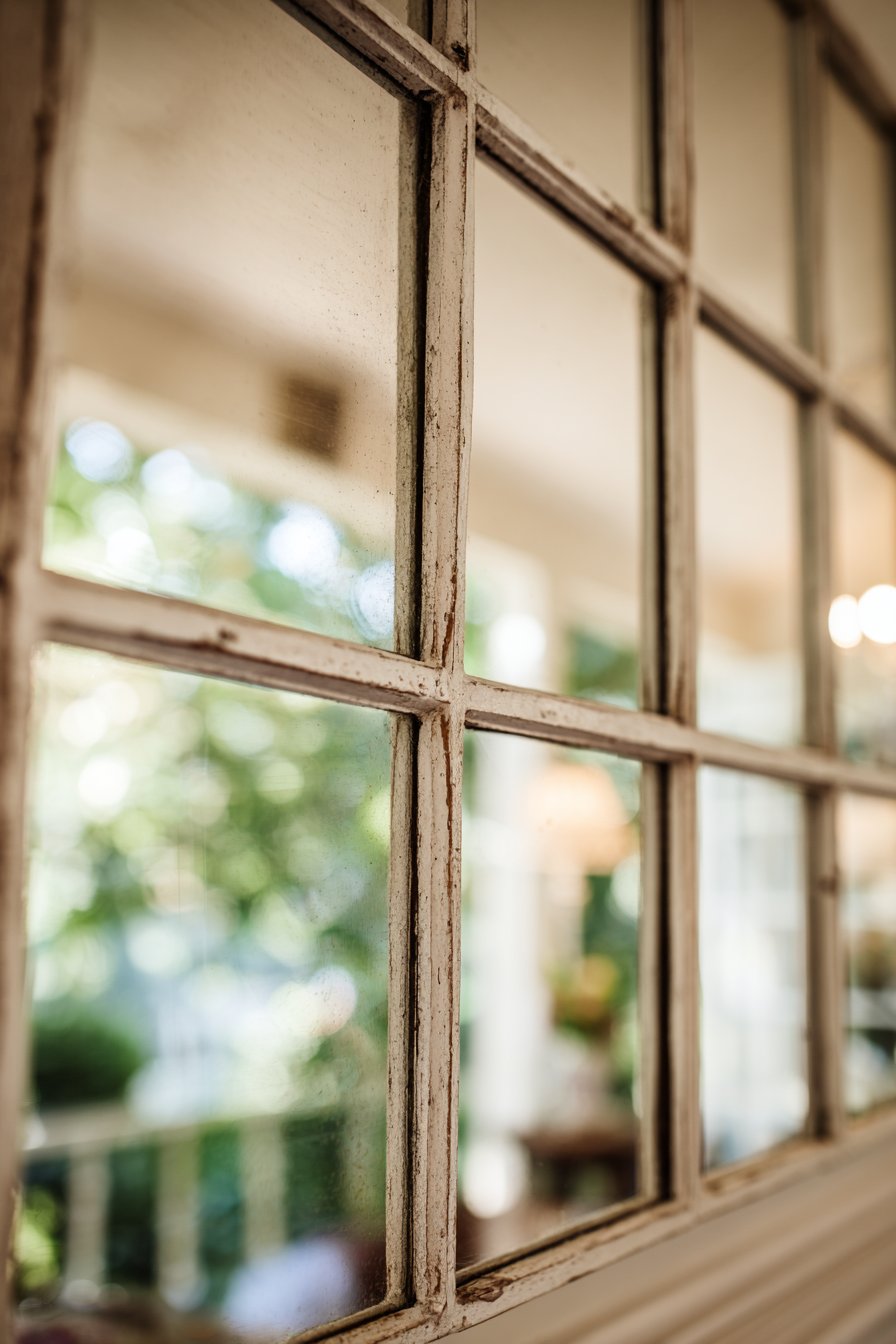
15. Farmhouse Charm: Window Pane Mirror
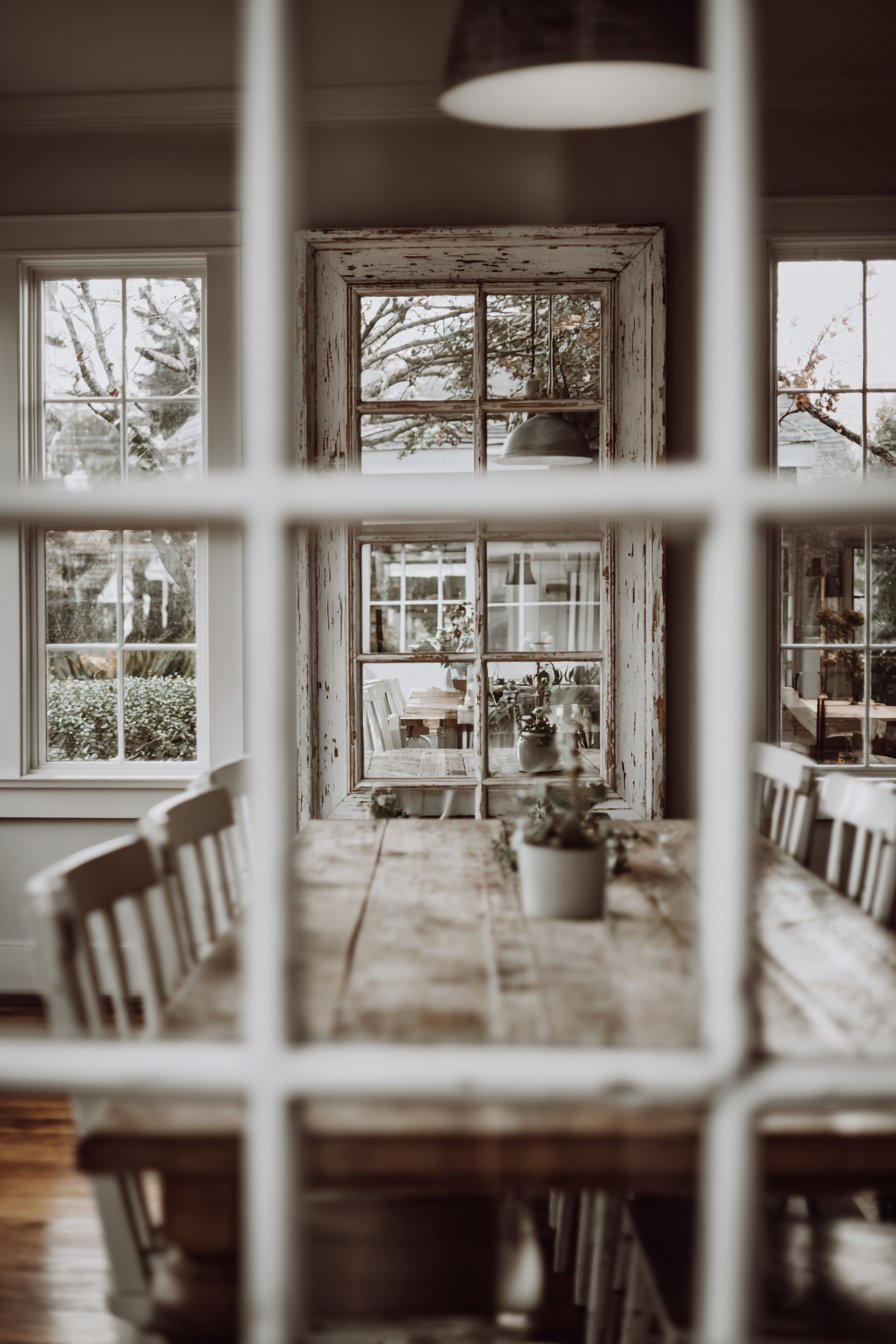
The window pane mirror with distressed white wooden frame divided into multiple panes like a vintage window brings nostalgic farmhouse charm to mirror decoration ideas. This approach transforms a functional mirror into an architectural element that evokes memories of old farmhouses and country homes, where multi-pane windows were standard features. The distressed white finish—with strategically worn edges revealing wood grain beneath—creates authentic vintage character without requiring actual antique sourcing. Each pane functions as a separate mirror section, creating fragmented reflections that add visual interest beyond what a single large mirror provides.
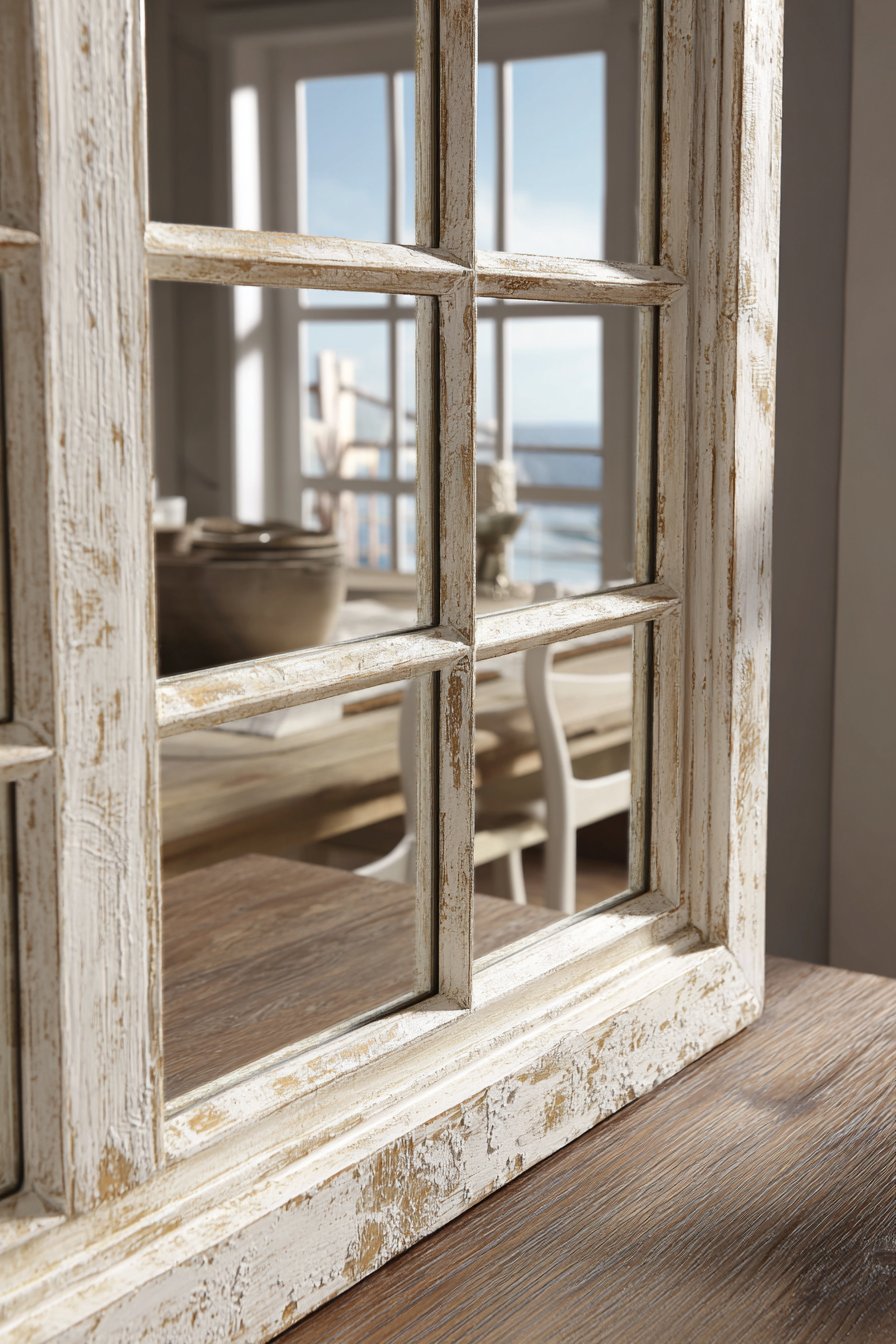
Positioned above a farmhouse table in a dining room, this mirror adds architectural interest and reinforces the country aesthetic that defines farmhouse style. The mirror reflects natural light streaming through actual windows, effectively doubling the illumination while creating the pleasant illusion of an additional window on the wall. This light manipulation proves particularly valuable in dining rooms where warm, inviting ambiance directly impacts the pleasure of shared meals. The white frame coordinates beautifully with traditional farmhouse palettes while providing crisp definition against colored walls.
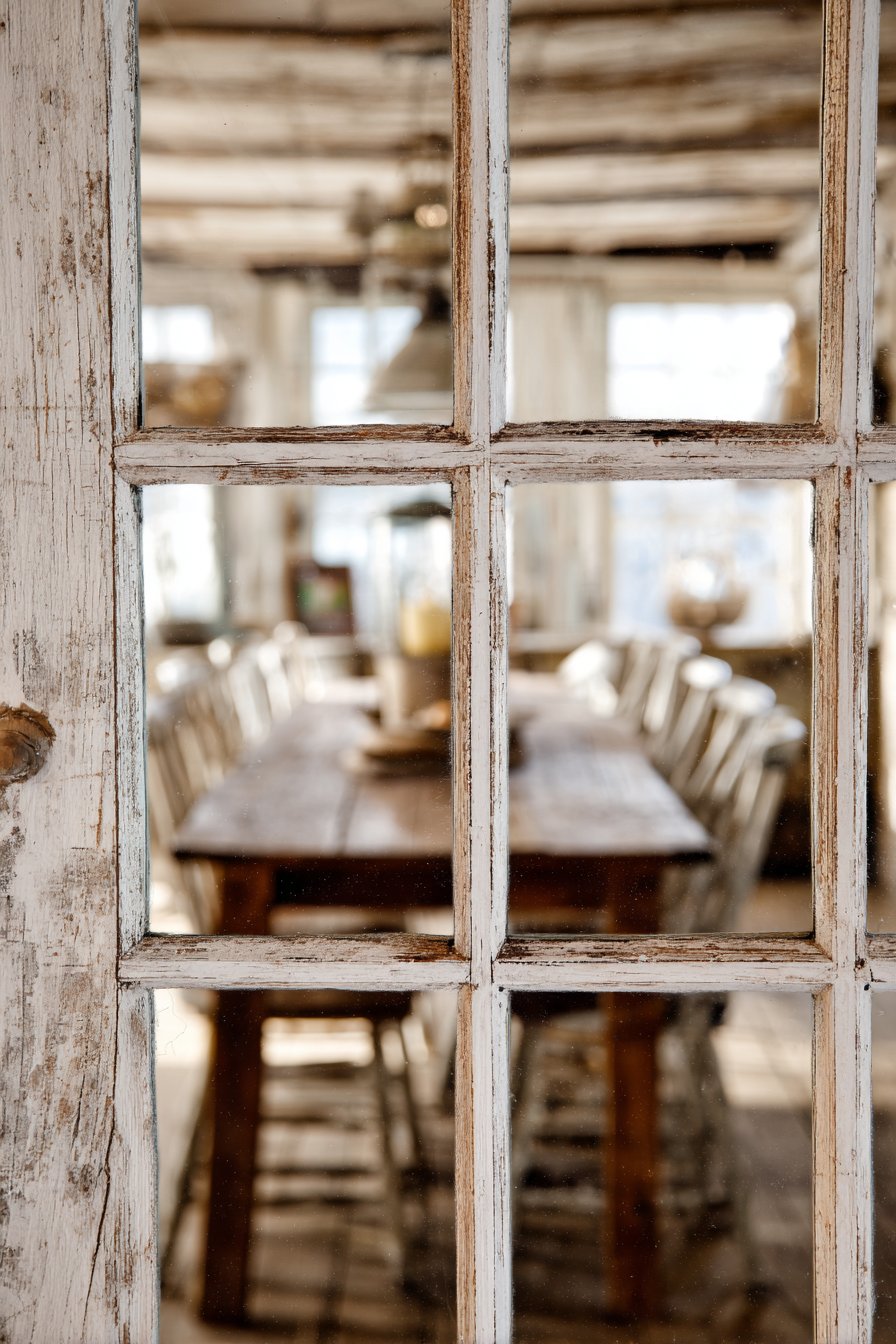
Interior photography captures the rustic character of the distressed finish while demonstrating the mirror’s ability to enhance the farmhouse aesthetic through both its styling and its reflective properties. The grid pattern created by the multiple panes introduces geometric structure that balances the organic, casual character of farmhouse design. This mirror decoration idea appeals to those who love vintage aesthetics, country living inspiration, and designs that create warmth through references to simpler times and traditional craftsmanship.
Key Design Tips:
- Choose distressing that appears authentic rather than artificially aged—focus wear on edges and corners where natural use would create it
- Ensure each pane is actually mirrored rather than just having a mirror behind the frame, which creates more authentic window-like appearance
- Coordinate frame color with other painted furniture or trim in your dining room for cohesive farmhouse styling
- Hang at appropriate height to reflect attractive elements—the dining table, chandelier, or view through actual windows
- Consider the mirror’s proportions relative to your farmhouse table—typically 50-70% of table width creates good visual balance
16. Contemporary Minimalism: Frameless Beveled Mirror
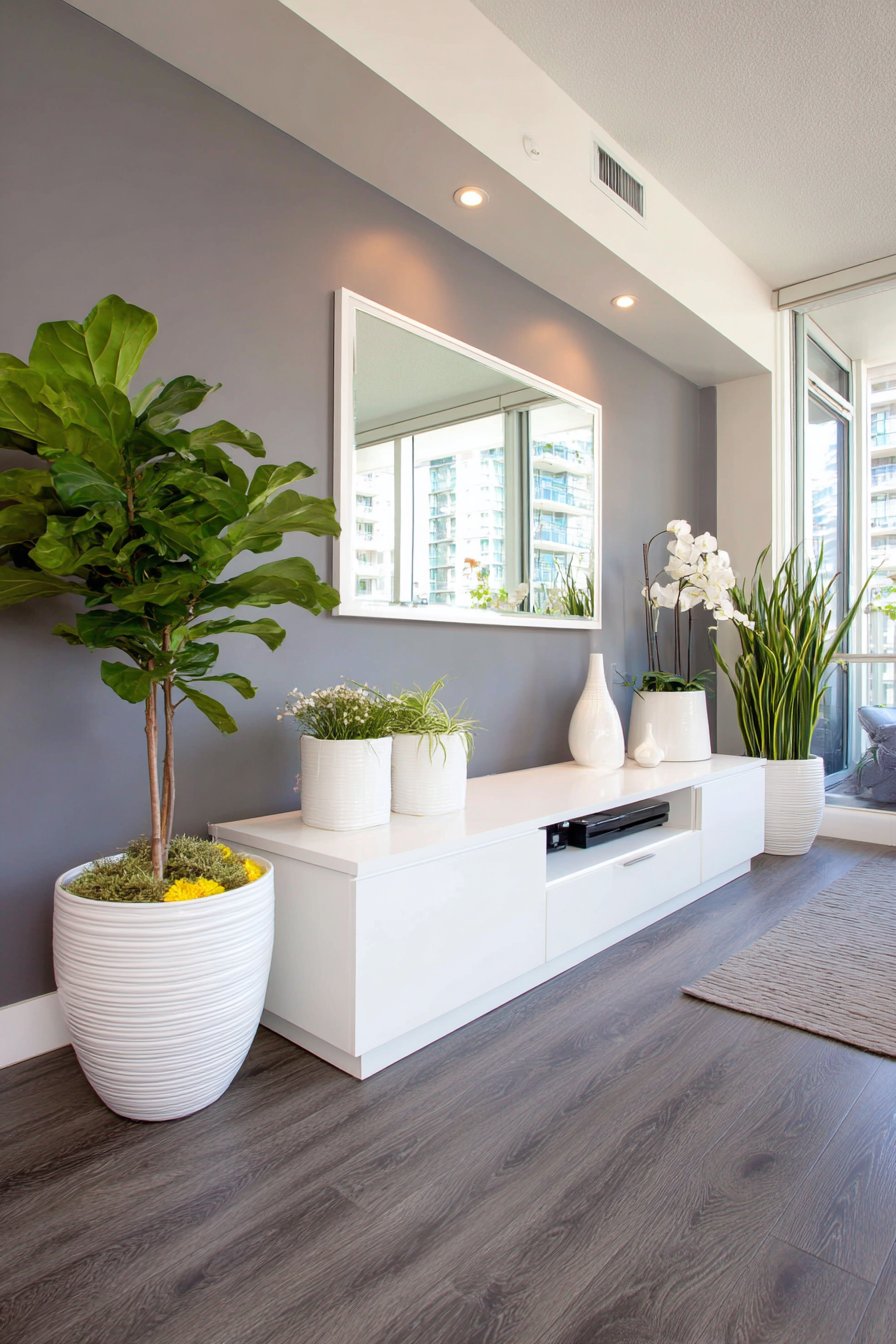
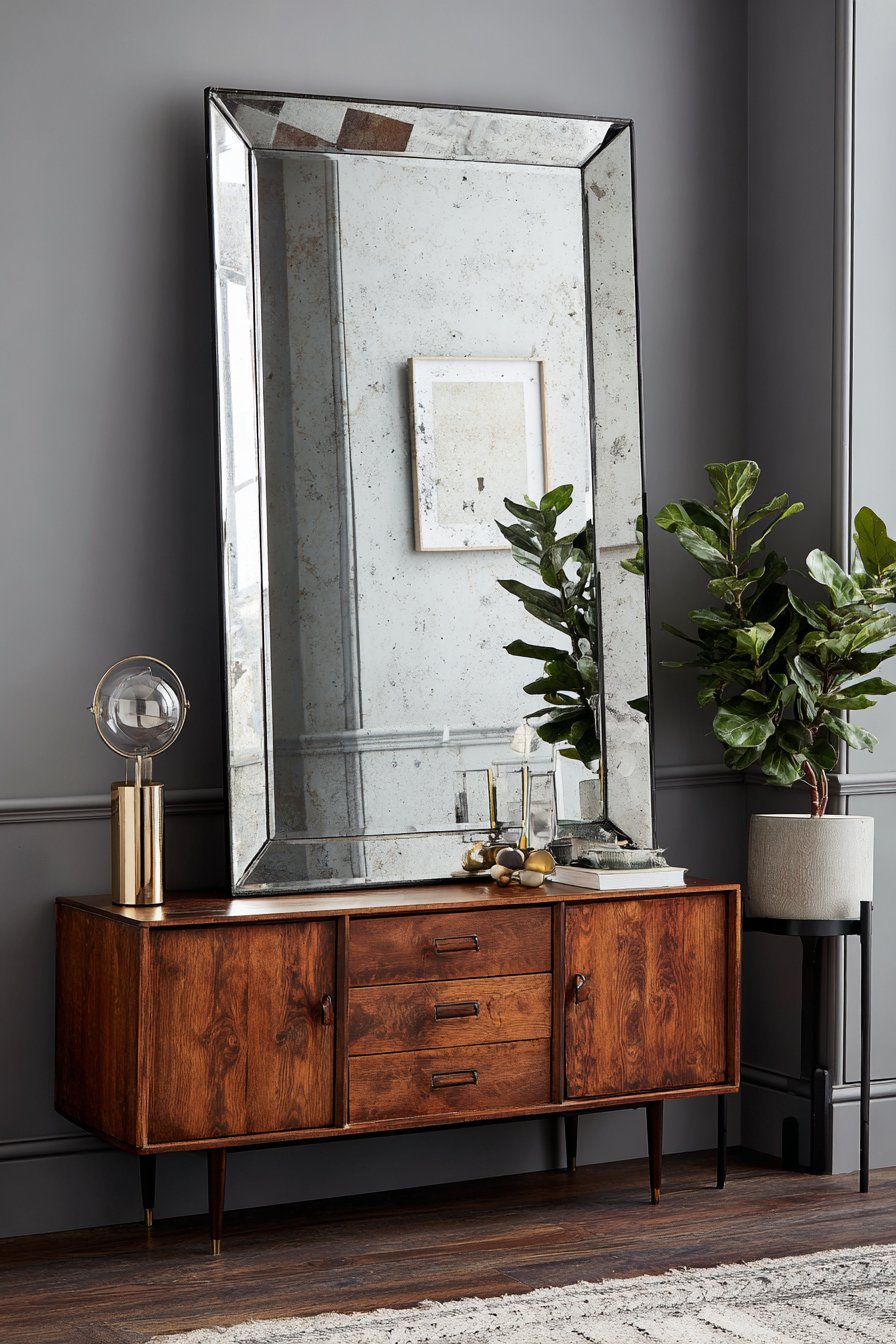
The frameless beveled-edge rectangular mirror creates sleek, seamless aesthetics that epitomize contemporary minimalist mirror decoration ideas. This approach eliminates traditional frame entirely, instead relying on precisely cut beveled edges to define the mirror’s perimeter and add subtle dimensional detail. The beveled edges catch light and create thin bands of rainbow refraction around the mirror’s border—a delicate decorative touch that doesn’t compromise the overall minimalist aesthetic. Positioned against a gray accent wall above a low-profile media console, this mirror demonstrates how restraint in decorative elements can create powerful visual impact through clean lines and precise proportions.
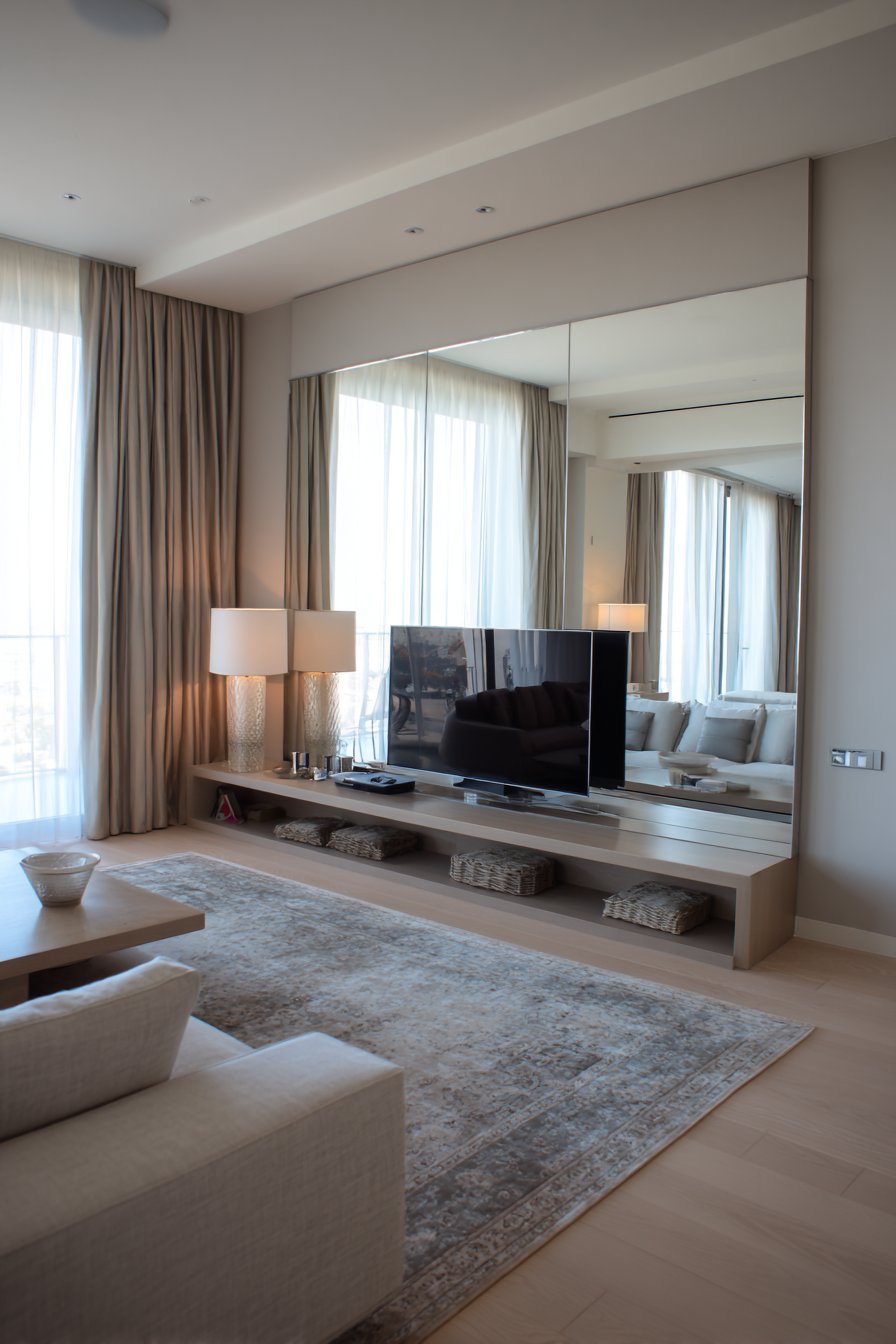
The frameless design allows the mirror to visually expand the living room space without adding decorative distraction or visual weight. In minimalist interiors where every element is carefully considered and excess is deliberately avoided, this mirror integrates seamlessly while providing crucial functionality. The gray wall color creates subtle contrast that defines the mirror’s edges without requiring elaborate framing, while the beveled edges ensure the mirror doesn’t appear to simply disappear into the wall. The low-profile media console below maintains the horizontal emphasis and clean-lined aesthetic.
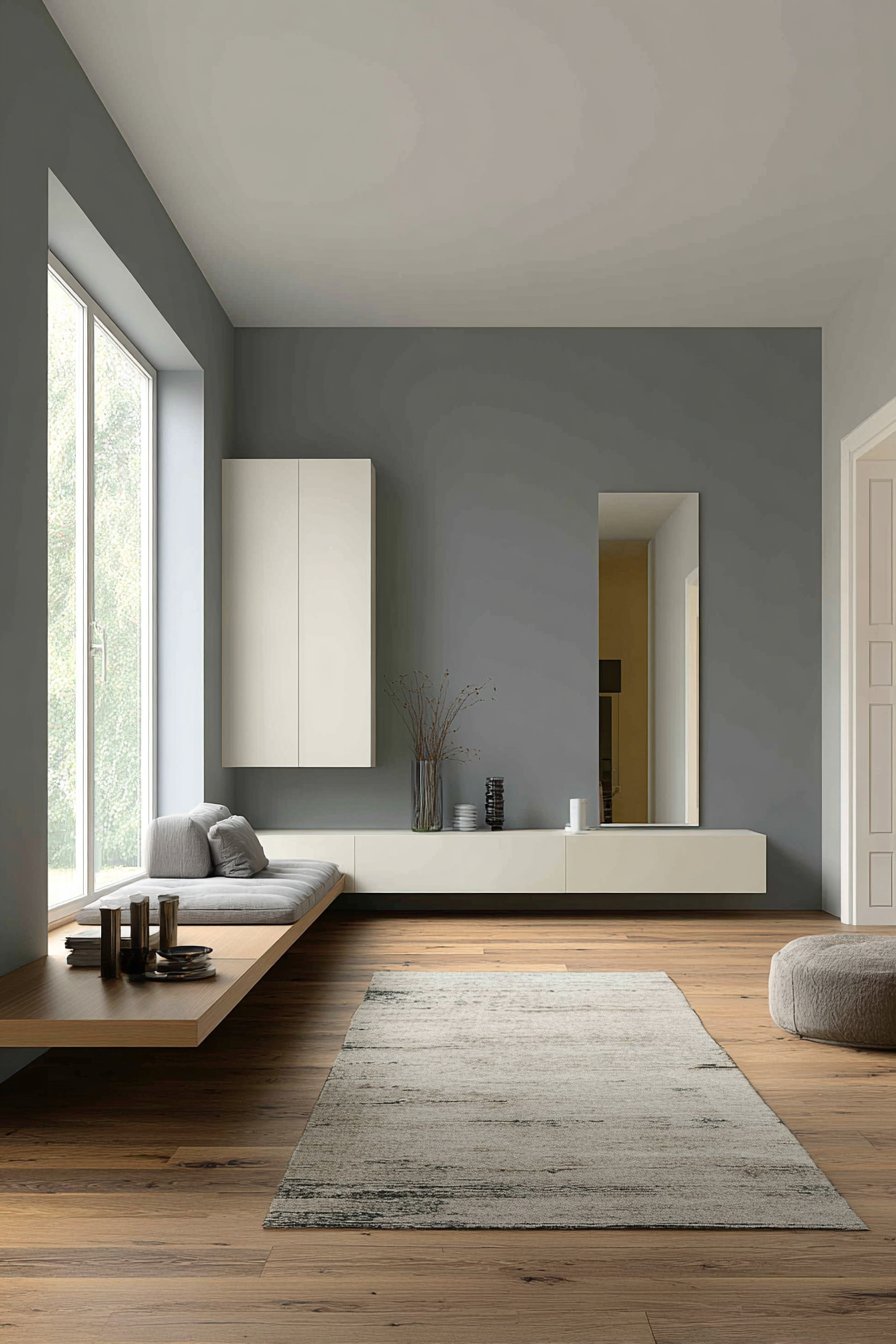
Wide-angle interior design photography demonstrates the clean, modern aesthetic and showcases the mirror’s space-enhancing properties without decorative interference. The simplicity of this approach makes it remarkably versatile—the mirror works equally well in small apartments where minimizing visual clutter is crucial and in larger spaces where minimalist design is an intentional aesthetic choice. This mirror decoration idea appeals to those who appreciate Japanese-inspired design, Scandinavian minimalism, and contemporary interiors where “less is more” guides every design decision.
Key Design Tips:
- Ensure walls are perfectly smooth and painted flawlessly, as frameless mirrors reveal wall imperfections that frames would conceal
- Use professional installation with appropriate mounting hardware—frameless mirrors require secure attachment despite appearing to float
- Position carefully to reflect attractive, intentional elements rather than random objects or blank walls
- Maintain very minimal styling on the console below to preserve the uncluttered minimalist aesthetic
- Clean edges regularly to maintain the clarity of beveled detail and prevent dust accumulation in the angled cuts
17. Hollywood Glamour: Illuminated Vanity Mirror
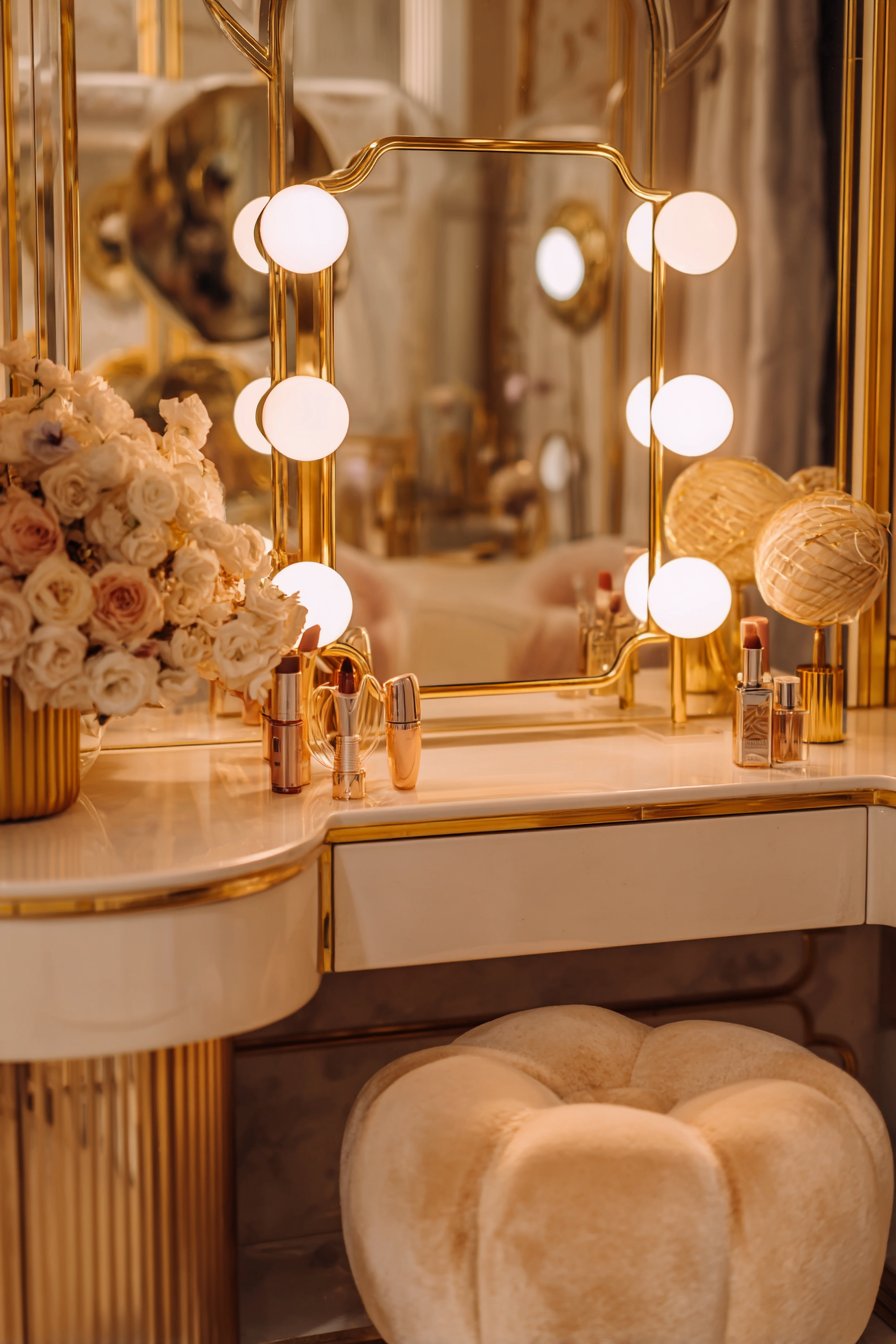
The Hollywood-style vanity mirror with integrated round bulb lighting surrounding the rectangular frame represents the ultimate in glamorous mirror decoration ideas. This approach brings professional makeup artist functionality into residential settings, featuring theatrical bulbs that provide bright, even illumination ideal for precise makeup application and grooming tasks. The warm bulb lighting eliminates shadows that can distort perception of colors and details, ensuring makeup appears as intended in various lighting conditions. Positioned on a white lacquered vanity table with coordinating velvet stool, this setup creates a dedicated beauty station that makes daily routines feel like special occasions.
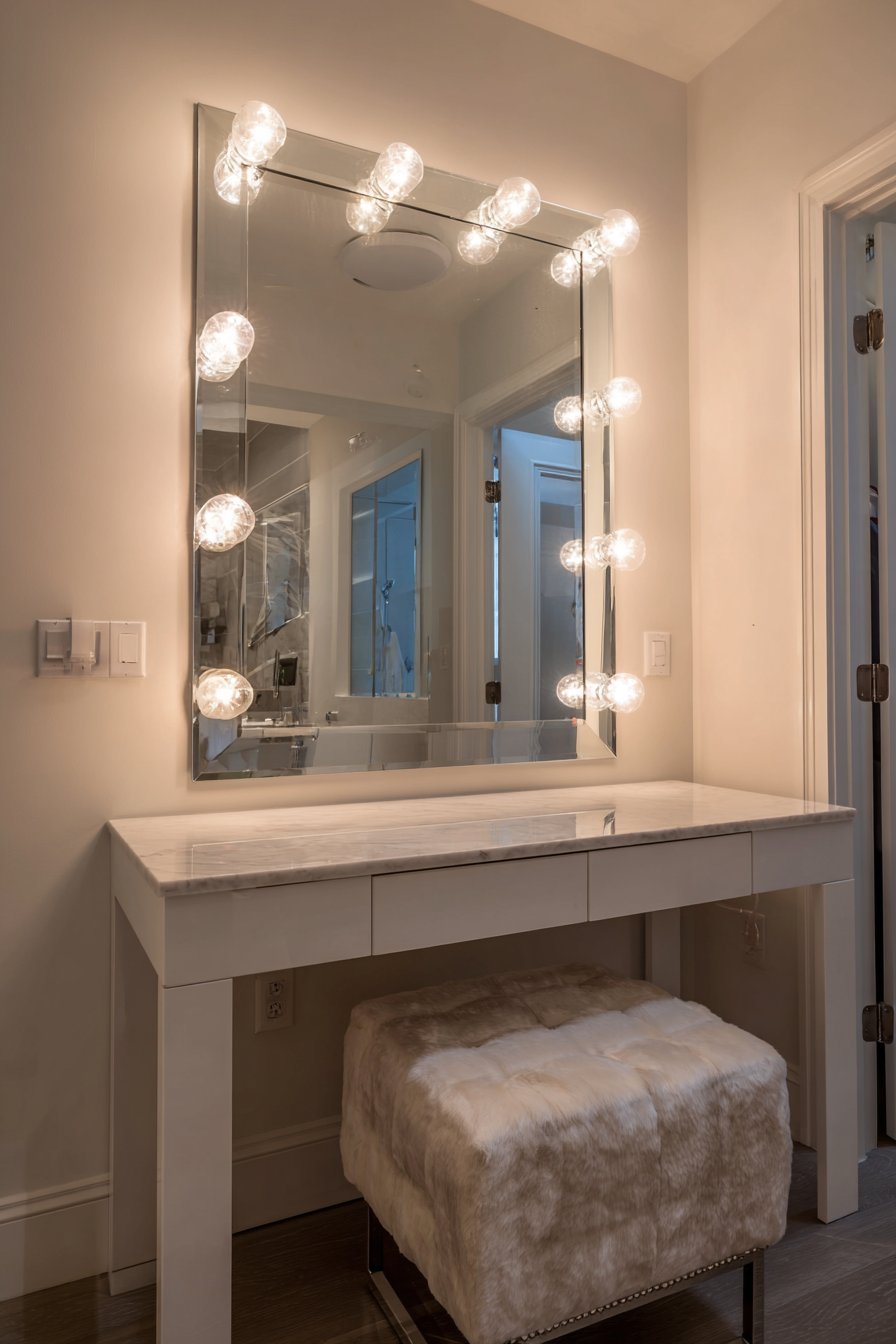
The celebrity-inspired aesthetic appeals to those who appreciate luxury, theatrical drama, and designs that elevate everyday activities into moments of self-care and glamour. The bulbs themselves become decorative elements, their warm glow creating inviting ambiance beyond their functional purpose. The white lacquered vanity provides glossy, reflective surfaces that amplify light and contribute to the overall sense of brightness and polish. This mirror decoration idea transforms a corner of a bedroom into a personal beauty salon where preparation becomes pleasure.
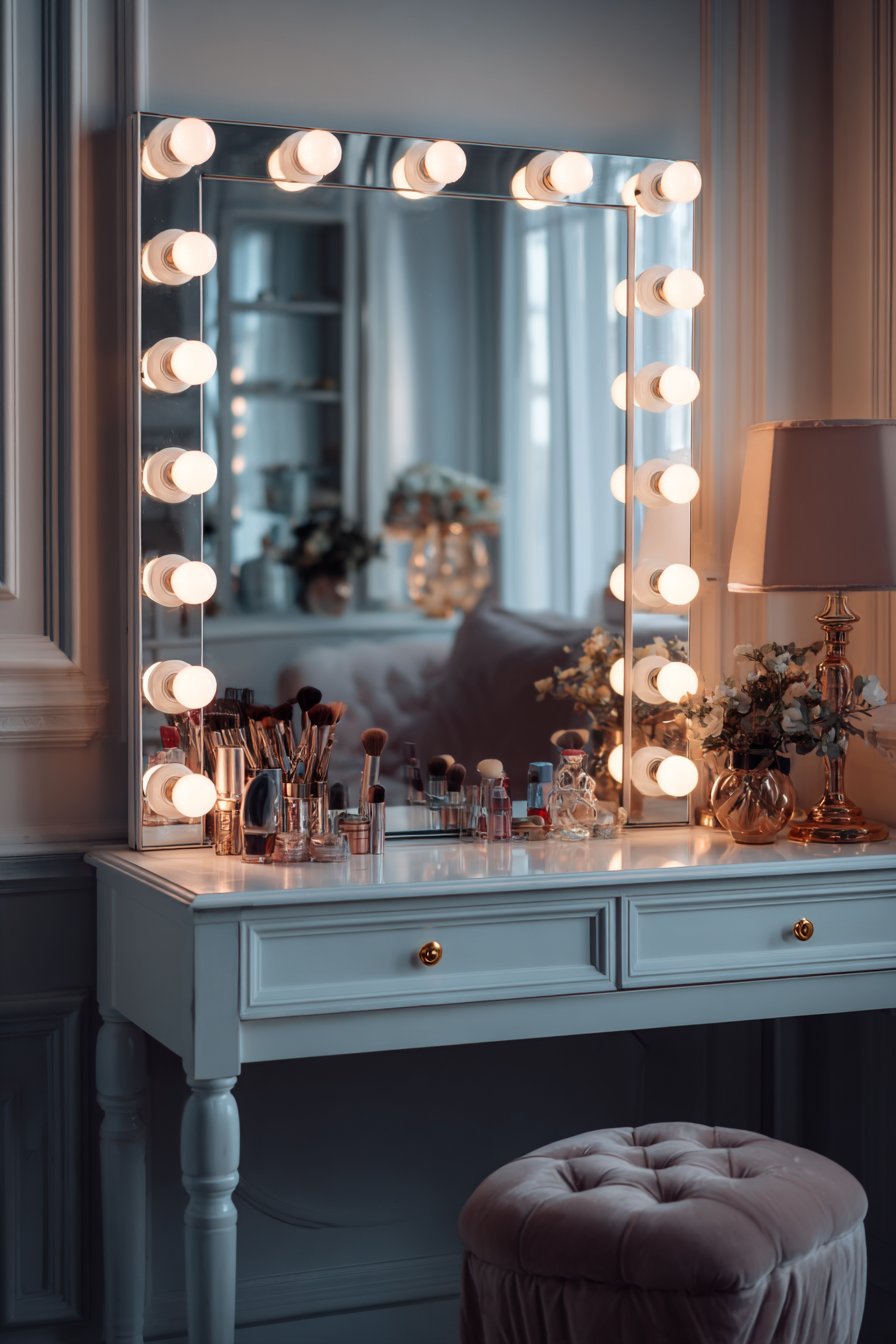
Professional interior photography captures the luxurious atmosphere created by the bulb lighting while demonstrating the functional advantages of this illumination approach with balanced exposure. The arrangement of bulbs around the mirror’s perimeter ensures face is evenly lit from all angles—eliminating the unflattering shadows created by overhead bathroom lighting. This mirror decoration idea works particularly well in master bedrooms or dressing rooms where space allows for dedicated vanity areas separate from bathroom facilities.
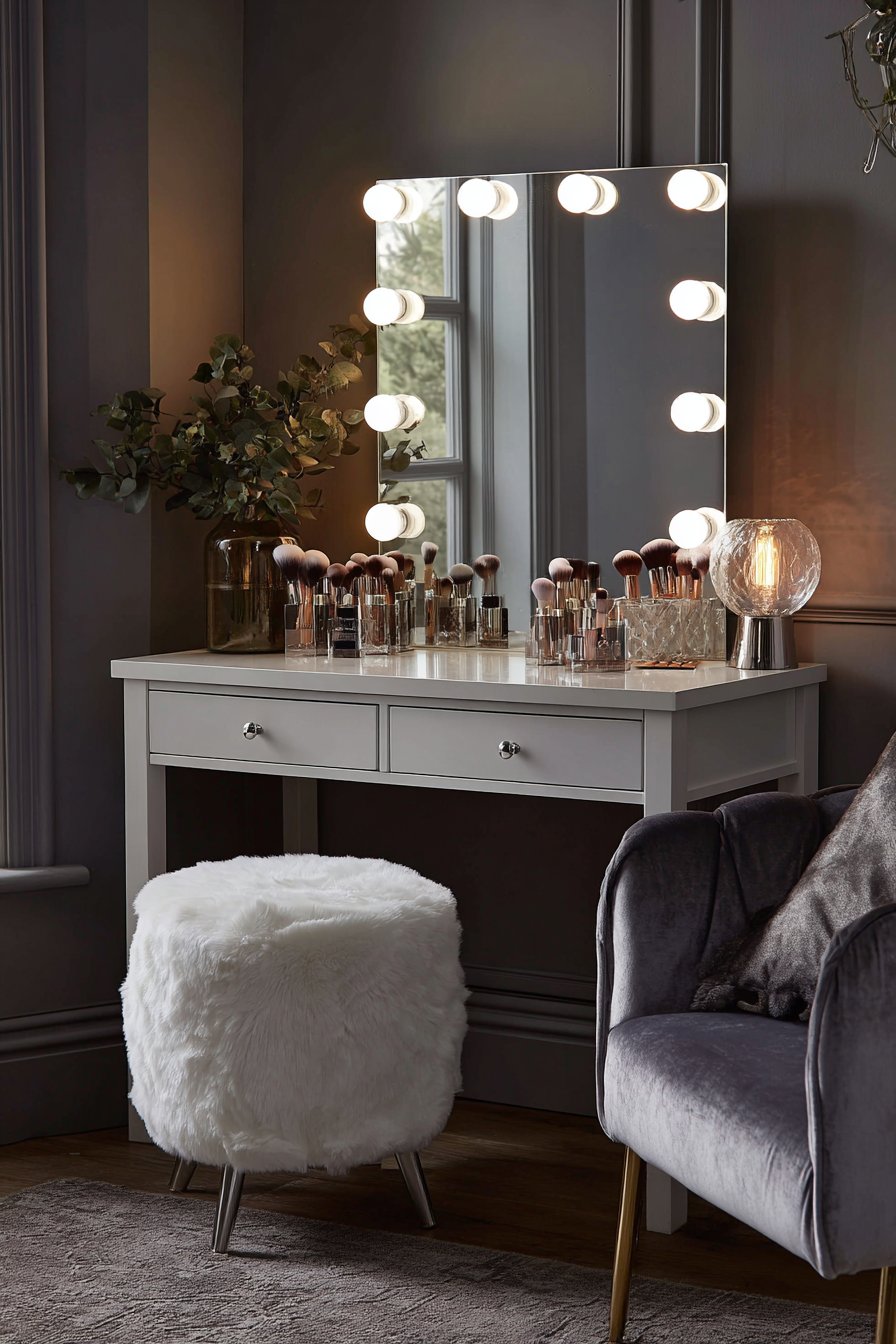
Key Design Tips:
- Ensure adequate electrical supply—multiple bulbs require sufficient wattage capacity and proper circuit protection
- Choose LED bulbs to minimize heat generation and reduce energy consumption while maintaining bright illumination
- Select appropriate color temperature—warm white (2700-3000K) is most flattering for makeup application
- Position the vanity where you can face natural light when seated, supplementing rather than replacing daylight when available
- Include dimmer capability to adjust lighting intensity for different times of day and various grooming tasks
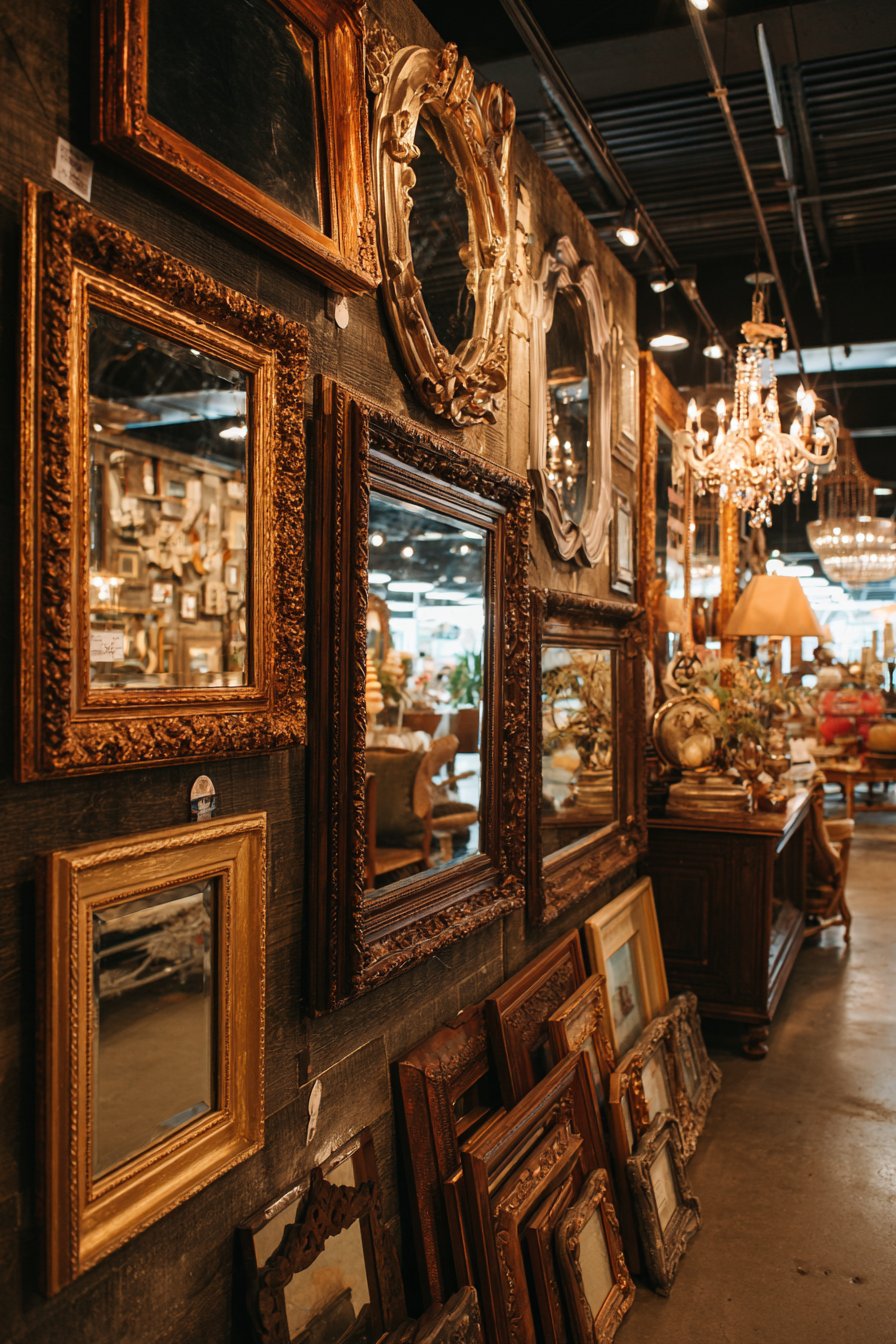
18. Collected Eclecticism: Asymmetrical Vintage Mirror Gallery
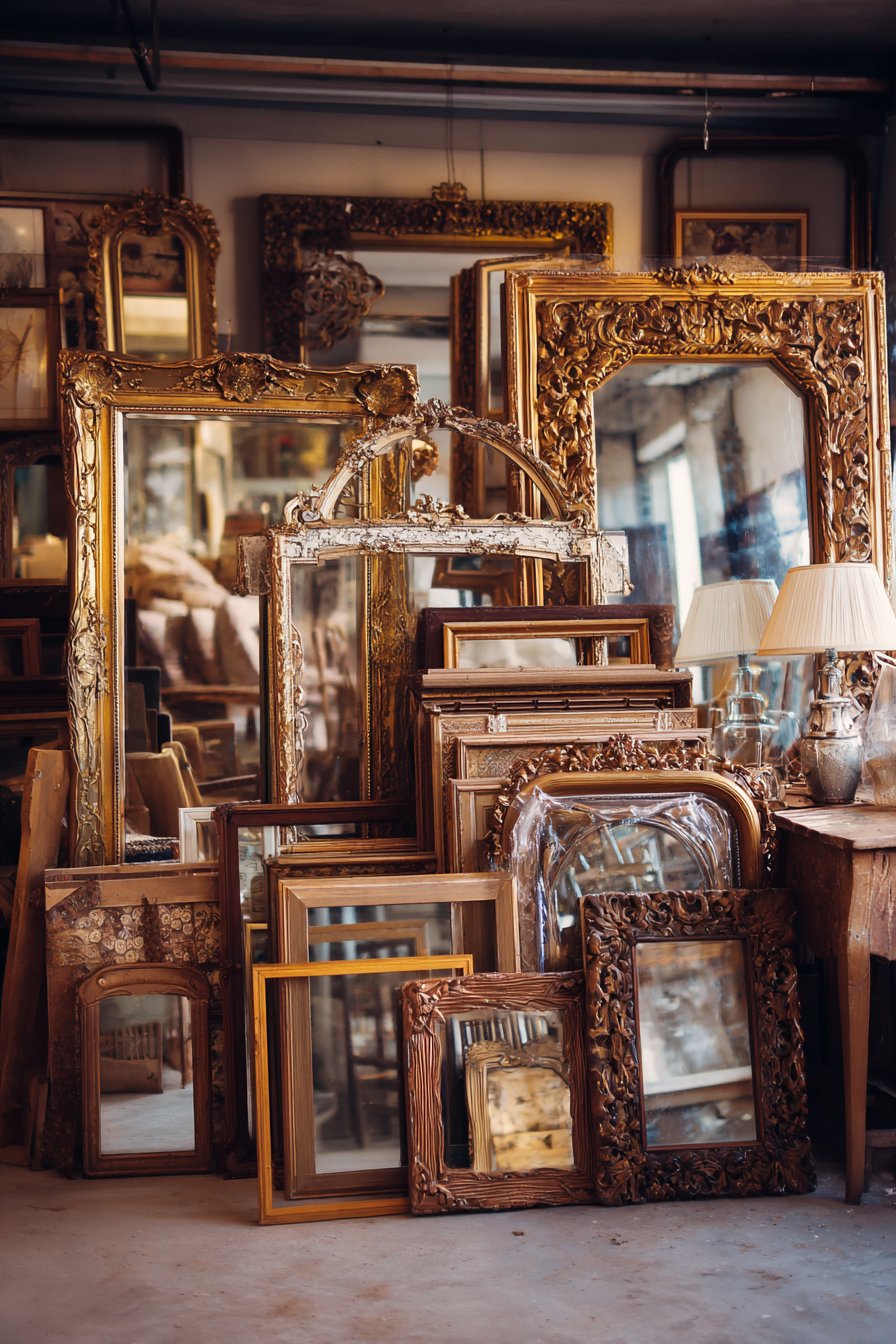
The asymmetrical arrangement of mismatched vintage mirrors in varied shapes, sizes, and frame styles creates an artistic focal point that showcases the collected-over-time aesthetic central to eclectic design. This mirror decoration idea features carefully curated mirrors that might include ornate gold baroque frames, simple rustic wooden frames, decorative carved designs, and perhaps mid-century modern pieces—each with distinct character but united by thoughtful composition. The asymmetrical layout feels organic and evolved rather than rigidly planned, suggesting the collection grew naturally as treasured pieces were discovered at flea markets, estate sales, and antique shops.
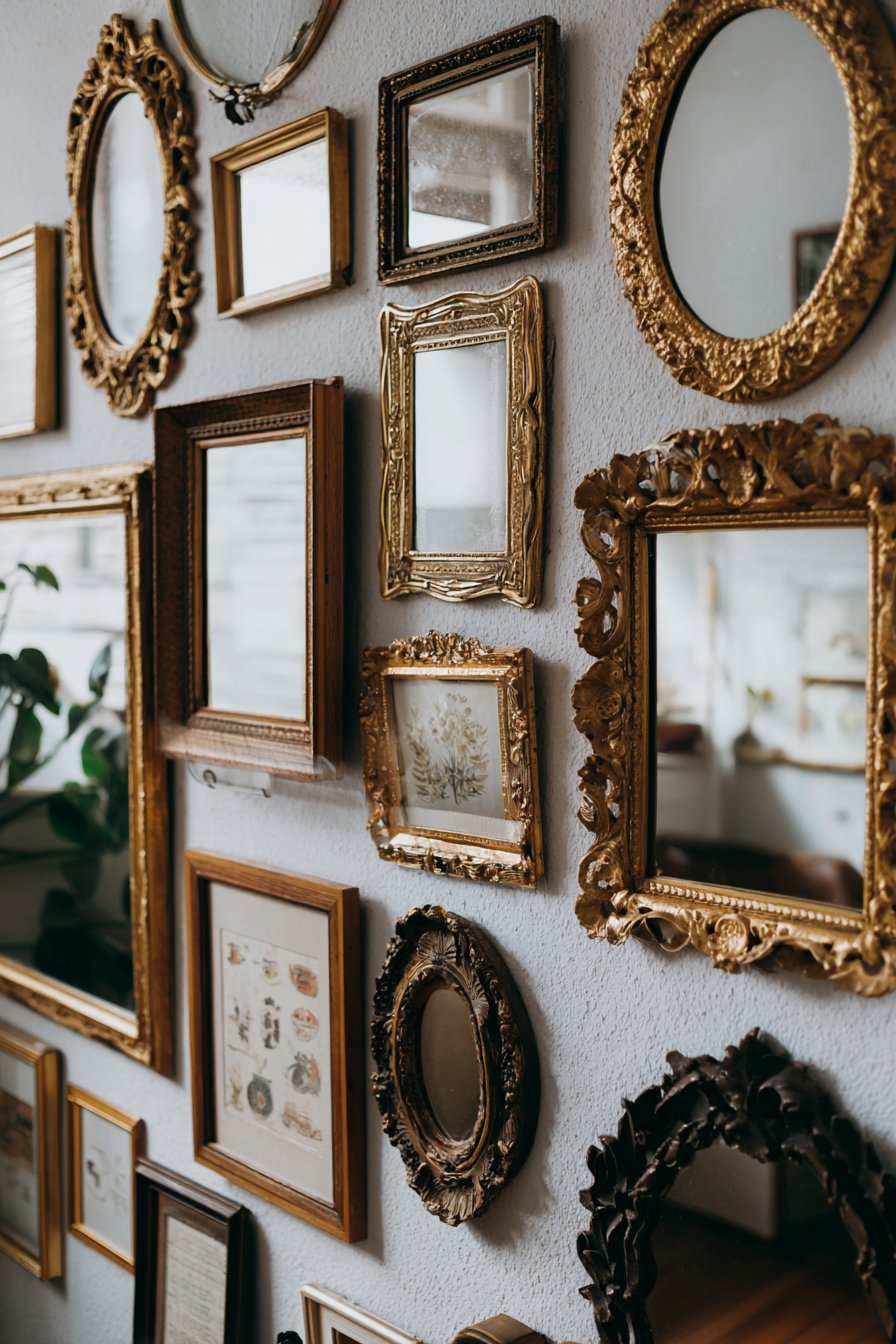
Positioned as a living room focal point, this gallery wall approach allows mirrors of varying quality, age, and origin to coexist in harmonious diversity. Natural light from windows and warm illumination from table lamps create constantly shifting reflections and highlights across the different mirror surfaces and frame materials. Some mirrors might reflect glimpses of furniture, others capture architectural details, while some frame interesting views—this variety creates dynamic visual interest that rewards repeated viewing. The eclectic collection tells stories about personal taste, treasure hunting adventures, and the value of curation over instant gratification.
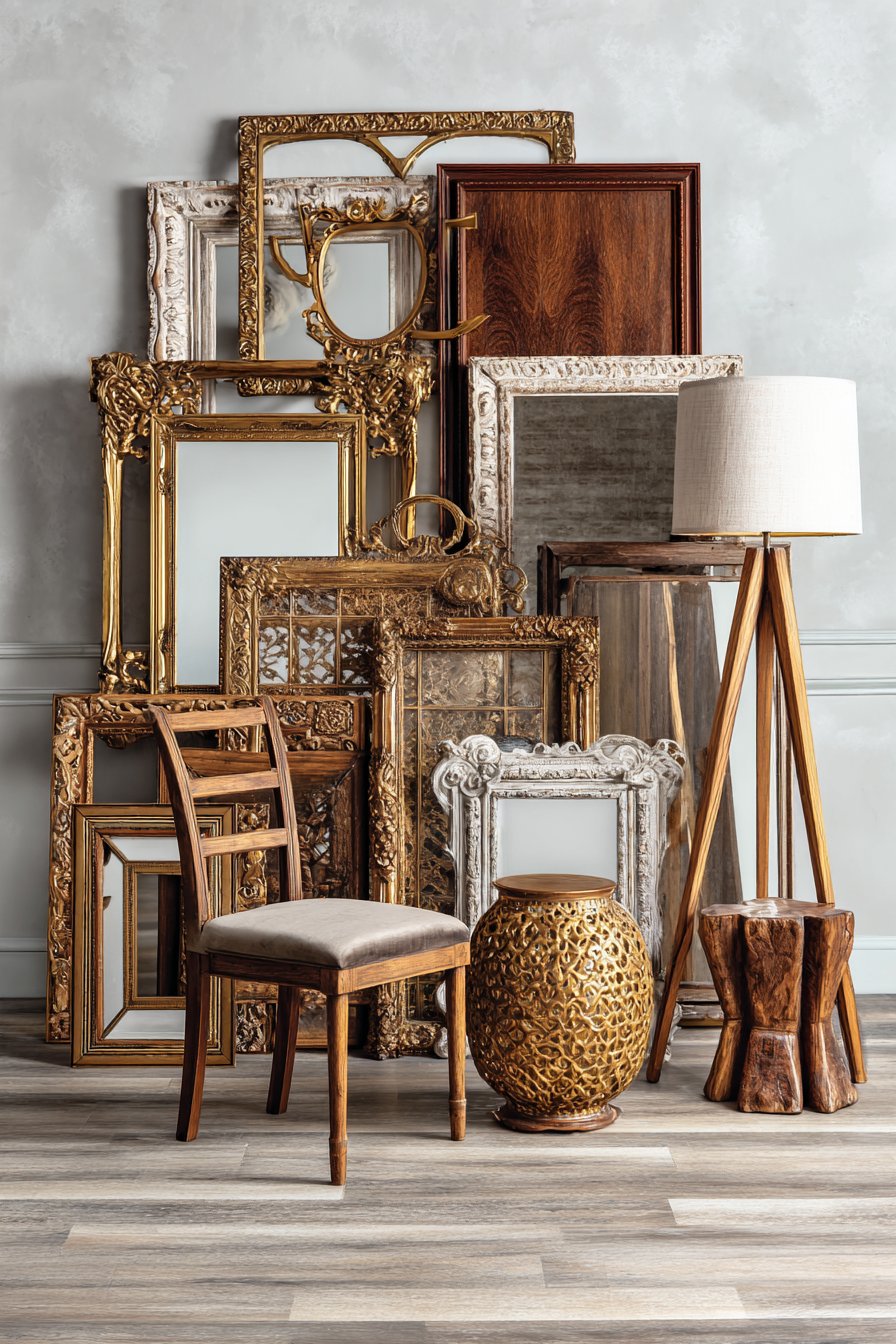
Interior photography showcases the curated, collected aesthetic while demonstrating how diverse elements can create cohesive composition through thoughtful placement. The key to successful execution lies in balancing visual weight, establishing rhythm through repetition of certain shapes or finishes, and maintaining appropriate spacing that unifies without cramping. This mirror decoration idea appeals to those who reject cookie-cutter design in favor of personal expression, who appreciate the patina and character of vintage items, and who enjoy the ongoing process of collecting and arranging treasured objects.
Key Design Tips:
- Start with your largest or most visually dominant mirror as an anchor, building the arrangement around this key piece
- Vary frame colors and finishes while ensuring some repetition to create visual connection—perhaps three gold-toned frames distributed throughout
- Include different shapes (round, rectangular, oval) to create visual interest while maintaining some shape repetition for cohesion
- Lay out the entire arrangement on the floor before hanging to experiment with composition without creating unnecessary wall holes
- Leave the collection room to grow—don’t fill every inch of wall space, allowing for future additions as you discover new treasures
19. Scandinavian Serenity: Round Teak-Rimmed Mirror
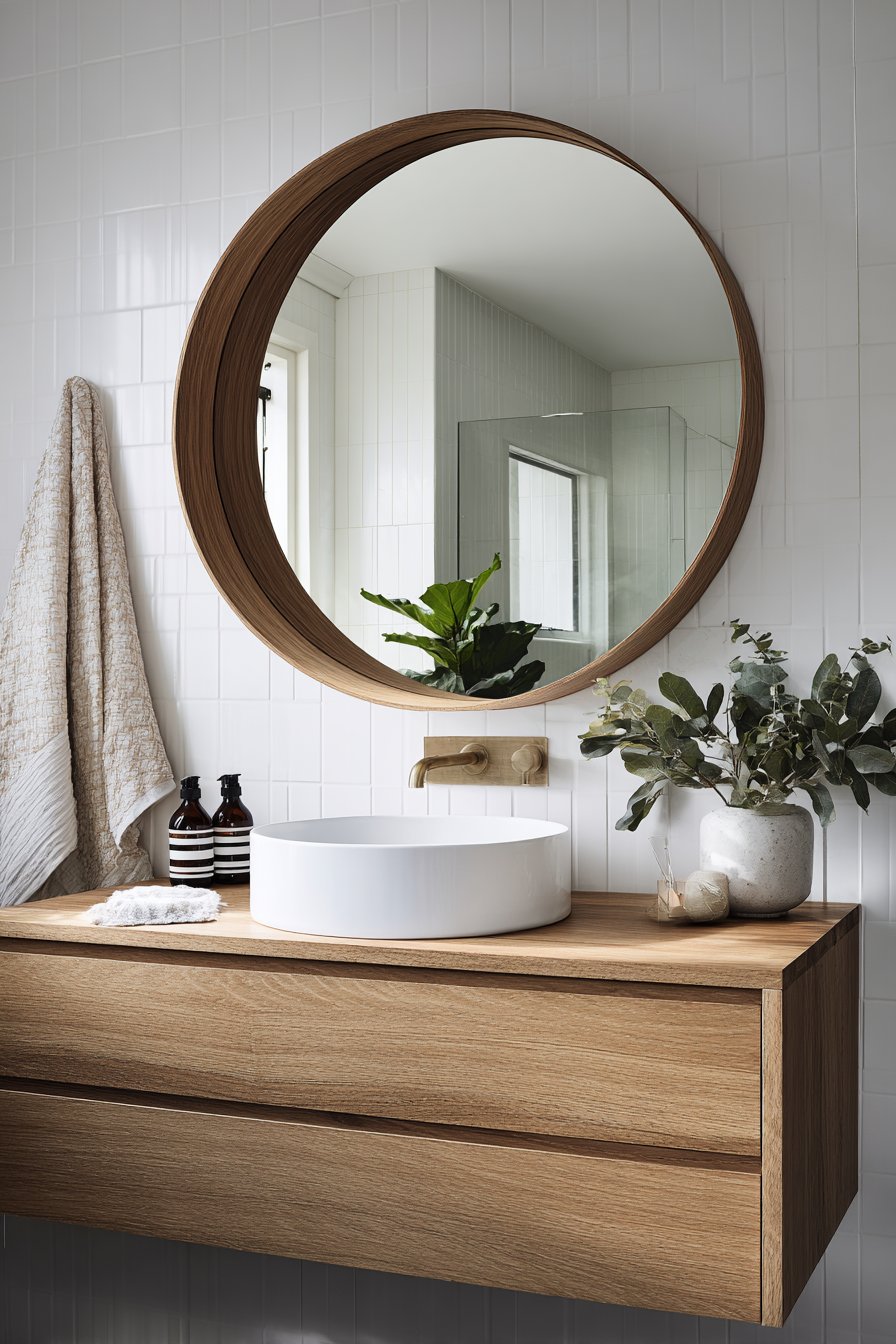
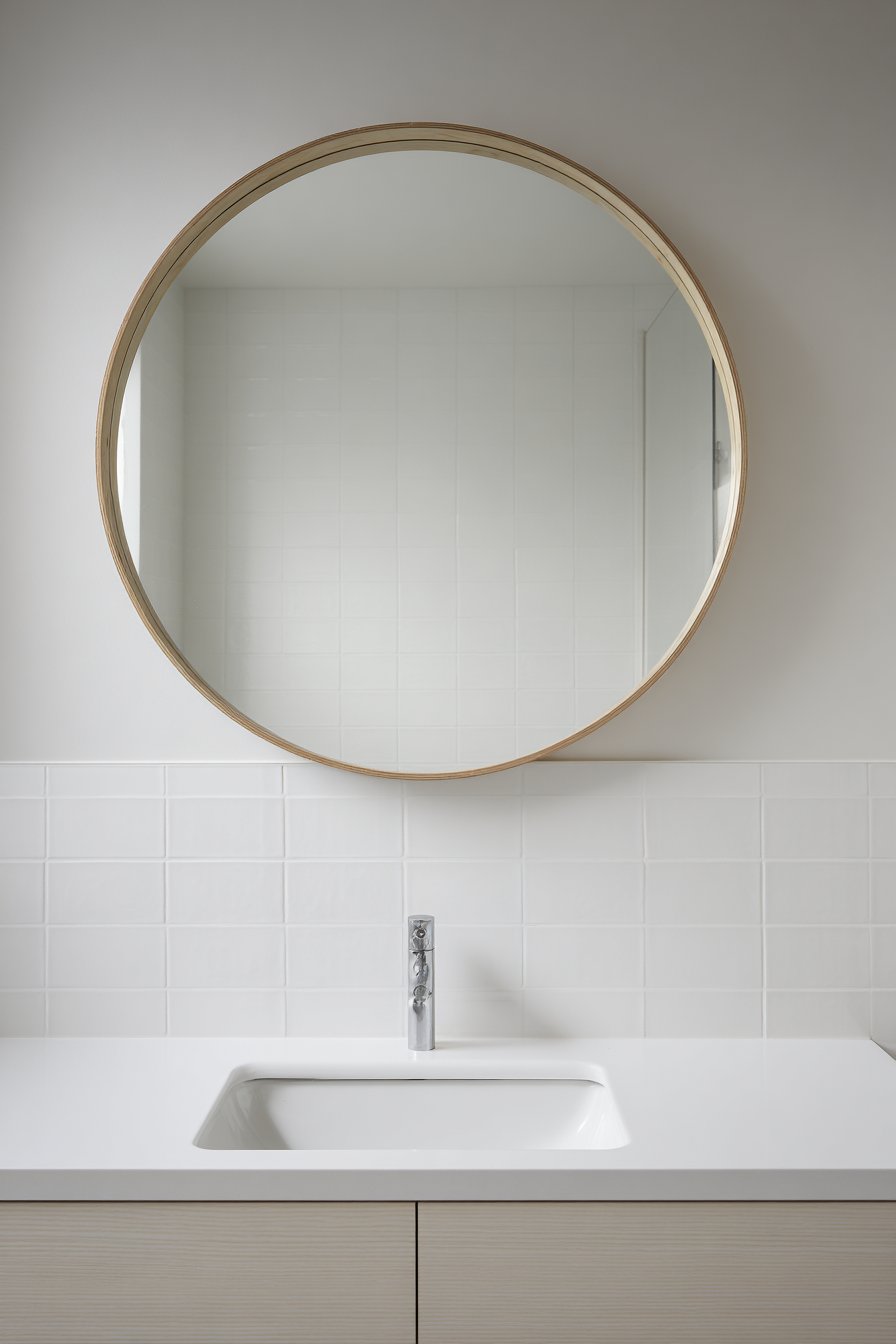
The simple round mirror with thin teak wood rim mounted above a floating vanity with integrated sink exemplifies the understated elegance that defines Scandinavian bathroom design. This mirror decoration idea celebrates natural materials, clean lines, and functional simplicity—core principles of Nordic design philosophy. The slender teak rim provides just enough visual definition to distinguish the mirror from the wall without adding unnecessary decorative embellishment. The warm wood tone introduces organic texture within the predominantly white bathroom environment, creating essential visual warmth that prevents minimalism from feeling cold or clinical.
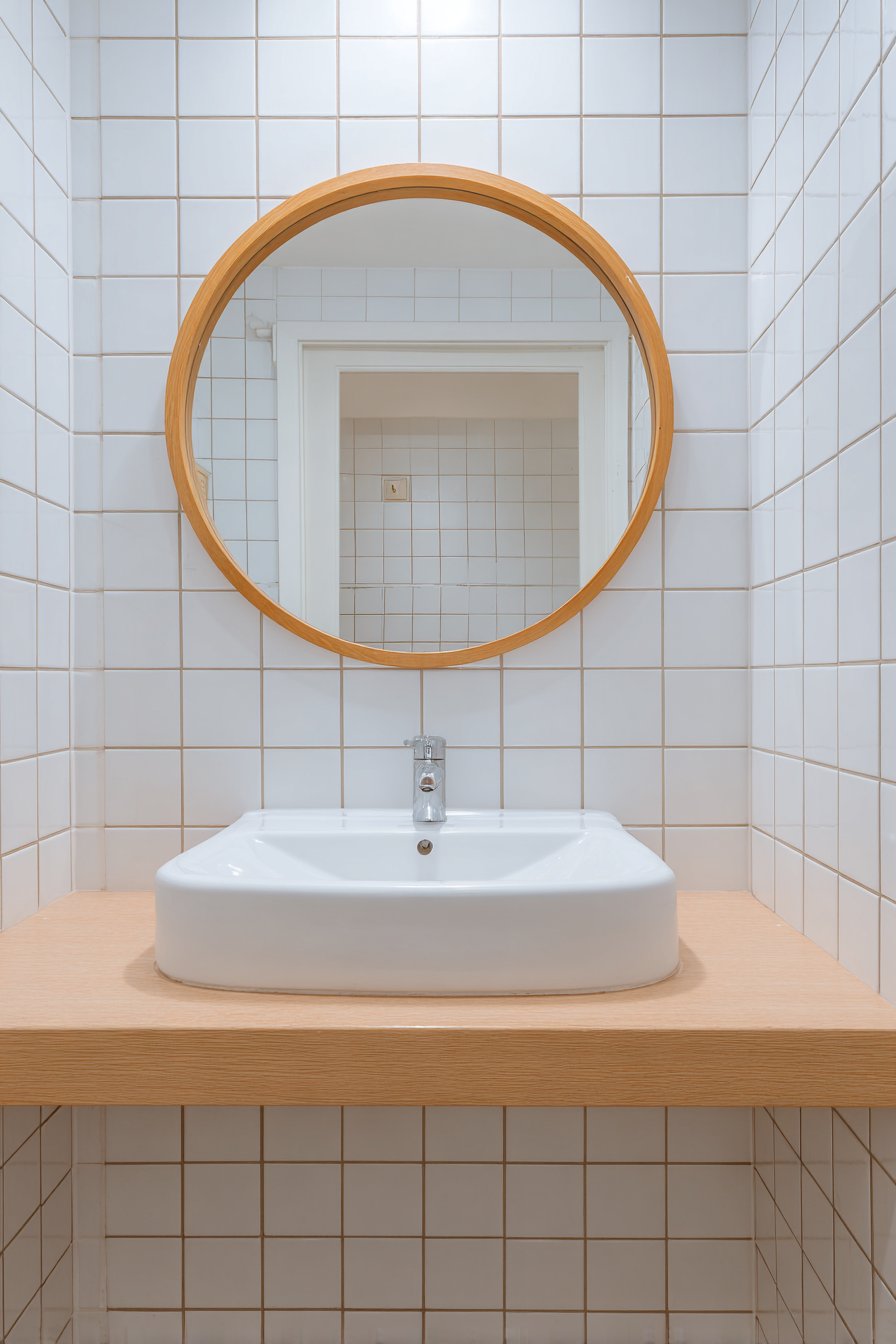
Positioned in a light, airy bathroom with white subway tiles, this mirror establishes the calm, uncluttered aesthetic that makes Scandinavian design feel so inherently peaceful. The round shape introduces soft geometry that balances the rectilinear subway tile pattern and the angular lines of the floating vanity. Soft natural daylight creates gentle reflections without harsh glare, supporting the bathroom’s function as a tranquil space for morning and evening rituals. The integrated sink maintains clean lines and reduces visual clutter—consistent with the Scandinavian emphasis on thoughtful, multi-functional design.
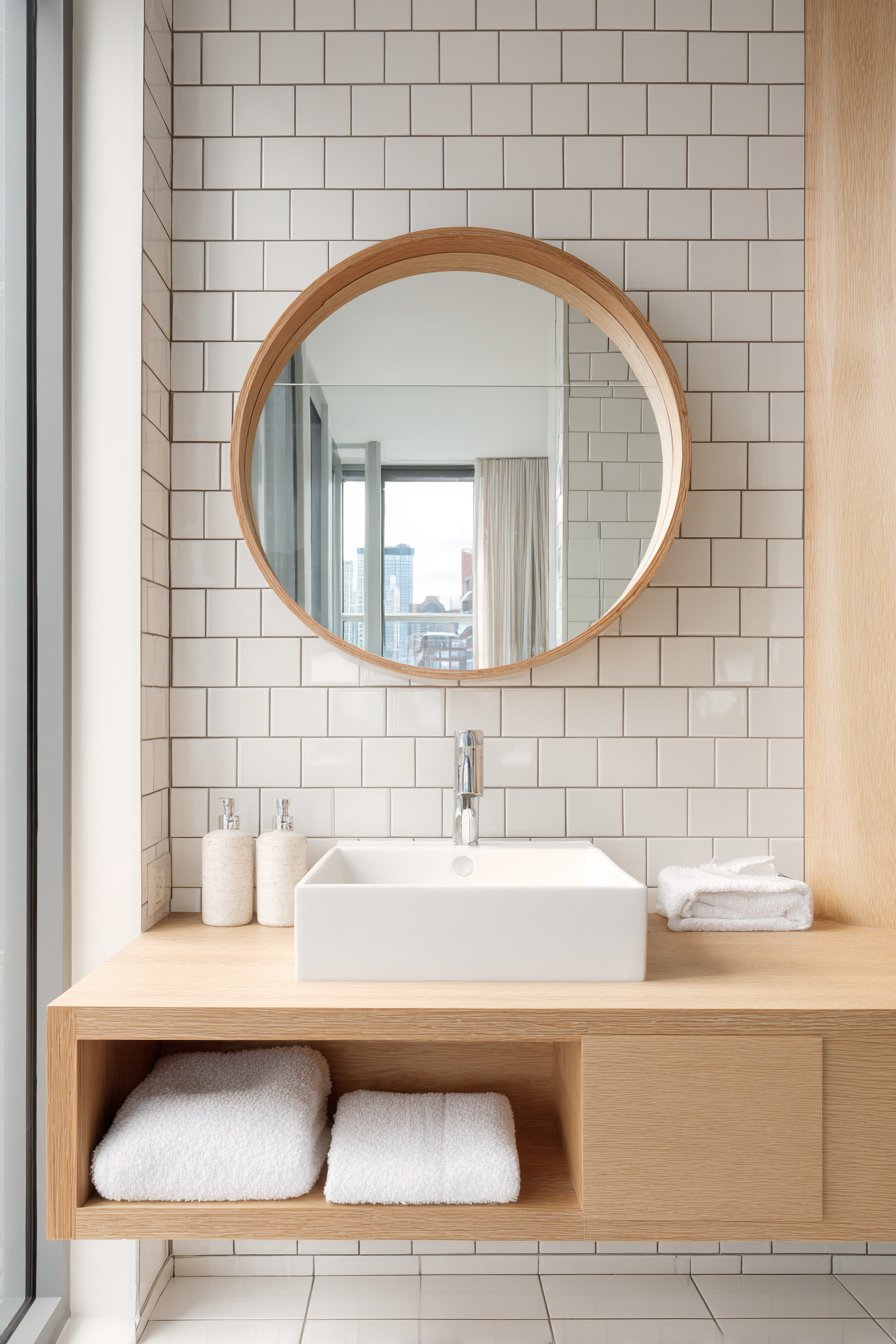
Interior design photography with balanced exposure highlights the understated elegance and functional simplicity that characterize this approach. The minimal styling—perhaps a single small plant or simple soap dispenser—maintains the uncluttered aesthetic essential to Scandinavian design success. This mirror decoration idea appeals to those who value quality craftsmanship, natural materials, and designs that create serenity through restraint rather than abundance.
Key Design Tips:
- Choose high-quality teak with beautiful grain that can serve as visual interest within the simple design
- Maintain the natural wood finish with appropriate oil treatments that preserve and enhance the warm color
- Keep surrounding bathroom styling minimal—Scandinavian design succeeds through restraint and careful editing
- Ensure adequate natural light reaches the bathroom to support the light, airy aesthetic central to Nordic design
- Coordinate with other natural wood elements in the bathroom (perhaps shelving or accessories) to create cohesive material narrative
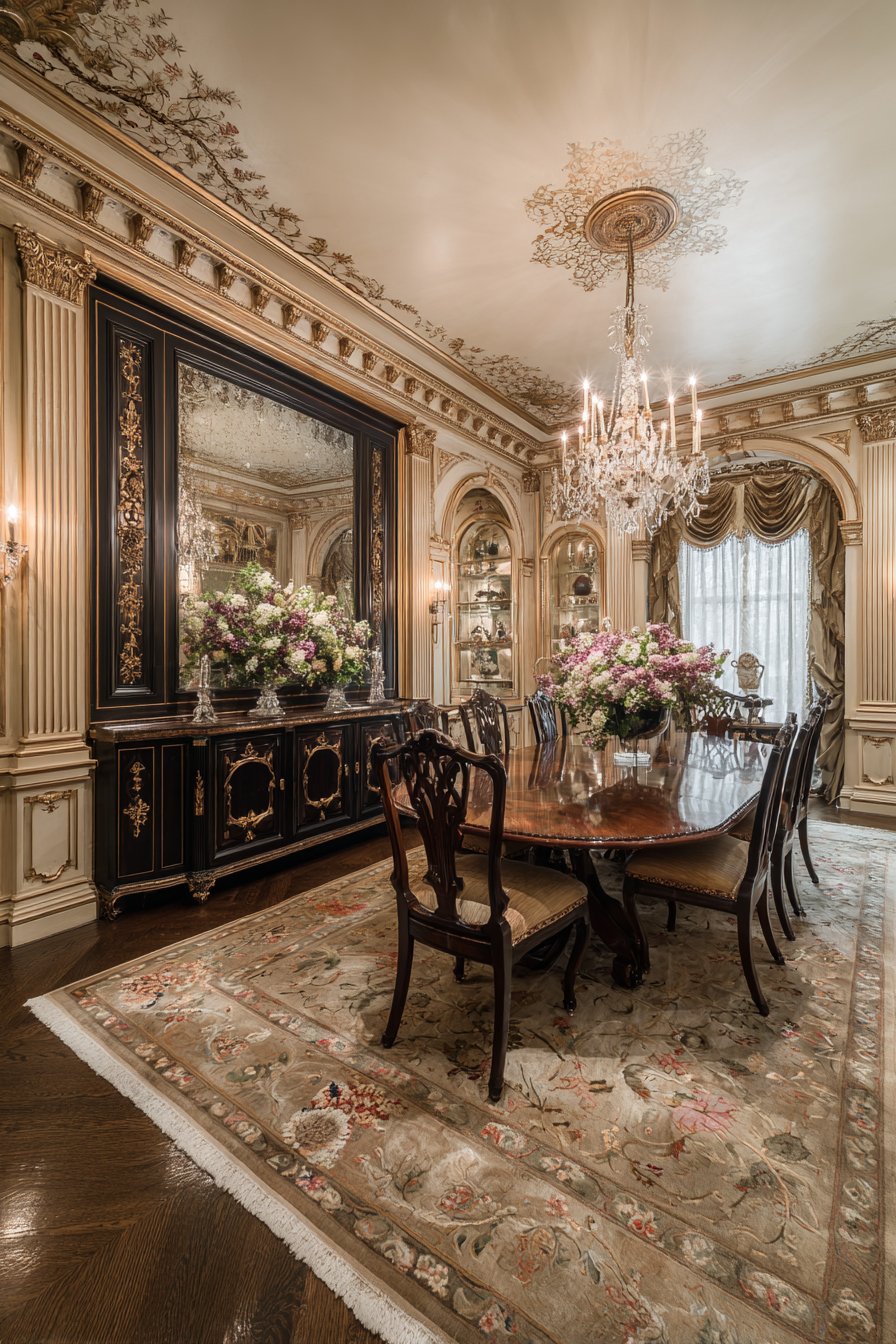
20. Traditional Grandeur: Dark Mahogany Carved Frame
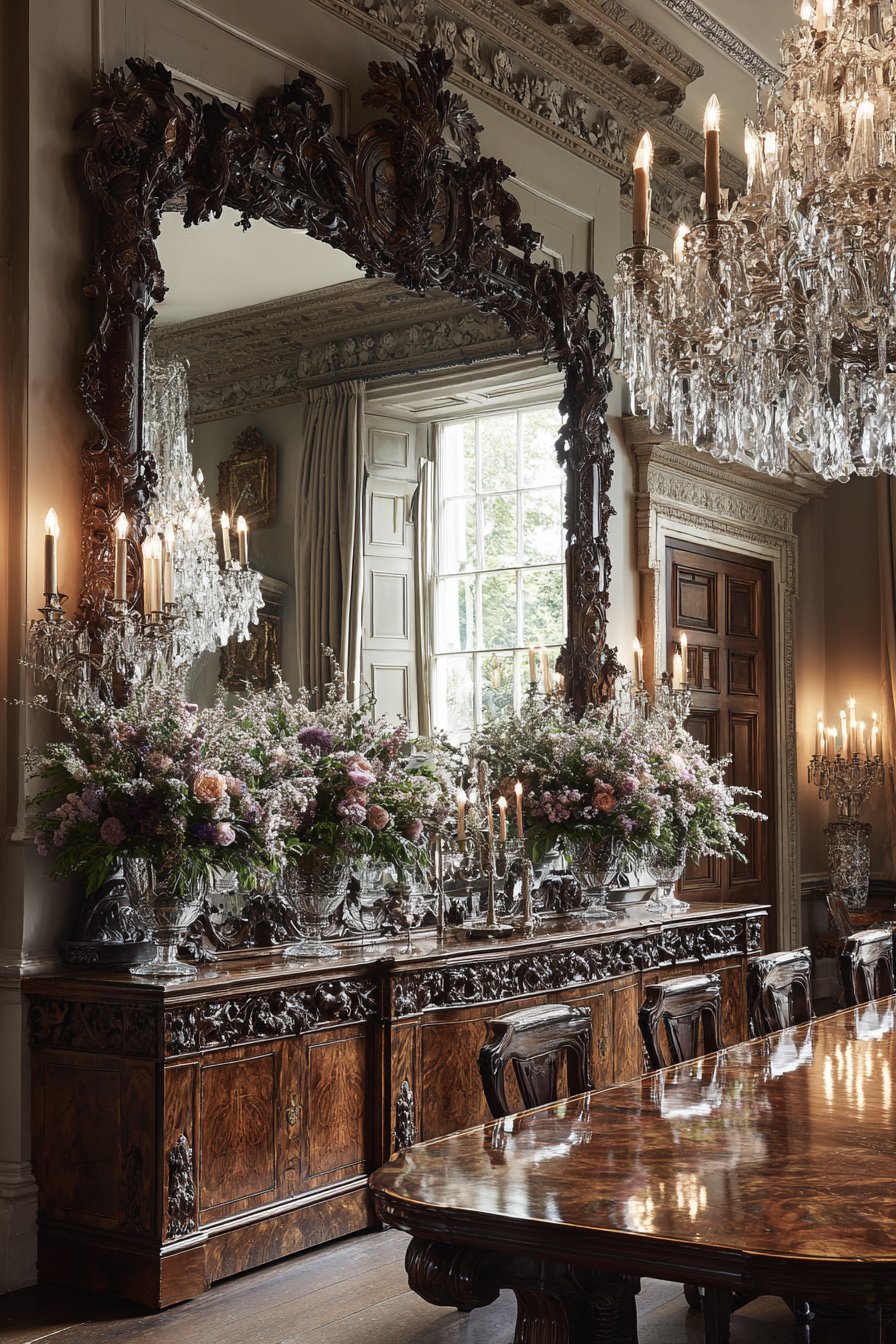
The large rectangular mirror with elaborate carved wooden frame in dark mahogany finish brings formal, classical styling to traditional dining room mirror decoration ideas. This approach features intricate carved details—perhaps acanthus leaves, scrollwork, or geometric patterns—that demonstrate fine woodworking craftsmanship and reference historical furniture styles. The dark mahogany finish adds rich, saturated color and creates substantial visual weight appropriate for formal dining spaces where design can be more elaborate. Positioned above a matching wood sideboard, this mirror establishes the room’s traditional character while serving practical functions.
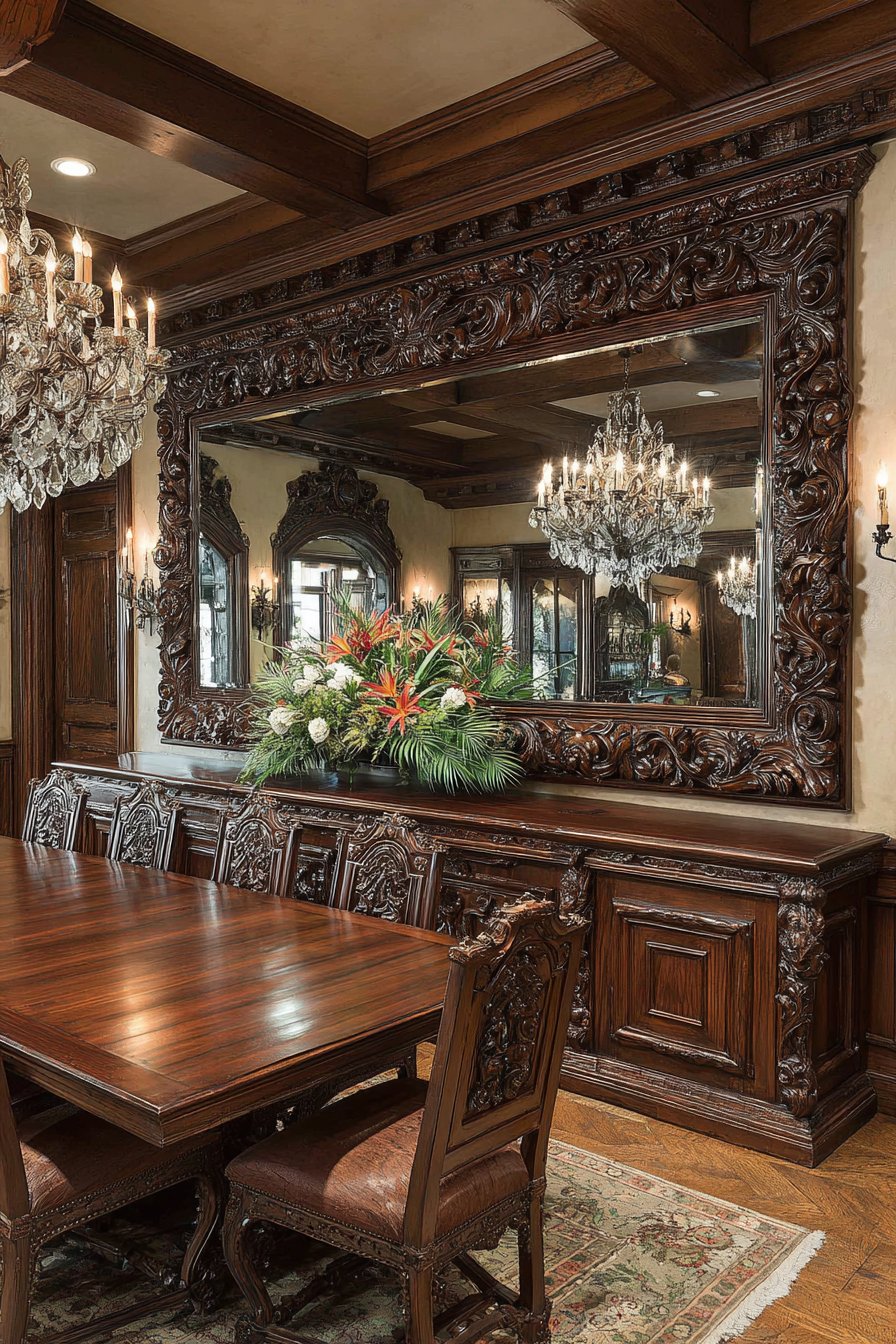
The mirror’s strategic placement allows it to reflect the crystal chandelier suspended above the dining table, effectively doubling the sparkle and perceived grandeur of this important lighting fixture. This reflected chandelier creates mesmerizing visual depth while amplifying the room’s illumination—particularly valuable during evening dinner parties when candlelight and chandelier glow create magical ambiance. The mirror also makes the dining room appear more spacious by reflecting portions of the table and chairs, creating visual layers that add complexity to the space.
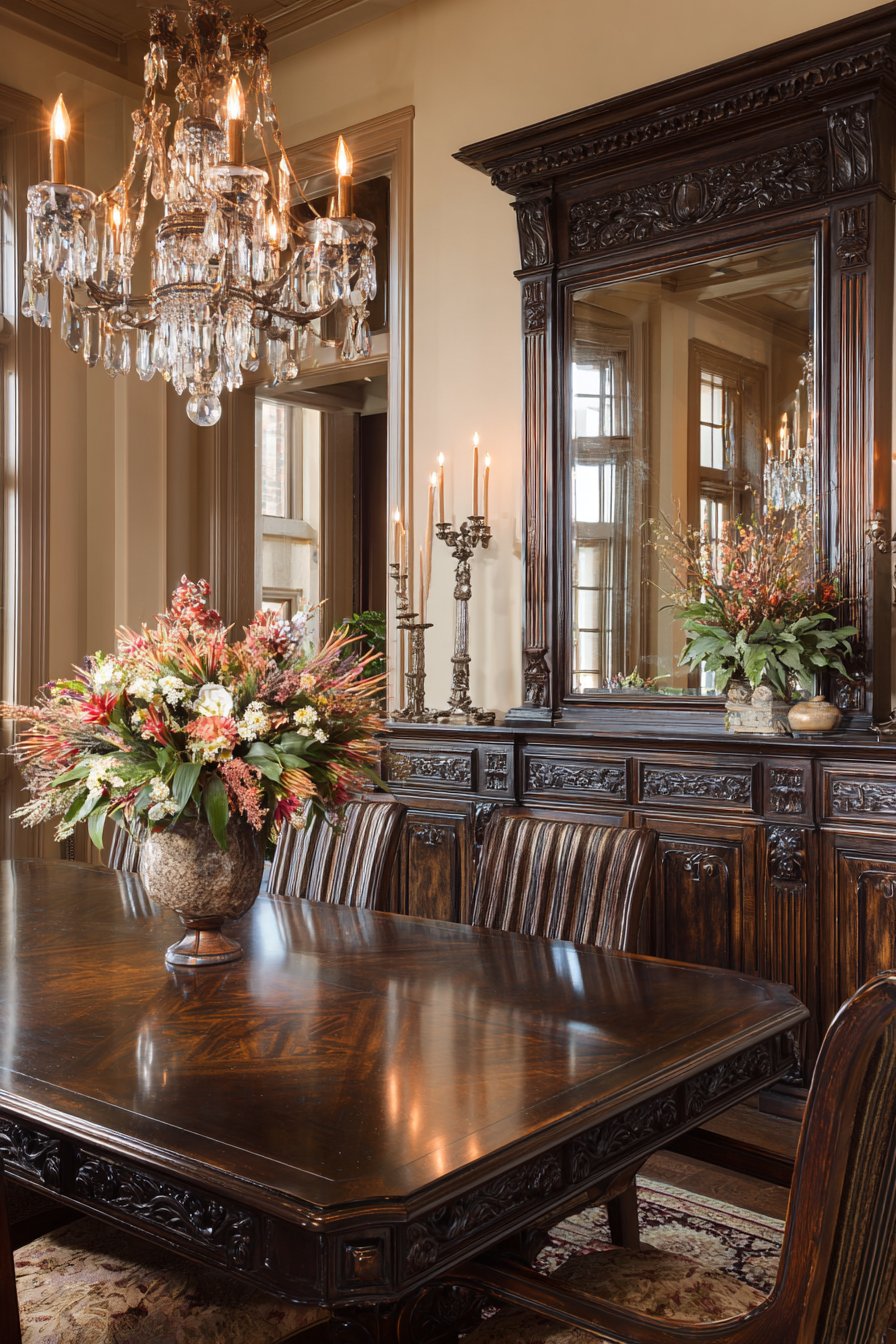
Professional interior photography captures the formal, classical styling while demonstrating the mirror’s role in enhancing the room’s sense of grandeur through reflection and light manipulation. The dark wood frame coordinates with traditional dining furniture, creating material cohesion that unifies the room’s design. This mirror decoration idea works particularly well in homes with formal dining rooms used for special occasions, where elaborate styling is appropriate and appreciated.
Key Design Tips:
- Ensure the mirror proportions relate appropriately to the sideboard width—typically 50-70% for visual balance
- Position high enough above the sideboard to create visual distinction between pieces while maintaining clear relationship
- Consider the chandelier’s position carefully—the mirror should reflect its center for symmetrical impact
- Maintain the wood finish with appropriate furniture polish or oil to preserve the rich color and protect the carved details
- Style the sideboard with formal accessories (perhaps silver candlesticks or fine china) that reinforce the traditional aesthetic
21. Mid-Century Modern Curves: Asymmetrical Kidney-Shaped Mirror
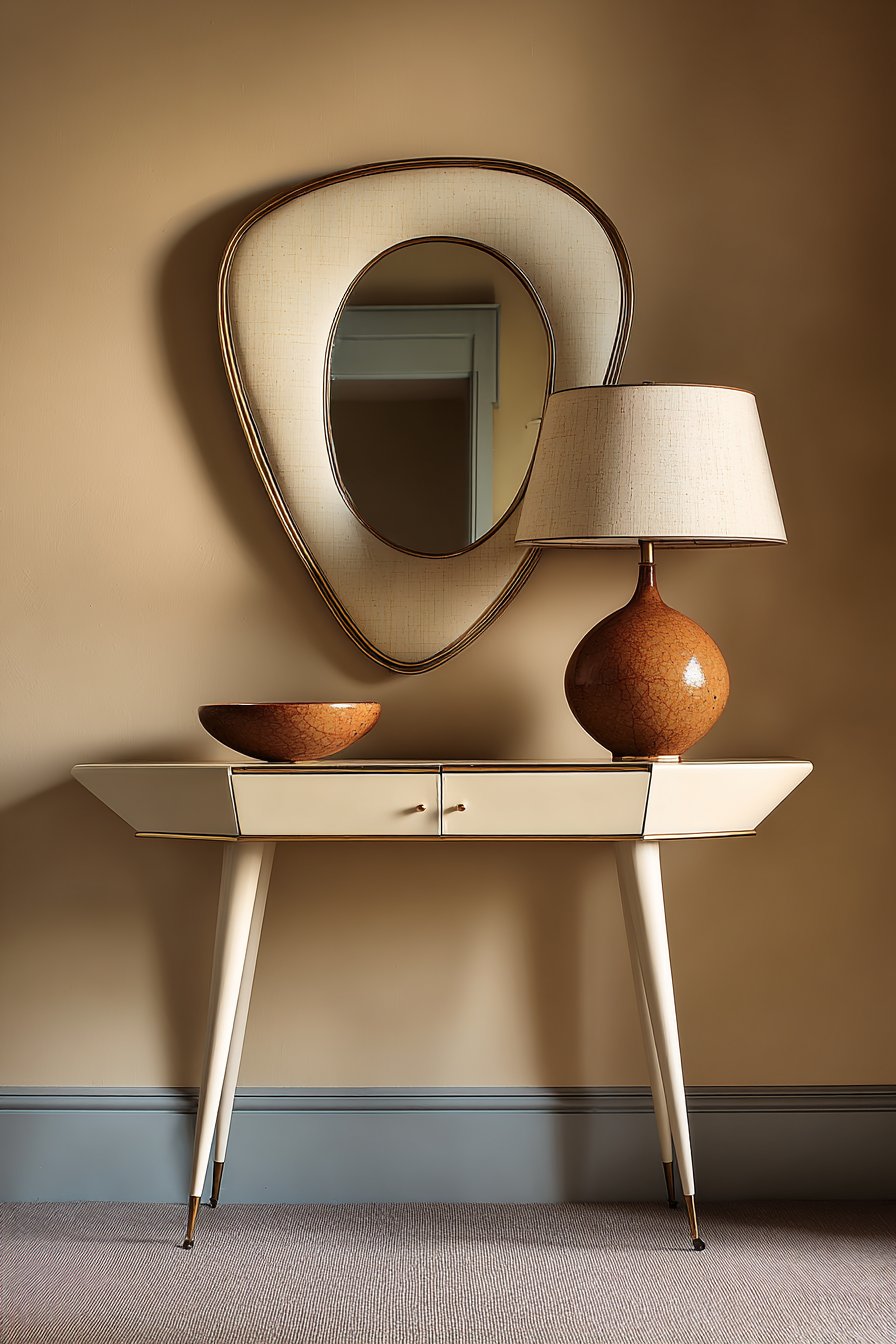
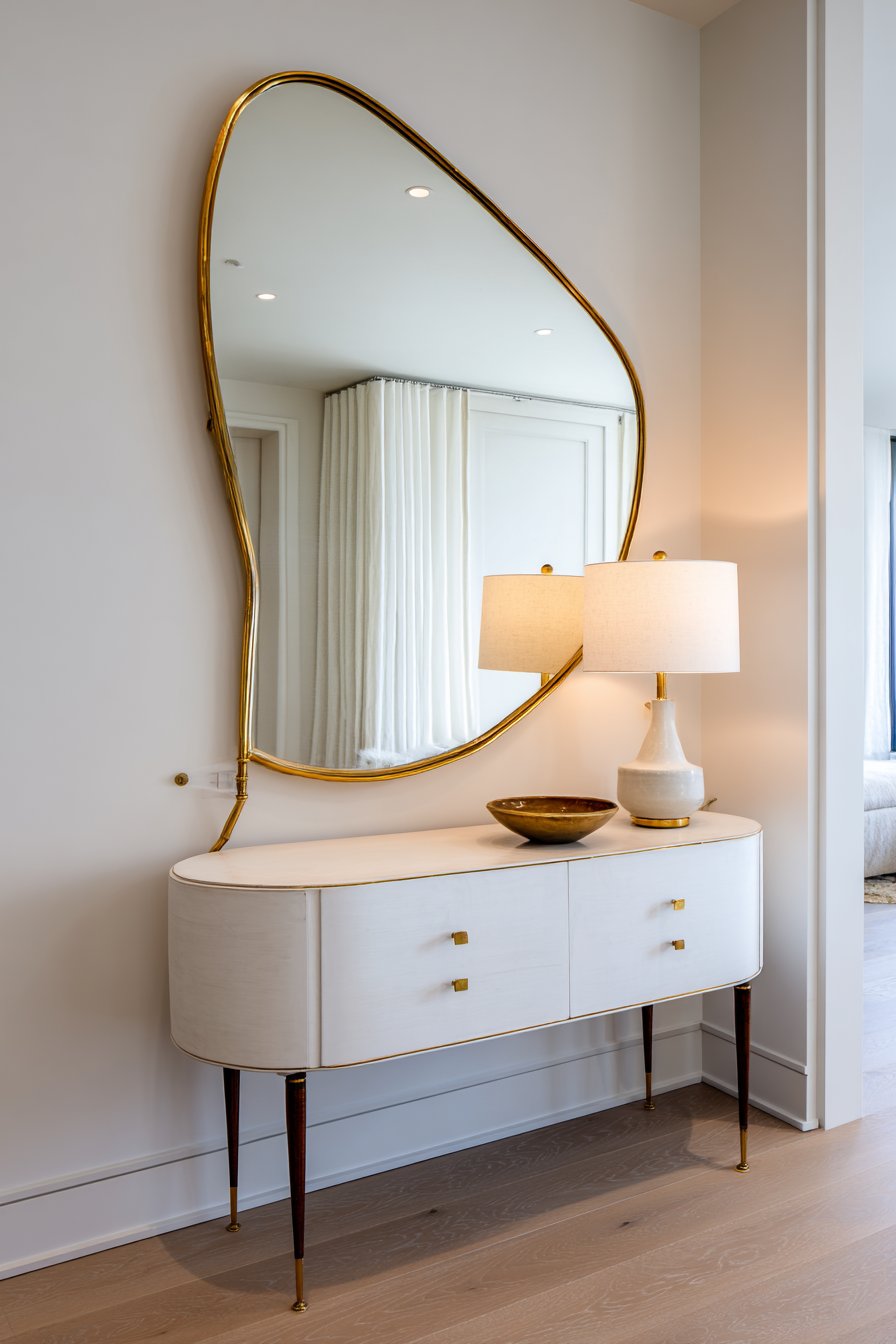
The asymmetrical kidney-shaped mirror with slim brass frame characteristic of 1950s aesthetic brings retro-inspired charm to mirror decoration ideas while functioning as sculptural artwork. This approach celebrates the organic, biomorphic forms that defined mid-century modern design, where furniture and accessories featured flowing curves inspired by natural shapes rather than geometric precision. The kidney shape—with its gentle asymmetrical curve—creates visual movement and softness that contrasts beautifully with the rectilinear architecture of most homes. The slim brass frame adds refined definition without overwhelming the distinctive shape.
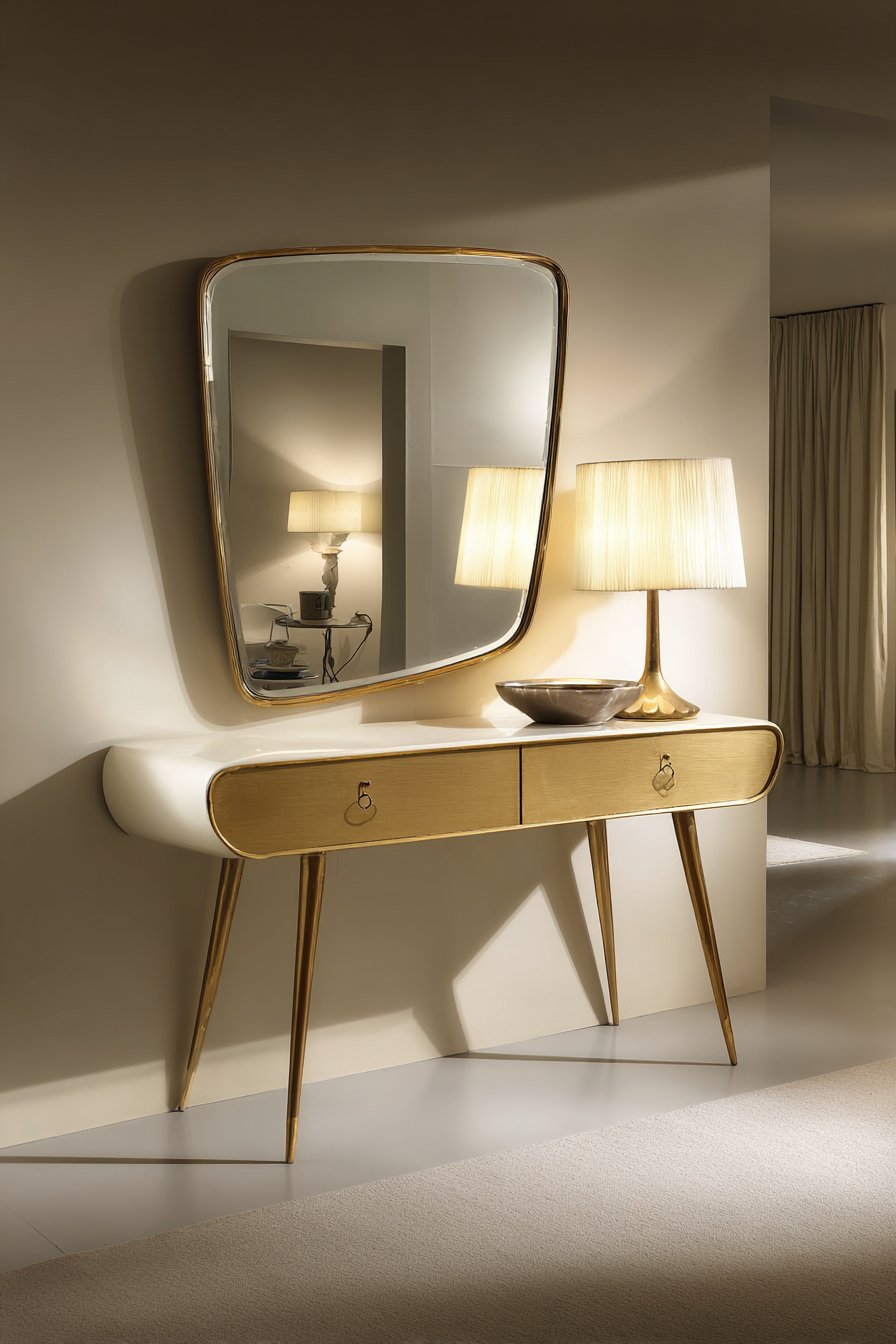
Positioned in an entryway above a sleek console table with tapered legs—another mid-century modern signature—this mirror establishes the home’s retro-inspired aesthetic from the moment guests arrive. The brass frame coordinates with brass or gold hardware details often featured in mid-century modern interiors, creating subtle material repetition. Below the mirror, styling might include a ceramic bowl in period-appropriate colors (perhaps mustard yellow or burnt orange) and a table lamp with classic mid-century silhouette. The overall composition references specific design history while maintaining clean, uncluttered presentation.
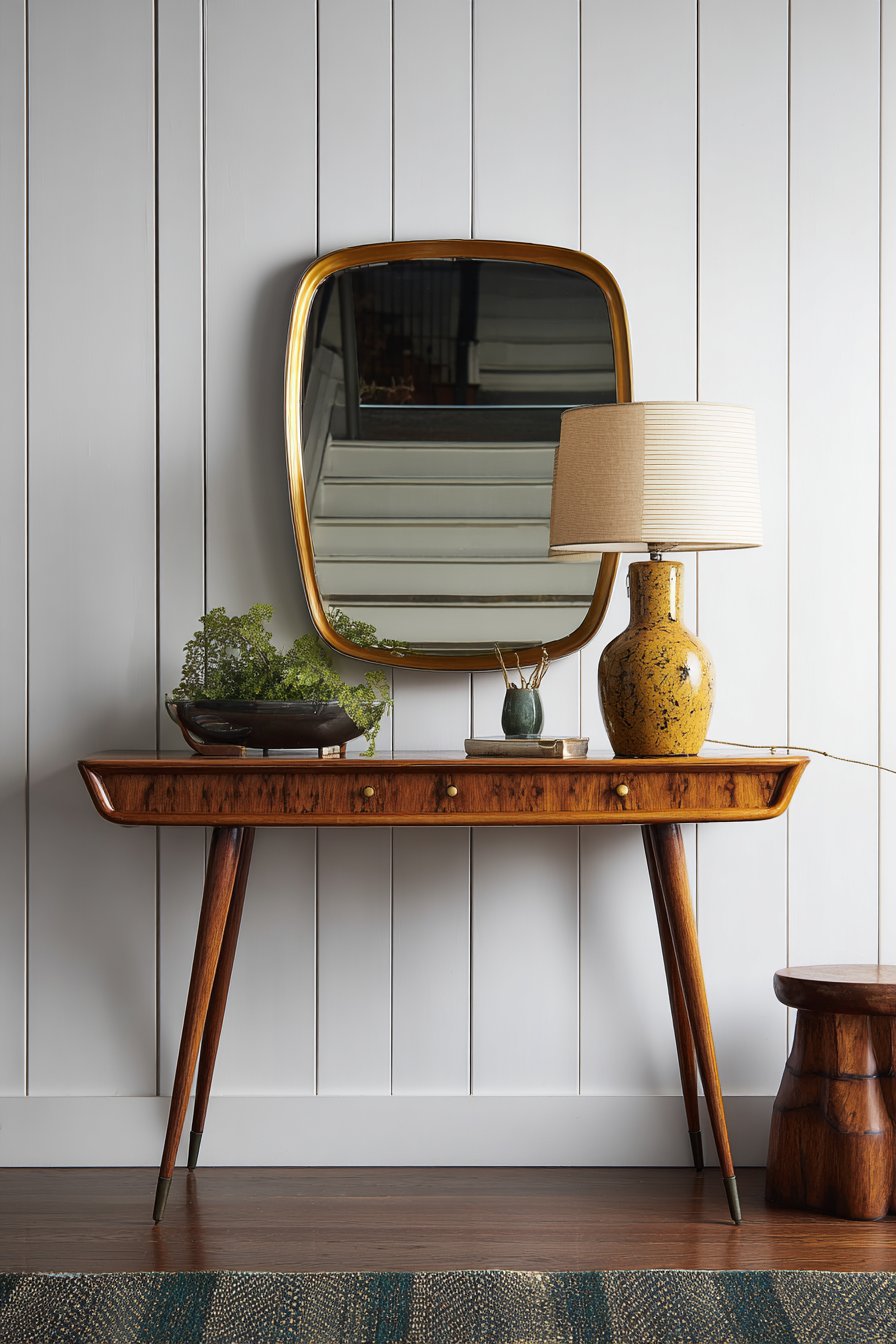
Interior photography with soft lighting captures the retro-inspired design and showcases the mirror’s sculptural quality as decorative art that happens to be functional. The organic shape introduces visual interest and personality without requiring elaborate surface decoration—form itself provides the aesthetic impact. This mirror decoration idea appeals particularly to vintage enthusiasts, mid-century modern collectors, and those who appreciate designs that reference specific historical periods with authenticity and knowledge.
Key Design Tips:
- Ensure the mirror hangs level despite its asymmetrical shape, which may require careful attention to mounting position
- Style the space with other mid-century modern elements (perhaps a sculptural lamp or period-appropriate ceramics) to reinforce the aesthetic
- Coordinate the brass frame with other warm metal finishes in your entryway lighting and hardware
- Keep surrounding walls relatively simple to allow the distinctive shape to command attention without visual competition
- Position to reflect interesting views or design elements rather than random walls or storage areas
22. Child-Safe Whimsy: Fabric-Framed Nursery Mirror
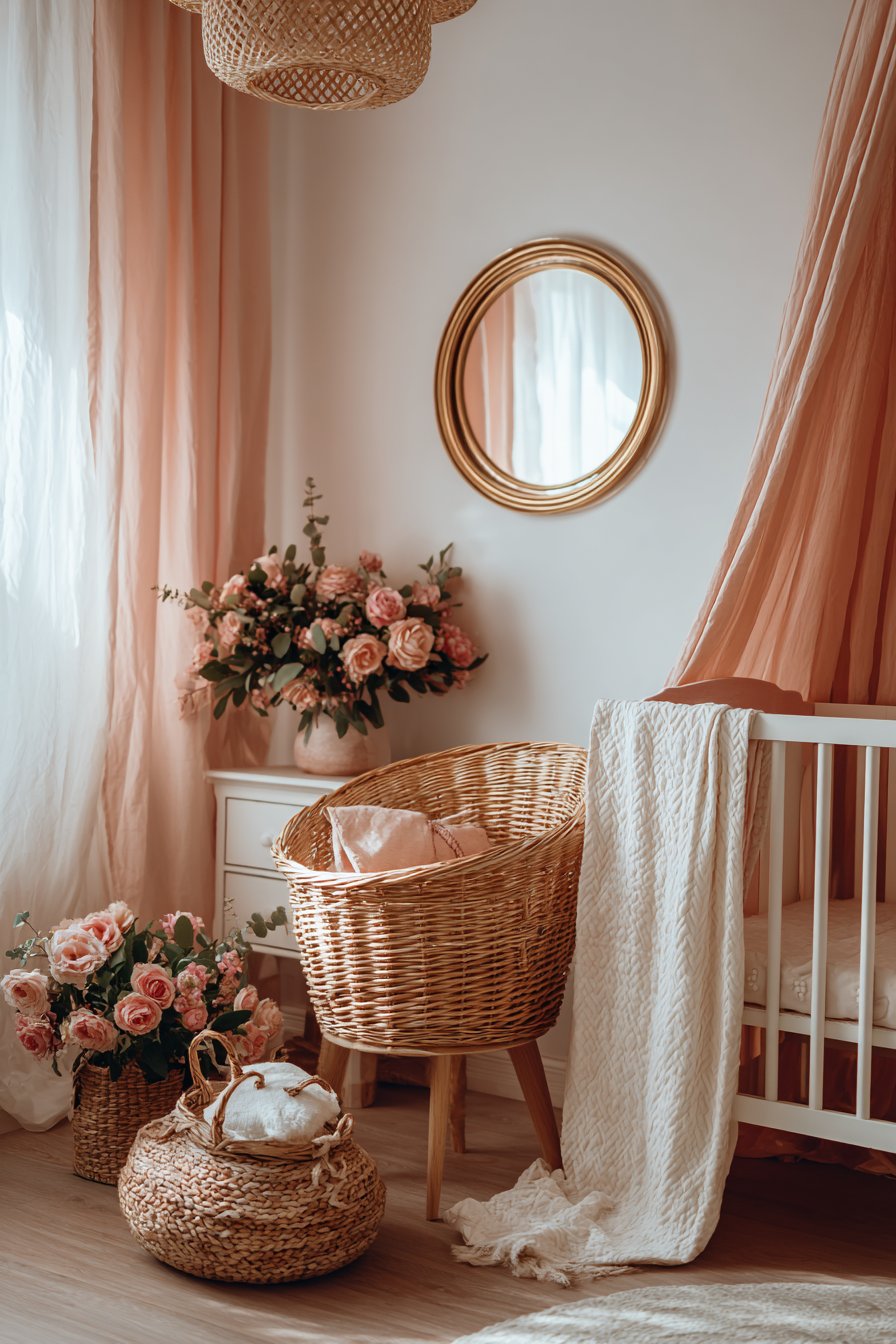
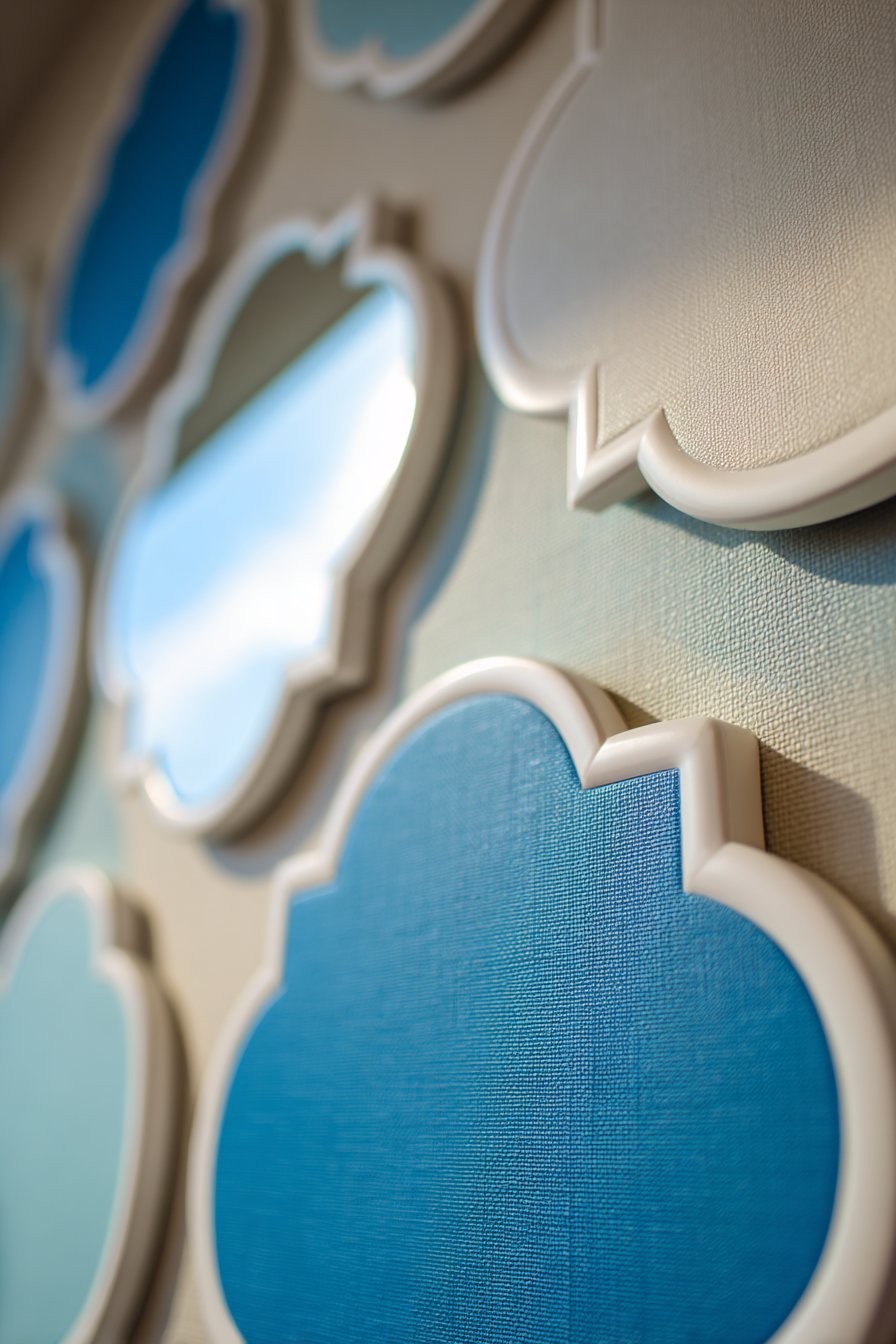
The safe acrylic mirror with cushioned fabric frame in soft pastel colors mounted at child height represents a thoughtful approach to mirror decoration ideas in nurseries and children’s rooms. This design prioritizes safety without sacrificing aesthetic appeal, using shatterproof acrylic rather than glass to eliminate injury risks from breakage. The cushioned fabric frame provides additional protection while introducing soft texture and gentle color appropriate for nursery environments. The rounded design without sharp corners ensures safe interaction as babies and toddlers explore their reflections—an important developmental activity that supports self-recognition and spatial awareness.
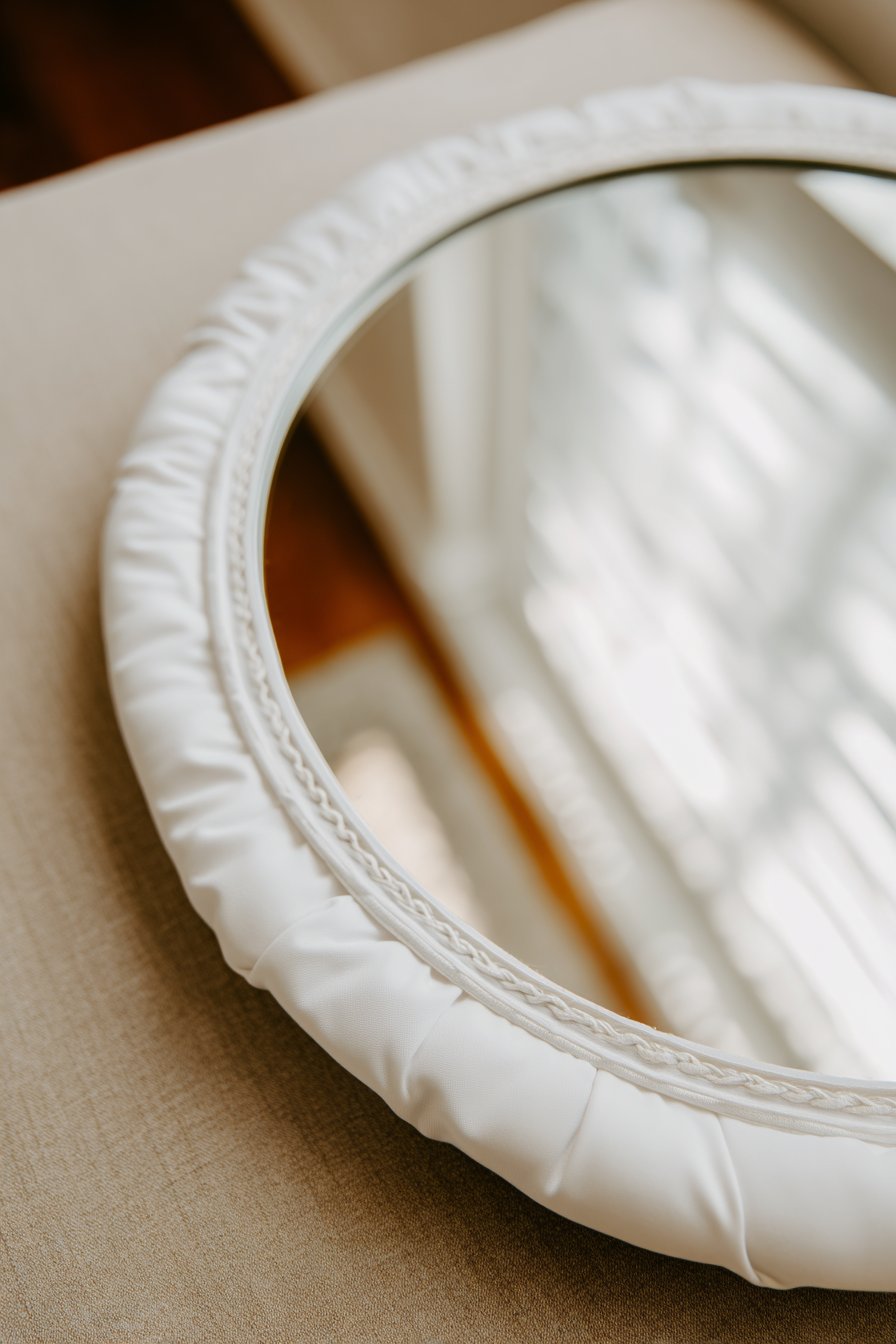
Mounted at child height rather than adult eye level, this mirror makes reflection accessible for babies during tummy time and toddlers exploring independence. The safe reflective surface encourages visual development and provides entertainment as children discover their own movements and expressions. Natural lighting creates soft, non-startling reflections that engage without overwhelming developing visual systems. The gentle pastel colors of the fabric frame—perhaps soft pink, mint green, or pale yellow—coordinate with typical nursery palettes while the cushioned texture invites touch and exploration.
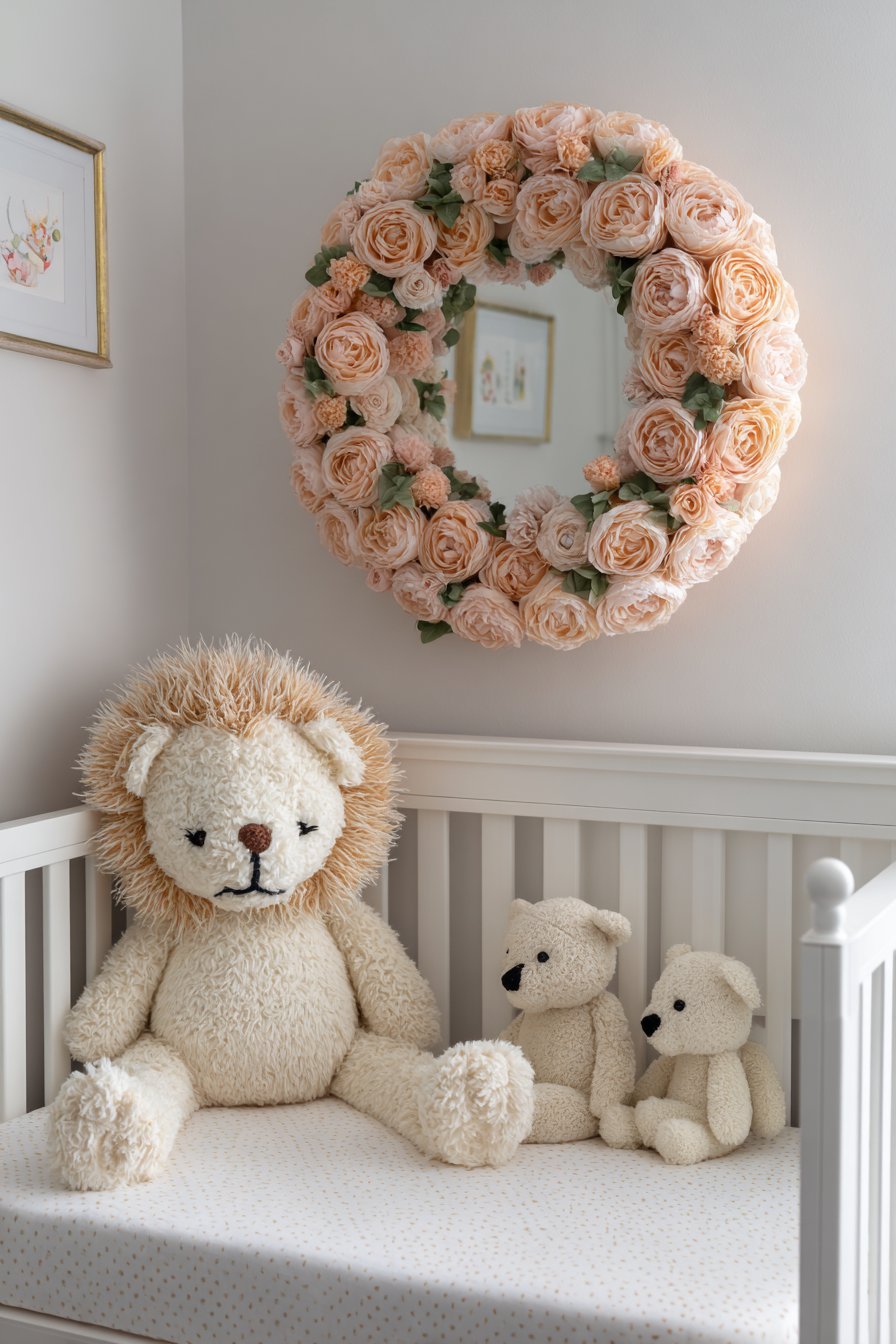
Interior design photography showcases the child-friendly, safety-conscious approach while demonstrating how functional child-safety features can be incorporated into attractive design. The fabric frame might feature patterns or textures that add visual interest—perhaps subtle stars, clouds, or geometric shapes that stimulate visual development. This mirror decoration idea appeals to safety-conscious parents who refuse to compromise on design quality while prioritizing their children’s wellbeing.
Key Design Tips:
- Verify that acrylic mirror is specifically marketed as shatterproof and appropriate for children’s use
- Mount extremely securely despite the lightweight material—children may pull or lean on the mirror
- Choose fabric colors and patterns that coordinate with overall nursery design while remaining visually gentle
- Clean regularly with appropriate products safe for acrylic surfaces, avoiding harsh chemicals that might damage the material
- Consider the mirror’s height carefully—low enough for floor play but high enough that crawling babies don’t bump into it
23. Mediterranean Romance: Wrought Iron Arched Mirror
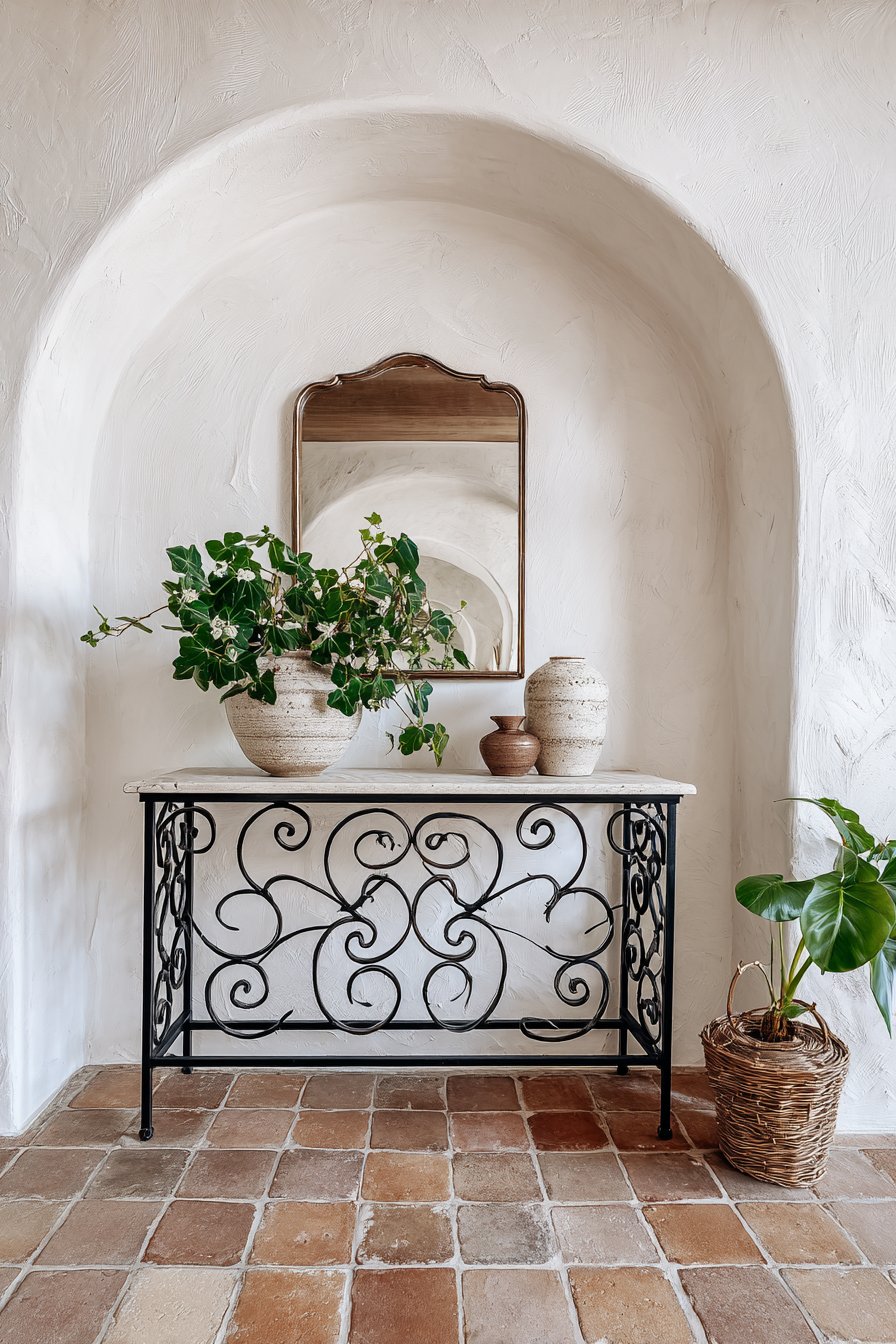
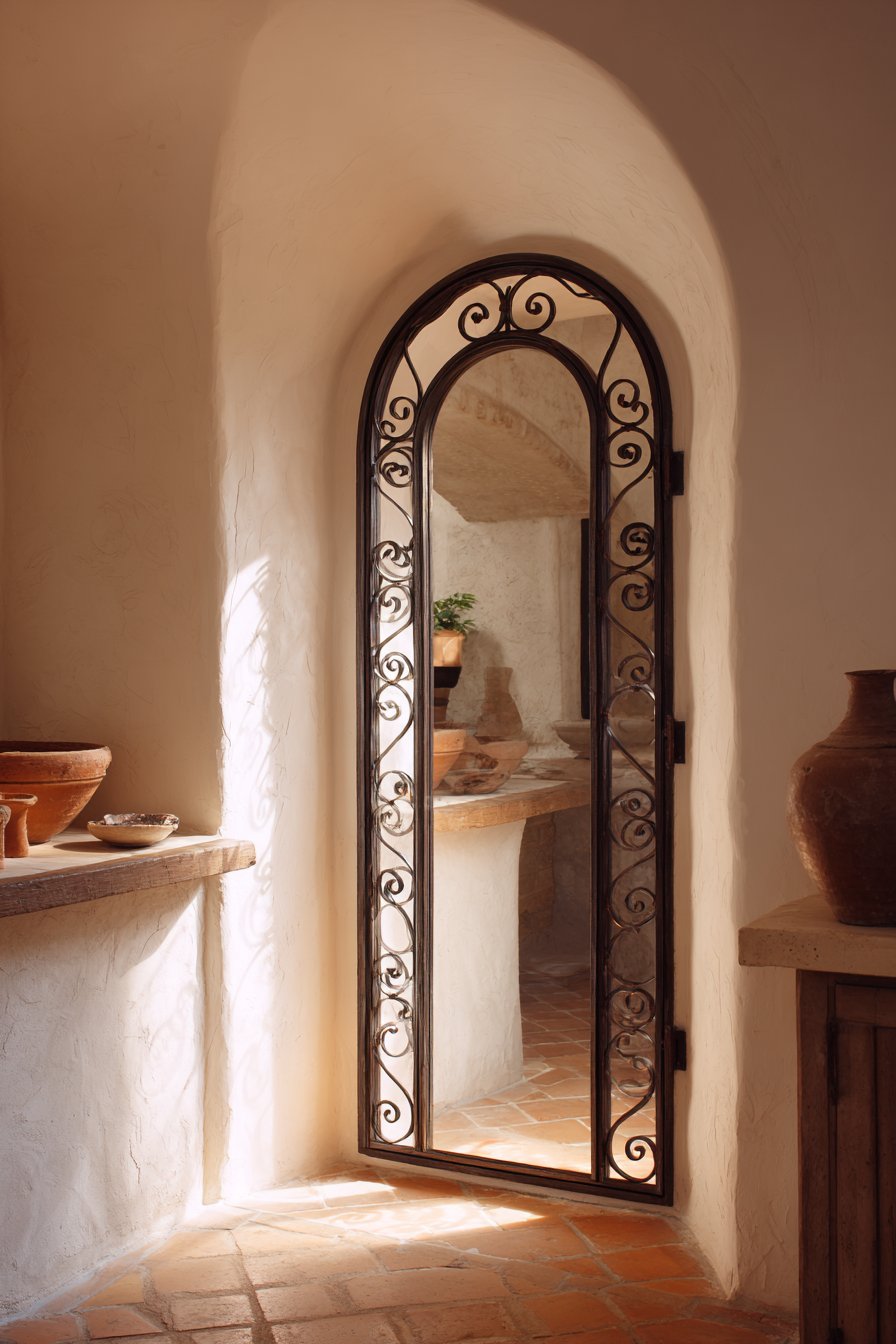
The arched mirror with wrought iron scrollwork frame in black finish brings Mediterranean elegance and Old World charm to entryway mirror decoration ideas. This approach features elaborate ironwork with flowing curves and decorative flourishes that reference the ornamental metalwork traditional to Spanish and Mediterranean architecture. The arched top echoes the architectural form of Moorish-influenced doorways and windows, creating visual connection between the mirror and the surrounding architecture. The black iron finish provides dramatic contrast against light walls while the open scrollwork maintains visual lightness despite the substantial frame.
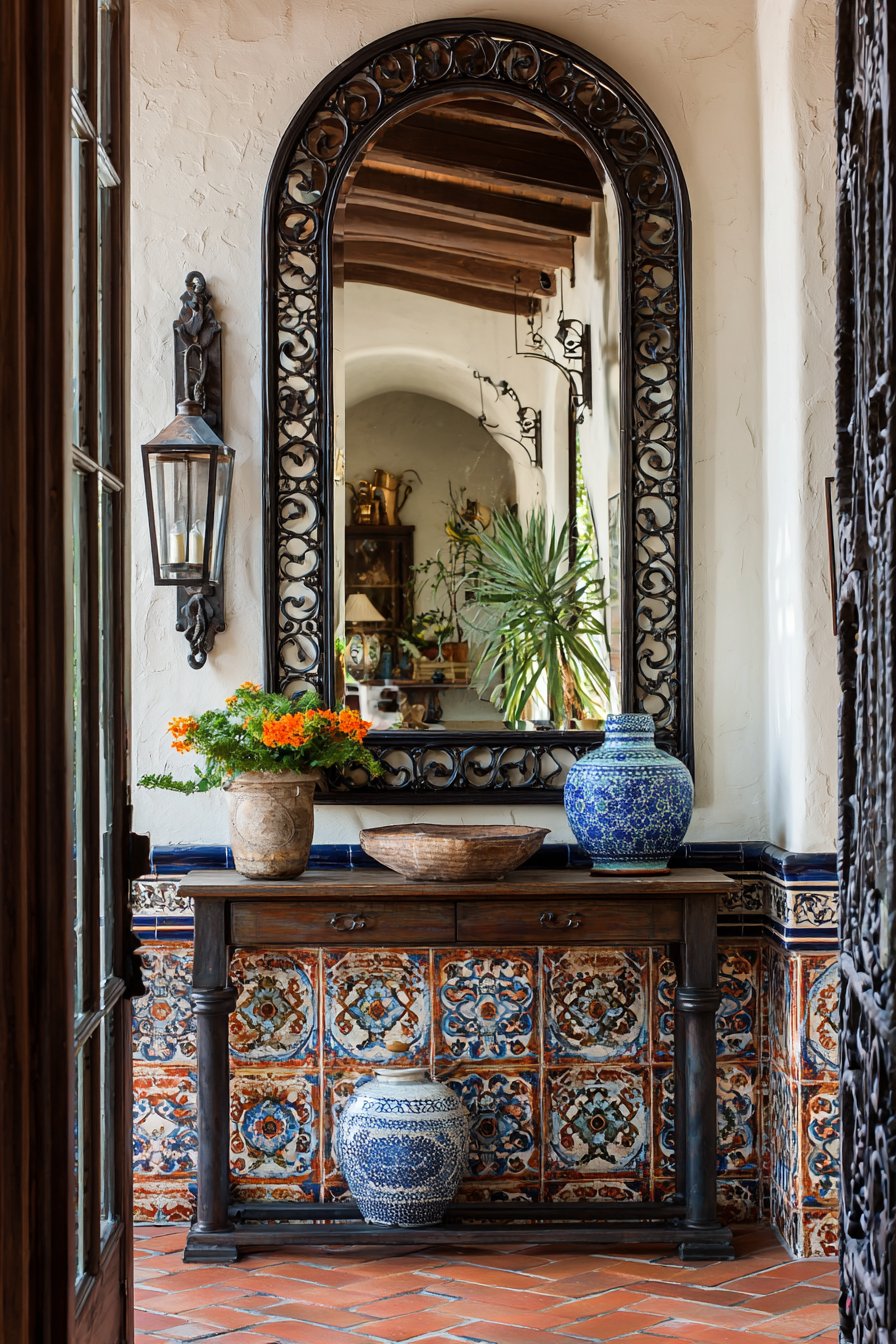
Positioned above a console table in an entryway with terracotta tile flooring and white stucco walls, this mirror establishes the Mediterranean aesthetic while reflecting these characteristic materials. The iron scrollwork casts interesting shadows against the wall as natural light shifts throughout the day, adding temporal dimension to the static decoration. Ceramic pottery placed on the console reinforces the Mediterranean material palette while the mirror reflects these colorful accessories, amplifying their decorative impact.
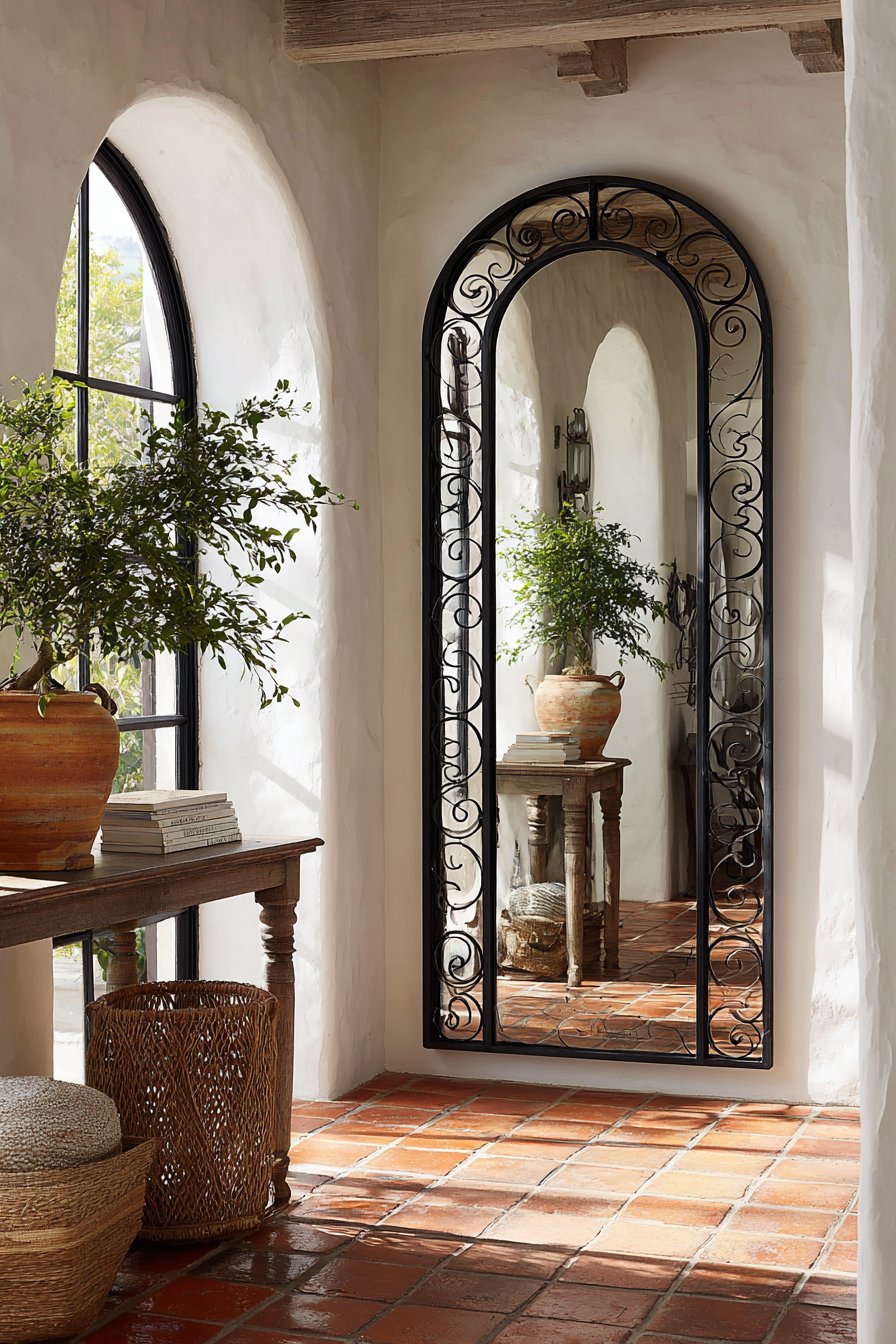
Professional interior photography captures the Old World elegance and demonstrates how the mirror contributes architecturally to the Mediterranean aesthetic. The arched shape introduces vertical emphasis that draws the eye upward, creating the perception of height—particularly valuable in entryways with standard ceiling heights. This mirror decoration idea works beautifully in Spanish Colonial, Mediterranean, and Tuscan-inspired homes where ornate metalwork and romantic styling are valued design elements.
Key Design Tips:
- Ensure the iron frame is properly finished to prevent rust—particularly important in humid climates
- Coordinate with other wrought iron elements in your home (perhaps lighting fixtures, stair railings, or furniture details)
- Keep wall color light to provide contrast that makes the black ironwork read clearly
- Style the console with Mediterranean-inspired accessories—ceramic pottery, terracotta planters, or copper bowls
- Position to reflect attractive architectural features or views through windows rather than mundane wall surfaces
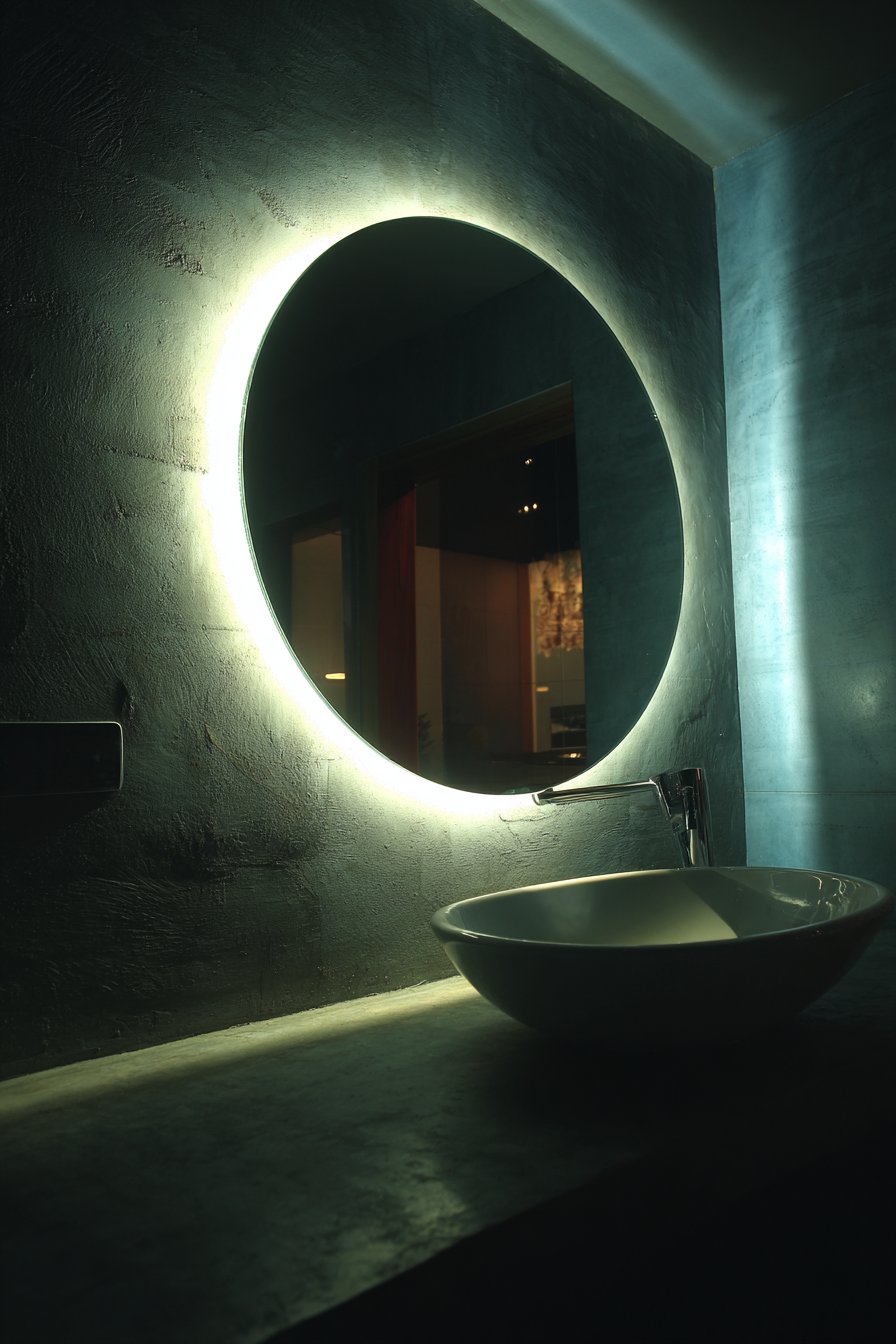
24. Futuristic Glow: Circular LED Backlit Statement Mirror
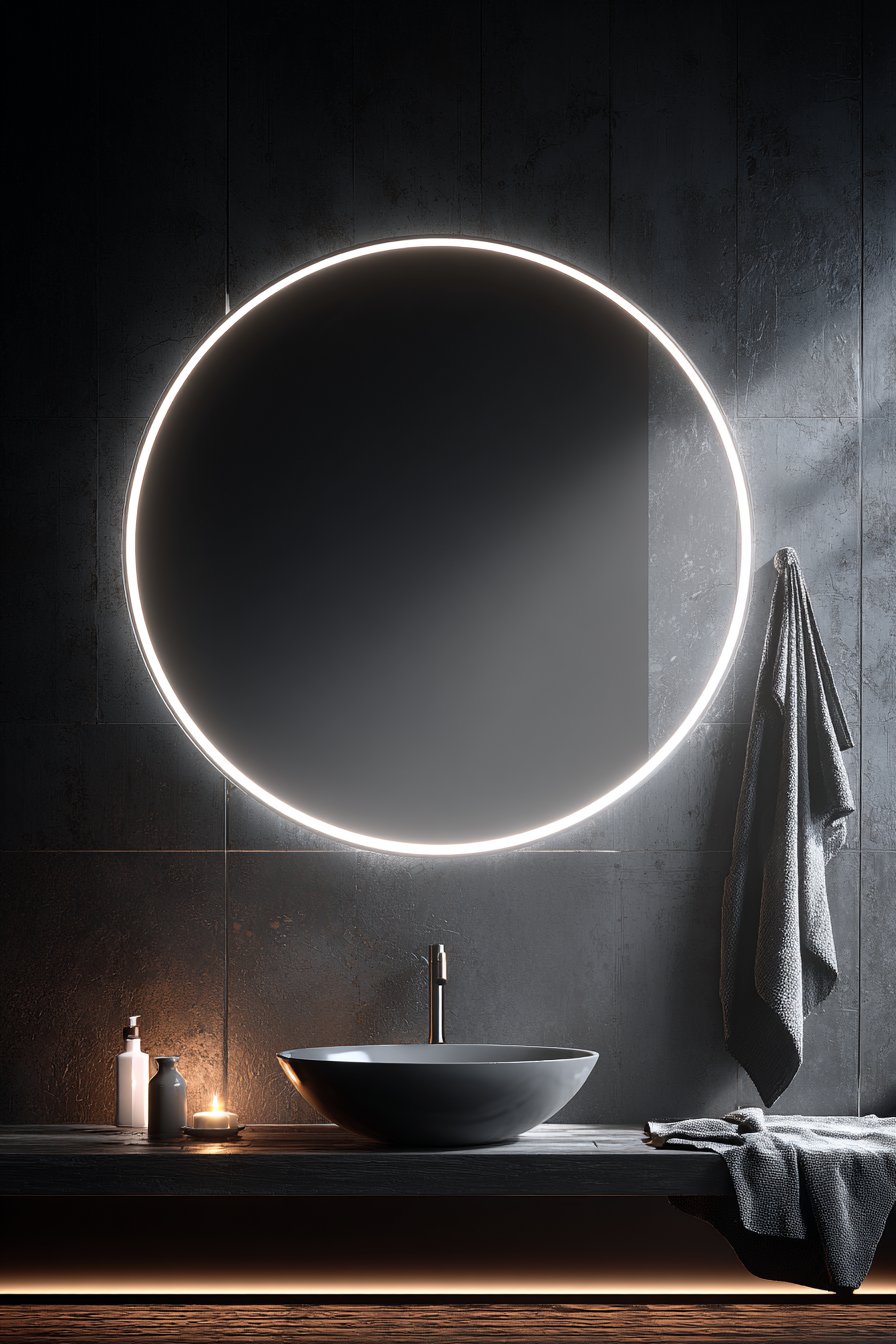
The backlit circular mirror with subtle LED glow around the perimeter creates floating appearance and dramatic lighting effect in modern powder room mirror decoration ideas. This approach combines functional task lighting with ambient design feature, where the perimeter LED creates a halo effect that seems to suspend the mirror away from the dark accent wall. The circular form creates perfect symmetry while the LED backlighting eliminates the need for separate vanity lighting—the mirror itself provides necessary illumination. The contemporary design embodies the futuristic aesthetic increasingly popular in modern bathroom design.
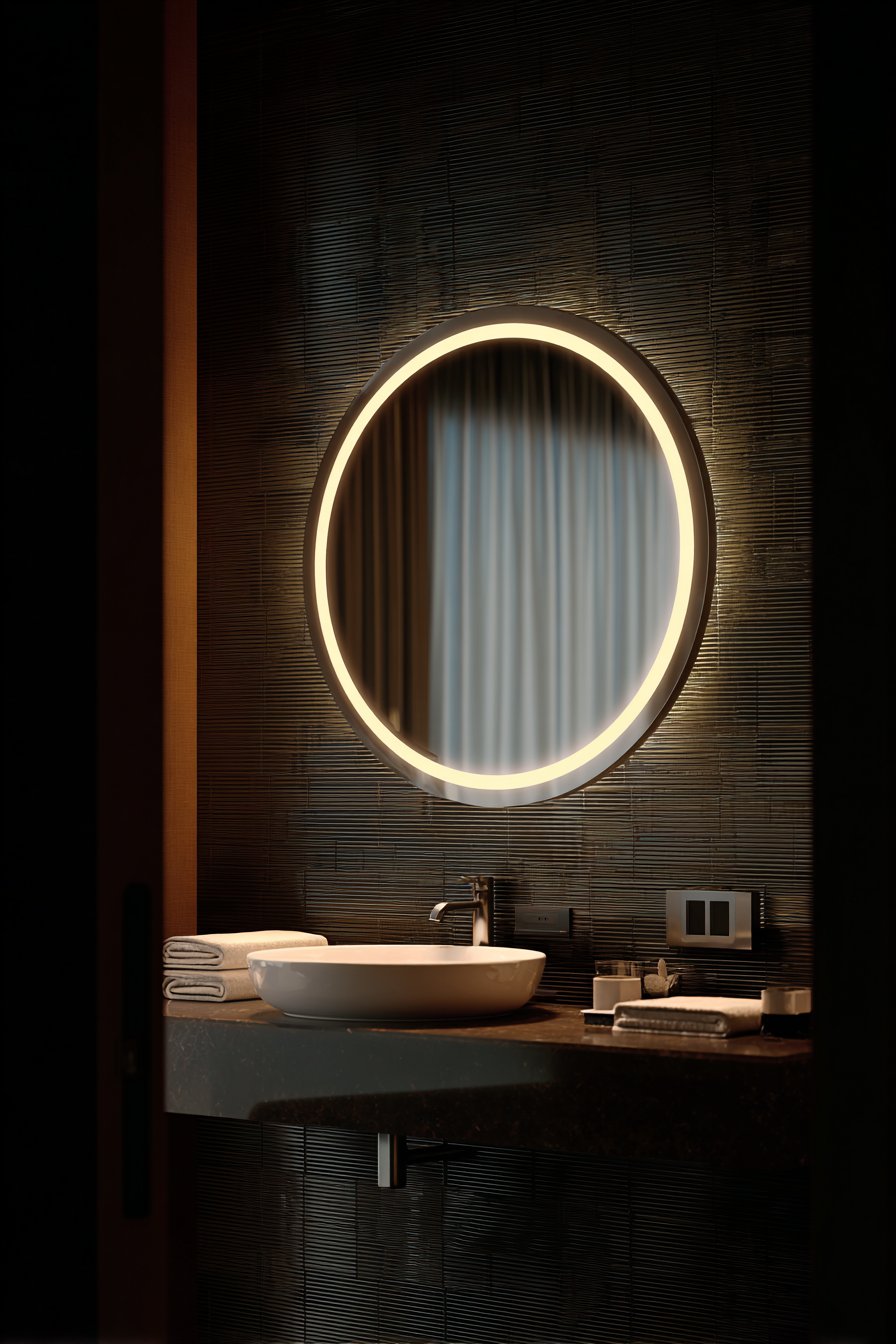
Mounted against a dark accent wall above a vessel sink, this mirror creates striking focal point through dramatic contrast between the glowing perimeter and the deep wall color. The LED technology allows for various color temperature options and often dimming capabilities, enabling users to adjust the lighting based on time of day, task requirements, or mood preferences. During evening hours, the soft glow can serve as gentle nighttime illumination, eliminating the need to turn on harsh overhead lights when entering the powder room.
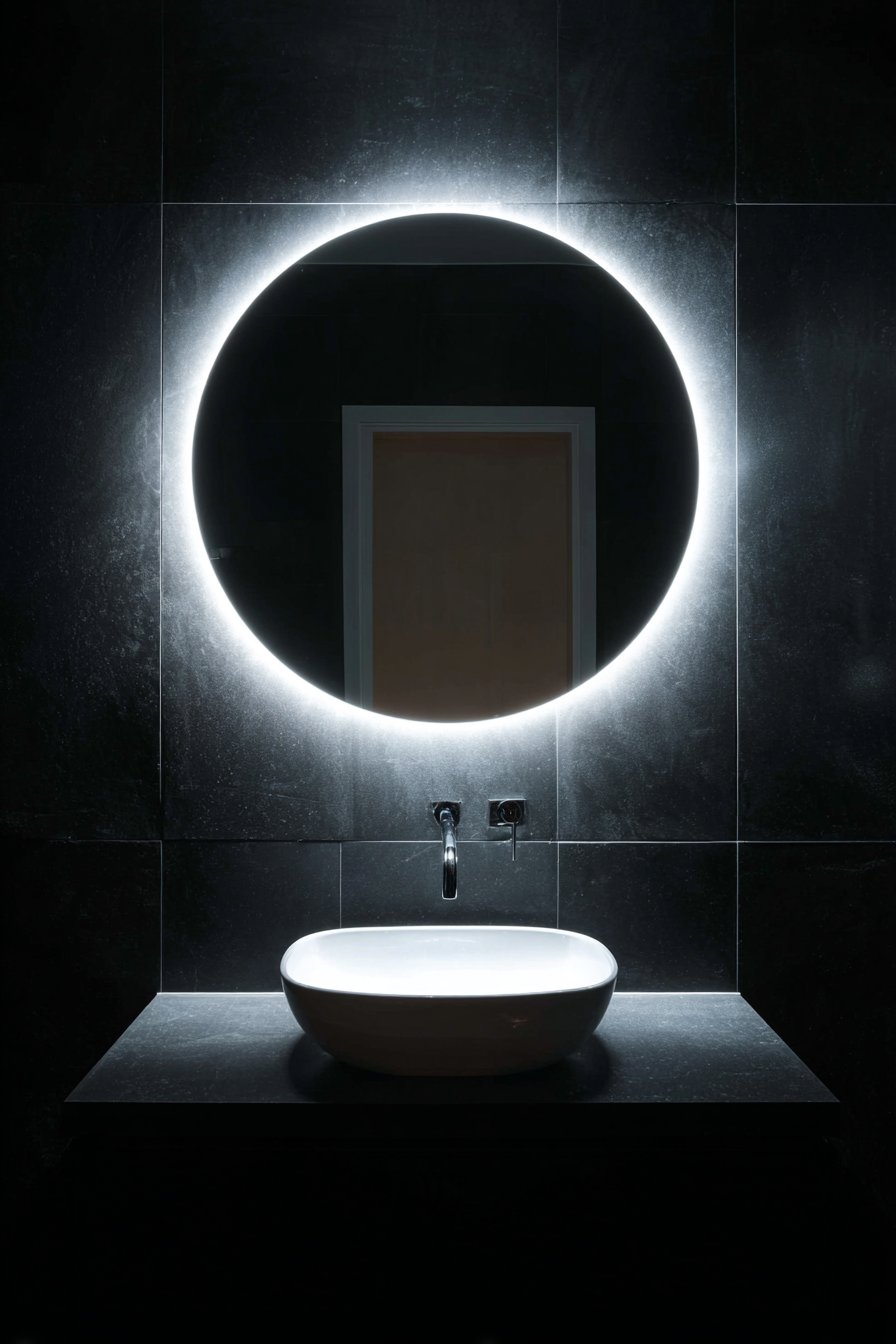
Interior photography with balanced exposure captures the dramatic lighting effect and showcases the sleek, futuristic aesthetic that makes this mirror decoration idea feel cutting-edge and luxurious. The vessel sink below maintains the contemporary styling with its sculptural form and minimalist plumbing fixtures. This approach appeals to technology enthusiasts, those who appreciate contemporary design, and anyone seeking bathrooms that feel like spa-like retreats through innovative lighting and modern materials.
Key Design Tips:
- Verify electrical code compliance and hire licensed electricians for safe LED installation
- Choose adjustable color temperature LEDs to customize lighting for different uses—cooler for detailed tasks, warmer for relaxation
- Ensure the dark wall color is painted with low-sheen finish to minimize glare from the LED backlighting
- Include dimming capability to adjust intensity based on time of day and specific needs
- Keep powder room styling minimal to allow the dramatic mirror to command full attention as the primary design feature
25. Layered Luxury: Beveled Mirrored Frame Mirror
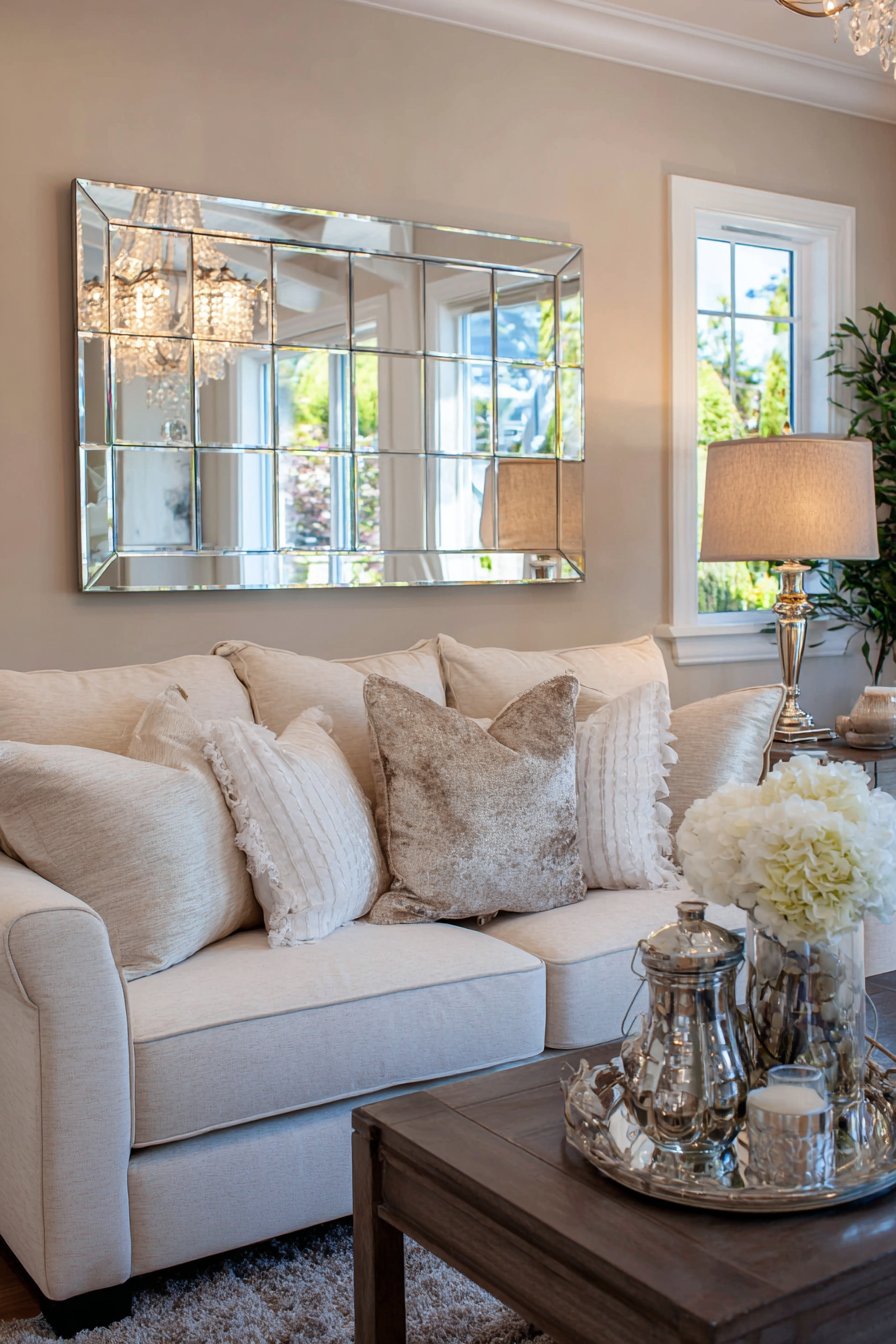
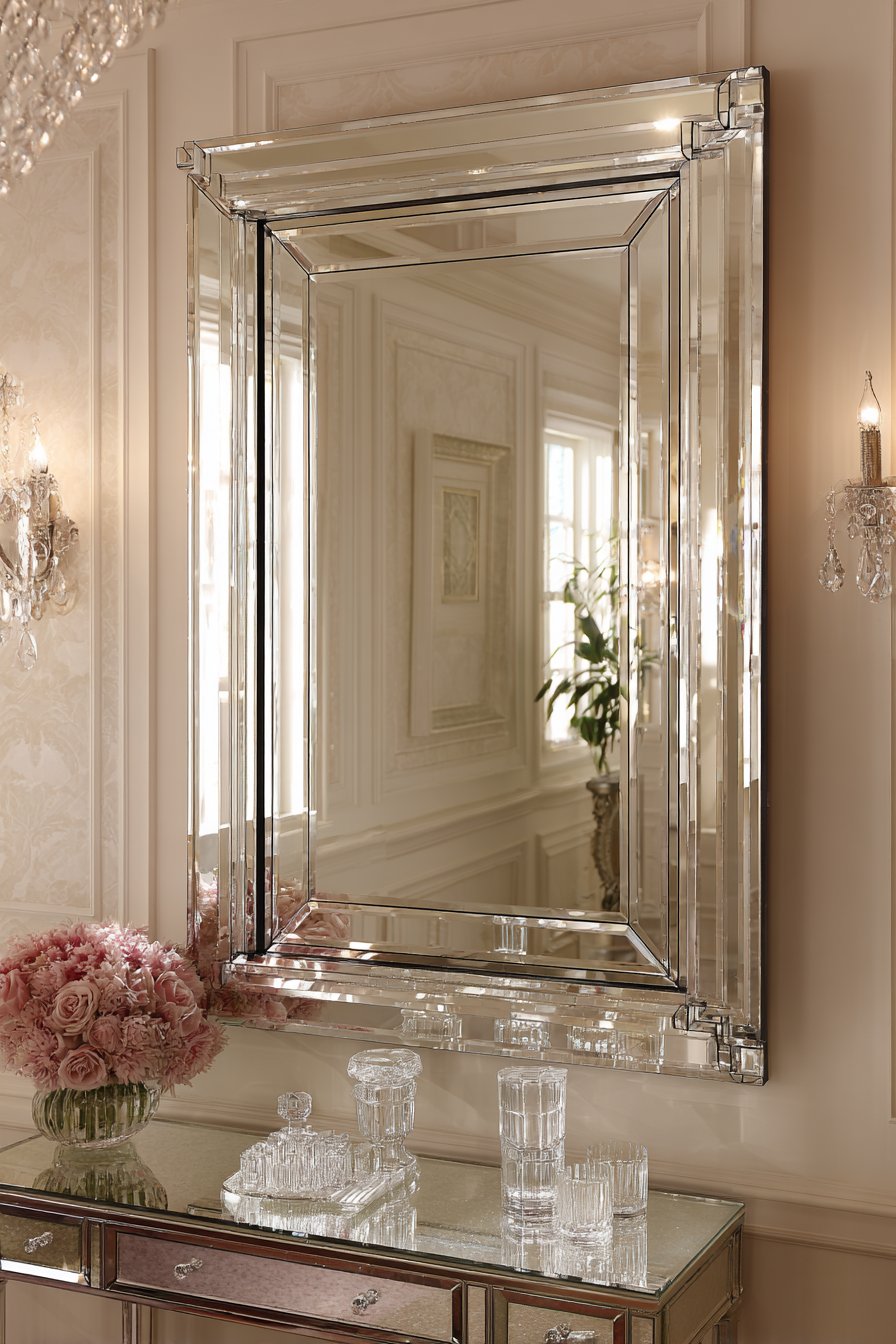
The rectangular mirror with beveled mirrored frame creates layered, dimensional effect that bridges traditional and contemporary styling in transitional living room mirror decoration ideas. This approach features a mirror surrounded by a frame that is itself mirrored with beveled edges, creating fascinating interplay of reflections, refractions, and dimensional depth. The beveled edges of the frame catch light and create rainbow prisms while the multiple reflective surfaces create complex visual layering. This sophisticated design technique adds substantial visual interest while maintaining the clean lines appropriate for transitional interiors.
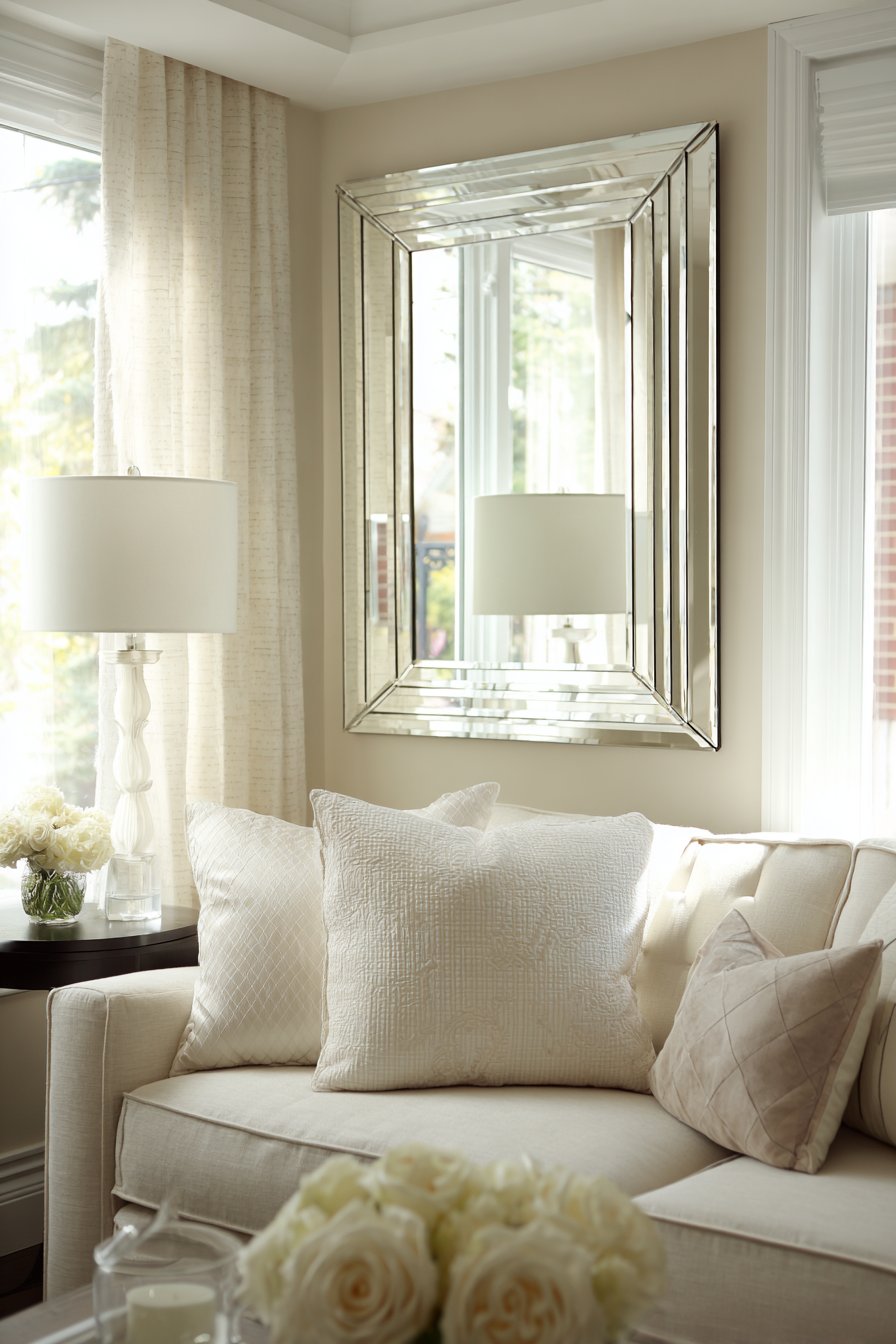
Positioned above a neutral sofa with classic lines, this mirror serves as elegant focal point that works equally well in traditionally-styled and contemporary spaces—the hallmark of successful transitional design. The multiple reflective surfaces amplify light from natural windows and table lamps, distributing illumination throughout the living room while creating sparkle and movement. The dimensional quality becomes particularly apparent as you move through the space, with changing viewing angles revealing different aspects of the layered frame design.
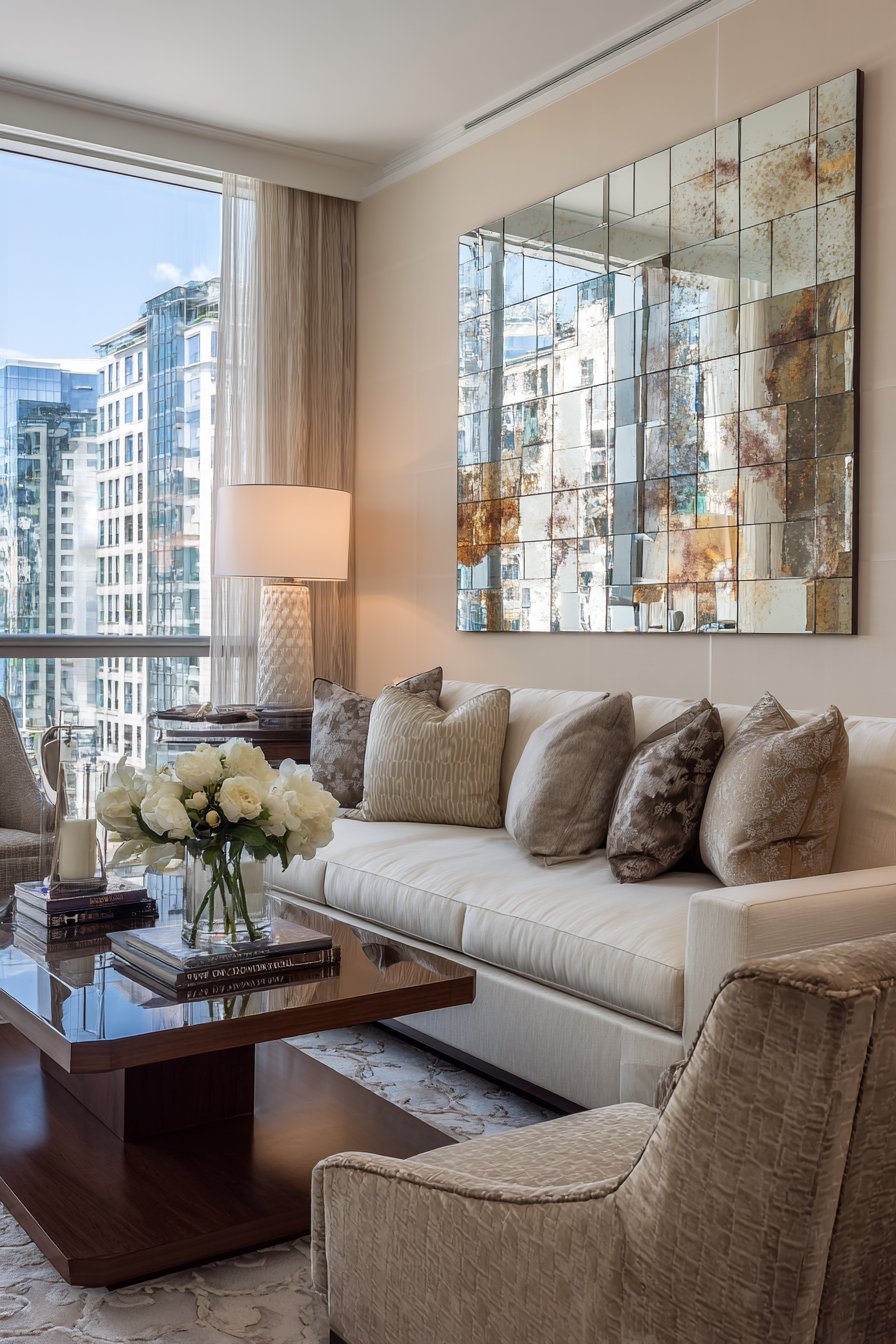
Wide-angle interior photography demonstrates the versatile styling and sophisticated presence of this mirror decoration approach. The beveled mirrored frame creates visual richness without requiring ornate carving or elaborate decoration—the dimensional play of light and reflection provides all necessary interest. This mirror decoration idea appeals to those who appreciate refined design that resists easy categorization, bridging the gap between traditional elegance and contemporary simplicity.
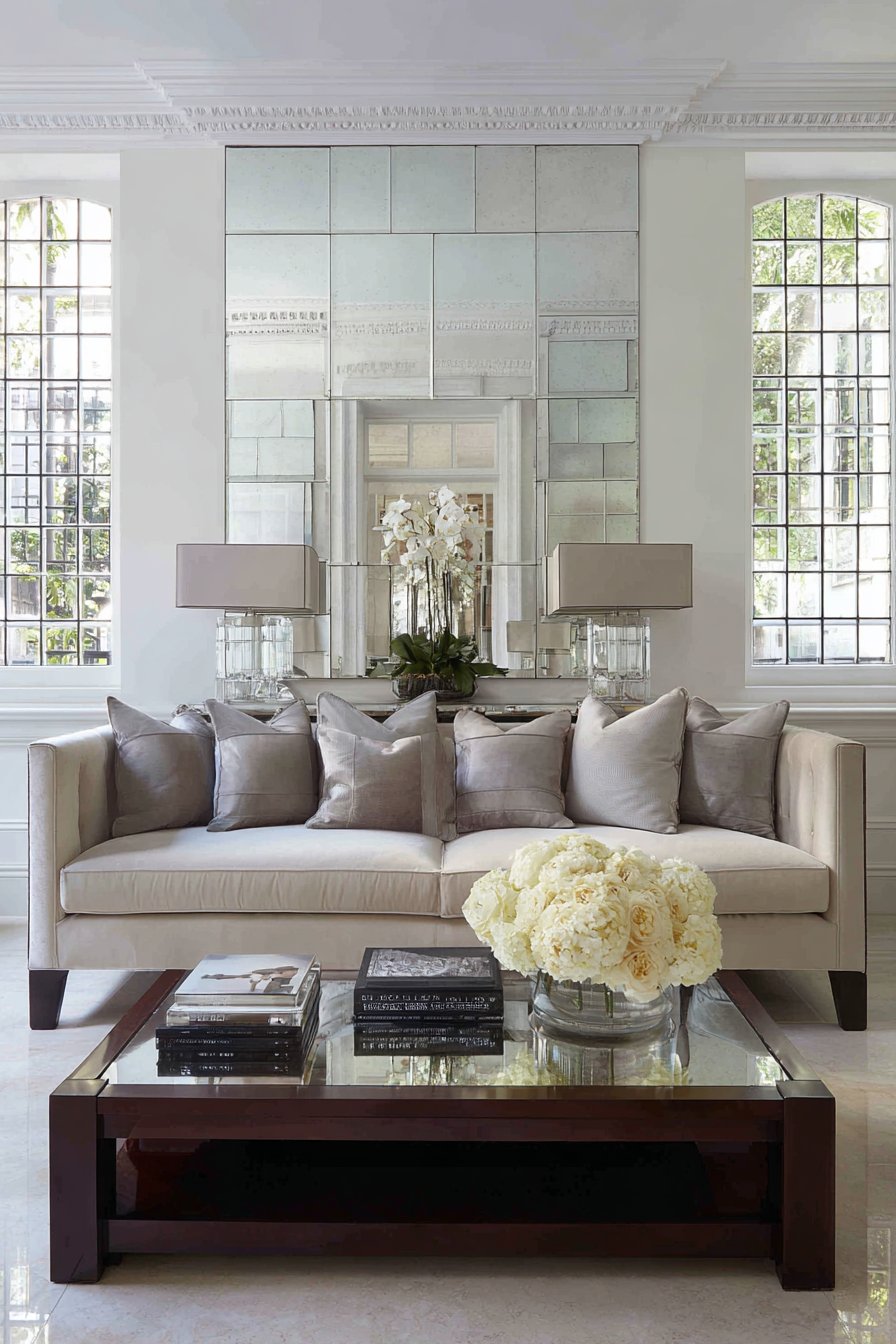
Key Design Tips:
- Clean beveled edges carefully to maintain the clarity needed for effective light refraction and rainbow effects
- Position where multiple light sources (natural and artificial) can interact with the beveled surfaces throughout the day
- Keep styling on the sofa below relatively simple to avoid visual competition with the already-complex mirror frame
- Ensure the wall behind provides appropriate background—neutral colors work best to showcase the reflective layers
- Consider the room’s overall light levels—this mirror style benefits from well-lit spaces where its reflective properties can shine
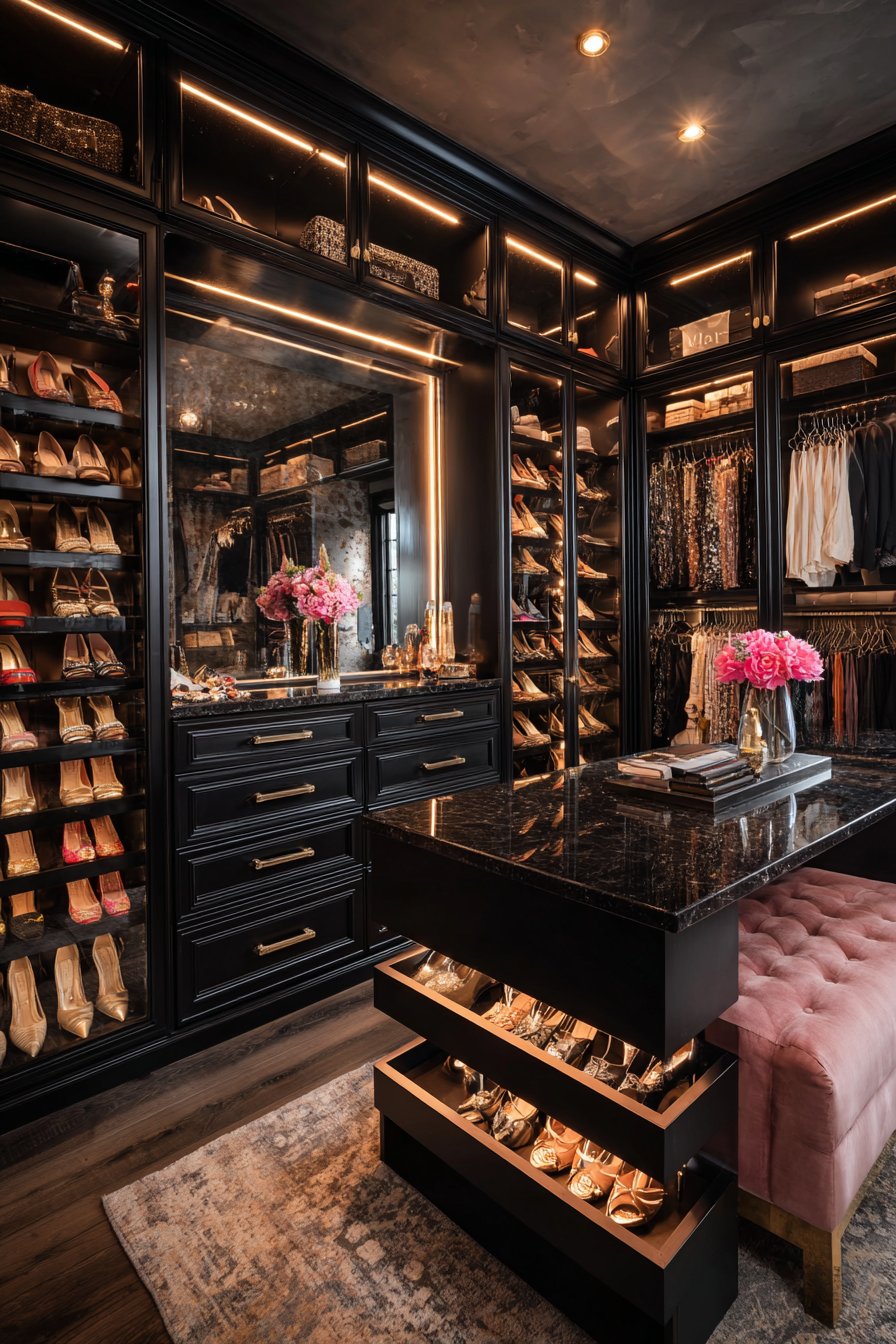
26. Wardrobe Companion: Three-Panel Trifold Closet Mirror
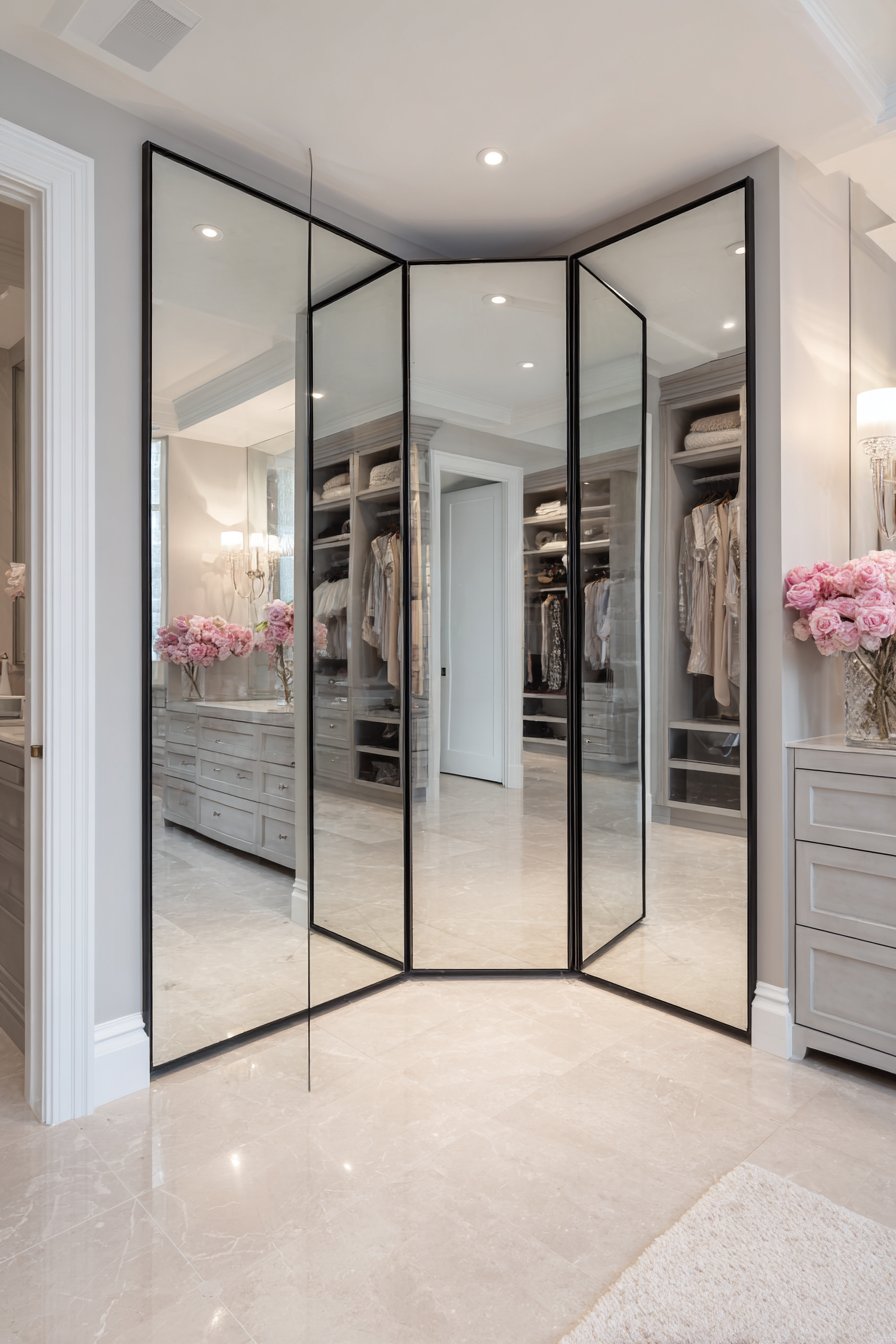
The full-length three-panel trifold mirror with slim frame allows 360-degree viewing and represents the ultimate in practical mirror decoration ideas for walk-in closets and dressing areas. This approach features three mirror panels connected by hinges that allow the side mirrors to angle inward, providing simultaneous front and side views essential for complete outfit coordination. The ability to see how clothing fits from multiple angles eliminates the awkward twisting and turning required with single mirrors, making the process of getting dressed more efficient and confident.
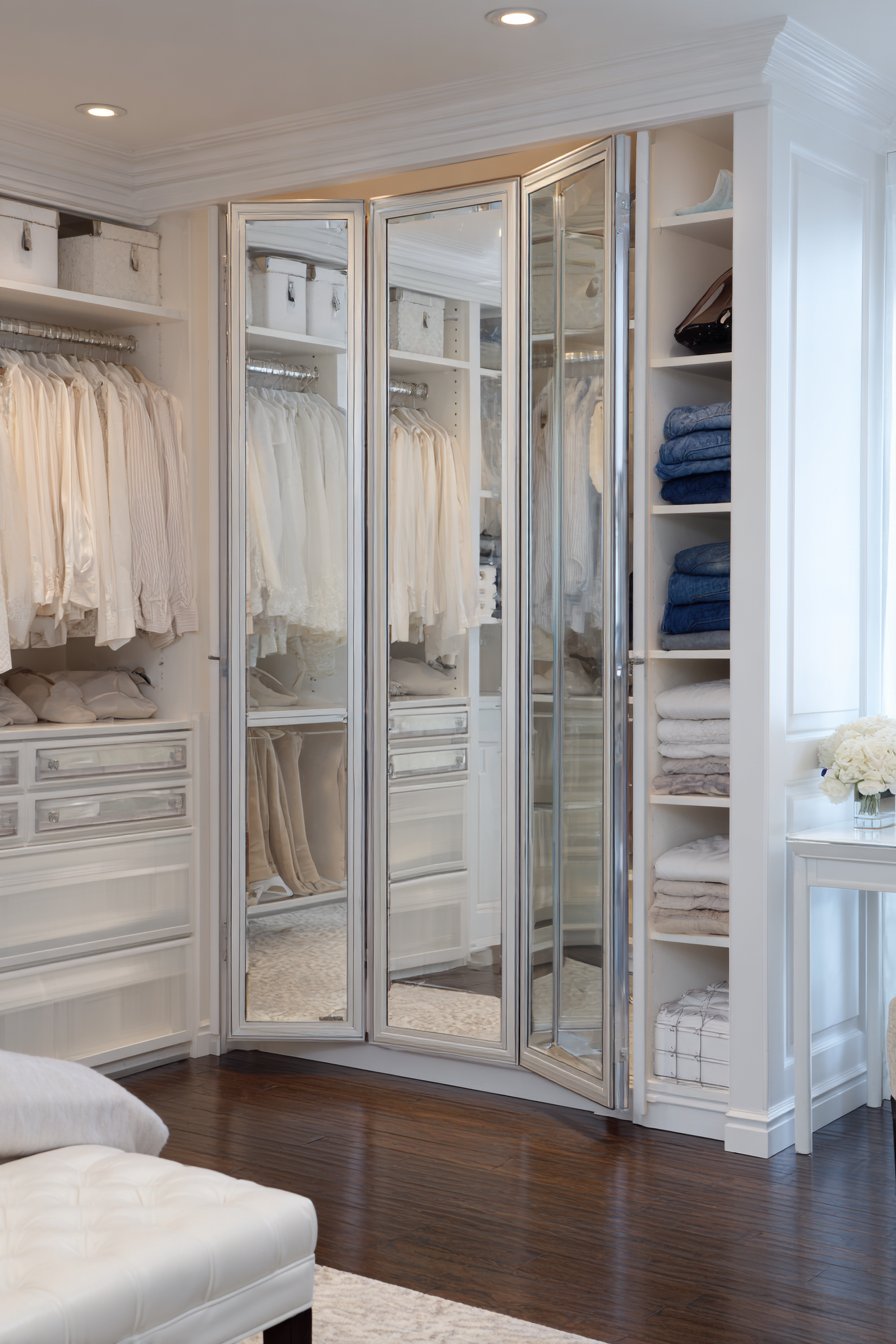
Installed thoughtfully within an organized closet system, this mirror provides practical luxury that transforms daily dressing routines. The mirrors also reflect closet lighting throughout the space, brightening the entire area and making it easier to see true colors and details of clothing. The slim frame maintains visual lightness despite the substantial combined mirror surface, ensuring the mirrors enhance rather than overwhelm the closet space. The trifold design can be adjusted to different angles depending on what’s being evaluated—wider for full-outfit assessment, narrower for focused detail checking.
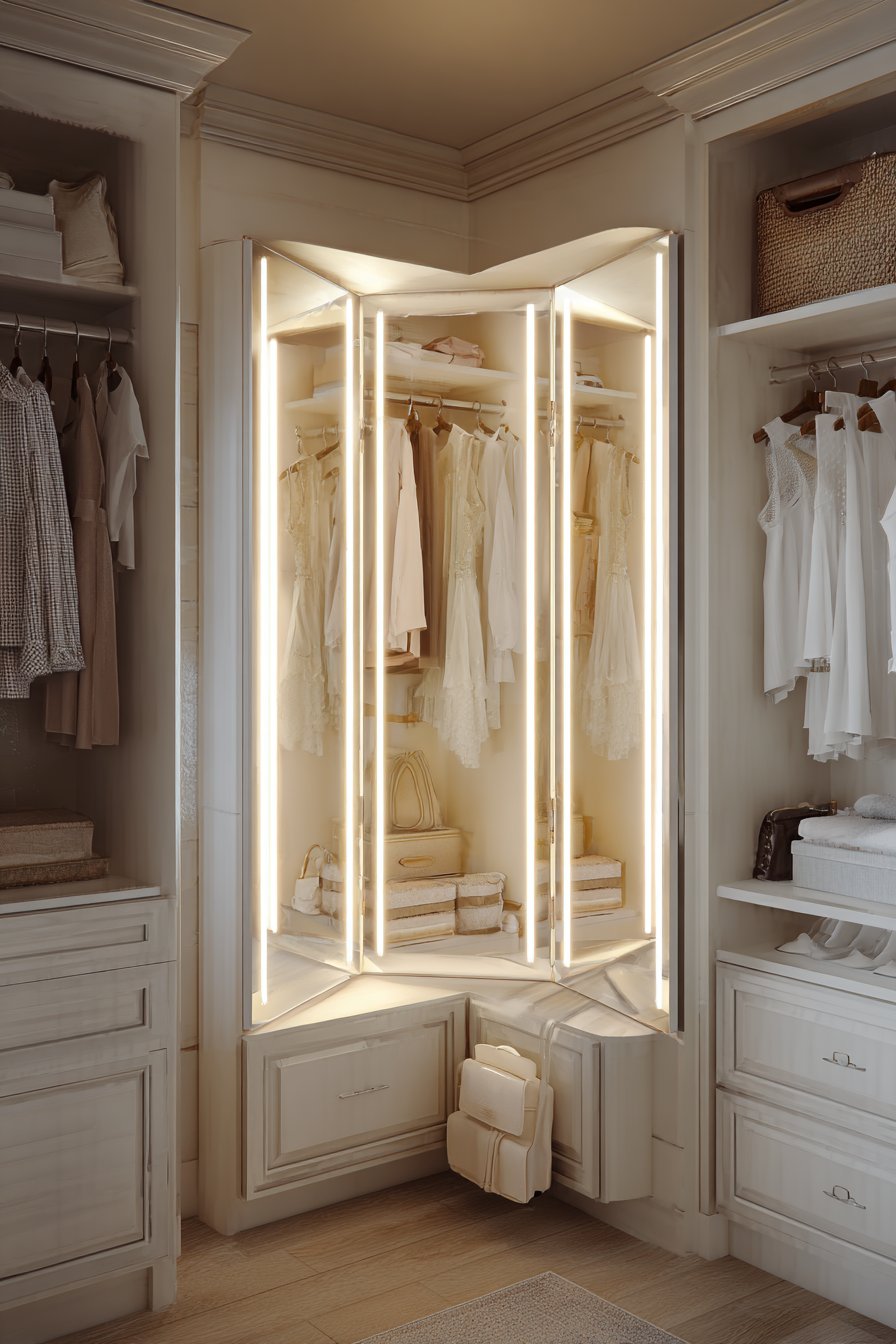
Interior design photography showcases the practical luxury and demonstrates the thoughtful placement within the organized closet system. The three-panel configuration provides significantly more functional value than its footprint might suggest, representing efficient use of space—a crucial consideration in closet areas. This mirror decoration idea appeals particularly to those who value organization, appreciate well-designed functional solutions, and want their daily routines to feel effortless and luxurious.
Key Design Tips:
- Ensure extremely secure mounting—trifold mirrors are heavy and require robust support
- Position where you have adequate space to step back for full perspective—at least 4-5 feet of clearance
- Install sufficient lighting that illuminates you evenly from all angles when standing before the mirrors
- Consider the floor surface—ensure it’s smooth and level so you can see accurate footwear and hemline assessment
- Maintain closet organization around the mirror area to ensure reflected views show curated, attractive closet contents
27. Art Deco Glamour: Stepped Geometric Chrome Mirror
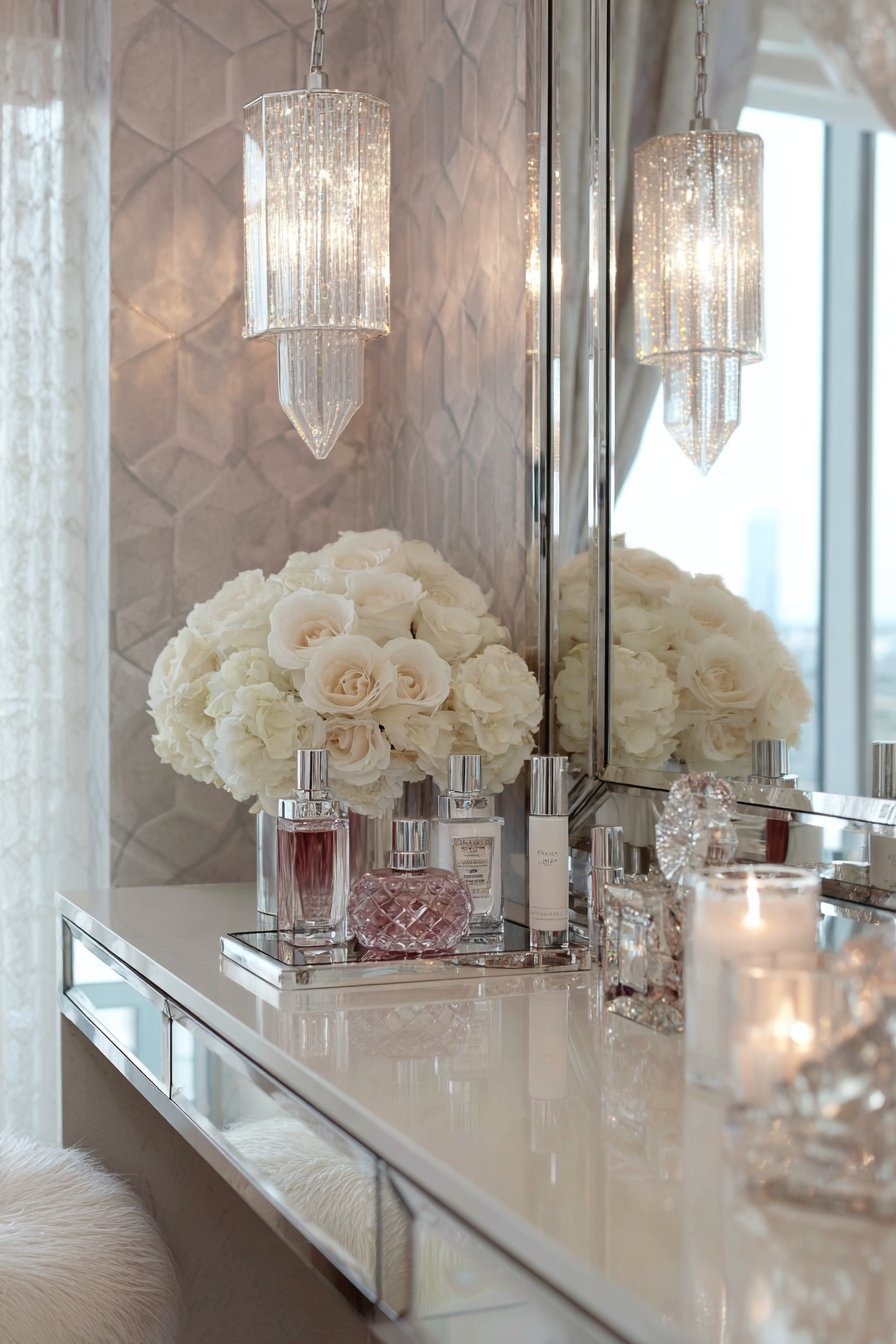
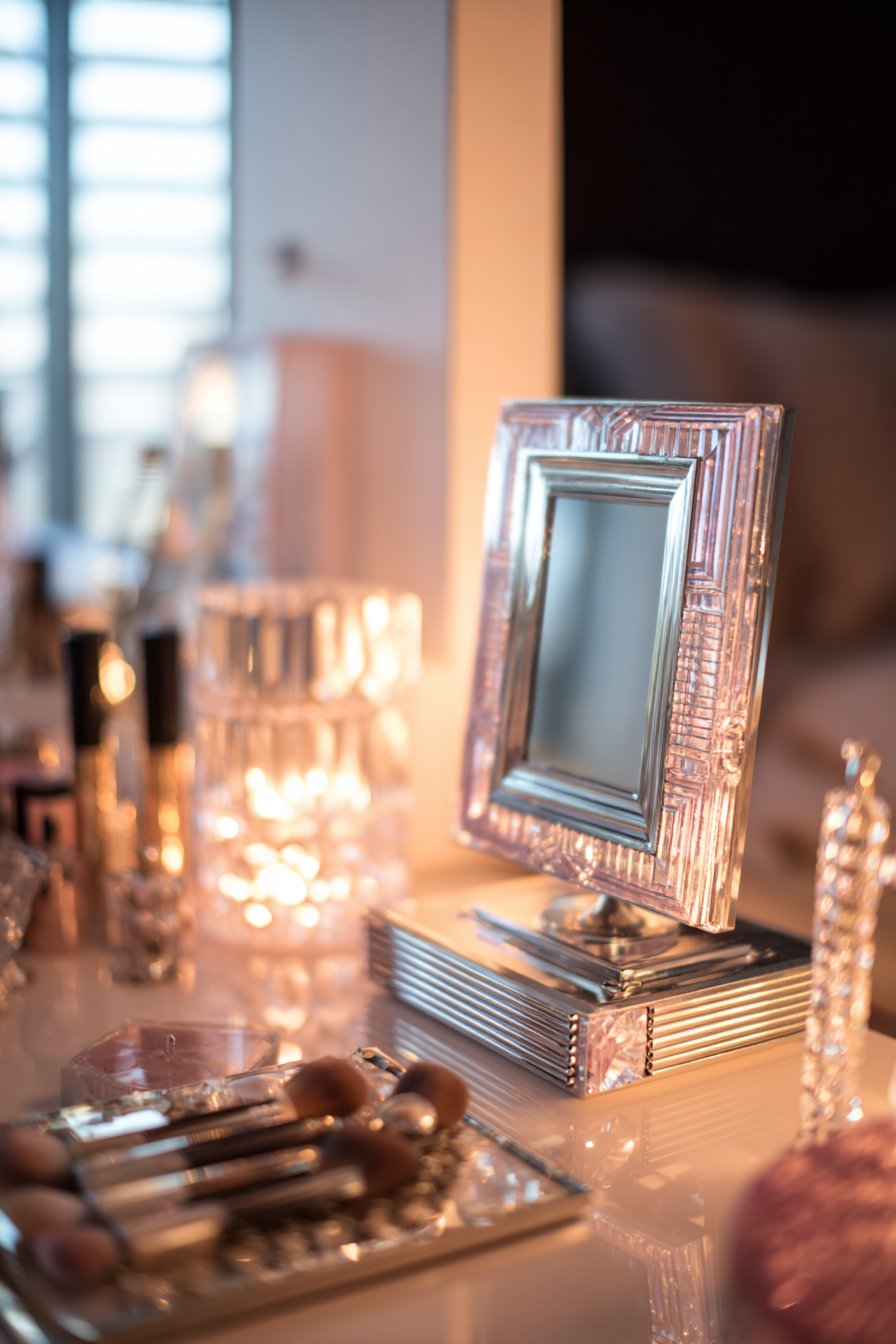
The stepped rectangular mirror with geometric chrome frame details characteristic of 1920s Art Deco style brings period glamour and architectural sophistication to dressing area mirror decoration ideas. This approach features the stepped, tiered frame design that became iconic during the Art Deco period, where geometric precision and luxurious materials defined the era’s aesthetic. The chrome frame provides cool metallic shimmer that catches light and creates the sense of refined luxury central to Art Deco design philosophy. Positioned above a mirrored vanity table with crystal accessories, this mirror establishes a complete glamorous dressing area.
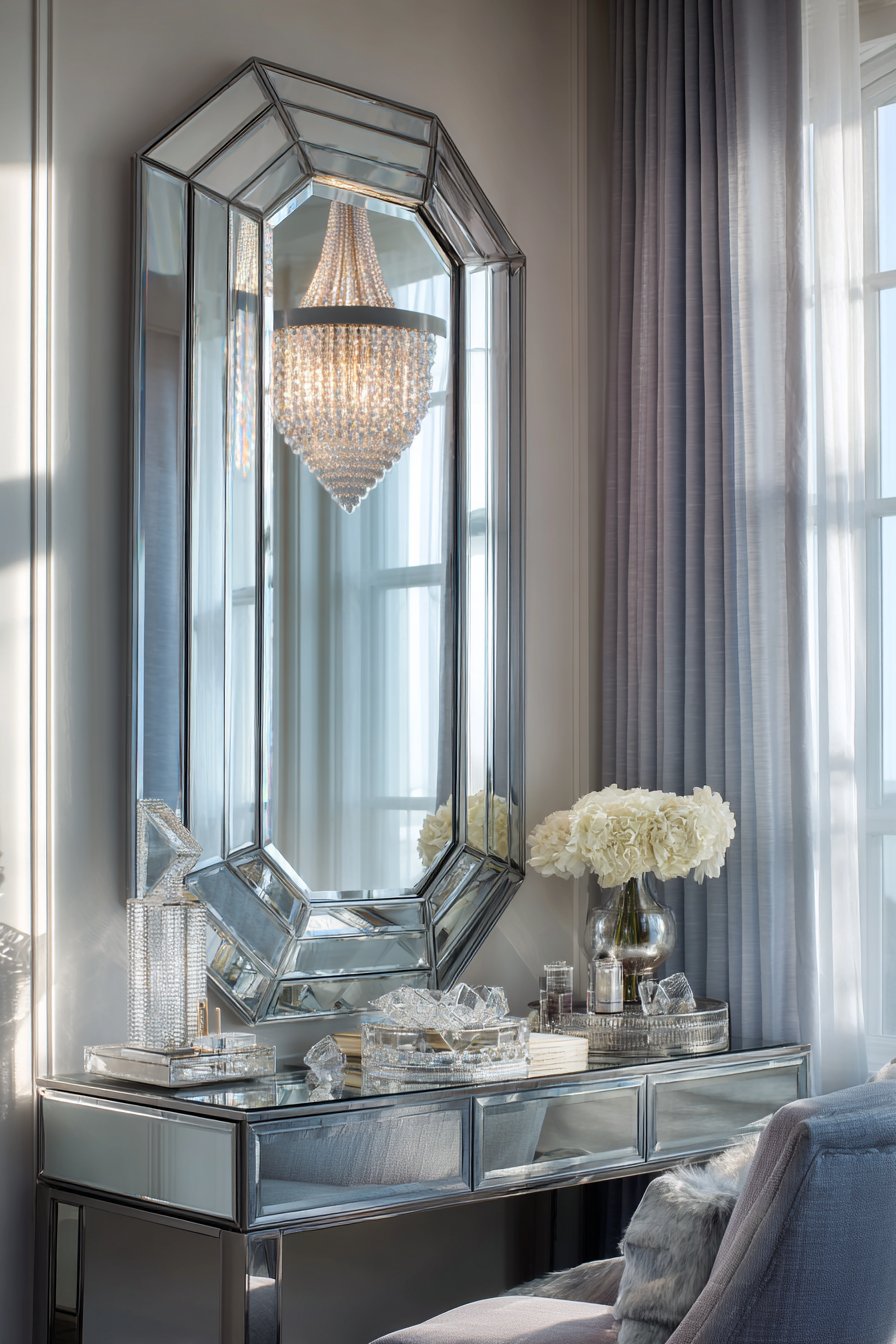
The Art Deco styling references the Jazz Age, when design celebrated modernity, geometric precision, and unabashed luxury. The stepped frame creates architectural interest through dimensional layering while the chrome finish adds industrial-age sophistication. The mirrored vanity table below amplifies the reflective surfaces, creating a space that seems to shimmer with light and glamour. Crystal accessories—perhaps perfume bottles, jewelry boxes, or decorative objects—add sparkle and reinforce the luxurious aesthetic.
Professional interior photography captures the period-specific design elements and demonstrates how authentic historical styling can create spaces that feel transported from another era. Soft ambient lighting creates elegant reflections across the multiple chrome and mirrored surfaces, enhancing the glamorous atmosphere. This mirror decoration idea appeals to vintage enthusiasts, those who appreciate Art Deco specifically, and anyone seeking to create dressing areas that make daily routines feel like sophisticated rituals.
Key Design Tips:
- Research authentic Art Deco design to ensure frame details accurately reference the period rather than generic “vintage” styling
- Coordinate with other chrome or polished metal elements in the dressing area for material cohesion
- Style with genuinely vintage or vintage-inspired accessories that reinforce the 1920s aesthetic
- Ensure excellent lighting that creates sparkle across chrome and crystal surfaces without creating harsh glare
- Consider black and white color schemes or jewel tones (emerald, sapphire, ruby) typical of Art Deco palettes
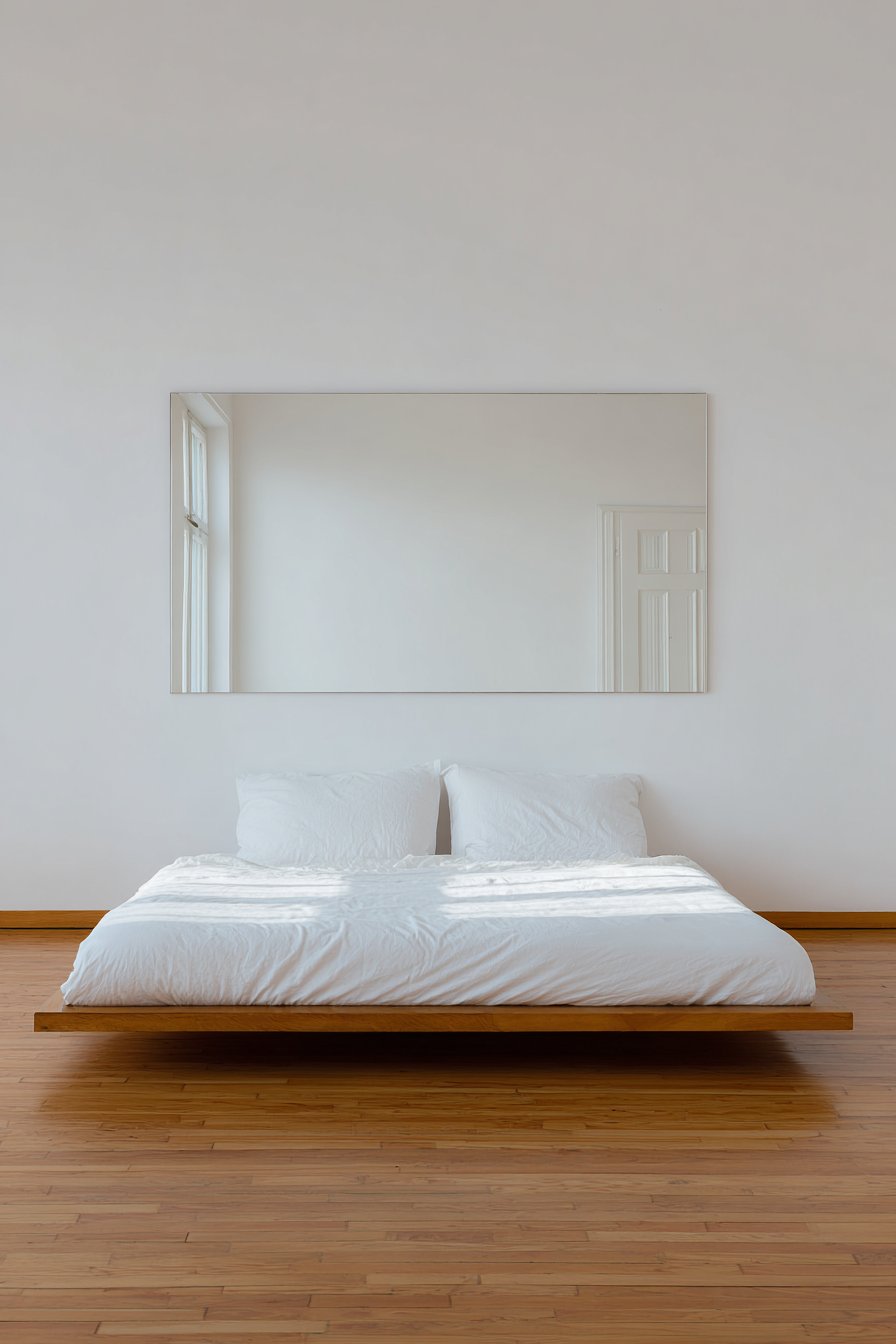
28. Zen Simplicity: Frameless Minimalist Bedroom Mirror
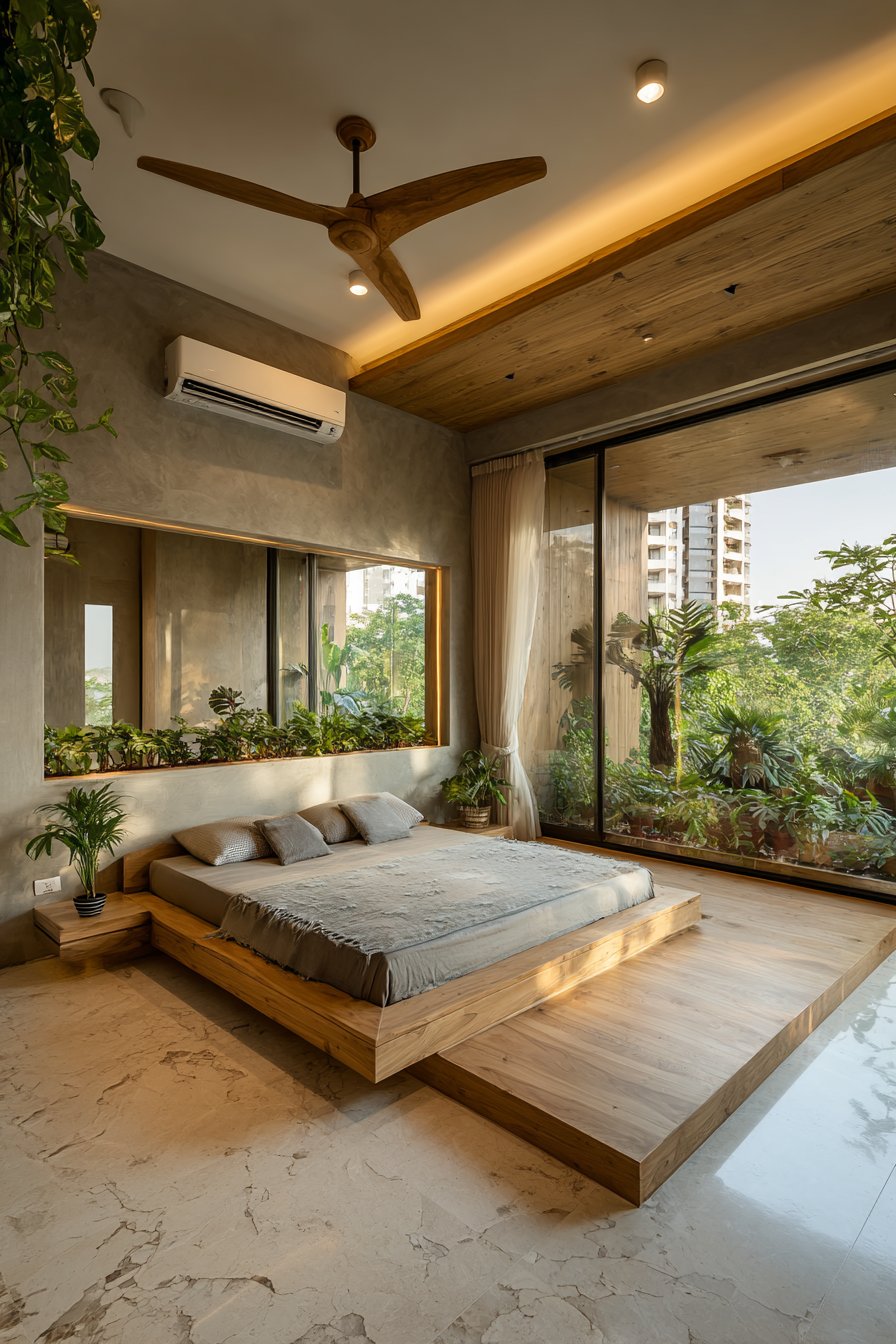
The simple frameless rectangular mirror with polished edges mounted horizontally above a low platform bed embodies the zen-like simplicity central to minimalist bedroom mirror decoration ideas. This approach eliminates all decorative elements, allowing the pure reflective surface and precisely polished edges to provide all necessary visual definition. The horizontal orientation creates visual calm through horizontal emphasis while the lack of frame prevents any visual distraction from the clean, serene aesthetic. The unadorned design maintains the minimal aesthetic where every element serves clear purpose without excess.
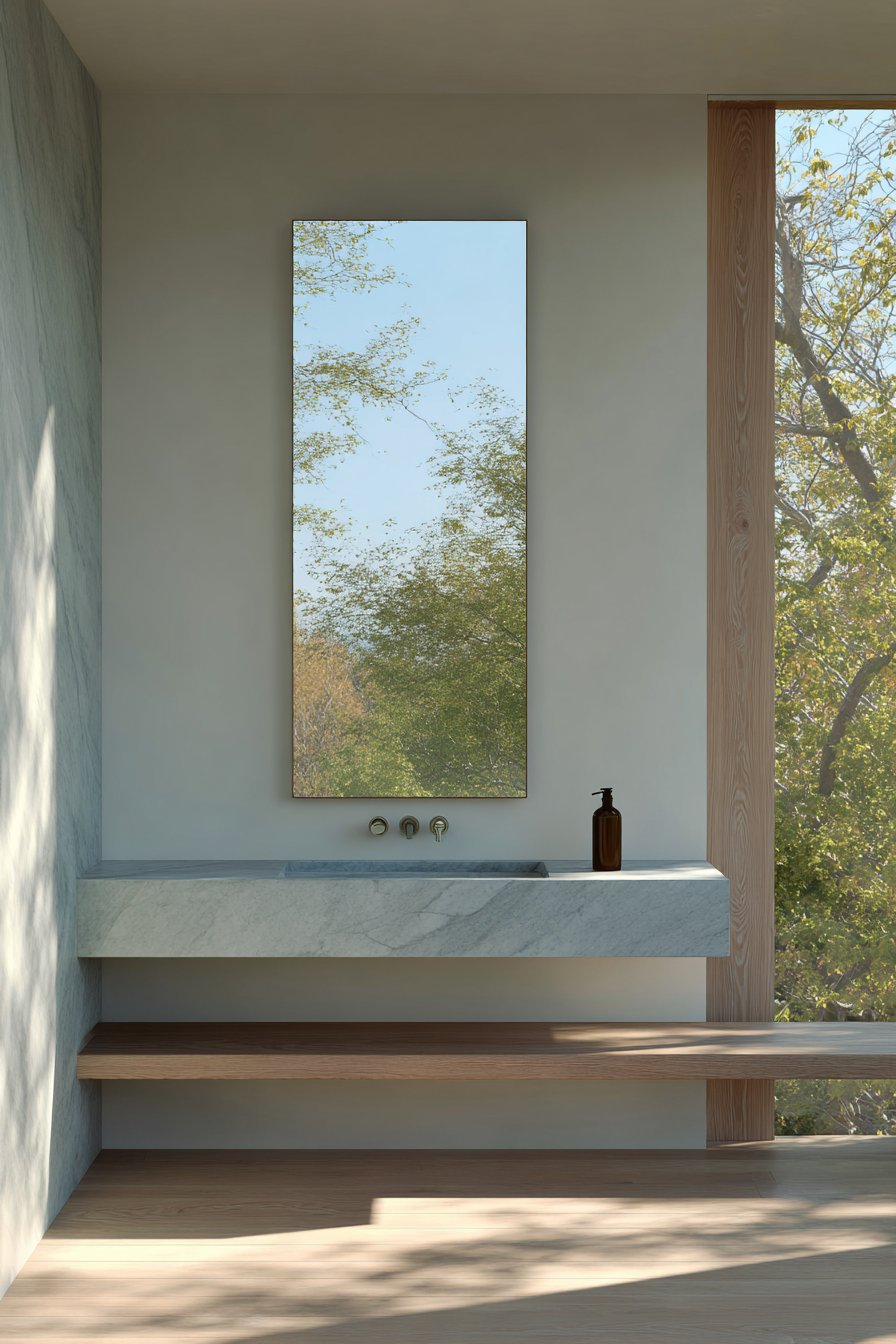
Positioned above a low platform bed in a minimalist bedroom, this mirror integrates so seamlessly that it nearly disappears, becoming part of the architecture rather than functioning as applied decoration. Natural morning light creates clean, crisp reflections that support the mirror’s practical function without adding decorative flourish. The polished edges catch subtle light, providing just enough definition to distinguish mirror from wall while maintaining the boundary-free feeling central to minimalist design success.
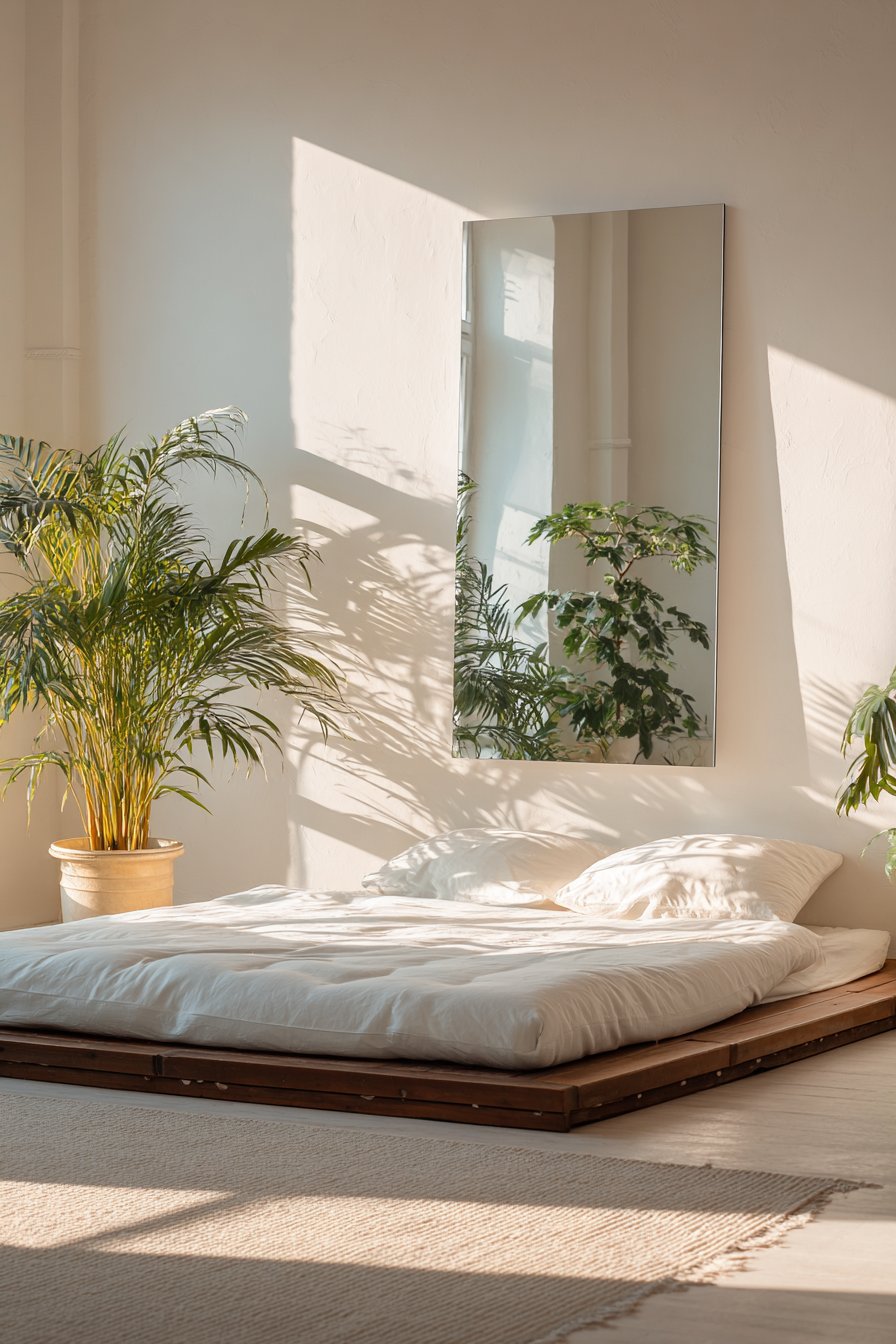
Interior photography with wide-angle perspective demonstrates the mirror’s subtle integration within the minimal aesthetic, showing how restraint can create powerful impact through purity of form. The platform bed below maintains low horizontal emphasis that creates spatial calm and supports restful sleeping environment. This mirror decoration idea appeals to those who practice minimalism as lifestyle philosophy, who appreciate Japanese design principles, and who find peace in spaces free from visual clutter and unnecessary ornamentation.
Key Design Tips:
- Ensure walls are perfectly finished—frameless mirrors reveal every imperfection that frames would conceal
- Clean polished edges regularly to maintain the subtle light-catching quality that provides visual definition
- Maintain absolute minimal styling throughout the bedroom—every object should serve clear functional purpose
- Position to reflect only intentional, beautiful elements—never random objects or visual clutter
- Use professional installation with appropriate mounting hardware to ensure secure attachment despite the minimalist appearance
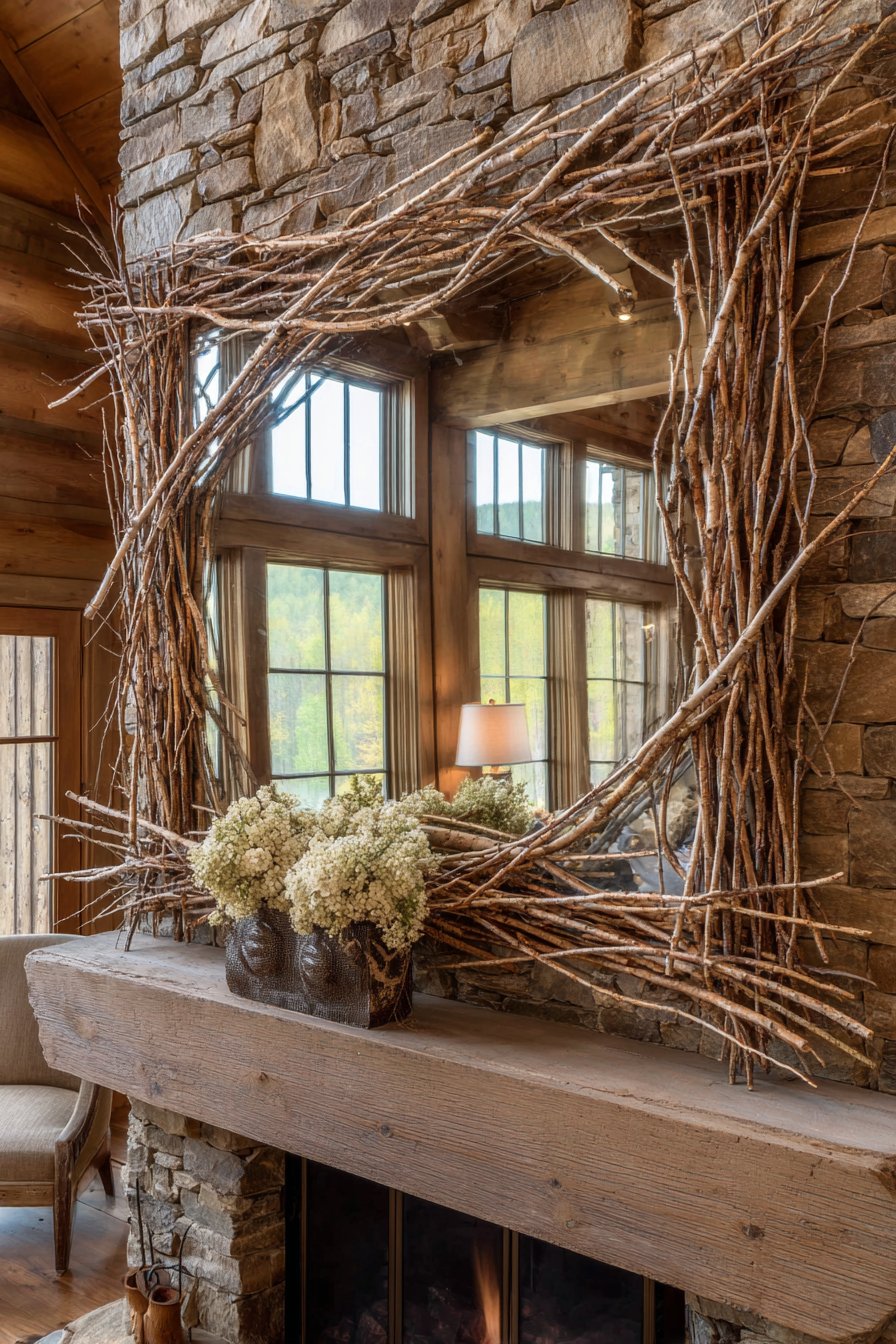
29. Rustic Lodge: Natural Birch Branch Frame
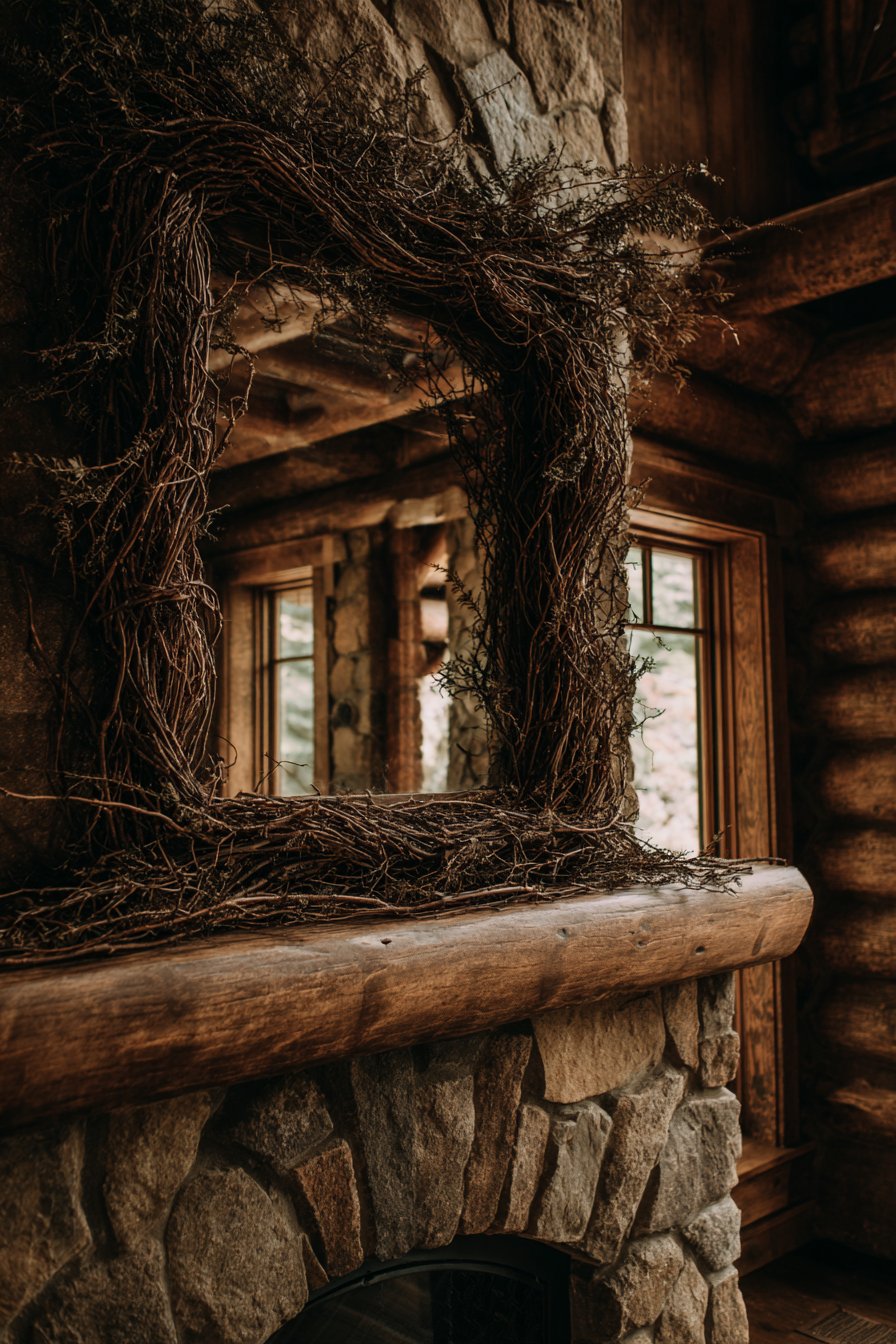
The mirror framed with natural birch branches and twigs arranged in organic, asymmetrical pattern brings nature-inspired rustic charm to cabin mirror decoration ideas. This approach celebrates raw natural materials and handcrafted artistry, featuring individual birch branches arranged to create irregular, organic frame that appears to have grown rather than been constructed. Each branch displays unique bark patterns, knots, and natural variations that make every frame one-of-a-kind. The nature-inspired design creates immediate visual connection to forest environments, making it ideal for log cabins, mountain retreats, and homes seeking to bring outdoor beauty inside.
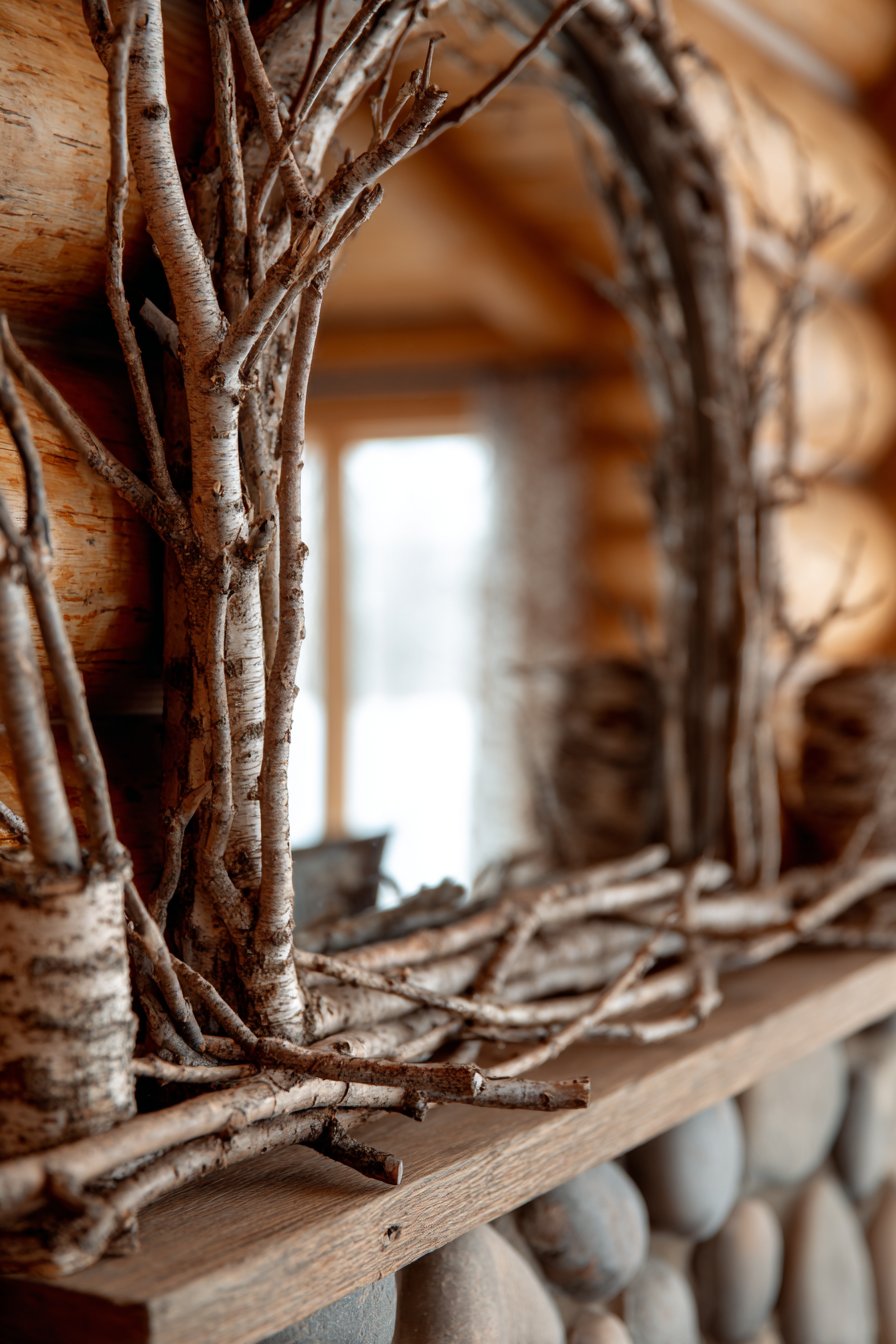
Positioned above a stone fireplace or rustic wooden console in a cabin interior, this mirror reinforces the woodland aesthetic through authentic natural materials. The birch branches’ white and gray bark creates subtle color variation that adds visual interest without requiring paint or artificial finishes. The asymmetrical arrangement follows organic growth patterns rather than rigid geometric structure, creating frame that feels alive and connected to natural world. The mirror reflects cabin interior elements—perhaps exposed log walls, stone fireplace, or views through windows to surrounding forest.
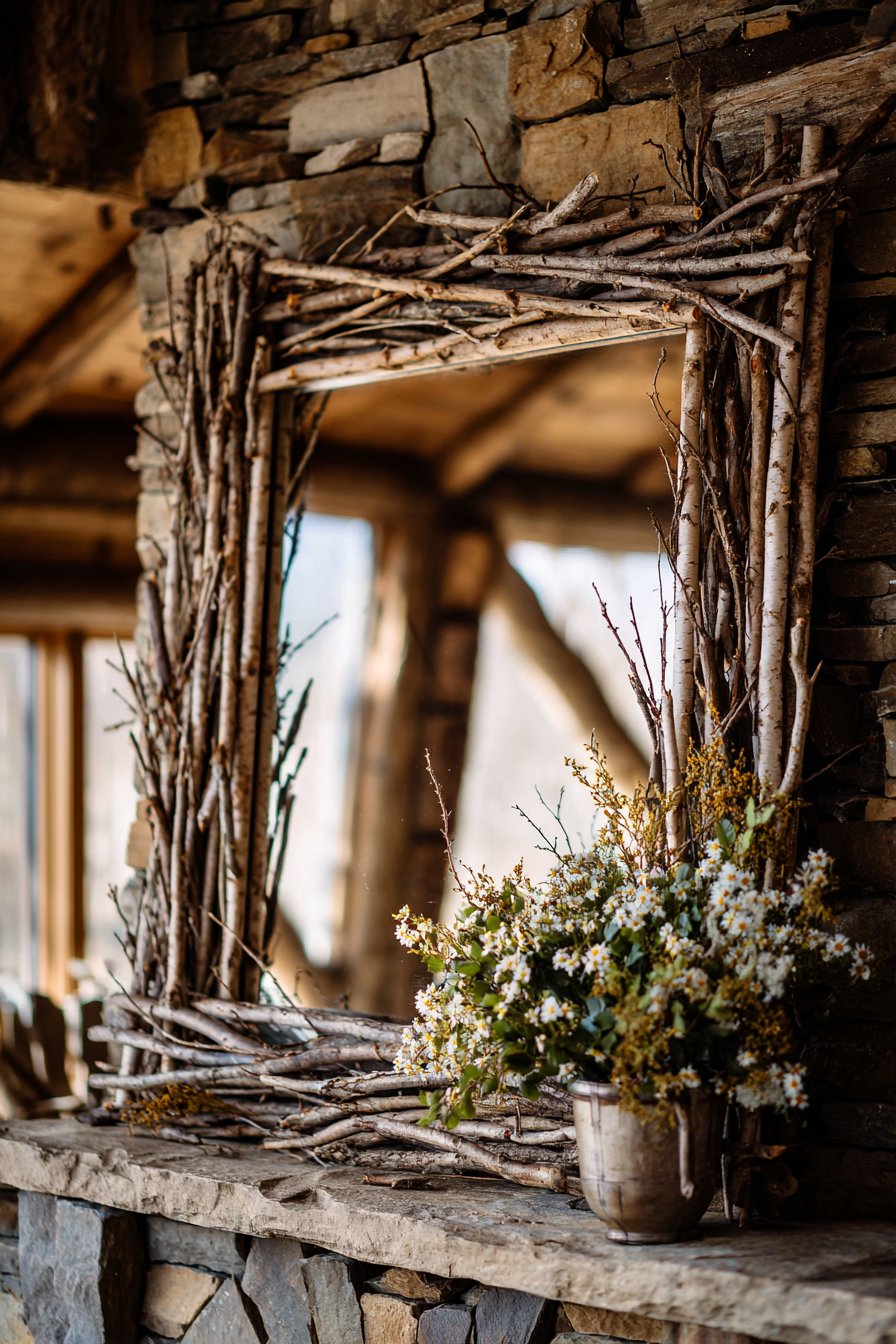
Interior design photography with natural lighting captures the handcrafted quality and demonstrates the mirror’s harmonious relationship with the rustic environment. The three-dimensional quality of the branch frame creates interesting shadow play as natural light shifts throughout the day, adding temporal dimension. This mirror decoration idea appeals to those who value natural materials, handcrafted artistry, sustainable design, and authentic rustic aesthetics that honor rather than simply reference natural environments.
Key Design Tips:
- Ensure branches are properly dried, cleaned, and sealed to prevent deterioration, cracking, or insect issues
- Verify secure construction—natural materials’ irregular shapes require careful engineering for structural integrity
- Coordinate with other natural wood elements in the cabin while allowing the unique birch bark to stand out
- Keep surrounding area relatively simple to allow the intricate natural frame to command full attention
- Consider the substantial weight of authentic branch frames and install with appropriate heavy-duty mounting hardware
Why These Mirror Decoration Ideas Represent the Best in Interior Design
These twenty-nine mirror decoration ideas collectively represent the pinnacle of interior design thinking, demonstrating how a single functional element—the mirror—can be reimagined in countless ways to serve diverse aesthetic preferences, spatial requirements, and lifestyle needs. Each approach showcases different design principles while maintaining commitment to both beauty and utility, proving that functional objects need never sacrifice aesthetic impact for practical purpose.
The diversity of styles represented—from bohemian macramé frames to sleek contemporary LED-backlit designs, from ornate baroque gold frames to minimalist frameless installations—demonstrates that mirror decoration transcends temporary trends to encompass enduring design principles applicable across all aesthetic movements. Whether your personal style gravitates toward vintage romance, industrial edge, coastal serenity, or mid-century modern sophistication, there exists a mirror decoration approach that will feel authentic to your vision while enhancing your space’s functionality.
These ideas also showcase the remarkable versatility of mirrors as design tools beyond their obvious reflective purpose. Strategic mirror placement can visually expand cramped quarters, amplify scarce natural light, create focal points in bland spaces, add architectural interest to plain walls, and even solve practical problems like narrow hallways or windowless rooms. The mirror decoration ideas presented here demonstrate how thoughtful designers consider not just what mirrors look like, but what they do—how they interact with light, how they frame and reflect views, how they influence spatial perception, and how they contribute to the overall atmospheric quality of rooms.
The range of materials showcased—from reclaimed wood and driftwood to polished chrome and antiqued brass, from woven macramé to carved mahogany—illustrates how mirror frames can introduce crucial textural variety into interior spaces. In rooms dominated by smooth, hard surfaces (tile, glass, metal, stone), a chunky reclaimed wood frame or soft fabric-cushioned frame adds essential tactile warmth. Conversely, in spaces heavy with textiles and soft furnishings, a sleek chrome or frameless mirror provides necessary visual crispness and reflective shine.
These mirror decoration ideas also recognize the importance of room-specific considerations. The LED-backlit bathroom mirrors address the unique lighting challenges of spaces requiring both task illumination and ambient atmosphere. The full-length bedroom mirrors acknowledge the practical necessity of outfit coordination while adding architectural presence. The entryway mirrors serve the functional purpose of last-minute appearance checks while establishing the home’s aesthetic from the moment guests arrive. Each placement demonstrates understanding of how rooms are actually used, ensuring design serves life rather than existing as mere decoration.
The incorporation of both traditional and contemporary technologies—from time-honored techniques like gilding and wood carving to cutting-edge LED integration and backlight effects—shows how mirror decoration bridges historical craftsmanship and modern innovation. Some ideas celebrate artisanal handwork that connects us to centuries of decorative arts tradition, while others embrace contemporary manufacturing and lighting technology that simply didn’t exist in previous eras. This temporal range ensures these ideas remain relevant regardless of whether your home is a historic Victorian requiring period-appropriate details or a newly built contemporary space showcasing current design innovations.
Scale considerations are thoroughly addressed across these twenty-nine ideas, from compact powder room mirrors to oversized floor-leaning statement pieces, from single dramatic focal points to elaborate gallery wall collections. This range acknowledges that homes vary dramatically in their spatial realities—what works magnificently in a spacious master bedroom might overwhelm a cozy apartment, while a mirror perfect for an intimate powder room would disappear unnoticed in a grand foyer. The diversity ensures readers can find appropriately scaled solutions regardless of their square footage constraints.
The ideas also demonstrate sophisticated understanding of color theory and how mirrors interact with room palettes. Some approaches feature ornate frames in warm metallics (gold, brass, copper) that add richness to neutral schemes, while others showcase cool metals (chrome, brushed nickel, black iron) that provide crisp contrast. Natural wood tones introduce organic warmth, while painted frames in white or colors coordinate with specific room palettes. This thoughtful attention to how frame finish relates to surrounding colors ensures mirrors enhance rather than clash with existing design schemes.
Lighting interaction receives careful attention throughout these mirror decoration ideas, acknowledging that mirrors are fundamentally about light manipulation. Ideas specifically address how mirrors can reflect natural daylight to brighten dim spaces, how they can capture and multiply artificial lighting effects (chandeliers, sconces, table lamps), and how integrated LED technology can transform mirrors from passive reflective surfaces into active light sources. This sophisticated understanding of illumination elevates these ideas beyond simple decoration into genuine spatial problem-solving.
The collection also addresses varying levels of design commitment and permanence. Some ideas feature permanently mounted installations requiring professional installation and long-term commitment, while others showcase leaning mirrors and freestanding vanity mirrors that offer flexibility and can relocate as needs change. This range acknowledges that life circumstances vary—renters need different solutions than homeowners, and those who frequently redesign require different approaches than those seeking enduring installations.
Safety considerations appear where relevant, particularly in the nursery mirror with acrylic construction and cushioned frame—demonstrating that responsible design never sacrifices wellbeing for aesthetics. The trifold closet mirror’s emphasis on secure mounting similarly shows awareness that beautiful design must also be safe design, especially in spaces where mirrors might be subjected to significant interaction.
These mirror decoration ideas collectively demonstrate that exceptional interior design results from the intersection of aesthetic vision, practical functionality, material understanding, spatial awareness, and lifestyle consideration. Each approach offers not just a pretty picture but a thoughtful solution to real design challenges—how to make small spaces feel larger, dark rooms feel brighter, bland walls feel interesting, and functional objects feel beautiful. They prove that even the most utilitarian elements of our homes can become sources of daily delight when approached with creativity, knowledge, and care.
Conclusion
Mirror decoration ideas offer some of the most versatile and impactful design opportunities available to homeowners seeking to transform their spaces with both practical functionality and aesthetic beauty. Throughout this comprehensive exploration of twenty-nine distinctive approaches, we’ve discovered that mirrors transcend their basic reflective purpose to become powerful tools for spatial manipulation, light amplification, and artistic expression. From the dramatic gallery wall featuring eclectic vintage collections to the sleek minimalist frameless installations, from rustic driftwood frames that bring coastal serenity indoors to glamorous Hollywood-style vanity mirrors with theatrical lighting, each idea demonstrates unique ways mirrors can revolutionize your living environment.
The remarkable diversity of these mirror decoration ideas ensures that regardless of your personal aesthetic preferences, spatial constraints, or functional requirements, there exists an approach that will feel authentic to your vision while enhancing your home’s comfort and beauty. Whether you’re drawn to the ornate craftsmanship of baroque gold frames, the clean simplicity of Scandinavian teak-rimmed circles, the industrial character of reclaimed wood against exposed brick, or the futuristic innovation of LED backlighting, each style offers distinct advantages and emotional resonances that can transform ordinary rooms into extraordinary spaces.
As you consider implementing these mirror decoration ideas in your own home, remember that successful design results from thoughtful consideration of how each element will actually function within your daily life. Consider not just how a mirror looks on the wall, but what it will reflect—capturing beautiful views, interesting architectural details, or important light sources rather than random clutter or blank walls. Think about scale in relation to your existing furniture and room proportions, ensuring mirrors enhance rather than overwhelm their surroundings. Pay attention to lighting conditions and how mirrors will interact with both natural daylight and artificial illumination throughout the day and evening.
Don’t hesitate to experiment with unconventional placements or unexpected combinations. Perhaps that ornate vintage frame would create fascinating contrast in your contemporary space, or maybe sleek modern design would provide surprising freshness in your traditional home. The most memorable interiors often result from thoughtful rule-breaking that honors personal taste over rigid design prescriptions. Start with one mirror decoration idea that speaks strongly to your aesthetic sensibilities, implement it with care and attention to detail, and observe how it transforms not just your space but your experience of that space. You may discover that mirrors become your favorite design tool—offering endless opportunities for creativity, problem-solving, and beauty that reflects back the care you’ve invested in creating a home that truly supports and inspires your daily life.
