
In the realm of urban living, where square footage comes at a premium and outdoor space is often limited to a modest balcony, the art of maximizing every inch becomes not just desirable but essential. A mini balcony, though small in stature, holds enormous potential to become your personal sanctuary—a place where morning coffee tastes better, where evening winds bring contemplation, and where the boundary between indoor comfort and outdoor freedom beautifully blurs. The challenge lies not in the size of the space, but in the creativity and intentionality we bring to its design.
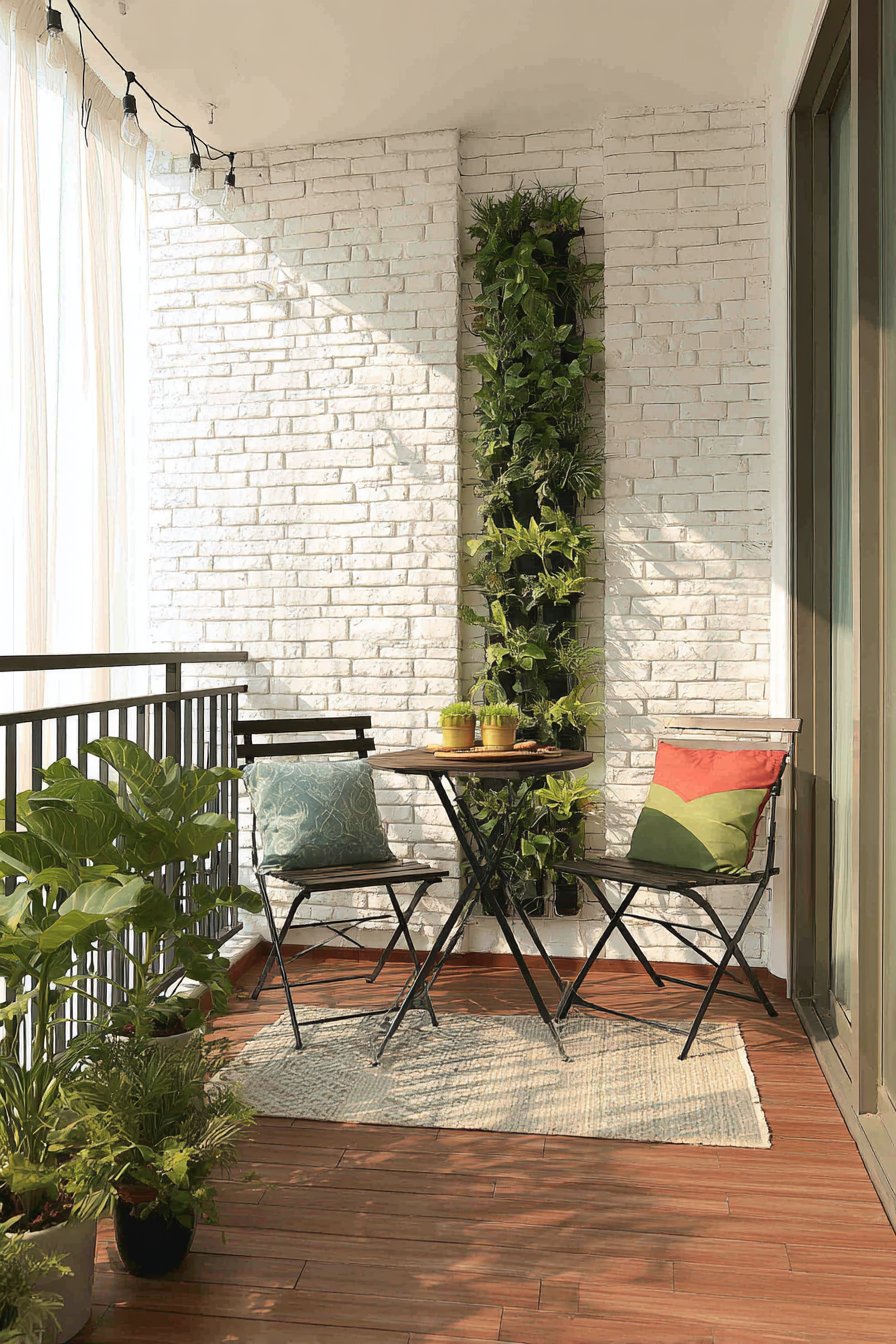
Today’s homeowners and renters are reimagining what’s possible within these compact outdoor retreats. No longer relegated to mere storage for forgotten bicycles or laundry drying, mini balconies are being transformed into functional extensions of living spaces—outdoor offices, vertical gardens, meditation zones, and intimate dining areas. The key to this transformation lies in understanding that limitations can spark innovation, and that thoughtful design can make even the smallest balcony feel expansive and purposeful.
This comprehensive guide explores twenty-three distinctive approaches to mini balcony design, each offering unique solutions to common spatial challenges while celebrating different aesthetic sensibilities. From Scandinavian minimalism to bohemian exuberance, from Mediterranean warmth to Japanese zen tranquility, these mini balcony ideas demonstrate that size is no barrier to style, comfort, or functionality. Whether you’re seeking a peaceful reading nook, a productive workspace, or simply a more beautiful view from your window, you’ll discover practical strategies and inspiring concepts that prove small spaces can make the biggest impact on daily living.
1. Space-Saving Corner Seating with Built-In Storage
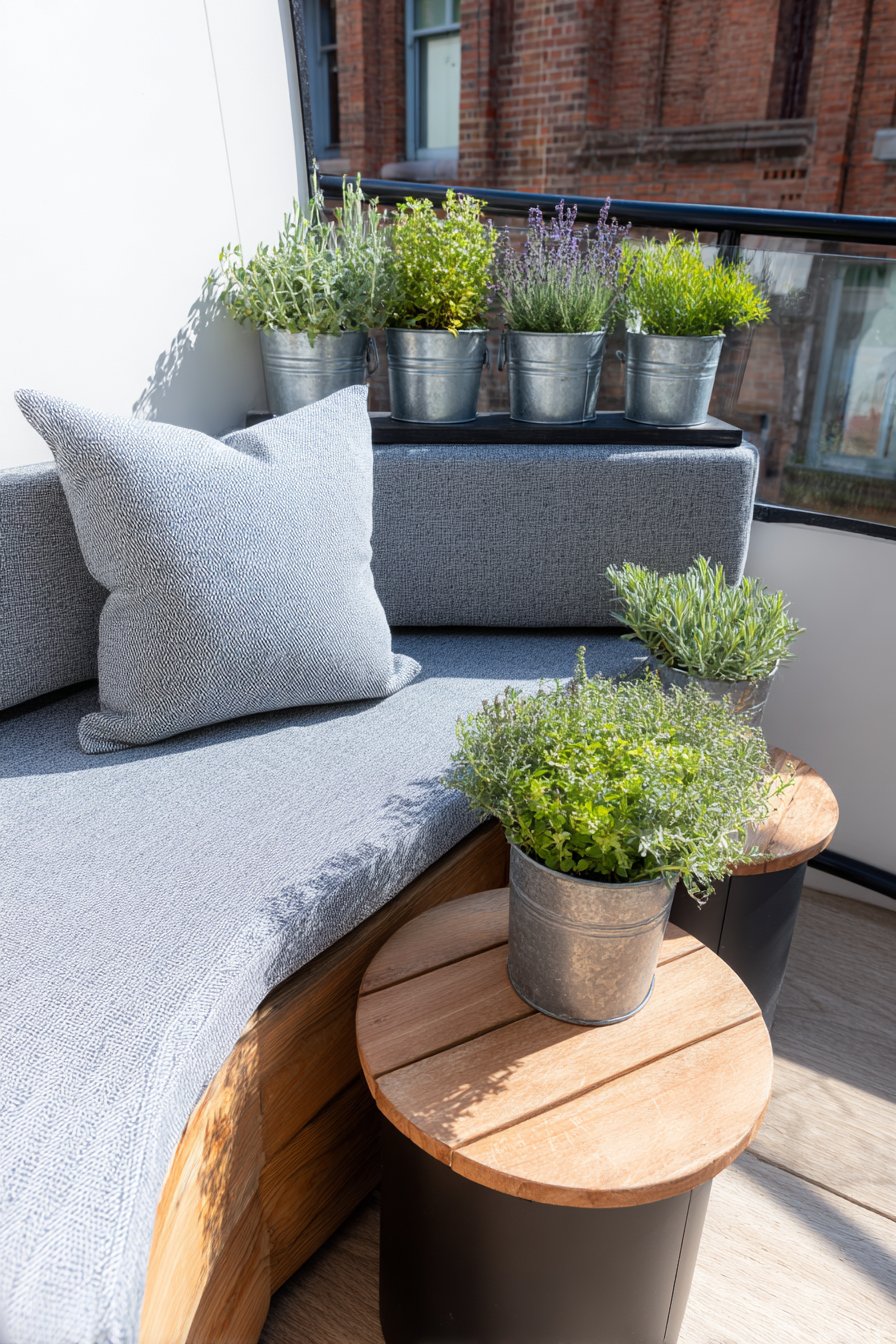
The genius of corner seating lies in its ability to transform an often-underutilized area into the most inviting spot on your mini balcony. Picture a custom-built storage bench upholstered in weather-resistant gray fabric, its L-shape perfectly conforming to the balcony’s corner while providing ample seating for two or three people. The beauty of this design extends beyond aesthetics—hidden beneath the cushioned top lies valuable storage space for outdoor pillows, gardening tools, or seasonal decorations, keeping your compact area clutter-free and organized.
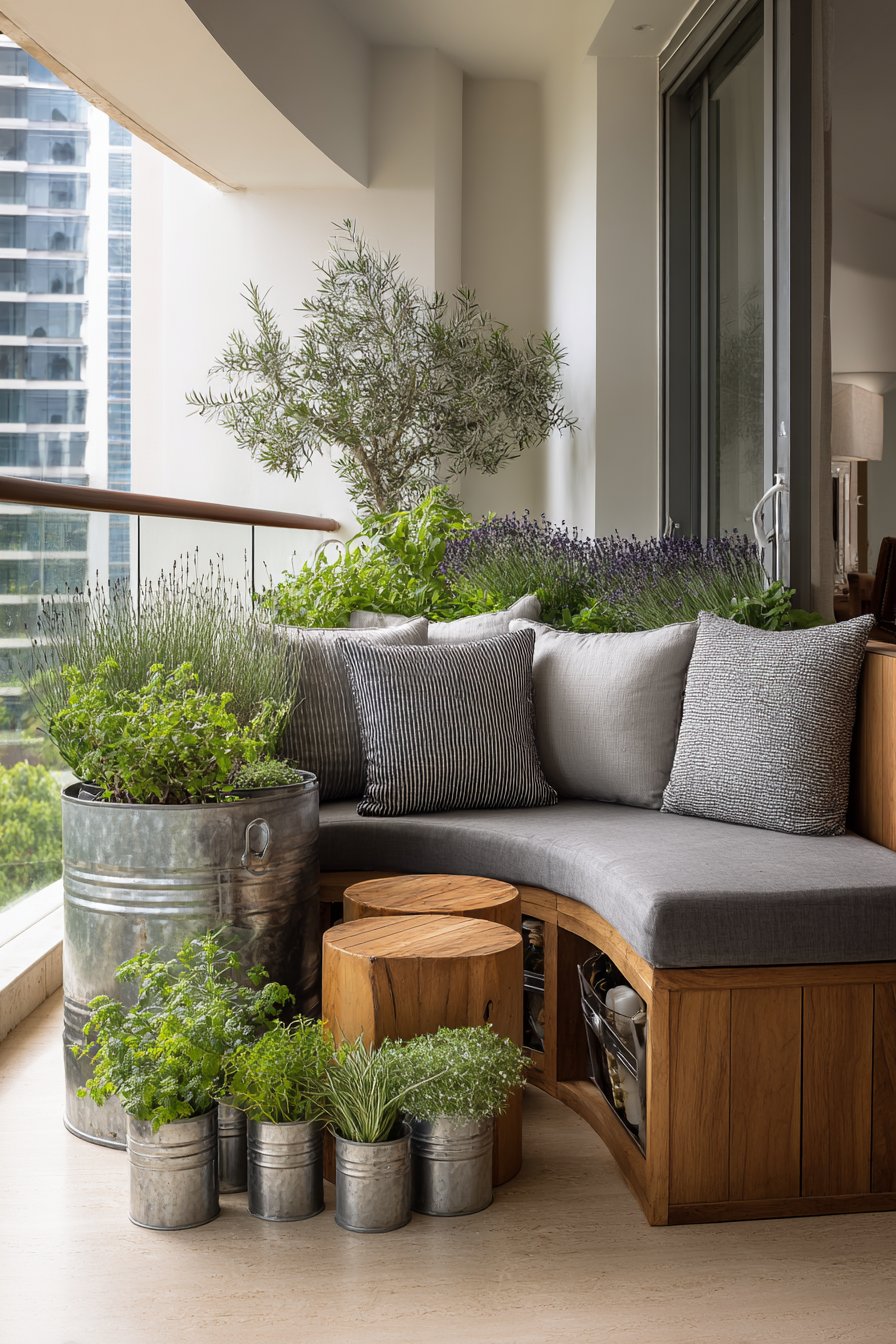
Flanking this cozy seating arrangement are two small round side tables crafted from natural teak, their warm honey tones creating a pleasing contrast against the cool gray upholstery. These tables serve multiple purposes: morning coffee station, book rest during afternoon reading sessions, or cocktail perch during evening gatherings. The weathered patina of the teak adds character while requiring minimal maintenance, an essential consideration for outdoor furniture.
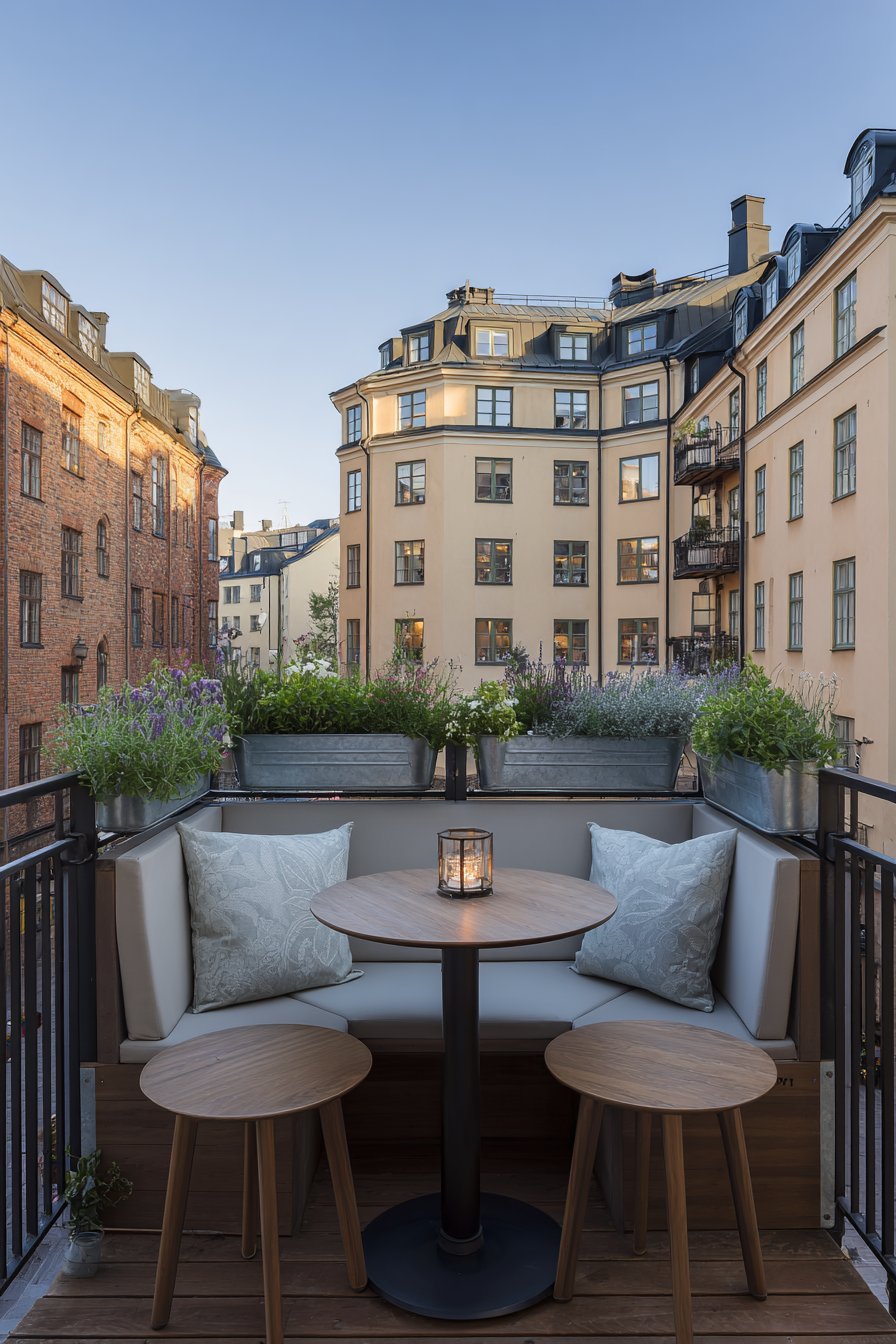
The functional element that elevates this mini balcony idea from merely attractive to genuinely practical is the micro-garden of potted herbs arranged along the railing. Galvanized metal containers holding basil, rosemary, thyme, and mint create a living border that’s both beautiful and useful. The morning light that illuminates this space captures dewdrops on herb leaves and highlights the texture of the gray fabric, creating a scene that feels both designed and naturally evolved. The overall effect is one of purposeful efficiency—every element serves multiple functions while contributing to a cohesive, welcoming atmosphere.
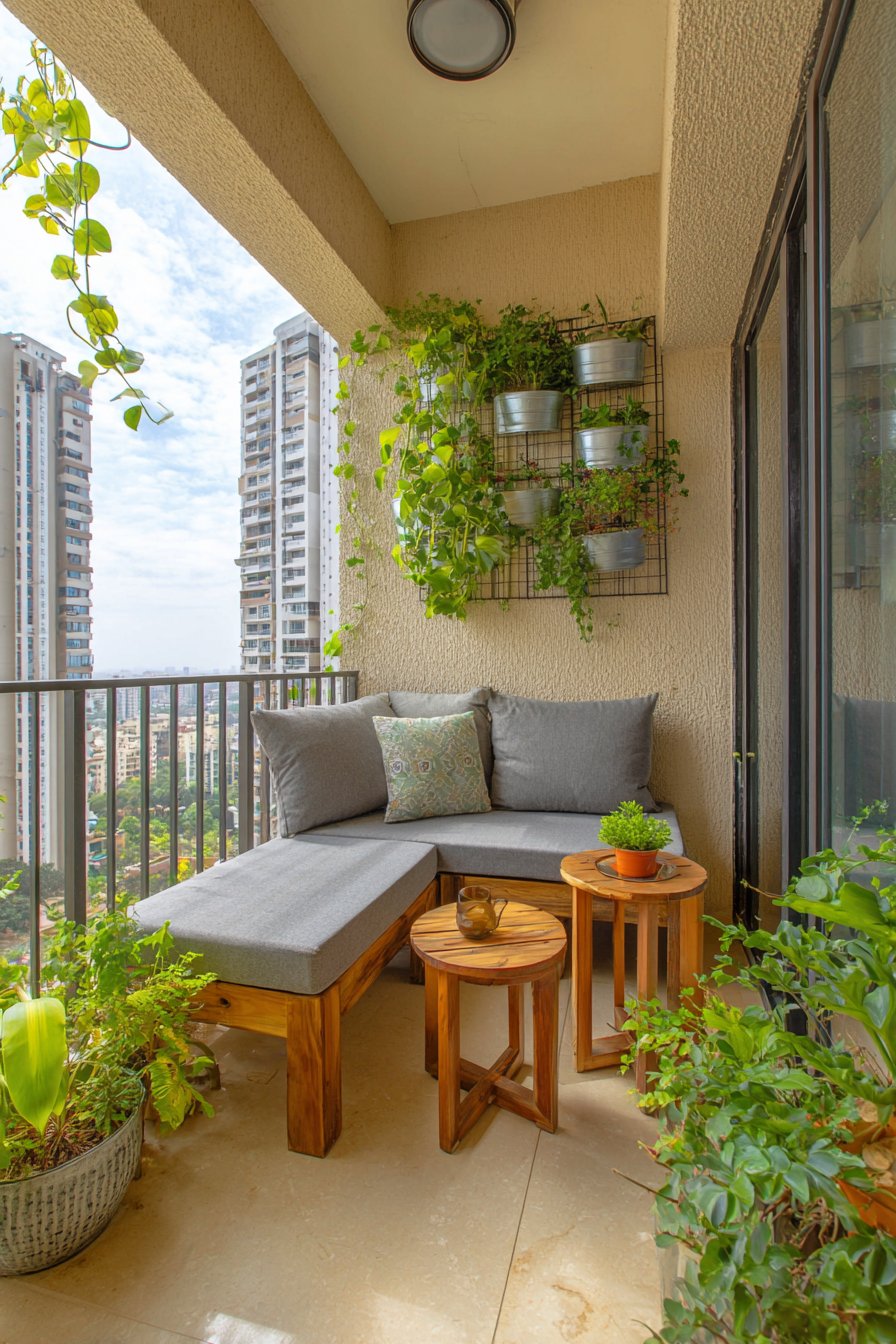
Key Design Tips:
- Install built-in seating with hinged lids to maximize storage without sacrificing floor space
- Choose weather-resistant upholstery fabrics in neutral tones that hide dirt and complement various color schemes
- Position herb gardens along railings to utilize vertical space while keeping surfaces clear
- Select teak or other weather-resistant woods that develop attractive patina over time
- Use galvanized metal containers for plants as they’re durable, lightweight, and add industrial charm
2. Vertical Hanging Garden System
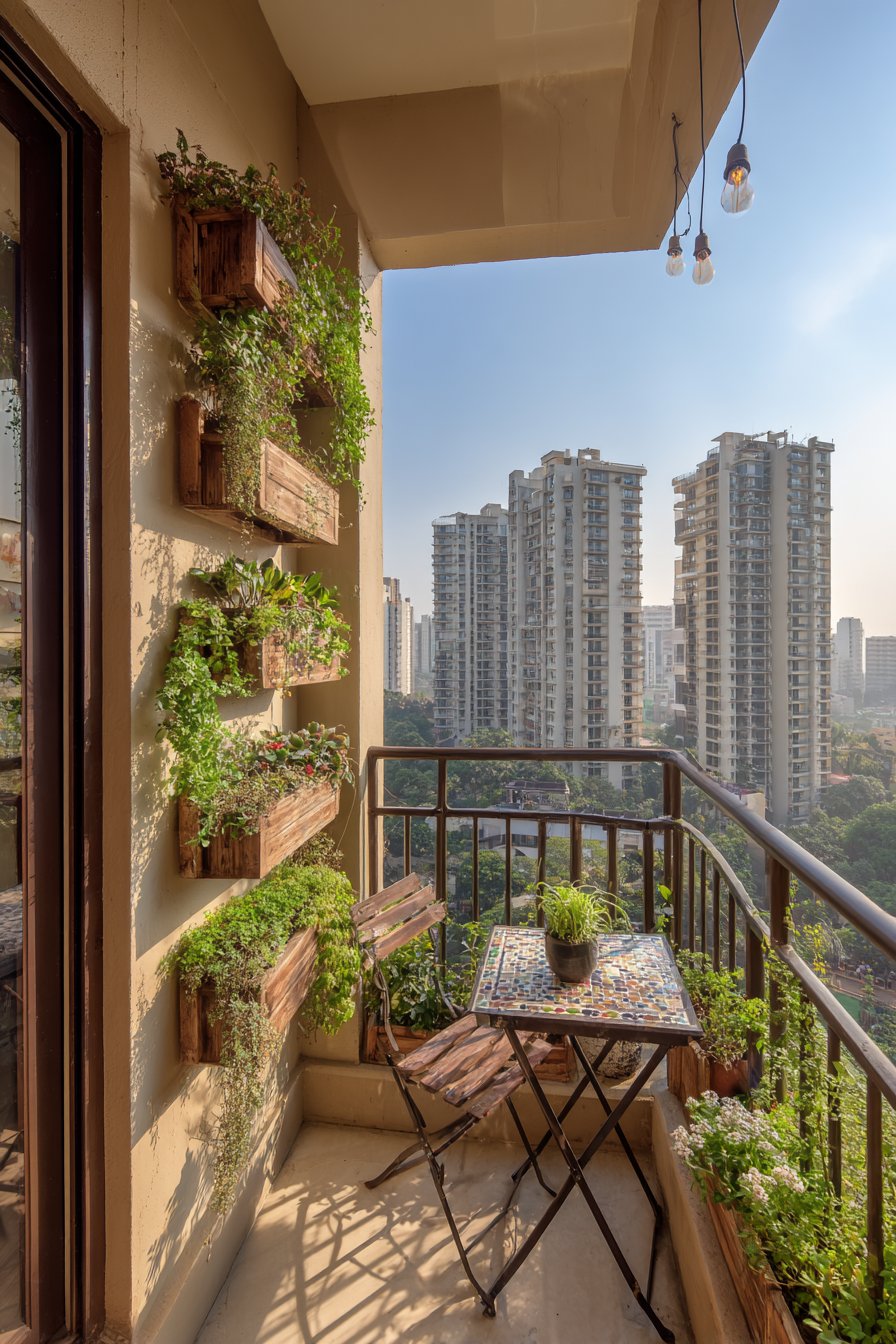
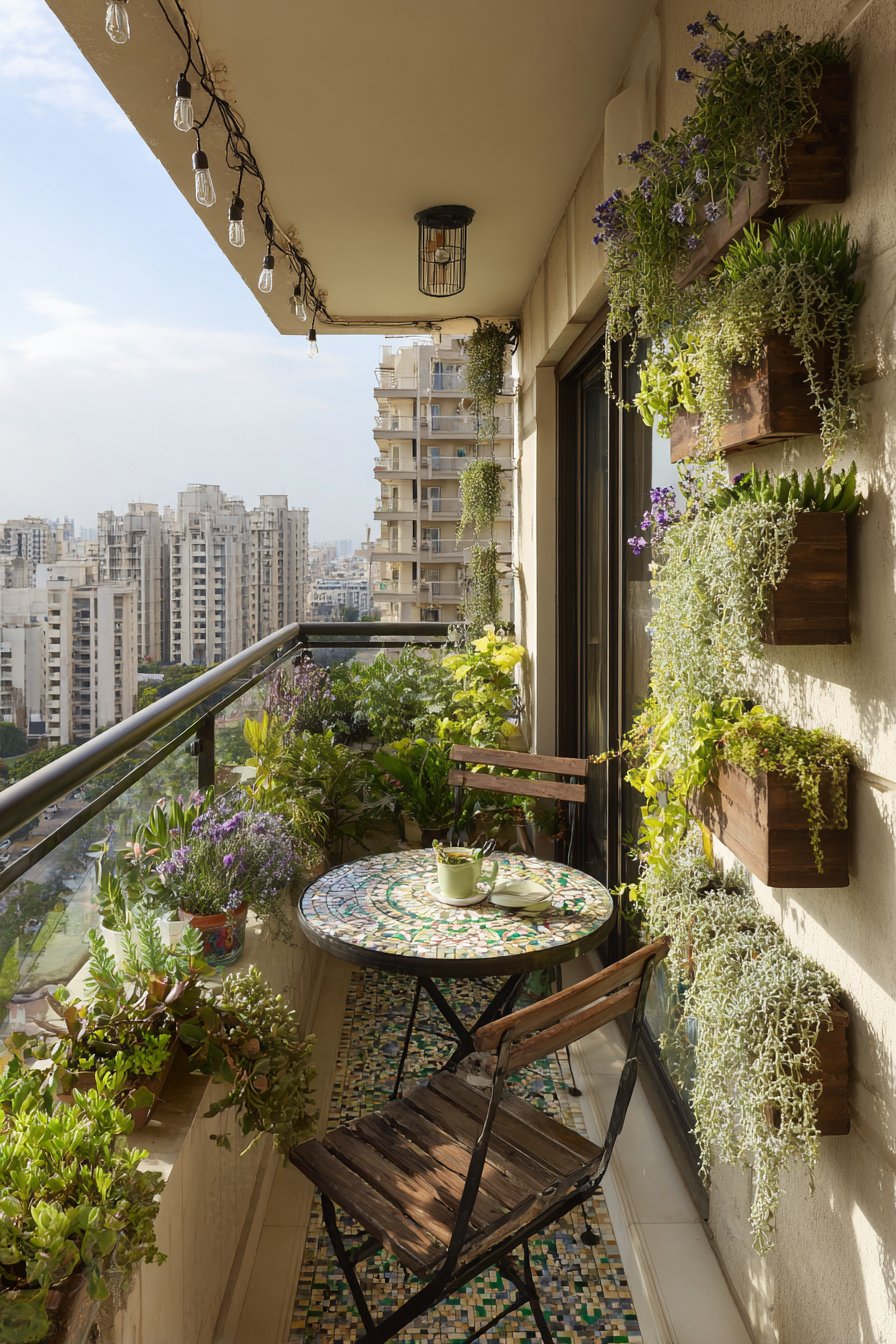
When floor space is at a premium, the answer lies in looking up. A vertical hanging garden system transforms bare walls into living tapestries of green, creating the illusion of a much larger outdoor space while bringing nature directly into your daily life. Imagine a tiered planter system mounted securely to the wall, each level cascading with trailing succulents, colorful flowering plants, and herbs that release their fragrance with every passing breeze. This vertical approach to gardening is revolutionary for mini balcony ideas, proving that limited square footage doesn’t mean limited green space.
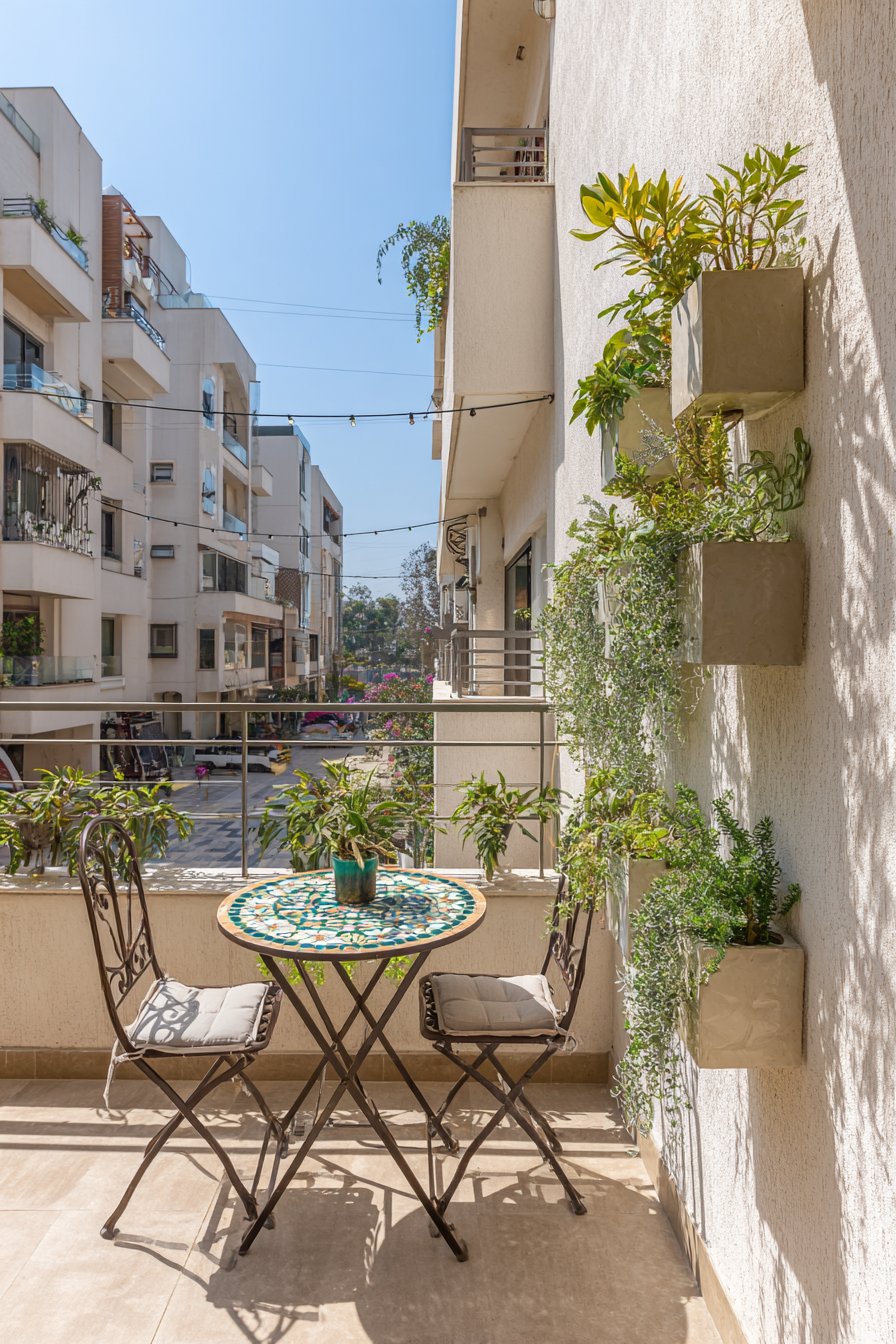
The focal point of this design is a narrow folding bistro table in wrought iron, its surface adorned with intricate mosaic tiles in shades of cobalt blue, terracotta, and cream. This table serves as the practical anchor of the space—a surface for morning tea, laptop work, or evening meals—while its artistic top adds a decorative element that draws the eye. The folding mechanism is particularly clever for mini balconies, allowing you to reclaim floor space when needed for yoga practice, entertaining larger groups, or simply creating a more open feeling.
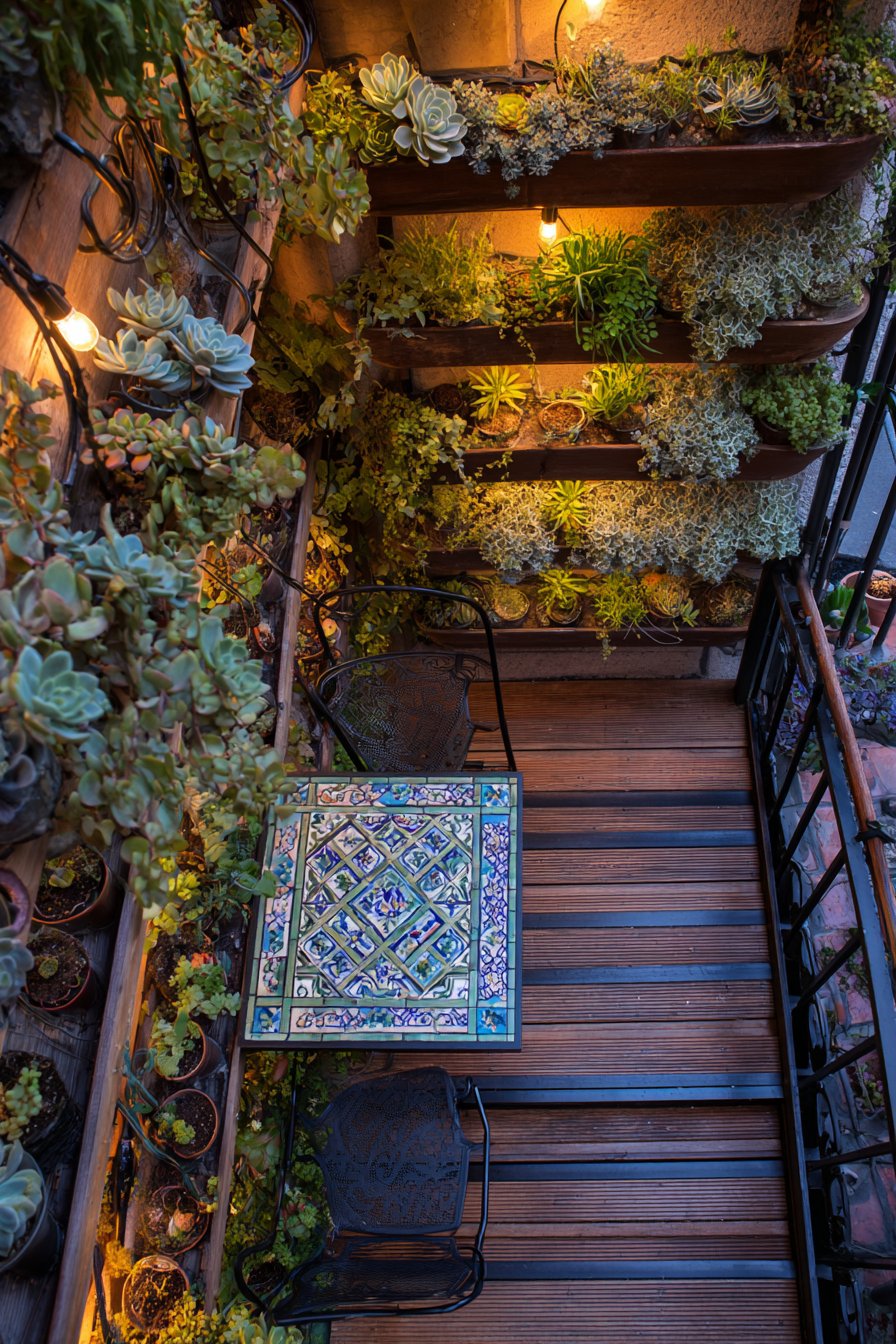
Overhead, outdoor string lights weave between the hanging planters, creating a magical ambiance as daylight fades. The warm glow reflects off the glossy leaves and mosaic tiles, transforming the balcony into an enchanted evening retreat. The wide-angle perspective of this design reveals how clever vertical space utilization creates depth and interest, with plants at varying heights drawing the eye upward and making the balcony feel significantly larger than its actual dimensions. Natural daylight filters through the foliage, creating dappled patterns on the floor and highlighting the diverse textures of different plant species.
Key Design Tips:
- Mount tiered planters at eye level and above to maximize wall space without impeding movement
- Choose plants with varied growth habits—upright, trailing, and cascading—for visual interest
- Select a folding bistro table that can be collapsed and stored when maximum space is needed
- Install string lights on a dimmer switch to control ambiance and conserve energy
- Ensure proper drainage for wall-mounted planters to protect walls from water damage
- Mix flowering plants with evergreen varieties for year-round visual appeal
3. Drop-Leaf Table with Mediterranean Flair
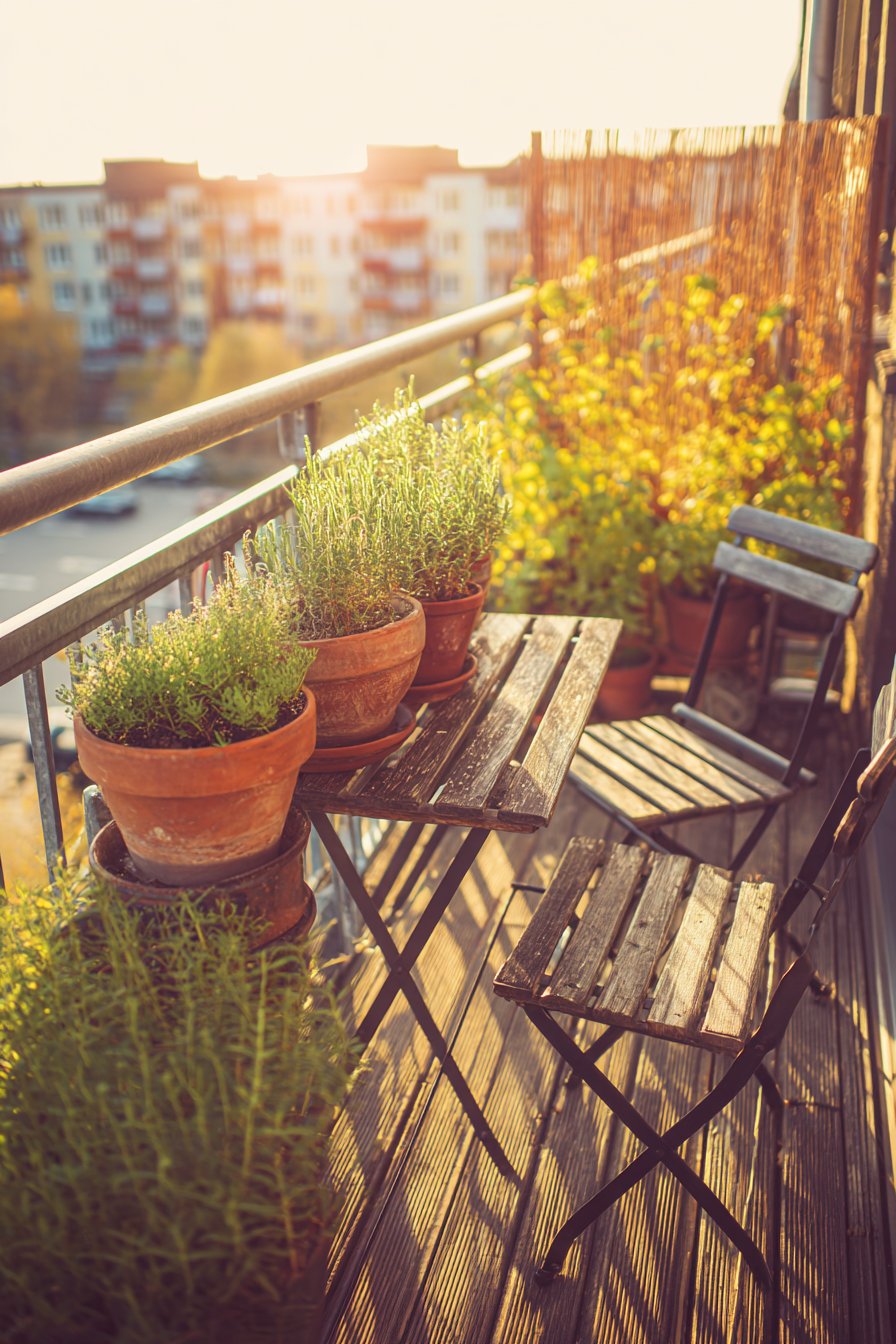
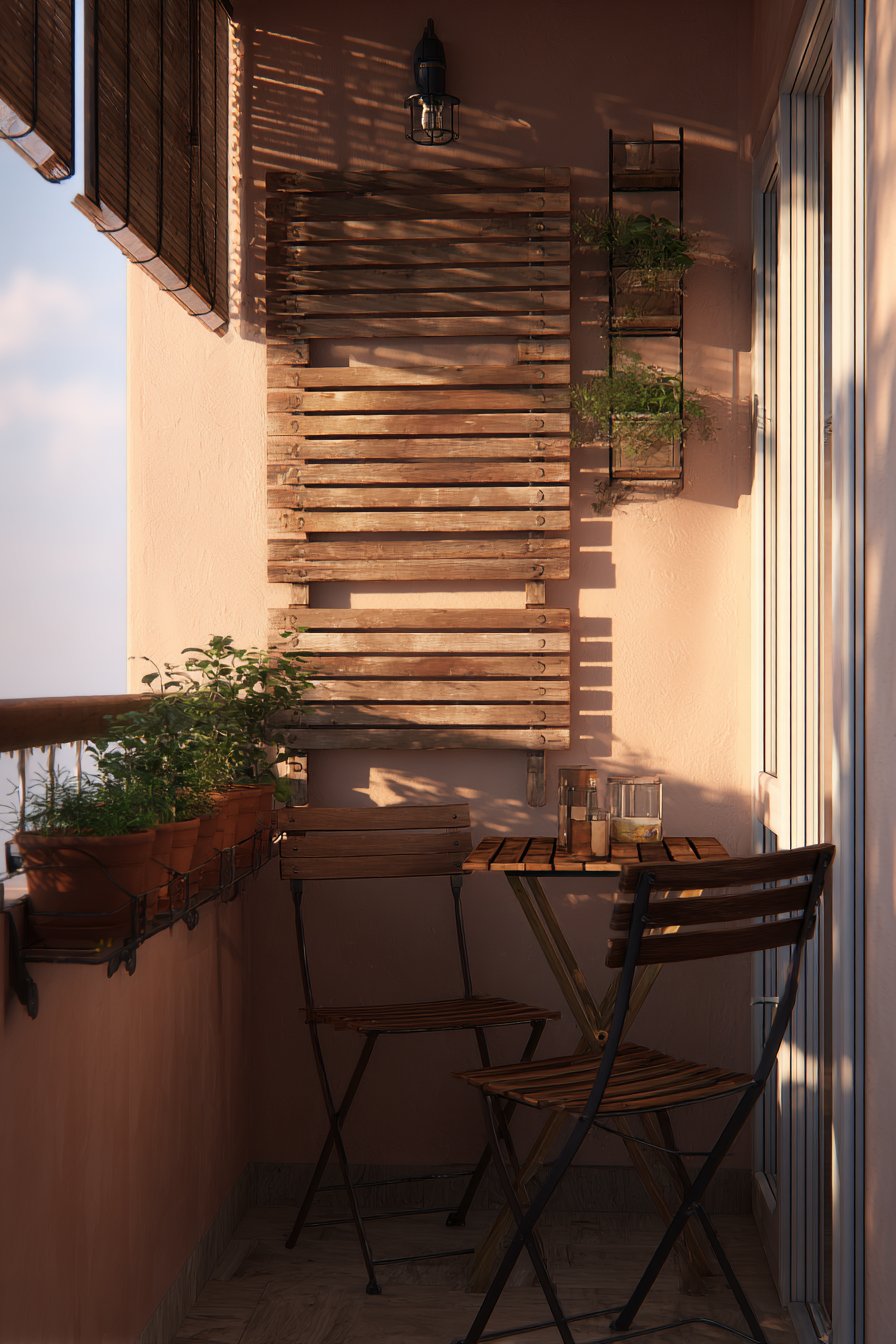
The wall-mounted drop-leaf table represents the pinnacle of space-saving furniture design, offering a full dining or work surface when needed and folding flat against the wall when not in use. Crafted from weathered wood with a beautiful gray patina that speaks of sun-bleached Mediterranean porches, this table embodies both practicality and rustic charm. When deployed, it provides ample space for laptop work, al fresco dining, or craft projects; when folded down, it becomes a narrow shelf suitable for displaying a few potted succulents or decorative items.
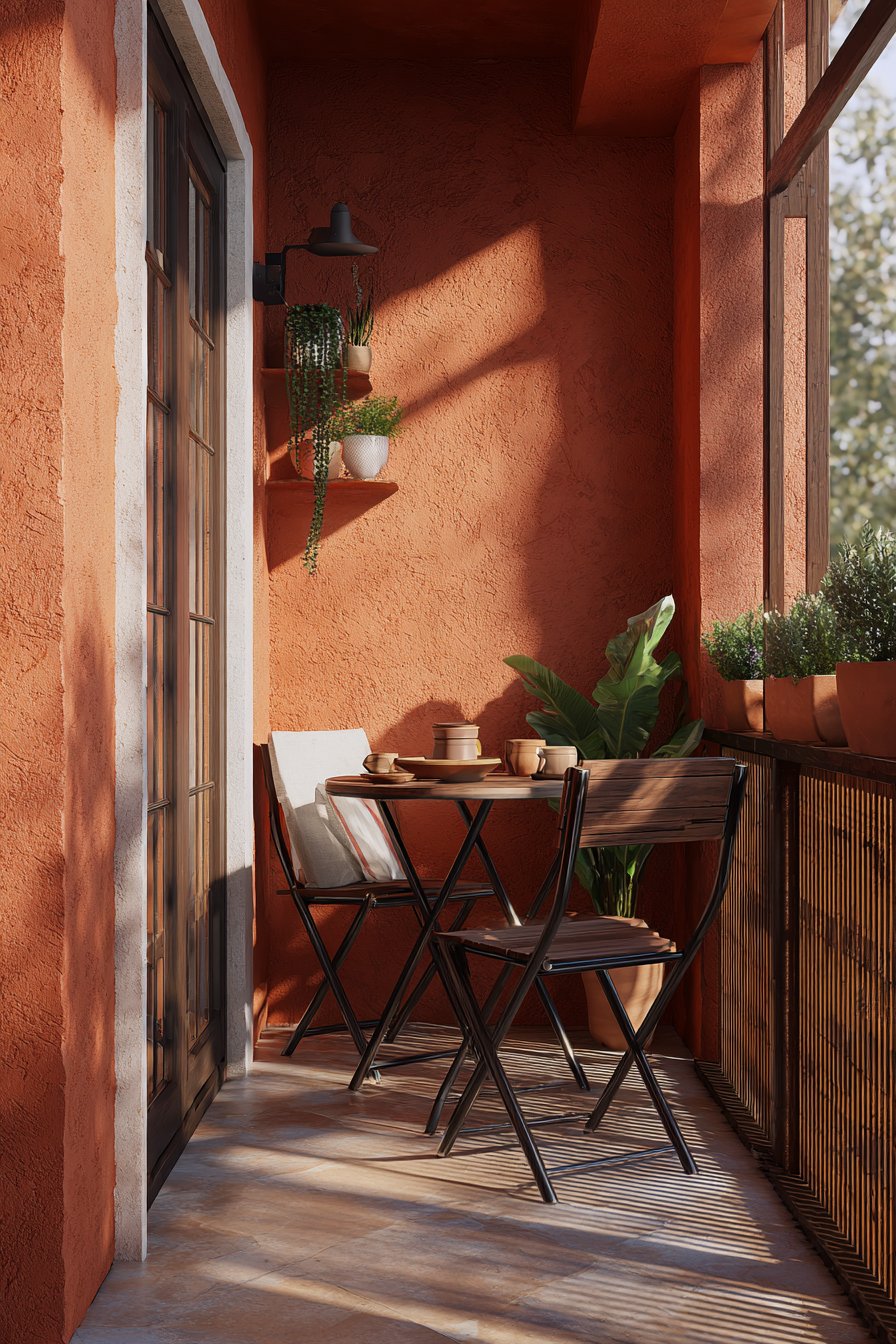
Paired with two stackable metal chairs in a matte black finish, the arrangement strikes a perfect balance between permanence and flexibility. These chairs, while substantial enough for comfortable seating, can be stacked and stored in a corner or even moved indoors during harsh weather, making them ideal for renters or those who experience dramatic seasonal changes. The matte black finish creates a sophisticated contrast against the natural wood, adding a contemporary edge to the rustic aesthetic.
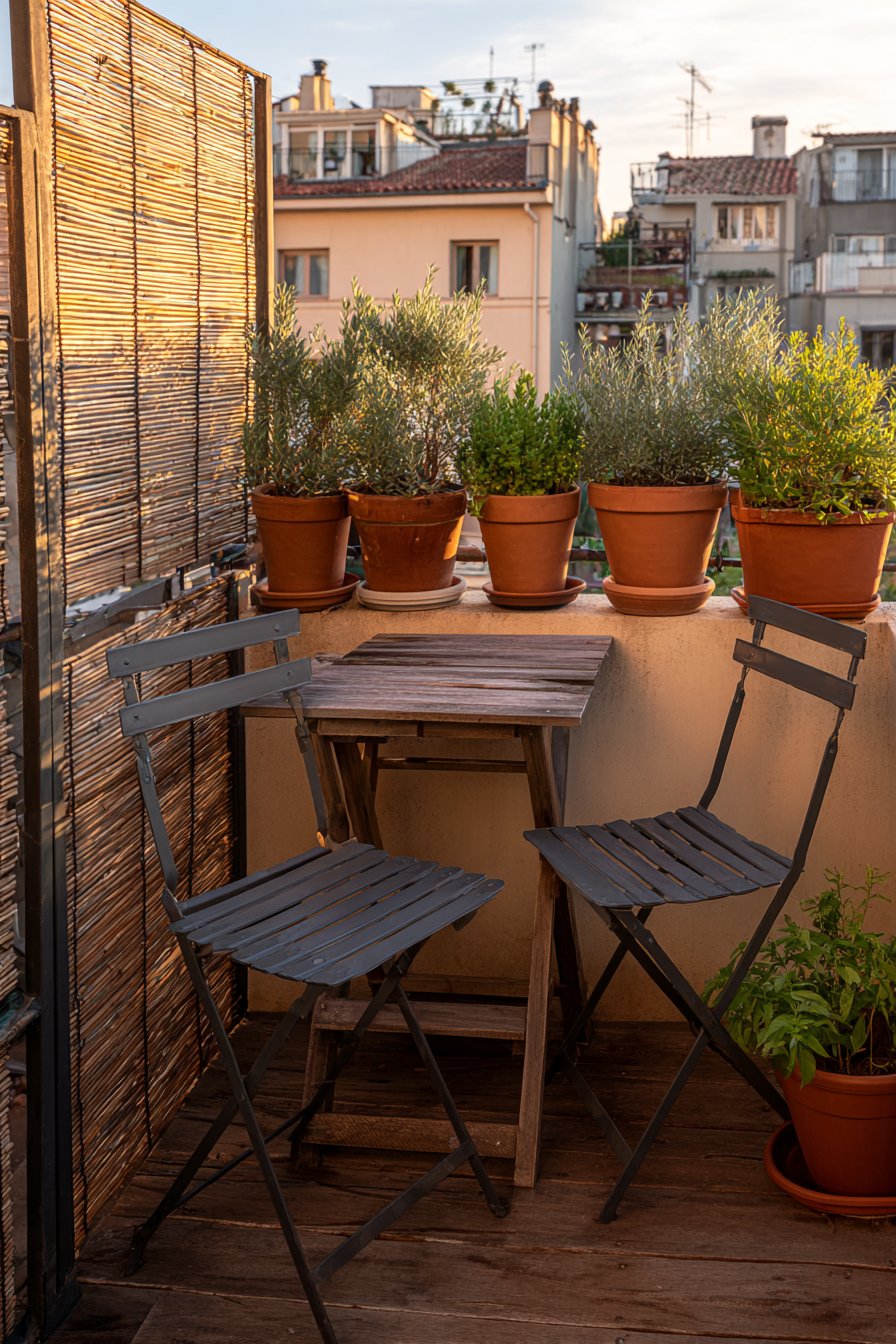
A bamboo privacy screen adds an essential layer of intimacy without creating a completely closed-off feeling. The natural material allows air flow while filtering harsh sunlight and blocking unwanted sightlines from neighboring balconies. Along the narrow ledge, terracotta pots overflow with Mediterranean herbs—oregano, rosemary, and lavender—their aromatic presence transforming the balcony into a sensory experience. As golden hour light washes across this scene, it illuminates the wood grain of the table, casts intricate shadows through the bamboo screen, and glints off the metal chairs, creating a tableau that feels both carefully designed and effortlessly organic.
Key Design Tips:
- Ensure drop-leaf tables are mounted into wall studs or use appropriate anchors for weight capacity
- Choose stackable chairs to minimize storage space when not in use
- Install bamboo screens with removable mounting brackets for easy seasonal adjustments
- Plant Mediterranean herbs that thrive in full sun and require minimal watering
- Position the table to catch morning or evening light depending on your preferred usage time
- Apply weatherproof sealant to wooden elements annually to maintain appearance and durability
4. Suspended Egg Chair Reading Nook
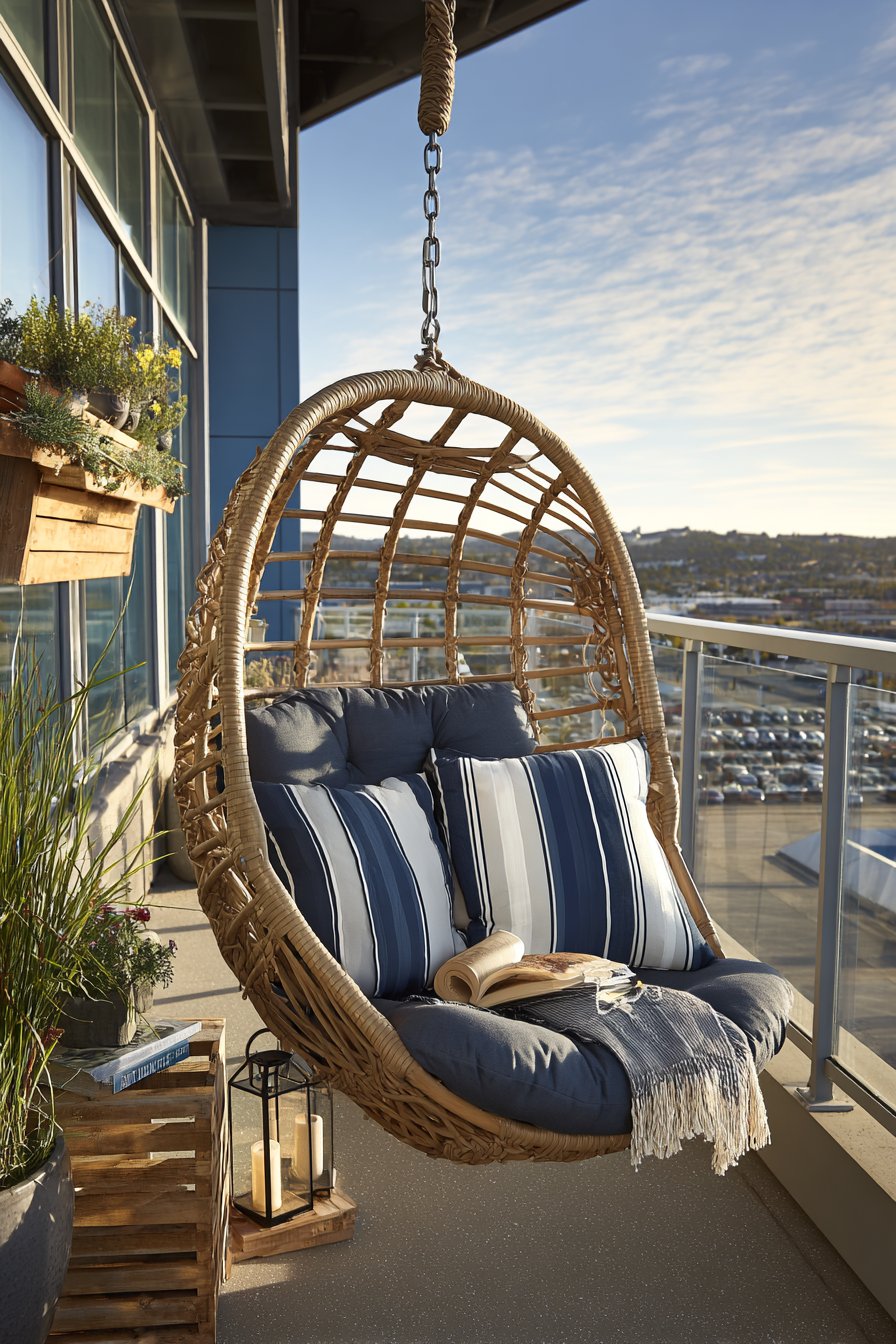
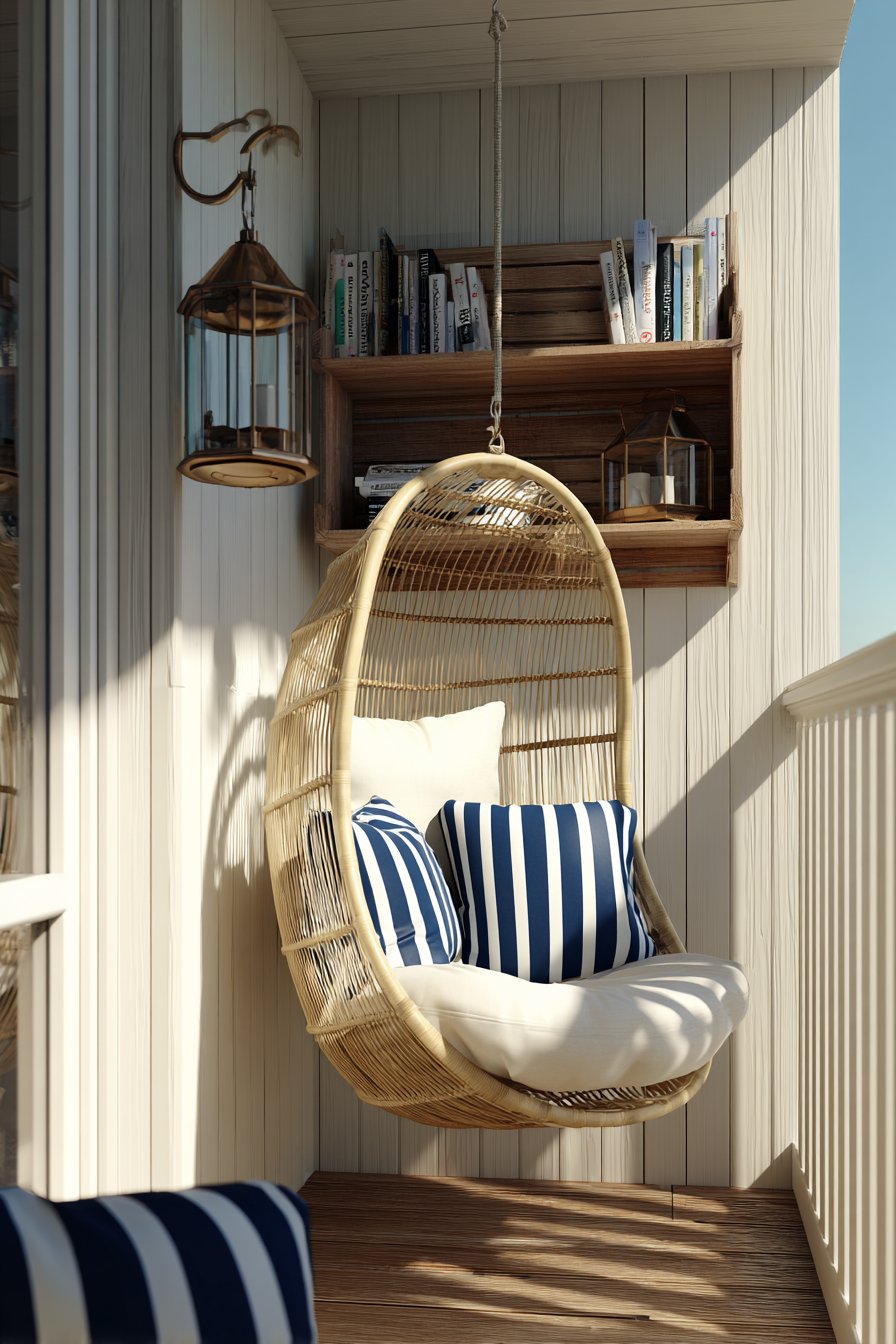
Few additions transform a mini balcony as dramatically as a suspended egg chair, that iconic piece of mid-century design that seems to defy gravity while cradling its occupant in womb-like comfort. Picture this sculptural seating element hanging from a reinforced ceiling mount, its woven wicker or rattan frame creating intricate patterns of light and shadow as the sun moves across the sky. Cushioned generously with outdoor-rated pillows in navy and white stripes, the chair becomes an irresistible invitation to curl up with a good book, a warm beverage, and hours of uninterrupted peace.
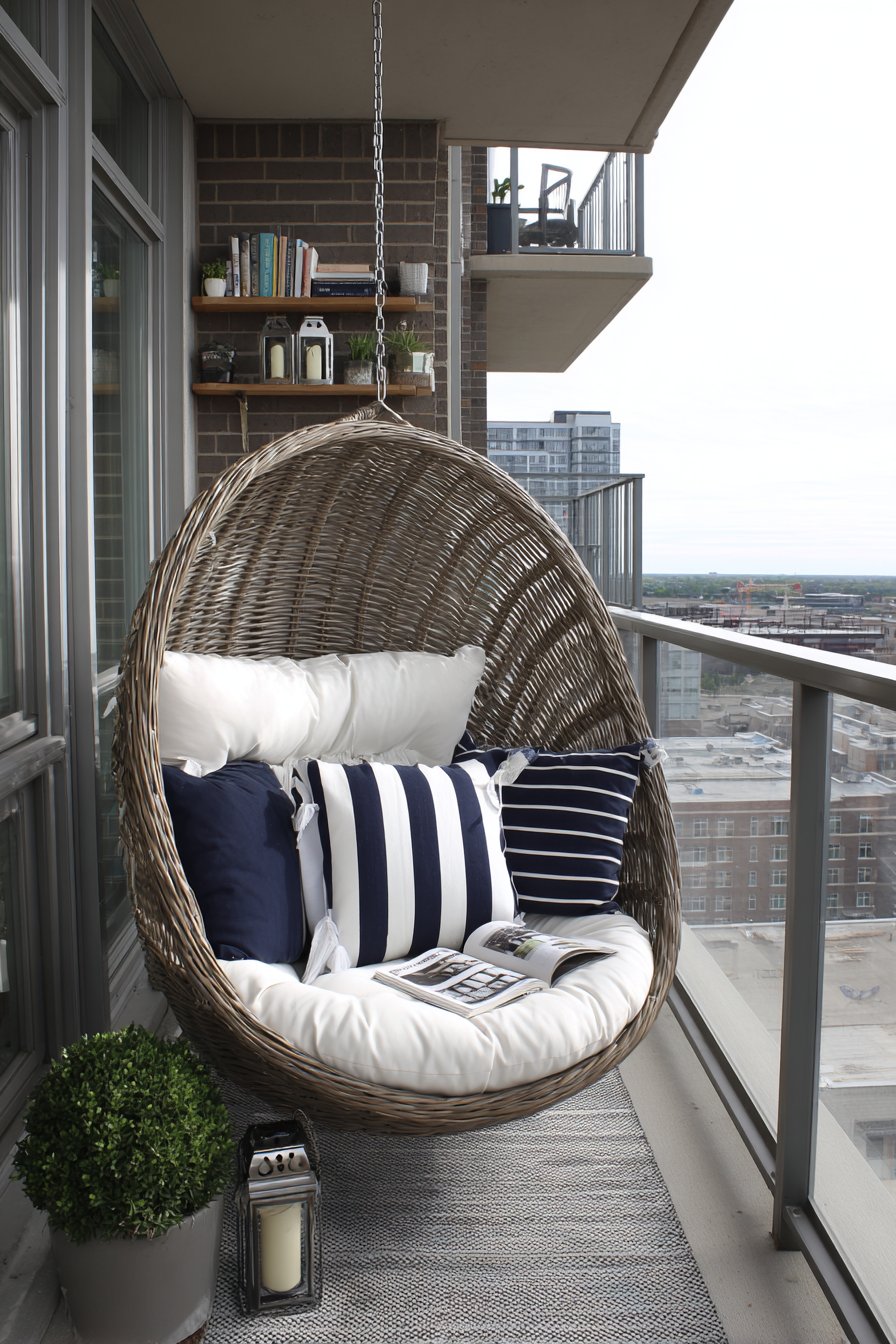
The genius of this mini balcony idea lies in its efficient use of space—by suspending the seating, you’ve essentially created a comfortable sitting area without sacrificing any floor space. This vertical thinking allows room for other elements, such as the small bookshelf constructed from reclaimed wood mounted on the adjacent wall. Its rustic shelves hold favorite novels, magazines, and perhaps a small plant or two, keeping reading material accessible without cluttering surfaces.
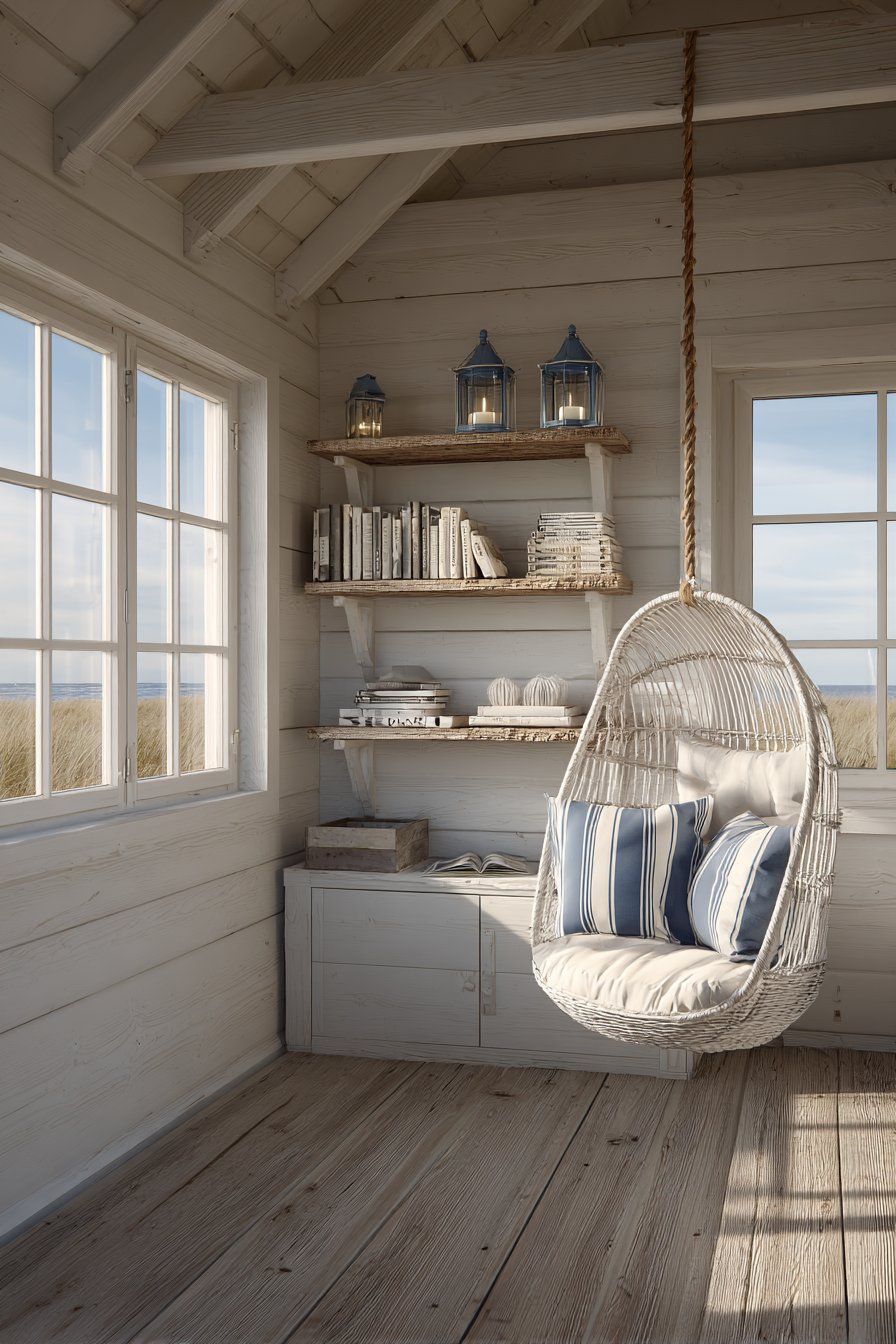
As evening approaches, solar-powered lanterns automatically illuminate, casting a warm glow that’s perfect for reading well into the twilight hours. These sustainable lighting solutions eliminate the need for complicated wiring while providing ambient illumination that enhances the cozy atmosphere. Natural afternoon light streams through this space, highlighting the texture of the woven chair, the grain of the reclaimed wood shelving, and creating an ever-changing play of light that makes this reading nook feel alive and dynamic throughout the day.
Key Design Tips:
- Verify ceiling structure can support the weight of the chair plus occupant (typically 300+ pounds)
- Install a spring mechanism to allow gentle swaying motion while maintaining stability
- Choose marine-grade or outdoor-rated cushions that resist moisture, mildew, and fading
- Mount bookshelves at arm’s reach from the seated position for convenience
- Select solar lanterns with adjustable brightness settings for versatile lighting
- Add a small side hook to the chair structure for hanging reading glasses or a beverage
- Position the chair to maximize either view or privacy, depending on your preference
5. Sleek Aluminum Railing Planters
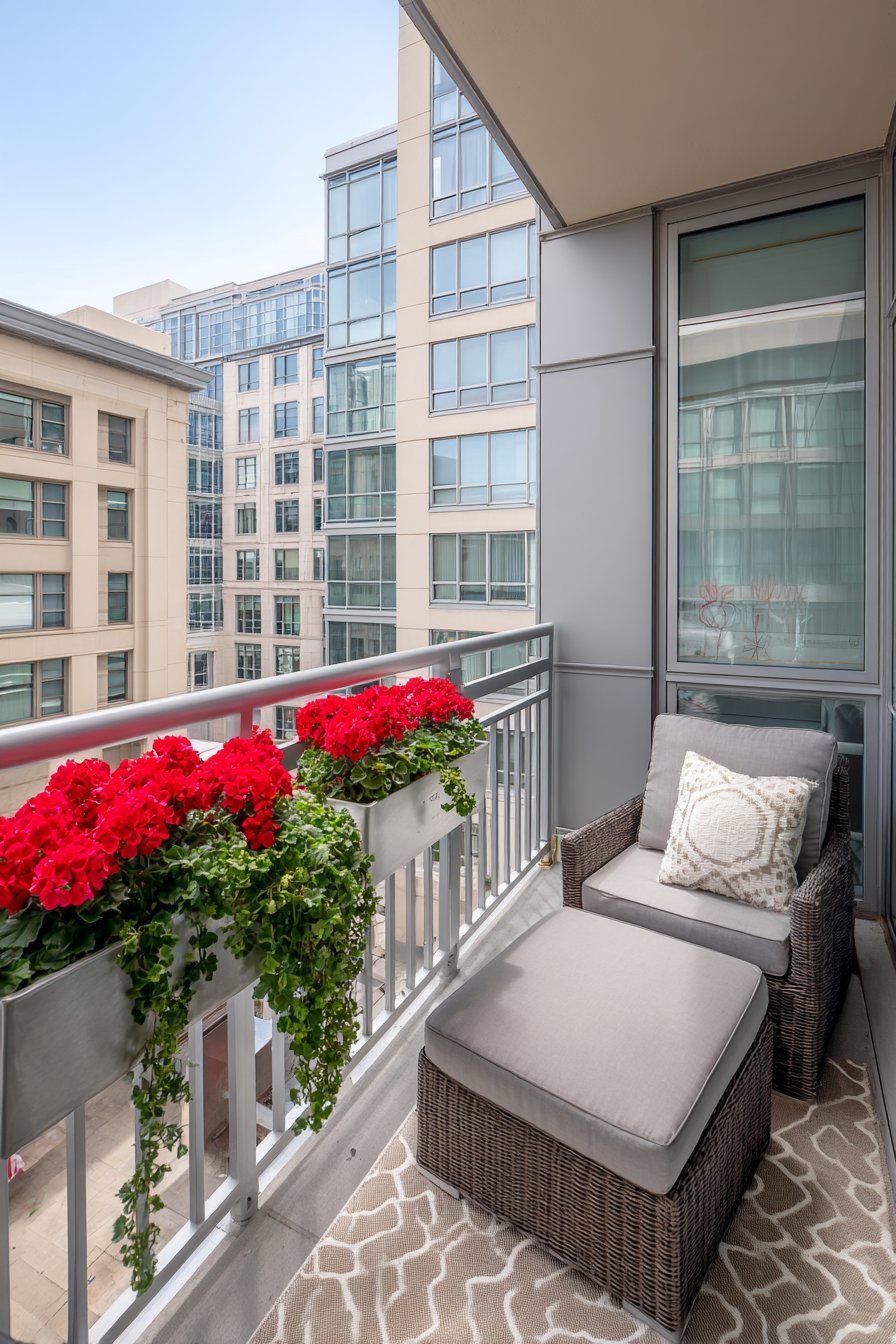
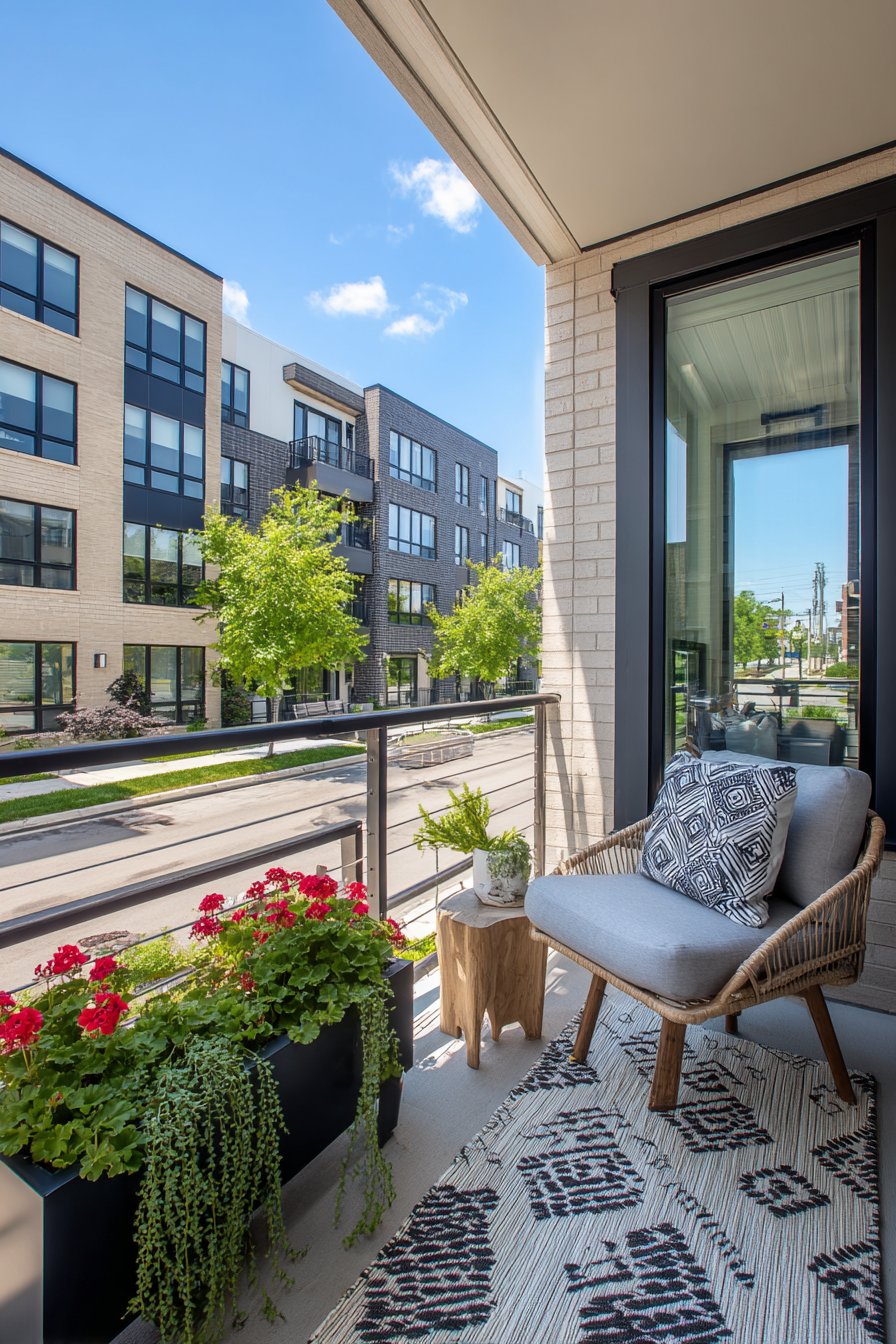
Modern mini balcony ideas often embrace clean lines and minimalist aesthetics, and nothing exemplifies this better than sleek aluminum railing planters that transform a simple barrier into a flourishing garden. These innovative containers attach directly to the railing, utilizing space that would otherwise remain empty while creating a living border of vibrant color and texture. Imagine geraniums in brilliant reds and pinks cascading over the edges, interspersed with trailing ivy that softens the geometric lines of the planters and creates gentle green curtains.
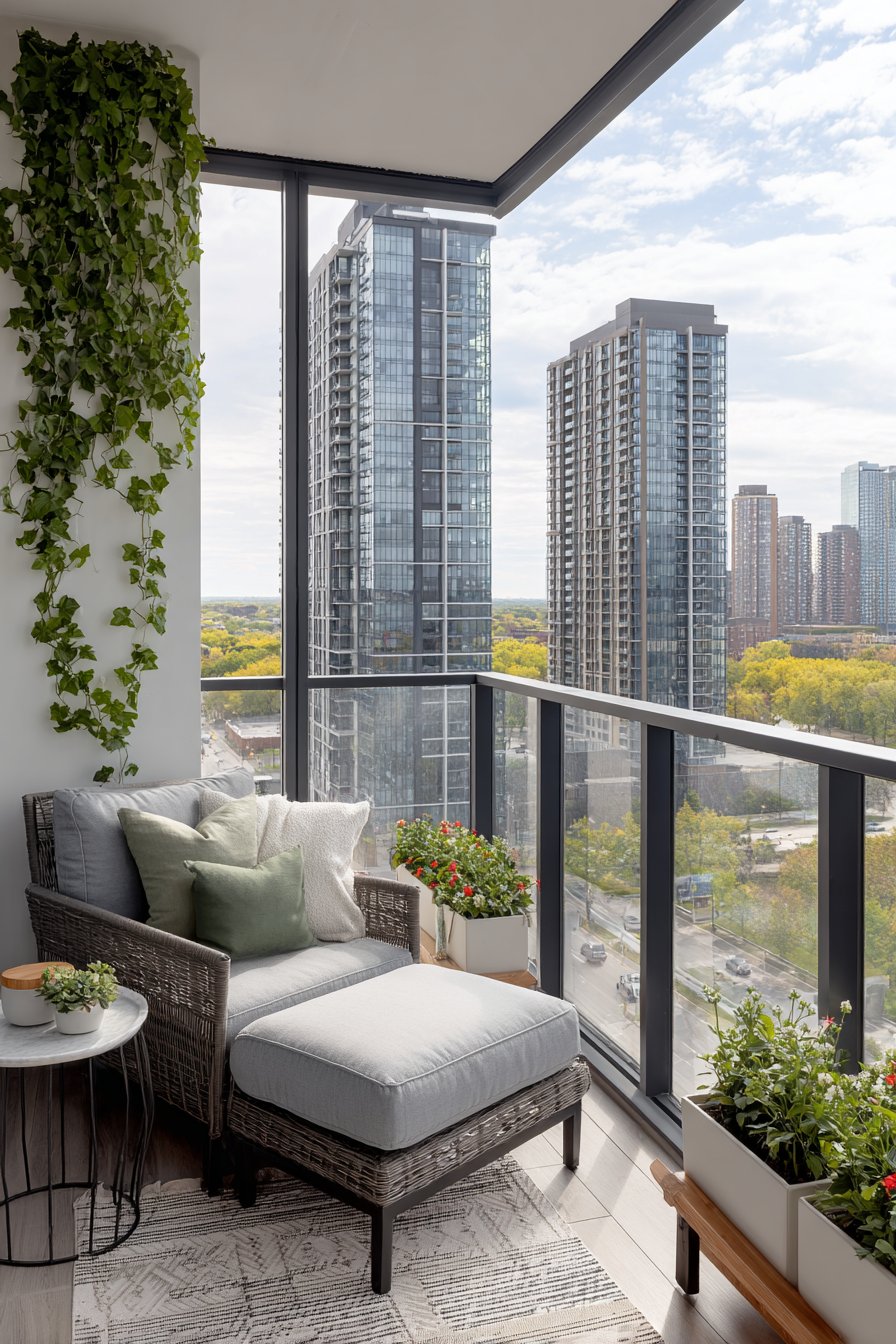
At the center of this contemporary setup sits a single lounge chair in weather-resistant wicker, its frame colored in a sophisticated gray that complements the aluminum planters. Plush gray cushions provide comfort without overwhelming the minimalist aesthetic, inviting long sessions of sunbathing, reading, or simply cloud-watching. The chair’s positioning takes full advantage of the sun’s path, ensuring maximum warmth during cooler months while the flowering border provides a living privacy screen during summer gatherings.
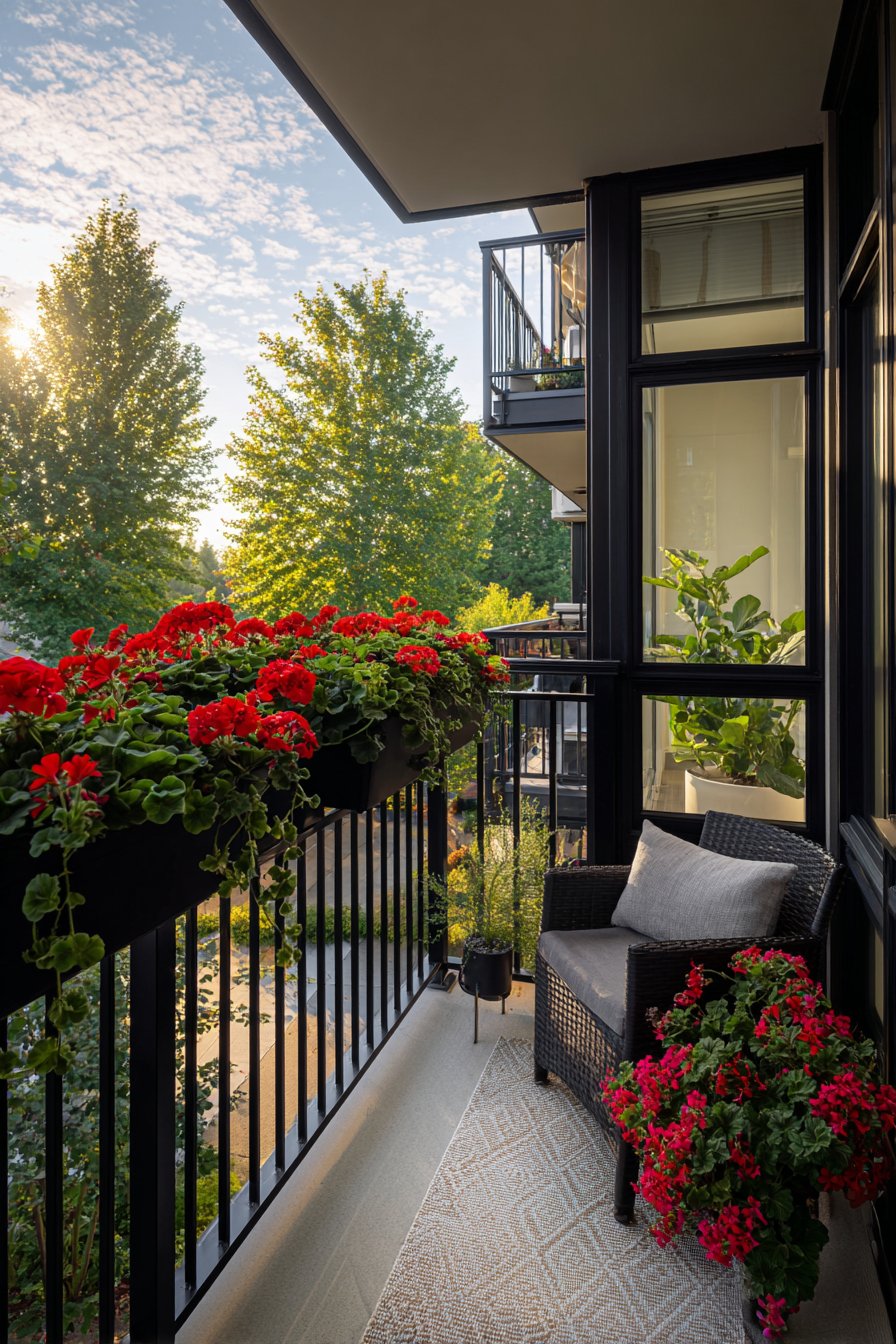
Anchoring the seating area is a geometric outdoor rug in neutral tones—perhaps a pattern of interlocking hexagons in shades of cream, taupe, and charcoal. This simple addition defines the space, adds comfort underfoot, and introduces pattern without clashing with the plantings or furniture. The wide-angle perspective of this design showcases how contemporary minimalism doesn’t mean cold or sterile; rather, it creates a calm, uncluttered environment where each element has room to breathe. Soft natural lighting highlights the clean lines of the aluminum, the organic curves of the flowers, and the inviting texture of the wicker and cushions.
Key Design Tips:
- Measure railing dimensions carefully to ensure proper fit of mounted planters
- Choose self-watering railing planters to reduce maintenance and prevent water damage to lower floors
- Select a lounge chair with adjustable backrest positions for versatility
- Position the chair to track the sun’s path for optimal warmth and natural vitamin D
- Use a geometric rug pattern to add visual interest without overwhelming the minimalist aesthetic
- Plant a mix of upright flowers and trailing varieties for dimensional interest
- Install planter liners to protect metal from soil contact and extend longevity
6. Scandinavian-Inspired Light and Airy Retreat
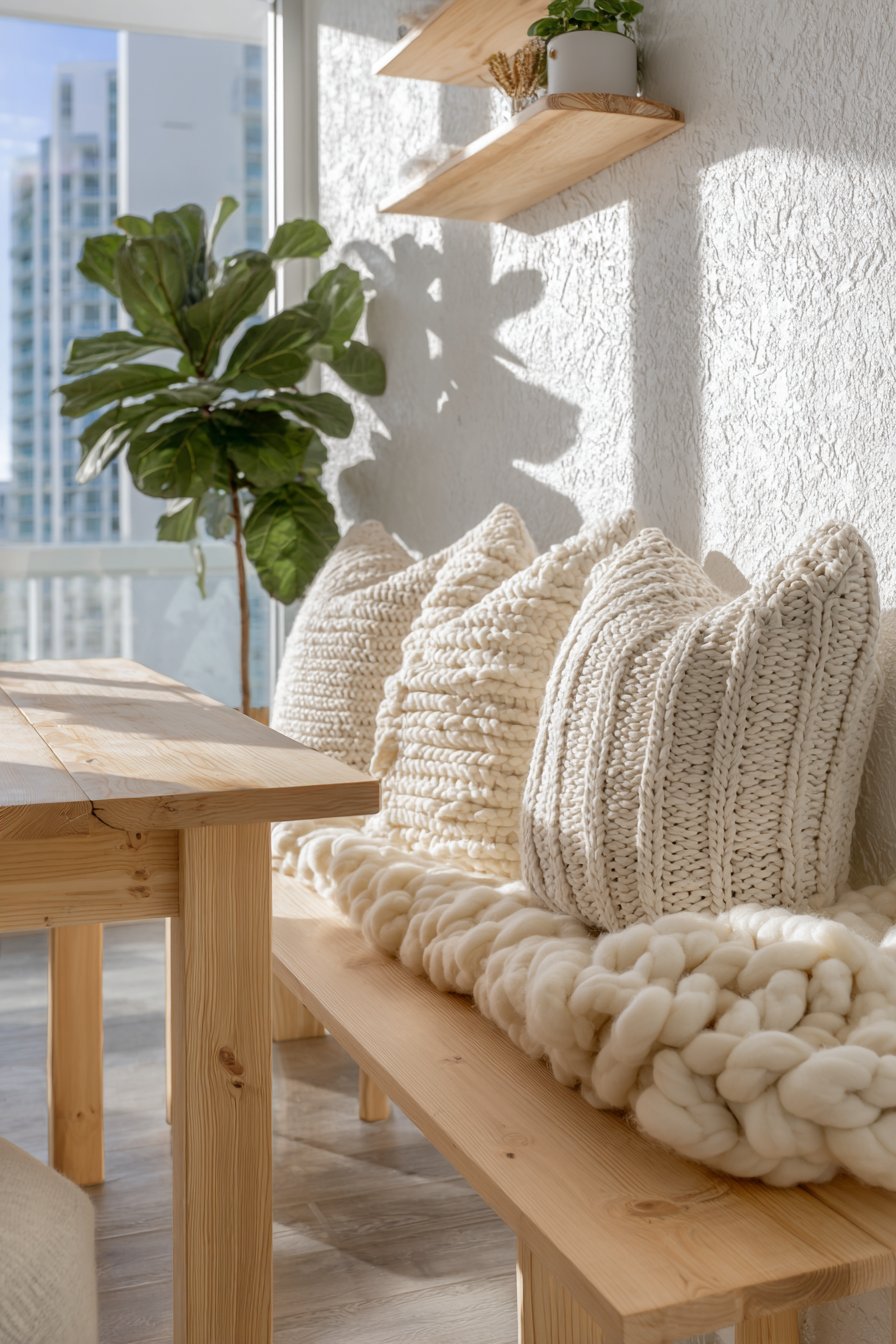
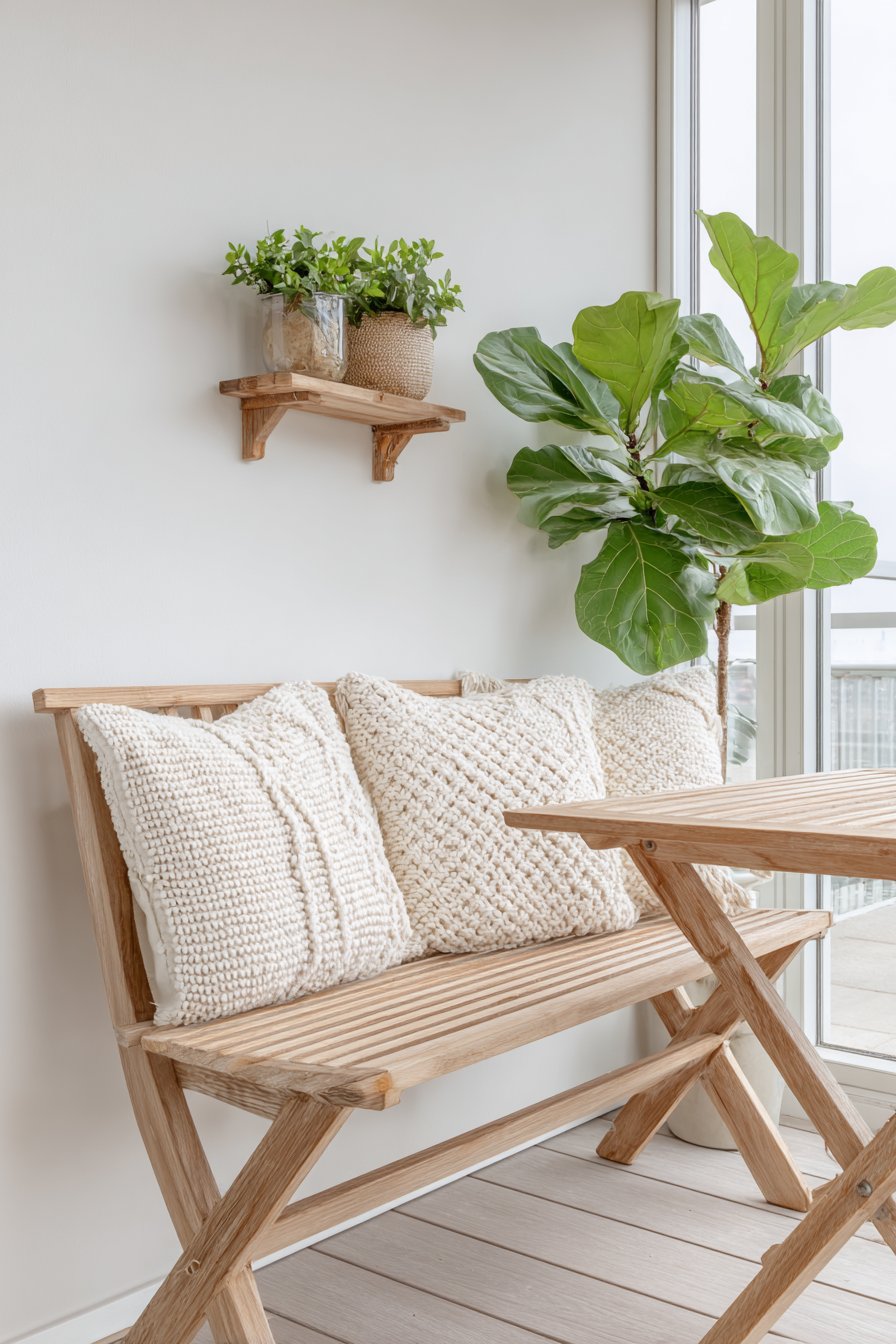
The hallmarks of Scandinavian design—natural materials, soft colors, functional simplicity, and an abundance of light—translate beautifully to mini balcony ideas, creating spaces that feel open, peaceful, and effortlessly elegant. Envision a narrow wooden bench crafted from light ash wood, its pale grain visible and inviting. Adorned with a luxuriously soft sheepskin throw and hand-knitted cushions in cream tones, the bench becomes a meditation on texture and natural comfort.
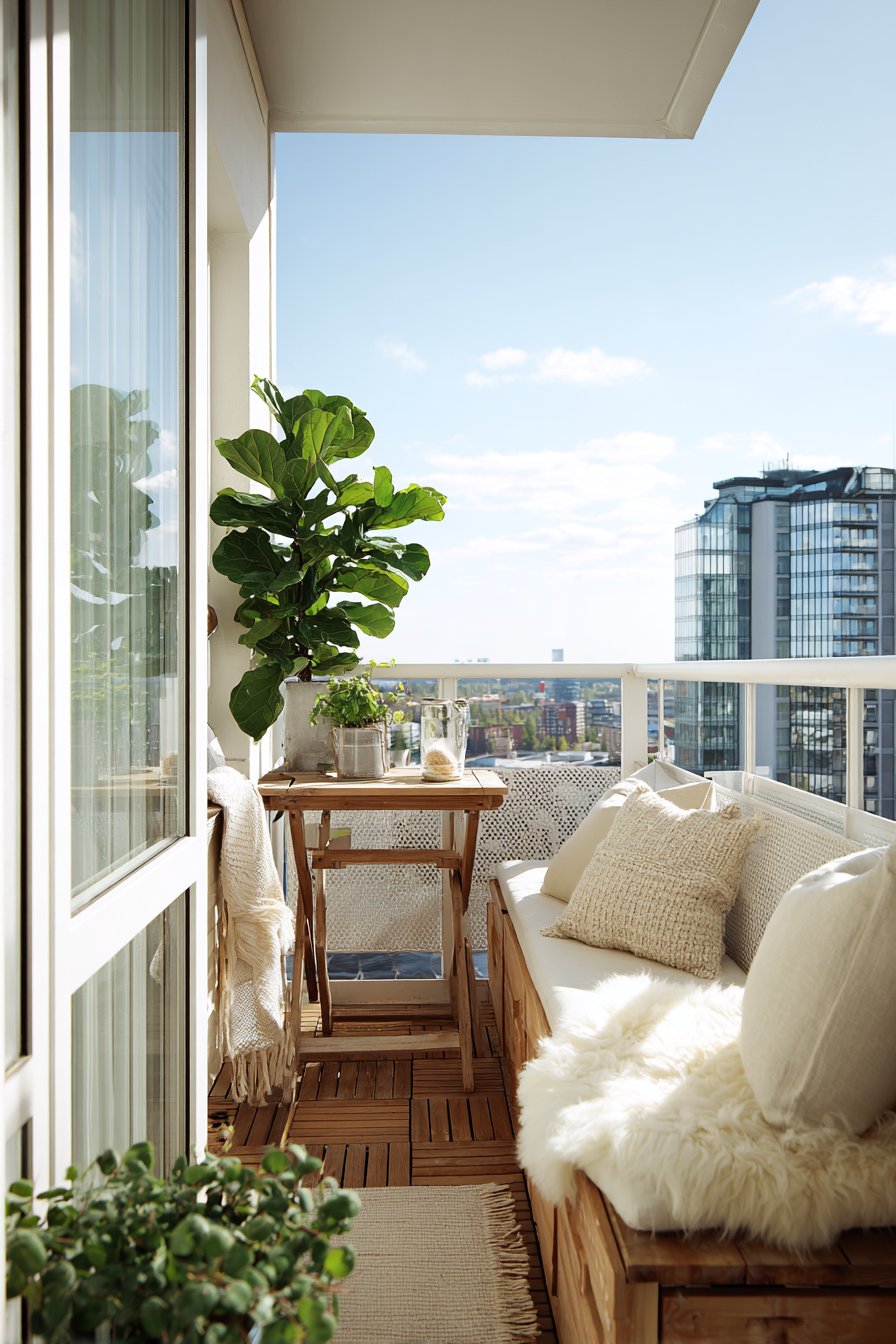
The genius of this Nordic-inspired setup lies in its wall-mounted folding table, a piece of furniture that serves dual purposes with characteristic Scandinavian efficiency. During breakfast hours, it’s a surface for coffee and pastries; during work-from-home days, it transforms into an outdoor desk with perhaps the most inspiring view any home office could offer. The table’s light wood finish matches the bench, creating a cohesive look that makes the small space feel unified rather than cramped.
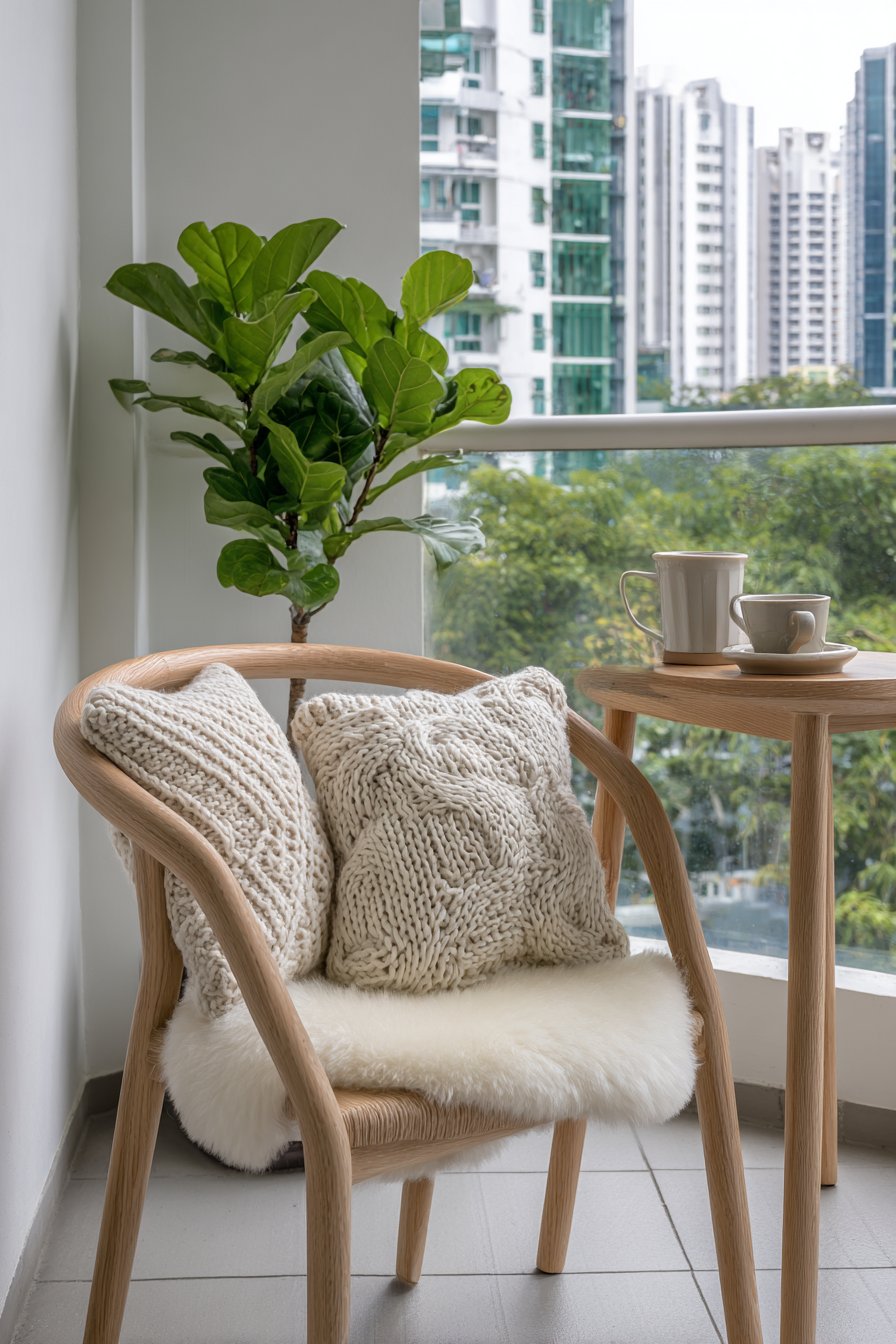
Whitewashed walls reflect and amplify every available ray of sunlight, a crucial element in Nordic design where light is precious. This reflective quality makes the balcony feel significantly larger and brighter than its actual dimensions. Adding life to this serene palette is a single potted fiddle leaf fig, its large, sculptural leaves providing the perfect amount of organic shape and green color without overwhelming the minimalist composition. Professional architectural photography techniques capture the space bathed in balanced natural light, highlighting the organic textures of sheepskin, knit, and wood grain while maintaining the serene, uncluttered atmosphere that defines Scandinavian style.
Key Design Tips:
- Choose light-colored woods like ash, birch, or pine for an authentic Scandinavian feel
- Install folding tables with sturdy locking mechanisms for safety during use
- Layer natural textures—sheepskin, wool, linen—for warmth without visual clutter
- Paint or finish walls in bright white to maximize light reflection
- Select one statement plant rather than multiple small ones for cleaner lines
- Keep color palette restricted to whites, creams, and light woods with minimal accent colors
- Invest in high-quality natural materials that age beautifully and improve with use
7. Bohemian Layered Plant Paradise
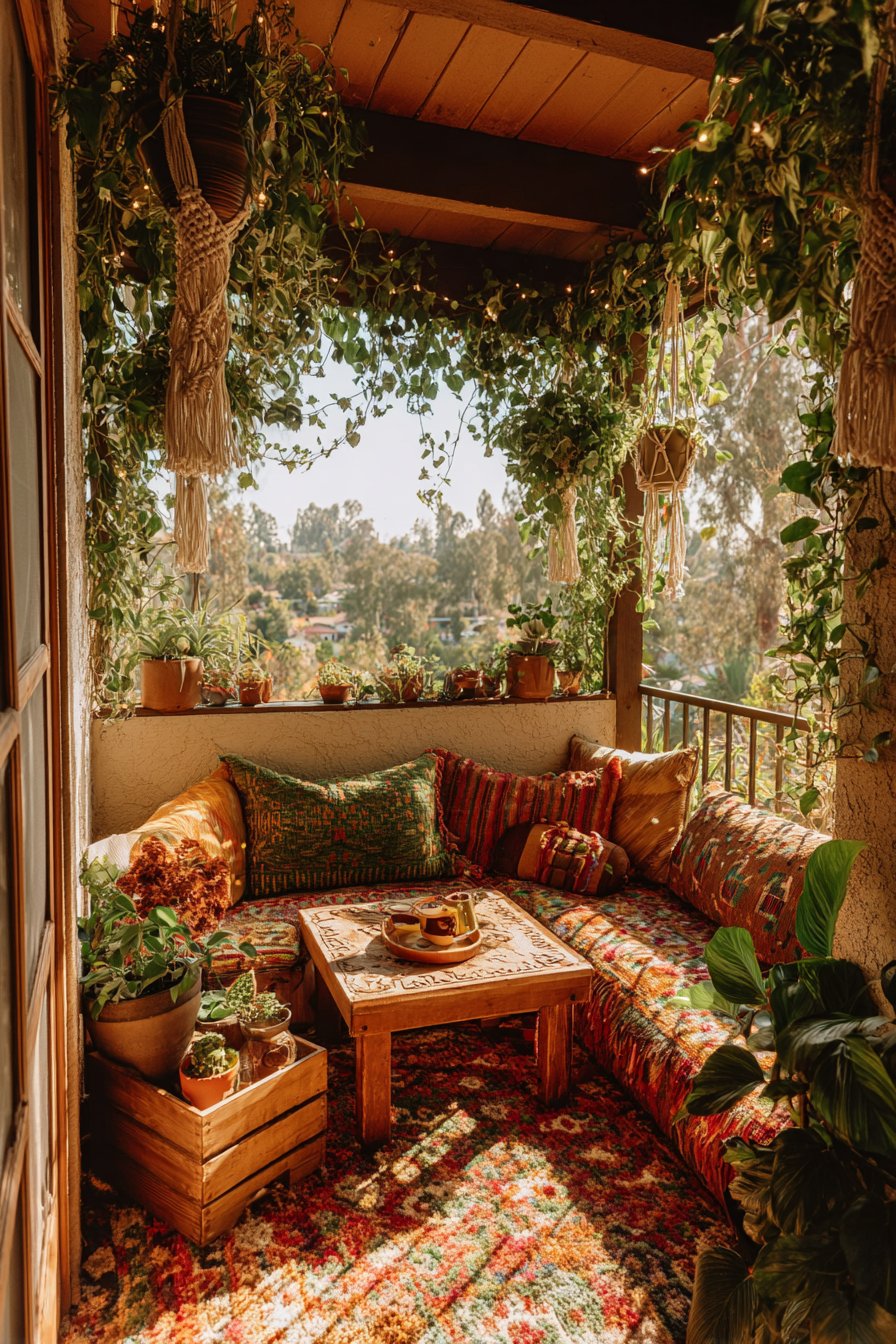
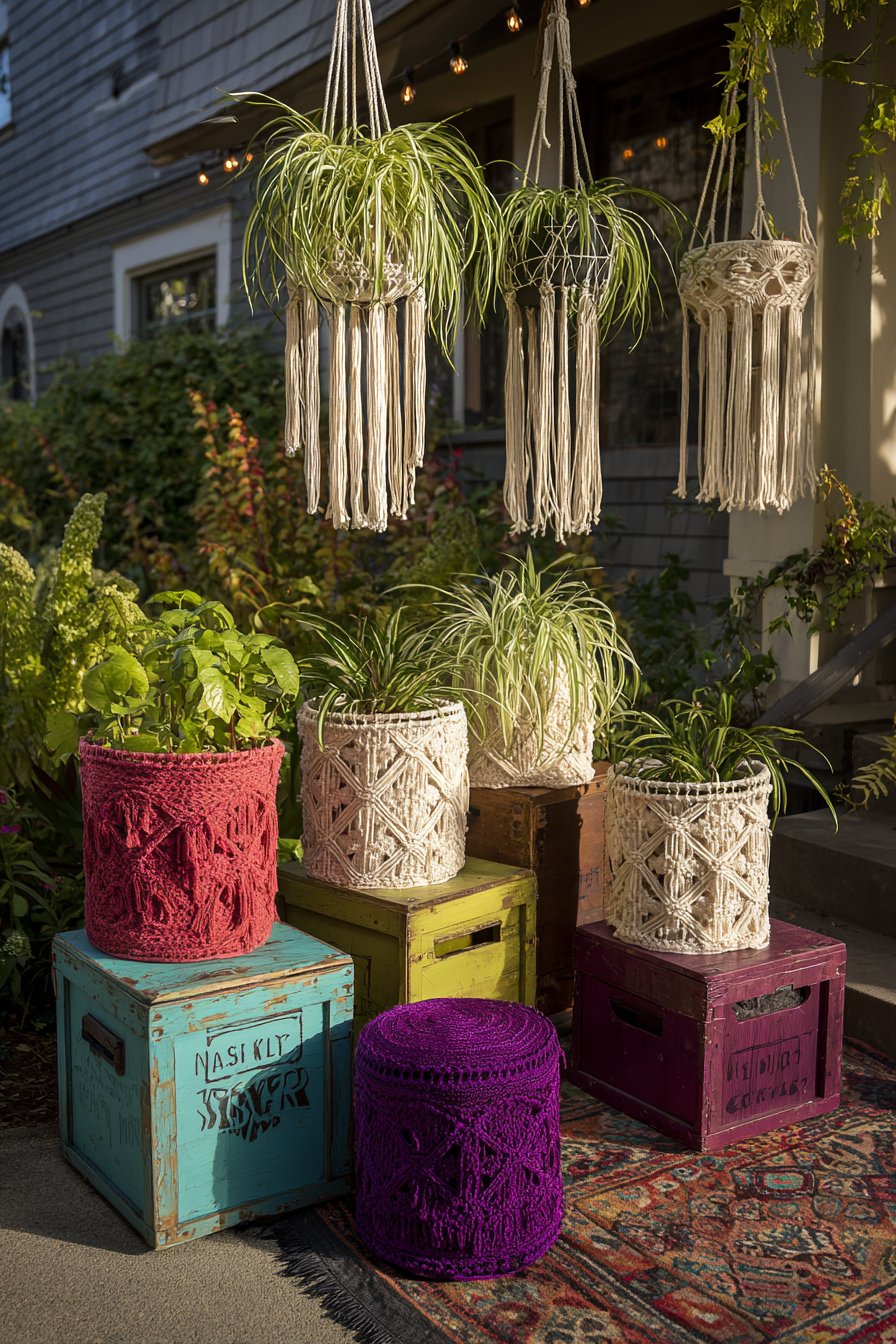
For those who find joy in abundance, color, and eclectic combinations, a bohemian approach to mini balcony ideas offers freedom to layer, mix, and create a space that feels collected and deeply personal. Imagine macramé plant hangers suspended at varying heights, each holding trailing pothos and spider plants whose cascading foliage creates a living curtain of green. These handcrafted hangers, with their intricate knotwork, add artisanal texture and bohemian character while utilizing vertical space that would otherwise go unused.
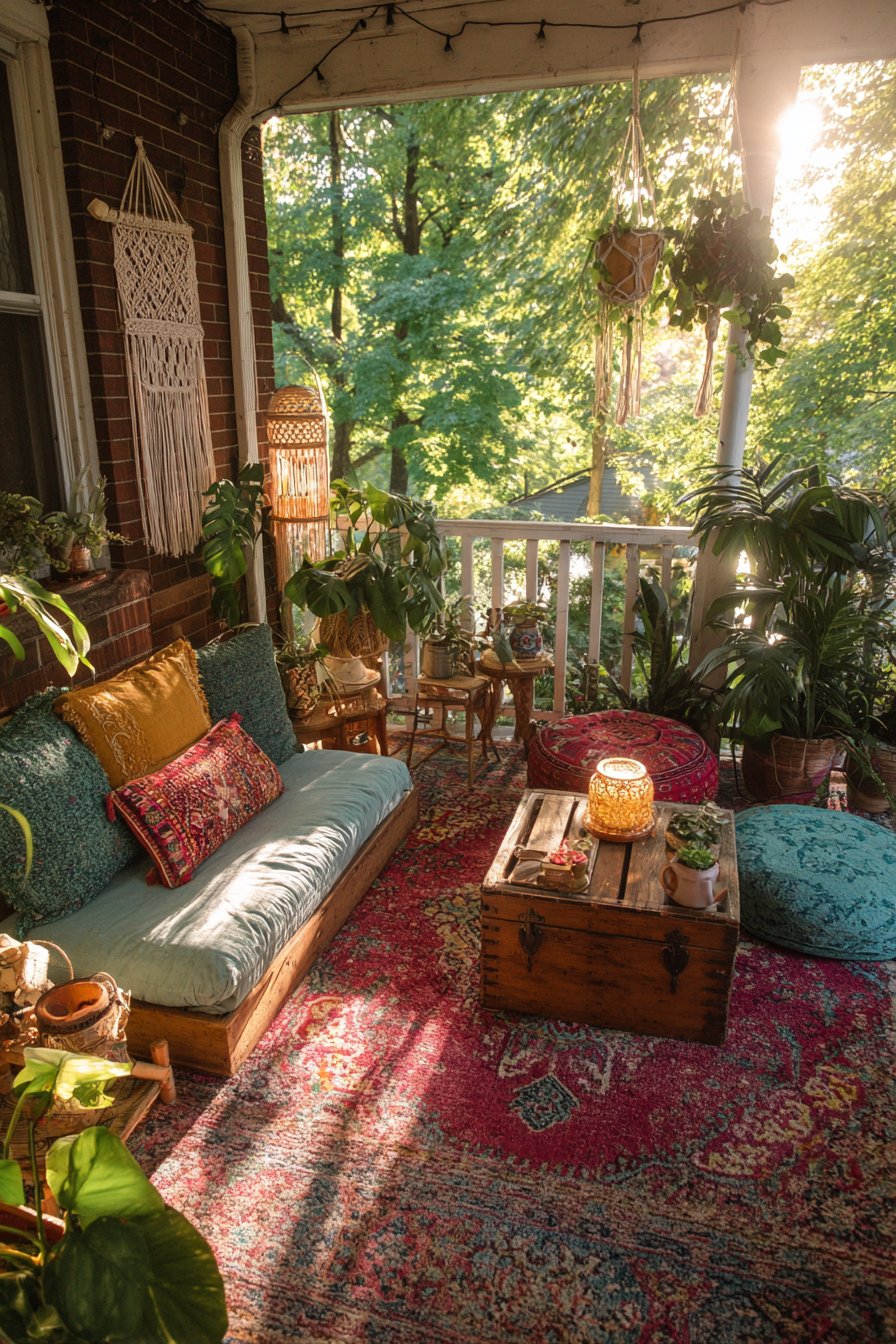
At ground level, low-profile floor cushions in vibrant jewel tones—ruby, emerald, sapphire, and amethyst—are scattered across a colorful kilim rug whose geometric patterns and rich hues anchor the design. This seating arrangement encourages relaxed, informal gatherings where guests can lounge, recline, and enjoy the intimate atmosphere. The absence of conventional furniture creates flexibility; cushions can be rearranged or removed entirely to suit different occasions.
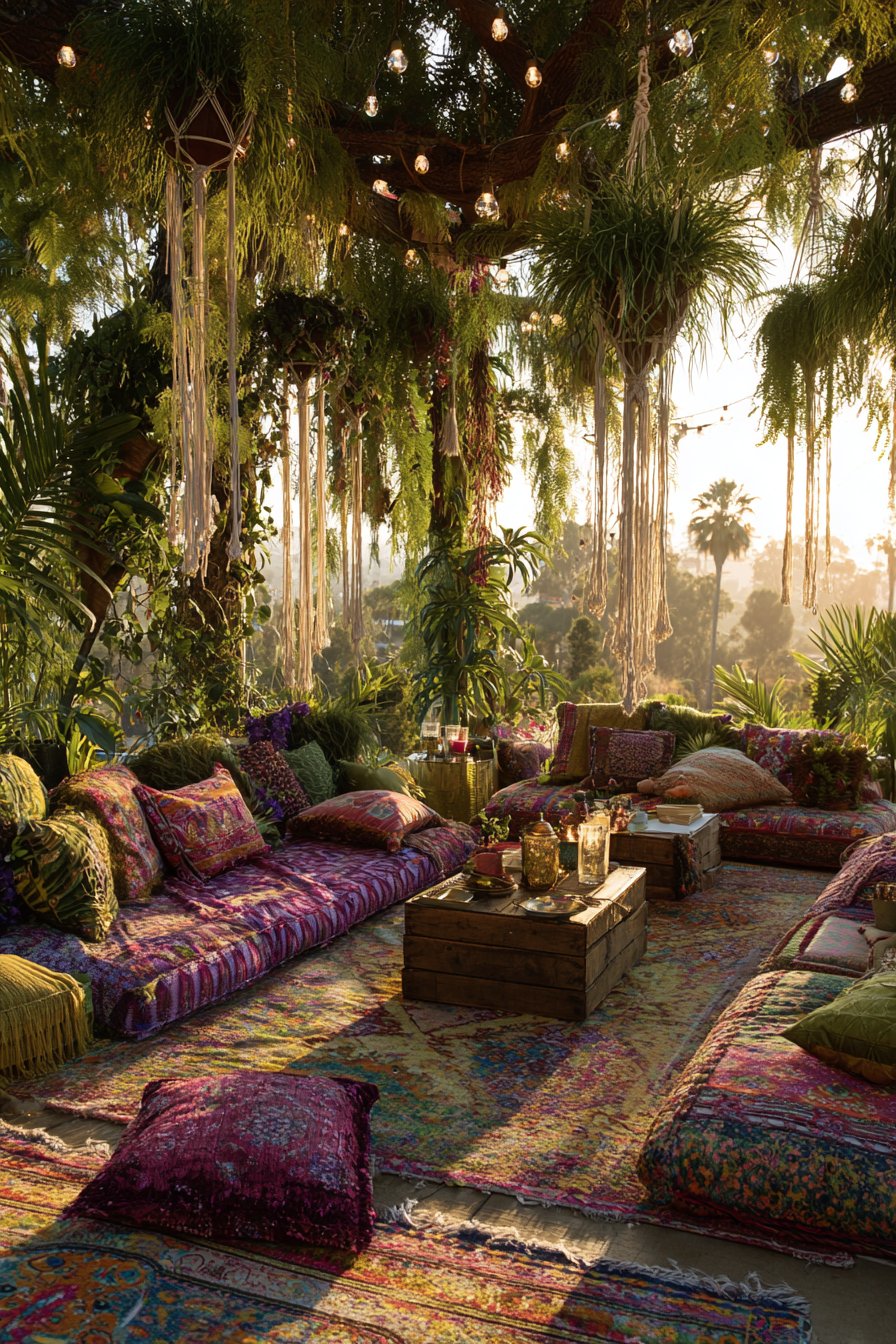
Vintage wooden crates, repurposed as both side tables and additional planting stations, embody the bohemian ethos of creative reuse. Their weathered wood adds character and history, while their cubic shapes provide practical surfaces for drinks, books, or candles. String lights interwoven with the hanging plants create a magical constellation overhead, their warm glow reflected in the plants’ glossy leaves. Captured during golden hour, this space radiates warmth and vitality, the layered textures of macramé, woven rugs, and plant leaves creating a rich, inviting environment that encourages lingering and conversation.
Key Design Tips:
- Vary the height of hanging plants to create visual interest and depth
- Choose trailing plants that thrive in partial shade for versatility
- Layer multiple textiles—rugs on rugs, cushions in varying sizes—for authentic bohemian style
- Repurpose vintage finds for unique, characterful furniture pieces
- Weave string lights through plants rather than hanging them in straight lines
- Mix pattern types (geometric, floral, ethnic) in a consistent color family
- Include plants with different leaf shapes and sizes for textural variety
- Create cozy lighting with multiple small light sources rather than one bright fixture
8. Industrial Urban Loft Style
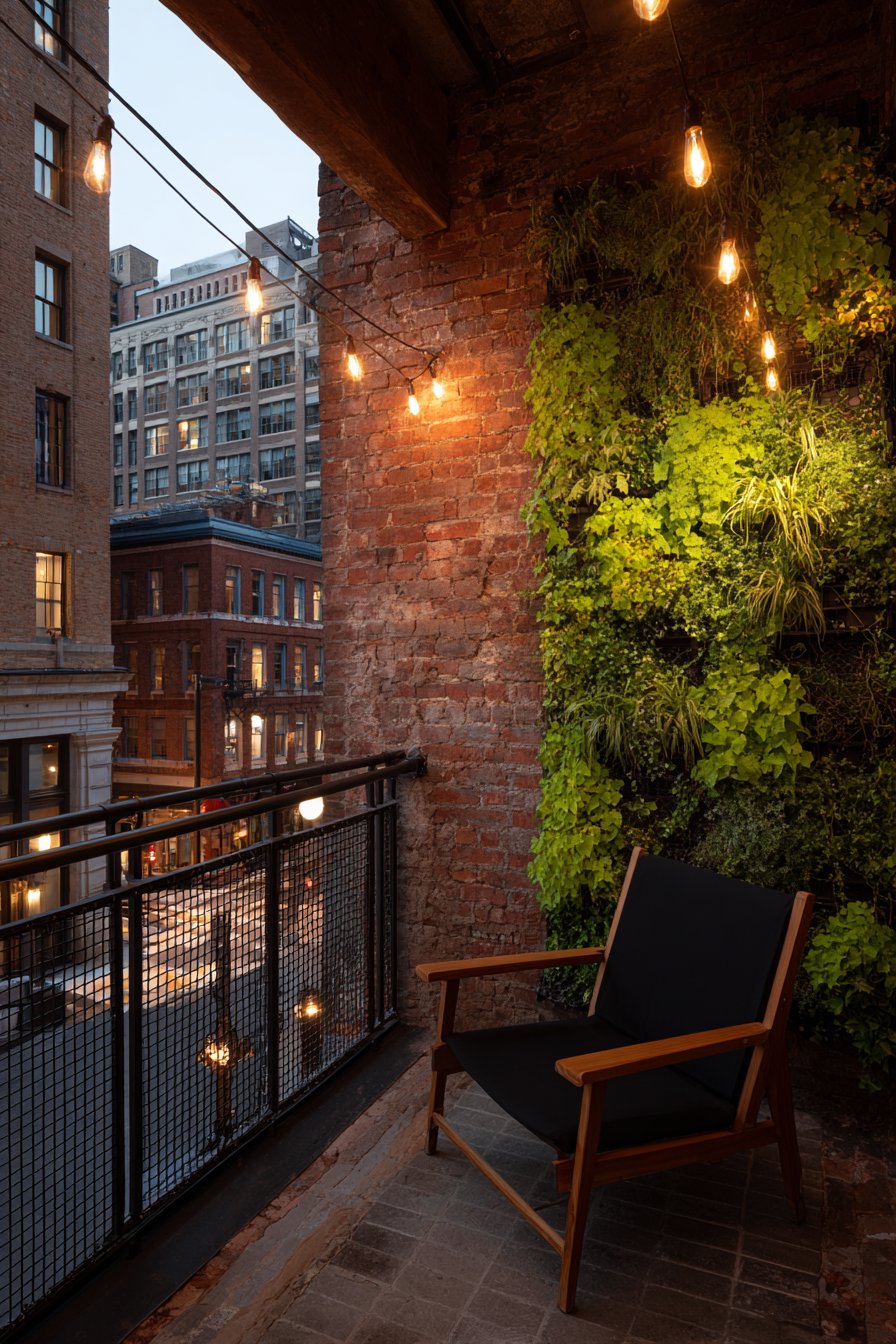
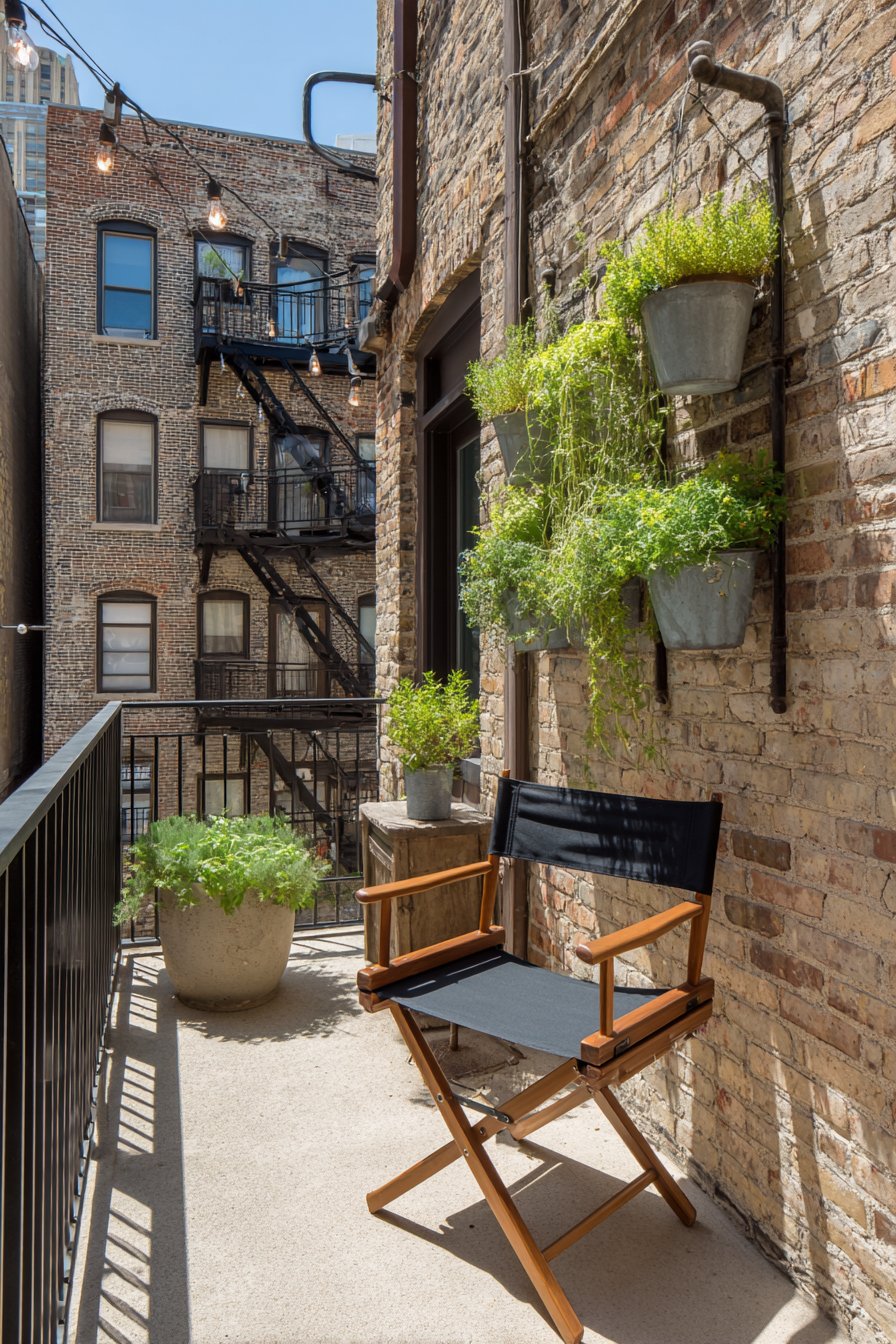
The raw, honest aesthetic of industrial design brings unexpected drama to mini balcony ideas, proving that small spaces can make bold statements. Picture metal pipe railings transformed into a vertical garden through the attachment of custom planter boxes, their weathered steel containers holding herbs, succulents, and small flowering plants. This functional sculpture celebrates industrial materials while bringing life and softness to the hard edges of metal and concrete.
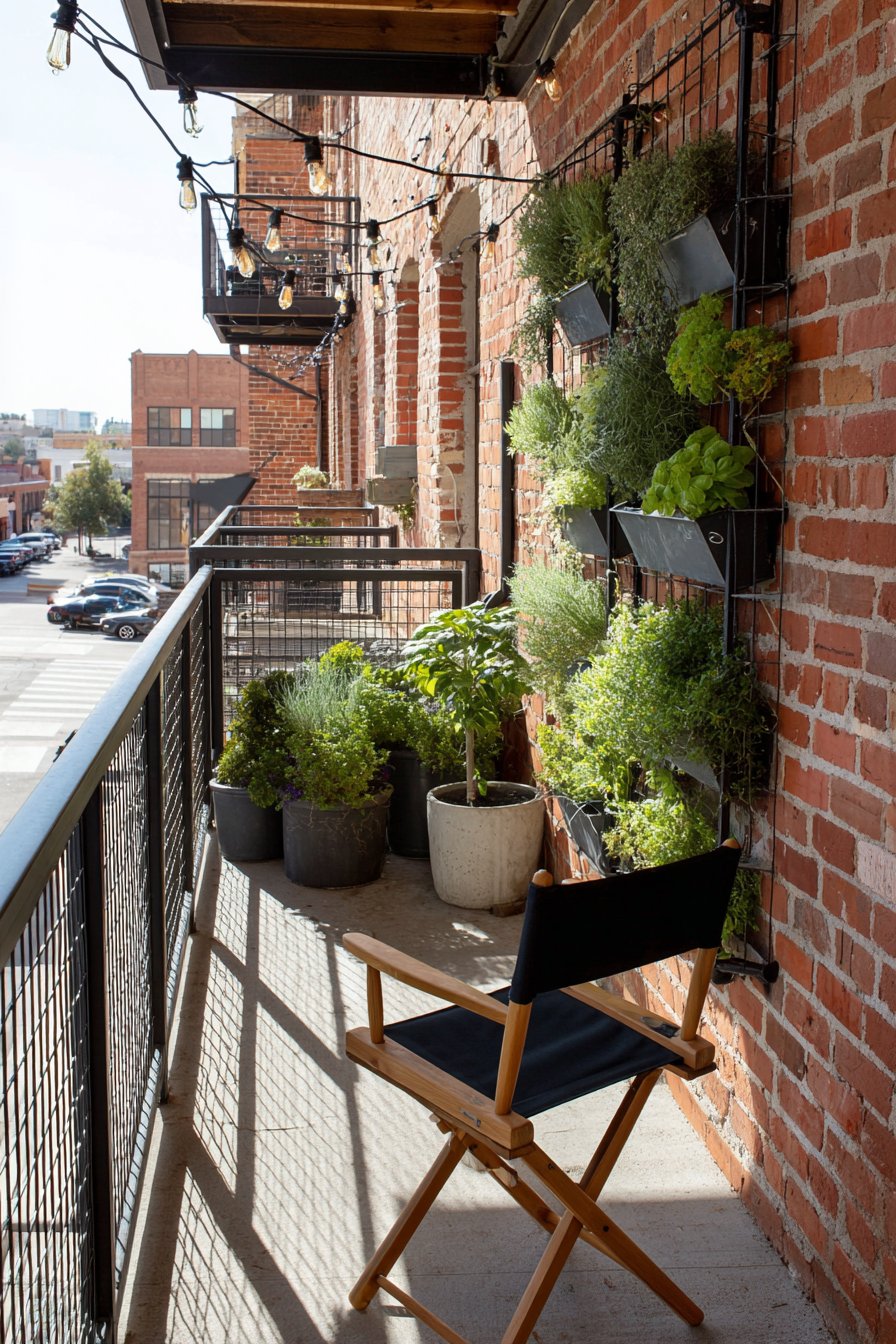
A single director’s chair in black canvas with warm wood arms provides seating that’s both portable and comfortable. This classic design choice references film sets and creative spaces, adding a professional, purposeful quality to the balcony. The chair’s folding capability means it can be easily stored when not needed, maintaining the clean, uncluttered lines that define industrial style.
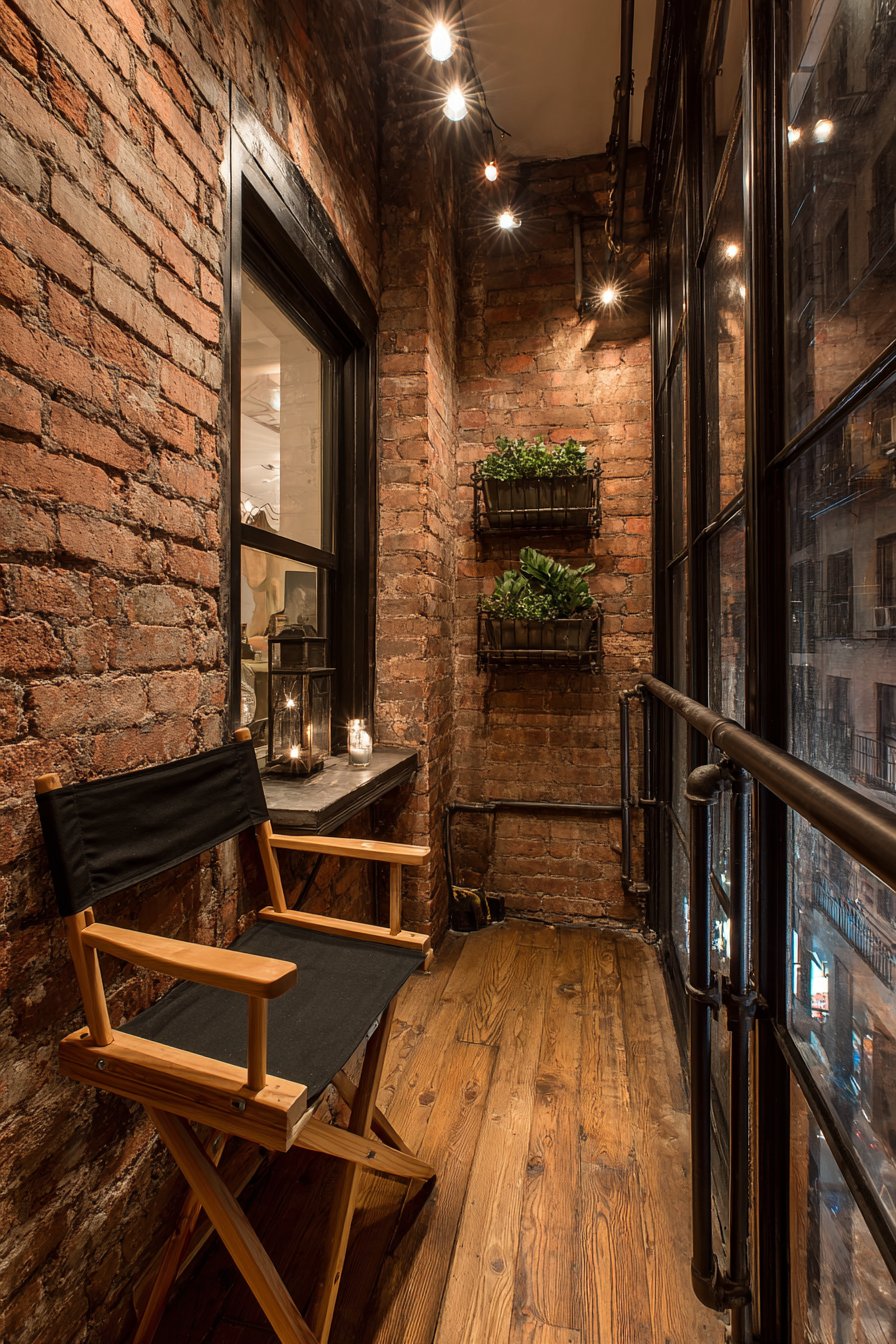
The exposed brick wall serves as the perfect backdrop for this urban aesthetic, its rough texture and earthy tones contrasting beautifully with the sleek metal of the planters and the contemporary lines of the director’s chair. Edison bulb string lights add vintage industrial character, their visible filaments glowing warmly against the brick and casting dramatic shadows that emphasize the space’s architectural elements. Professional architectural photography with dramatic side lighting captures the play of light and shadow across different textures—smooth metal, rough brick, woven canvas—creating an image that celebrates the beauty of industrial materials and utilitarian design.
Key Design Tips:
- Use authentic industrial materials like steel pipe, concrete, and exposed brick where possible
- Select furniture with visible construction and honest materials (canvas, leather, metal)
- Install Edison bulbs or vintage-style lighting fixtures for period-appropriate illumination
- Keep color palette restricted to blacks, grays, browns, and raw material tones
- Embrace patina and weathering as desirable features rather than flaws
- Mount planters directly to existing structures for integrated appearance
- Add one or two vintage industrial finds (old scales, factory carts) as decorative elements
- Maintain clean lines and avoid excessive decoration for authentic industrial aesthetic
9. Tropical Paradise Escape
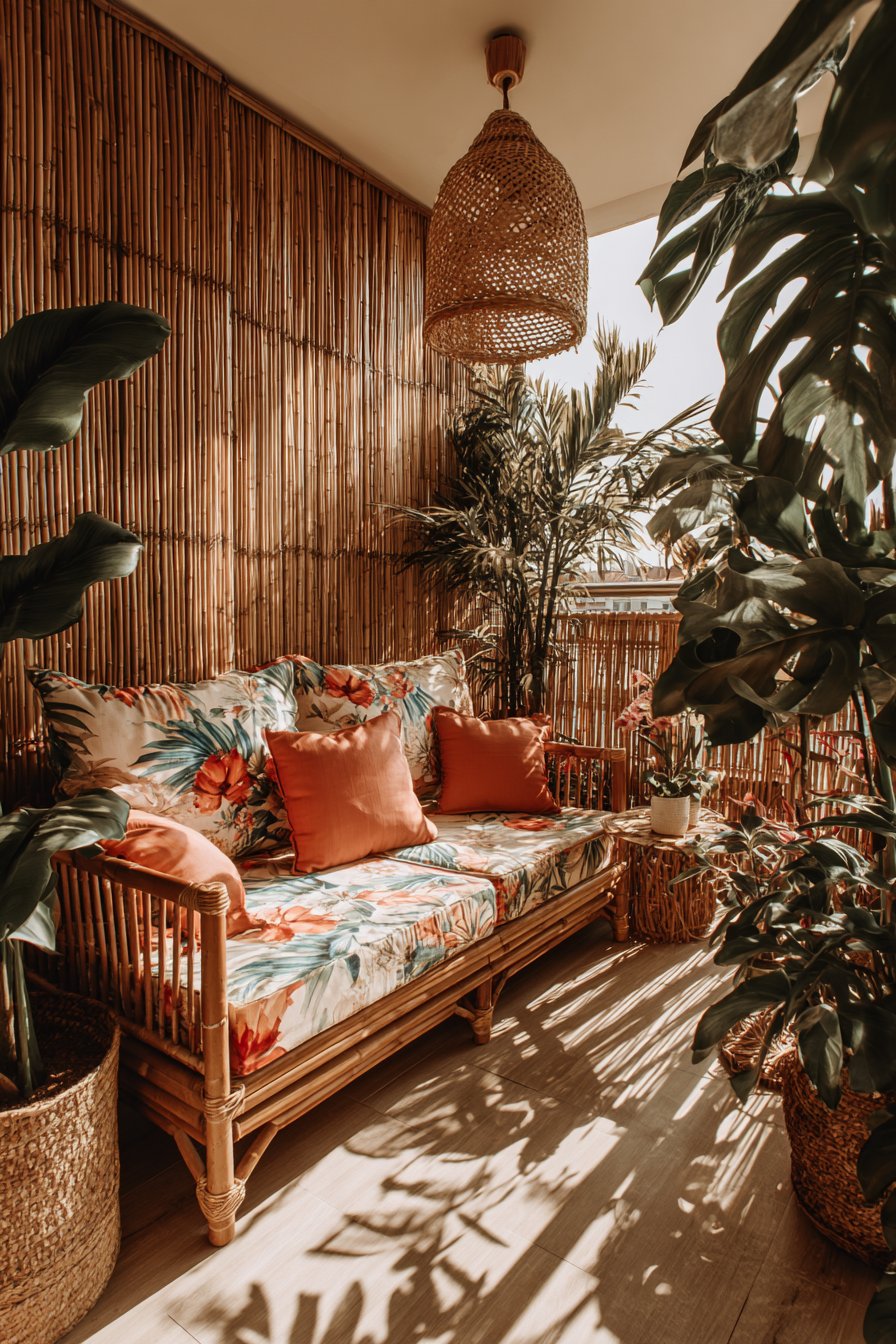
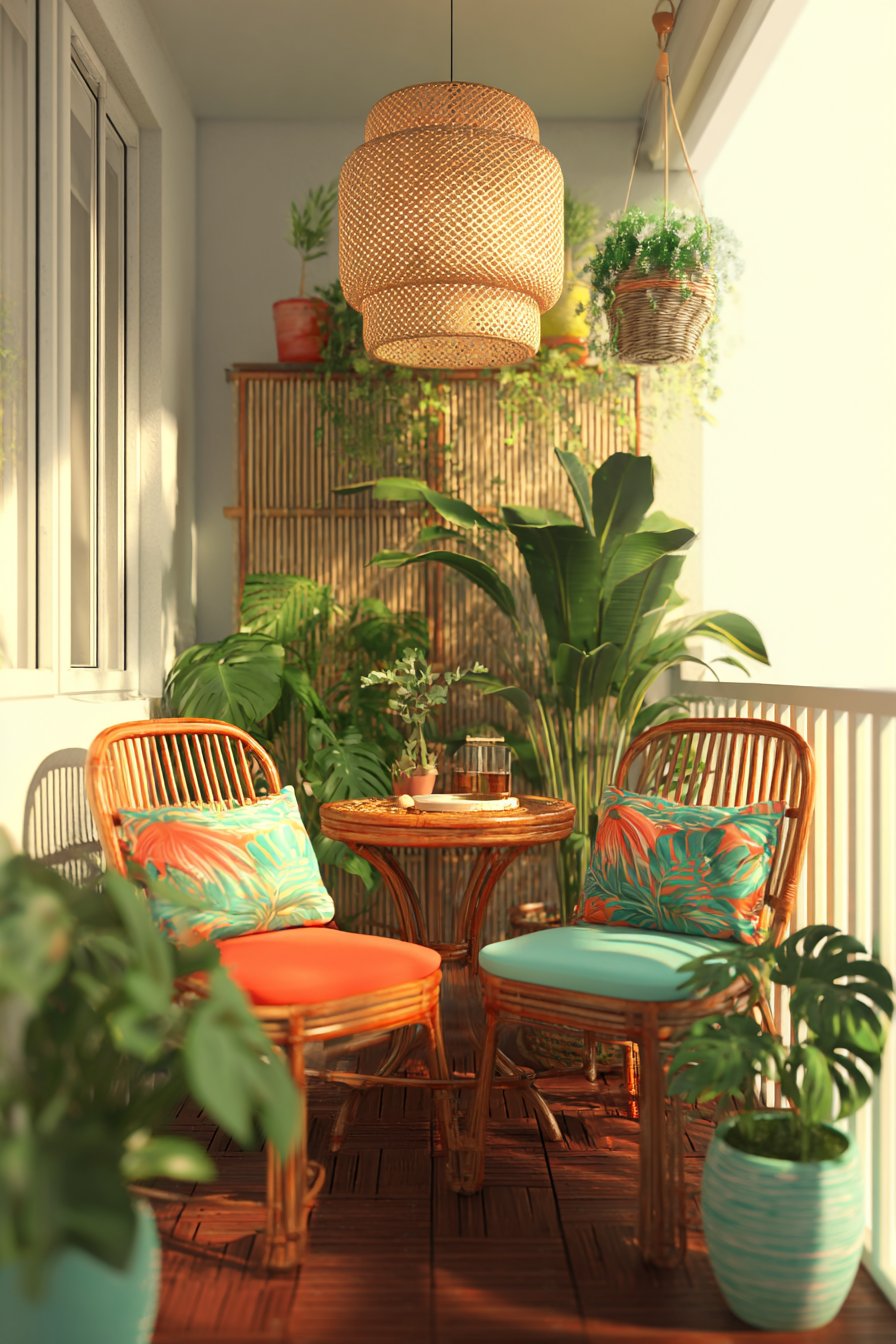
Transforming a mini balcony into a tropical retreat offers an everyday escape to paradise, regardless of your actual climate or location. Bamboo privacy screen panels create an intimate enclosure that immediately transports you from urban reality to island fantasy. These natural screens filter harsh light, create gentle rustling sounds in the breeze, and provide essential privacy while maintaining airflow and a connection to the outdoors.
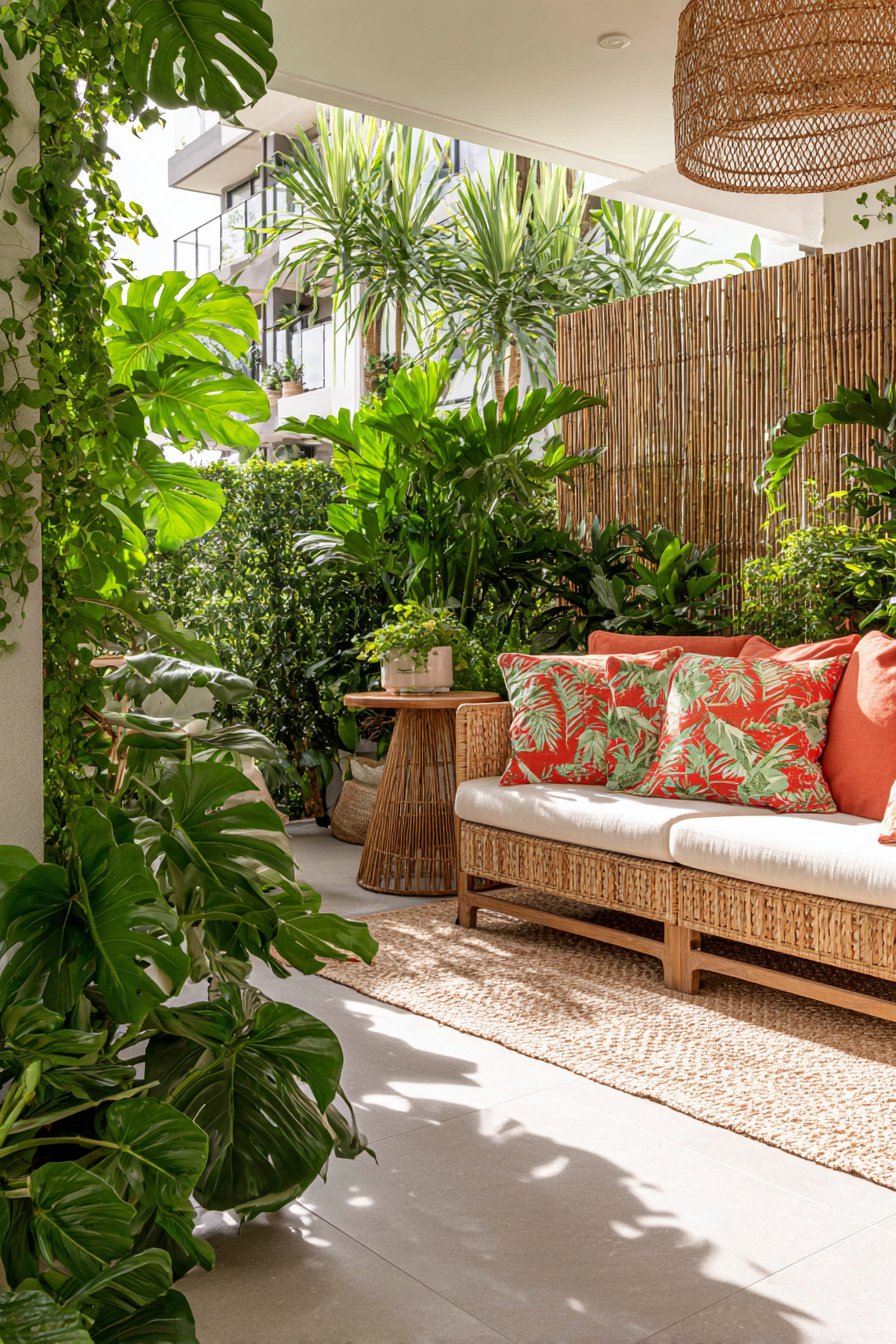
At the heart of this tropical mini balcony idea sits a rattan bistro set, its organic weave and curved forms embodying island aesthetics. Bright tropical-print cushions in coral and turquoise inject vibrant color and playful energy, their bold patterns evoking beach sunsets and tropical waters. The cushions’ weather-resistant fabrics ensure they can withstand exposure to elements while maintaining their vivid colors throughout multiple seasons.
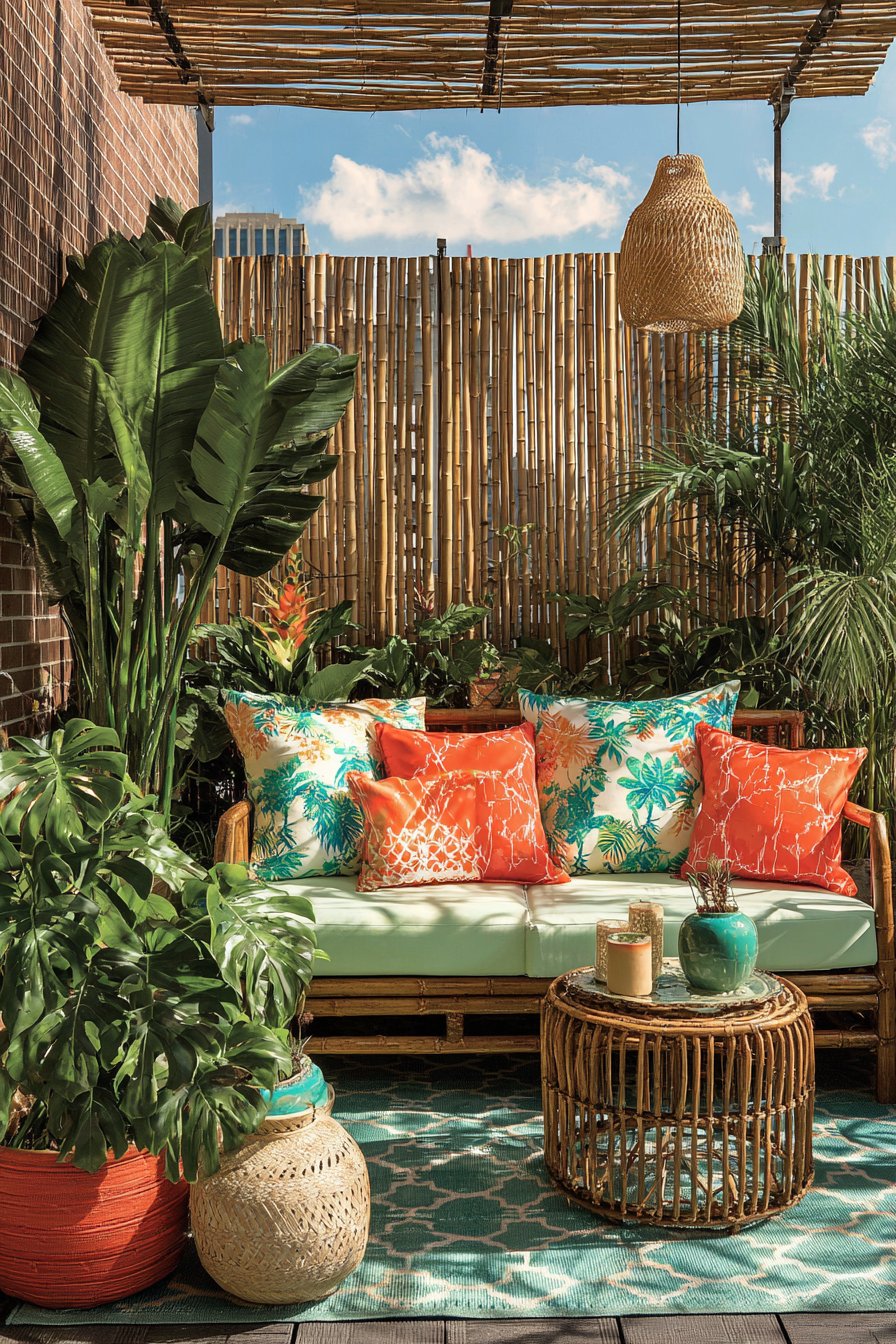
Large-leafed plants create the essential tropical atmosphere—a monstera with its iconic split leaves, a bird of paradise reaching toward the light, perhaps some elephant ears with their dramatic foliage. These statement plants in carefully selected ceramic pots transform the balcony into a lush jungle environment where every glance reveals green abundance. A natural woven pendant light fixture overhead completes the island aesthetic, casting intricate shadow patterns through its organic structure. Wide-angle photography captures the lush, layered escapist ambiance, with soft filtered sunlight streaming through foliage and creating an ever-changing pattern of light and shadow.
Key Design Tips:
- Install bamboo screens with weather-resistant mounting hardware for durability
- Choose plants with large, dramatic leaves for authentic tropical appearance
- Ensure adequate drainage for tropical plants which typically prefer moist but not waterlogged soil
- Select outdoor cushions with removable, washable covers in bold prints
- Add a small water feature (fountain or misting system) to enhance tropical ambiance
- Group plants in clusters of varying heights to create jungle density
- Incorporate natural materials (rattan, bamboo, coconut fiber) throughout design
- Consider adding a ceiling fan in hot climates to circulate air while maintaining tropical feel
10. Mediterranean Terracotta Terrace
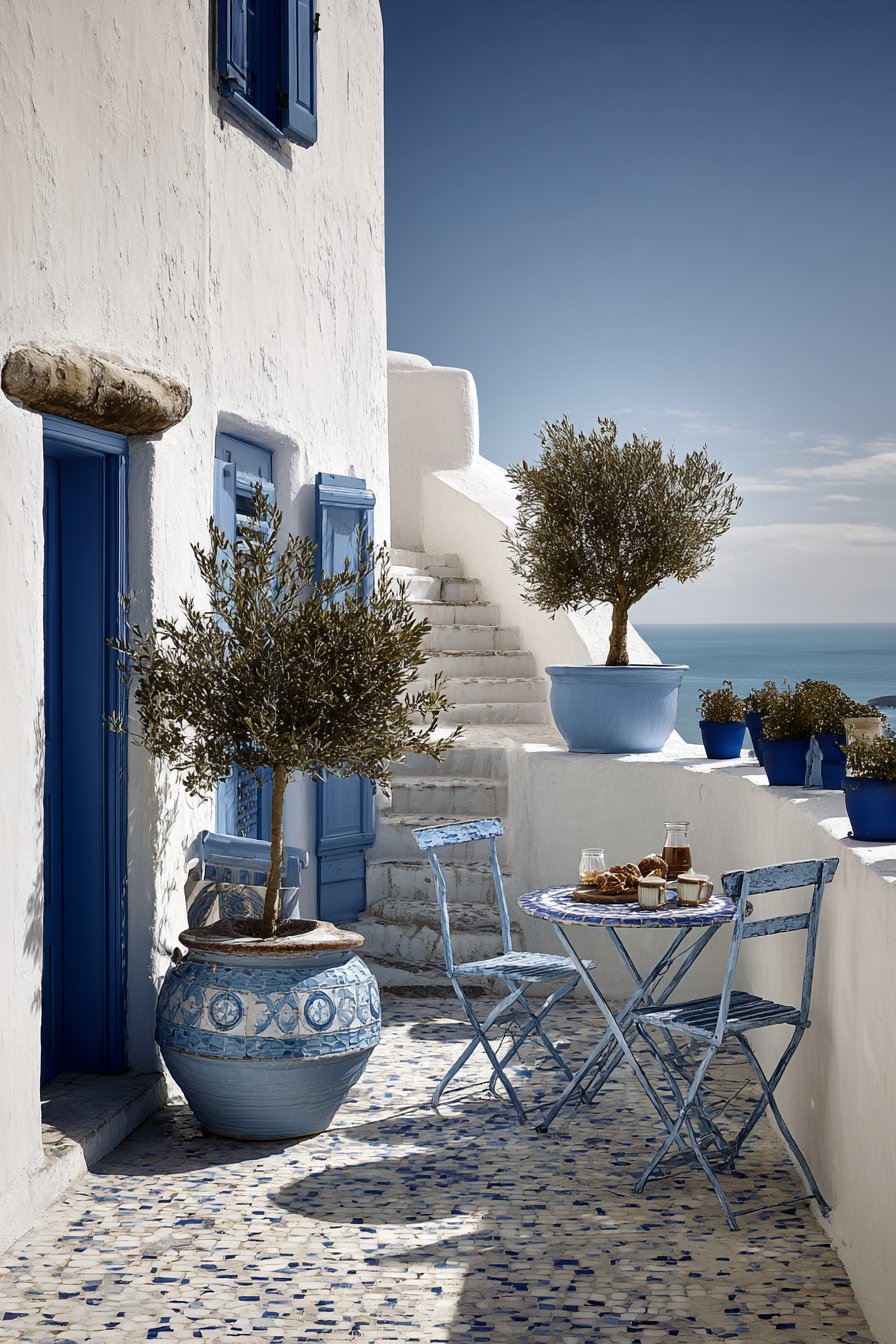
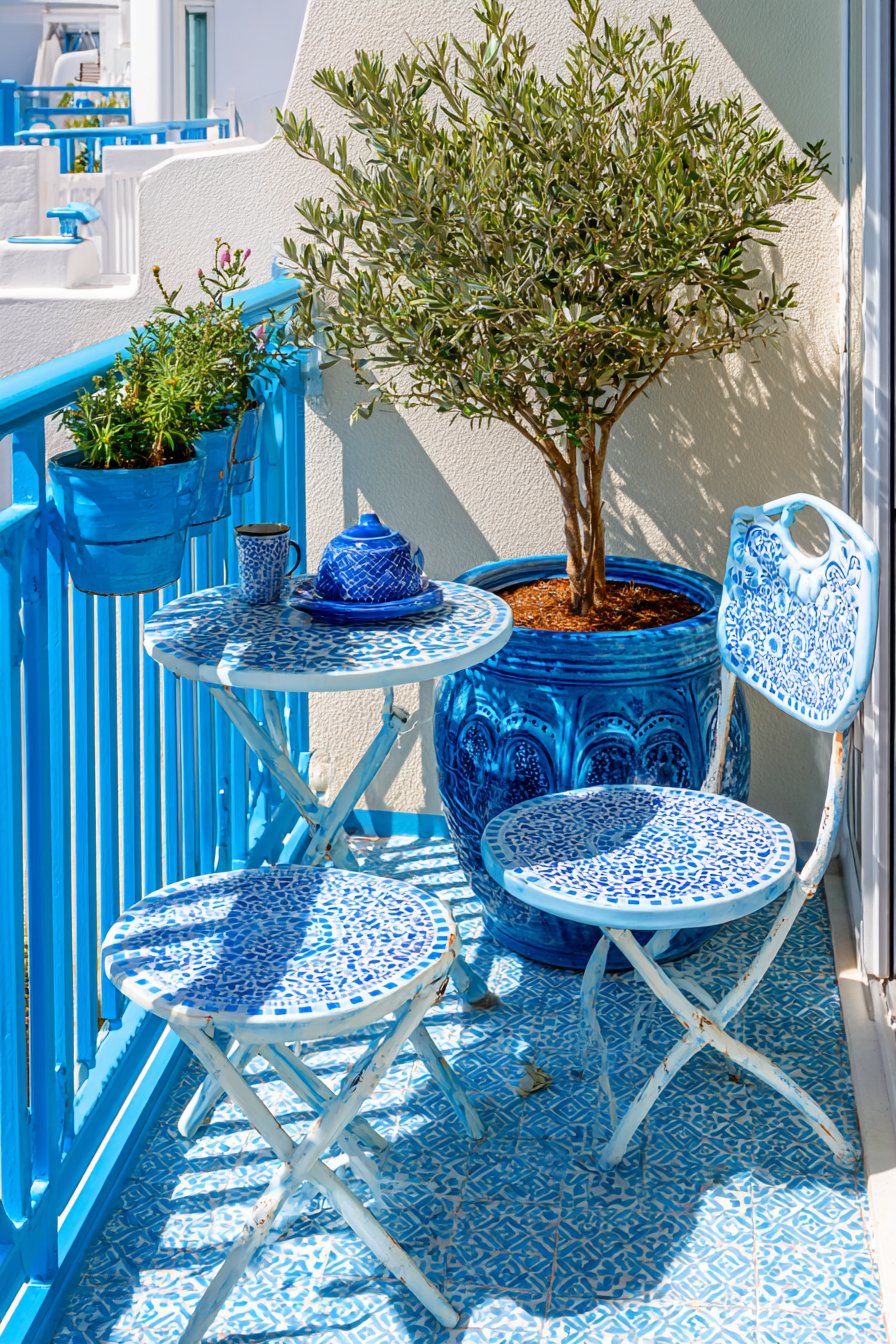
The sun-drenched aesthetic of Mediterranean design brings warmth, color, and Old World charm to mini balcony ideas, evoking memories of coastal villages and leisurely afternoon siestas. Imagine terracotta tile flooring underfoot, its warm, earthy color and slight texture providing both beauty and practical durability. Whitewashed walls reflect brilliant sunlight while creating a clean backdrop for the cobalt blue accents that define Mediterranean color palettes.
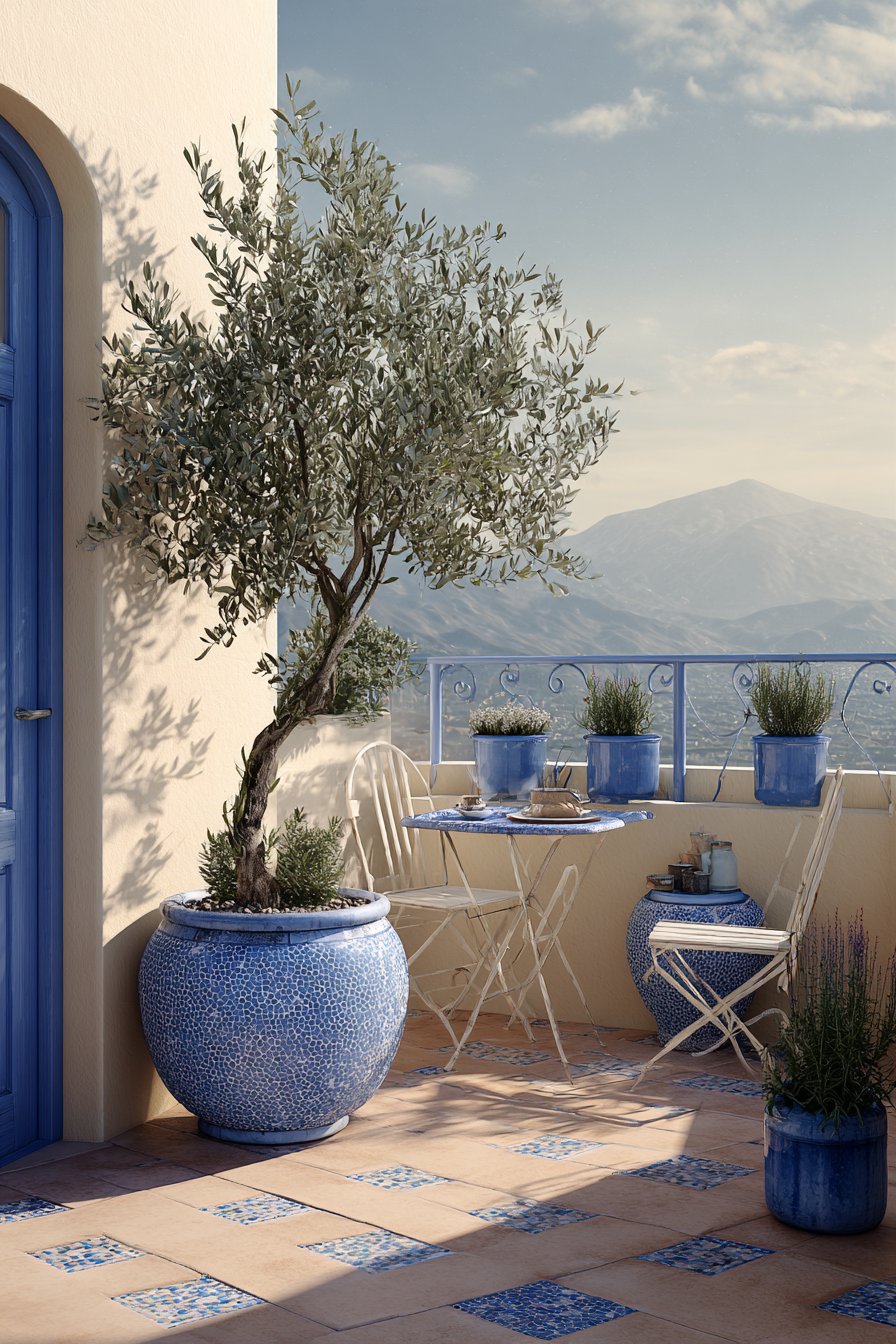
A small bistro set in distressed white metal features a tabletop adorned with blue mosaic tiles, their handcrafted appearance and slight irregularities adding artisanal charm. This furniture, weathered and time-worn in appearance, suggests years of use and beloved status, though it might be brand new. The distressed finish is both aesthetic choice and practical one, as additional wear will only enhance its character.
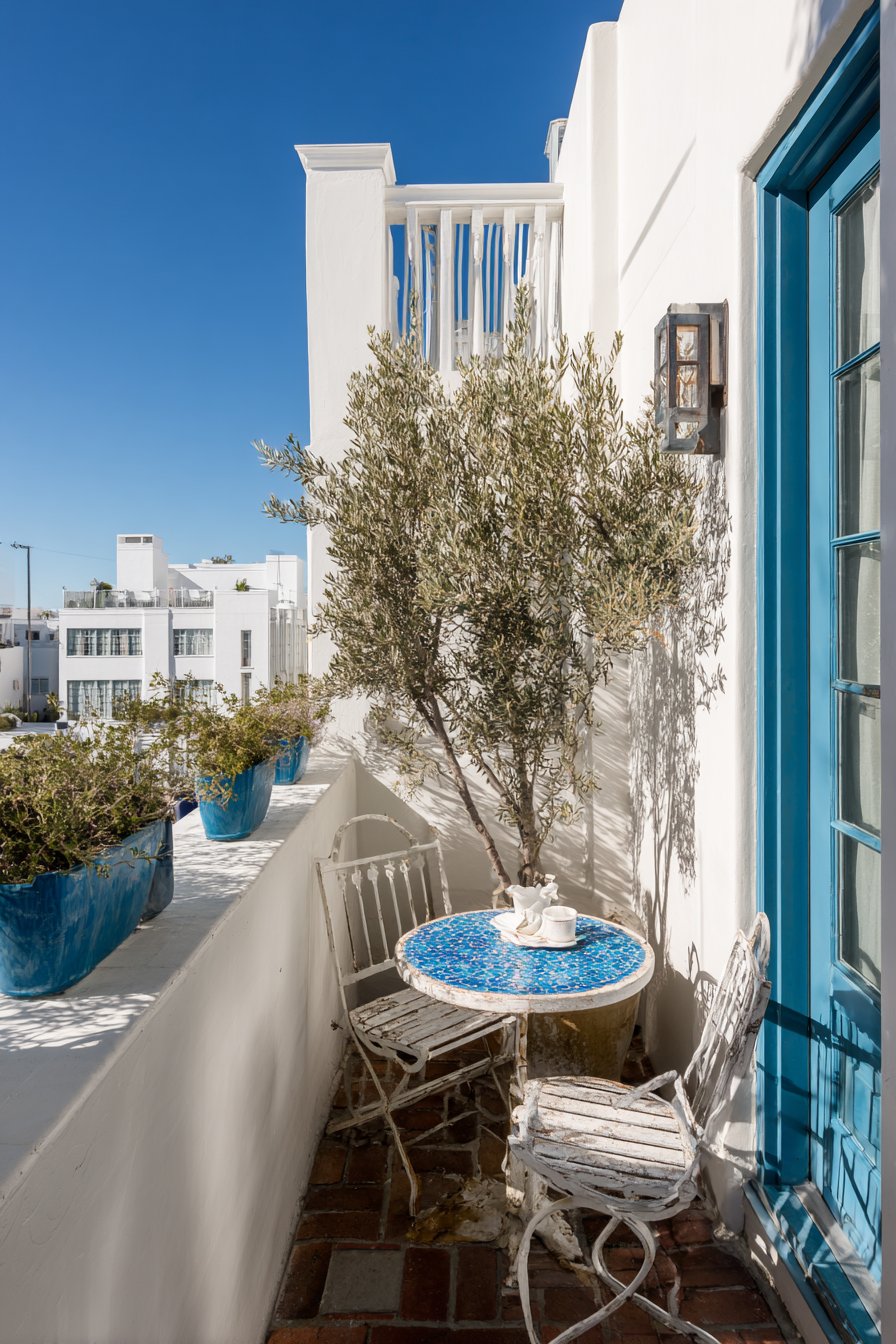
The focal point that truly establishes the Mediterranean ambiance is an olive tree in a large ceramic planter, its silvery-green leaves and gnarled trunk bringing immediate age and gravitas to the space. Surrounding this centerpiece are aromatic herbs in matching blue pots—rosemary, thyme, and oregano—positioned along the railing where they receive full sun and release their fragrance with every breeze. Golden afternoon light washes across this scene, creating the warm, languorous atmosphere of a Mediterranean coastal town. Professional exterior photography captures sun-bleached textures, the interplay of intense blue and pristine white, and the overall warmth that makes Mediterranean design so universally appealing.
Key Design Tips:
- Install terracotta tiles with proper drainage to prevent water pooling
- Choose distressed or weathered-finish furniture that improves with age and use
- Plant an olive tree, lemon tree, or other Mediterranean species as a focal point
- Use cobalt blue ceramic pots consistently throughout the space for cohesion
- Whitewash walls or surfaces annually to maintain fresh, bright appearance
- Select herbs and plants that thrive in full sun and tolerate drought
- Add decorative elements like hanging lanterns or ceramic plates for authenticity
- Incorporate hand-painted or mosaic tile work for artisanal character
11. Minimalist Architectural Statement
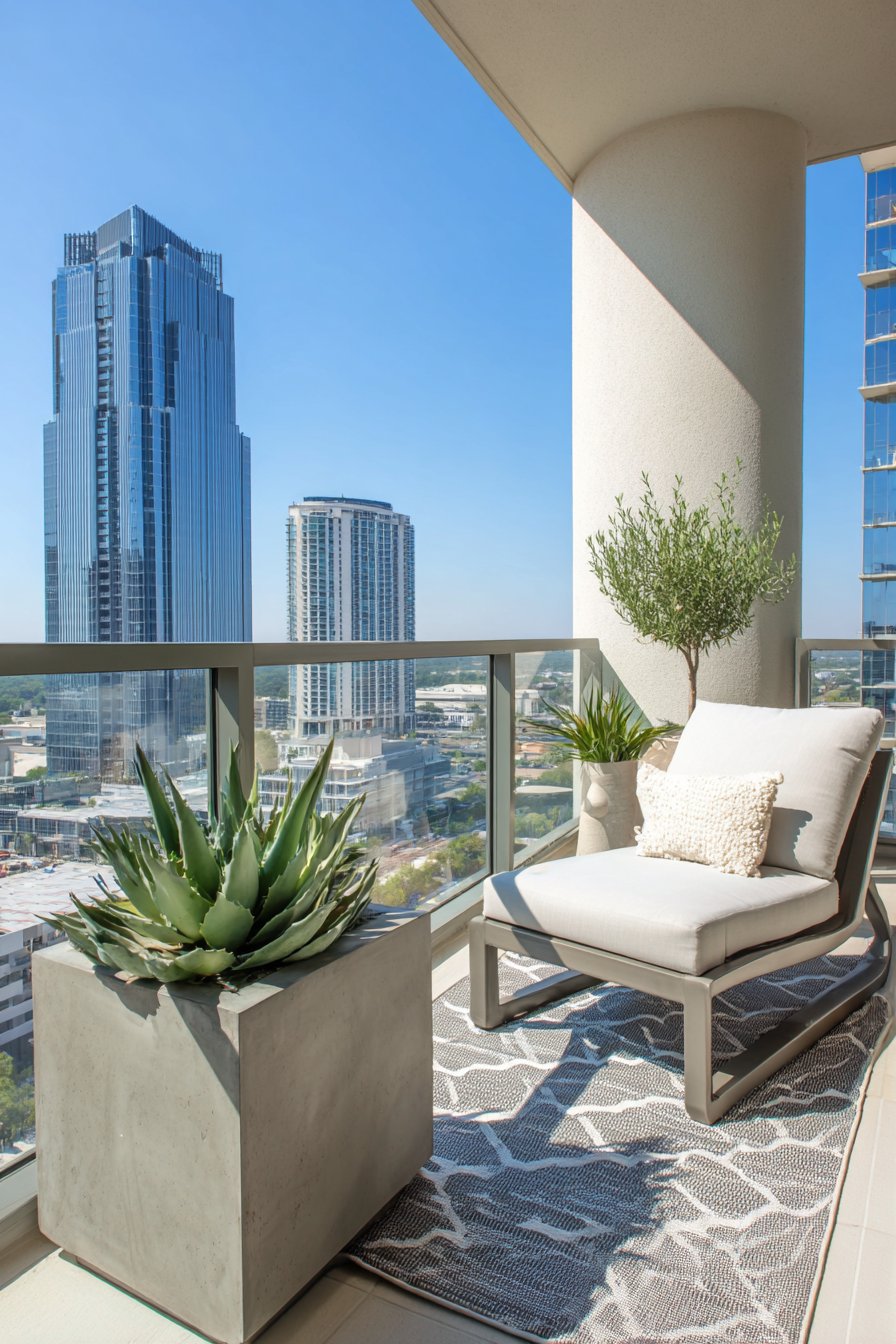
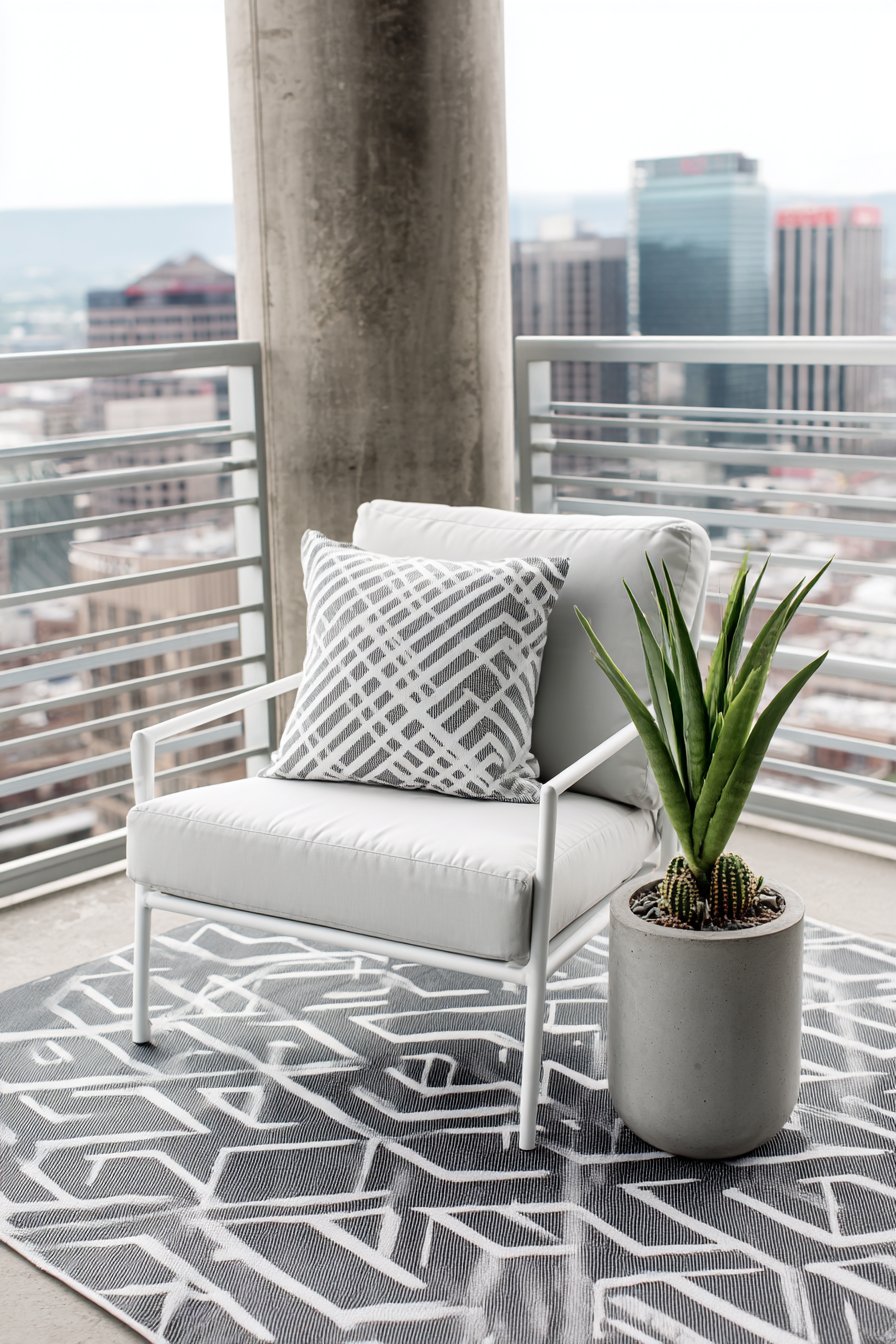
In the philosophy of “less is more,” a minimalist approach to mini balcony ideas creates spaces of profound tranquility and intentional beauty. Envision a single modern lounge chair in powder-coated steel, its clean geometric lines and neutral cushioning representing the pinnacle of functional design. This chair, positioned carefully to frame the optimal city view or natural landscape, becomes both seating and sculpture—an object of contemplation in its own right.
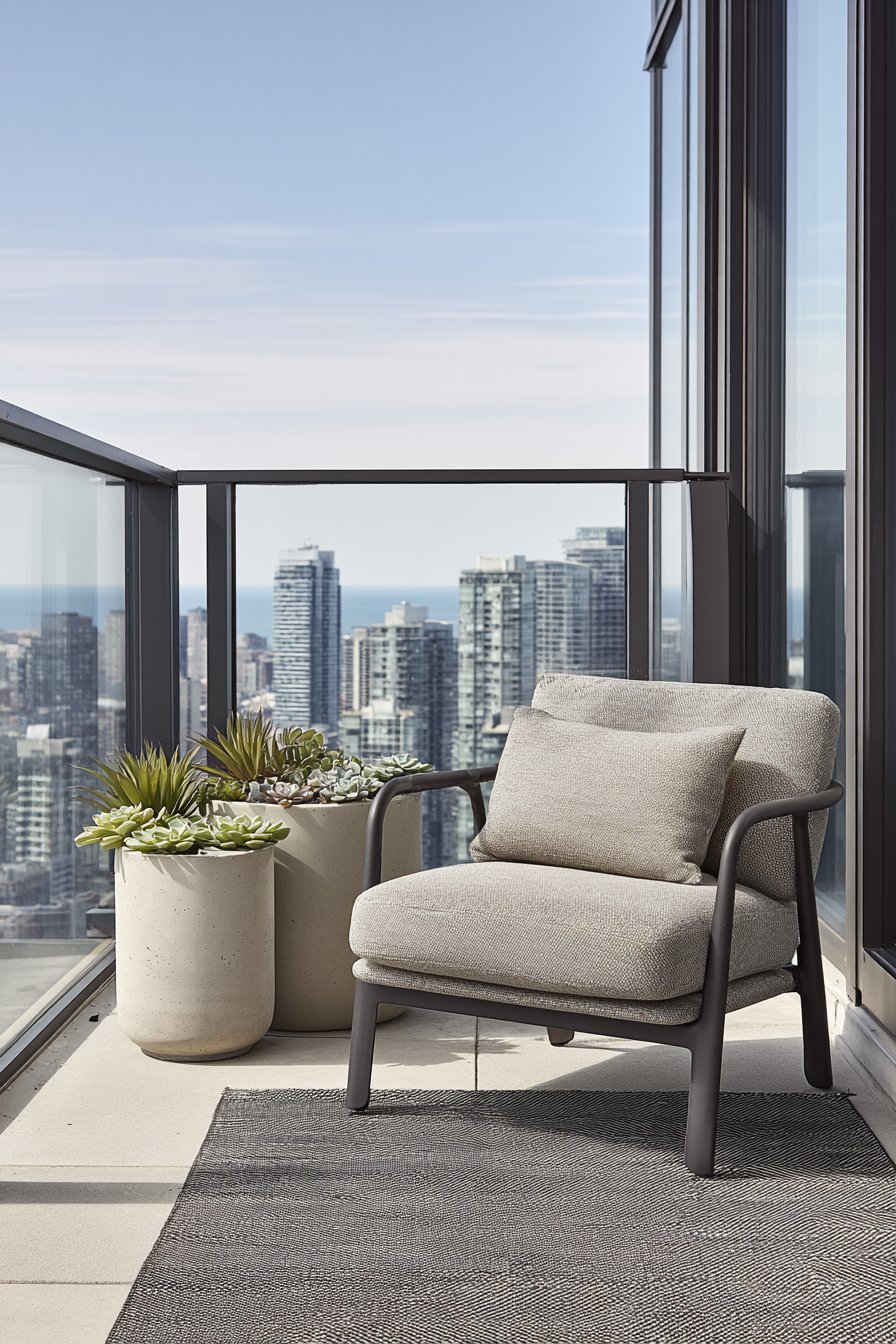
Adjacent to the chair, a concrete planter holds an architectural succulent arrangement. Rather than a profusion of plants, this design features perhaps three to five carefully selected specimens—an agave with its sharp geometric form, a jade plant with its rounded, fleshy leaves, maybe an aloe with its upward-reaching spikes. These plants are chosen not merely for their low-maintenance nature but for their sculptural qualities and the way their forms interact with space and light.
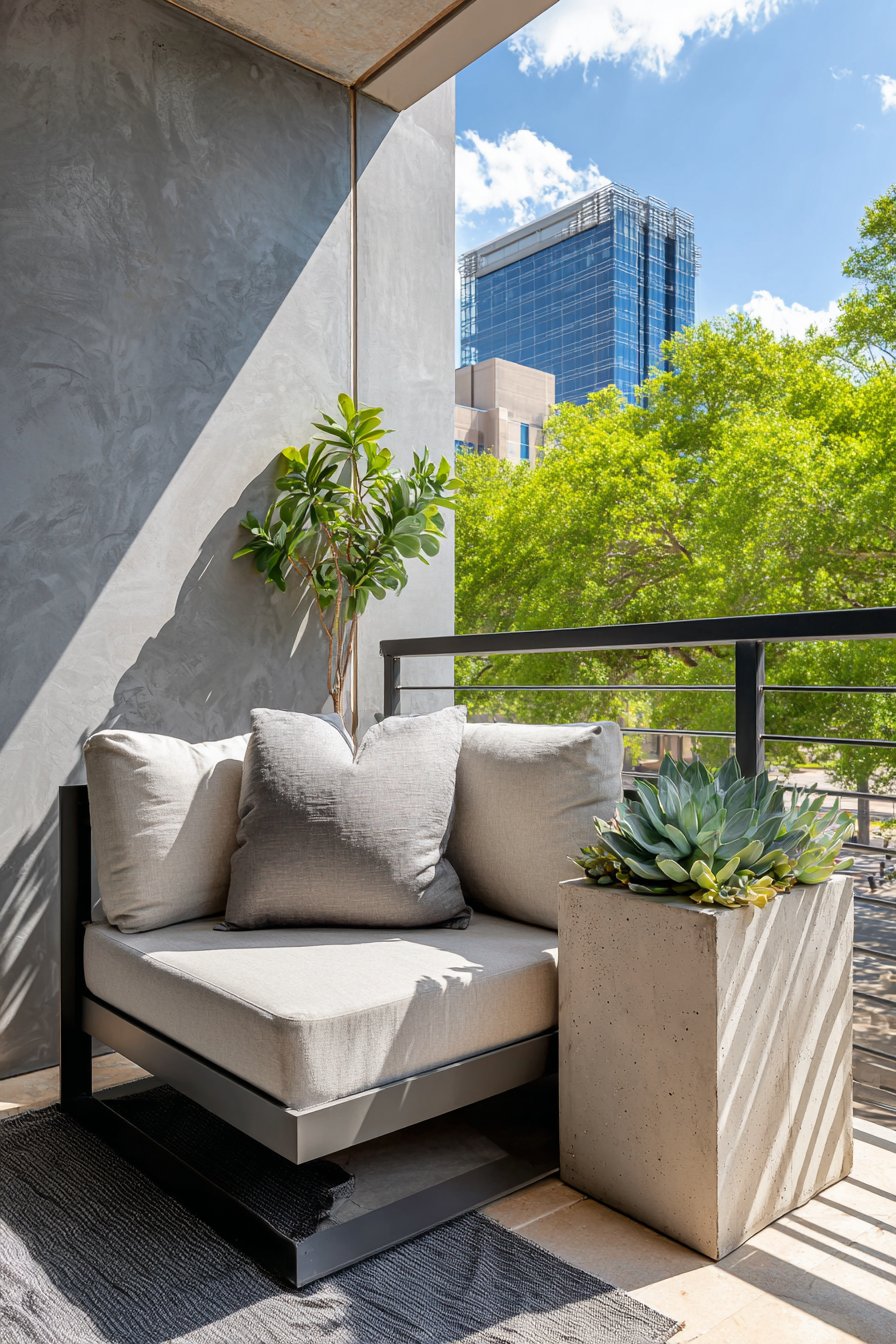
A simple geometric outdoor rug in charcoal gray defines the seating area without introducing unnecessary color or pattern. Its precise edges and monochromatic palette reinforce the minimalist aesthetic while providing textural softness underfoot. The overall composition is captured with professional architectural photography that emphasizes negative space and intentional design choices—the empty areas are as important as the filled ones. Crisp natural lighting illuminates each element distinctly, celebrating the beauty of restraint and the power of editing to its essence.
Key Design Tips:
- Invest in one high-quality piece of furniture rather than multiple lesser items
- Choose furniture with clean lines and minimal ornamentation
- Restrict color palette to neutrals with perhaps one accent color
- Select plants for their architectural form rather than flower color
- Leave significant empty space—resist the urge to fill every corner
- Use geometric shapes and precise lines throughout the design
- Maintain impeccable cleanliness and organization for minimalist aesthetic
- Position each element with intention, considering sight lines and balance
12. Japanese Zen Meditation Space
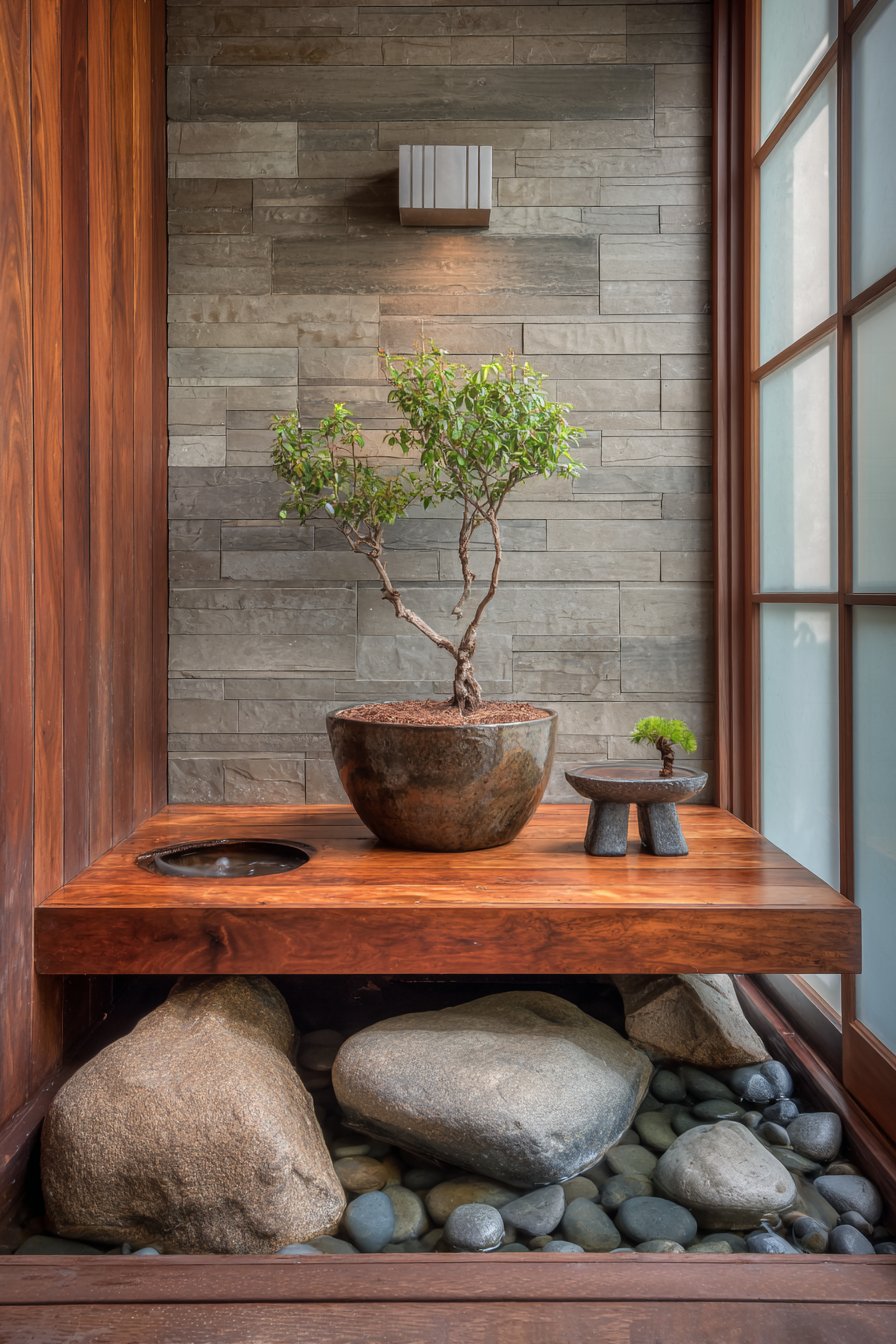
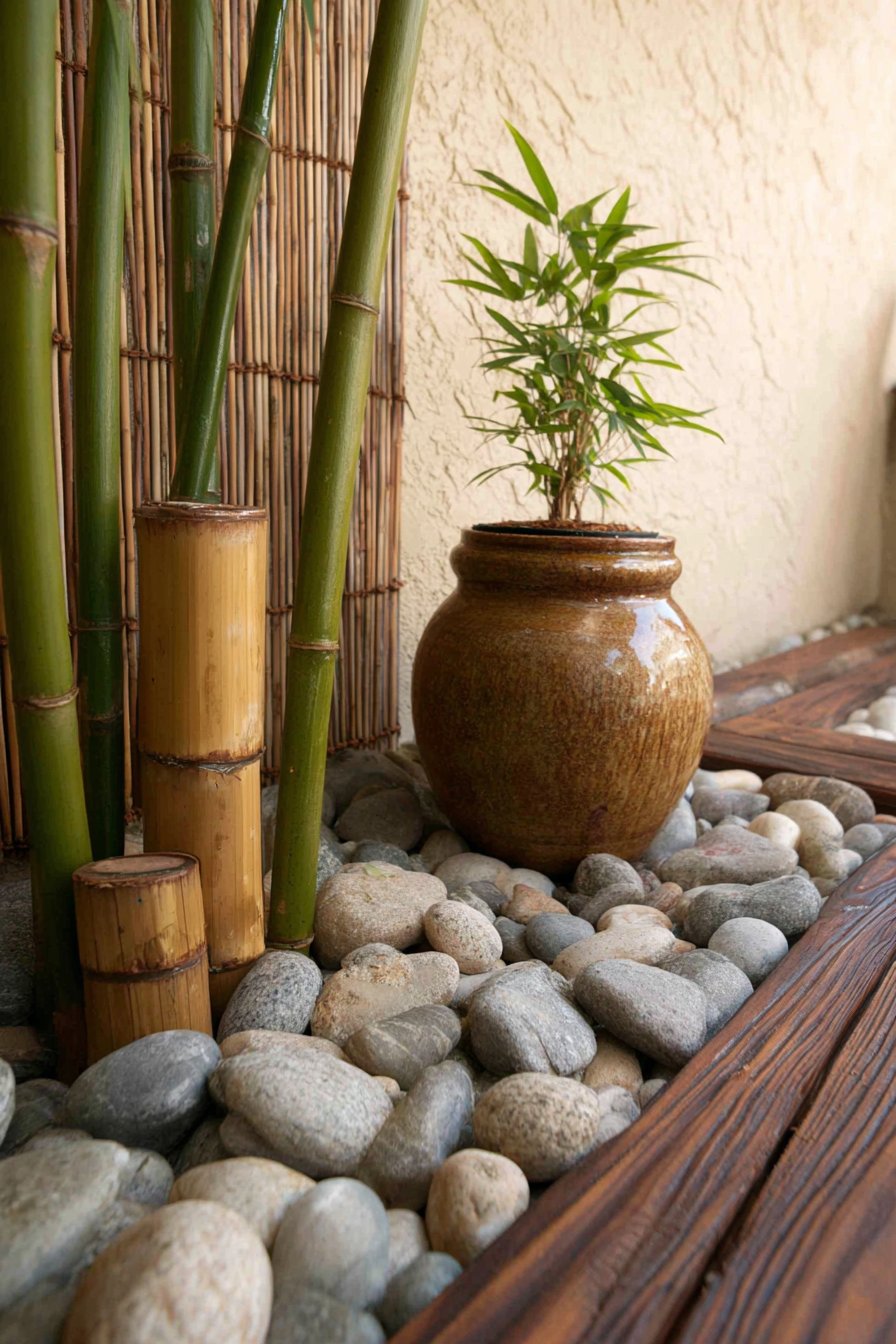
Drawing inspiration from Japanese design principles of simplicity, natural materials, and mindful arrangement, a zen-inspired mini balcony becomes a space for contemplation and spiritual restoration. A low wooden platform base creates an elevated seating area, its clean horizontal lines and natural wood grain embodying wabi-sabi aesthetics—the appreciation of imperfection and impermanence.
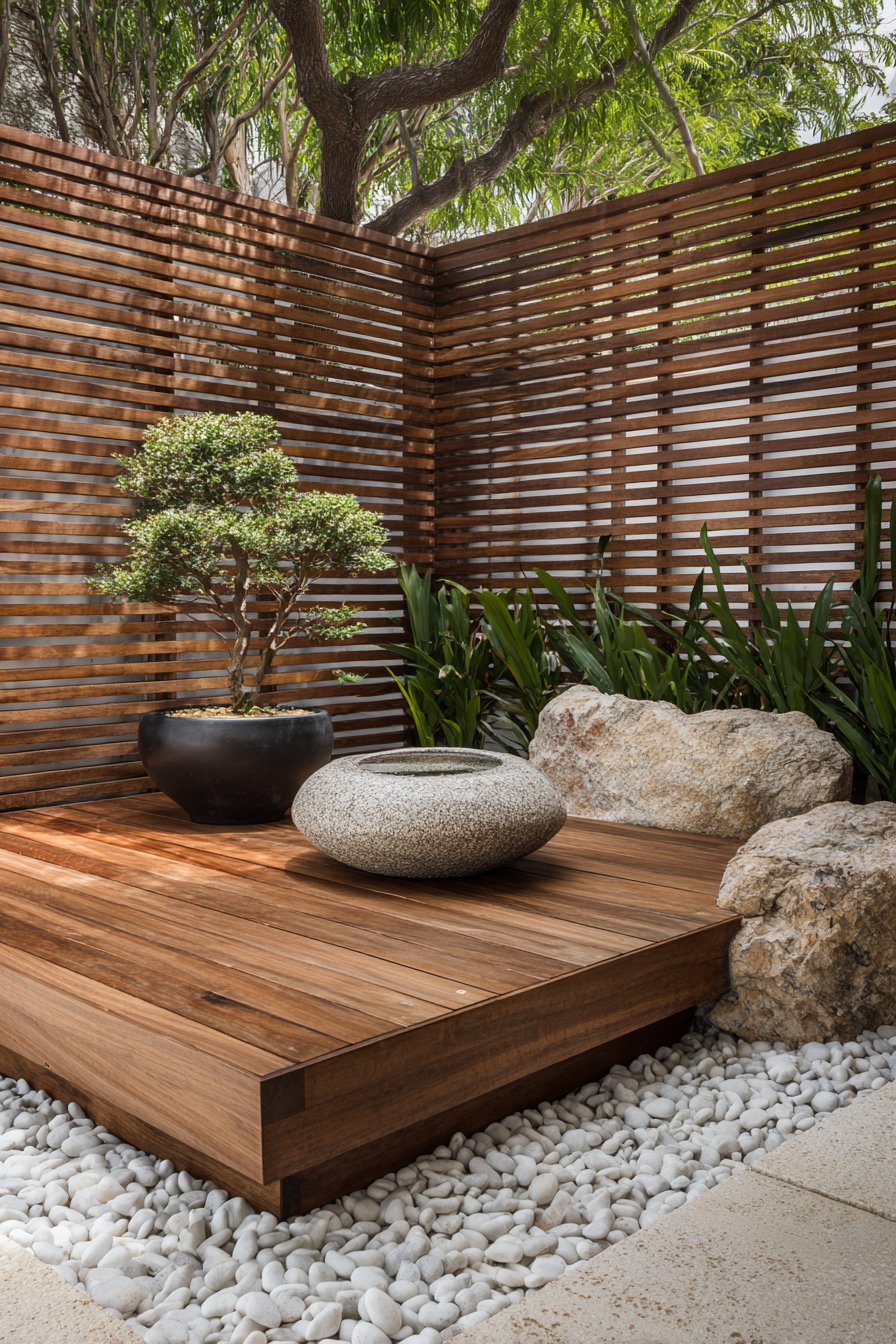
Stone garden elements bring the essence of traditional Japanese gardens to this compact space. Smooth river rocks, carefully arranged in patterns that suggest flowing water or raked sand, create a miniature landscape for meditation. A small bamboo water feature produces the gentle, constant sound of trickling water—a sound that masks urban noise while promoting mental clarity and peace.
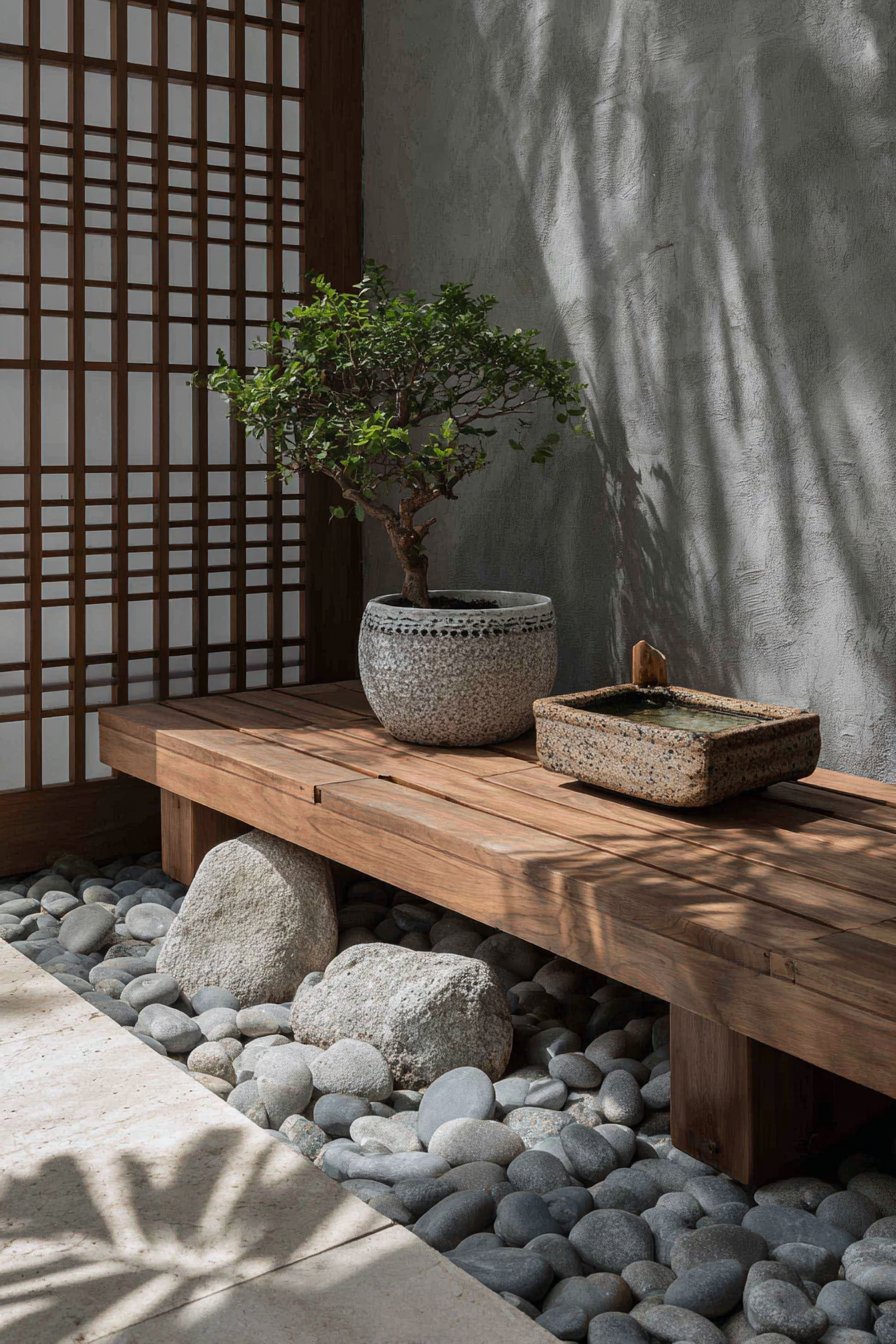
The focal point of this contemplative space is a single bonsai tree in a ceramic pot, its miniaturized form representing nature distilled to its essence. This living sculpture, shaped over years or decades, deserves and receives a place of honor in the composition. A shoji-style screen provides privacy while filtering light in the distinctive way that rice paper panels do, creating soft, diffused illumination that changes subtly throughout the day. Photography captured with a contemplative approach emphasizes tranquility and the minimalist aesthetic, using soft, even lighting that encourages quiet reflection rather than dramatic visual impact.
Key Design Tips:
- Use natural, unfinished wood for platforms and structural elements
- Incorporate water features with recirculating pumps for sound without plumbing
- Position bonsai or accent plants at precise focal points using design principles
- Install shoji screens or natural fiber panels for light filtration and privacy
- Keep color palette restricted to natural wood tones, grays, and whites
- Remove or hide all modern, non-natural elements (electronics, plastics)
- Add meditation cushions or low seating rather than conventional furniture
- Create asymmetrical balance rather than symmetrical arrangements
- Maintain meticulous organization and cleanliness as spiritual practice
13. Farmhouse Country Porch Charm
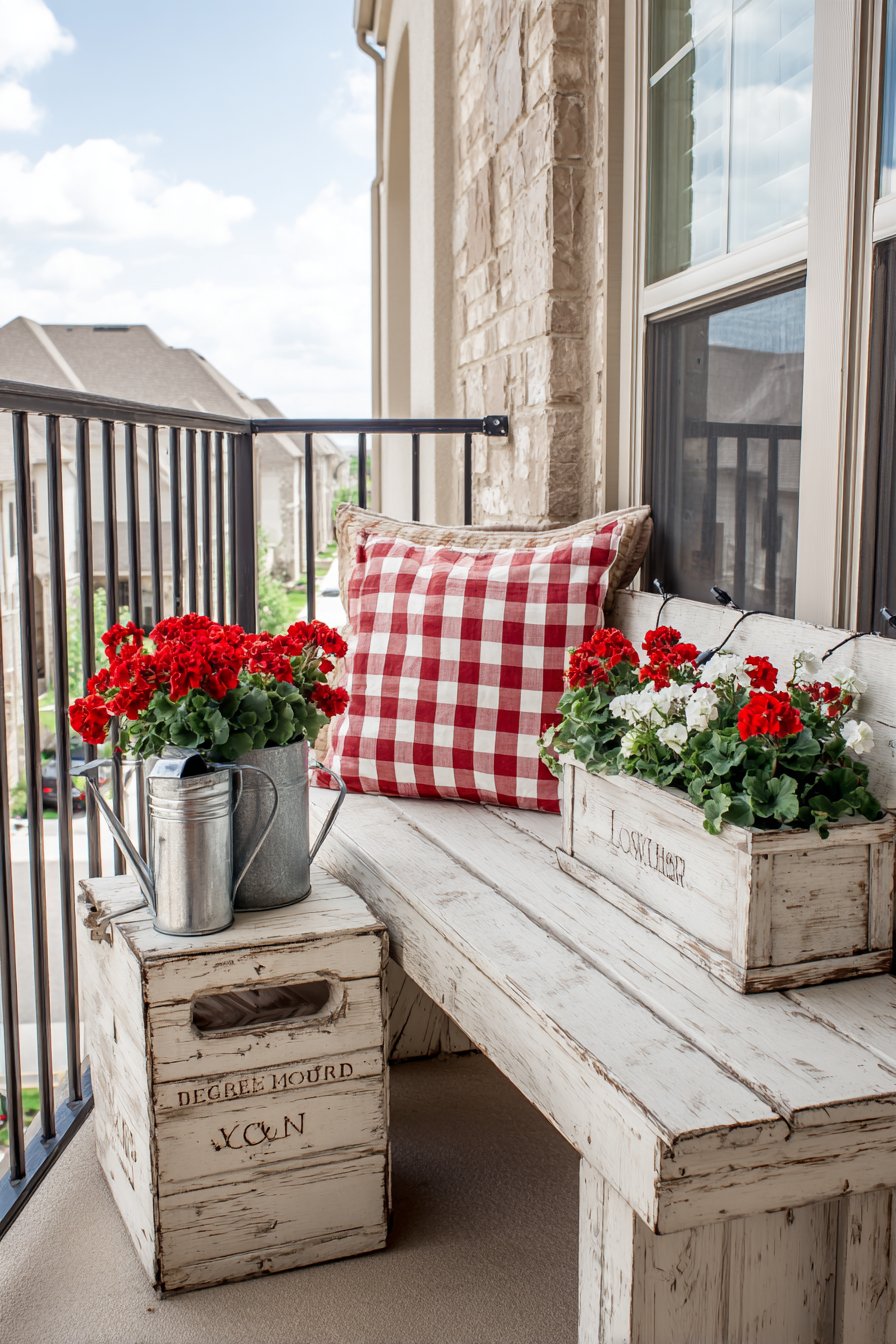
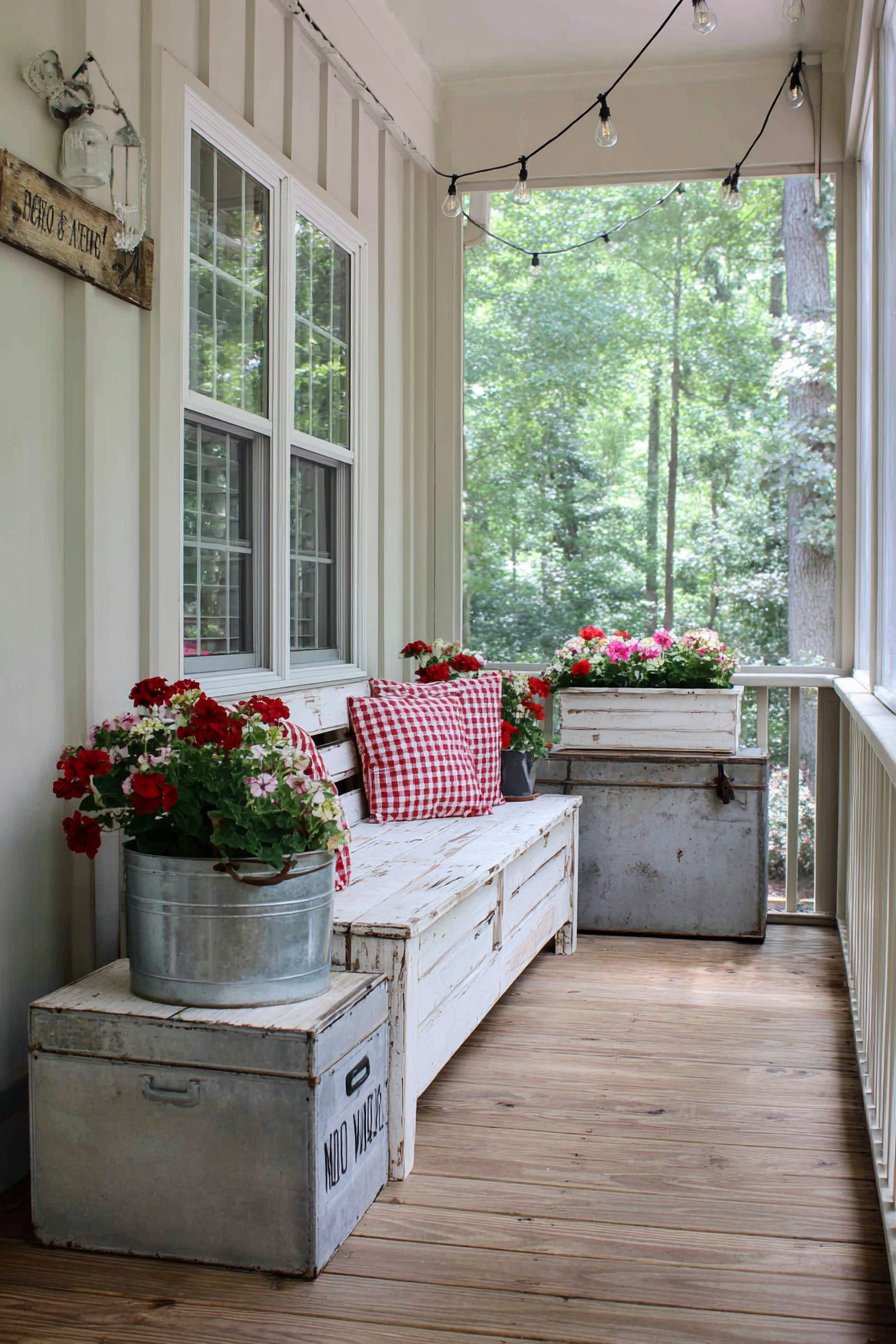
Rustic farmhouse style brings comfortable, unpretentious charm to mini balcony ideas, creating spaces that feel welcoming and lived-in from day one. Picture a distressed white wooden bench, its paint deliberately worn to reveal underlying wood in strategic places. Built-in planter boxes at each end overflow with colorful geraniums whose red, pink, and white blooms provide cheerful country color throughout growing season.
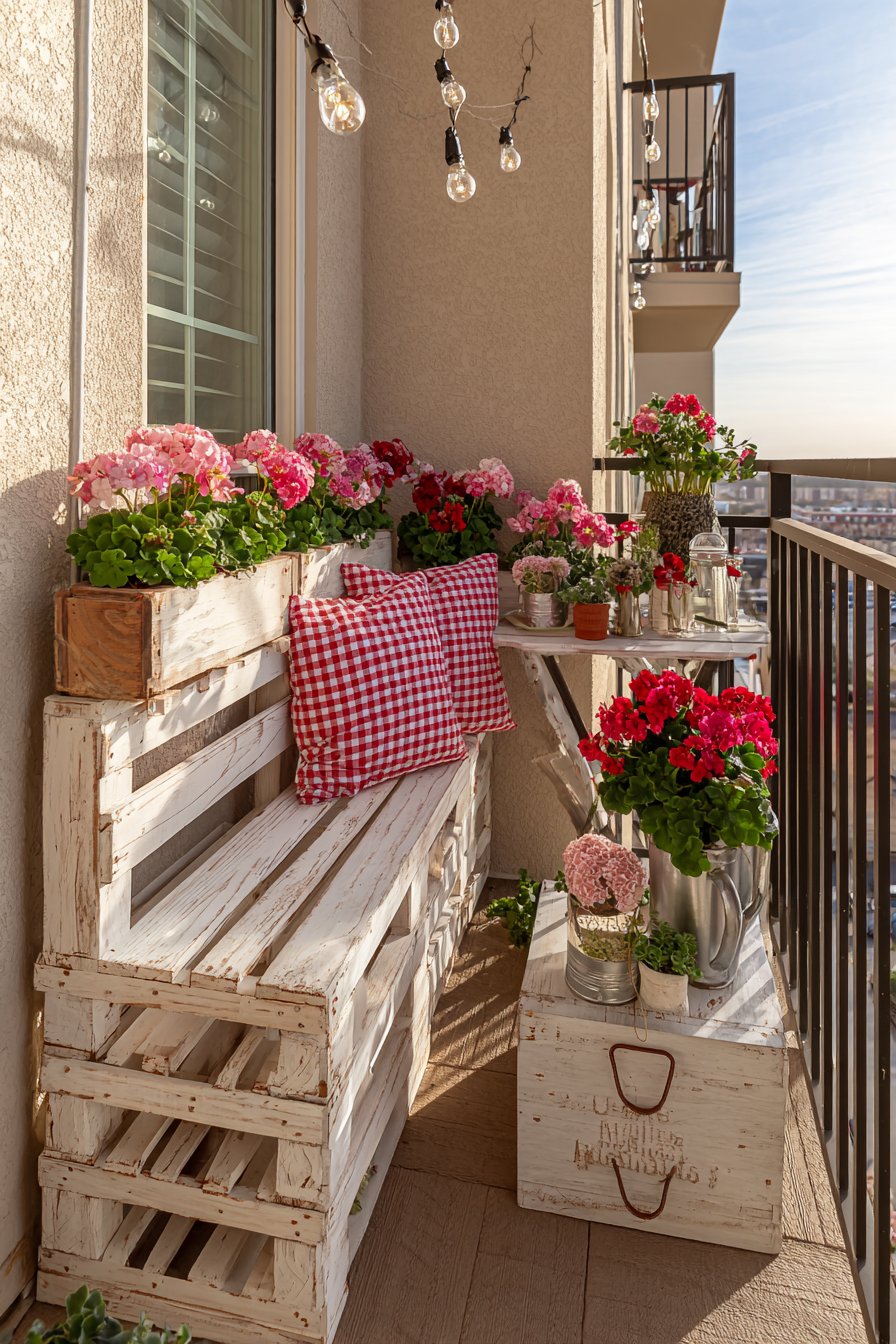
The vintage finds that complete this farmhouse aesthetic tell stories of repurposing and creative reuse. A galvanized metal watering can serves as both functional tool and decorative element, its weathered finish and utilitarian design embodying farm life nostalgia. A vintage milk crate, perhaps stamped with the name of a long-closed dairy, finds new life as a charming side table—sturdy enough for glasses of lemonade or iced tea, characterful enough to draw smiles and questions from visitors.
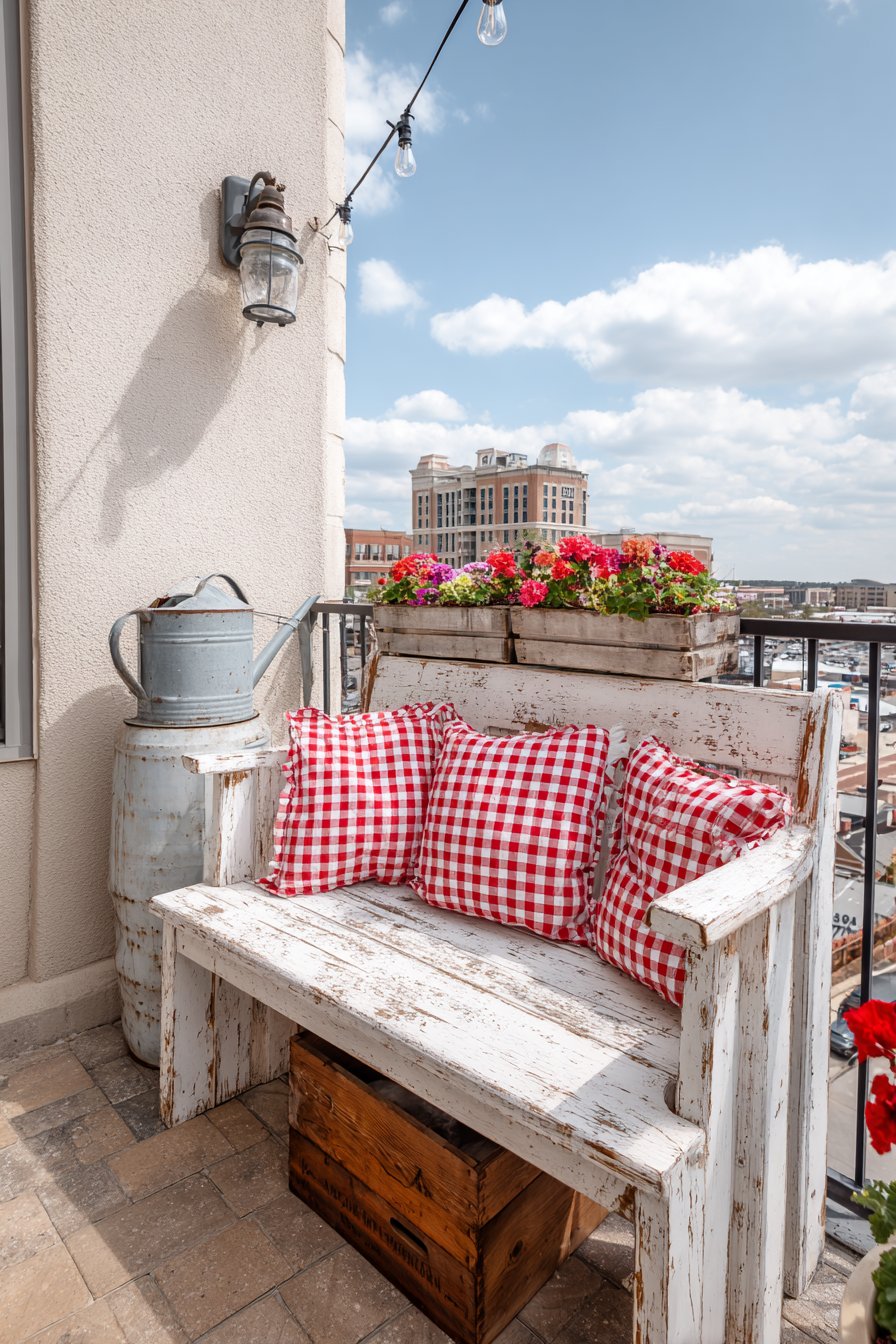
Gingham cushions in red and white add classic country pattern while providing comfortable seating. This timeless check pattern immediately evokes picnics, country kitchens, and simpler times. As evening descends, mason jar string lights illuminate the space with warm, nostalgic glow—these humble containers, synonymous with canning and preserving, become beautiful light fixtures that perfectly capture farmhouse resourcefulness and creativity. Natural daylight photography captures the rustic charm and practical functionality, celebrating the beauty of weathered materials and the comfort of familiar, traditional design elements.
Key Design Tips:
- Use distressed or chippy paint finishes for authentic farmhouse appearance
- Incorporate vintage farm implements as decorative elements
- Plant traditional farmhouse flowers like geraniums, petunias, or zinnias
- Add gingham, ticking stripe, or other classic country patterns
- Use mason jars for lighting, planting, or storage containers
- Select white or cream as primary color with red or blue accents
- Include wooden elements with visible wear and natural patina
- Create built-in planters for integrated, permanent appearance
- Display vintage advertising signs or enamelware for period character
14. Modern Urban Outdoor Office
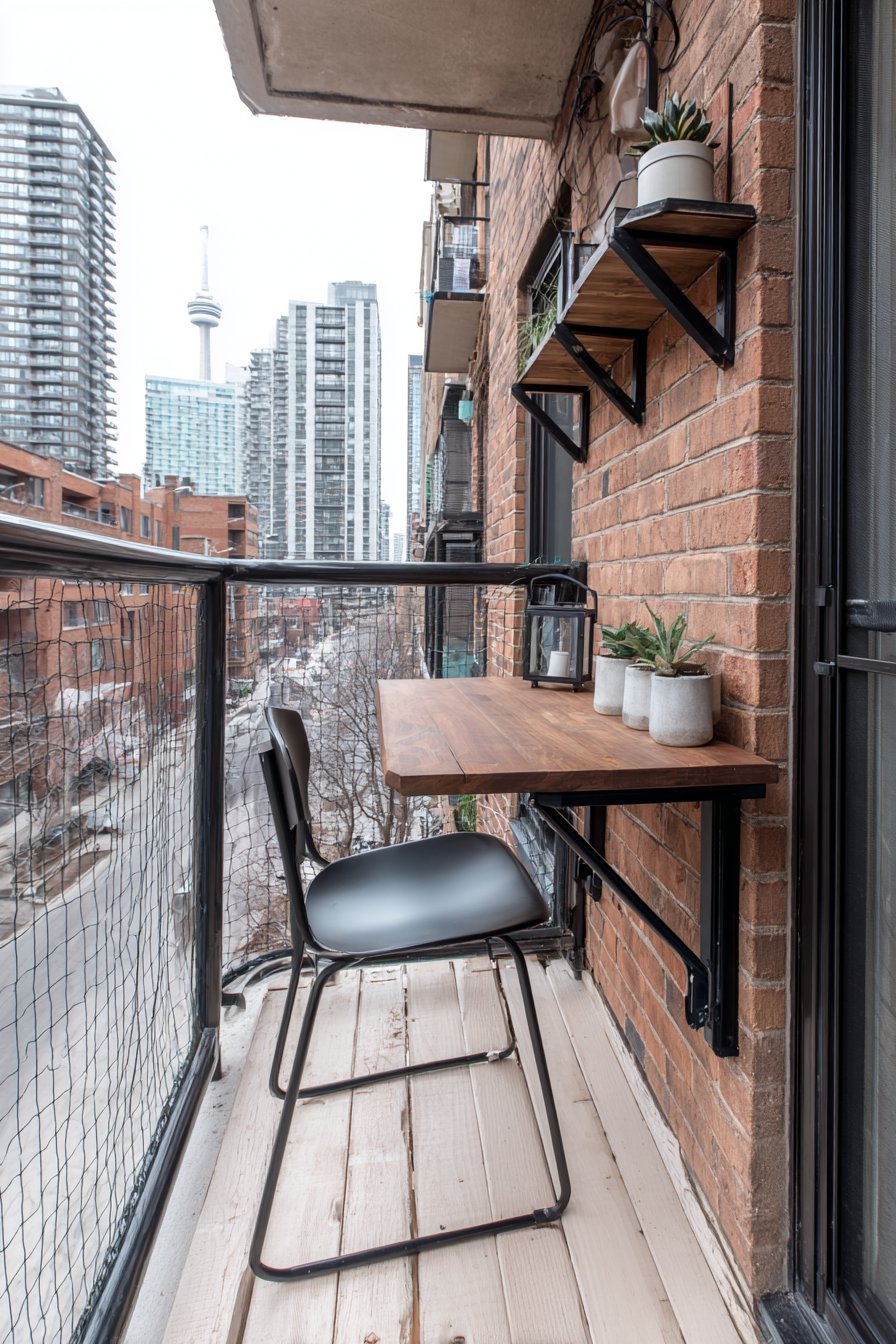
As work-from-home becomes increasingly common, transforming mini balconies into outdoor workspaces represents one of the most practical and health-promoting mini balcony ideas. Envision a sleek wall-mounted fold-out desk in black metal and wood, its industrial design occupying minimal space when closed but providing a full work surface when deployed. This innovative furniture solution brings fresh air and natural light to remote work without sacrificing precious indoor square footage.
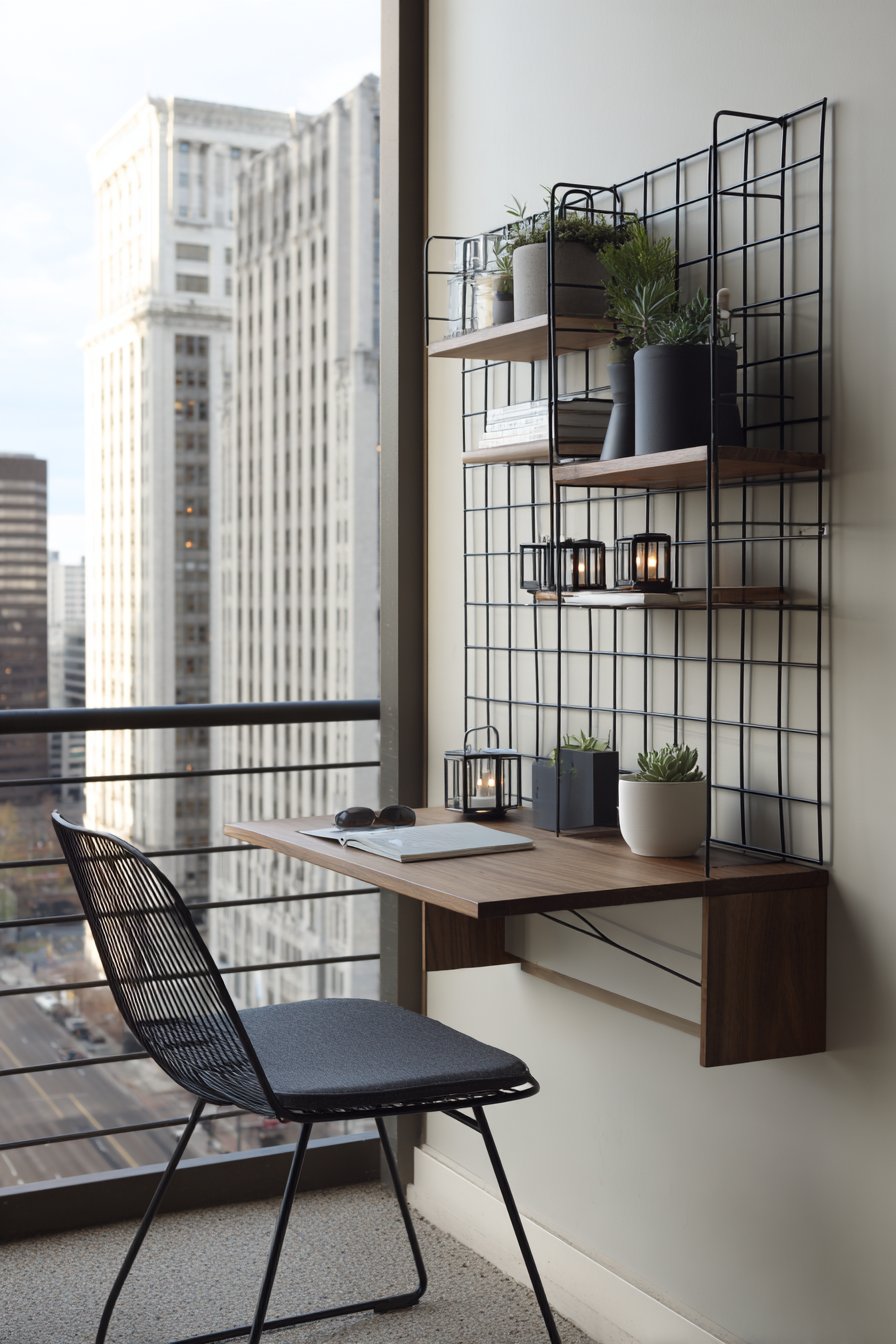
A single ergonomic outdoor chair, designed to withstand weather exposure while providing proper lumbar support, ensures comfort during extended work sessions. The chair’s modern design complements the desk’s industrial aesthetic while its weather-resistant materials mean it can remain outdoors year-round in most climates.
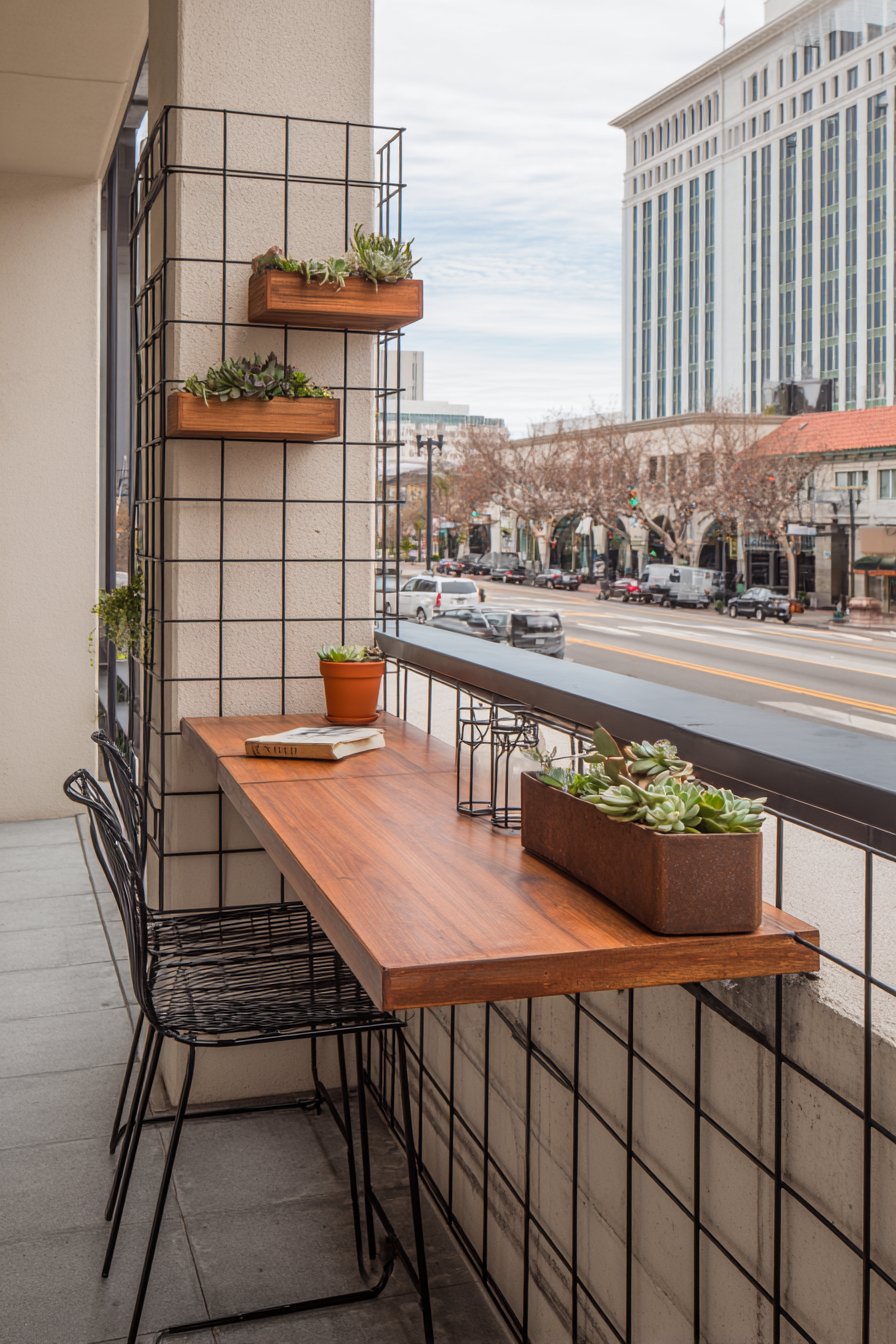
Above the workspace, a minimalist wire shelf system holds essential office supplies, potted succulents, and solar lanterns. This vertical storage keeps the work surface clear while maintaining easy access to frequently needed items. The succulents add life and improve air quality without requiring the maintenance of more demanding plants—crucial for busy professionals who need their workspace to be functional rather than demanding attention.
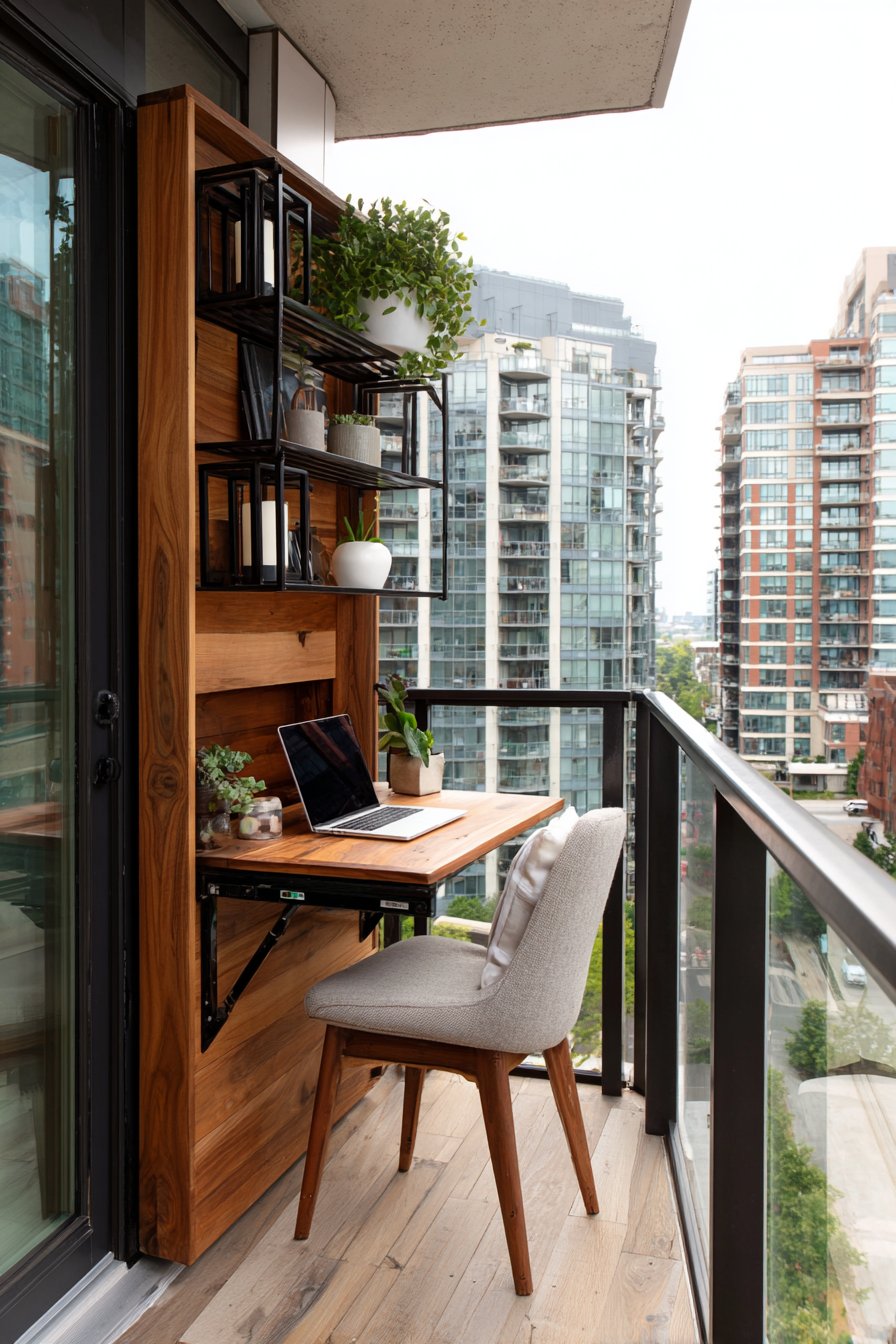
The cable railing system maintains open sightlines to the view beyond, preventing the small space from feeling claustrophobic during long work sessions. Natural light floods the workspace, reducing eye strain and providing essential vitamin D exposure that indoor offices lack. Professional architectural photography with balanced exposure showcases this contemporary work-from-home solution, highlighting clean lines, functional design, and the mental health benefits of conducting business with sky rather than ceiling overhead.
Key Design Tips:
- Install fold-out desks with locking mechanisms for stability during use
- Choose ergonomic seating with proper back support for extended use
- Position desk to avoid screen glare from direct sunlight
- Add shade solutions (umbrella, awning) for summer work sessions
- Install weatherproof power outlets for laptop charging
- Use cable management solutions to organize cords and prevent tripping hazards
- Select low-maintenance plants that won’t distract from work
- Consider privacy screens if neighboring balconies have sightlines to your workspace
- Add outdoor-rated surge protectors for electronics protection
15. Romantic Cottage Garden Escape
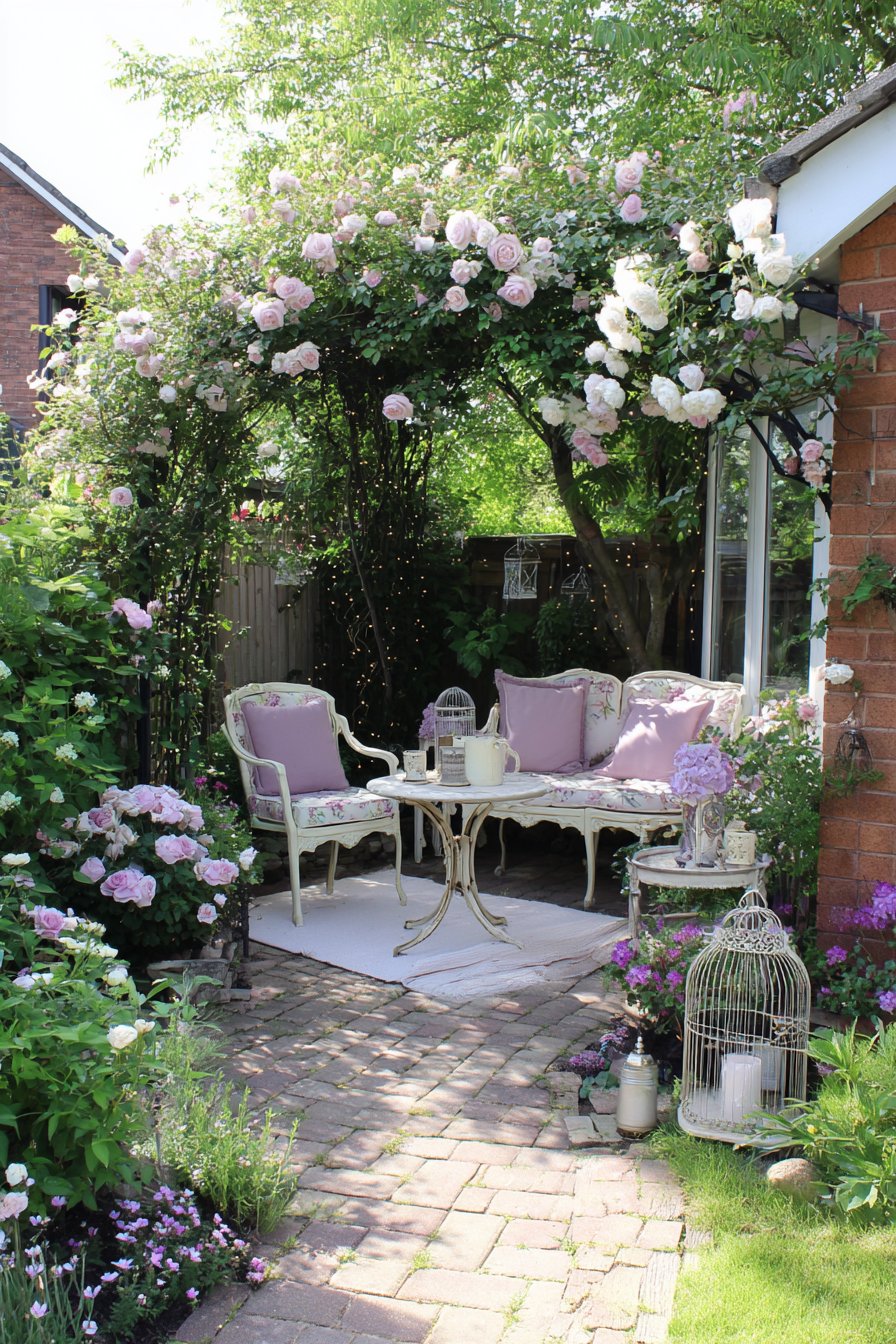
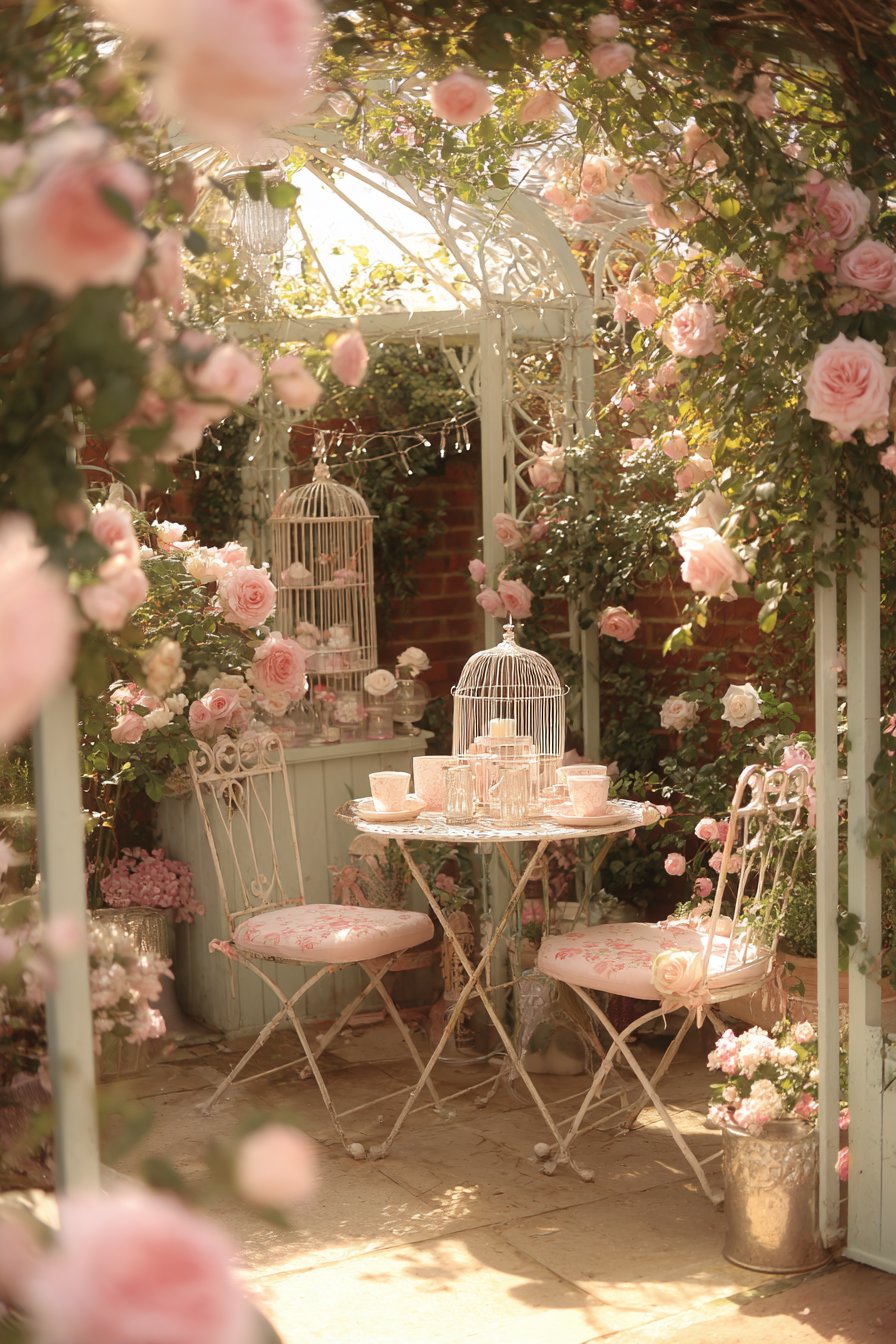
For those who dream of English cottage gardens and romantic Victorian porches, this approach to mini balcony ideas creates an enchanting retreat reminiscent of storybook illustrations. A wrought iron bistro set painted in antique white serves as the centerpiece, its ornate scrollwork and vintage finish suggesting heirloom quality. Cushions in soft pink and lavender introduce gentle color that enhances rather than overwhelms the romantic atmosphere.
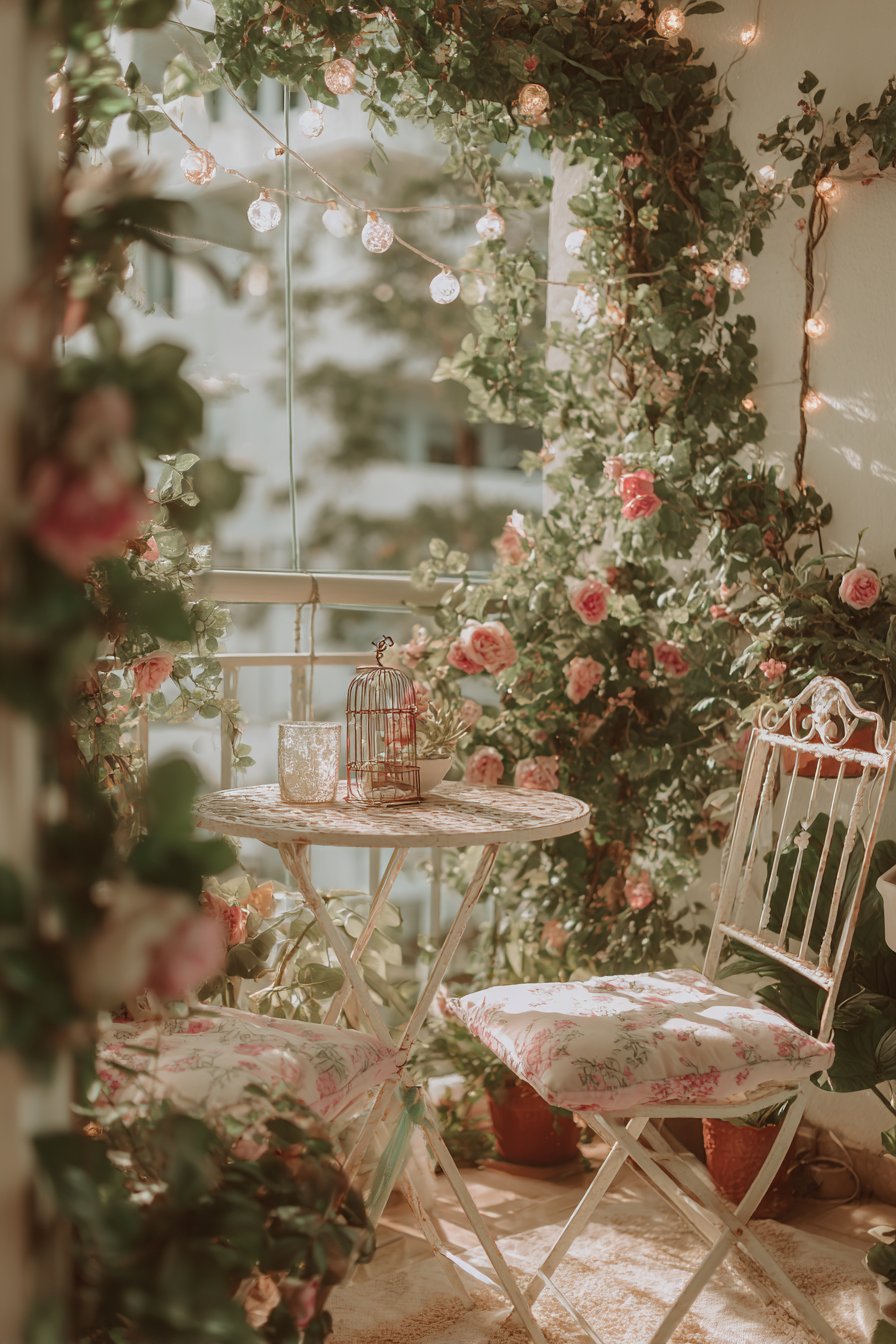
The true magic of this space lies in the climbing roses trained along a trellis, their fragrant blooms creating a natural canopy overhead. Whether you choose old-fashioned varieties in soft pinks and creams or more vibrant modern hybrids, these flowers transform a simple balcony into a secret garden. The trellis itself becomes architectural element, providing vertical interest even when roses aren’t in bloom.
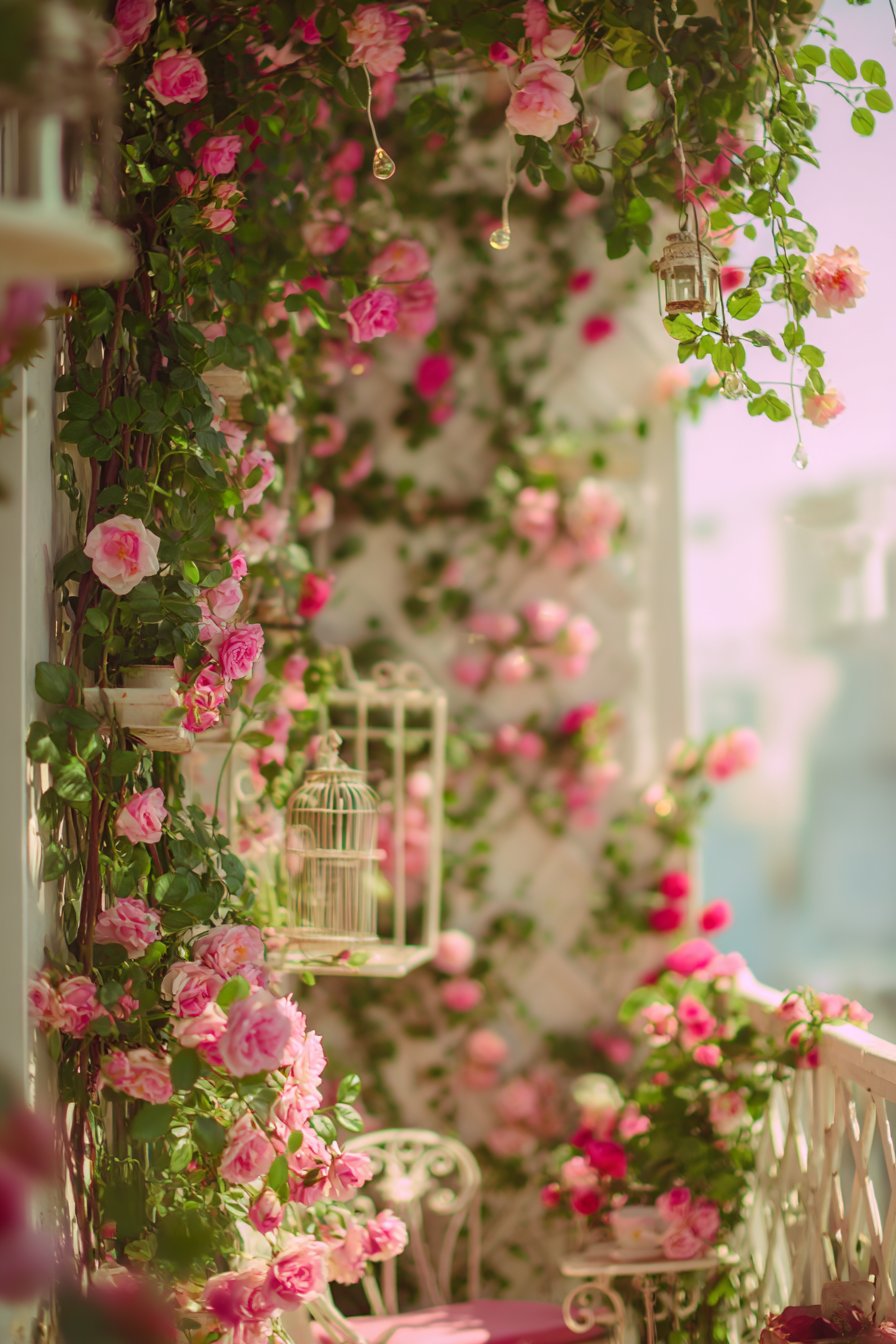
Whimsical decorative elements enhance the fairytale quality—a vintage birdcage holds air plants or serves as candleholder, mercury glass votives reflect flickering flame in their silvered surfaces, perhaps a vintage watering can or antique garden tools hang as wall art. Fairy lights draped overhead complete the magical transformation, their tiny bulbs creating starry sky effect that makes evening hours particularly enchanting. Soft evening light captured with dreamy photography style emphasizes the romantic, almost ethereal quality of this cottage garden-inspired space, where every element conspires to create a sense of timeless beauty and gentle romance.
Key Design Tips:
- Select climbing roses suited to container growing and your climate zone
- Install sturdy trellises attached securely to walls for rose support
- Choose wrought iron furniture with weather-resistant paint finish
- Layer lighting with both fairy lights and candles for romantic ambiance
- Add fragrant plants (roses, jasmine, lavender) for sensory experience
- Use vintage or vintage-style decorative elements sparingly to avoid clutter
- Select cushions with removable, washable covers in romantic colors
- Deadhead roses regularly to encourage continuous blooming
- Include mercury glass or mirrored elements to reflect and multiply light
16. Coastal Nautical Retreat
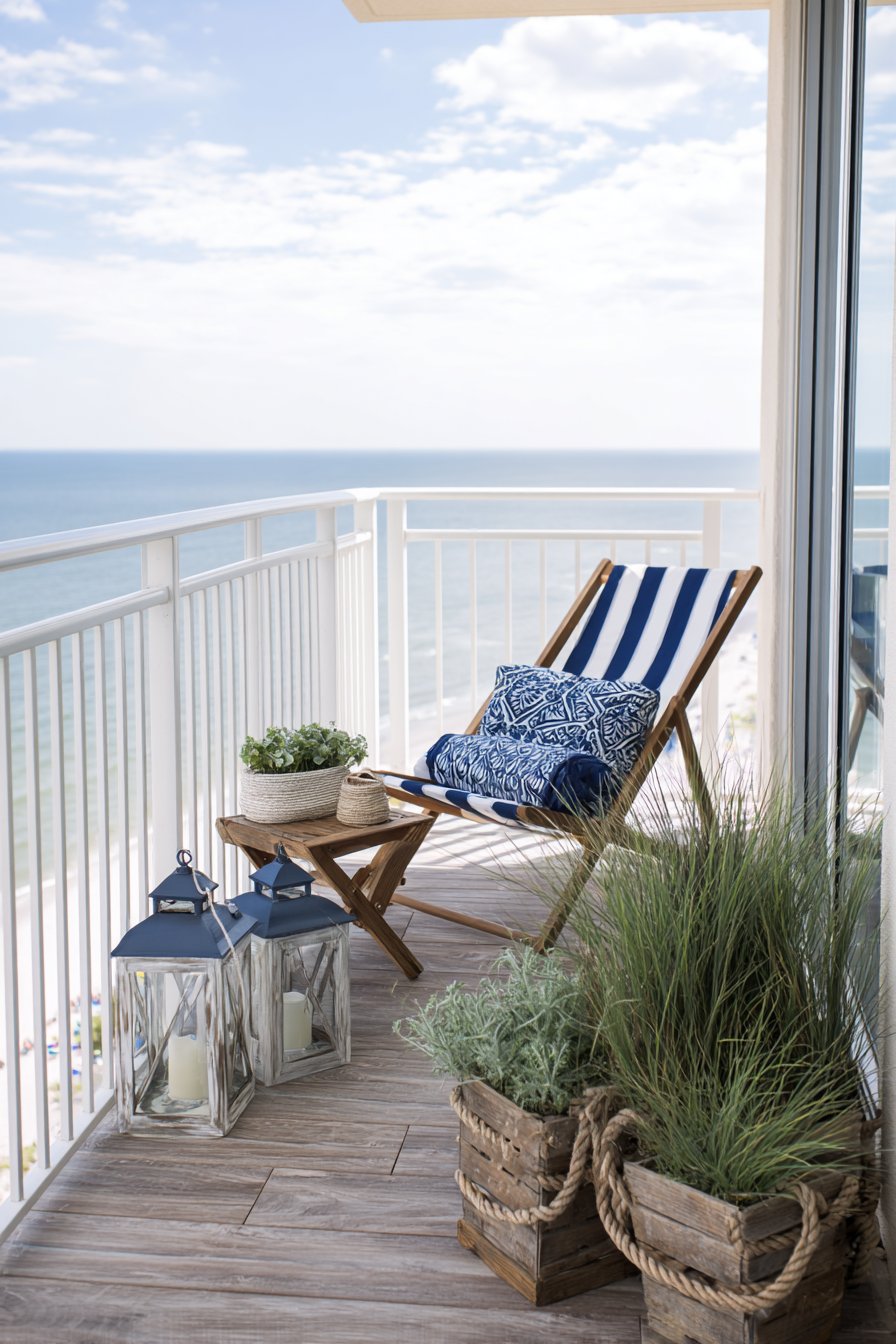
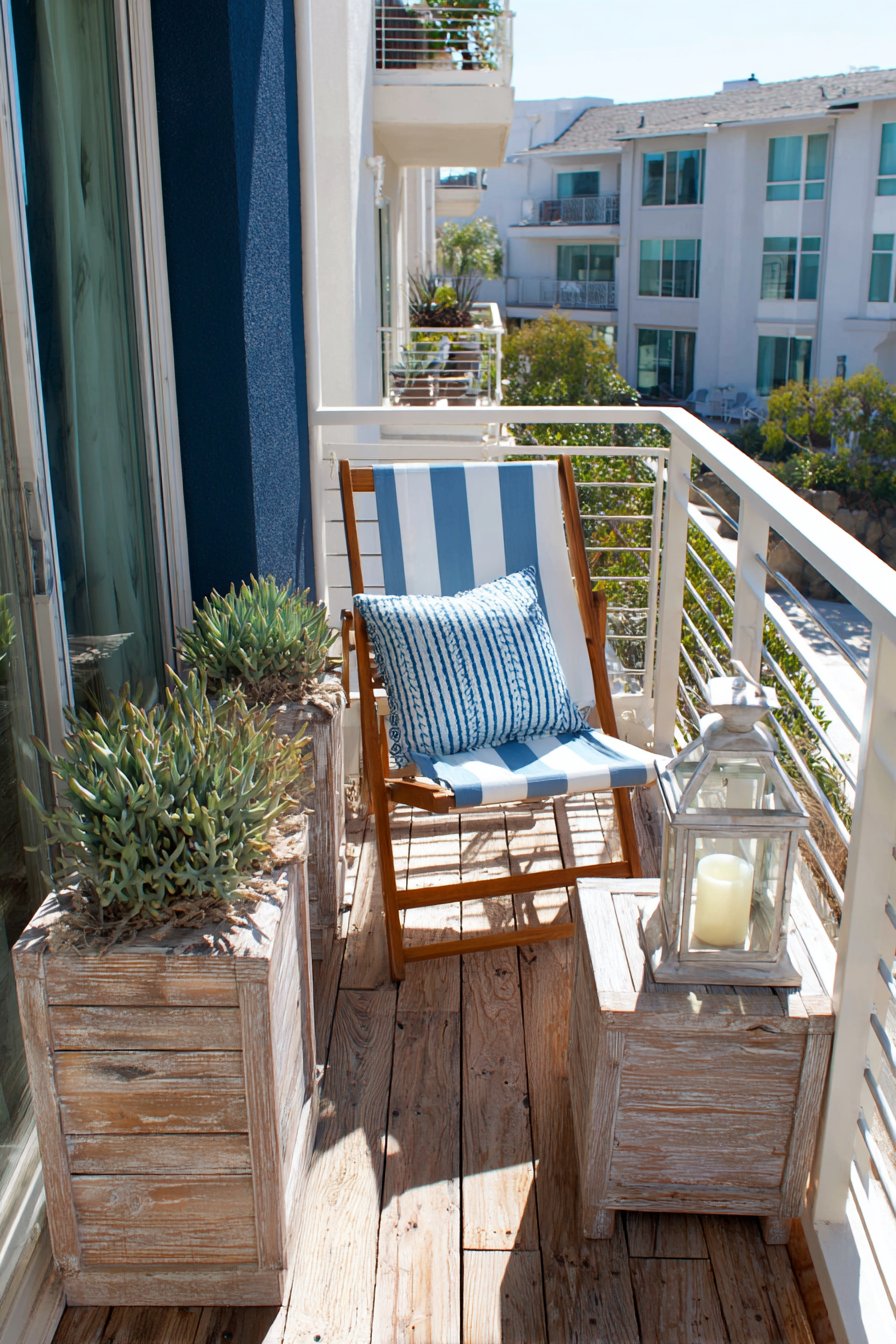
Bringing seaside serenity to urban settings, a coastal-themed approach to mini balcony ideas evokes the relaxed, breezy atmosphere of beachside living. Whitewashed wood plank flooring provides the foundation, its sun-bleached appearance suggesting driftwood collected from sandy shores. This flooring, whether actual wood or weather-resistant composite, immediately establishes the coastal aesthetic while providing durable, easy-to-clean surface.
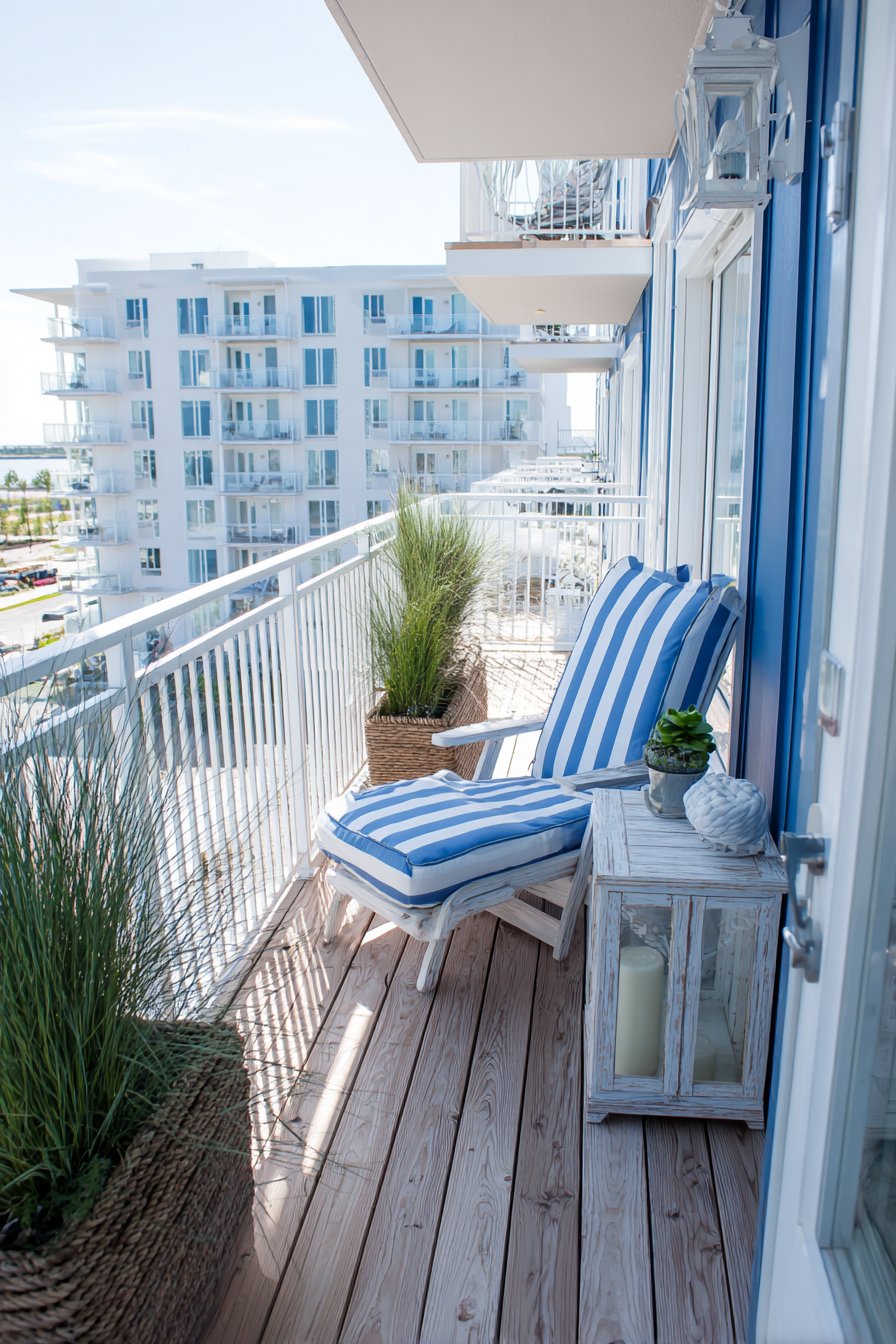
A navy blue accent wall creates dramatic backdrop for the seating area—a classic striped deck chair in blue and white canvas that references vintage beach clubs and seaside resorts. This iconic pattern, whether in broad stripes or narrow, instantly communicates coastal style while providing comfortable, supportive seating. A matching side table in similar blue and white styling keeps beverages and books within easy reach.
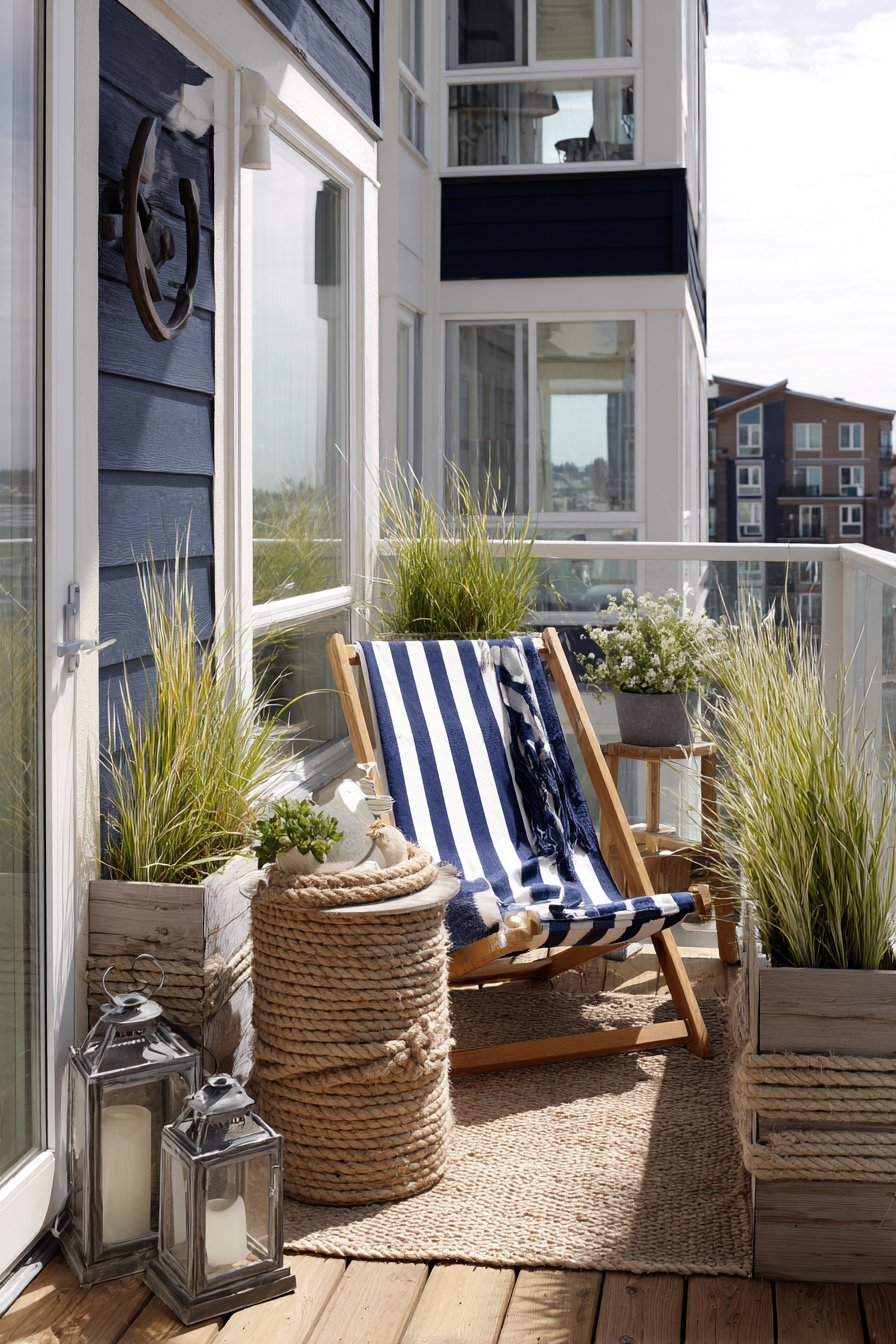
Rope-wrapped planter boxes along the railing contain beach grass and succulents, their textural qualities suggesting coastal dunes and salt-tolerant vegetation. Nautical lanterns, perhaps reproductions of ship’s lights or lighthouse beacons, provide illumination while reinforcing the maritime theme. Natural bright daylight photography captures the breezy seaside aesthetic, highlighting weathered textures, the interplay of navy and white, and the overall sense of casual, sun-soaked relaxation that defines coastal living.
Key Design Tips:
- Use whitewashed or weathered finishes on wood elements for authentic beach appearance
- Restrict color palette to navy, white, and natural wood tones with sand-colored accents
- Choose striped fabrics in classic maritime patterns for cushions and textiles
- Incorporate rope elements (wrapped planters, rope lighting) for nautical character
- Select plants that tolerate wind and salt air if near actual coast
- Add decorative elements like driftwood, shells, or maritime artifacts
- Install weather-resistant lanterns that reference ship or lighthouse lighting
- Use galvanized metal or stainless steel hardware to prevent rust
- Create relaxed, casual atmosphere rather than overly themed or kitschy space
17. Contemporary Modular Multi-Function Design
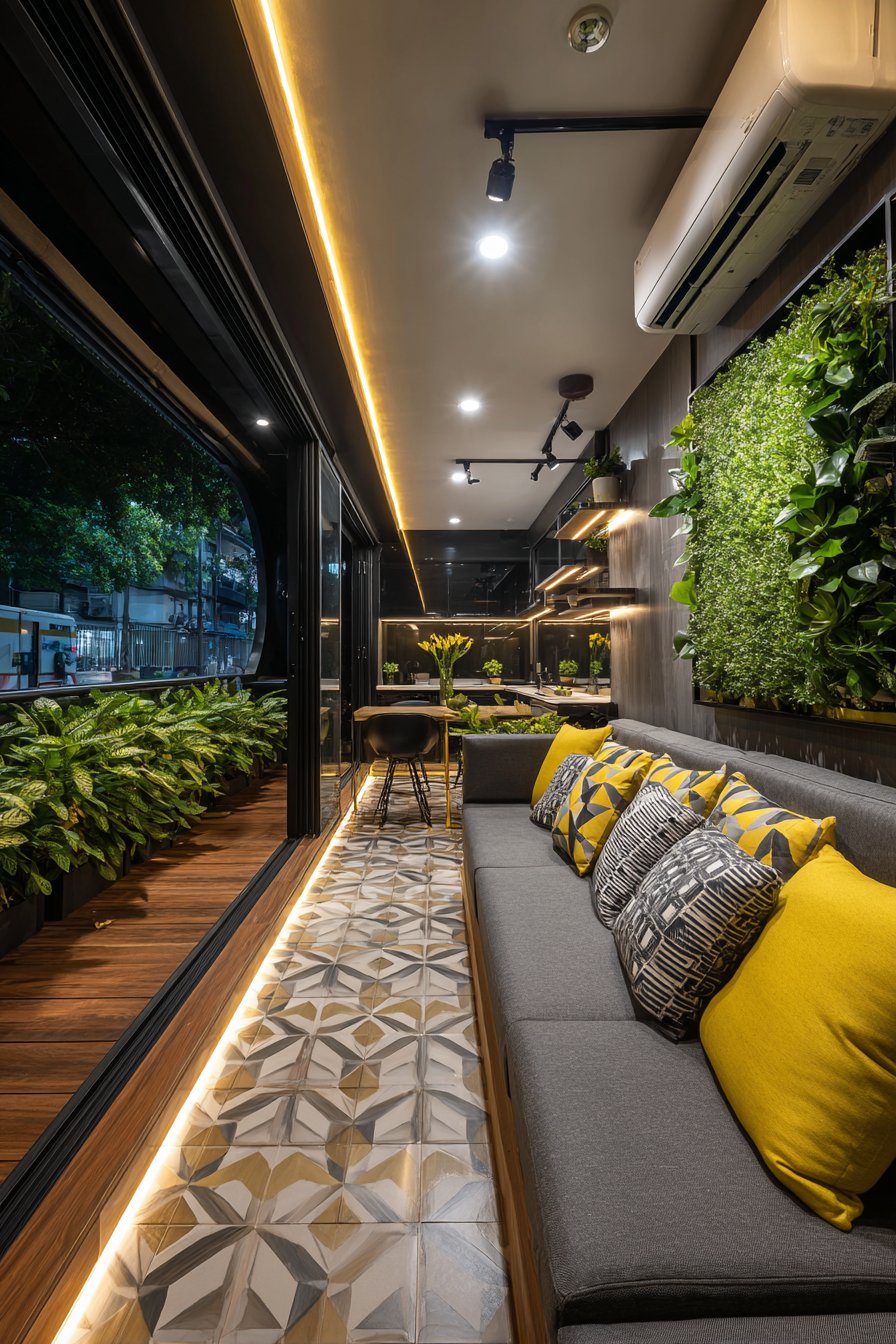
Representing the cutting edge of mini balcony ideas, a contemporary modular approach prioritizes flexibility and innovation through furniture systems that adapt to changing needs. Picture interlocking cube-shaped units that serve as seating, storage, and display surfaces depending on configuration. These weather-resistant modules can be arranged in countless ways—stacked for vertical storage, arranged in line for bench seating, or clustered to create a coffee table with surrounding seats.
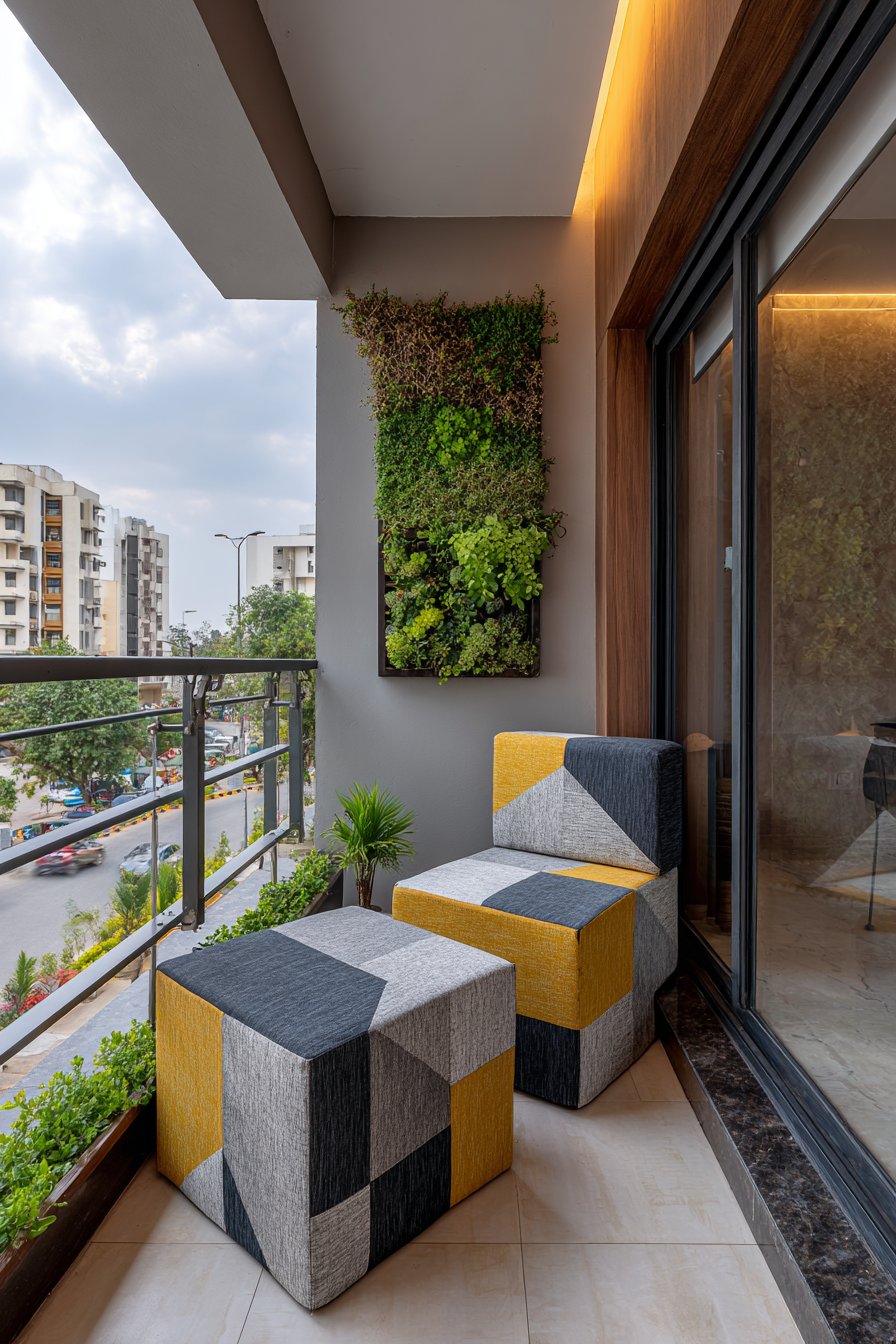
Weather-resistant upholstery in geometric patterns of gray and yellow adds visual interest while the modular nature of the system means cushions and covers can be easily removed for cleaning or switched out entirely to refresh the space’s appearance. This adaptability is particularly valuable in rental situations where permanent modifications aren’t allowed but personality and style still matter.
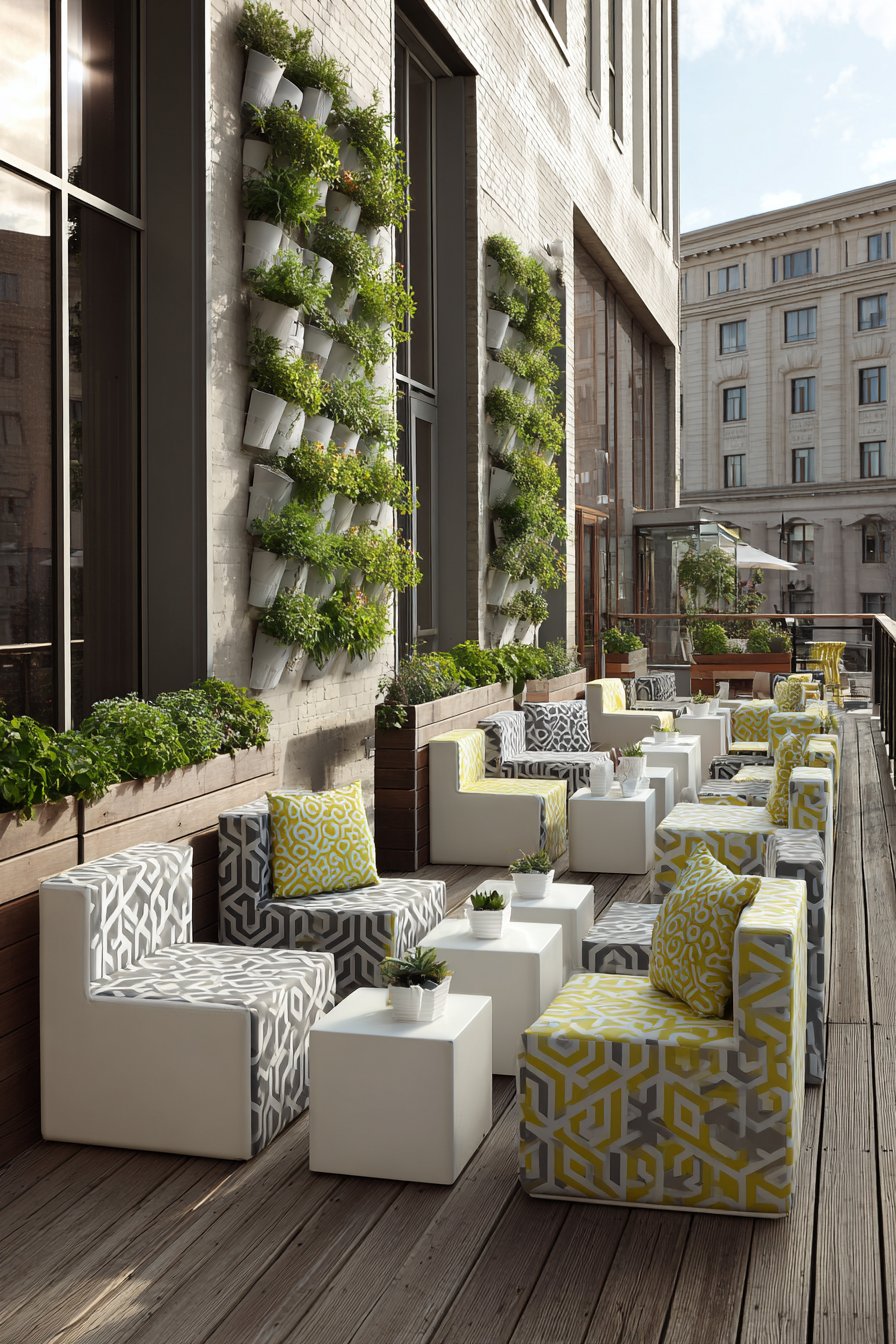
A vertical succulent wall art installation serves as living sculpture, its drought-tolerant plants arranged in geometric patterns that echo the modular furniture. This green wall requires minimal maintenance while providing significant visual impact and air quality benefits. LED strip lighting integrated into the railing illuminates the space after dark, its customizable colors and brightness levels allowing users to adjust ambiance for different occasions—bright task lighting for evening reading or soft, colorful glow for entertaining.
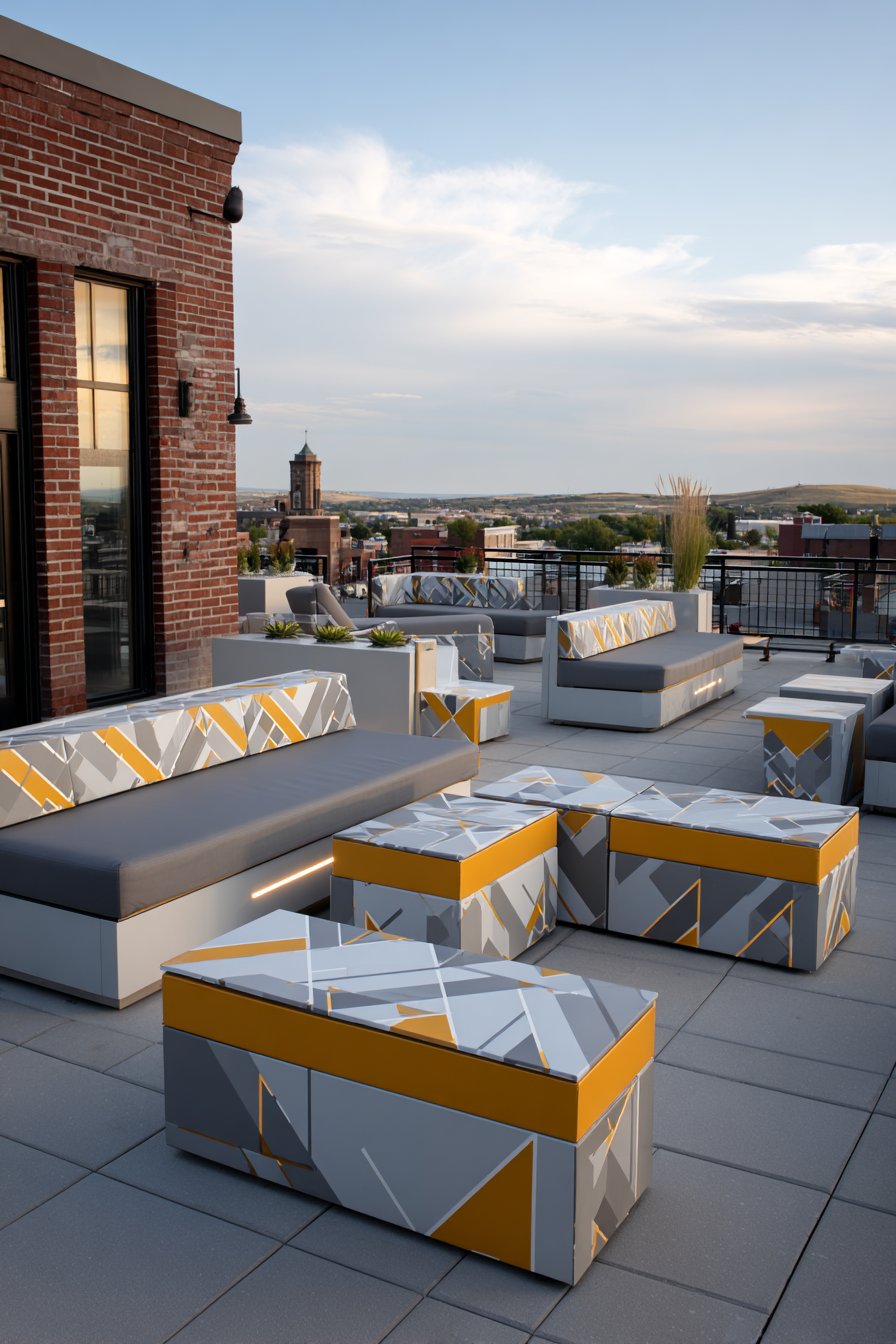
Wide-angle architectural photography showcases the innovative space-saving furniture solution, capturing the modern, clean aesthetic and clever multifunctional design that makes every element work harder and smarter. The overall impression is of a space that embraces technology and innovation while remaining warm and inviting.
Key Design Tips:
- Choose modular furniture systems that are lightweight enough to reconfigure easily
- Ensure modular pieces lock together securely when stacked for safety
- Select weather-resistant materials that won’t degrade when left outdoors
- Install LED strip lights with remote control or smartphone app for convenience
- Create vertical gardens using systems with built-in irrigation for easy maintenance
- Use geometric patterns that complement rather than compete with modular furniture shapes
- Include hidden storage within modular units for cushions, throws, and accessories
- Opt for neutral base colors with interchangeable accent pieces for versatility
18. Parisian Cafe Corner
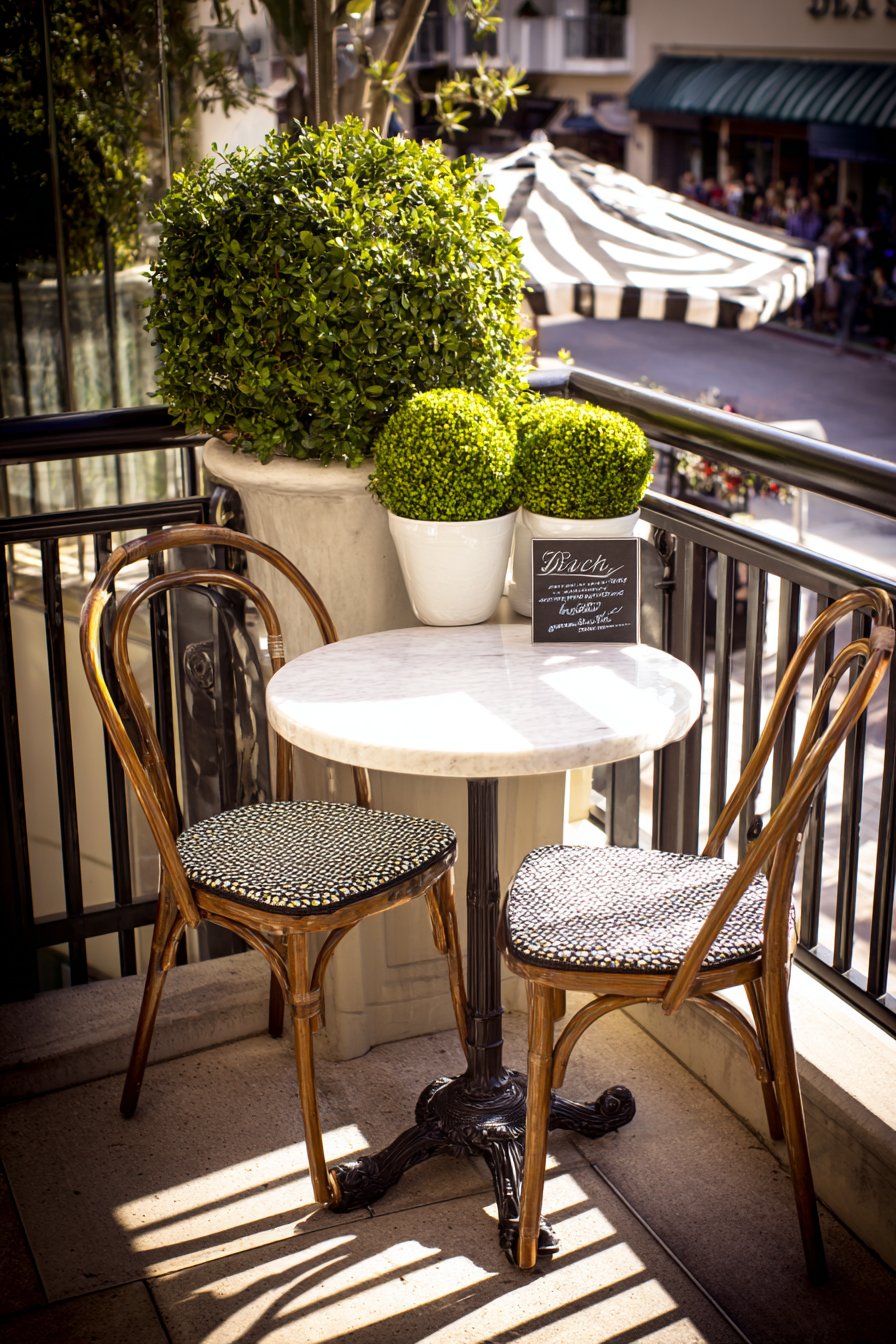
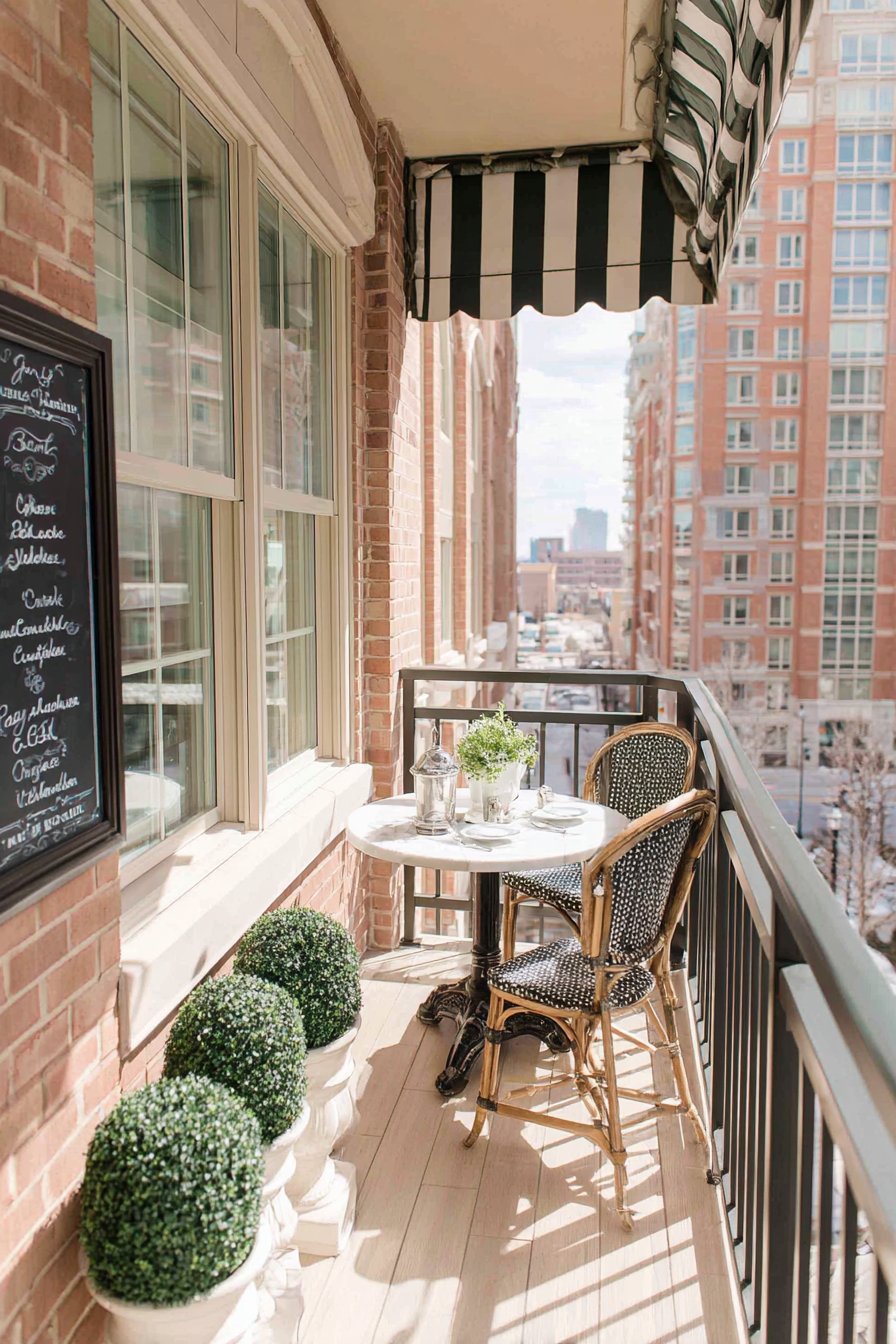
Capturing the effortless elegance and social warmth of Parisian street cafes, this approach to mini balcony ideas transforms a small outdoor space into a destination for leisurely mornings and lingering conversations. A small round marble-top table serves as the centerpiece, its classic bistro proportions and luxurious material evoking countless cafe terraces throughout Paris. Paired with two bentwood chairs—those iconic Thonet designs that have graced European cafes for over a century—the setting is immediately recognizable and timelessly stylish.
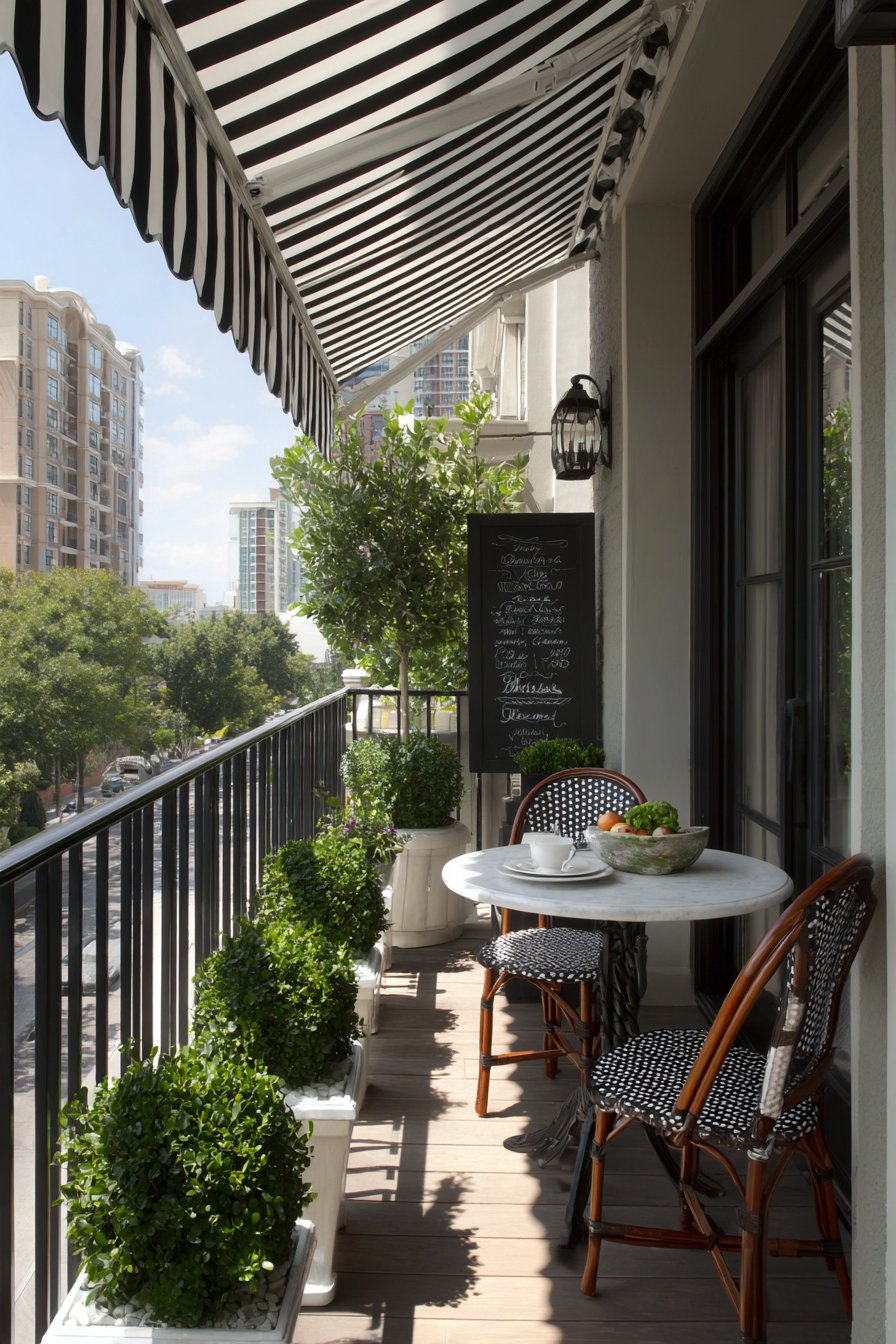
The striped awning fabric providing shade references the classic French cafe aesthetic while offering practical sun protection. Whether permanently installed or a simple portable shade, these stripes—typically in burgundy and cream or navy and white—are synonymous with cafe culture. Potted boxwood topiaries in white ceramic planters add formal, manicured greenery that nods to French garden design, their clipped spherical forms providing structure and elegance.
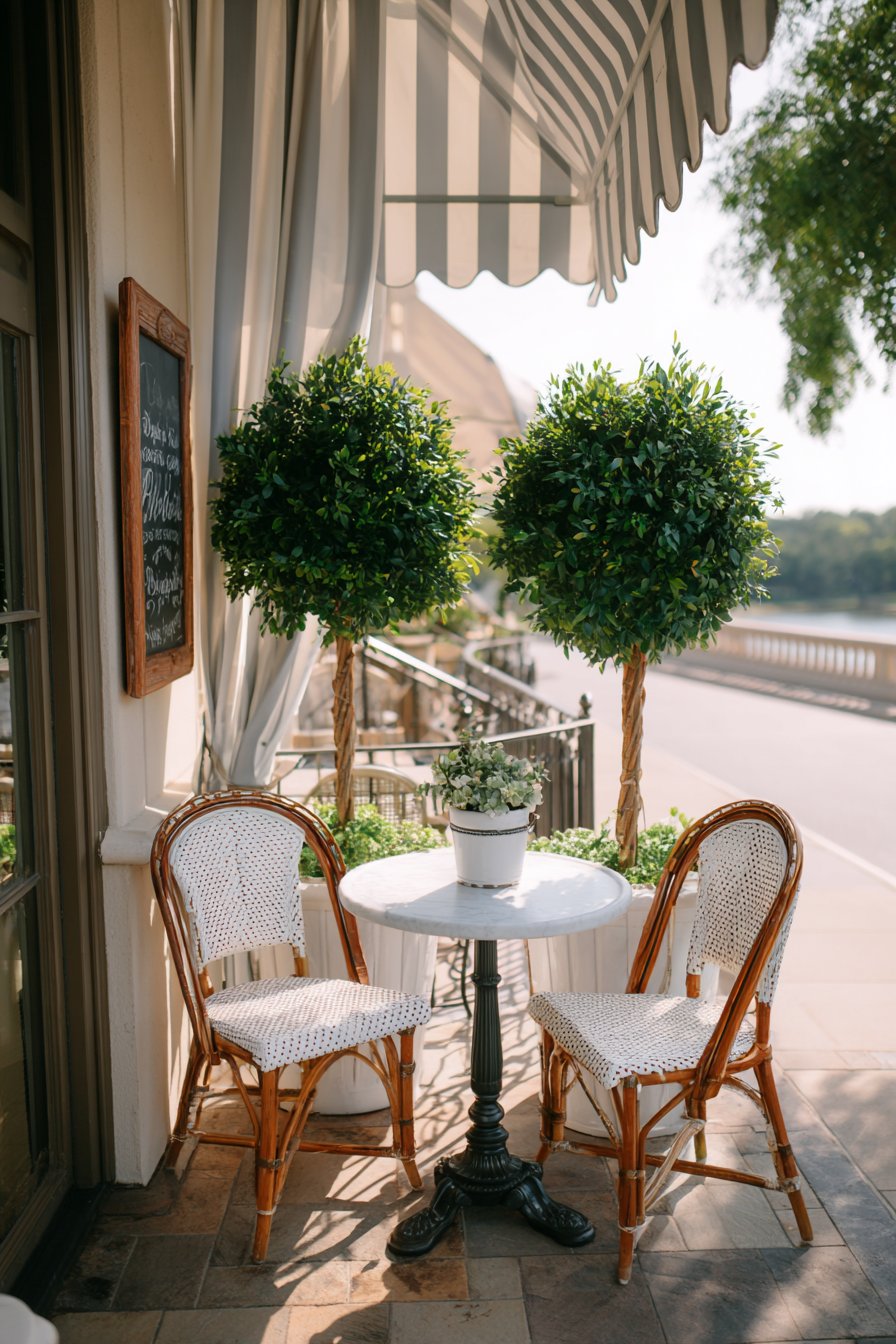
A chalkboard menu sign, even if it simply announces “Coffee” or lists the day’s reading material, adds playful yet authentic element that encourages the cafe mindset. Morning sunlight streaming across this scene captures the warm, inviting atmosphere of a neighborhood bistro where locals gather for café au lait and croissants. Professional lifestyle photography emphasizes the social, convivial nature of the space—this is a balcony designed not for solitude but for connection, conversation, and the simple pleasure of watching the world go by while savoring good coffee.
Key Design Tips:
- Select authentic bentwood chairs for period accuracy and surprising comfort
- Choose a marble or faux-marble top table in bistro size (24-30 inches diameter)
- Install striped awning fabric using retractable system for flexibility
- Plant boxwood topiaries that tolerate container growing and regular pruning
- Add a small chalkboard for menu, quotes, or decorative element
- Use white or cream ceramic planters for classic French garden appearance
- Include cafe-style accessories (sugar bowl, cream pitcher) as decorative elements
- Position furniture to encourage conversation and street-watching
- Maintain meticulous cleanliness and organization for refined cafe aesthetic
19. Rustic Reclaimed Barn Wood Character
Celebrating the beauty of aged materials and sustainable reuse, a rustic approach utilizing reclaimed barn wood brings instant character and history to mini balcony ideas. Imagine an accent wall constructed from weathered barn boards, each plank telling its own story through nail holes, saw marks, and the beautiful patina of decades of weather exposure. This single statement wall transforms the balcony, providing textural richness and authentic rustic charm that new materials simply cannot replicate.
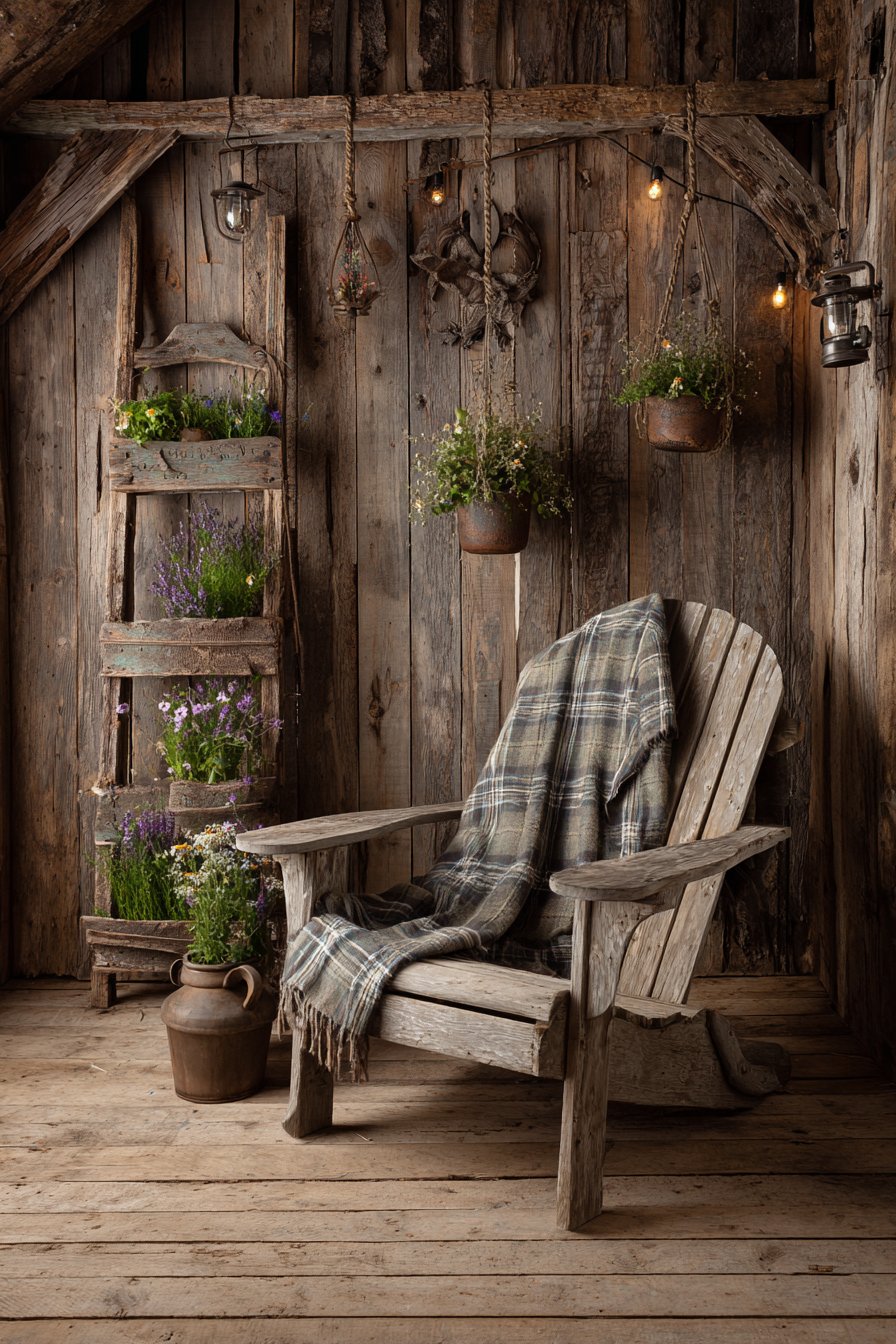
A vintage wooden ladder, repurposed as a vertical planter, leans against this barn wood wall. Its rungs hold small potted plants—perhaps herbs, succulents, or trailing vines—at varying heights, creating a living display that’s both functional and decorative. This creative reuse of an architectural salvage piece exemplifies the rustic ethos of finding beauty and utility in objects others might discard.
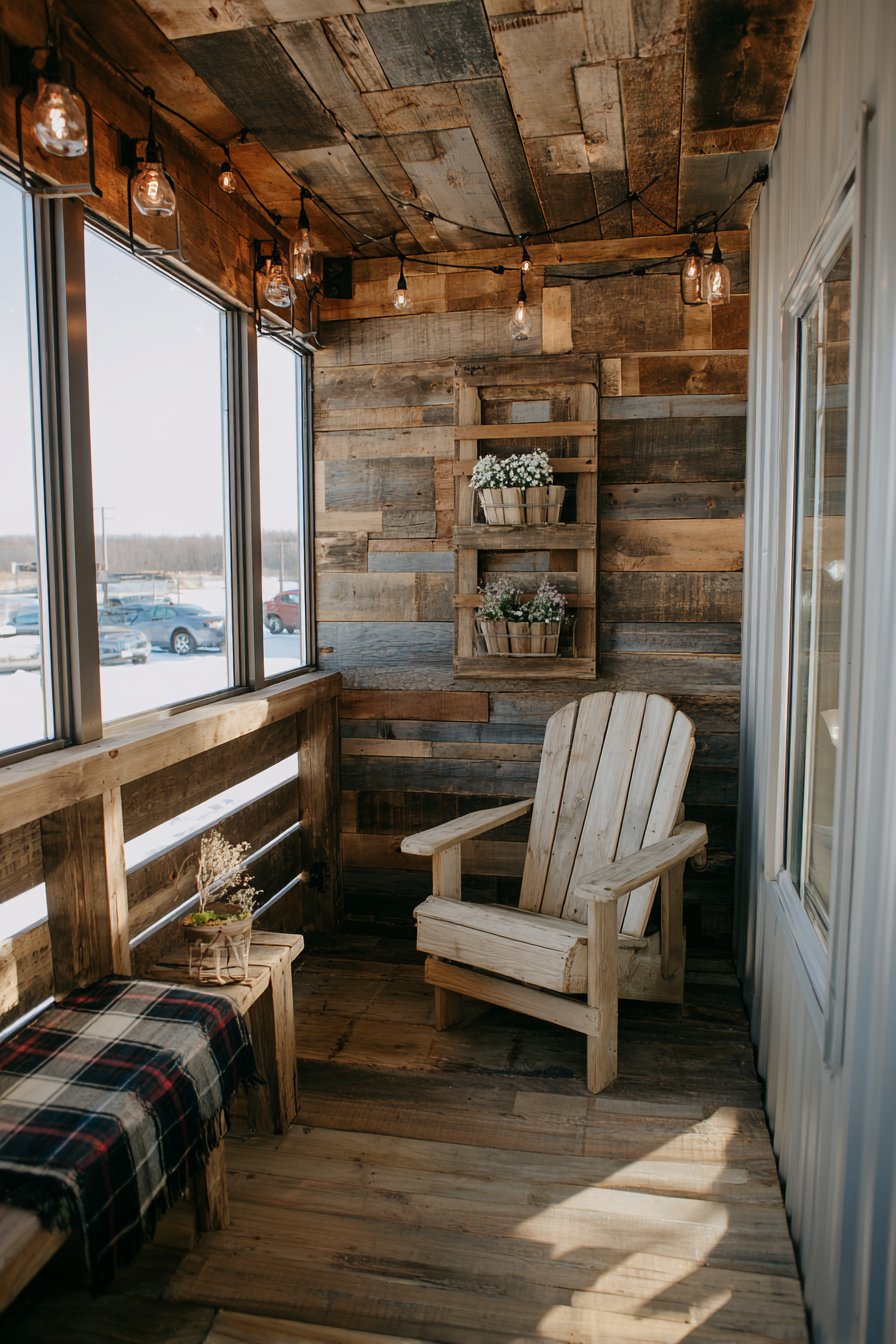
The weathered Adirondack chair, with a plaid blanket casually draped over one arm, invites relaxation and suggests comfort over formality. Mason jar planters hung from simple hooks contain wildflowers—black-eyed Susans, coneflowers, daisies—whose casual, meadow-like appearance perfectly suits the rustic aesthetic. Lantern-style string lights create warm, inviting glow as evening descends, their vintage appearance referencing farmhouse life before electricity.
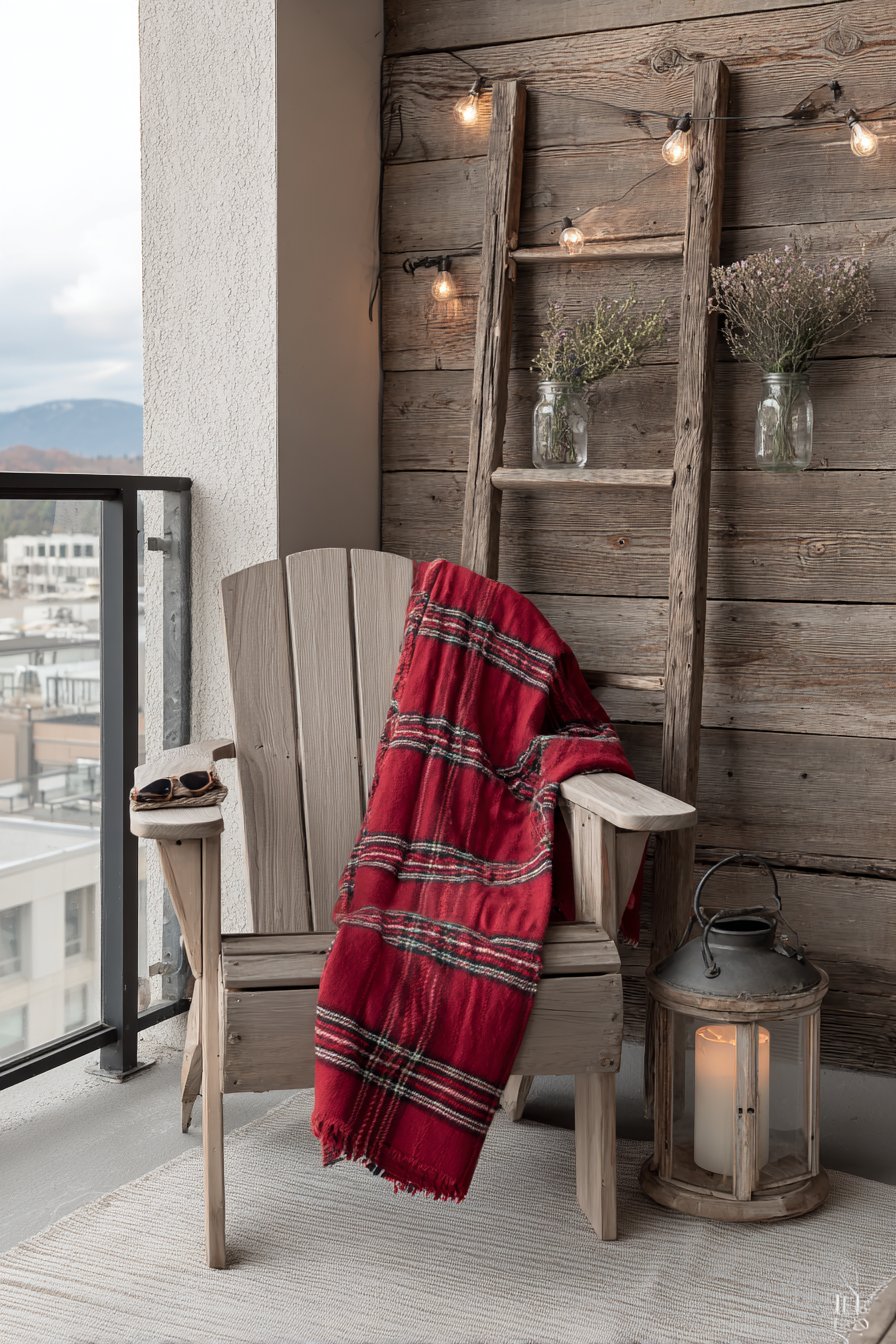
Natural afternoon light captured with editorial photography style emphasizes the authentic patina and organic textures of salvaged materials, celebrating the environmental and aesthetic benefits of choosing reclaimed wood over new resources. Every element in this space honors the past while creating a functional, beautiful present.

Key Design Tips:
- Source reclaimed wood from reputable salvage yards that verify origin
- Clean and seal reclaimed wood to prevent splinters while maintaining character
- Use ladder planters at angle against wall, secured at top for stability
- Choose Adirondack chairs in cedar or teak that weather beautifully
- Plant wildflower varieties native to your region for best performance
- Add vintage or reproduction lanterns for authentic rustic lighting
- Include textiles (plaid blankets, woven throws) for warmth and comfort
- Embrace imperfection and asymmetry as part of rustic aesthetic
- Apply clear weather sealant to preserve wood without altering appearance
20. Succulent Collector’s Display Garden
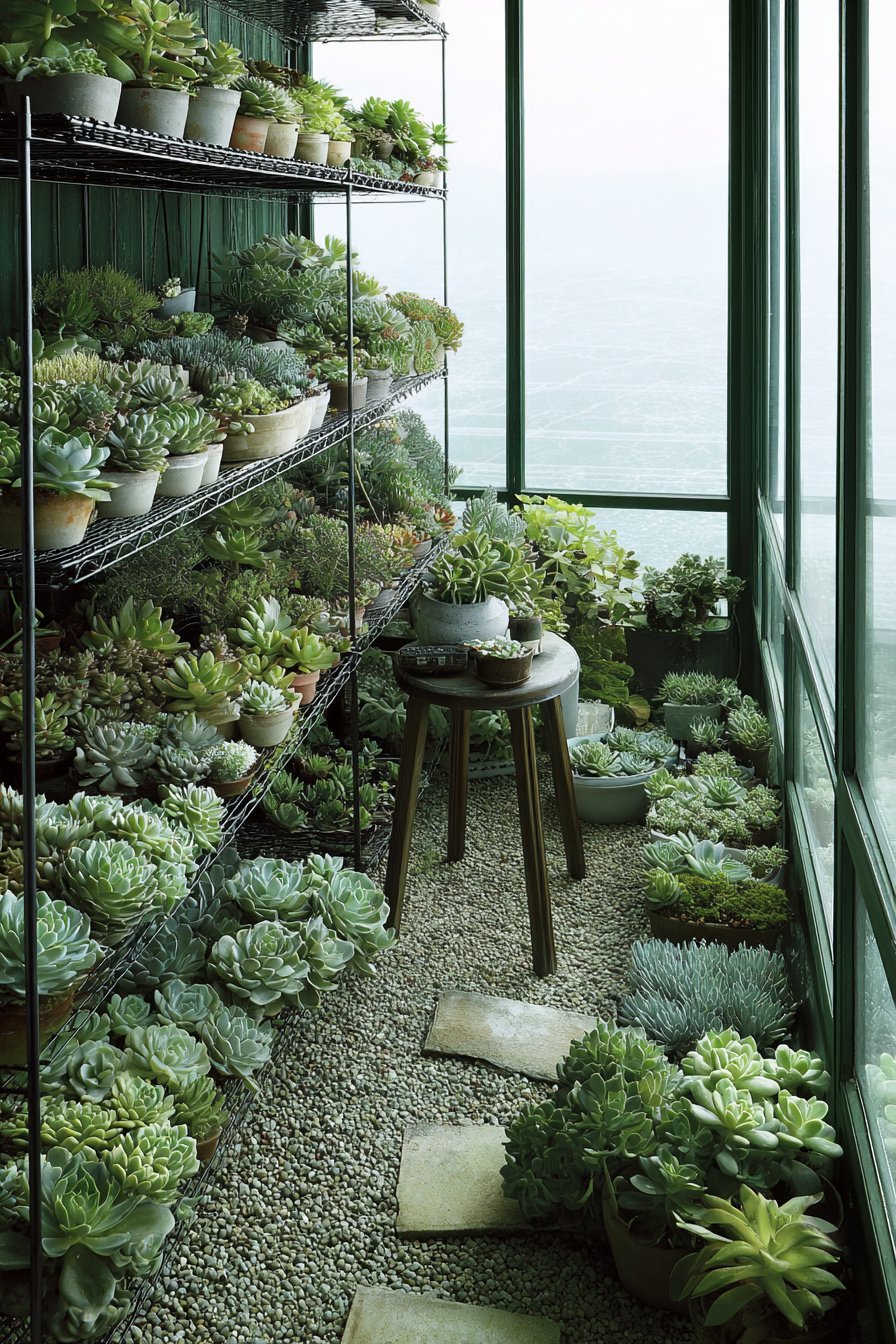
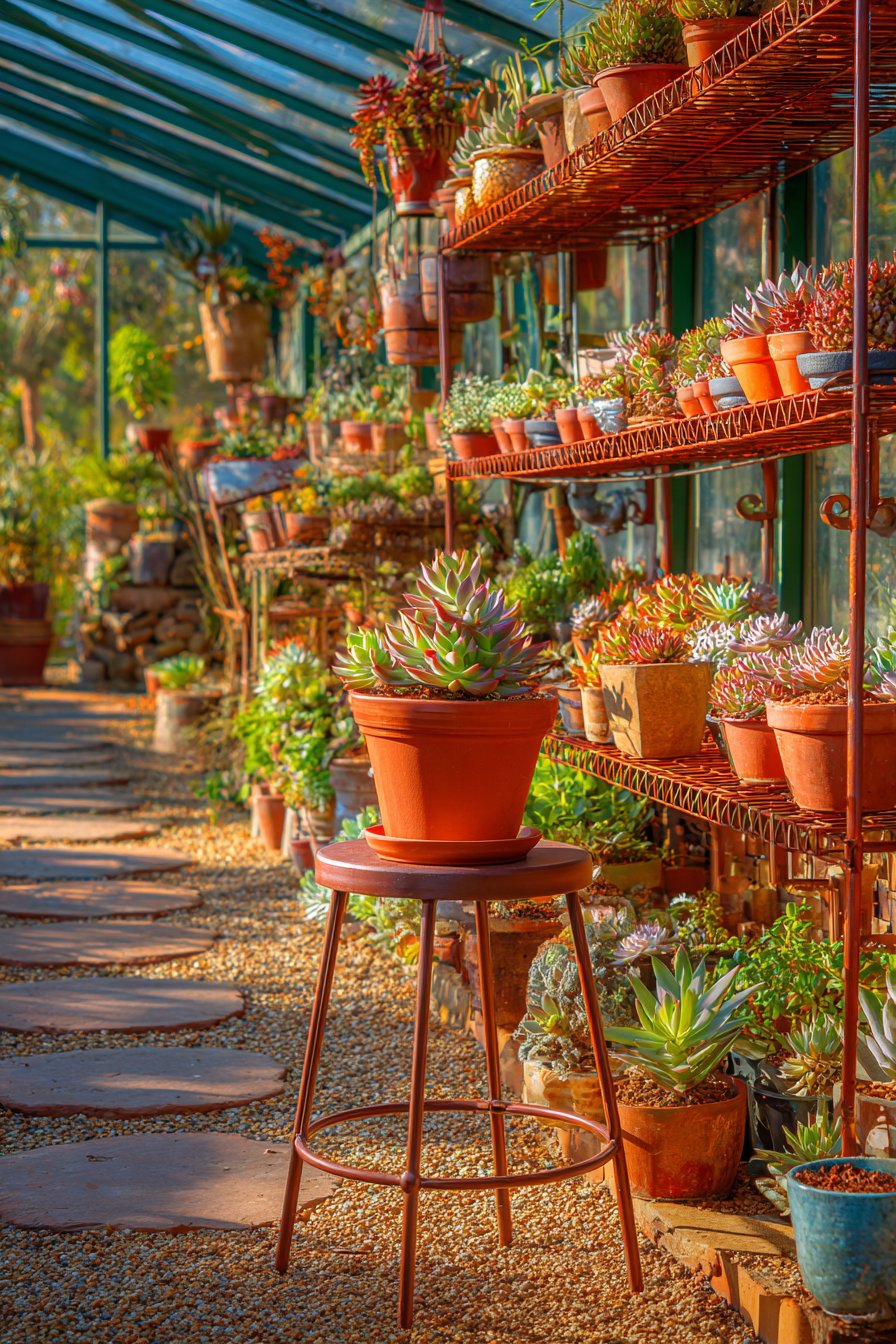
For plant enthusiasts with limited space, transforming a mini balcony into a succulent paradise offers the opportunity to create an impressive collection while minimizing maintenance demands. A tiered wire shelving unit displays an extensive collection of varied succulent species in terracotta pots, each plant chosen for its unique form, color, or texture. From the geometric rosettes of echeveria to the trailing strings of pearls, from the spiky agaves to the plump, rounded sedums, this collection demonstrates the remarkable diversity within the succulent family.
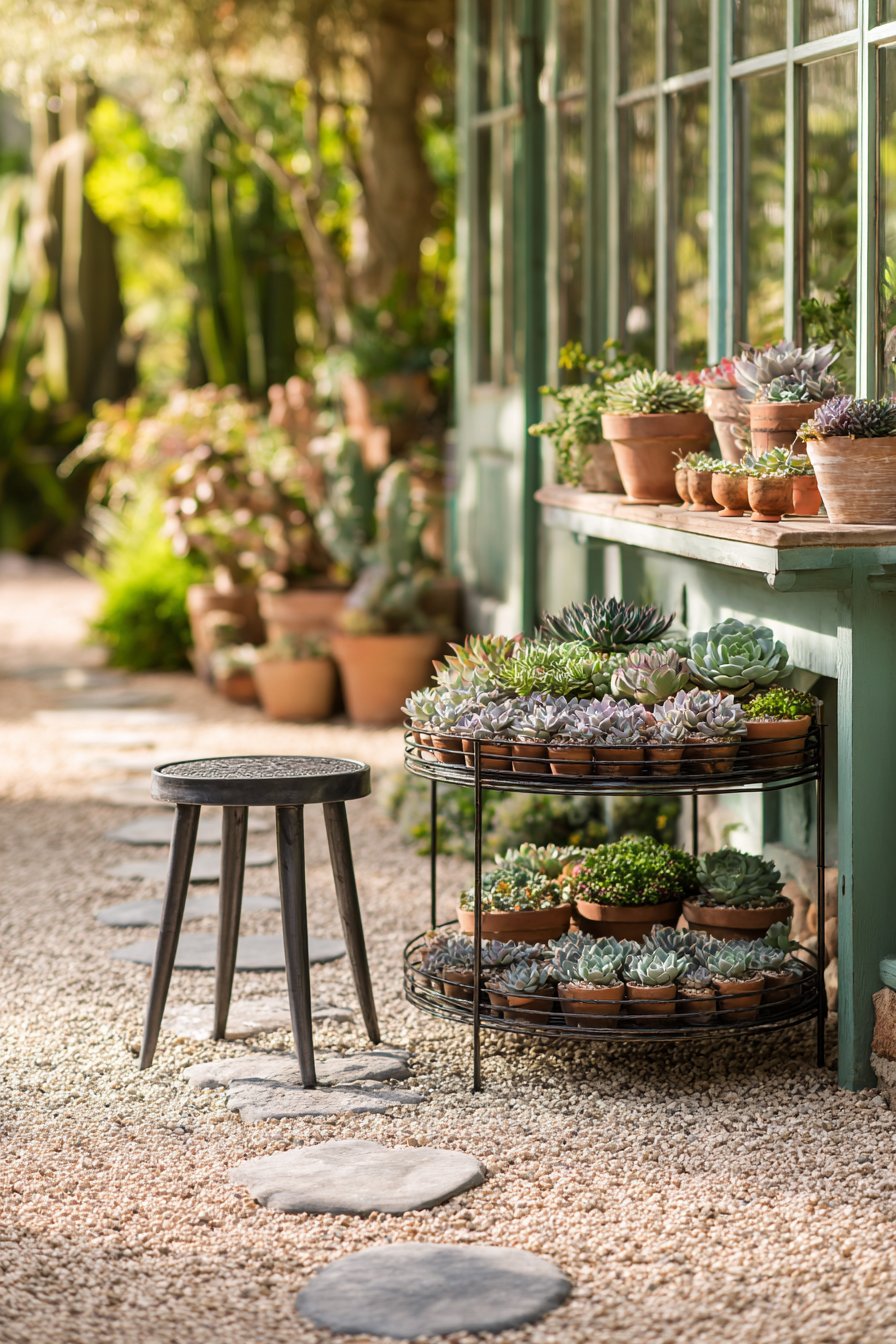
The beauty of this mini balcony idea lies in its focus—rather than trying to accommodate many different plant types with varying care requirements, the space commits entirely to succulents, creating a cohesive botanical display. The terracotta pots, while traditional, serve essential function beyond aesthetics—their porous nature allows excess moisture to evaporate, preventing the root rot to which succulents are susceptible.
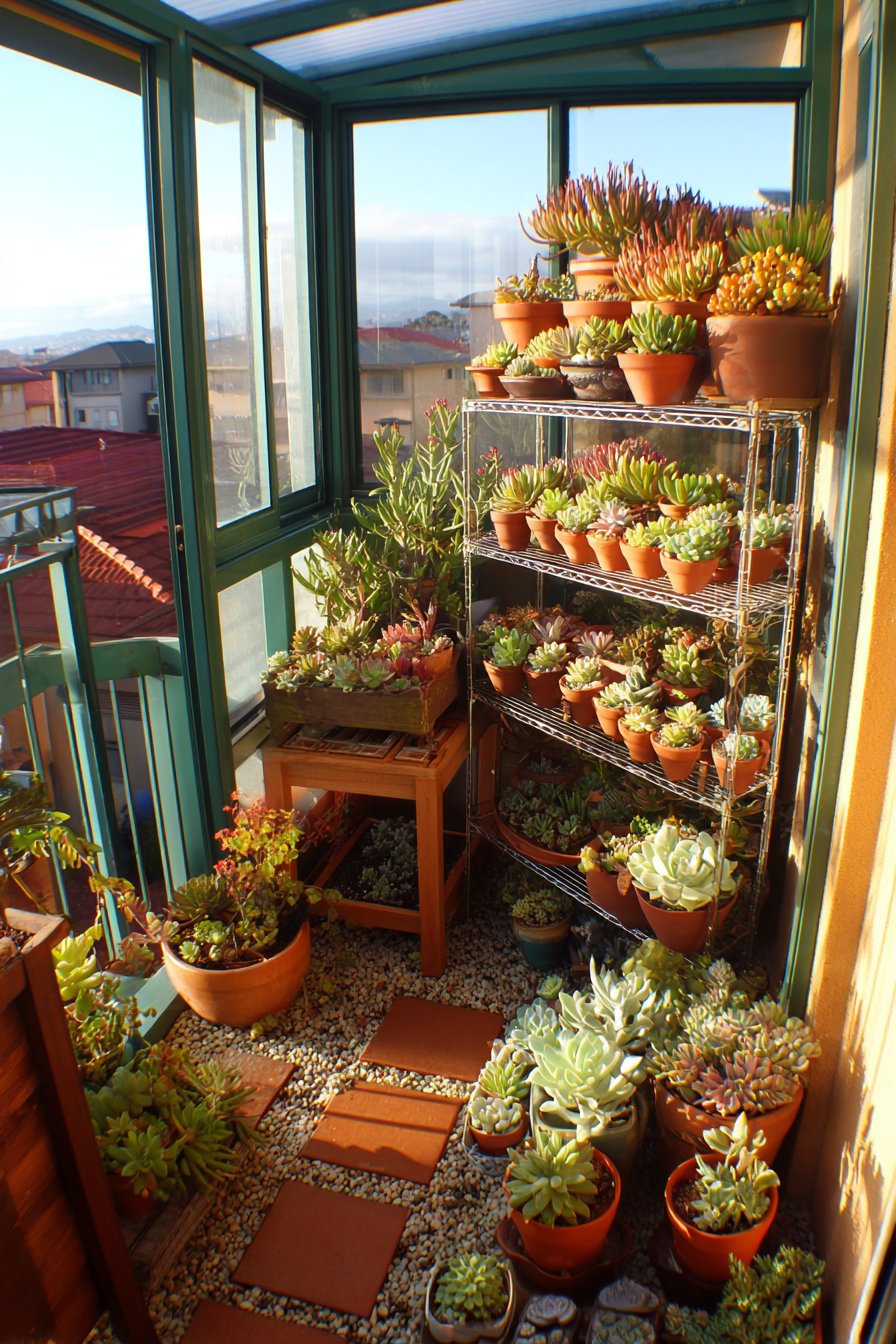
A small metal stool serves dual purpose as occasional seating and plant display platform, its industrial design complementing the minimalist aesthetic of the succulent collection. Gravel ground cover with stepping stones creates a desert-like environment that both suits the plants’ native habitats and provides excellent drainage. If climate allows, greenhouse-style glass panels protect the collection from harsh weather while creating a conservatory atmosphere. Bright natural lighting captured with botanical photography approach showcases the diverse textures, colors, and forms of the drought-tolerant plant collection, from blue-gray to purple to bright green specimens.
Key Design Tips:
- Choose wire or slatted shelving to ensure air circulation around plants
- Use terracotta pots exclusively for consistent appearance and function
- Create proper drainage layer of gravel or stones beneath pots
- Group succulents by water and light requirements for easier care
- Label plants with species names for educational and organizational purposes
- Install greenhouse panels only in climates with harsh winters or excessive rain
- Add grow lights if balcony doesn’t receive adequate direct sunlight
- Rotate plants periodically to ensure even light exposure and growth
- Include propagation station for growing new plants from leaves and cuttings
21. Luxury Resort-Style Urban Oasis
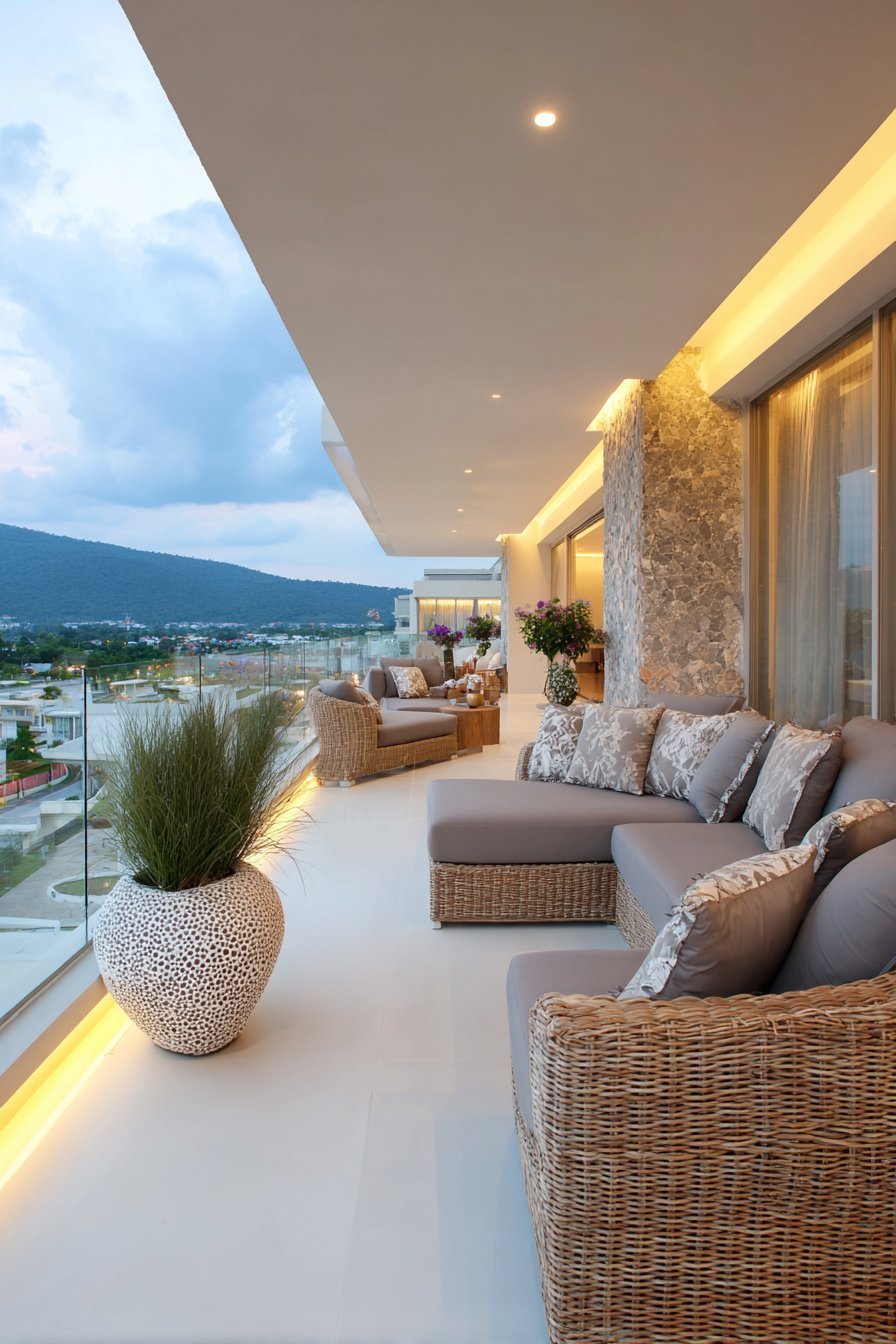
Bringing five-star resort luxury to your private space, this high-end approach to mini balcony ideas spares no expense in creating an outdoor retreat that rivals the finest hotel terraces. Picture premium teak furniture with plush all-weather cushions in sophisticated taupe tones, the kind of seating that encourages hours of lounging with cocktails and good company. The teak, while requiring some maintenance, develops a beautiful silver patina over time that enhances its luxury appearance.
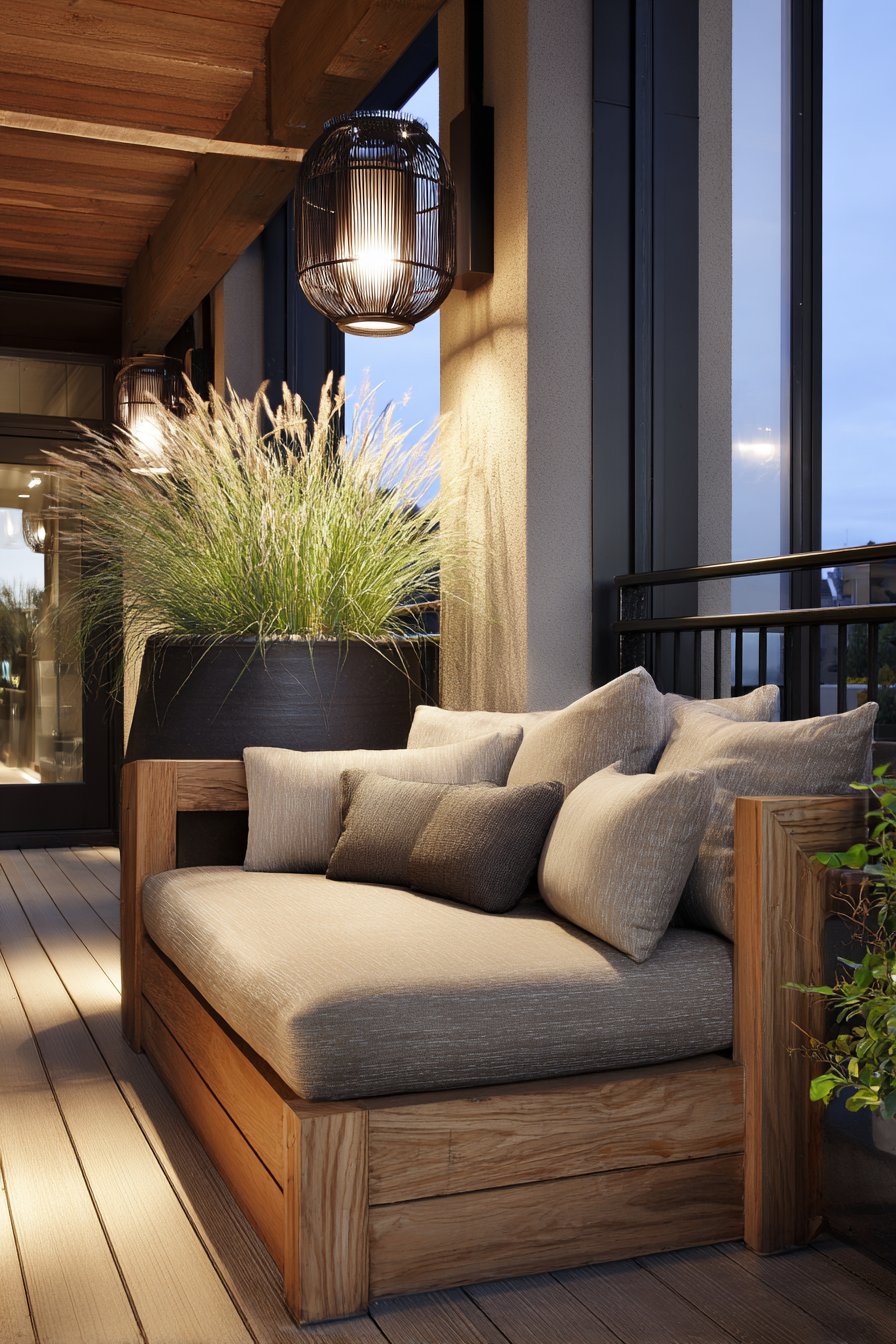
Built-in LED lighting integrated into the flooring creates a dramatic evening ambiance, with subtle illumination that defines pathways and highlights architectural features without overwhelming the space. This professional-grade lighting system transforms the balcony after dark, making it equally appealing for sunset cocktails as for morning coffee.
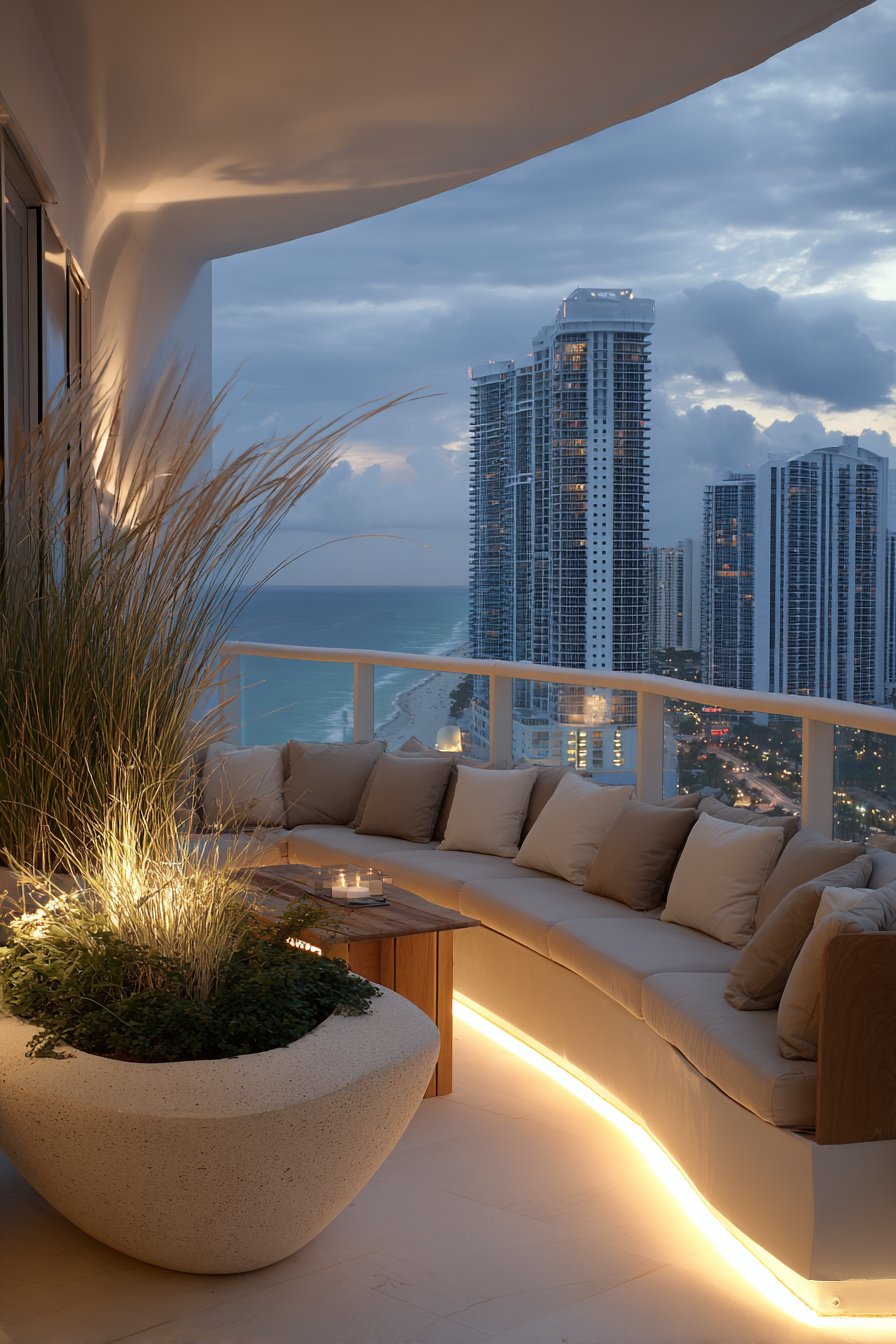
The focal point of this luxury space is a large sculptural planter containing ornamental grass—perhaps maiden grass or feather reed grass—whose graceful movement in the breeze adds kinetic beauty and softness to the contemporary design. A frameless glass railing maintains unobstructed views of the cityscape or natural landscape beyond, this transparent barrier crucial to creating the open, expansive feeling that luxury spaces demand.
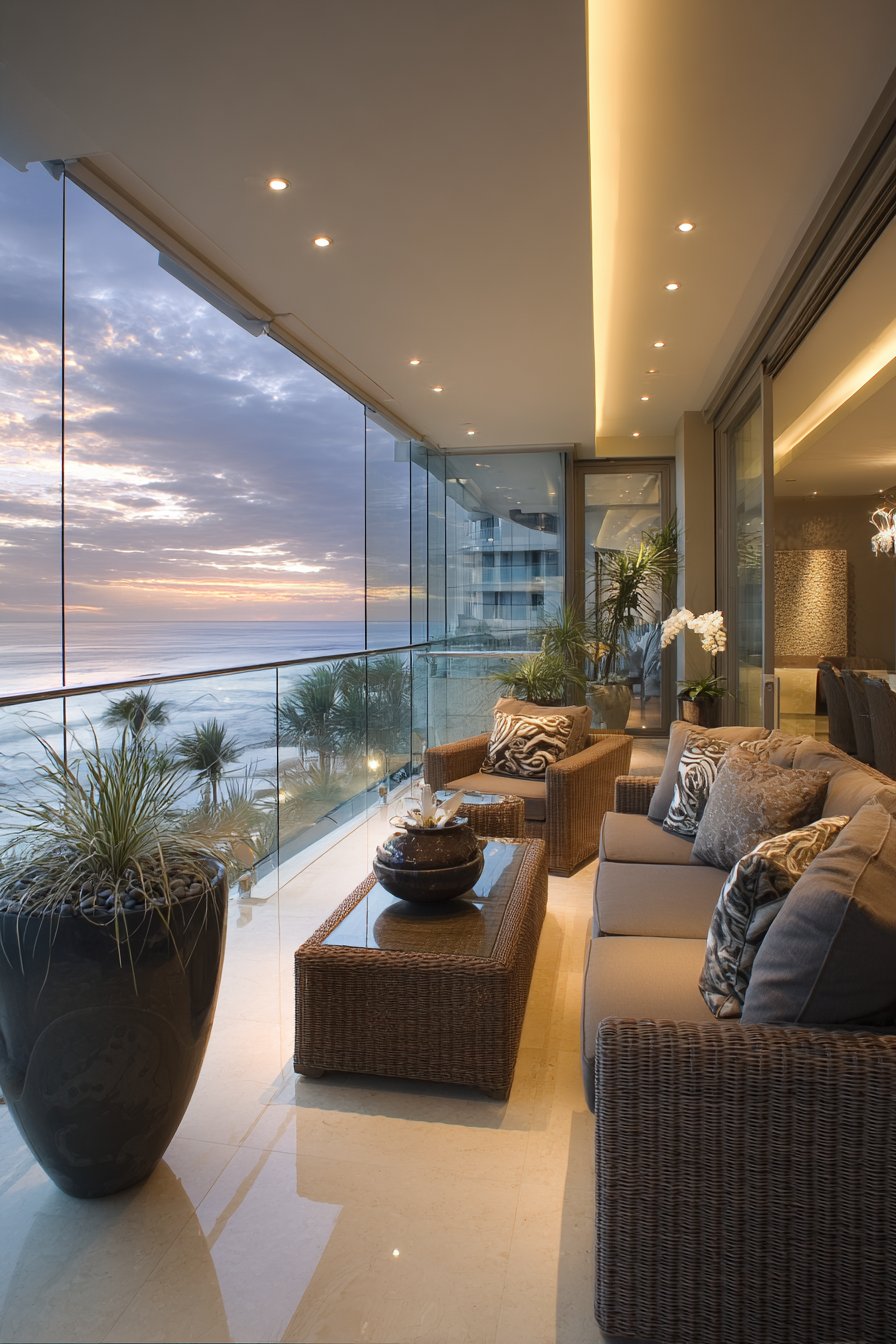
Professional architectural photography with dramatic evening lighting captures the upscale resort-style aesthetic and premium materials, emphasizing how thoughtful design and quality furnishings can transform even a compact balcony into a space worthy of design magazine features. The overall impression is of a space where every detail has been considered, every material carefully selected, every element contributing to an atmosphere of refined comfort and understated elegance.
Key Design Tips:
- Invest in premium-grade teak furniture from sustainable sources
- Choose high-density foam cushions with quick-dry capabilities
- Install professional-grade LED lighting with dimming and color options
- Select frameless glass railings for maximum view preservation
- Use large-scale sculptural plants rather than multiple small specimens
- Add outdoor heating elements for year-round use in cooler climates
- Include weatherproof outdoor speakers for ambient music
- Maintain pristine cleanliness and organization befitting luxury aesthetic
- Consider professional maintenance service for plants and furniture
22. Family-Friendly Outdoor Play Area
Recognizing that mini balconies can serve young families’ needs, this practical and safety-focused approach creates an outdoor play space that gives children fresh air and activity while remaining within parents’ supervision. Durable rubber flooring in bright primary colors—red, blue, yellow—provides a cushioned, easy-to-clean surface that protects against falls while adding cheerful color that appeals to young children.
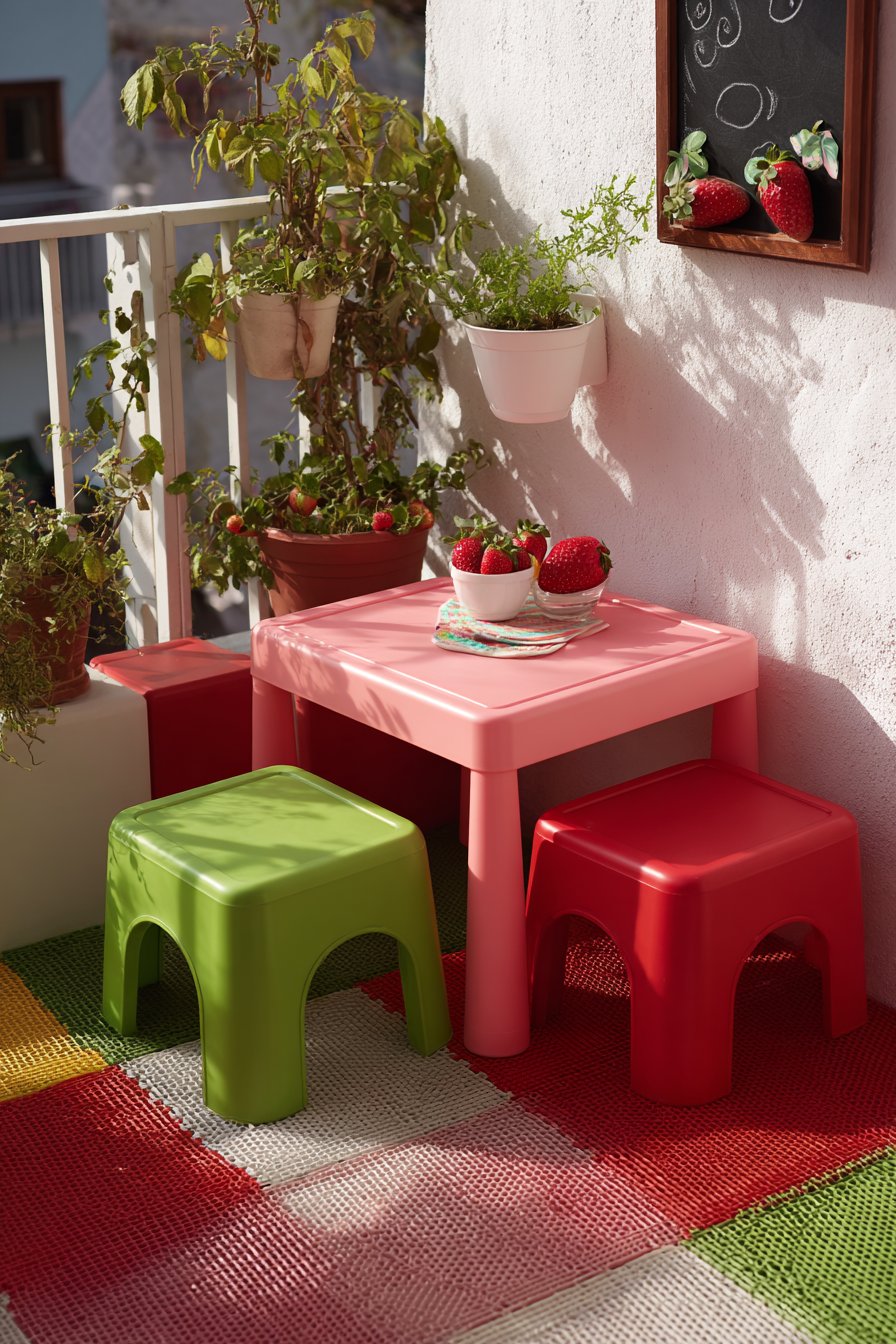
A small picnic table with attached benches, constructed from weather-resistant plastic in scaled-down proportions, provides a surface for outdoor snacks, craft projects, or tea parties with stuffed animals. This permanent furniture is appropriately sized for preschool and early elementary-aged children, encouraging independent use while remaining safe and stable.
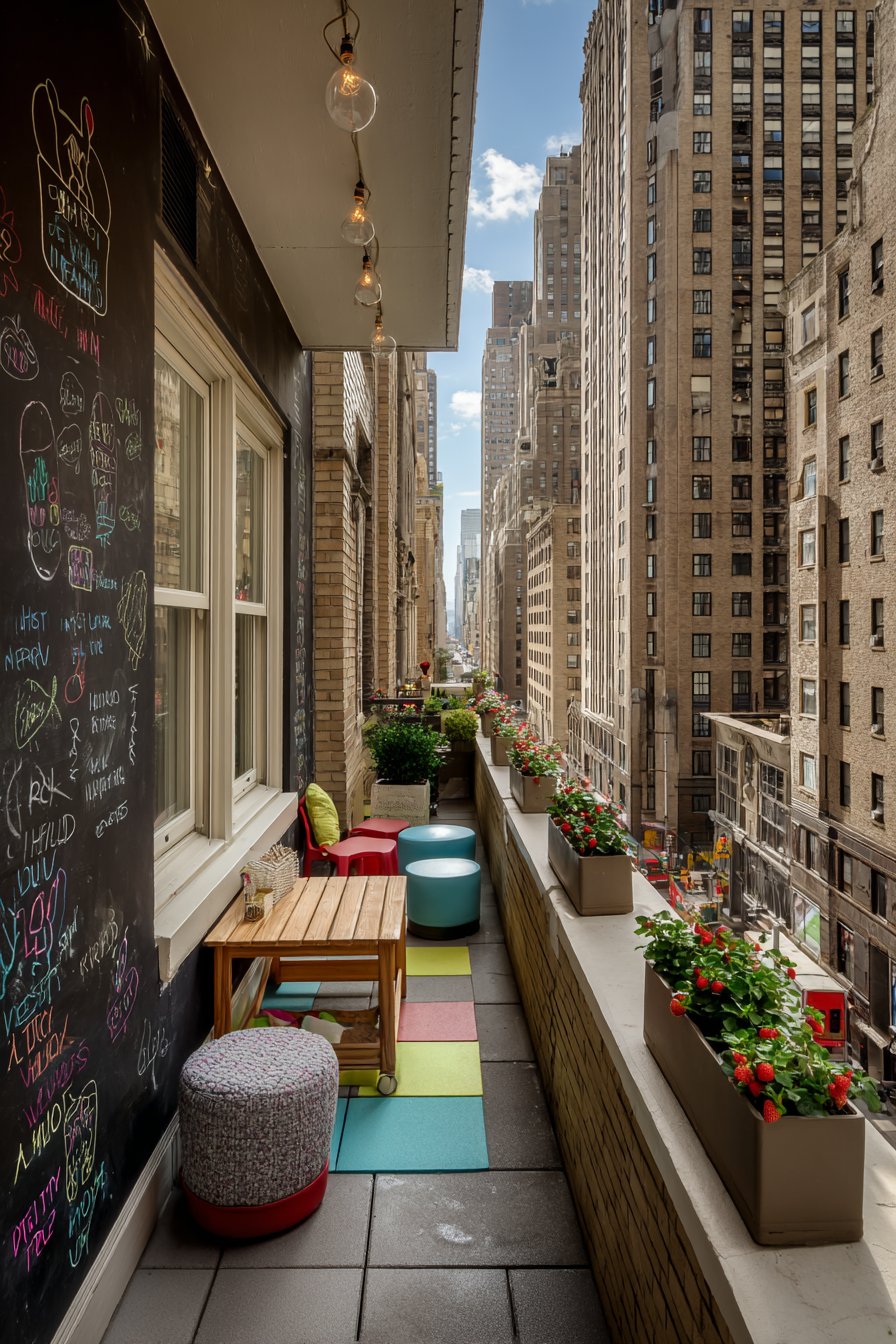
A chalkboard wall panel mounted at child height invites creative expression without the mess of indoor art projects. This simple addition transforms the balcony into an outdoor art studio where children can draw, practice letters and numbers, or play games like tic-tac-toe. The easy-erase surface encourages experimentation and reduces parents’ stress about permanent marks or stains.
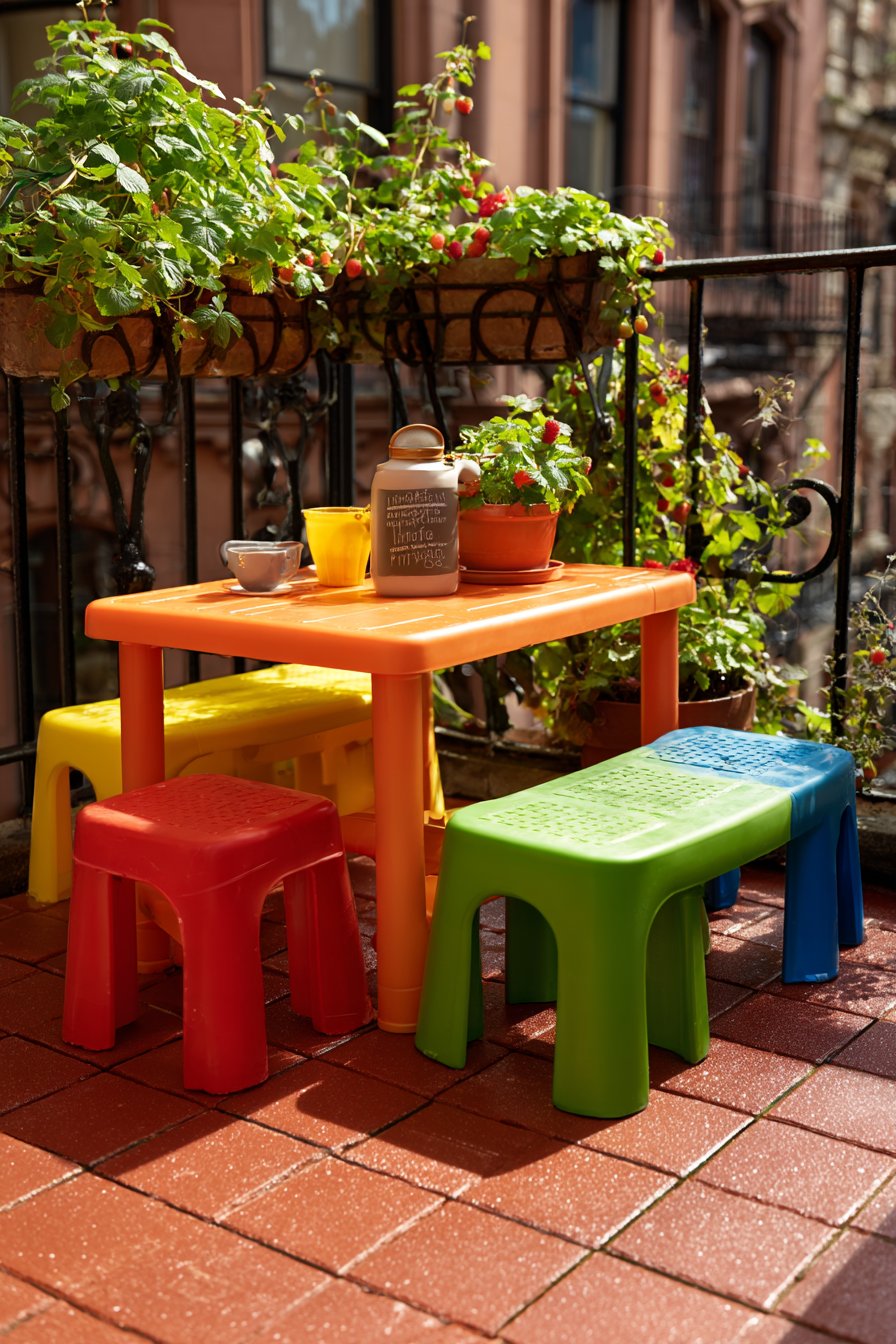
Storage ottoman for toys keeps outdoor playthings organized and protected from weather when not in use. Potted strawberry plants at child height provide an interactive gardening experience, teaching responsibility while offering the reward of sweet berries. Natural daylight photography emphasizes the practical family-friendly design with easy-to-clean surfaces and safe rounded furniture edges, recognizing that spaces designed for children must balance appeal with safety and easy maintenance.
Key Design Tips:
- Install rubber flooring with sufficient thickness for fall protection
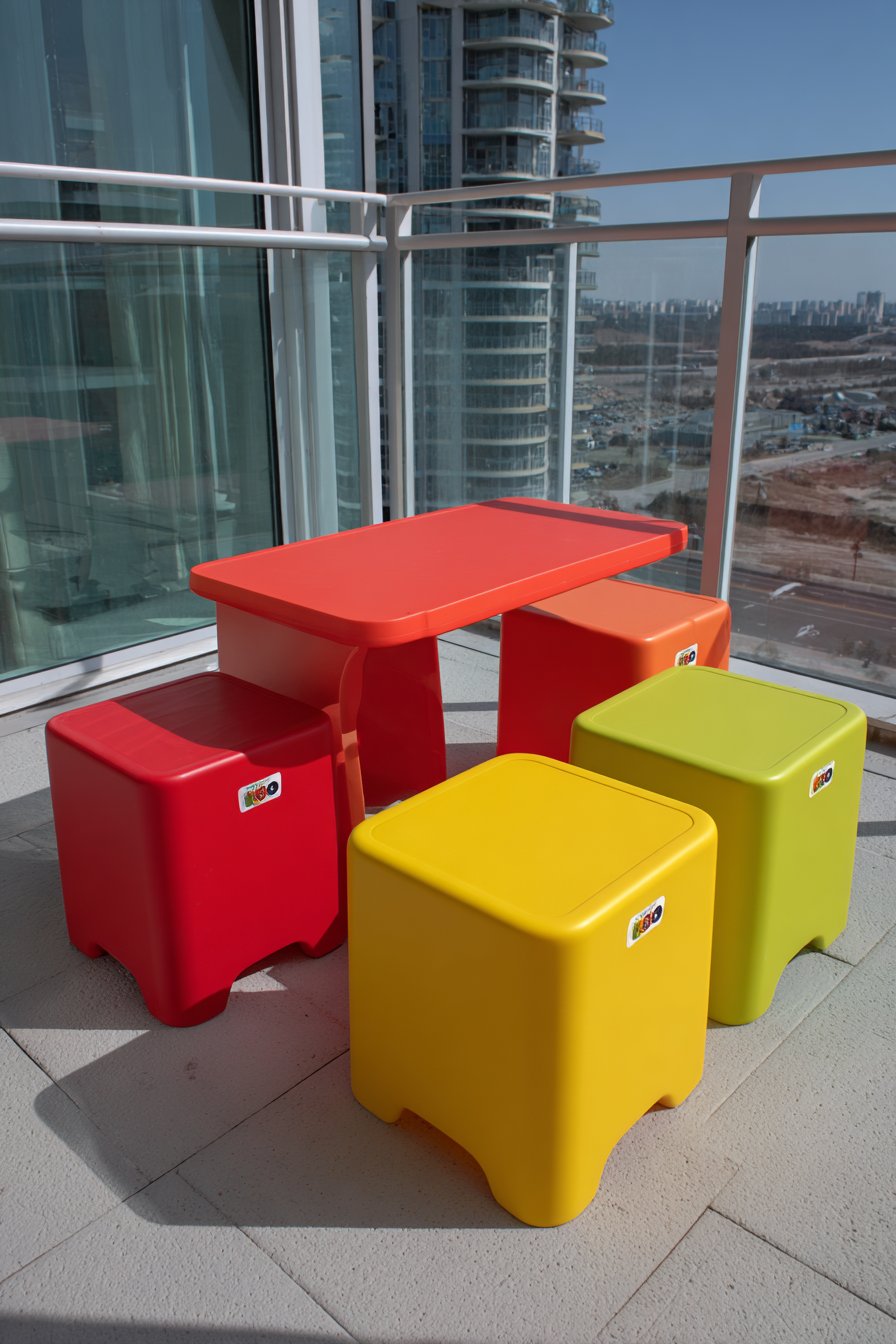
- Choose plastic furniture that’s weather-resistant and easy to clean
- Mount chalkboard panels securely with weather-resistant adhesive or brackets
- Select storage ottoman with waterproof liner to protect contents
- Plant easy-to-grow, child-safe varieties like strawberries or cherry tomatoes
- Add shade solution to protect children from excessive sun exposure
- Install childproof locks on balcony access points for safety
- Choose bright, primary colors that appeal to young children
- Avoid plants with thorns, toxic berries, or other hazards
- Maintain clear sightlines from indoor spaces for supervision
23. Eclectic Curated Collector’s Balcony
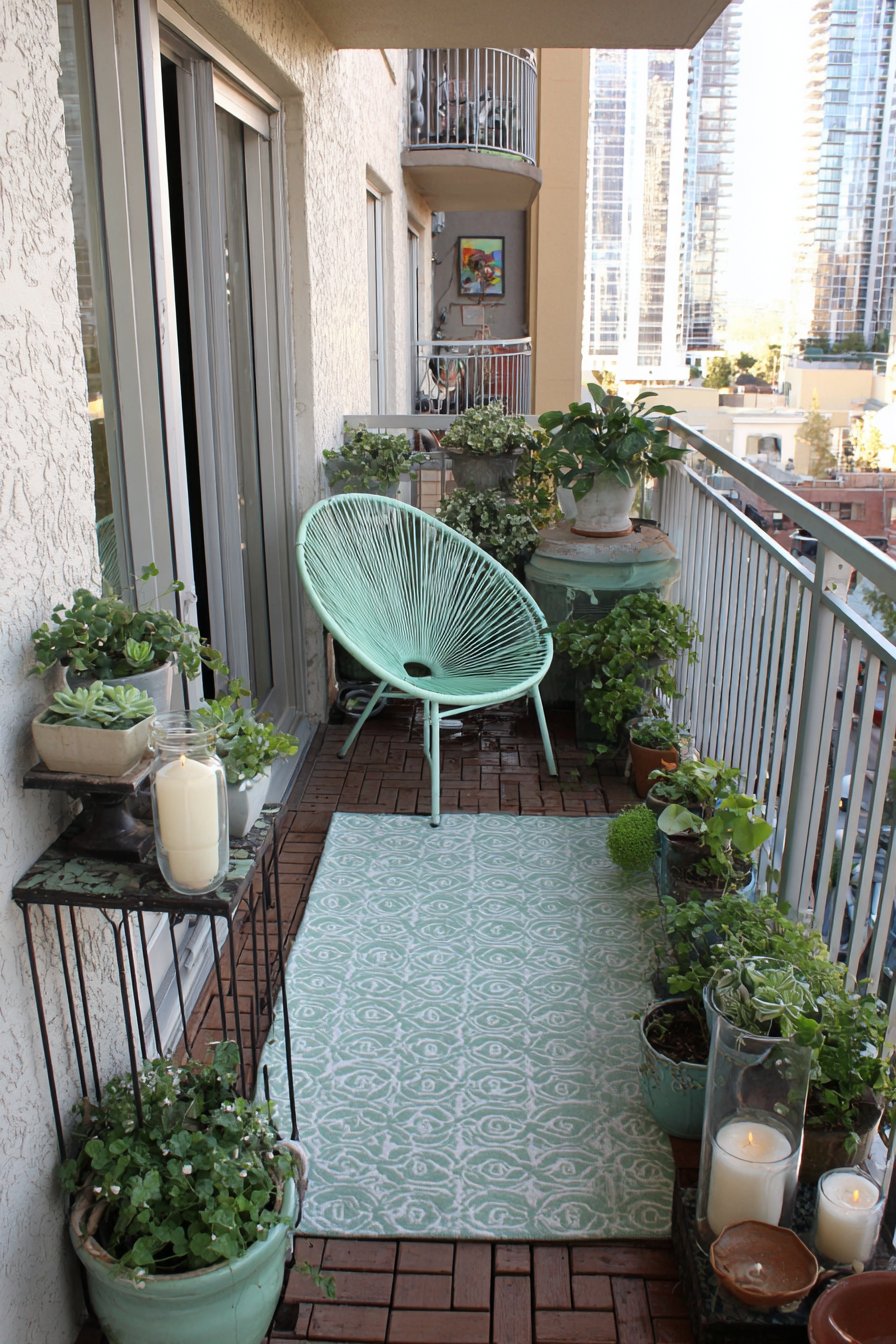
Celebrating personal style and the joy of collecting beautiful objects over time, an eclectic approach to mini balcony ideas creates spaces that feel genuinely unique and deeply personal. Imagine a mid-century modern wire chair painted in unexpected mint green, its iconic design recognizable but its unconventional color making it distinctly yours. This single piece sets the tone for a space that honors design history while refusing to be constrained by rigid rules about matching or cohesion.
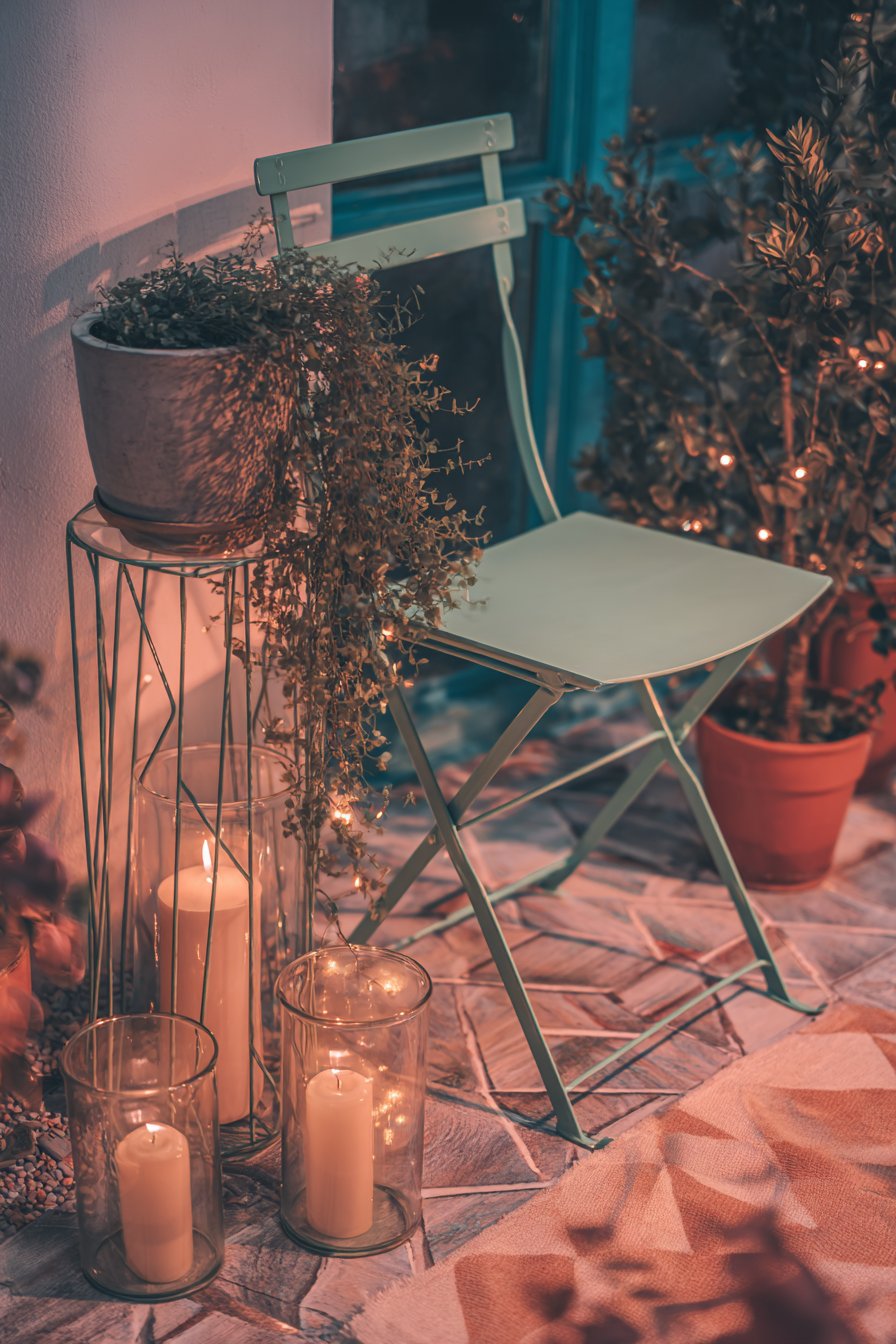
An industrial metal plant stand, perhaps salvaged from a factory or repurposed from another use, holds trailing plants whose organic forms contrast beautifully with the geometric metal structure. A contemporary geometric outdoor rug grounds the space while introducing pattern that somehow works with—rather than against—the vintage and industrial elements. This unexpected combination of styles, eras, and materials creates visual interest and conversation.
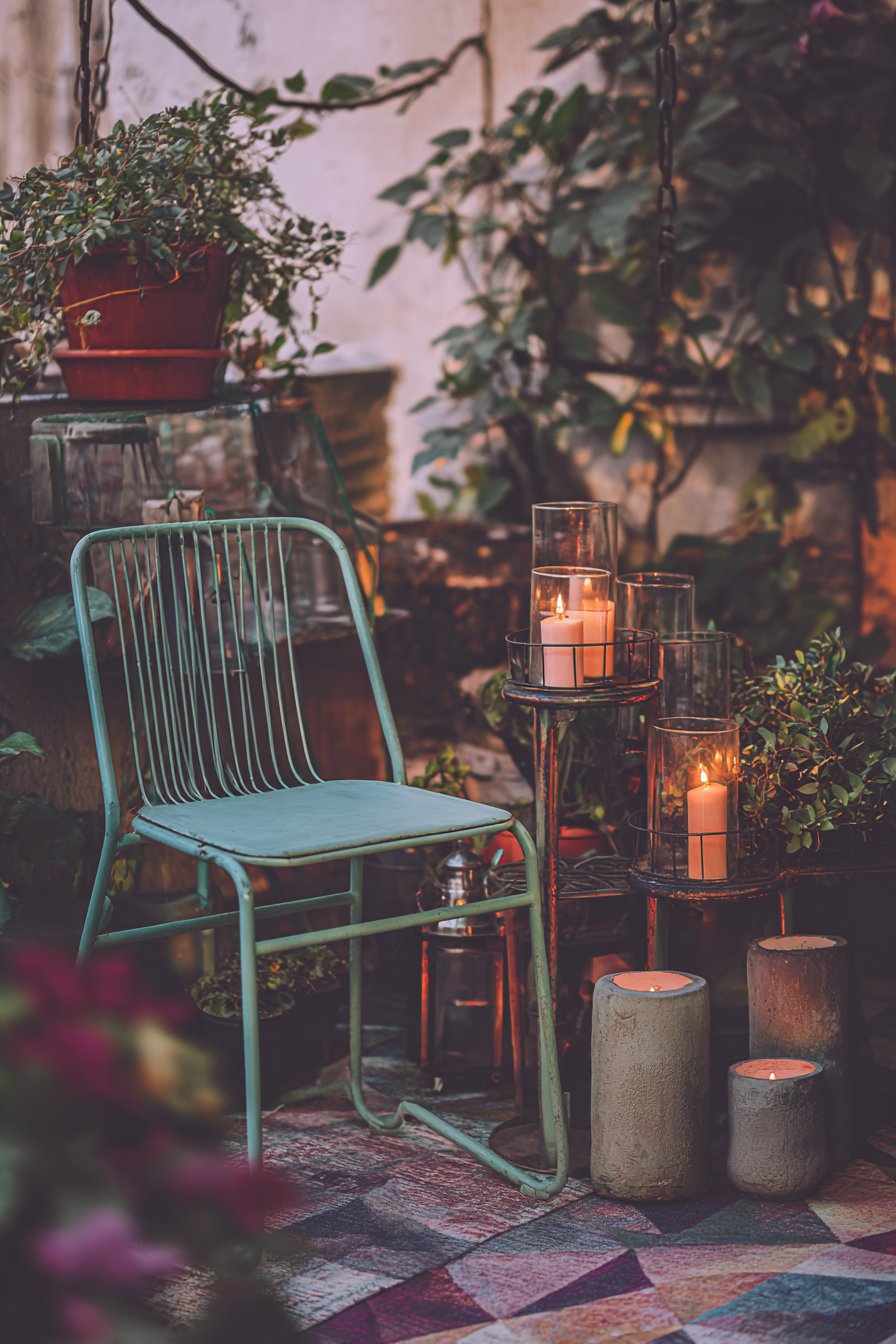
The plant collection itself reflects eclectic sensibilities, with planter styles ranging from minimalist white ceramic to rough concrete to vintage terracotta. Rather than appearing chaotic, this variety suggests a collection built thoughtfully over time, each piece selected for its individual merit. Clustered pillar candles in glass hurricanes of varying heights provide ambient lighting while their simple, classic form allows them to work within the eclectic mix.
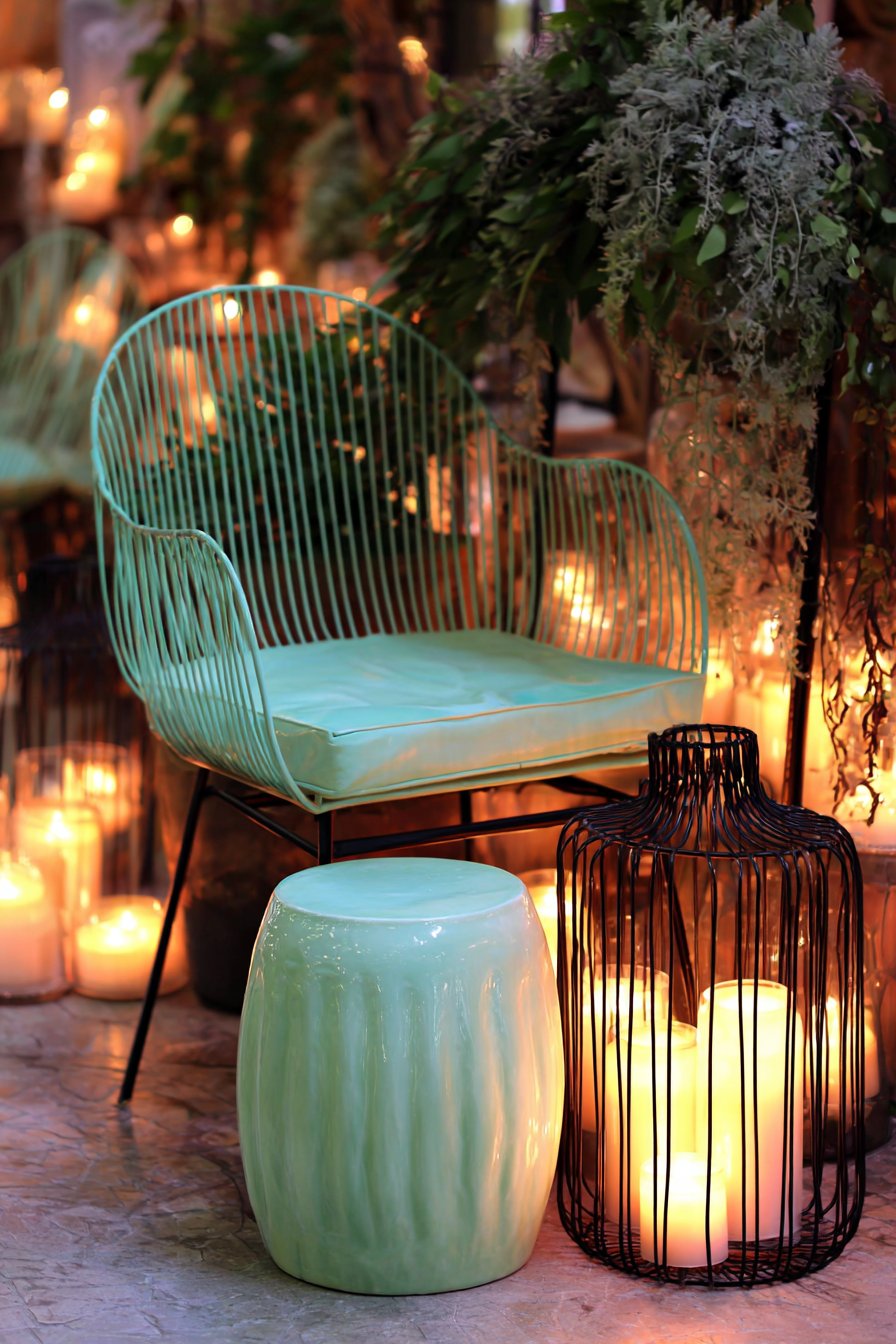
Warm sunset lighting captured with artistic photography style celebrates the curated, collected-over-time aesthetic and personal character of the compact space. Every element has a story—the chair found at a flea market, the plant stand inherited from a grandparent, the rug purchased during travels abroad. This is a space that could only belong to one person, making it perhaps the most successful expression of personal style among all mini balcony ideas.
Key Design Tips:
- Start with one statement piece and build around it gradually
- Mix eras (mid-century, industrial, contemporary) rather than matching
- Vary scales—combine large statement pieces with smaller accents
- Use color strategically to create unity among disparate elements
- Collect slowly, choosing only pieces you genuinely love
- Allow negative space so individual pieces can be appreciated
- Include items with personal history or meaningful provenance
- Balance rough textures (concrete, metal) with soft ones (fabric, plants)
- Trust your instincts over rigid design rules
- Edit ruthlessly—remove pieces that no longer serve the overall composition
Why These Mini Balcony Ideas Work: A Comprehensive Analysis
The twenty-three mini balcony ideas presented in this article succeed because they address fundamental challenges inherent to small outdoor spaces while celebrating diverse aesthetic preferences and lifestyle needs. Whether you’re drawn to Scandinavian minimalism, bohemian abundance, industrial edge, or romantic cottage charm, each design demonstrates core principles that make compact balconies both beautiful and functional.
Space Optimization Through Vertical Thinking: The most successful small balcony designs consistently utilize vertical space through hanging plants, wall-mounted furniture, tiered shelving, and climbing vines. When floor space is limited, looking upward multiplies usable area without making the space feel cramped. The vertical garden systems, suspended egg chairs, and wall-mounted drop-leaf tables exemplify this crucial strategy.
Multi-Functional Elements: In compact spaces, every element must work harder. Storage benches that provide seating, folding tables that disappear when not needed, and planters that double as privacy screens demonstrate the importance of choosing furniture and features that serve multiple purposes. The modular furniture systems and transformable workspaces particularly excel at this adaptability.
Material Authenticity and Quality: Whether rustic reclaimed wood, premium teak, weather-resistant wicker, or powder-coated steel, the materials used in these balcony designs are authentic to their style and suited to outdoor exposure. This authenticity creates spaces that age gracefully rather than deteriorating, making them sustainable choices both environmentally and aesthetically.
Lighting Layering: Nearly every successful design incorporates multiple lighting sources—natural daylight, ambient string lights, task lighting, and candlelight. This layering allows the balcony to function effectively throughout the day and into evening, extending its usefulness beyond a single time period. Solar-powered options and LED strips provide energy-efficient illumination without complicated electrical work.
Personal Expression Within Structure: While each design adheres to a particular style aesthetic, they all allow for personal touches and modifications. The eclectic collector’s balcony explicitly celebrates this personalization, but even the minimalist and Scandinavian designs include room for individual choice in plant selection, cushion patterns, or decorative accents. This balance between style guidelines and personal freedom makes these concepts adaptable rather than prescriptive.
Climate-Appropriate Choices: The Mediterranean terrace with drought-tolerant plants, the tropical paradise with humidity-loving species, and the succulent garden with desert-adapted varieties all demonstrate the importance of choosing plants and materials suited to your specific climate. This practical consideration ensures long-term success rather than frustration with failing plants or deteriorating furniture.
Psychological Impact: Beyond mere aesthetics, these mini balcony ideas create spaces that support mental health and wellbeing. The zen meditation space promotes mindfulness, the outdoor office provides workspace with natural light and fresh air, the reading nook offers peaceful retreat from digital demands. In urban environments where access to nature is limited, these compact outdoor spaces become essential sanctuaries.
Investment Value: While a luxury resort-style balcony represents significant investment, even budget-conscious designs like the farmhouse porch or rustic reclaimed wood balcony increase property appeal and potentially market value. More importantly, they increase quality of daily life—a return on investment measured in morning coffee savored, books read in comfortable outdoor seating, and stress reduced by time spent in personal green space.
Rental-Friendly Modifications: Many of these concepts work for renters through non-permanent installations—freestanding furniture rather than built-ins, removable adhesive hooks rather than drilling, container gardens rather than permanent planters. The modular contemporary design and several others specifically accommodate those who cannot make permanent modifications but still want beautiful, functional outdoor space.
Seasonal Adaptability: The most successful designs allow for seasonal changes through easily swapped cushions, temporary shade solutions, and container gardens that can be brought indoors during harsh weather. This flexibility means the balcony remains useful year-round rather than abandoned during certain seasons.
The keyword “mini balcony ideas” encompasses far more than simple decoration—it represents a fundamental question about how we inhabit small spaces meaningfully. These twenty-three approaches demonstrate that size limitations need not constrain creativity, comfort, or beauty. From practical storage solutions to artistic expressions, from family-friendly play areas to sophisticated entertaining spaces, compact balconies can serve countless purposes when designed thoughtfully.
The best balcony designs balance aspiration with achievability—they inspire without intimidating, suggesting possibilities that real people with real budgets and constraints can actually implement. They respect the architecture and limitations of existing spaces while transforming them into something special. Most importantly, they recognize that outdoor space, however small, is precious and worth cultivating with care and intention.
Conclusion
The journey through these twenty-three mini balcony ideas reveals a fundamental truth about design: constraints breed creativity. When space is limited, every choice becomes intentional, every element must justify its presence, and the result is often more cohesive and thoughtful than spaces where unlimited room allows for careless accumulation. Your mini balcony, whether it measures four feet wide or eight, whether it faces morning sun or afternoon shade, holds potential waiting to be unlocked through thoughtful design.
The most important takeaway from this collection is that there is no single correct approach to balcony design. Your perfect outdoor space might be the minimalist retreat with a single chair and architectural succulent, or it might be the layered bohemian paradise overflowing with plants and textiles. It might prioritize function as an outdoor office or embrace pure leisure as a reading nook. The diversity of these designs celebrates the diversity of human needs, preferences, and living situations.
As you consider transforming your own mini balcony, remember that the process needn’t happen overnight or all at once. Start with the foundational elements—quality seating, proper lighting, perhaps a signature plant or two. Build gradually, adding elements as budget allows and as you discover how you actually use the space. Some of the most successful balconies evolve organically over seasons and years, each addition reflecting new interests, changing needs, or simply beautiful objects discovered and unable to resist.
Don’t be intimidated by professional photography or seemingly perfect designs. Real lived spaces accumulate wear, collect fallen leaves, show signs of weather and use. This patina of life is not flaw but feature—it’s the difference between a showroom and a home. Your balcony should serve you, not the other way around, so prioritize comfort and functionality alongside beauty.
Finally, remember that the best design decision you can make is simply to use your balcony regularly. A perfectly decorated space that sits empty is less successful than a simple setup that becomes part of your daily routine. Take your morning coffee outside, eat dinner al fresco when weather permits, bring your laptop to catch afternoon sun, or simply step out to feel the breeze on your face. The true purpose of any mini balcony, regardless of style, is to connect you with the outdoors, provide respite from indoor life, and remind you that even in urban environments, nature and fresh air are always just a few steps away.
Your mini balcony awaits transformation. Armed with these ideas, principles, and inspiration, you’re ready to create an outdoor space that reflects your style, serves your needs, and brings daily joy. Start small, think vertically, choose quality over quantity, and most importantly, design a space you’ll actually want to inhabit. The most beautiful balcony in the world is the one you use and love.
