
A home library represents more than just a storage solution for books—it’s a sanctuary for the mind, a retreat for contemplation, and a testament to the enduring power of the written word. In an age of digital distractions, dedicating physical space to books and reading creates an intentional environment that honors intellectual curiosity and personal growth. Whether you’re transforming a spare bedroom, converting an unused alcove, or designing a grand two-story reading room, a well-conceived home library can become the heart of your home, reflecting your personality while providing a functional space for learning, relaxation, and inspiration.
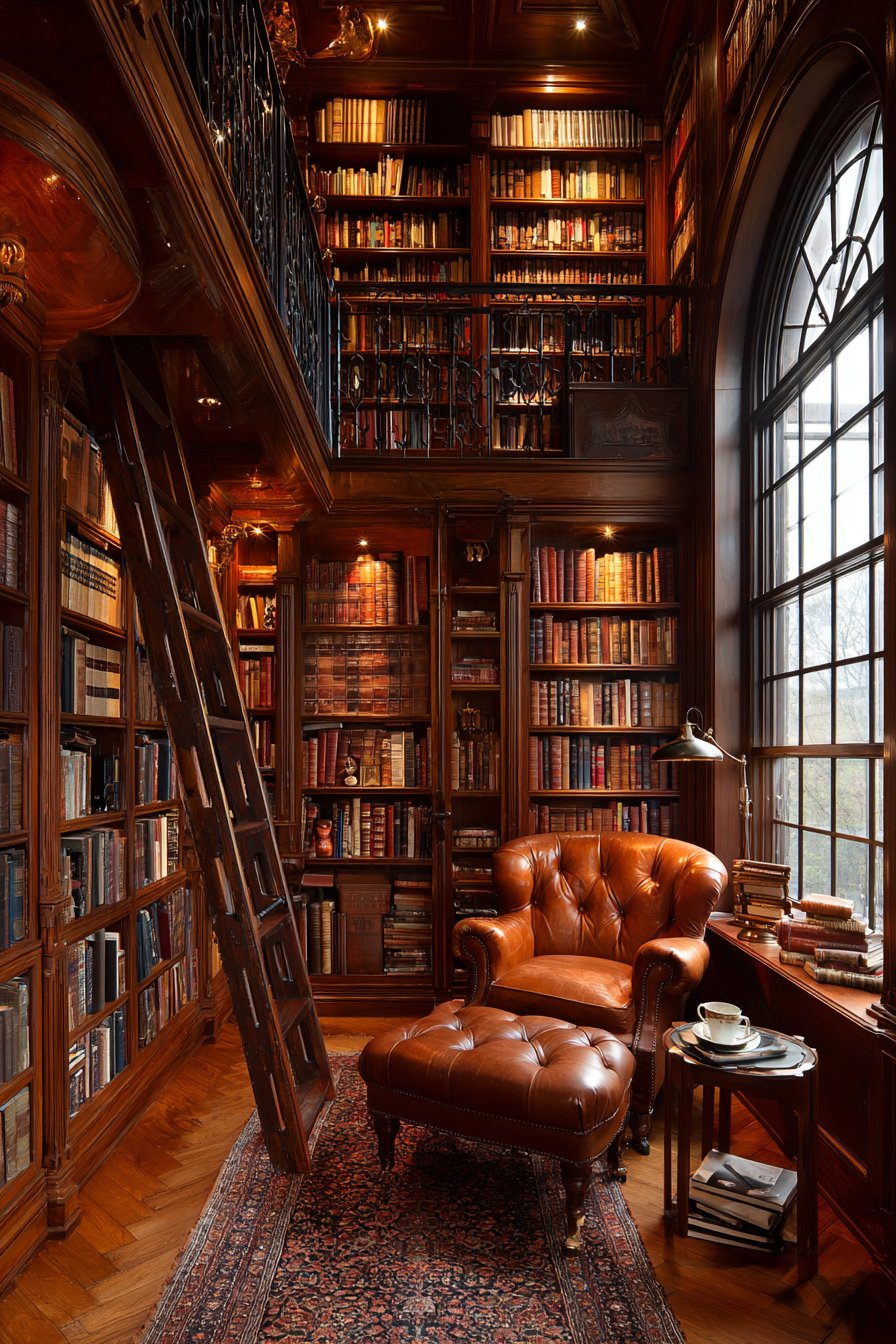
The beauty of designing a home library lies in its versatility. From traditional wood-paneled studies reminiscent of English manor houses to sleek, contemporary arrangements that celebrate minimalist aesthetics, there’s no single formula for creating the perfect literary space. The key is understanding how different design elements—shelving systems, lighting, seating arrangements, color palettes, and architectural features—work together to create an environment that suits your reading habits, collection size, and spatial constraints. A successful home library balances aesthetic appeal with practical functionality, ensuring that your books are not only beautifully displayed but also easily accessible and properly preserved.
Throughout this comprehensive guide, we’ll explore twenty-five distinct approaches to home library design, each offering unique solutions to common challenges while showcasing different styles, scales, and creative possibilities. From maximizing small spaces with innovative shelving solutions to creating dramatic double-height rooms with gallery-level access, these ideas demonstrate how thoughtful design can transform any space into a bibliophile’s paradise. Whether you’re working with architectural constraints, specific style preferences, or budget limitations, you’ll find inspiration and practical guidance to help you create a home library that serves as both a functional book repository and a beautiful expression of your love for literature.
1. Classic White Built-In Library with Rolling Ladder
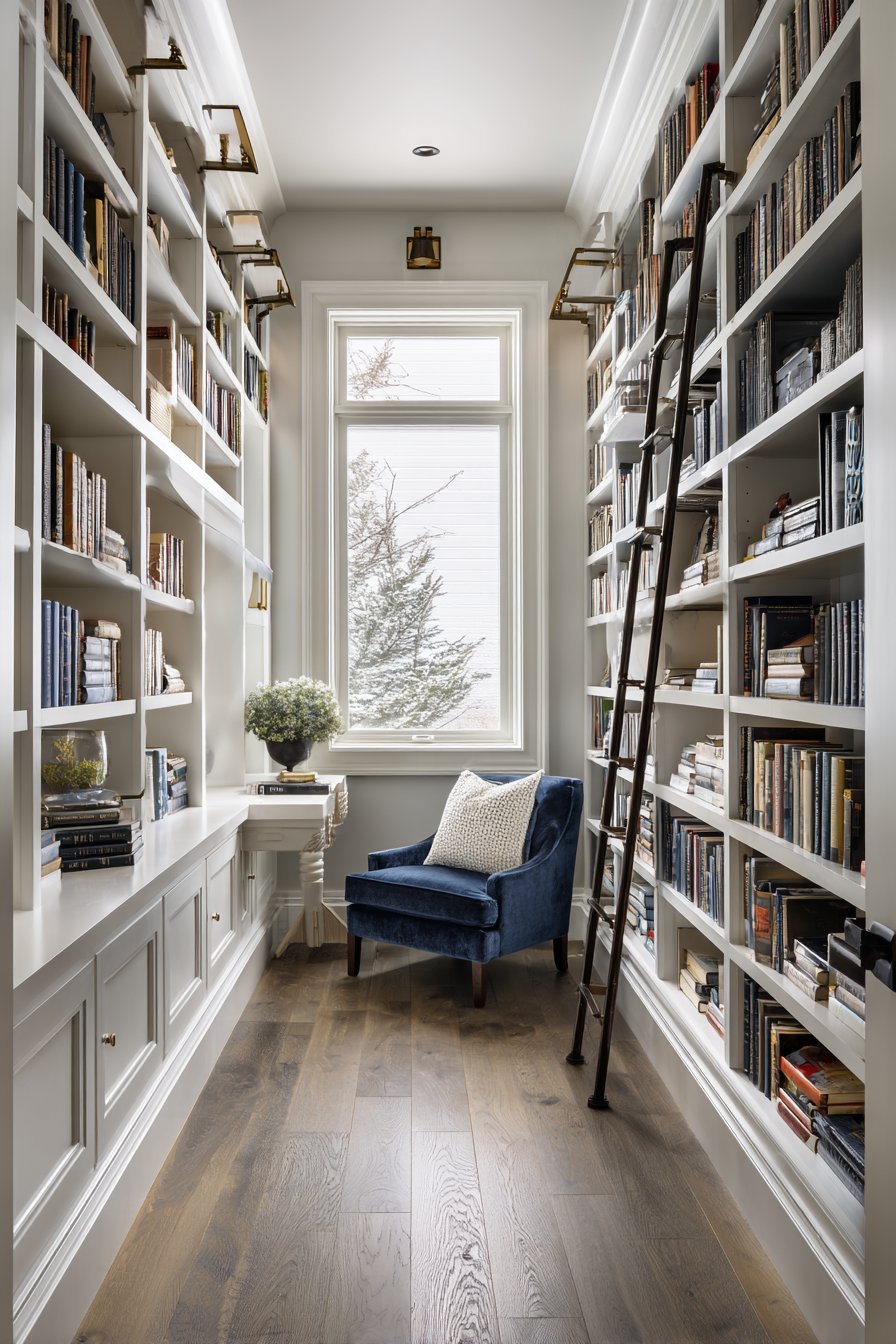
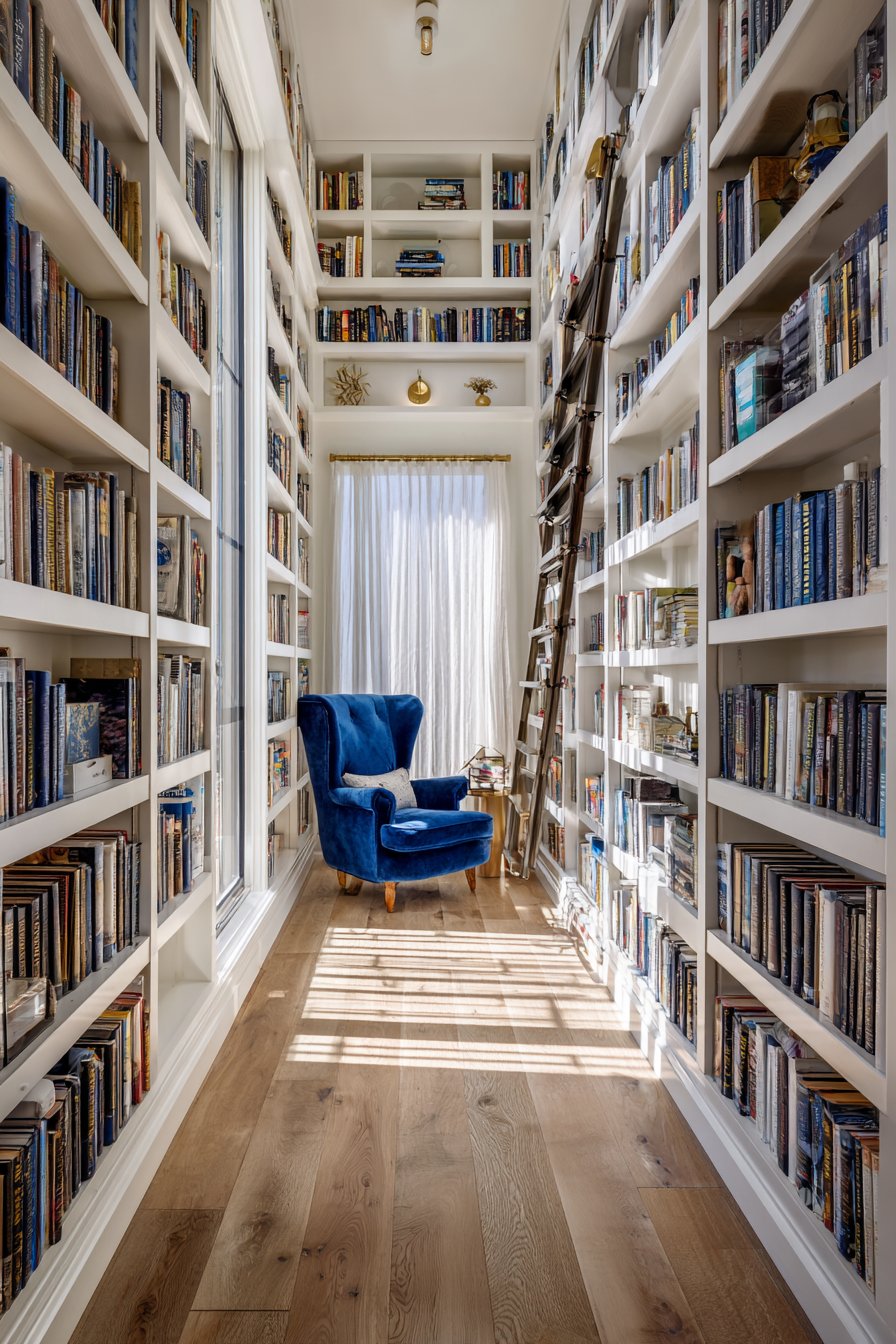
The timeless appeal of floor-to-ceiling white built-in bookshelves creates an instantly recognizable and endlessly elegant home library aesthetic. This design approach maximizes vertical storage while maintaining a bright, airy atmosphere that prevents the space from feeling heavy despite the density of books. The adjustable shelving system accommodates volumes of varying heights, from oversized art books to standard paperbacks, ensuring every title finds its perfect place. A rolling library ladder in dark bronze finish provides both practical access to upper shelves and serves as a striking architectural element that adds movement and visual interest to the space.
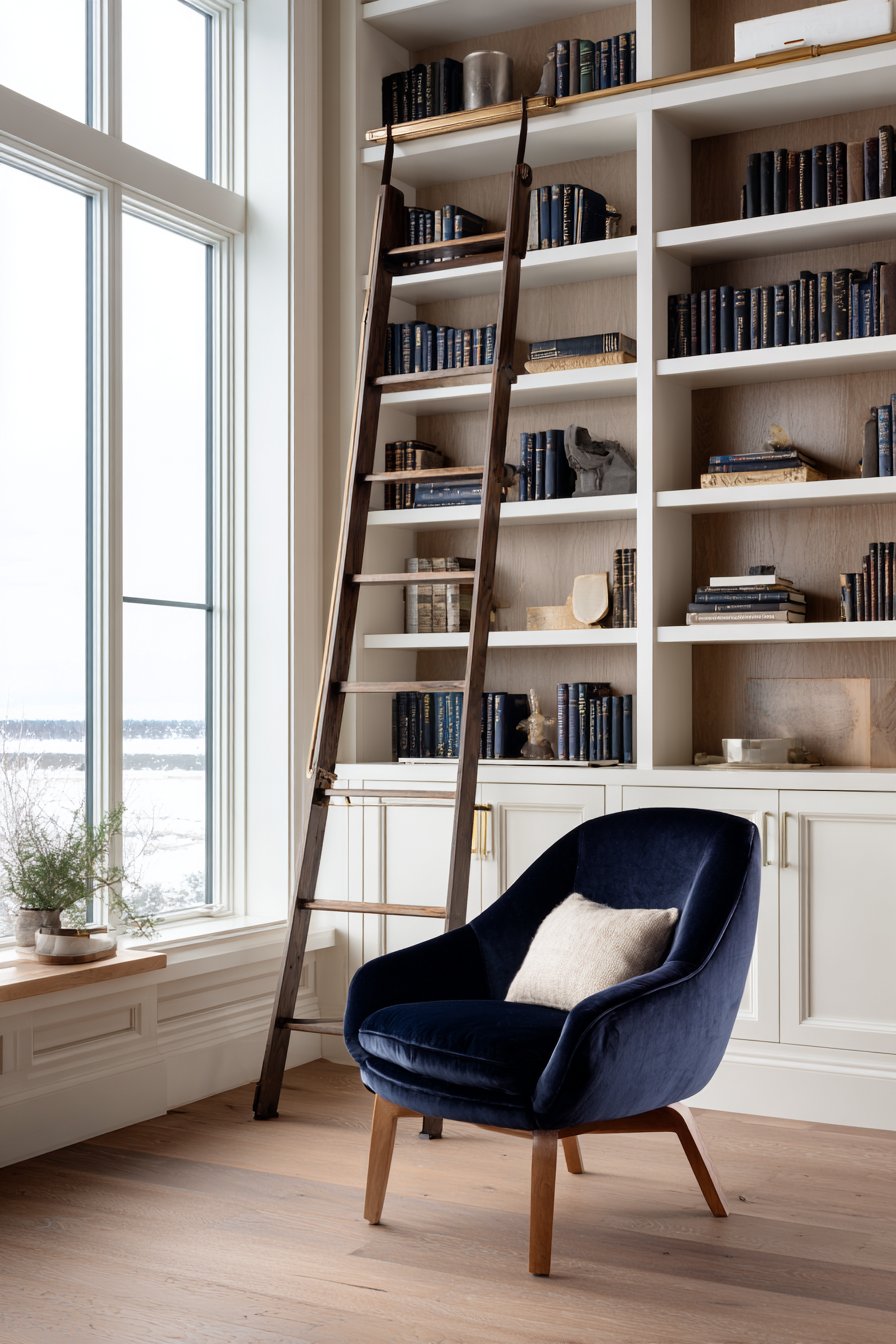
Natural oak flooring provides warmth and grounds the predominantly white color scheme, preventing the space from feeling sterile or cold. The wood grain introduces organic texture that contrasts beautifully with the crisp painted shelving. Near the window, a comfortable reading chair upholstered in navy velvet creates an inviting spot for settling in with a good book. The deep blue fabric adds a jewel-tone accent that elevates the otherwise neutral palette while maintaining sophistication.
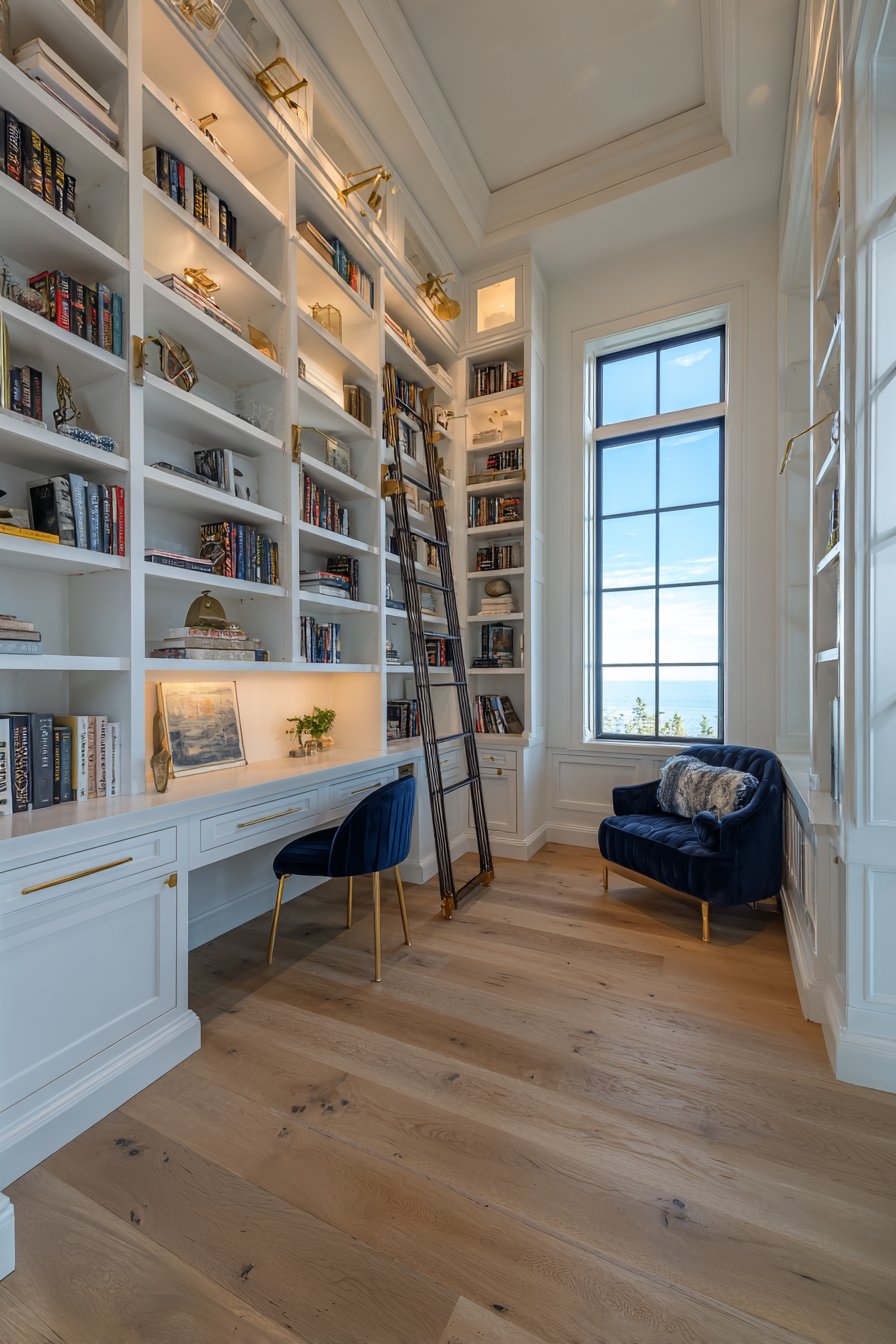
Lighting in this library design relies primarily on soft diffused daylight that creates gentle shadows across the book spines, making titles easily readable while adding dimension to the space. The interplay of light and shadow throughout the day creates an ever-changing visual experience, with morning light casting different patterns than afternoon sun. This natural lighting approach not only reduces energy consumption but also creates the most flattering and comfortable environment for extended reading sessions.
Key Design Tips:
- Install adjustable shelving to accommodate books of different heights and allow for collection growth over time
- Position the rolling ladder on a track system that allows smooth movement across the entire wall
- Choose a velvet upholstery for reading chairs as it provides both comfort and durability while adding textural richness
- Paint built-ins in a bright white with a semi-gloss finish that reflects light and makes the space feel larger
- Arrange books with occasional gaps and decorative objects to prevent visual monotony
2. Intimate Mahogany Study Conversion
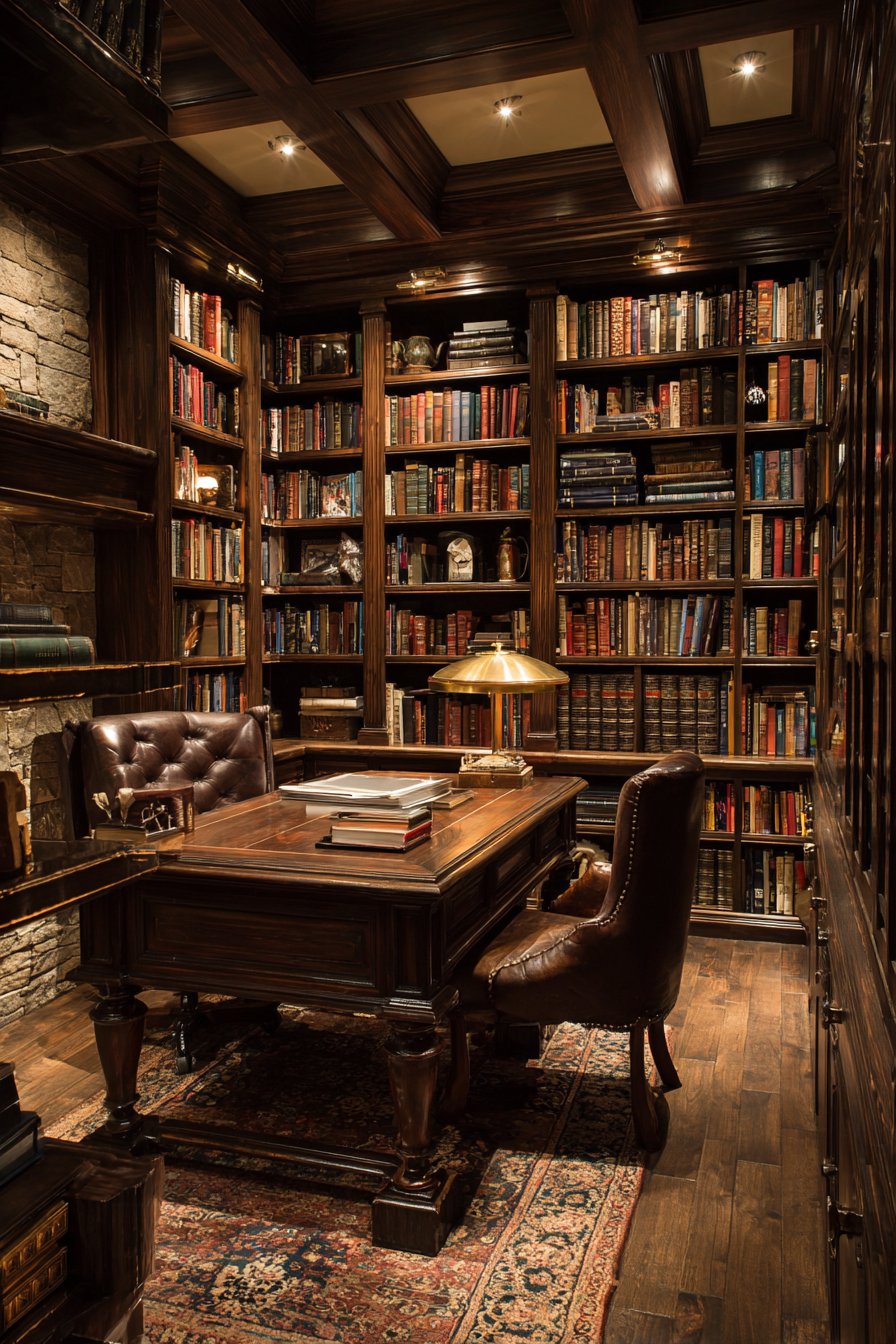
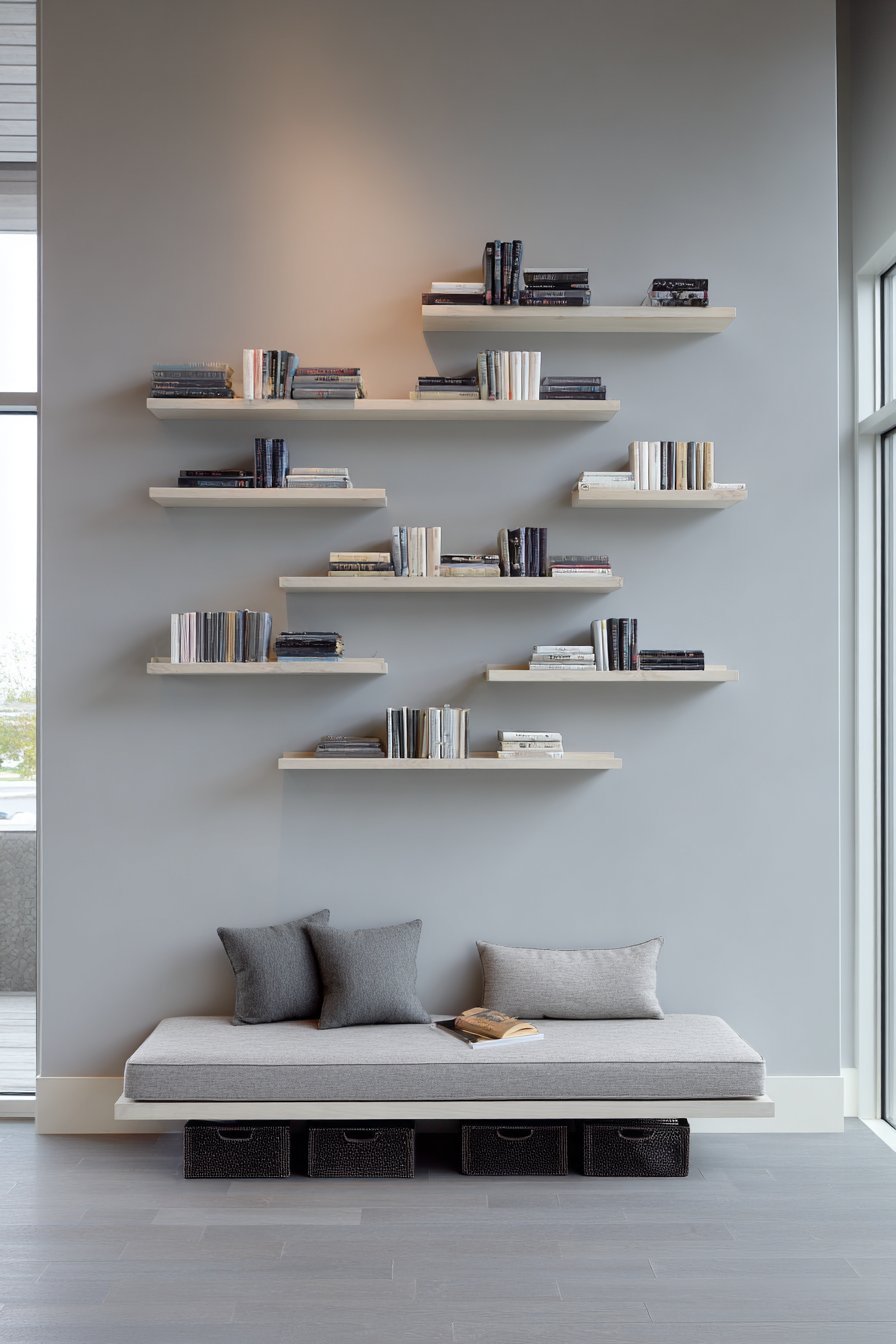
Converting a spare bedroom into a dedicated home library with dark wood built-in shelving along three walls creates an intimate, scholarly atmosphere that feels both luxurious and intellectually stimulating. The mahogany shelving provides a rich, warm backdrop that gives the collection gravitas and importance. When books are displayed against dark wood rather than white shelving, they take on a museum-quality presentation that celebrates their significance as objects of learning and culture.
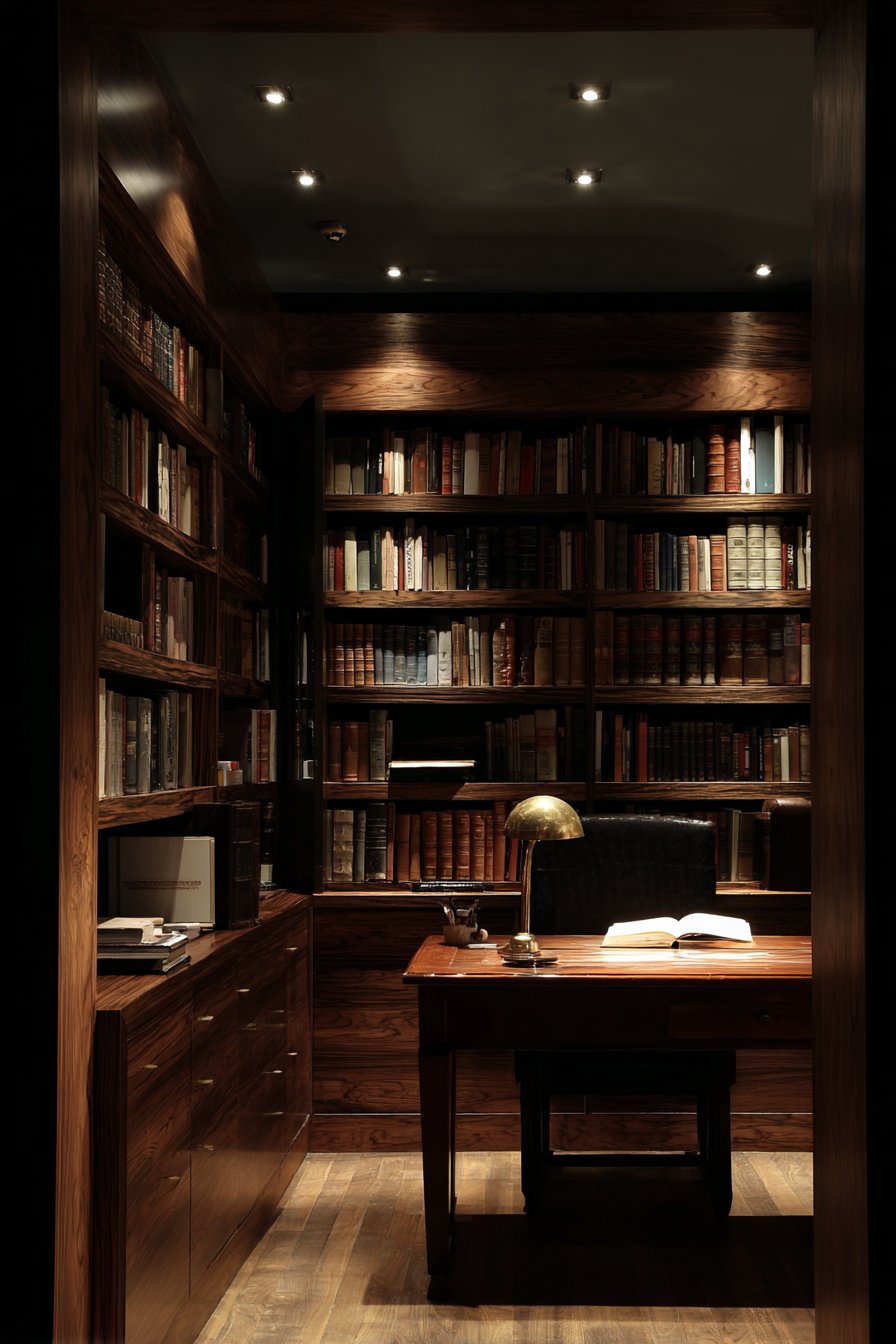
A mahogany writing desk positioned centrally serves as both a functional workspace and an elegant focal point. This dual-purpose approach maximizes the room’s utility, allowing it to function as both a library and a home office. The desk surface provides ample space for spreading out research materials, taking notes, or working on a laptop, while surrounded by the inspiring presence of your entire collection. Leather-bound classics and modern hardcovers arranged on the surrounding shelves create an environment that bridges historical literary tradition with contemporary reading interests.
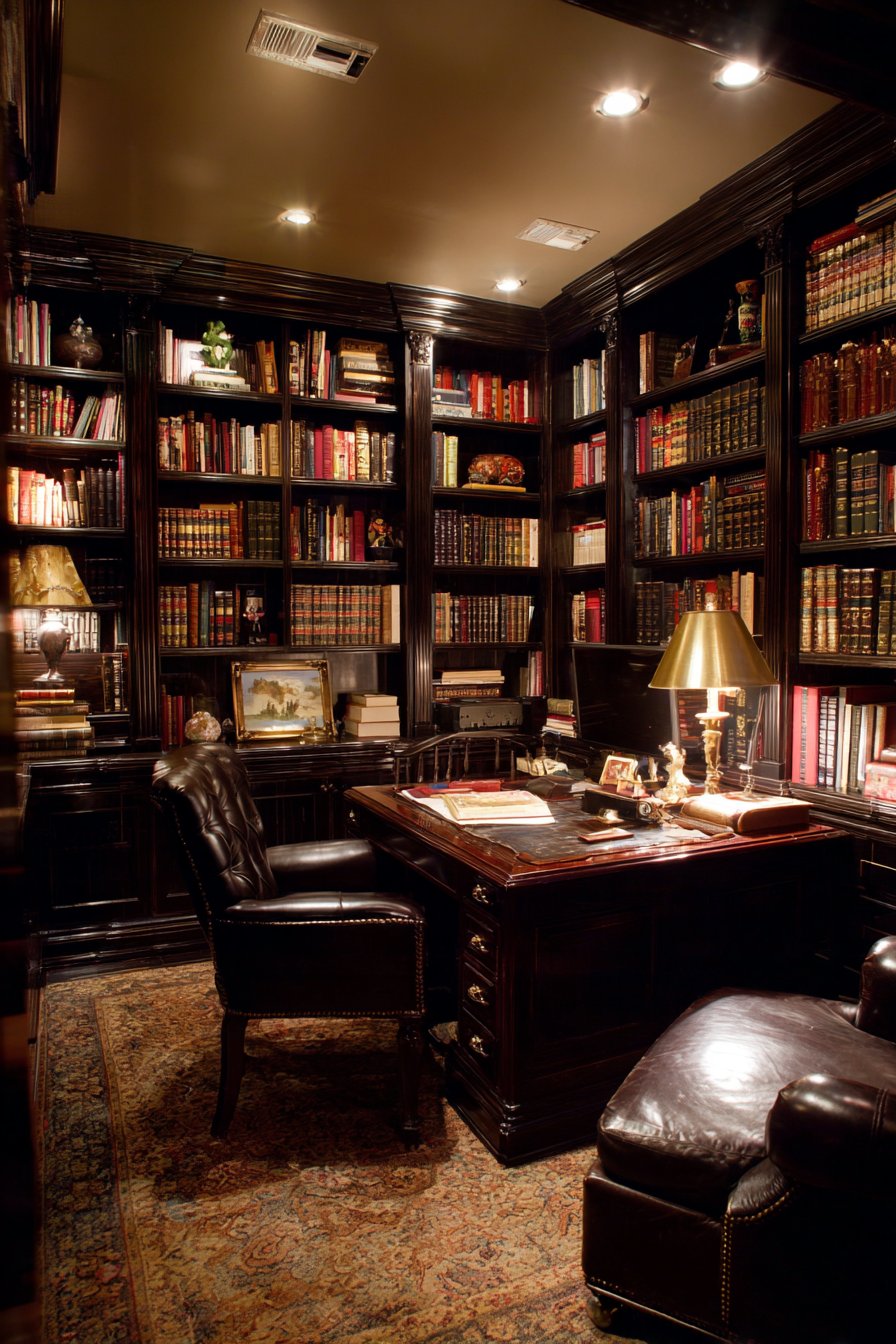
The lighting strategy in this design layers multiple sources to create both ambiance and functionality. A brass desk lamp provides focused task lighting for reading or writing at the desk, while recessed ceiling lights illuminate the book collection from above, ensuring titles on all shelves remain visible. This combination prevents harsh shadows while maintaining the warm, cozy atmosphere that makes the space feel like a private retreat rather than a public library.
Key Design Tips:
- Choose dark wood finishes like mahogany or walnut to create a traditional library atmosphere with timeless appeal
- Position the desk centrally to create equal access to all three walls of shelving
- Install dimmer switches on ceiling lights to adjust brightness based on time of day and activity
- Arrange leather-bound books together in groups to create visual impact and highlight special collections
- Add a small rolling cart near the desk for temporary book storage and easy access to current reading materials
3. Modern Minimalist Floating Shelf Design
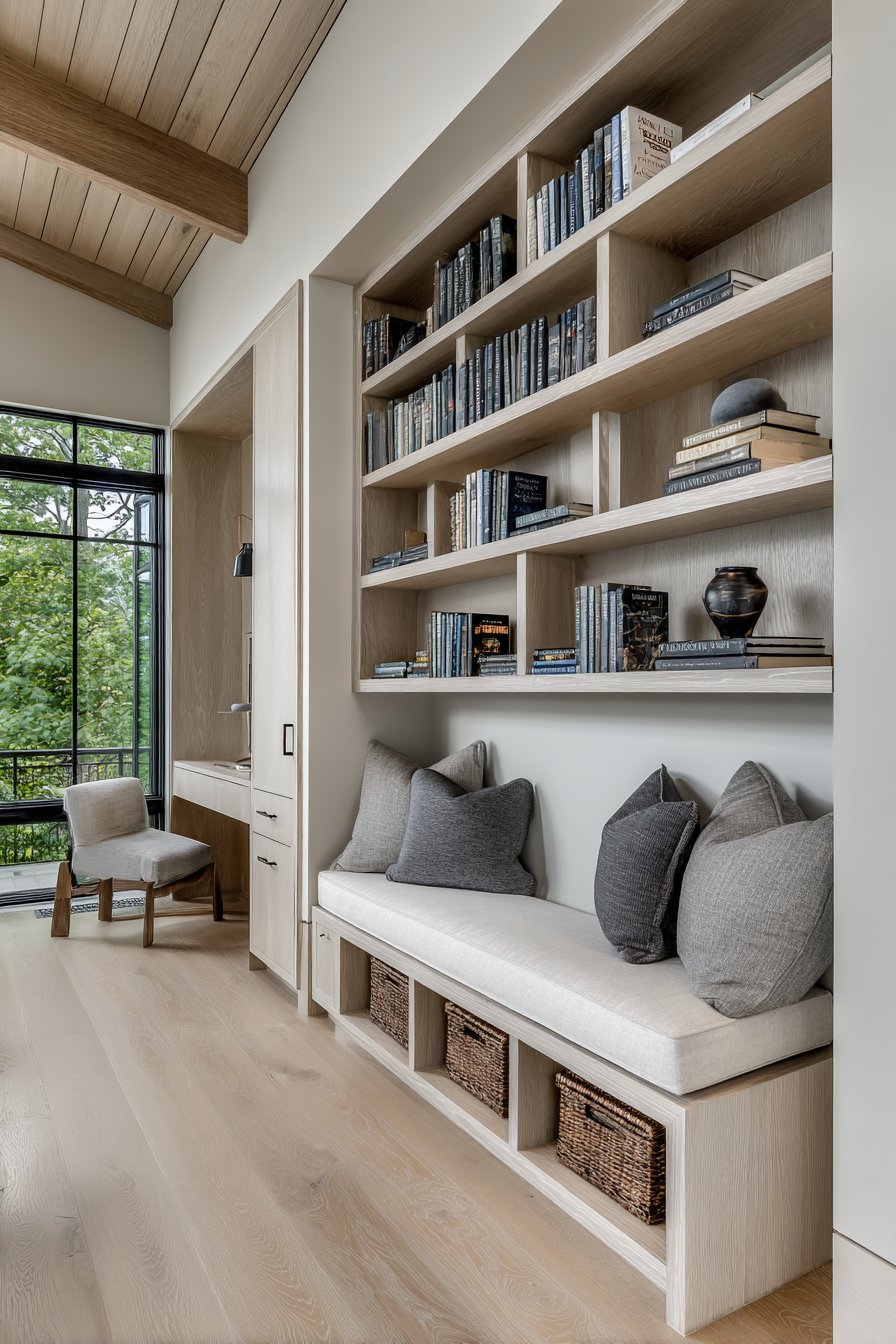
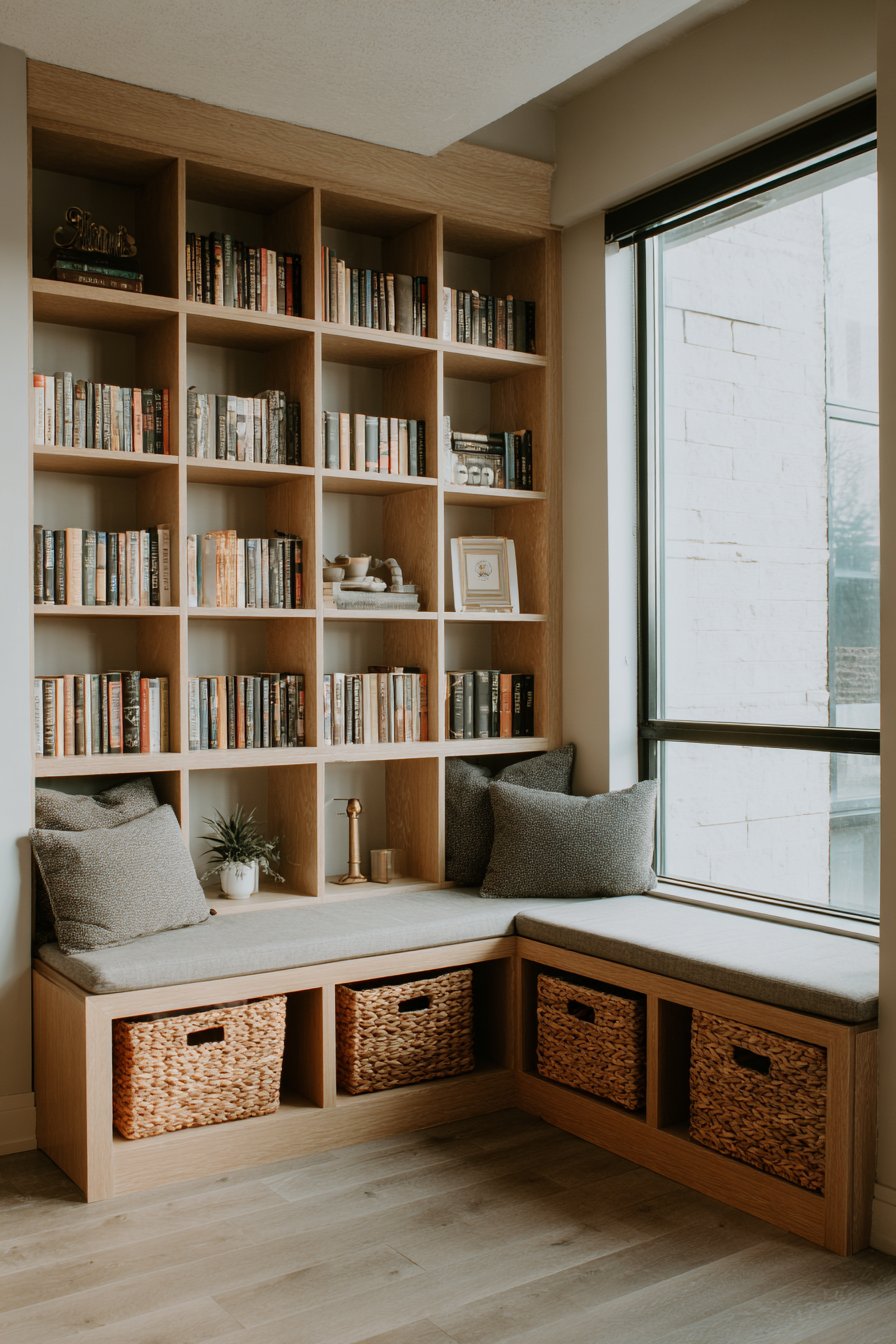
The minimalist approach to home library design proves that less truly can be more when executed with precision and intentionality. Light ash wood floating shelves mounted against a soft gray accent wall create clean horizontal lines that emphasize breadth rather than height. This design philosophy embraces negative space as an essential design element, allowing each book and decorative object room to breathe and be appreciated individually. The floating shelf system eliminates visual clutter by hiding mounting hardware, creating the illusion that the shelves themselves are weightless.
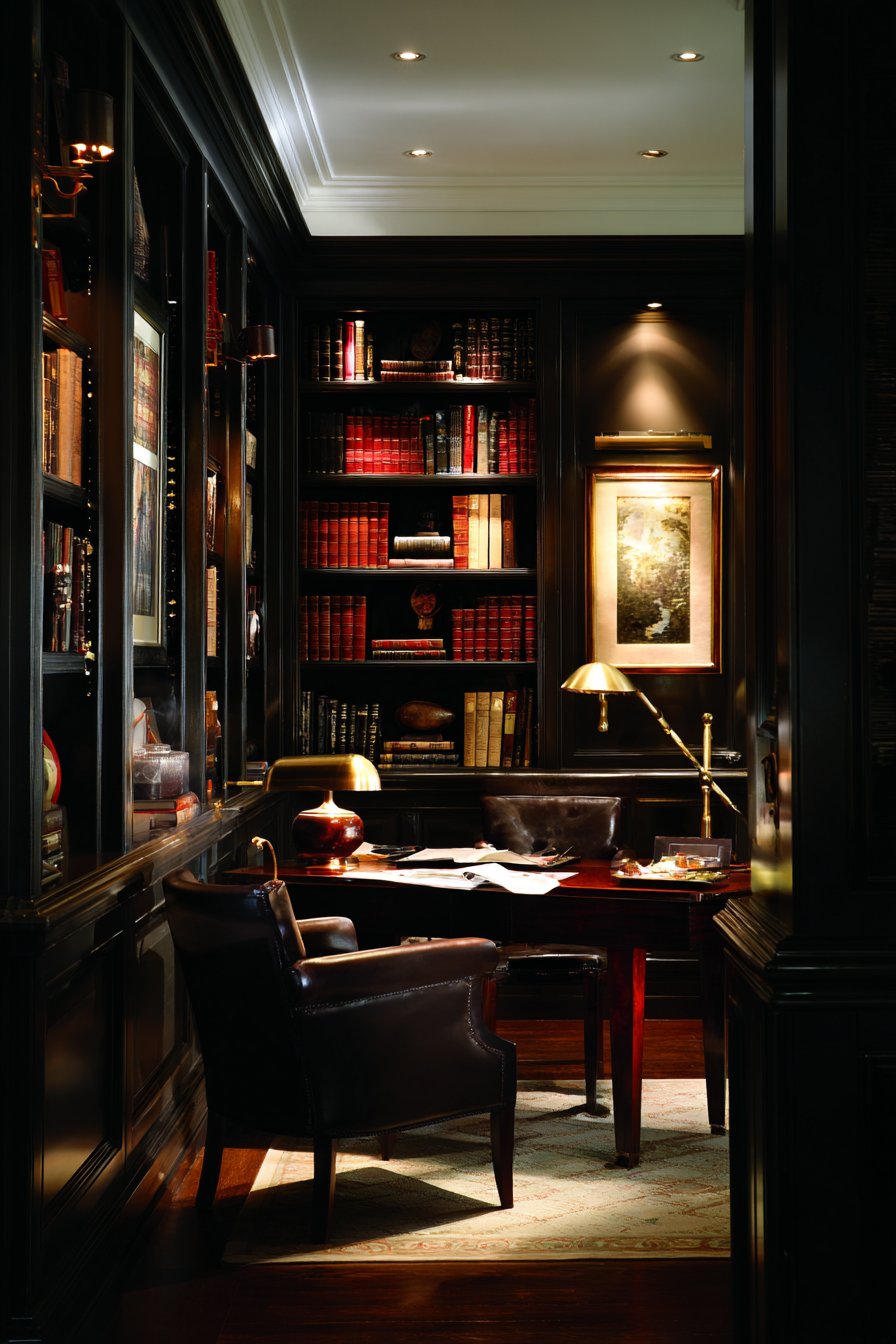
Books arranged by color create a visually striking gradient effect that transforms a utilitarian storage system into an artistic installation. This organization method—moving from warm tones through cool hues in a rainbow progression—turns the book collection itself into the room’s primary decorative feature. While purists might argue that books should be organized by author or genre, the color-coding system proves surprisingly functional once you become familiar with your collection, and the visual impact is undeniably stunning.
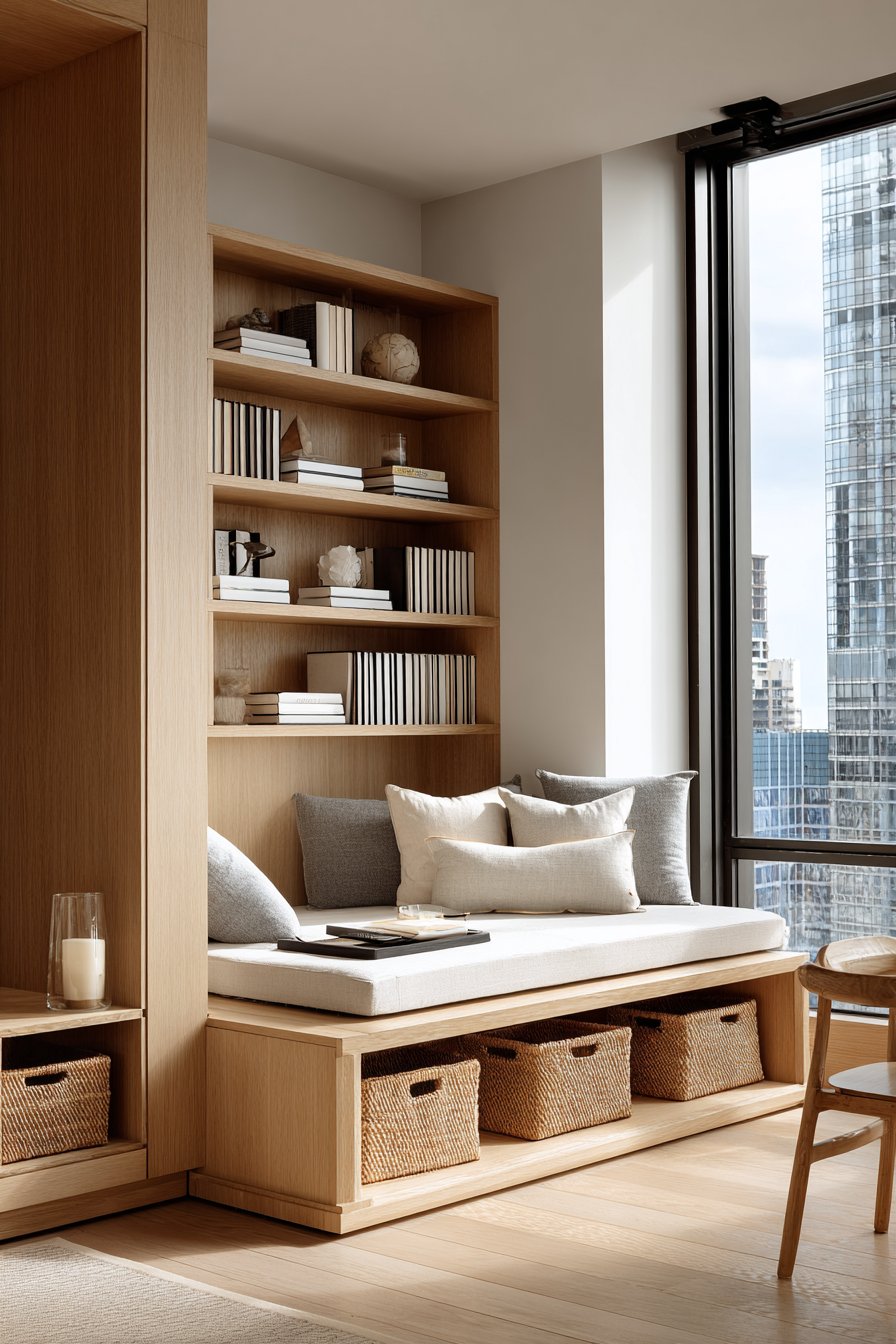
Below the shelving, a low-profile reading bench upholstered in gray linen provides minimalist seating that doesn’t compete with the shelving for visual attention. Storage baskets tucked underneath maximize functionality without introducing visual chaos. Natural light from adjacent windows highlights the clean lines and contemporary aesthetic, casting subtle shadows that add depth without overwhelming the serene composition.
Key Design Tips:
- Limit the number of shelves to prevent the wall from feeling cluttered—typically three to five shelves work best
- Maintain consistent spacing between shelves to create visual rhythm and harmony
- Leave approximately 30% of shelf space empty to maintain the minimalist aesthetic
- Choose books with attractive spines in good condition for color-organized displays
- Use neutral-colored baskets or boxes for under-bench storage to maintain visual consistency
4. Traditional Mahogany Library with Glass-Front Cabinets
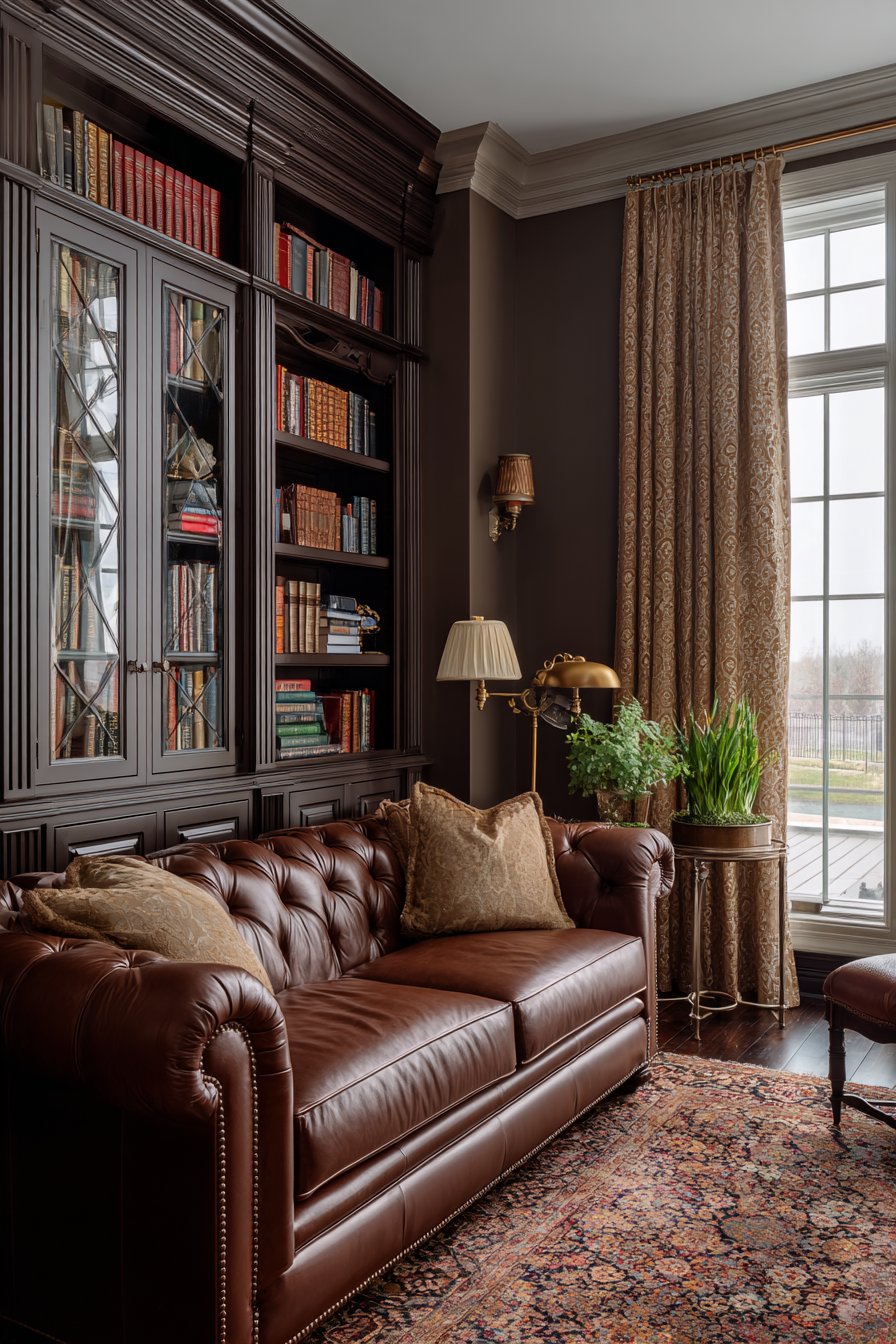
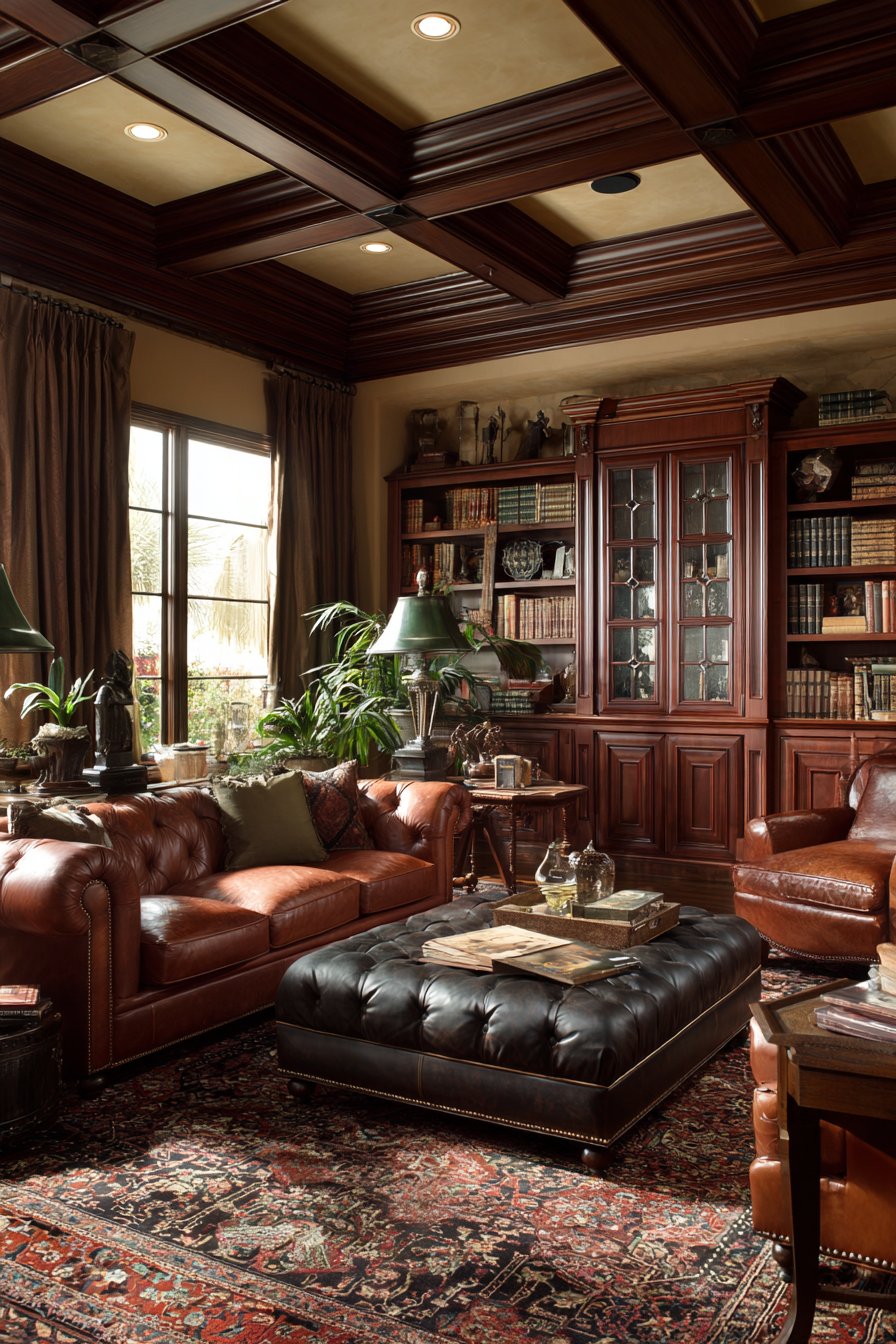
The traditional home library reaches its apex in designs featuring rich mahogany built-in bookcases with decorative crown molding and glass-front cabinet doors. This approach elevates book storage to furniture-grade craftsmanship, with each architectural detail contributing to an atmosphere of refined elegance. The glass-front cabinets serve a dual purpose: protecting rare editions, first printings, and valuable collections from dust and environmental damage while displaying them as the treasured possessions they are. The transparency of glass maintains visual access while providing physical protection.
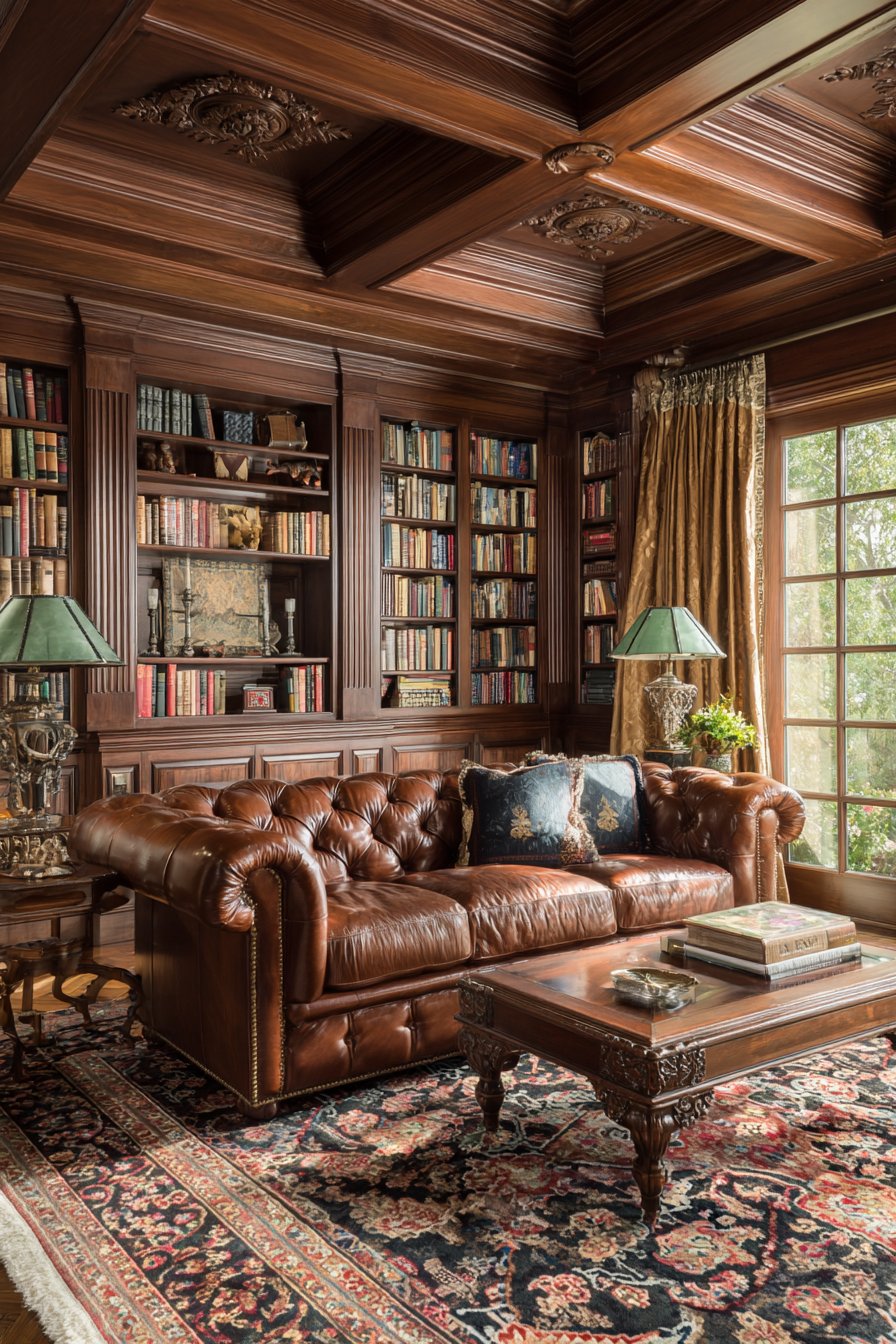
A leather Chesterfield sofa in cognac brown centers the room on an antique Persian rug, creating a seating area that invites extended reading sessions in supreme comfort. The tufted leather’s patina develops character over time, becoming more beautiful with age—much like well-loved books themselves. The sofa’s substantial presence provides a counterbalance to the verticality of the floor-to-ceiling bookcases, creating compositional equilibrium within the space.
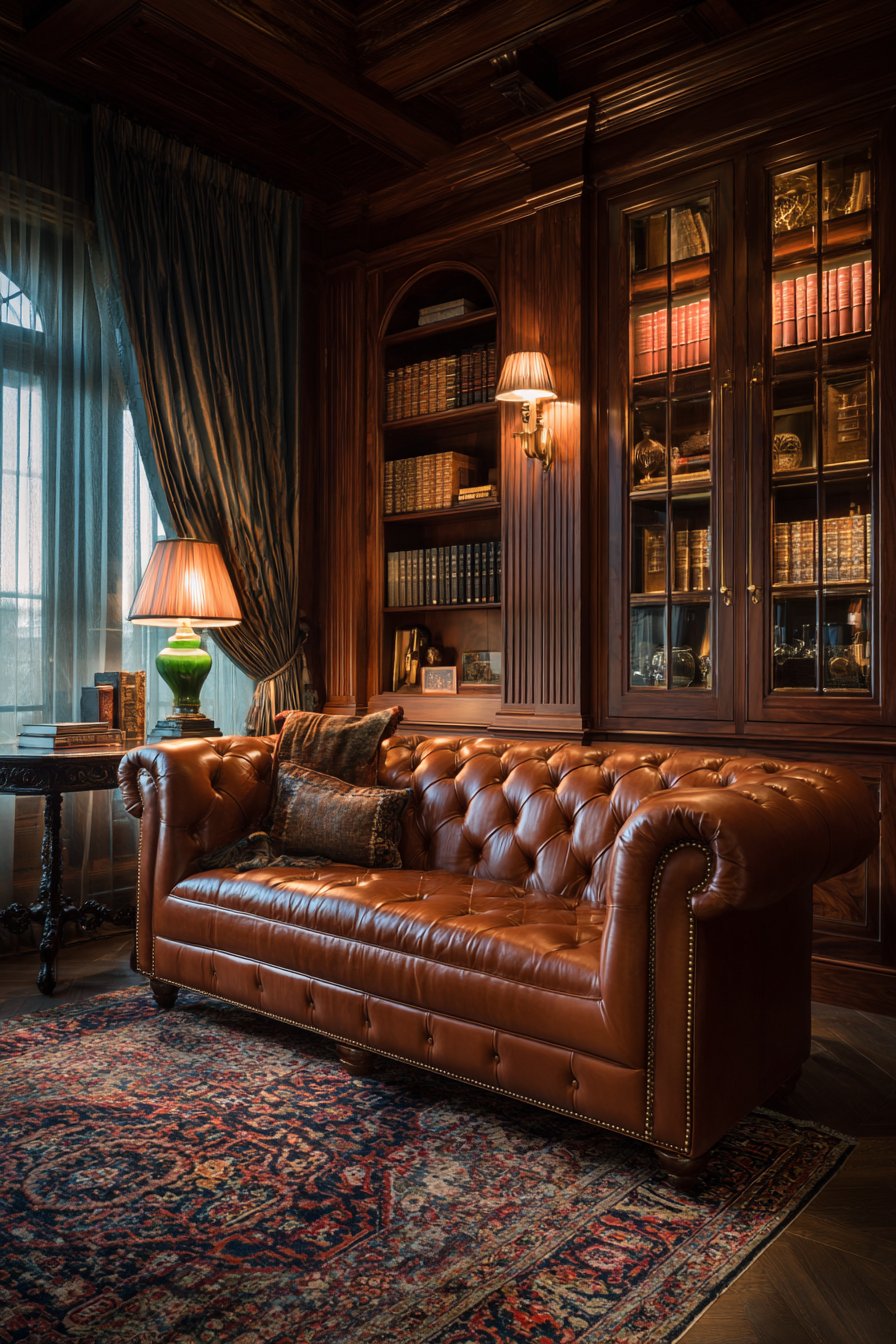
Classic banker’s lamps with green glass shades provide iconic library lighting that has remained virtually unchanged for over a century—a testament to the design’s functionality and timeless appeal. The green shade filters light, creating a warm glow that reduces eye strain during extended reading. Natural light filters through heavy curtains, which can be drawn to control brightness and protect books from UV damage while maintaining privacy.
Key Design Tips:
- Install glass-front cabinets with UV-filtering glass to protect valuable books from sun damage and fading
- Use decorative crown molding to draw the eye upward and add architectural interest
- Invest in quality hardware like brass hinges and handles that will develop an attractive patina
- Position seating to create conversation areas rather than just individual reading spots
- Layer lighting with overhead, task, and ambient sources for maximum functionality and atmosphere
5. Narrow Hallway Library Solution
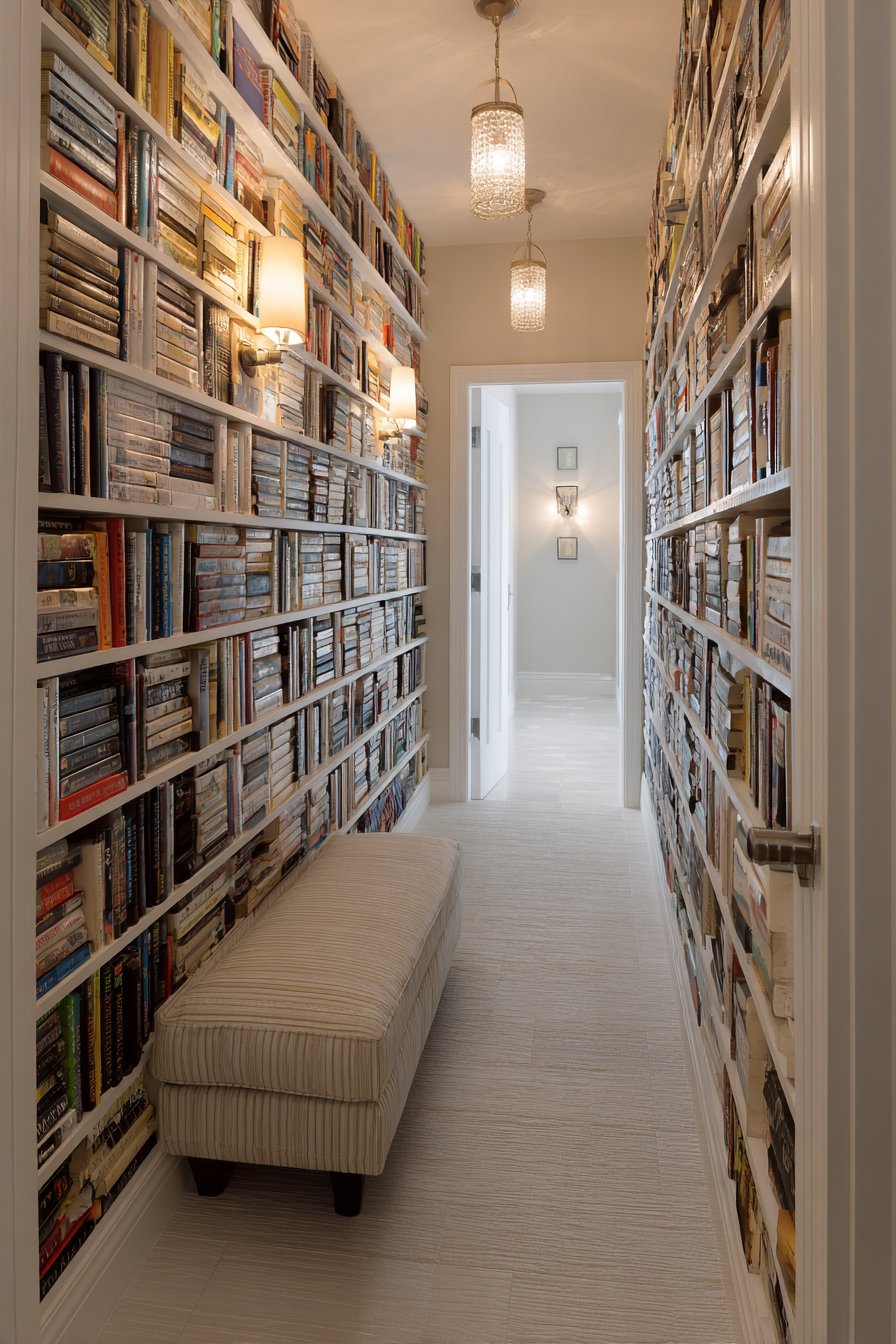
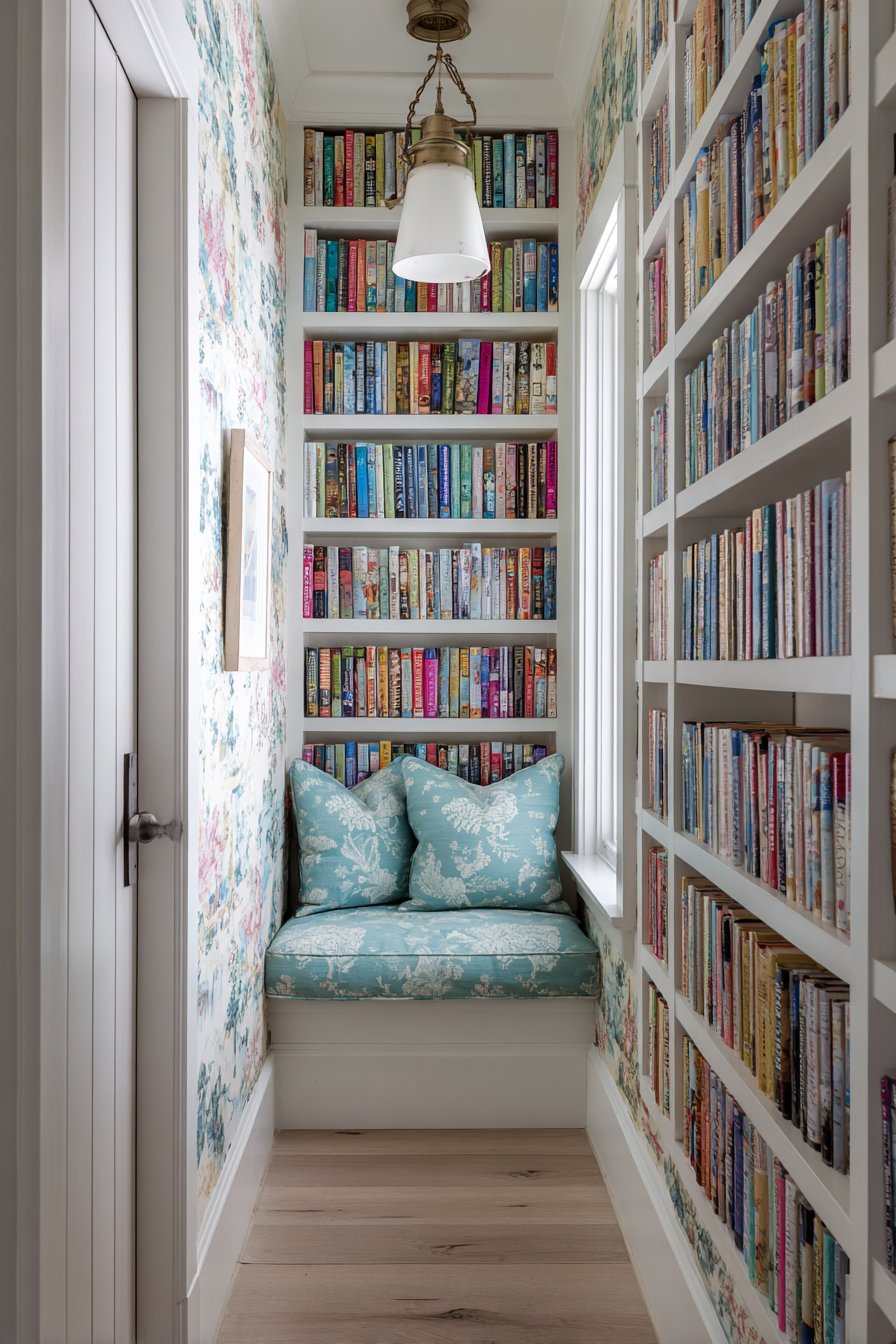
Transforming a hallway wall into a home library demonstrates creative problem-solving that turns previously wasted space into a functional asset. Narrow built-in shelving extending only ten inches deep makes efficient use of wall space without encroaching on the walkway. This shallow depth works perfectly for standard book sizes while maintaining comfortable passage—typically thirty-six inches minimum is needed for comfortable traffic flow. The spine-out arrangement creates a colorful literary gallery wall that transforms a utilitarian corridor into an engaging visual experience.
Simple wall-mounted reading sconces positioned at intervals along the shelving provide focused lighting that allows for browsing and selection without overhead fixtures casting shadows on titles. These fixtures can be positioned to illuminate specific sections, making it easy to locate books even in a space that might not receive abundant natural light. The lighting also adds architectural interest to what might otherwise be a plain hallway, creating pools of warm illumination that make the passage feel welcoming rather than merely functional.
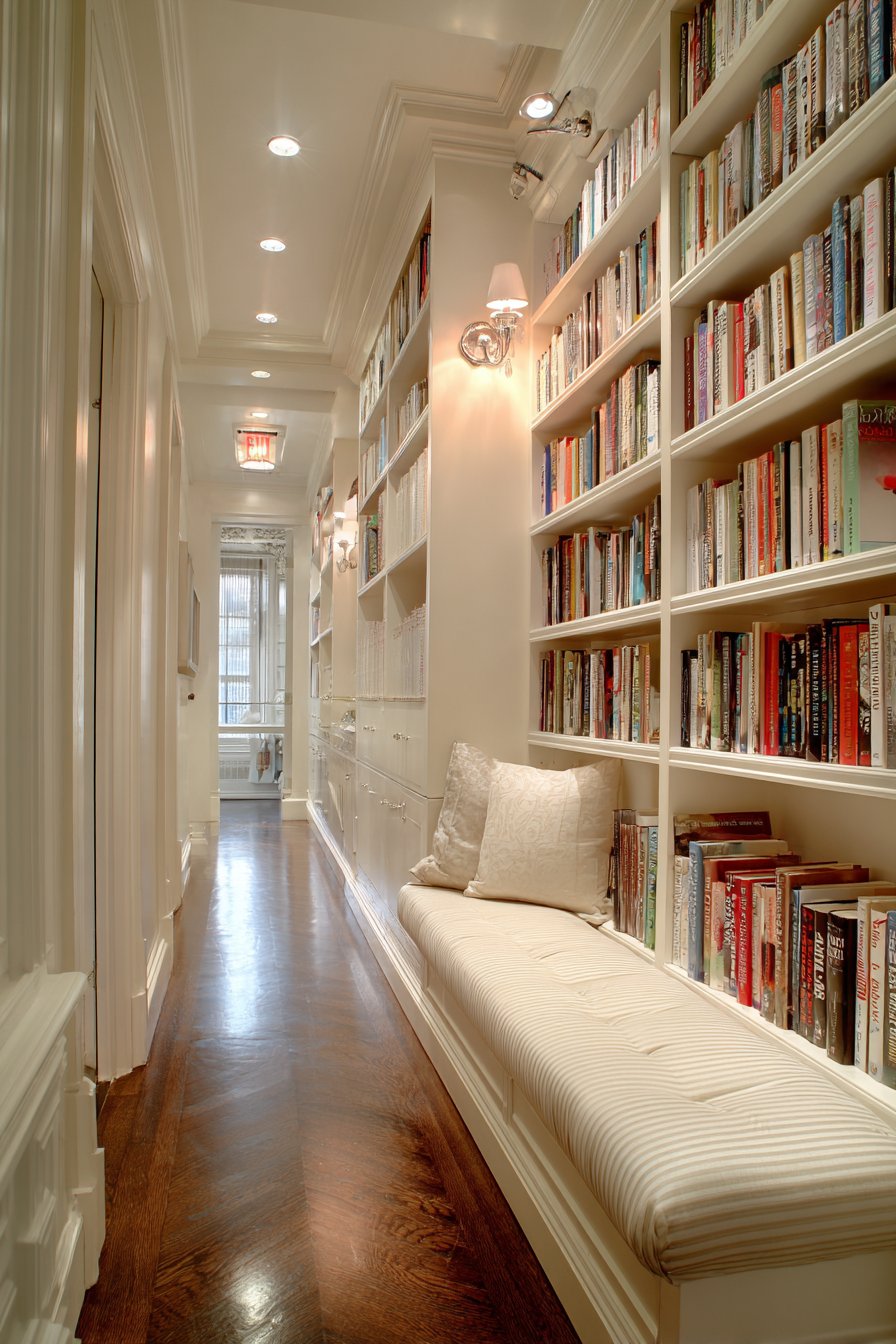
A compact upholstered bench placed strategically along the hallway serves multiple purposes: providing a spot to sit while browsing selections, offering a convenient place to set down bags or packages, and contributing additional visual interest that breaks up the long linear space. The bench can include lift-top storage for items like reading glasses, bookmarks, or overflow books that don’t fit on the shelves.
Key Design Tips:
- Keep shelving depth between eight and ten inches to maximize book storage while maintaining hallway functionality
- Organize books by color or size to create visual continuity along the length of the hallway
- Install sconces at eye level for optimal lighting when browsing titles
- Choose a bench with storage underneath to maximize functionality in the limited space
- Consider using the top shelf for decorative objects to break up the monotony of book spines
6. Integrated Home Office Library Combination
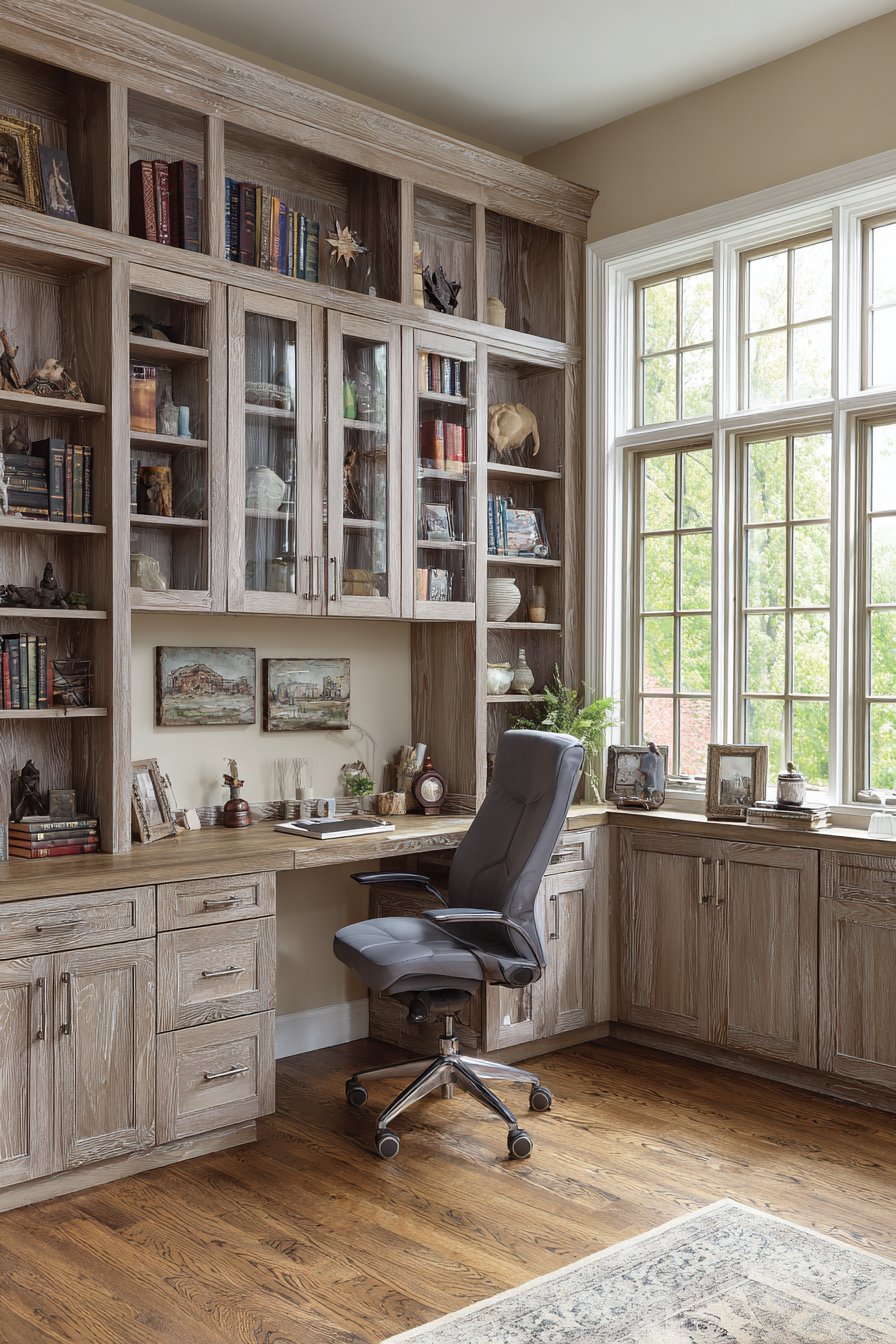
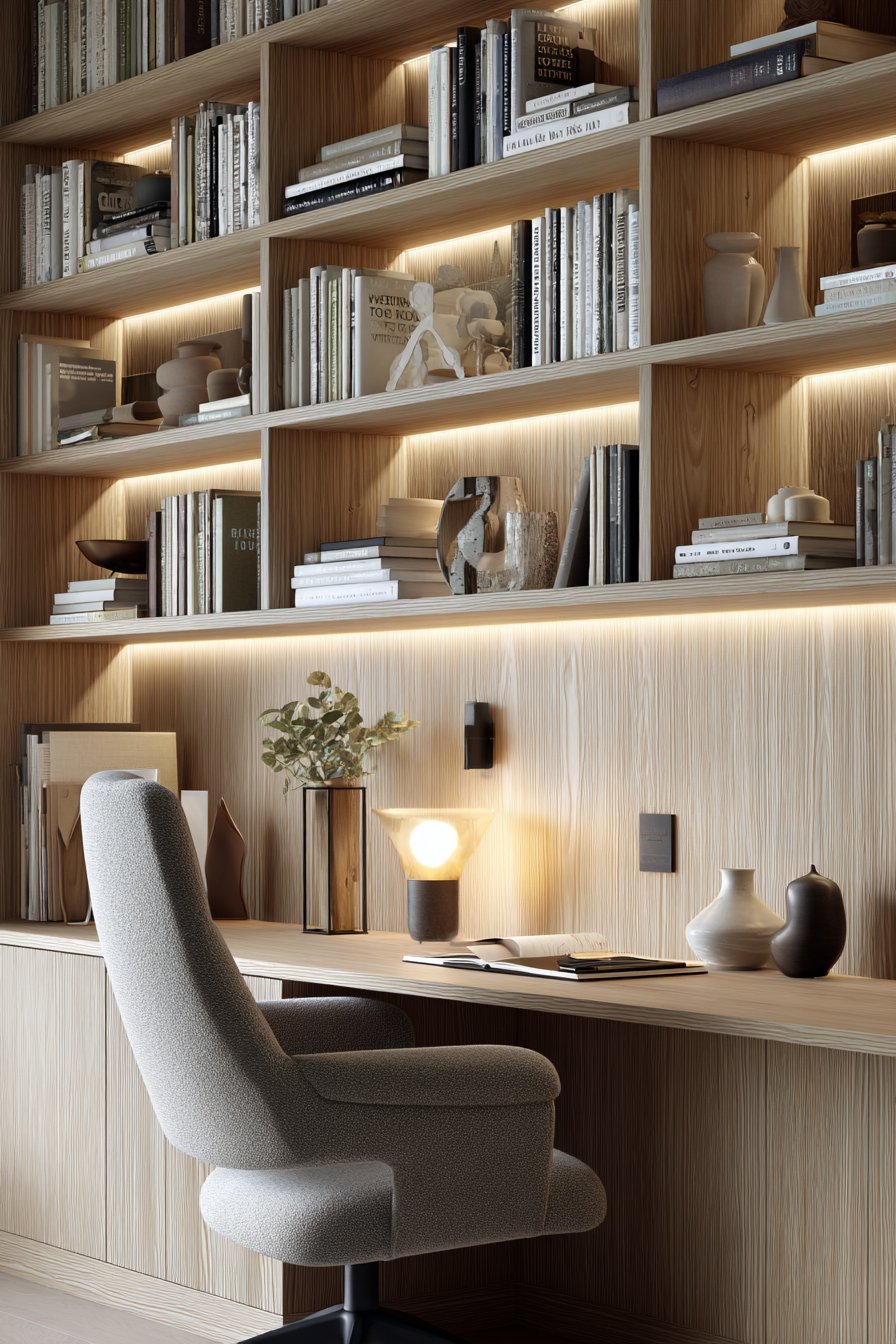
The home office library combination represents one of the most practical approaches to residential space planning, particularly in homes where dedicated rooms for separate functions aren’t feasible. A full wall of custom shelving with an integrated desk workspace creates a unified design where professional productivity and literary inspiration coexist harmoniously. Lower cabinets with doors conceal office supplies, electronic equipment, and less attractive necessities, while open shelving above displays book collections and decorative objects that inspire creativity and reflect personal interests.
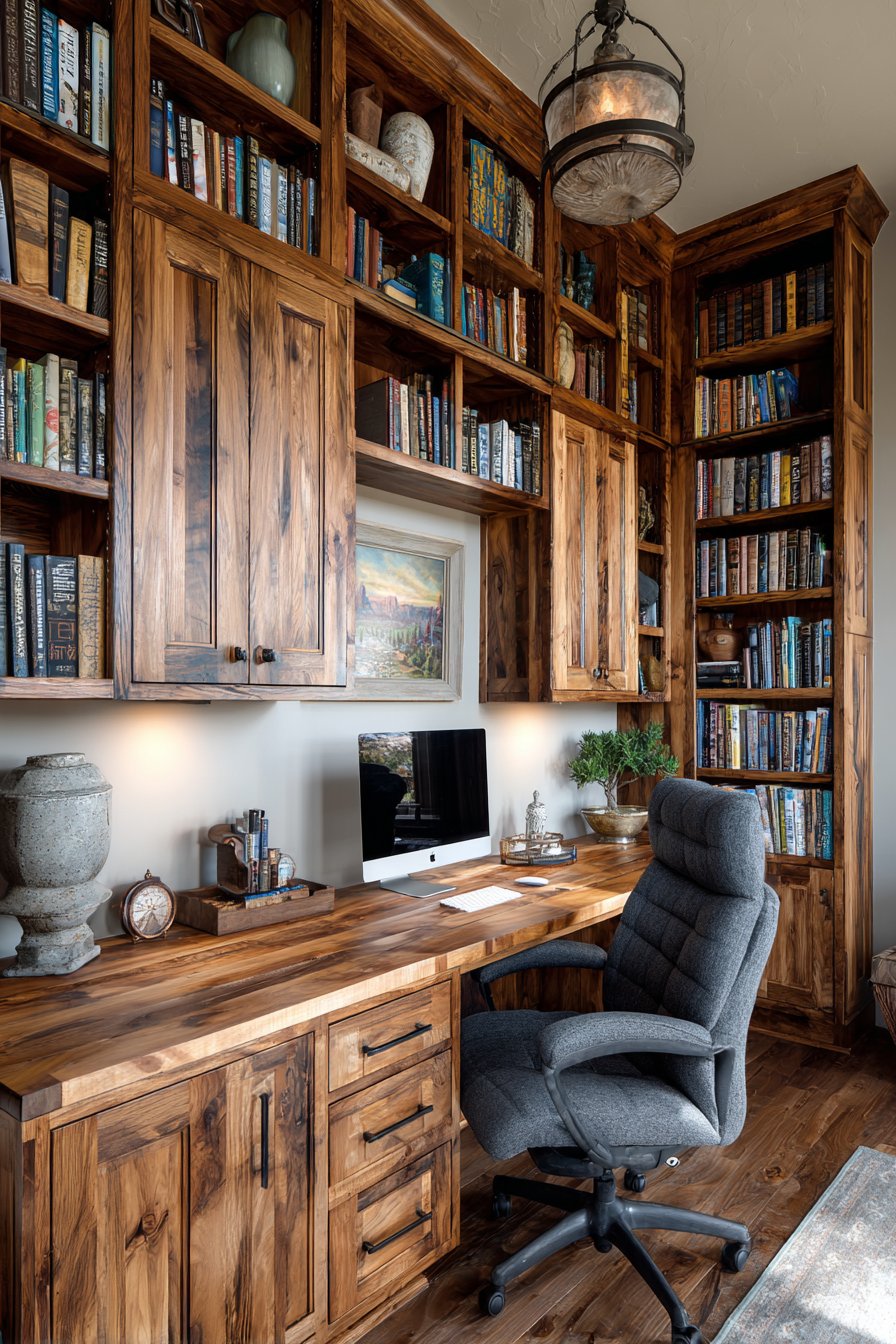
The desk area integrates seamlessly into the shelving system, appearing as a natural extension rather than an awkward addition. This built-in approach typically proves more space-efficient than freestanding furniture while creating a custom, high-end appearance. The desk surface should be at standard height (approximately 29-30 inches) with adequate knee clearance below, while the upper shelving maintains consistent alignment with adjacent book storage, creating visual continuity across the entire wall.
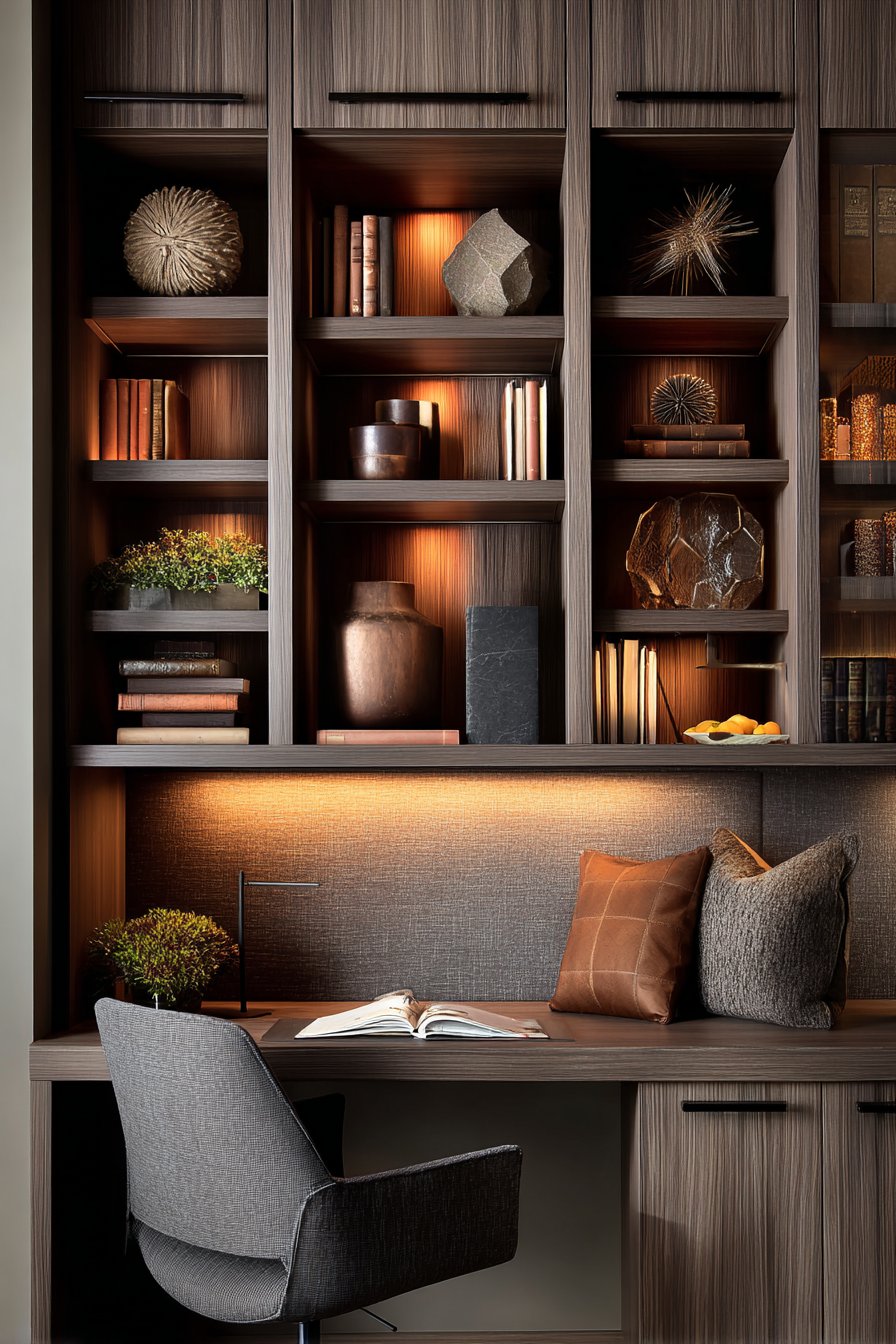
An ergonomic desk chair in charcoal gray provides necessary support for extended work sessions while coordinating with the natural wood tones of the shelving system. Task lighting installed under the upper shelves illuminates the work surface without creating glare on computer screens—a critical consideration in the modern home office. This integrated lighting eliminates the need for desk lamps that consume valuable workspace while providing targeted illumination exactly where needed.
Key Design Tips:
- Position the desk portion of the shelving system near a window for natural light and views during work hours
- Install closed cabinets at desk level to hide office equipment and supplies that would detract from the library aesthetic
- Include cable management systems behind the desk area to maintain clean lines
- Ensure adequate depth for the desk portion (24-30 inches) to accommodate computer equipment and workspace
- Use the upper shelving to display books related to your work or industry for easy reference
7. Scandinavian Light Birch Library
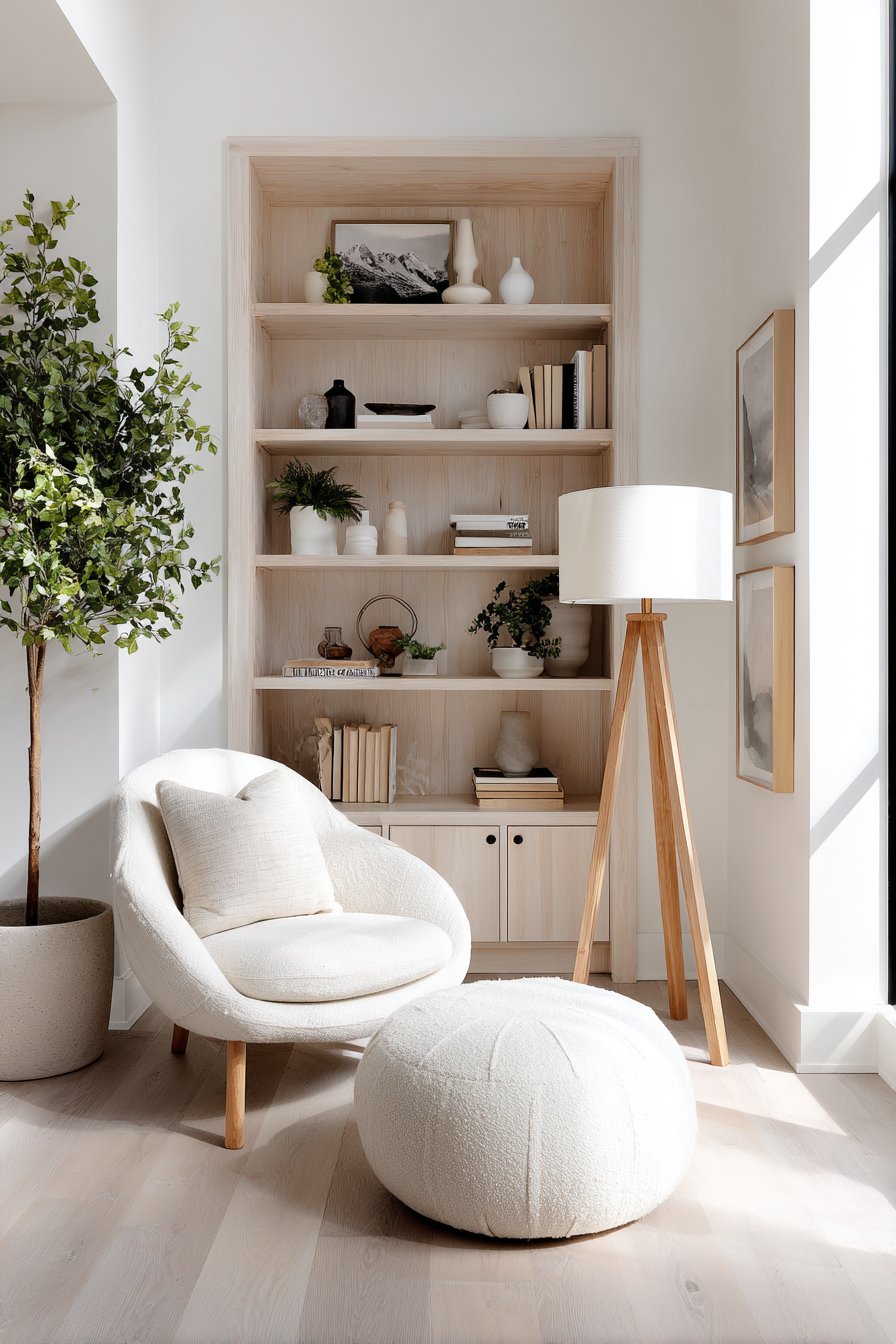
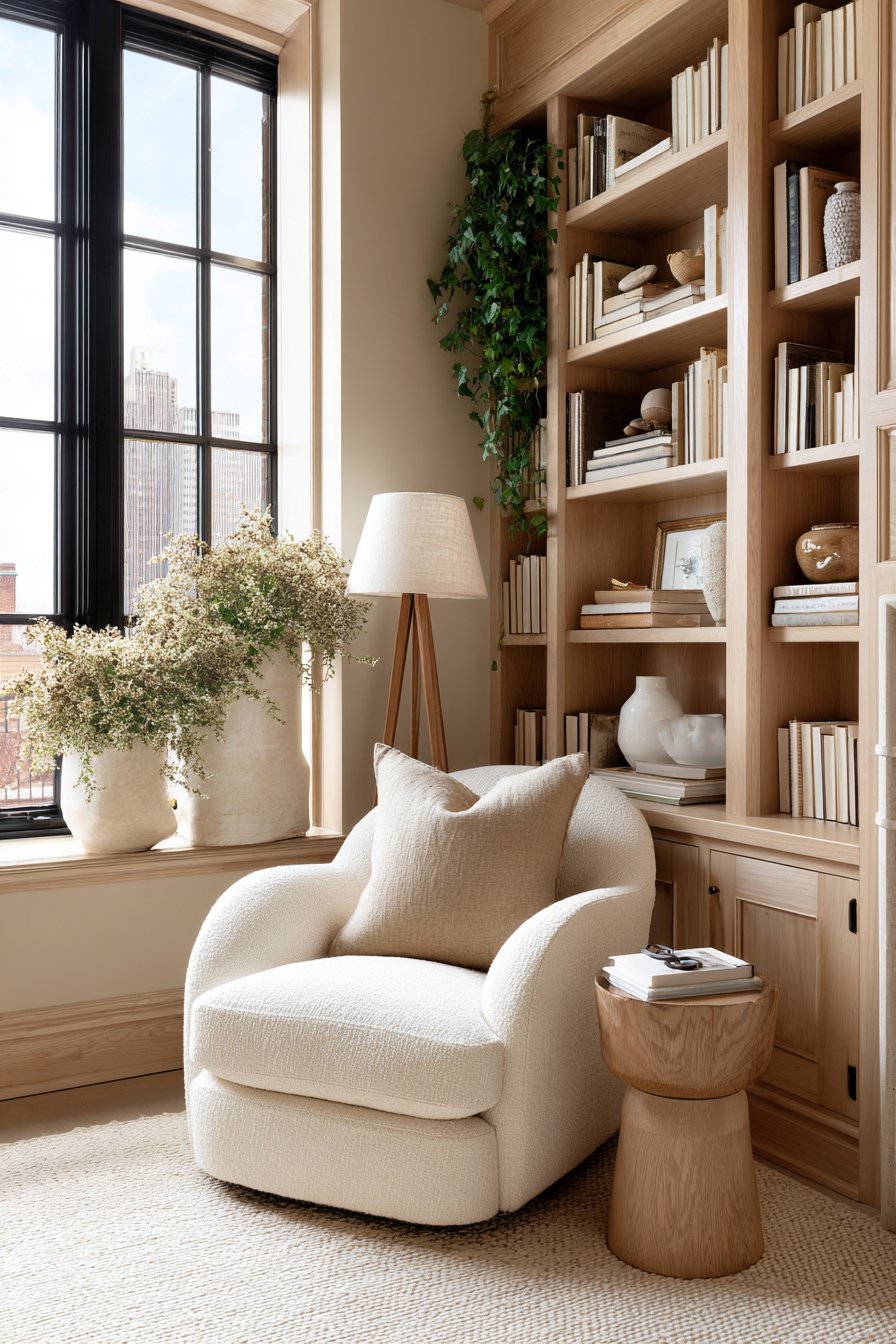
The Scandinavian approach to home library design emphasizes light, natural materials, and a lived-in aesthetic that prioritizes function and comfort over formality. Light birch wood built-in shelving with clean horizontal lines creates a warm, organic presence that never feels heavy or oppressive. The pale wood grain catches and reflects available light, contributing to the bright, airy atmosphere characteristic of Nordic design. This light wood choice works particularly well in rooms with limited natural light or smaller dimensions, where dark shelving might make the space feel confined.
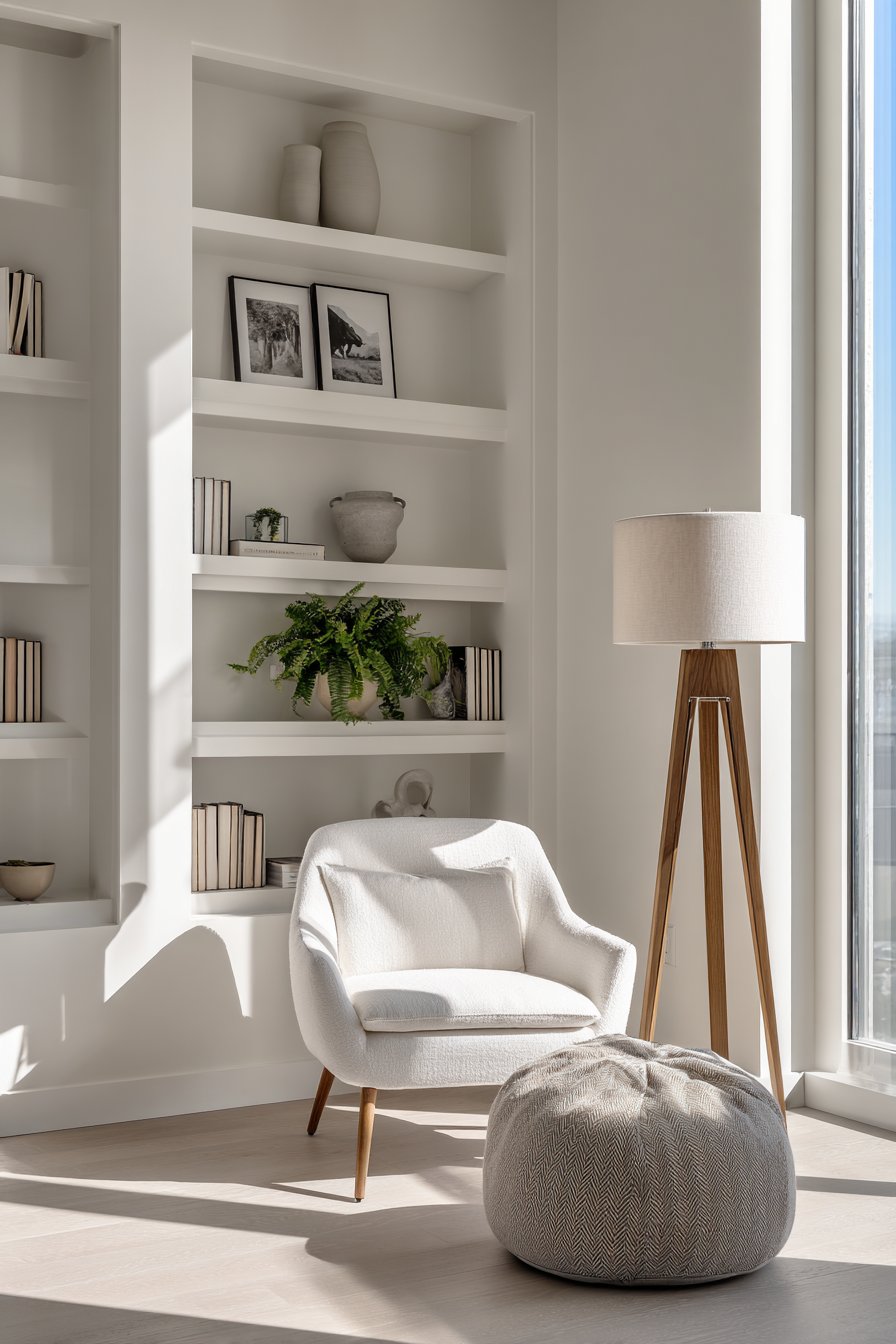
The styling approach in Scandinavian libraries differs significantly from traditional arrangements by interspersing books with plants, ceramic objects, and family photos. This integrated display creates a personal, collected aesthetic that reflects the inhabitant’s life and interests rather than presenting books as purely academic objects. Greenery introduces life and oxygen to the space while providing organic shapes that contrast with the geometric lines of books and shelving. Small potted plants like pothos, snake plants, or succulents thrive in indoor conditions and require minimal maintenance.
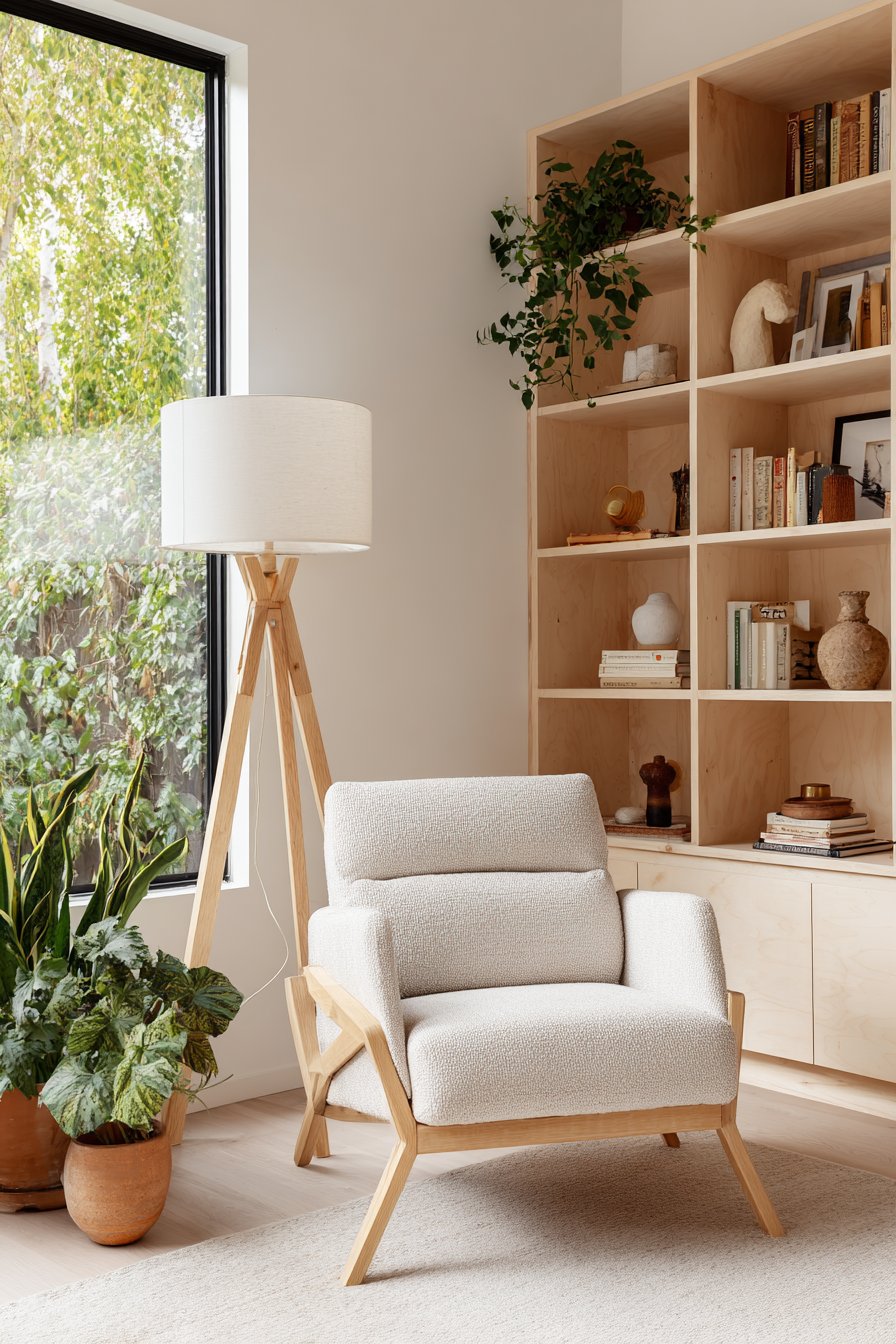
A simple canvas reading chair in oatmeal linen provides comfortable seating without visual bulk, while a floor lamp with a natural wood tripod base adds necessary task lighting while reinforcing the organic material palette. The abundant natural light that floods Scandinavian-inspired spaces creates an energizing atmosphere perfect for reading, studying, or simply spending time surrounded by your collection.
Key Design Tips:
- Choose pale wood finishes like birch, ash, or light oak to maximize light reflection
- Arrange books both vertically and horizontally to create visual variety and casual elegance
- Incorporate living plants on every other shelf to introduce organic elements and improve air quality
- Use ceramic vases, wooden sculptures, or woven baskets as decorative objects between books
- Select textiles in natural fibers like linen, cotton, or wool in neutral tones
8. Industrial Pipe Shelving Against Exposed Brick
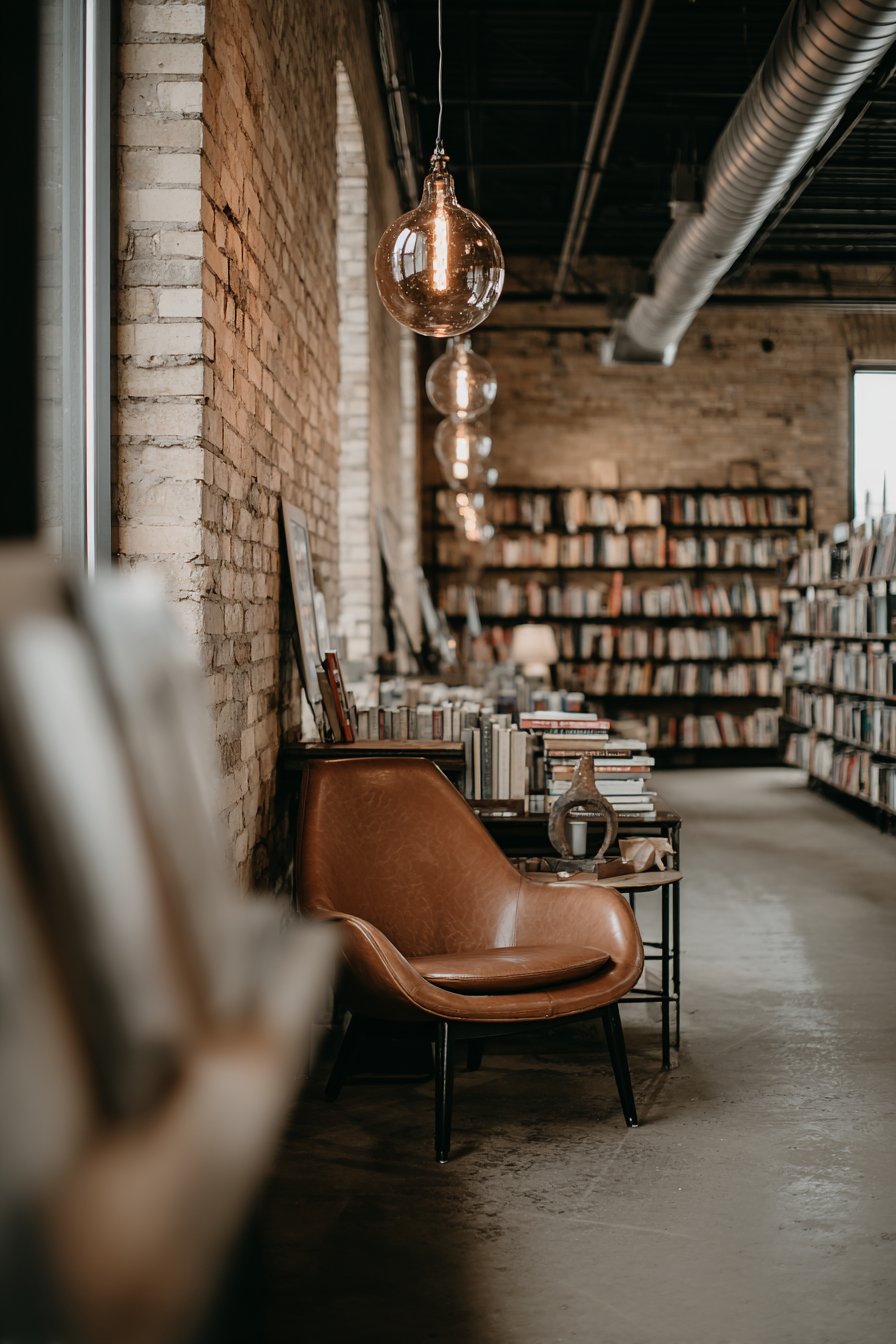
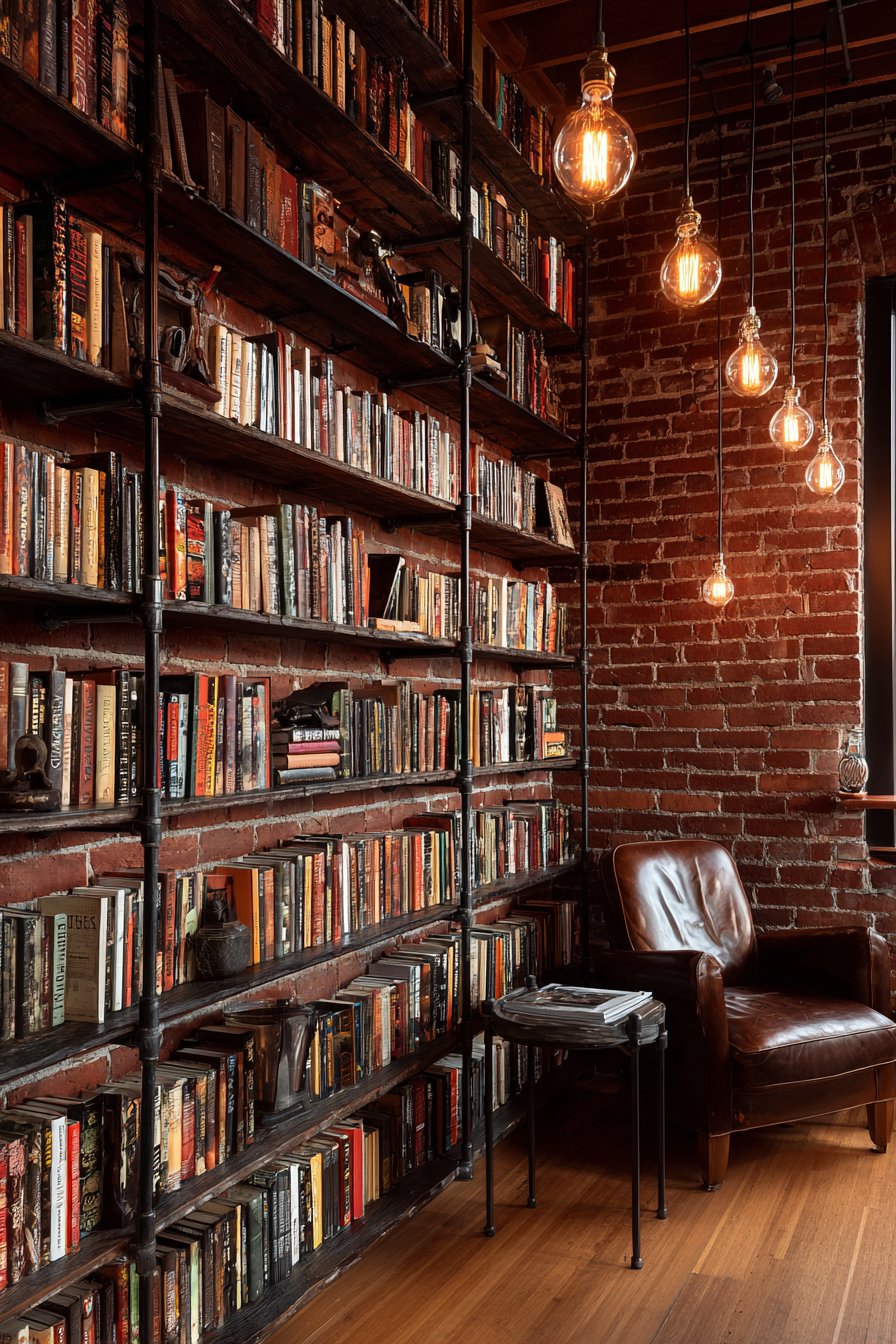
The industrial home library aesthetic celebrates raw, unfinished materials and utilitarian elements that most design styles would conceal. Black metal pipe shelving against exposed brick walls creates a dramatic backdrop that gives books and reading an unexpectedly edgy, urban quality. The pipe framework—typically constructed from one-inch black iron pipe and flanges—provides robust support capable of handling substantial book weight while contributing strong linear elements that define the space’s character. This DIY-friendly approach allows for customization and can be substantially more affordable than traditional built-in cabinetry.
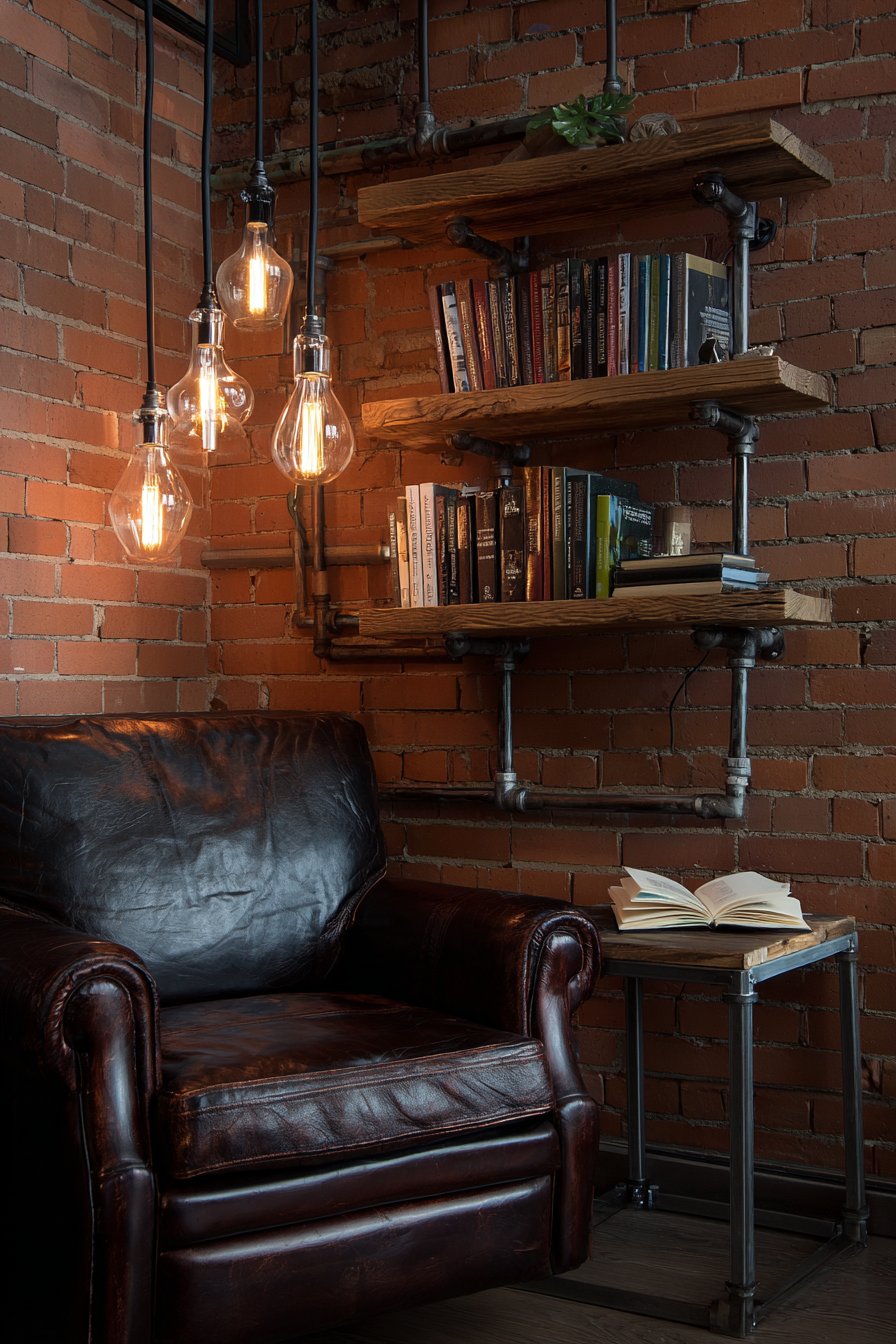
Reclaimed wood planks serve as shelves, introducing warmth and organic texture that balances the metal’s hardness. Each plank bears the marks of its previous life—nail holes, saw marks, weathering, and patina—making every shelf unique. This imperfection aligns with industrial design’s appreciation for authentic materials and honest construction. The thickness of the wood (typically 2-inch nominal lumber) provides sufficient strength for loaded shelves while contributing visual heft appropriate to the robust aesthetic.
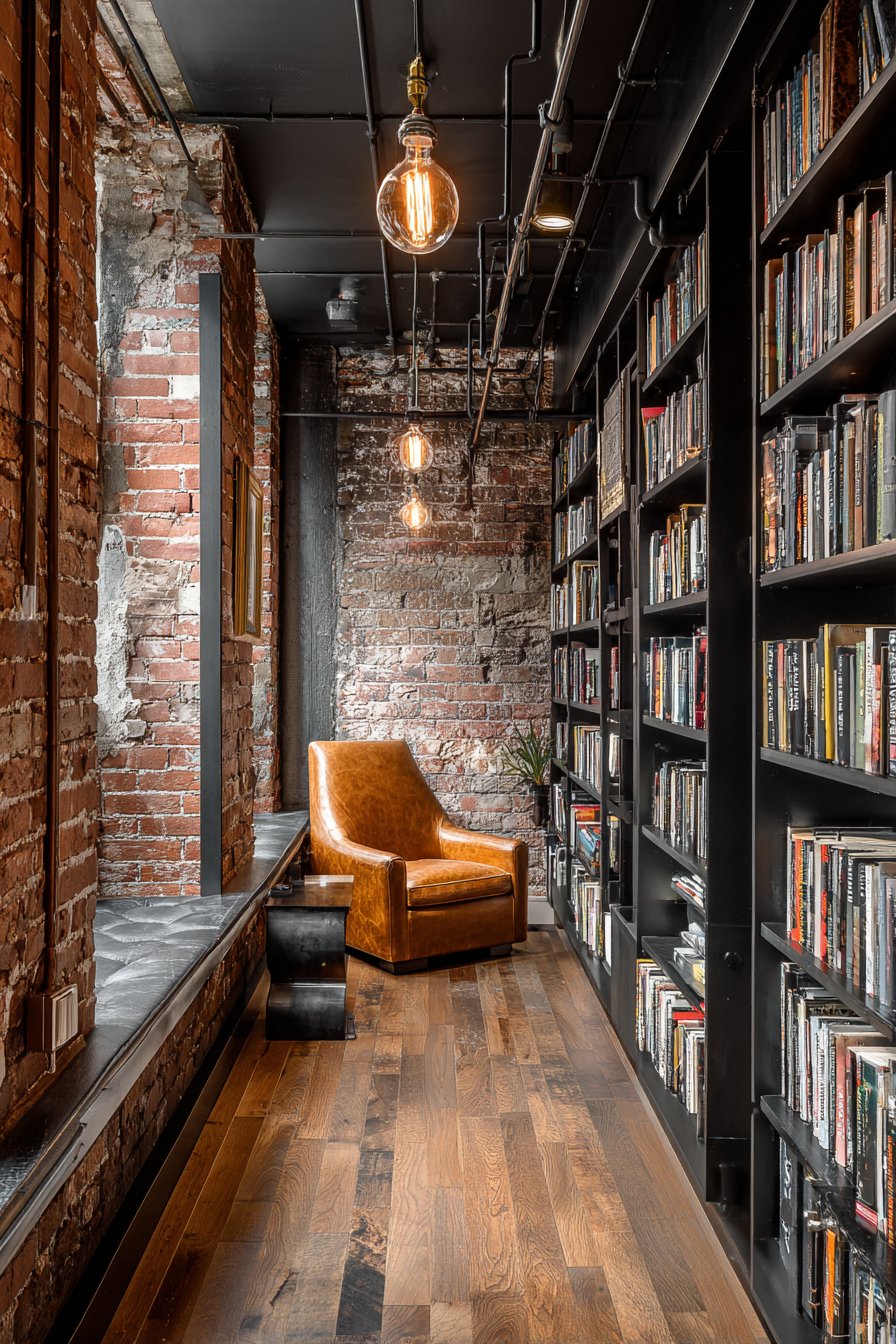
A vintage leather reading chair and steel side table create a masculine reading corner that celebrates materiality and craftsmanship. The leather’s rich patina and the steel’s raw finish epitomize industrial design’s preference for materials that age beautifully rather than deteriorate. Edison bulb pendant lights suspended from black cloth-covered cord provide warm ambient lighting while serving as sculptural elements in their own right—the visible filaments celebrating the beauty of functional objects.
Key Design Tips:
- Use authentic black iron pipe rather than painted alternatives for the most authentic industrial look
- Seal exposed brick walls to prevent dust and crumbling mortar while maintaining their raw appearance
- Choose reclaimed wood planks at least 1.5 inches thick to prevent sagging under book weight
- Install Edison bulbs on dimmer switches to control light intensity and extend bulb life
- Balance hard materials with soft textiles like leather, wool throws, or canvas cushions
9. Double-Height Library with Spiral Staircase
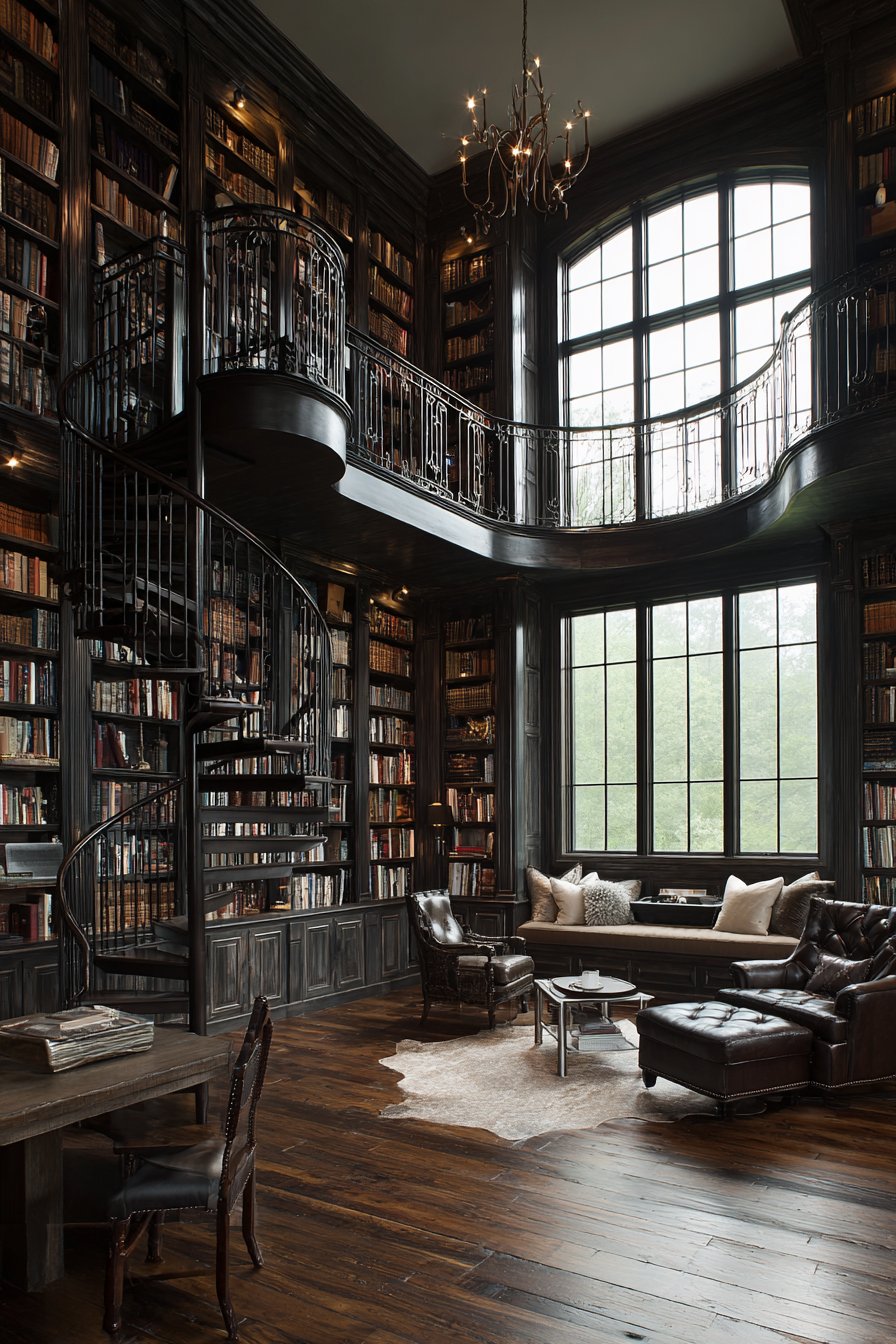
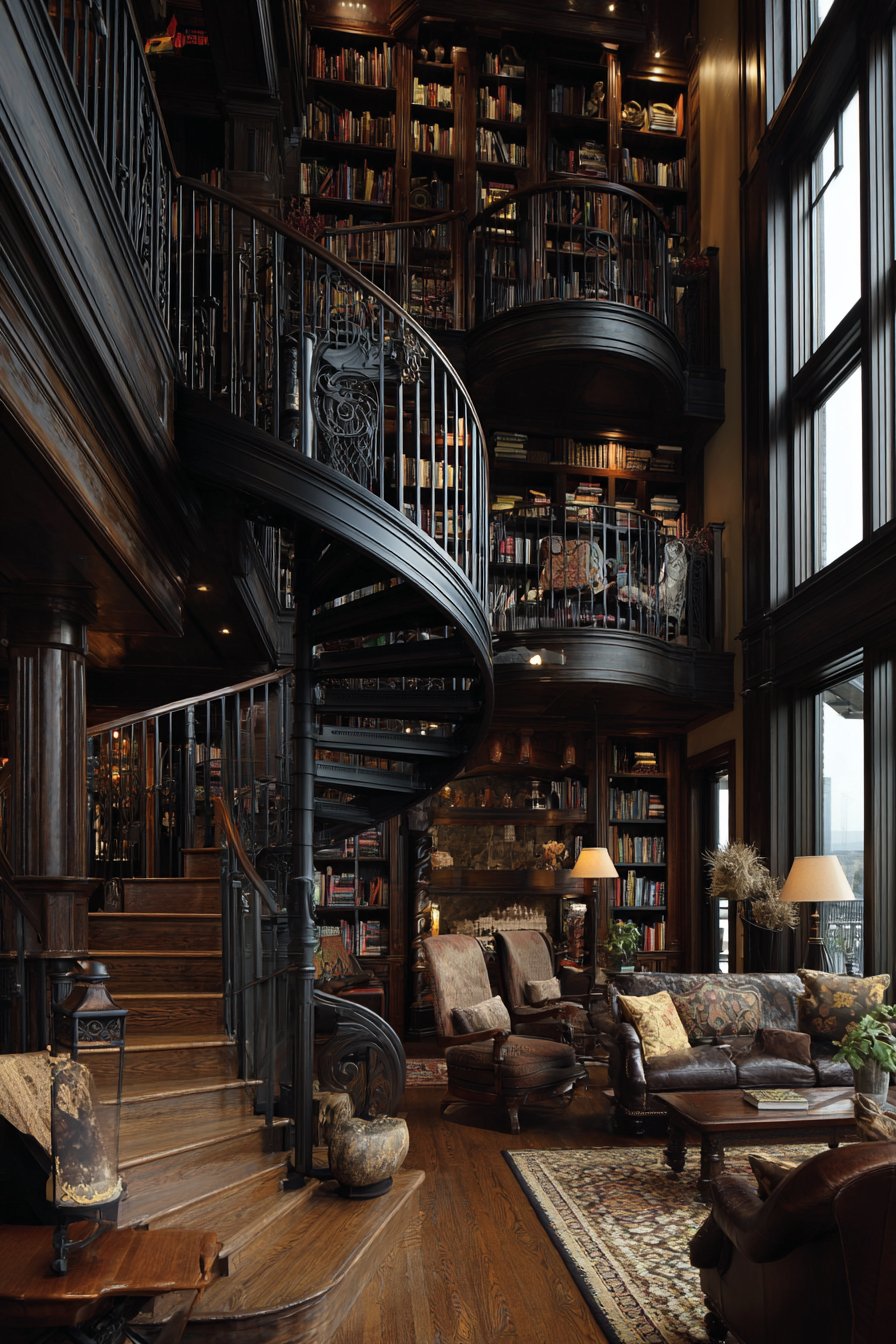
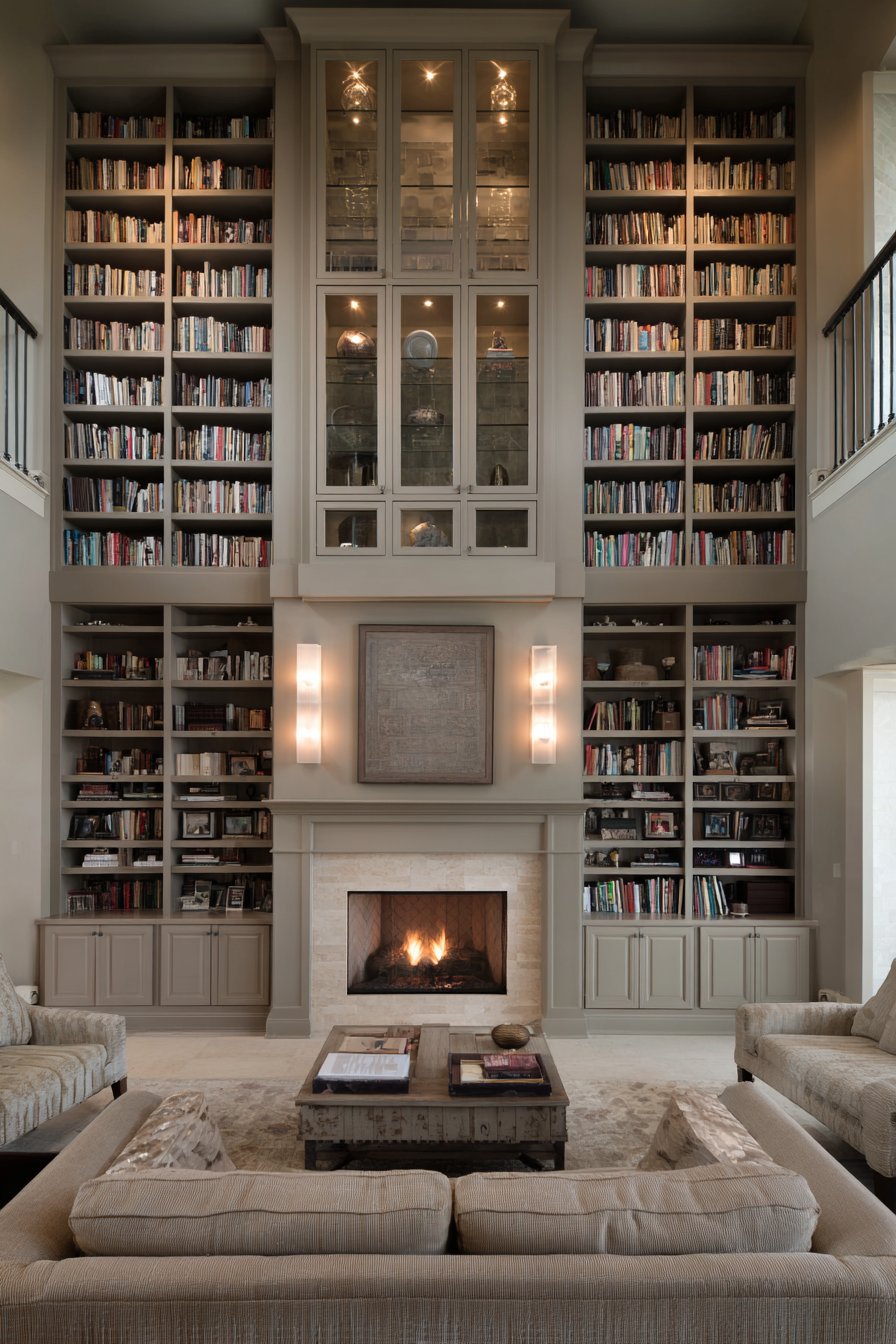
The double-height library represents the ultimate bibliophile’s fantasy—a space where books command architectural significance and reading becomes an elevated experience in every sense. Built-in bookshelves reaching sixteen feet high make dramatic use of vertical space, transforming book storage from furniture into architecture. This approach proves particularly effective in homes with two-story living areas, lofts, or spaces with vaulted ceilings where the height might otherwise feel empty or undefined. The sheer volume of books that can be housed in such a space allows serious collectors to keep their entire library in one location rather than distributed throughout the home.
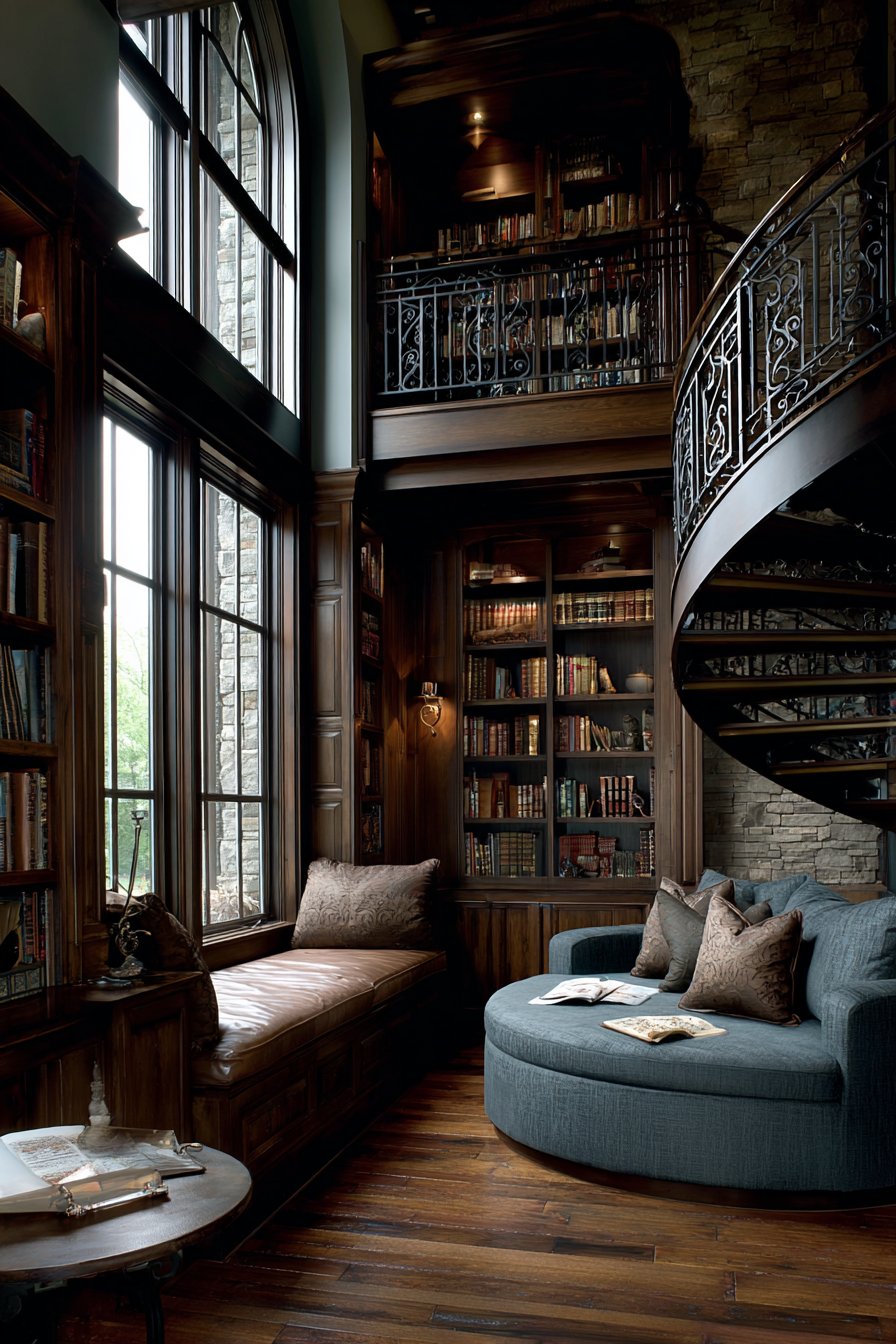
A spiral staircase in wrought iron provides access to an upper gallery level with iron railings, creating a sculptural element that becomes the room’s focal point even when viewed from outside the space. The spiral form occupies minimal floor space compared to traditional straight or L-shaped stairs, making it ideal for retrofitting into existing spaces. The wrought iron construction contributes to the library’s sense of permanence and craftsmanship while the openness of the design maintains visual connection between levels.
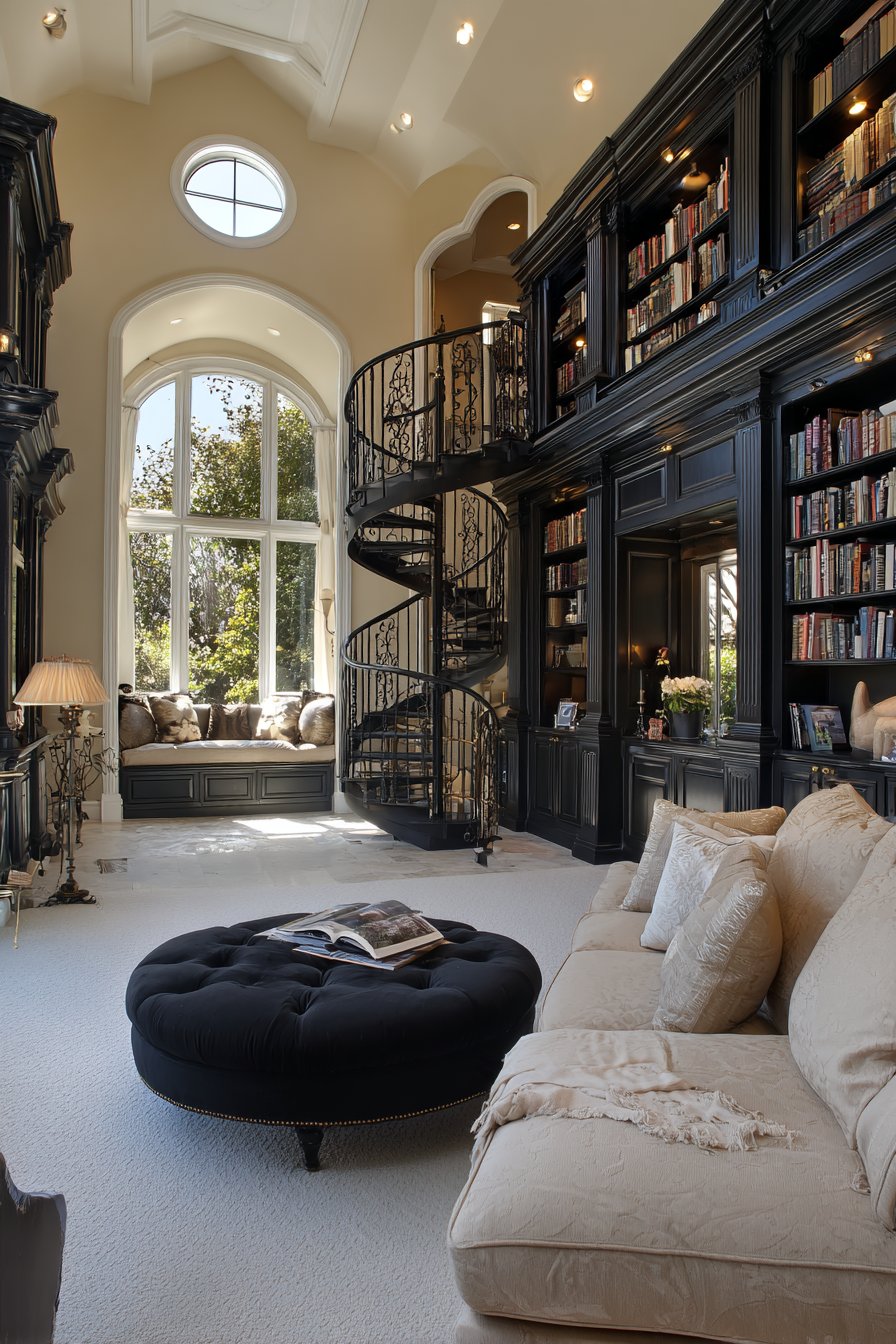
Multiple reading nooks positioned at different levels feature window seats with cushions, each offering a unique vantage point and atmosphere. Lower level nooks provide cozy, grounded spaces for extended reading sessions, while upper gallery perches offer bird’s-eye views that create a sense of remove from everyday concerns. Natural light pours in from clerestory windows positioned above the upper gallery level, washing the upper shelves in sunlight while creating dramatic light shafts that change throughout the day.
Key Design Tips:
- Ensure the spiral staircase meets local building codes for tread width, riser height, and headroom clearance
- Install the staircase on the library’s periphery rather than center to maintain visual continuity of the book wall
- Use consistent shelving materials and finishes from floor to ceiling to create architectural unity
- Position clerestory windows on the south side for maximum natural light without direct UV exposure to books
- Include multiple seating options at various heights to encourage exploration of the entire vertical space
10. Cottage-Style Reading Nook Under Sloped Ceiling
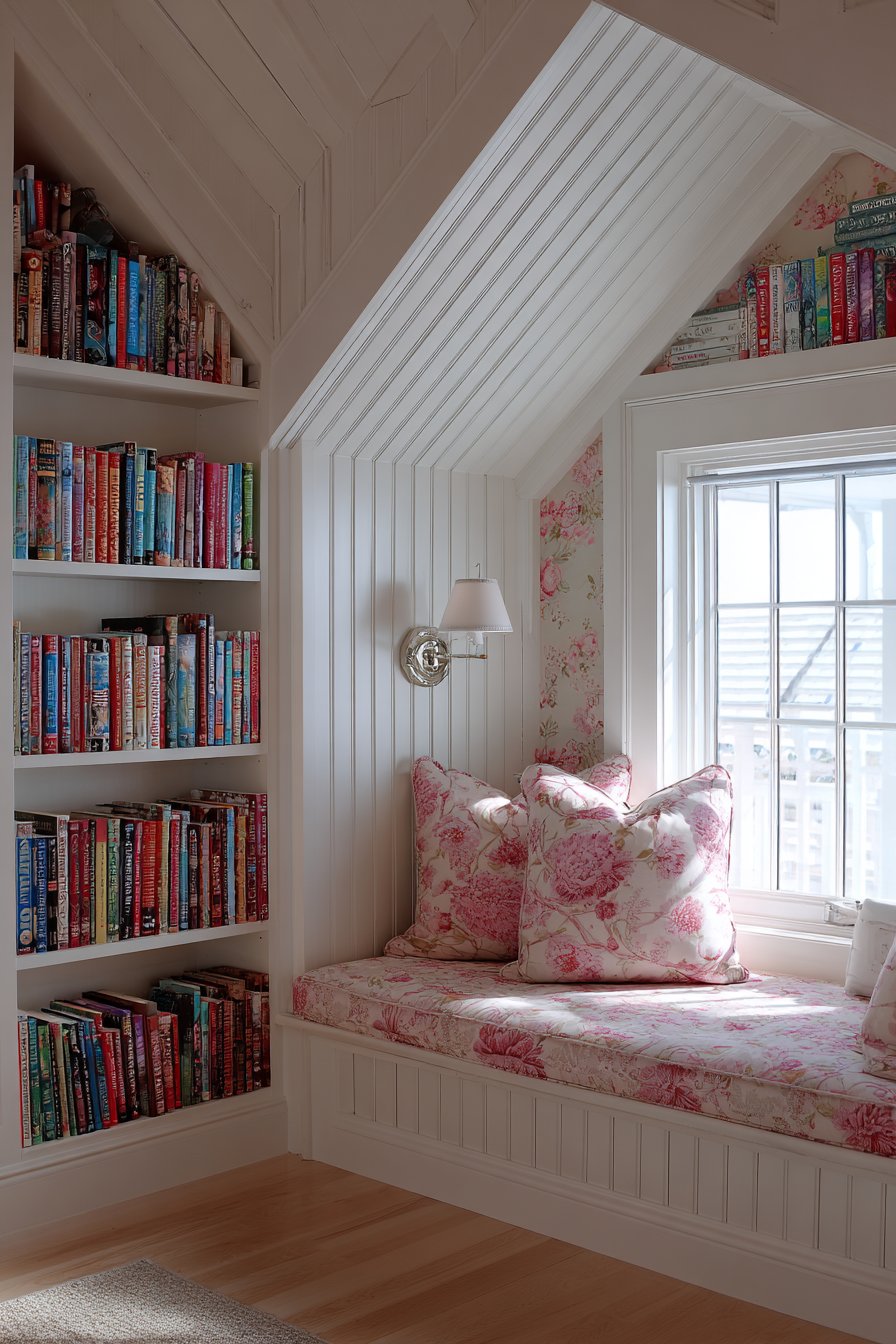
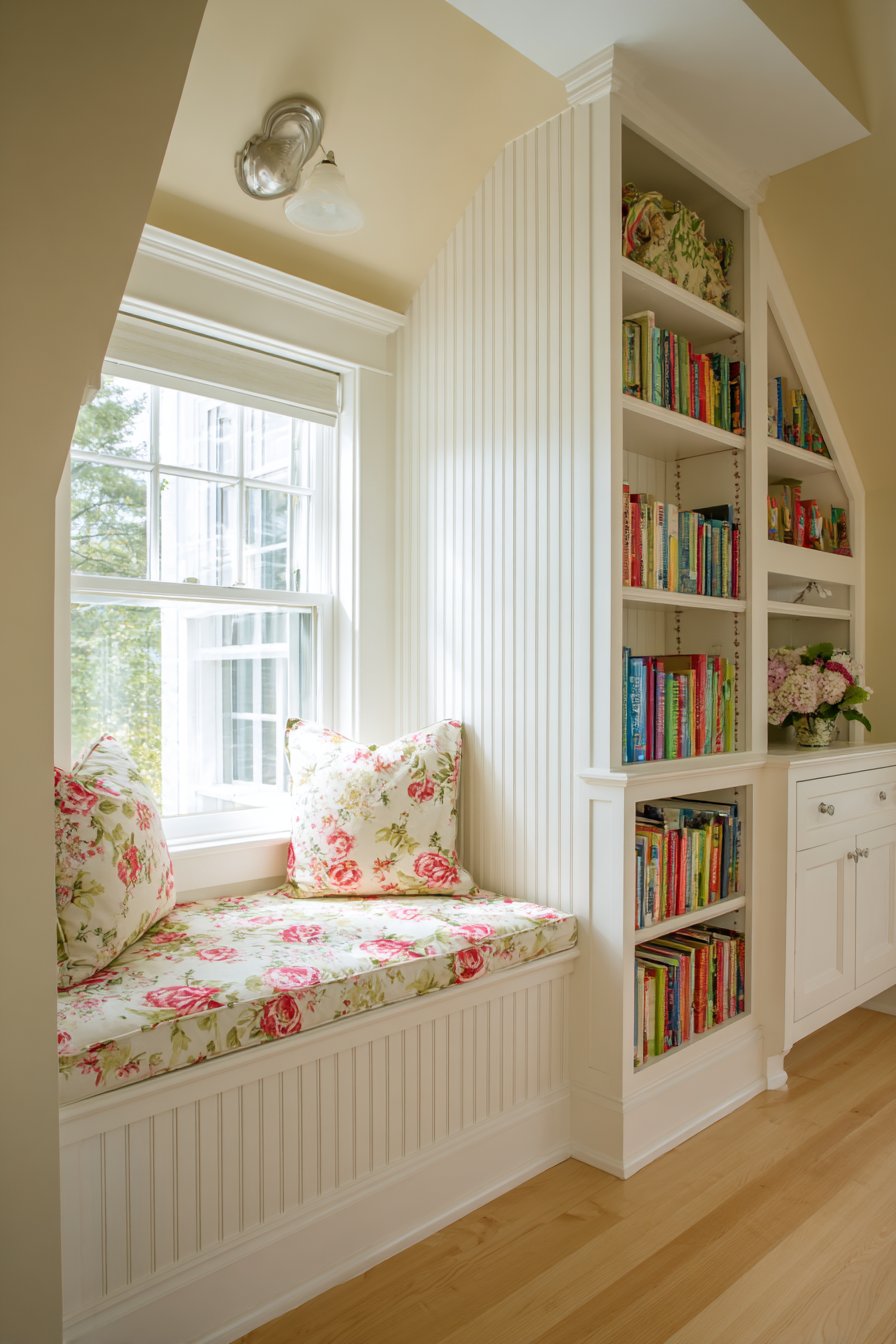
The cottage-style home library makes a virtue of architectural limitations, transforming a sloped ceiling from a constraint into a charming feature that defines the space’s character. White-painted built-in shelves with beadboard backing create a classic cottage aesthetic that feels fresh, clean, and welcoming. The beadboard—with its narrow vertical planks and distinctive grooves—adds textural interest and cottage authenticity while providing a clean backdrop that makes colorful book spines pop. This treatment works particularly well in attic conversions, under staircases, or in rooms with dormer windows where ceiling angles create cozy, tucked-away spaces.
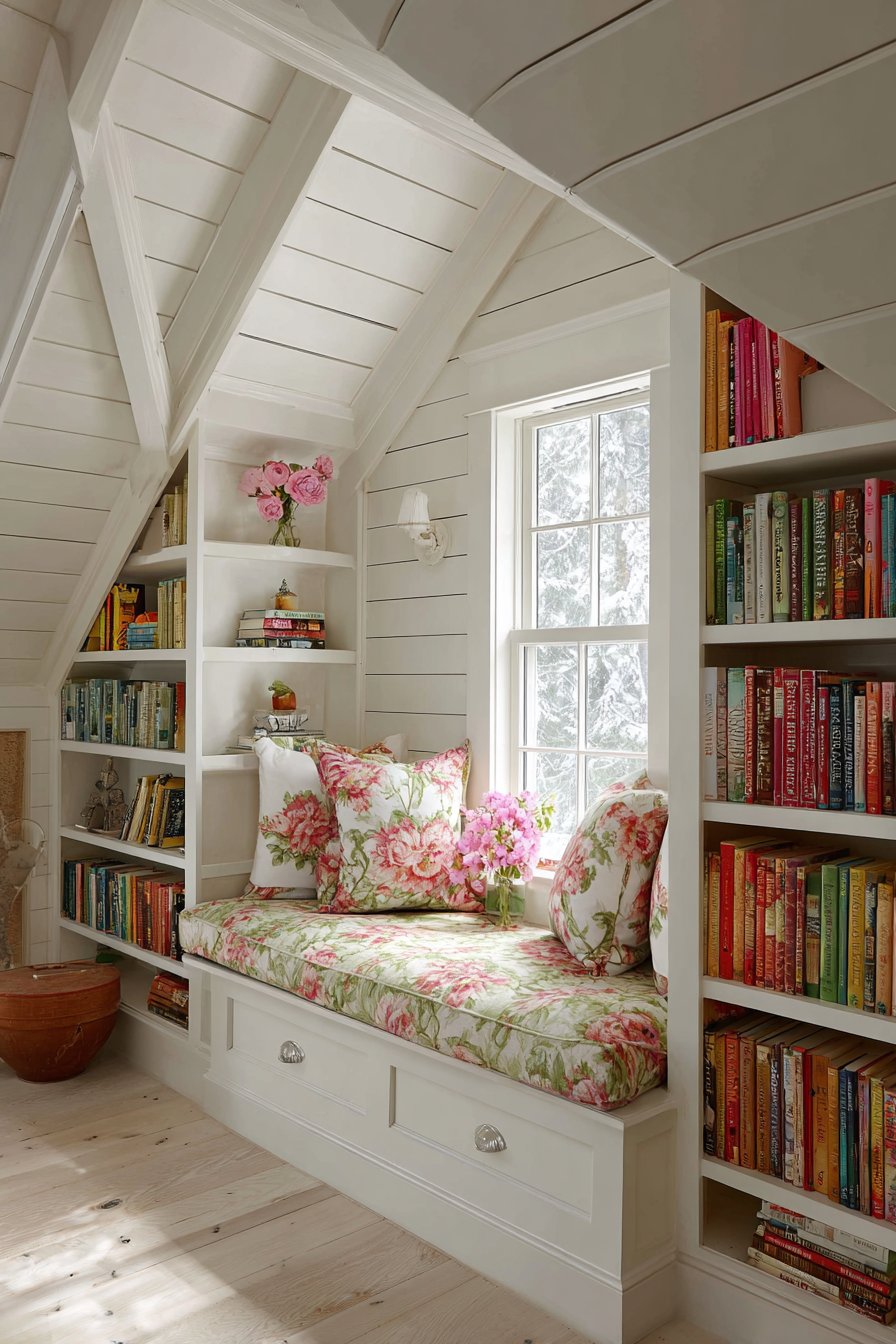
The colorful book spines themselves become the primary decorative element, their varied hues creating a cheerful, lived-in display that exemplifies cottage style’s unpretentious warmth. Rather than organizing books by color or in uniform sets, cottage libraries often group books by subject or sentiment, creating collections that reflect actual reading interests and family history. Well-worn favorites, inherited books, and current reads intermingle in an honest display that prioritizes accessibility over aesthetic perfection.
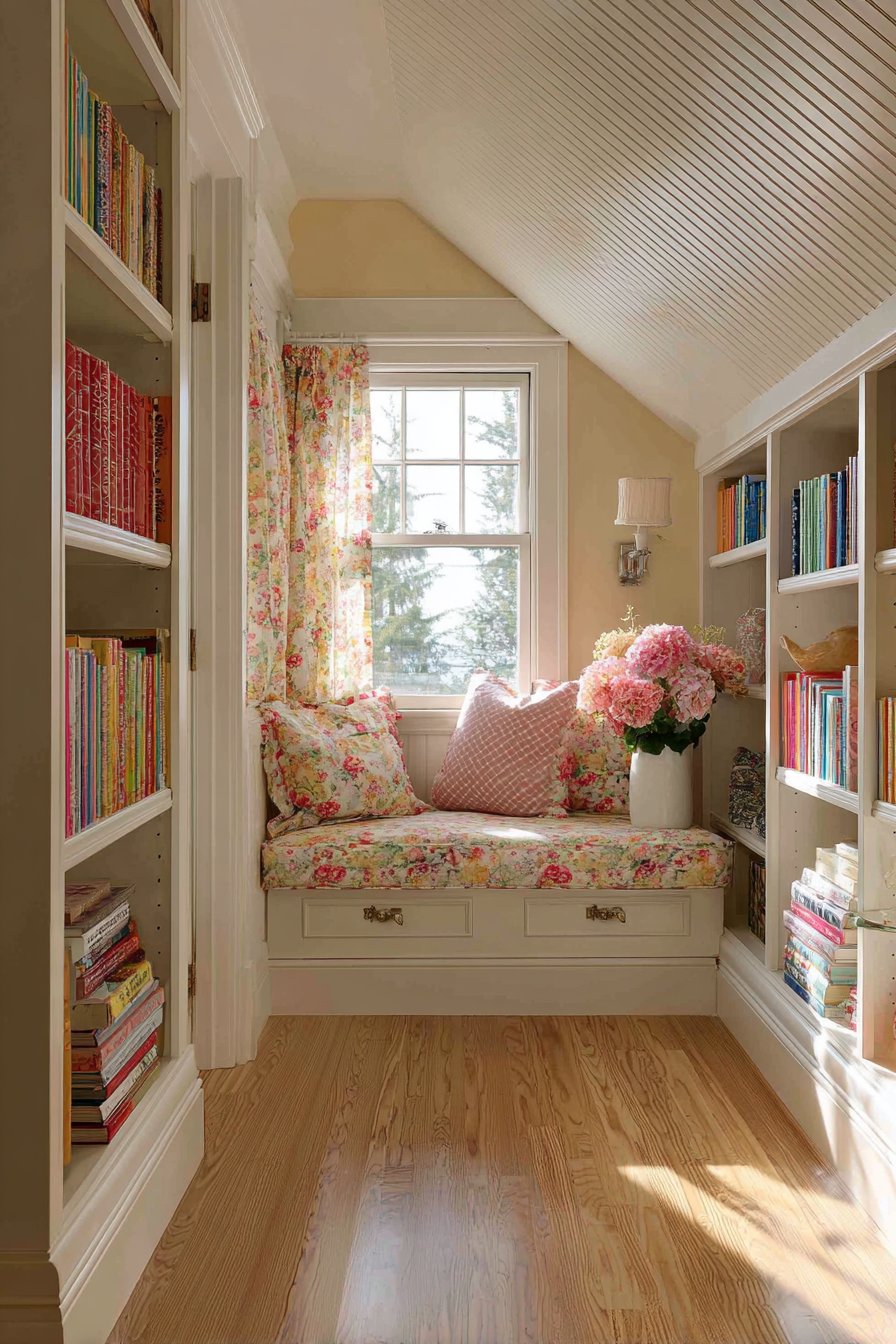
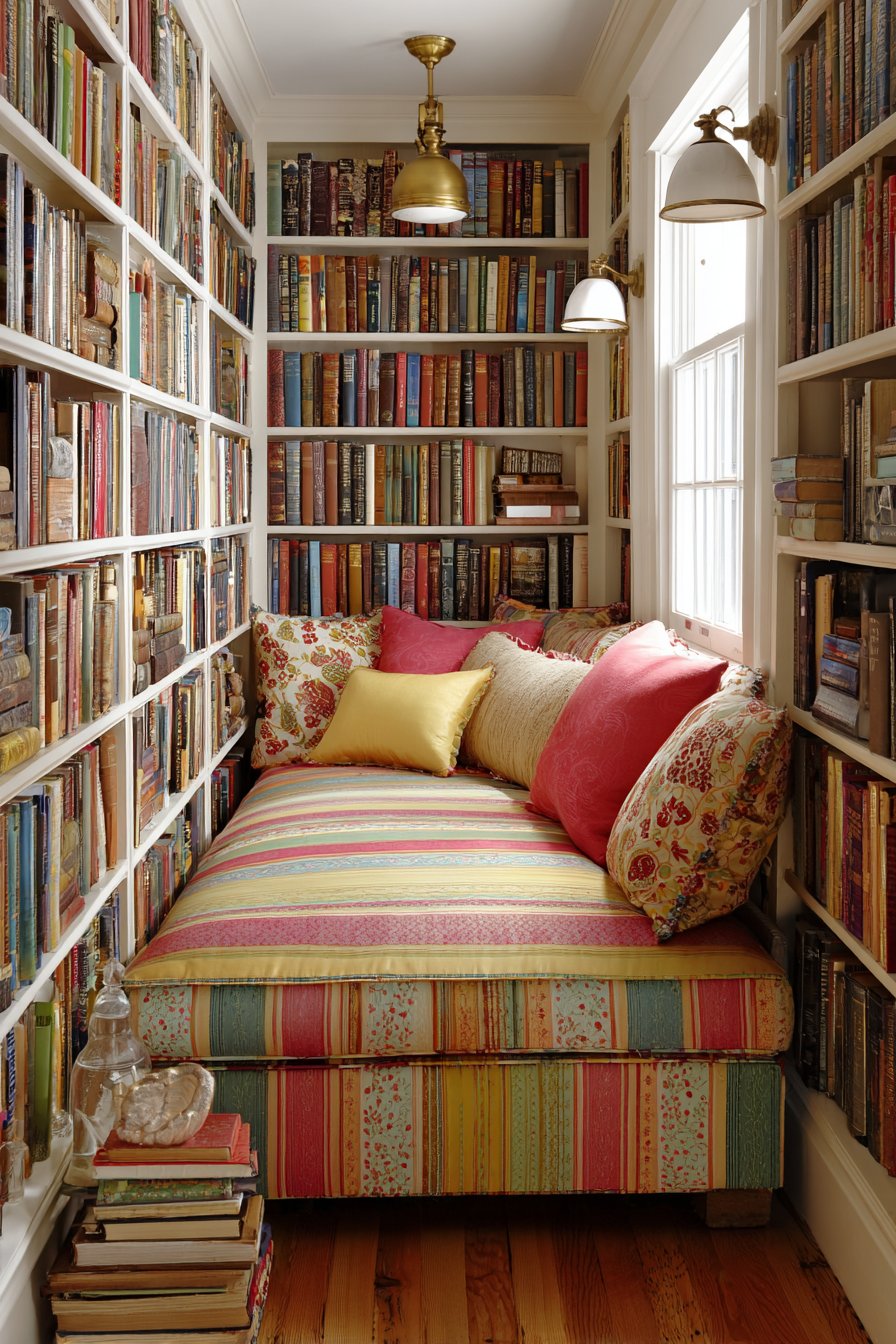
A cushioned window seat nestled between the shelving units provides the quintessential cottage reading experience—natural light, comfortable cushioning, and the feeling of being tucked into a private retreat. Floral print pillows add pattern and softness while connecting to cottage style’s garden-inspired aesthetic. The window seat typically includes storage underneath, providing hidden space for overflow books, seasonal items, or children’s toys that keeps the visible space tidy while maximizing functionality.
Key Design Tips:
- Paint built-ins in bright white to maximize light reflection in spaces with limited ceiling height
- Use beadboard panels instead of solid backing to add authentic cottage detail and visual interest
- Install adjustable shelving to accommodate the changing ceiling height along sloped areas
- Choose outdoor-grade cushion foam for window seat cushions as it maintains loft better than standard foam
- Include storage drawers or lift-top seats in window seat design to maximize the space’s functionality
11. Contemporary Library with Integrated LED Lighting
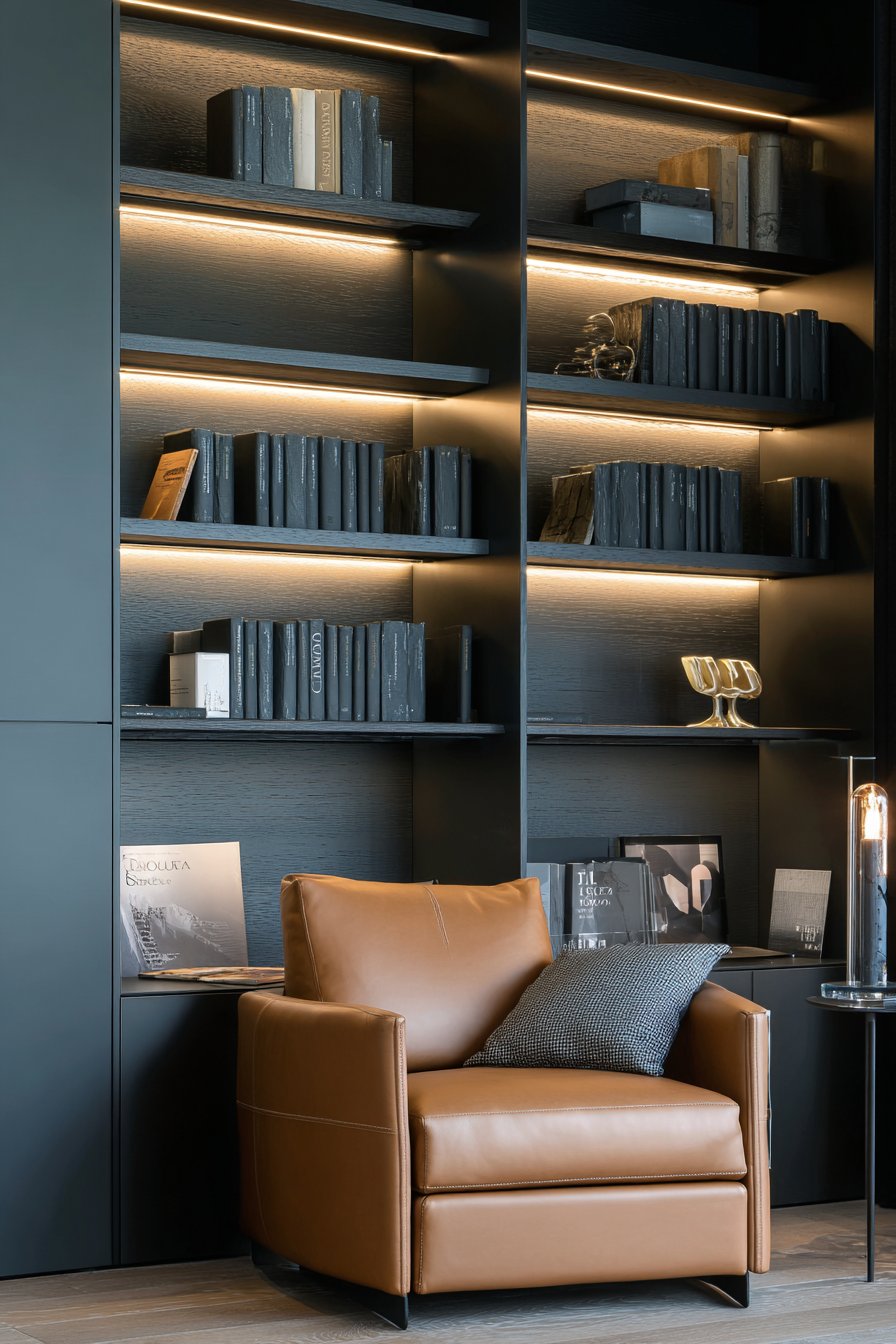
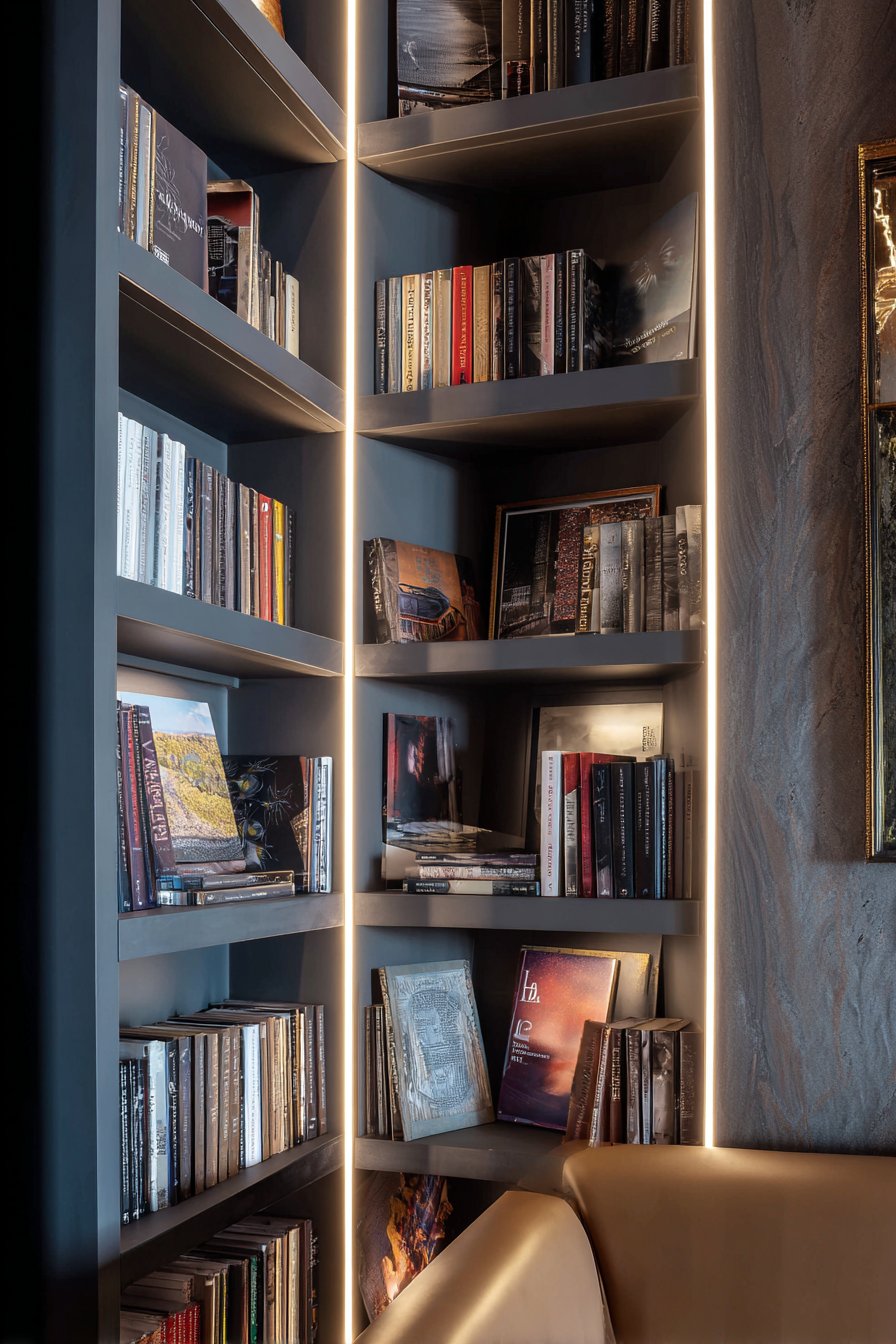
Contemporary home library design embraces technology and precision, creating spaces that feel gallery-like in their attention to display and lighting. Sleek lacquered shelving in deep charcoal gray provides a dramatic backdrop that makes books appear to float when lit from behind. The smooth, reflective surface of lacquered finish creates a sense of luxury and sophistication while being remarkably practical—the sealed surface resists fingerprints and can be easily wiped clean. The dark color recedes visually, allowing the illuminated books to take center stage.
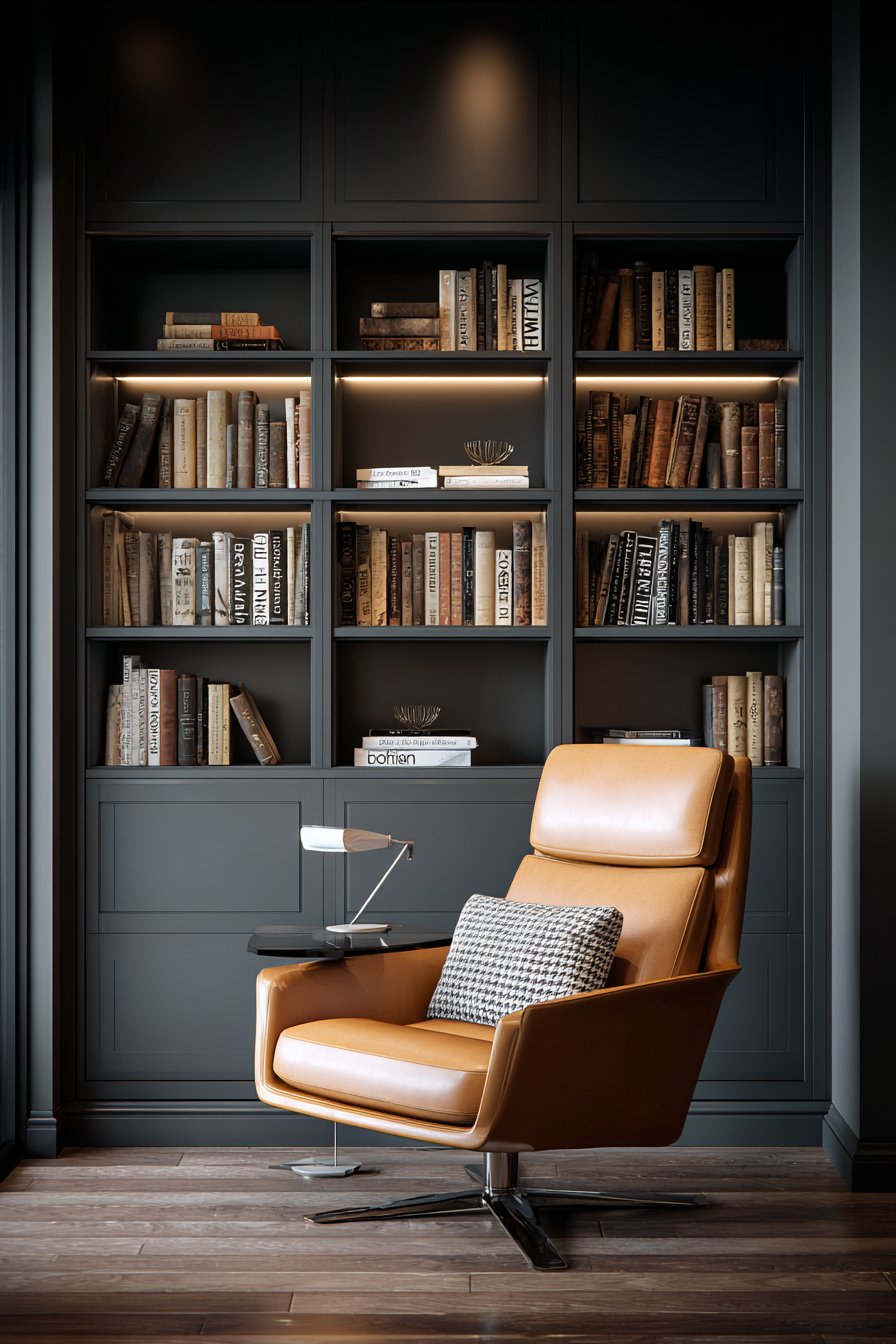
Integrated LED strip lighting installed along each shelf level provides even, adjustable illumination that highlights book spines while creating dramatic visual effects. The light sources remain hidden within the shelving structure, visible only as glowing lines that emphasize the horizontal planes. This lighting approach serves both practical and aesthetic purposes: making titles easily readable at any time of day while creating ambiance that transforms the library into a feature wall worthy of a high-end interior design magazine. The color temperature of LEDs can be selected to create warm (2700K-3000K) or cool (4000K-5000K) light depending on the desired atmosphere.
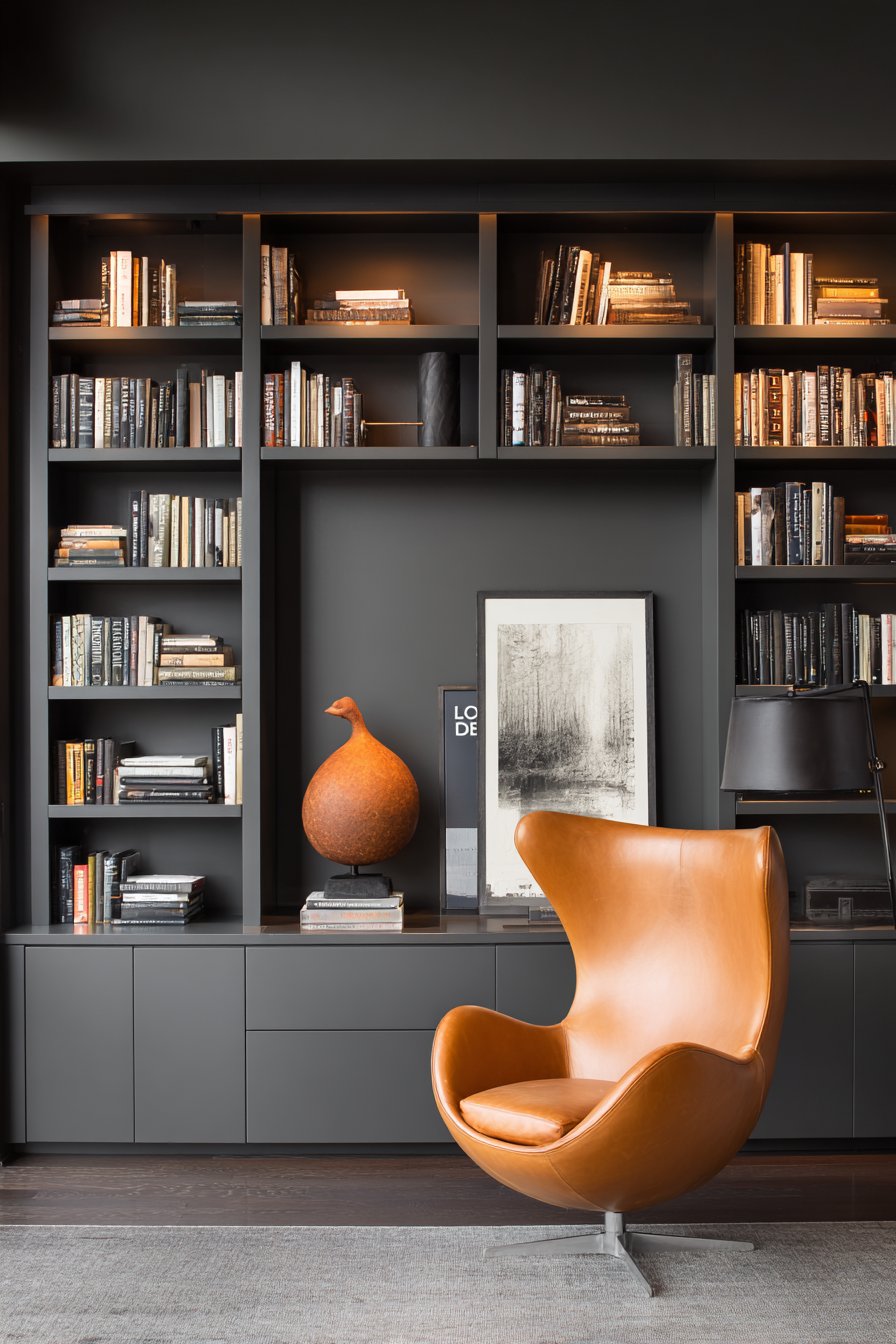
Books arranged with careful spacing create a gallery-like display where each volume receives individual attention rather than being packed tightly as in traditional libraries. This curatorial approach treats books as objects of beauty in their own right, celebrating their covers, spines, and physical presence. Large format art books and design monographs displayed face-out on lower shelves serve as sculptural elements that add visual weight and interest to the composition.
Key Design Tips:
- Choose LED strips with high CRI (Color Rendering Index above 90) to display book colors accurately
- Install dimmer switches to adjust lighting intensity based on time of day and desired mood
- Use low-voltage LED systems for safety and to reduce visible wire sizes
- Arrange books with 1-2 inches of space between volumes to create the gallery effect
- Display oversized books face-out on lower shelves where they’re most accessible and visible
12. Sage Green Library with Brass Hardware
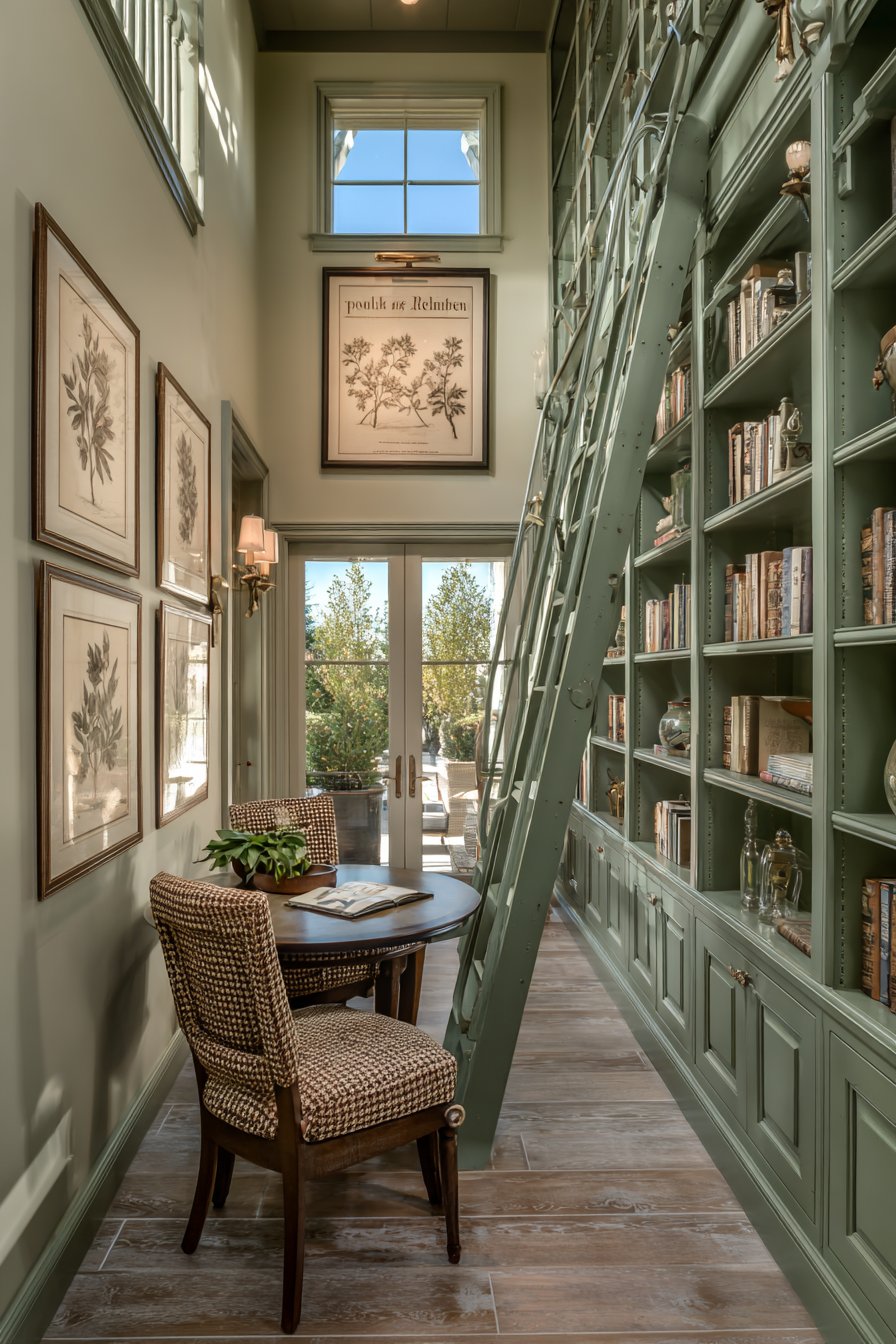
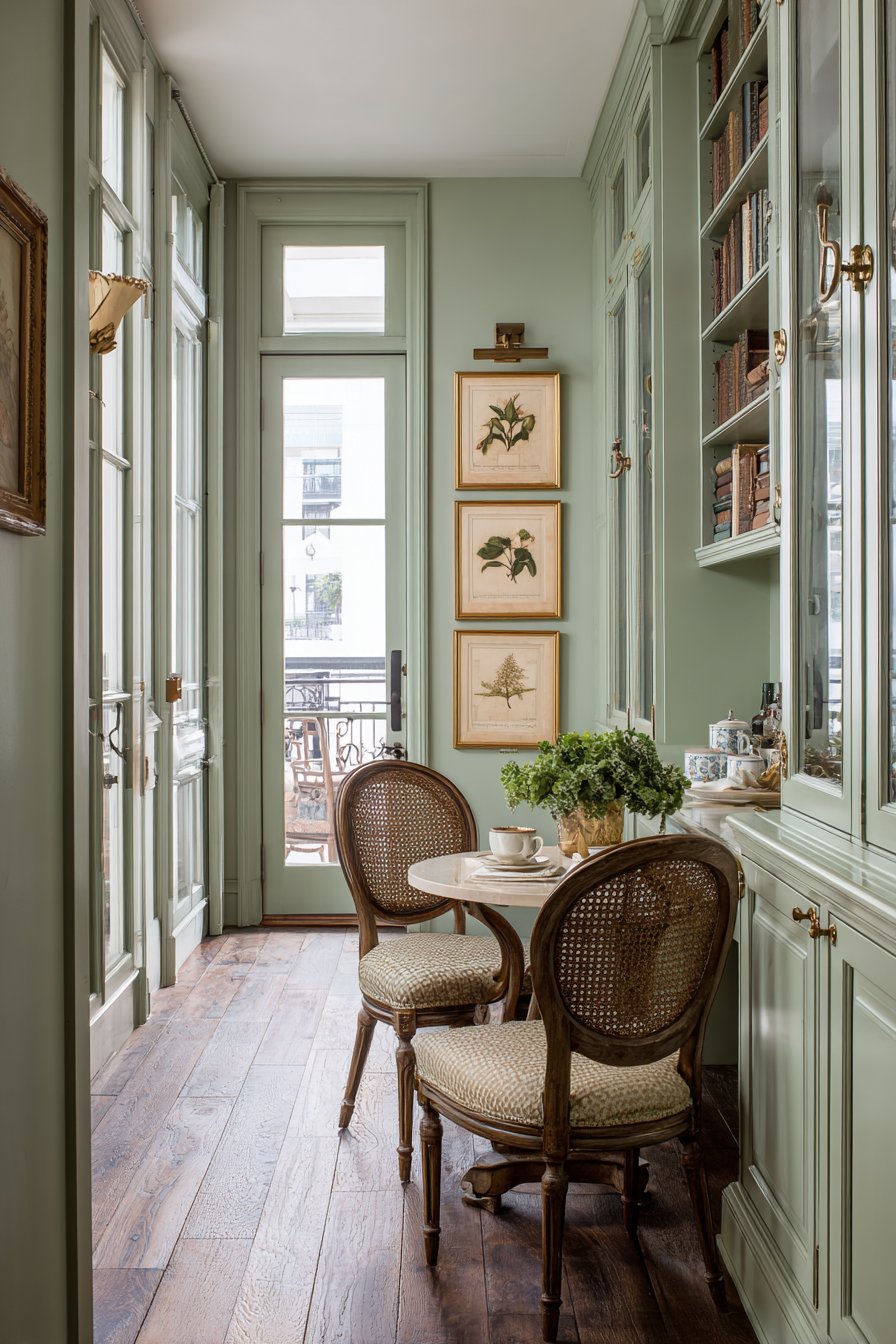
Color introduces personality and emotional resonance to home libraries, and sage green creates an atmosphere of tranquility and sophistication that feels both fresh and timeless. A library wall painted in this soft, grayed green provides a colored backdrop that flatters books while creating a distinctive identity. The color’s subtlety prevents it from overwhelming the space while providing enough chromatic presence to make a clear design statement. Sage green works particularly well in libraries because it suggests nature, growth, and the quiet concentration of garden spaces—qualities that align perfectly with reading’s contemplative nature.
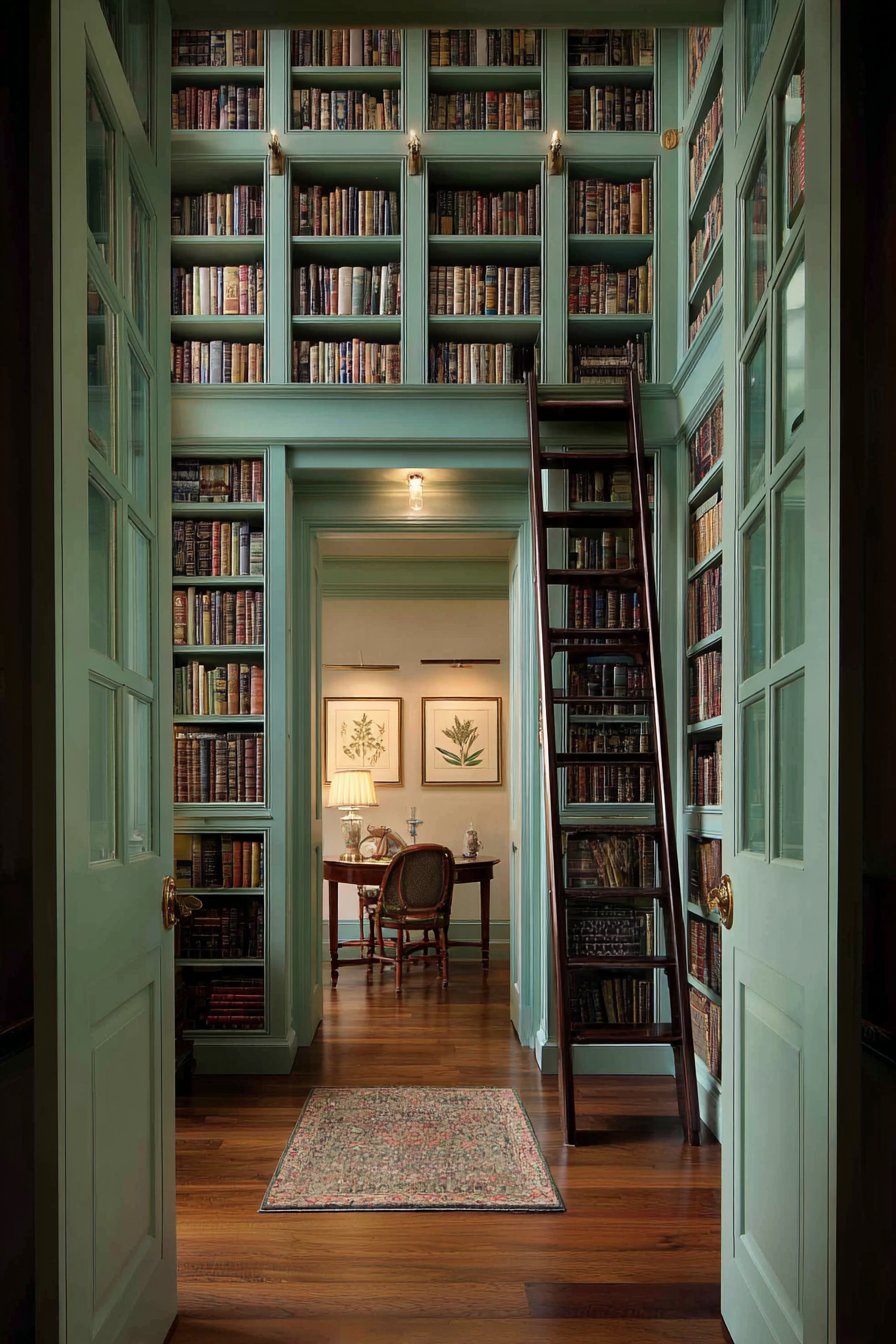
Built-in ladder systems provide access to floor-to-ceiling storage while adding architectural drama and vintage charm. Modern safety standards require proper track installation and stable attachment points, but contemporary ladder systems can achieve the classic rolling library aesthetic while meeting current codes. The ladder becomes both a practical tool and a visual statement about the room’s purpose and the owner’s commitment to their collection.
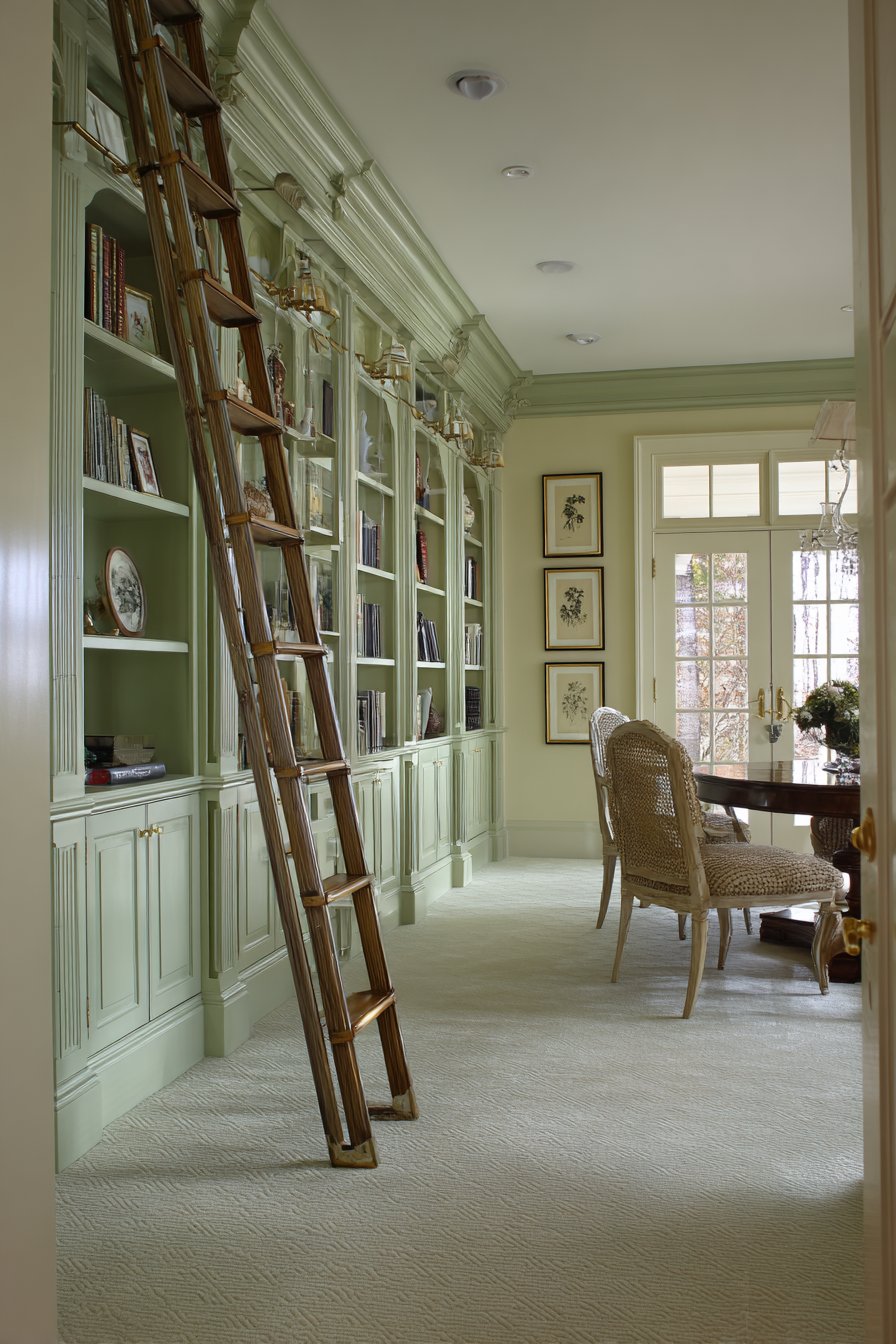
Antique brass hardware and fixtures add warmth and luster against the colored shelving, creating points of light that catch the eye and provide visual punctuation. Brass’s warm gold tones complement sage green beautifully, creating a sophisticated color relationship that feels curated rather than accidental. The hardware includes not just the ladder’s wheels and mounting brackets but also shelf supports, cabinet pulls if lower storage is included, and picture lights that can be positioned to highlight special collections or featured books.
Key Design Tips:
- Test paint colors in the actual space, as sage green can read more blue or more gray depending on lighting
- Choose antique or aged brass finishes rather than bright brass for a more sophisticated appearance
- Install the ladder track securely into wall studs capable of supporting significant weight
- Use consistent hardware finishes throughout the room to create visual cohesion
- Position a round reading table centrally to create a study area that takes advantage of the room’s full aesthetic
13. Rustic Barn Wood Library
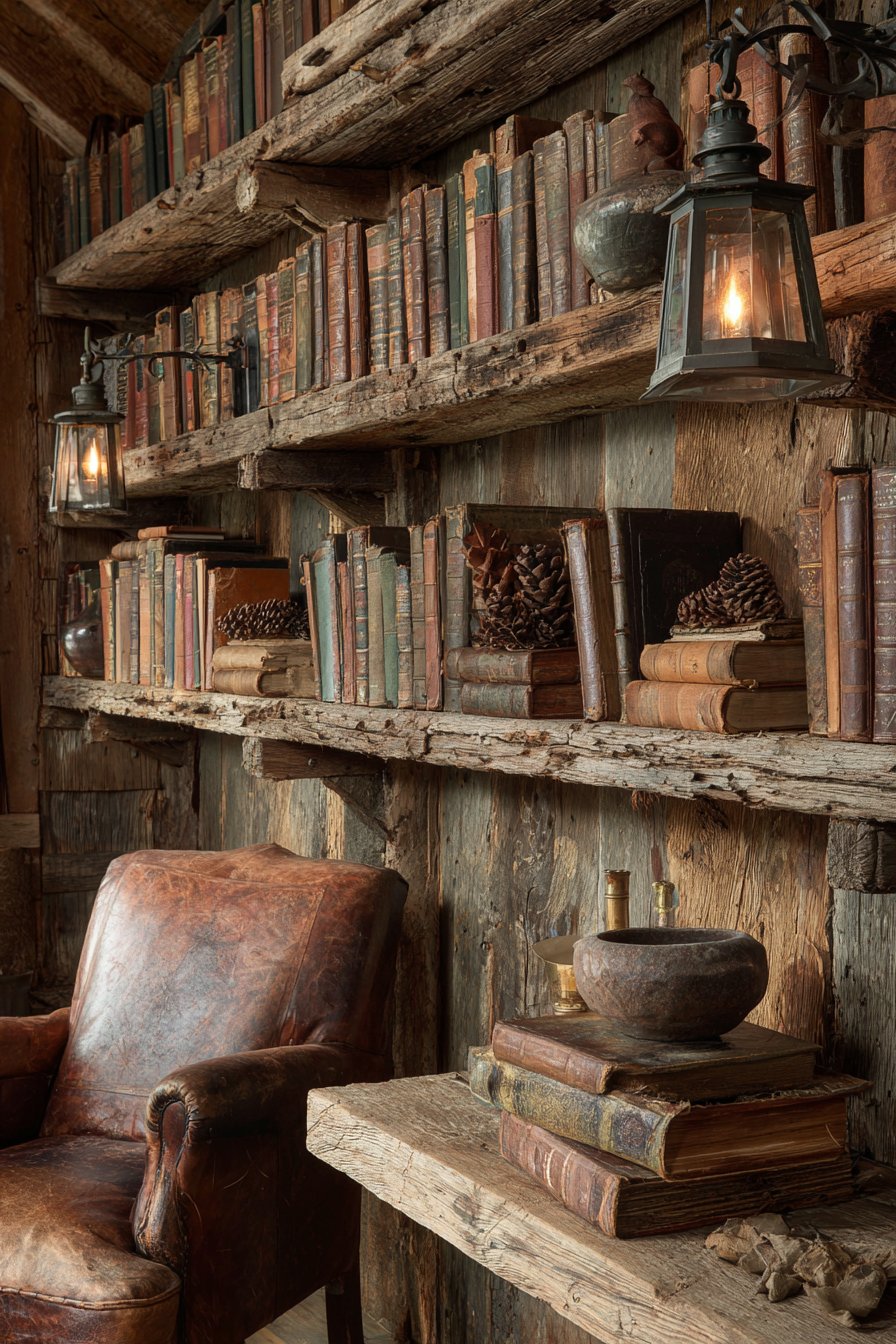
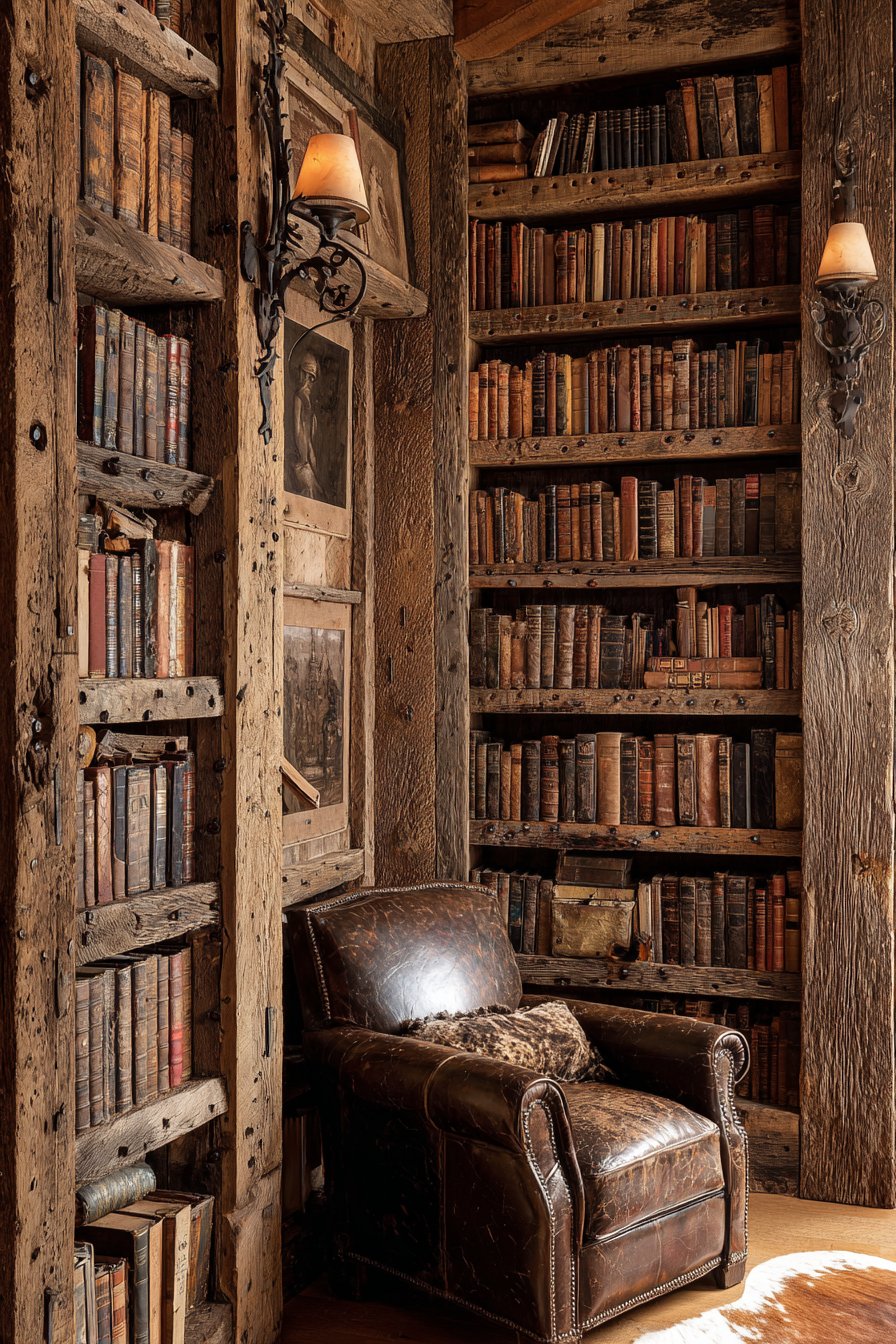
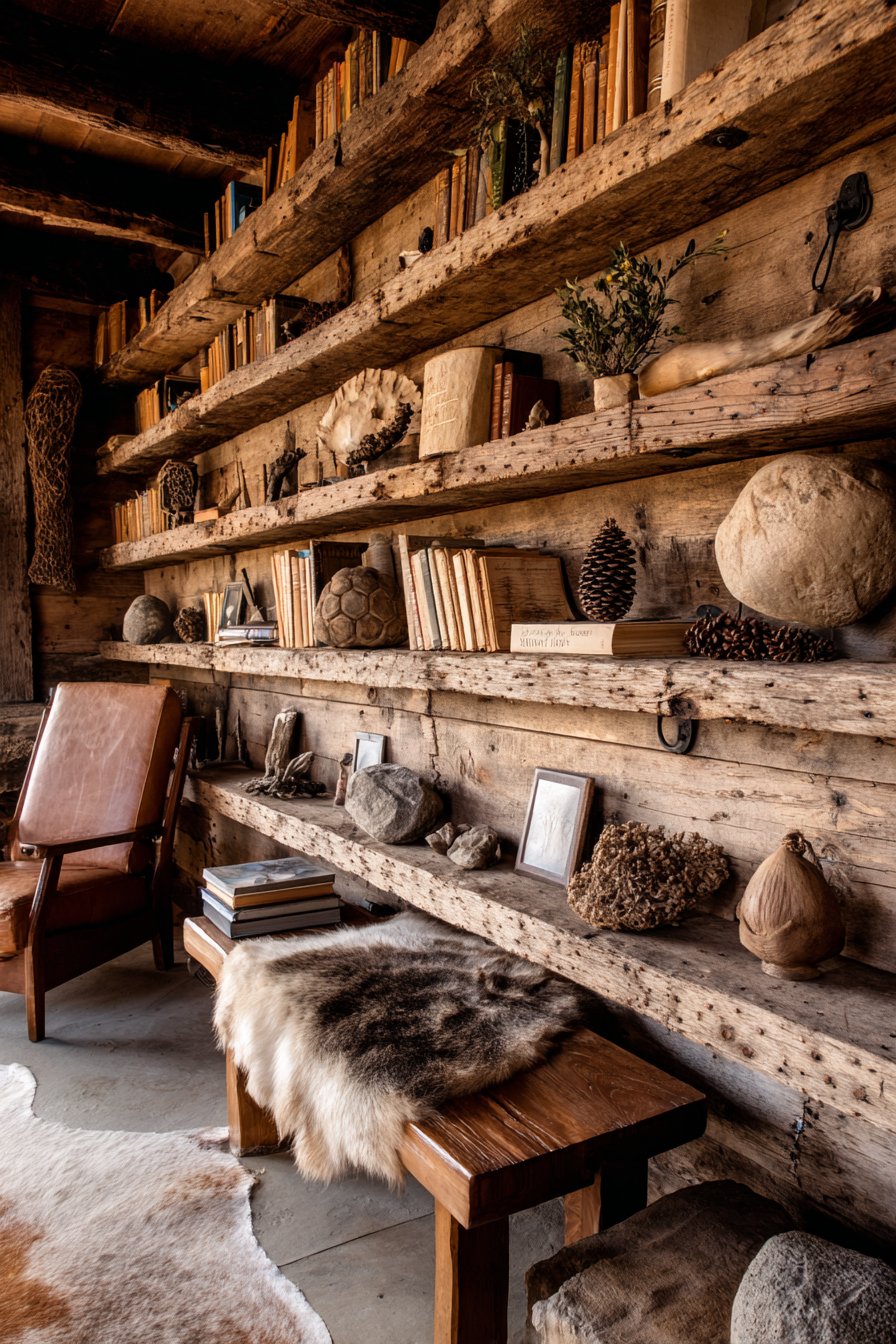
The rustic home library celebrates authenticity, natural materials, and the beauty of age and imperfection. Reclaimed barn wood shelving with visible nail holes, saw marks, and weathered patina brings generations of history into the present, creating shelves that tell stories before a single book is placed upon them. Each board’s unique weathering pattern, color variation, and surface texture makes the shelving itself a work of art. The rough-hewn character of barn wood provides a striking contrast to books’ uniform rectangles and smooth pages, creating visual and tactile interest.
Books mixed with vintage finds and natural objects like pinecones, driftwood, antlers, or river stones create an organic display that connects indoor reading space to outdoor inspiration. This collecting approach reflects a lifestyle that values nature, history, and authentic materials over mass-produced perfection. The objects chosen for display often carry personal significance—a pinecone from a memorable hike, driftwood from a family beach vacation, or inherited vintage items that connect to family history.
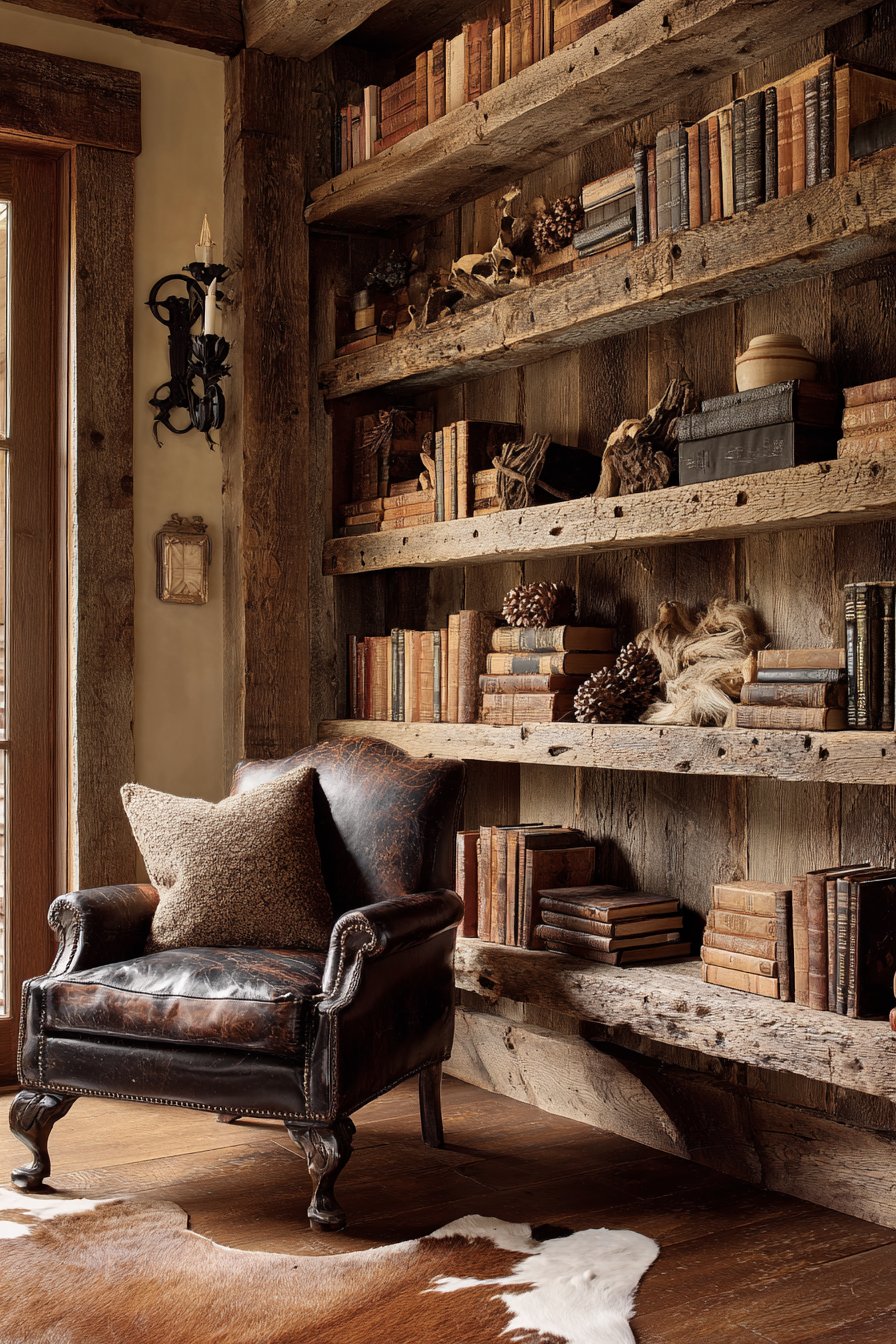
A worn leather club chair and cowhide rug create a cabin-like reading corner that invites relaxation and removal from modern life’s digital pressures. The leather’s patina and distressed surface celebrate honest aging rather than pristine newness, while the cowhide’s natural pattern and irregular shape introduce organic forms to the geometric grid of shelving and books. Wrought iron wall sconces with Edison bulbs provide ambient lighting that enhances the rustic atmosphere while offering warm, flattering light for reading.
Key Design Tips:
- Source reclaimed barn wood from architectural salvage yards or specialized suppliers who properly treat and prepare the wood
- Apply clear sealer to barn wood to stabilize the surface and prevent continued deterioration while maintaining the aged appearance
- Use heavy-duty shelf brackets rated for the combined weight of thick wood planks and book loads
- Mix book heights and orientations on shelves to create the collected-over-time aesthetic
- Choose leather furniture in brown, tan, or cognac tones that complement wood’s warm hues
14. Mid-Century Modern Teak Library
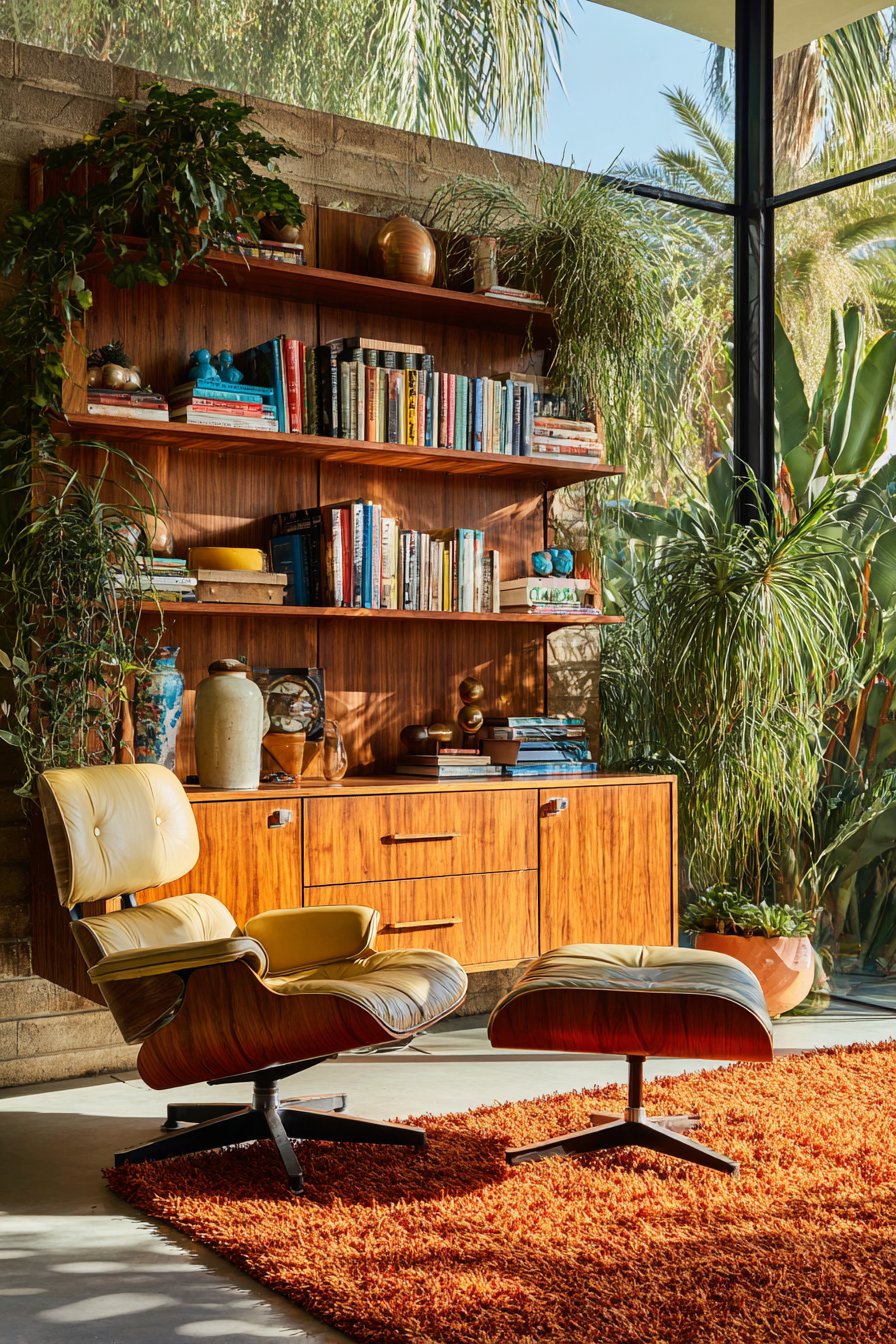
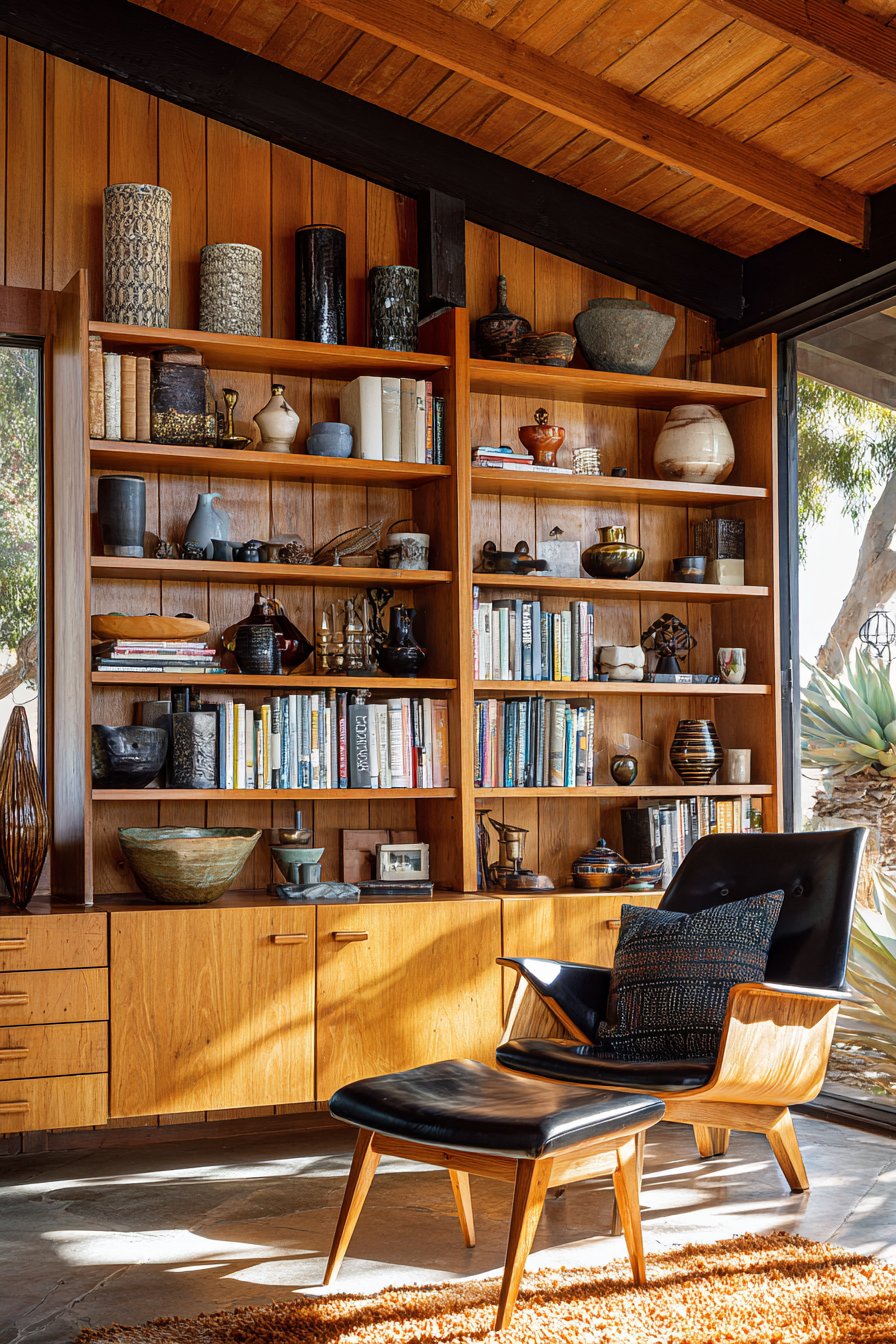
Mid-century modern design’s enduring popularity stems from its emphasis on form following function, quality materials, and clean lines—principles that translate beautifully to home library design. Teak wood modular shelving units featuring characteristic tapered legs and clean lines create a library system that can be configured and reconfigured as needs change. The modular approach—pioneered by Scandinavian designers in the 1950s and 60s—allows homeowners to start with a small configuration and expand over time, or to rearrange units when moving or redecorating.
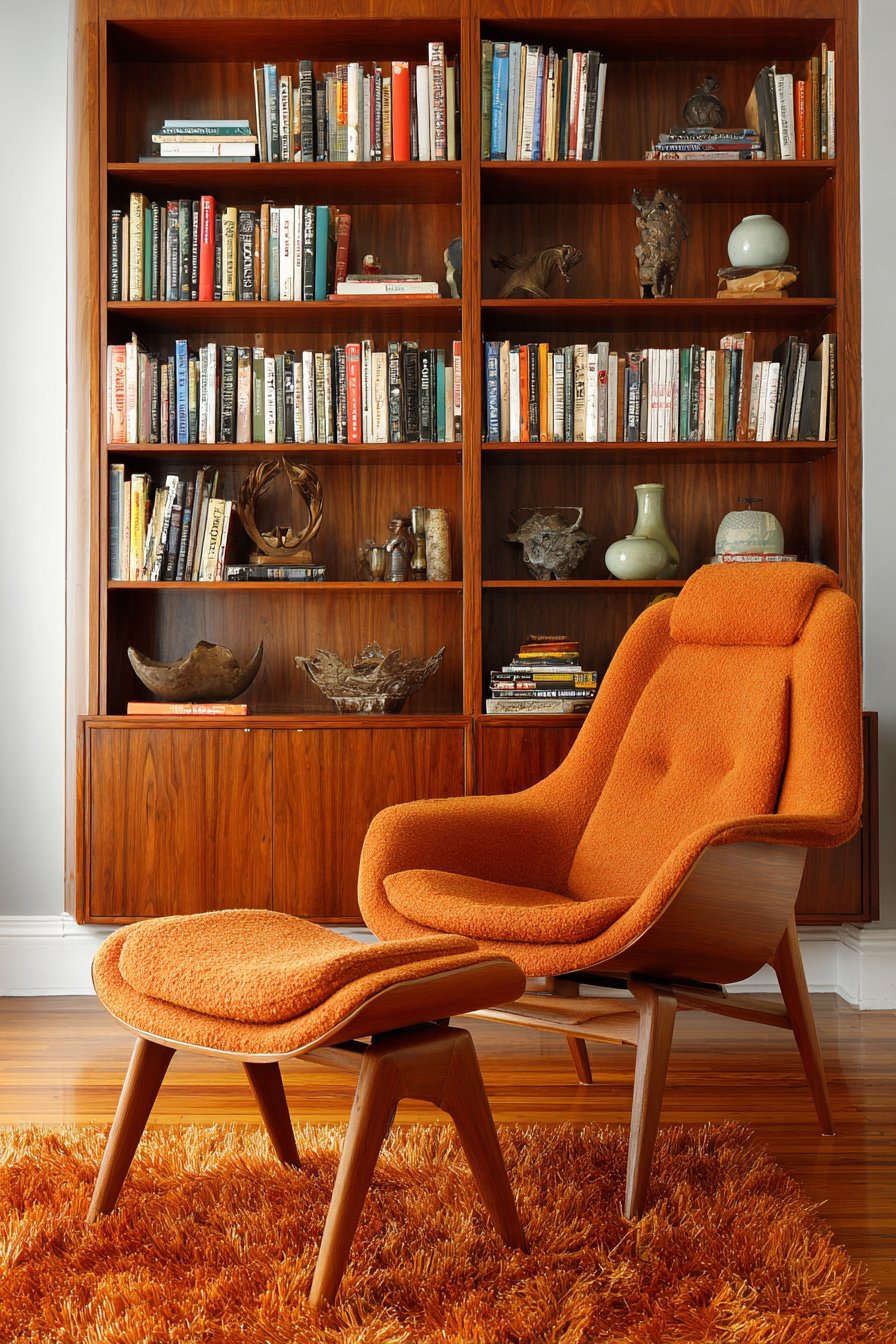
Books arranged alongside period ceramics and vintage brass objects create curated vignettes that celebrate the era’s design aesthetic. Mid-century pottery—with its organic forms, matte glazes, and earth tones—provides sculptural counterpoints to books’ rectangularity. Small brass sculptures, vintage barware, or teak serving pieces intermixed with books create a lived-in appearance that suggests the library is part of a lifestyle rather than a museum display.
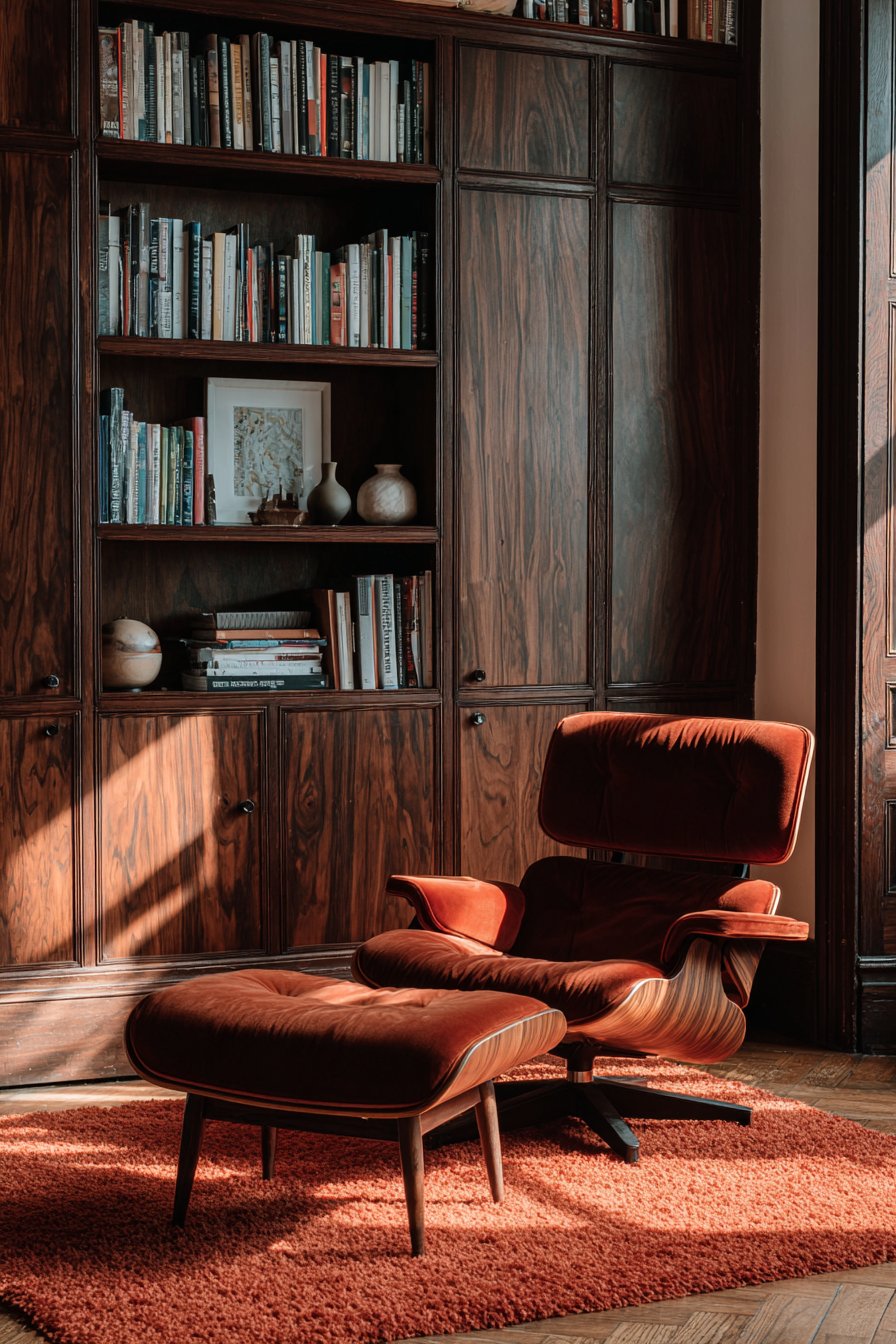
A molded plywood lounge chair with ottoman provides iconic seating that has remained in continuous production for over half a century—testament to its comfort and timeless design. The chair’s organic curves, achieved through revolutionary manufacturing techniques that molded plywood into three-dimensional forms, provide ergonomic support while creating sculptural presence. The ottoman allows for comfortable leg elevation during extended reading sessions, promoting circulation and reducing fatigue.
Key Design Tips:
- Look for authentic vintage modular shelving systems or high-quality reproductions from companies specializing in mid-century design
- Arrange shelving units at slightly different heights to create visual interest while maintaining the modular aesthetic
- Choose accessories and objects from the 1950s-1970s era to maintain period authenticity
- Install period-appropriate lighting such as arc floor lamps or articulating wall sconces
- Use area rugs in geometric patterns or solid colors that complement rather than compete with the wood tones
15. Child-Friendly Low Library System
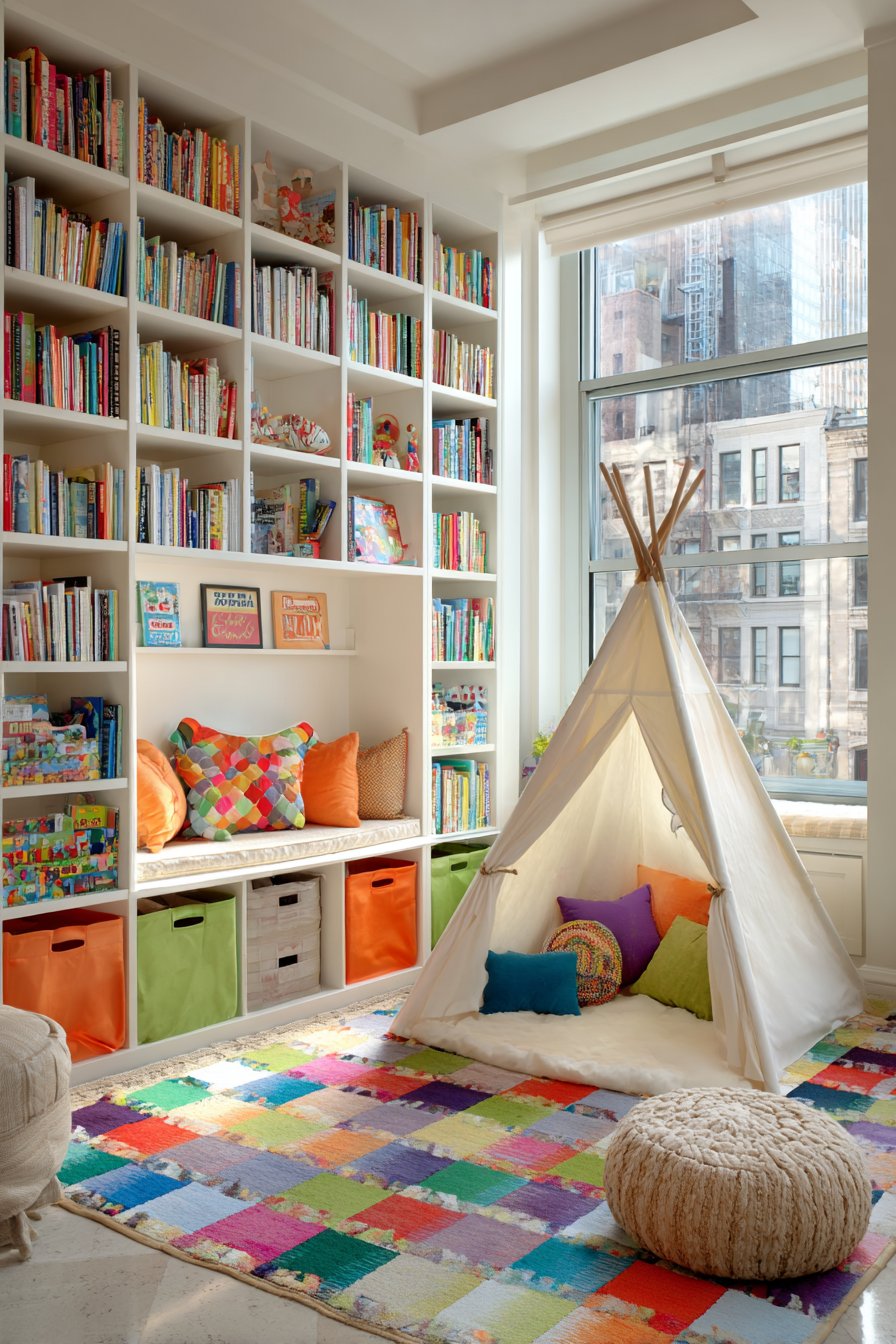
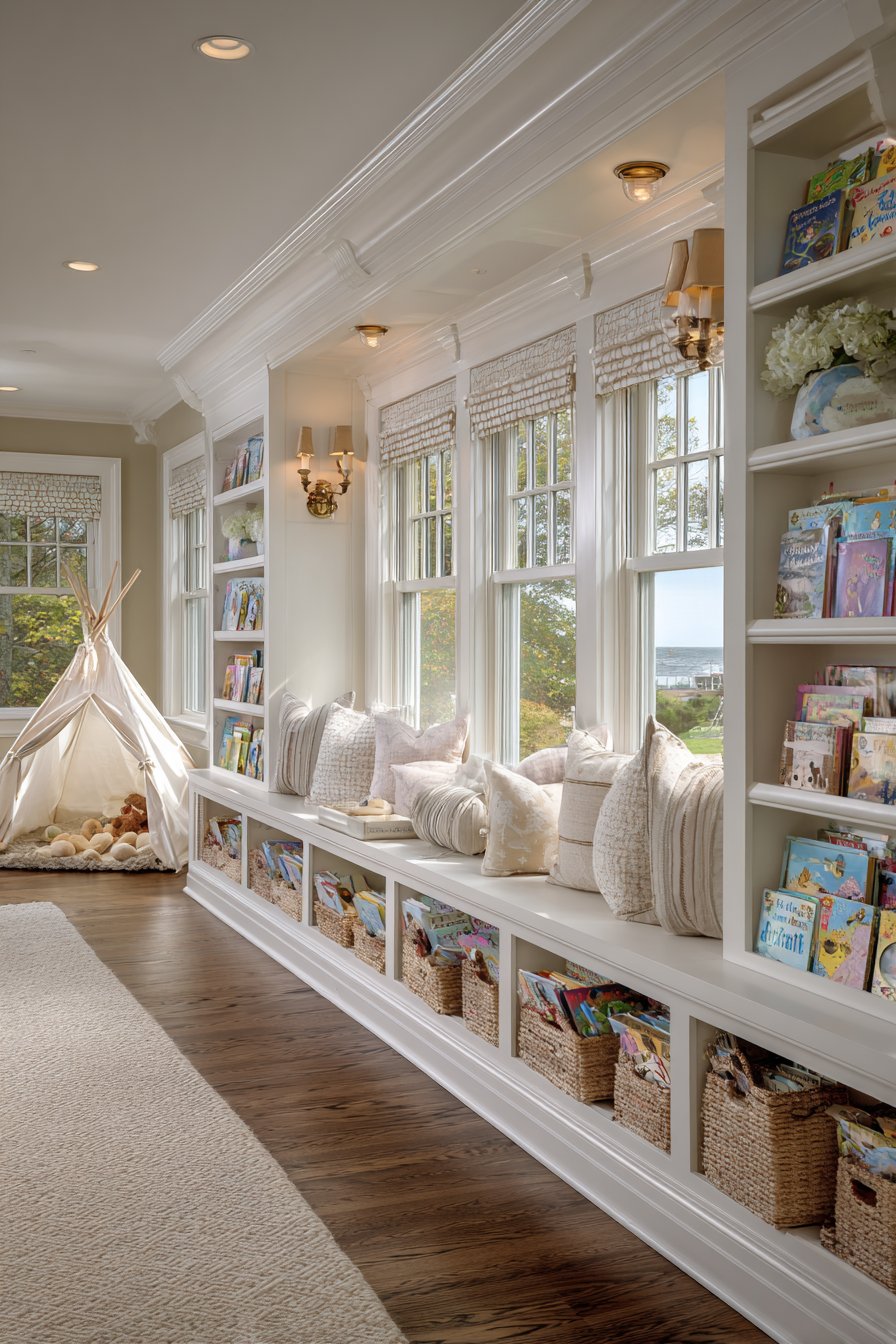
Designing a home library for children requires a fundamentally different approach that prioritizes accessibility, safety, and age-appropriate organization over adult aesthetics. Low built-in shelving placed at child height (typically 36 inches maximum) ensures young readers can independently browse and select books, fostering autonomy and a sense of ownership over their reading choices. The lower positioning also allows children to see book covers rather than just spines, which proves critical since young readers often can’t yet read titles and select books based on cover illustrations.
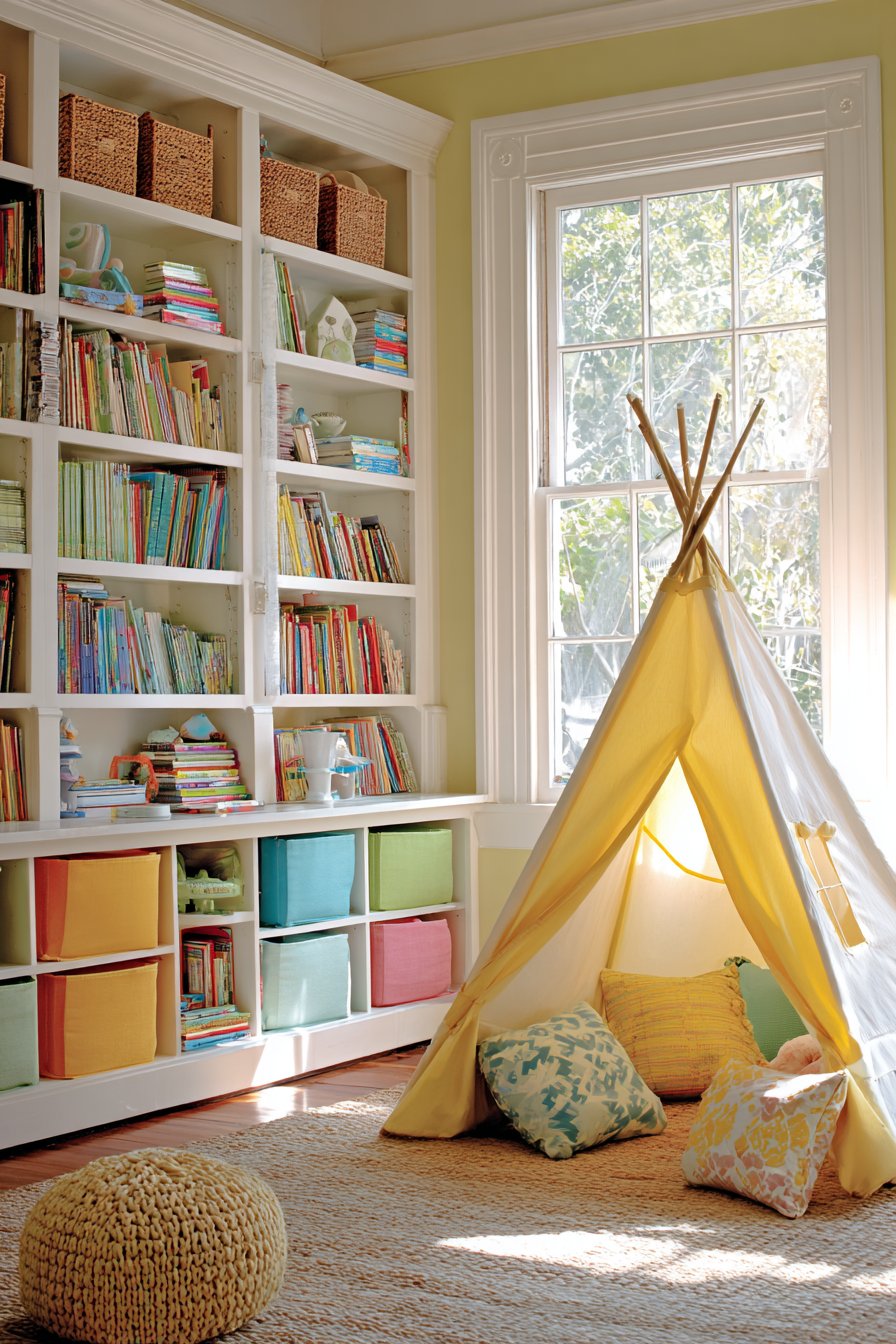
Books displayed face-out at child height create an inviting browsing experience that mimics bookstore displays rather than library stacks. This presentation method requires more linear space than spine-out shelving but significantly increases engagement, particularly for emerging readers. Picture book covers—with their vibrant illustrations and large title text—become artwork in their own right, decorating the space while encouraging literacy. Below the book displays, colorful bins provide toy storage, acknowledging that children’s rooms serve multiple purposes and reading often happens alongside play.
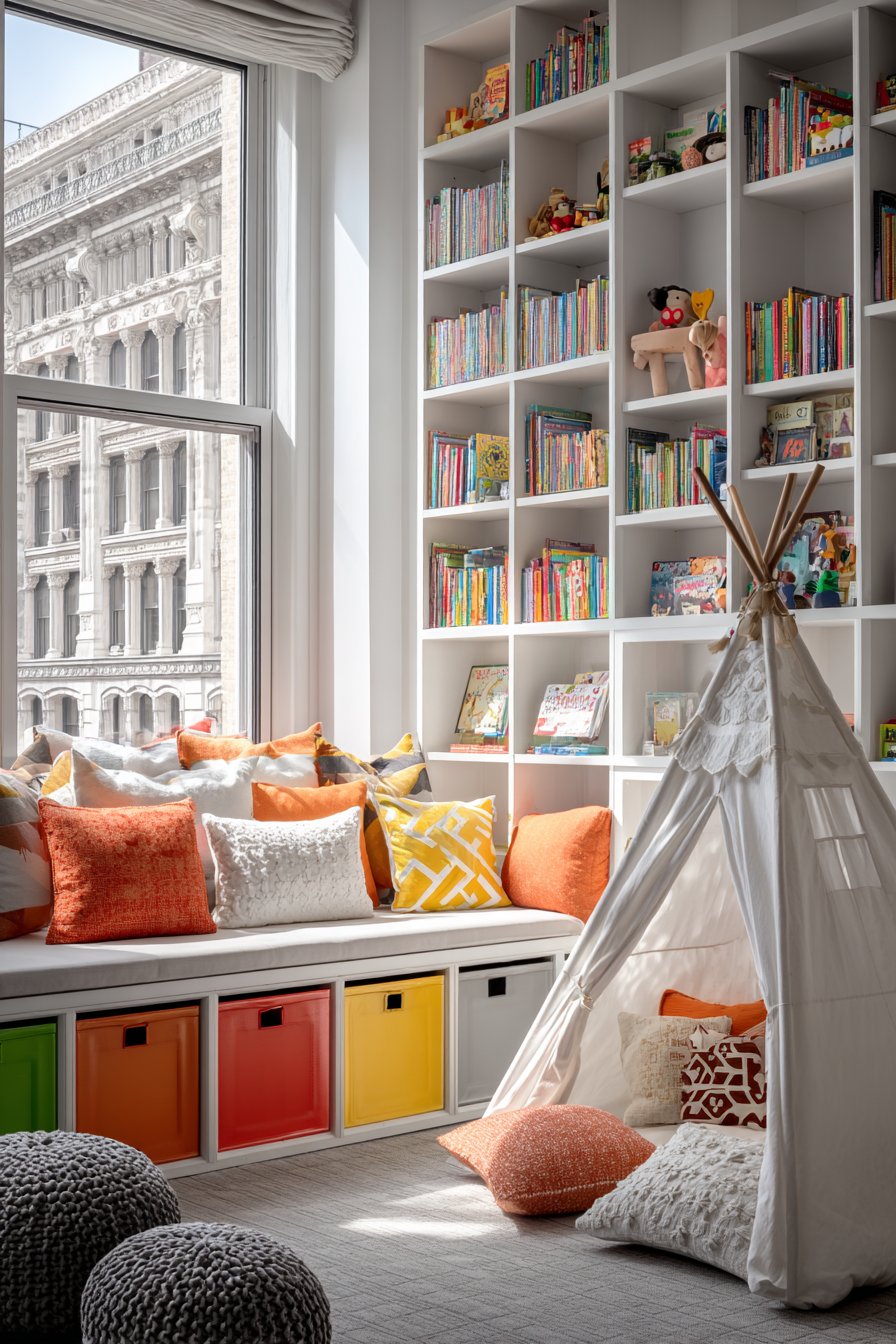
A small reading tent with cushions creates a cozy, special reading nook that appeals to children’s love of enclosed, private spaces. The tent creates physical and psychological separation from the larger room, helping children focus on reading while making the activity feel special and fun rather than mandatory. Bright natural light from large windows illuminates the space safely without small lamps that could pose tipping or electrical hazards.
Key Design Tips:
- Install shelving no higher than the child’s eye level to promote independence and safety
- Use face-out book displays that can accommodate 20-30 books with spine-out storage below for the full collection
- Choose rounded corners on all built-in furniture to prevent injuries during active play
- Select washable fabrics for cushions and tent materials since spills and accidents are inevitable
- Include a low table for coloring, puzzles, or other activities that complement reading
16. Navy Blue Alcove Library
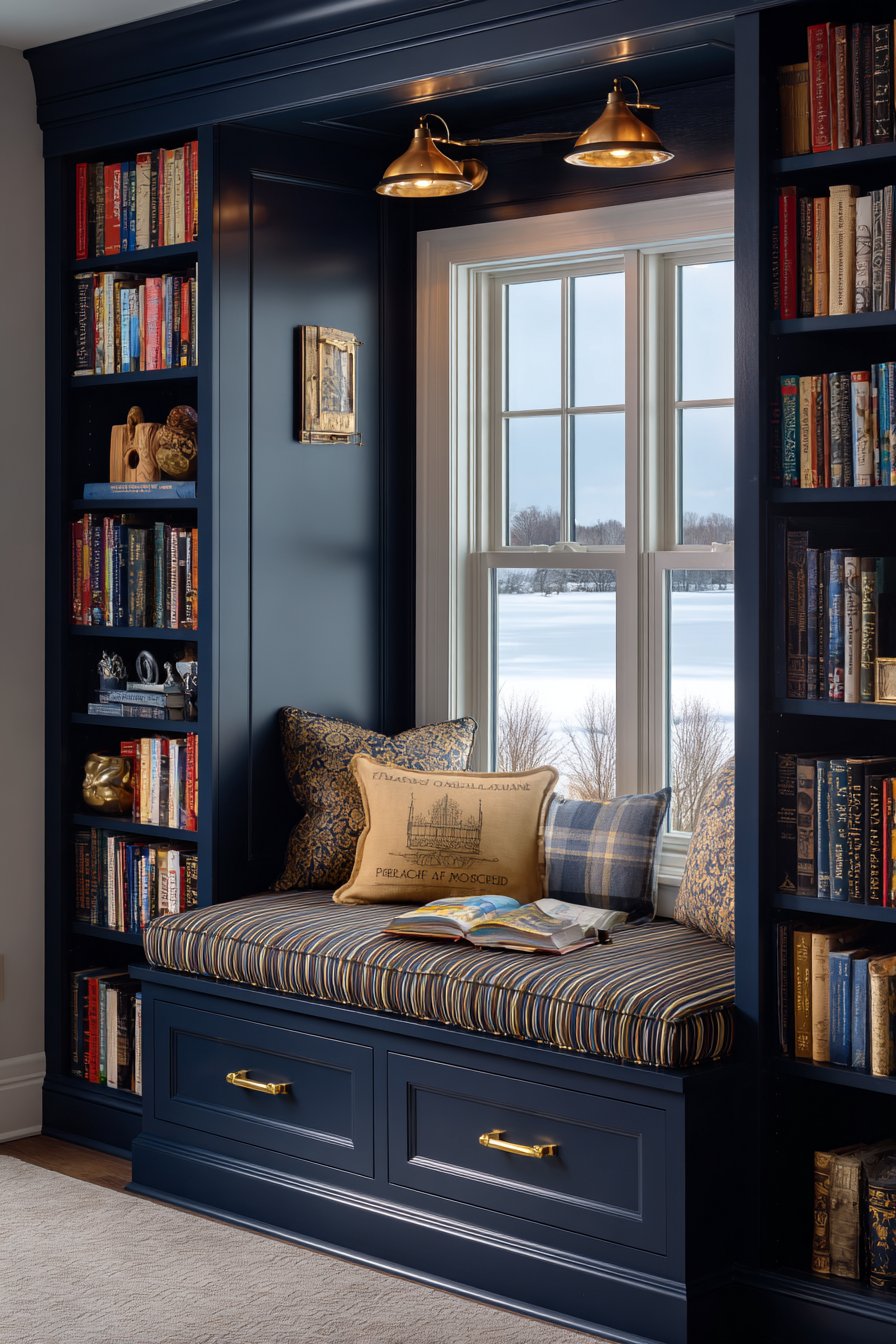
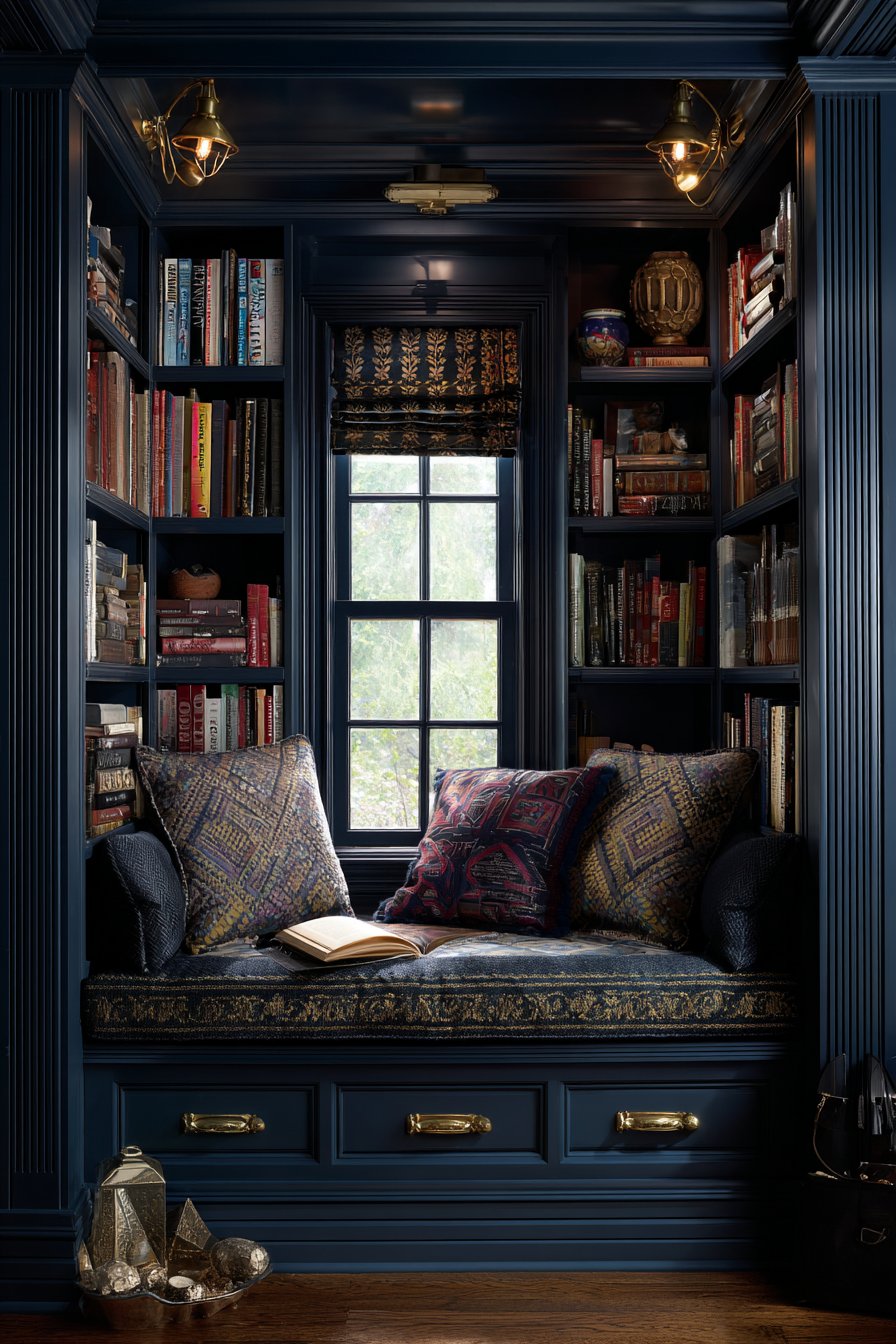
Transforming an architectural alcove into a jewel-box library creates an intimate space that feels deliberately carved out from the home’s larger floor plan. Custom-fitted shelving painted in Benjamin Moore’s Hale Navy—a rich, deep blue that reads nearly black in low light but reveals its true color in daylight—creates dramatic impact in a small footprint. The dark color makes the alcove feel intentionally enclosed rather than awkwardly small, embracing the space’s limitations and turning them into assets. Every available inch fills with books, with strategic placement of decorative objects preventing monotony and adding visual breathing room.
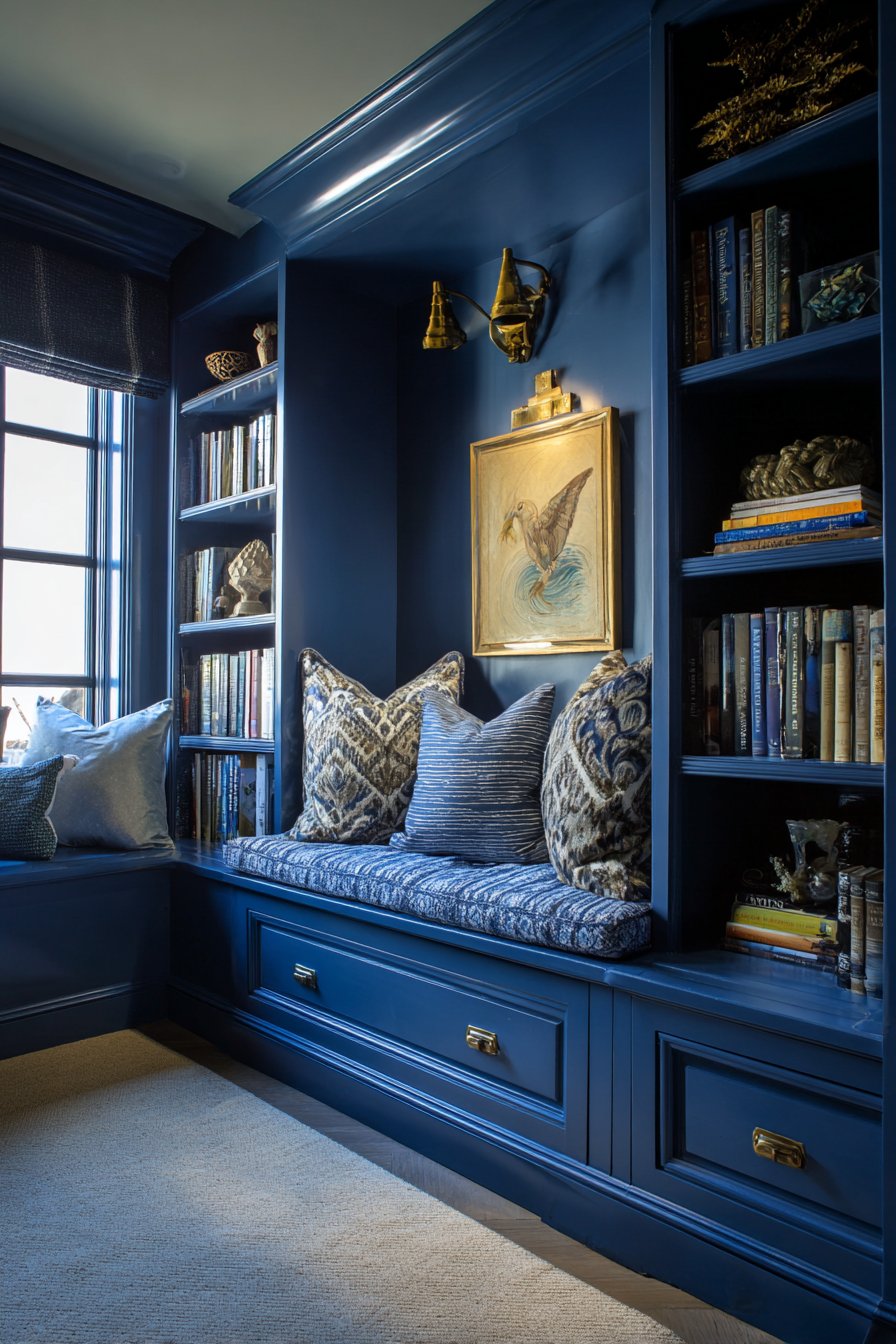
A built-in window seat with storage drawers below features thick cushions in complementary patterns that introduce warmth, comfort, and visual interest to the otherwise book-dominated space. The cushion fabric typically incorporates the navy blue along with cream, gray, or metallic accents that brighten the space without fighting the dominant color. Patterns like ikat, geometric prints, or subtle florals add complexity and prevent the space from feeling too serious or masculine.
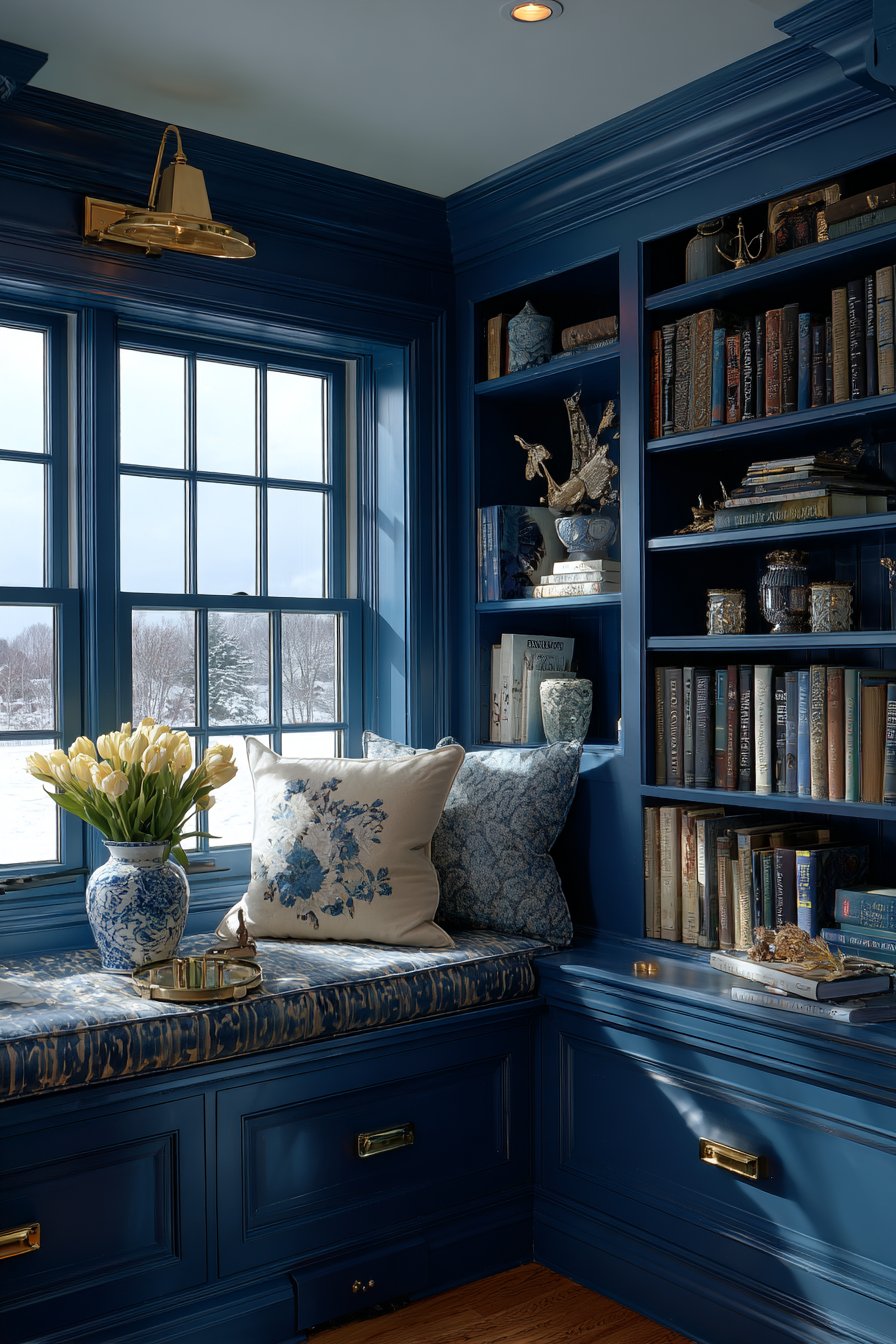
Brass picture lights mounted above the window seat illuminate special collections while adding warm metallic accents that glow against the dark blue background. These articulating fixtures can be adjusted to highlight specific shelves or collections, creating focal points and ensuring adequate light for reading despite the alcove’s potentially limited natural light. The brass finish’s warm gold tones provide essential warmth in a predominantly cool-toned space.
Key Design Tips:
- Measure the alcove precisely and design custom shelving that extends wall-to-wall for a built-in appearance
- Use semi-gloss or satin paint finishes on dark-colored shelving to reflect light and prevent the space from feeling cave-like
- Install dimmable picture lights to adjust illumination based on time of day and desired ambiance
- Include both open shelving for display and closed storage for items you don’t want visible
- Choose cushion fabrics with high durability ratings since window seat cushions receive significant use
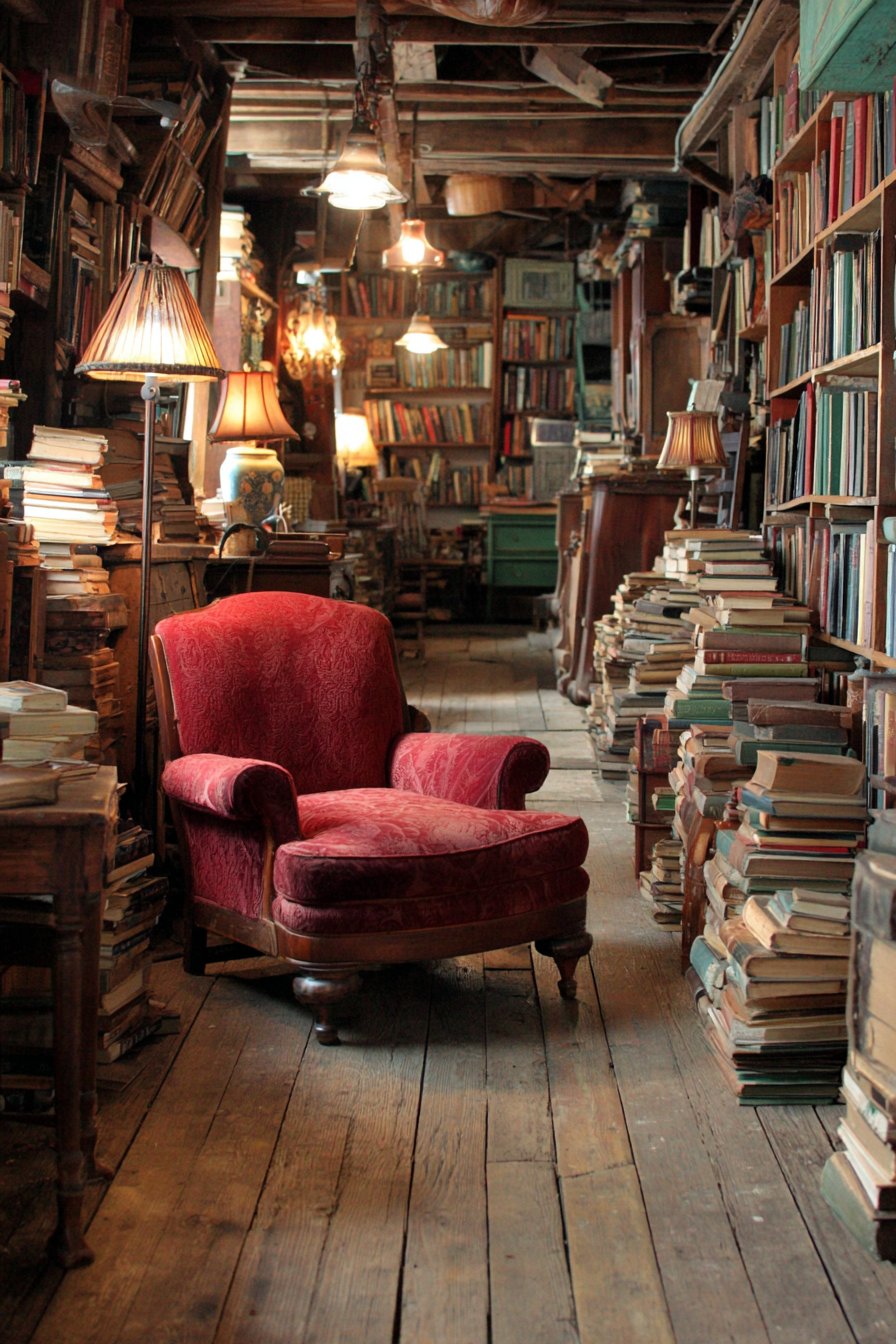
17. Eclectic Vintage Bookcase Collection
The eclectic approach to home library design rejects matchy-matchy uniformity in favor of curated variety that tells a story of collection over time. Mismatched vintage bookcases in various wood finishes and styles create a collected aesthetic that suggests the library grew organically as books and furniture were acquired over years or decades. An oak barrister bookcase might sit beside a mid-century walnut unit, which abuts a painted Victorian shelf, each piece contributing its own history and character. This approach proves particularly appealing to those who enjoy thrifting, estate sales, or inheriting furniture from family members.
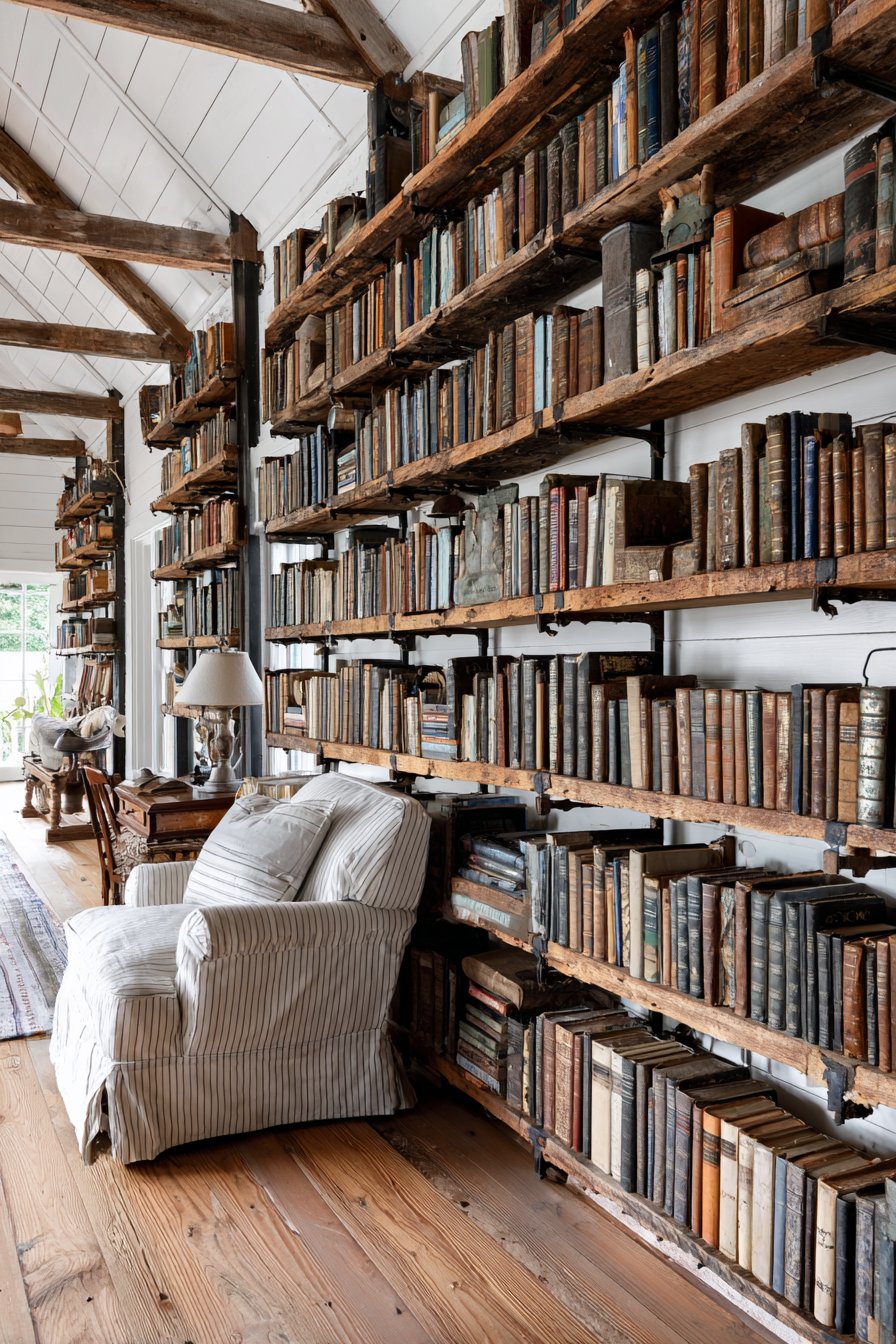
Books overflowing shelves with stacks on the floor add to the lived-in scholarly atmosphere, suggesting an active reader who prioritizes access over tidiness. While some might view this as disorder, it actually reflects how working libraries function—with current reading, research materials, and reference books kept readily at hand rather than filed away. The floor stacks, lean-tos against shelf edges, and books arranged both horizontally and vertically create visual variety while accommodating a collection that has outgrown its allocated storage.
A Victorian velvet armchair and antique side table create a reading corner that exemplifies the eclectic aesthetic, mixing periods, styles, and materials with confidence. The richness of velvet upholstery, the carved details of the antique table, and the accumulated collection of vintage bookcases create a layered, sophisticated space that feels collected rather than decorated. Multiple light sources including floor lamps, table lamps, and perhaps even candelabras provide adjustable, layered lighting that can be customized for different activities and times of day.
Key Design Tips:
- Establish a unifying element—similar wood tones, consistent height, or coordinated paint colors—to prevent total chaos
- Vary bookcase heights and depths to create visual interest while accommodating different book sizes
- Group furniture pieces in conversation areas rather than lining walls to create inviting spaces
- Use books as decorative elements, with some displayed on stands, face-out, or as stacks with objects on top
- Embrace the maximalist aesthetic by filling most available space while maintaining comfortable circulation paths
18. Sunroom Library Conversion
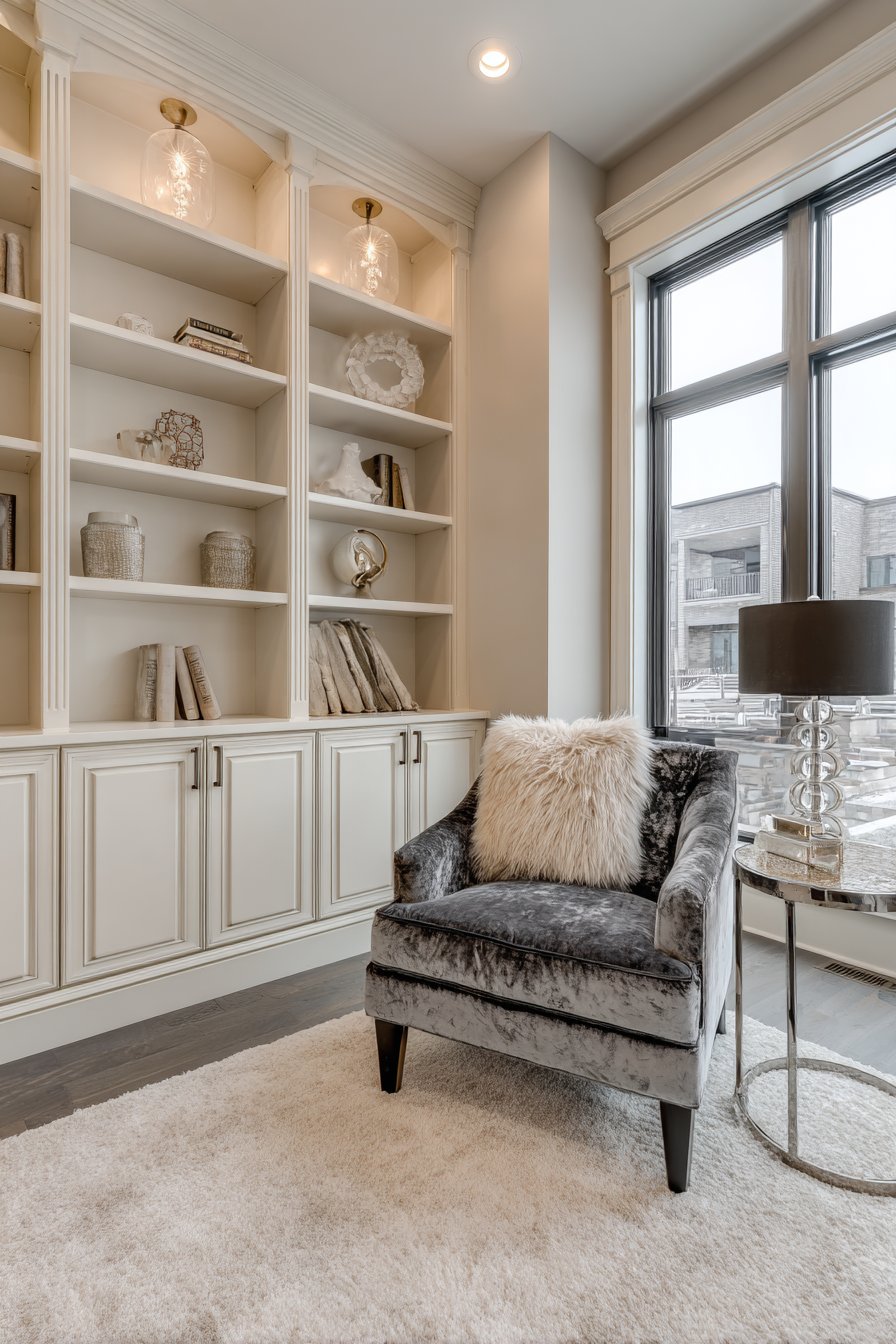
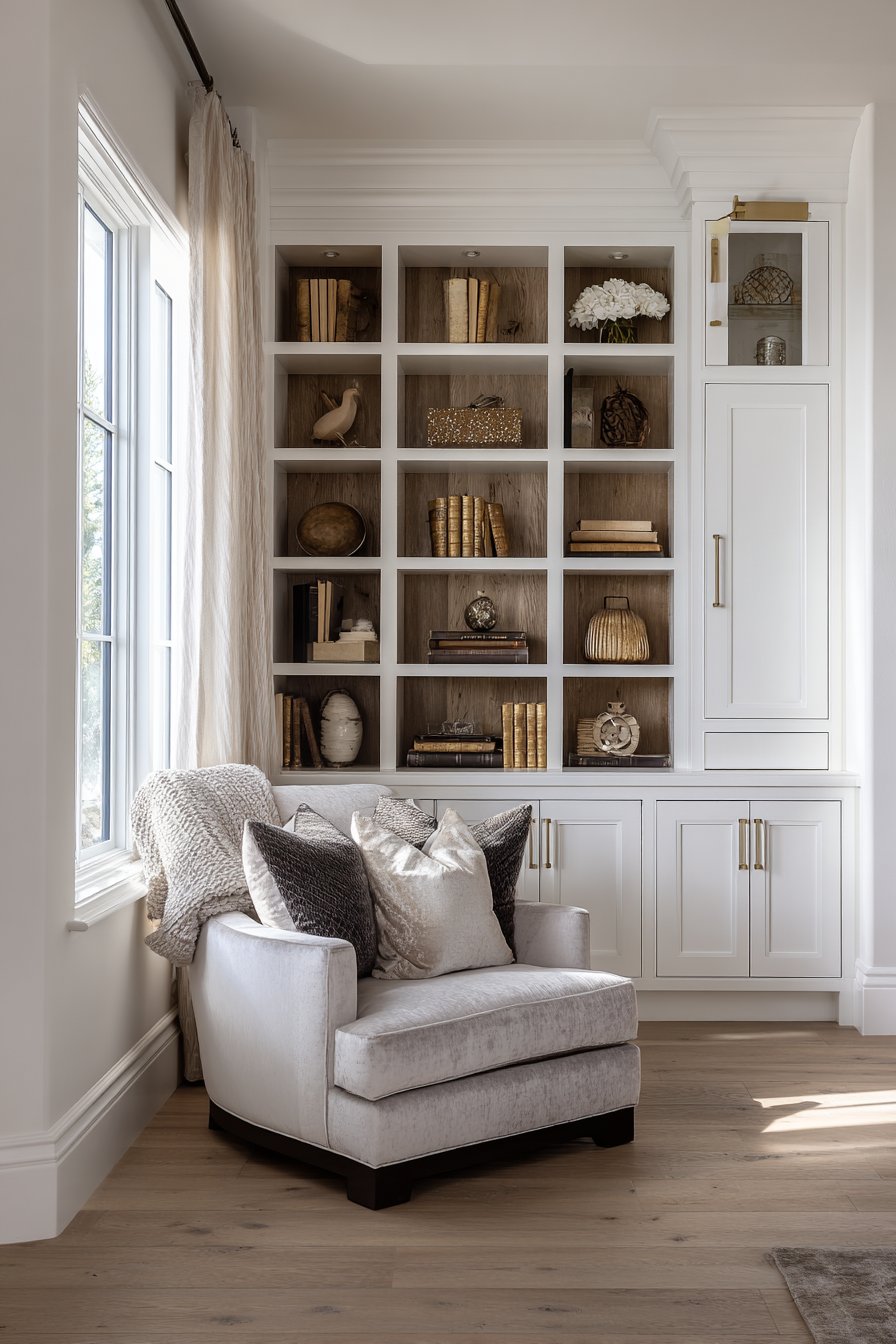
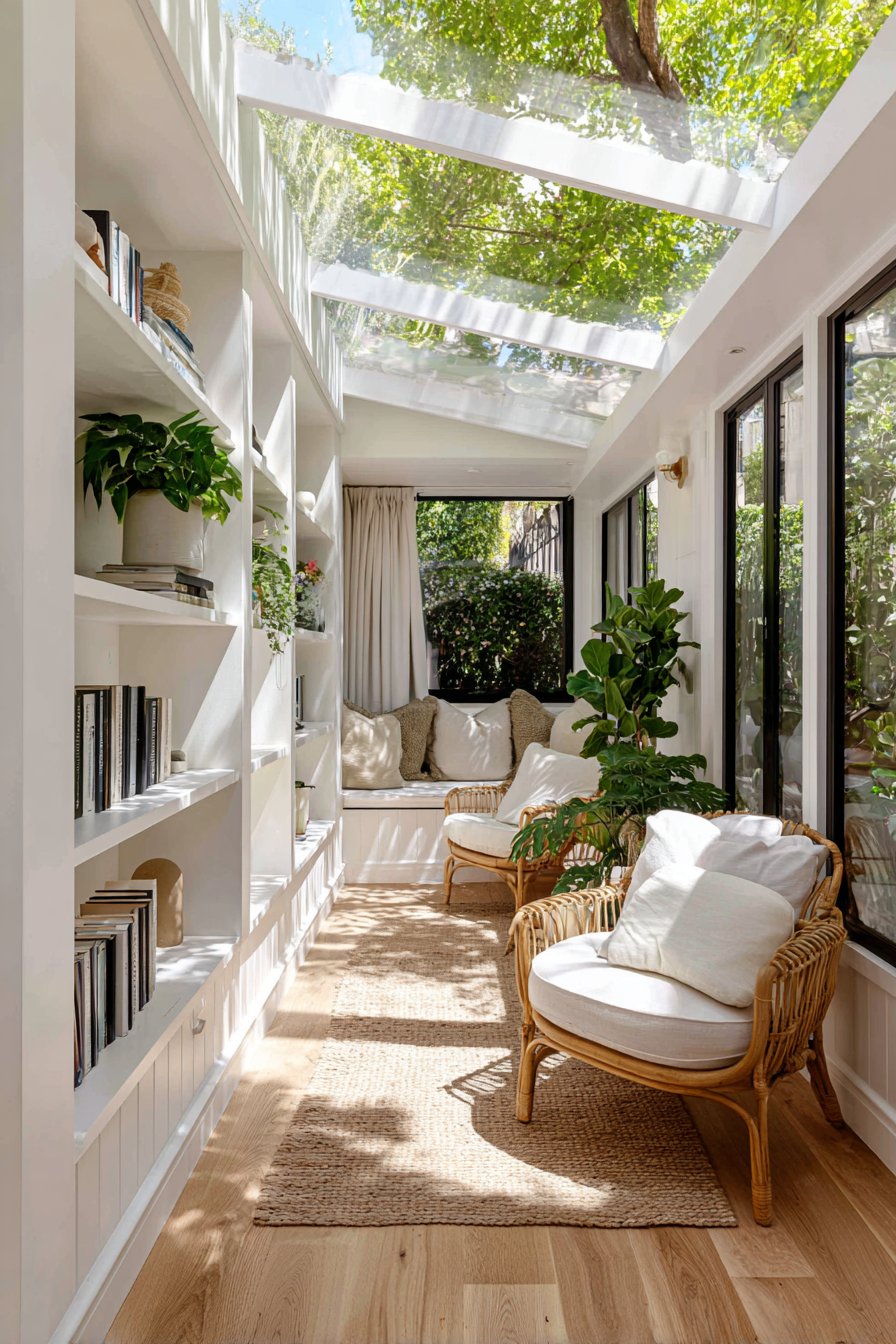
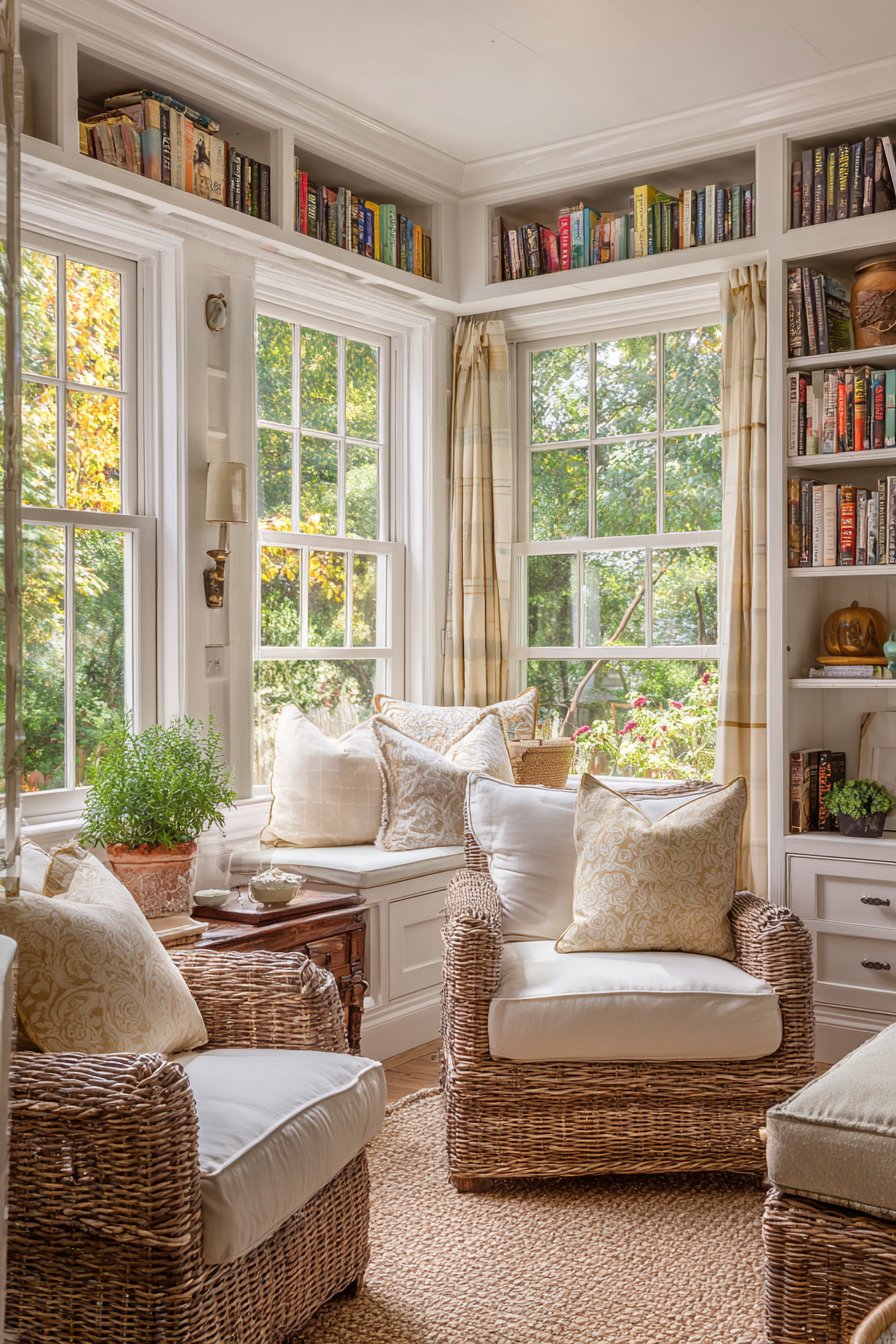
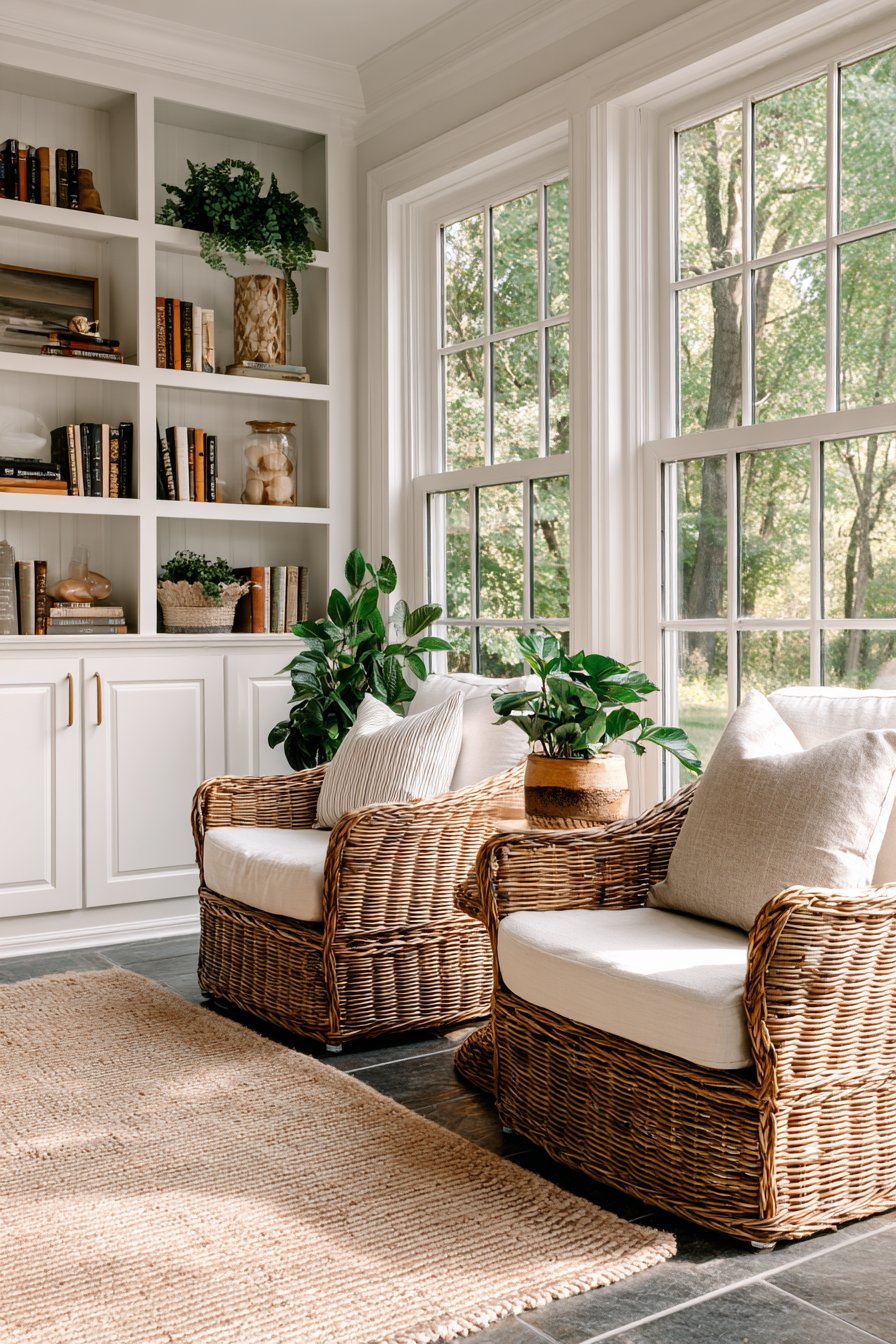
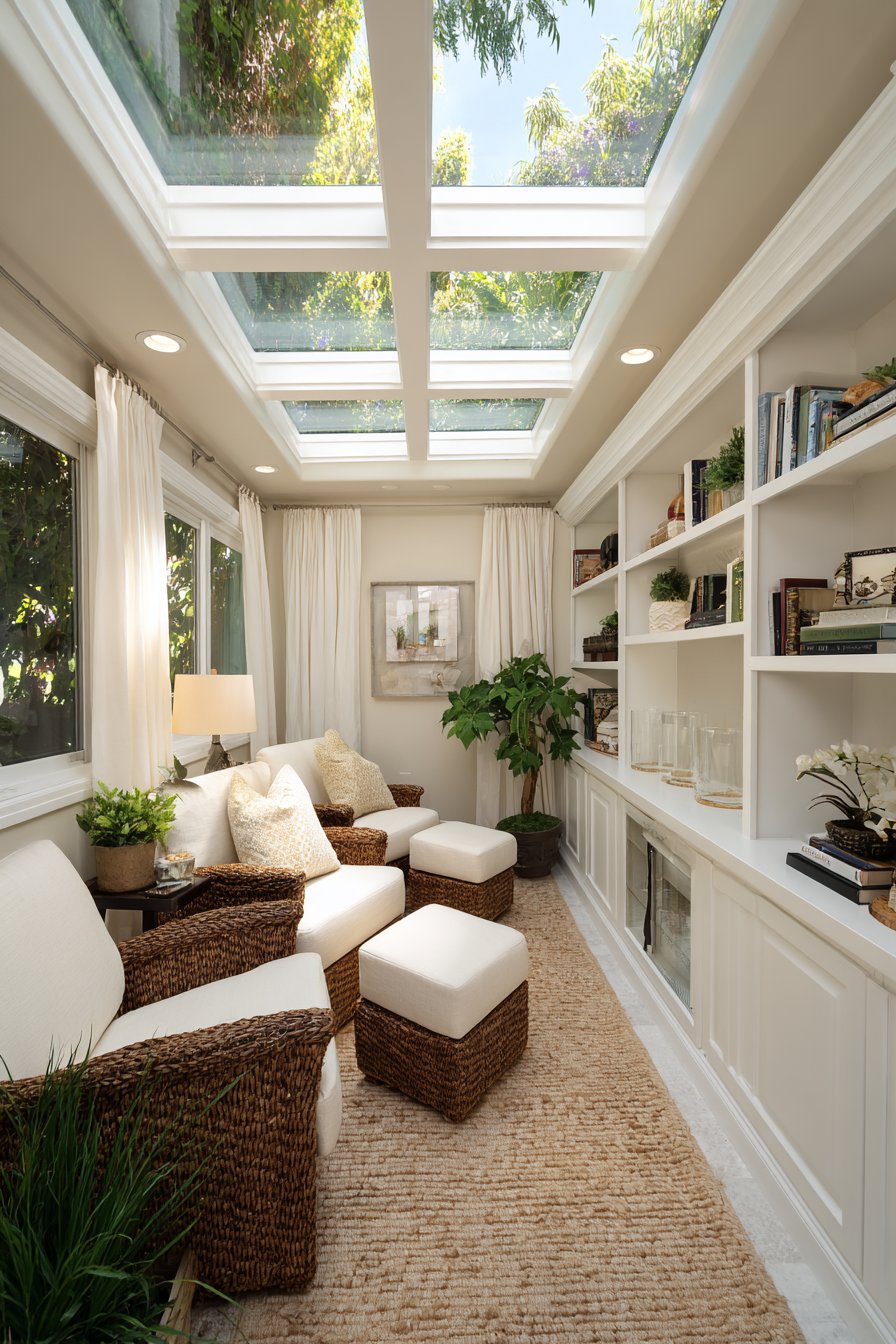
Converting a sunroom into a home library creates a unique synthesis of outdoor connection and indoor comfort, bringing abundant natural light to an activity that benefits from it while maintaining the climate control and protection that books require. White built-in shelving on three walls provides floor-to-ceiling book storage while reflecting and amplifying the abundant natural light. The white finish prevents the book-filled walls from feeling heavy or dark despite the sheer volume of material, and the light color doesn’t compete with the garden views visible through the large windows.
Rattan reading chairs with cream cushions and a jute rug create a casual, airy atmosphere that honors the room’s original purpose while adapting it to new use. Natural materials like rattan and jute bring organic texture and garden-adjacent styling that bridges indoor and outdoor realms. The woven patterns introduce visual interest and tactile variation that prevents the predominantly white space from feeling sterile. Cream cushions provide comfort while maintaining the light, bright color palette.
Potted plants interspersed with books blur the boundaries between indoor reading space and outdoor garden, creating a conservatory-like atmosphere. Ferns, palms, orchids, and other plants that appreciate bright indirect light thrive in this environment while improving air quality and adding organic forms that contrast beautifully with books’ geometric shapes. Sheer curtains filter direct sunlight during the brightest hours, protecting book spines from UV damage while maintaining the space’s connection to the outdoors through softly diffused light.
Key Design Tips:
- Install UV-filtering window treatments to protect books from sun damage while maintaining views and light
- Choose rattan or wicker furniture that can withstand temperature fluctuations if the sunroom isn’t fully climate-controlled
- Select plants appropriate for the light levels, avoiding direct sun lovers that would fade books on nearby shelves
- Use sealed or treated wood shelving that can handle humidity variations typical of three-season sunrooms
- Position the most valuable or sun-sensitive books on interior walls away from direct window exposure
19. Transitional Taupe Library
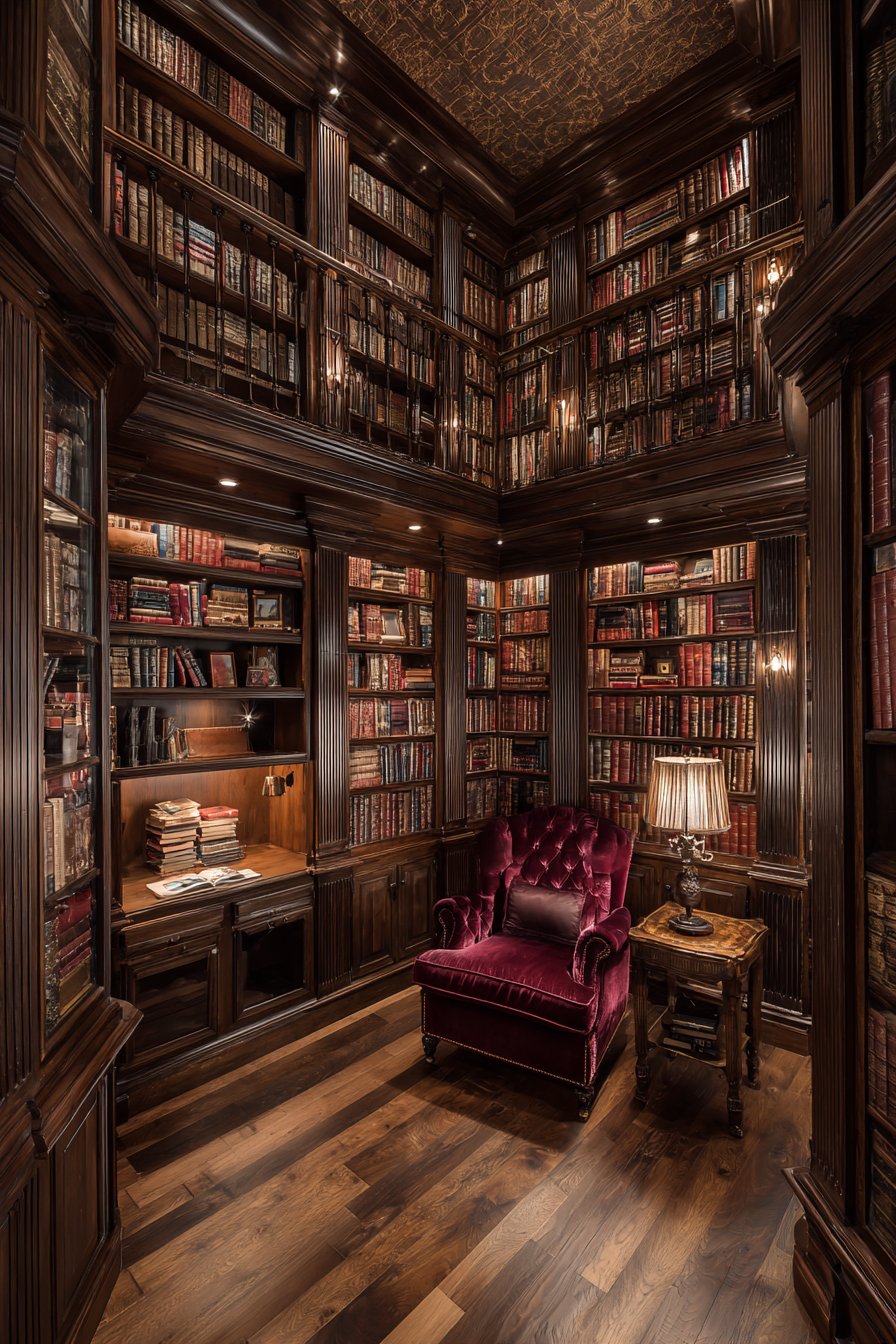
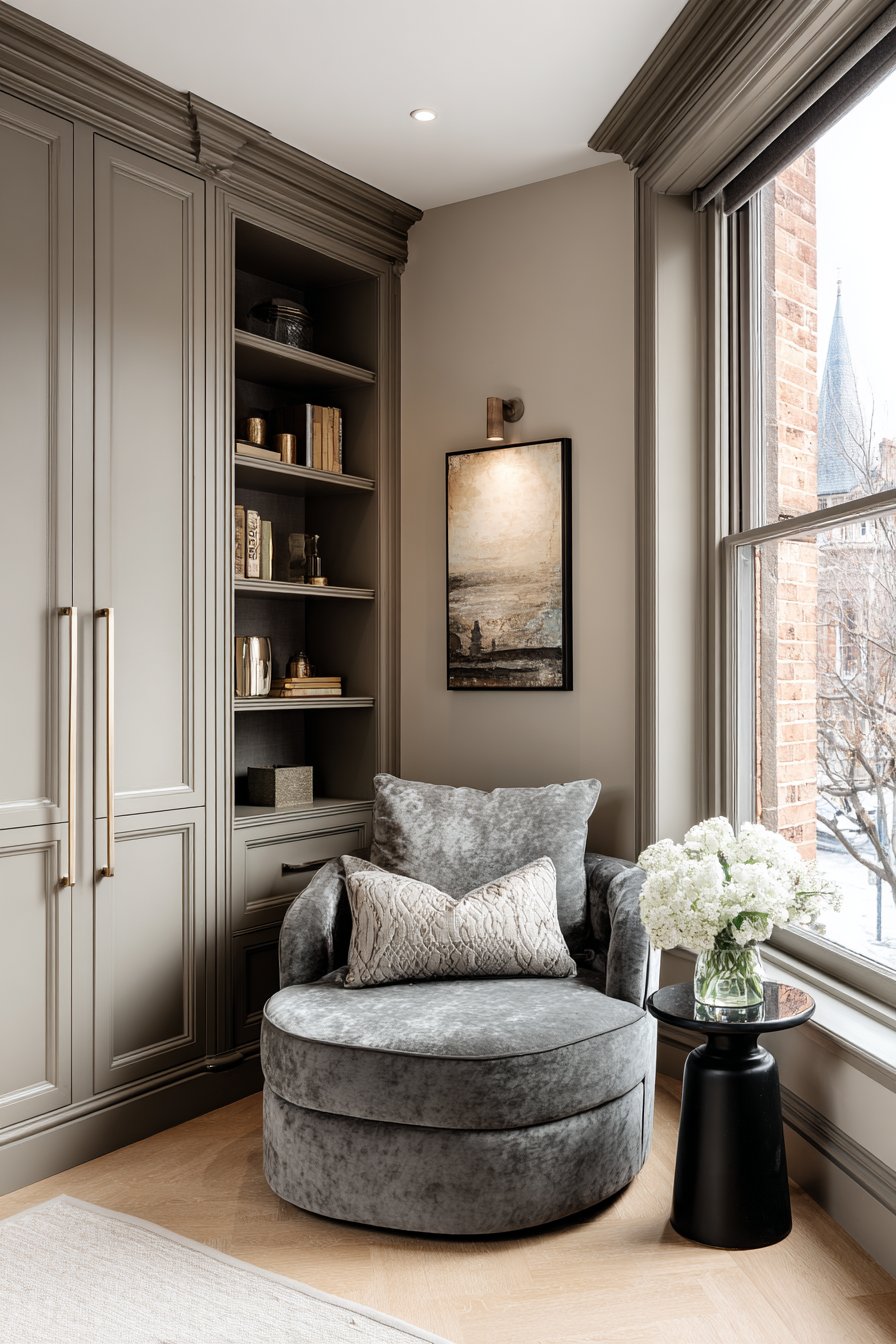
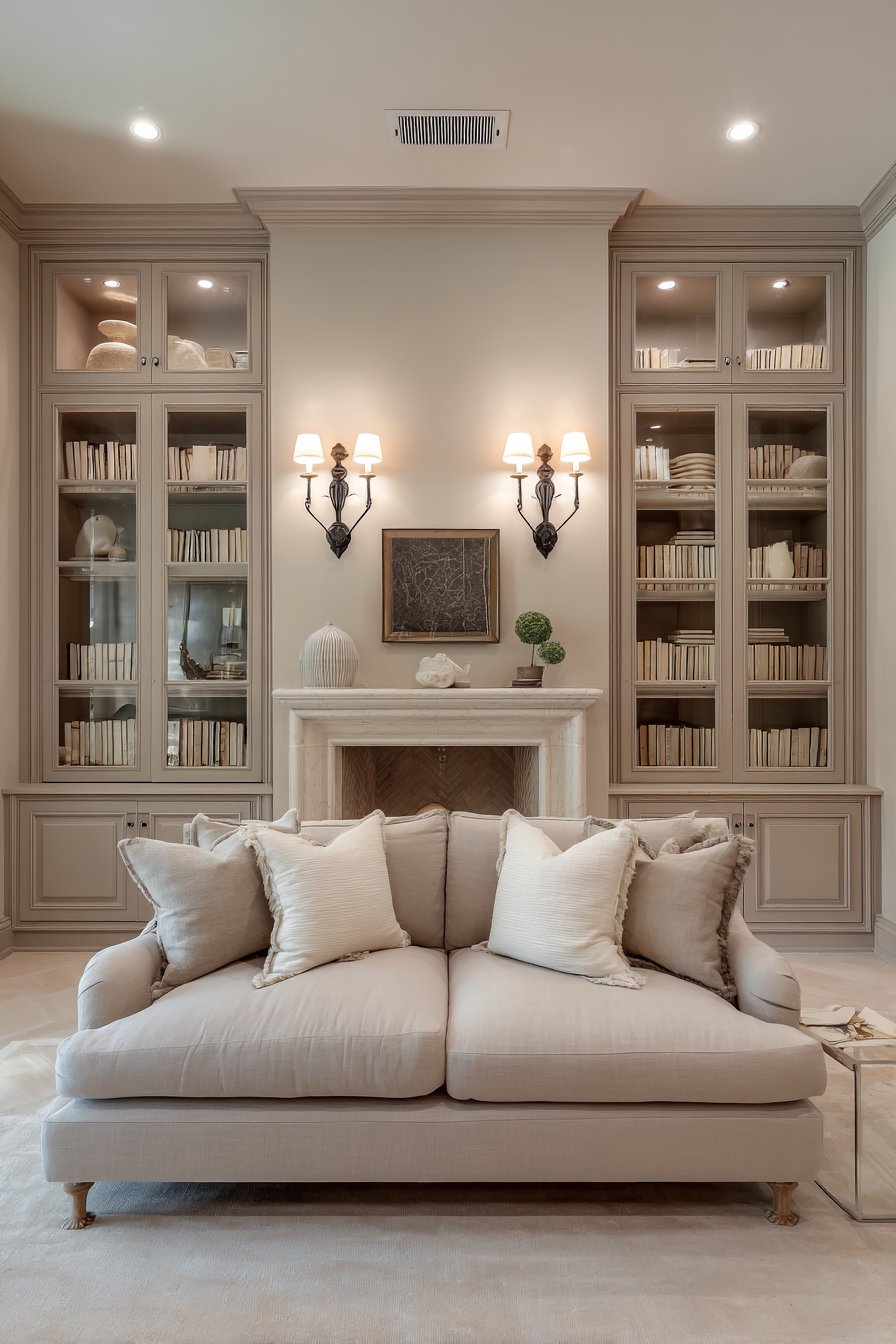
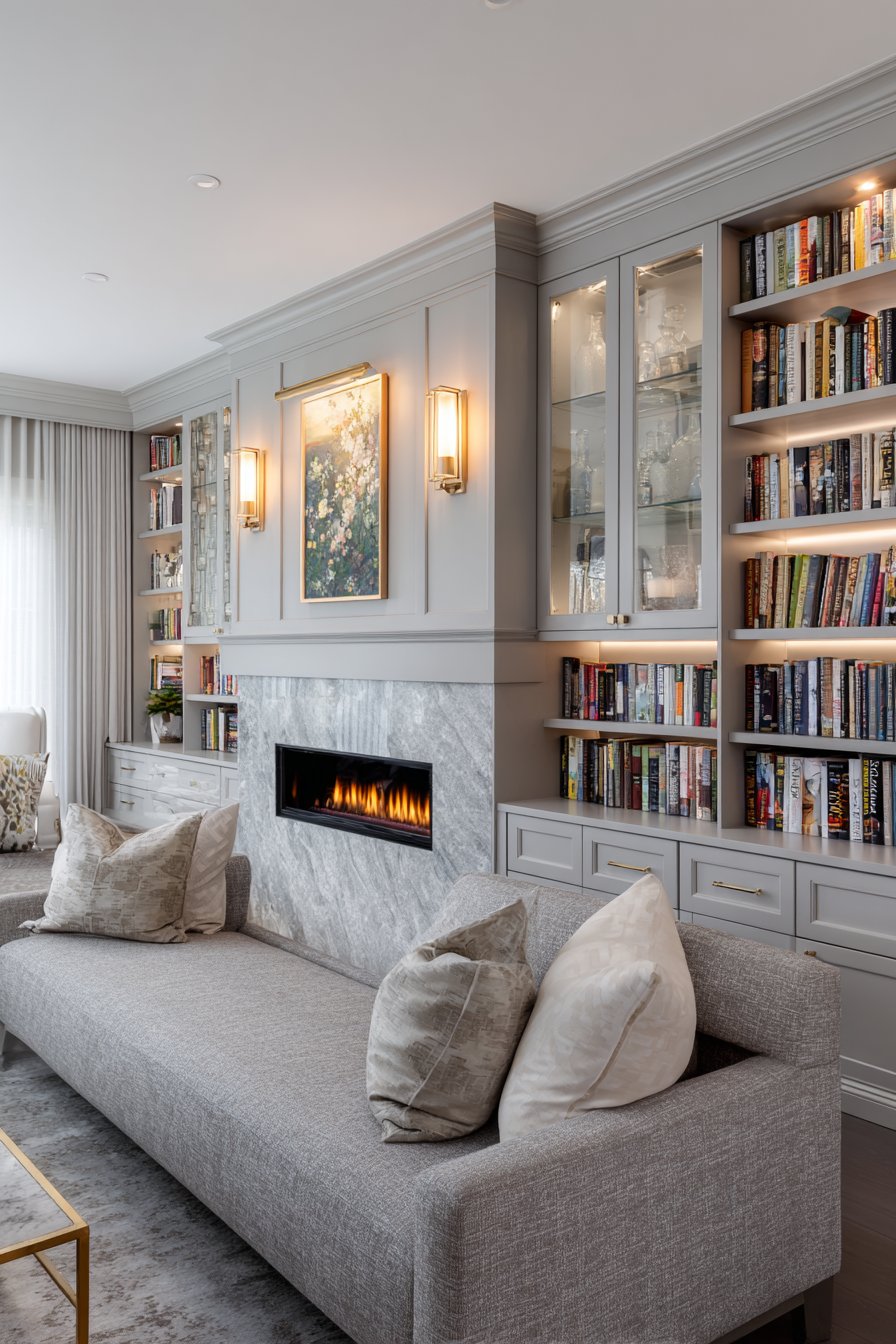
Transitional design—which bridges traditional and contemporary aesthetics—creates home libraries that feel current without being trendy and classic without being stuffy. Built-in shelving in a soft taupe finish provides neutral sophistication that flatters books while coordinating with virtually any adjacent room’s color scheme. The warm gray-brown tone offers more visual interest than stark white while remaining light enough to keep the space feeling open. Glass-front upper cabinets add traditional elegance while providing dust protection for special collections, while solid lower cabinets conceal less attractive items like electronics, office supplies, or overflow storage.
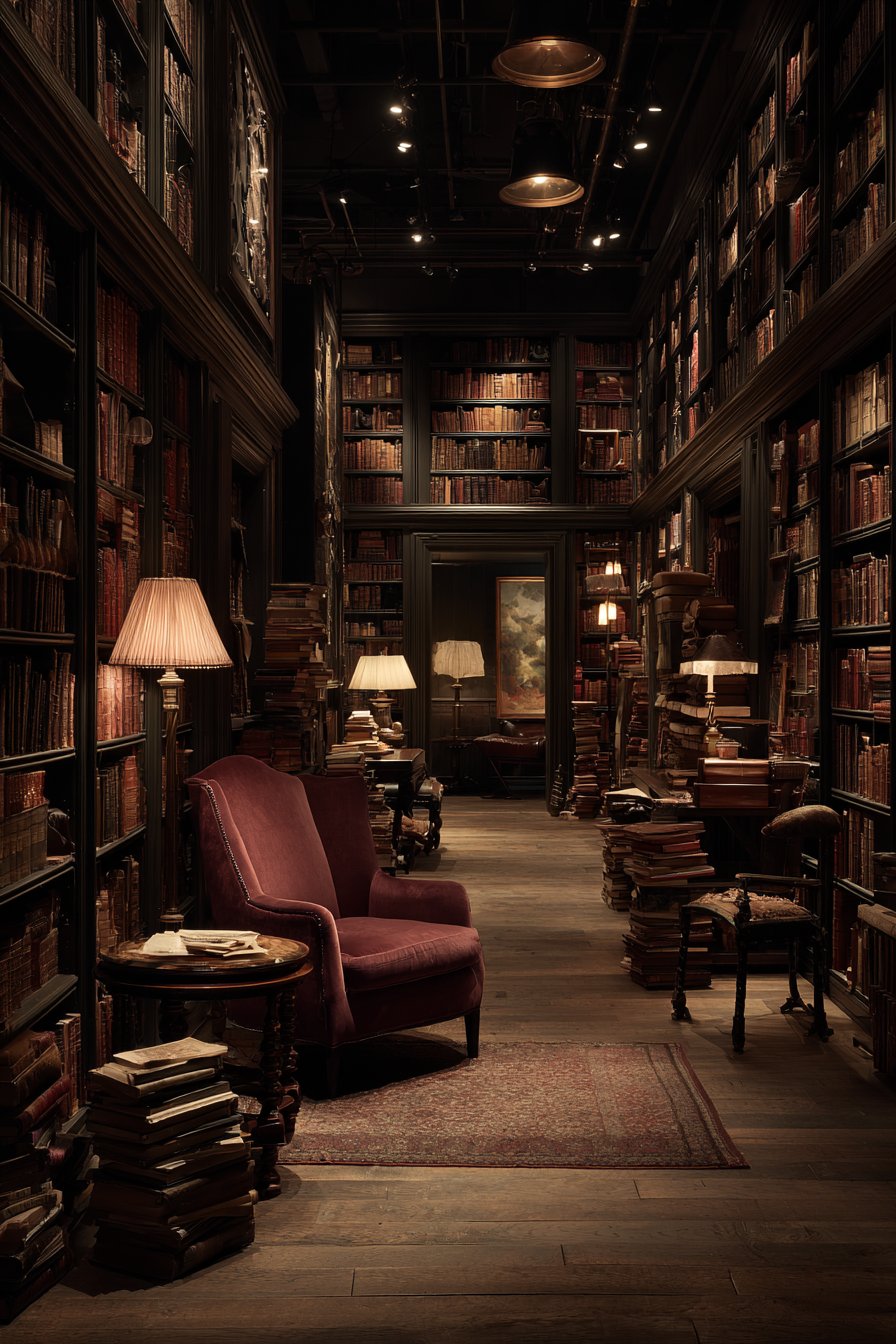
Books arranged by size with breathing room between volumes create an organized, curated appearance that balances accessibility with aesthetics. This arrangement style—sometimes called “bookshelf styling”—treats books as design elements, with careful attention to spacing, height progression, and the occasional horizontal stack to break up vertical monotony. Decorative objects like small sculptures, framed photos, or ceramic pieces interspersed among books add personality and visual interest while preventing the shelves from becoming boring or overly uniform.
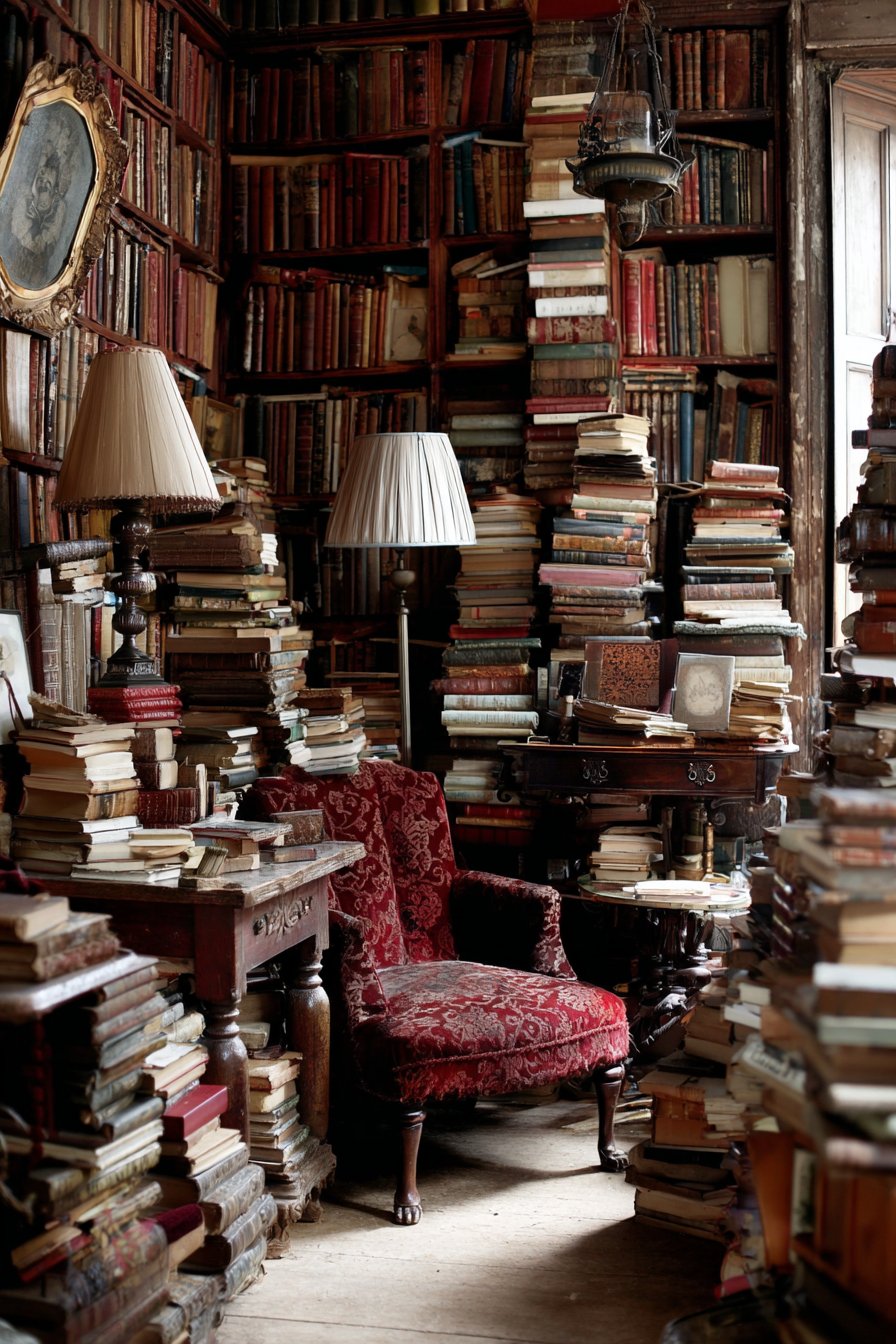
A neutral linen sofa positioned to face a fireplace with shelving flanking both sides creates a symmetrical, balanced composition that exemplifies transitional design’s love of order and proportion. The fireplace serves as the room’s focal point and gathering place, with the library wrapping around it to create an integrated living space rather than a separate book storage room. Wall sconces mounted between the windows and shelving provide subtle upward lighting that washes the walls with soft illumination, creating ambiance while avoiding the harsh shadows of downlighting.
Key Design Tips:
- Choose paint colors in the greige (gray-beige) family that work with both warm and cool color schemes
- Maintain consistent spacing between books—typically one to two inches—throughout the shelving system
- Use decorative objects sparingly, following the design rule of grouping in odd numbers (3 or 5)
- Install glass-front cabinets with interior lighting to highlight special collections or decorative objects
- Select hardware in transitional-friendly finishes like brushed nickel, aged bronze, or matte black
20. Basement Library with Integrated Bar
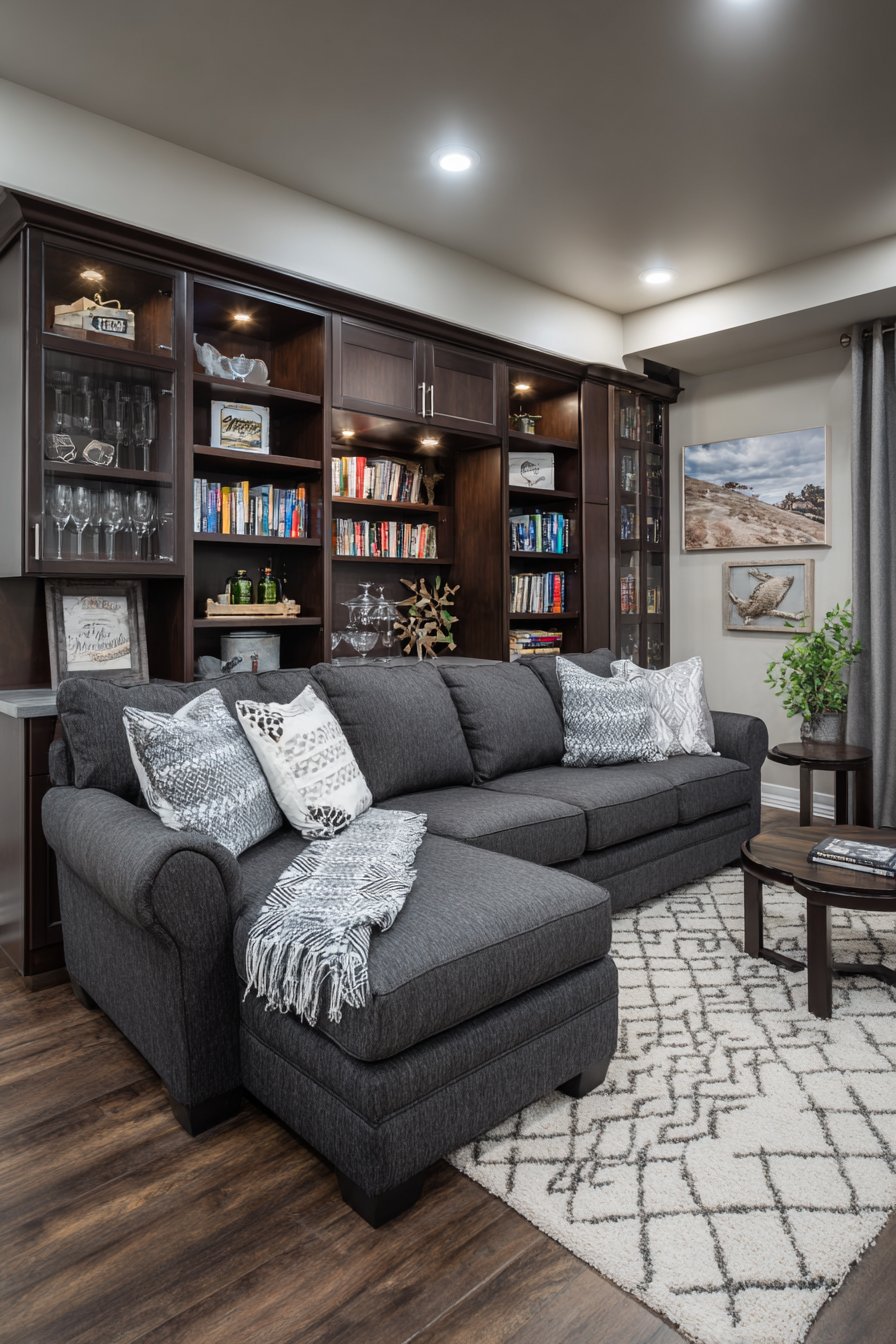
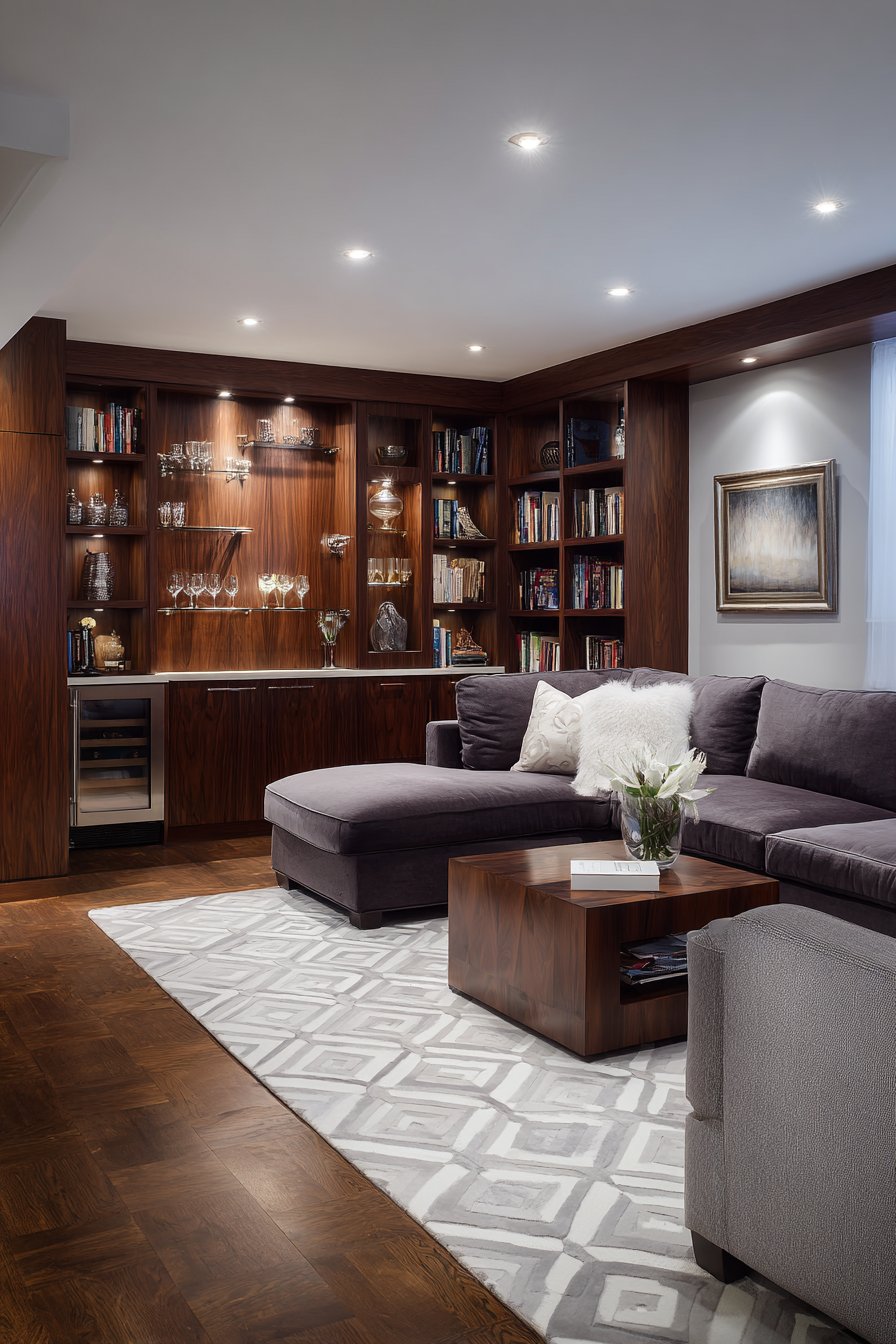
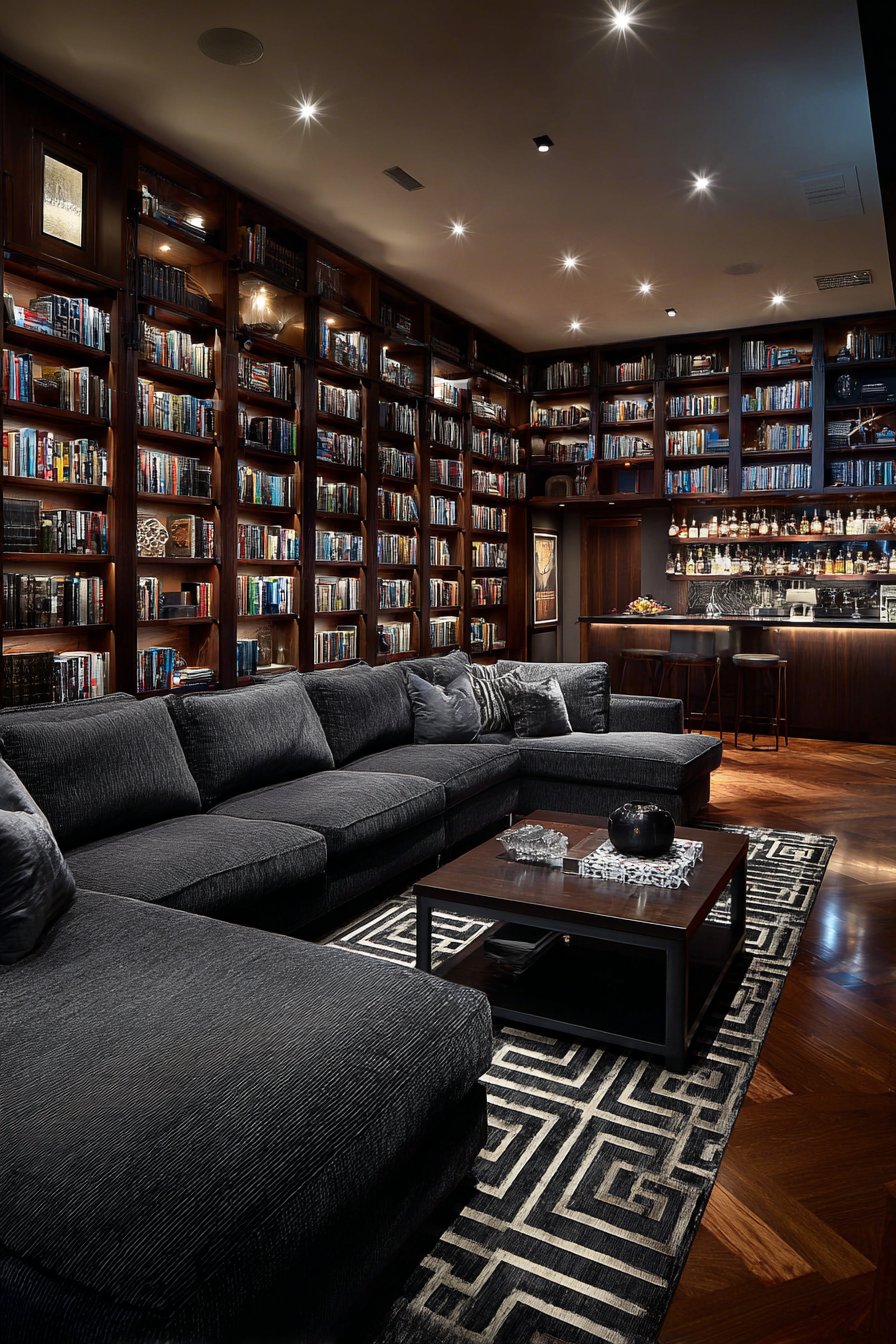
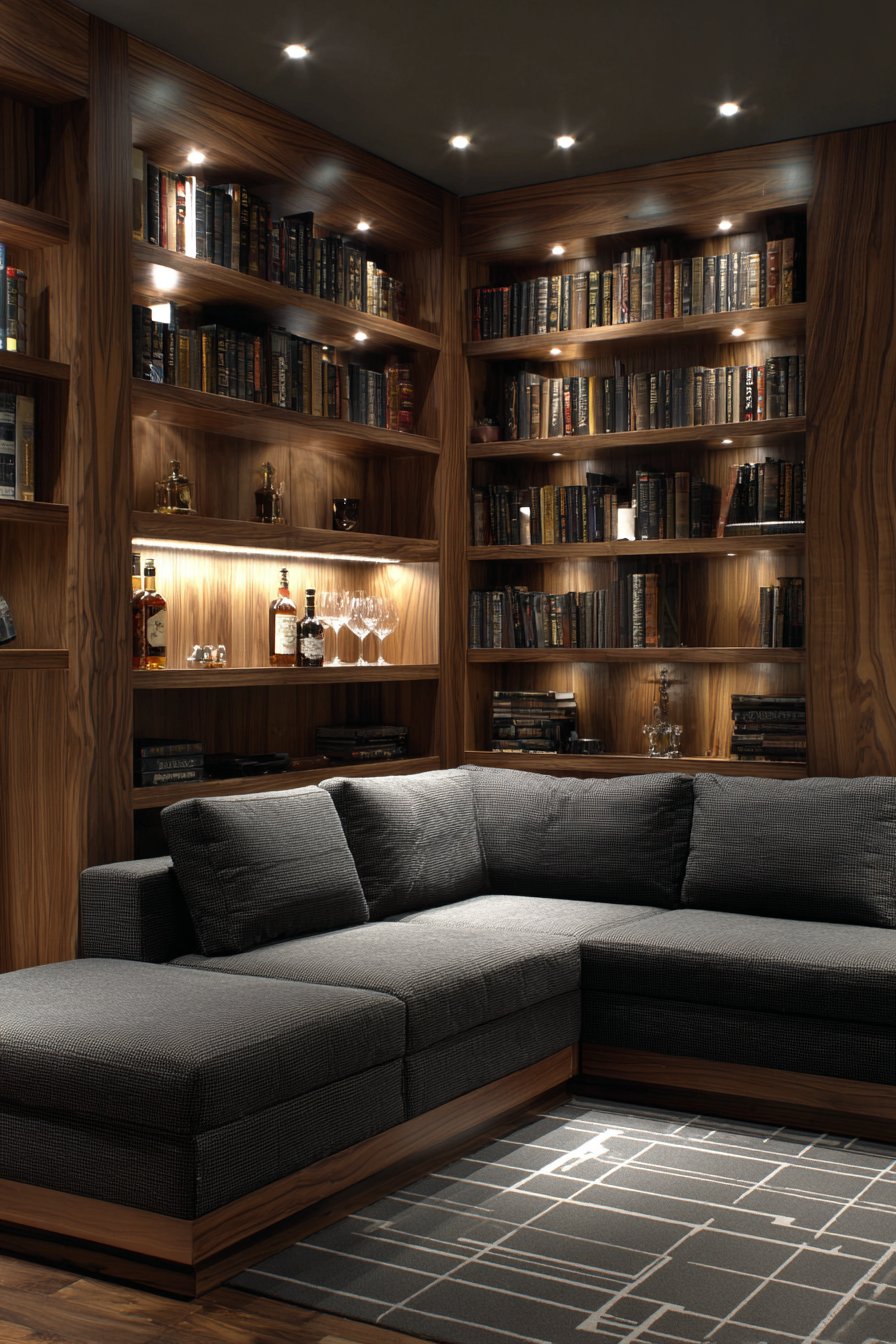
Transforming a basement space into a home library requires addressing the challenges of below-grade environments—primarily limited or absent natural light—while capitalizing on the advantages of privacy, quiet, and separation from main-floor activities. Dark walnut floor-to-ceiling shelving creates a sophisticated, masculine atmosphere that embraces the basement’s inherent coziness rather than fighting it. The dark wood finish looks intentional and luxurious rather than attempting to brighten a space that will never be light-filled.
An integrated bar area within the library shelving creates a sophisticated entertaining space that acknowledges reading as a leisure activity worth celebrating. The bar might include a small wine refrigerator, glassware storage, a sink for ice and mixing drinks, and display space for bottles and barware. This combination transforms the library from a purely utilitarian storage space into a destination room—a place to retreat with friends for conversation over whiskey, or alone with a book and a glass of wine.
Comfortable sectional seating in deep gray faces the book wall, providing ample space for lounging, reading, or entertaining multiple guests. The sectional’s generous proportions suit the basement’s typically spacious floor plan while offering flexible seating arrangements. Recessed lighting and under-shelf LED strips compensate for the lack of windows, with layered lighting at multiple levels creating dimension and preventing the flat, shadowy appearance that single-source lighting creates.
Key Design Tips:
- Install dehumidifiers or monitor basement humidity to protect books from moisture damage
- Use recessed lighting on dimmers to create flexible lighting schemes for different activities and times
- Choose moisture-resistant materials for any built-ins in case of basement flooding or leaks
- Install carpet or area rugs to warm the typically concrete basement floors and improve acoustics
- Consider including a bathroom on the same level to create a true retreat space that doesn’t require trips upstairs
21. Farmhouse Shiplap Library
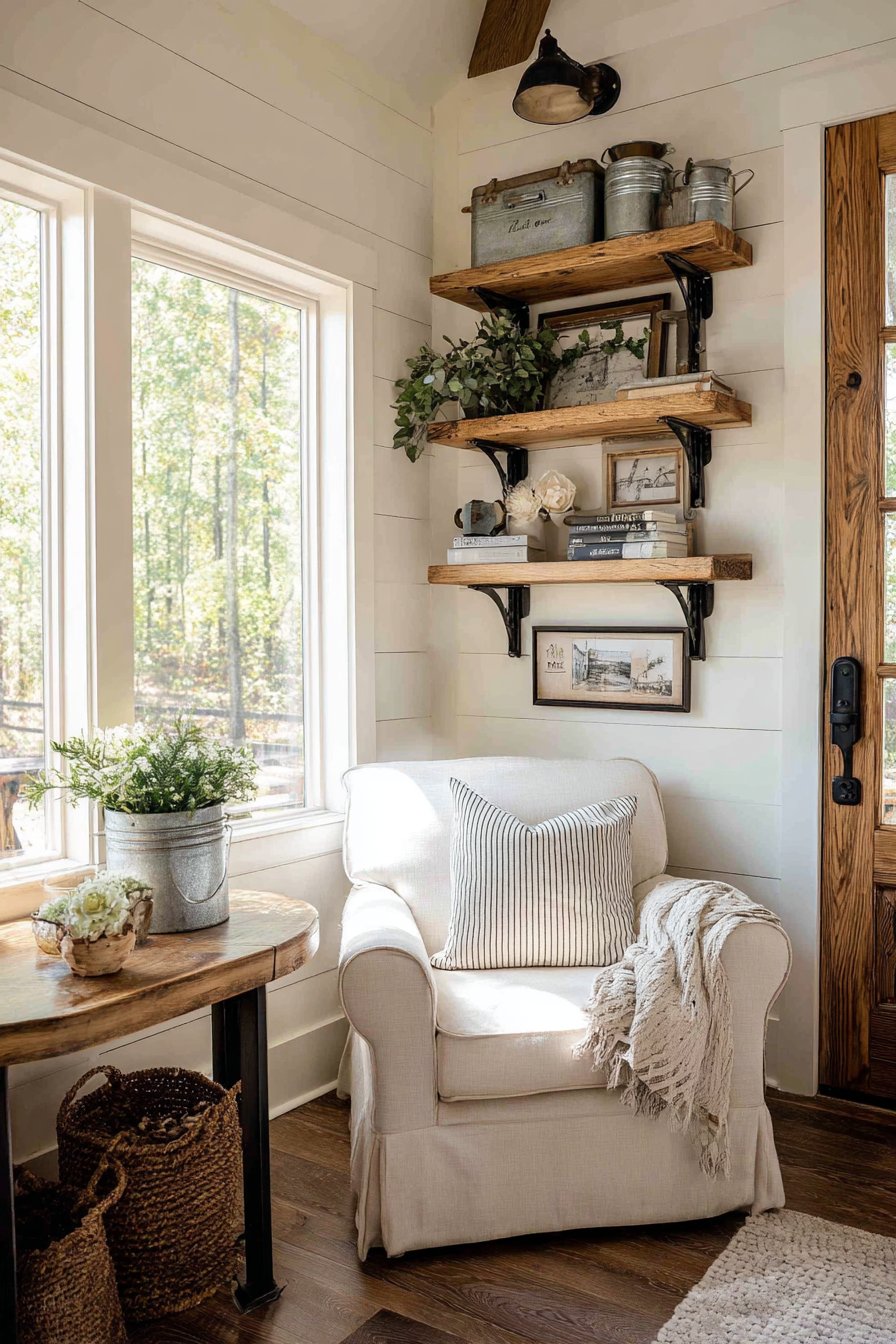
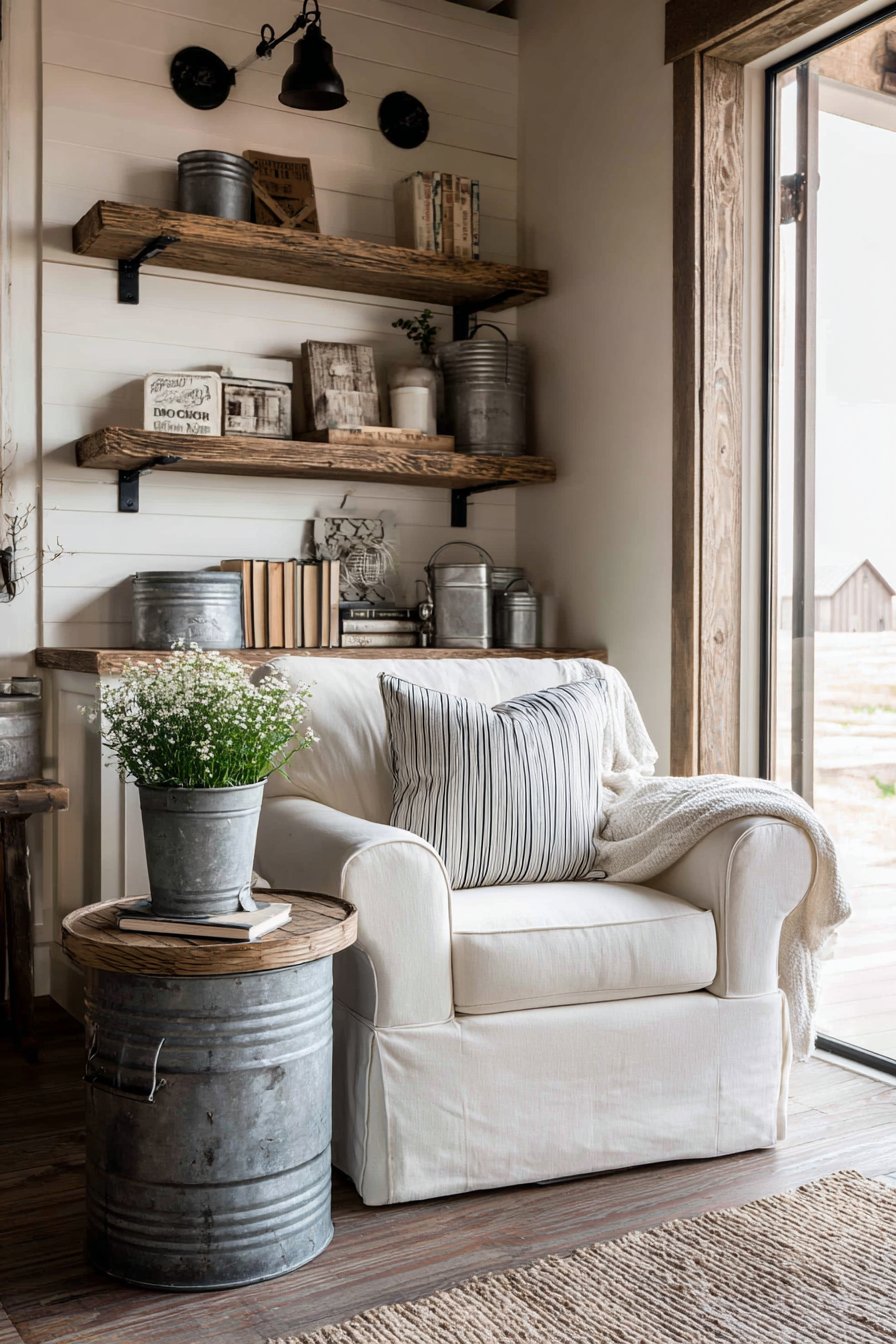
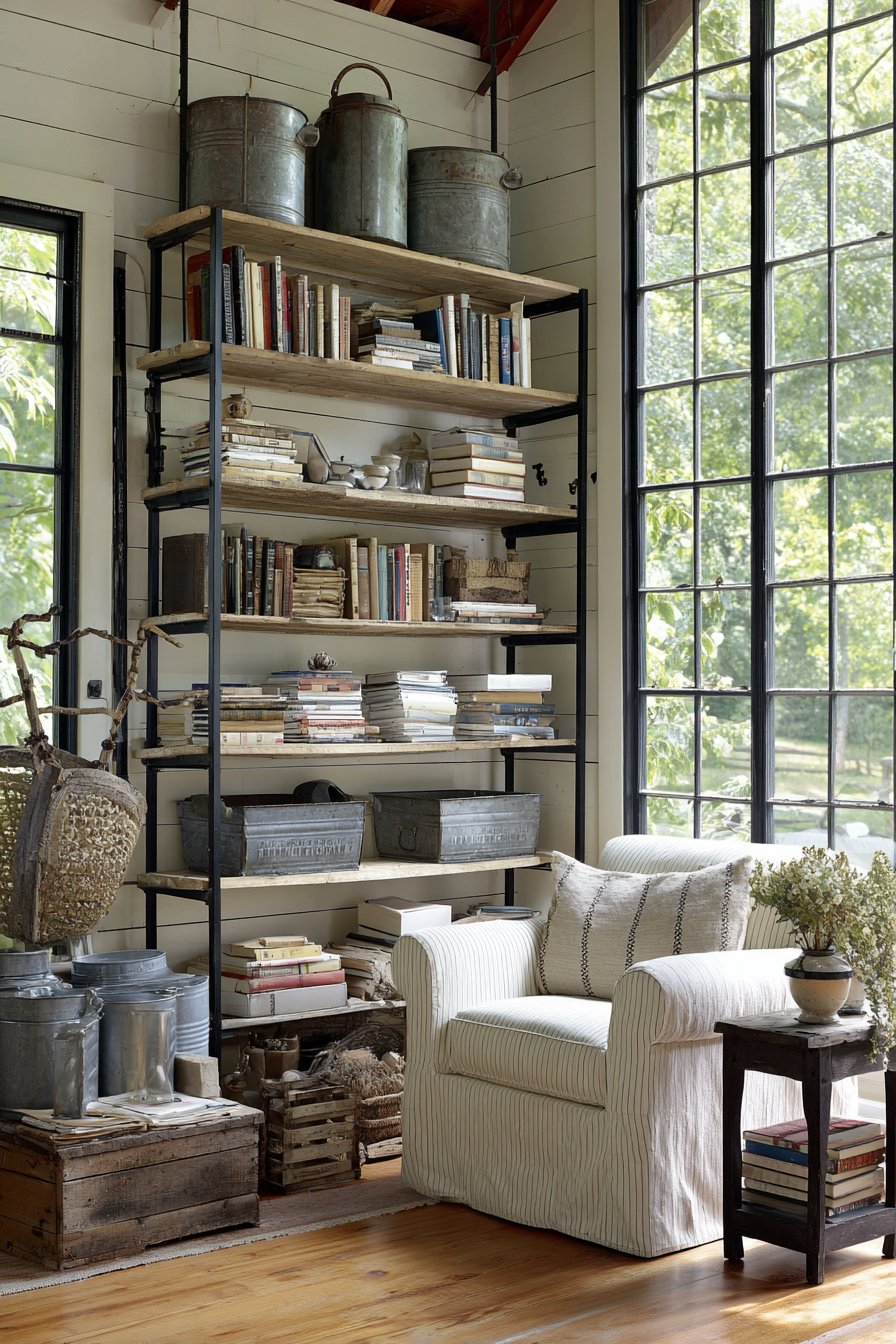
The farmhouse aesthetic—characterized by shiplap walls, natural wood, and vintage-inspired elements—creates libraries that feel welcoming, unpretentious, and family-friendly. Shiplap walls painted white provide the characteristic horizontal texture that defines farmhouse style while creating a clean backdrop for book displays. The narrow planks with their distinctive gaps add textural interest without competing for attention with the books themselves. Open shelving constructed from natural pine boards on black iron brackets provides the utilitarian, no-frills book storage that suits farmhouse style’s practical roots.
Books mixed with galvanized metal containers and vintage farm finds create displays that tell stories about rural life and agricultural heritage. A galvanized bucket might hold reading glasses and bookmarks, while vintage bottles, crocks, or enamelware provide sculptural elements between books. These collected objects—often found at antique stores, flea markets, or inherited from family farms—add personal history and authenticity that mass-produced decor accessories cannot match.
A slipcovered armchair in ticking stripe and distressed wood side table complete the look with furniture that prioritizes comfort and practicality over formality. Slipcovers—a farmhouse hallmark—provide the advantage of being removable for washing, a practical consideration in family homes where spills and pet hair are inevitable. The ticking stripe fabric, with its traditional narrow stripes in navy and white or black and white, references workwear and mattress ticking from earlier eras.
Key Design Tips:
- Install authentic shiplap (boards with rabbeted edges) rather than planks with gaps for proper farmhouse appearance
- Use reclaimed or distressed pine for shelving to achieve the aged, authentic look
- Choose vintage or vintage-style metal accessories in galvanized steel, enamelware, or cast iron
- Select fabrics in traditional farmhouse patterns like ticking stripe, gingham, or grain sack stripes
- Include practical elements like baskets for storage and hooks for hanging reading glasses or throws
22. Corner Library Configuration
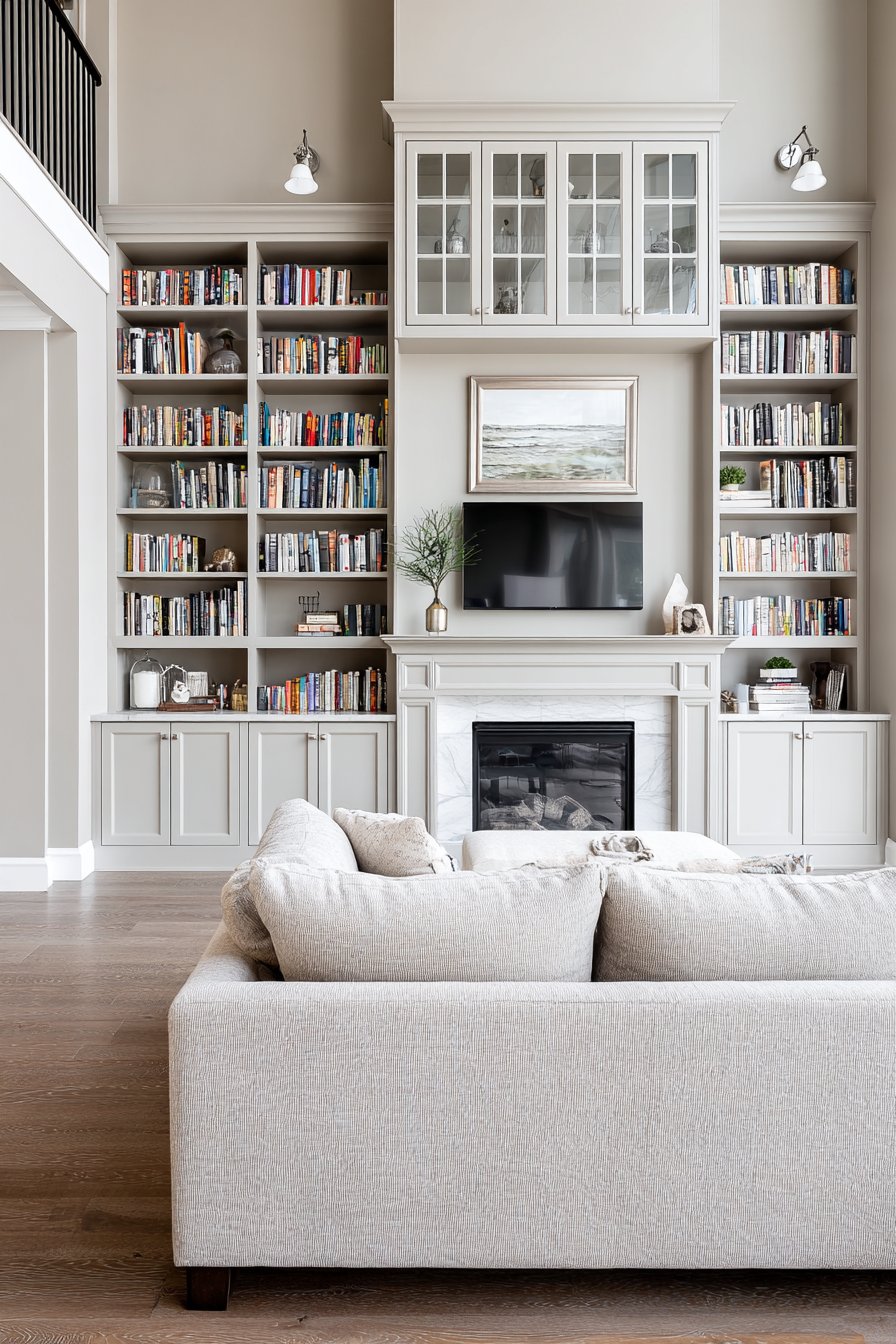
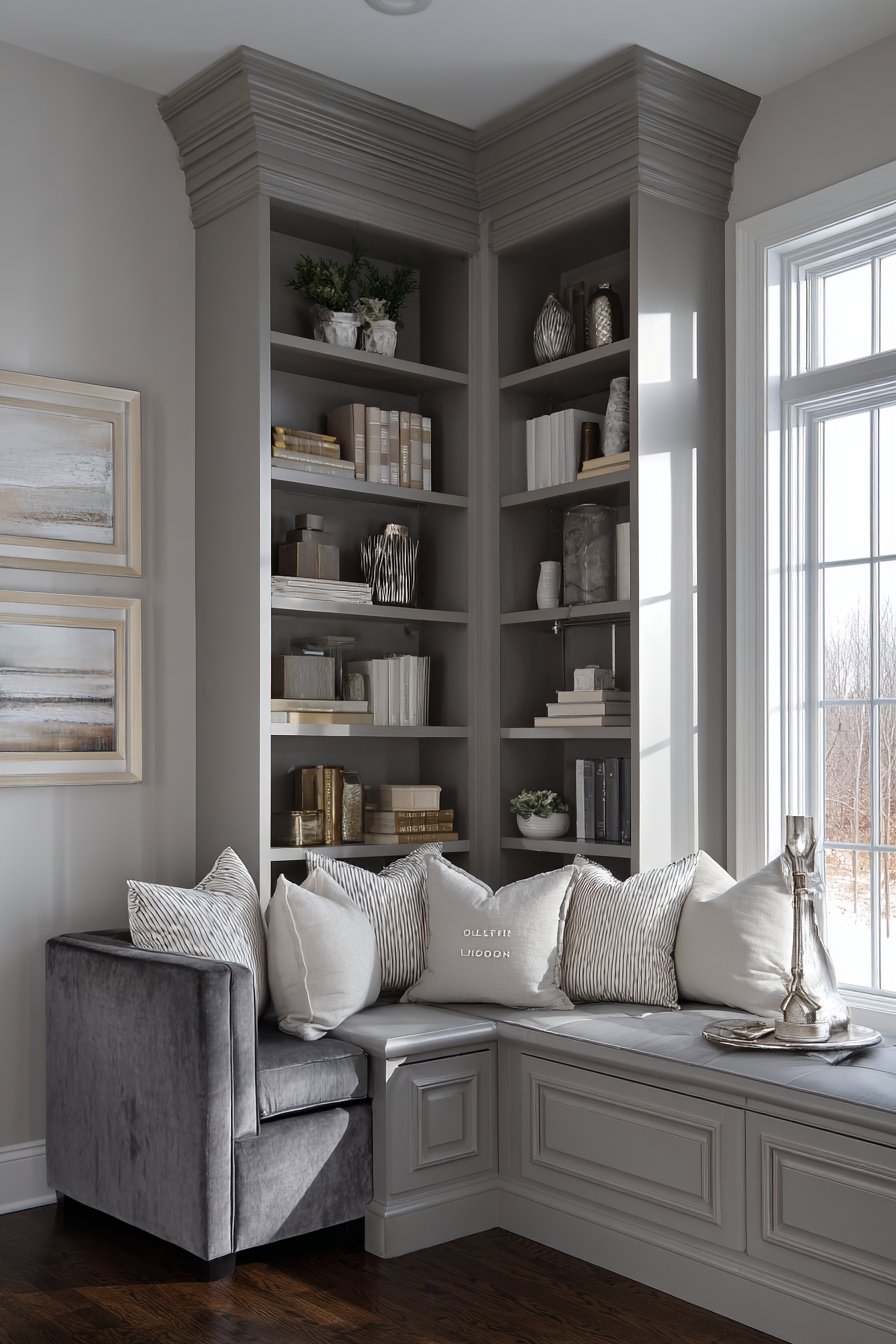
Corner spaces often go underutilized in home design, but they offer excellent opportunities for compact libraries that maximize every square foot. L-shaped built-in shelving designed specifically for a corner maximizes wall space in a compact footprint, typically extending six to eight feet along each wall. The corner itself becomes a focal point rather than a dead zone, often housing a taller center section that draws the eye upward and celebrates the height of the room. Upper shelves might feature decorative crown molding that adds architectural interest and draws attention to the room’s vertical dimension.
Lower cabinets with doors hide less attractive items like electronics, office supplies, overflow storage, or items that would create visual clutter if visible. This combination of open display and concealed storage creates the balance necessary for maintaining an attractive space that also functions for real-life needs. The closed cabinets typically occupy the lower three to four feet of the wall, placing them at convenient height for accessing frequently used items while the upper open shelving displays the book collection.
A compact reading chair in gray velvet fits perfectly in the corner angle created by the two shelving walls, creating an intimate reading nook that feels enclosed without being cramped. The chair’s placement takes advantage of natural light from an adjacent window while being embraced by books on two sides. The velvet upholstery adds luxurious texture and visual richness that elevates the space beyond purely functional book storage.
Key Design Tips:
- Design the shelving to wrap the corner continuously rather than meeting at an awkward angle
- Use the corner as a design feature with special display—perhaps a corner cabinet with glass doors or a decorative column
- Ensure adequate lighting since corners often don’t receive much natural light
- Choose compact furniture scaled appropriately for the corner space to avoid overcrowding
- Consider installing a corner shelf at table height to create a small desk or reading surface
23. Art Deco Glamorous Library
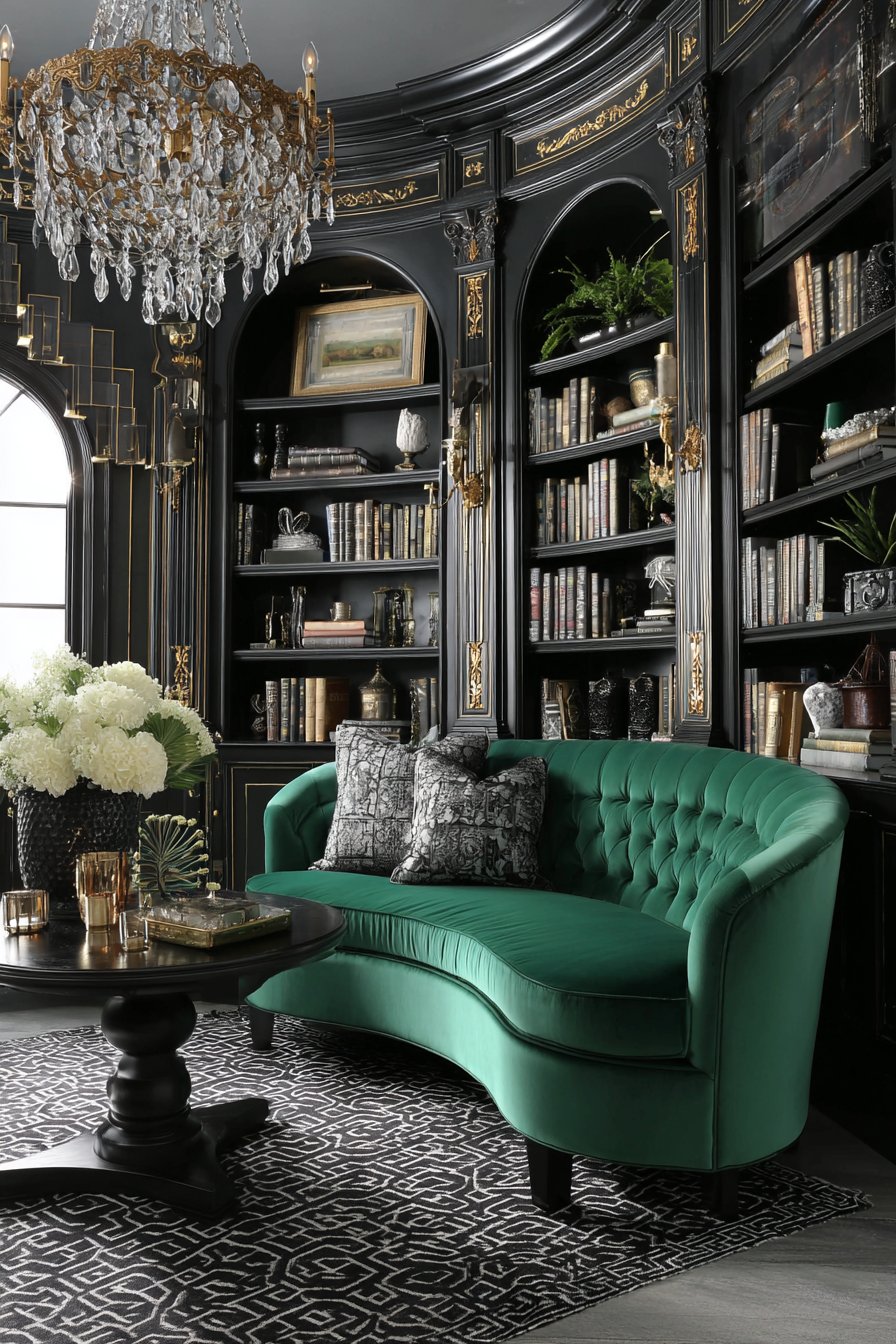
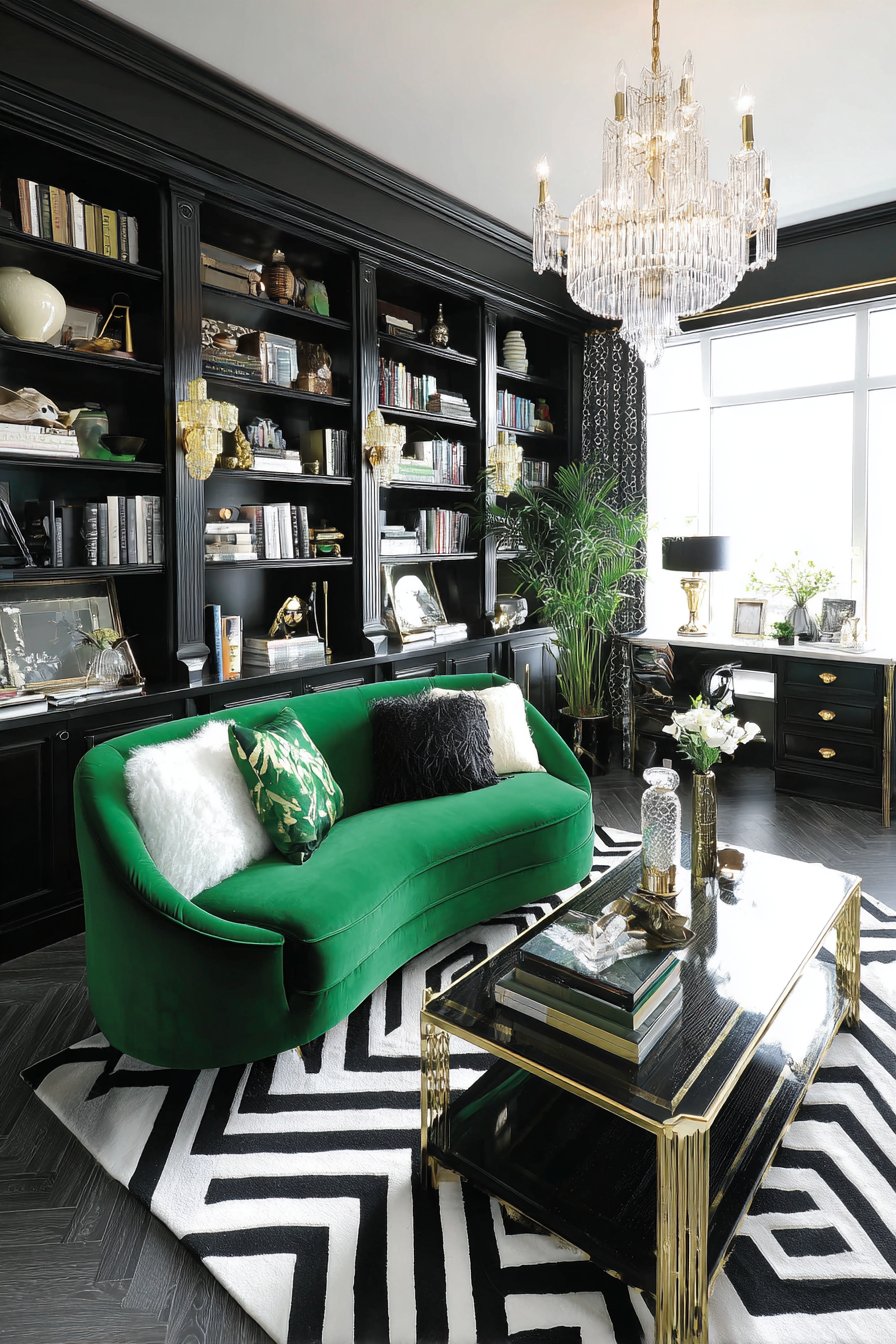
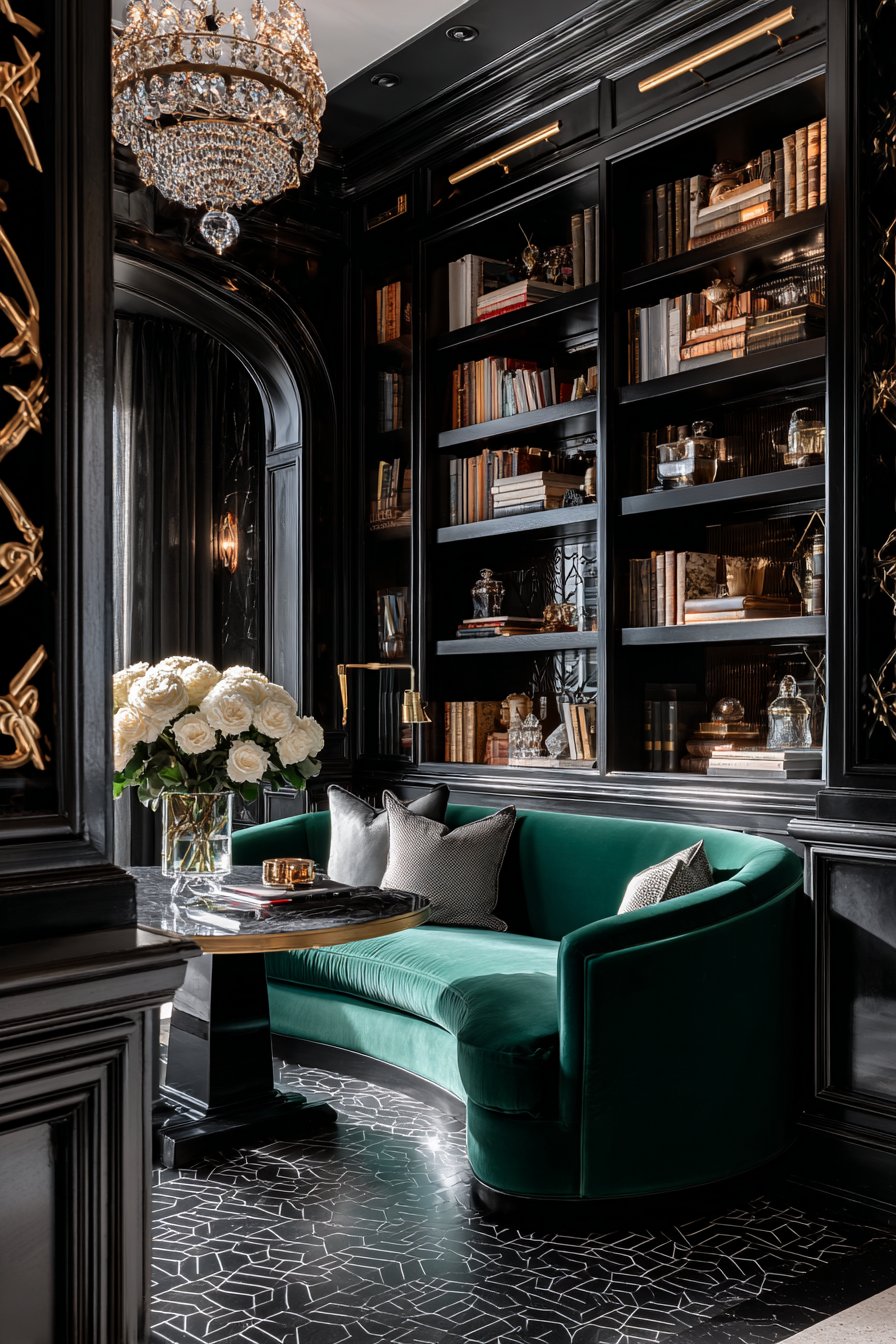
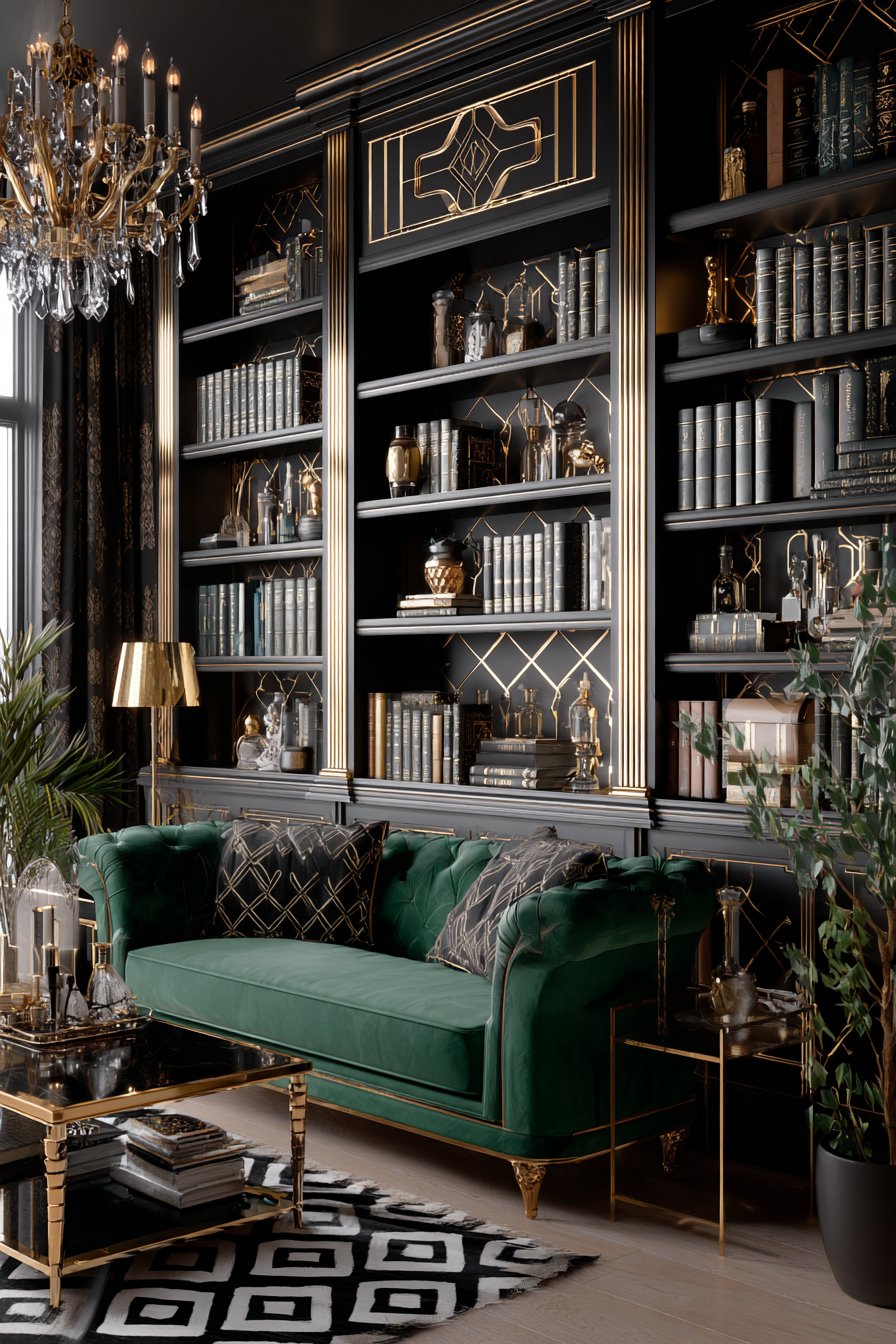
Art Deco design—with its geometric patterns, luxurious materials, and glamorous aesthetic—creates home libraries that feel like scenes from 1920s Paris or Hollywood’s golden age. Black lacquered shelving with gold leaf accents and geometric patterns provides the dramatic, opulent foundation that defines the style. The high-gloss black finish creates mirror-like reflections that add depth and dimension, while gold leaf detailing on edges, corners, or in geometric inlay patterns introduces the metallic glamour essential to Art Deco. The combination of black and gold creates high contrast and visual drama that makes a bold statement.
Books arranged with luxe accessories like marble bookends and vintage decanters create curated vignettes that celebrate material luxury and sophisticated living. Art Deco valued quality materials—marble, crystal, exotic woods, precious metals—and displayed them prominently. Marble bookends in black, white, or green marble provide sculptural weight while echoing the era’s love of geometric forms. Cut crystal or vintage glass decanters filled with amber spirits add both functional bar service and decorative appeal.
A curved velvet sofa in emerald green anchors the space on a black and white geometric rug, creating the room’s seating area with bold color and sumptuous texture. The curve—a signature Art Deco form—provides visual softness that contrasts with the geometric patterns and angular shelving. Emerald green velvet epitomizes Art Deco’s love of rich, saturated colors and luxurious fabrics. A crystal chandelier provides glamorous lighting, with its faceted pendants casting prismatic light patterns that add sparkle and movement.
Key Design Tips:
- Use high-gloss lacquer finishes that can be professionally applied for the smoothest, most reflective surface
- Incorporate genuine gold leaf on accent details rather than gold paint for authentic metallic luster
- Choose geometric patterns with strong symmetry and repetition typical of Art Deco design
- Select furniture with characteristic Art Deco curves, streamlined forms, and luxurious upholstery
- Add metallic accessories in brass, chrome, or silver to reinforce the glamorous aesthetic
24. Staircase Wall Library
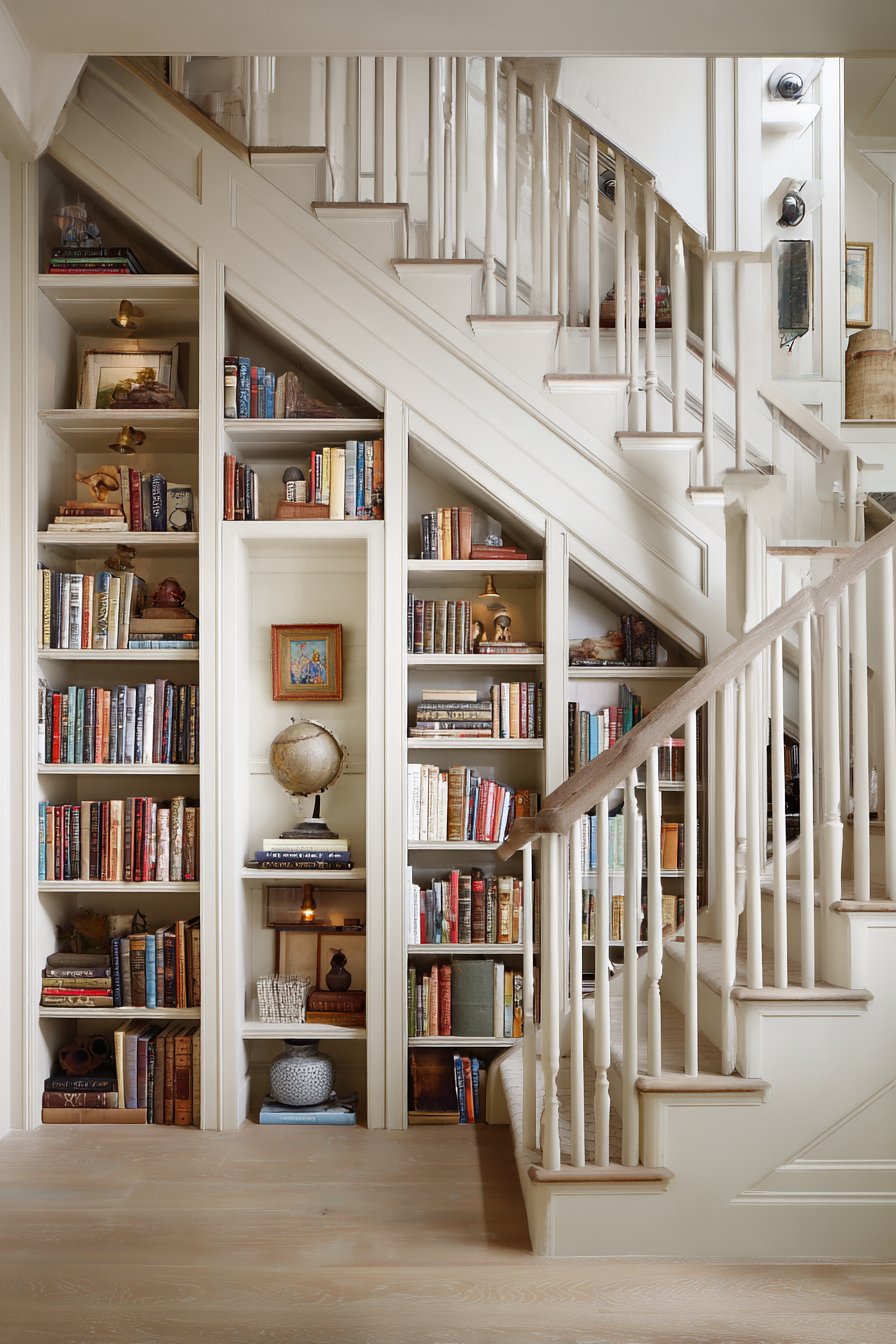
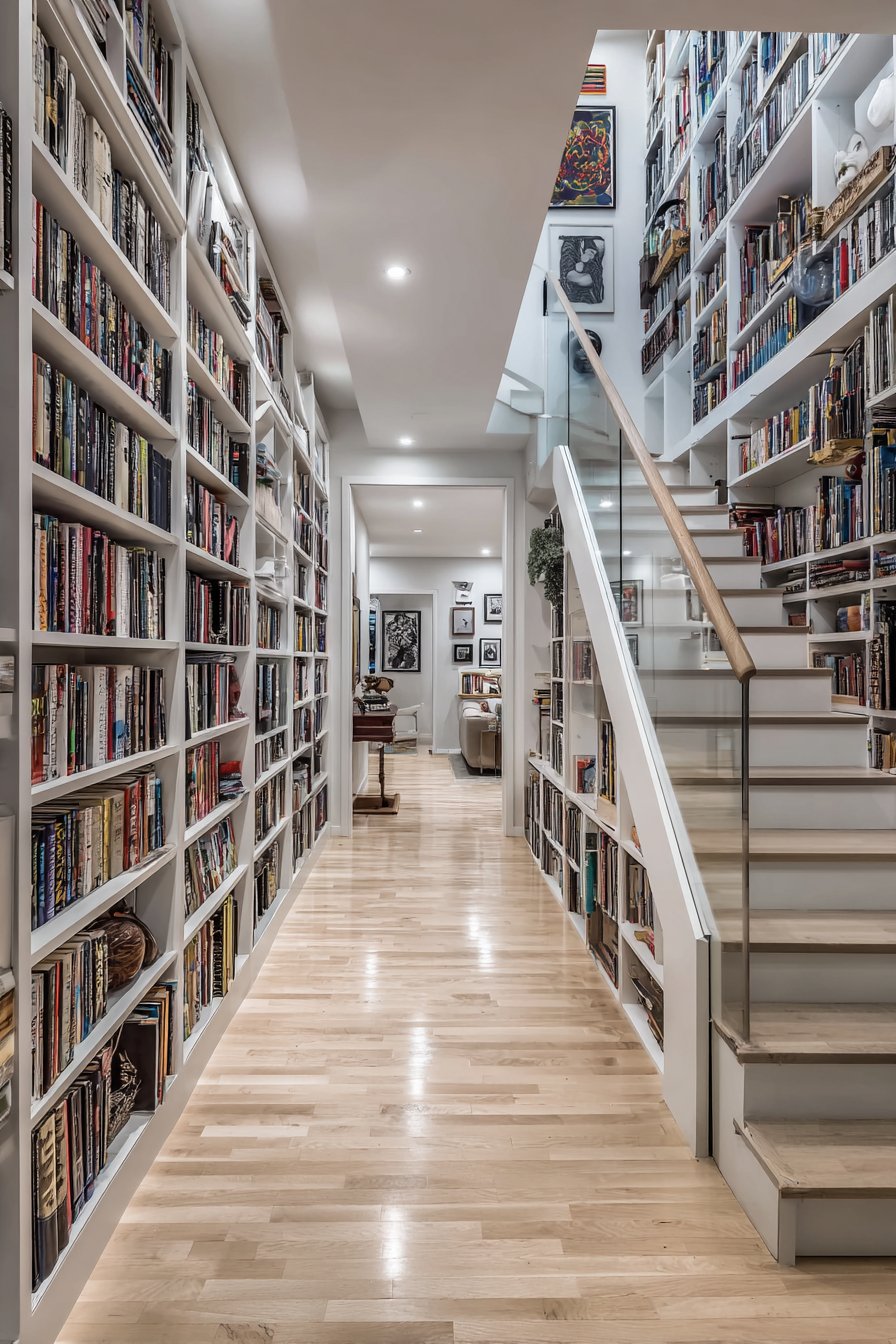
The often-overlooked wall space alongside a staircase offers unique opportunities for creative library installations that turn a purely circulatory space into an engaging destination. Custom shelving fitted between the stair stringers and handrail maximizes the angled architecture, turning what might be empty wall into valuable book storage. The shelving follows the staircase’s angle, creating a dynamic diagonal composition that draws the eye upward and makes the vertical journey visually interesting. This installation requires precise measurement and often custom fabrication since the dimensions change with each step.
Books organized by genre with careful consideration of the angled architecture ensure that volumes remain secure and accessible despite the unconventional shelf angles. Shelves must be designed with lips or retaining edges to prevent books from sliding, while spacing must account for the limited reach possible from stair treads. Lower shelves might hold frequently accessed books, while upper reaches—less convenient to browse—could house reference materials or overflow collections. The unique angles create visual interest, with book spines following the staircase’s diagonal trajectory.
Built-in reading lights illuminate each section, making it possible to browse and select books even in a space that might not receive abundant natural light. The lighting serves a practical safety function—ensuring the staircase remains well-lit for navigation—while highlighting the book collection as a deliberate design feature. The fixtures might be small LED puck lights, linear LED strips, or articulating reading lamps positioned at intervals along the staircase.
Key Design Tips:
- Ensure all shelving and installations meet building codes for stairway clearance and safety requirements
- Use shelf lips or ledges to prevent books from sliding on angled shelves
- Install lighting that serves both the book display and stairway safety requirements
- Organize books with spines facing the stairway for easy browsing while ascending or descending
- Consider using the landing areas for deeper shelves that can accommodate larger books
25. Coastal Whitewashed Library
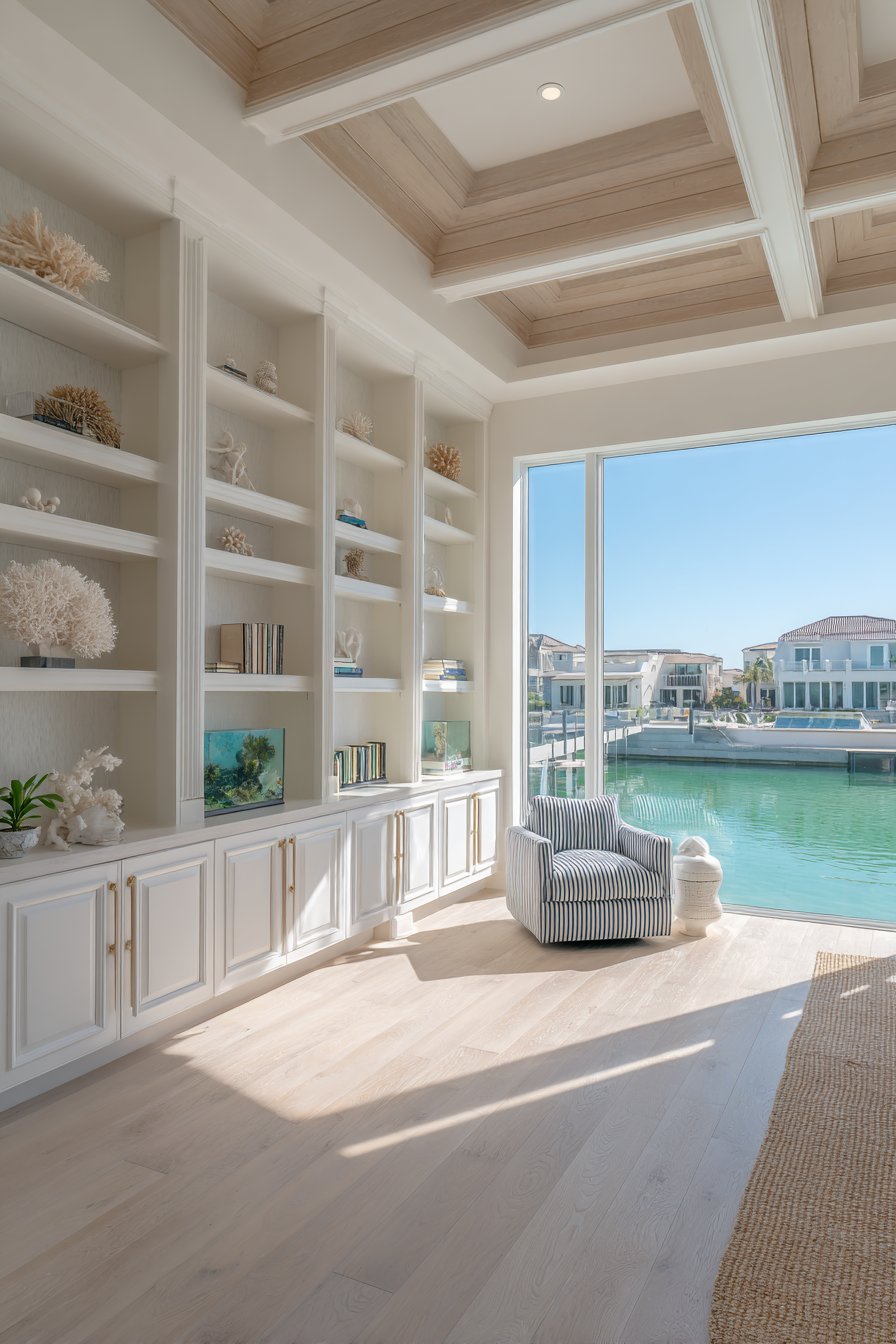
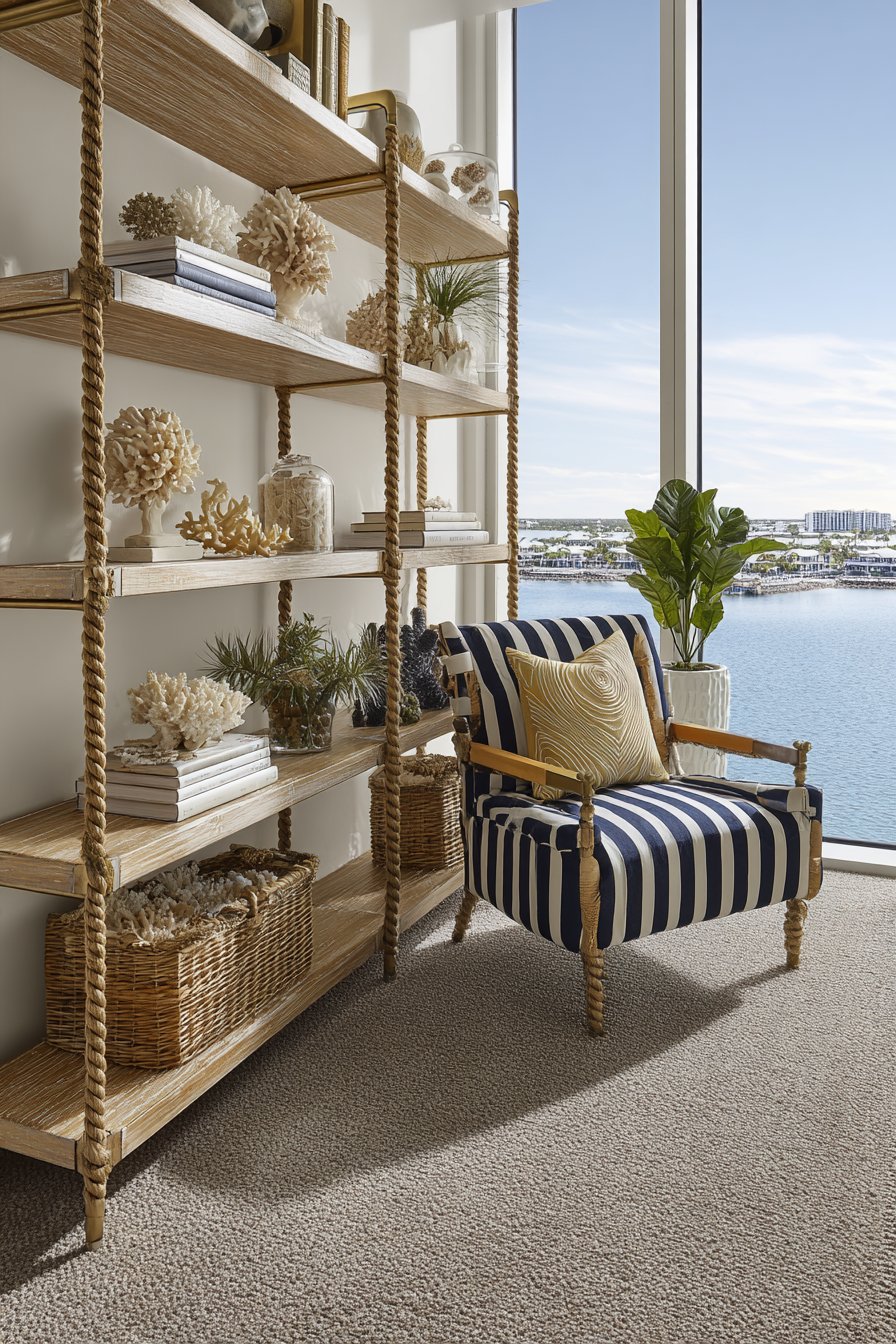
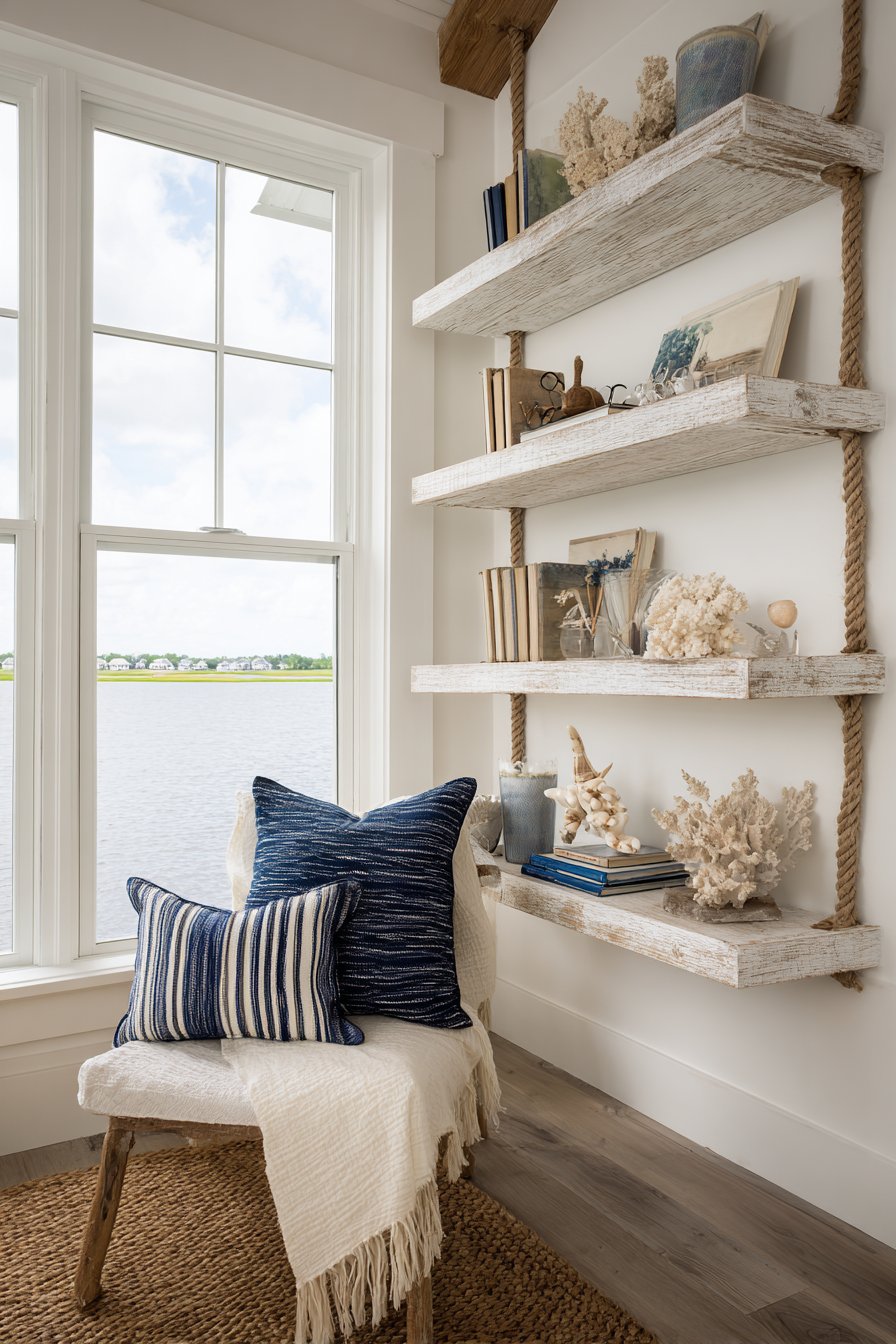
The coastal home library aesthetic brings the relaxed, breezy atmosphere of beach living to book storage and reading spaces. Whitewashed wood shelving with rope details and nautical brass accents creates an immediate connection to maritime traditions and seaside living. The whitewash technique—applying diluted white paint that allows wood grain to remain visible—creates a weathered, sun-bleached appearance that suggests driftwood and salt-worn surfaces. Rope details, perhaps used as trim on shelf edges or wrapped around exposed shelf supports, reference nautical traditions while adding organic texture.
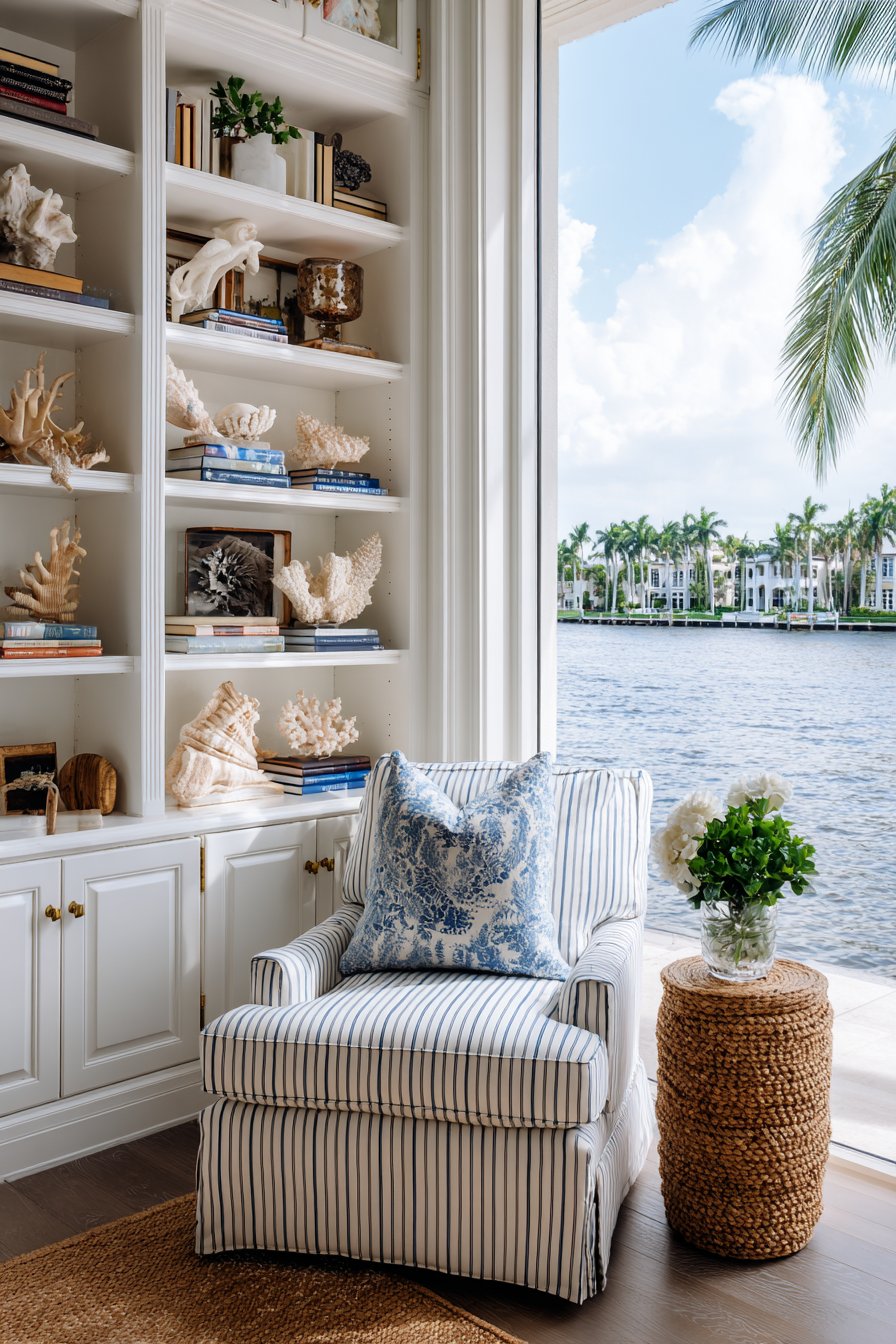
Books displayed alongside coral specimens, seashells, and maritime antiques create collections that blend literary interests with natural history and seafaring heritage. A piece of brain coral, a collection of sand dollars, vintage nautical charts, or a brass sextant interspersed among books tells stories about ocean exploration and coastal living. These natural and vintage objects provide sculptural forms and organic textures that contrast with books’ uniformity while reinforcing the coastal theme.
A navy and white striped armchair and sisal rug create a beachy reading corner that brings traditional nautical elements indoors. The classic navy and white stripe—forever associated with French sailor shirts and beach cabanas—provides pattern without overwhelming the space. Sisal or jute rugs contribute natural fiber textures that suggest beach grass and sand while being durable and practical for high-use reading areas.
Key Design Tips:
- Apply whitewash or limewash finishes to new wood to achieve the weathered coastal appearance
- Use marine-grade brass hardware that develops authentic patina while resisting corrosion
- Select natural fiber rugs like sisal, jute, or seagrass that suit coastal style and wear well
- Display shells, coral, and maritime objects on stands or in shadow boxes to give them proper prominence
- Include sheer white curtains that filter light and move with breezes, enhancing the airy coastal feeling
Why These Home Library Ideas Stand Out
These twenty-five home library ideas represent the pinnacle of residential book storage and reading space design, each offering solutions to common challenges while demonstrating exceptional attention to detail, materials, and user experience. What distinguishes these designs from basic shelving installations is their holistic approach—considering not just where books will be stored, but how the space will be used, lit, furnished, and experienced over time. The best home libraries succeed at multiple levels: they provide adequate storage for growing collections, create comfortable environments for reading and study, reflect personal style and values, and add architectural interest to the home.
The variety represented in these designs ensures that homeowners with different spatial constraints, style preferences, and budgets can find inspiration applicable to their situations. From the narrow hallway solution that proves every wall has potential, to the dramatic double-height library that makes books architectural features, these ideas demonstrate flexibility and creativity in approaching library design. The materials, colors, and finishes selected for each design have been carefully considered for their practical performance—durability, maintenance requirements, light reflection properties—as well as their aesthetic contribution. This attention to both form and function separates exceptional library design from merely adequate book storage.
Lighting strategies across these designs demonstrate sophisticated understanding of how illumination affects both book preservation and reading comfort. Natural light must be celebrated but controlled to prevent UV damage to valuable collections, while artificial lighting must provide adequate illumination without glare or harsh shadows. The best library designs layer multiple light sources—ambient, task, and accent lighting—creating flexible systems that adapt to different times of day and activities. Whether through clerestory windows that bring light from above, integrated LED systems that highlight specific collections, or classic reading lamps positioned beside comfortable chairs, thoughtful lighting transforms functional book storage into inviting, comfortable spaces where people want to spend time.
The seating selections in these designs recognize that reading requires sustained physical comfort over extended periods. From the classic leather Chesterfield that develops character over decades, to ergonomic office chairs that support work postures, to cushioned window seats that invite lounging with a novel, each seating choice considers both comfort and style. The best reading chairs provide proper back support, appropriate seat height and depth, and are positioned to take advantage of natural light without glare on pages. The inclusion of side tables, ottomans, and adequate lighting near seating areas demonstrates understanding that reading requires not just a chair but a complete reading station with space for beverages, note-taking materials, and adjustable lighting.
The integration of technology and traditional book storage in several designs—particularly the home office library combination—addresses modern reality where digital and physical media coexist. Successful contemporary libraries provide solutions for charging devices, concealing electronics and cables, and creating workspaces that accommodate computers alongside printed materials. The ability to seamlessly blend work, research, and leisure reading in a single space adds significant value to homes where separate rooms for each function aren’t feasible. Smart storage solutions that hide less attractive technological necessities while displaying beautiful books maintain the library’s aesthetic appeal while serving practical needs.
Material selections across these designs demonstrate sophisticated understanding of how different woods, finishes, fabrics, and metals create atmosphere and communicate style. Dark mahogany creates gravitas and traditional elegance, while light birch suggests Scandinavian simplicity and brightness. Lacquered finishes in contemporary libraries provide sleek modernity, while reclaimed barn wood brings rustic authenticity. Each material choice contributes to the overall narrative the space tells about its owner’s values, interests, and lifestyle. The best materials prove both beautiful and practical, aging gracefully and maintaining their appeal through years of use.
The organizational strategies demonstrated—from color-coded arrangements that turn book spines into art installations, to genre-based organization that prioritizes functional access, to curated displays that treat books as design elements—show that there’s no single correct way to arrange a library. The best organizational system suits the owner’s needs, whether that means easy retrieval by author and title, visual impact through color arrangement, or thematic grouping that reflects research interests. The flexibility to reorganize and grow the collection over time distinguishes truly successful library designs from rigid systems that can’t adapt to changing needs.
Architectural integration elevates these library designs beyond furniture installations to become permanent features that add value to homes. Built-in shelving, custom-fitted alcove systems, and floor-to-ceiling installations that address specific architectural features demonstrate commitment to craft and quality that freestanding furniture cannot match. The architectural approach also maximizes storage efficiency, utilizing vertical space, corners, and odd angles that standard bookcases cannot address. While built-in libraries require greater initial investment, they provide superior capacity, stability, and visual impact that justifies the cost.
The inclusion of comfortable, inviting reading areas in each design recognizes that libraries serve not just storage but human needs for comfort, privacy, and contemplation. The best home libraries create retreat spaces where inhabitants can escape daily pressures, engage with ideas, and enjoy the simple pleasure of reading. Whether through window seats that provide natural light and views, cozy corners created by L-shaped shelving configurations, or formal seating arrangements that invite conversation about books, these spaces acknowledge that libraries serve social and psychological functions beyond merely housing collections.
Conclusion
Creating a home library represents an investment in intellectual life, a commitment to physical books in an increasingly digital world, and an opportunity to design a space that reflects personal values and interests. The twenty-five ideas explored in this guide demonstrate the remarkable range of possibilities available when approaching library design—from traditional wood-paneled studies that honor centuries of literary tradition to contemporary minimalist arrangements that celebrate clean lines and careful curation. Each approach offers unique advantages, whether maximizing limited space through clever design, celebrating specific architectural features, or creating dramatic visual impact through bold material and color choices.
The key to successful home library design lies in balancing practical requirements with aesthetic aspirations. Your library must adequately house your current collection while allowing for future growth, provide comfortable reading and study areas with appropriate lighting, and create an atmosphere that encourages use rather than serving merely as decorative backdrop. The most successful libraries become lived-in spaces where books are regularly pulled from shelves, read in comfortable chairs, and returned to their places—spaces that show signs of active engagement with ideas rather than museum-like perfection that discourages touch.
Whether you’re converting a spare bedroom into a dedicated library, transforming an unused alcove into a cozy reading nook, or building a custom two-story book room complete with rolling ladders and spiral staircases, the essential goal remains the same: creating a space that celebrates books, encourages reading, and provides sanctuary from the demands of contemporary life. Draw inspiration from the designs presented here, adapt elements that suit your specific situation, and remember that the best home library is one that reflects your personal relationship with books and reading. Your library should tell your story, house your treasures, and invite you to spend time in the company of ideas—creating a legacy of literacy and learning that enriches daily life and can be passed to future generations.
