
In an era where mass-produced wall art dominates interior design, there’s something profoundly personal and transformative about wall drawing ideas that bring authentic creativity directly onto your walls. The resurgence of hand-drawn wall art represents more than just a design trend—it’s a movement toward personalization, self-expression, and the celebration of imperfection in our increasingly digital world. Whether you’re looking to add a subtle accent to a minimalist space or create a bold artistic statement that commands attention, wall drawing ideas offer an accessible and budget-friendly approach to transforming any room into a uniquely personal sanctuary.
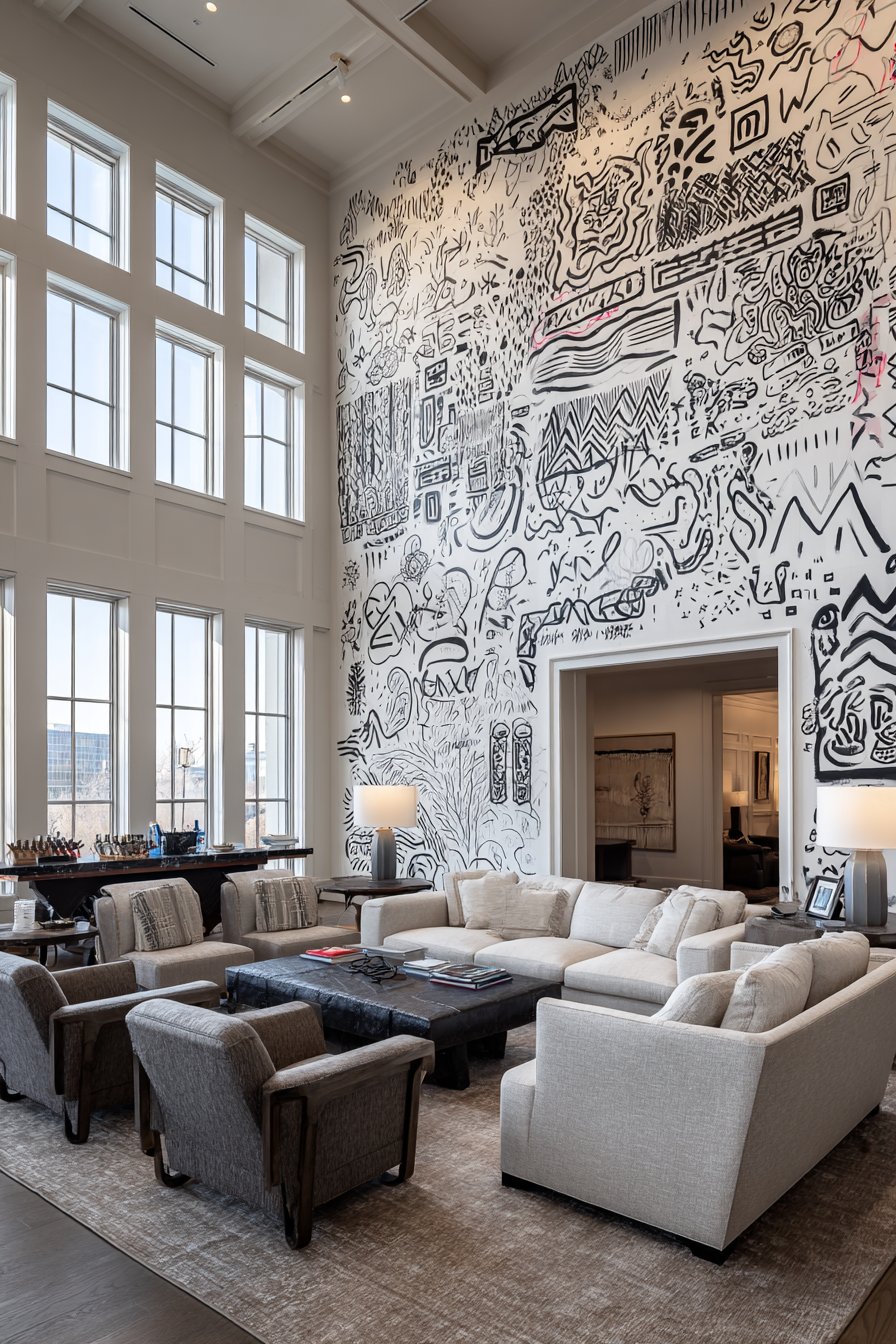
The beauty of incorporating wall drawing ideas into your home lies in their versatility and authenticity. Unlike traditional framed artwork or wallpaper, hand-drawn wall art becomes an integral part of your architectural canvas, seamlessly blending with your existing design while adding layers of character and visual interest. From simple geometric patterns that complement modern aesthetics to intricate botanical illustrations that bring nature indoors, these creative solutions cater to every skill level, style preference, and functional need. The tactile quality of hand-drawn elements—the visible brush strokes, the imperfect lines, the human touch—creates an emotional connection that mass-produced alternatives simply cannot replicate.
Throughout this comprehensive guide, we’ll explore twenty-nine distinctive wall drawing ideas that span various design styles, from bohemian bedrooms adorned with mandala patterns to industrial loft spaces featuring abstract chalk art on exposed brick. Each concept demonstrates how strategic placement, thoughtful execution, and creative vision can transform ordinary walls into extraordinary focal points. Whether you’re designing a serene meditation space, a playful children’s room, or a sophisticated dining area, you’ll discover practical techniques, material recommendations, and design principles that will empower you to confidently bring these wall drawing ideas to life in your own home.
1. Bohemian Bedroom with Hand-Sketched Mandala Patterns
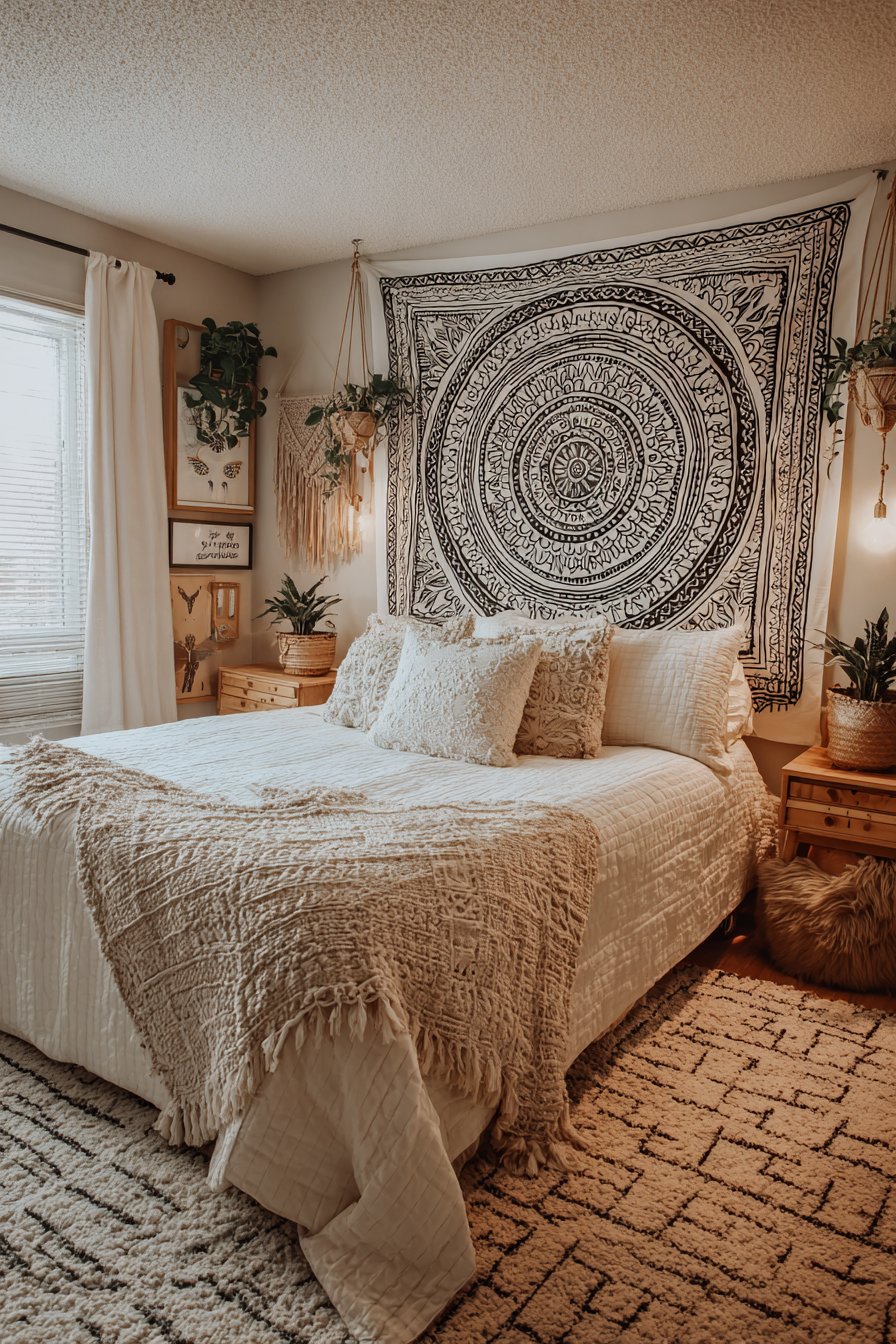
The bohemian aesthetic celebrates artistic freedom and spiritual expression, making it the perfect style to showcase intricate wall drawing ideas. In this bedroom concept, hand-sketched mandala patterns transform a simple white accent wall into a mesmerizing focal point that draws the eye and calms the mind. The circular designs, executed with precision using black permanent markers and enhanced with touches of gold metallic pen accents, create a meditation-worthy backdrop that embodies the free-spirited essence of bohemian design. The intricate line work requires patience and planning, but the result is a completely unique artistic statement that reflects personal creativity and cultural appreciation.
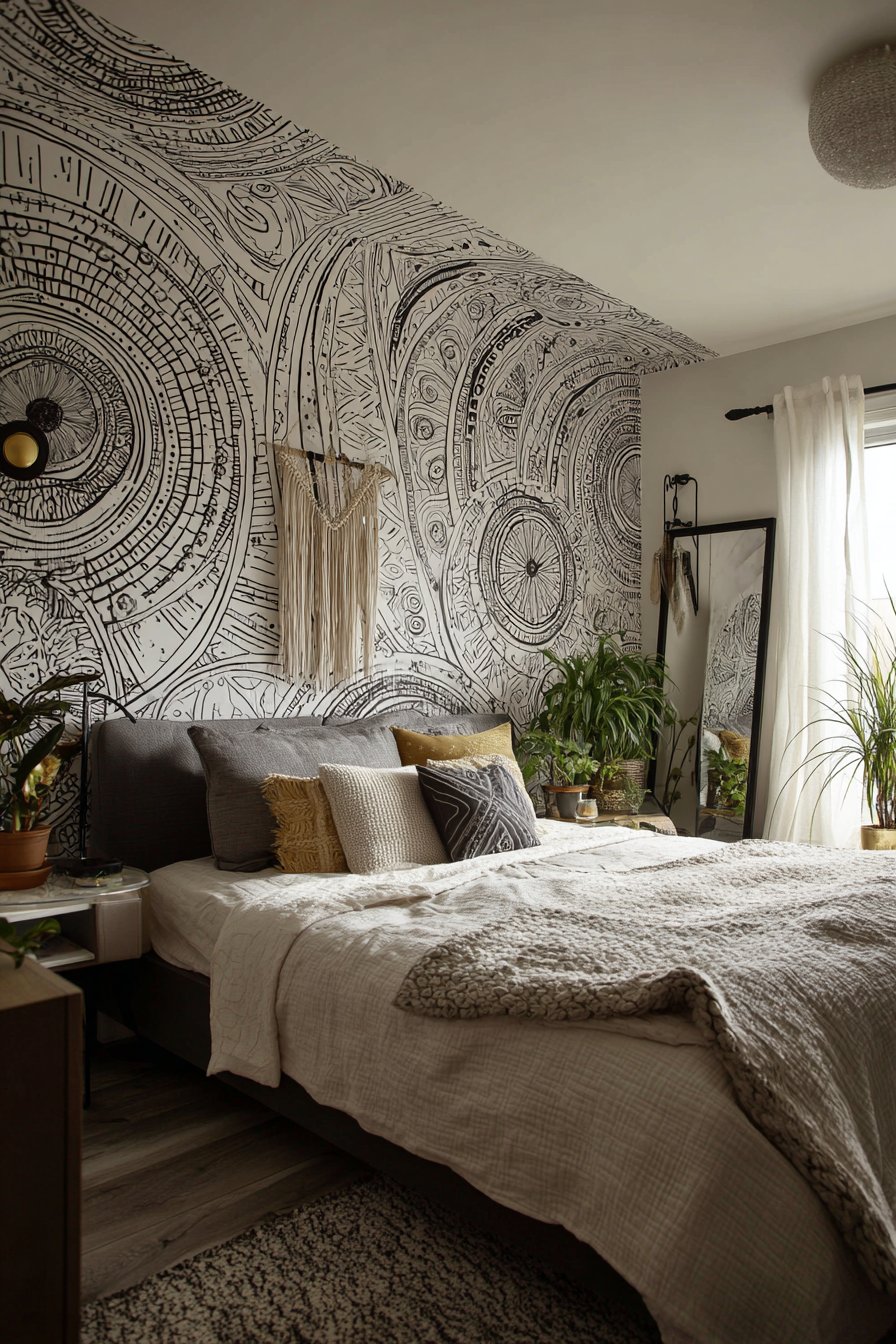
The layering of textures throughout this space reinforces the bohemian philosophy of collected, eclectic beauty. Macramé wall hangings in varying sizes create dimensional interest alongside the flat wall drawings, while potted plants introduce organic forms and living energy that complement the geometric precision of the mandalas. The low-profile bed with its textured linens in natural fibers and earthy tones provides a grounding element that prevents the ornate wall art from overwhelming the space. This careful balance between elaborate decoration and functional simplicity is what makes bohemian design both visually captivating and livably comfortable.
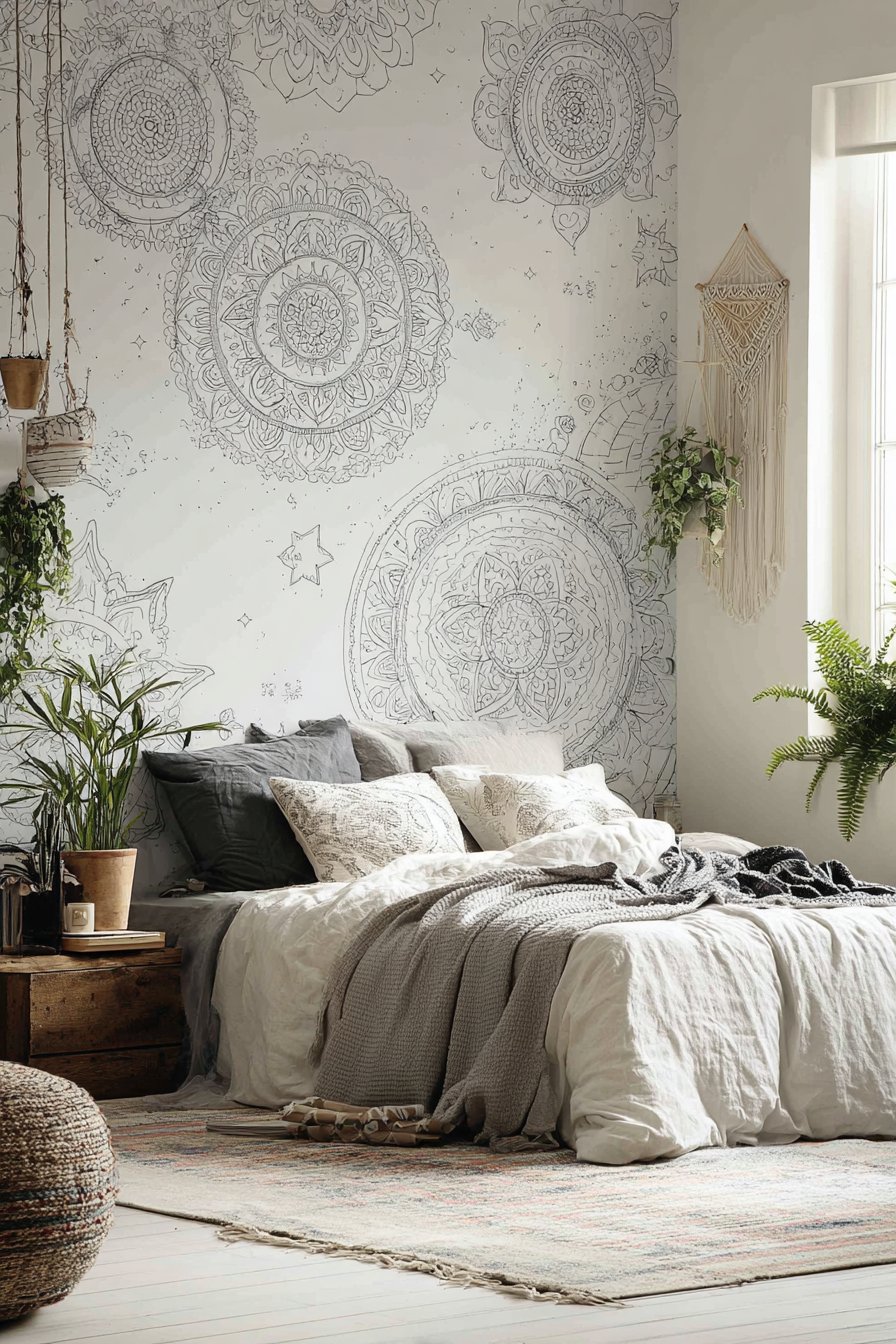
Lighting plays a crucial role in highlighting the detailed craftsmanship of these wall drawing ideas. Soft natural light filtering through sheer curtains during the day creates gentle shadows that add depth and dimension to the line work, making the patterns appear almost three-dimensional as the sun moves across the sky. In the evening, strategically placed warm-toned lamps create intimate pools of light that emphasize different sections of the mandala, transforming the wall art into an ever-changing visual experience. The interplay between light and shadow brings these static drawings to life, proving that wall drawing ideas can be as dynamic as any other design element.
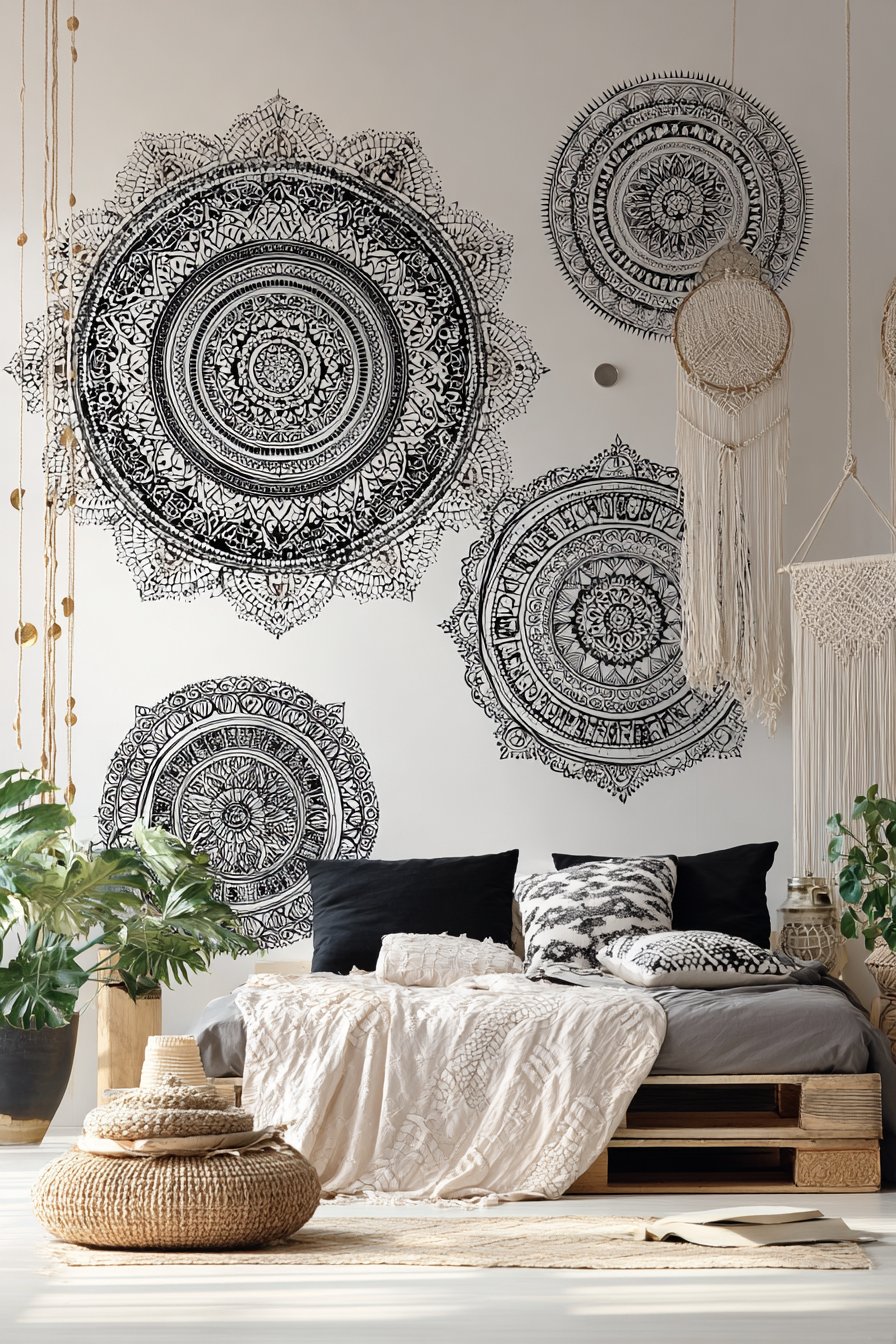
Key Design Tips: Start with a light pencil sketch to establish proportions before committing with permanent markers. Use a compass or circular templates to ensure symmetry in your mandala designs. Layer multiple sizes of circular patterns for added visual complexity and interest. Incorporate metallic accents sparingly to create focal points without overwhelming the design. Position your bed to face the wall art, making it the first thing you see upon waking. Consider the wall’s texture before beginning—smoother surfaces work best for detailed line work. Protect your completed design with a clear matte sealer to prevent smudging over time.
2. Modern Nursery with Whimsical Mountain Landscape
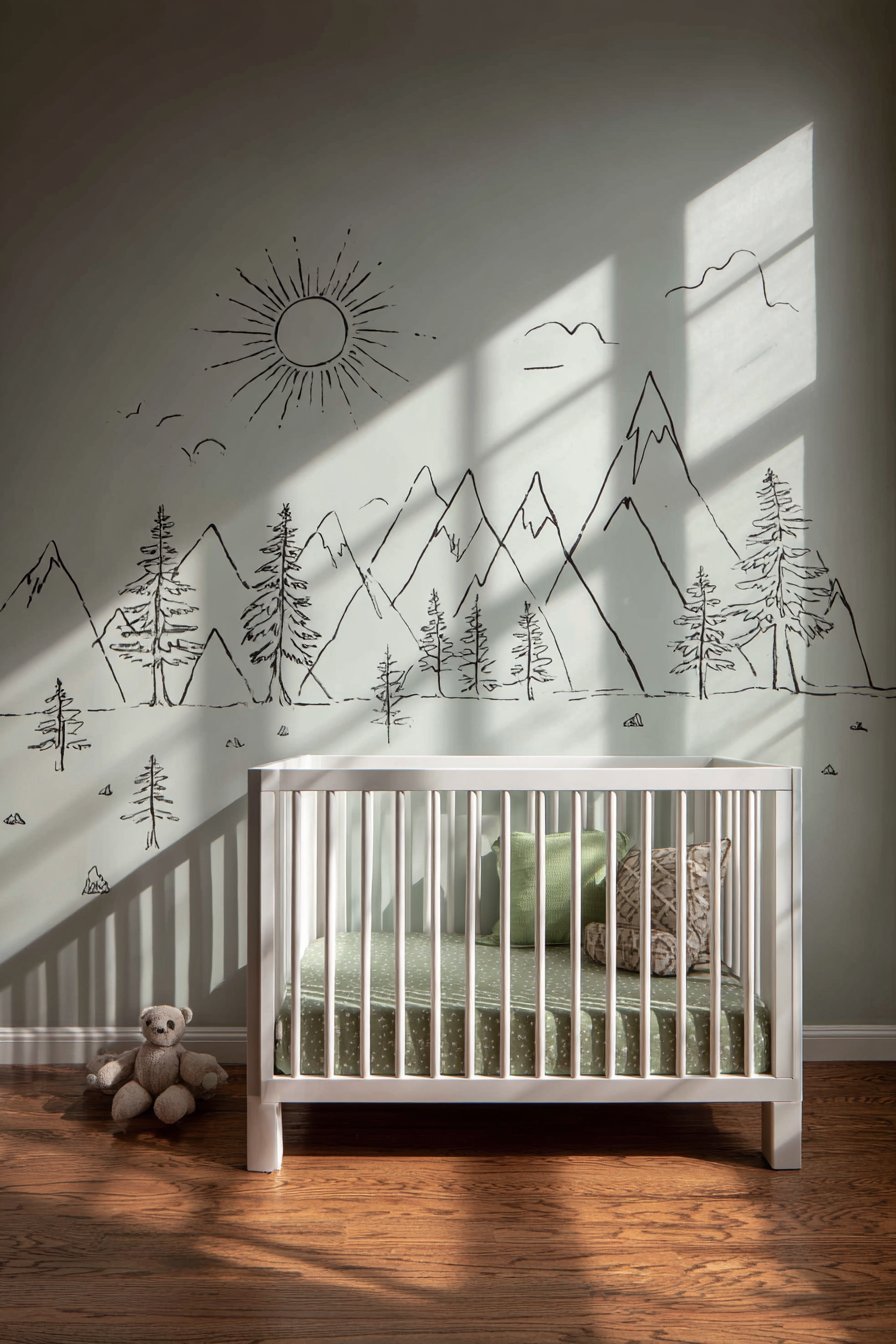
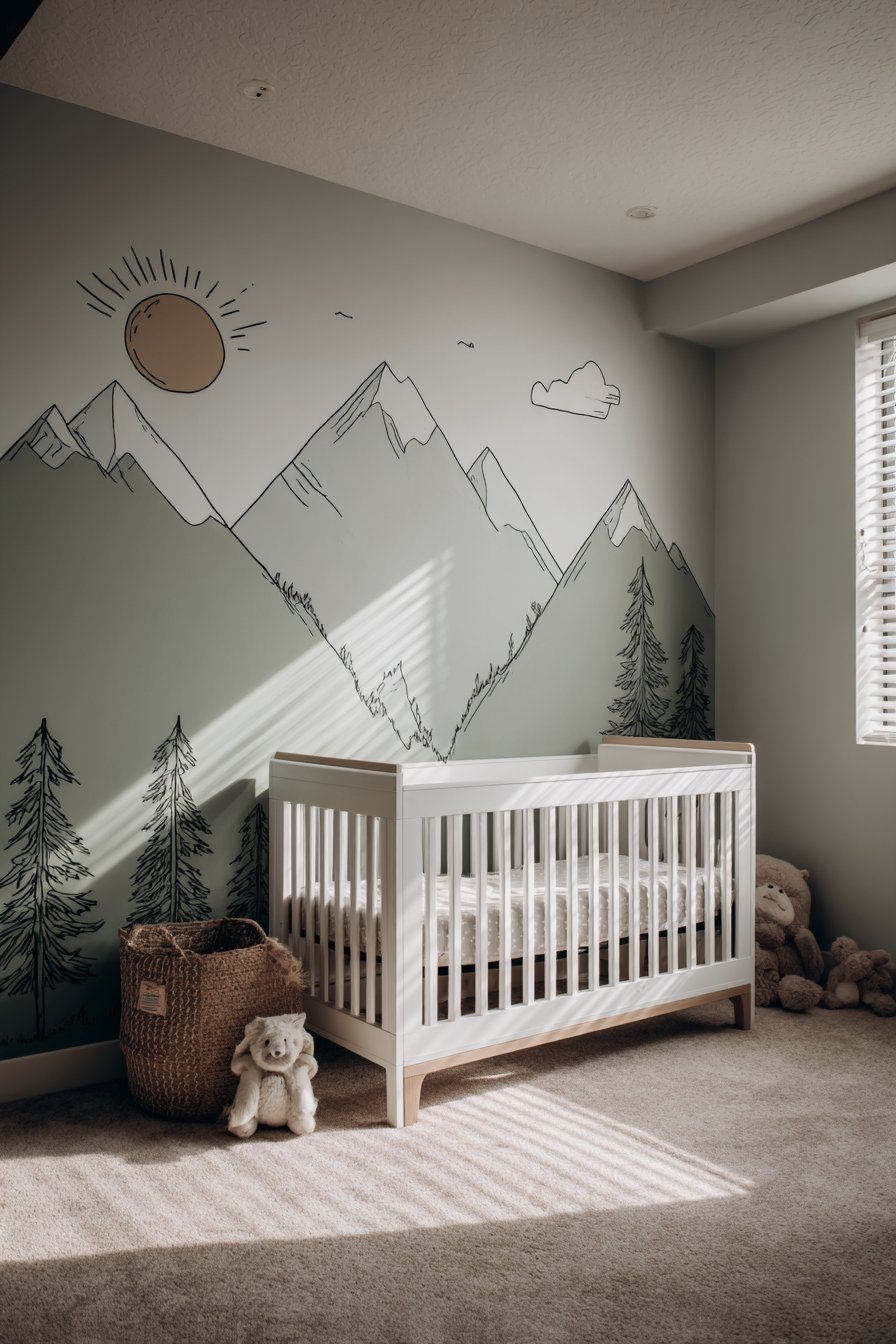
Nursery design has evolved beyond traditional pastels and cartoon characters, embracing more sophisticated wall drawing ideas that grow with the child while maintaining age-appropriate charm. This modern nursery concept features a hand-drawn mountain landscape that combines simplicity with imagination, using non-toxic paint markers to create a safe environment for little ones. The gentle mountain peaks, stylized pine trees, and cheerful sun are rendered in soft gray and sage green tones that provide visual stimulation without the overstimulation that can come from bright primary colors. This approach to wall drawing ideas creates a calming atmosphere conducive to sleep while offering interesting shapes and forms for developing visual perception.
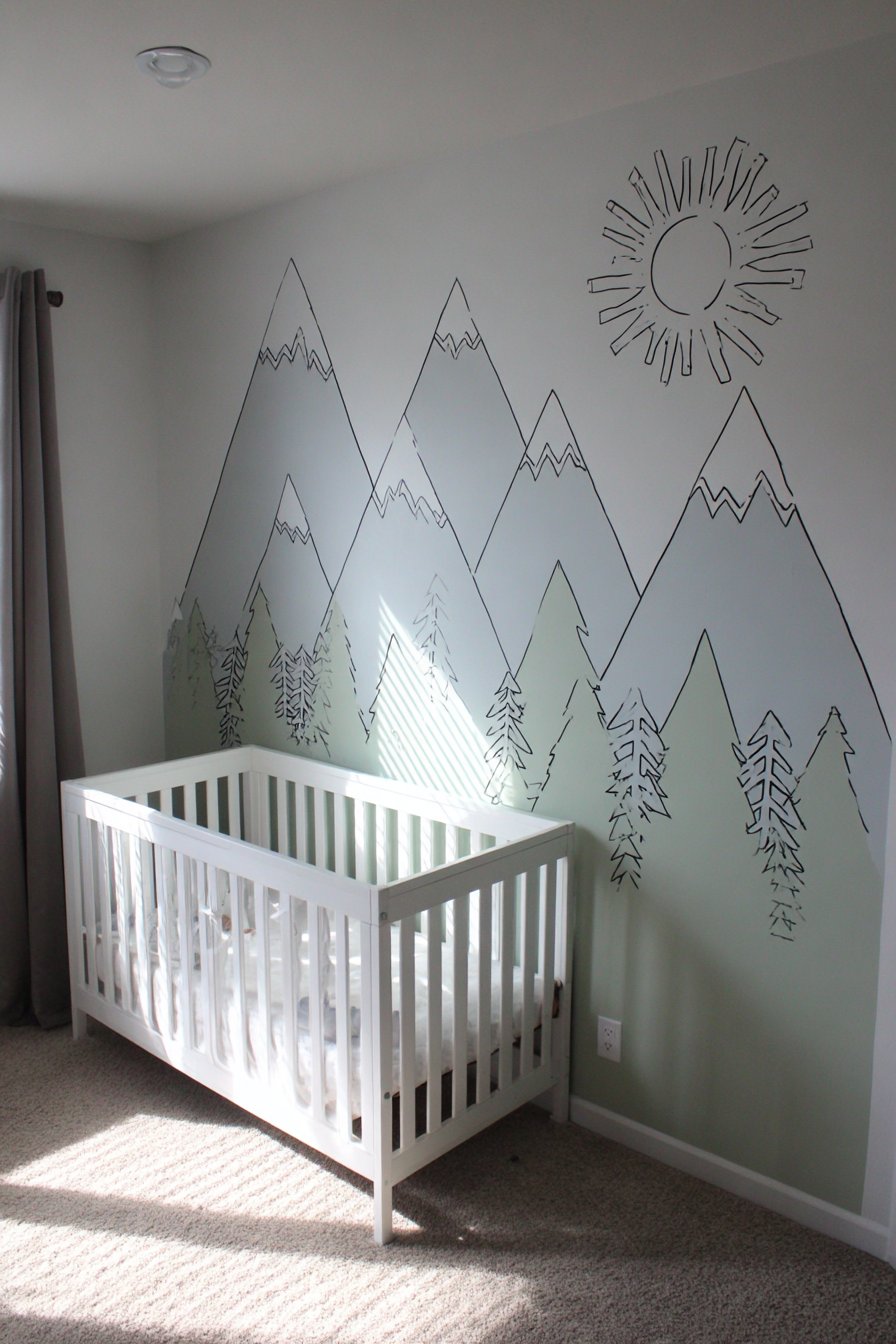
The genius of this design lies in its dual functionality as both decorative art and a custom headboard alternative. By positioning the white crib directly against the mountain scene, the wall drawing becomes an integral part of the furniture arrangement, eliminating the need for additional wall decor or a purchased headboard. This space-saving approach is particularly valuable in smaller nurseries where every square foot matters. The hand-drawn quality adds warmth and personality that commercial decals or wallpaper cannot match, while the simple line work ensures the design remains timeless rather than trendy, easily adapting as the child transitions from infant to toddler.
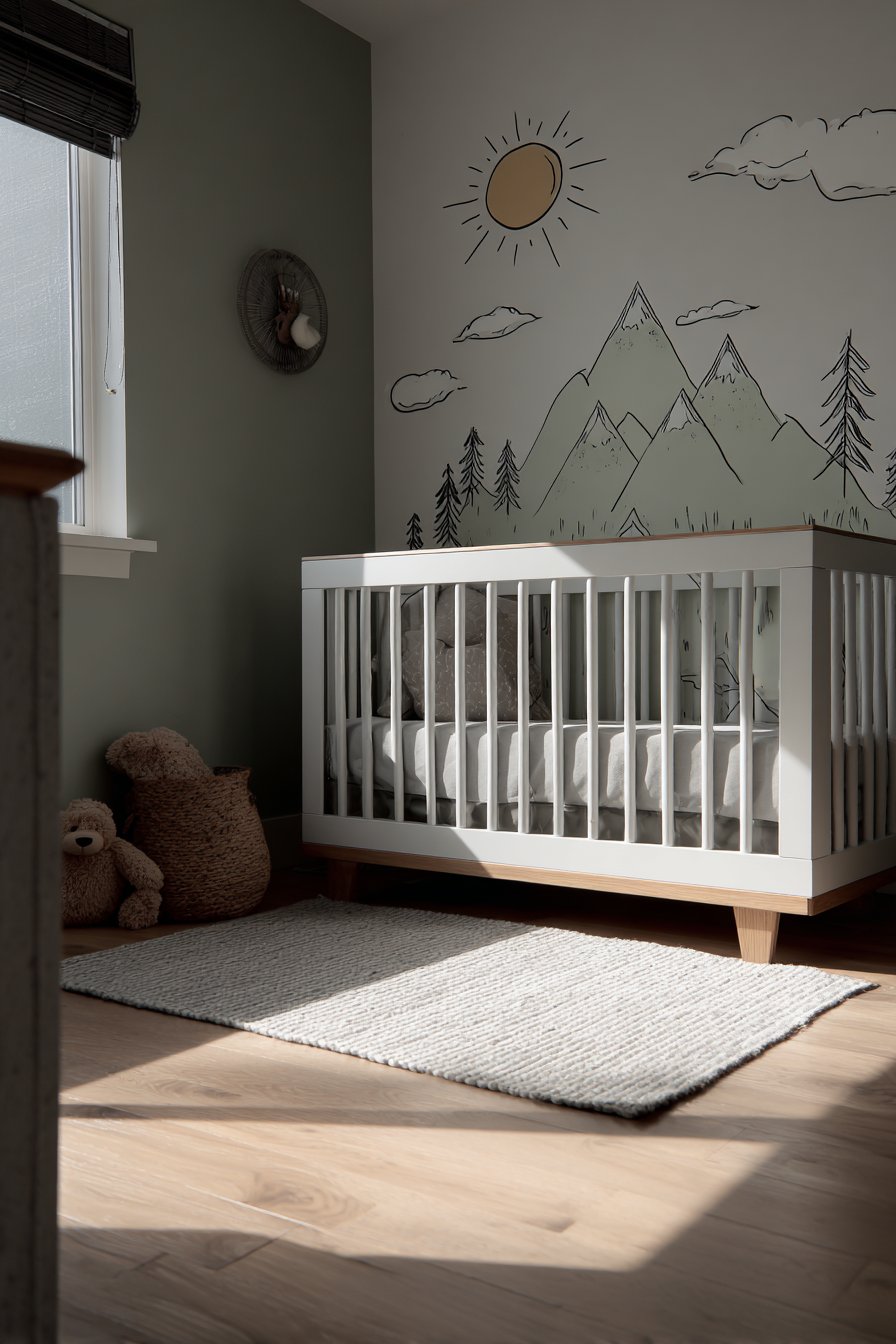
Natural materials and minimalist furnishings allow these wall drawing ideas to shine as the room’s primary visual interest. The white crib maintains a clean, modern aesthetic that doesn’t compete with the wall art, while neutral textiles and minimal accessories keep the focus on the landscape scene. The soft gray and sage green color palette creates a gender-neutral space that feels fresh and contemporary, proving that nursery design can be both beautiful and functional without relying on stereotypical themes or colors.
Key Design Tips: Always use non-toxic, low-VOC paint markers specifically rated for children’s spaces. Sketch your design at child’s eye level to ensure proper scale and viewing perspective. Keep the color palette limited to three colors maximum to maintain visual cohesion. Consider adding simple clouds or birds that can be filled in or modified as the child grows. Seal the completed drawing with a child-safe, non-toxic sealant that allows for easy cleaning. Plan the composition so key elements align with the crib placement for maximum visual impact. Include simple shapes and forms that support early learning and visual development.
3. Minimalist Home Office with Hand-Lettered Calligraphy
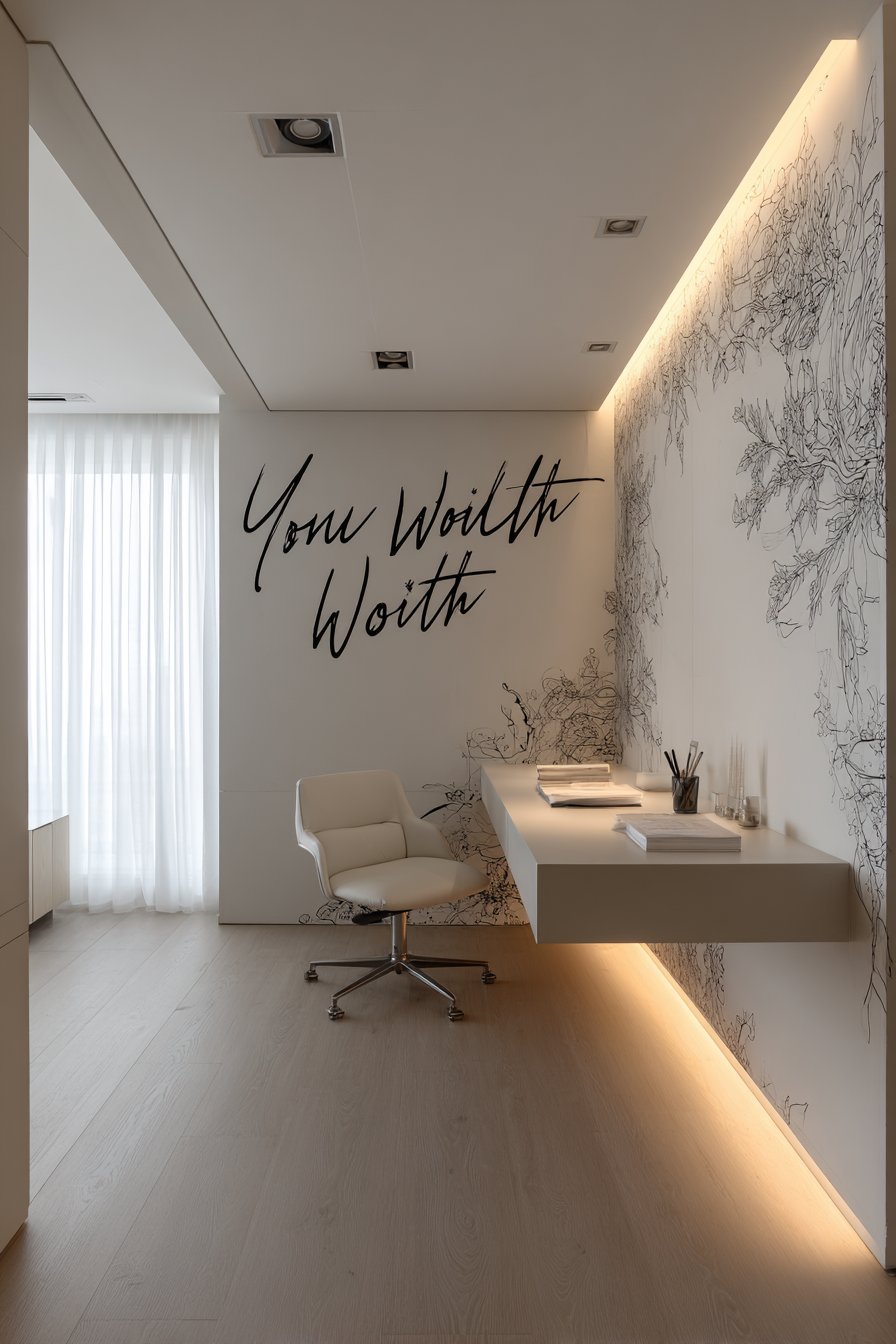
The minimalist approach to wall drawing ideas proves that less truly can be more, especially in spaces dedicated to focus and productivity. This home office concept centers on an inspirational quote rendered in elegant hand-lettered calligraphy directly on a light gray wall, creating a sophisticated focal point that motivates without distraction. The black ink lettering, executed with precision and artistic flair, demonstrates how text itself can become powerful wall art when treated with the attention it deserves. Small botanical line drawings tucked into the corners provide just enough decorative detail to soften the typography without diluting the message’s impact, striking that delicate balance between stark minimalism and sterile emptiness.
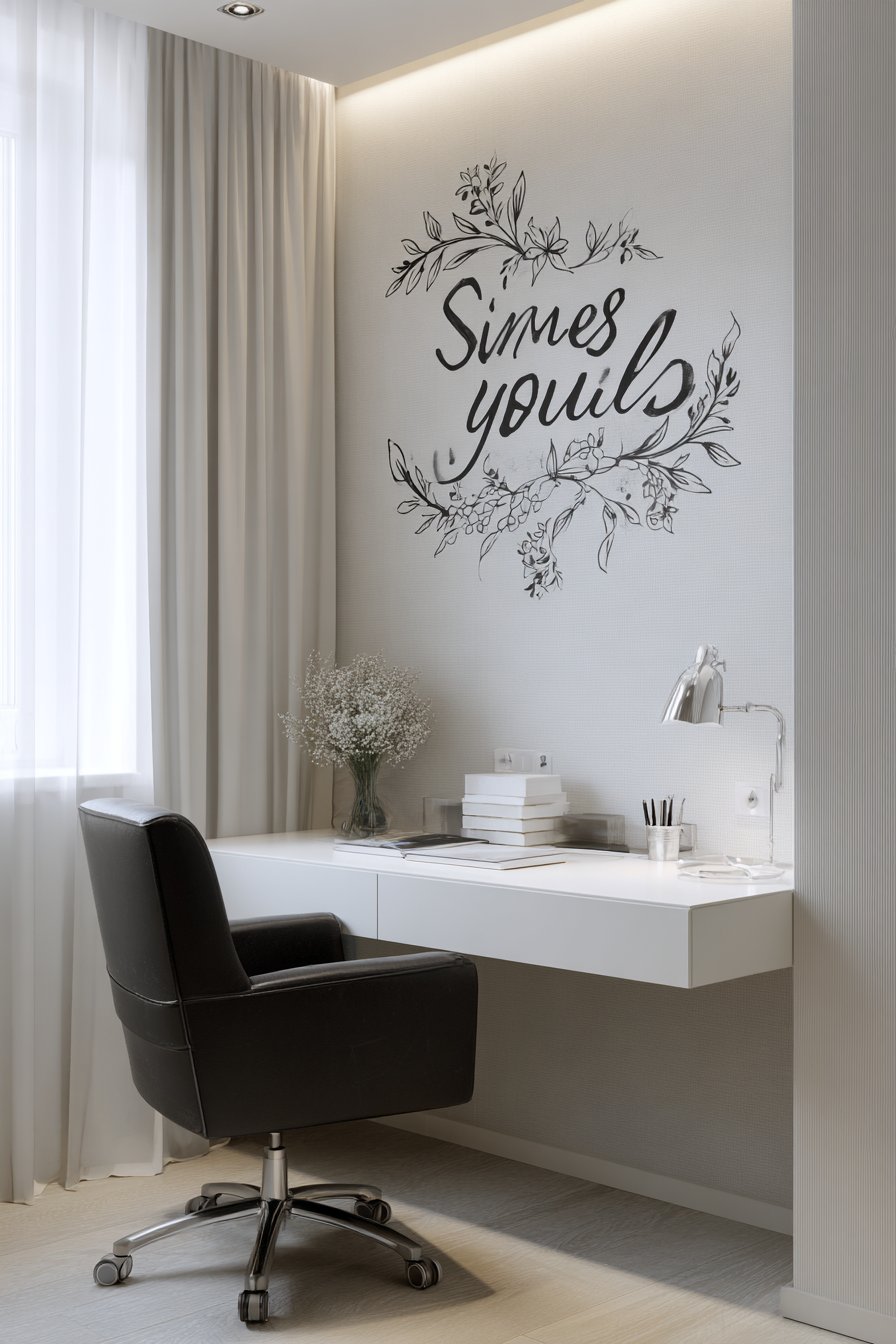
The restraint shown in this design exemplifies the minimalist philosophy that every element must earn its place through purpose and beauty. The floating desk with its clean lines creates an uncluttered workspace that echoes the simplicity of the wall drawing, while the modern task chair provides ergonomic support without visual bulk. Minimal desk accessories—perhaps just a sleek lamp, a single plant, and essential tools—maintain the streamlined aesthetic that allows the calligraphy to command attention without competition. This careful curation creates an environment where mental clarity and creative thinking can flourish, supported by inspirational words that speak directly to the user’s goals and values.
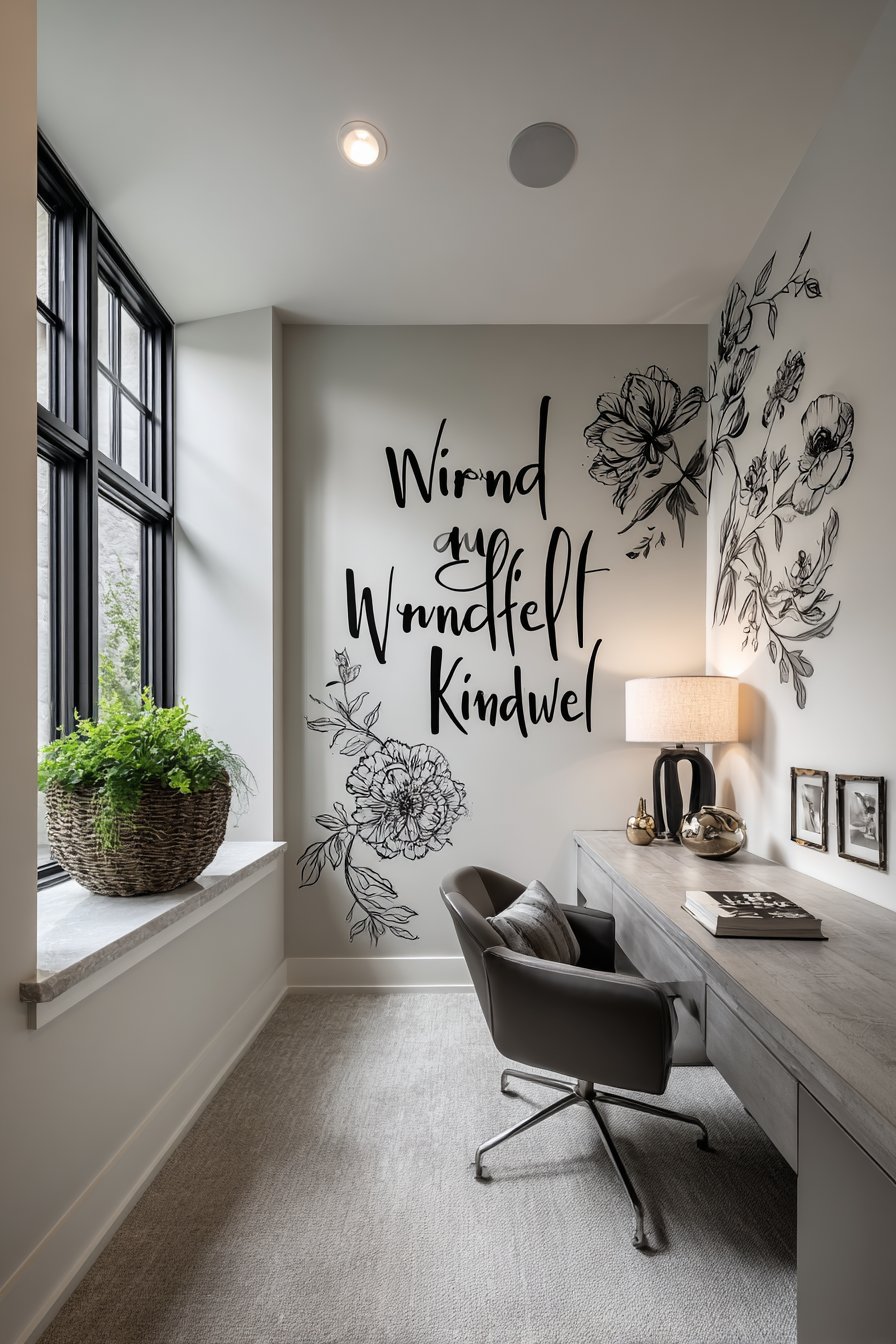
Lighting consideration elevates these wall drawing ideas from merely decorative to truly functional. Soft diffused light from a nearby window illuminates the calligraphy throughout the day, ensuring the words remain legible and impactful during working hours. The light gray wall color was specifically chosen to provide sufficient contrast with the black lettering while maintaining the soft, contemplative atmosphere that minimalist spaces require. This thoughtful attention to how light interacts with the hand-drawn elements demonstrates that successful wall drawing ideas must consider environmental factors beyond just the drawing itself.
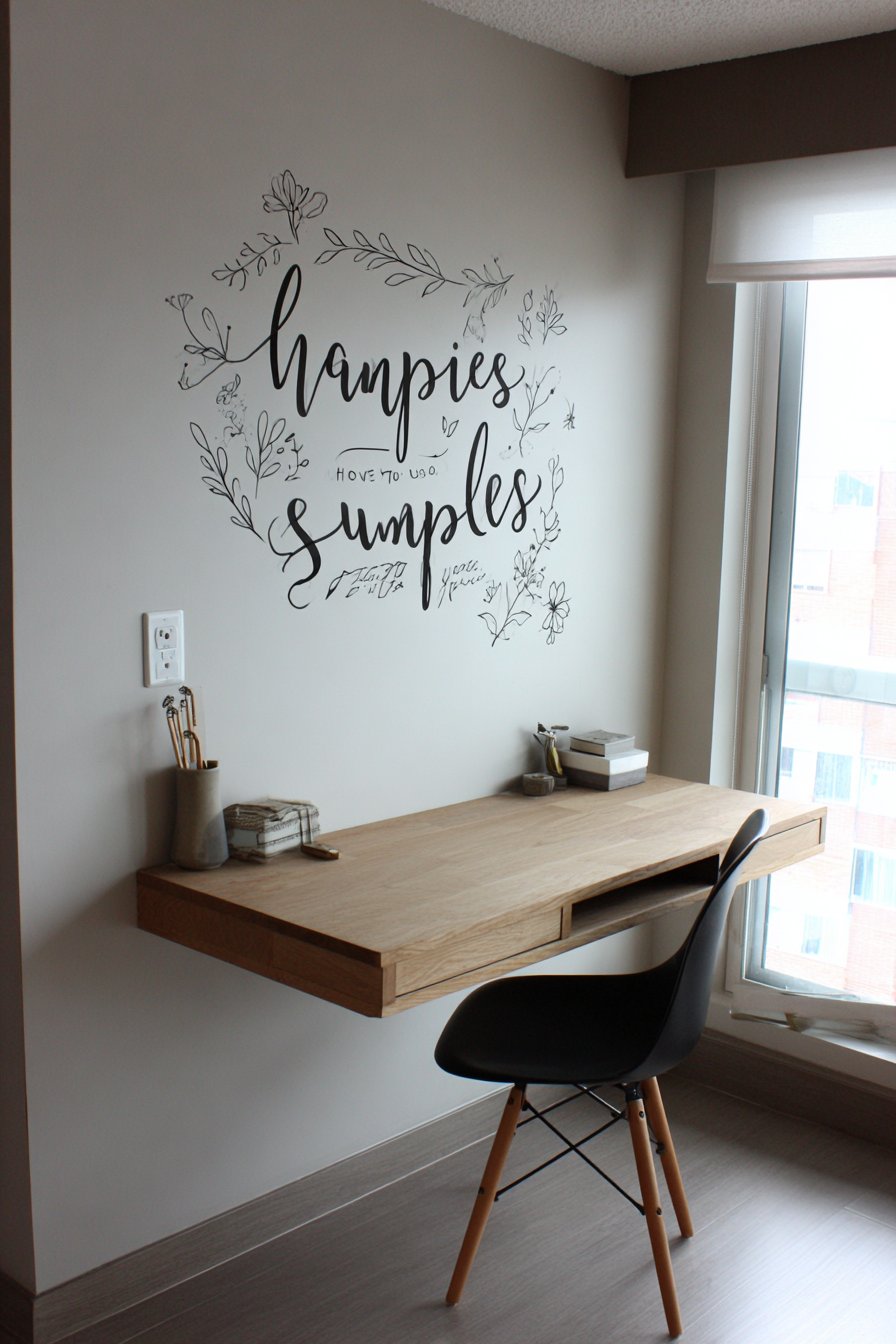
Key Design Tips: Practice your lettering extensively on paper before committing to the wall. Use a light pencil guideline to maintain consistent baseline and letter heights. Choose quotes that genuinely resonate with your values rather than following trends. Limit decorative flourishes to maintain the minimalist aesthetic. Consider the viewing distance when selecting letter size and spacing. Use a high-quality brush pen or calligraphy marker for smooth, consistent lines. Allow the quote to occupy significant wall space—small text defeats the purpose of the focal point. Photograph your practice work to evaluate composition and spacing before beginning the final piece.
4. Scandinavian Dining Room with Geometric Pattern
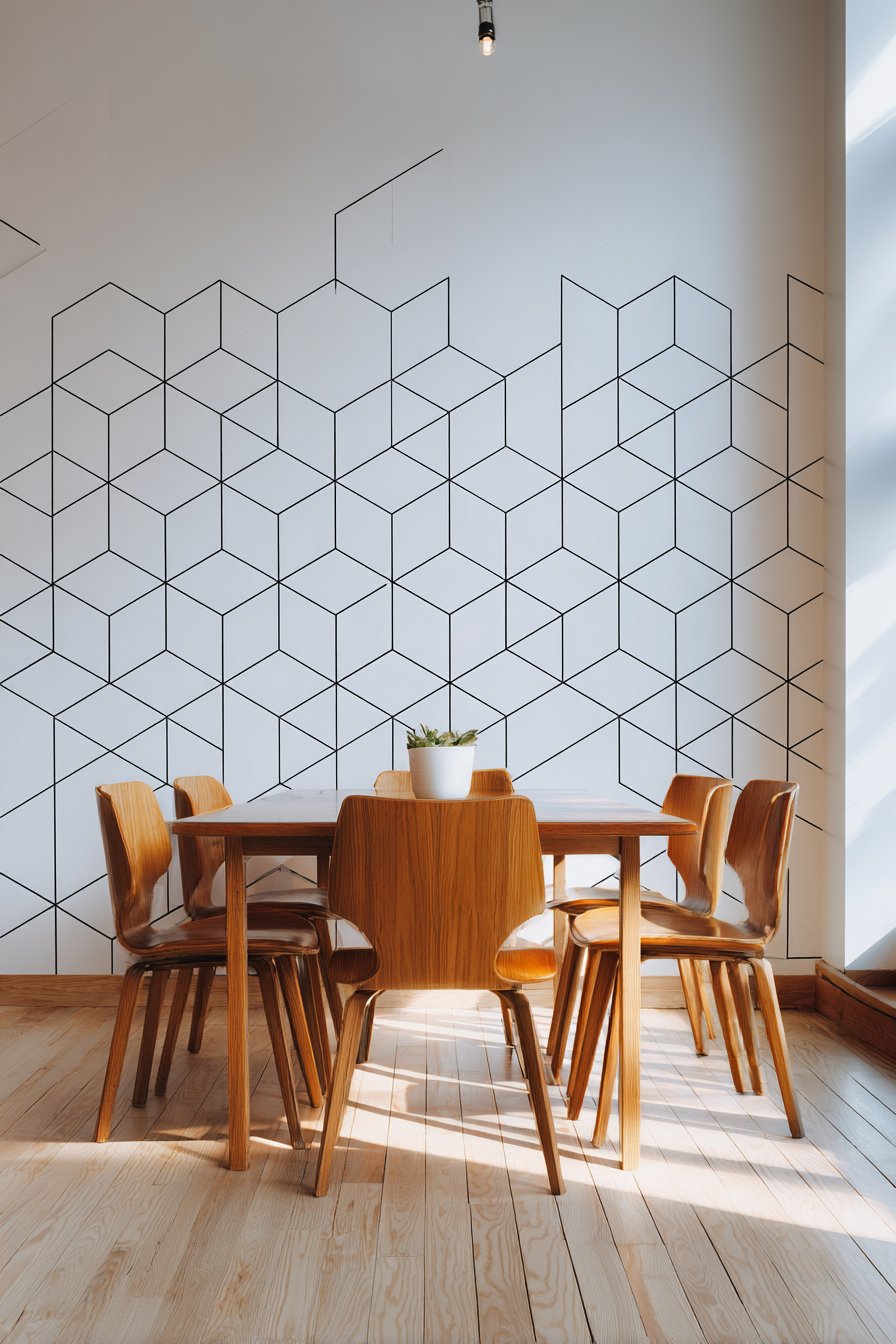
Scandinavian design’s emphasis on clean lines, functional beauty, and geometric precision finds perfect expression in wall drawing ideas that transform dining spaces into modern masterpieces. This concept features a large-scale geometric pattern hand-drawn directly on the wall using a meticulous grid technique, with intersecting lines creating an intricate network of triangular and hexagonal shapes in matte black paint against a pristine white background. The precision required for this wall drawing idea reflects the Scandinavian commitment to craftsmanship and attention to detail, while the bold graphic impact creates a striking backdrop for shared meals and gathered conversations. The mathematical beauty of the repeating patterns speaks to both the rational and aesthetic sensibilities that define Nordic design philosophy.
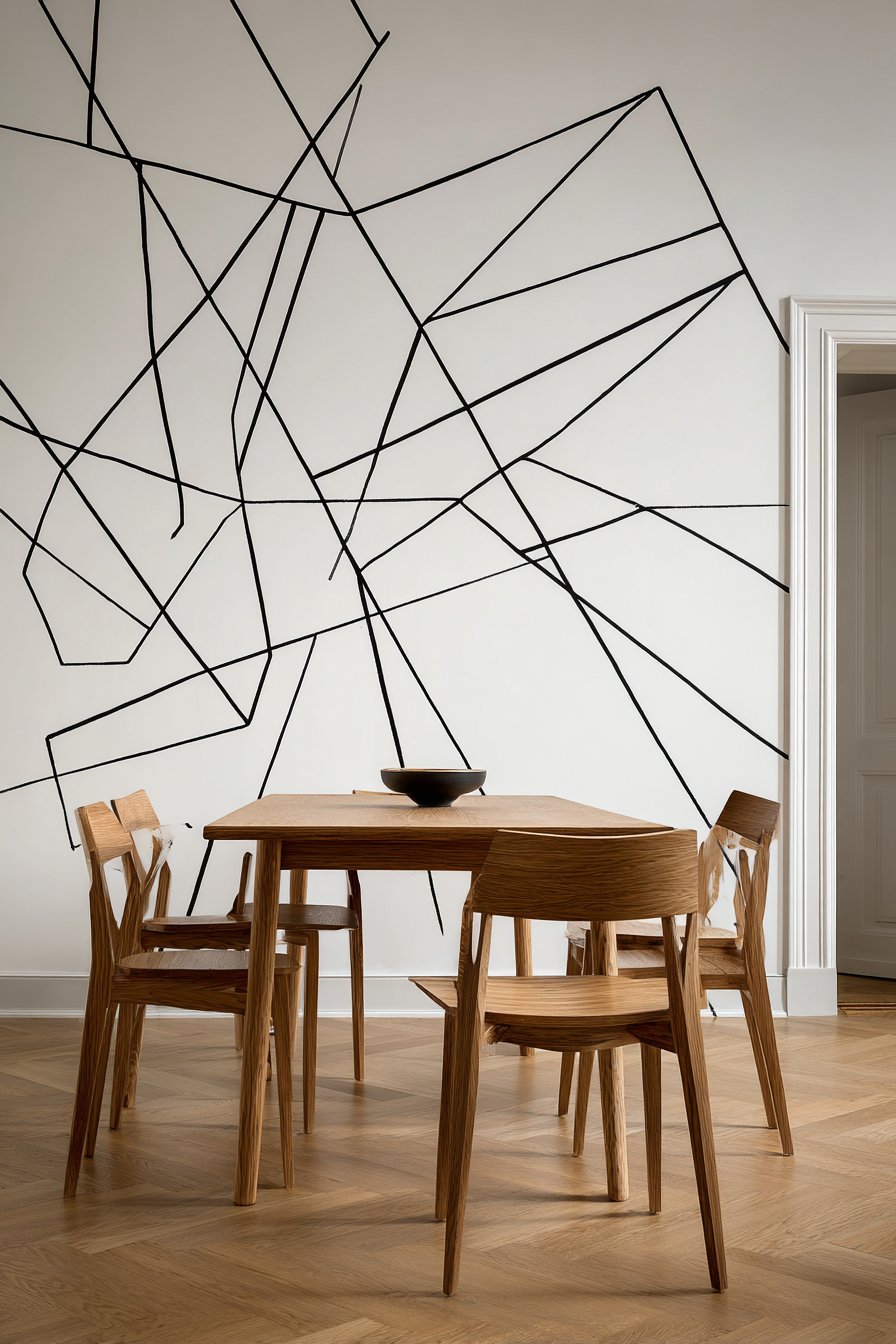
The furniture selection in this space demonstrates how wall drawing ideas should complement rather than compete with other design elements. A simple wooden dining table crafted from light oak anchors the room with organic warmth that balances the geometric precision of the wall art. Mid-century modern chairs, icons of Scandinavian furniture design, provide comfortable seating while maintaining the clean-lined aesthetic that allows the wall pattern to remain the visual focal point. Natural oak flooring extends the warm wood tones throughout the space, creating a cohesive foundation that ties all elements together. This careful coordination of furniture, flooring, and wall art exemplifies the Scandinavian principle of helhet—the concept of creating a harmonious whole where every element works in concert.
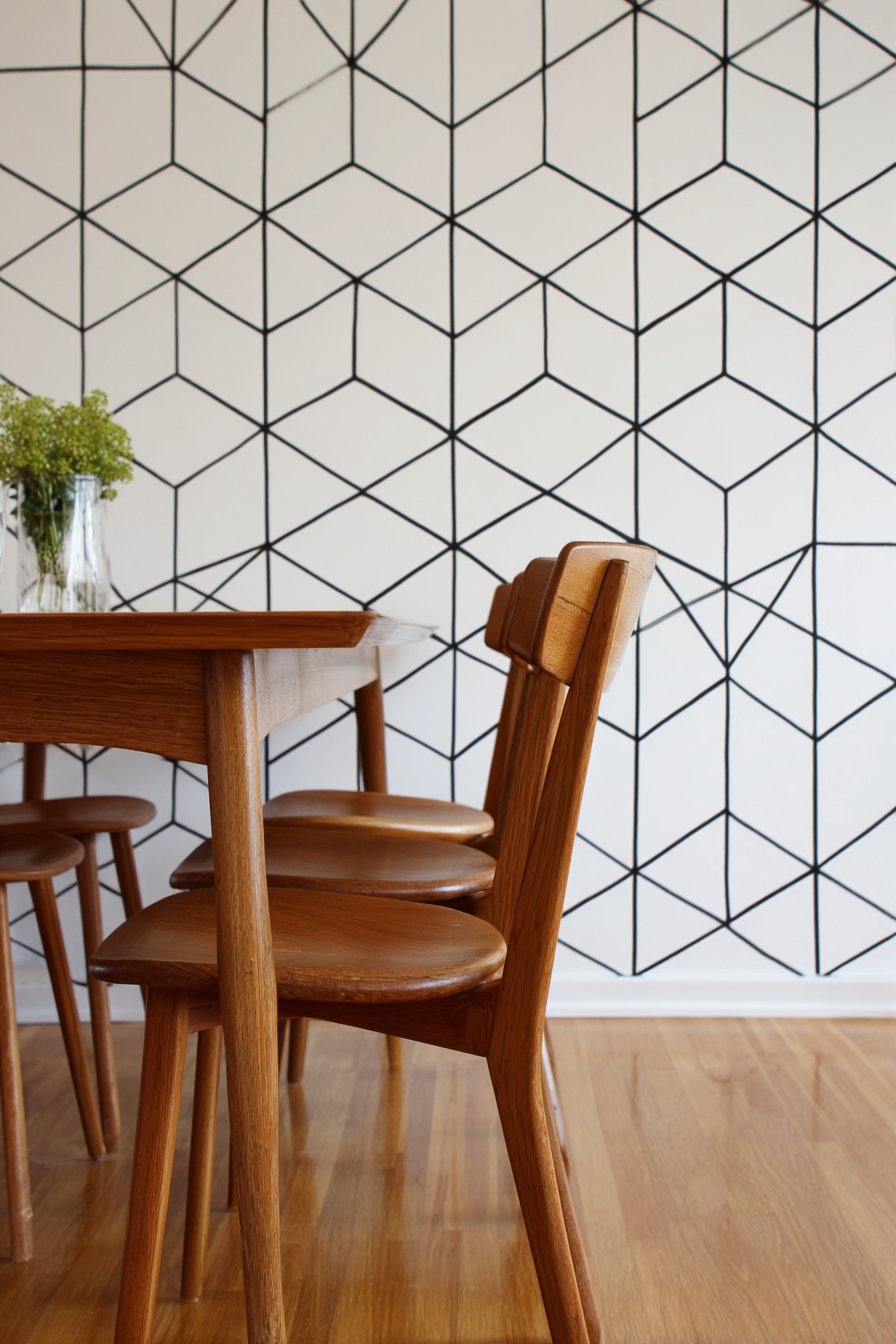
The timing and quality of light dramatically affect how these wall drawing ideas are perceived throughout the day. Captured during golden hour, the space bathes in soft natural light that creates subtle shadows within the geometric patterns, adding unexpected depth and dimension to what might otherwise appear as flat line work. This interplay between light and geometry transforms the wall from static art into a living element that evolves with the sun’s movement, offering different visual experiences from breakfast through dinner. The high contrast of black on white ensures the patterns remain crisp and legible regardless of lighting conditions, while the matte finish prevents glare that could distract during meals.
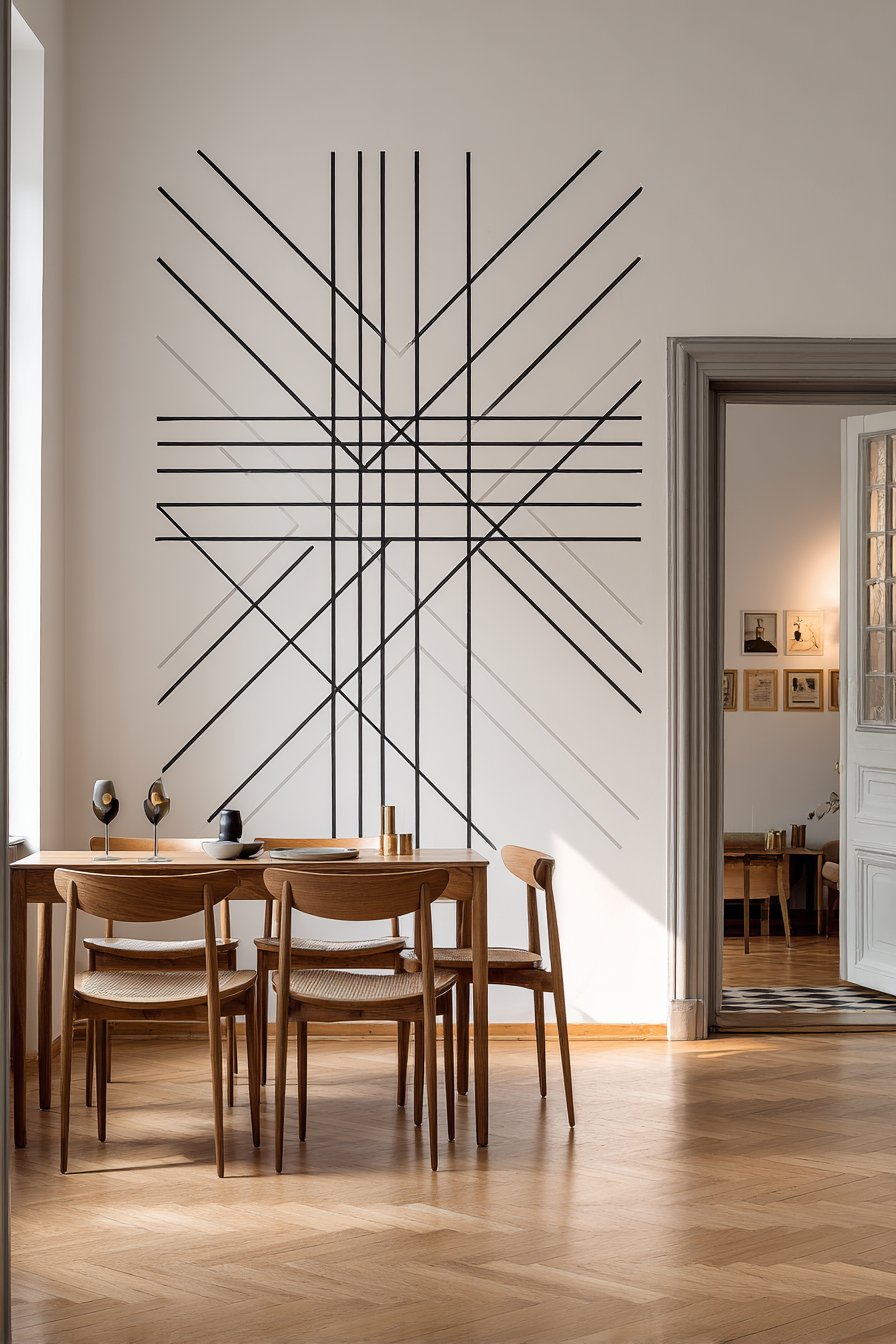
Key Design Tips: Use a laser level and measuring tape to create an accurate grid before drawing. Mark grid intersections lightly with removable pencil that can be erased after inking. Work with high-quality matte black paint and fine artist brushes for crisp lines. Complete the pattern in sections to maintain consistency and prevent fatigue errors. Use painter’s tape to mask off areas if you struggle with freehand straight lines. Allow each section to dry completely before moving to adjacent areas. Step back frequently to evaluate overall pattern consistency and rhythm. Consider starting with a smaller, less visible wall to build confidence before tackling the main dining wall.
5. Contemporary Entryway with Vertical Garden Illustration
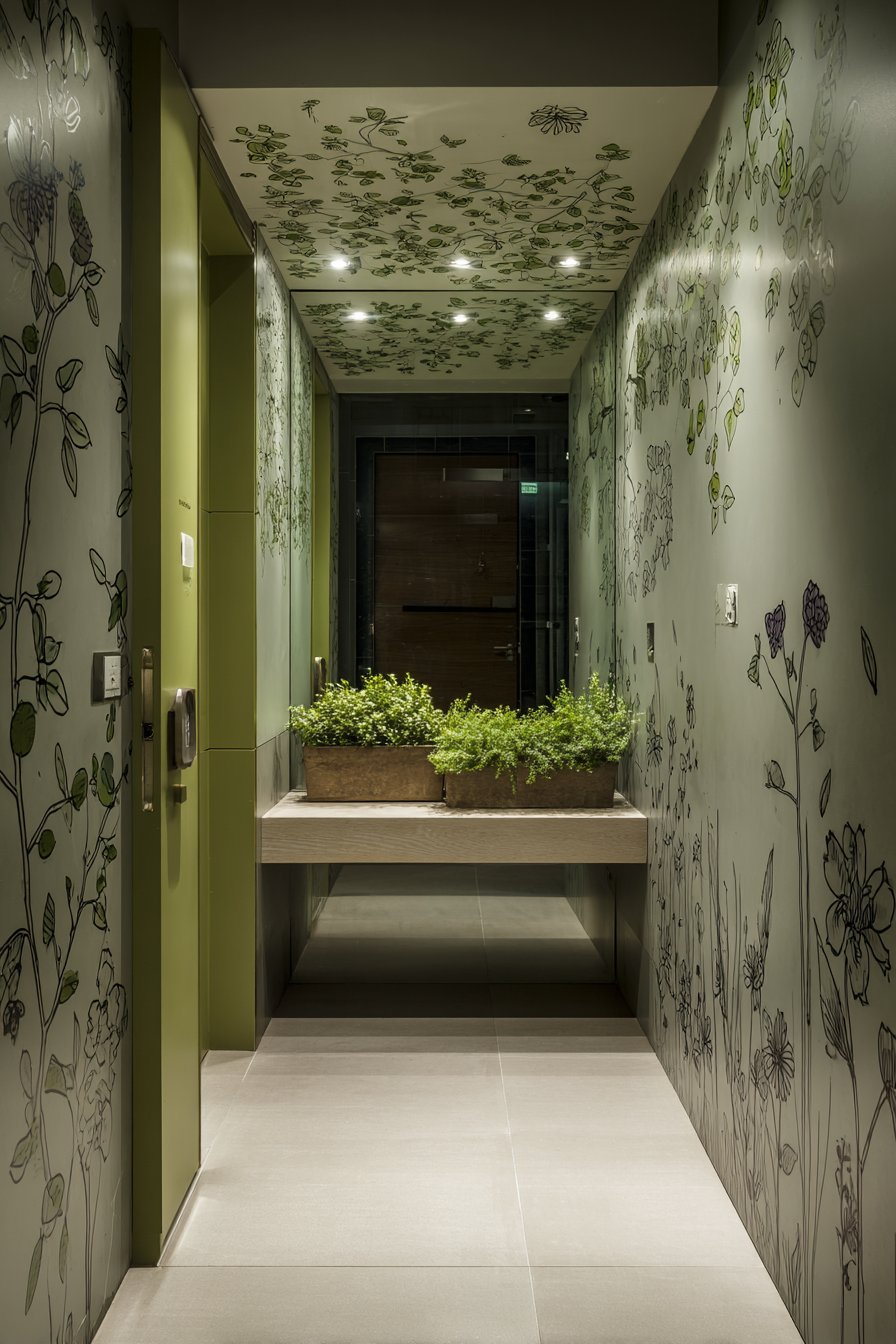
First impressions matter in interior design, making the entryway an ideal location for wall drawing ideas that set the tone for the entire home. This contemporary concept transforms a functional transitional space into a welcoming botanical sanctuary through a vertical garden illustration hand-drawn directly on the wall. Using various shades of green markers, the artist creates a lush composition of leaves, vines, and flowers that climb the wall in organic patterns, forming a living frame around a wall-mounted mirror. This creative approach brings the outdoors in without the maintenance requirements of actual living walls, offering the visual benefits of biophilic design through artistic interpretation rather than horticultural commitment.
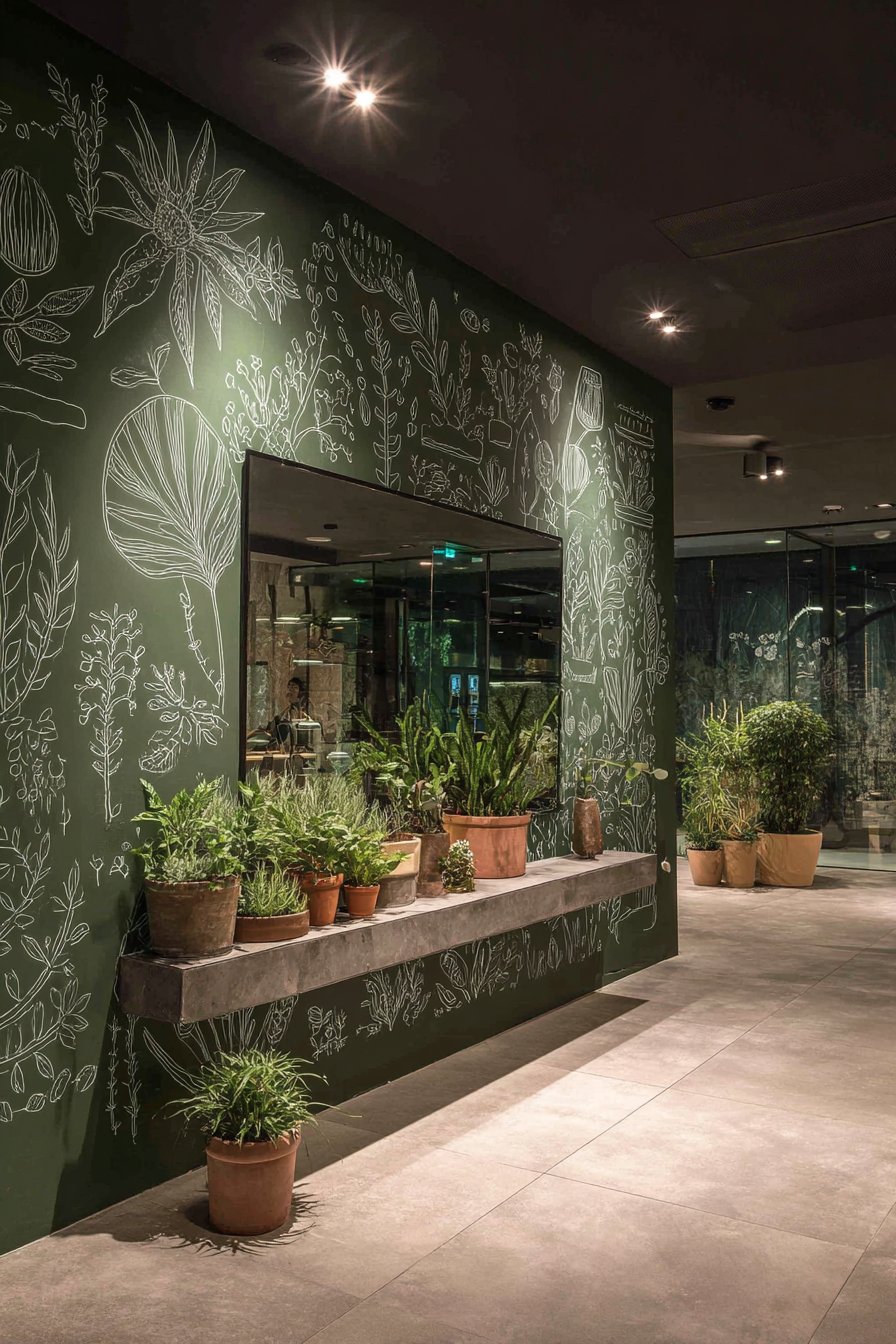
The genius of this wall drawing idea lies in its interactive relationship with both the mirror and real plants positioned on the console table below. The hand-drawn botanical elements appear to grow from the actual potted plants, blurring the line between reality and illustration in a way that delights and surprises visitors. This layering technique—combining real three-dimensional plants with two-dimensional drawn versions—creates depth and visual interest that neither element could achieve alone. The mirror reflects both the drawn and living plants, multiplying the botanical presence and making the relatively small entryway feel more spacious and verdant. This thoughtful integration of functional elements with decorative wall art exemplifies how contemporary design solves multiple problems simultaneously.
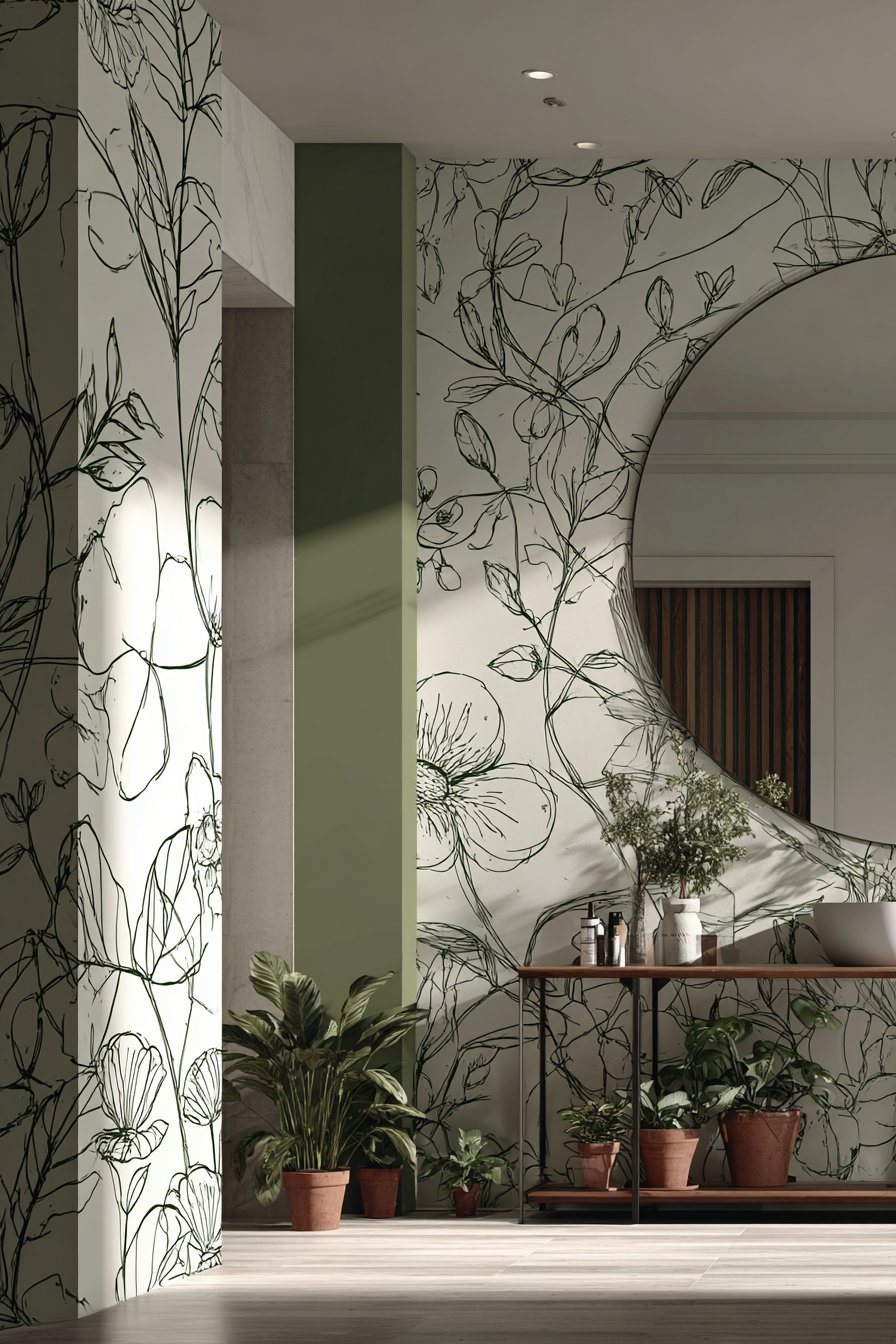
Lighting design enhances these wall drawing ideas by treating them as architectural features worthy of illumination. Recessed lighting strategically positioned to cast light across the wall creates subtle shadows that give the flat botanical drawings an illusion of depth and dimension. The interplay of light and shadow mimics the dappled sunlight effect found in natural gardens, reinforcing the organic inspiration behind the design. As visitors pass through the entryway, the shadows shift and change, creating a dynamic visual experience that makes the space feel alive and welcoming rather than static and decorative.
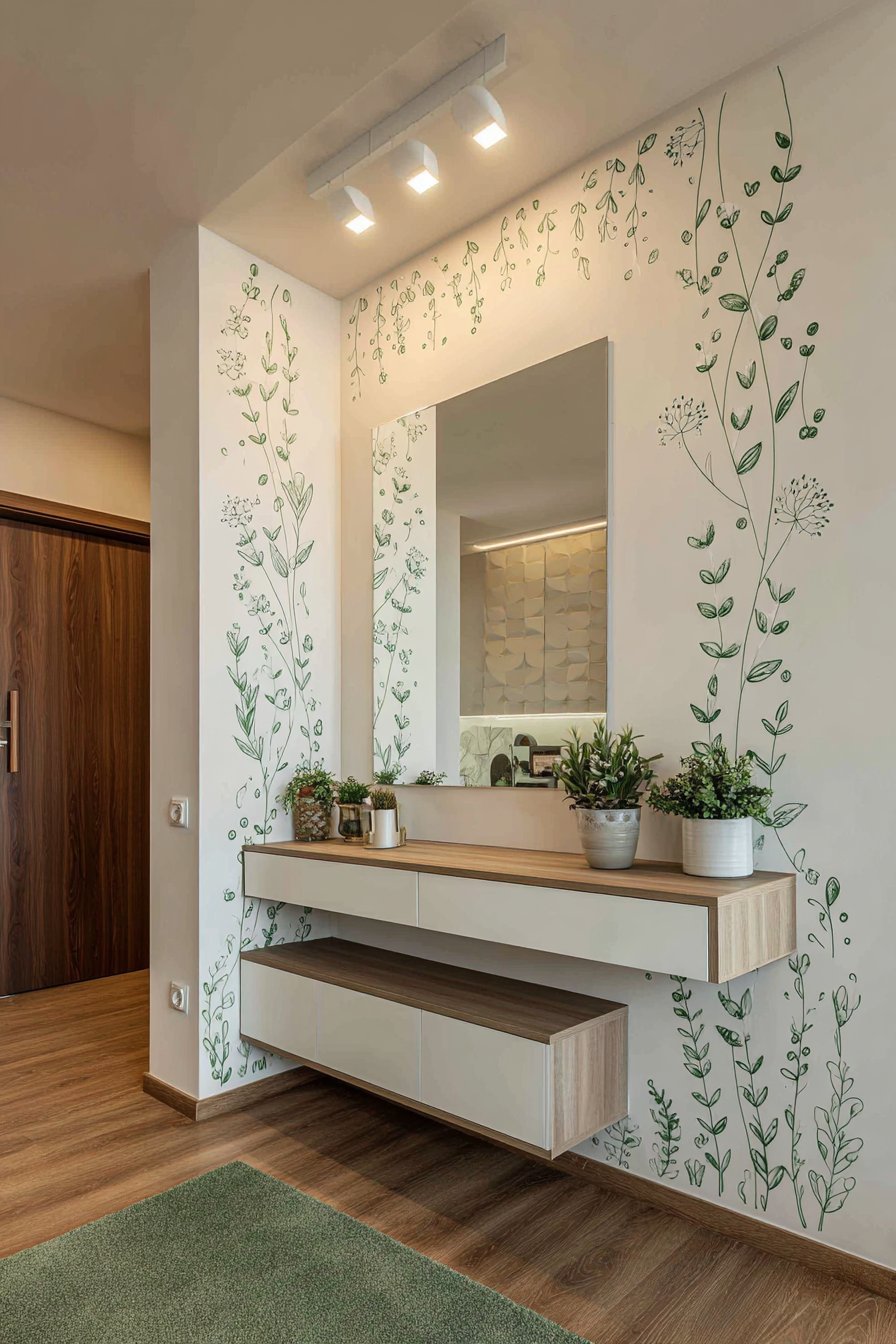
Key Design Tips: Sketch your composition lightly in pencil first, allowing for organic, naturalistic placement rather than rigid symmetry. Use multiple shades of green markers to create depth through color variation. Include various leaf shapes and sizes to maintain visual interest and botanical authenticity. Position the densest illustration around functional elements like mirrors to create natural frames. Add a few flowers or berries in subtle accent colors for visual breaks in the green palette. Consider the scale of real plants when planning your drawing—they should complement rather than overwhelm each other. Use reference photos of actual plants to ensure realistic proportions and growth patterns. Extend some vines or leaves slightly onto adjacent walls to create flow and integration.
6. Playful Children’s Room with Interactive Cityscape
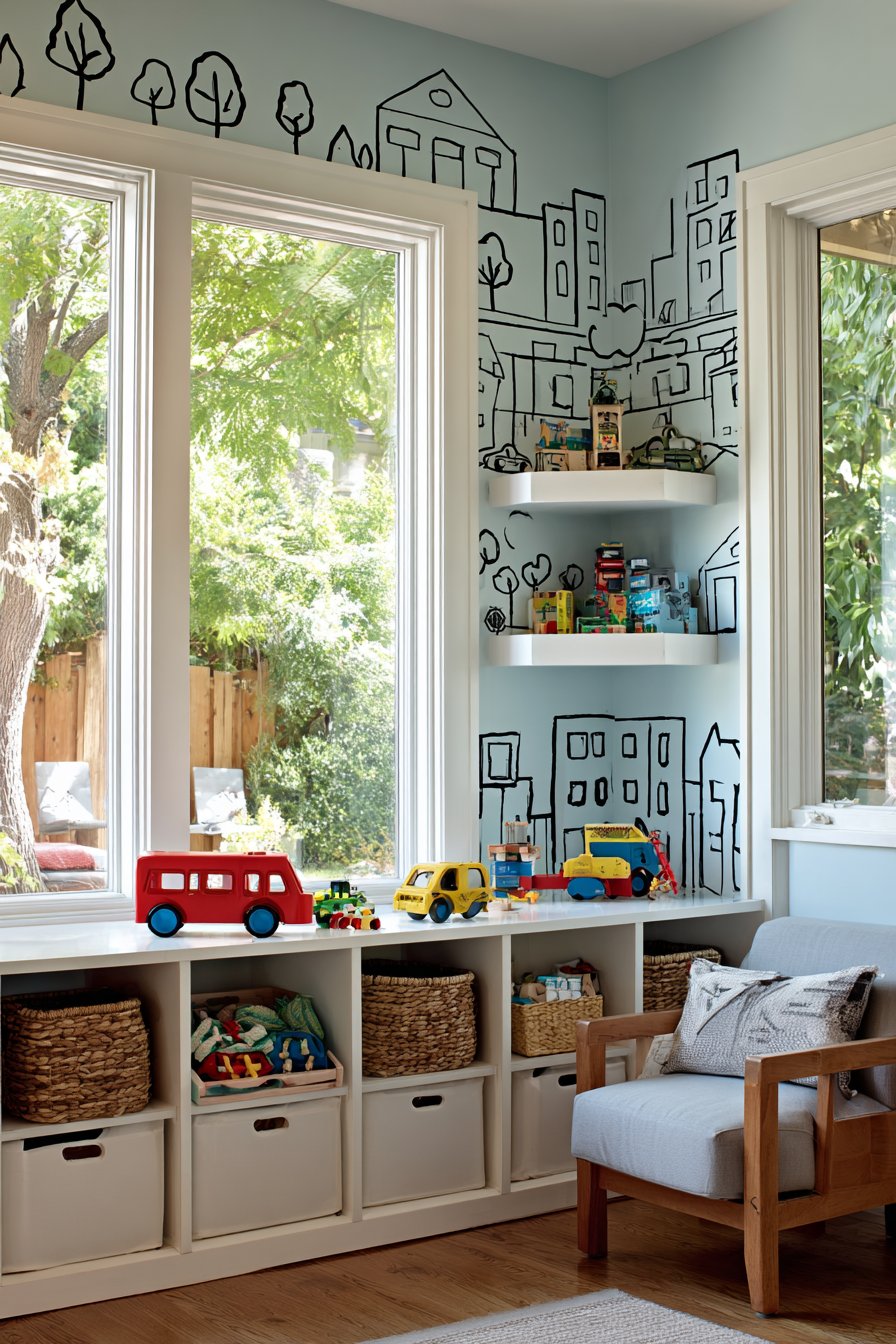
Children’s spaces offer unique opportunities for wall drawing ideas that prioritize imagination, playfulness, and interaction over sophisticated aesthetics. This concept transforms a pale blue wall into an engaging urban landscape with a hand-drawn cityscape silhouette executed at child height, making it accessible for young ones to appreciate and even contribute to over time. The simple line drawings of buildings, trees, and vehicles are rendered in black chalkboard paint, creating a dual-purpose design that serves as both permanent wall art and an ever-evolving canvas for temporary additions. This innovative approach to wall drawing ideas recognizes that children’s spaces should grow and change with their occupants, encouraging creativity and ownership rather than demanding preservation of adult-created perfection.
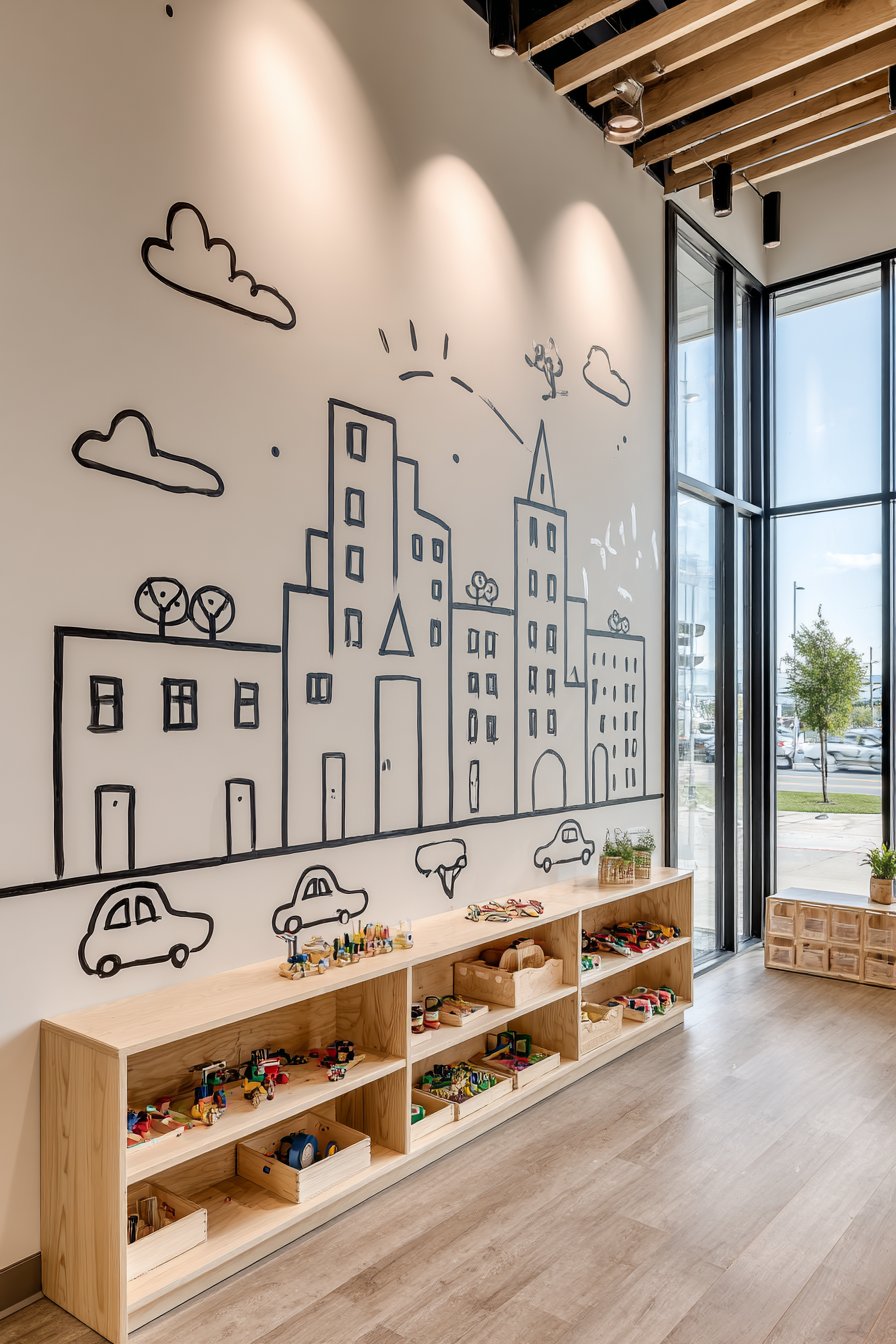
The strategic positioning of this wall drawing at child height demonstrates thoughtful design that prioritizes the user’s perspective and needs. By placing the cityscape within easy reach, the design invites interaction and engagement, transforming the wall from something to look at into something to actively use and enjoy. The chalkboard paint allows children to add their own cars, people, or imaginative elements that can be easily erased and redrawn, supporting developmental play and creative expression. Low shelving positioned beneath the cityscape provides accessible toy storage, creating an organized play zone that combines function and fantasy in equal measure.
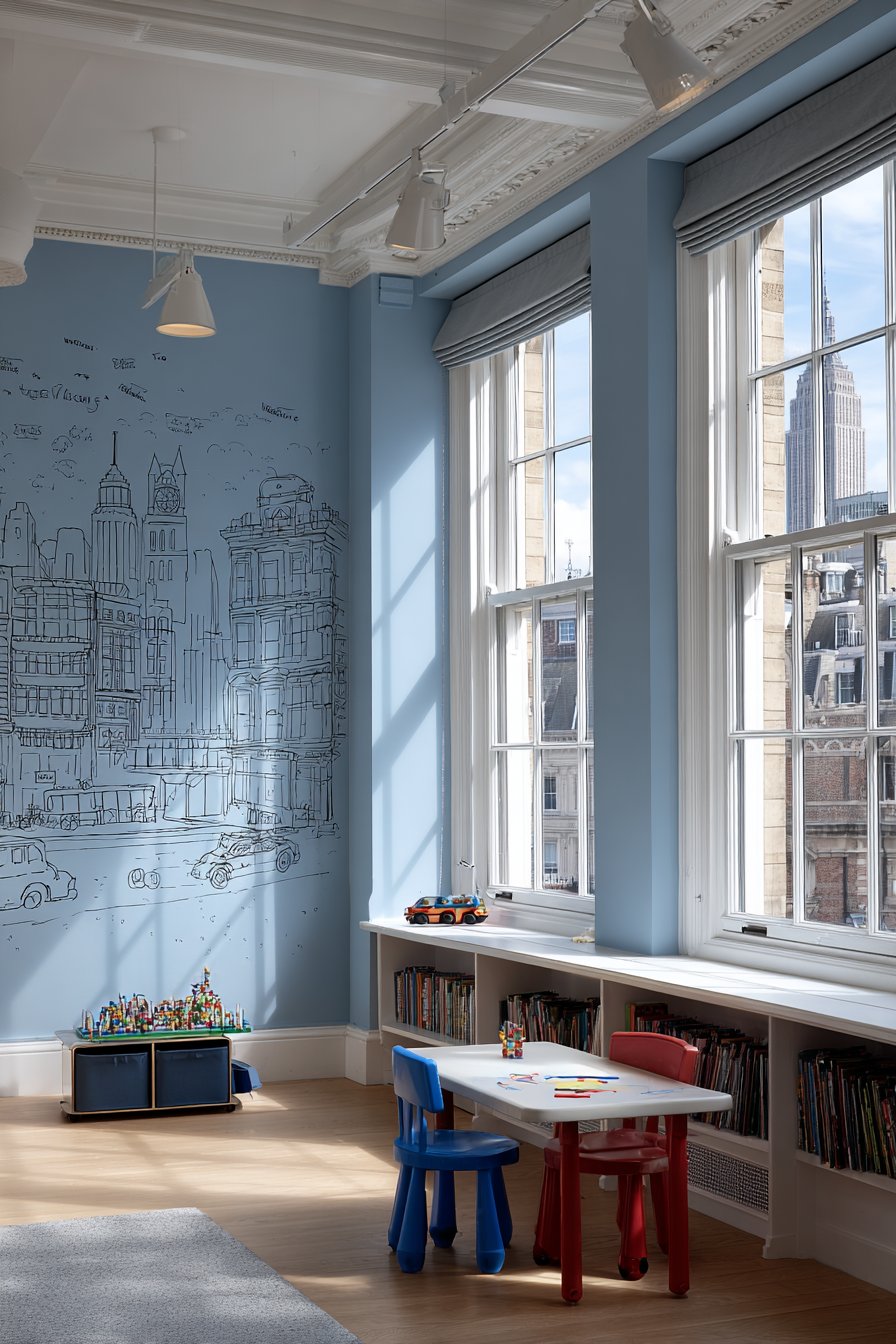
Natural daylight flooding through large windows illuminates this playful space, ensuring the wall drawing ideas remain visible and inviting throughout the day. The pale blue wall color evokes sky and imagination while providing sufficient contrast for the black cityscape to stand out clearly. This color choice also creates a calming backdrop that prevents overstimulation—a critical consideration in children’s spaces where visual noise can affect mood and behavior. The overall design proves that wall drawing ideas for children’s rooms can be both developmentally appropriate and aesthetically pleasing, creating environments that parents and children both enjoy.
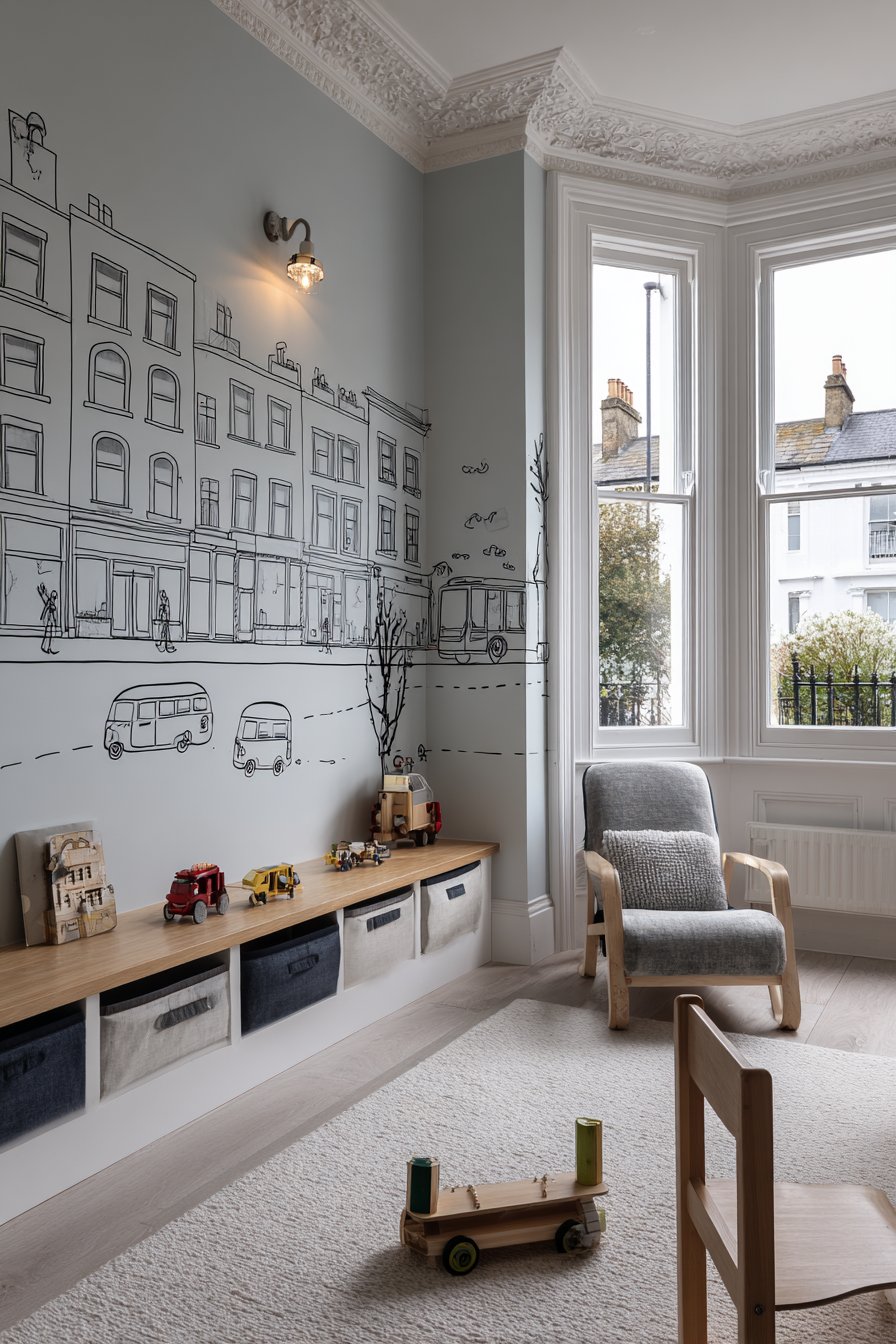
Key Design Tips: Use high-quality chalkboard paint that allows for smooth writing and easy erasing. Position the cityscape at 24-36 inches from the floor for optimal child accessibility. Keep the permanent line work simple enough that children’s additions enhance rather than clutter the design. Include recognizable elements like houses, trees, and cars that children can identify and replicate. Provide a designated container nearby for chalk storage to encourage use and minimize mess. Seal the edges of the chalkboard paint section to create a clear boundary for chalk use. Consider adding a narrow ledge at the base to catch chalk dust and prevent wall damage. Photograph the wall periodically to document your child’s evolving artistic contributions.
7. Industrial Loft with Abstract Chalk Art on Brick
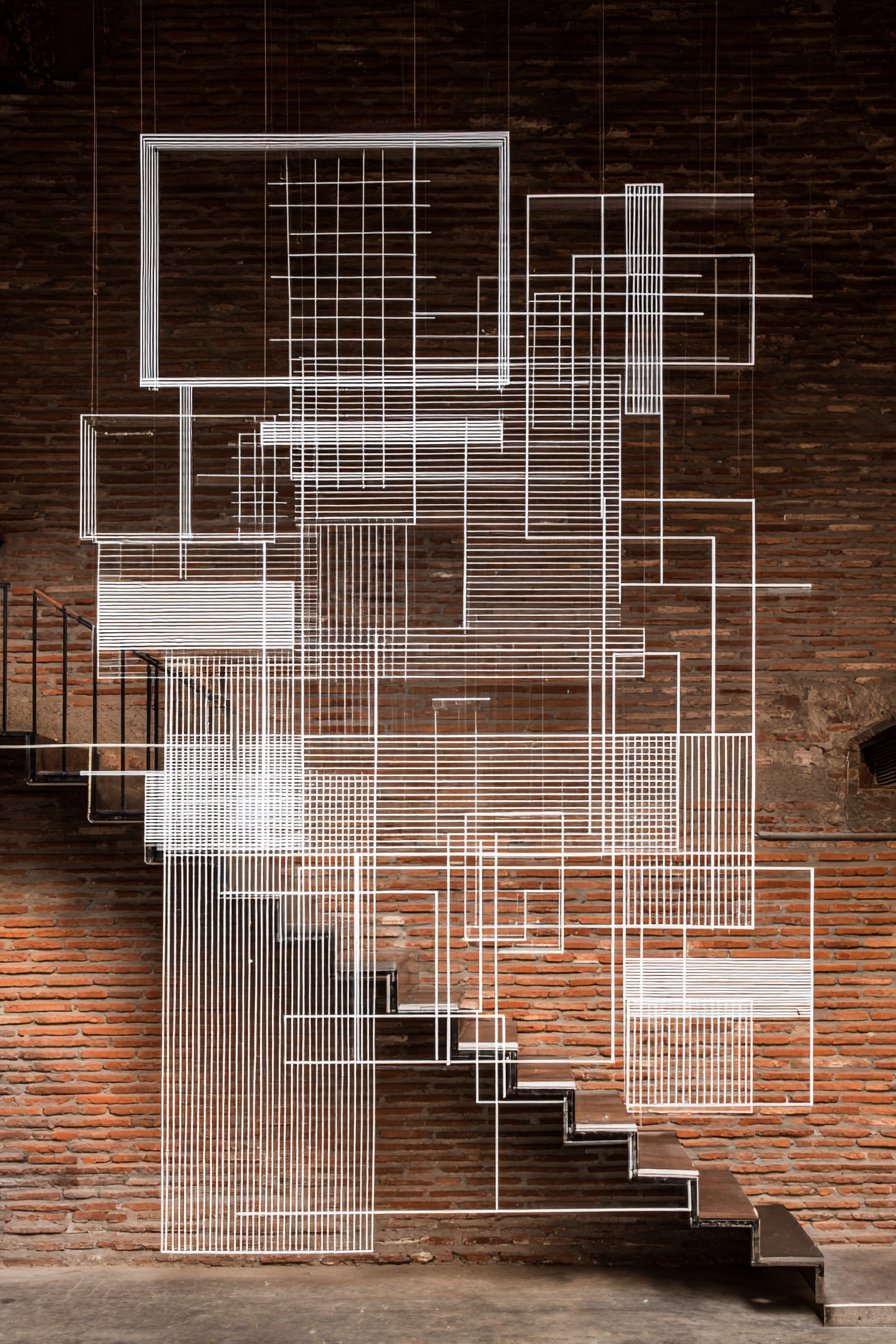
Industrial design aesthetics celebrate raw materials, urban grit, and artistic expression, making exposed brick walls perfect canvases for bold wall drawing ideas. This loft concept features abstract line art hand-drawn on red brick using white chalk markers, creating a striking contrast that honors the architectural character while adding contemporary artistic flair. The geometric and organic lines dance across the textured surface, following and sometimes defying the brick patterns beneath, demonstrating how wall drawing ideas can work with rather than against existing architectural features. This approach respects the industrial heritage of the space while claiming it for personal artistic expression, embodying the loft lifestyle’s blend of historic preservation and modern living.
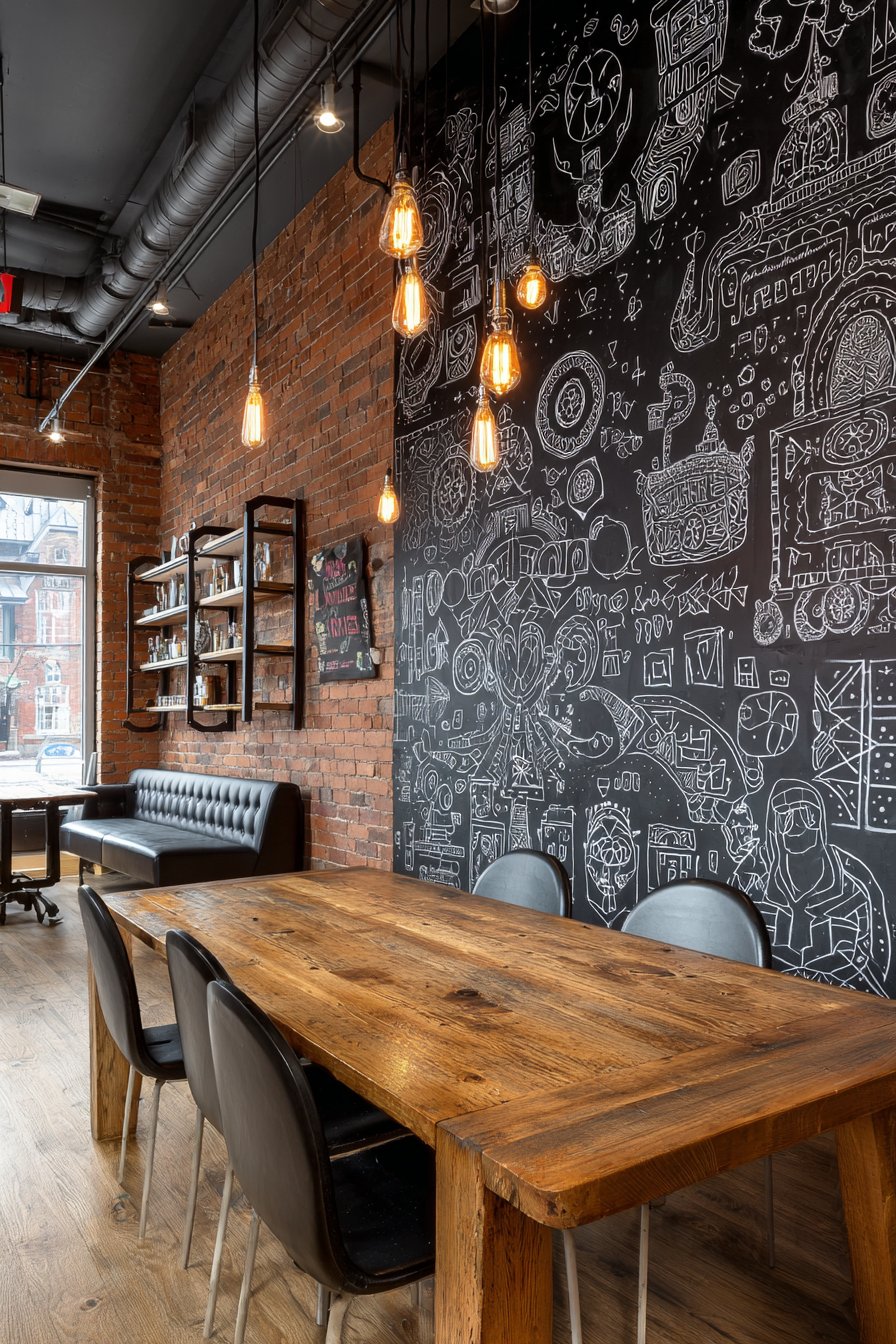
The material contrast between rough brick and delicate chalk lines creates a captivating visual tension that defines this design concept. The brick’s irregular surface adds an unpredictable quality to the chalk drawings—lines that might appear rigid on smooth walls develop character and variation as they travel across mortar joints and uneven surfaces. Metal shelving and vintage furniture pieces reinforce the industrial aesthetic while providing practical storage and seating without competing with the wall art’s visual impact. Each element in the space feels purposefully selected and authentically weathered, avoiding the trap of manufactured “industrial style” that plagues less thoughtful designs.
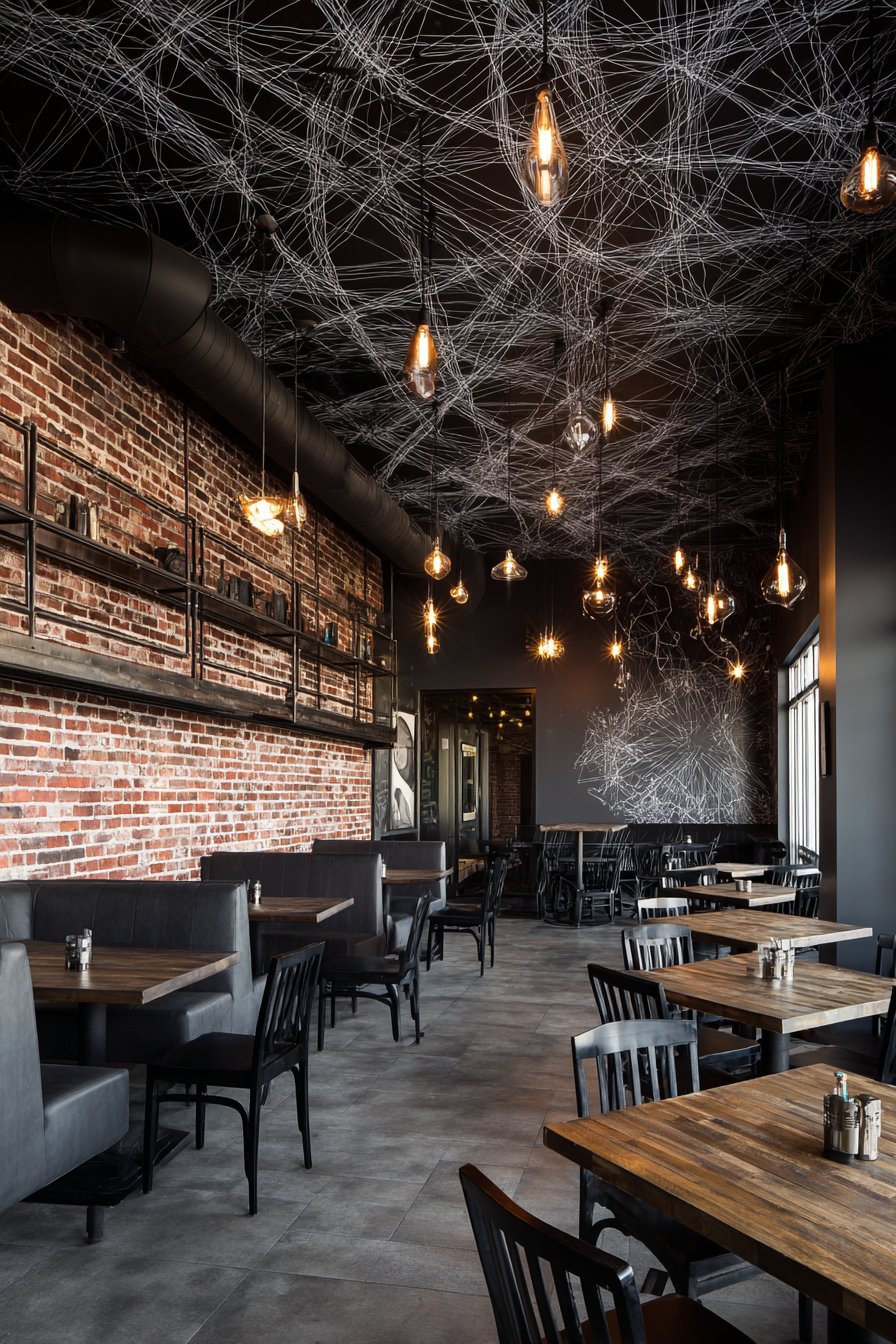
Edison bulb lighting casts warm illumination across these wall drawing ideas, creating dramatic shadows and highlights that emphasize both the brick texture and the white chalk lines. The warm light temperature softens the potentially harsh industrial materials, making the space feel inviting despite its urban edge. As evening falls and artificial lighting takes over from natural daylight, the wall art transforms, with the white chalk lines appearing to glow against the darkened brick—a theatrical effect that showcases how lighting choices dramatically affect the perception of wall drawing ideas.
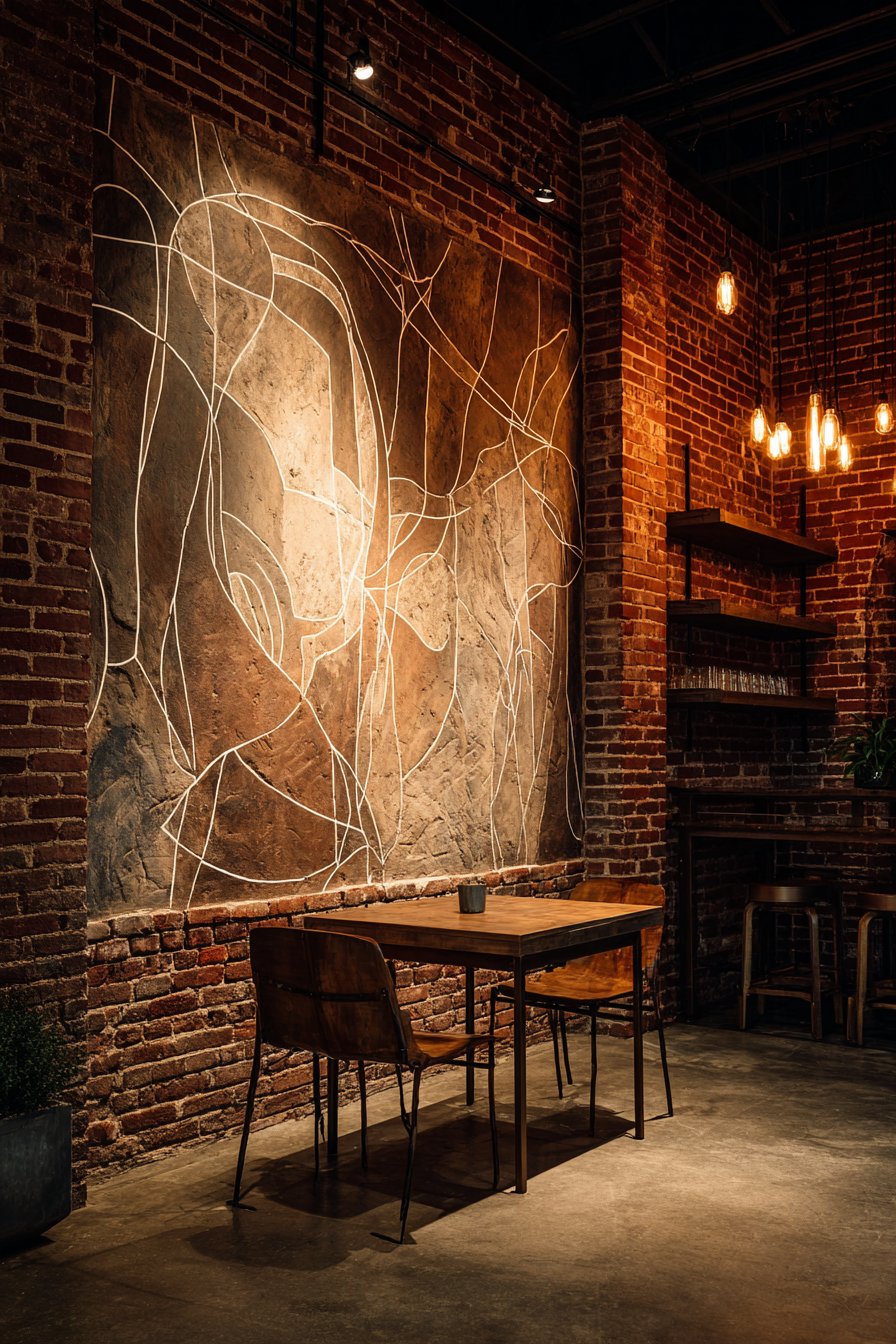
Key Design Tips: Clean the brick thoroughly before drawing to ensure chalk marker adhesion. Use high-quality chalk markers rather than traditional chalk for permanent, weather-resistant results. Test your markers on an inconspicuous area first to ensure desired opacity and adhesion. Embrace the imperfections that occur when drawing on textured surfaces. Consider the brick color when selecting chalk marker colors—white provides maximum contrast on red brick. Plan your composition to work with the brick pattern rather than fighting against it. Use the mortar lines as natural guides for straight elements in your design. Apply a clear sealant if you want the design to be permanent and protected from smudging.
8. Coastal Bedroom with Hand-Drawn Wave Pattern Border
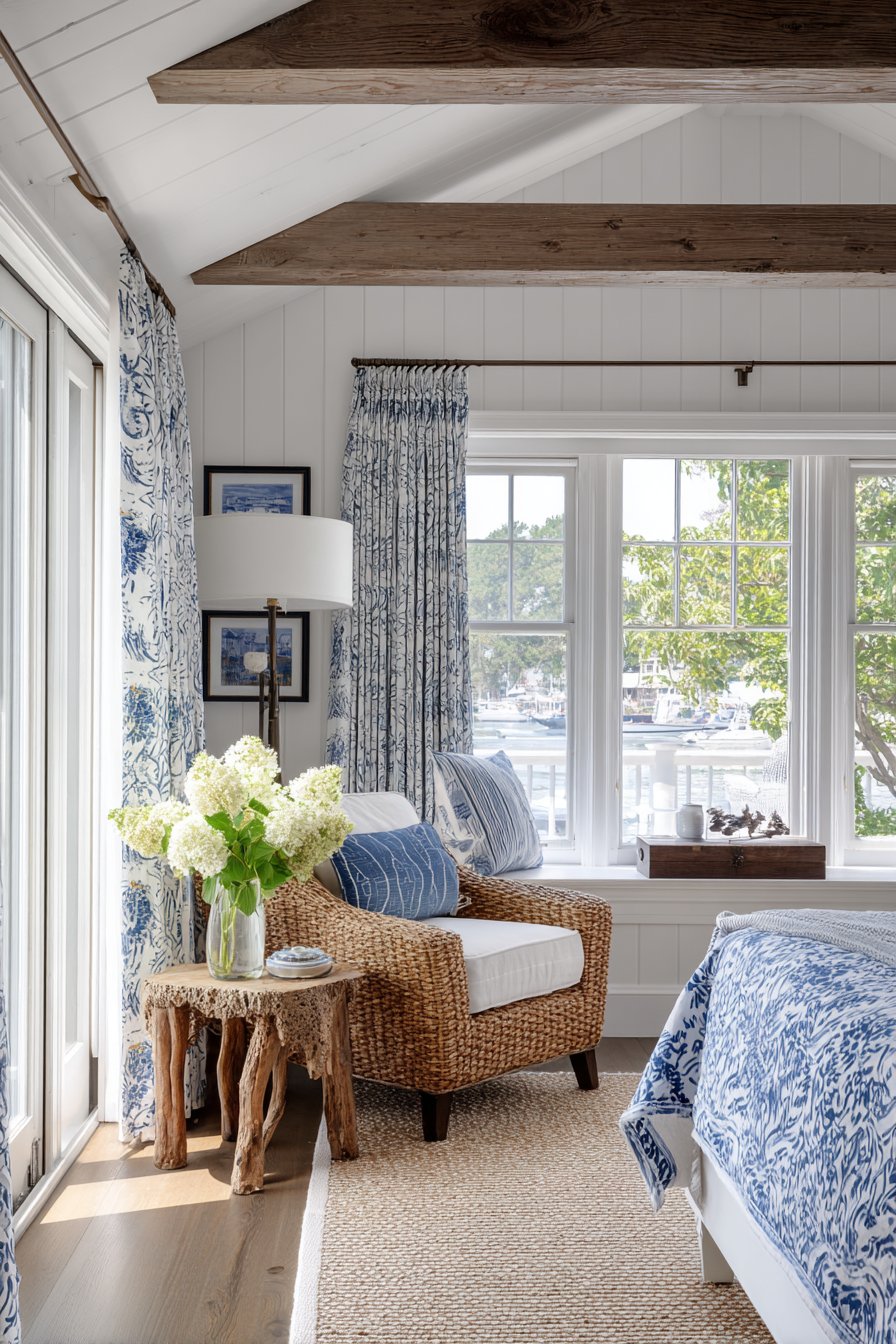
Coastal design finds renewed expression through wall drawing ideas that capture oceanic movement and maritime tranquility without relying on cliché decorative anchors and seashells. This bedroom concept features a hand-drawn continuous wave pattern executed at chair rail height, creating a sophisticated nautical accent that circles the room in rhythmic motion. The navy blue paint marker on white shiplap walls establishes classic coastal color contrasts while the flowing lines evoke the hypnotic movement of ocean waves. This restrained approach to coastal theming proves that effective wall drawing ideas can establish a design narrative through simple, elegant gestures rather than heavy-handed symbolism.
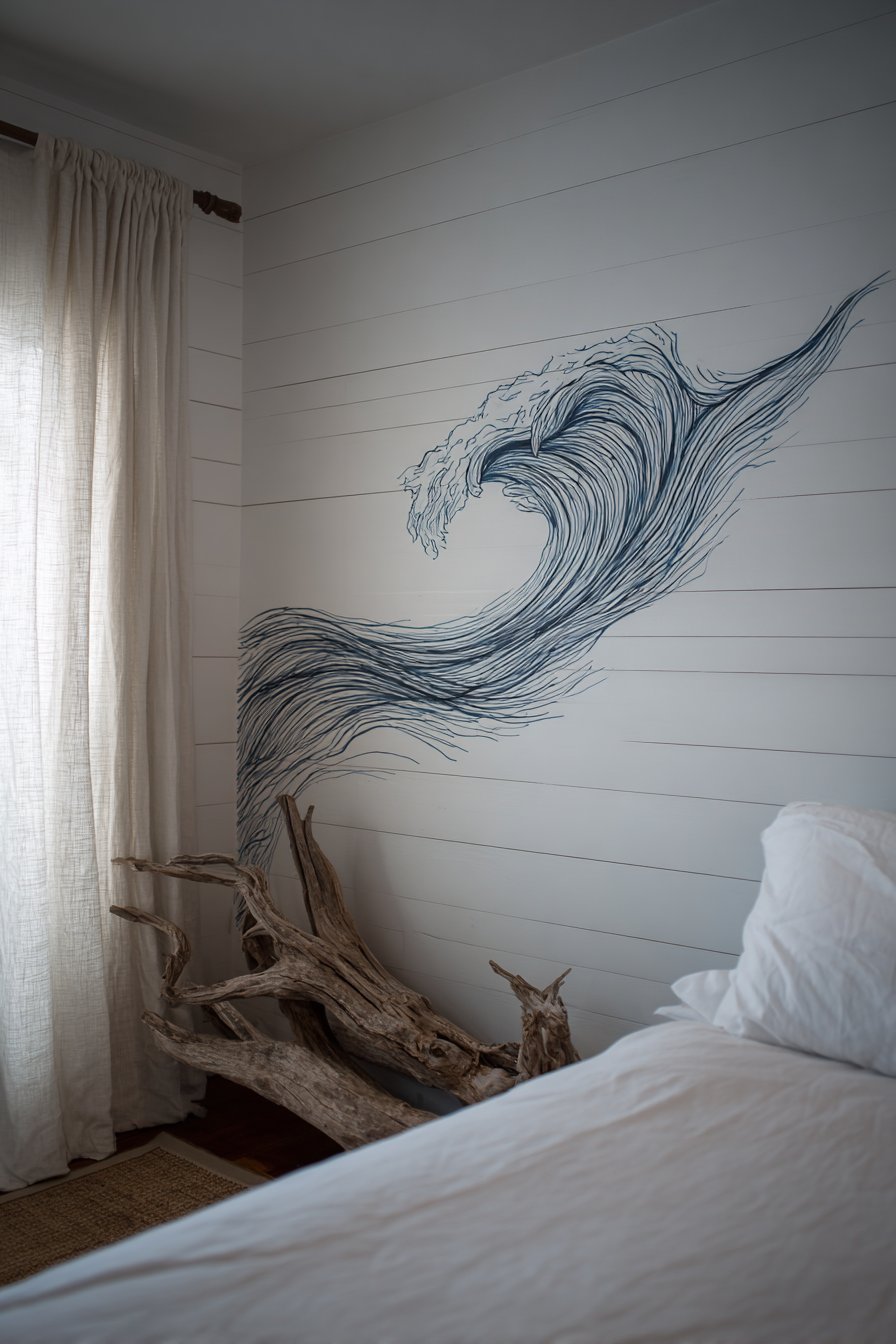
The integration of this wave border with shiplap walls demonstrates thoughtful material coordination that enhances both elements. The horizontal lines of the shiplap create a subtle geometric backdrop that makes the organic curves of the waves more pronounced and visually interesting through contrast. Natural fiber rugs and driftwood decorative elements extend the coastal theme into three-dimensional space, creating layers of texture and authentic material connections to maritime environments. The overall effect feels genuinely coastal rather than thematically coastal—the difference between spaces that evoke actual beach houses and those that simply display beach-related objects.
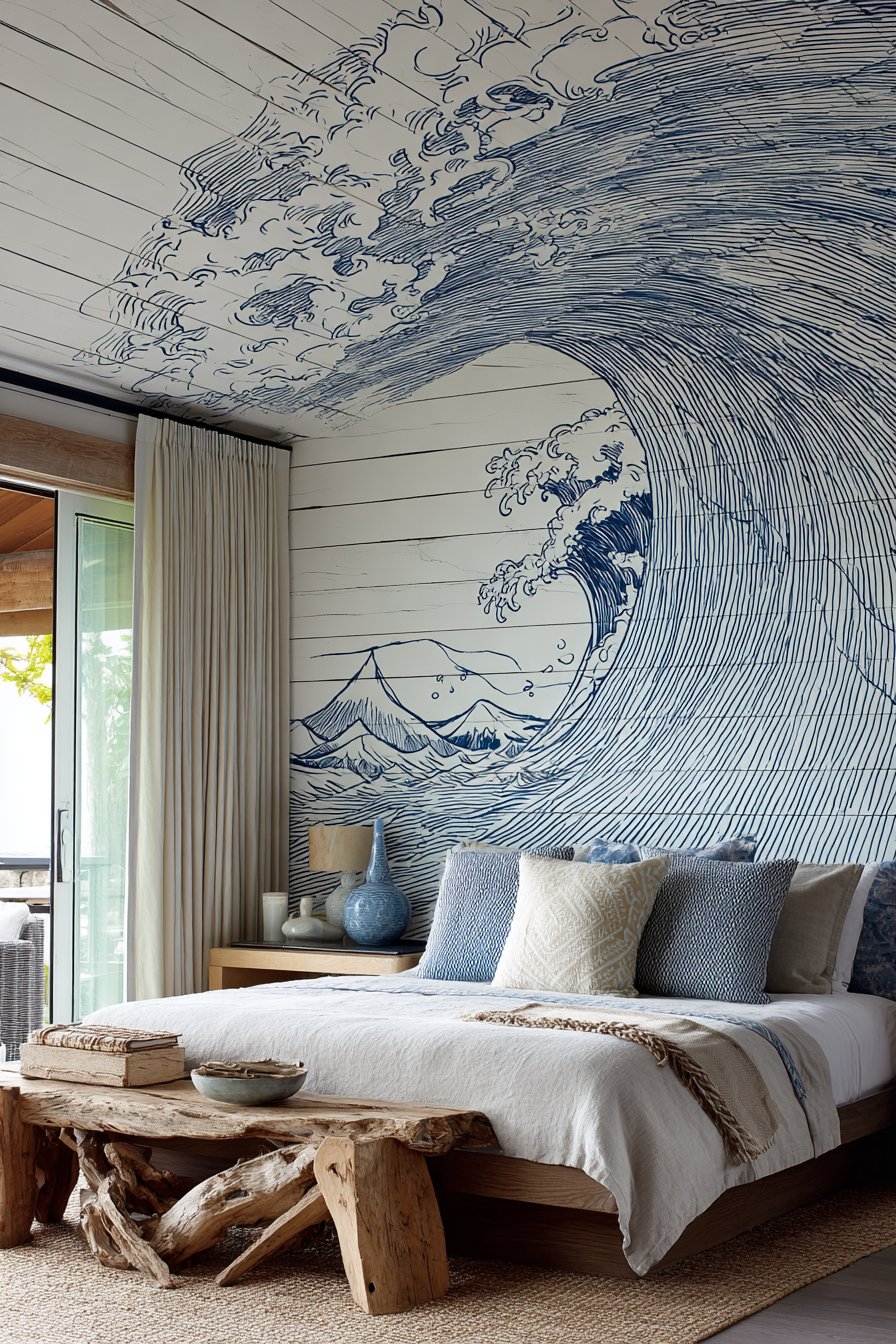
Lighting plays a crucial role in revealing the subtlety of these wall drawing ideas. Soft natural light filtering through linen curtains creates a diffused, hazy quality reminiscent of fog-softened coastal mornings, while highlighting the flowing lines of the wave pattern throughout the day. The navy blue ink appears darker in shadow and lighter where sunlight strikes directly, creating subtle variation in the continuous pattern that mimics the ever-changing appearance of real ocean waves. This attention to how light interacts with wall drawing ideas separates thoughtful design from merely decorative gestures.
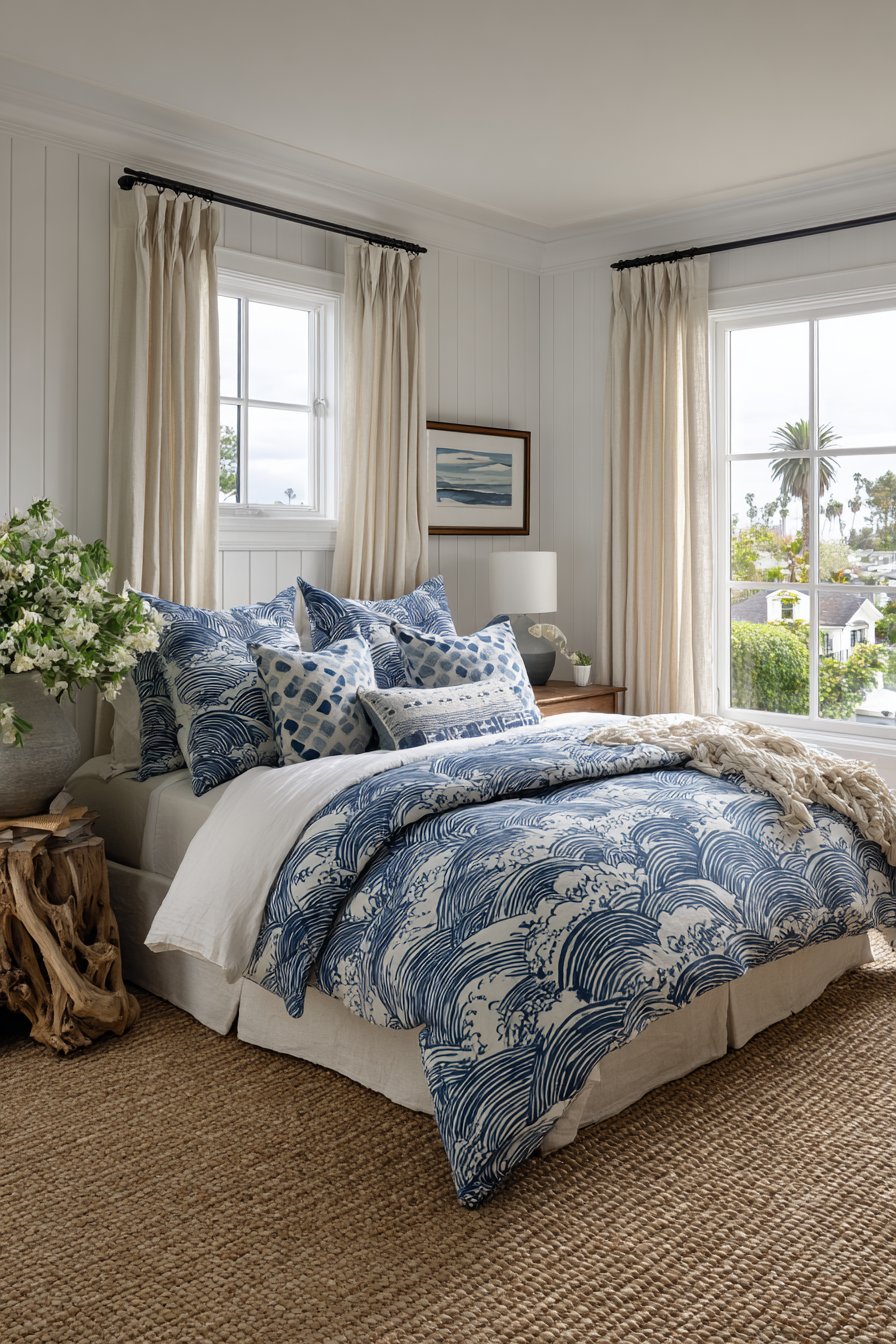
Key Design Tips: Use a continuous flowing motion when drawing waves rather than stopping and starting segments. Practice the wave pattern on paper until you can maintain consistent rhythm and amplitude. Draw lightly in pencil first to establish consistent height and spacing around the room. Choose a height that relates to existing architectural features like chair rails or window sills. Ensure the wave pattern connects seamlessly where it meets itself to avoid obvious start/stop points. Consider varying wave heights slightly to create a more naturalistic, less mechanical appearance. Use a ruler held at the desired height as a guide while drawing freehand curves along it. Step back frequently to evaluate the pattern’s flow from a distance.
9. Modern Kitchen Breakfast Nook with Coffee Illustrations
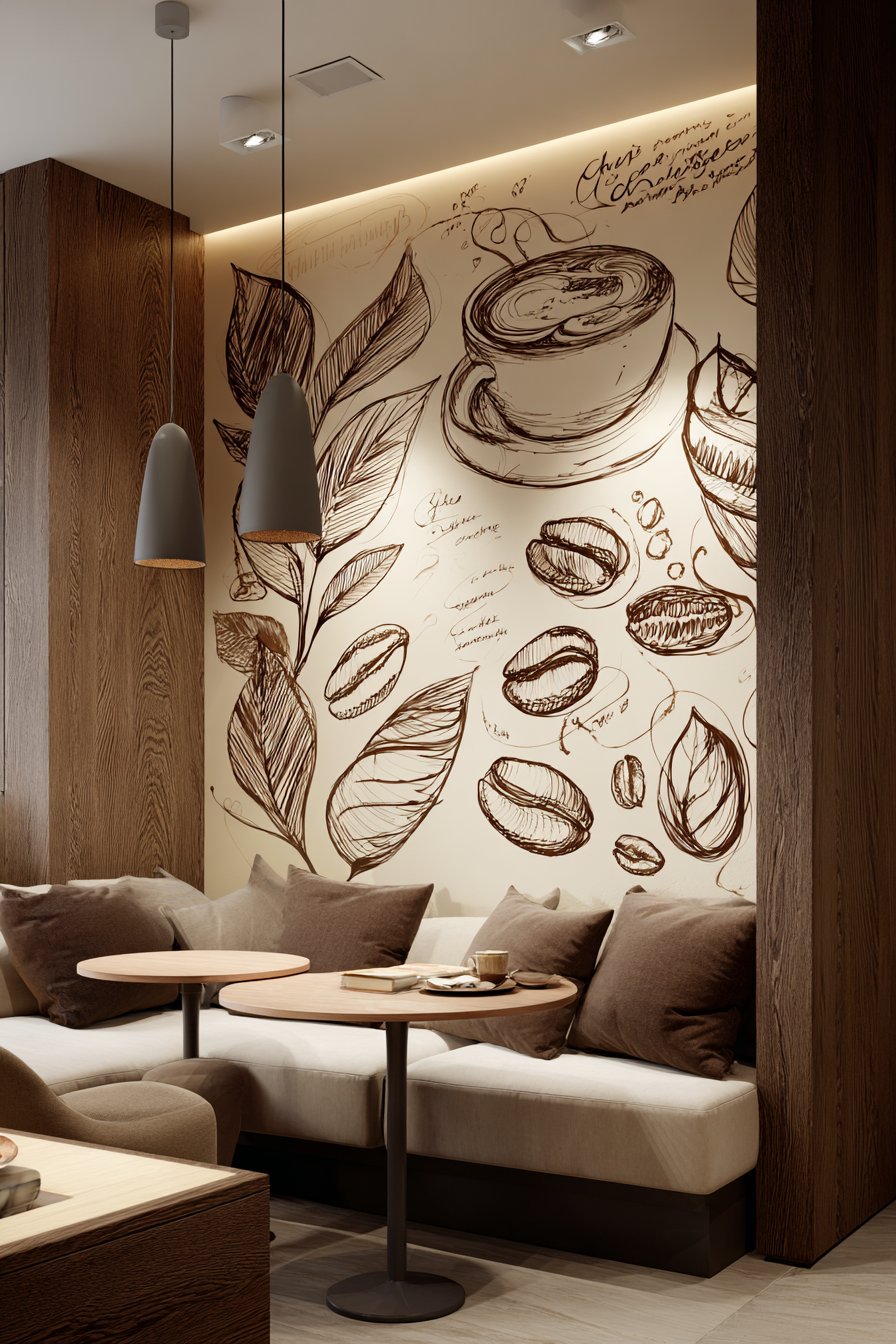
Kitchen design increasingly recognizes the value of personalization and themed decoration in spaces dedicated to daily rituals and comfort. This breakfast nook concept employs wall drawing ideas that celebrate coffee and tea culture through hand-sketched illustrations on a small accent wall. The detailed line drawings of coffee beans, tea cups, and decorative steam swirls create a charming focal point that reinforces the area’s function while adding artistic character to what might otherwise be an overlooked corner. Executed in brown and black markers on a cream-colored wall, the illustrations establish an appropriate color palette that references the beverages themselves while maintaining visual softness that supports the cozy, intimate scale of the breakfast nook.
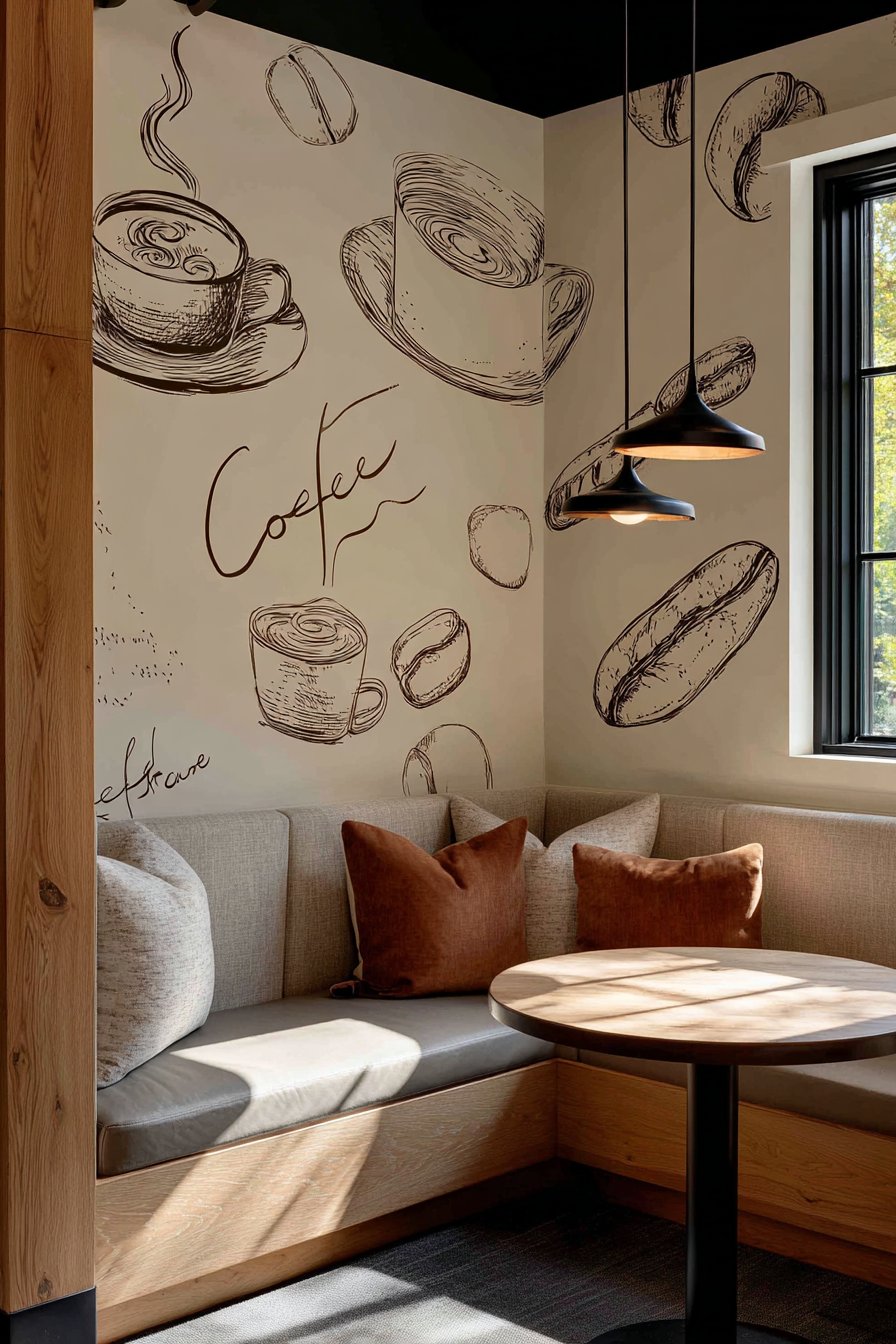
The built-in bench with comfortable cushions and a small round table create an inviting corner that encourages lingering over morning coffee rather than rushed standing consumption. This furniture arrangement, combined with the personalized wall drawing ideas, transforms a functional eating area into a destination within the kitchen—a special spot that family members seek out for quiet morning moments or afternoon tea breaks. The hand-drawn quality of the illustrations adds warmth and personality that commercial coffee-themed decor cannot match, while the permanent nature of the wall art demonstrates commitment to creating a truly custom space rather than rental-friendly temporary decorating.
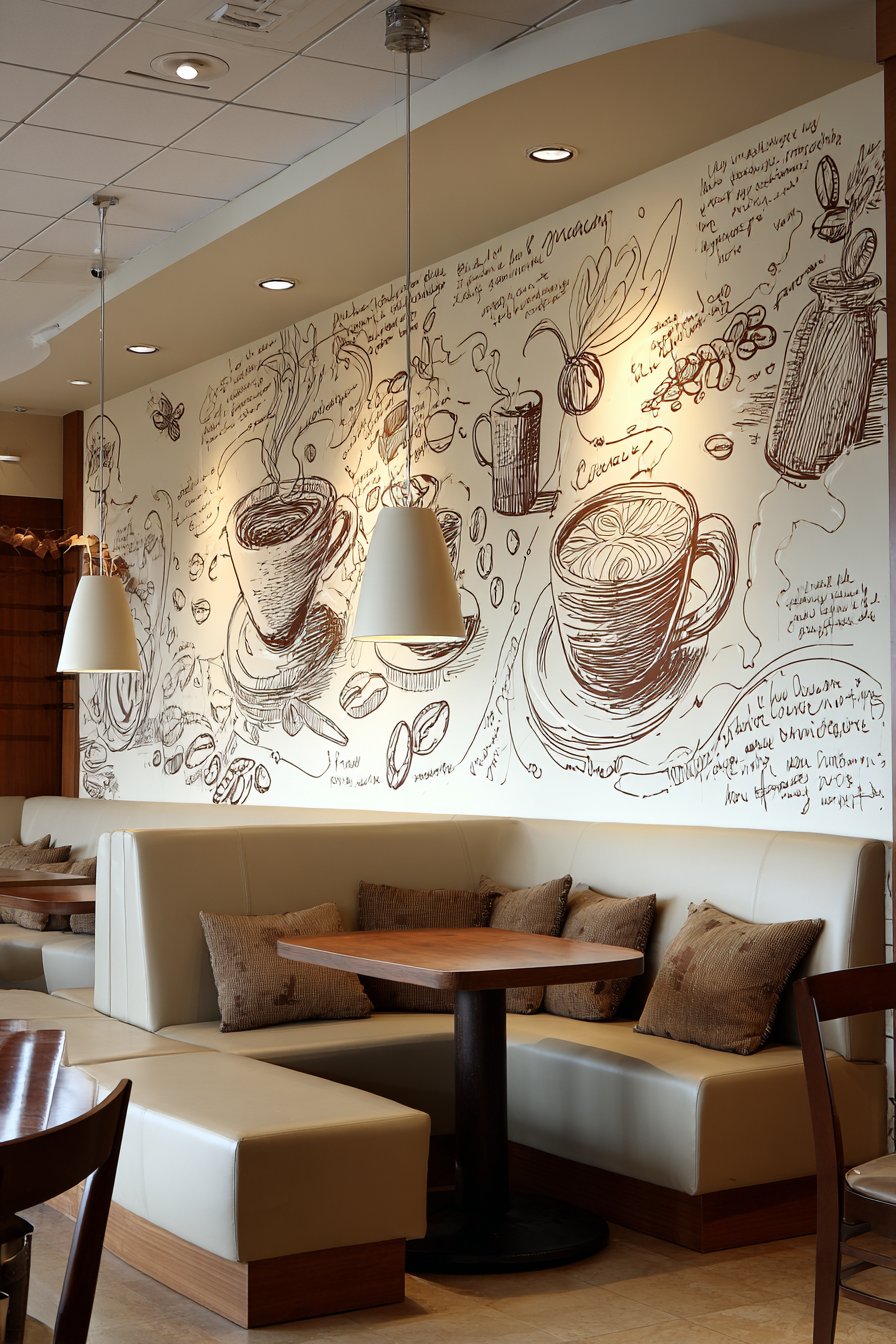
Pendant lighting positioned directly over the table illuminates both the breakfast nook and the wall drawing ideas, ensuring the illustrations remain visible and appreciated throughout early morning hours when natural light may be limited. The focused downward light creates intimate atmosphere while preventing harsh shadows that might obscure the detailed line work. The warm light temperature complements the brown and cream color scheme, making the space feel inviting rather than institutional—a critical consideration for areas where people gather for the day’s first meal or evening’s last conversation.
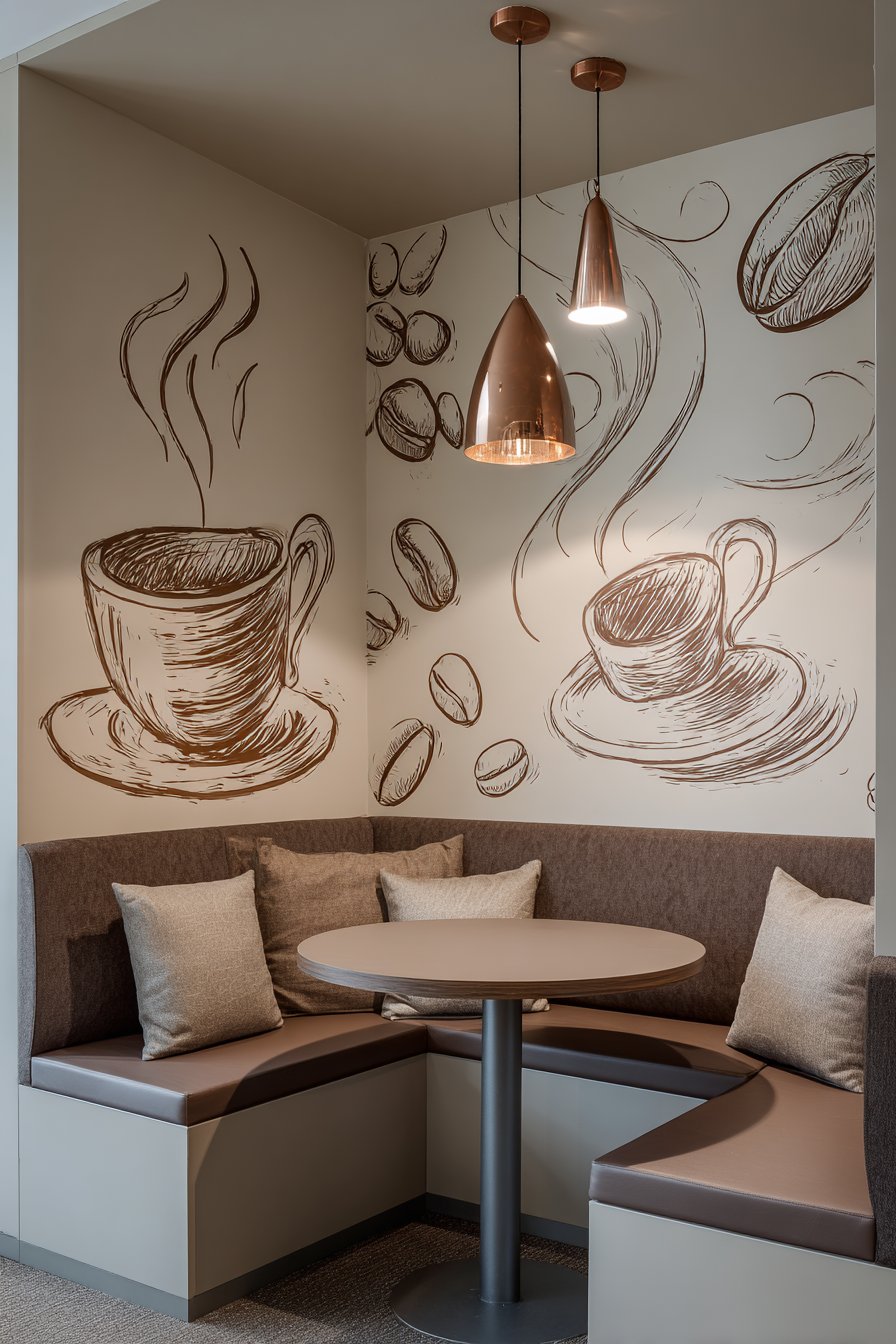
Key Design Tips: Research actual coffee and tea culture illustrations for authentic detail inspiration. Vary the scale of different elements to create visual hierarchy and interest. Include both whole beans and ground coffee, multiple cup styles, and steam patterns for variety. Position illustrations to fill the wall space proportionally without overcrowding. Use brown and black markers to create depth through line weight variation. Add small details like coffee plant leaves or tea bag tags for additional authenticity. Consider including a favorite coffee quote or the names of preferred beverage varieties. Ensure illustrations are positioned high enough to avoid splashing from the table surface below.
10. Transitional Living Room with Oversized Tree Silhouette
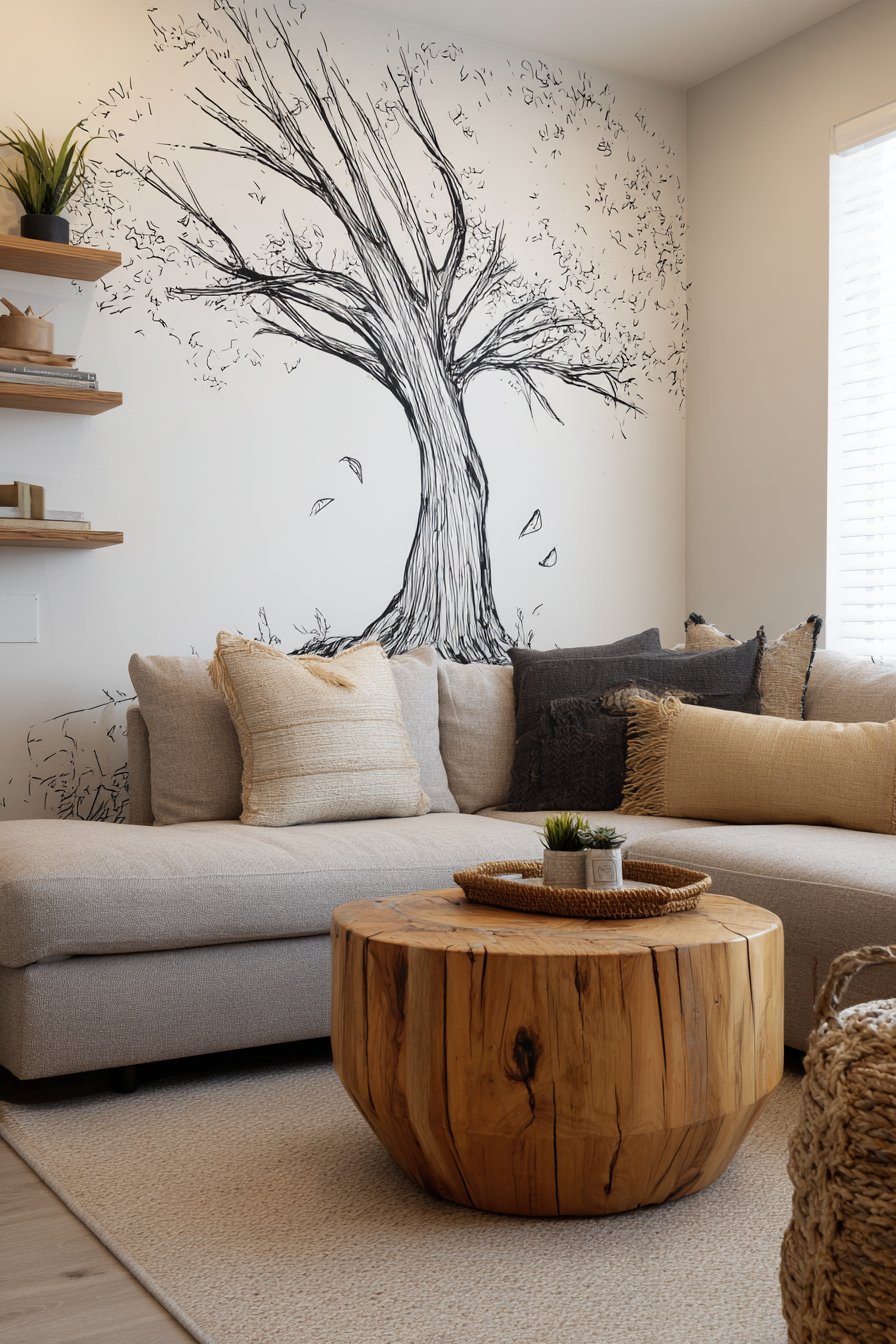
Nature-inspired wall drawing ideas bring organic beauty indoors while creating powerful focal points that ground contemporary living spaces in timeless natural imagery. This transitional living room features an oversized hand-drawn tree silhouette that commands an entire wall, with its trunk, branches, and selective foliage executed in matte black paint against a neutral background. The tree’s organic form introduces natural curves and asymmetry into typically rectilinear residential architecture, softening the space while creating visual interest that draws the eye upward and throughout the composition. This bold approach to wall drawing ideas demonstrates that scale and confidence matter—a large, well-executed tree makes a stronger design statement than multiple small decorative elements scattered across the same space.
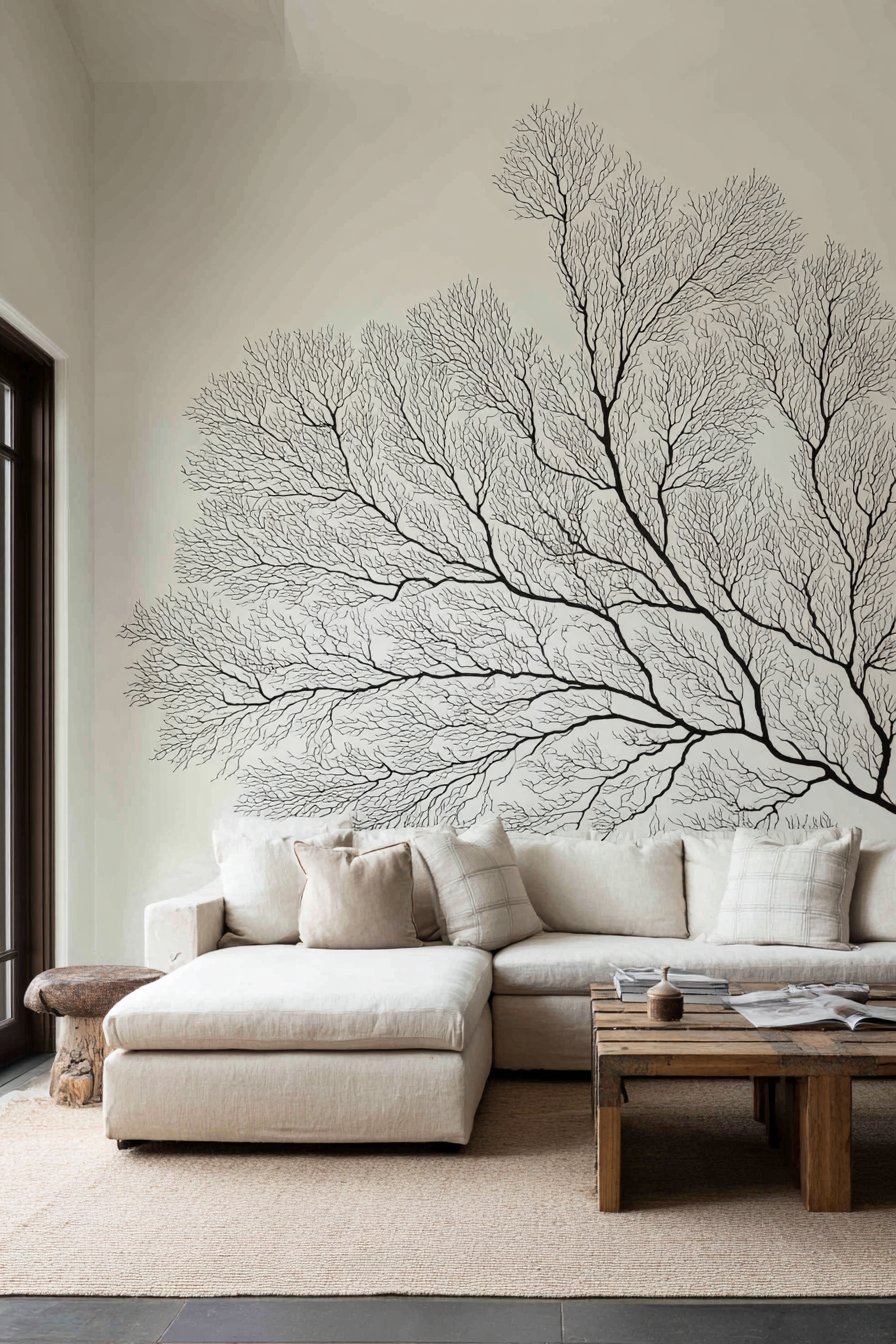
The careful detailing of delicate branch work proves that even large-scale wall drawing ideas benefit from attention to refinement and precision. The artist has rendered the tree’s structure with botanical accuracy, showing how branches divide and subdivide as they extend from the trunk, creating naturalistic proportions that feel authentic rather than cartoonish. A few strategically placed leaves punctuate the branches without overwhelming the silhouette’s graphic simplicity, providing just enough detail to identify the species while maintaining the design’s bold, readable impact from across the room. This restraint in detail exemplifies transitional design principles that bridge traditional naturalism and contemporary minimalism.
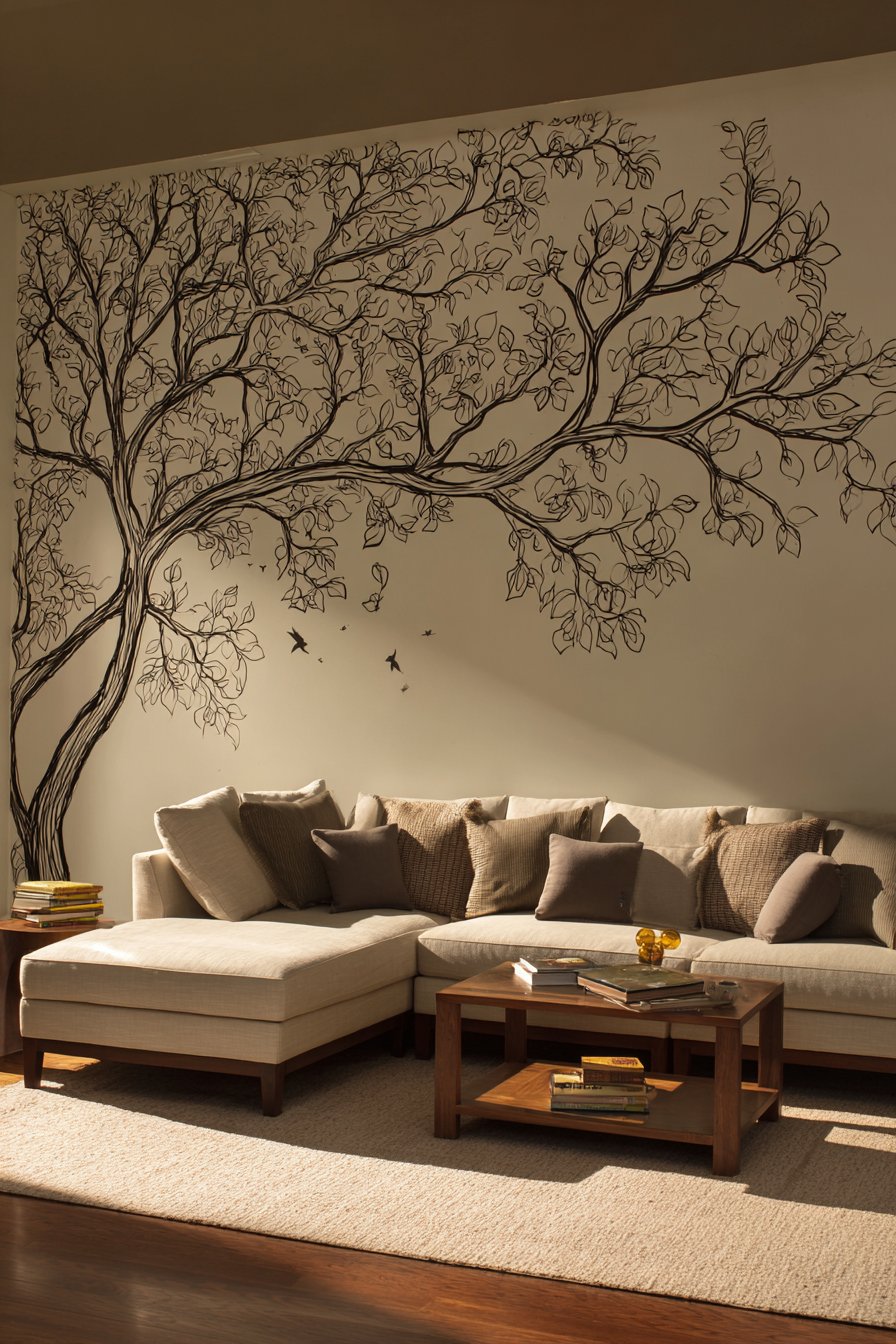
The furniture arrangement takes full advantage of these wall drawing ideas by positioning a comfortable sectional sofa beneath the tree, creating a natural gathering spot that feels sheltered and intimate despite the room’s open plan. Natural wood coffee tables and soft area rugs extend the organic material palette without competing with the wall art’s visual dominance. Professional photography captured during golden hour reveals how natural light creates gentle shadows that add dimensionality to the flat wall drawing, transforming it throughout the day as sunlight angles shift—a dynamic quality that static framed art cannot provide.
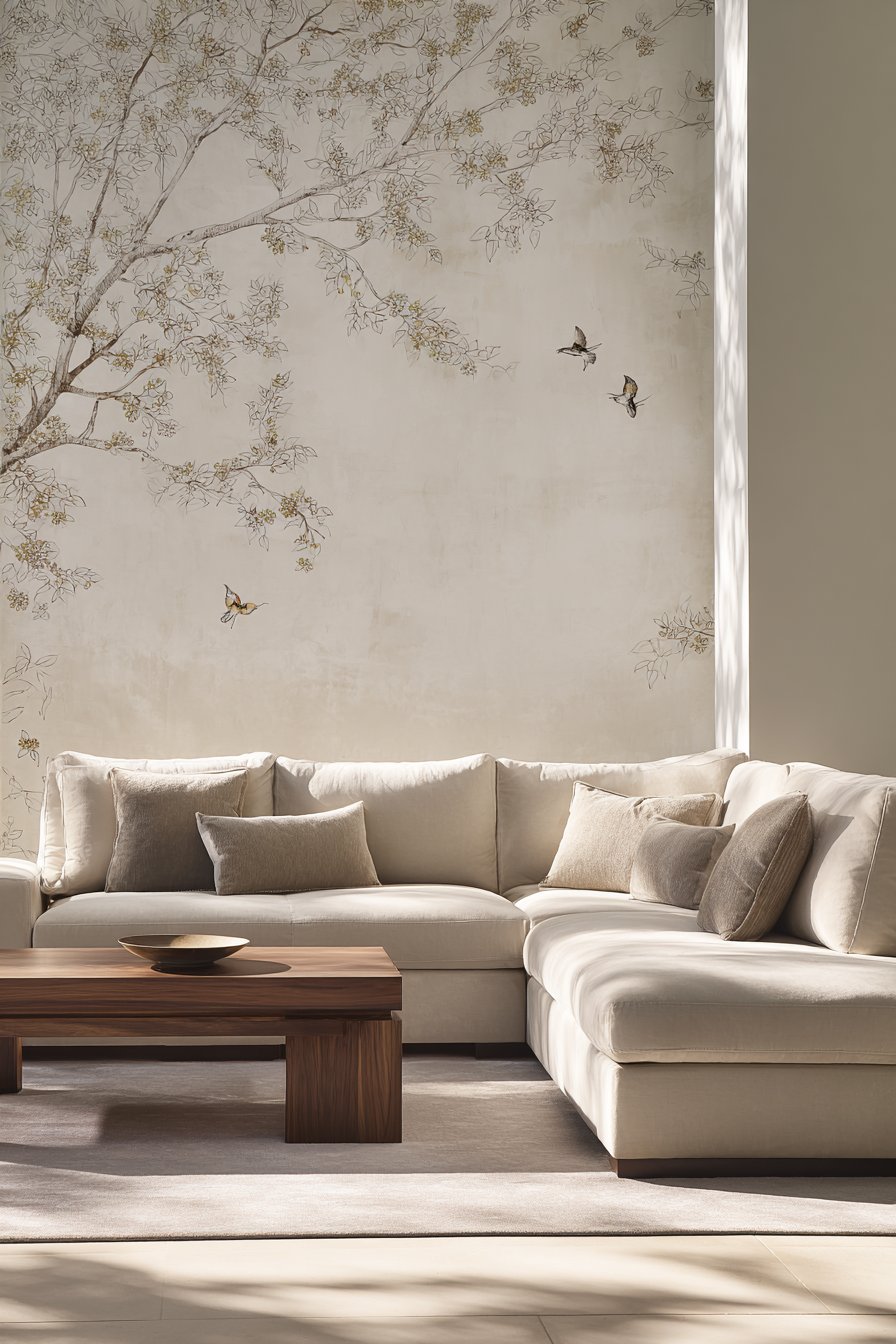
Key Design Tips: Project an image onto the wall to trace basic tree structure before adding details. Ensure the trunk is proportionally thick enough to support the branch structure visually. Vary branch thickness as they extend from the trunk, tapering naturally toward tips. Include some branches that extend beyond expected boundaries for organic naturalism. Place leaves asymmetrically rather than in regular patterns. Consider the tree species and its characteristic growth pattern for authenticity. Use a small artist brush for fine branches and larger brushes for trunk and major limbs. Allow the tree to interact with architectural features like corners or doorways rather than floating in empty space.
11. Farmhouse Mudroom with Personalized Hand-Lettering
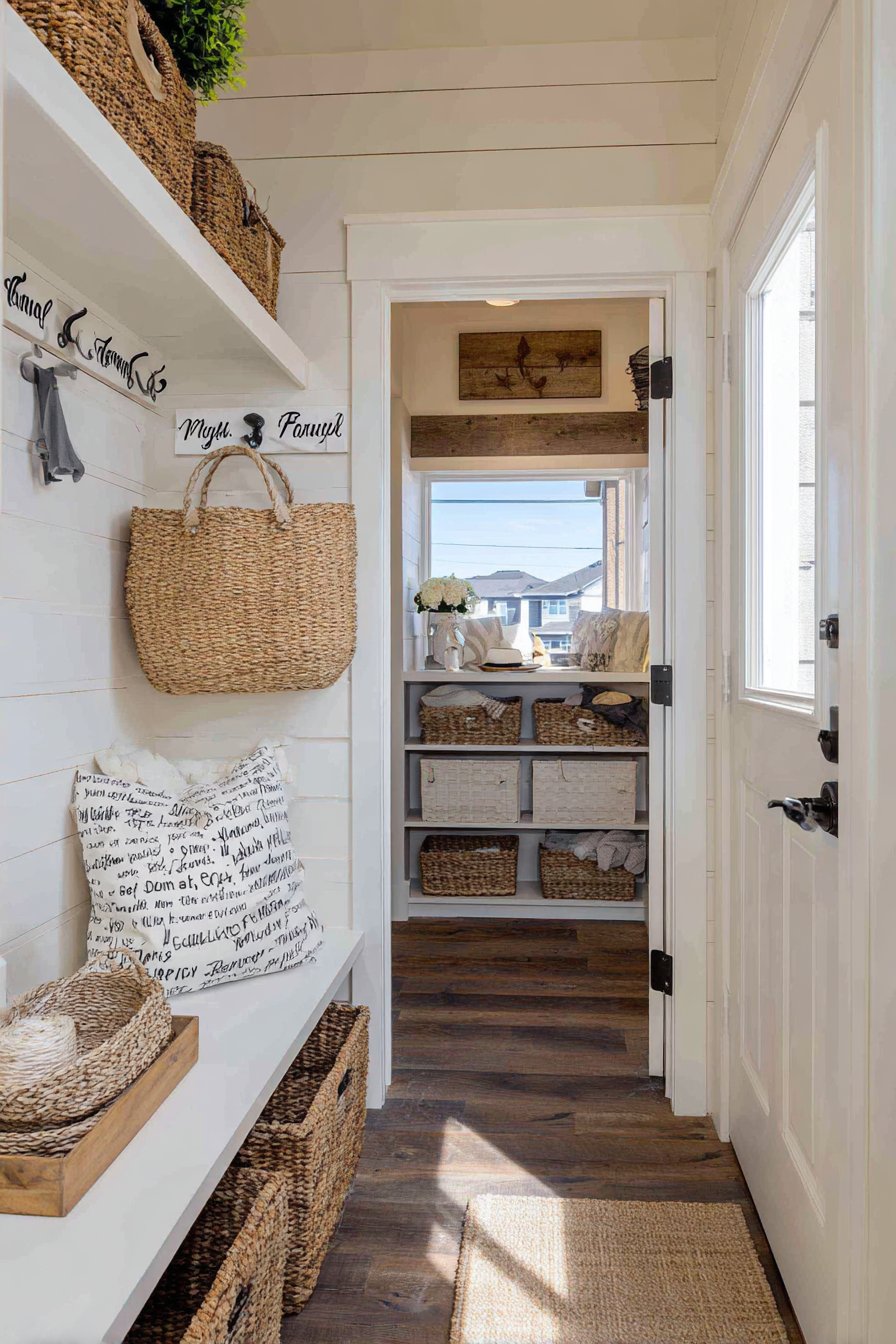
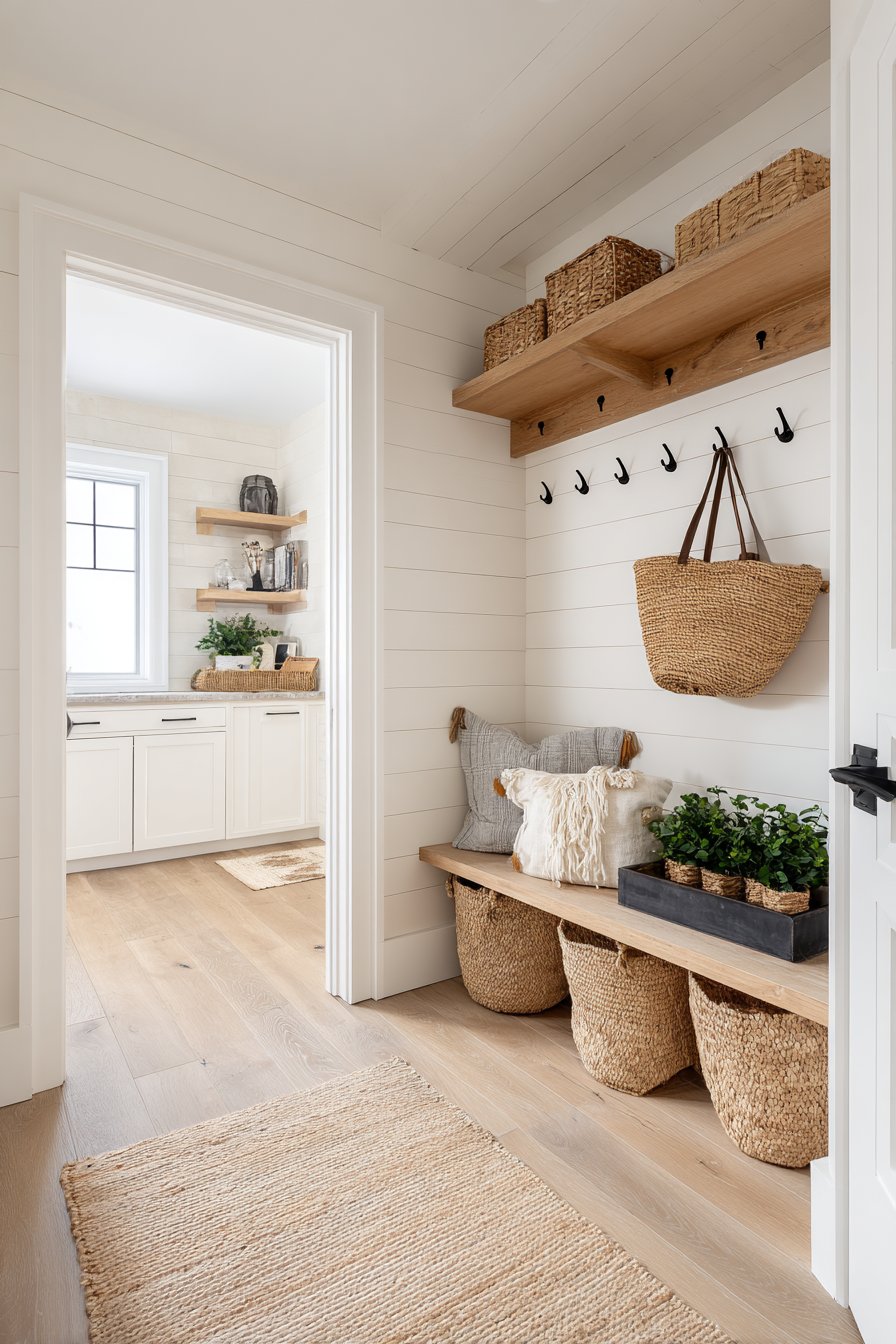
Functional spaces like mudrooms benefit enormously from wall drawing ideas that combine practical organization with personal touches that make daily routines more pleasant. This farmhouse concept transforms a standard coat storage wall into a personalized family command center through hand-lettered names written in playful brush lettering directly on white shiplap. Each family member’s name appears above dedicated hooks, creating individual ownership of storage space while adding decorative character that reflects the family’s identity. This personalization approach to wall drawing ideas proves that the most meaningful home decor often incorporates the residents’ names and identities rather than generic inspirational phrases or commercial art.
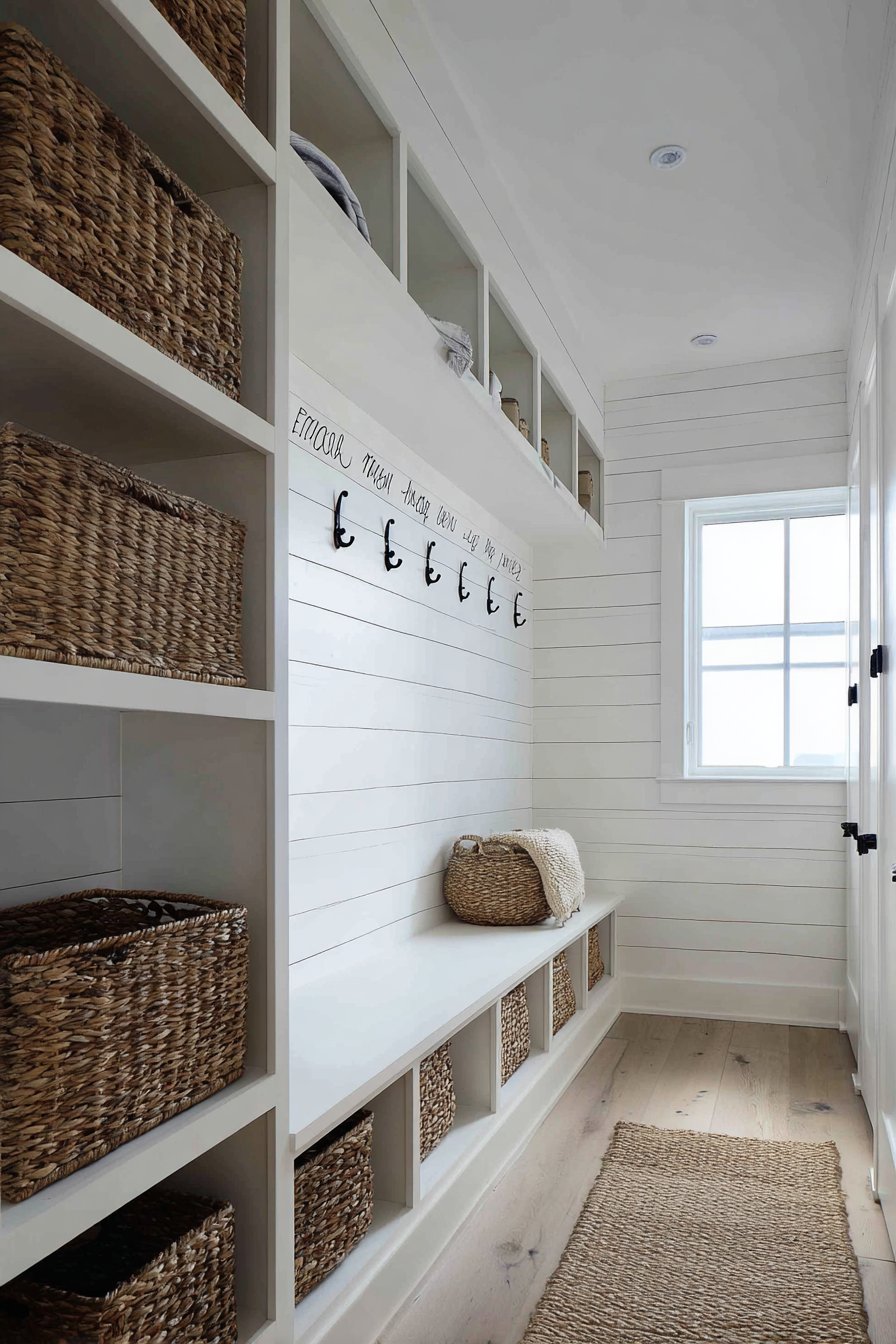
The integration of functional hardware with decorative lettering demonstrates how wall drawing ideas can enhance rather than merely decorate utilitarian spaces. The hooks positioned beneath each name serve obvious practical purposes while the lettering above transforms necessary hardware into a cohesive design system. Open shelving and storage baskets maintain the organized farmhouse aesthetic, providing additional storage for seasonal items, bags, and accessories without creating visual clutter. The white shiplap background unifies all elements while providing the textured surface that’s become synonymous with modern farmhouse style—proving that wall drawing ideas work beautifully on paneled walls as well as smooth surfaces.
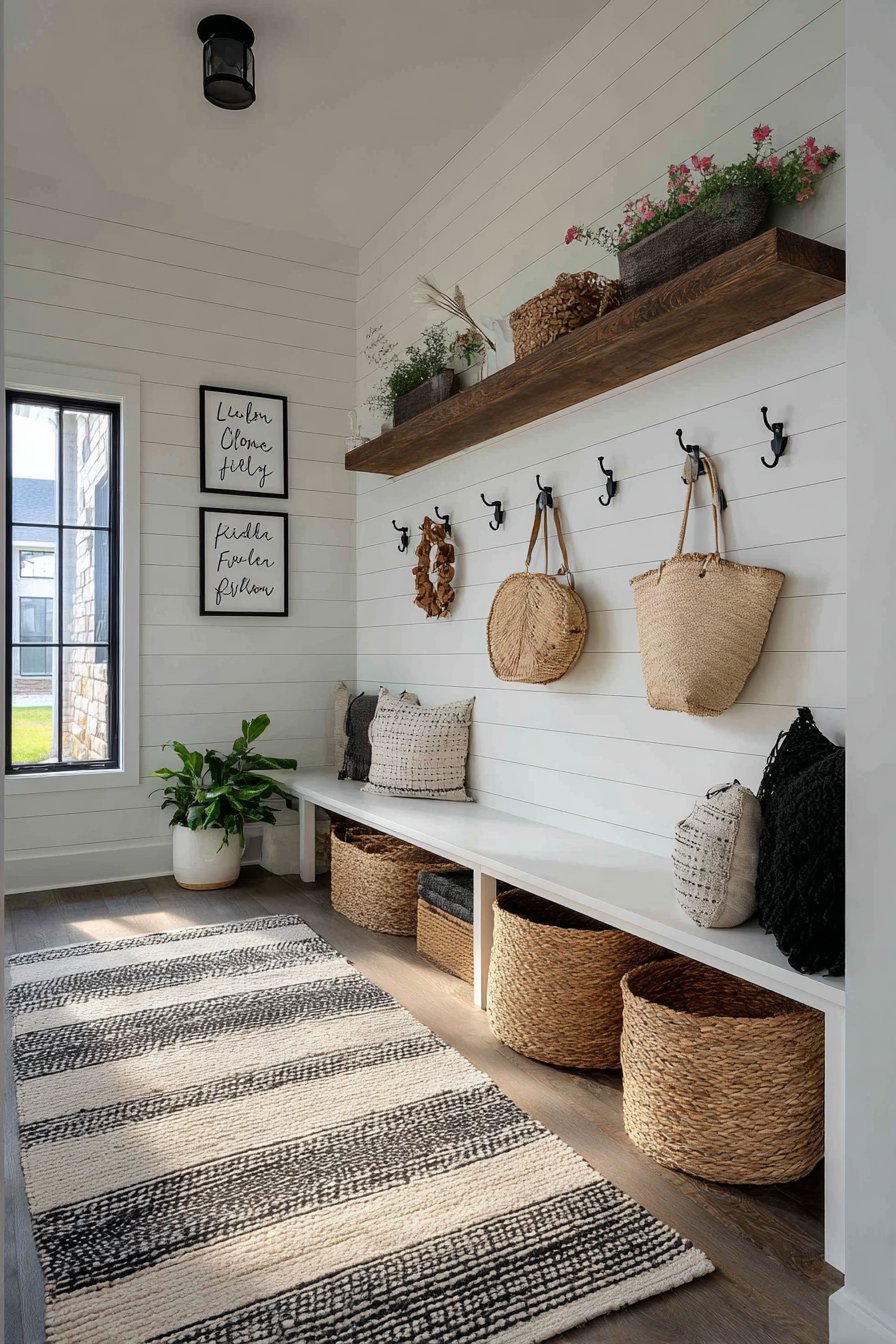
Natural daylight from a nearby window ensures these wall drawing ideas remain clearly visible throughout the day, making it easy for family members to locate their designated spots even during rushed morning departures. The white walls maximize available light reflection, keeping the space bright and welcoming despite being a transitional area that might otherwise feel utilitarian and unwelcoming. The handwritten names add warmth and personality that would be absent if the same information appeared in commercial vinyl lettering or printed signs—the imperfect, human quality of hand lettering creates emotional connection and authentic character.
Key Design Tips: Practice each name extensively to develop consistent letter forms and spacing. Use a pencil baseline to maintain straight lettering despite the shiplap’s horizontal lines. Choose a lettering style that matches your overall design aesthetic—bouncy and playful for casual homes, more formal for traditional. Ensure adequate spacing between names to avoid visual crowding. Position names at a height that’s easily readable while standing. Use permanent markers or paint pens rated for durability in high-traffic areas. Consider adding small decorative flourishes that reflect each person’s personality or interests. Space hooks appropriately to accommodate winter coats without overcrowding.
12. Zen Meditation Room with Enso Circle
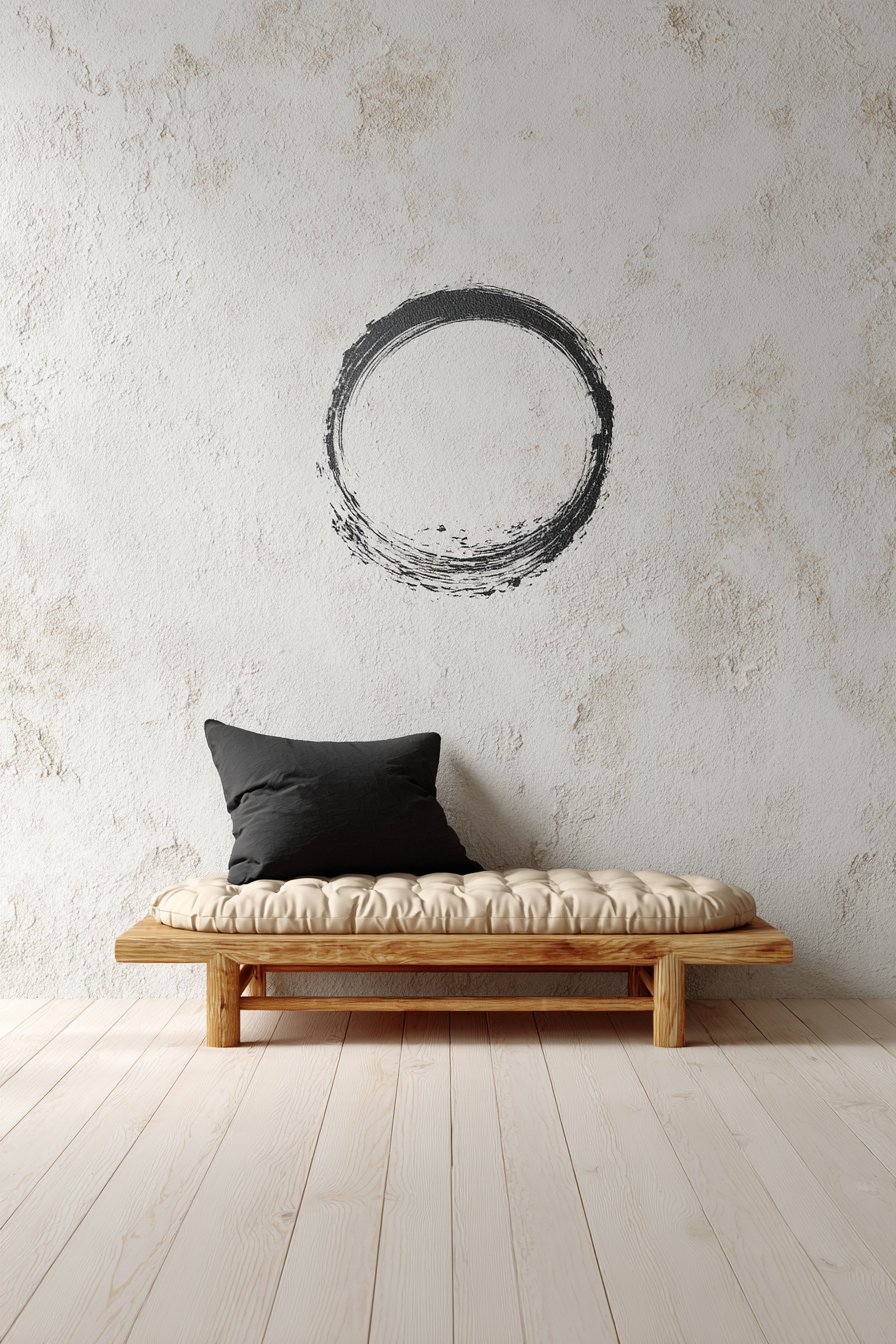
Contemplative spaces require wall drawing ideas that support mindfulness practice rather than creating distraction, making the traditional Enso circle an ideal choice for meditation rooms. This zen concept features a large hand-drawn Enso—the circular brushstroke fundamental to Zen Buddhist art—executed in black ink directly on a textured white wall. The circular form, painted with a single continuous brushstroke that reveals visible brush texture and intentional imperfections, embodies the Zen principles of embracing impermanence, imperfection, and the beauty of the moment. This approach to wall drawing ideas recognizes that in spaces dedicated to spiritual practice, art should facilitate contemplation rather than demand attention, creating a focal point that quiets rather than stimulates the mind.
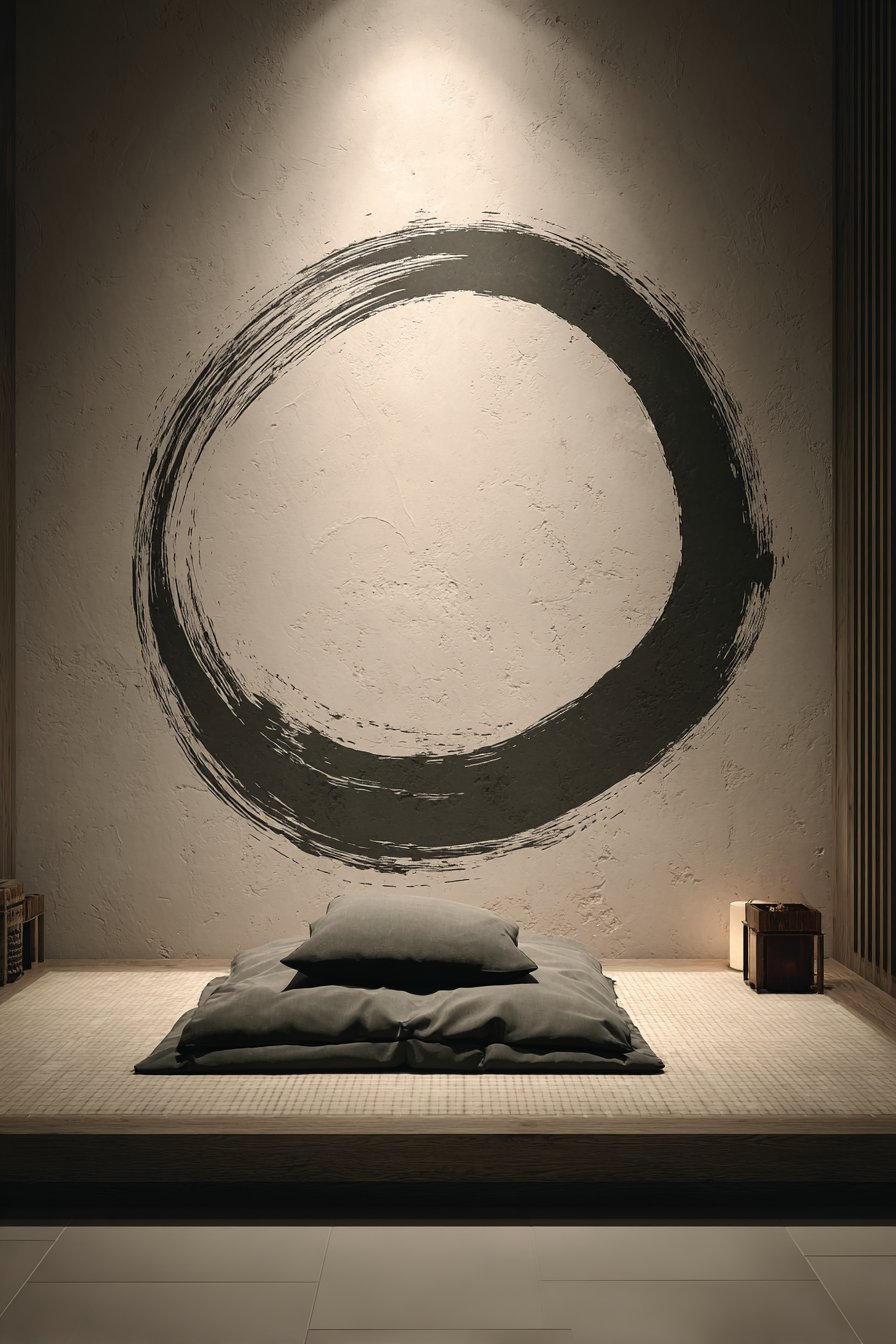
The placement of meditation cushions and a low wooden platform centered before the Enso demonstrates how furniture positioning can honor and activate wall drawing ideas. The practitioner faces the circle during meditation, using its form as a visual anchor for concentration practices or simply allowing it to rest in peripheral awareness. The circular shape—representing enlightenment, the universe, and the void simultaneously—provides rich symbolic content that supports various meditation traditions while remaining visually simple enough not to overwhelm practitioners seeking mental clarity. The visible brush texture and imperfections in the circle remind practitioners that perfection lies in accepting rather than correcting natural variations—a core Zen teaching embodied in the wall drawing itself.
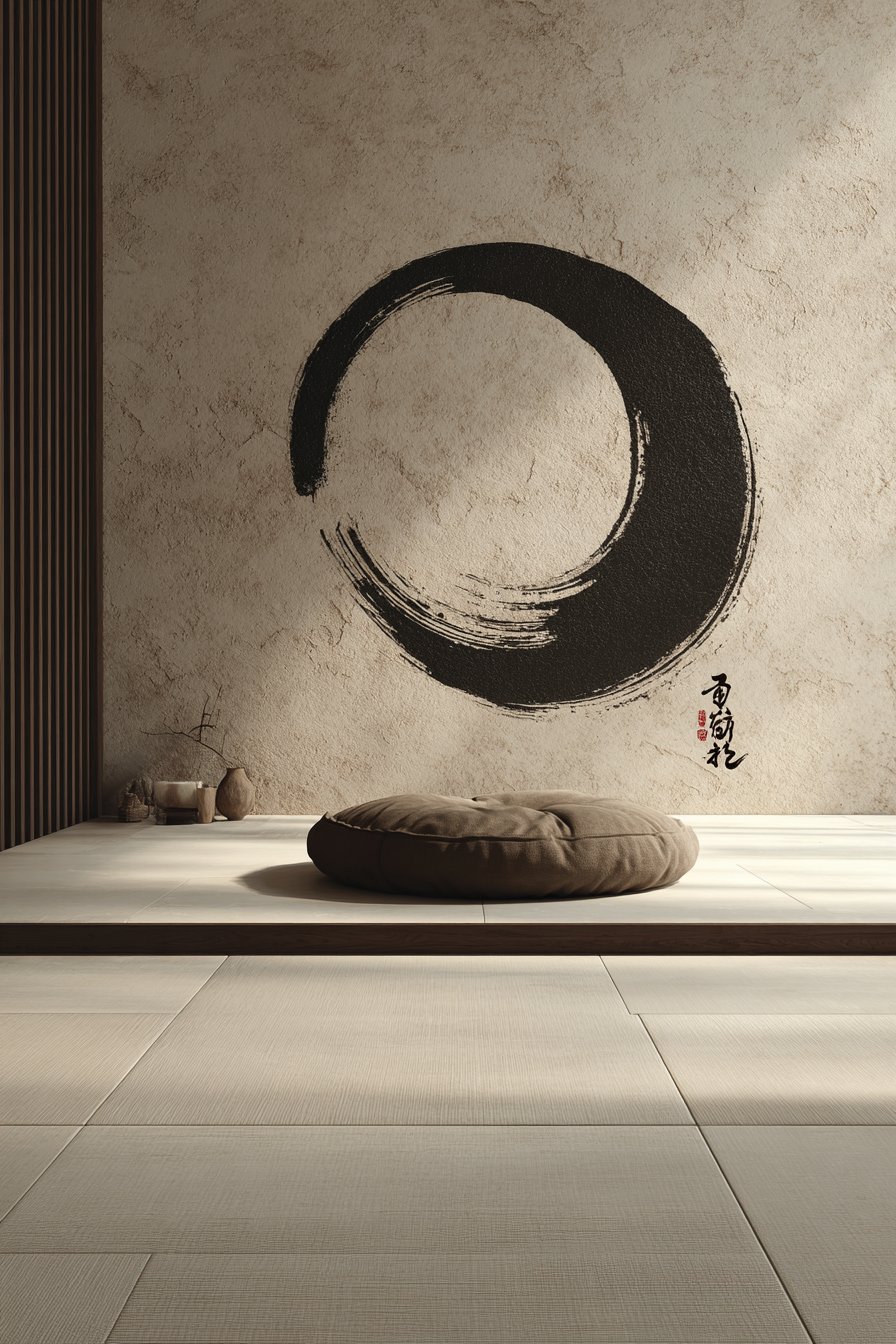
Soft diffused lighting creates a serene atmosphere that enhances these meditative wall drawing ideas without creating harsh shadows or glare that might disturb practice. The textured white wall provides subtle visual interest without competing with the Enso’s bold simplicity, while the overall minimalist composition maintains the uncluttered environment essential for meditation spaces. The professional photography’s minimalist composition mirrors the space’s purpose, focusing attention on the expressive brushwork and the meditative quality it creates—proving that the most powerful wall drawing ideas often embrace simplicity over complexity.
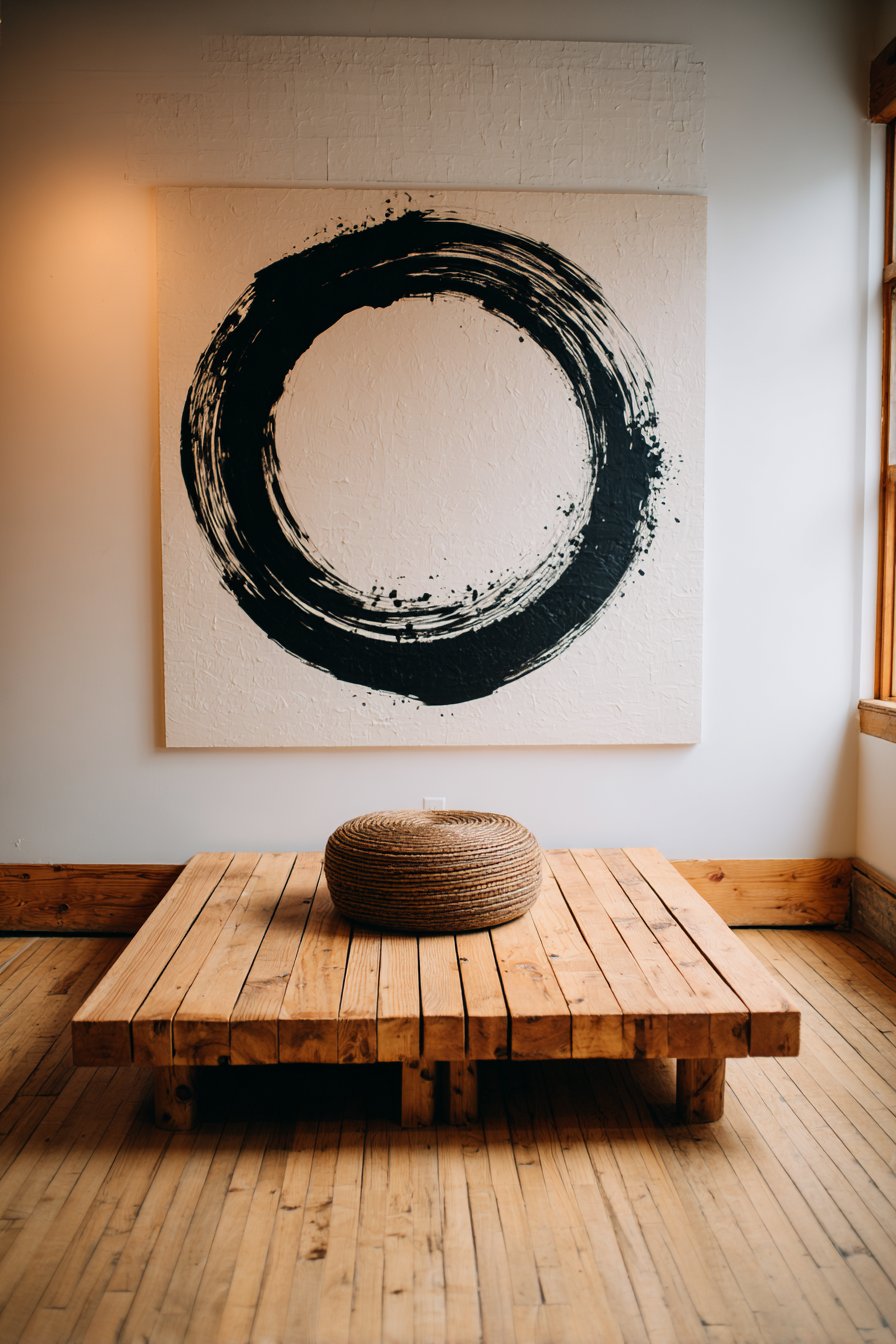
Key Design Tips: Practice Enso painting extensively on paper before attempting the wall version. Use a large brush with natural bristles that can hold substantial ink. Complete the circle in one continuous motion without lifting the brush or pausing. Embrace imperfections rather than attempting to correct them—they embody the Zen teaching. Position the circle at eye level when seated in meditation posture. Ensure adequate wall space around the circle to maintain breathing room visually. Use high-quality black ink or paint that won’t fade over time. Consider the symbolic aspects of your brushstroke—where it begins, where it ends, and whether the circle closes completely all carry meaning.
13. Eclectic Gallery Wall with Hand-Drawn Frames
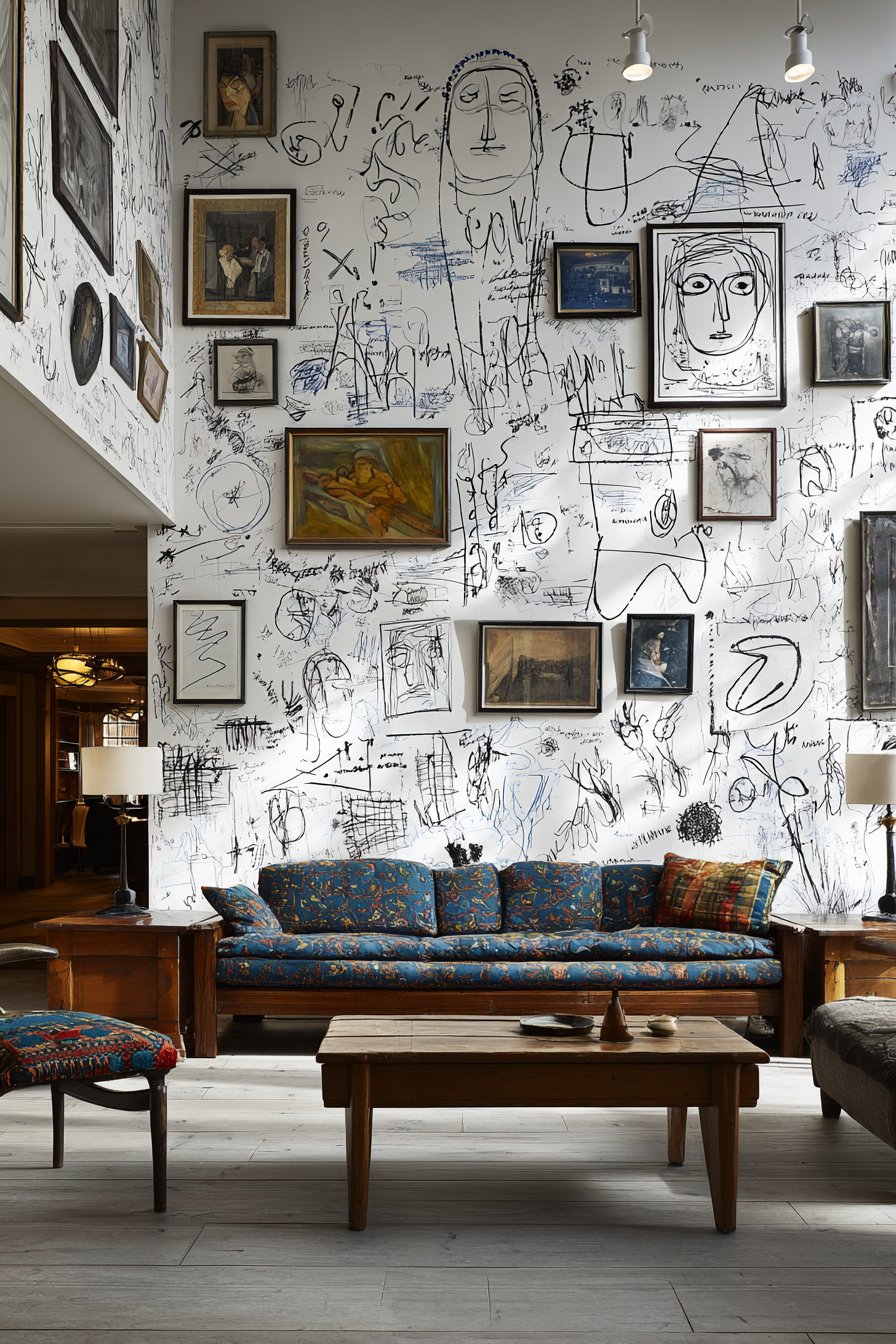
Eclectic design thrives on collected, layered aesthetics that tell personal stories through curated objects and artistic expressions. This gallery wall concept pushes wall drawing ideas into new territory by hand-drawing multiple frames and doodles directly onto the wall rather than hanging physical frames. The various sized rectangles, circles, and irregular shapes executed in black marker create the illusion of a curated art collection while maintaining the flat, unified surface that allows the wall itself to become the artwork. Small portraits, abstract shapes, and decorative borders fill some frames while others remain empty, creating intentional white space that prevents visual overcrowding. This playful approach to wall drawing ideas celebrates spontaneity and personal expression over formal design rules.
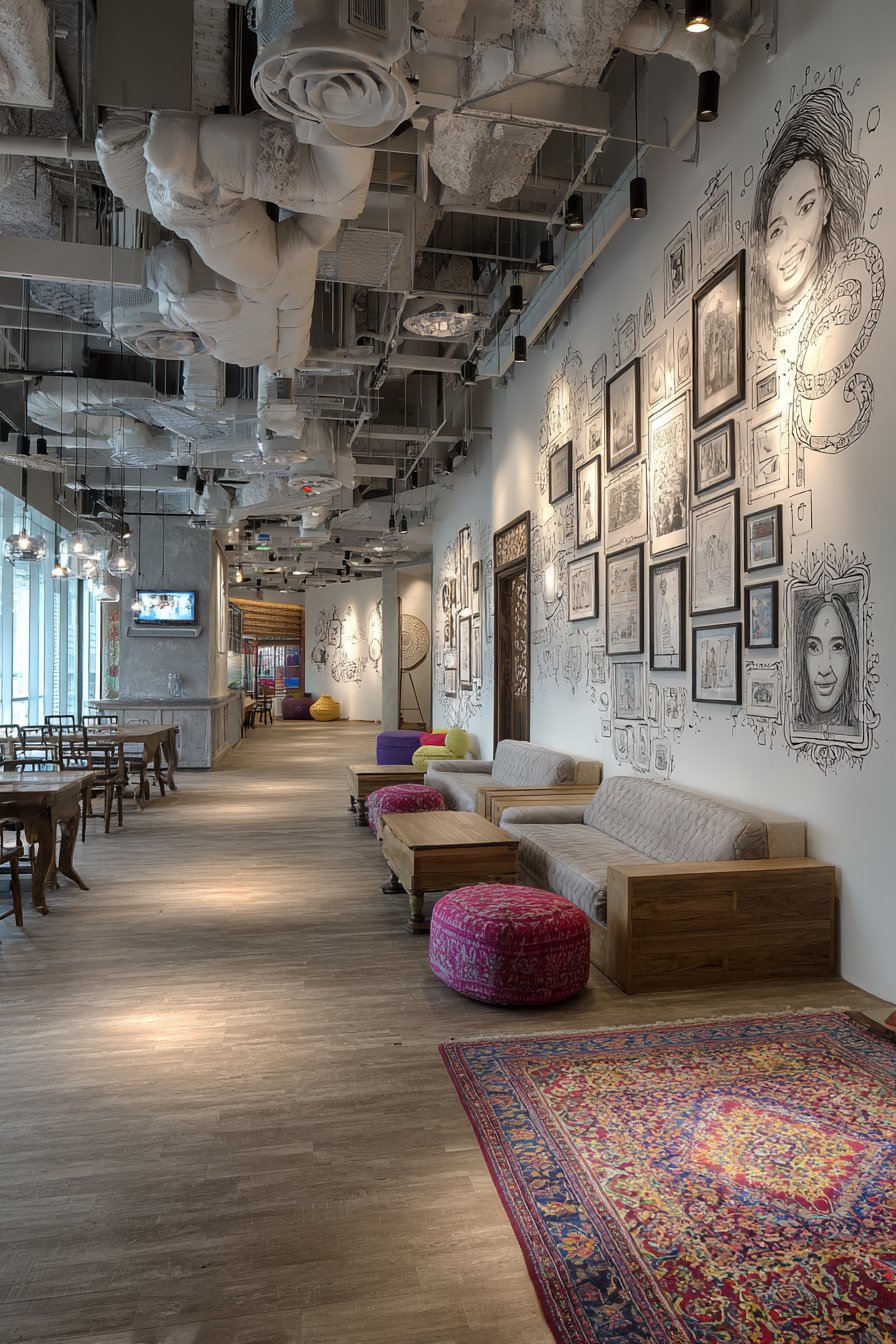
The furniture and textile selections reinforce the eclectic aesthetic without competing with the wall drawing ideas for attention. Vintage furniture pieces with distinct personalities—perhaps a mid-century credenza paired with a Victorian side chair—demonstrate the collected-over-time quality essential to authentic eclectic style. Colorful textiles in various patterns and textures add warmth and comfort while the relatively neutral wall drawing provides a unifying element that prevents the diverse furnishings from appearing chaotic. This balance between variety and cohesion exemplifies skilled eclectic design where individual pieces maintain their character while contributing to a harmonious whole.
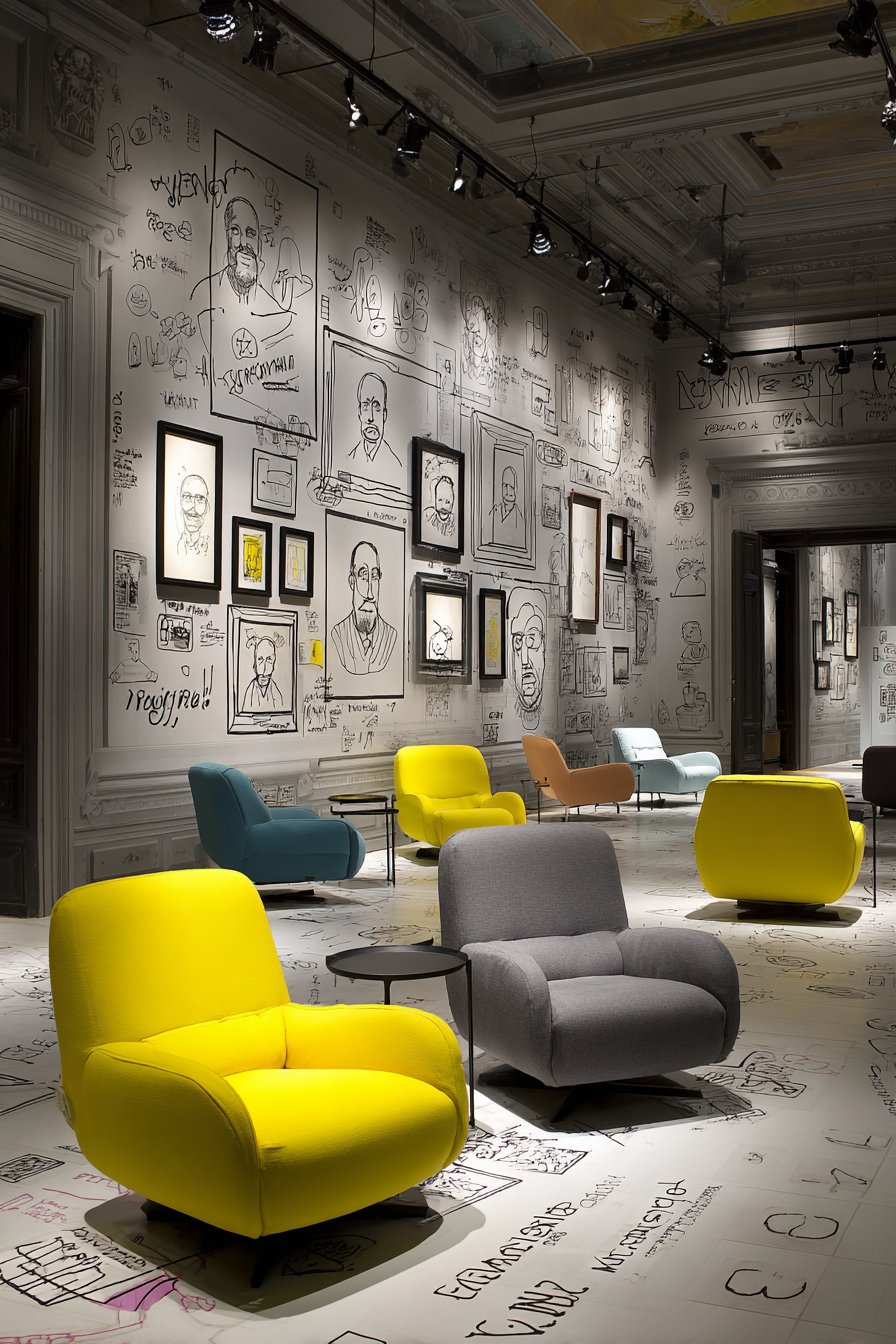
Mixed lighting sources including natural daylight and accent spotlights create varied illumination that highlights different sections of the wall drawing ideas throughout the day and evening. Some frames receive direct spotlight treatment like precious artwork while others remain in softer ambient light, creating hierarchy and visual flow across the gallery wall. This sophisticated lighting approach treats the hand-drawn frames with the same respect typically reserved for actual framed artwork, validating the wall drawing as legitimate artistic expression rather than mere decoration.
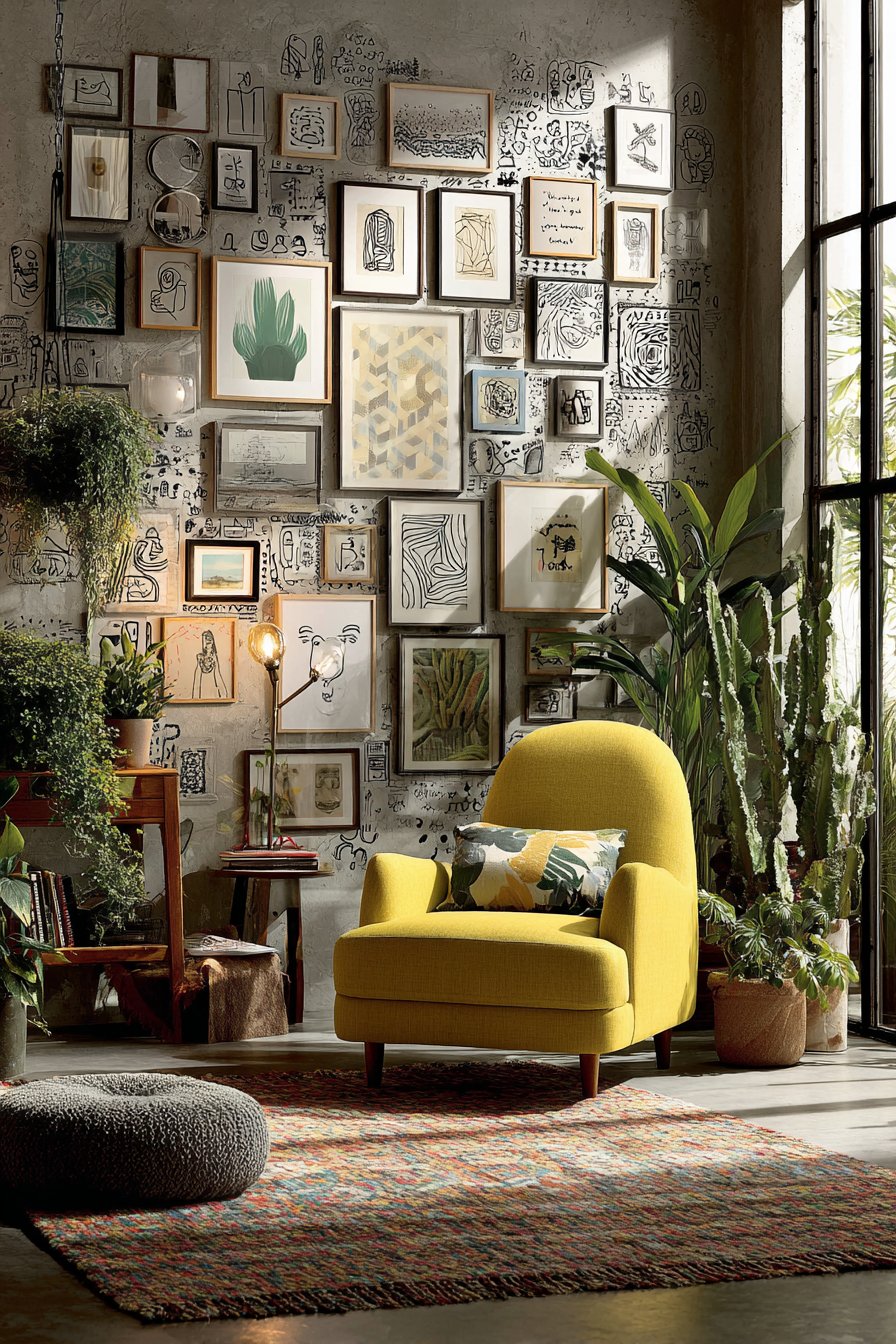
Key Design Tips: Sketch a rough layout plan before committing permanent marker to wall. Vary frame sizes and shapes significantly to create visual interest and authentic gallery feeling. Include both filled and empty frames to maintain breathing space. Mix ornate and simple frame styles to enhance the eclectic aesthetic. Position frames at varying heights rather than aligned tops for casual feel. Draw some frames overlapping others slightly for depth illusion. Include quirky elements like a drawn picture light above one frame for humor. Use a fine-tip permanent marker for frame details and a broader marker for thicker frame elements.
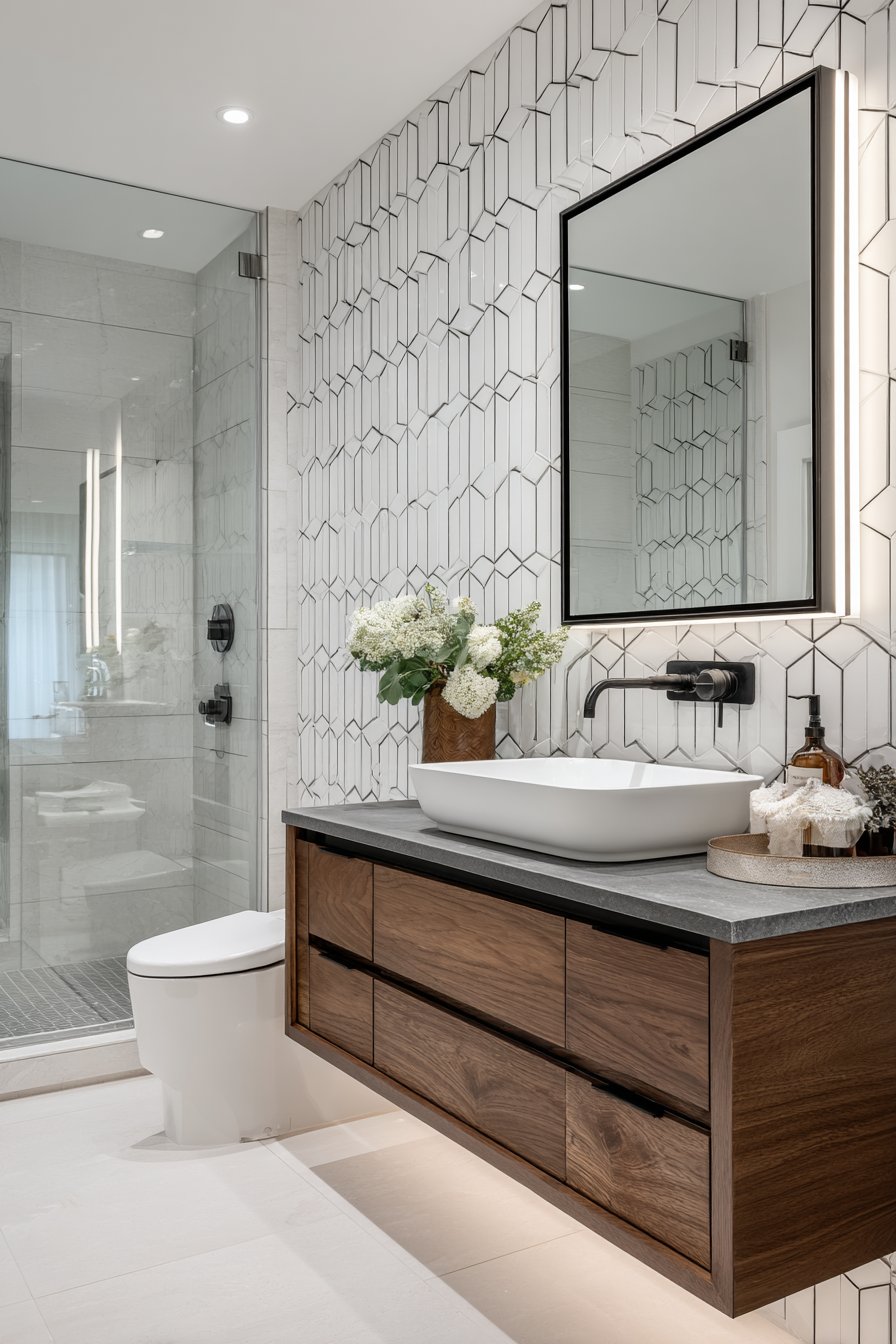
14. Contemporary Bathroom with Geometric Tile Pattern Illusion
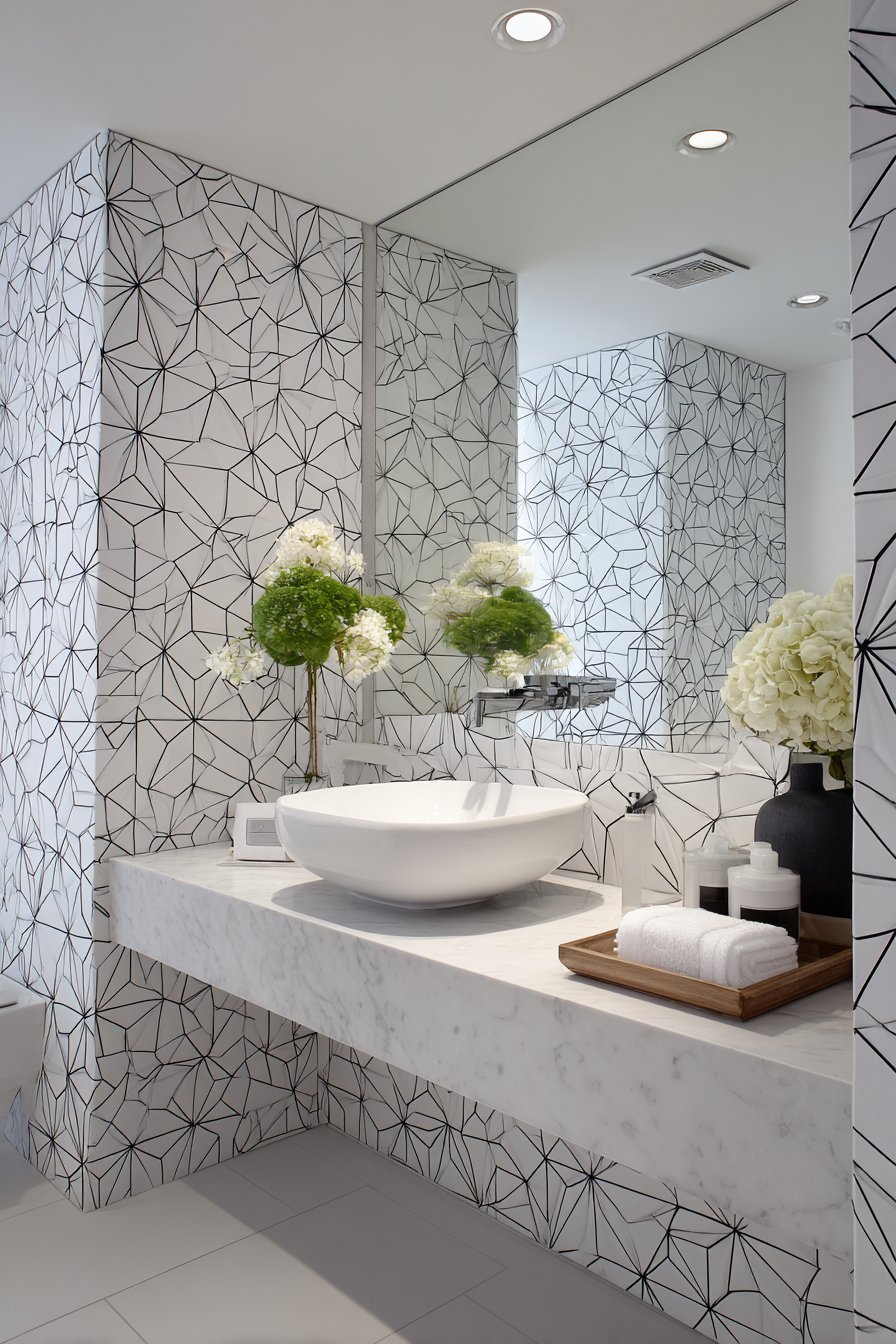
Bathroom design often requires creative solutions for achieving high-end aesthetics on realistic budgets, making wall drawing ideas particularly valuable for creating expensive looks at minimal cost. This contemporary bathroom concept employs hand-drawn hexagonal tile pattern outlines on smooth white walls, mimicking costly tile installation through clever trompe l’oeil technique. The geometric line drawings executed in gray and black permanent markers create the visual impact of dimensional tile work while maintaining the flat, easy-to-clean surface of painted walls. This innovative approach to wall drawing ideas demonstrates how artistic skill can substitute for expensive materials, achieving designer aesthetics through creative problem-solving rather than unlimited budgets.
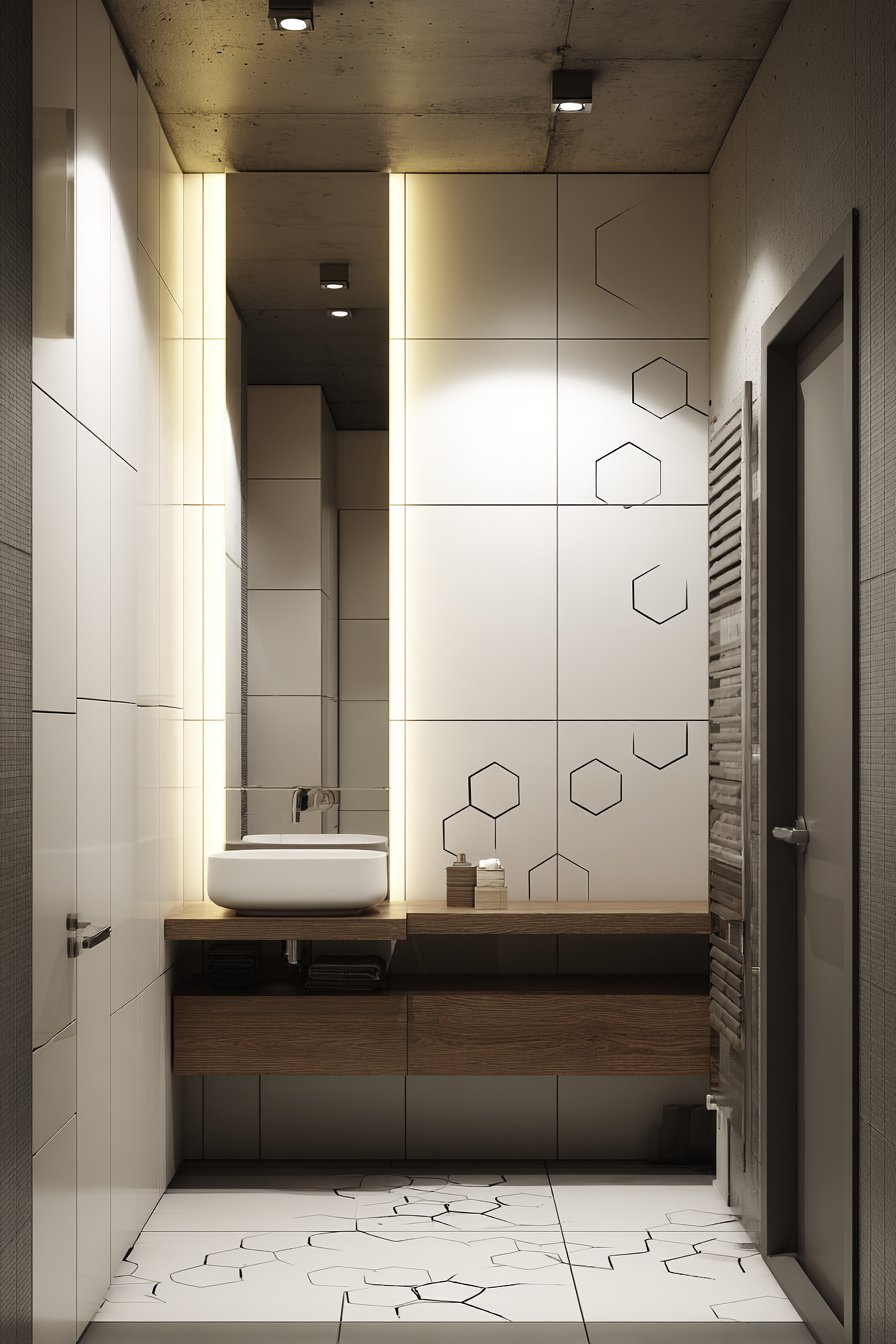
The modern floating vanity with vessel sink positioned against the drawn tile pattern proves how wall drawing ideas can support and enhance functional bathroom elements. The drawn geometric patterns provide visual interest that prevents the clean-lined vanity from appearing stark or cold, while the patterns’ precision complements the contemporary fixture style. The color coordination between the gray drawn tiles and possible gray countertop or fixtures creates intentional cohesion that makes the entire design feel planned rather than improvised. This attention to how wall drawing ideas interact with existing fixtures and finishes separates successful bathroom design from amateur attempts.
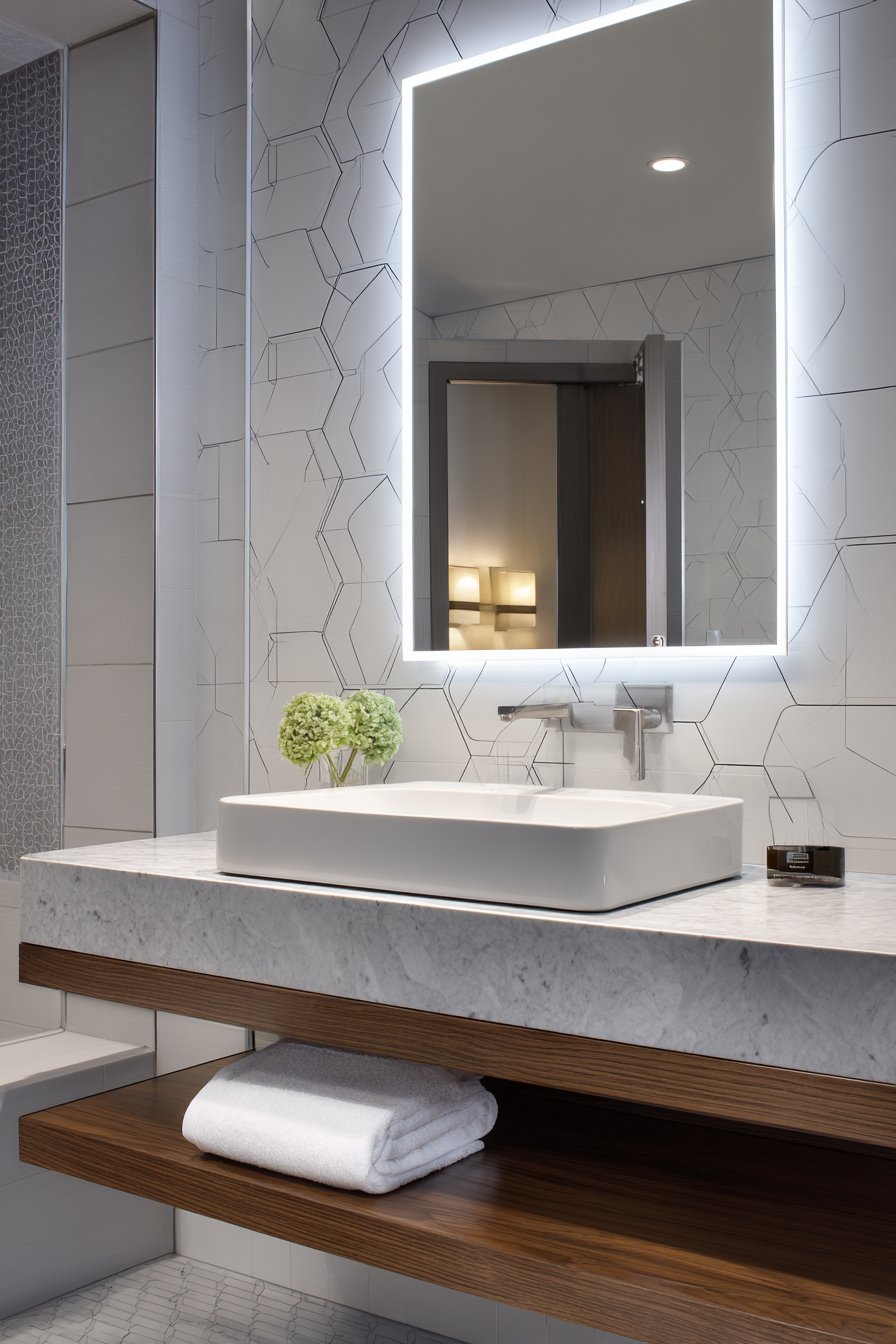
Recessed lighting and a backlit mirror provide the layered illumination necessary for functional bathroom tasks while also highlighting the wall drawing ideas effectively. The balanced lighting ensures the drawn tile pattern remains clearly visible without creating harsh shadows that might break the dimensional illusion. The backlit mirror adds ambient glow that softens the space while the recessed lighting provides task illumination—a combination that makes the bathroom both beautiful and functional. Professional photography captures the successful trompe l’oeil effect, proving that with careful execution, wall drawing ideas can convincingly replicate expensive finishes.
Key Design Tips: Use a ruler and level to create precise geometric grids before drawing tile outlines. Study actual hexagonal tile installations to understand proper proportions and spacing. Use multiple gray tones to create subtle shading that enhances the dimensional illusion. Include grout line details with lighter gray marker. Ensure tile pattern aligns with architectural features like edges, corners, and fixture placement. Work in sections to maintain consistent scale throughout. Use high-quality permanent markers designed for smooth surfaces. Apply multiple coats of clear polyurethane sealer to protect the drawing from moisture and allow cleaning.
15. Rustic Cabin Bedroom with Mountain and Forest Scenes
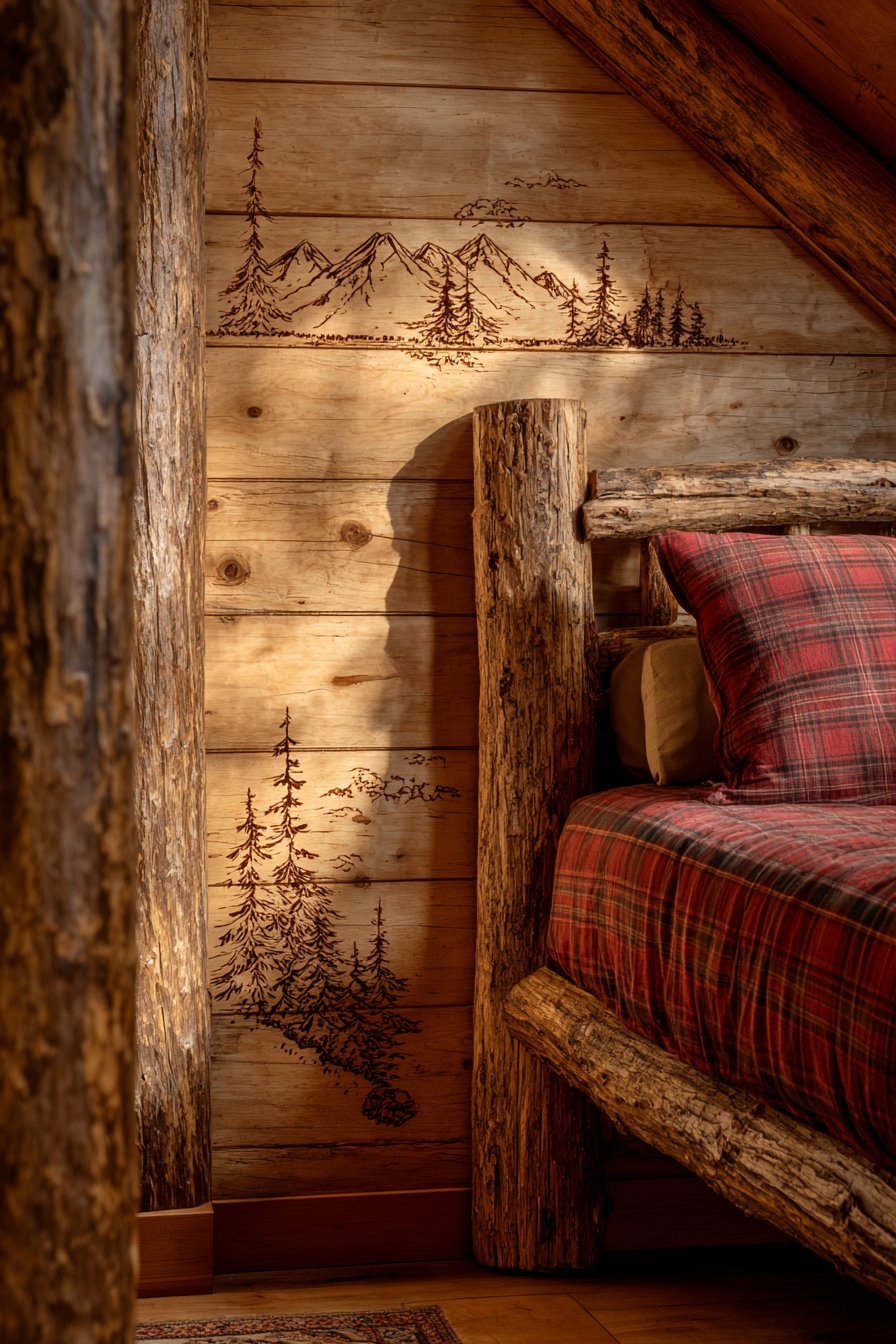
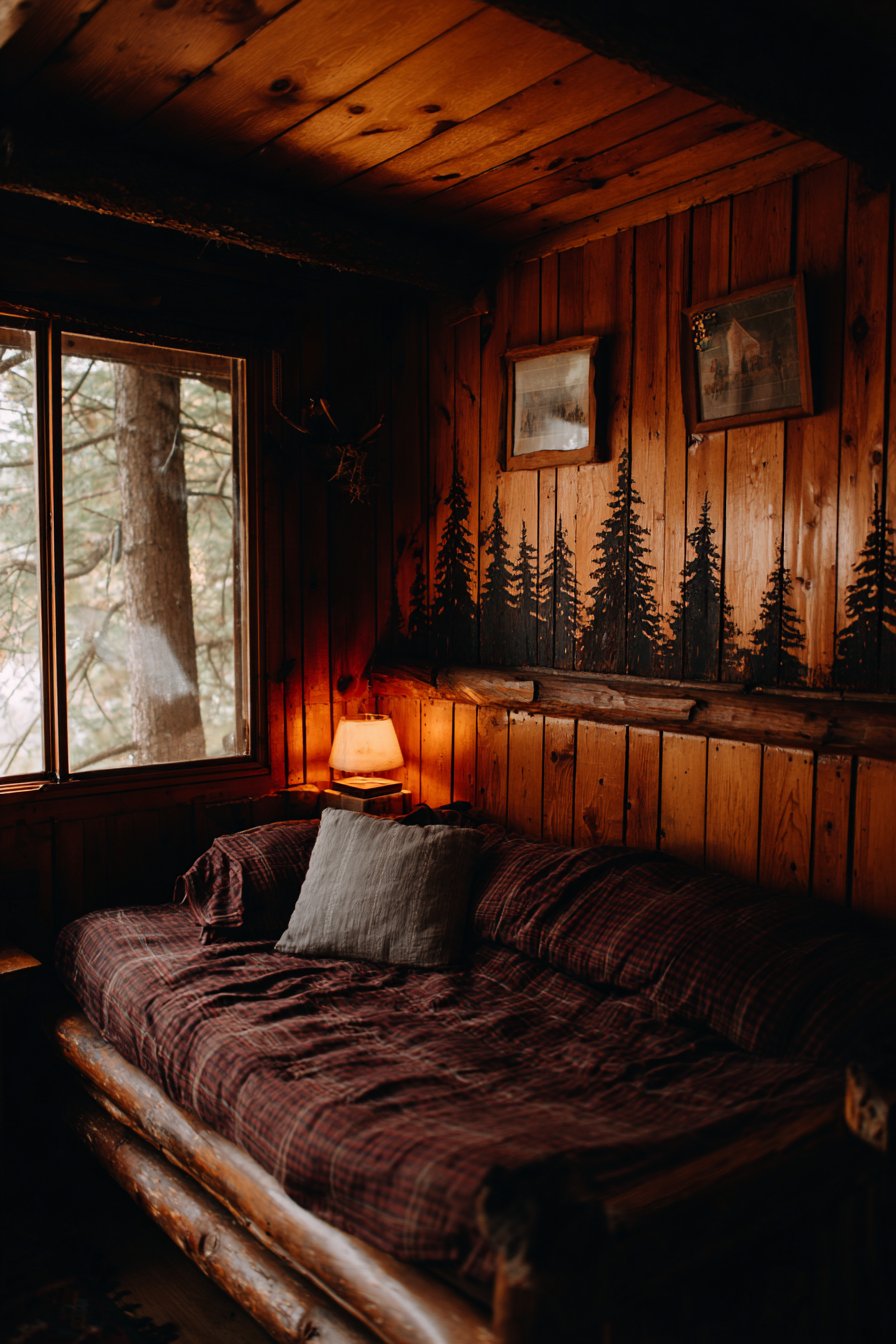
Rustic cabin interiors celebrate connections to natural surroundings and outdoor recreation, making nature-themed wall drawing ideas perfect for reinforcing this aesthetic. This bedroom concept features hand-sketched mountain and forest scenes drawn directly on knotty pine walls using dark brown markers that complement the wood’s natural tones. The simple line drawings depicting evergreen trees and mountain silhouettes create an immersive woodland atmosphere that extends the cabin setting’s relationship with surrounding nature. This approach to wall drawing ideas works with rather than against the prominent wood wall surface, proving that artistic additions can enhance beautiful architectural materials when executed with appropriate sensitivity and style.
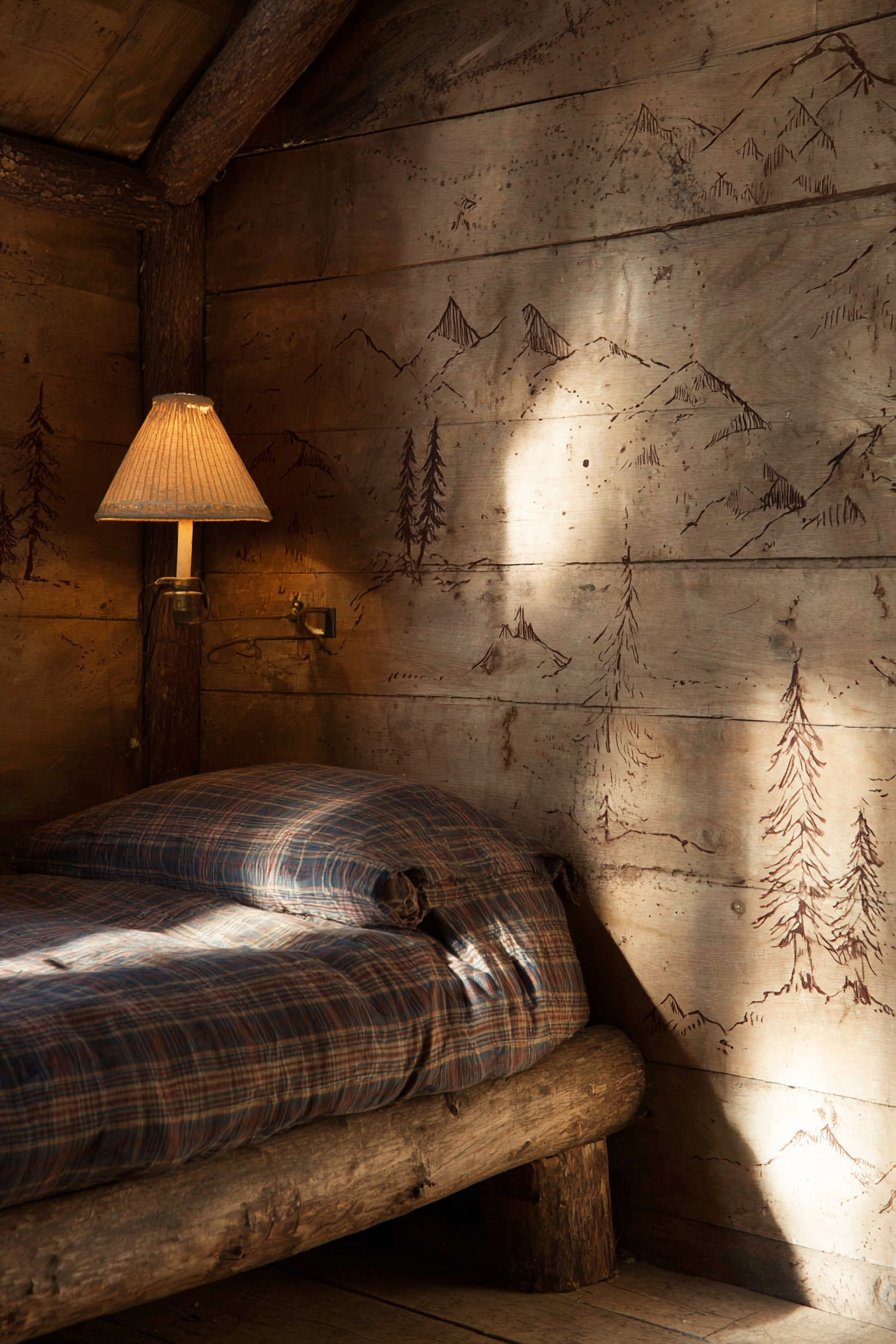
The rustic furniture selections including a log bed frame and plaid bedding create layers of authentic cabin character that support rather than compete with the wall drawing ideas. Each element reinforces the others—the hand-drawn trees echo the log construction, the mountain silhouettes reference the terrain visible through cabin windows, and the brown marker color ties to the wood tones throughout. This careful coordination creates immersive environment where every design decision reinforces the rustic cabin narrative. The effect feels genuinely connected to place rather than generically “rustic,” proving that the most successful wall drawing ideas consider context and existing architectural features.
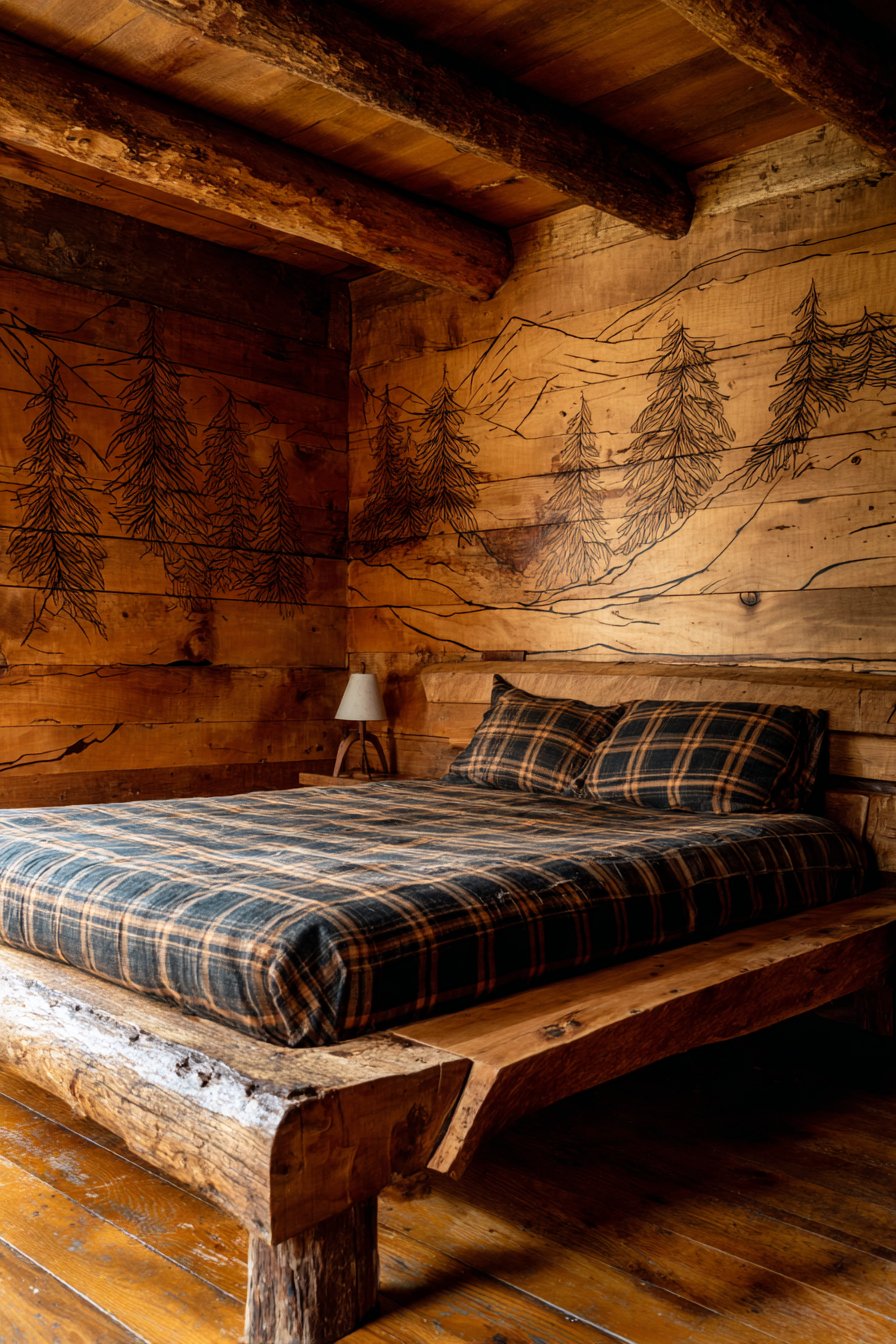
Warm lamplight creates a golden glow that enhances both the wood walls and the wall drawing ideas during evening hours when cabin ambiance matters most. The warm light temperature emphasizes the brown and amber tones in the pine while ensuring the brown marker drawings remain visible rather than disappearing into the wood grain. This attention to how lighting affects both wall surface and wall drawing demonstrates the importance of testing designs under various lighting conditions before finalizing placement and color choices.
Key Design Tips: Choose marker colors that complement rather than match the wood tone exactly. Test markers on an inconspicuous area to ensure desired visibility against wood grain. Embrace the wood’s natural variations by allowing drawings to work around knots and grain patterns. Keep mountain and tree designs simple and silhouette-style for clarity against busy wood backgrounds. Position drawings to fill wall spaces between furniture and architectural features naturally. Consider the wood’s color variation when planning drawing placement—darker areas may need lighter outlines. Use reference photos of local trees and mountains for regional authenticity. Draw mountains at varying heights to create depth and natural terrain appearance.
16. Mid-Century Modern Living Room with Atomic Starburst Patterns
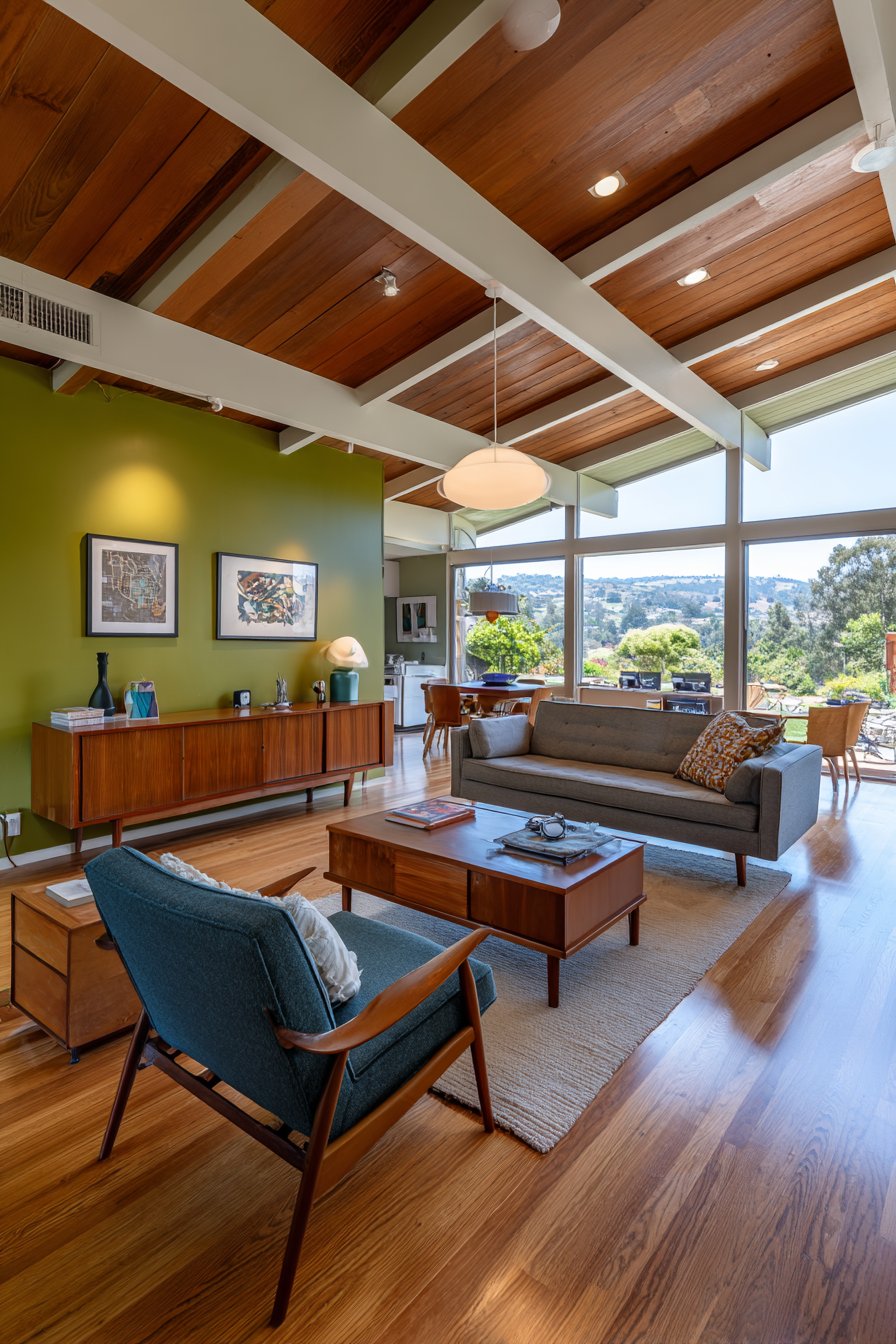
Mid-century modern design’s distinctive visual language provides rich inspiration for period-appropriate wall drawing ideas that capture the era’s optimistic, space-age aesthetic. This living room concept features hand-drawn atomic starburst patterns strategically placed on an olive green accent wall, executed in gold metallic paint markers with precision compass-drawn circles. These iconic geometric designs—synonymous with 1950s and 60s modern design—create bold graphic statements that reference the period’s fascination with atomic energy, space exploration, and scientific progress. The gold metallic execution on olive green creates the sophisticated color combination favored during the mid-century era, proving that wall drawing ideas can authentically reference specific design periods when executed with historical awareness and attention to detail.
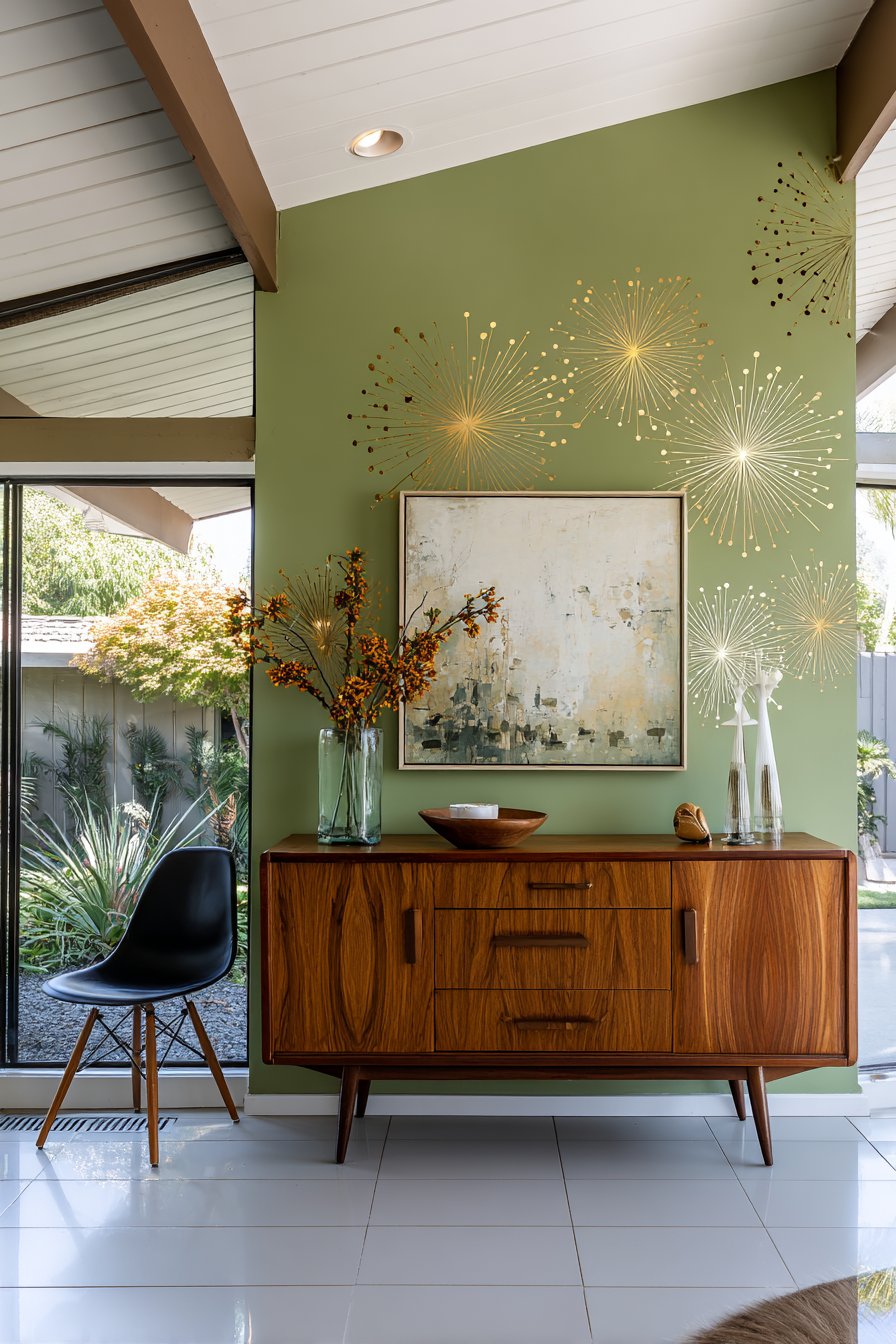
The furniture selections including a teak credenza and Eames-style chair provide authentic mid-century pieces that validate and support the wall drawing ideas’ period references. These iconic designs—whether actual vintage pieces or quality reproductions—establish the room’s commitment to mid-century authenticity rather than superficial vintage styling. The natural teak wood introduces warmth and organic material that balances the geometric precision of the starburst patterns, creating the material diversity essential to successful mid-century interiors. Each furniture piece could stand alone as a design statement, yet together they create a cohesive environment where the wall drawing ideas feel like natural extensions of the overall aesthetic rather than added decoration.
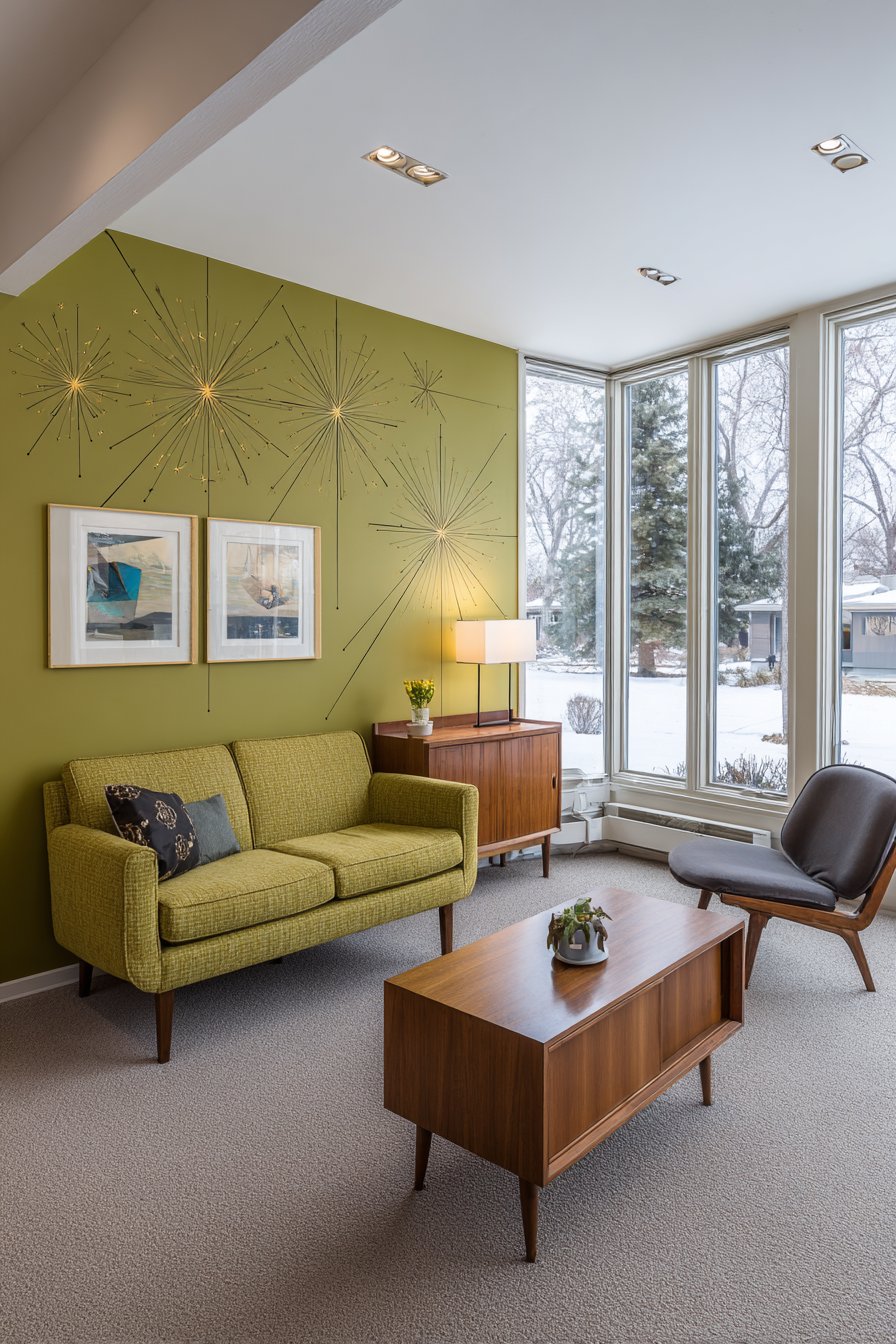
Natural light flowing through large windows—another mid-century modern hallmark—illuminates the wall drawing ideas throughout the day, causing the gold metallic markers to catch and reflect light dynamically. The metallic sheen creates shimmer and movement that flat paint could not achieve, adding luxury and visual interest that justifies the effort required for these detailed wall drawing ideas. The interplay between the matte olive green wall and the reflective gold patterns creates textural variety that maintains visual interest despite the relatively limited color palette.
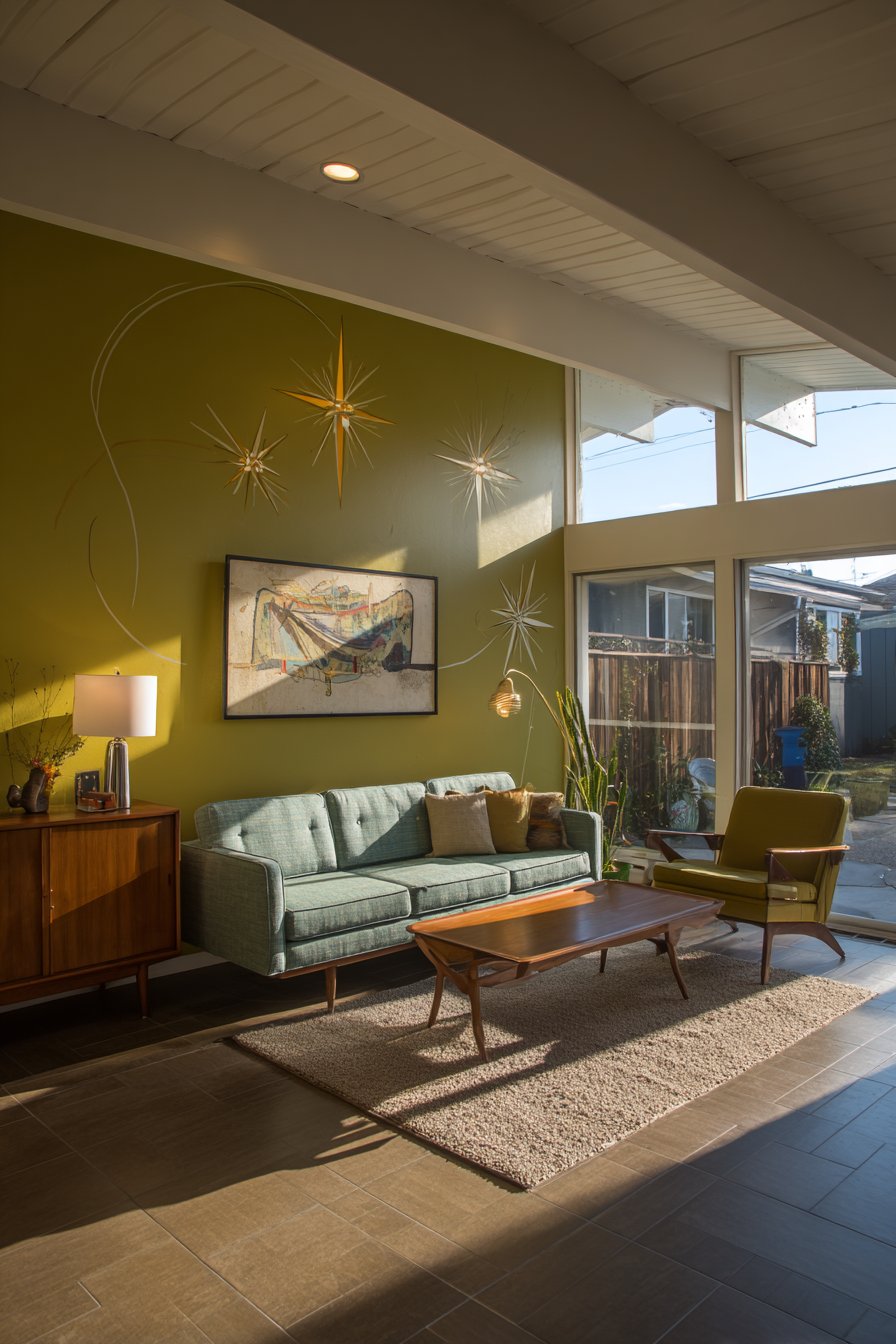
Key Design Tips: Use a compass to create perfect circles at the starburst centers. Draw radiating lines with ruler precision to capture the era’s love of geometric accuracy. Research authentic mid-century starburst designs for proper proportions and ray numbers. Space multiple starbursts with intentional asymmetry rather than rigid grid placement. Choose metallic markers in gold, brass, or copper for authentic period feel. Vary starburst sizes across the wall for visual hierarchy. Position starbursts to interact with furniture placement—above the credenza, adjacent to seating areas. Test metallic markers on sample board to ensure desired opacity and sheen.
17. Scandinavian Playroom with Hand-Drawn Growth Chart Tree
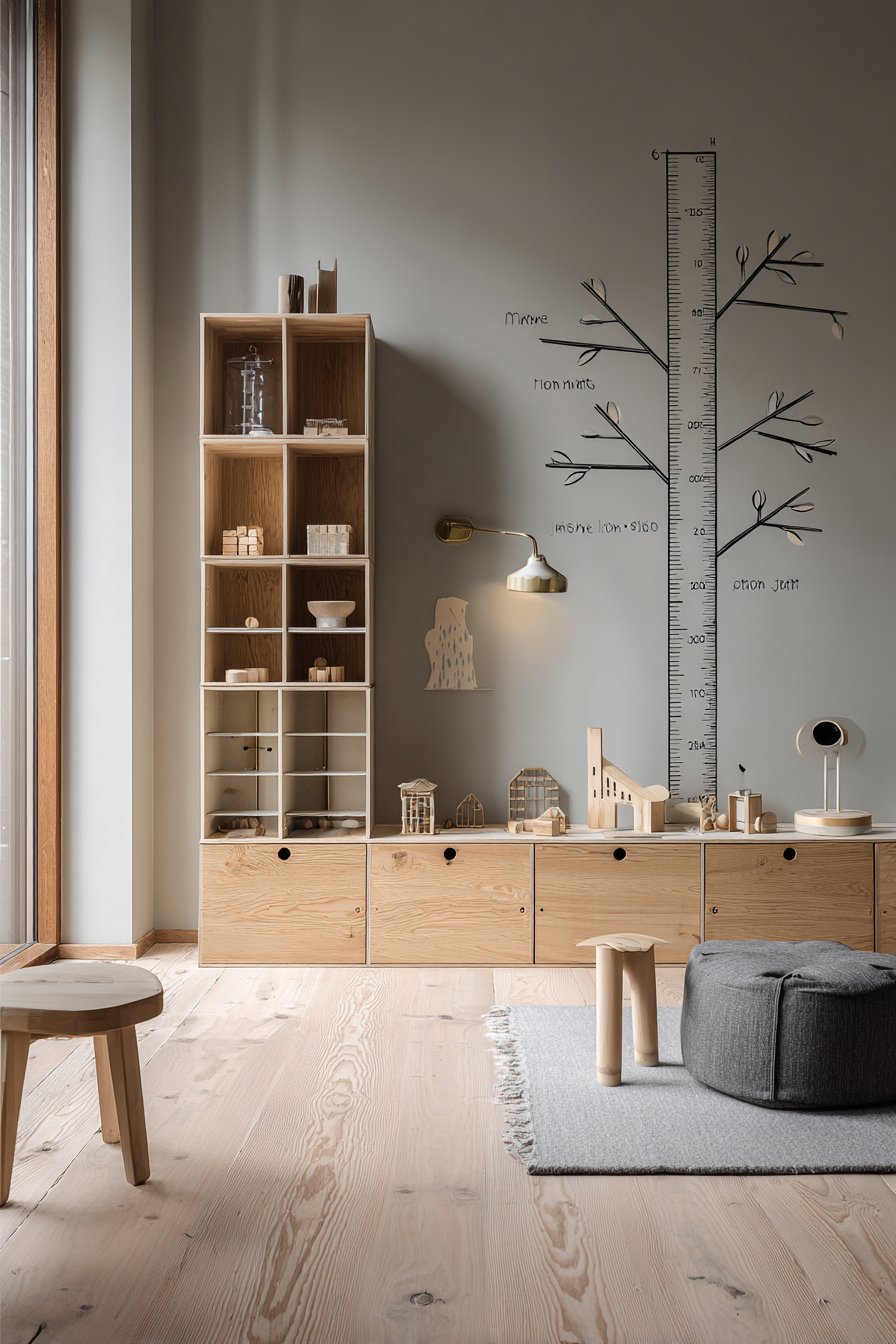
Children’s spaces designed with Scandinavian principles prioritize functionality, simplicity, and natural materials while accommodating the joy and energy of childhood. This playroom concept features wall drawing ideas that serve dual purposes—a hand-drawn growth chart designed as a whimsical tree trunk with measurement marks transforms a practical parenting tool into charming wall art. The simple line drawing executed in charcoal gray marker includes spreading branches with leaves that mark height intervals and provide spaces for recording names and dates. This clever integration of function and decoration exemplifies the Scandinavian design principle that beautiful objects should serve practical purposes, proving that wall drawing ideas can be both useful and aesthetically pleasing.
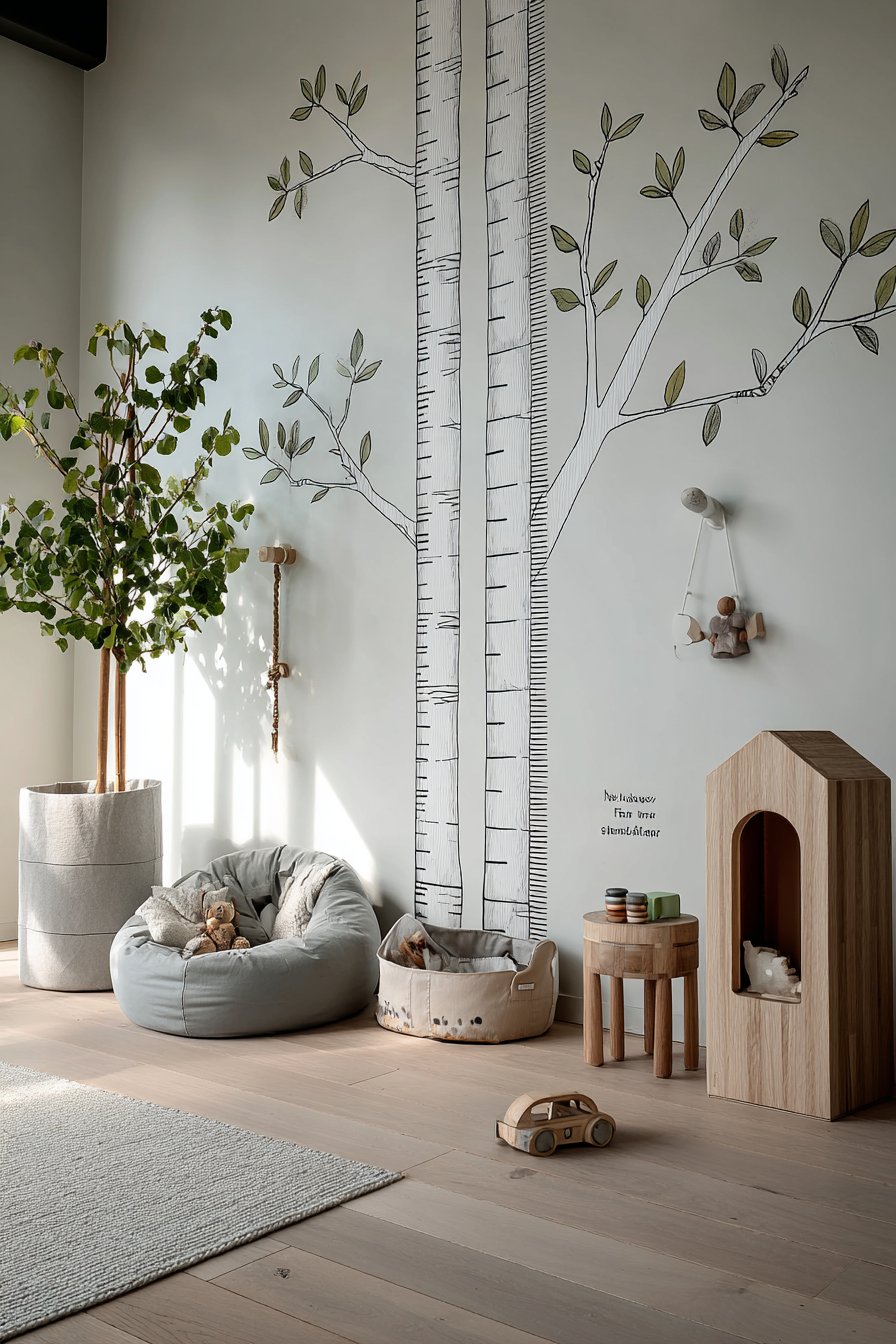
The room’s material palette reinforces Scandinavian values of natural, sustainable materials and mindful consumption. Light wood flooring provides a neutral, durable foundation while minimalist toy storage in natural wood or white maintains the organized, clutter-free environment essential to Nordic design philosophy. The growth chart tree becomes not just wall decoration but a family heirloom of sorts—a permanent record of children’s development that gains sentimental value over years of use. This long-term thinking reflects Scandinavian sustainability principles that favor quality, meaningful objects over disposable, trendy alternatives.
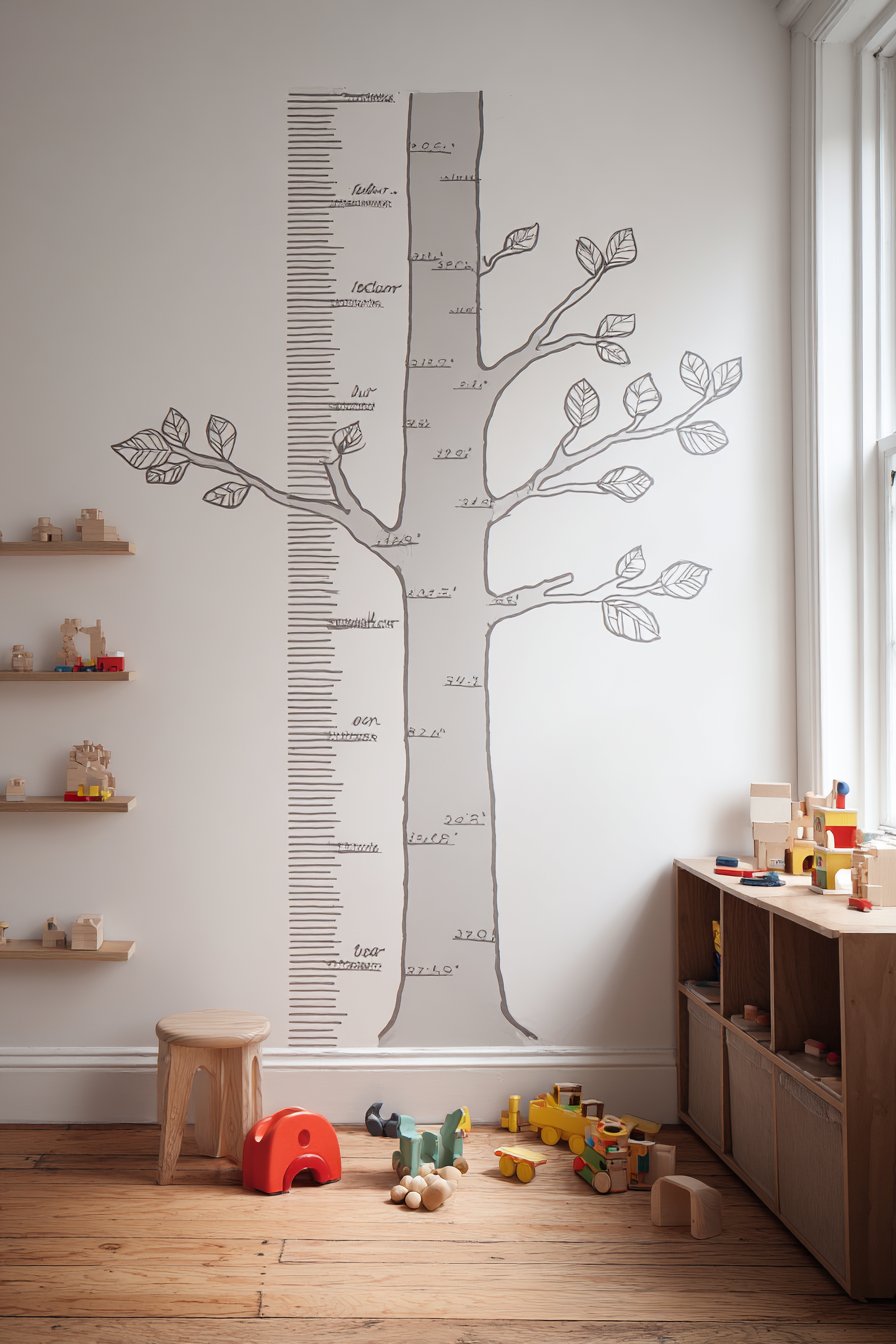
Soft natural daylight illuminating this functional wall drawing idea ensures that height measurements can be accurately recorded regardless of time of day. The light wood flooring and white walls maximize light reflection, creating the bright, airy atmosphere characteristic of Scandinavian interiors while providing clear visibility for the growth chart markings. The charcoal gray marker color provides sufficient contrast for easy reading while maintaining the soft, muted palette that prevents overstimulation in children’s spaces.
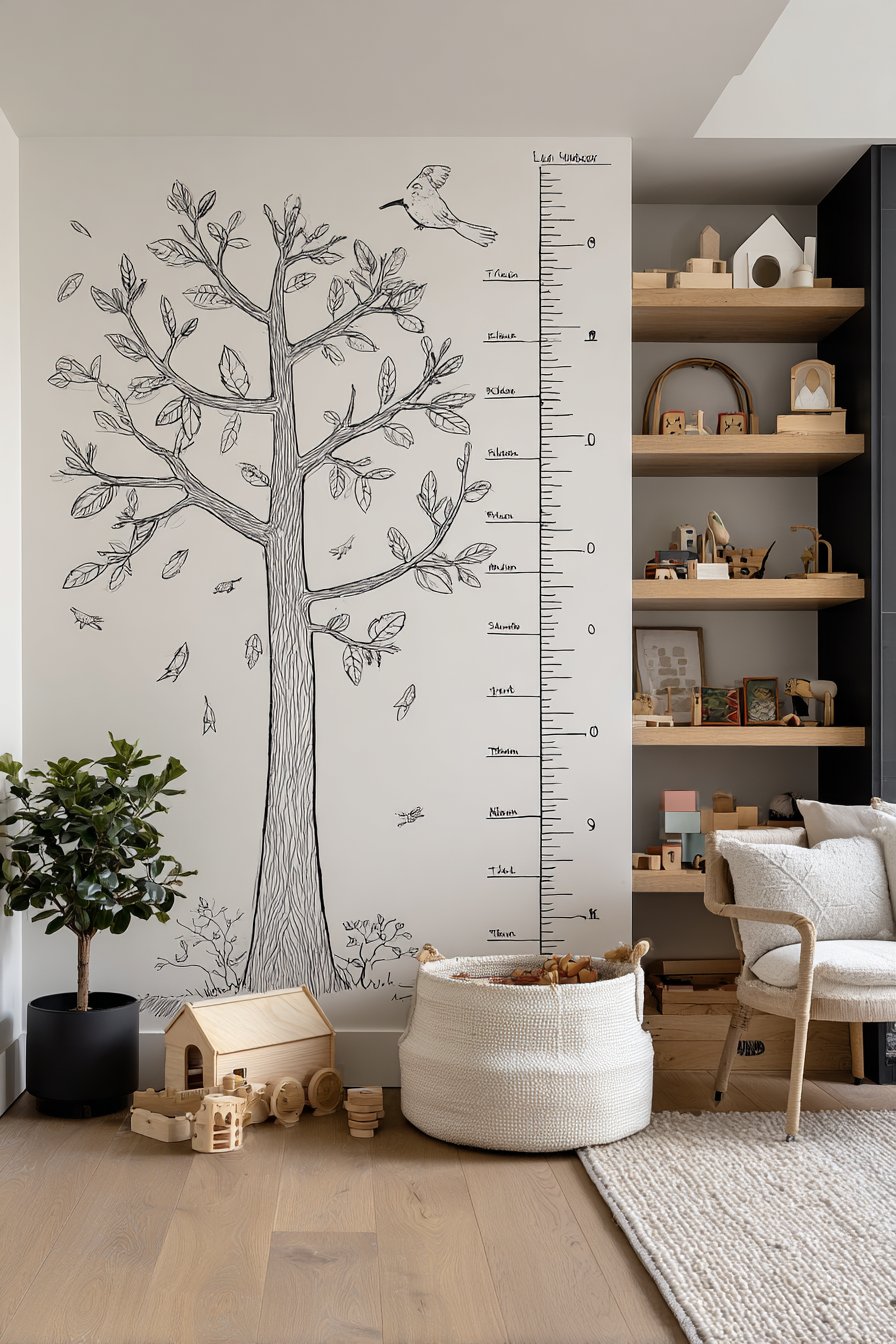
Key Design Tips: Position the tree trunk to align with actual height measurement standards starting at floor level. Mark major height intervals (inches or centimeters) with clear numerical labels. Include enough branches and leaves to accommodate years of growth records. Use a permanent, archival-quality marker that won’t fade over time. Draw the tree slightly to one side rather than centered to allow multiple children’s names. Include a small ledge or shelf nearby to store a permanent marker for recording measurements. Consider starting measurements at 2 feet to account for infant/toddler height when recording begins. Make the tree design simple enough that added names and dates don’t create visual clutter.
18. Art Deco Powder Room with Geometric Gold Patterns
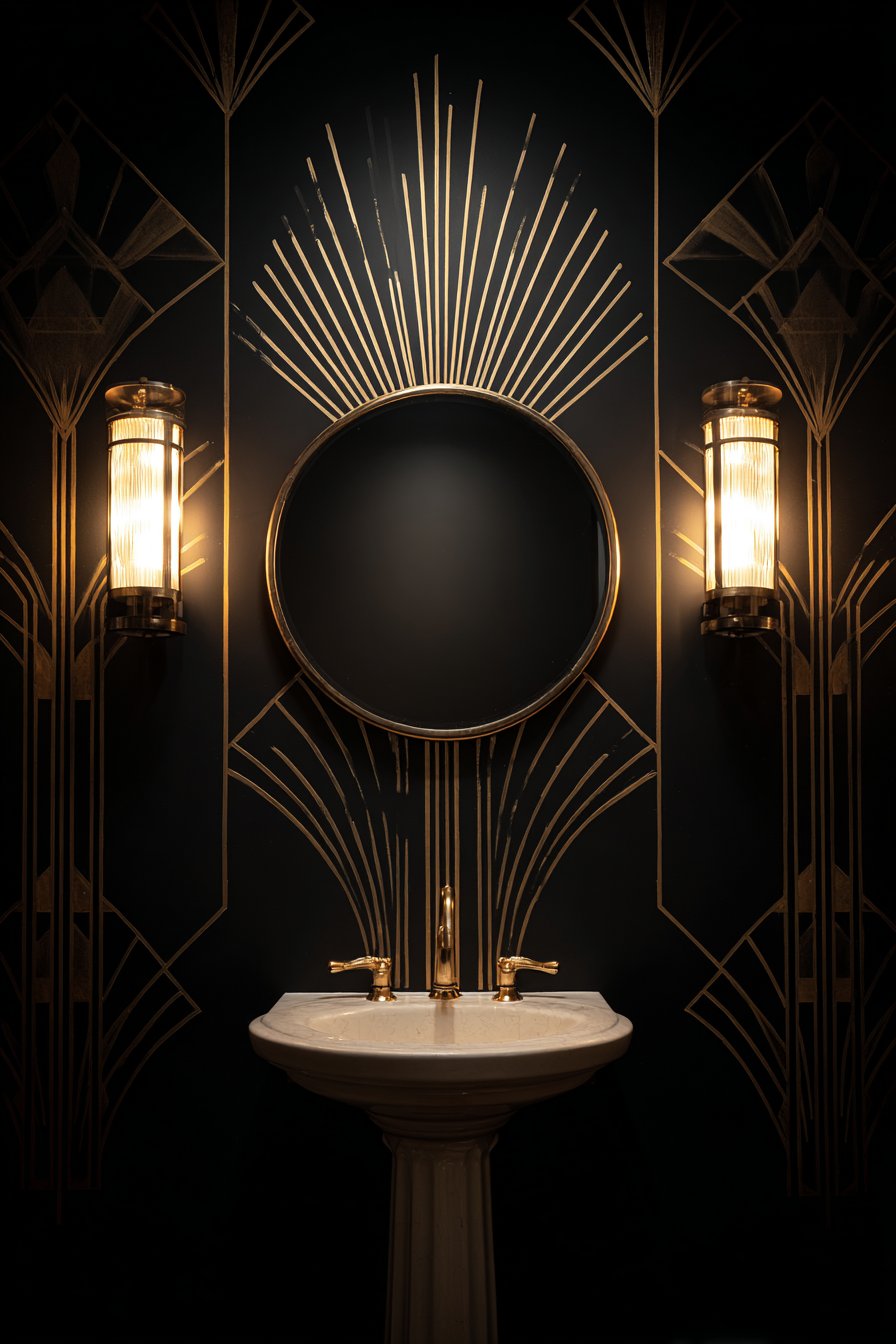
Art Deco’s glamorous aesthetic finds perfect expression in powder rooms where dramatic design statements can be made in small, contained spaces. This concept employs wall drawing ideas featuring hand-drawn geometric fan and sunburst patterns on black walls using metallic gold markers, creating instant 1920s elegance and sophistication. The high contrast between black walls and gold drawings captures Art Deco’s bold graphic sensibility while the geometric precision reflects the era’s love of mathematical patterns and industrial-age optimism. This dramatic approach to wall drawing ideas proves that small spaces often benefit from bold rather than timid design choices, creating memorable experiences in rooms that might otherwise receive minimal design attention.
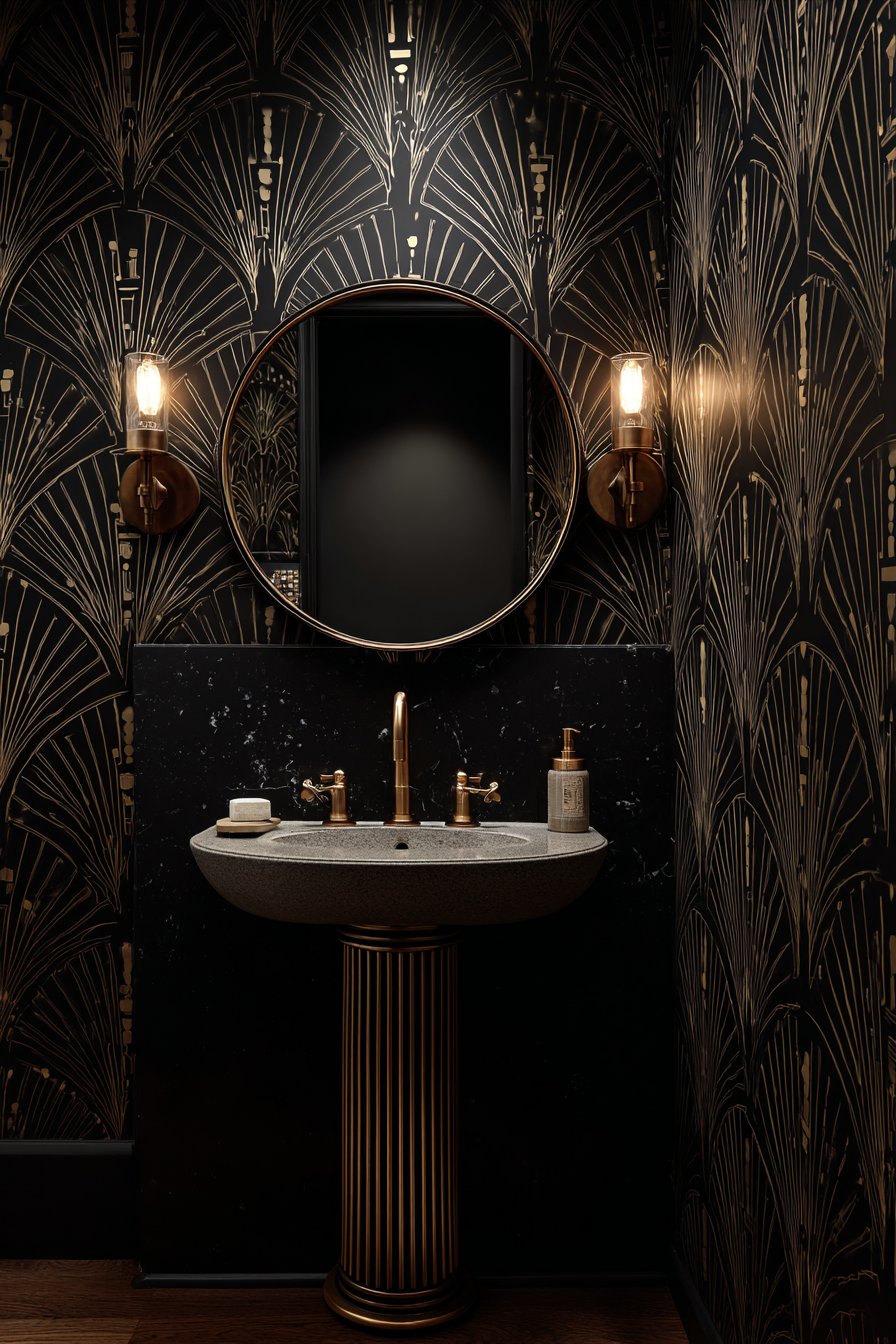
The supporting elements including a pedestal sink with brass fixtures and a round mirror with geometric frame extend the Art Deco theme throughout the compact space. These carefully chosen fixtures reference period-appropriate forms without relying on reproduction pieces, proving that contemporary interpretations of historical styles can feel authentic when executed with understanding of the original aesthetic principles. The brass fixtures create metallic connections to the gold wall drawings, unifying the design through consistent material language. This attention to how all elements relate creates cohesive environment despite the room’s small scale.
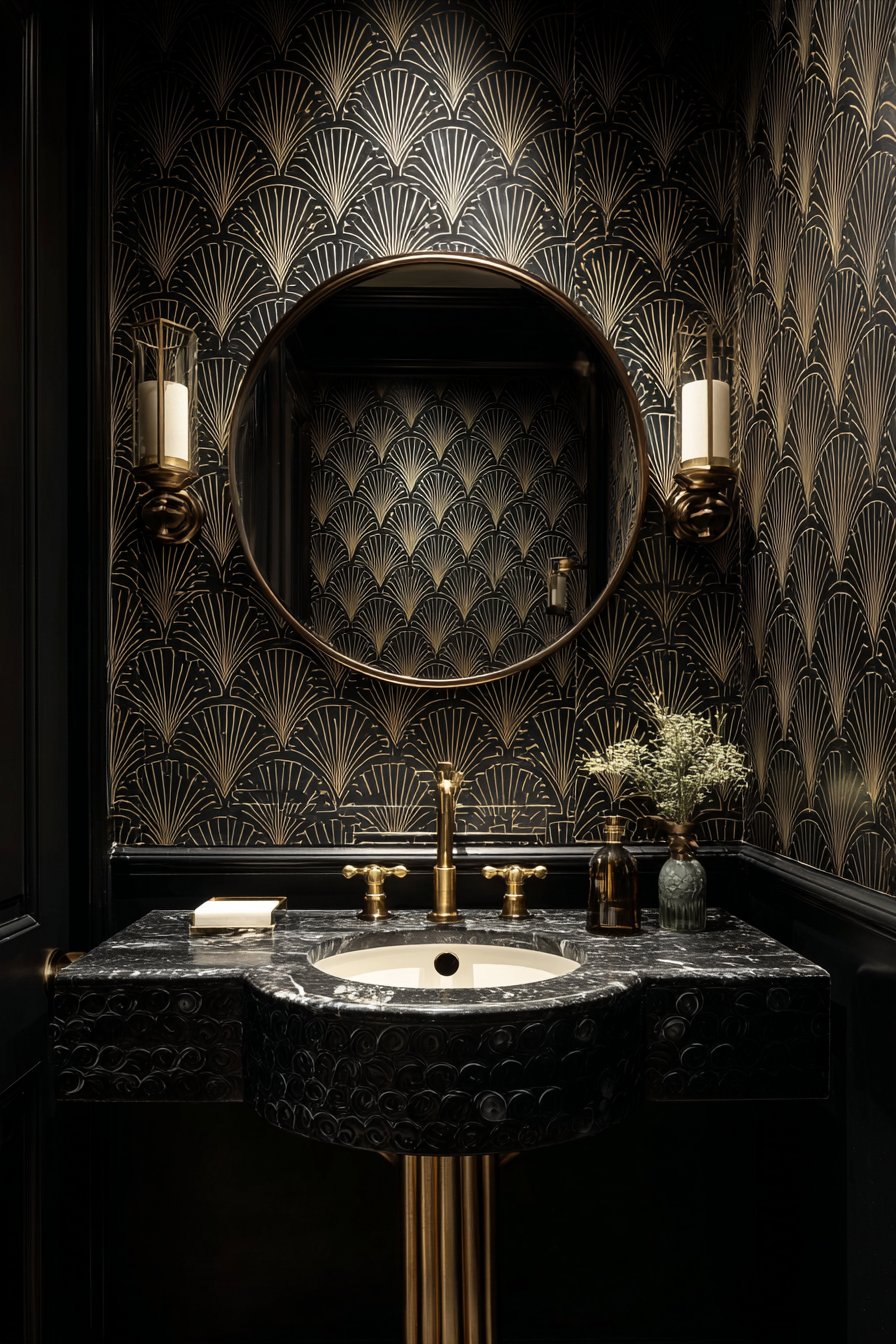
Ambient wall sconces provide the dramatic lighting essential for showcasing these metallic wall drawing ideas effectively. The warm-toned light emphasizes the gold marker drawings while creating intimate atmosphere appropriate for a powder room. The sconces themselves likely feature geometric glass shades or brass details that extend the Art Deco theme, proving that lighting fixtures should be chosen as carefully as artwork in thoughtfully designed spaces. The dramatic interplay of light, shadow, black walls, and gold drawings creates a theatrical environment that makes washing hands feel like a glamorous experience.
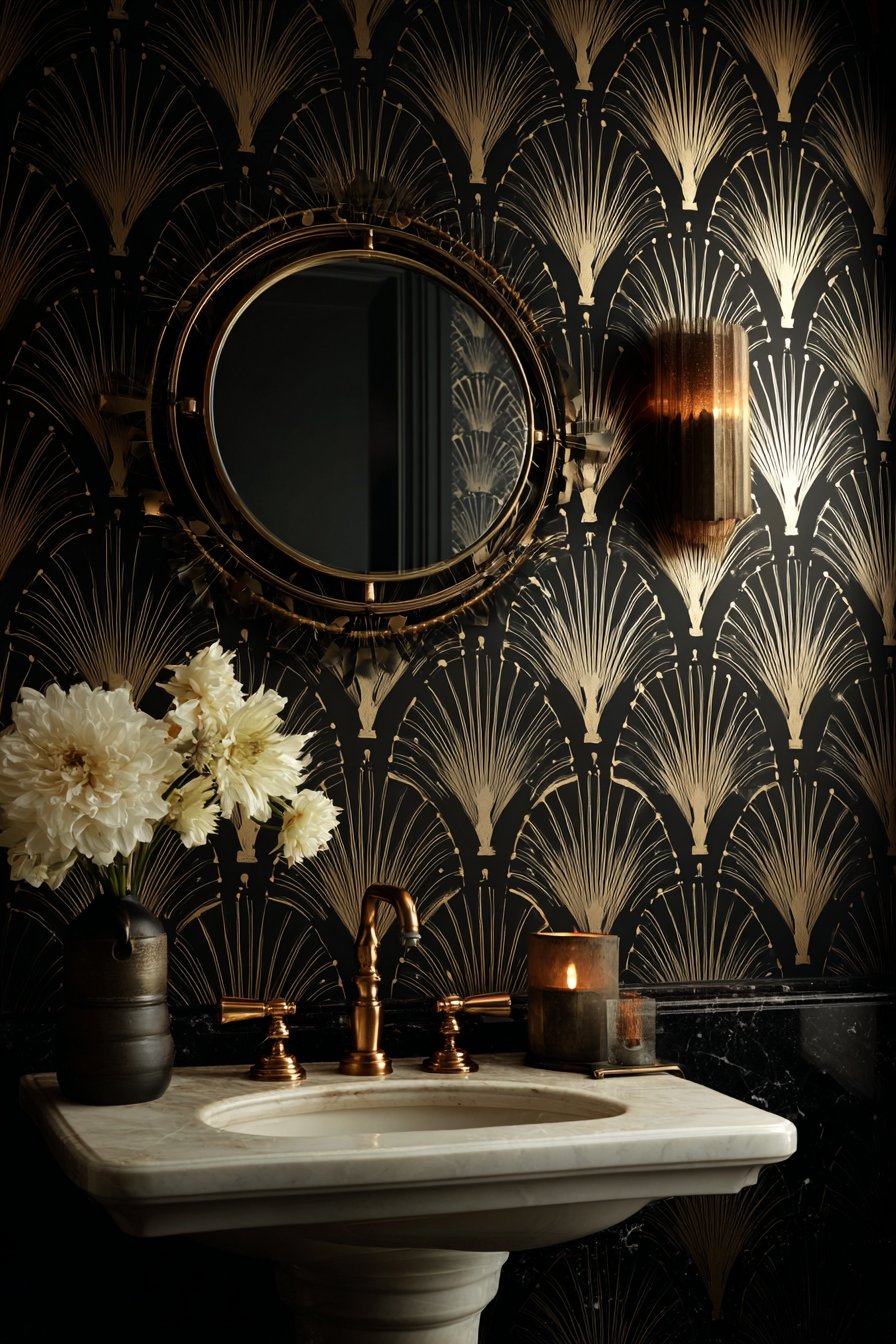
Key Design Tips: Paint walls with true black rather than dark charcoal for maximum metallic contrast. Use high-quality metallic gold markers with good opacity and consistent ink flow. Research authentic Art Deco geometric patterns for historically accurate designs. Draw symmetrical patterns to honor Art Deco’s love of balanced composition. Position patterns to frame functional elements like mirrors or sinks. Include fan patterns, sunbursts, zigzags, and stepped forms characteristic of the era. Work in sections, completing one pattern fully before moving to the next. Apply clear sealer to protect metallic drawings from moisture in bathroom environment.
19. Modern Farmhouse Kitchen with Hand-Lettered Recipe Information
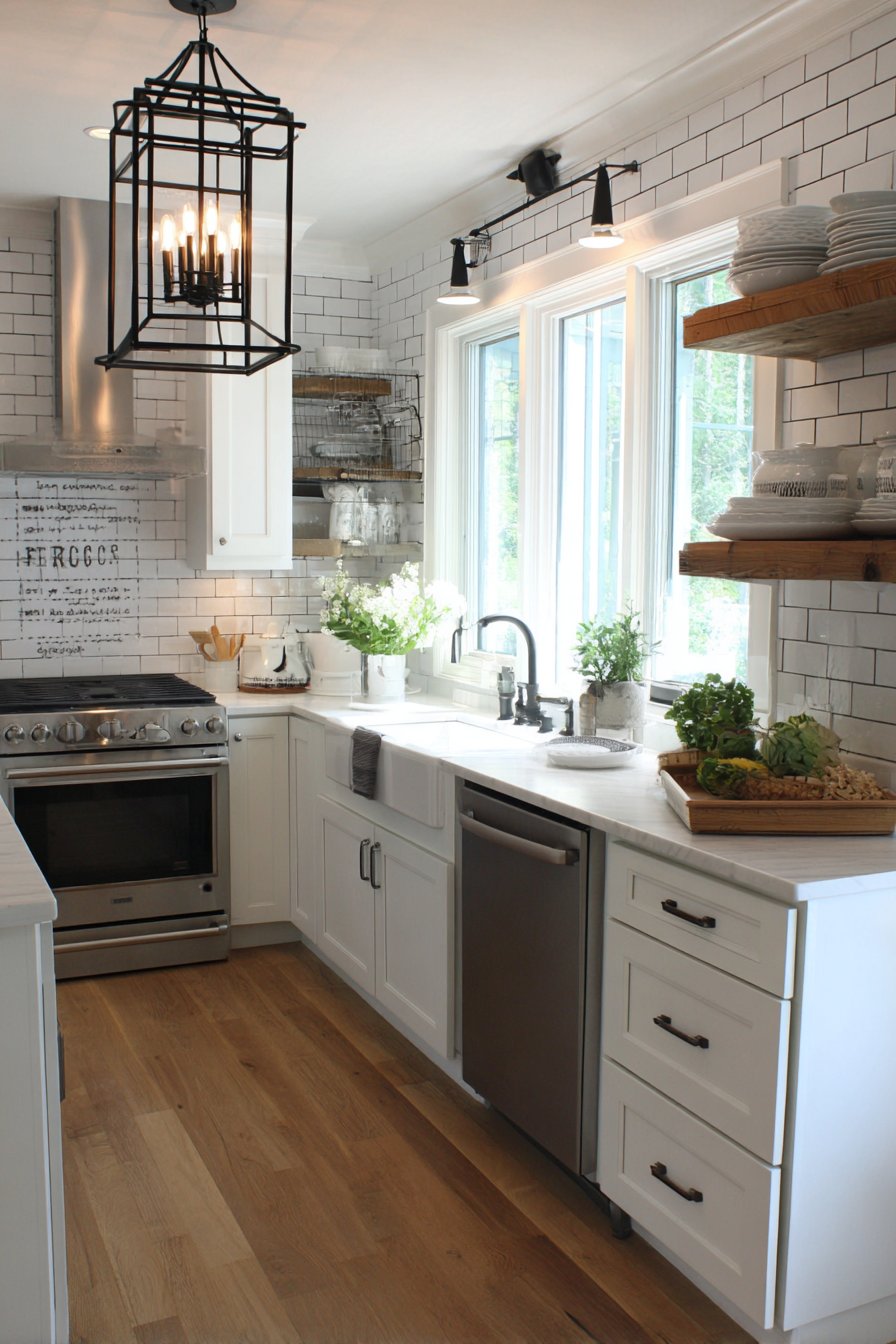
Kitchen design has evolved beyond purely aesthetic concerns to embrace walls as functional information storage, making wall drawing ideas that combine beauty and utility particularly valuable. This modern farmhouse kitchen concept features hand-lettered recipe cards and cooking measurements drawn directly on white subway tile backsplash using food-safe ceramic markers. The charming handwritten text including conversion charts and treasured family recipe snippets transforms the backsplash into both practical reference material and sentimental family archive. This innovative approach to wall drawing ideas recognizes that the most personal homes display information meaningful to residents rather than generic inspirational phrases purchased at home goods stores.
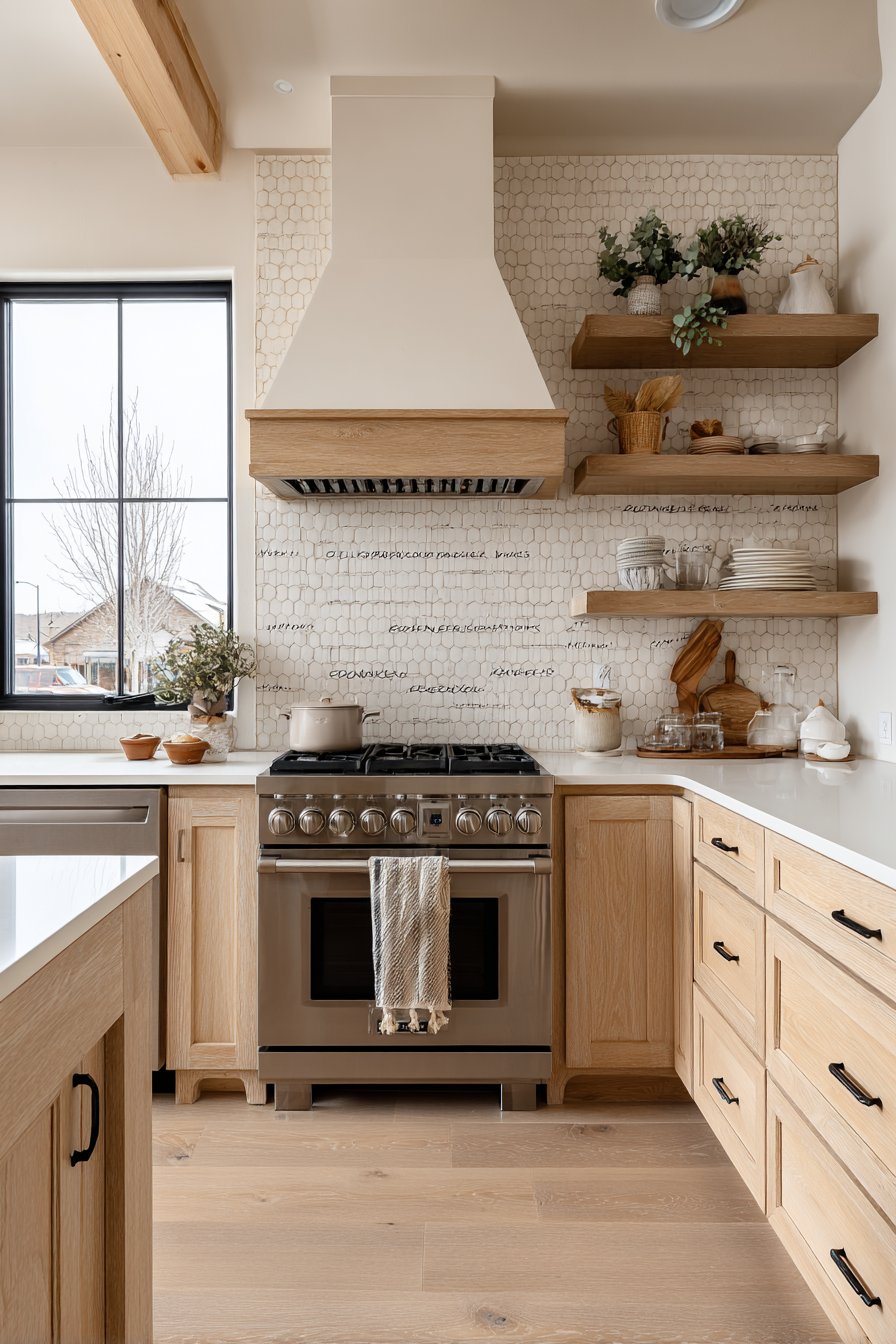
The integration of open wooden shelving displaying vintage crockery creates layered visual interest that frames and complements the wall drawing ideas. The natural wood shelving introduces warmth that balances the white tile’s clean simplicity, while the displayed dishes and cooking vessels reinforce the functional, lived-in quality essential to authentic farmhouse style. The hand-lettered recipes reference actual family traditions and cooking heritage, creating emotional connections that mass-produced farmhouse decor cannot replicate. This attention to personal, authentic detail separates genuinely meaningful design from commercially manufactured “farmhouse style.”
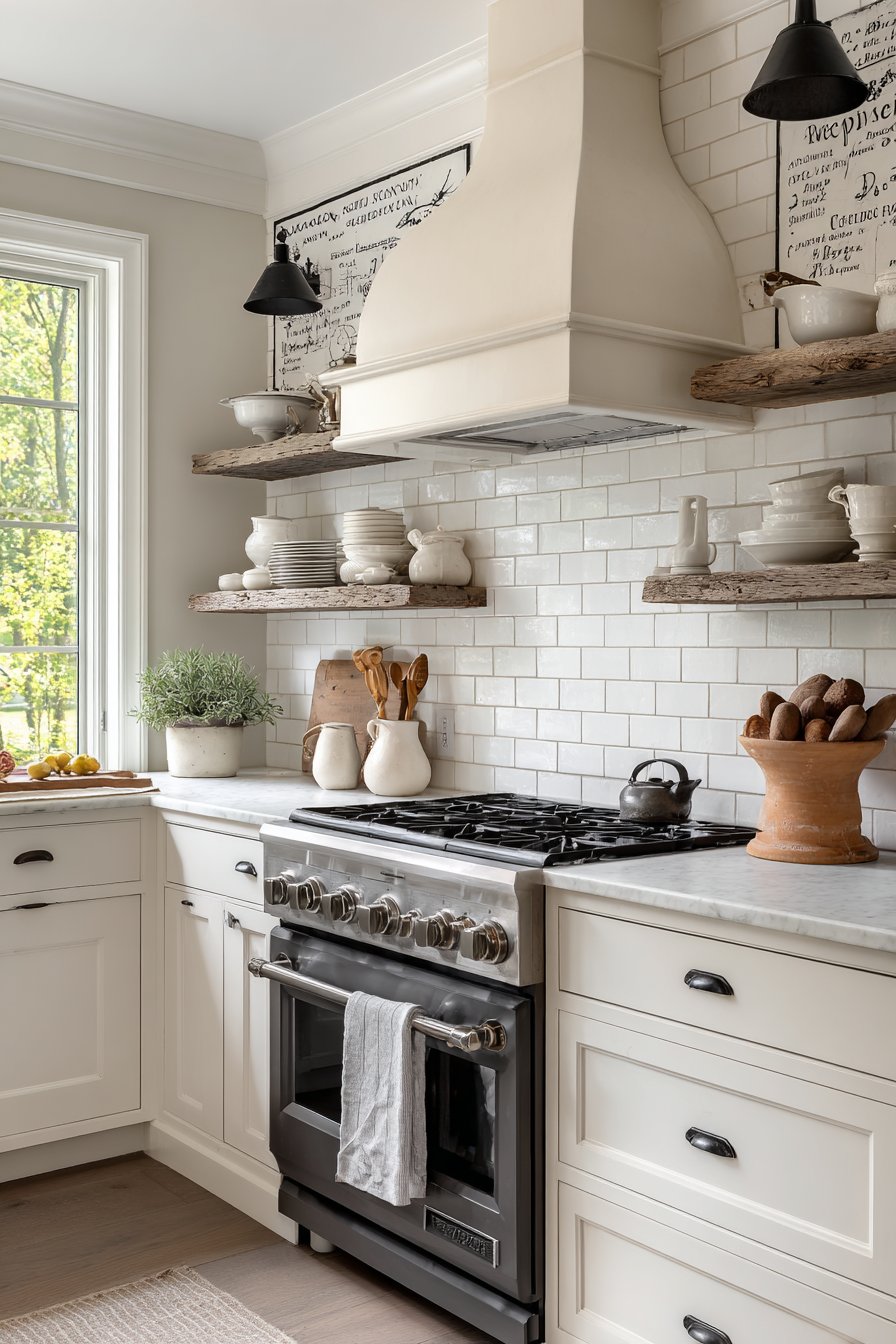
Natural light from a kitchen window ensures these practical wall drawing ideas remain clearly legible during food preparation when reference information is most needed. The white subway tile reflects light efficiently while providing the smooth, washable surface essential for kitchen environments. The ceramic markers create permanent, food-safe markings that won’t wash away during cleaning but remain visible and useful for years of meal preparation. This combination of practicality and personality exemplifies how wall drawing ideas can enhance daily life rather than merely decorating walls.
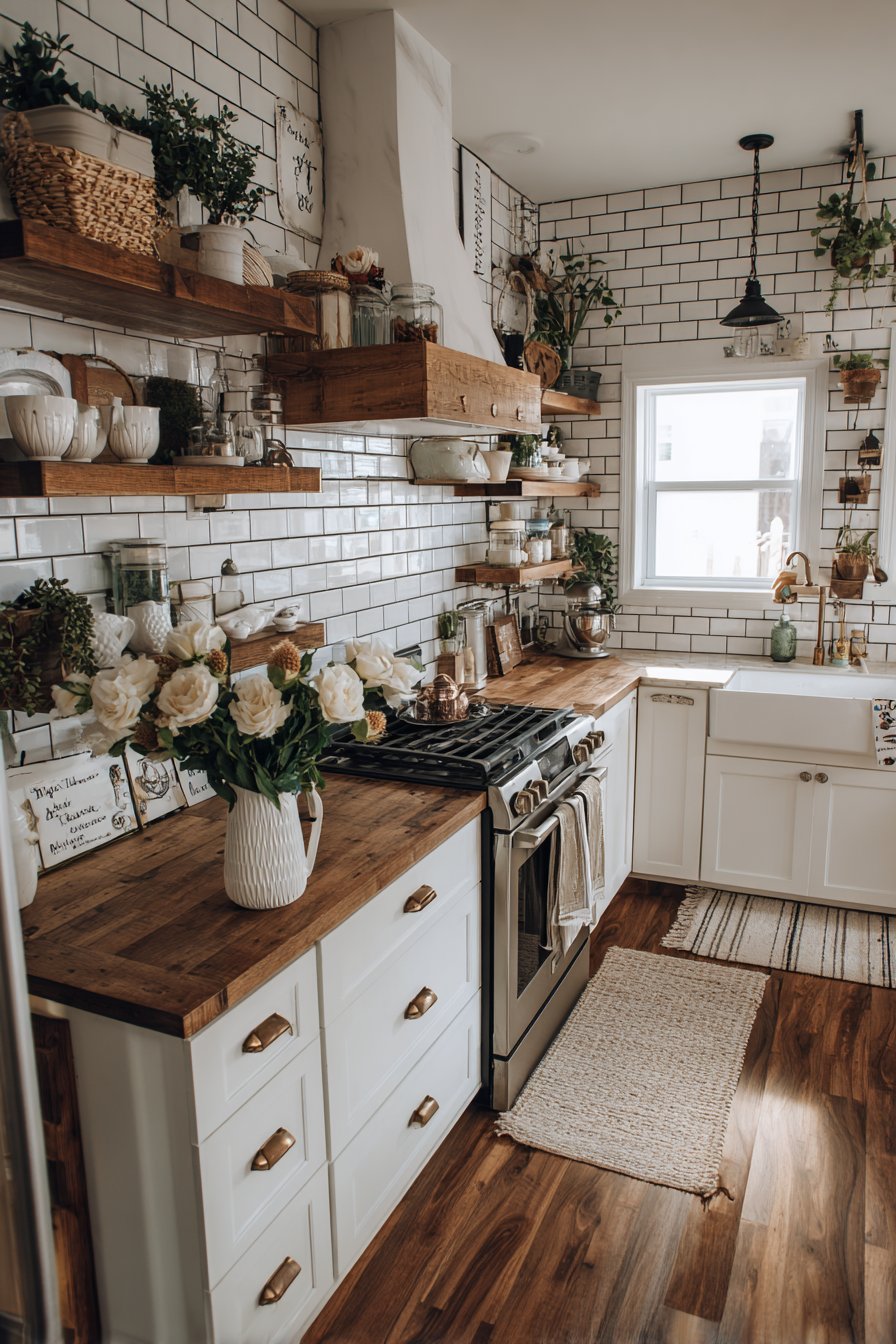
Key Design Tips: Use only ceramic markers specifically rated as food-safe and permanent on tile. Clean tile thoroughly before drawing to ensure marker adhesion. Practice lettering on paper to establish consistent style before committing to tile. Include truly useful information like temperature conversions, measurement equivalents, and cooking times. Position text at eye level for easy reading while cooking. Use consistent letter sizing and spacing for professional appearance. Consider including decorative flourishes between recipe sections for visual interest. Cure ceramic marker drawings according to manufacturer instructions to ensure permanence.
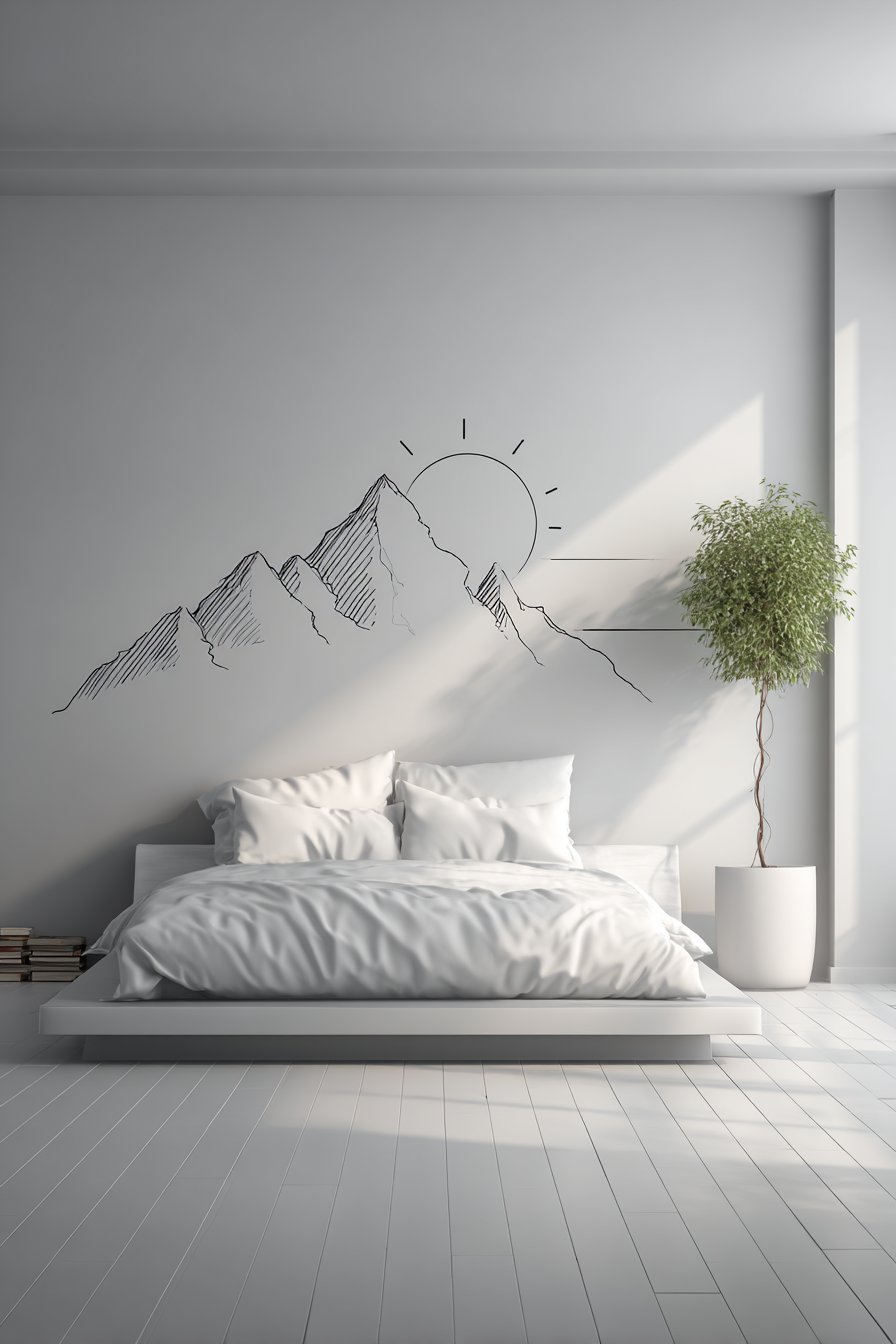
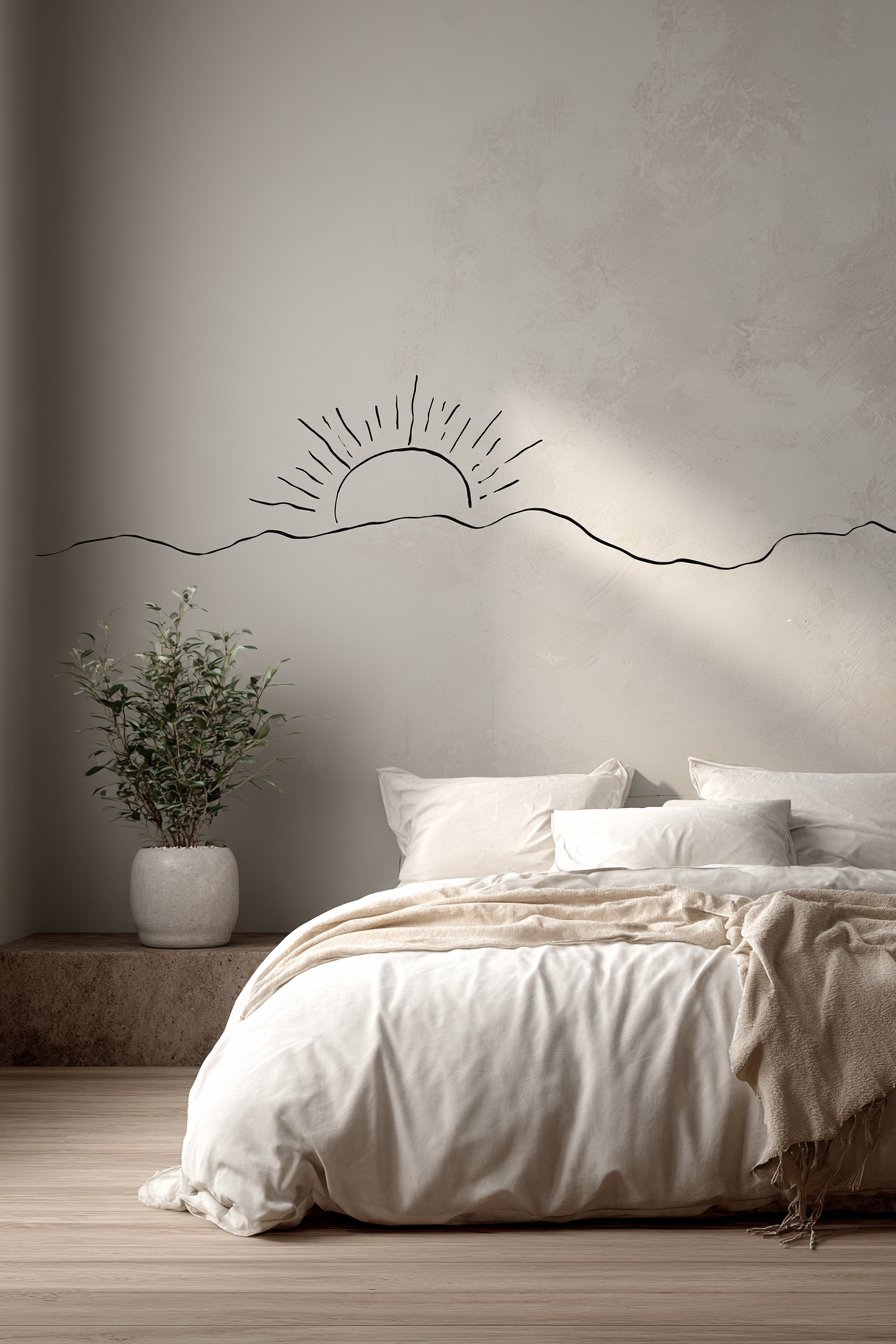
20. Minimalist Bedroom with Abstract Horizon Line Design
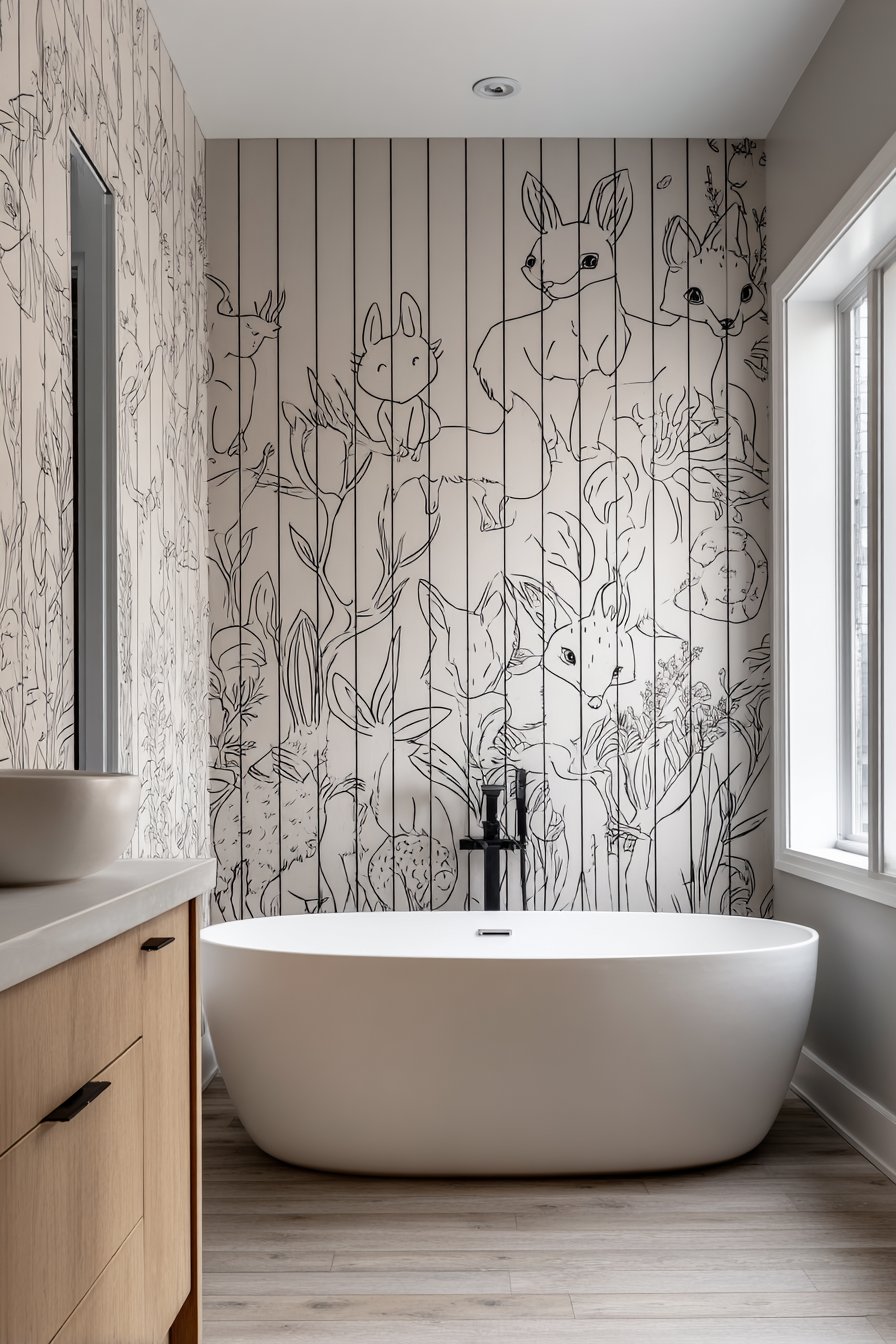
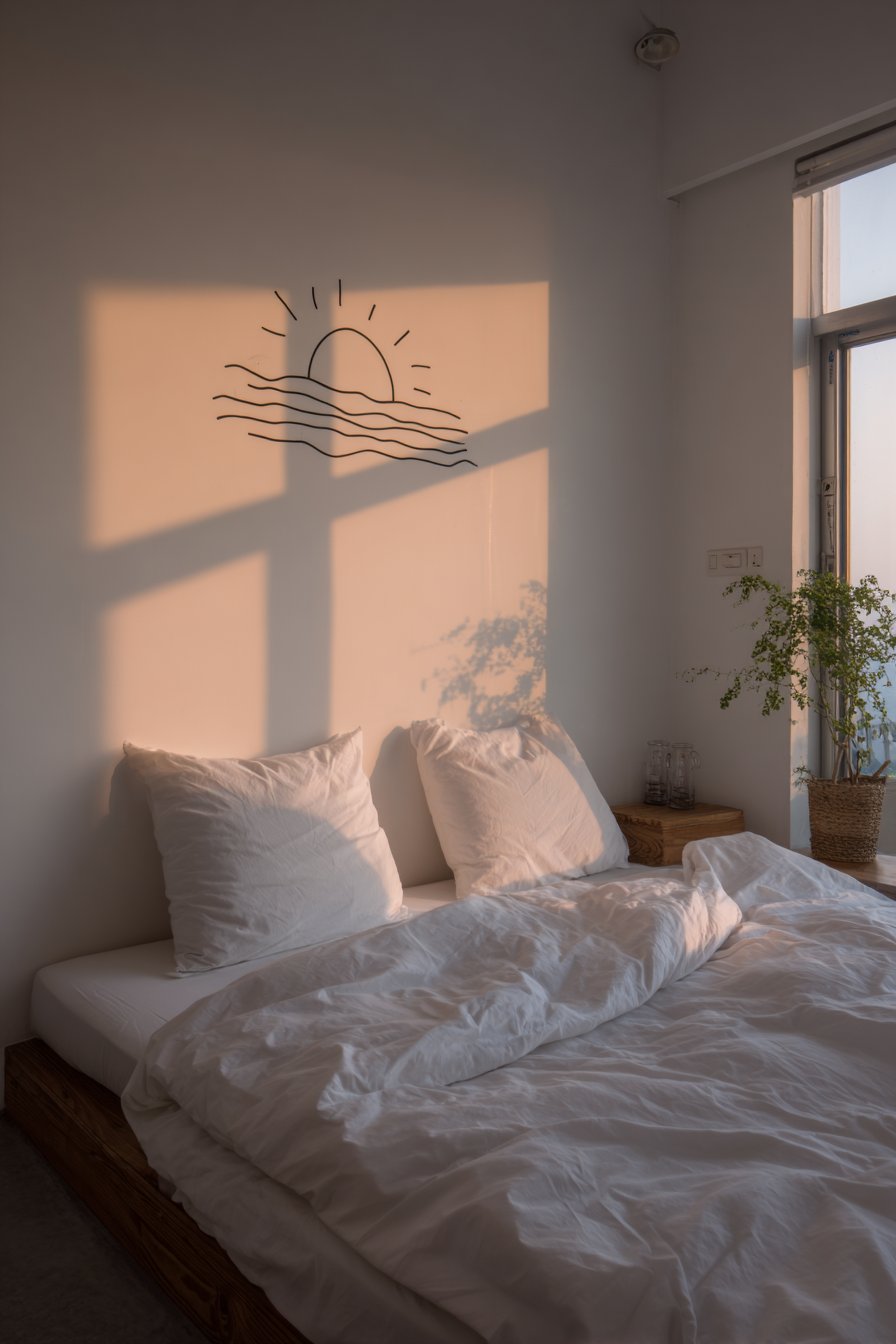
Minimalist design principles find elegant expression in wall drawing ideas that embrace restraint and subtle gesture over elaborate decoration. This bedroom concept features a simple hand-drawn horizon line with abstract sun on a soft gray wall—perhaps the most minimal wall drawing idea possible while still creating meaningful visual impact. The understated line drawing executed in black ink creates a meditative focal point above the bed without disrupting the serene, uncluttered atmosphere essential to minimalist bedrooms. This sparse approach proves that wall drawing ideas need not be complex or elaborate to succeed; sometimes the simplest gesture creates the most powerful effect, especially in spaces dedicated to rest and mental clarity.
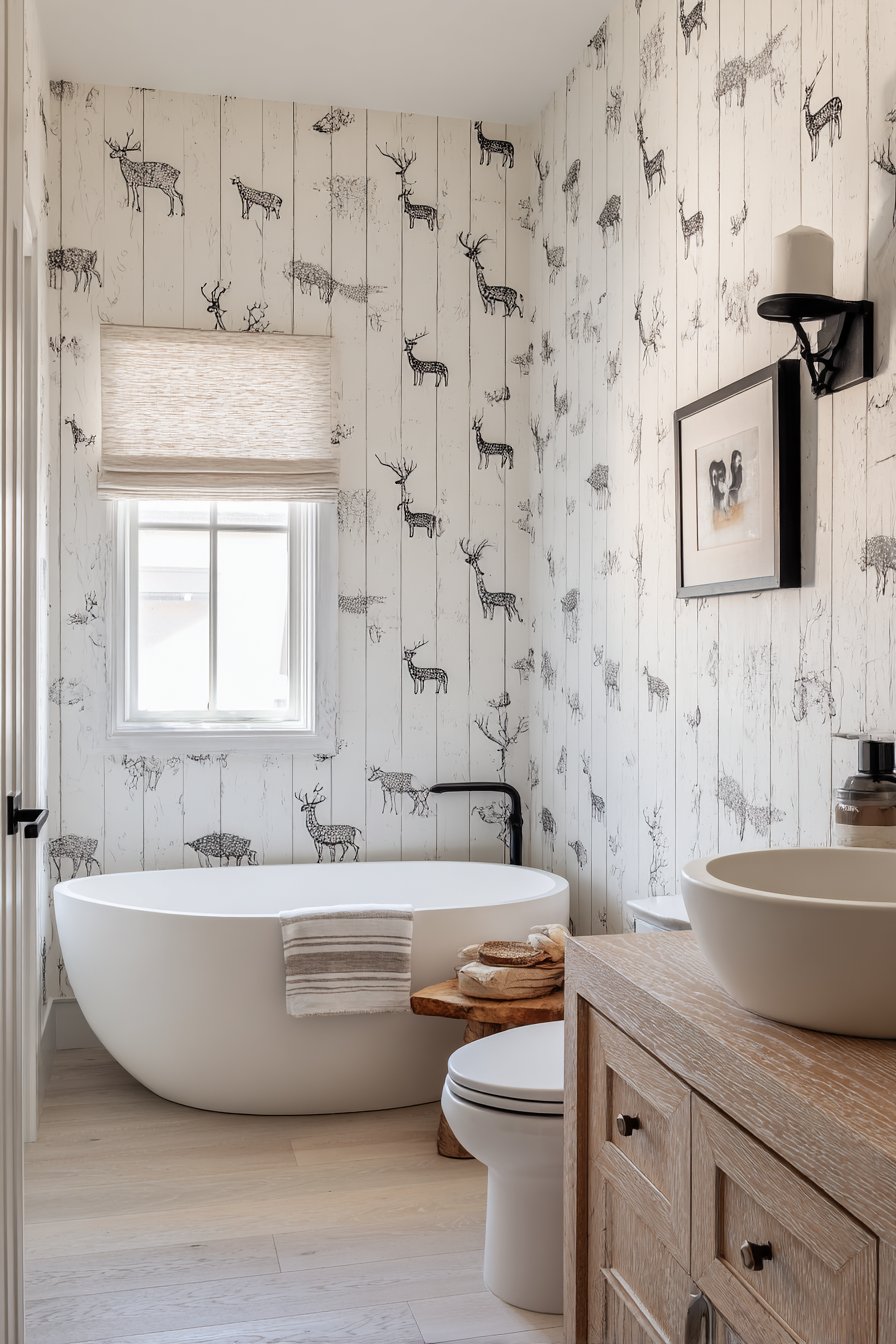
The supporting design elements demonstrate minimalist commitment to “only what’s necessary” philosophy. A platform bed with white bedding maintains the clean, low-profile aesthetic while a single indoor plant introduces the only organic form and living element in the space. Every object earns its place through beauty, function, or both—nothing is merely decorative in the cluttered sense. The soft gray wall color provides subtle visual interest without the starkness of pure white, creating a cocoon-like atmosphere conducive to sleep while maintaining the light, airy quality minimalism requires. This careful balance between simplicity and warmth prevents the space from feeling cold or institutional.
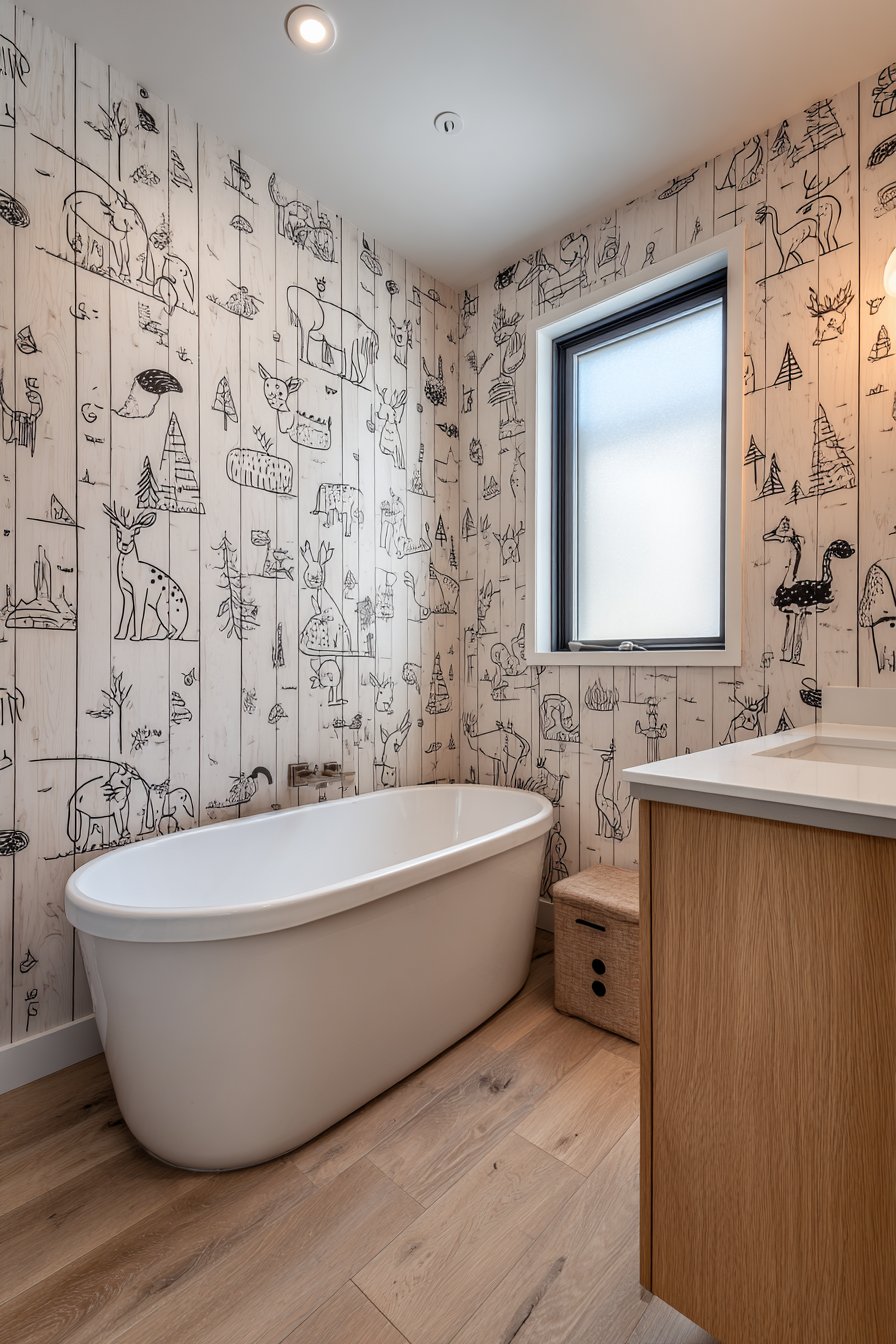
The lighting design captured during golden hour reveals how natural light transforms even the simplest wall drawing ideas throughout the day. The low-angle sunlight creates long shadows and warm color temperatures that animate the horizon line, making it appear to glow briefly before fading into softer evening light. This attention to natural lighting cycles demonstrates understanding that minimalist spaces rely heavily on light quality and architectural elements to create interest in the absence of decorative objects. The wall drawing provides just enough visual anchor to prevent the minimalist bedroom from feeling empty while maintaining the mental clarity that minimalism cultivates.
Key Design Tips: Use a level and light pencil line to ensure perfectly straight horizon line. Keep the composition extremely simple—resist adding unnecessary elements. Position the horizon line at a height that relates to bed placement and room proportions. Use high-quality black ink that creates smooth, consistent line without bleeding. Consider whether to include a sun or moon element or leave the horizon line alone. Draw any sun or moon element as a simple circle or semicircle—avoid excessive detail. Ensure the wall color provides sufficient contrast for the black line to be visible. Step back frequently to evaluate whether less might actually be more.
21. Bohemian Reading Nook with Feather and Dreamcatcher Designs
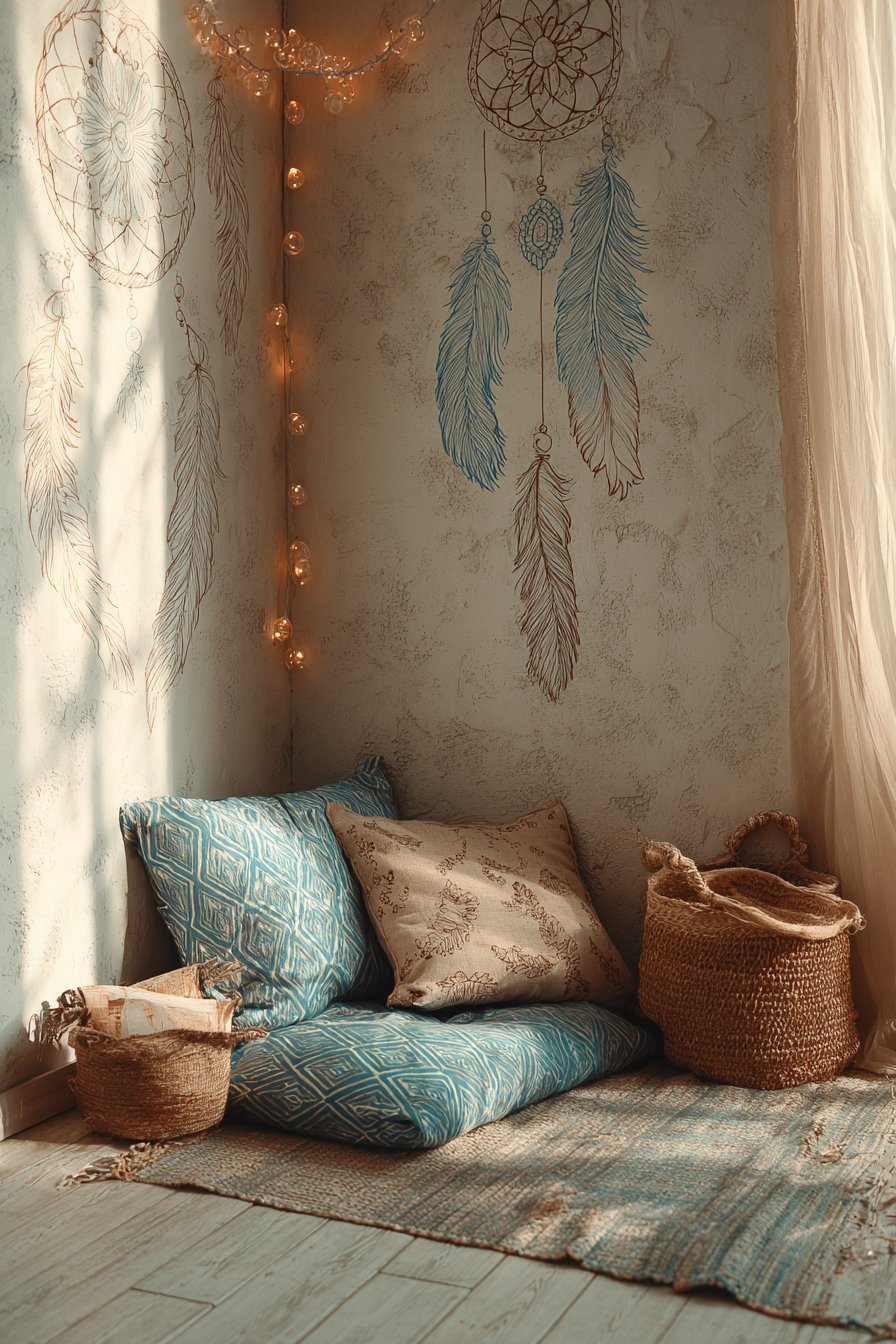
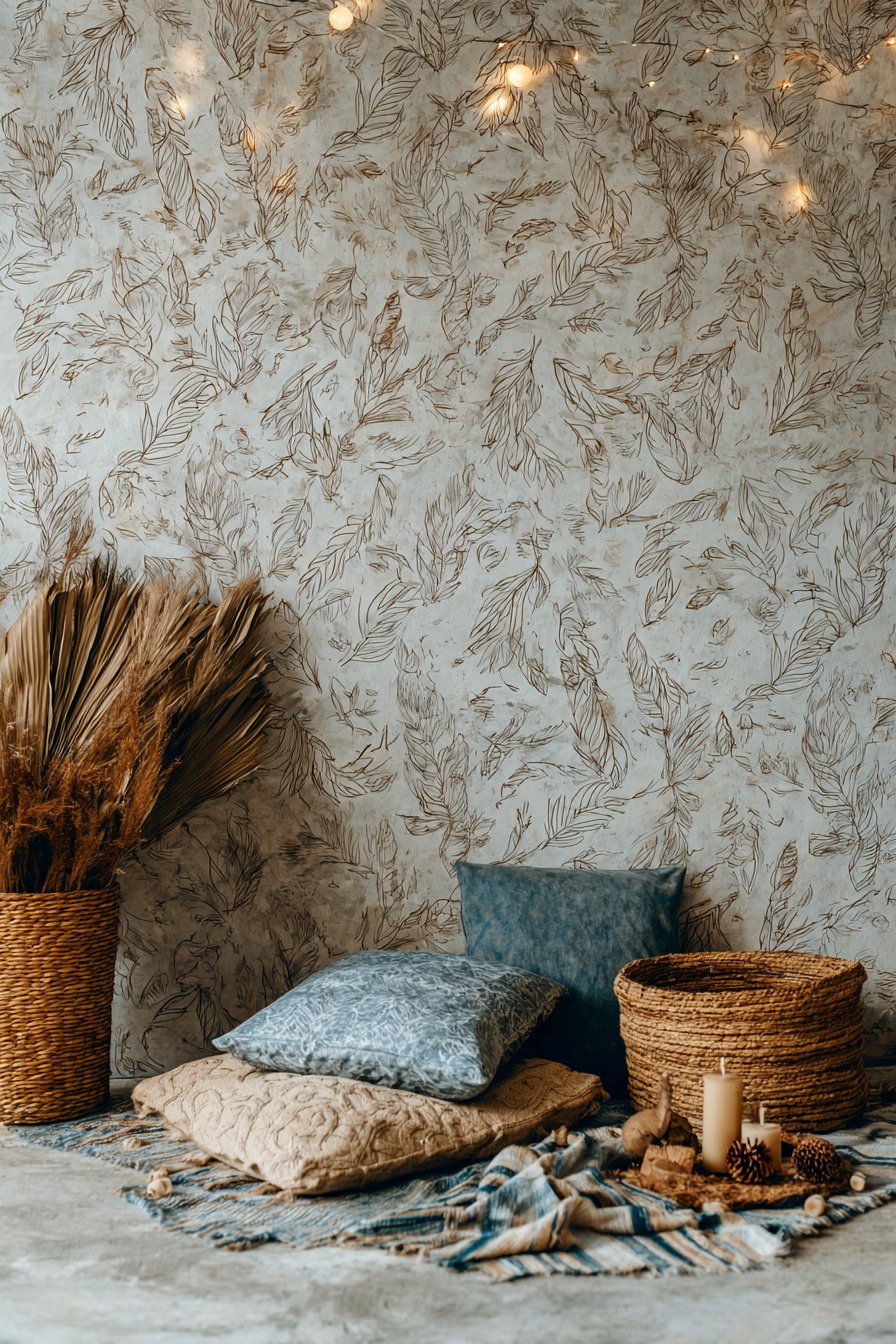
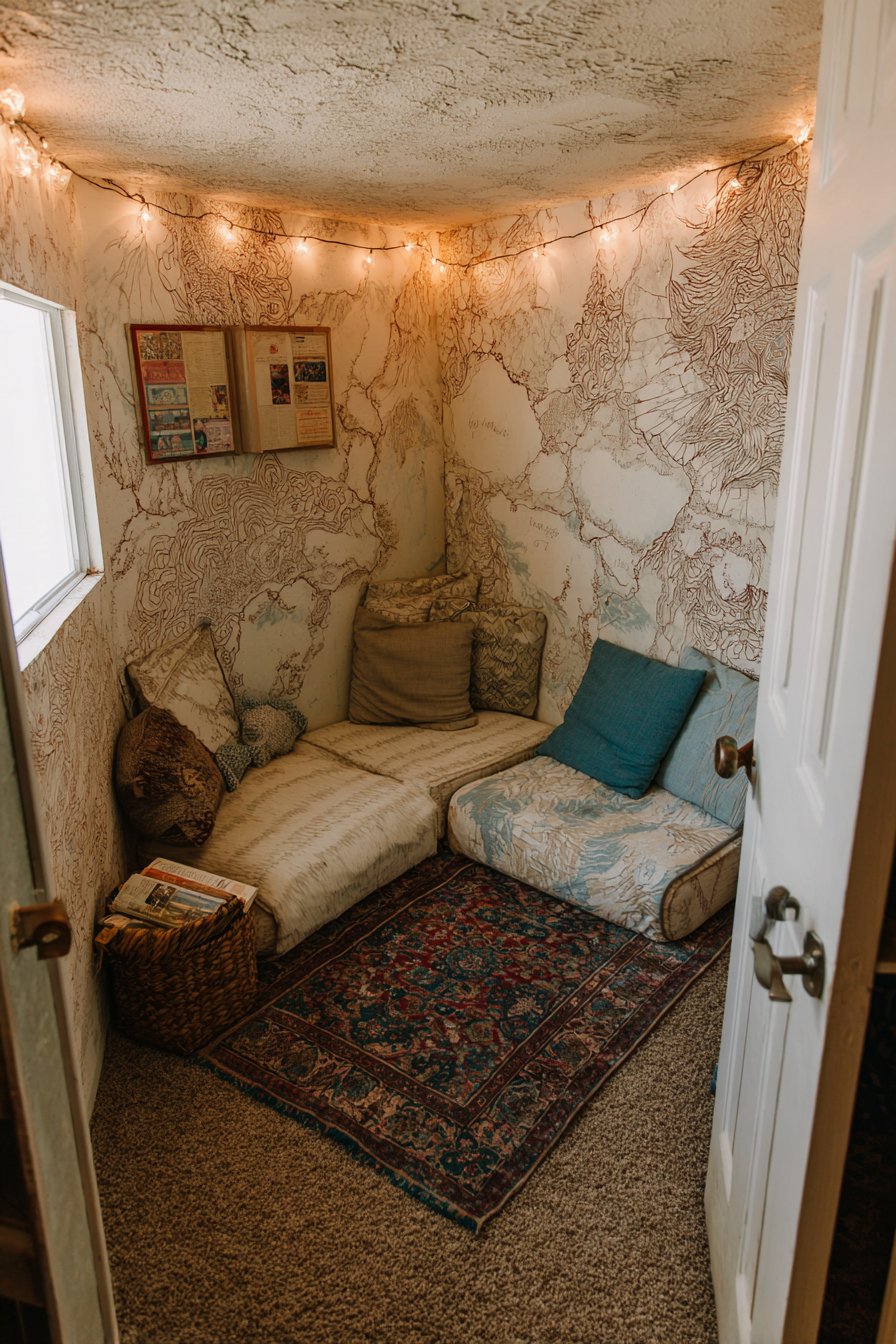
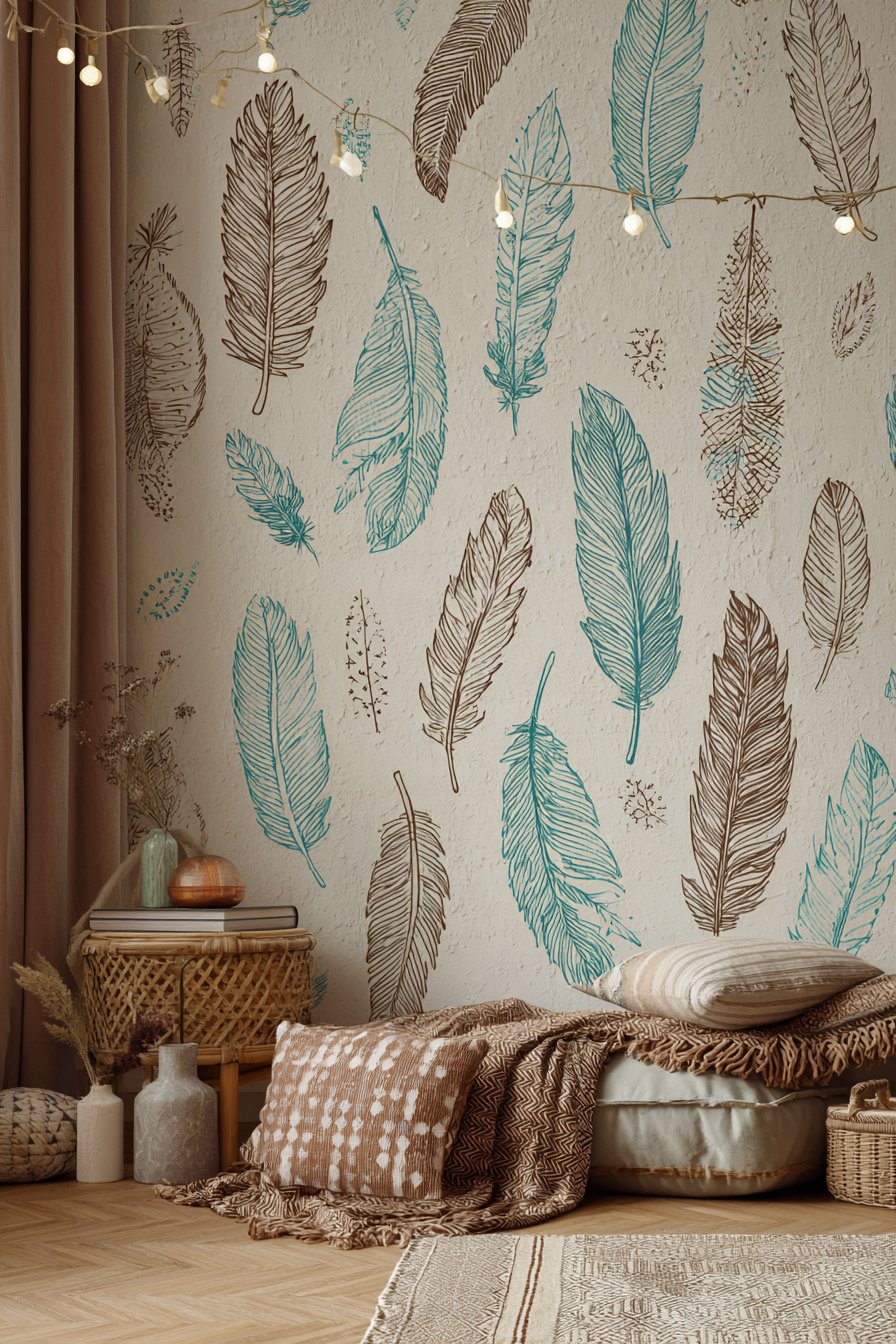
Creating intimate spaces within larger rooms requires thoughtful design that establishes visual and psychological boundaries, making targeted wall drawing ideas perfect for defining dedicated zones. This bohemian reading nook concept employs hand-sketched feather patterns and dreamcatcher designs on textured cream walls to create an artistic corner accent. The intricate line drawings executed in brown and turquoise markers reference Native American cultural symbols while embracing the bohemian aesthetic’s appreciation for spiritual and natural imagery. This layered approach to wall drawing ideas demonstrates how artistic elements can define functional zones within open-plan spaces, creating cozy destinations that invite specific activities and behaviors.
The floor cushion seating arrangement with layered textiles creates the casual, comfortable atmosphere essential to bohemian style while maintaining the flexible, low-profile furniture approach that characterizes the aesthetic. A woven basket for book storage provides practical function while introducing additional natural texture and handcrafted character. The entire nook feels curated and intentional despite—or perhaps because of—its casual, collected appearance. The wall drawing ideas unify the various textile patterns and colors, creating visual cohesion that prevents the eclectic elements from appearing chaotic or disorganized.
Warm string lights combined with natural daylight create layered, ambient illumination that makes this reading nook inviting at any time of day. The string lights add romantic, magical quality during evening hours while daytime sun provides adequate light for reading. The textured cream wall surface enhances the hand-drawn feather patterns by creating subtle surface variation that adds depth and visual interest. This attention to surface texture demonstrates how wall drawing ideas can interact with wall finishes to create effects impossible on smooth surfaces.
Key Design Tips: Research authentic dreamcatcher designs to ensure cultural respect and accurate symbolism. Draw feathers with attention to natural structure—center shaft with angled barbs. Vary feather sizes and positions for organic, naturalistic appearance. Use multiple brown tones to create depth and dimension in the drawings. Add turquoise sparingly as accent color in dreamcatcher elements. Position drawings to create visual flow across the corner rather than isolated motifs. Include both detailed and simple feather drawings to maintain visual hierarchy. Consider the reading position when placing drawings—they should enhance rather than distract from reading activities.
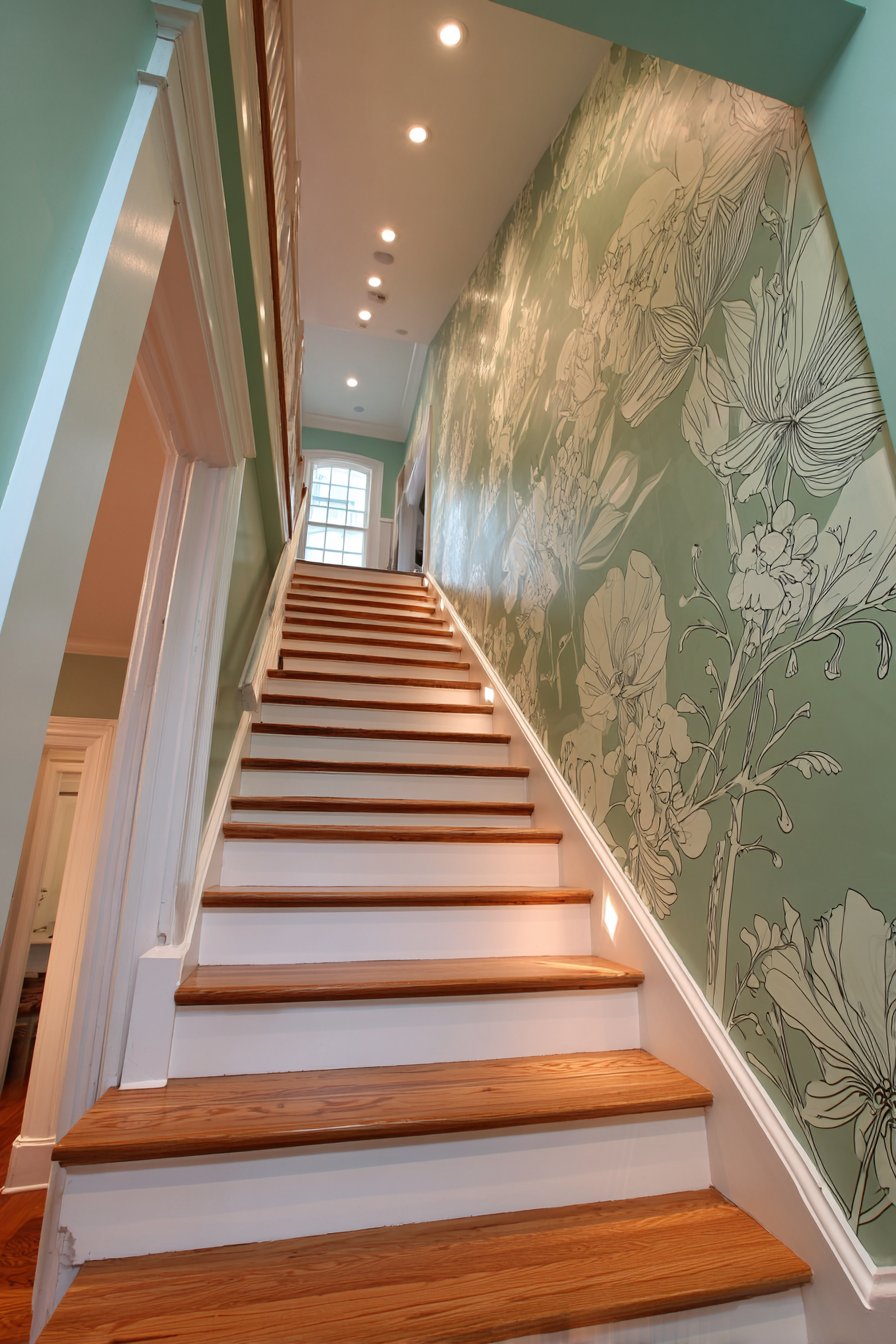
22. Contemporary Stairway with Ascending Botanical Stems
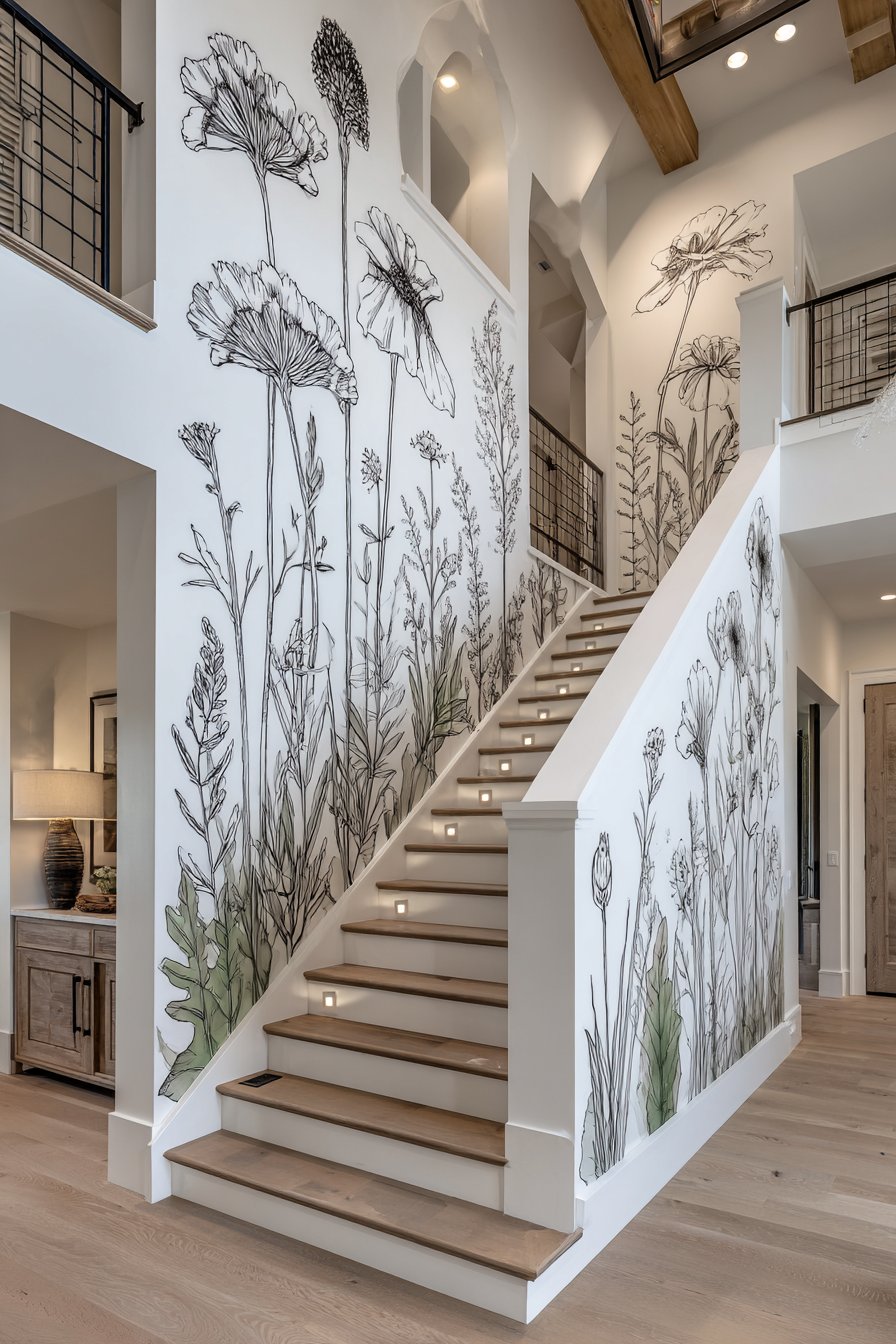
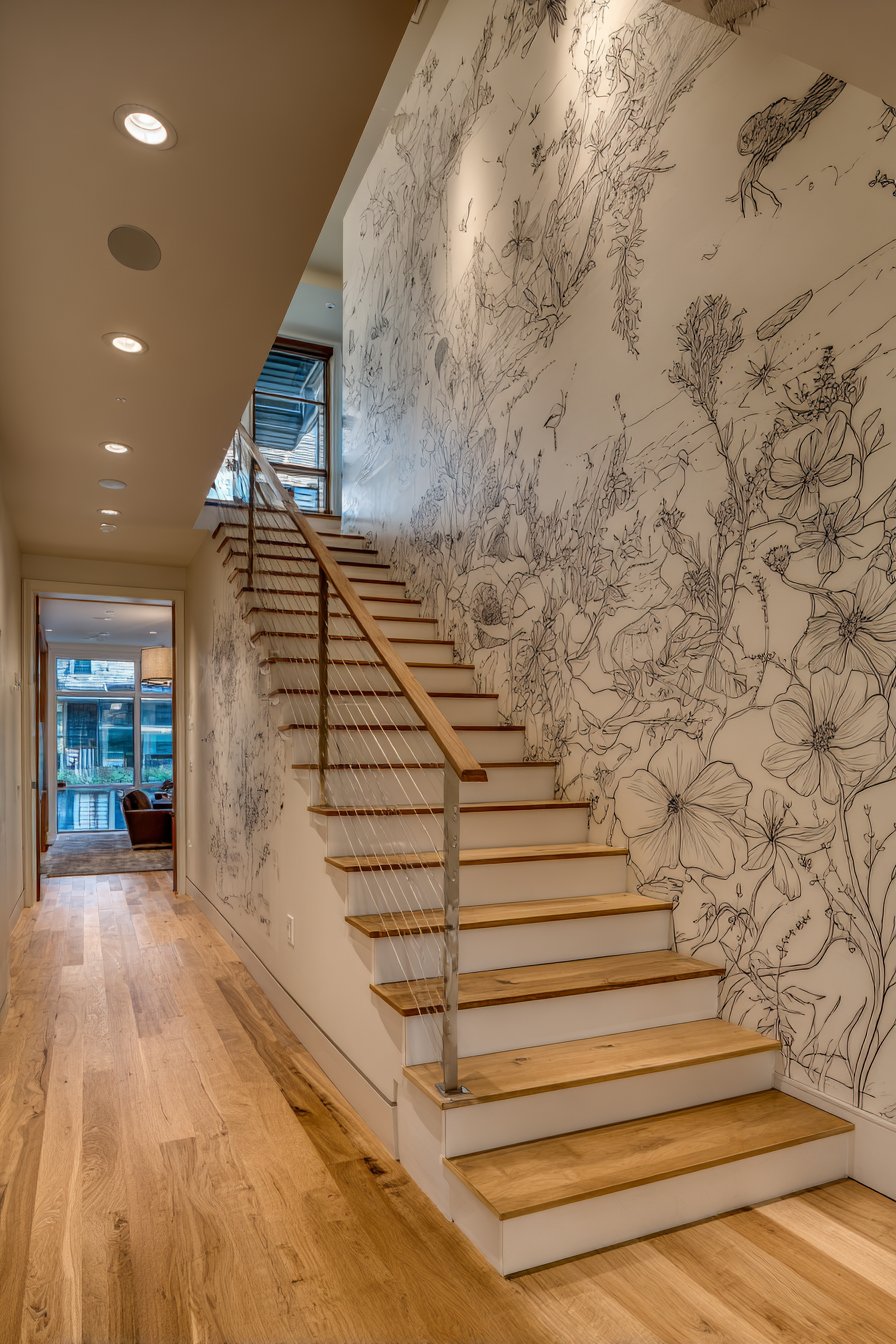
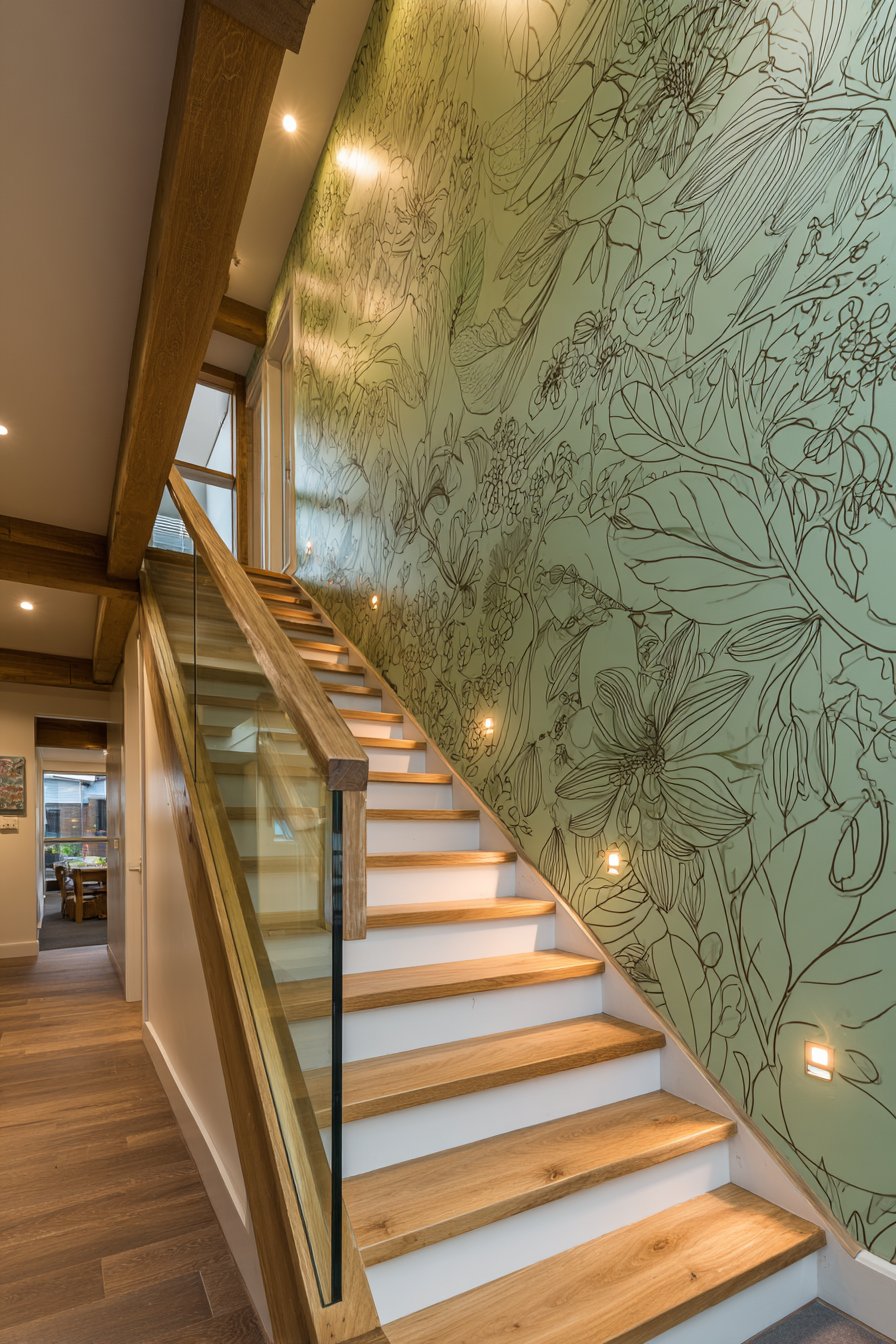
Stairways present unique opportunities for wall drawing ideas that respond to architectural angles and create visual movement through vertical spaces. This contemporary concept features hand-drawn ascending botanical stems that follow the stair angle, with elegant line drawings in sage green and charcoal markers creating upward visual flow. The botanical elements become more elaborate at higher levels, rewarding those who climb the stairs with increasingly detailed illustrations—a subtle design gesture that makes the utilitarian journey more interesting and beautiful. This creative response to architectural features demonstrates how wall drawing ideas can enhance rather than merely decorate existing spaces, working with structural elements to create integrated artistic experiences.
The natural wood stair treads with white risers provide a clean, contemporary foundation that allows the botanical wall drawings to remain the primary visual focus. This restrained material palette proves that successful wall drawing ideas often require simplified surrounding elements to achieve maximum impact. The sage green and charcoal color choices complement natural wood tones while maintaining the soft, organic aesthetic appropriate for botanical subject matter. The ascending complexity of the drawings creates narrative quality—a beginning, middle, and culmination—that transforms the functional stairway into an artistic journey.
Recessed stairway lighting positioned at intervals highlights the wall drawing ideas while providing necessary safety illumination. The strategic lighting placement ensures that botanical details remain visible during evening hours when stairways require adequate illumination for safe navigation. Professional photography captured from multiple angles reveals how the drawings integrate with the stair architecture, proving that the most successful wall drawing ideas consider three-dimensional viewing angles rather than single frontal perspectives.
Key Design Tips: Mark the stair angle with light pencil line to establish accurate trajectory for botanical stems. Start with simple stems at the bottom and add complexity (leaves, flowers, branches) as you ascend. Use varying line weights to create depth and natural stem structure. Position botanical elements to avoid collision with stair handrail if present. Draw stems that appear to grow from below the bottom step for naturalistic effect. Include different plant species at various heights for botanical diversity. Consider how drawings appear from both ascending and descending viewpoints. Use ladder or scaffolding safely to reach upper areas while drawing.
23. Scandinavian Bathroom with Nordic Forest Animal Art
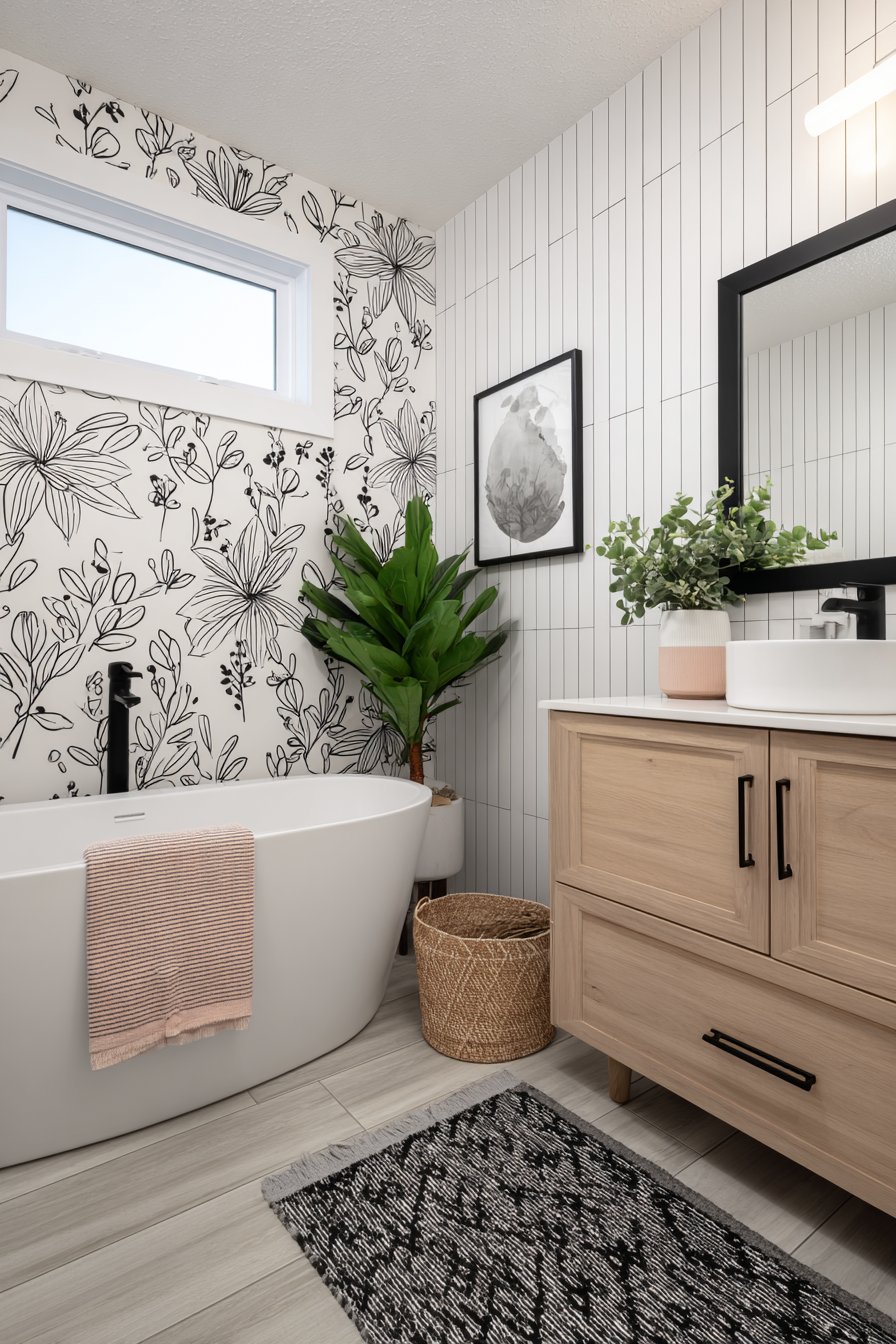
Scandinavian design’s connection to nature and Nordic landscape finds charming expression in wall drawing ideas featuring regional wildlife. This bathroom concept employs hand-drawn line art of Nordic forest animals including deer, foxes, and birds on white tongue and groove paneling. The simple black line drawings create playful natural theme without overwhelming the clean Nordic aesthetic or making the space feel childish. This balanced approach demonstrates how wall drawing ideas can introduce whimsy and personality while maintaining sophisticated design standards, proving that playful elements belong in adult spaces when executed with restraint and artistic skill.
The freestanding soaking tub and light wood vanity maintain the clean, functional aesthetic essential to Scandinavian bathroom design while providing high-quality fixtures that elevate the space beyond basic utility. These carefully selected elements prove that Scandinavian simplicity should never be confused with cheapness or lack of quality—rather, the aesthetic celebrates well-made, functional objects that serve their purposes beautifully for years. The animal drawings add warmth and personality that prevent the clean-lined fixtures from appearing cold or institutional, creating a bathroom that feels both hygienic and welcoming.
Soft natural light from a frosted window illuminates the wall drawing ideas while maintaining bathroom privacy. The frosted glass diffuses direct sunlight, creating even, flattering illumination that shows the animal drawings clearly without harsh shadows. The white tongue and groove paneling reflects available light efficiently, keeping the bathroom bright despite the Nordic climate’s limited winter daylight. This attention to maximizing natural light reflects the Scandinavian imperative to combat dark winters through design choices that celebrate and amplify any available sunshine.
Key Design Tips: Research Nordic wildlife for regionally appropriate animal selection. Draw animals in simple silhouette or line art style rather than detailed realism. Vary animal sizes and positions across the wall for natural, organic placement. Position larger animals like deer lower on the wall with smaller birds higher up. Use only black marker to maintain the clean, graphic Nordic aesthetic. Include a few trees or plant elements to suggest forest habitat without creating busy backgrounds. Space animals with intentional breathing room to maintain Scandinavian minimalist principles. Seal drawings with bathroom-appropriate clear coat to protect from moisture.
24. Industrial Home Bar with Vintage Cocktail Recipes
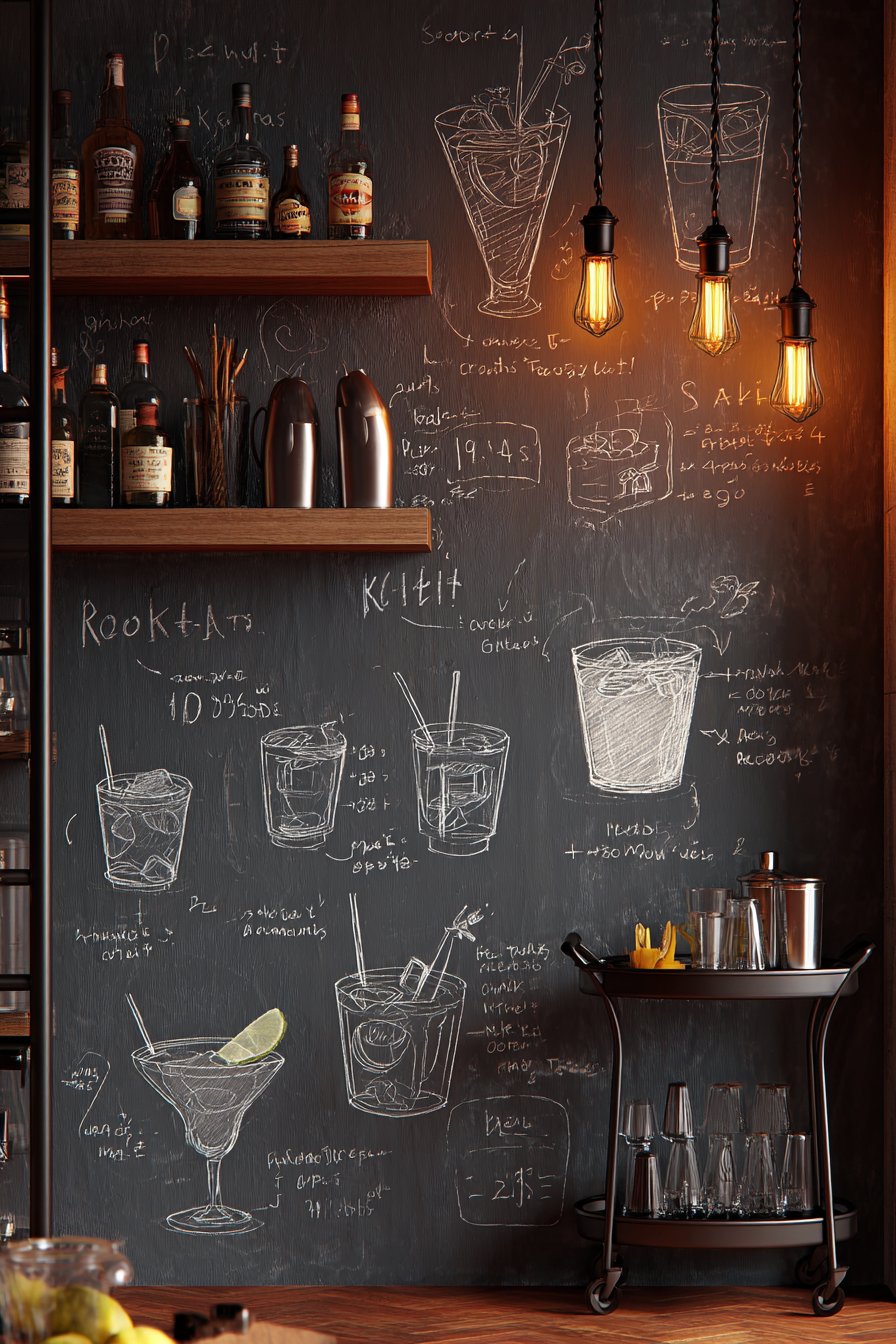
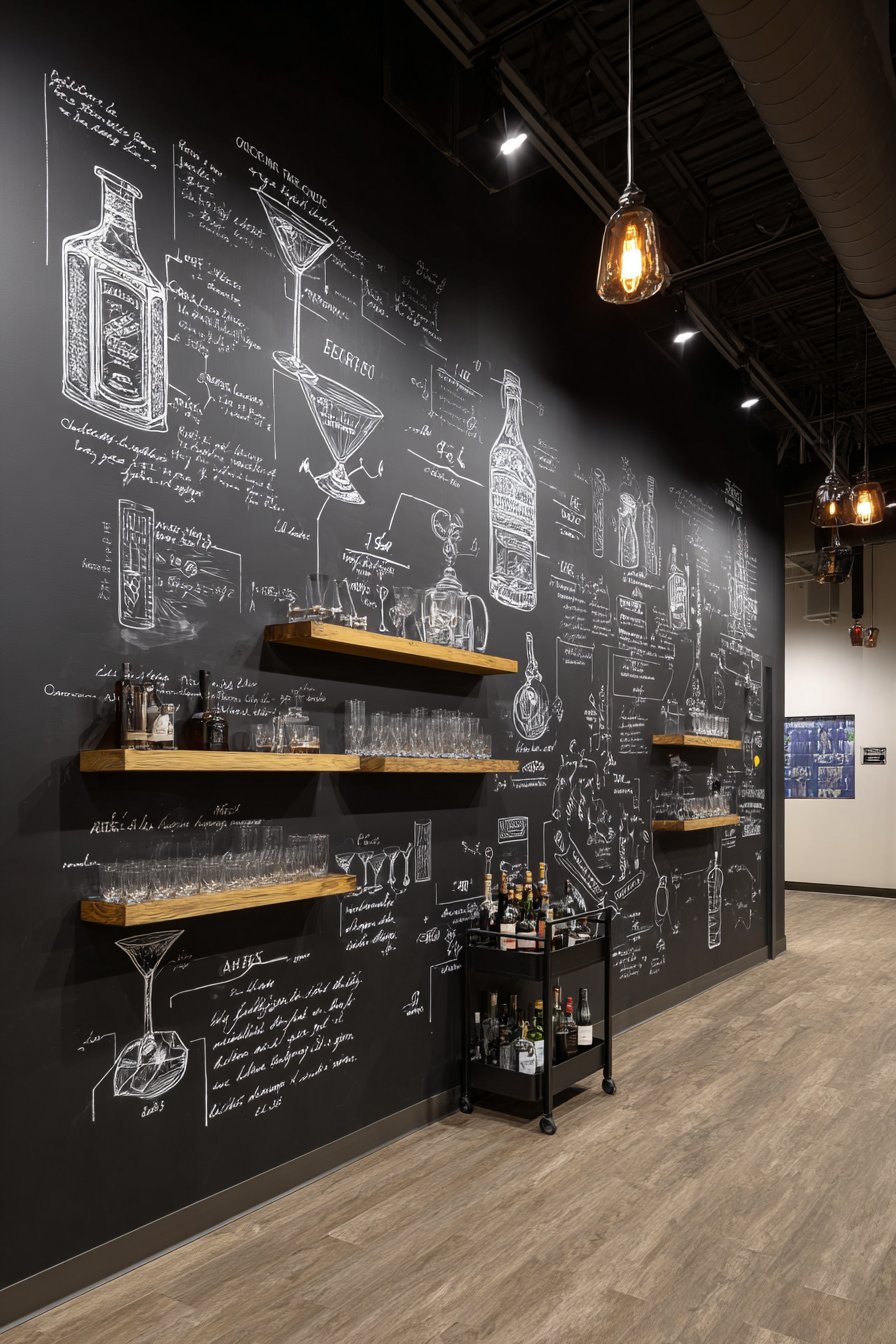
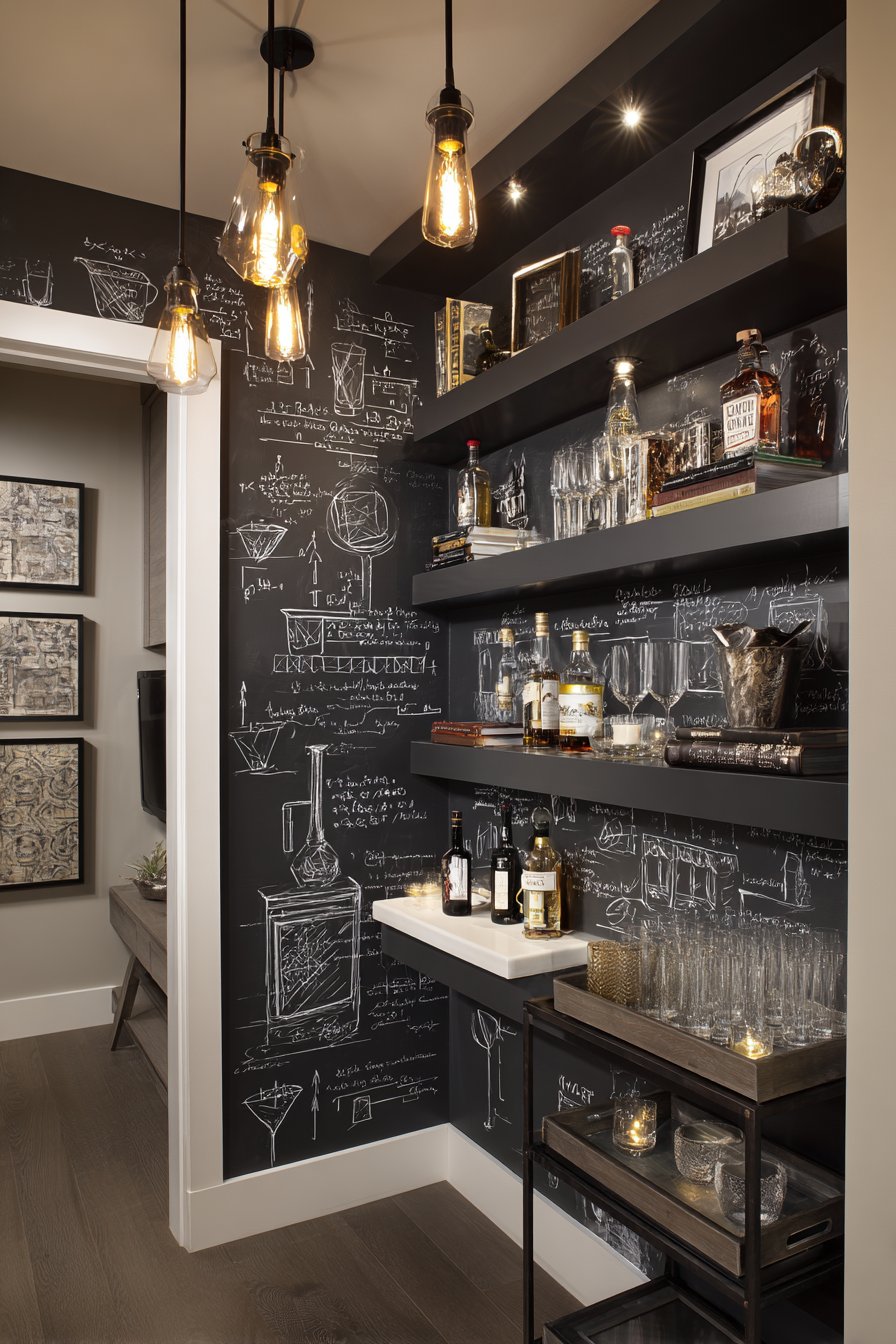
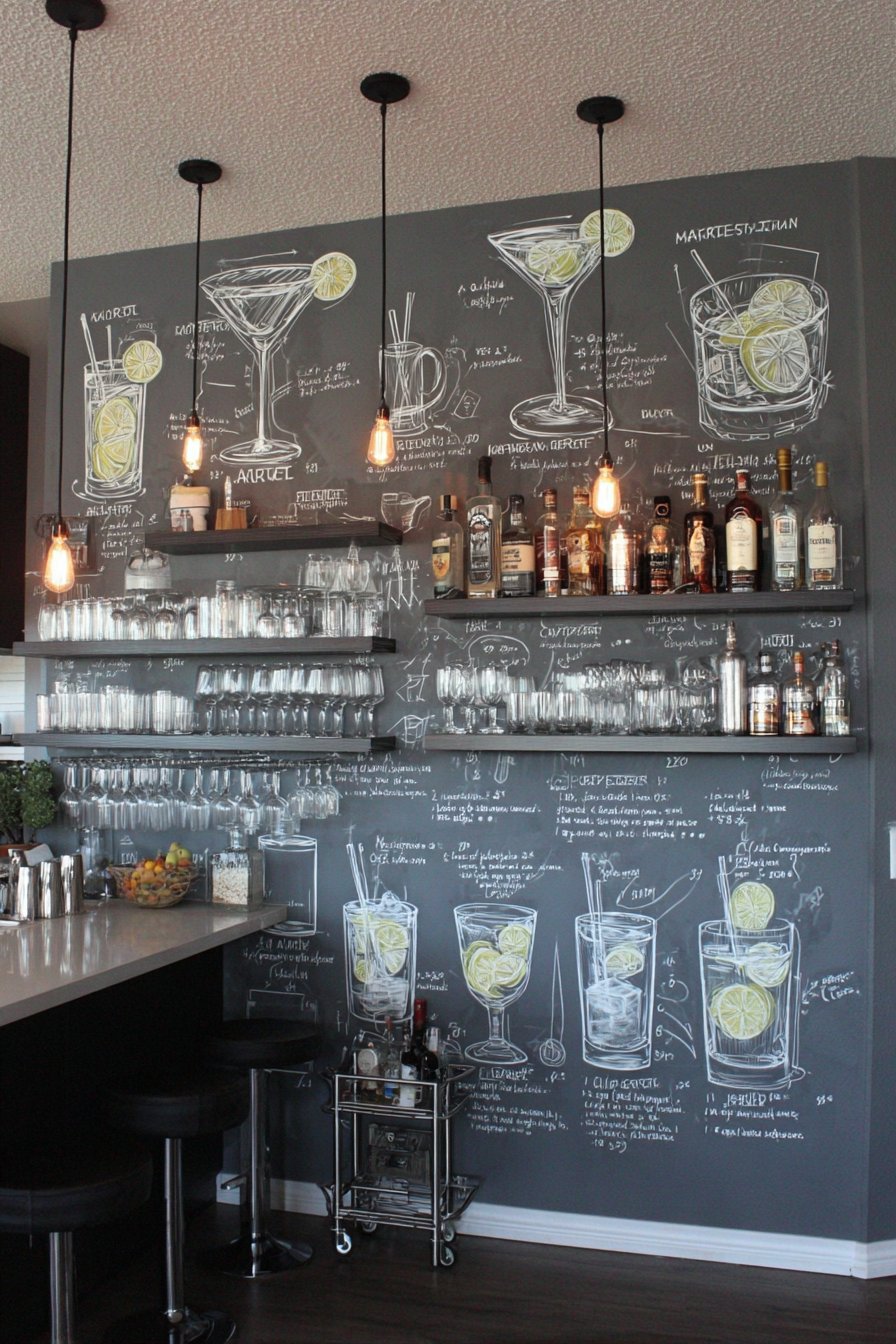
Home bar areas benefit from wall drawing ideas that combine entertainment value with practical information, creating conversation pieces that also serve functional purposes. This industrial concept features hand-drawn vintage cocktail recipe illustrations on dark gray walls using white chalk markers. The detailed line drawings depict classic drinks complete with ingredient lists and preparation instructions, transforming the wall into an interactive bartending reference guide while adding visual interest to the entertainment space. This approach demonstrates how wall drawing ideas can be both beautiful and useful, serving the space’s intended function while contributing to its aesthetic character.
The floating shelves displaying glassware and a compact bar cart create the functional bar setup while maintaining the space-efficient, organized approach essential to industrial design. These carefully curated elements prove that home bars need not be elaborate built-in affairs to feel legitimate and well-designed. The industrial aesthetic celebrates honest materials and visible structure, making open shelving and mobile carts appropriate choices that honor the style’s utilitarian roots. The wall drawing ideas provide personality and entertainment value that raw industrial materials alone cannot achieve, softening the potentially harsh aesthetic while maintaining its urban edge.
Edison bulb pendant lighting creates warm ambiance essential for entertaining spaces while casting flattering illumination across the cocktail recipe drawings. The vintage-style bulbs reference industrial design’s nostalgic appreciation for early electrical fixtures while providing practical lighting for bartending tasks. The white chalk drawings appear to glow against the dark gray walls when illuminated, creating dramatic contrast that makes reading ingredient lists easy even in the subdued lighting appropriate for evening entertaining.
Key Design Tips: Research authentic vintage cocktail recipes from specific eras for historical accuracy. Draw glass shapes that represent each drink appropriately—martini glass, highball, rocks glass. Include all ingredients with specific measurements for functional use. Add preparation instructions in abbreviated form to keep text concise. Vary recipe positions across the wall rather than grid arrangement. Use decorative flourishes between recipes for visual separation. Include classic cocktails guests will recognize and want to order. Test white chalk marker opacity on dark walls—multiple coats may be needed for bright white contrast.
25. Transitional Home Office with Interactive Vision Board
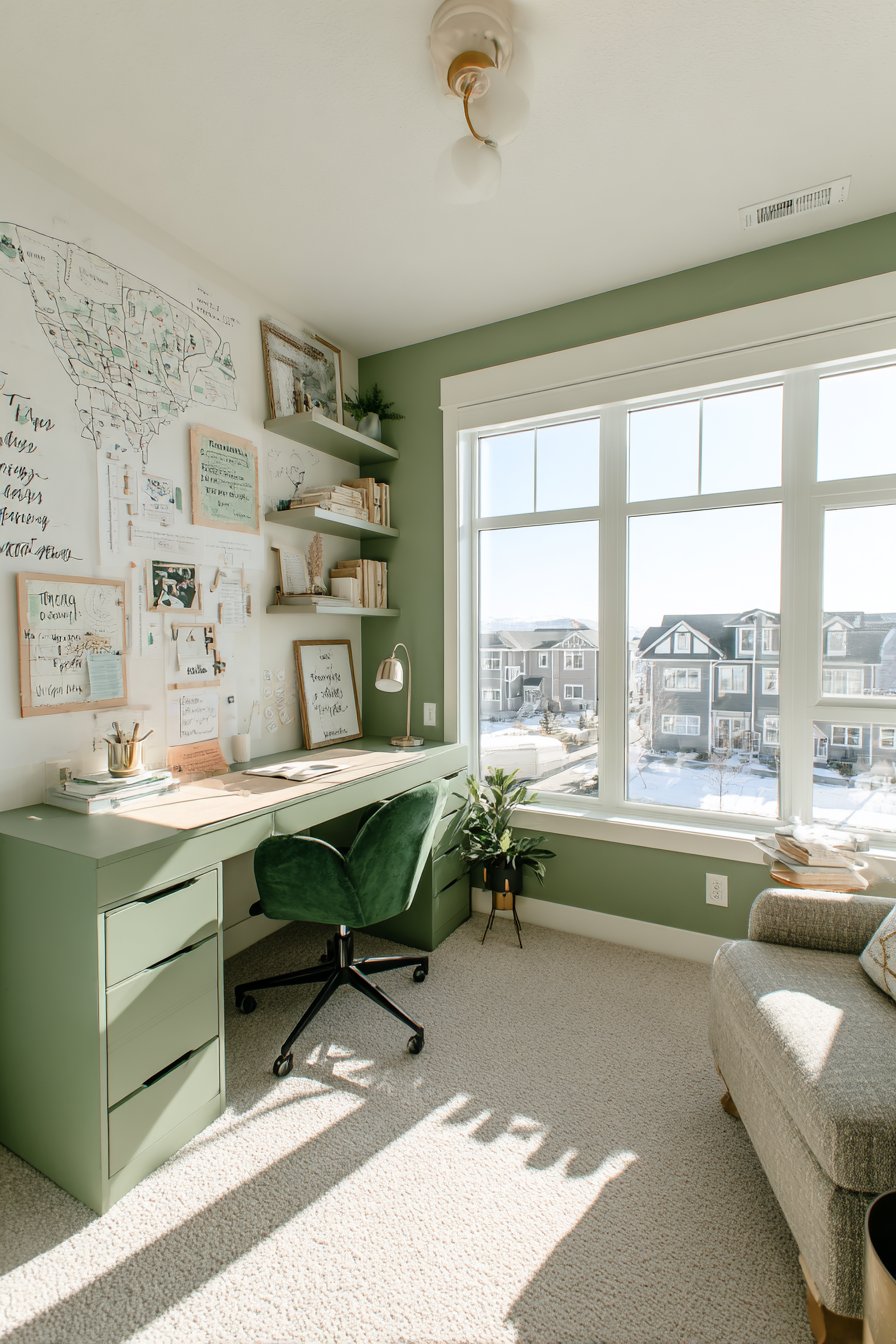
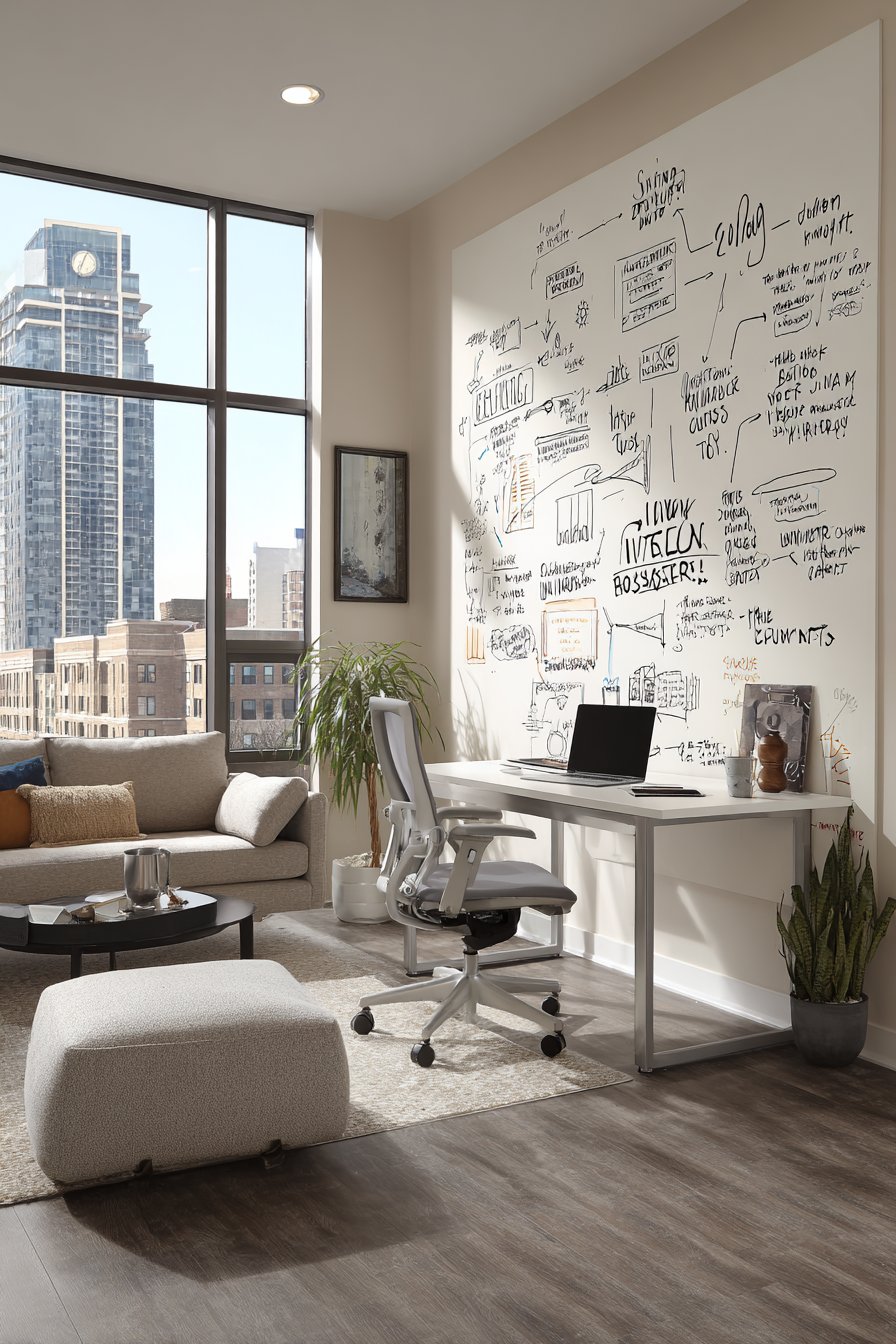
Home office design increasingly recognizes the value of motivational and organizational elements that support productivity and goal achievement. This concept employs wall drawing ideas as an interactive vision board using dry-erase markers on white board-painted wall sections. The organized layout includes hand-drawn goal categories, timelines, and motivational quotes in various colors, creating a personalized planning system that can be updated as goals evolve and progress occurs. This flexible approach to wall drawing ideas acknowledges that productive spaces require adaptable systems rather than permanent decoration, proving that the most functional designs accommodate changing needs over time.
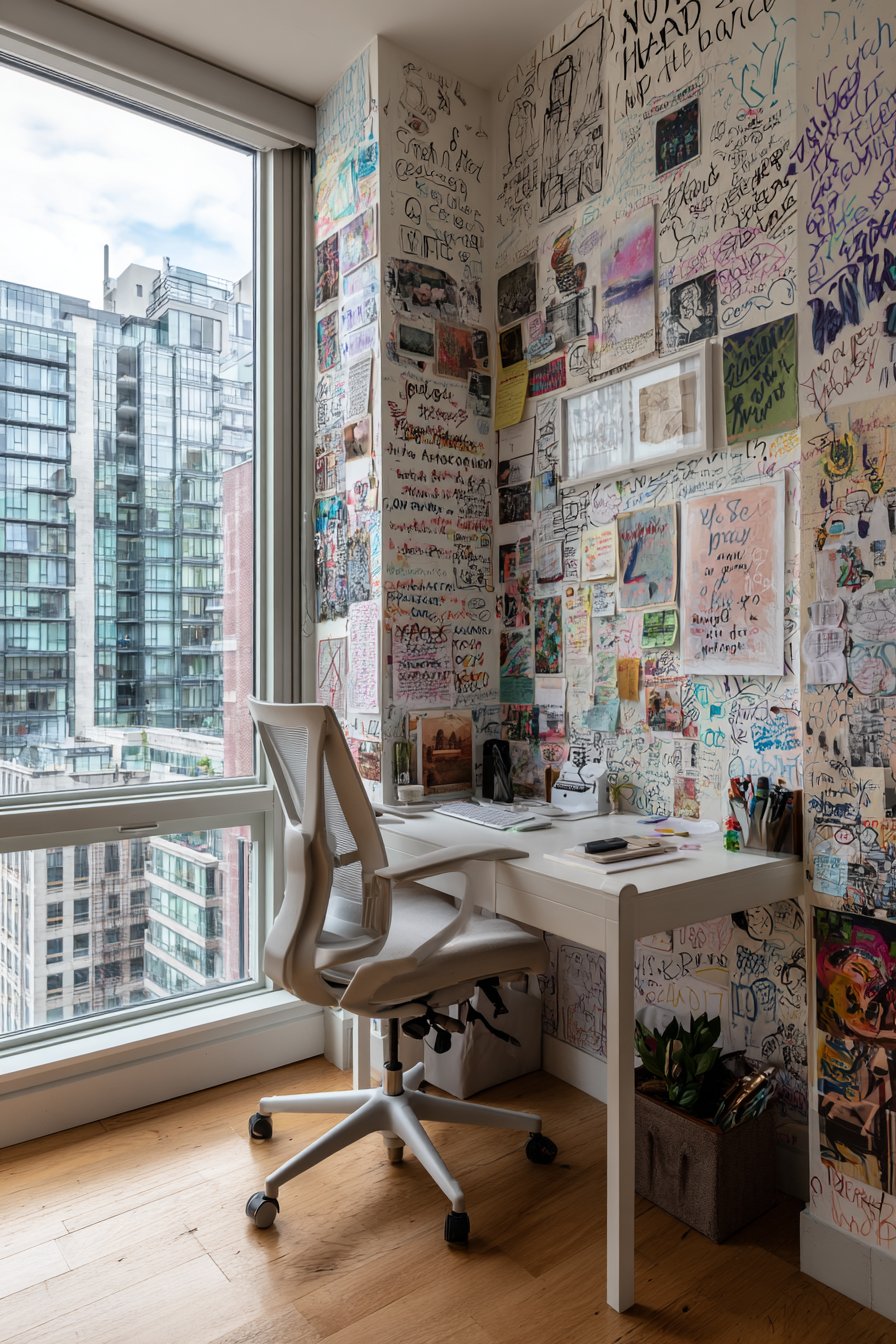
The modern desk with ergonomic chair and minimal accessories maintains the professional atmosphere while providing comfortable, efficient workspace. This restrained approach to office furnishing allows the interactive wall drawing ideas to serve as the primary visual interest and organizational system. The combination of permanent and temporary wall elements—board paint that stays while drawings change—creates a dynamic environment that feels current and engaged rather than static and abandoned. This attention to maintaining living, active spaces rather than merely decorated ones separates functional home offices from underutilized spare rooms with desks.
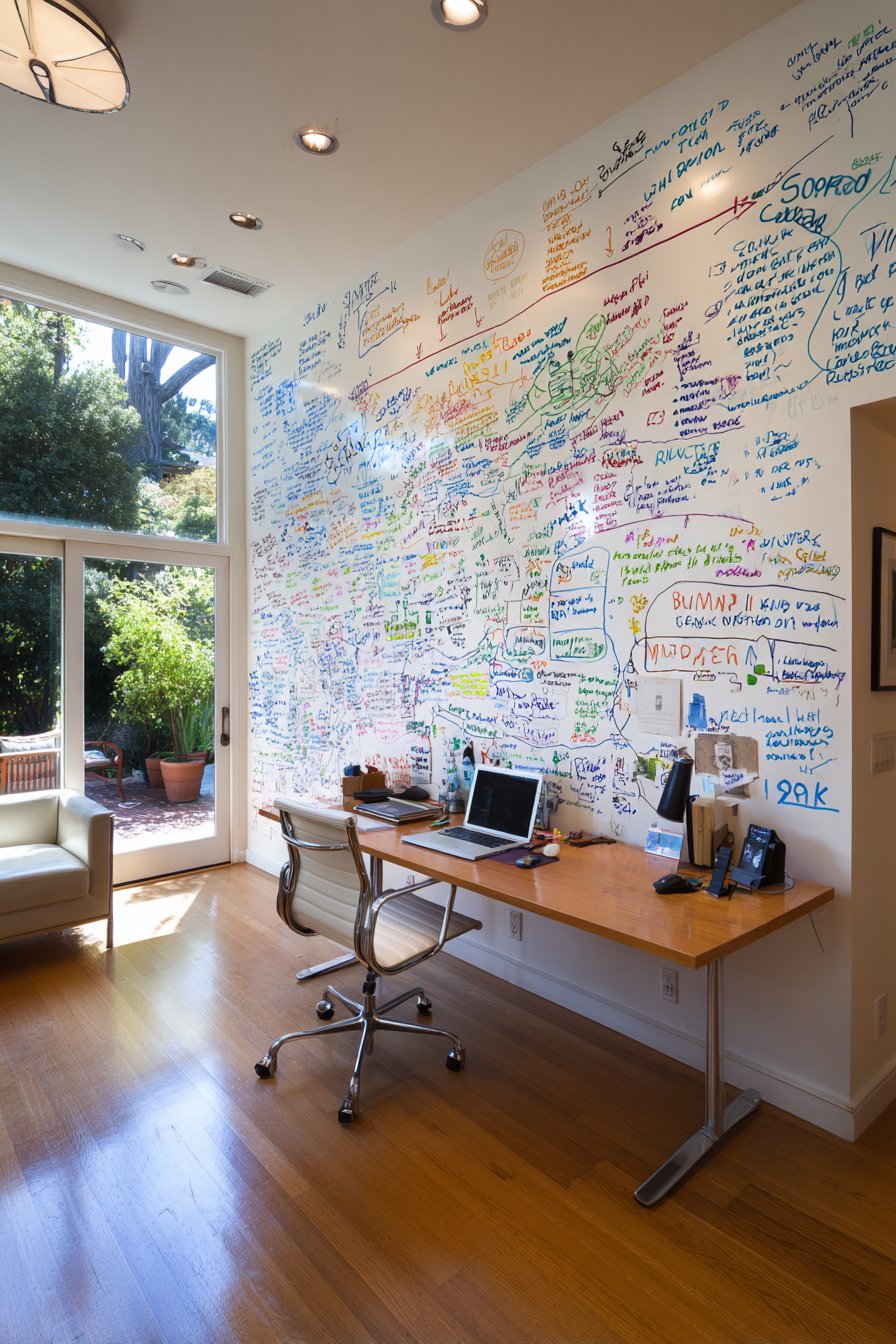
Natural light from large windows provides adequate illumination for both work tasks and reading the wall-drawn vision board throughout the day. The white board paint reflects available light efficiently while providing the erasable surface essential for the interactive concept. The various colored dry-erase markers create visual hierarchy that helps organize different goal categories and priority levels, proving that even temporary wall drawing ideas benefit from thoughtful color choices and composition planning.
Key Design Tips: Apply multiple coats of high-quality dry-erase board paint for smooth writing surface. Map out general layout with light pencil before committing markers. Use different colors for different goal categories for visual organization. Include both short-term and long-term goals to maintain motivation. Add specific deadlines and action items rather than vague aspirations. Update regularly—schedule monthly vision board review sessions. Position board at eye level when seated at desk for constant visibility. Keep dry-erase markers and eraser immediately accessible for easy updates. Photograph the board periodically to document goal progression and completed achievements.
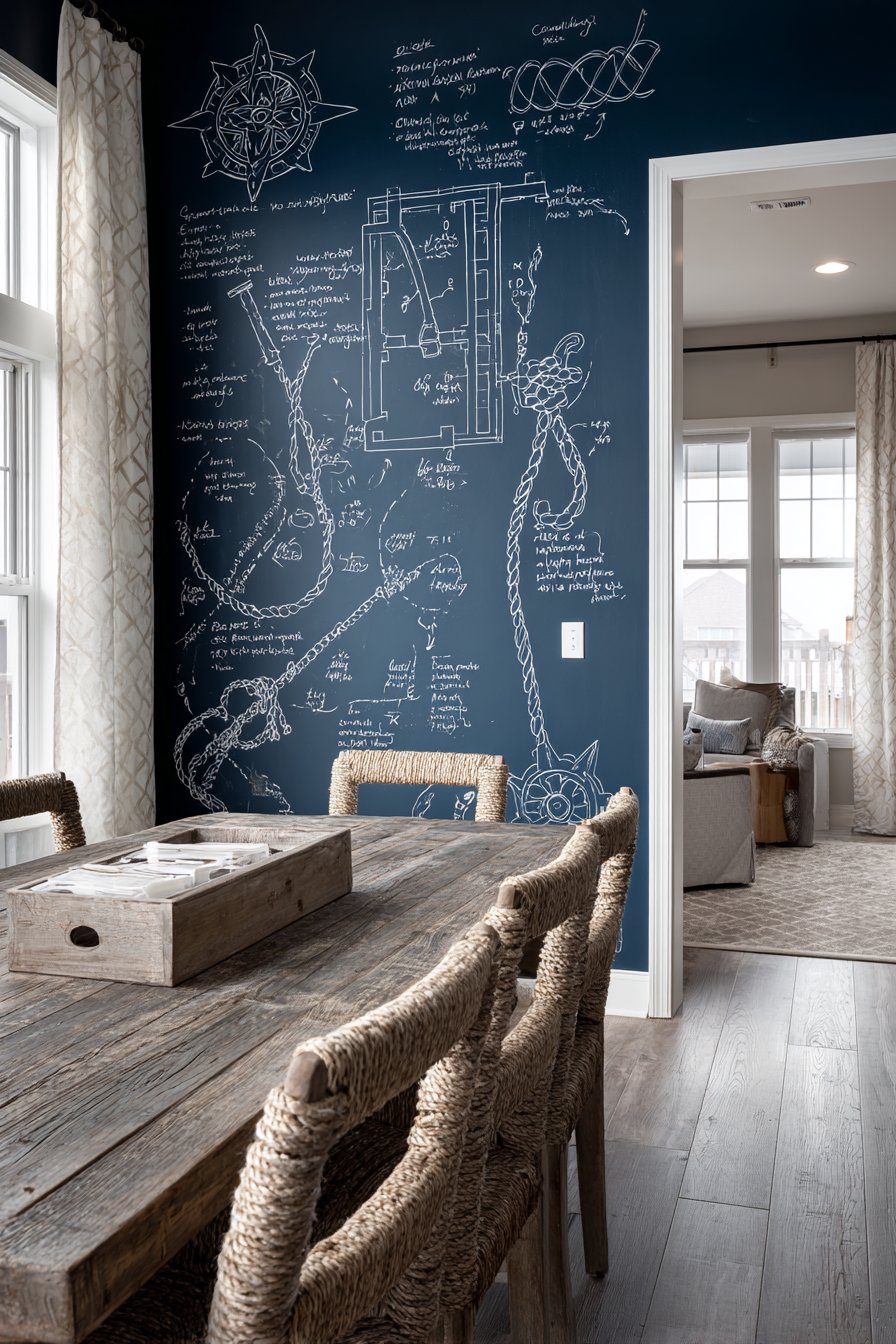
26. Coastal Dining Room with Sailing Knot Diagrams
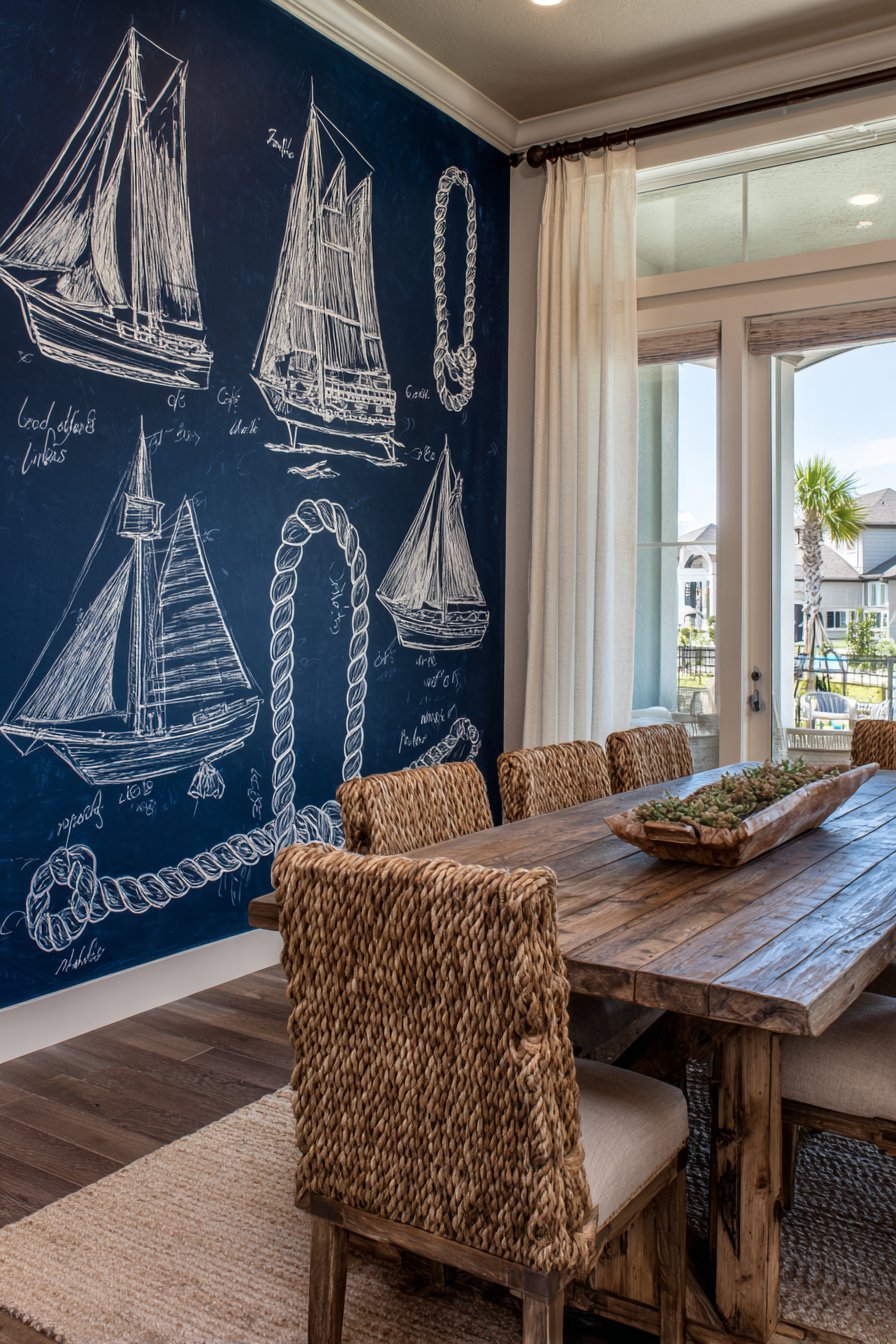
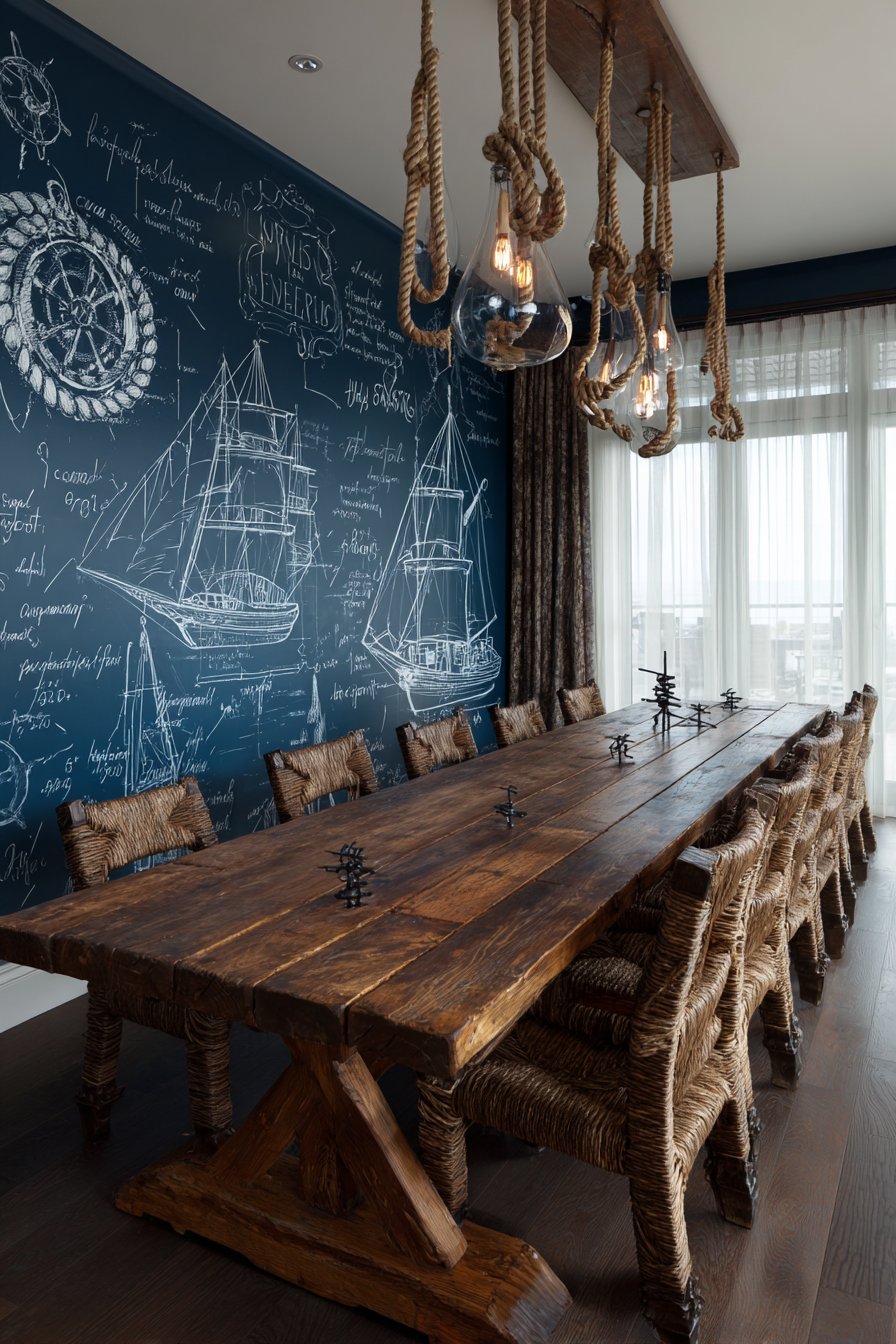
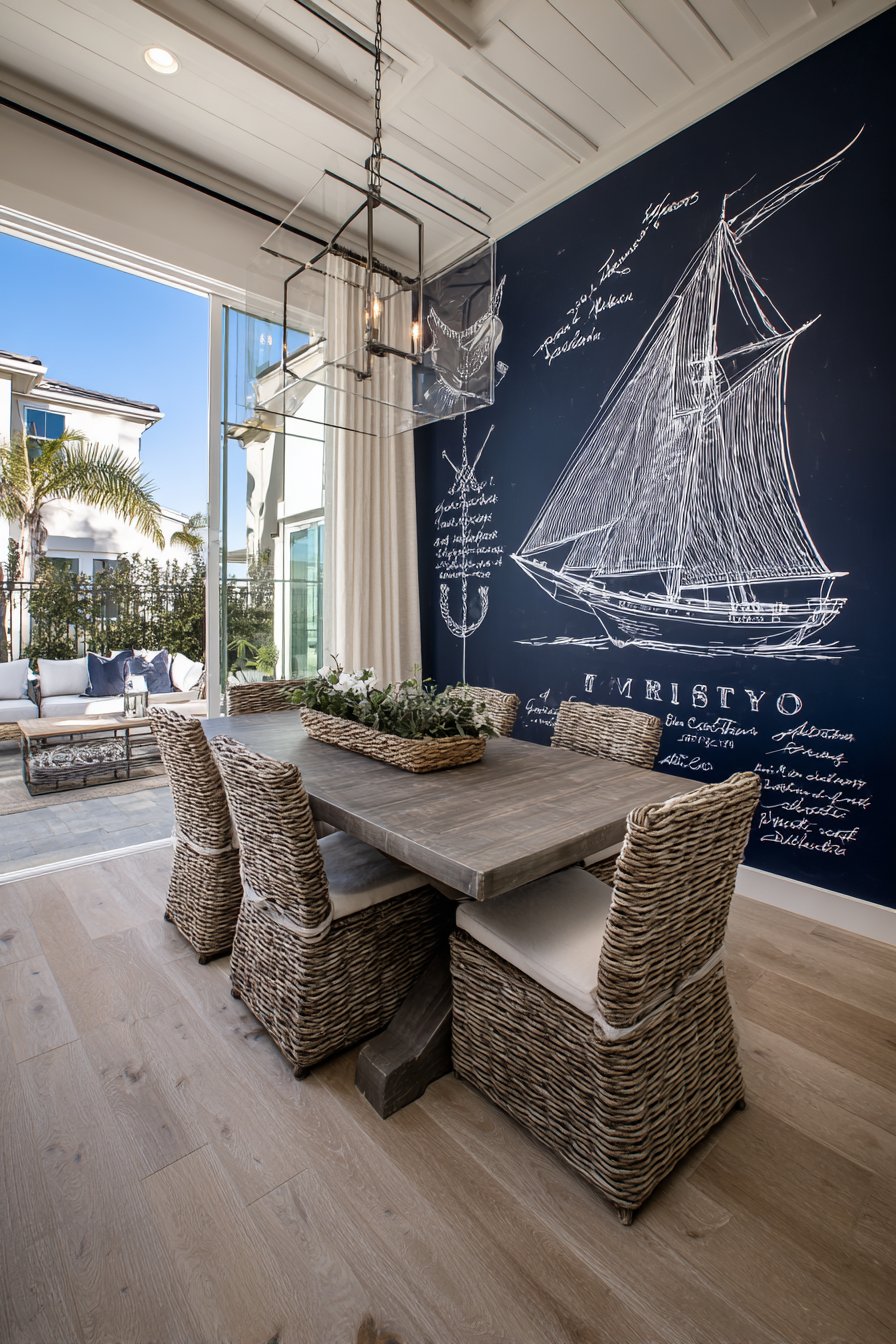
Coastal design reaches beyond decorative shells and beach photography to embrace maritime culture’s rich visual and technical traditions. This dining room concept features hand-drawn sailing knot diagrams and nautical terminology on navy blue walls using white markers. The educational line drawings create interesting maritime accent while serving as conversation starters during dinner gatherings, proving that wall drawing ideas can spark interaction and learning while beautifying spaces. This approach demonstrates that the most successful thematic design draws from authentic cultural practices rather than commercial interpretations of style.
The weathered wood dining table with rope-wrapped chairs extends the seaside theme into three-dimensional space while introducing tactile elements and authentic maritime materials. These furniture choices reference actual boat building traditions and sailing equipment rather than merely suggesting “coastal style” through color choices. The rope wrapping on chairs provides functional comfort while demonstrating traditional maritime craftsmanship—the kind of authentic detail that separates genuine coastal design from superficial beach theming. The wall drawing ideas complement these material choices by showcasing actual nautical knowledge rather than generic ocean imagery.
Natural light through sheer curtains creates soft, diffused illumination reminiscent of marine fog or overcast coastal days. This lighting quality highlights the white knot diagrams against navy walls while maintaining the relaxed, casual atmosphere appropriate for coastal dining spaces. The professional photography captures the rich navy background and crisp white drawings, proving that high contrast wall drawing ideas create strong visual impact while requiring relatively simple execution techniques.
Key Design Tips: Research authentic sailing knots used in maritime tradition—bowline, clove hitch, sheet bend. Draw knots with accurate rope paths and crossings for educational value. Include knot names and typical uses beneath each diagram. Use white markers with good opacity for clear contrast against navy walls. Vary knot sizes across the wall to create visual hierarchy. Position knots to fill wall space proportionally without overcrowding. Add simple nautical terminology or sailing vocabulary between knot diagrams. Consider nautical chart elements or compass rose as additional decorative elements.
27. Modern Nursery with Constellation and Star Patterns
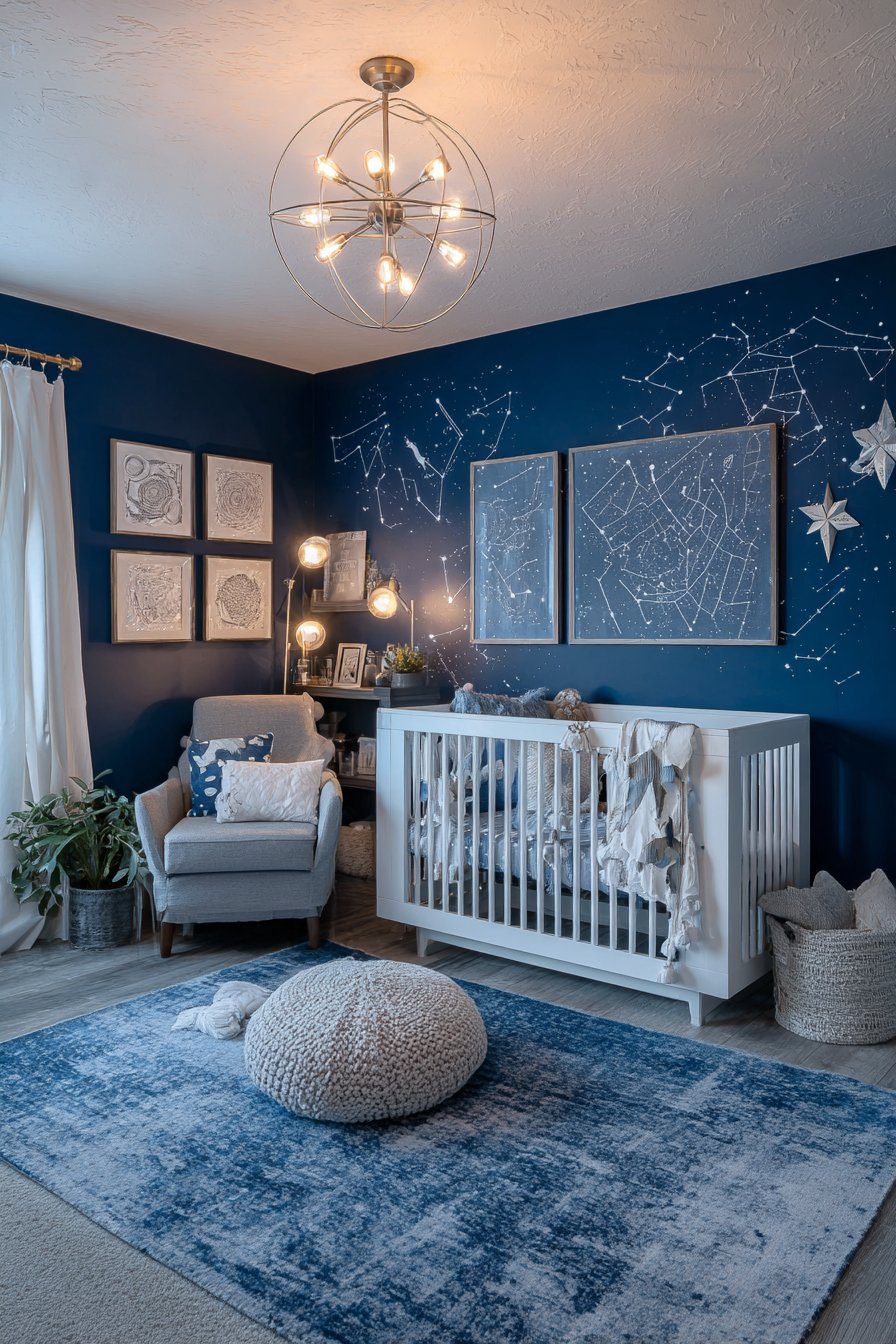
Creating nursery environments that support healthy sleep patterns while providing visual stimulation for development requires thoughtful design choices. This concept features hand-drawn constellation patterns and star maps directly on deep blue accent walls using silver and white markers. The astronomical line drawings create dreamy nighttime sky theme that’s both calming and educational, introducing young children to celestial patterns they’ll recognize throughout life. This sophisticated approach to nursery wall drawing ideas proves that children’s spaces need not be overly cute or cartoon-like to be appropriate and engaging for young occupants.
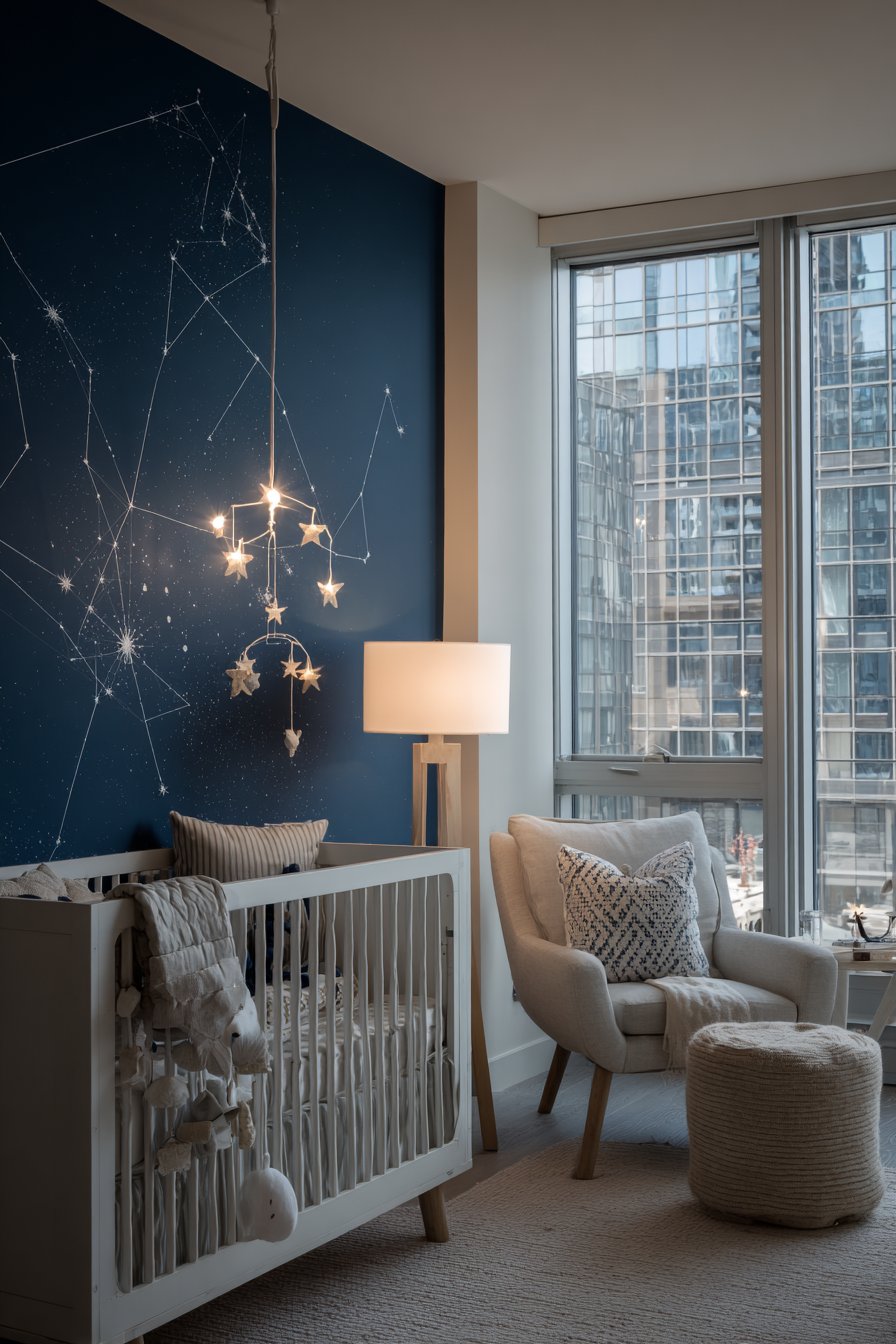
The white crib with celestial mobile and star-patterned textiles creates cohesive theme that reinforces the constellation wall drawings without overdoing the concept. This careful restraint prevents theme overload that can make spaces feel more like retail displays than livable rooms. The deep blue wall color establishes nighttime atmosphere conducive to sleep while the silver and white stars provide just enough visual interest to be engaging during waking hours. This balance between stimulation and calm reflects understanding of infant developmental needs and sleep science.
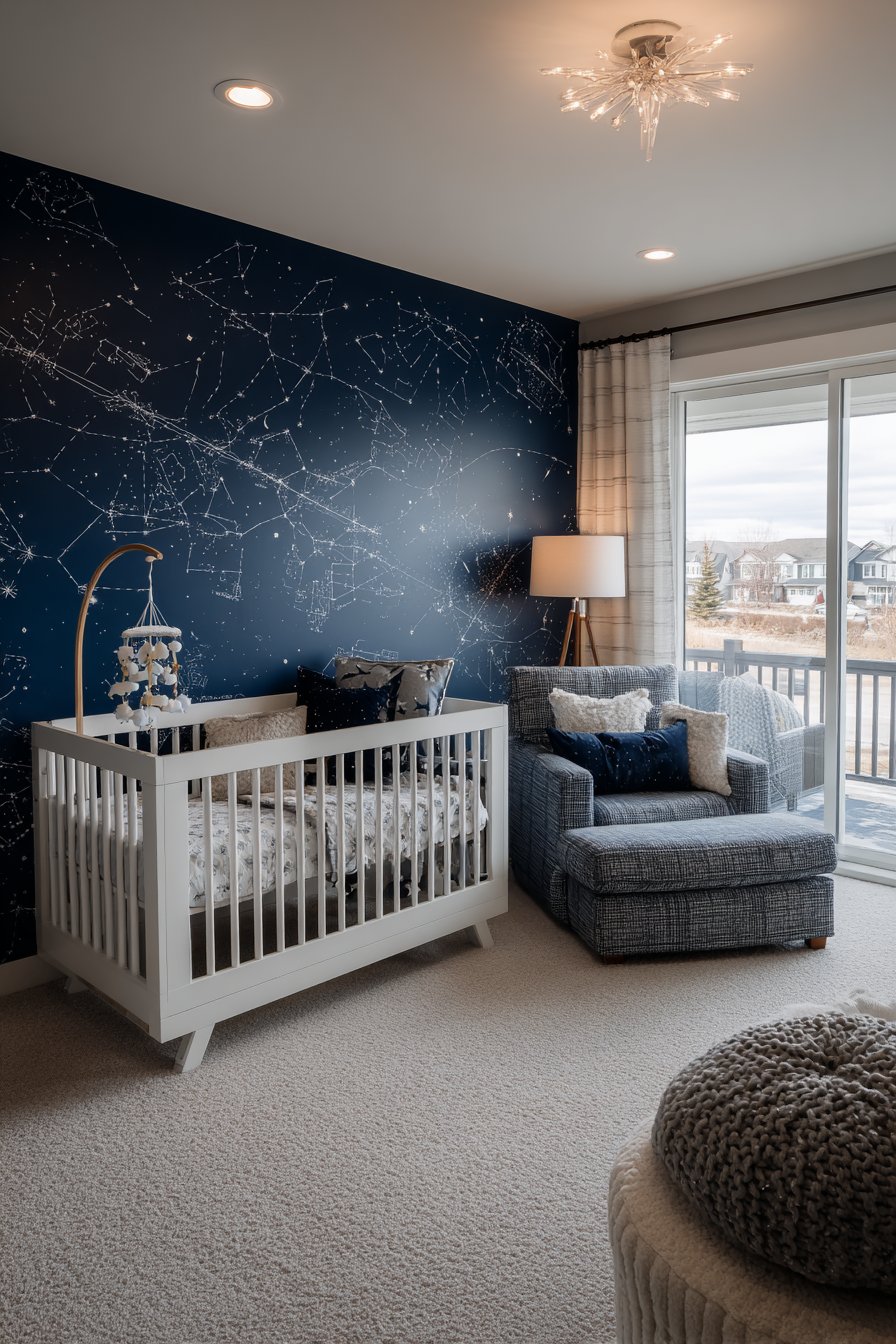
Soft ambient lighting mimics starlight while providing the gentle illumination necessary for nighttime feedings and diaper changes. The lighting design avoids harsh overhead fixtures that could disturb sleep patterns, instead creating the peaceful, dimly lit environment that supports healthy infant sleep. The celestial wall drawing ideas appear to glow softly in this low light, creating magical atmosphere without the stimulation of screens or electronic projections.
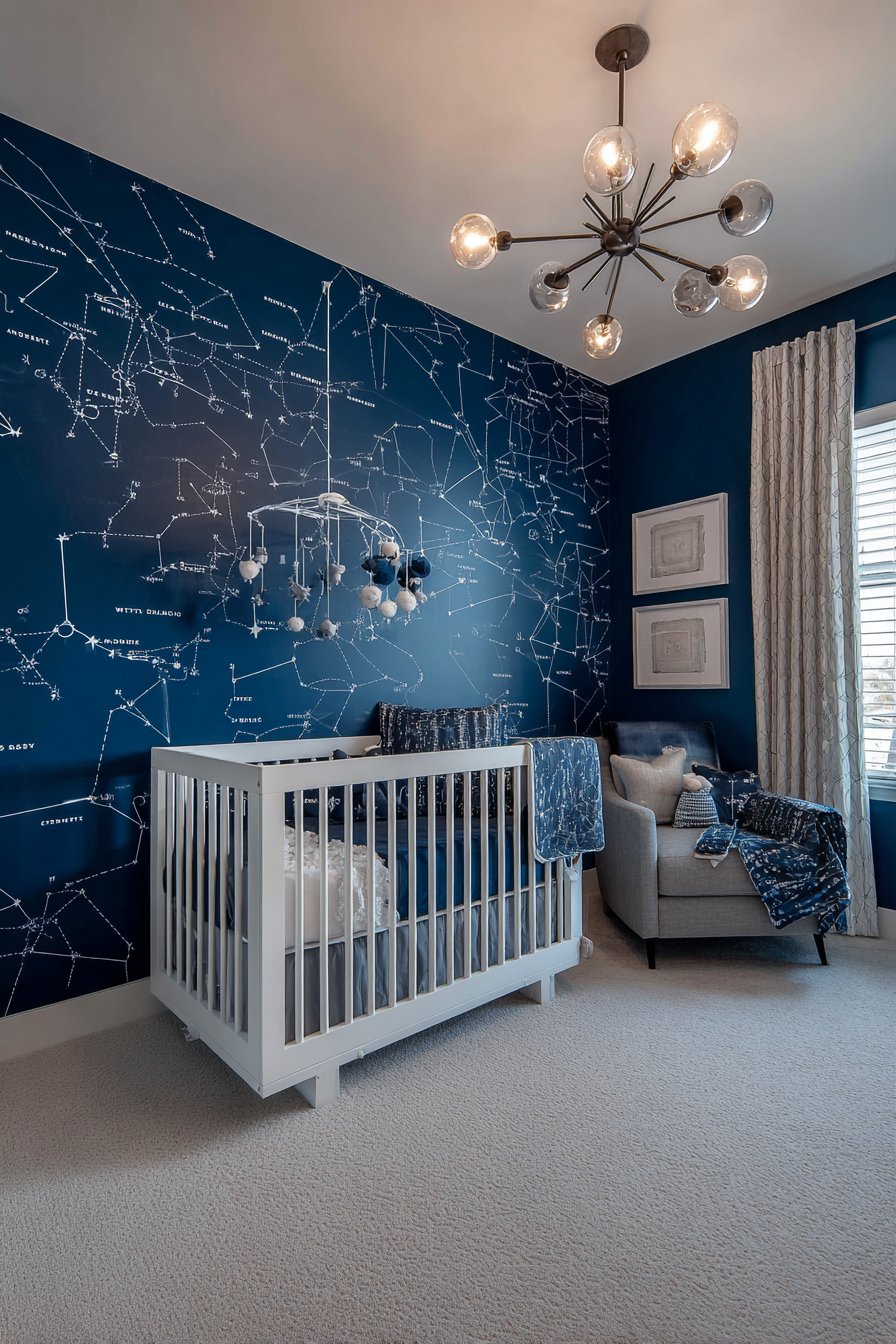
Key Design Tips: Research actual constellation patterns for educational accuracy. Use silver metallic markers for stars that appear to shimmer in low light. Include well-known constellations like Ursa Major (Big Dipper) that parents can teach children. Draw constellation lines connecting stars for recognizable patterns. Vary star sizes to represent apparent magnitude differences. Position constellations at different heights across the wall. Add occasional shooting stars or moon phases for visual interest. Use glow-in-the-dark markers sparingly if desired for nighttime visibility.
28. Farmhouse Mudroom with Seasonal Activity Calendars
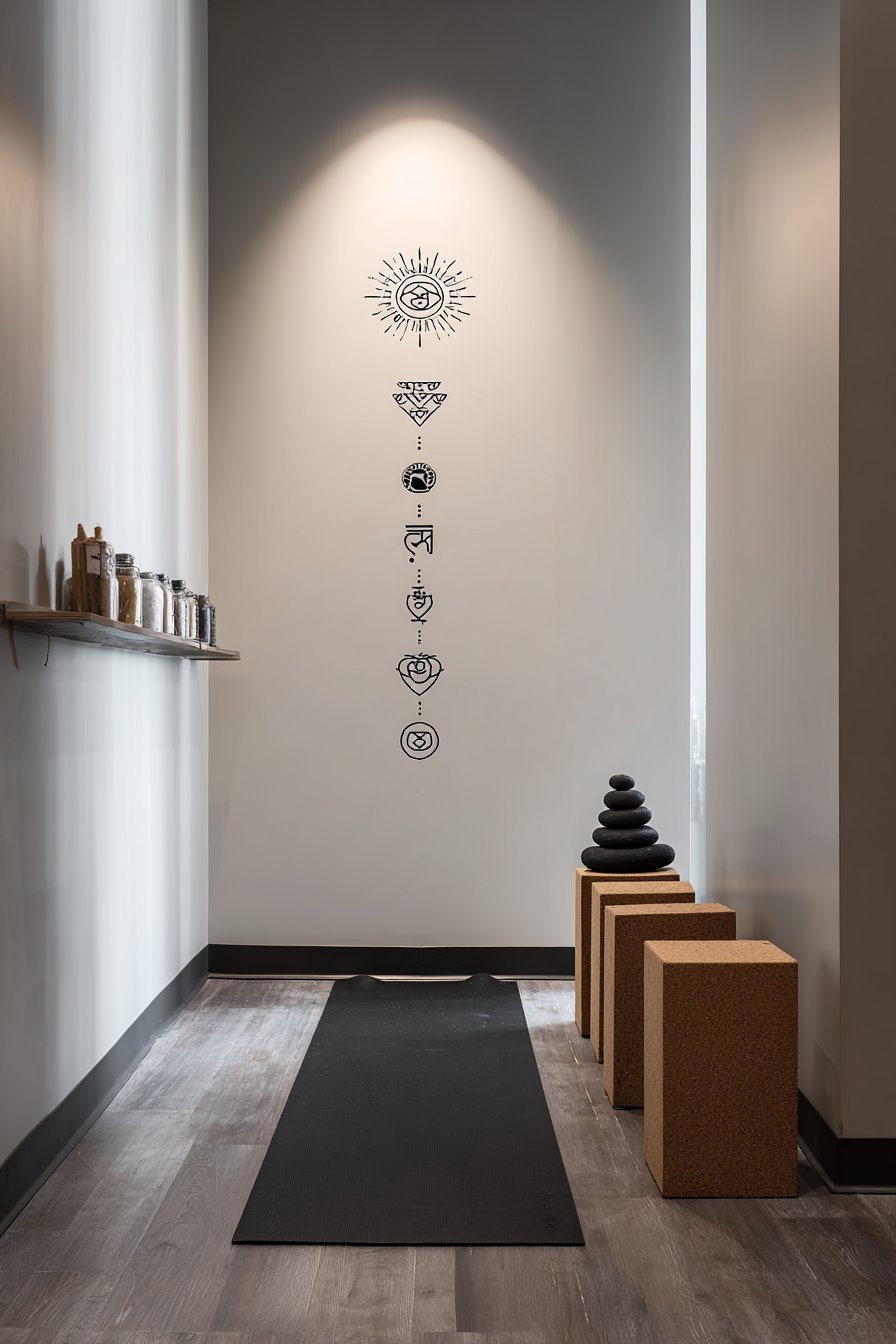
Modern family life requires organizational systems that help coordinate activities and maintain awareness of seasonal tasks, making wall drawing ideas that combine planning functionality with farmhouse charm particularly valuable. This concept features hand-drawn seasonal checklists and activity calendars directly on painted wood plank walls using black markers. The functional line drawings include monthly to-do items and family event reminders that can be updated regularly, transforming the mudroom wall into family command center while maintaining the rustic aesthetic essential to farmhouse style. This practical approach proves that the most useful wall drawing ideas serve daily life rather than merely decorating it.

The built-in bench seating with storage and coat hooks creates organized entry system that controls the chaos that typically accumulates in family transition spaces. These functional elements prove that farmhouse style should prioritize practical living over decorative appearance—though when executed well, the two goals align perfectly. The hand-drawn calendars and checklists integrate seamlessly with the storage systems, creating unified organizational approach where information and storage work together to support family function. This attention to systems thinking separates well-designed family spaces from merely decorated ones.
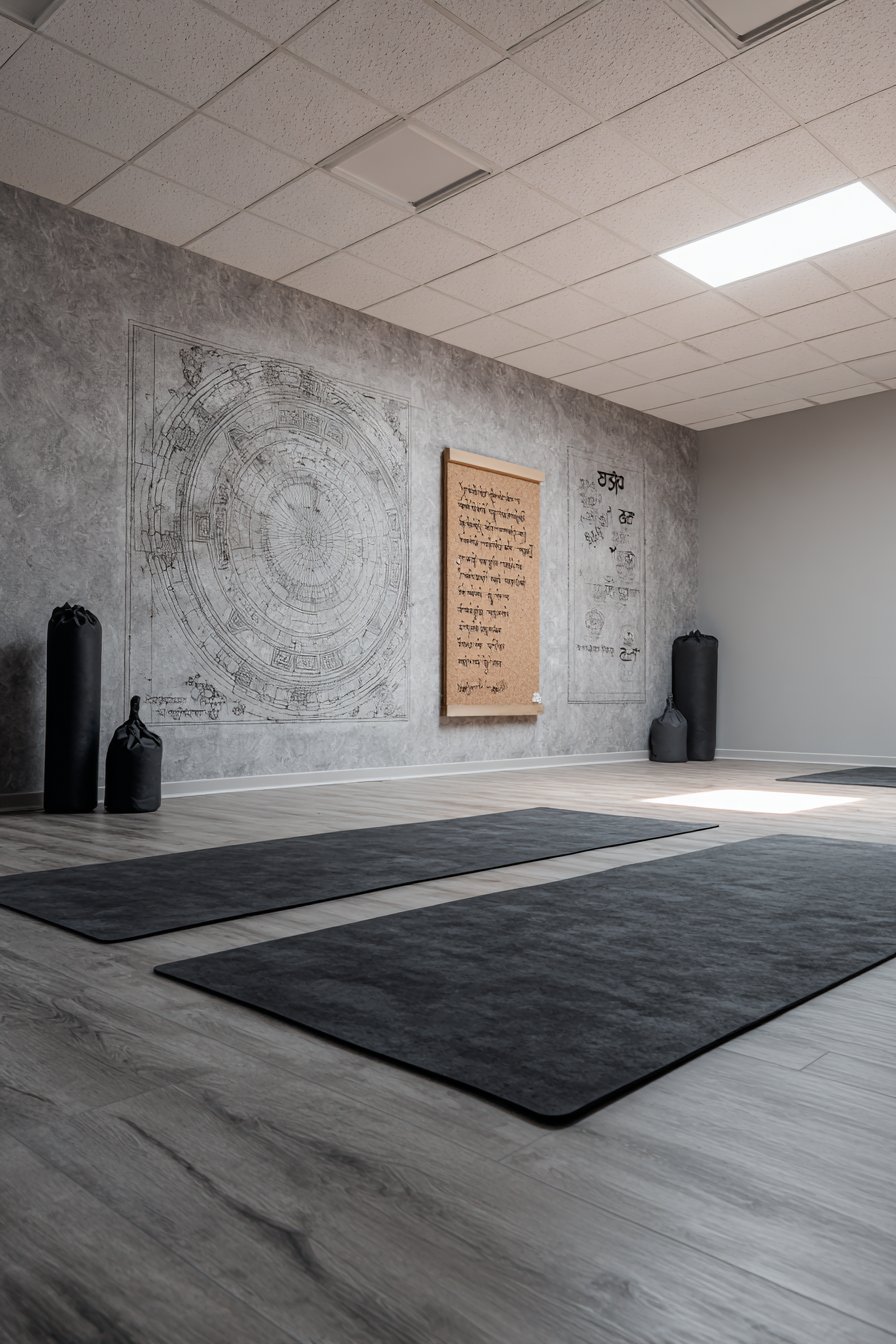
Natural daylight from adjacent windows ensures the practical wall drawing ideas remain clearly visible throughout the day when family members come and go. The painted wood plank walls provide the textured backdrop characteristic of farmhouse style while offering suitable surface for marker-drawn planning systems. The rustic aesthetic welcomes the imperfect, hand-drawn quality of the calendars and lists, proving that farmhouse style celebrates handmade and personal over commercial and perfect.
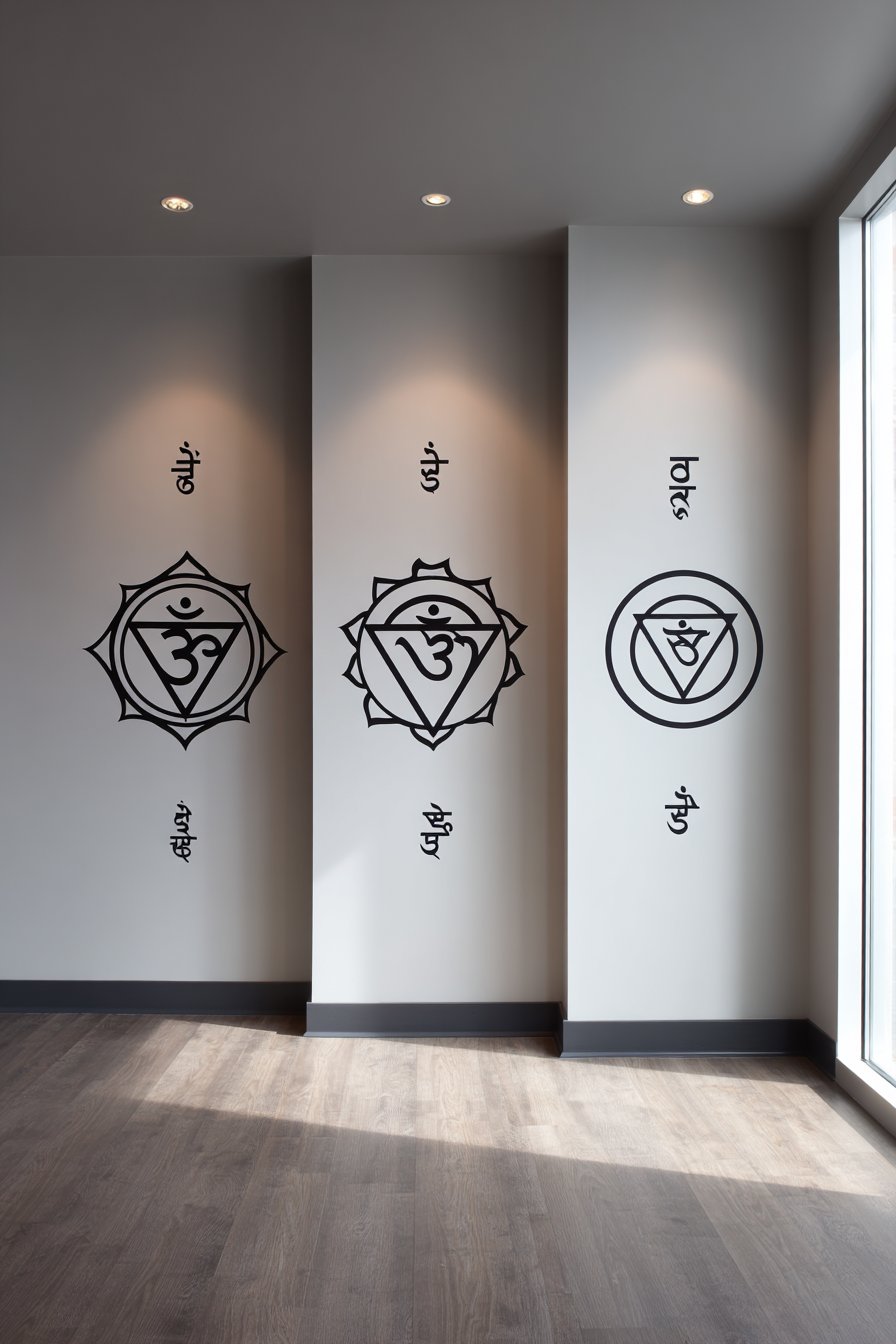
Key Design Tips: Use permanent markers for fixed calendar structure and dry-erase markers for changeable content. Draw monthly calendar grids with adequate space for noting activities. Include seasonal task lists relevant to your climate and lifestyle—garden planning, holiday prep. Position calendars at adult height for easy reading and updating. Keep multiple markers and erasers immediately accessible. Draw dividing lines or decorative headers to separate different organizational sections. Include a “this week” or “today” section for immediate awareness. Consider adding a small drawn shelf or basket icon where actual keys or notes can hang.
29. Minimalist Yoga Studio with Chakra Symbols and Sanskrit
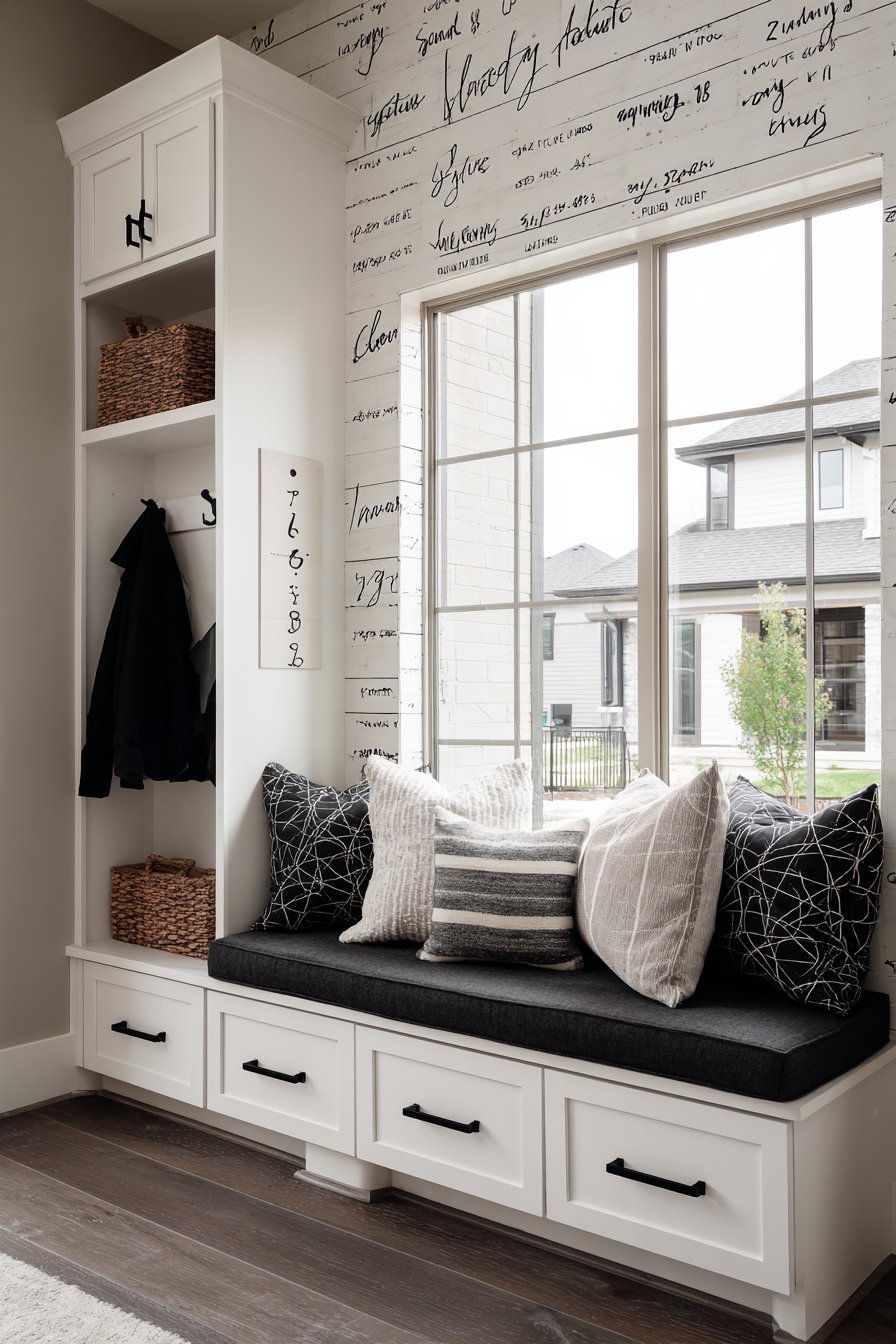
Spaces dedicated to yoga practice benefit from wall drawing ideas that support spiritual practice and mindfulness without creating distraction or visual overwhelm. This concept features hand-drawn chakra symbols and Sanskrit mantras on smooth light gray walls using simple black ink. The spiritual line drawings create meditation focal points while maintaining the serene, uncluttered environment essential to effective practice spaces. This minimal approach demonstrates that sacred or spiritual wall drawing ideas need not be elaborate or colorful to be meaningful—in fact, simplicity often enhances rather than detracts from spiritual power and presence.
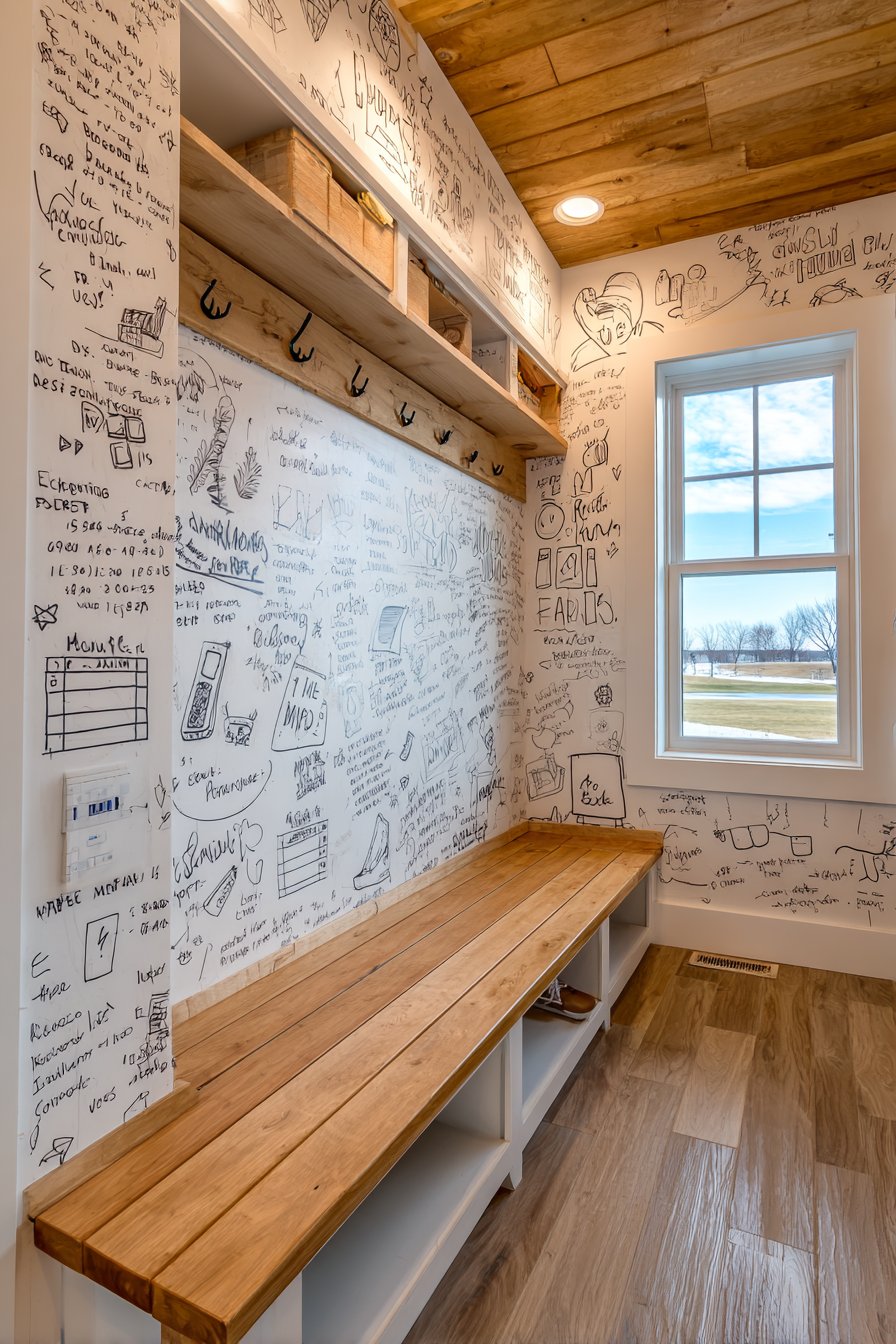
The cork flooring and minimal props maintain the clean aesthetic while providing practical surfaces and tools for yoga practice. These carefully chosen elements prioritize function and comfort over decorative impact, proving that the most effective yoga studios eliminate unnecessary elements that might distract from practice. The wall drawing ideas provide just enough visual focus to support concentration practices without creating the busy, stimulating environment that would contradict yoga’s meditative purposes. This restraint requires confidence—the ability to stop before adding too much rather than continuing until the design feels “complete” by conventional standards.
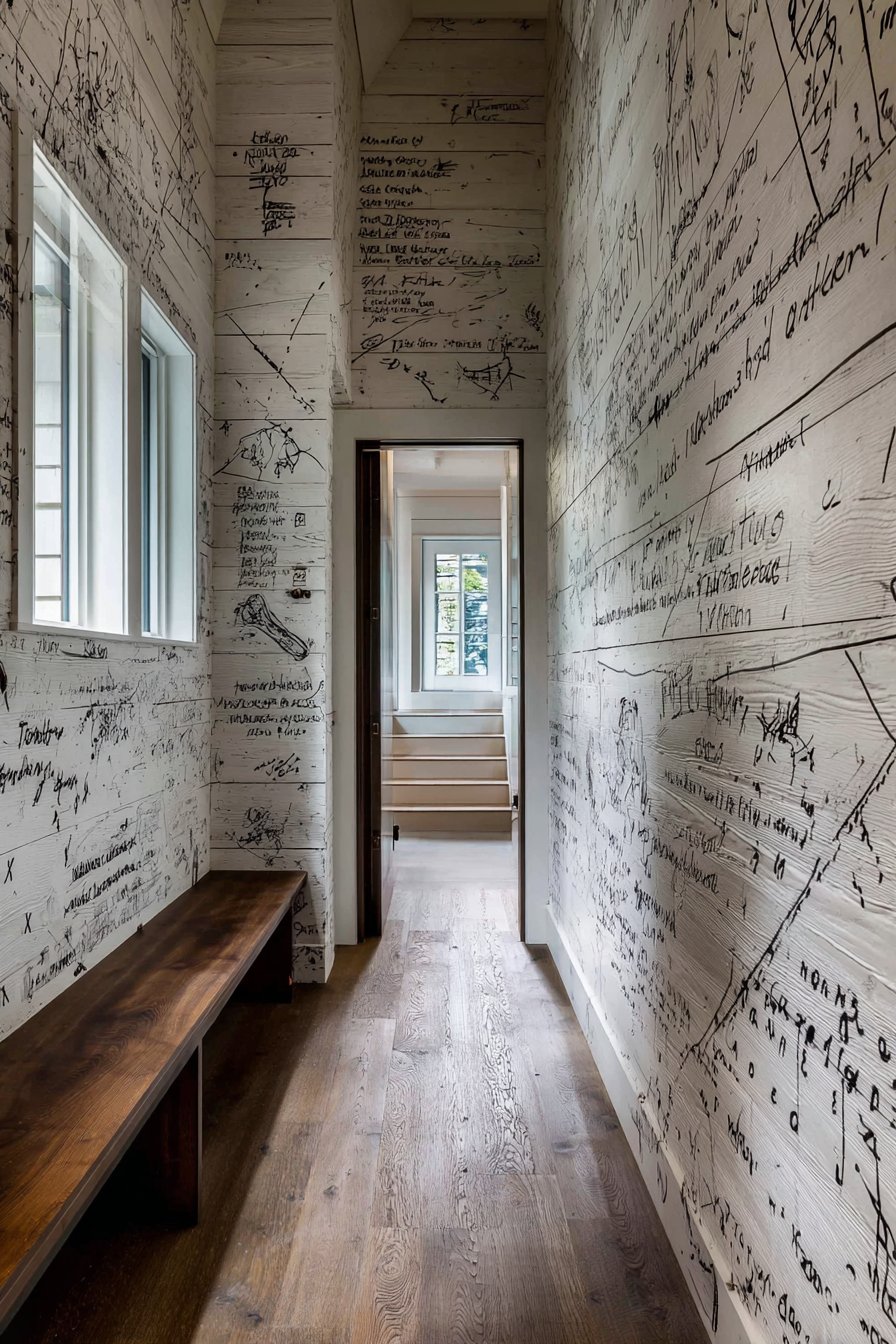
Soft diffused natural lighting creates peaceful atmosphere that supports the meditative quality of both the space and the wall drawing ideas. The even, gentle illumination prevents harsh shadows that could create tension or discomfort during practice while ensuring the chakra symbols and Sanskrit text remain clearly visible. The light gray walls reflect available light softly, creating luminous background that enhances the black ink drawings without creating stark contrasts that might jar the nervous system. This sensitivity to how design choices affect physiological and psychological states separates thoughtfully designed yoga studios from merely empty rooms with mats.
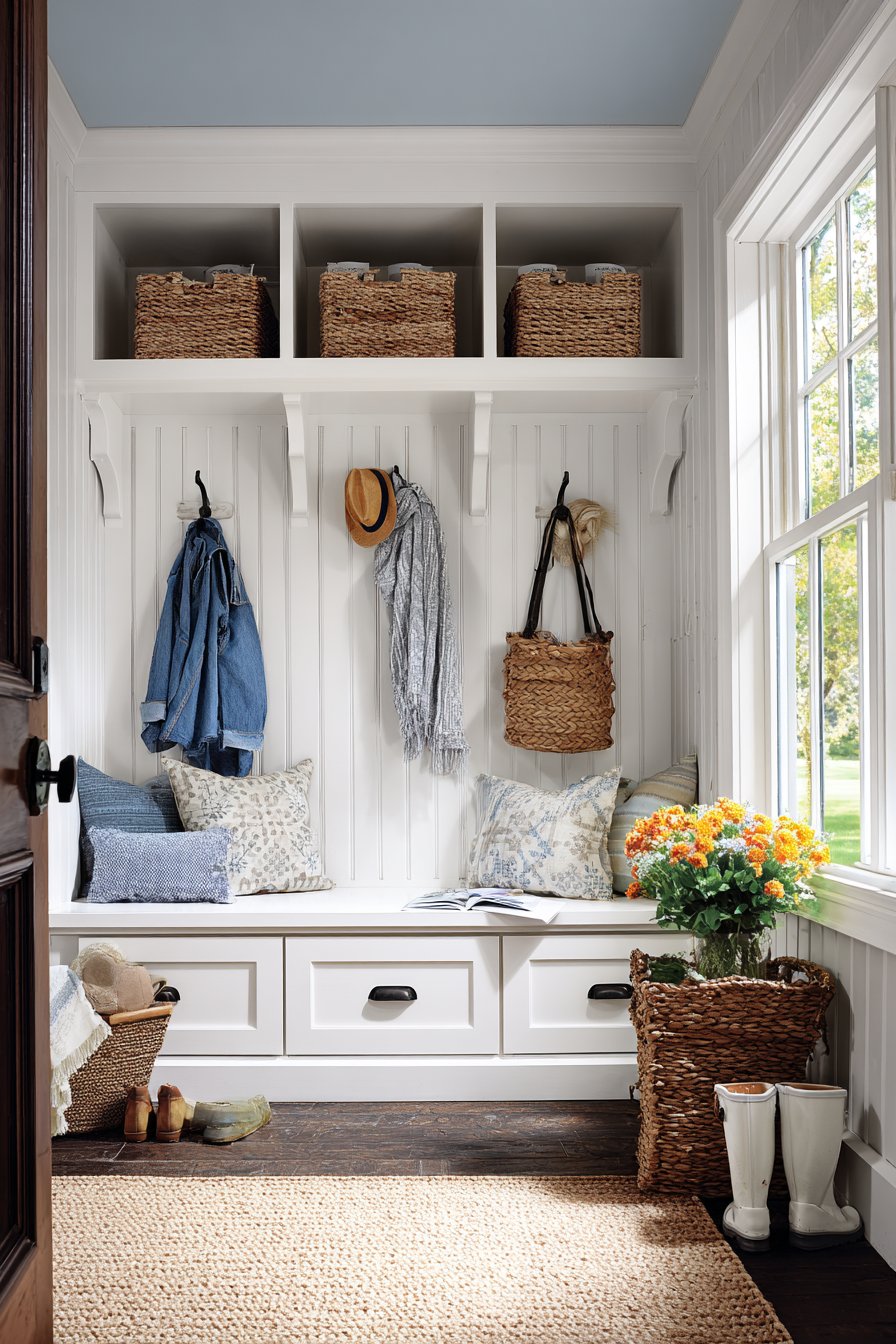
Key Design Tips: Research accurate chakra symbols and their traditional colors if choosing to add subtle color. Use proper Sanskrit script from reliable sources—consult yoga teachers for accuracy. Keep drawings small to medium scale to avoid overwhelming the meditative space. Position chakra symbols at appropriate body heights when standing in meditation posture. Include mantras that resonate with your personal practice rather than generic selections. Use precise, clean line work that reflects the concentration required in yoga practice. Consider symmetry and balance in placement to support centered, grounded feeling. Ensure adequate breathing room around each symbol—don’t crowd the wall.
Why These Wall Drawing Ideas Represent the Best in Home Design
The twenty-nine wall drawing ideas explored throughout this comprehensive guide represent the pinnacle of accessible, personalized interior design for multiple compelling reasons. First and foremost, these concepts demonstrate that transformative design need not require substantial financial investment or professional artistic training. While hiring muralists or purchasing expensive wallcoverings and artwork can certainly create beautiful results, hand-drawn wall art offers an alternative path that prioritizes personal expression, authentic creativity, and the unique character that comes from imperfection and human touch. These wall drawing ideas prove that some of the most meaningful and visually impactful home decor emerges from the resident’s own hands rather than being purchased from retailers or commissioned from professionals.
The versatility demonstrated across these wall drawing ideas showcases their applicability to virtually every room type, design style, and functional need. From bohemian bedrooms adorned with intricate mandalas to minimalist home offices featuring inspirational calligraphy, from playful children’s rooms with interactive cityscapes to sophisticated Art Deco powder rooms with geometric gold patterns—these concepts span the full spectrum of residential design possibilities. This adaptability makes wall drawing ideas particularly valuable for homeowners seeking to personalize rental properties where permanent modifications like paint color changes might be restricted, or for design enthusiasts working within limited budgets who still aspire to create distinctive, memorable spaces. The technical approaches vary from simple line work requiring only markers and steady hands to more complex compositions demanding artistic planning and precise execution, ensuring that individuals at every skill level can find appropriate projects.
The authentic, handcrafted quality of these wall drawing ideas addresses a growing cultural hunger for personalization and meaning in home environments. In an era of mass production where identical furniture pieces, artwork, and decorative accessories appear in countless homes, hand-drawn wall art offers genuine uniqueness—no two hand-drawn mandalas, botanical illustrations, or geometric patterns will ever be identical, even when following the same design concept. This authenticity extends beyond mere visual differentiation; the visible evidence of human creation—the slight variations in line weight, the imperfect circles, the unique lettering style—creates emotional resonance that commercial alternatives simply cannot replicate. These imperfections, far from being flaws, represent the artist’s presence and the moment of creation, transforming walls from mere architectural surfaces into personal statements and memory holders. Family names in a mudroom, growth chart trees recording children’s development, vision boards tracking evolving goals—these functional wall drawing ideas become integrated into daily life and family history in ways that purchased artwork never can.
From a practical design perspective, these wall drawing ideas excel at solving common interior design challenges that homeowners frequently encounter. Large blank walls that feel overwhelming to furnish can be transformed through bold tree silhouettes or geometric patterns that create instant focal points without requiring furniture purchases or structural changes. Awkward architectural features like sloped stairway walls become opportunities for creative ascending botanical designs that work with rather than against the space’s unique characteristics. Budget constraints that might prevent tiled bathroom upgrades can be addressed through trompe l’oeil tile pattern drawings that achieve similar visual impact at fraction of the cost. Rental restrictions that prohibit painting or permanent modifications can be navigated through chalkboard paint sections or careful marker work that adds personality without damaging underlying surfaces. These practical applications demonstrate that wall drawing ideas serve as legitimate design solutions rather than merely decorative afterthoughts.
The educational and cultural value embedded in many of these wall drawing ideas elevates them beyond simple decoration into meaningful content that enriches residents’ lives and sparks conversations. Sailing knot diagrams in coastal dining rooms teach actual maritime skills while providing visual interest, constellation patterns in nurseries introduce astronomical concepts to developing minds, chakra symbols in yoga studios support spiritual practice, recipe cards in farmhouse kitchens preserve family culinary traditions, and cocktail recipes in home bars entertain guests while facilitating mixology experiments. This integration of information and decoration reflects a holistic approach to home design that recognizes spaces serve multiple purposes simultaneously—they shelter us, express our identities, support our activities, and shape our experiences. The best wall drawing ideas accomplish all these functions simultaneously rather than prioritizing aesthetics over utility or vice versa.
The sustainability aspect of these wall drawing ideas deserves recognition in an era increasingly concerned with environmental impact and conscious consumption. Choosing to draw directly on walls rather than purchasing framed artwork, wallpaper, or wall decals reduces consumption of manufactured goods and their associated environmental costs—manufacturing, packaging, shipping, and eventual disposal. The materials required for most wall drawing ideas—quality markers, paint pens, brushes, and paint—represent minimal resource use compared to commercial alternatives, and these supplies can be used for multiple projects over time. Furthermore, hand-drawn wall art can be easily modified, updated, or removed as tastes change or life circumstances evolve, reducing the accumulation of discarded decor items that characterizes less thoughtful consumption patterns. This flexibility supports the sustainable principle of creating adaptable, long-lasting spaces rather than disposable, trend-driven interiors that require frequent complete redesigns.
The therapeutic and mindfulness benefits of creating these wall drawing ideas extend their value beyond the finished results into the process itself. Engaging in focused artistic activity—planning compositions, practicing lettering or drawing techniques, carefully executing designs on walls—provides meditative benefits similar to other mindful practices. The concentration required eliminates mental multitasking and racing thoughts, creating present-moment awareness and flow states that promote mental wellbeing. For individuals who don’t identify as artists, successfully completing wall drawing projects builds confidence and demonstrates that creative expression remains accessible regardless of formal training or natural talent. For families, collaborative wall drawing projects create shared experiences and memories while teaching children that personalization and self-expression are valuable parts of creating home rather than passive consumption of commercially available products.
These wall drawing ideas represent the best current thinking about how residential spaces should balance multiple competing priorities—aesthetic beauty and practical function, personal expression and design coherence, budget consciousness and quality results, trend awareness and timeless appeal, bold statements and livable restraint. Each concept demonstrates that thoughtful design considers context, purpose, and residents’ actual needs rather than blindly following trends or design rules. The bohemian bedroom’s mandala patterns work because they align with that style’s spiritual and artistic values; the minimalist meditation room’s Enso circle succeeds through its restraint rather than despite it; the farmhouse mudroom’s organizational calendars serve because they prioritize daily function over decorative perfection. This alignment between design choices and underlying values and purposes exemplifies excellent design thinking that homeowners can apply beyond these specific wall drawing ideas to all their design decisions.
Conclusion
The journey through these twenty-nine wall drawing ideas reveals a fundamental truth about contemporary home design: the most meaningful and personally resonant spaces emerge from authentic creative expression rather than passive consumption of mass-produced decor. Whether you’re drawn to the intricate spiritual geometry of bohemian mandalas, the clean sophistication of minimalist calligraphy, the playful interaction of children’s chalkboard cityscapes, or the practical beauty of hand-lettered recipe cards, these concepts demonstrate that your walls offer unlimited potential for transformation through artistic intervention. The beauty lies not in achieving perfection but in embracing the visible evidence of human creation—the slightly wavering lines, the individual lettering style, the personal color choices that reflect your unique aesthetic sensibility.
As you consider implementing these wall drawing ideas in your own home, remember that the process matters as much as the result. Take time to practice techniques on paper before committing to walls, gather inspiration from multiple sources while maintaining your personal vision, and approach each project with patience and self-compassion. Start with smaller, less visible walls to build confidence before tackling prominent focal points. Invite family members or housemates to participate in collaborative designs that reflect shared values and create lasting memories. Document your work through photographs that capture both the creative process and finished results, creating visual records of your home’s evolution and your growing creative confidence.
The wall drawing ideas explored in this guide represent just the beginning of what’s possible when you view your walls as blank canvases awaiting personal artistic expression. Let these concepts inspire you to experiment, adapt, and ultimately create designs that authentically reflect your personality, values, and lifestyle. Your home should tell your story—make it one worth sharing through the powerful medium of hand-drawn wall art that transforms ordinary surfaces into extraordinary personal statements.
