
Designing a narrow dining room presents unique challenges that demand creative solutions and thoughtful spatial planning. Whether you’re working with a galley-style dining area, a slender space carved from an open floor plan, or a converted hallway transformed into a dining zone, the constraints of a narrow footprint need not limit your design ambitions. In fact, these compact spaces offer exciting opportunities to create intimate, purposeful dining environments that feel both functional and remarkably stylish. The key lies in understanding how to maximize every inch while maintaining visual appeal and practical usability.
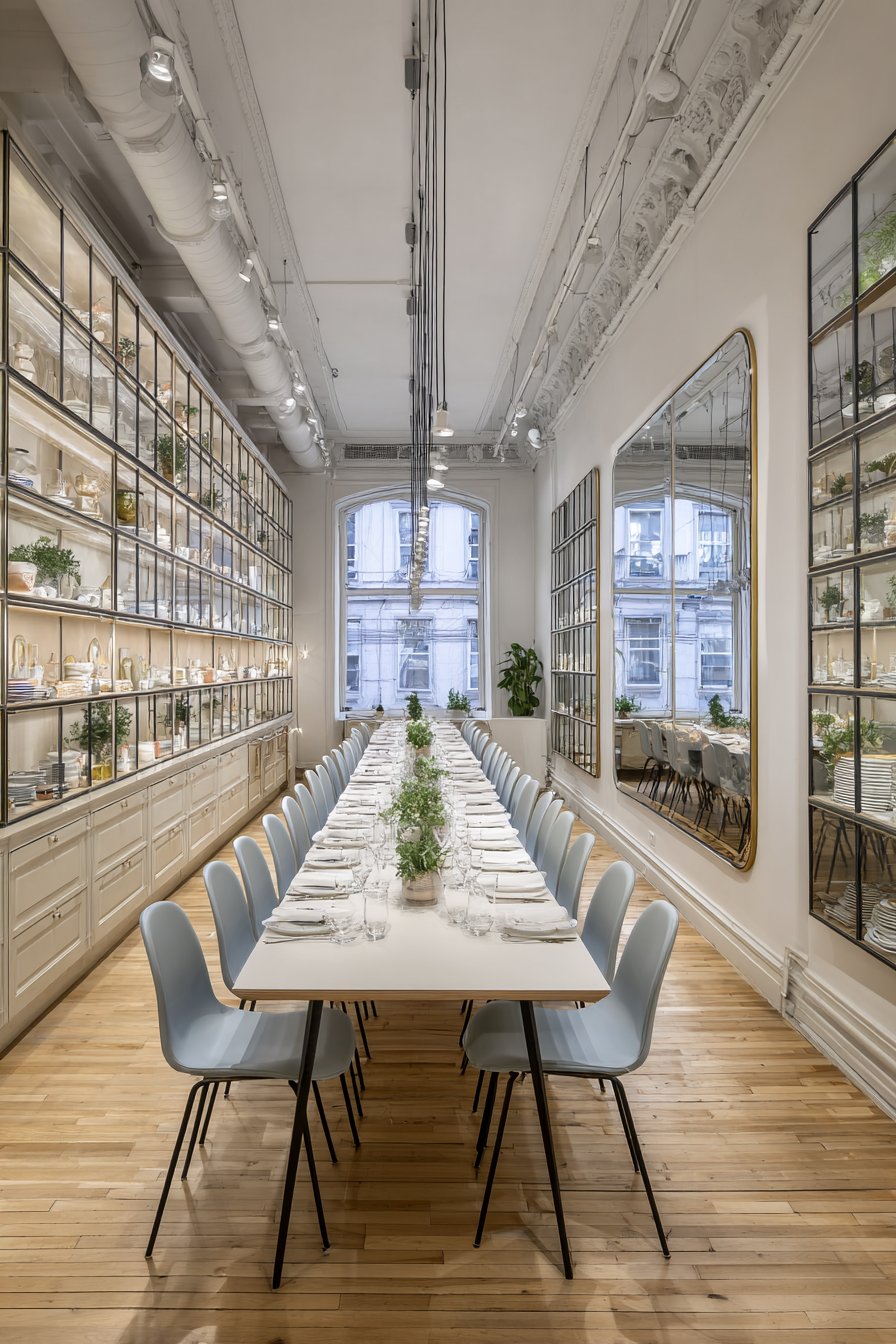
Throughout this comprehensive guide, we’ll explore twenty-one innovative narrow dining room ideas that demonstrate how strategic furniture selection, clever spatial arrangements, and intentional design choices can transform even the most challenging dimensions into inviting dining spaces. From Scandinavian minimalism that embraces light and simplicity to industrial aesthetics that celebrate raw materials, from space-saving convertible solutions to glamorous designs that prove narrow doesn’t mean limited—each approach offers distinct advantages for different lifestyles and preferences.
These carefully curated designs showcase how various styles—whether traditional, contemporary, bohemian, or transitional—can be adapted to narrow footprints without sacrificing comfort or visual impact. You’ll discover practical strategies for furniture placement, lighting techniques that enhance spatial perception, color palettes that open up tight quarters, and material selections that add depth without overwhelming. Let these narrow dining room ideas inspire your own transformation, proving that thoughtful design can turn spatial constraints into distinctive advantages.
1. Sleek Minimalist Dining with Streamlined Silhouettes
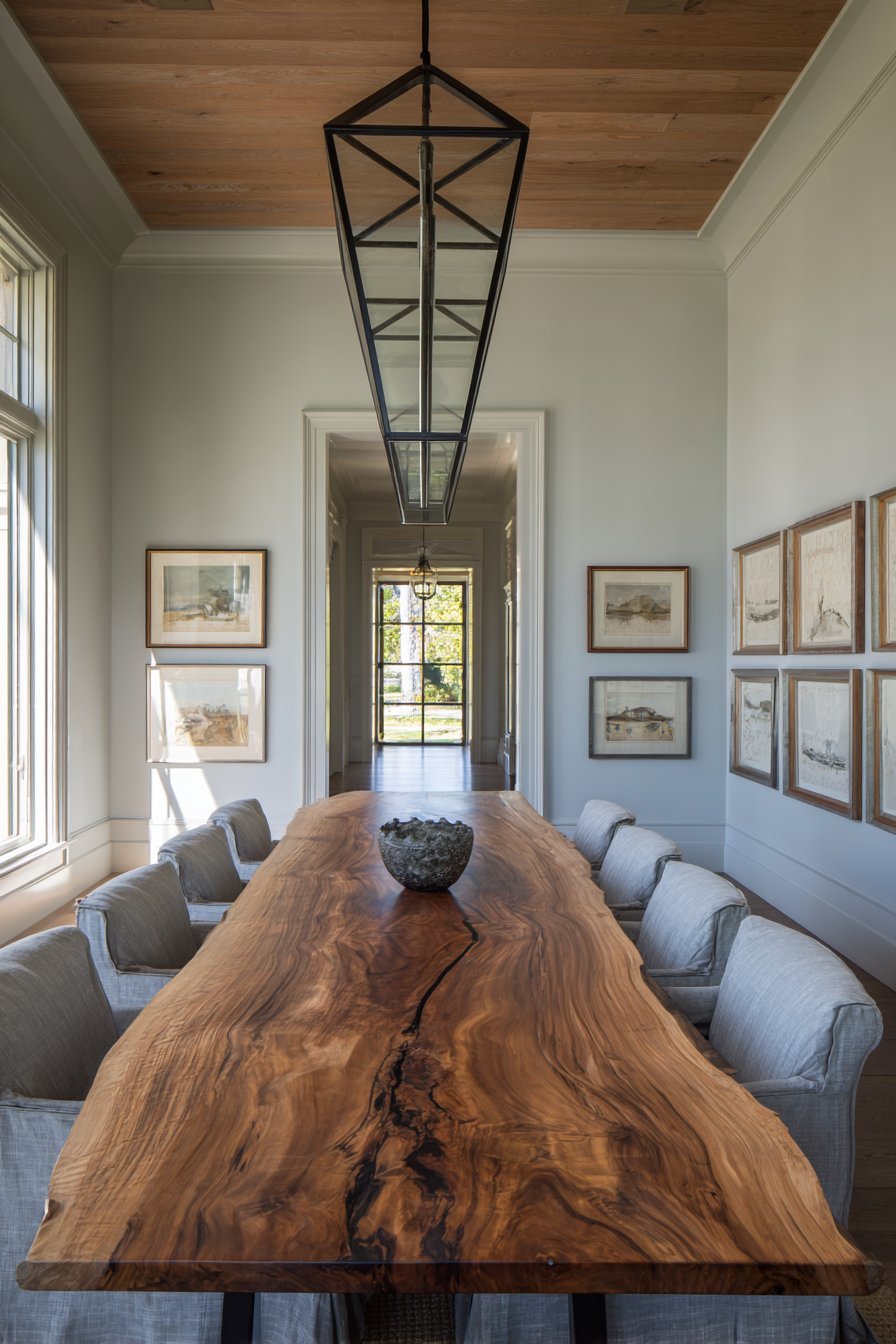
The foundation of this narrow dining room ideas approach centers on a slim rectangular walnut dining table with minimalist metal legs that create an elegant yet unobtrusive presence along the length of the space. The rich walnut grain provides warmth and sophistication while the slender metal legs maintain visual lightness, preventing the table from dominating the room. Six low-profile upholstered dining chairs in soft gray linen are carefully arranged to allow comfortable movement around the table, their compact design ensuring that the narrow footprint remains functional for daily use and entertaining alike.
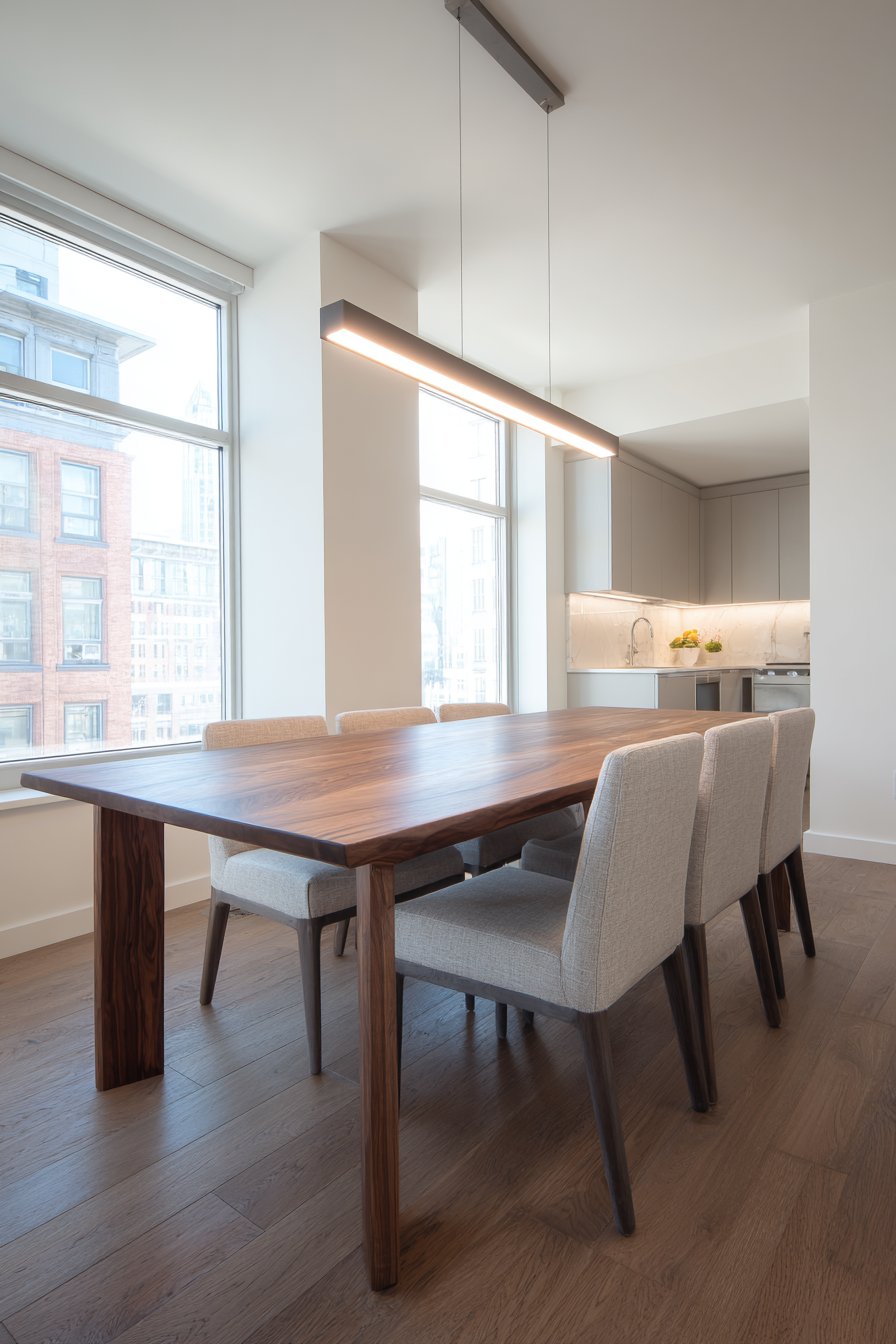
Overhead, a linear LED pendant light fixture hangs centered above the table, providing focused illumination that draws the eye lengthwise through the space while serving the practical purpose of task lighting during meals. The fixture’s streamlined design complements the minimalist aesthetic without adding visual clutter. Light gray walls work harmoniously with the gray upholstery, creating a cohesive color story that reflects natural daylight streaming from a window at the room’s end, maximizing the brightness and openness of the compact area.
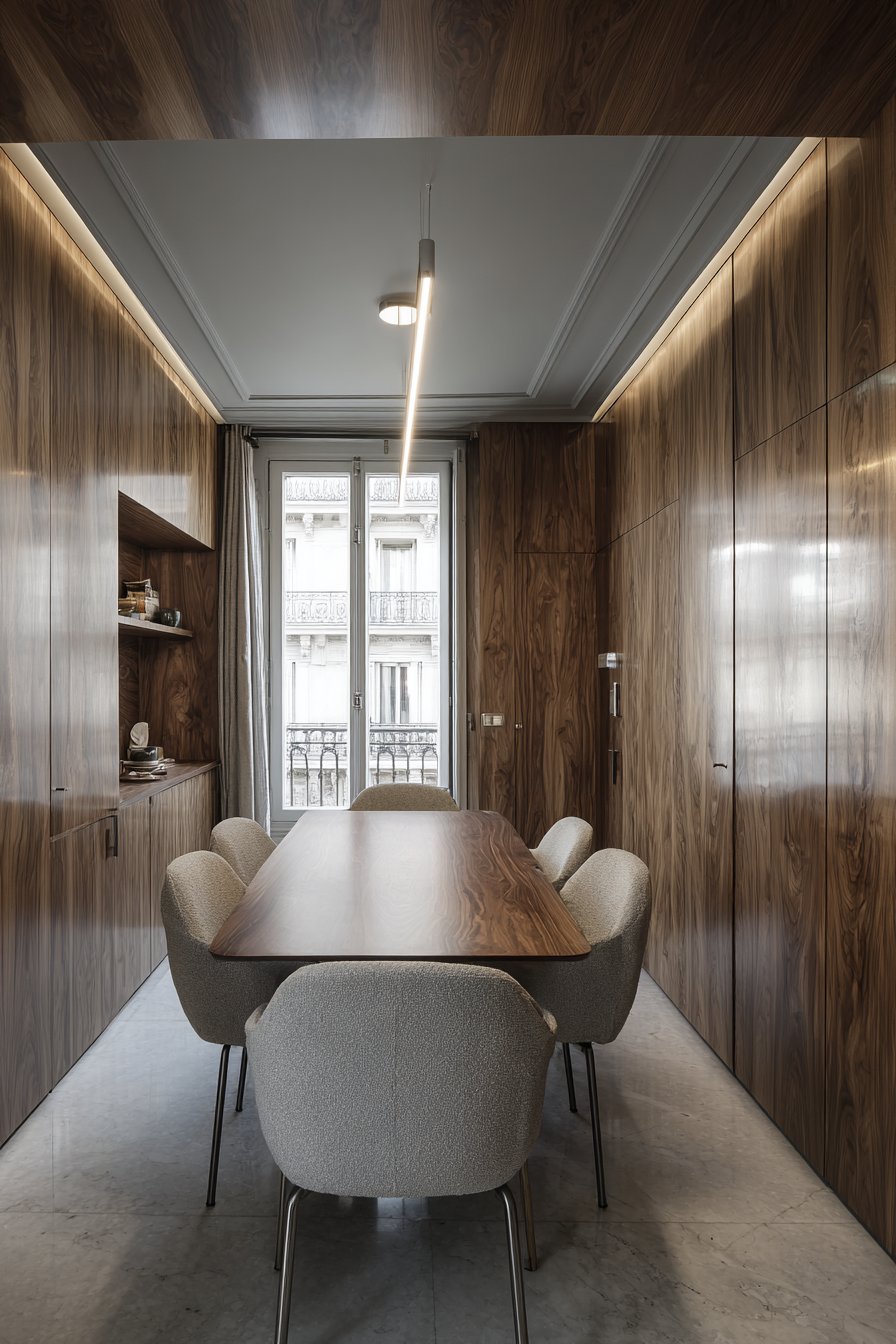
The material palette demonstrates restraint and intention—warm walnut wood balanced against cool gray textiles and neutral wall tones creates subtle visual interest without overwhelming the senses. The metal table legs introduce an industrial edge that keeps the space from feeling too soft, while the linen upholstery adds tactile comfort. This narrow dining room proves that minimalism doesn’t mean stark or cold; rather, it’s about careful curation of essential elements that each earn their place through both beauty and function.
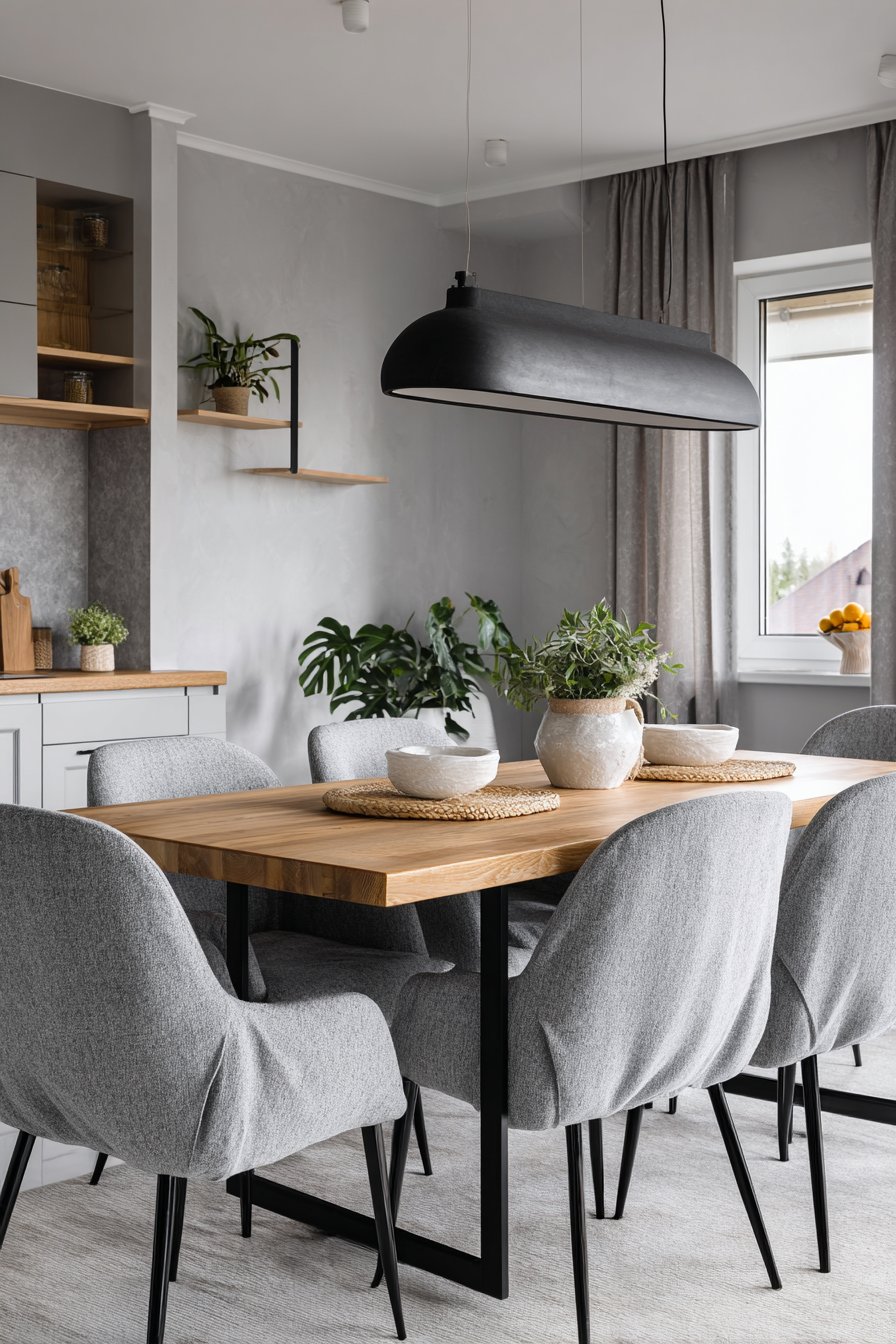
Key Design Tips: Choose furniture with slim profiles and elevated legs to maintain visual flow and make cleaning easier. Position the dining table lengthwise to maximize the natural traffic pattern of a narrow room. Use a linear light fixture rather than a round chandelier to complement the room’s proportions. Select a cohesive color palette with limited variation to create visual continuity. Incorporate natural light as a design element by keeping window treatments minimal or sheer. Opt for armless chairs or chairs with low arms to reduce visual bulk and improve maneuverability.
2. Banquette Seating for Maximum Space Efficiency
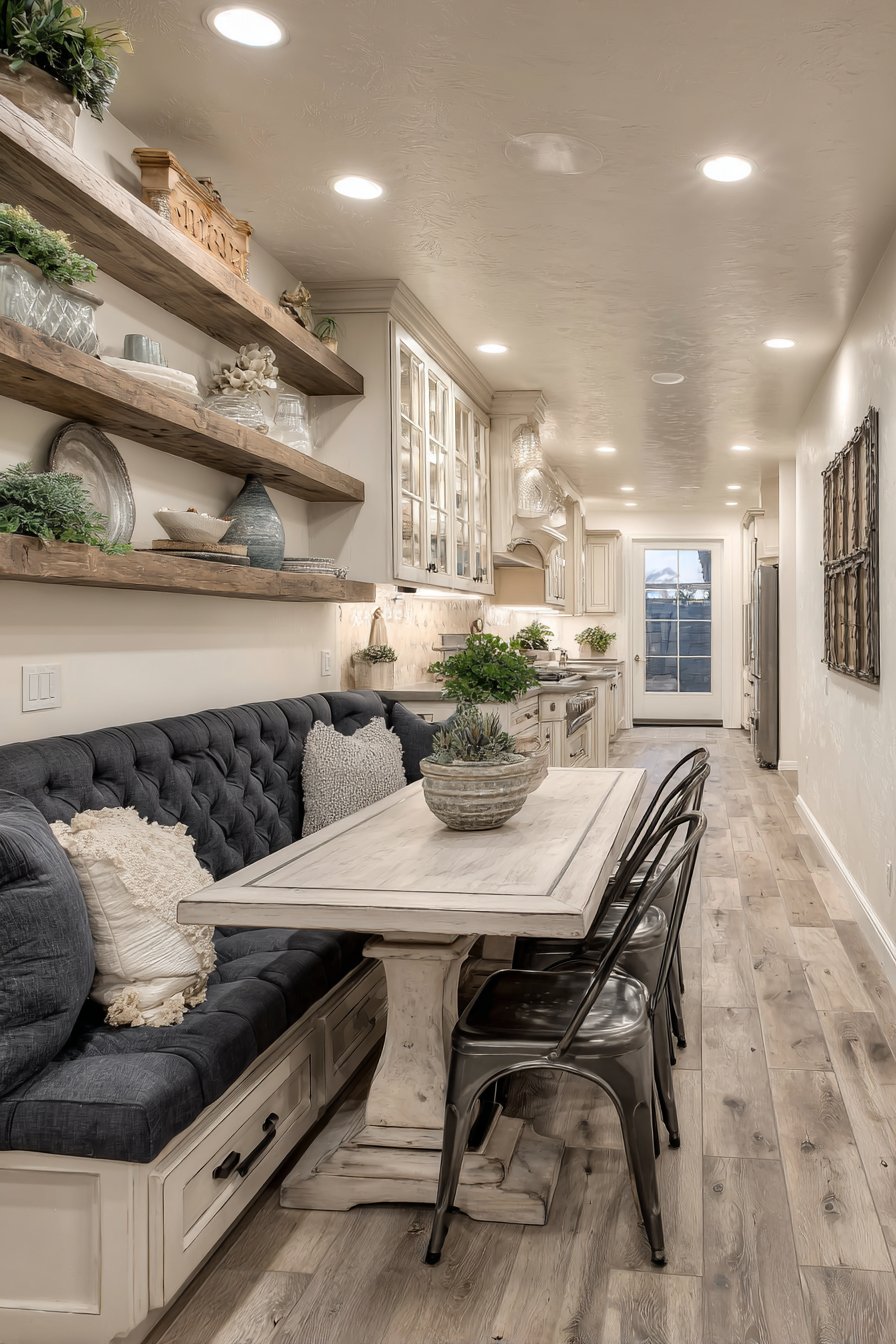
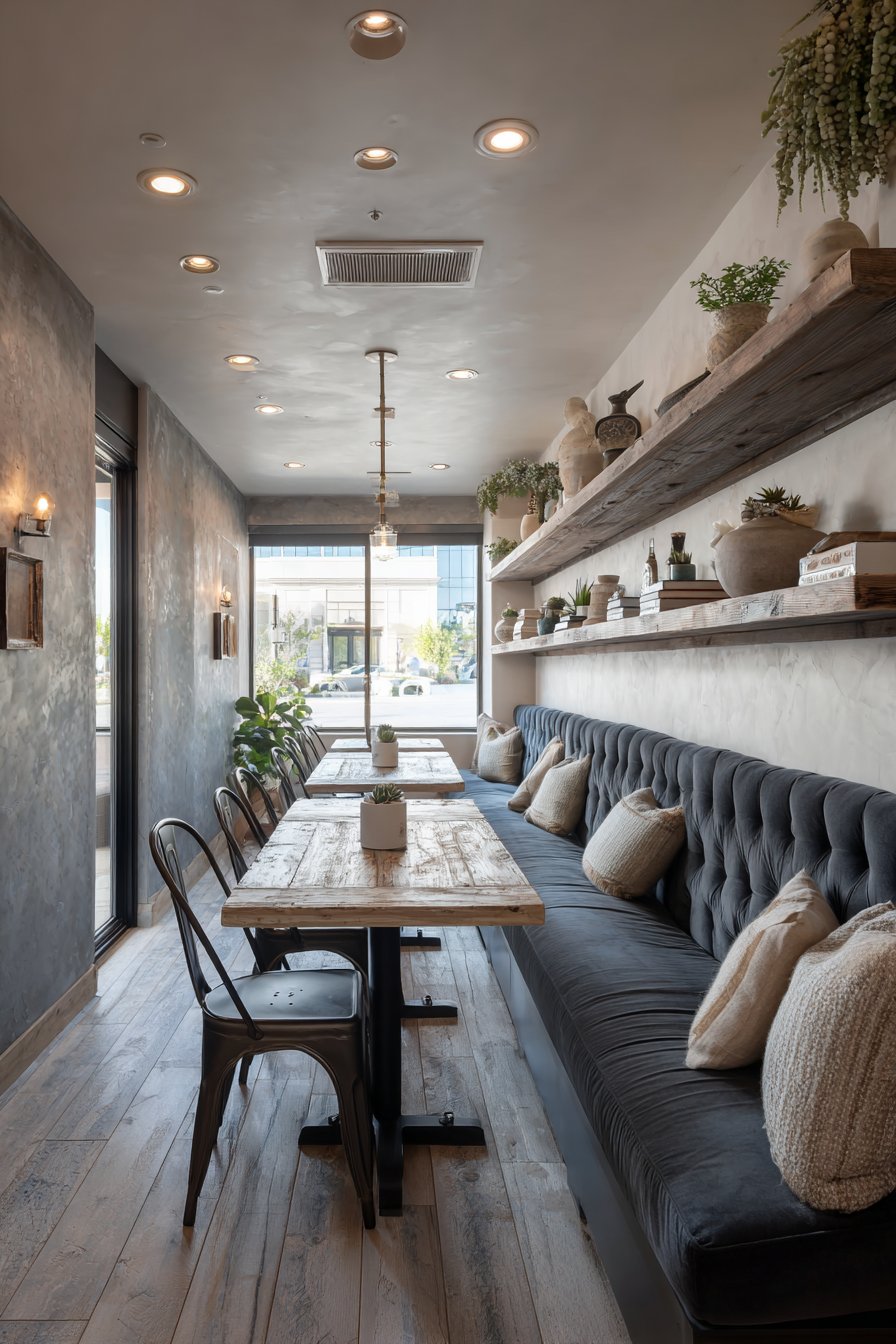
This innovative narrow dining room ideas solution features custom banquette seating built along one long wall, upholstered in durable charcoal fabric with button tufting details that add textural interest and visual depth. The built-in seating eliminates the need for chairs along one side of the table, immediately opening up the floor plan and creating a more spacious feel. The button tufting provides both aesthetic appeal and practical function, creating subtle indentations that guide comfortable seating positions while adding dimensional character to what might otherwise be a flat surface.
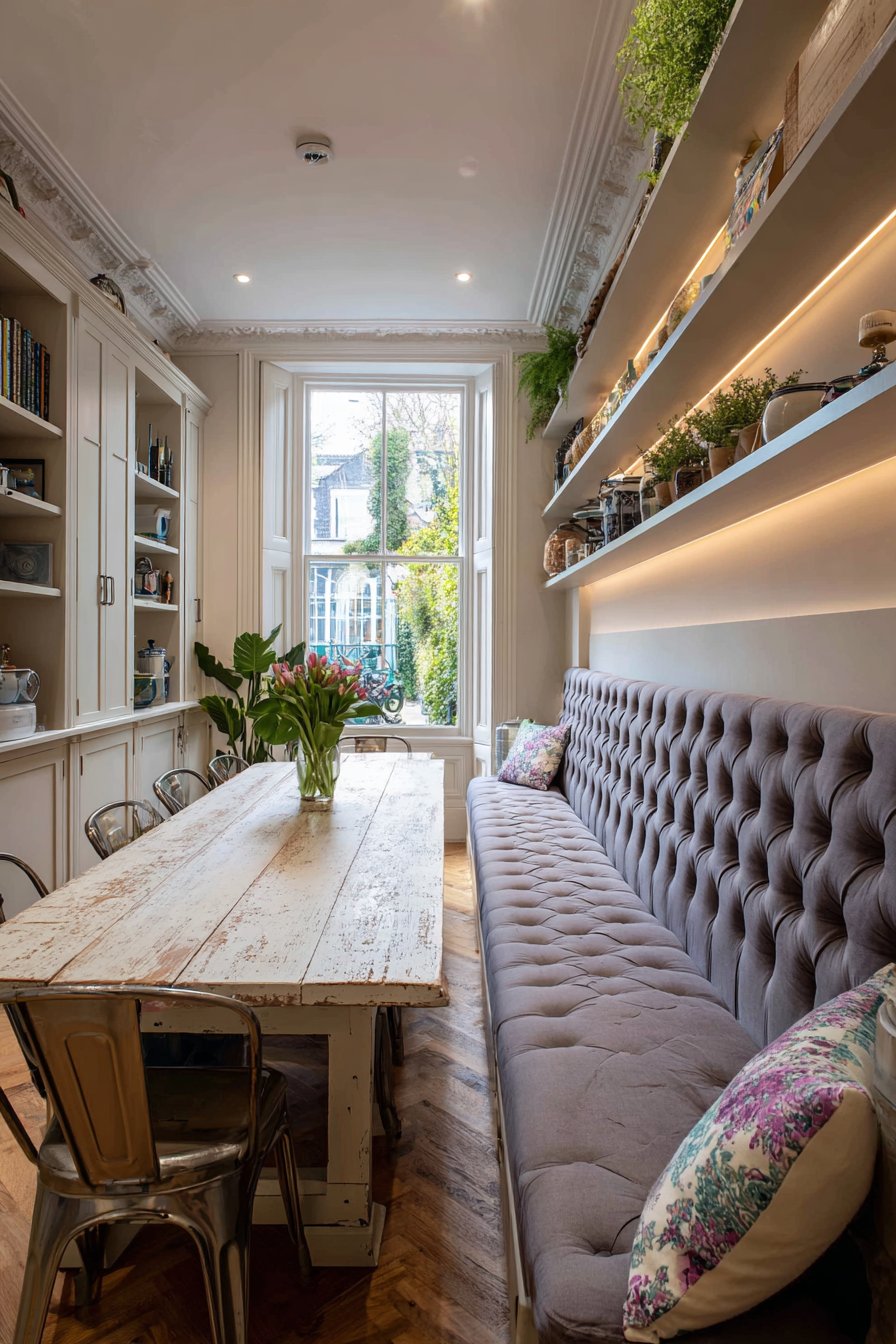
Adjacent to the banquette sits a narrow farmhouse-style table with a distressed white finish that introduces rustic charm while maintaining the compact footprint essential for narrow dining room success. Vintage-inspired metal chairs line the opposite side, their open-back design ensuring sightlines remain unobstructed across the space. Floating shelves mounted above the banquette display decorative ceramics and small plants, utilizing vertical space for both storage and decoration without encroaching on the precious floor area below.
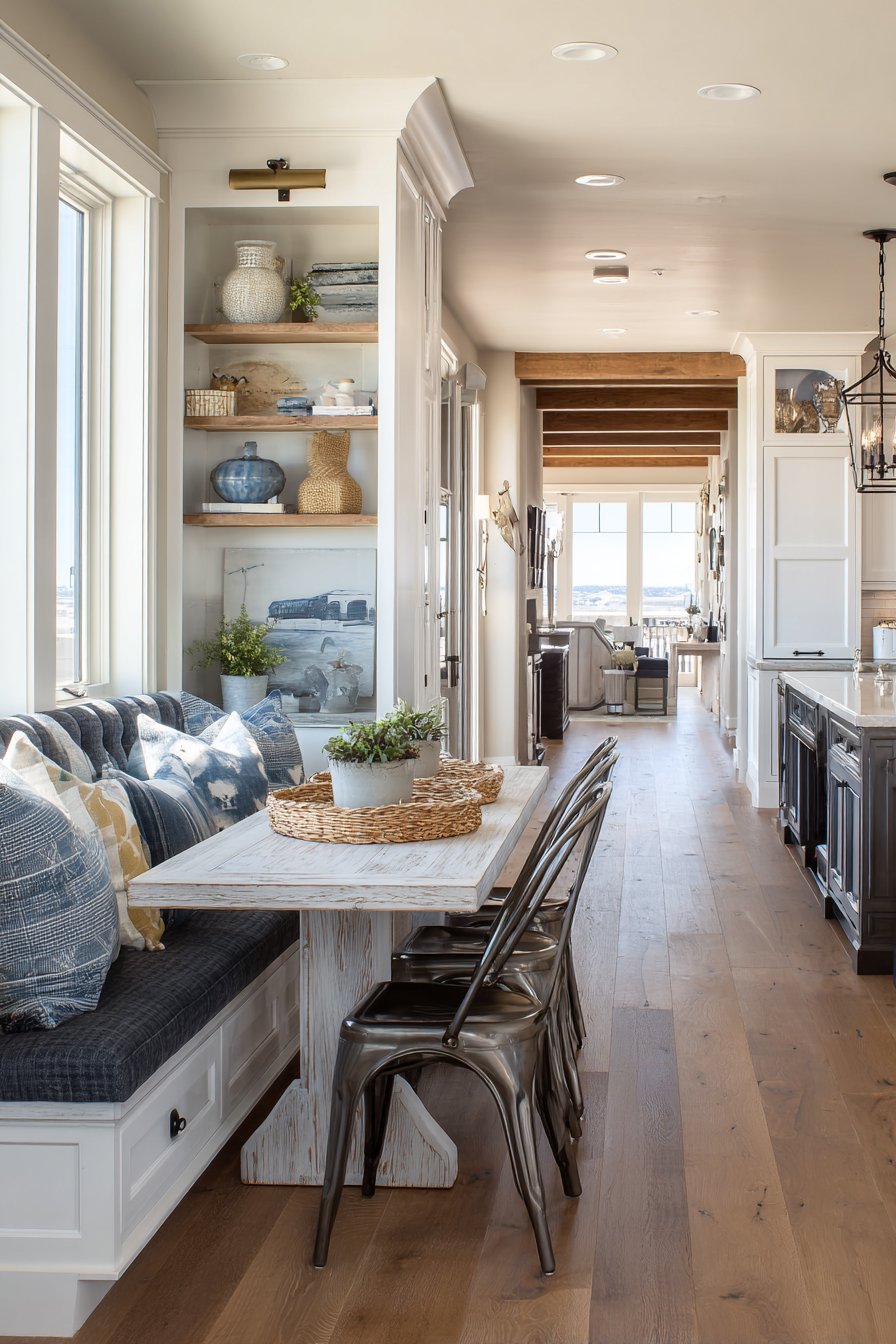
The lighting strategy combines recessed ceiling fixtures that create ambient glow throughout the space with natural light entering from the room’s terminus. This layered lighting approach ensures the dining area remains well-lit during evening meals while celebrating available daylight during breakfast and lunch. The combination of built-in and freestanding furniture creates visual variety while solving the fundamental challenge of narrow dining room layouts—how to seat multiple people comfortably without creating a cramped or crowded atmosphere.
Key Design Tips: Install banquette seating with hidden storage beneath the cushions to maximize functionality in compact spaces. Choose a table width that allows comfortable dining while maintaining at least 36 inches of clearance for passage. Position floating shelves at varied heights to create visual interest and accommodate items of different sizes. Select durable, cleanable upholstery fabrics for built-in seating that will see daily use. Consider adding throw pillows to banquette seating for comfort and a pop of color or pattern. Ensure adequate cushion depth (18-20 inches) for comfortable long-term seating.
3. Scandinavian Simplicity with Natural Materials
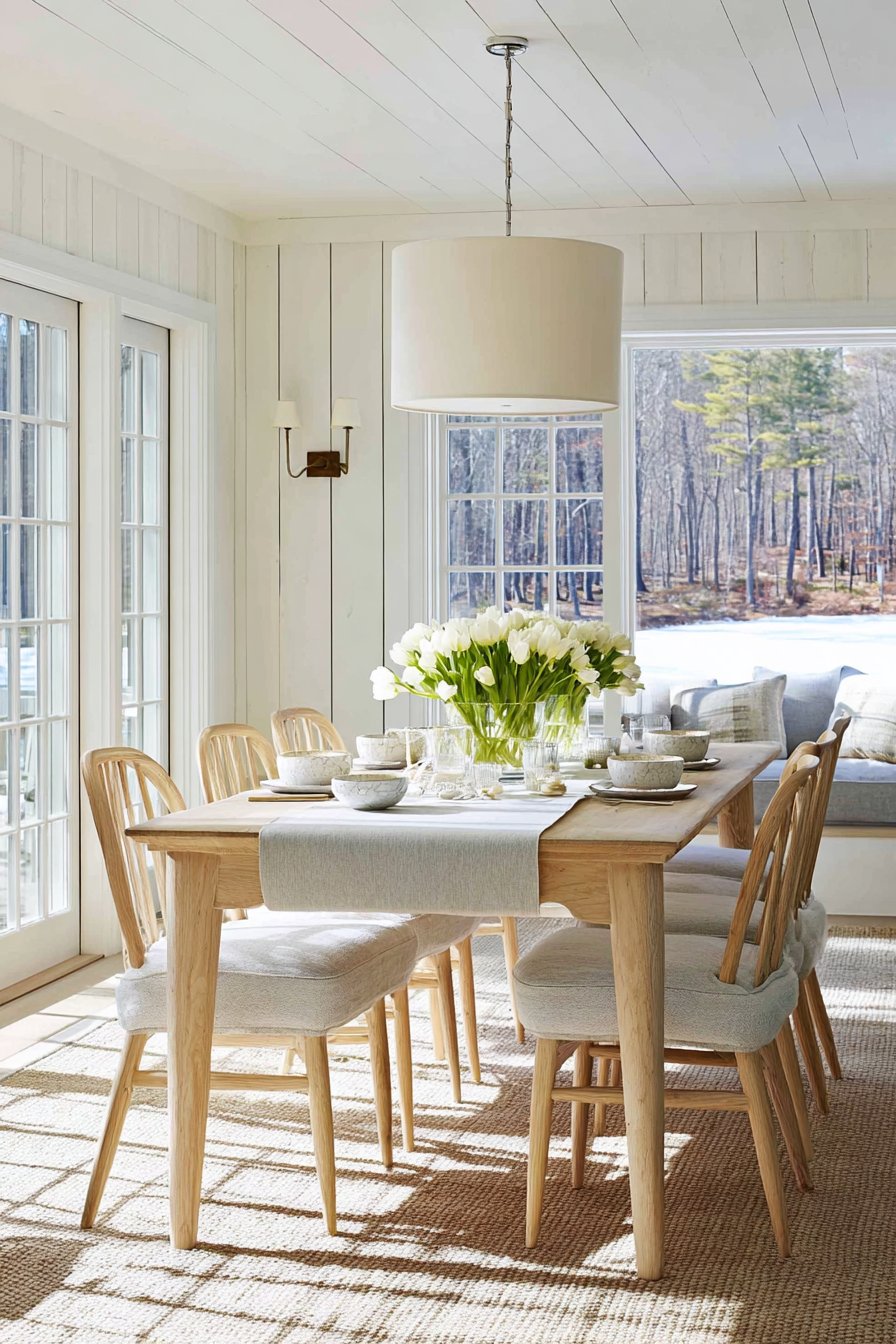
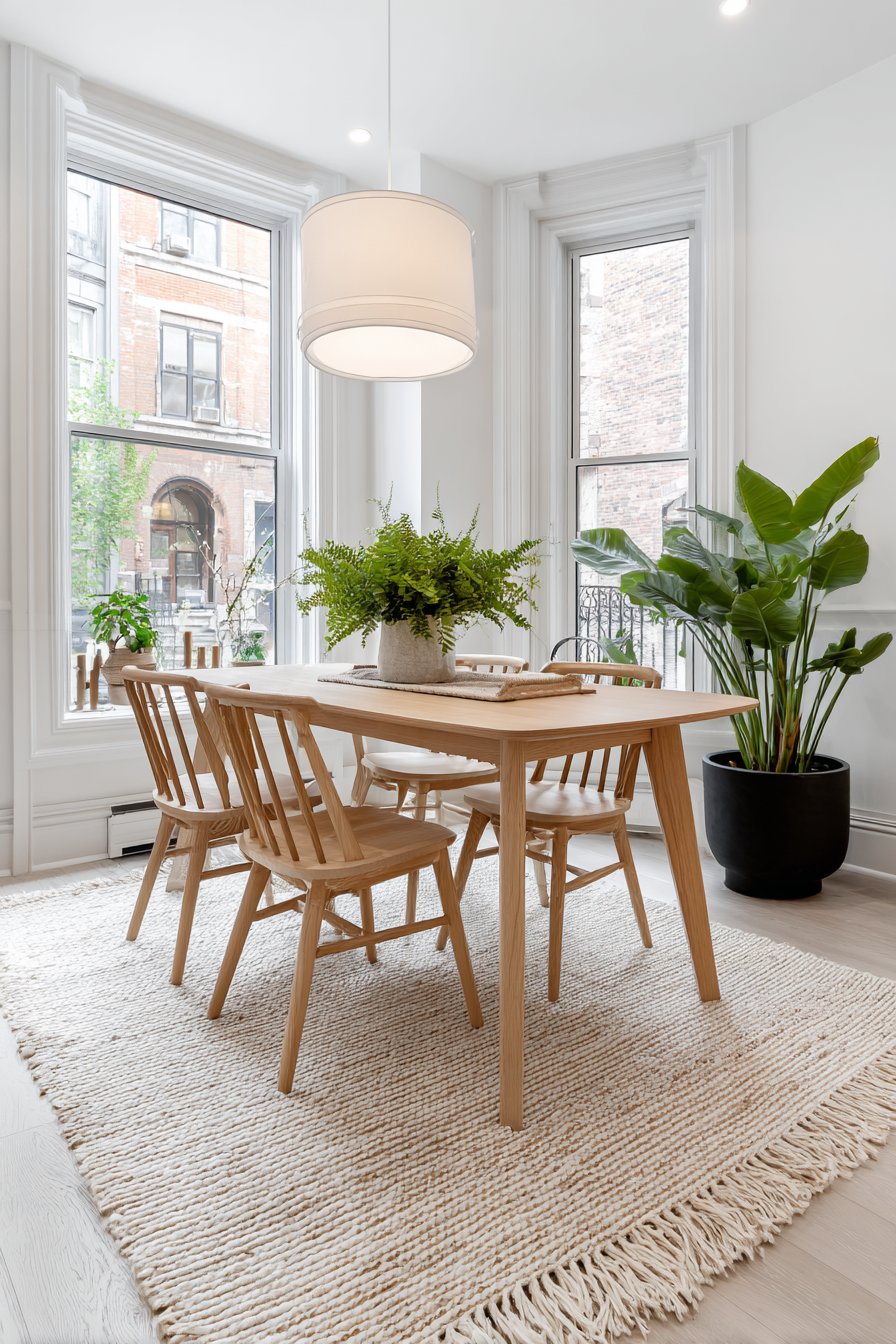
This Scandinavian-inspired narrow dining room ideas design showcases a light oak extendable dining table with clean lines and tapered legs that embody the Nordic aesthetic of functional beauty. The extension capability proves particularly valuable in narrow spaces, allowing the table to remain compact for everyday use while accommodating additional guests when entertaining. Four bentwood dining chairs with natural finish provide seating without visual bulk, their curved forms and open construction maintaining sightlines and creating an airy feeling despite the room’s limited width.
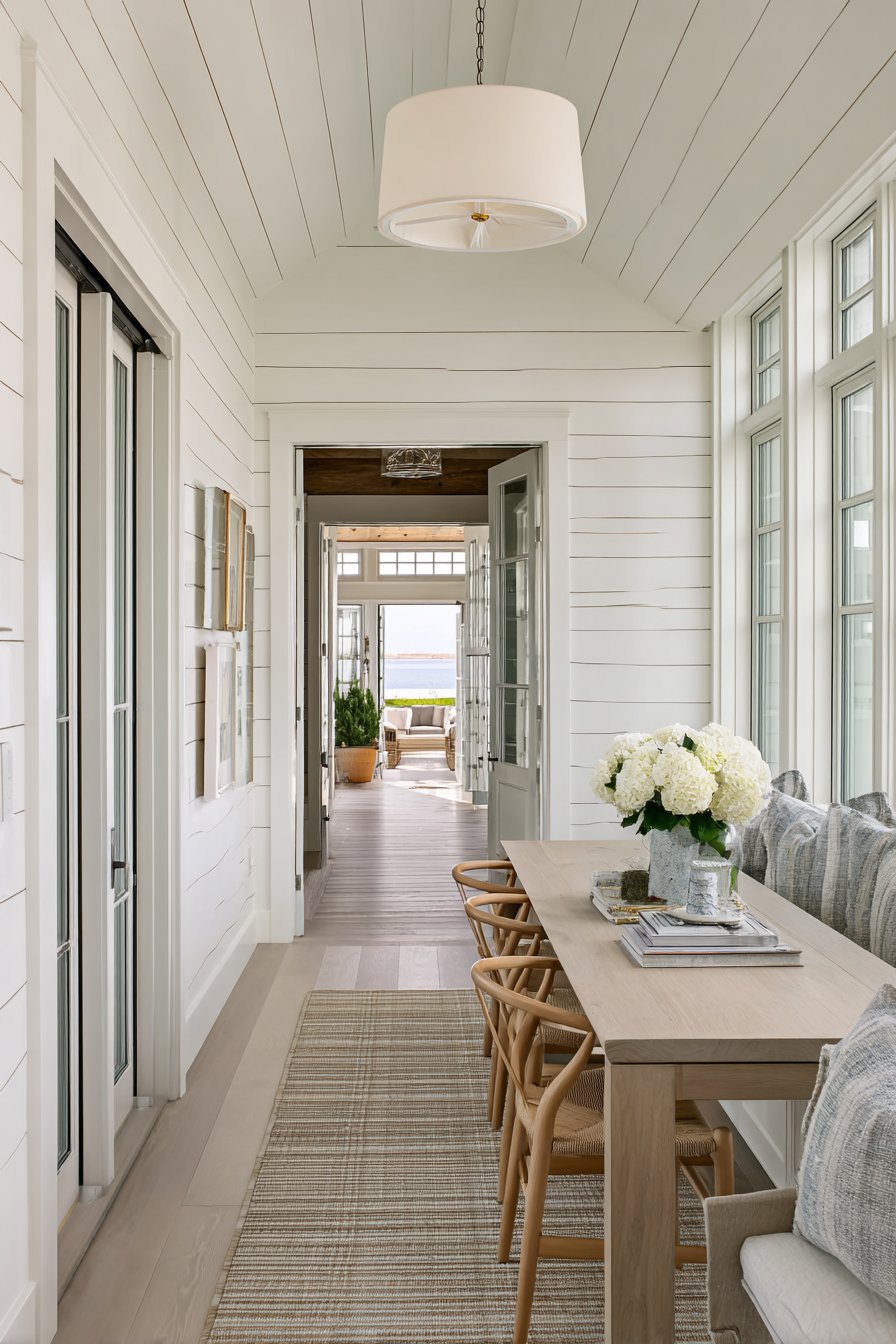
White shiplap walls create subtle vertical interest while amplifying natural light throughout the space, a hallmark of Scandinavian design that prioritizes brightness and connection to the natural world. A jute runner defines the dining zone underfoot, its natural fiber texture adding organic warmth while the neutral tone prevents the floor treatment from fragmenting the visual space. The simple drum pendant in white linen hangs above the table, providing soft, diffused illumination that complements the overall philosophy of understated elegance.
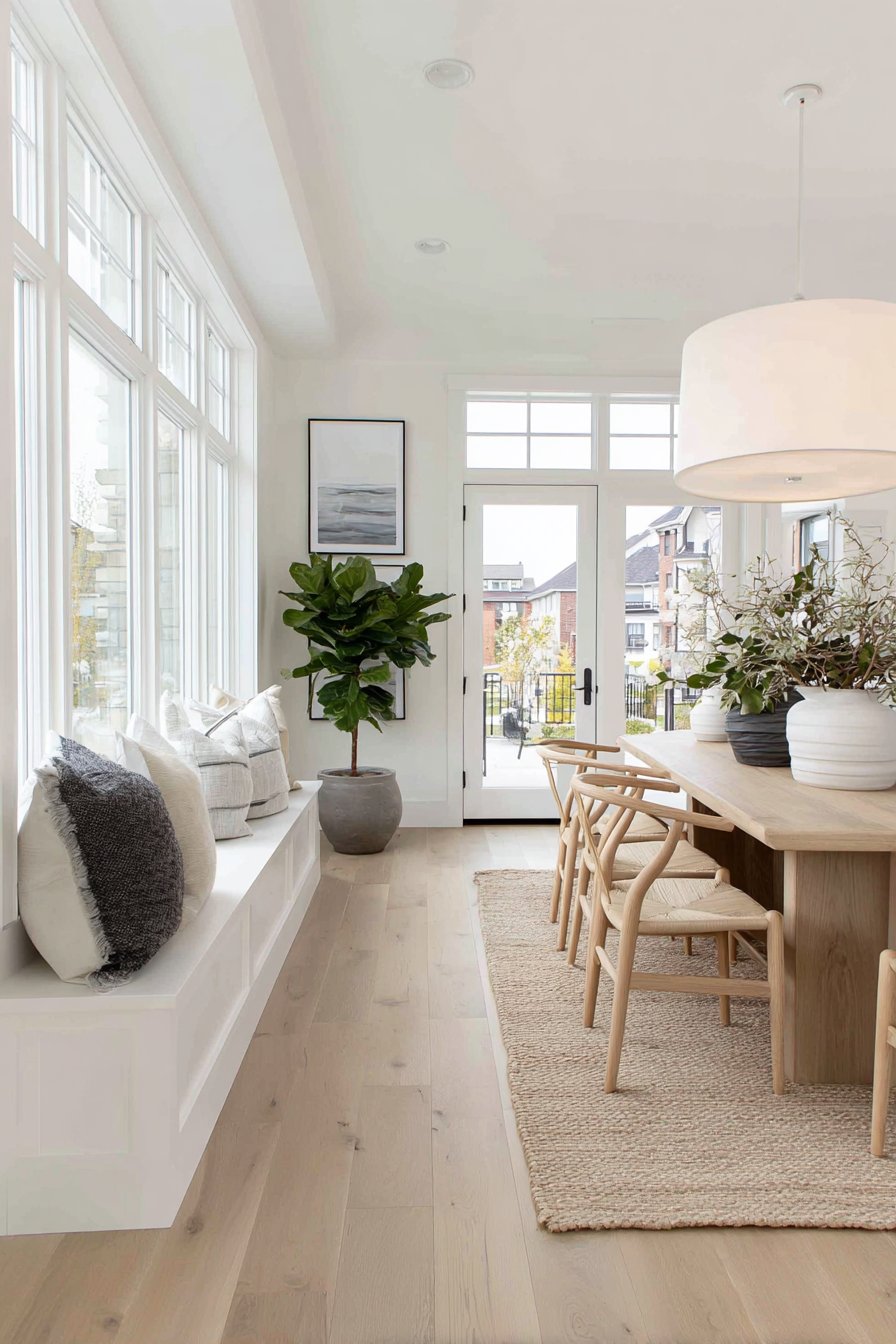
Large windows at the room’s terminus flood the space with soft diffused daylight, creating the characteristic bright, airy quality that defines Scandinavian interiors. This natural illumination highlights the beautiful grain patterns in the oak table and bentwood chairs, celebrating the inherent beauty of natural materials without artificial enhancement. The overall effect is one of serene simplicity—a narrow dining room that feels spacious, calm, and thoroughly livable.
Key Design Tips: Prioritize natural materials like wood, linen, and jute to create warmth within a neutral palette. Paint walls in pure white or soft off-white to maximize light reflection in narrow spaces. Select furniture with visible wood grain to add subtle visual interest without pattern or color. Incorporate an extendable table to maintain flexibility for different occasions and guest counts. Keep window treatments minimal or eliminate them entirely if privacy permits. Add living plants to bring nature indoors and soften hard architectural lines.
4. Transparent Elements for Visual Expansion
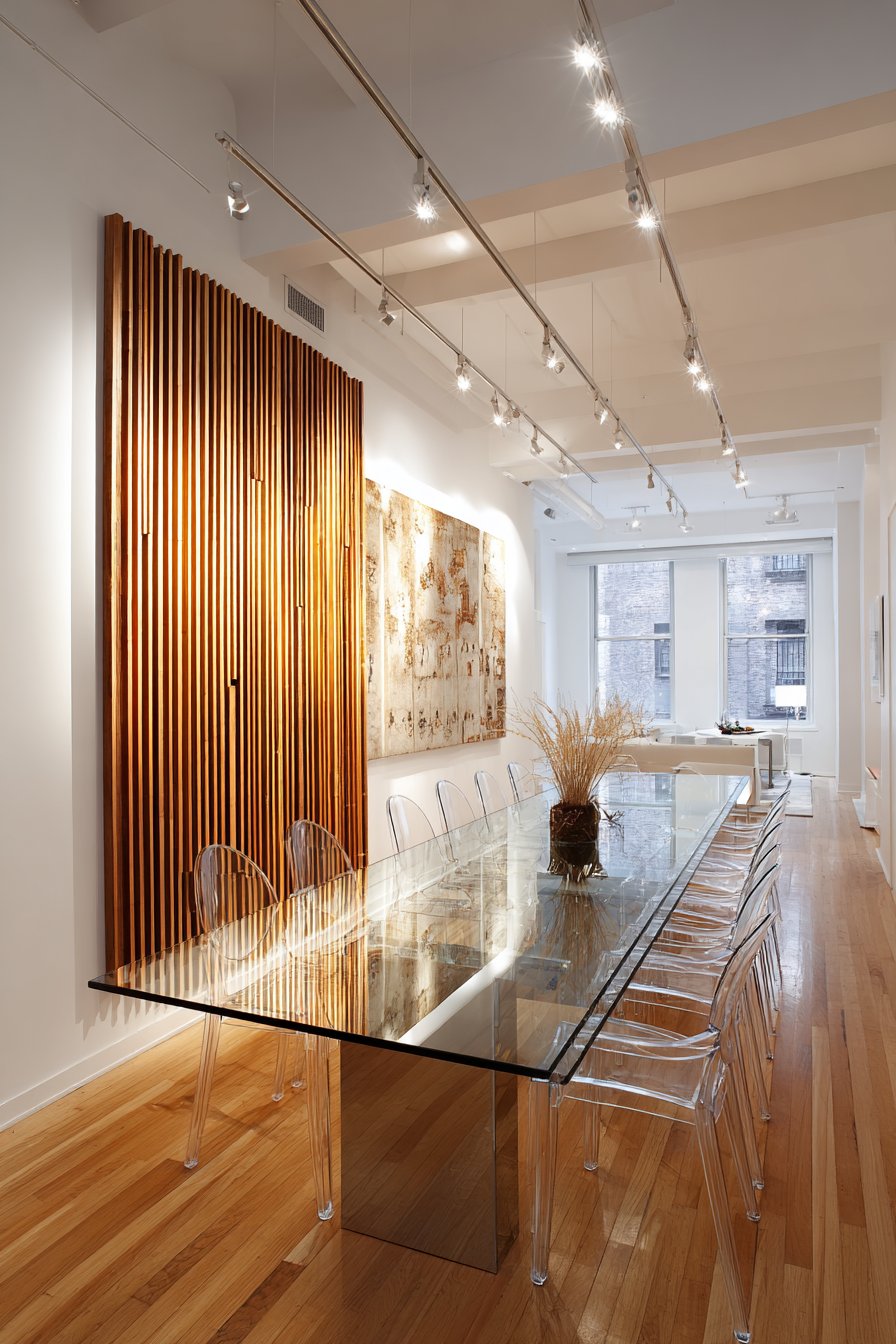
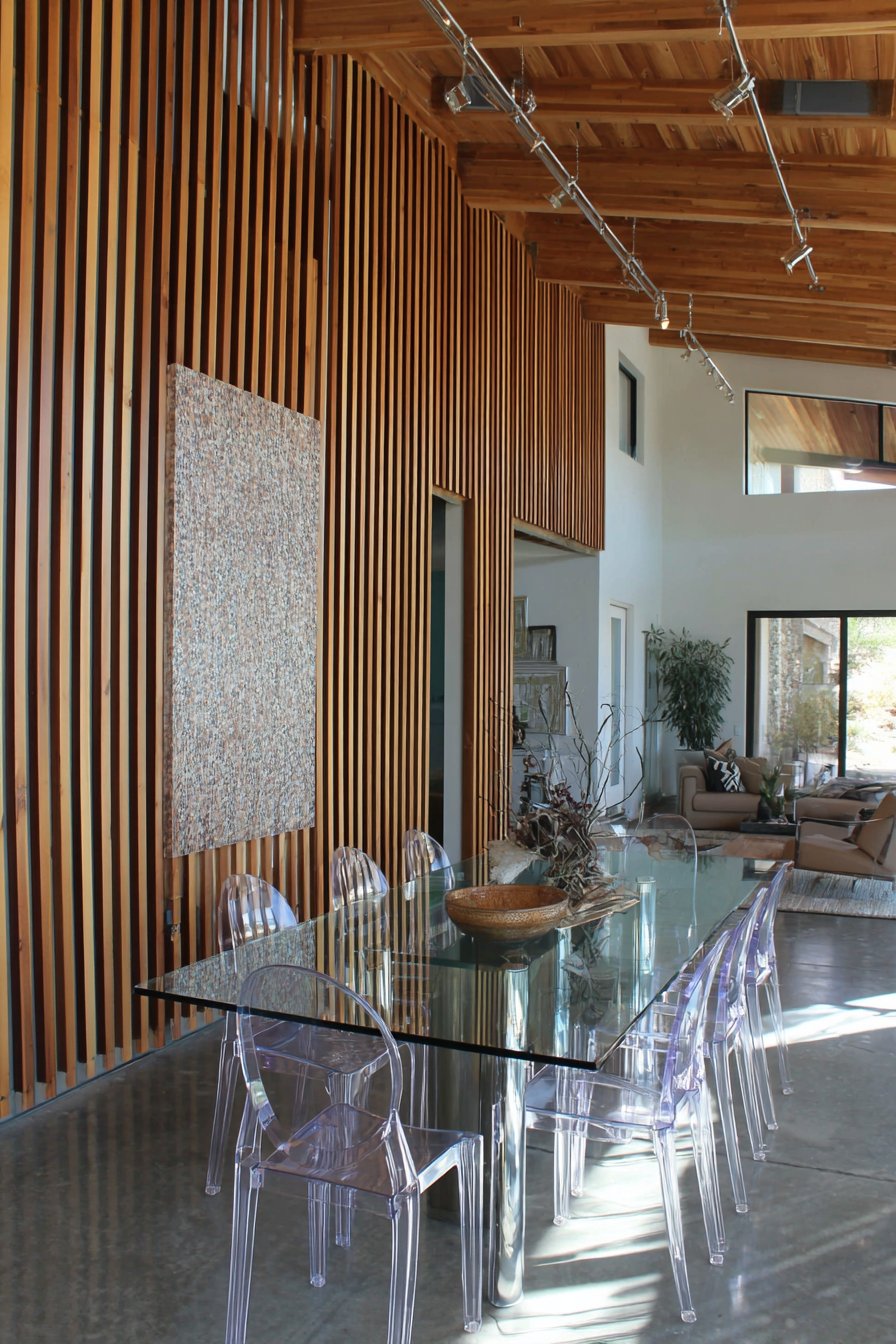
This modern narrow dining room ideas approach features a glass-top dining table with a polished chrome pedestal base that maintains visual lightness by allowing sightlines to pass through the furniture rather than stopping at a solid surface. The transparency of the glass top creates an almost floating effect, making the table appear to occupy less space than a solid wood alternative of identical dimensions. Transparent acrylic ghost chairs surround the table, continuing the philosophy of preserving sightlines through the compact space while providing necessary seating.
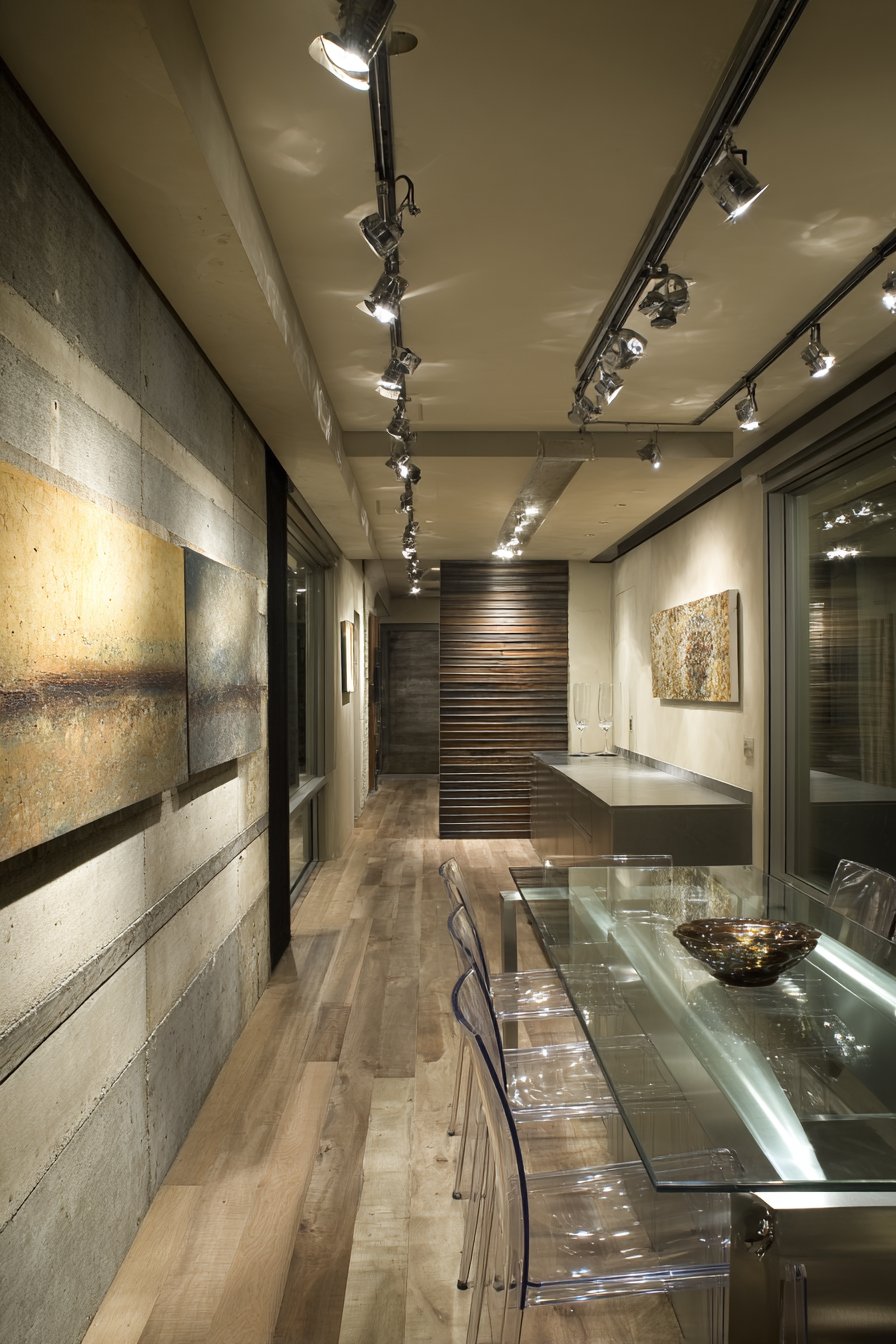
One wall features a dramatic vertical wood slat accent in medium walnut, adding texture and visual warmth without overwhelming the narrow proportions. The vertical orientation of the slats draws the eye upward, creating a sense of height that counterbalances the room’s limited width. Track lighting with adjustable heads provides flexible illumination, allowing light to be directed precisely where needed—whether highlighting the wood slat feature, illuminating the dining surface, or washing the walls with ambient glow.
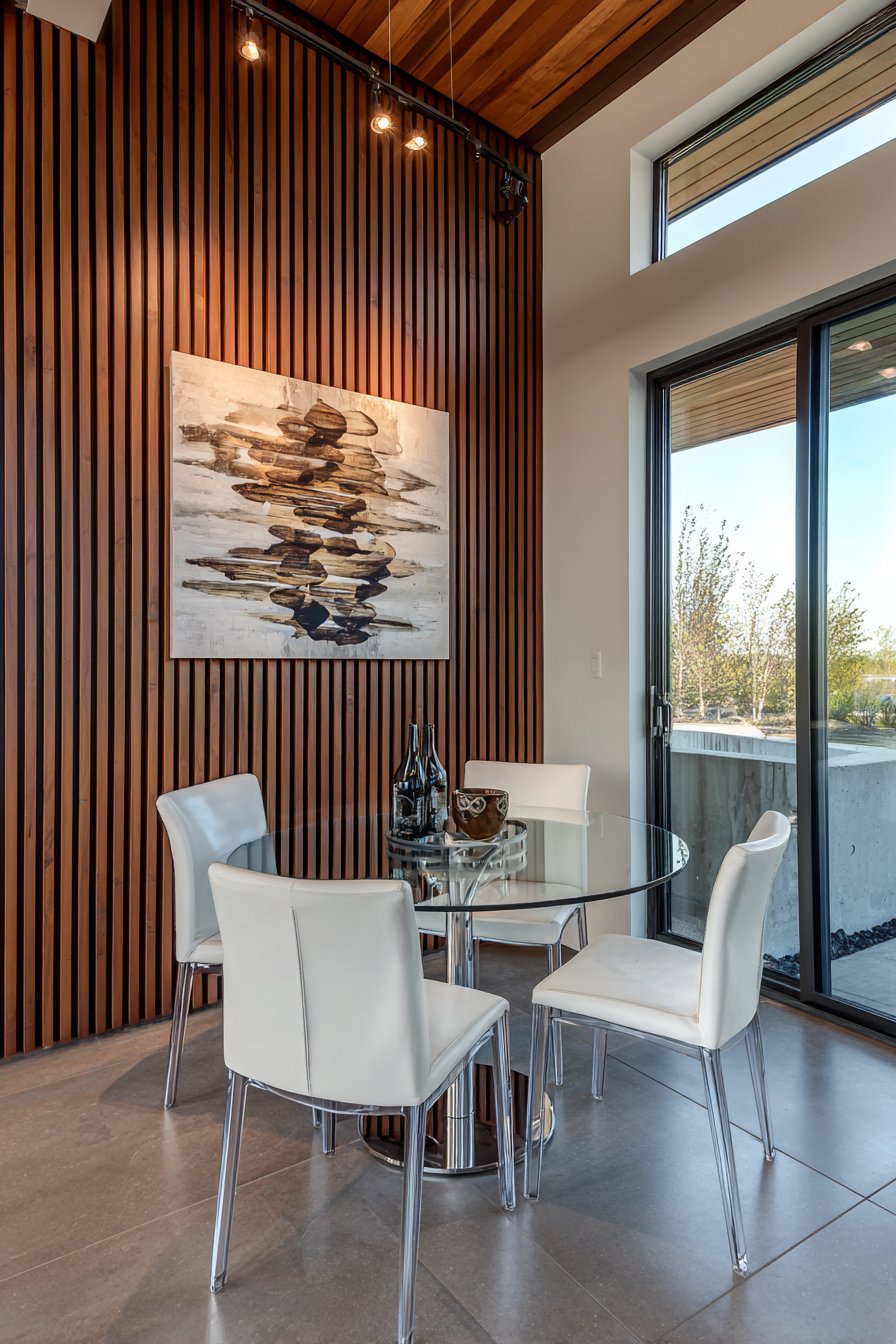
The opposite wall displays a single oversized abstract artwork that serves as a focal point without cluttering the space with multiple smaller pieces. This design principle—using one substantial element rather than many small ones—prevents visual fragmentation that can make narrow rooms feel even more confined. The strategic combination of transparent furniture, vertical design elements, and focused art creates a narrow dining room that feels open, contemporary, and thoughtfully composed.
Key Design Tips: Use glass or acrylic furniture to maintain visual flow and prevent the space from feeling blocked or cramped. Install vertical design elements like wood slats or wallpaper patterns to emphasize ceiling height. Position track lighting to provide flexibility for different activities and moods. Choose one large-scale artwork rather than multiple small pieces to create impact without clutter. Keep the floor clear of obstacles by selecting a pedestal table base rather than four-leg designs. Consider reflective surfaces on furniture or decor to bounce light around the narrow space.
5. Industrial Aesthetic with Reclaimed Materials
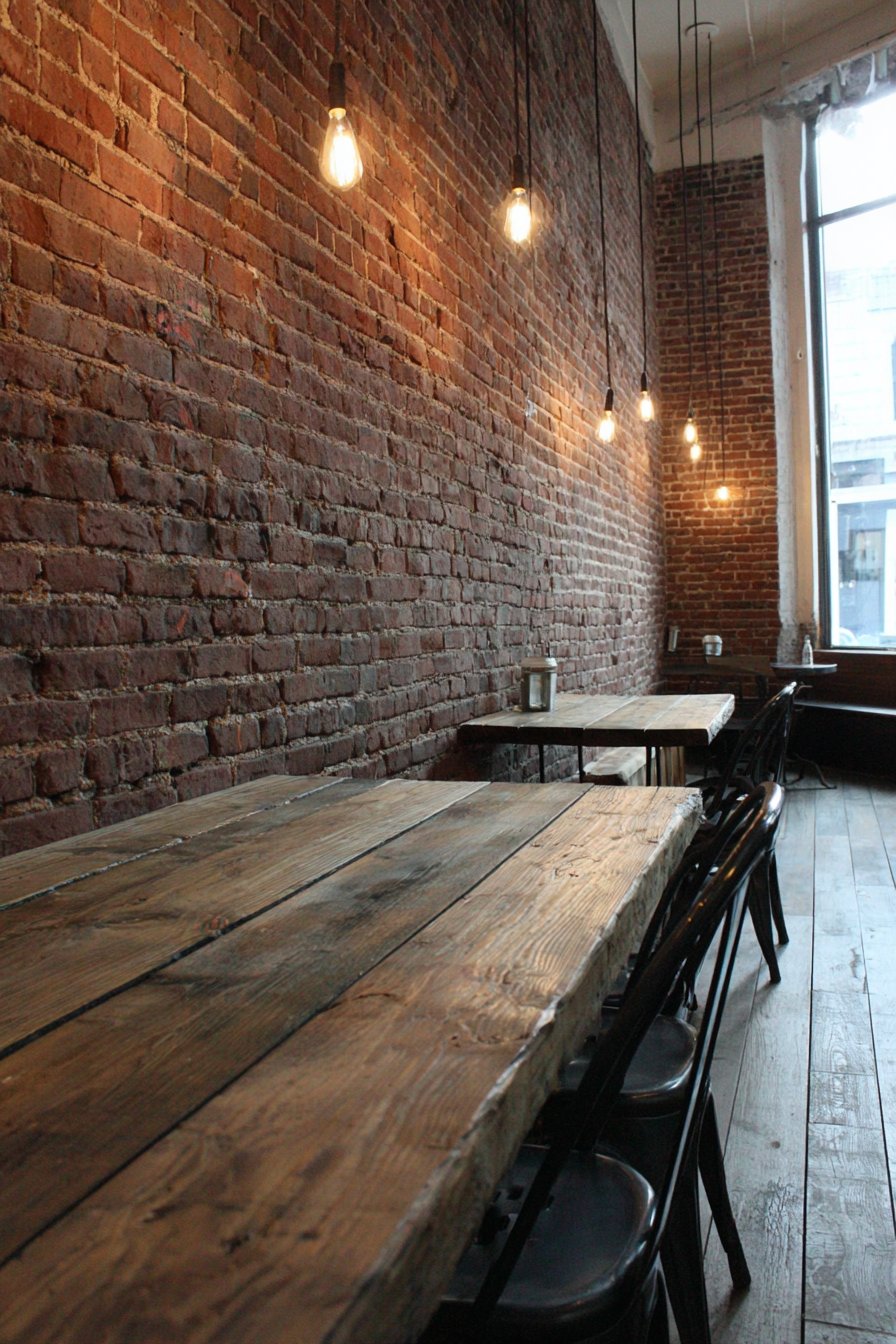
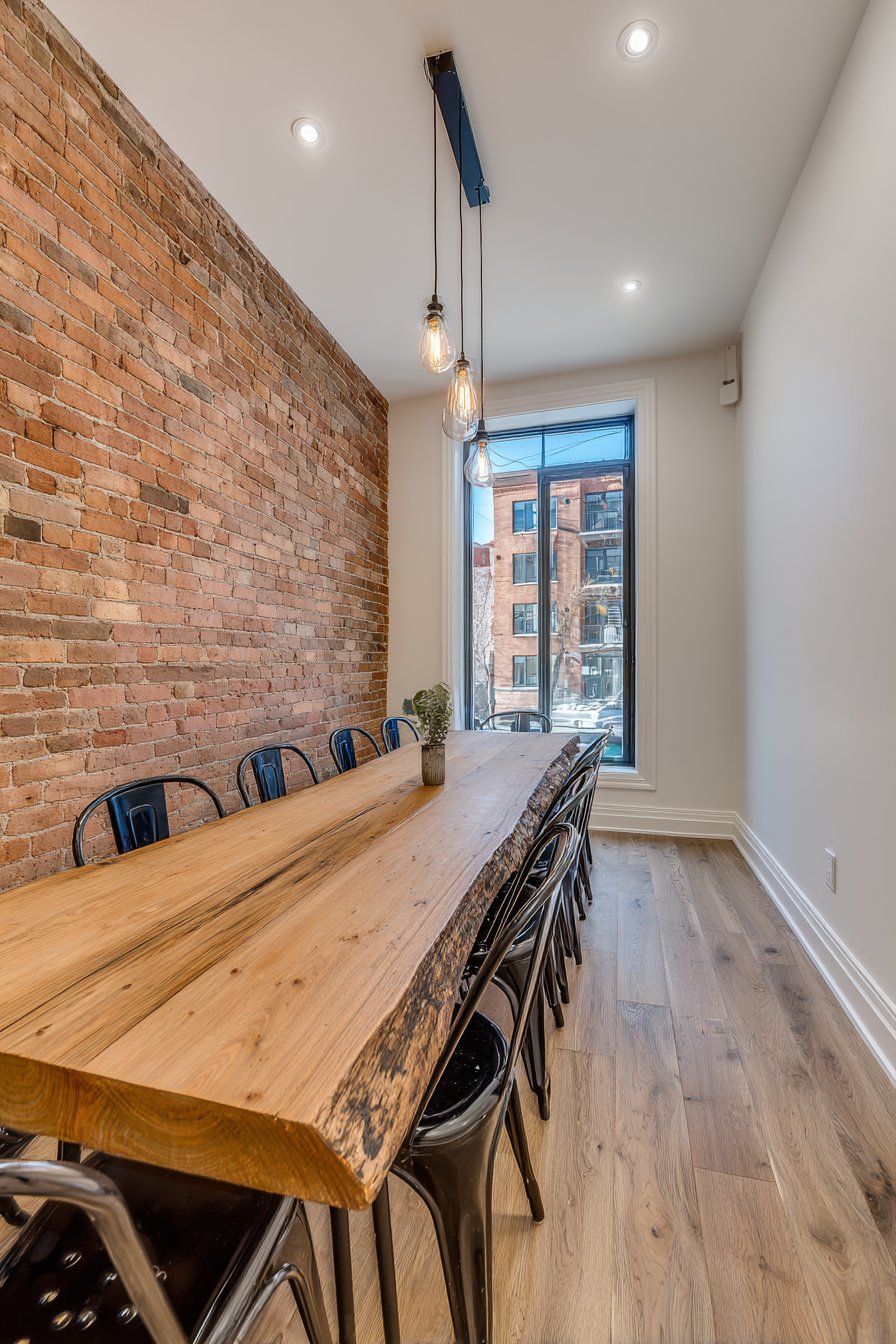
This industrial narrow dining room ideas execution features a reclaimed wood dining table with visible grain patterns and natural edge detail that tells a story of previous use and authentic character. The substantial planked top sits atop black metal hairpin legs, creating the quintessential industrial aesthetic that celebrates the marriage of organic and manufactured materials. The contrast between the warm, textured wood and cool, geometric metal establishes visual interest while maintaining the clean lines essential for narrow space functionality.
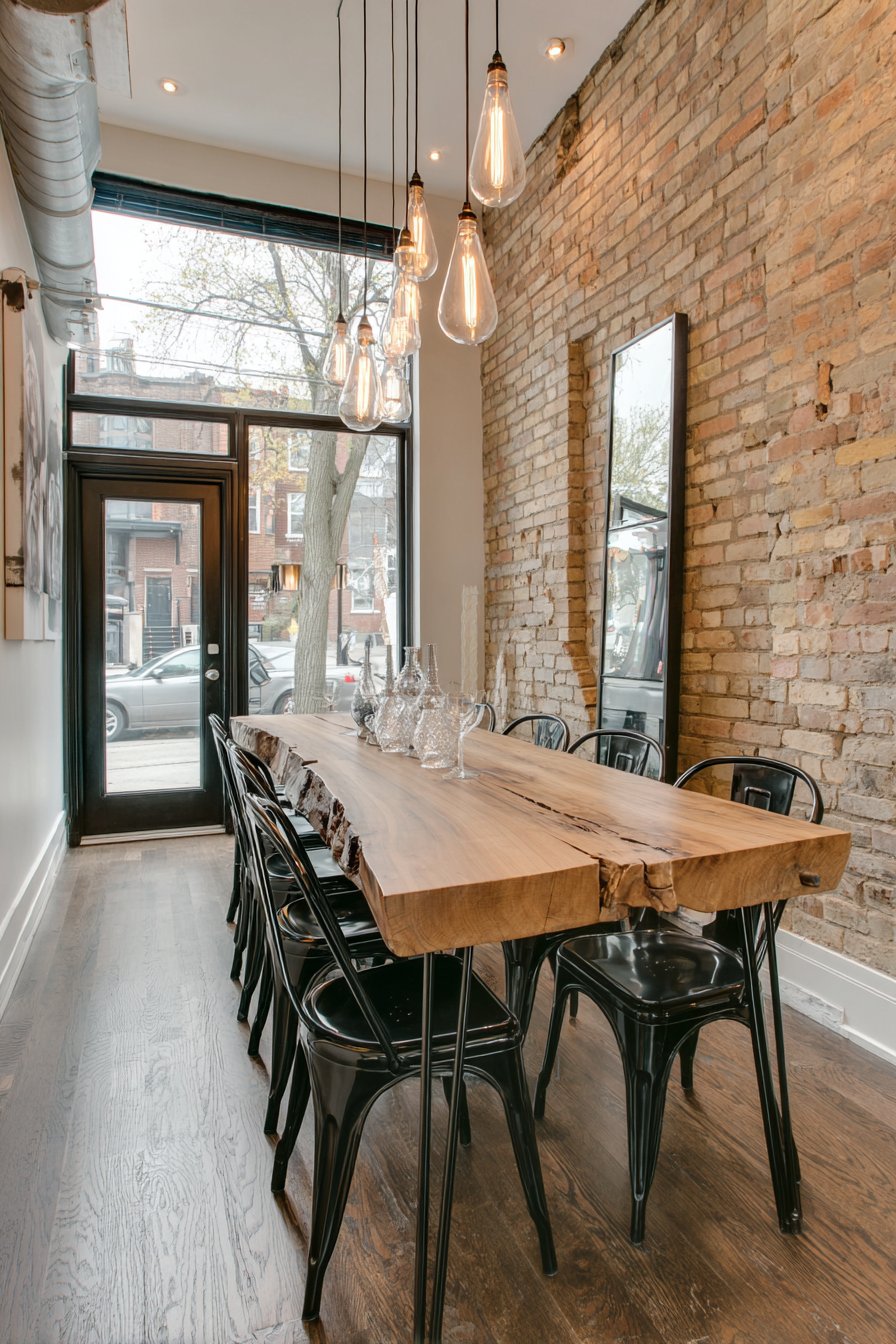
Metal bistro chairs in matte black powder coat provide sturdy seating that complements the table’s industrial aesthetic without adding unnecessary visual weight. Their open-back design ensures the space doesn’t feel closed-in, while the durable metal construction promises longevity and easy maintenance. Exposed brick along one wall adds authentic texture and historical character, its rough surface and varied coloring creating depth and interest. The opposite wall remains painted white for contrast, preventing the industrial elements from overwhelming the narrow proportions.
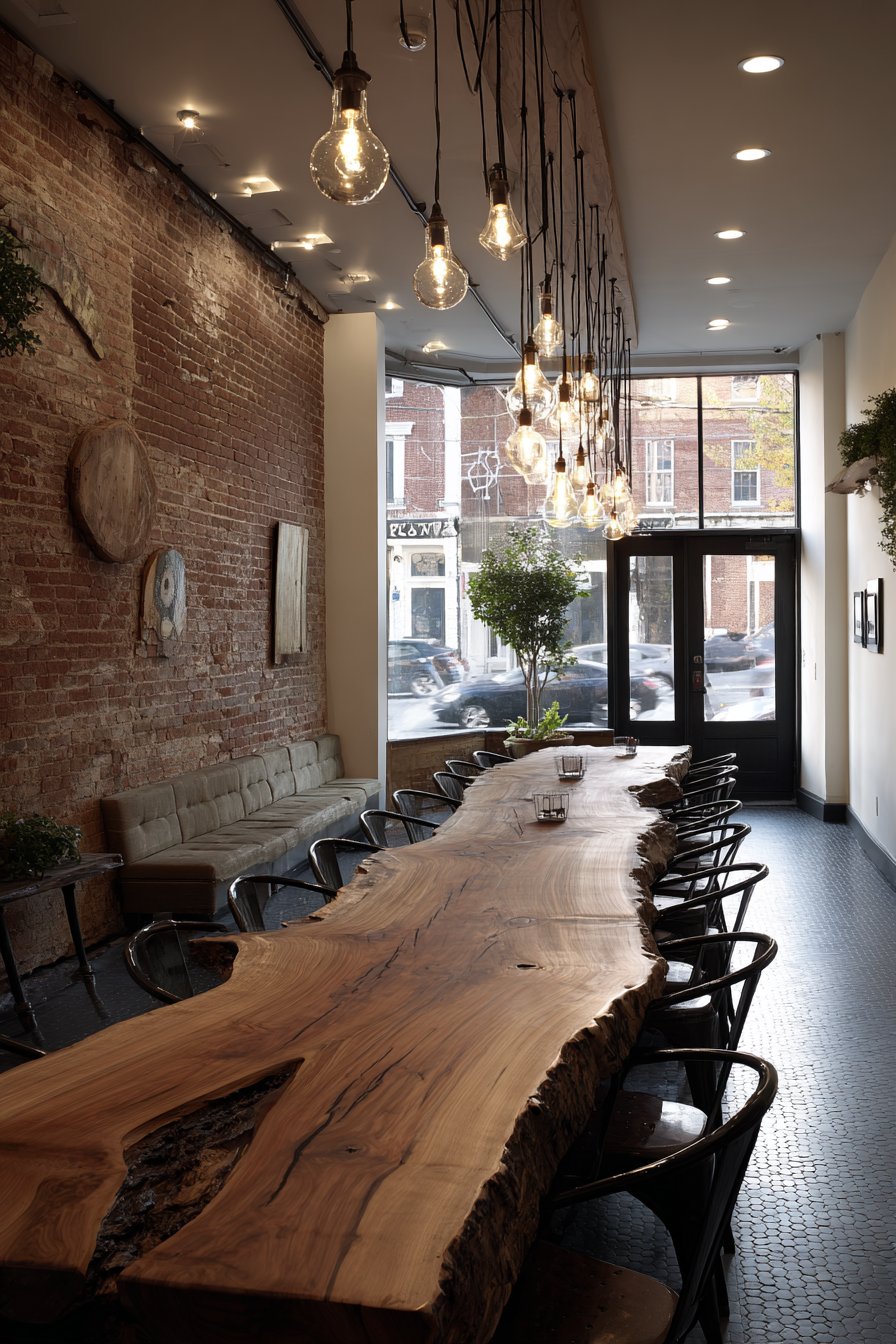
Edison bulb pendant lights suspended on black cord create warm ambient lighting while reinforcing the industrial theme through their vintage-inspired design and visible filaments. Natural light from a tall narrow window highlights the rustic materials during daytime hours, creating beautiful interplay between the rough brick texture, the grain patterns in the reclaimed wood, and the smooth powder-coated metal. This narrow dining room proves that industrial style—often associated with vast loft spaces—can be successfully adapted to compact urban footprints.
Key Design Tips: Source authentic reclaimed wood for genuine character and environmental sustainability. Balance rough industrial elements with smooth painted surfaces to prevent sensory overload. Use matte finishes on metal furniture to reduce glare and create a more sophisticated appearance. Install pendant lights on adjustable cord lengths to customize the visual scale. Expose existing architectural features like brick rather than covering them with drywall. Maintain a limited color palette of blacks, whites, and natural wood tones for cohesive industrial styling.
6. Coastal Freshness with Whitewashed Woods
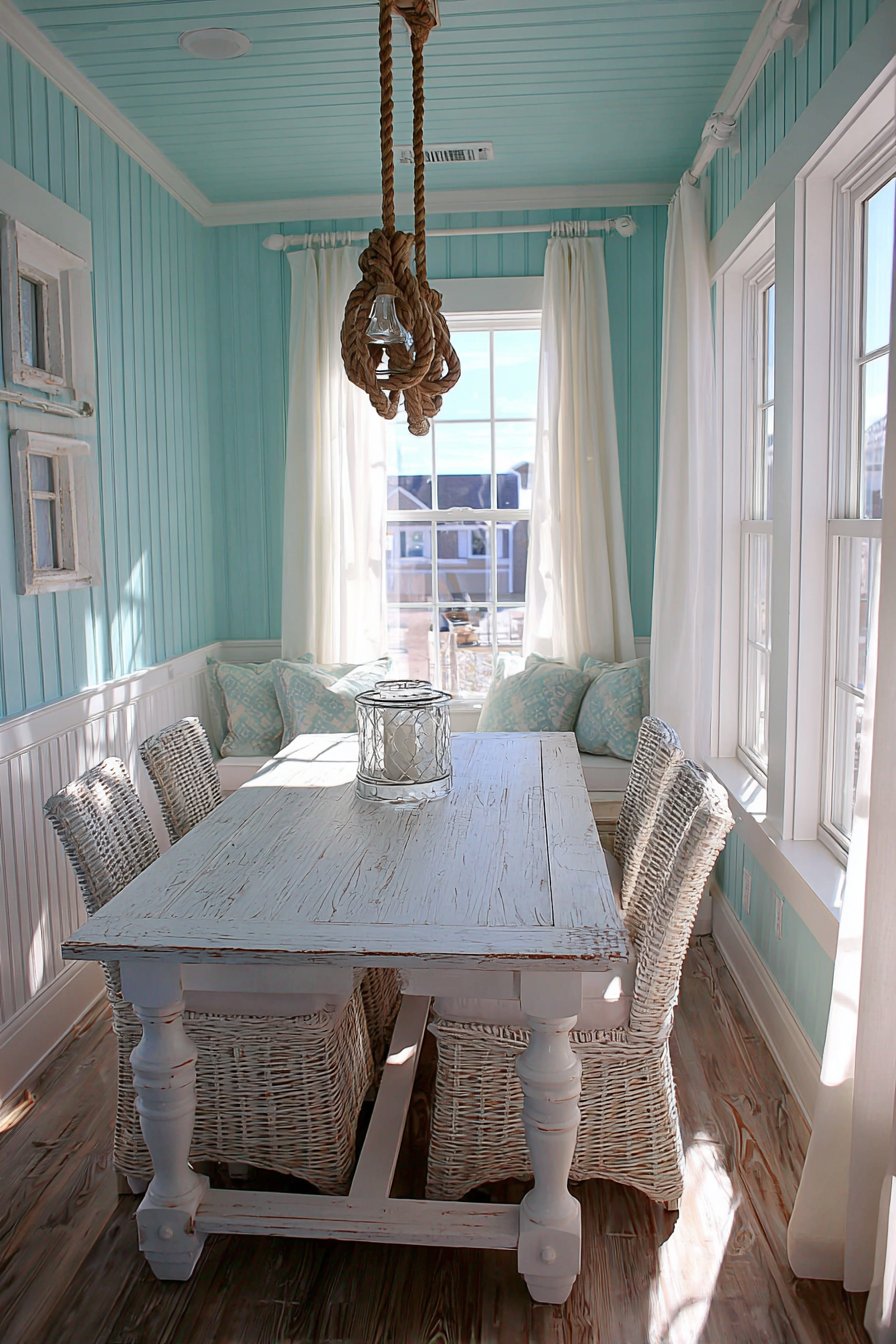
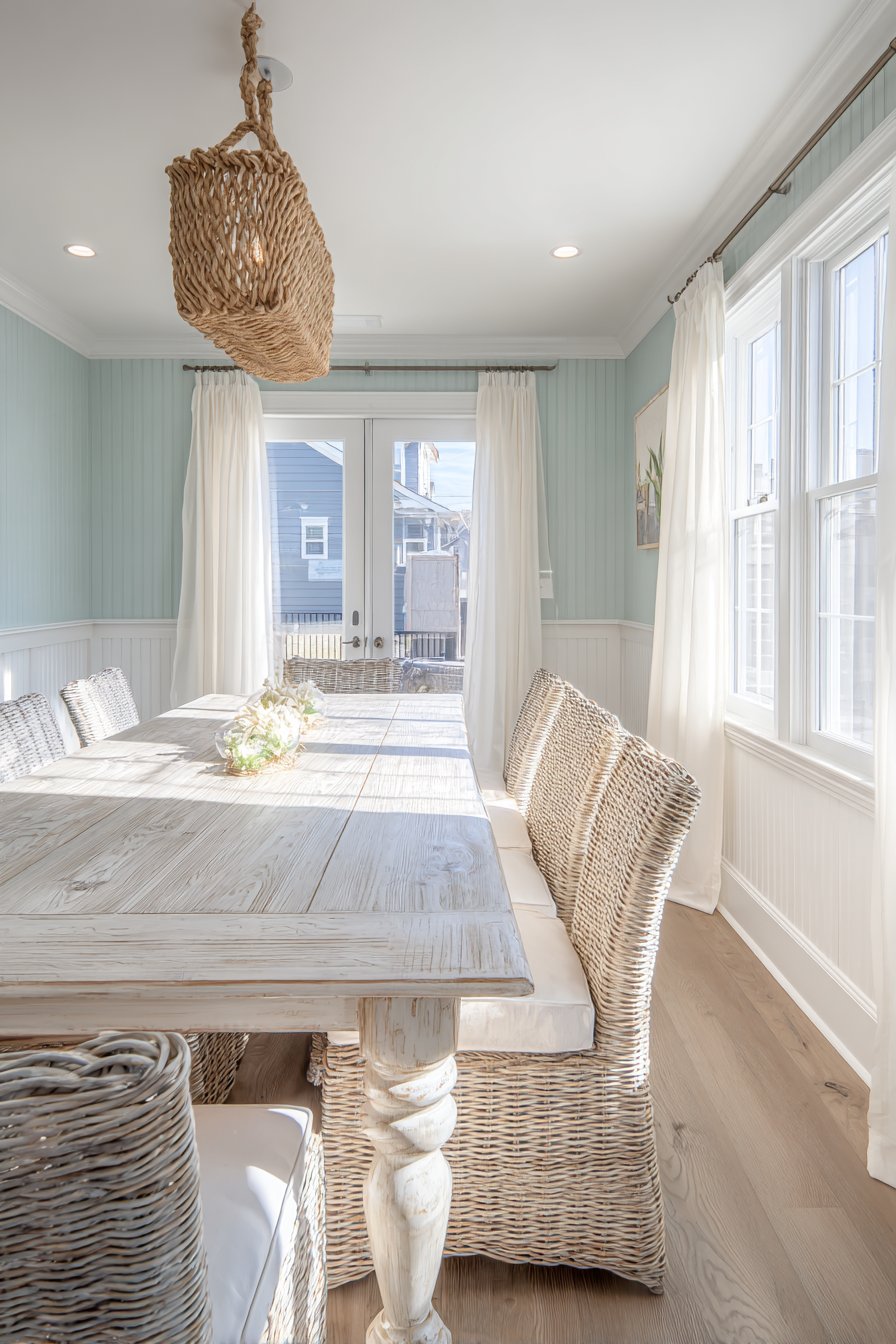
This coastal-themed narrow dining room ideas showcases a whitewashed pine dining table featuring a distressed finish and turned legs that evoke seaside cottage charm. The whitewashed treatment lightens the wood while allowing the natural grain to show through, creating subtle texture and visual interest without the weight of darker wood tones. Wicker dining chairs with white cushions provide comfortable seating while maintaining the breezy, casual aesthetic associated with coastal interiors.
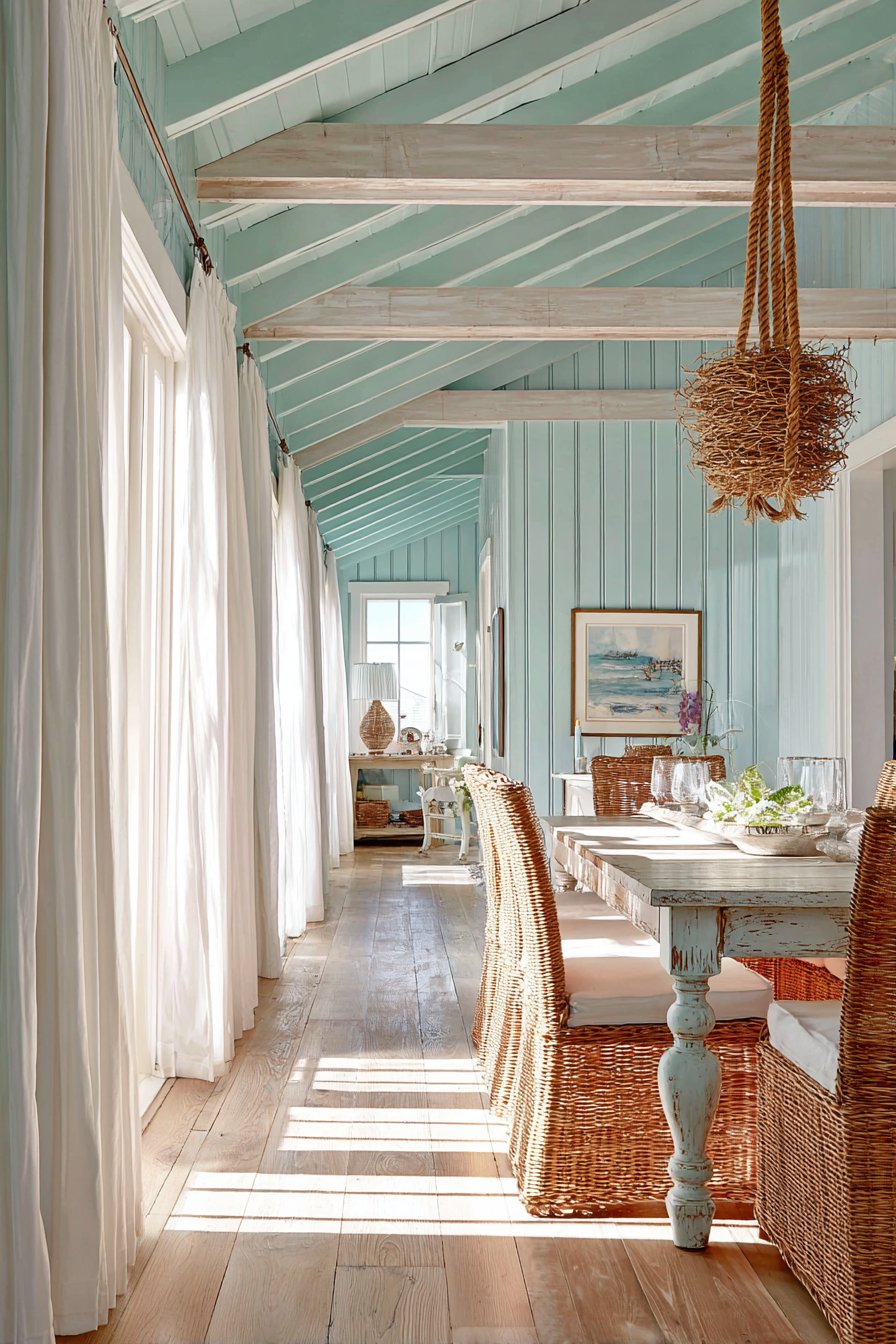
Vertical beadboard paneling painted in soft seafoam blue runs along the lower half of the walls, topped with crisp white that extends to the ceiling. This two-tone treatment adds architectural interest while the vertical orientation helps draw the eye upward, creating a sense of height in the narrow space. The seafoam blue introduces gentle color that references ocean and sky without overwhelming the room with intense saturation. A rope-wrapped pendant light fixture adds nautical charm overhead, its natural fiber texture complementing the wicker chairs and reinforcing the coastal theme.
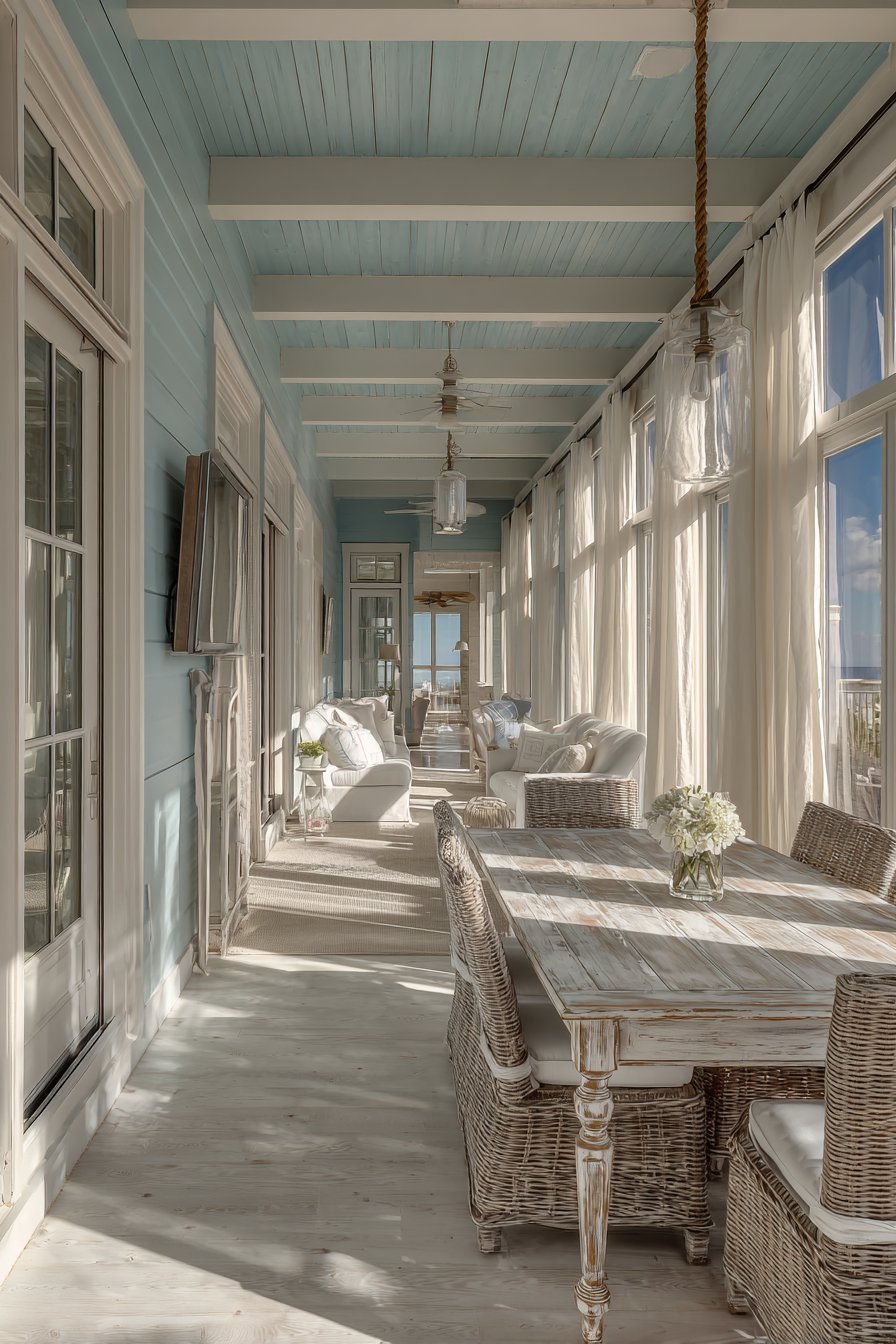
Sheer white curtains filter sunlight from windows at the room’s end, creating the soft, diffused illumination characteristic of beachside mornings. The curtains billow gently with air movement, adding a sense of relaxation and ease to the space. The overall palette of whites, soft blues, and natural materials creates a narrow dining room that feels airy, peaceful, and perpetually vacation-ready—a daily reminder of seaside tranquility regardless of actual geographic location.
Key Design Tips: Apply whitewash technique to wooden furniture to lighten the visual weight while preserving wood grain character. Install beadboard paneling to add texture and architectural detail without protruding significantly into the room. Choose a soft, muted blue-green tone rather than intense turquoise to maintain sophistication. Incorporate natural fiber elements like rope, wicker, and linen to reinforce coastal themes authentically. Use sheer curtains to preserve privacy while maximizing natural light penetration. Add subtle nautical references through lighting or hardware rather than obvious themed decor.
7. Convertible Functionality for Ultimate Flexibility
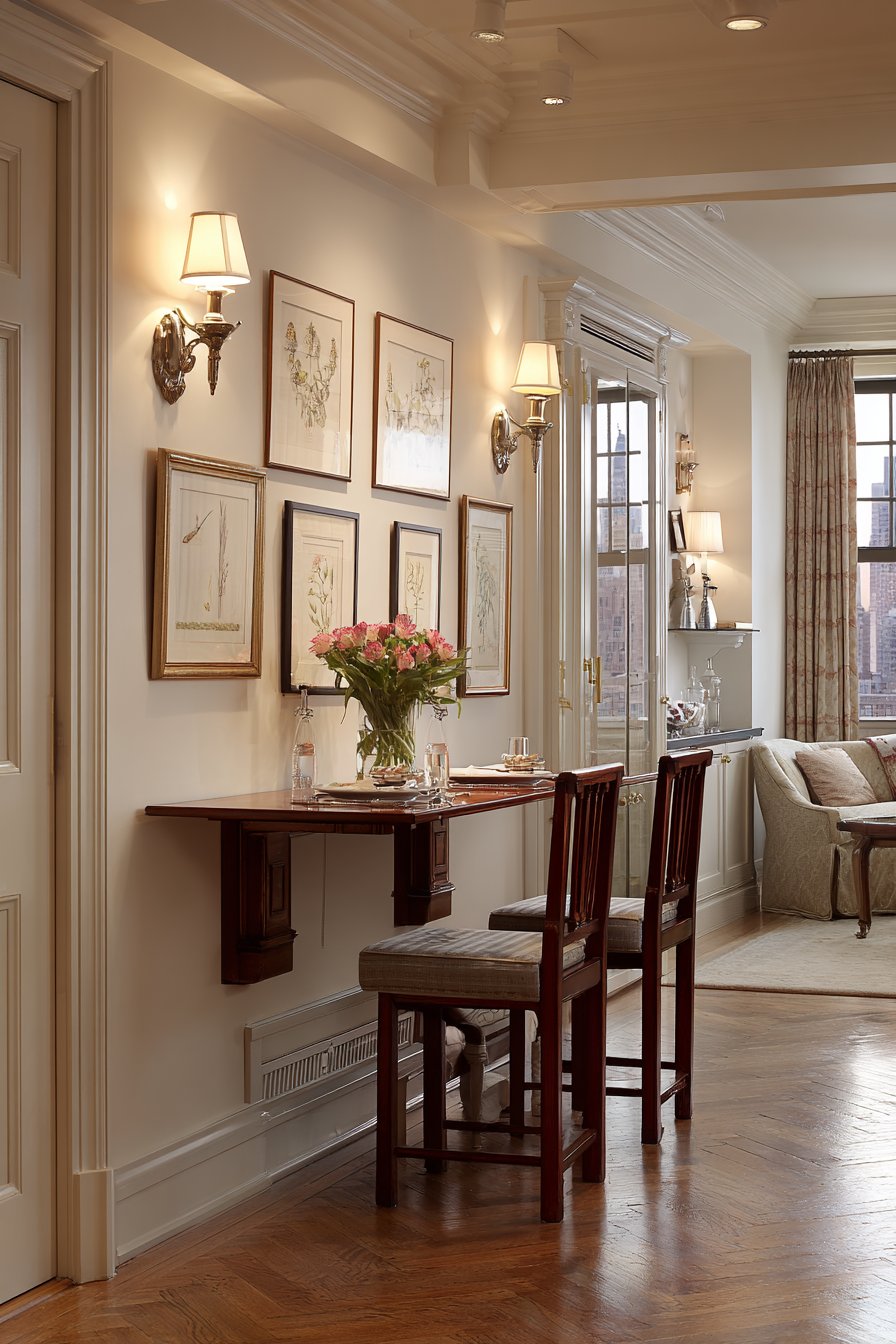
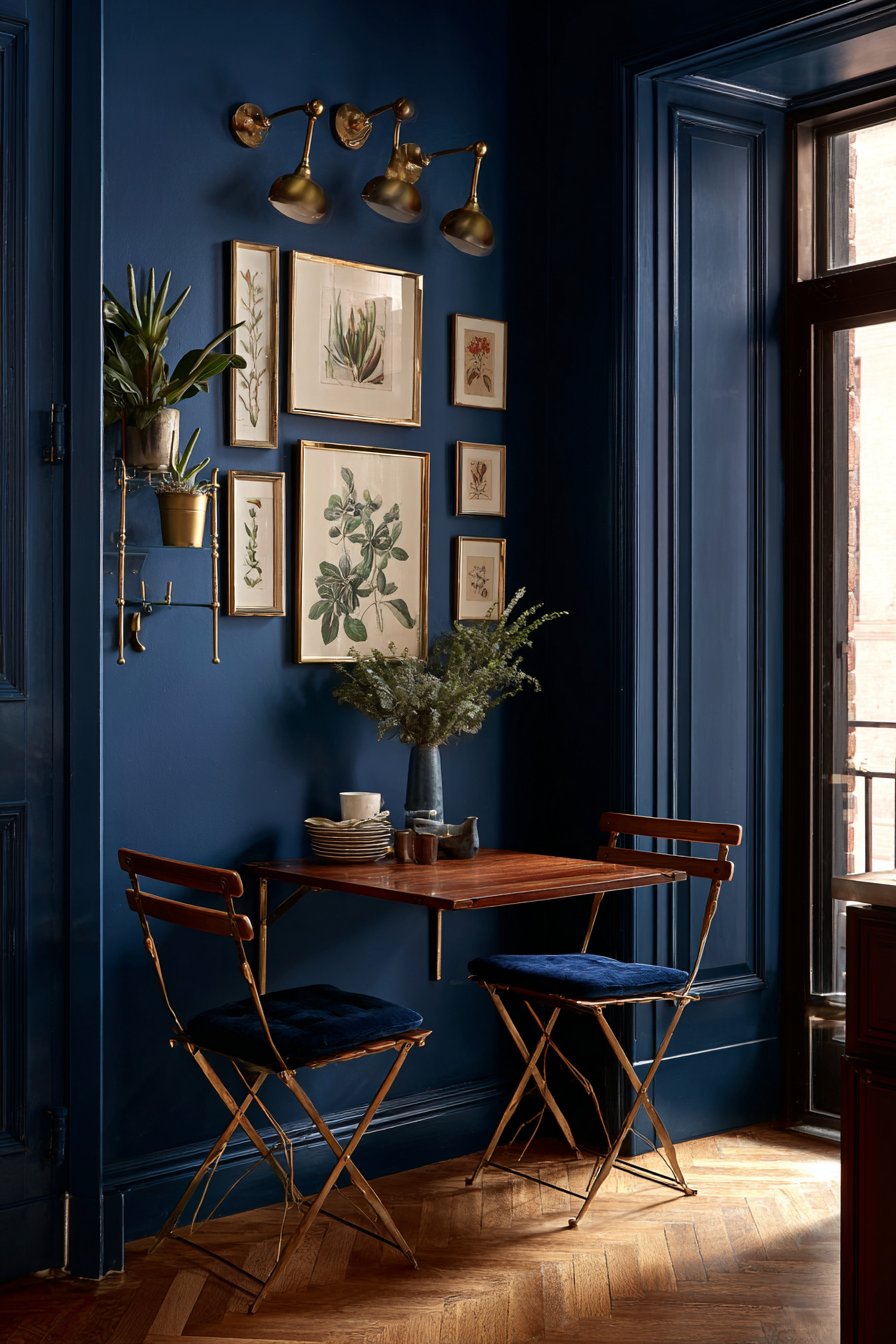
This space-saving narrow dining room ideas features a wall-mounted drop-leaf table in rich mahogany that folds down when not in use, transforming from a full dining surface to a narrow console that barely projects from the wall. This convertible approach proves invaluable in narrow spaces that must serve multiple functions or in homes where formal dining occurs infrequently. Folding chairs with upholstered seats in navy velvet hang on decorative wall hooks nearby, their storage becoming part of the room’s decorative scheme rather than a hidden necessity.
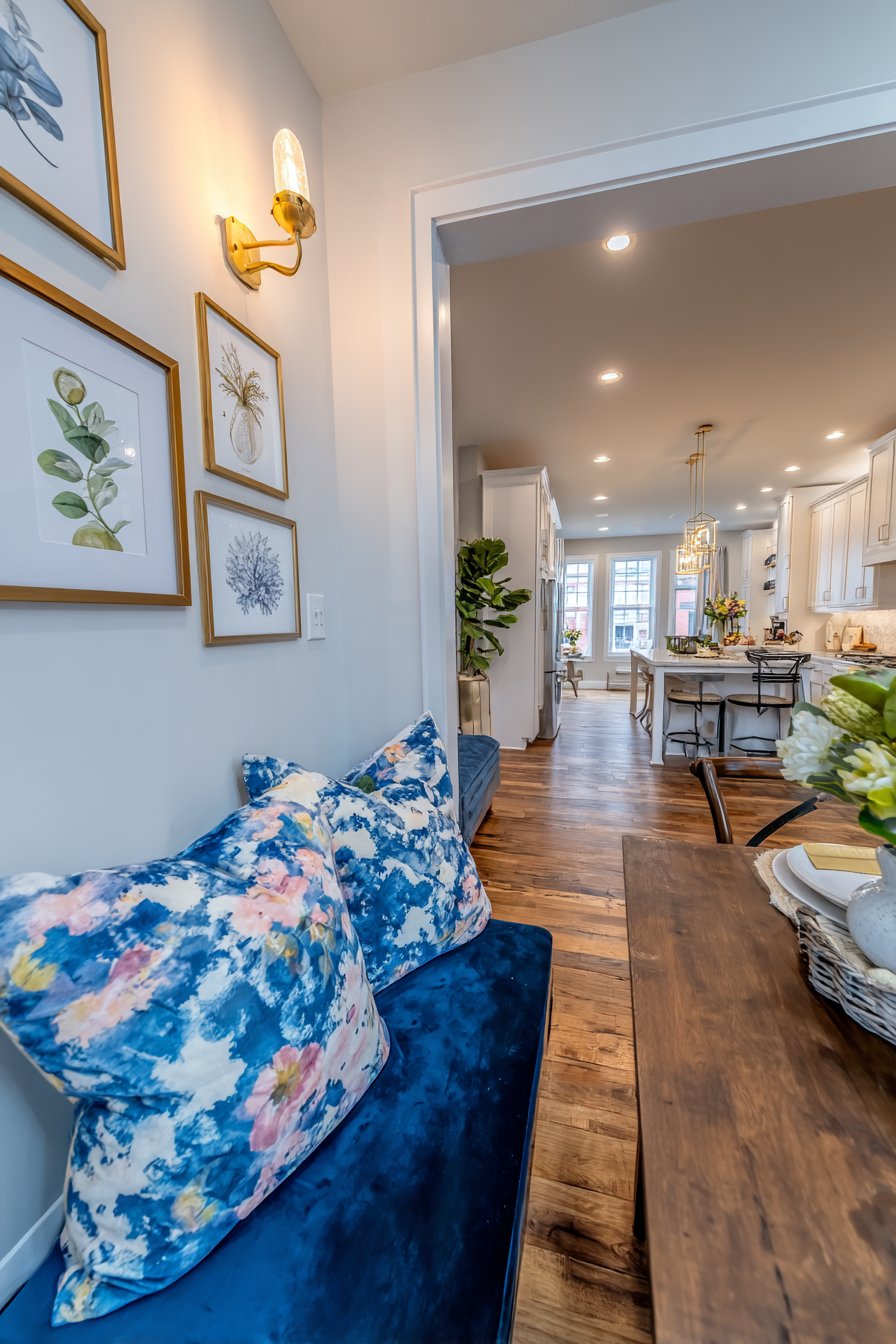
The walls display a gallery arrangement of framed botanical prints in gold frames, creating visual interest and sophistication during the majority of time when the table remains folded and the room serves other purposes. The botanical subjects introduce organic beauty while the gold frames add a touch of elegance that elevates the practical space-saving solutions. A pair of swing-arm wall sconces provides task lighting over the dining surface when deployed, eliminating the need for ceiling fixtures that would occupy visual space even when the table is stowed.
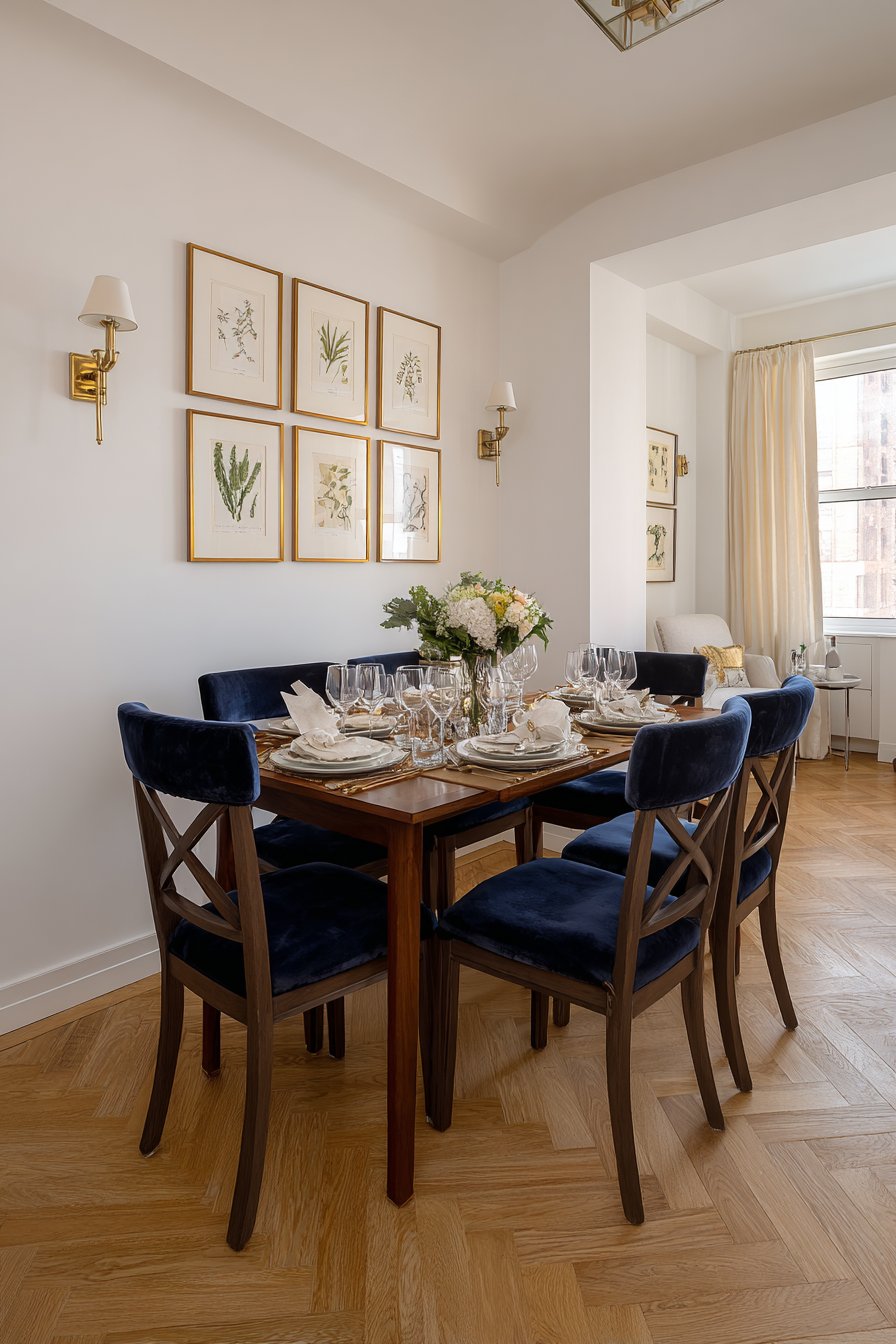
Hardwood flooring in honey oak runs perpendicular to the room’s length, a strategic choice that creates visual width through the direction of the planks. When the table is folded down, the floor becomes the room’s primary visual element, making the directional installation particularly impactful. This narrow dining room demonstrates that highly functional spaces need not sacrifice beauty, proving that convertible furniture and multi-purpose design can be elegant and desirable rather than merely pragmatic compromises.
Key Design Tips: Install drop-leaf or wall-mounted tables with sturdy hardware rated for repeated use and significant weight. Store folding chairs on decorative hooks that complement your overall design aesthetic. Position swing-arm sconces at proper height (approximately 60-66 inches from floor) for comfortable dining illumination. Create a gallery wall that makes the space attractive even when not configured for dining. Run flooring planks perpendicular to the narrow dimension to create an illusion of width. Choose a wood finish for convertible furniture that coordinates with your overall interior palette.
8. Contemporary Glamour with Bold Color Contrast
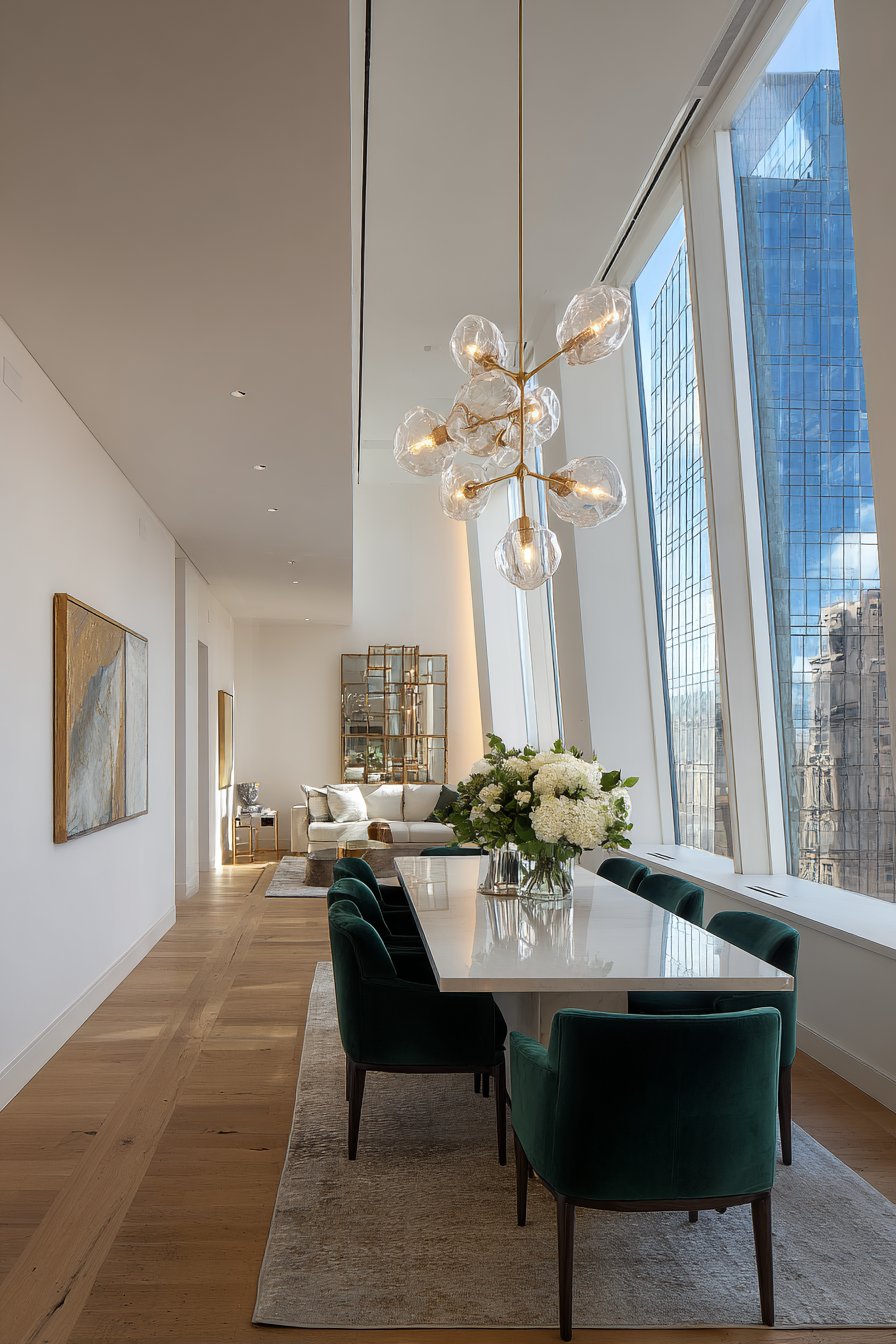
This contemporary narrow dining room ideas showcases a high-gloss white lacquer dining table featuring a streamlined rectangular form that reflects light beautifully while maintaining clean, modern lines. The glossy surface creates subtle reflections that add visual interest and dimension, particularly when candlelight or pendant illumination dances across the polished finish. Six upholstered parsons chairs in deep emerald green velvet provide bold color contrast, their jewel-toned richness creating sophisticated drama against the pristine white table.
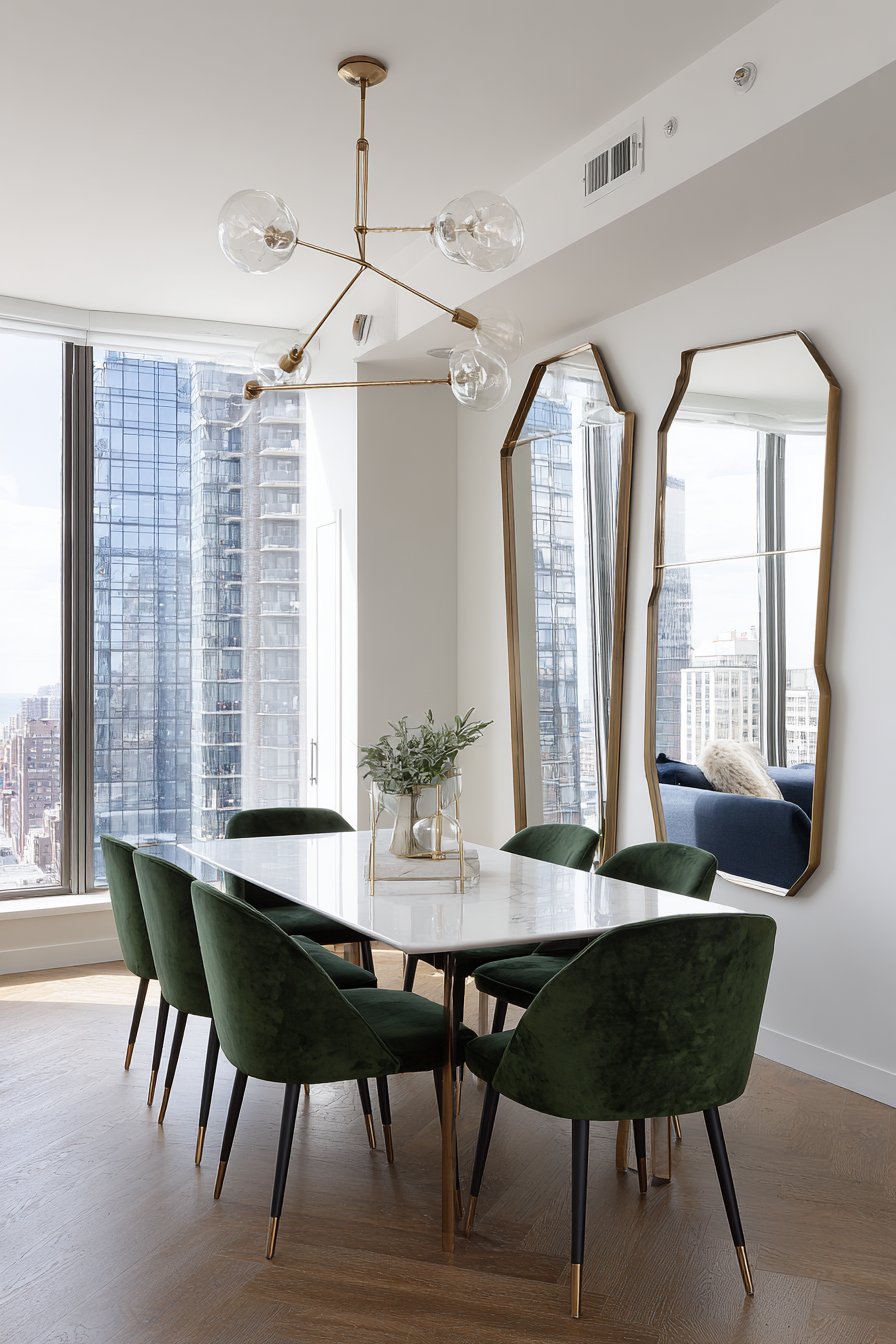
A geometric brass chandelier with clear glass globes serves as sculptural lighting, its angular form and warm metallic finish adding contemporary elegance overhead. The chandelier’s geometric design echoes the rectangular form of the table while its brass finish coordinates beautifully with the green velvet upholstery, creating a cohesive color story of white, green, and gold. One wall features floor-to-ceiling mirrors with subtle bronze frames that dramatically expand the visual space, effectively doubling the perceived width of the narrow room through reflection.
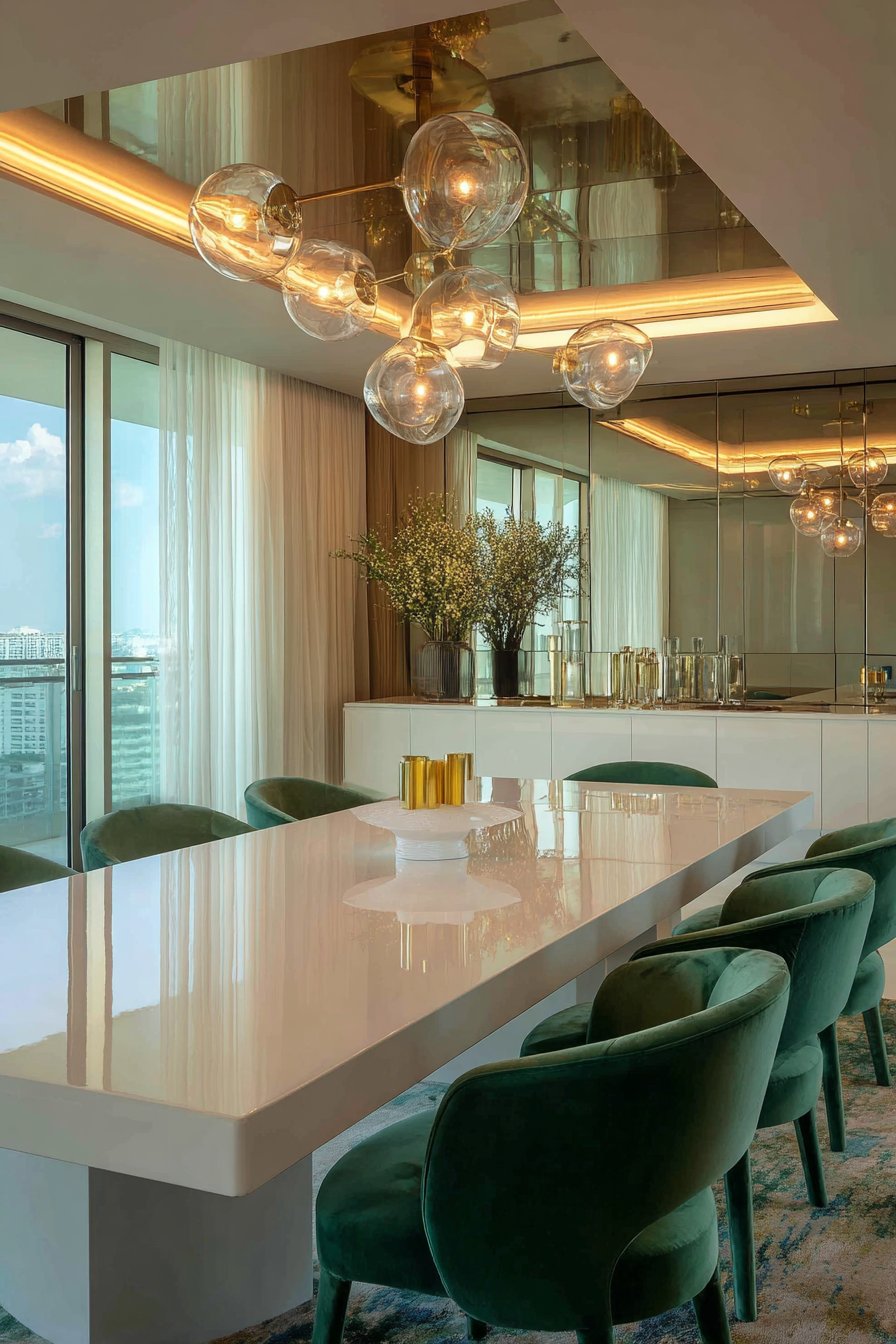
Natural light from clerestory windows creates dynamic reflections throughout the day, bouncing between the glossy table surface, the mirrored wall, and the glass chandelier elements. This interplay of reflective surfaces prevents the narrow room from feeling enclosed, instead creating a sense of movement and spaciousness. The bold emerald velvet introduces luxury and personality without requiring pattern or additional color complexity, proving that narrow dining rooms can embrace dramatic design choices when executed with restraint and intentionality.
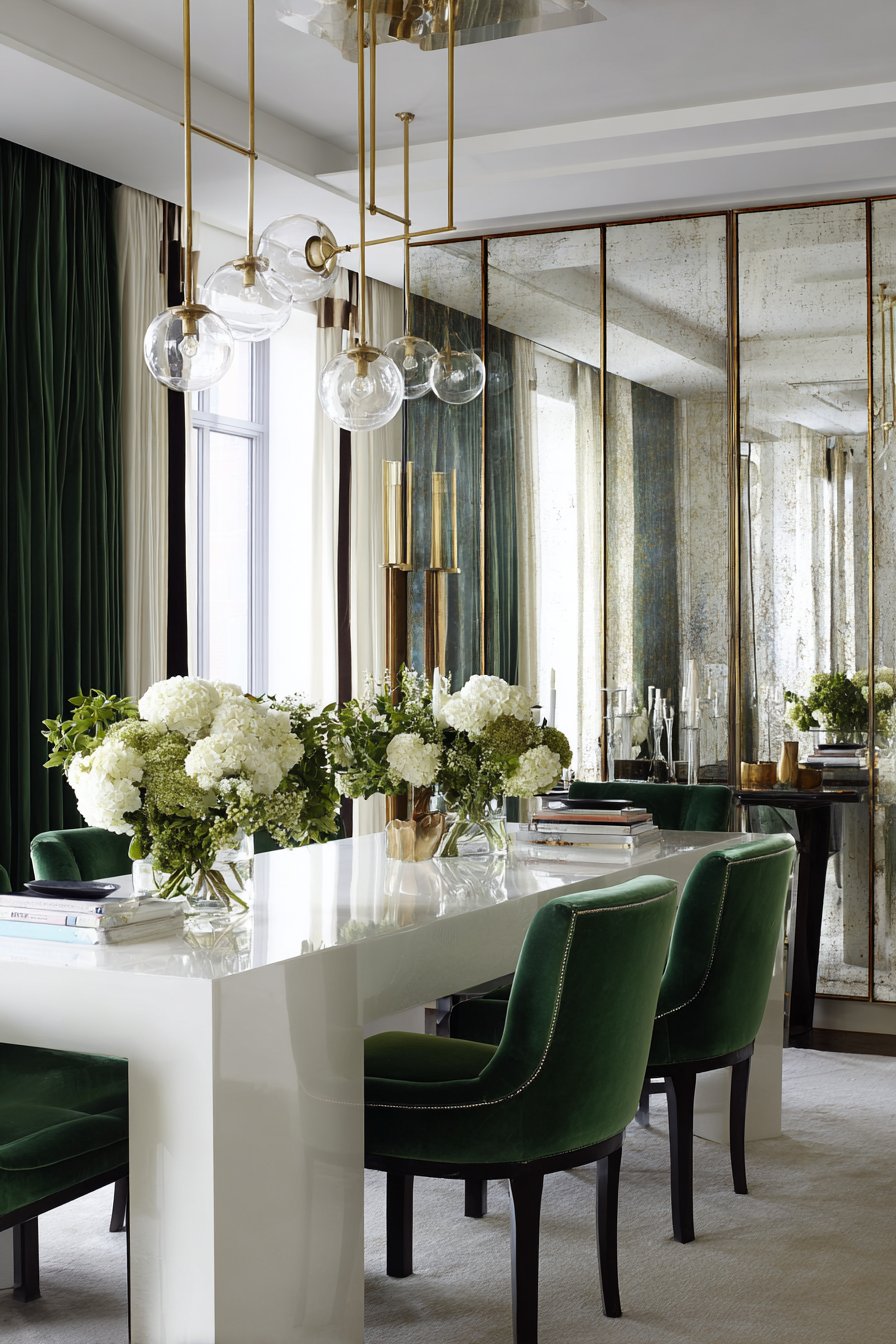
Key Design Tips: Select high-gloss furniture finishes to reflect light and create visual expansion in narrow spaces. Use bold color on upholstery rather than walls to create impact without overwhelming the room. Install floor-to-ceiling mirrors on one long wall to double the perceived width. Choose a chandelier with geometric forms rather than traditional curves for contemporary sophistication. Position clerestory windows to provide light without sacrificing wall space for furniture placement. Limit your color palette to three main tones (white, emerald, brass) for cohesive modern elegance.
9. Rustic Farmhouse with Vintage Character
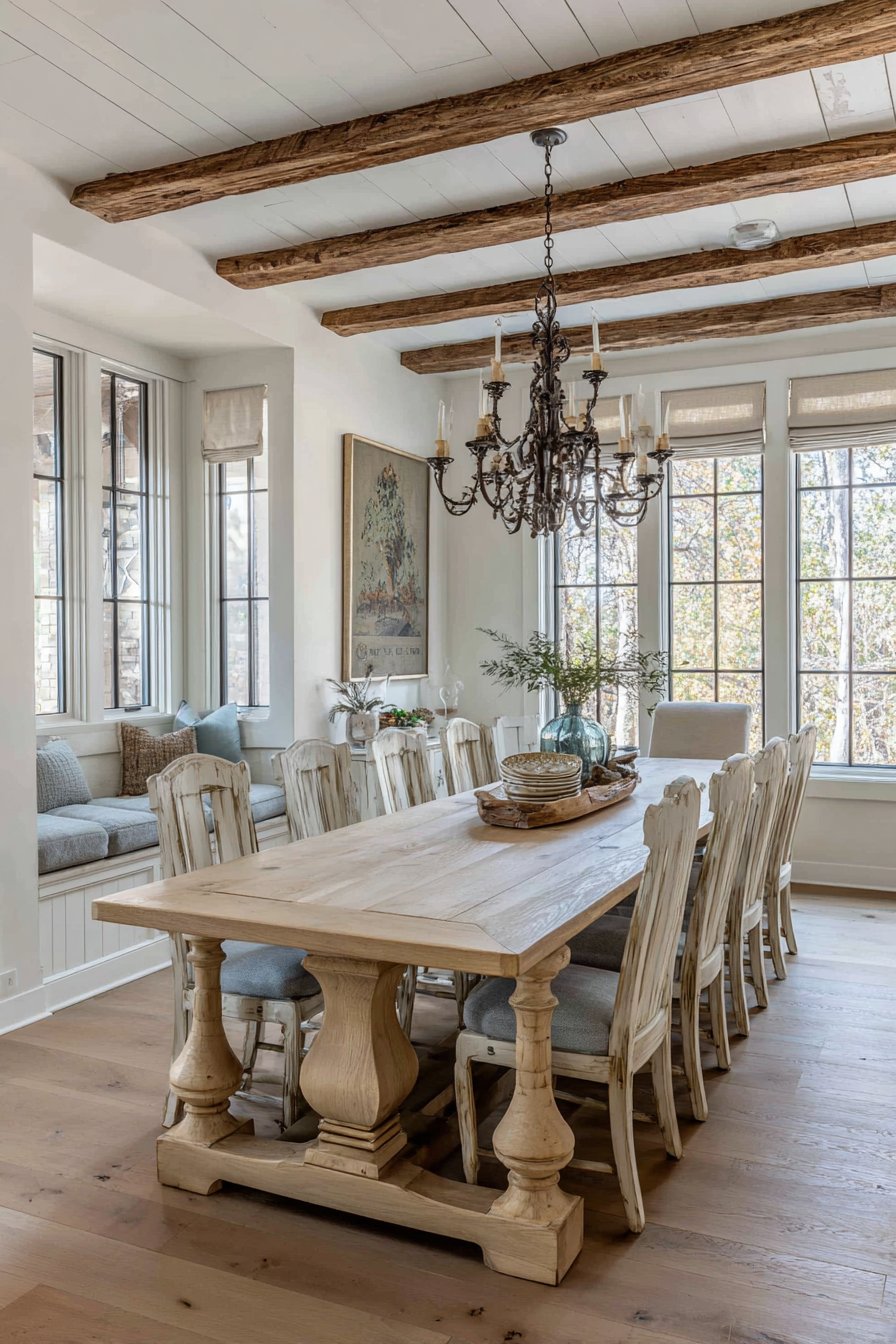
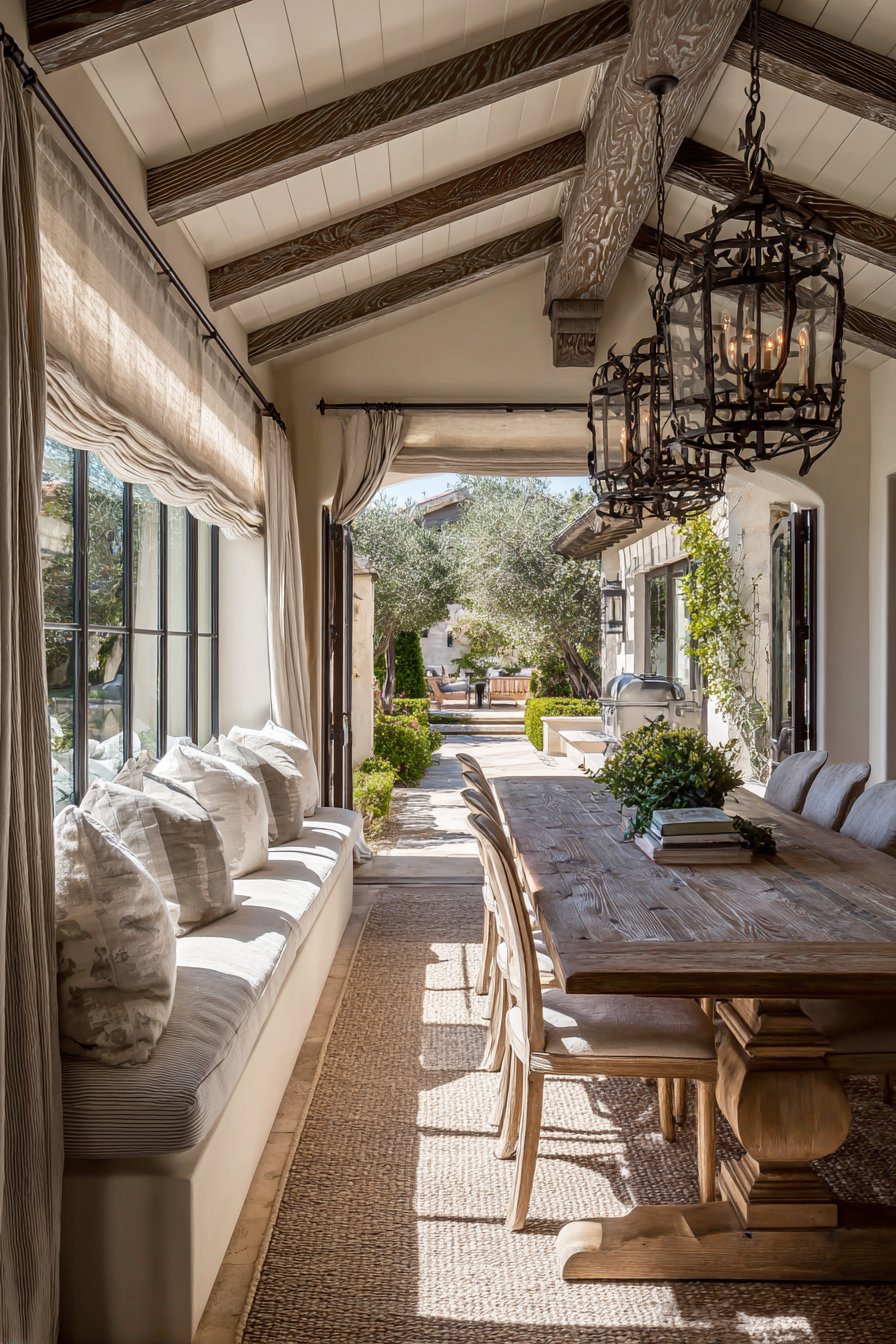
This rustic farmhouse narrow dining room ideas features a solid pine trestle table with chunky turned legs and a weathered finish that embodies authentic country charm. The substantial construction suggests heirloom quality while the weathered patina indicates years of family gatherings and shared meals. Mismatched vintage wooden chairs painted in coordinating soft pastels—dusty rose, sage green, pale blue—create charming character and visual interest without the predictability of a matching set.
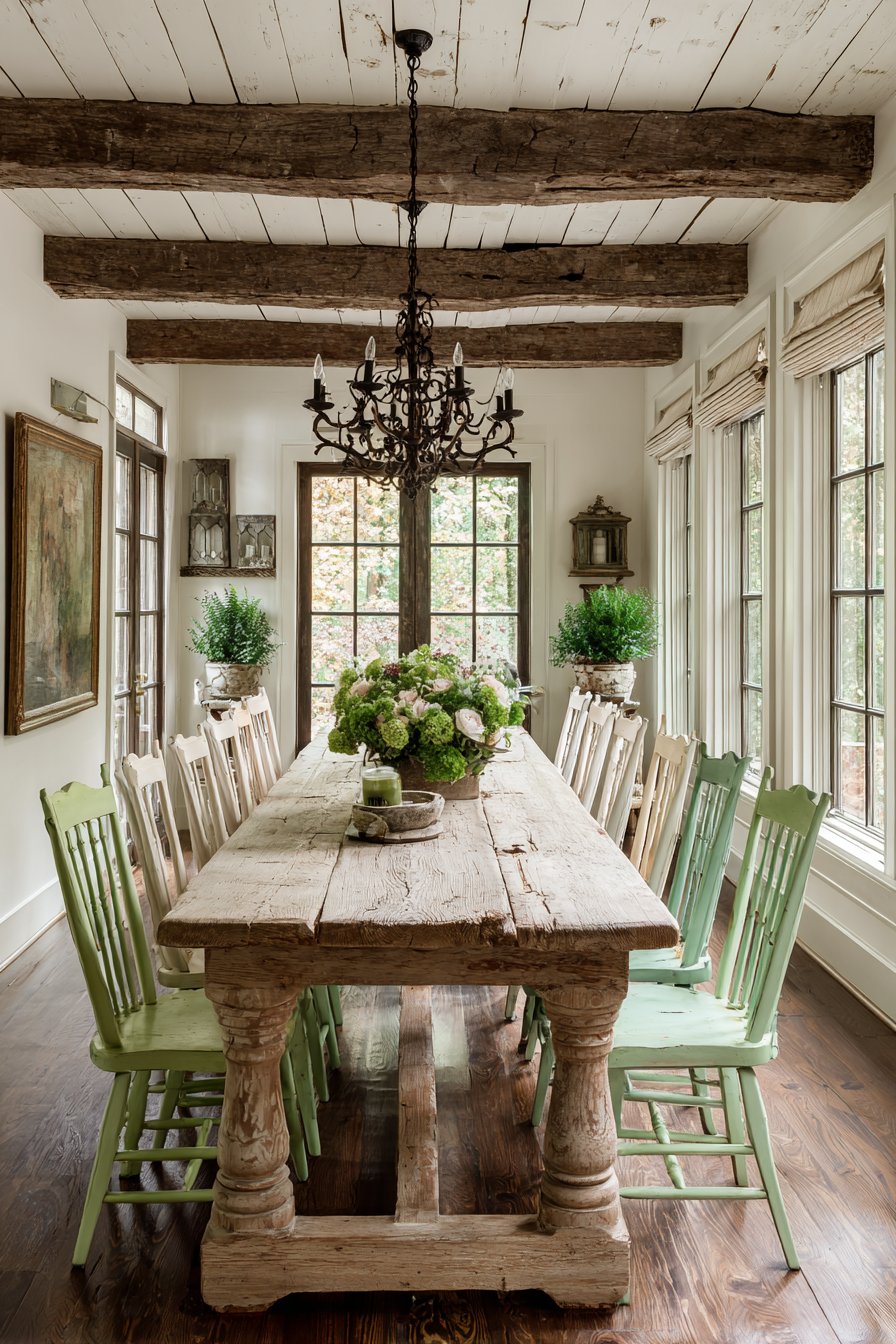
A white shiplap ceiling with exposed dark-stained beams draws the eye upward, creating architectural interest that emphasizes the room’s vertical dimension and distracts from its narrow width. The contrast between the bright white shiplap and dark beams adds drama while maintaining the farmhouse aesthetic. A wrought iron candelabra-style chandelier provides ambient lighting, its multiple arms extending gracefully to illuminate the table surface while the black metal coordinates with the exposed ceiling beams.
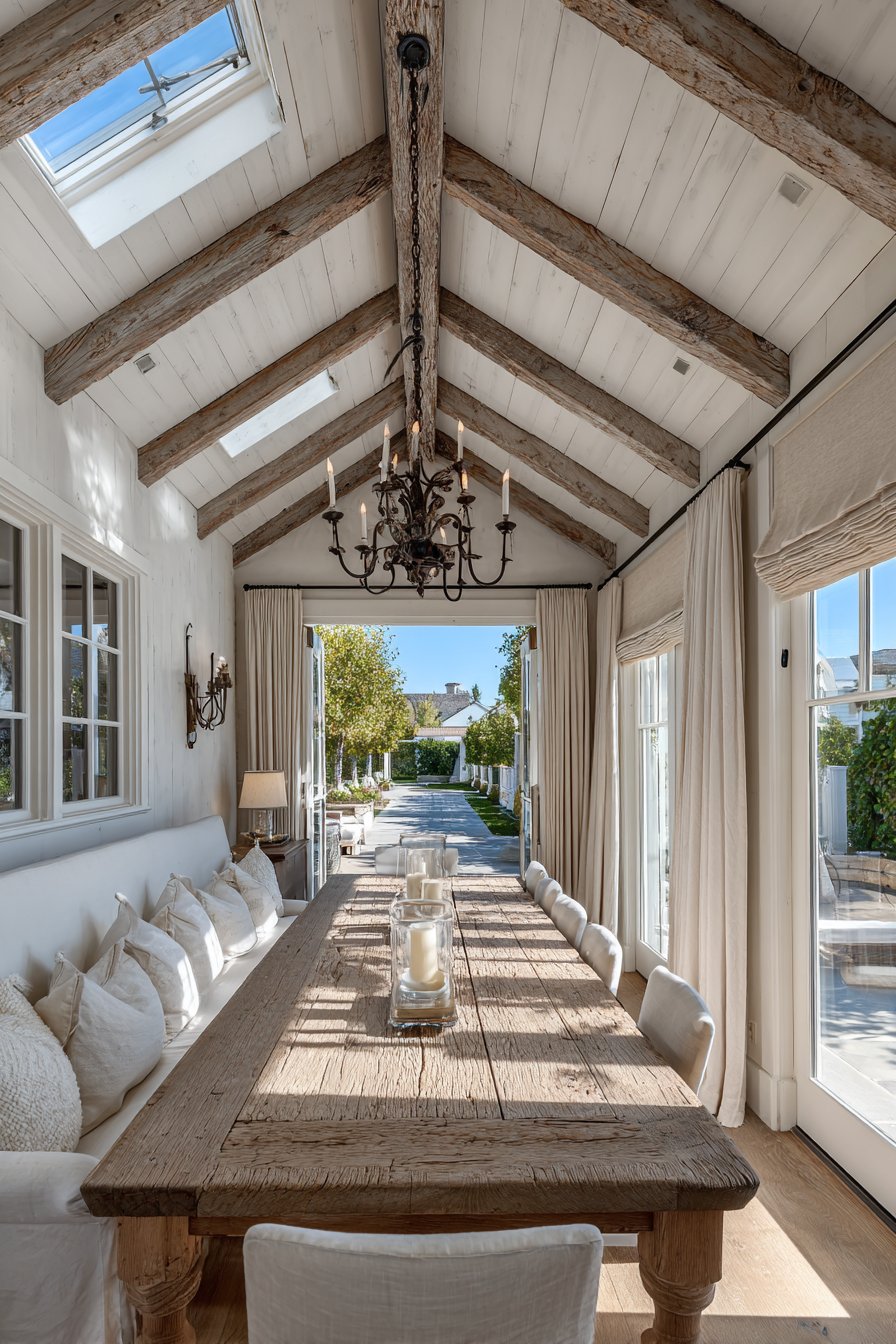
Large windows with simple linen Roman shades frame garden views, bringing the outdoors inside and creating a connection to rural landscapes that inspired the farmhouse style. The natural light streaming through these generous windows highlights the painted chair finishes and the wood grain in the table, creating a warm, inviting atmosphere perfect for leisurely weekend breakfasts and family dinners. This narrow dining room proves that rustic style doesn’t require vast square footage—authentic materials and thoughtful vintage pieces create character regardless of room dimensions.
Key Design Tips: Mix vintage chairs in coordinating colors rather than matching perfectly for collected-over-time authenticity. Paint ceiling beams in contrasting color to architectural surfaces to add visual drama and height. Choose a trestle-style table base to provide sturdy support without the visual obstruction of four corner legs. Install simple window treatments that frame views without blocking natural light. Source authentic vintage pieces from antique stores and estate sales for genuine character. Apply distressing techniques to new wood furniture to achieve aged patina and rustic appeal.
10. Minimalist Concrete and Steel Composition
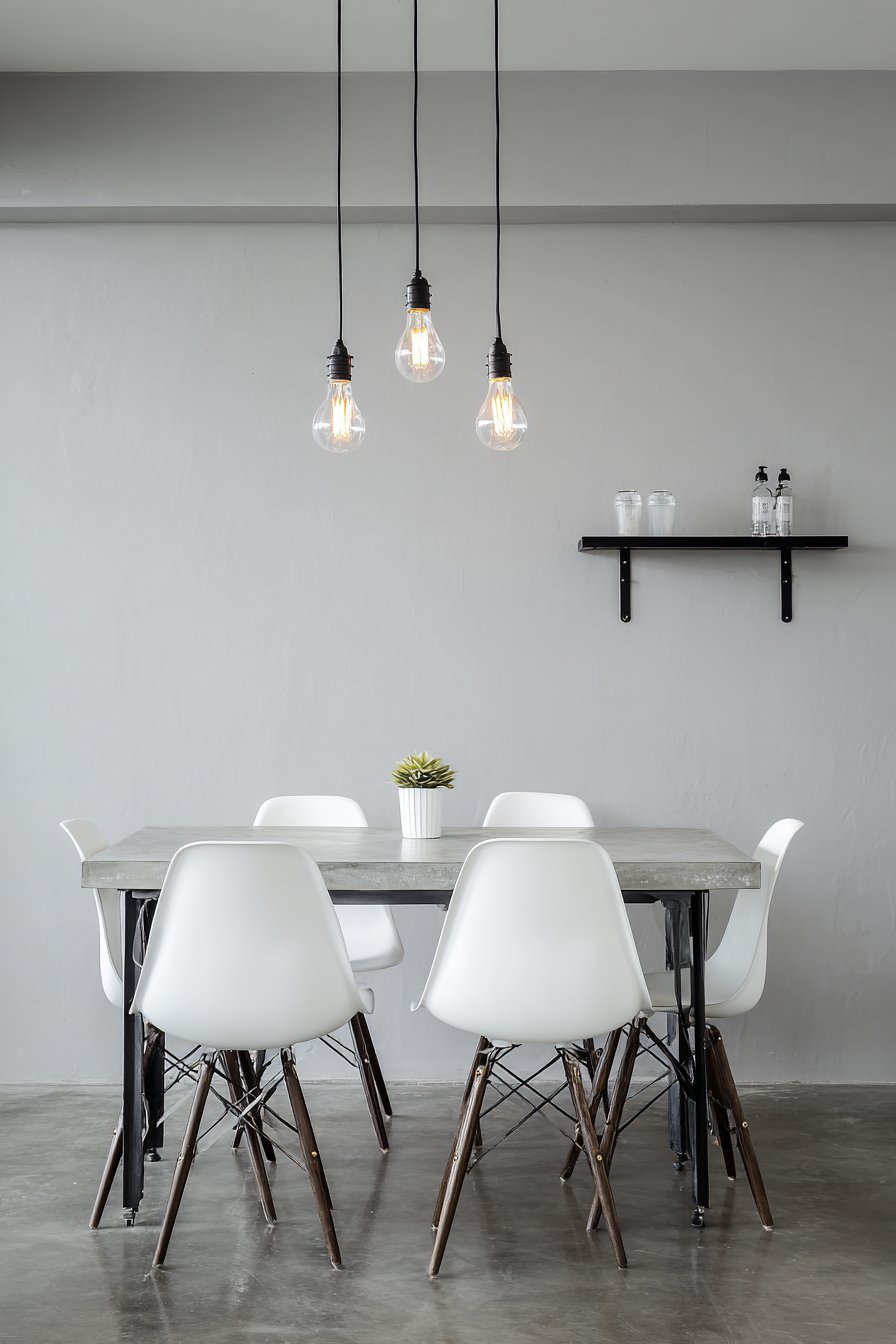
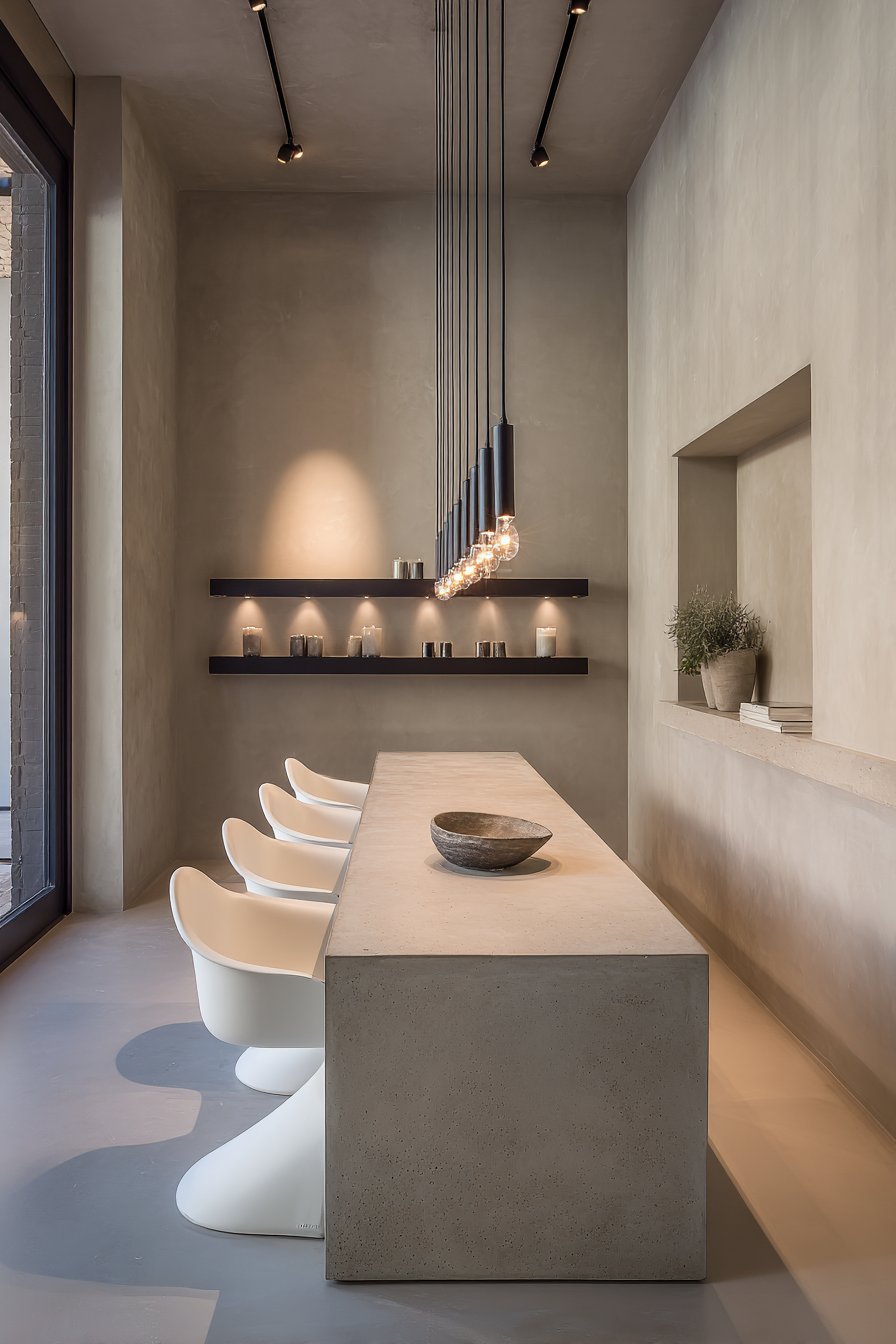
This minimalist narrow dining room ideas showcases a concrete dining table with a smooth polished finish and integrated steel base that creates a sculptural presence while maintaining the restrained aesthetic of minimalism. The concrete material introduces raw, honest beauty—its subtle color variations and occasional surface imperfections become design features rather than flaws. Four molded plastic shell chairs in crisp white maintain the clean aesthetic, their iconic mid-century modern form providing comfortable seating without visual complexity.
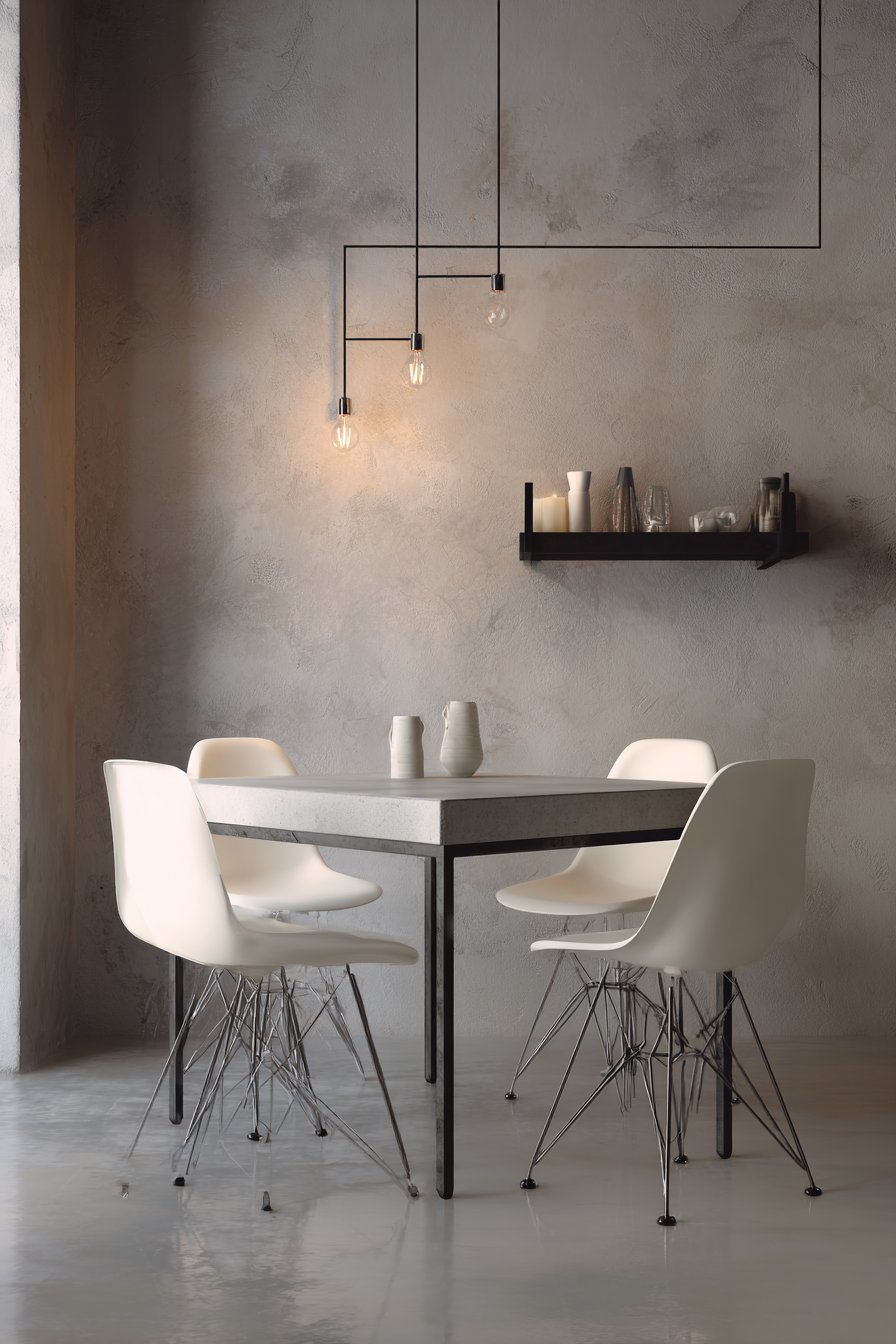
Walls painted in warm gray provide a neutral backdrop that prevents the concrete table from appearing too cold or industrial. A single floating shelf in black metal displays minimal decorative objects—perhaps a simple ceramic vase or a small sculptural piece—demonstrating the minimalist principle that every element must be intentional and meaningful. A linear suspension light with matte black finish and exposed bulbs hangs precisely centered above the table, its industrial-minimal design providing necessary illumination while adding architectural interest through geometric form.
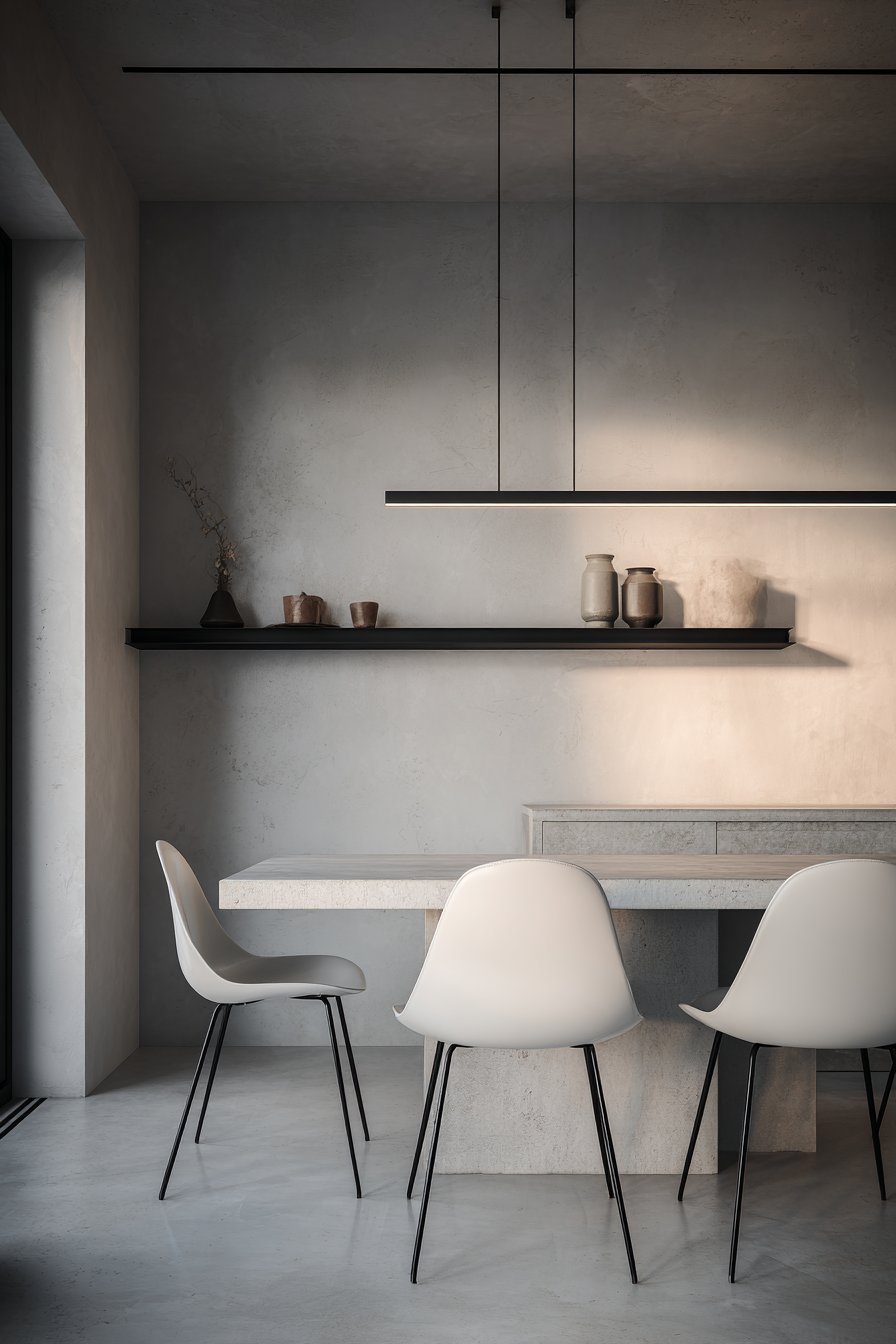
Polished concrete flooring continues the monochromatic palette and material honesty, creating visual continuity between floor and table while maintaining the minimalist philosophy of reduced material variation. The smooth, reflective floor surface bounces light upward, brightening the space despite the limited color palette. This narrow dining room exemplifies how minimalism—often misunderstood as stark or unwelcoming—can create warm, livable spaces through thoughtful material selection, precise proportions, and careful attention to the quality of each included element.
Key Design Tips: Choose concrete furniture with polished or sealed finishes for easier maintenance and refined appearance. Limit decorative objects to a few carefully selected pieces of sculptural quality. Paint walls in warm neutrals rather than stark white to prevent minimalist spaces from feeling cold. Install linear lighting that complements narrow room proportions rather than fighting against them. Use polished concrete flooring to create visual continuity and light reflection. Select molded plastic or fiberglass chairs for their clean lines and easy care in minimalist settings.
11. Traditional Elegance with Rich Wood Tones
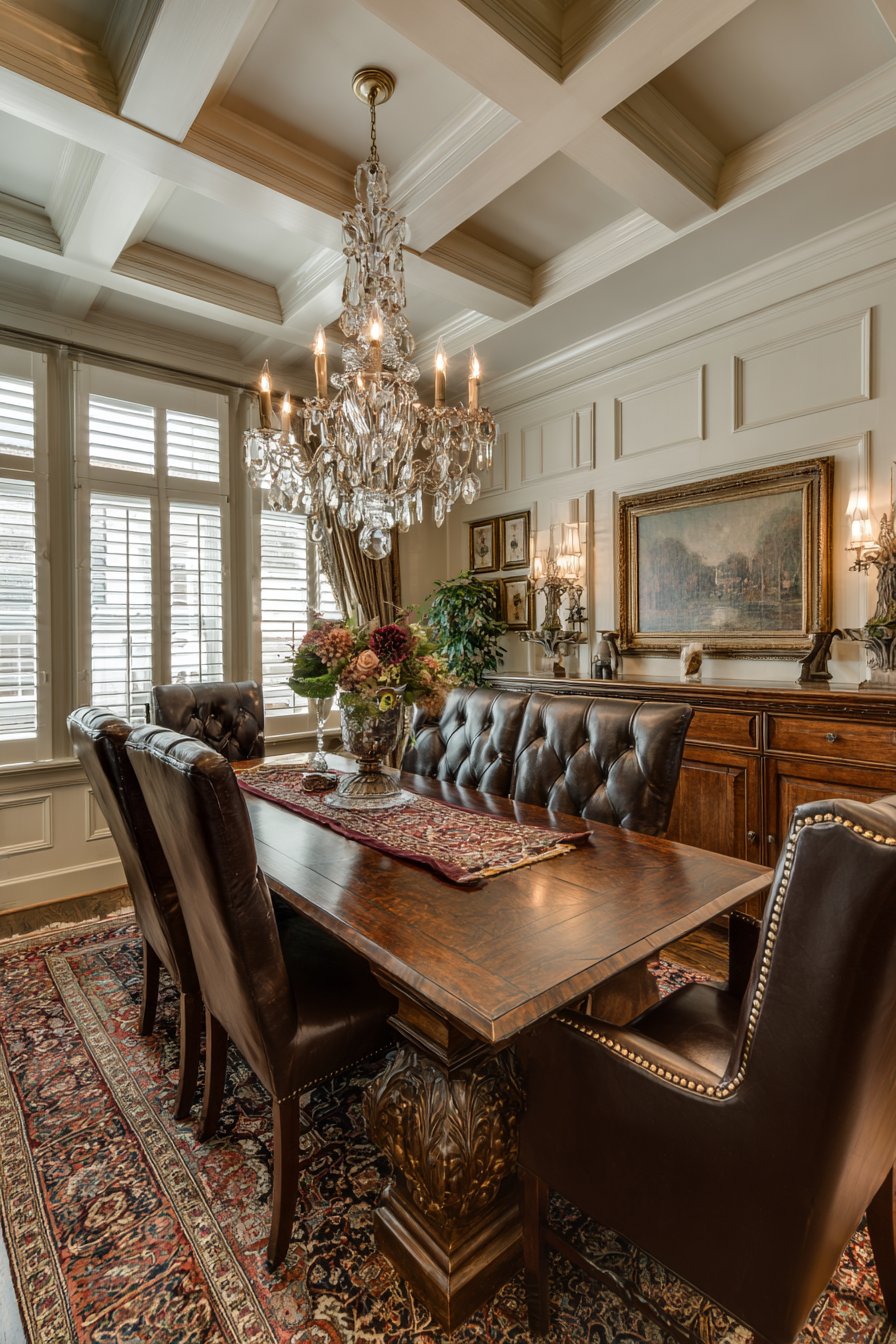
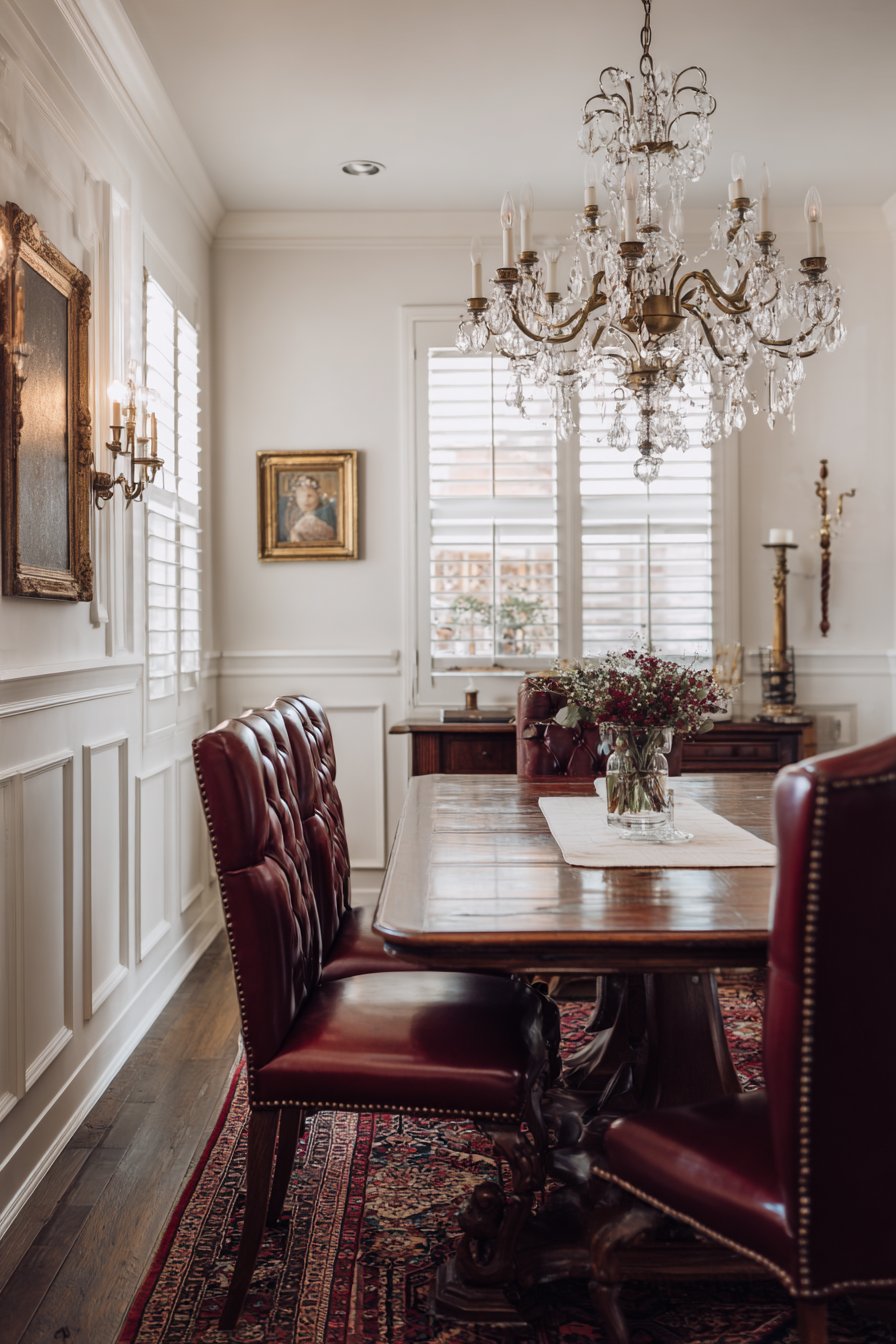
This traditional narrow dining room ideas features a mahogany pedestal dining table with ornate carved details on the base that demonstrates classical craftsmanship and formal elegance. The rich, deep mahogany finish brings warmth and sophistication to the narrow space while the pedestal base eliminates corner legs that might obstruct seating or traffic flow. Upholstered dining chairs with nailhead trim in burgundy leather provide classic seating, their traditional styling and luxurious material elevating the formality of the space.
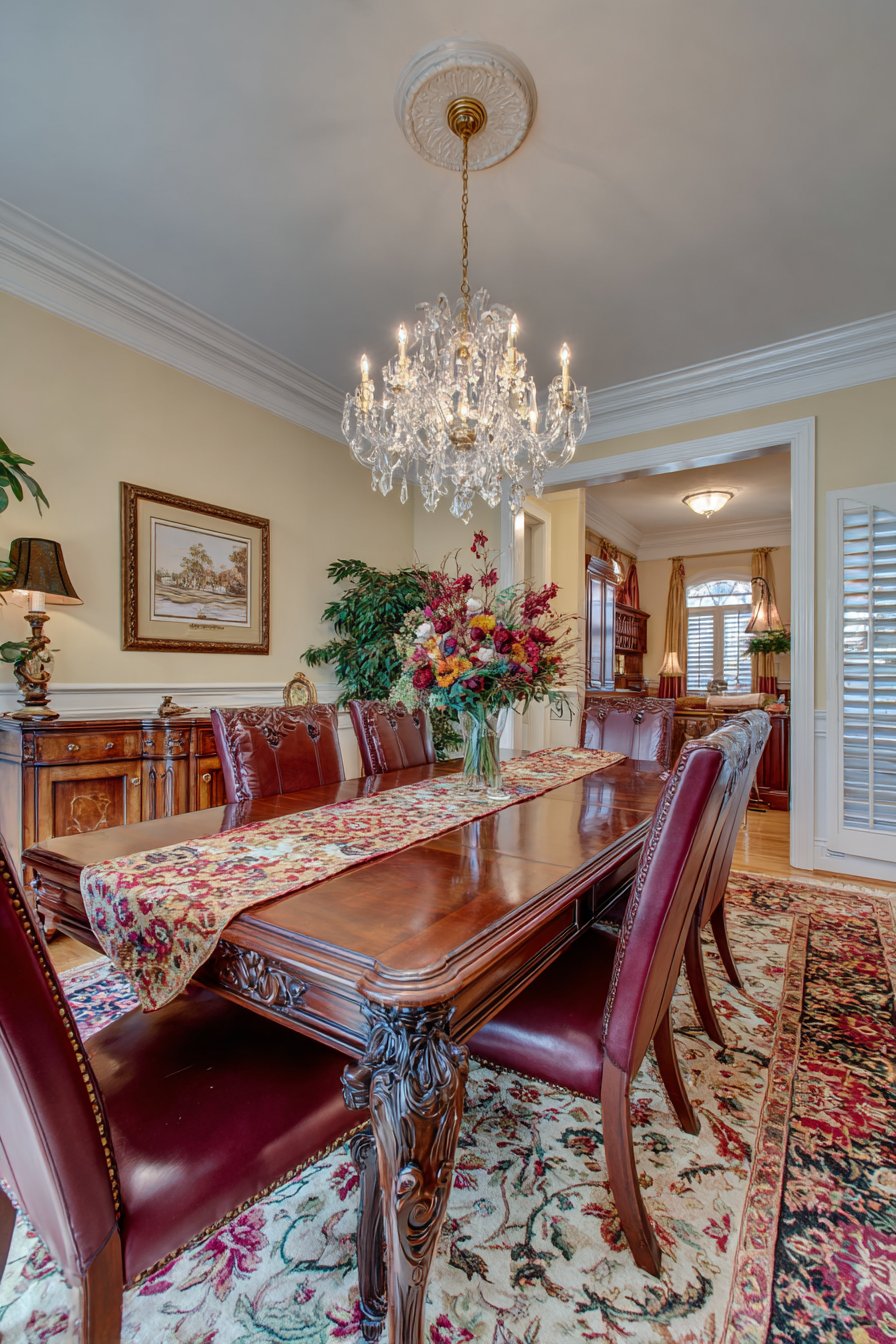
Wainscoting painted in cream extends along both walls, topped with decorative chair rail molding that adds architectural refinement and visual interest at mid-wall height. This traditional wall treatment provides textural variation while the horizontal lines created by the chair rail can help make the narrow room feel slightly wider. A crystal chandelier with brass accents creates elegant overhead lighting, its faceted crystals catching and reflecting light to add sparkle and movement to the formal setting.
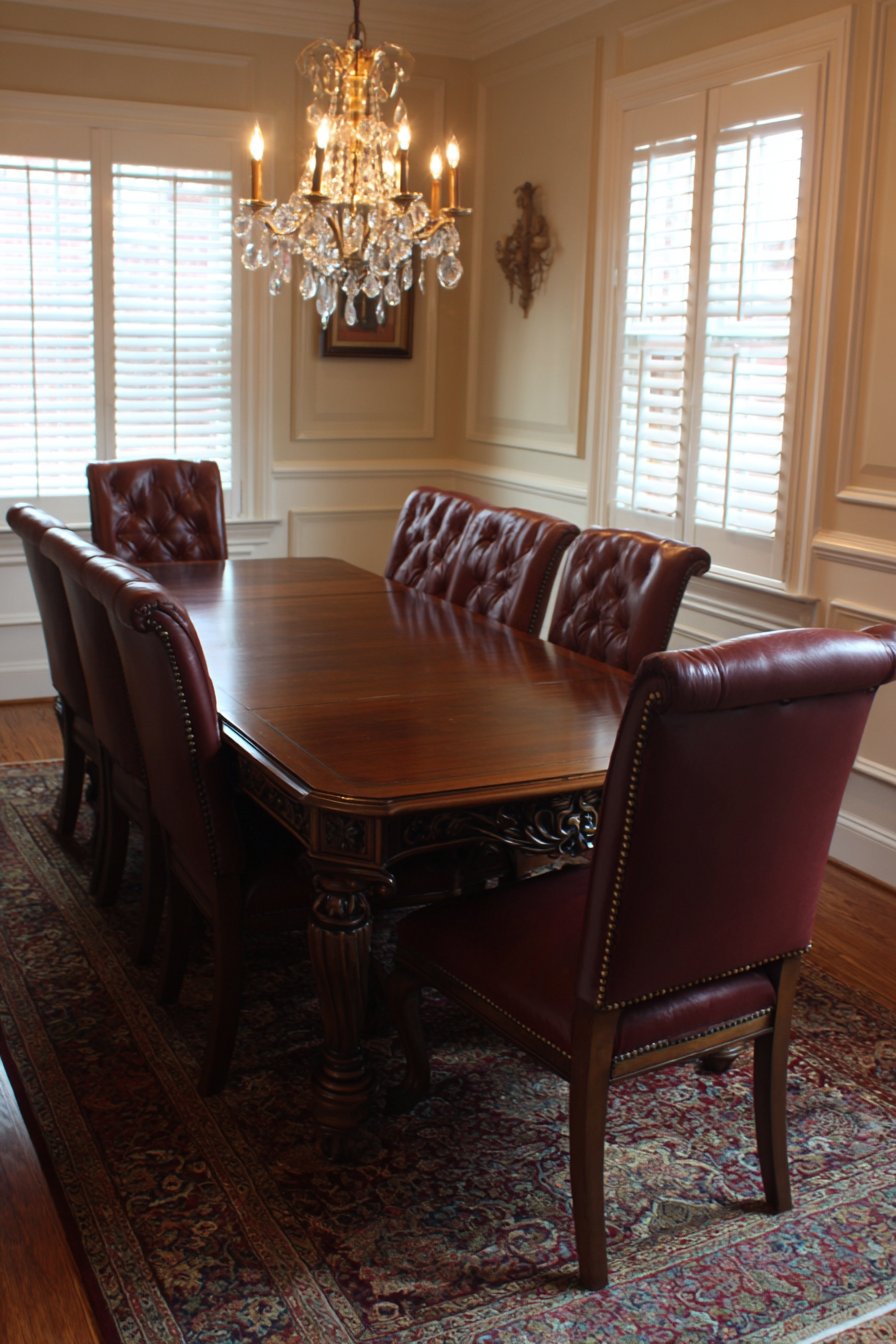
A Persian runner in rich jewel tones—deep reds, blues, and golds—defines the dining zone while adding pattern, color, and luxurious texture underfoot. The runner’s length emphasizes the room’s linear dimension while its traditional pattern complements the formal furnishings. Natural light filters through plantation shutters, their adjustable louvers allowing precise control of illumination and privacy while maintaining the traditional aesthetic. This narrow dining room proves that formal, traditional design can work beautifully in compact spaces when proportions are carefully considered and quality materials are prioritized over quantity of elements.
Key Design Tips: Choose pedestal table bases to maximize seating flexibility and reduce visual obstruction in narrow spaces. Install wainscoting to add architectural character without protruding significantly into the room. Select upholstered dining chairs in leather for durability and refined appearance in formal settings. Use a runner rather than a full area rug to define the dining zone without fragmenting floor space. Install plantation shutters for traditional style with functional light control. Incorporate one crystal chandelier as a focal point for sparkle and formal elegance.
12. Mid-Century Modern with Iconic Design Elements
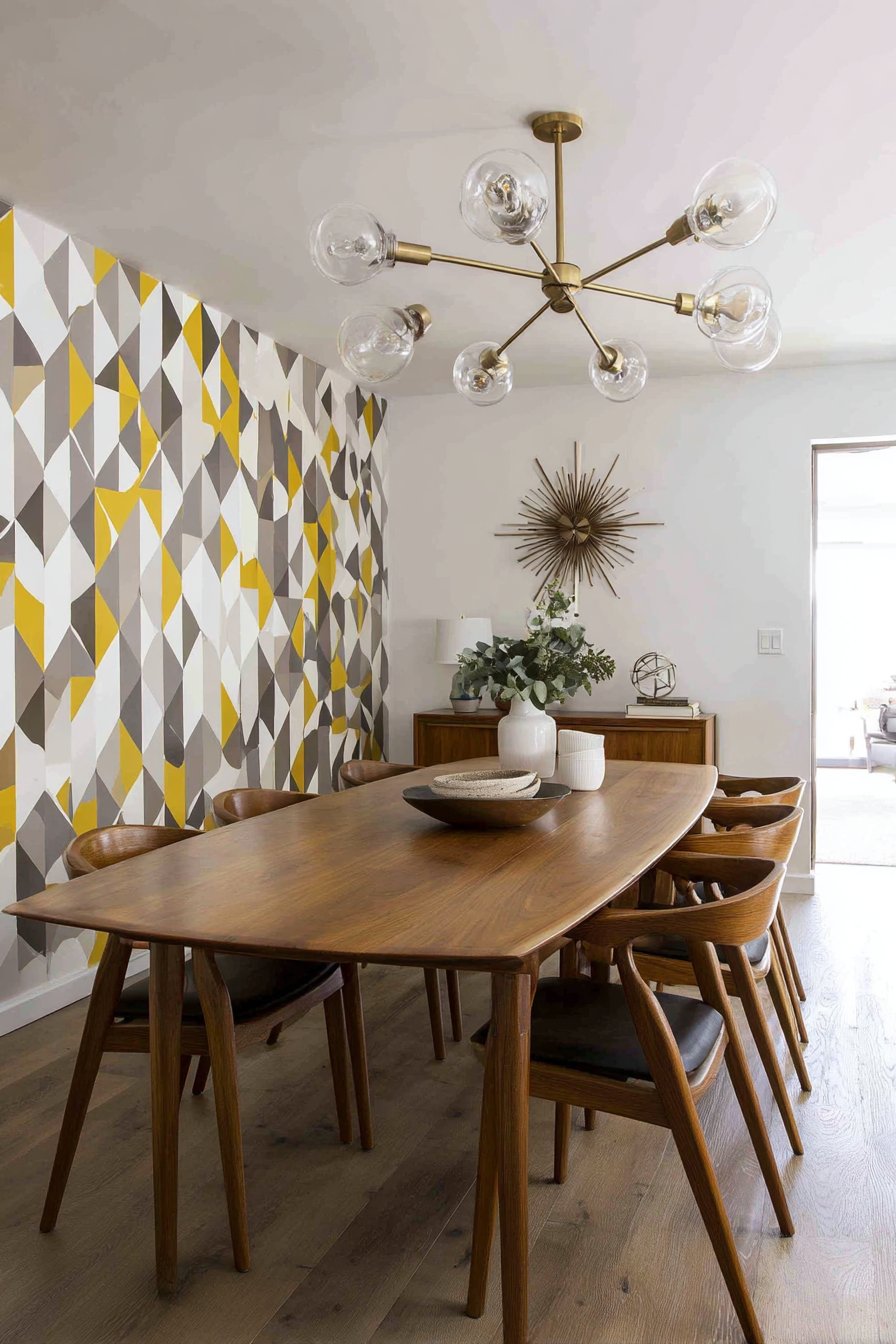
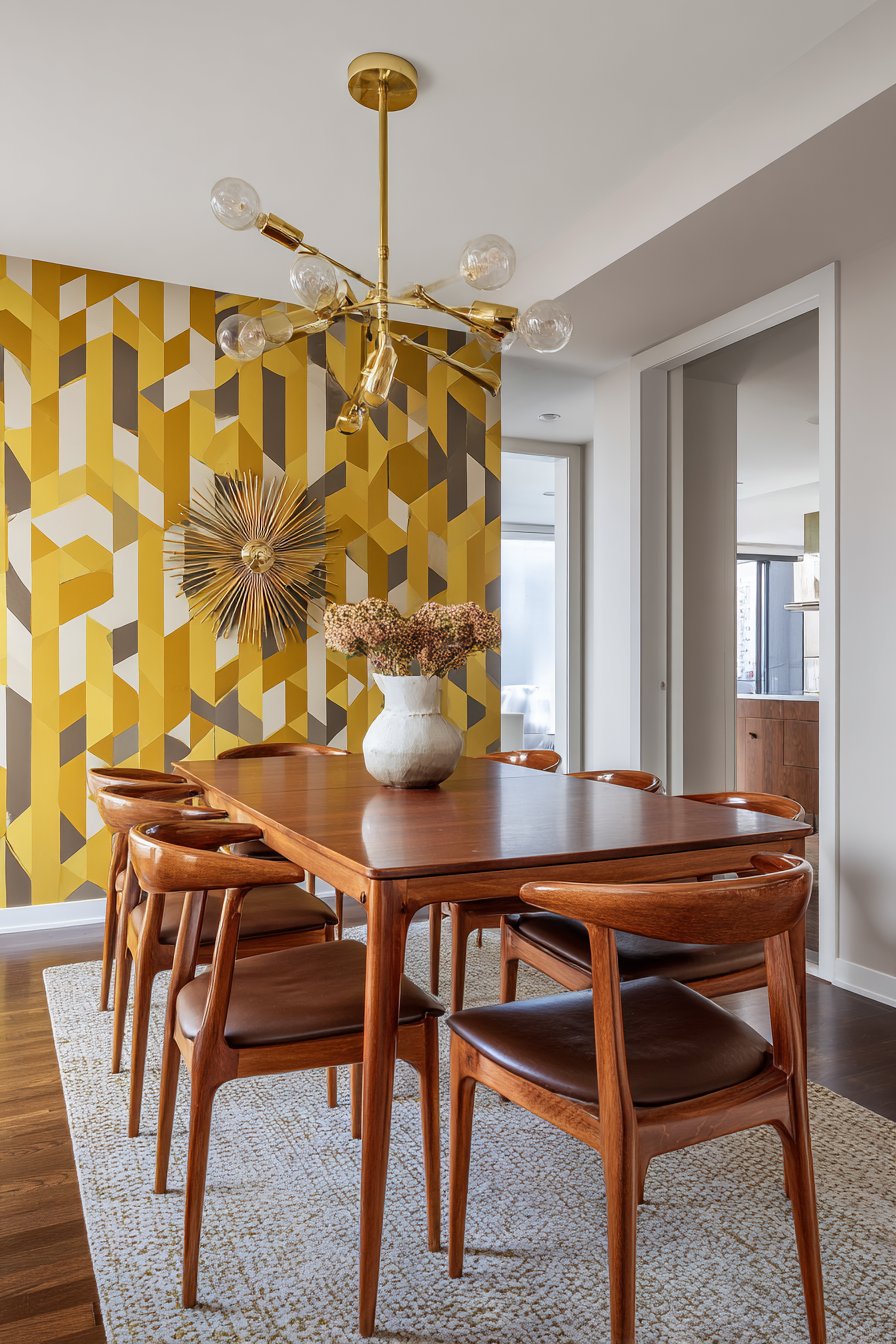
This mid-century modern narrow dining room ideas features a teak dining table with tapered angled legs and rounded edges that exemplify the organic modernism of the 1950s and 60s. The warm teak finish brings natural beauty while the clean-lined form maintains the uncluttered aesthetic essential to mid-century design. Six molded plywood dining chairs with walnut veneer and leather seat cushions surround the table, their iconic Eames-inspired form providing both visual appeal and exceptional comfort through engineered ergonomics.
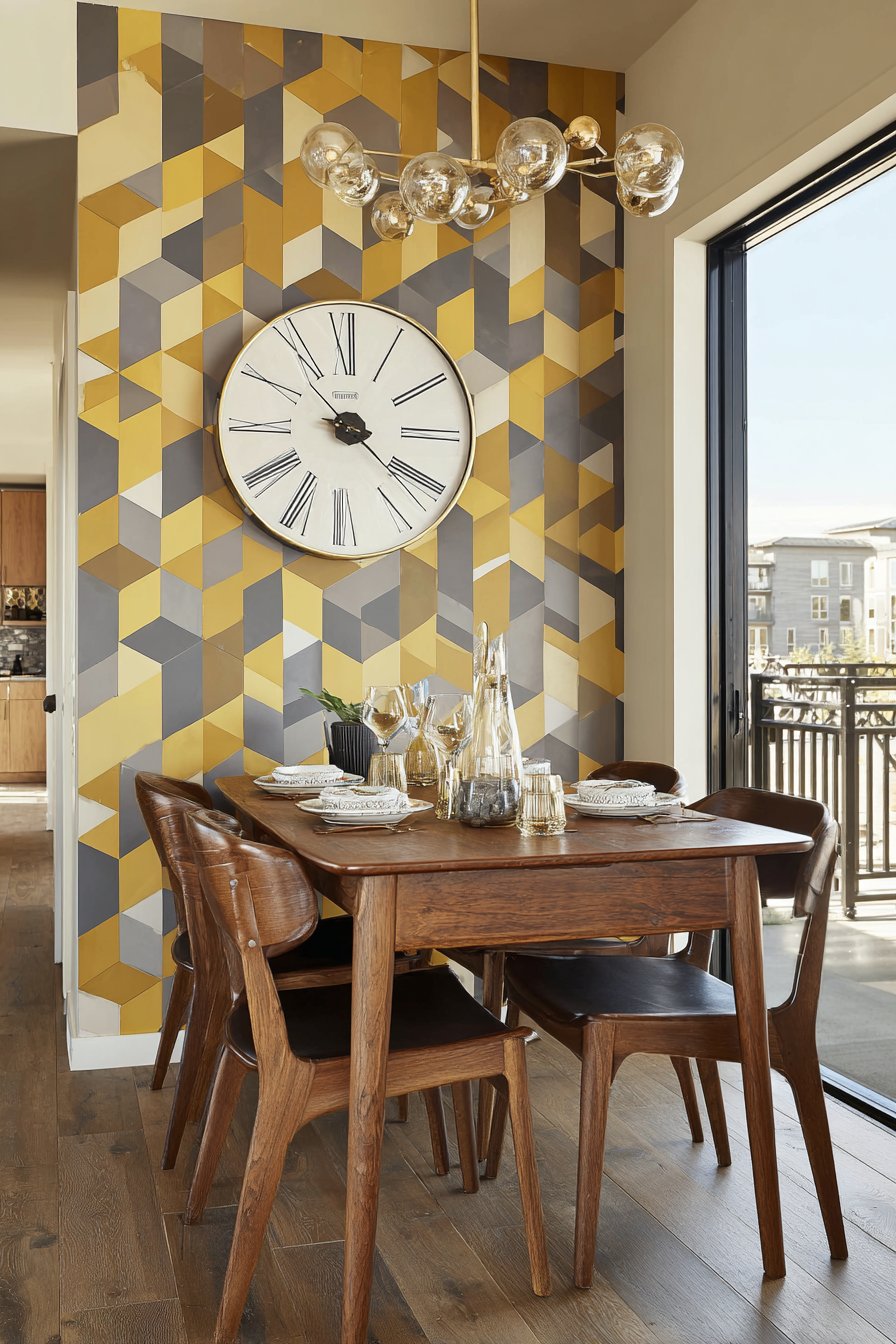
A starburst brass wall clock serves as focal point art, its radiating design and warm metallic finish embodying the optimistic, forward-looking spirit of mid-century modernism. Geometric wallpaper in mustard yellow and charcoal gray adorns one accent wall, introducing the period-appropriate color palette and bold pattern that characterized the era. A sputnik chandelier with brass finish and frosted glass globes provides lighting that’s both functional and sculptural, its atomic-age design referencing the space-race enthusiasm of the mid-twentieth century.
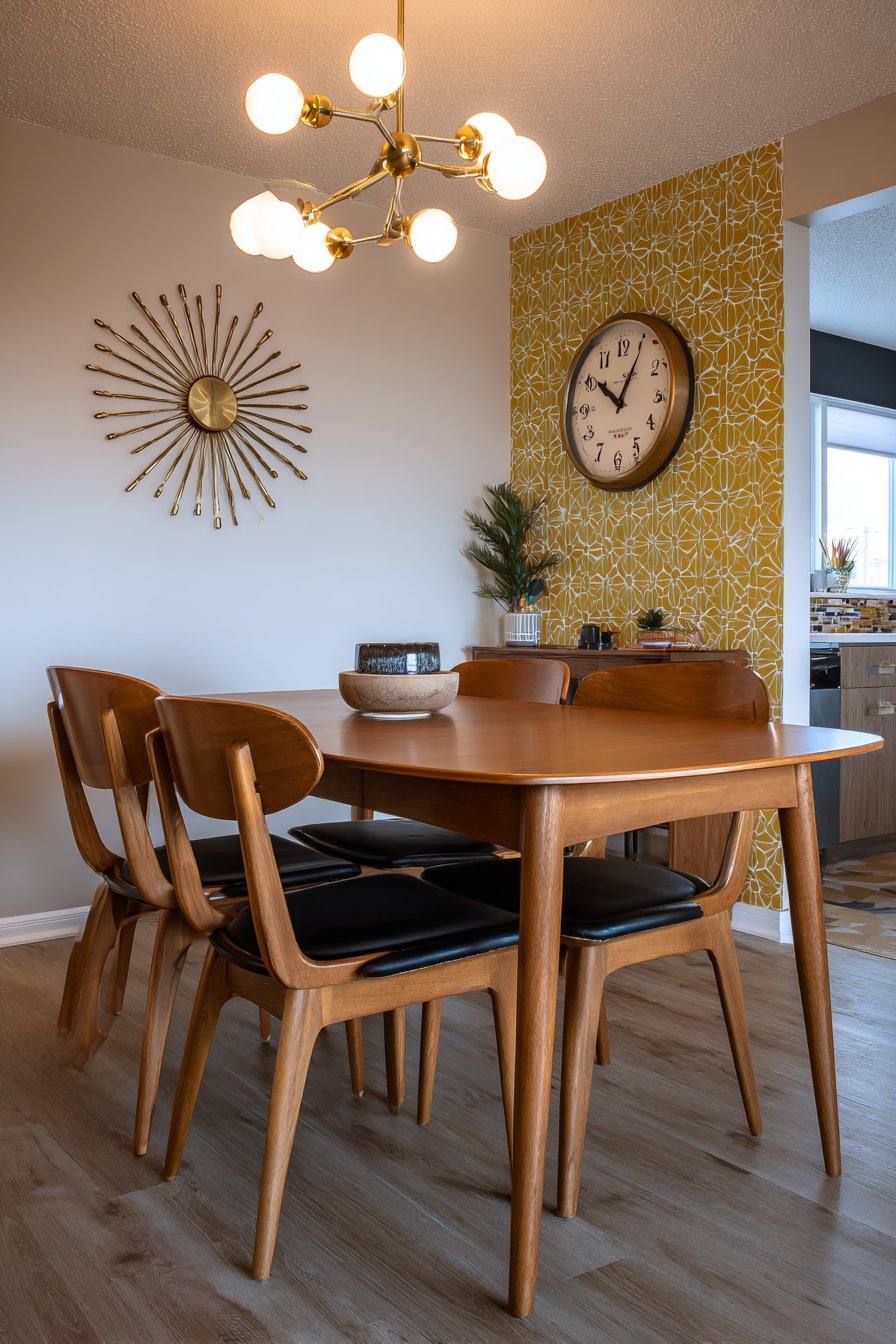
The overall composition balances warm wood tones with bold accent colors, organic curves with geometric patterns, creating the dynamic tension that makes mid-century modern design perpetually appealing. The narrow room’s proportions actually suit the style well—mid-century modern prioritized efficient use of space and human-scaled furniture over imposing monumentality. This dining room demonstrates how vintage design movements can feel fresh and relevant when executed with authentic materials and genuine appreciation for the original design principles.
Key Design Tips: Source authentic mid-century furniture or high-quality reproductions that honor original designs. Incorporate iconic lighting like sputnik chandeliers or pendant clusters for period authenticity. Use geometric wallpaper on one accent wall to add bold pattern without overwhelming narrow spaces. Choose warm wood tones like teak, walnut, or rosewood for genuine mid-century character. Add period-appropriate accent colors like mustard yellow, avocado green, or burnt orange in limited doses. Select molded plywood or fiberglass chairs for their engineered comfort and authentic mid-century aesthetic.
13. Bohemian Eclecticism with Global Influences
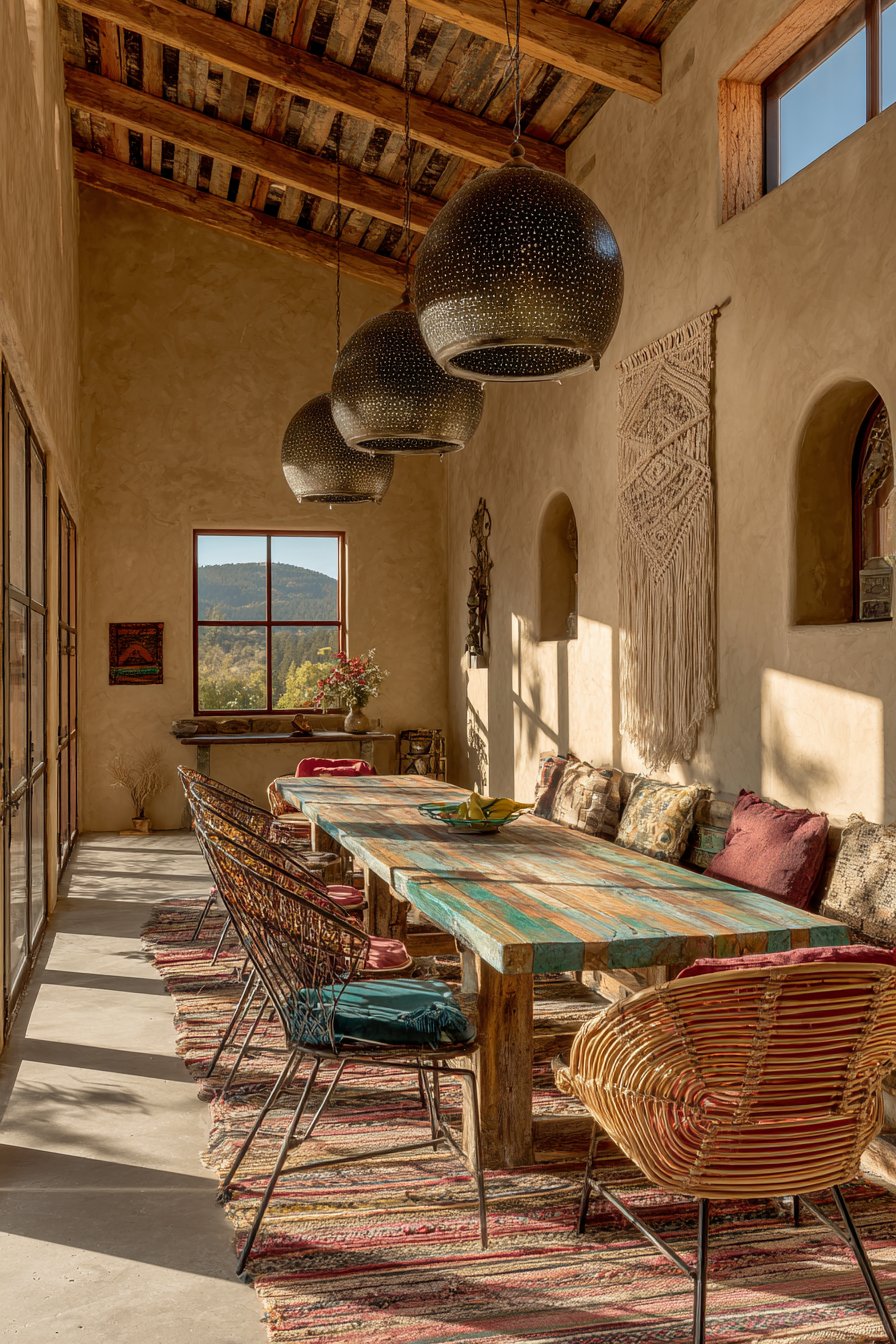
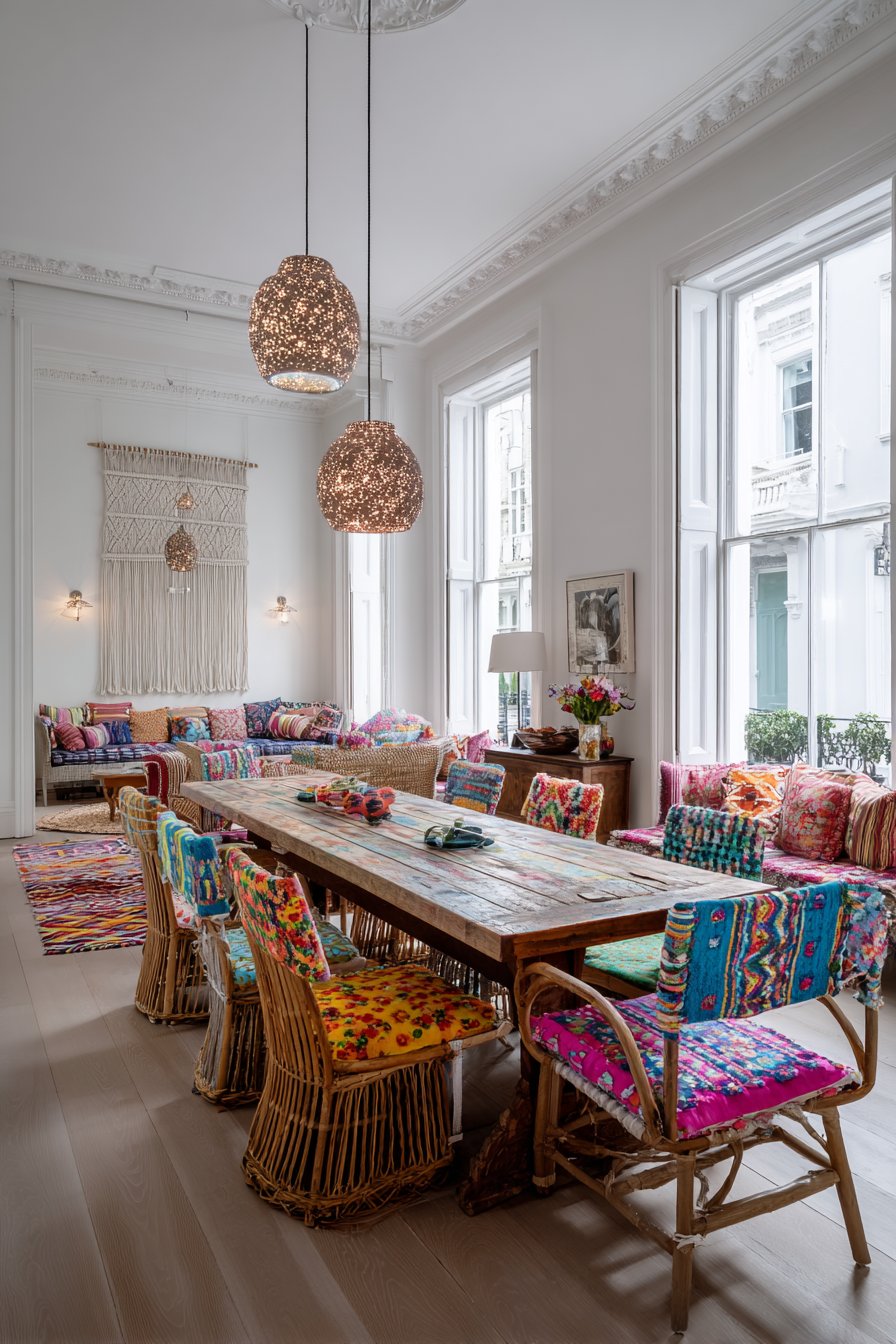
This bohemian narrow dining room ideas features a reclaimed wood dining table with varied plank widths and natural color variations that create organic visual interest and authentic character. The imperfect, collected appearance of the table perfectly suits the bohemian aesthetic that celebrates individuality over uniformity. Rattan peacock chairs with colorful cushions in jewel-toned fabrics—deep purple, teal, ruby red—provide eclectic seating that transforms dining into a festive, celebratory experience.
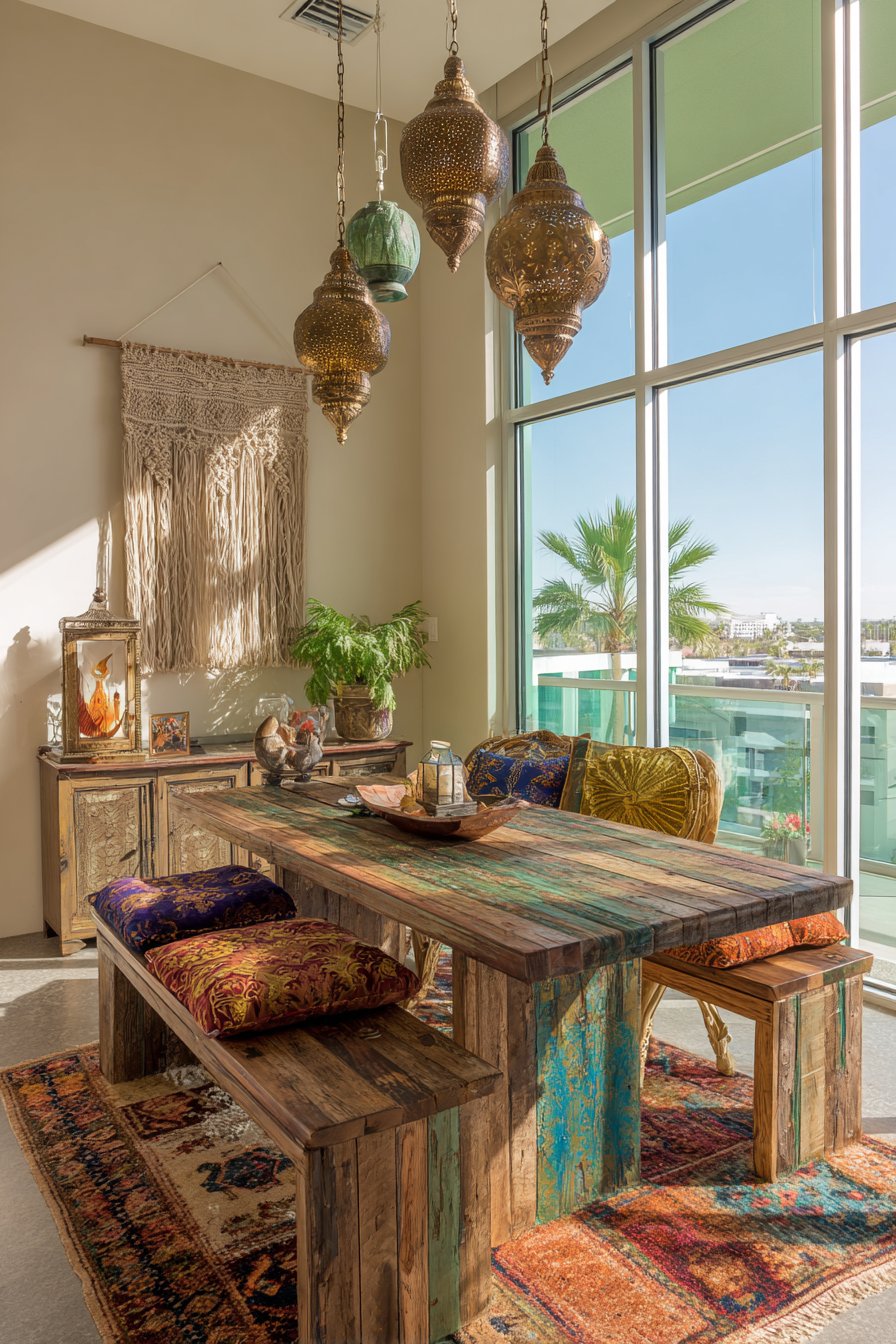
A macramé wall hanging creates a textural focal point above a low sideboard, its intricate knotwork and natural fiber construction adding handcrafted artistry and bohemian spirit. Moroccan-inspired pendant lights with pierced metal shades cast decorative shadow patterns across walls and ceiling when illuminated, creating ambient lighting that’s both functional and artistic. Layered kilim rugs in complementary colors define the space underfoot, their geometric patterns and saturated hues adding global influence and tactile richness.
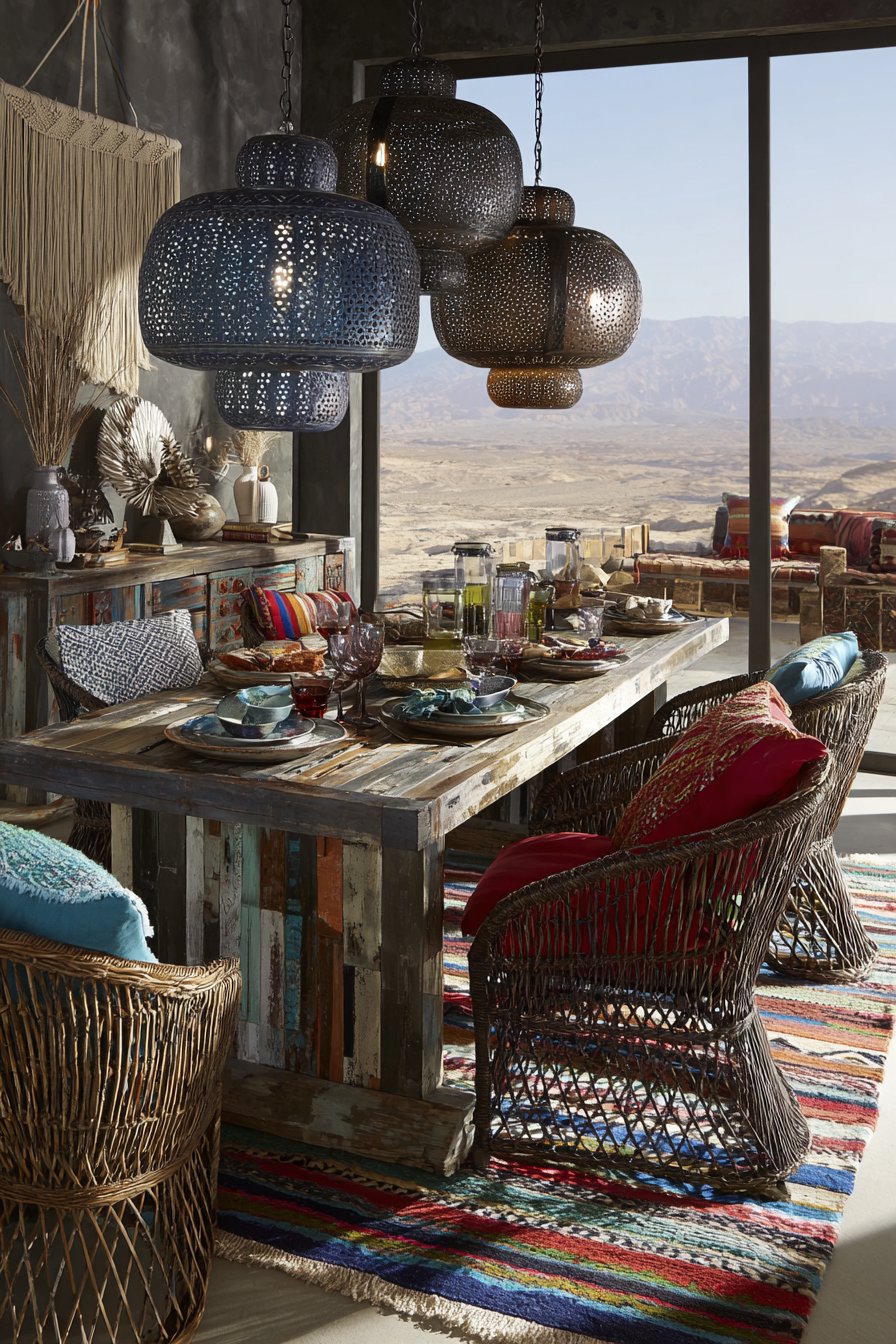
Natural light from tall windows highlights the global-inspired textiles, making the colors glow with warmth and vibrancy. The bohemian approach to narrow dining room design proves that limited square footage need not mean limited personality—in fact, the focused nature of a compact space can intensify the impact of bold colors, varied textures, and collected treasures. This dining room feels traveled, artistic, and thoroughly personal, demonstrating how bohemian style creates spaces that tell stories and celebrate individual taste.
Key Design Tips: Mix furniture styles and materials freely to create collected-over-time bohemian authenticity. Layer multiple rugs in complementary colors and patterns for textile richness and comfort. Incorporate handmade elements like macramé, woven textiles, or pottery for artisanal character. Use pierced metal lighting fixtures to create decorative shadow patterns as part of your lighting design. Choose bold jewel-tone colors on textiles and cushions to add vibrancy without painting walls. Display global treasures and travel finds prominently as part of your decorative scheme.
14. French Country Charm with Provincial Details
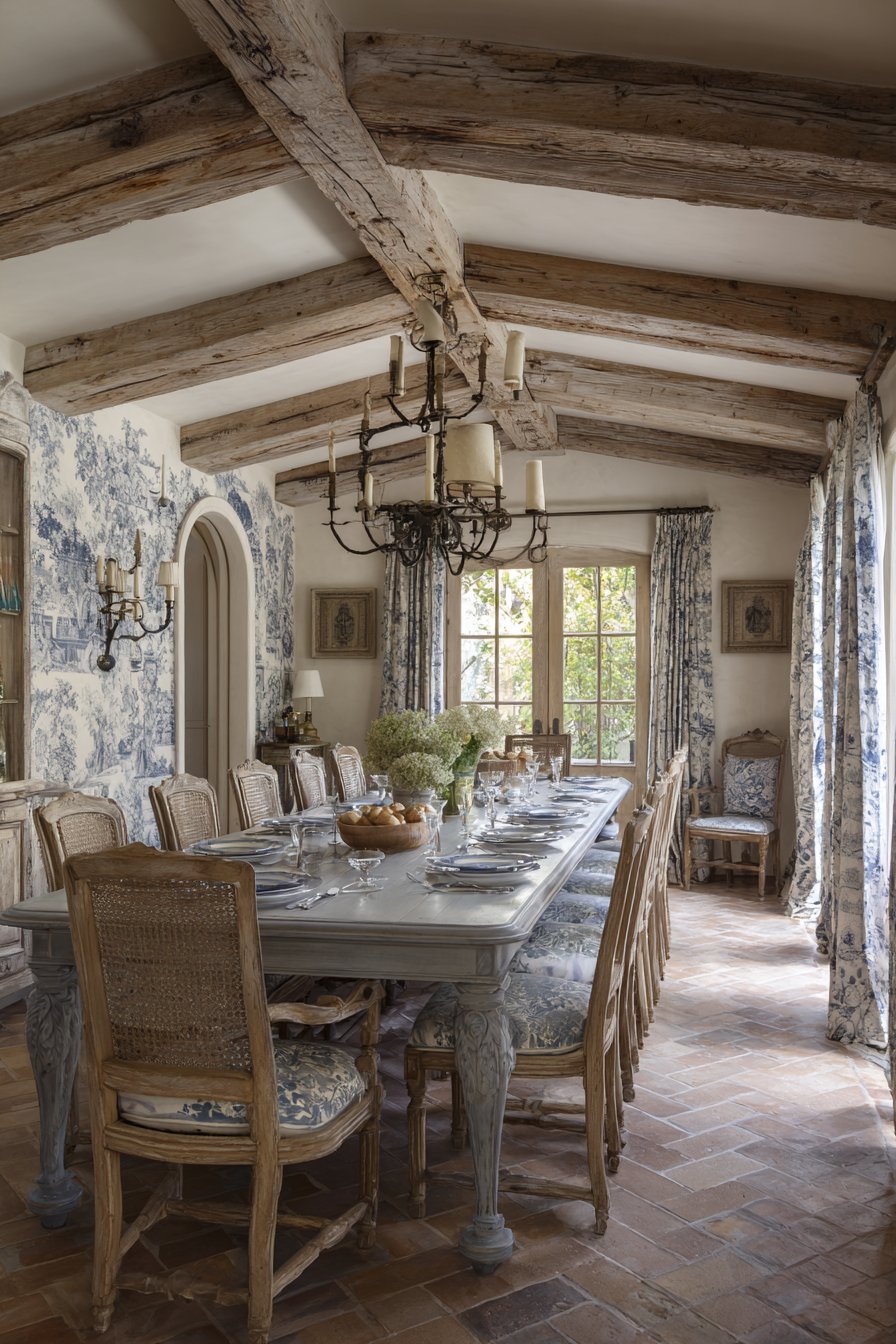
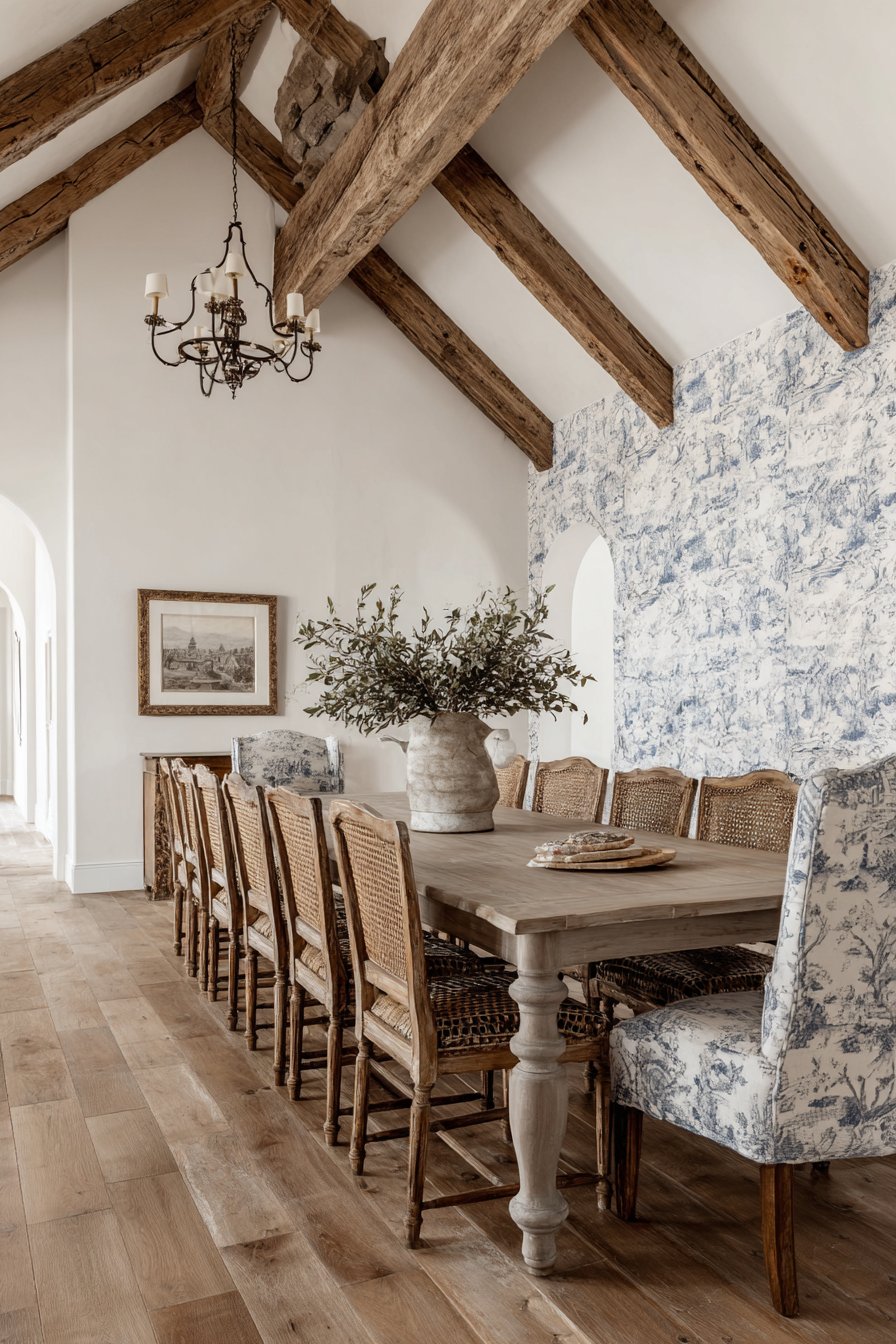
This French country narrow dining room ideas features a distressed painted dining table in soft dove gray with cabriole legs that demonstrate classical French furniture craftsmanship. The gentle distressing reveals layers of paint and underlying wood, creating the aged patina that defines authentic French country style. Ladder-back dining chairs with rush seats maintain provincial authenticity, their simple construction and natural materials reflecting rural French origins and practical country living.
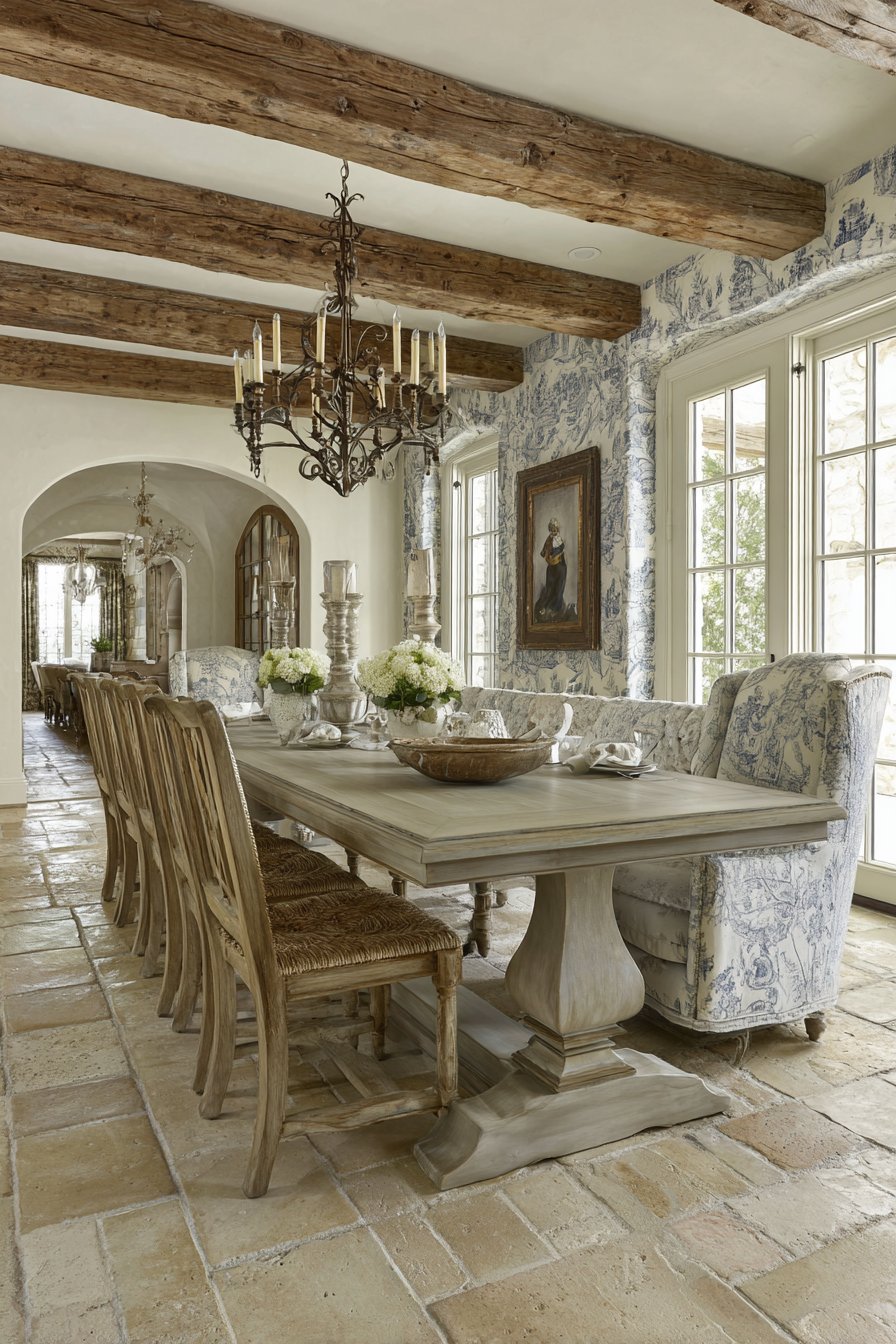
Exposed ceiling beams in weathered oak add architectural character and rustic charm while drawing the eye upward to emphasize ceiling height in the narrow space. A wrought iron chandelier with cream candle sleeves provides romantic lighting, its handcrafted metalwork and traditional candelabra form evoking French manor houses and countryside châteaux. Toile wallpaper in classic blue and white pattern adorns the walls, introducing pastoral scenes and traditional French motifs that reinforce the country aesthetic.
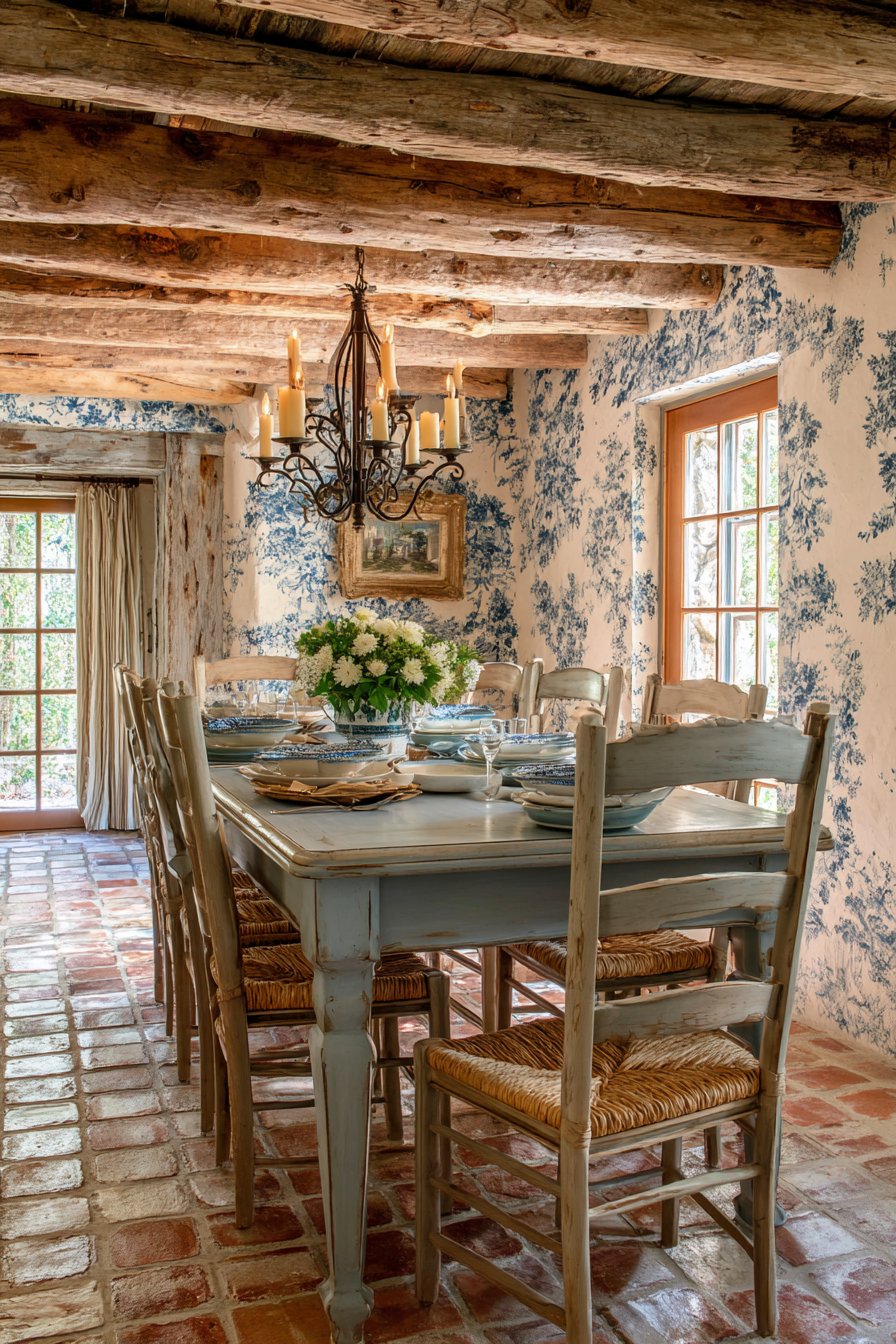
Terra cotta tile flooring adds rustic warmth and authentic material character, its earthy color and handmade variations creating visual interest underfoot while remaining neutral enough to support the soft gray and blue color palette above. Soft natural lighting filters through simple linen curtains, creating the gentle, romantic atmosphere characteristic of French country interiors. This narrow dining room captures the essence of Provencal living—relaxed elegance, natural materials, and timeless beauty that transcends passing trends.
Key Design Tips: Apply distressing techniques to painted furniture to achieve authentic aged patina rather than pristine new appearance. Choose ladder-back chairs with rush or cane seats for traditional French country authenticity. Install exposed ceiling beams (real or faux) to add rustic architectural character. Use toile wallpaper in classic blue and white or red and white colorways for traditional French patterns. Select terra cotta or stone tile flooring for authentic European country character. Incorporate wrought iron elements in lighting, hardware, and decorative accessories.
15. Art Deco Luxury with Geometric Precision
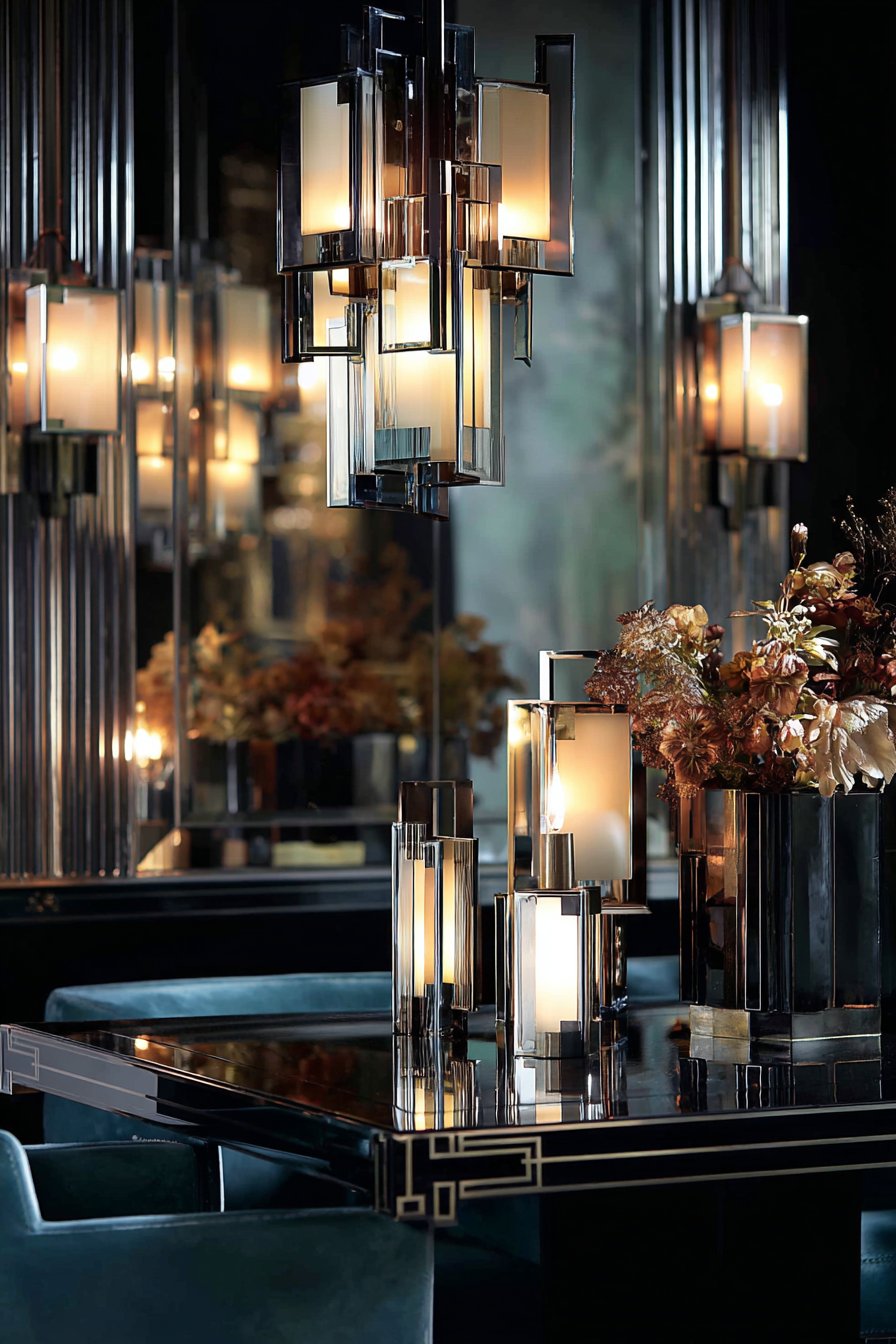
This art deco narrow dining room ideas showcases a black lacquered dining table with geometric chrome inlay detail and stepped edge profile that exemplifies the streamlined luxury of the 1920s and 30s. The high-gloss black finish creates dramatic sophistication while the chrome inlay adds precise geometric ornamentation characteristic of the period. Velvet dining chairs in rich sapphire blue with chrome legs provide glamorous seating, their luxurious fabric and metallic accents embodying art deco opulence.
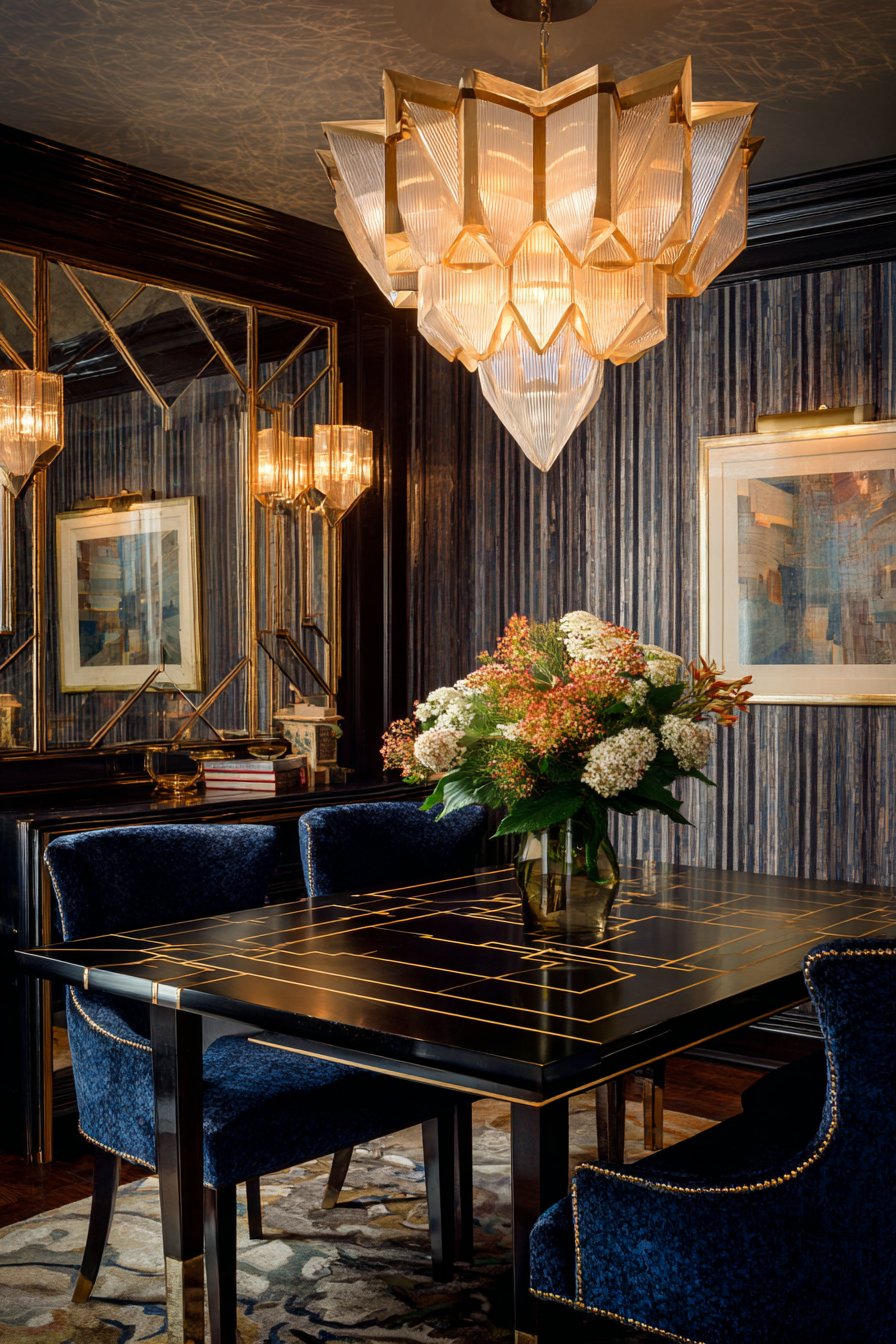
Walls feature vertical striped wallpaper in silver and charcoal, creating dramatic pattern through simple geometric repetition while the vertical orientation emphasizes ceiling height in the narrow space. A tiered geometric chandelier in polished chrome and frosted glass creates lighting that’s both functional and sculptural, its stepped form and precise symmetry reflecting the machine-age aesthetic that influenced art deco design. Mirror panels with beveled edges accent one wall, adding glamorous reflectivity and visual expansion while maintaining the period’s love of geometric precision and luxurious materials.
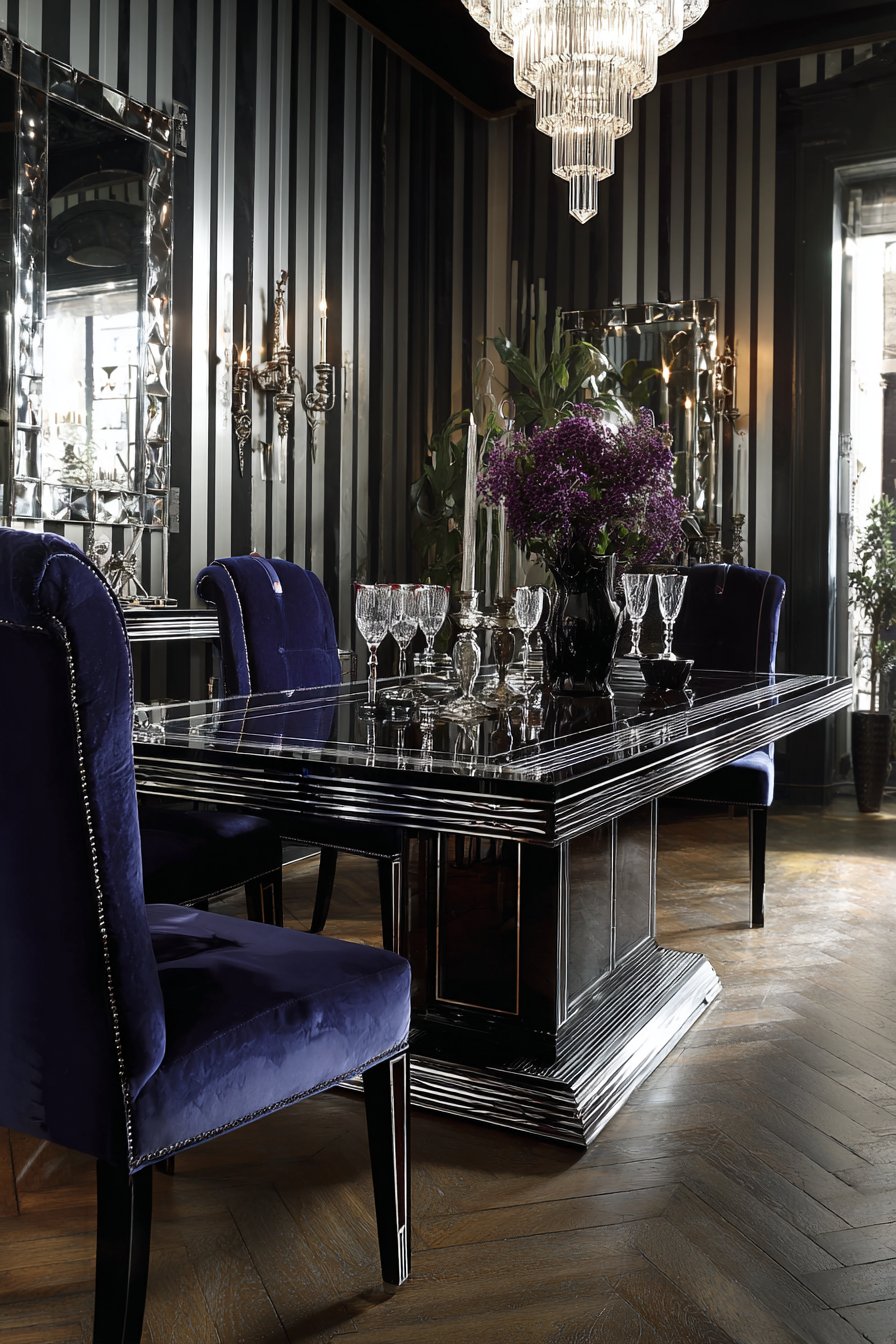
The overall effect is one of streamlined sophistication and restrained glamour—the narrow room becomes an elegant jewel box rather than a cramped space. The limited color palette of black, sapphire blue, silver, and chrome creates impact through contrast and material quality rather than color complexity. This dining room demonstrates how art deco style—with its emphasis on vertical lines, geometric forms, and luxurious materials—can actually enhance narrow spaces by celebrating their linear proportions rather than attempting to disguise them.
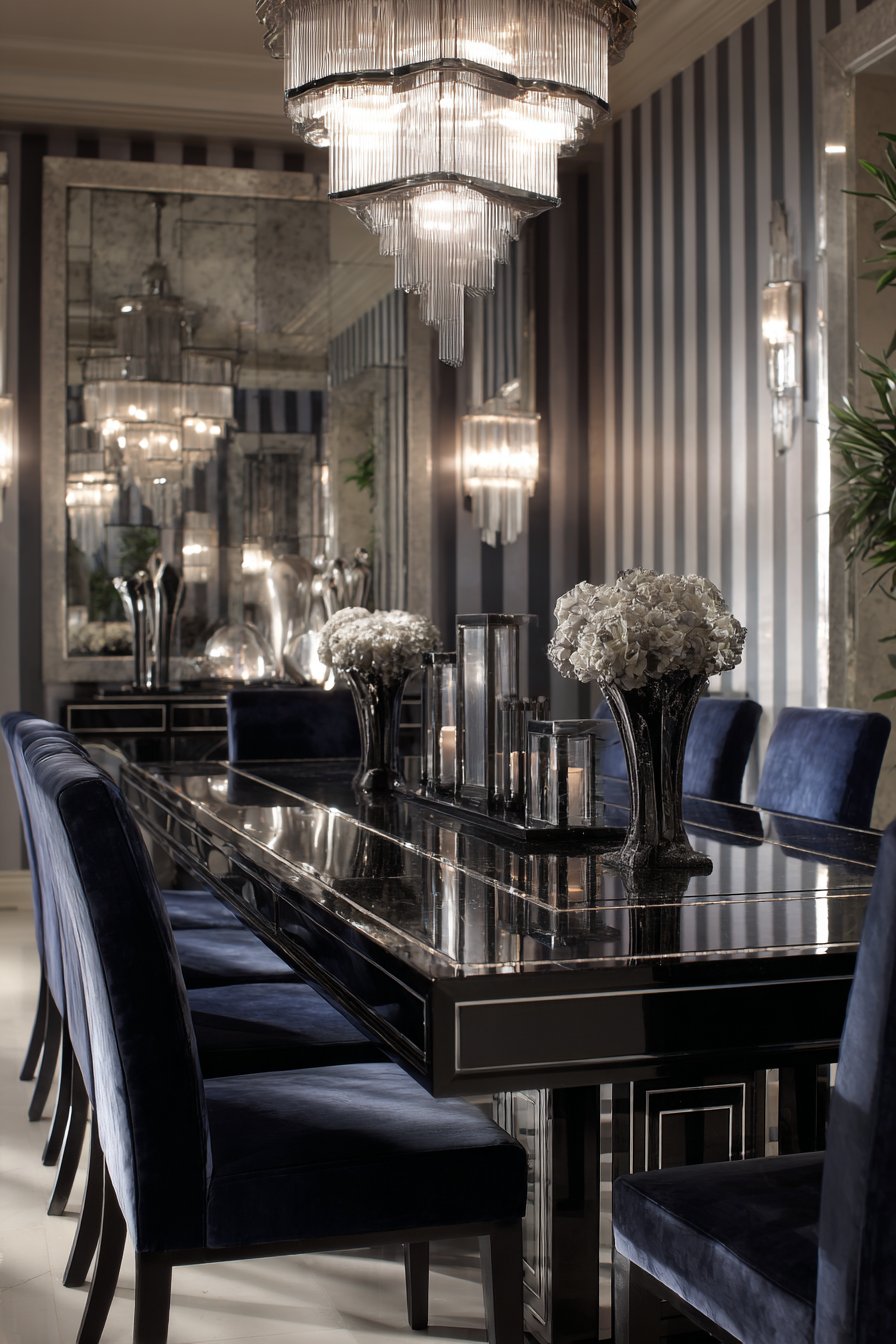
Key Design Tips: Choose furniture with high-gloss lacquer finishes in black or deep colors for art deco drama. Incorporate chrome or polished nickel metal elements for authentic period metallic accents. Use geometric wallpaper with vertical stripes or patterns to emphasize height in narrow spaces. Select velvet upholstery in jewel tones for luxurious art deco character. Install tiered or geometric chandeliers that embody the streamlined machine-age aesthetic. Add beveled mirror panels strategically to create glamorous light reflection and visual expansion.
16. Transitional Balance with Approachable Elegance
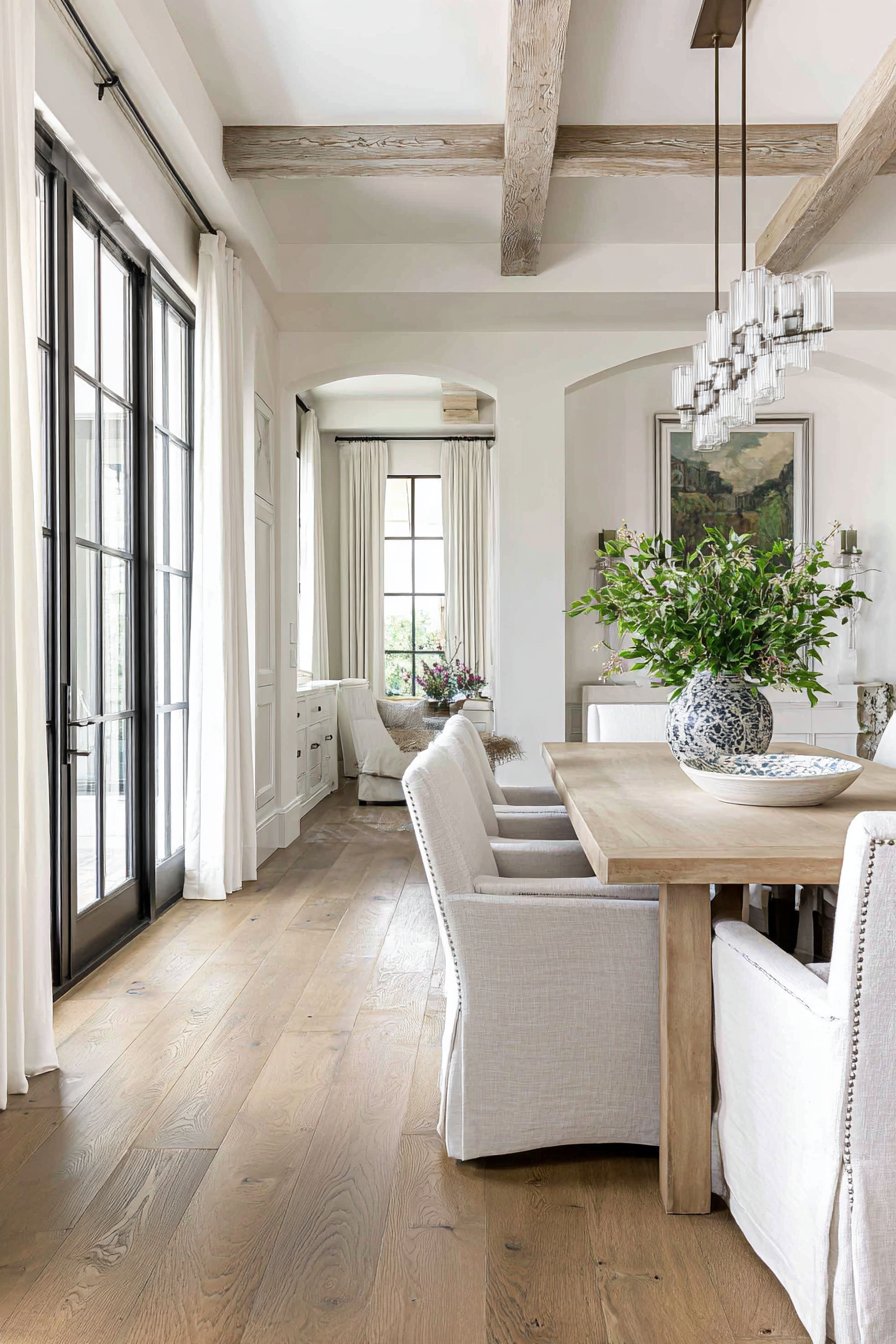
This transitional narrow dining room ideas features a rectangular dining table in light oak with subtle wire-brushed texture and simple straight legs that bridges traditional and contemporary aesthetics. The wire-brushed treatment adds gentle texture while the light oak finish keeps the piece feeling fresh and current rather than heavily traditional. Upholstered dining chairs in linen blend fabric with nailhead trim in soft taupe provide comfortable seating that balances classic detailing with contemporary restraint.
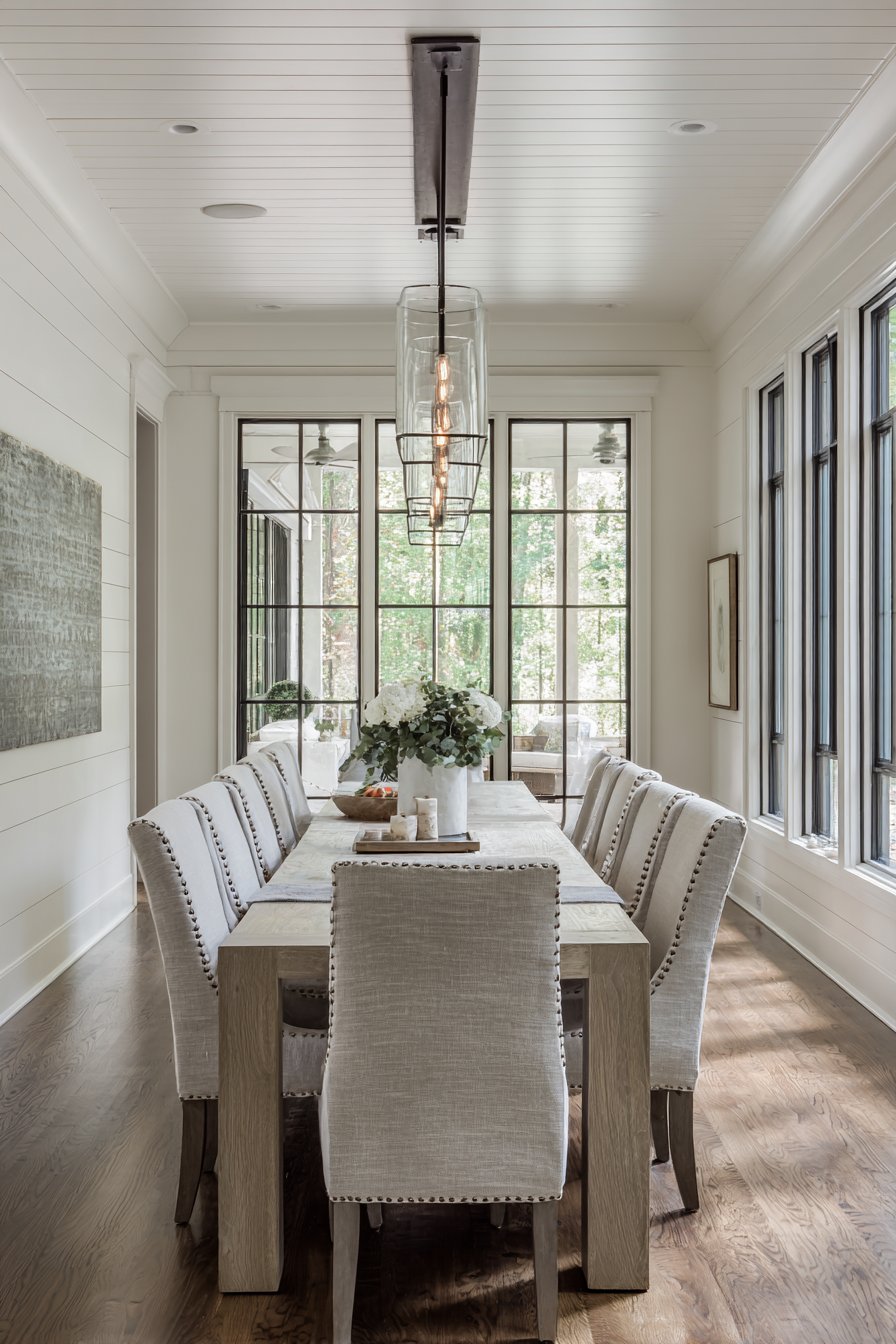
A shiplap accent wall painted in warm greige creates subtle texture and visual interest without the commitment of wallpaper or the permanence of architectural millwork. The neutral color maintains flexibility while adding depth to the narrow space. A linear chandelier with clear seeded glass shades and oil-rubbed bronze frame provides balanced lighting, its traditional material (seeded glass) presented in contemporary linear form exemplifying the transitional approach of blending old and new.
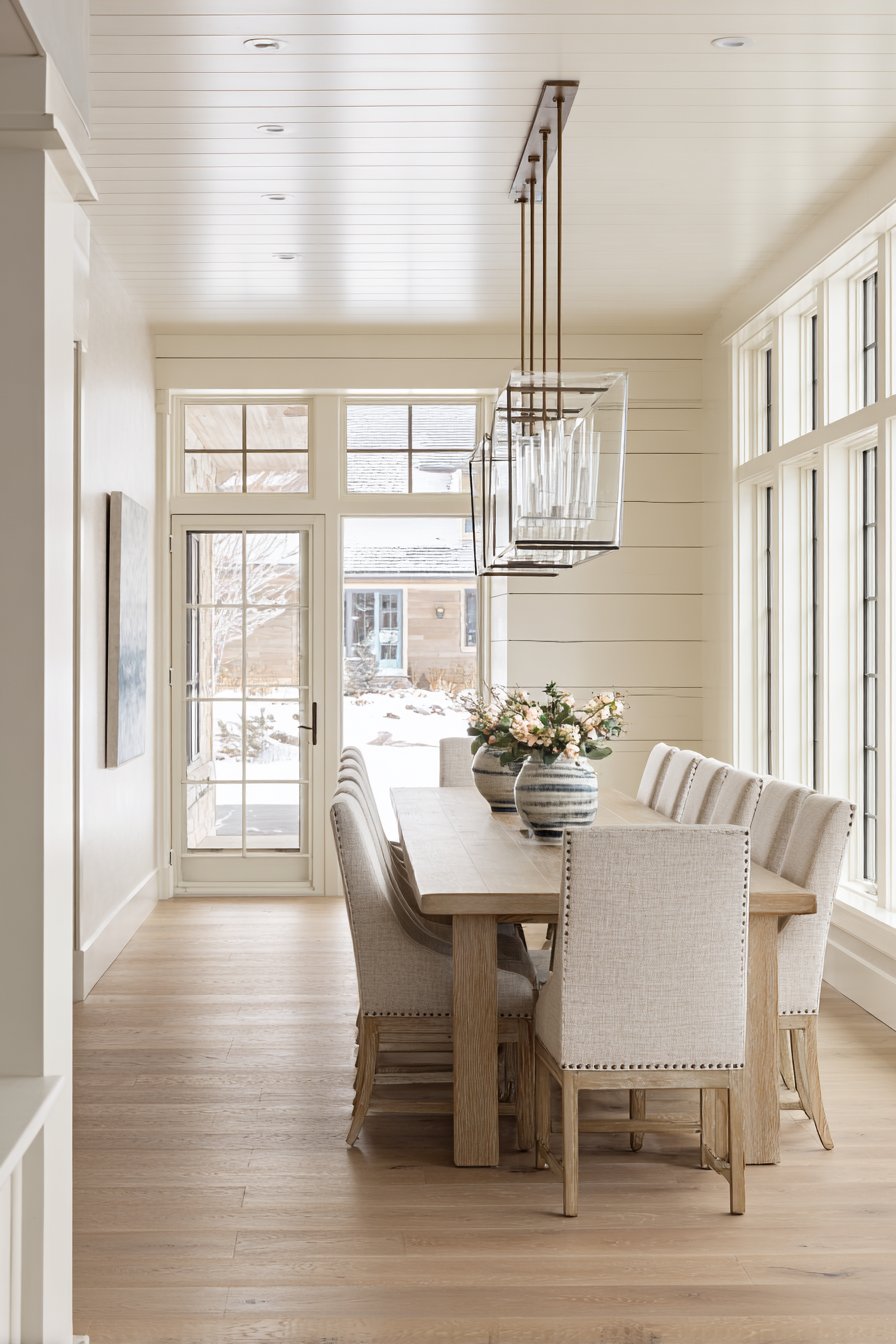
Hardwood flooring in medium brown runs lengthwise, its warm tone complementing the oak table while its directional installation emphasizes the room’s natural flow. Natural light from double-hung windows creates an inviting ambiance while the traditional window style maintains broad appeal. This narrow dining room demonstrates the accessibility of transitional design—it’s neither too modern nor too traditional, making it an ideal choice for those who appreciate elements of both aesthetics or who want a timeless look that won’t feel dated as trends evolve.
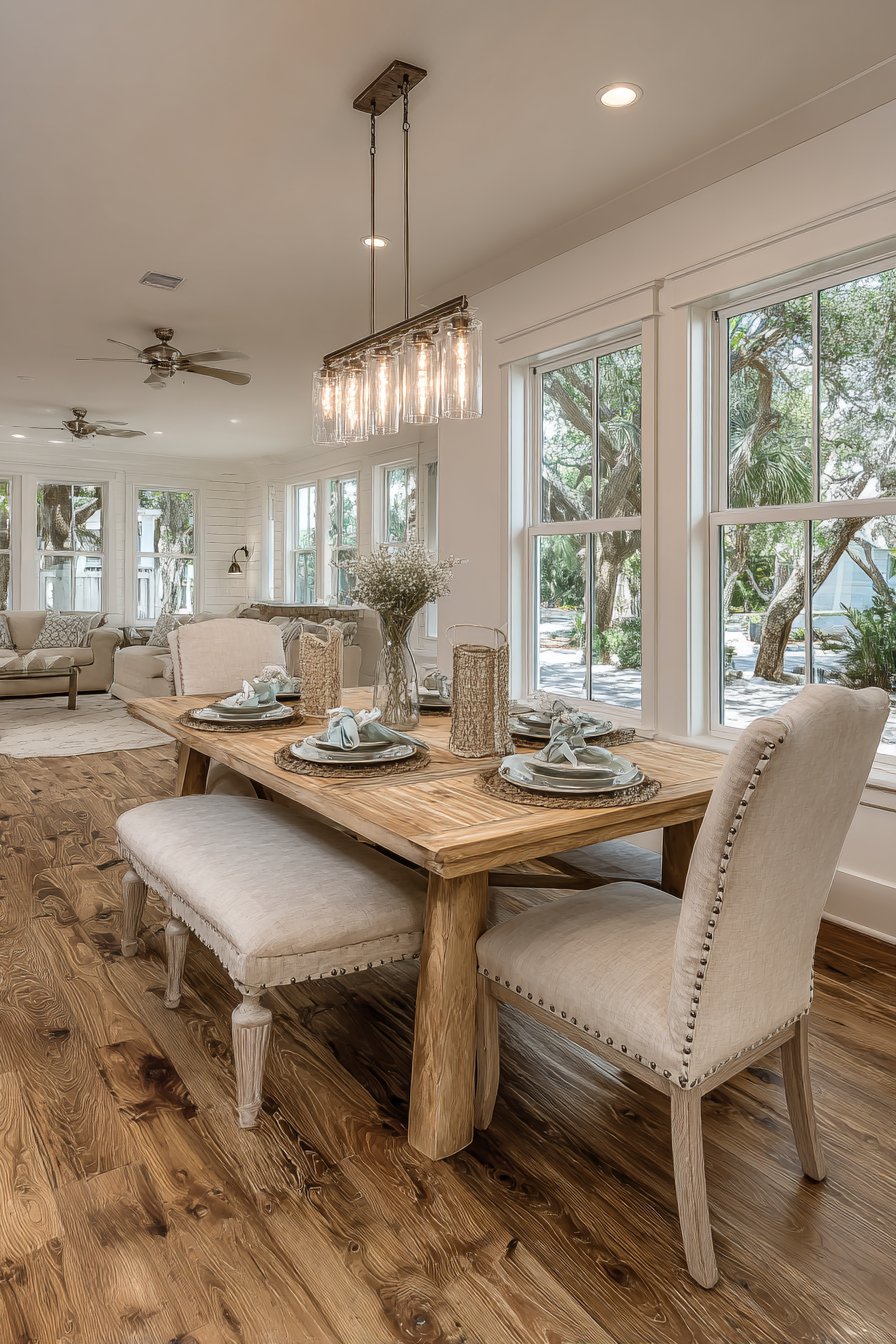
Key Design Tips: Blend traditional materials with contemporary forms for approachable transitional style. Use neutral colors in warm undertones to create inviting spaces with broad appeal. Install shiplap accent walls for texture without overwhelming pattern or color. Choose linear lighting fixtures rather than traditional round chandeliers for updated elegance. Select upholstered dining chairs with subtle traditional details like nailhead trim for refined comfort. Run hardwood flooring in the direction of natural traffic flow to enhance room proportions.
17. Mediterranean Warmth with Artisanal Details
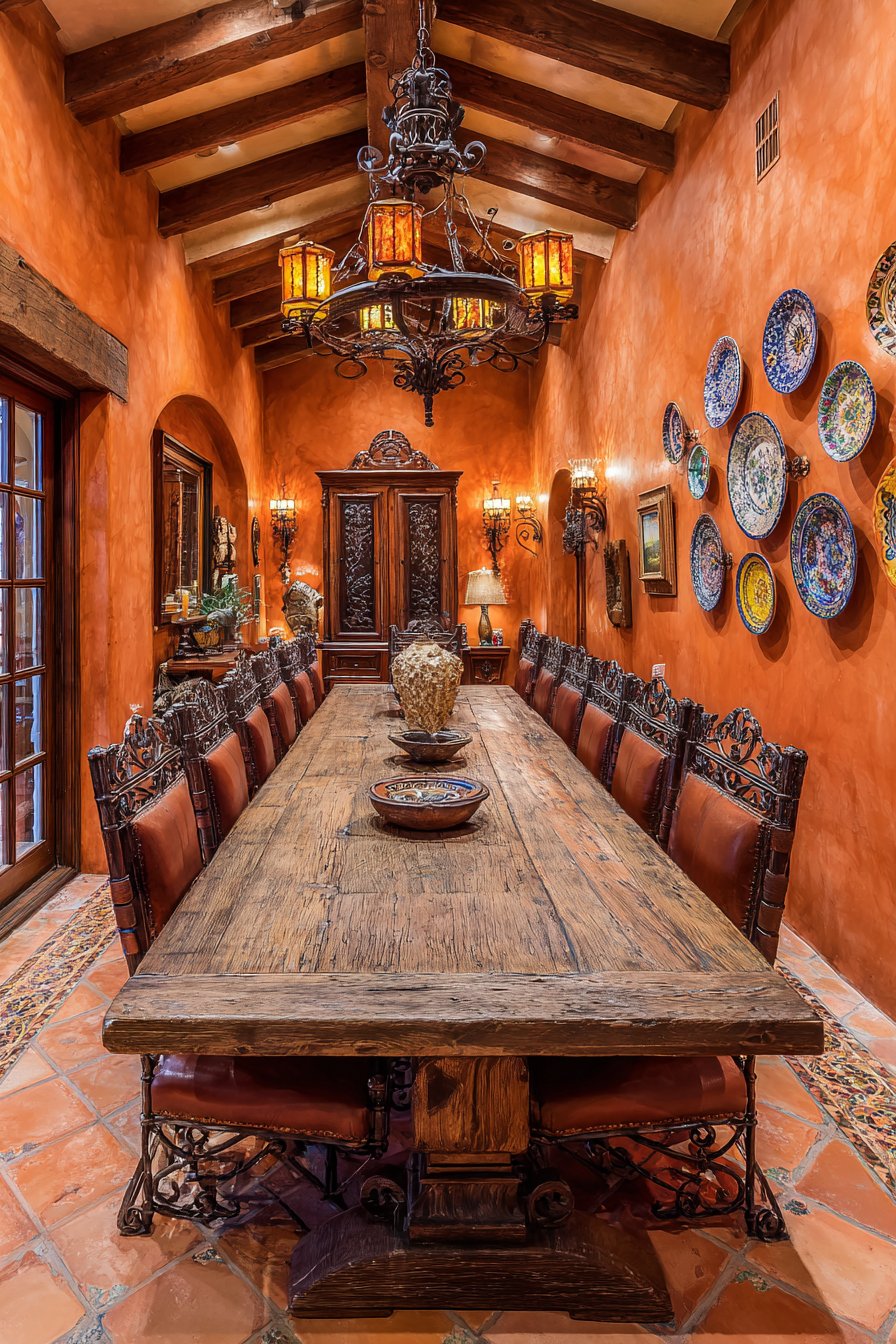
This Mediterranean narrow dining room ideas features a solid wood dining table with a thick planked top and hand-carved scrollwork details that demonstrate Old World craftsmanship and artisanal quality. The substantial construction suggests permanence and heirloom potential while the carved details add visual interest that rewards close examination. Wrought iron dining chairs with leather seats and decorative scroll backs provide seating that balances durability with decorative appeal, their handcrafted metalwork echoing the artistic details in the table’s carved elements.
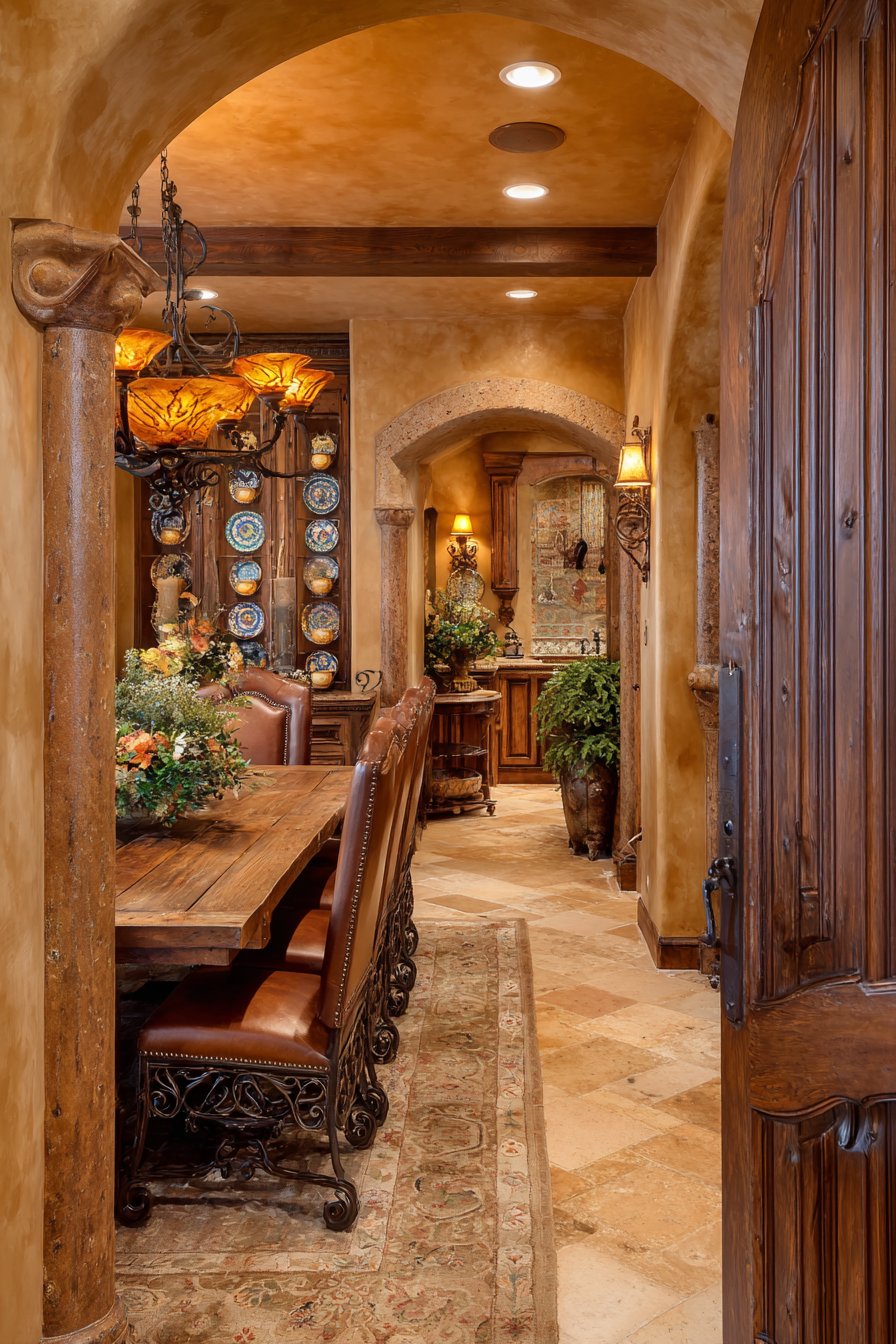
Textured plaster walls in warm terracotta create authentic Mediterranean atmosphere, the slightly irregular surface catching light beautifully and adding depth through subtle shadows and highlights. A wrought iron chandelier with amber glass shades casts a warm glow that enhances the earthy terracotta walls and rich wood tones. Decorative ceramic plates in traditional blue and yellow patterns adorn the walls, introducing Mediterranean color while celebrating the region’s ceramic arts traditions.
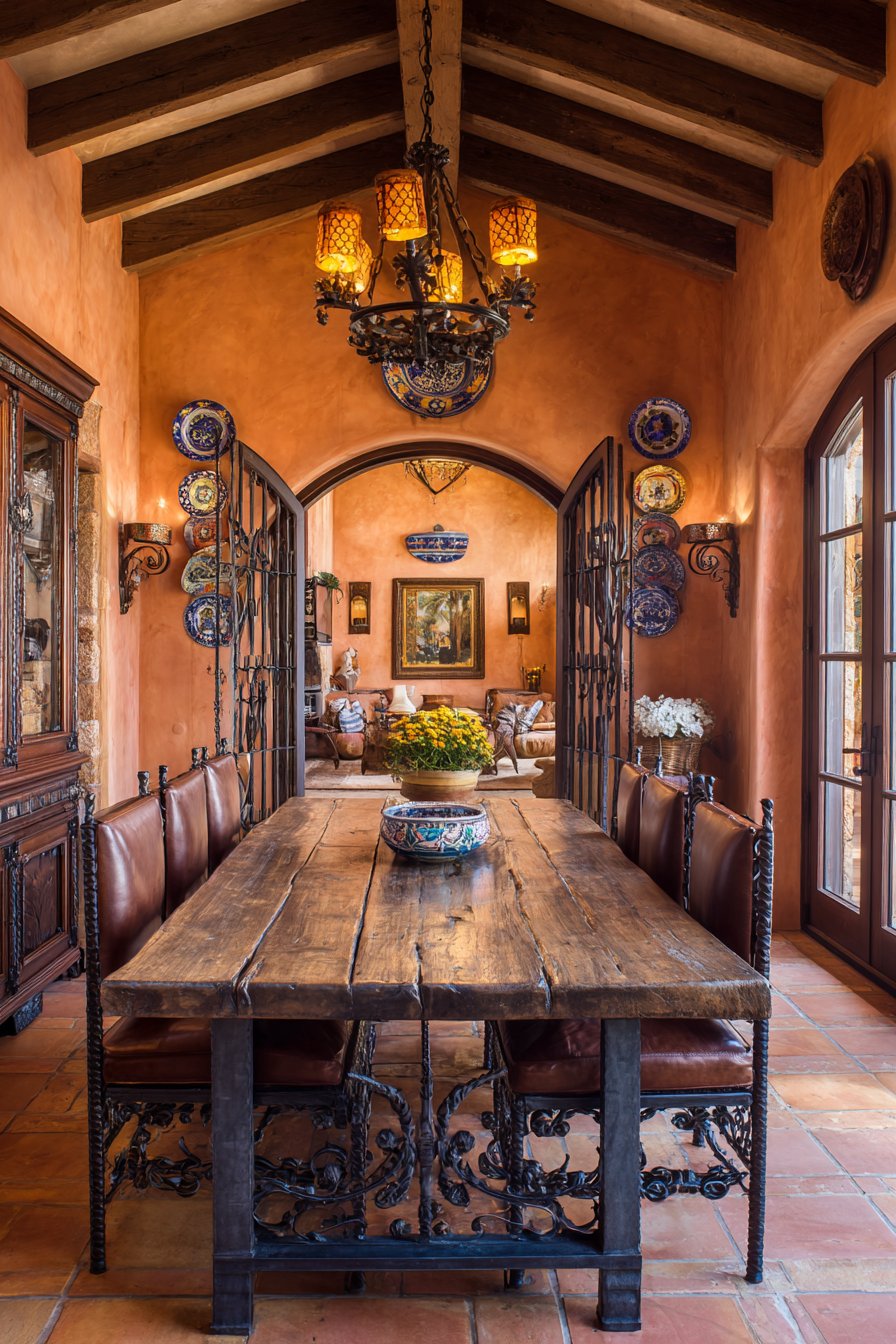
Terra cotta tile flooring with hand-painted accent tiles adds artisanal detail underfoot, the earthy clay color and handcrafted variations creating authentic character. The combination of natural materials—wood, iron, clay, plaster—creates a sensory richness that defines Mediterranean interiors. Golden hour lighting streaming through windows creates the sun-drenched ambiance associated with Mediterranean climates, making this narrow dining room feel like a treasured corner of a Spanish villa or Italian farmhouse despite its compact urban footprint.
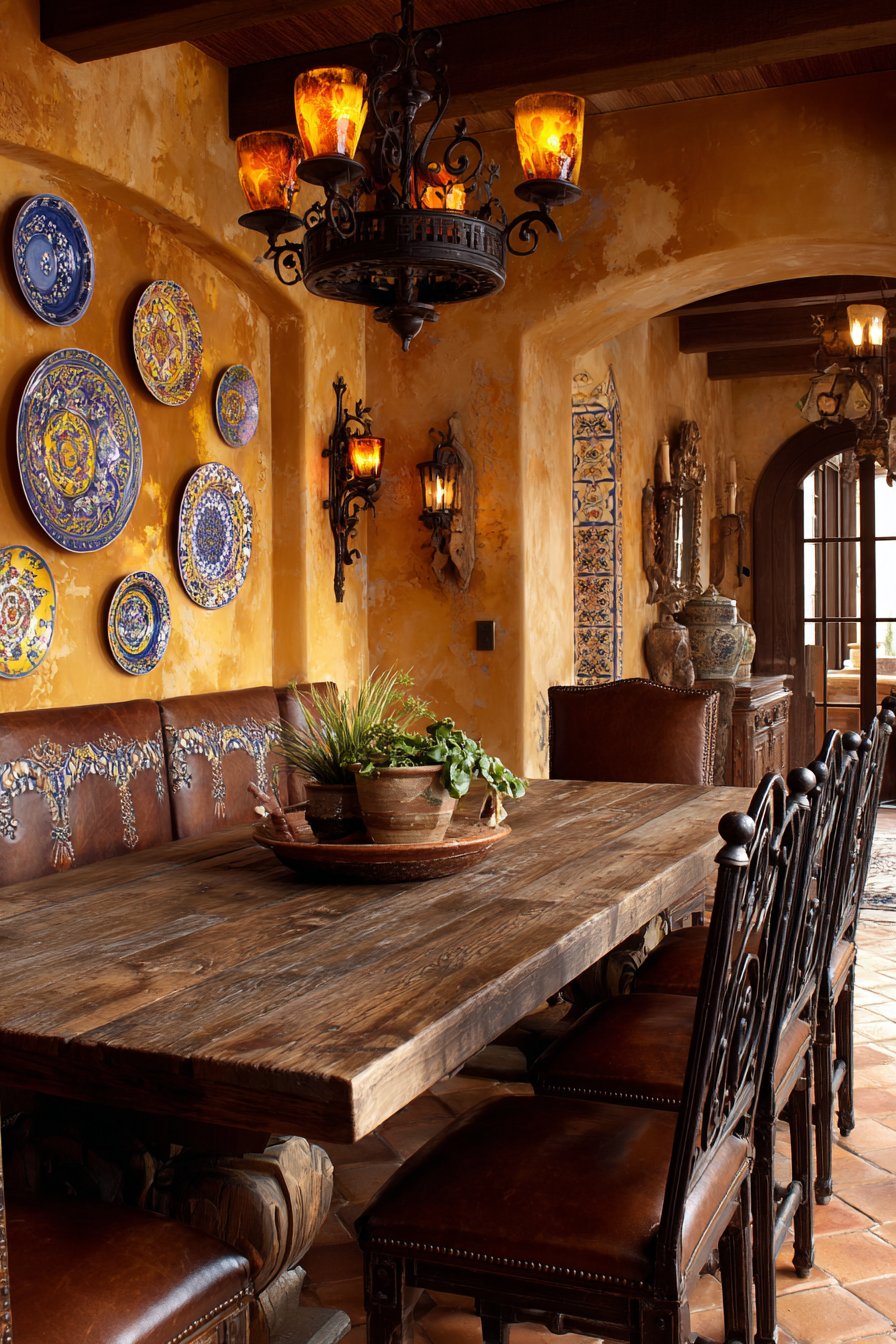
Key Design Tips: Apply textured plaster finishes to walls for authentic Mediterranean surface treatment and visual depth. Choose hand-forged wrought iron furniture and lighting for artisanal quality and Old World character. Install terra cotta tile flooring with hand-painted accent tiles for traditional Mediterranean style. Display decorative ceramic plates in blue and yellow traditional patterns as wall art. Select solid wood furniture with visible joinery and carved details for craftsmanship appreciation. Use amber or warm-toned glass in lighting fixtures to create golden Mediterranean ambiance.
18. Japanese Minimalism with Zen Tranquility
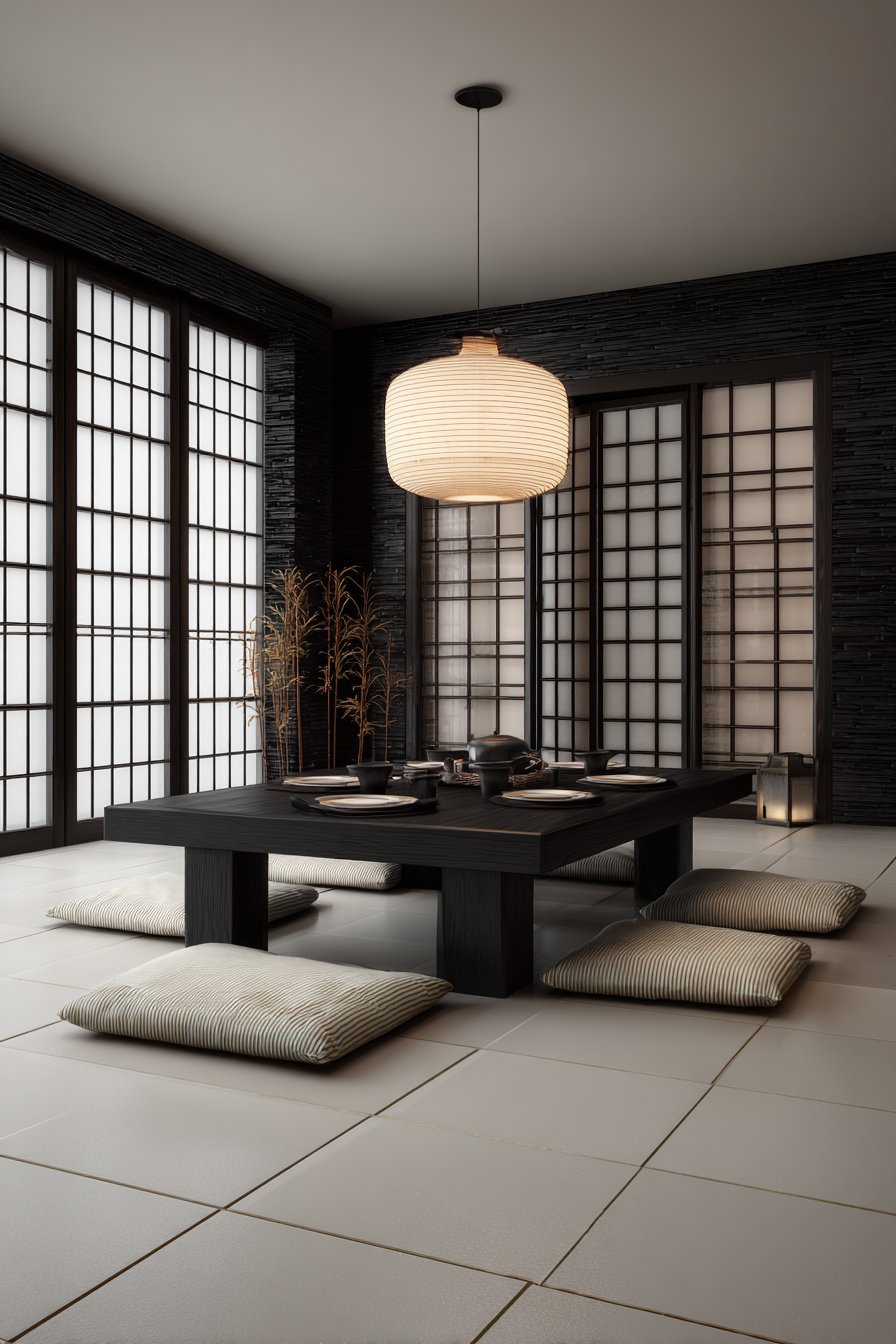
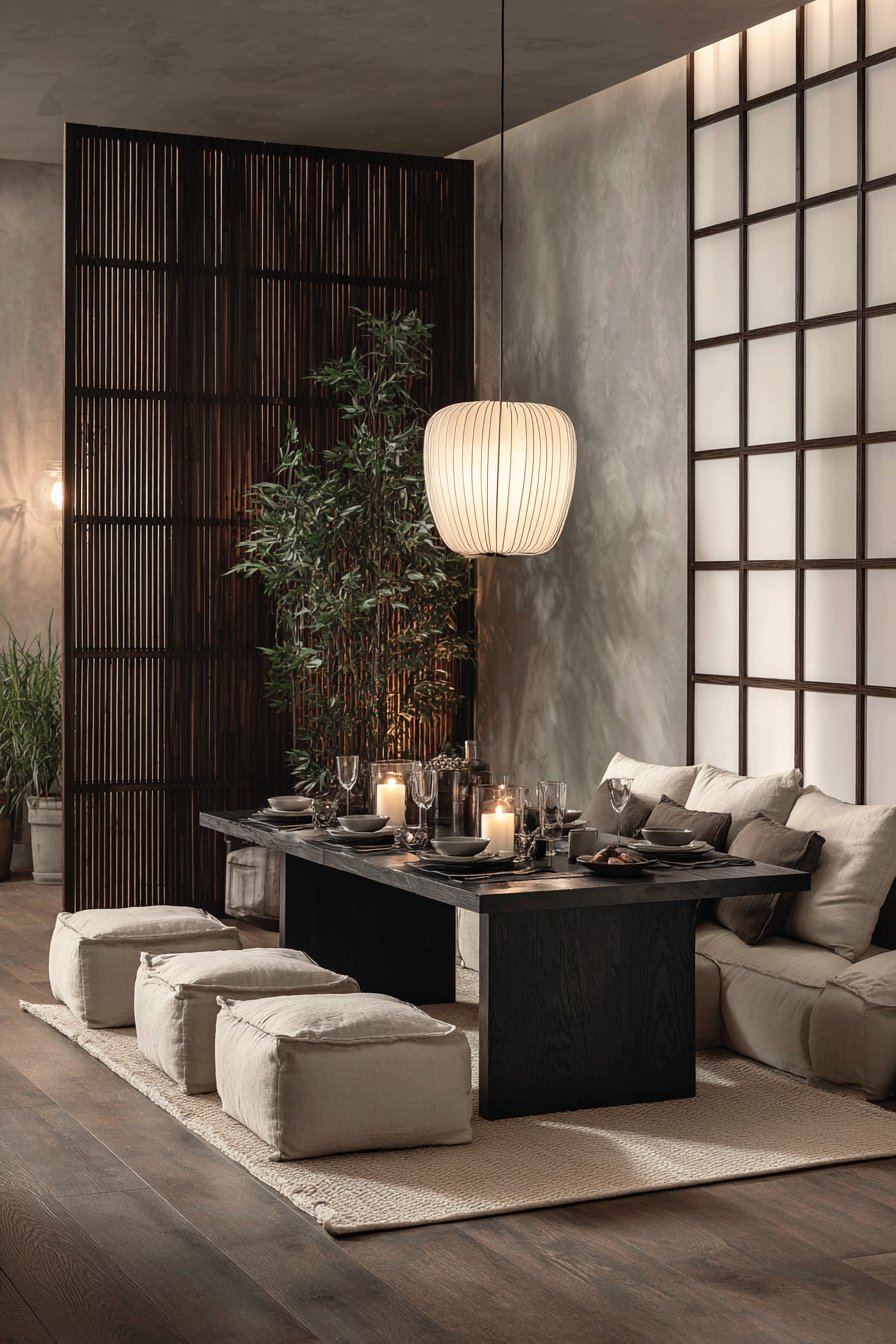
This Japanese-inspired narrow dining room ideas features a low platform dining table in dark-stained oak with clean lines and minimal ornamentation that embodies Japanese design principles of simplicity and material honesty. The low profile creates a different spatial experience, emphasizing horizontal rather than vertical dimensions. Floor cushions in natural linen with subtle texture provide traditional seating, transforming the dining experience into a more meditative, grounded activity that encourages mindful presence.
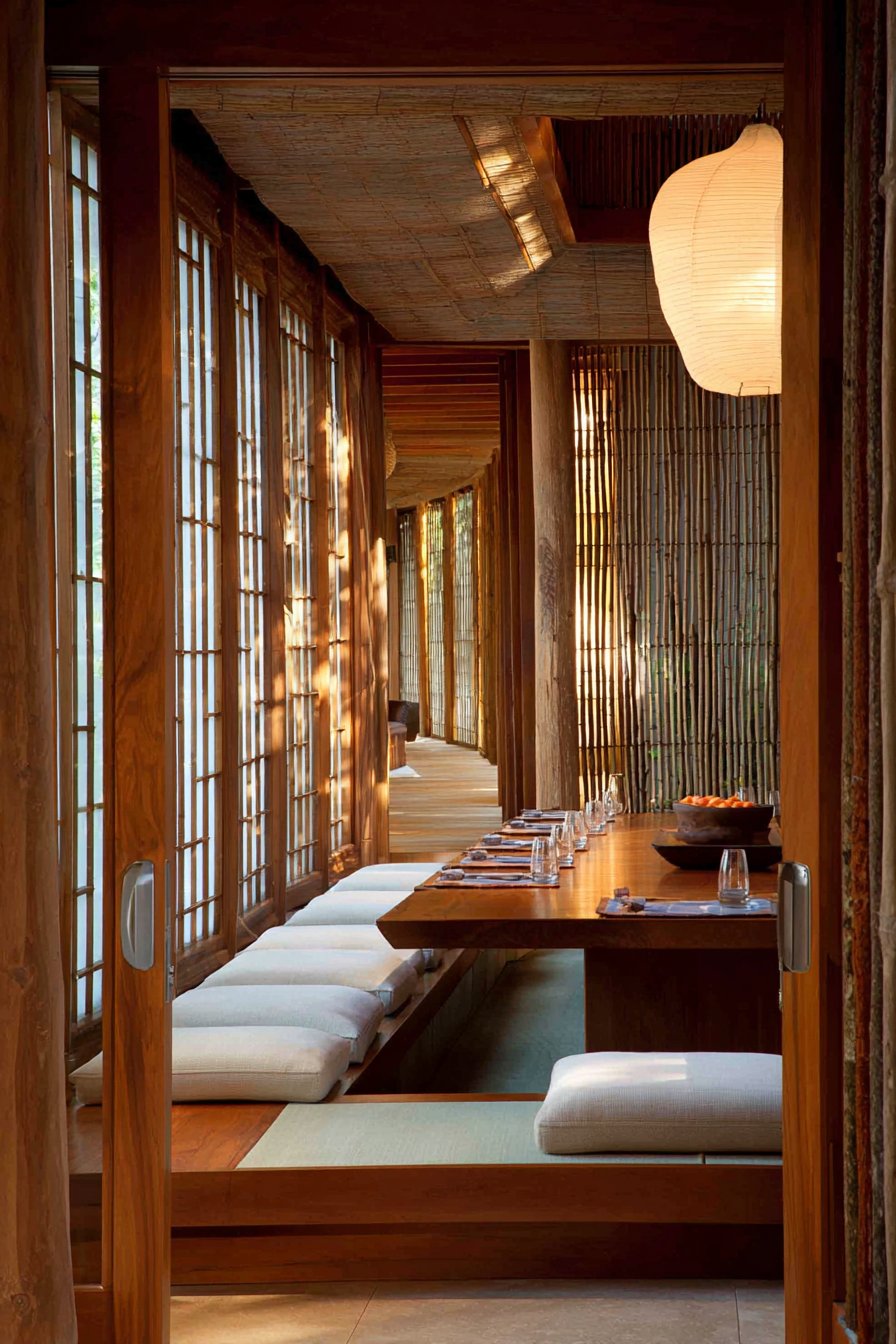
Shoji screen panels in rice paper and dark wood frames diffuse light along one wall, creating the soft, even illumination central to Japanese interiors while adding architectural beauty through their geometric grid patterns. A simple paper lantern pendant provides ambient lighting, its spherical form and natural material creating gentle, diffused illumination without harsh shadows. Tatami mat flooring creates an authentic foundation, the woven grass surface adding natural texture, subtle fragrance, and traditional character.
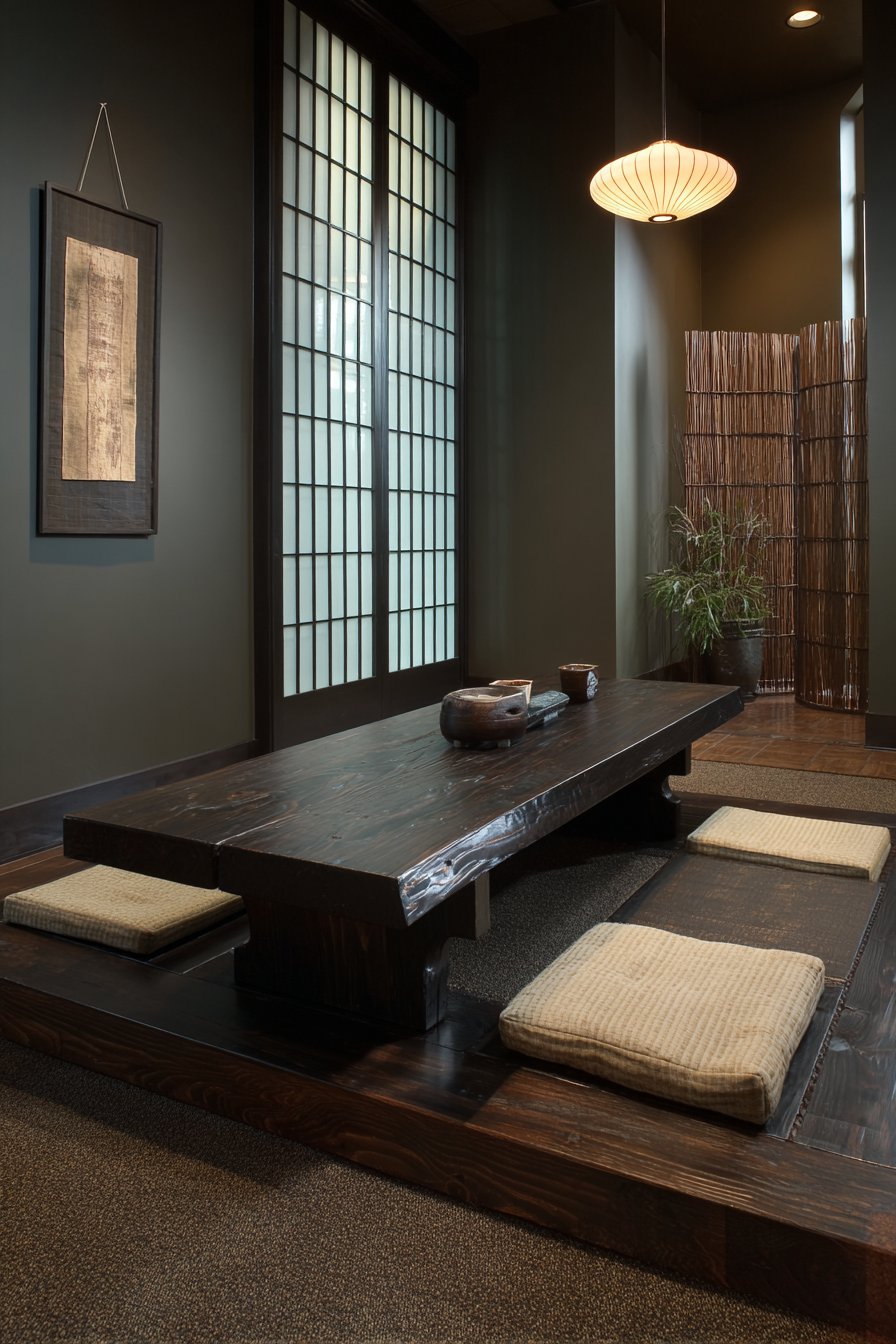
A bamboo privacy screen adds natural texture and creates subtle spatial division without solid walls, maintaining the open flow essential to Japanese design while providing gentle visual separation. Natural diffused light creates a serene atmosphere, the soft illumination encouraging contemplation and peaceful dining experiences. This narrow dining room demonstrates how Japanese design principles—simplicity, natural materials, thoughtful spatial composition—can create profound tranquility in modest square footage, proving that luxury lies not in abundance but in refinement and intentionality.
Key Design Tips: Choose low-profile furniture to alter spatial perception and create unique dining experiences. Install shoji screens for light diffusion and authentic Japanese architectural elements. Use natural materials exclusively—wood, paper, bamboo, linen—for material harmony. Select floor cushions or low seating to embrace traditional Japanese dining customs. Apply dark wood stains to create contrast with light walls and rice paper screens. Maintain minimal ornamentation and empty space (ma) as an essential design element.
19. Hollywood Glamour with Reflective Luxury
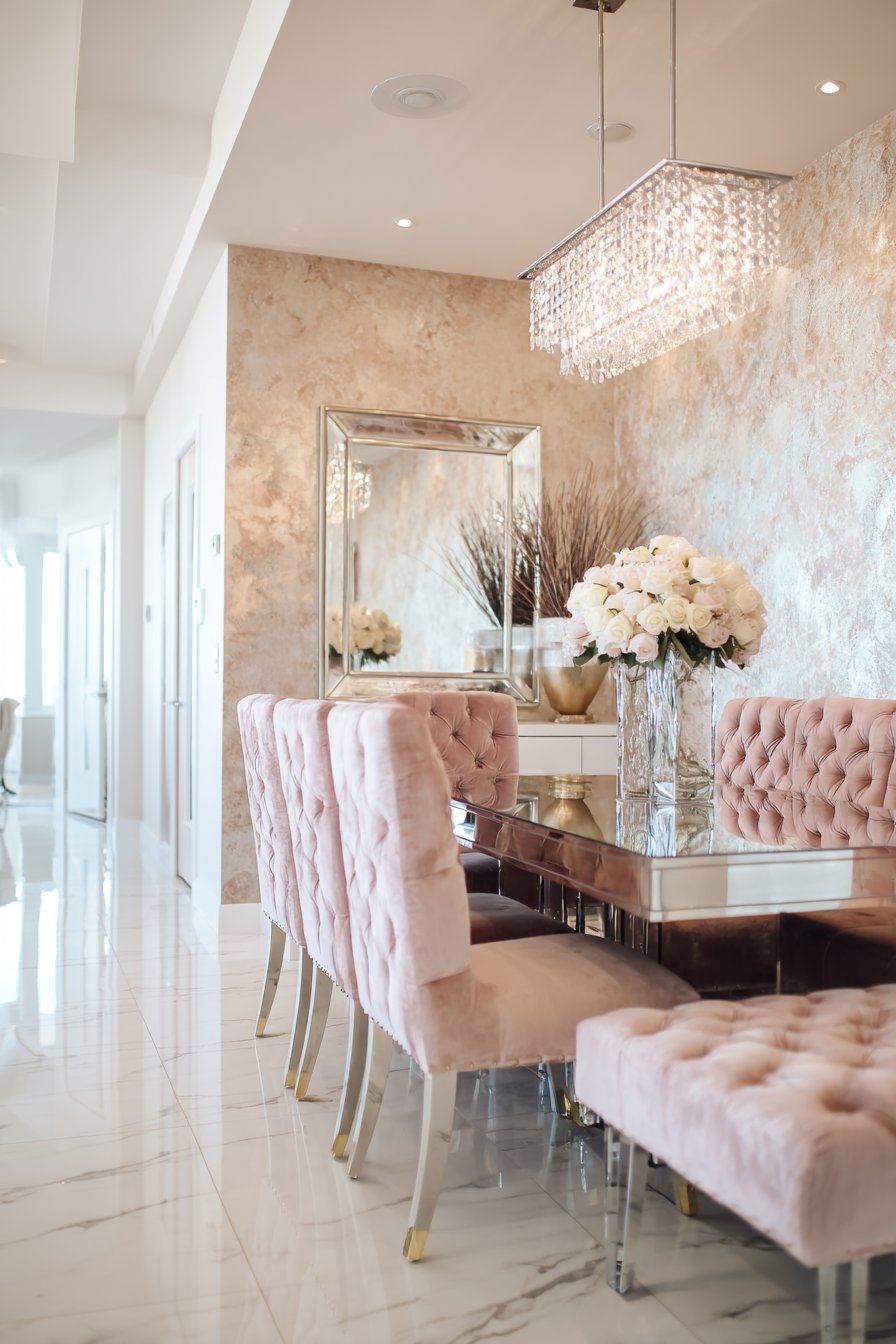
This glamorous narrow dining room ideas features a mirrored dining table with beveled edge detail and an acrylic pedestal base that creates maximum visual impact through light reflection and transparency. The mirrored surface catches and reflects candlelight, pendant illumination, and natural daylight, creating a constantly changing display of sparkle and movement. Tufted velvet dining chairs in blush pink with gold-finished legs provide luxurious seating, their soft color and rich texture adding feminine glamour while the metallic legs coordinate with other warm-toned accents.
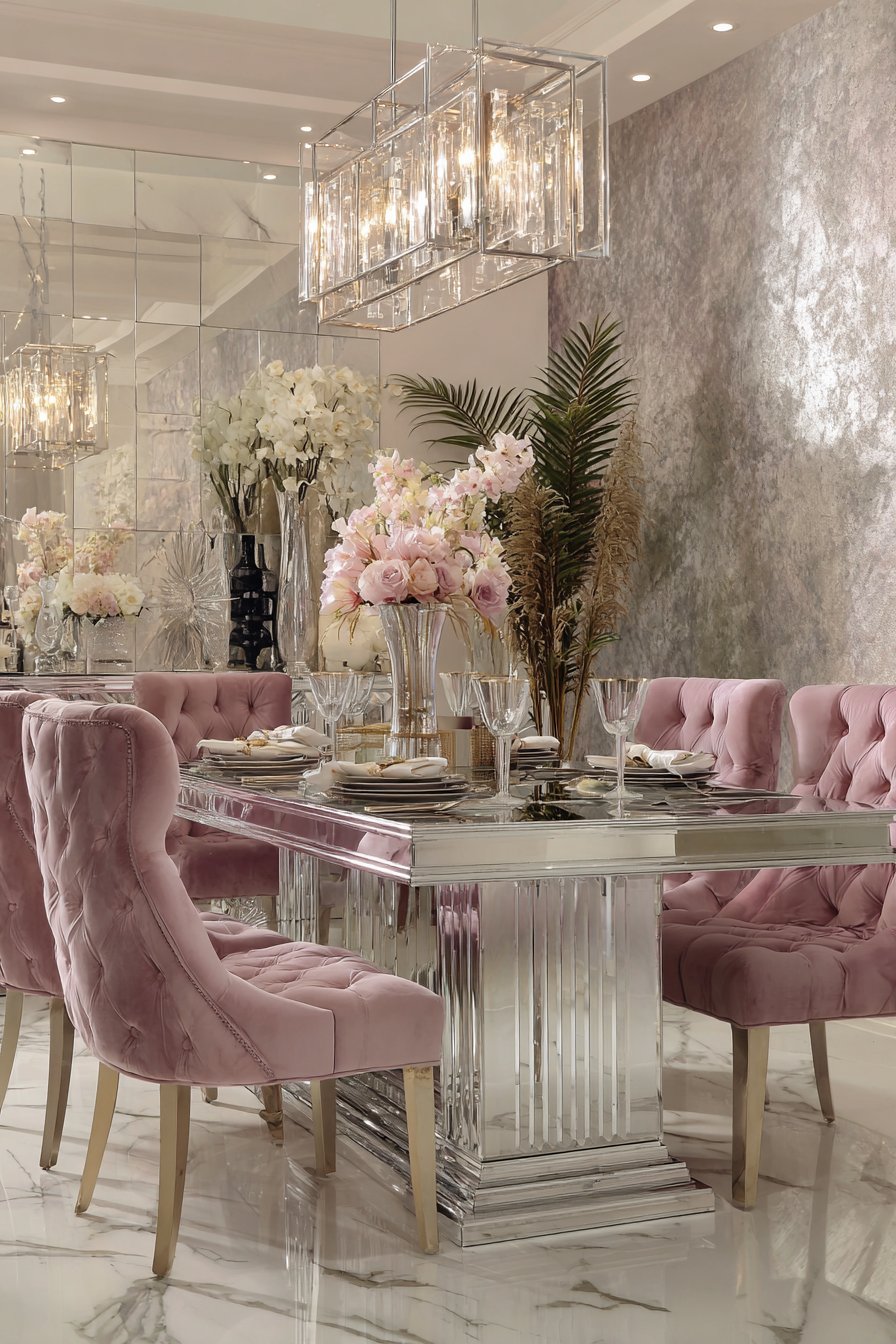
Grasscloth wallpaper in champagne shimmer adds subtle texture and light reflection, its natural fiber construction providing organic variation while the metallic threads woven throughout add gentle sparkle. A modern crystal chandelier with a geometric chrome frame creates a sparkling focal point, its faceted crystals and contemporary form updating traditional glamour for current tastes. Marble flooring in white with gray veining adds elegance and cool sophistication that balances the warm blush and gold tones above.
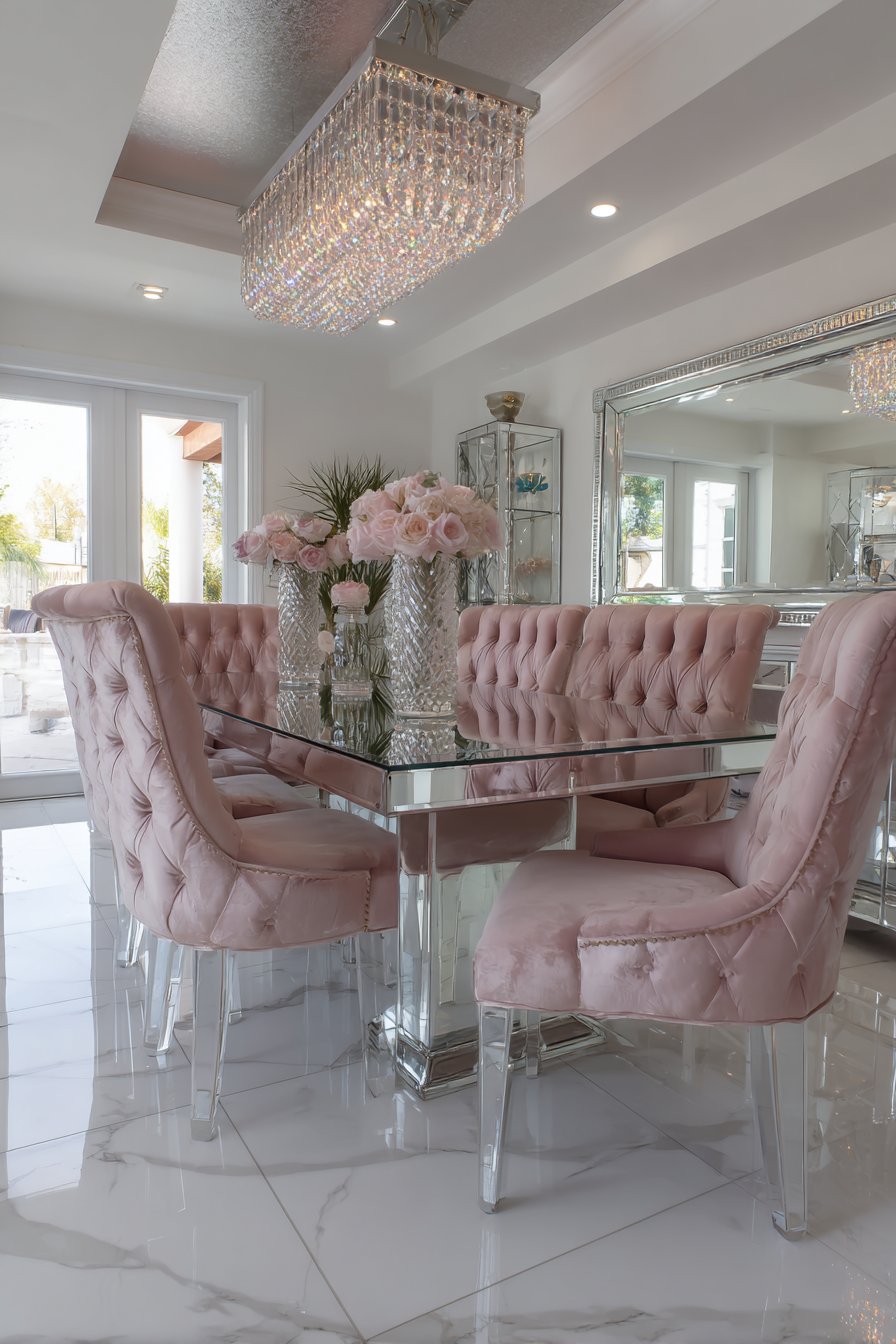
Soft recessed lighting enhances the luminous materials throughout the space, ensuring the mirrored surfaces, metallic finishes, and crystal elements can perform their reflective magic. This narrow dining room proves that glamorous design doesn’t require vast square footage—in fact, the focused nature of a compact space can intensify the impact of luxurious materials and reflective surfaces, creating a jewel-box environment that feels special and celebratory for every meal.
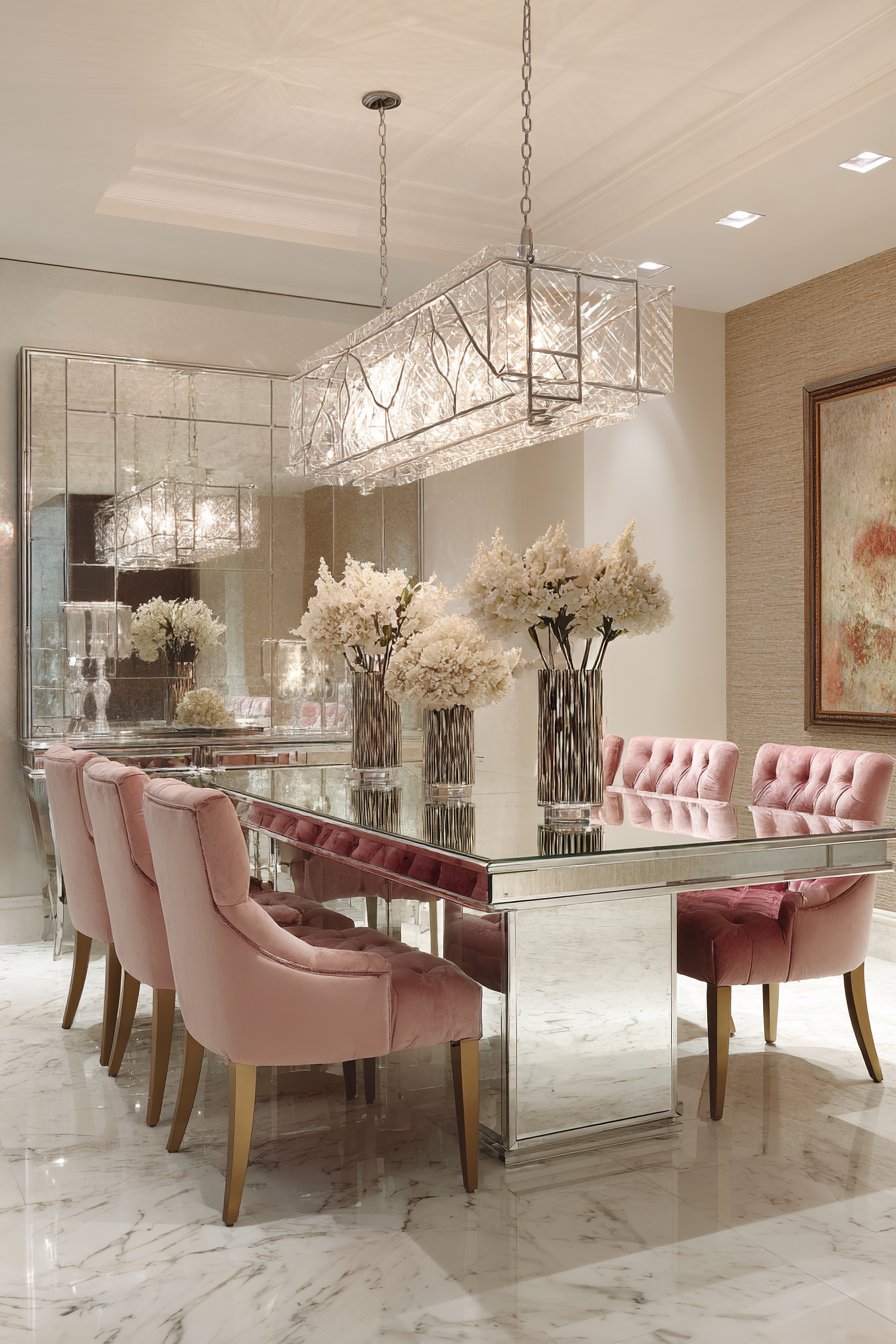
Key Design Tips: Use mirrored furniture to reflect light and create visual expansion through reflection. Install grasscloth wallpaper with metallic threads for subtle shimmer and natural texture. Choose velvet upholstery in soft colors like blush, champagne, or dove gray for luxurious glamour. Incorporate gold or brass finishes on furniture legs and lighting for warm metallic accents. Select marble or high-gloss tile flooring for reflective elegance underfoot. Layer multiple light sources including recessed, pendant, and natural light for maximum sparkle.
20. Curated Eclecticism with Intentional Variety
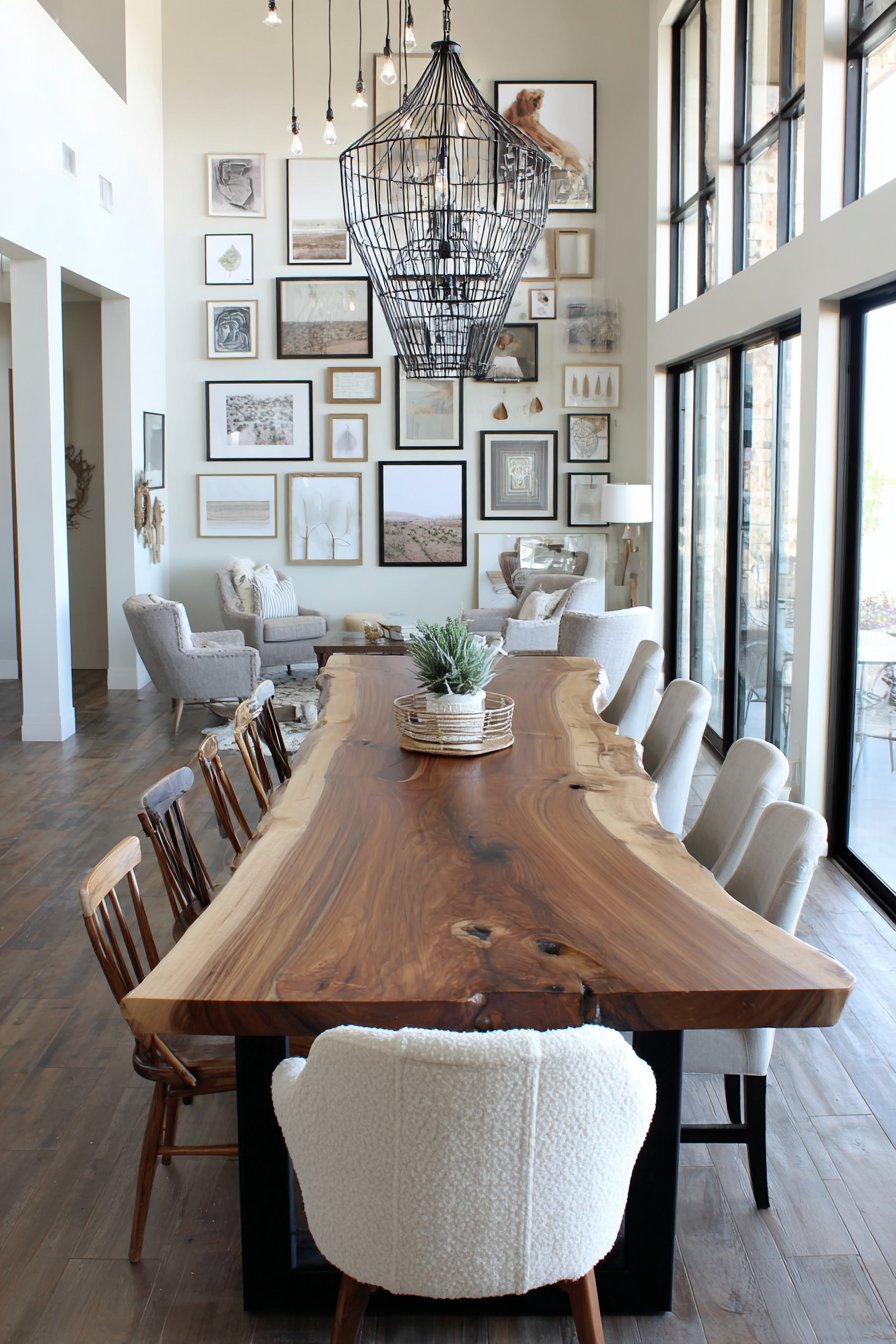
This eclectic narrow dining room ideas features a live-edge walnut dining table showcasing natural wood grain and organic edge contours that celebrate the tree’s original form, supported by industrial black steel legs that create unexpected material contrast. The live edge brings organic irregularity and natural beauty while the geometric steel base grounds the piece with contemporary structure. A deliberate mix of dining chair styles—vintage schoolhouse chairs, modern wire chairs, and upholstered wingbacks—creates curated variety that demonstrates confident personal taste rather than indecision.
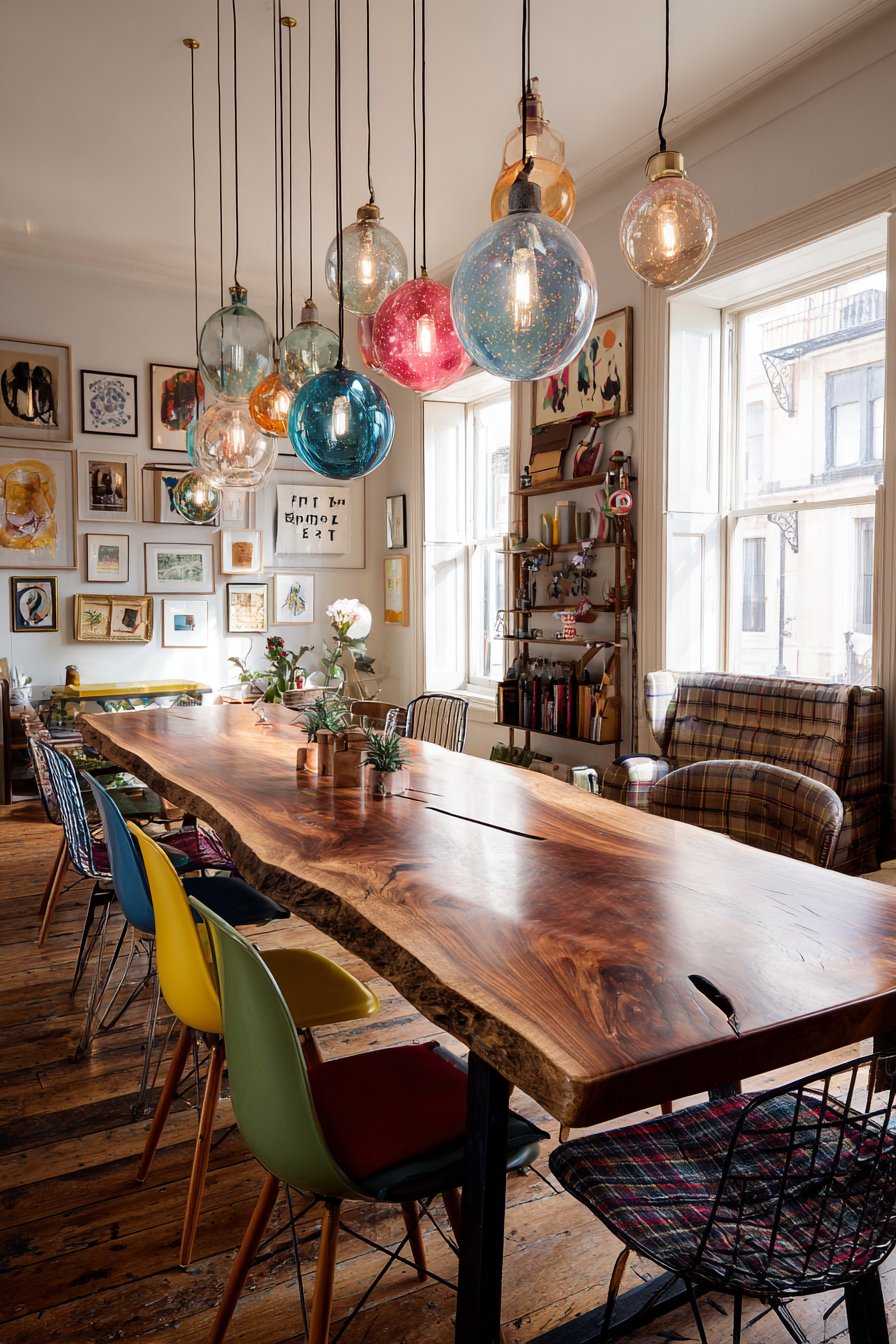
A gallery wall with diverse frame styles and artwork creates visual interest along one wall, the varied subjects, mediums, and frame finishes contributing to the collected-over-time aesthetic essential to successful eclectic design. Multiple pendant lights at varying heights add playful lighting while demonstrating that design rules are meant to be broken—the varied heights create visual rhythm and allow each fixture to shine individually while contributing to a cohesive whole.
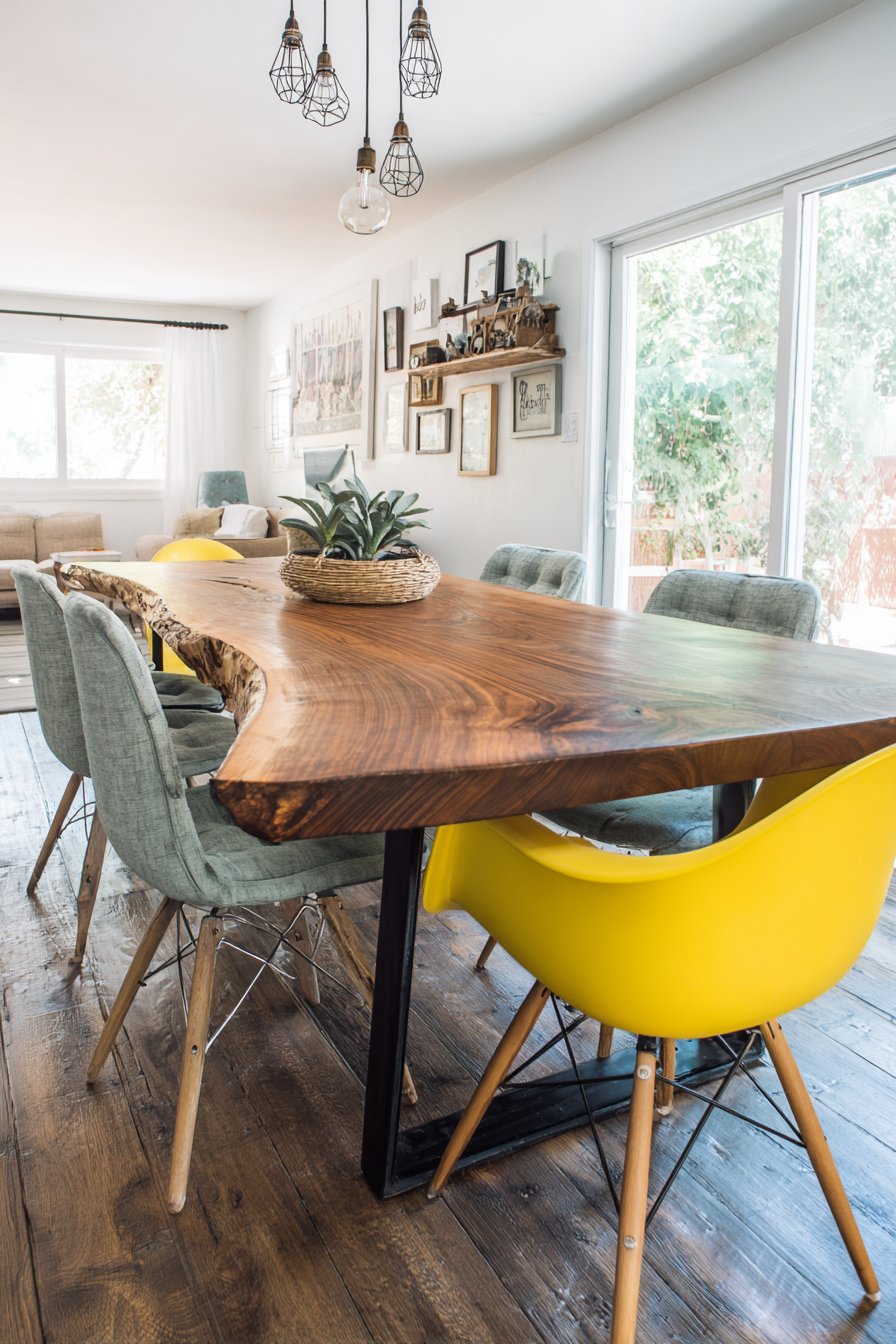
Wide plank flooring in reclaimed pine adds character through varied color tones and surface wear that tells stories of previous use. Natural light from casement windows highlights the intentional design mixing, illuminating the different chair styles, varied artwork, and diverse pendant fixtures. This narrow dining room demonstrates that eclectic design requires more, not less, intentionality—each varied element must be carefully selected and positioned to contribute to a cohesive whole rather than creating visual chaos.
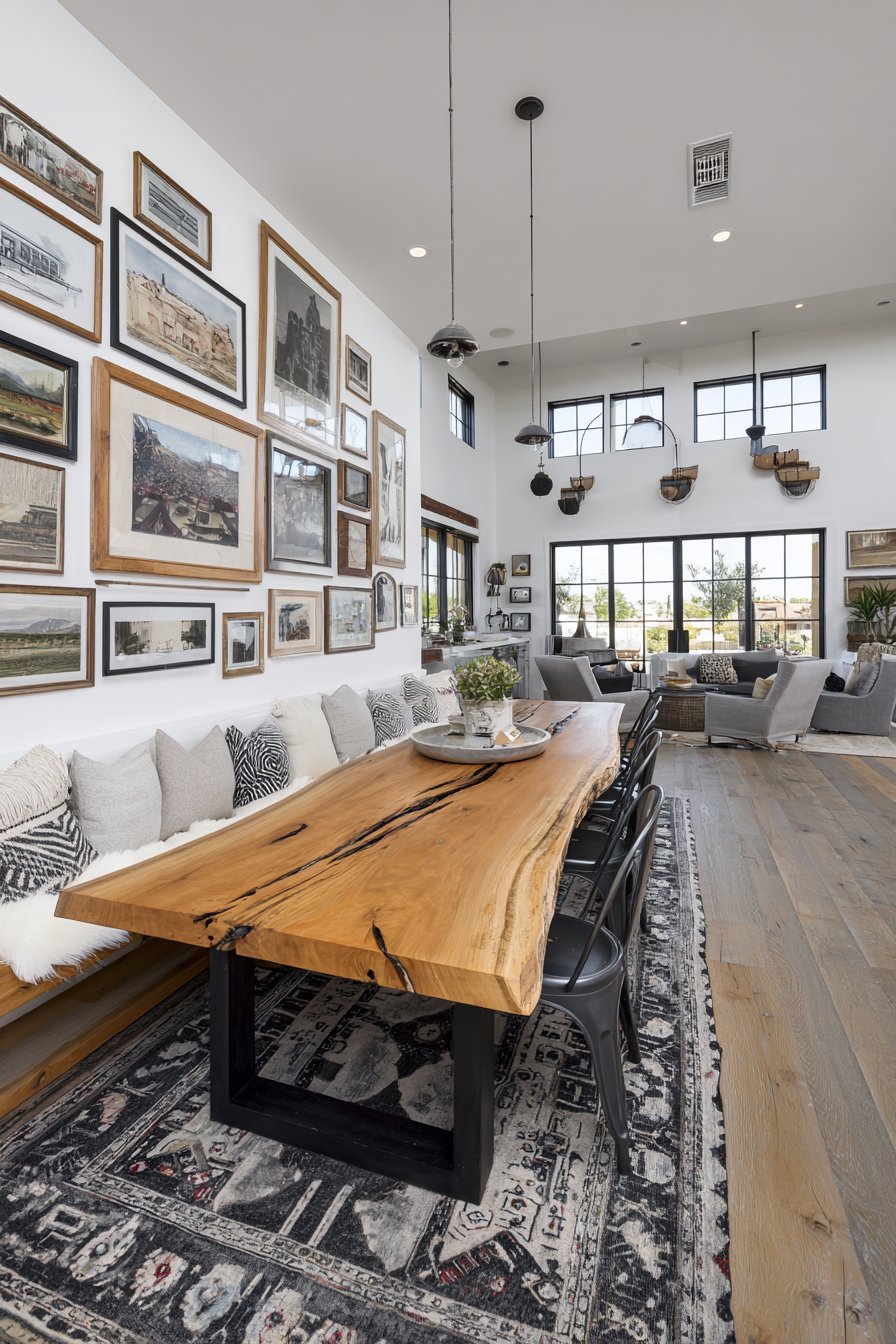
Key Design Tips: Mix dining chair styles deliberately, ensuring they share at least one common element like color, scale, or material. Create gallery walls with varied frame styles but consistent matting or spacing for cohesive presentation. Install multiple pendant lights at different heights for visual interest and flexible task lighting. Choose a live-edge table as a natural focal point that anchors eclectic elements. Use reclaimed wood flooring for character and color variation that complements diverse furniture. Ensure your eclectic mix includes varied textures, materials, and styles while maintaining overall color cohesion.
21. Hygge Comfort with Scandinavian Functionality
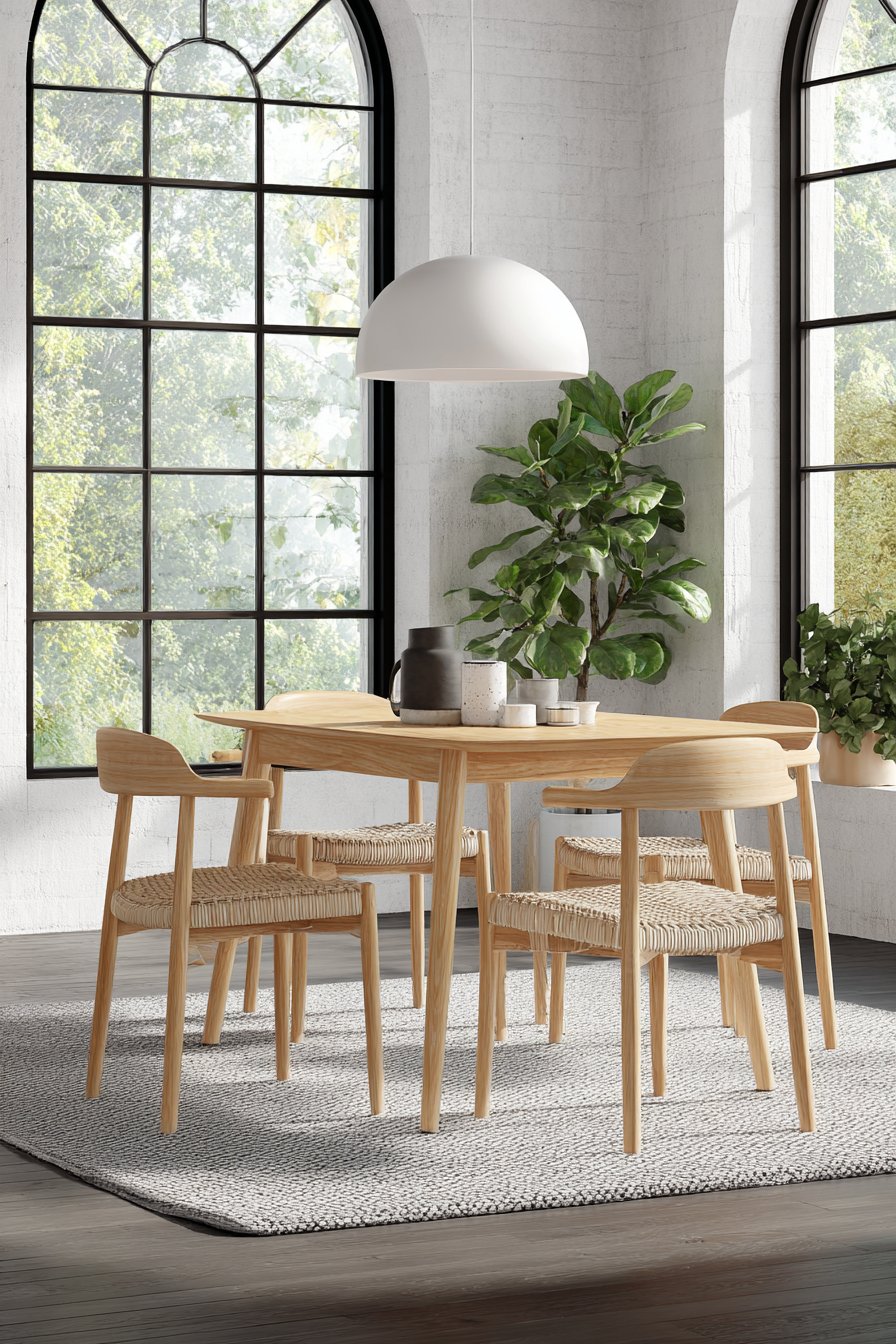
This Scandinavian narrow dining room ideas features a white-washed ash dining table with tapered legs and organic rounded corners that embodies the Nordic principle of functional beauty through honest materials and thoughtful proportions. The white-washed treatment lightens the wood while preserving visible grain, creating subtle texture and natural character. Wishbone dining chairs in natural oak with woven paper cord seats provide iconic Nordic seating, their sculptural form and handwoven details demonstrating that functional objects can achieve artistic beauty.
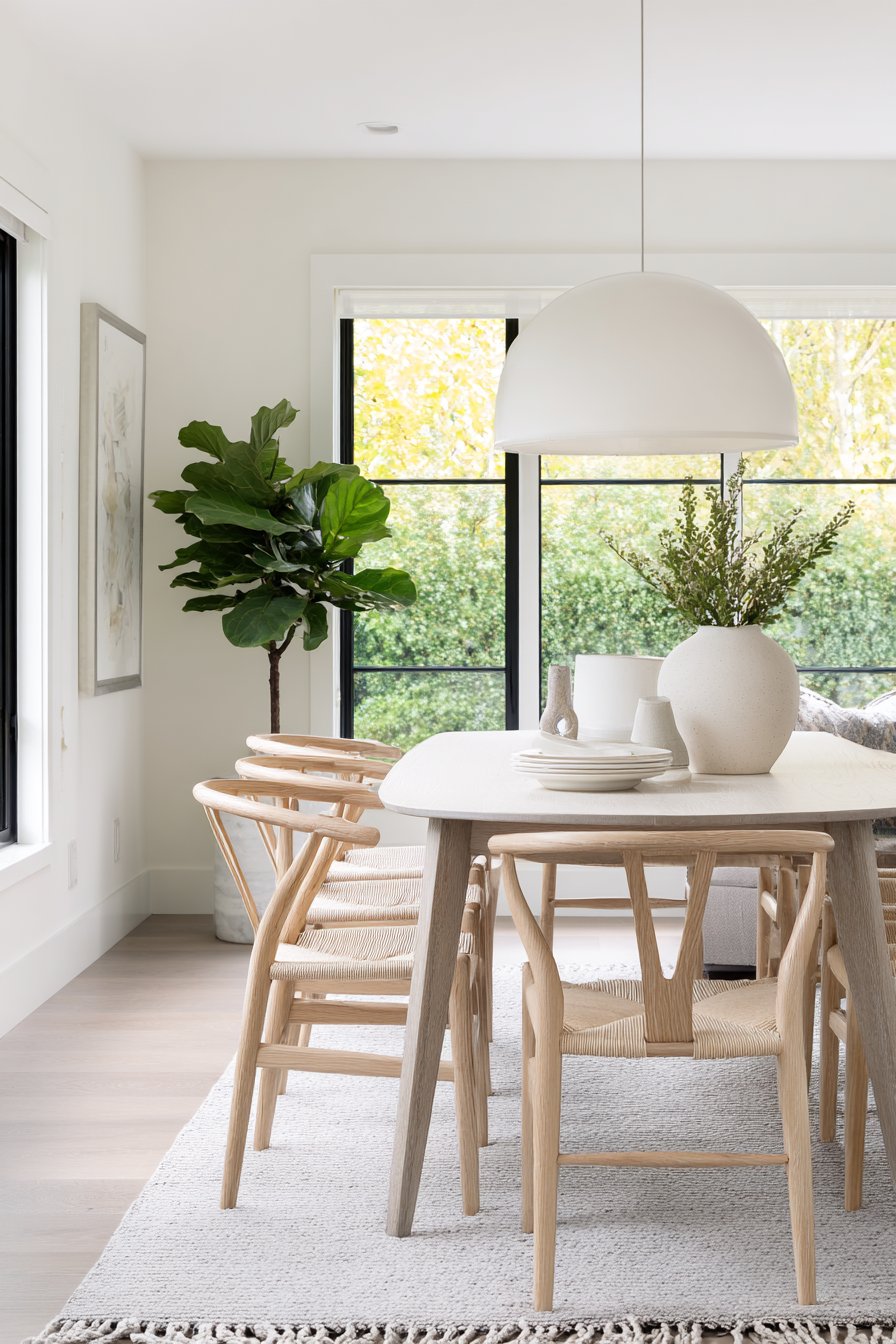
Walls painted in soft white create a bright backdrop that maximizes light reflection while black-framed windows add striking contrast and architectural definition. A simple dome pendant in white ceramic provides clean lighting, its pure form and matte finish maintaining the uncluttered aesthetic central to Scandinavian design. A light gray wool rug defines the dining area, its natural fiber providing warmth and texture underfoot while the neutral tone maintains the serene color palette.
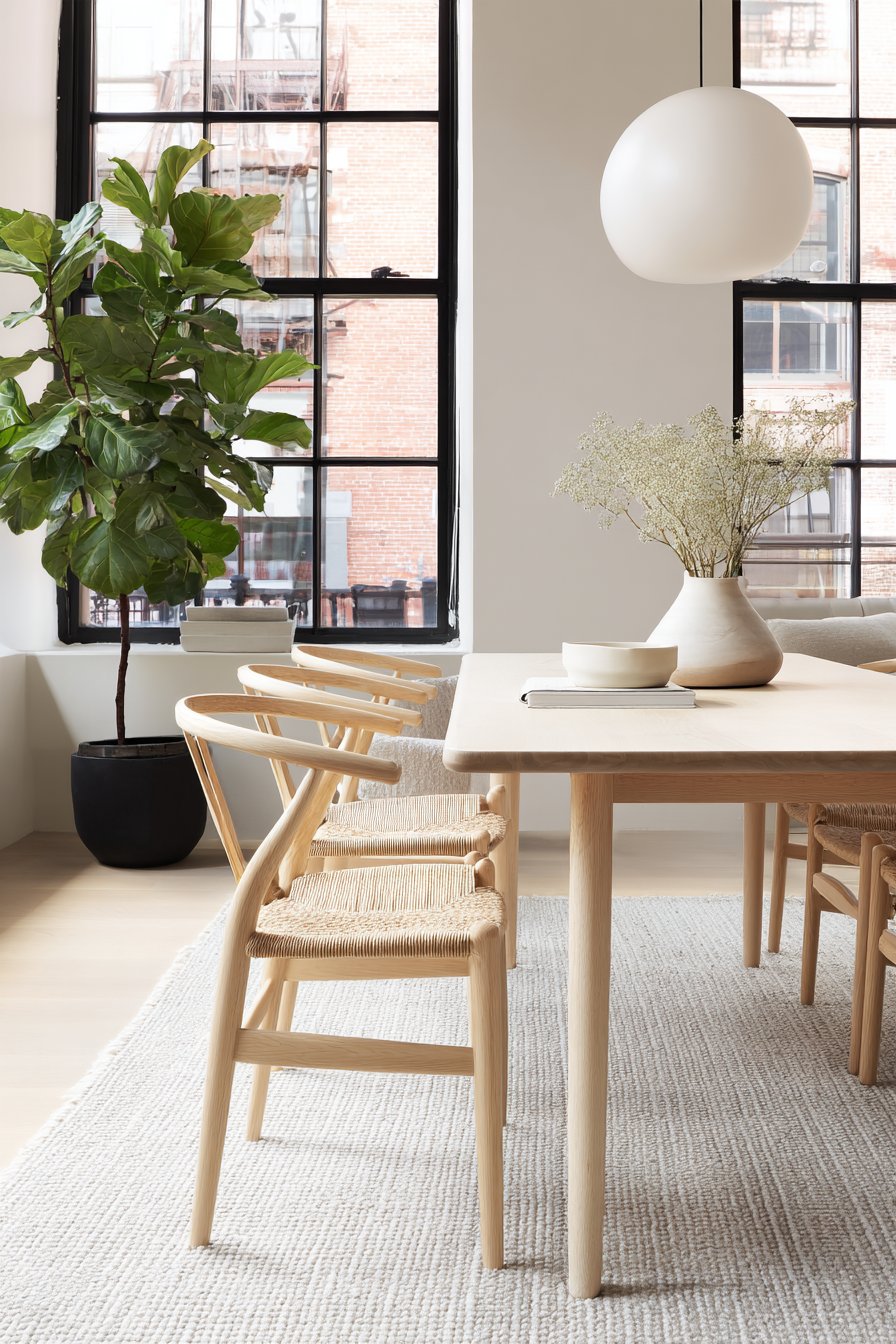
A potted fiddle leaf fig adds an organic element, bringing living greenery that softens hard architectural lines and connects the interior to the natural world. Abundant natural light through large windows creates the airy atmosphere essential to Nordic interiors, celebrating the precious daylight that becomes scarce during long winter months. This narrow dining room exemplifies hygge—the Danish concept of cozy contentment—through natural materials, soft textures, abundant light, and the presence of nature, creating a space that nurtures both body and spirit through thoughtful, human-centered design.
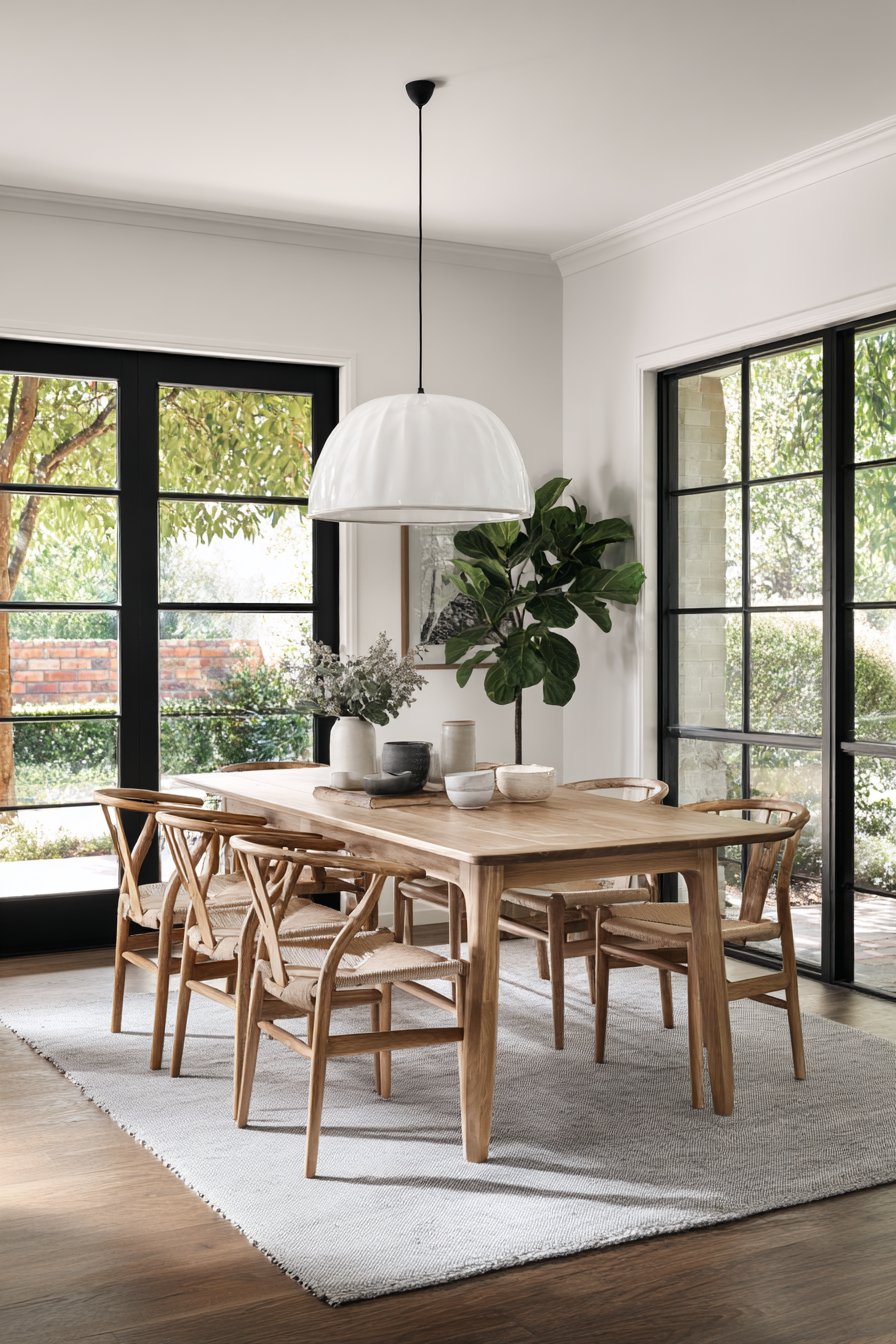
Key Design Tips: Paint walls in soft white or warm off-white to maximize light reflection and create bright Scandinavian interiors. Choose furniture with visible wood grain and organic rounded forms for natural Nordic character. Install black-framed windows or paint existing frames black for contemporary Scandinavian contrast. Select iconic Nordic furniture like wishbone chairs for authentic design pedigree. Add living plants, particularly large-leaf varieties, to bring nature indoors. Use natural fiber rugs in neutral colors to add warmth and texture without pattern or color intensity.
Why These Narrow Dining Room Ideas Represent the Best Design Solutions
The twenty-one narrow dining room ideas presented throughout this comprehensive guide represent carefully researched and thoughtfully analyzed design solutions that address the unique challenges of compact dining spaces while celebrating diverse aesthetic preferences and functional requirements. Each approach has been selected for its specific strengths in maximizing usability, enhancing visual appeal, and creating inviting atmospheres within the constraints of limited width. These designs demonstrate proven strategies for furniture selection, spatial arrangement, lighting design, color application, and material specification that have been successfully implemented in real-world narrow dining rooms.
The diversity of styles represented—from Scandinavian minimalism to art deco glamour, from rustic farmhouse to Japanese zen, from industrial chic to French country charm—ensures that readers with varying tastes, budgets, and existing home aesthetics can find inspiration and actionable ideas. The narrow dining room ideas span multiple price points and skill levels, from budget-friendly solutions like wall-mounted drop-leaf tables and simple paint treatments to more substantial investments in custom banquette seating, mirrored furniture, or hand-forged wrought iron pieces. This range makes the guide valuable for renters seeking temporary improvements, homeowners planning major renovations, and everyone in between.
Common threads unite these diverse narrow dining room ideas, revealing universal principles that transcend specific styles. Nearly all successful narrow dining room designs prioritize vertical elements—whether through tall windows, vertical wall treatments, or pendant lighting—to draw the eye upward and create a sense of height that counterbalances limited width. The strategic use of reflective surfaces appears repeatedly, whether through mirrored walls, glass tabletops, high-gloss finishes, or polished floors, all working to bounce light around the space and create visual expansion. Furniture selection consistently favors pieces with slim profiles, elevated legs, transparent materials, or space-saving configurations that maintain functionality without overwhelming compact footprints.
The lighting strategies employed across these narrow dining room ideas demonstrate sophisticated understanding of how illumination shapes spatial perception. Linear fixtures, strategically placed pendants, layered ambient and task lighting, and maximum utilization of natural light all contribute to making narrow rooms feel more spacious and inviting. The consistent emphasis on natural materials—wood, linen, wool, stone, clay—creates warmth and authenticity that prevents compact spaces from feeling cold or unwelcoming, while varied textures add visual interest without requiring pattern or color complexity.
Color applications throughout these narrow dining room ideas reveal thoughtful restraint—most successful designs employ limited color palettes of two to four hues, using variation in tone, texture, and finish to create visual interest rather than relying on multiple colors. Neutral foundations with strategic color accents appear repeatedly, whether in the form of jewel-toned velvet chairs against white walls, terracotta plaster with blue ceramic plates, or emerald upholstery paired with brass and white. This approach creates impact without visual chaos, allowing narrow spaces to feel cohesive and intentionally designed.
The emphasis on multi-functional elements and clever storage solutions addresses the practical reality that narrow dining rooms often exist within homes where space comes at a premium. Banquette seating with hidden storage, extendable tables that adjust to different occasions, wall-mounted drop-leaf surfaces that disappear when not needed, and floating shelves that utilize vertical space all demonstrate how thoughtful design solves real-world challenges. These narrow dining room ideas prove that beautiful spaces can also be supremely functional, rejecting the false choice between aesthetics and practicality.
Material authenticity emerges as a consistent value across these designs—whether it’s genuine reclaimed wood with visible history, hand-forged wrought iron with artisanal variations, natural stone with inherent imperfections, or quality textiles with visible weave. This emphasis on authentic materials creates spaces with depth, character, and longevity that transcend temporary trends. The narrow dining room ideas presented here will remain relevant and beautiful for years precisely because they prioritize timeless material quality over trendy finishes or fleeting color schemes.
The spatial strategies employed demonstrate sophisticated understanding of visual perception and how design choices influence how we experience dimensions. Running flooring planks perpendicular to narrow dimensions, installing horizontal elements like chair rails or two-tone paint treatments, using runners rather than full rugs, and positioning mirrors strategically—all of these tactics manipulate visual perception to make narrow rooms feel more balanced and less corridor-like. Similarly, the emphasis on creating focal points—whether through dramatic lighting, feature walls, or statement furniture—gives the eye a place to rest and creates visual interest that distracts from dimensional limitations.
These narrow dining room ideas also demonstrate cultural design intelligence, drawing inspiration from diverse traditions—Japanese minimalism’s emphasis on simplicity and material honesty, Mediterranean design’s celebration of artisanal craftsmanship and warm materials, Scandinavian aesthetics’ prioritization of light and functionality, French country’s romantic rusticity, and American mid-century modernism’s optimistic innovation. This global perspective enriches the design possibilities while demonstrating that successful narrow dining rooms can be created using principles from virtually any design tradition when thoughtfully adapted to compact dimensions.
The practical implementation advice woven throughout each narrow dining room idea—specific product recommendations, measurement guidelines, installation tips, and maintenance suggestions—transforms inspirational images into actionable plans. Readers gain not just aesthetic inspiration but concrete guidance on furniture dimensions, lighting heights, color specifications, and material selections that will help them successfully implement these designs in their own homes. This combination of aspiration and practicality distinguishes truly helpful design guidance from mere visual inspiration.
Contemporary relevance ensures these narrow dining room ideas address current lifestyle needs—work-from-home flexibility requiring convertible spaces, sustainable material preferences favoring reclaimed and natural materials, technological integration demanding thoughtful cord management and lighting design, and social trends toward more casual, family-centered living that values comfort alongside beauty. The designs balance timeless principles with contemporary requirements, creating spaces that feel current without being trendy, comfortable without being sloppy, and personal without being chaotic.
Conclusion
Transforming a narrow dining room from a challenging constraint into an inviting, functional, and beautiful space requires strategic thinking, creative problem-solving, and confidence in your design vision. The twenty-one narrow dining room ideas explored throughout this comprehensive guide demonstrate that limited width need not limit your design ambitions or aesthetic possibilities. Whether you’re drawn to the serene simplicity of Scandinavian minimalism, the collected character of bohemian eclecticism, the streamlined luxury of art deco glamour, or the rustic warmth of farmhouse charm, successful narrow dining room design is entirely achievable when you understand and apply core principles of spatial planning, furniture selection, lighting strategy, and material specification.
The most successful narrow dining rooms embrace their linear proportions rather than fighting against them, using vertical design elements to emphasize height, strategic lighting to enhance spaciousness, reflective surfaces to expand visual boundaries, and carefully scaled furniture to maintain functionality without crowding. They prioritize quality over quantity, selecting fewer pieces of authentic, well-crafted furniture rather than filling every inch with decorative objects. They celebrate natural light as a precious resource, keeping window treatments minimal and positioning reflective surfaces to bounce illumination throughout the space.
As you embark on transforming your own narrow dining room, remember that the most important design principle is creating a space that serves your specific lifestyle, reflects your personal aesthetic, and invites you to gather, share meals, and create memories with people you love. Use these twenty-one narrow dining room ideas as starting points for your own creative exploration, combining elements from multiple approaches to develop a unique solution perfectly tailored to your space, budget, and vision. Trust your instincts, invest in quality materials that will provide lasting beauty and durability, and don’t be afraid to experiment with bold choices—sometimes the most memorable designs emerge from confident, unexpected decisions. Your narrow dining room has tremendous potential; with thoughtful planning and inspired design, it can become one of the most cherished spaces in your home.
