
The dining room serves as the heart of the home, where families gather to share meals, celebrate milestones, and create lasting memories. Yet, selecting the perfect dining set can feel overwhelming with countless styles, materials, and configurations available. A thoughtfully chosen dining set does more than fill a space—it establishes the room’s aesthetic, influences the flow of conversation, and reflects your personal style. Whether you’re drawn to the warmth of rustic farmhouse charm, the sleek sophistication of contemporary design, or the eclectic spirit of bohemian décor, your dining set serves as the foundation for countless shared experiences.
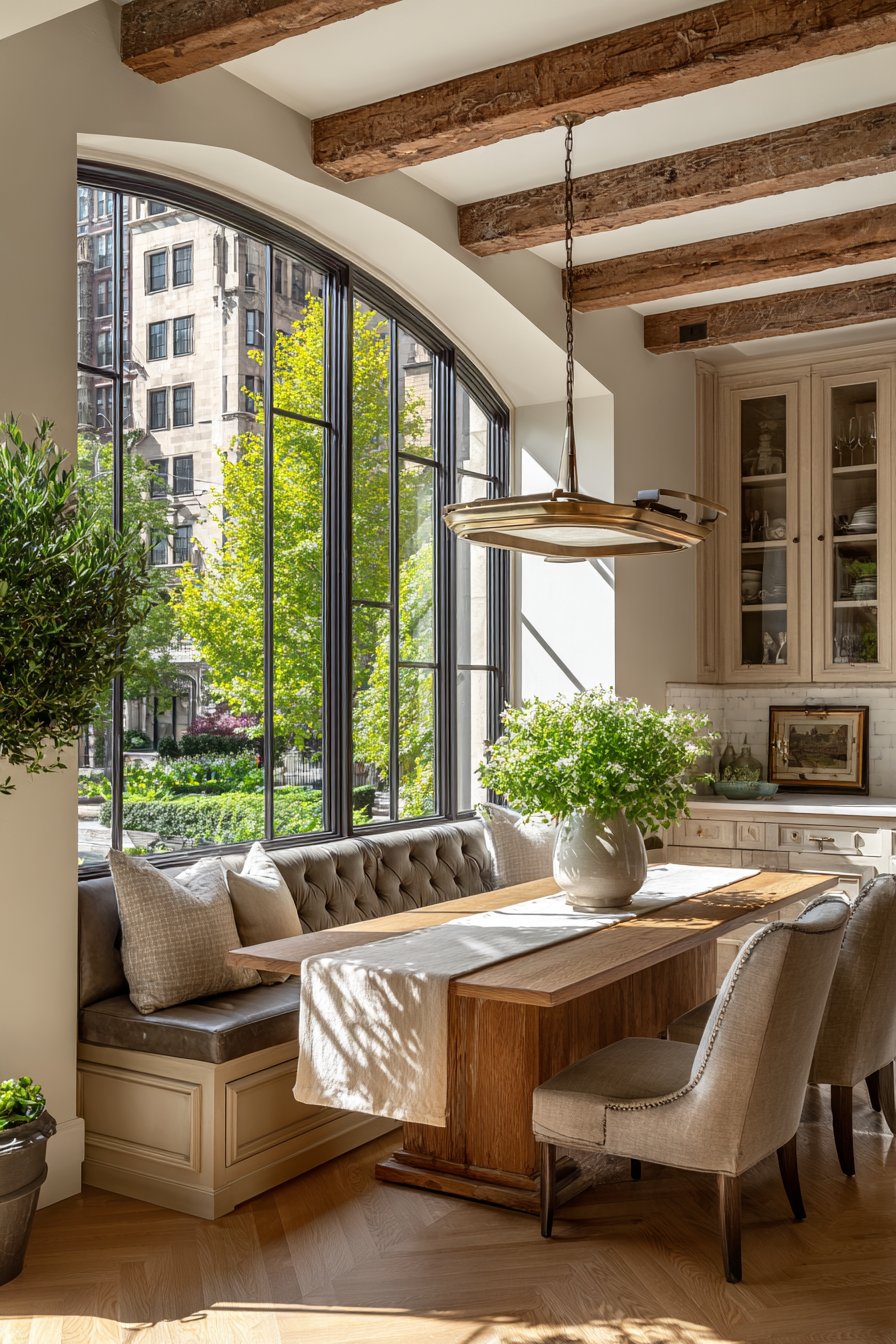
In today’s diverse design landscape, dining set ideas span an impressive spectrum of styles and price points, making it possible for every homeowner to find their perfect match. From space-saving solutions ideal for compact urban apartments to grand formal arrangements that command attention, the right dining set transforms an ordinary room into an extraordinary gathering place. Modern dining spaces embrace mixed materials, unexpected color palettes, and innovative storage solutions that marry form with function. The key lies in understanding how different elements—from table shapes and chair styles to lighting and accessories—work together to create a cohesive, inviting environment.
This comprehensive guide explores twenty-three distinctive dining set ideas, each offering unique approaches to style, functionality, and spatial design. You’ll discover how to maximize small spaces without sacrificing style, create luxurious formal dining experiences, and blend indoor-outdoor elements seamlessly. Whether you’re furnishing your first apartment or redesigning an established dining room, these carefully curated concepts provide actionable inspiration for creating a dining space that truly feels like home. From budget-conscious solutions to high-end custom designs, each idea demonstrates how thoughtful selection and arrangement can elevate your dining experience.
1. Modern Walnut Elegance with Mid-Century Flair
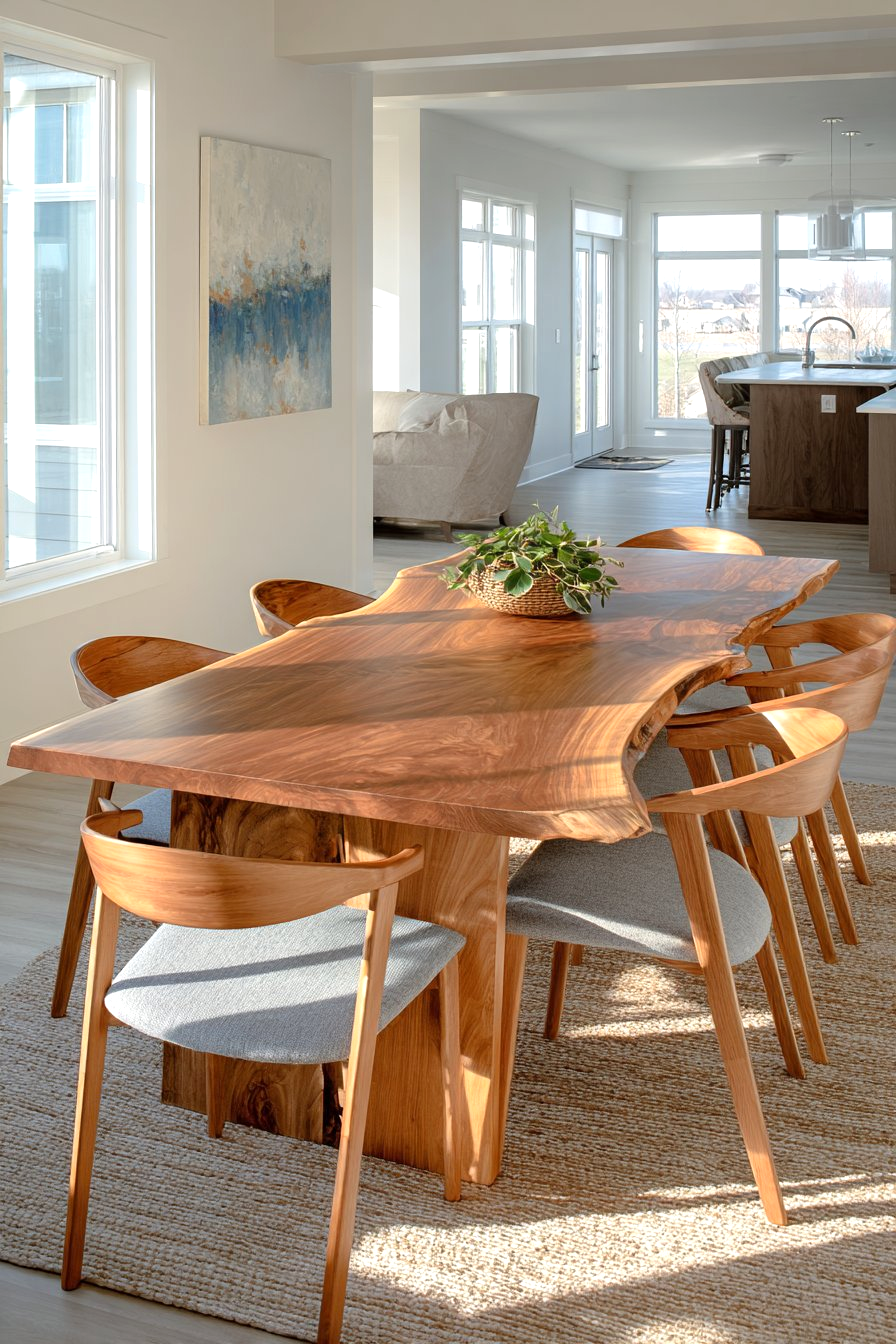
A rectangular solid walnut dining table with distinctive live edge details creates a stunning focal point that celebrates natural wood beauty. The rich, chocolate-brown tones of the walnut grain flow organically across the surface, each unique pattern telling a story of the tree’s growth. Six mid-century inspired dining chairs surround this magnificent piece, their curved bentwood backs offering both ergonomic comfort and visual grace. The neutral upholstered seats in soft linen or performance fabric provide a subtle contrast that allows the wood’s inherent beauty to shine. This dining set rests atop a natural jute area rug, grounding the arrangement while adding textural warmth to the contemporary space.
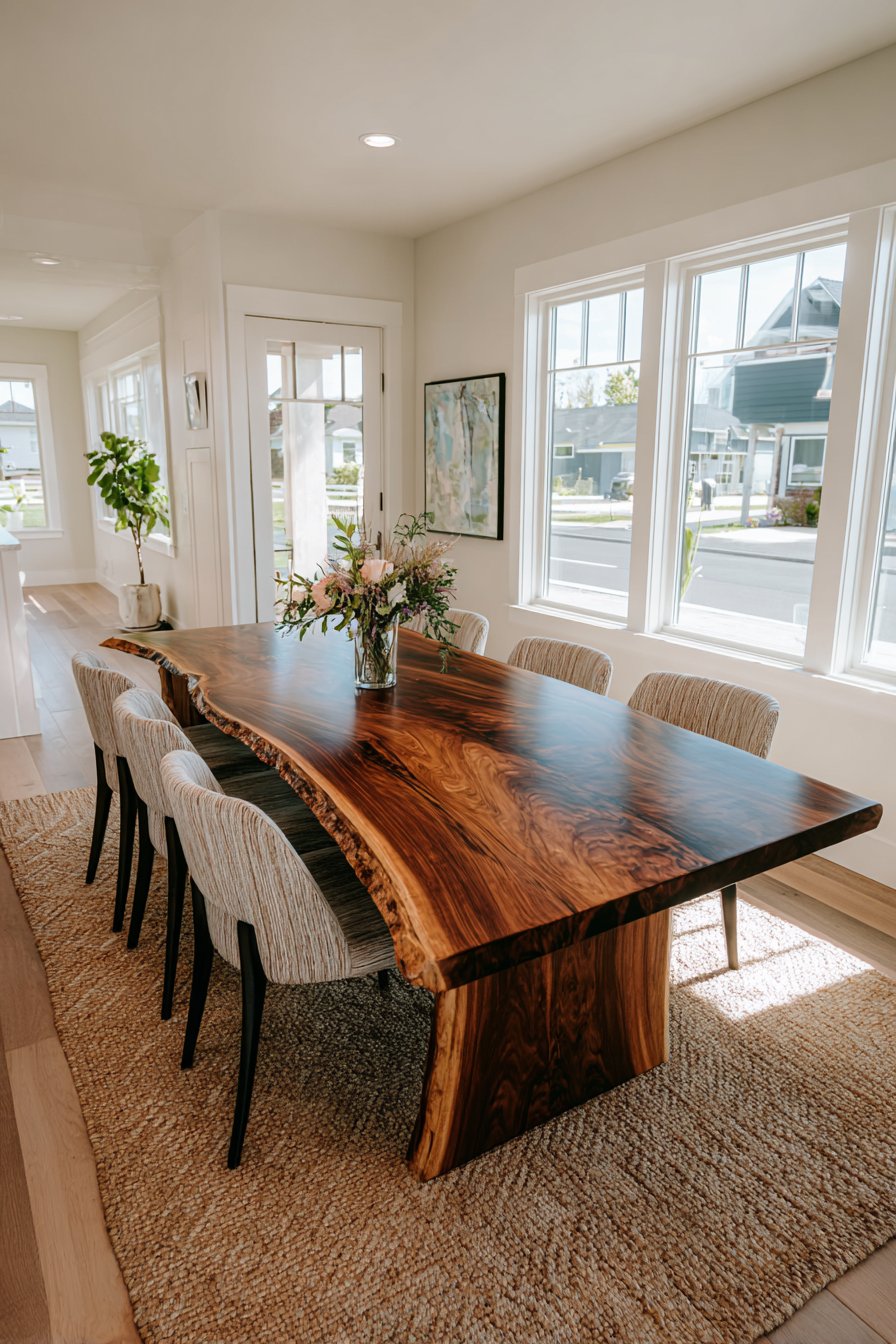
The interplay of organic and refined elements creates a dining environment that feels both sophisticated and approachable. White walls serve as a clean canvas, allowing the walnut’s deep tones to command attention without overwhelming the senses. Wide-plank hardwood flooring in lighter oak tones provides complementary warmth while maintaining the room’s airy atmosphere. Natural daylight streaming through adjacent windows creates dynamic shadows throughout the day, highlighting the wood grain’s dimensional beauty and the chairs’ sculptural forms. The careful balance between natural materials and clean-lined furniture exemplifies modern design principles at their finest.
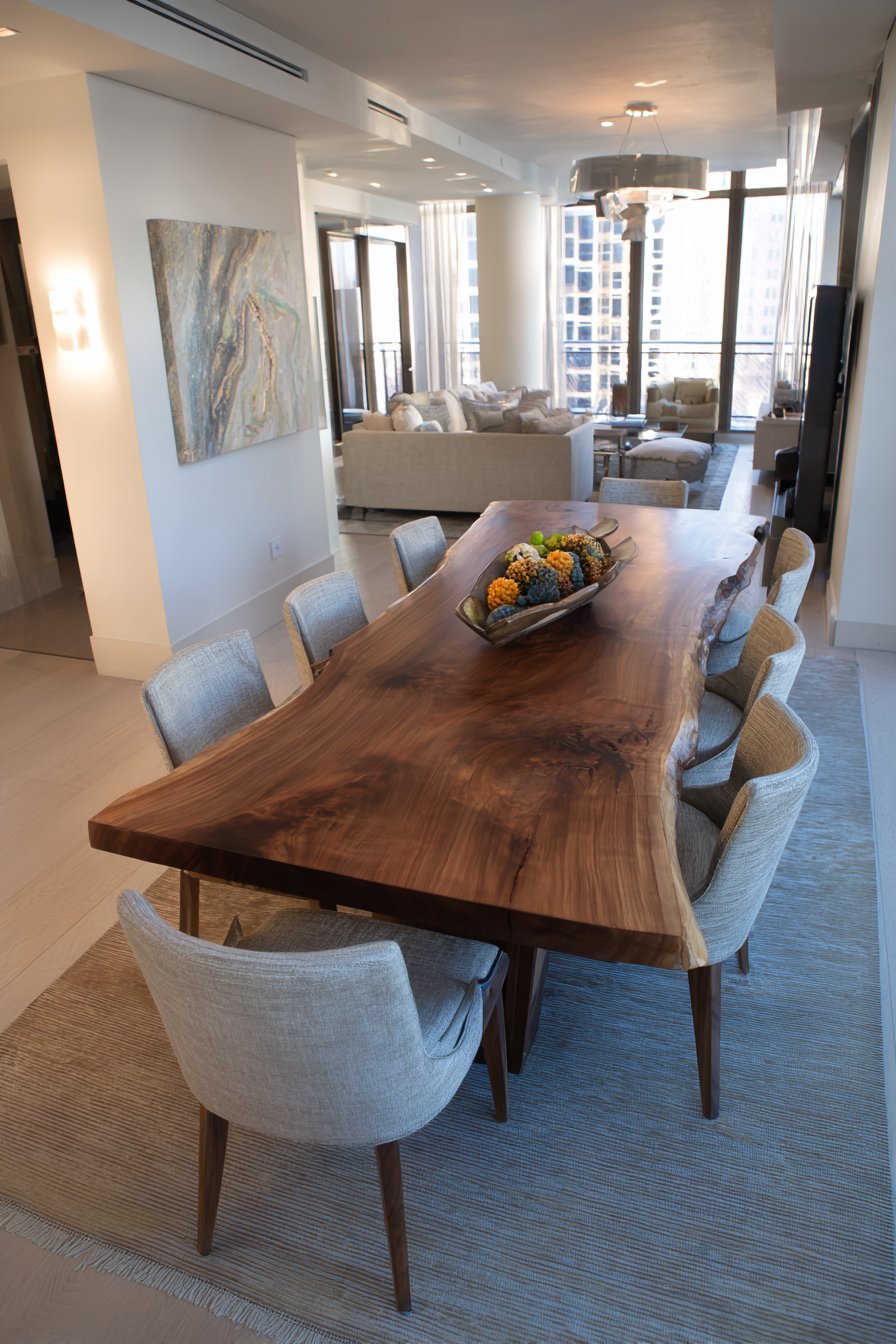
This dining set idea proves particularly effective in open-concept homes where the dining area flows into living spaces. The walnut table’s substantial presence defines the dining zone without requiring walls or partitions, while the mid-century chairs’ slim profiles prevent visual clutter. Consider pairing this arrangement with a pendant light fixture featuring warm brass accents or aged copper to echo the wood’s warm undertones. A simple centerpiece of fresh greenery in a ceramic vessel maintains the organic aesthetic without competing with the table’s natural artistry.
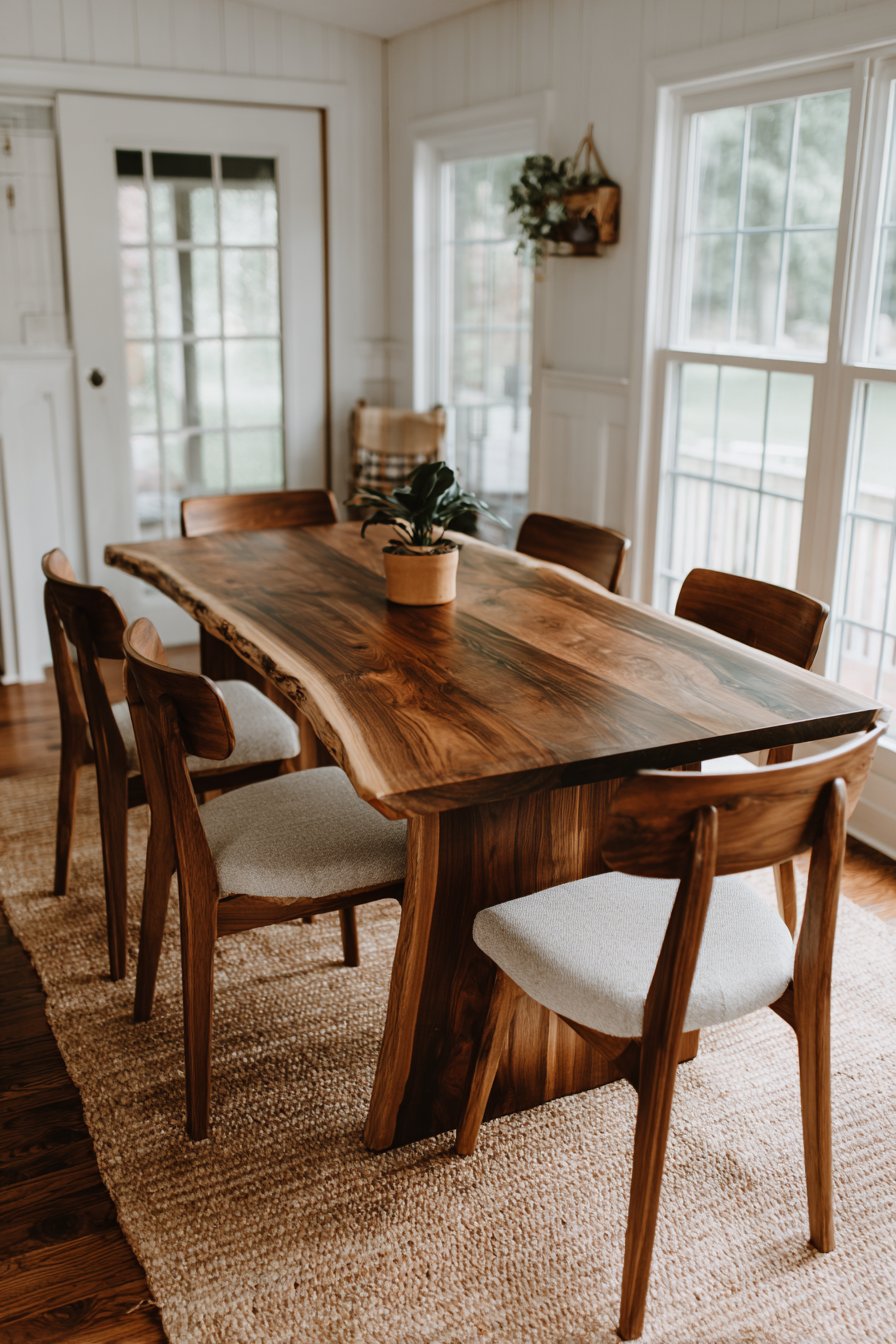
Key design tips include: selecting a live edge table where the natural wood edge remains visible for authentic character, choosing bentwood chairs with ergonomic curves that provide comfortable seating for extended meals, positioning the dining set near windows to maximize natural light that enhances wood grain visibility, and maintaining a neutral color palette in surrounding décor to keep focus on the walnut’s rich tones.
2. Farmhouse Charm with Mismatched Vintage Appeal
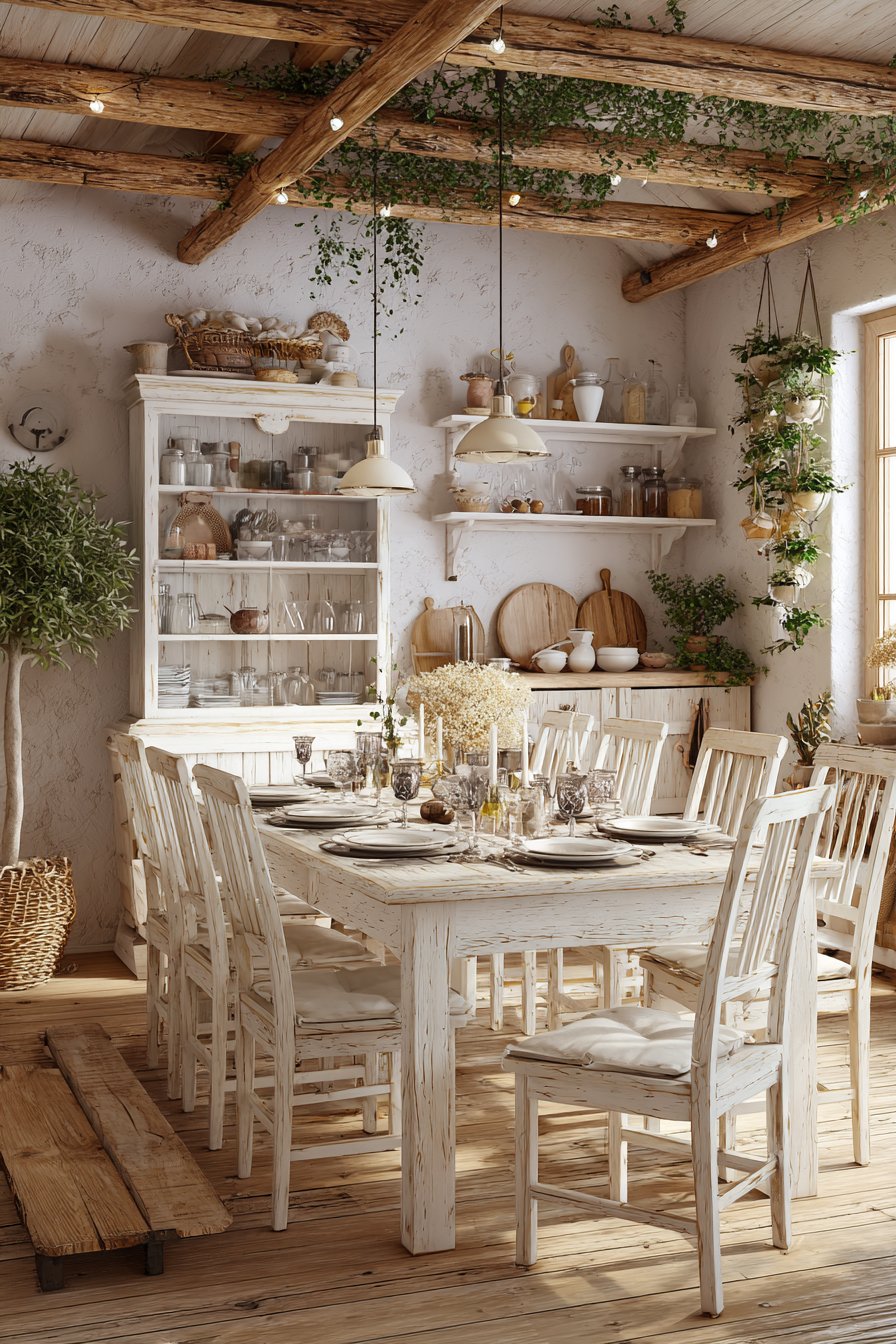
The distressed white wooden dining table anchors this farmhouse-inspired dining set with its weathered finish that tells stories of family meals past. Each scratch and imperfection adds authenticity, creating furniture that feels collected rather than purchased. Surrounding this centerpiece are mismatched vintage dining chairs, each uniquely styled yet unified through a cohesive cream and soft blue color palette. Some chairs feature ladder backs, others sport spindles, and a few showcase simple slat designs—this intentional variety creates visual interest while maintaining harmonious balance. A rustic wooden bench positioned along one side offers flexible seating options perfect for accommodating extra guests or allowing children to sit together.
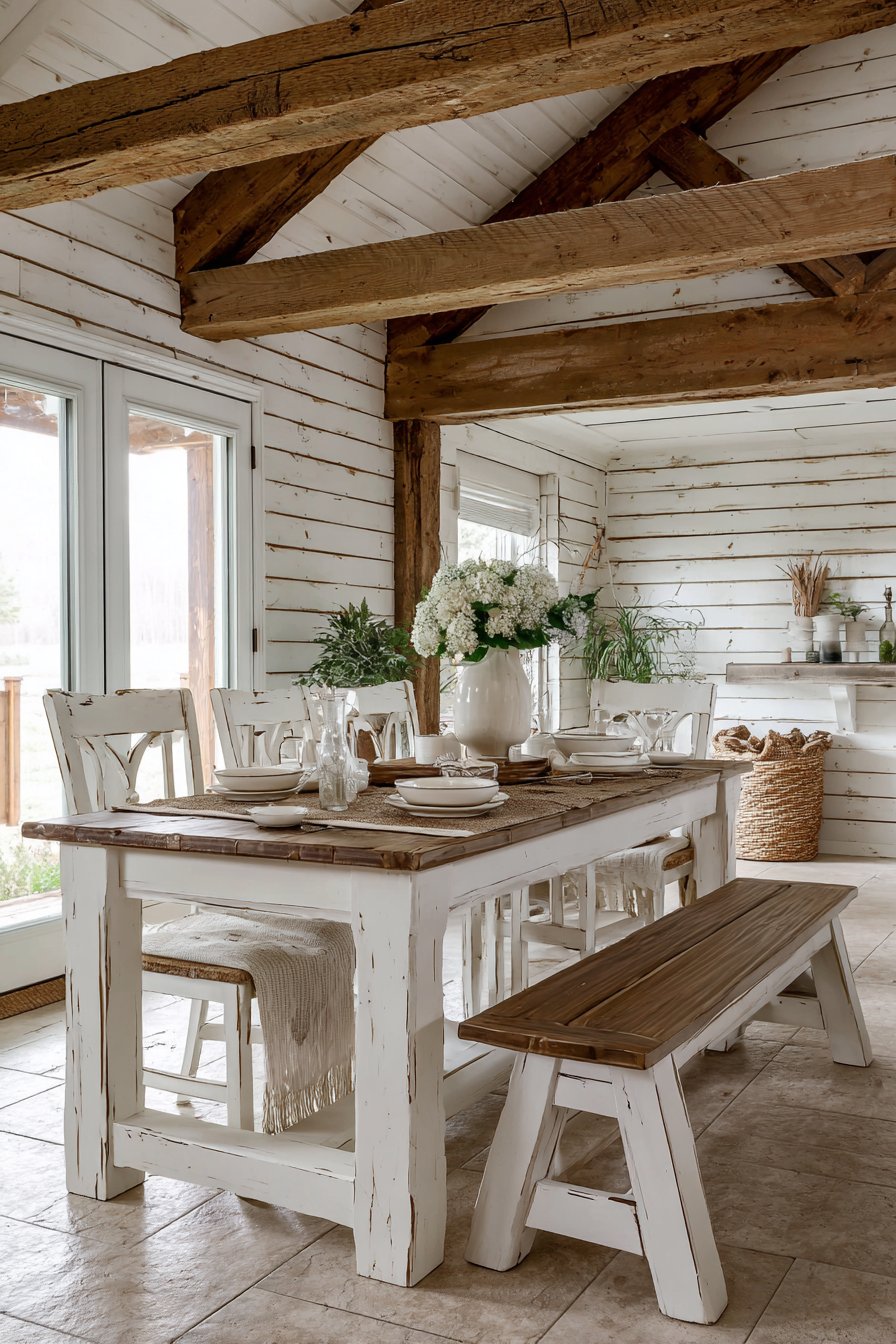
The architectural elements in this space reinforce the farmhouse aesthetic with exposed beam ceilings that draw the eye upward and create a sense of spaciousness. Shiplap accent walls painted in soft white or gentle cream tones provide texture without overwhelming the room’s light, airy feeling. The combination of horizontal lines from the shiplap and vertical elements from the chair backs creates pleasing geometric balance. Soft natural lighting filters through window treatments in gauzy white fabric, casting gentle illumination that emphasizes the furniture’s handcrafted quality and celebrates rather than conceals the wood’s natural imperfections.
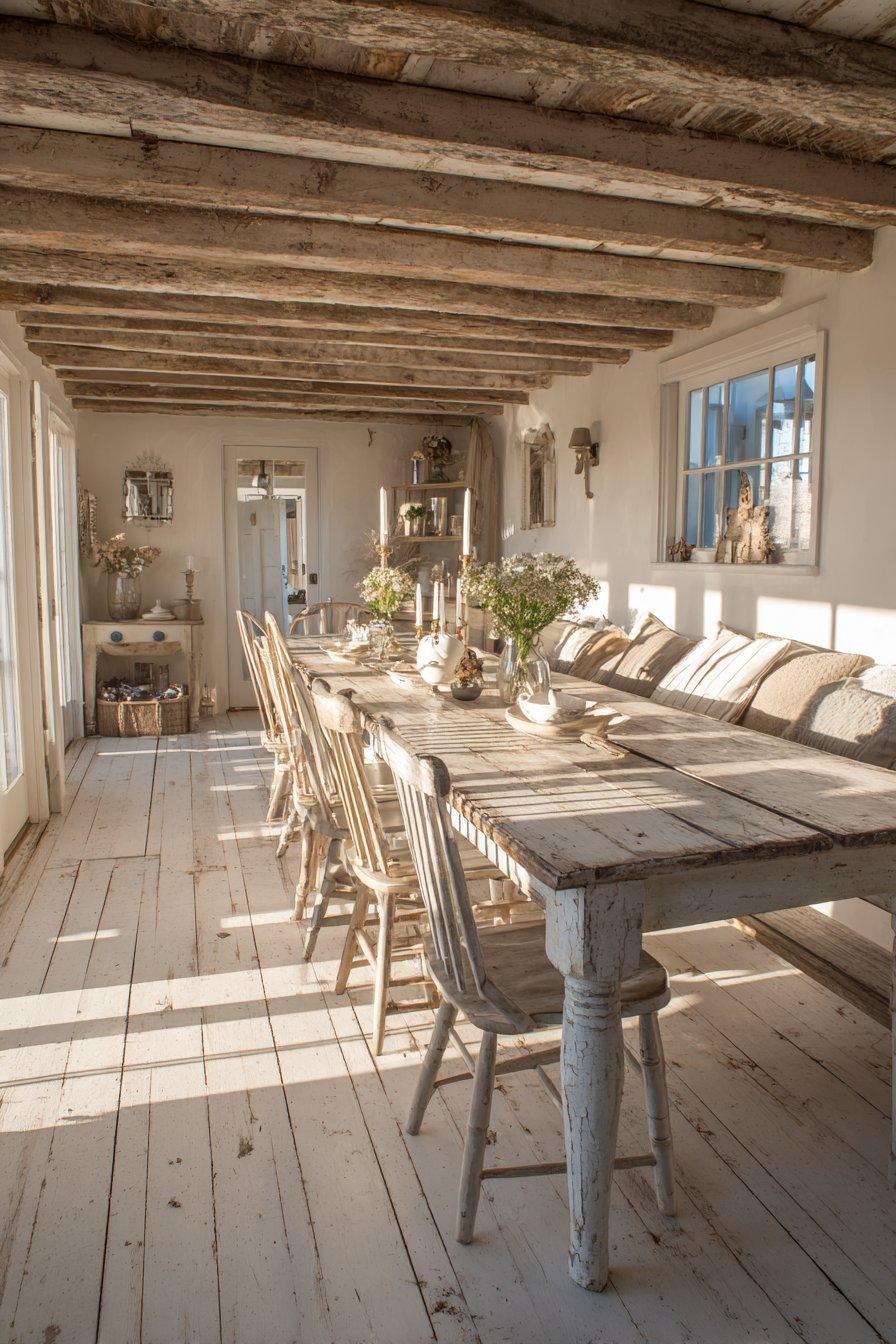
This dining set idea excels in homes seeking that coveted “collected over time” aesthetic without requiring decades of hunting for perfect pieces. The beauty lies in embracing imperfection—slightly different chair heights, varying wood tones, and mismatched cushion patterns all contribute to the space’s authentic charm. Professional interior photography captures these charming details while highlighting how the varied elements create unexpected harmony.
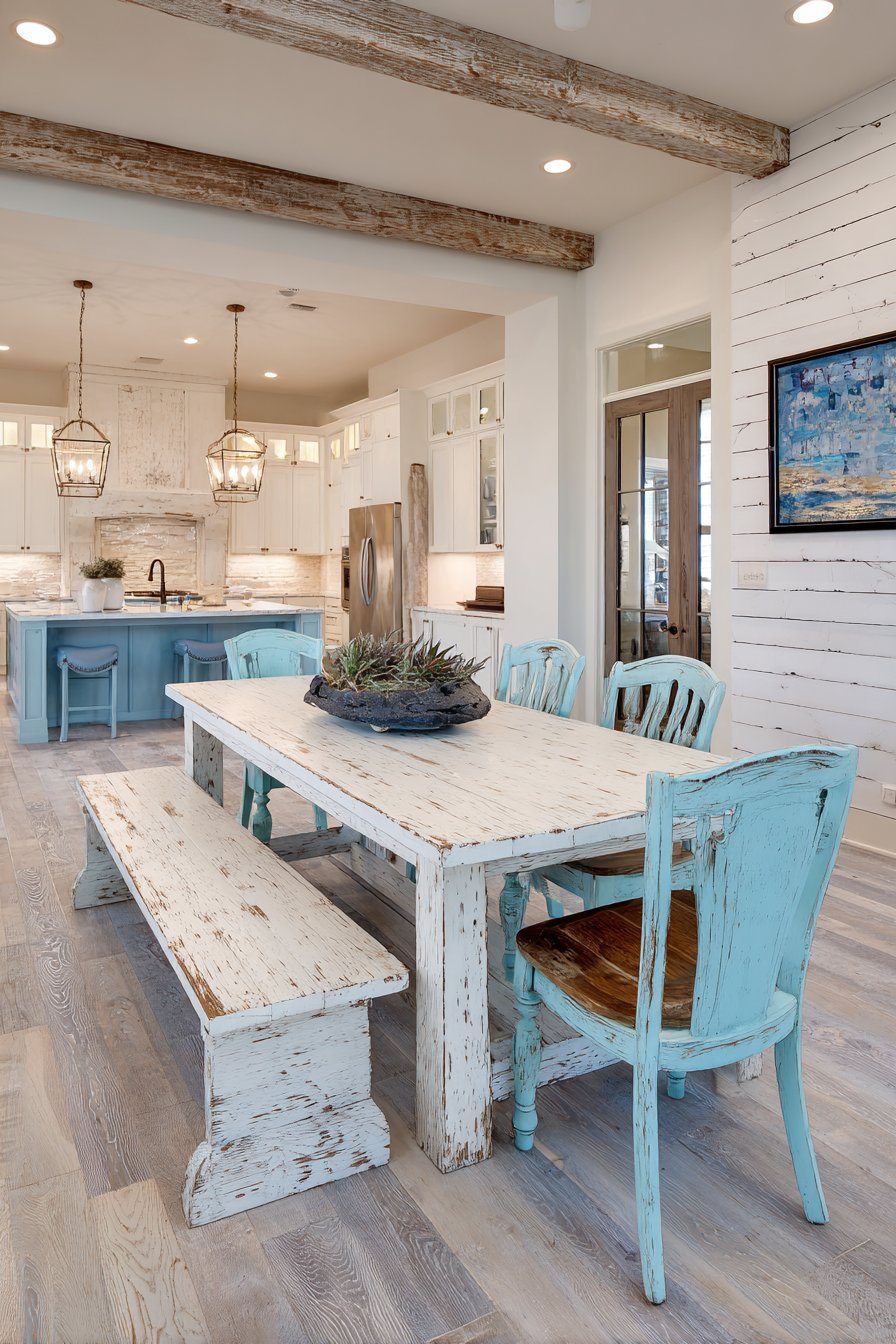
Essential design tips for this look: source chairs from flea markets, estate sales, or vintage shops to achieve authentic variation, paint or distress pieces in complementary colors to unify disparate styles, include at least one bench to add flexibility and reinforce the casual farmhouse vibe, and layer in textiles like table runners and cushions in natural fibers to soften the wood’s hard surfaces.
3. Space-Saving Round Table Solution for Compact Living
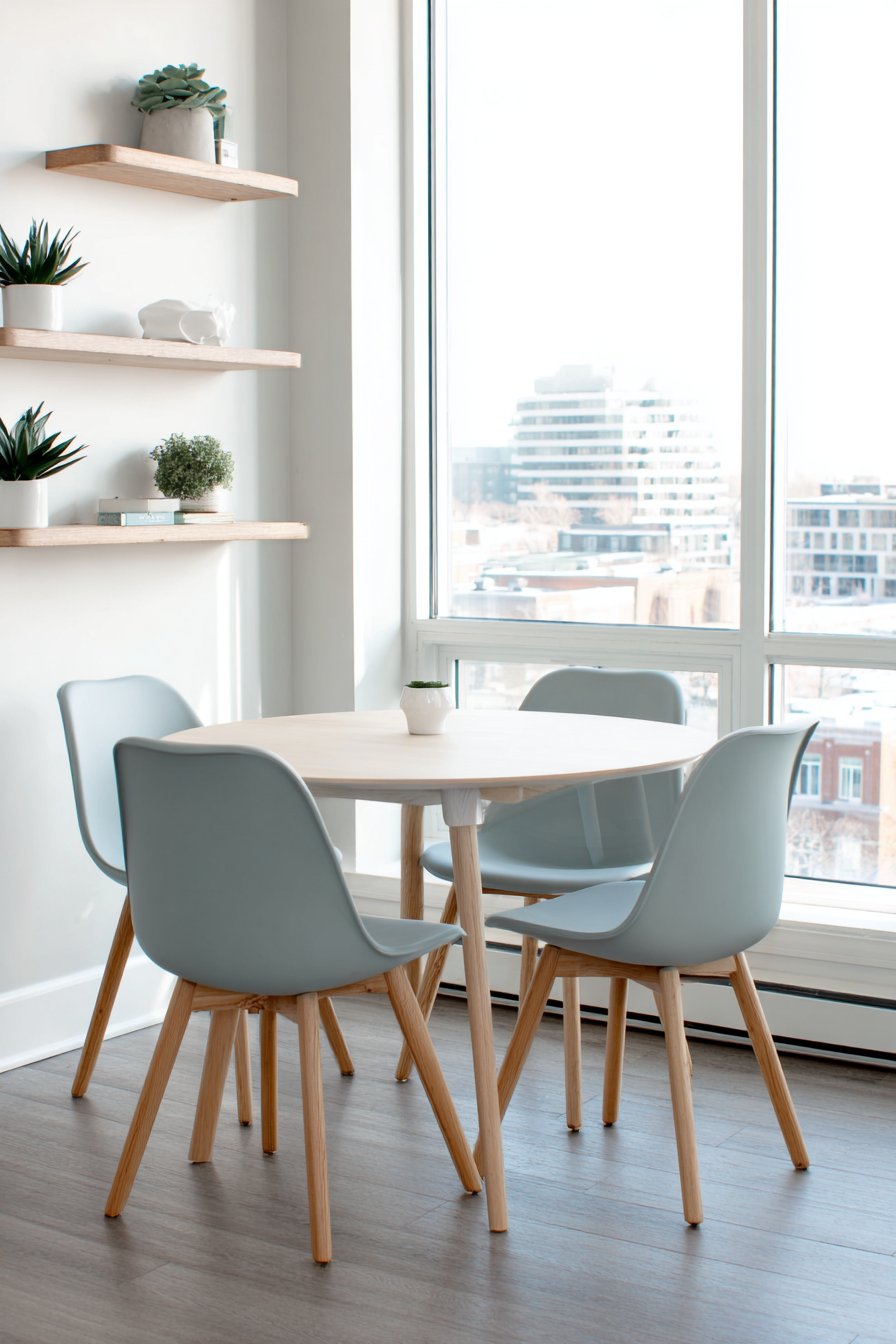
A round pedestal dining table in light oak demonstrates how smart furniture choices maximize functionality in limited square footage. The single central pedestal eliminates corner legs that would impede movement, allowing easier navigation around the table—a crucial consideration in tight quarters. Its circular shape promotes conversation by placing all diners equidistant from the center, creating inherently democratic seating where no one occupies a “head” position. Four sleek molded plastic chairs in muted gray tones tuck neatly beneath the table’s edge when not in use, their streamlined profiles contributing to the room’s uncluttered aesthetic. This compact arrangement fits perfectly in a corner dining nook, making efficient use of often-underutilized space.
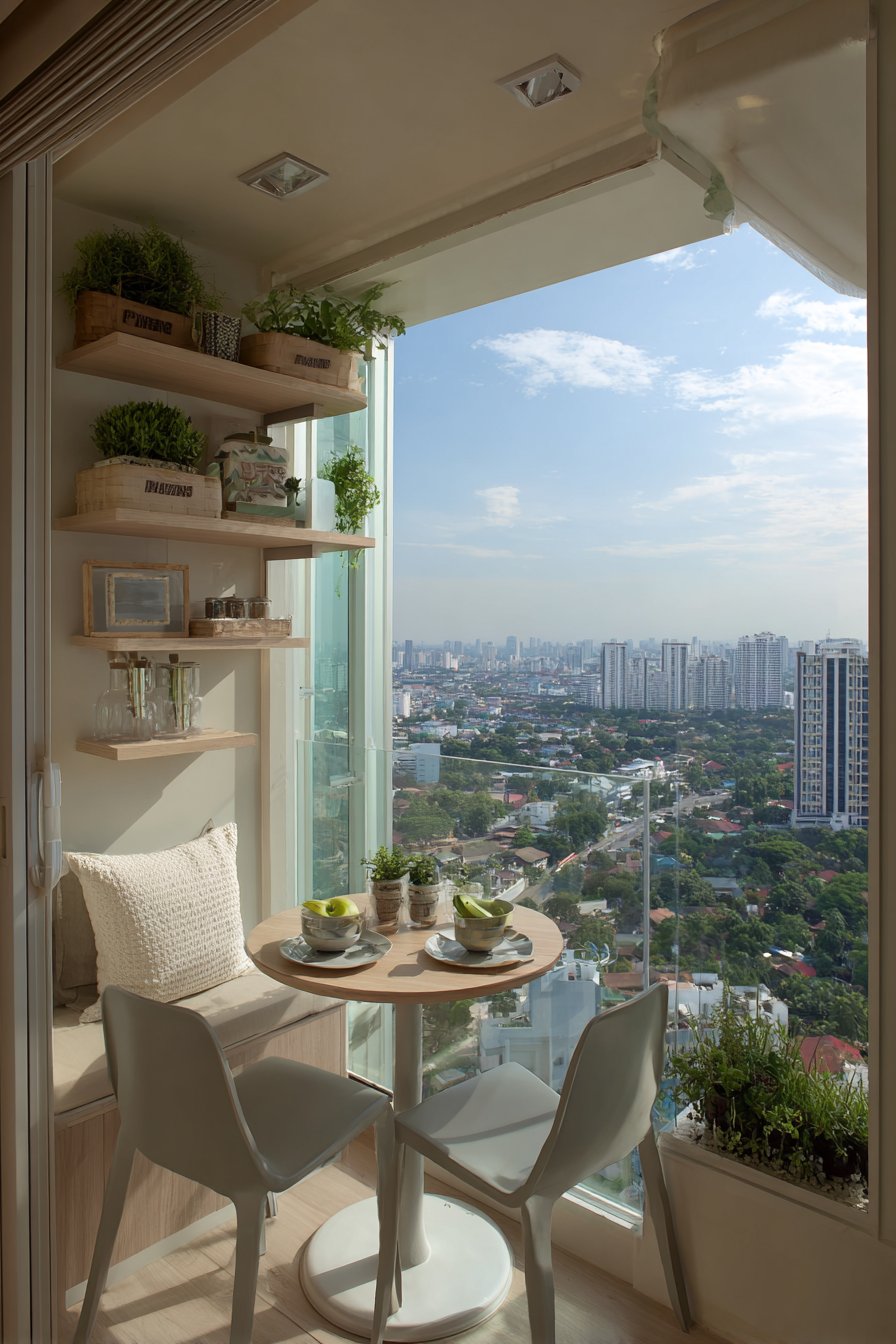
Built-in floating shelves flanking the dining area provide essential storage without consuming valuable floor space. These shelves display minimal décor—perhaps a few ceramic pieces, a small plant, and a curated cookbook collection—maintaining the space’s clean lines while adding personality. The light oak table finish keeps the small room feeling open and bright, reflecting rather than absorbing available light. A large window serves as the space’s greatest asset, flooding the compact dining area with natural illumination that visually expands the room’s boundaries. The strategic placement near this window transforms a potentially cramped corner into an inviting breakfast nook or intimate dinner setting.
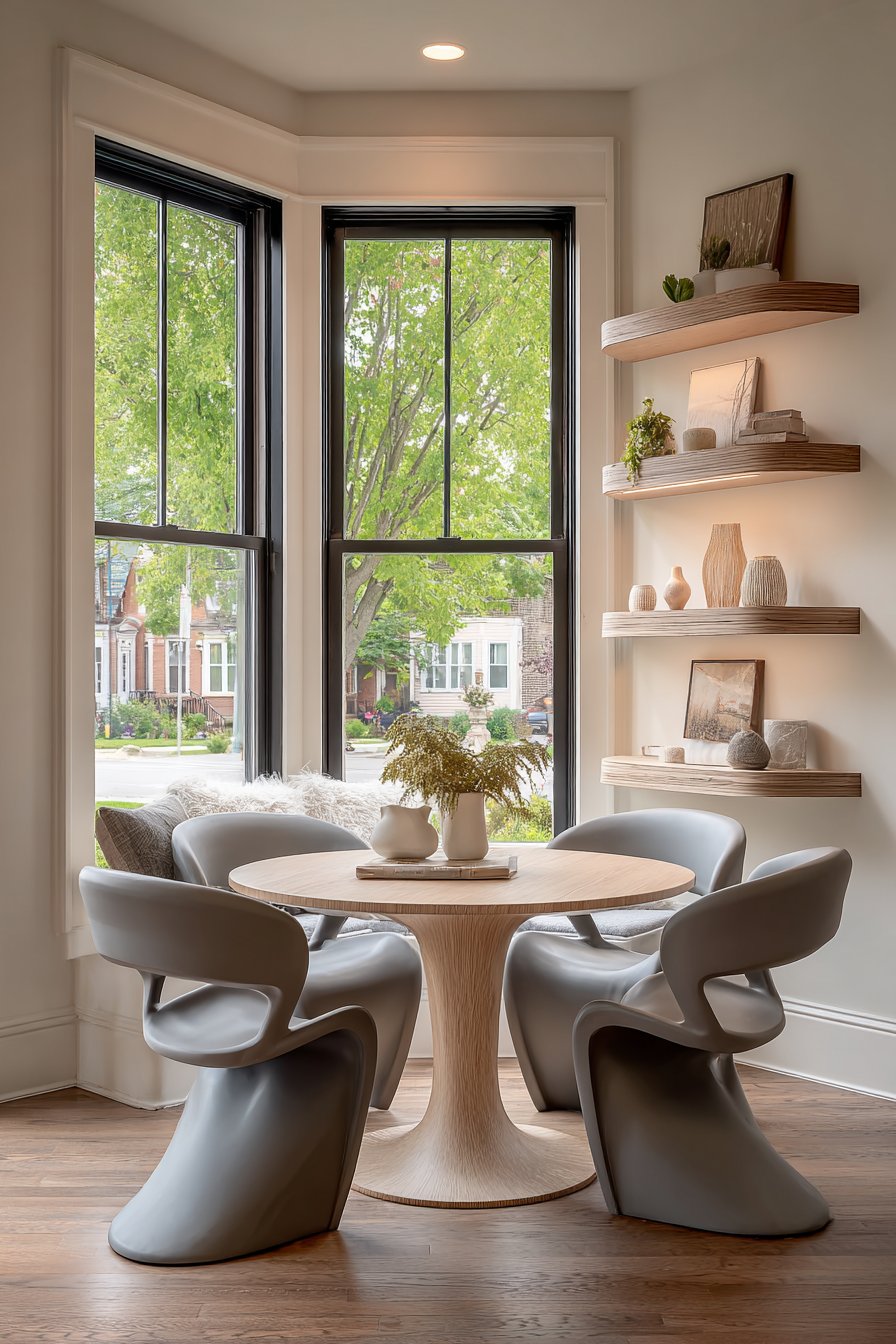
This dining set idea proves that small-space living need not compromise style or functionality. The round table’s versatility extends beyond space efficiency—it works equally well for solo meals, romantic dinners, or small gatherings with friends. The molded chairs, while simple, offer surprising comfort and stack easily for storage when hosting requires floor space for standing guests.
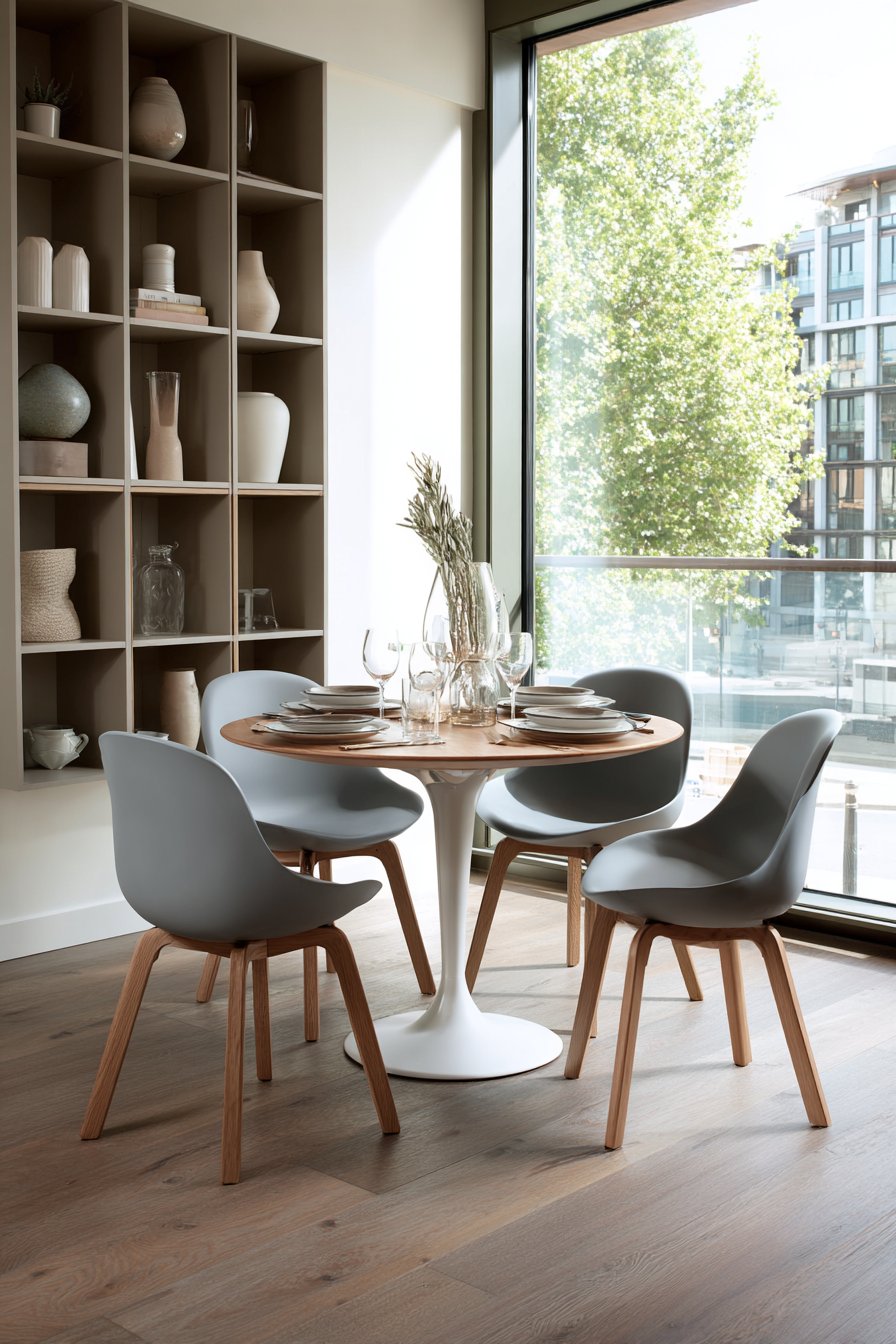
Key considerations for small-space dining sets include: choosing round or oval tables over rectangular ones to maximize seating while minimizing footprint, selecting chairs without arms to allow easier tucking beneath the table, prioritizing light wood finishes and reflective surfaces to enhance brightness in compact areas, and incorporating vertical storage solutions like wall-mounted shelves to keep the floor clear.
4. Sophisticated Glass and Velvet Luxury
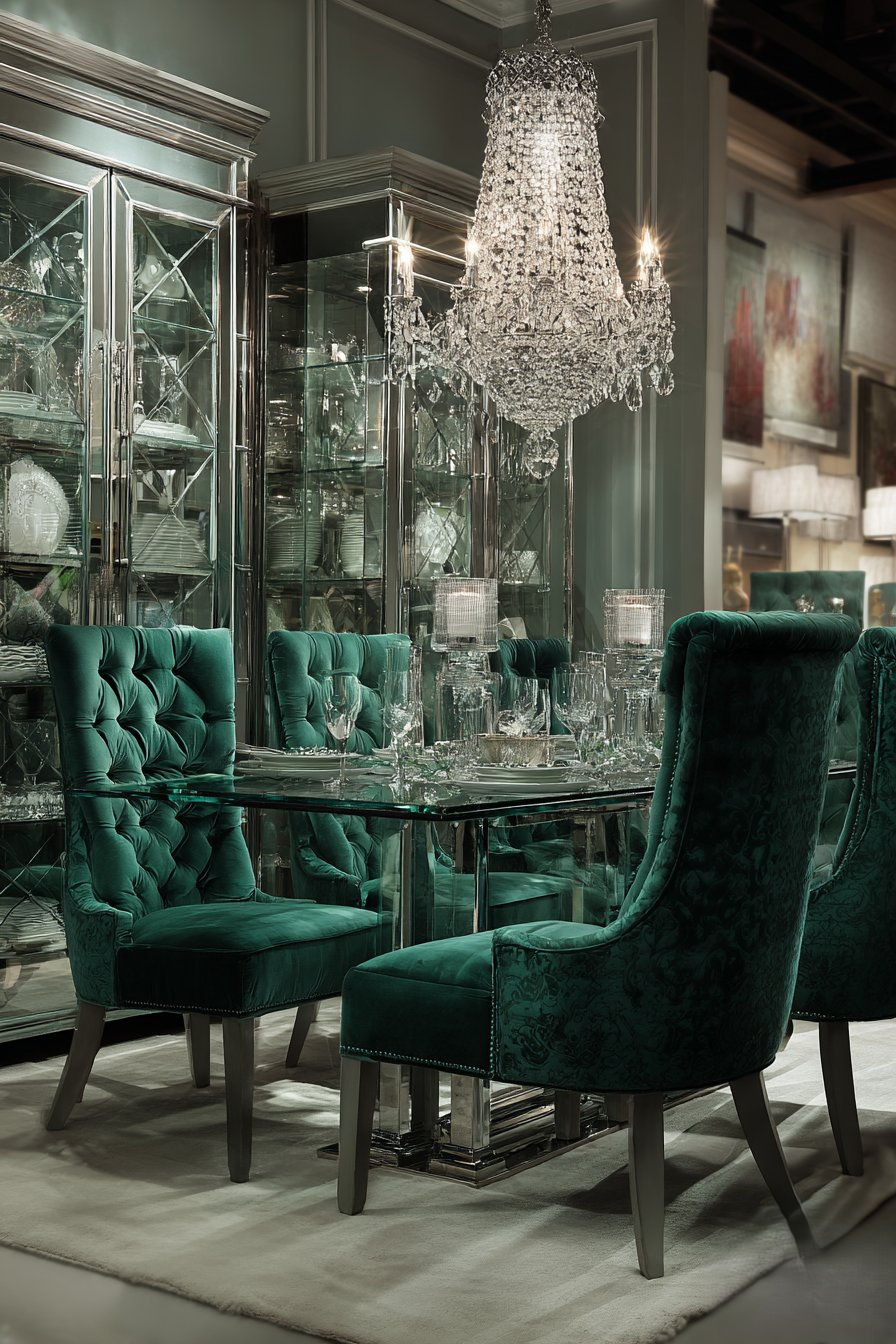
A glass-top dining table with a polished chrome base creates an immediate impression of refined elegance and contemporary sophistication. The transparent surface seemingly floats above its metallic support, creating visual lightness while the chrome reflects surrounding light throughout the space. Eight high-back velvet upholstered dining chairs in deep emerald green provide dramatic contrast—their jewel-tone richness and plush texture transforming the dining experience into something truly luxurious. The tall chair backs create impressive visual height, lending grandeur to the space while providing excellent support during extended dinner parties. This formal dining set occupies a dedicated room featuring architectural details like crown molding that emphasize the space’s traditional elegance.
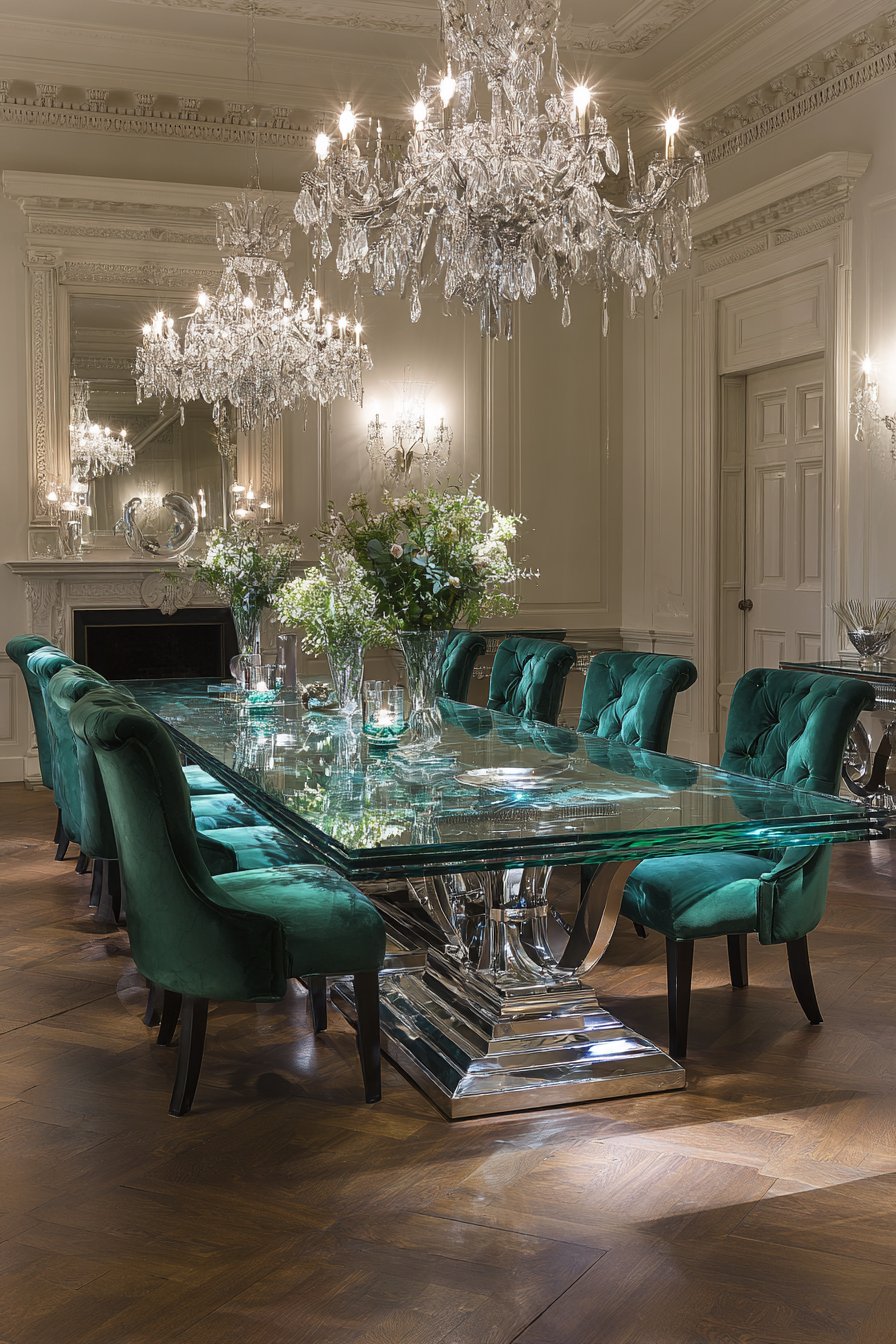
A crystal chandelier suspended overhead serves as both light source and sculptural centerpiece, its faceted drops catching and dispersing light in captivating patterns across the glass table surface. The interplay between the chandelier’s sparkle, the chrome base’s reflection, and the velvet’s depth creates layered visual interest that rewards closer inspection. Soft diffused lighting from dimmer-controlled sources creates subtle reflections on the glass surface without producing harsh glare—a crucial consideration when designing around reflective materials. The emerald chairs’ saturated color provides necessary visual weight, grounding the ethereal quality of the floating glass top.
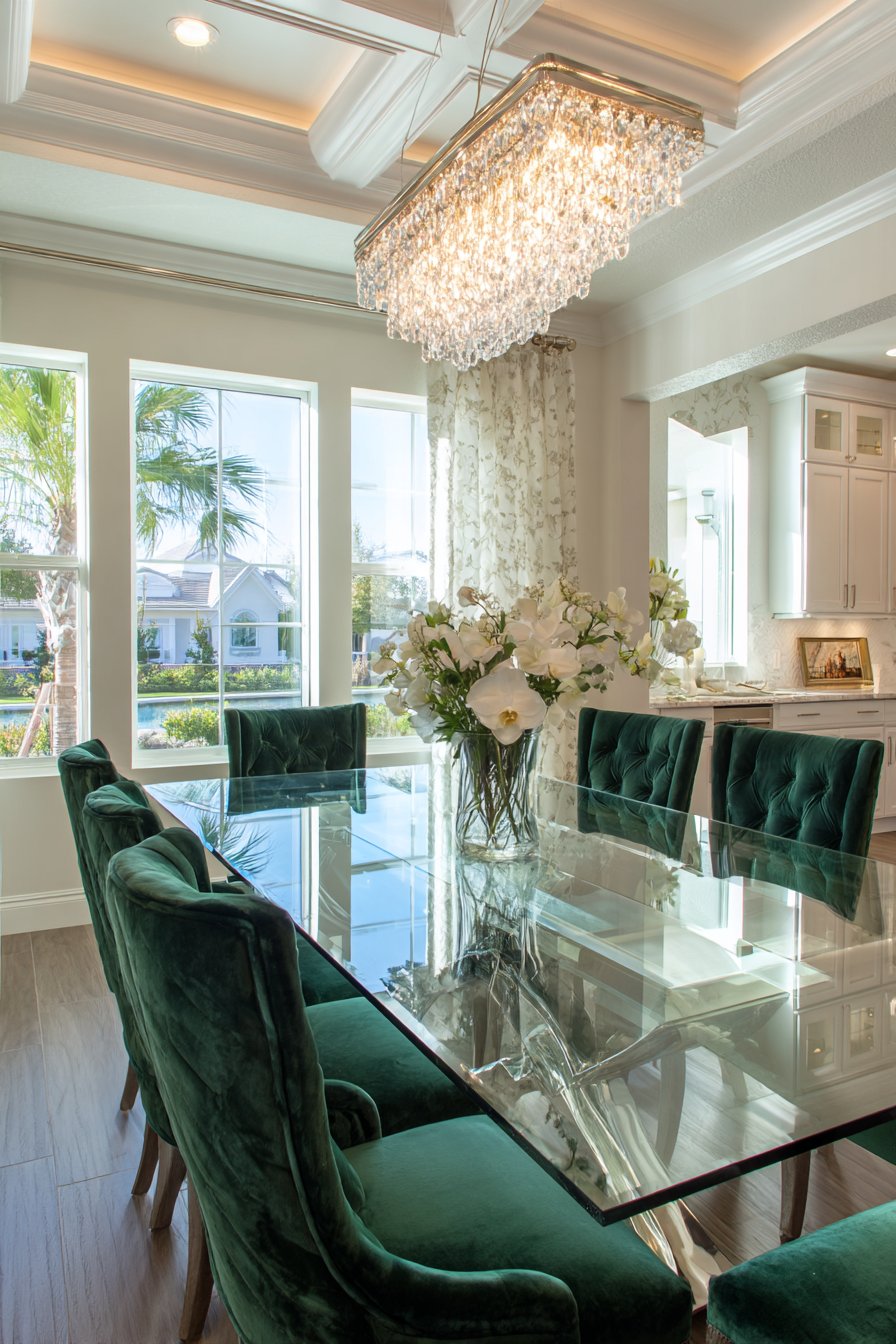
This dining set idea suits homeowners seeking to make a bold statement while maintaining sophisticated restraint. The glass table’s transparency prevents the large dining set from overwhelming even generously proportioned rooms, while the emerald chairs inject personality and contemporary color sensibility into traditional formal dining architecture. The combination works particularly well in homes with neutral wall colors, where the rich green becomes a striking accent that draws the eye without competing with other design elements.
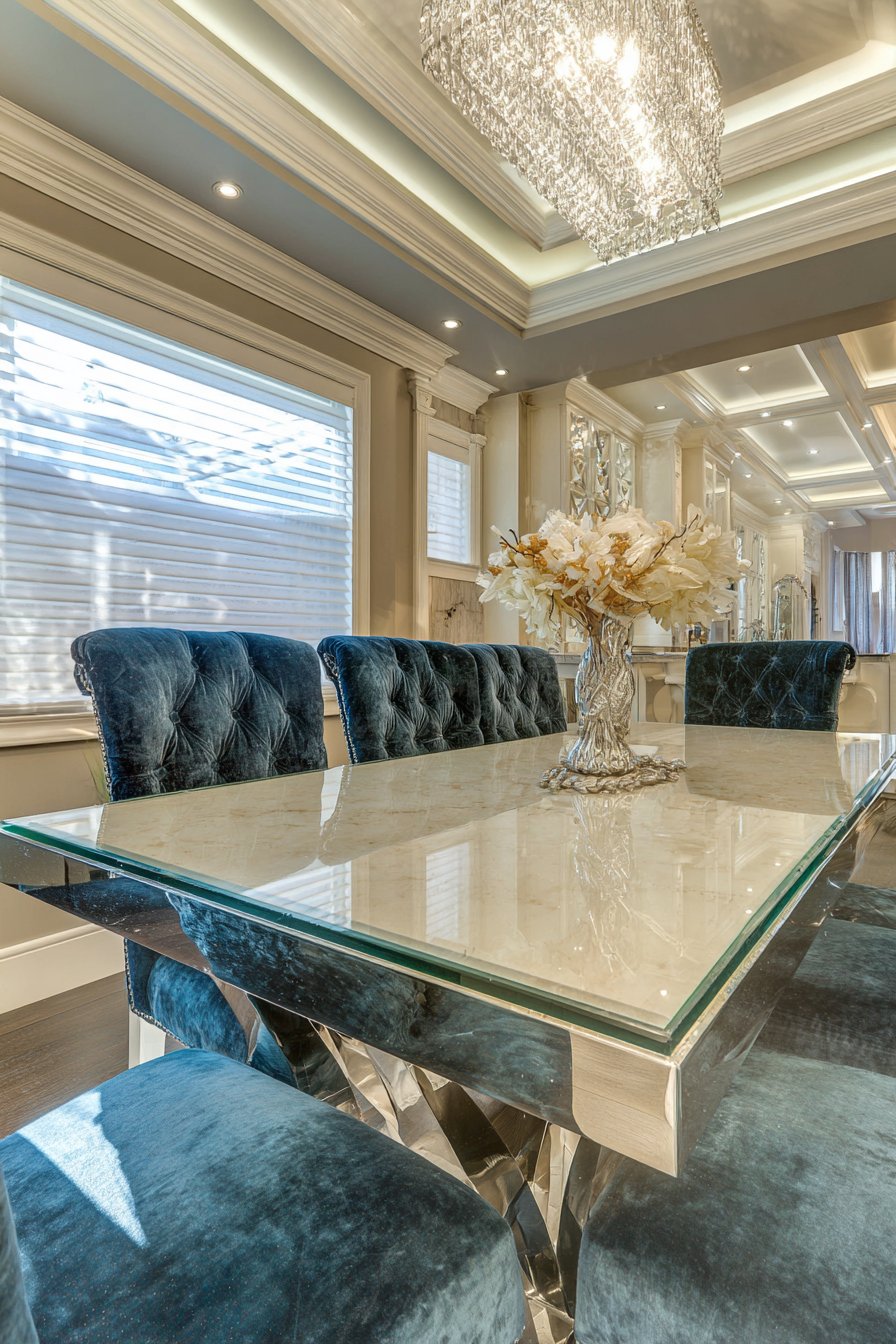
Design principles for luxurious glass dining sets: ensure the glass is appropriately thick (minimum 10-12mm) for both safety and substantial feel, choose upholstery in rich, saturated colors that provide visual weight to balance the table’s transparency, incorporate dramatic lighting fixtures that create beautiful reflections without producing uncomfortable glare, and maintain meticulous cleaning routines as glass surfaces show fingerprints and smudges more readily than opaque materials.
5. Scandinavian Minimalism in Natural White Oak
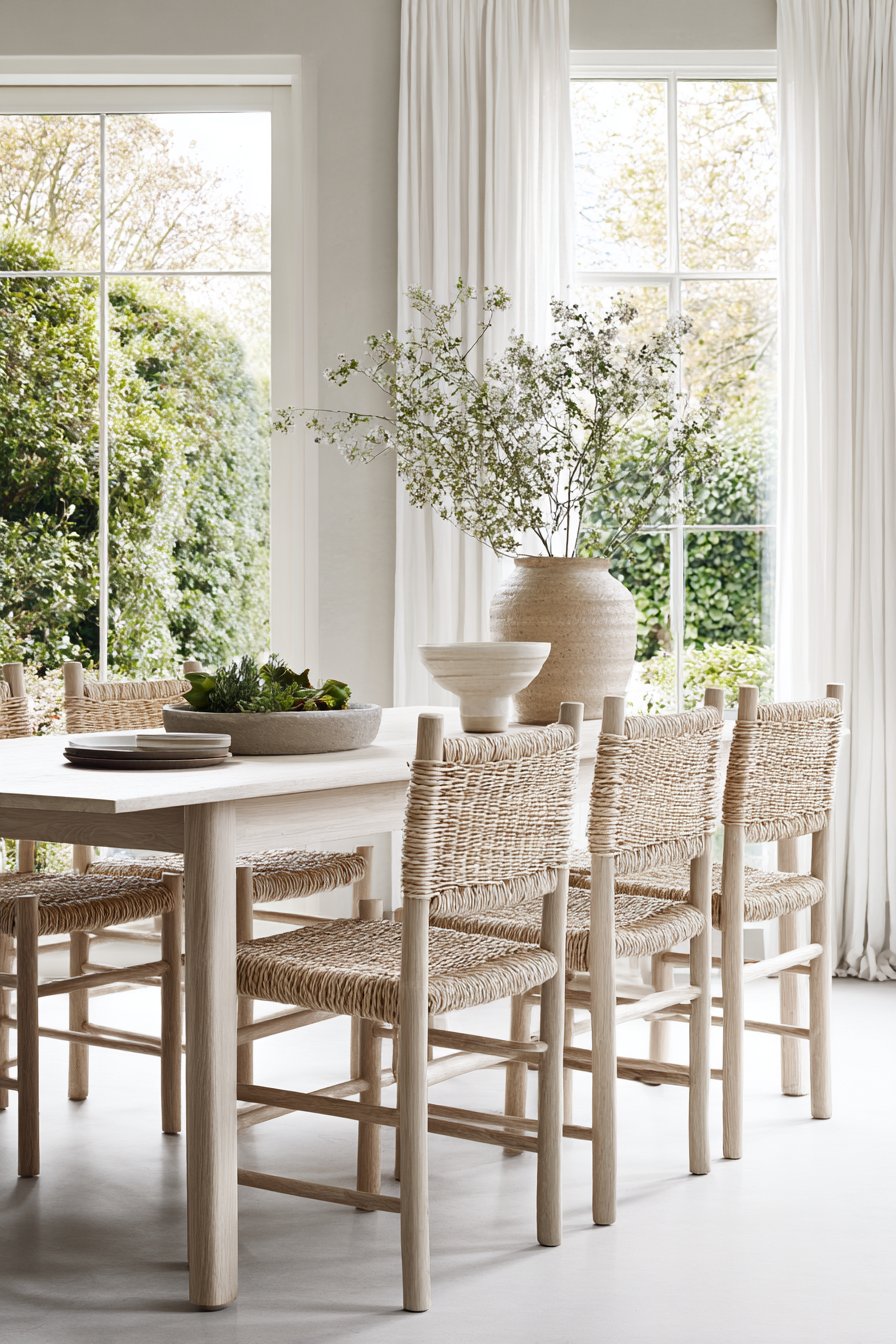
A minimalist white oak dining table embodies Scandinavian design philosophy through its clean lines, tapered legs, and honest material expression. The pale wood’s subtle grain patterns provide visual interest without ornamentation, celebrating the material’s inherent beauty rather than concealing it beneath stains or paint. Six ladder-back dining chairs in matching natural wood finish surround the table, their traditional form refined to essential elements—vertical slats forming the back, woven rush seats offering textured contrast, and gently tapered legs providing sturdy support. This dining set arrangement occupies a bright, airy space characterized by light gray walls that create a serene backdrop without stark white’s potential coldness.
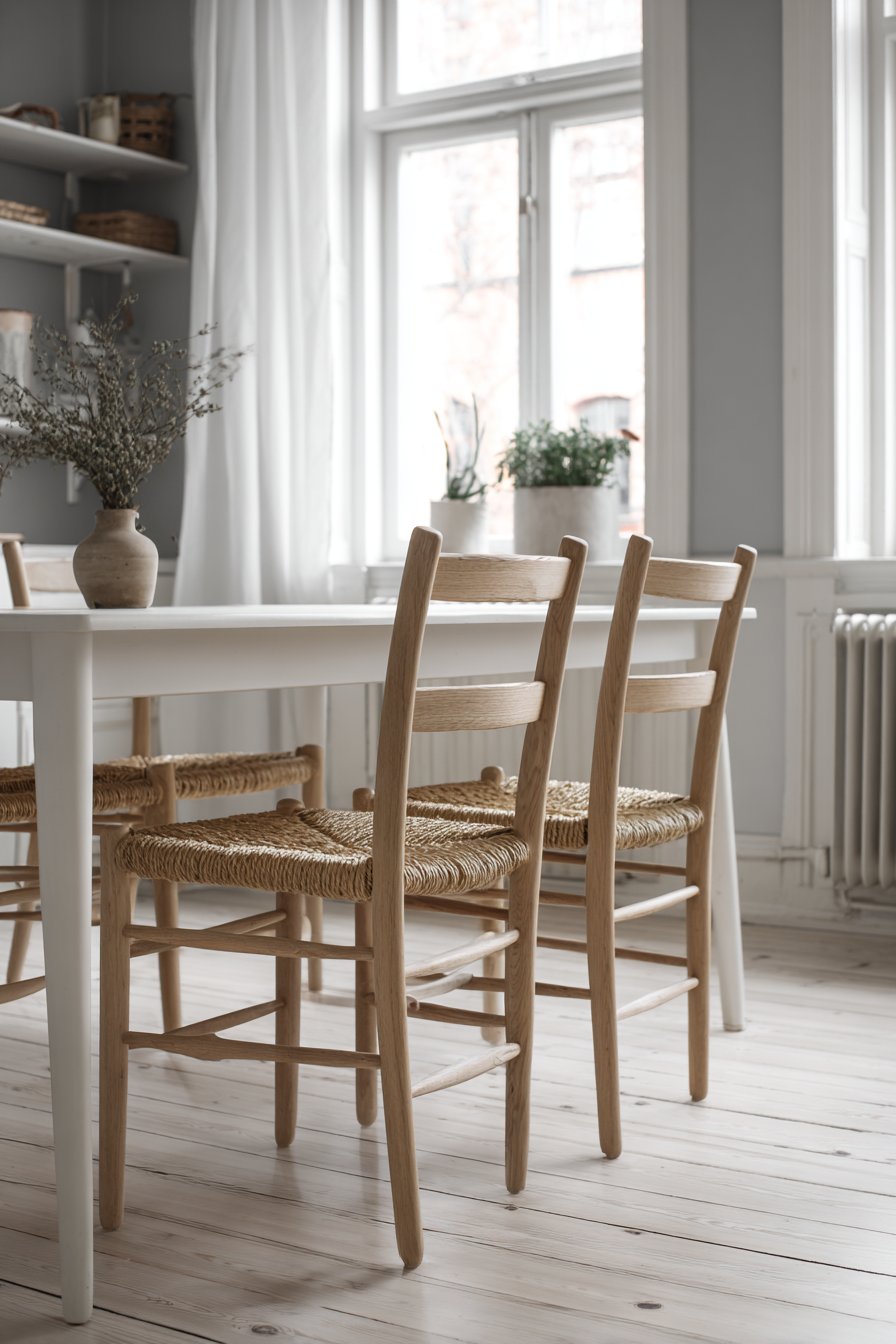
Large windows dressed in sheer white curtains flood the dining area with abundant natural light, a cornerstone of Nordic design that compensates for Scandinavia’s long winter darkness. The gossamer fabric filters harsh midday sun while maintaining the room’s connection to the outdoors—a principle known as “friluftsliv” or open-air living that permeates Scandinavian culture. The overall palette remains remarkably restrained, with variations of white, gray, and natural wood creating a cohesive environment that feels calming rather than austere. Functionality guides every design decision, from the chairs’ comfortable woven seats to the table’s unadorned rectangular shape that accommodates everyday meals and special gatherings with equal grace.
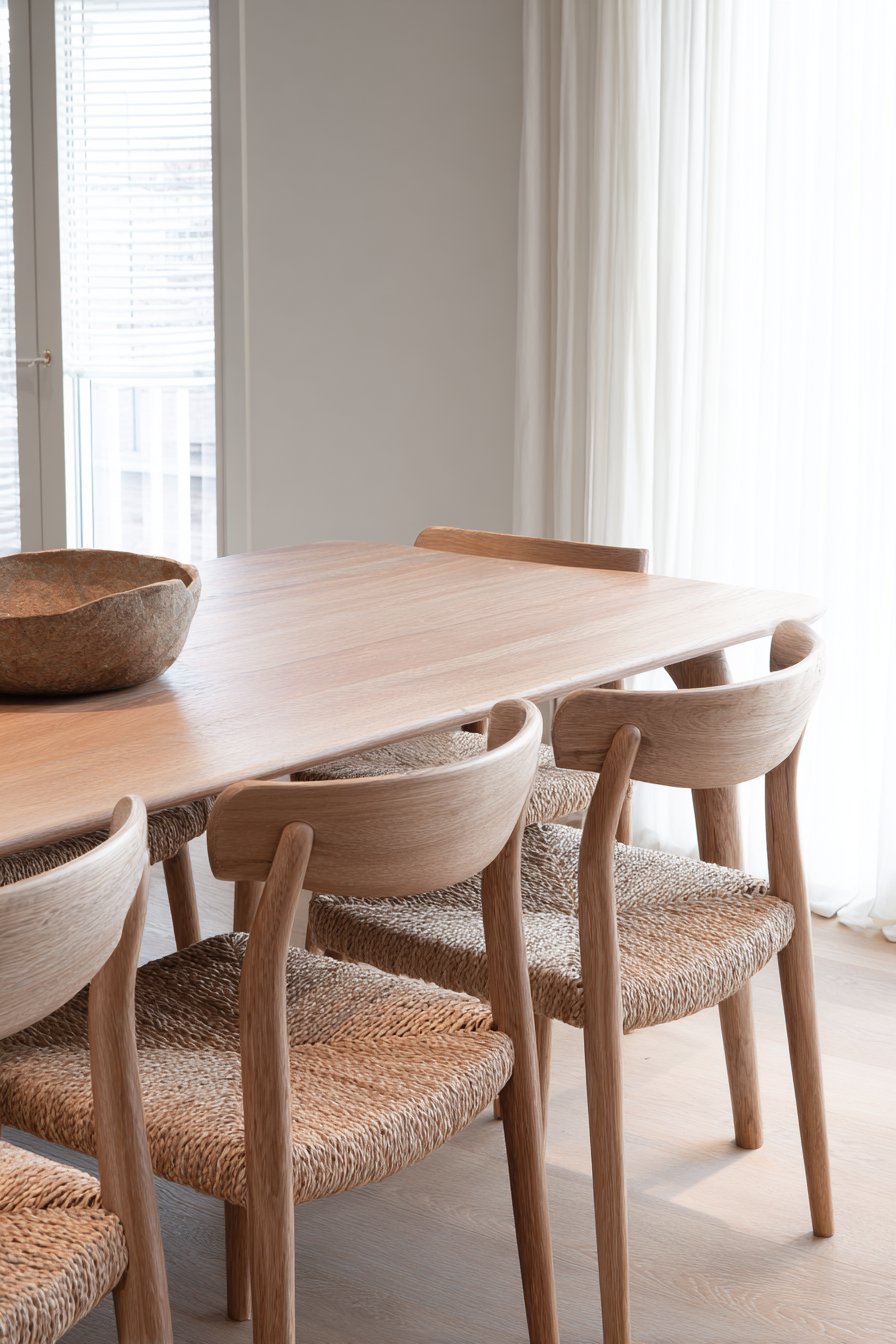
This dining set idea demonstrates how restraint creates rooms that feel larger, calmer, and more intentional than their cluttered counterparts. The Scandinavian approach prioritizes quality over quantity—fewer, better-chosen pieces that serve their purposes beautifully for years. The natural materials age gracefully, developing patinas that add character without compromising structural integrity. The space invites lingering over meals, conversation flowing as easily as the natural light that defines the environment throughout the day.
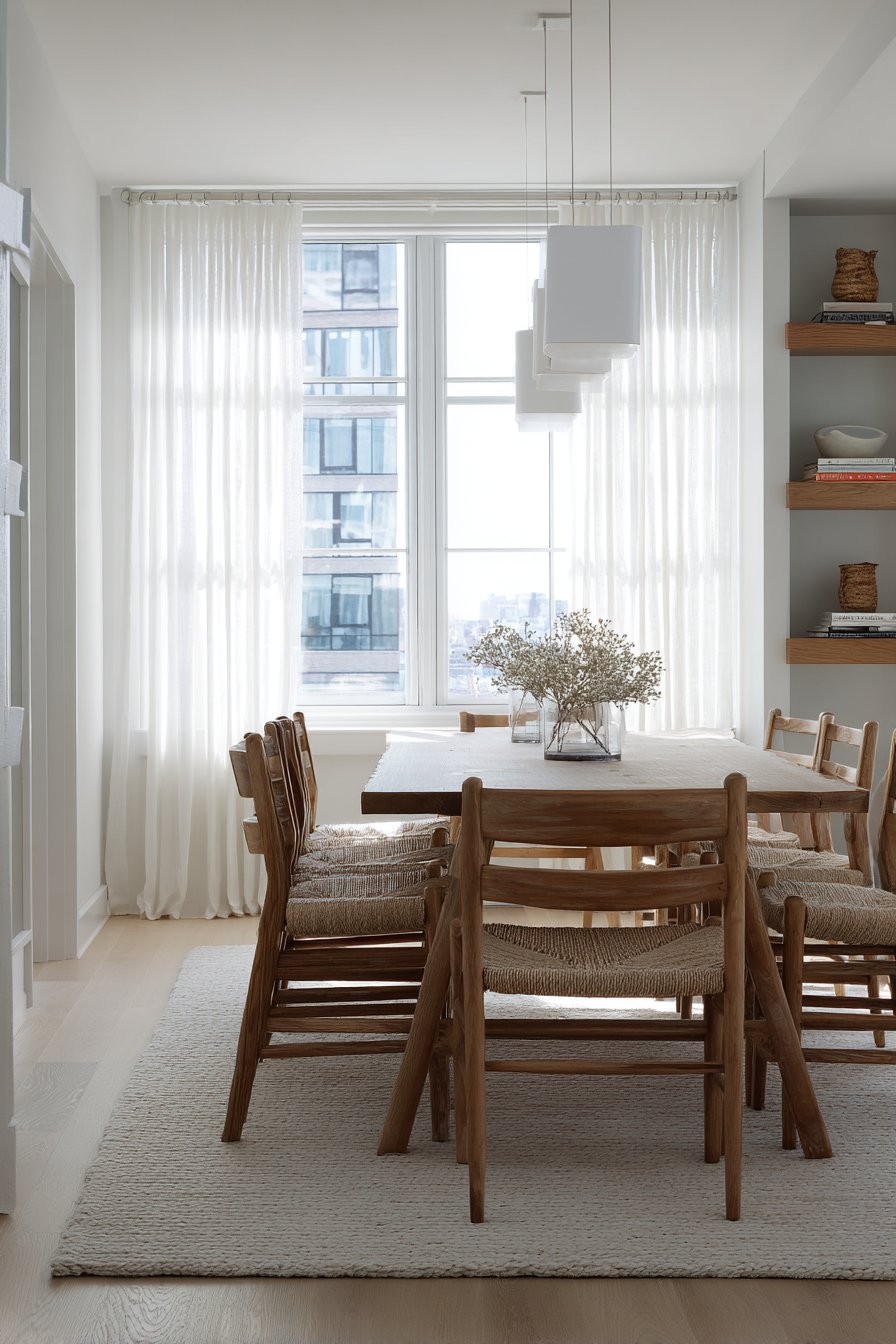
Essential elements of Scandinavian dining design: select furniture with clean lines and minimal ornamentation to maintain visual clarity, choose natural materials like wood and linen that improve with age, maximize natural light through strategic window placement and minimal window treatments, keep color palettes neutral with occasional subtle color accents in accessories like textiles or ceramics.
6. Industrial Edge with Reclaimed Materials
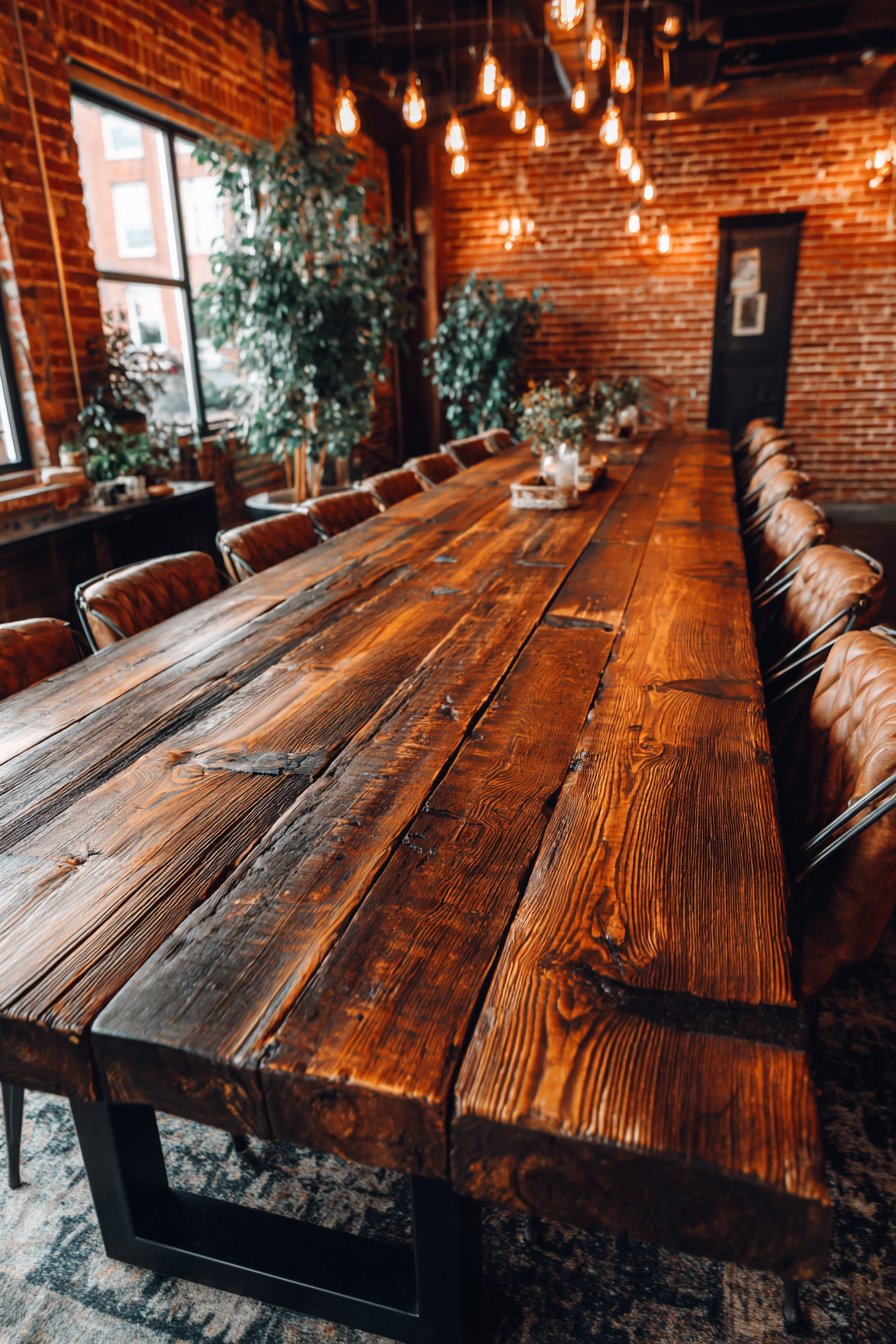
A reclaimed wood dining table with a thick planked top and black metal hairpin legs creates the quintessential industrial aesthetic that celebrates raw materials and functional design. The salvaged wood’s history remains visible in varied plank widths, nail holes, saw marks, and color variations ranging from weathered gray to warm honey tones. This authentic patina cannot be replicated through artificial distressing—it comes only from years of actual use. Black metal dining chairs with distressed finishes and minimally padded seats continue the utilitarian theme, their straightforward construction emphasizing function over embellishment. The chairs’ slight variations in wear patterns reinforce the collected, unprecious quality that defines successful industrial spaces.
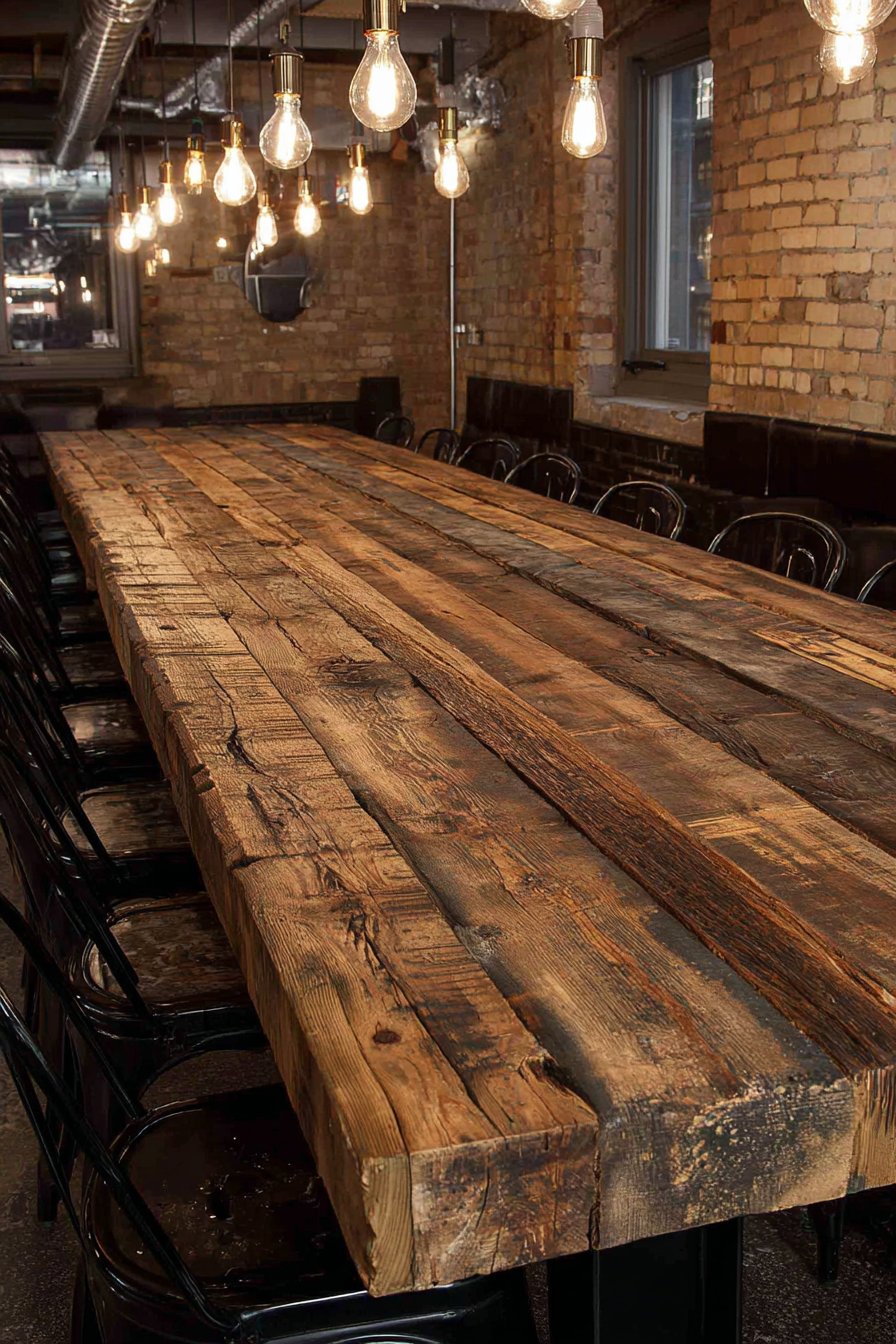
An exposed brick wall serves as the perfect backdrop for this industrial dining set, its rough texture and earthy red-brown tones providing warmth against the metal’s coolness. Edison bulb pendant lights hang at varied heights above the table, their visible filaments and amber glow creating ambient lighting that feels both vintage and contemporary. The asymmetrical arrangement of pendants adds visual interest while providing practical task lighting across the table’s length. Professional interior photography captures how dramatic side lighting emphasizes the wood’s dimensional texture and creates deep shadows that accentuate the space’s moody, masculine character.
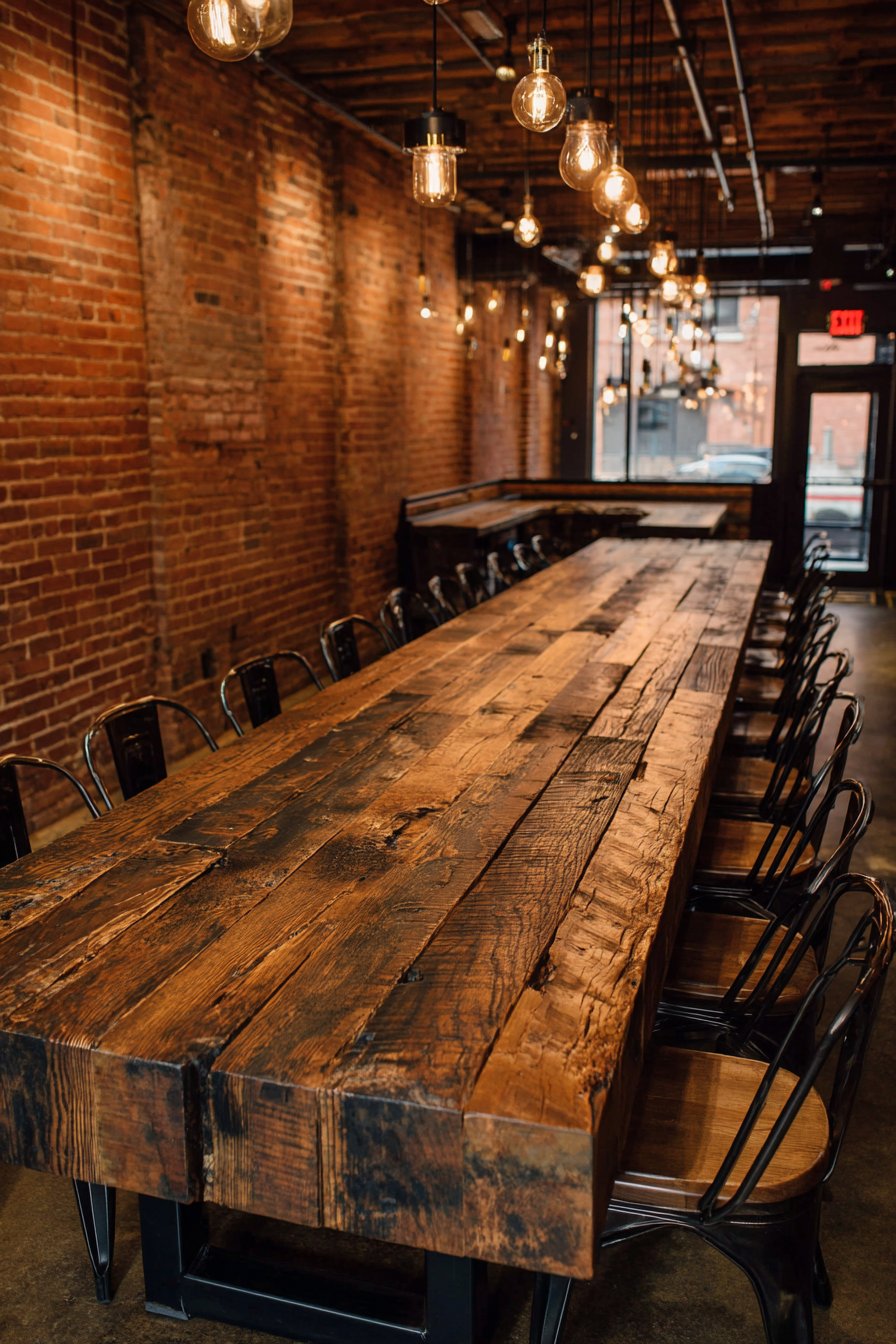
This dining set idea appeals to urban loft dwellers and anyone drawn to honest materials and stripped-down aesthetics. The industrial style’s beauty lies in celebrating what other styles conceal—construction elements, raw materials, and utilitarian objects become design features. The heavy planked table provides substantial presence and remarkable durability, easily withstanding the wear and tear of daily family life. Metal chairs, while less comfortable for extended seating than upholstered options, stack efficiently and withstand rough treatment.
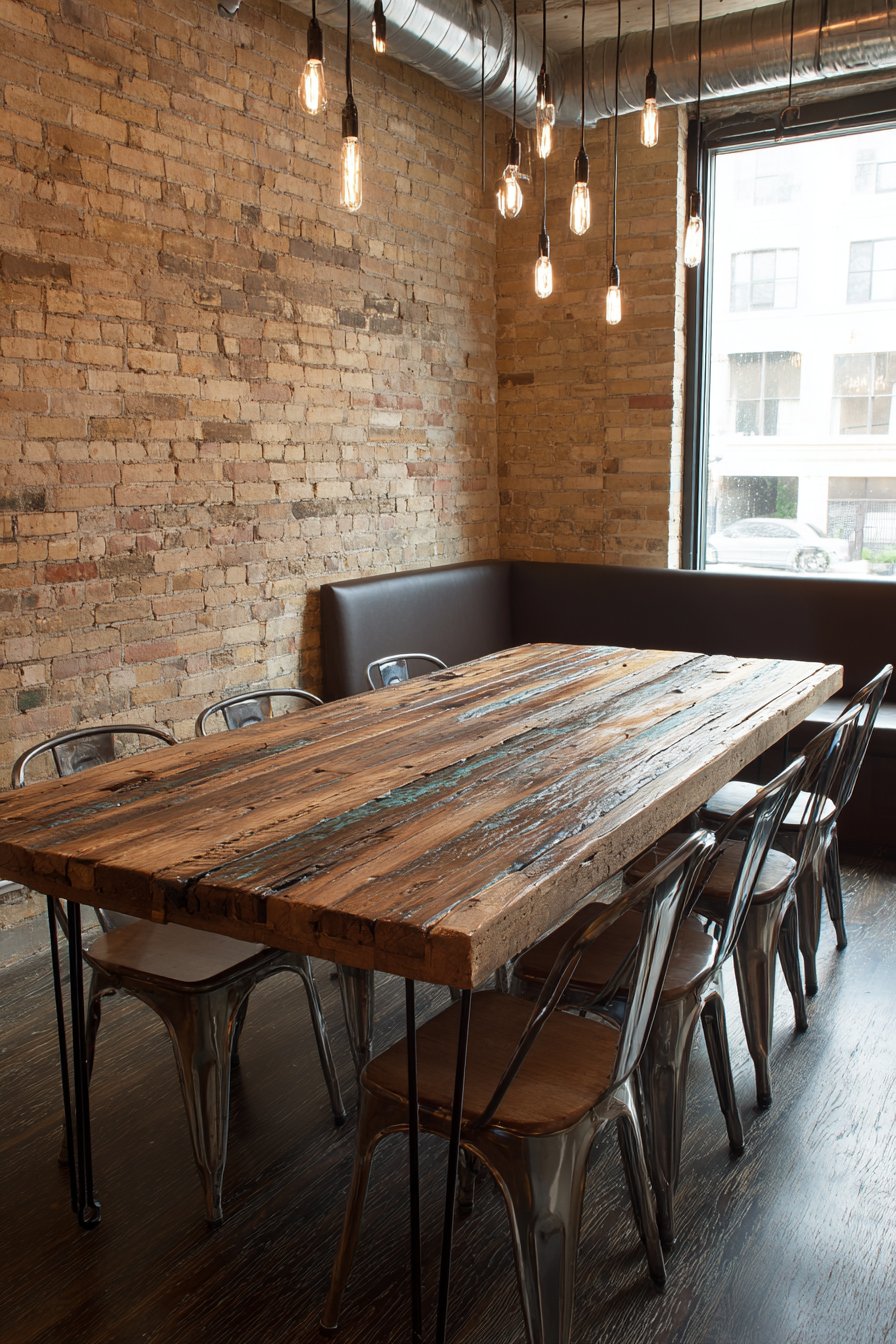
Key strategies for industrial dining spaces: source authentic reclaimed materials rather than new wood made to look old, embrace metal elements in furniture, lighting, and architectural details, expose structural elements like brick, concrete, or ductwork to reinforce the aesthetic, balance hard surfaces with strategic soft elements like area rugs or cushions to improve acoustics and comfort.
7. Coastal Calm with Weathered Wood and Windsor Chairs
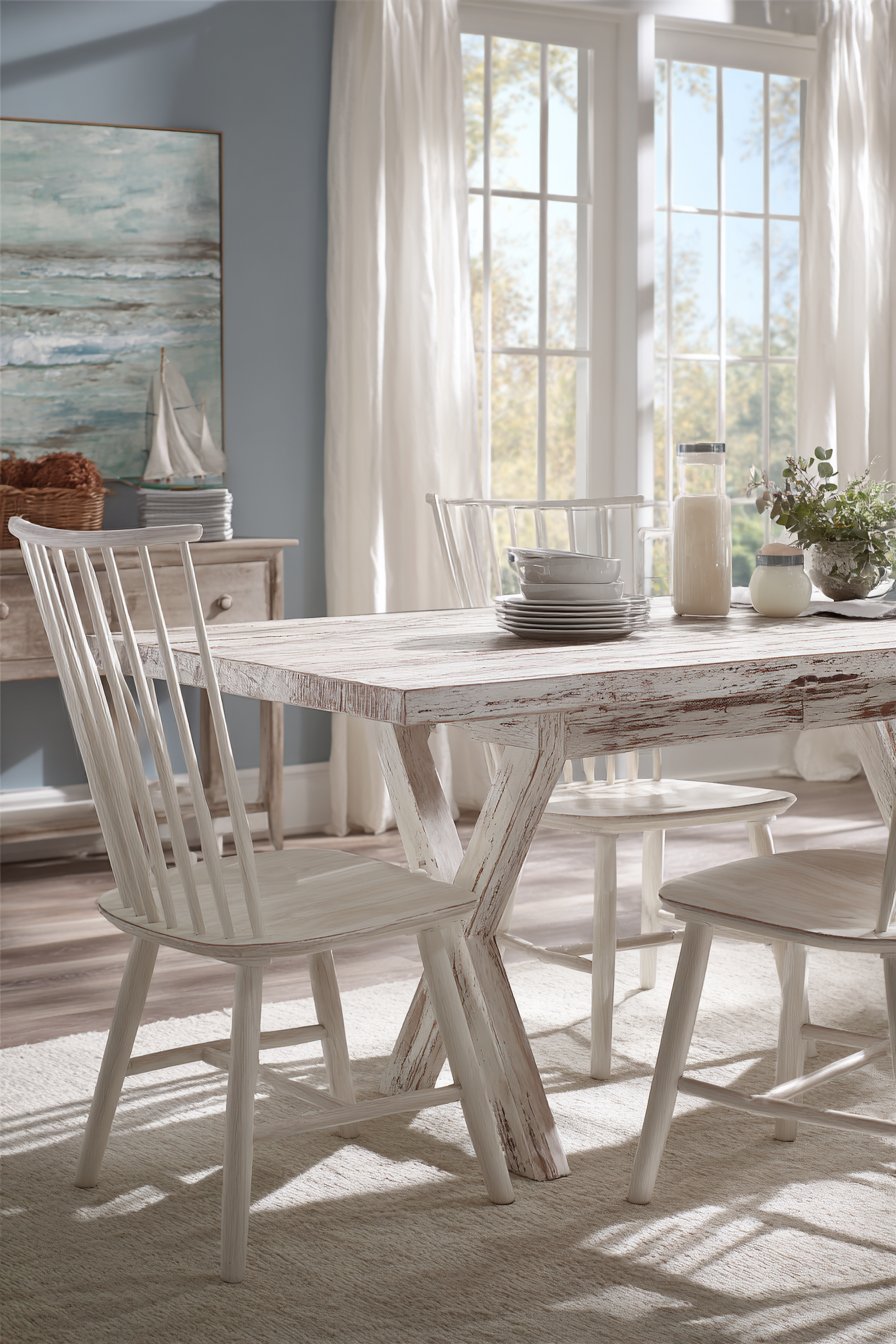
A weathered driftwood-finish dining table with plank-style construction evokes windswept beaches and relaxed coastal living. The pale, sun-bleached appearance suggests wood naturally weathered by salt air and ocean spray, creating furniture that feels organically connected to seaside environments. White-washed Windsor chairs with traditional spindle backs surround this table, their classic form refined through coastal color treatment. The chairs’ white finish creates pleasing contrast against the table’s gray-toned wood while maintaining the overall light, airy palette essential to coastal design. Together, these pieces create a dining set that feels simultaneously casual and refined—appropriate for barefoot brunches and elegant dinner parties alike.
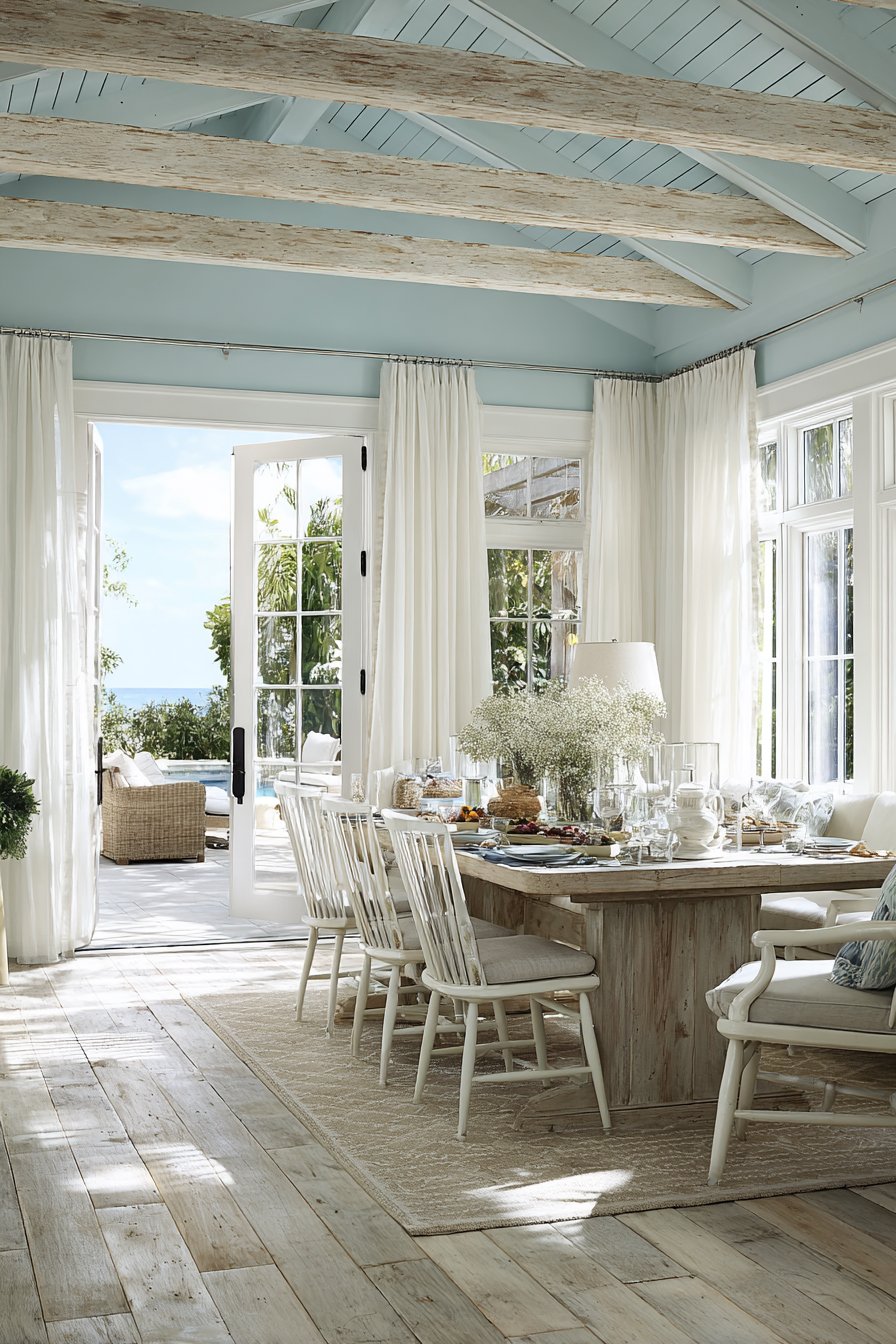
The dining space embraces coastal design principles through a soft blue-gray accent wall that suggests fog-shrouded mornings or distant horizons where sea meets sky. Nautical-inspired décor elements appear sparingly—perhaps a rope-wrapped vase, coral specimens in glass cloches, or framed vintage maritime charts—providing thematic reinforcement without descending into literal interpretation. Natural light floods through windows dressed with flowing white linen curtains that billow gently with ocean breezes, their movement adding life to the serene space. The overall effect creates a dining environment that embodies the relaxed elegance of upscale beach house living.
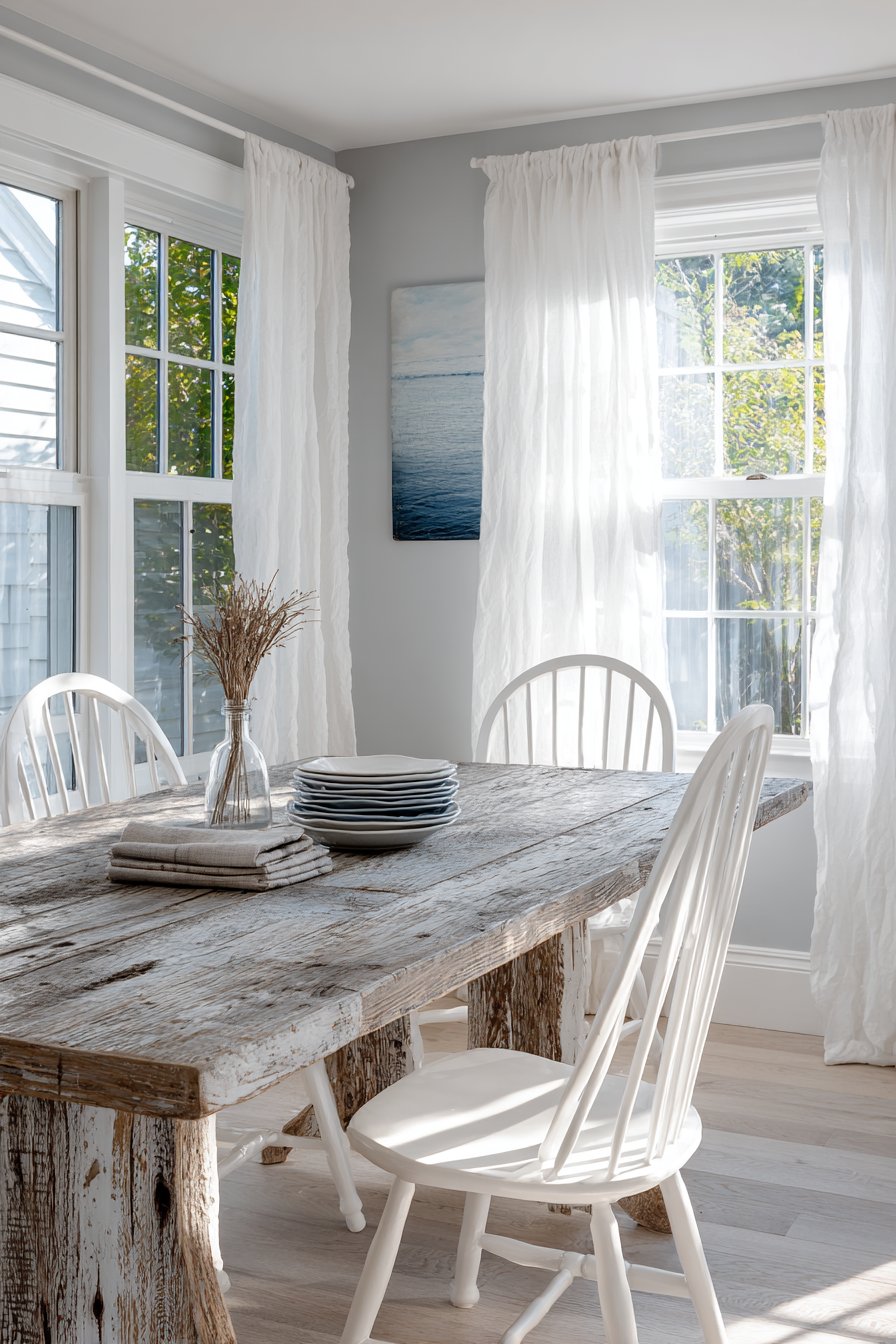
This dining set idea works beautifully in actual coastal homes and inland spaces seeking to capture seaside serenity. The weathered wood finish disguises minor damage and wear, making it particularly practical for homes with children or sandy pets tracking through from beach outings. Windsor chairs, despite their traditional form, offer surprising comfort and timeless style that transcends passing trends. The coastal palette’s neutrality provides excellent backdrop for seasonal décor changes—swap blue accessories for coral in summer, incorporate amber glass in autumn, add evergreen touches in winter.
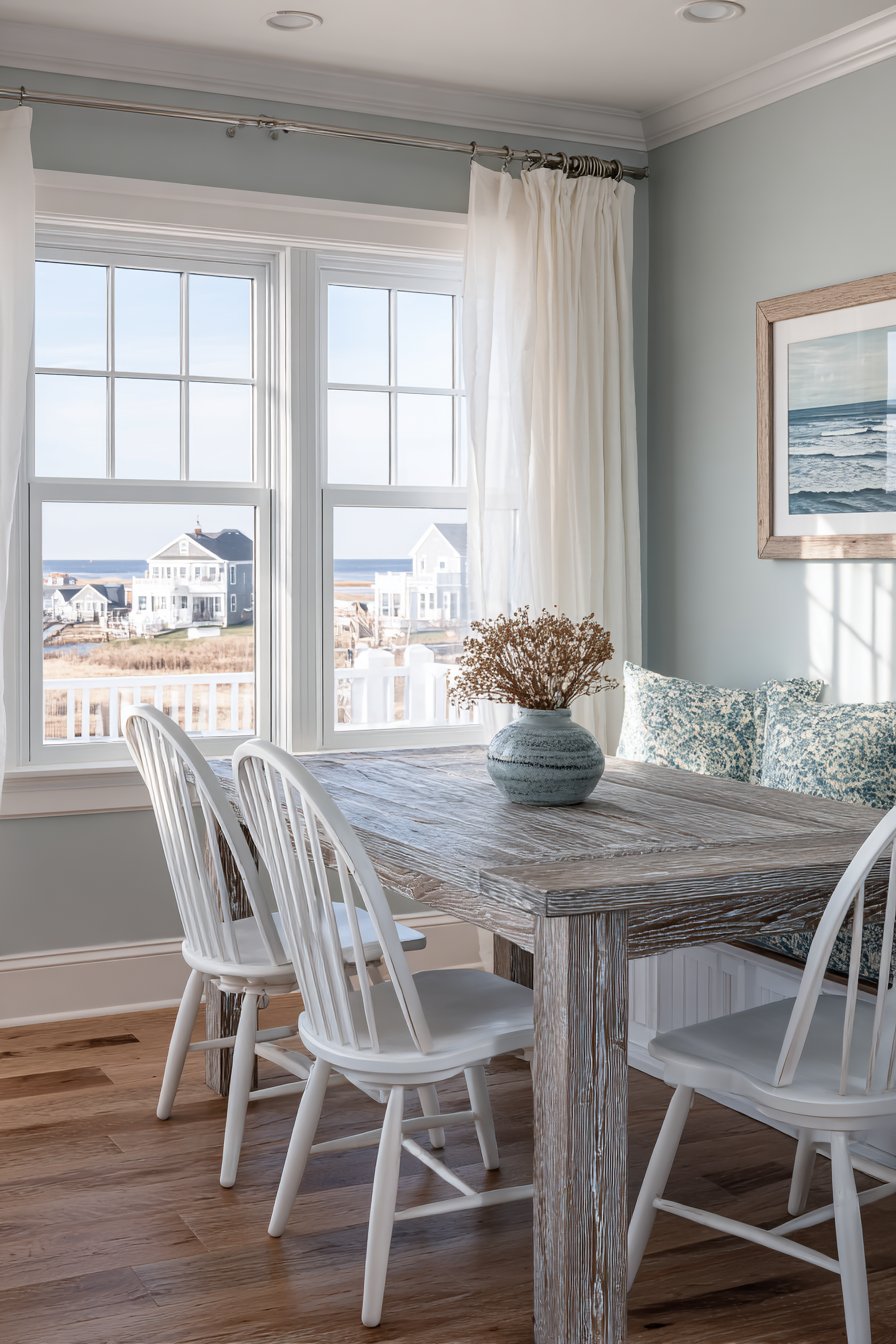
Design essentials for coastal dining spaces: choose furniture finishes in weathered whites, soft grays, and bleached wood tones that suggest natural weathering, incorporate natural textures like jute, linen, and sisal through rugs and textiles, maintain predominantly neutral palettes with blue-green accents inspired by ocean colors, select simple window treatments that maximize natural light and emphasize the indoor-outdoor connection.
8. Contemporary Glamour with Marble and Gold
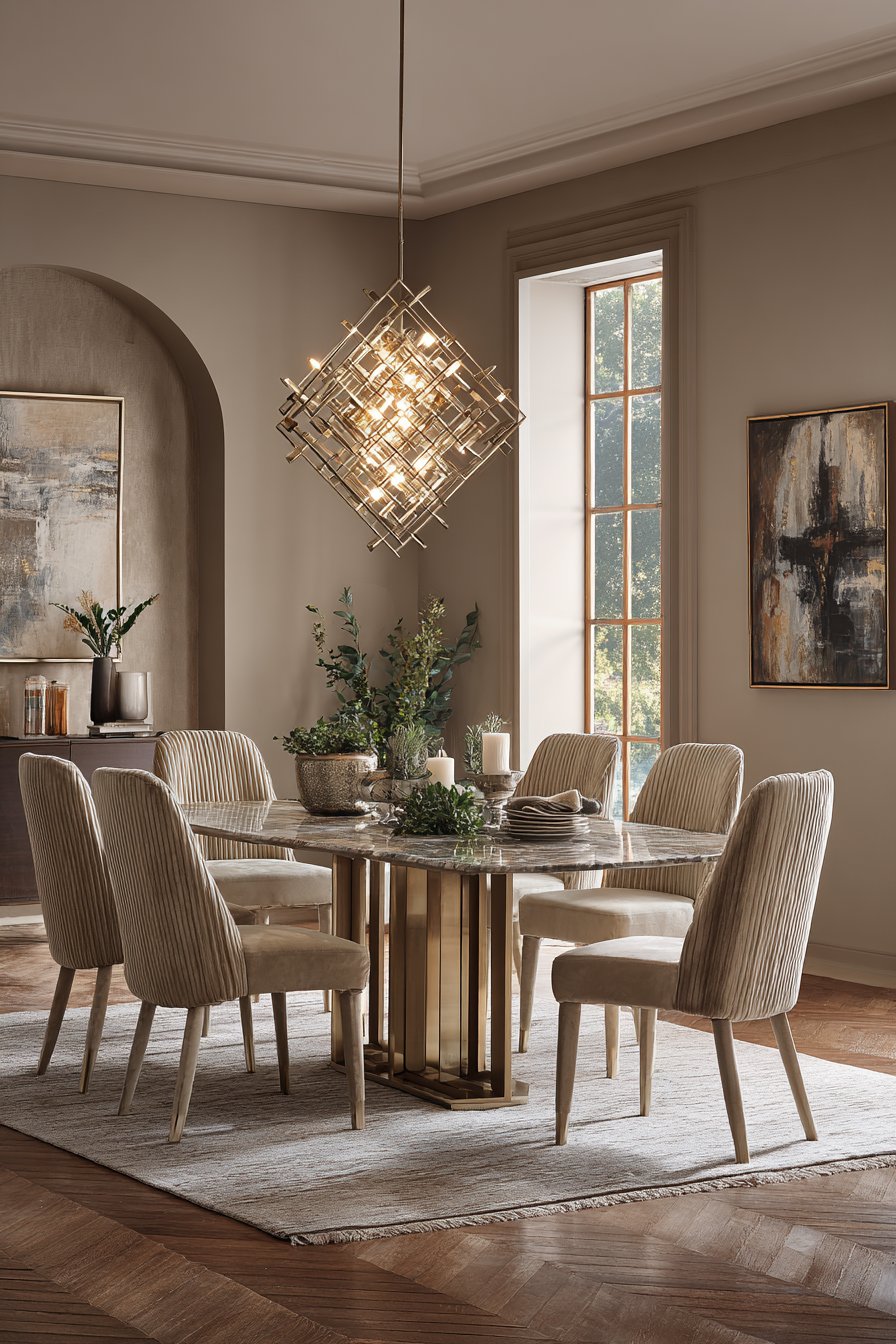
A marble-top dining table featuring distinctive gray veining and a gold-toned metal base represents contemporary luxury at its most refined. The marble’s natural patterns create artwork in stone—no two slabs identical, each bearing unique veining that ranges from subtle whispers to bold statements. Cool gray and white tones in the stone provide neutral sophistication, while warm gold metal legs inject warmth and glamorous shine. Six upholstered parsons chairs in soft blush velvet surround this statement piece, their clean-lined silhouettes and sumptuous fabric striking perfect balance between modern simplicity and luxurious comfort. The chairs’ pale pink hue introduces unexpected softness that prevents the space from feeling cold despite the marble’s inherent coolness.
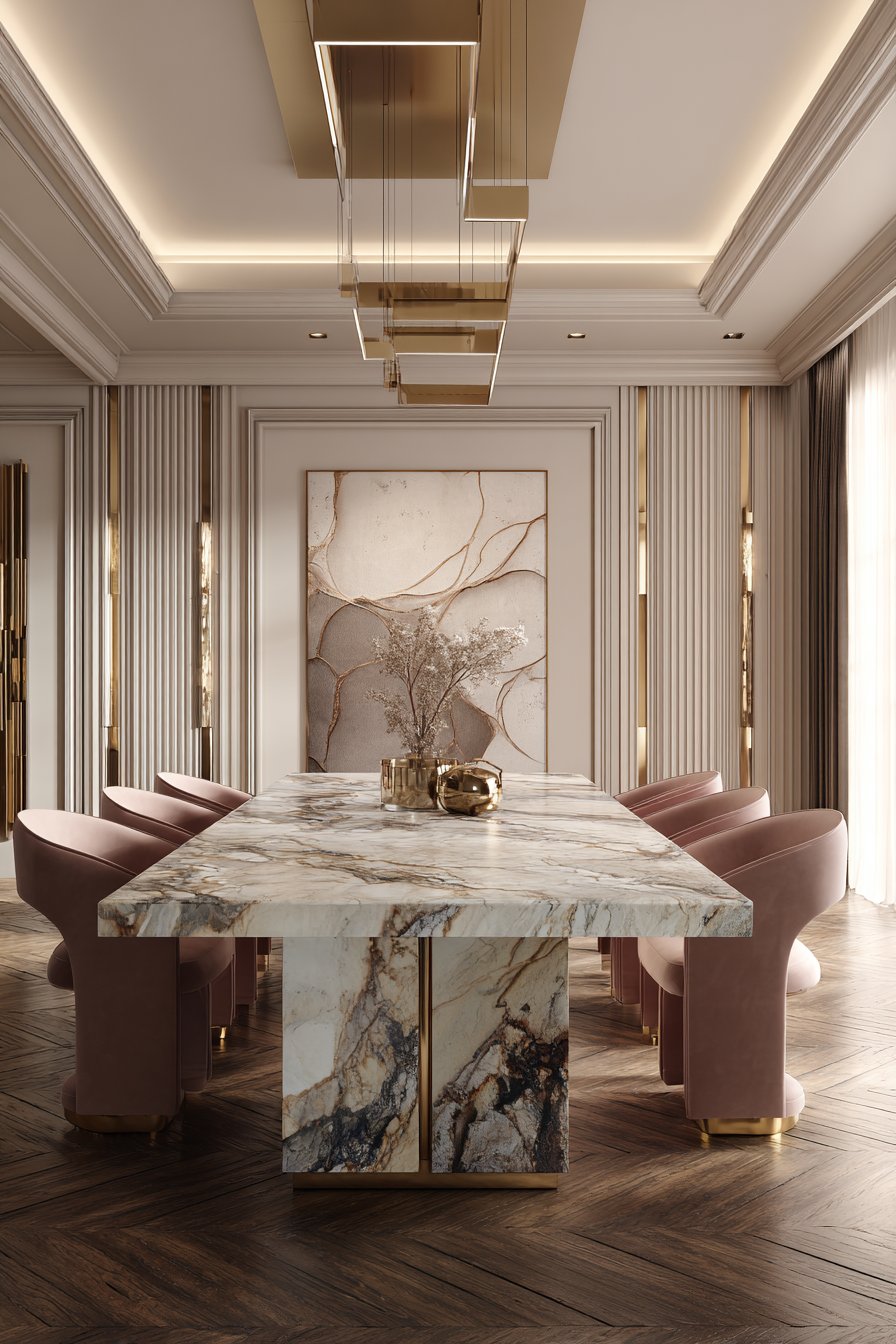
The modern dining room setting showcases this glamorous dining set against a backdrop of carefully curated contemporary art—perhaps an oversized abstract canvas featuring complementary gold and blush tones. A geometric light fixture overhead continues the metal’s warm golden glow while providing sculptural interest through angular forms. Professional photography captures the interplay of luxury materials, highlighting how natural and artificial light play across marble’s polished surface, creating depth in the stone’s veining and emphasizing the velvet’s directional nap. The overall composition demonstrates how contemporary design embraces both minimalist restraint and carefully considered opulence.
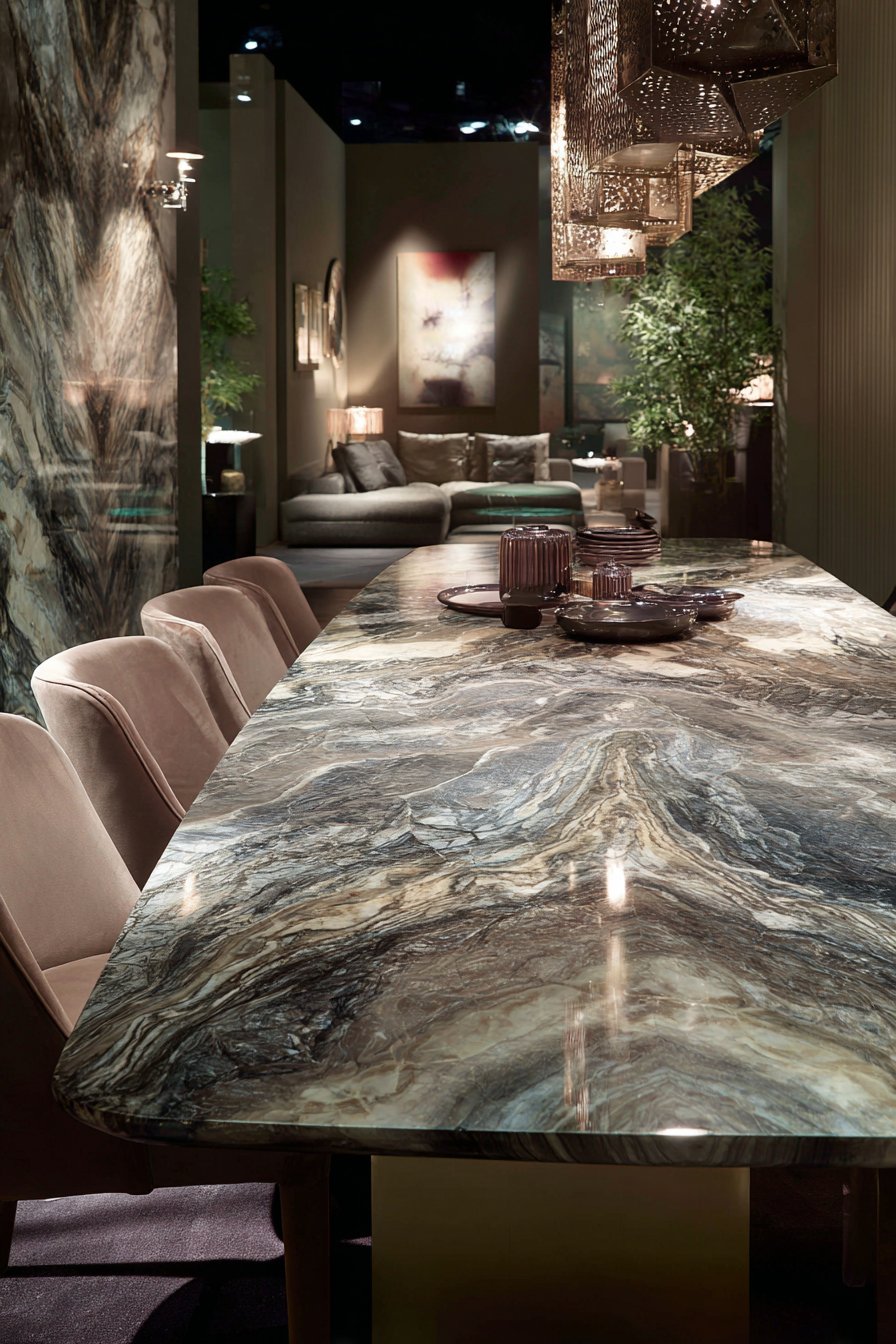
This dining set idea suits homeowners seeking to make sophisticated statements through material quality rather than ornamental excess. Marble’s timeless luxury carries historical weight—Roman emperors and Renaissance nobility dined at marble tables—yet contemporary metal bases and streamlined forms prevent any sense of stuffiness. The blush velvet chairs introduce 21st-century color sensibility, proving that formal dining need not rely on traditional burgundy or forest green upholstery. This dining set requires commitment to maintenance—marble stains and etches with acidic substances, velvet shows wear patterns—but rewards careful stewardship with enduring beauty.
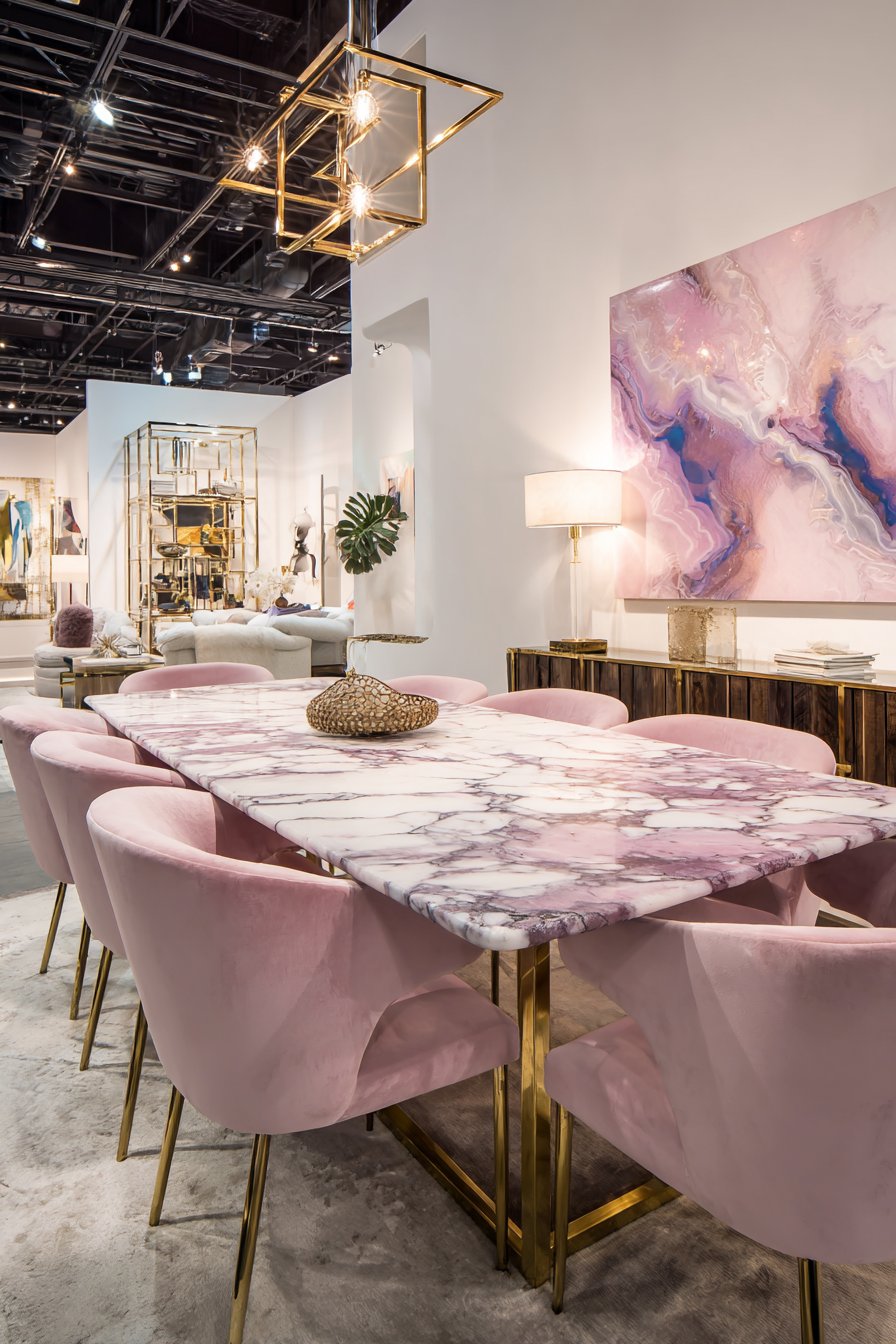
Luxury dining set considerations: seal marble surfaces properly and maintain with appropriate products to prevent staining and etching, choose velvet upholstery in performance fabrics if possible to resist wear and staining, balance cool-toned materials like marble with warm metal finishes to prevent clinical feeling, incorporate layered lighting including ambient, task, and accent sources to properly showcase luxury materials.
9. Rustic Pine Authenticity with Handcrafted Character
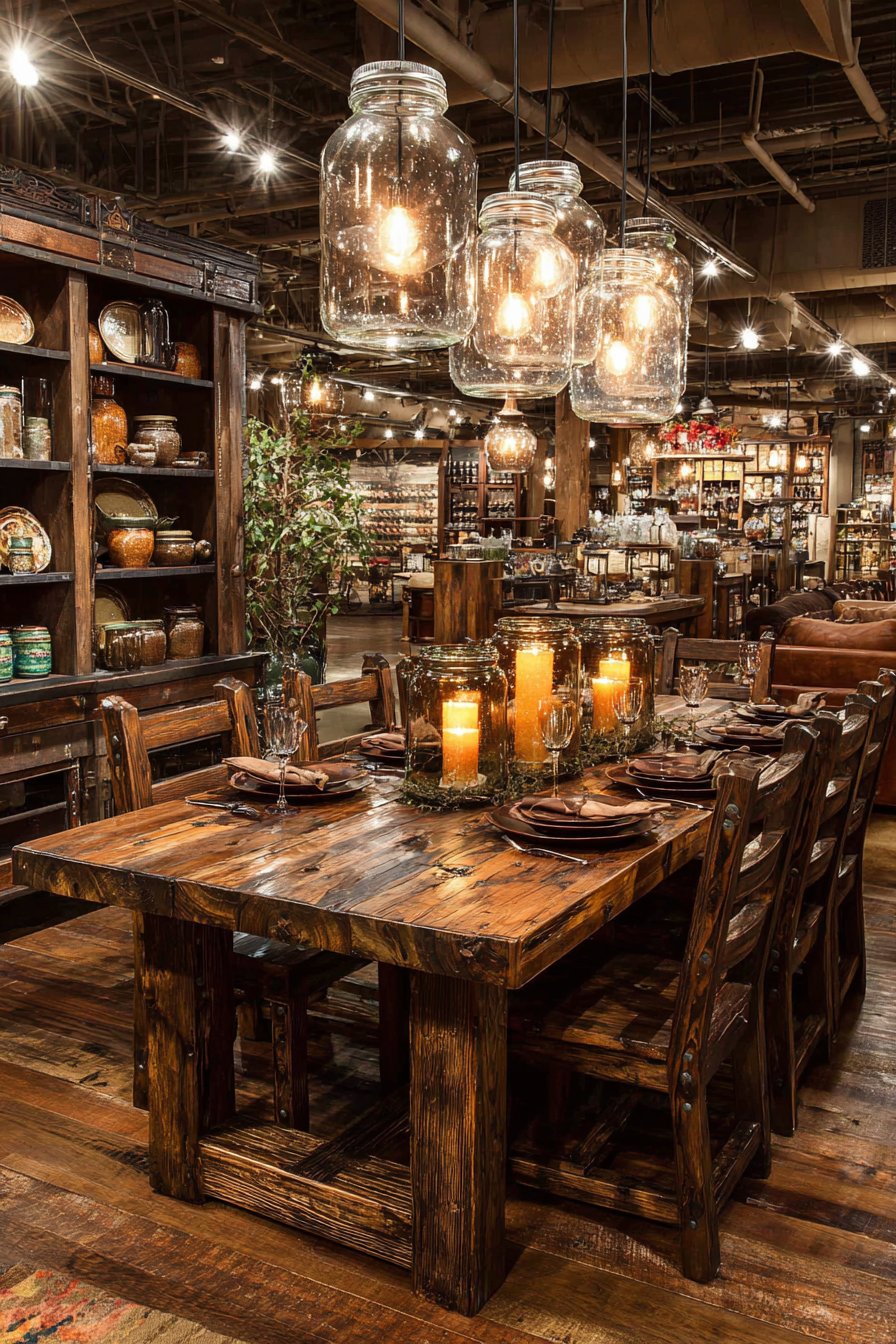
A solid pine farmhouse table showcases nature’s artistry through visible wood knots and pronounced grain patterns that commercial finishing cannot replicate. Each knot tells a story—where branches once grew, where the tree encountered obstacles, where its growth adapted and continued. The natural pine’s honey tones warm any space, their golden glow particularly beautiful in morning light. Ladder-back chairs in deliberately mismatched wood finishes surround this handcrafted table, some showing pine’s lighter color, others displaying deeper walnut stains, still others painted in soft sage or faded blue. This intentional variety creates authentic character that suggests furniture collected across generations rather than purchased as a matched set.
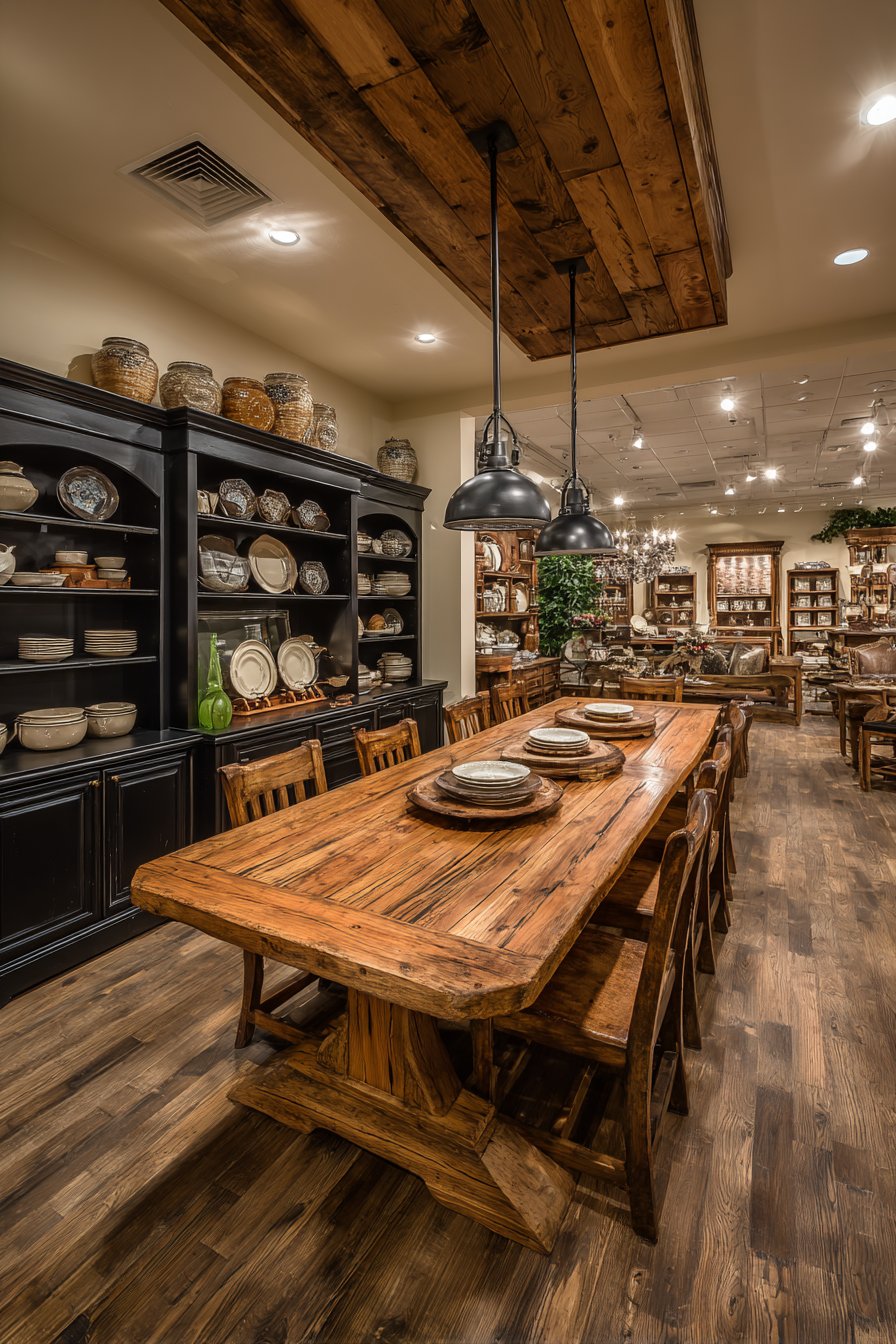
Mason jar pendant lights suspended above the table provide both practical illumination and nostalgic charm, their simple glass forms allowing Edison-style filament bulbs to become decorative elements. The warm amber glow from these bulbs creates cozy atmosphere perfect for extended family dinners and game nights. A vintage hutch positioned against one wall displays ceramic dishware in cream, blue, and green glazes—the dishes themselves becoming decorative elements that reinforce the rustic aesthetic. Warm ambient lighting throughout creates intimate atmosphere captured through interior design photography emphasizing handcrafted quality and the beauty found in organic imperfections.
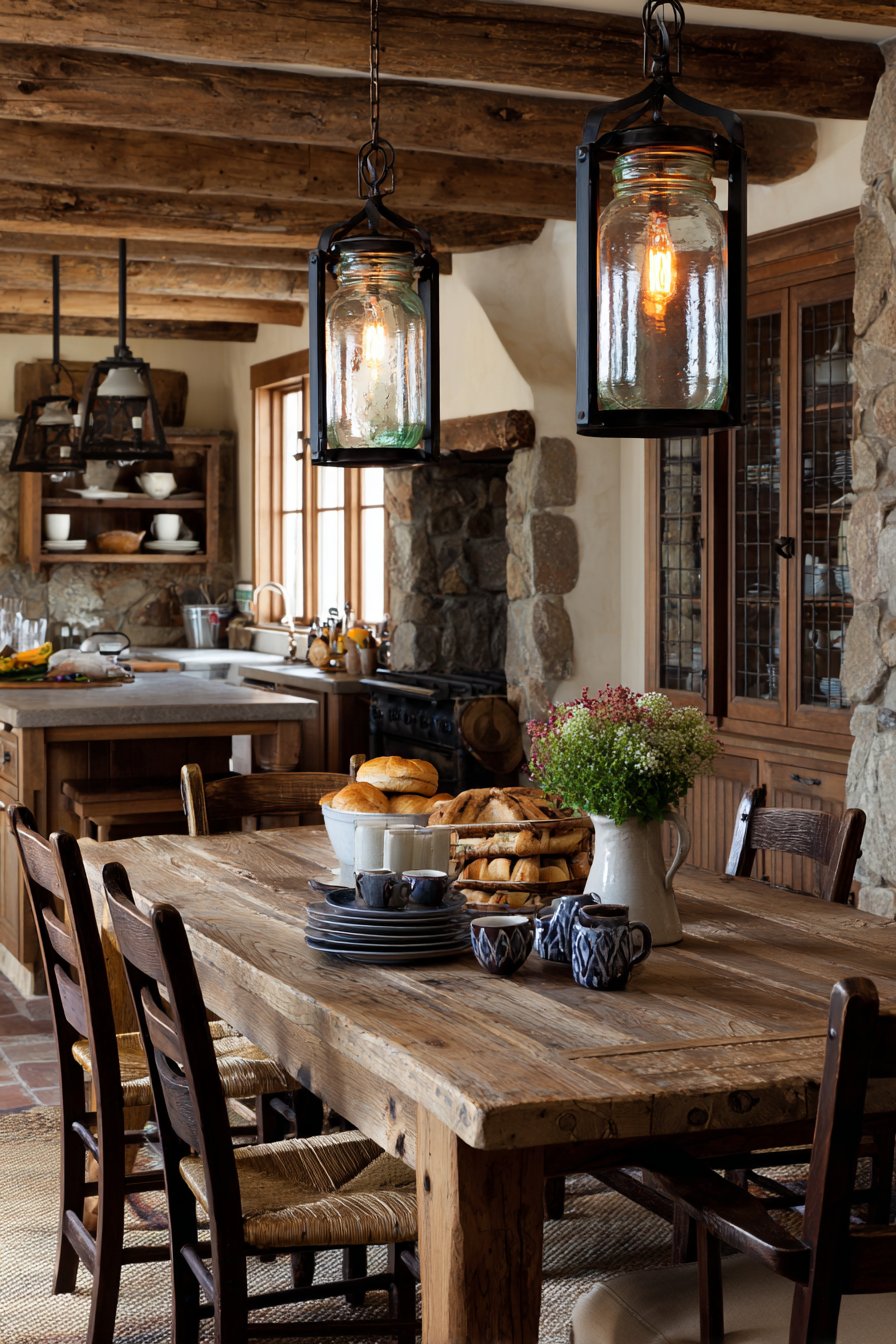
This dining set idea celebrates craftsmanship over perfection, authenticity over uniformity. The pine table’s knots and grain variations that manufacturers typically reject become cherished character marks. Mismatched chairs transform potential decorating challenge into intentional design statement, proving that harmony arises from careful curation rather than identical pieces. The overall effect creates dining environments that feel warm, welcoming, and lived-in from day one—spaces where spilled wine and chair scratches add to the story rather than diminishing value.
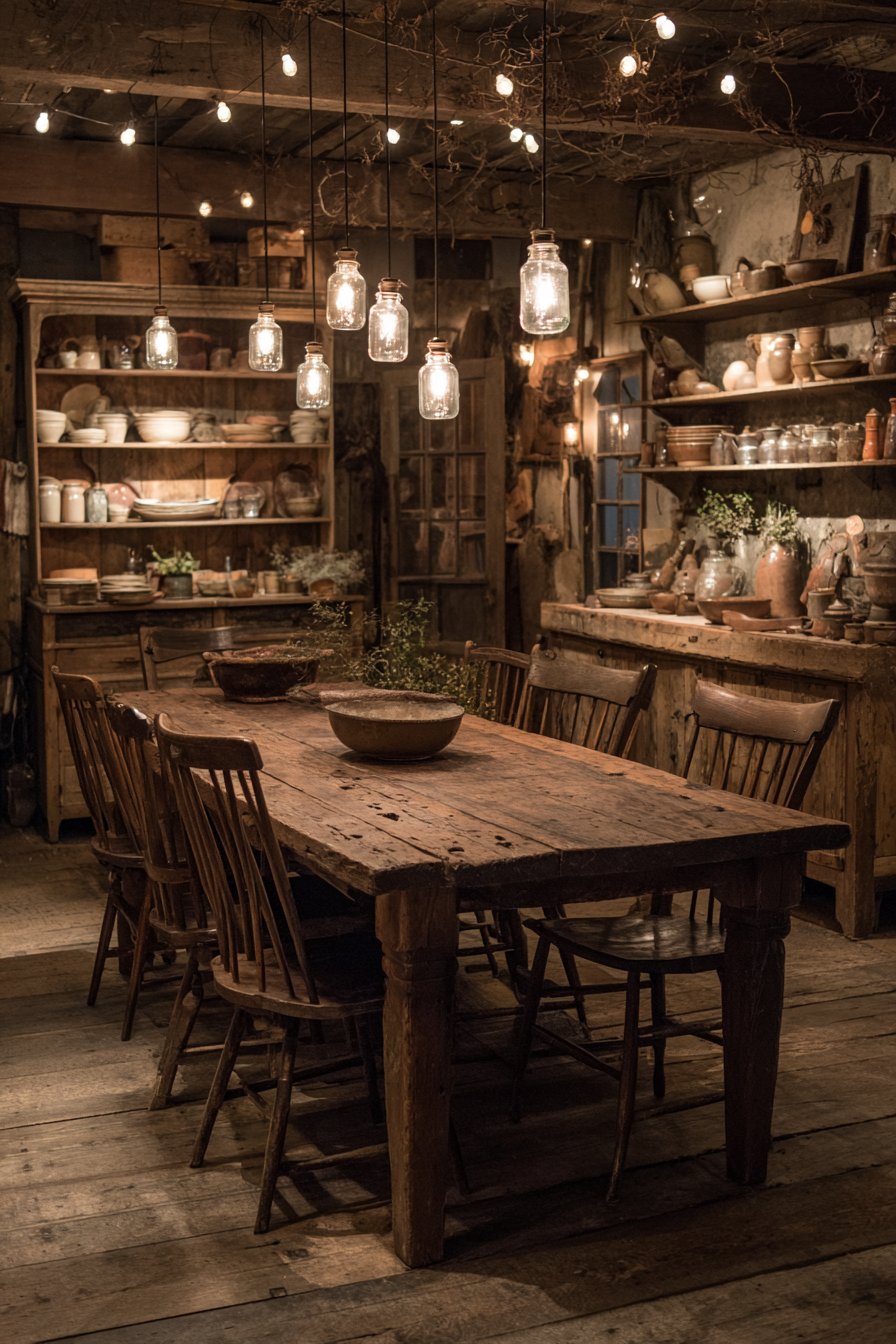
Rustic dining design principles: embrace natural wood imperfections like knots, grain variations, and color differences as character rather than flaws, mix furniture finishes intentionally rather than matching everything perfectly, incorporate vintage or vintage-inspired lighting fixtures with visible bulbs for ambient warmth, layer in handcrafted or artisan elements through dishware, textiles, and accessories that celebrate maker’s marks.
10. Transitional Elegance in Rich Espresso
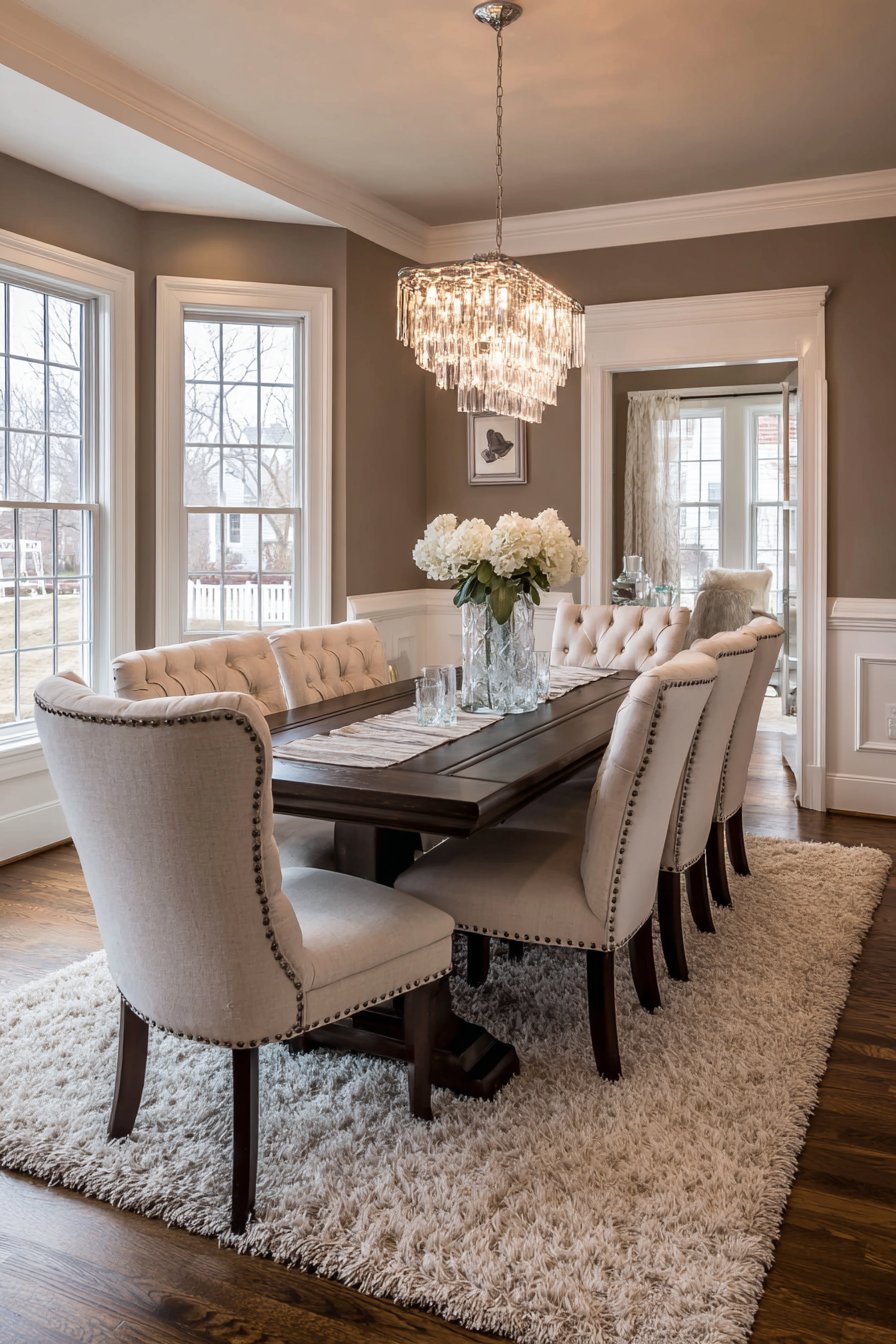
A rectangular dining table in rich espresso finish with subtle sheen bridges traditional and contemporary design sensibilities with remarkable grace. The deep brown color provides sophisticated neutrality that works with virtually any decorating scheme, while the slight luster suggests quality finishing without high-gloss showiness. Eight tufted dining chairs with nailhead trim upholstered in cream linen fabric surround this refined table, their button-tufted backs adding traditional detail while clean profiles maintain contemporary relevance. The brass nailhead trim creates subtle sparkle, catching light and adding refined detail without overwhelming the chairs’ elegant simplicity. This generous seating capacity makes the set ideal for families who regularly host gatherings and holiday meals.
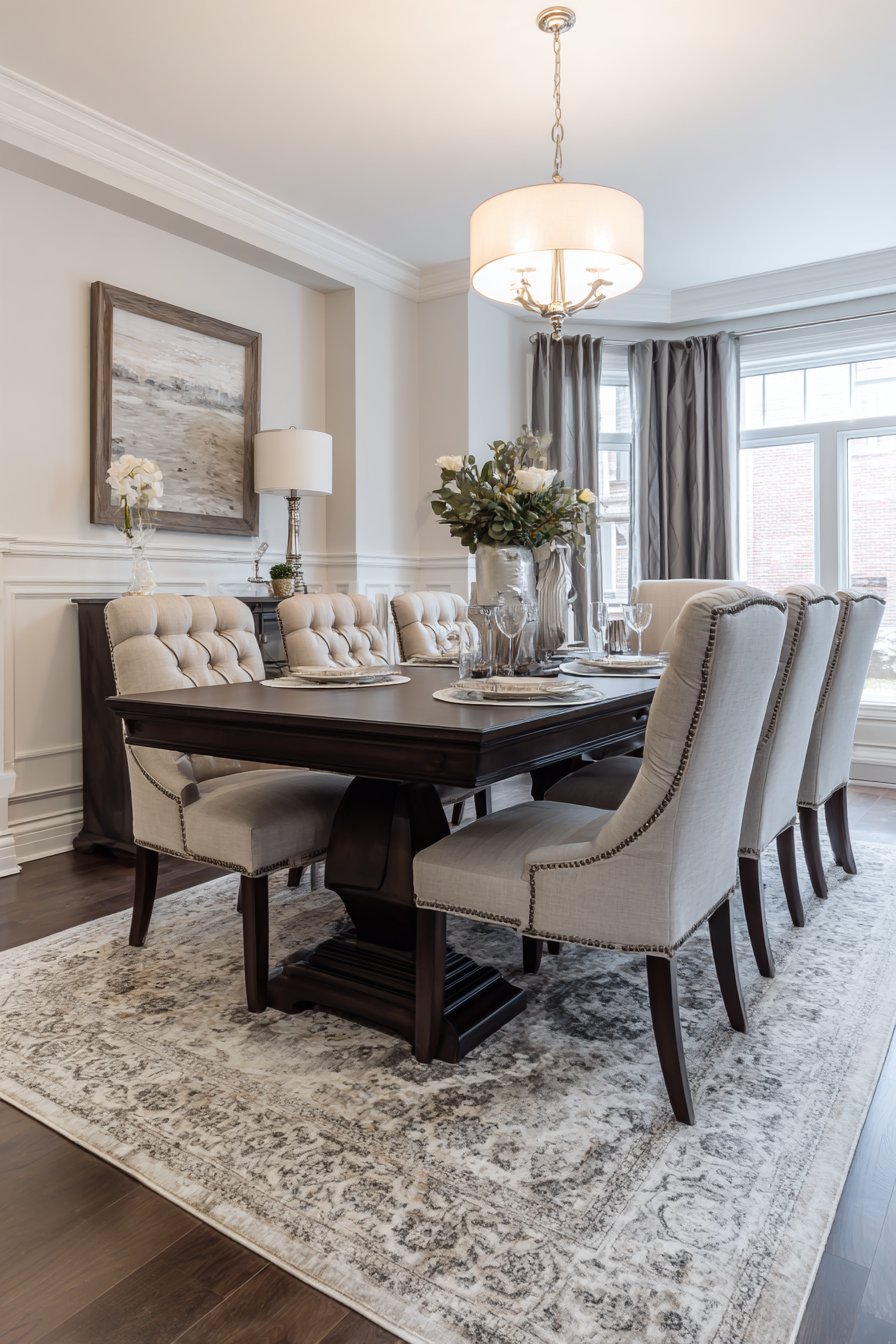
The classic dining room features wainscoting that adds architectural interest and traditional character without period-specific detail that would limit the space’s transitional flexibility. A traditional area rug beneath the dining set grounds the arrangement while protecting flooring, its pattern providing visual interest that complements rather than competes with the furniture. Natural window light combines with an overhead chandelier to create layered illumination that adapts throughout the day—bright and energizing for morning meals, soft and intimate for evening dinners. Wide-angle interior photography captures the timeless elegance and demonstrates how transitional design provides longevity by avoiding trendy elements that quickly date.
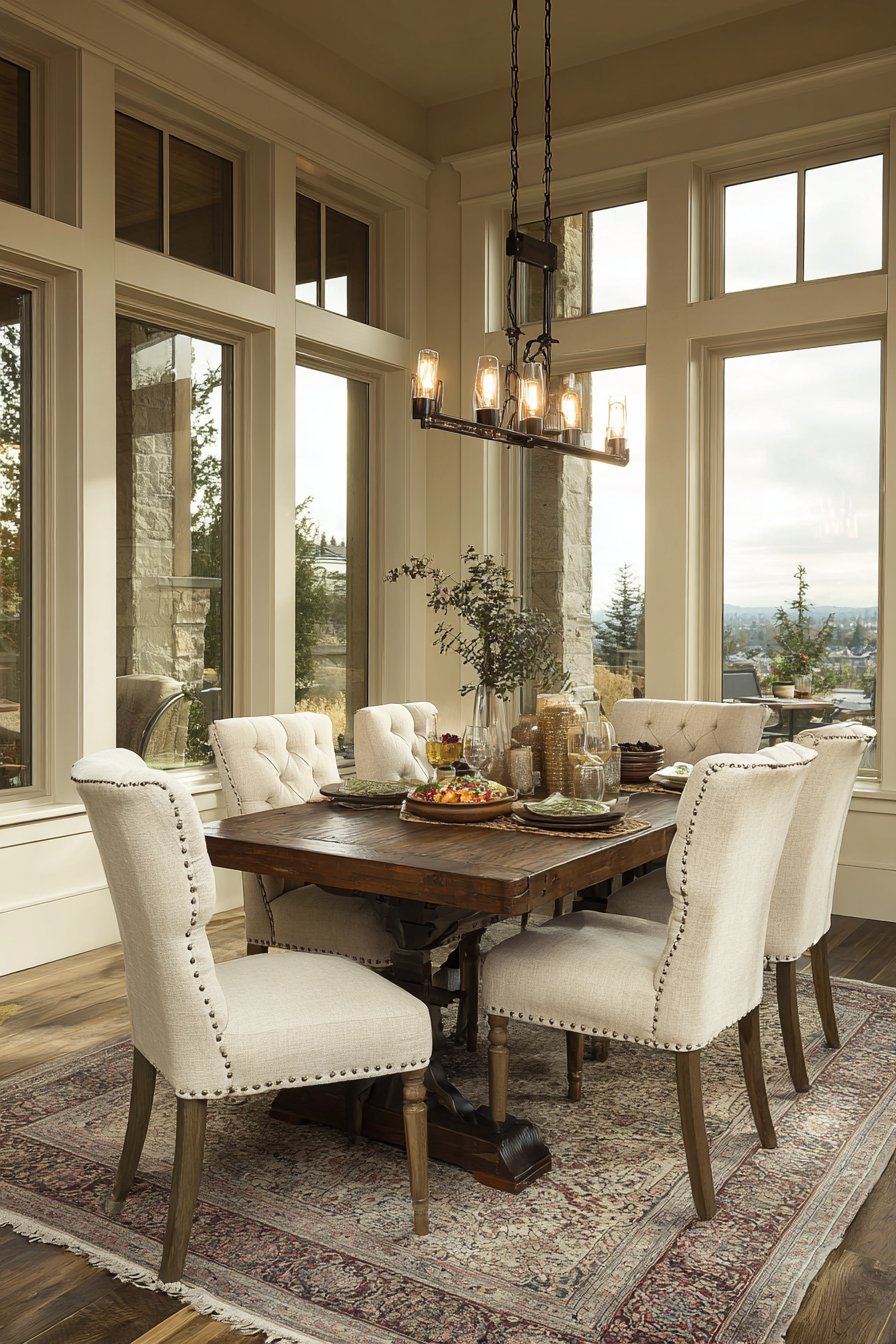
This dining set idea appeals to homeowners seeking furnishings that transcend passing trends while remaining current and stylish. Transitional design’s genius lies in selecting the best elements from traditional and contemporary styles while avoiding either aesthetic’s potential pitfalls—traditional design’s fussiness or contemporary design’s coldness. The espresso finish’s versatility means the table works equally well with silver or gold accents, cool or warm color schemes, ornate or simple accessories. Cream linen upholstery provides luxurious comfort while maintaining easier care than darker fabrics that show dust and pet hair prominently.
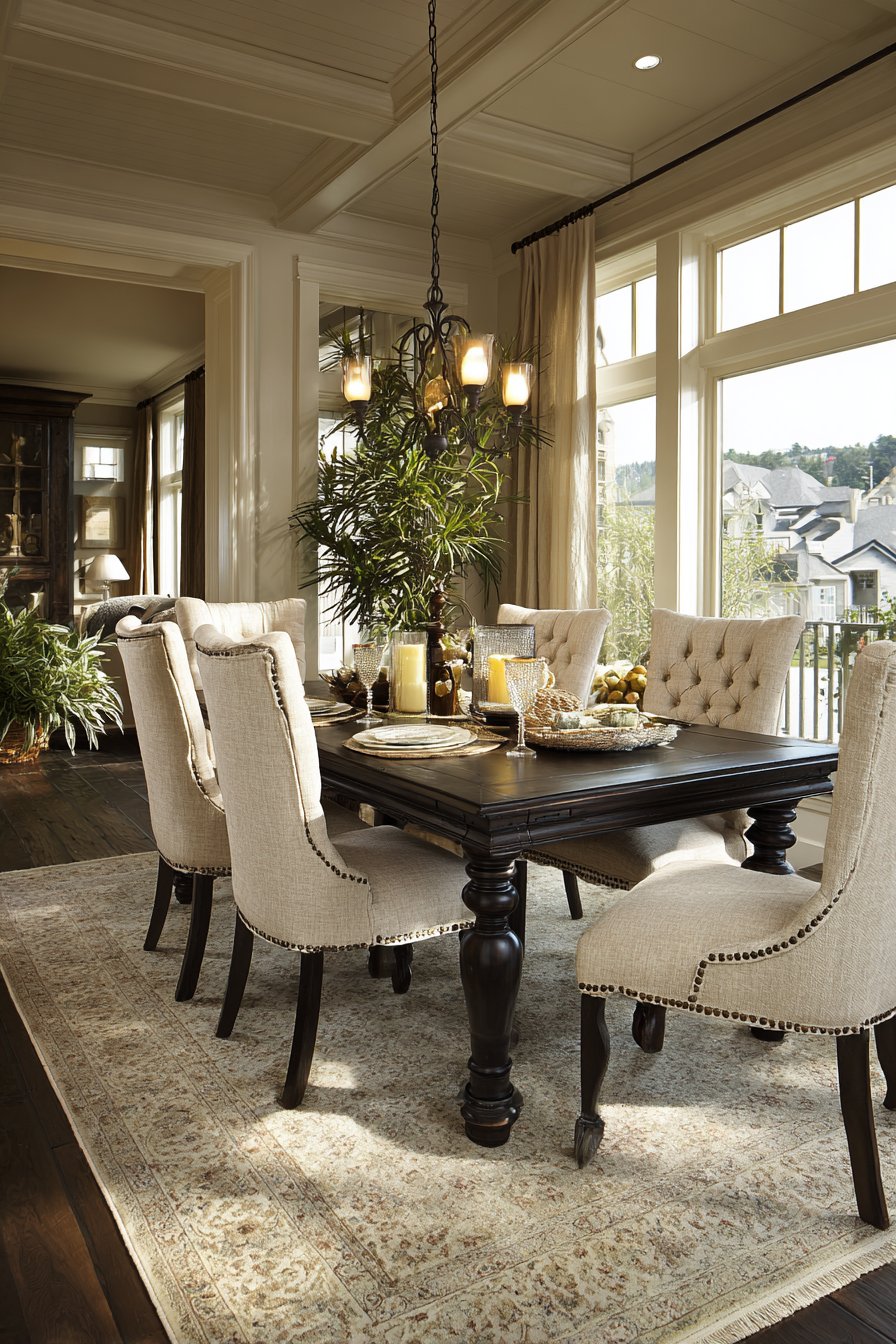
Transitional dining design strategies: choose furniture with classic proportions and clean lines that avoid style-specific details, select neutral finishes in quality materials that age gracefully, balance ornamental elements like tufting or nailheads with streamlined silhouettes, invest in versatile pieces that coordinate with evolving décor rather than requiring complete room redesigns.
11. Minimalist Maple Simplicity with Eames Inspiration
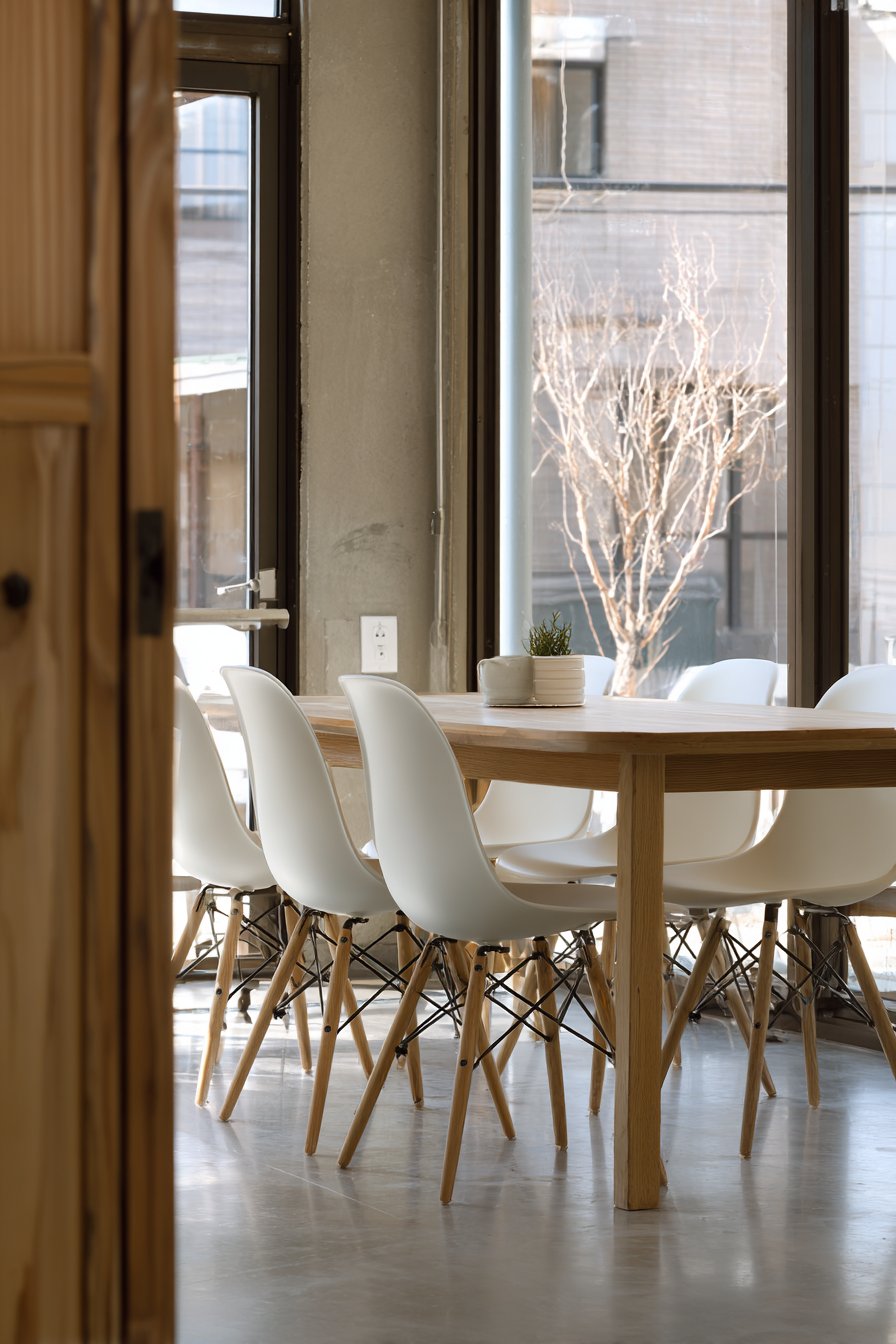
A simple rectangular dining table in light maple with an ultra-thin profile embodies minimalist philosophy—beauty through reduction to essential elements. The table’s slim lines create visual lightness despite substantial length, its pale wood tone keeping spaces feeling open and airy. Four Eames-inspired molded chairs in pristine white surround this minimalist centerpiece, their iconic forms proving that sculptural beauty and ergonomic comfort coexist successfully. The chairs’ organic curves—shaped through extensive study of human body mechanics—provide surprising support despite apparent simplicity. This pairing demonstrates minimalism’s core principle: maximum effect through minimal means.
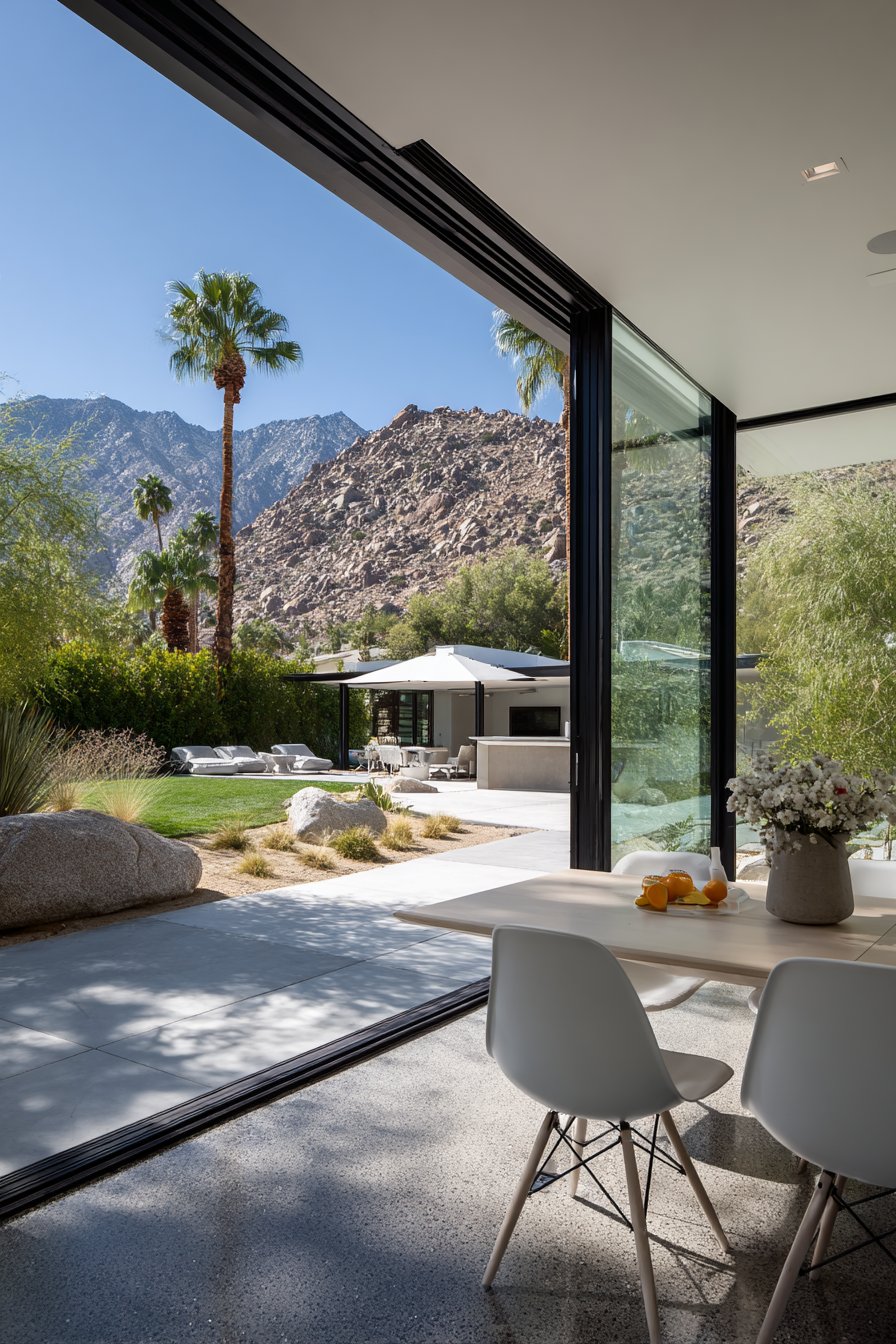
The uncluttered dining area occupies space defined by concrete flooring and floor-to-ceiling windows rather than traditional walls. Polished concrete’s cool gray tones and slight sheen provide industrial edge while maintaining minimalist aesthetic through uniform surface. The expansive windows eliminate barriers between interior and exterior, flooding the space with abundant natural daylight that emphasizes clean lines and celebrates the absence of ornamentation. Professional interior photography captures crisp focus on the purity of form and functional simplicity characteristic of minimalist design, showing how empty space functions as essential design element rather than void requiring filling.
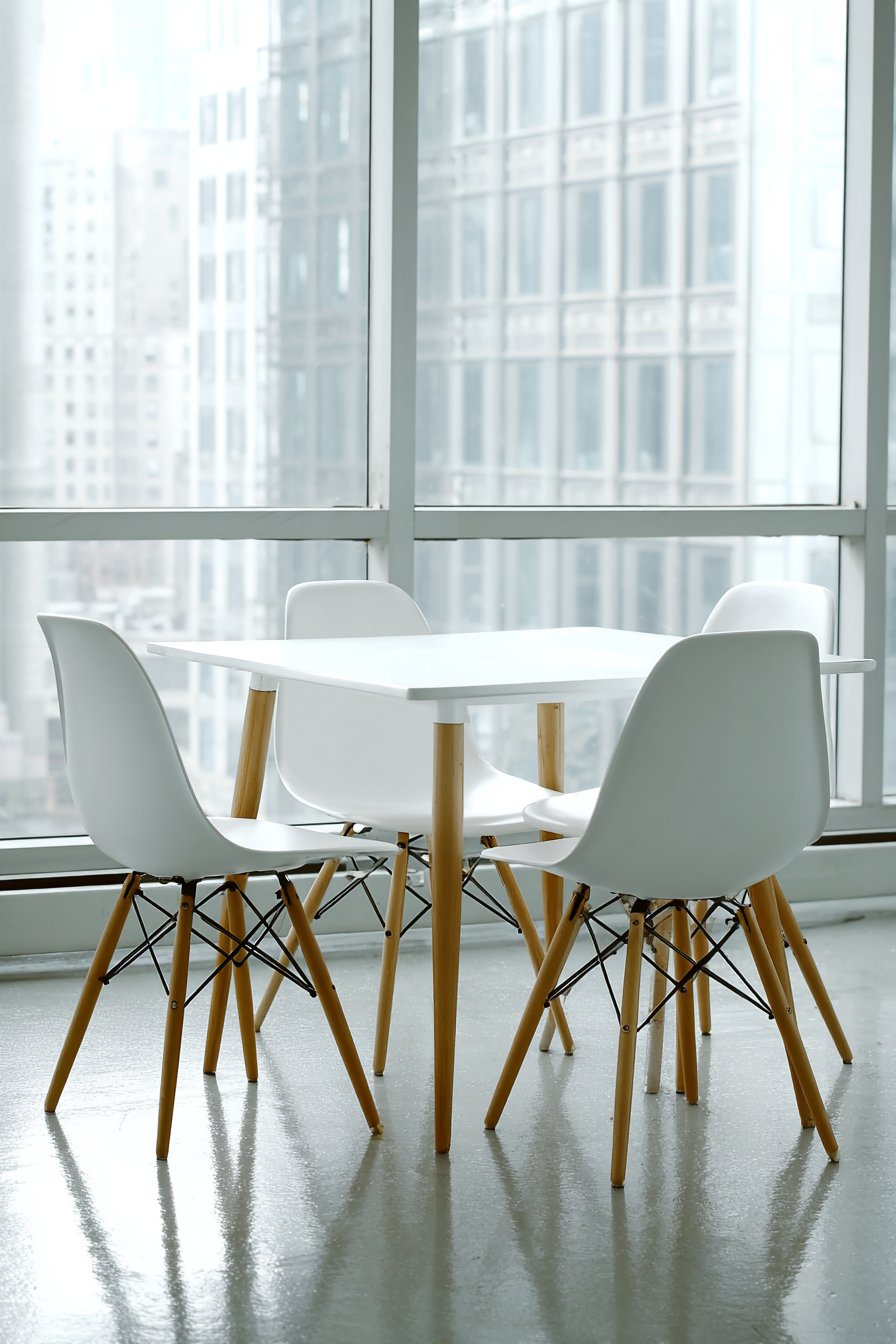
This dining set idea suits those drawn to “less is more” philosophy, where every object earns its place through beauty, function, or preferably both. The maple table’s thin profile challenges conventional furniture construction, requiring precise engineering to maintain strength while achieving delicate appearance. White molded chairs stack efficiently for storage, their matching color creating visual cohesion while their sculptural forms provide sufficient interest to prevent sterility. Minimalist dining spaces require careful curation—each element visible, nothing hidden behind clutter or decorative excess.
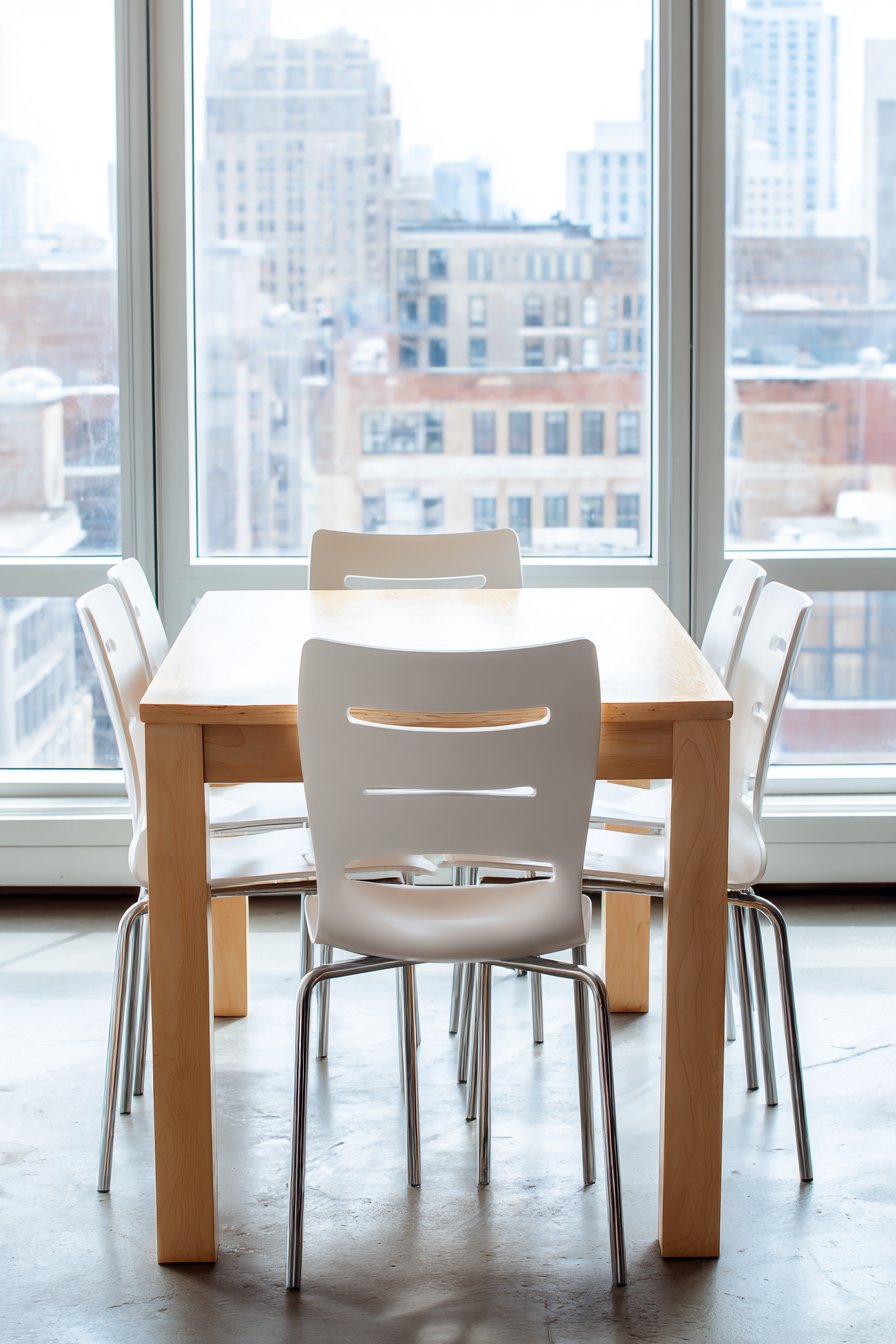
Minimalist dining essentials: select furniture with clean lines, slim profiles, and no unnecessary ornamentation or detail, maintain neutral color palettes with occasional single accent color, maximize natural light through strategic window placement and minimal window treatments, keep surfaces clear and clutter-free, choosing quality over quantity in all decorative elements.
12. Bohemian Eclecticism with Global Influences
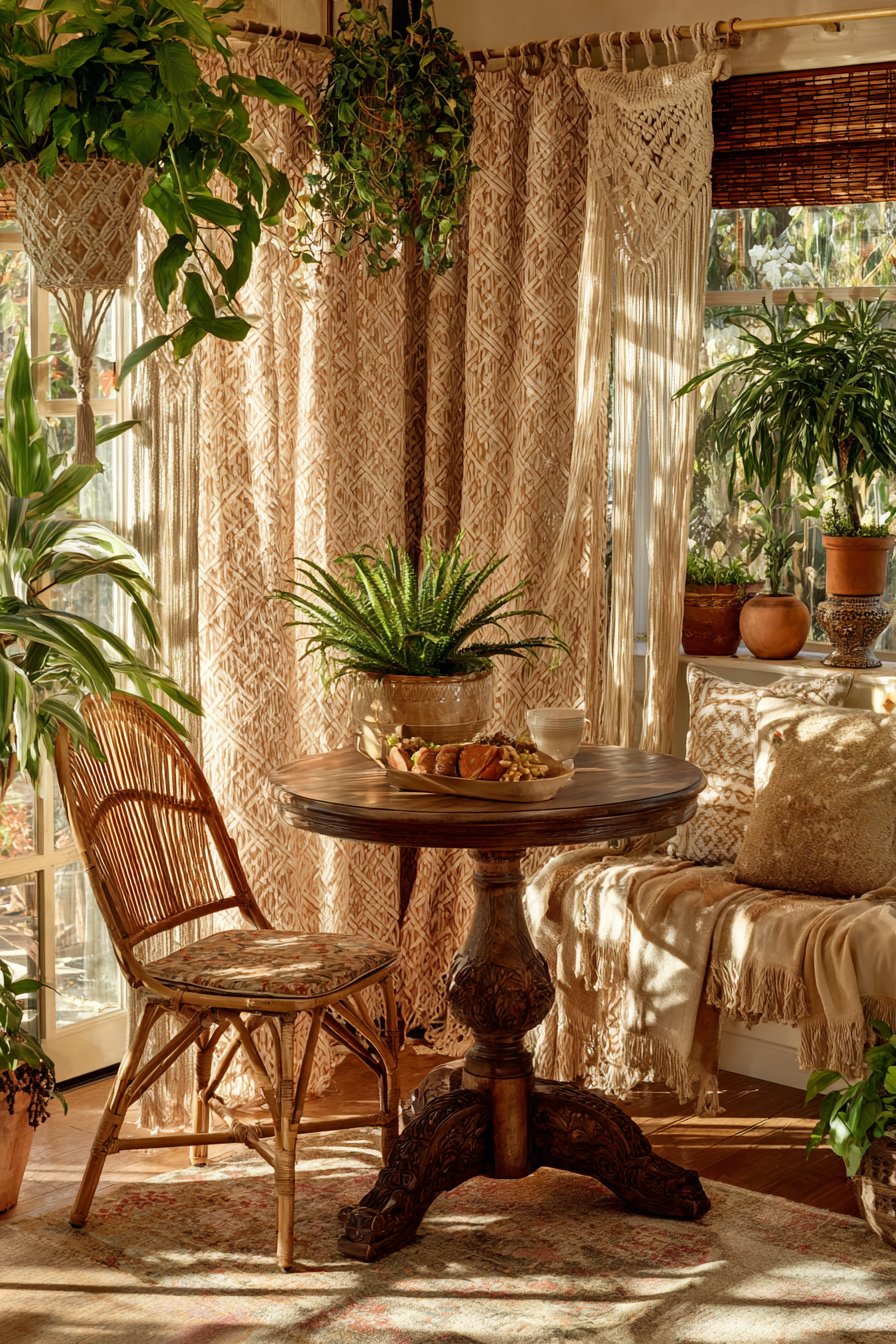
A round pedestal dining table with carved wood details and dark walnut stain creates exotic focal point perfect for bohemian interiors. Intricate carved patterns—perhaps inspired by Moroccan, Indian, or Southeast Asian traditions—add dimensional texture and cultural richness. The dark wood’s depth provides grounding weight essential in eclectic spaces where varied elements might otherwise feel scattered. Encircling this distinctive table are mismatched dining chairs representing bohemian design’s “more is more” philosophy: rattan chairs with curved backs, upholstered seats in jewel-toned velvets, painted vintage chairs in saturated colors, each contributing unique personality to the collective whole.
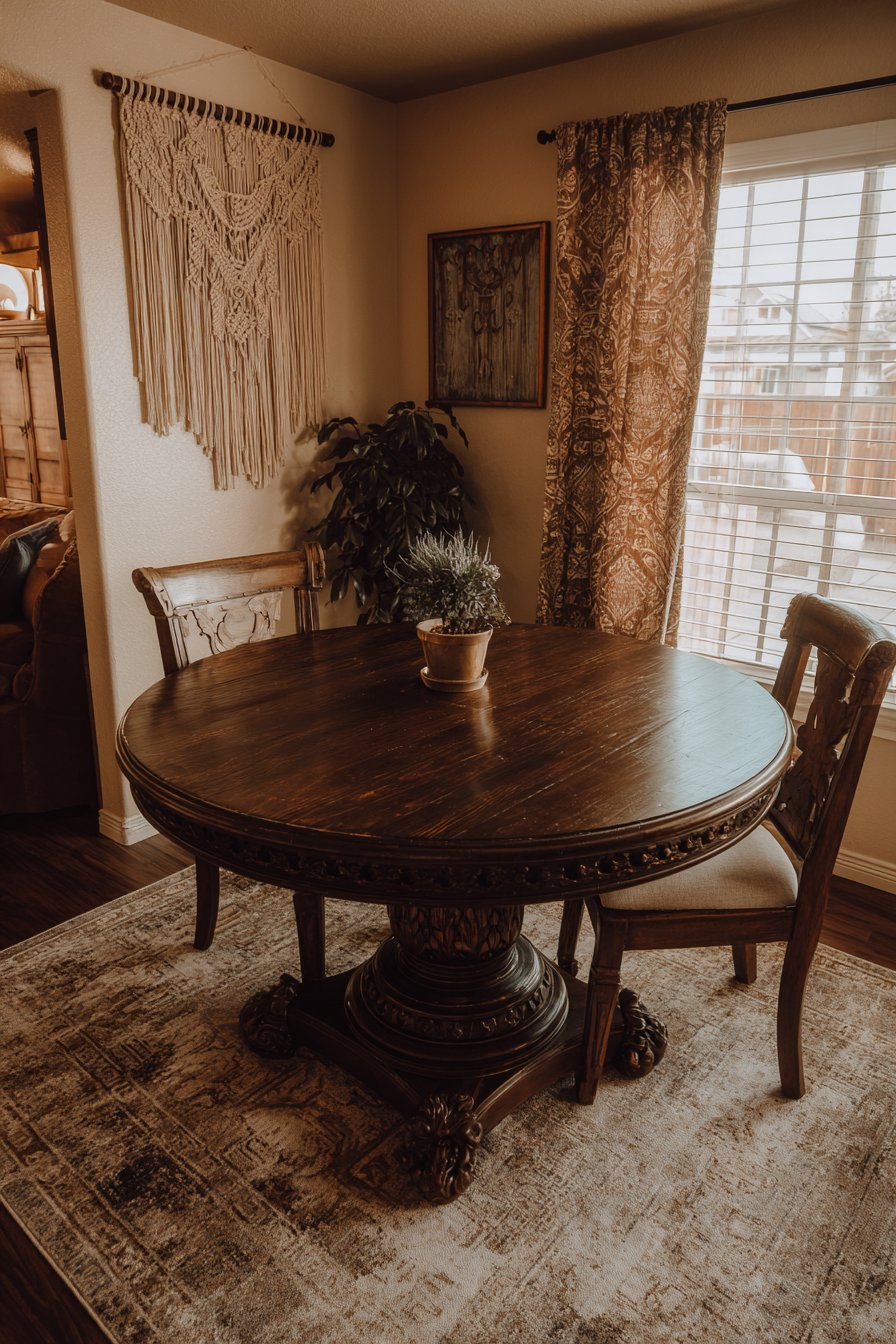
Macramé wall hangings provide textural focal point above a sideboard, their intricate knotwork and organic cotton fibers epitomizing 1970s craft revival embraced by contemporary bohemian design. Potted plants in various sizes create indoor jungle effect—perhaps a large fiddle leaf fig in a woven basket, trailing pothos cascading from floating shelves, succulents clustered on the table’s surface. These living elements contribute essential organic quality while improving air quality and connecting indoor space with natural world. Soft natural lighting filters through patterned curtains in rich colors and global-inspired prints, creating dappled illumination that adds to the space’s relaxed, collected-over-time atmosphere.
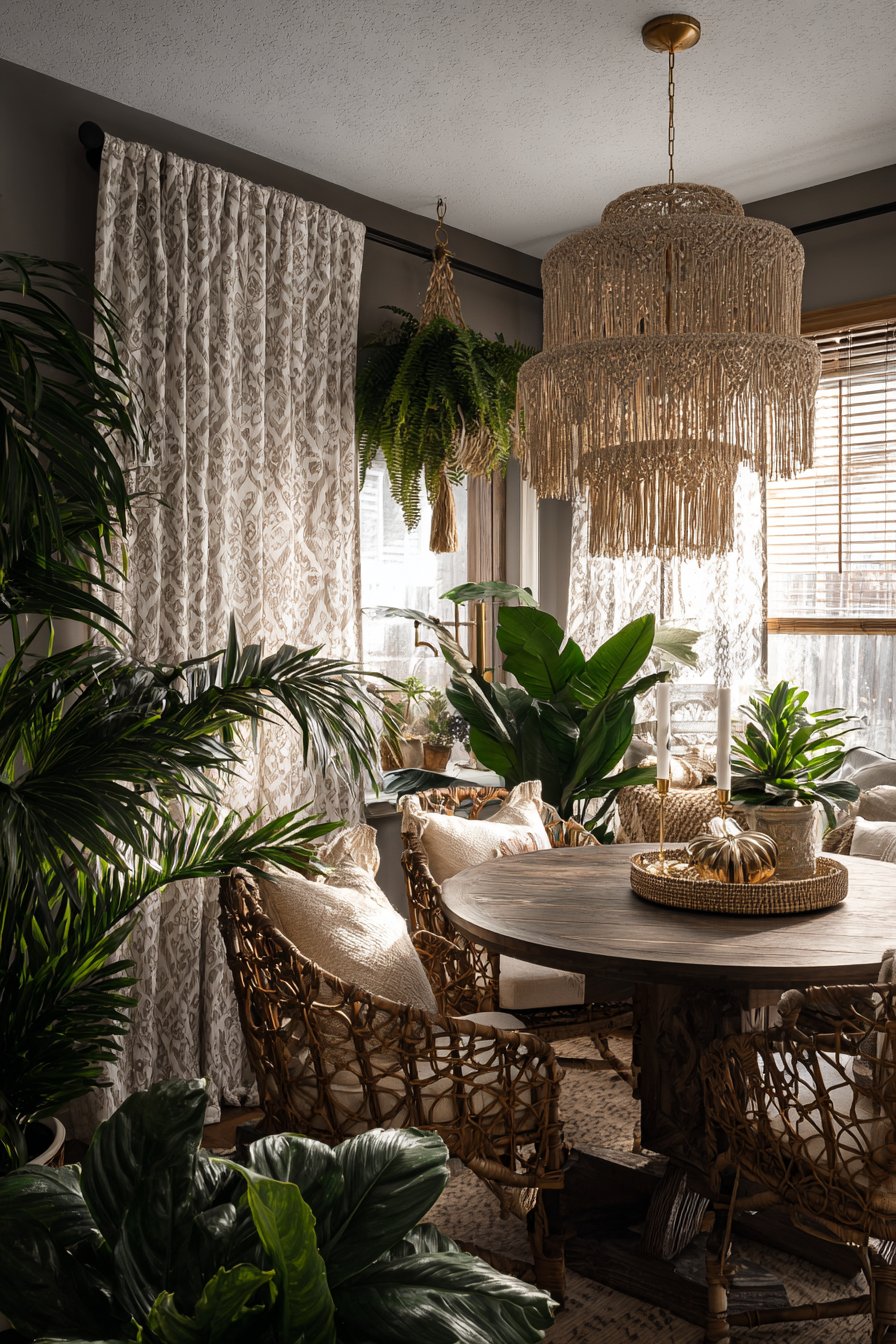
This dining set idea celebrates personal expression over design rules, encouraging homeowners to trust their instincts and collect pieces that speak to them. Bohemian style’s beauty lies in apparent effortlessness—though achieving successful eclecticism requires careful eye for color, scale, and balance. The round table’s shape encourages intimate conversation while accommodating the varied chair heights and styles surrounding it. Interior design photography captures layered textures, global-inspired elements, and collected-over-time aesthetic with warm color grading that emphasizes the space’s cozy, welcoming character.
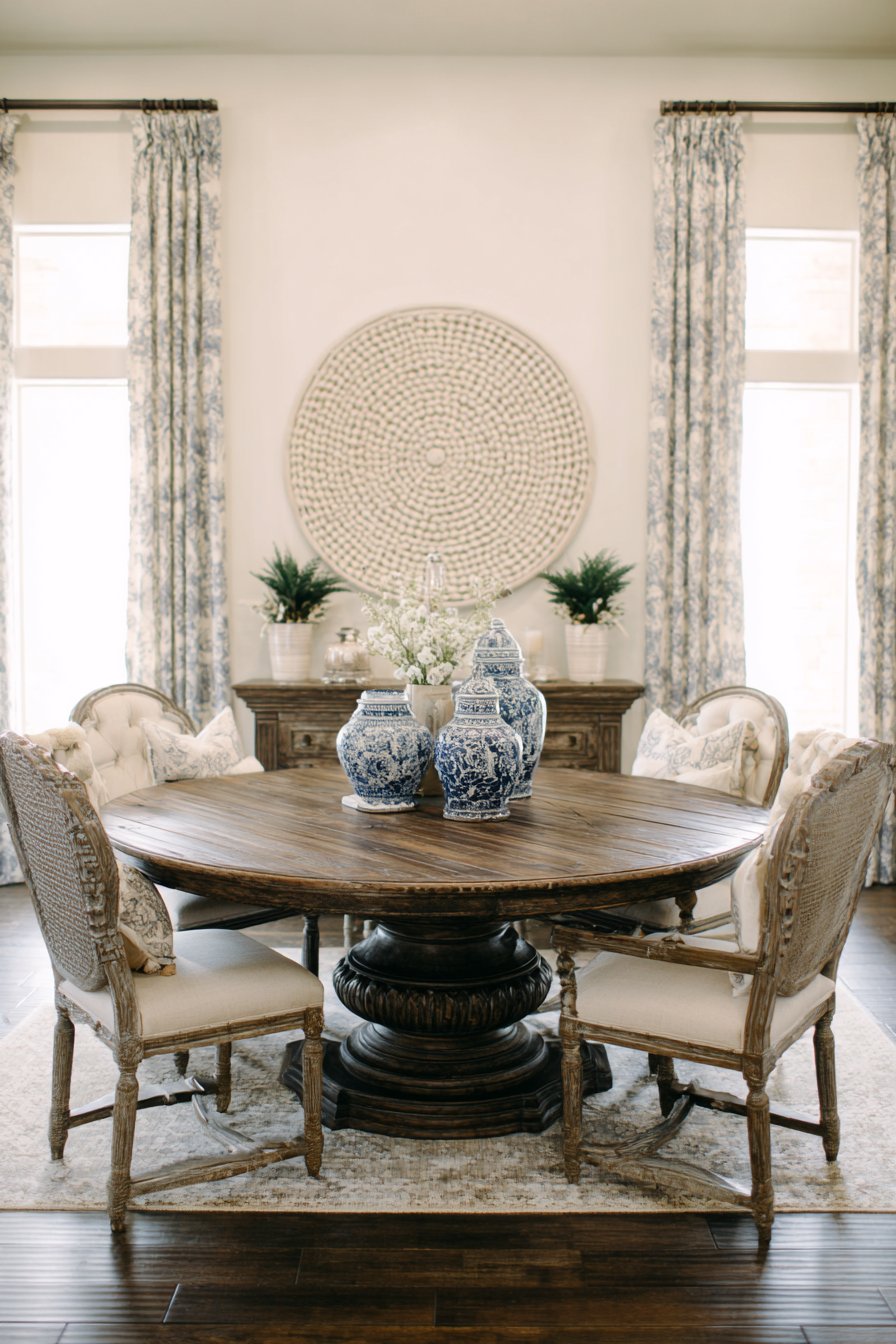
Bohemian dining design principles: mix furniture styles, eras, and cultural influences freely while maintaining color story cohesion, layer multiple textures through varied materials like wood, rattan, textiles, and metal, incorporate abundant plants and natural elements for organic warmth, embrace pattern mixing in textiles while balancing busy patterns with solid colors, display collections and travel finds that tell your personal story.
13. Modern Farmhouse Fusion with Black Accents
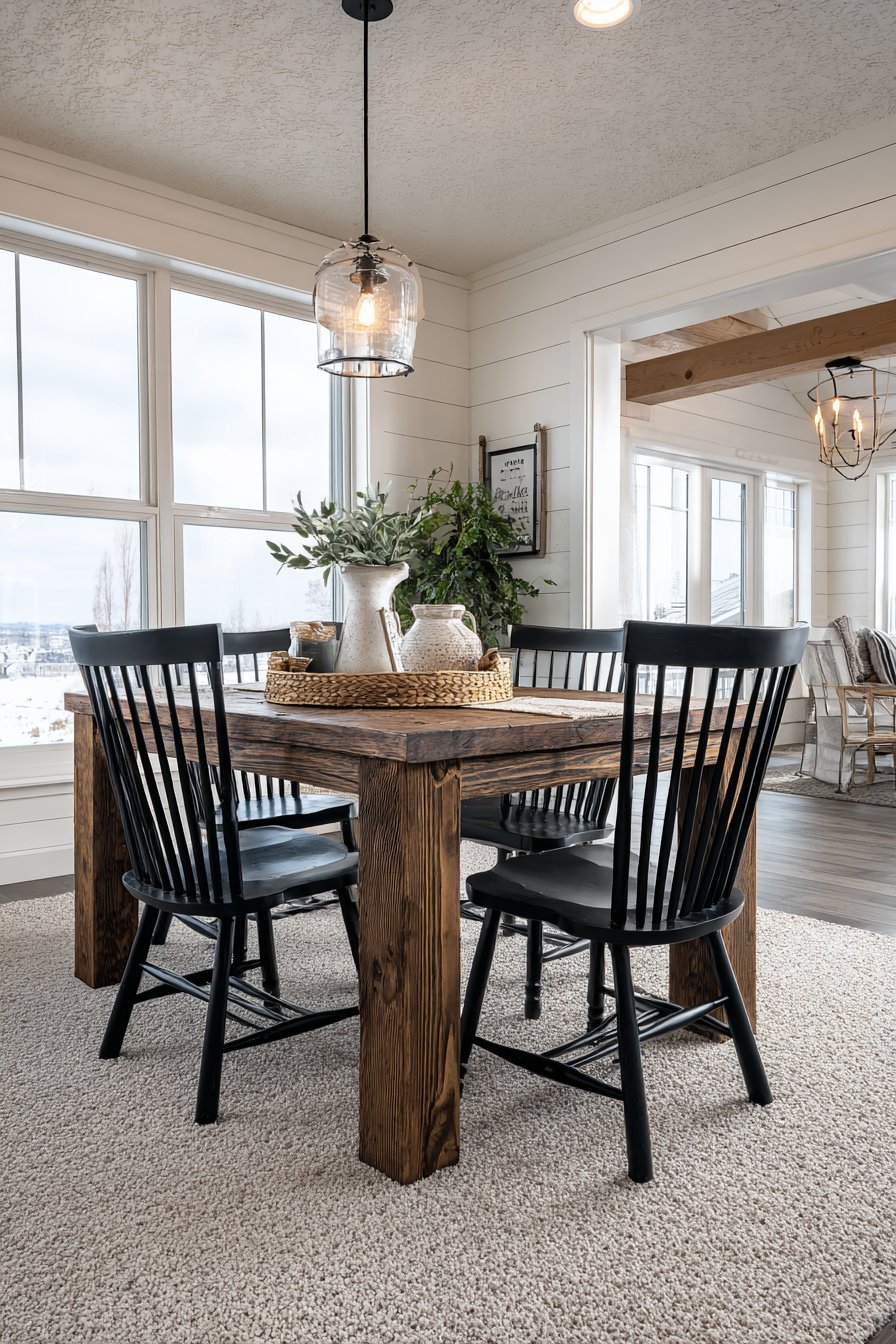
A chunky rectangular dining table crafted from reclaimed barn wood demonstrates modern farmhouse style’s defining characteristic—pairing rustic materials with contemporary design sensibility. Visible saw marks and natural patina from decades of agricultural use create authentic character impossible to manufacture. The substantial table thickness suggests strength and permanence, while the clean rectangular form prevents country cuteness. Black Windsor chairs provide striking contrast, their traditional spindle-back form updated through sophisticated color choice. This unexpected pairing—weathered natural wood with matte black—creates visual tension that energizes the space while maintaining approachable warmth.
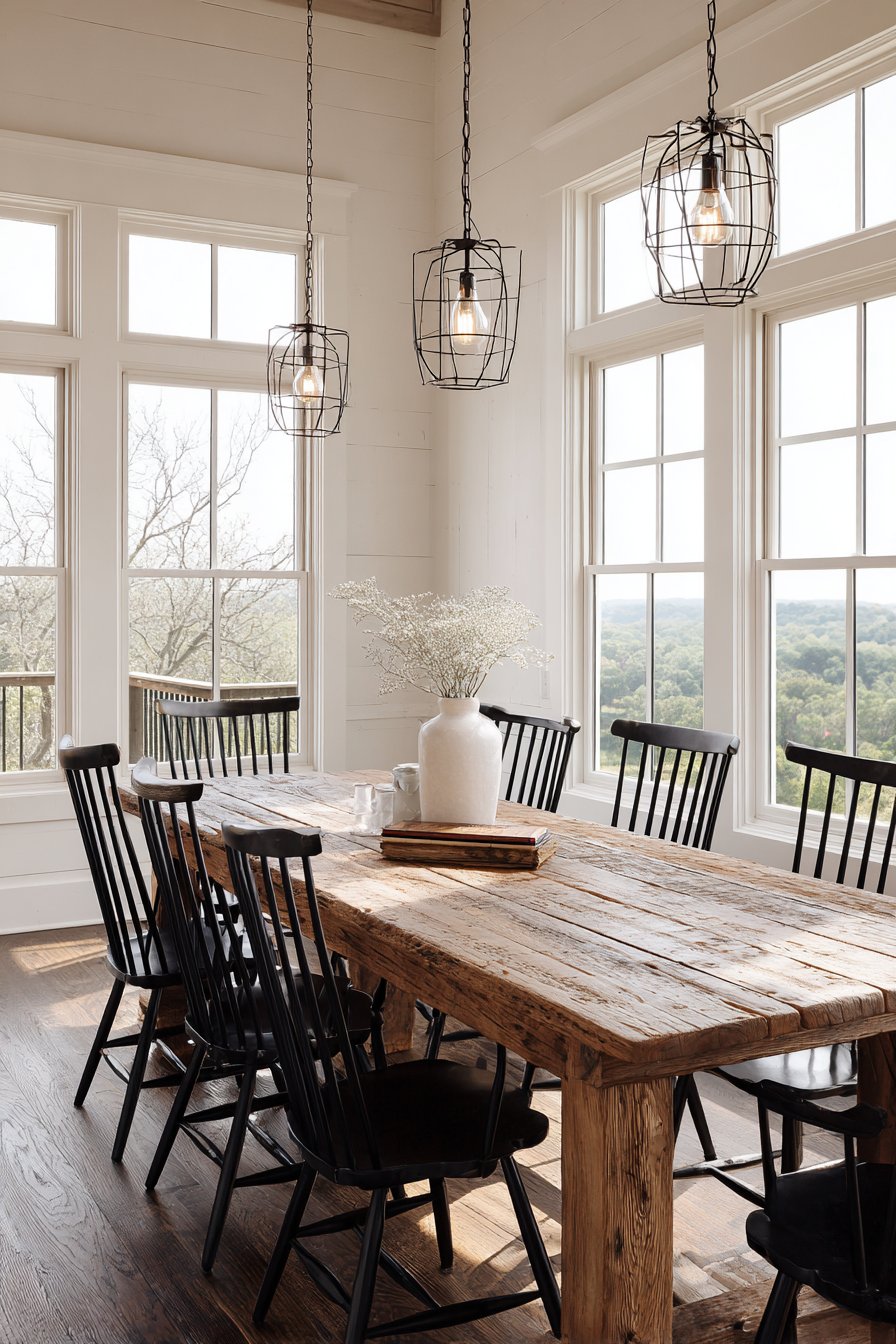
Shiplap walls painted in soft white create textured backdrop that reinforces farmhouse roots without overwhelming the space or creating dated “country” feeling. The horizontal lines draw the eye along the wall’s length, subtly emphasizing the room’s dimensions. Vintage-style pendant lights suspended above the table feature industrial-influenced metal shades in black finish, tying together the chairs’ dark color while providing focused task lighting. Natural daylight streaming through unadorned or simply dressed windows highlights the wood’s authentic character, showcasing grain patterns, color variations, and wear marks that authenticate the reclaimed material.
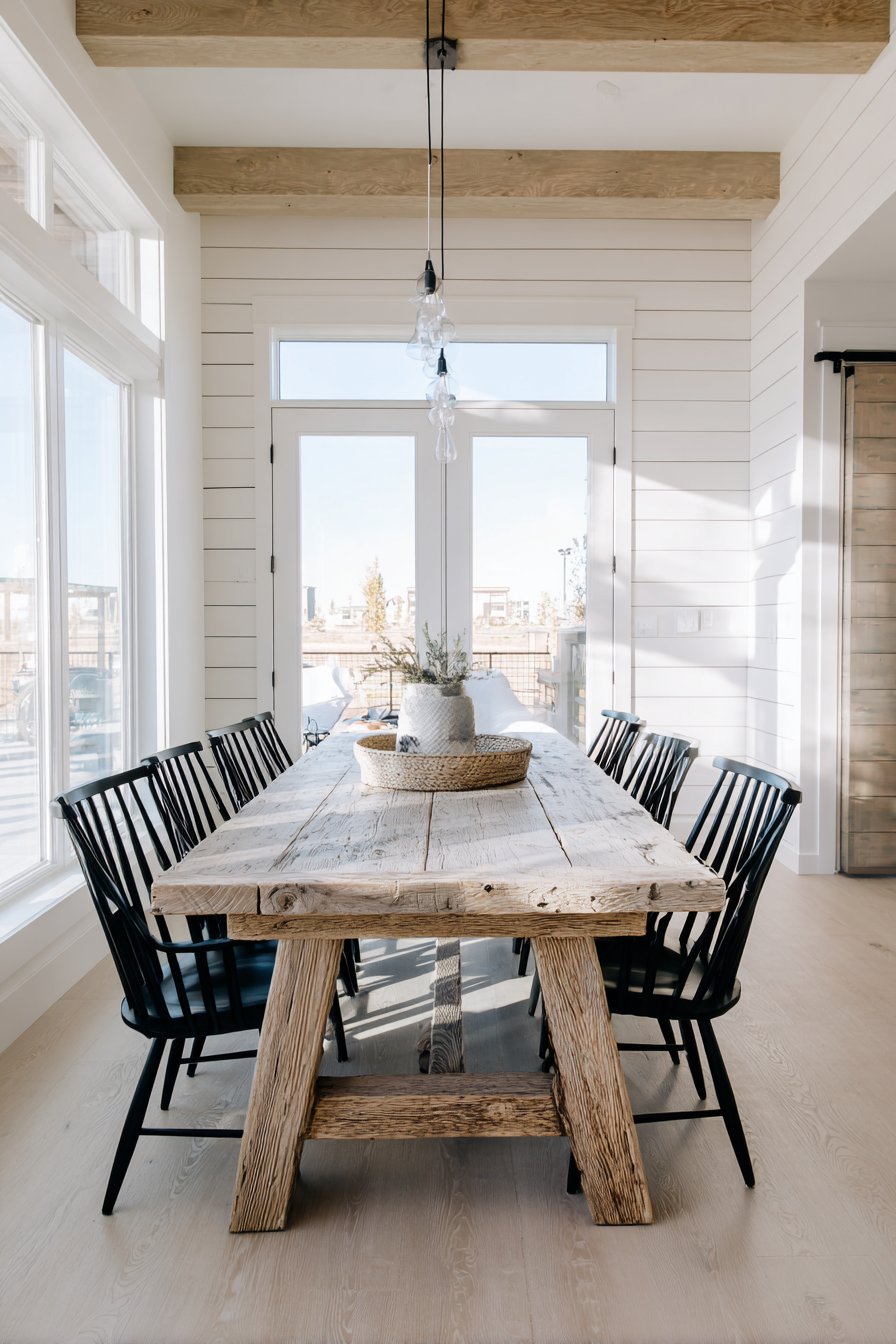
This dining set idea exemplifies how modern farmhouse has evolved beyond early iterations that sometimes veered toward overwrought rusticity. Contemporary interpretation maintains farmhouse elements—reclaimed wood, shiplap, vintage-inspired lighting—while editing away potential clutter and countryside kitsch. The black chairs transform what might otherwise read as purely rustic into something more sophisticated and current. Professional photography emphasizes the balance between rustic materials and clean contemporary lines, showing how this hybrid style creates spaces feeling both grounded and fresh.
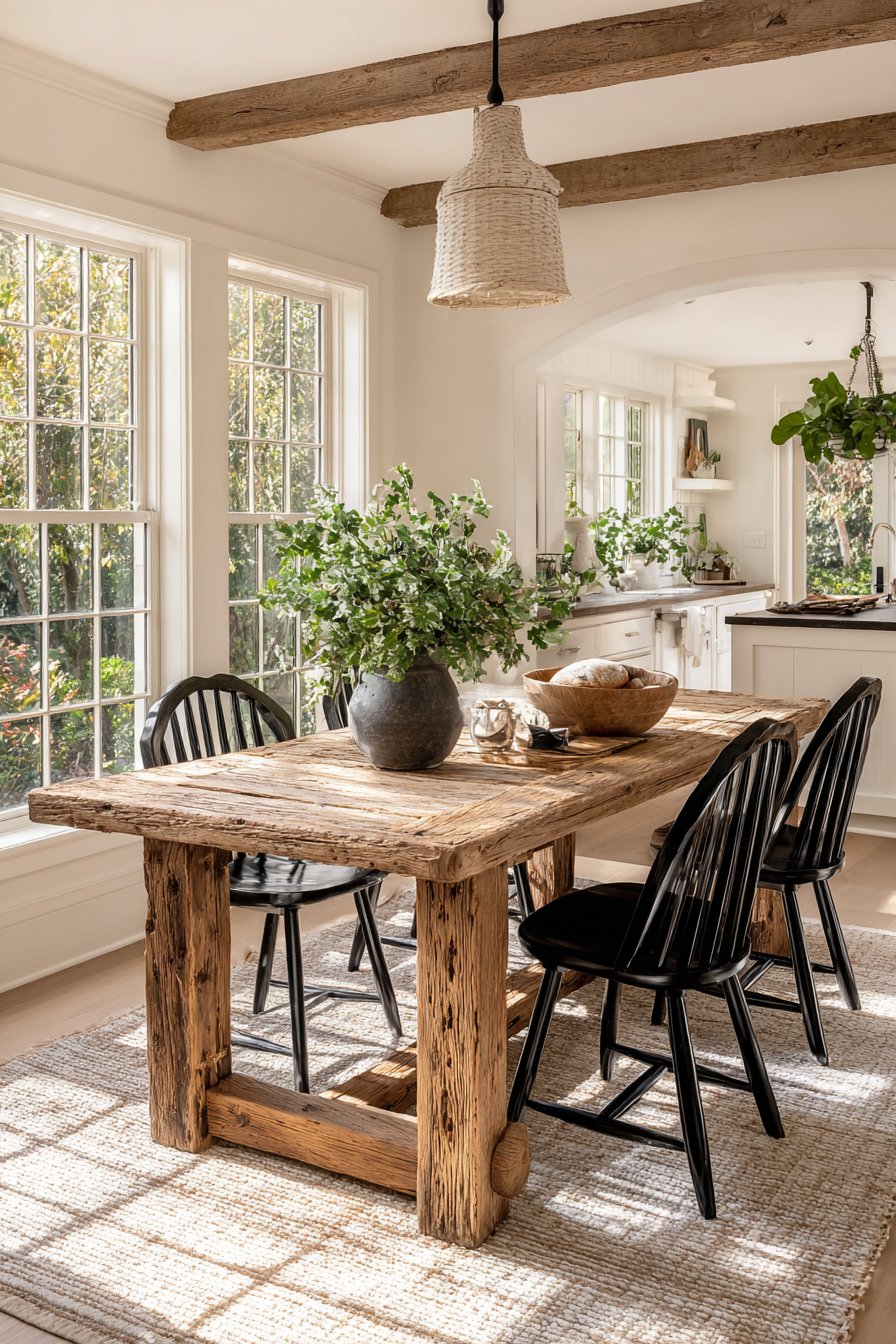
Modern farmhouse dining strategies: pair authentic rustic materials like reclaimed wood with contemporary forms and clean lines, use black accents to add sophistication and prevent “country cute” aesthetics, maintain predominantly neutral color palette with wood tones adding warmth, select vintage-inspired rather than reproduction pieces for authentic character, keep surfaces relatively clear and avoid decorative overload.
14. Extendable Versatility for Adaptable Living
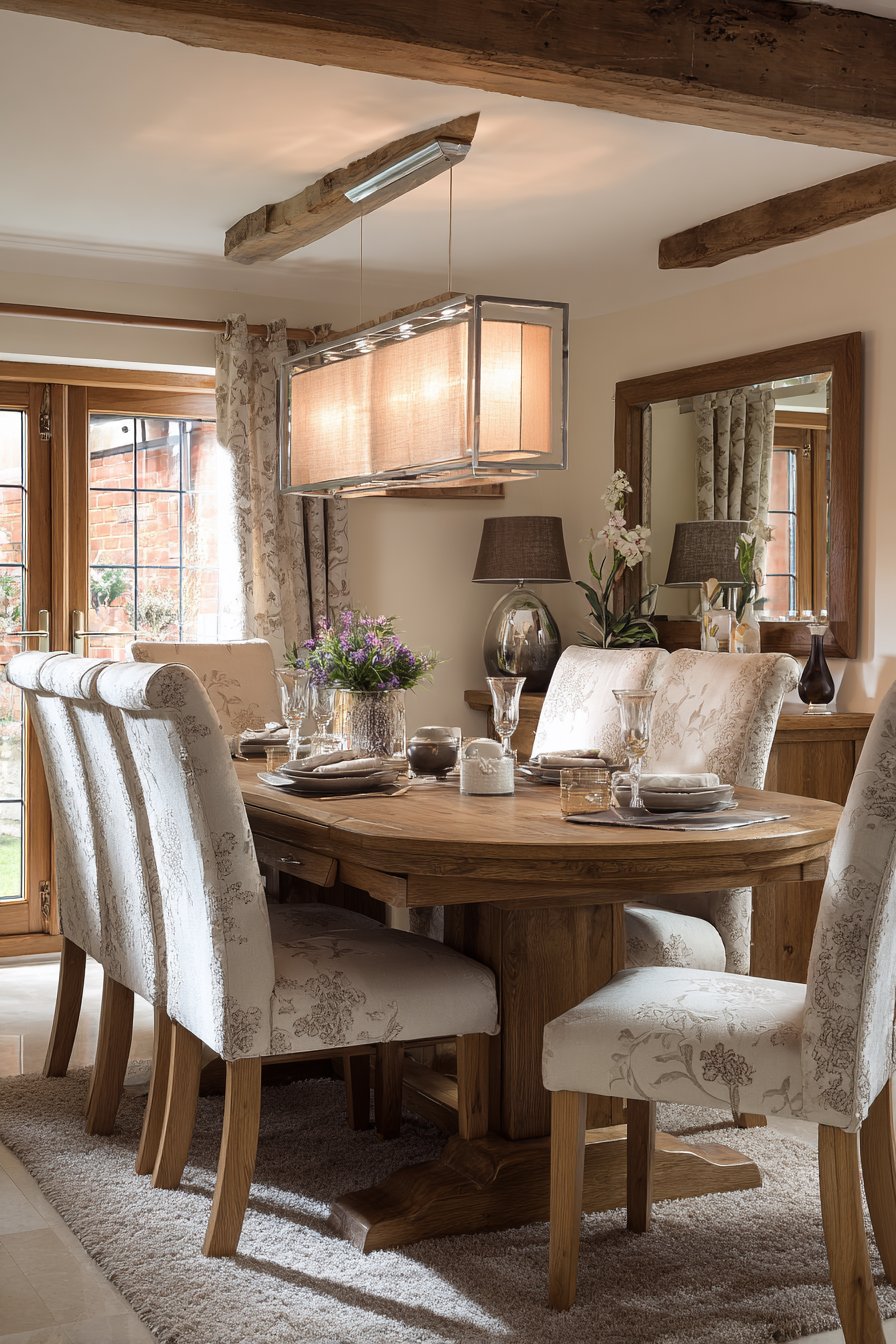
An oval dining table in medium oak with concealed butterfly leaf mechanism demonstrates how smart engineering solves practical challenges elegantly. In its compact configuration, the table seats four to six comfortably for everyday family meals, maintaining reasonable footprint that doesn’t overwhelm smaller dining areas. When guests arrive, the butterfly leaf stored within the table’s body extends the surface to accommodate eight to ten diners, transforming intimate family table into generous entertaining space. Six upholstered side chairs in durable performance fabric provide comfortable seating that withstands regular use and occasional spills—crucial considerations for furniture serving double duty as both everyday and special occasion pieces.
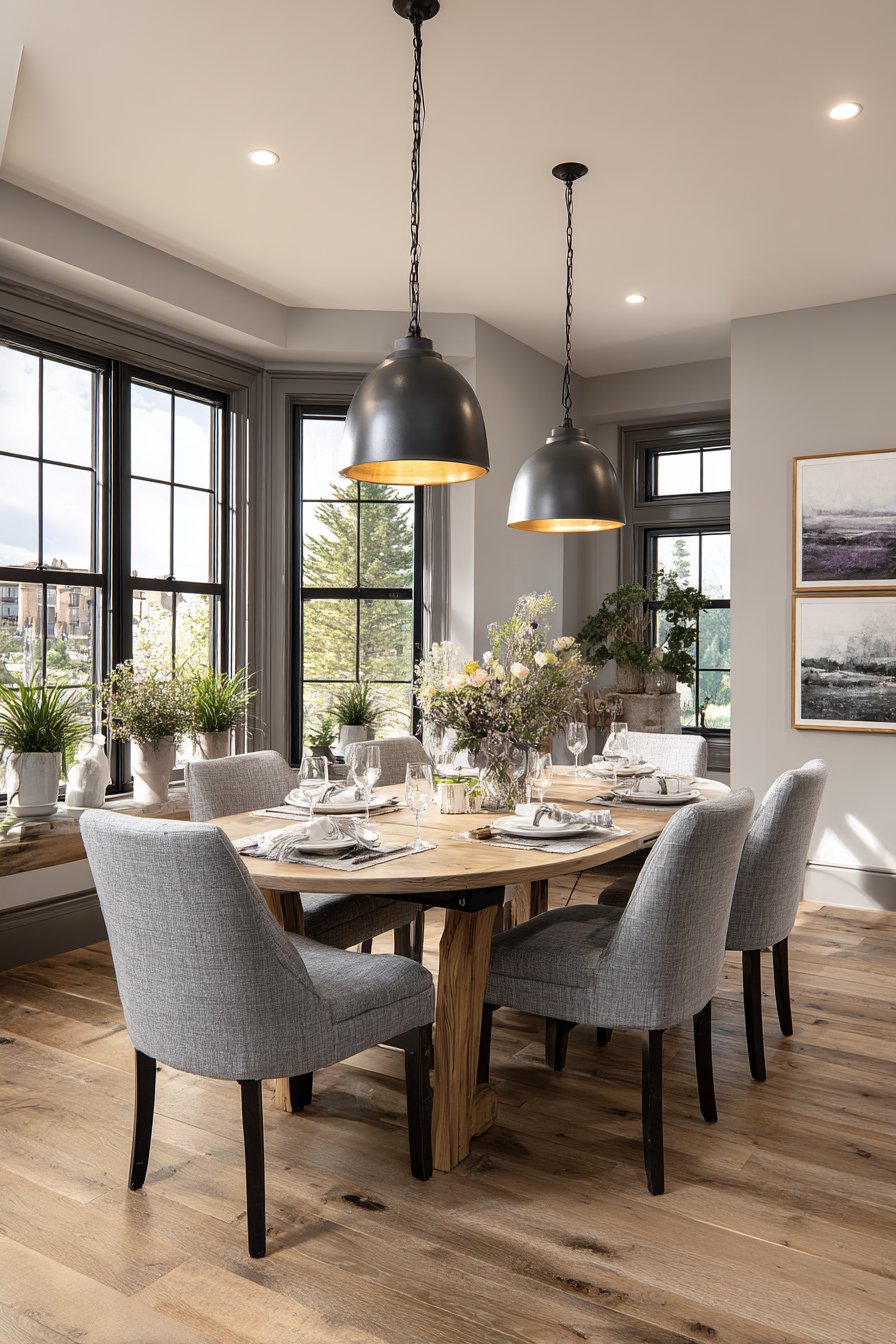
The practical dining room demonstrates both table configurations through thoughtfully arranged photography—wide shots showing the compact version’s efficient space use, followed by detail shots revealing the extension mechanism’s smooth operation and the expanded table’s impressive capacity. This documentation proves particularly valuable for shoppers trying to visualize how adaptable furniture functions in real-world settings. Interior design photography captures the functional innovation while maintaining aesthetic appeal, showing that practical solutions need not compromise visual beauty. Balanced natural lighting illuminates both configurations, demonstrating how the extending table maintains proportional elegance whether compact or expanded.
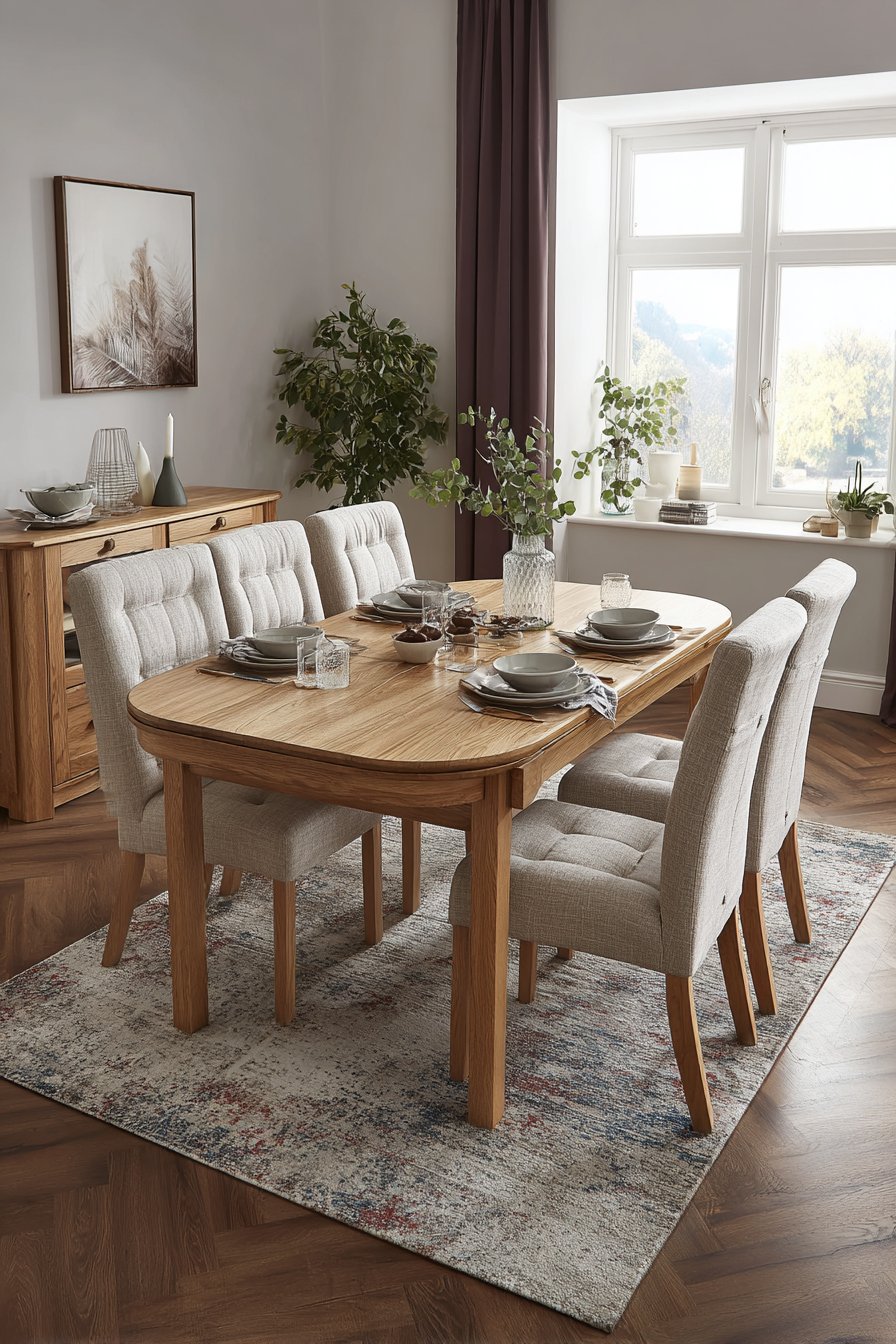
This dining set idea addresses one of dining furniture’s most common challenges—balancing everyday practicality with occasional entertaining capacity. Fixed-size tables force homeowners to choose between daily footprint and hosting ability; extending tables eliminate this compromise. The oval shape provides additional advantage—no sharp corners to navigate around in tight spaces, yet more surface area than equivalent round tables. The butterfly leaf mechanism stores internally rather than requiring closet space, ensuring the extra leaf remains accessible when needed rather than forgotten in basement storage.
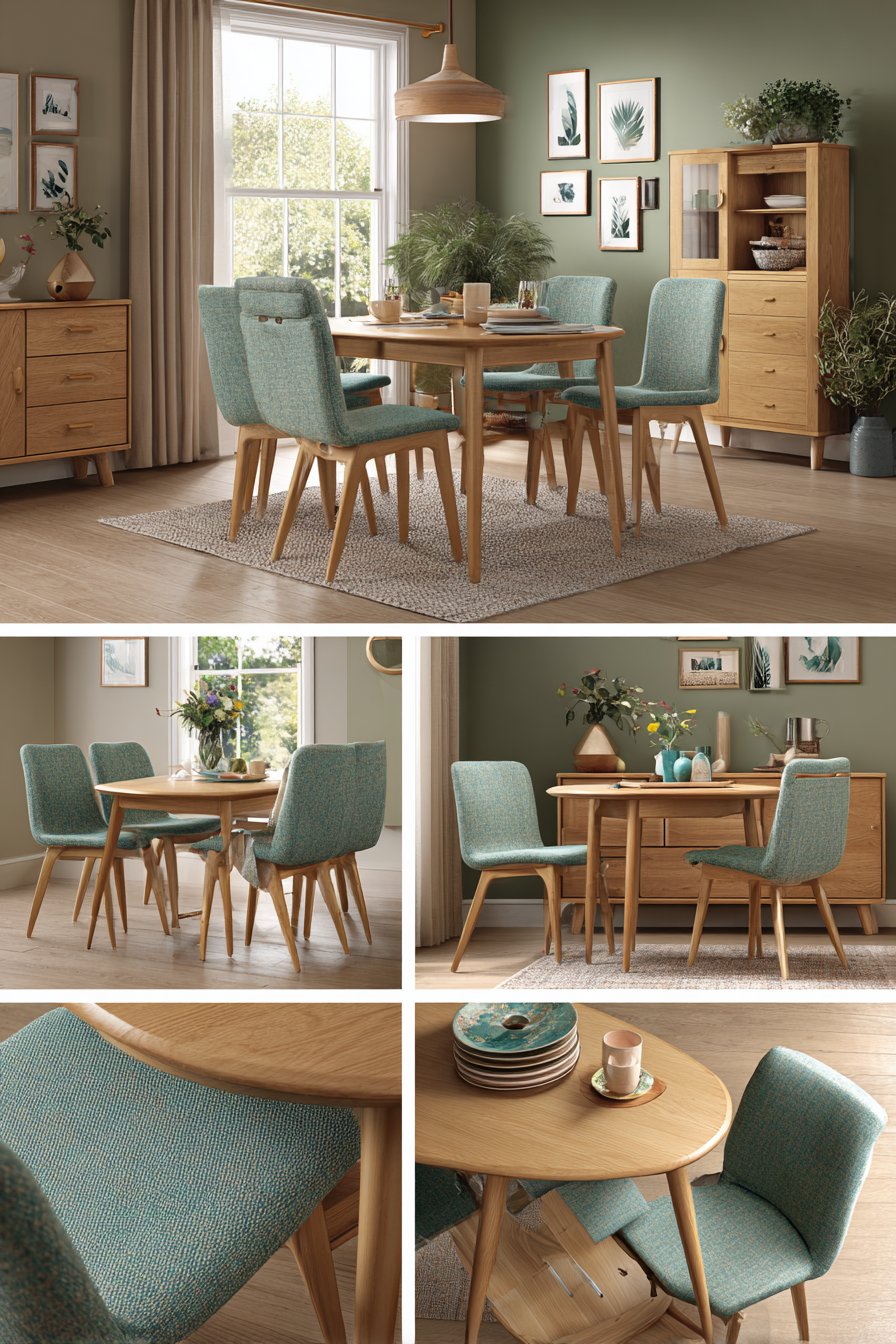
Extendable dining table considerations: test extension mechanism multiple times before purchasing to ensure smooth operation, choose extension designs where added leaf(s) match the table’s finish and grain pattern closely, consider table’s proportions in both configurations to ensure aesthetic appeal whether compact or extended, select durable upholstery fabrics that withstand frequent use since these tables typically see heavier traffic, ensure the extended configuration still allows comfortable room navigation based on your dining area’s dimensions.
15. Formal Mahogany Grandeur for Traditional Elegance
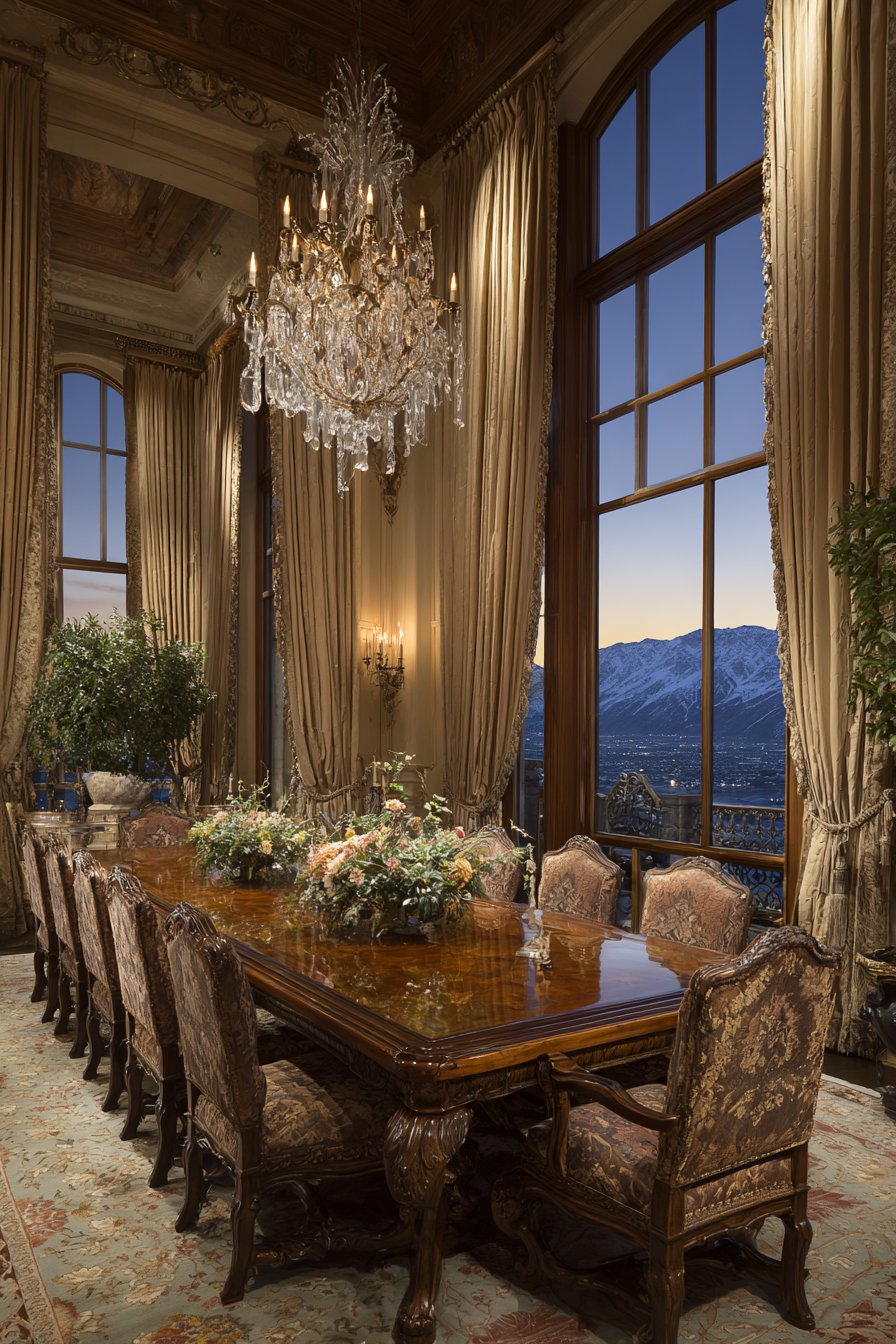
A grand rectangular mahogany dining table with ornate carved legs and high-gloss finish commands attention with unapologetic formality and classical beauty. The rich reddish-brown wood tones glow with warmth, their depth enhanced by hand-rubbed finish that creates glass-like surface. Intricate carvings on the table legs display masterful craftsmanship—perhaps acanthus leaves, scrollwork, or reeded details that reference classical architectural orders. Ten upholstered dining chairs with carved wooden frames echo the table’s ornamental language, their damask fabric in traditional patterns providing luxurious seating. The substantial seating capacity indicates this dining set’s purpose—hosting formal dinner parties, holiday gatherings, and celebrations requiring impressive settings.
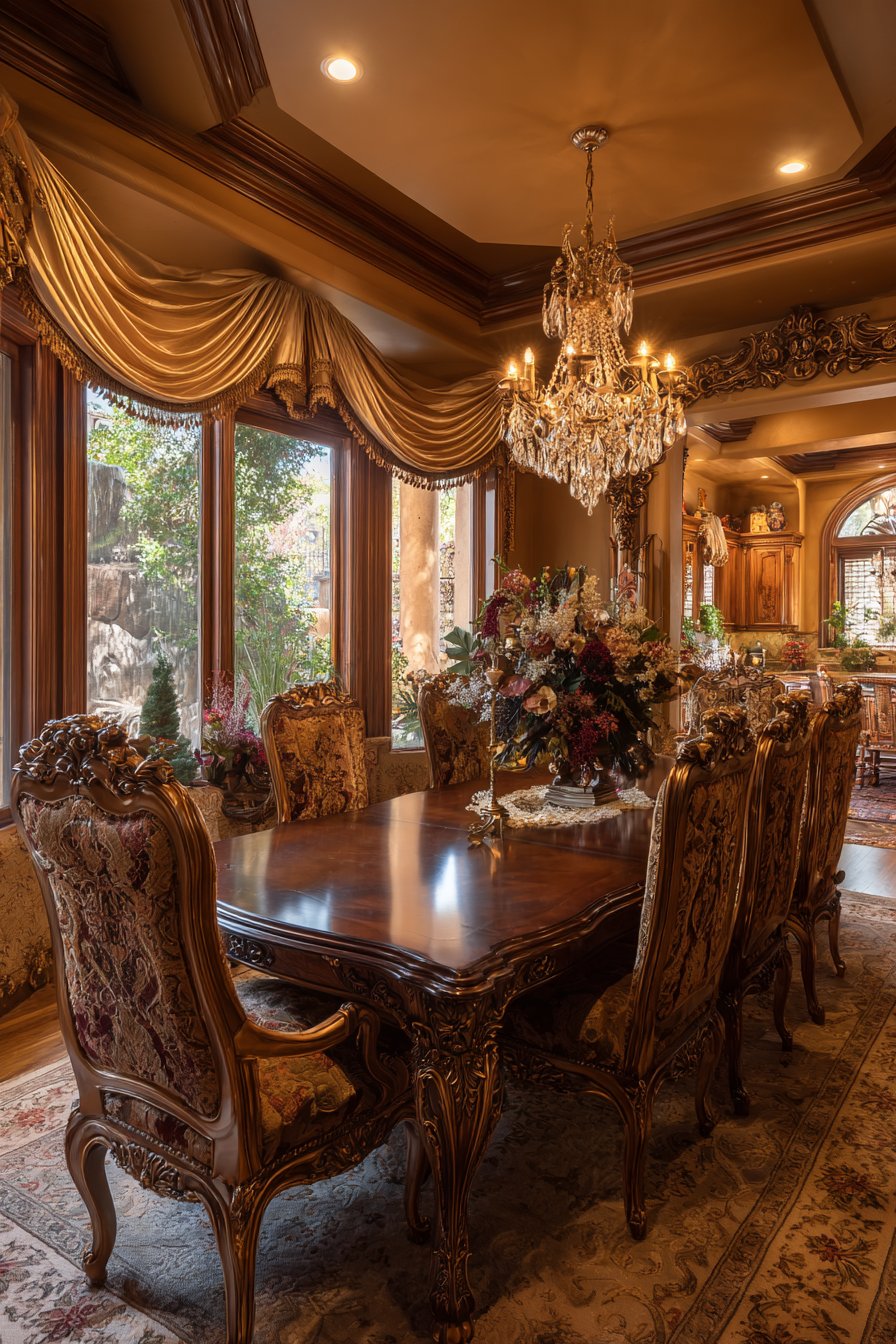
A crystal chandelier suspended from the ceiling’s center provides sparkling focal point that draws eyes upward while casting prismatic light across the polished mahogany surface. The chandelier’s multiple tiers and abundant crystal drops create sculptural presence proportional to the grand table beneath. Silk drapes in rich colors—perhaps burgundy, forest green, or gold—frame tall windows, their luxurious fabric and formal treatments reinforcing the room’s elegant atmosphere. Professional interior photography captures rich wood tones, elegant proportions, and luxurious material details under warm ambient lighting that emphasizes the space’s traditional formal character.
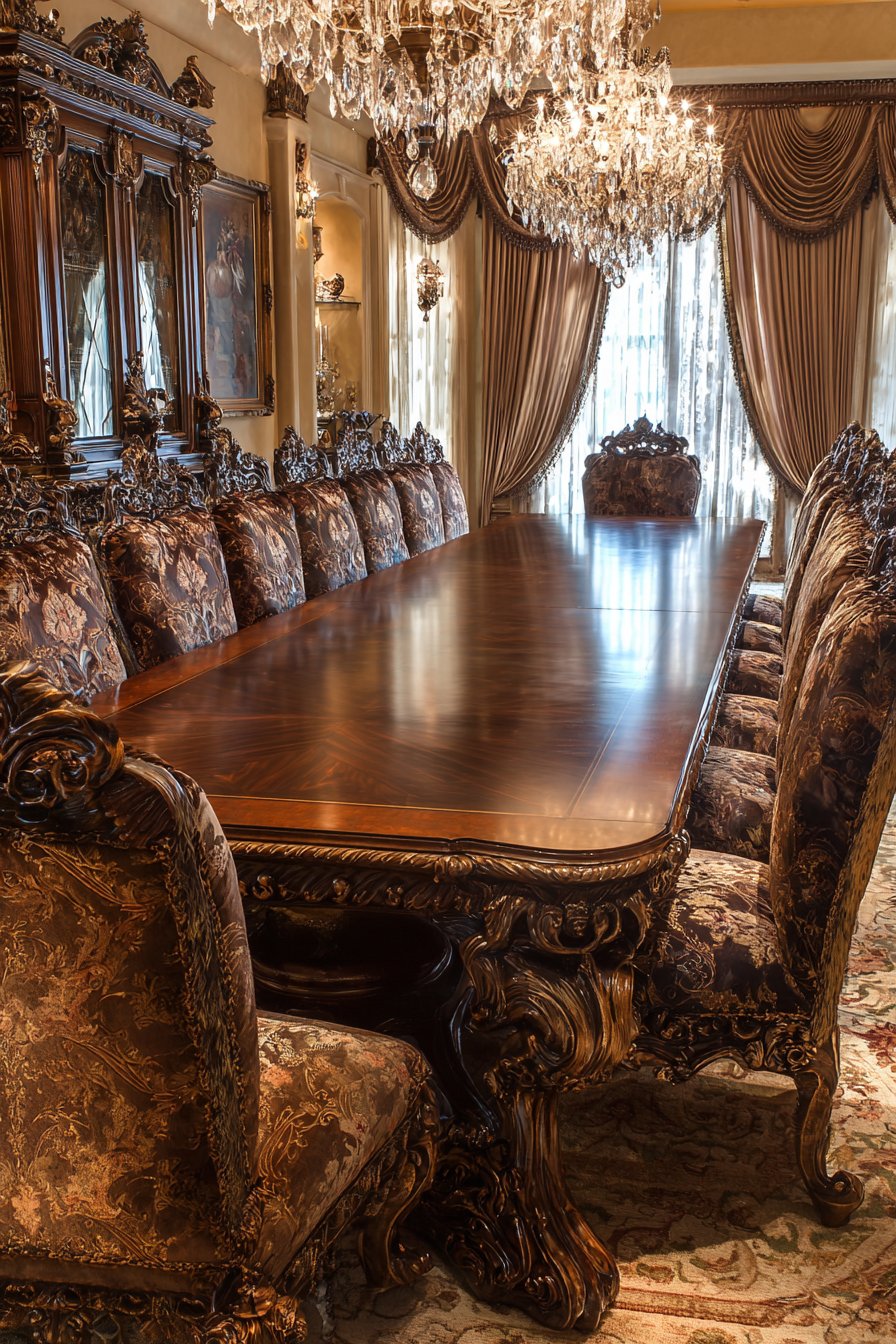
This dining set idea suits those who appreciate traditional elegance and enjoy hosting formal entertaining. The mahogany table’s high-gloss finish requires maintenance—regular dusting, periodic polishing—but rewards care with lustrous beauty that improves over decades. Carved details demonstrate quality craftsmanship increasingly rare in modern mass production. The damask upholstery’s formal patterns and silk-like sheen elevate everyday meals to special occasions, though practical homeowners might consider stain-resistant fabric treatments or removable seat covers for family dining.
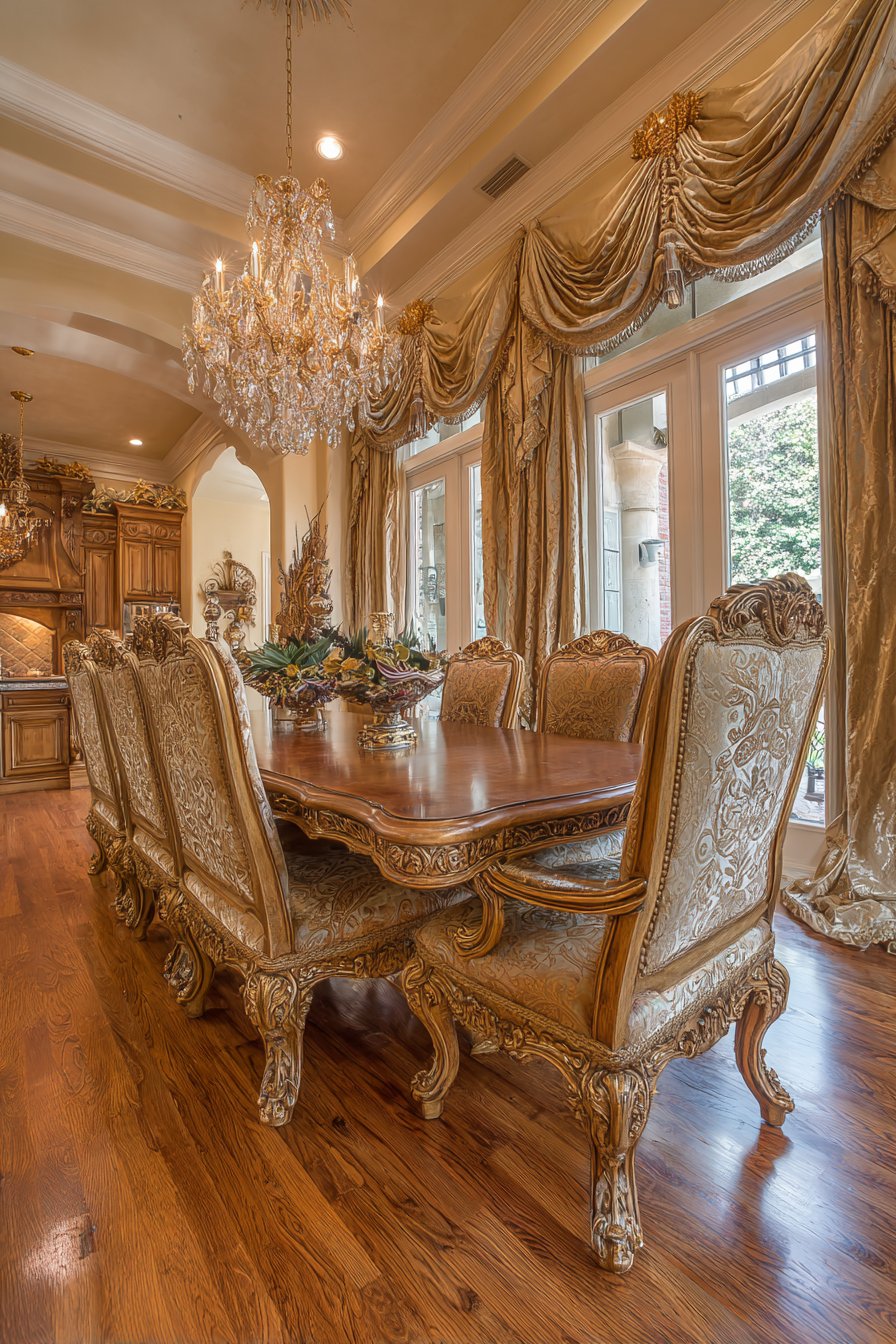
Formal dining room design principles: invest in quality wood furniture with proper joinery and finishing that will last generations, balance ornate furniture with simpler wall treatments to prevent overwhelming visual clutter, incorporate multiple lighting sources including statement chandelier and dimmer controls for adjustable ambiance, select window treatments in luxurious fabrics with formal construction like pinch pleats or swags, maintain proper table settings and linens to honor the furniture’s formal character.
16. Bistro Charm for Intimate Dining Moments
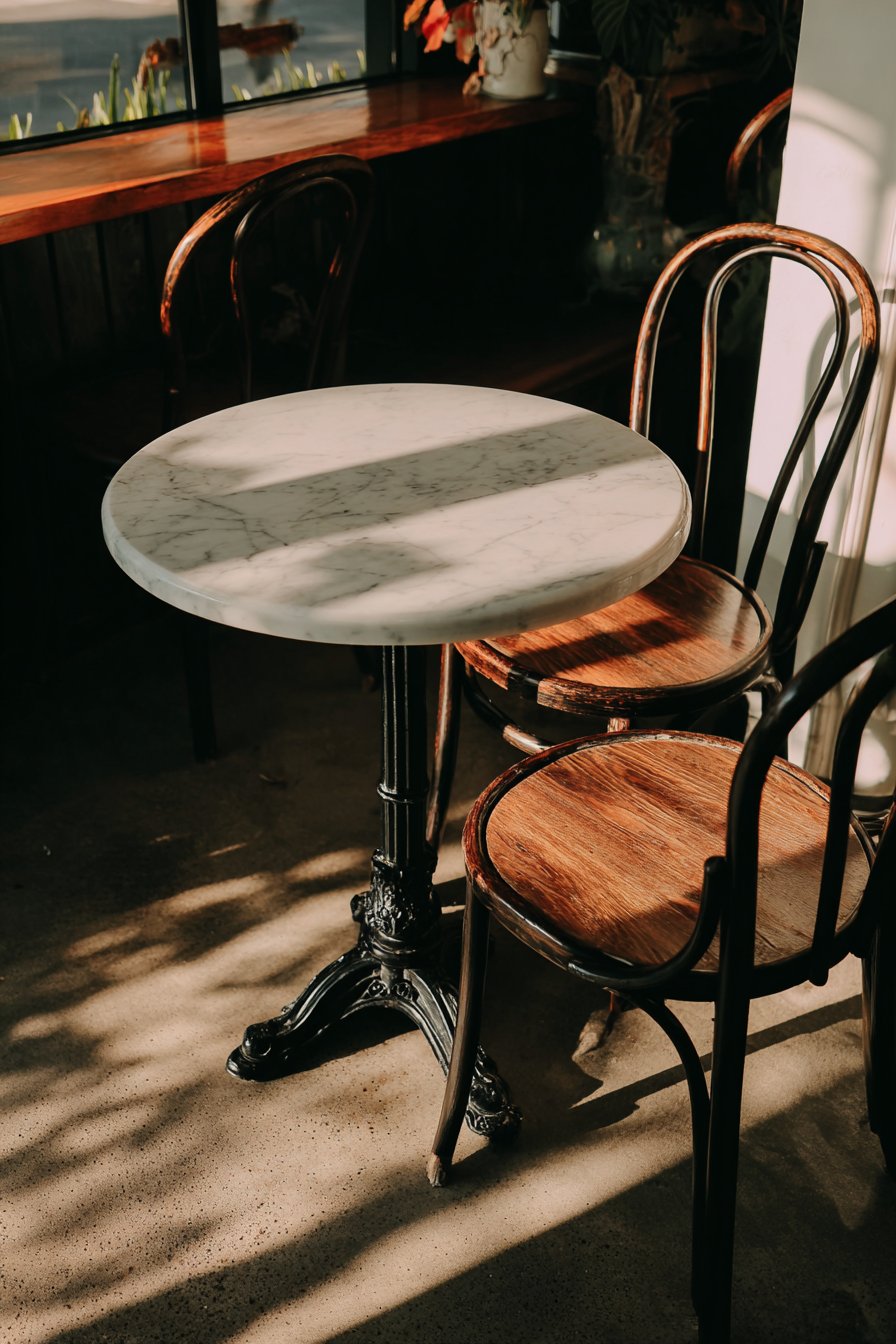
A compact round café table featuring black metal base and white marble top captures European bistro romance in residential scale. The petite proportions—typically 24-30 inches in diameter—create intimate dining experience perfect for morning coffee, light lunches, or romantic dinners for two. The white marble’s natural veining provides visual interest within the limited surface area, while the black metal base’s slim profile maintains the furniture’s delicate appearance. Two bentwood chairs in classic Thonet style complete this quintessentially bistro arrangement, their curved wood forms and caned seats evoking Parisian cafés where philosophers debated and artists sketched.
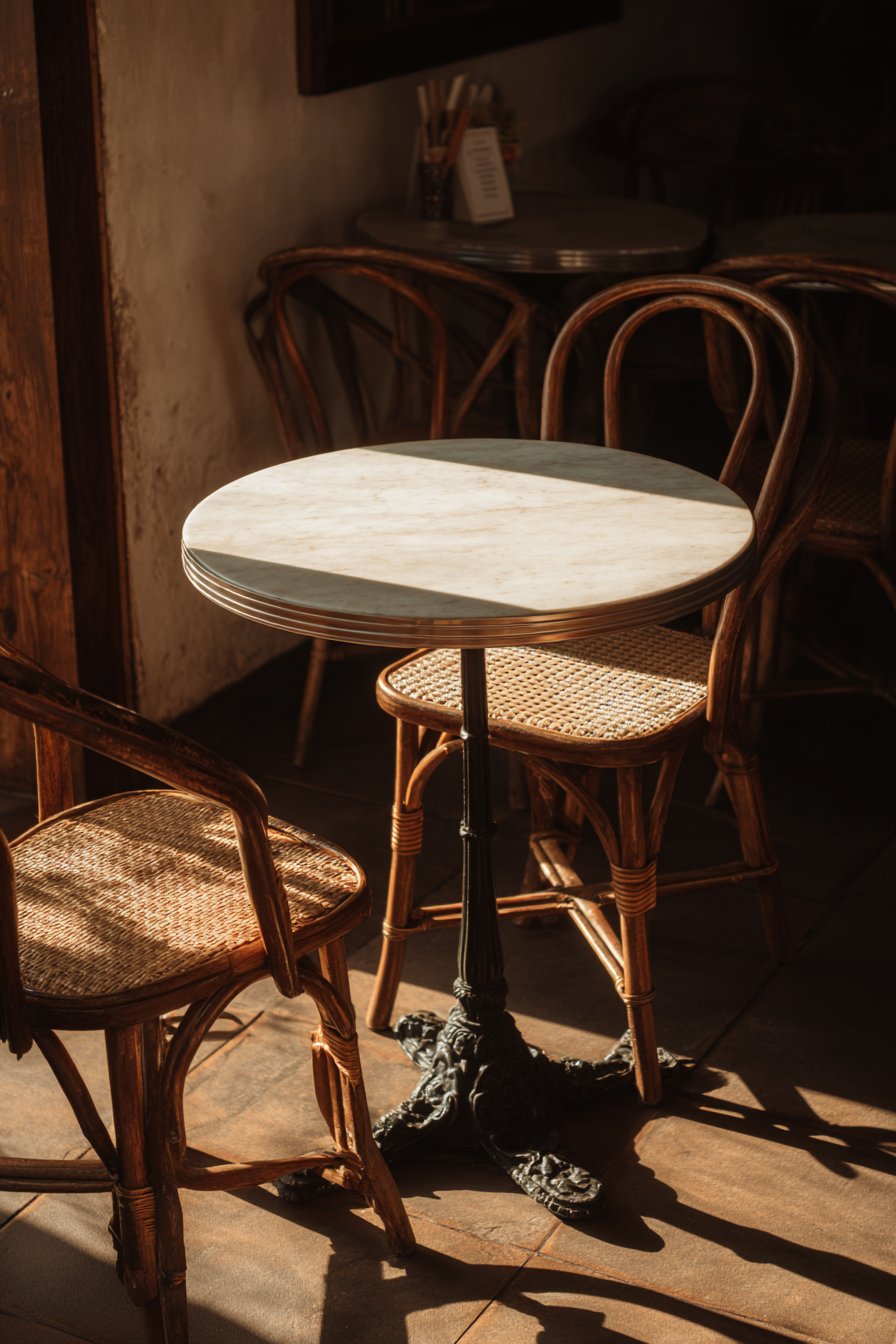
This bistro-style dining set works beautifully in small dining areas or breakfast nooks where larger tables would overwhelm available space. The furniture’s European café ambiance transforms everyday meals into special occasions, encouraging lingering over espresso and croissants while reading morning papers. Natural morning light creates gentle shadows on the marble surface, highlighting the stone’s dimensional veining and the bentwood’s curved forms. Interior design photography emphasizes charming simplicity and space-efficient design, showing how compact furniture creates functional dining areas in surprisingly small footprints while maintaining aesthetic appeal.
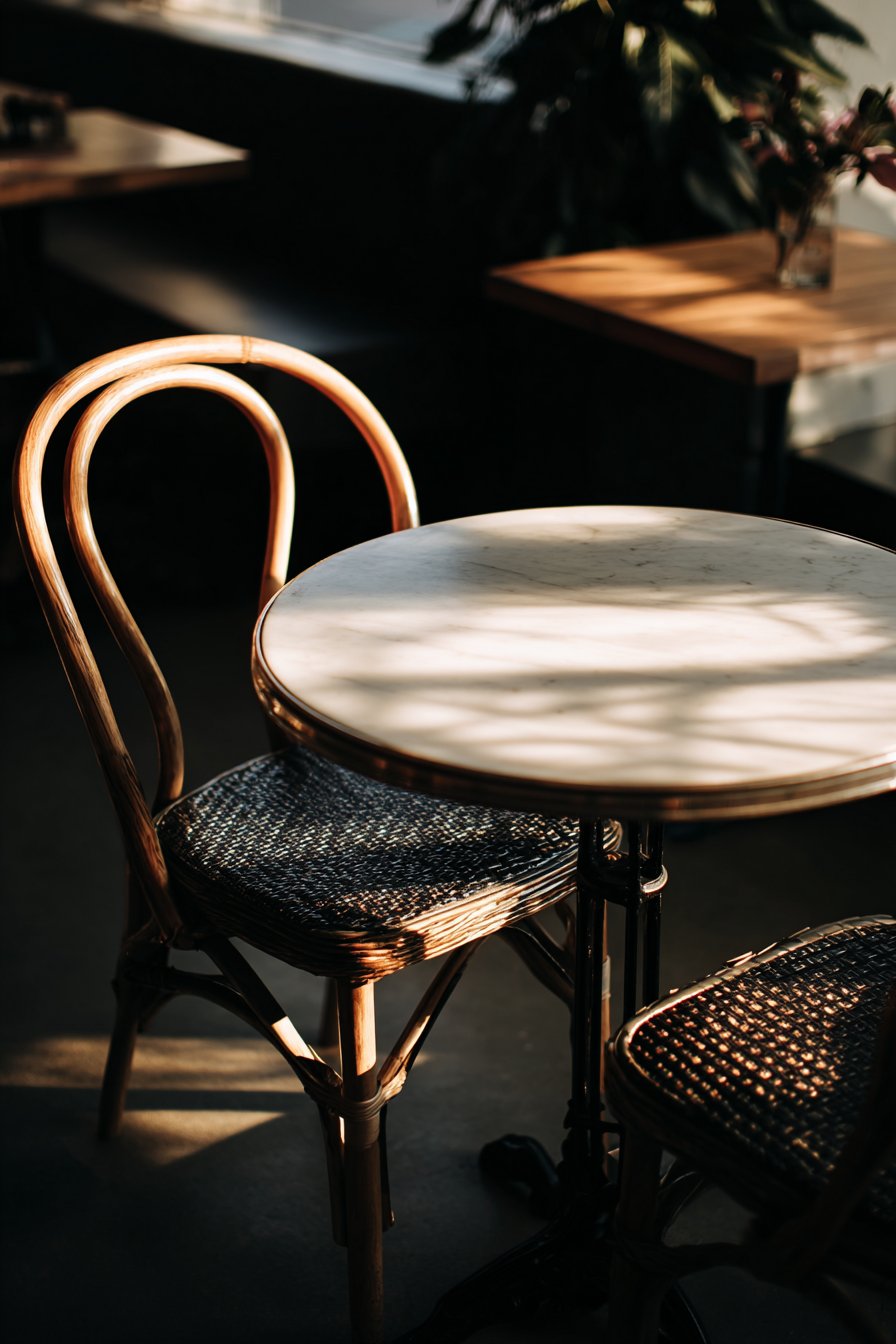
This dining set idea proves that square footage limitations need not compromise dining pleasure or style. The bistro table’s small scale makes it ideal for studio apartments, breakfast nooks, or outdoor spaces like covered balconies or patios. Marble’s natural cooling properties make it particularly pleasant for outdoor use in warm climates, while the material’s durability withstands weather exposure better than wood. Bentwood chairs, while appearing delicate, offer remarkable strength through steam-bending technology perfected over 150 years ago. The classic Thonet design’s longevity—still in production and widely copied—testifies to its timeless appeal and ergonomic success.
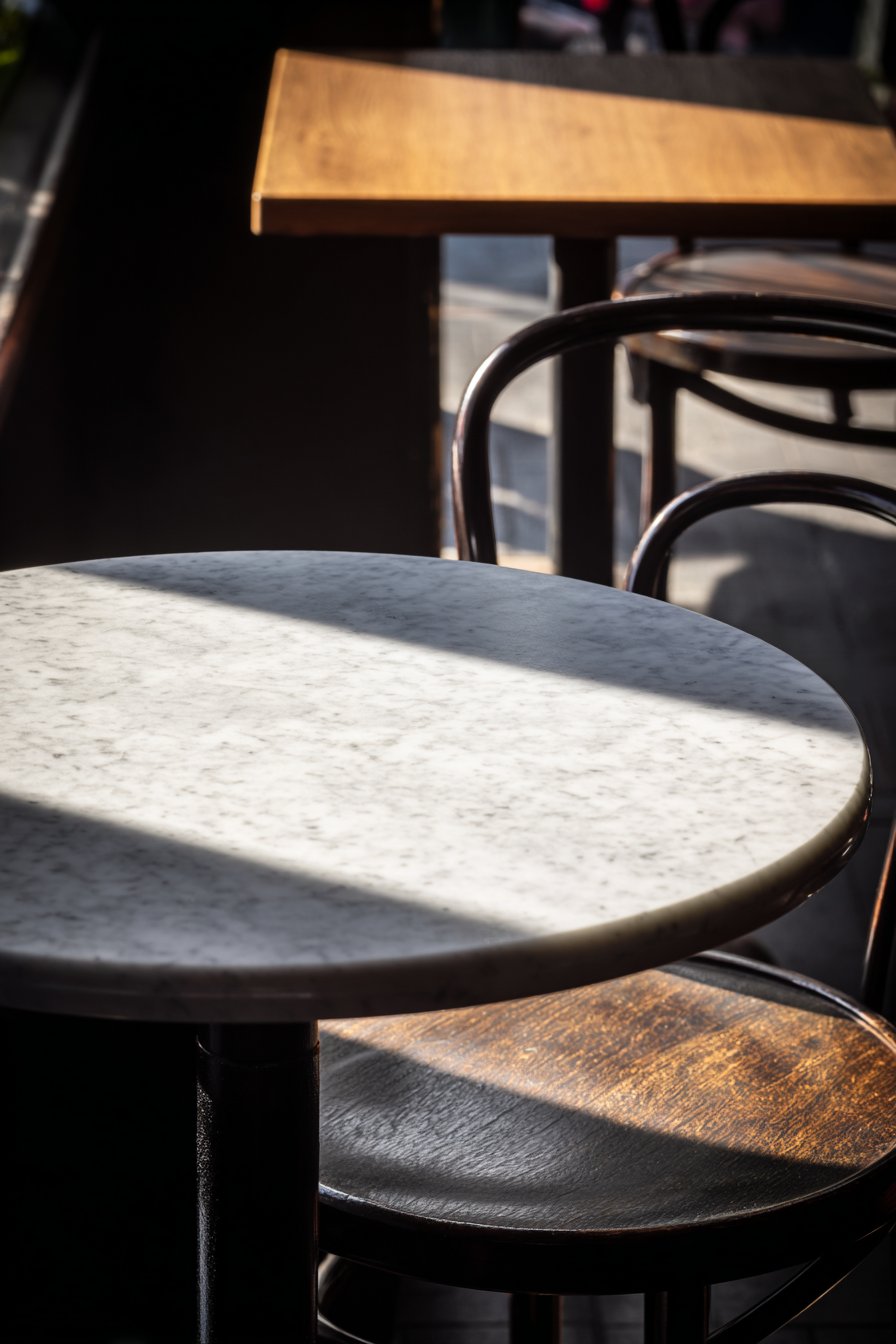
Bistro dining design essentials: choose round tables over square for better flow in tight quarters, select pedestal bases rather than four legs to maximize flexibility in chair placement, embrace the intimate scale as asset rather than limitation, keep tabletop styling minimal with perhaps single small vase or candle, consider outdoor-appropriate materials like metal and sealed marble if using on covered patios or balconies.
17. Indoor-Outdoor Teak and Wicker Versatility
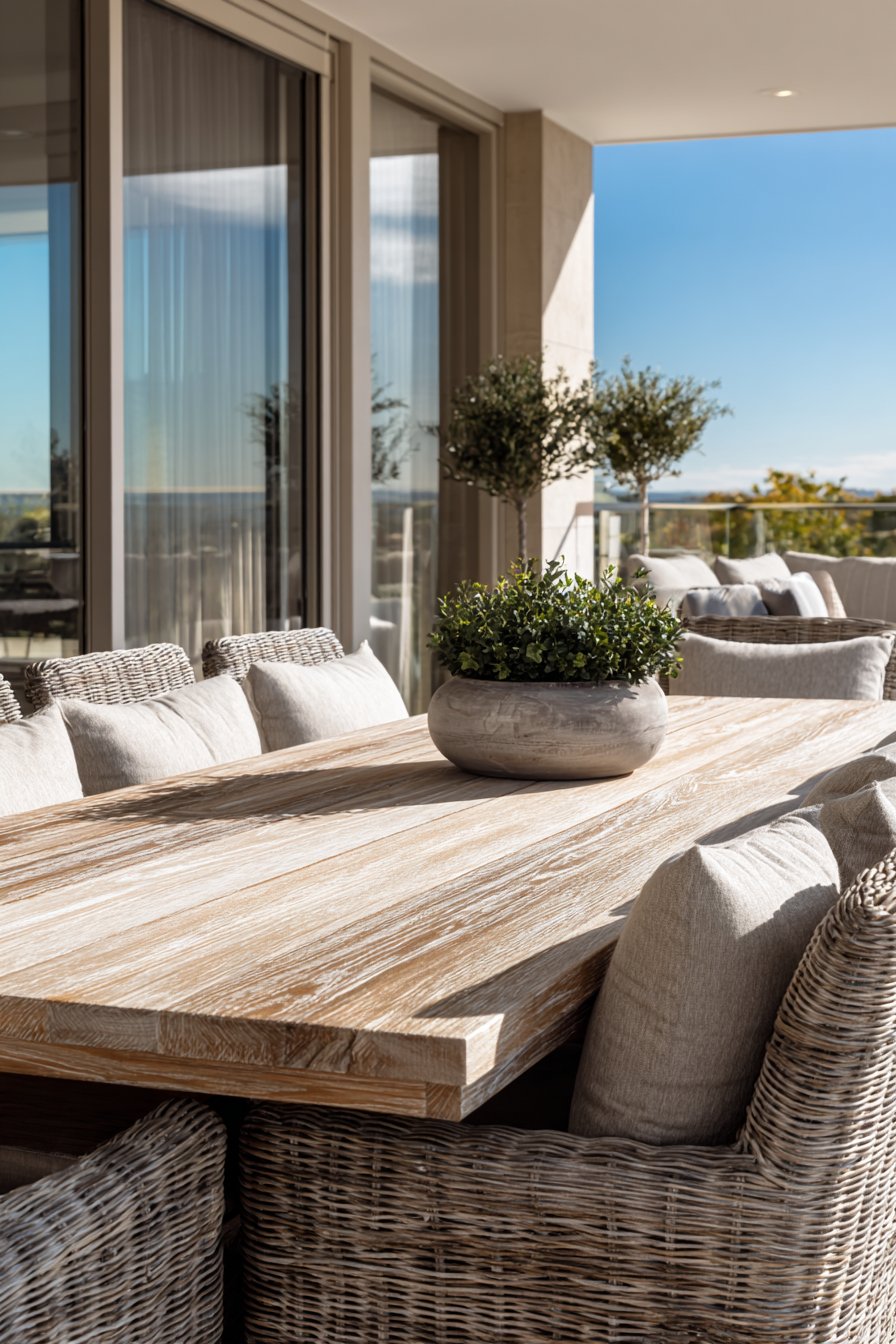
A teak wood dining table with natural oil finish displays beautiful grain patterns while offering exceptional durability in transitional indoor-outdoor spaces. Teak’s natural oils provide inherent weather resistance—the wood weathers to attractive silver-gray patina if left untreated outdoors, or maintains warm honey tones with periodic oil application. The substantial rectangular table seats six to eight, providing generous entertaining capacity for alfresco dining or casual family meals. Weather-resistant wicker dining chairs with comfortable cushions in neutral tones surround the teak table, their woven texture adding visual interest while synthetic wicker materials ensure longevity despite moisture exposure.
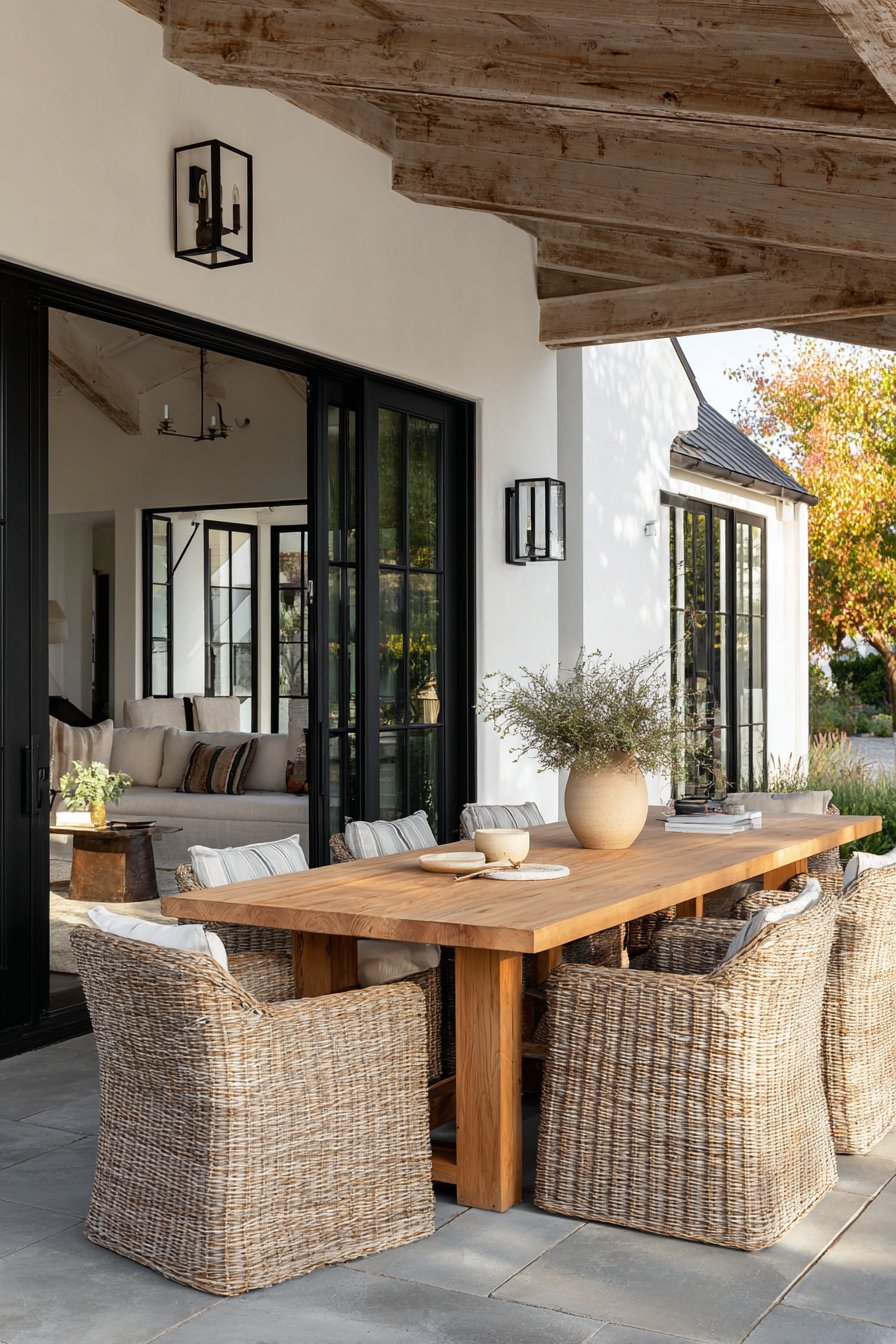
The transitional space takes advantage of sliding glass doors that blur boundaries between interior dining area and outdoor living space, creating seamless flow perfect for entertaining. Potted plants in various sizes—perhaps olive trees in terracotta planters, herbs in galvanized containers, ornamental grasses in weathered wood boxes—reinforce the indoor-outdoor connection while adding living beauty. Natural daylight showcases the durable materials suitable for dual-purpose use, emphasizing how contemporary design embraces spaces that function flexibly across seasons and occasions. Wide-angle interior photography captures the seamless connection between dining area and outdoor living space, showing how thoughtful furniture selection and space planning create cohesive environments.
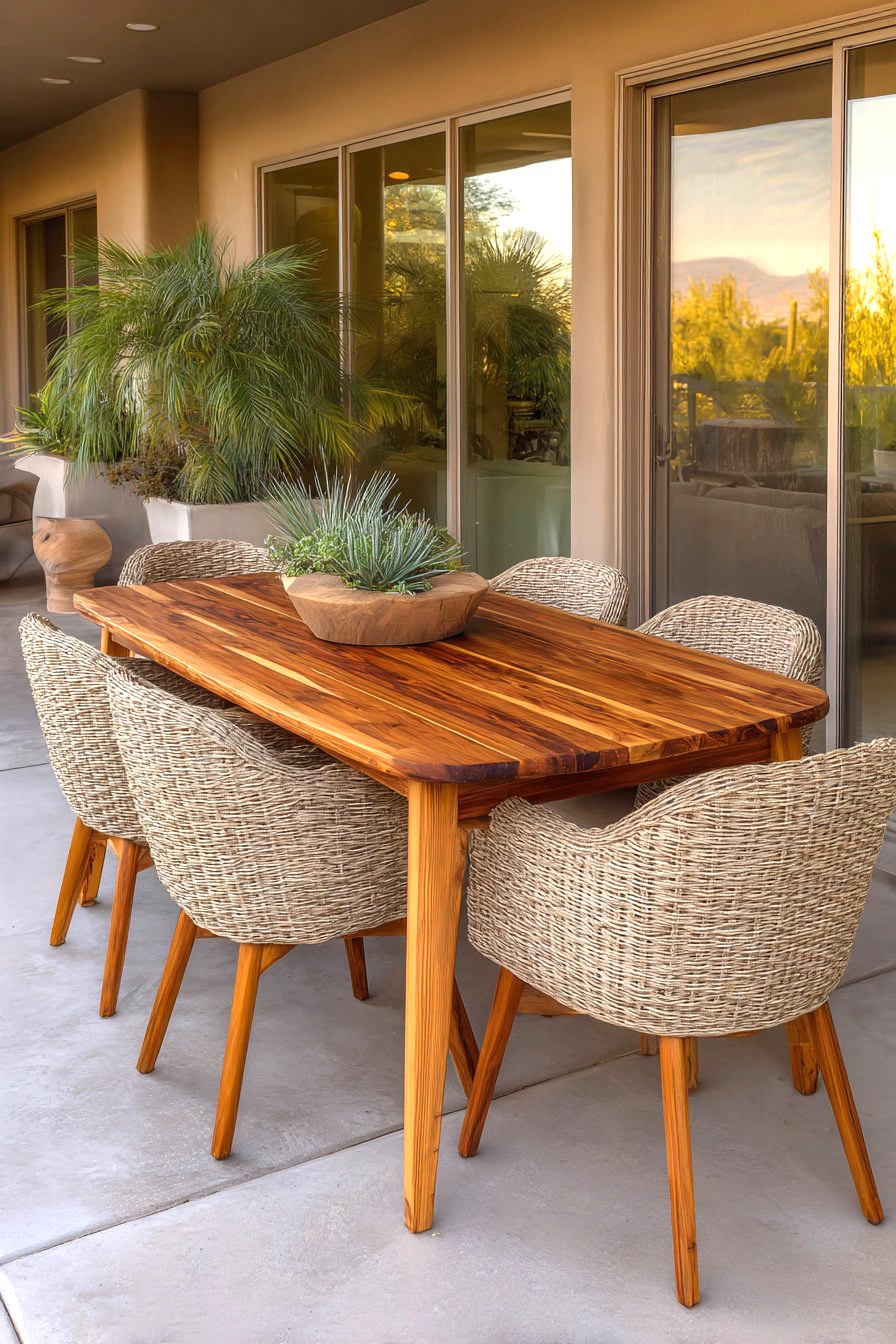
This dining set idea addresses growing interest in indoor-outdoor living and flexible use of spaces, particularly relevant in temperate climates where outdoor dining extends across many months. Teak’s beauty and durability make it ideal investment for quality-conscious homeowners—properly maintained teak furniture lasts decades and develops character with age. Synthetic wicker’s realistic appearance fools the eye while its weather-resistance eliminates concerns about moisture damage plaguing natural wicker. Cushions in quick-dry foam and fade-resistant outdoor fabrics combine comfort with practical maintenance.
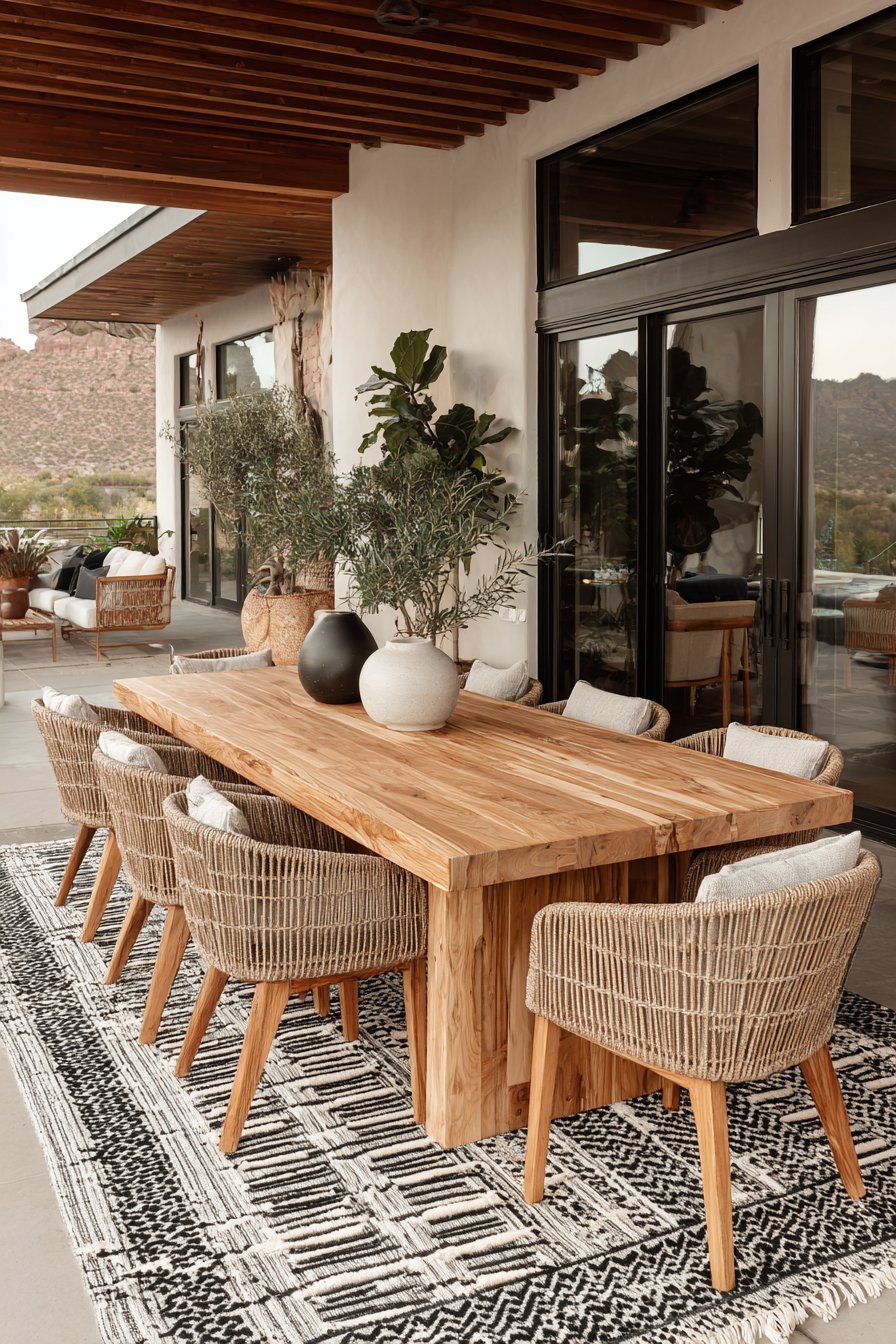
Indoor-outdoor dining considerations: invest in genuine teak or equivalent weather-resistant hardwoods rather than softwoods that deteriorate quickly, choose synthetic wicker over natural for superior weather resistance and longevity, select cushion fabrics specifically rated for outdoor use with UV and moisture resistance, plan for storage or protective covers during harsh weather to extend furniture lifespan, consider the transition space’s exposure to rain, sun, and temperature extremes when selecting materials.
18. Mid-Century Modern Walnut Authenticity
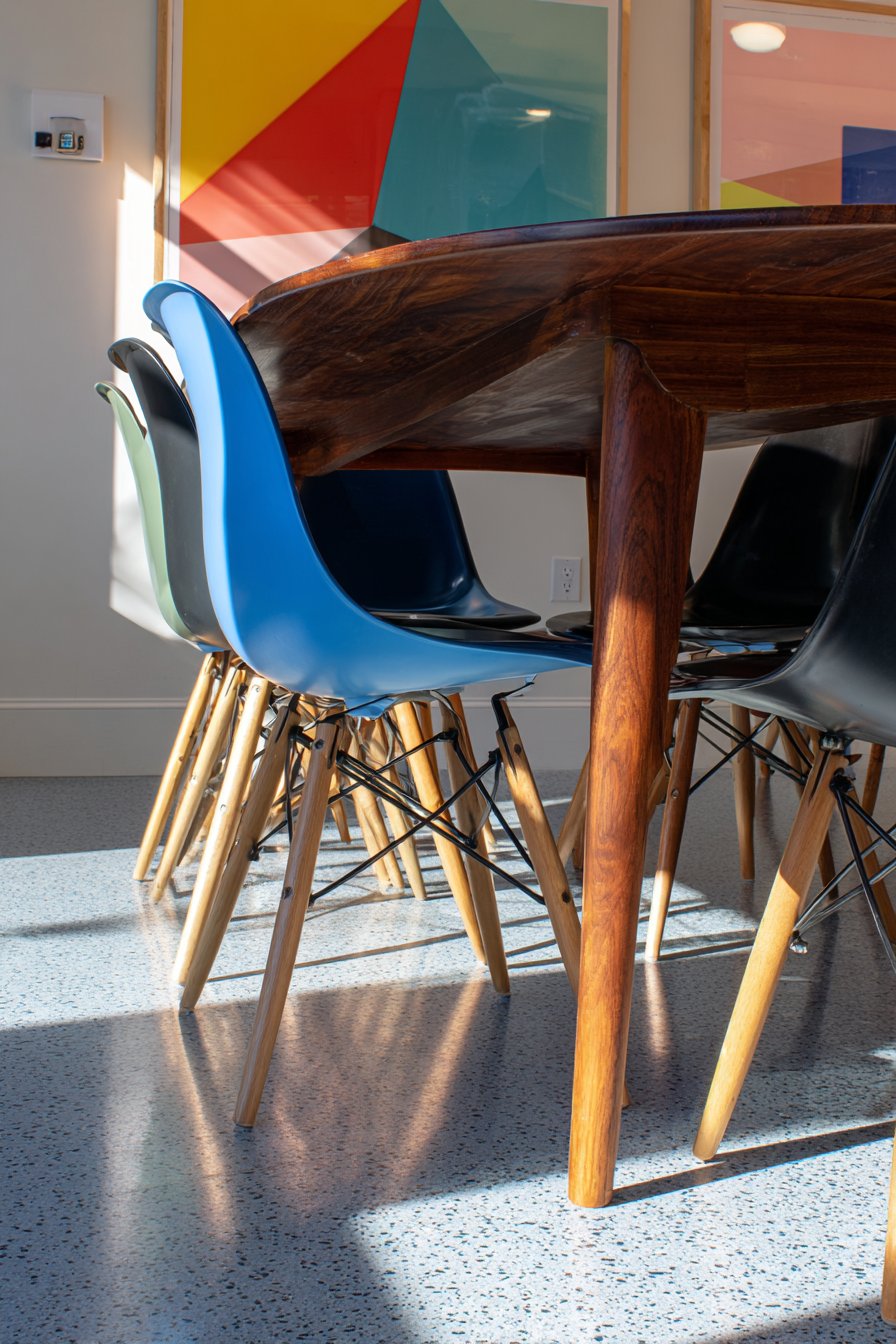
An iconic oval walnut dining table featuring tapered angled legs embodies mid-century modern design’s organic modernism and sculptural sensibility. The oval shape’s gentle curves soften the geometric precision of angled legs, creating harmonious balance between natural and architectural forms. Rich walnut grain flows across the surface, its varied tones ranging from pale sapwood to deep chocolate heartwood creating visual movement. Six molded plywood dining chairs with curved shells and metal legs exemplify mid-century seating innovation—the Eames’ revolutionary technique of molding plywood into three-dimensional forms that follow body contours. The chairs’ metal legs echo the table’s tapered leg profiles, creating visual cohesion while mixed materials add interest.
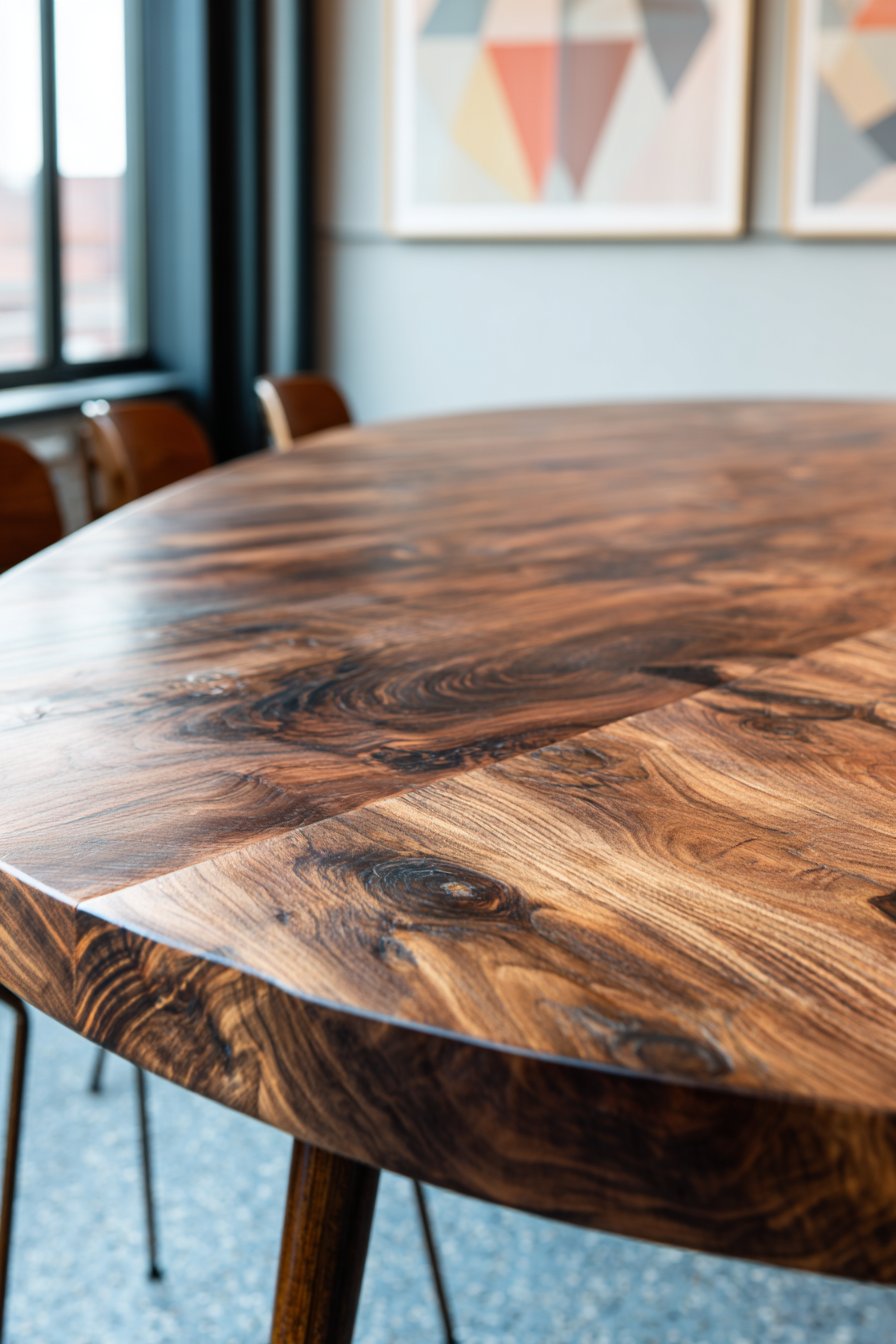
The dining room setting reinforces period authenticity through terrazzo flooring—a quintessentially mid-century material featuring colored chips suspended in concrete matrix, polished to smooth, speckled surface. Abstract geometric artwork on walls references mid-century’s embrace of modern art, its bold forms and saturated colors complementing rather than competing with the furniture’s sculptural presence. Professional photography captures authentic 1950s-60s design aesthetics with attention to period-correct details—the specific leg angles, plywood’s visible lamination, terrazzo’s characteristic speckle pattern—while balanced natural lighting highlights warm wood tones and celebrates the era’s optimistic brightness.
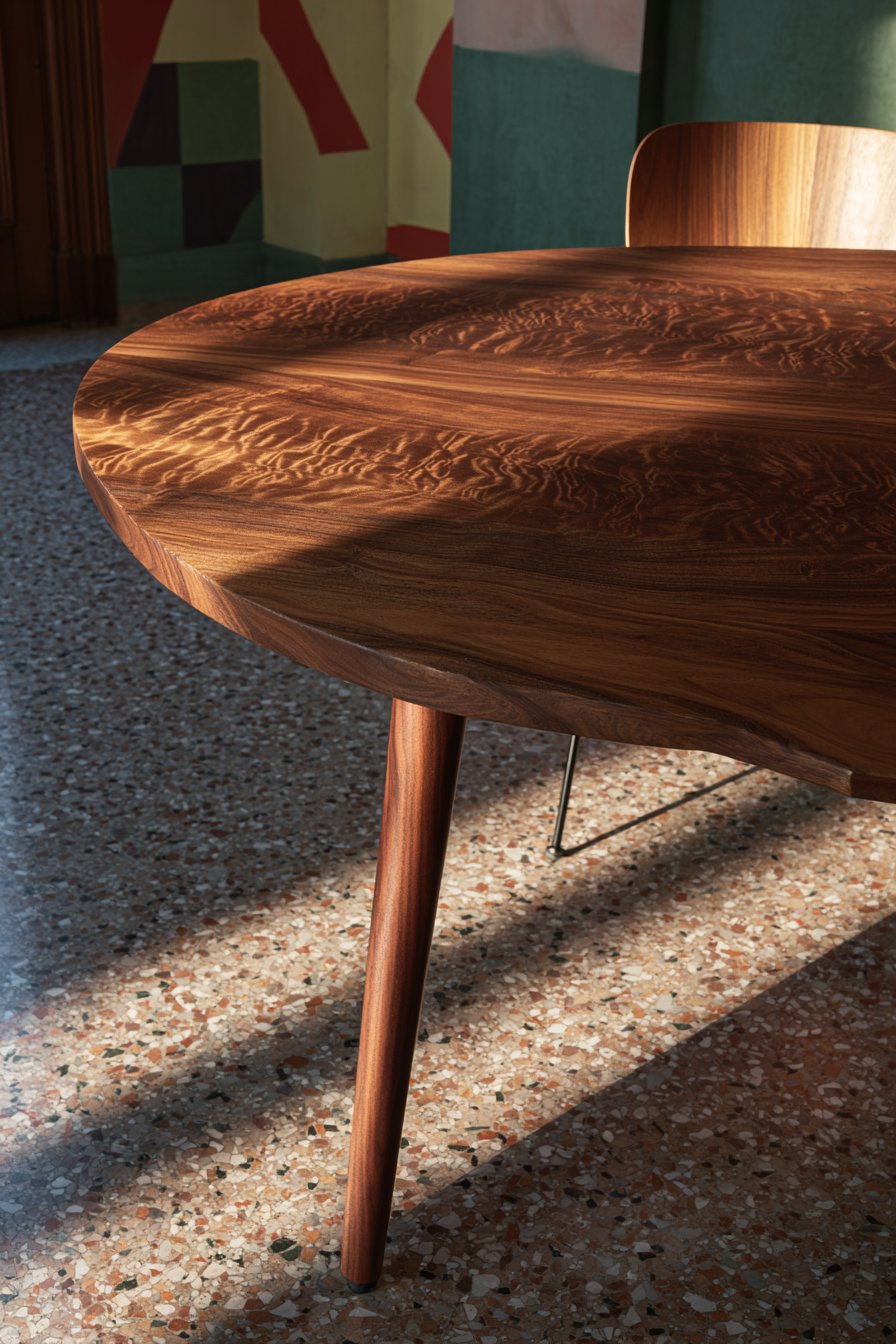
This dining set idea appeals to design enthusiasts who appreciate mid-century modern’s enduring influence and distinctive aesthetic. Authentic vintage pieces command premium prices, while quality reproductions make the look accessible at various price points. The style’s current popularity stems from its successful marriage of beauty and function—these pieces were designed for living, not just looking. Oval tables provide seating flexibility while avoiding sharp corners, molded plywood chairs stack efficiently, and walnut’s durability ensures furniture survives decades of use.
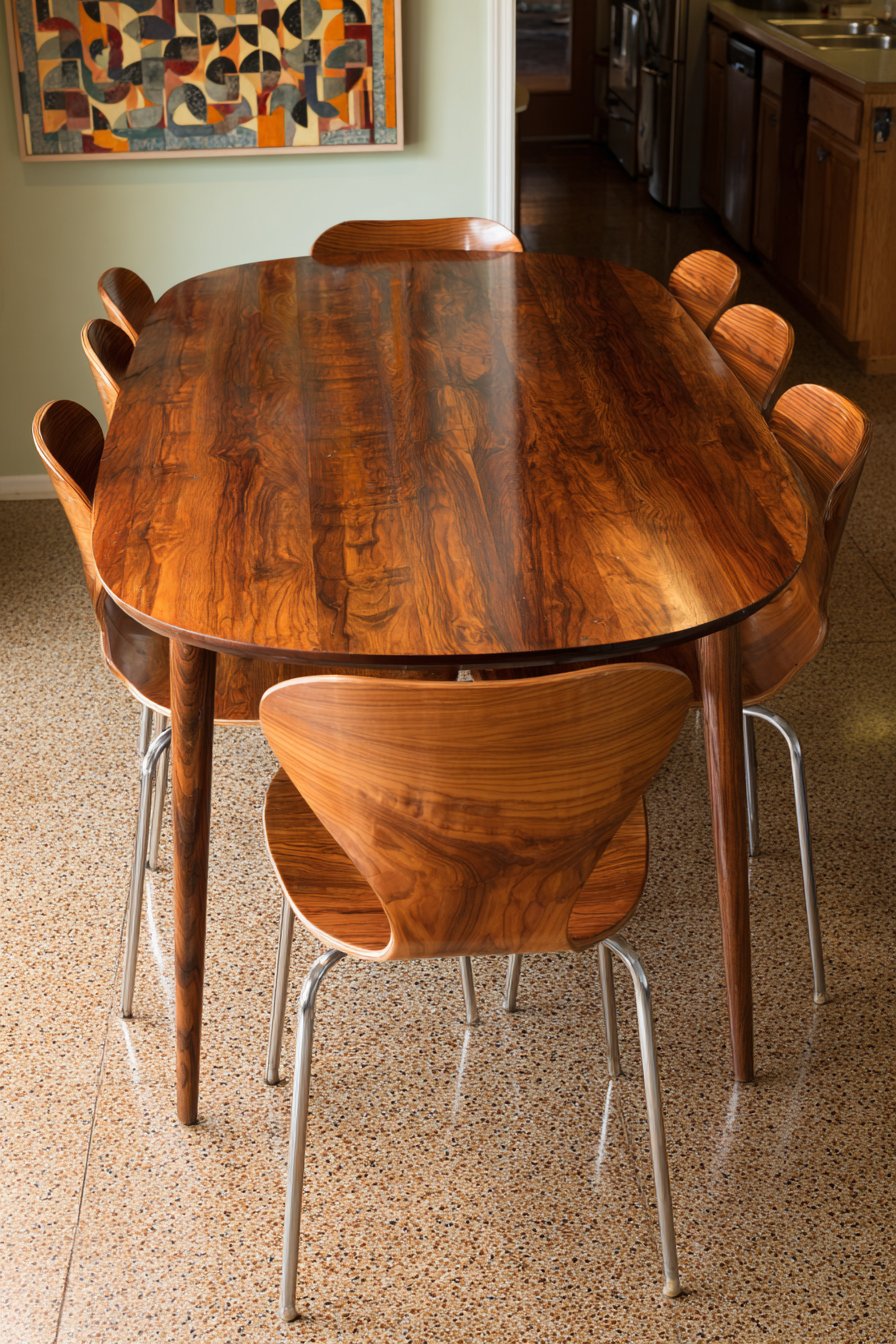
Mid-century modern dining design principles: select furniture with characteristic tapered or angled legs, organic curves, and minimal ornamentation, choose walnut, teak, or rosewood finishes that showcase natural wood grain, incorporate molded plywood or fiberglass chairs in sculptural organic forms, reference period-appropriate colors like avocado, burnt orange, or mustard yellow in accents, display abstract or geometric artwork and ceramics that complement the furniture’s sculptural qualities.
19. Budget-Conscious Pine Practicality
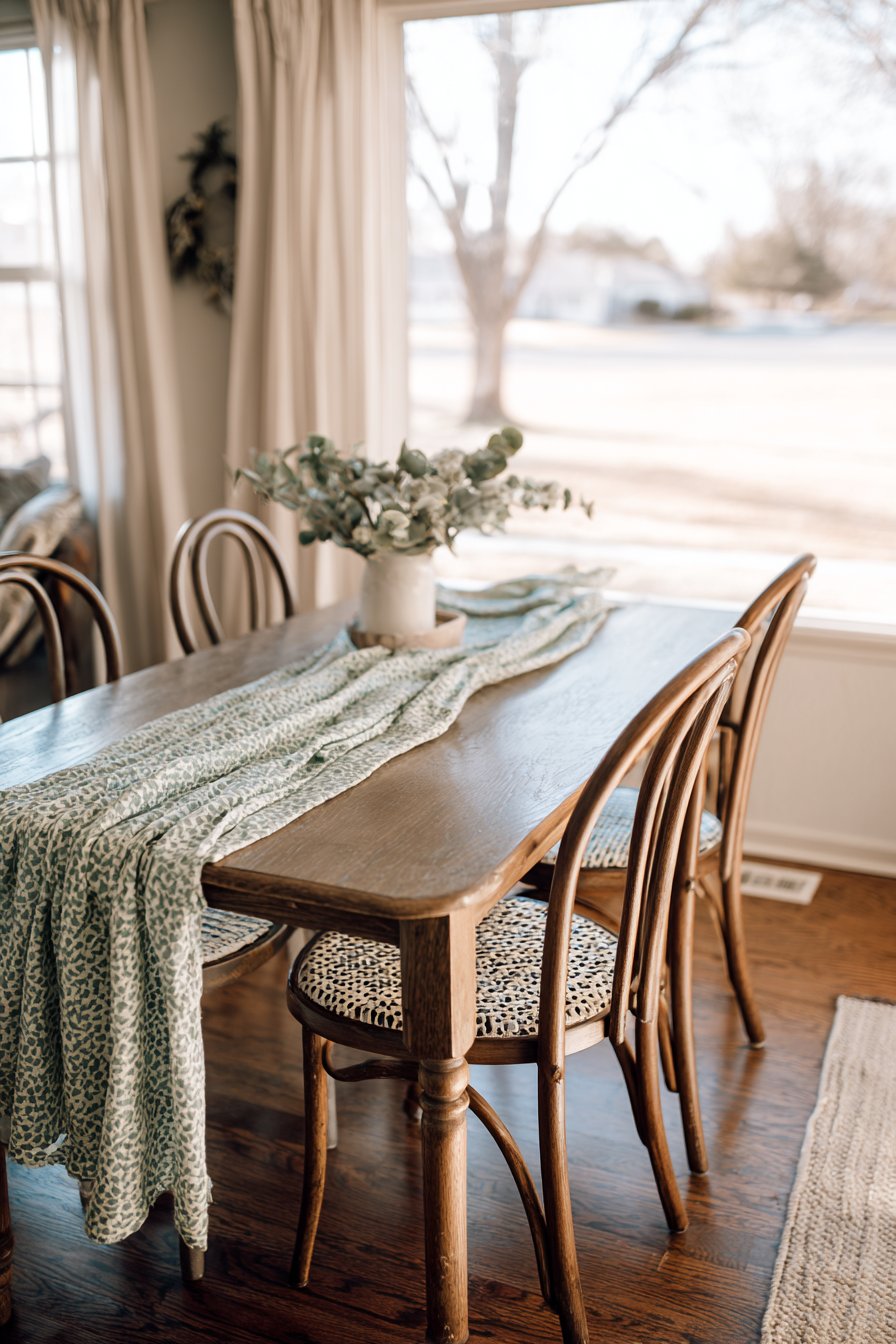
An IKEA-style pine dining table with simple construction and natural finish demonstrates that attractive dining spaces need not require substantial budgets. The straightforward design eliminates ornamental details and complex joinery, reducing manufacturing costs while creating clean-lined furniture that coordinates with varied décor styles. Four affordable bentwood chairs provide comfortable seating through curved backs that follow the body’s contours, their simple construction keeping prices accessible while classic forms ensure longevity beyond passing trends. This modest dining set proves that thoughtful styling elevates even basic furniture into inviting environments.
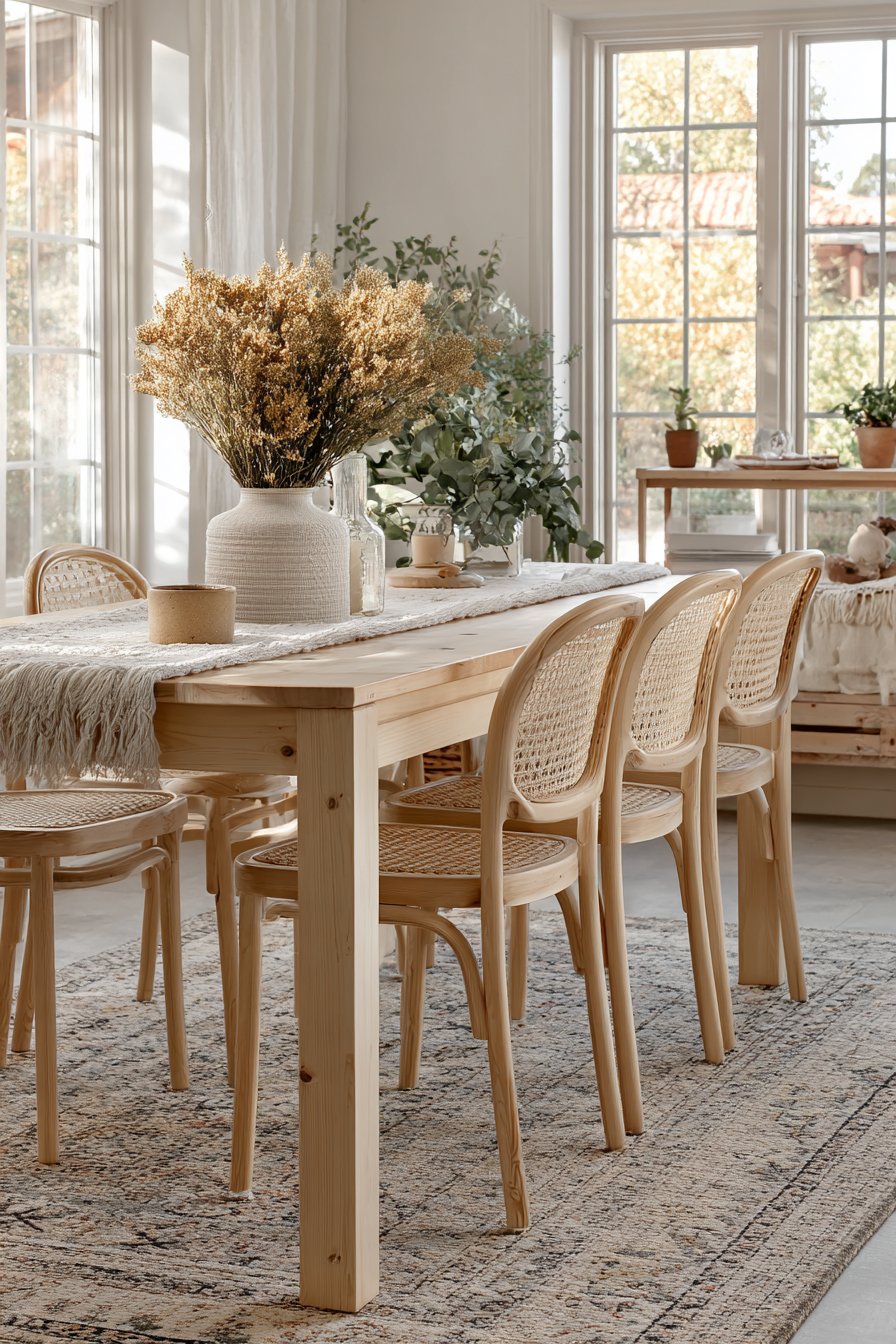
The transformation occurs through careful attention to presentation—a table runner in natural linen adds textural interest and protects the wood surface, a simple centerpiece of fresh flowers or seasonal foliage brings life and color, and good lighting creates ambiance that transcends furniture cost. Natural window light supplemented by affordable pendant lights or table lamps provides layered illumination that makes the space feel considered and welcoming. Interior design photography demonstrates that budget-friendly dining set ideas can be both attractive and economical, showing honest representation of accessible furniture styled with care rather than apologizing for limitations.
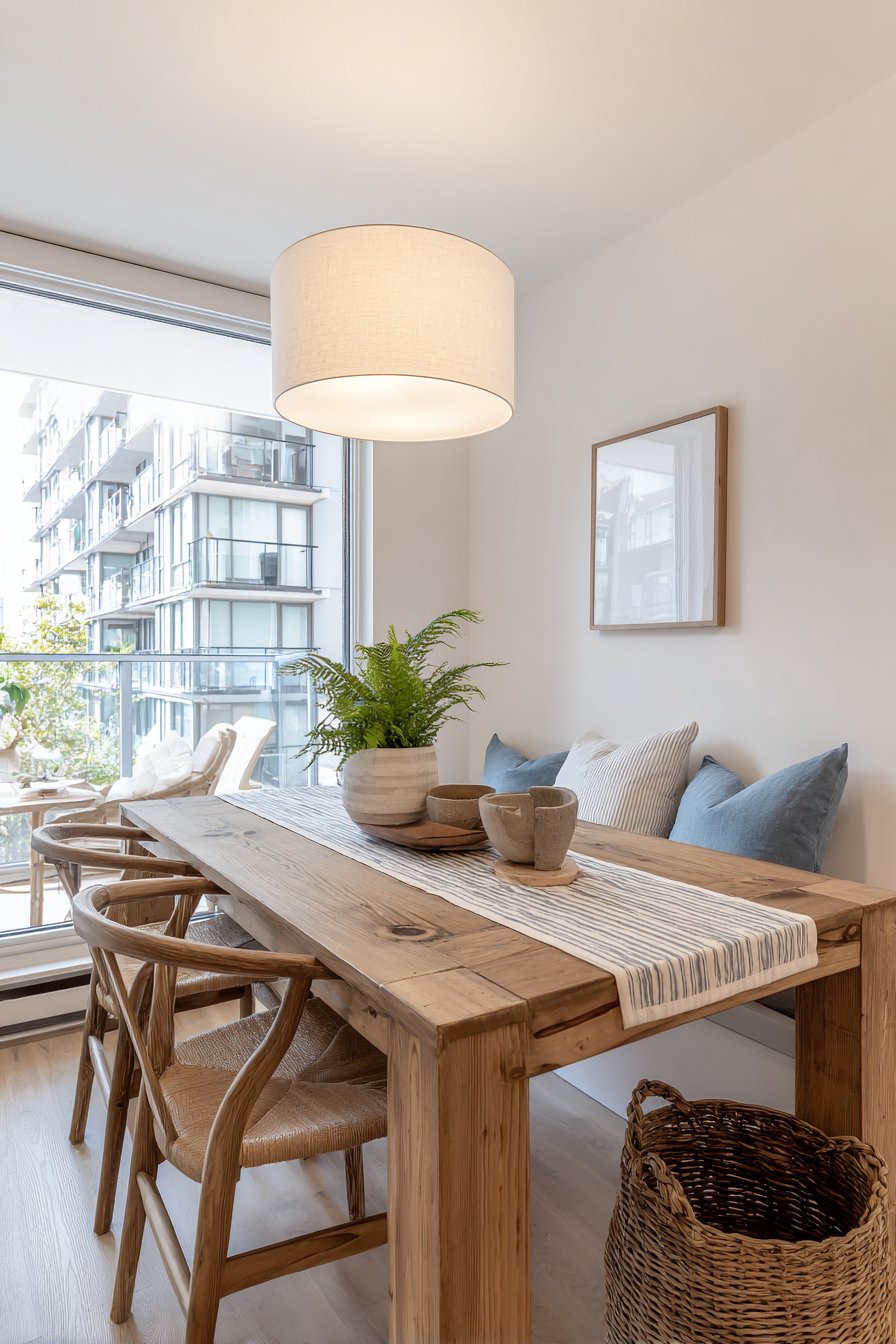
This dining set idea acknowledges that not everyone can invest thousands in dining furniture, while refusing to accept that budget constraints must result in unattractive spaces. Pine’s affordability stems from its fast growth and widespread availability, yet the pale wood’s subtle grain provides natural beauty. Simple construction means easier assembly and often lighter weight—advantages for apartment dwellers who move frequently or navigate stairs during furniture delivery. The key lies in accepting furniture’s basic nature while enhancing it through thoughtful accessories, proper lighting, and careful maintenance.
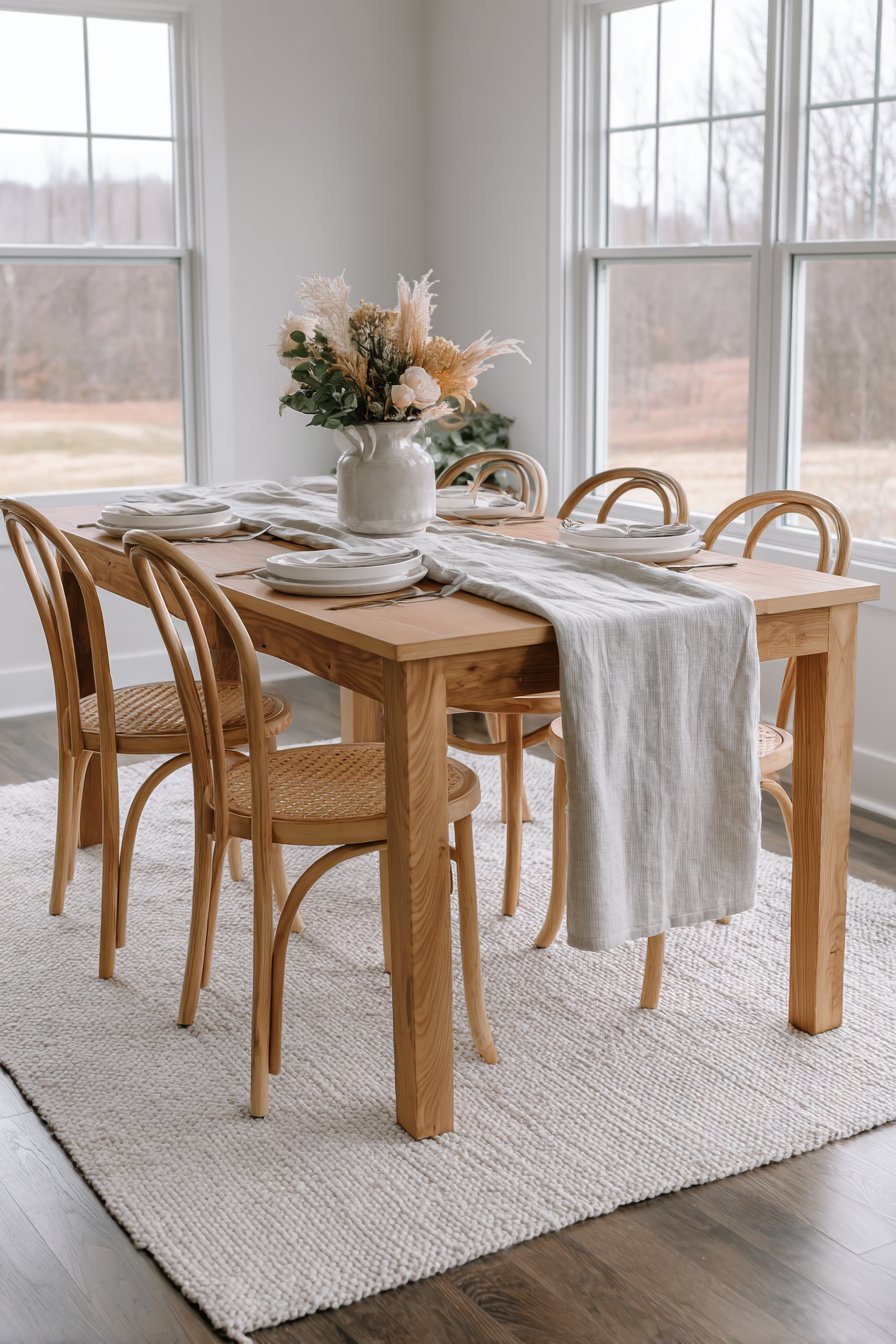
Budget dining design strategies: choose solid wood furniture even in simple designs over veneered particleboard that deteriorates quickly, invest limited budget in a few quality pieces rather than many cheap items, enhance basic furniture through textiles like runners, placemats, and cushions that add color and texture inexpensively, maintain pieces carefully with appropriate cleaners and protective pads to extend lifespan, accept that budget furniture may require replacement sooner while planning for eventual upgrades to higher quality pieces.
20. Built-In Banquette with Storage Innovation
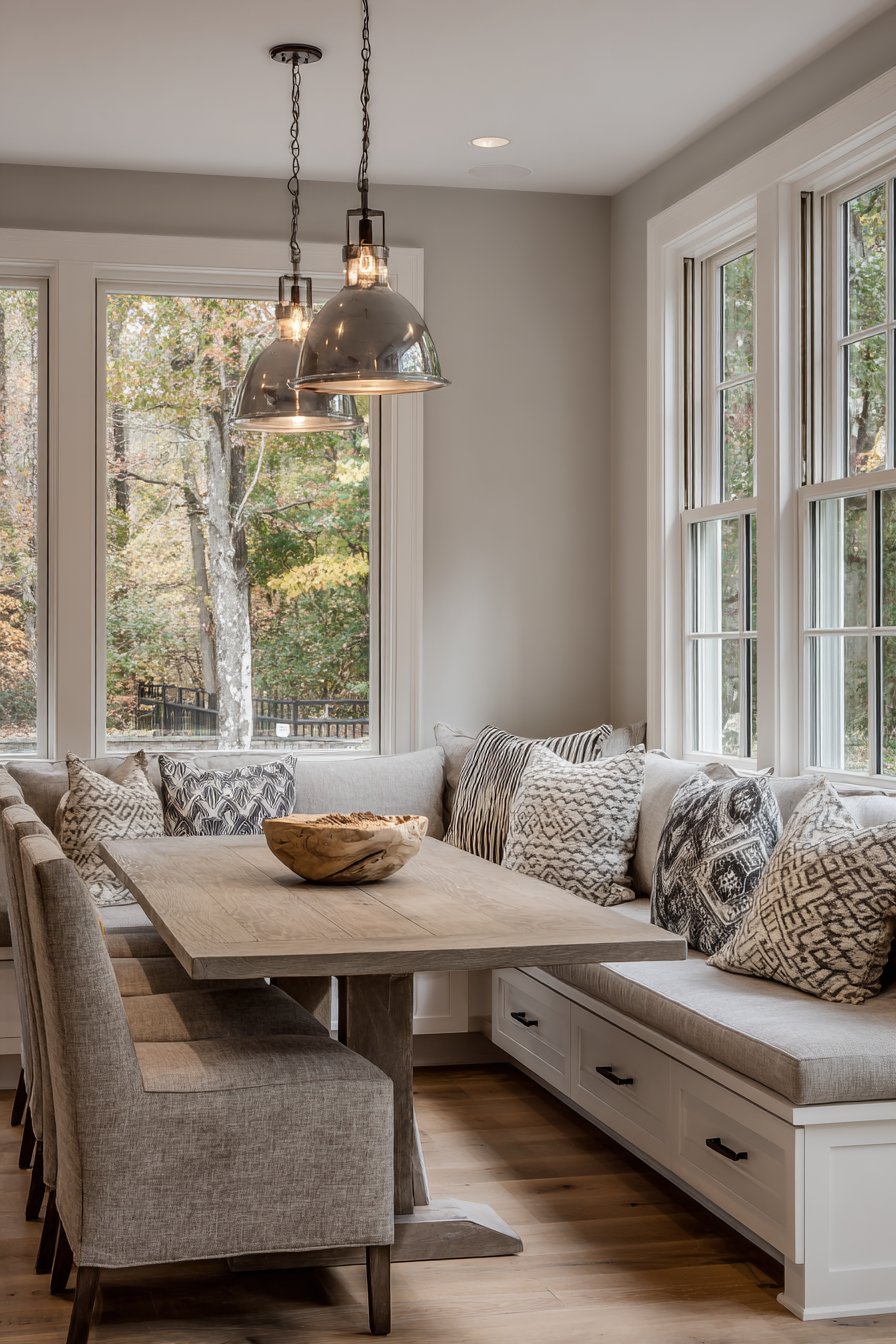
A built-in L-shaped upholstered bench with storage compartments beneath the seats demonstrates space-maximizing ingenuity perfect for breakfast nooks and smaller dining areas. The custom millwork integrates seamlessly with surrounding architecture, its cushioned seating providing comfortable perches that don’t require valuable floor space. Hidden storage compartments accessed by lifting hinged seat sections accommodate table linens, seasonal decorations, children’s art supplies, or whatever items families need accessible yet concealed. A rectangular farmhouse table paired with two additional chairs on the open side completes the arrangement, balancing fixed and flexible seating options.
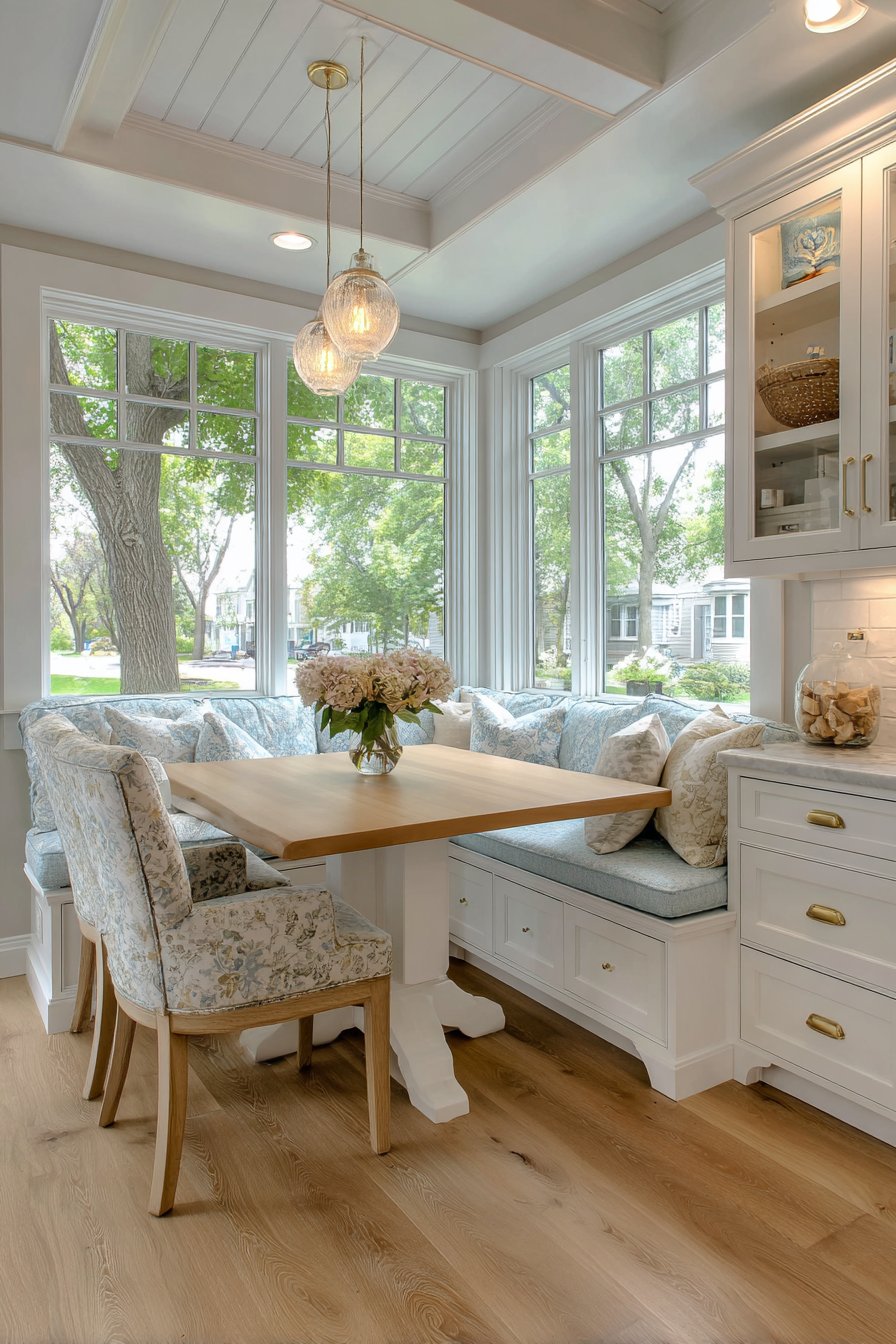
The cozy breakfast nook features throw pillows in coordinating patterns that add softness and personality to the built-in seating. Window light from adjacent openings illuminates the space naturally while pendant lights suspended overhead provide task lighting for meals and activities. The L-shaped configuration creates defined dining zone without requiring walls or partitions, particularly valuable in open-concept homes where space delineation poses challenges. Professional interior photography emphasizes the custom millwork details—seamless joints, quality upholstery work, smooth-operating storage mechanisms—and practical family-friendly design that serves multiple functions simultaneously.
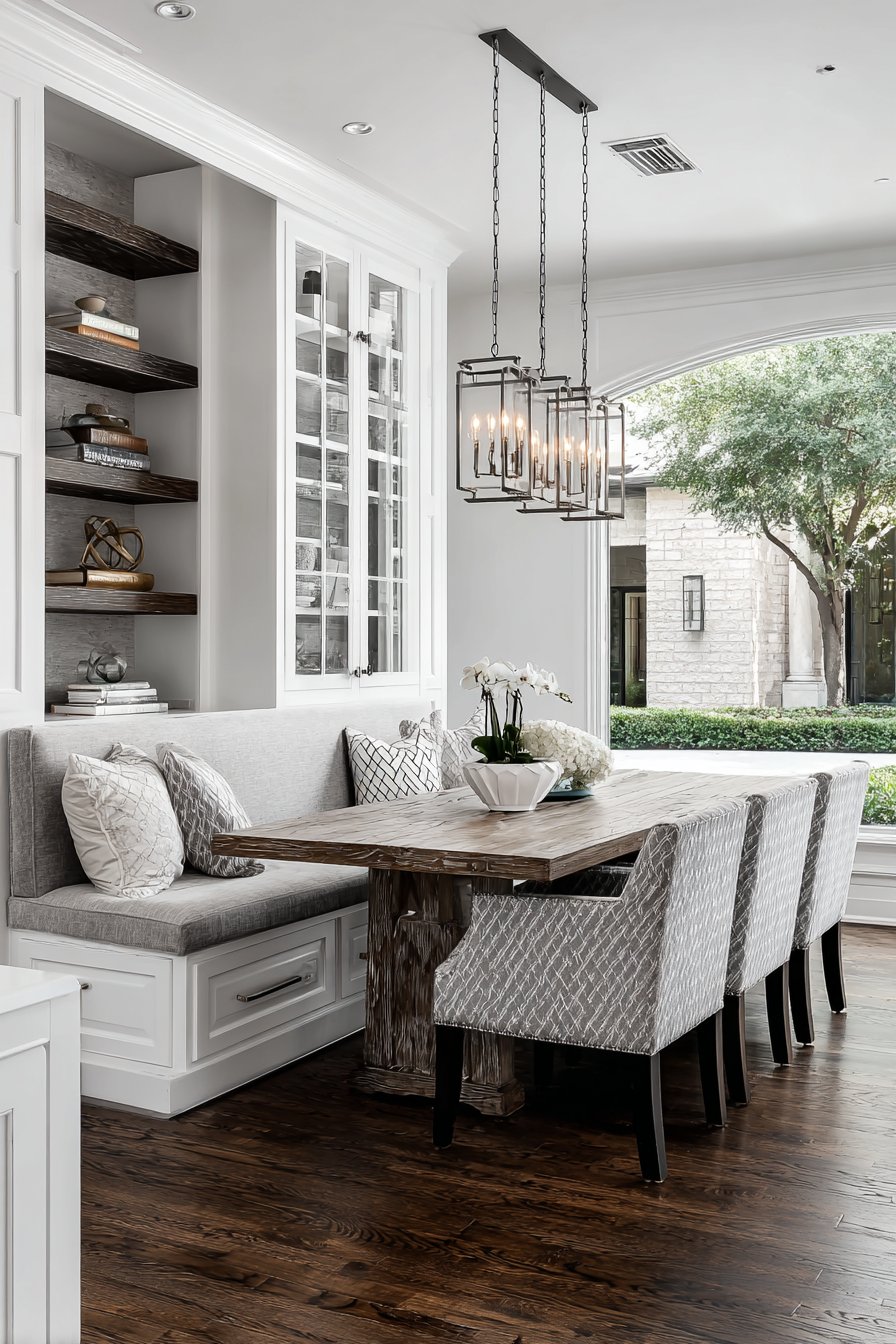
This dining set idea particularly suits families with children who benefit from both the storage capacity and the bench seating that accommodates more people than individual chairs in equivalent space. Built-in banquettes’ permanent nature means they add value to homes while serving current needs, unlike freestanding furniture that moves with owners. The combination of built-in and freestanding elements provides flexibility—the table and chairs can be replaced or rearranged while the banquette remains constant. Upholstered seating in family-friendly fabrics like performance velvets or treated linens withstands spills and daily wear better than traditional textiles.
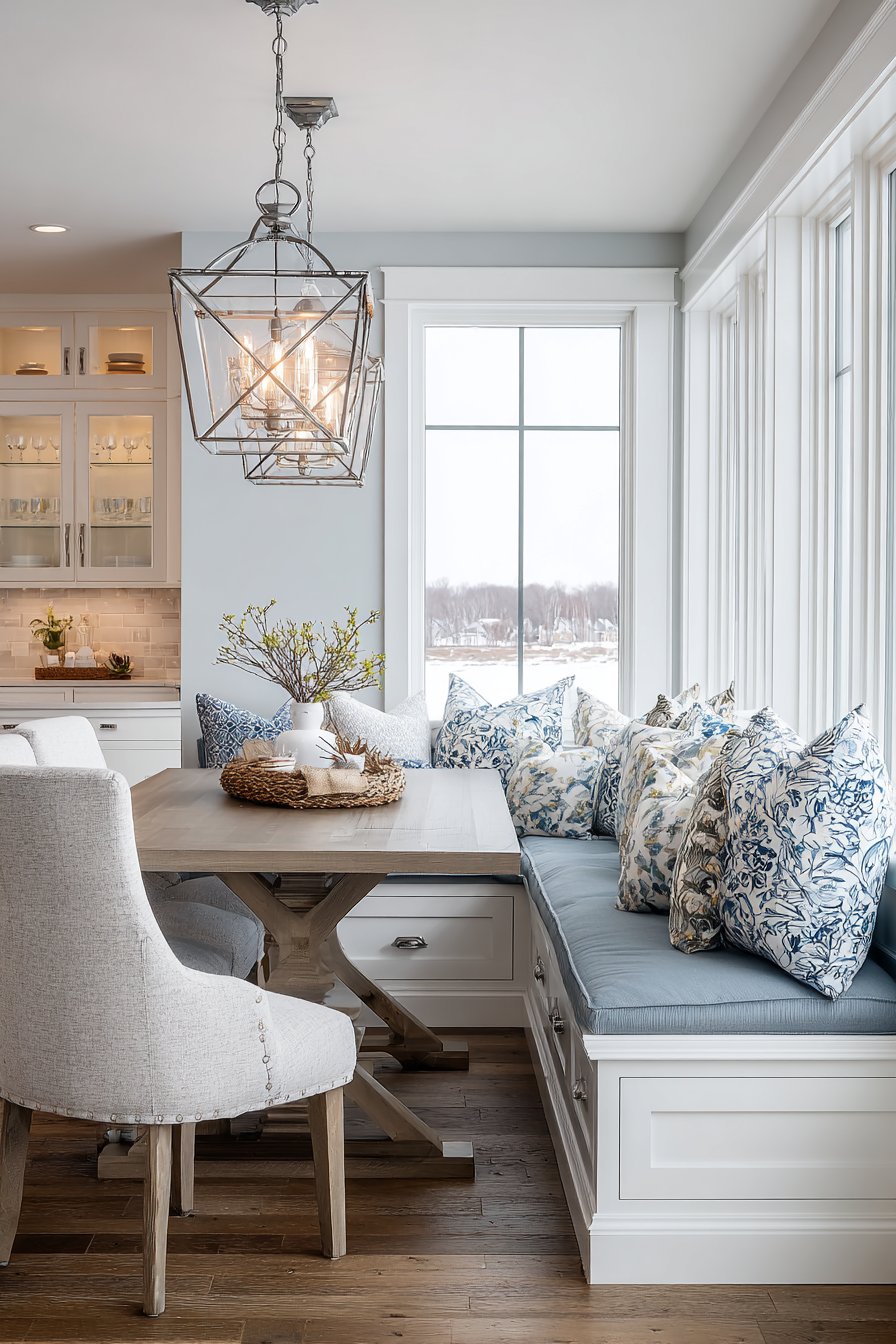
Banquette dining design considerations: plan dimensions carefully ensuring adequate depth (18-20 inches) for comfortable seating, incorporate storage compartments with smooth-operating hinges and safety features to prevent slamming, select durable upholstery fabrics appropriate for high-traffic use, include throw pillows for back support and visual softness, ensure adequate clearance between bench edge and table (12-14 inches) for comfortable entry and exit, consider window placement to maximize natural light in the dining nook.
21. Mixed-Material Contemporary Drama
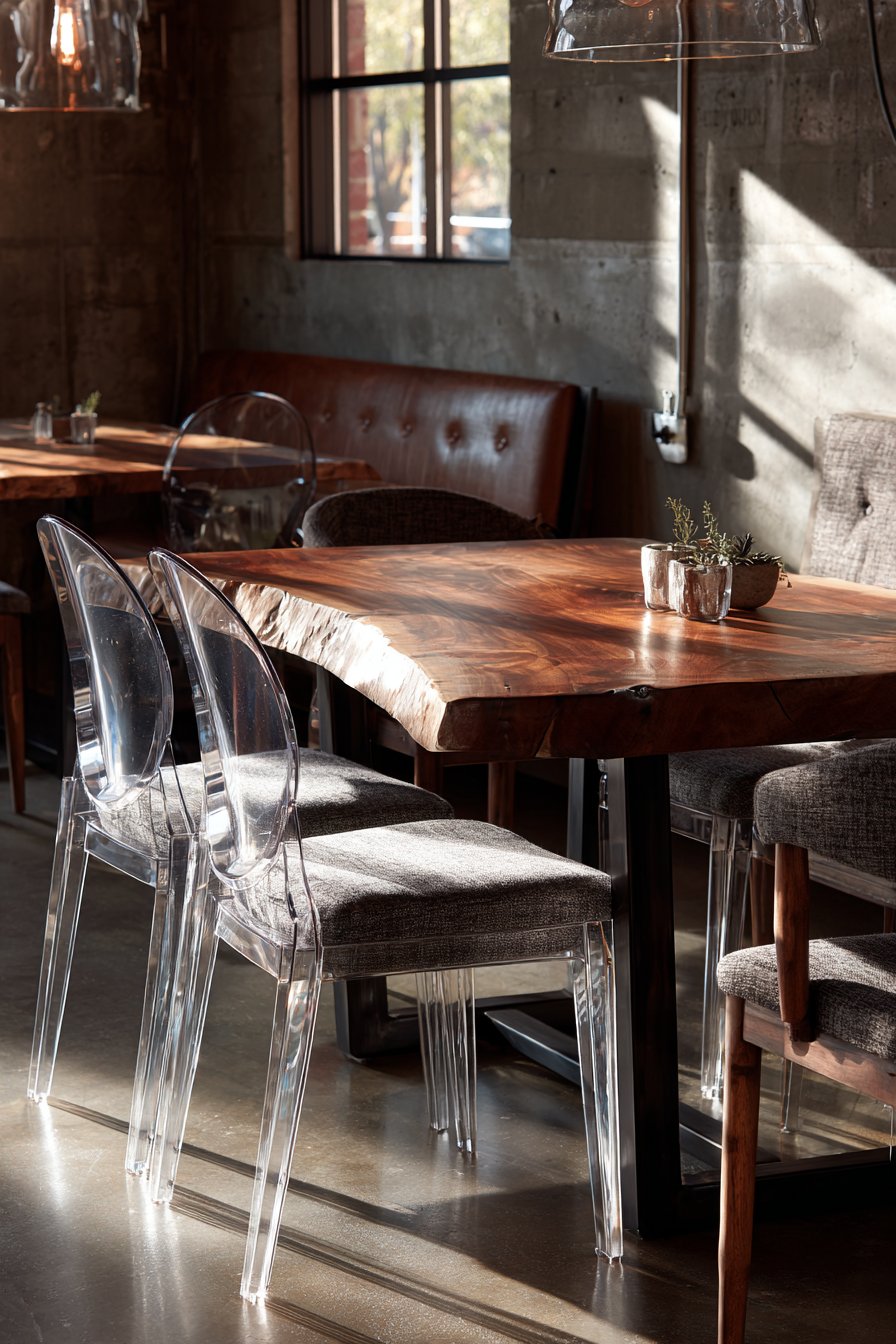
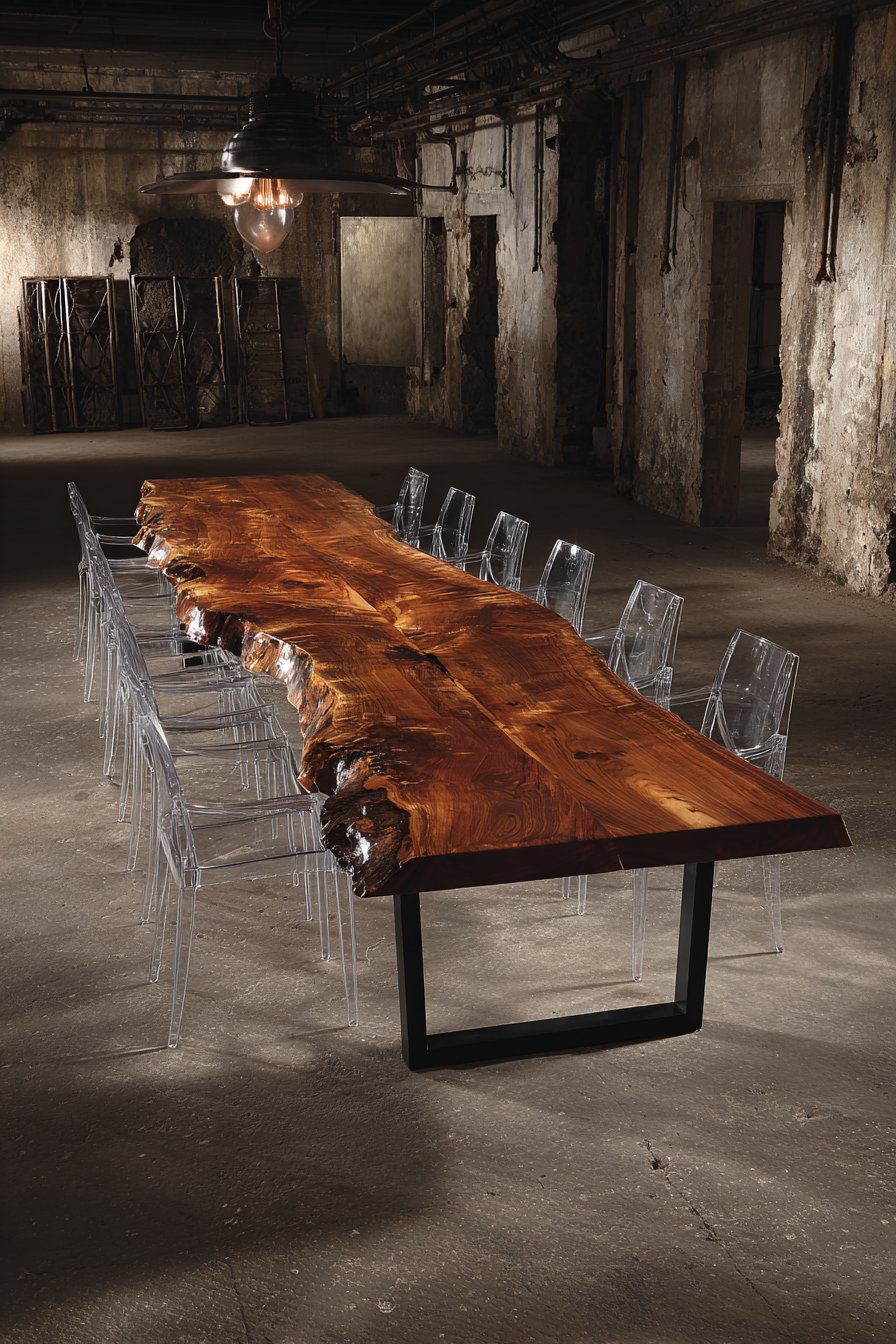
A live-edge walnut dining table with black steel U-shaped legs creates dramatic focal point through unexpected material pairing and sculptural presence. The table’s natural edge preserves the wood’s organic form where bark once grew, creating one-of-a-kind contours that contrast sharply with the steel legs’ geometric precision. Rich walnut tones and varied grain patterns provide visual warmth while the matte black steel adds contemporary edge and industrial influence. The dining arrangement features mixed seating—upholstered dining chairs in charcoal linen provide traditional comfort while clear acrylic ghost chairs add modern transparency and visual lightness, their invisible presence preventing visual clutter despite generous seating capacity.
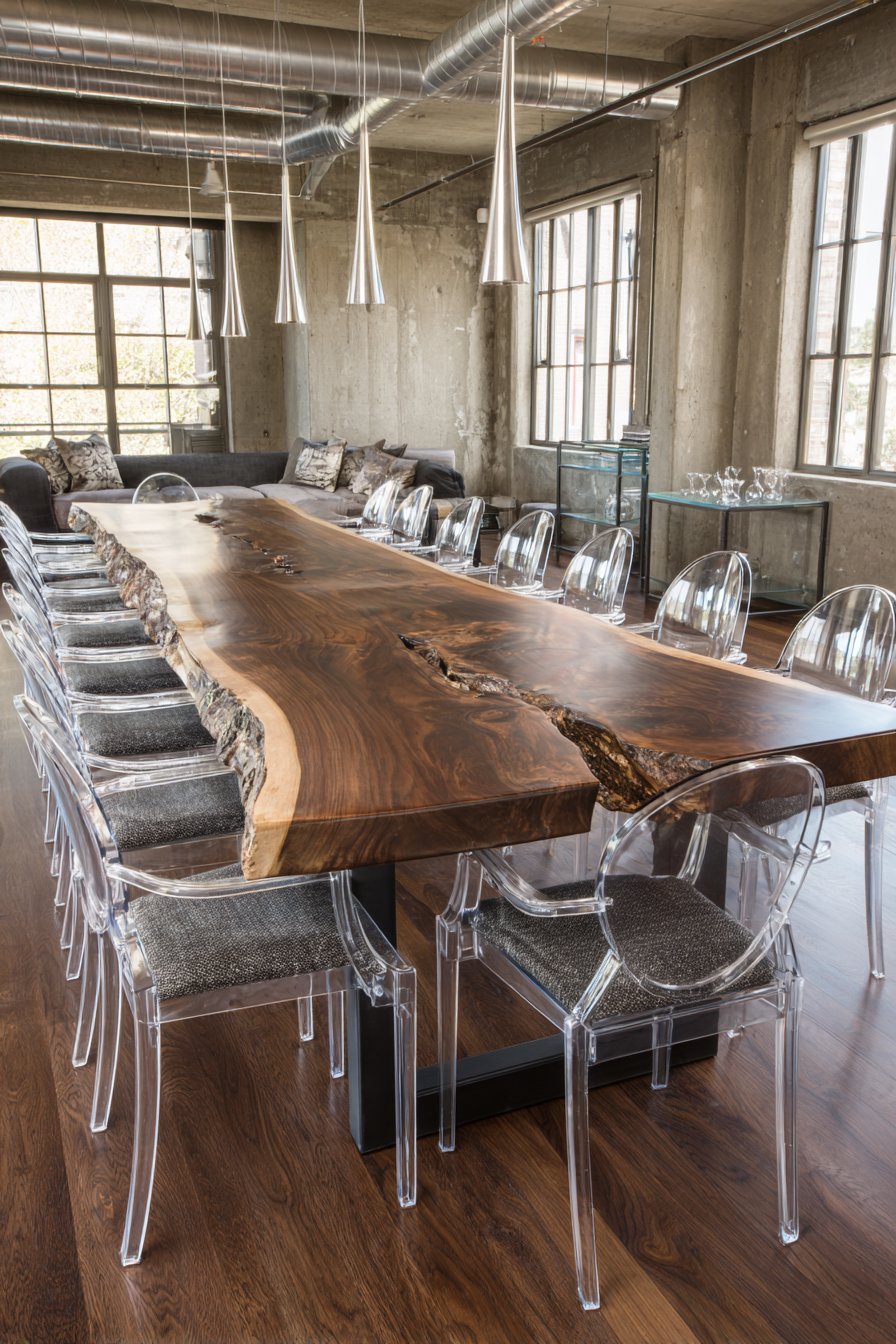
The contemporary dining room embraces industrial aesthetics through exposed concrete walls, their cool gray tones and subtle formwork marks creating textural backdrop. Industrial-style lighting fixtures—perhaps exposed bulb pendants or metal cage chandeliers—continue the urban loft feeling while providing essential illumination. Interior design photography captures the unexpected material contrasts that define this space—organic versus geometric, warm versus cool, opaque versus transparent—showing how seemingly contradictory elements create cohesive, compelling design when balanced thoughtfully. Dramatic side lighting emphasizes textures and transparencies, casting shadows that enhance the space’s architectural drama.
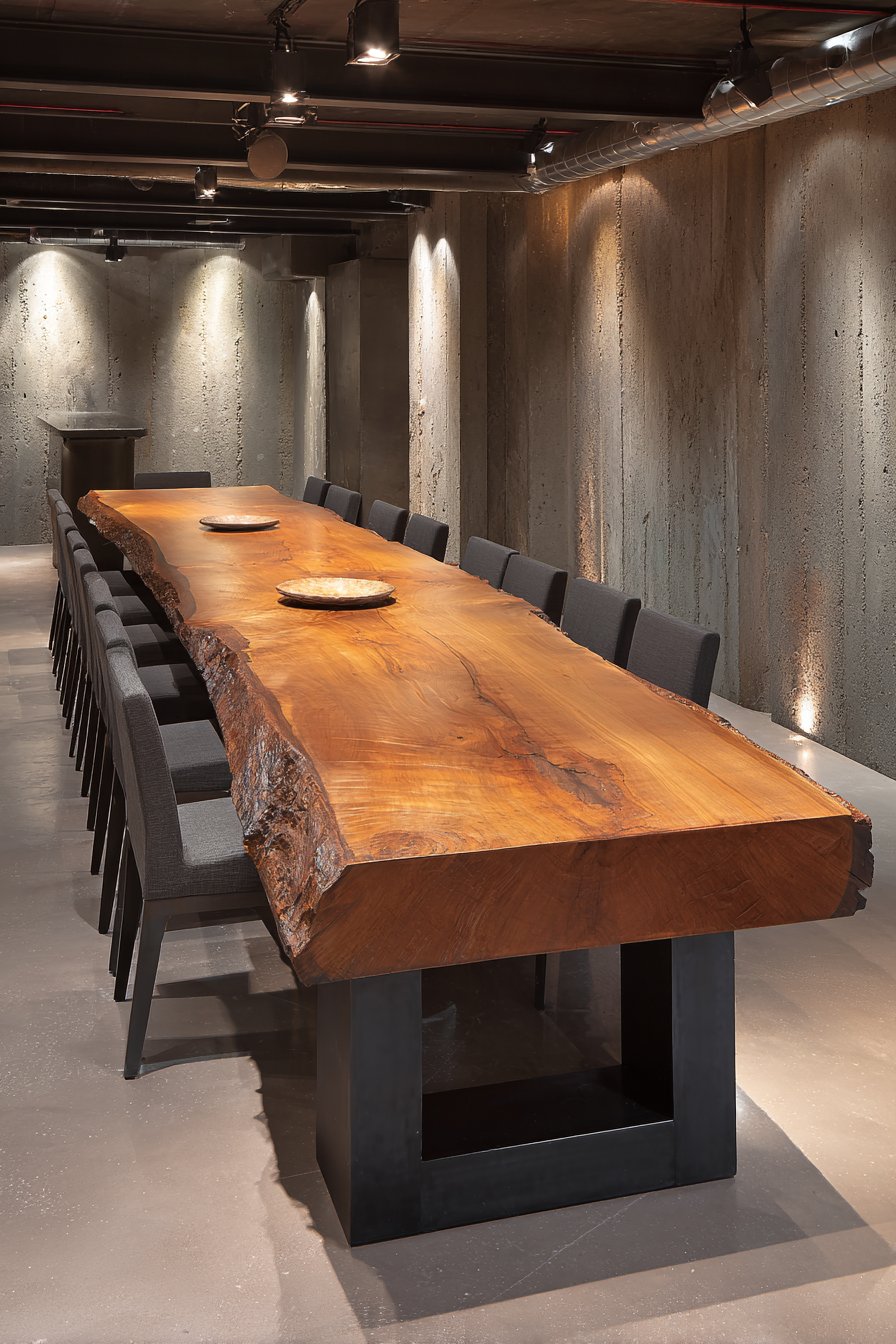
This dining set idea demonstrates contemporary design’s embrace of material honesty and unexpected juxtapositions. The live-edge table celebrates the tree’s natural form rather than concealing it beneath straight cuts and uniform shapes. Steel’s strength allows slender profiles that seem to defy physics—the U-shaped legs providing stable support without visual bulk. Acrylic chairs’ transparency creates seating capacity without visual weight, particularly valuable in smaller spaces where traditional chairs might feel overwhelming. The mixed seating approach adds visual interest while serving practical purposes—upholstered chairs for extended comfortable seating at table ends, acrylic chairs along sides where their see-through quality maintains sight lines.
Contemporary mixed-material dining strategies: balance warm and cool materials to prevent spaces feeling either clinical or overly cozy, pair organic elements like live-edge wood with geometric forms for visual tension, incorporate at least one unexpected material or finish to distinguish the space from generic contemporary, ensure sufficient contrast between materials so they read as intentional pairings rather than poor coordination, consider how materials perform together acoustically since hard surfaces create echo that benefits from strategic soft elements.
22. Compact Drop-Leaf Transformation
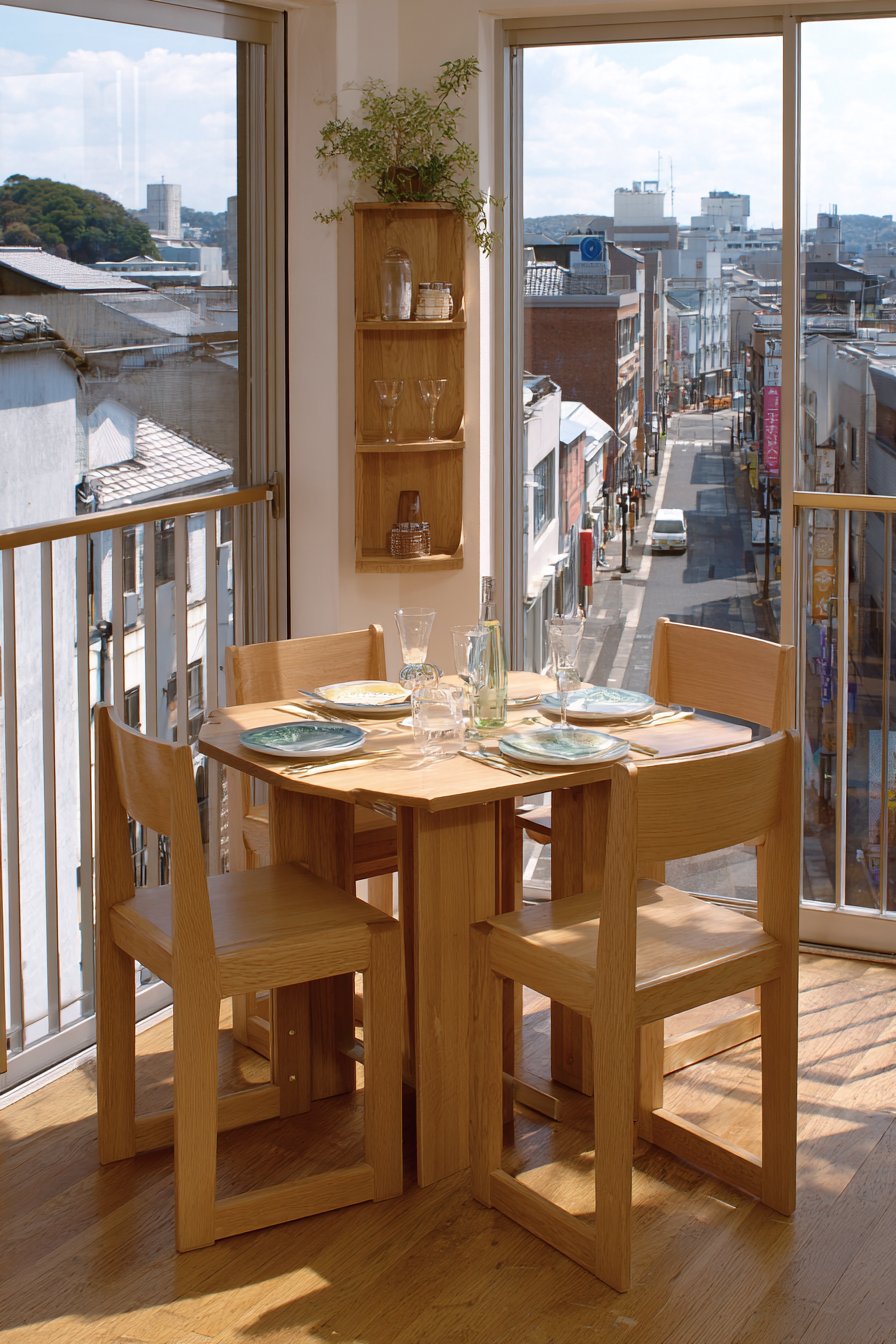
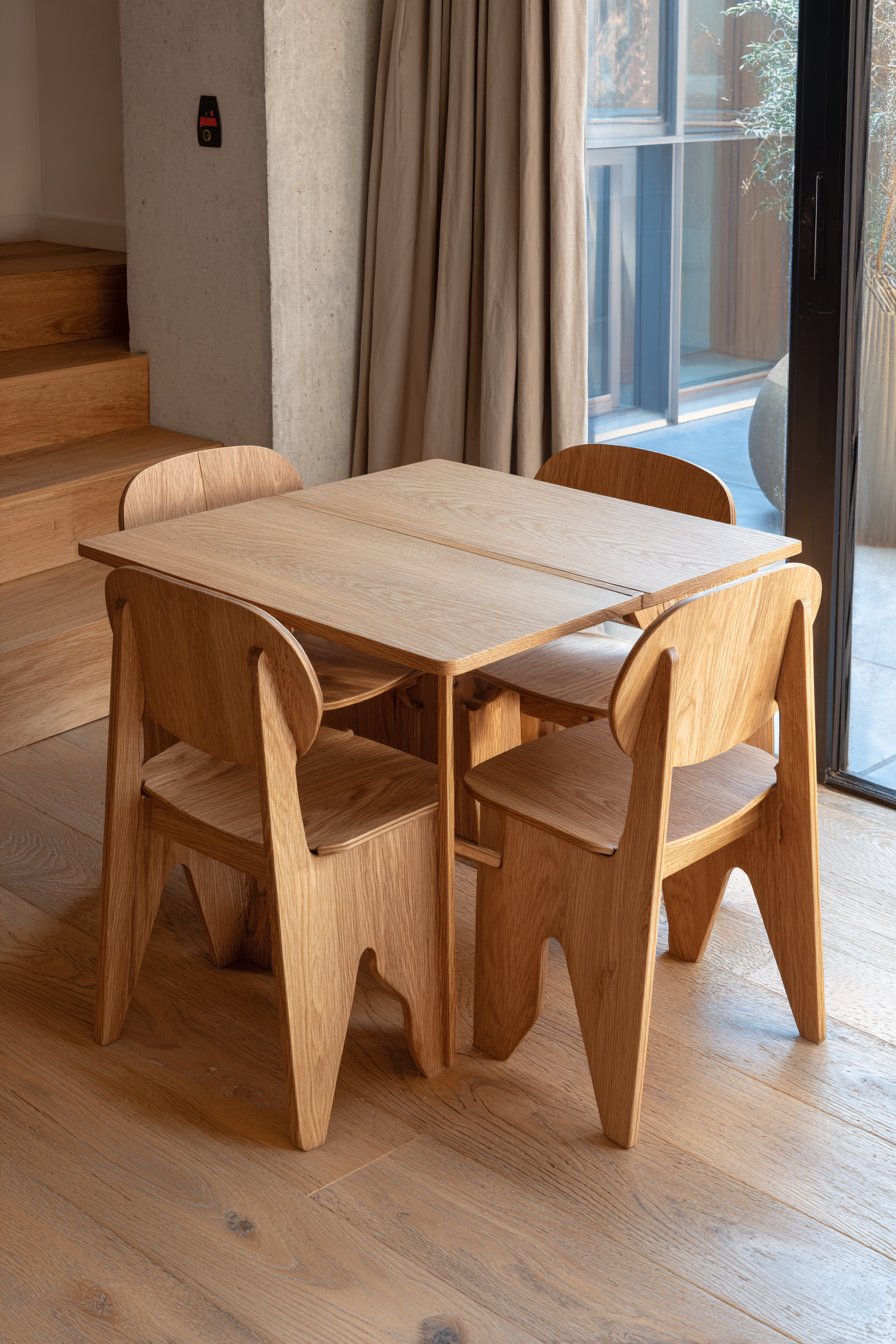
A square drop-leaf dining table in honey oak demonstrates space-saving ingenuity perfect for compact apartments and efficient living. With both leaves raised, the table expands to accommodate four to six diners for meals or game nights; with leaves lowered, it shrinks to petite console dimensions suitable for positioning against walls when not in use. Four stackable wooden chairs with contoured seats provide comfortable seating that stores efficiently when entertaining requires floor space or when leaves remain down for everyday use. Wall-mounted shelving provides storage for folded leaves and chair cushions, ensuring all components remain organized and accessible.
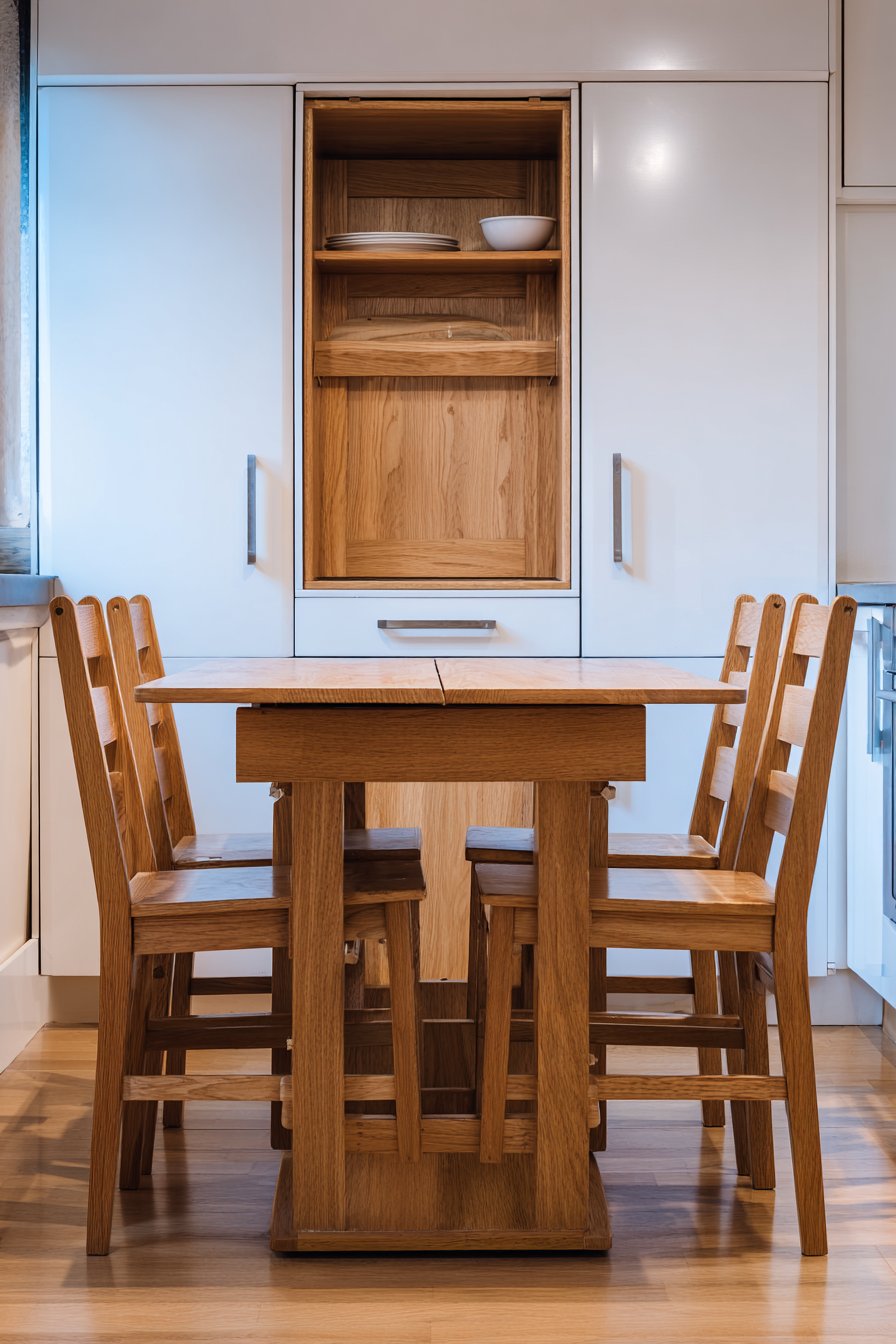
Bright natural lighting demonstrates the table’s versatility in both configurations—wide-angle photography showing the expanded table hosting dinner party, followed by shots of the compact configuration freeing floor space for yoga practice or children’s play. This visual documentation proves invaluable for urban dwellers evaluating whether furniture serves multiple needs efficiently. Interior design photography shows the practical transformation and space-saving functionality essential for apartment living where every square foot counts and furniture must justify its permanent footprint through flexible utility.
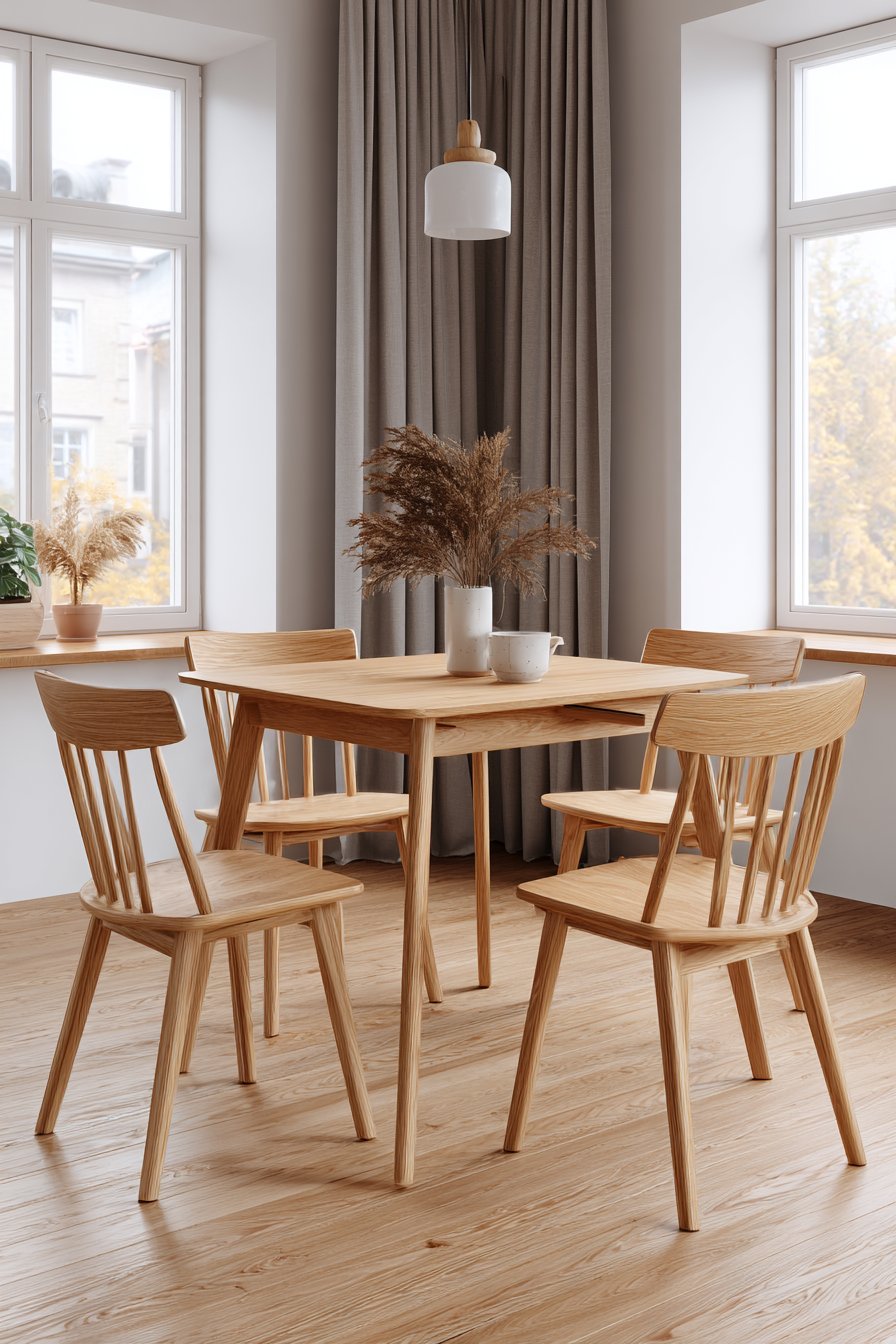
This dining set idea addresses urban reality where studio and one-bedroom apartments often lack dedicated dining rooms, requiring creative solutions that provide dining capacity without sacrificing precious living space. Drop-leaf tables’ ingenious design dates to colonial America when similar space constraints required multipurpose furniture. Modern versions improve on historical precedents with smoother mechanisms, better proportions, and contemporary styling. Stackable chairs store in closets or tuck beside the table when leaves remain down. The honey oak finish provides warmth without the darkness that makes small spaces feel smaller.
Drop-leaf dining considerations: test leaf-raising mechanism repeatedly to ensure smooth operation and secure locking in extended position, verify that lowered leaves don’t create uncomfortable leg interference when sitting at the compact table, measure carefully to ensure the extended configuration fits your space with adequate clearance for chair movement, select wood finishes in light to medium tones that keep small spaces feeling open, consider tables with gate-leg supports rather than swing-out legs for better stability and aesthetics.
23. Custom Luxury with Book-Matched Walnut
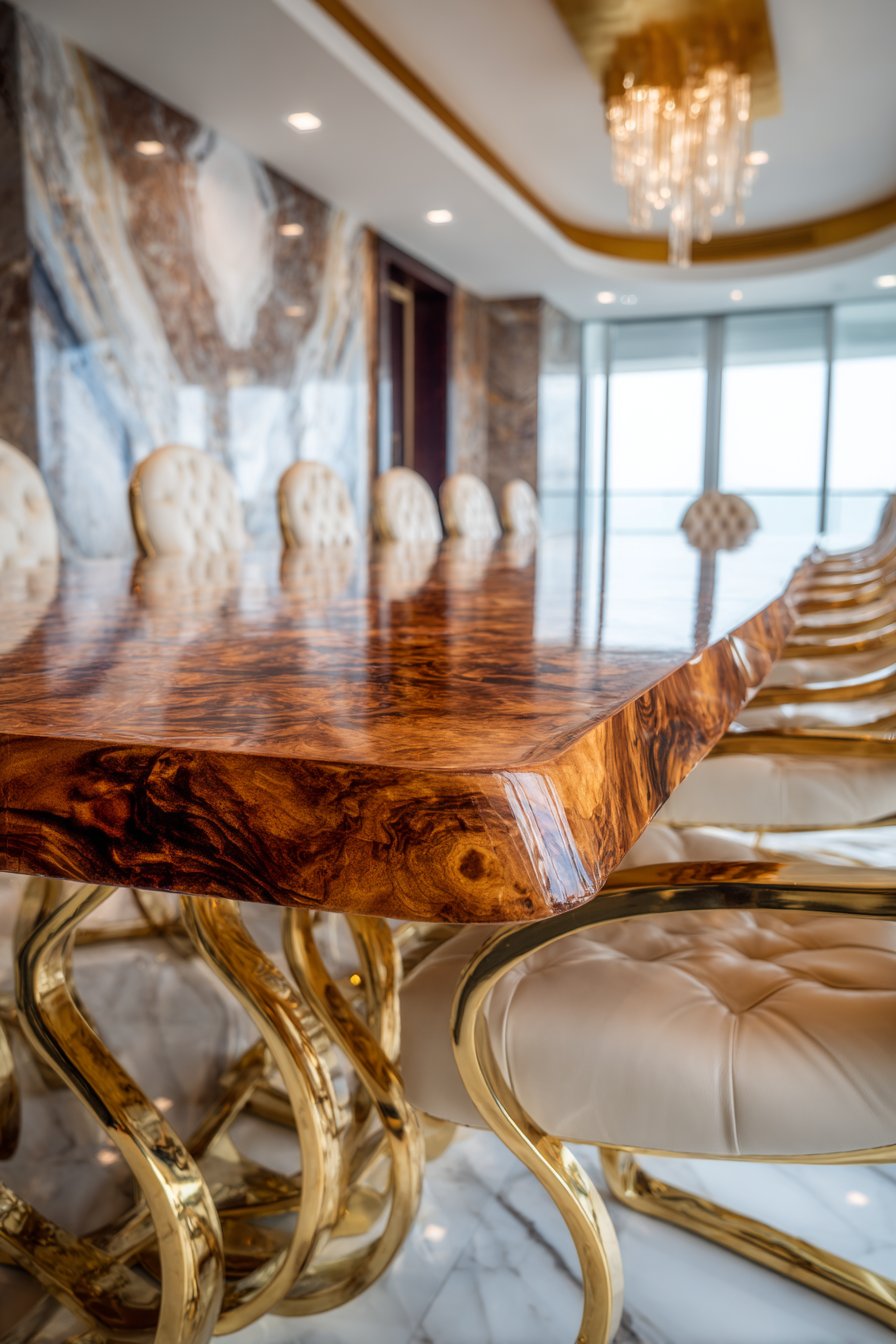
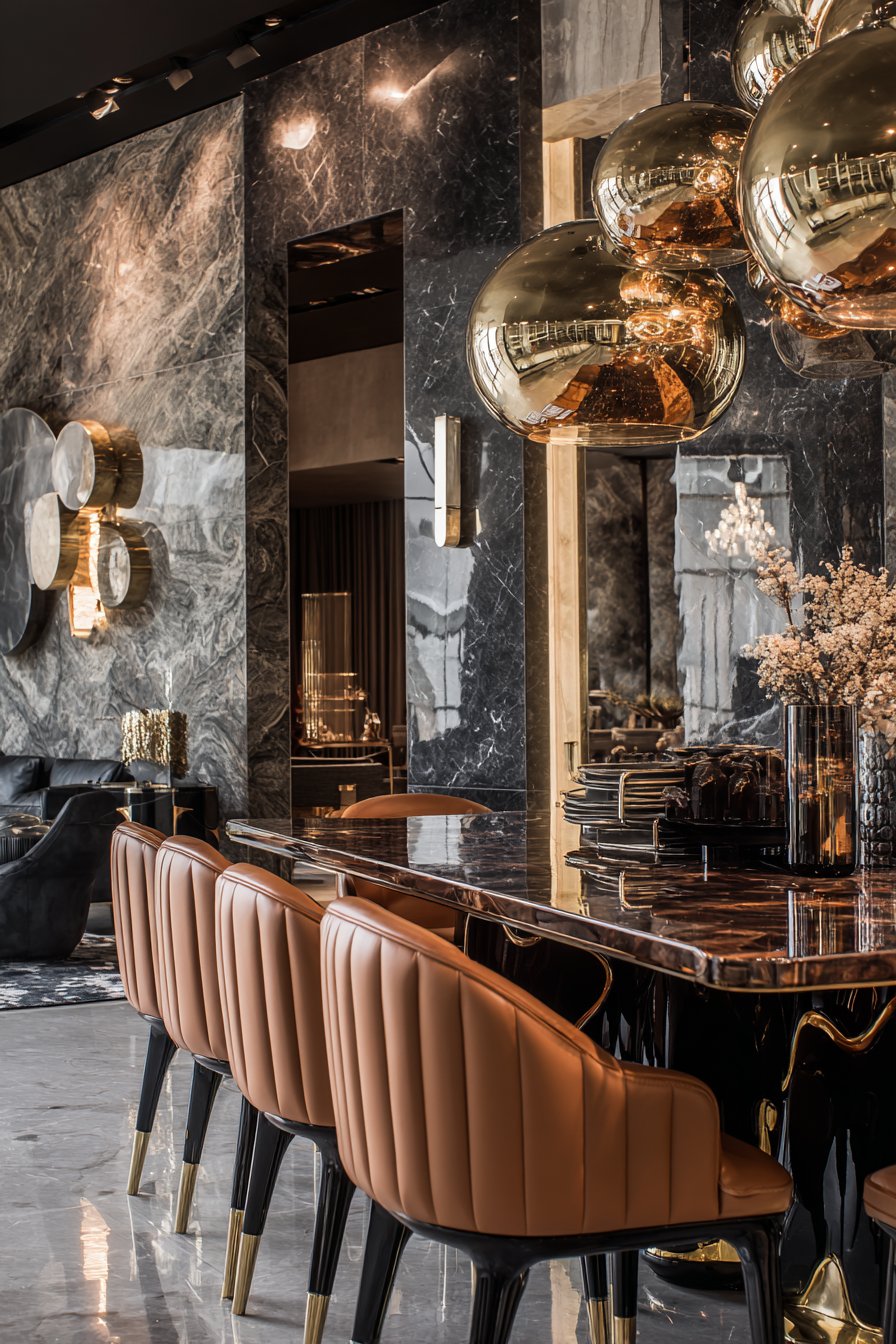
A custom-designed dining table with book-matched walnut veneer top displays mirrored grain patterns that create symmetrical beauty resembling opened book pages. This premium technique slices consecutive wood sheets from a single log, then arranges them to create mirror-image patterns where grain flows outward from the center seam. The sculptural brass base features organic flowing lines that suggest natural forms—perhaps branches, water ripples, or abstract curves—creating artistic foundation for the table’s showpiece top. Ten dining chairs combine channel-tufted leather backs with polished brass legs, their luxurious materials and meticulous craftsmanship matching the table’s custom quality.
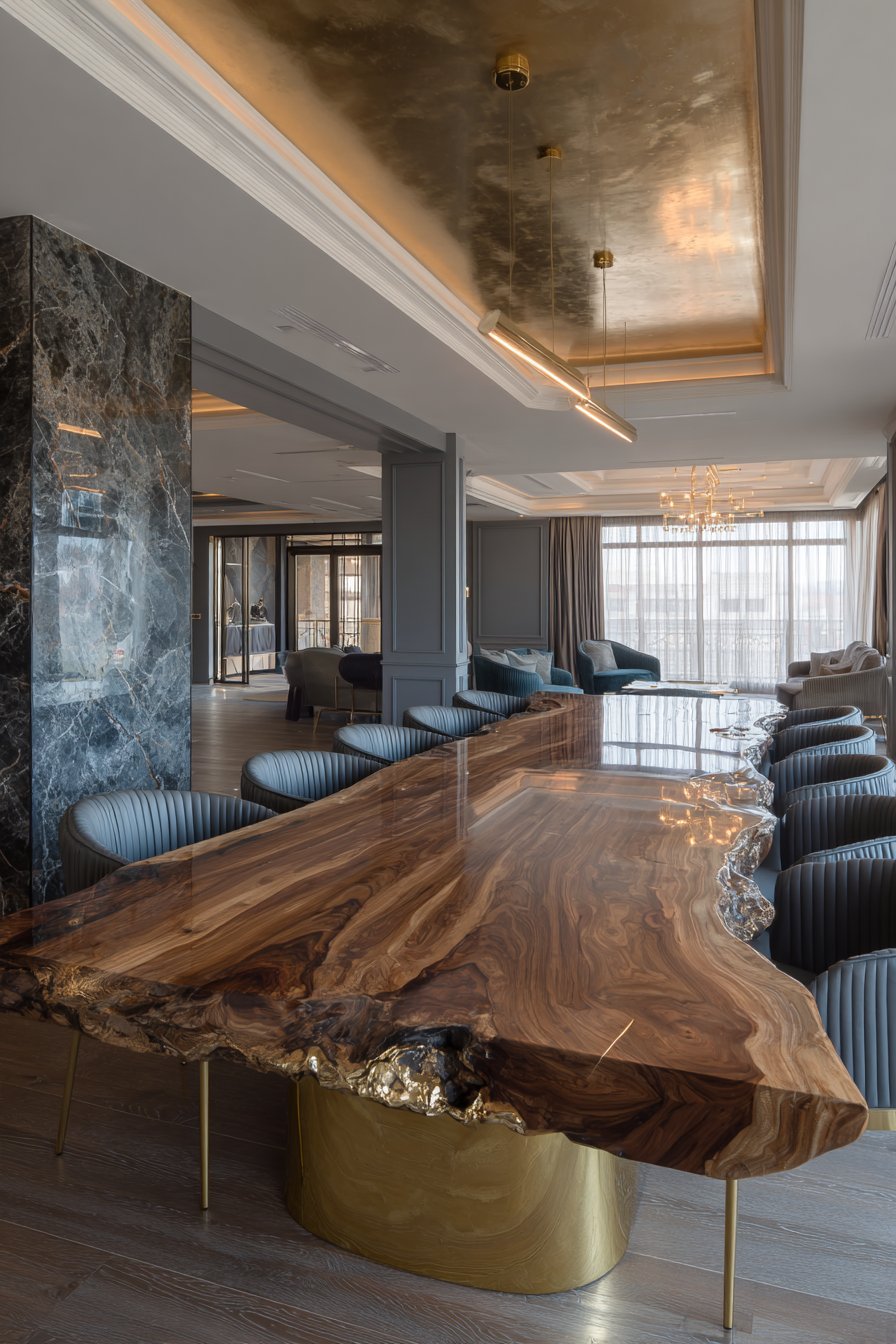
The sophisticated dining room provides appropriate setting for this investment-level furniture through marble accent wall, designer pendant light fixture featuring multiple tiers and contemporary materials, and architectural details that emphasize the space’s refined character. Professional interior photography approaches this space with meticulous attention appropriate to high-end craftsmanship—perfect lighting reveals the book-matched walnut’s grain symmetry, material quality photographs capture leather’s supple texture and brass’s warm luster, and architectural detail shots showcase the sculptural base’s artistic merit. The overall presentation demonstrates that luxury dining transcends expensive materials alone—true luxury lies in artisanal craftsmanship, thoughtful design, and perfect execution.
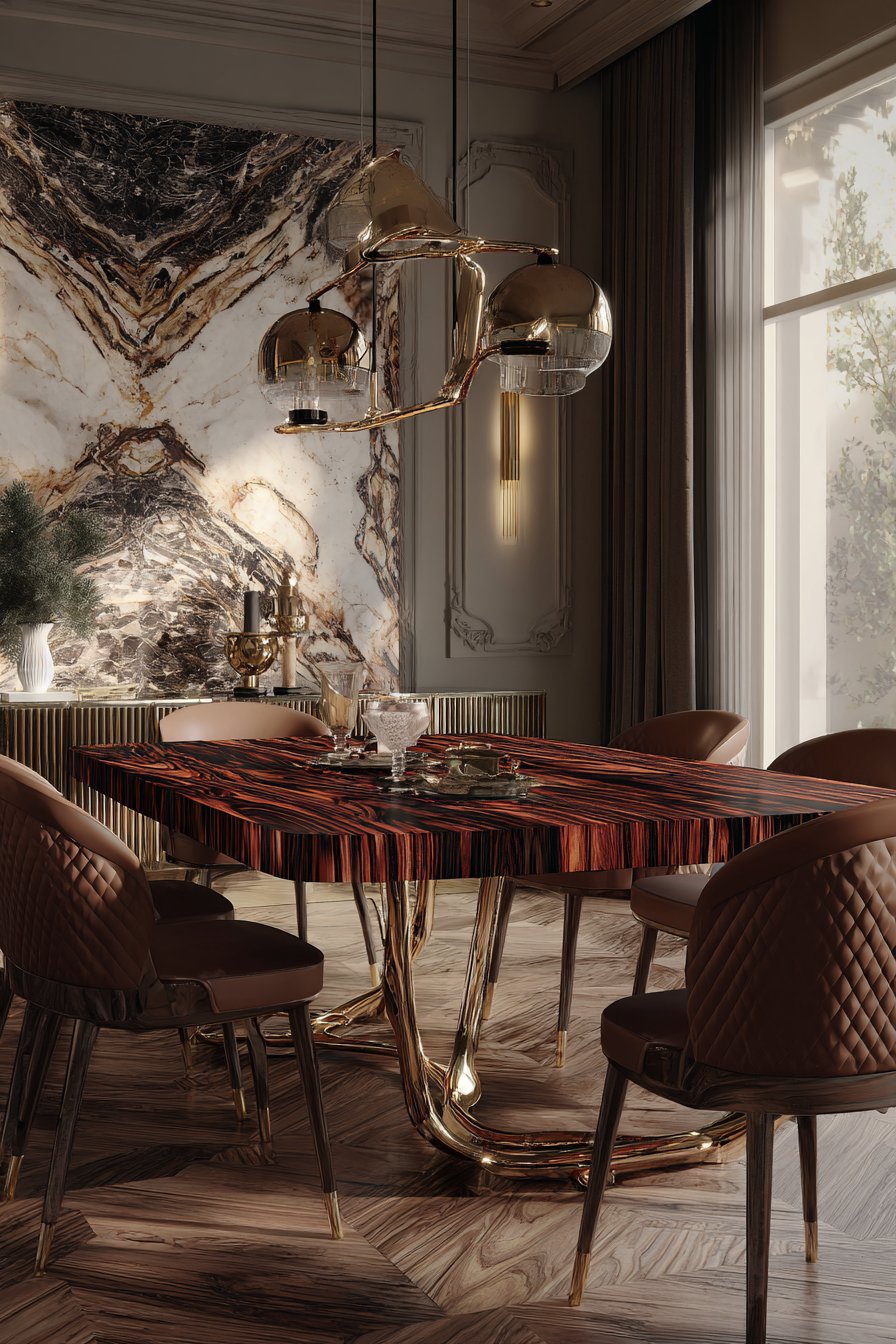
This dining set idea represents dining furniture as investment art—pieces commissioned or carefully selected to serve families across generations while appreciating in value through quality materials and superior construction. Book-matched veneers require skilled craftspeople who understand wood selection and arrangement; sculptural metal bases demand artisans capable of translating artistic vision into functional support. Channel-tufted leather upholstery reflects techniques perfected over centuries. Such furniture justifies premium pricing through longevity, beauty, and the satisfaction of owning truly exceptional objects.
Luxury custom dining considerations: commission pieces from established artisans or manufacturers with proven reputations and portfolio examples, specify wood species and veneer matching requirements clearly if customizing finishes, plan for extended lead times as custom work typically requires months from order to delivery, budget for professional installation especially for heavy tables with sculptural bases, maintain custom furniture according to manufacturer specifications to preserve materials and finishes, consider custom furniture’s resale implications since highly specific pieces may have limited secondary market appeal compared to iconic designs.
Why These Dining Set Ideas Represent the Best in Contemporary Design
The twenty-three dining set ideas presented here collectively demonstrate the remarkable range of options available to contemporary homeowners seeking to create meaningful dining spaces. From minimalist Scandinavian simplicity to ornate traditional grandeur, from space-saving innovations to luxury custom creations, these designs address diverse needs, budgets, and aesthetic preferences while maintaining commitment to quality, functionality, and visual appeal. Each dining set idea excels within its category by balancing practical considerations with aspirational beauty, ensuring that readers find inspiration regardless of their specific circumstances.
The modern walnut dining set with mid-century influences demonstrates timeless appeal through honest material expression and ergonomic design that remains comfortable decades after purchase. This represents enduring value—furniture that serves families through changing trends while maintaining aesthetic relevance. The farmhouse dining set with mismatched vintage chairs proves that authentic character trumps coordinated perfection, offering permission to trust personal taste over rigid design rules. For urban dwellers confronting space limitations, the compact round table solution and drop-leaf transformation demonstrate that small footprints need not compromise dining pleasure or entertaining capacity.
Glass and velvet luxury dining sets showcase how contemporary design embraces bold material pairings and saturated colors, moving beyond safe neutrality to create memorable spaces that reflect personality and confidence. The Scandinavian minimalist approach offers counterpoint—proving that restraint creates calm, that fewer better-chosen pieces outperform cluttered excess. Industrial dining sets celebrate raw materials and utilitarian forms, connecting with broader cultural appreciation for authenticity and honest construction visible in craft cocktail culture, artisan food movements, and maker aesthetics. Coastal dining arrangements translate vacation serenity into everyday living, demonstrating how design transports us mentally even when physical travel remains impossible.
The marble and gold contemporary dining set represents how luxury evolves—today’s opulence emphasizes material quality and refined proportion over ornamental excess. Traditional mahogany formal dining proves that classical elegance remains relevant for those who value ceremony and hosting elaborate gatherings. Rustic pine dining sets honor handcrafted quality and natural imperfection, while transitional designs demonstrate how combining traditional and contemporary elements creates versatile spaces that age gracefully. The bistro dining set’s European charm proves that compact scale enhances rather than diminishes dining pleasure, transforming everyday meals into special occasions.
Extendable dining tables address practical realities—the need for flexibility as families grow and entertain unpredictably. Built-in banquettes maximize space while adding architectural interest and valuable storage, particularly beneficial for families with children requiring organized living. Mixed-material contemporary dining sets showcase how contrasting elements create visual energy and define sophisticated modern interiors. Budget-conscious pine solutions acknowledge economic realities while refusing to accept that limitations must result in unattractive spaces. Indoor-outdoor teak dining sets reflect growing interest in flexible living spaces that blur traditional interior-exterior boundaries.
Mid-century modern dining sets’ continued popularity stems from successful marriage of beauty and function—pieces designed for actual living rather than museum display. Bohemian eclectic arrangements celebrate personal expression and global influences, proving that rules exist to be broken thoughtfully. Modern farmhouse fusion demonstrates how styles evolve through unexpected pairings—rustic materials meet contemporary forms creating fresh interpretations. Custom luxury dining sets represent furniture as investment art, showcasing what becomes possible when budget limitations lift and craftsmanship excellence becomes paramount.
These dining set ideas collectively address every major design style, space constraint, budget level, and functional requirement facing contemporary homeowners. They demonstrate that successful dining spaces require more than beautiful furniture—they need thoughtful consideration of how people actually live, gather, and create memories around tables. The best dining sets balance aesthetic appeal with practical durability, accommodate both everyday meals and special celebrations, and reflect personal style while maintaining broad enough appeal to serve families through changing preferences and circumstances.
Conclusion
Creating the perfect dining space represents one of home design’s most rewarding challenges. The dining table serves as gathering place where families reconnect after busy days, where friends linger over conversation long after plates are cleared, where children complete homework and crafts, where holidays become memories. Selecting dining sets worthy of these moments requires balancing aesthetic preferences with practical considerations—measuring spaces accurately, assessing how furniture fits your lifestyle, considering maintenance requirements, and honestly evaluating budgets.
The twenty-three dining set ideas explored here demonstrate that perfect solutions exist for every situation. Small apartment dwellers can create functional, stylish dining areas through smart furniture choices like round pedestal tables and stackable chairs. Growing families benefit from extendable tables and durable finishes that withstand daily wear. Committed entertainers justify investment in generous seating capacity and statement-making designs. Budget-conscious shoppers find that thoughtful styling elevates modest furniture into attractive spaces worthy of pride.
As you consider these dining set ideas, remember that the best choice aligns with your authentic needs and preferences rather than chasing trends or impressing others. Trust your instincts, take accurate measurements, test furniture comfort before purchasing, and don’t rush decisions on pieces you’ll live with daily. Whether you gravitate toward minimalist simplicity or maximalist luxury, rustic authenticity or contemporary sleekness, coastal calm or industrial edge—your perfect dining set awaits. The journey toward creating meaningful dining spaces begins with inspiration; these ideas provide the foundation for transforming vision into reality, one carefully chosen piece at a time.
