
The evolution of home design has brought forth countless innovations that blend practicality with aesthetic appeal, and one of the most intriguing trends emerging in contemporary interiors is the integration of washbasins into dining spaces. While this concept might initially seem unconventional, it represents a thoughtful response to the changing dynamics of how we live, entertain, and utilize our homes. The dining room washbasin serves multiple purposes: it offers convenient handwashing before meals, simplifies post-dinner cleanup, and provides a hygienic solution for homes where the kitchen or bathroom might be inconveniently located relative to the dining area.
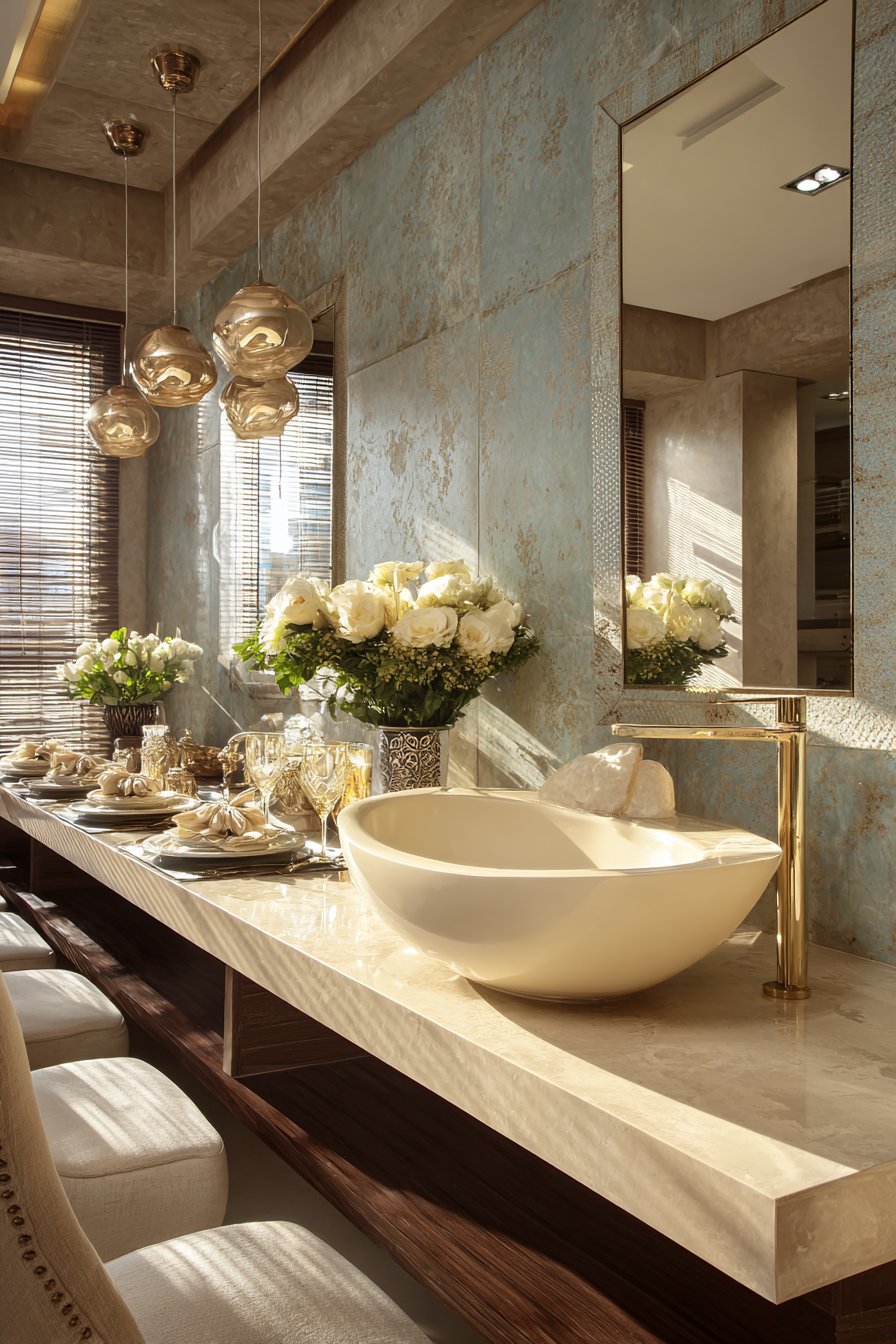
This comprehensive guide explores 27 distinct approaches to incorporating washbasins into dining room designs, each reflecting different aesthetic sensibilities, spatial constraints, and lifestyle needs. From minimalist Scandinavian interpretations to opulent Hollywood Regency statements, these designs demonstrate how a practical fixture can become a stunning focal point that enhances both the functionality and visual appeal of your dining space. Whether you’re working with a compact studio apartment or a sprawling estate, these concepts offer inspiration for creating a dining environment that’s as convenient as it is beautiful.
The beauty of dining room washbasin integration lies in its versatility. These designs accommodate various architectural styles, from industrial lofts with exposed brick to serene Japanese-inspired spaces emphasizing zen simplicity. Each concept presented here has been carefully crafted to ensure that the washbasin doesn’t merely exist as an afterthought but serves as an intentional design element that complements the dining room’s overall aesthetic while providing genuine utility for modern living.
1. Sophisticated Marble Console Integration
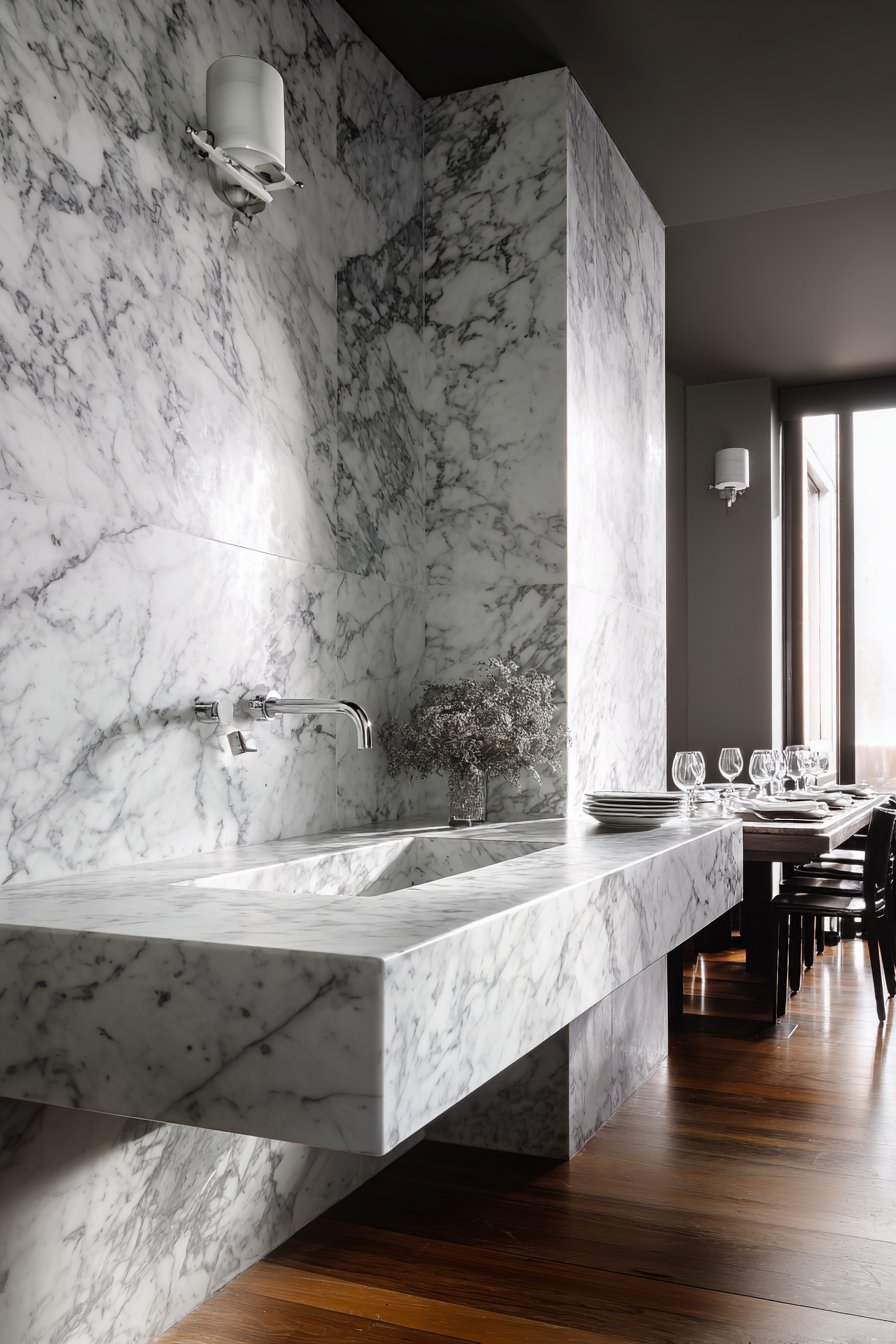
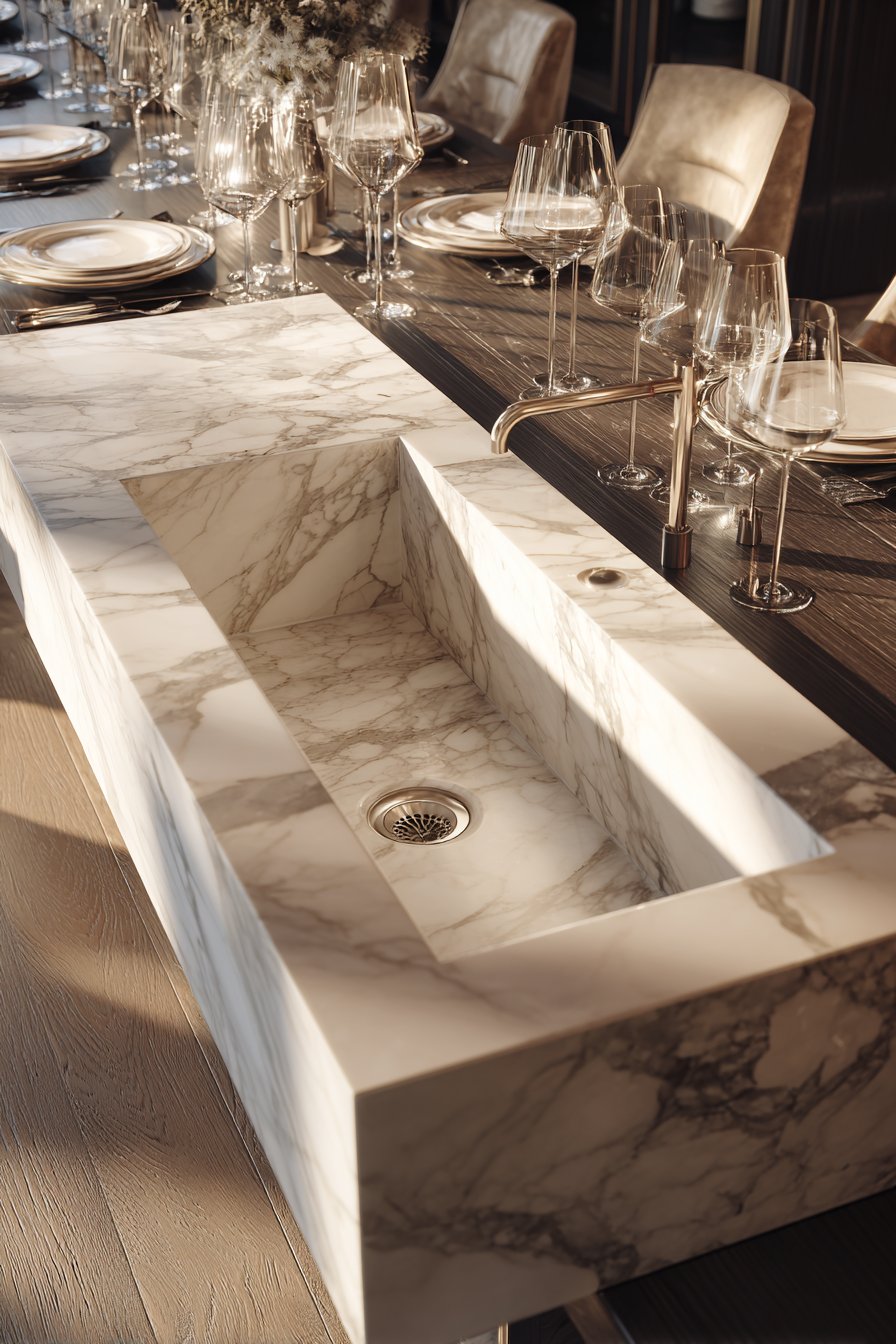
The marriage of luxury and functionality finds perfect expression in this sophisticated design featuring a sleek rectangular undermount sink seamlessly integrated into a floating marble console. The white marble with delicate gray veining creates an air of refined elegance that immediately elevates the dining room’s aesthetic. Brushed nickel fixtures provide a subtle metallic accent that catches the light without overwhelming the space’s understated sophistication. The floating installation creates visual lightness, allowing the eye to appreciate the marble’s natural beauty while maintaining an uncluttered appearance that’s essential for modern interior design.
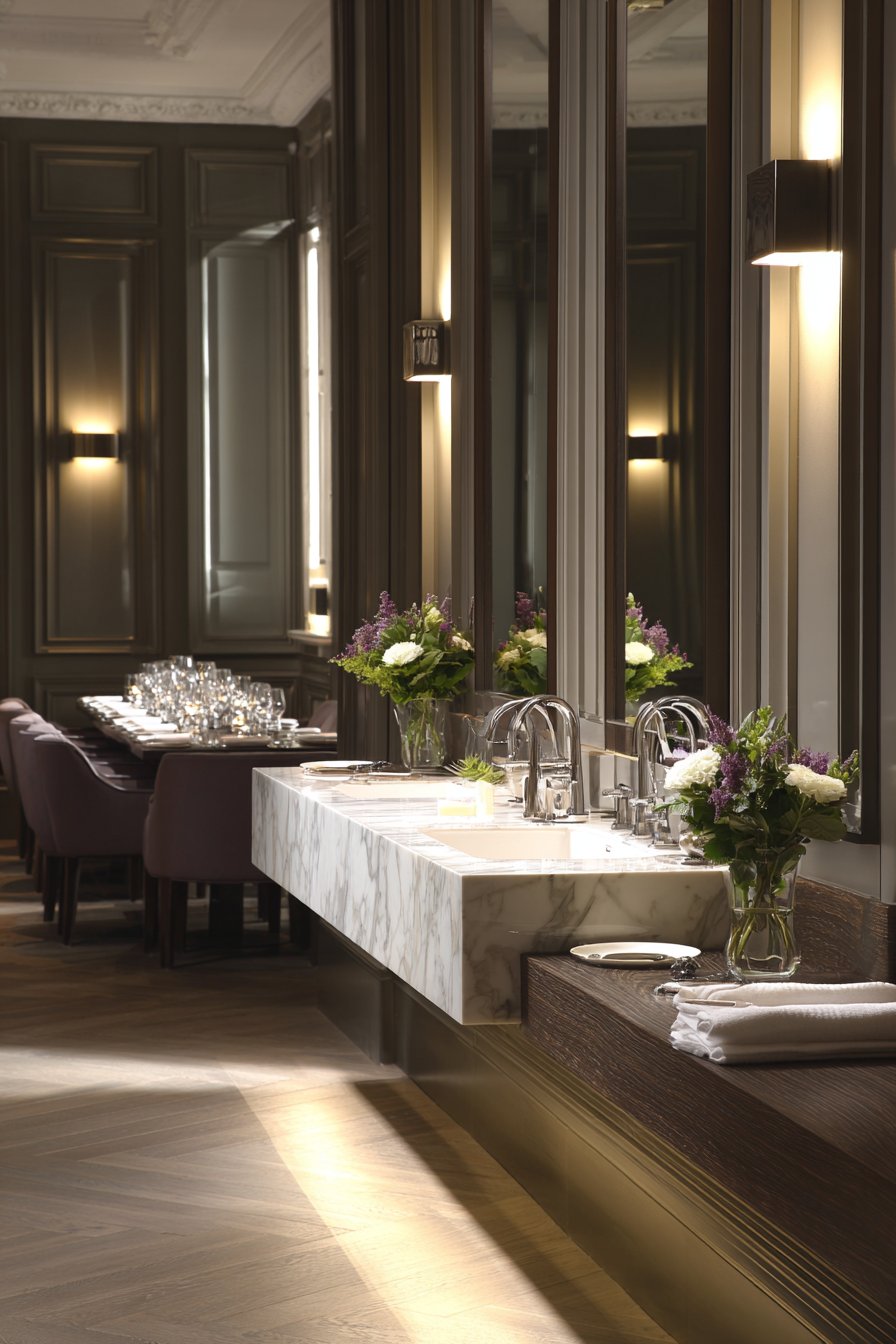
Natural oak flooring extends throughout the space, providing warmth that balances the marble’s cool elegance and creating a harmonious connection between the washbasin area and the adjacent dining table. The contemporary place settings visible on the dining table echo the washbasin’s refined aesthetic, suggesting a cohesive design approach that considers every element within the room. This continuity of style prevents the washbasin from feeling like an intrusive addition and instead positions it as a natural component of the dining experience.
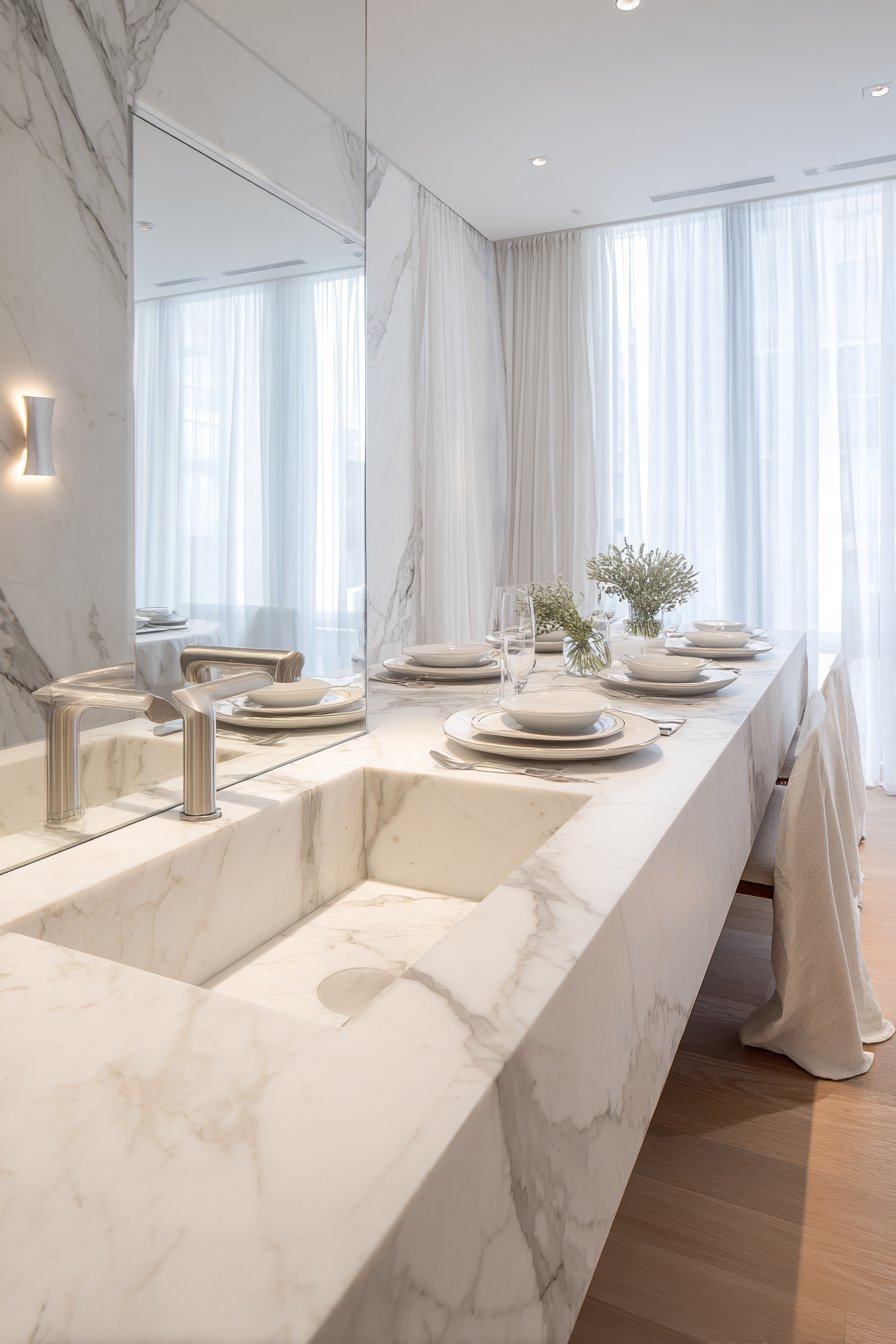
Soft diffused lighting from carefully positioned wall sconces creates elegant shadows that emphasize the marble’s texture and veining patterns, transforming the washbasin into a sculptural element worthy of admiration. The professional interior photography perspective captures how seamlessly the practical washbasin functionality integrates within the formal dining environment, demonstrating that utility and beauty need not be mutually exclusive. The wide-angle composition reveals how the floating console maintains clear sightlines throughout the space, ensuring the room feels open and inviting rather than cramped or cluttered.
Key Design Tips:
- Select marble with distinctive veining to create visual interest and ensure each installation feels unique
- Position floating consoles at appropriate heights (typically 32-36 inches) for comfortable use while maintaining elegant proportions
- Choose undermount sinks for seamless integration that simplifies cleaning and maintains uninterrupted marble surfaces
- Install wall sconces at eye level to create flattering ambient lighting that highlights materials without creating harsh shadows
- Coordinate metal finishes between the washbasin fixtures and dining room hardware for cohesive design
- Consider the marble’s maintenance requirements and seal properly to protect against water damage and staining
2. Farmhouse Vintage Charm
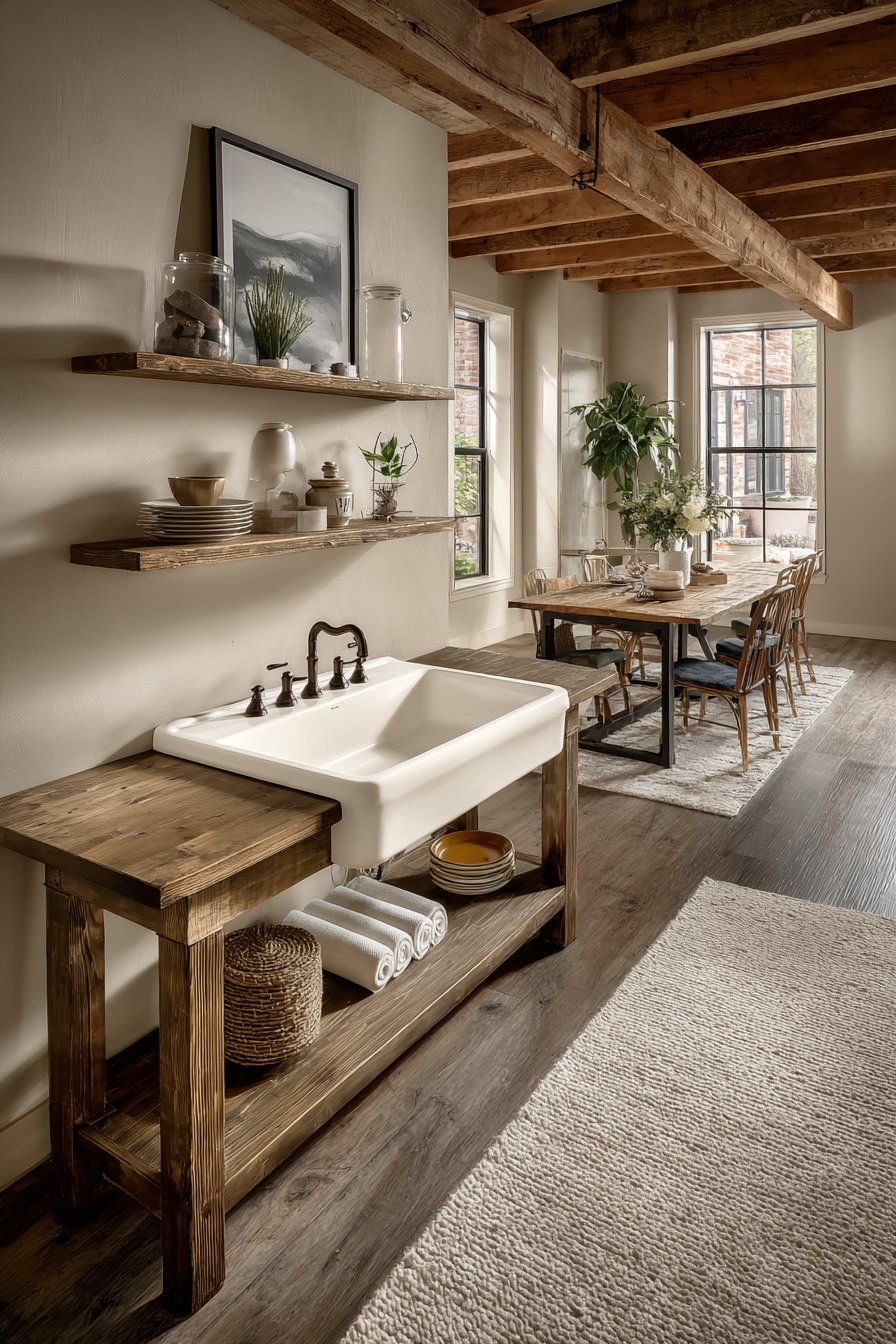
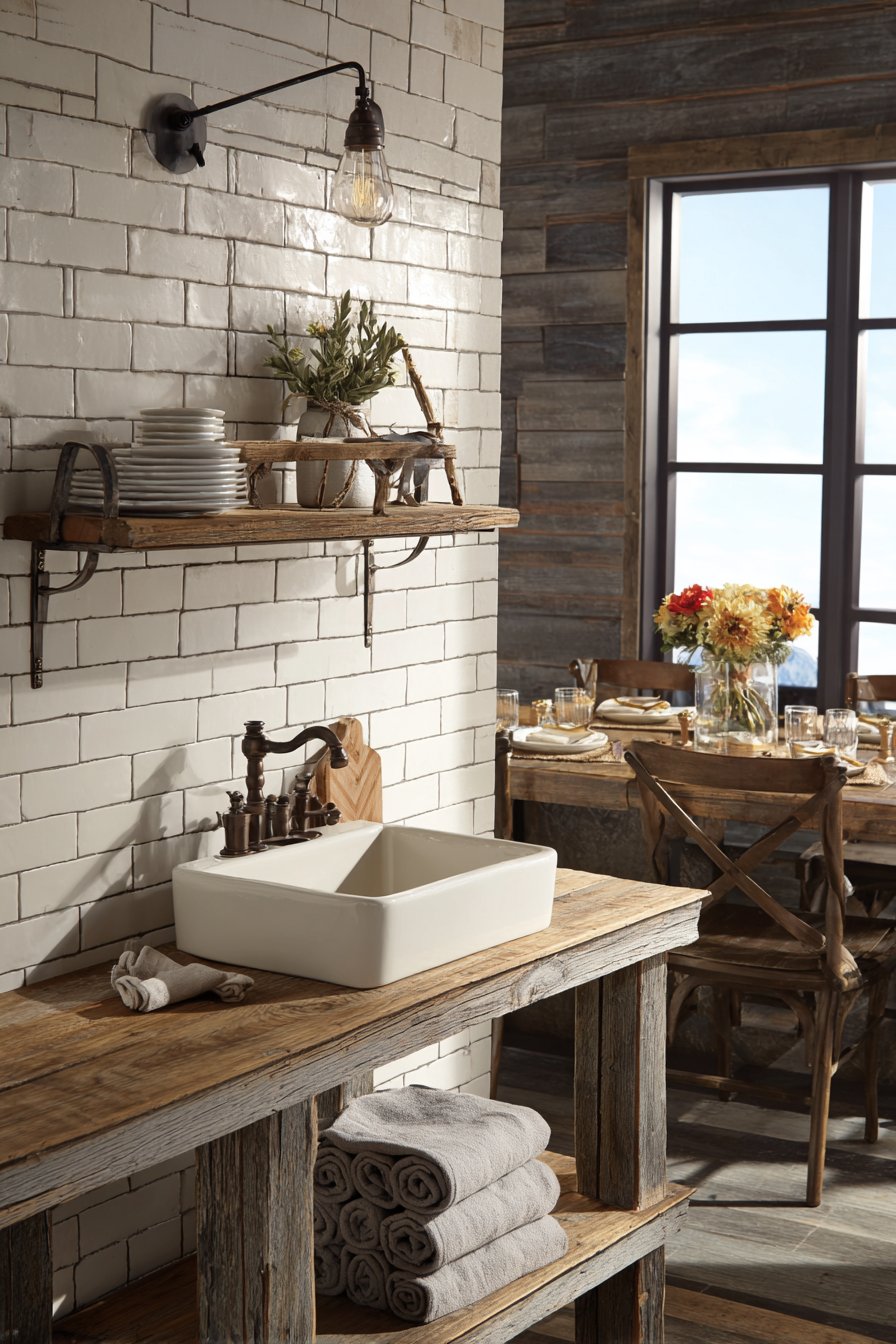
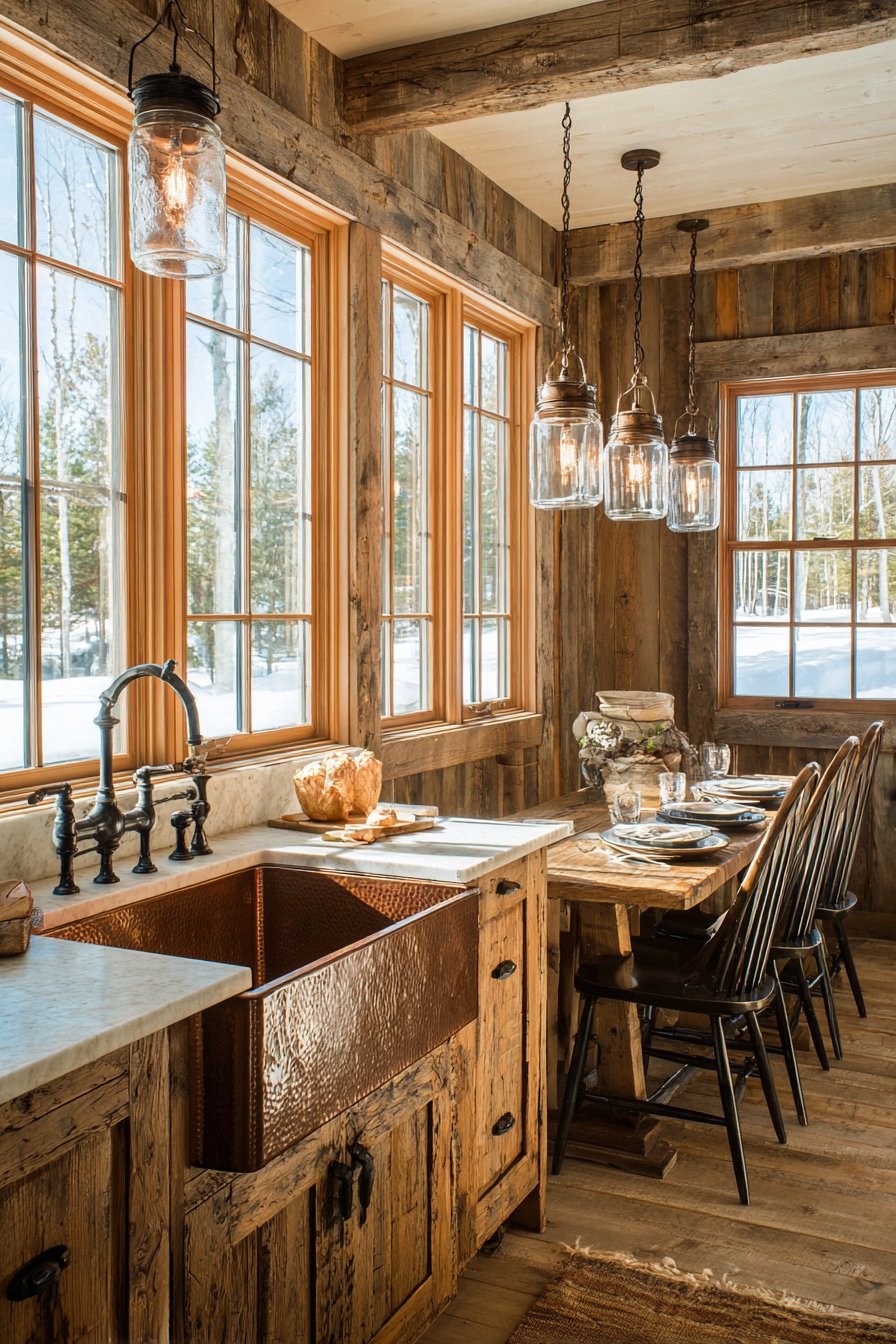
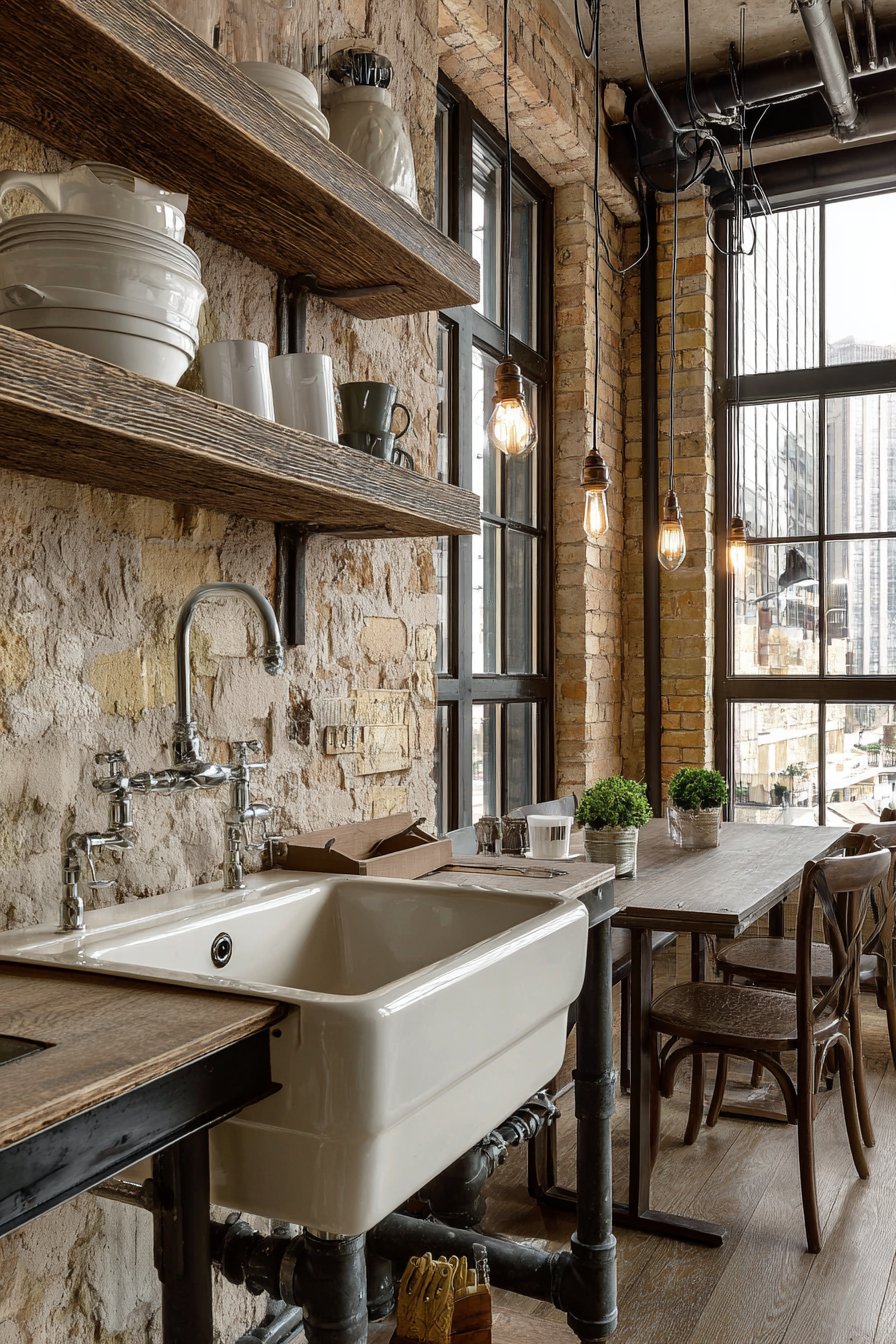
Rustic authenticity meets practical convenience in this farmhouse-inspired dining room washbasin design that celebrates the beauty of reclaimed materials and vintage aesthetics. The vintage-inspired porcelain apron-front sink serves as the centerpiece, its substantial presence commanding attention while evoking memories of simpler times when craftsmanship and durability were paramount. Mounted on a reclaimed wood vanity base that showcases authentic wear patterns, natural grain variations, and the character marks that only genuine aged wood can provide, this installation tells a story of sustainable design that honors the past while serving present needs.
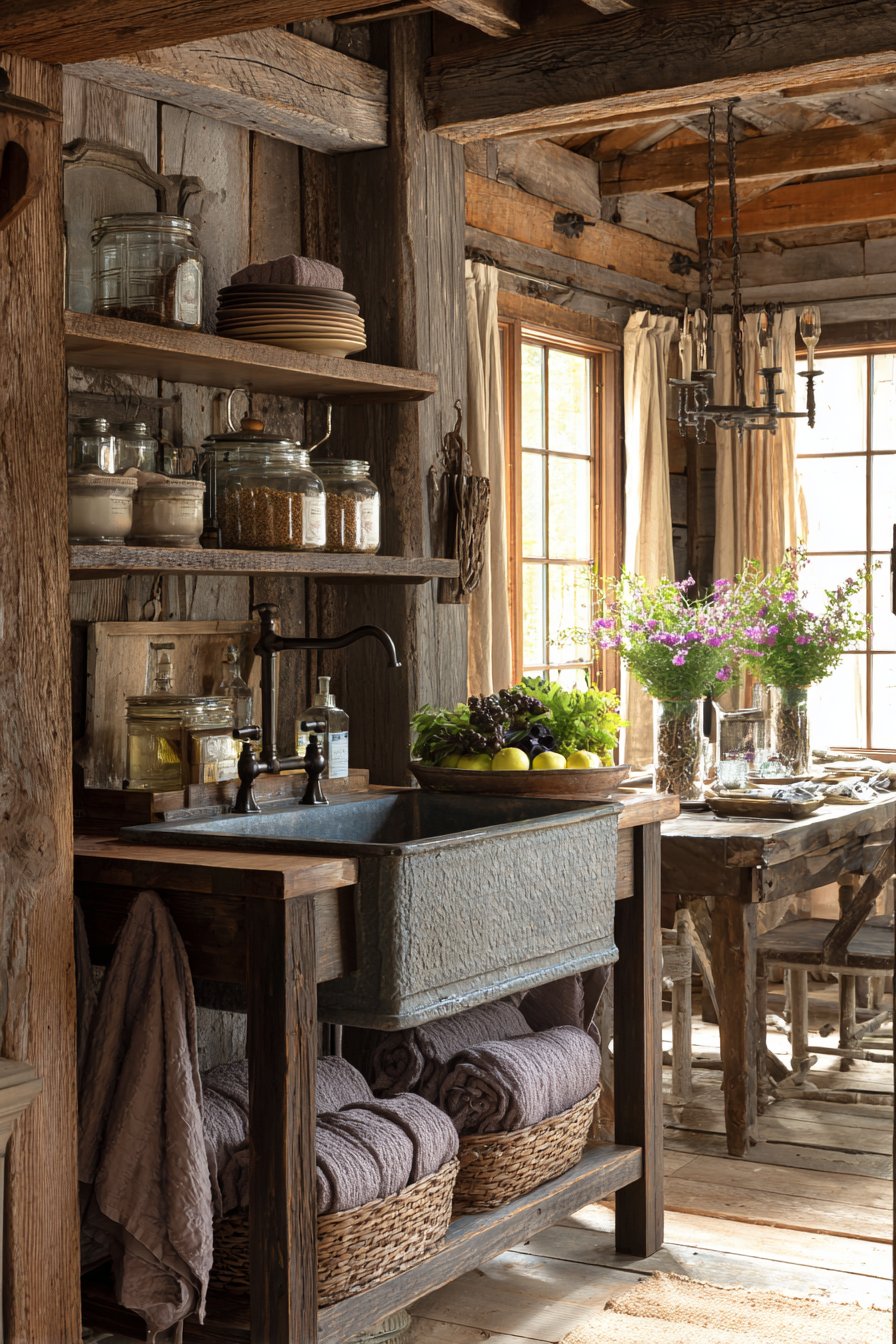
Oil-rubbed bronze fixtures add layers of rustic charm with their warm, slightly weathered appearance that suggests years of faithful service. This finish choice perfectly complements the reclaimed wood’s patina and creates a cohesive color palette dominated by warm earth tones. The open shelving below the sink transforms what might otherwise be dead space into practical storage that also serves decorative purposes—neatly rolled cloth napkins in various patterns and textures, along with frequently used serving accessories, remain easily accessible while contributing to the room’s visual appeal.
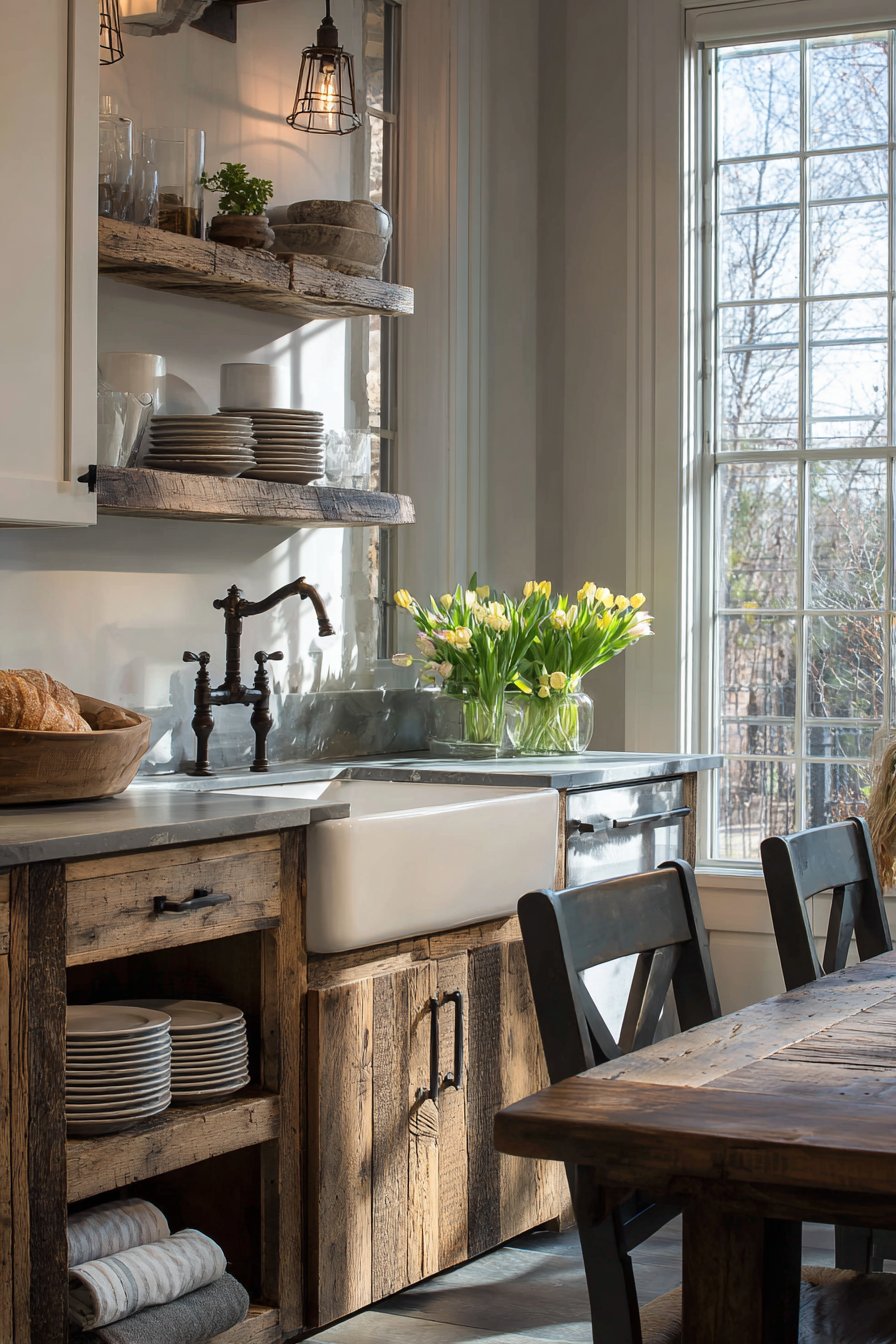
The dining table visible in the background features ladder-back chairs that echo the farmhouse aesthetic, their simple construction and honest materials creating harmony with the washbasin installation. A centerpiece of seasonal flowers provides organic beauty and fresh fragrance that enhances the dining experience. Natural light from nearby windows highlights the warm wood tones throughout the space, creating an inviting atmosphere that encourages lingering conversations over meals. The practical convenience of having the washbasin within the dining room becomes especially apparent during large family gatherings or dinner parties when quick cleanup access proves invaluable.
Key Design Tips:
- Source authentic reclaimed wood with visible character marks, grain variations, and natural weathering for genuine farmhouse appeal
- Choose apron-front sinks in substantial sizes to create proper visual weight and period-appropriate proportions
- Select oil-rubbed bronze fixtures that feature slight variations in finish to enhance the vintage aesthetic
- Incorporate open shelving using the same reclaimed wood to maintain material consistency
- Display practical items like linens and serving pieces to blend functionality with decoration
- Position the washbasin near windows to maximize natural light that showcases wood texture and warm tones
- Consider adding vintage accessories like antique soap dispensers or traditional faucet handles for authentic period details
3. Modern Minimalist Statement
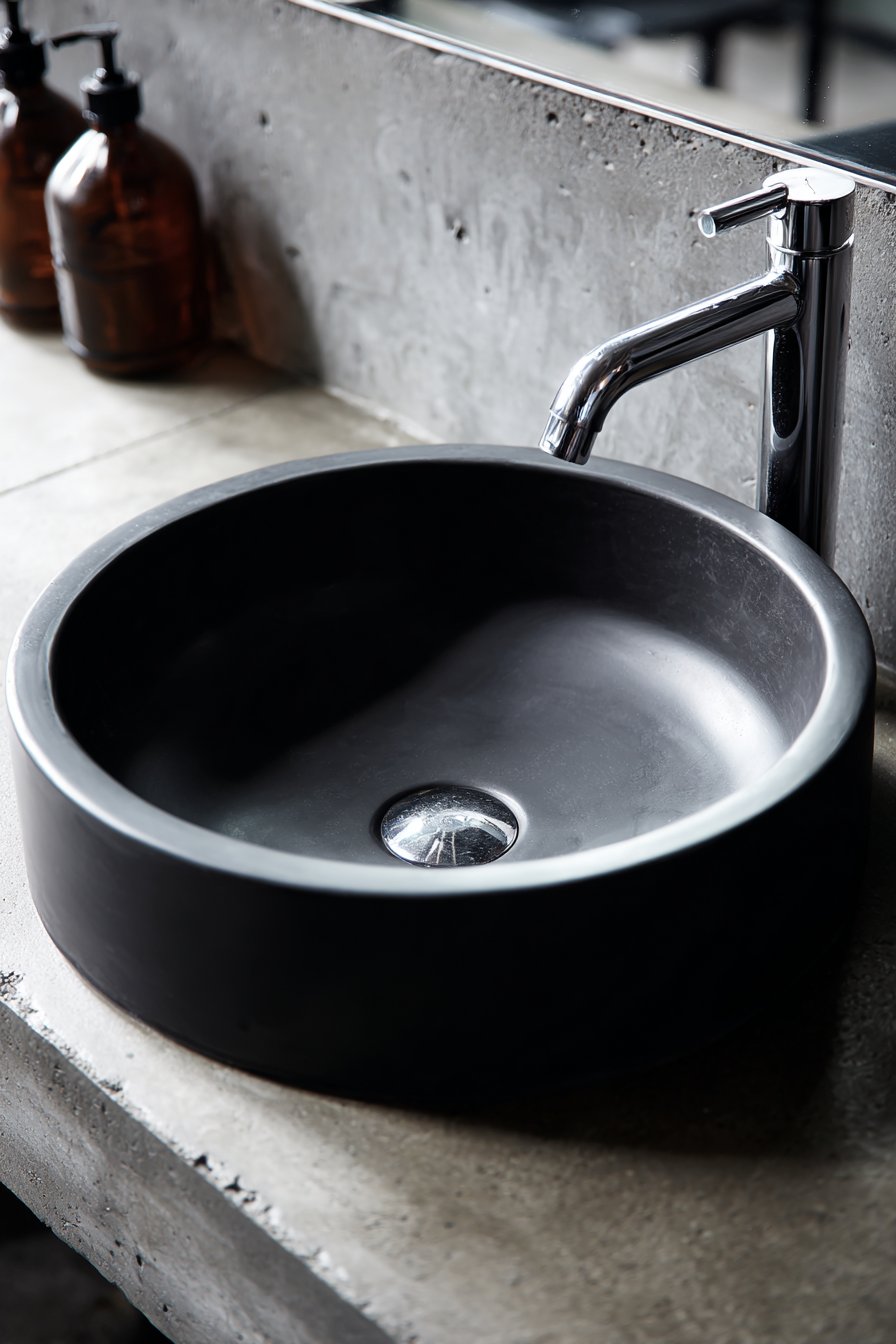
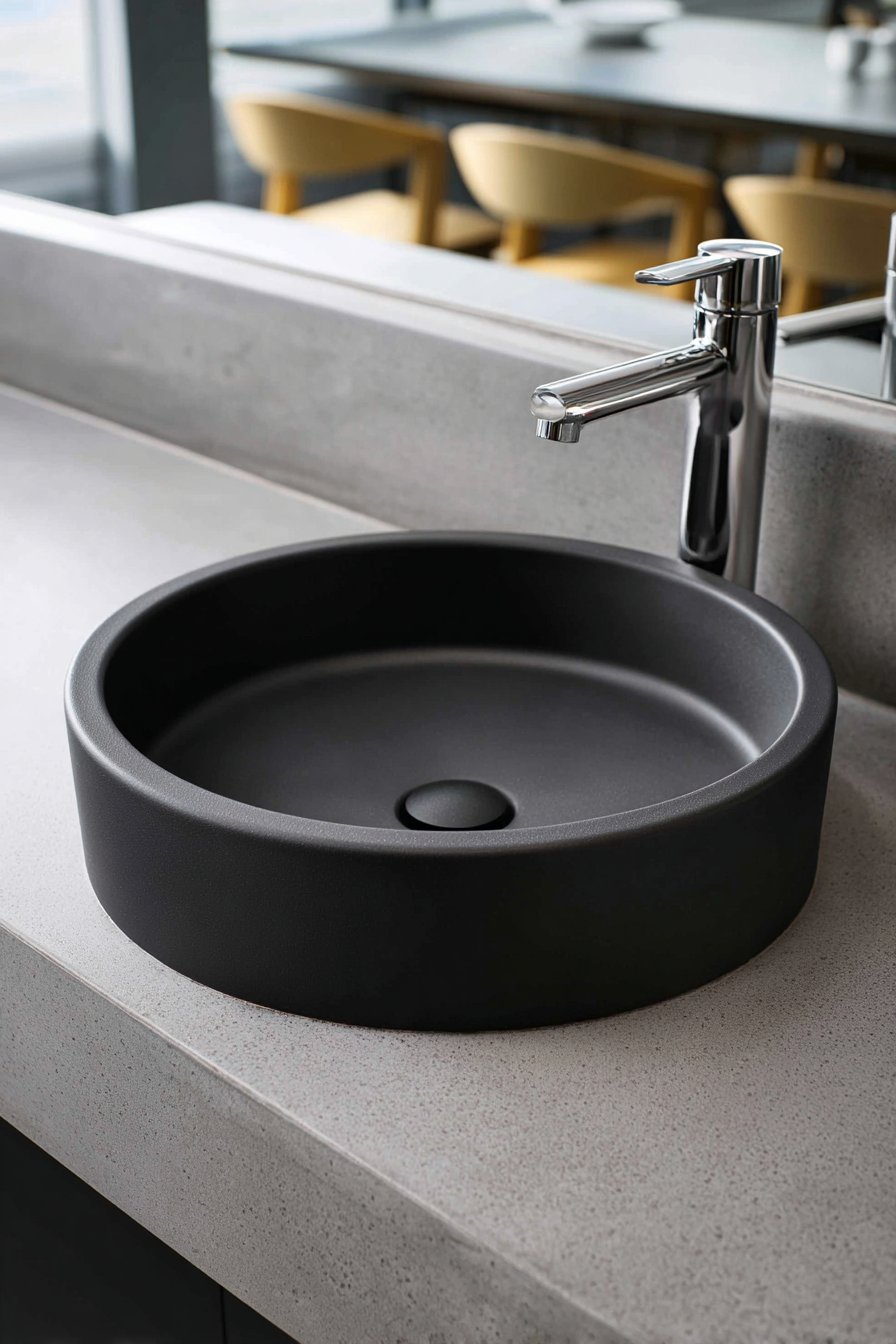
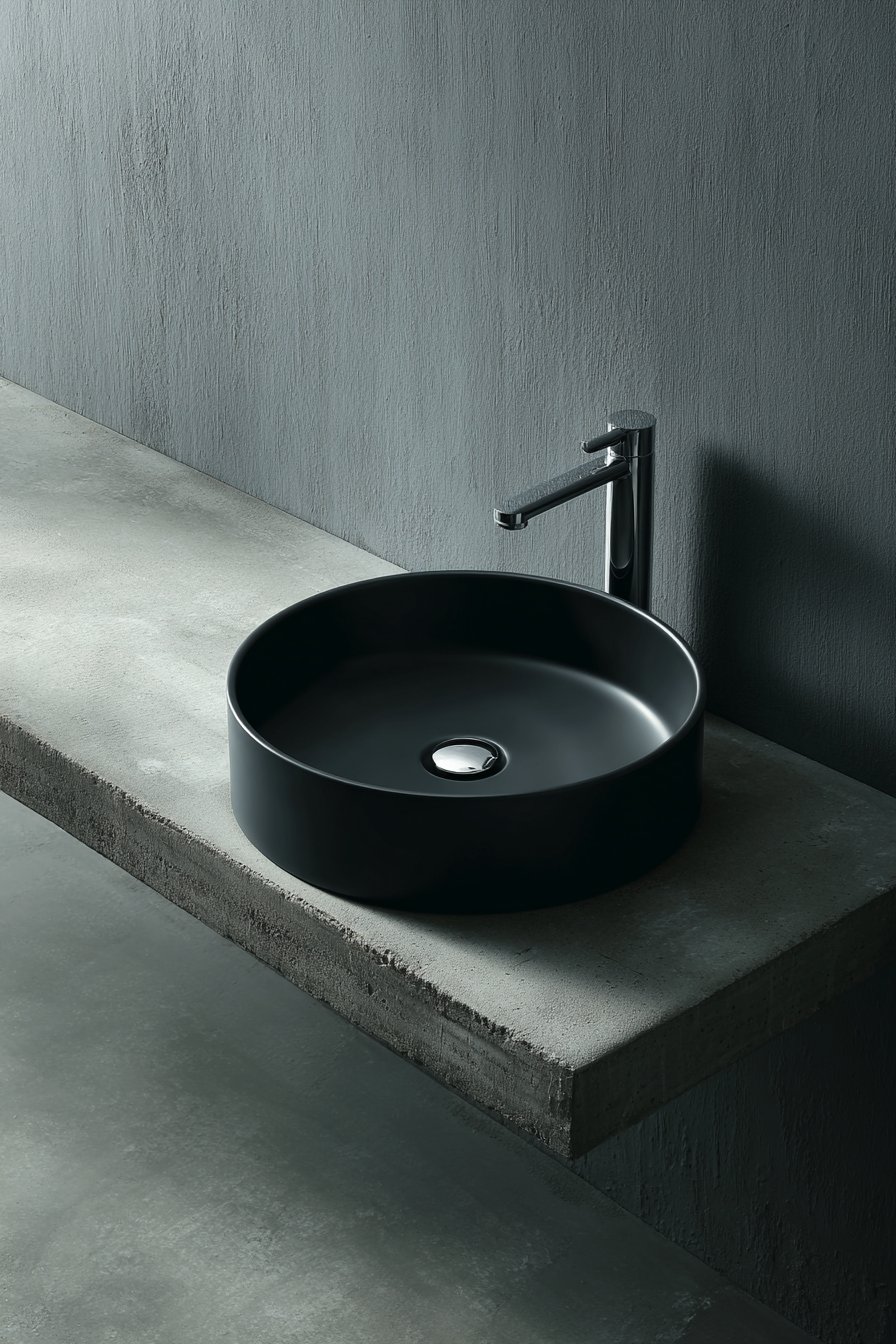
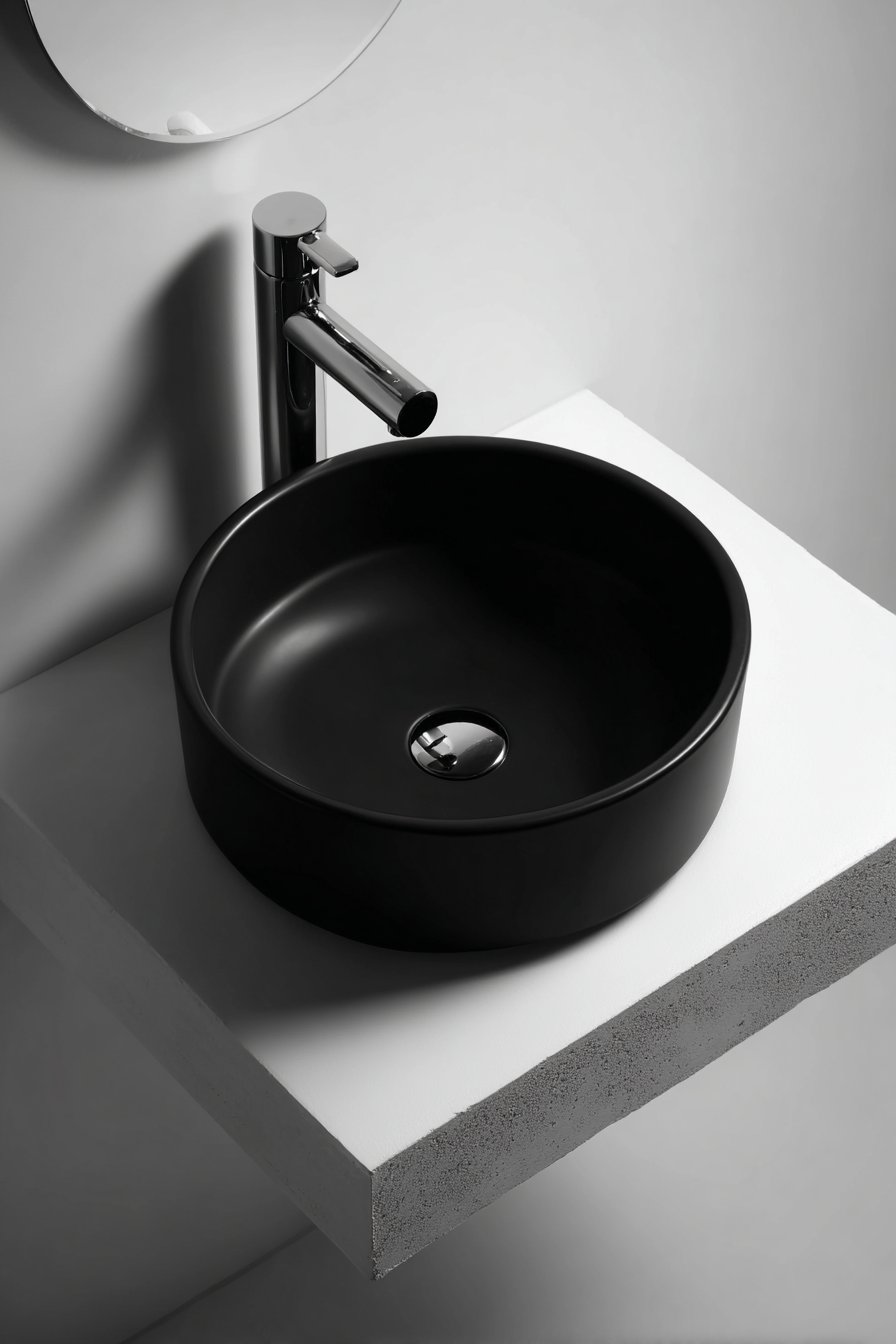
Clean lines and bold contrasts define this modern minimalist dining room washbasin concept that demonstrates how simplicity can create powerful visual impact. The circular vessel sink in matte black ceramic makes an uncompromising statement, its dark surface providing dramatic contrast against the surrounding light-toned space. Positioned on a wall-mounted concrete floating shelf, the installation celebrates industrial materials while maintaining the weightless quality that characterizes contemporary minimalist design. The single-handle chrome faucet rises with sculptural grace, its reflective surface catching and playing with light in ways that add visual interest without cluttering the composition.
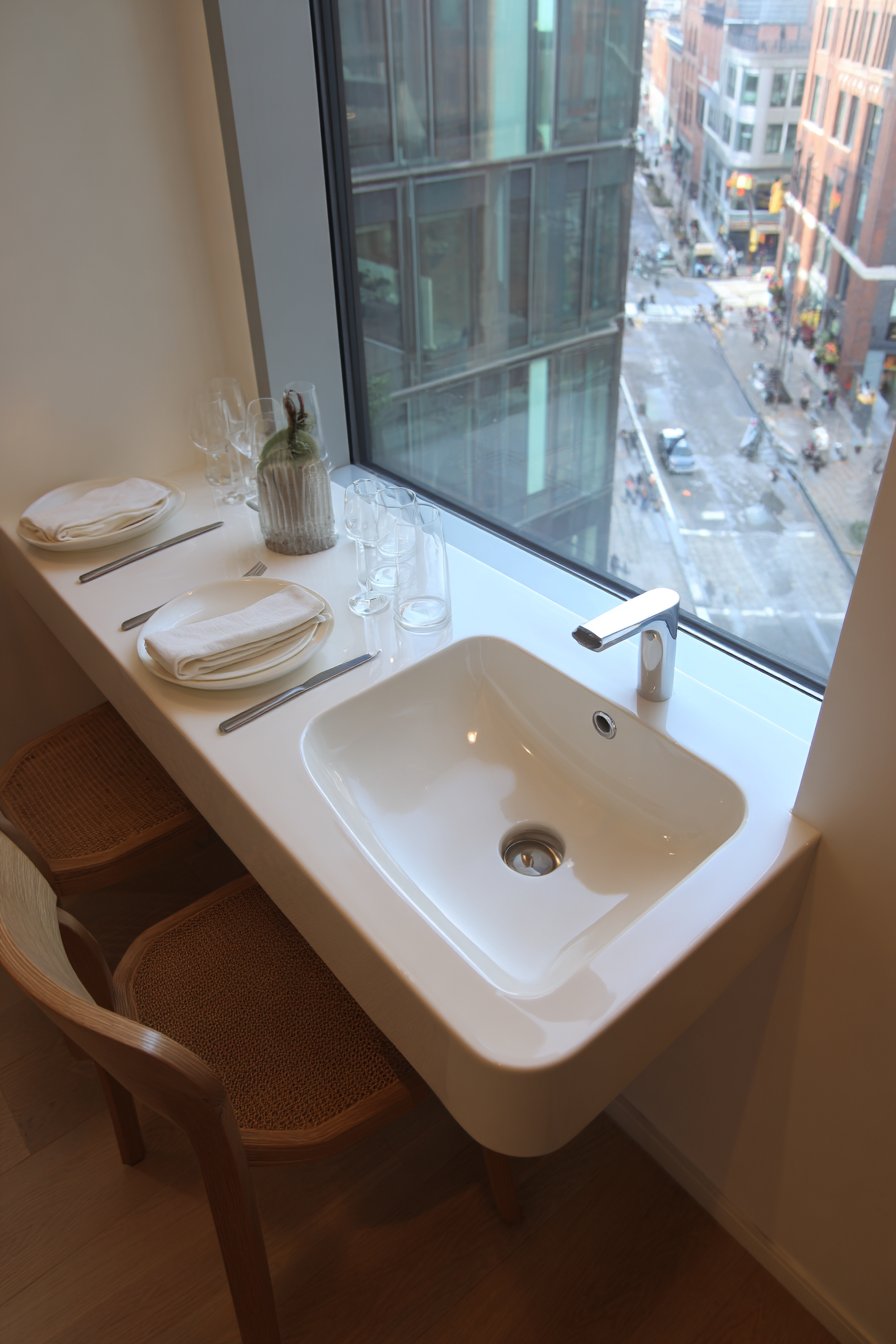
The surrounding dining space exhibits the same commitment to clean lines and functional beauty, with a glass-topped dining table that seems to float above its base, creating transparency that enhances the room’s spacious feeling. Scandinavian-style chairs with their characteristic emphasis on form, comfort, and honest materials provide seating that’s both practical and aesthetically pleasing. Every element has been carefully considered and pared down to its essential form, eliminating unnecessary ornamentation in favor of pure, purposeful design.
Recessed lighting creates subtle highlights on the sink’s smooth matte surface, emphasizing its perfect circular form and the way light absorbs into rather than reflects off the black ceramic. This controlled illumination approach maintains the minimalist aesthetic while ensuring adequate task lighting for practical use. The professional interior photography with balanced exposure showcases the bold contrast between the black vessel sink and lighter surrounding elements, demonstrating how a carefully chosen focal point can anchor a minimalist space without overwhelming it. The contemporary integration of the washbasin into the minimalist dining room design proves that practical fixtures can serve as sculptural art pieces when selected and positioned with intention.
Key Design Tips:
- Choose vessel sinks in bold colors or finishes to create focal points in minimalist spaces where decorative elements are limited
- Install floating shelves in industrial materials like concrete to add textural interest while maintaining clean lines
- Select single-handle faucets with sculptural qualities that serve double duty as functional fixtures and art objects
- Maintain strict color discipline with limited palettes dominated by neutrals and one or two accent tones
- Use recessed lighting to illuminate key features without introducing visual clutter through visible fixtures
- Ensure all exposed surfaces remain uncluttered—every visible item should serve clear purpose or provide aesthetic value
- Consider the vessel sink’s proportions relative to the floating shelf to create balanced, harmonious relationships
4. Compact Corner Solution
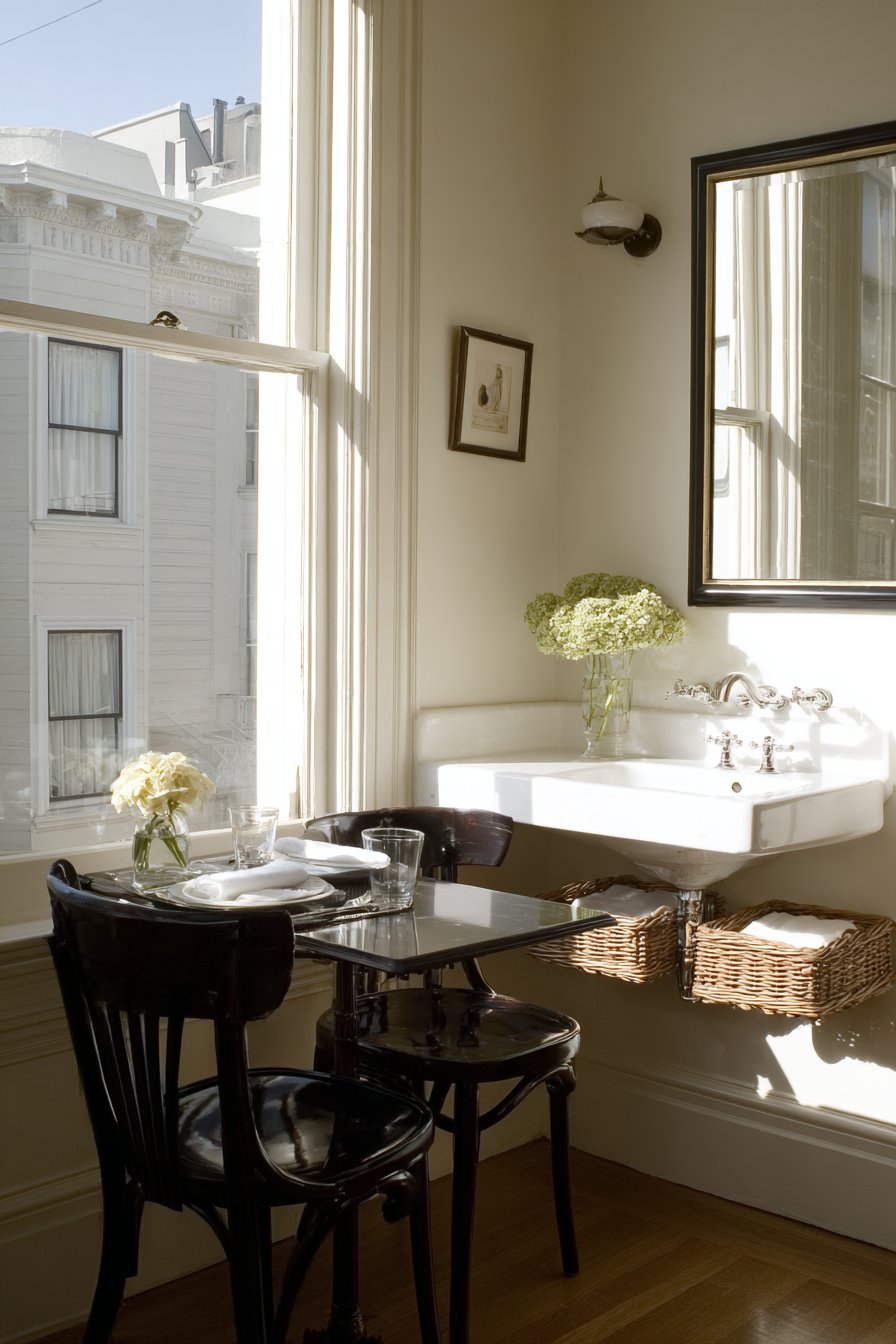
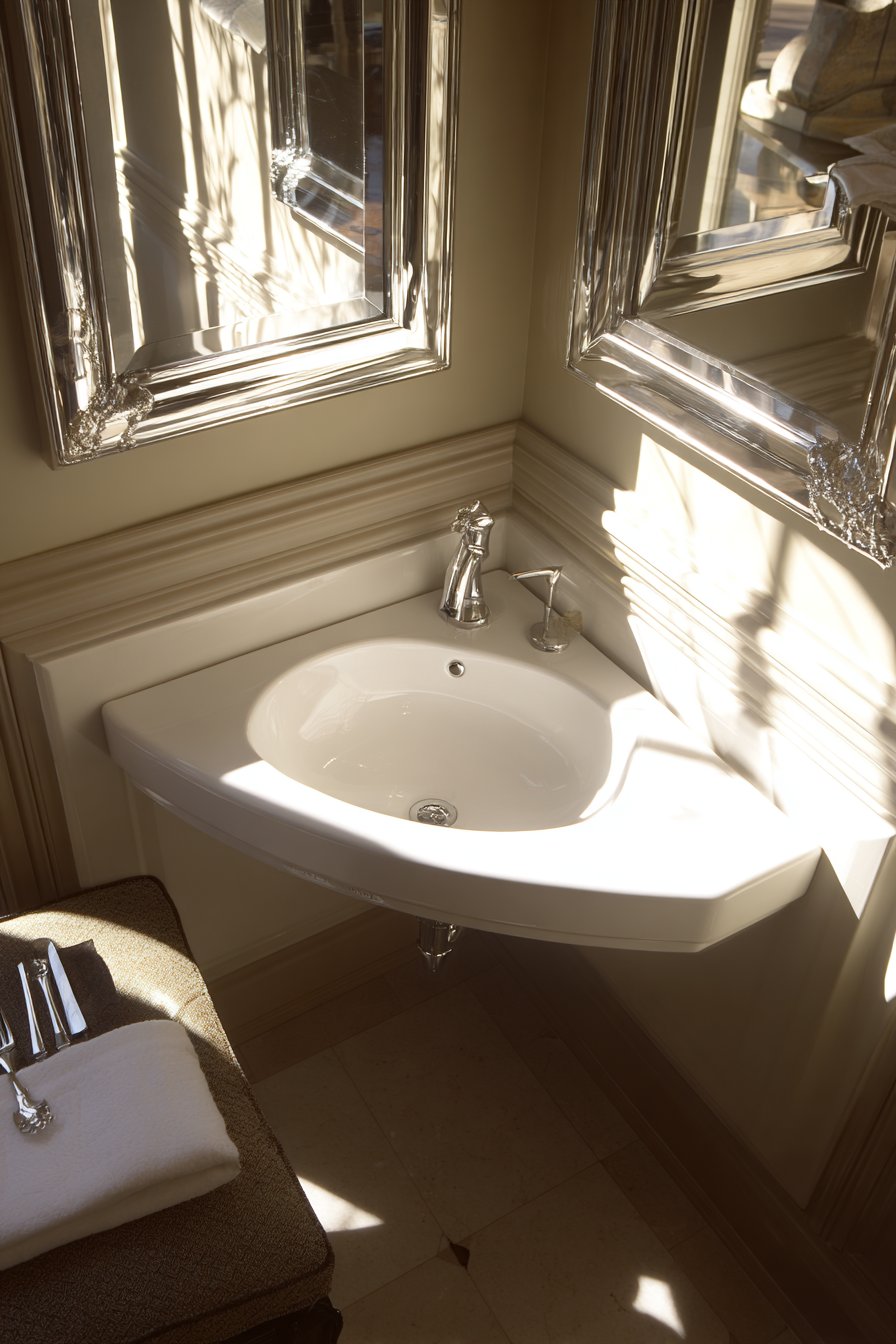
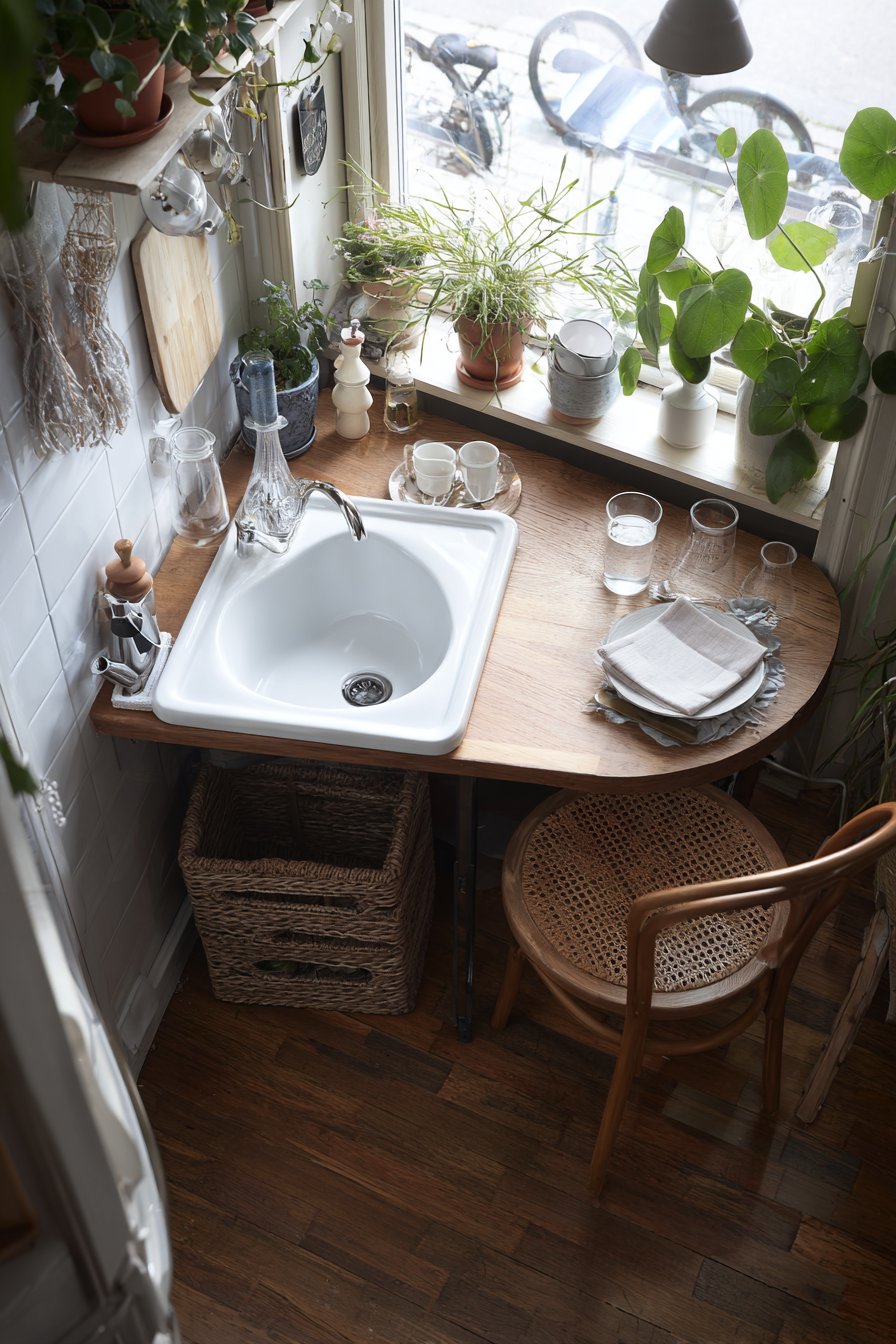
Space optimization reaches new heights in this compact dining room washbasin design that proves even the smallest areas can accommodate practical fixtures without sacrificing style. The corner-mounted triangular sink in glossy white porcelain represents ingenious problem-solving, its unconventional shape specifically designed to maximize functionality while minimizing spatial intrusion. This configuration claims otherwise unusable corner space, transforming it into a valuable asset rather than allowing it to remain dead area. The space-saving wall-mount faucet extends the efficiency theme, eliminating the need for deck-mounted hardware that would consume precious counter space.
Clever under-sink storage demonstrates that thoughtful design can pack substantial functionality into limited footprints. Woven baskets nestle beneath the sink, their natural texture adding warmth while providing practical storage for dining linens, extra napkins, and table accessories that need homes but aren’t used constantly. This open storage approach maintains visual lightness—crucial in small spaces where closed cabinets might create oppressive feelings—while keeping necessary items organized and accessible.
The adjacent bistro-style dining table seats two with classic bentwood chairs, their curved lines and compact proportions perfectly suited to intimate dining in smaller homes or apartments. Natural light from a nearby window illuminates the efficient use of space, its presence proving that even compact areas can feel bright and welcoming when properly arranged. The wide-angle interior design photography captures the practical functionality and smart spatial planning that makes this dining room washbasin integration successful, demonstrating that limited square footage need not limit design ambition or practical convenience.
Key Design Tips:
- Measure corner spaces carefully and select triangular or specially-designed corner sinks that maximize every available inch
- Choose wall-mount faucets to preserve all available counter or shelf space for practical use
- Install open shelving or use attractive baskets for storage that contributes visual interest rather than creating heaviness
- Select compact dining furniture scaled appropriately for the room’s dimensions
- Maximize natural light through window treatments that provide privacy without blocking illumination
- Use glossy white finishes to reflect light and create the illusion of more spacious interiors
- Consider mirror placement near the washbasin to visually expand the space through reflection
5. Elegant Copper Luxury
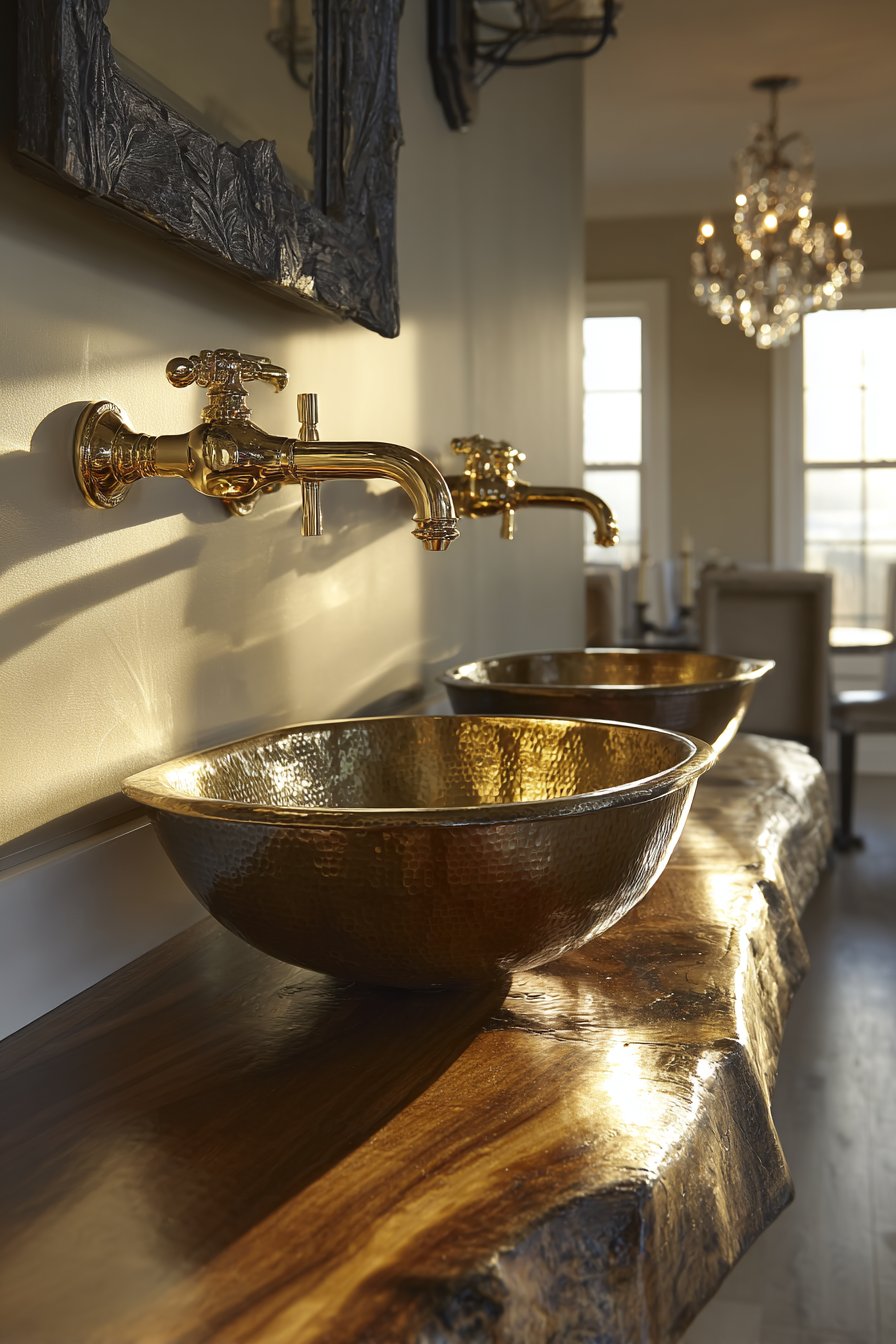
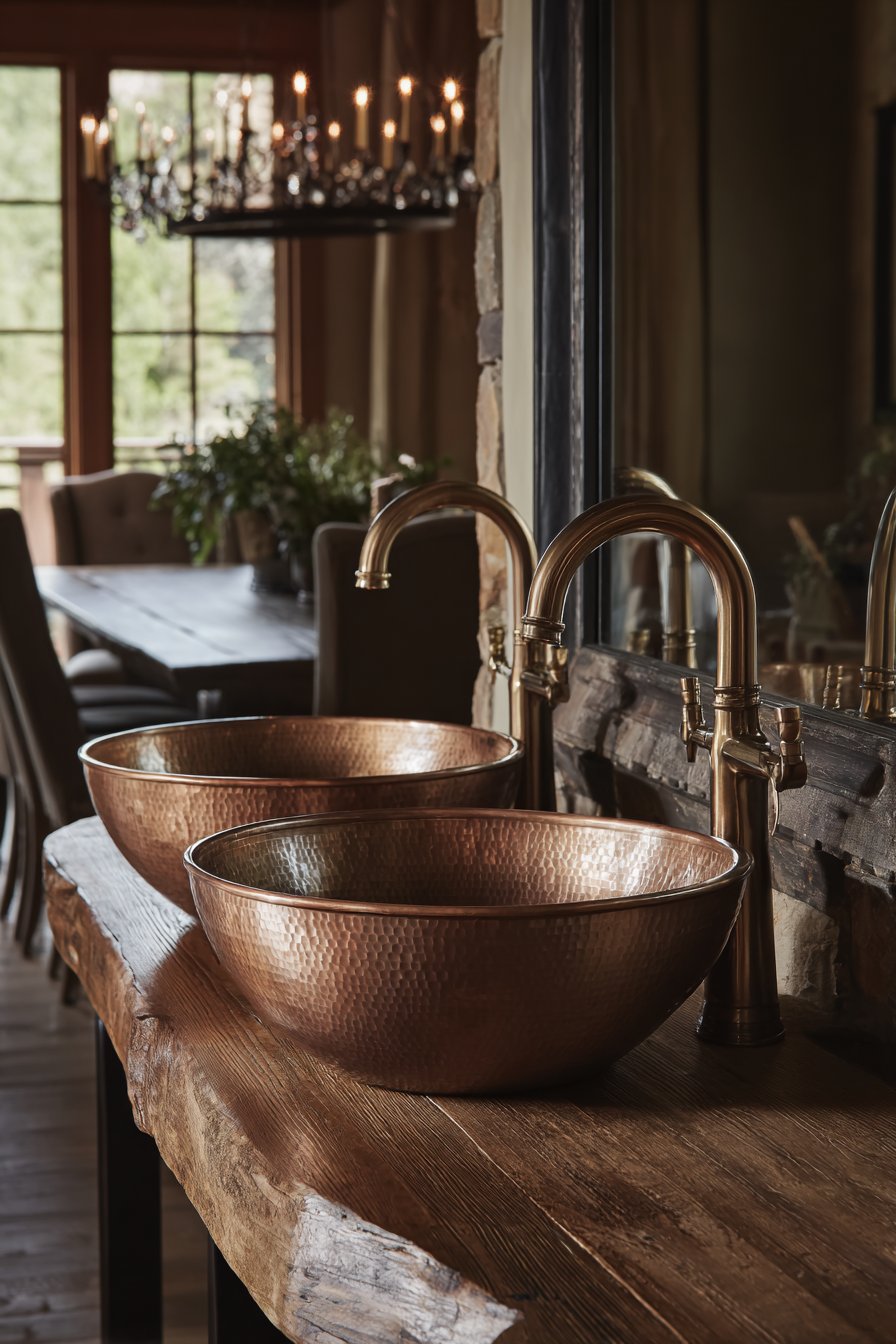
Warmth and sophistication converge in this elegant dining room washbasin design featuring dual vessel sinks in hammered copper that immediately capture attention with their rich, glowing surfaces. The hammered texture catches and reflects light in endlessly varying ways as viewing angles change, creating living surfaces that seem to shift and shimmer throughout the day. Positioned on a live-edge walnut console table, these stunning sinks benefit from wood’s natural beauty—the irregular edge preserved from the tree’s original form provides organic contrast to the copper’s metallic precision, creating a dialogue between natural and crafted elements.
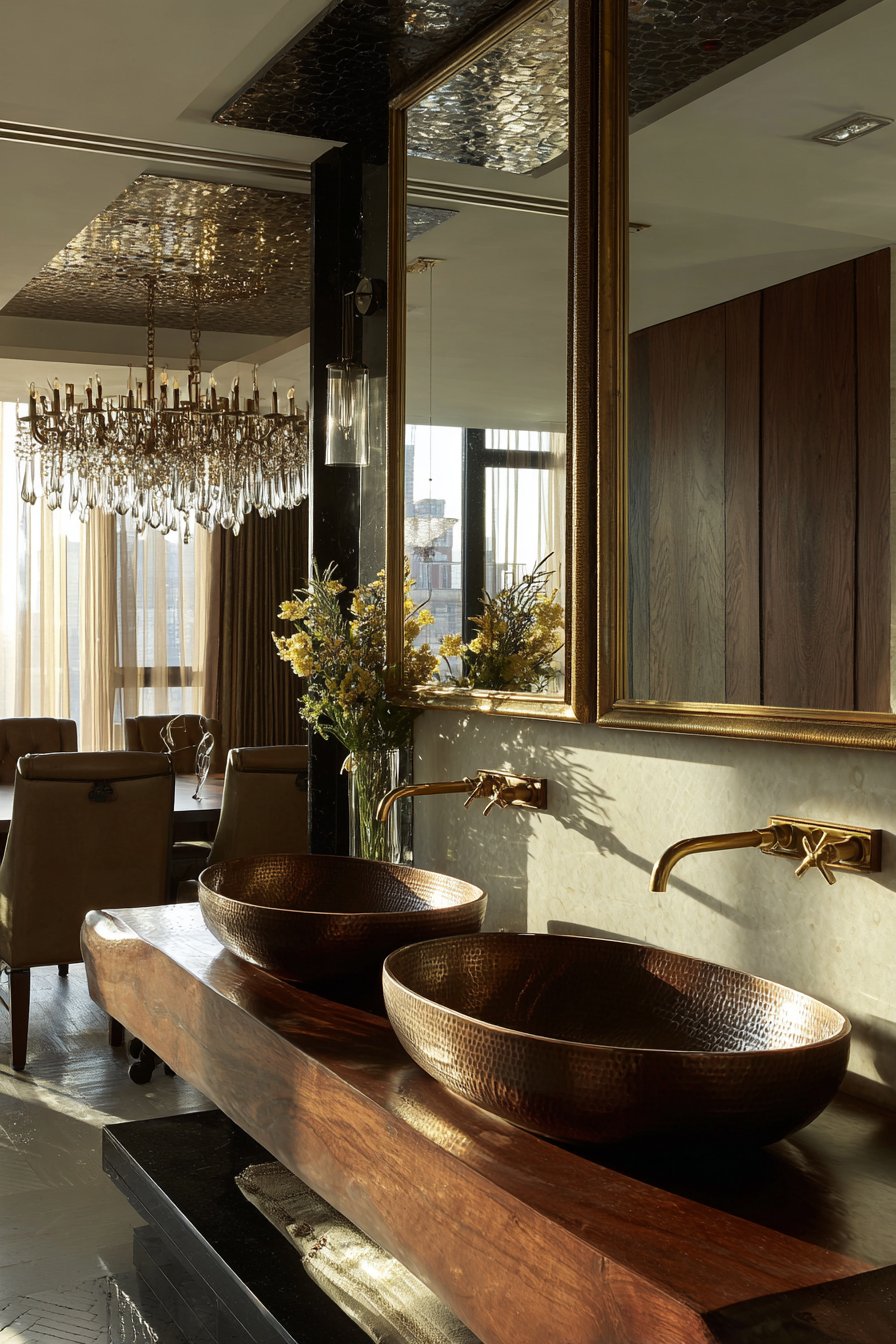
Antique brass bridge faucets complement the warm metallic tones while introducing slightly different hues that add complexity to the color palette without creating discord. These substantial fixtures feature traditional cross handles and bridge construction that evokes classic design while providing reliable modern functionality. The formal dining area visible behind the washbasin installation includes upholstered dining chairs with refined lines and comfortable proportions, their fabric selections coordinating with the warm tones established by the copper and walnut elements.
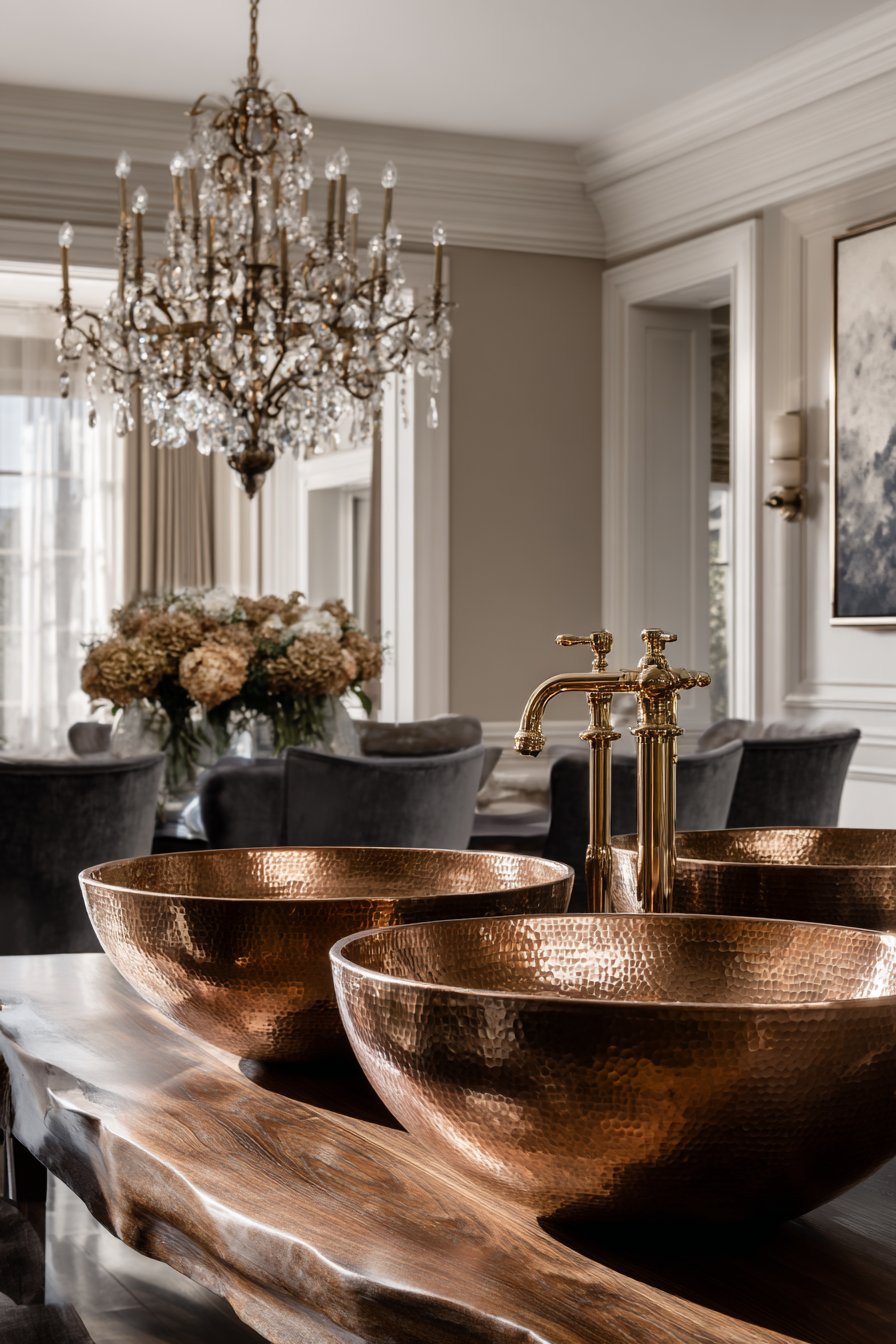
A crystal chandelier overhead provides focal point lighting that creates spectacular effects when its faceted surfaces catch and refract illumination onto the copper sinks below. Soft golden hour lighting streams through windows, creating rich reflections on the copper surfaces that seem to glow from within, their hammered textures creating countless tiny highlights that dance across the metal. The architectural digest style photography focuses on luxury material details and the sophisticated pairing of dining and washing functionality, demonstrating how premium materials and careful craftsmanship can elevate a practical fixture into a statement piece worthy of the finest homes.
Key Design Tips:
- Select hammered copper sinks with substantial gauge thickness to ensure durability and proper acoustic dampening
- Choose live-edge wood tables or consoles with stable, well-dried wood to prevent warping or cracking
- Install bridge faucets with proper clearance above vessel sinks to ensure comfortable usability
- Coordinate metal finishes by selecting brass or bronze tones that harmonize with copper’s warm palette
- Apply protective sealants to copper surfaces if you prefer maintaining the original finish rather than developing natural patina
- Position lighting to showcase copper’s reflective qualities and create dramatic visual effects
- Consider how copper will age and develop patina over time—decide whether to maintain or embrace natural color changes
6. Transitional Shaker Elegance
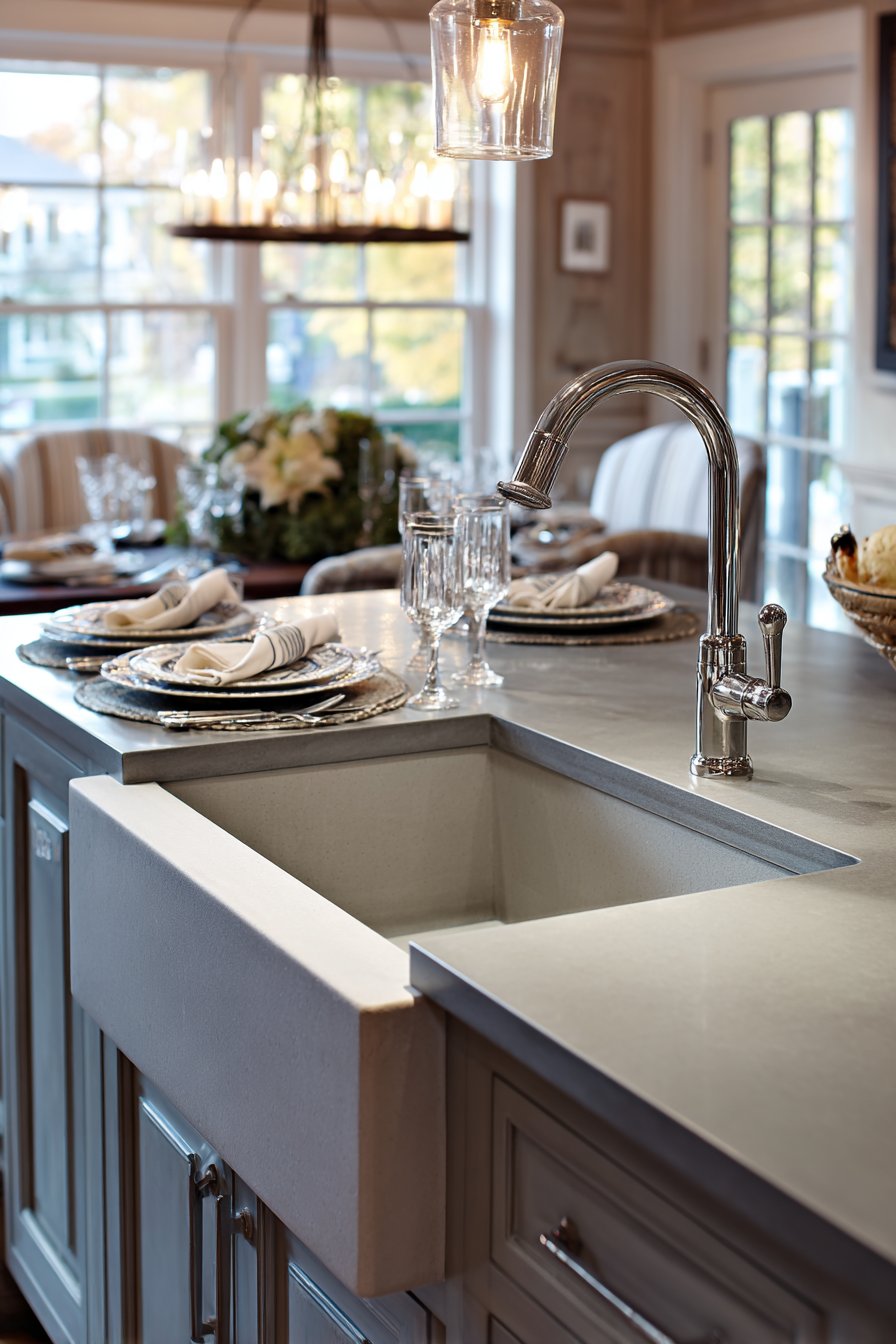
Timeless appeal defines this transitional dining room washbasin design that bridges traditional and contemporary aesthetics through careful material selection and proportioning. The rectangular ceramic sink with beveled edges provides subtle decorative detail without excessive ornamentation, its clean lines and classic proportions ensuring it won’t feel dated as design trends evolve. Set into gray quartz countertop that offers both beauty and exceptional durability, the installation rests atop traditional cabinetry featuring shaker-style doors—those iconic recessed panels that have endured for centuries because they balance visual interest with fundamental simplicity.
Satin nickel fixtures provide timeless appeal with their soft, brushed finish that resists fingerprints and water spots while offering a sophisticated middle ground between bright chrome and darker oil-rubbed bronze. The dining table setting visible nearby includes classic china with delicate patterns and crystal stemware that catches and refracts ambient light, their traditional elegance harmonizing perfectly with the washbasin’s refined aesthetic. These carefully chosen accessories suggest meals that are events worthy of celebration rather than mere fuel consumption.
Pendant lighting suspended above creates warm ambient illumination that flatters both people and spaces, its carefully chosen color temperature ensuring the gray quartz appears sophisticated rather than cold. Professional interior photography showing balanced exposure captures the refined integration of practical washbasin convenience within the traditional dining room setting, demonstrating how transitional design successfully marries the best elements of different style periods. The shaker cabinetry provides ample concealed storage for dining linens, serving pieces, and cleaning supplies, ensuring practical necessities remain hidden while beautiful surfaces stay uncluttered.
Key Design Tips:
- Choose quartz countertops in neutral grays that coordinate with both warm and cool color schemes
- Select shaker-style cabinetry with quality construction—dovetail joints, soft-close hinges, and solid wood doors
- Install satin nickel fixtures that offer classic appeal without appearing too formal or traditional
- Incorporate classic dining accessories like china and crystal to enhance the transitional aesthetic
- Use pendant lighting with warm color temperatures (2700-3000K) to create inviting ambiance
- Maintain symmetry in cabinet hardware placement and decorative elements for traditional sensibility
- Balance traditional elements with contemporary touches like sleek hardware profiles or modern pendant designs
7. Coastal Breeze Aesthetic
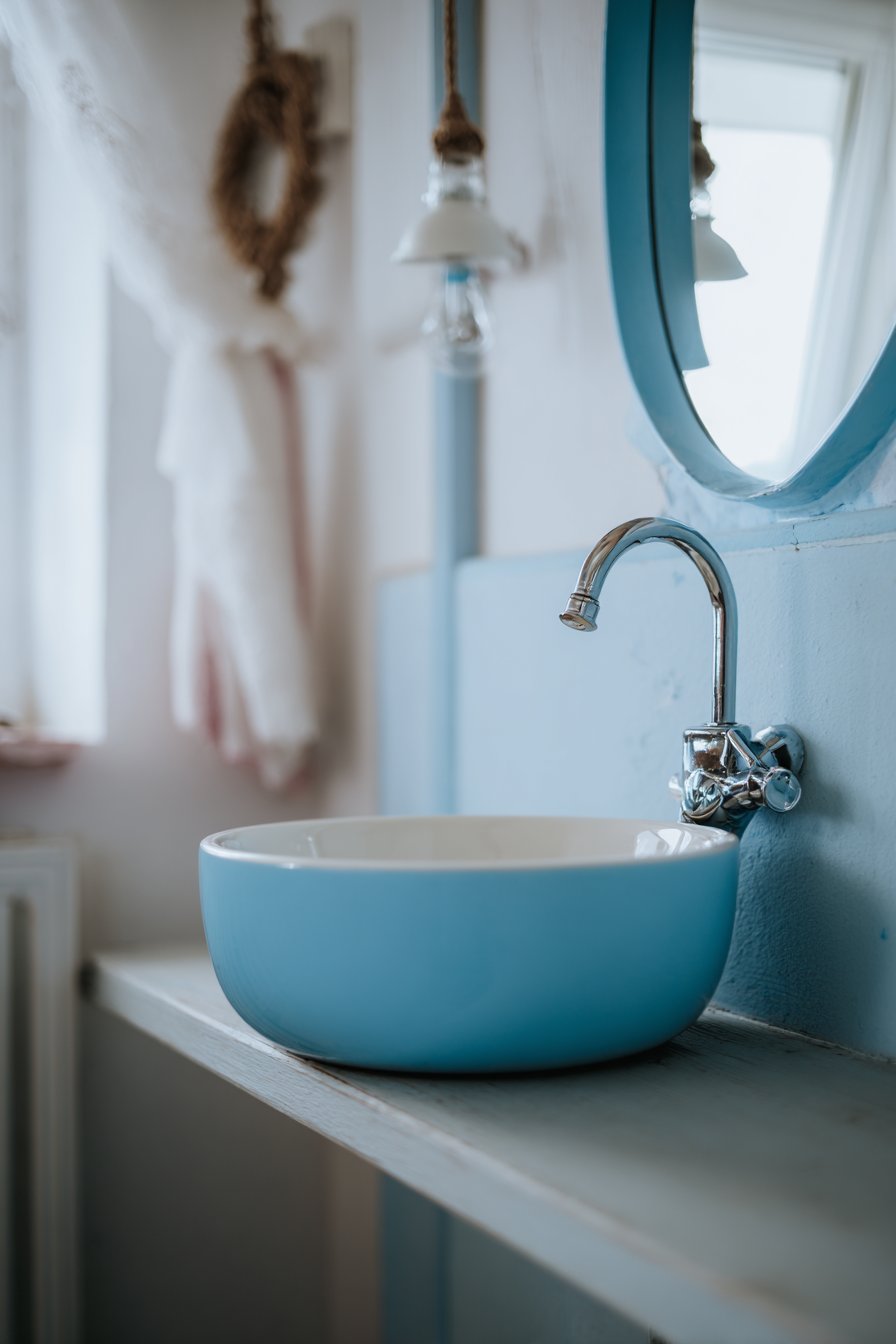
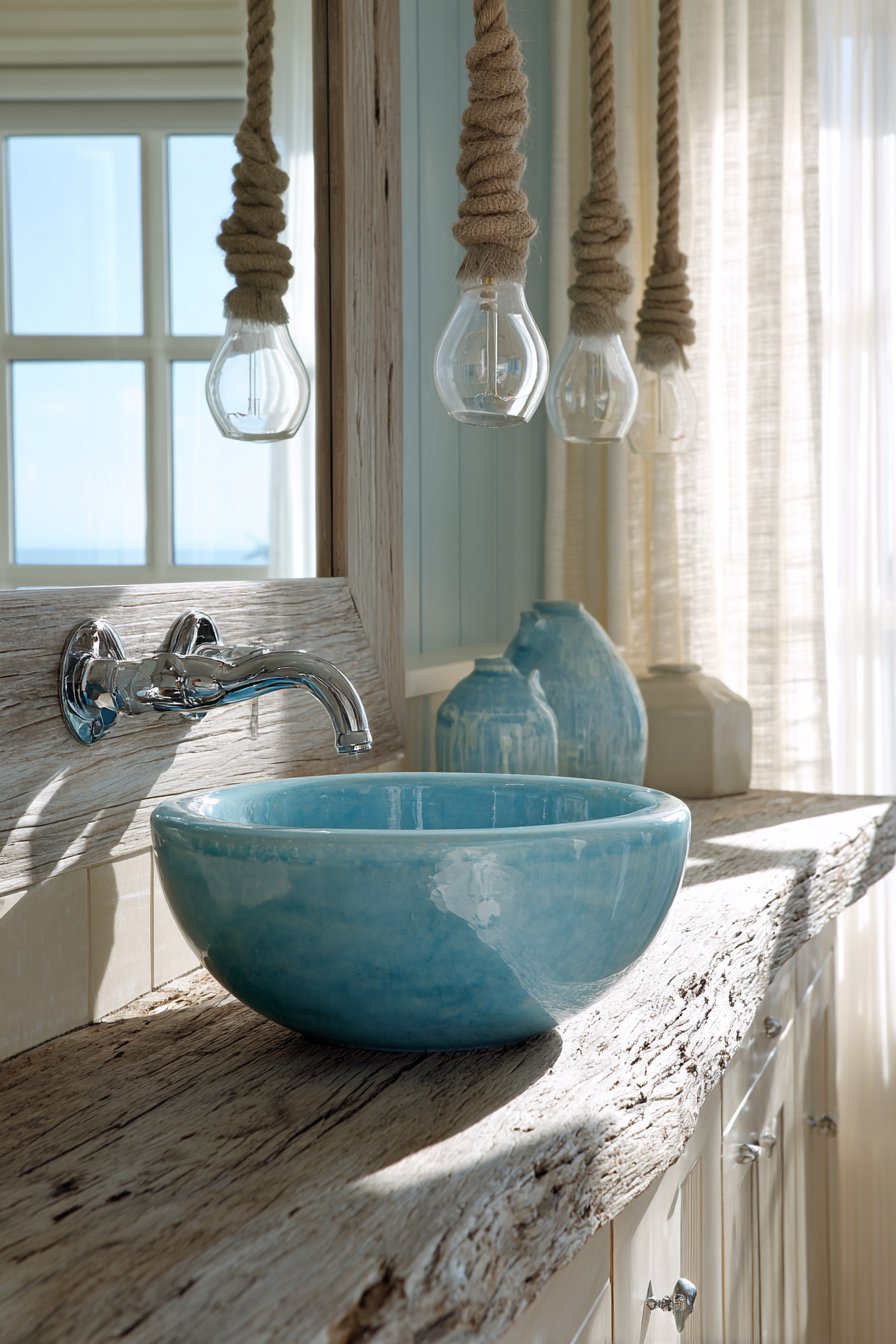
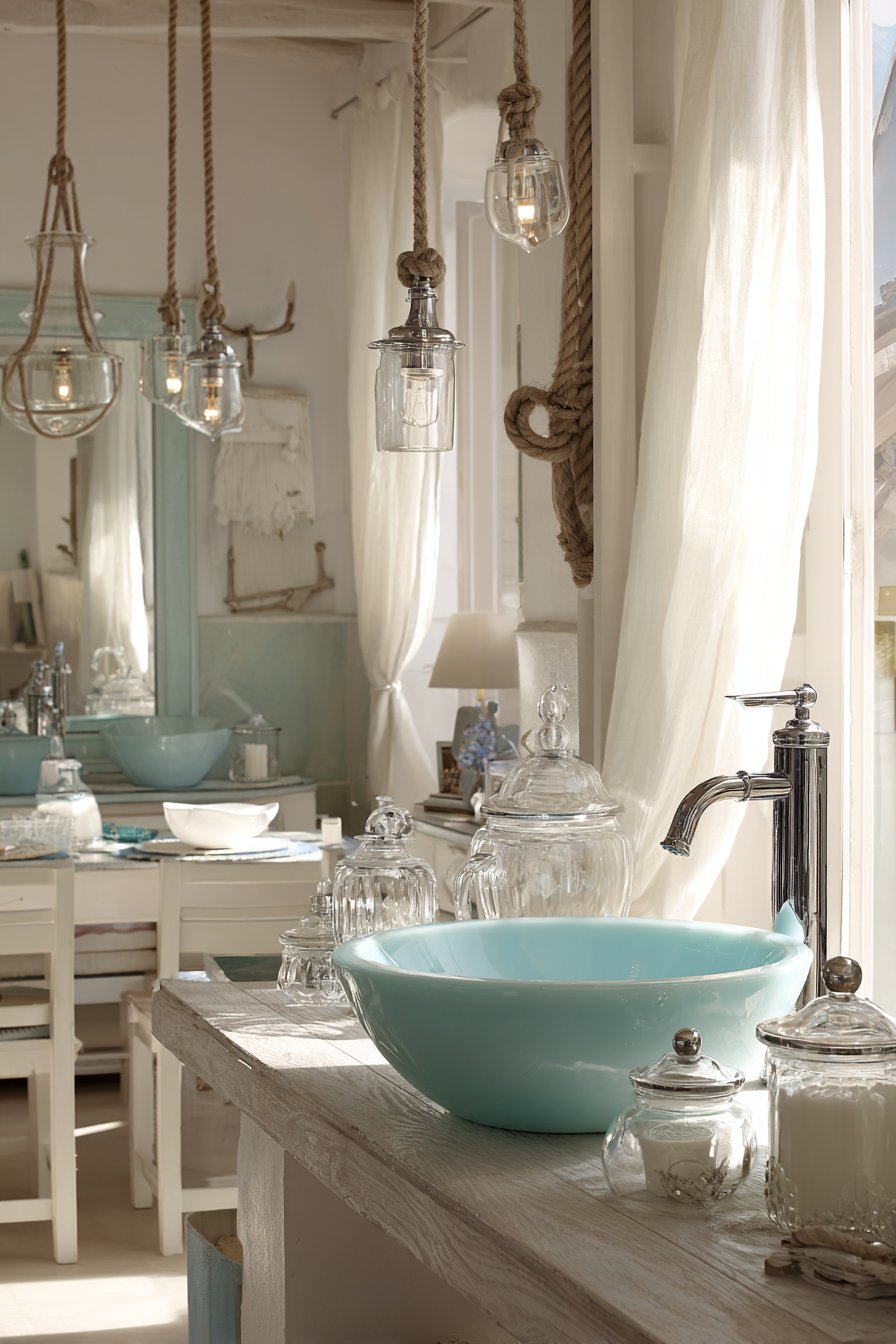
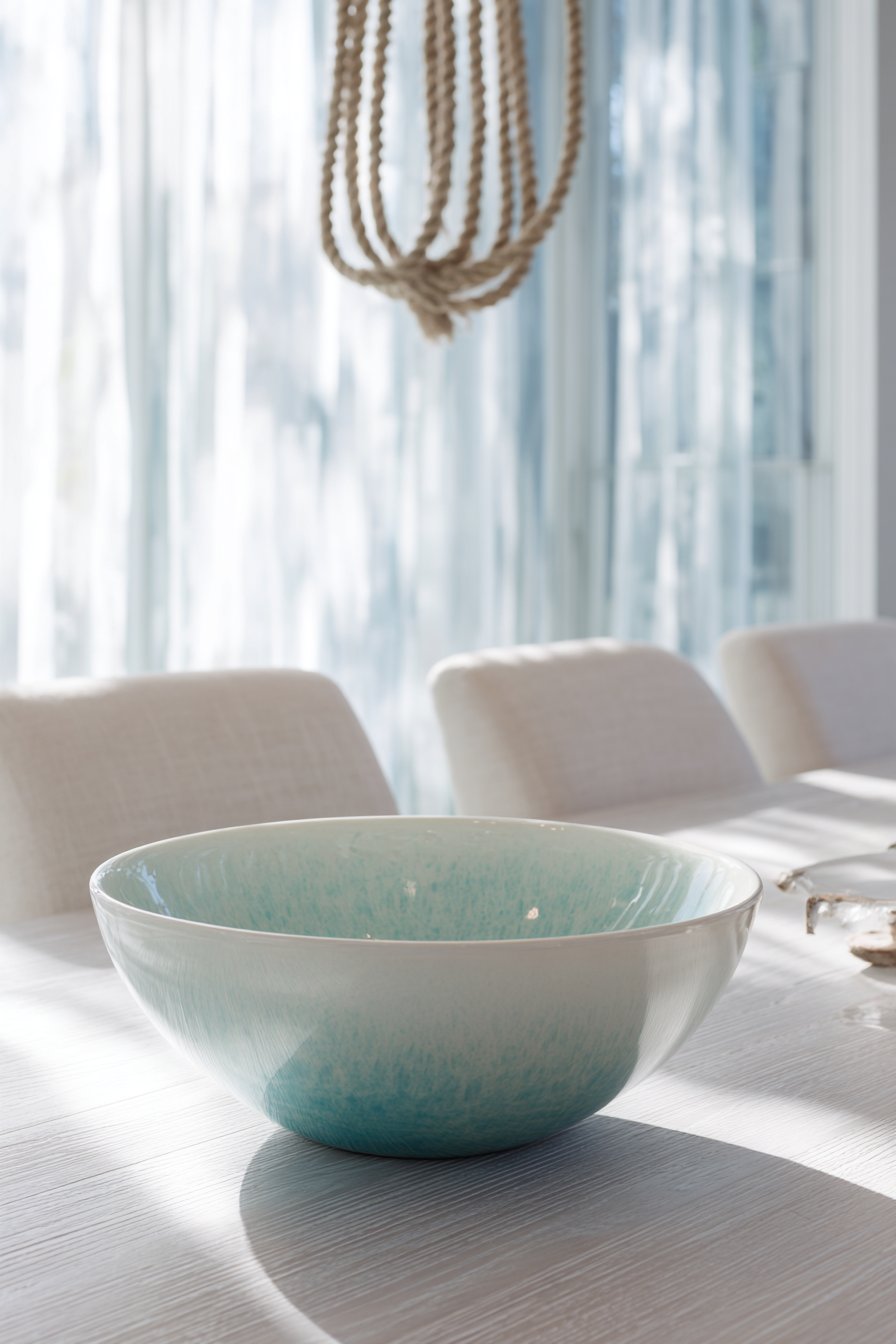
Ocean-inspired tranquility flows through this coastal dining room washbasin design that captures the essence of seaside living through color, texture, and natural materials. The round vessel sink in sea glass blue ceramic evokes smooth stones tumbled by waves, its soft color reminiscent of shallow tropical waters where sunlight penetrates to sandy bottoms below. Mounted on a driftwood-style floating shelf that appears weathered by salt and sun, the installation celebrates natural materials shaped by elemental forces. Chrome fixtures with nautical details—perhaps rope-wrapped handles or anchor motifs—complement the beachy aesthetic while providing reliable functionality.
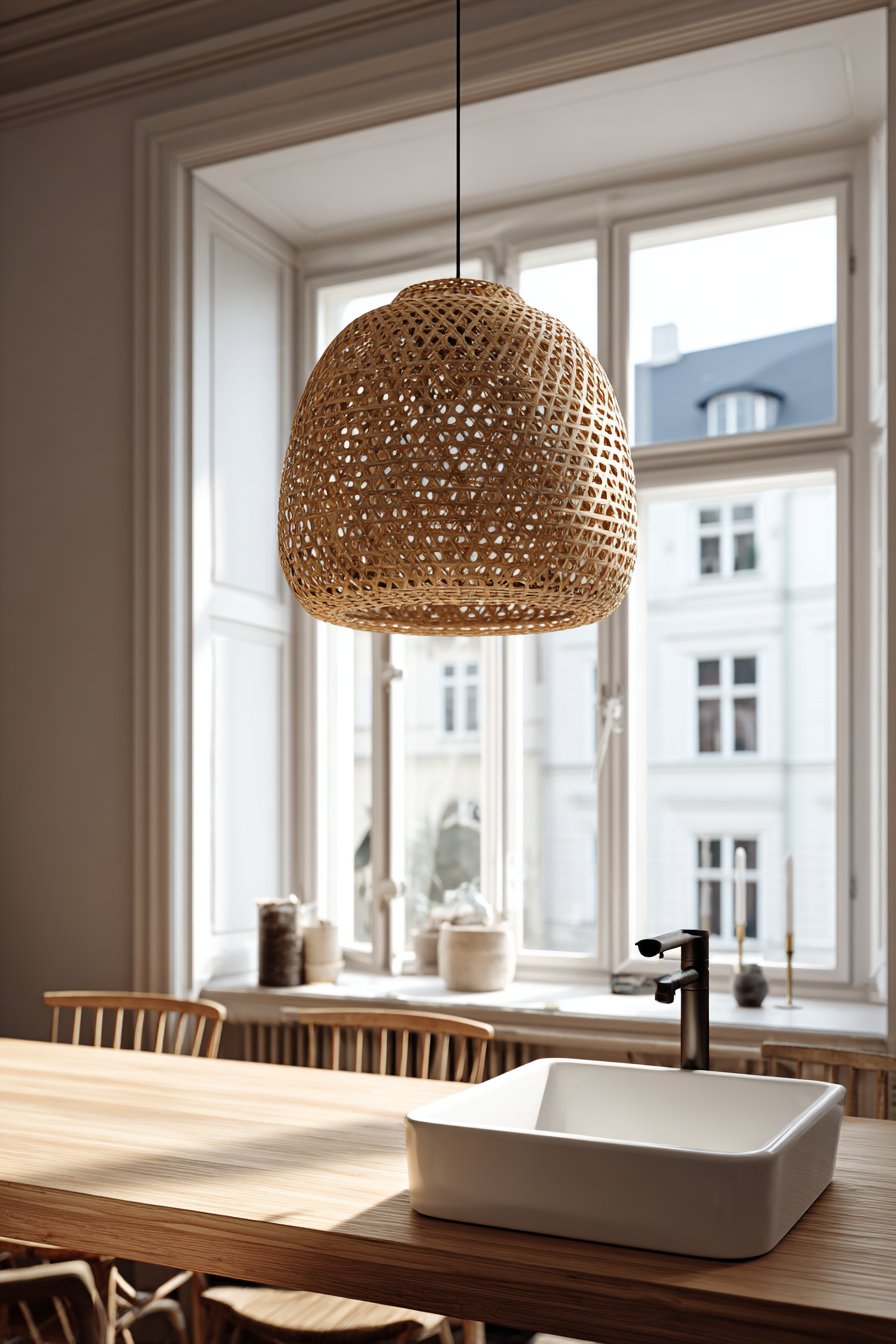
The dining area features whitewashed furniture that suggests sun-bleached wood found along shorelines, its pale finish creating bright, airy atmosphere characteristic of coastal homes where abundant natural light is embraced rather than controlled. Rope-wrapped pendant lights suspended overhead reinforce the nautical theme while providing practical illumination, their organic texture adding visual interest that prevents the light-dominated palette from feeling sterile or cold. These thoughtful details transform functional lighting into decorative elements that strengthen the room’s thematic coherence.
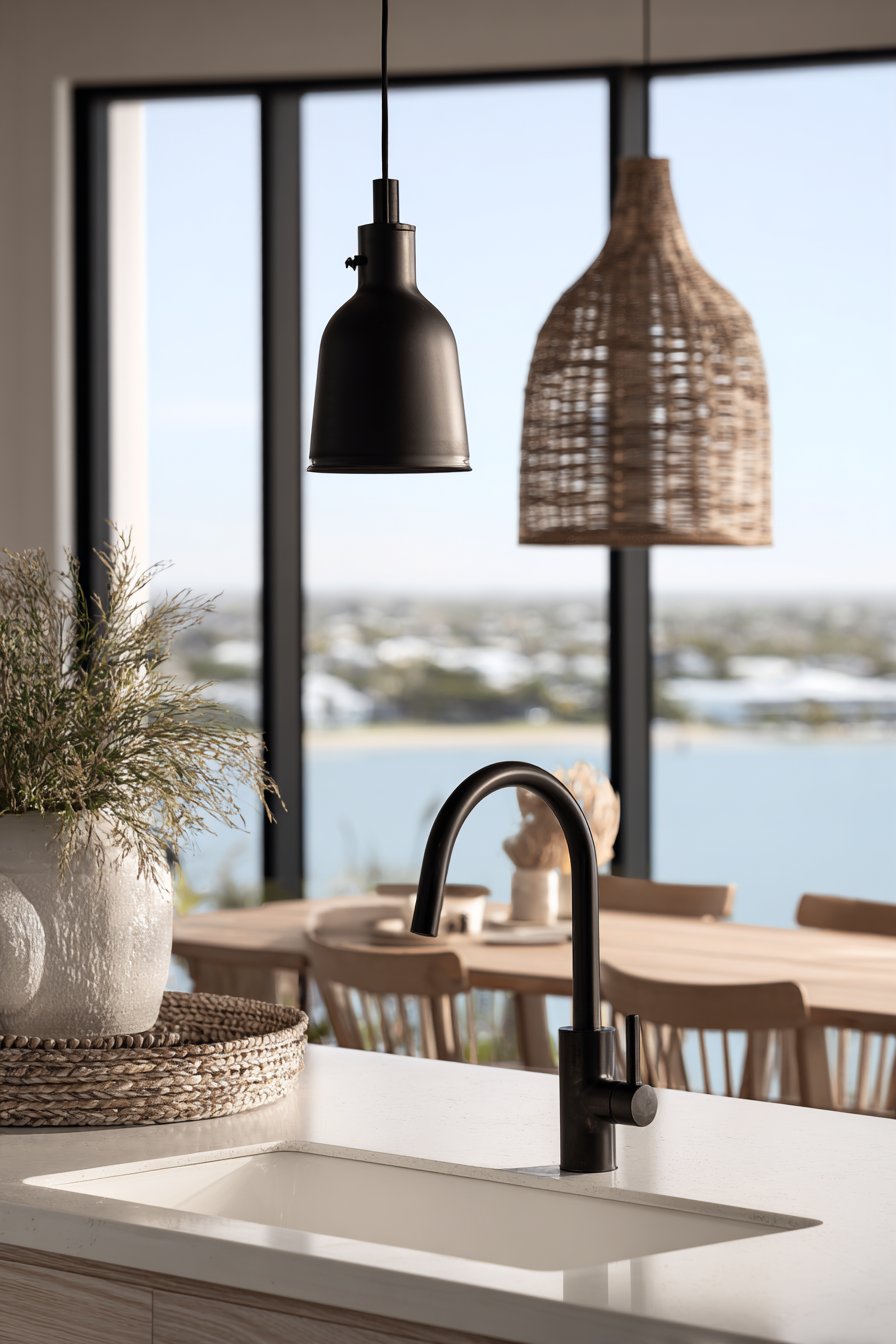
Natural daylight through sheer curtains highlights the soft blue tones throughout the space, creating luminous quality that changes with the sun’s movement and weather conditions outside. The interior design photography captures the breezy coastal charm and practical washbasin placement perfect for casual dining entertaining, where sandy feet and salty hands from beach days need convenient cleaning access. This design demonstrates how thematic consistency—achieved through coordinated colors, natural materials, and complementary textures—creates immersive environments that transport inhabitants to favored destinations regardless of actual geographic location.
Key Design Tips:
- Select ceramic sinks in authentic sea glass blue shades that suggest natural beach-found glass rather than bright artificial hues
- Source or create driftwood-style shelving with genuine weathered appearance and stable construction
- Choose chrome fixtures that resist corrosion in potentially humid coastal environments
- Whitewash furniture using techniques that allow wood grain to show through for authentic beach cottage character
- Incorporate rope elements thoughtfully—they should enhance rather than overwhelm the nautical theme
- Install sheer curtains that filter harsh sunlight while maintaining bright, airy quality
- Add authentic coastal elements like shells, coral, or sea glass as accessories but avoid cliché or excessive decoration
8. Industrial Urban Edge
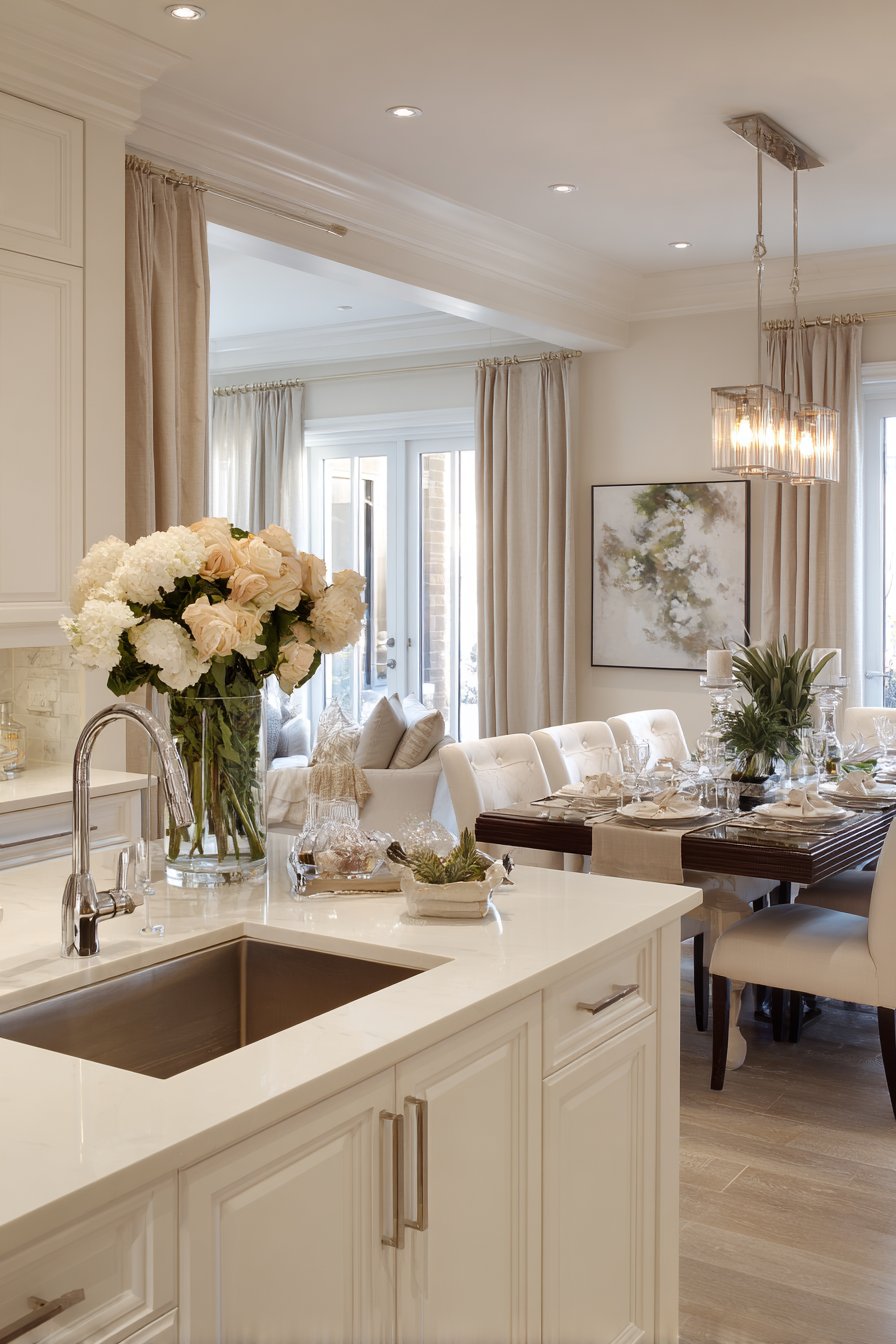
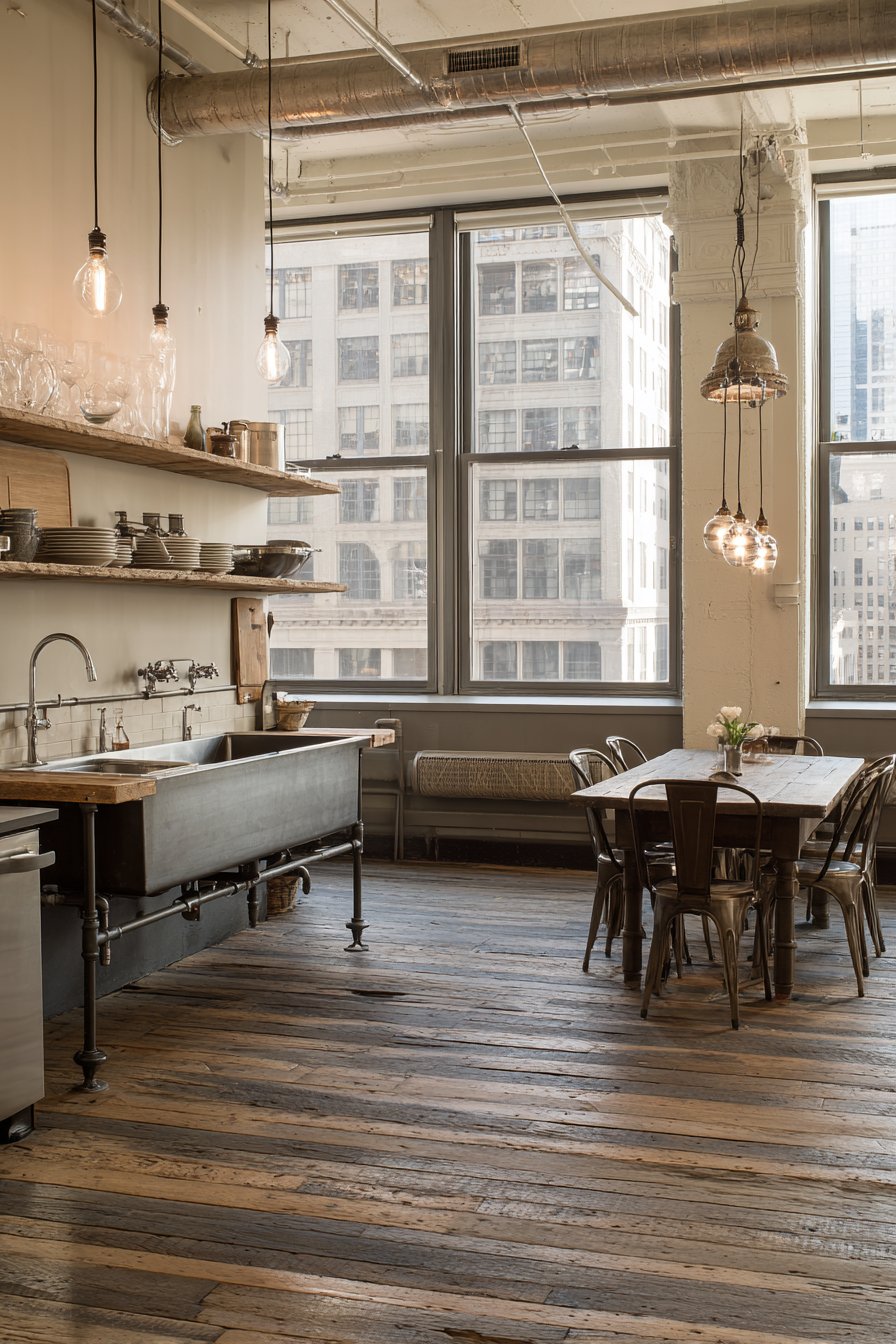
Raw authenticity and utilitarian beauty characterize this industrial dining room washbasin design that celebrates honest materials and exposed construction typically hidden behind finished surfaces. The stainless steel utility sink mounted on exposed black iron pipe legs with reclaimed wood shelf embraces the aesthetic of converted warehouses and factory lofts where original industrial elements are preserved and celebrated rather than concealed. This unapologetic approach to materials creates spaces with genuine character and historical connection, qualities increasingly valued as antidotes to generic modern interiors.
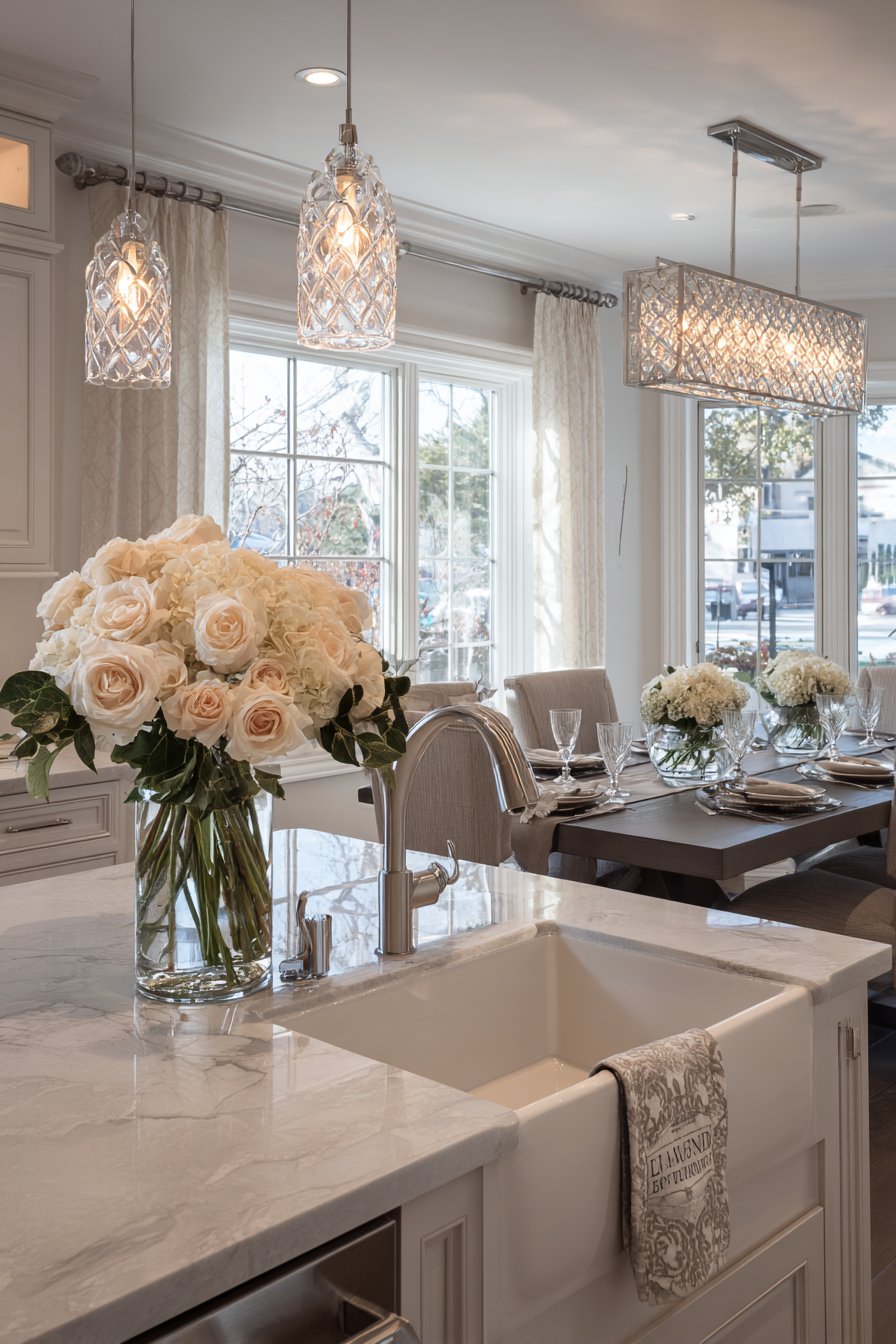
The wall-mounted industrial faucet with cross handles adds authentic warehouse aesthetic, its commercial-grade construction designed for durability and ease of operation rather than decorative appeal. Yet this very utilitarianism becomes decorative in industrial contexts, where form follows function in ways that create honest beauty. The dining space includes a metal-topped table with vintage factory chairs—perhaps salvaged from actual industrial settings—and Edison bulb pendant lights that expose their glowing filaments rather than hiding them within frosted globes or fabric shades.
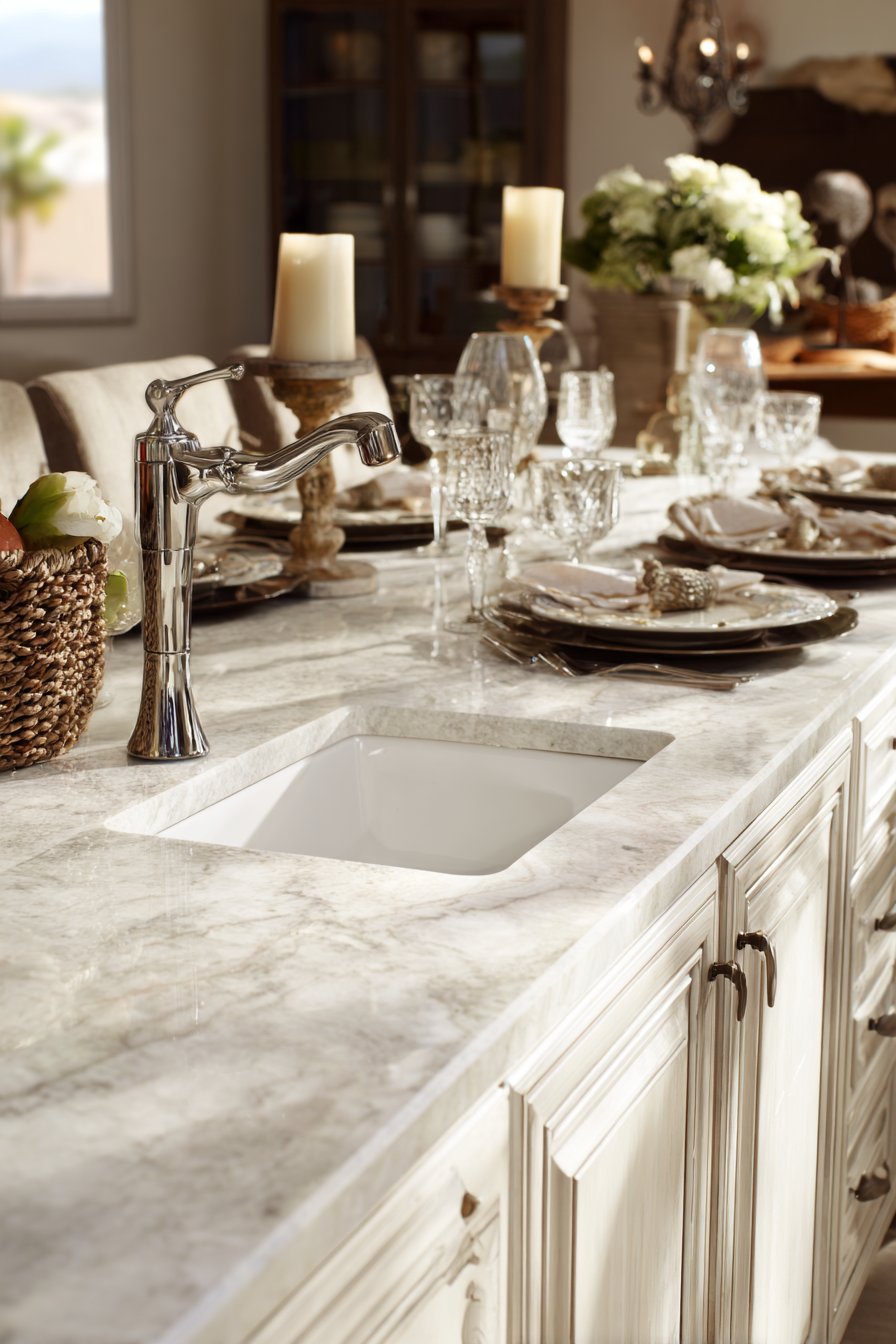
Natural light from large windows emphasizes raw textures throughout the space—the grain and knots in reclaimed wood, the welded joints in black iron pipes, the brushed finish on stainless steel. Wide-angle interior photography showcases the urban loft style and functional washbasin integration with exposed materials and utilitarian design that finds beauty in practicality. This aesthetic particularly appeals to those who appreciate authenticity, craftsmanship, and spaces that tell stories through visible evidence of use, age, and honest construction methods.
Key Design Tips:
- Select commercial-grade stainless steel utility sinks designed for durability and easy maintenance
- Use black iron pipe fittings properly assembled and sealed to ensure structural integrity
- Source genuine reclaimed wood with industrial provenance when possible for authentic character
- Choose wall-mounted industrial faucets with appropriate reach to serve the sink effectively
- Incorporate vintage factory furniture pieces that show authentic wear and patina
- Install Edison bulbs in appropriate wattages that provide adequate illumination without excessive glare
- Leave materials in their natural or minimally finished states to maintain industrial authenticity
- Ensure proper ventilation as industrial spaces often feature open plans with high ceilings
9. Luxurious Navy and Gold
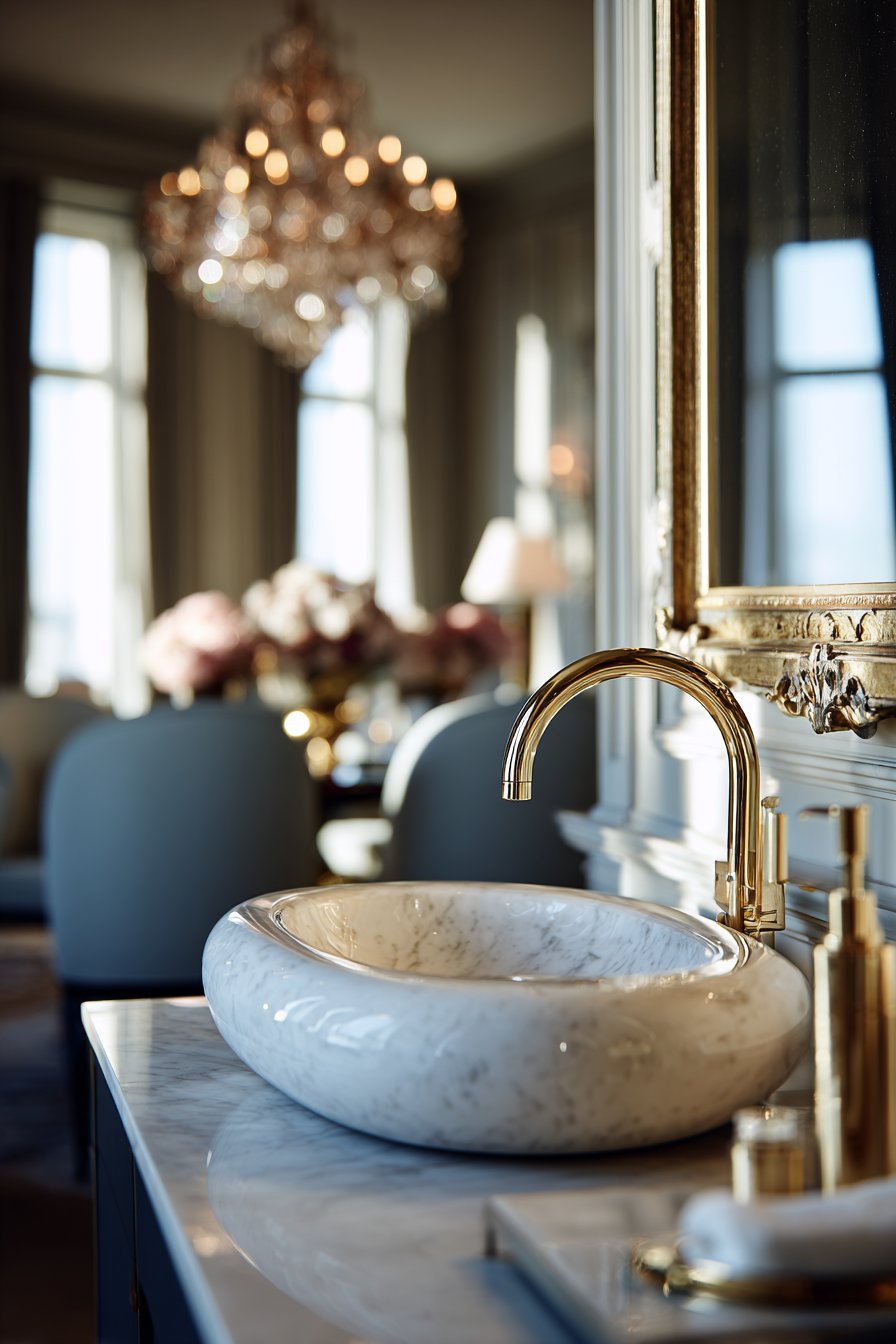
Sophisticated opulence defines this luxury dining room washbasin design where rich colors and precious metals combine to create spaces of refined indulgence. The oval marble vessel sink in pristine Carrara white with its characteristic gray veining sits like a sculpture atop a custom lacquered console in deep navy blue—a bold color choice that exudes confidence and elegance. The high-gloss lacquer finish on the console creates mirror-like surfaces that reflect surrounding light and objects, adding visual complexity and perceived spaciousness through reflection.
Polished gold faucets and accessories create opulent contrast against the navy background, their warm metallic gleam suggesting luxury and exclusivity. Gold hardware on the console’s drawers or doors maintains material consistency while providing functional access to concealed storage. The formal dining area displays upholstered velvet chairs in complementary jewel tones, their plush fabric inviting extended dining experiences in supreme comfort. An ornate mirror positioned above the washbasin reflects the elegant chandelier suspended above the dining table, creating layered visual interest and allowing one stunning element to be appreciated from multiple angles simultaneously.
Soft ambient lighting from carefully positioned sources highlights the refined materials without creating harsh shadows or glare that would compromise the sophisticated atmosphere. Professional architectural photography with attention to luxury details captures the seamless blend of practical washing station within high-end dining room design, demonstrating how utility fixtures can be elevated to statement pieces through premium materials, expert craftsmanship, and bold design decisions. This approach to dining room washbasin integration appeals particularly to those who view their homes as expressions of personal success and refined taste.
Key Design Tips:
- Select Carrara marble vessel sinks with distinctive veining patterns that serve as natural artwork
- Apply multiple coats of high-gloss lacquer over properly prepared surfaces for flawless mirror-like finishes
- Choose polished gold fixtures rather than brushed or matte finishes to maximize luxurious appearance
- Upholster dining chairs in sumptuous fabrics like velvet that provide both visual and tactile luxury
- Install ornate mirrors with substantial frames that serve as decorative elements beyond their reflective function
- Layer lighting using multiple sources at different heights to create dimensional, flattering illumination
- Maintain impeccable cleanliness as high-gloss and metallic surfaces show fingerprints and water spots
- Consider the maintenance requirements of luxury materials and plan appropriate care routines
10. Scandinavian Simplicity
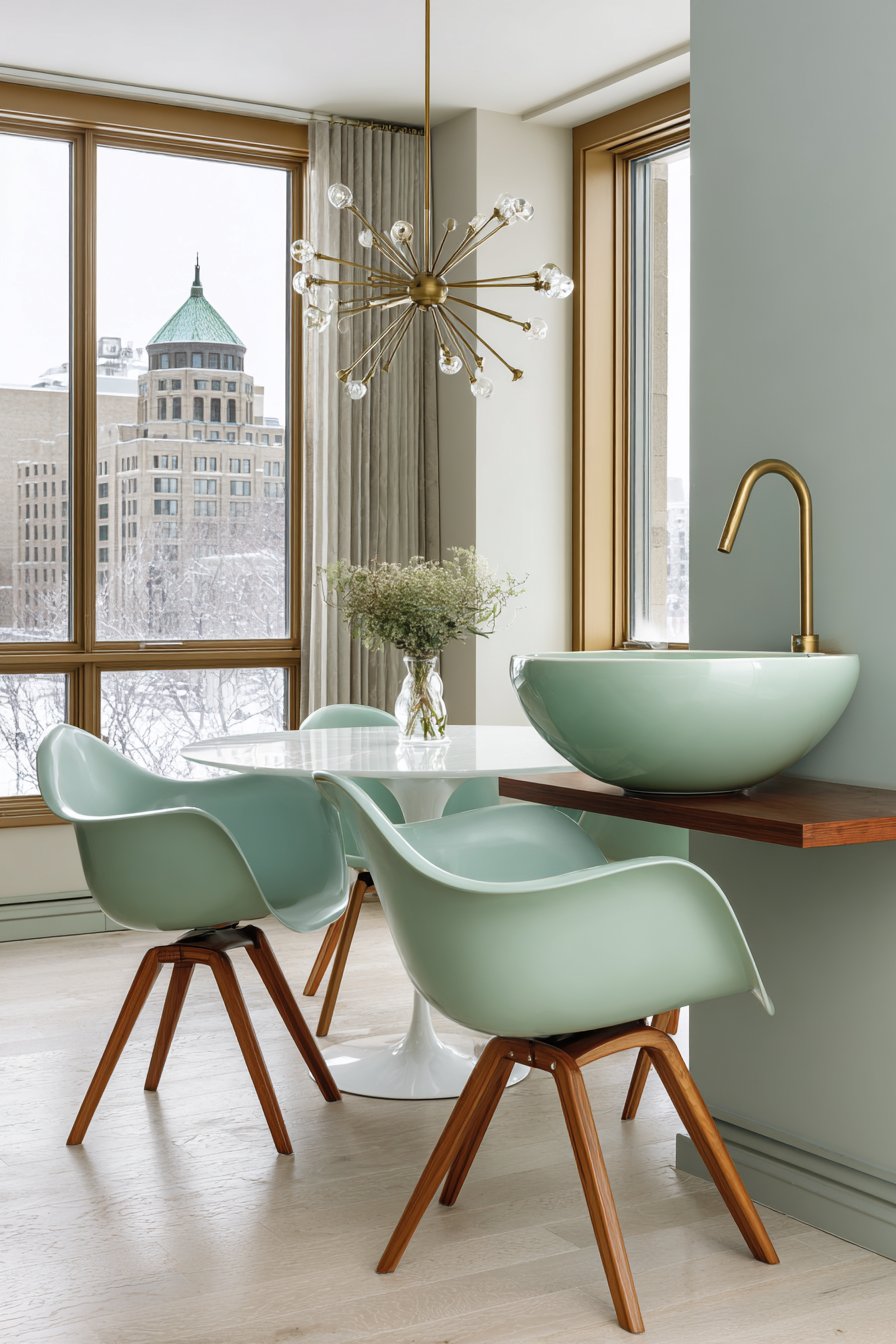
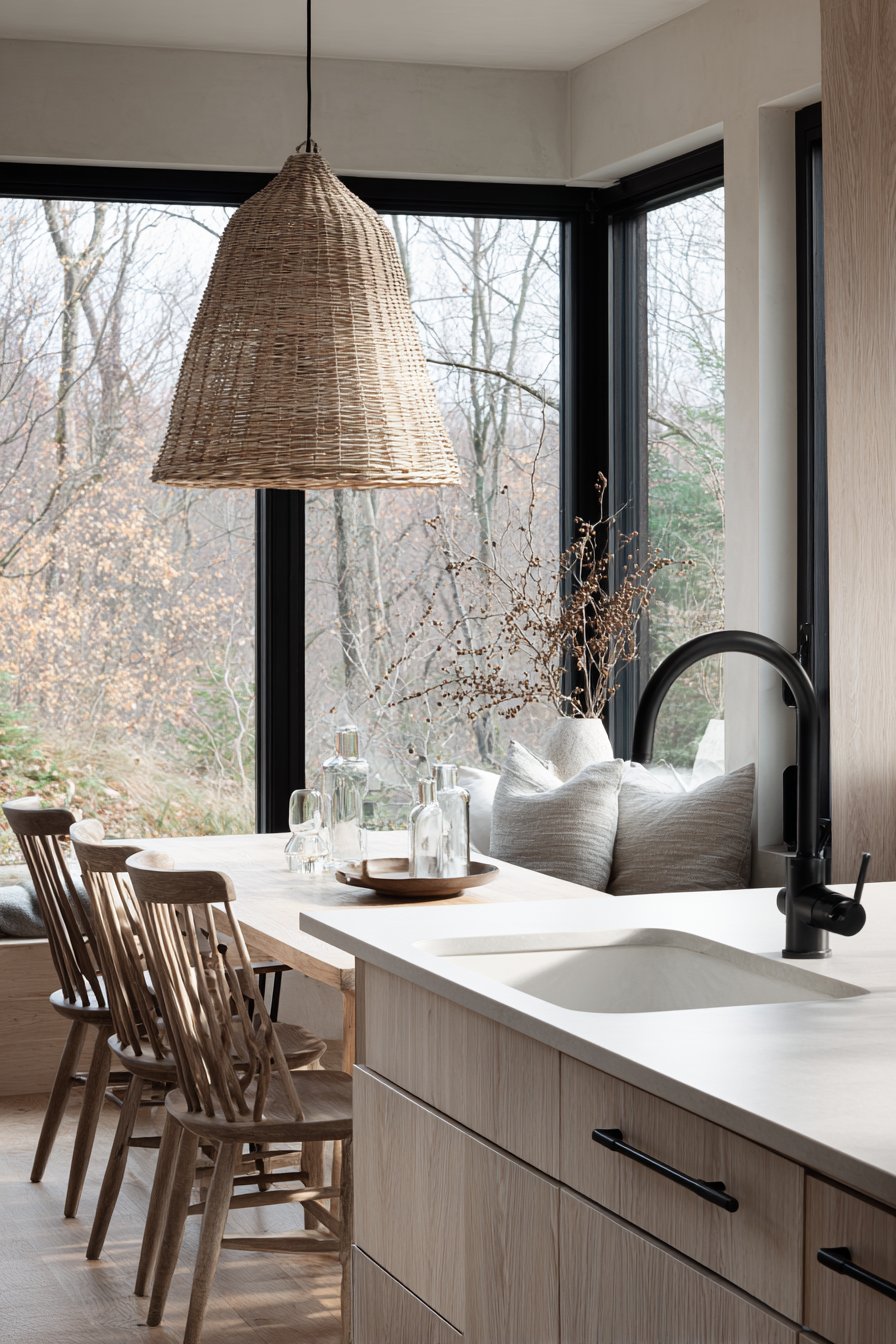
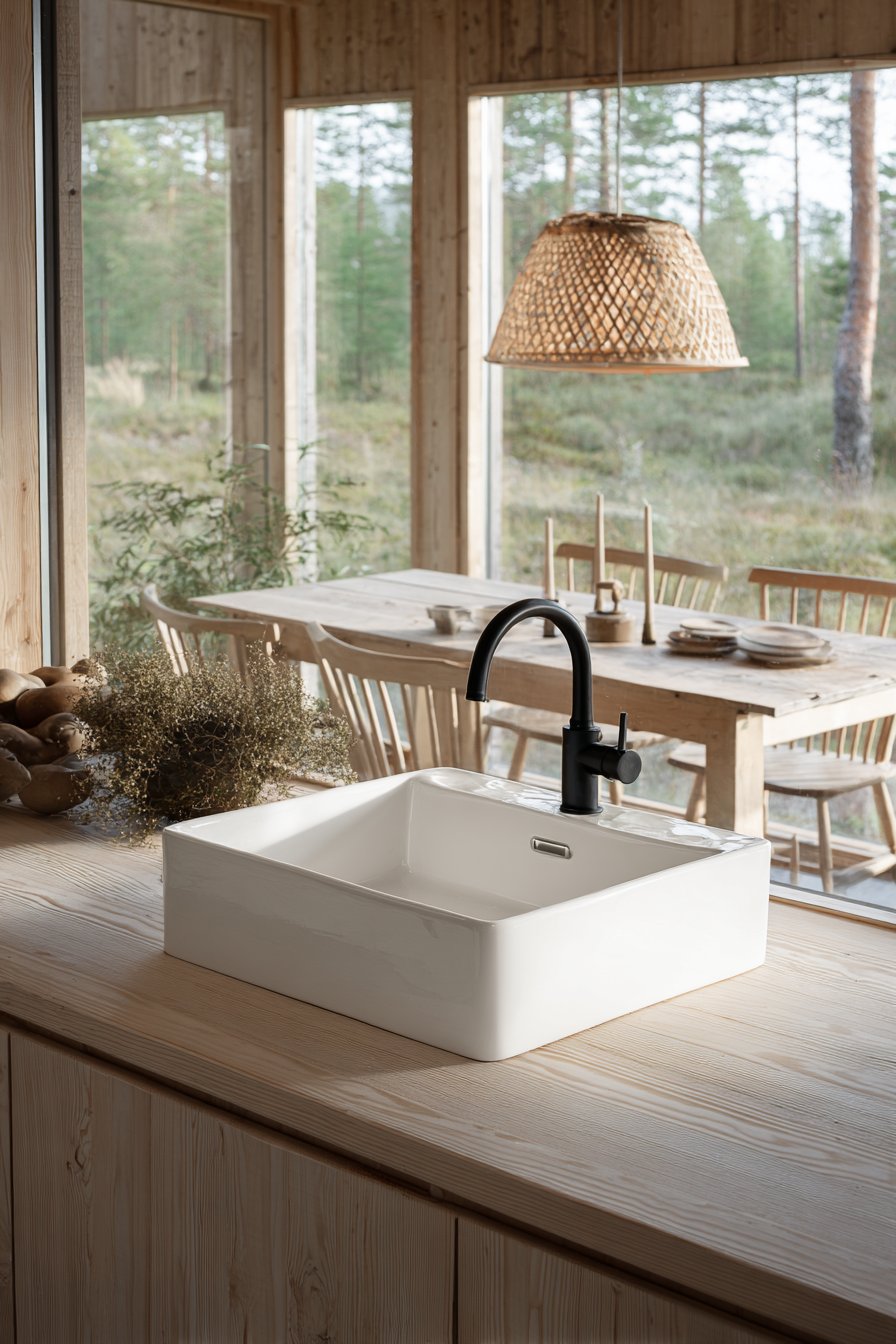
Pure functional beauty characterizes this Scandinavian dining room washbasin design that embodies hygge principles of comfort, simplicity, and connection to natural materials. The simple white ceramic rectangular sink set into light birch wood floating vanity celebrates honest materials and unpretentious forms, allowing inherent beauty to speak without artificial enhancement or excessive decoration. The pale birch grain provides subtle visual interest while maintaining the light, bright quality essential to Nordic design, particularly important in northern latitudes where natural light becomes precious during long winter months.
A matte black single-handle faucet provides minimalist contrast, its dark finish creating graphic clarity against the light wood and white ceramic. This restrained use of contrast—employed sparingly and purposefully—creates visual anchors without overwhelming the predominantly light palette. The dining area includes a natural wood table with spindle-back chairs whose turned legs and vertical slats reference traditional Scandinavian craftsmanship while maintaining clean, unfussy lines. A pendant light with woven shade suspended above introduces organic texture while diffusing illumination softly throughout the space.
Large windows flood the space with natural Nordic light, that clear, bright quality that has shaped Scandinavian design philosophy for generations. The interior design photography shows the hygge-inspired aesthetic and practical washbasin integration in modern Scandinavian dining space where every element has been carefully considered for its contribution to overall harmony and livability. This design approach prioritizes quality over quantity, lasting materials over trendy finishes, and creates spaces that support well-being through their inherent calm and order.
Key Design Tips:
- Choose light-colored woods like birch, ash, or light oak that maintain bright, airy quality
- Select white ceramic sinks with simple forms that showcase material honesty without decorative embellishment
- Use matte black fixtures sparingly as accent elements that provide graphic contrast
- Incorporate traditional Scandinavian furniture forms with clean, functional designs
- Maximize natural light through large windows with minimal treatments
- Add organic textures through woven materials in lighting, textiles, or accessories
- Maintain strict discipline regarding clutter—surfaces should remain largely clear
- Choose quality materials and construction that will age gracefully and last for generations
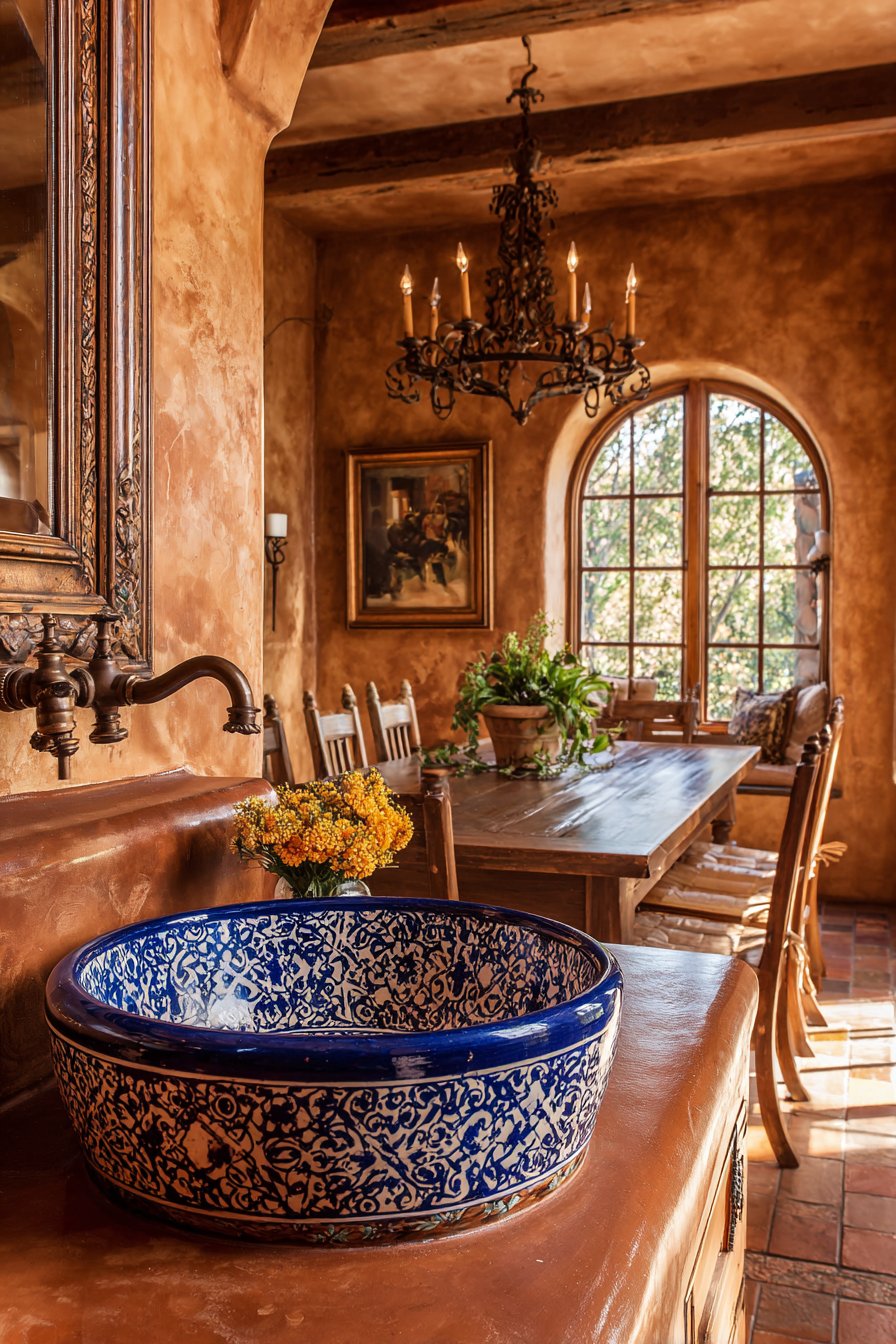
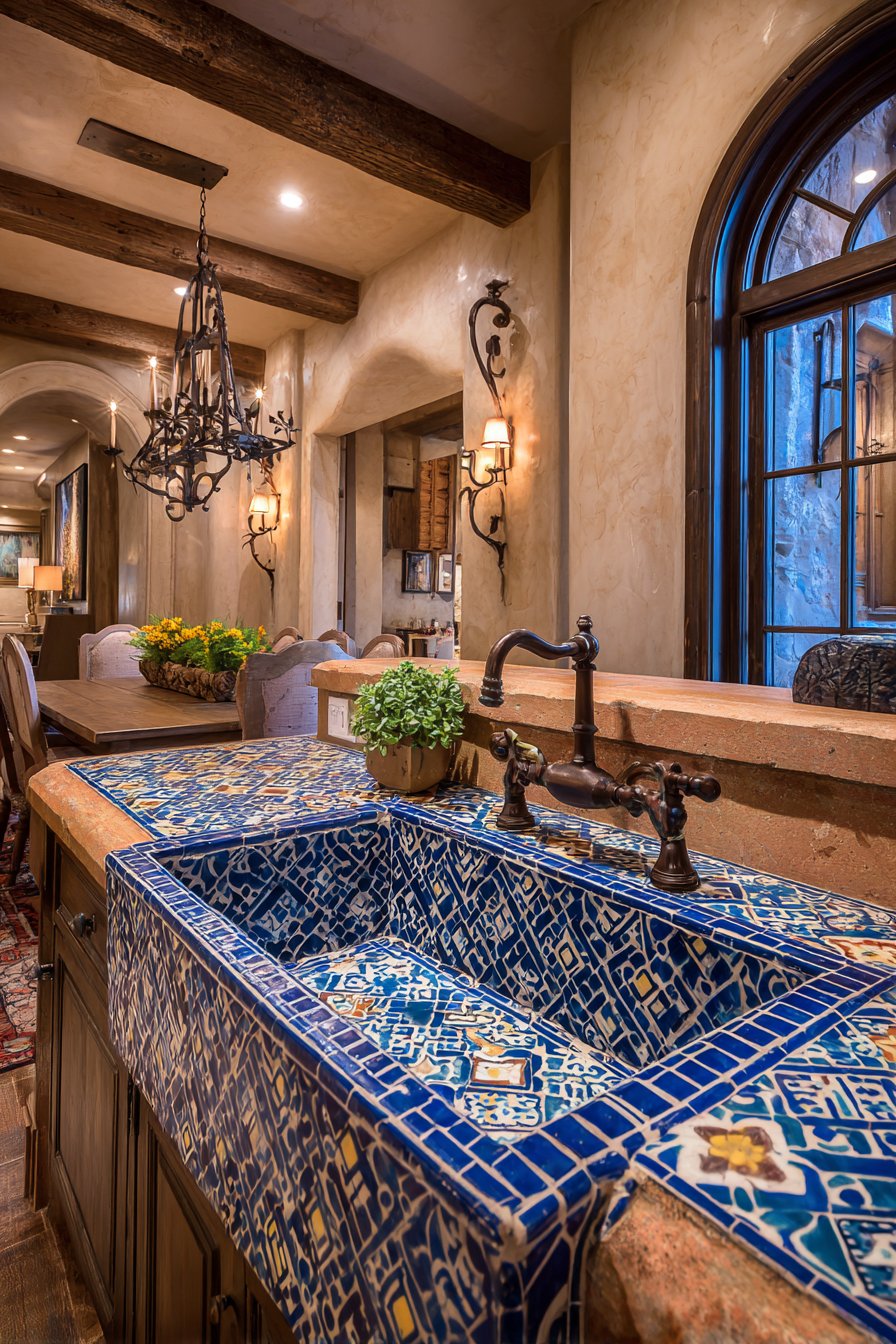
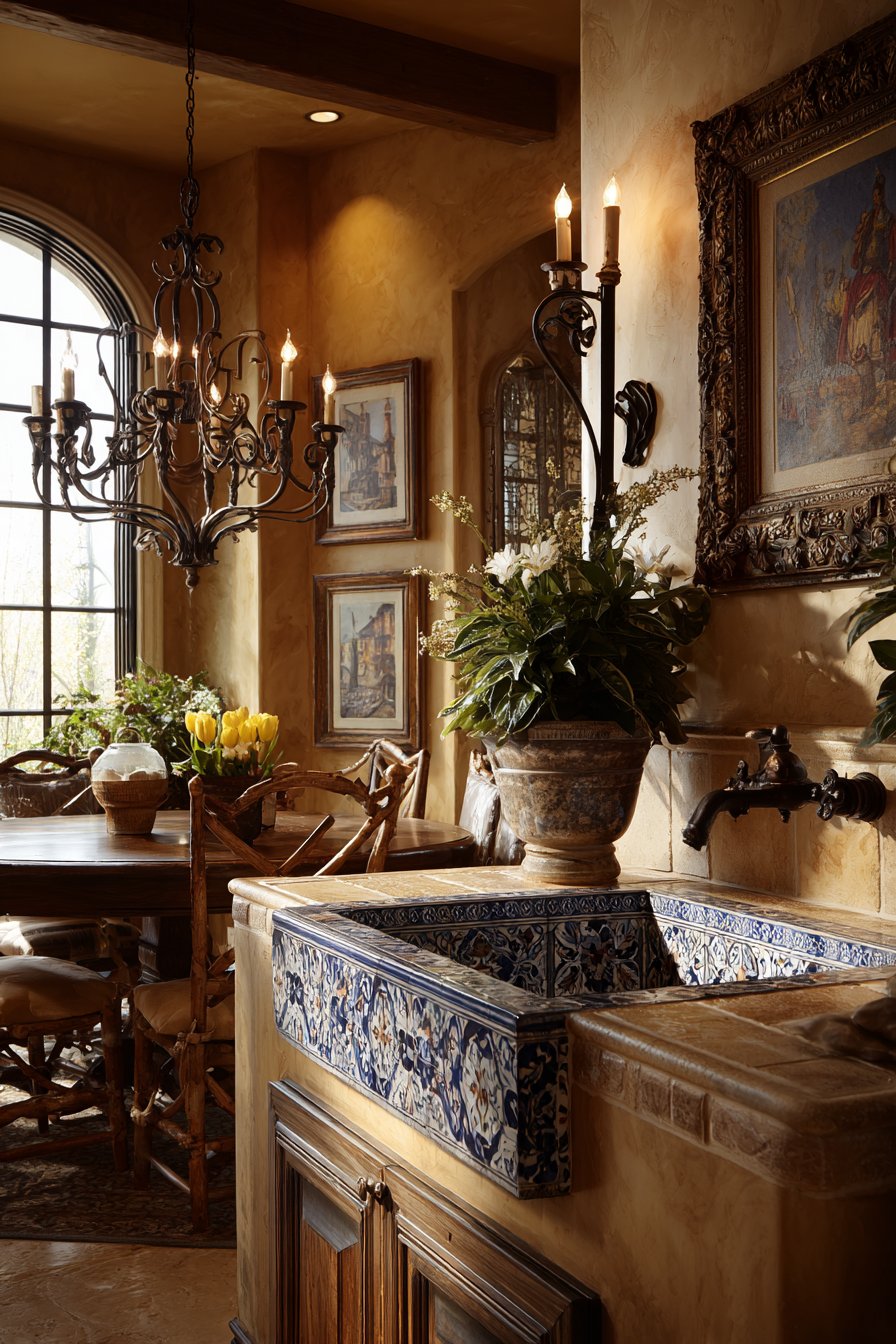
11. Mediterranean Mosaic Charm
Old World romance and handcrafted beauty define this Mediterranean dining room washbasin design that transports inhabitants to sun-drenched villas along European coastlines. The hand-painted ceramic vessel sink in blue and white mosaic pattern showcases artisan craftsmanship, its intricate geometric or floral designs requiring hours of skilled labor to create. Each pattern tile tells a story of cultural heritage and artistic tradition passed through generations. Mounted on a terracotta-colored plaster console that evokes sun-baked earth and ancient walls, the installation radiates warmth and authenticity.
Aged bronze faucets complement the Old World charm with their antique patina suggesting decades or centuries of faithful service. The deliberate “aging” of fixtures—whether genuinely antique or professionally antiqued—creates visual history that makes spaces feel established rather than newly constructed. The dining area features a wrought iron chandelier suspended above a rustic wooden table with ladder-back chairs, their simple construction and honest materials echoing peasant-style furniture found in European farmhouses and country homes.
Warm afternoon light through an arched window illuminates textured walls whose irregular plaster surfaces showcase traditional finishing techniques rarely seen in contemporary construction. Professional interior photography captures the authentic Mediterranean aesthetic and charming integration of decorative washbasin within the dining room setting, demonstrating how regional design traditions can be successfully adapted to contemporary living while maintaining their essential character and appeal. This style particularly resonates with those who value craftsmanship, cultural heritage, and spaces that feel collected over time rather than decorated all at once.
Key Design Tips:
- Source hand-painted ceramic sinks from artisans or suppliers specializing in traditional Mediterranean tiles
- Apply textured plaster finishes in terracotta or warm earth tones using authentic techniques
- Select aged bronze fixtures with realistic patina rather than obviously artificial distressing
- Incorporate wrought iron elements with hand-forged character and substantial weight
- Choose rustic wooden furniture with evidence of craftsman construction
- Install arched architectural elements where possible to reinforce Mediterranean character
- Use warm color palettes dominated by earth tones, terracotta, blues, and sun-bleached whites
- Add authentic regional accessories like pottery, woven baskets, or traditional textiles
12. Contemporary Glass Innovation
Modern transparency and innovative materials characterize this contemporary dining room washbasin design that pushes boundaries of conventional fixture selection. The square glass vessel sink in clear crystal creates stunning visual interest through its transparent nature, allowing water to be appreciated as it flows and pools within its geometric confines. Positioned on a floating black granite shelf with LED under-lighting, the installation becomes particularly dramatic during evening hours when the illumination creates ethereal glow and emphasizes the glass’s clarity and the water’s movement.
The waterfall-style chrome faucet creates a modern focal point, its wide spout allowing water to cascade in sheet-like flow that appears sculptural and elegant rather than merely functional. This faucet style works particularly well with glass vessel sinks because it emphasizes water’s visual beauty and creates mesmerizing effects as the sheet of water enters the transparent basin. The dining space includes a white lacquered table with leather chairs and geometric pendant lighting that reinforces the contemporary aesthetic through clean lines and bold forms.
Recessed ceiling lights provide even illumination throughout the space, highlighting the transparent sink’s unique quality and ensuring adequate task lighting for practical use without introducing visual clutter through visible fixtures. Architectural photography with balanced exposure shows the striking modern design and innovative washbasin placement in contemporary dining environment where cutting-edge materials and bold design choices create spaces that feel current and forward-thinking. This approach appeals particularly to design enthusiasts who appreciate innovation and aren’t afraid to embrace unconventional materials and forms.
Key Design Tips:
- Select clear glass vessel sinks with appropriate thickness (typically 12-19mm) for durability and safety
- Install floating shelves in dark materials like black granite to create dramatic contrast with glass
- Incorporate LED under-lighting with appropriate color temperature and brightness controls
- Choose waterfall-style faucets with sufficient width and proper height positioning for glass vessels
- Ensure glass sinks include proper drainage and sealing to prevent water damage to supporting surfaces
- Maintain pristine cleanliness as glass shows water spots, soap residue, and fingerprints readily
- Consider tempered glass for improved safety and resistance to thermal shock
- Use recessed lighting to maintain clean ceiling lines while providing adequate illumination
13. Traditional Pedestal Elegance
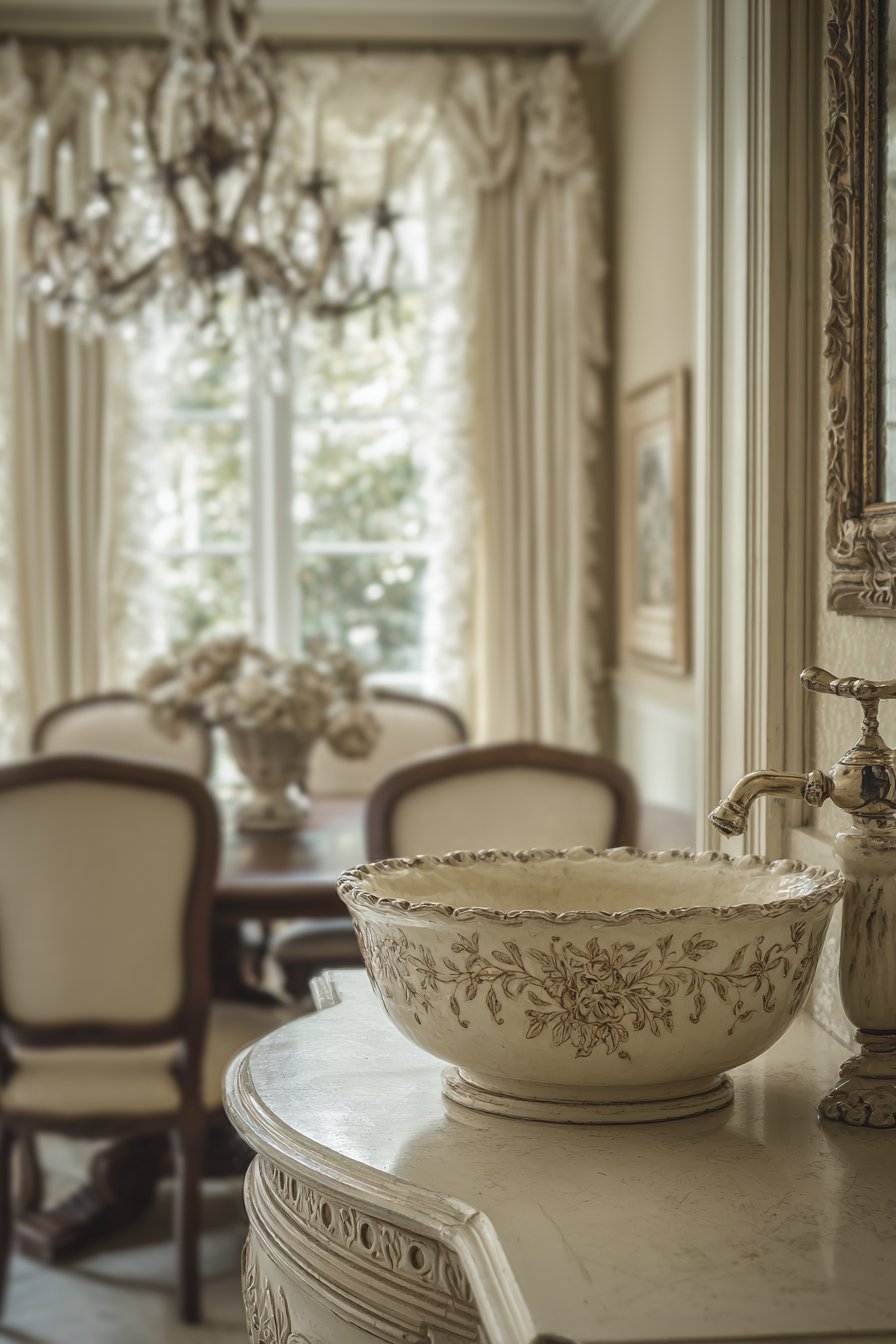
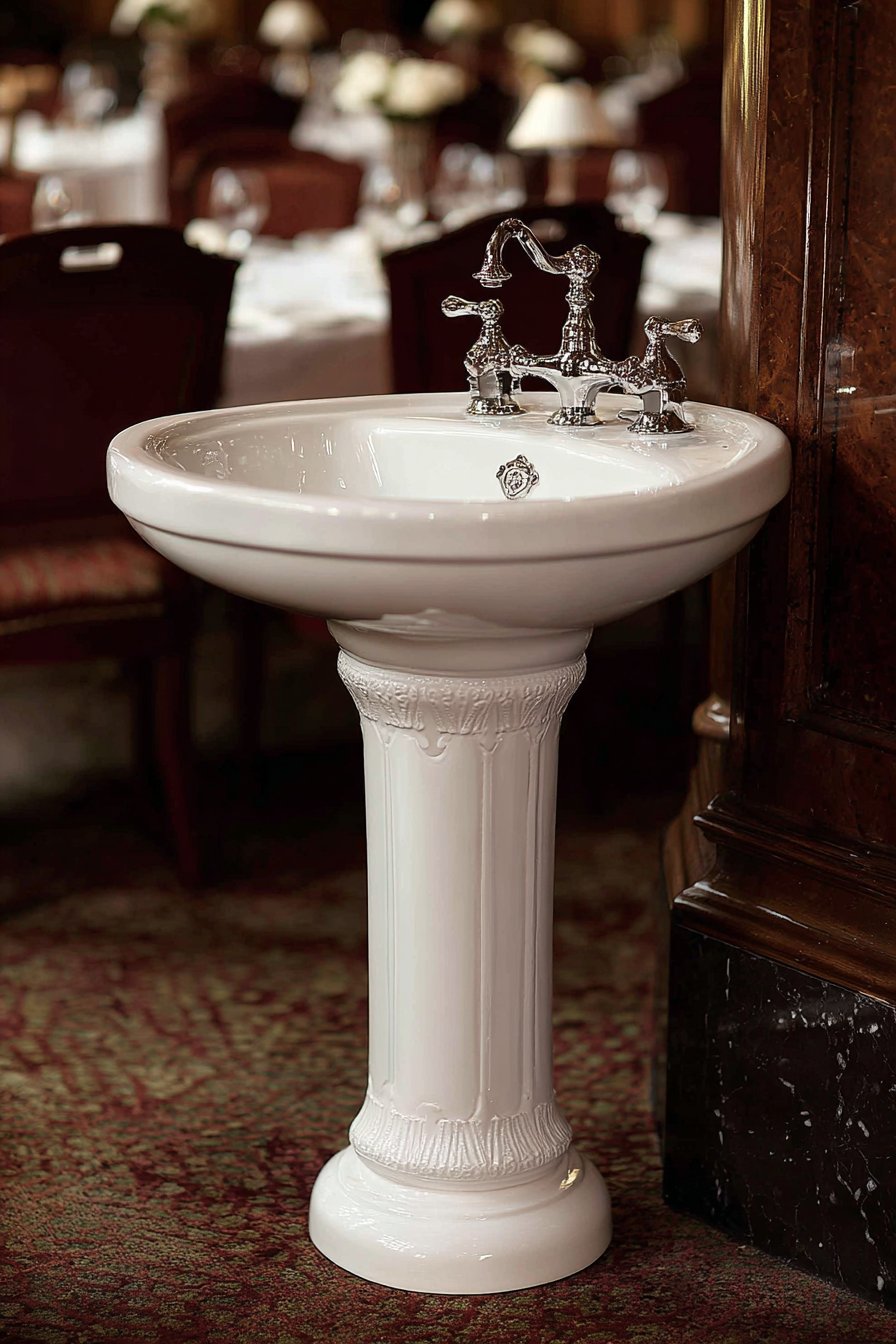
Classic refinement and timeless proportions define this traditional dining room washbasin design featuring a pedestal sink that has remained essentially unchanged for over a century because its form so perfectly balances beauty and function. The pristine white porcelain showcases decorative base detailing—perhaps fluting, beading, or relief patterns—that demonstrates how utility can be elevated through thoughtful ornamentation. The pedestal form elegantly conceals plumbing while creating sculptural presence, its substantial base anchoring the composition and providing visual weight appropriate for formal settings.
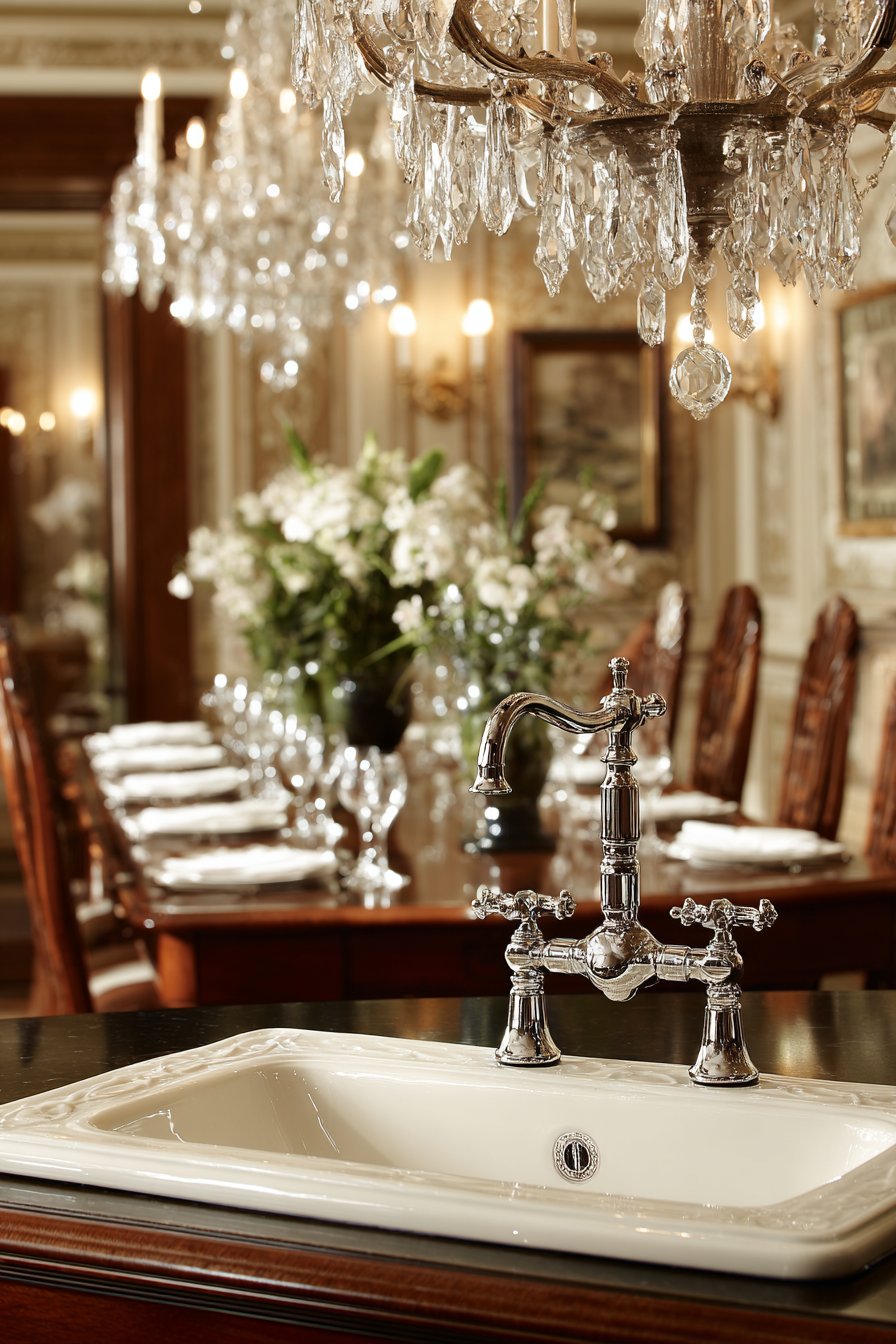
Polished chrome widespread faucets with cross handles add vintage appeal through their traditional configuration and classic detailing. The widespread installation with separate hot and cold controls references plumbing from eras before single-handle mixers became common, creating authentic period character. The formal dining room displays mahogany table with Queen Anne chairs whose cabriole legs and fiddle-back splats exemplify eighteenth-century furniture design at its most refined. A crystal chandelier suspended overhead provides both illumination and focal point, its faceted pendants creating prismatic effects as they catch and refract light.
Wall sconces positioned symmetrically on either side of the washbasin provide flattering illumination while reinforcing the formal symmetry that characterizes traditional design. Interior design photography shows timeless elegance and refined integration of traditional washbasin within formal dining room architecture, demonstrating how classical design principles create spaces that transcend temporary trends. This approach appeals to those who value heritage, formal entertaining traditions, and design that honors historical precedent while remaining entirely appropriate for contemporary use.
Key Design Tips:
- Select pedestal sinks with substantial bases and decorative details appropriate to your home’s architectural period
- Choose widespread faucets with traditional cross handles and proper spacing (typically 8 inches center to center)
- Coordinate all metal finishes throughout the room—polished chrome, nickel, or brass
- Install wall sconces at appropriate heights flanking the washbasin for symmetrical lighting
- Select formal dining furniture with quality construction and period-appropriate detailing
- Maintain architectural symmetry in window treatments, artwork placement, and decorative elements
- Use crystal or glass lighting fixtures that create elegant effects through light refraction
- Consider the pedestal sink’s footprint and ensure adequate space for comfortable use
14. Zen Asian Tranquility
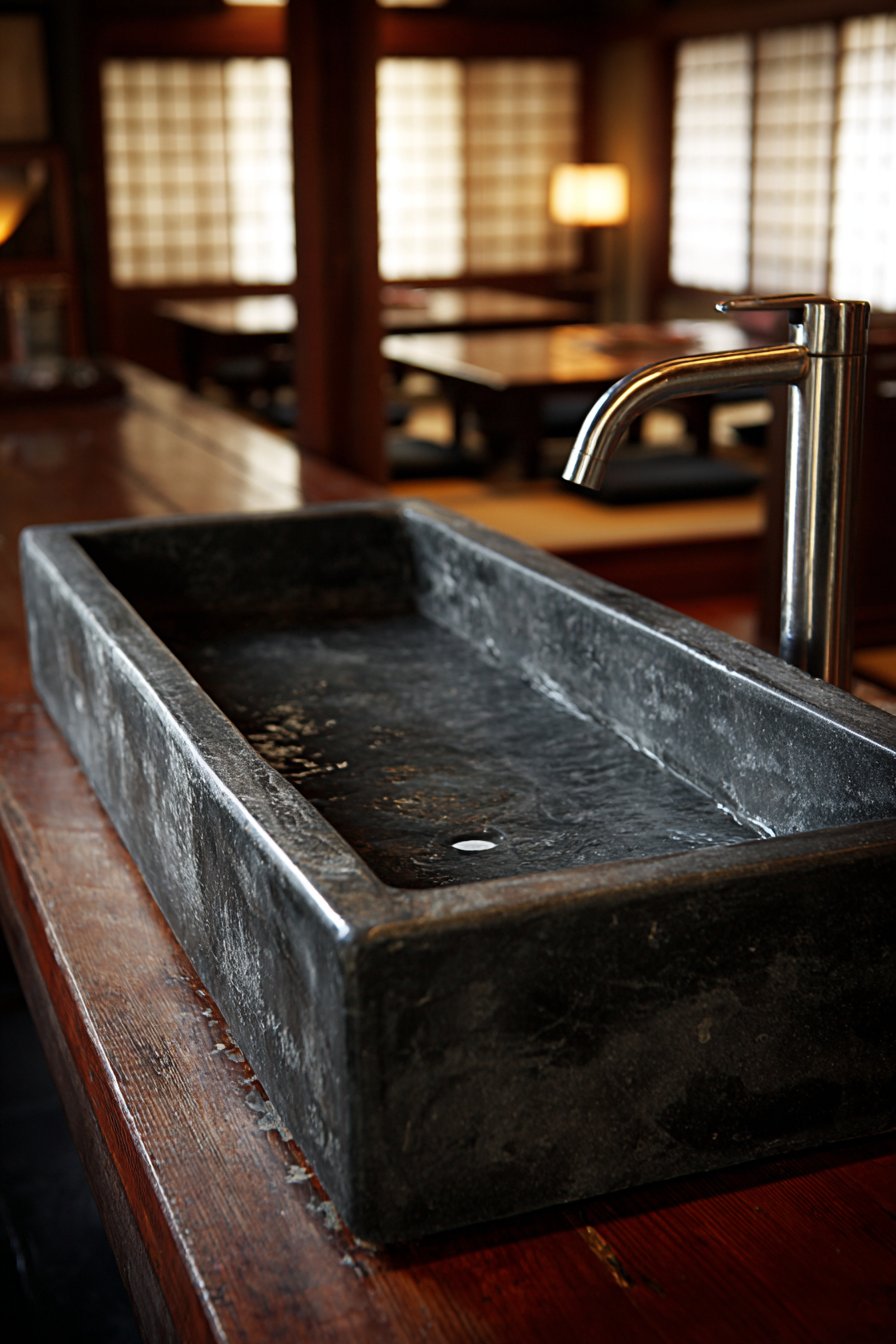
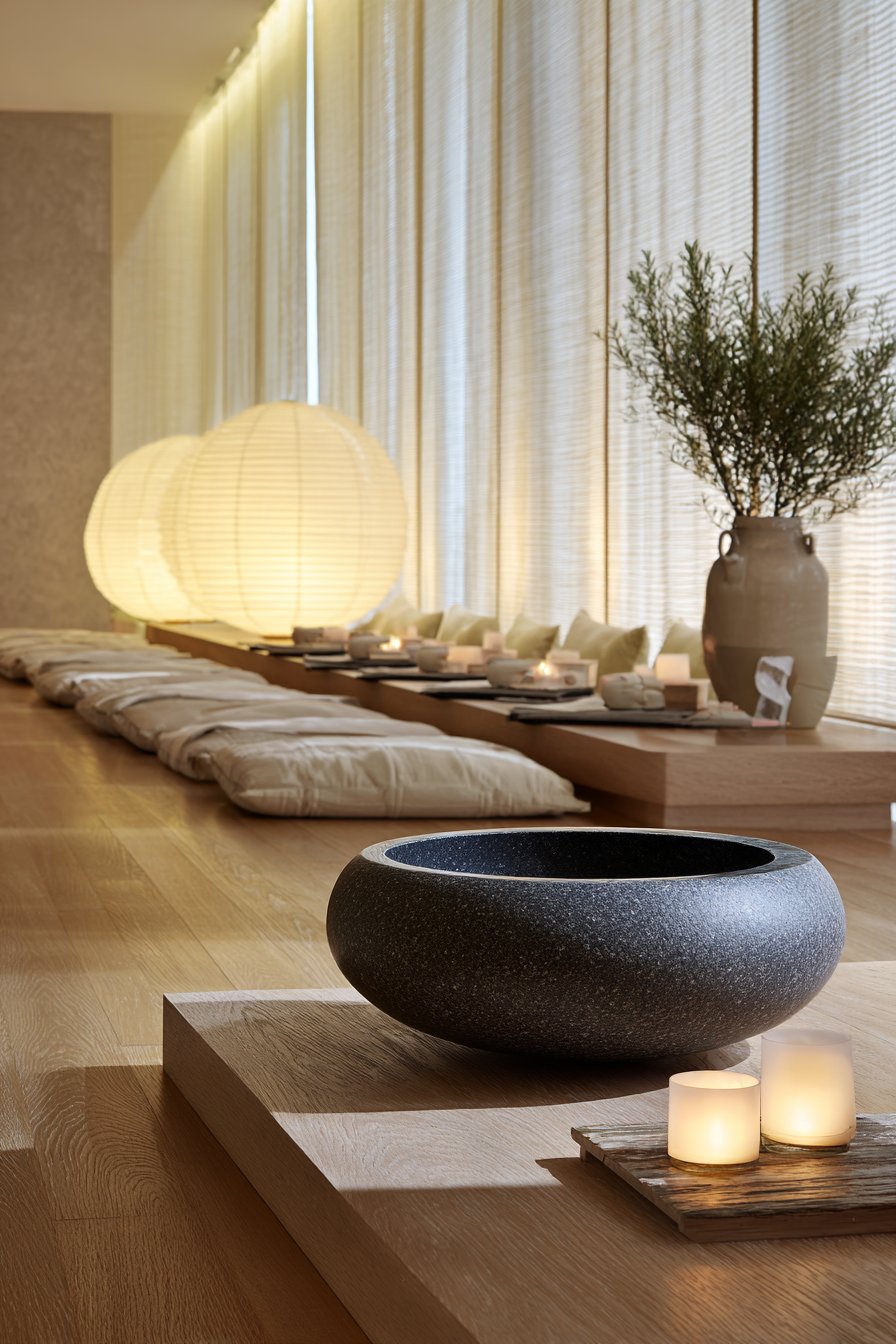
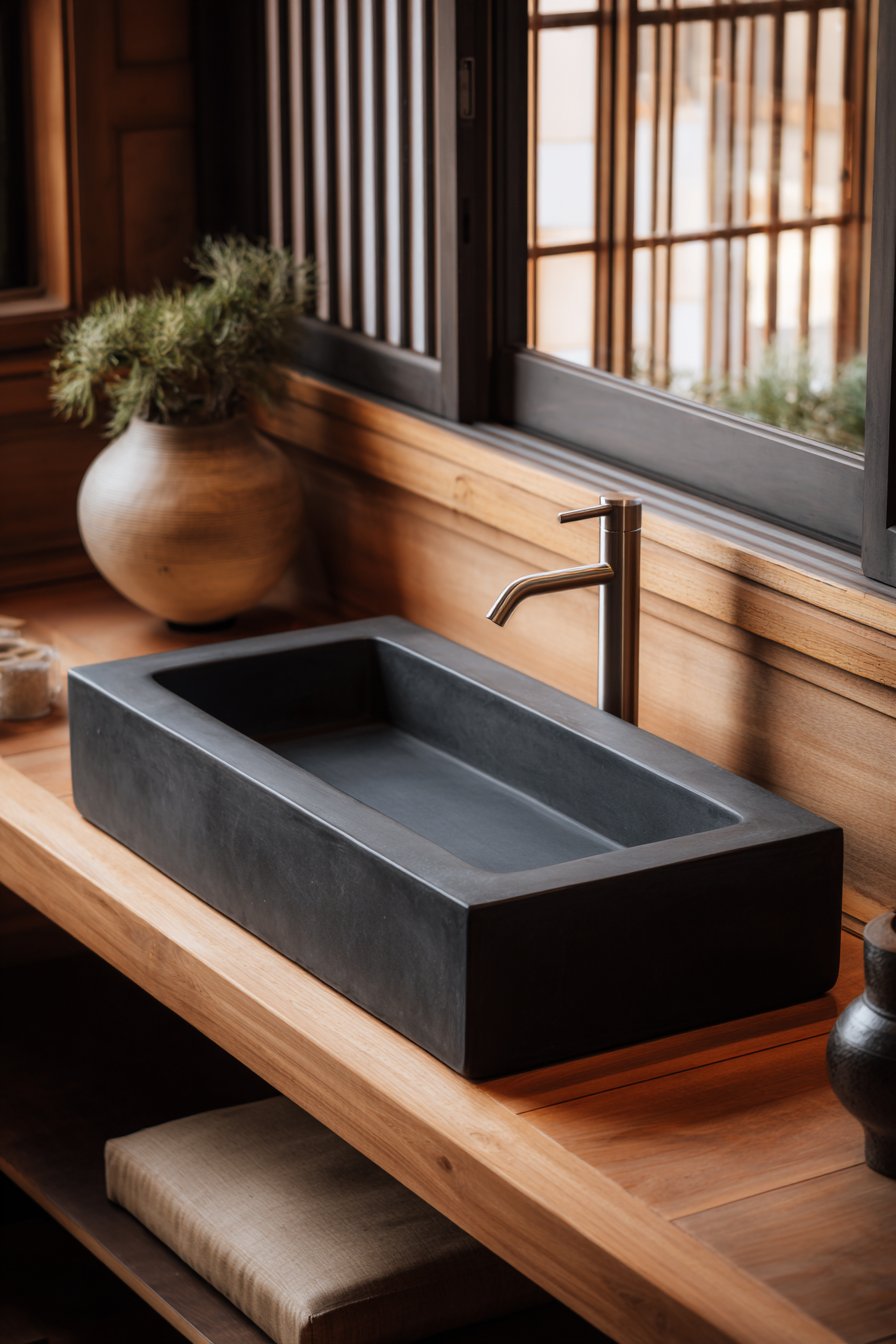
Contemplative serenity and mindful simplicity characterize this Asian-inspired dining room washbasin design that creates meditative atmosphere through restrained material palette and deliberate spatial composition. The shallow rectangular vessel sink in matte black stone suggests natural riverbed rocks worn smooth by flowing water over centuries. Positioned on a floating teak platform whose rich golden-brown tones warm the composition, the installation demonstrates how carefully selected natural materials create harmony and connection to the natural world.
A single-hole faucet in brushed stainless with minimalist design maintains zen aesthetic, its simple form and restrained finish avoiding any decorative embellishment that would disturb the composition’s essential calm. The dining area includes a low-profile table with floor cushions rather than conventional chairs, encouraging diners to sit closer to earth in positions that promote mindfulness and present-moment awareness. Paper lantern lighting provides soft, diffused illumination that creates gentle atmosphere conducive to calm conversation and appreciation of simple pleasures.
Natural bamboo elements and shoji screen details complete the Eastern aesthetic, their organic materials and traditional forms connecting the contemporary space to centuries of Asian design wisdom. Soft diffused lighting creates serene atmosphere while professional interior photography captures the peaceful Eastern aesthetic and harmonious washbasin integration in Asian-style dining space. This design philosophy emphasizes that luxury lies not in abundance but in quality, careful selection, and the creation of spaces that support spiritual well-being alongside physical comfort.
Key Design Tips:
- Select natural stone vessel sinks with matte finishes and organic forms suggesting found natural objects
- Choose teak or other warm-toned woods with straight, clean grain patterns
- Install single-hole faucets with minimalist designs avoiding decorative elements
- Incorporate low-profile dining furniture that encourages grounding and mindfulness
- Use paper lanterns or similar soft lighting sources that create diffused, shadowless illumination
- Add authentic Asian elements like bamboo, rice paper screens, or natural fiber textiles
- Maintain uncluttered surfaces and resist the temptation to over-decorate
- Create negative space deliberately as an essential design element rather than merely empty area
- Consider the principles of feng shui in furniture placement and spatial flow
15. Rustic Farmhouse Copper
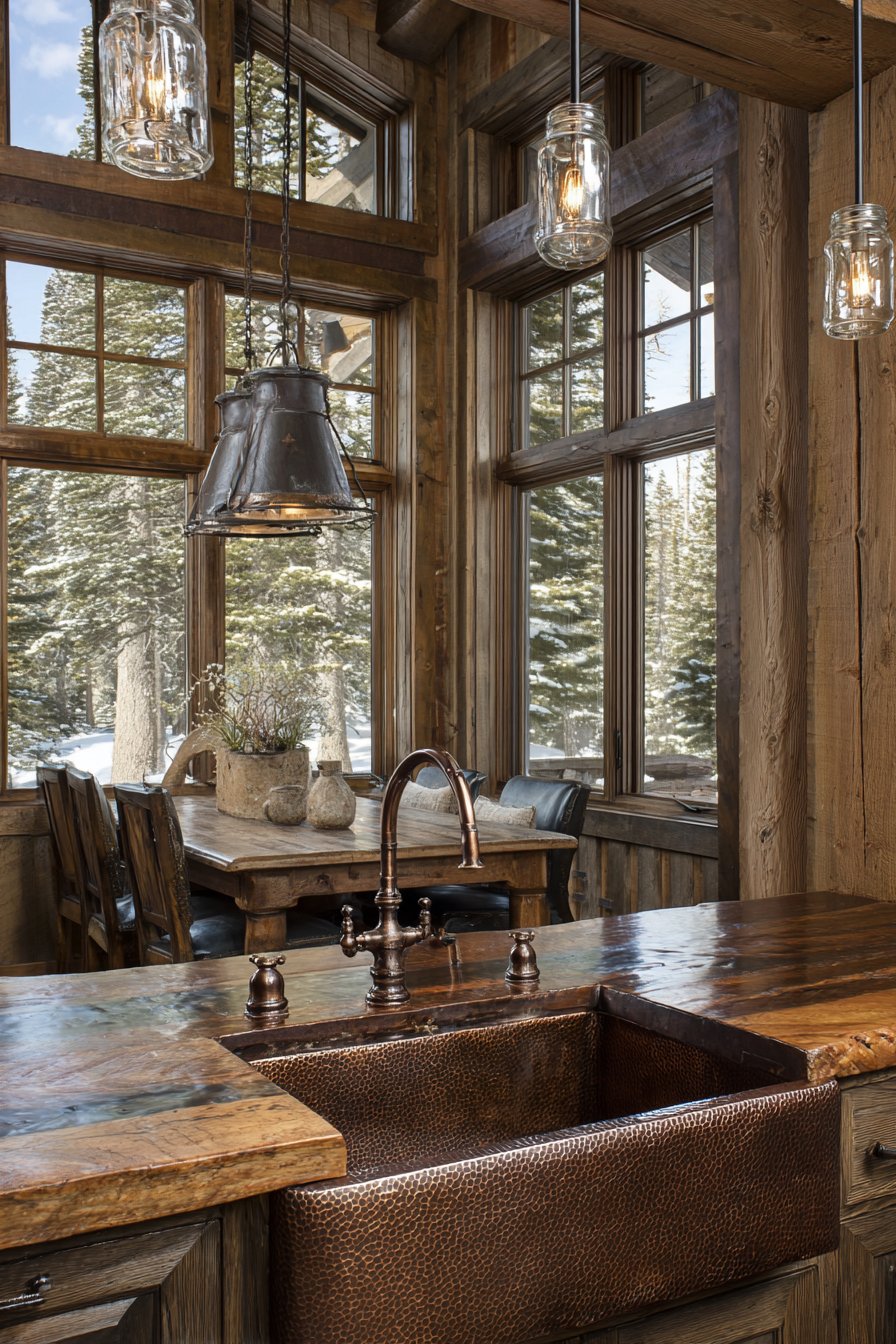
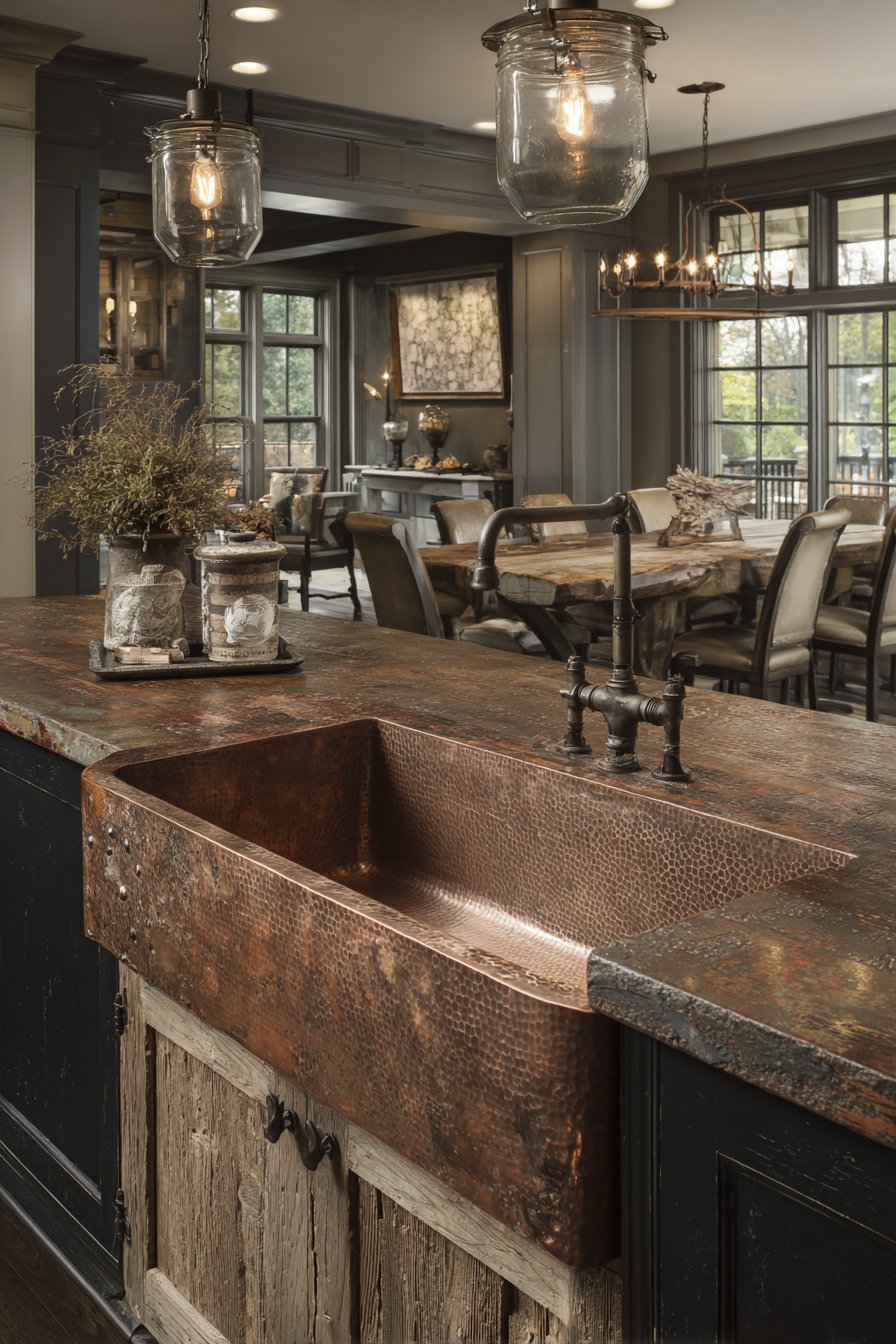
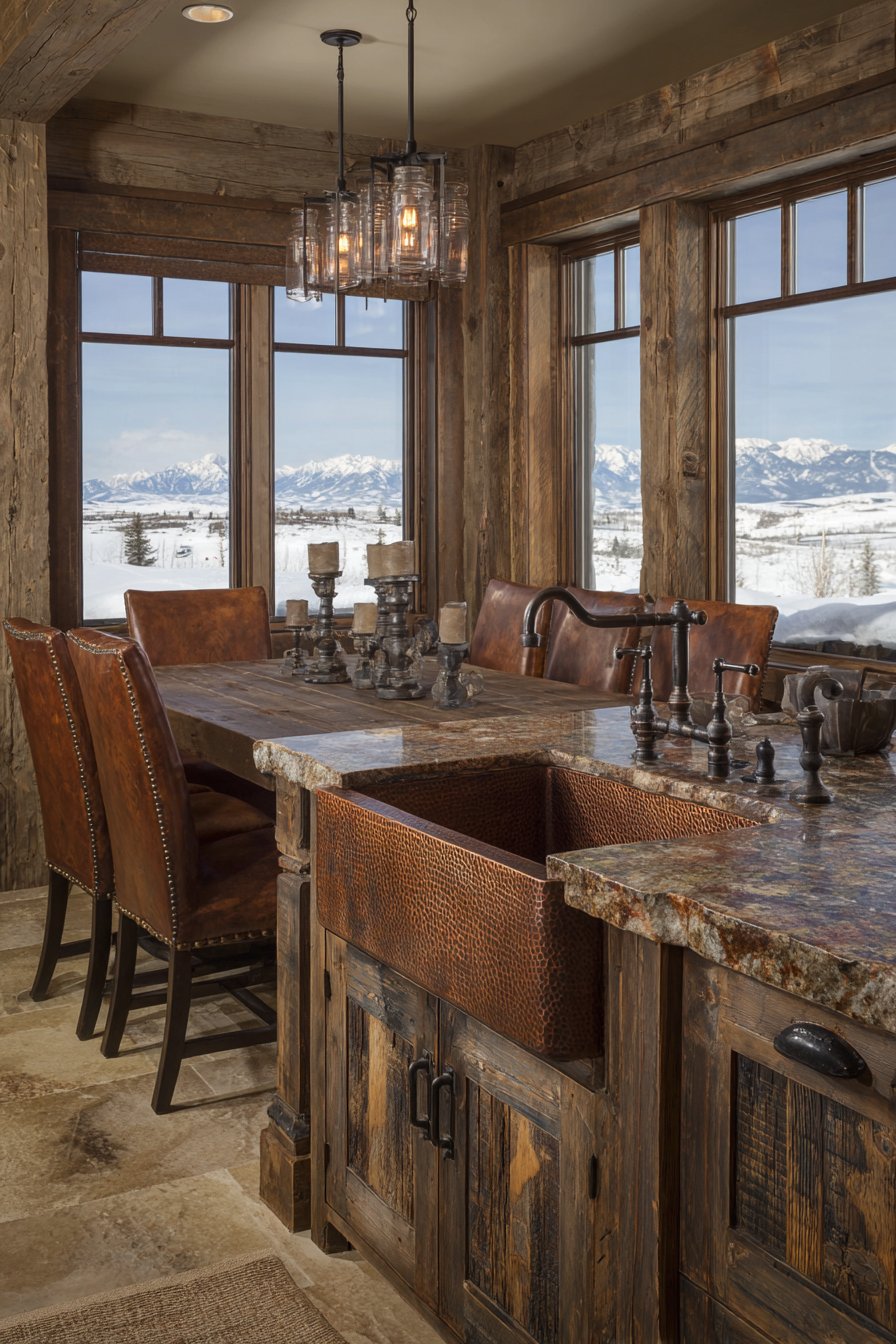
Country authenticity and warm metallic beauty converge in this rustic dining room washbasin design featuring a copper farmhouse sink that serves as both practical fixture and stunning focal point. Set into a distressed pine cabinet base showcasing visible wood grain, natural knots, and the authentic wear patterns that only genuine age and use create, the installation celebrates imperfection as character rather than flaw. The copper’s hammered or smooth surface—depending on preference—develops living patina over time, darkening and acquiring color variations that tell stories of water exposure and daily use.
A vintage-style bridge faucet in oil-rubbed bronze adds country charm through its traditional configuration and warm finish that harmonizes beautifully with copper’s tones. The substantial cross handles provide easy grip and operation while reinforcing the fixture’s old-fashioned character. The dining area features a barn wood table whose weathered surface shows authentic aging—perhaps salvaged from actual agricultural buildings—with mismatched chairs collected over time rather than purchased as matching set. Mason jar pendant lights suspended overhead provide practical illumination while reinforcing the farmhouse aesthetic through their repurposed container forms.
Natural light from multipane windows highlights authentic rustic textures throughout the space—the copper’s reflective surface, the pine’s grain variations, the barn wood’s weathered patina. Wide-angle interior photography shows the cozy farmhouse aesthetic and practical washbasin placement perfect for country-style dining room entertaining where large family gatherings and casual hospitality create genuine need for convenient washing facilities. This design celebrates American agricultural heritage while adapting traditional forms for contemporary living.
Key Design Tips:
- Select copper farmhouse sinks in gauges thick enough (14-16 gauge) to prevent denting and provide proper sound dampening
- Source genuine distressed pine or age new wood using authentic techniques rather than artificial distressing
- Choose oil-rubbed bronze fixtures that complement copper’s warm tones
- Incorporate barn wood elements with genuine patina and structural stability
- Create eclectic dining arrangements using collected vintage chairs with authentic wear
- Install multipane windows or add mullions to existing windows for period character
- Repurpose vintage containers like mason jars as lighting fixtures or accessories
- Embrace patina development on copper surfaces or maintain original finish through regular sealing and polishing
16. Mid-Century Modern Retro
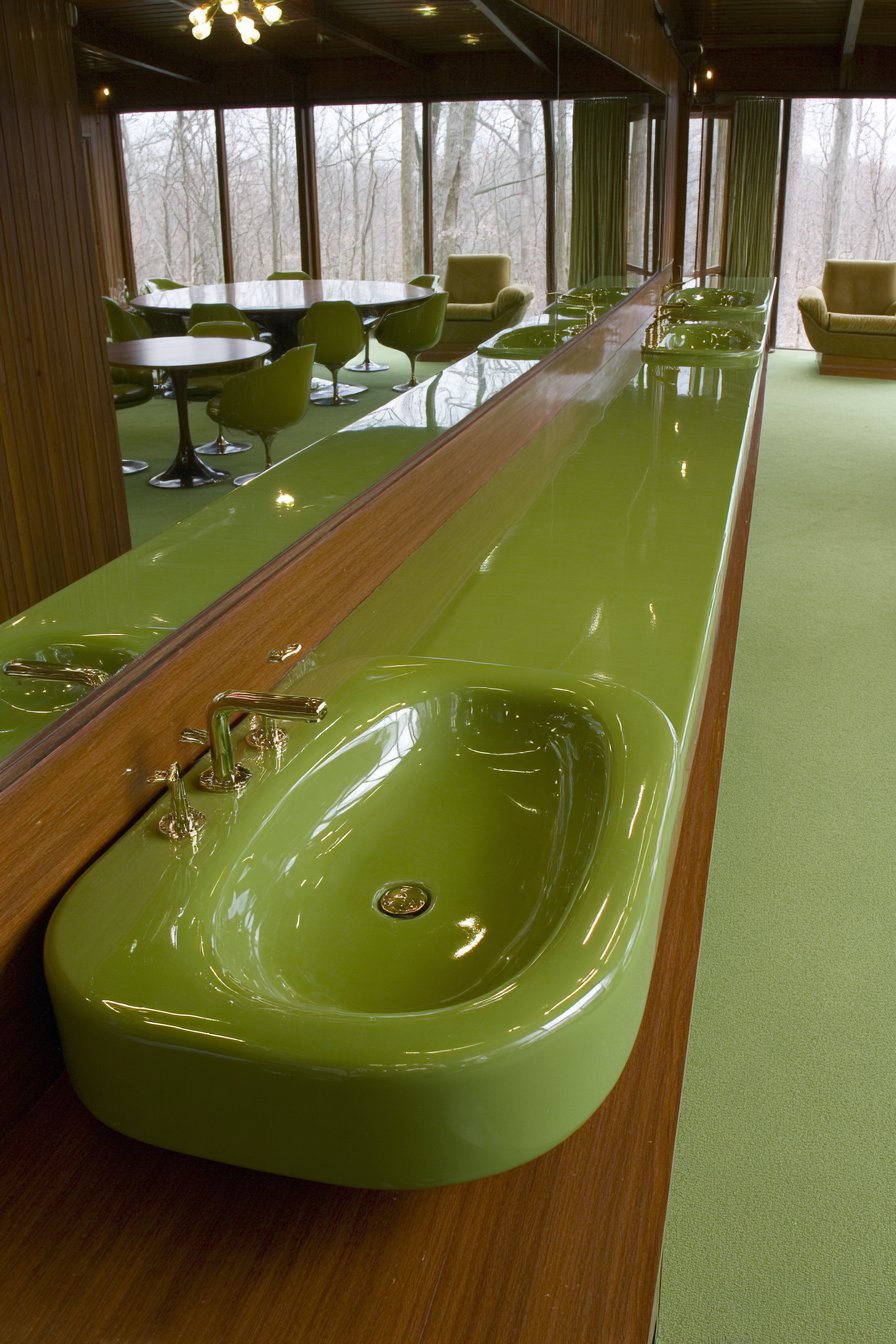
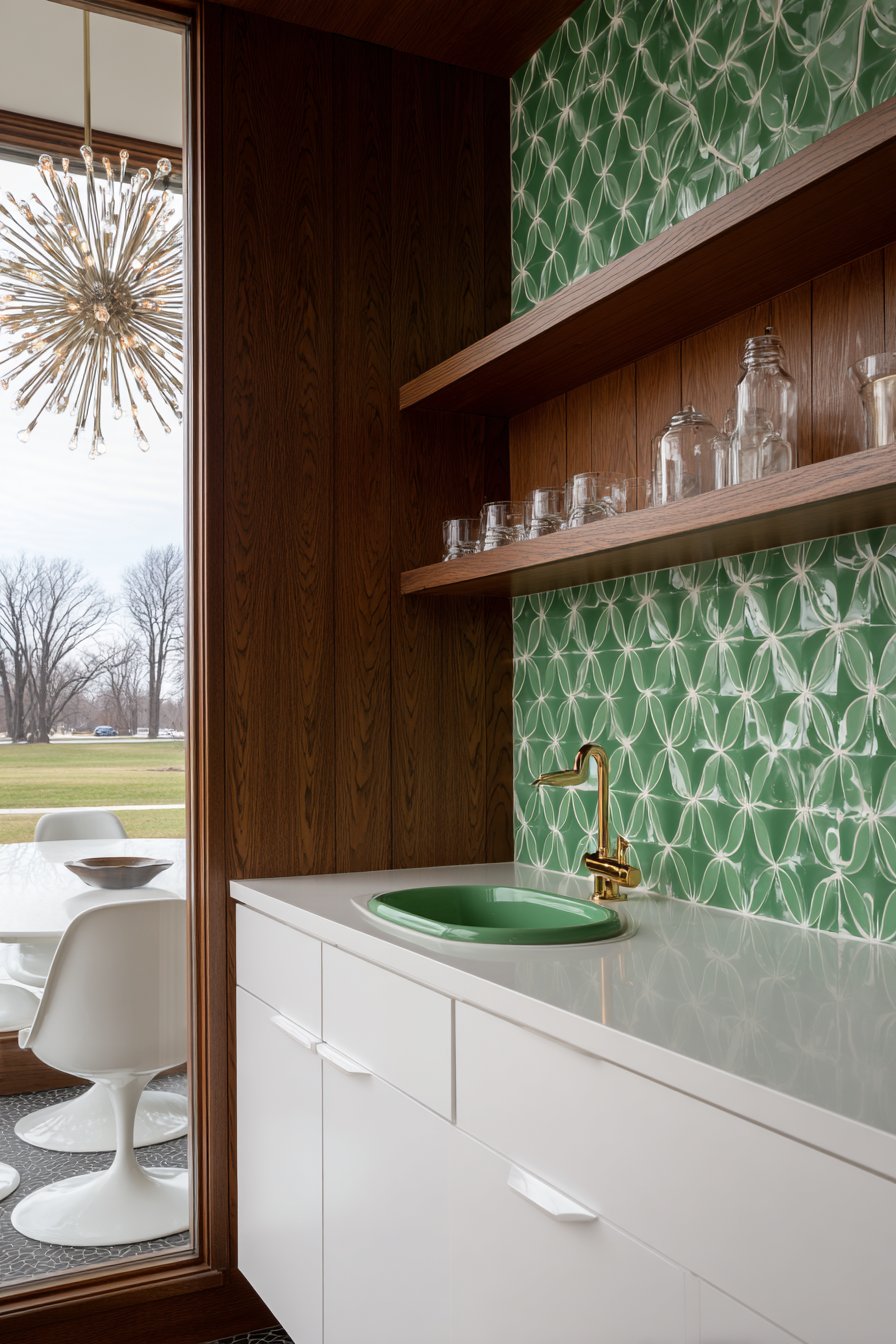
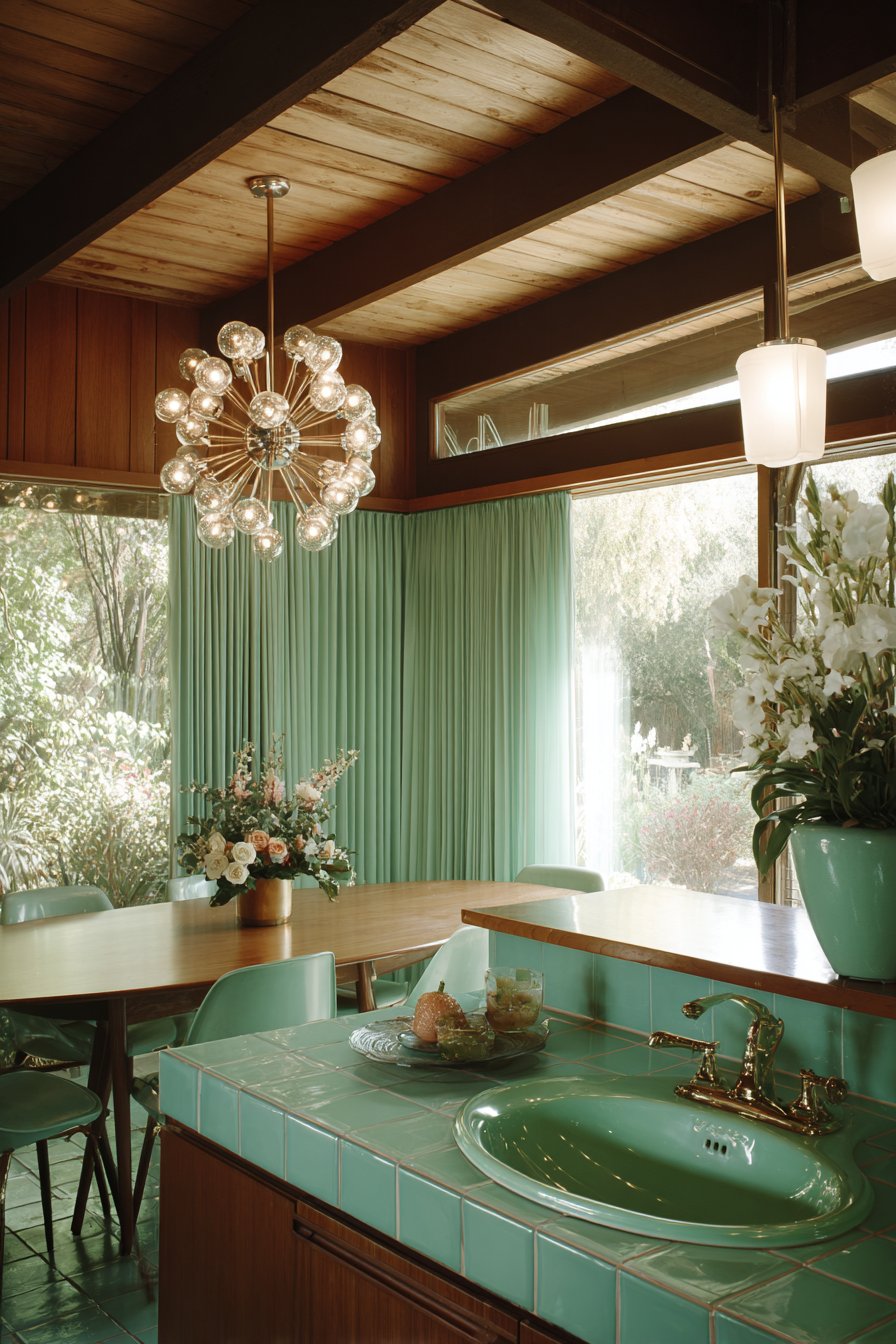
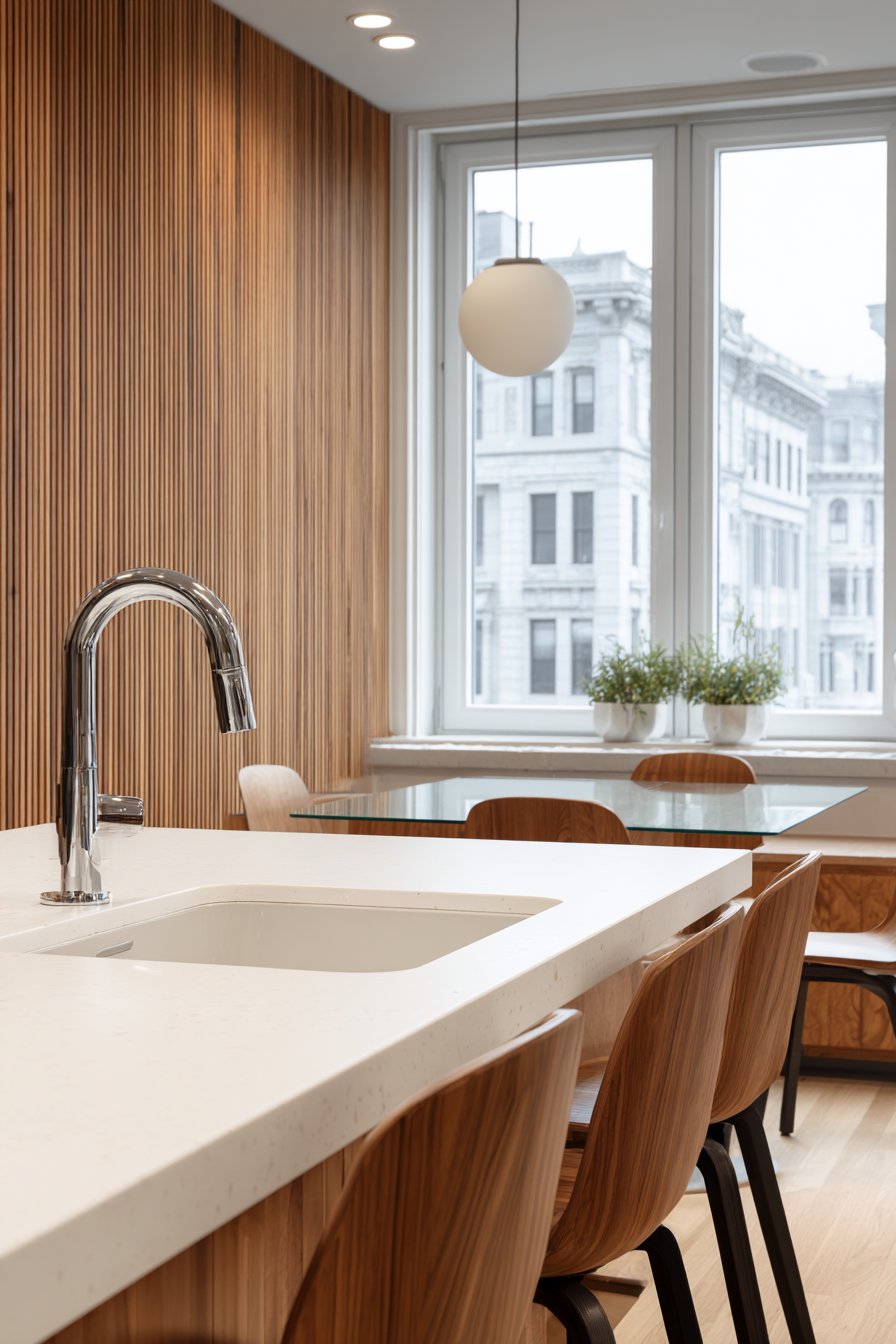
Authentic period design and vibrant color celebrate this mid-century modern dining room washbasin featuring a shallow oval sink in avocado green ceramic that captures the era’s bold approach to color and form. Mounted on a walnut floating shelf with characteristic tapered edges that taper toward delicate points, the installation embodies the period’s emphasis on organic forms, honest materials, and the marriage of beauty with function. The avocado green—wildly popular during the 1960s and 70s—adds nostalgic charm while demonstrating renewed appreciation for period-accurate color palettes.
A brass single-handle faucet reflects authentic 1960s design through its simple form and warm metallic finish, avoiding the elaborate detailing of earlier periods in favor of streamlined efficiency. The dining space includes an iconic tulip table whose pedestal base eliminates traditional four-legged construction in favor of sculptural central support, paired with molded plastic chairs that showcase the era’s embrace of new materials and manufacturing processes. A sputnik chandelier overhead—with its characteristic radiating arms tipped with light bulbs—provides both illumination and focal point that instantly identifies the space’s design period.
Large windows with simple drapes allow natural light to highlight the retro color palette while maintaining the period’s preference for bringing outdoors in through generous glazing and minimal window treatments. Interior design photography captures the authentic mid-century aesthetic and period-appropriate integration of vintage-style washbasin in retro dining room design. This approach appeals particularly to those who appreciate twentieth-century design history and want to create authentic period interiors rather than merely borrowing mid-century motifs superficially.
Key Design Tips:
- Source ceramic sinks in authentic period colors like avocado green, harvest gold, or turquoise
- Select walnut furniture and fixtures with characteristic tapered legs and organic forms
- Choose brass fixtures with simple, streamlined designs avoiding ornate detailing
- Incorporate iconic mid-century furniture pieces by recognized designers when possible
- Install sputnik or similar period-appropriate lighting fixtures
- Use simple window treatments that don’t obscure views or block natural light
- Add authentic accessories like vintage ceramics, abstract art, or period textiles
- Maintain the era’s characteristic open floor plans and emphasis on indoor-outdoor connections
- Consider period-accurate wall colors and avoid modern neutral gray tones
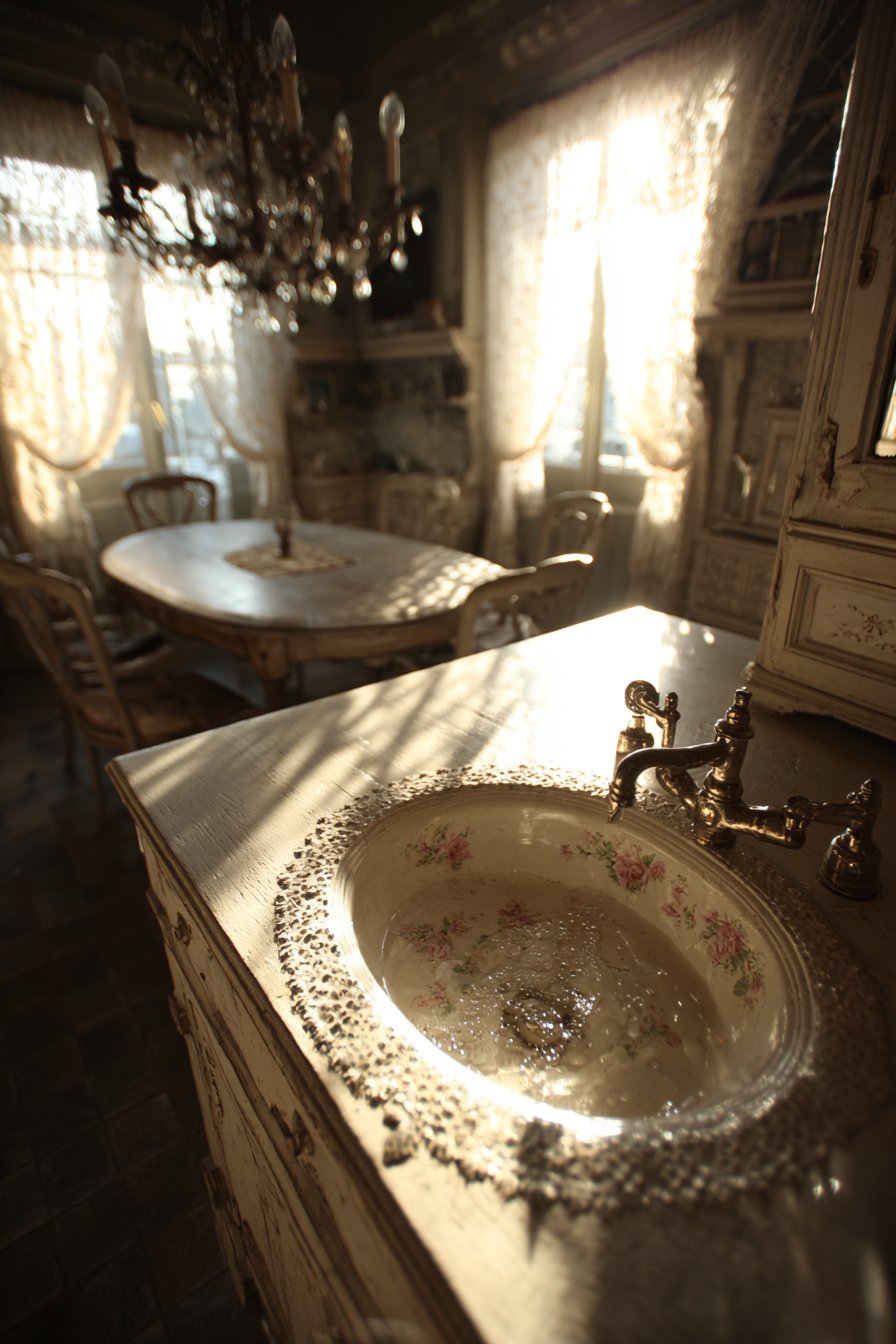
17. French Country Romance
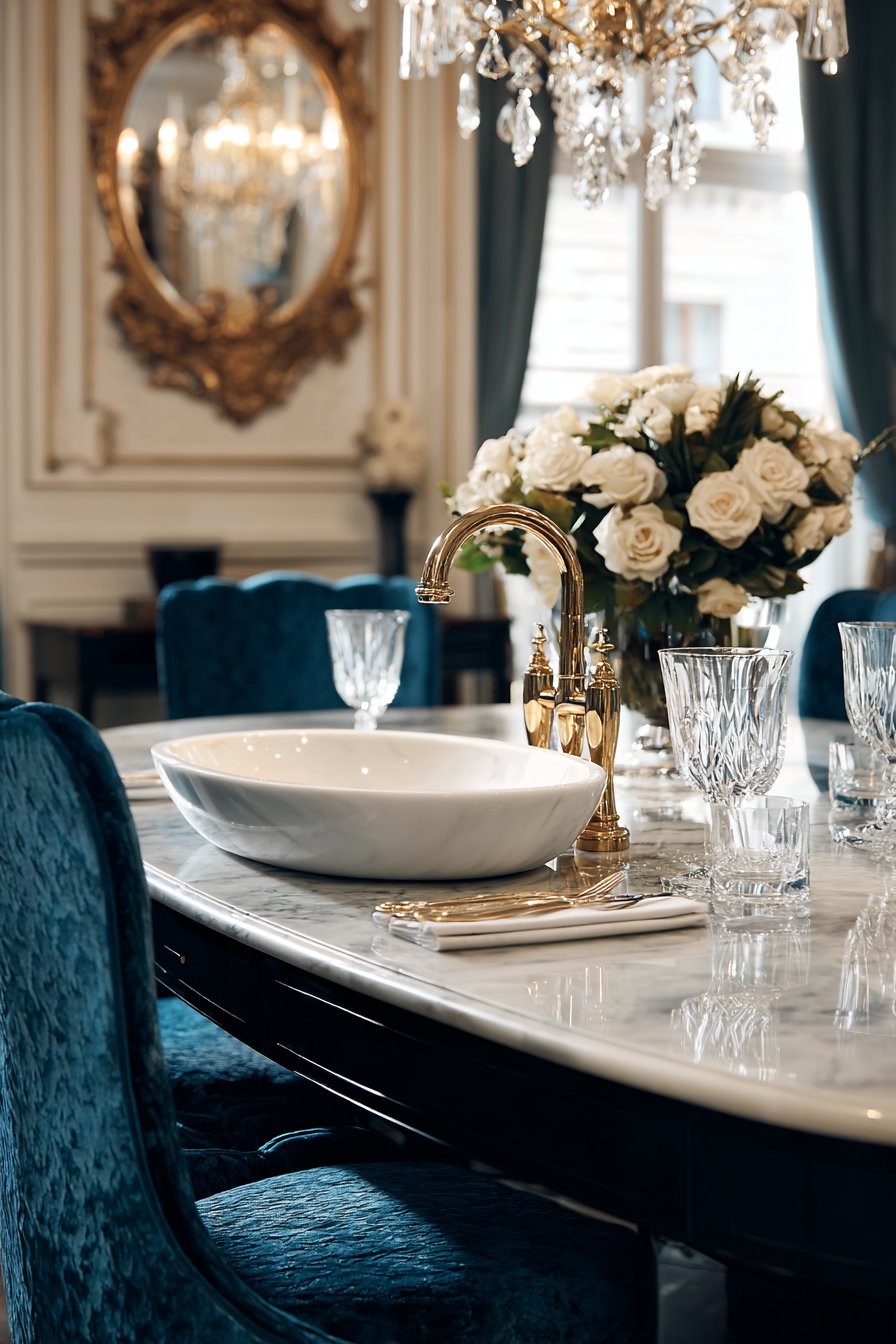
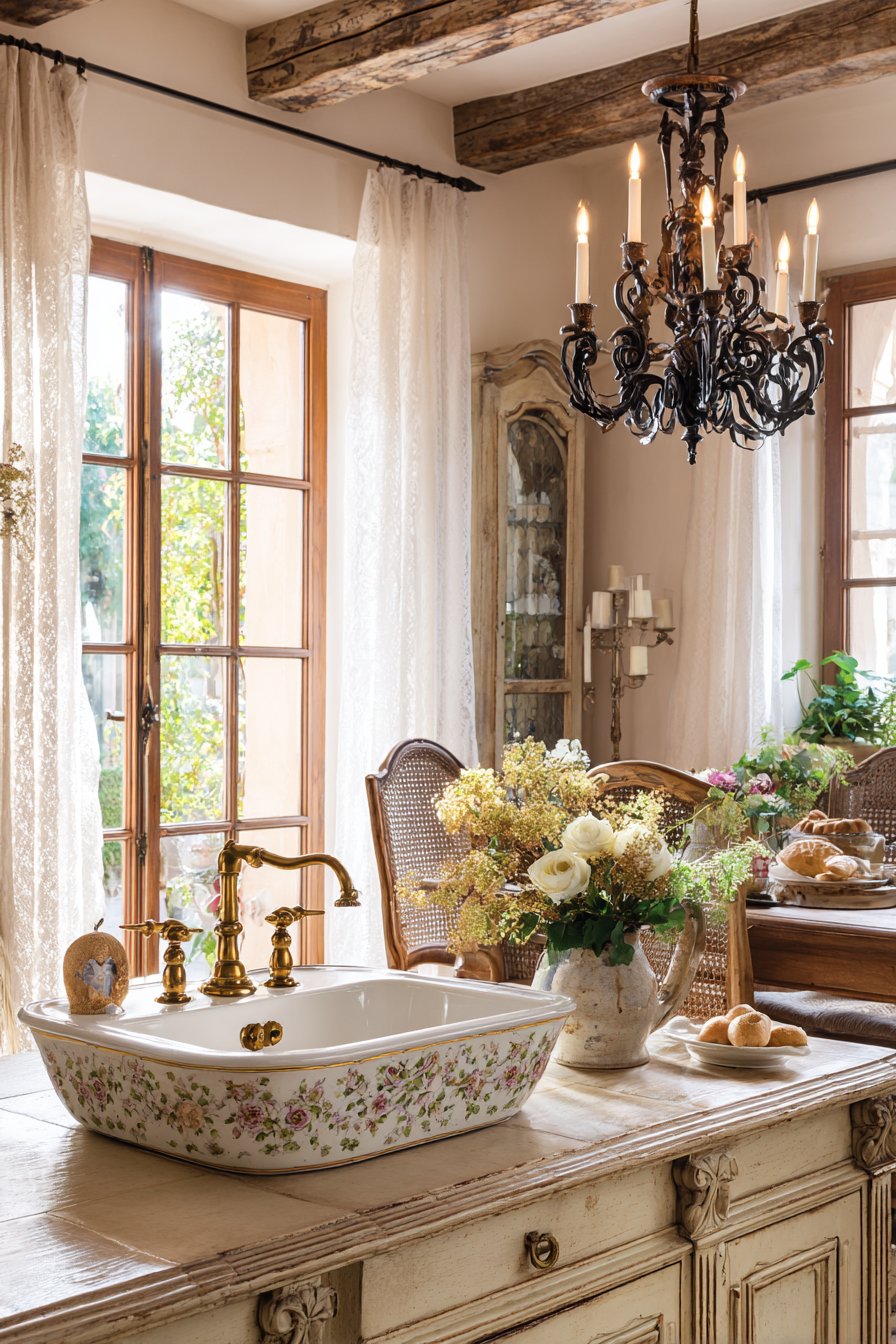
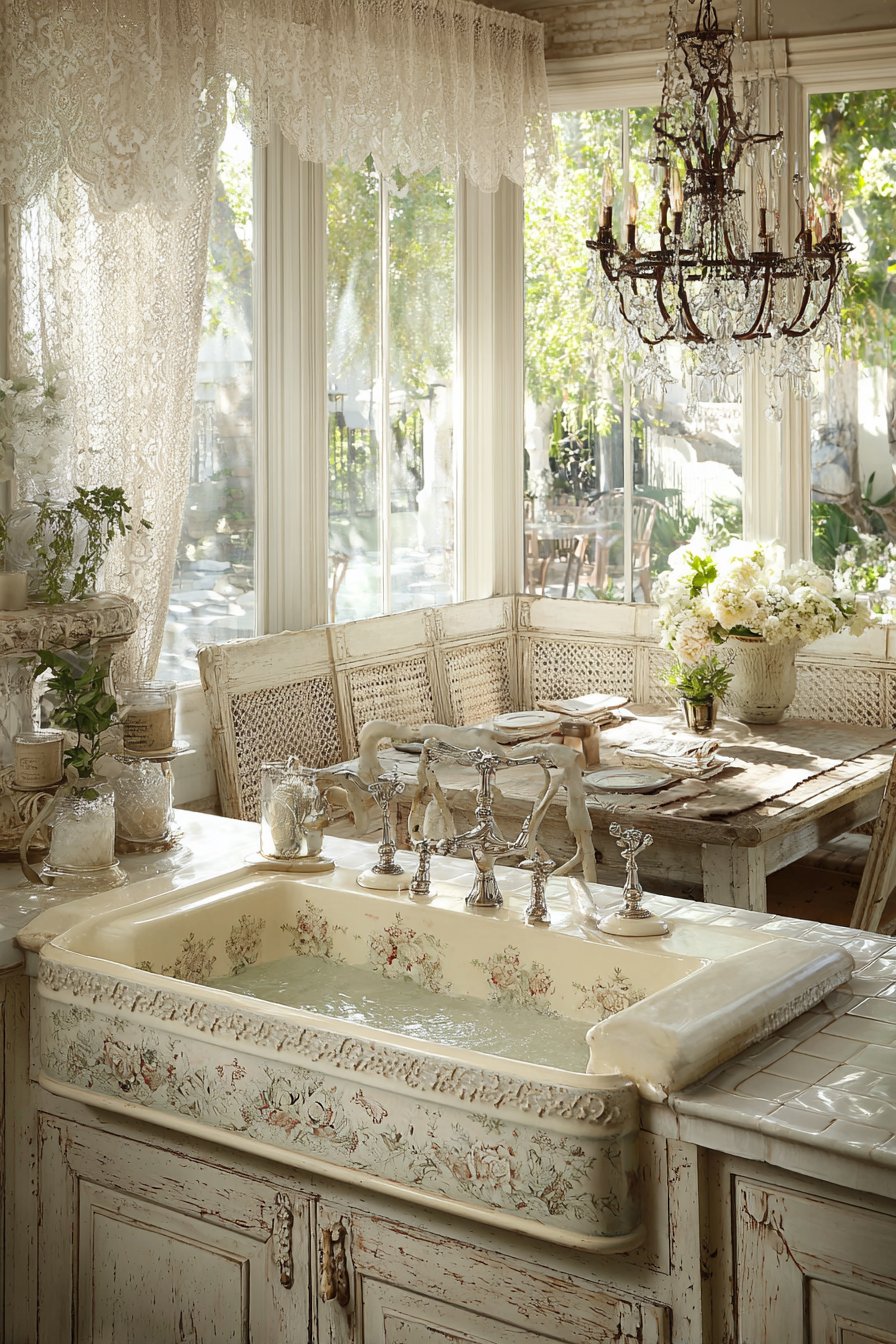
Elegant pastoral charm and romantic detailing characterize this French country dining room washbasin design featuring an ornate porcelain basin decorated with delicate floral patterns that evoke Provençal gardens in full bloom. Positioned on a distressed cream-painted vanity with carved details suggesting skilled woodworking and traditional joinery, the installation radiates soft femininity and Old World craftsmanship. The deliberate distressing reveals hints of earlier paint colors beneath the cream topcoat, suggesting layers of history and gentle aging rather than pristine newness.
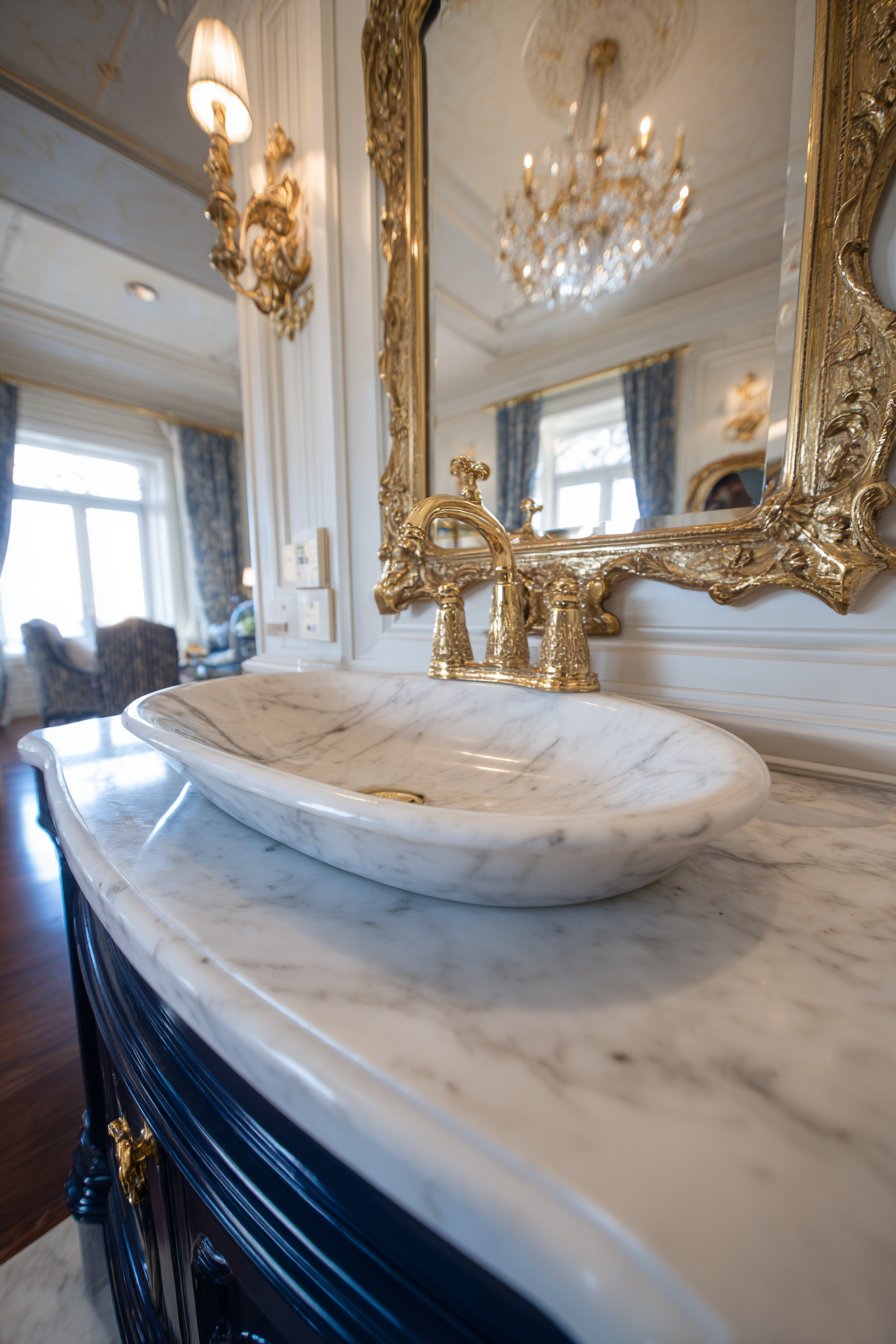
Antique brass faucets with porcelain handles complete the romantic look, their traditional widespread configuration and decorative detailing referencing eras when fixtures were crafted rather than merely manufactured. The white porcelain handle inserts—perhaps decorated with floral motifs or simple blue accents—provide comfortable grip while adding delicate decorative touches. The dining area displays a provincial-style table whose turned legs and stretcher base demonstrate traditional furniture construction, surrounded by rush-seat chairs whose woven seats reference peasant furniture traditions.
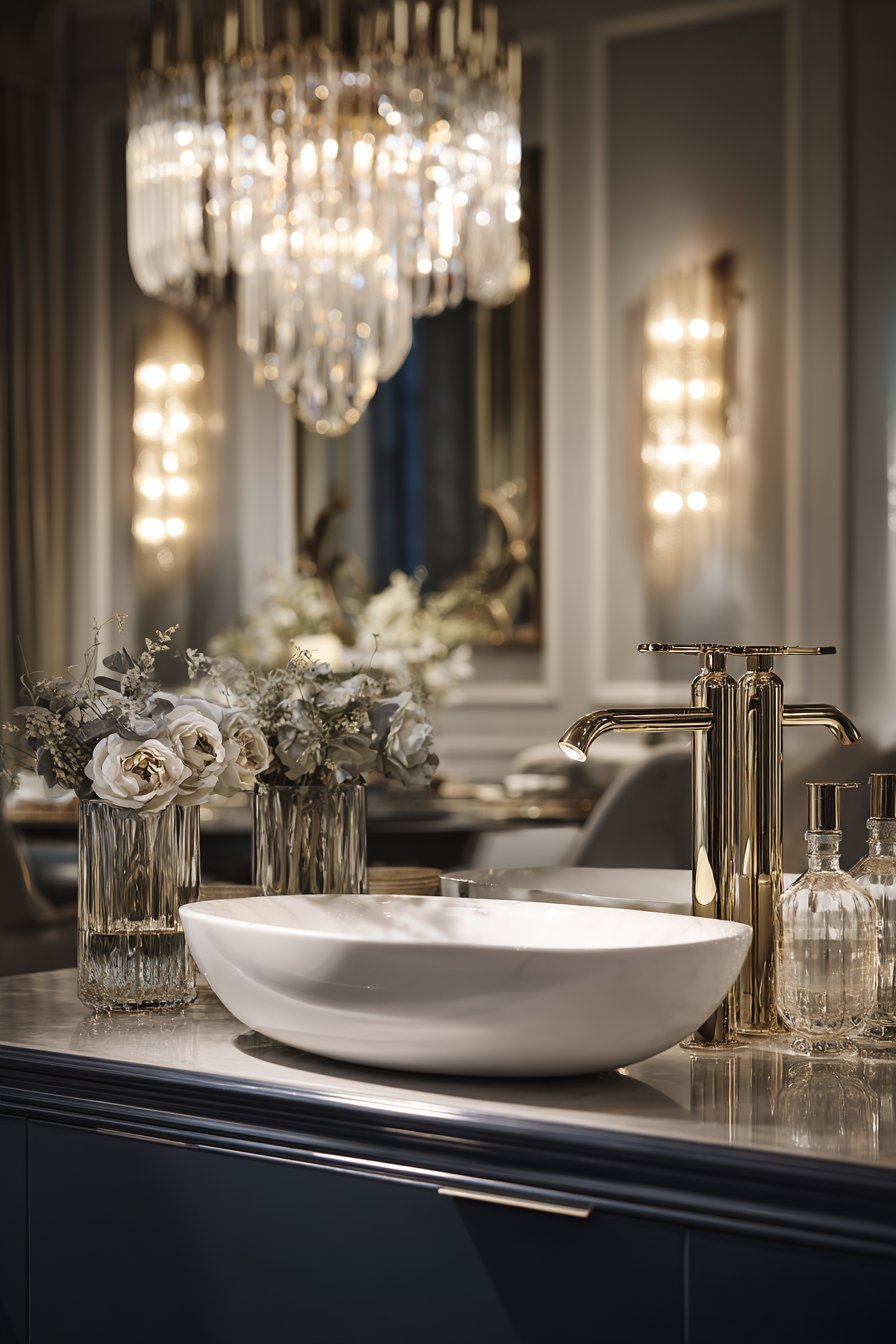
An iron chandelier with candle lights—whether actual candles or candle-style bulbs—provides overhead illumination while reinforcing the French country aesthetic through its hand-forged appearance and deliberately simple construction. Soft window light through lace curtains creates dreamy atmosphere, the filtered illumination casting delicate patterns across surfaces while maintaining the gentle, romantic quality essential to this style. Professional interior photography shows the charming French countryside aesthetic and elegant washbasin integration within romantic dining room setting that transports inhabitants to rural France regardless of actual geographic location.
Key Design Tips:
- Select porcelain sinks with hand-painted floral or toile patterns in traditional blue and white or multicolor
- Distress painted furniture using authentic techniques that reveal underlying layers realistically
- Choose antique brass fixtures with porcelain handle inserts for authentic French country character
- Incorporate carved wood details on furniture and cabinetry suggesting traditional craftsmanship
- Use rush-seat chairs or cushioned seats in traditional French fabrics like toile or ticking stripe
- Install iron chandeliers with hand-forged appearance and candle-style lights
- Hang lace curtains that filter light softly while maintaining privacy
- Add authentic French country accessories like copper pots, pottery crocks, or vintage linens
- Employ soft color palettes dominated by creams, soft blues, lavenders, and gentle greens
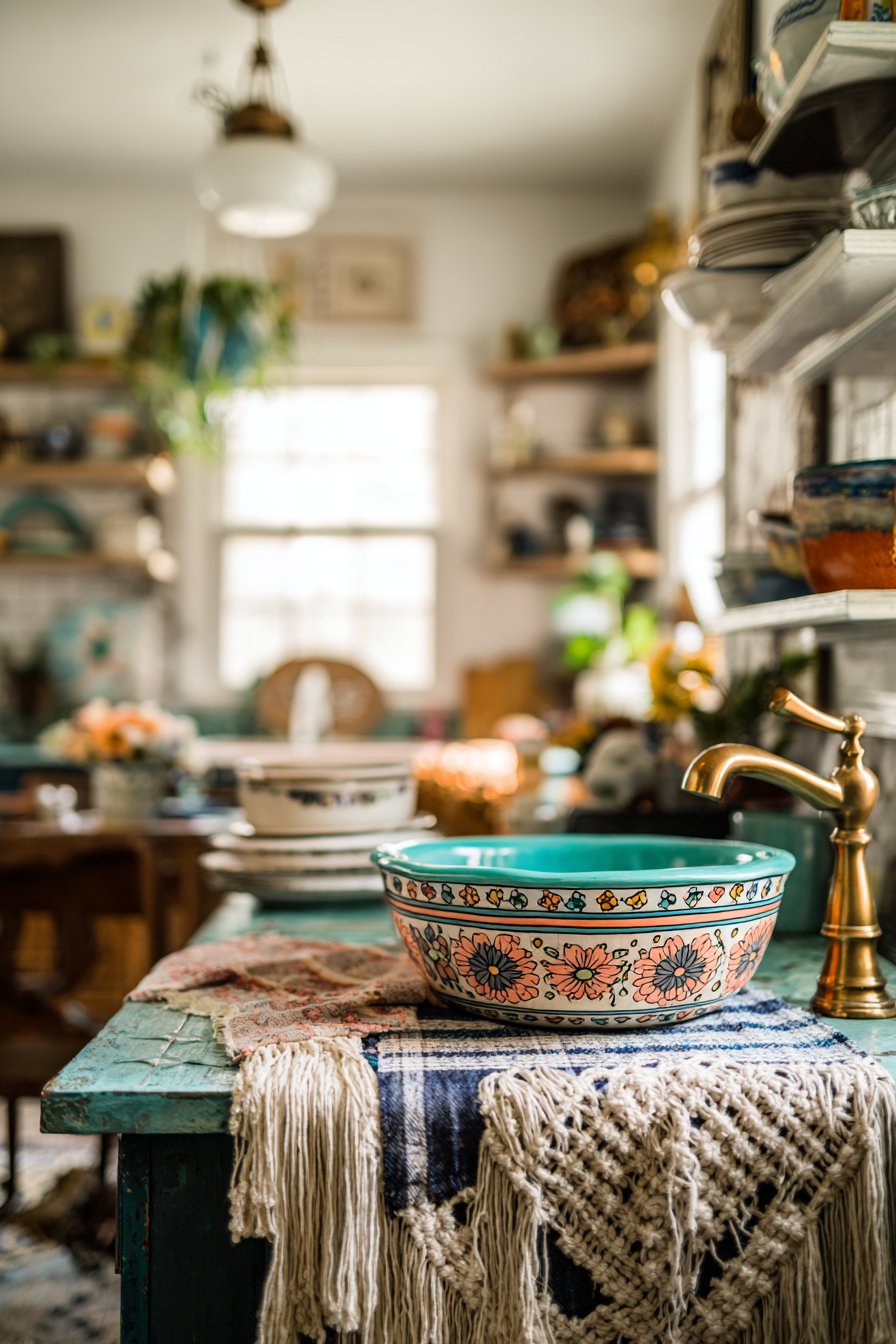
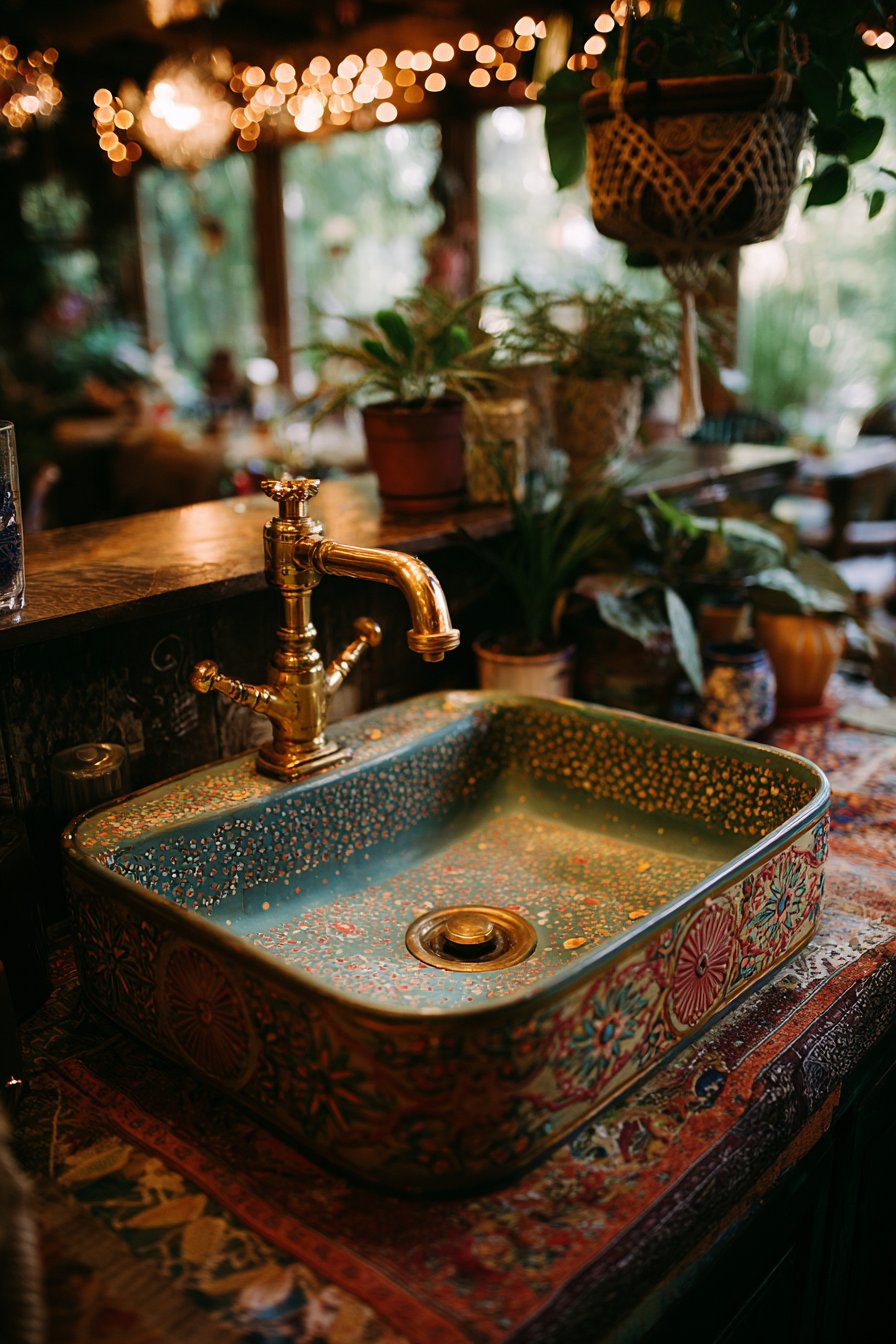
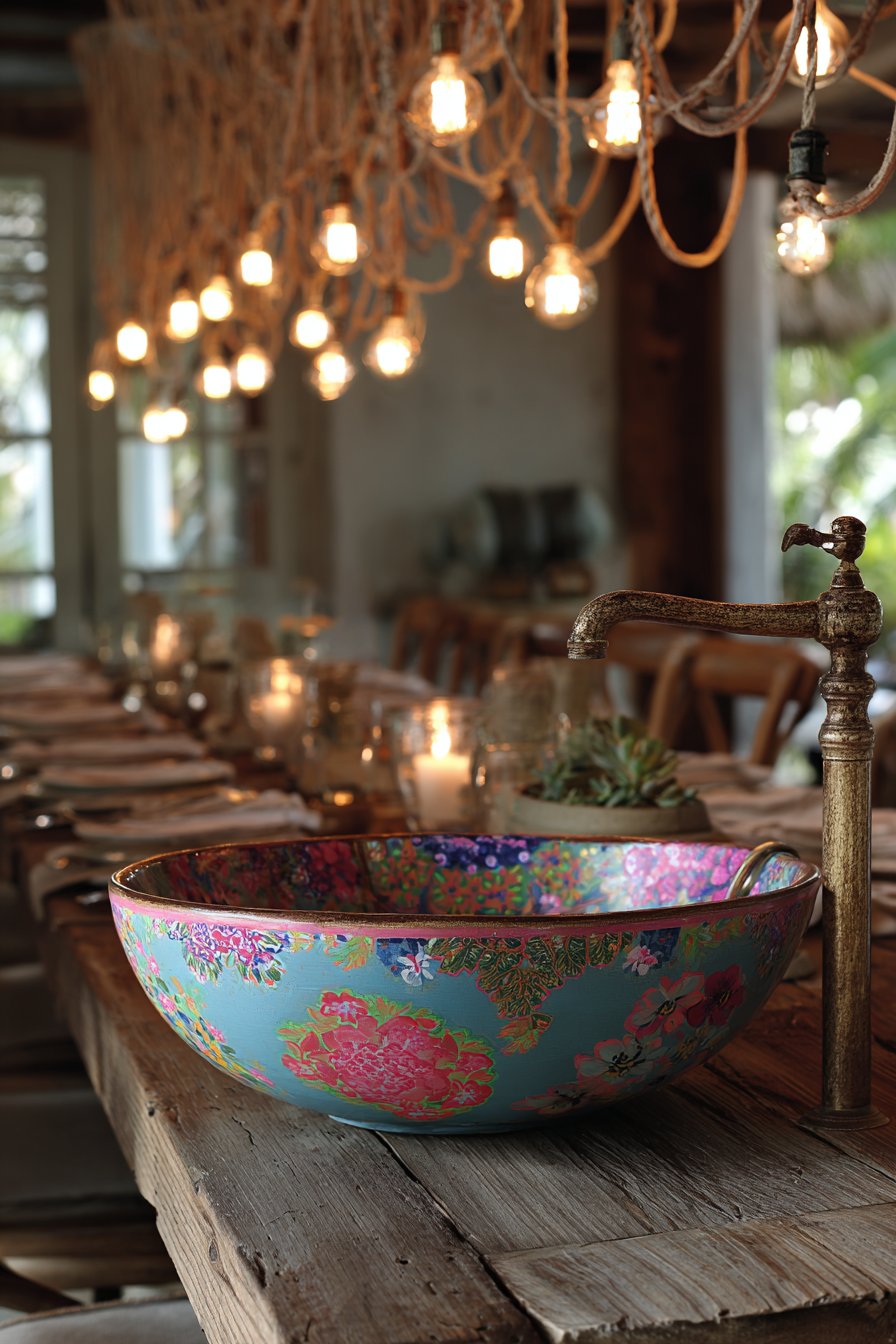
18. Bohemian Eclectic Mix
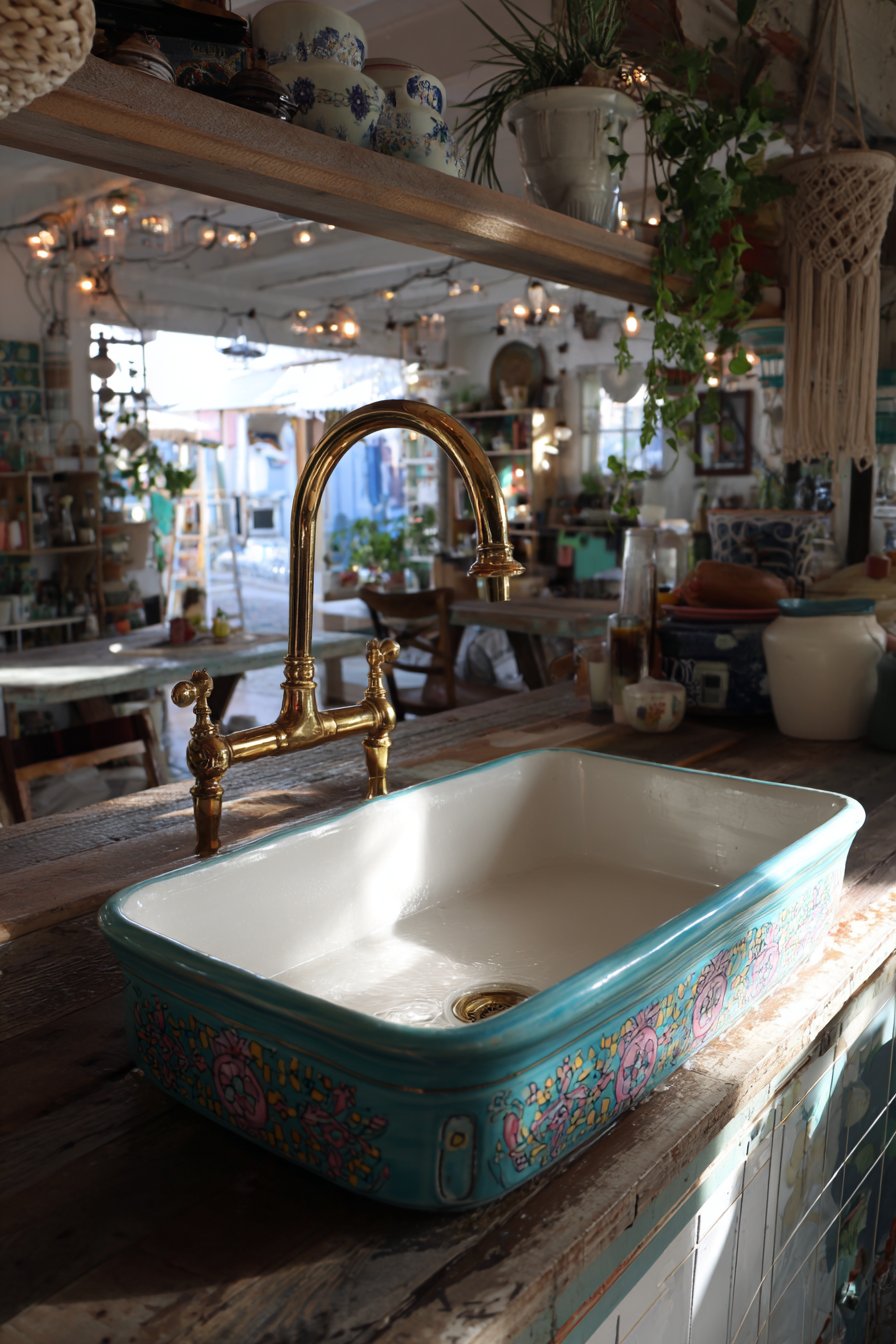
Free-spirited creativity and collected character define this bohemian dining room washbasin design featuring a colorful hand-painted ceramic vessel sink in turquoise and coral patterns that immediately captures attention through vibrant hues and artistic detailing. Mounted on a macramé-wrapped floating shelf whose intricate knotwork demonstrates handicraft traditions experiencing contemporary revival, the installation celebrates handmade artistry and global influences. The macramé’s textural complexity provides stunning contrast against smooth ceramic surfaces while adding three-dimensional interest that flat materials cannot achieve.
An antique brass faucet with decorative handle adds eclectic charm through its vintage character and warm metallic finish that harmonizes with the bohemian palette’s rich colors. The dining space includes mismatched vintage chairs collected from different sources—perhaps flea markets, estate sales, or family inheritances—surrounding a reclaimed wood table. Each chair tells its own story through unique form, finish, and patina, creating dynamic seating arrangement that invites conversation about each piece’s origins. Layers of textured table linens in various patterns and colors demonstrate the bohemian principle that more is more when curated with confident eye.
String lights and hanging plants create relaxed atmosphere while natural light highlights vibrant colors and collected aesthetic that characterizes bohemian style. Interior photography captures the free-spirited boho style and artistic washbasin integration in eclectic dining environment where rules are meant to be broken and personal expression trumps design dogma. This approach particularly appeals to creative individuals who view their homes as evolving galleries showcasing collected treasures and artistic sensibilities.
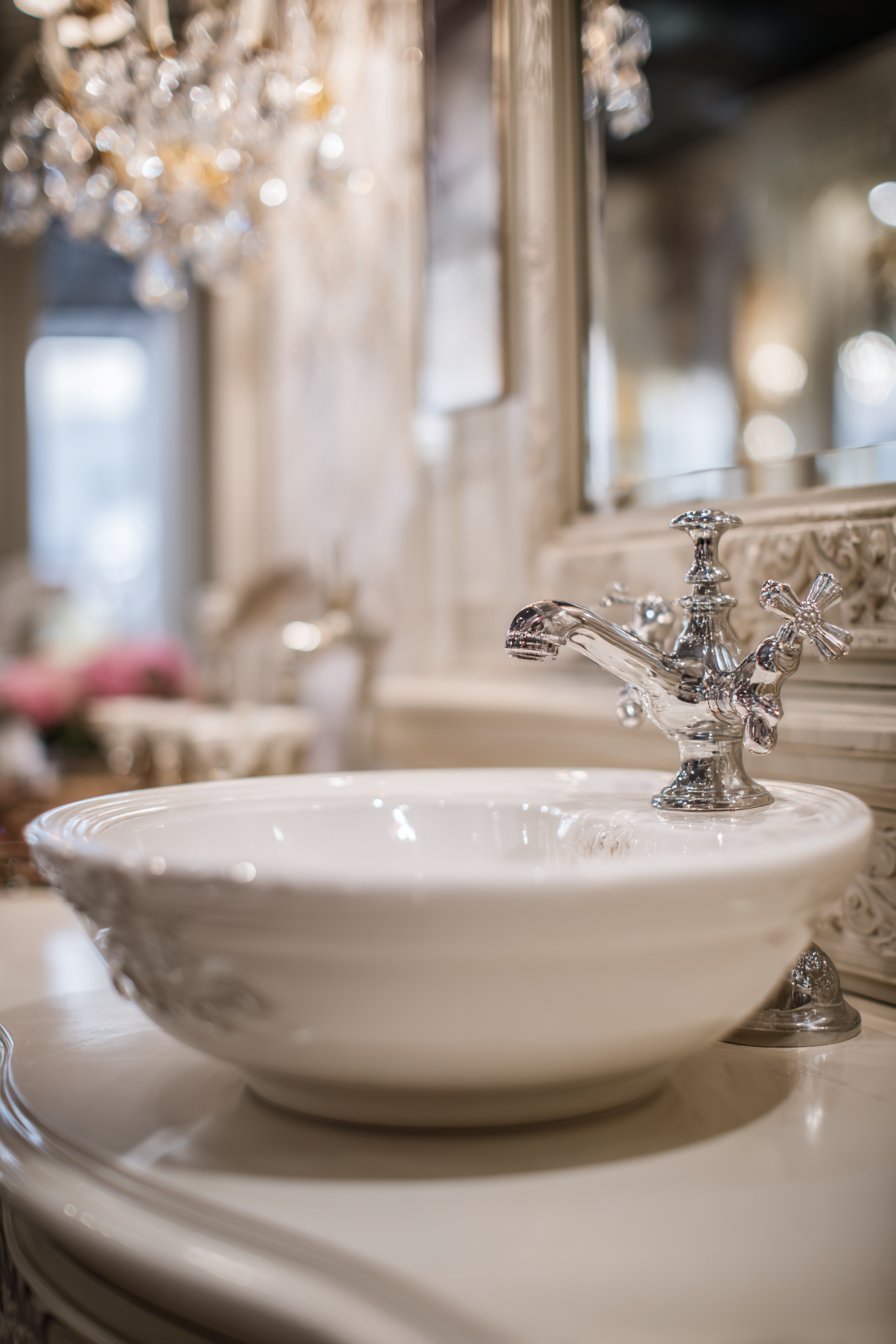
Key Design Tips:
- Select hand-painted ceramic sinks from artisans with bold colors and intricate patterns
- Incorporate macramé or other handicrafts that add textural dimension and demonstrate craftsmanship
- Choose vintage brass fixtures with decorative details and authentic patina
- Collect mismatched dining chairs with varying forms but similar scales for cohesive yet eclectic seating
- Layer textiles in complementary patterns and colors without worrying about perfect coordination
- Add string lights for ambient illumination that creates relaxed, festive atmosphere
- Include abundant plants in hanging planters, on surfaces, and in corners
- Display collected objects from travels, artistic pieces, and meaningful personal items
- Embrace maximalism and visual abundance while maintaining underlying organizational logic
19. Smart Technology Integration
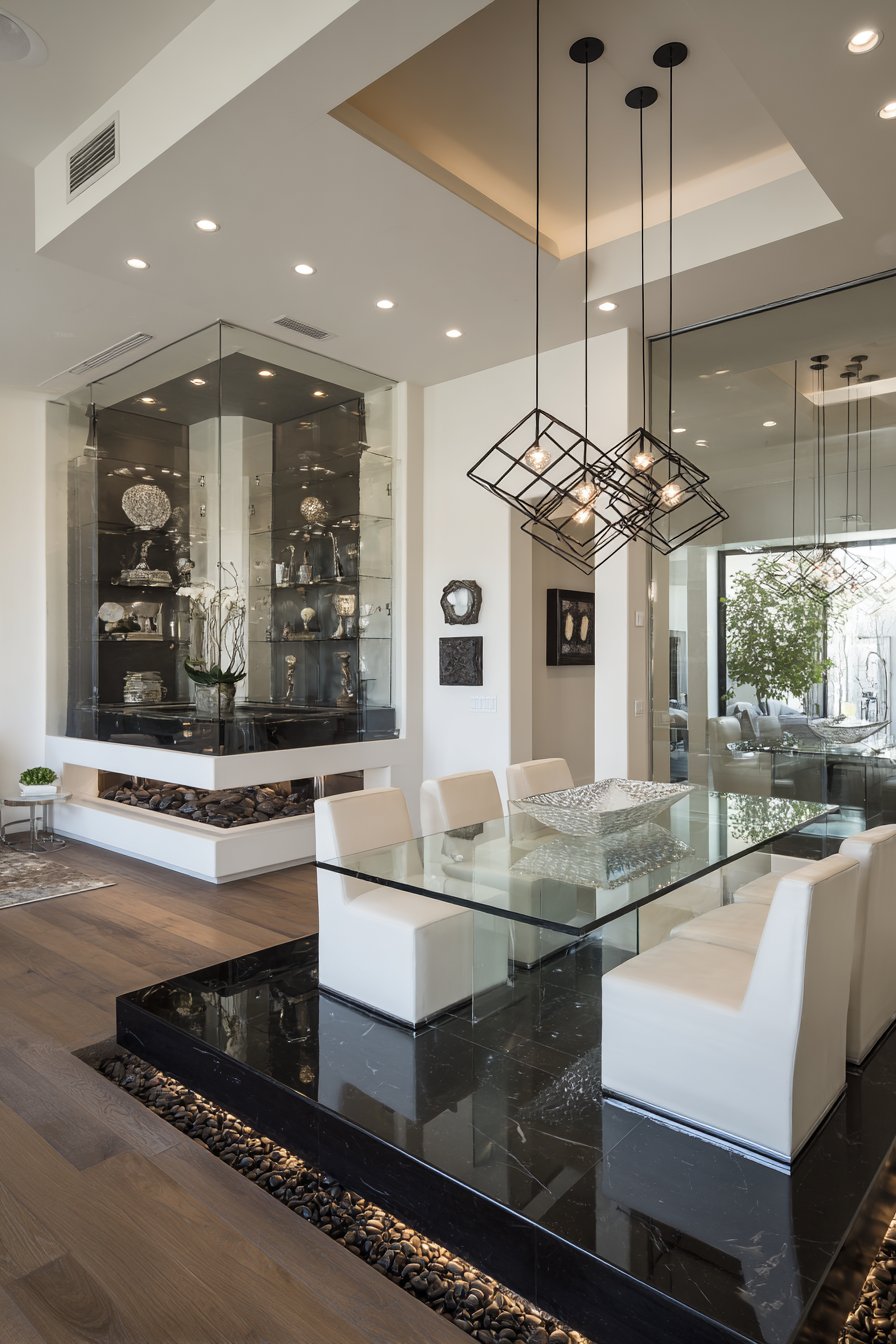
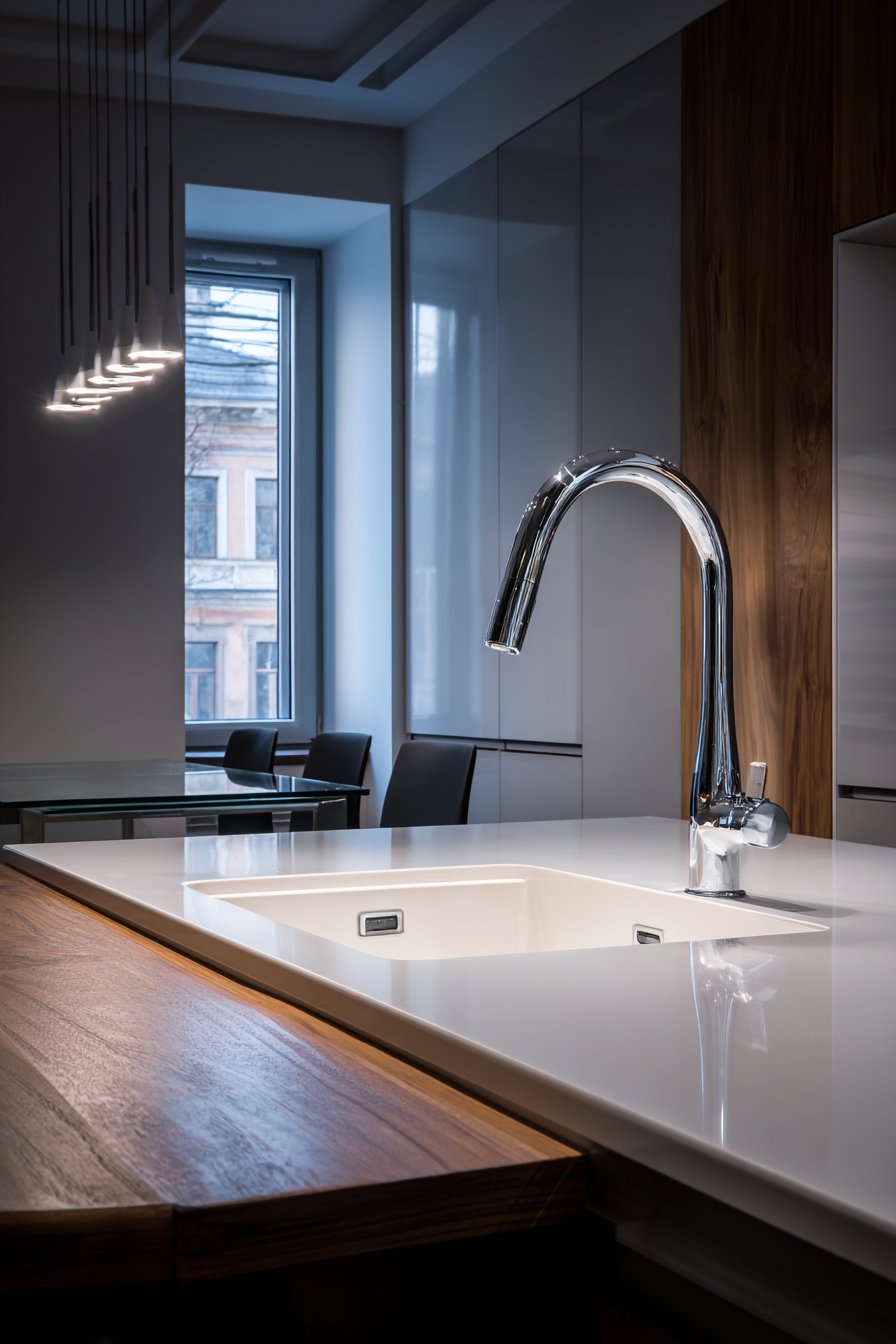
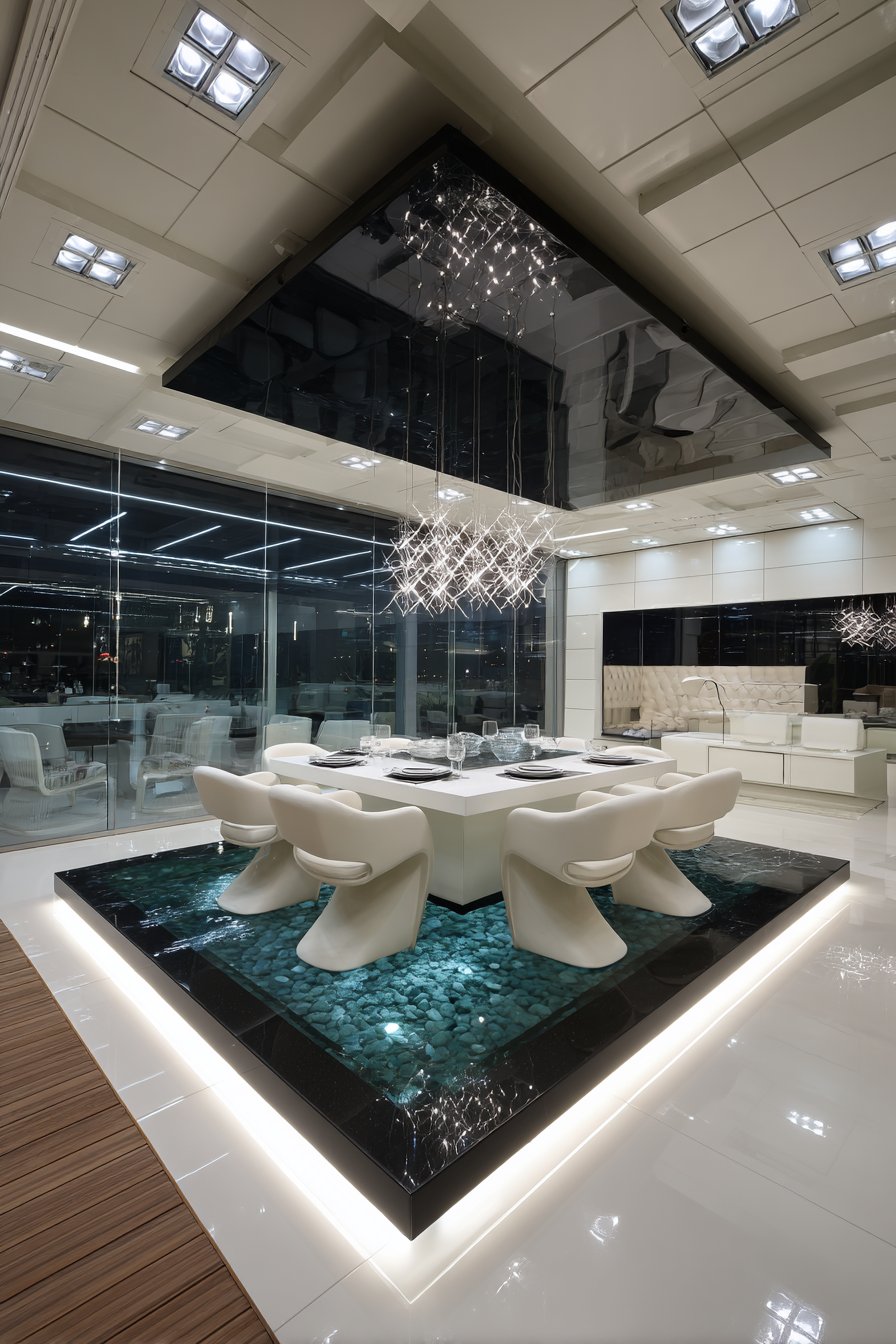
Innovation and convenience characterize this smart dining room washbasin design featuring a modern rectangular sink in white ceramic paired with a touchless sensor faucet in polished chrome that activates through proximity detection rather than physical contact. This hygienic, water-conserving technology proves particularly valuable in dining contexts where hands might be carrying dishes or food, eliminating the need to touch fixtures with dirty hands. The console includes built-in LED lighting with adjustable color temperature and brightness controls, plus a wireless charging station integrated into the surface for convenient device charging during meals or gatherings.
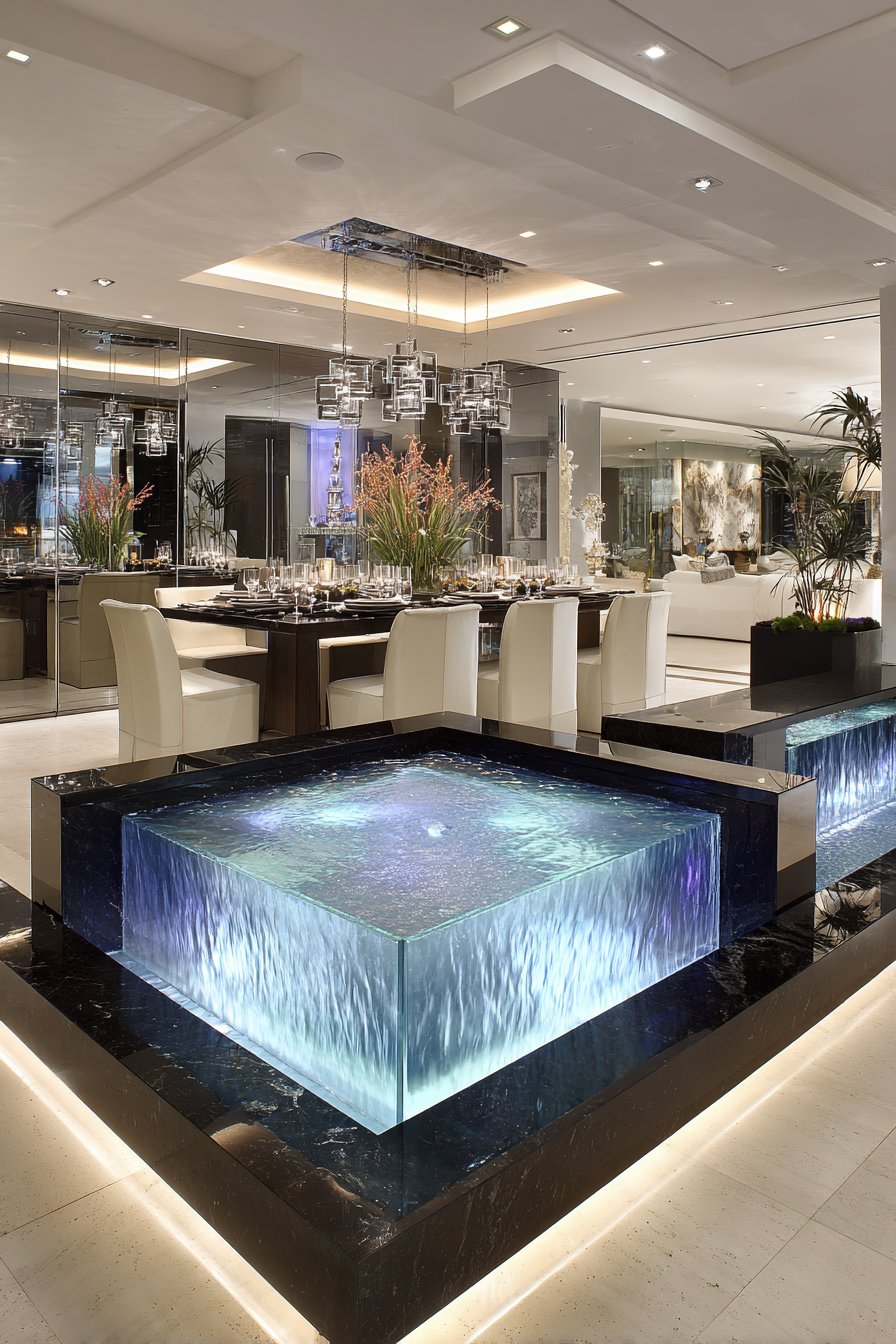
The contemporary dining area displays a glass table with modern chairs and a smart pendant lighting system controllable through voice commands or smartphone applications, allowing instant atmosphere adjustment for different occasions—bright task lighting for family meals, dimmed romantic illumination for dinner parties. Clean architectural lines throughout emphasize the space’s forward-thinking character and commitment to current technology. Balanced ambient lighting highlights tech-forward features while maintaining visual comfort and adequate illumination for practical tasks.
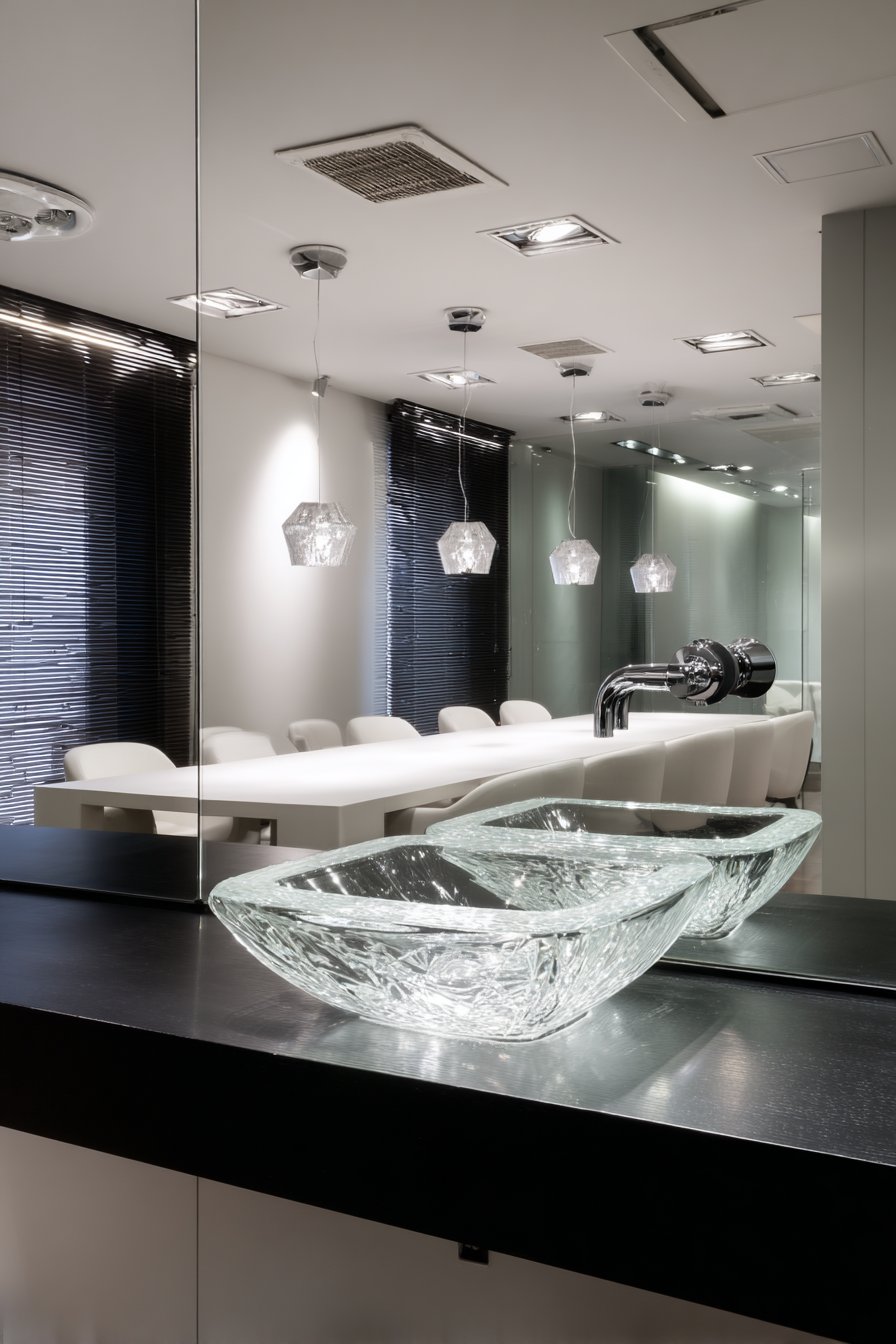
Professional interior photography shows the innovative integration of smart technology and practical washbasin functionality in modern dining room design where convenience and cutting-edge features enhance daily living. This approach appeals particularly to technology enthusiasts who appreciate how connected devices and automation can streamline routines while creating more responsive, adaptable living environments. The seamless integration demonstrates that technology need not compromise aesthetic values when thoughtfully incorporated into cohesive design schemes.
Key Design Tips:
- Select touchless faucets with reliable sensors and appropriate battery or electrical power sources
- Incorporate LED lighting with color temperature adjustability (typically 2700K-5000K) for versatile ambiance
- Install wireless charging stations compatible with common device standards (Qi protocol)
- Choose smart lighting systems with reliable connectivity and intuitive control interfaces
- Ensure adequate electrical outlets and consider hiring electricians for proper installation
- Maintain clean modern aesthetics that complement rather than compete with technology features
- Consider voice control integration through popular smart home ecosystems
- Plan for technology updates and ensure systems have upgrade paths as standards evolve
- Balance automation with manual override options for reliability if technology fails
20. Art Deco Glamour
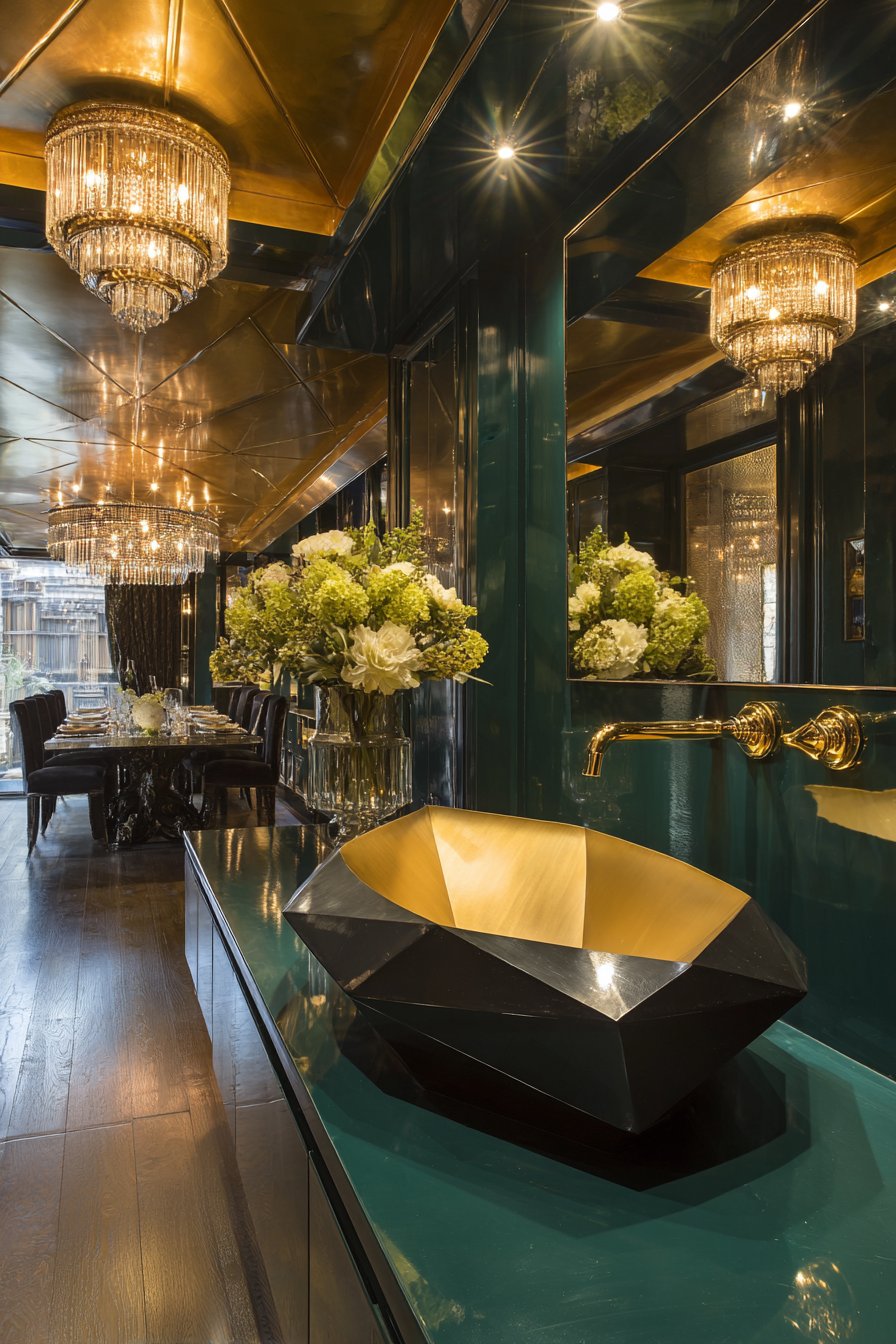
Jazz Age opulence and geometric sophistication define this art deco dining room washbasin design featuring a vessel sink with angular black and gold design that embodies the period’s love of bold patterns, luxury materials, and dramatic contrasts. Positioned on a glossy lacquered console in deep emerald green—a color synonymous with 1920s glamour—the installation makes uncompromising statement about wealth, taste, and appreciation for decorative arts. The high-gloss finish creates mirror-like surfaces that multiply light sources and decorative elements through reflection.
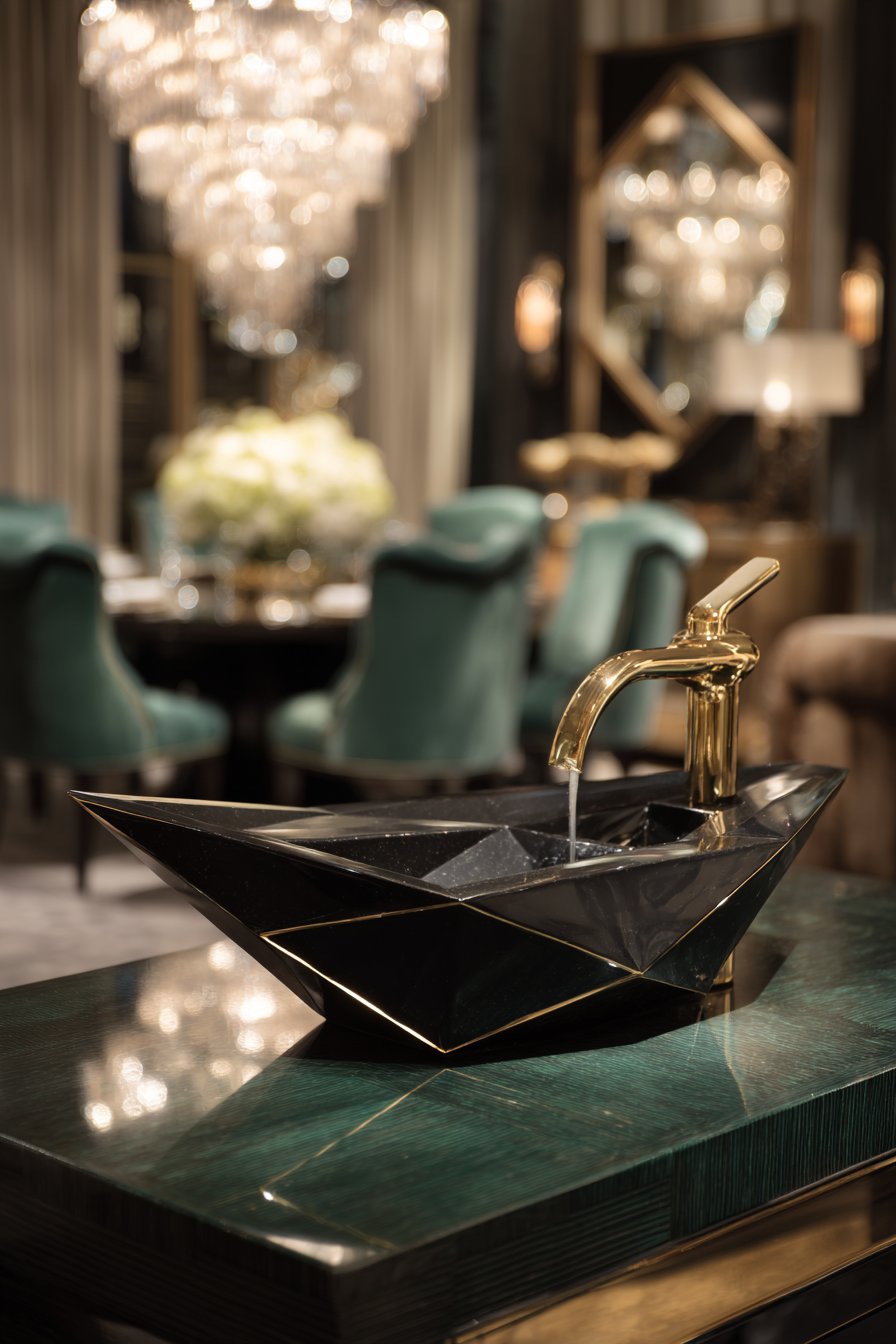
Polished gold widespread faucets with streamlined Art Deco styling feature the characteristic step-back profiles and geometric forms that defined the period’s rejection of earlier ornate styles in favor of modern, machine-age aesthetics. Gold hardware on console drawers maintains material consistency while providing functional access. The glamorous dining space includes a mirrored table that reflects and multiplies decorative elements, surrounded by velvet chairs in rich jewel tones that provide both visual and tactile luxury. A tiered crystal chandelier suspended overhead creates focal point while its geometric form and cascading crystals embody Art Deco design principles.
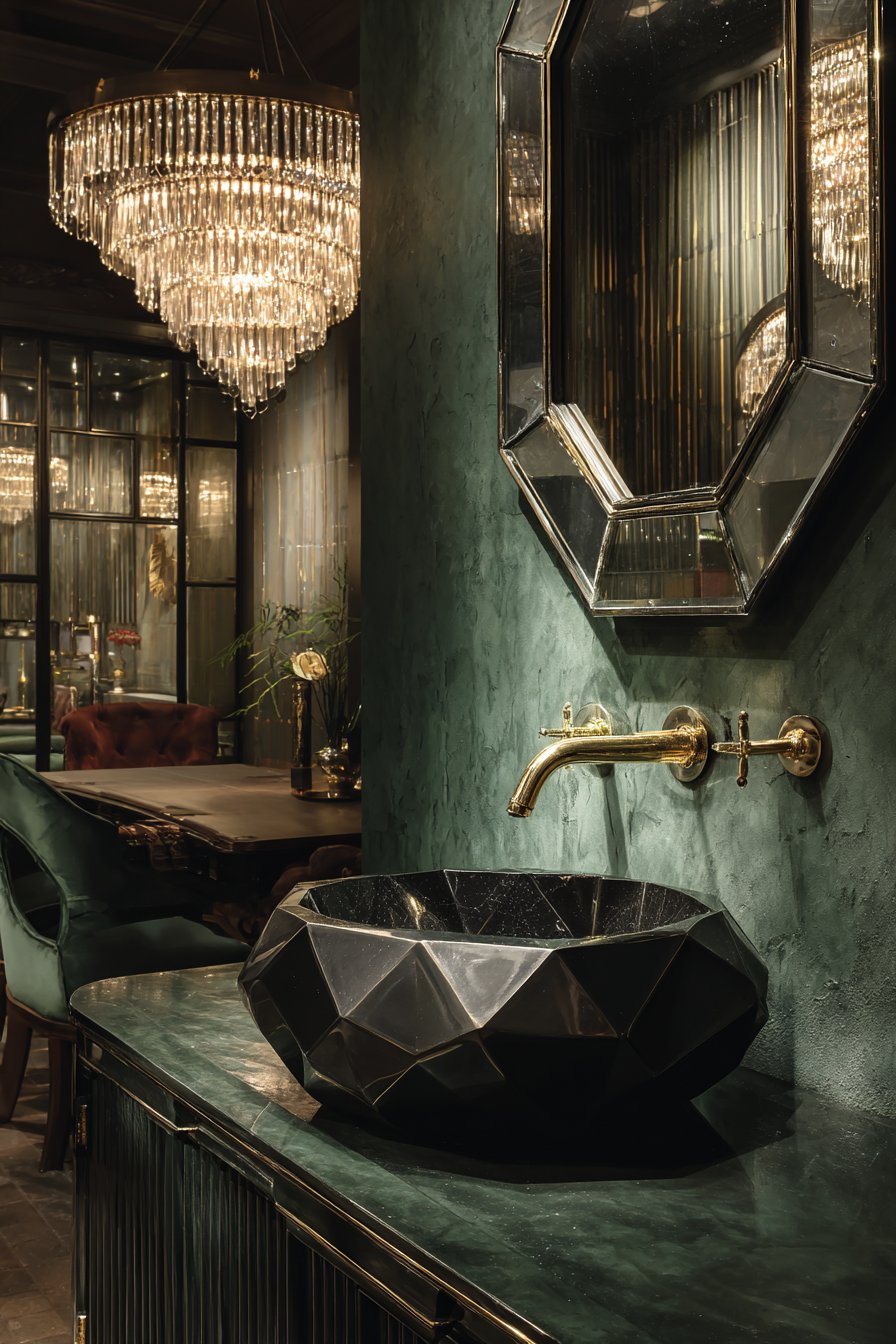
A wall-mounted mirror with geometric frame above the washbasin reflects the sophisticated design while creating visual depth and allowing the chandelier to be appreciated from multiple angles simultaneously. Dramatic lighting creates rich shadows and highlights that emphasize geometric patterns and luxurious materials throughout. Architectural digest style photography captures the opulent 1920s aesthetic and luxurious washbasin integration in Art Deco dining room where every element has been carefully considered to create cohesive period statement.
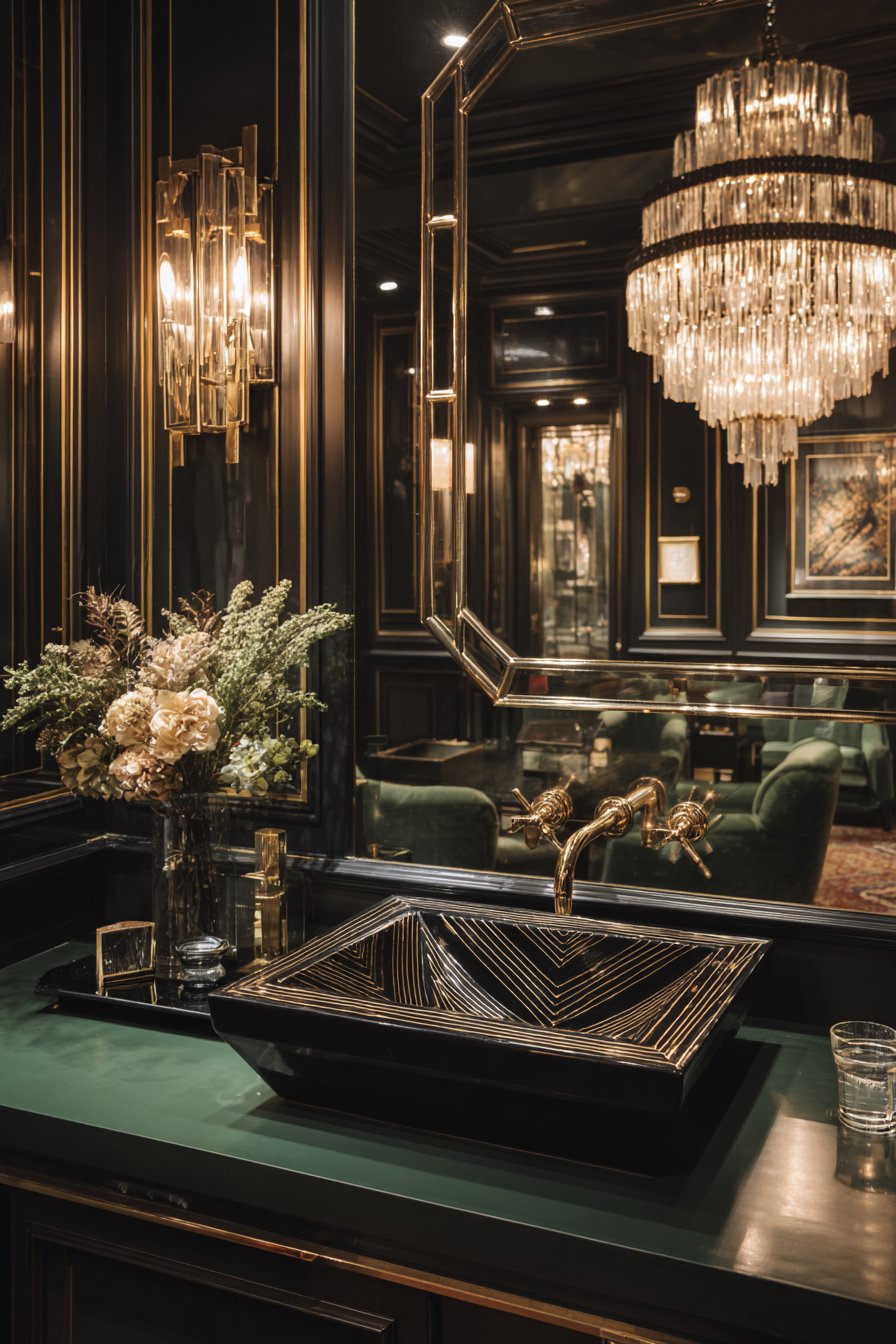
Key Design Tips:
- Select vessel sinks with geometric patterns in black, gold, and other Art Deco characteristic colors
- Apply multiple coats of high-gloss lacquer in rich jewel tones for authentic period finish
- Choose polished gold fixtures with streamlined geometric forms avoiding organic curves
- Incorporate mirrored furniture surfaces that multiply light and decorative elements
- Upholster dining chairs in sumptuous velvet in deep colors like emerald, sapphire, or burgundy
- Install tiered crystal chandeliers with geometric forms rather than organic floral designs
- Add geometric-framed mirrors and artwork that reinforce the angular aesthetic
- Use dramatic lighting that creates strong highlights and shadows emphasizing pattern and form
- Consider adding authentic period accessories like cocktail sets, geometric vases, or sculptural objects
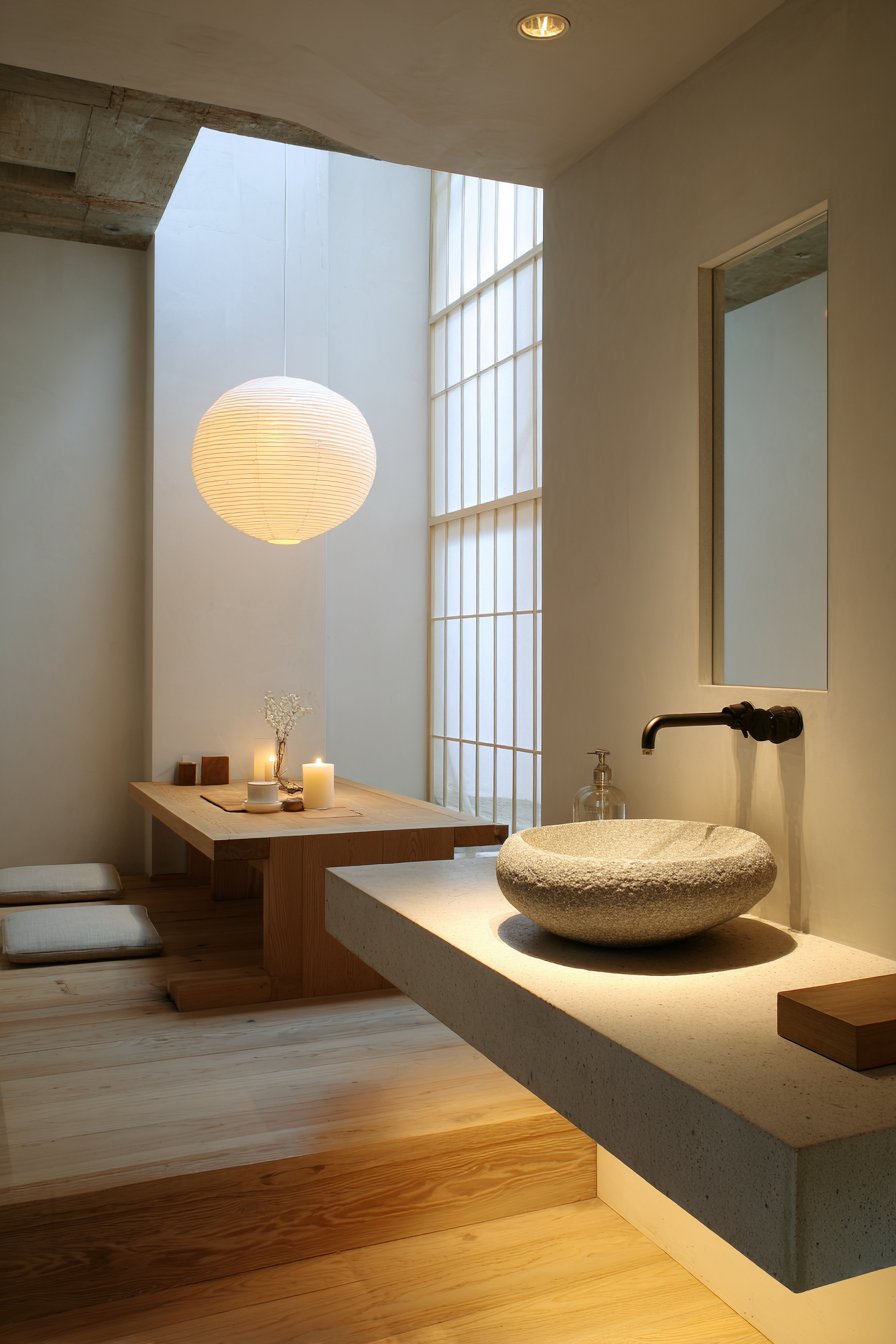
21. Minimalist Japanese Aesthetic
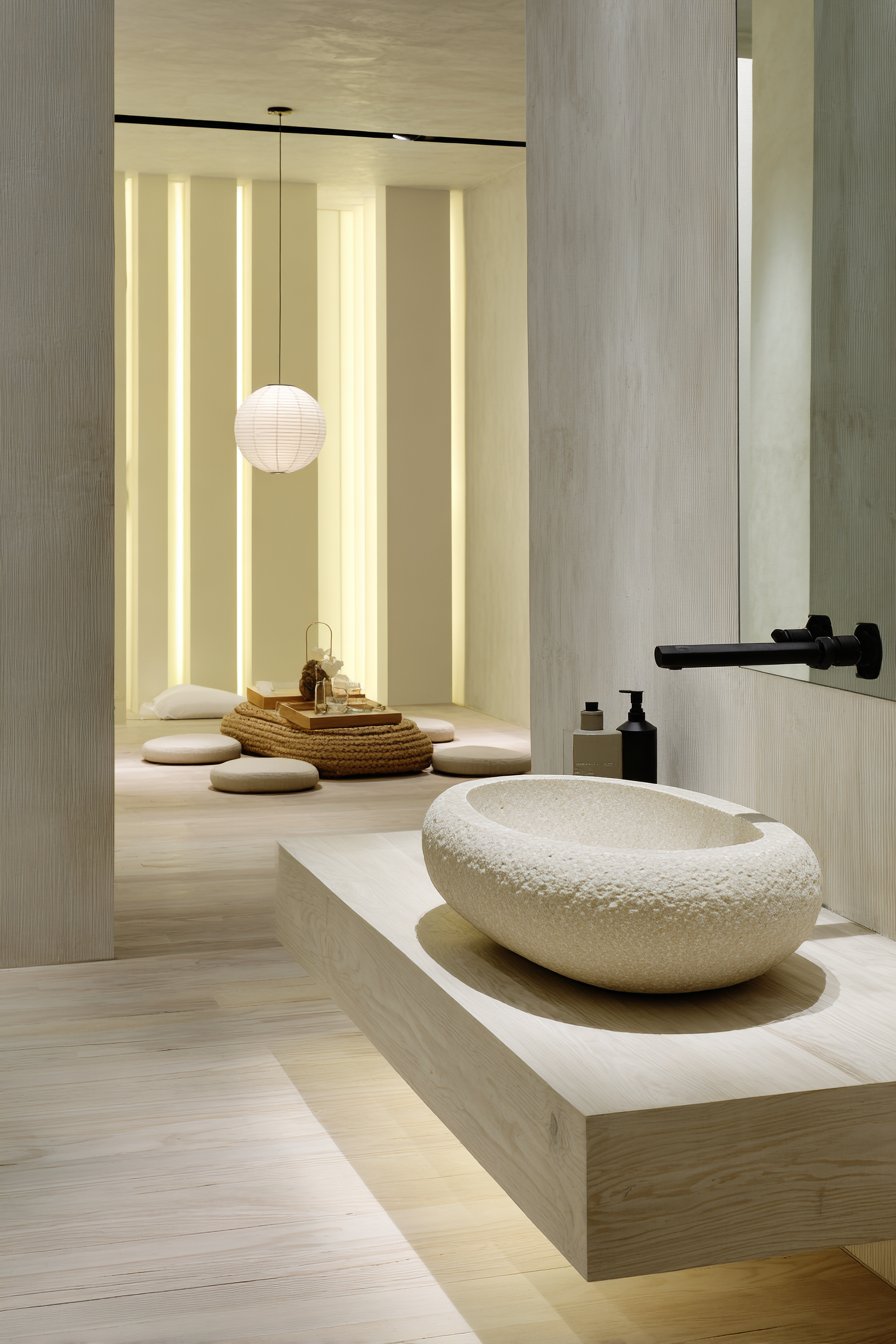
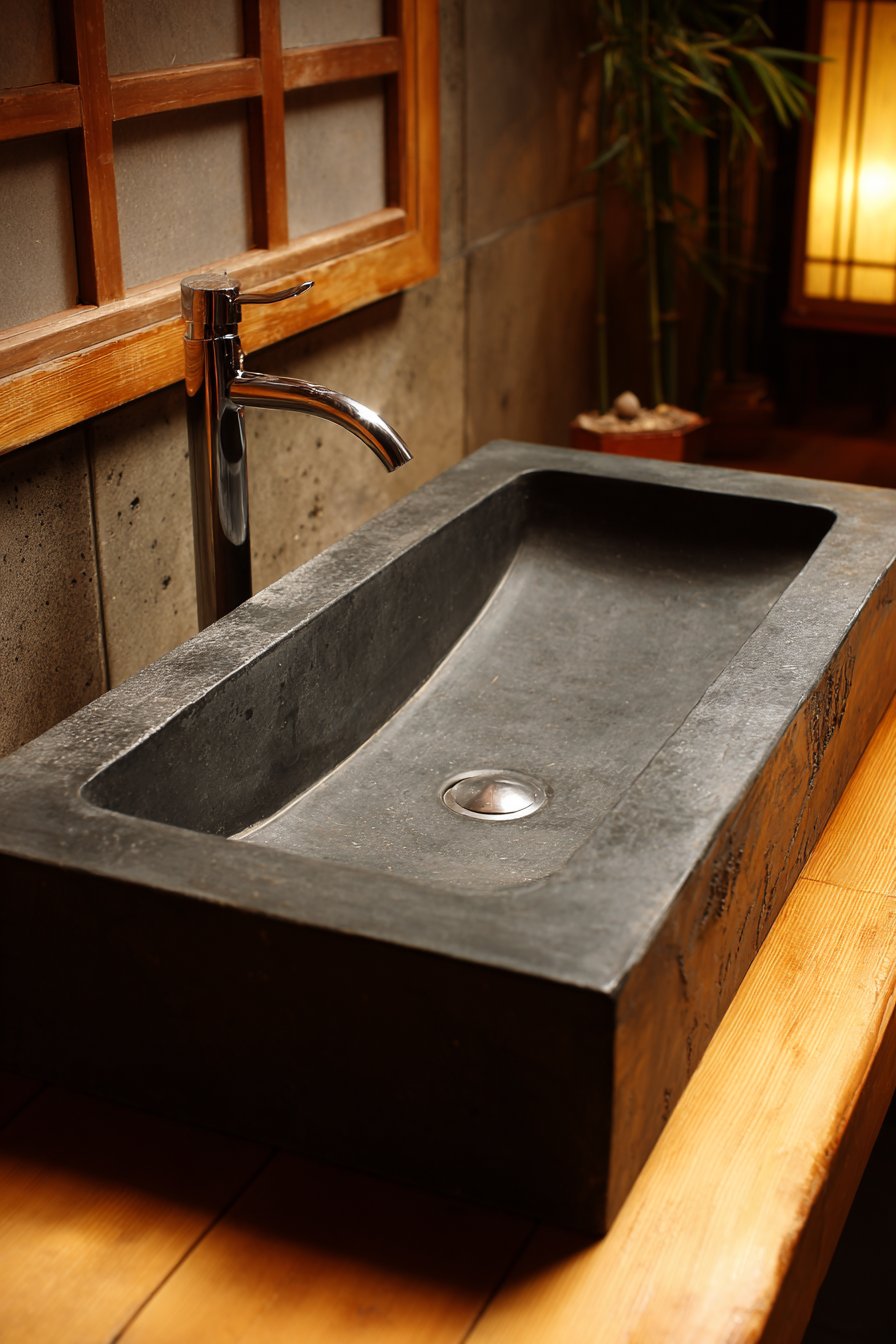
Profound simplicity and mindful restraint characterize this minimalist Japanese dining room washbasin design featuring a simple shallow basin in natural stone that appears almost as if formed by nature rather than human hands. Positioned on a floating platform of light ash wood with perfectly clean edges and minimal visible joinery, the installation embodies wabi-sabi principles that find beauty in imperfection, impermanence, and simplicity. The single spout faucet in matte black maintains restrained aesthetic through its simple form and non-reflective finish that avoids calling unnecessary attention to functional fixtures.
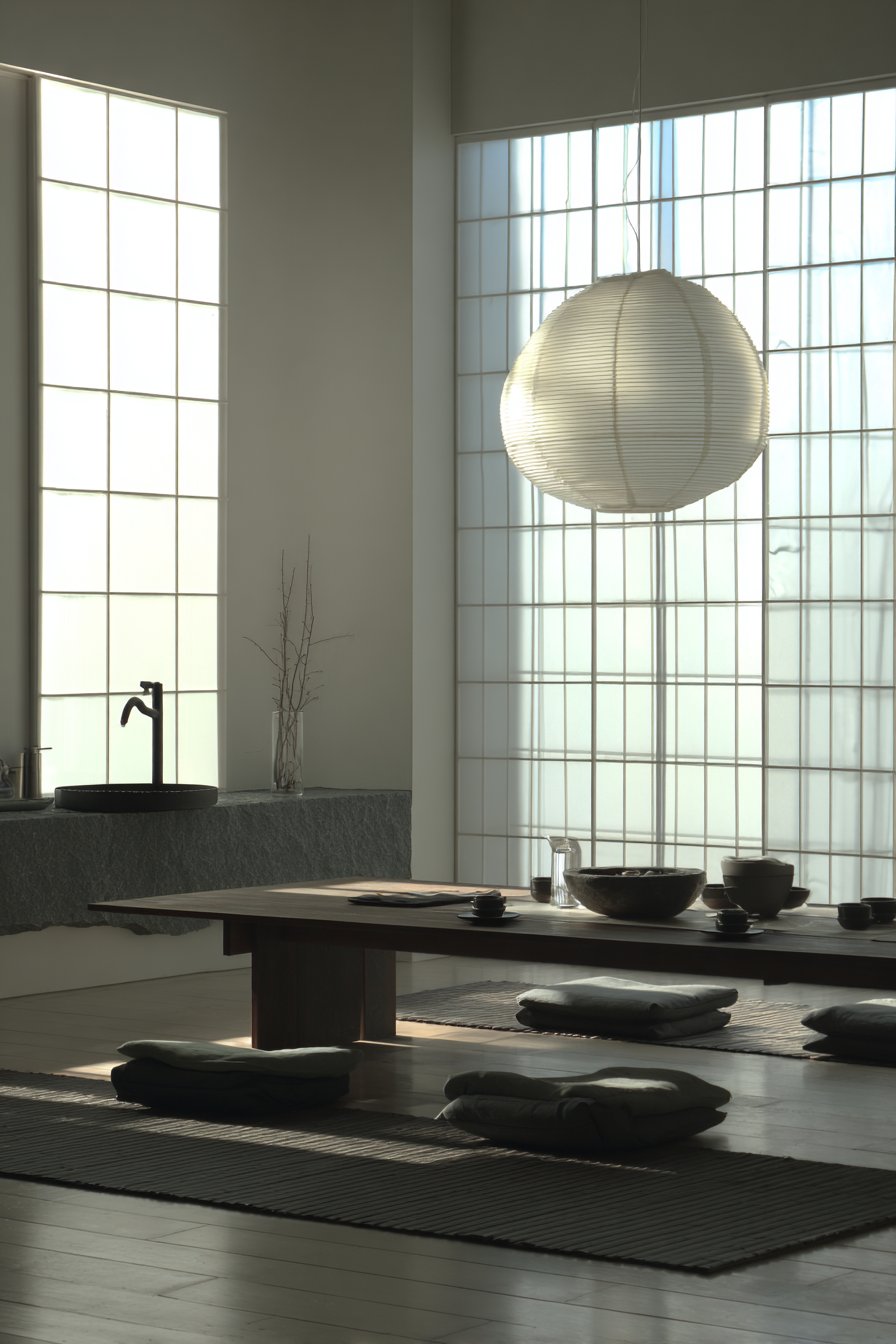
The dining area features a low table encouraging floor seating that promotes closer connection to earth and more mindful dining posture. A single pendant light with washi paper shade provides soft, diffused illumination that creates gentle atmosphere without harsh shadows or dramatic contrasts. The neutral color palette of whites and natural wood tones creates serene environment where the mind can rest from visual stimulation and find peace in essential forms. Every element has been reduced to its most fundamental essence, eliminating anything superfluous or decorative beyond intrinsic material beauty.
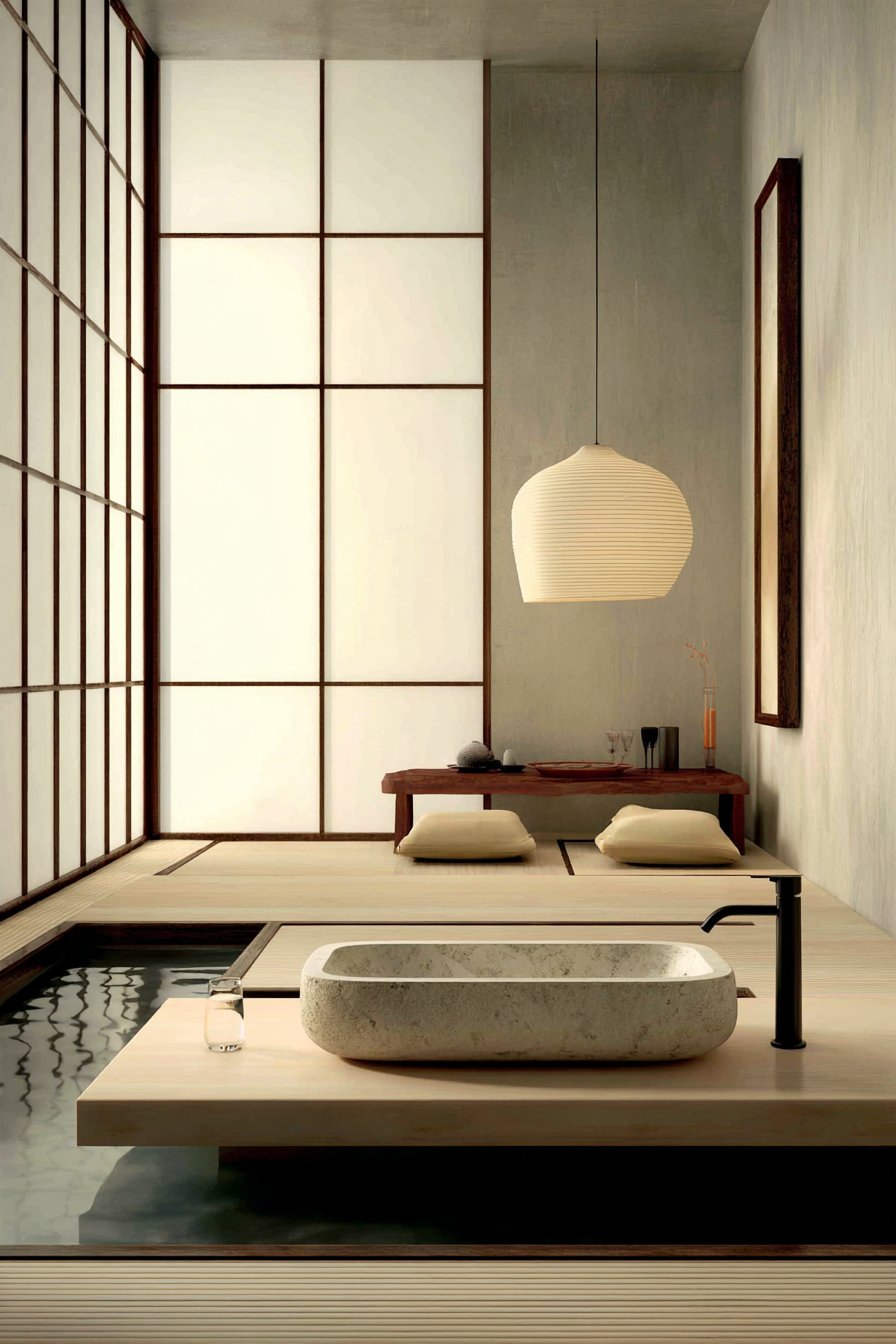
Soft natural daylight through translucent panels creates calm atmosphere that changes subtly with weather conditions and sun’s movement, connecting interior life to natural cycles. Interior design photography shows wabi-sabi principles and serene integration of understated washbasin in minimalist Japanese dining space where the goal is not impressive display but rather creation of environment supporting contemplation, gratitude, and present-moment awareness. This approach appeals to those seeking respite from contemporary culture’s visual noise and excessive stimulation.
Key Design Tips:
- Select natural stone basins with organic forms and subtle surface variations
- Choose light-colored woods like ash with straight, clean grain patterns
- Install matte black fixtures with simple forms avoiding decorative embellishment
- Incorporate low-profile dining furniture encouraging floor seating and grounding
- Use washi paper or similar materials for soft, diffused lighting
- Maintain strict neutral palette dominated by whites, naturals, and blacks
- Create abundant negative space as intentional design element
- Allow natural light to be primary illumination source whenever possible
- Remove all non-essential decorative elements and accessories
- Consider how shadows and light create subtle visual interest on plain surfaces
22. Victorian Period Detail
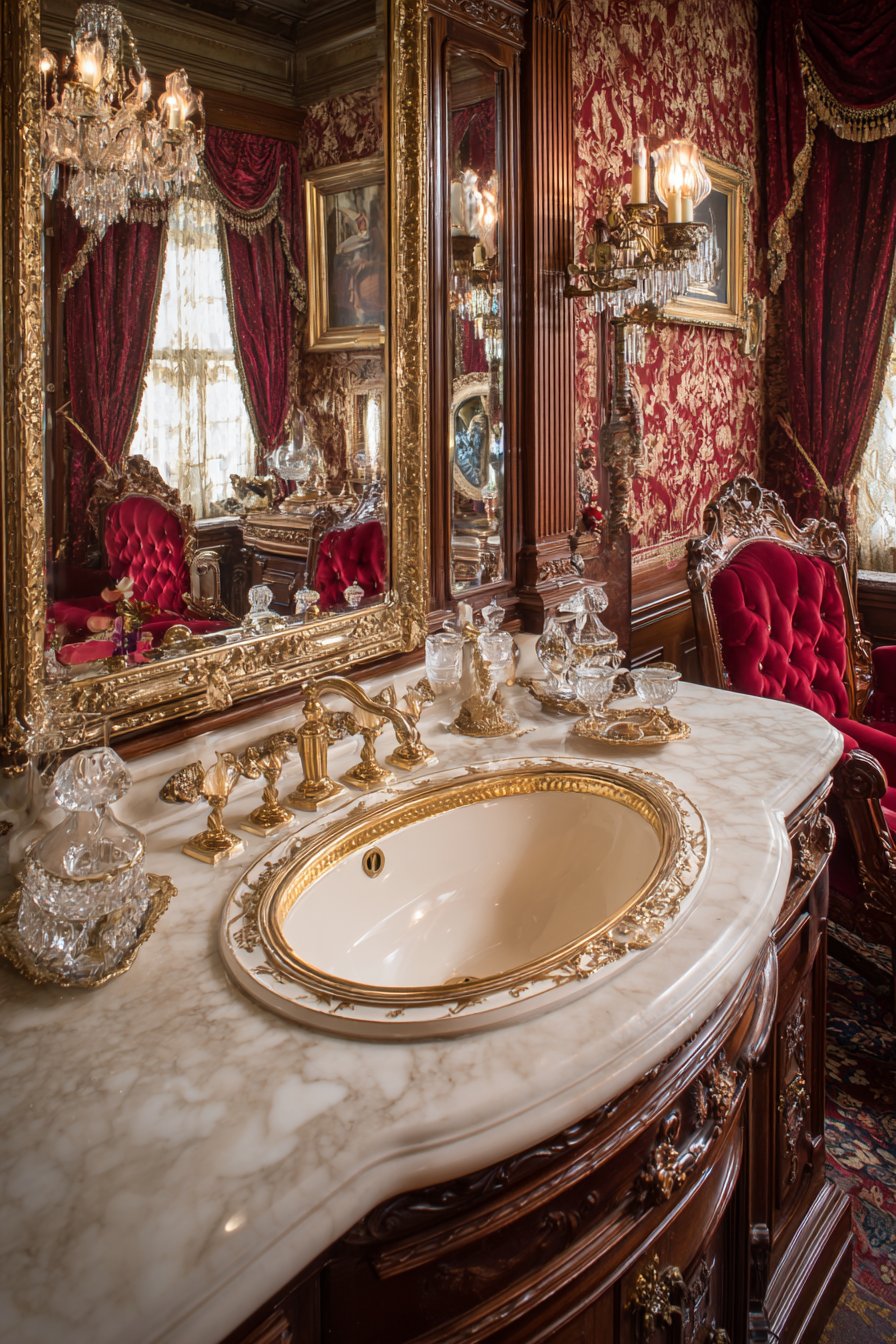
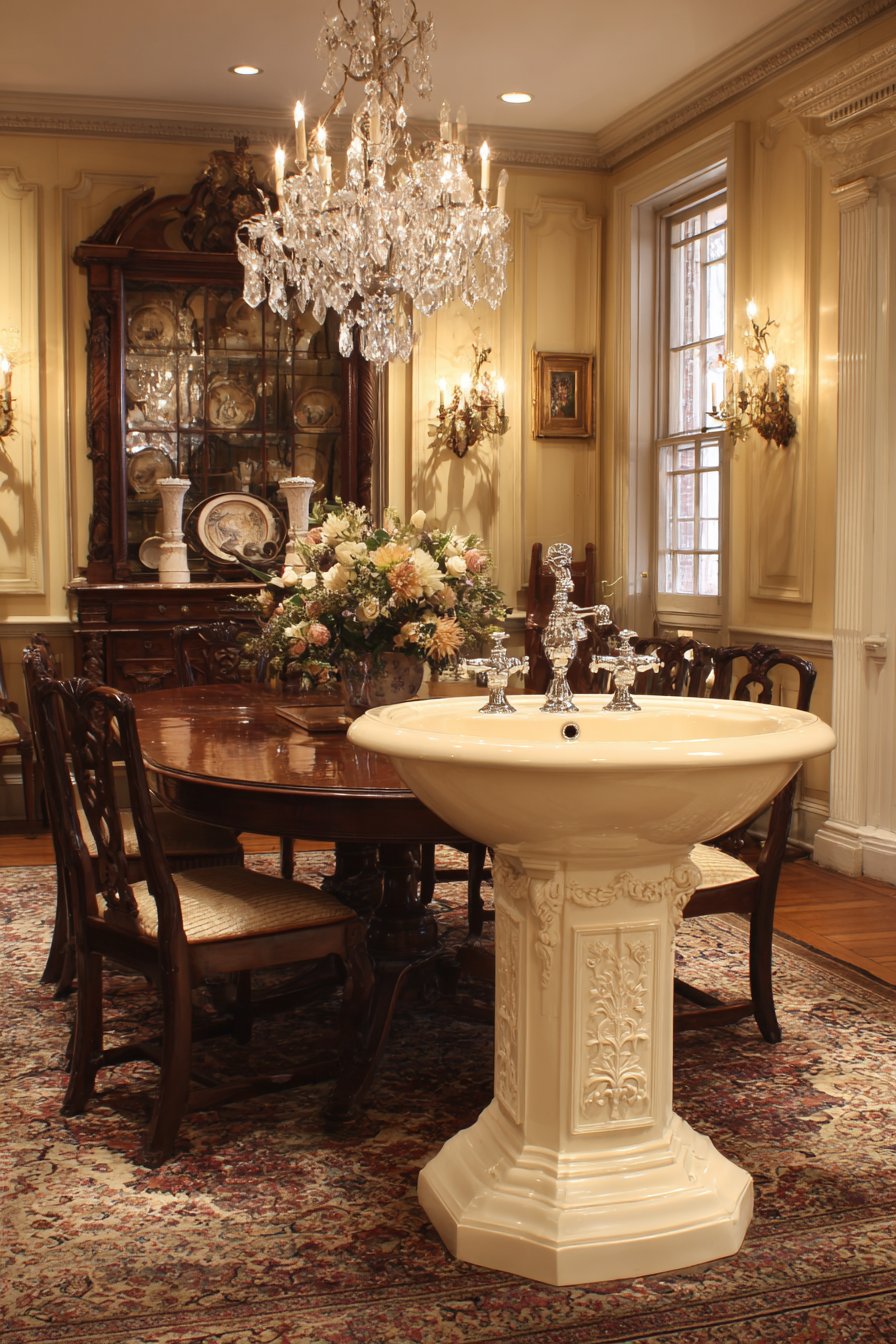
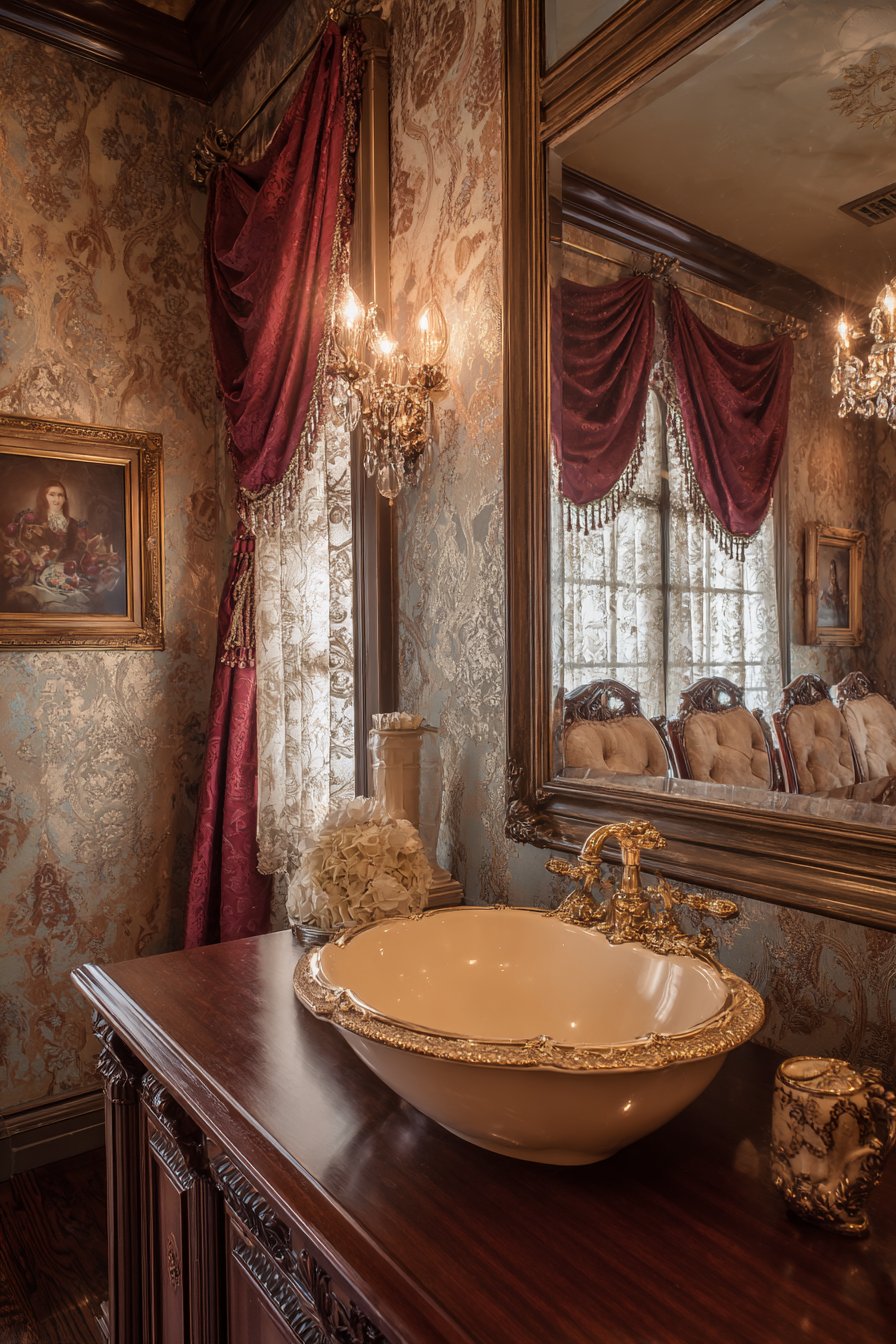
Ornate craftsmanship and historical accuracy define this Victorian dining room washbasin design featuring an oval basin in ivory porcelain with gold trim detail that exemplifies the period’s love of decoration and precious materials. Positioned on a mahogany vanity cabinet with elaborately carved legs featuring acanthus leaves, scrollwork, or other classical motifs, the installation demonstrates Victorian-era craftsmanship when furniture construction was skilled trade producing pieces meant to last generations. Decorative hardware in brass or bronze adds functional beauty while reinforcing the period aesthetic.
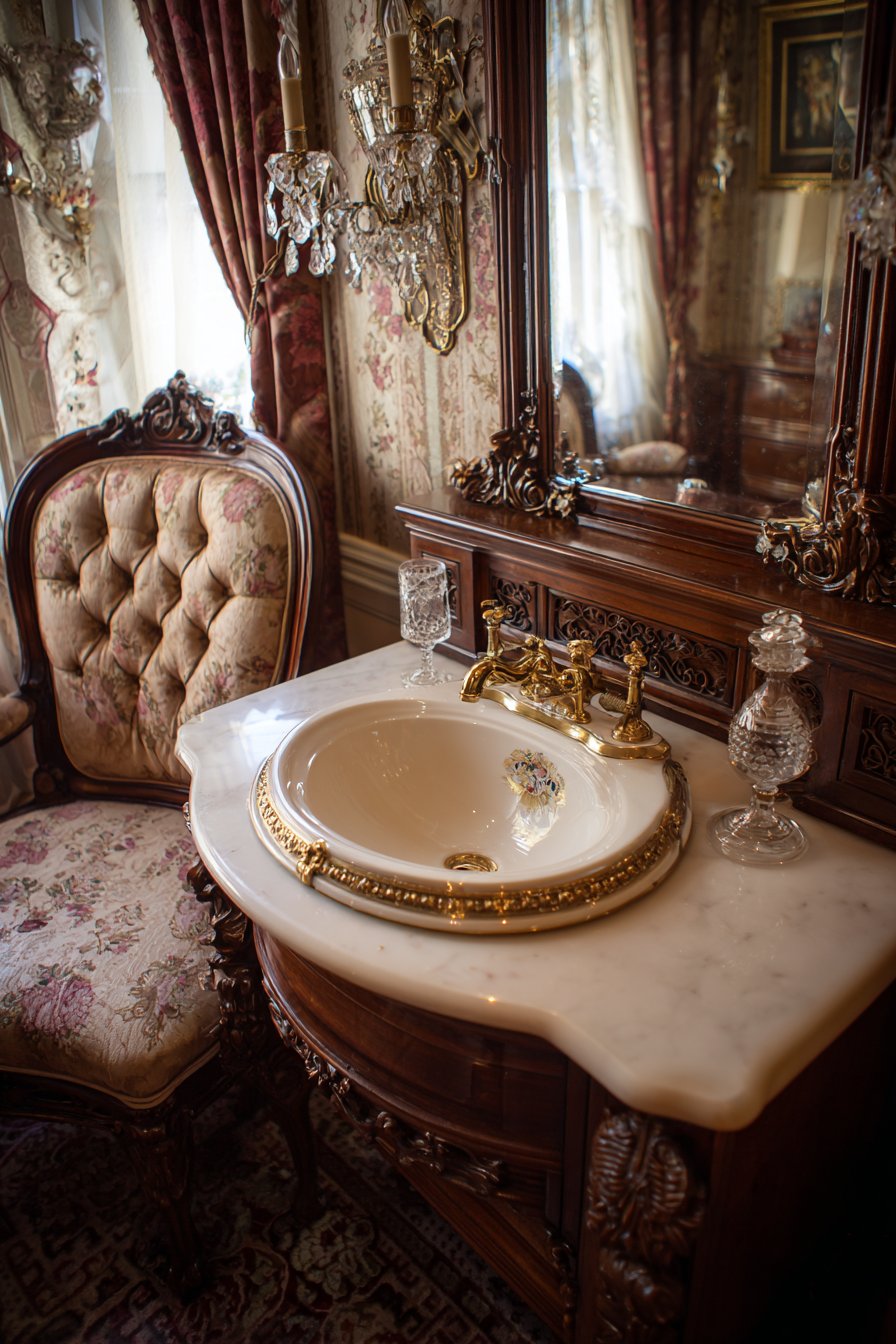
Polished brass faucets with porcelain cross handles add period authenticity through their traditional widespread configuration and the characteristic use of white porcelain inserts that provide comfortable grip while displaying decorative patterns or simple colored accents. The formal dining room displays elaborate wallpaper—perhaps flocked velvet patterns, intricate florals, or damask designs—and heavy velvet drapes that create cocoon-like atmosphere emphasizing Victorian preference for rich, layered interiors. Ornate dining furniture with tufted chairs demonstrates the period’s love of upholstered comfort and decorative buttoning.
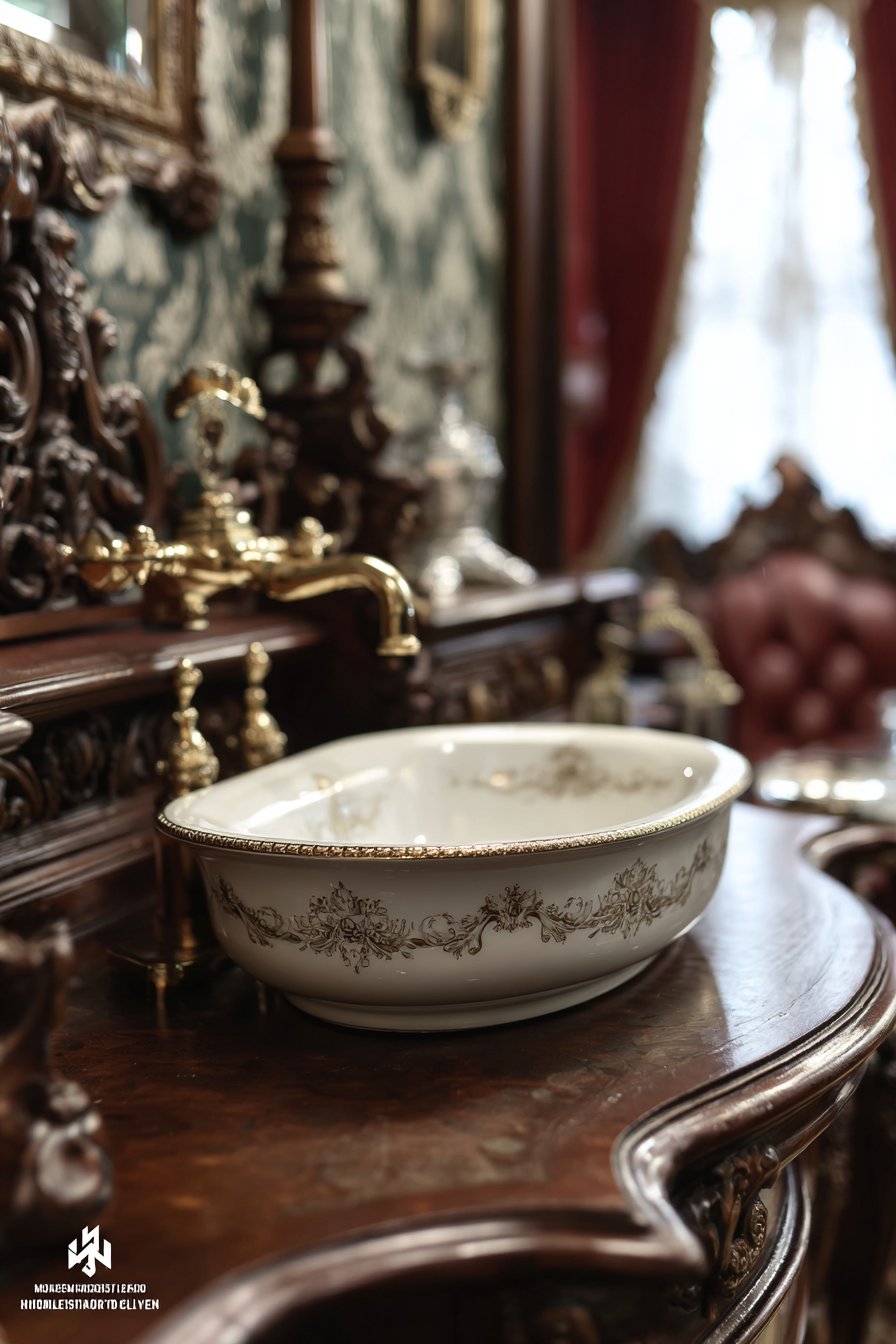
Crystal wall sconces positioned symmetrically provide romantic lighting that flatters both people and spaces while their faceted surfaces create prismatic effects reminiscent of Victorian gas lighting fixtures adapted for electricity. Professional interior photography captures the rich Victorian aesthetic and historically appropriate washbasin integration in period dining room design. This approach appeals particularly to historic home owners seeking authentic period restoration or to those who appreciate Victorian aesthetics’ complexity and attention to decorative detail.
Key Design Tips:
- Select porcelain basins with gold trim or decorative patterns appropriate to Victorian era
- Choose mahogany or other dark woods with elaborate carved details demonstrating skilled craftsmanship
- Install polished brass fixtures with porcelain handle inserts for authentic period character
- Hang elaborate wallpapers with patterns typical of Victorian design—florals, damasks, or flocked designs
- Use heavy draperies in rich fabrics like velvet with elaborate trims and tiebacks
- Incorporate ornately carved and tufted furniture demonstrating Victorian love of comfort and decoration
- Install crystal lighting fixtures that reference gas lighting converted for electricity
- Add authentic Victorian accessories like antimacassars, table runners, and decorative plates
- Layer patterns and textures extensively as Victorians did without modern minimalist restraint
23. Compact Studio Efficiency
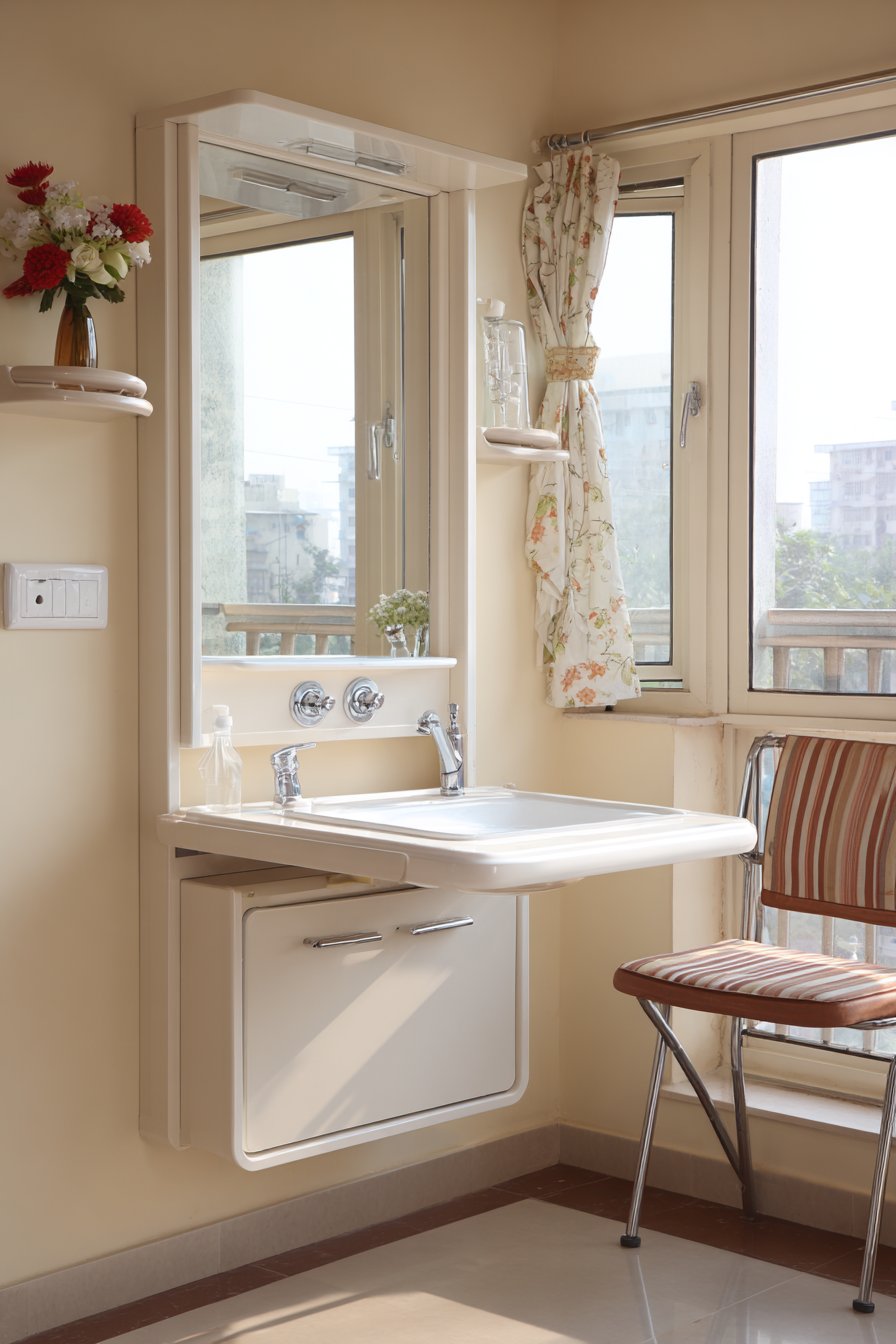
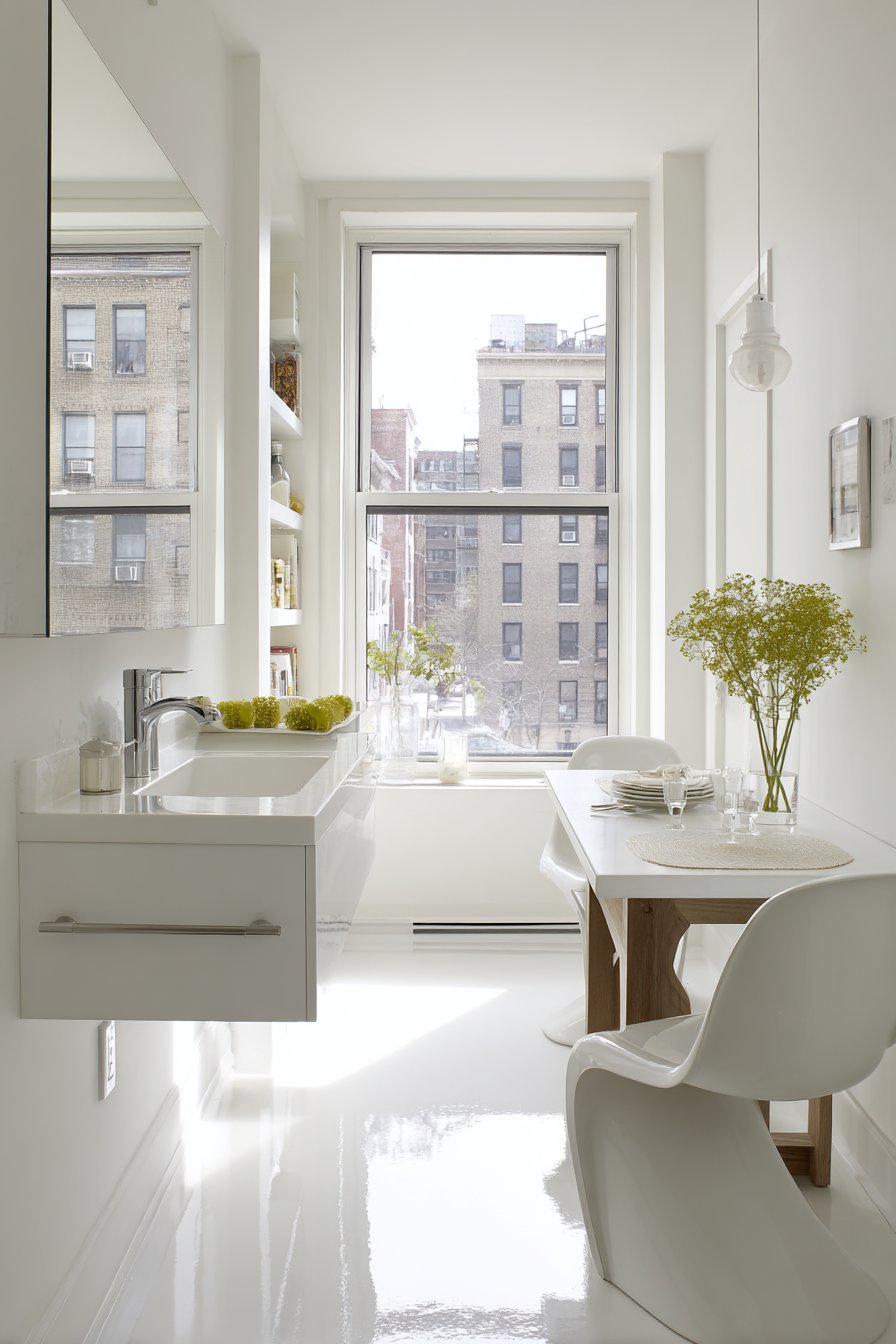
Ingenious space utilization characterizes this space-saving dining room washbasin design specifically addressing studio apartment challenges where every square foot must serve multiple functions efficiently. The compact wall-hung sink in glossy white with integrated towel bar demonstrates how fixtures can incorporate multiple functions, eliminating need for separate towel storage and saving precious space. Mounted above a narrow console with storage drawer that provides concealed organization for dining essentials, small cleaning supplies, or personal items, the installation maximizes utility within minimal footprint.
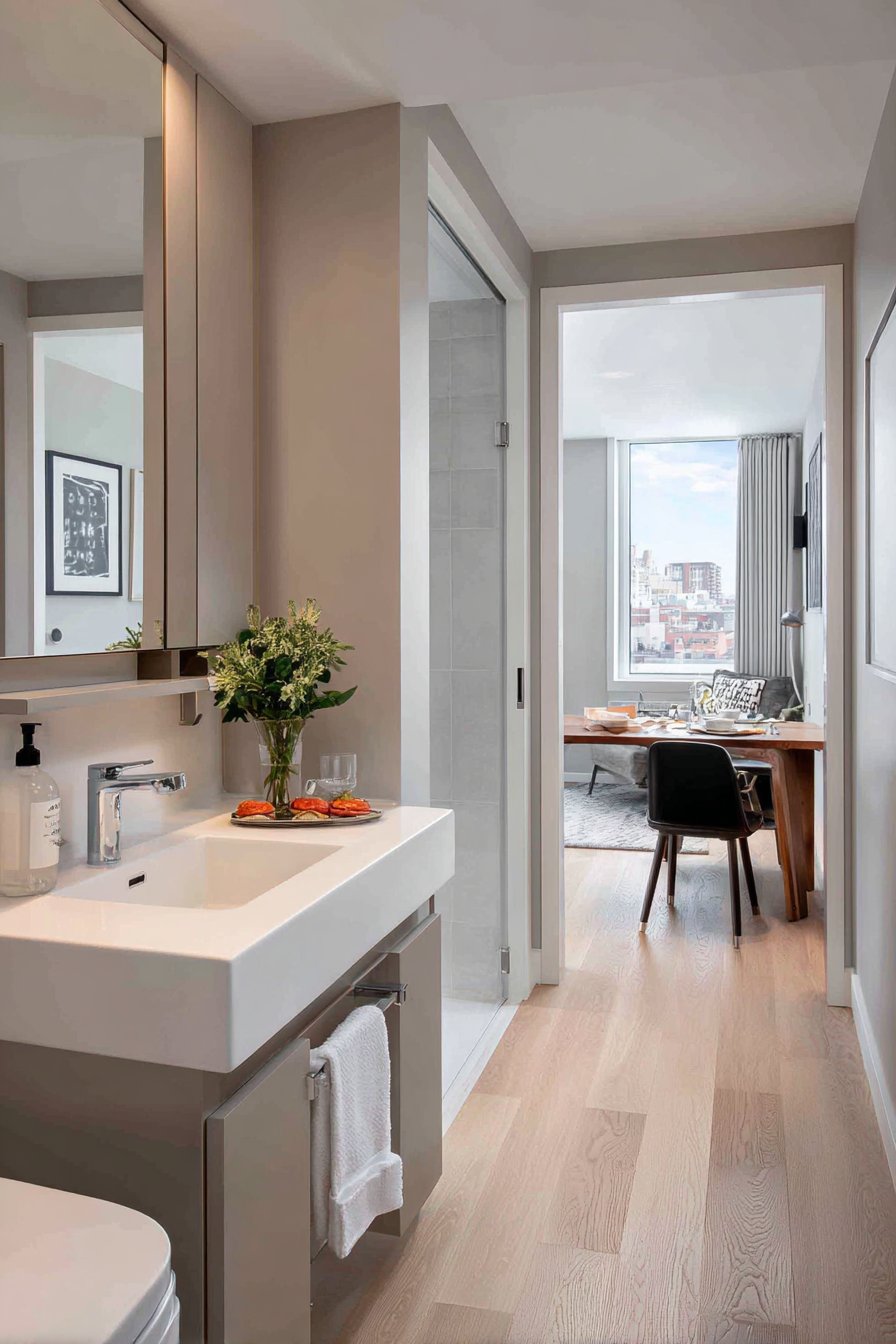
A chrome wall-mount faucet extends functionality while eliminating counter space consumption that deck-mounted fixtures require, creating more usable surface area for practical needs. The multipurpose dining area includes a drop-leaf table that can expand for entertaining then collapse for daily single-person use, paired with folding chairs that stack or hang when not needed. Wall-mounted shelving replaces floor-standing storage units, keeping floor space open and maintaining visual spaciousness despite limited square footage.
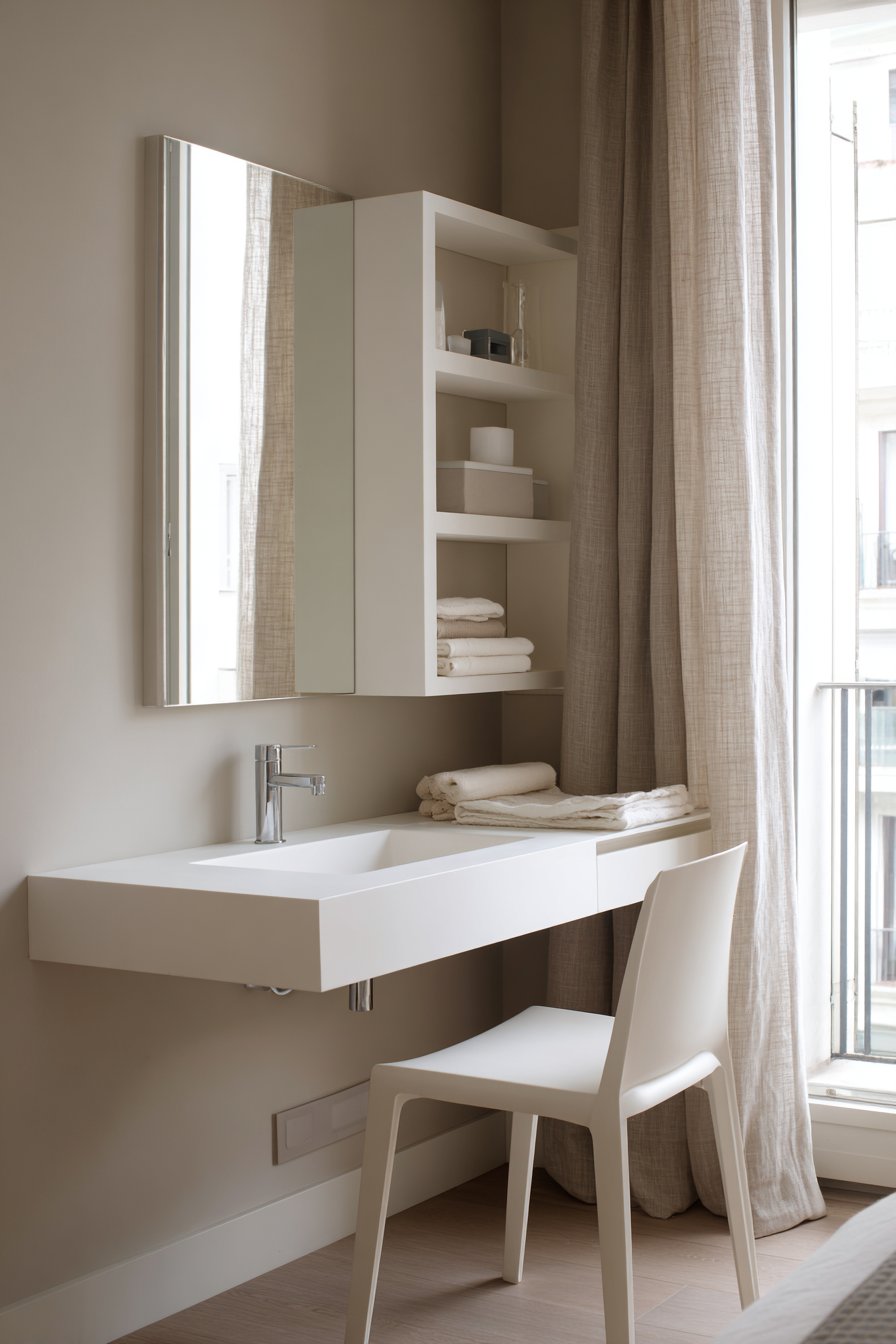
A large mirror above the washbasin creates illusion of spaciousness through reflection while serving practical grooming functions. Bright overhead lighting ensures functionality despite potentially limited natural light in studio configurations. Wide-angle interior photography shows clever spatial planning and practical integration of essential washbasin in small-space dining area where thoughtful design allows comfortable living despite dimensional constraints. This approach proves invaluable for urban dwellers, students, or anyone maximizing limited residential space.
Key Design Tips:
- Select wall-hung sinks with integrated features like towel bars to maximize functionality
- Choose narrow consoles or floating shelves that provide storage without consuming excessive floor space
- Install wall-mount faucets to preserve all counter or shelf surface area
- Incorporate folding or expandable dining furniture that adapts to immediate needs
- Use wall-mounted storage solutions rather than floor-standing units to maintain open floor area
- Hang large mirrors strategically to visually expand space through reflection
- Ensure adequate lighting from overhead fixtures since natural light may be limited
- Consider multi-functional furniture that serves dual purposes
- Maintain strict organization to prevent small spaces from appearing cluttered
- Choose light colors throughout to maximize perception of spaciousness
24. Hollywood Regency Sparkle
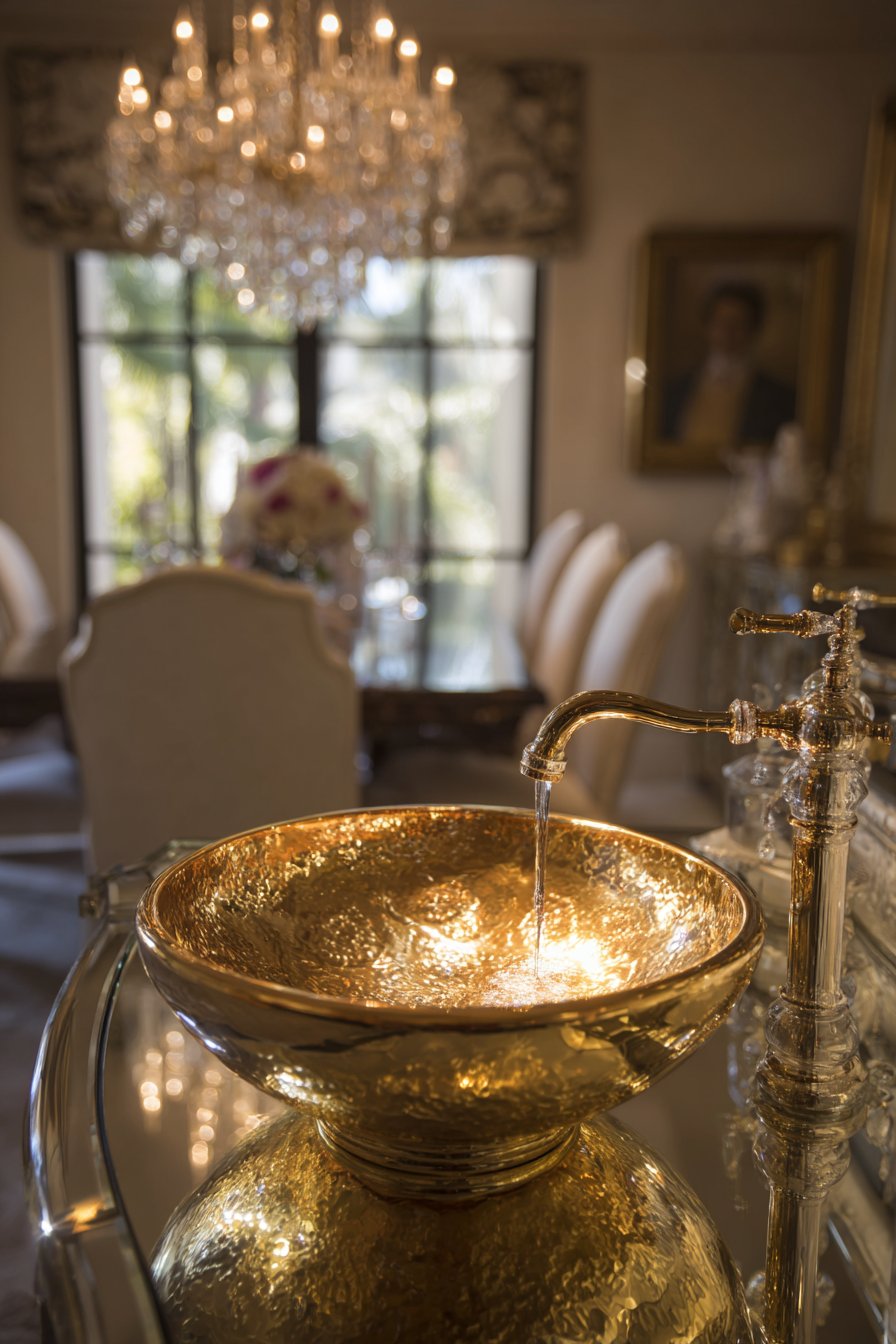
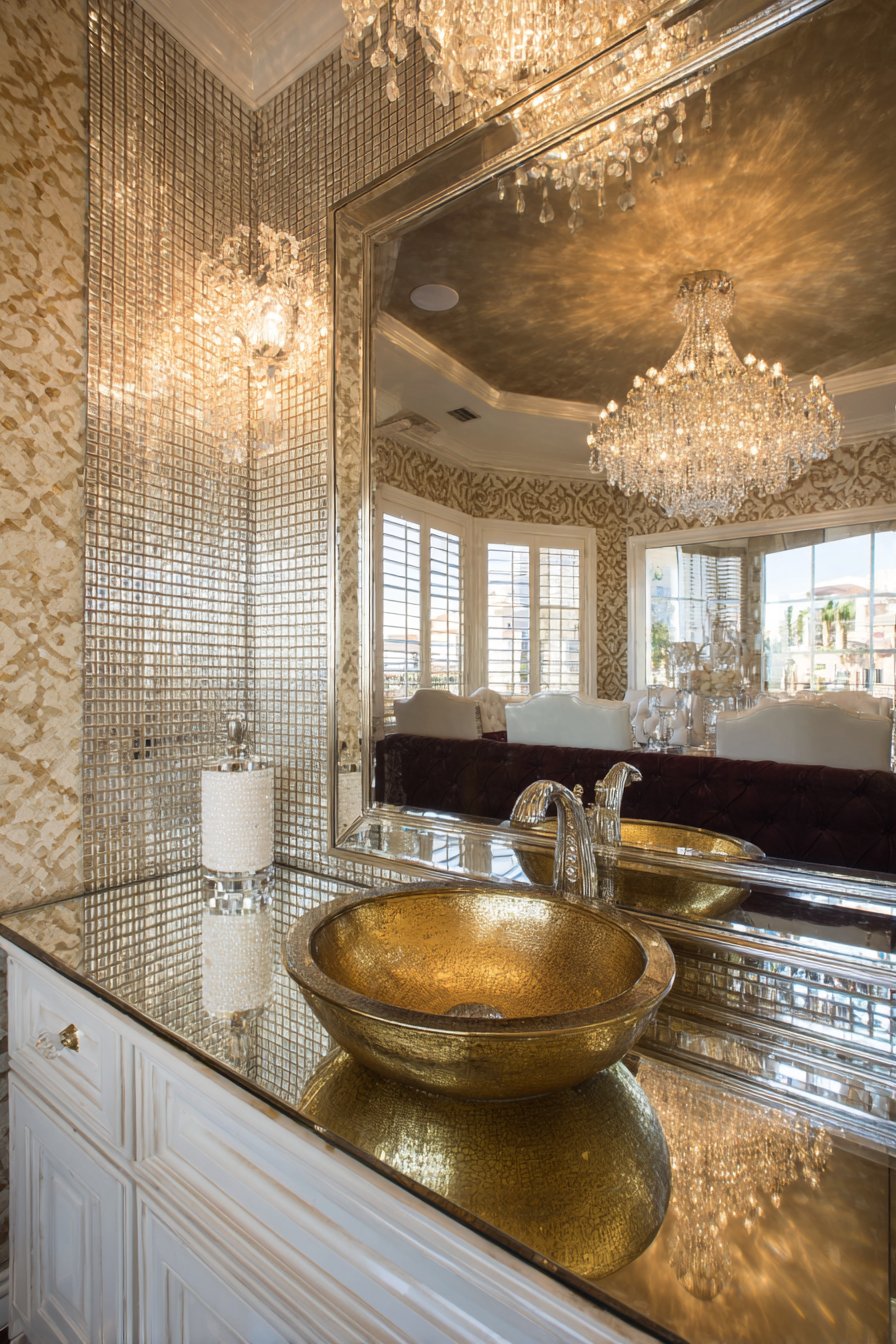
Theatrical glamour and luxurious excess define this Hollywood Regency dining room washbasin design featuring a gold-leafed vessel sink in oversized round shape that makes bold, unapologetic statement about wealth and sophisticated taste. Positioned on a mirrored console with beveled edges whose reflective surfaces multiply light sources and create visual complexity, the installation embodies the Hollywood Regency principle that restraint is overrated when pursuing maximum glamour. Every surface sparkles, reflects, or shimmers, creating environment that feels celebratory and special rather than mundane.
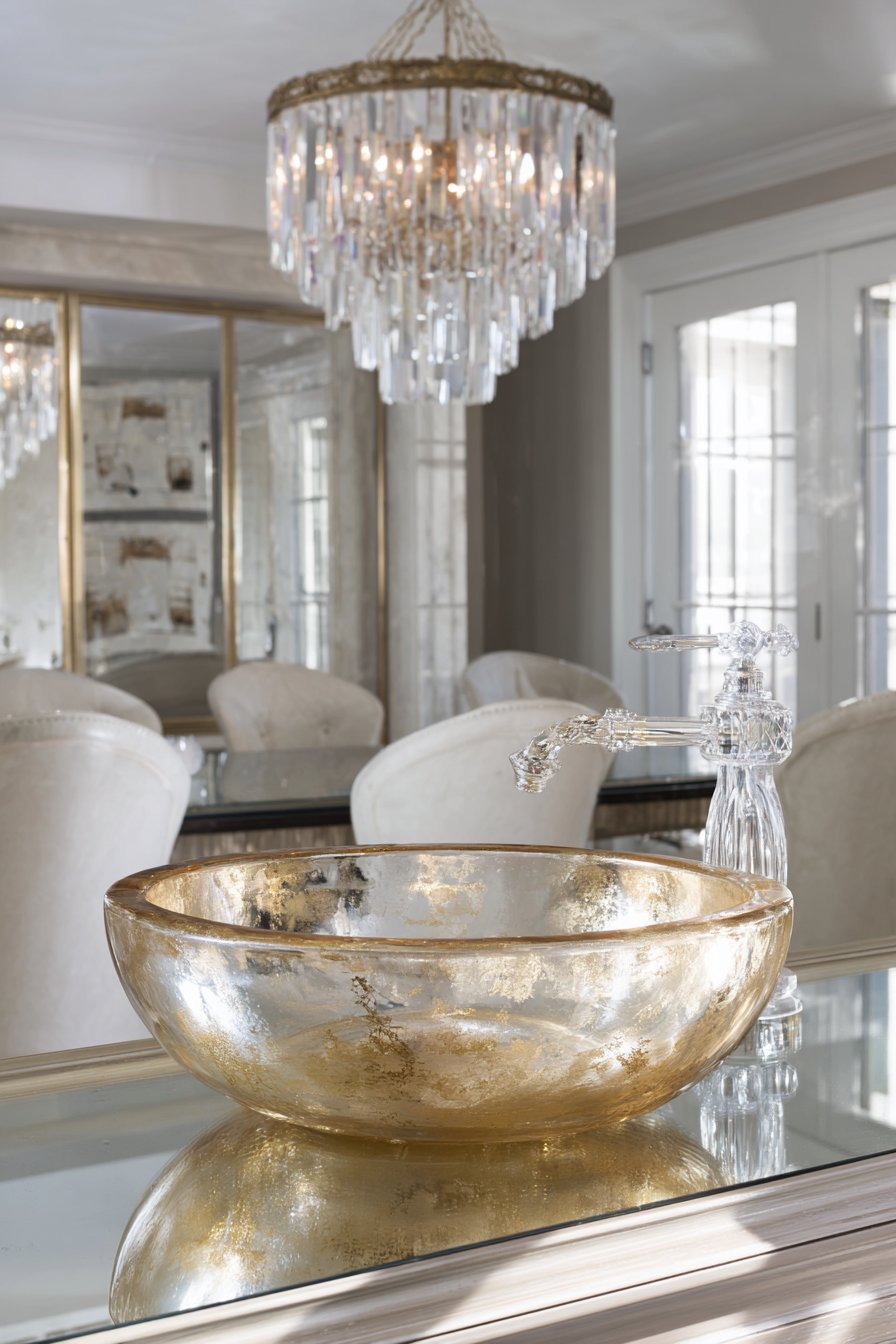
Polished gold faucets with crystal handles create show-stopping centerpiece, their transparent elements refracting light into rainbow spectrums while the gold finish provides warm metallic contrast against silver-toned mirrors. The luxurious dining space includes lucite chairs with white upholstery—those clear acrylic seats that seem to disappear visually while providing comfortable seating—and a dramatic sunburst mirror whose radiating metal rays create sculptural focal point. A chandelier with cascading crystals provides sparkling illumination, its prismatic pendants creating dancing light patterns across reflective surfaces throughout the room.
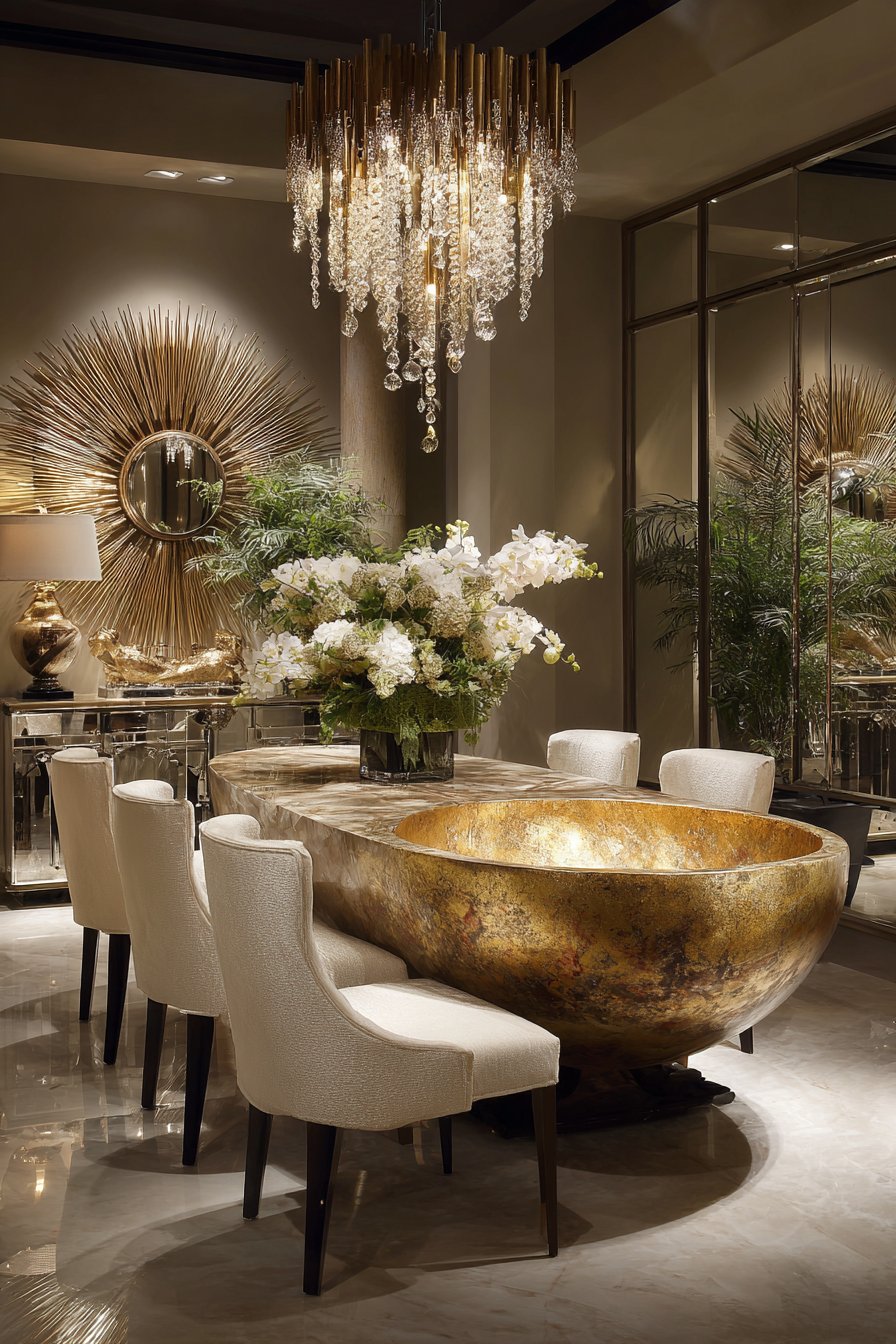
Soft lighting creates romantic reflections on metallic and glass surfaces throughout, with each light source multiplied through mirrors and reflected in gold finishes. Architectural photography with attention to luxury details shows the theatrical washbasin integration in glamorous Hollywood Regency dining room where everyday activities are elevated to performances and ordinary dining becomes special events. This approach appeals to those who embrace maximalism, love entertaining, and view their homes as stage sets for fabulous lives.
Key Design Tips:
- Select oversized vessel sinks finished in gold leaf for maximum dramatic impact
- Install mirrored consoles with beveled edges that create prismatic effects along edges
- Choose polished gold fixtures with crystal or lucite accents for sparkling details
- Incorporate lucite furniture that provides function while maintaining visual transparency
- Add sunburst mirrors or other dramatic sculptural wall art as focal points
- Install crystal chandeliers with abundant prismatic pendants for maximum sparkle
- Layer lighting from multiple sources to create dimensional, dramatic illumination
- Use bold color accents in jewel tones like emerald, sapphire, or amethyst
- Embrace pattern mixing and visual abundance without concern for minimalist restraint
- Maintain impeccable cleanliness as mirrored and metallic surfaces show every fingerprint
25. Sustainable Eco-Friendly Design
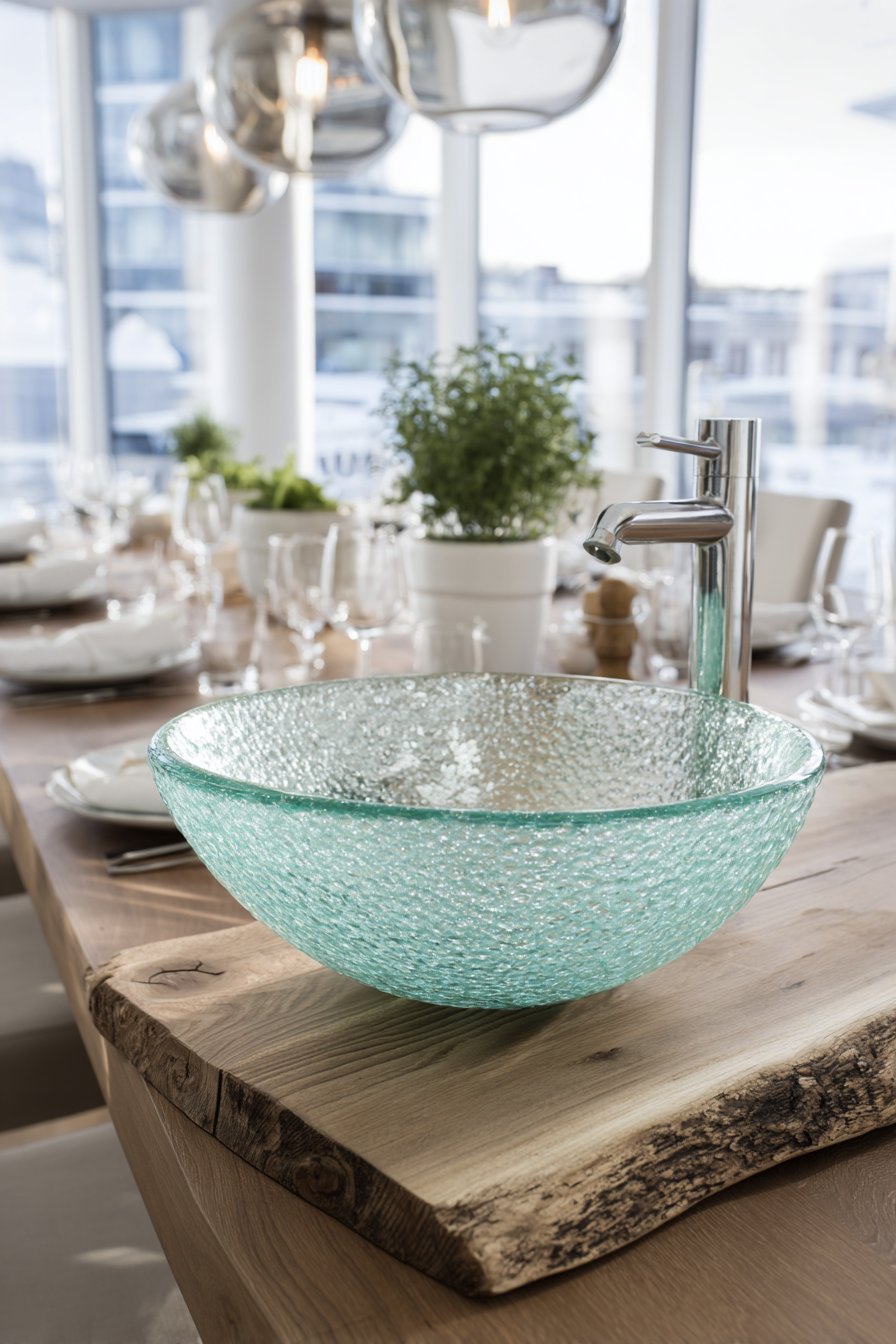
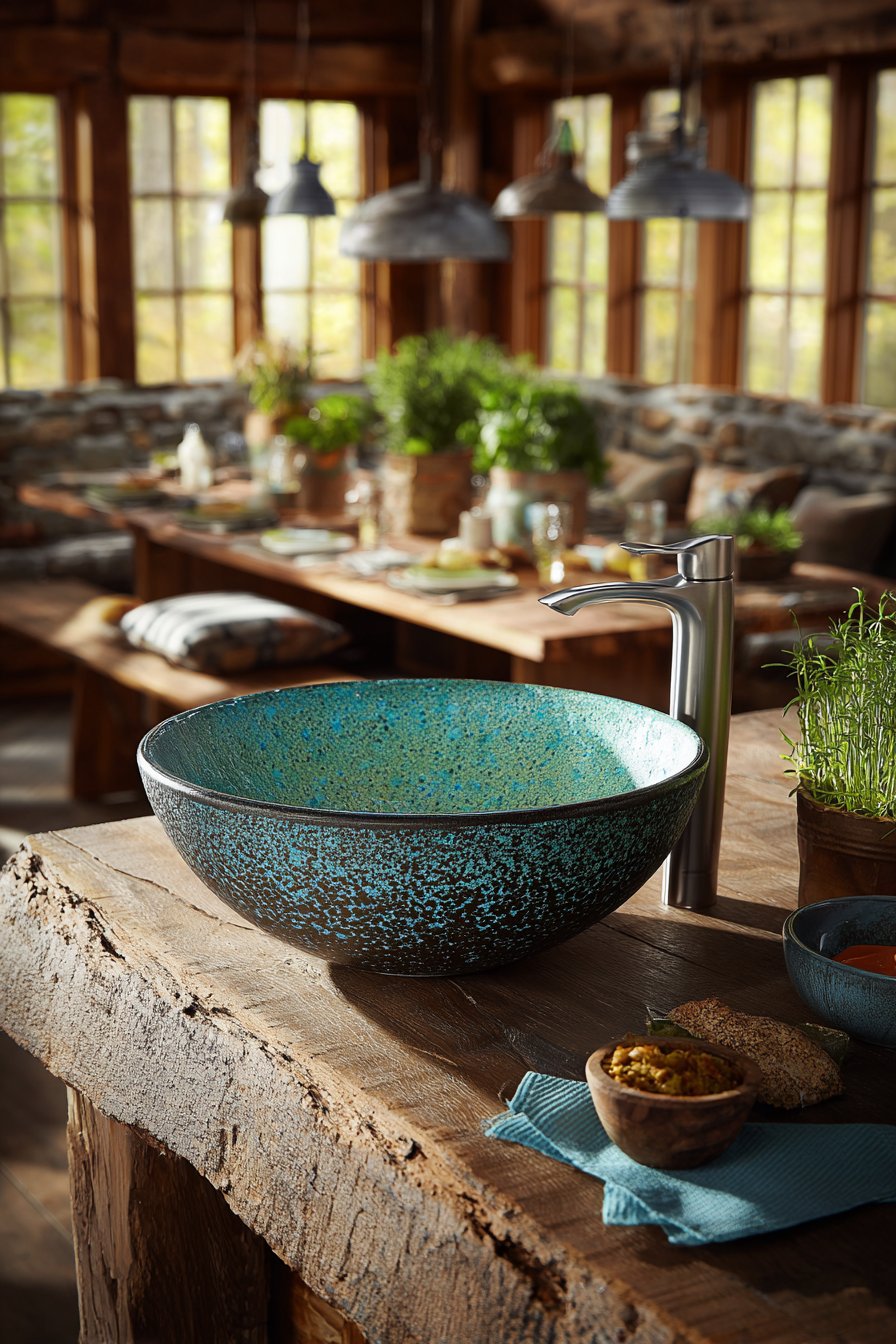
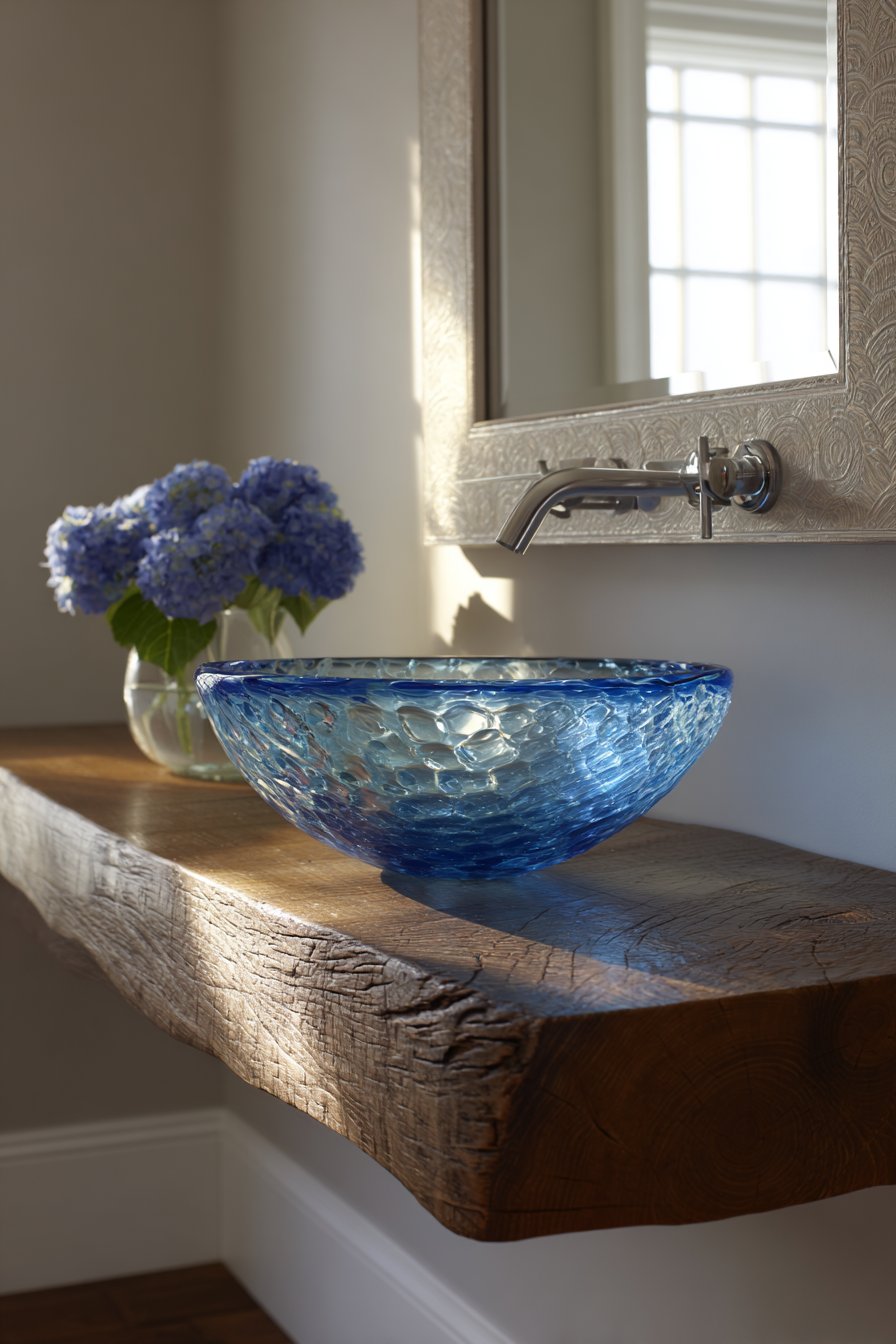
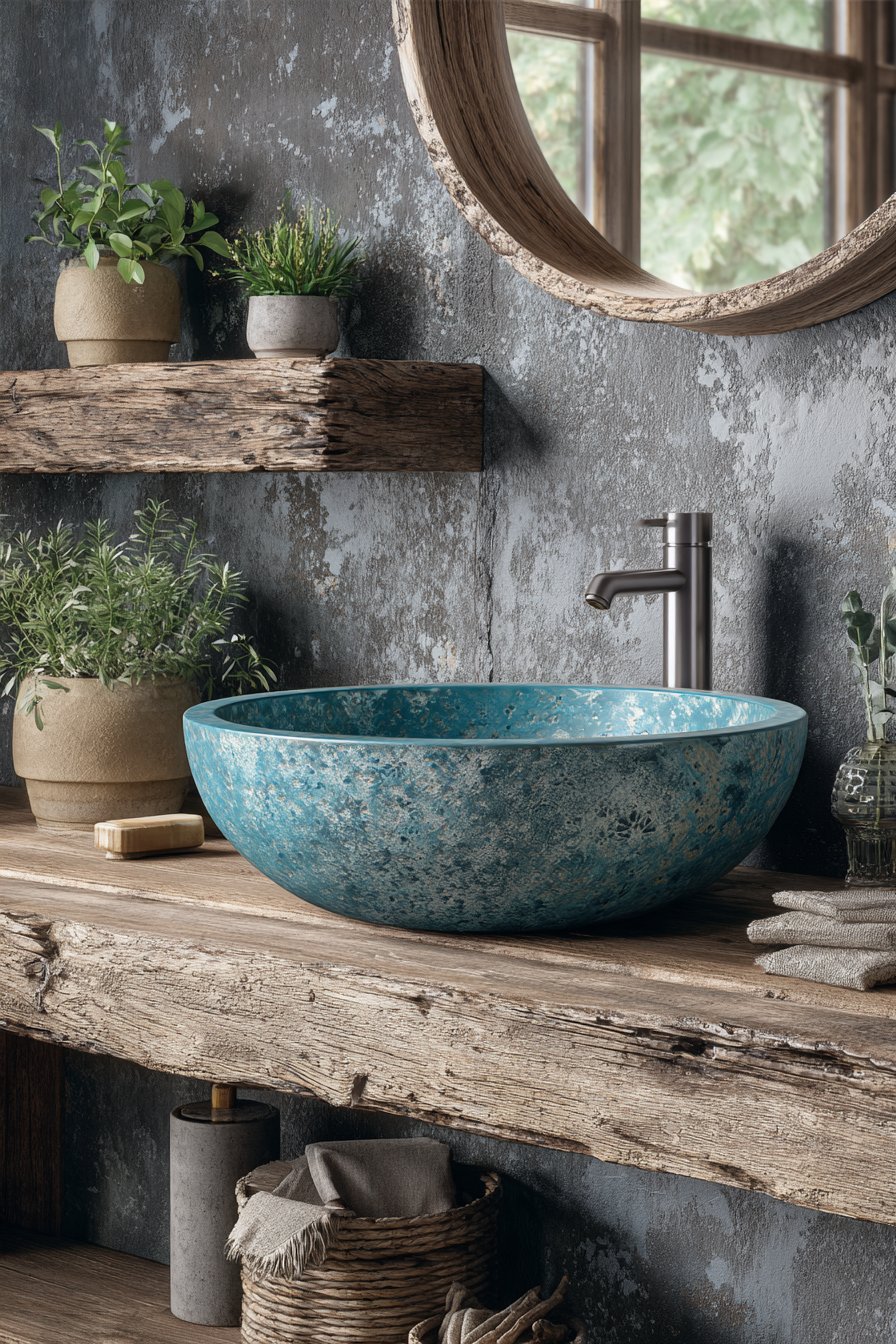
Environmental consciousness and responsible material selection characterize this eco-friendly dining room washbasin design featuring a recycled glass vessel sink in ocean blue with visible texture that celebrates repurposed materials’ beauty while reducing environmental impact. The glass’s visible texture—perhaps slight irregularities or embedded elements—tells its recycling story rather than hiding it, embracing imperfection as evidence of sustainable practices. Mounted on reclaimed barn wood floating shelf with natural edge preserved, the installation demonstrates commitment to reducing new material consumption by giving existing materials new life and purpose.
A water-efficient chrome faucet with aerator adds sustainable functionality, reducing water consumption without compromising user experience—the aerator mixes air with water stream, maintaining satisfying flow while using less water. The conscious dining space includes FSC-certified wood table whose certification guarantees wood was harvested from responsibly managed forests, paired with organic cotton placemats free from harmful chemical treatments. Energy-efficient LED pendant lights provide illumination while consuming minimal electricity and lasting years longer than traditional incandescent bulbs.
Potted herbs and plants nearby emphasize green living while improving indoor air quality and providing fresh ingredients for cooking. Natural daylight highlights sustainable material choices while reducing reliance on artificial lighting during daytime hours. Interior design photography shows the environmentally responsible aesthetic and thoughtful integration of eco-conscious washbasin in sustainable dining room design where beautiful spaces and environmental stewardship coexist harmoniously. This approach appeals increasingly to those concerned about climate change and eager to reduce their environmental footprints.
Key Design Tips:
- Select recycled glass vessel sinks or other fixtures made from repurposed materials
- Source reclaimed wood from architectural salvage companies or deconstruction projects
- Choose water-efficient fixtures with WaterSense certification or low-flow aerators
- Incorporate FSC-certified wood furniture guaranteeing responsible forest management
- Use organic textiles free from harmful pesticides, dyes, or chemical treatments
- Install LED lighting throughout for energy efficiency and longevity
- Add air-purifying plants that improve indoor air quality naturally
- Maximize natural daylight to reduce artificial lighting dependence
- Consider low-VOC or zero-VOC paints and finishes for better indoor air quality
- Research companies’ environmental practices before purchasing to support sustainable businesses
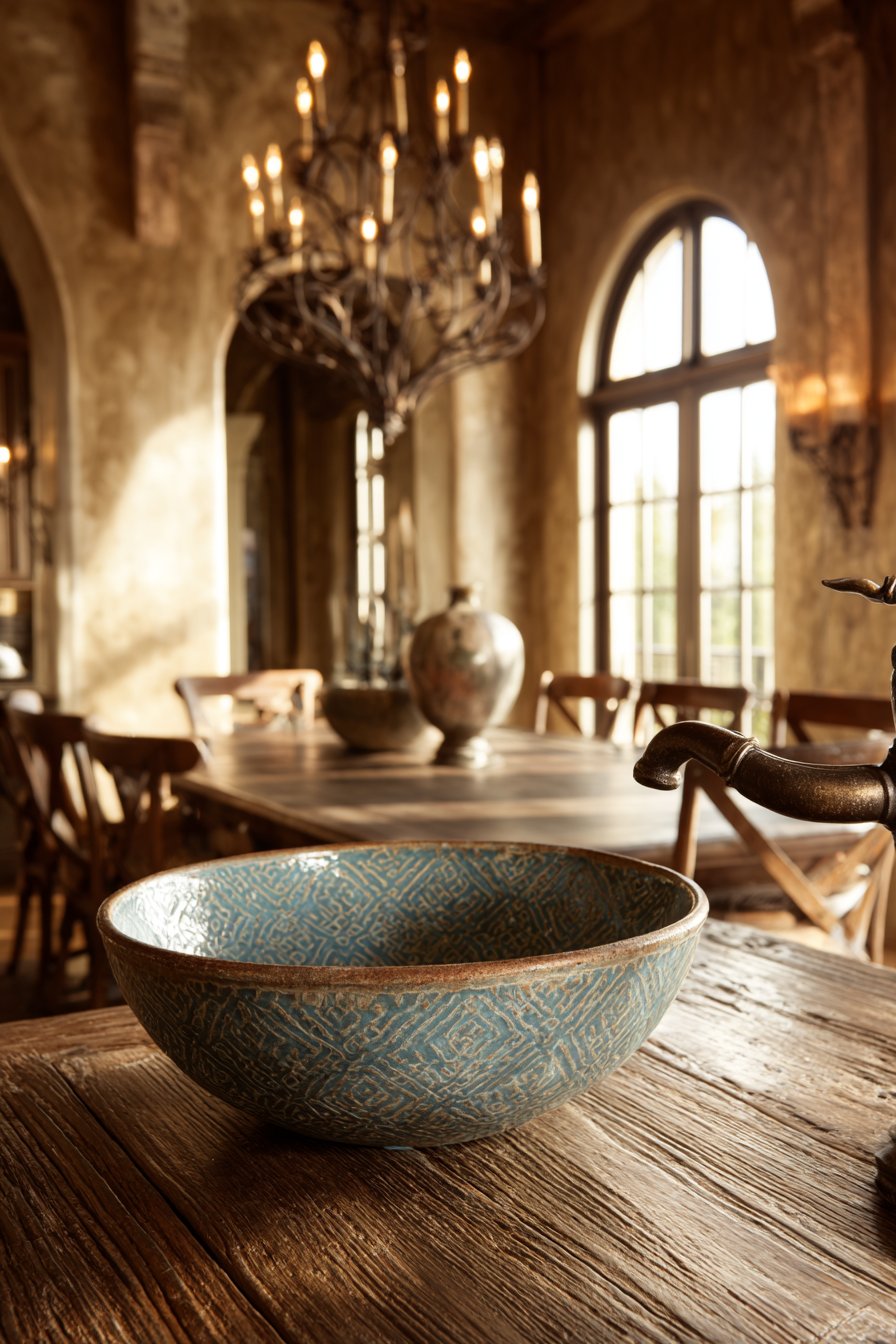
26. Tuscan Villa Warmth
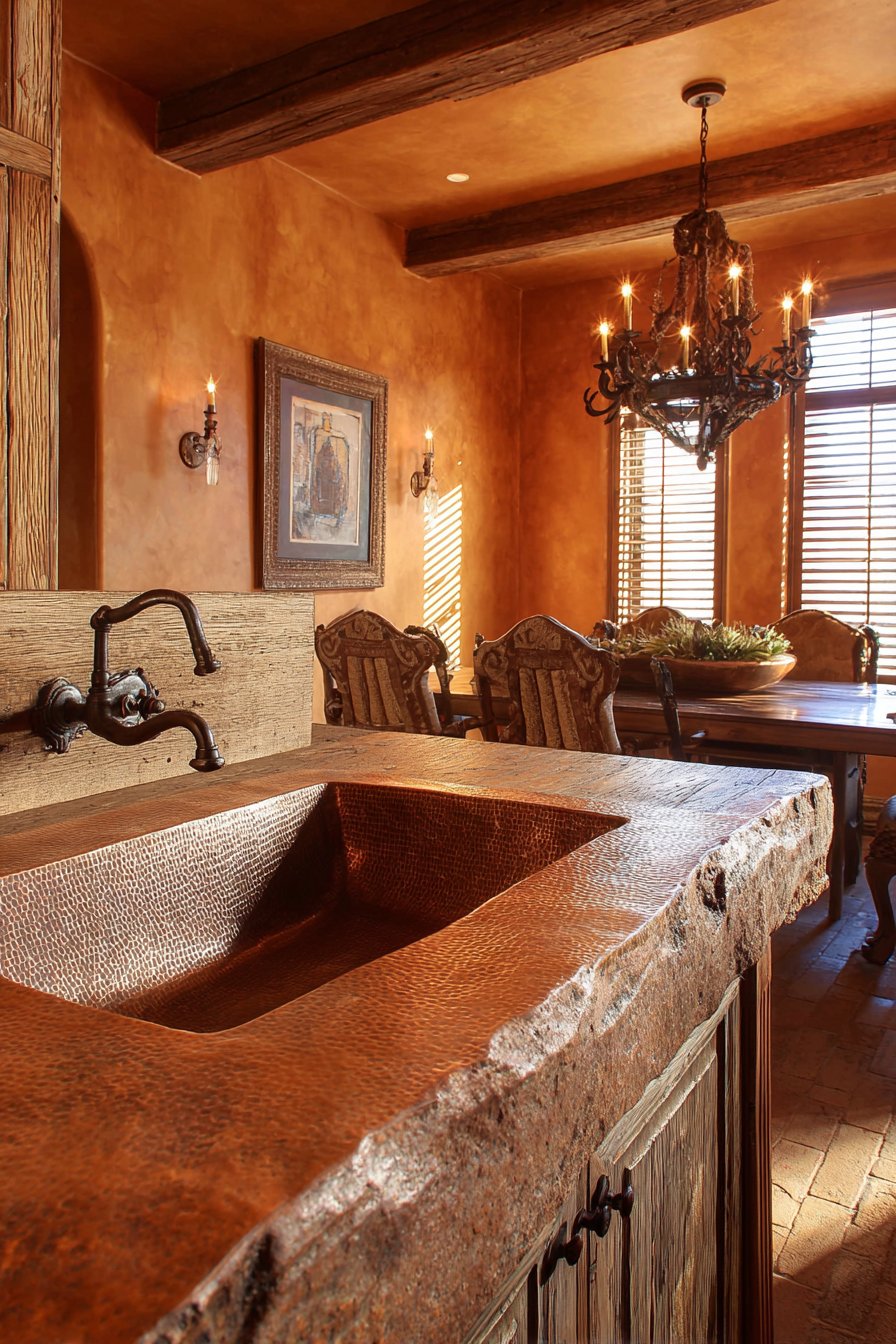
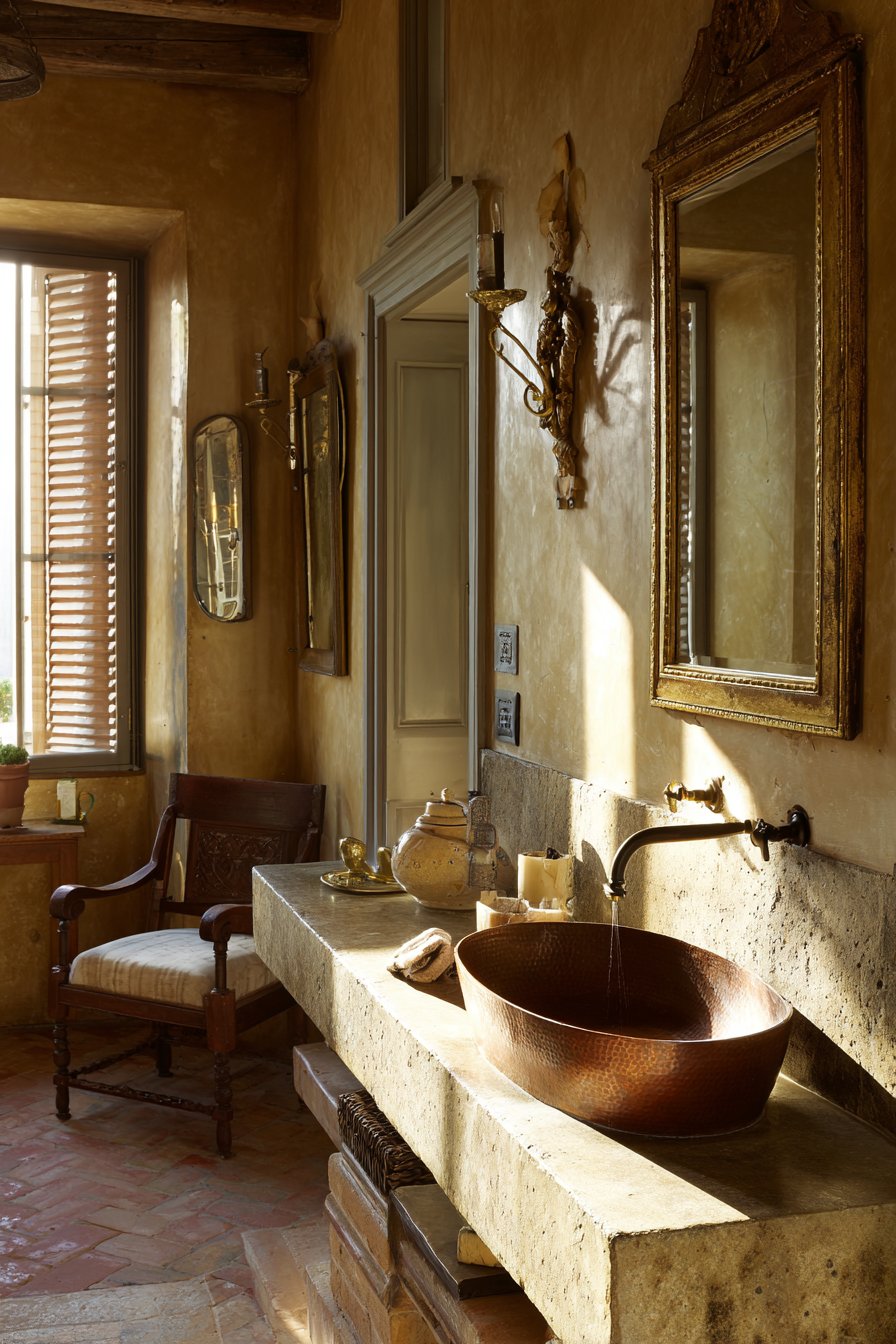
Old World Italian charm and artisan craftsmanship define this Tuscan villa dining room washbasin design featuring a hand-hammered copper sink with aged patina that suggests centuries of use in Mediterranean sunshine. The hammered texture creates countless tiny facets that catch and reflect light differently as viewing angles change, creating living surface that appears to shift and glow throughout the day. Positioned on a travertine stone console with rough-hewn edges that celebrate rather than conceal the stone’s natural formation, the installation radiates the warm, earthy quality characteristic of Italian countryside villas.
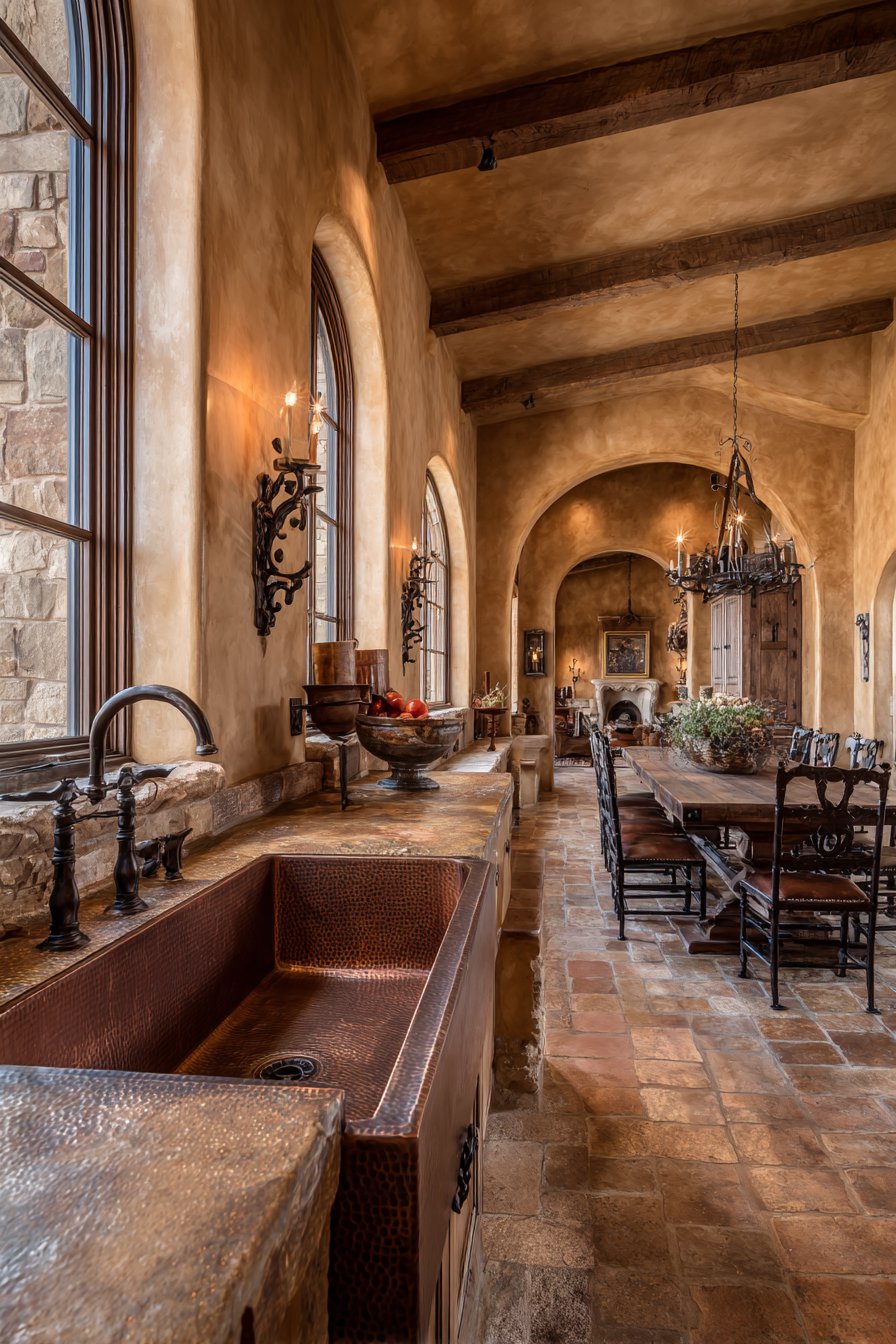
A wrought iron wall-mount faucet adds authentic Italian countryside appeal through its hand-forged appearance and substantial construction suggesting blacksmith craftsmanship rather than factory production. The rustic dining area displays a heavy wooden table whose substantial presence and visible construction details demonstrate traditional joinery techniques, surrounded by high-back chairs with carved details or rush seats referencing peasant furniture traditions. An iron chandelier with candle-style lights suspended above provides illumination while reinforcing the old-world aesthetic through deliberately simple, hand-wrought construction.
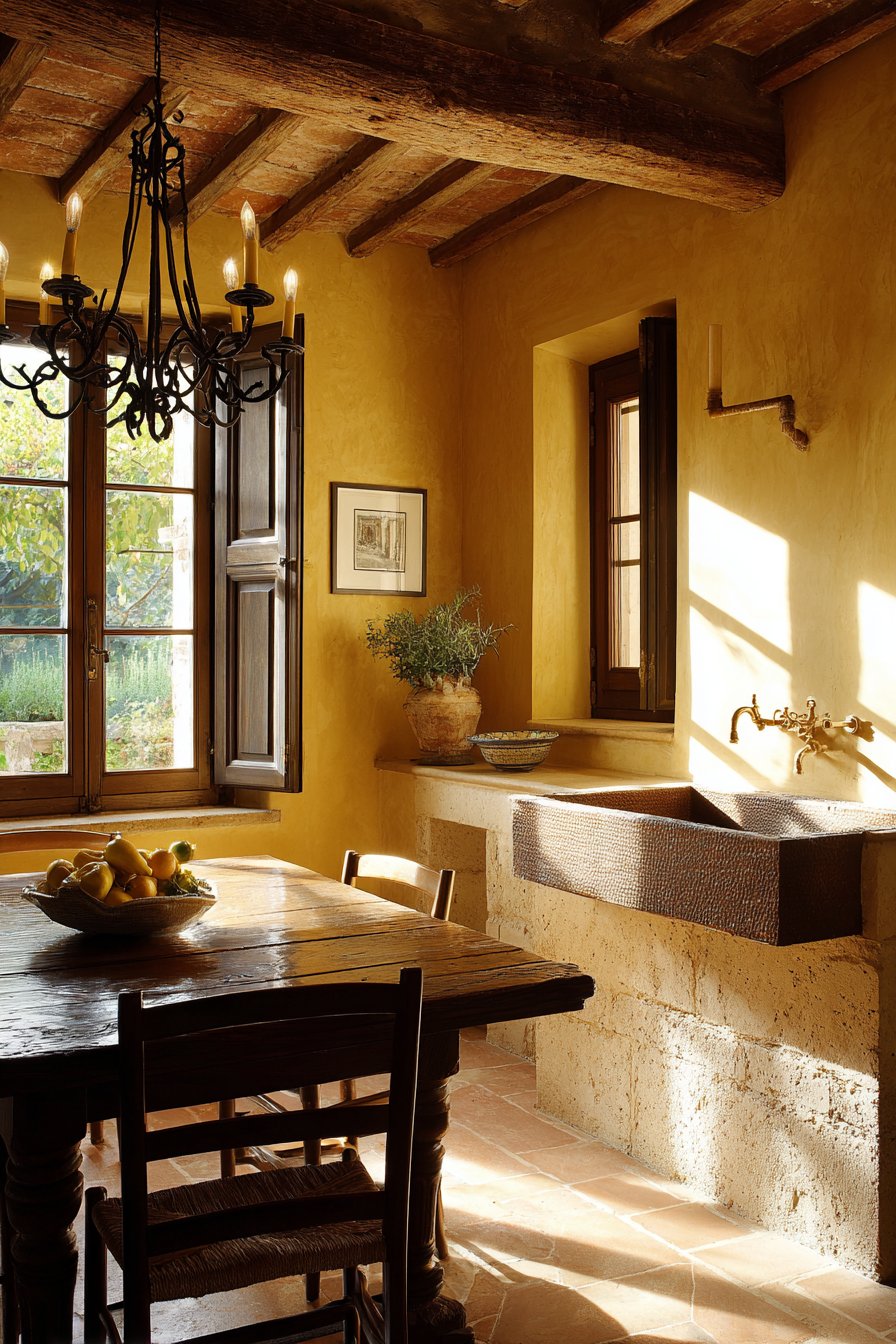
Warm ochre walls and terra cotta tile flooring create envelope of earth-toned warmth throughout the space, their colors suggesting sun-baked Italian landscapes where ancient buildings and modern life coexist seamlessly. Golden hour light through shuttered windows creates warm Mediterranean glow that makes everything seem touched by Italian sunshine. Professional interior photography captures the old-world Tuscan charm and artisanal washbasin integration in Italian-inspired dining room setting that transports inhabitants to Tuscan hillsides regardless of actual geographic location.
Key Design Tips:
- Select hand-hammered copper sinks with authentic patina or allow natural aging over time
- Source travertine stone with natural variations, pitting, and rough edges celebrating organic formation
- Choose wrought iron fixtures with hand-forged appearance and substantial weight
- Incorporate heavy wooden furniture with visible joinery and traditional construction techniques
- Use ochre, terracotta, and earth-toned wall colors suggesting Italian landscapes
- Install terra cotta or stone tile flooring appropriate to Mediterranean climates
- Add shuttered windows or install shutters on existing windows for authentic character
- Hang wrought iron chandeliers with simple construction and candle-style lights
- Display authentic Italian accessories like pottery, copper cookware, or wine-related items
- Embrace textural variety through plaster walls, natural stone, and weathered wood
27. Industrial Loft Concrete
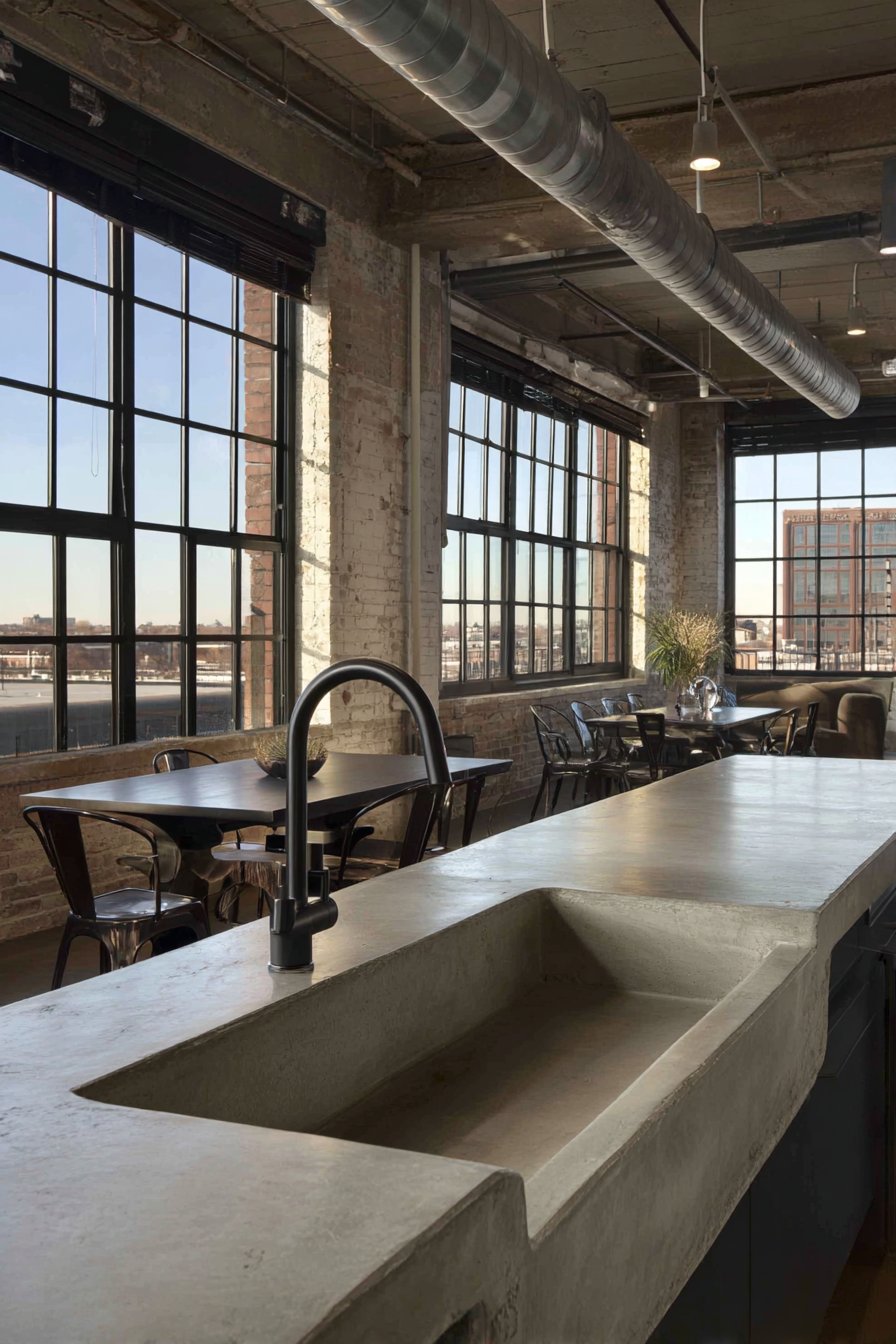
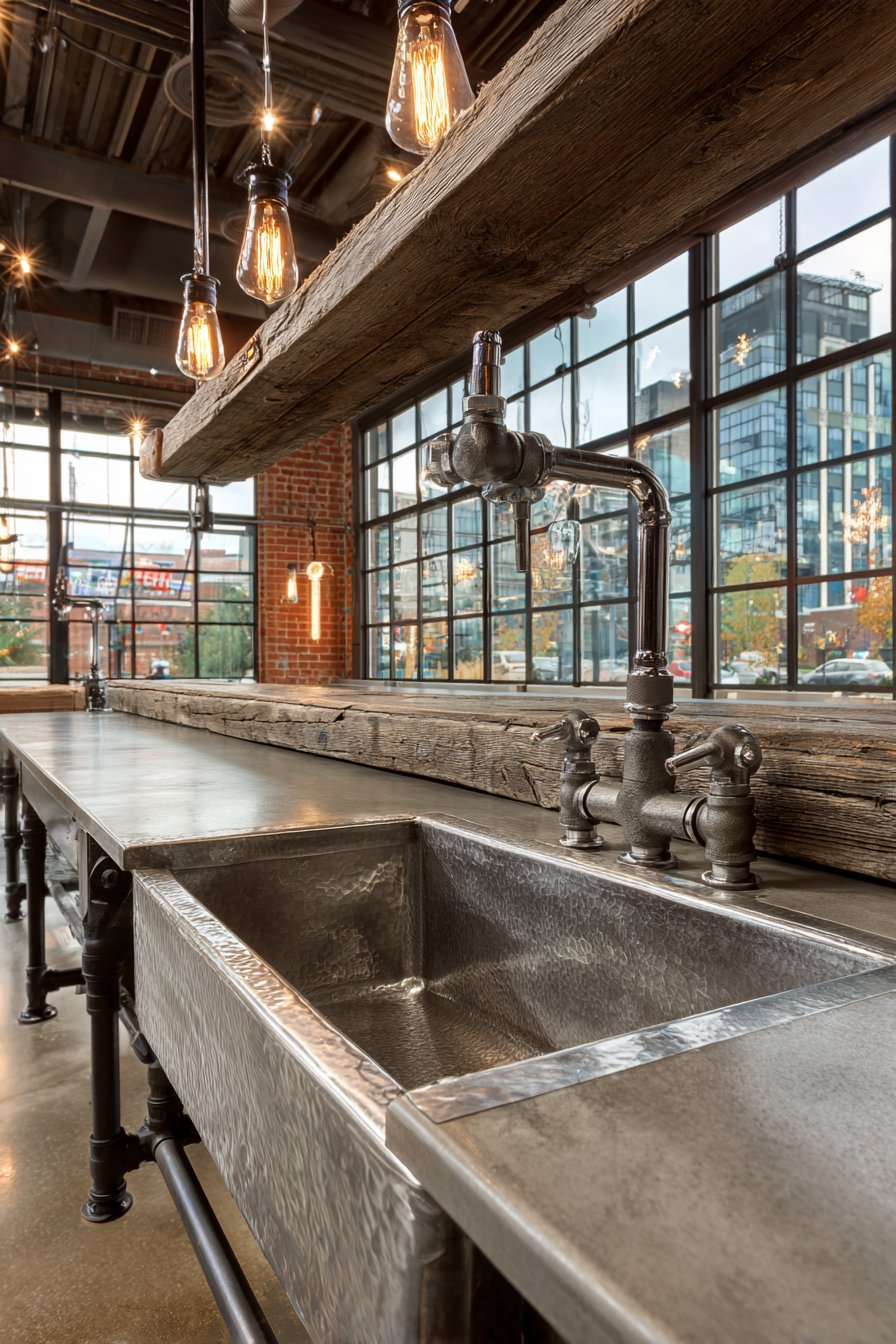
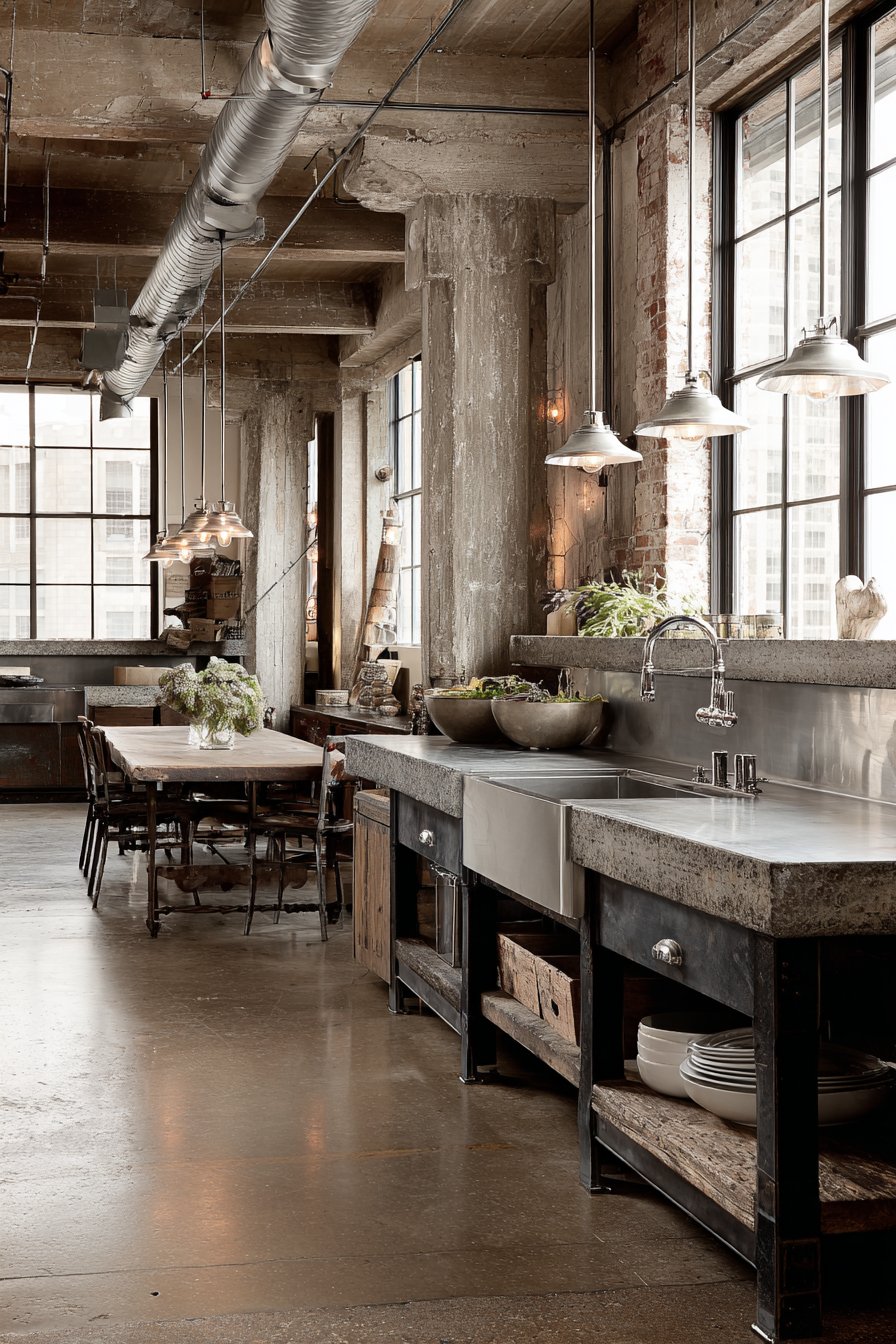
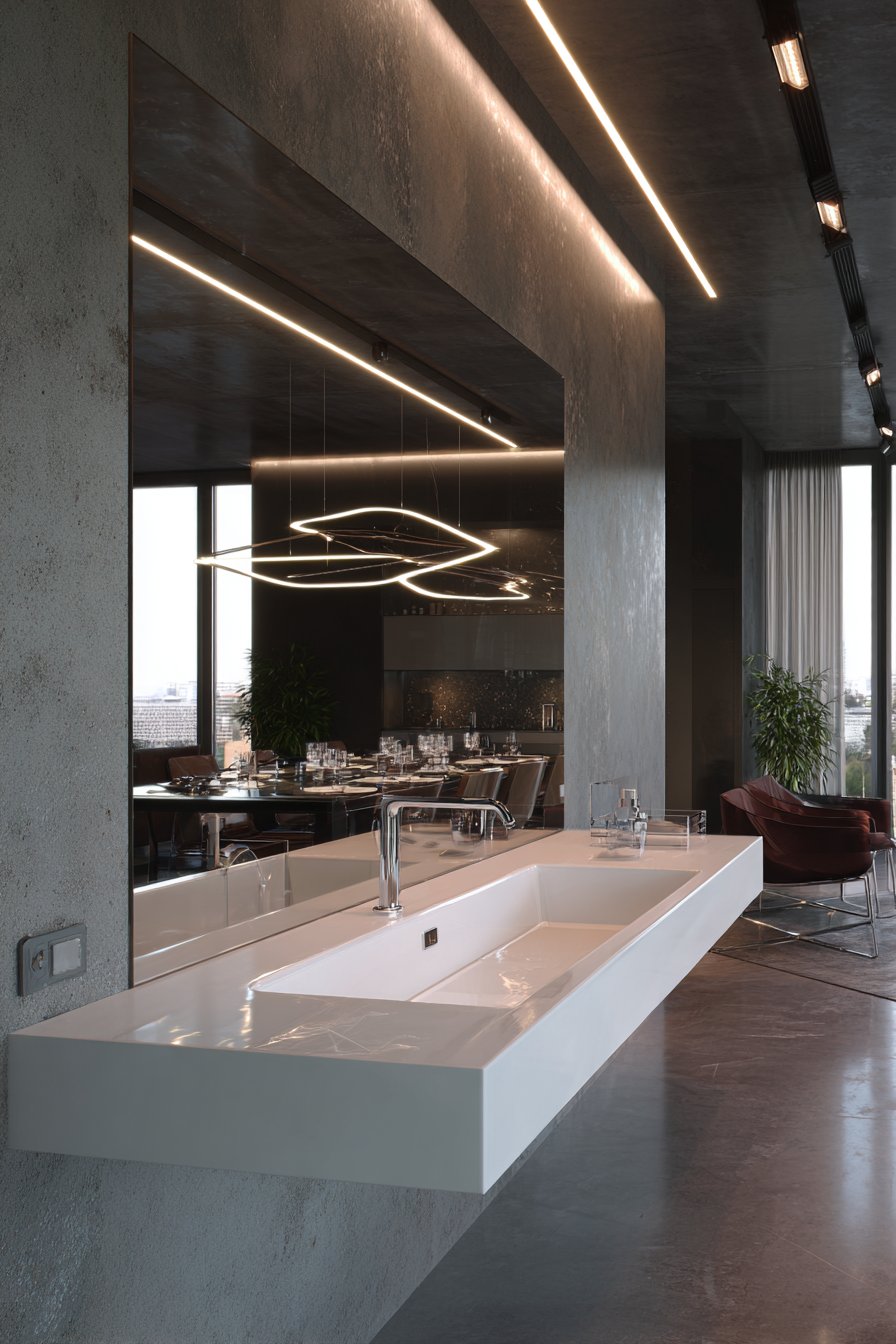
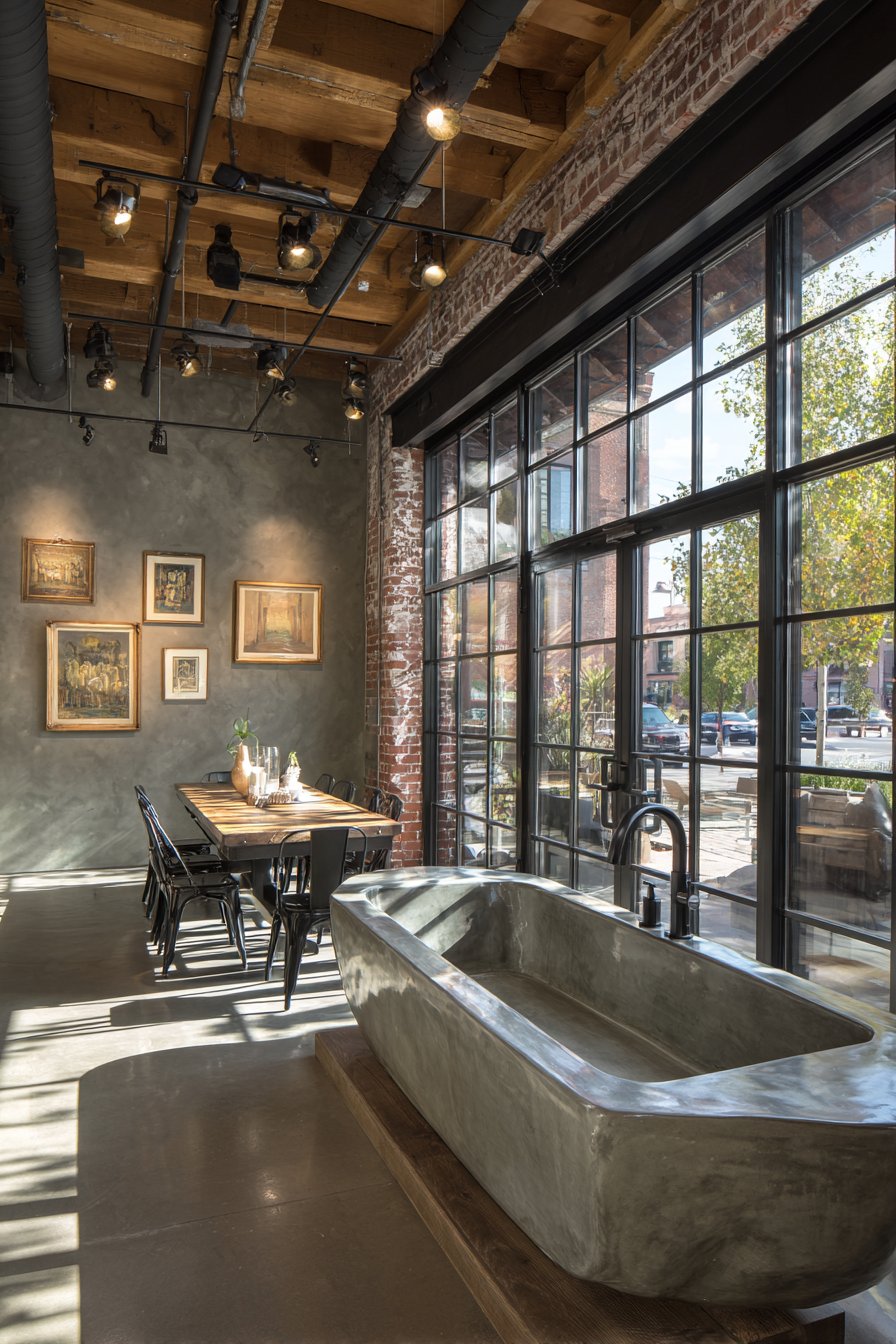
Urban sophistication and architectural materials characterize this contemporary loft dining room washbasin design featuring a concrete trough sink with smooth polished finish that celebrates industrial materials’ inherent beauty. The long, linear form maximizes functionality for multiple users while the polished surface creates unexpected elegance from typically rough material. Mounted on a floating steel frame with industrial black finish whose exposed welds and visible construction demonstrate honest structural expression, the installation embodies urban loft aesthetic that values authenticity over concealment.
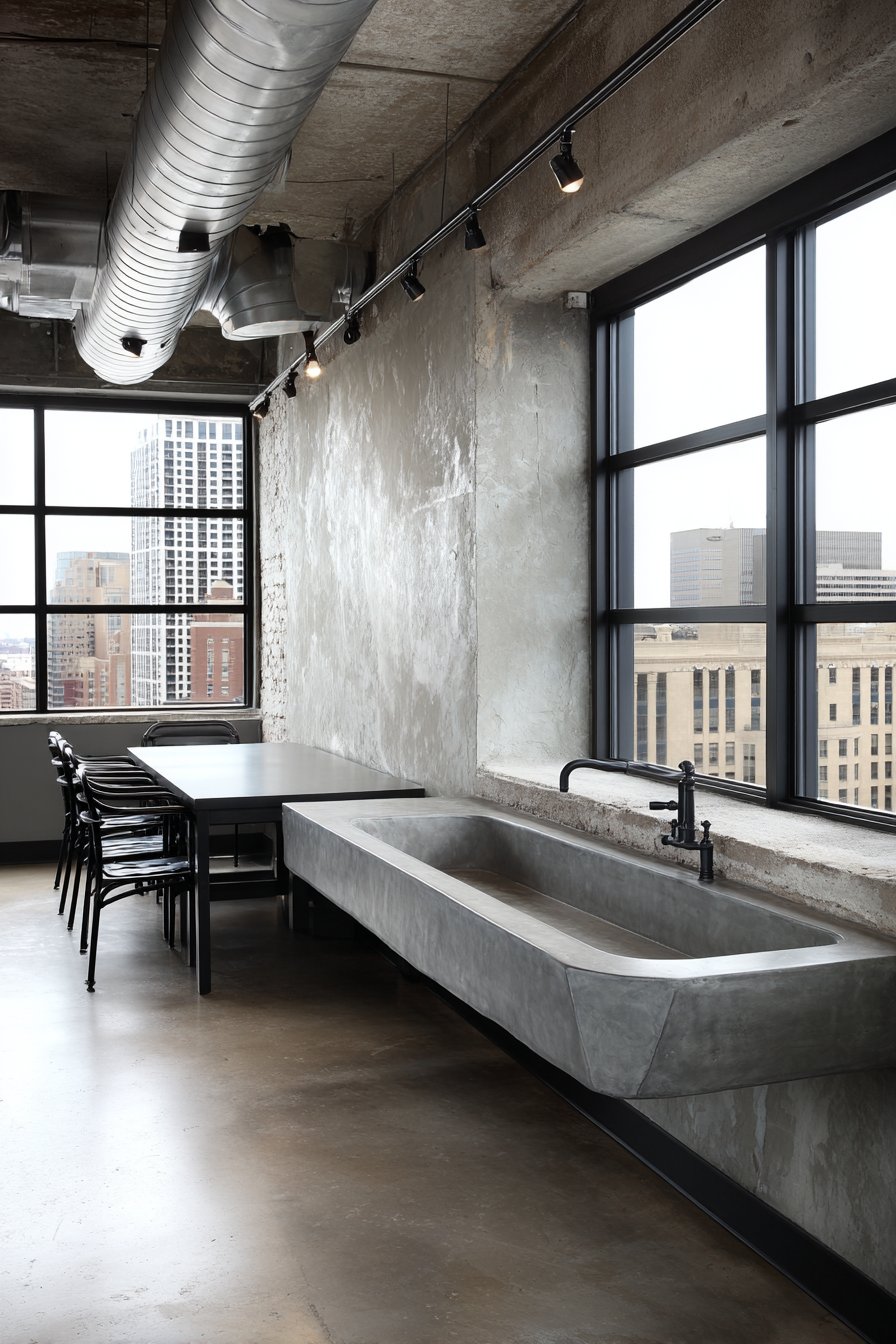
A matte black faucet with industrial lever handle maintains urban aesthetic through its utilitarian form and non-reflective finish that emphasizes function over decoration. The open-concept dining space includes a concrete dining table whose material consistency with the washbasin creates strong design connection, paired with metal chairs whose industrial construction and minimalist forms suit the warehouse-inspired setting. Exposed ductwork overhead—left visible rather than concealed behind dropped ceilings—reinforces the authentic loft character that celebrates buildings’ original industrial purposes.
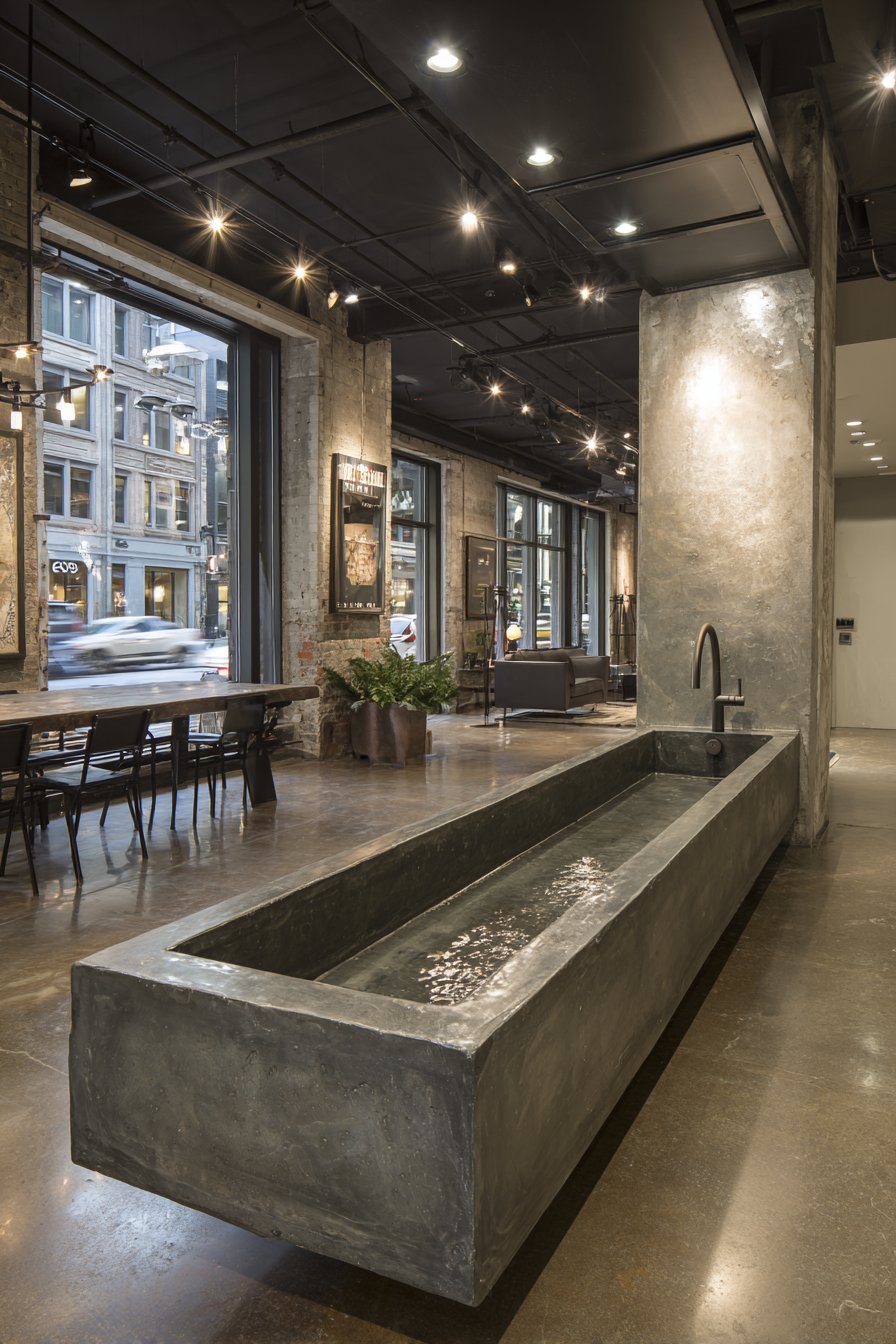
Large factory-style windows provide abundant natural light while their industrial frames with multiple panes reference the original factory glazing systems designed for illumination and ventilation in pre-air-conditioning manufacturing facilities. Track lighting highlights raw architectural elements while providing flexible illumination that can be directed as needs change. Wide-angle interior photography shows the urban loft style and bold integration of architectural washbasin within industrial dining environment where authentic materials and honest construction create spaces with genuine character and historical connection.
Key Design Tips:
- Select or cast concrete sinks with smooth polished finishes that feel refined rather than rough
- Construct steel frames with proper welding and finishing for structural integrity
- Choose matte black fixtures with industrial forms emphasizing function over decoration
- Incorporate concrete furniture elements that create material consistency throughout space
- Leave ductwork, pipes, and structural elements exposed rather than concealed
- Install factory-style windows with industrial frames and multiple panes
- Use track lighting for flexible, adjustable illumination
- Maintain open floor plans with minimal partition walls
- Embrace raw materials like concrete, steel, and exposed brick
- Consider acoustic treatments as open plans with hard surfaces can create excessive noise
Why These Dining Room Washbasin Designs Excel
The twenty-seven dining room washbasin designs presented throughout this comprehensive guide represent the pinnacle of thoughtful interior design that successfully balances practical necessity with aesthetic excellence. Each concept demonstrates how a fixture traditionally relegated to kitchens and bathrooms can be reimagined as an integral component of dining room design, enhancing both the functionality and visual appeal of these important gathering spaces. These designs excel because they address real needs while refusing to compromise on beauty, proving that utility and artistry need not exist in opposition but can instead support and enhance one another.
The sophistication evident in the marble console integration and the luxurious navy and gold design demonstrates how premium materials and expert craftsmanship can elevate functional fixtures into statement pieces worthy of the finest homes. These approaches appeal to homeowners who view their residences as expressions of personal success and refined taste, where every element receives careful consideration and investment. The use of genuine marble with distinctive veining, hand-applied lacquer finishes, and precious metal fixtures creates spaces that communicate quality, permanence, and appreciation for life’s finer things.
Conversely, the farmhouse vintage charm and rustic farmhouse copper designs celebrate authenticity and sustainable practices through their use of reclaimed materials and traditional construction techniques. These concepts resonate with those who value environmental responsibility, craftsmanship heritage, and spaces that tell stories through visible evidence of age and honest use. By incorporating salvaged wood, vintage fixtures, and materials that develop beautiful patinas over time, these designs create dining rooms with genuine character that new materials simply cannot replicate.
The modern minimalist statement and Scandinavian simplicity designs prove that restraint can be powerful, demonstrating how thoughtful editing and commitment to essential forms create serene environments that support well-being. In contemporary culture saturated with visual noise and excessive stimulation, these pared-down approaches offer respite through their emphasis on quality over quantity, lasting materials over trendy finishes, and spaces that promote calm rather than excitement. The bold use of contrast in the minimalist design and the natural light celebration in Scandinavian spaces show how different paths can reach similar destinations of peaceful, functional beauty.
Space-efficient solutions like the compact corner design and studio efficiency concept address the very real challenges faced by urban dwellers and those working with limited square footage. These designs excel because they refuse to accept spatial constraints as excuses for poor design, instead viewing limitations as opportunities for creative problem-solving. Through ingenious fixture selection, multi-functional furniture, and strategic use of vertical space and reflection, these concepts prove that small spaces can accommodate full functionality without sacrificing aesthetic appeal or livability.
The coastal breeze aesthetic and Mediterranean mosaic charm transport inhabitants to favored destinations through cohesive thematic design that engages multiple senses. These approaches demonstrate how color, material, texture, and cultural references can create immersive environments that transcend mere decoration to become genuine experiences. Whether evoking seaside relaxation or European countryside charm, these designs show how thoughtful curation of complementary elements creates spaces with transportive power.
Industrial urban edge and contemporary loft concrete designs celebrate honest materials and authentic architectural character, particularly appealing in converted warehouse and factory spaces where original industrial elements provide ready-made character. These concepts excel by embracing rather than concealing buildings’ histories, treating exposed ductwork, raw concrete, and utilitarian fixtures as design assets rather than problems requiring correction. This authenticity creates spaces with genuine soul and connection to place.
Period-specific designs including mid-century modern retro, Victorian period detail, and Art Deco glamour demonstrate deep understanding of historical design movements and commitment to authentic recreation rather than superficial borrowing of motifs. These approaches appeal to historic home owners pursuing accurate restoration and to design enthusiasts who appreciate how different eras solved aesthetic and functional challenges. By faithfully reproducing period-appropriate materials, fixtures, and proportions, these designs create time capsules that honor design history while remaining entirely functional for contemporary use.
The smart technology integration represents forward-thinking design that embraces innovation to enhance convenience and efficiency. This approach recognizes that contemporary homeowners increasingly expect connected devices and automation to simplify routines and create responsive environments. By seamlessly incorporating touchless fixtures, integrated charging stations, and adjustable lighting systems, this design demonstrates how technology can be integrated without compromising aesthetic values when approached thoughtfully.
Asian-inspired designs including zen tranquility and minimalist Japanese aesthetic introduce Eastern design philosophies that emphasize mindfulness, connection to nature, and finding beauty in simplicity and imperfection. These approaches offer valuable counterbalance to Western design’s occasional emphasis on abundance and display, suggesting alternative values focused on contemplation, gratitude, and spiritual well-being alongside physical comfort.
Bohemian eclectic mix and Hollywood Regency sparkle celebrate maximalism and personal expression, demonstrating that more can indeed be more when curated with confident eye and clear vision. These designs give permission to embrace abundance, pattern mixing, and dramatic gestures that might intimidate more cautious decorators. They prove that rules exist to be broken by those who understand underlying principles well enough to know when transgression serves design goals.
The sustainable eco-friendly design addresses growing environmental consciousness by demonstrating how beautiful spaces and responsible stewardship can coexist harmoniously. This approach will only grow in importance as climate concerns intensify and consumers increasingly demand transparency about products’ environmental impacts. By featuring recycled materials, water-efficient fixtures, and responsibly sourced furnishings, this design points toward future where sustainability becomes standard rather than special.
What ultimately makes these dining room washbasin designs exceptional is their demonstration that thoughtful interior design considers multiple factors simultaneously—aesthetic appeal, practical functionality, spatial constraints, lifestyle needs, environmental impact, historical context, and cultural meaning. Each concept presented here results from careful analysis of how people actually live, entertain, and use their homes, combined with deep understanding of materials, proportions, color theory, and design history. They prove that truly excellent design serves both practical needs and emotional desires, creating spaces that work efficiently while also inspiring, comforting, and delighting their inhabitants. Whether your personal aesthetic leans minimalist or maximalist, traditional or contemporary, rustic or refined, these concepts offer valuable inspiration for creating dining spaces that accommodate the practical convenience of integrated washbasins without compromising visual appeal or design integrity.
Conclusion
The integration of washbasins into dining room design represents an innovative approach to contemporary living that prioritizes both convenience and aesthetic excellence. As we’ve explored through these twenty-seven distinct concepts, this functional addition need not compromise your dining space’s beauty or character—rather, when thoughtfully implemented, the washbasin can become a stunning focal point that enhances your room’s overall design while providing genuine practical value. From the understated elegance of Scandinavian minimalism to the dramatic glamour of Hollywood Regency, from space-saving solutions for compact apartments to luxurious statements in formal dining rooms, these designs demonstrate remarkable versatility in addressing diverse needs, preferences, and spatial constraints.
The key to successfully incorporating a washbasin into your dining room lies in viewing it not as an afterthought or necessary intrusion but as an intentional design element that deserves the same careful consideration as your dining table, lighting fixtures, or artwork. Consider how the washbasin’s style, materials, and placement can reinforce your space’s overall aesthetic rather than working against it. Whether you’re drawn to reclaimed materials and rustic authenticity, cutting-edge technology and contemporary forms, or period-specific historical accuracy, ensure that your washbasin selection aligns with your broader design vision while meeting your household’s practical needs.
As you contemplate implementing these ideas in your own home, remember that the most successful interiors balance aspiration with achievability, inspiration with practicality, and aesthetic beauty with functional necessity. Don’t hesitate to adapt these concepts to suit your specific circumstances—perhaps combining elements from multiple designs to create something uniquely suited to your space, budget, and lifestyle. The dining room washbasin represents an opportunity to enhance your home’s functionality while making a distinctive design statement that reflects your personal taste and values. Embrace this chance to create a dining environment that’s as convenient as it is beautiful, as practical as it is inspiring.
