
The modern home has evolved dramatically over the past few decades, with open-concept living spaces becoming increasingly popular among homeowners and renters alike. The living-dining room combo represents one of the most practical and aesthetically pleasing solutions for contemporary living, offering a seamless flow between two of the home’s most important gathering spaces. Whether you’re working with a compact apartment or a spacious house, combining your living and dining areas creates an inviting atmosphere that encourages conversation, connection, and comfortable everyday living.
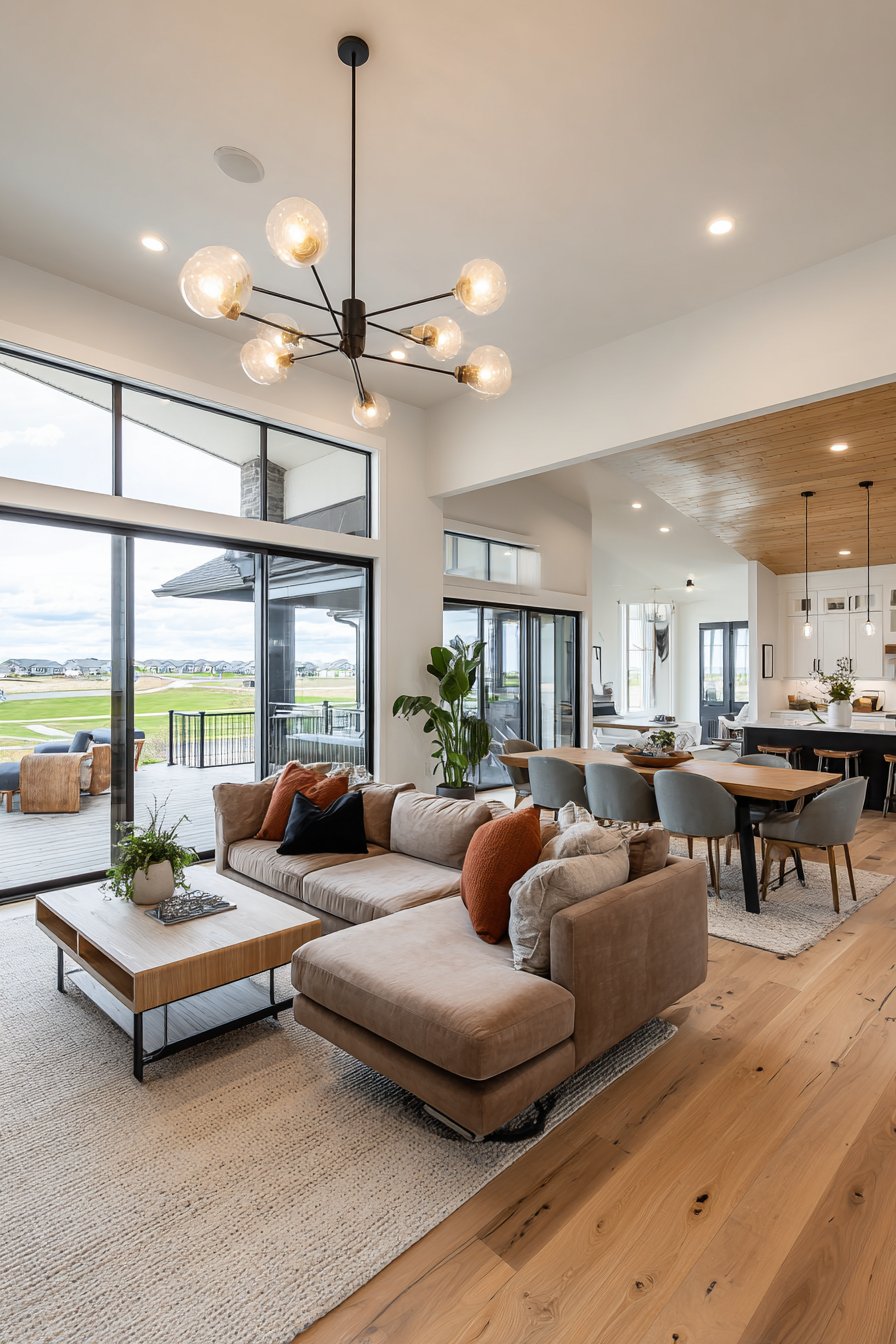
Living-dining room combo ideas have gained tremendous popularity because they maximize space efficiency while maintaining distinct functional zones. These versatile layouts allow natural light to flow freely throughout the space, create better traffic patterns, and provide opportunities for creative interior design solutions that reflect your personal style. From minimalist Scandinavian aesthetics to warm farmhouse charm, the possibilities for designing a beautiful and functional combo space are virtually endless. The key lies in understanding how to balance both areas so they complement each other while serving their individual purposes.
In this comprehensive guide, we’ll explore twenty-five exceptional living-dining room combo ideas that demonstrate the remarkable versatility of open-plan design. Each concept showcases unique approaches to furniture arrangement, color coordination, lighting strategies, and spatial definition. Whether you’re drawn to contemporary sophistication, rustic warmth, or eclectic individuality, you’ll discover inspiring solutions that can be adapted to your own home. These carefully curated designs prove that combining living and dining spaces doesn’t mean sacrificing style or functionality—instead, it opens up exciting possibilities for creating cohesive, beautiful interiors that enhance your daily life.
1. Modern Streamlined Elegance
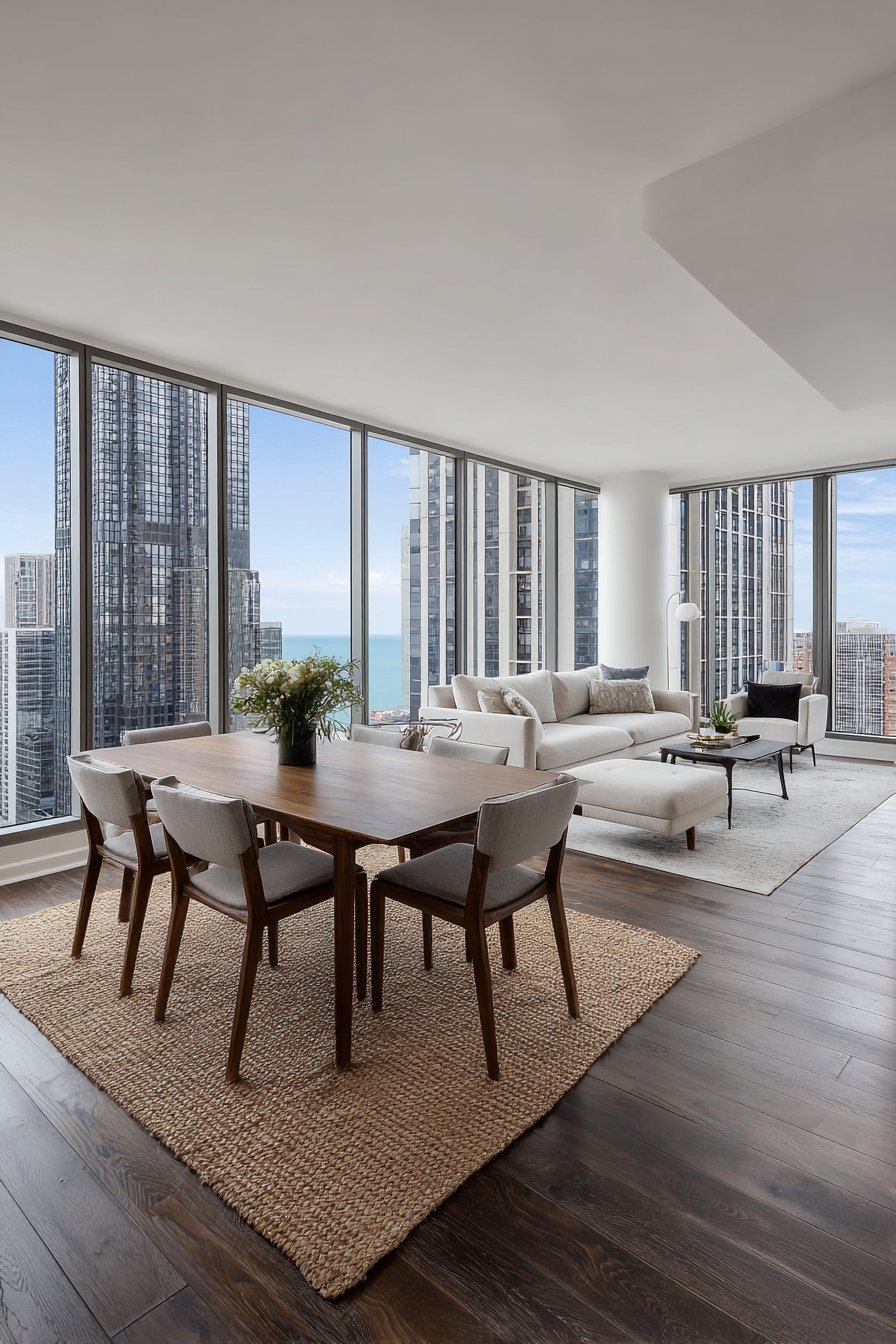
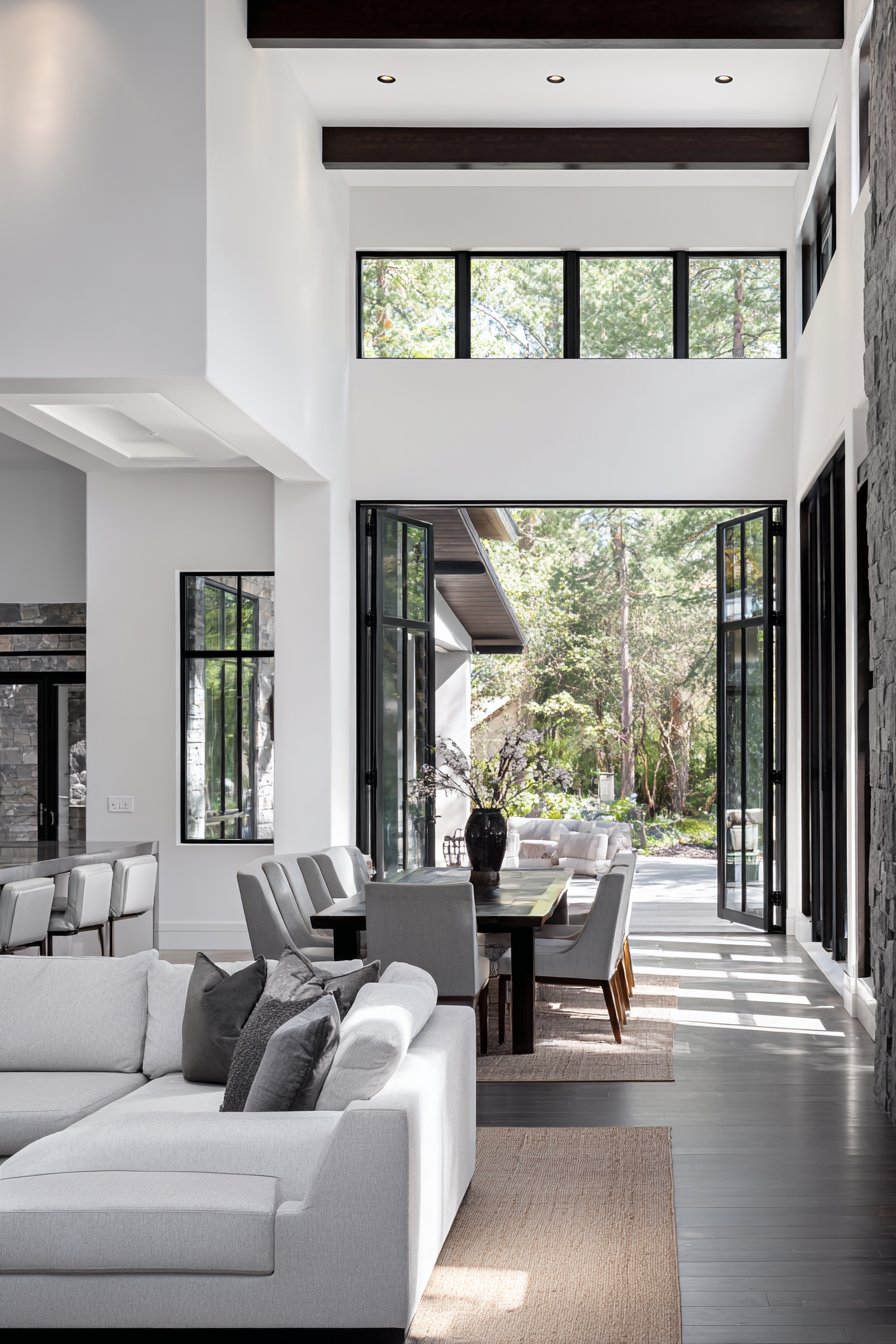
The modern living-dining room combo exemplifies contemporary sophistication through its clean lines and thoughtful furniture placement. This design features a streamlined L-shaped sectional upholstered in light gray linen, positioned to face a minimalist dining table crafted from solid oak with six matching chairs. The beauty of this arrangement lies in its ability to create distinct zones without physical barriers, allowing both spaces to maintain their individual identity while contributing to a cohesive whole.
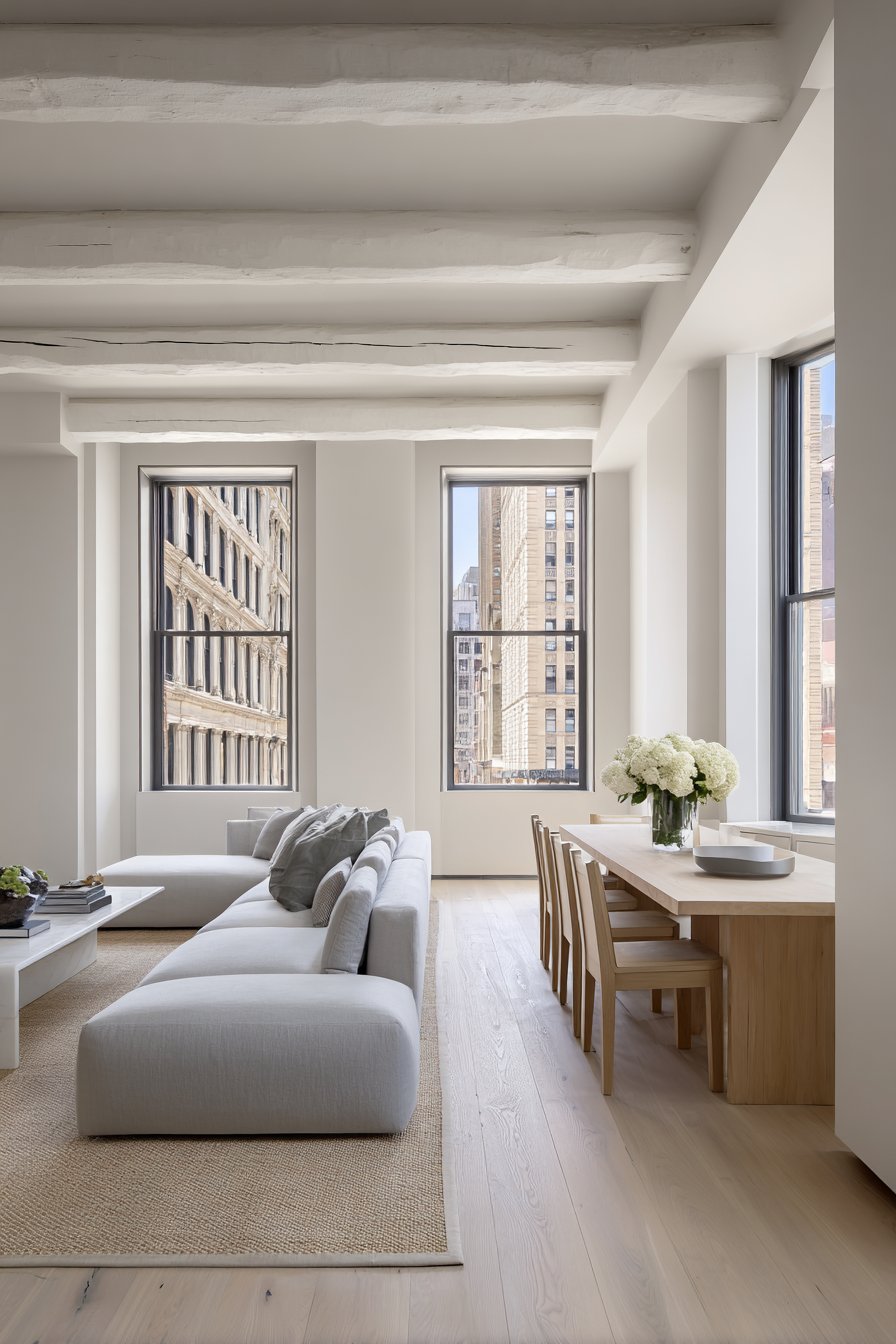
The material palette plays a crucial role in establishing the modern aesthetic. The solid oak dining table brings natural warmth and organic texture, while the light gray linen sectional provides a soft, inviting counterpoint. A large jute area rug anchors the living space, defining its boundaries without interrupting the visual flow to the dining area, which sits on exposed hardwood flooring. This strategic use of different flooring treatments helps distinguish between the two functional zones while maintaining the open, airy feel that makes combo spaces so appealing.
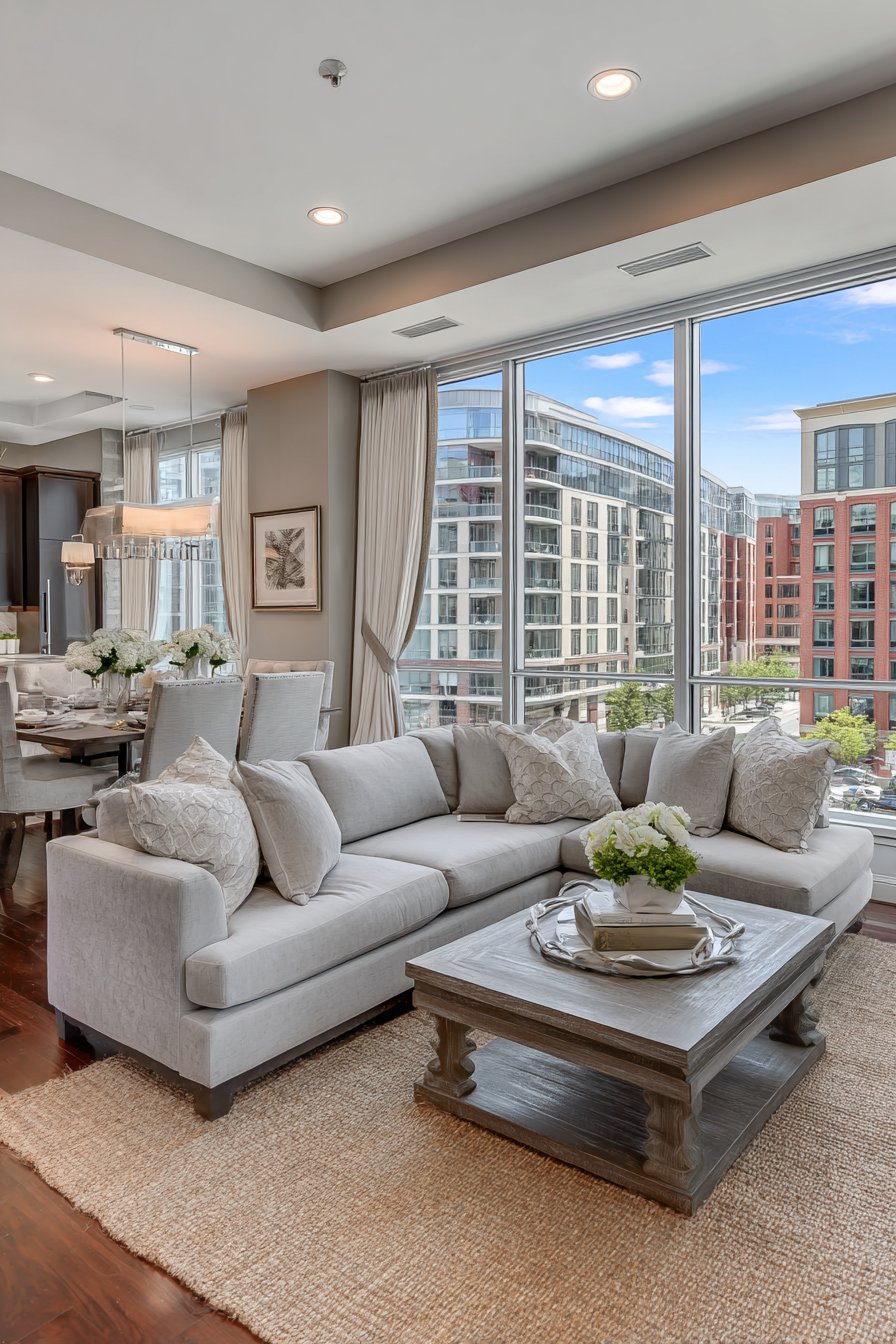
Lighting in this modern living-dining room combo is carefully layered to serve both functional and aesthetic purposes. Recessed lighting provides even, ambient illumination throughout the space, while natural light from expansive windows floods both areas with sunshine during daylight hours. The wide-angle interior design photography perspective captures the harmonious flow between both functional zones, with balanced exposure highlighting material textures and demonstrating how thoughtful furniture placement can maximize both comfort and style in an open-plan layout.
Key Design Tips:
- Position your sectional perpendicular or at an angle to the dining area to create natural traffic flow
- Use area rugs strategically to define the living zone while leaving the dining area on exposed flooring
- Choose a cohesive color palette that unifies both spaces, typically starting with neutrals as your foundation
- Invest in quality natural materials like solid wood and linen that age beautifully and add warmth
- Maximize natural light by keeping window treatments minimal and choosing light-reflective colors
- Select furniture with clean lines and appropriate scale to prevent the space from feeling cluttered
2. Scandinavian Serenity
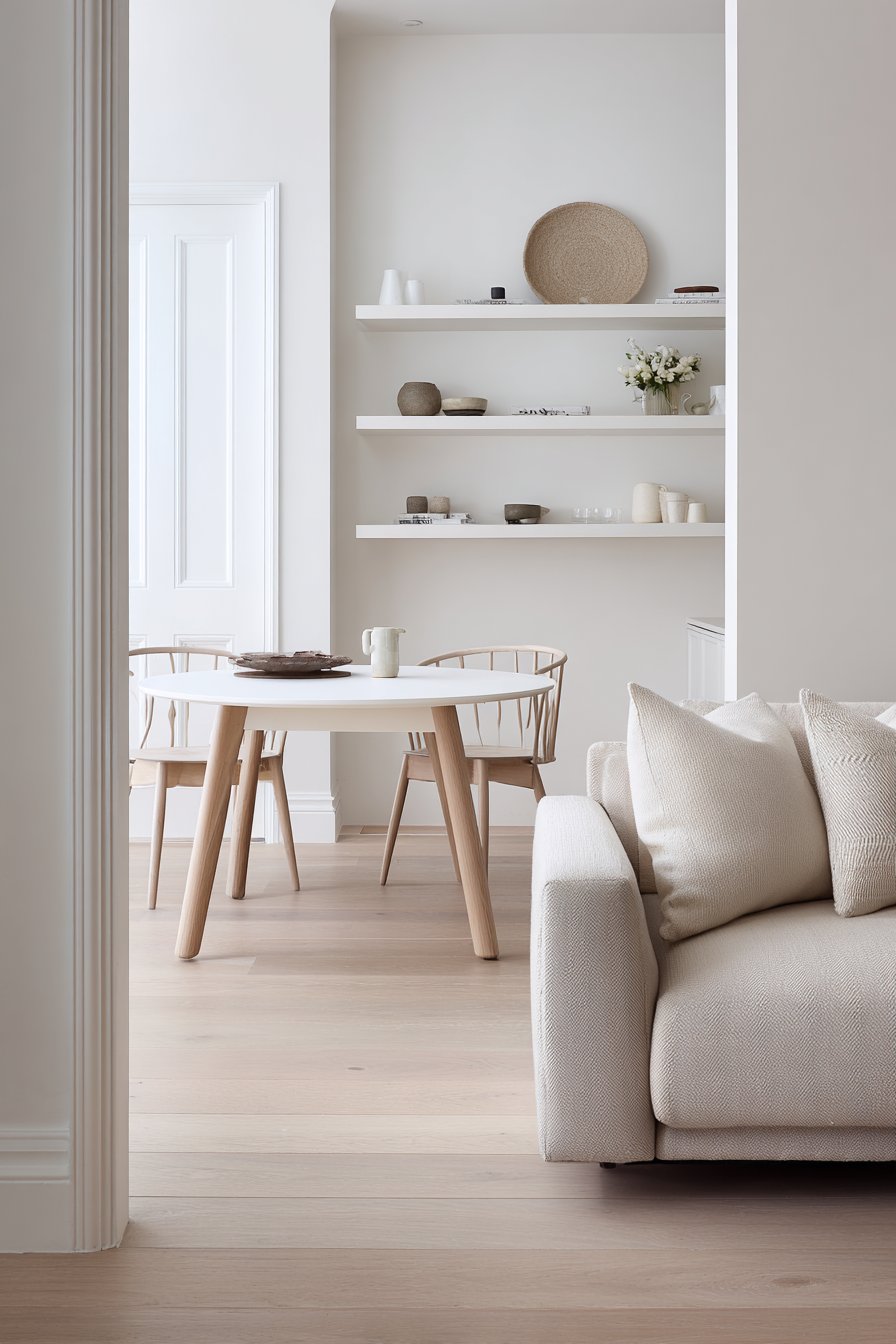
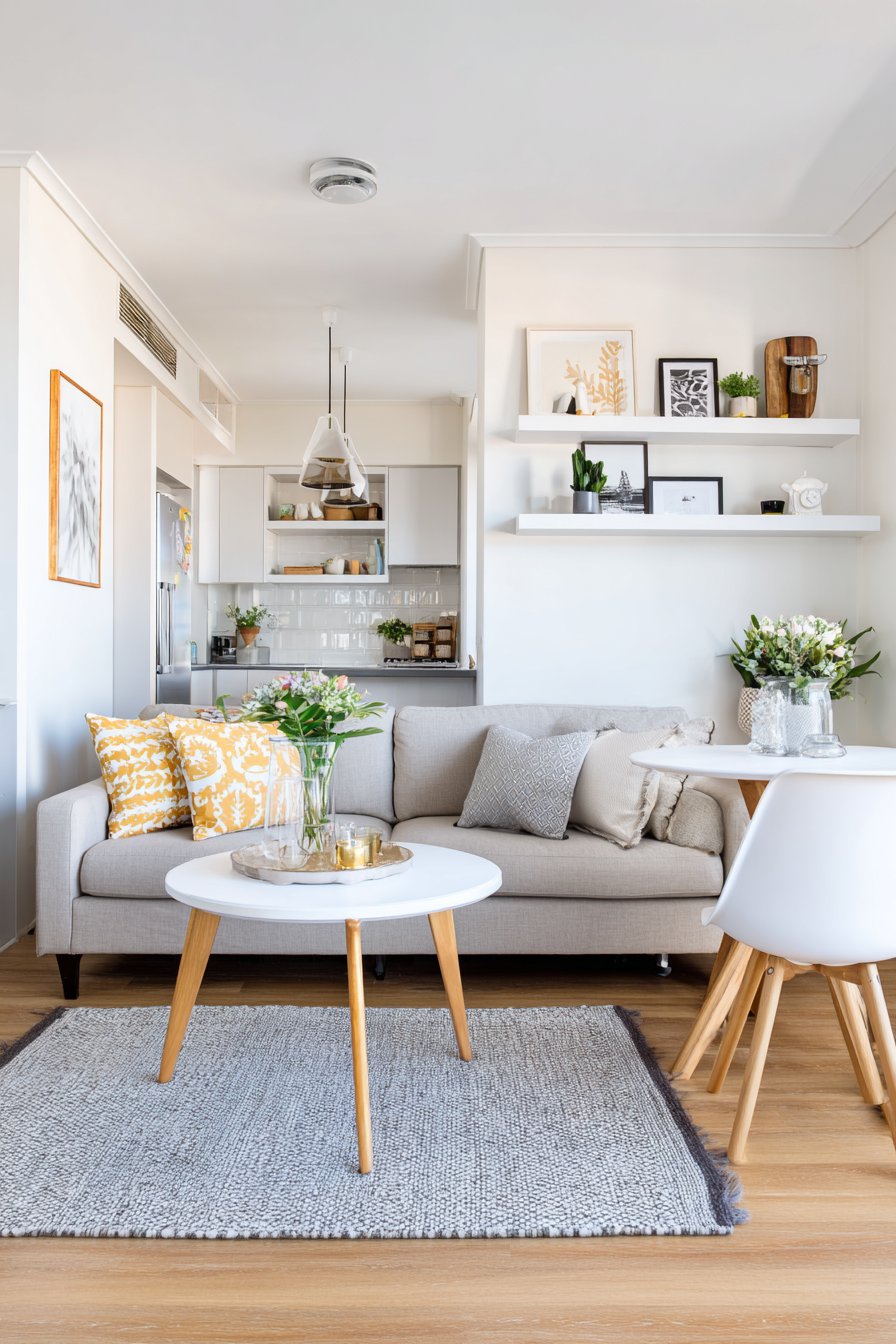
The Scandinavian-inspired living-dining room combo embodies the principles of Nordic design: simplicity, functionality, and connection to nature. This arrangement features a low-profile sofa in soft beige positioned perpendicular to a round white dining table with light wood legs, creating an effortless flow between both zones. The minimalist aesthetic is reinforced through carefully curated furnishings that prioritize quality over quantity, with each piece serving a clear purpose while contributing to the overall sense of calm.
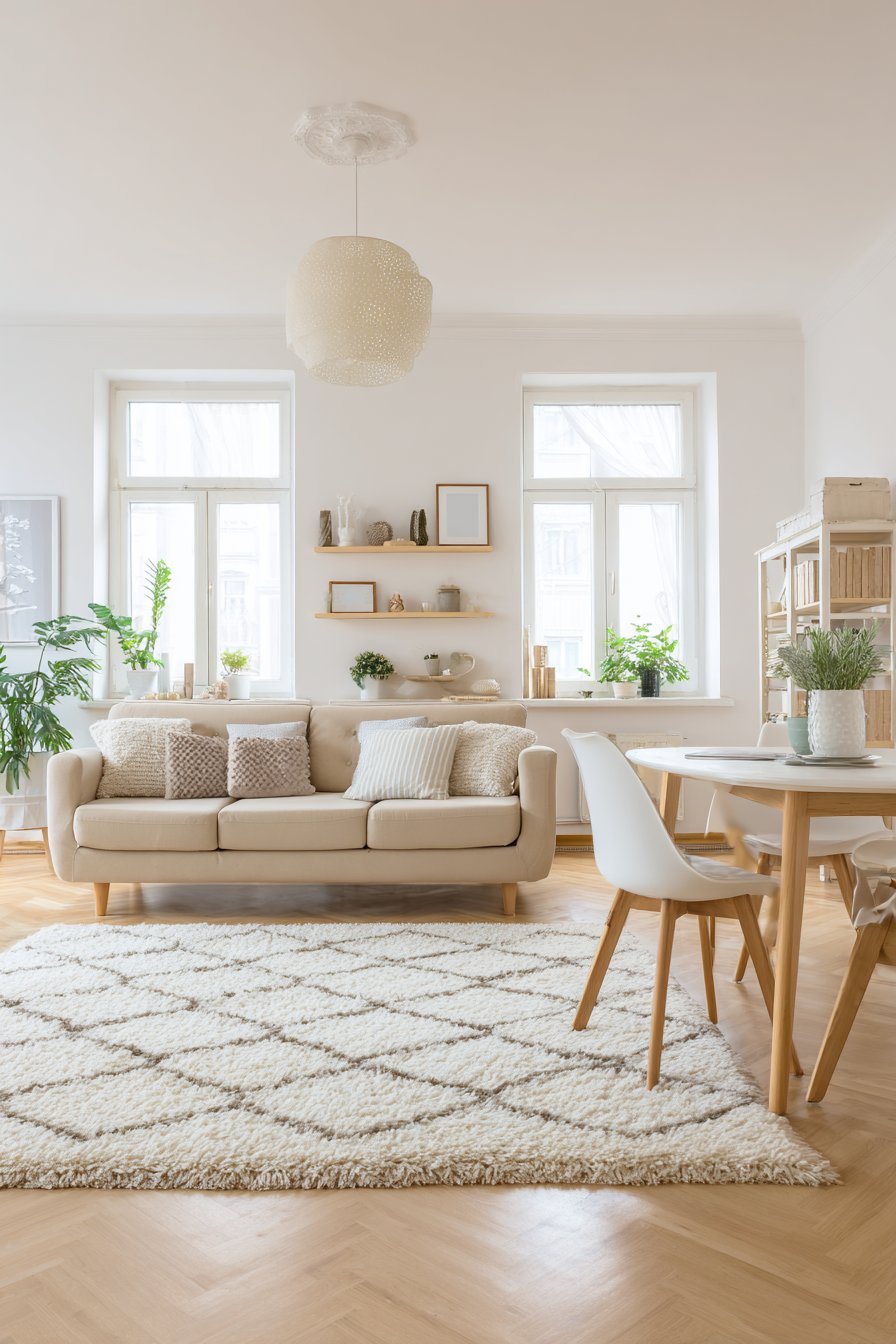
Minimalist floating shelves span the wall between the living and dining zones, providing practical storage and display space without overwhelming the visual landscape. These shelves showcase curated decor items—perhaps a few favorite books, a small plant, and a ceramic vase—demonstrating the Scandinavian principle of editing your possessions down to only those items that bring joy or serve a function. The pale oak flooring and white walls maximize natural light, creating the bright, airy atmosphere that is quintessentially Scandinavian and making even smaller combo spaces feel surprisingly spacious.
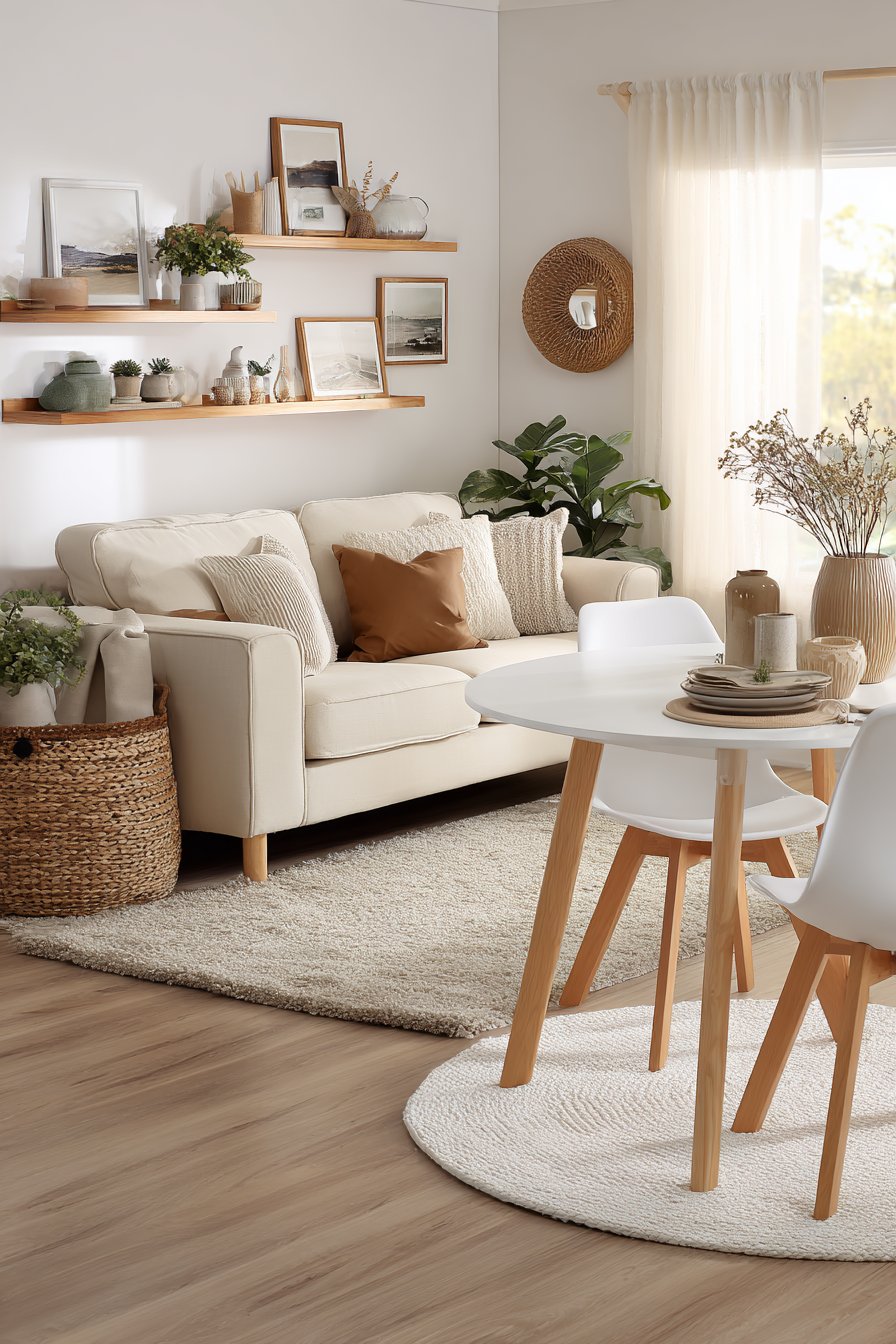
The beauty of this Scandinavian living-dining room combo lies in its restraint and attention to detail. Professional interior photography captures the clean lines and functional simplicity, revealing how limiting your color palette and choosing furniture with slender profiles can create a sense of spaciousness. The cohesive neutral palette—ranging from soft beige to pale oak to crisp white—ensures that both zones feel united while maintaining their distinct functions, proving that minimalism doesn’t mean cold or sterile but rather intentional and peaceful.
Key Design Tips:
- Embrace a neutral color palette with whites, beiges, and light wood tones as your foundation
- Choose furniture with slim profiles and tapered legs to maintain visual lightness
- Incorporate natural materials like wood, linen, and wool for warmth and texture
- Keep decorative items minimal and purposeful, displaying only what you truly love
- Maximize natural light through sheer curtains or leaving windows unadorned
- Add warmth through textiles like throw blankets and cushions in natural fibers
- Select a round dining table for better traffic flow in smaller spaces
3. Smart Small-Space Solutions
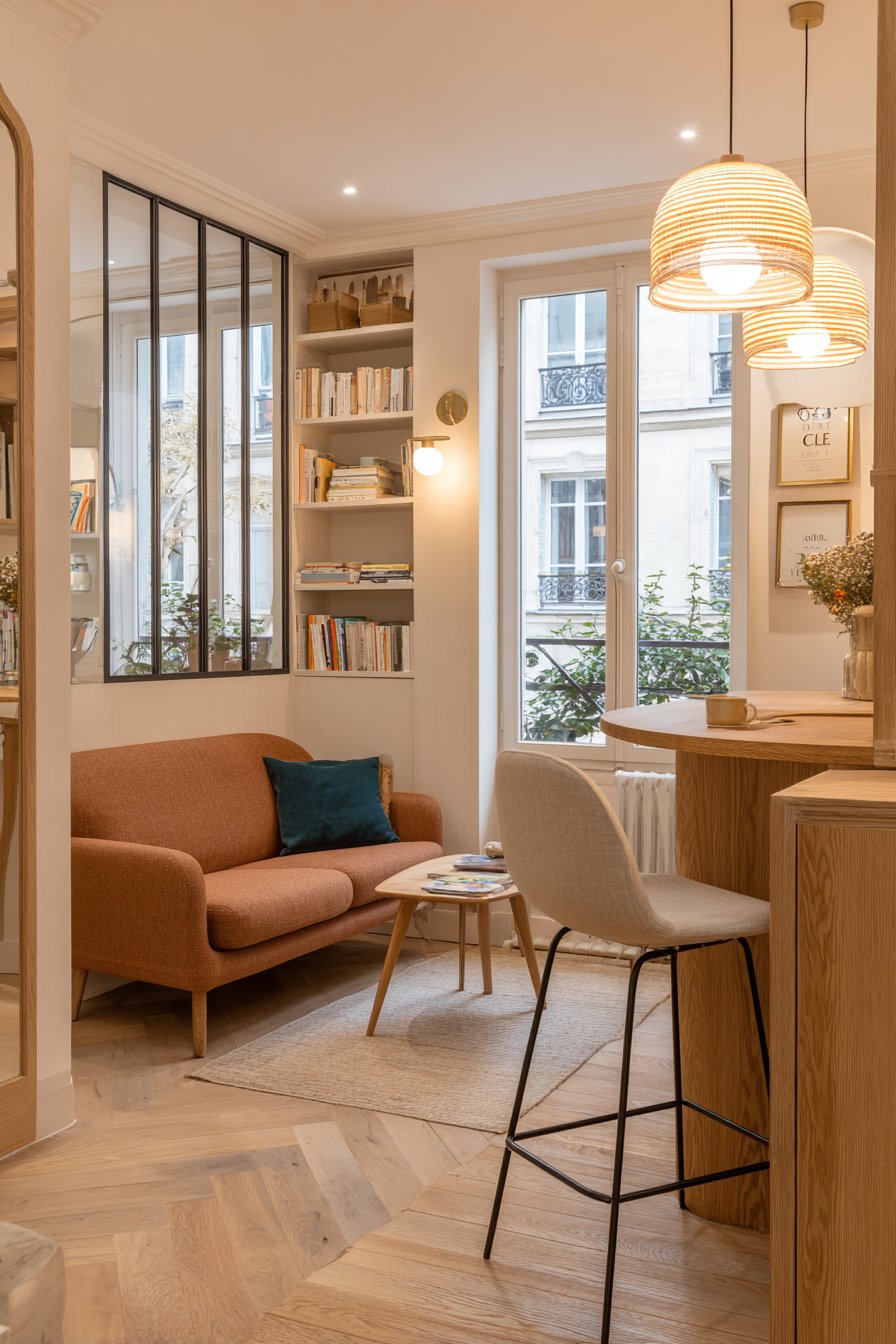
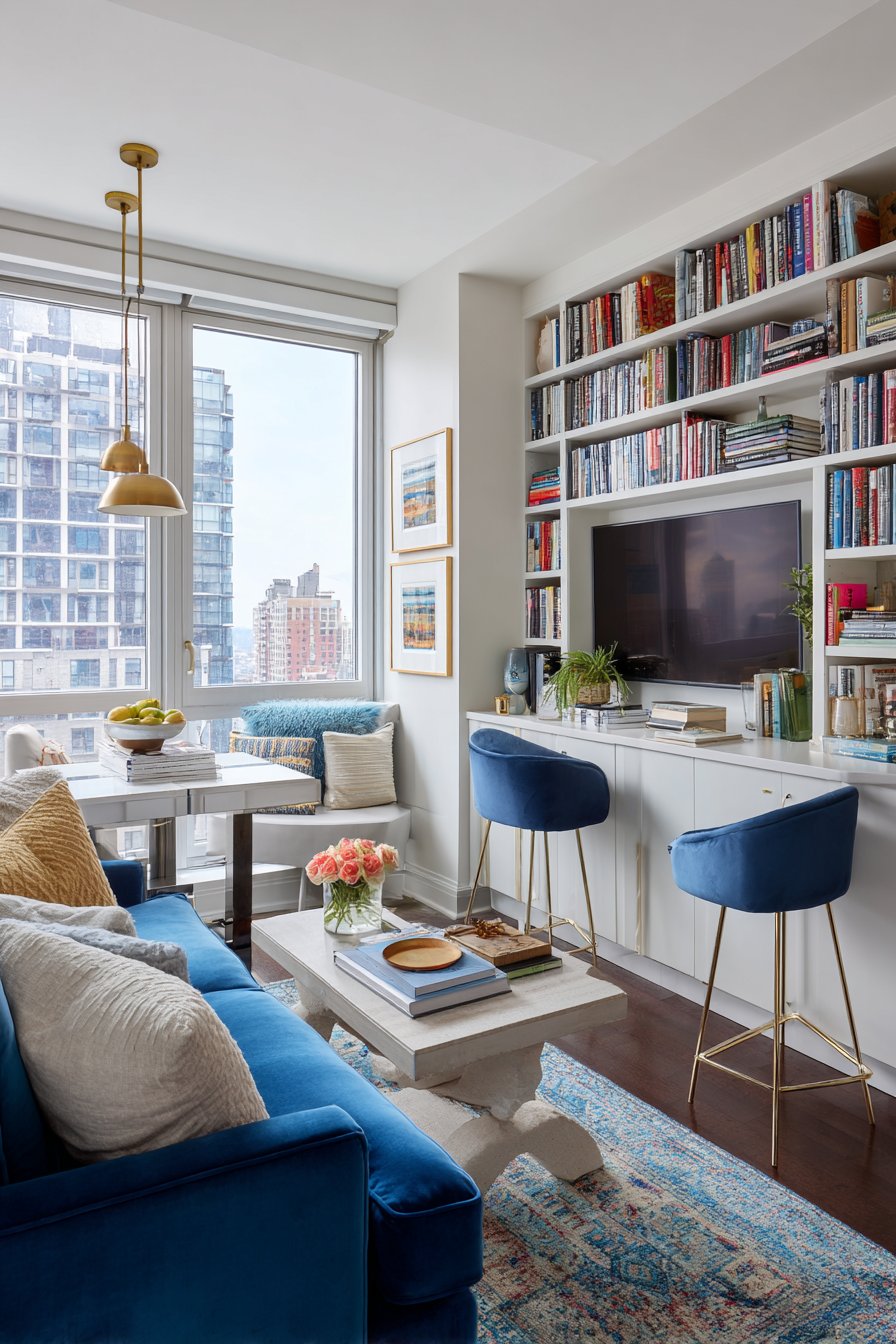
The small apartment living-dining room combo demonstrates that limited square footage doesn’t mean sacrificing style or functionality. This clever design features a compact loveseat facing a narrow console table that doubles as a dining surface with two modern bar stools tucked underneath. The genius of this arrangement lies in its multifunctional approach, where every piece of furniture earns its place by serving multiple purposes or adapting to different needs throughout the day.
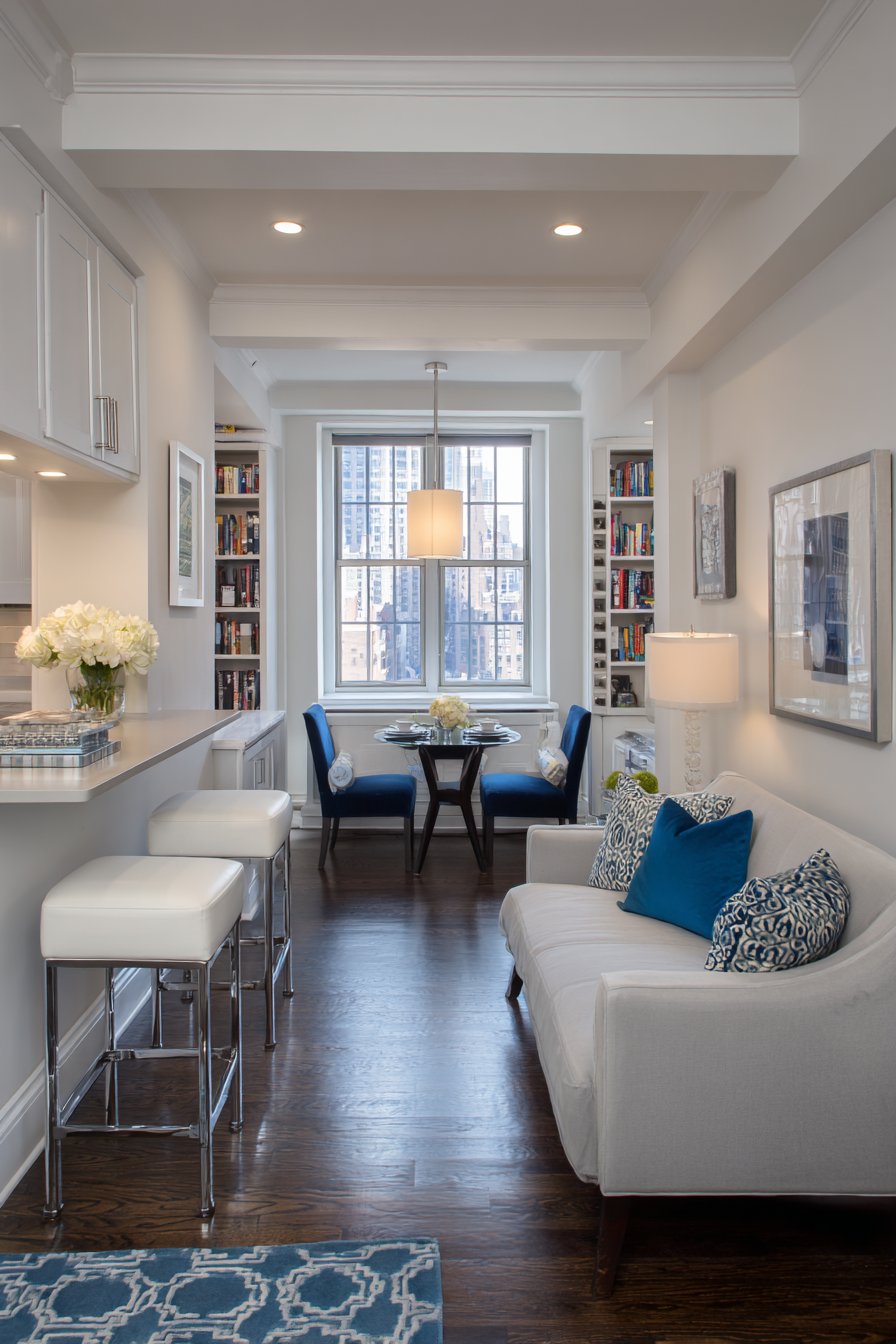
Smart storage solutions are essential in this space-efficient design. Wall-mounted cabinets provide concealed storage without consuming valuable floor space, while a bookshelf divider subtly separates the living and dining zones without blocking light or creating a closed-off feeling. This approach to spatial definition is particularly important in studio apartments or small combo spaces where maintaining an open feel while creating distinct functional areas requires creative problem-solving. The bookshelf serves triple duty: providing storage, displaying decorative items, and acting as a visual divider.
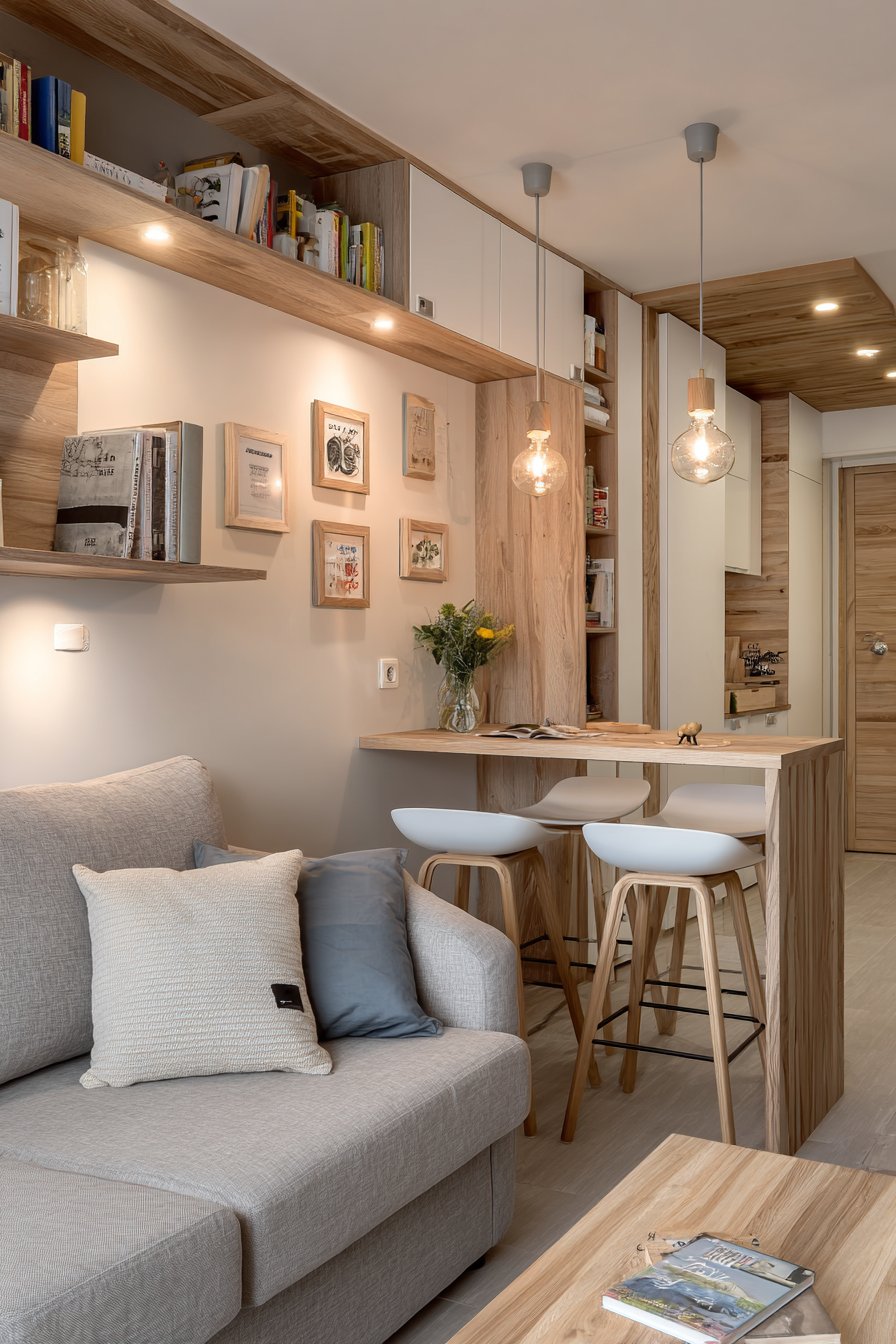
Lighting plays a strategic role in this compact living-dining room combo. Warm pendant lighting suspended over the dining area creates a focal point and defines the eating zone, while natural daylight from windows illuminates both spaces throughout the day. Interior design photography with balanced composition demonstrates how thoughtful furniture arrangement and multifunctional pieces can maximize every square inch. The space-saving furniture—from the narrow console dining table to the tucked-away bar stools—proves that small-space living can be both practical and stylish when approached with creativity and careful planning.
Key Design Tips:
- Choose multifunctional furniture pieces that serve more than one purpose
- Opt for furniture with built-in storage to maximize organization options
- Use vertical space with wall-mounted cabinets and floating shelves
- Select bar-height or counter-height tables with stools that tuck underneath
- Create subtle room division with open bookcases or shelving units
- Keep the color palette light to make small spaces feel more expansive
- Use mirrors strategically to reflect light and create the illusion of more space
4. Industrial Urban Edge
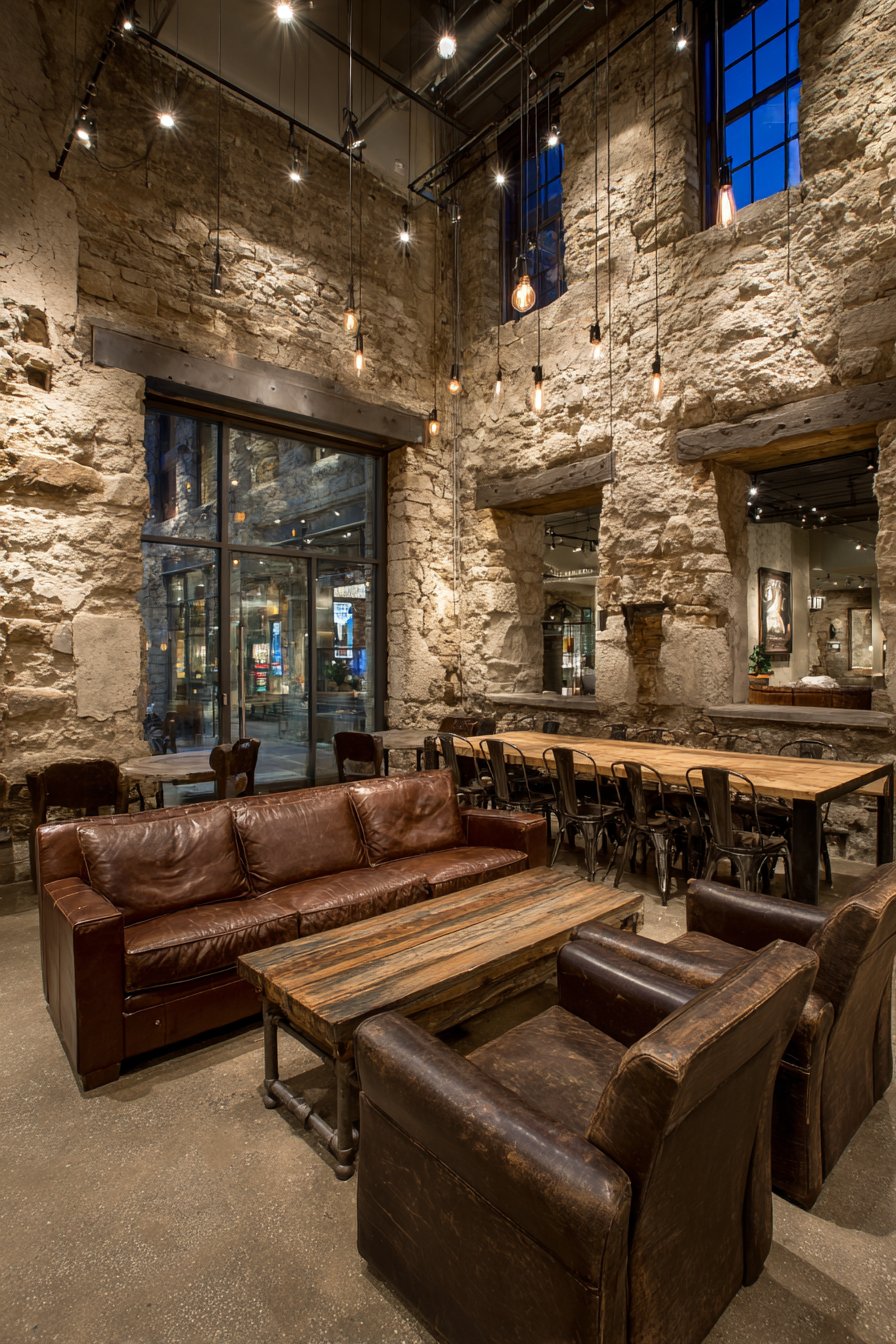
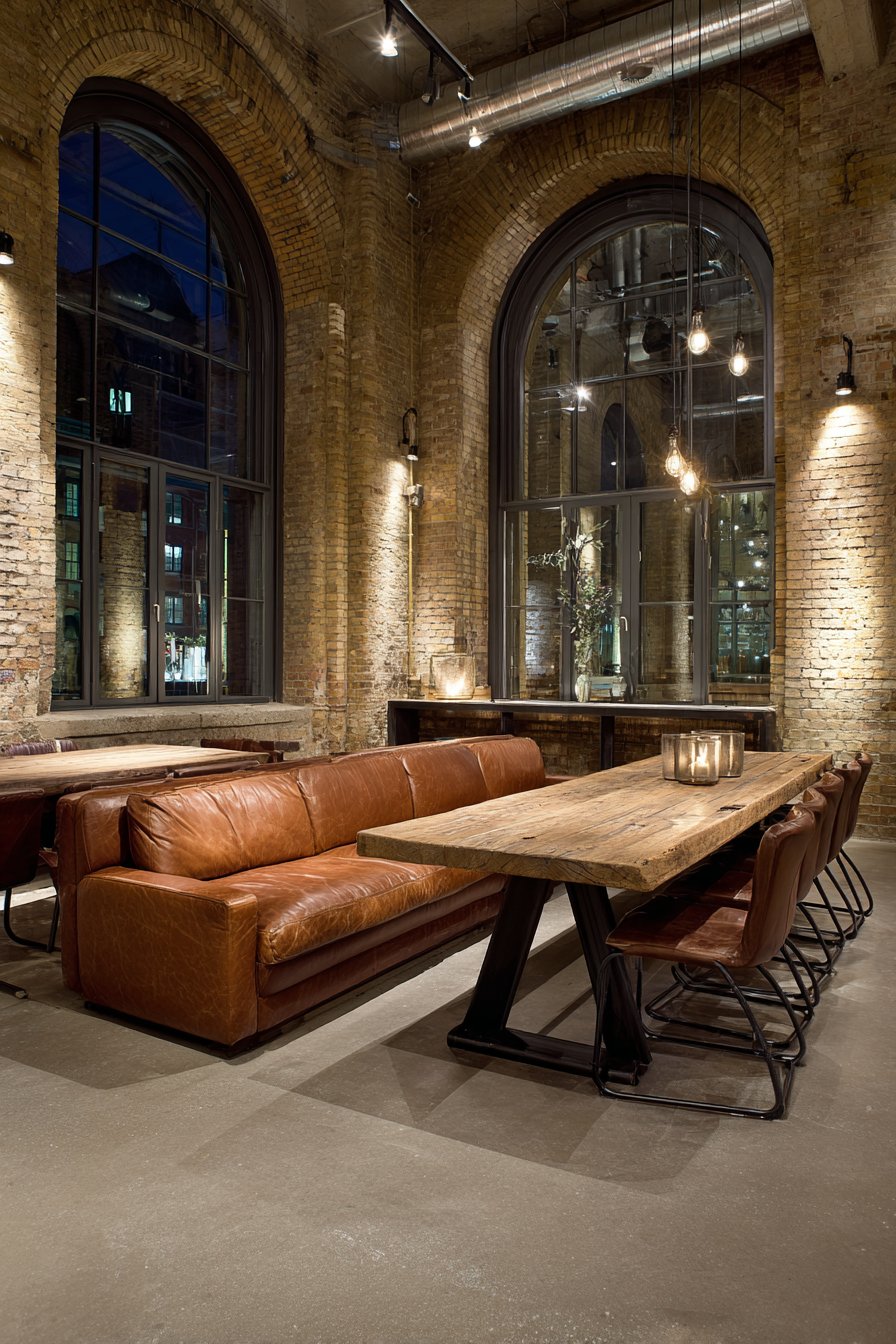
The industrial living-dining room combo showcases the raw, authentic aesthetic that defines urban loft living. This design embraces exposed brick accent walls, metal-framed windows, and concrete flooring as fundamental architectural elements rather than features to be concealed. The living area features a leather sofa in rich cognac brown, its warm patina providing a beautiful contrast against the cool, industrial materials. Adjacent to this, the dining space includes a reclaimed wood table with mixed metal chairs, creating an eclectic yet cohesive look that celebrates the beauty of utilitarian design.
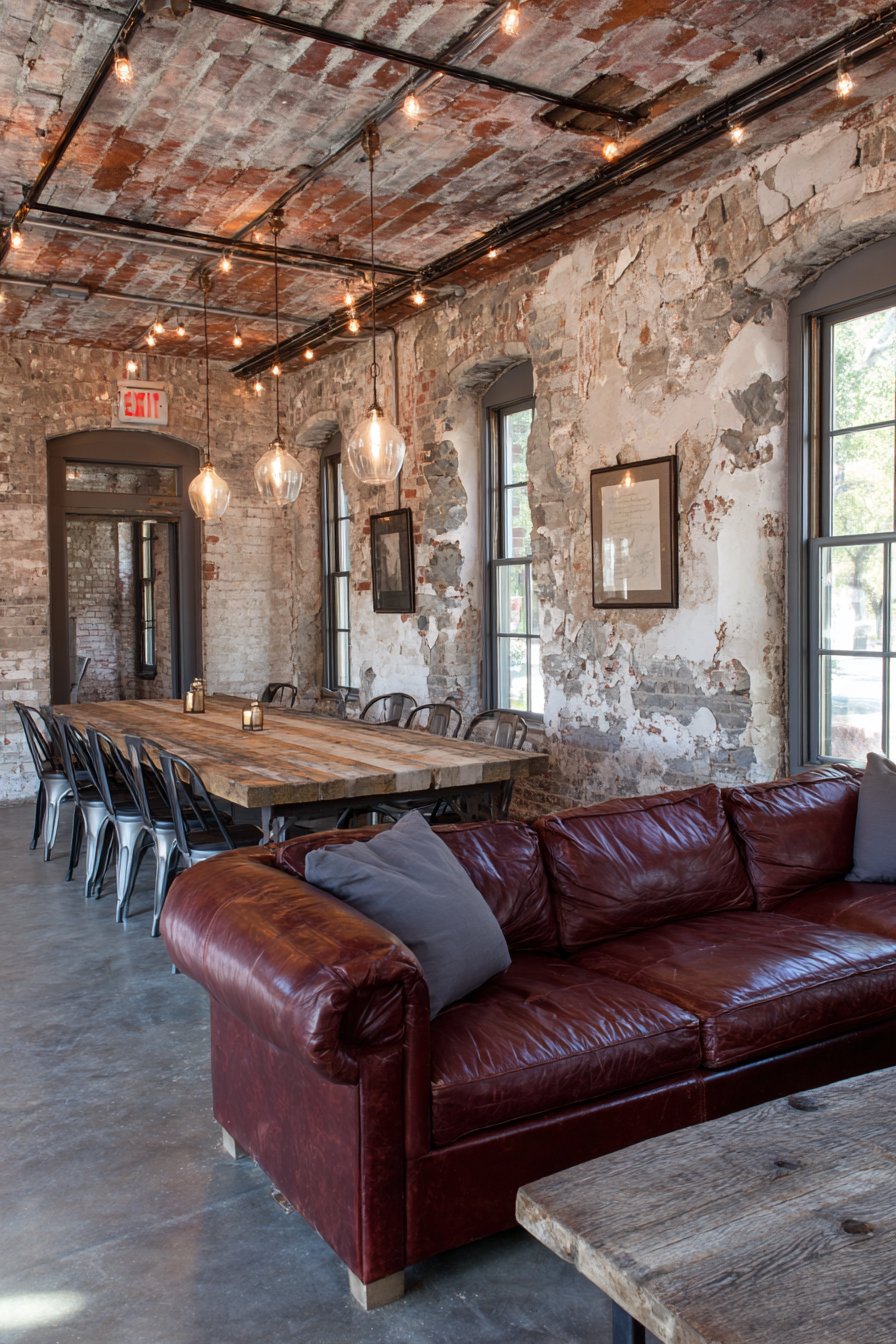
The material palette in this industrial living-dining room combo is deliberately raw and honest. Exposed brick walls tell stories of the building’s history, while concrete flooring provides a durable, low-maintenance surface that actually improves with age. The reclaimed wood dining table adds warmth and organic texture, its weathered surface bearing the marks of its previous life. Metal chairs in various finishes—perhaps some in matte black, others in brushed steel—add visual interest while reinforcing the industrial theme. This mixing of materials creates depth and prevents the space from feeling too cold or austere.
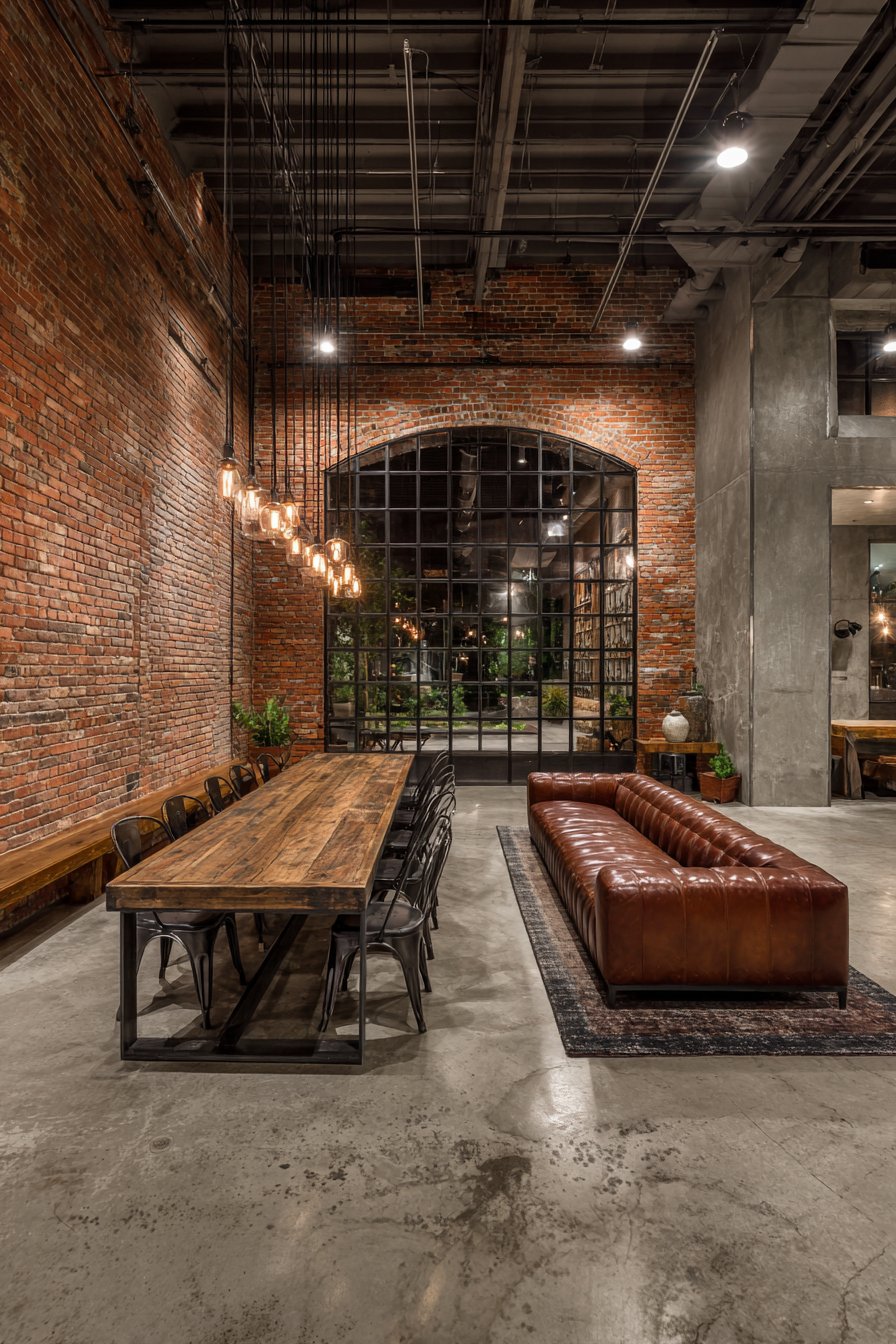
Edison bulb fixtures and track lighting serve both functional and aesthetic purposes in this combo space. The warm glow of exposed filament bulbs softens the harder industrial elements, while adjustable track lighting allows you to direct illumination where it’s needed most. Wide-angle professional photography captures the raw textures and urban aesthetic with dramatic shadows that emphasize the three-dimensional quality of the brick and the grain of the reclaimed wood. The industrial living-dining room combo proves that embracing architectural honesty and celebrating utilitarian materials can create spaces with tremendous character and visual impact.
Key Design Tips:
- Embrace and highlight existing architectural elements like exposed brick or concrete
- Balance cool industrial materials with warm wood and leather accents
- Mix metals in various finishes for added visual interest and authenticity
- Choose Edison bulbs or industrial-style fixtures for appropriate lighting
- Incorporate vintage or reclaimed pieces to enhance the authentic industrial feel
- Use large-scale artwork or minimalist pieces to avoid cluttering the space
- Select furniture with metal frames or industrial detailing to reinforce the aesthetic
5. Transitional Sophistication
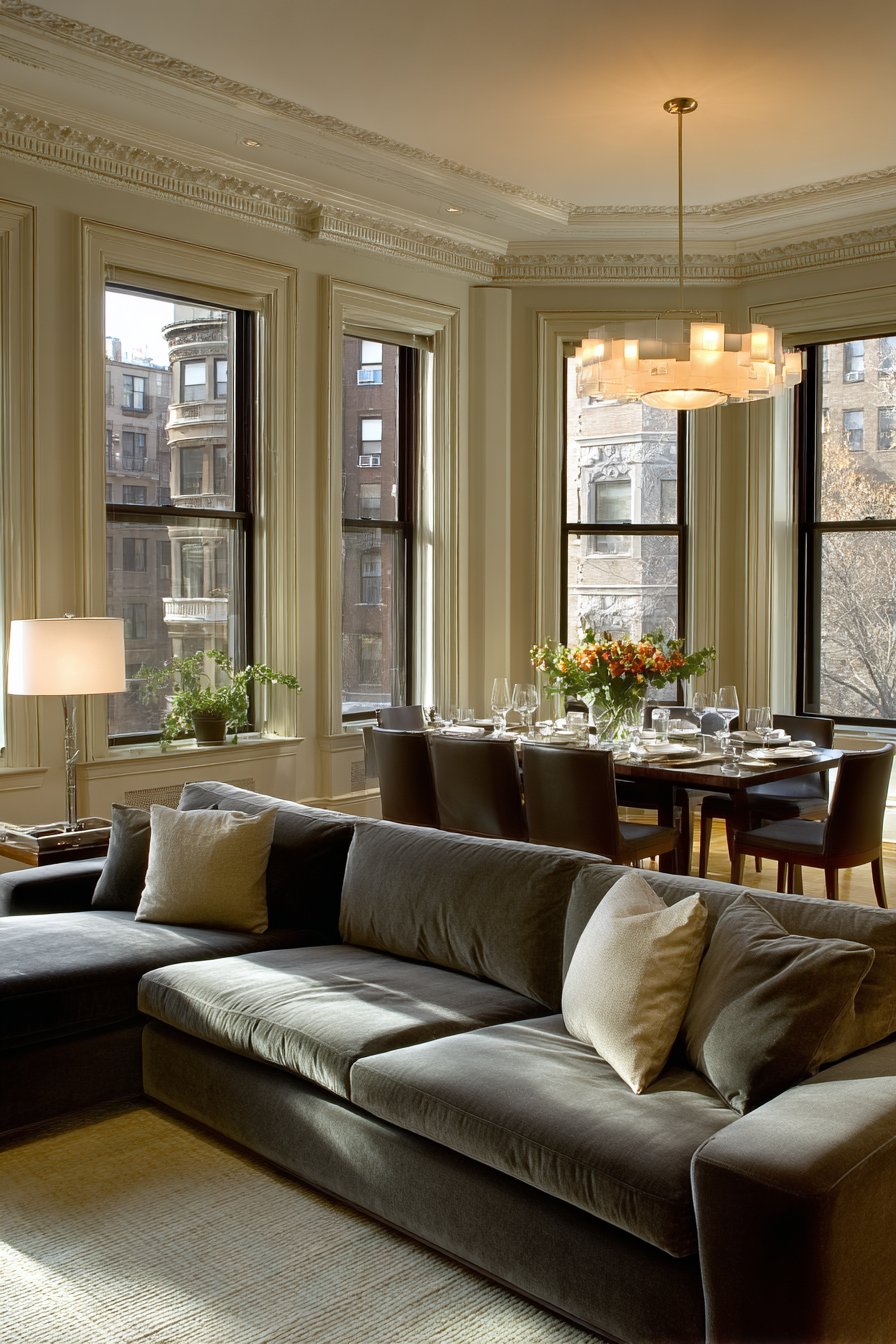
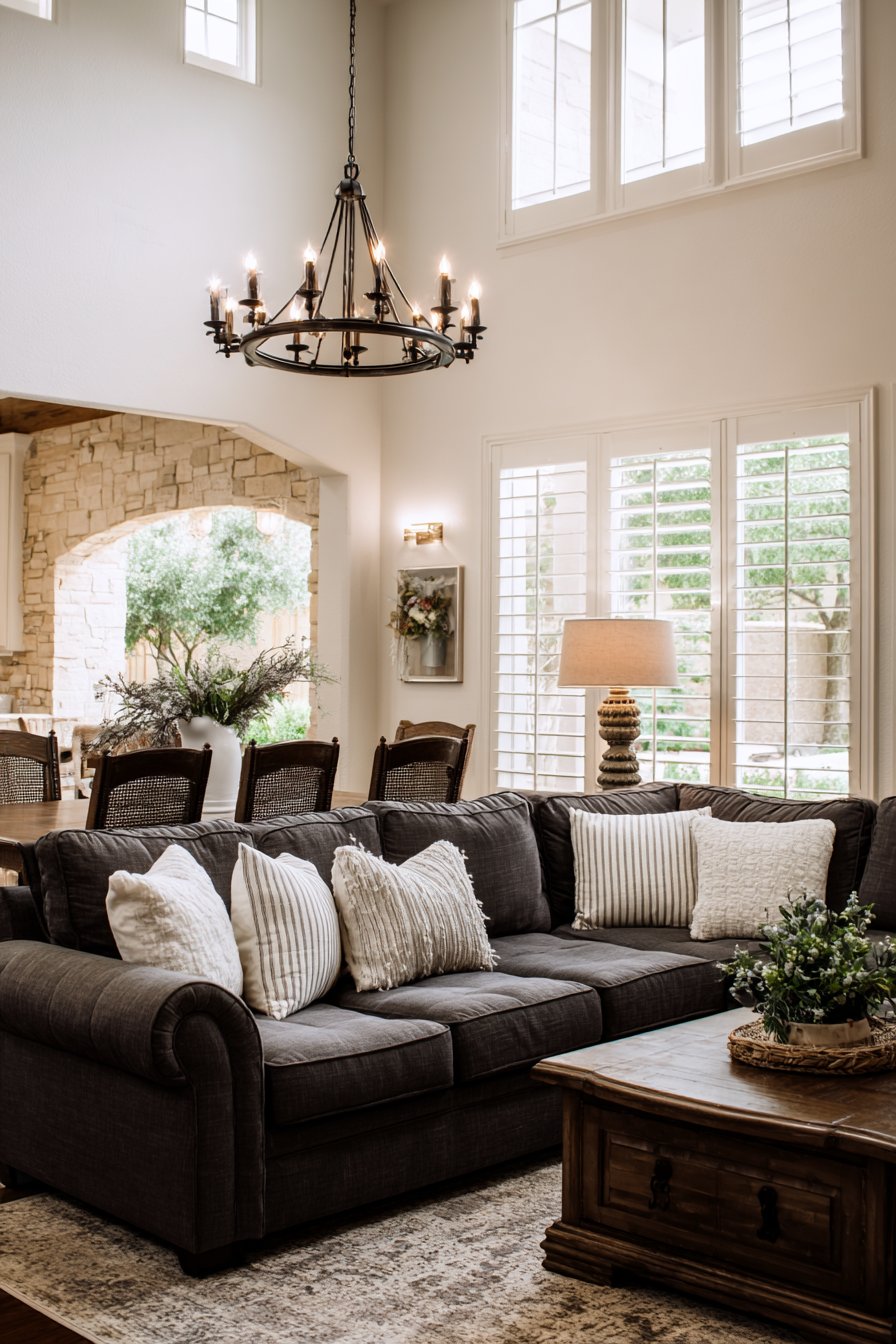
The transitional living-dining room combo masterfully bridges traditional and contemporary design elements, creating a timeless aesthetic that appeals to a broad range of tastes. This sophisticated space features a comfortable sectional in charcoal gray facing a classic rectangular dining table in dark walnut with upholstered dining chairs. The transitional style’s genius lies in its ability to combine the best of both design worlds: the warmth and craftsmanship of traditional furniture with the clean lines and uncluttered aesthetic of contemporary design.
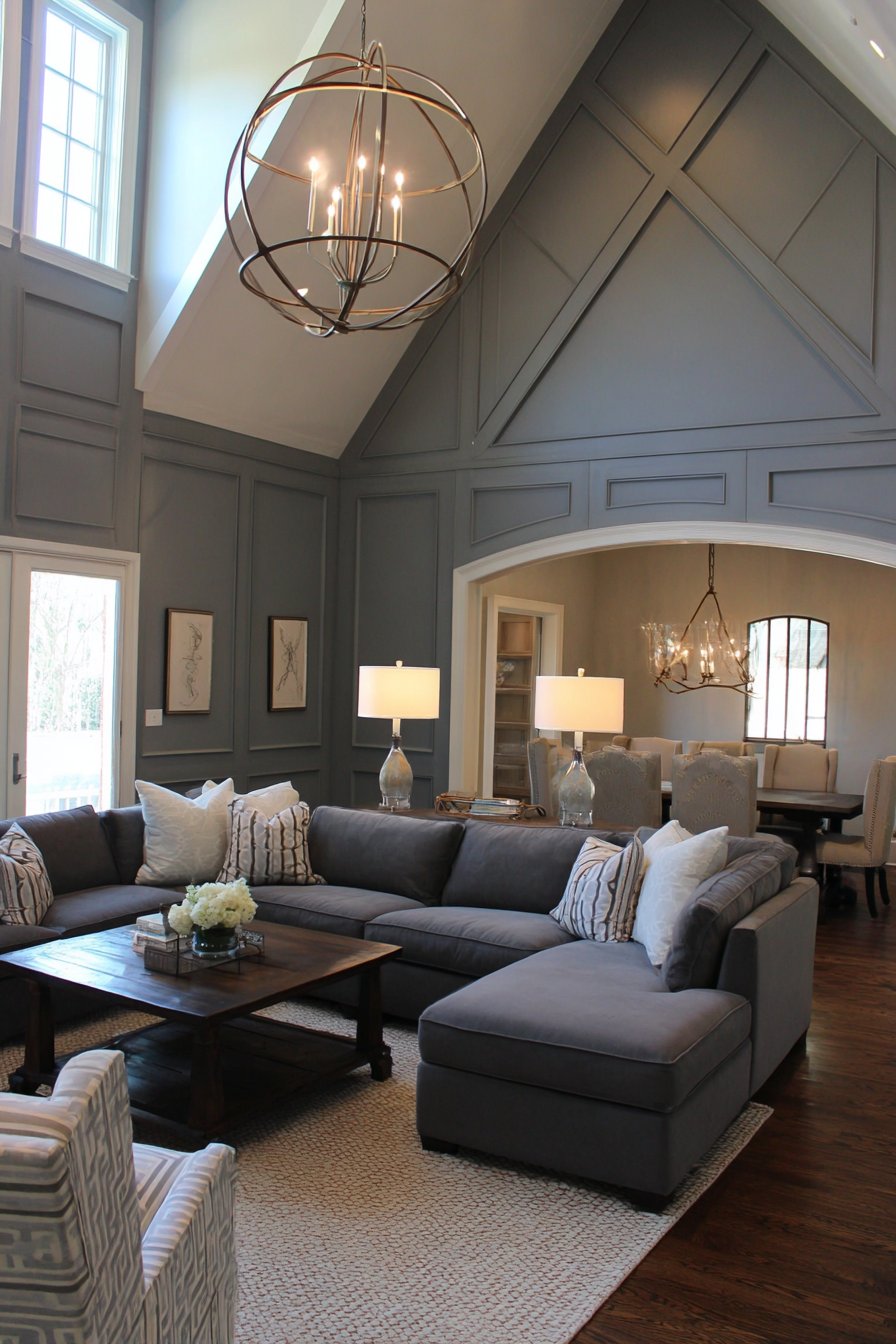
The furniture selection demonstrates the hallmarks of transitional style. The charcoal gray sectional offers modern simplicity in its streamlined form, yet its plush upholstery and generous proportions provide the comfort associated with traditional furniture. The dark walnut dining table features classic proportions and quality craftsmanship, while its relatively simple design keeps it from feeling too formal or dated. Upholstered dining chairs add softness and comfort, their neutral fabric complementing both the living room seating and the wood table. A contemporary chandelier defines the dining zone with sculptural presence, while table lamps in the living area provide ambient lighting that creates intimate conversation areas.
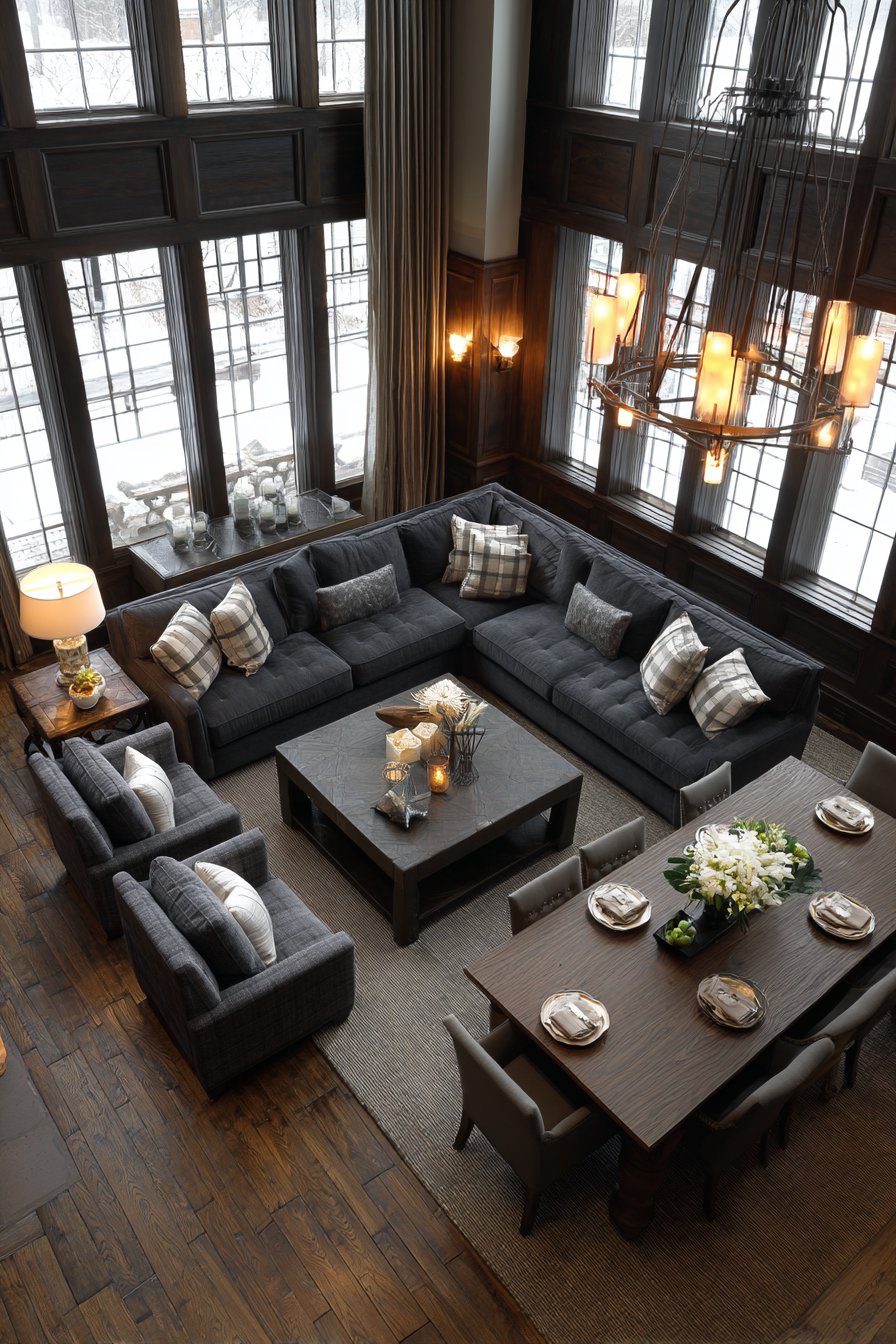
Hardwood flooring in medium brown tones serves as a unifying element throughout this living-dining room combo, providing a warm foundation that works beautifully with both the gray upholstery and dark wood furniture. Interior photography showcases the sophisticated balance between traditional and modern elements, with natural lighting highlighting the thoughtful furniture placement and quality materials. The transitional approach offers tremendous versatility—you can easily update the space’s look by changing accessories, artwork, or textiles without needing to replace major furniture pieces, making it an excellent choice for those who appreciate both classic and contemporary design.
Key Design Tips:
- Mix traditional furniture silhouettes with contemporary finishes and fabrics
- Choose a neutral color palette as your foundation, adding color through accessories
- Select lighting fixtures that bridge traditional and modern aesthetics
- Invest in quality upholstered pieces in timeless colors like gray, beige, or navy
- Use hardwood flooring to create continuity between both zones
- Incorporate both curved and straight lines for visual balance
- Keep window treatments simple and streamlined while using quality fabrics
6. Coastal Retreat Atmosphere
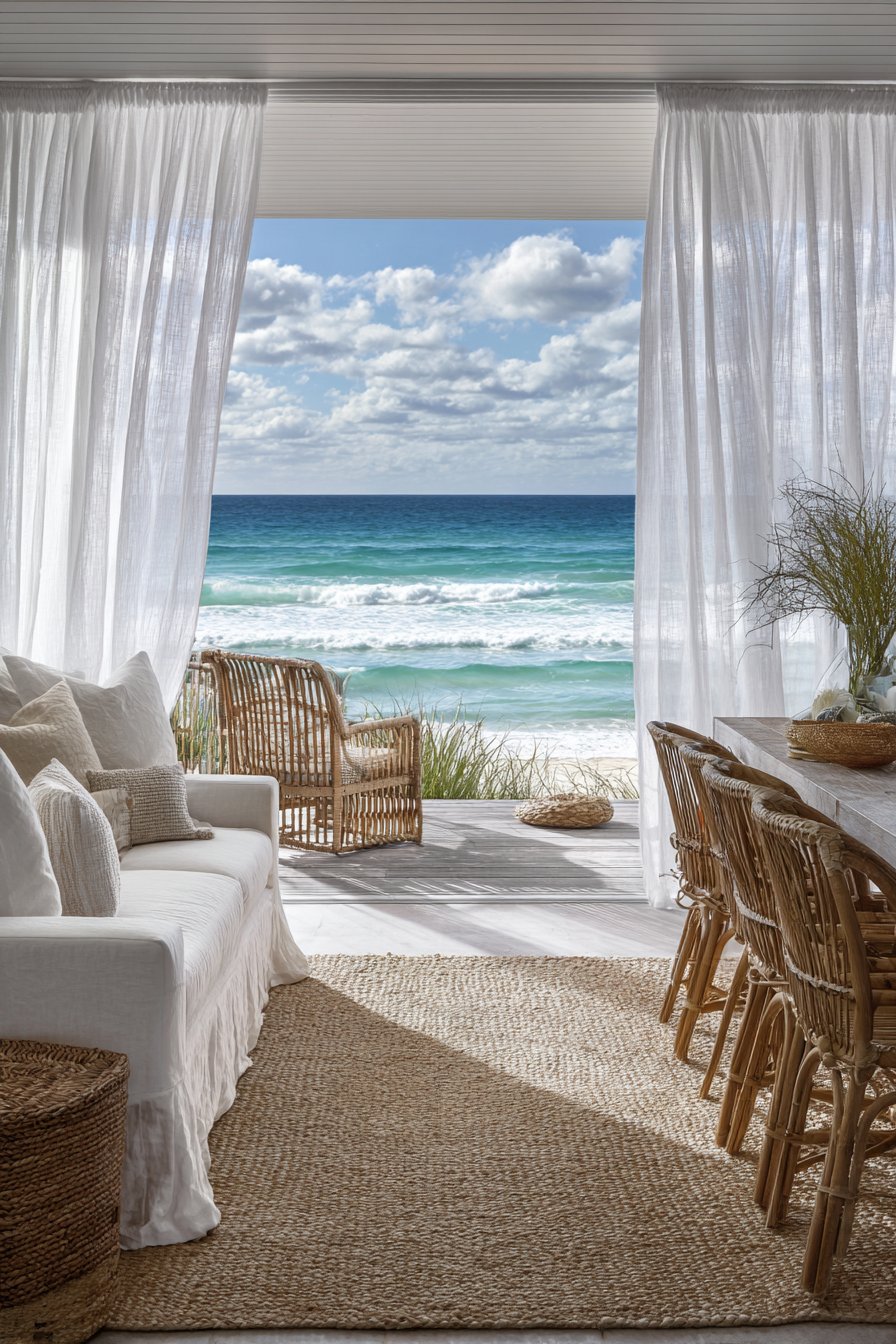
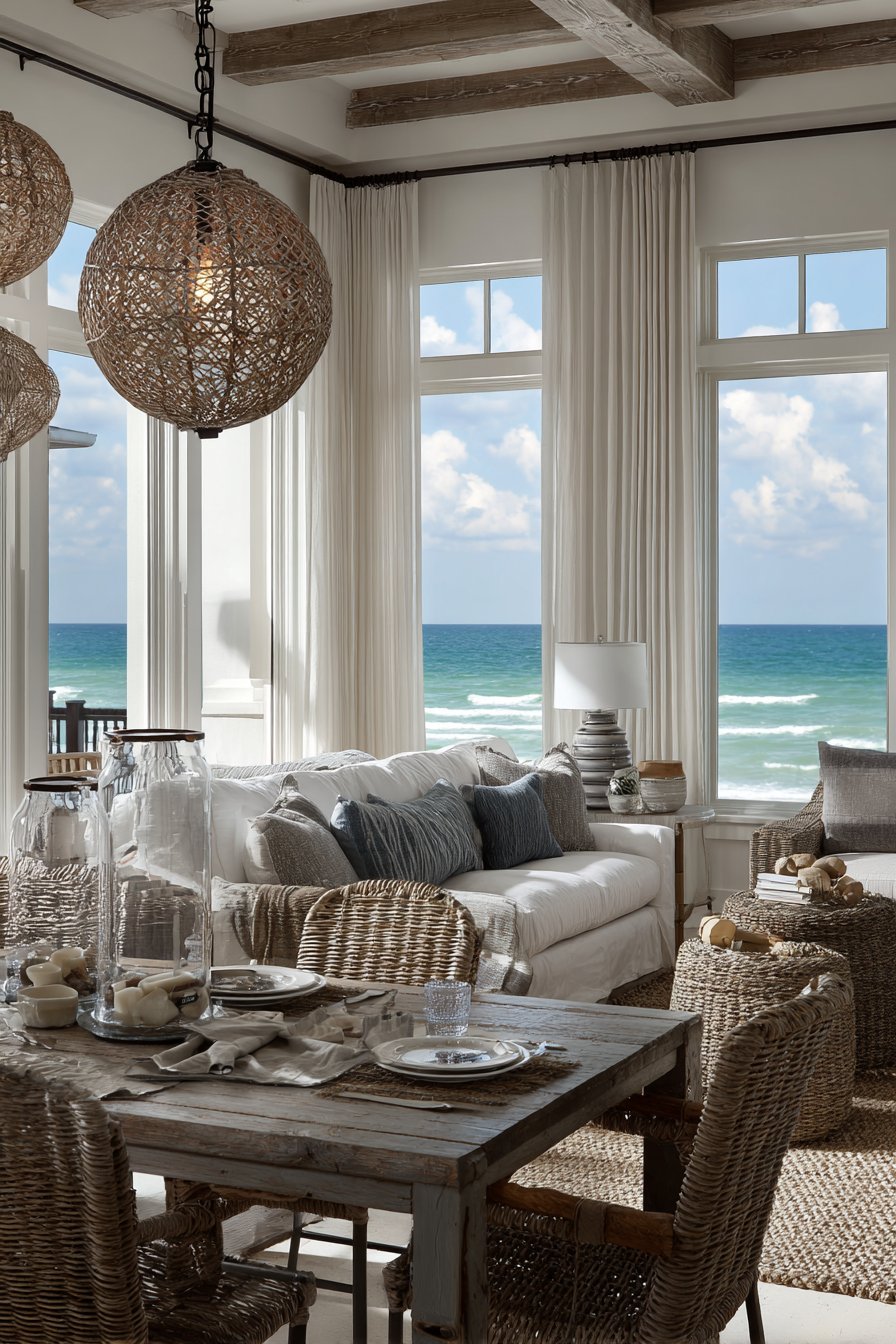
The coastal living-dining room combo captures the relaxed, breezy essence of seaside living, creating a retreat-like atmosphere that promotes relaxation and easy entertaining. This design features a white slipcovered sofa and rattan accent chairs in the living zone, their casual elegance perfectly complementing a weathered wood dining table with woven seating. The coastal aesthetic celebrates natural materials, light colors, and organic textures that evoke the beach without relying on clichéd nautical themes or shell decorations.
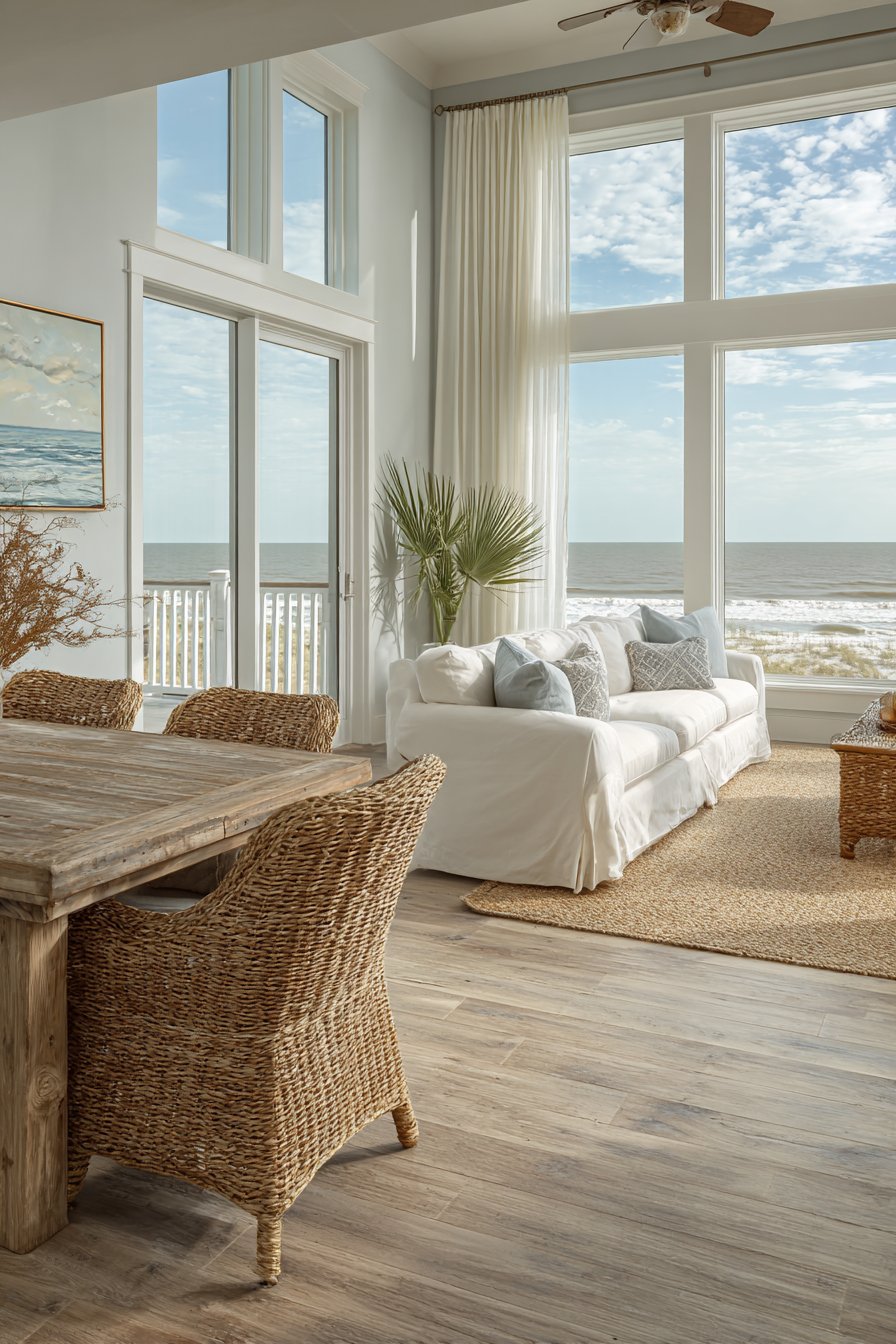
Sheer white curtains frame large windows, allowing soft, diffused light to flood the space while providing privacy when needed. This treatment of natural light is essential to coastal design—the goal is to maximize sunshine and create the bright, airy feeling of a beach house. A sandy beige area rug grounds the living area, its neutral tone evoking sun-bleached sand while providing textural warmth underfoot. Natural fiber textures appear throughout the space—in the woven dining chair seats, the jute or sisal elements in the rug, and the rattan accent chairs—creating a tactile experience that reinforces the coastal theme.
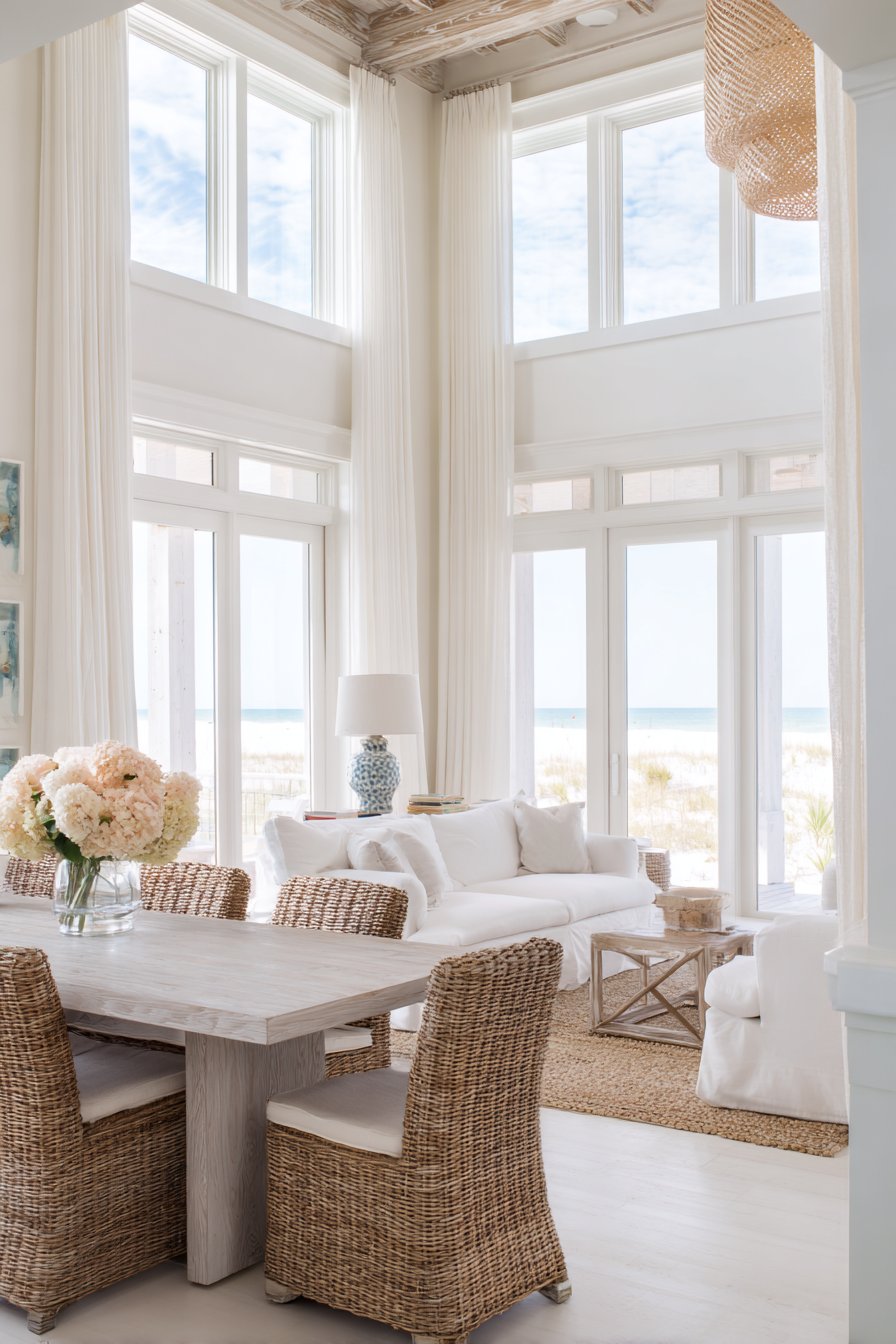
Professional interior design photography captures the breezy, relaxed atmosphere with attention to the coastal color palette and organic materials. The weathered wood dining table, with its sun-bleached finish and visible grain, serves as a stunning focal point that anchors the dining zone. The beauty of this coastal living-dining room combo lies in its ability to feel vacation-like and special while remaining supremely comfortable for everyday living. The white slipcovered sofa is both beautiful and practical—slipcovers can be removed and washed, making them ideal for homes with children, pets, or frequent guests who might spill red wine.
Key Design Tips:
- Build your palette around whites, sandy beiges, and soft blues or aquas
- Choose natural materials like rattan, jute, weathered wood, and linen
- Select slipcovered furniture for easy maintenance and casual elegance
- Maximize natural light with sheer curtains or minimal window treatments
- Incorporate woven textures through rugs, baskets, and furniture
- Keep the overall aesthetic relaxed and unfussy—coastal should feel effortless
- Add indoor plants like palms or ferns to enhance the natural, organic feel
7. Bohemian Eclectic Spirit
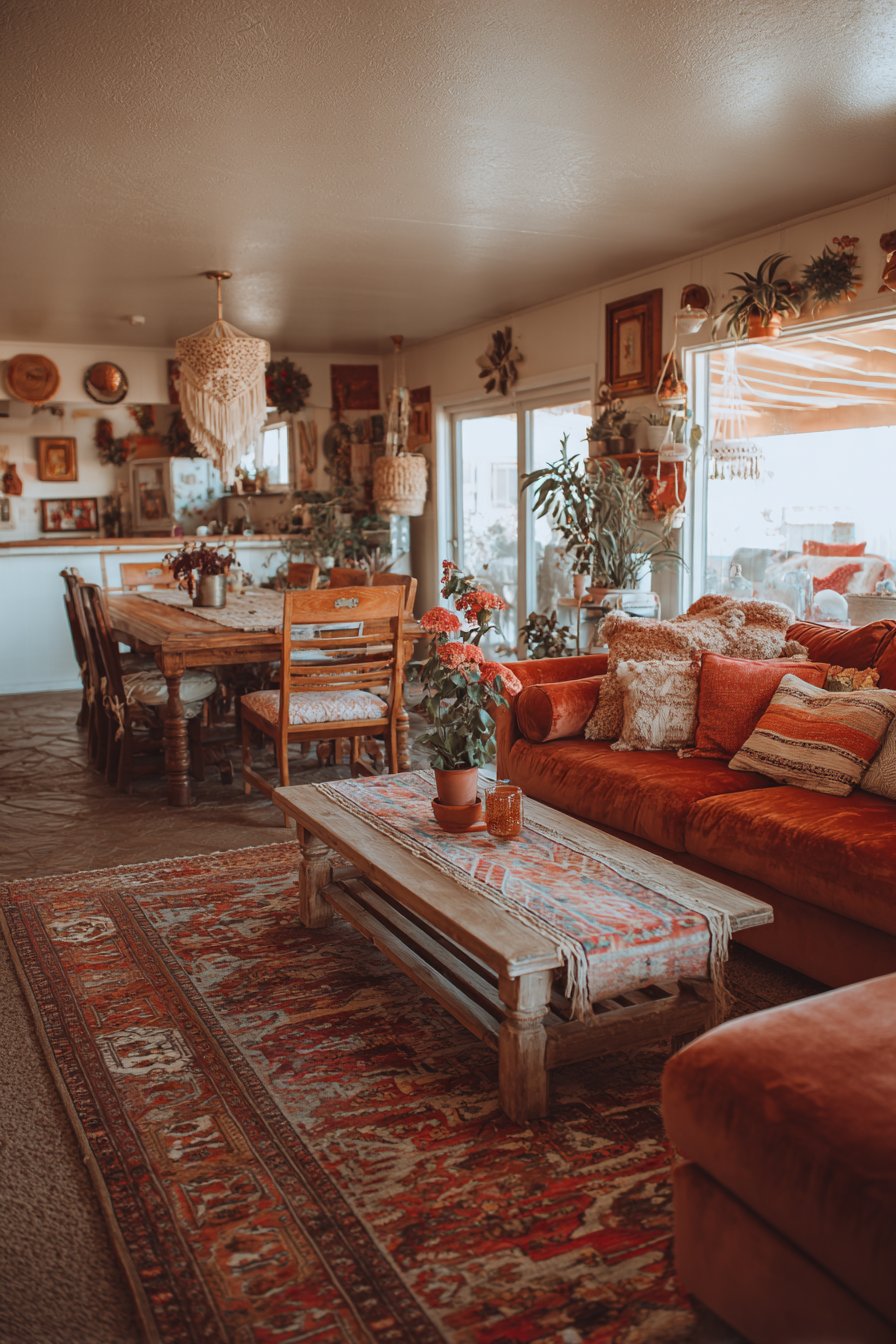
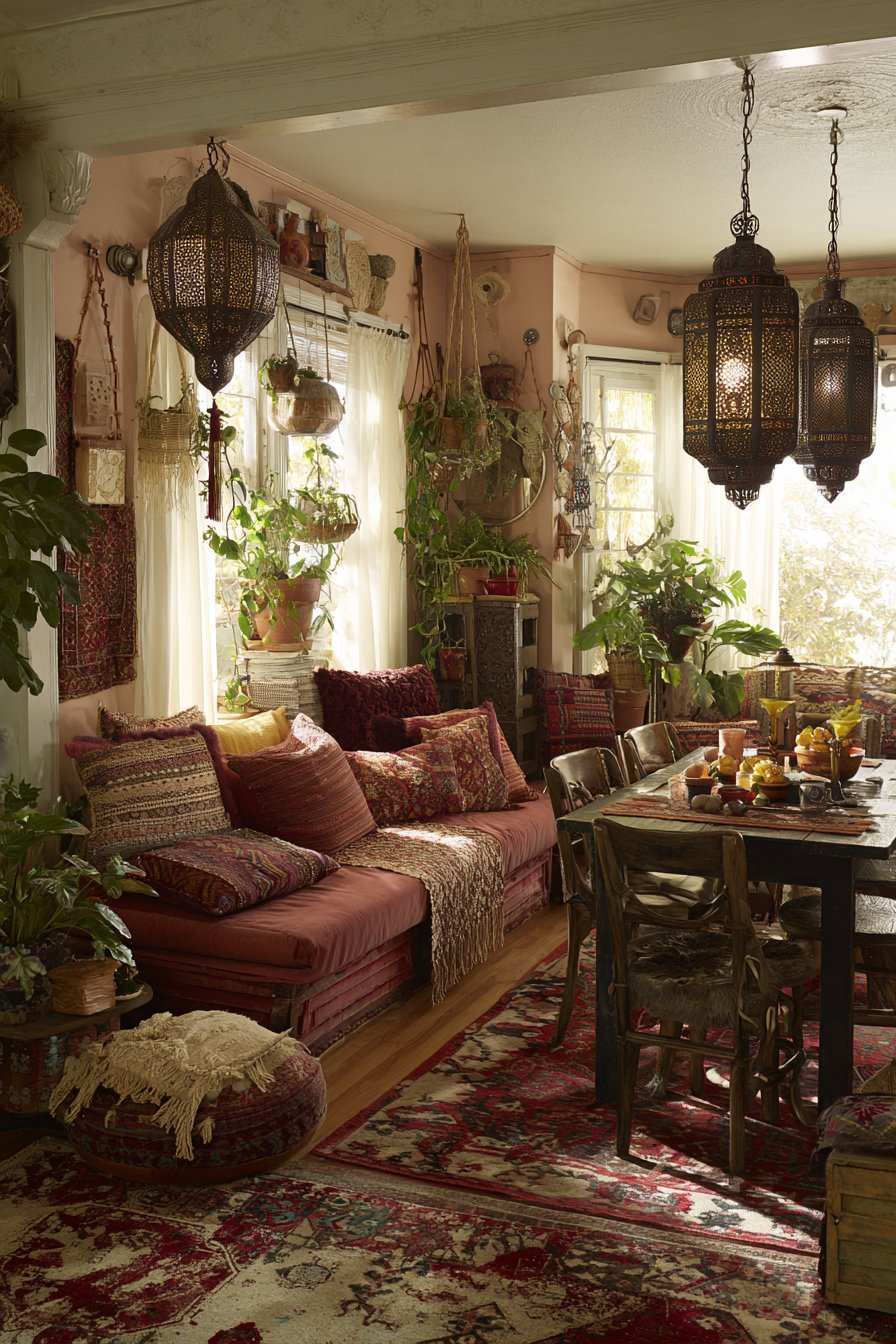
The bohemian living-dining room combo celebrates individuality, creativity, and the beauty of collected treasures from various cultures and eras. This space features a low velvet sofa in rich terracotta with an abundance of throw pillows in varied patterns and textures, positioned near a rustic dining table surrounded by mismatched vintage chairs. The bohemian aesthetic embraces the philosophy that more is more—layering textiles, mixing patterns, and combining furniture from different periods to create a space that feels deeply personal and utterly unique.
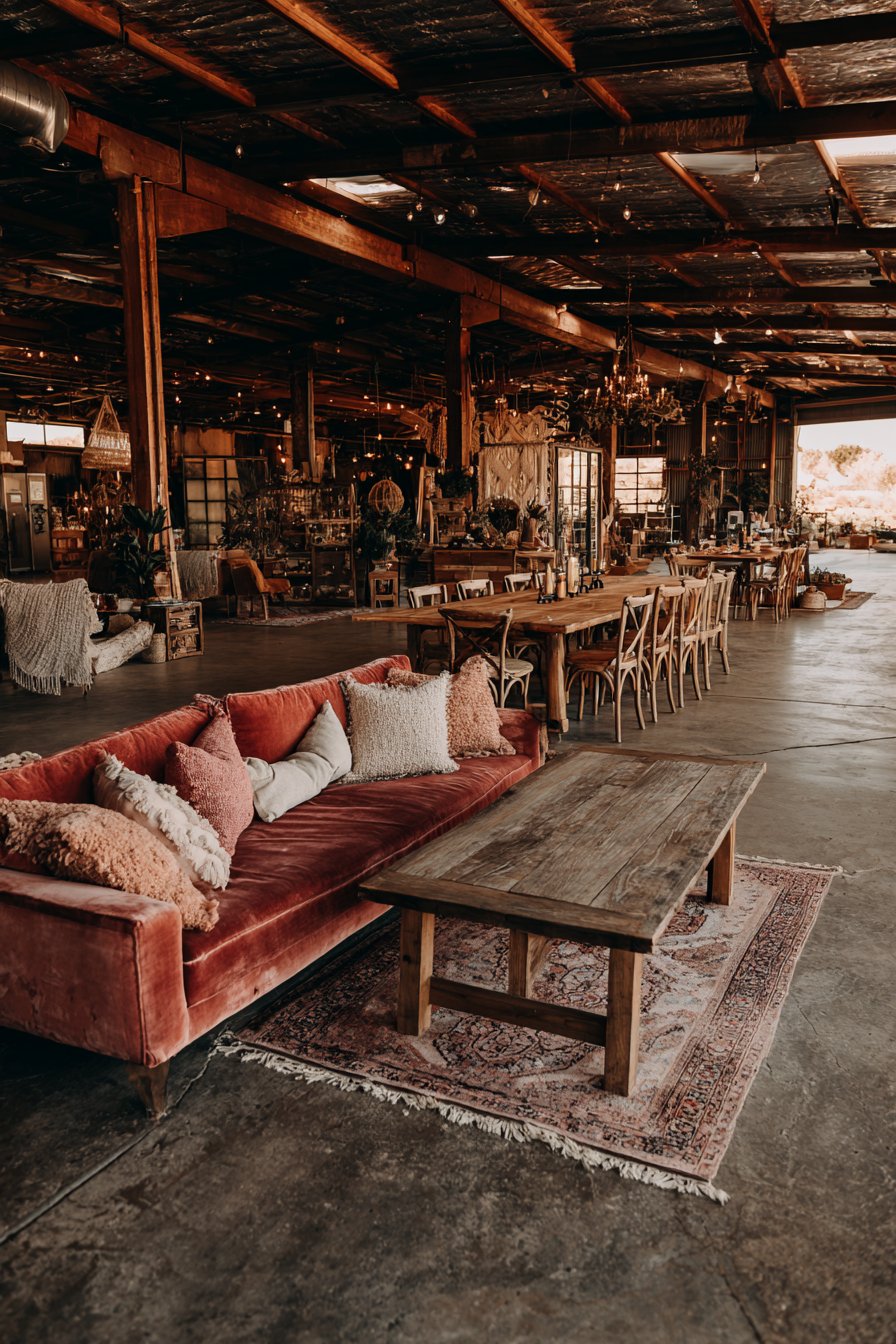
Macramé wall hangings add artisanal texture and vertical interest, while layered textiles—from the velvet sofa upholstery to the embroidered throw pillows to the kilim-style runners on the table—create a rich, tactile experience. Abundant potted plants bring life and organic form to the space, their varied sizes and species adding to the collected, eclectic feeling. Moroccan-style area rugs define each zone with intricate patterns and jewel tones, their overlapping edges demonstrating the bohemian love of layering. The key to successful bohemian design is curation rather than chaos—each piece should feel intentionally chosen and meaningful rather than randomly assembled.
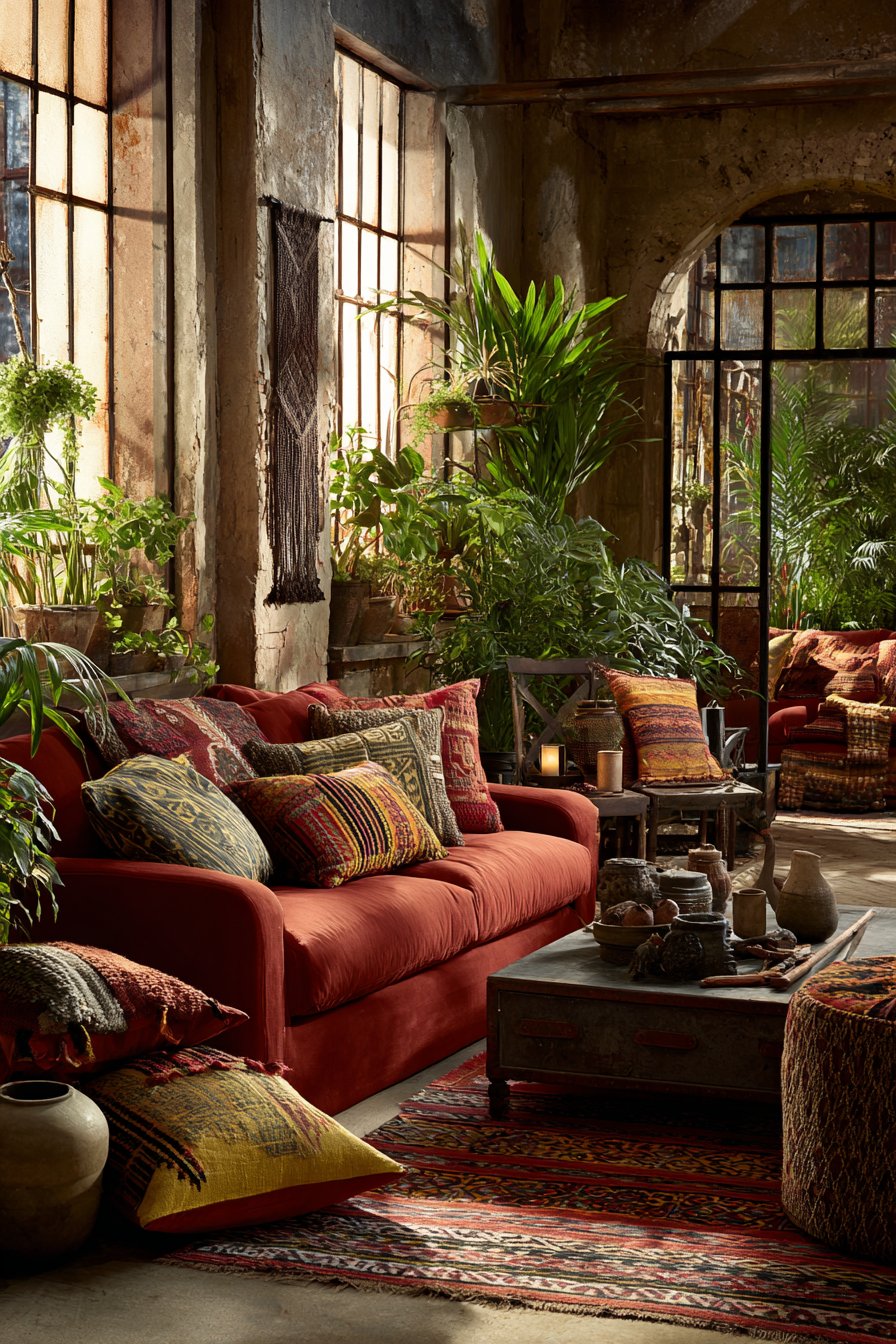
Natural lighting with warm undertones bathes this bohemian living-dining room combo in a golden glow, captured through interior photography that emphasizes the collected-over-time aesthetic. The mismatched vintage dining chairs tell a story—perhaps one was found at a flea market, another inherited from a grandmother, a third discovered at an estate sale. This approach to furnishing creates depth and interest that can’t be replicated by buying a matching set. The terracotta velvet sofa serves as a bold anchor piece, its warm hue tying together the various colors found in the textiles, plants, and artwork throughout the space.
Key Design Tips:
- Embrace bold colors and mix patterns fearlessly—florals with geometrics, stripes with paisleys
- Layer textiles at every opportunity: rugs over rugs, throws over sofas, cushions upon cushions
- Mix furniture from different eras and cultures for an authentic collected look
- Incorporate abundant plants in varied planters—ceramic, woven baskets, vintage vessels
- Add artisanal elements like macramé, woven wall hangings, or handmade ceramics
- Choose one or two anchor pieces in bold colors to ground the eclectic mix
- Display meaningful objects and travel souvenirs as part of your decor
8. Mid-Century Modern Classic
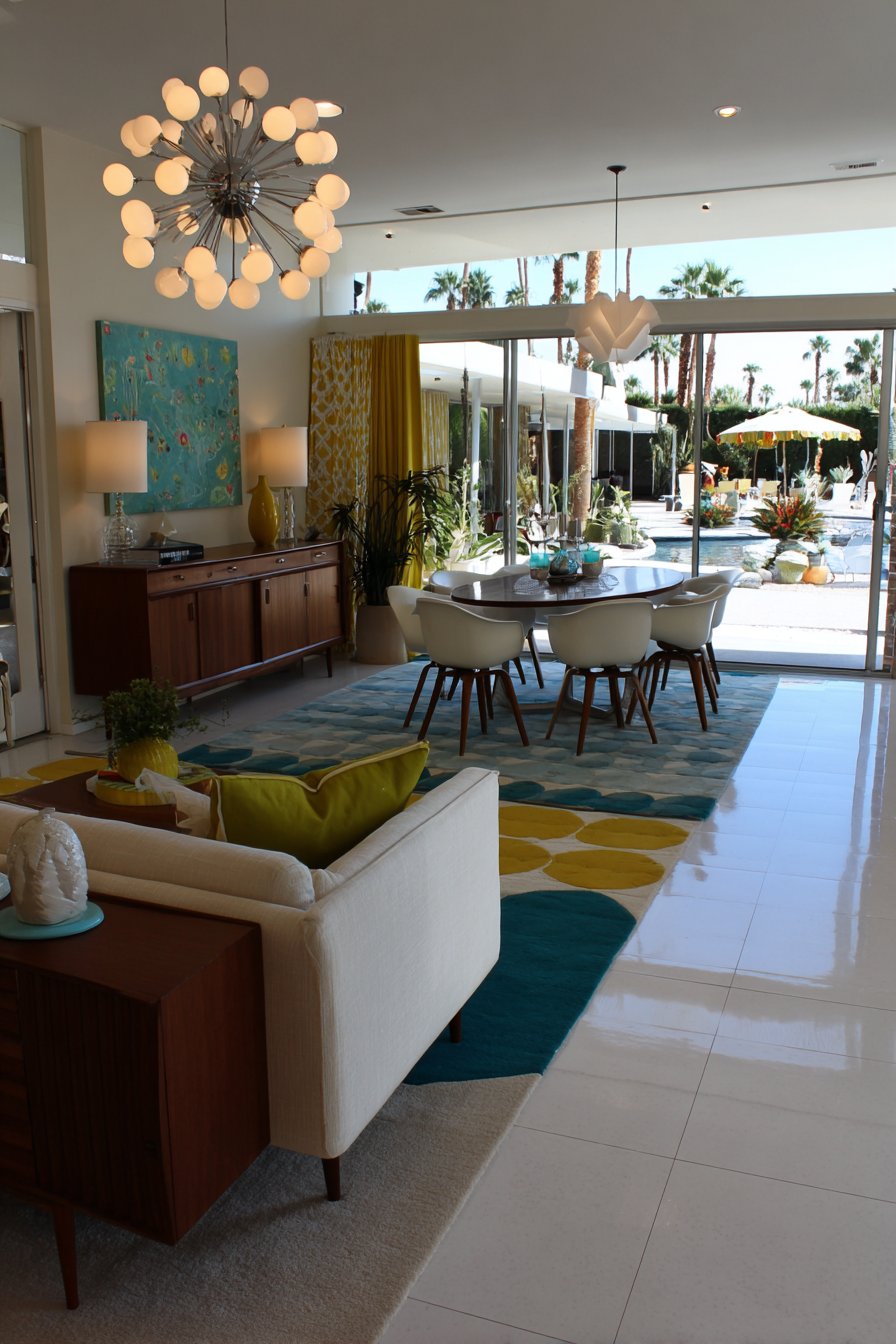
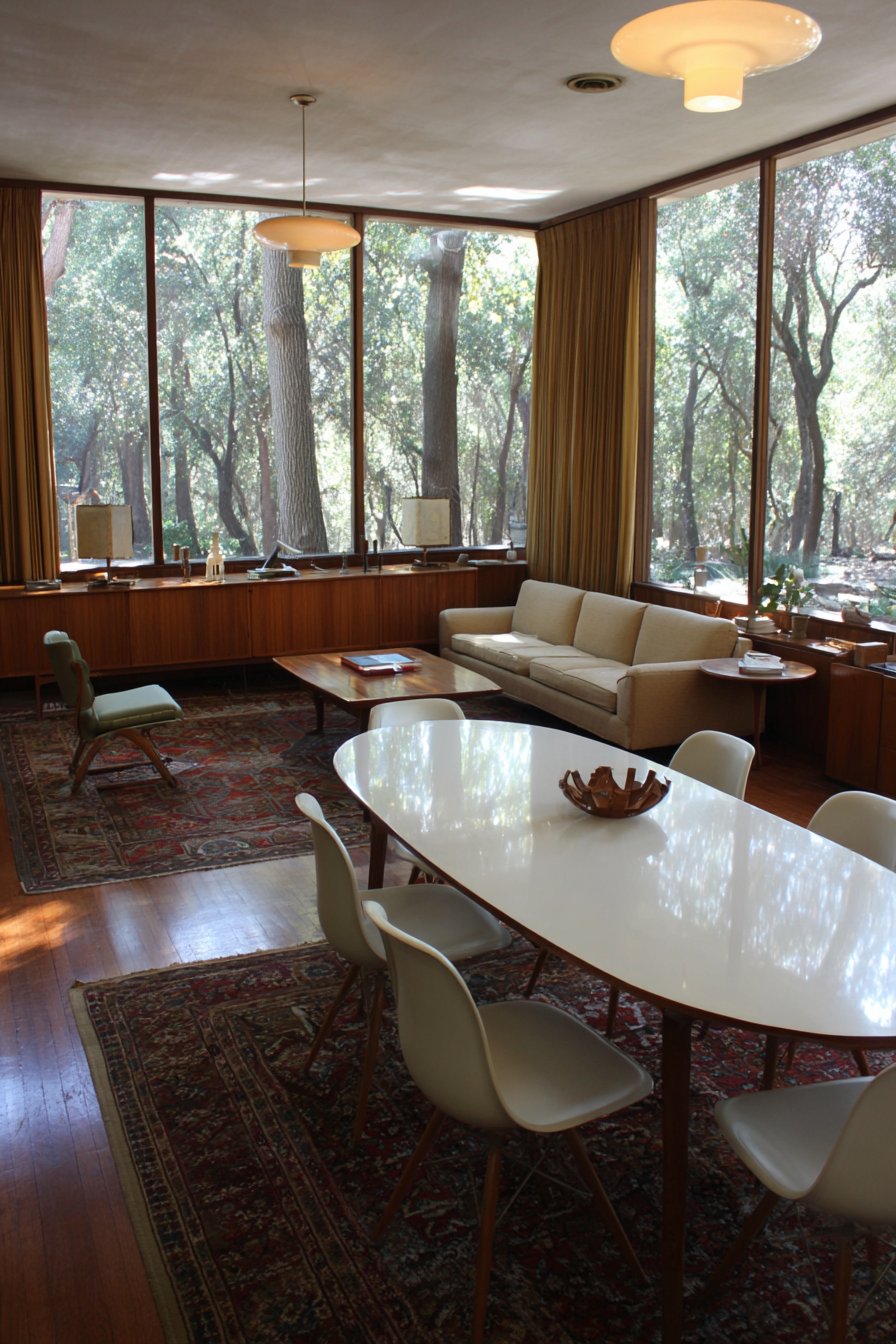
The mid-century modern living-dining room combo pays homage to the iconic design movement of the 1950s and 60s, celebrating clean lines, organic curves, and the integration of nature into interior spaces. This design showcases a teak sideboard serving as a visual divider between a low-profile sofa with tapered legs and an oval tulip-style dining table with molded plastic chairs. The mid-century aesthetic is characterized by its optimistic embrace of new materials and manufacturing techniques while maintaining a strong connection to natural wood and organic forms.
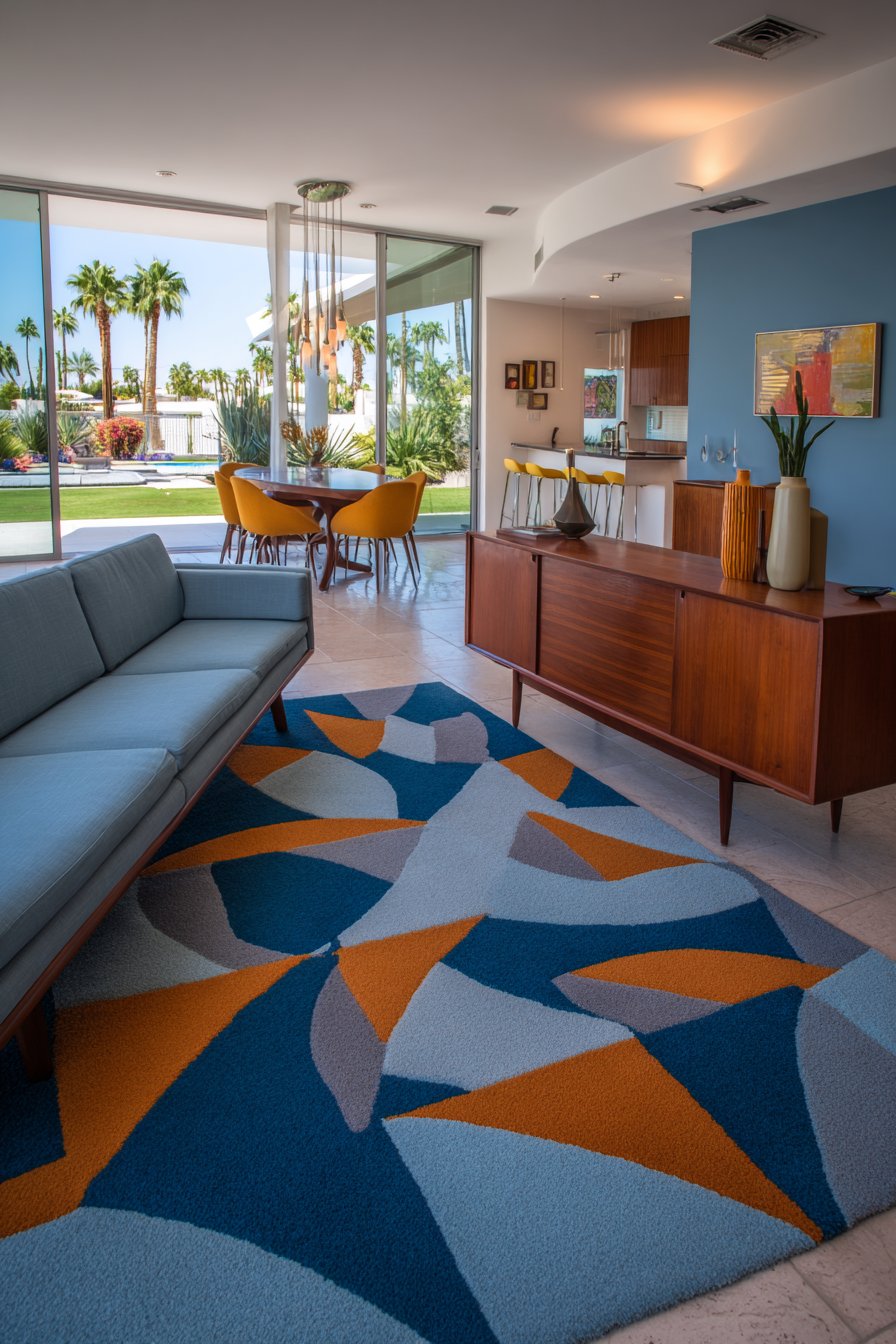
Geometric patterns feature prominently in the area rug, their bold shapes and vibrant colors—perhaps orange, teal, and mustard yellow—reflecting the playful sophistication of the era. Atomic-era lighting fixtures, with their starburst forms or sculptural shapes, reinforce the period aesthetic while providing functional illumination. The teak sideboard is particularly important in this living-dining room combo, serving as both a practical storage solution and a subtle room divider that maintains visual openness while creating psychological separation between the two zones. Its warm wood tone and clean-lined design exemplify mid-century craftsmanship.
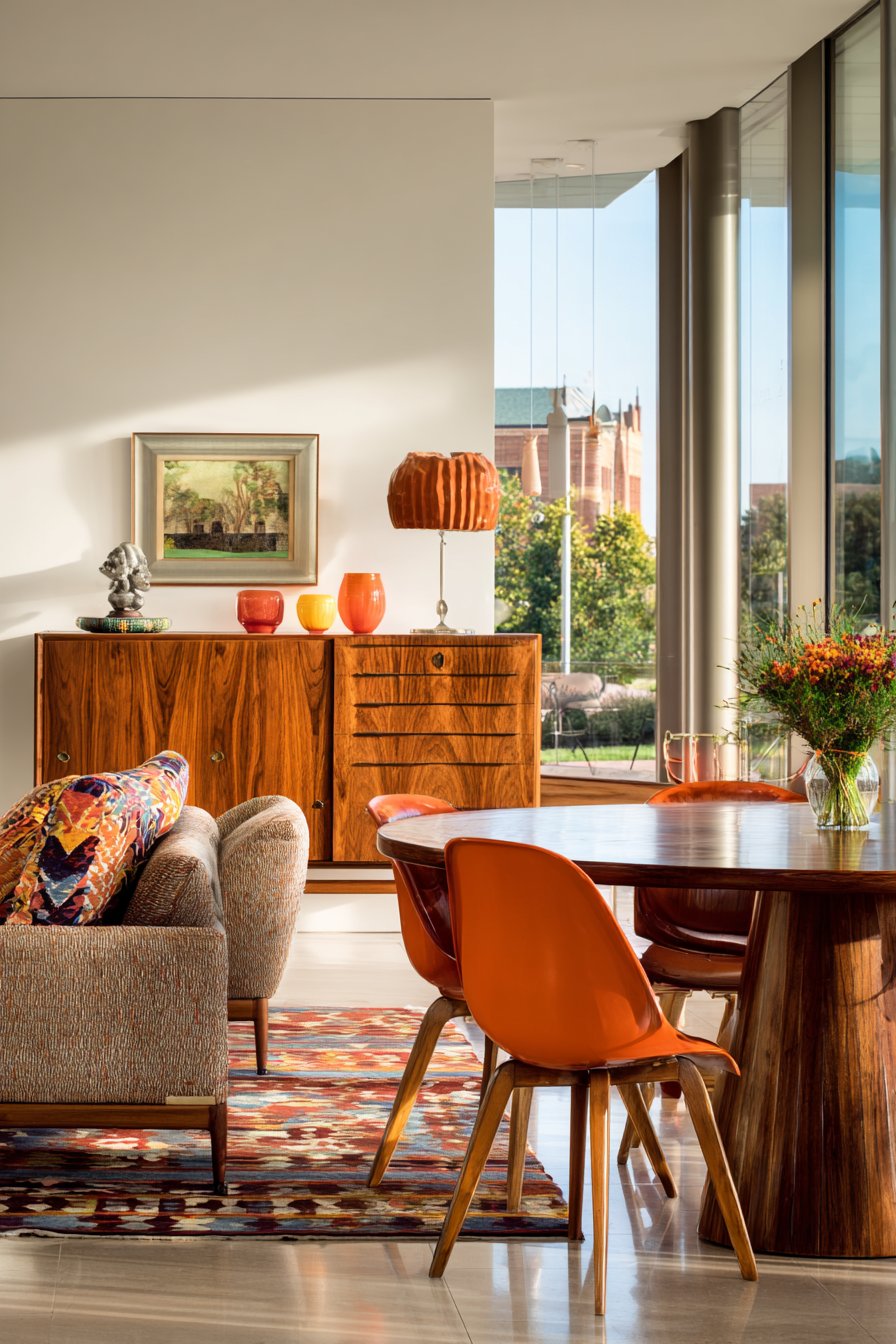
Large windows with simple treatments allow abundant natural light to flood the space, a key principle of mid-century design which sought to break down barriers between indoor and outdoor living. Wide-angle interior photography highlights the iconic furniture pieces and clean-lined design, capturing how the tapered legs on the sofa create visual lightness despite the piece’s substantial seating area. The oval tulip table, with its single pedestal base, exemplifies the mid-century love of innovative form and function—its design eliminates corner table legs that might obstruct movement around a rectangular table. This living-dining room combo demonstrates how mid-century modern remains timelessly appealing decades after its inception.
Key Design Tips:
- Invest in authentic or high-quality reproduction mid-century furniture pieces
- Choose furniture with exposed wood legs, preferably tapered and angled
- Incorporate geometric patterns in rugs, artwork, or throw pillows
- Select lighting fixtures with sculptural, organic, or atomic-inspired forms
- Use a warm wood tone like teak, walnut, or rosewood as a unifying element
- Keep window treatments minimal to maximize natural light
- Add pops of period-appropriate colors: mustard, teal, orange, or avocado green
9. Farmhouse Warmth and Character
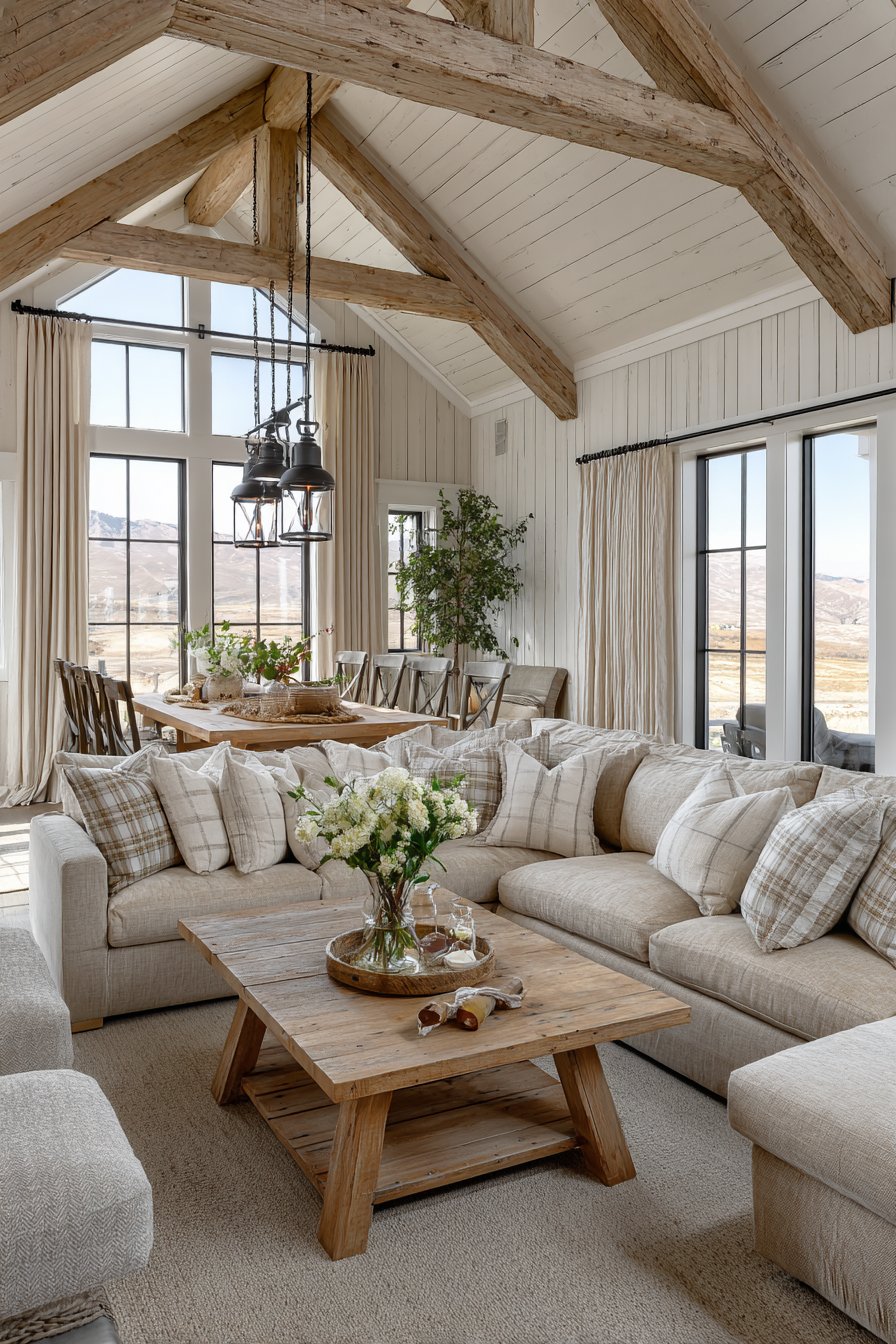
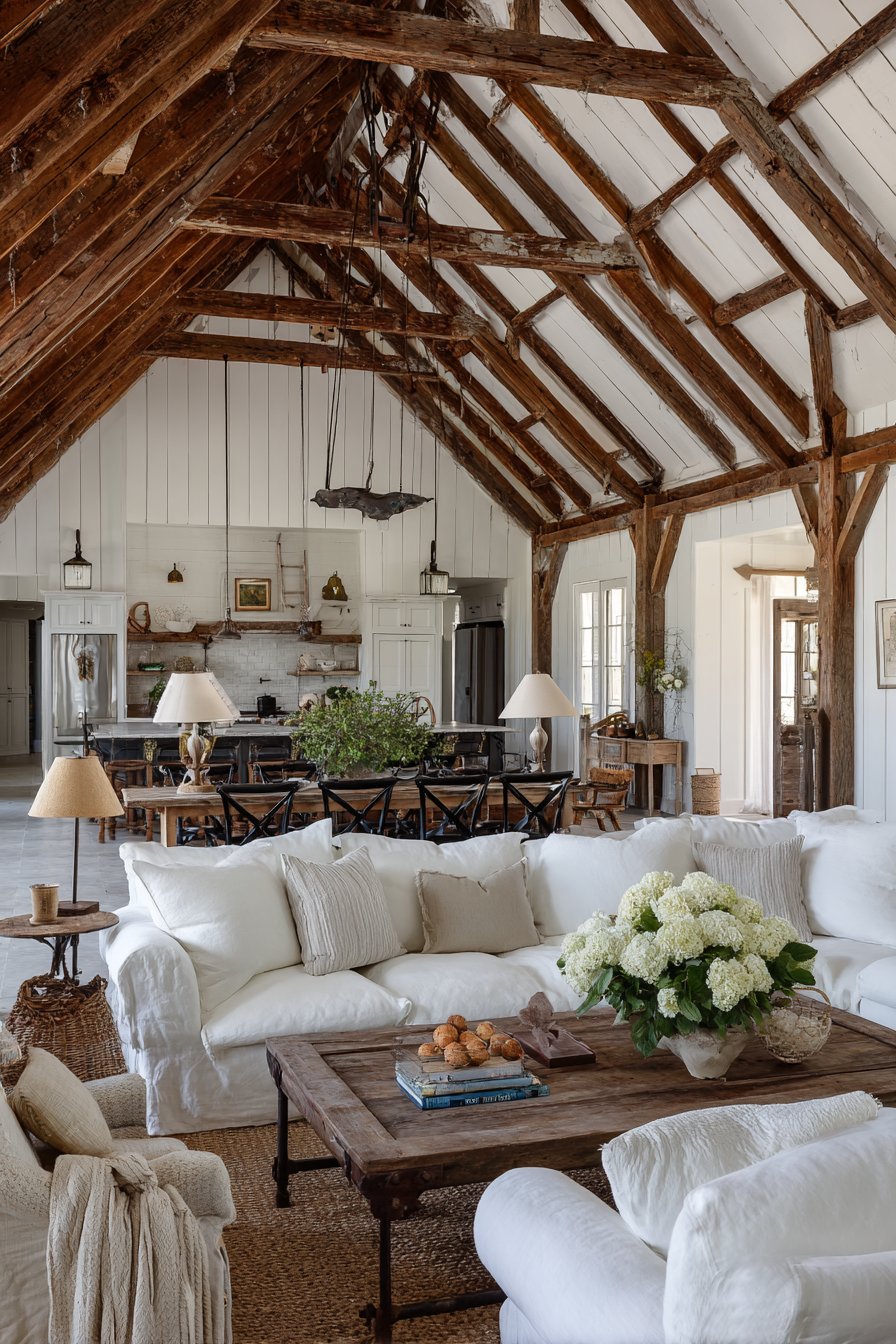
The farmhouse-style living-dining room combo embodies rustic charm and comfortable living, creating a space that feels both collected over time and thoughtfully designed. This design features a comfortable linen sectional in natural oatmeal facing a substantial farm table crafted from reclaimed barn wood with X-back dining chairs. A shiplap accent wall painted in soft white provides textured backdrop, its horizontal lines adding visual interest while staying neutral enough to let the furniture take center stage. The farmhouse aesthetic celebrates imperfection, authenticity, and the beauty of well-worn materials that tell stories of their previous lives.
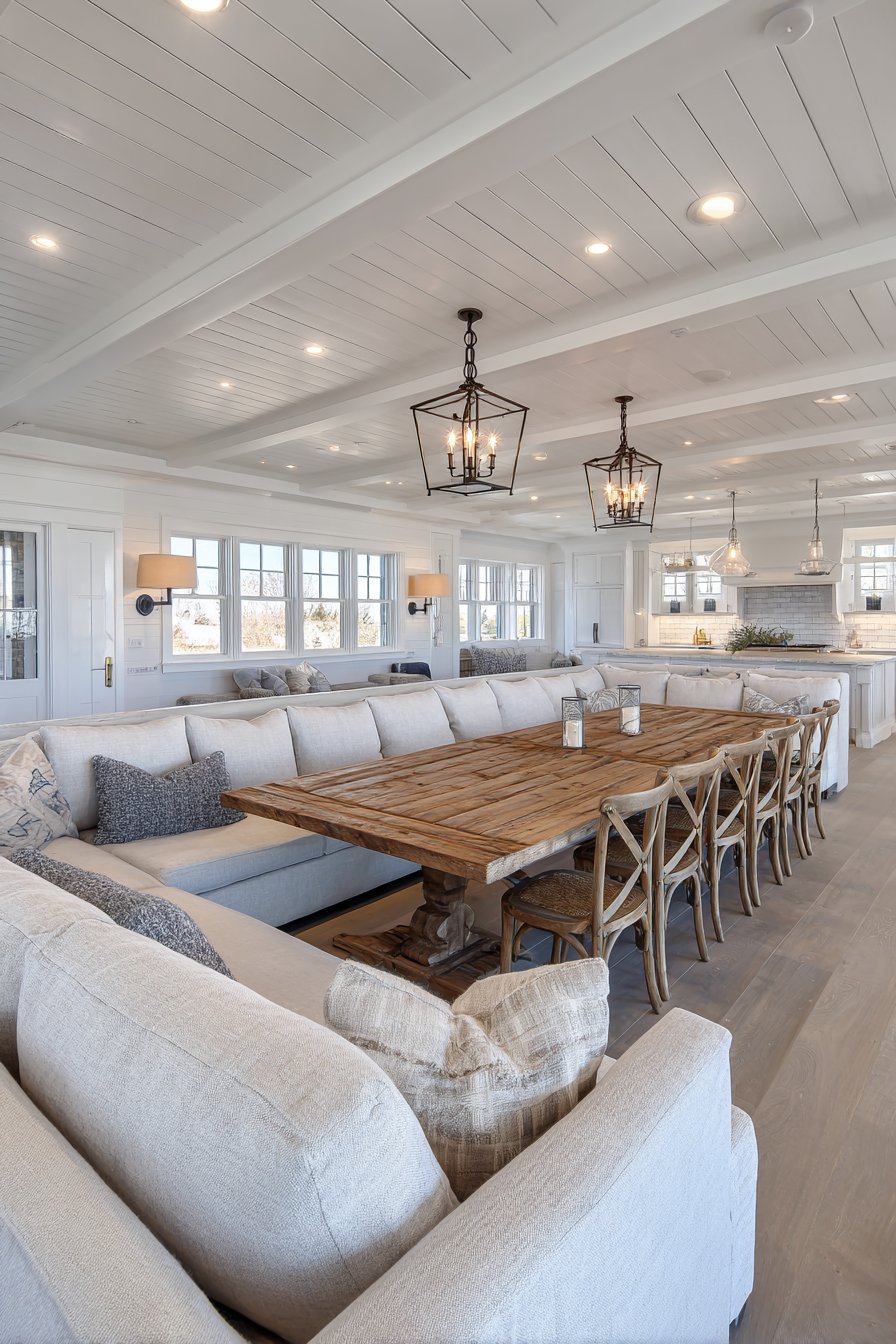
Industrial-style pendant lights hang over the dining area, their matte black metal finish providing an unexpected modern contrast that keeps the space from feeling too country or dated. In the living space, table lamps with burlap shades cast warm, ambient light that makes the room feel cozy and inviting. Wide plank flooring in light oak runs throughout the combo space, its substantial boards and visible grain contributing to the farmhouse character. The natural linen sectional offers generous seating while maintaining the casual elegance that defines modern farmhouse style—comfortable enough for daily family use yet pretty enough for entertaining guests.
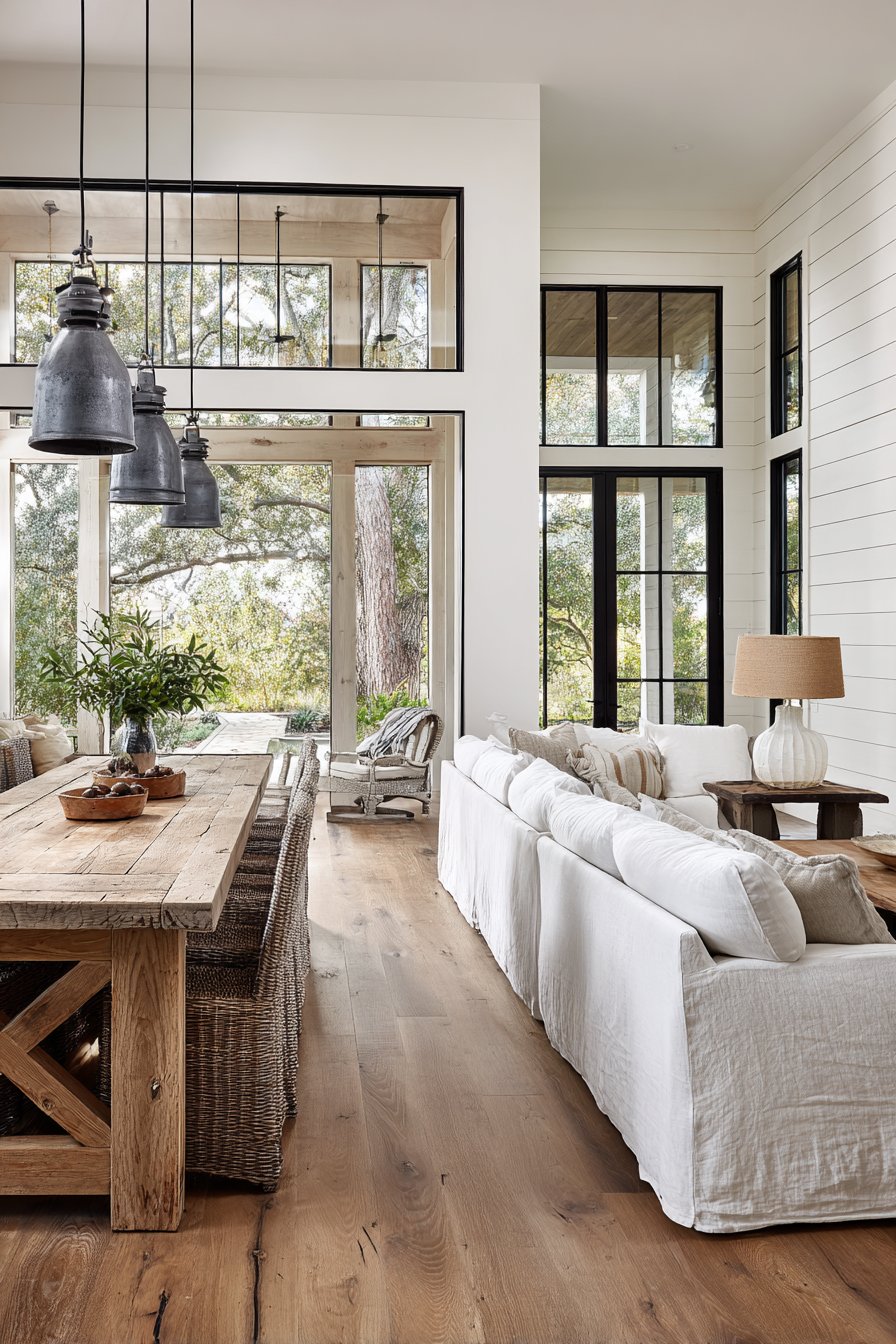
Interior photography captures the rustic yet refined character with natural lighting emphasizing the beautiful wood grain of the reclaimed dining table and the subtle texture of the shiplap wall. The X-back dining chairs reference traditional farmhouse furniture while their clean lines keep them from feeling too ornate or fussy. This living-dining room combo demonstrates how farmhouse style has evolved from its purely rustic roots to incorporate industrial elements and modern simplicity, creating a look that appeals to contemporary sensibilities while maintaining warmth and character. The key is balancing rustic elements with cleaner, more streamlined pieces to avoid the space feeling too themed or costume-like.
Key Design Tips:
- Incorporate reclaimed or distressed wood for authentic farmhouse character
- Mix rustic elements with industrial details like metal lighting or hardware
- Use shiplap or beadboard on one accent wall to add texture without overwhelming
- Choose comfortable, lived-in textiles like linen and cotton in neutral tones
- Select substantial furniture pieces that feel sturdy and well-crafted
- Add vintage or antique accessories like galvanized metal containers or wooden boxes
- Keep the color palette neutral with whites, creams, and natural wood tones
10. Contemporary Urban Sophistication
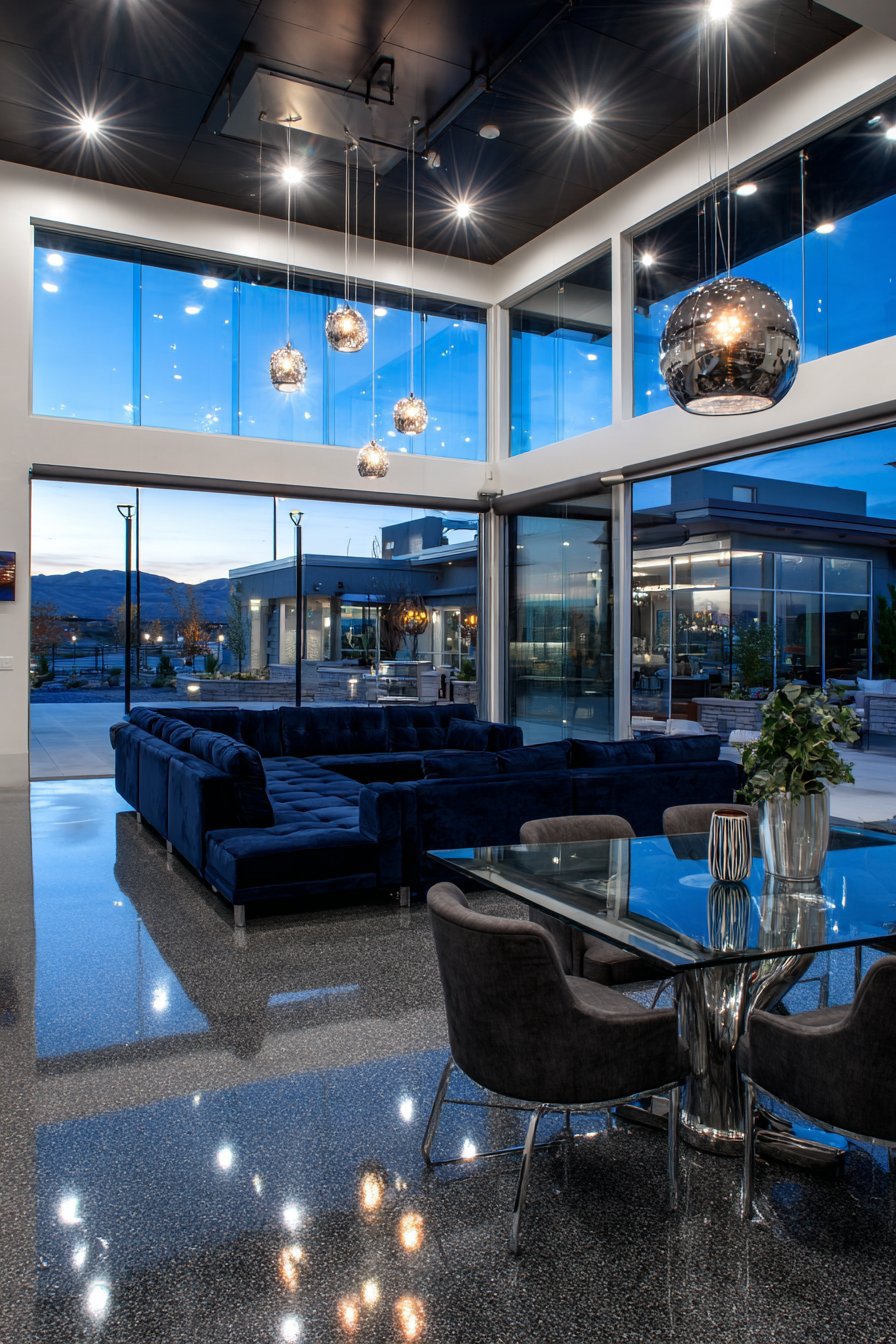
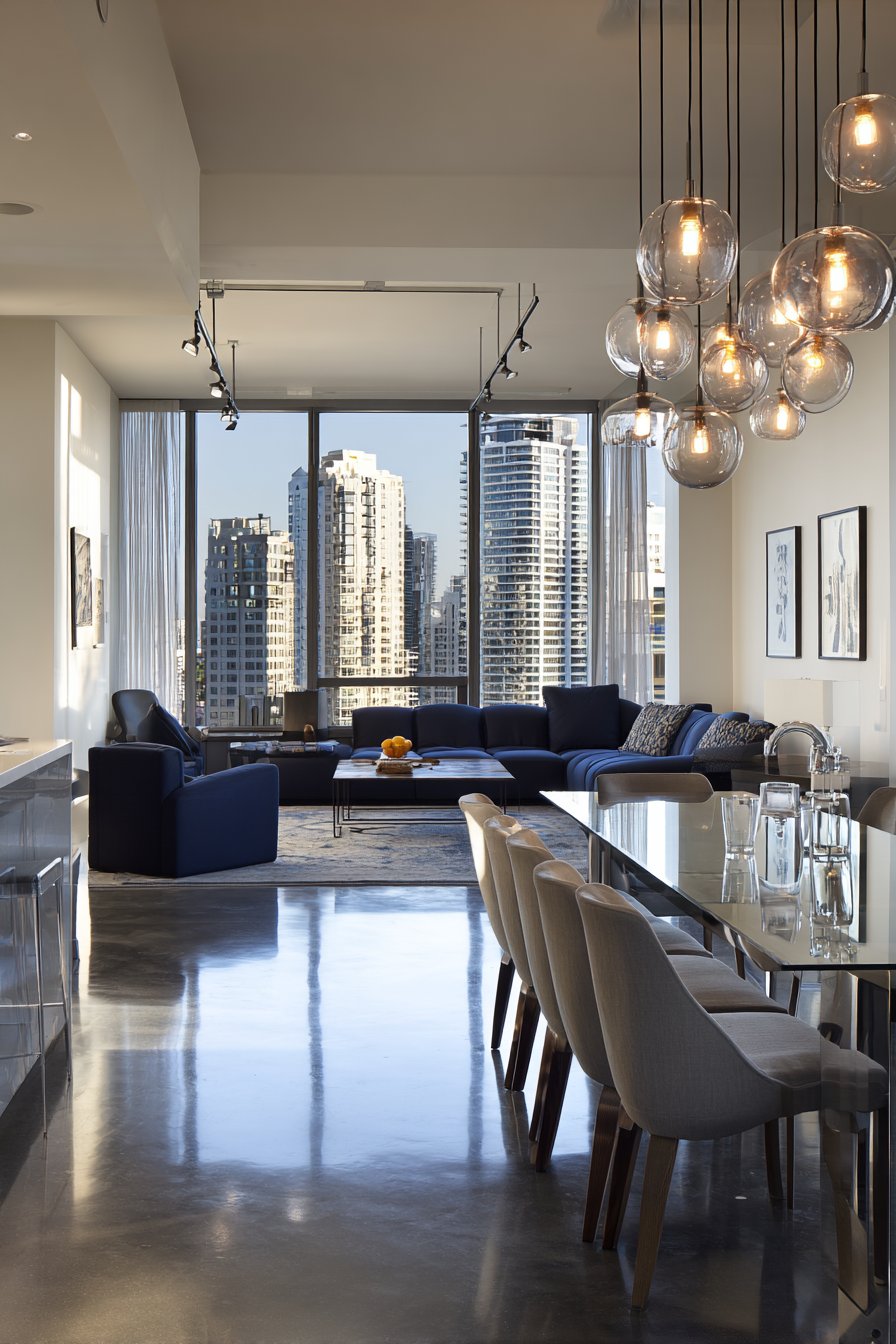
The contemporary living-dining room combo represents the cutting edge of current design trends, featuring sleek lines, bold contrasts, and an emphasis on quality materials over decorative flourishes. This open layout showcases a sleek modular sofa in deep navy positioned at right angles to a glass-top dining table with a chrome pedestal base and modern upholstered chairs. The contemporary aesthetic prioritizes clean geometry, negative space, and a carefully edited selection of furniture and accessories that each make a strong visual statement.
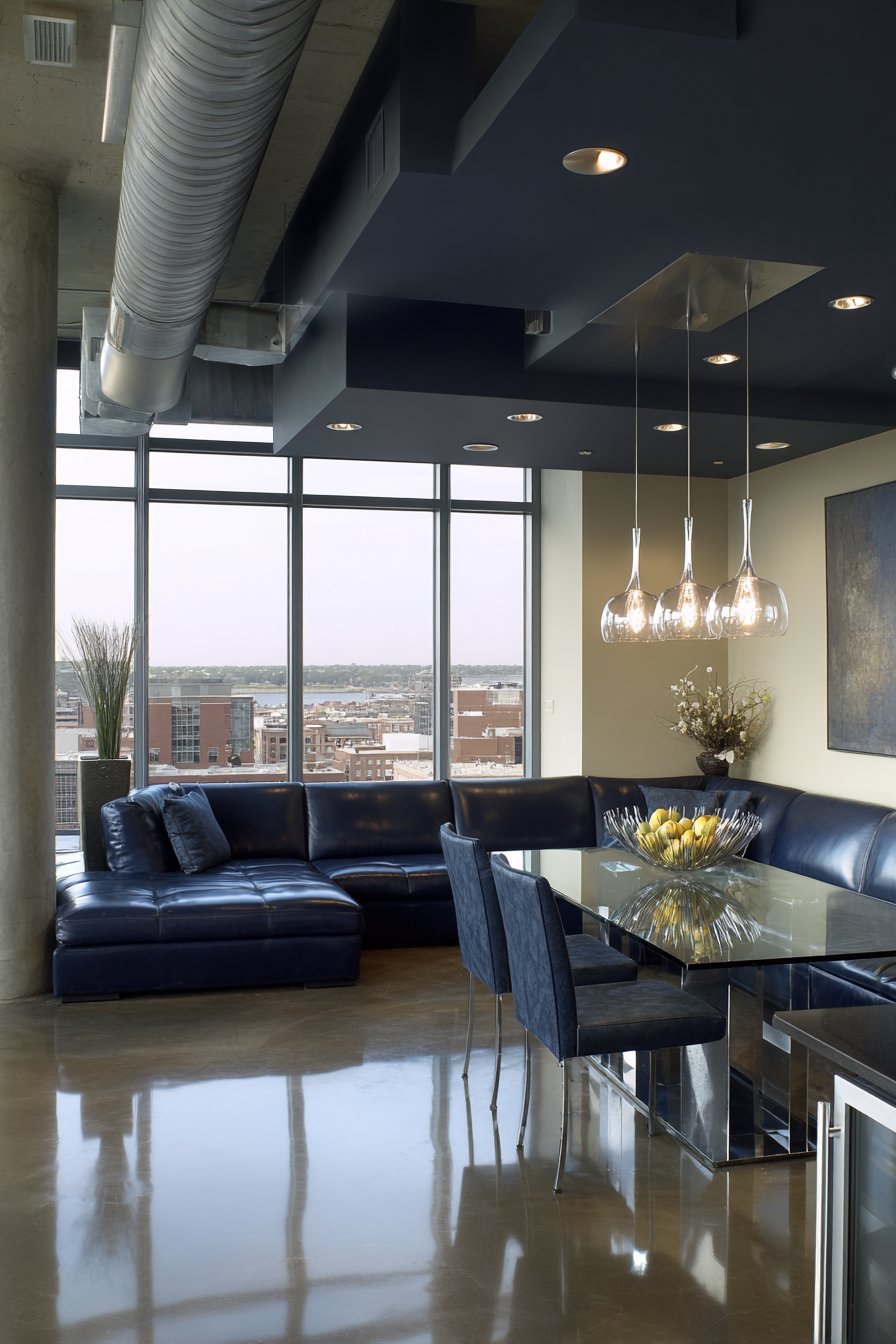
Polished concrete flooring flows throughout the space, its smooth, reflective surface embodying contemporary design’s appreciation for industrial materials elevated to luxury status through expert execution. Minimalist window treatments—perhaps simple roller shades or even no treatments at all if privacy permits—maintain the streamlined aesthetic while allowing the architectural elements and furniture to take center stage. The deep navy modular sofa serves as a bold anchor, its rich color providing depth and sophistication while the modular design offers flexibility to reconfigure seating arrangements as needs change.
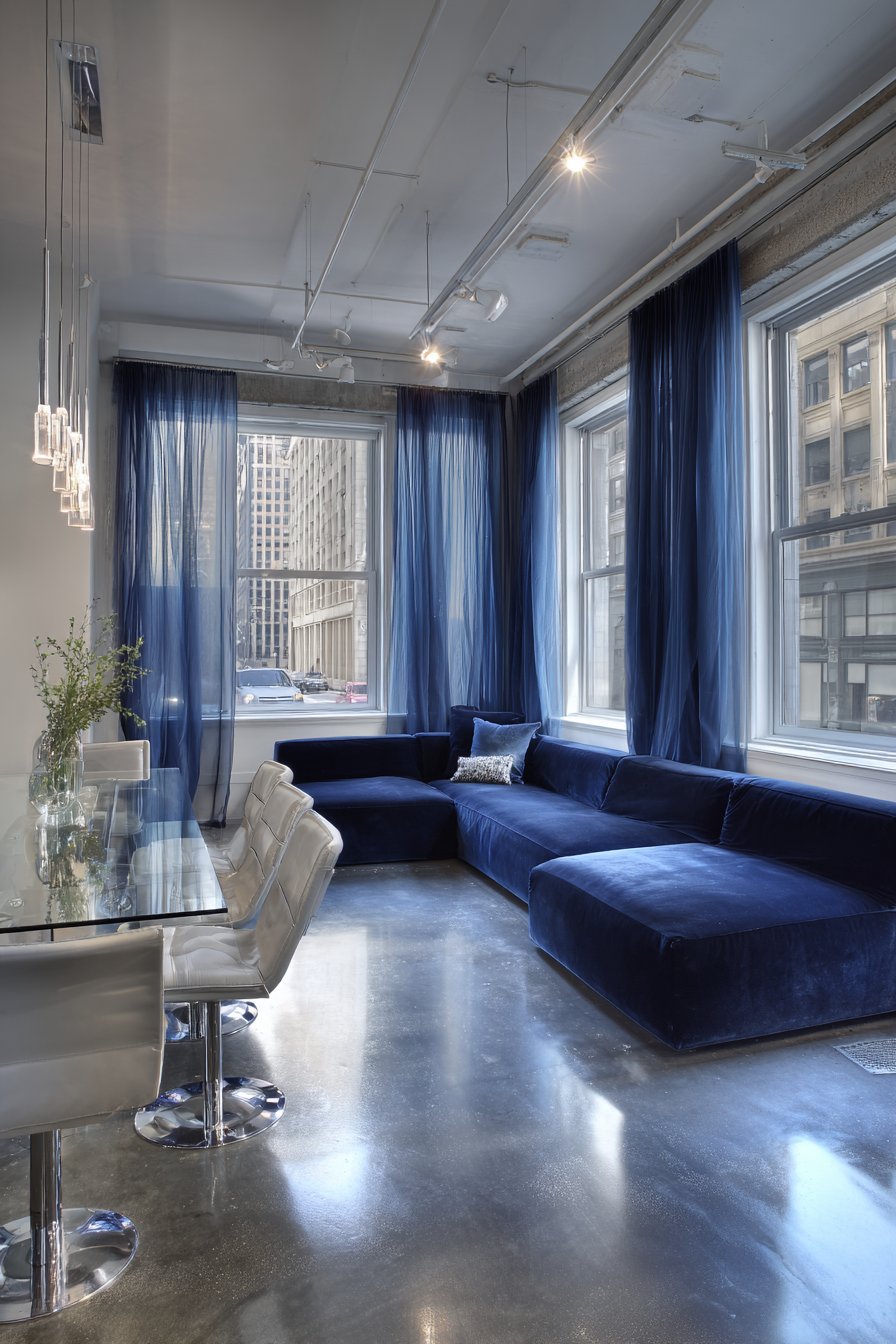
Recessed ceiling lights and pendant fixtures provide layered illumination, with the ability to adjust lighting levels for different activities and moods throughout the day. Professional photography shows the sophisticated urban design with balanced exposure highlighting reflective surfaces—the glass dining table top, the polished concrete floor, and the chrome pedestal base all interact beautifully with light. The glass-top dining table is particularly effective in this living-dining room combo because its transparency maintains visual openness, preventing the dining furniture from blocking sightlines or making the combined space feel cluttered. This contemporary approach creates an environment that feels decidedly adult and polished, perfect for urban professionals who value clean aesthetics and quality materials.
Key Design Tips:
- Choose a bold accent color like navy, charcoal, or emerald for your main upholstered piece
- Incorporate reflective surfaces like glass, polished metal, or glossy finishes
- Select furniture with clean, geometric lines and minimal ornamentation
- Use recessed lighting for a sleek ceiling line with no visual interruption
- Keep accessories minimal—each piece should make a statement
- Consider concrete or large-format tile flooring for contemporary appeal
- Embrace negative space as an important design element
11. Minimalist Zen Simplicity
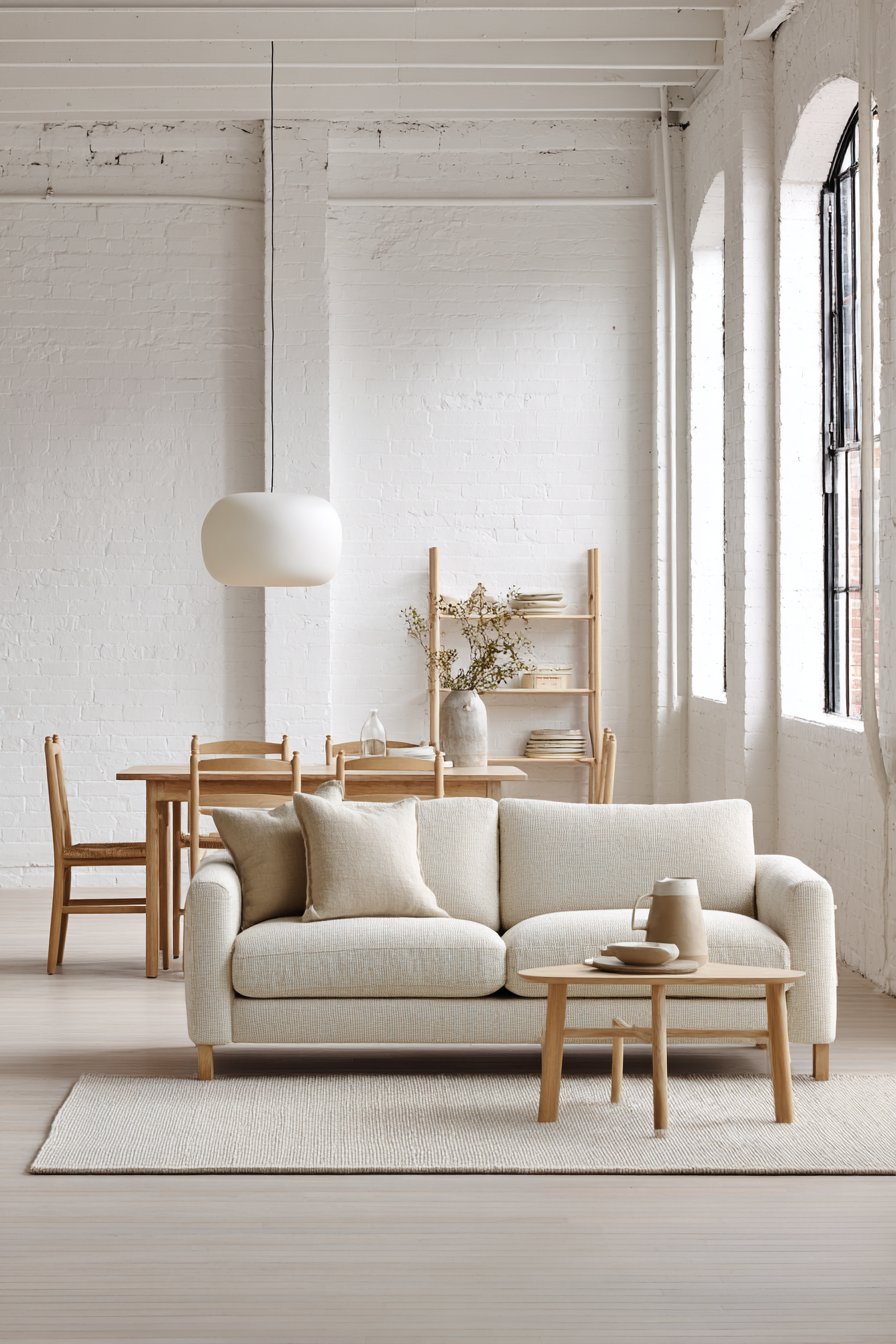
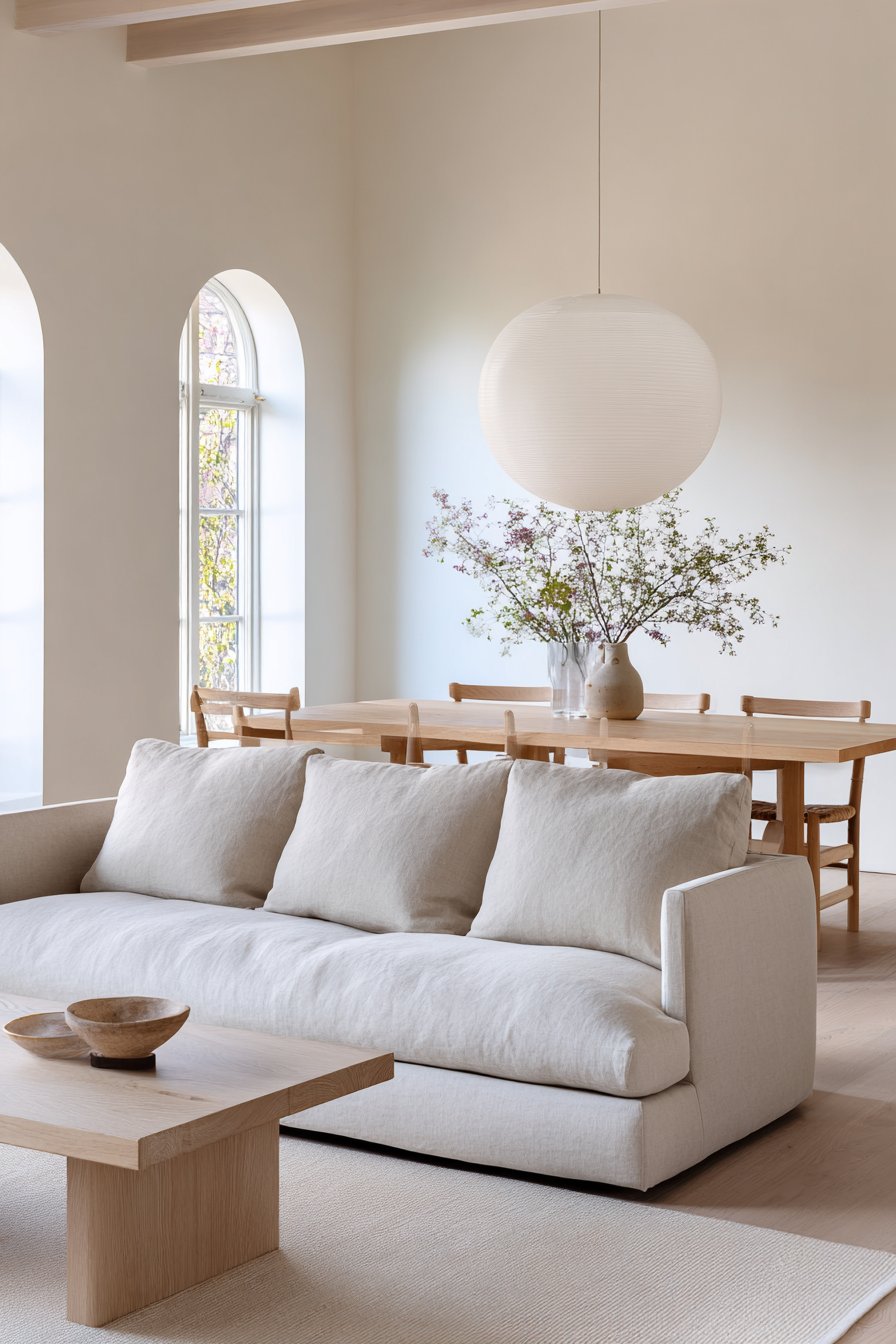
The minimalist living-dining room combo embraces the philosophy that less is truly more, creating a serene environment through intentional restraint and careful curation. This space showcases essential furniture only: a simple three-seater sofa in oatmeal linen facing a clean-lined dining table in light ash wood with four ladder-back chairs. Every item in this room has earned its place through either functionality or beauty—preferably both. The minimalist aesthetic is not about deprivation but about creating space for what truly matters, eliminating visual noise so the mind can rest.
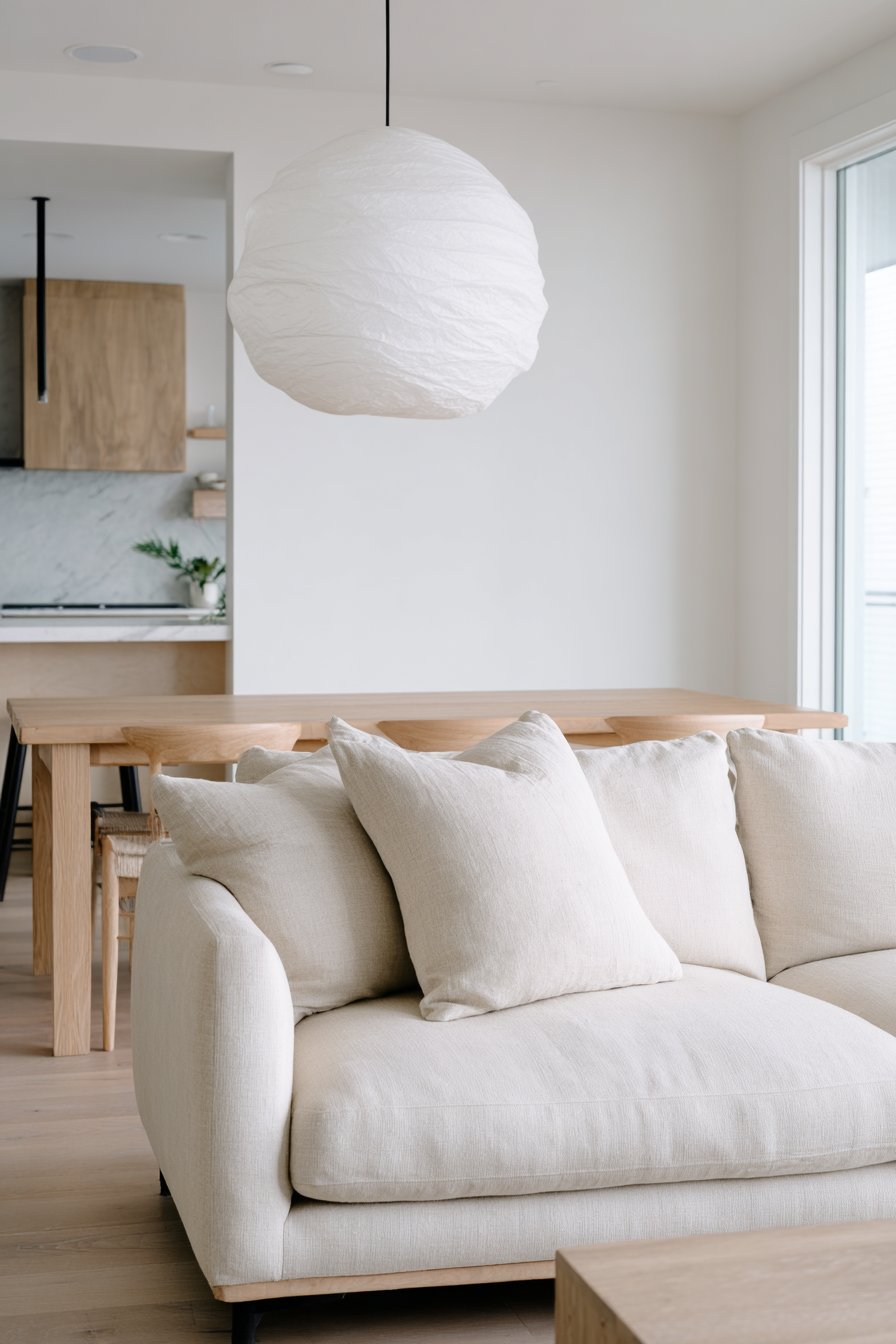
White walls and pale hardwood floors create a light, bright canvas that amplifies natural daylight and makes even modest-sized spaces feel expansive. Minimal accessories appear throughout—perhaps a single sculptural vase on the dining table, a carefully chosen piece of abstract art on the wall, and nothing more. A single sculptural pendant light hangs over the dining table, its design beautiful enough to serve as functional art. Natural daylight from unadorned windows provides the primary light source, changing throughout the day and connecting the interior to the natural rhythms of sun and shadow.
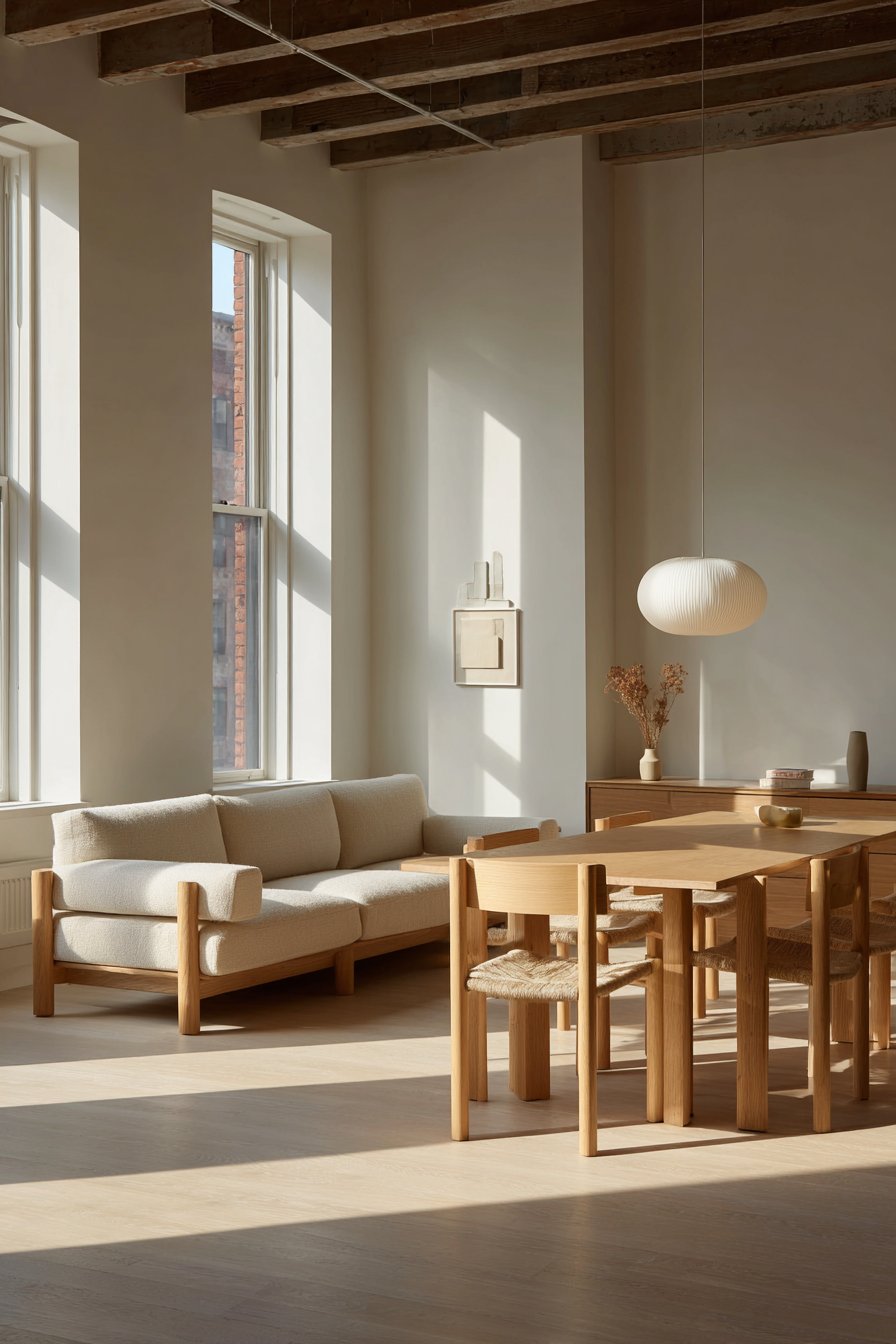
Interior photography emphasizes the intentional simplicity and functional beauty, with soft shadows and material authenticity taking center stage. The oatmeal linen sofa demonstrates that minimalism doesn’t mean uncomfortable or cold—natural materials like linen actually add warmth and texture while maintaining the clean aesthetic. The light ash wood dining table and ladder-back chairs reference traditional Shaker design, a historical precedent for functional minimalism. This living-dining room combo proves that by removing the excess, you create space for appreciation of quality, craftsmanship, and the interplay of light and shadow that defines architecture at its finest.
Key Design Tips:
- Edit ruthlessly—display only items that are either functional or deeply meaningful
- Choose a limited color palette, typically neutrals with perhaps one subtle accent
- Invest in quality over quantity—fewer pieces of higher caliber
- Embrace negative space as a crucial design element, not emptiness to be filled
- Select furniture with clean lines and honest construction
- Use natural materials like wood, linen, and wool to add warmth
- Keep surfaces clear and maintain strict organization in hidden storage
12. Traditional Elegance and Formality
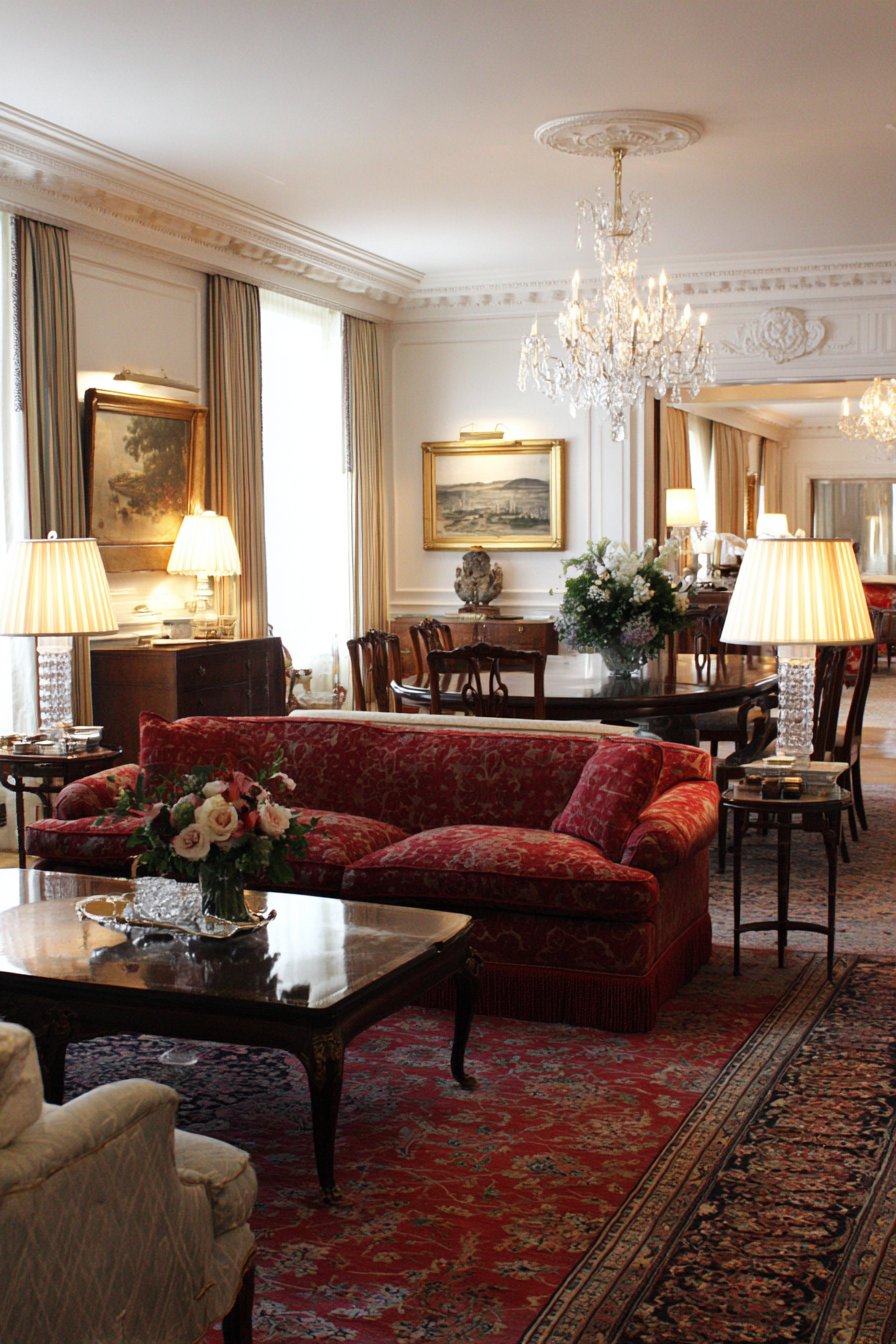
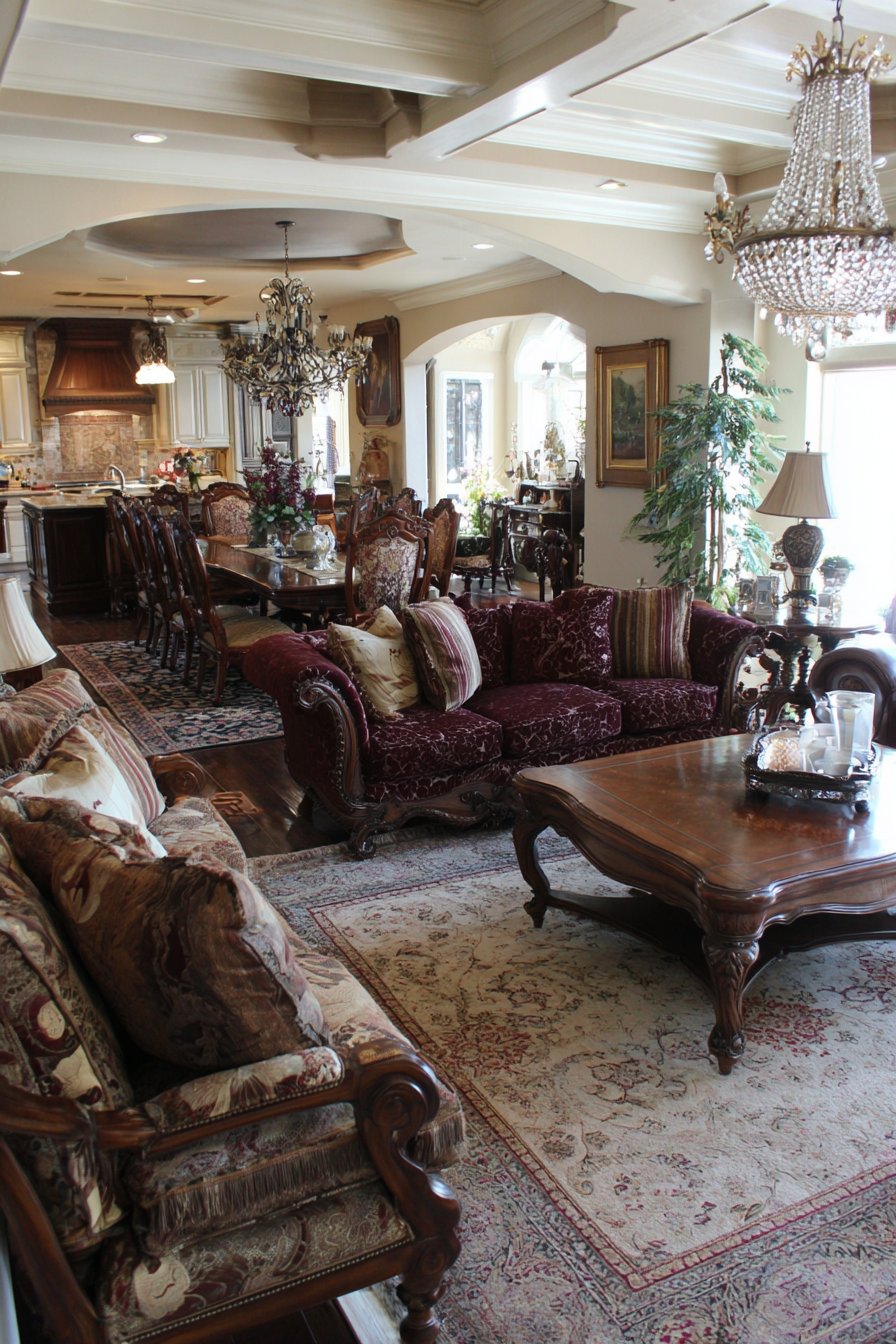
The traditional living-dining room combo exudes timeless elegance through classic furniture silhouettes, rich materials, and attention to architectural detail. This space features a rolled-arm sofa in burgundy damask fabric positioned across from a formal dining table in rich cherry wood with carved legs and upholstered host chairs. Traditional design draws from historical precedents—Georgian, Victorian, French Provincial—creating rooms that feel established, refined, and deliberately formal. The traditional aesthetic celebrates craftsmanship, ornamentation, and the use of luxurious materials that signify quality and permanence.
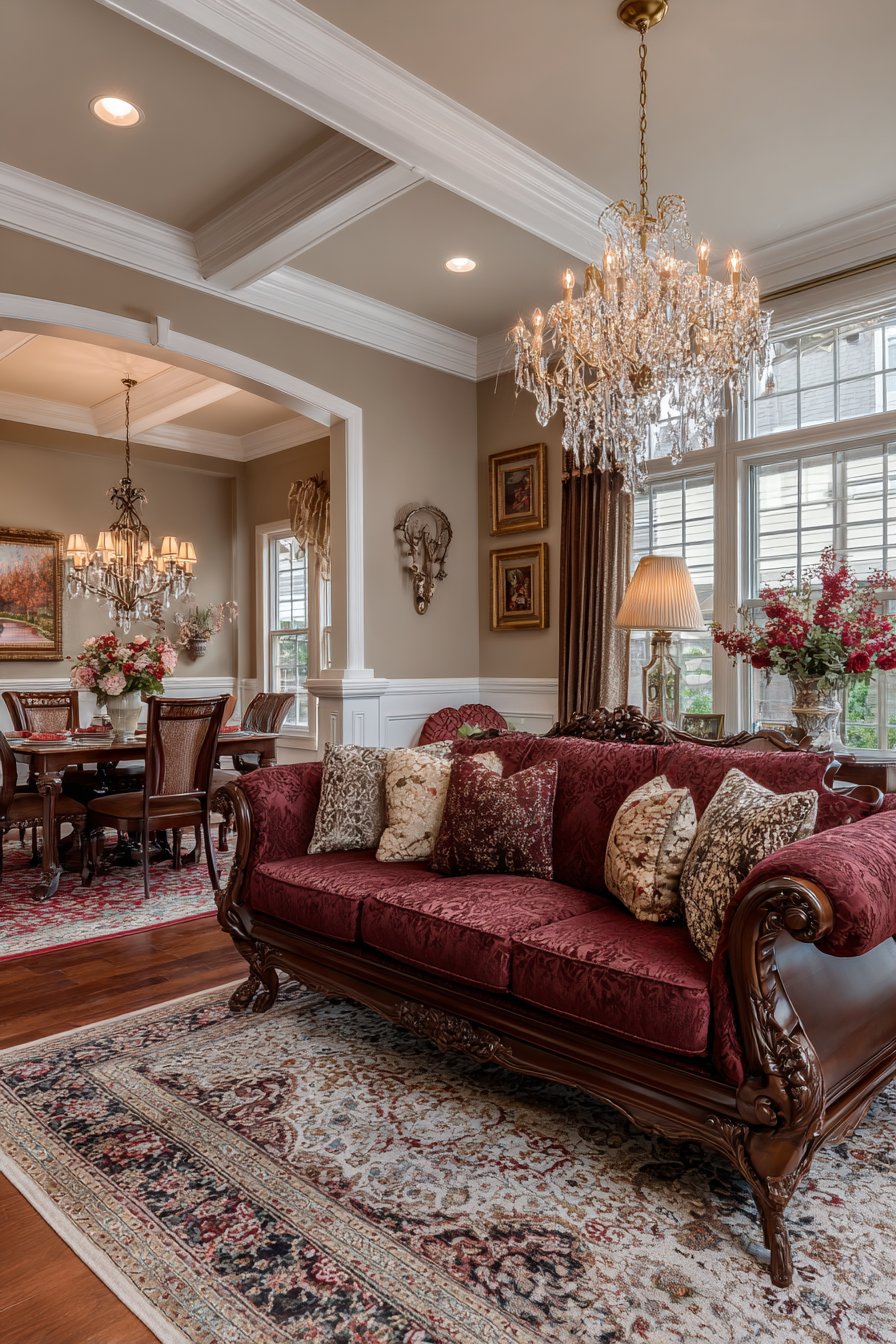
Persian-style area rugs define each zone with intricate patterns and jewel tones, their detailed motifs adding visual richness and historical reference. Crown molding and wainscoting provide architectural detail that elevates the entire space, adding dimension and refinement to what might otherwise be plain walls. These architectural elements create a sense of established elegance that serves as the perfect backdrop for traditional furnishings. A crystal chandelier suspended above the dining area provides sparkling illumination and serves as a focal point, while table lamps with pleated shades in the living space offer softer, ambient lighting appropriate for conversation and relaxation.
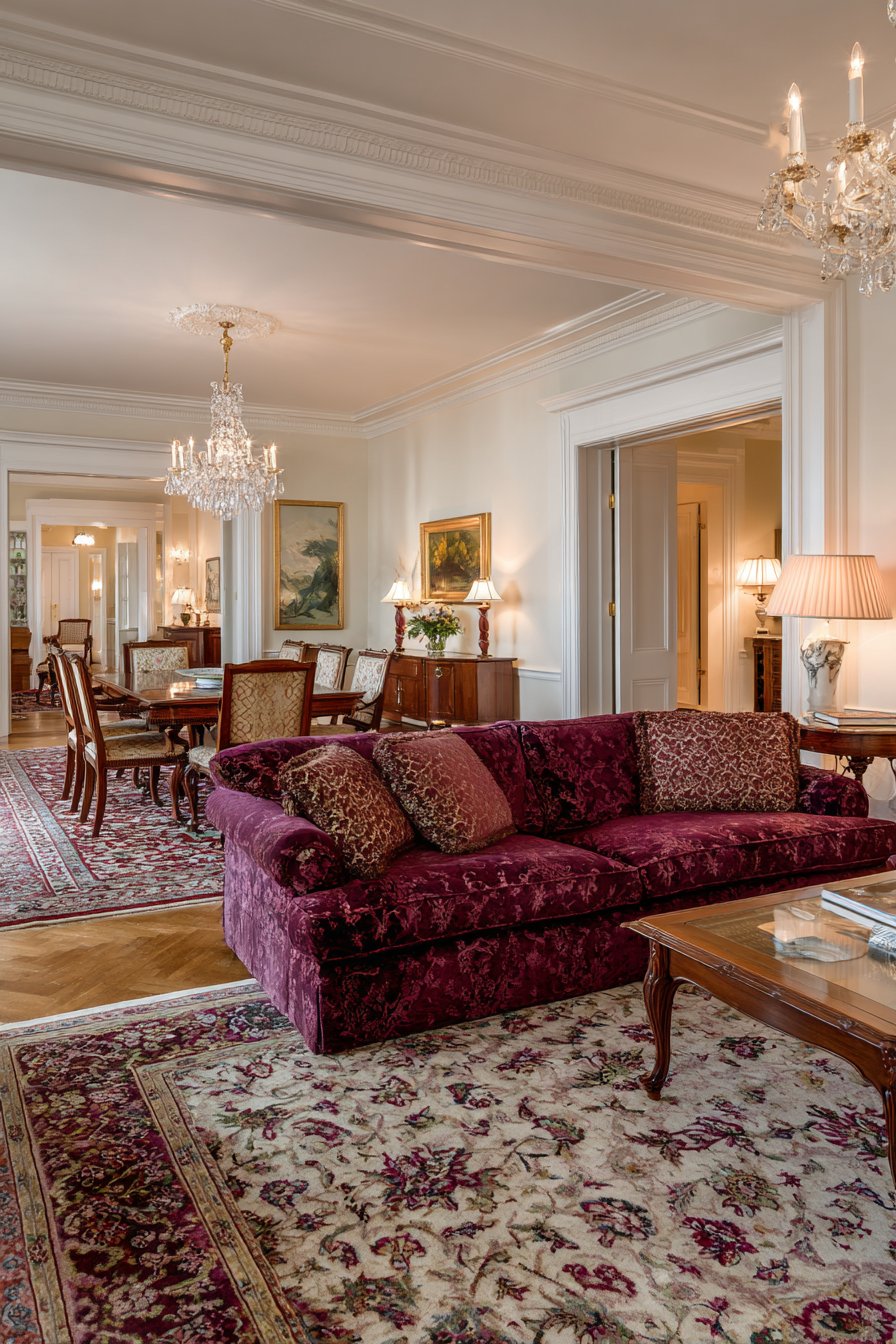
Professional interior photography captures the classic elegance with warm ambient lighting highlighting traditional craftsmanship—the carved table legs, the damask pattern in the upholstery, the intricate rug design. The burgundy damask sofa represents a bold choice that works beautifully in traditional settings, where deeper colors and patterned fabrics are celebrated rather than avoided. The cherry wood dining table, with its rich, warm tone and substantial presence, anchors the dining zone with appropriate formality. This living-dining room combo demonstrates that traditional design, while drawing from the past, can feel relevant and comfortable in contemporary homes when executed with genuine appreciation for quality materials and skilled craftsmanship.
Key Design Tips:
- Invest in wood furniture with visible grain and quality construction
- Choose upholstered pieces with classic details like rolled arms or tufting
- Incorporate rich, jewel-toned colors alongside neutrals
- Add architectural details like crown molding or wainscoting if possible
- Select lighting fixtures with traditional elements like crystal or pleated shades
- Use patterned fabrics and Oriental-style rugs for visual richness
- Display collected items like artwork, books, and decorative objects
13. Japandi Fusion Tranquility
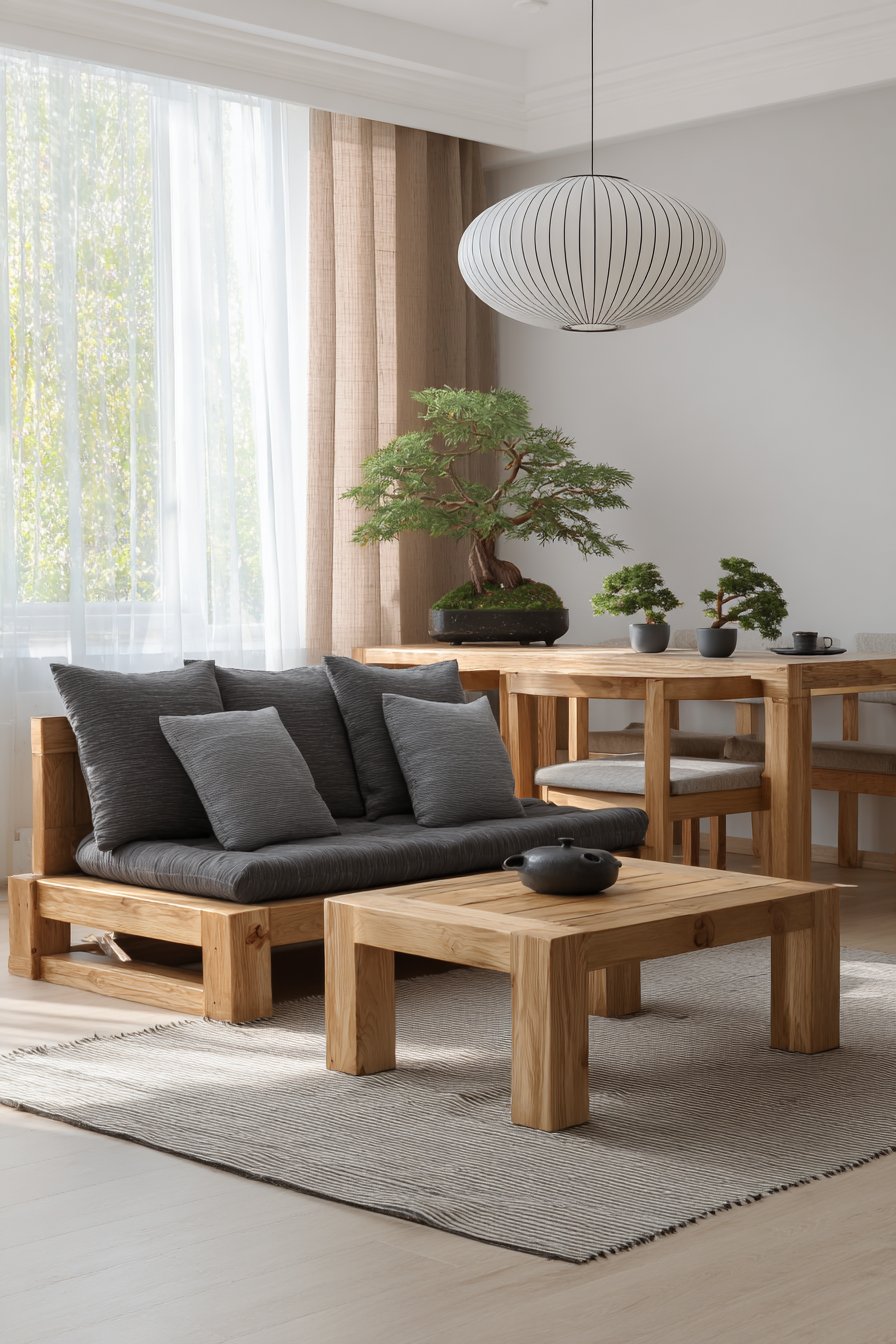
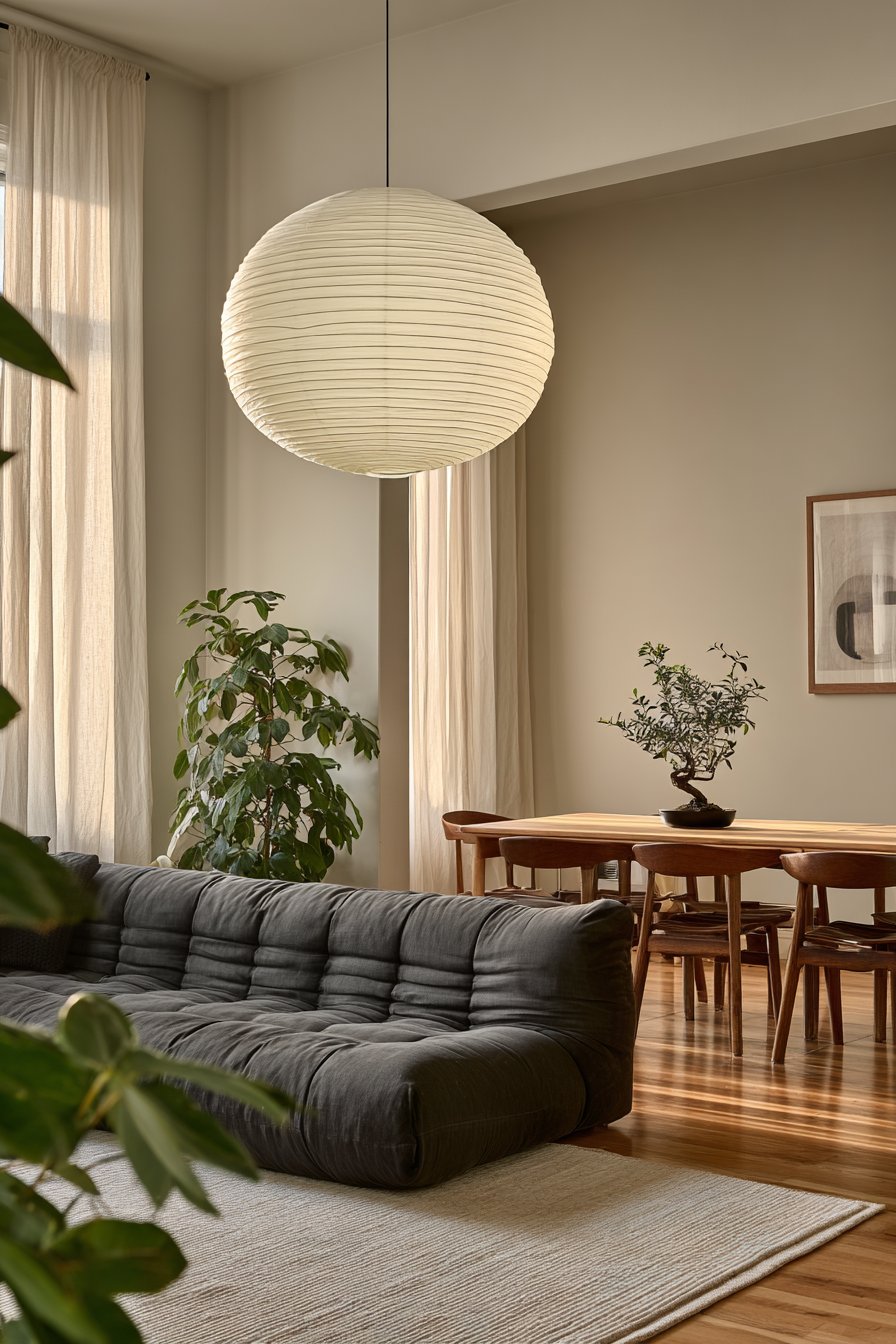
The Japandi living-dining room combo represents the harmonious fusion of Japanese minimalism and Scandinavian warmth, creating a design philosophy that celebrates simplicity, functionality, and natural beauty. This space features a low platform sofa in charcoal gray paired with a simple dining table in blonde oak with a paper lantern pendant suspended above. The Japandi aesthetic combines the best of both design traditions: Japanese attention to detail, respect for materials, and connection to nature with Scandinavian coziness, functionality, and light-maximizing techniques.
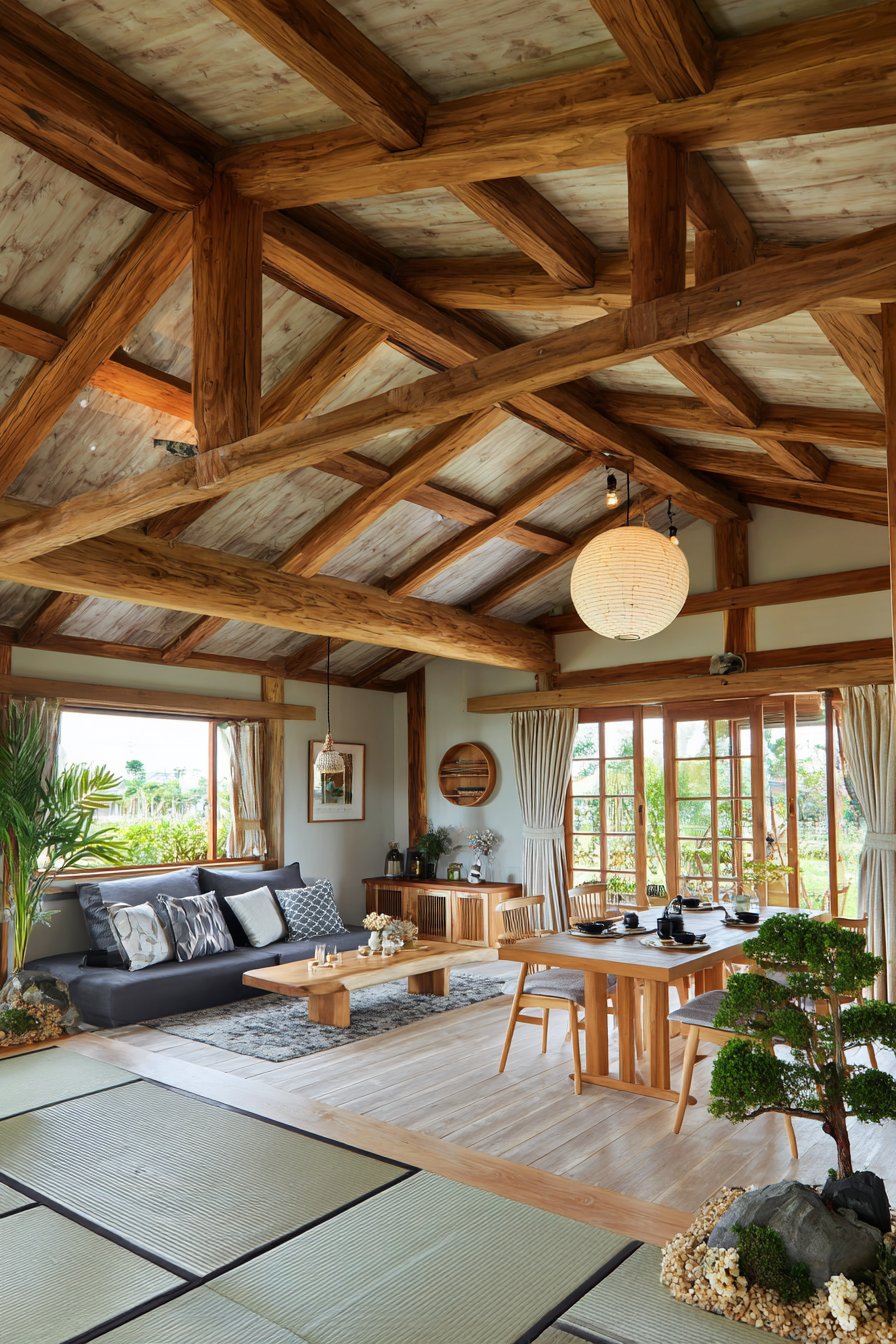
A tatami-inspired area rug brings textural interest and cultural reference to the living zone, while bonsai plants and carefully chosen greenery add living elements that connect the interior to the natural world. Natural linen curtains filter daylight beautifully, creating soft, diffused illumination that changes throughout the day. The neutral color palette with subtle earth tones—charcoal gray, blonde oak, warm beige, soft greens—creates a cohesive, calming environment. Every element is carefully considered and intentionally placed, with nothing extraneous or merely decorative included unless it also serves a function or brings genuine joy.
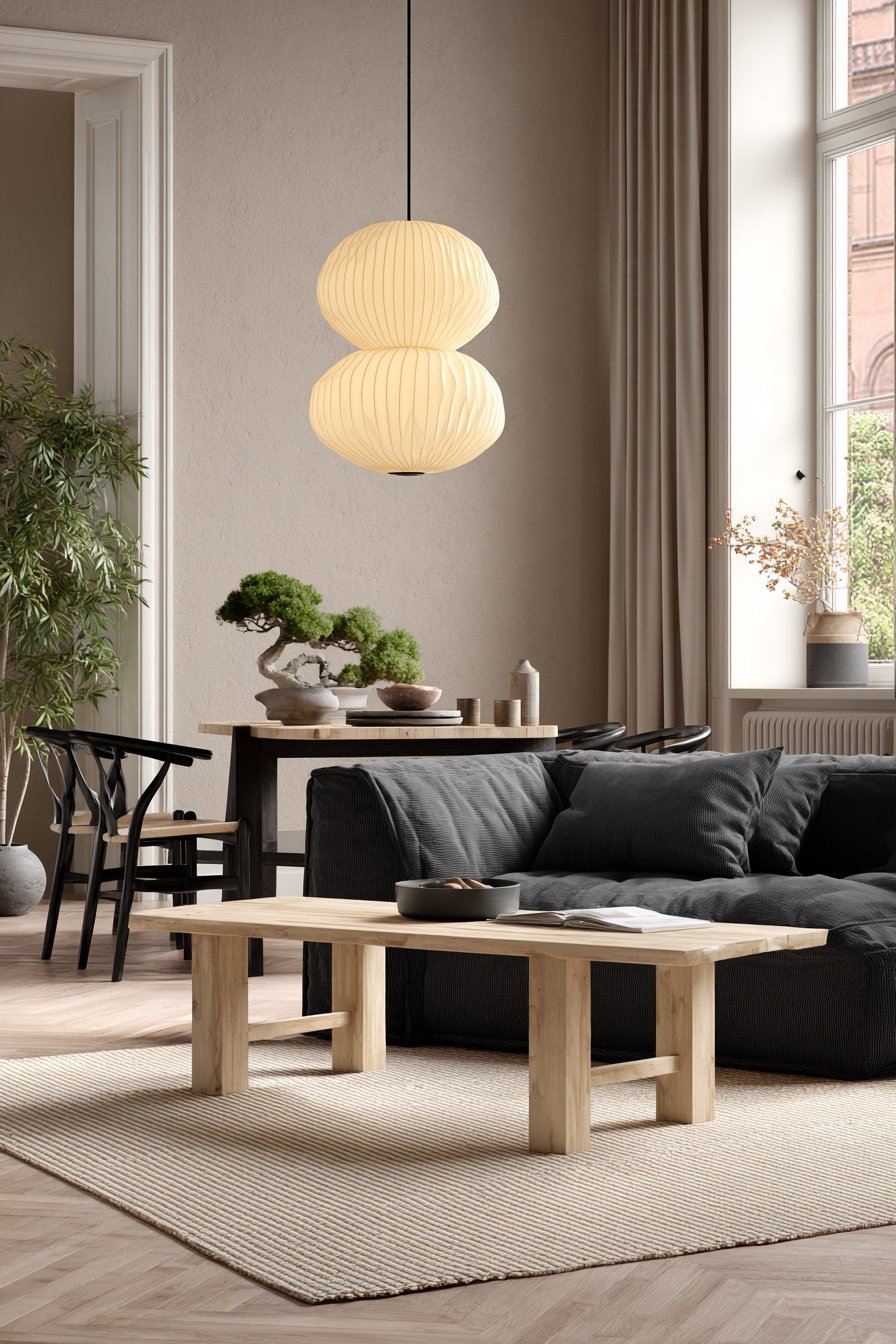
Wide-angle interior photography captures the zen-like tranquility and organic material integration, with soft natural lighting creating a peaceful ambiance that encourages mindfulness and presence. The low platform sofa references traditional Japanese seating while providing the comfort and support expected in Western furniture. The simple dining table in blonde oak embodies both Scandinavian love of light wood and Japanese appreciation for honest materials and clean lines. This living-dining room combo demonstrates how combining two design philosophies can result in something greater than the sum of its parts—a space that feels both minimalist and warm, simple yet sophisticated, contemporary but timeless.
Key Design Tips:
- Combine Japanese minimalism with Scandinavian hygge for balanced simplicity
- Choose low-profile furniture with clean lines and natural wood
- Incorporate natural materials like bamboo, paper, wood, and linen
- Keep the color palette neutral with earthy accents
- Add carefully selected plants, particularly those with architectural form
- Embrace negative space and resist the urge to fill every surface
- Use natural lighting whenever possible, filtering it gently with sheer materials
14. Eclectic Curated Individuality
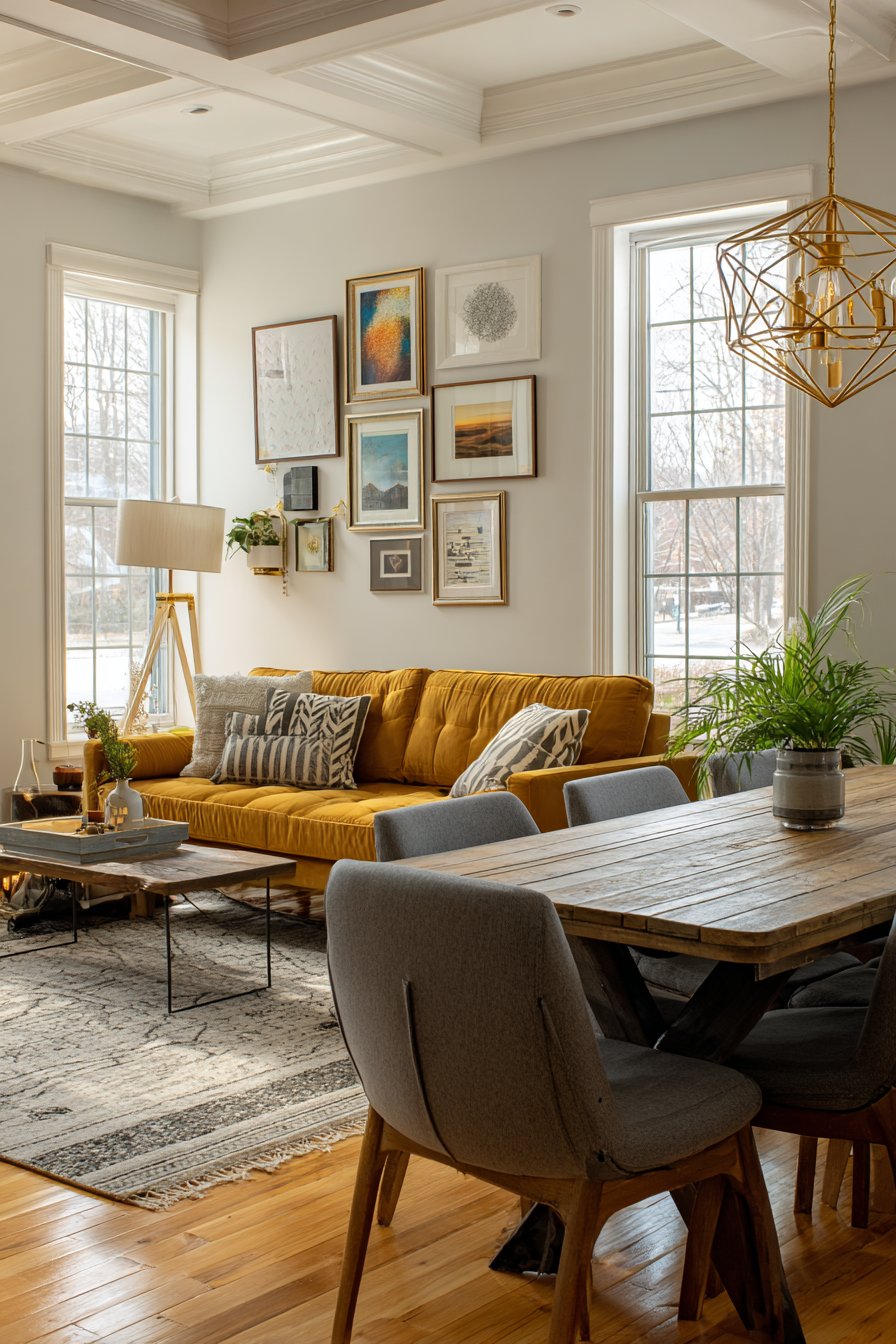
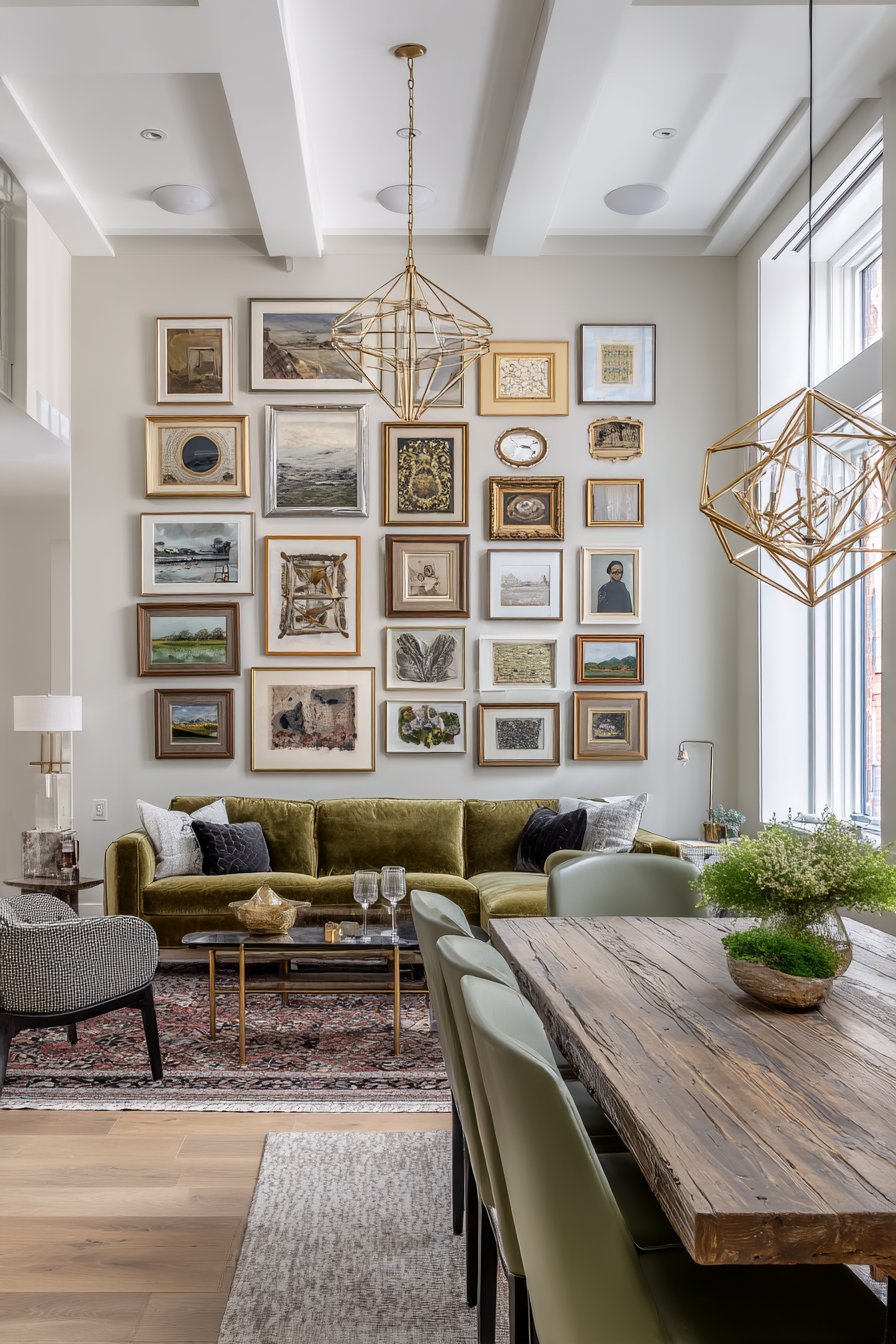
The eclectic living-dining room combo celebrates personal style and creative mixing, combining vintage and contemporary pieces in unexpected ways that reflect the owner’s unique taste and collected experiences. This space features a mid-century sofa in bold mustard velvet facing an antique farmhouse dining table refinished in unexpected sage green with modern acrylic chairs. The eclectic aesthetic requires confidence and a good eye—the goal is not random chaos but intentional curation where seemingly disparate elements share common threads that tie them together.
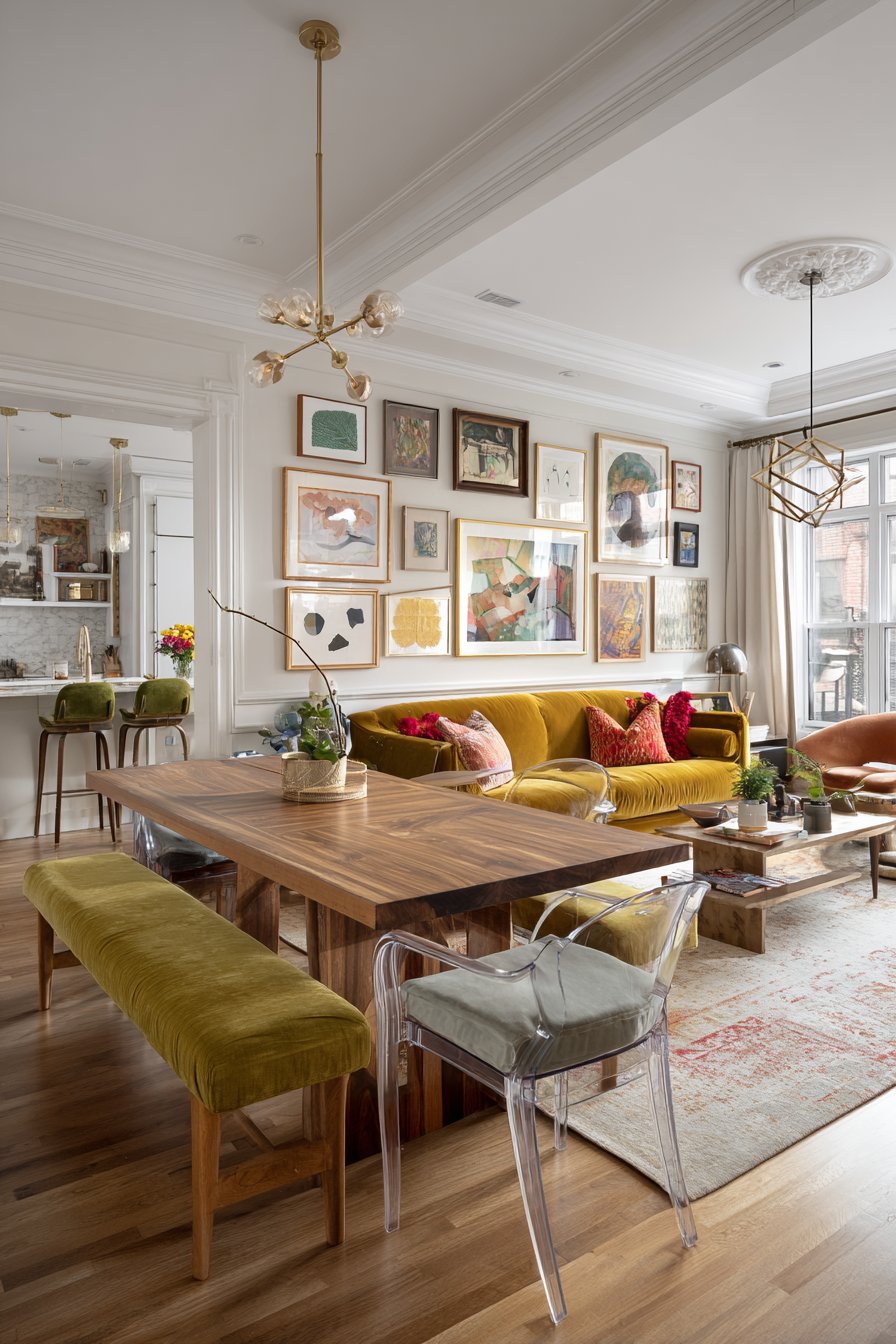
A gallery wall of varied frames spans both zones, connecting the living and dining areas while providing opportunity for personal expression through artwork, photographs, and collected prints. Mismatched lighting fixtures—perhaps a vintage brass floor lamp arcing over the sofa and a contemporary geometric pendant above the dining table—add to the collected-over-time feeling while serving functional purposes. The key to successful eclectic design is finding that common thread: maybe it’s a color that appears in different contexts, a material that recurs in various forms, or a mood that pervades despite varied styles.
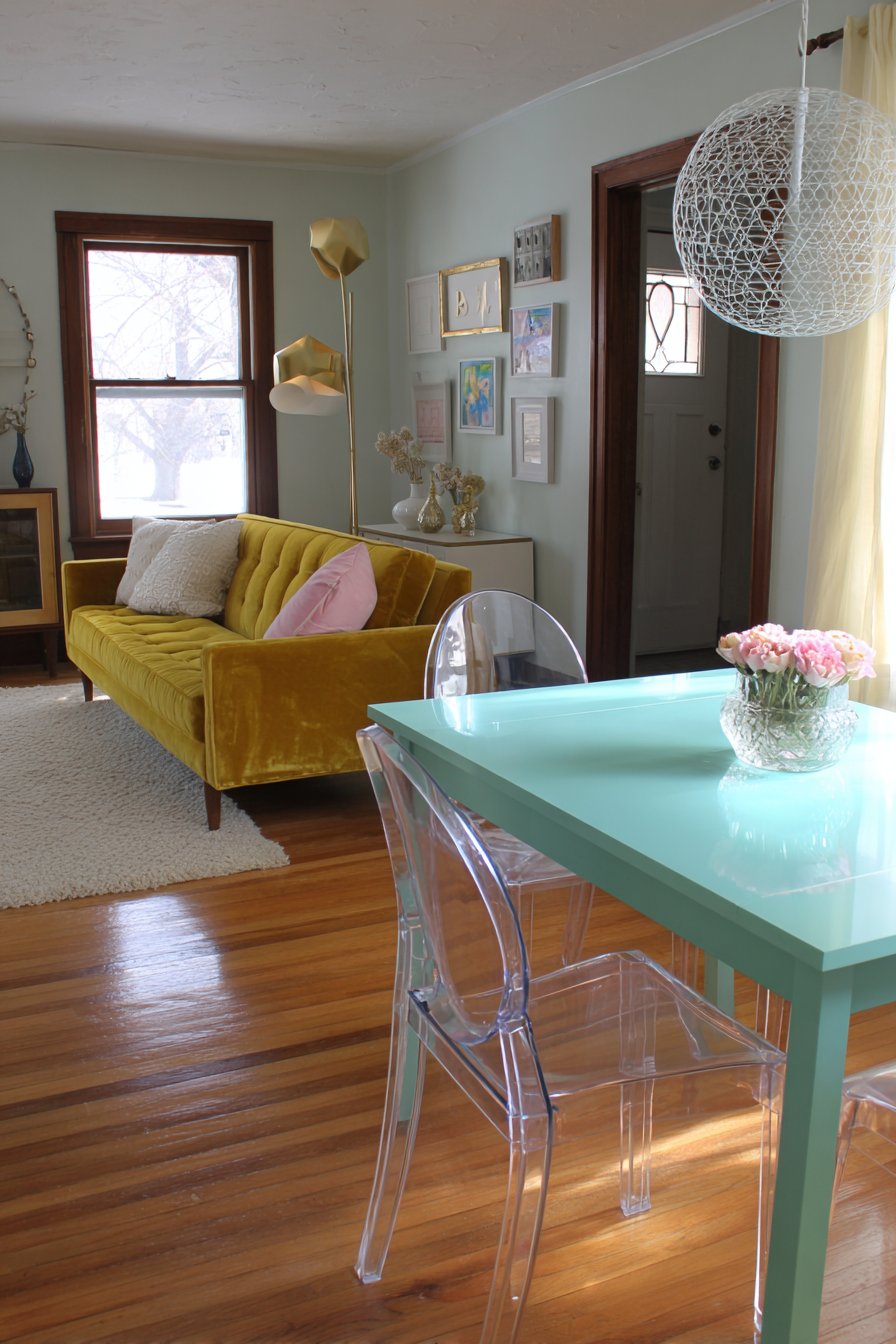
Interior design photography captures the curated, personality-filled space with natural lighting highlighting the unexpected yet cohesive mix of styles. The mustard velvet sofa serves as a bold statement piece, its jewel-tone color and luxurious fabric creating a focal point in the living area. The sage green farmhouse table represents creative risk-taking—refinishing an antique in an unexpected color rather than restoring it to natural wood. Paired with clear acrylic chairs, the painted table bridges vintage and contemporary in a fresh way. This living-dining room combo proves that following your instincts and mixing what you love can create spaces far more interesting than any catalog-perfect room.
Key Design Tips:
- Start with one statement piece and build around it
- Mix different eras—pair vintage finds with contemporary purchases
- Look for common elements that connect disparate pieces (color, material, shape)
- Create gallery walls that tell your personal story through art and photos
- Don’t be afraid of bold color choices or unexpected combinations
- Mix high and low—expensive investment pieces with affordable finds
- Trust your instincts—if you love it, find a way to make it work
15. Luxury High-End Refinement
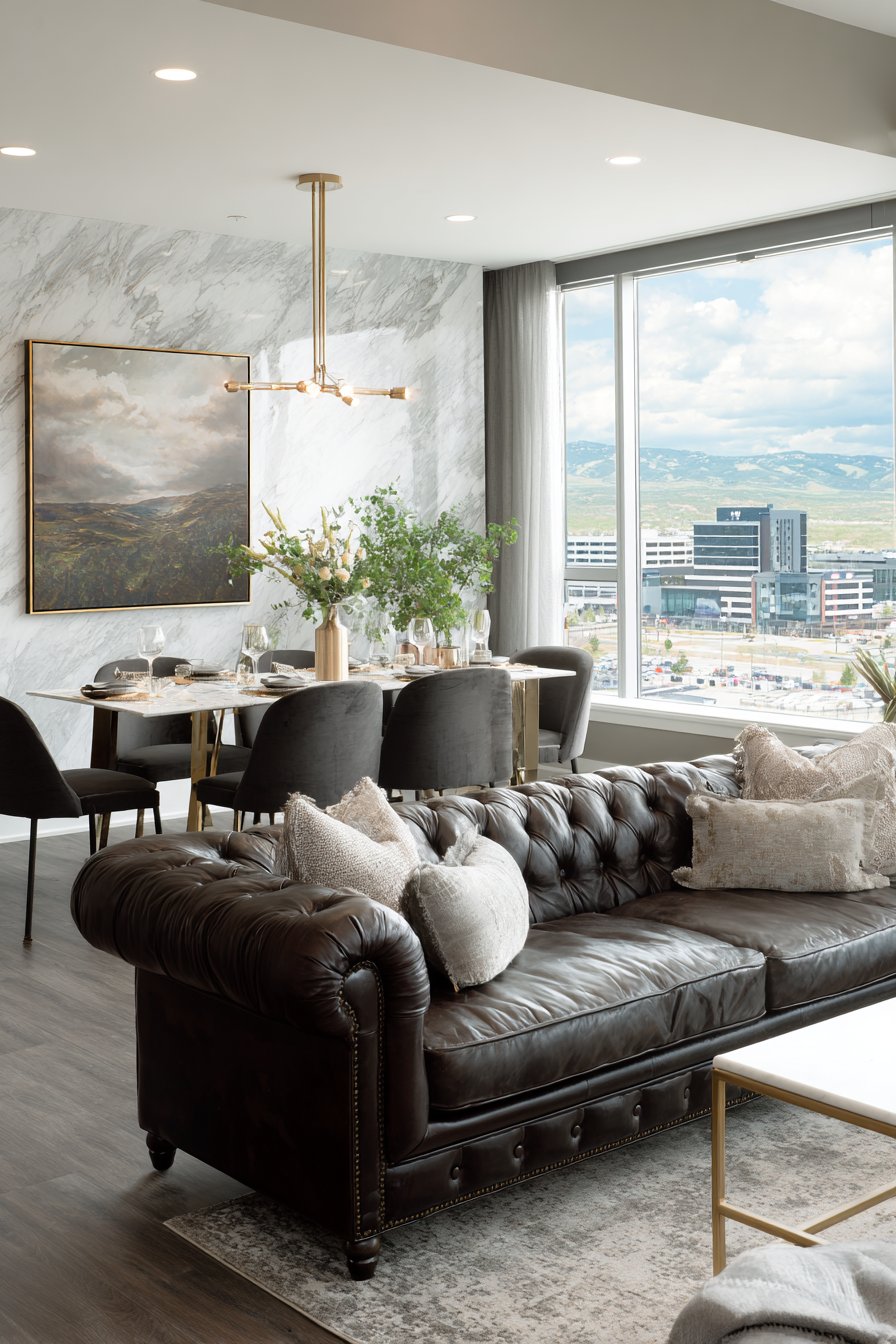
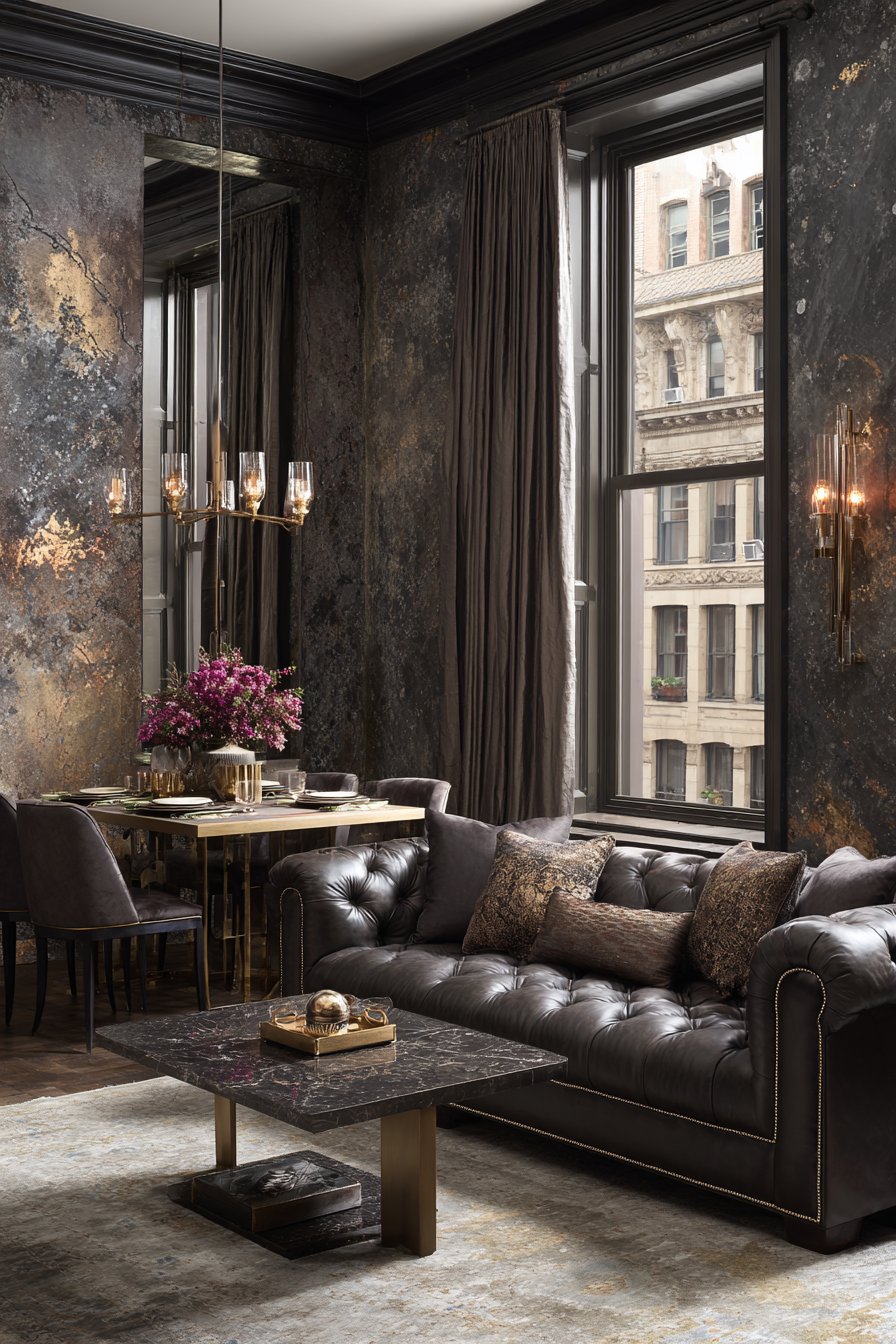
The luxury living-dining room combo showcases premium materials, sophisticated design, and impeccable craftsmanship, creating a space that exudes elegance and exclusivity. This design features a tufted leather Chesterfield sofa in espresso brown positioned to face a marble-top dining table with gold-finished metal base and velvet dining chairs. The luxury aesthetic is characterized not by ostentatious display but by the quality of materials, attention to detail, and the subtle ways in which expensive elements are integrated into the overall design.
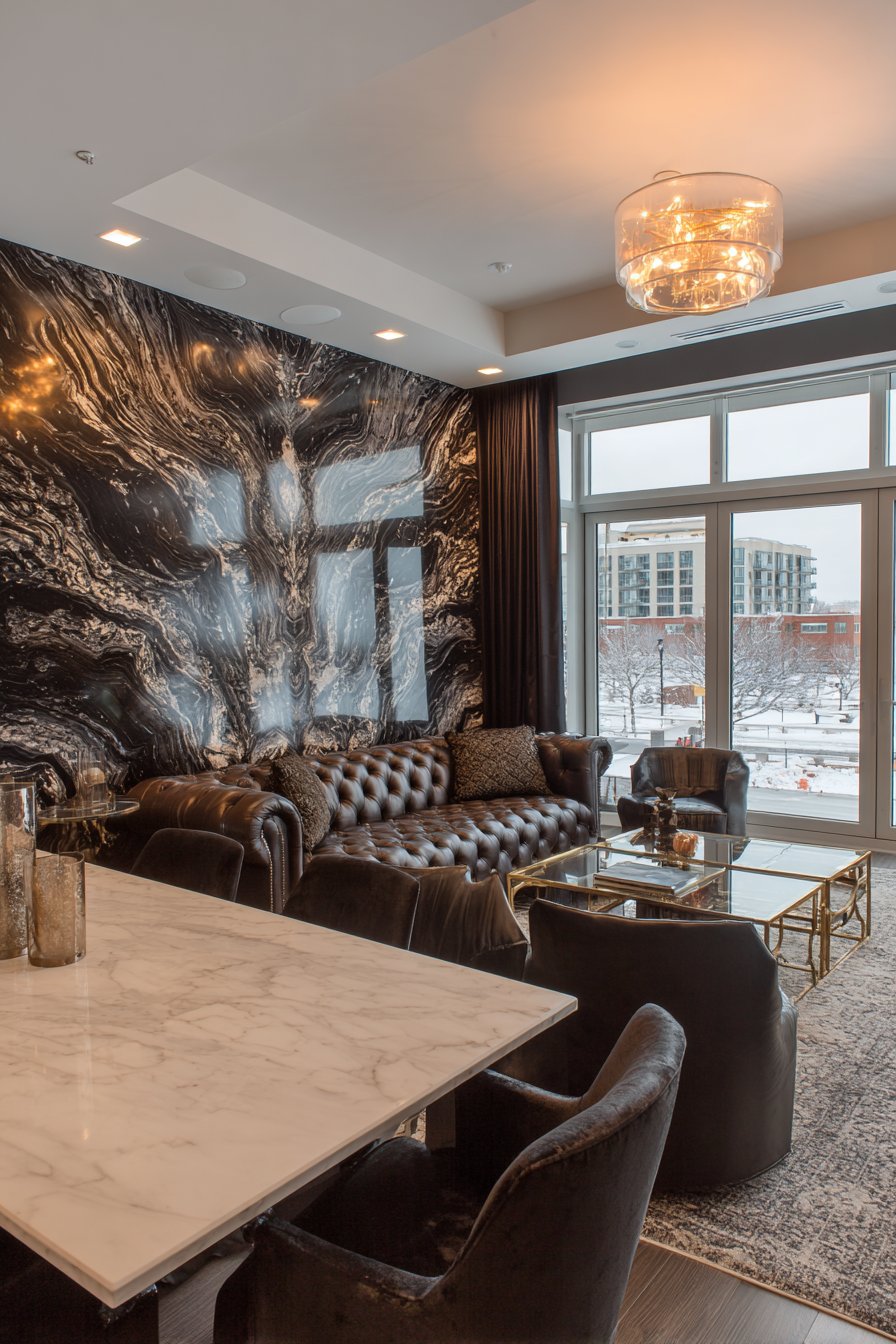
A marble accent wall provides a stunning backdrop, its natural veining creating unique patterns that can never be exactly replicated—a hallmark of true luxury. Silk area rugs ground both zones with their lustrous sheen and incredibly soft texture, while designer lighting fixtures—perhaps a dramatic chandelier over the dining area and sculptural table lamps in the living space—serve as functional art pieces. Floor-to-ceiling windows with motorized shades offer expansive views while providing precise light control at the touch of a button. Every detail, from the brass hardware to the custom millwork, speaks to quality and permanence.
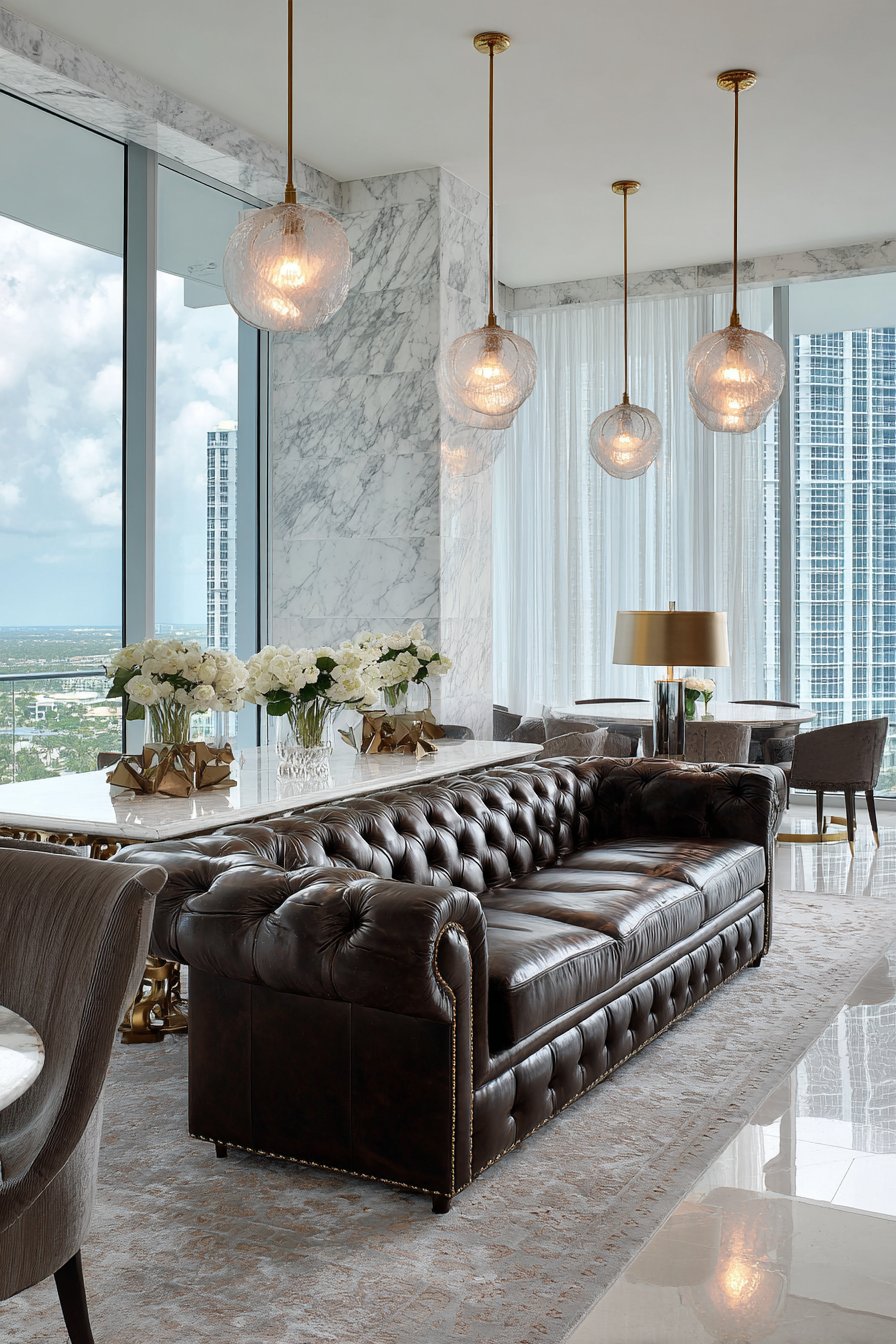
Professional photography with dramatic lighting showcases the high-end materials and refined aesthetic with particular attention to texture details and metallic accents. The tufted Chesterfield sofa in espresso brown leather represents classic luxury—its deep button-tufting requires skilled craftsmanship, and quality leather actually improves with age and use. The marble-top dining table with gold-finished base combines natural stone with precious metal tones for maximum impact. This living-dining room combo demonstrates that true luxury lies not in following trends but in investing in timeless quality, superior materials, and skilled craftsmanship that will remain beautiful for decades.
Key Design Tips:
- Invest in high-quality, timeless pieces rather than trendy items
- Choose natural materials like marble, hardwood, silk, and leather
- Incorporate metallic finishes in gold, brass, or bronze for warmth
- Select custom or designer lighting as sculptural focal points
- Use layered lighting to create different moods and highlight features
- Pay attention to details—hardware, trim, millwork all contribute to the luxury feel
- Consider motorized window treatments for convenience and sleek aesthetics
16. Studio Apartment Space Efficiency
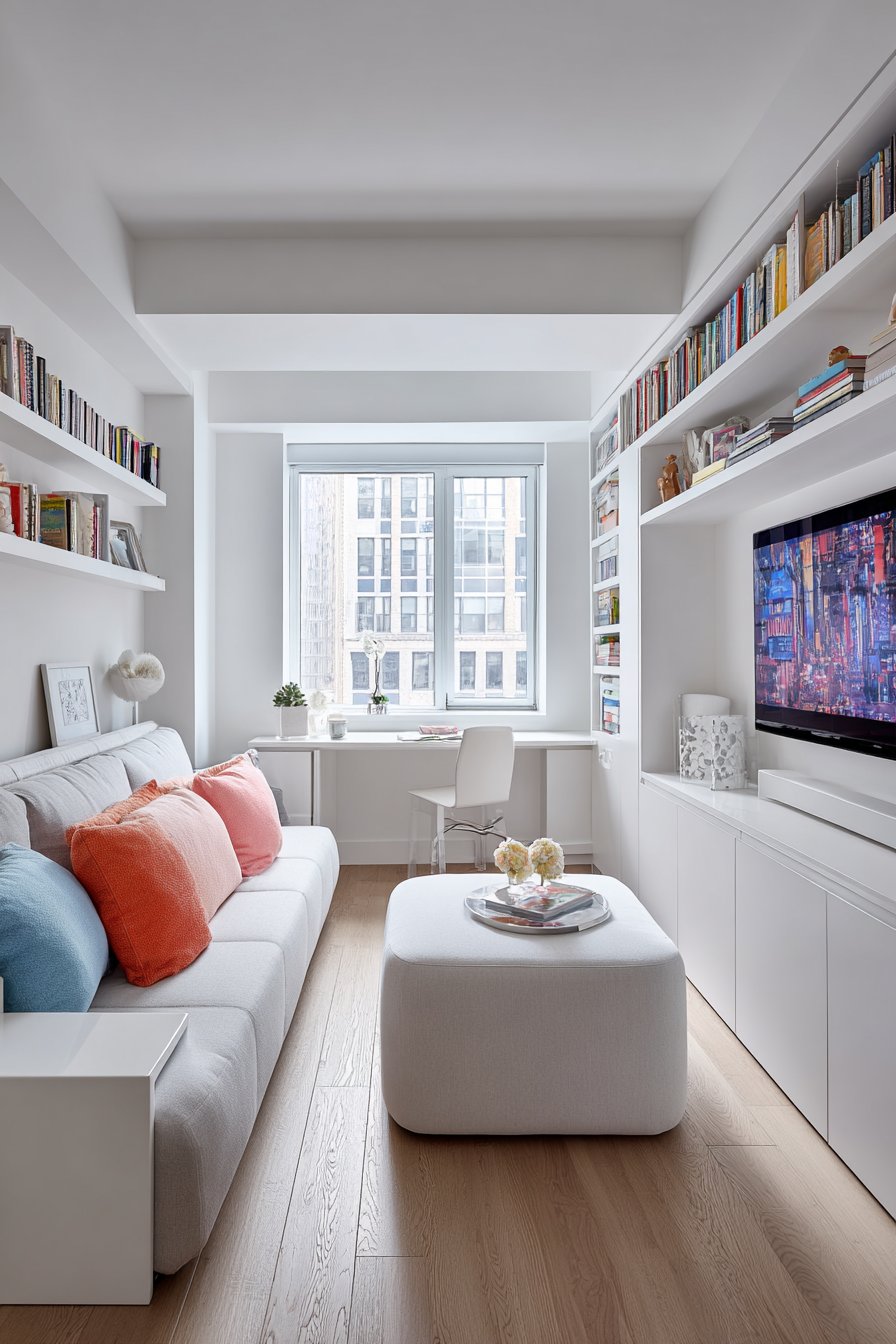
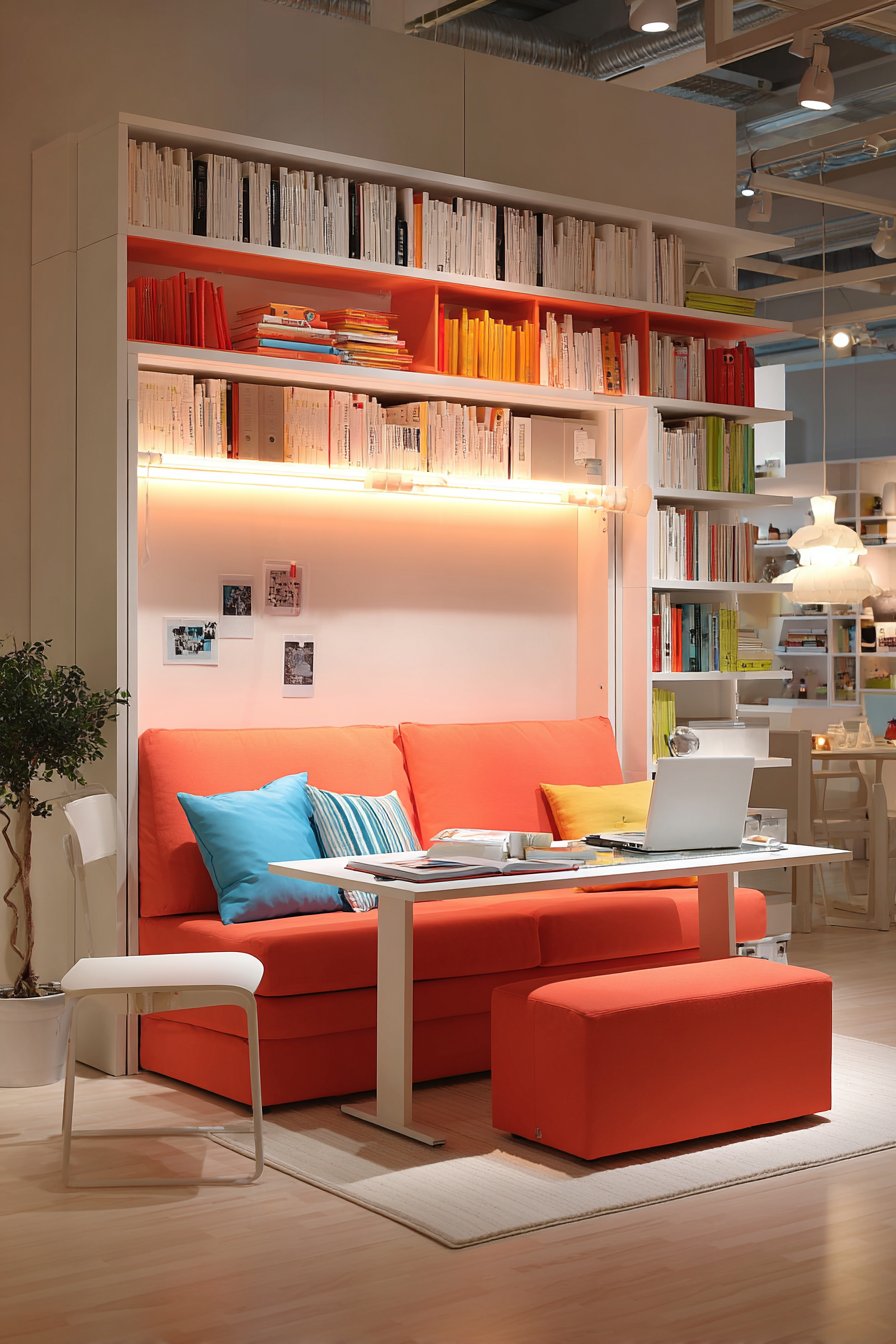
The space-efficient living-dining room combo for studio living demonstrates that even the most compact footprints can accommodate distinct functional zones through clever furniture selection and strategic planning. This design features a convertible sofa bed facing a drop-leaf dining table that folds against the wall when not in use, maximizing flexibility in a limited area. The multi-functional storage ottoman serves triple duty as coffee table, additional seating, and hidden storage for items that would otherwise clutter the small space. Every piece must justify its existence through multiple functions or exceptional utility.
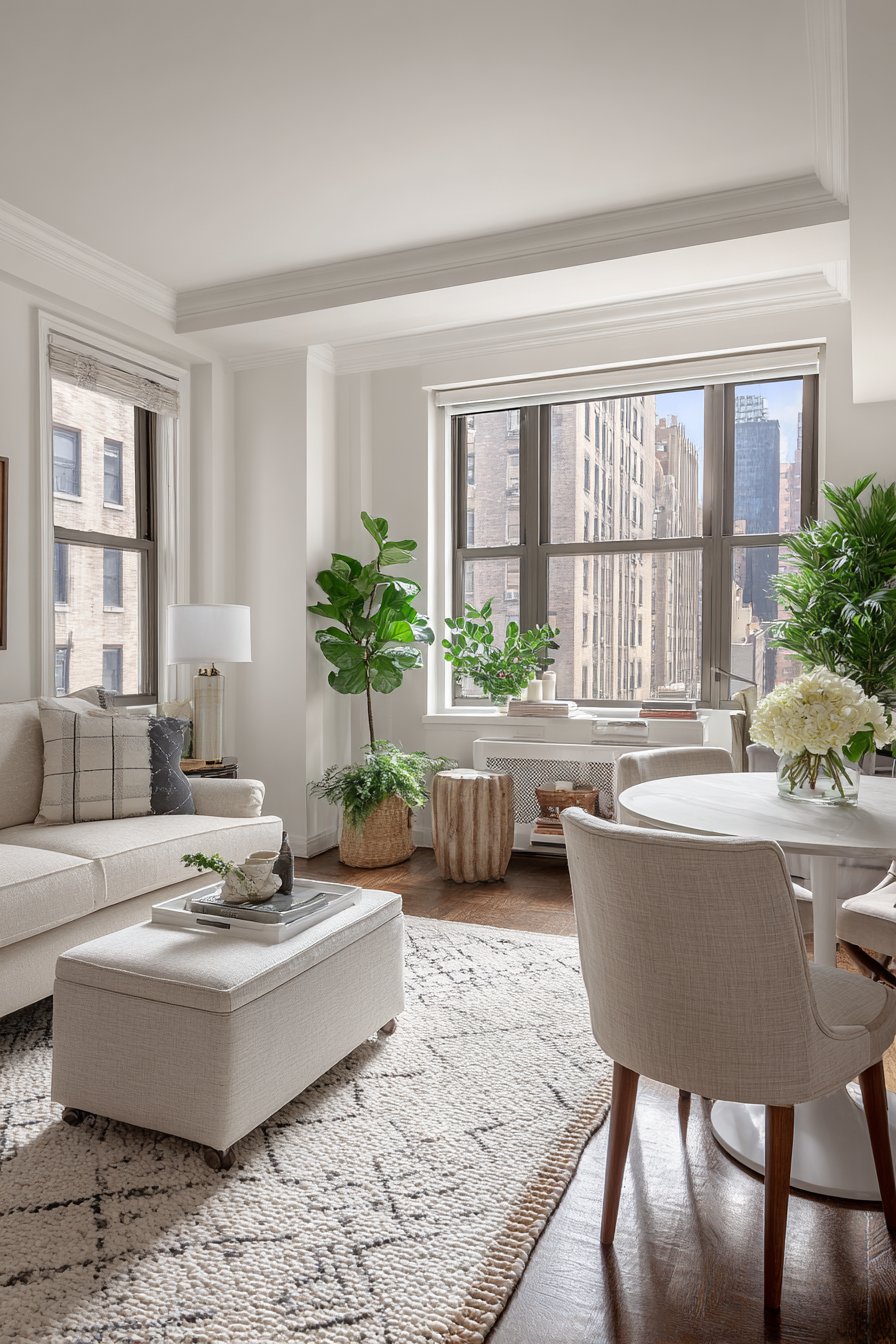
Vertical storage solutions are crucial in compact combo spaces. Floating shelves mounted high on the walls provide display and storage space without consuming precious floor area, while wall-mounted cabinets keep necessities accessible but visually contained. Bright white walls are not just aesthetic preference but strategic choice—light colors reflect natural and artificial light, making small spaces feel more expansive. Strategic lighting includes both overhead fixtures and task lighting positioned to illuminate specific work or activity areas without creating dark corners that would make the space feel smaller.
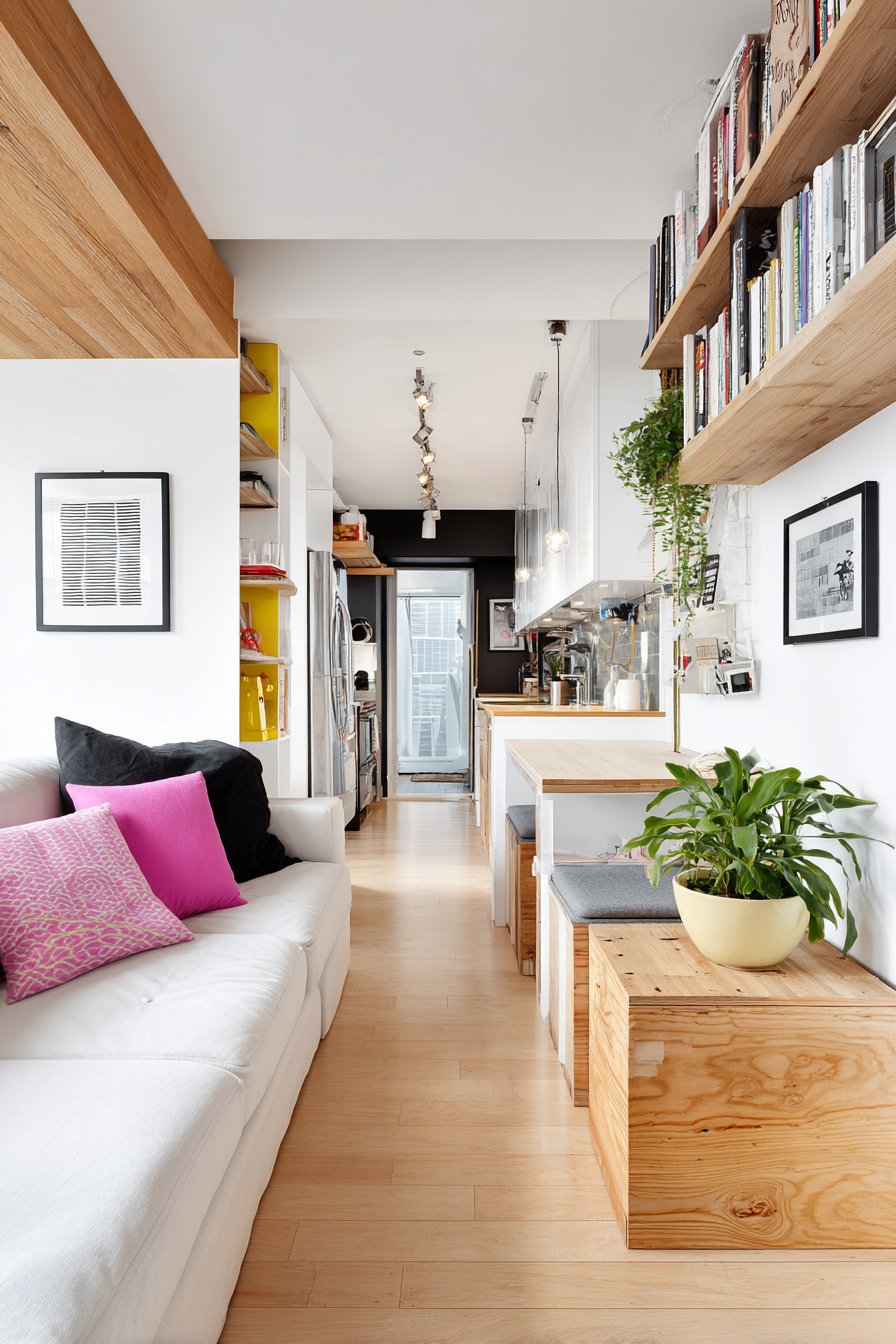
Interior photography demonstrates clever space-planning solutions with balanced exposure showing how each element contributes to functionality without sacrificing style. The convertible sofa bed allows the living room to transform into a sleeping area at night, eliminating the need for a separate bedroom in a studio layout. The drop-leaf dining table is genius in small spaces—when folded down, it occupies minimal wall space, but when opened, it provides adequate dining surface for meals or work projects. This living-dining room combo proves that small-space living requires creativity and compromise, but with smart solutions, even studios can feel comfortable, organized, and genuinely livable.
Key Design Tips:
- Choose multifunctional furniture—sofa beds, ottomans with storage, expandable tables
- Use vertical space extensively with floor-to-ceiling shelving and wall-mounted storage
- Select furniture with exposed legs to create visual lightness
- Keep the color palette light and cohesive to maximize the sense of space
- Use mirrors strategically to reflect light and create depth
- Implement fold-down or drop-leaf tables that can be stowed when not in use
- Maintain strict organization—clutter will make small spaces feel chaotic
17. Family-Friendly Practical Living
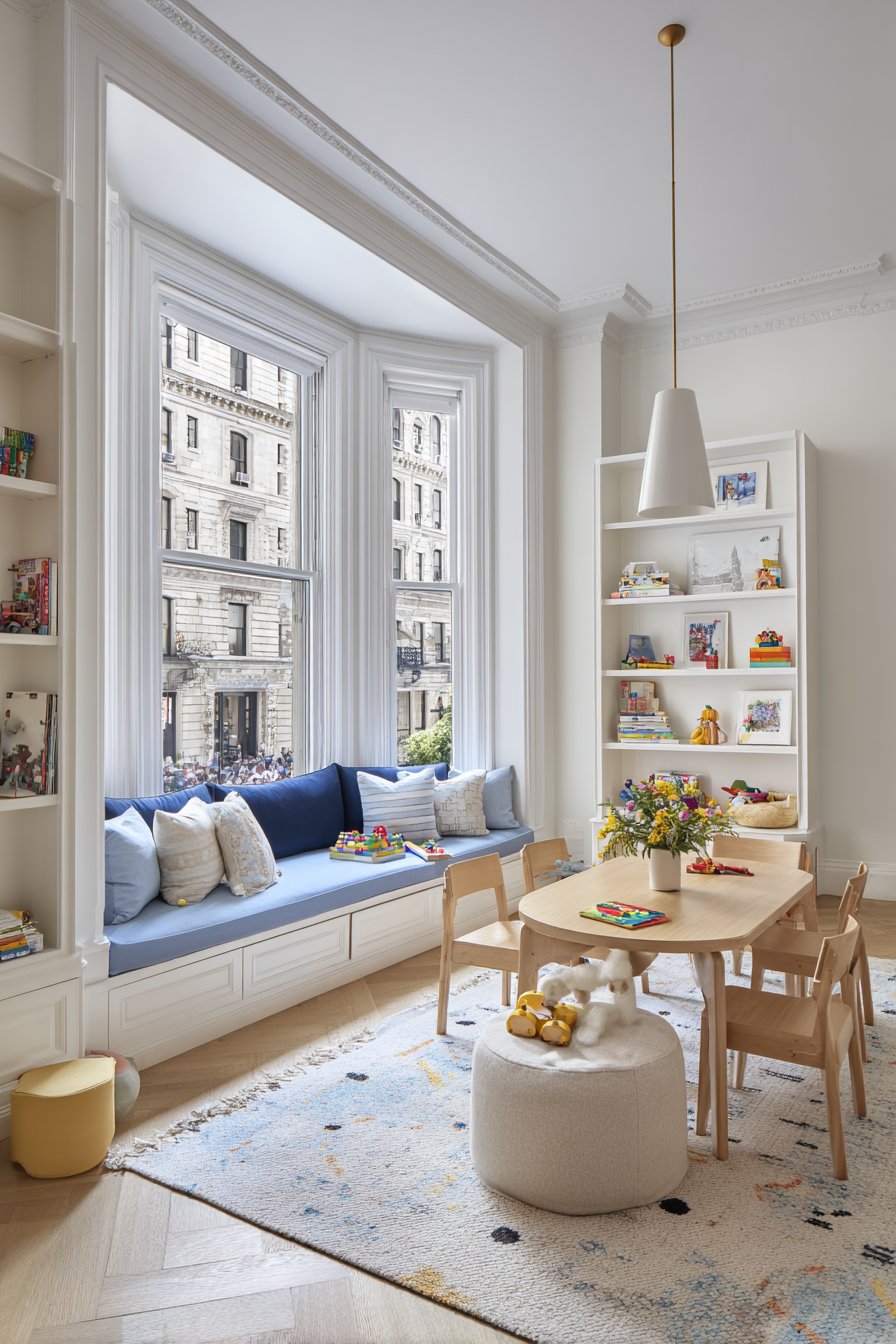
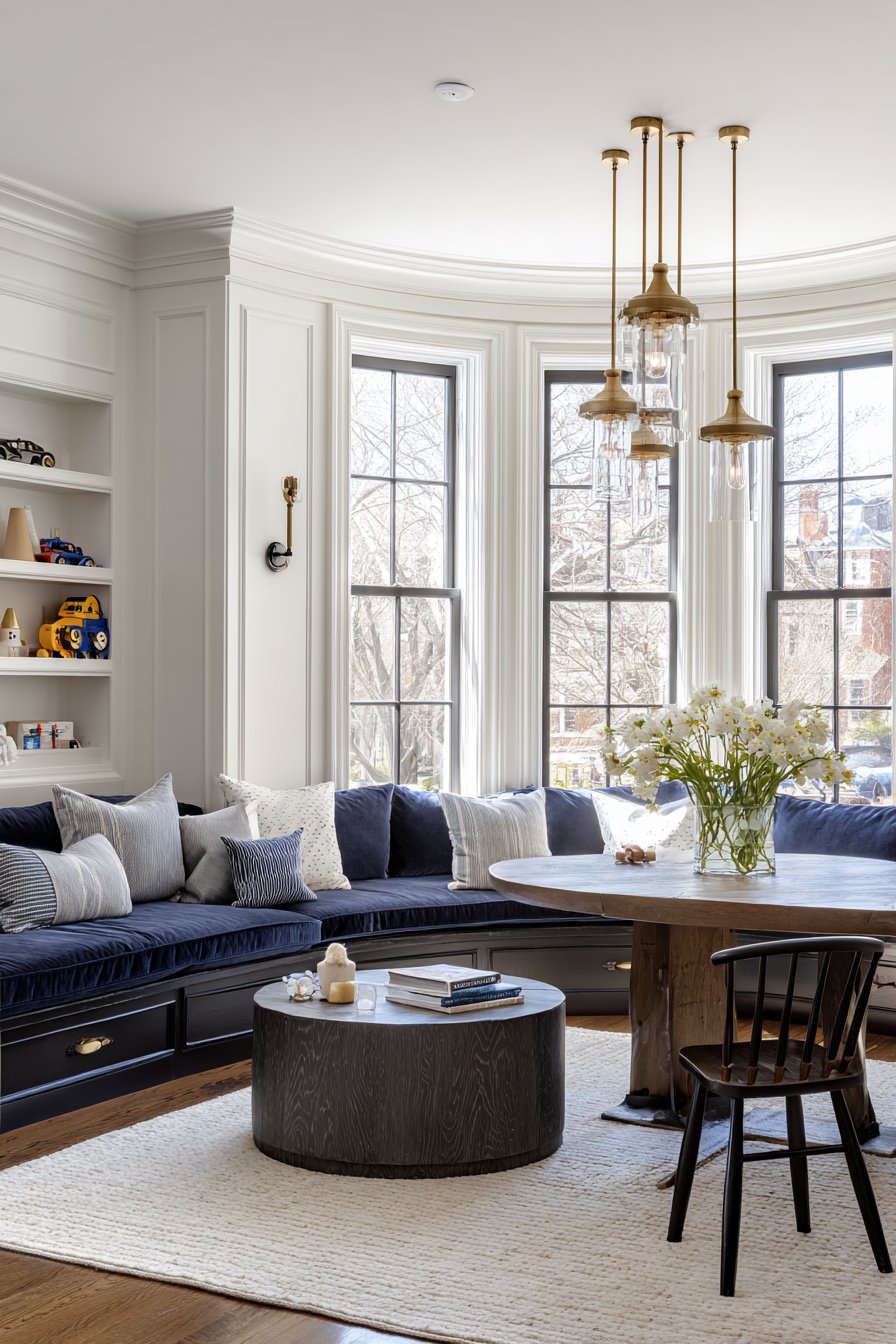
The family-friendly living-dining room combo prioritizes durability, safety, and easy maintenance while maintaining style and comfort for all household members. This design features a sofa upholstered in performance fabric in navy blue—a fabric specifically engineered to resist stains, spills, and wear—facing a sturdy dining table in sealed oak with wipeable cushioned chairs. The family-friendly aesthetic recognizes that real life includes sticky fingers, spilled juice, dropped markers, and the general chaos that comes with active children, designing proactively to accommodate rather than fight against this reality.
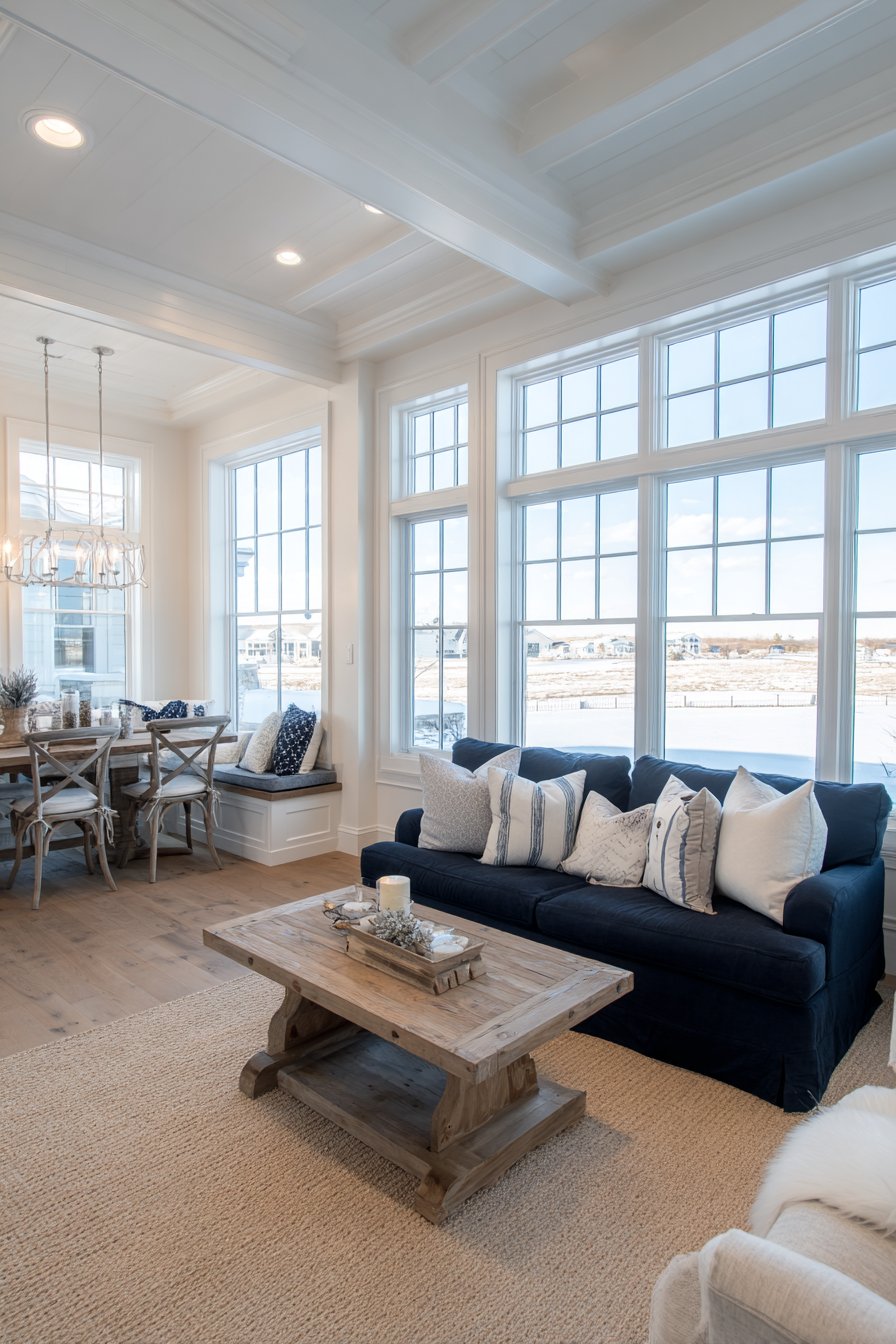
A built-in window seat provides additional seating while cleverly incorporating toy storage beneath the cushions, demonstrating the importance of abundant, accessible storage in family homes. The kid-safe rounded coffee table eliminates sharp corners that could cause injuries during rowdy play, while washable area rugs throughout can be easily cleaned when accidents inevitably occur. Practical pendant lighting over the dining area is positioned high enough to avoid heads during active meal times, while natural light from large windows reduces the need for lamps that could be knocked over.
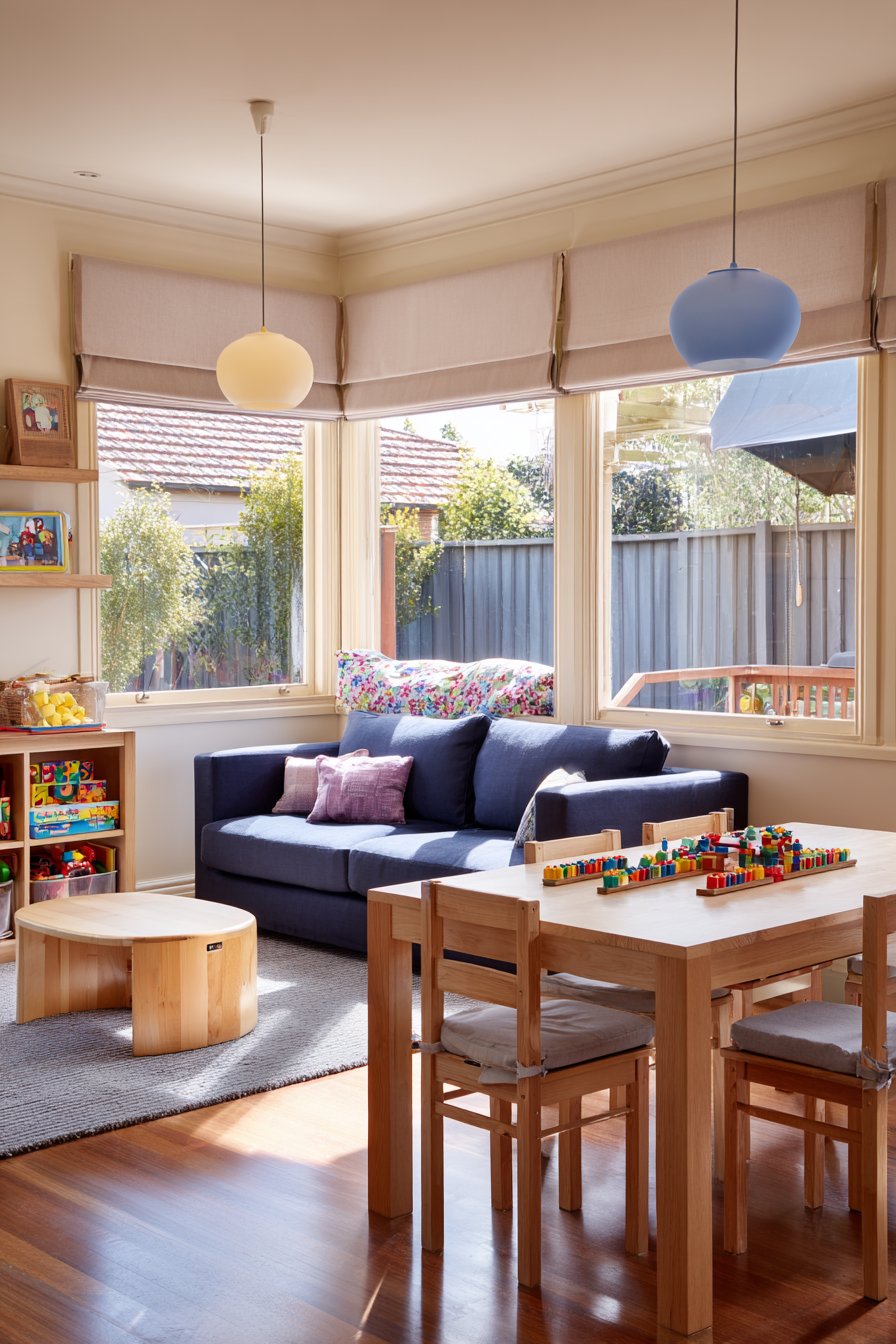
Professional interior photography captures the lived-in yet organized aesthetic with attention to family-centered design choices that make daily life easier. The performance fabric on the navy sofa represents a significant advancement in family-friendly furnishing—these fabrics can withstand most spills when cleaned promptly, eliminating the anxiety that comes with investing in beautiful furniture only to see it quickly ruined. The sealed oak dining table resists water rings and can be wiped clean easily, while wipeable cushioned chairs mean permanent markers and spaghetti sauce don’t spell disaster. This living-dining room combo demonstrates that family-friendly design doesn’t mean sacrificing style—it means making smart choices about materials and construction that accommodate real life with children.
Key Design Tips:
- Choose performance fabrics that resist stains and wear for all upholstered furniture
- Select sealed wood surfaces that can be wiped clean easily
- Incorporate abundant storage, including concealed options for toys and clutter
- Avoid sharp corners on coffee tables and other low furniture
- Choose washable rugs and removable cushion covers for easy cleaning
- Install sturdy, tip-resistant furniture—safety is paramount with children
- Create designated zones for different activities to maintain some organization
18. Loft-Style Dramatic Verticality
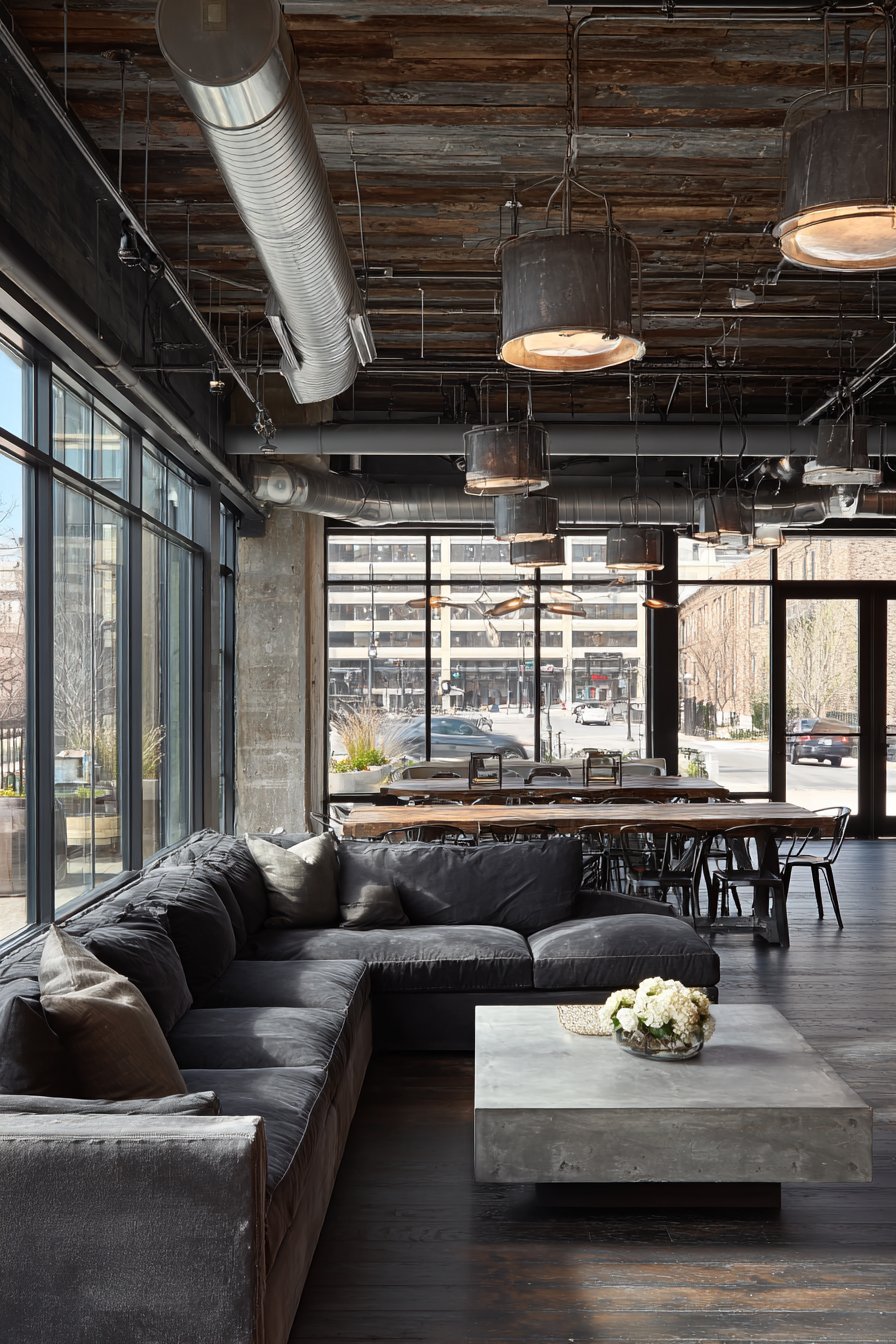
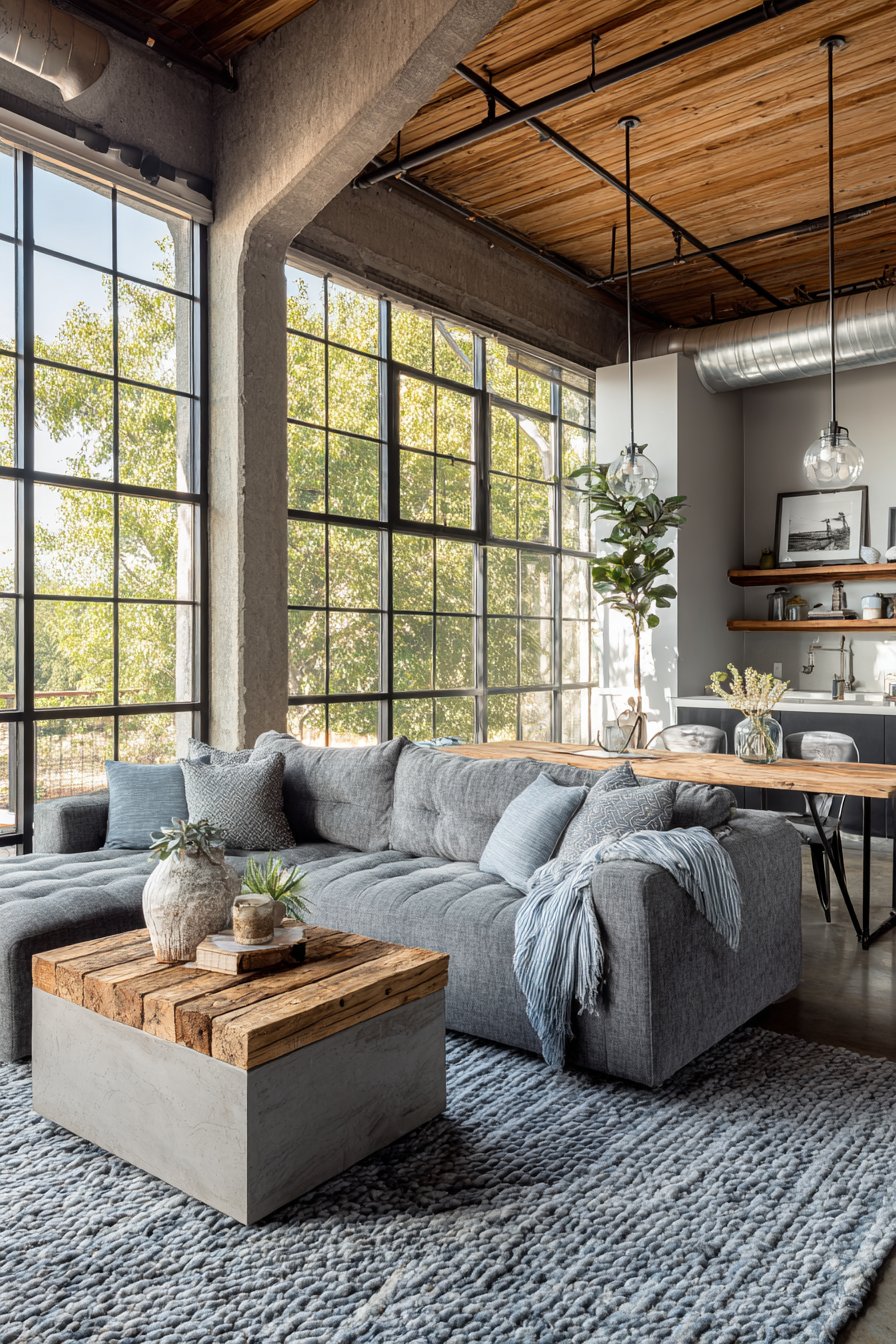
The loft-style living-dining room combo with soaring ceilings showcases the dramatic verticality and industrial character of converted warehouse or factory spaces. This design features a deep sectional in charcoal gray arranged around a concrete coffee table, adjacent to an industrial dining table constructed from iron pipe legs and thick wood plank top with metal dining chairs. Exposed ductwork, original brick walls, and oversized factory-style windows are celebrated as architectural features rather than problems to be solved. The loft aesthetic embraces the building’s industrial past while adapting it for comfortable residential living.
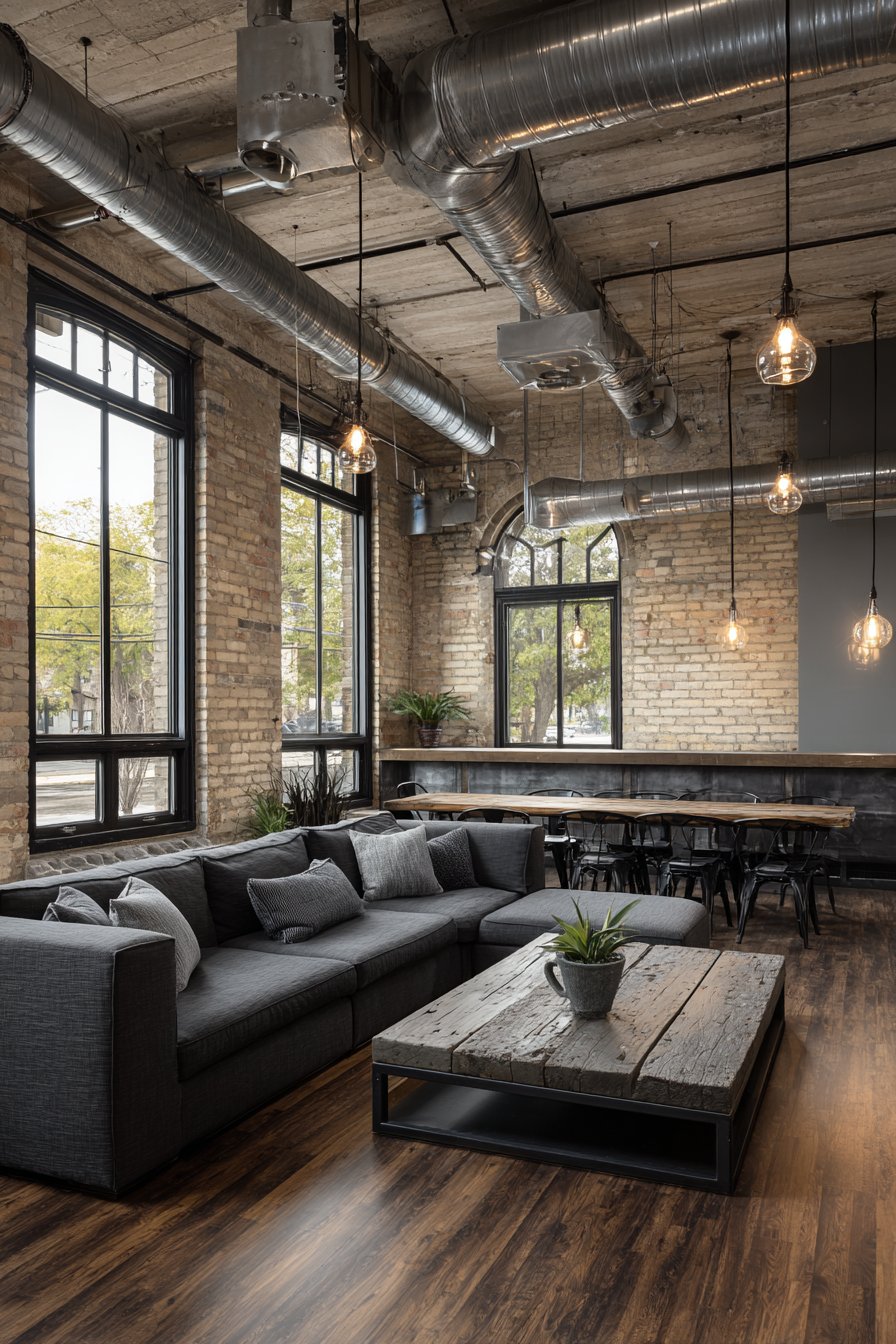
The furniture scale is crucial in loft spaces with dramatic ceiling heights. The deep sectional provides substantial visual weight that grounds the living area, preventing furniture from appearing lost in the vast volume. The concrete coffee table reinforces the industrial material palette while providing durable functionality. The industrial dining table, with its iron pipe legs and thick wood plank top, represents authentic loft aesthetic—utilitarian materials elevated through thoughtful design. Oversized factory-style windows flood the entire space with natural light, their metal frames and generous proportions characteristic of industrial architecture.
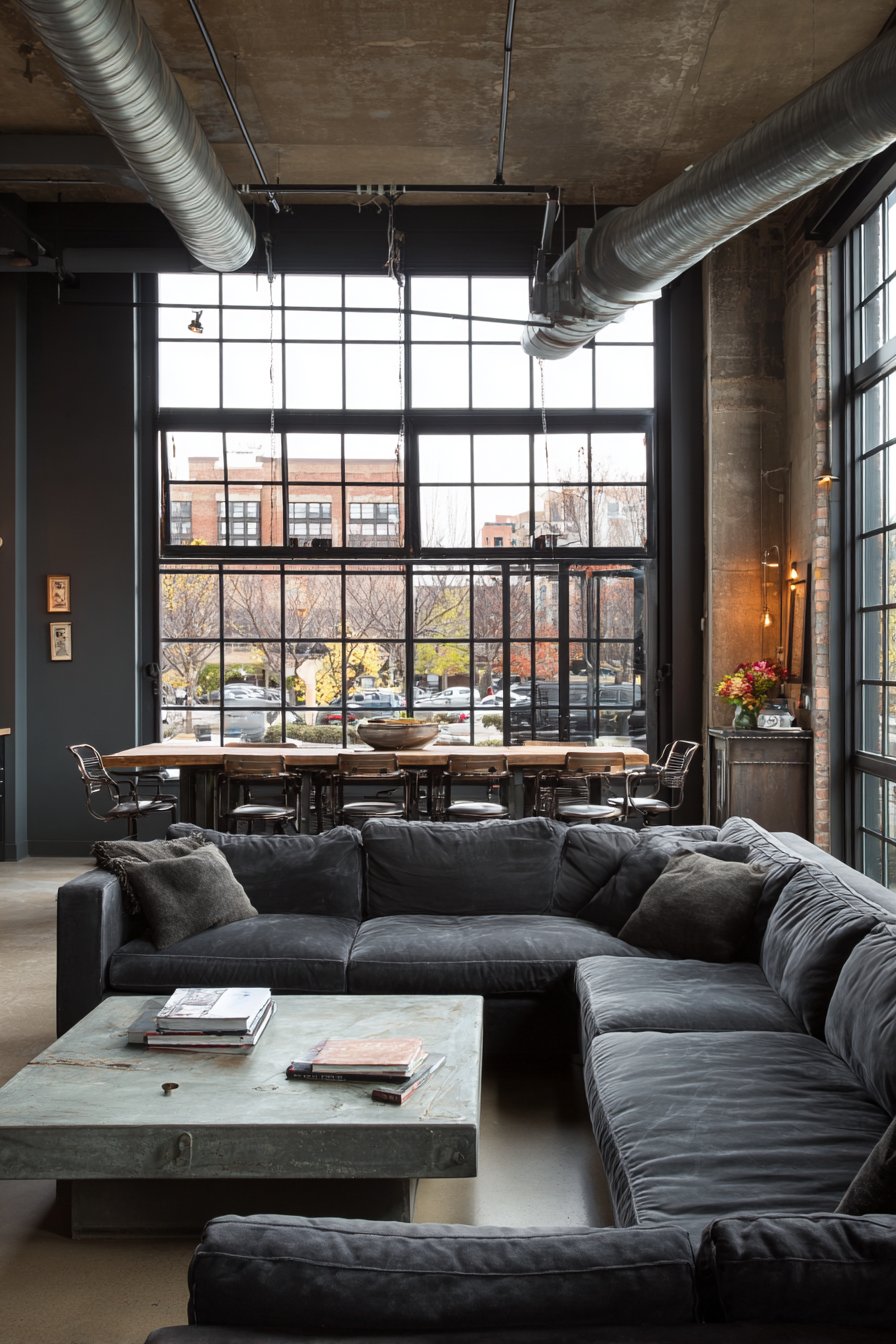
Interior design photography with vertical composition emphasizes the dramatic ceiling height and urban warehouse aesthetic, capturing how light falls from the high windows and creates long shadows across the exposed brick. The exposed ductwork, rather than being concealed behind dropped ceilings, becomes a design feature that tells the building’s story. This living-dining room combo demonstrates that loft living offers unique opportunities for dramatic interior design that celebrates volume, light, and the honest expression of a building’s original industrial purpose transformed for contemporary residential use.
Key Design Tips:
- Scale furniture appropriately—pieces should be substantial enough for the volume
- Celebrate original architectural features like exposed brick, ductwork, and large windows
- Use area rugs to define zones in very open spaces
- Incorporate industrial materials like metal, concrete, and reclaimed wood
- Consider how vertical space can be utilized—perhaps with tall bookcases or art
- Layer lighting since ceiling fixtures will be very high—use floor and table lamps
- Don’t try to make the space feel cozy—embrace the dramatic openness
19. Art Deco Glamorous Sophistication
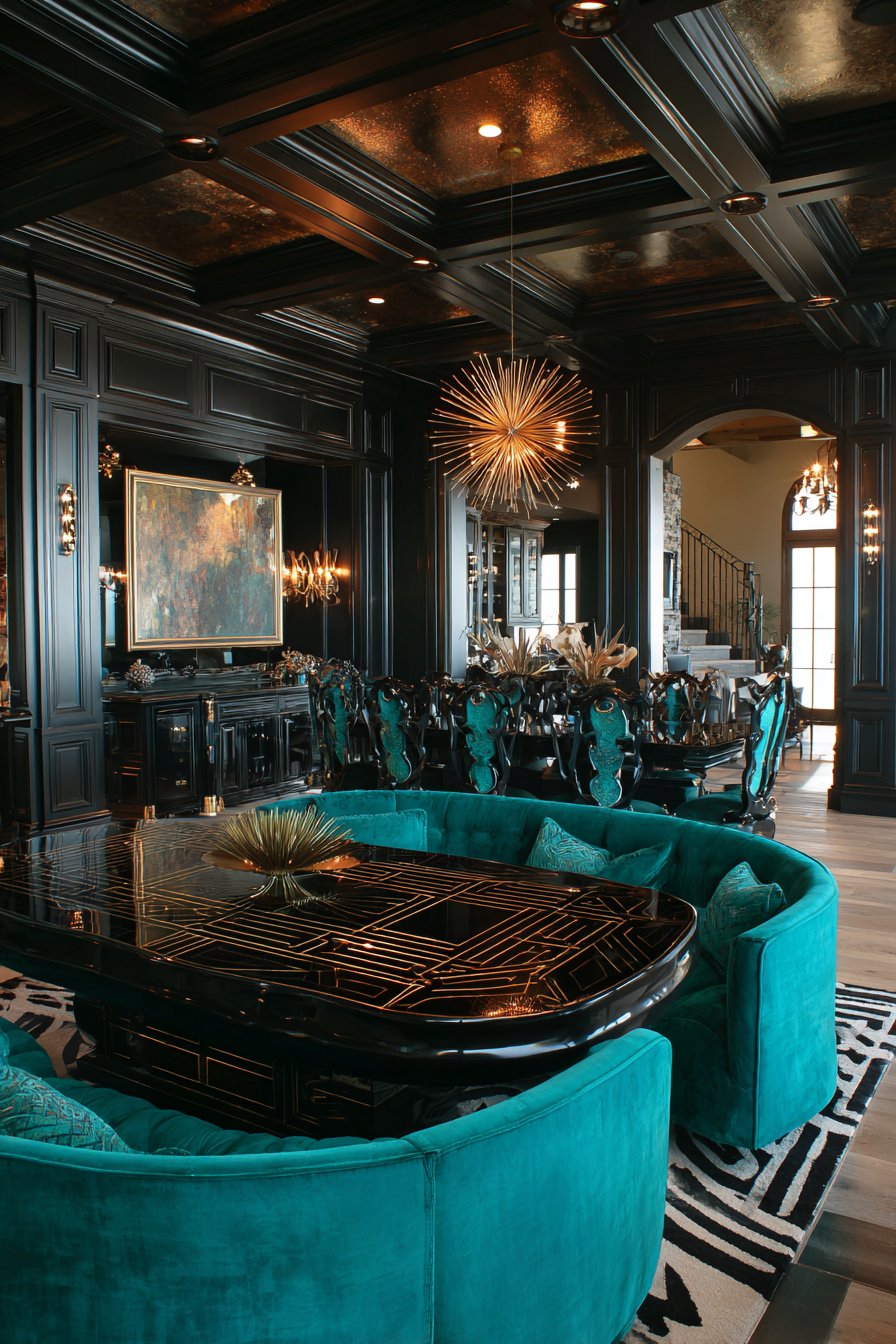
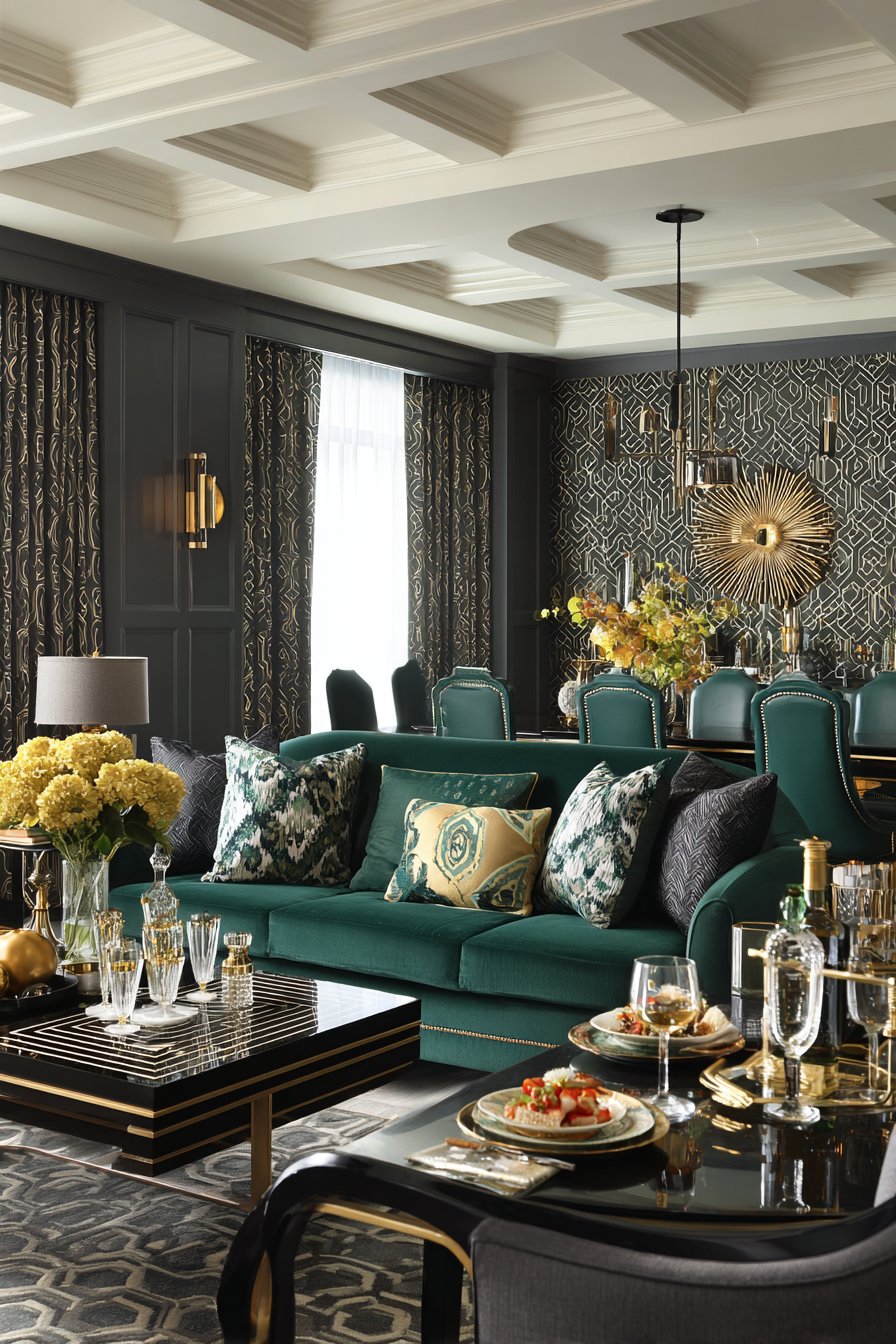
The art deco-inspired living-dining room combo channels the glamorous sophistication of the 1920s and 30s, featuring bold geometric forms, luxurious materials, and dramatic contrasts. This space showcases a curved velvet sofa in jewel-tone emerald green facing a lacquered black dining table with geometric inlay design and brass-accented dining chairs. The art deco aesthetic celebrates luxury, symmetry, and the machine age’s fascination with streamlined forms and exotic materials. Mirrored surfaces throughout reflect light and create visual drama, while gold hardware accents add warmth and precious metal glamour.
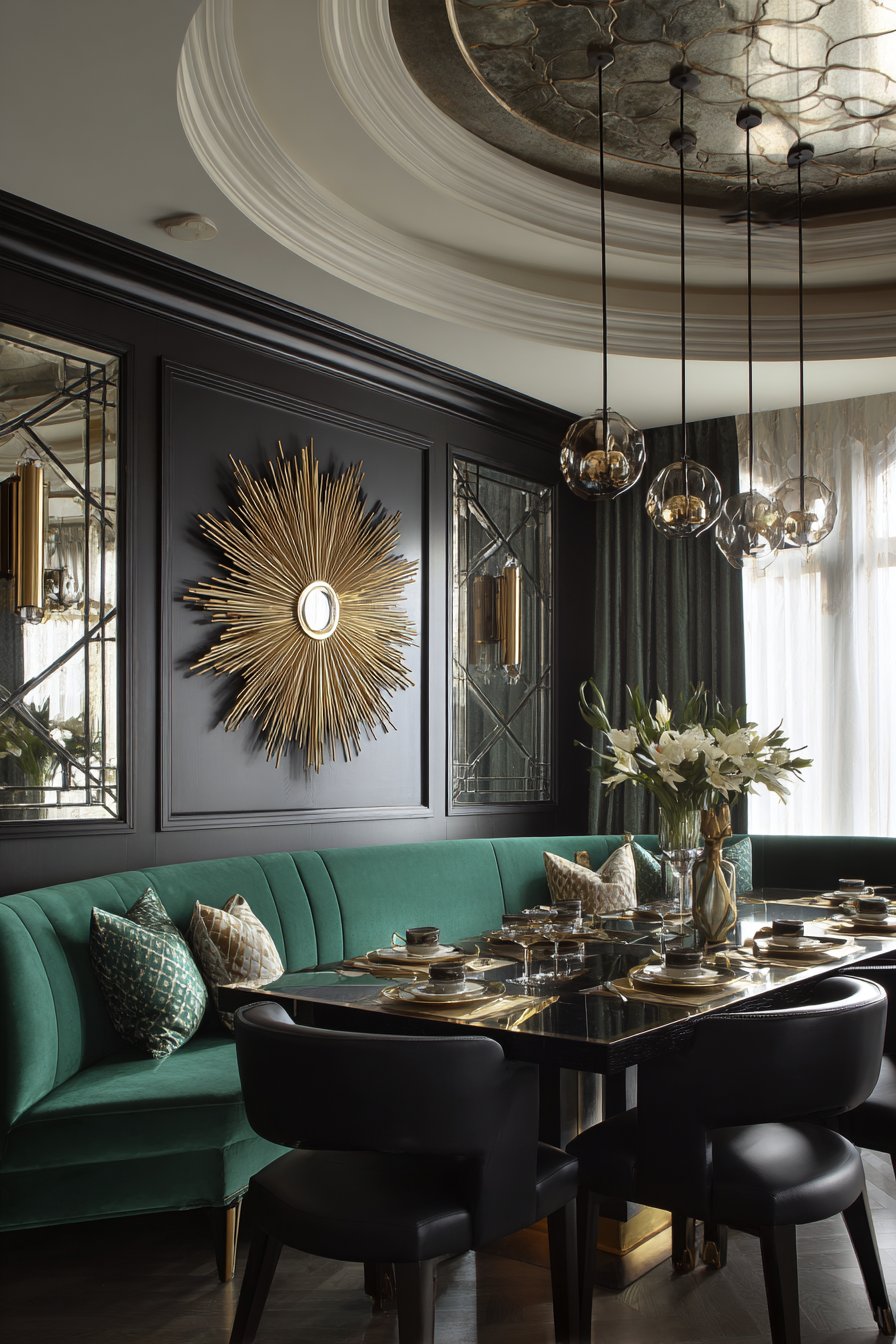
A sunburst mirror—perhaps the most iconic art deco motif—serves as a focal point, its radiating metal rays creating sculptural impact on the wall. The stepped ceiling detail adds architectural interest through geometric layering, while period-appropriate lighting fixtures featuring frosted glass globes and geometric metalwork provide both functional illumination and decorative impact. The emerald green curved sofa represents art deco’s love of bold color and sensuous forms, its sweeping curves contrasting beautifully with the sharp angles found elsewhere in the space.
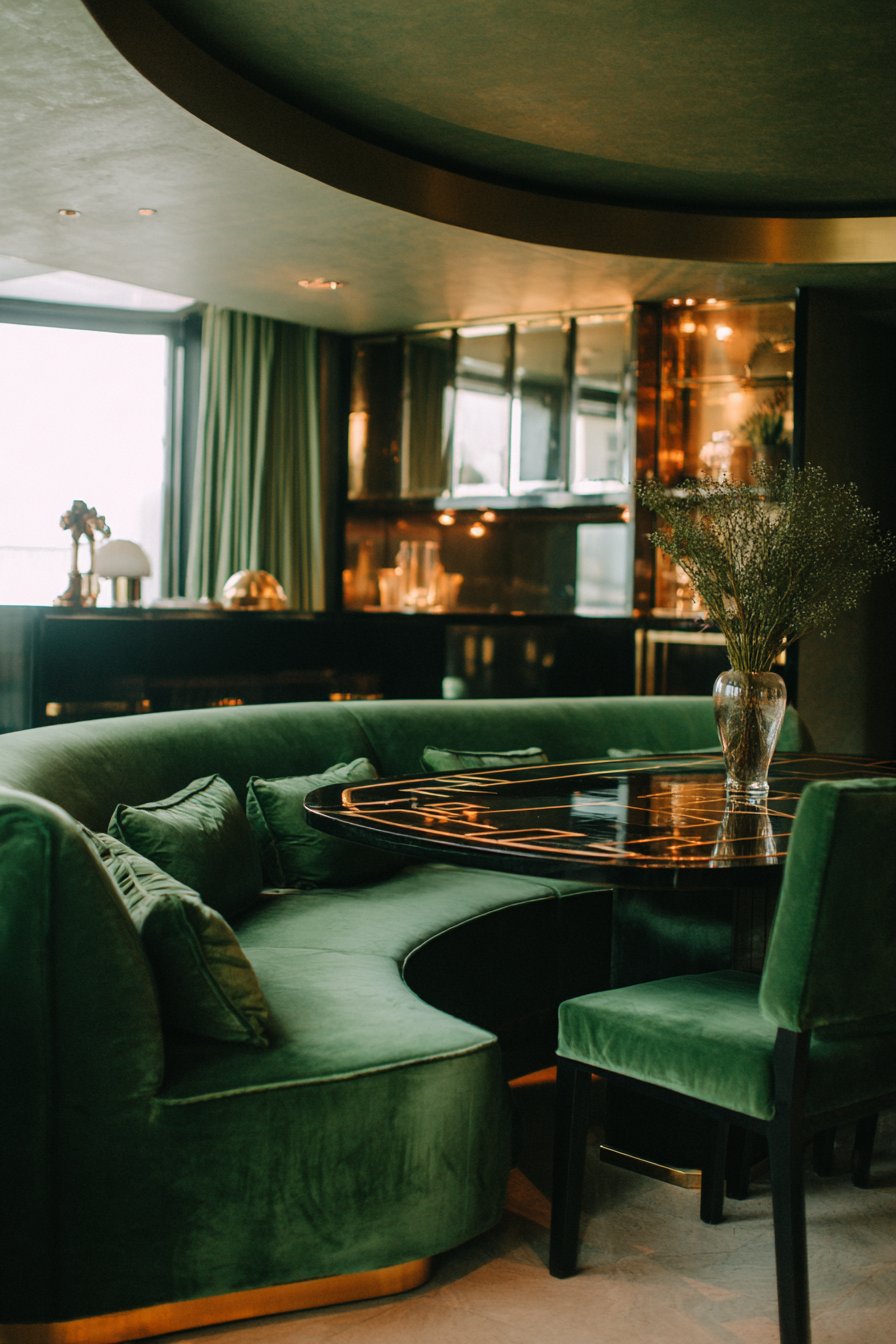
Professional photography captures the sophisticated 1920s elegance with dramatic lighting that highlights metallic finishes and luxurious materials. The lacquered black dining table with geometric inlay demonstrates the art deco fascination with exotic woods, precious materials, and skilled craftsmanship. Brass-accented dining chairs pick up the golden tones found in the hardware and mirror, creating visual continuity. This living-dining room combo proves that art deco remains a compelling design choice nearly a century after its heyday, its combination of geometric clarity and unabashed luxury feeling fresh and glamorous in contemporary interiors.
Key Design Tips:
- Embrace bold, saturated colors in jewel tones—emerald, sapphire, ruby, amethyst
- Incorporate geometric patterns and forms throughout—in furniture, textiles, and accessories
- Use mirrored surfaces to amplify light and create glamorous reflections
- Select metallic finishes in gold, brass, or chrome for hardware and accents
- Choose curved, streamlined furniture forms that reference the machine age
- Add iconic art deco motifs like sunbursts, zigzags, or stepped forms
- Invest in luxurious materials like velvet, lacquer, marble, and exotic woods
20. Mediterranean Old World Warmth
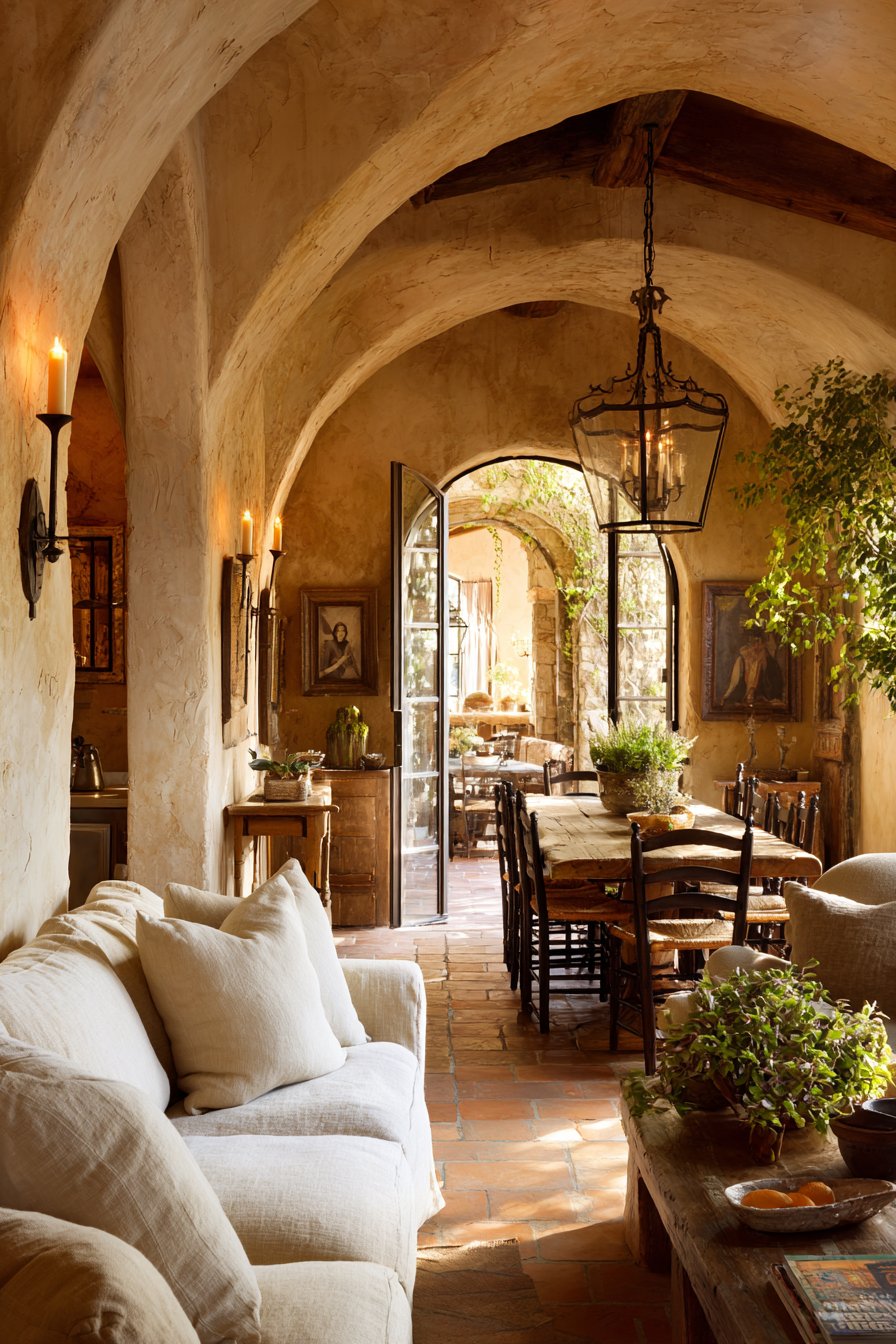
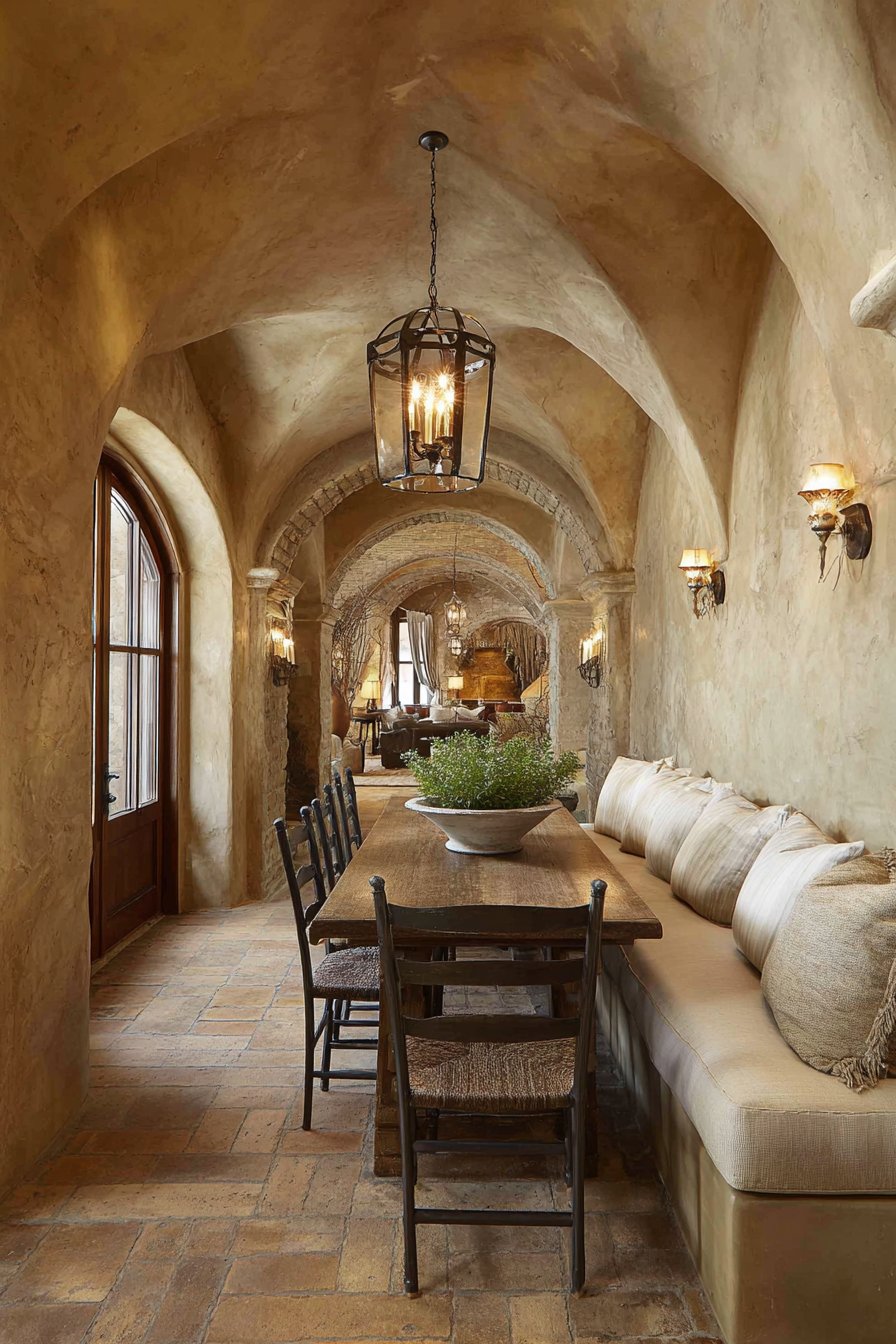
The Mediterranean living-dining room combo evokes the sun-drenched warmth of coastal Spain, Italy, or Greece, featuring rustic materials, curved architectural elements, and a color palette inspired by earth and sea. This space features a comfortable sectional with rolled arms in cream linen positioned near a rustic wooden dining table with wrought iron base and ladder-back chairs. Terracotta tile flooring establishes immediate Mediterranean character, its warm orange-red tones suggesting sun-baked clay and ancient building traditions. Arched doorways provide architectural interest while referencing classical Mediterranean architecture.
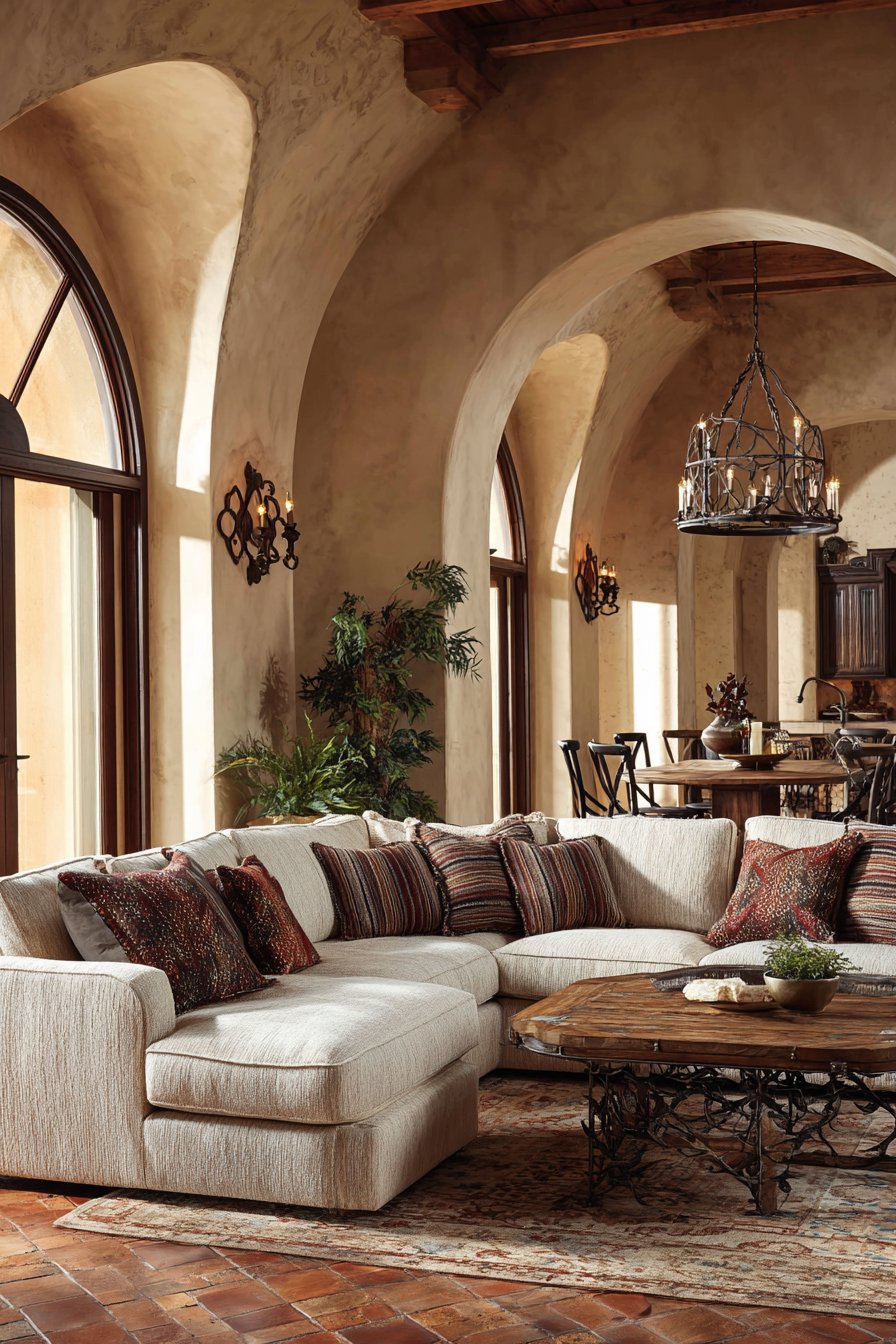
Textured plaster walls in warm beige create depth and visual interest through their irregular, hand-applied surface—a stark contrast to the smooth drywall common in modern construction. The rustic wooden dining table, possibly hewn from reclaimed wood with visible age marks, sits atop a wrought iron base that demonstrates traditional metalworking craftsmanship. Ladder-back dining chairs, perhaps with woven rush seats, reference rural Mediterranean furniture traditions. A wrought iron chandelier suspended over the dining table and matching wall sconces provide ambient lighting that supplements the natural light streaming through French doors.
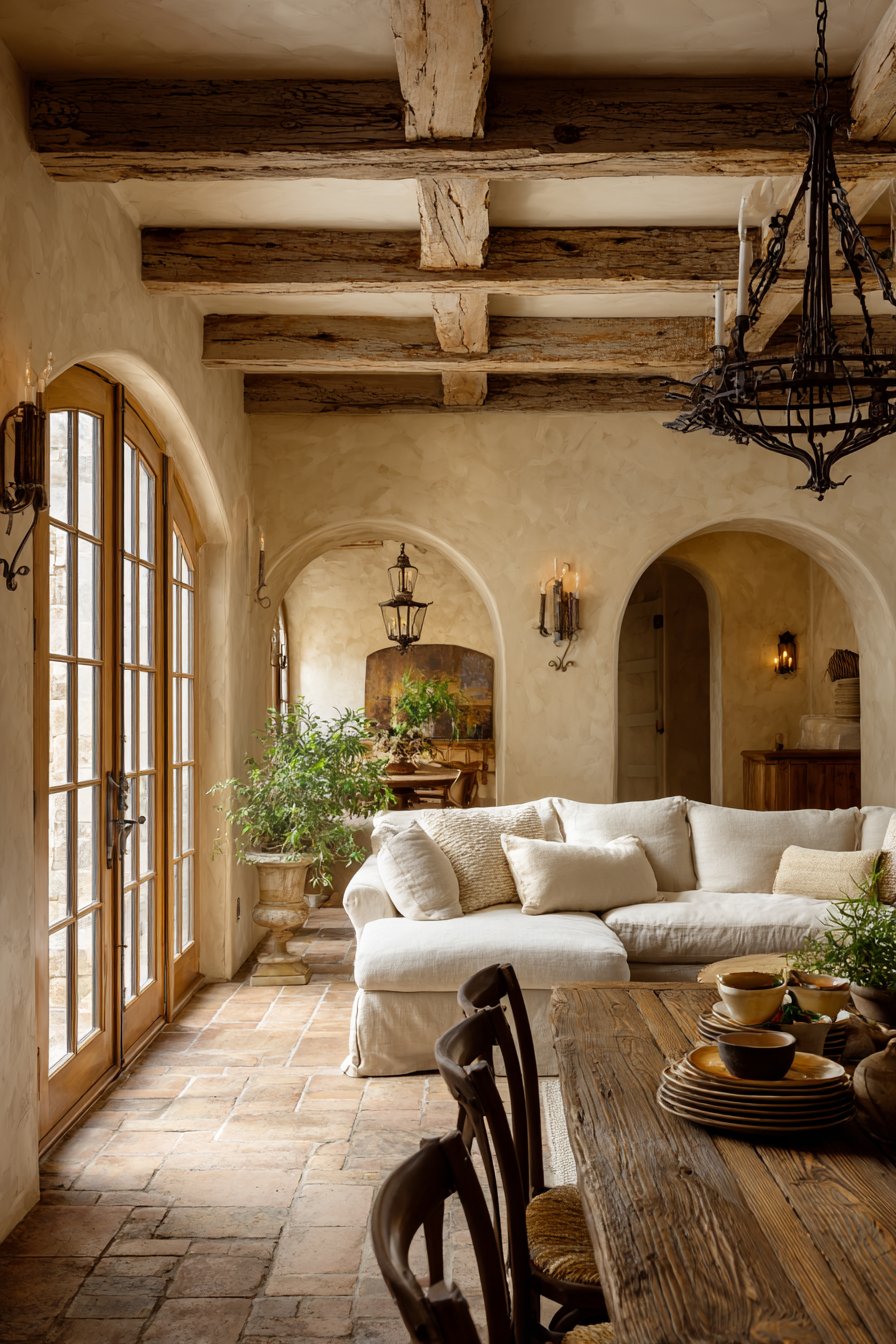
Interior photography showcases the Old World charm with warm natural lighting and attention to architectural details—the curve of the archways, the texture of the plaster walls, the individual terracotta tiles. The cream linen sectional with rolled arms provides comfortable, generous seating that feels both elegant and relaxed. French doors opening to the exterior reinforce the Mediterranean emphasis on indoor-outdoor living and connection to nature. This living-dining room combo demonstrates how Mediterranean style creates spaces that feel simultaneously rustic and refined, casual and elegant, perfectly suited for entertaining and family life in equal measure.
Key Design Tips:
- Use terracotta, saltillo, or ceramic tile flooring for authentic Mediterranean feel
- Incorporate curved or arched architectural elements where possible
- Choose rustic wood furniture with visible grain and character marks
- Apply textured plaster to walls for Old World authenticity
- Select wrought iron elements for lighting fixtures, furniture bases, and decorative pieces
- Use warm, earthy colors—terracotta, warm beige, ochre, deep gold
- Add French doors or large windows to emphasize indoor-outdoor connection
21. Color-Zoned Contemporary Definition
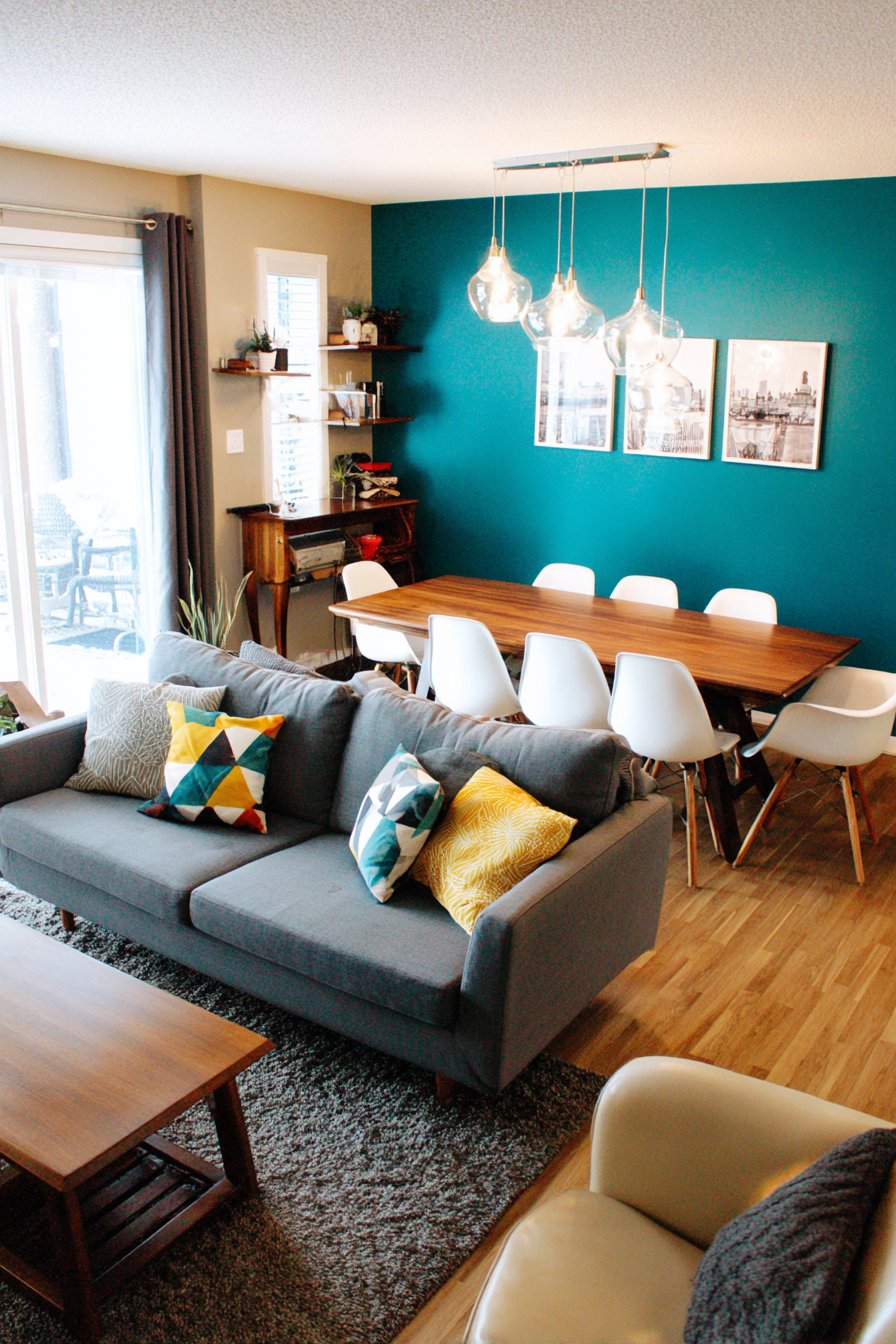
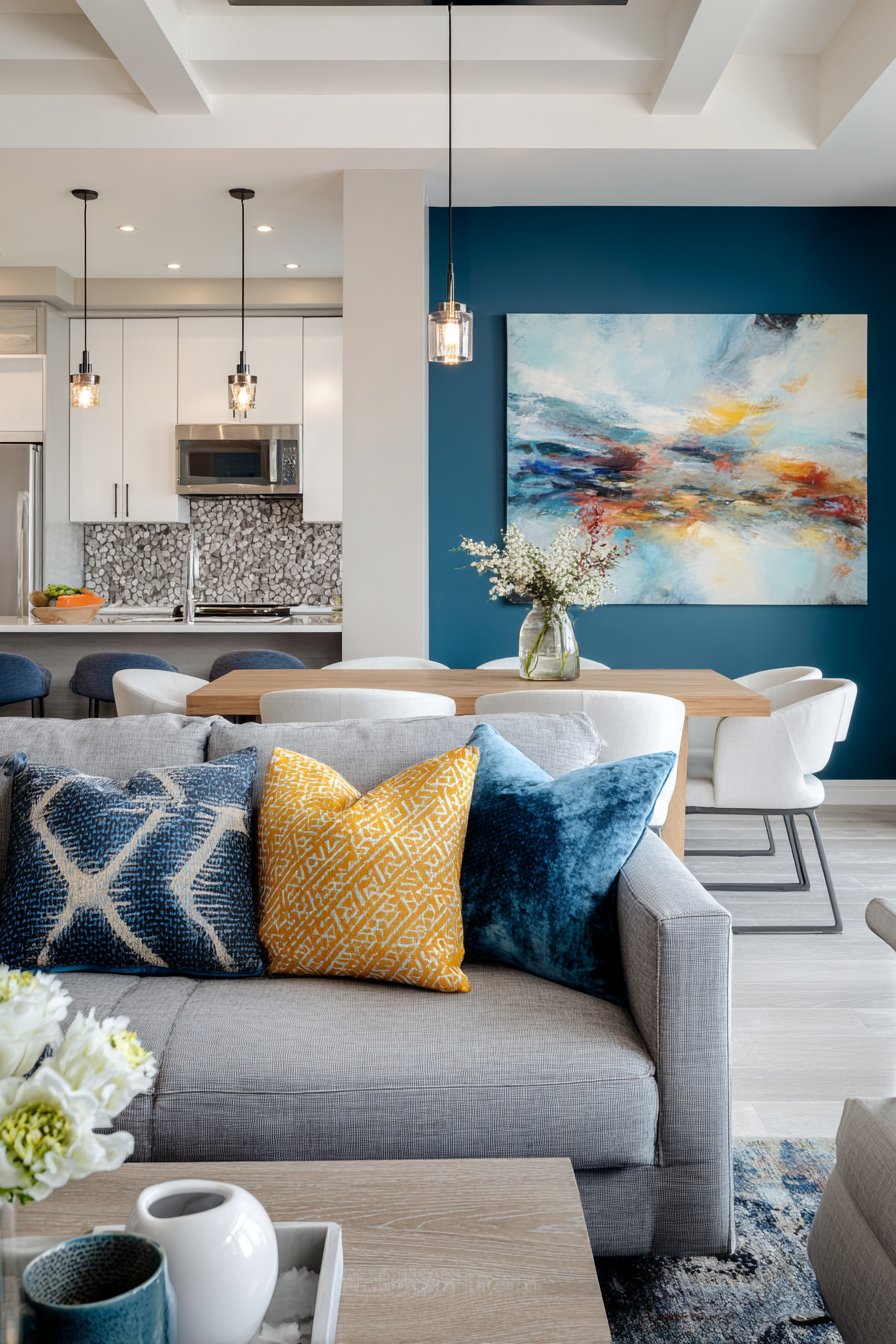
The contemporary open-plan living-dining room combo using color zoning demonstrates how paint and color strategy can define distinct areas without physical barriers. The living area features a dove gray sofa with geometric accent pillows, while the dining area showcases an accent wall painted in deep teal behind a natural wood table with modern white chairs. This approach to spatial definition through color is particularly effective in open-plan homes where physical room dividers would interrupt sightlines and make spaces feel smaller or more closed-in.
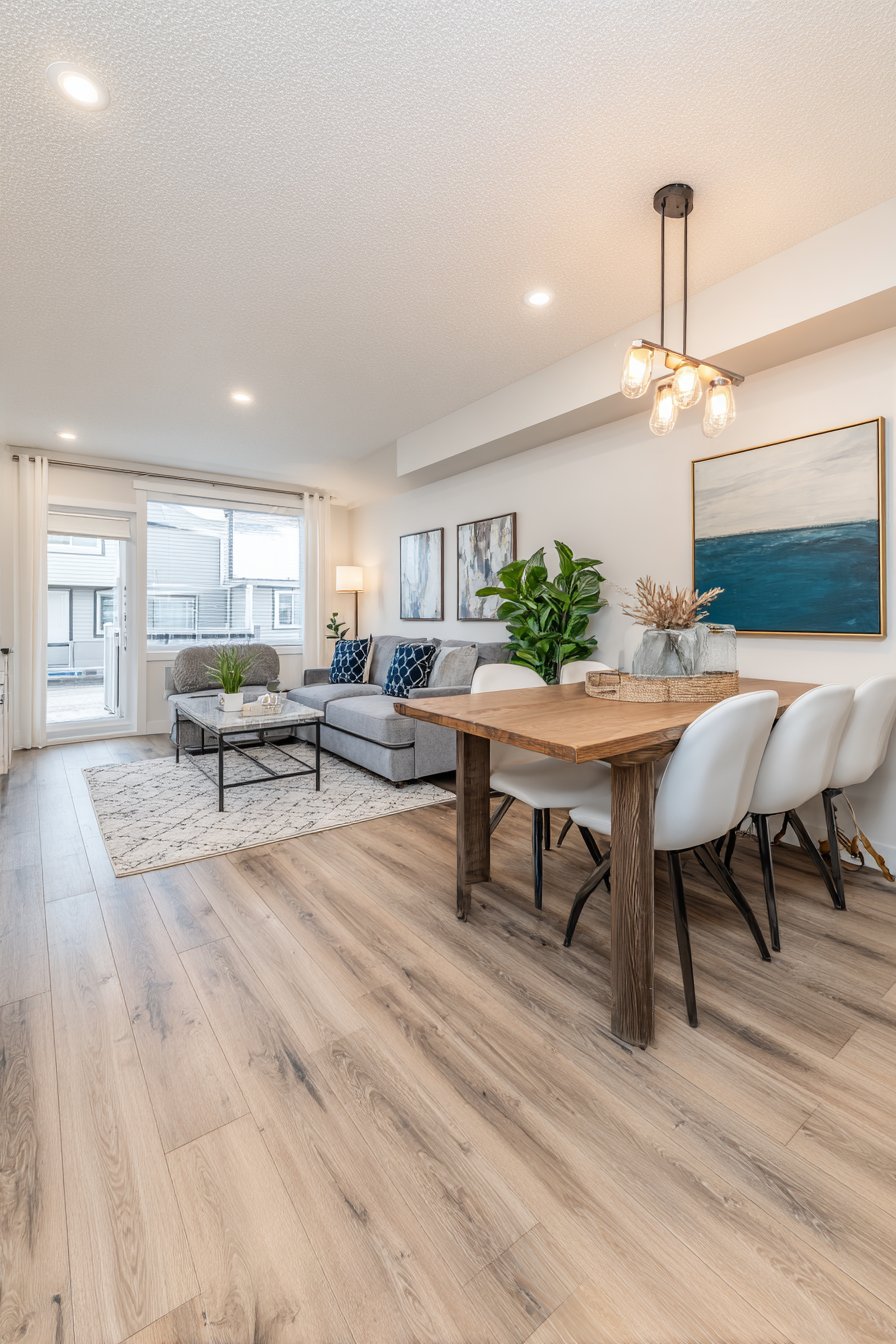
Continuous light oak flooring unifies both spaces, providing a neutral foundation that allows the color blocking to define zones effectively. The dove gray in the living area creates a calm, neutral backdrop that recedes visually, while the deep teal accent wall in the dining area draws the eye and creates a focal point that announces “this is the dining zone.” The natural wood dining table bridges both color zones, its organic material complementing both the cool gray and the rich teal. Modern white chairs provide clean, contemporary seating that keeps the dining area feeling fresh rather than heavy.
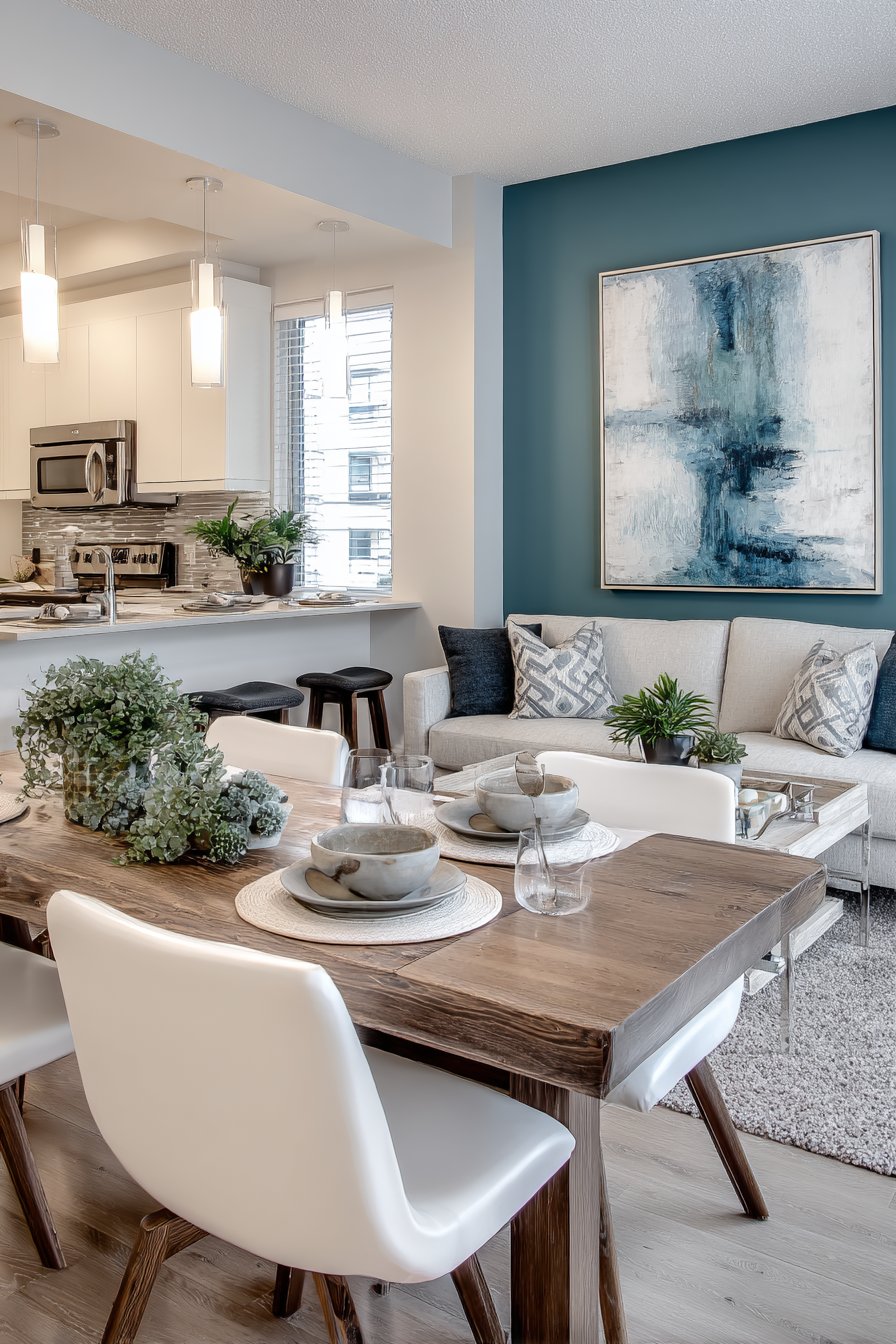
Pendant lighting in coordinating finishes hangs over the dining table, its placement further defining the eating area while its design echoes elements found in the living space for visual continuity. Wide-angle interior photography demonstrates the effective use of color to delineate spaces while maintaining visual flow—the key is choosing colors that relate to each other through shared undertones or complementary relationships. This living-dining room combo proves that thoughtful color application can create distinct zones in open-plan spaces without sacrificing the light, open feeling that makes combo rooms so appealing.
Key Design Tips:
- Choose colors that relate to each other through shared undertones
- Use paint to create accent walls that define specific functional zones
- Maintain consistent flooring throughout to unify the overall space
- Select furniture colors that bridge both painted zones
- Use lighting placement to reinforce the spatial zones defined by color
- Consider the sight lines—how colors will look from various viewing angles
- Test paint colors in actual lighting conditions before committing
22. Sustainable Eco-Conscious Design
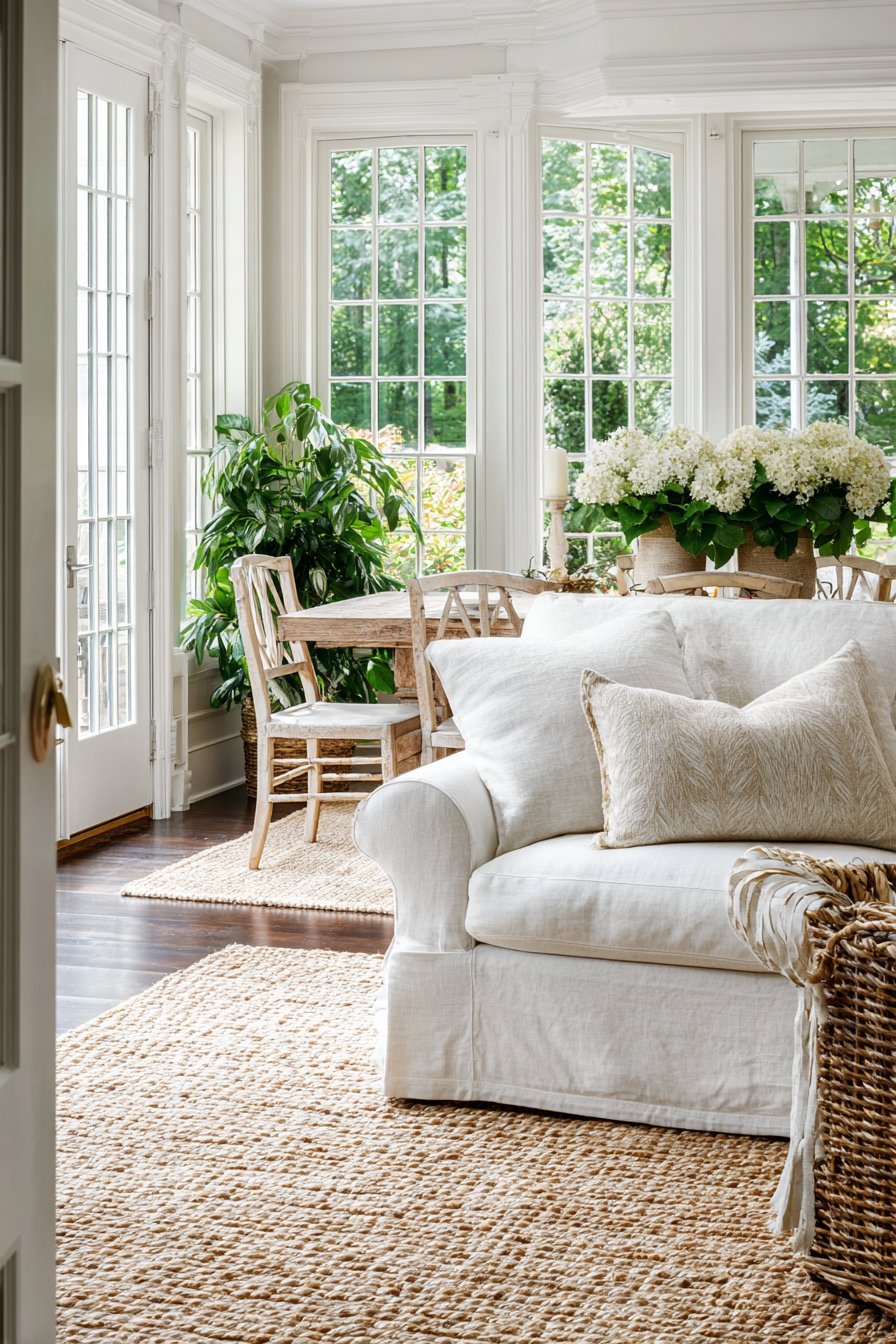
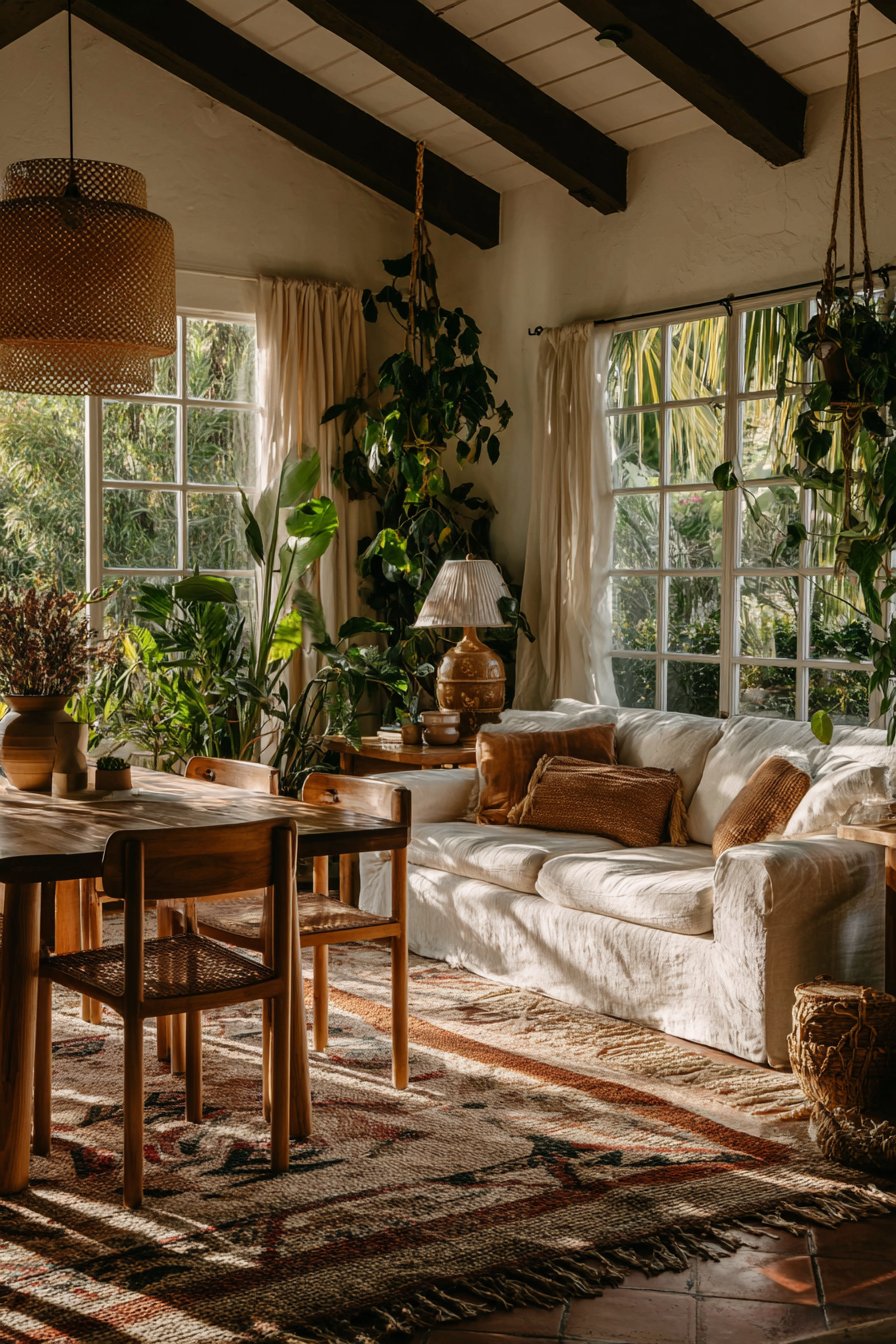
The sustainable living-dining room combo demonstrates that environmentally conscious choices can result in beautiful, healthy interiors without aesthetic compromise. This space features eco-friendly furniture including a sofa upholstered in organic cotton facing a dining table crafted from FSC-certified reclaimed wood with chairs made from recycled materials. Sustainable design considers the entire lifecycle of materials—from harvesting or manufacturing through use and eventual disposal or recycling—prioritizing renewable resources, low-VOC finishes, and production methods that minimize environmental impact.
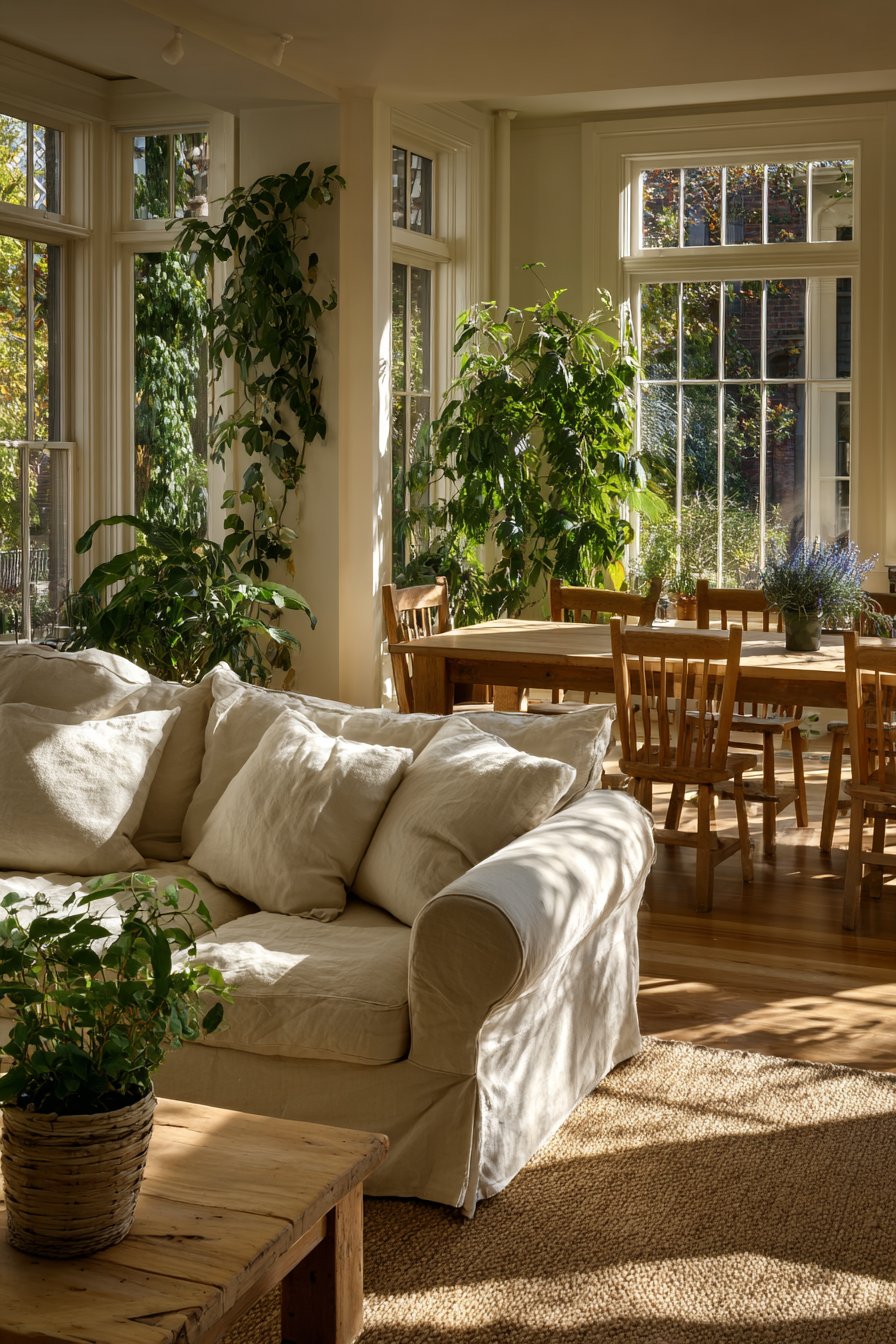
Bamboo flooring provides a rapidly renewable alternative to traditional hardwood, growing to maturity in just 3-5 years compared to decades for oak or maple. A jute area rug adds natural texture while being fully biodegradable, and abundant air-purifying plants throughout improve indoor air quality naturally. NASA studies have shown that certain houseplants can remove toxic compounds from indoor air, making them functional additions beyond their obvious aesthetic appeal. Energy-efficient LED lighting reduces electricity consumption, while natural fiber window treatments in unbleached linen provide sun control without chemical treatments.
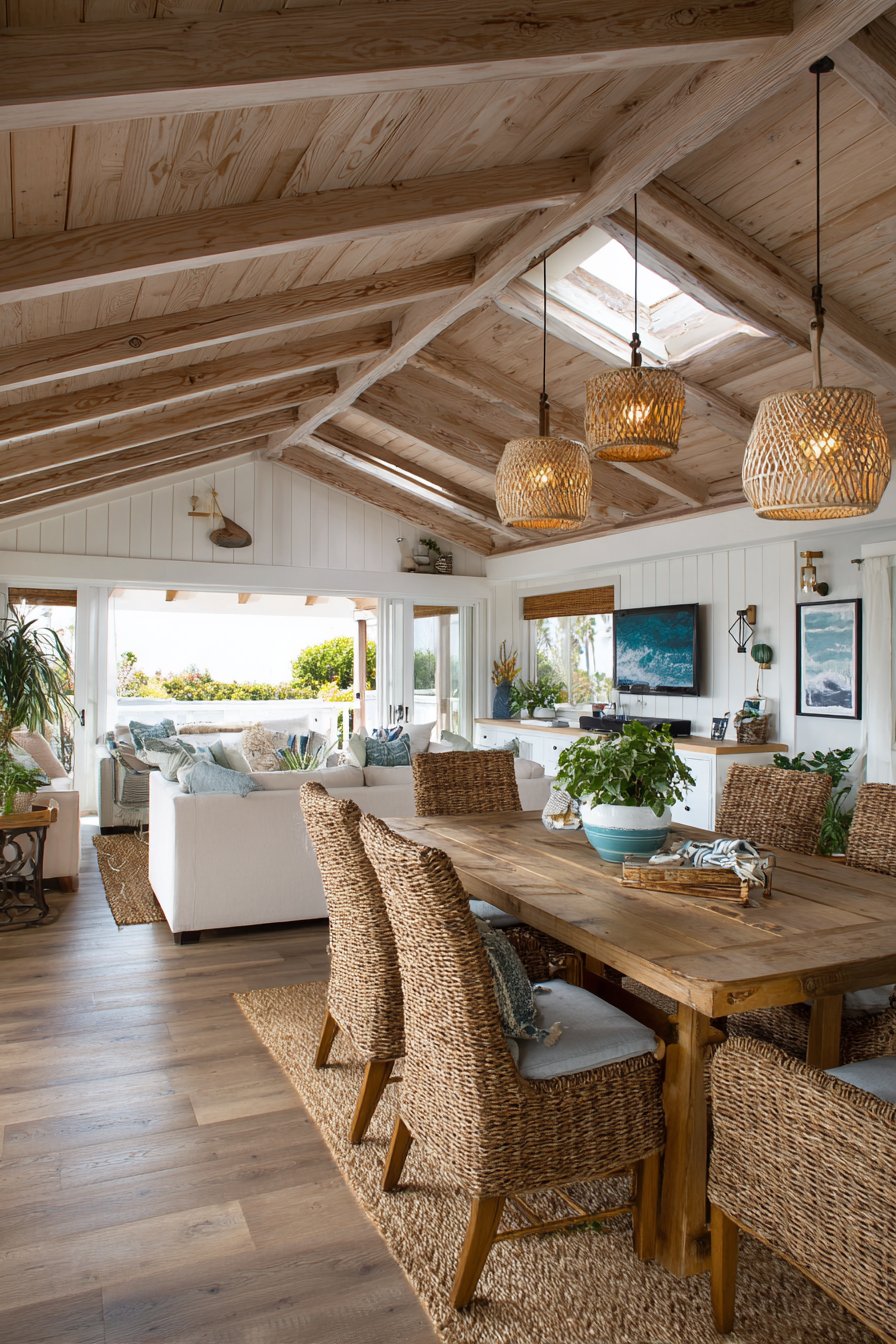
Interior design photography highlights the environmentally conscious choices with natural daylight emphasizing organic textures and responsible materials. The organic cotton sofa upholstery is free from synthetic chemicals and pesticides used in conventional cotton production, making it healthier for both the environment and the people using the furniture. The FSC-certified reclaimed wood dining table represents a double win—the reclaimed aspect saves trees from being cut, while the FSC certification ensures that any new wood comes from responsibly managed forests. This living-dining room combo proves that sustainable design is not about sacrifice or compromise but about making informed choices that benefit both occupants and the planet.
Key Design Tips:
- Choose FSC-certified or reclaimed wood for furniture and flooring
- Select organic or natural fiber textiles without chemical treatments
- Use low-VOC or zero-VOC paints and finishes for better indoor air quality
- Incorporate bamboo, cork, or other rapidly renewable materials
- Add air-purifying houseplants like snake plants, pothos, or peace lilies
- Invest in energy-efficient LED lighting throughout
- Look for furniture made from recycled or recyclable materials
- Choose durable, timeless pieces that won’t need frequent replacement
23. Global Fusion Cultural Celebration
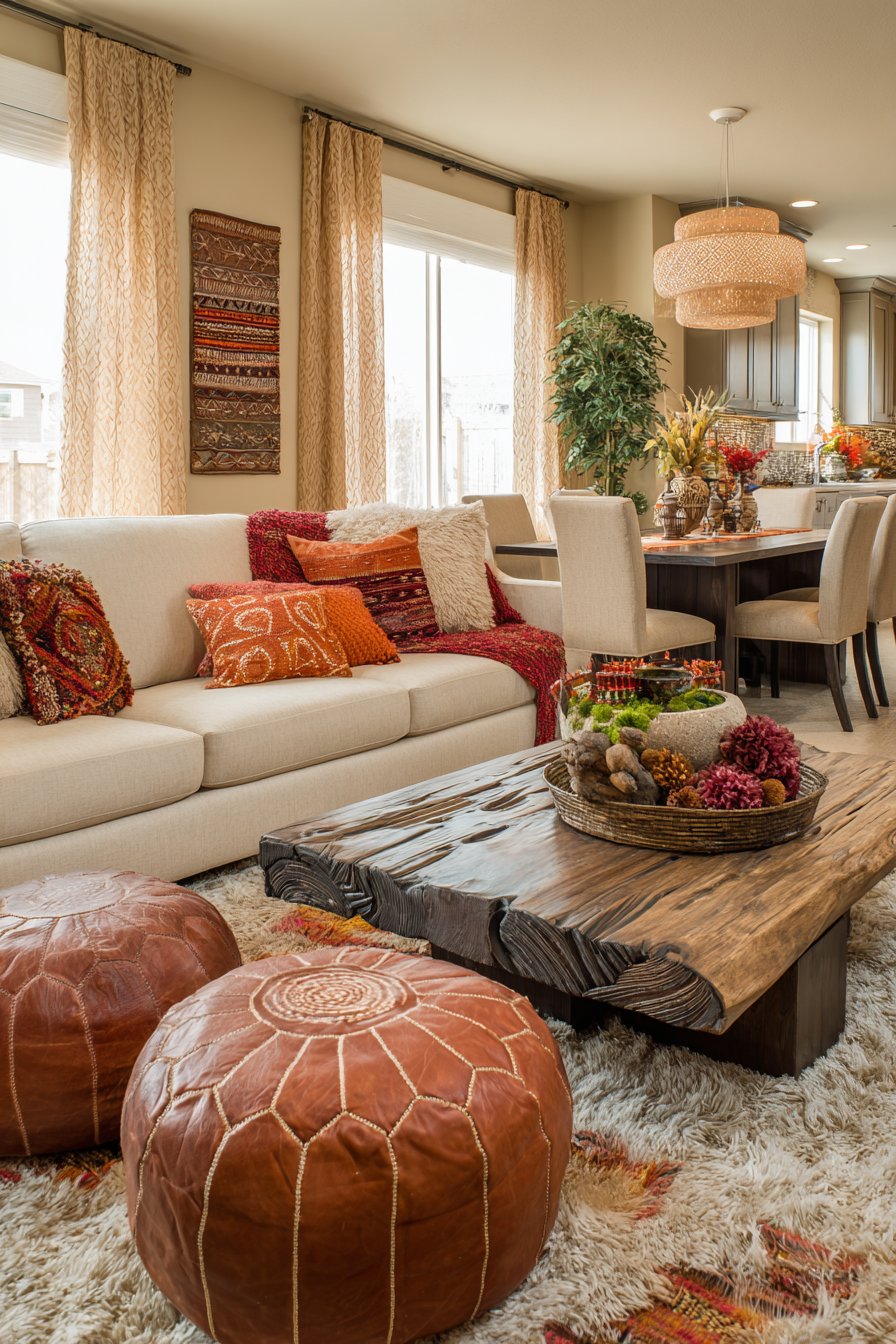
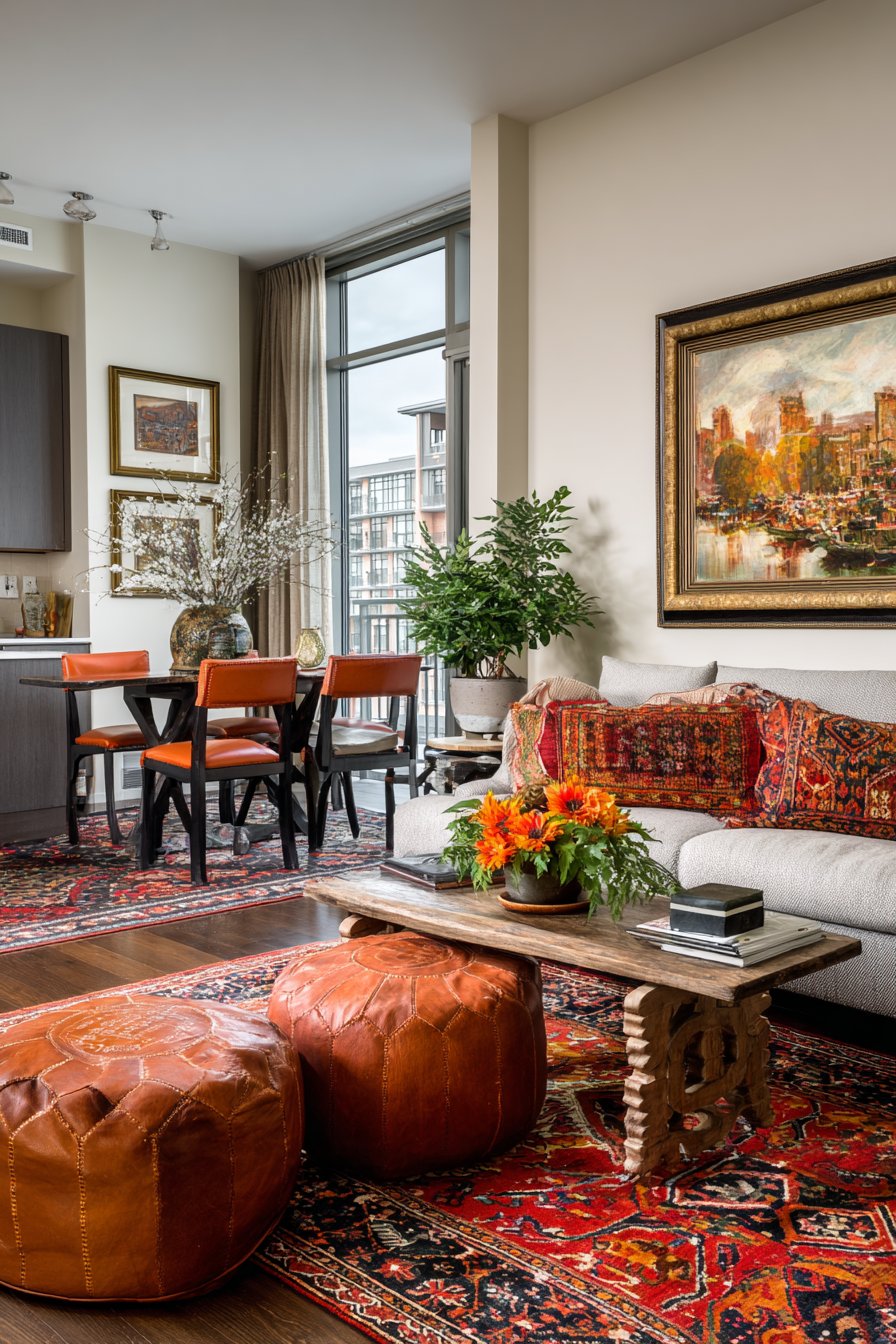
The global fusion living-dining room combo incorporates international influences and celebrates cultural diversity through thoughtfully collected pieces from various design traditions. This space features Moroccan leather poufs supplementing a contemporary sofa, Indian block-print textiles accenting the space, and a live-edge dining table with African-inspired carved stools creating the dining zone. The global aesthetic requires cultural sensitivity and genuine appreciation—the goal is to honor different traditions through authentic pieces rather than appropriating or trivializing cultural elements for decorative purposes.
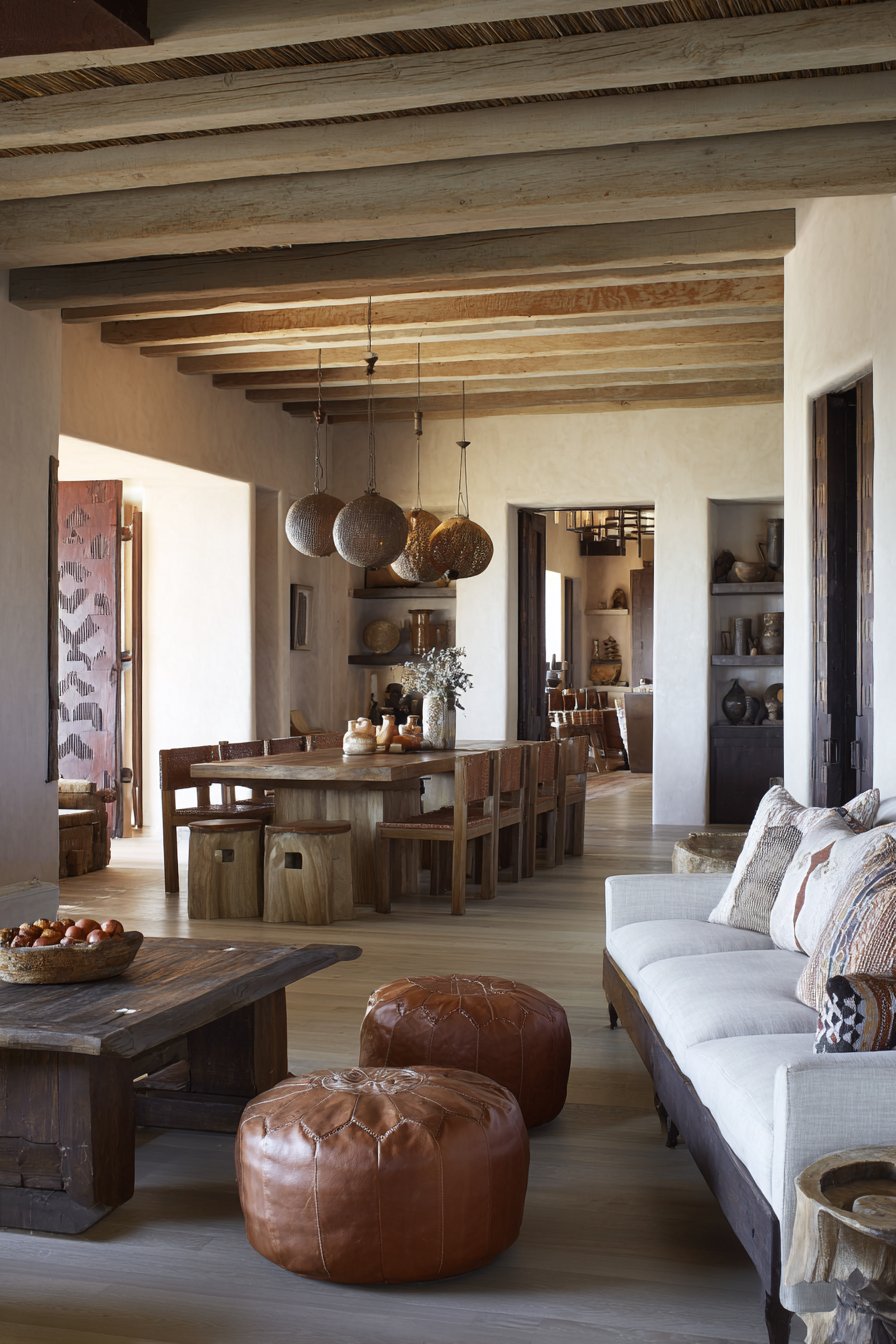
Collected artifacts and textiles from various cultures are displayed thoughtfully throughout the space—perhaps a Turkish kilim rug anchors the living area, Ethiopian baskets hang as wall art, and Japanese ceramics grace open shelving. Natural materials including wood, leather, woven fibers, and metal appear throughout, creating textural richness. The warm color palette includes earthy tones like terracotta, ochre, deep browns, and rich spice colors that create cohesion despite the varied origins of individual pieces.
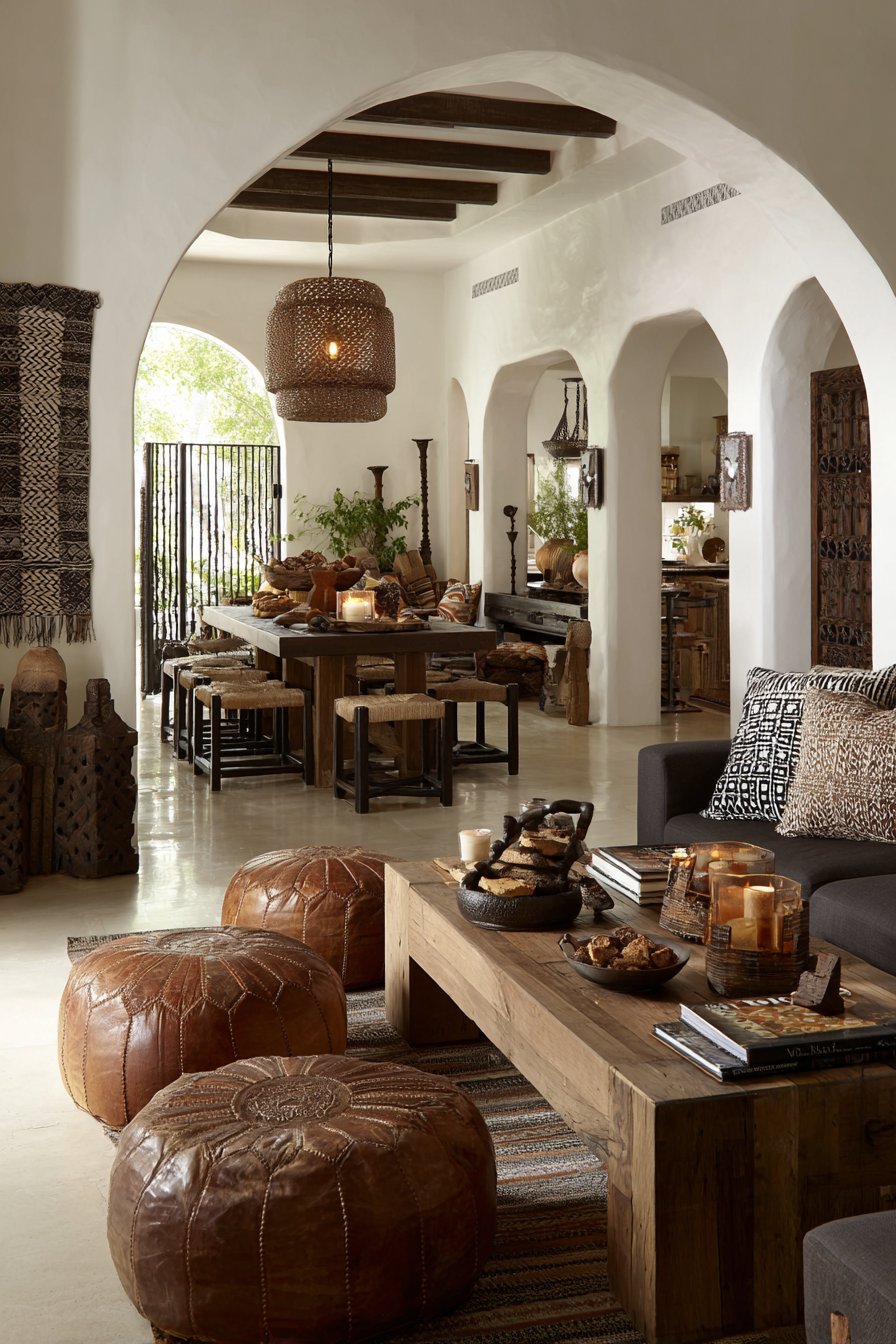
Professional photography captures the well-traveled aesthetic with balanced lighting showing cultural diversity in design. The live-edge dining table, with its natural wood edge preserved to show the tree’s original form, pairs beautifully with African-inspired carved stools that demonstrate traditional woodcarving techniques. Indian block-print textiles—perhaps as throw pillows or a table runner—add intricate patterns created through centuries-old printing methods. This living-dining room combo demonstrates that global fusion design, when approached with respect and genuine interest in other cultures, creates spaces rich with meaning, history, and visual interest that reflect an open, curious worldview.
Key Design Tips:
- Collect authentic pieces from your travels or from artisans representing their own cultures
- Research the cultural significance of pieces to ensure respectful use
- Mix pieces from different cultures through common threads like color or material
- Use natural materials that appear across many cultures—wood, leather, fiber, metal
- Create visual balance—don’t let one cultural reference overwhelm the space
- Display pieces with proper context through thoughtful placement and grouping
- Support fair trade and artisan communities when purchasing global pieces
24. Modern Farmhouse Rustic-Contemporary Blend
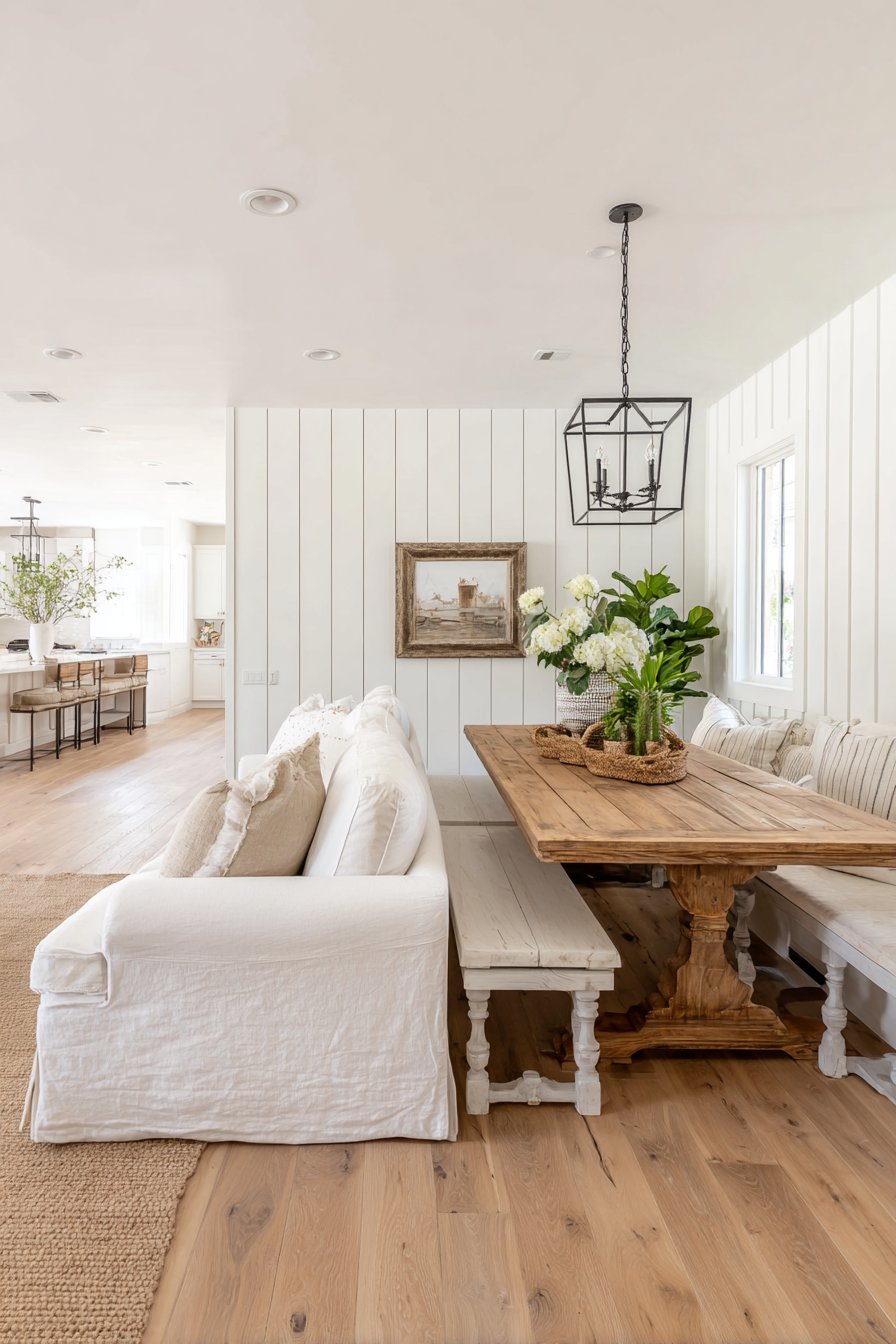
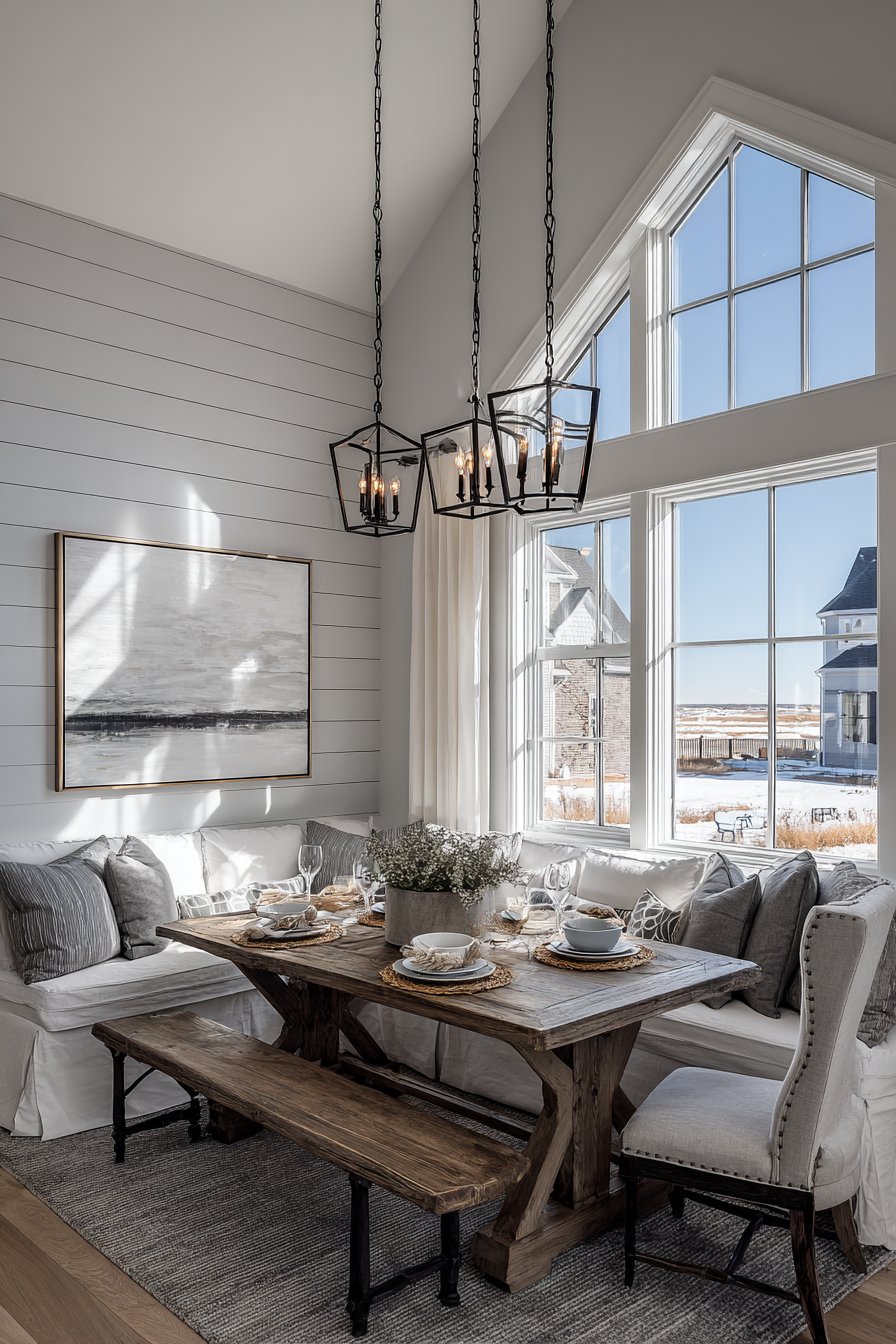
The modern farmhouse living-dining room combo perfectly balances rustic charm with contemporary comfort, creating the signature aesthetic that has dominated design trends in recent years. This space features a shiplap accent wall painted in soft gray—not white, which adds a contemporary twist to the farmhouse staple—with a comfortable slipcovered sofa in natural linen facing a distressed white dining table with mixed seating including an upholstered bench and Windsor chairs. The modern farmhouse style has evolved from purely rustic farmhouse design by incorporating cleaner lines, more neutral colors, and industrial elements.
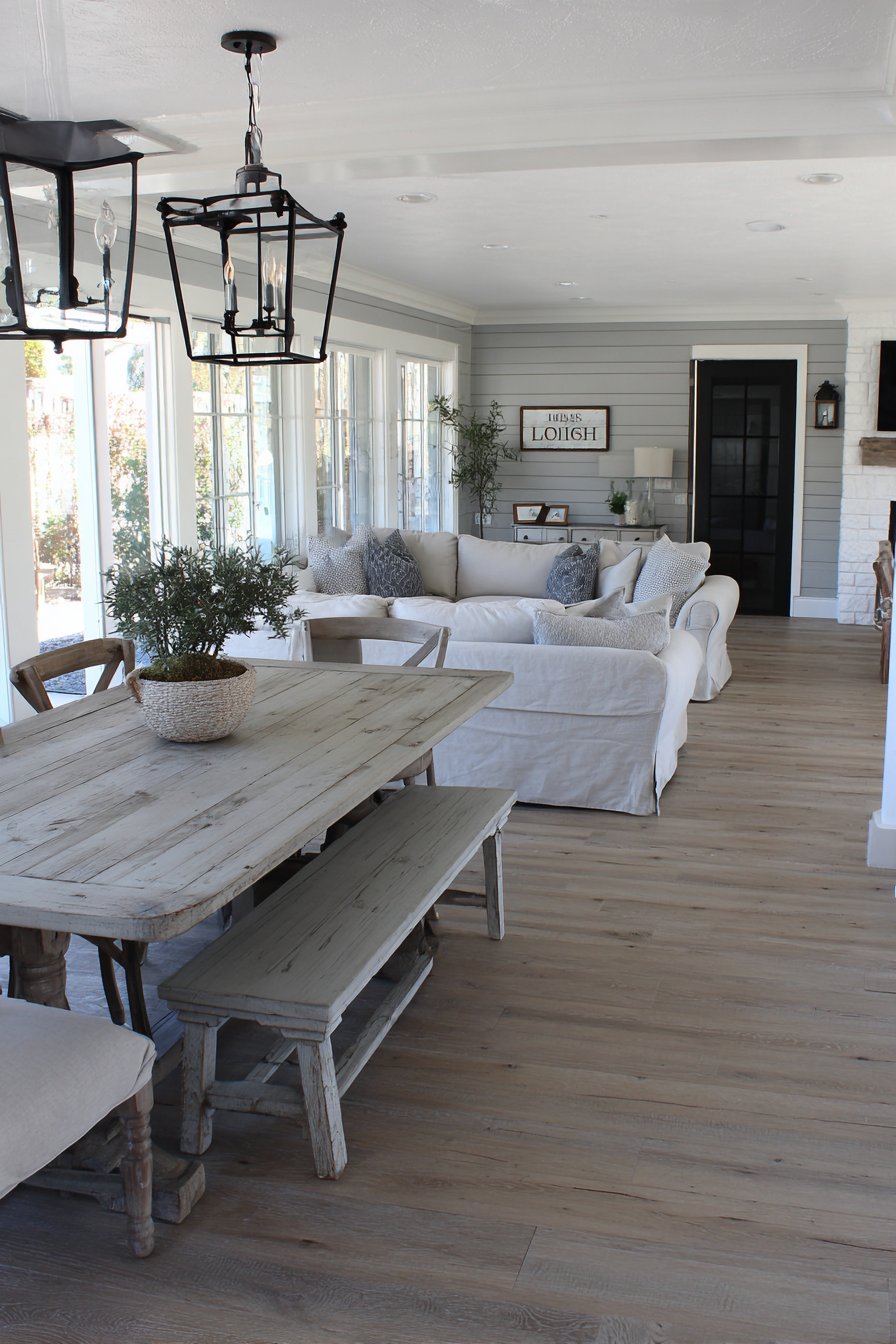
Industrial black metal pendant lights contrast beautifully with the rustic wood elements, their matte finish and simple geometric forms preventing the space from feeling too country or quaint. The distressed white dining table demonstrates the farmhouse love of vintage-looking pieces, while the mix of an upholstered bench and Windsor chairs creates visual interest and accommodates flexible seating arrangements. Wide plank flooring in light oak provides warmth underfoot while maintaining the bright, airy aesthetic that defines modern farmhouse design.
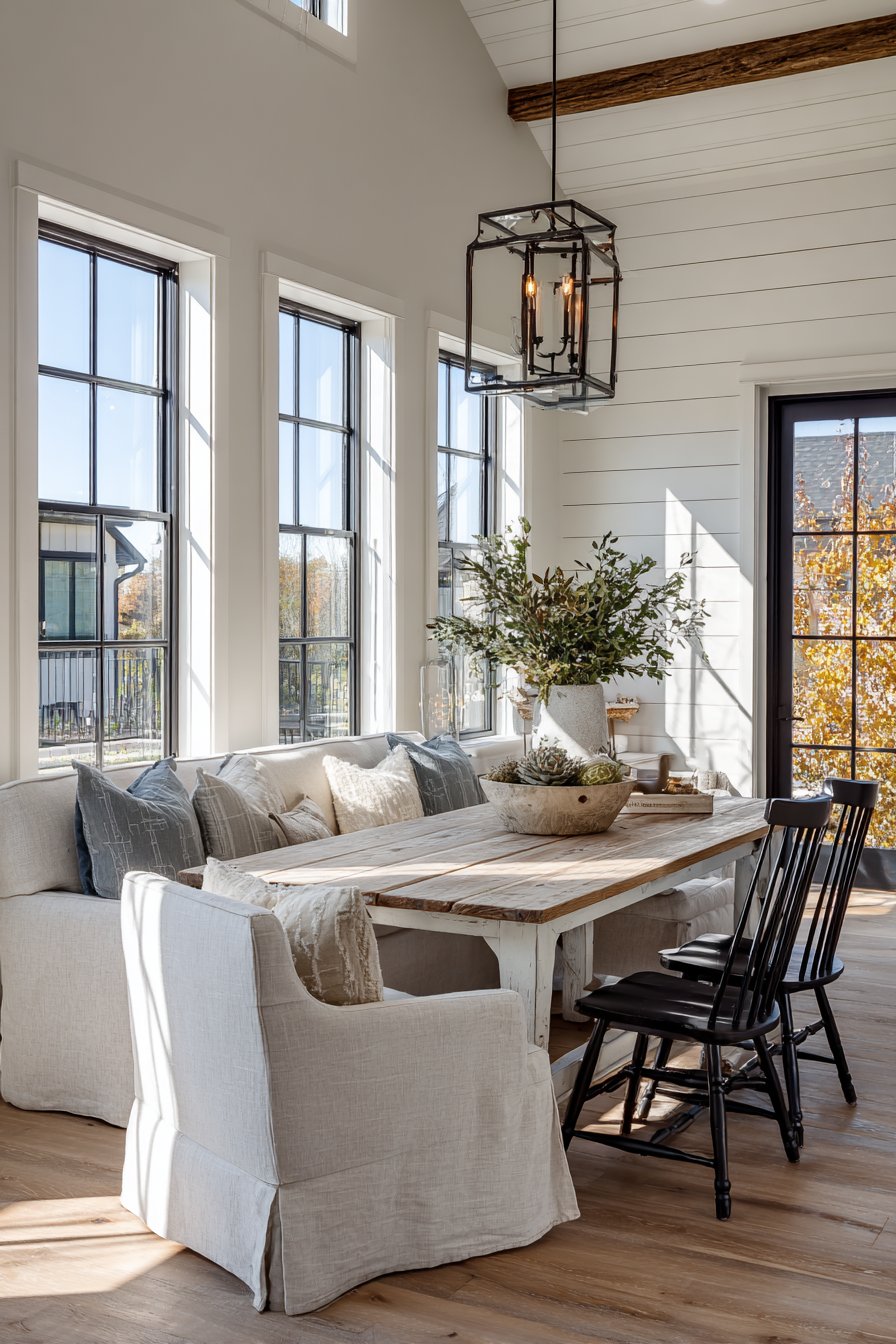
Interior photography shows the perfect blend of rustic charm and contemporary comfort with natural lighting highlighting both painted and natural wood finishes. The soft gray shiplap represents the evolution of farmhouse style—maintaining the textural interest of horizontal planking while updating the color to something more sophisticated than stark white. The natural linen slipcovered sofa provides the comfortable, lived-in feeling essential to farmhouse style while its clean lines keep it from feeling dated. This living-dining room combo demonstrates why modern farmhouse remains so popular—it successfully combines the warmth and character people love about traditional farmhouse style with the clean, uncluttered aesthetic of contemporary design.
Key Design Tips:
- Paint shiplap in soft gray or greige instead of white for a contemporary update
- Mix rustic wood pieces with industrial metal elements
- Choose slipcovered furniture in natural fabrics for casual elegance
- Incorporate both painted and natural wood finishes for visual variety
- Select industrial-style lighting in black or dark metal finishes
- Use wide plank flooring in light to medium tones
- Create mixed seating at the dining table for casual, collected look
- Keep the overall palette neutral with whites, grays, and natural wood tones
25. Maximalist Abundant Expression
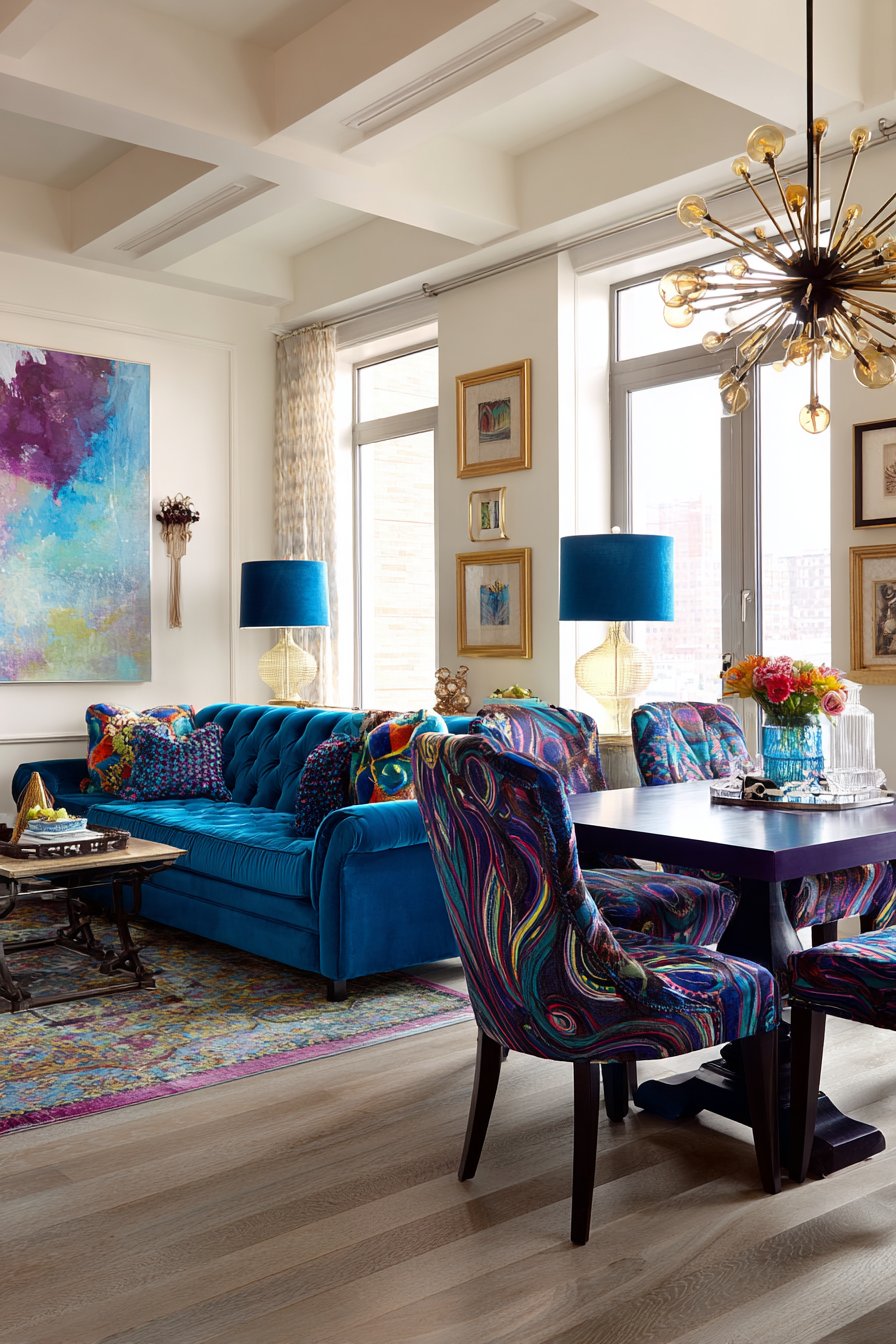
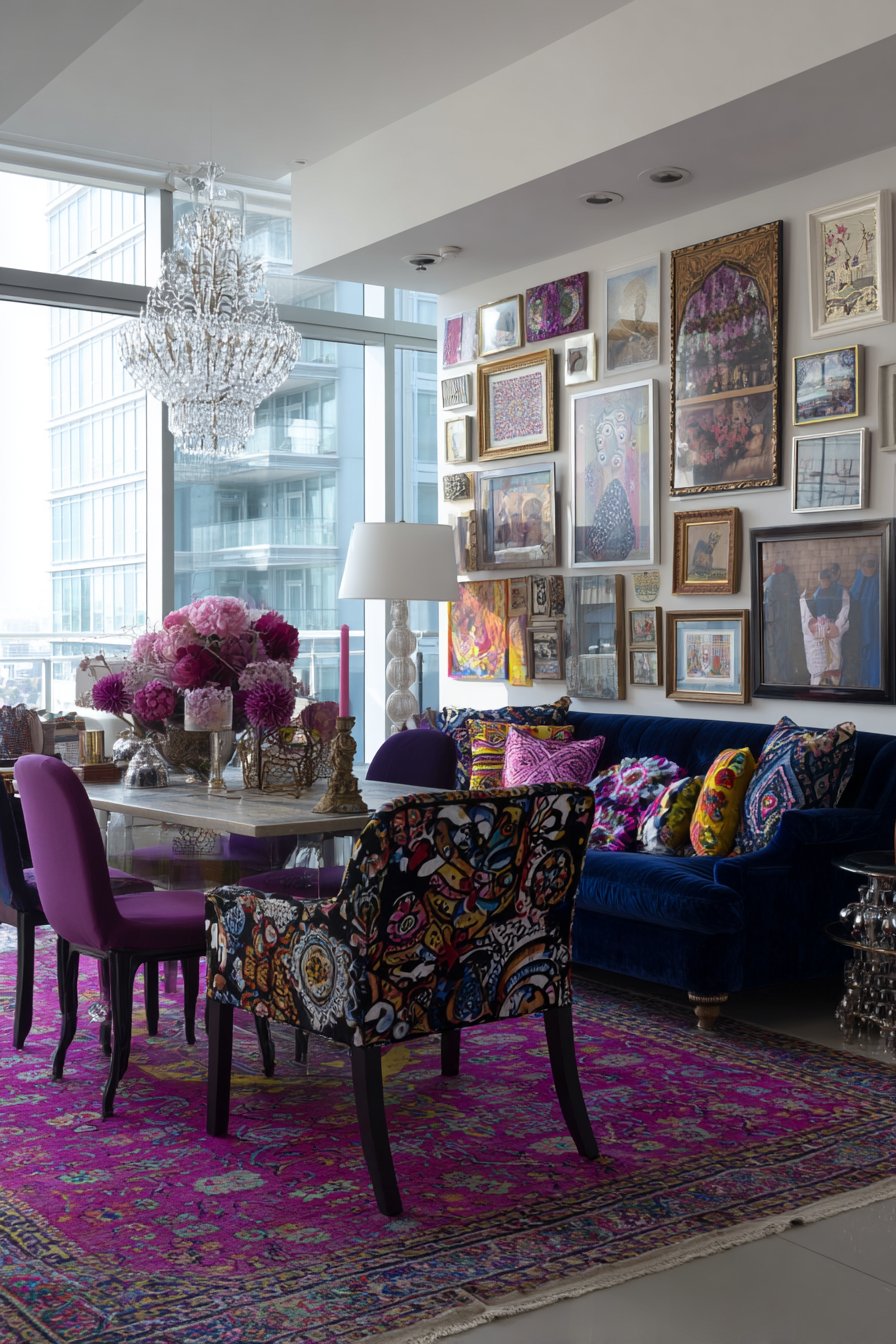
The maximalist living-dining room combo embraces pattern, color, and collected objects, celebrating abundance and visual richness in direct contrast to minimalist restraint. This space features a jewel-toned velvet sofa in sapphire blue with bold patterned throw pillows facing a painted dining table in glossy lacquer finish surrounded by upholstered chairs in complementary fabrics. Maximalism is about intentional abundance—every surface, wall, and corner offers visual interest, but the overall effect should feel curated rather than chaotic, luxurious rather than cluttered.
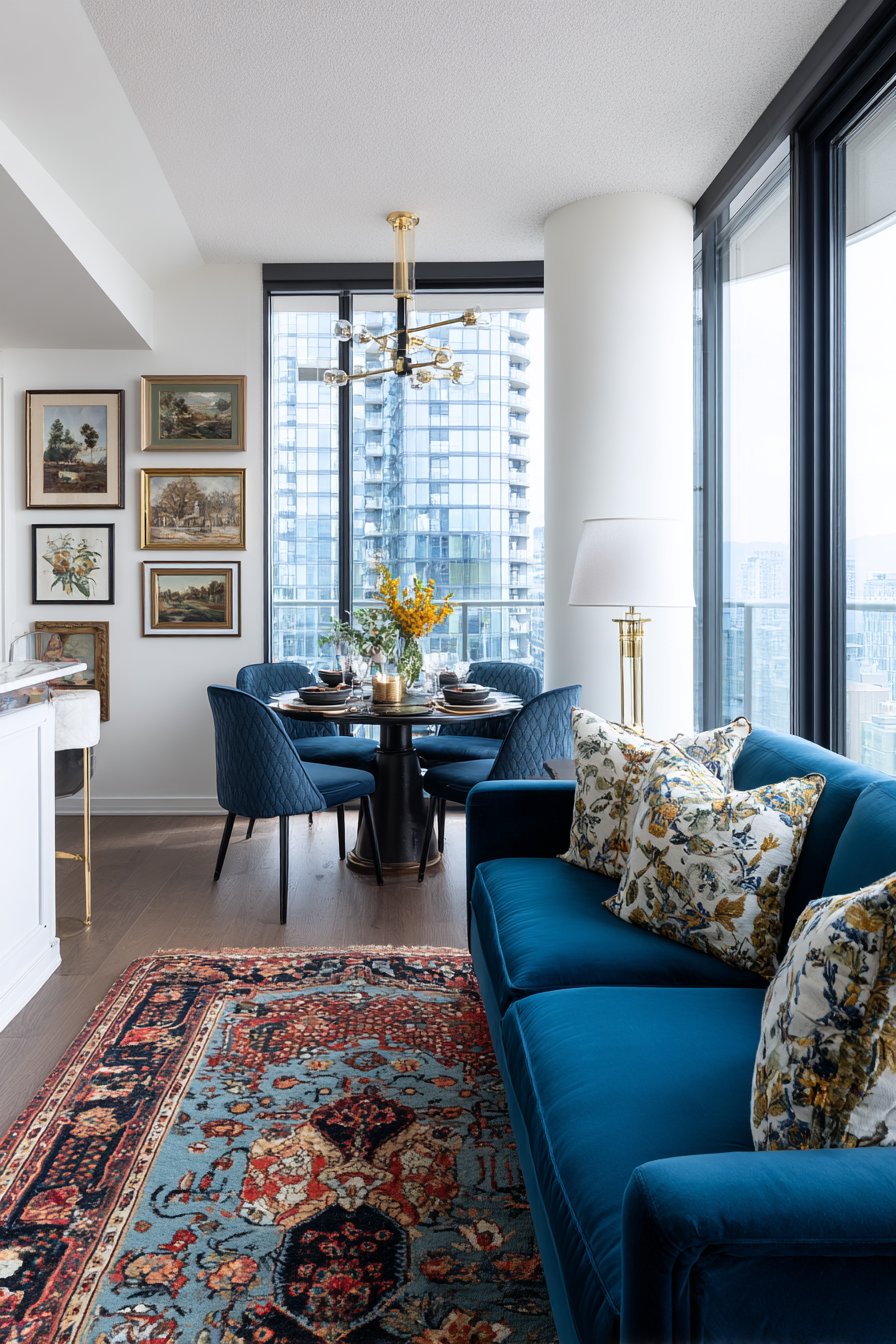
Layered rugs create depth and textural interest on the floor, perhaps a Persian-style rug topped with a smaller Moroccan rug or animal hide. A gallery wall with ornate frames showcases collected art, photographs, and prints in various sizes and styles, creating a personal museum of meaningful images. Collected accessories fill shelves, tables, and walls—vintage books, sculptural objects, interesting vessels, family heirlooms—each piece contributing to the narrative of the space. A statement chandelier with crystal drops or dramatic form commands attention over the dining area, while decorative table lamps with patterned shades illuminate the living space.
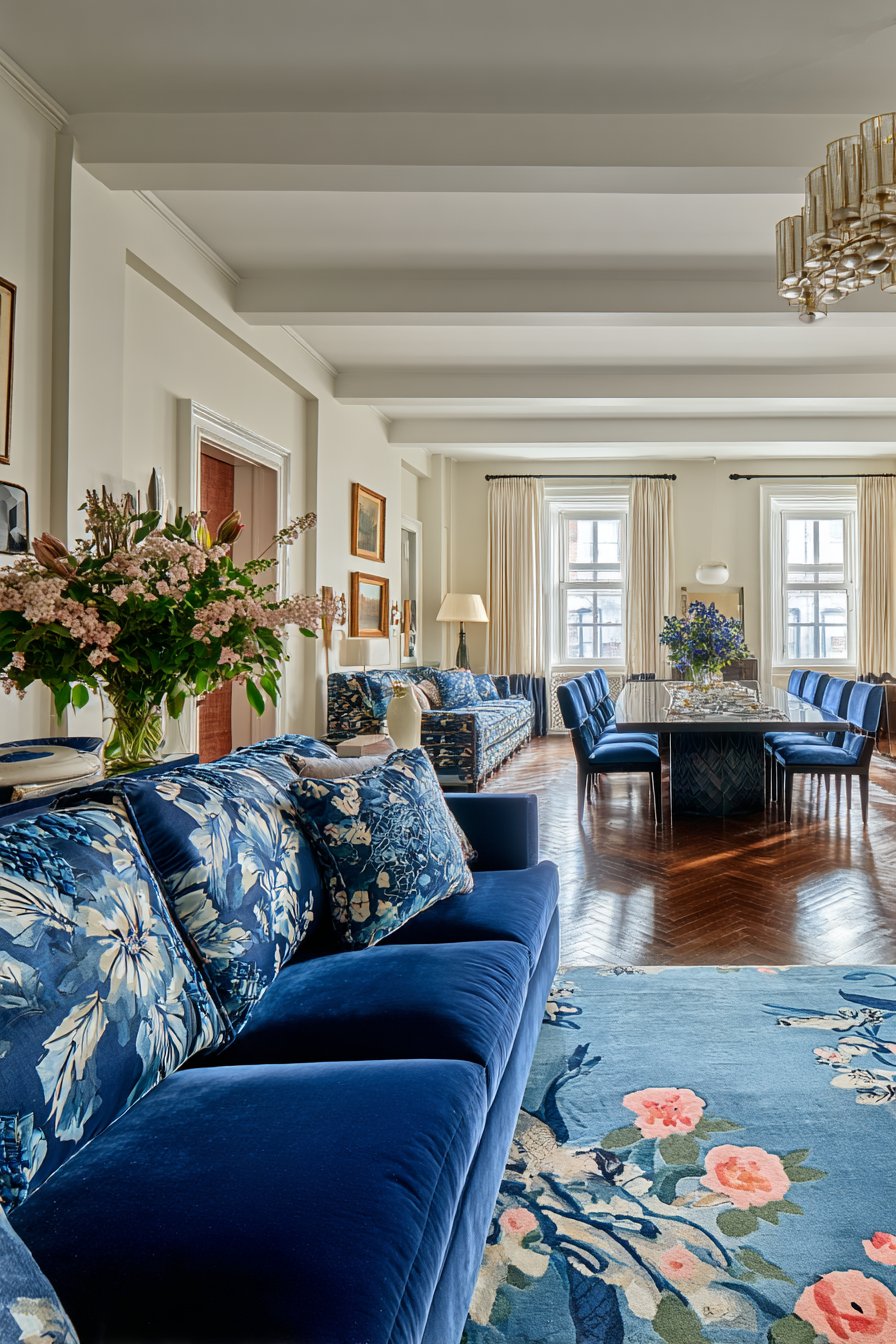
Interior design photography captures the more-is-more aesthetic with rich colors and complex layering, with natural window light balanced with abundant artificial lighting to ensure every beautiful detail can be appreciated. The sapphire blue velvet sofa serves as a bold anchor, its luxurious fabric and saturated color making an unabashed statement. The glossy lacquered dining table reflects light and adds to the sense of abundance and luxury. This living-dining room combo demonstrates that maximalism, when executed with a good eye and clear vision, creates spaces that feel joyful, personal, and endlessly interesting—rooms that reward repeated viewing with new details to discover.
Key Design Tips:
- Start with one or two bold anchor pieces in saturated colors
- Layer patterns fearlessly—mix scales, from large florals to small geometrics
- Create gallery walls that fill entire walls rather than leaving empty space
- Use color abundantly—walls, furniture, accessories all contribute
- Layer rugs, textiles, and decorative objects for richness
- Invest in statement lighting that serves as sculptural focal points
- Display collections and meaningful objects openly rather than hiding them
- Choose luxurious materials like velvet, silk, brass, and marble
- Don’t be afraid of visual weight—maximalism celebrates presence over restraint
Why These Living-Dining Room Combo Ideas Represent the Best Design Solutions
These twenty-five living-dining room combo ideas represent the finest approaches to open-plan living because they address the fundamental challenges of combined spaces while celebrating their unique opportunities. Each design demonstrates sophisticated space planning, thoughtful furniture selection, and strategic use of color, lighting, and materials to create distinct zones that function independently while contributing to a cohesive whole. From the streamlined modern elegance that maximizes openness to the space-efficient studio solutions that prove small footprints can still accommodate multiple functions, these concepts showcase the versatility and practicality that make combo rooms so appealing to contemporary homeowners.
The best living-dining room combo ideas balance aesthetic appeal with functional reality. The family-friendly design recognizes that beautiful spaces must also withstand real life—spills, scratches, and active children—by incorporating performance fabrics, sealed wood surfaces, and smart storage solutions. The sustainable eco-conscious approach demonstrates that environmental responsibility and design excellence can coexist, using FSC-certified reclaimed wood, organic textiles, and energy-efficient lighting without sacrificing style. The industrial loft design celebrates existing architectural features like exposed brick and soaring ceilings, proving that the best interiors honor a building’s history rather than fighting against it.
These living-dining room combo concepts also excel at creating visual interest through varied approaches to color, pattern, and texture. The bohemian eclectic space layers textiles, mixes vintage and new, and celebrates collected treasures, while the minimalist zen design achieves beauty through restraint and careful curation. The art deco glamour proves that historical styles remain relevant when executed with attention to authentic details, using jewel tones, geometric forms, and luxurious materials. The coastal retreat demonstrates how a well-defined aesthetic—in this case, beachy natural materials and light colors—can create a cohesive mood that transports occupants mentally even when they’re far from actual oceanfront.
The most successful living-dining room combo ideas understand that these spaces serve as the heart of the home, where families gather for meals, friends congregate for conversation, and daily life unfolds. The transitional sophisticated design appeals to those who appreciate both traditional craftsmanship and contemporary simplicity, mixing upholstered comfort with quality wood furniture. The modern farmhouse blends rustic charm with clean-lined contemporary elements, creating spaces that feel both welcoming and stylish. The mid-century modern design pays homage to an iconic era while remaining utterly functional for today’s living, with teak sideboards serving as visual dividers and tulip tables maximizing floor space.
These exceptional living-dining room combo ideas also demonstrate mastery of the technical aspects that make spaces truly livable. Lighting strategies layer ambient, task, and accent illumination to serve different needs throughout the day. Furniture scale is carefully considered—from the substantial pieces needed in loft spaces with dramatic ceiling heights to the compact, multifunctional items essential in studio apartments. Color zoning uses paint strategically to define areas without physical barriers, maintaining openness while creating psychological separation between functions. The Mediterranean design uses terracotta tile, arched doorways, and textured plaster to establish strong architectural character that unifies the combined space.
The global fusion and eclectic approaches celebrate personal style and cultural appreciation, proving that the best living-dining room combo ideas reflect the individuals who inhabit them. These spaces mix pieces from different eras, cultures, and design movements through common threads of color, material, or mood, creating interiors that feel collected rather than decorated. The luxury high-end design demonstrates that quality materials—marble, leather, silk, designer lighting—create environments of lasting beauty that transcend trends. The Japandi fusion merges Japanese minimalism with Scandinavian warmth, showing how combining design philosophies can yield something greater than either alone.
These living-dining room combo ideas succeed because they’re rooted in real-world practicality while maintaining aspirational beauty. They address actual constraints—limited square footage, awkward layouts, budget limitations—with creative solutions that don’t compromise aesthetics. They demonstrate that successful combo spaces require thoughtful planning: considering traffic flow, ensuring adequate lighting, choosing furniture with appropriate scale, and creating visual connections between zones while maintaining their distinct identities. Whether through color coordination, consistent flooring, or carefully selected accent pieces, these designs show how to unify separate functions into harmonious wholes.
The variety represented in these twenty-five concepts ensures that regardless of personal style preferences, spatial constraints, or budget considerations, there’s inspiration applicable to any living-dining room combo. The contemporary urban sophistication appeals to those who value cutting-edge design and quality materials. The coastal retreat attracts lovers of relaxed, nature-inspired aesthetics. The traditional elegance serves those who appreciate classical proportions and historical references. This diversity proves that open-plan living is not a single aesthetic but a spatial arrangement that can accommodate countless design approaches, from maximalist abundance to minimalist restraint, from industrial edge to farmhouse warmth.
Ultimately, these living-dining room combo ideas represent the best design solutions because they enhance daily life. They create spaces where families can eat dinner together, friends can gather comfortably, and individuals can relax after long days. They maximize limited square footage, flood interiors with natural light, and facilitate the natural flow of movement and conversation. They demonstrate that combining living and dining areas—whether by choice in spacious homes or by necessity in compact apartments—offers opportunities for creative, beautiful, functional interior design that serves the way people actually live in the twenty-first century.
Conclusion
The living-dining room combo represents one of the most versatile and practical solutions in contemporary interior design, offering endless possibilities for creating beautiful, functional spaces that serve as the heart of the home. Through these twenty-five inspiring concepts—from modern streamlined elegance to maximalist abundant expression, from Scandinavian serenity to Mediterranean warmth—we’ve explored the remarkable diversity of approaches to open-plan living. Each design demonstrates that success lies not in following rigid rules but in understanding fundamental principles: creating distinct zones while maintaining visual flow, choosing appropriate furniture scale, considering traffic patterns, and most importantly, designing spaces that reflect the personalities and lifestyles of those who inhabit them.
Whether you’re working with a compact studio apartment requiring space-efficient solutions or a spacious loft with soaring ceilings demanding substantial furniture pieces, the key is approaching your living-dining room combo with intention and creativity. Consider how different materials, colors, and textures can define zones without physical barriers. Think about lighting strategies that serve both functional needs and create ambiance. Choose furniture that balances comfort with style, practicality with beauty. Don’t be afraid to mix styles, combine eras, or take risks with color—the most memorable spaces often result from confident personal expression rather than safe, predictable choices.
As you embark on designing or redesigning your own living-dining room combo, draw inspiration from these concepts while adapting them to your specific circumstances, preferences, and needs. Remember that the best interiors evolve over time, reflecting the changing seasons of your life and the meaningful objects you collect along the way. Start with quality foundational pieces, layer in personal touches, and don’t rush the process—great rooms are curated gradually, not purchased all at once. Most importantly, create a space that makes you happy to come home, comfortable entertaining friends, and proud to call your own. Your living-dining room combo should be more than just aesthetically pleasing—it should enhance your daily life, support your activities, and reflect your unique story.
