
The mirror in a small bathroom serves far more than its functional purpose—it’s a powerful design tool that can dramatically transform the perception of space, light, and style. In compact bathrooms where every square inch matters, the right mirror choice becomes a crucial decision that impacts both aesthetics and functionality. A thoughtfully selected mirror can make a cramped powder room feel spacious and airy, bounce natural light into dark corners, and serve as a stunning focal point that elevates the entire design scheme.
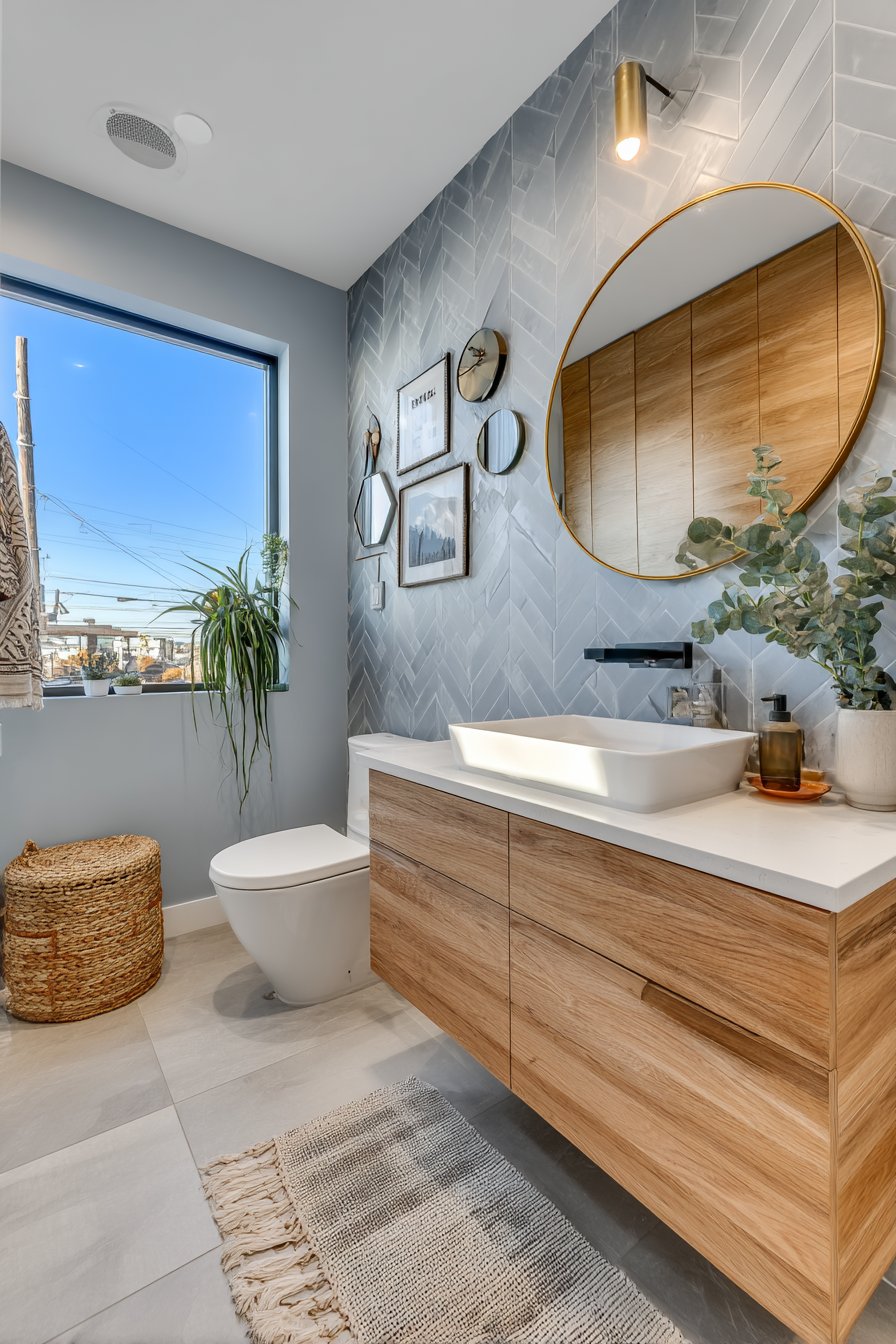
Small bathrooms present unique design challenges that require creative solutions. Limited square footage demands strategic thinking about storage, visual flow, and the careful balance between style and practicality. Mirrors excel at addressing these challenges by creating optical illusions of depth and height, reflecting precious natural light to brighten the space, and often incorporating smart storage solutions. From vintage-inspired medicine cabinets to contemporary LED-lit designs, from ornate gilt frames to minimalist frameless expanses, the variety of mirror styles available today offers endless possibilities for personalizing your small bathroom.
This comprehensive guide explores twenty-one distinctive small bathroom mirror ideas, each offering a unique approach to maximizing space, enhancing light, and expressing personal style. Whether you’re drawn to the warmth of rustic wood frames, the sleekiness of modern backlit designs, the charm of vintage apothecary cabinets, or the drama of floor-to-ceiling installations, you’ll discover practical inspiration and actionable design tips to transform your compact bathroom into a beautifully functional retreat that feels significantly larger than its actual dimensions.
1. Oversized Round Mirror with Minimalist Black Frame
The power of scale becomes immediately apparent when a large circular mirror with a thin black metal frame commands the wall above a floating white vanity. This design approach defies conventional wisdom that suggests small spaces require small furnishings. Instead, the generous proportions of the round mirror create a bold statement that actually expands the perceived boundaries of the room. The minimalist black frame provides just enough definition without adding visual weight, allowing the reflective surface to do the heavy lifting in terms of bouncing light and creating depth.
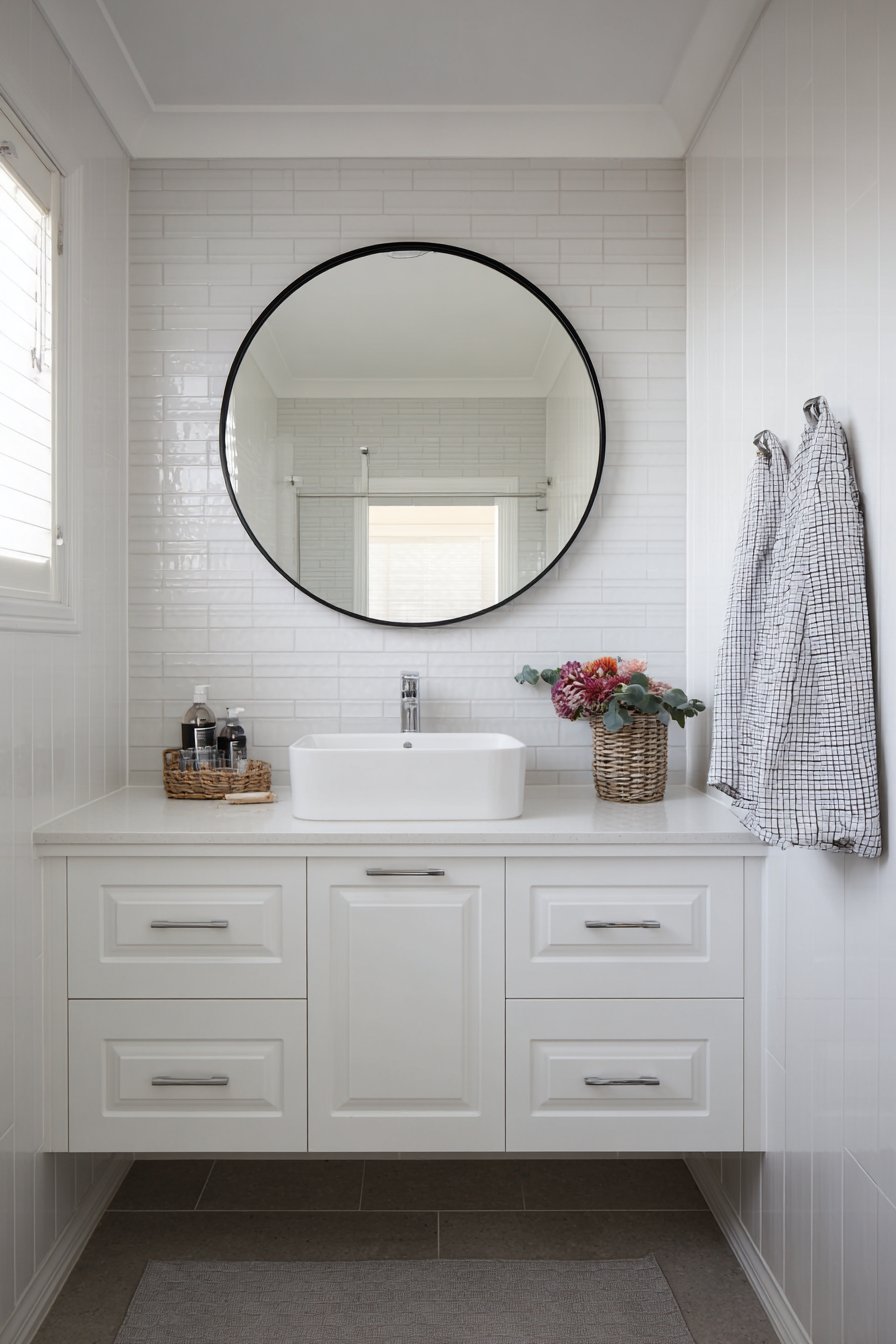
The circular shape introduces soft geometry that contrasts beautifully with the typically angular architecture of bathrooms. Unlike rectangular mirrors that echo the lines of doorways, windows, and tile patterns, a round mirror offers visual relief and draws the eye in a continuous, flowing motion. When positioned above a white floating vanity, the dark frame creates a striking focal point against the light backdrop while maintaining the airy feeling essential in compact spaces. The floating vanity itself contributes to the sense of spaciousness by revealing floor space beneath, making the room feel less cramped.
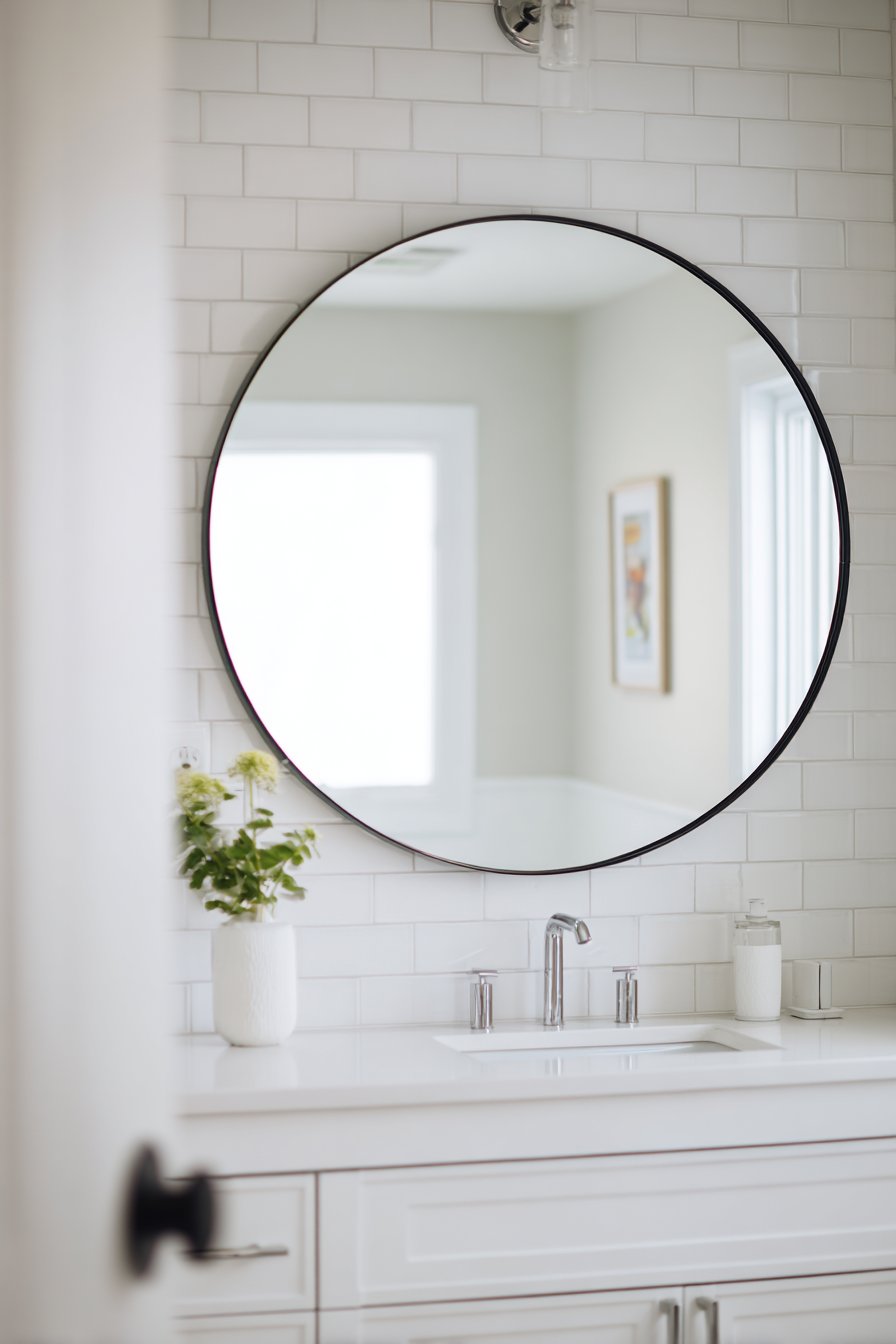
Natural light plays a transformative role in this design scheme. When positioned to catch light from a frosted window, the mirror becomes a luminous feature that redirects and multiplies the available daylight throughout the space. The reflective surface captures the soft, diffused quality of frosted glass lighting and distributes it across white subway tiles and brushed nickel fixtures. This interplay of light and reflection is particularly valuable in small bathrooms that may lack adequate windows or rely on artificial lighting for much of the day.
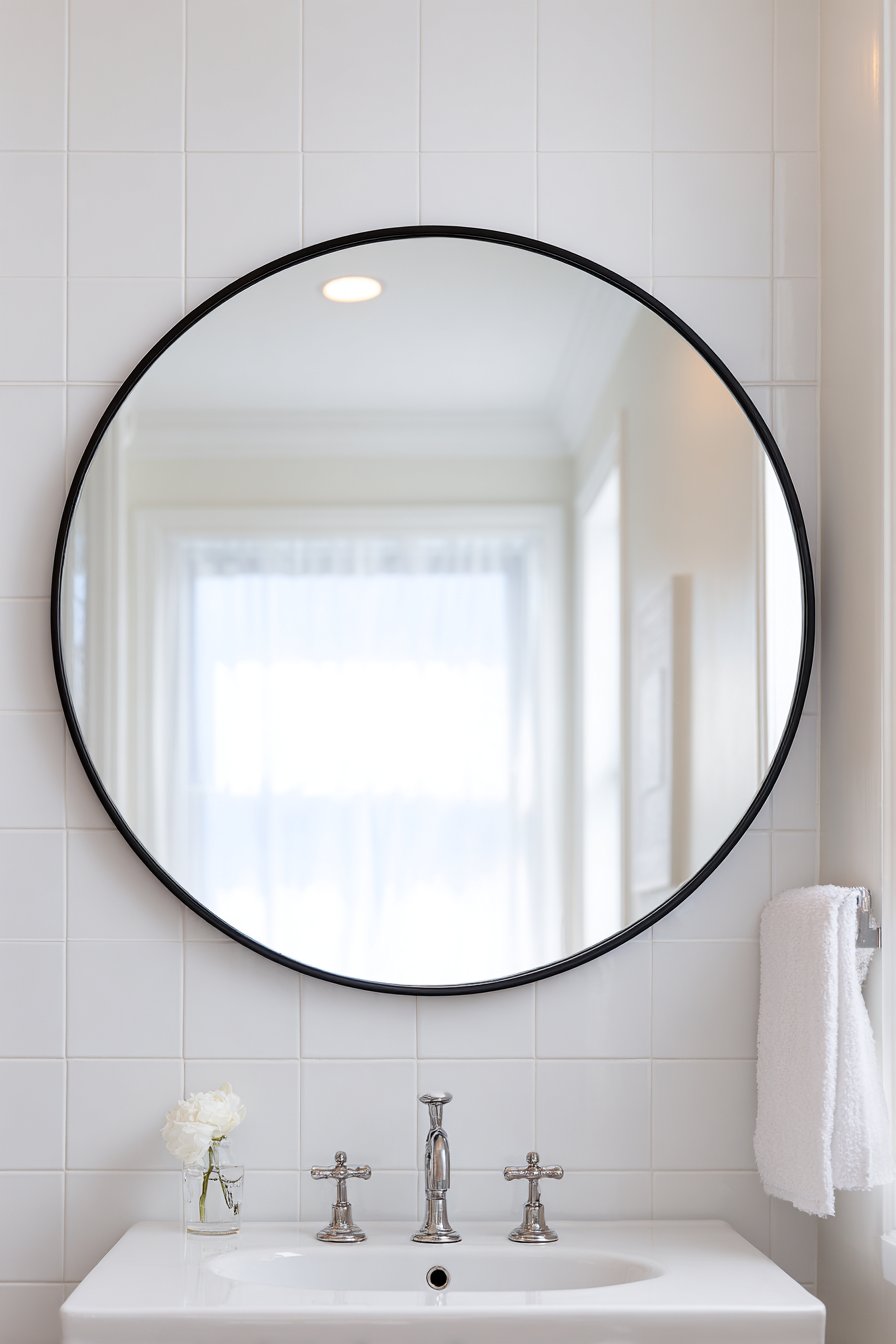
The supporting elements—white subway tiles and brushed nickel fixtures—demonstrate restraint and cohesion. These classic choices provide a clean, timeless backdrop that allows the oversized mirror to remain the undisputed star of the space. The monochromatic palette prevents visual fragmentation, which is crucial in small rooms where too many competing elements can create a chaotic, claustrophobic feeling.
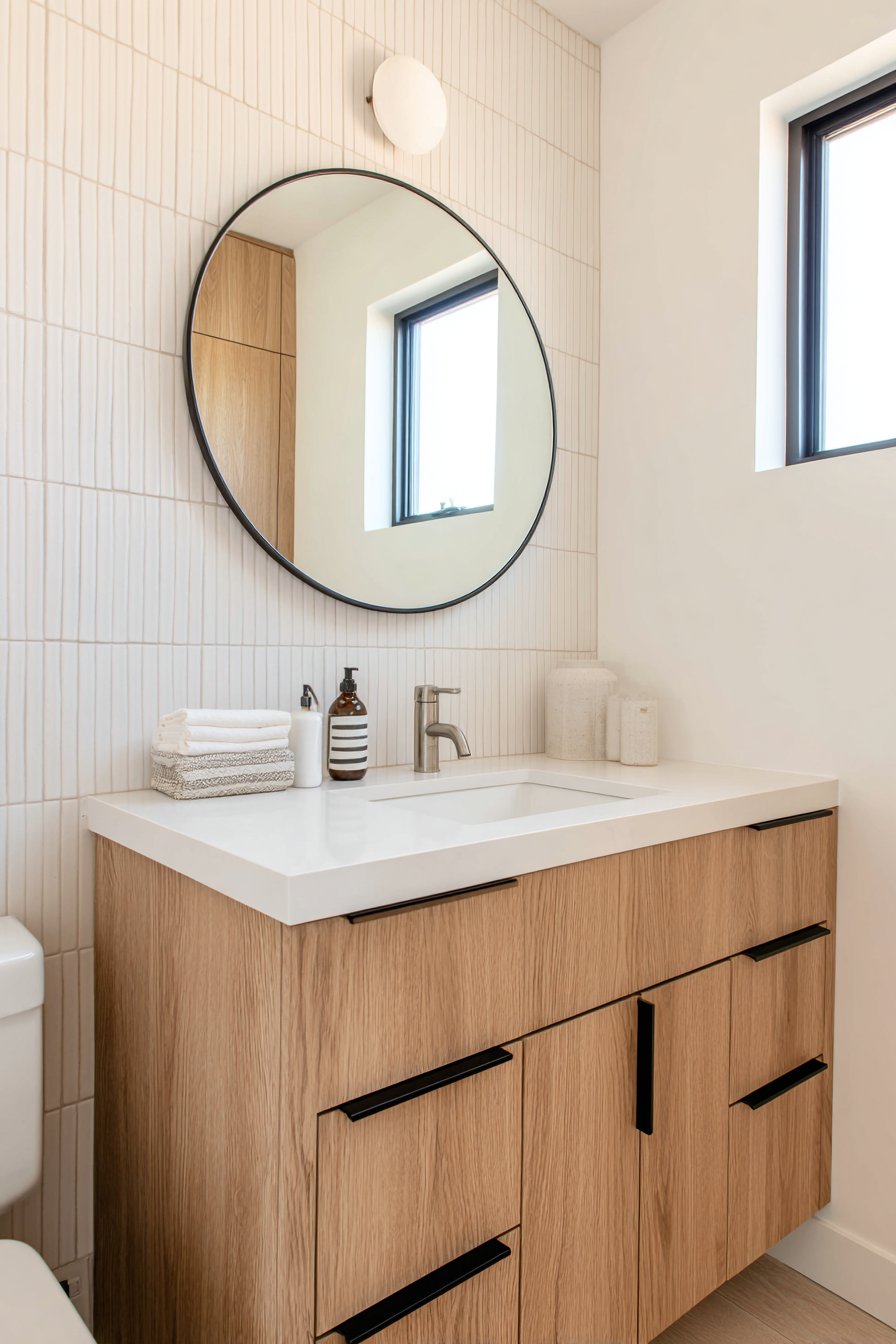
Key design tips for implementing this approach: Select a round mirror with a diameter of at least 30-36 inches to create true impact in a small bathroom. Position the mirror to reflect the most attractive view or light source in the room, whether that’s a window, attractive tilework, or decorative element. Choose a thin frame profile (1-2 inches maximum) to maximize the reflective surface area without adding bulk. Mount the mirror so its center aligns with eye level for most household members, typically 60-65 inches from the floor. Pair with a floating vanity in white or light neutral tones to maintain visual continuity and enhance the spacious feeling.
2. Vintage Medicine Cabinet with Hidden Storage
Practicality and charm converge beautifully in a vintage-inspired medicine cabinet that doubles as a mirror while concealing essential bathroom storage behind its mirrored door. This dual-purpose approach addresses one of the most pressing challenges in small bathrooms: the need to store toiletries, medications, and personal care items without cluttering limited counter and shelf space. The recessed installation maintains a clean wall profile that doesn’t protrude into the already limited floor space, making it an ideal solution for narrow powder rooms or compact guest bathrooms.
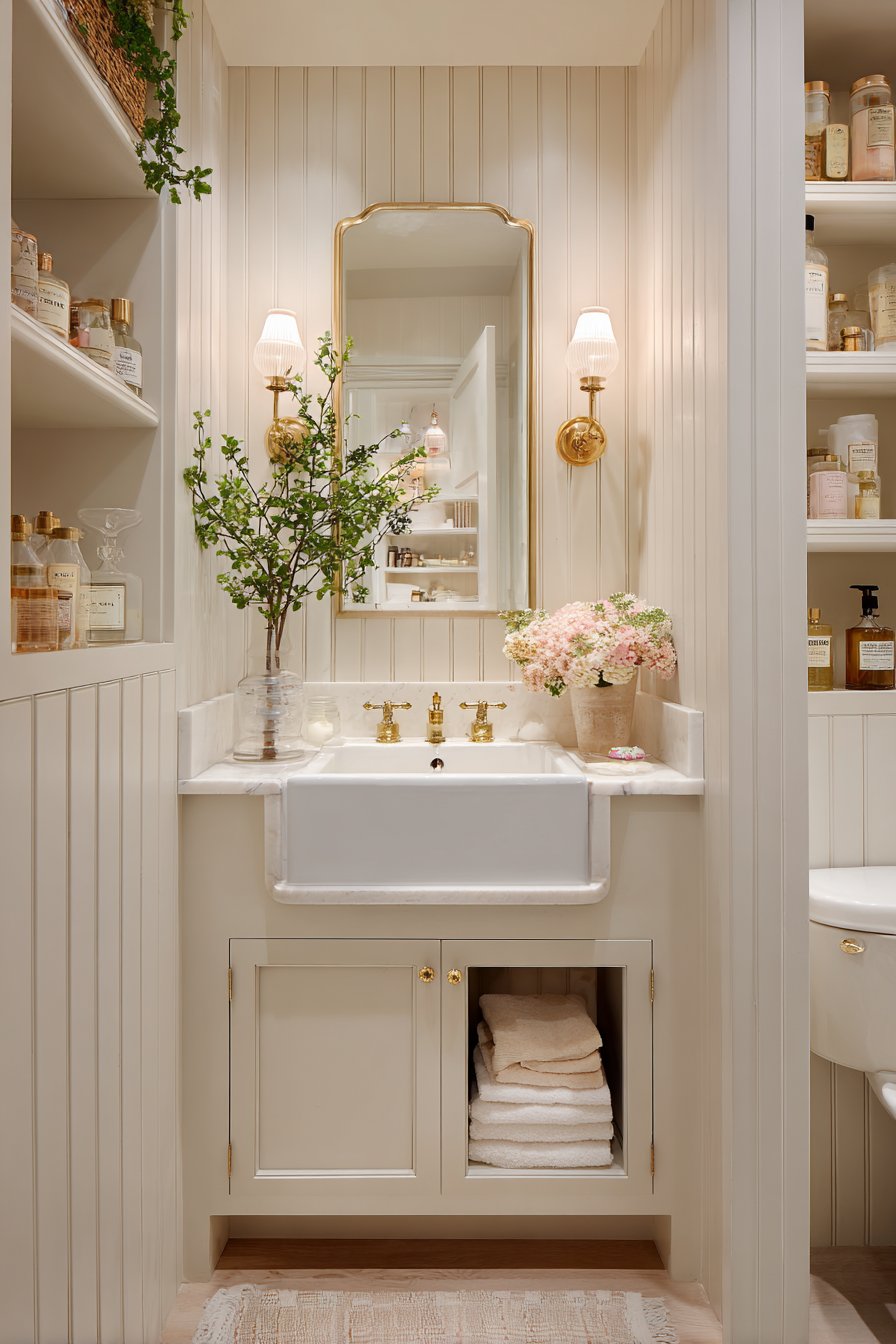
The brass hardware adds a touch of warmth and vintage character that elevates the cabinet from merely functional to genuinely decorative. Whether you choose authentic antique pieces or high-quality reproductions, the metallic accents catch and reflect light in subtle ways that add visual interest without overwhelming the space. The mirrored door itself serves the primary function of any bathroom mirror while cleverly disguising the storage compartment within. When closed, the bathroom maintains its streamlined appearance; when opened, organized shelves reveal neatly arranged necessities within easy reach.
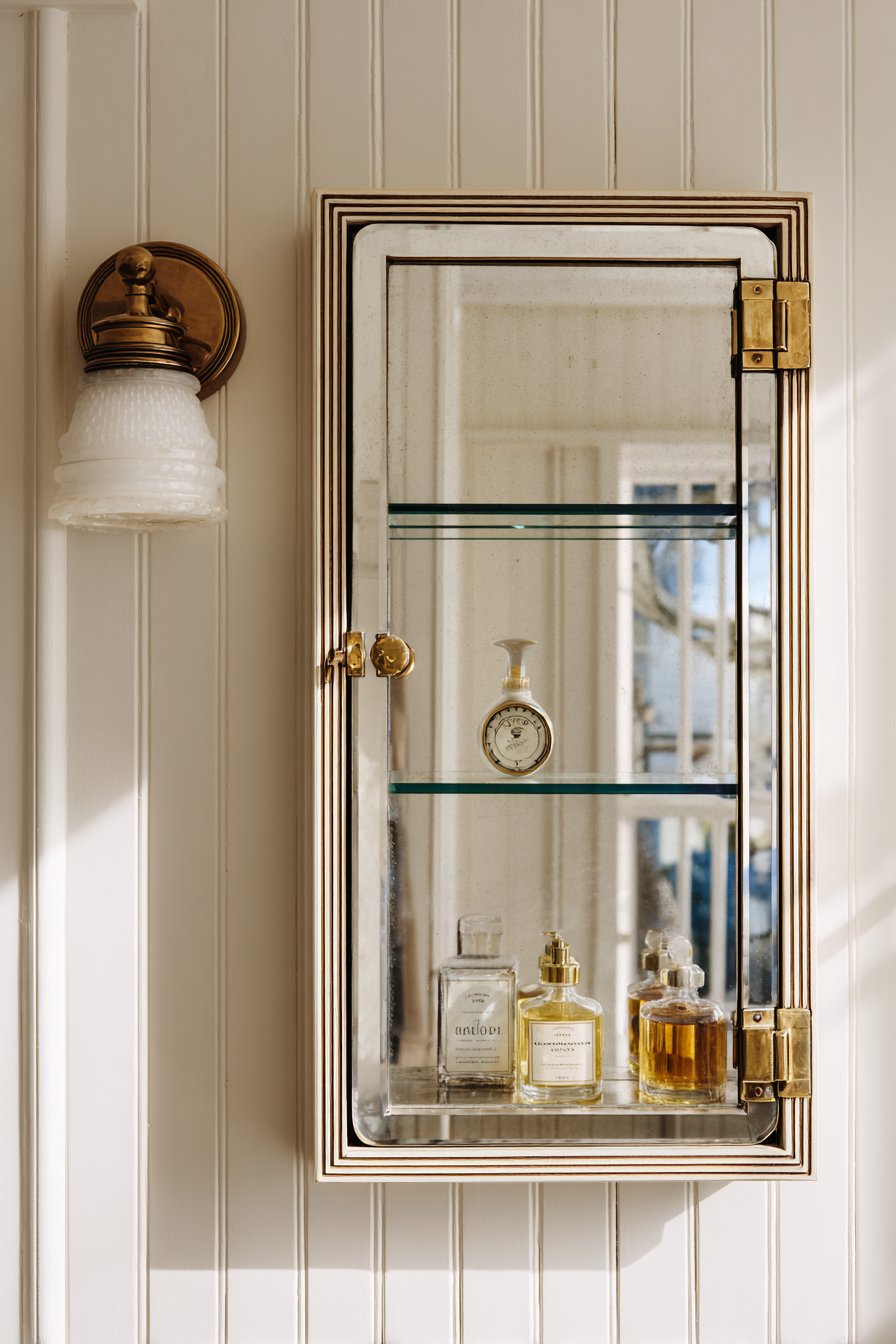
White beadboard paneling surrounding the medicine cabinet creates a cottage-inspired aesthetic that feels fresh, clean, and inviting. The vertical grooves of beadboard add subtle texture and dimension to walls without the heaviness of traditional tile or the starkness of flat painted surfaces. This paneling choice works particularly well in small bathrooms because the vertical lines draw the eye upward, creating an impression of greater height. A single wall sconce with a milk glass shade provides focused task lighting for grooming activities while contributing to the vintage aesthetic with its classic form and soft, diffused illumination.
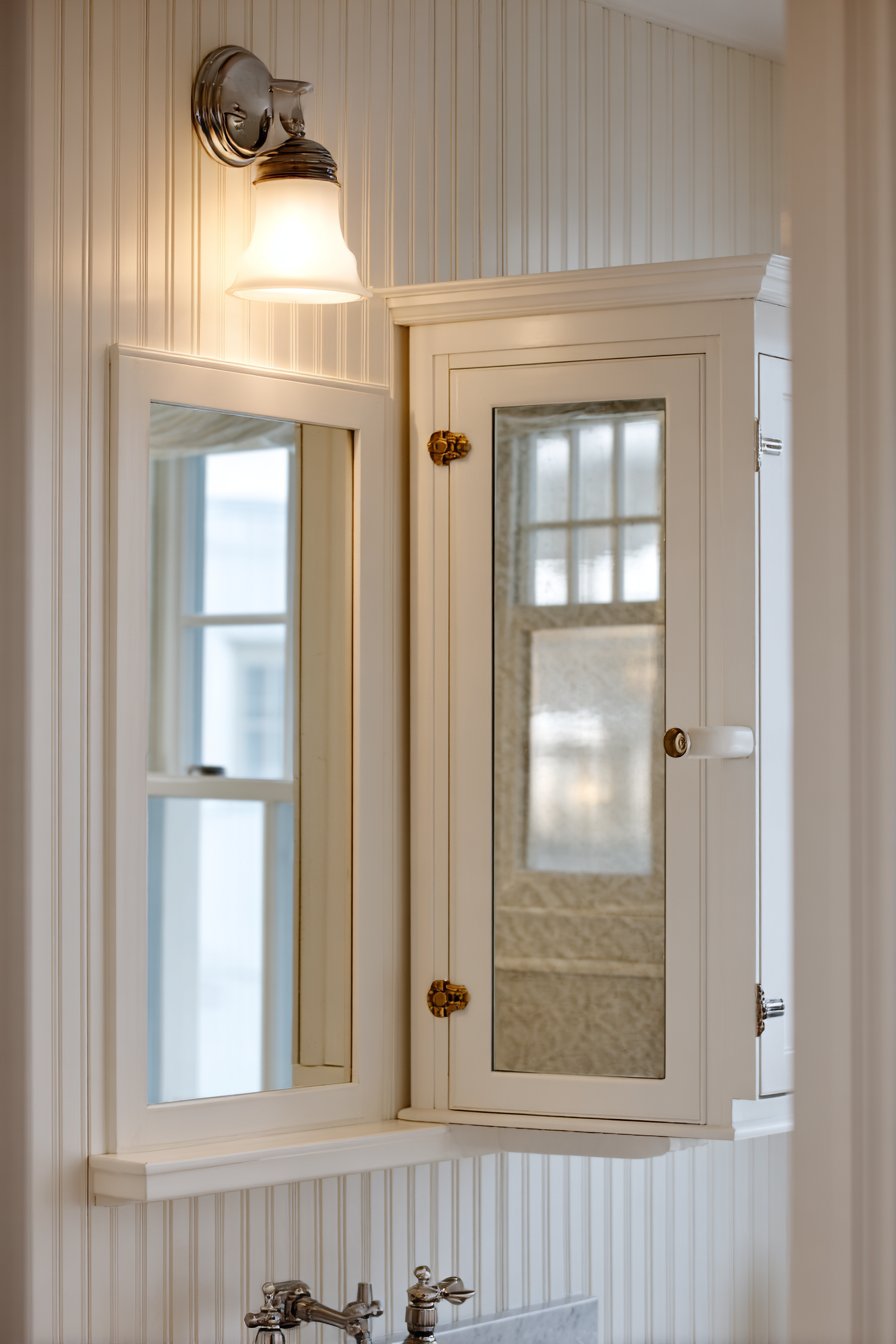
The genius of this design lies in its space efficiency and thoughtful integration of multiple functions into a single element. Rather than requiring separate mirror and storage solutions that would consume valuable wall real estate and create visual clutter, the medicine cabinet consolidates these needs elegantly.
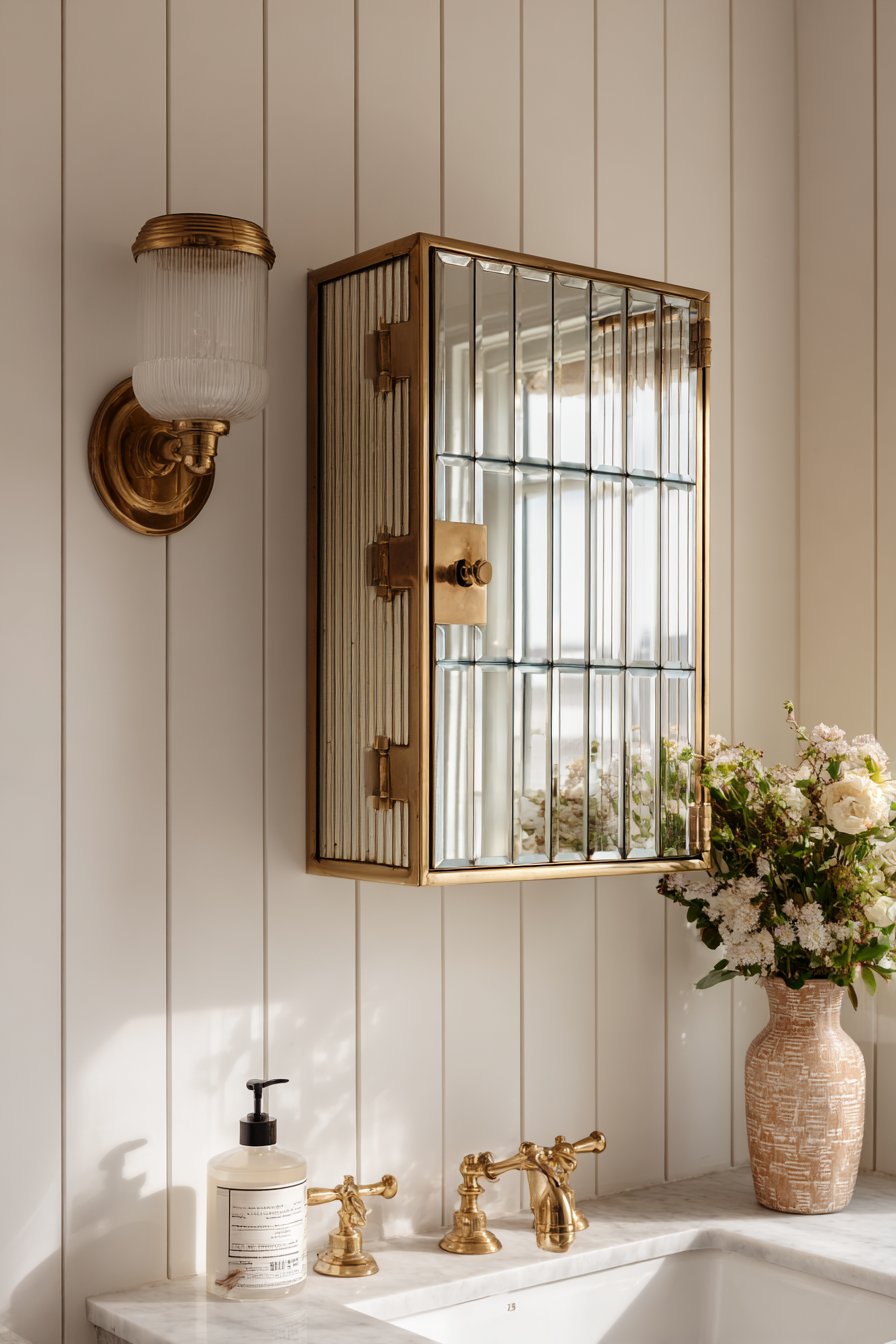
Key design tips for this storage-focused approach: Measure your wall cavity depth before purchasing a recessed medicine cabinet to ensure proper fit between wall studs. Choose adjustable interior shelving to accommodate items of varying heights, from tall bottles to small containers. Select brass or bronze hardware finishes that develop a natural patina over time for authentic vintage character. Position the cabinet at a height that allows the mirrored door to reflect at eye level when closed, typically with the center at 60 inches from the floor. Coordinate the beadboard paneling height with other horizontal elements in the bathroom, such as chair rails or tile borders, to create visual harmony. Consider installing the wall sconce slightly higher than standard to ensure it doesn’t cast shadows on faces when using the mirror.
3. Wall-to-Wall Frameless Beveled Mirror
Expansiveness becomes achievable even in the narrowest bathroom when a frameless beveled-edge mirror spans the entire width of the vanity wall. This design approach maximizes every inch of reflective surface, creating an uninterrupted expanse that dissolves visual boundaries and floods the space with reflected light. The beveled edges add subtle sophistication and a hint of traditional elegance while serving a practical purpose—they catch and refract light at interesting angles, creating a delicate border of prismatic color that frames the mirror naturally without requiring an actual frame.
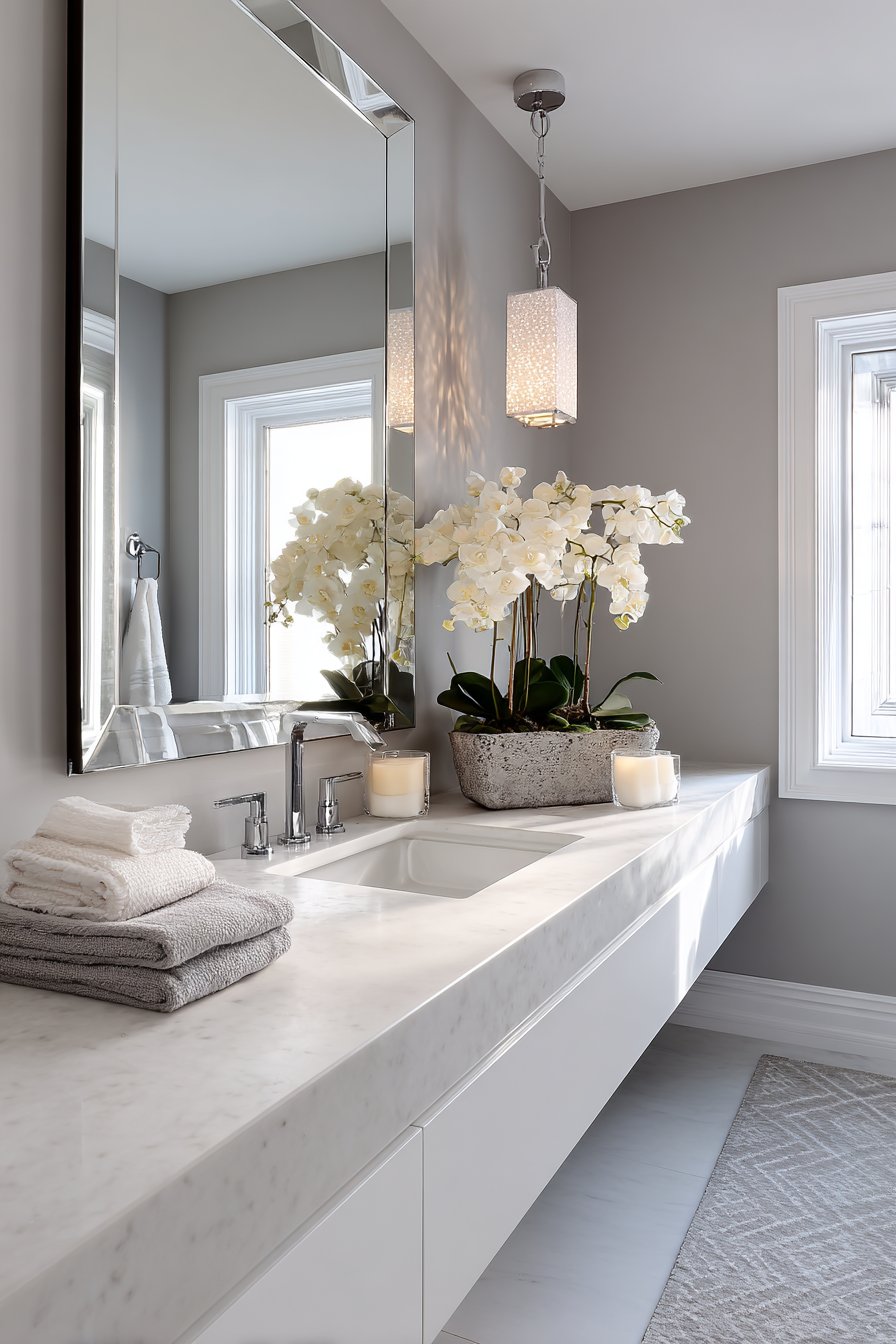
The seamless quality of a frameless installation creates visual continuity that’s particularly valuable in small bathrooms where fragmented surfaces and interrupted sightlines can make spaces feel choppy and confined. When the mirror extends from countertop to ceiling and from wall to wall, it creates the illusion that the bathroom extends beyond its actual dimensions. This effect is amplified when the mirror reflects another mirror or window, creating an infinite regress that confuses the eye about where the room actually ends. The result is a space that feels significantly larger and more open than its square footage would suggest.
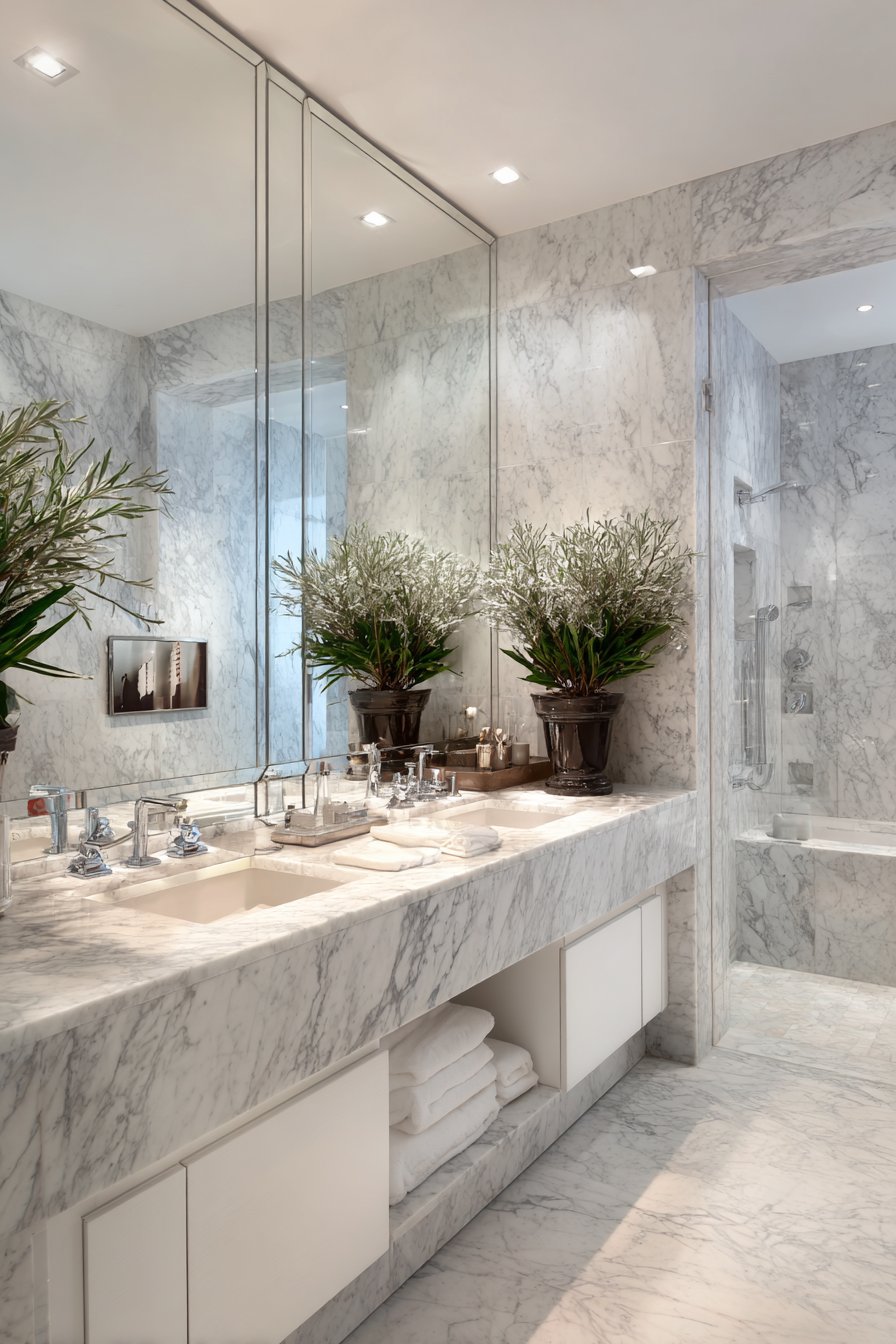
Paired with a sleek white vanity and chrome fixtures, the design maintains an airy, uncluttered aesthetic that’s essential for preventing small bathrooms from feeling cramped. The monochromatic white palette reflects maximum light and creates a sense of cleanliness and serenity. Chrome fixtures add just enough metallic sparkle to elevate the design without introducing additional colors that would fragment the cohesive scheme. Soft gray walls provide gentle definition without the starkness of pure white, while a white marble countertop introduces subtle natural veining that adds visual interest without overwhelming the minimalist composition.
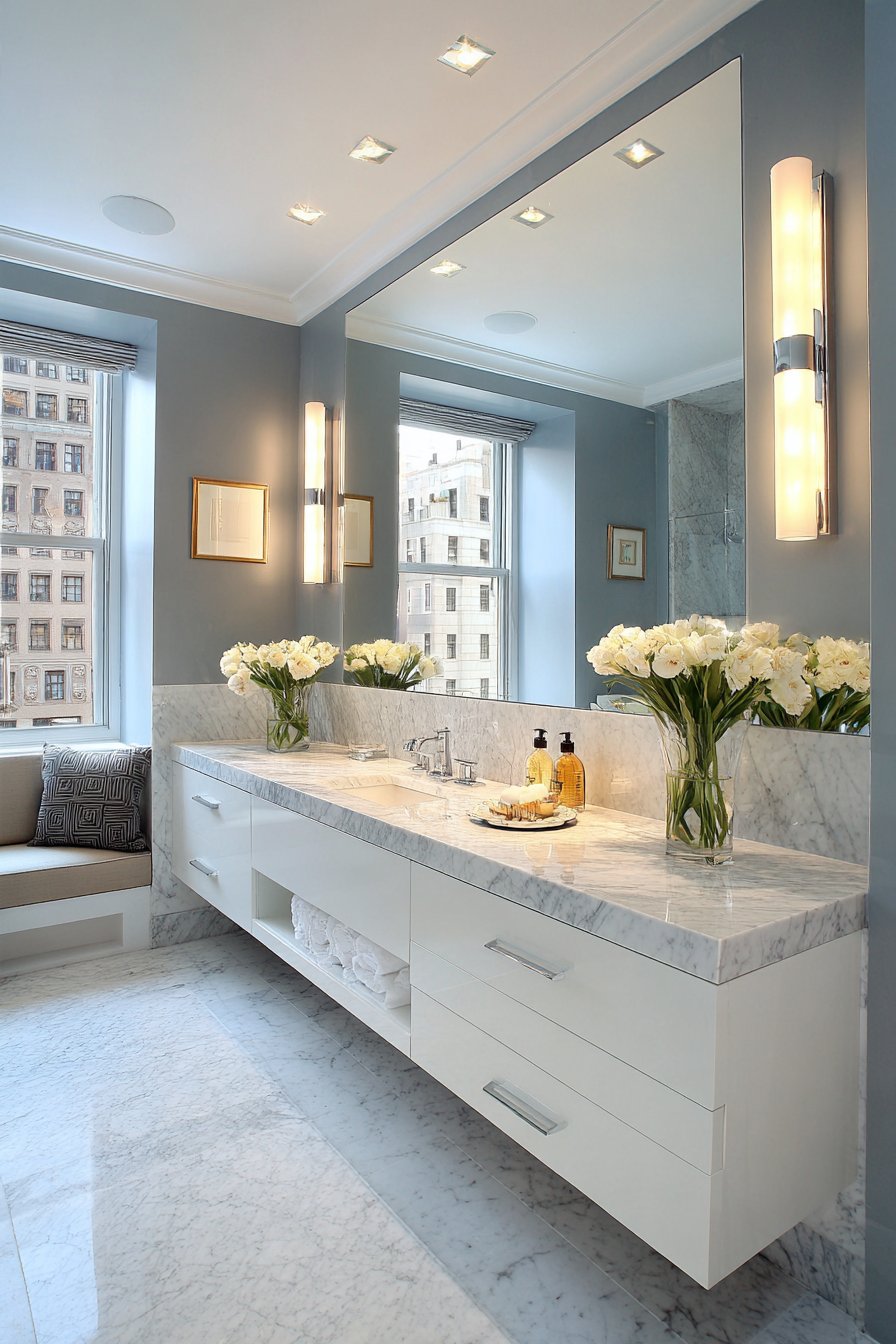
The psychological impact of this mirror treatment shouldn’t be underestimated. Upon entering the bathroom, the eye immediately registers the expansive reflective surface, and the brain interprets this visual information as indicating a larger space. The lack of frame means there’s nothing to interrupt the flow of light and reflection, allowing the mirror to function as a portal that seems to extend the room infinitely in the reflected direction.
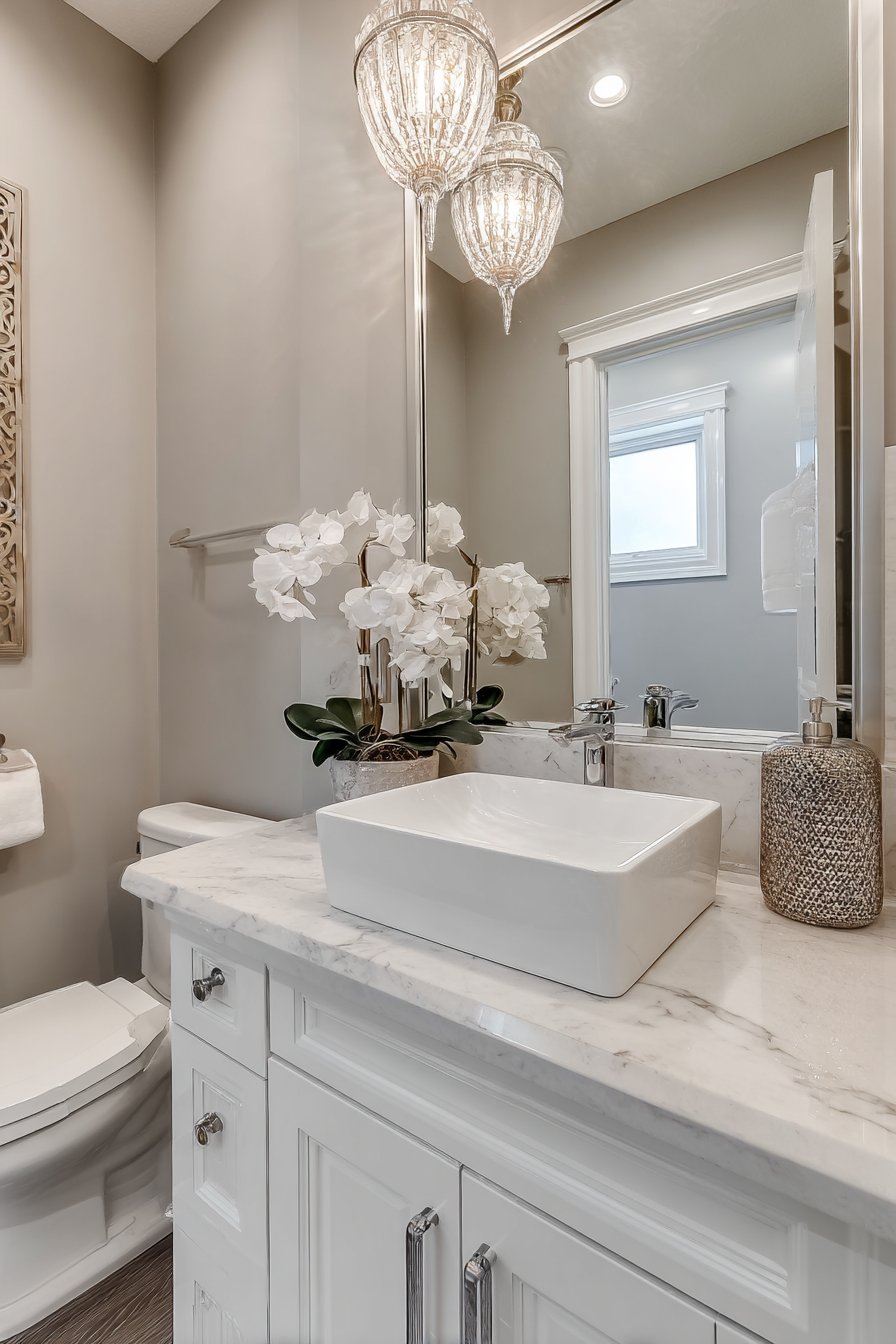
Key design tips for achieving this expansive effect: Have the mirror custom-cut to fit the exact dimensions of your vanity wall for perfect edge-to-edge coverage. Specify a 1-inch beveled edge for an elegant finish that adds depth without requiring a frame. Ensure the wall surface is perfectly flat and smooth before installation, as any imperfections will be visible behind the frameless mirror. Use professional mirror clips or adhesive designed specifically for large frameless mirrors to ensure secure, level mounting. Position lighting fixtures on either side of the mirror rather than above to eliminate shadows and provide even illumination across the entire reflective surface. Keep the vanity countertop minimal and organized to maximize the clean, uncluttered effect of the wall-to-wall mirror.
4. Rustic Wood Frame Mirror with Natural Edge Details
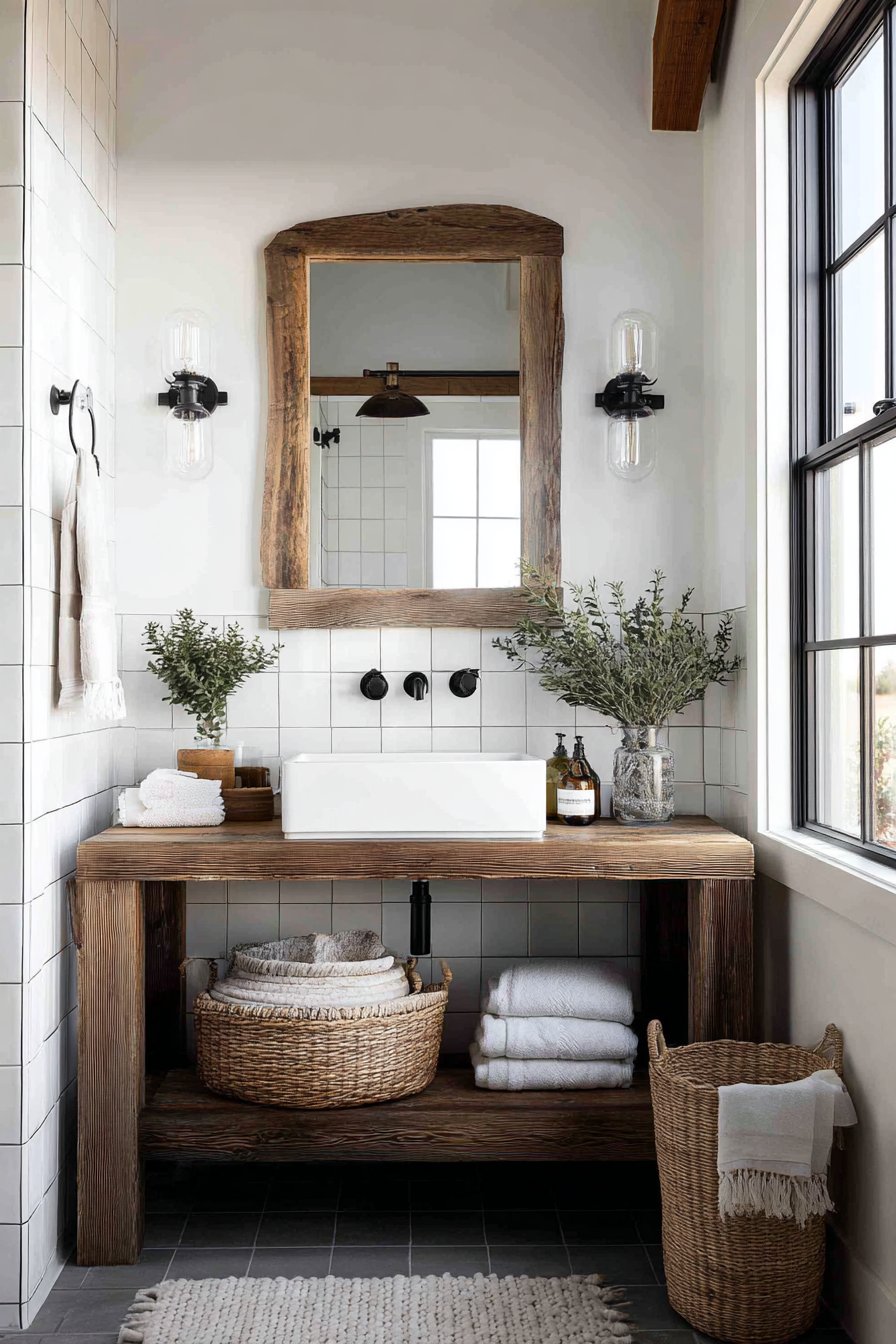
Warmth and organic texture enter the small bathroom through a rustic wooden frame mirror featuring natural live-edge details that celebrate the inherent beauty of reclaimed wood. This design choice introduces an earthy, grounded quality that balances the typically cool, hard surfaces found in bathrooms—ceramic tiles, porcelain fixtures, and chrome or nickel hardware. The irregular natural edge of the wood frame creates visual interest and uniqueness; no two pieces are exactly alike, giving the bathroom a personalized character that mass-produced frames cannot achieve.
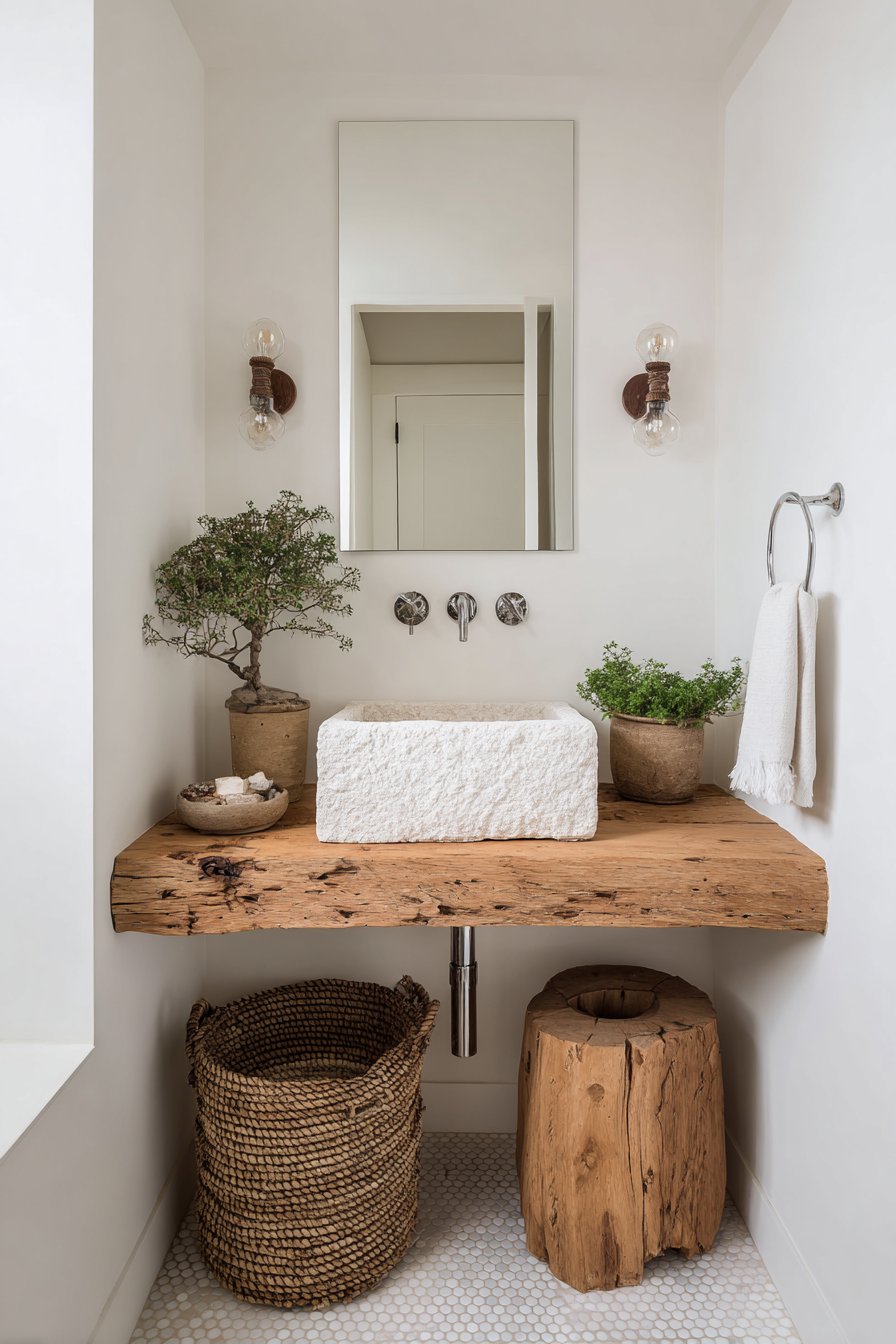
The reclaimed wood aspect carries both aesthetic and environmental appeal. Weathered barn wood, salvaged timber, or repurposed materials bring history and story into the space. The wood’s patina—developed through years of exposure to elements—displays color variations, grain patterns, and sometimes even old nail holes or saw marks that add authenticity and depth. When positioned above a vessel sink, this rustic mirror creates a focal point that draws the eye upward and establishes the design narrative for the entire bathroom. The vessel sink itself, sitting atop the counter rather than recessed within it, contributes to the organic, handcrafted aesthetic.
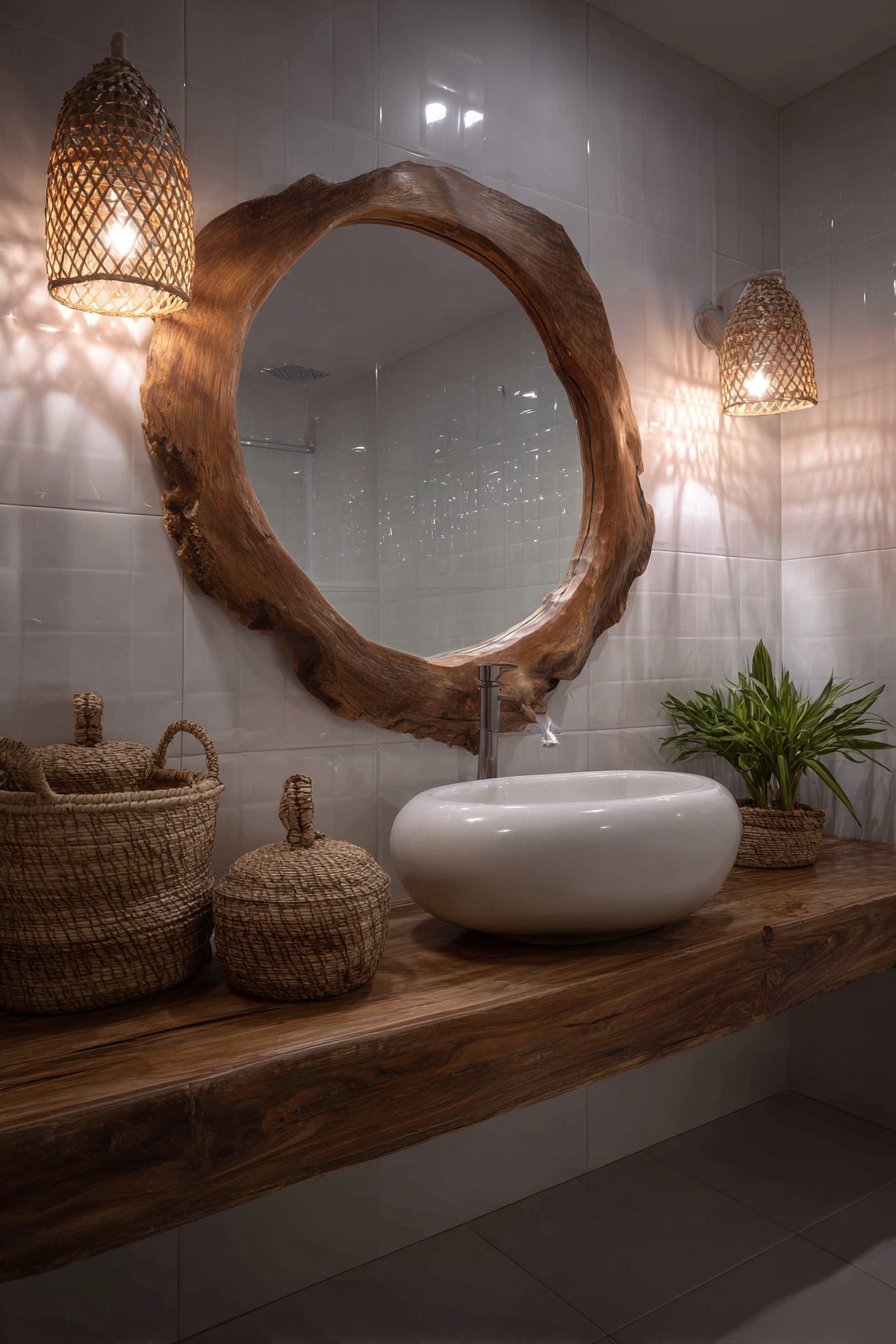
Vintage-style Edison bulb sconces flanking the mirror provide both functional task lighting and atmospheric ambient illumination. The exposed filaments within clear glass globes echo the natural, unfussy character of the wood frame while adding a warm golden glow that enhances the wood tones. This lighting choice avoids the harsh, clinical quality that standard bathroom lighting can impose, instead creating a softer, more inviting atmosphere. Natural materials throughout—woven baskets for storage, potted greenery adding life and air-purifying qualities—reinforce the organic design direction and create a cohesive bathroom that feels like a nature-inspired retreat.
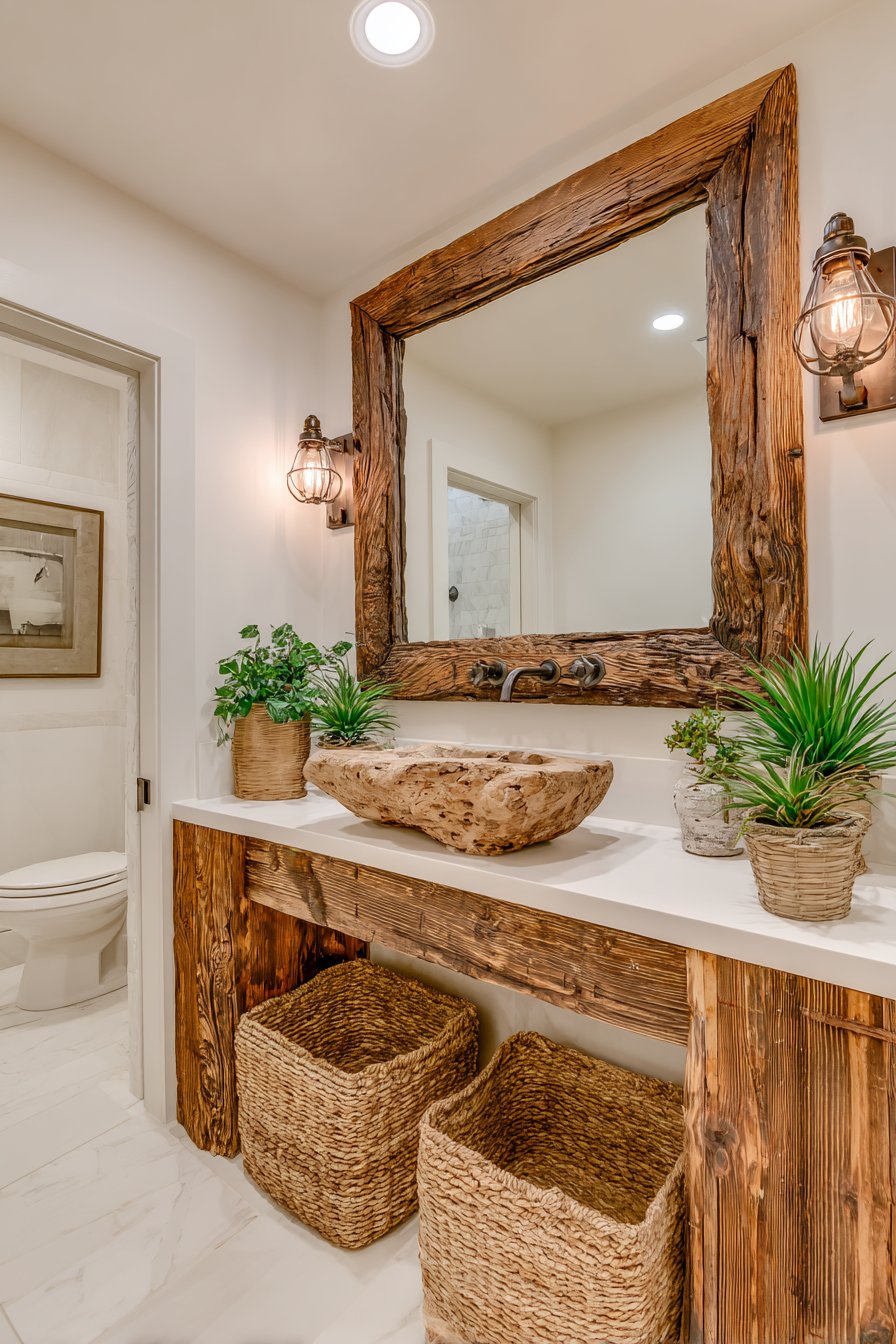
The textural contrast proves particularly effective in this design scheme. The rough, organic quality of the wood frame plays beautifully against smooth white ceramic tiles, creating a dynamic visual conversation between rustic and refined, natural and manufactured. This juxtaposition prevents the space from feeling too precious or overly styled, instead achieving a relaxed, lived-in quality that’s welcoming and comfortable.
Key design tips for incorporating rustic wood frames: Source reclaimed wood from reputable suppliers who can verify the wood’s history and ensure it’s been properly cleaned and treated for indoor bathroom use. Seal the wood frame with a water-resistant finish to protect it from bathroom humidity and moisture while maintaining its natural appearance. Select a frame width of 4-6 inches to create substantial presence without overwhelming a small bathroom. Position Edison bulb sconces 30-36 inches apart and approximately 60-65 inches from the floor for optimal task lighting. Choose a vessel sink in a complementary natural material like stone, concrete, or ceramic with an organic glaze to reinforce the earthy aesthetic. Incorporate living plants that thrive in bathroom humidity, such as pothos, ferns, or snake plants, to strengthen the natural design theme.
5. Modern LED Backlit Rectangular Mirror
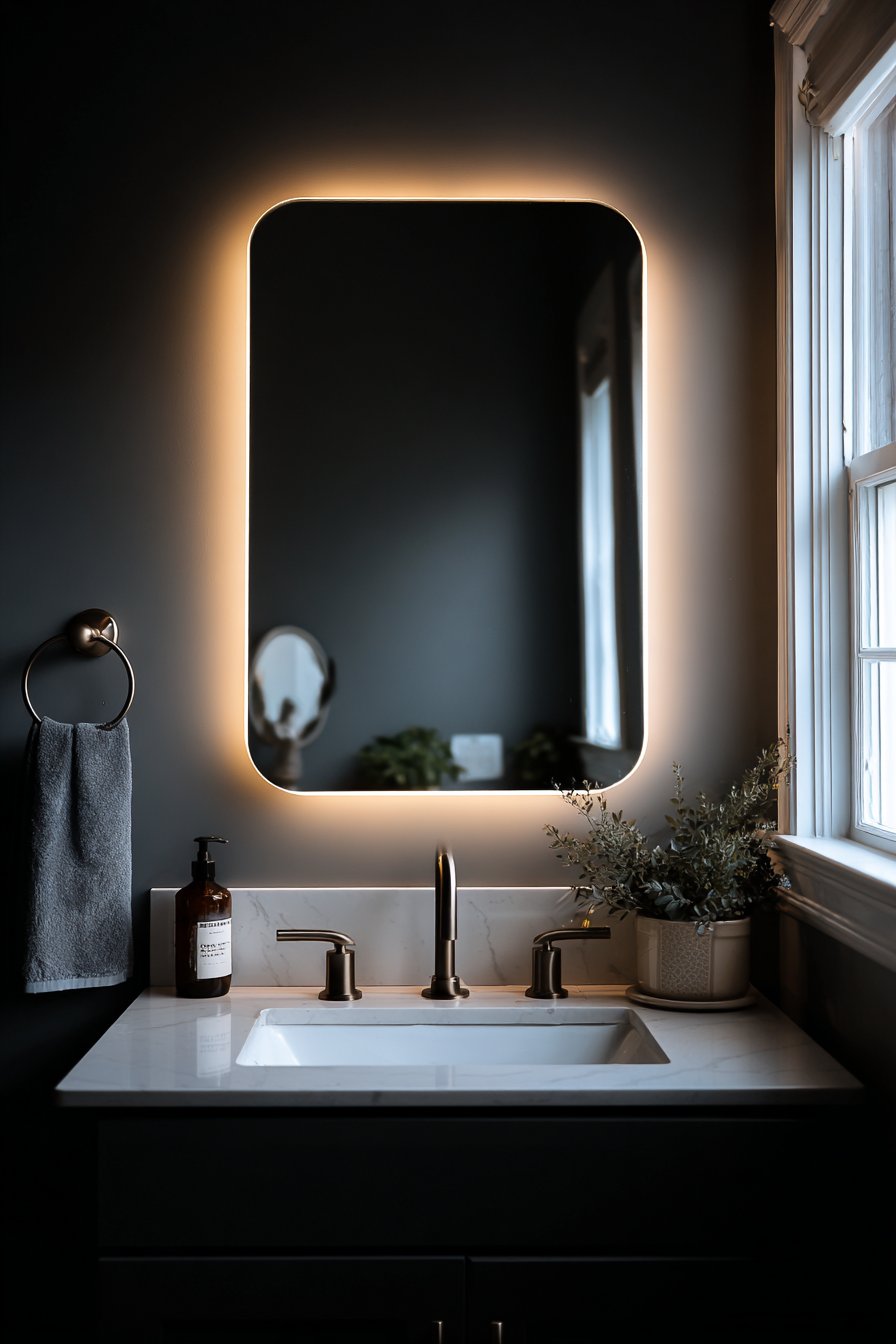
Contemporary sophistication reaches new heights with a rectangular LED backlit mirror that appears to float ethereally against a dark gray accent wall. The integrated LED lighting creates a soft halo effect around the mirror’s perimeter, establishing a futuristic, spa-like ambiance while serving the practical purpose of providing even, shadow-free illumination perfect for grooming tasks. This backlighting eliminates the harsh shadows that traditional overhead lighting can cast on faces, offering more flattering and functional illumination for applying makeup, shaving, or other detailed personal care activities.
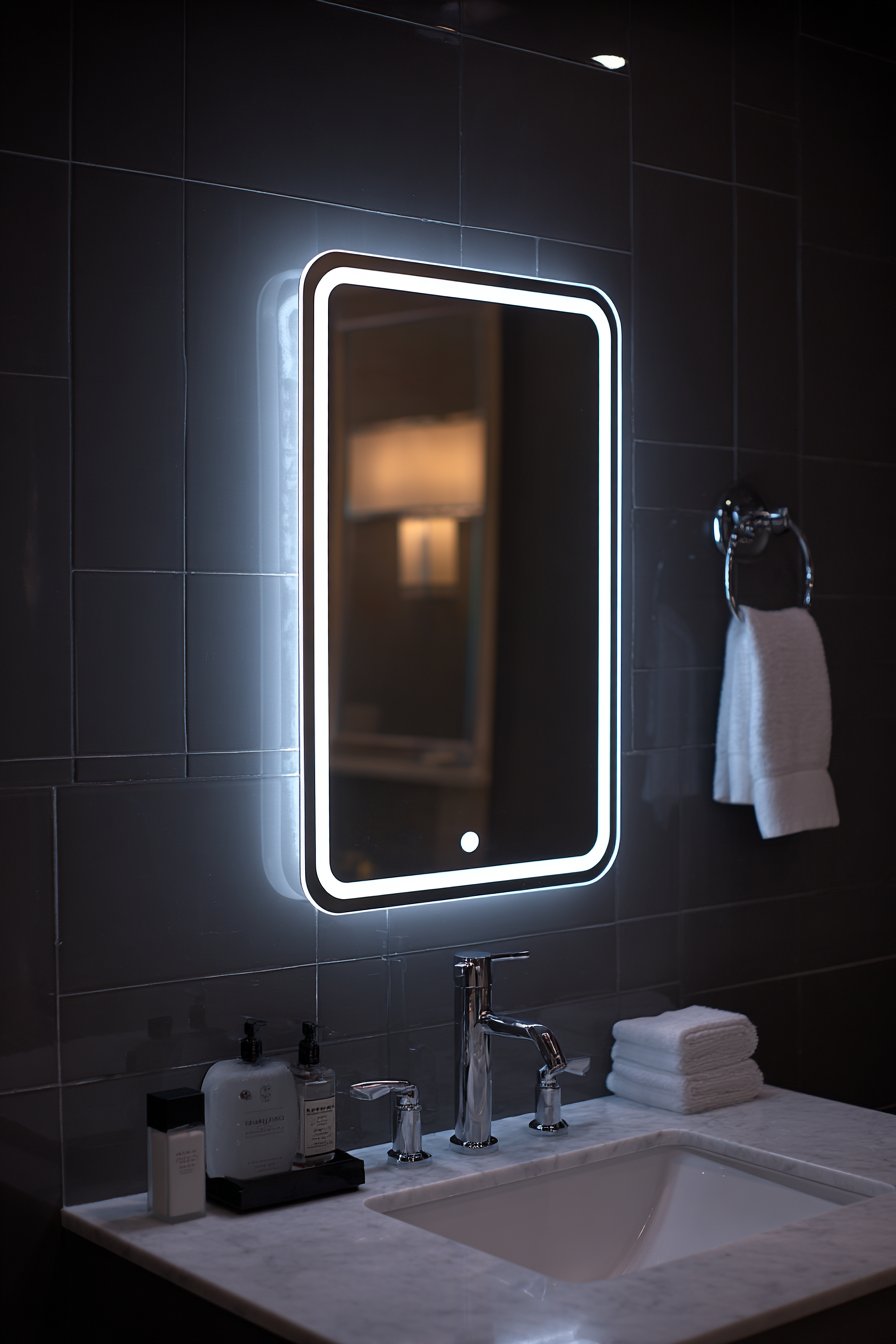
The floating effect occurs both literally and visually. The mirror mounts slightly away from the wall surface, with the LED strip positioned in the gap between mirror and wall. When illuminated, this gap glows with soft light that creates the impression the mirror is suspended in space rather than mounted solidly to the wall. This visual trick adds dimension and drama to the small bathroom while contributing to a sense of spaciousness—floating elements tend to feel lighter and less confining than solidly grounded fixtures. The dark gray accent wall provides the perfect backdrop for this effect, as the light halo contrasts sharply against the moody background, making the glow more pronounced and dramatic.
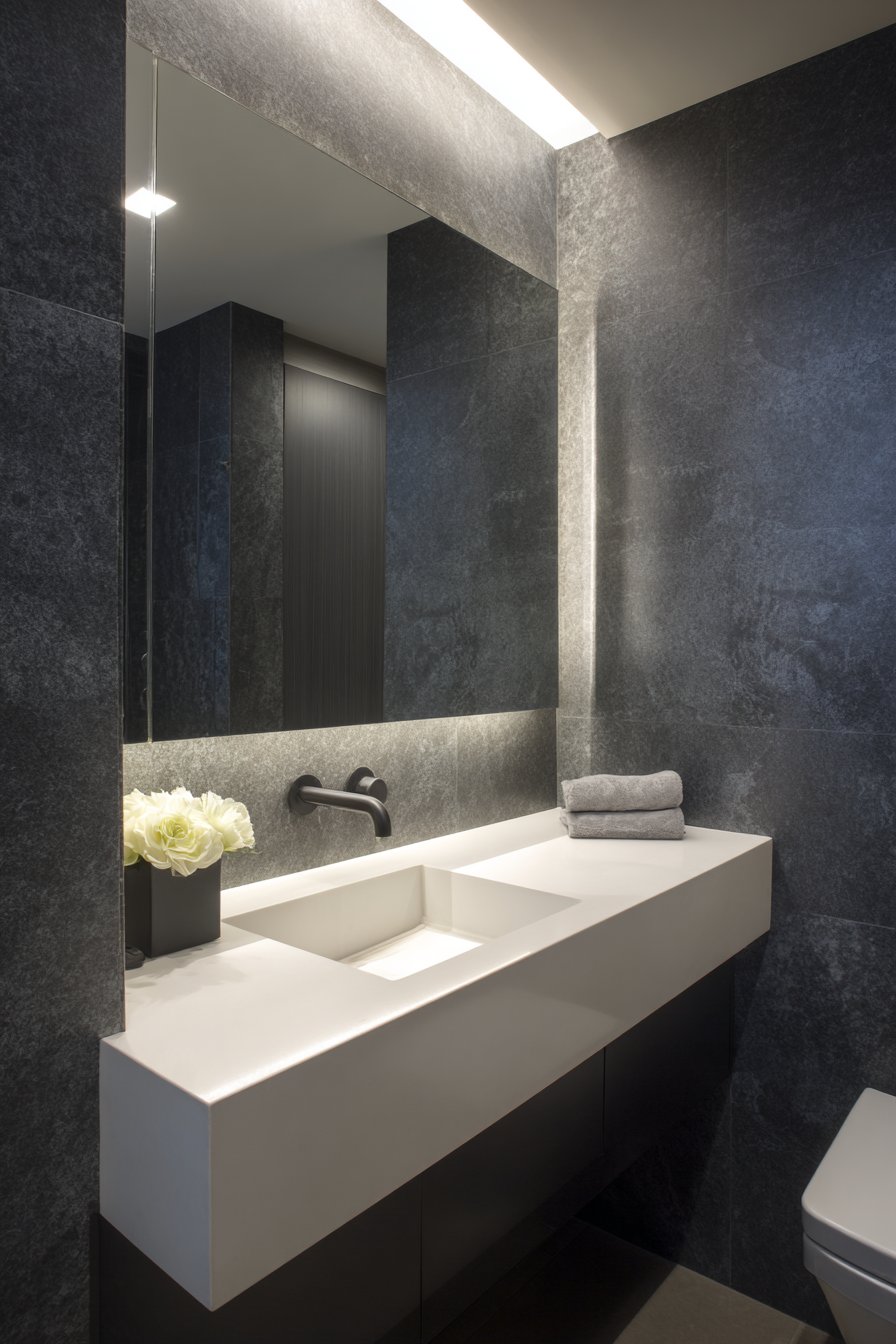
A white quartz countertop introduces crisp contrast and luxury to balance the contemporary mirror. Quartz offers practical advantages in bathroom applications—it’s non-porous, resistant to staining, and requires minimal maintenance—while providing the visual appeal of natural stone with more consistency and uniformity. Matte black fixtures complete the sophisticated color palette, their dark finish creating bold graphic accents against the white quartz and gray walls. The subtle glow from the LED lighting reflects off polished chrome details, creating layers of light and reflection that add depth to the compact space despite its limited square footage.
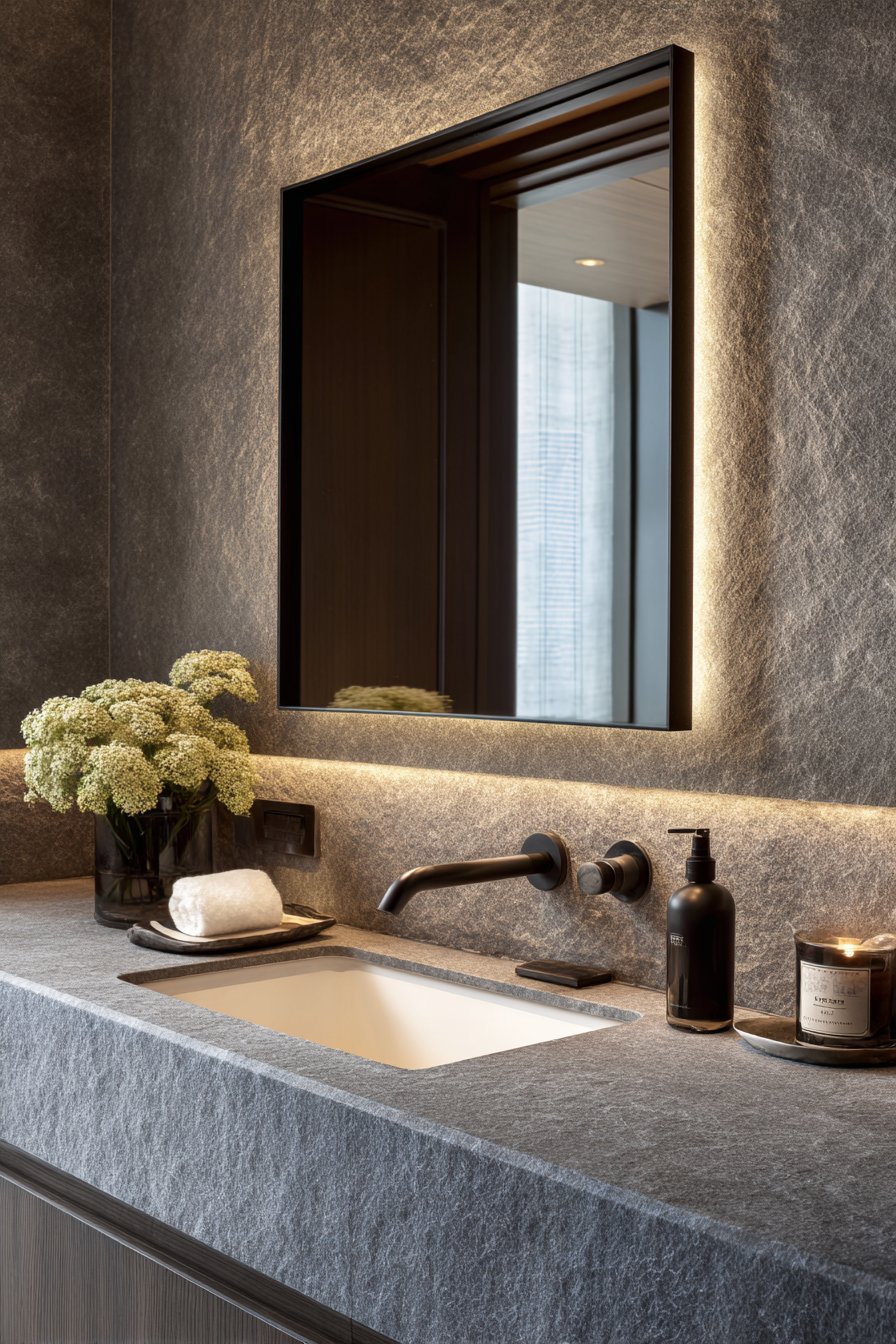
The technological aspect of this design appeals to those who appreciate modern conveniences and smart home integration. Many LED backlit mirrors offer features like dimming capabilities, color temperature adjustment, and even defogging functions that keep the mirror clear even during steamy showers. These functional enhancements elevate the bathroom experience from basic utility to genuine luxury.
Key design tips for LED mirror installation: Choose mirrors with adjustable color temperature (2700K-6500K) to customize the lighting from warm to cool based on time of day or task. Verify that electrical wiring is properly positioned before purchasing, as LED mirrors require hardwired power connections. Select mirrors with touch-sensor controls or motion activation for convenient, hygienic operation. Position the mirror so the LED glow doesn’t cause unwanted glare when reflecting other light sources in the room. Paint the accent wall in a matte finish rather than glossy to prevent excessive light reflection that could wash out the LED halo effect. Install a dimmer switch or choose a mirror with built-in dimming to adjust light levels for different uses and times of day.
6. Antique Gilt-Framed Mirror with Vintage Glamour
Elegant sophistication transforms a modest powder room when an antique gilt-framed mirror introduces vintage glamour above a classic marble-topped pedestal sink. The ornate golden frame—whether an authentic antique or a skillfully crafted reproduction—brings Old World elegance and timeless beauty to the small bathroom. The intricate carved details, applied gold leaf, and classical motifs characteristic of gilt frames add layers of visual interest and craftsmanship that elevate the entire space from utilitarian to refined.
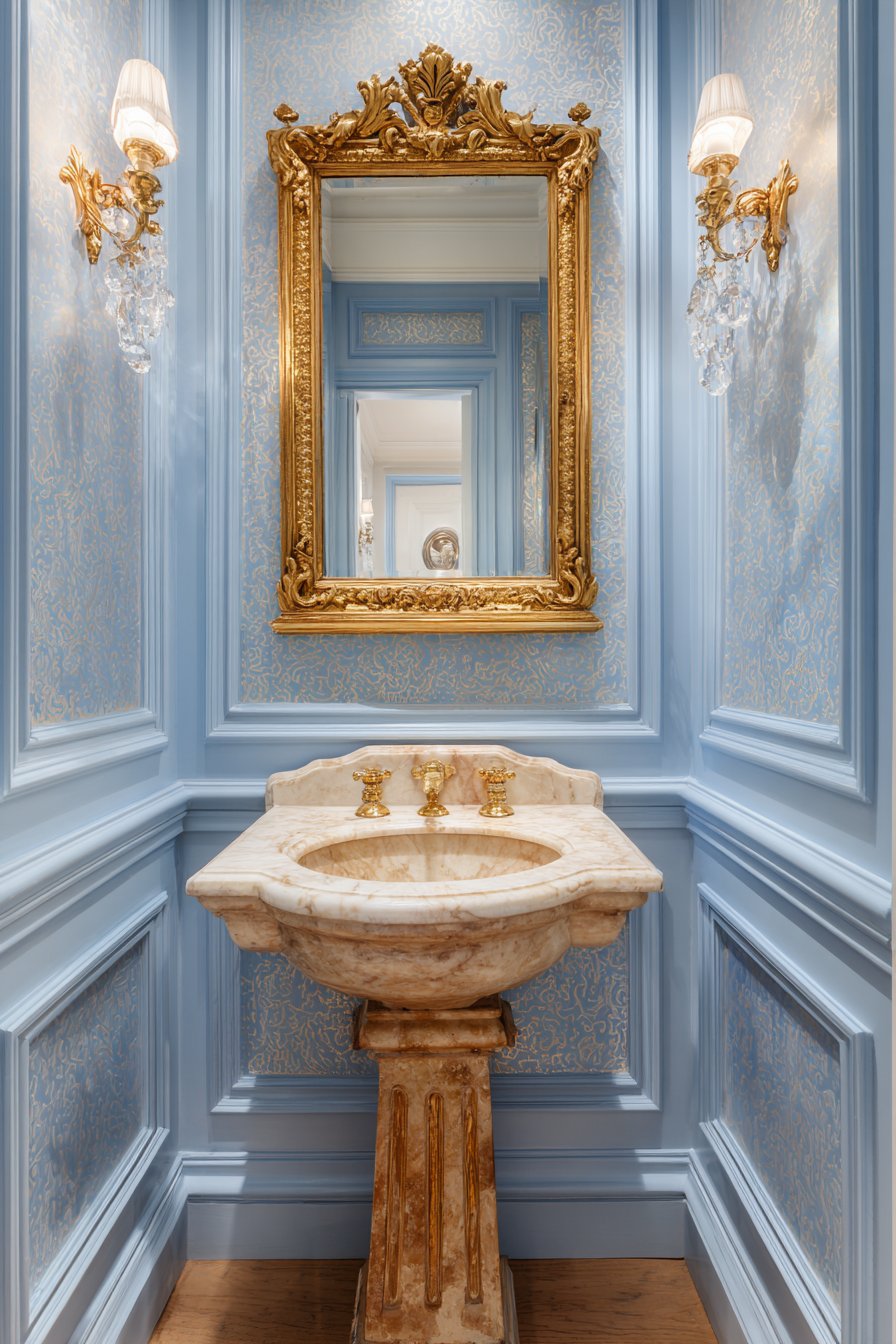
The mirror’s modest size proves perfectly proportioned for small bathroom dimensions, demonstrating that impact doesn’t always require scale. A beautifully detailed 24-30 inch ornate mirror can command attention and establish design character more effectively than a larger, plainer alternative. The gilt finish catches and reflects light in complex ways as the carved surfaces create shadows and highlights that change throughout the day as natural light shifts. This dynamic quality adds life and movement to the space, preventing it from feeling static despite its compact size.
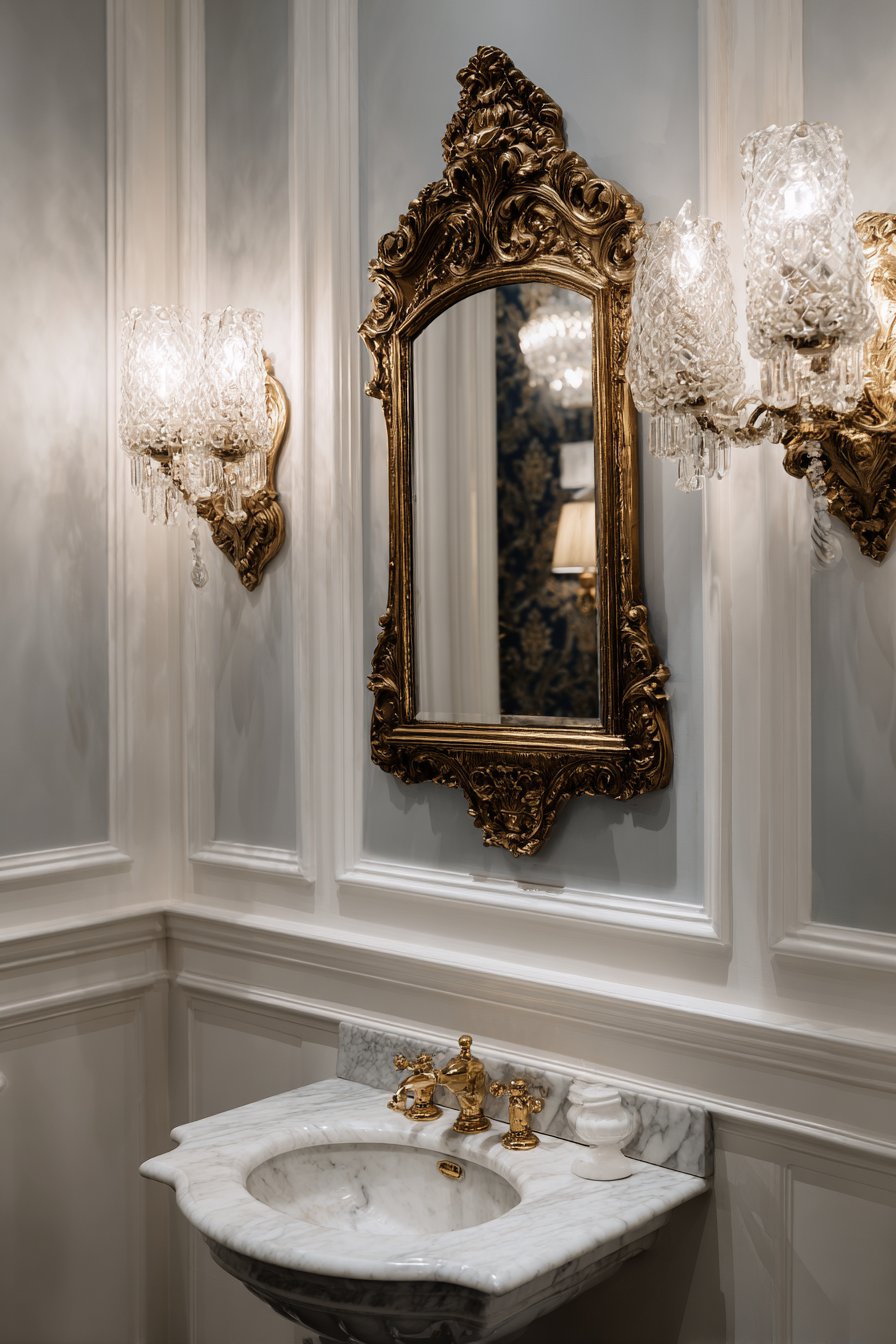
Soft blue-gray walls create a sophisticated backdrop that allows the golden mirror frame to shine without competition. This color choice demonstrates refined restraint—rather than overwhelming the small space with bold color, the muted blue-gray provides just enough pigment to add interest while remaining neutral enough to feel spacious and serene. White wainscoting adds classical architectural detail and creates a natural transition between the colored walls and white fixtures. The horizontal line created by the wainscoting cap rail also serves to visually widen the space, counteracting any tendency for the room to feel narrow.
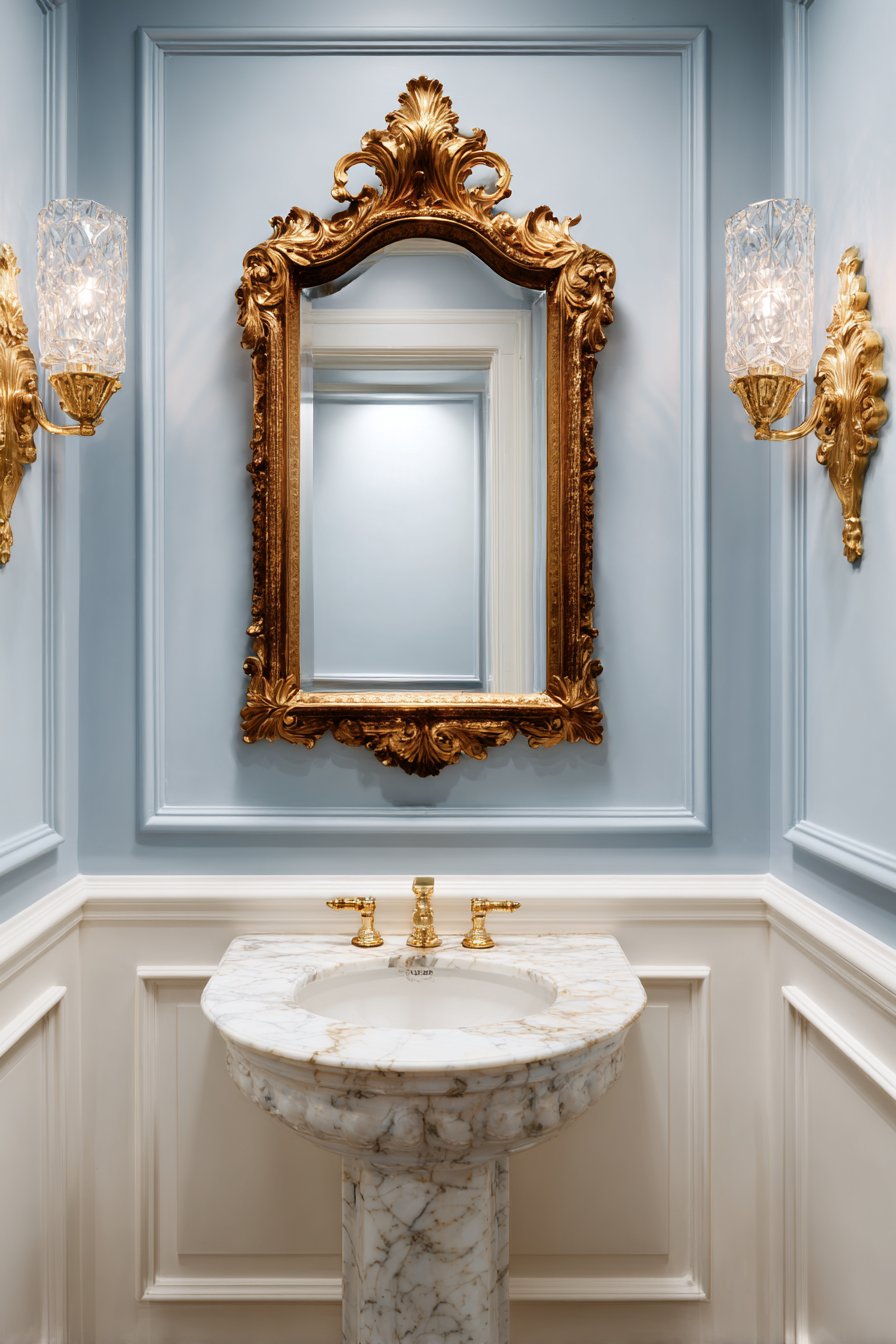
Crystal wall sconces positioned on either side of the mirror provide sparkling accent lighting that enhances the glamorous aesthetic. The faceted crystal elements refract light into rainbow sparkles that complement the reflective quality of the gilt frame and add a jewelry-like quality to the wall composition. The pedestal sink—a classic choice that exposes its curved, sculptural base—contributes to the vintage aesthetic while consuming minimal floor space, an important consideration in small bathrooms.
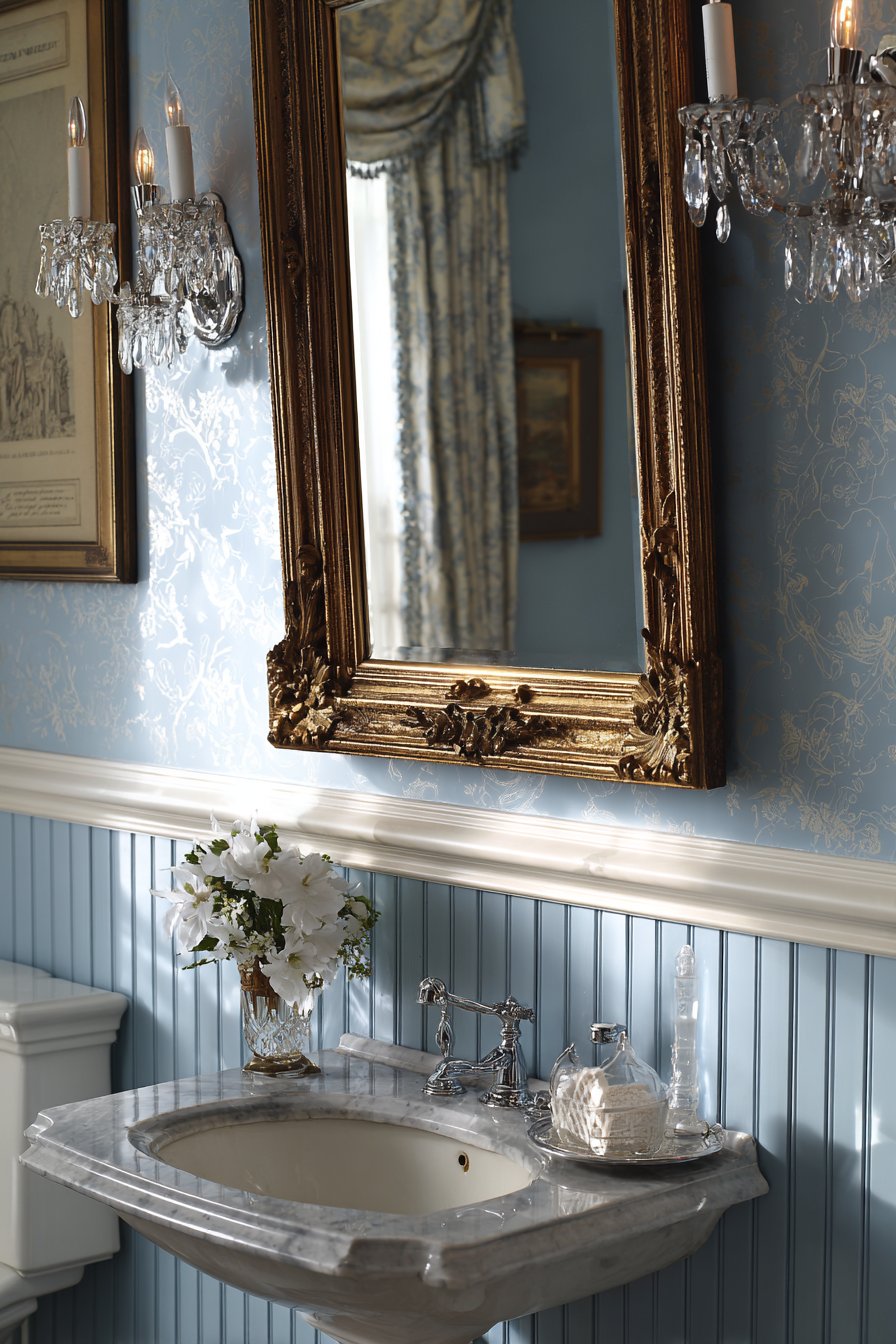
Key design tips for vintage glamour: Select a gilt frame with a patina that shows age appropriately—overly bright, new-looking gold leaf can appear inauthentic and garish. Limit ornate details to the mirror frame to prevent the small space from feeling cluttered; keep other elements relatively simple and refined. Position the mirror at a height that allows the ornate frame top to be fully appreciated, typically 6-8 inches above the backsplash. Choose crystal sconces with candelabra-style bulbs to maintain period authenticity and provide flattering warm light. Coordinate metal finishes carefully—polished brass or nickel faucets work beautifully with gilt frames, while chrome may create an anachronistic clash. Keep accessories minimal and refined, selecting a few carefully chosen vintage pieces rather than overwhelming the space with too many decorative objects.
7. Asymmetrical Hexagonal Mirror Cluster
Creative geometry makes a bold statement when three hexagonal mirrors arrange in an asymmetrical cluster above a floating oak vanity. This contemporary approach to mirror placement breaks free from the centered, symmetrical conventions that dominate bathroom design, instead embracing artistic composition and dynamic visual interest. The hexagonal shape itself—with its six equal sides and inherent geometric beauty—references natural forms like honeycomb while maintaining clean, modern lines that feel current and fresh.
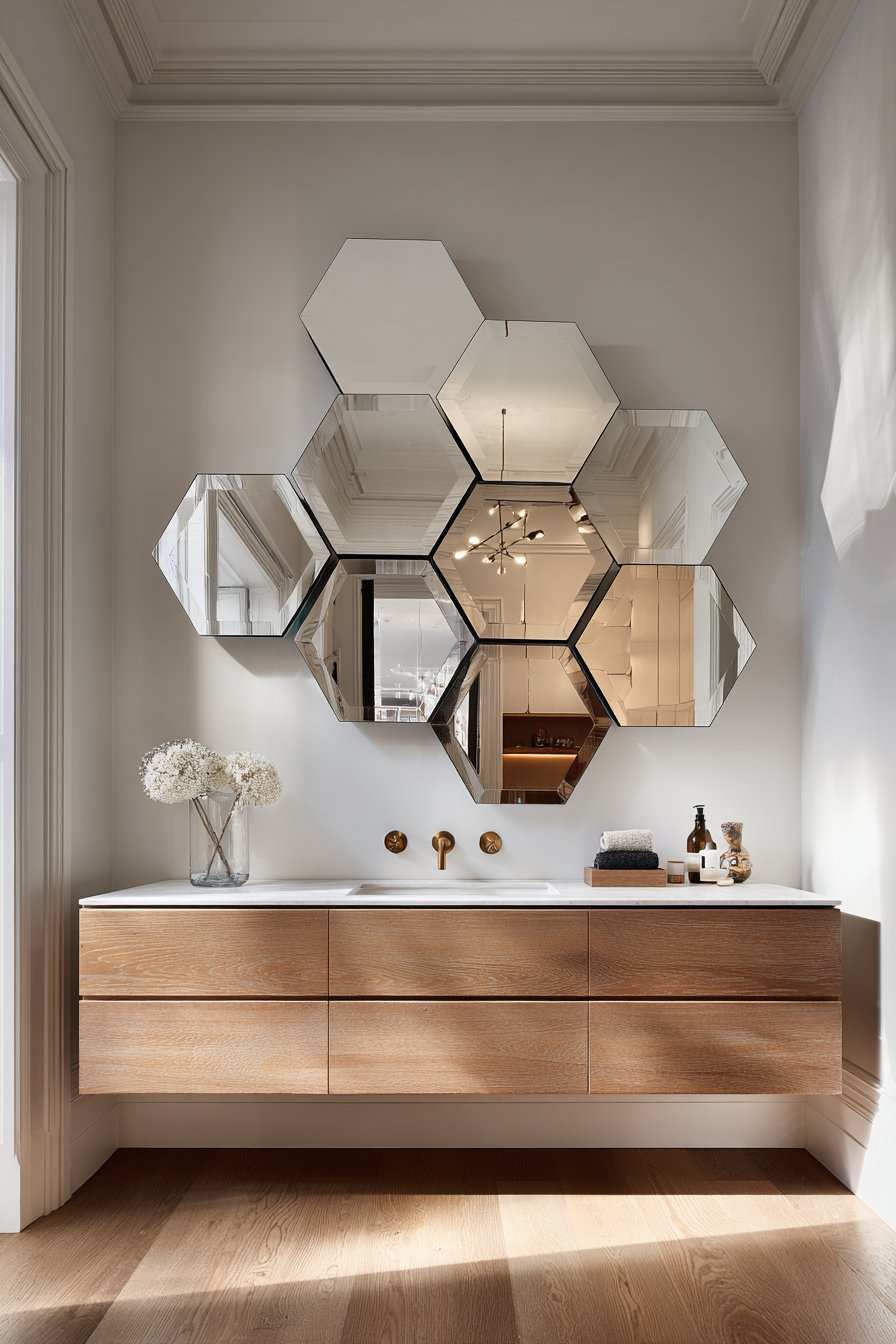
The asymmetrical arrangement prevents the design from feeling too rigid or predictable. Rather than aligning perfectly or spacing evenly, the three hexagons overlap slightly or position at varying heights, creating a more organic, intuitive composition that feels deliberately artistic rather than formulaic. This clustering effect generates visual impact beyond what a single mirror of equivalent total surface area could achieve. The eye travels between the three hexagons, creating movement and engagement that makes the wall feel dynamic and interesting despite the bathroom’s small size.
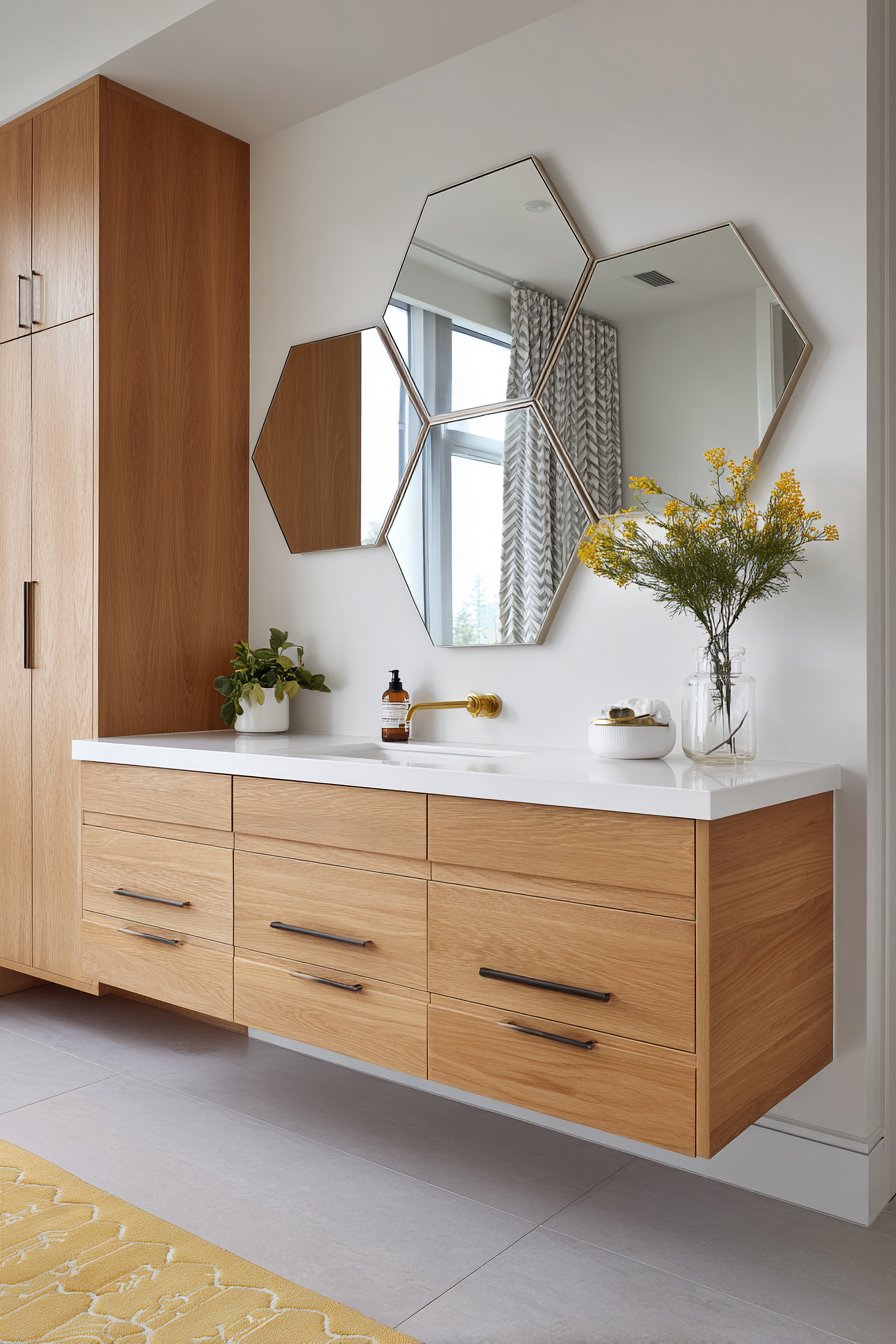
Matte white walls provide a gallery-like backdrop that allows the geometric mirror arrangement to function as wall art, not just functional fixtures. The clean, neutral surface doesn’t compete for attention but instead showcases the mirrors as intentional design objects worthy of contemplation. Brass fixtures introduce warm metallic accents that complement the natural oak vanity while adding a touch of sophistication and contemporary luxury. The combination of warm wood, cool white walls, and metallic brass creates a balanced palette with enough variation to feel rich without becoming visually chaotic.
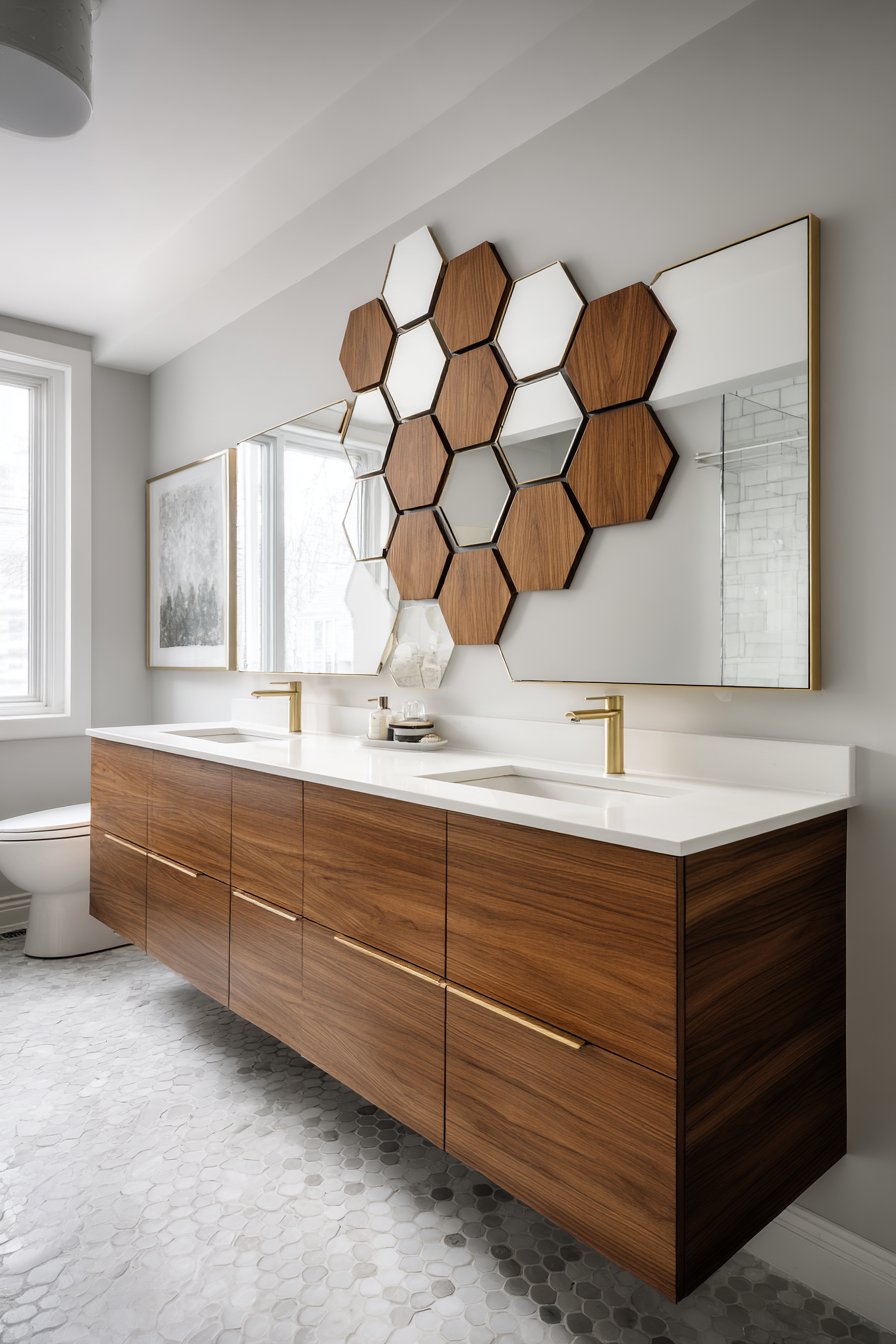
Natural light from a nearby window becomes an active participant in this design, bouncing between the mirror surfaces and creating dynamic light play throughout the day. As the sun’s angle changes, different hexagons catch and reflect light in varying intensities, creating an ever-changing light show that adds life and energy to the space. The multiple reflective surfaces also multiply the visual complexity, with mirrors reflecting other mirrors and creating nested reflections that confuse the eye about spatial boundaries.
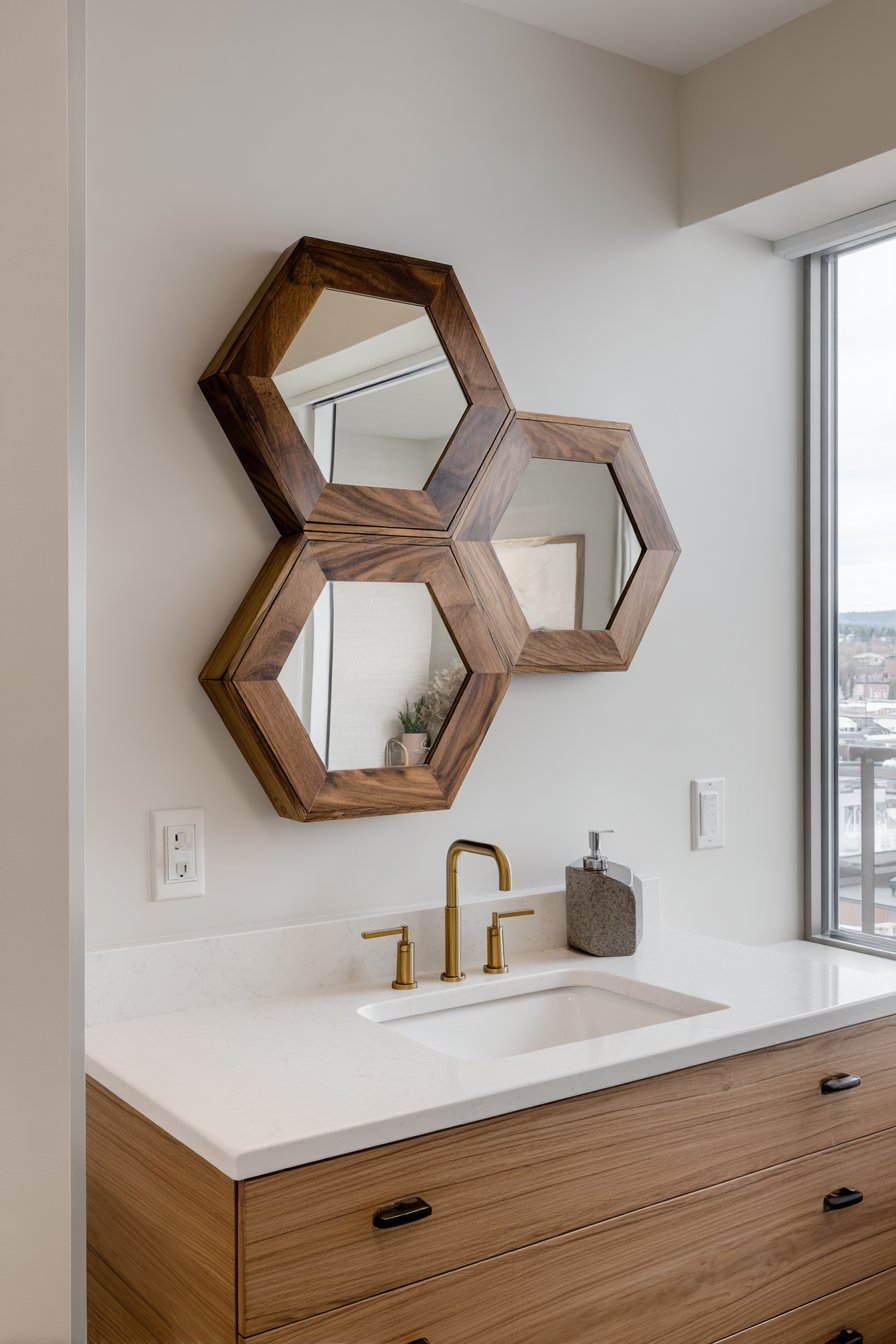
Key design tips for hexagonal mirror clusters: Start with three mirrors of the same size (typically 15-20 inches wide) to create cohesion while allowing for creative arrangement. Position the mirrors so they’re centered as a group above the vanity, even if the individual mirrors aren’t symmetrically arranged. Ensure at least one mirror is positioned at standard eye level (60-65 inches from floor) for functional use. Leave 2-4 inches of overlap or separation between mirrors to create visual connection without crowding. Install using proper wall anchors rated for mirror weight, as multiple mounting points distribute load differently than single large mirrors. Consider adding small LED puck lights above or behind mirrors to create additional dimensional lighting effects in the evening.
8. Classic Pivot Mirror with Tilting Functionality
Timeless functionality meets classic style in a rectangular pivot mirror with oil-rubbed bronze hardware mounted on crisp white subway tiles. The tilting mechanism—a thoughtful feature often overlooked in small bathroom design—allows adjustment for household members of varying heights without requiring anyone to stoop or strain to see their reflection properly. This practical consideration proves especially valuable in guest bathrooms or family bathrooms serving multiple users with different needs and preferences.
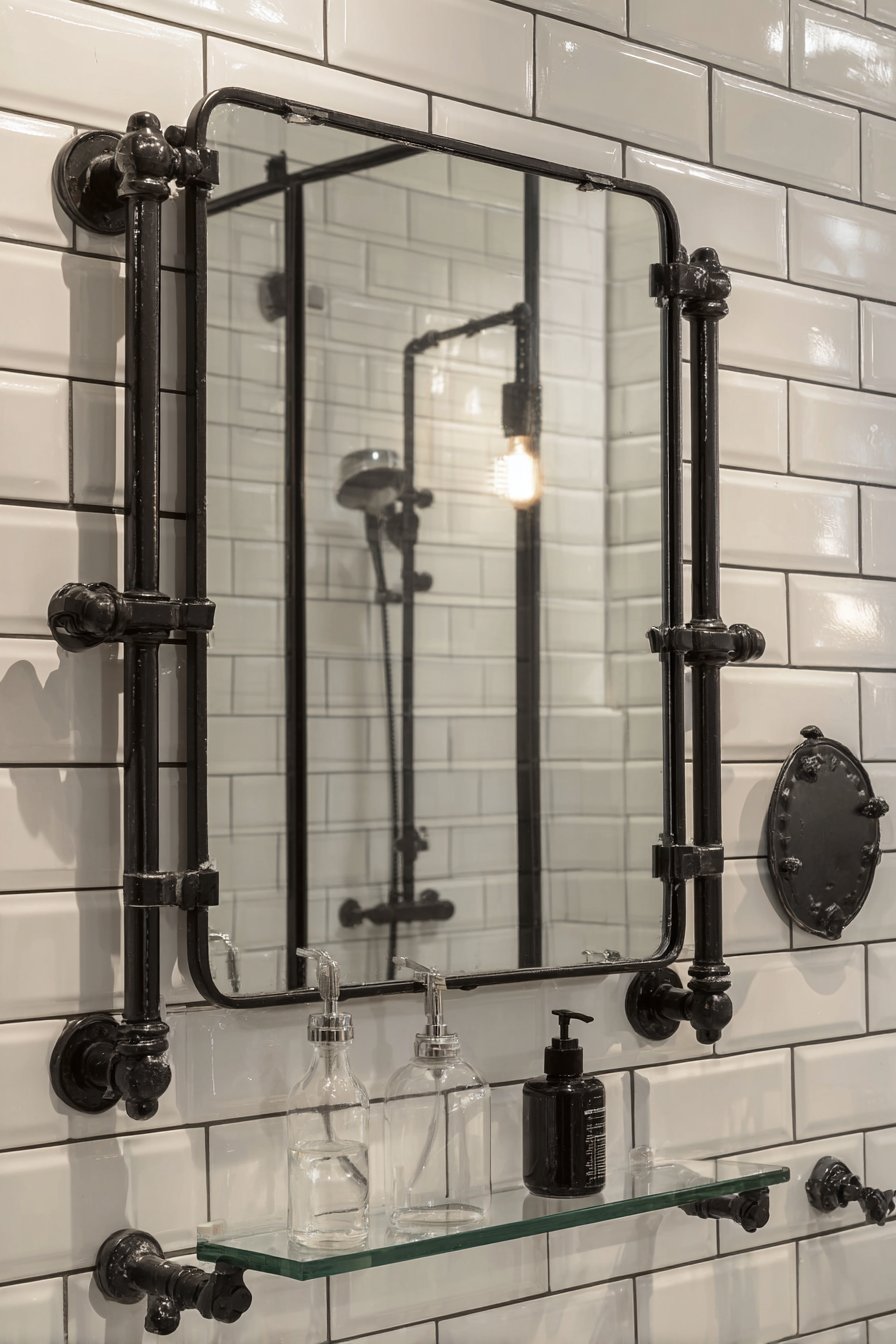
The oil-rubbed bronze hardware introduces rich, dark metallic accents that add warmth and traditional elegance. This finish choice brings depth and sophistication while complementing a wide range of design styles from traditional to transitional to industrial. The pivoting arms extend from mounting plates attached directly to the subway tile, creating a sculptural quality that makes the mirror feel like a carefully considered design element rather than a mere utilitarian necessity. The mechanical beauty of the pivot mechanism itself becomes part of the aesthetic appeal, celebrating functional hardware as decorative detail.
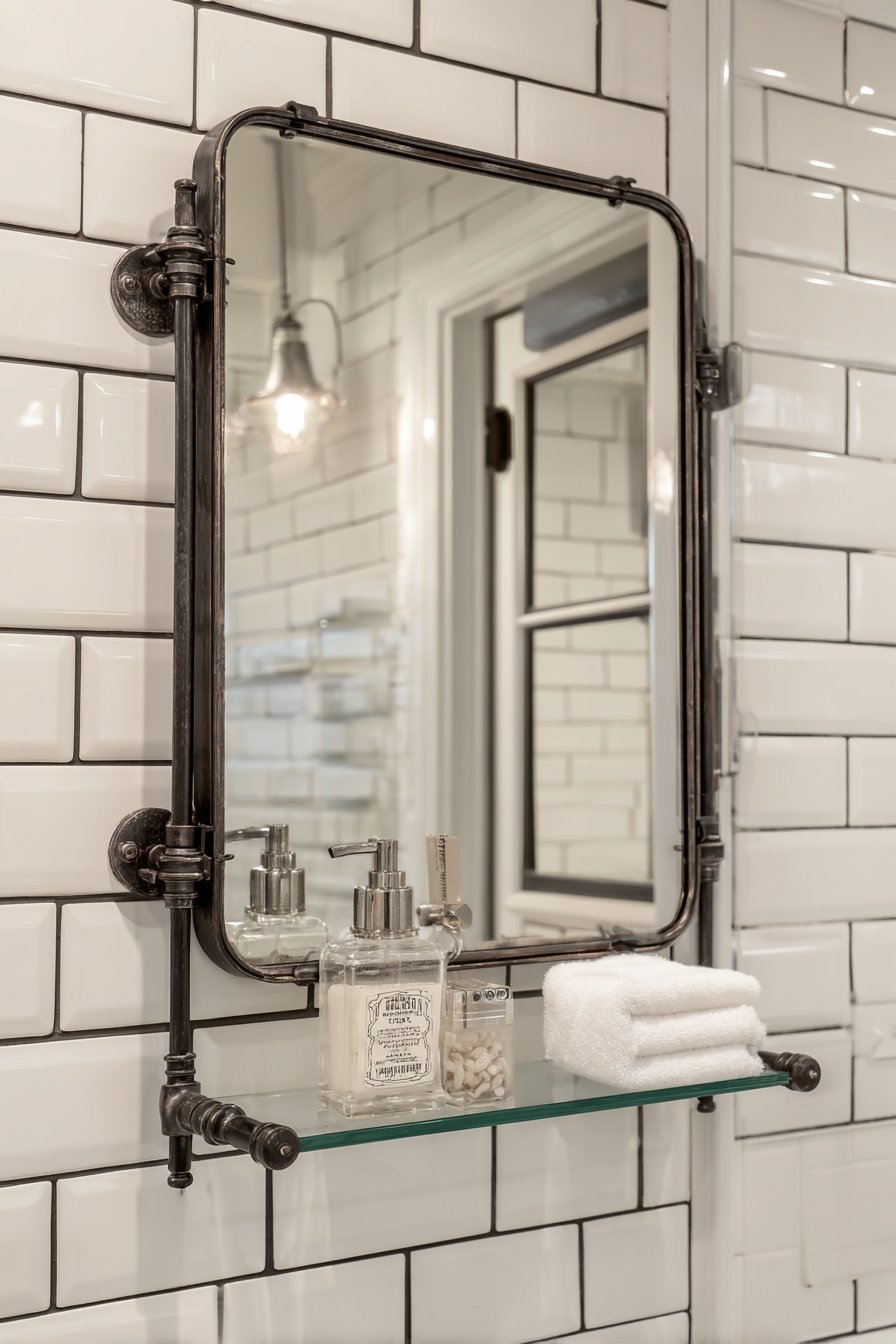
Black grout lines between white subway tiles create graphic definition and visual interest on the wall surface. This higher-contrast grout choice prevents the tiles from blending into an undifferentiated white expanse, instead highlighting the individual tile shapes and creating a subtle grid pattern that adds structure and rhythm to the wall. Matching black fixtures—faucet, towel bar, toilet paper holder—create cohesive detailing that ties the entire design together. The repetition of black metal finishes throughout the space establishes a clear design vocabulary that feels intentional and unified.
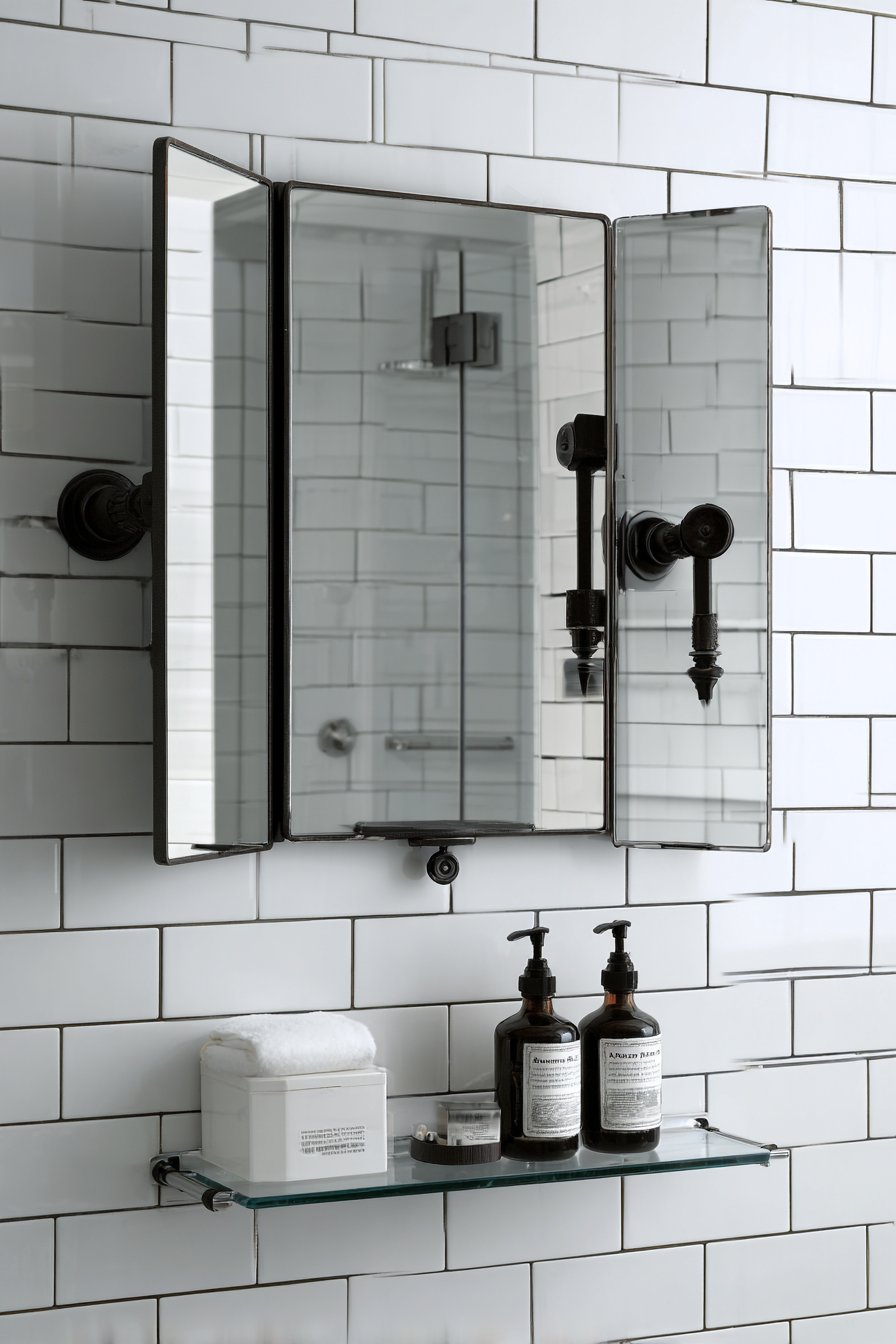
A glass shelf mounted beneath the mirror provides practical storage for minimalist toiletries without adding visual bulk. The transparent material maintains the clean, open feeling essential in small bathrooms while offering a convenient spot for everyday items like toothbrushes, hand soap, or a small plant. The shelf’s position directly below the mirror creates a logical functional zone where grooming essentials remain within easy reach.
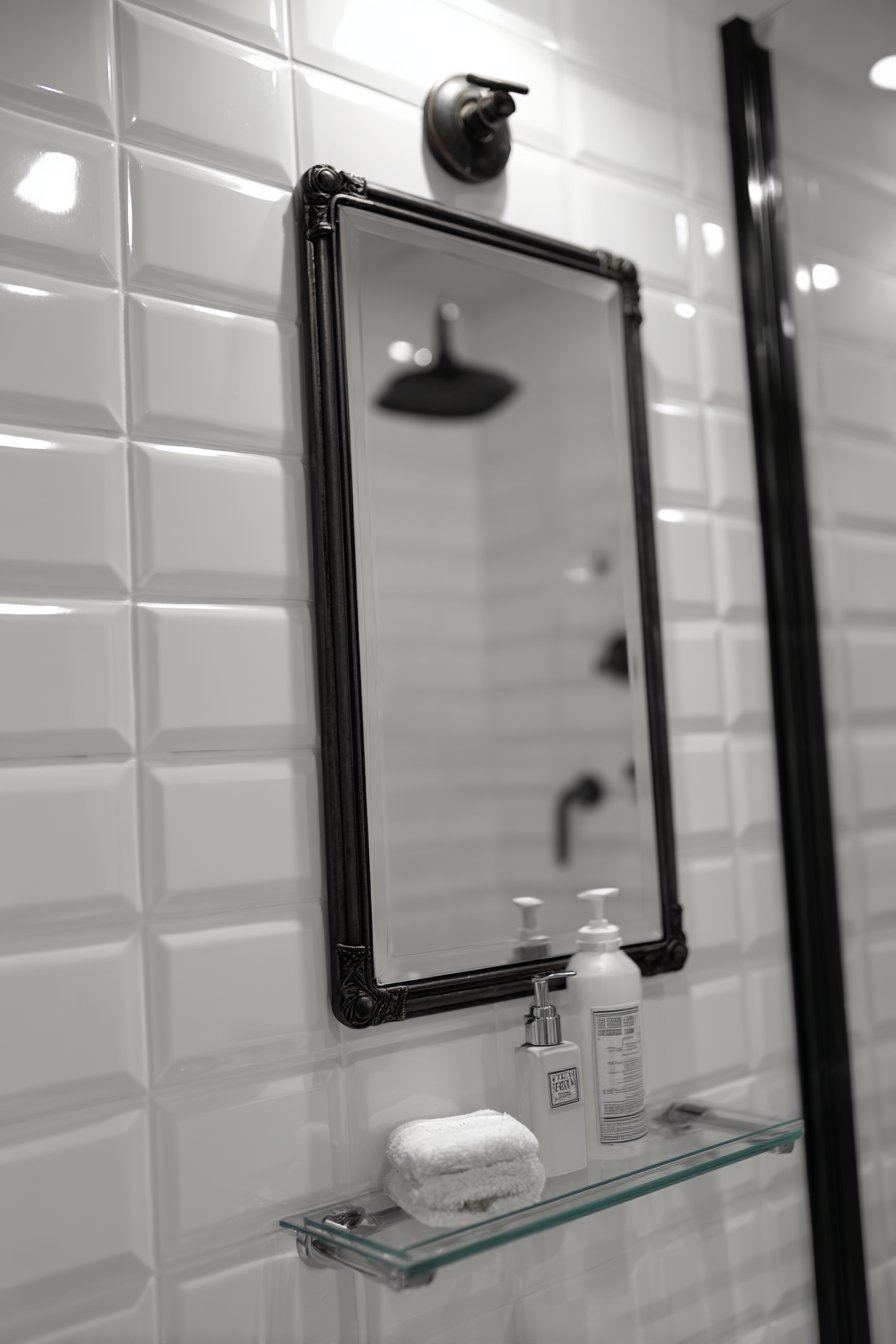
Key design tips for pivot mirror installation: Ensure wall anchors are rated for the mirror’s weight and the stress of tilting movements—pivot mirrors require stronger mounting than fixed mirrors. Position mounting plates 24-30 inches apart for standard residential mirrors to allow smooth tilting action. Install the mirror so its center sits at 60-65 inches from the floor when in neutral position. Choose an oil-rubbed bronze finish with slight color variation and visible brushing marks for authentic traditional appearance. Specify black sanded grout for subway tiles rather than unsanded to prevent cracking and ensure the lines remain crisp and defined. Limit the glass shelf to 18-24 inches in length to prevent visual clutter and maintain streamlined appearance.
9. Nautical Porthole Mirror with Coastal Charm
Maritime inspiration brings fresh coastal character to a small bathroom through a porthole-style mirror with decorative rope detail mounted on soft seafoam shiplap walls. This design choice immediately establishes a vacation-home aesthetic that feels relaxed, breezy, and connected to the sea, making it ideal for beach houses, coastal properties, or anyone wanting to capture that refreshed, oceanic feeling in their everyday life. The circular mirror mimics the iconic round windows found on ships and boats, complete with a substantial frame that references the heavy brass or bronze fittings characteristic of nautical hardware.
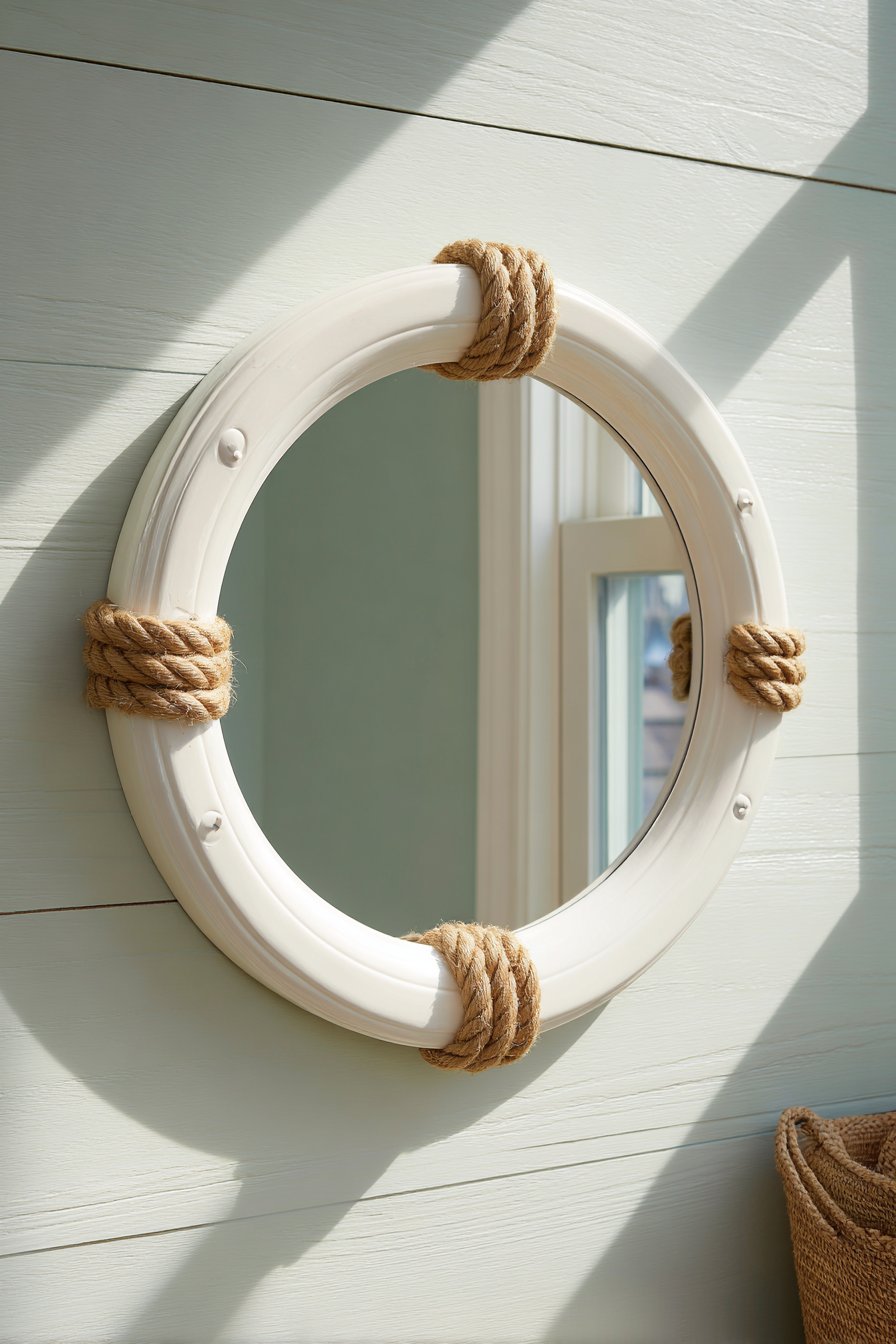
The rope detail wrapped around the mirror’s perimeter reinforces the maritime theme while adding organic texture that softens the metal frame. Whether the rope is sisal, jute, or manila, its natural fiber composition introduces warmth and tactile interest that balances the harder surfaces typical in bathrooms. The neutral tan color of natural rope complements virtually any coastal color palette while bridging the gap between the mirror frame and the seafoam walls. The compact circular size suits small bathroom proportions perfectly—porthole mirrors typically range from 18-24 inches in diameter, creating statement-making presence without overwhelming limited wall space.
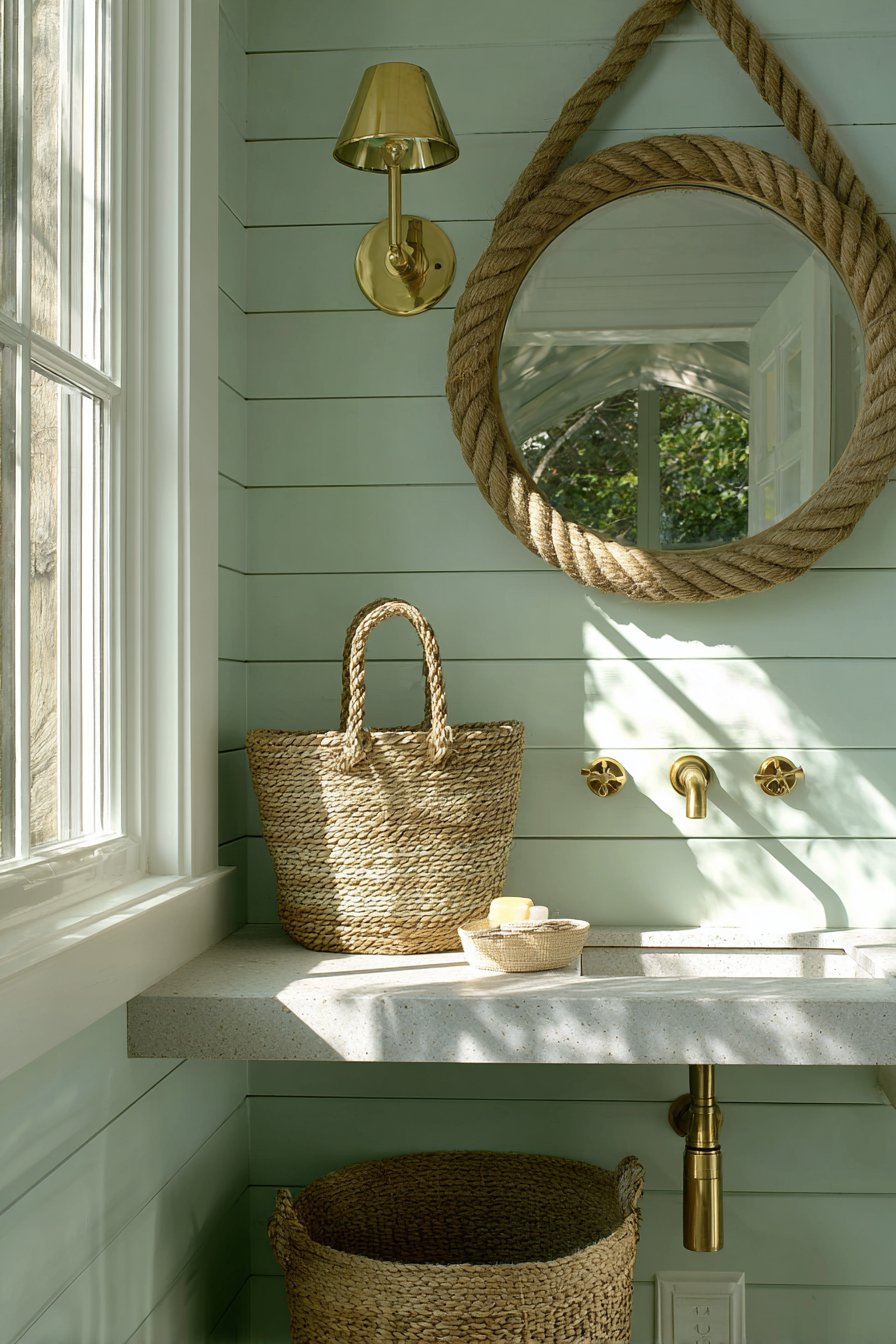
Shiplap walls painted in soft seafoam establish the coastal foundation for the entire design. The horizontal planks reference traditional ship construction and beach cottage architecture while adding subtle texture and shadow lines that create visual interest without busyness. The seafoam color—a gentle green-blue that evokes shallow tropical waters—brings color to the space while maintaining the light, airy quality essential for small bathrooms. Brass fixtures and natural jute accessories enhance the maritime theme, their warm tones adding richness to the cool seafoam backdrop.
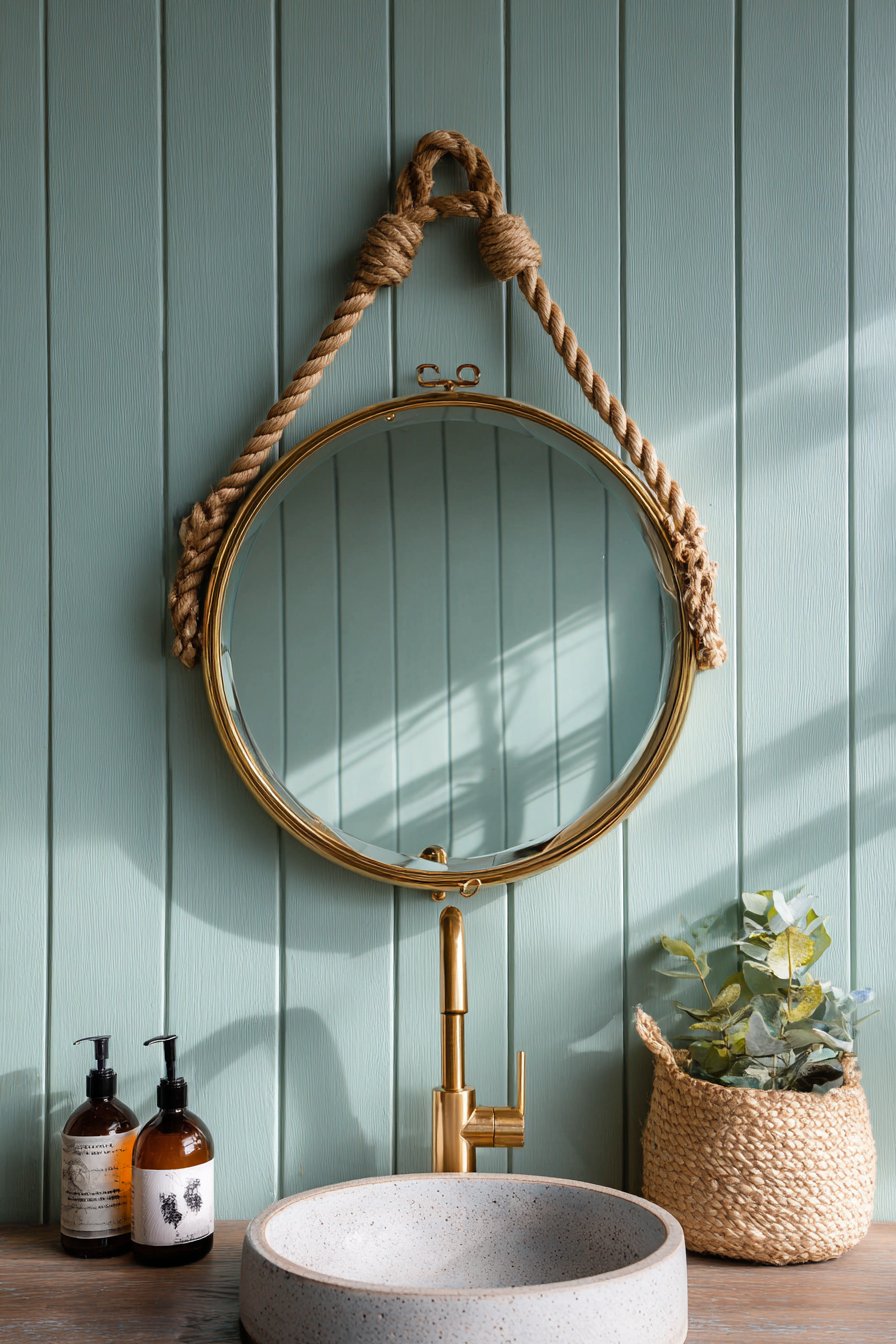
Diffused natural light creates gentle shadows that emphasize the textured shiplap surface, adding dimension and depth to walls that might otherwise feel flat. The interplay of light across horizontal planks changes throughout the day, creating subtle visual variation that keeps the space feeling dynamic despite its compact size.
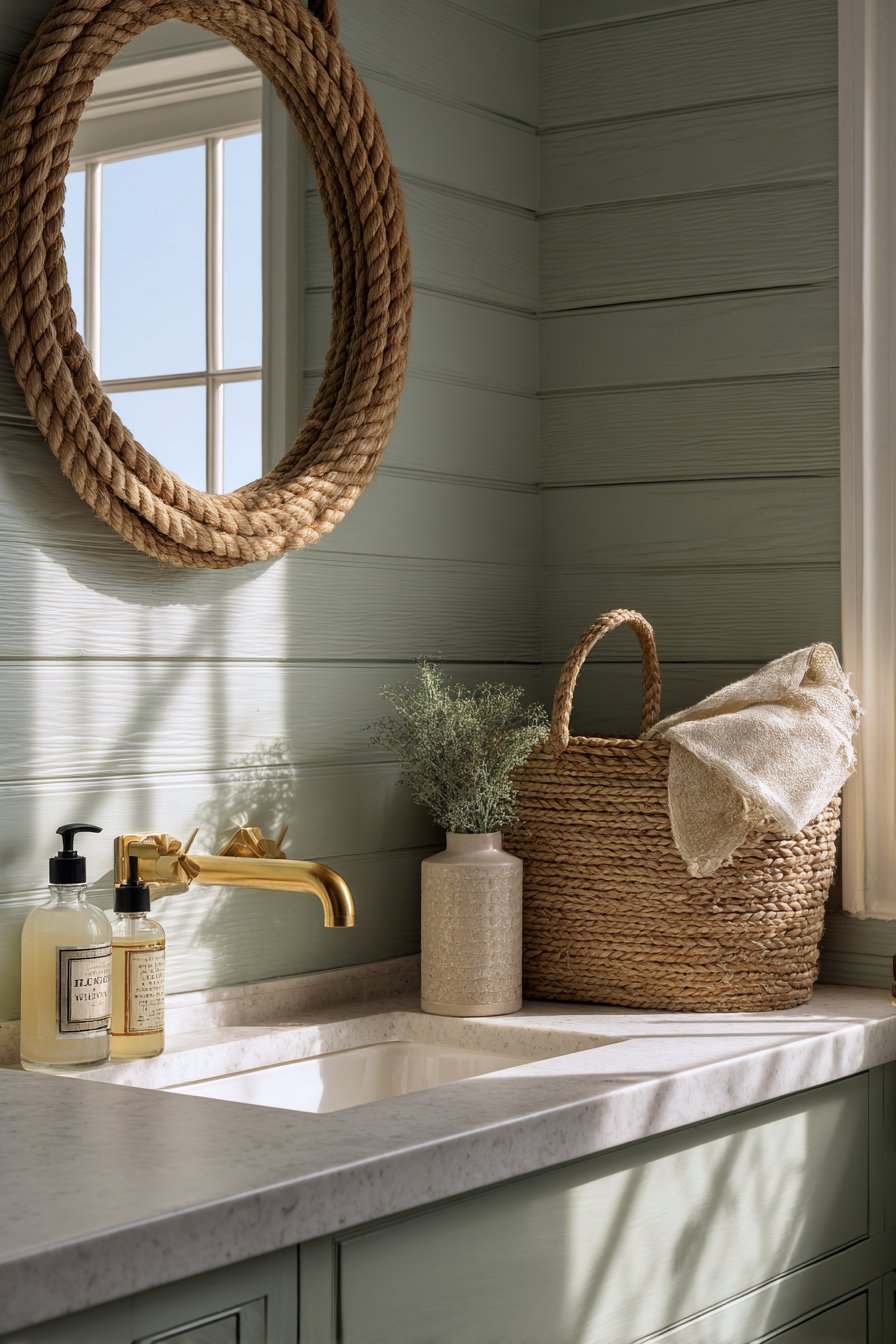
Key design tips for coastal porthole styling: Source porthole mirrors from nautical supply companies or specialty retailers for authentic hardware and proper proportions. Wrap genuine marine-grade rope around the frame using maritime knots like Turk’s head or monkey fist for authentic detail. Install shiplap with ⅛-inch gaps between boards to create traditional shadow lines and accommodate wood expansion. Paint shiplap in soft coastal colors like seafoam, pale aqua, or sandy beige while keeping the finish matte to prevent excessive light reflection. Choose brass fixtures with lacquered finish to prevent tarnishing in humid bathroom environment. Incorporate natural materials like jute baskets, driftwood hooks, and seagrass elements to reinforce the coastal organic aesthetic.
10. Vertical Floor-to-Ceiling Mirror for Height
Dramatic spatial transformation occurs when a sleek vertical rectangular mirror extends from countertop to ceiling, visually heightening the small bathroom through emphasized vertical lines. This design approach directly addresses one of the most common challenges in small bathrooms—ceilings that feel low and spaces that seem cramped. By drawing the eye upward along the mirror’s length, the design creates a powerful illusion of increased height that makes the bathroom feel more spacious and less confining, even when actual square footage remains limited.
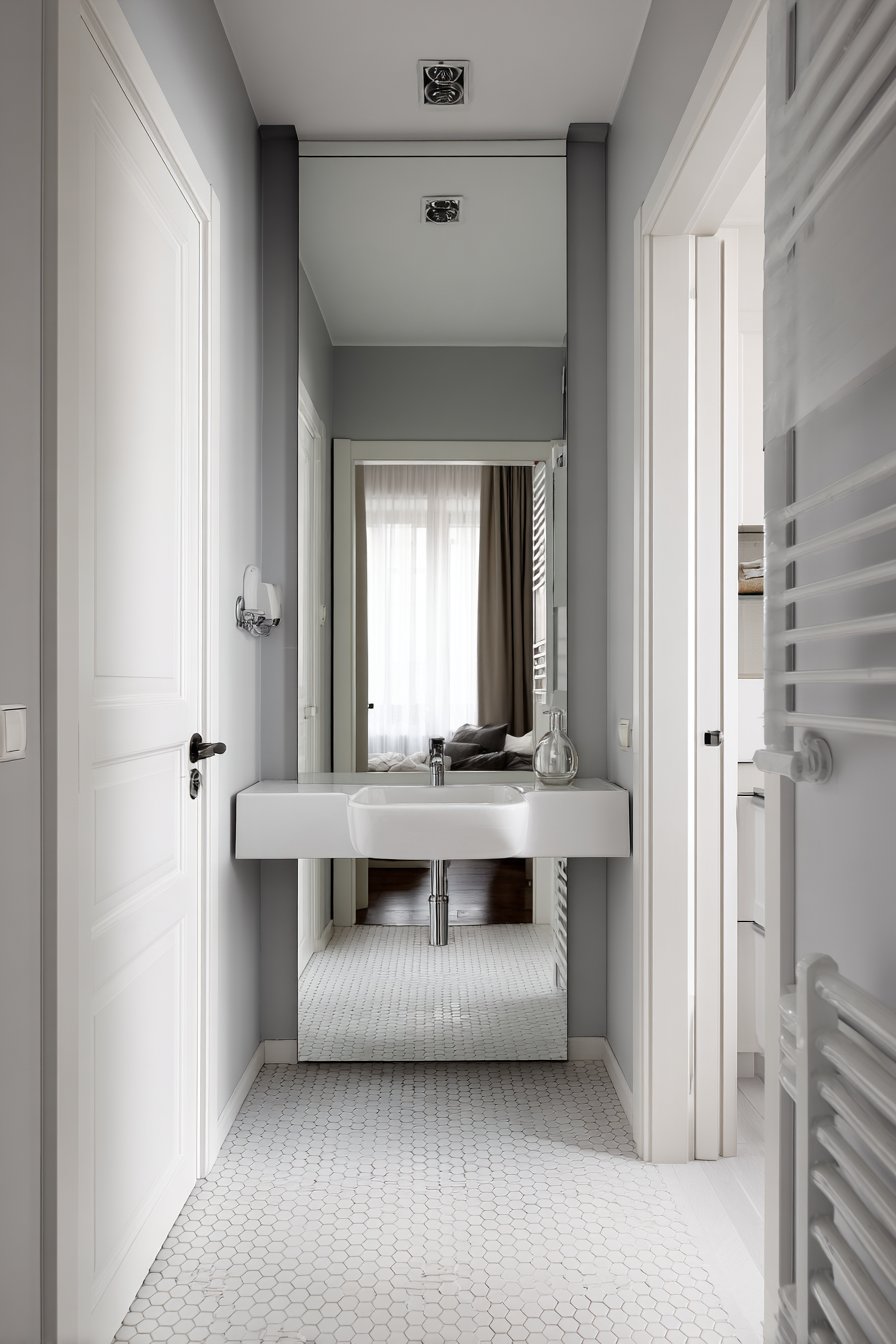
The floor-to-ceiling proportion makes the mirror a architectural feature rather than merely a bathroom accessory. The substantial scale commands attention and establishes the mirror as the defining element of the space. The vertical emphasis proves particularly effective in bathrooms with standard 8-foot ceilings that can feel compressed—the uninterrupted vertical line of the mirror fights against this horizontal compression, creating visual lift that opens up the space. The narrow profile typical of vertical mirrors (often 24-30 inches wide) suits small bathrooms well, providing ample reflective surface without consuming excessive wall width.
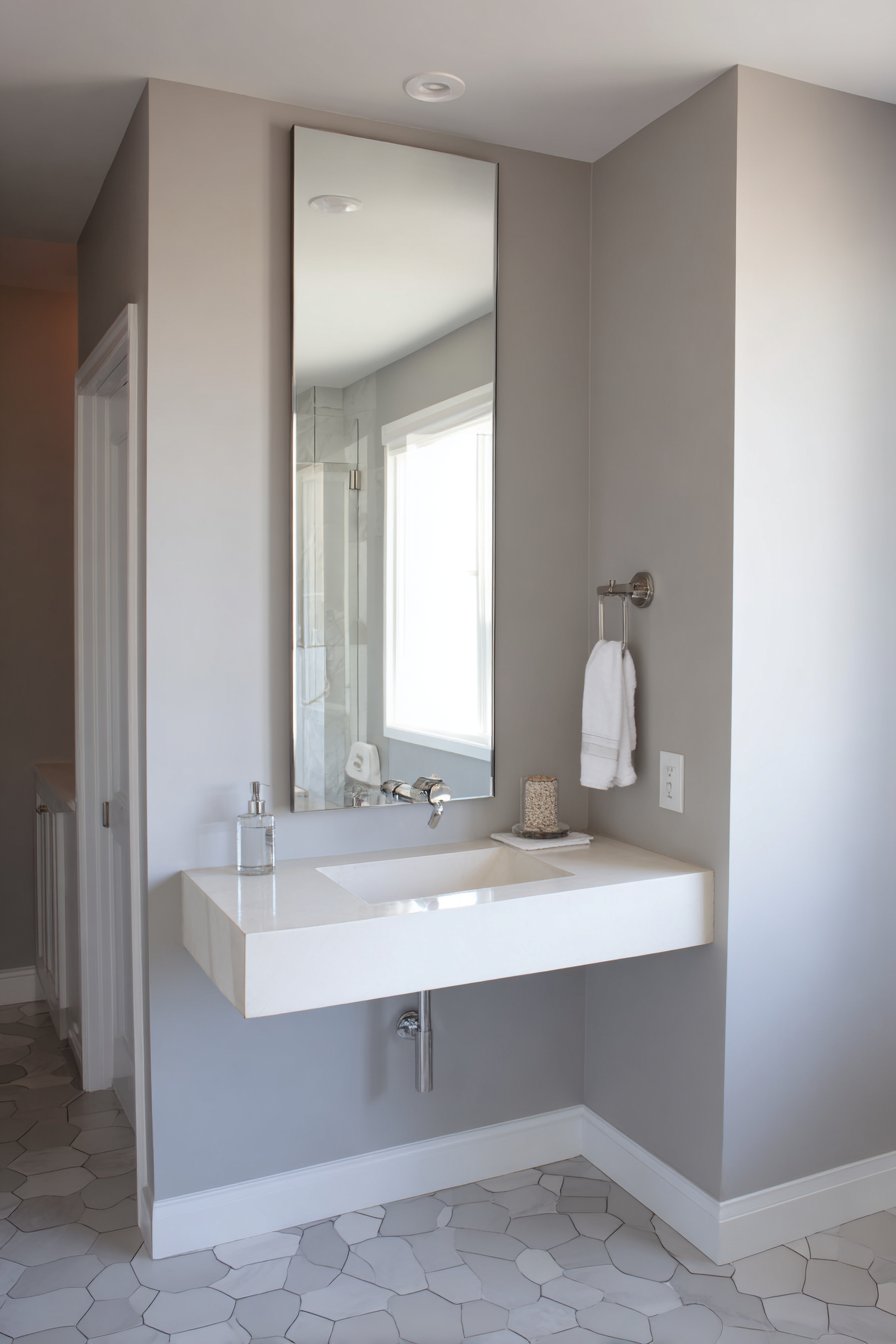
Paired with a narrow white floating vanity and minimalist chrome fixtures, the design maintains a streamlined aesthetic that reinforces the sense of spaciousness. The floating vanity reveals floor space beneath, preventing the bottom of the room from feeling heavy or grounded. White surfaces reflect maximum light and create psychological associations with cleanliness, purity, and openness. Chrome fixtures add just enough metallic sparkle to provide visual interest without introducing additional colors that would fragment the cohesive monochromatic scheme.
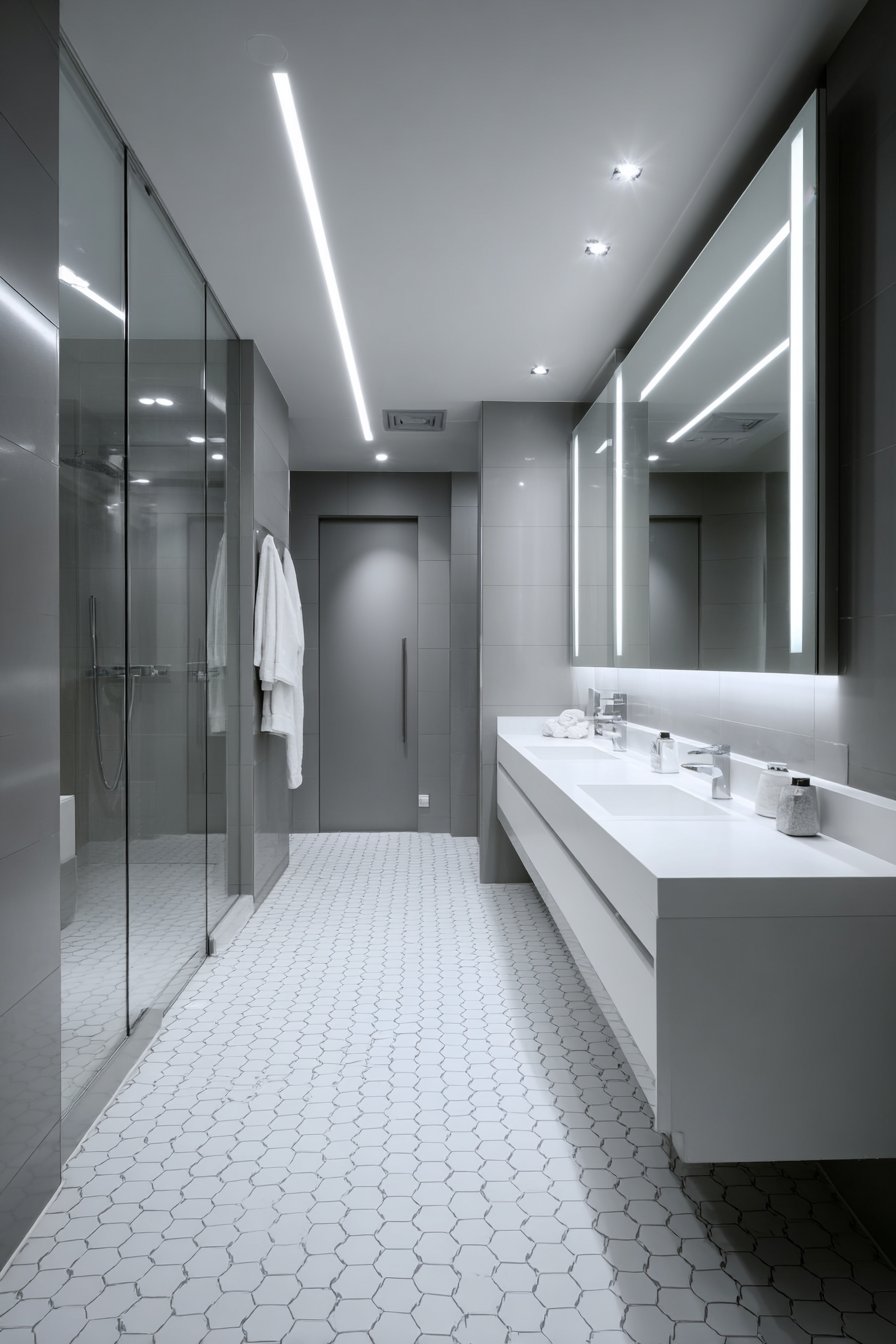
Light gray walls and white hexagonal floor tiles complete the modern design with thoughtful material choices. The gray provides subtle definition without the starkness of pure white walls, while the hexagonal tiles add geometric interest underfoot without competing with the mirror’s strong vertical statement. The smaller scale of hexagonal tiles suits small bathroom floors better than large-format tiles, which can make compact spaces feel even more diminutive.
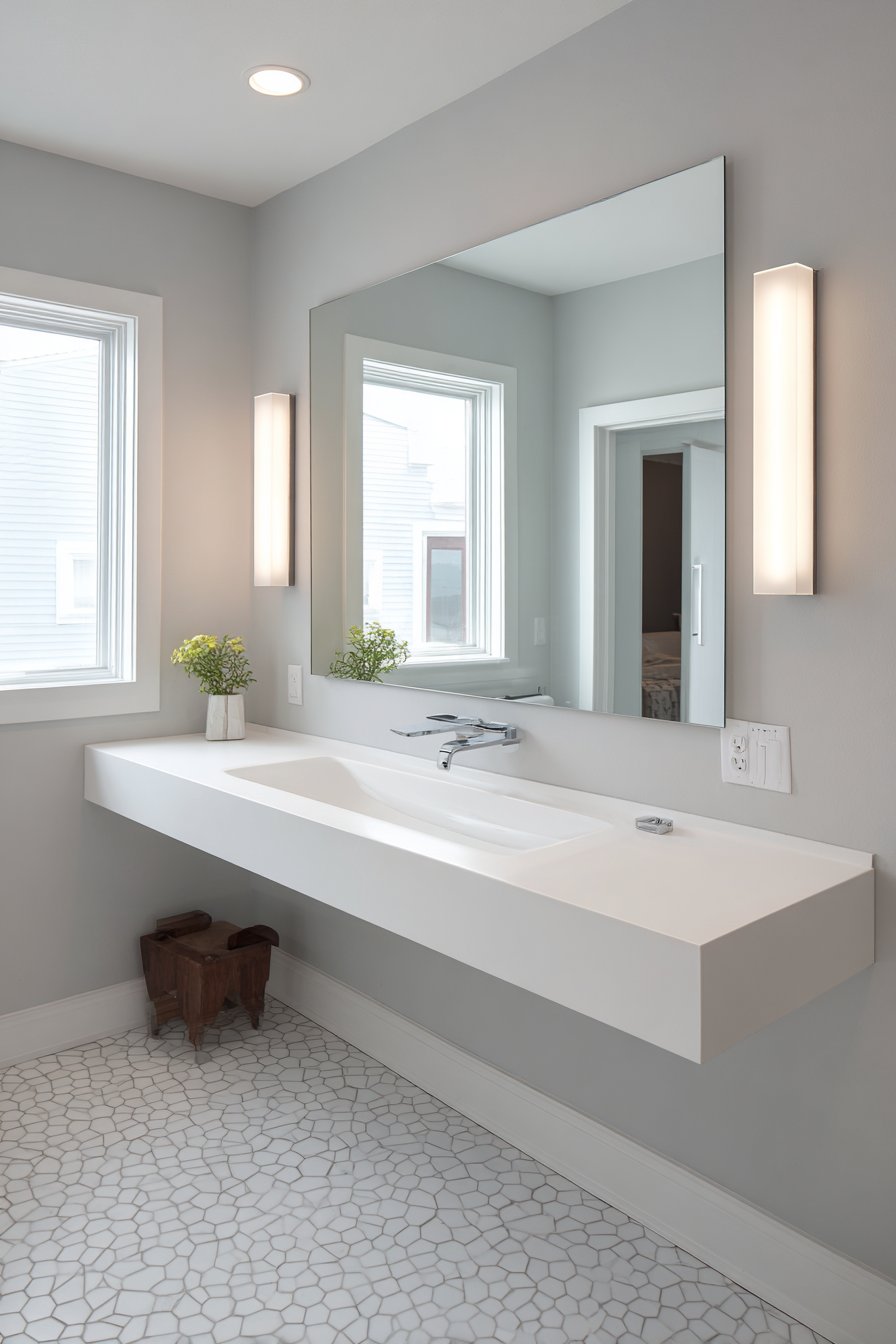
Key design tips for vertical mirror installation: Have mirrors custom-cut to extend from 2-3 inches above the countertop to 2-3 inches below the ceiling for maximum vertical impact. Ensure the wall structure can support the weight of a large mirror—floor-to-ceiling mirrors often require professional installation with proper blocking. Position the mirror on the wall opposite the bathroom door so it’s immediately visible upon entry, maximizing its spatial impact. Keep the vanity narrow (18-24 inches deep) to maintain floor space and prevent the room from feeling crowded. Choose hexagonal floor tiles in 4-6 inch sizes for appropriate scale in small bathrooms. Install recessed ceiling lights positioned to illuminate the vanity area without creating glare in the tall mirror.
11. Vintage Tri-Fold Apothecary Mirror Cabinet
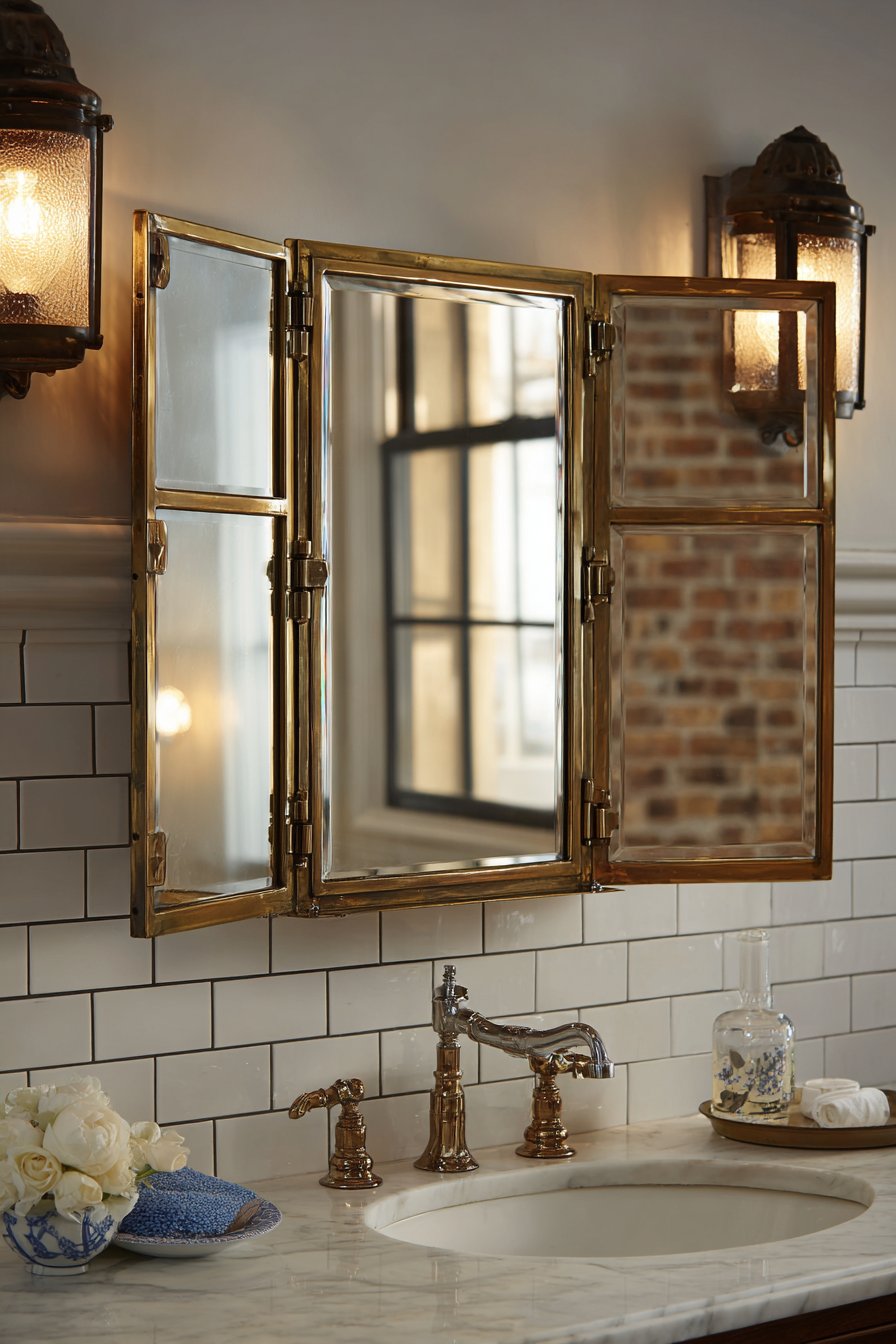
Historical charm and practical functionality combine beautifully in a vintage apothecary-style mirror cabinet featuring three hinged panels that offer multiple angles of reflection. This tri-fold design represents a return to early 20th-century bathroom fixtures when space efficiency and craftsmanship were paramount considerations. The three-way mirror configuration allows users to see side and back views simultaneously—a feature particularly valuable for hairstyling, checking collar positioning, or ensuring a complete view before leaving the house.
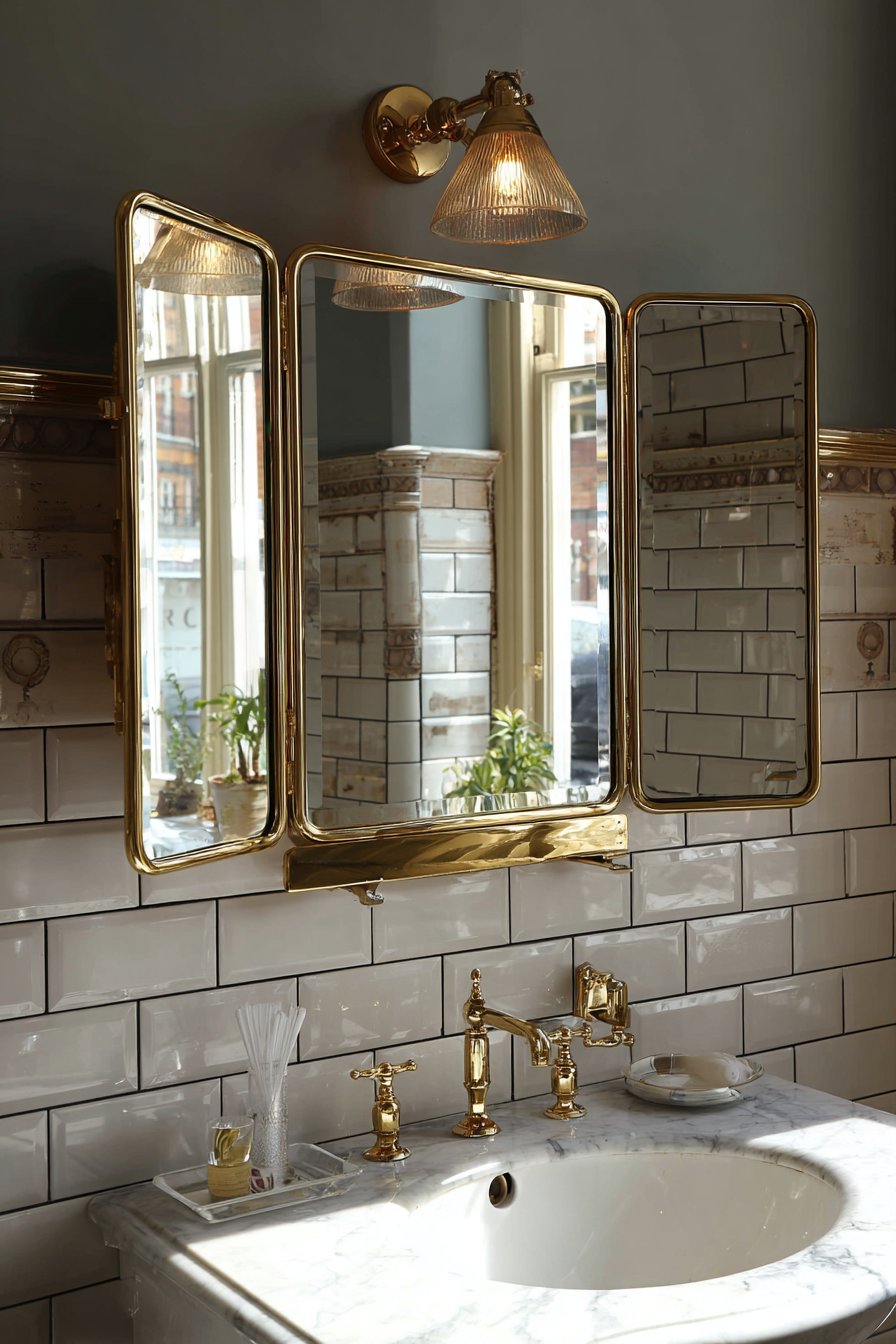
The aged brass finish on the cabinet and hinges contributes authentic period character that can’t be replicated by newer materials. The patina that develops on brass over time—subtle darkening in crevices, lighter wear on high-contact areas—tells a story of use and age that adds depth and interest. Whether sourced as a genuine antique from architectural salvage or acquired as a skillfully aged reproduction, the brass hardware brings warmth and vintage elegance that elevates the bathroom from ordinary to distinctive. The hinged panels fold in various configurations, allowing customization based on immediate needs while adding architectural interest even when fully opened flat against the wall.
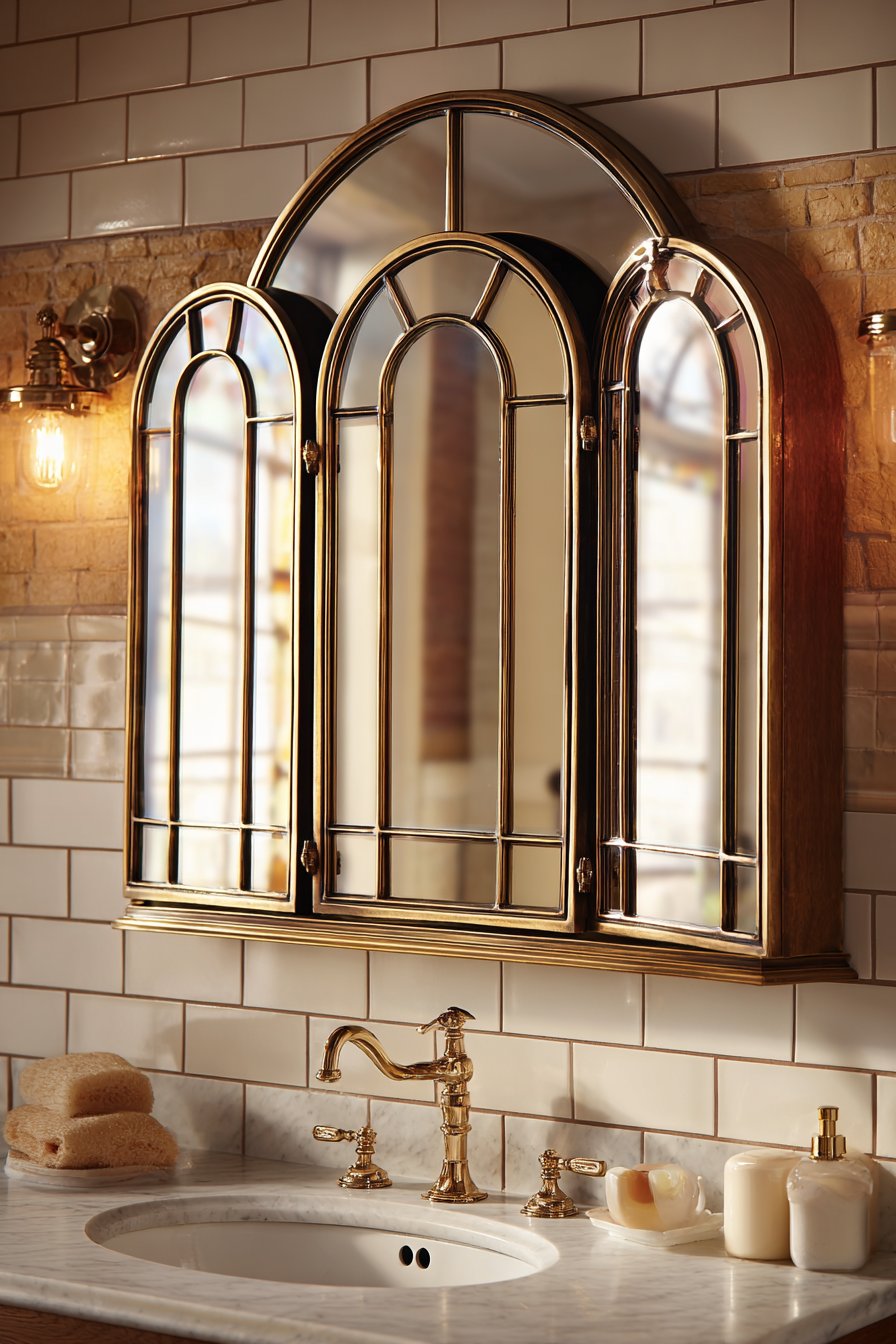
Mounted above a white porcelain sink with Victorian-style faucet, the apothecary cabinet establishes a cohesive historical aesthetic. The pedestal or console sink—characteristic of the period—exposes its decorative base while consuming minimal floor space. White marble countertop adds a touch of luxury appropriate to the era while providing practical water-resistance and durability. The veining in natural marble introduces subtle pattern and movement that prevents the white elements from feeling sterile or boring.
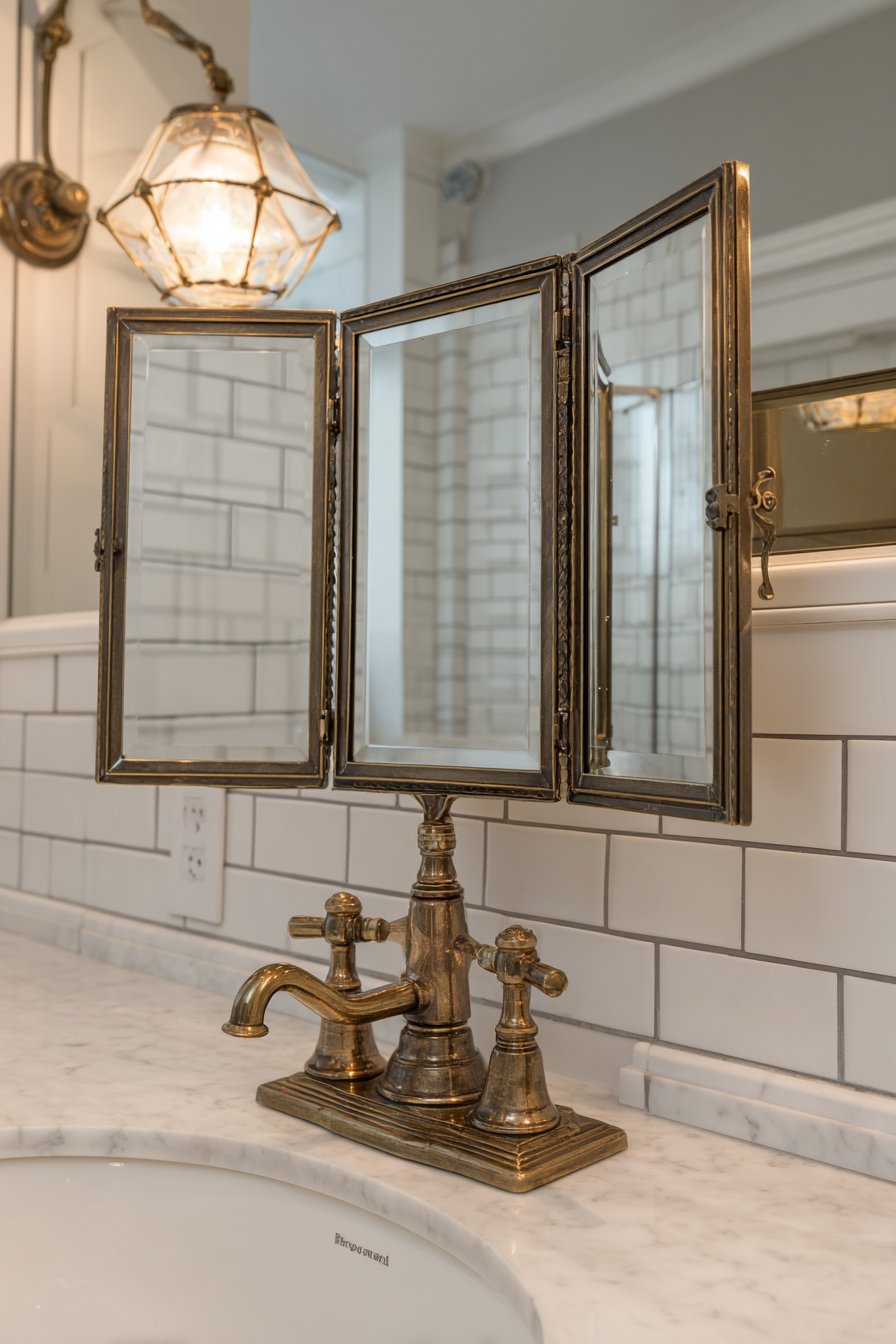
Subway tiles and period-appropriate lighting fixtures enhance the historical authenticity. The 3×6-inch subway tile—invented in the early 1900s for New York City subway stations—remains the quintessential bathroom wall covering that transcends trends. Wall sconces with milk glass shades or exposed Edison bulbs provide both task lighting and atmospheric illumination while reinforcing the vintage timeframe.
Key design tips for apothecary-style mirrors: Verify the cabinet depth will fit your bathroom—vintage medicine cabinets often project 4-6 inches from the wall rather than recessing. Check that hinges operate smoothly and panels align properly when opened and closed, repairing or replacing hardware as needed. Clean brass hardware with appropriate products that remove tarnish while preserving desirable patina. Position the cabinet so the center panel is at standard eye level when all three panels are opened flat. Choose a Victorian-style faucet with cross handles or porcelain details to maintain period consistency. Tile walls in classic white subway tile with beveled edges and install using light-colored grout for authentic early 20th-century appearance.
12. Architectural Arched Mirror with Elegant Lines
Graceful curves introduce architectural elegance when an arched mirror with matte black frame creates a focal point on pristine white walls. The arch shape references classical architecture—Roman arches, cathedral windows, Palladian design—bringing a sense of history and grandeur to even the most modest bathroom. The upward curve draws the eye toward the ceiling, creating perceived height through shape rather than through actual vertical extension. This subtle spatial trick makes the bathroom feel taller and more spacious without requiring floor-to-ceiling mirrors or other dramatic interventions.
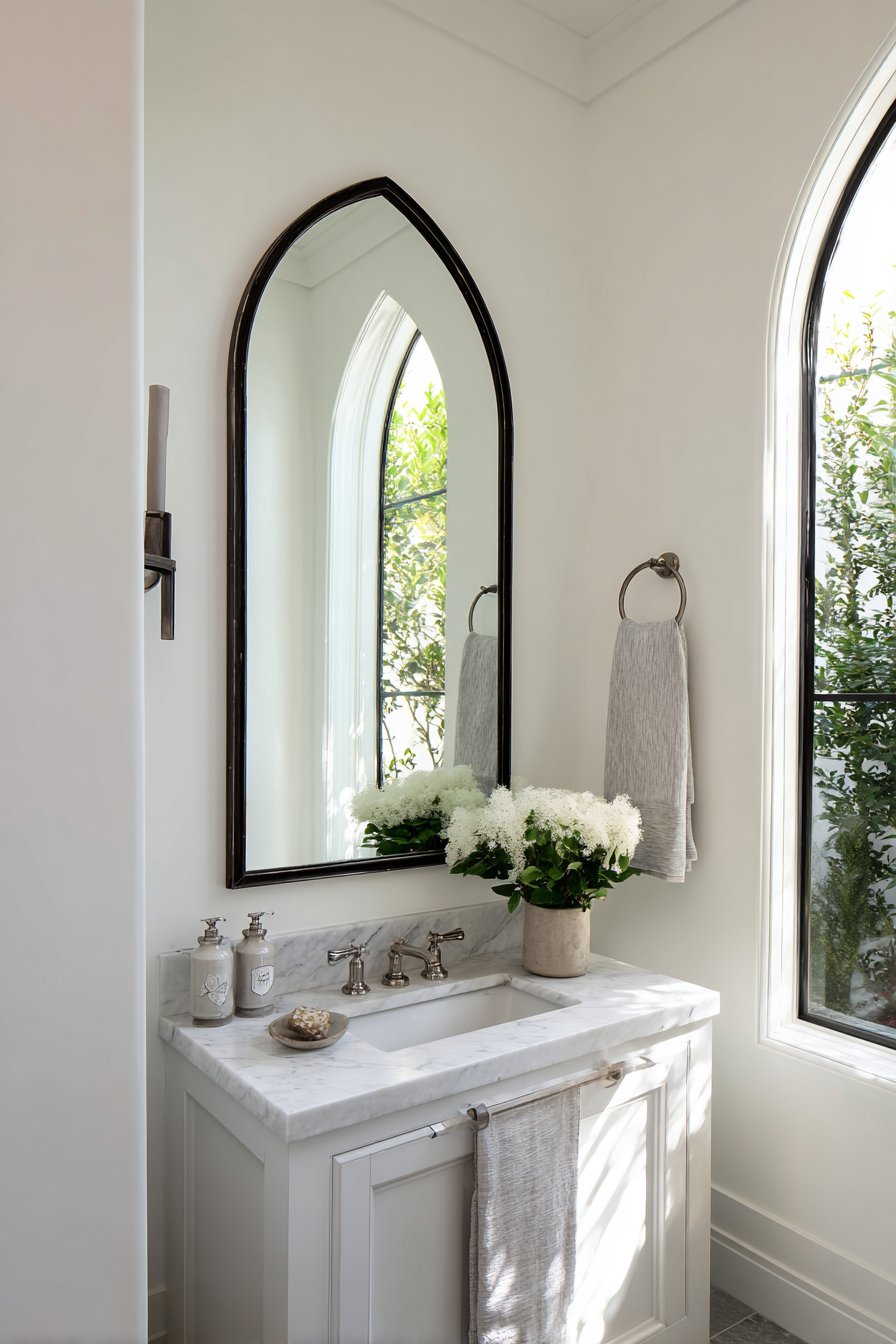
The matte black frame provides graphic definition and contemporary edge that prevents the arched shape from feeling too traditional or nostalgic. Black frames have surged in popularity because they create strong visual impact without the heaviness of wood or the coldness of chrome. The matte finish avoids glare and reflection that can compete with the mirror surface itself, keeping the focus on the reflected image rather than the frame. The substantial frame width (typically 2-4 inches) gives the mirror presence and importance, establishing it as an intentional design statement rather than a basic functional fixture.
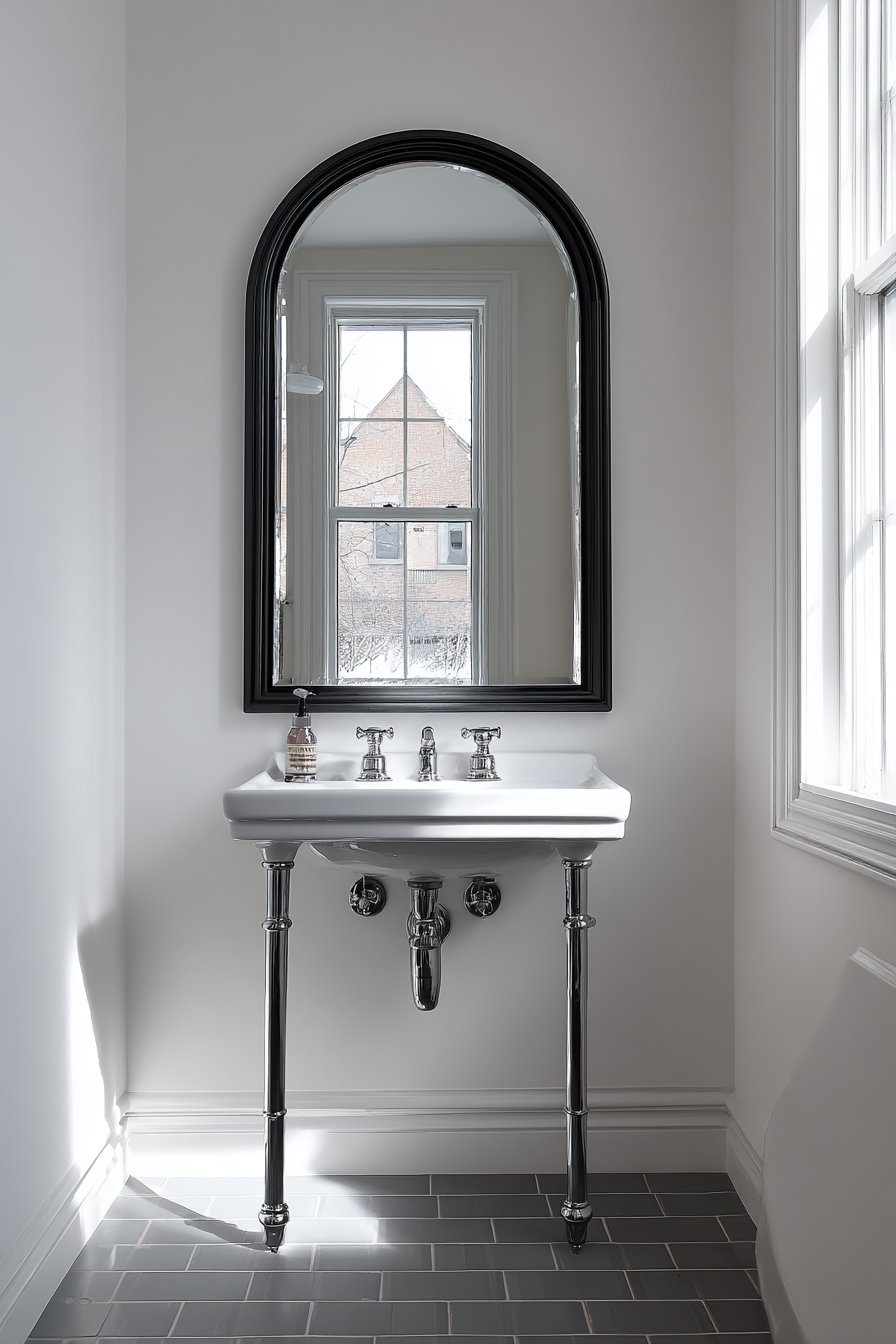
A simple white pedestal sink and polished nickel fixtures maintain classic simplicity that allows the arched mirror to shine as the room’s defining feature. The pedestal sink’s sculptural base adds elegance while revealing floor space that makes the small bathroom feel less cramped. Polished nickel provides subtle metallic warmth without the yellow tones of brass or the coolness of chrome, occupying a middle ground that complements both warm and cool color schemes. The overall palette remains disciplined—black, white, and nickel—preventing visual fragmentation that could make the small space feel chaotic.
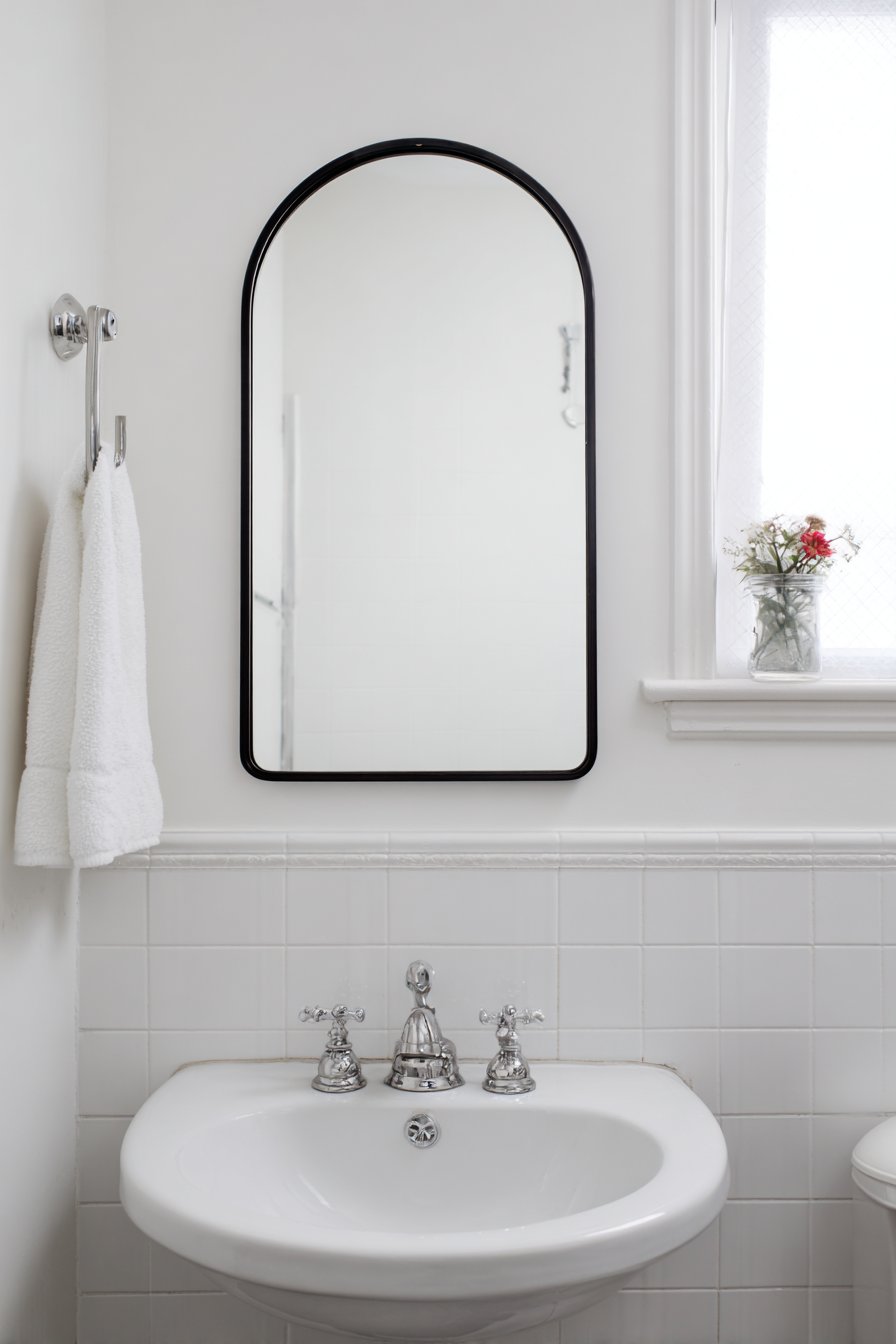
Soft gray floor tiles ground the design with understated sophistication. The gray provides just enough contrast against white walls and fixtures to define the floor plane without creating harsh visual breaks. Minimal accessories keep the focus on the beautiful arched mirror and maintain the clean, uncluttered aesthetic essential for small bathrooms to feel spacious.
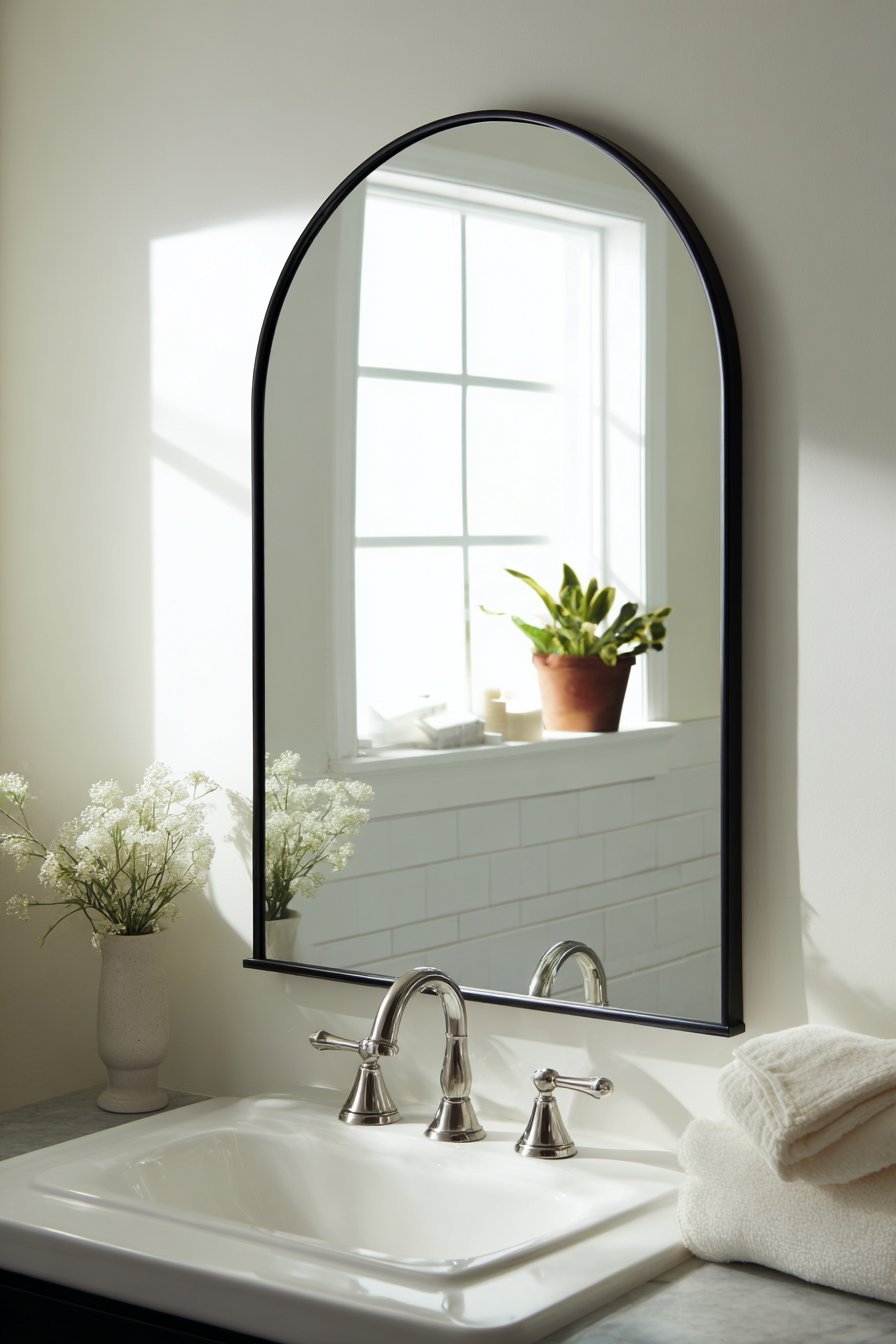
Key design tips for arched mirrors: Select mirrors with gentle, proportionate curves rather than extreme arches that can feel exaggerated in small spaces. Position the mirror so the arch peak sits 72-78 inches from the floor, allowing the full curve to be appreciated. Choose matte black powder-coated frames rather than glossy for a sophisticated, contemporary appearance. Keep the floor tile in large formats (12×24 inches minimum) to reduce grout lines and make the floor feel more expansive. Limit accessories to 3-5 carefully chosen pieces in complementary finishes. Install simple recessed ceiling lights or a single centered pendant to maintain the clean aesthetic without cluttering the wall space around the beautiful mirror.
13. Modern Asymmetrical Geometric Mirror with Mixed Metals
Contemporary artistic expression finds its voice through a modern asymmetrical geometric mirror featuring a mixed metal frame that combines brass and black elements. This bold design choice appeals to those who view their bathroom as a canvas for creative expression rather than merely functional space. The abstract geometric shape—perhaps an irregular polygon, an off-center rectangle with angled corners, or an organic curve-and-line composition—immediately signals that this bathroom breaks conventional rules and embraces individuality.
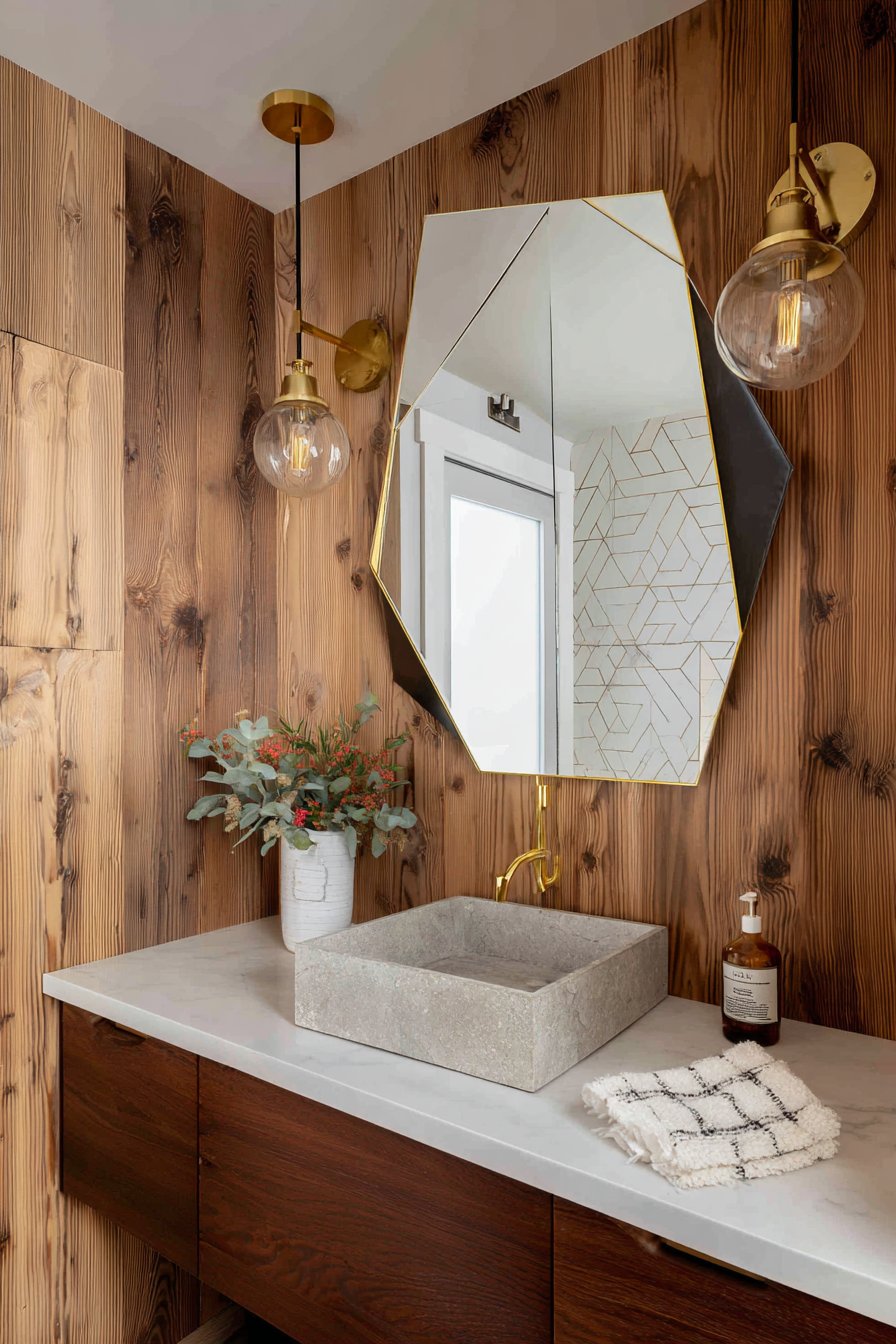
The mixed metal frame demonstrates sophisticated design confidence. Rather than adhering to the traditional guidance to select a single metal finish throughout the bathroom, this approach deliberately combines warm brass with cool black metal in a single piece. The juxtaposition creates visual tension and interest while allowing the mirror to bridge different metallic elements that might appear elsewhere in the space. The brass brings warmth and luxury while the black provides grounding and contemporary edge, resulting in a frame that feels both refined and edgy, traditional and modern.
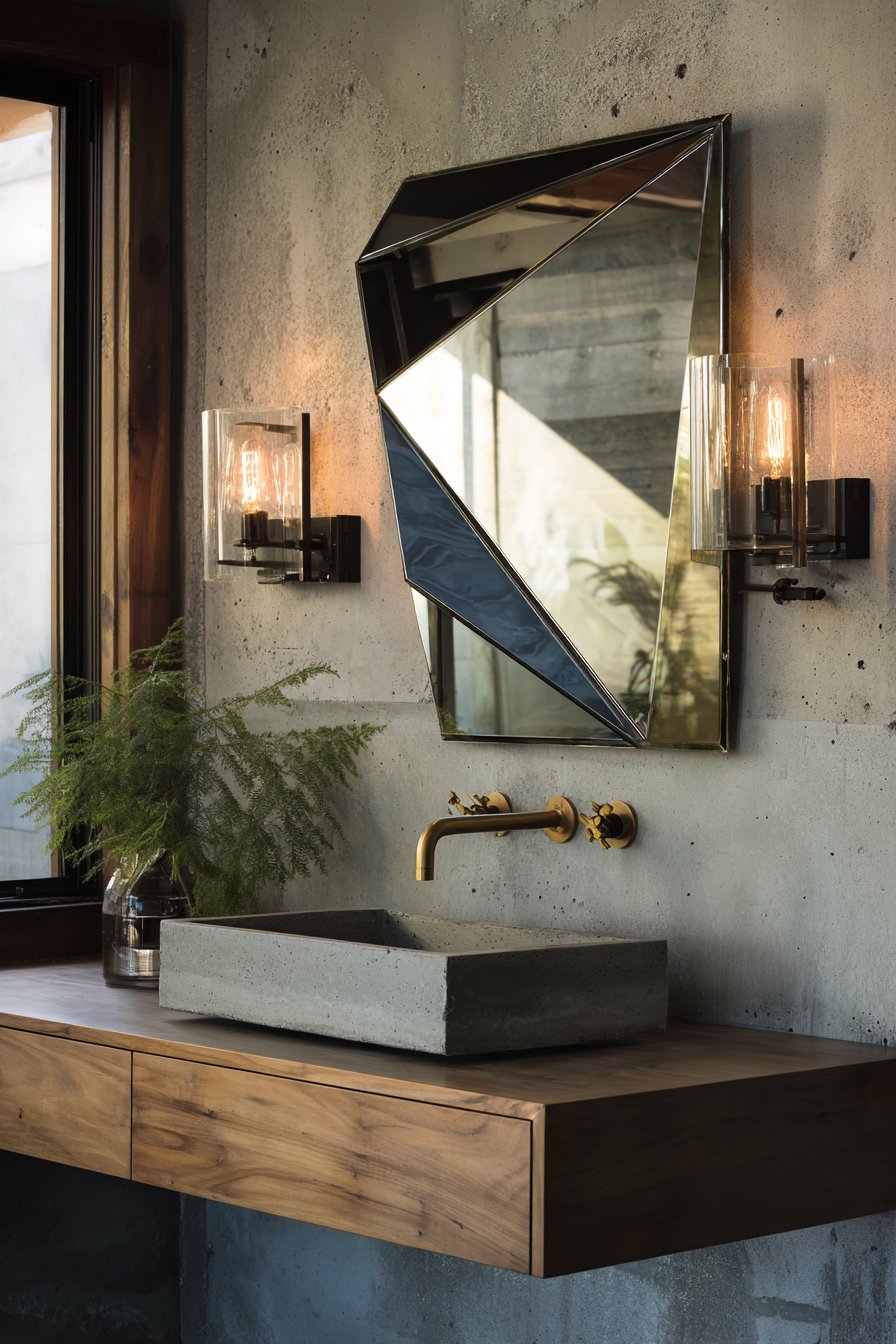
A concrete vessel sink on a floating walnut vanity reinforces the eclectic aesthetic and introduces additional material diversity. The concrete vessel—with its industrial character and organic imperfections—adds raw, urban texture that contrasts beautifully with the polished metal mirror frame. Walnut wood brings rich brown tones and natural grain patterns that warm the space and connect to organic, natural materials. The floating vanity maintains the contemporary aesthetic while revealing floor space crucial for preventing small bathrooms from feeling cramped.
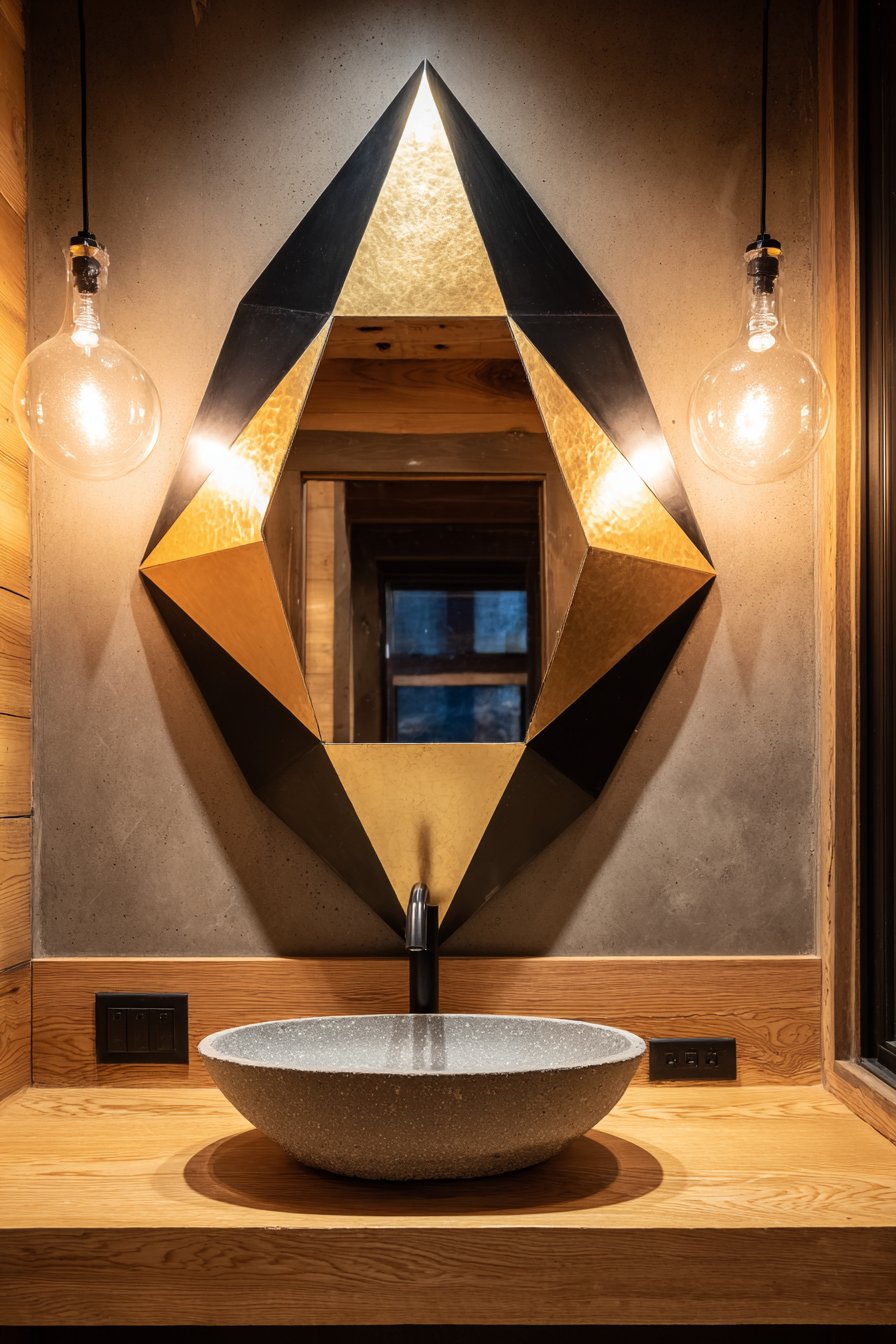
Industrial-style exposed bulb sconces provide task lighting with artistic flair. The visible filaments and simple socket construction celebrate honest, utilitarian design while providing warm, ambient illumination. The eclectic mix of materials—metal, concrete, wood, glass—creates visual interest and personality that transforms a small bathroom from forgettable to memorable.
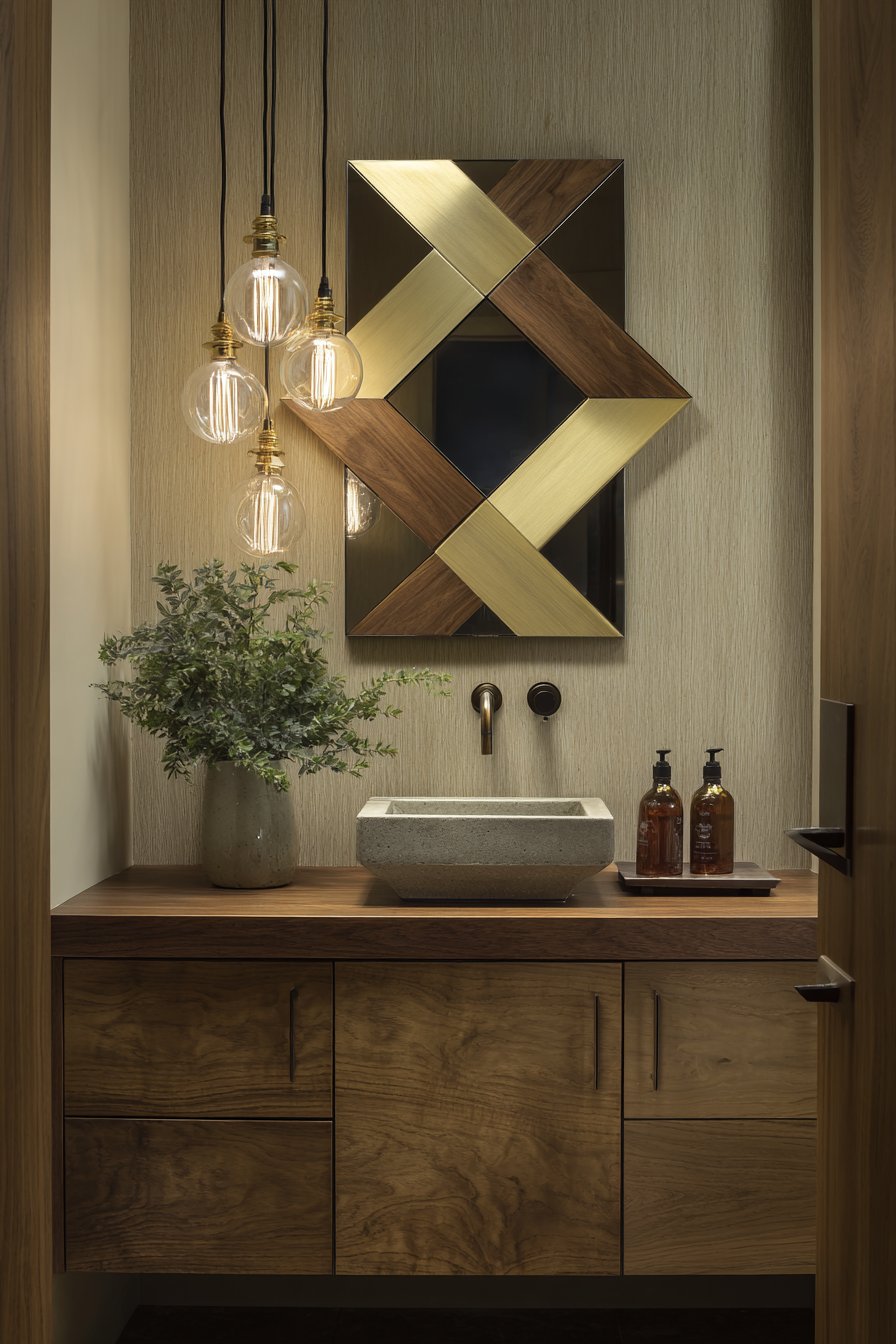
Key design tips for mixed-metal geometric mirrors: Limit mixed metals to two finishes within the mirror frame to maintain cohesion without creating visual chaos. Select a geometric shape that includes both curved and angular elements for dynamic visual interest. Position the mirror slightly off-center or at an unexpected angle to emphasize its artistic nature. Coordinate the mixed metals in the mirror frame with faucet and hardware finishes—if the mirror has brass and black, repeat these finishes in other fixtures. Choose a concrete vessel sink with light gray coloring rather than dark charcoal to prevent the bottom of the space from feeling heavy. Mount exposed bulb sconces with vintage-style Edison bulbs for warm, flattering light that enhances the eclectic aesthetic.
14. Romantic Oval Mirror with Ornate White Frame
Soft femininity and vintage romance pervade a small bathroom where a classic oval mirror with an ornate white-painted wood frame creates a graceful focal point. The oval shape offers inherent elegance—its elongated form flatters the human figure while feeling softer and more organic than rigid rectangles. The white-painted frame features elaborate carved details that might include scrollwork, floral motifs, or classical ornamental patterns, bringing decorative artistry to what might otherwise be a purely functional bathroom fixture.
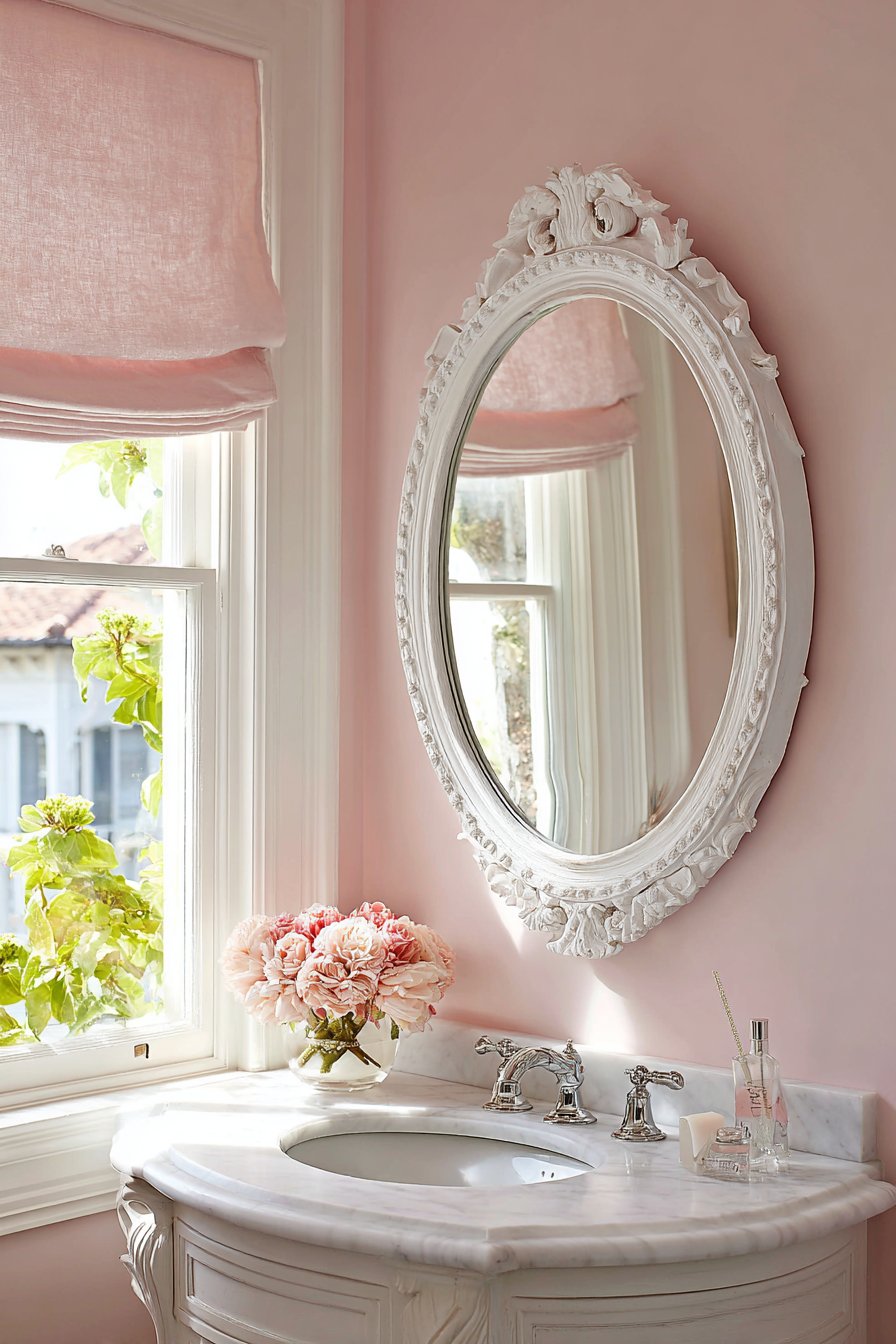
The white paint finish on the carved wood frame maintains a light, airy quality essential for small bathrooms while adding textural dimension through the play of light and shadow across the relief details. Paint allows the intricate carving to remain visible without the heaviness that natural dark wood might introduce. The finish might be pristine and glossy for a fresh, polished look, or slightly distressed and matte for a more relaxed, shabby-chic aesthetic. Either approach works beautifully depending on the overall design direction and personal preference.
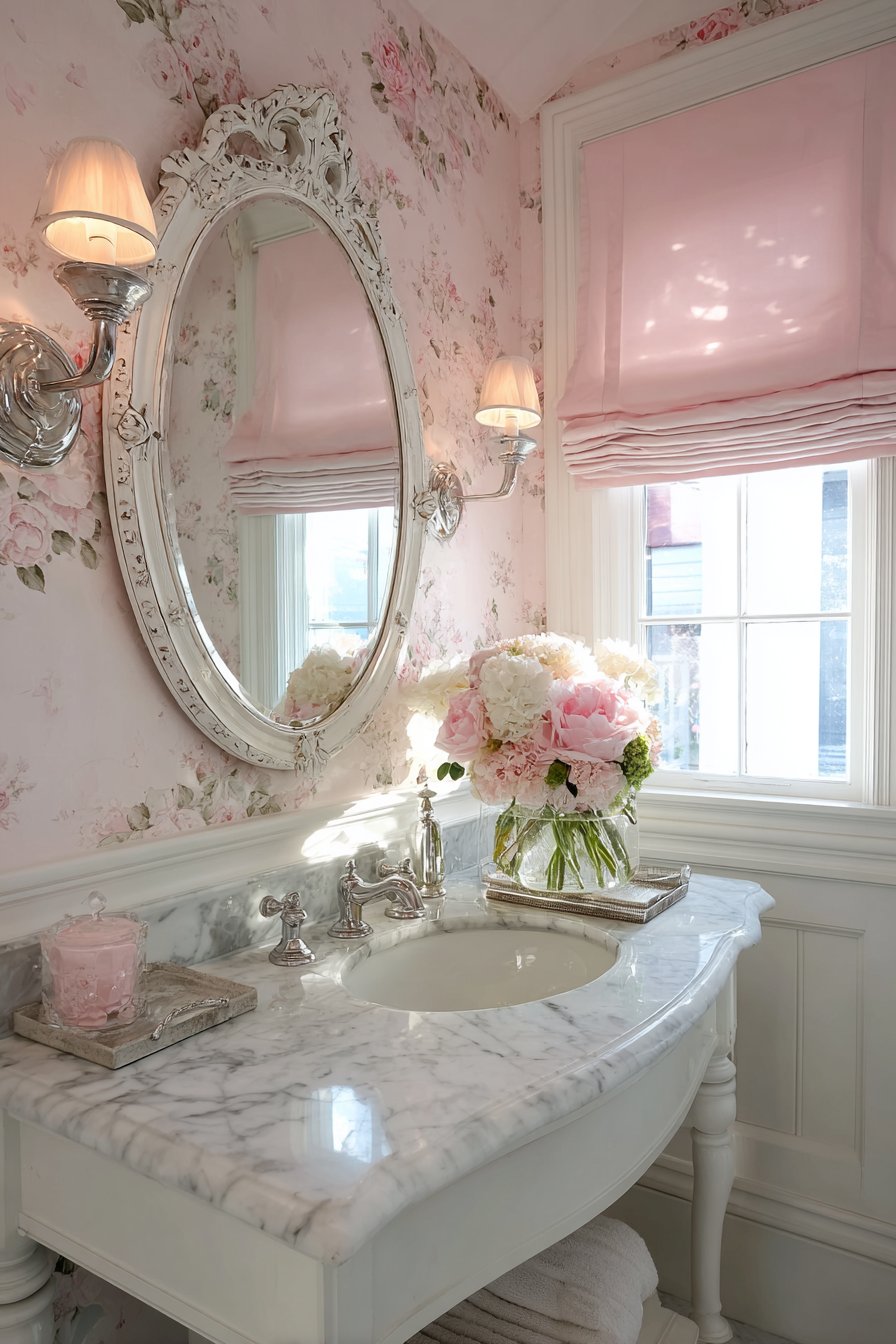
Pale pink walls introduce gentle color that feels romantic and soothing without overwhelming the compact space. This soft blush tone creates warmth and femininity while maintaining enough neutrality to feel spacious rather than confining. The pink provides a beautiful backdrop for white elements, creating subtle contrast without harsh visual breaks. A white marble-topped vanity with turned legs reinforces the traditional, furniture-style aesthetic while polished chrome fixtures add necessary sparkle and function.
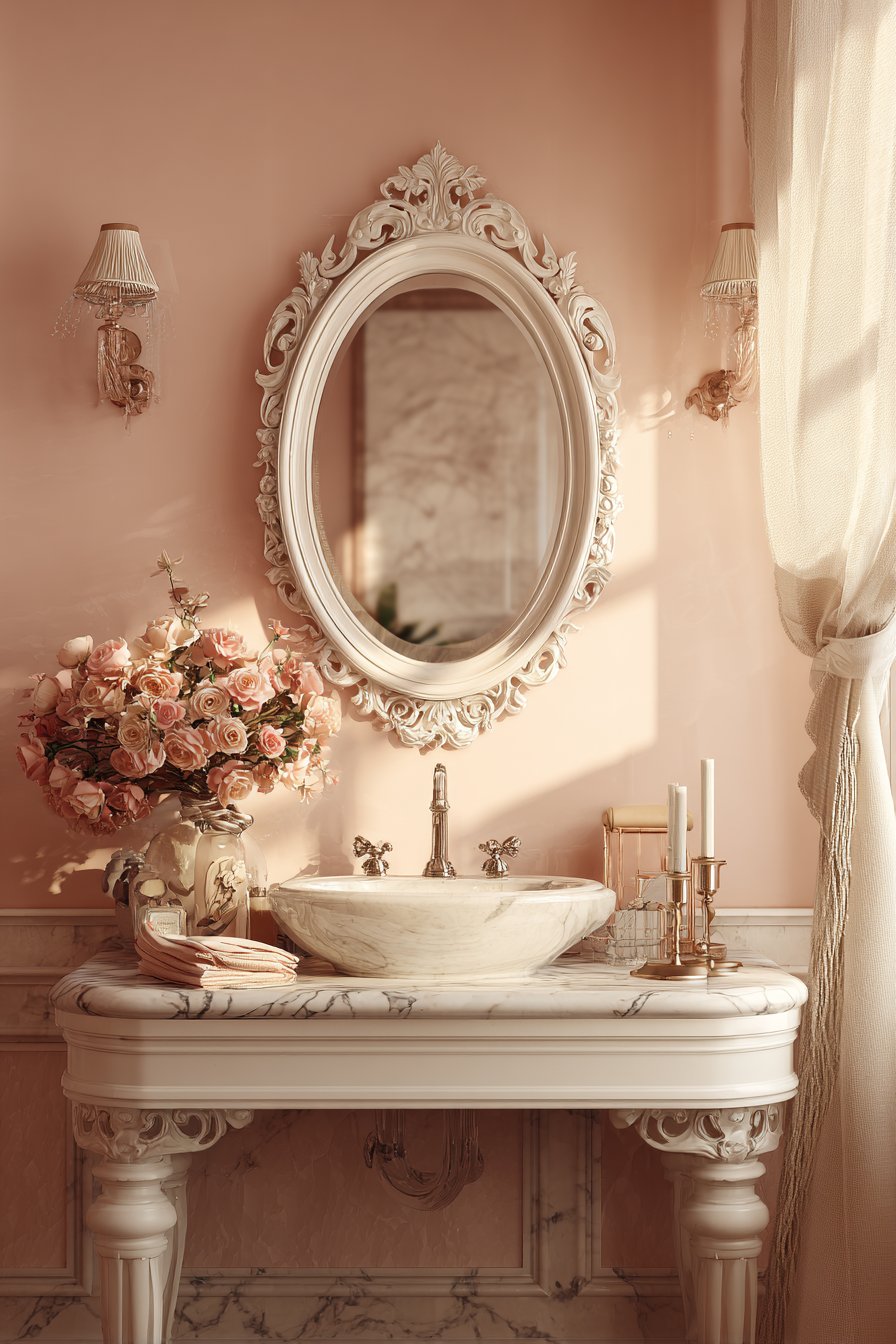
A soft fabric Roman shade filters natural light, creating gentle, diffused illumination that enhances the romantic atmosphere. The fabric treatment feels softer and more residential than hard blinds or shutters, contributing to the overall sense of comfort and refinement. Fresh flowers and classic accessories complete the aesthetic—perhaps a crystal perfume bottle, a silver tray, or a small porcelain dish.
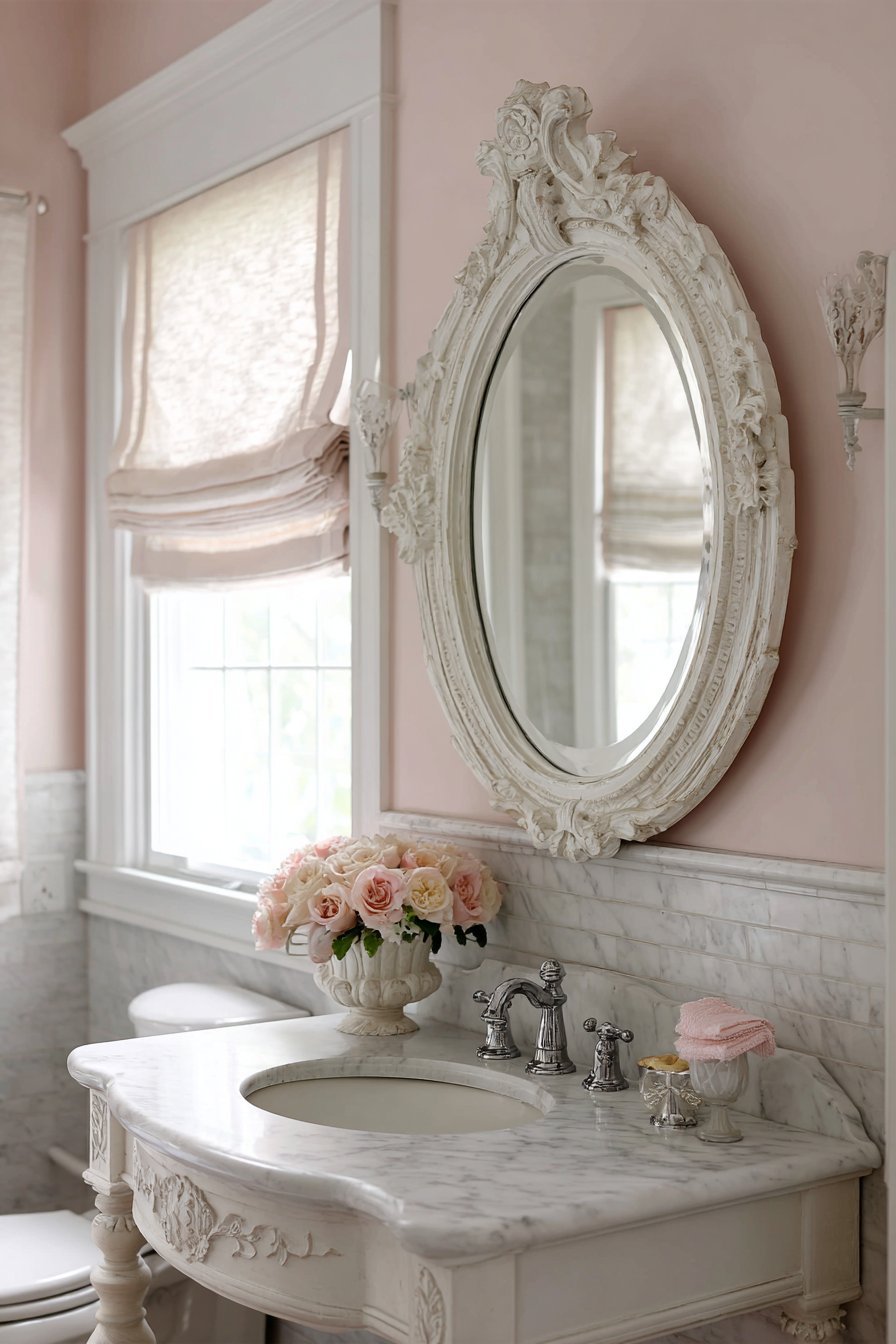
Key design tips for romantic oval mirrors: Select oval mirrors in vertical proportions (taller than wide) to emphasize height and flatter facial reflections. Choose ornate frames with moderate rather than excessive detail to prevent overwhelming small spaces. Apply paint in soft white or cream rather than stark bright white for a more authentic vintage appearance. Position the mirror center at 65-70 inches from the floor to accommodate the oval’s vertical proportion. Paint walls in soft pinks with gray or beige undertones to prevent the color from reading too juvenile or candy-like. Limit fresh flowers to simple arrangements in clear glass or white ceramic vases to maintain the refined, uncluttered aesthetic.
15. Minimalist Frameless Mirror with Integrated Shelf
Ultimate space efficiency emerges when a minimalist frameless mirror incorporates an integrated shelf beneath for essential toiletries. This dual-purpose design addresses the primary challenge in very small bathrooms—the desperate need for storage in spaces where every square inch counts. Rather than mounting a separate shelf that consumes additional wall space and creates visual clutter, the integrated design consolidates mirror and storage into a single streamlined element that maximizes function while minimizing visual complexity.
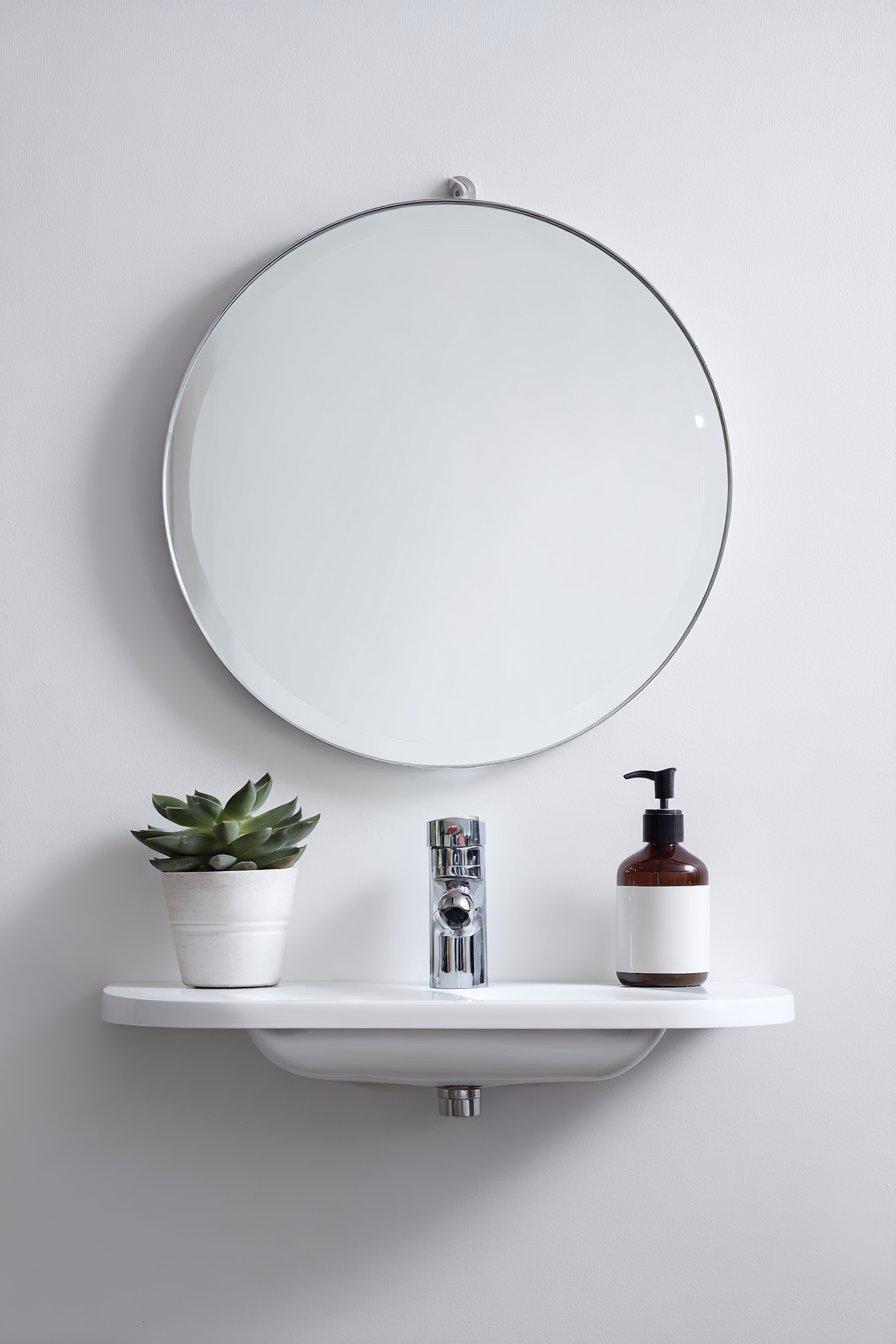
The frameless quality maintains clean lines and uninterrupted surfaces that help small bathrooms feel as open as possible. Without a frame to define boundaries, the mirror seems to dissolve into the wall rather than sitting atop it as a separate object. The polished edges provide subtle refinement and safety while allowing the mirror to blend seamlessly with white walls. The floating installation—with the mirror and shelf appearing to hover without visible supports—reinforces the contemporary minimalist aesthetic while maintaining the crucial sense of spatial openness.
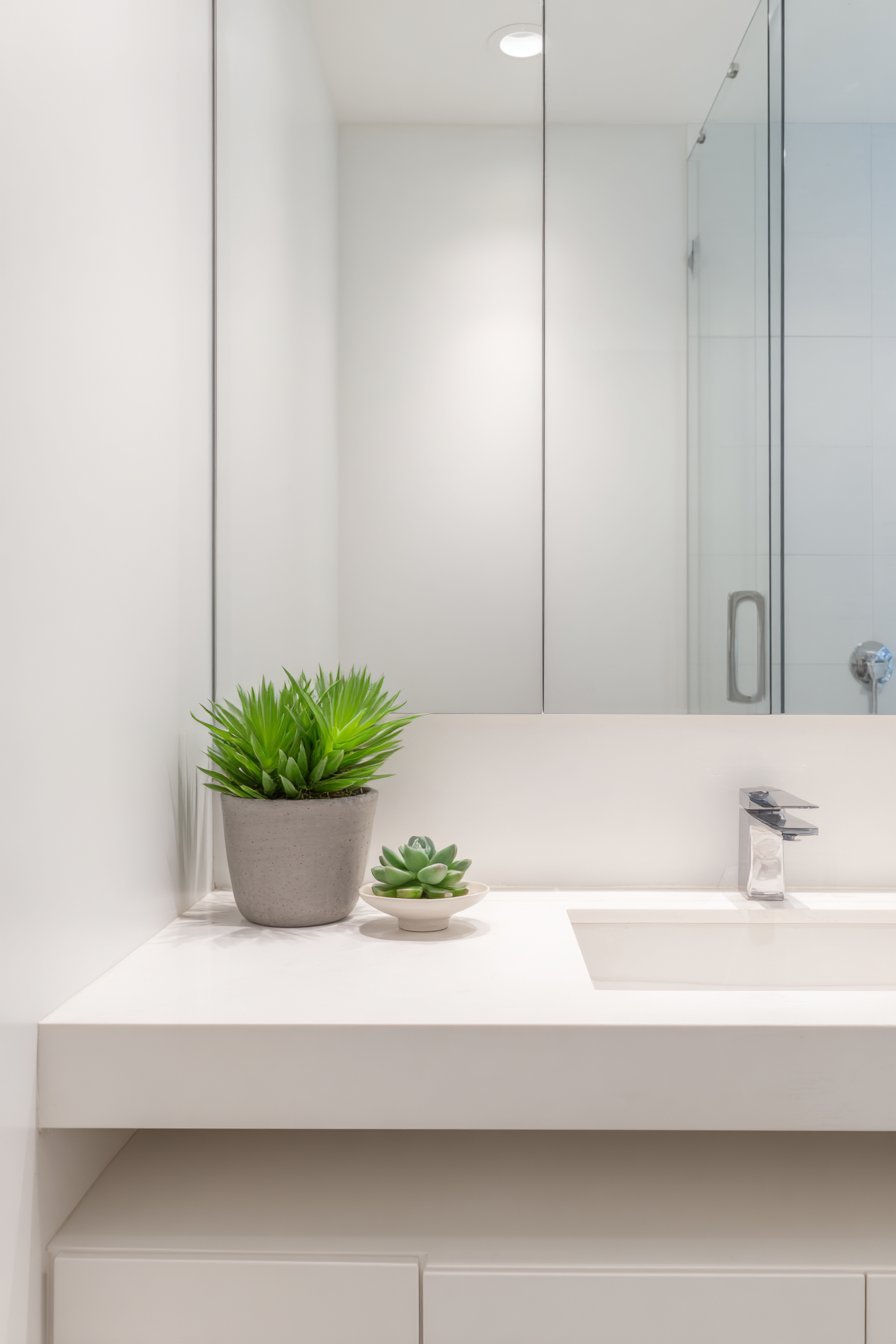
White walls and chrome fixtures preserve the uncluttered aesthetic through a disciplined color palette and restrained material selection. The all-white backdrop maximizes light reflection and creates psychological associations with cleanliness and simplicity. Chrome fixtures provide necessary metallic accents without introducing additional colors, their reflective finish adding sparkle and variation to the monochromatic scheme. The overall impression is one of calm, order, and efficiency—qualities particularly valuable in small bathrooms where clutter and chaos can quickly make the space feel unusable.
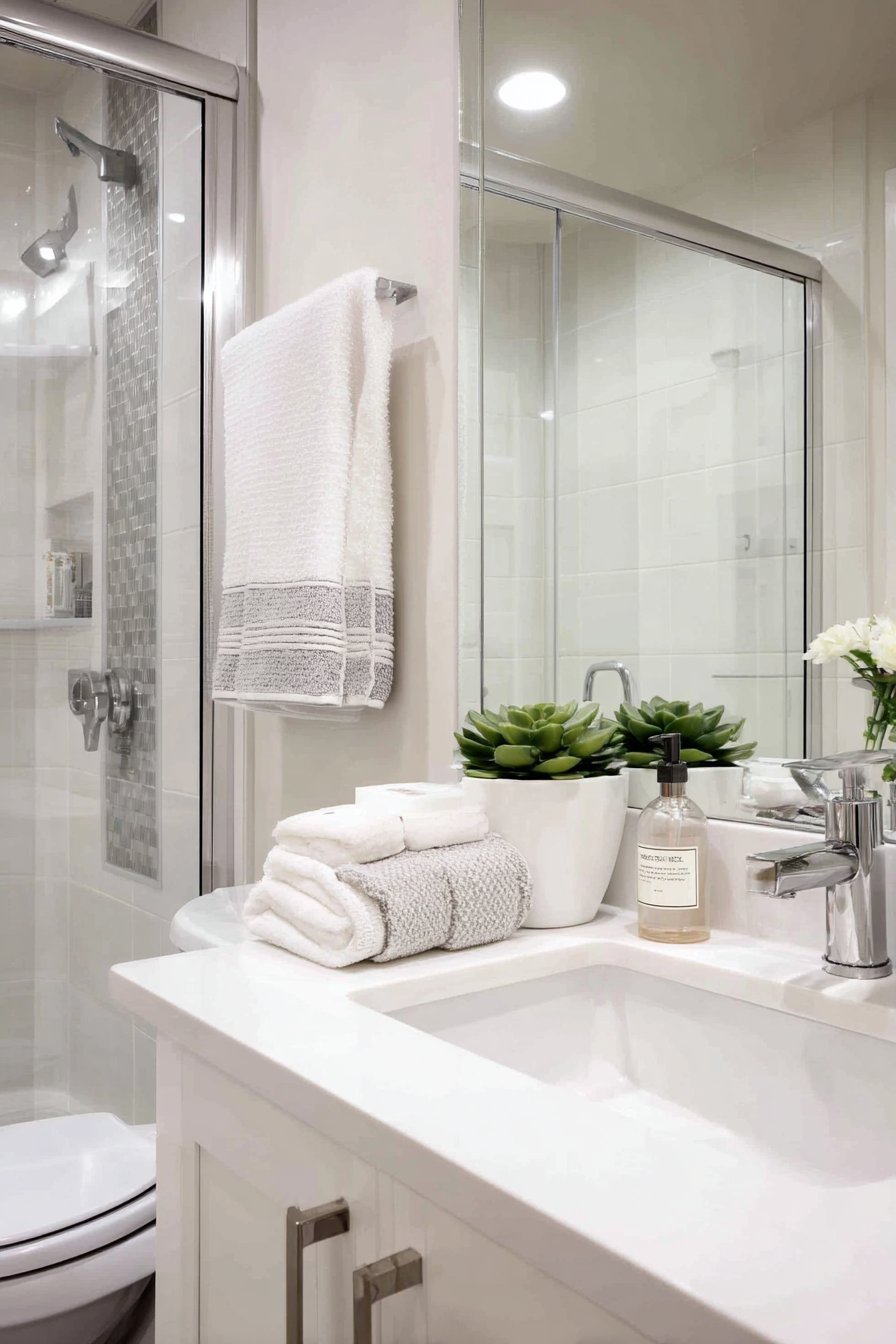
A small potted succulent and minimalist soap dispenser occupy the integrated shelf, demonstrating how even minimal storage can accommodate essential items while maintaining visual discipline. The succulent adds life and organic texture without requiring much space or care, while the simple soap dispenser provides necessary function with clean-lined form.
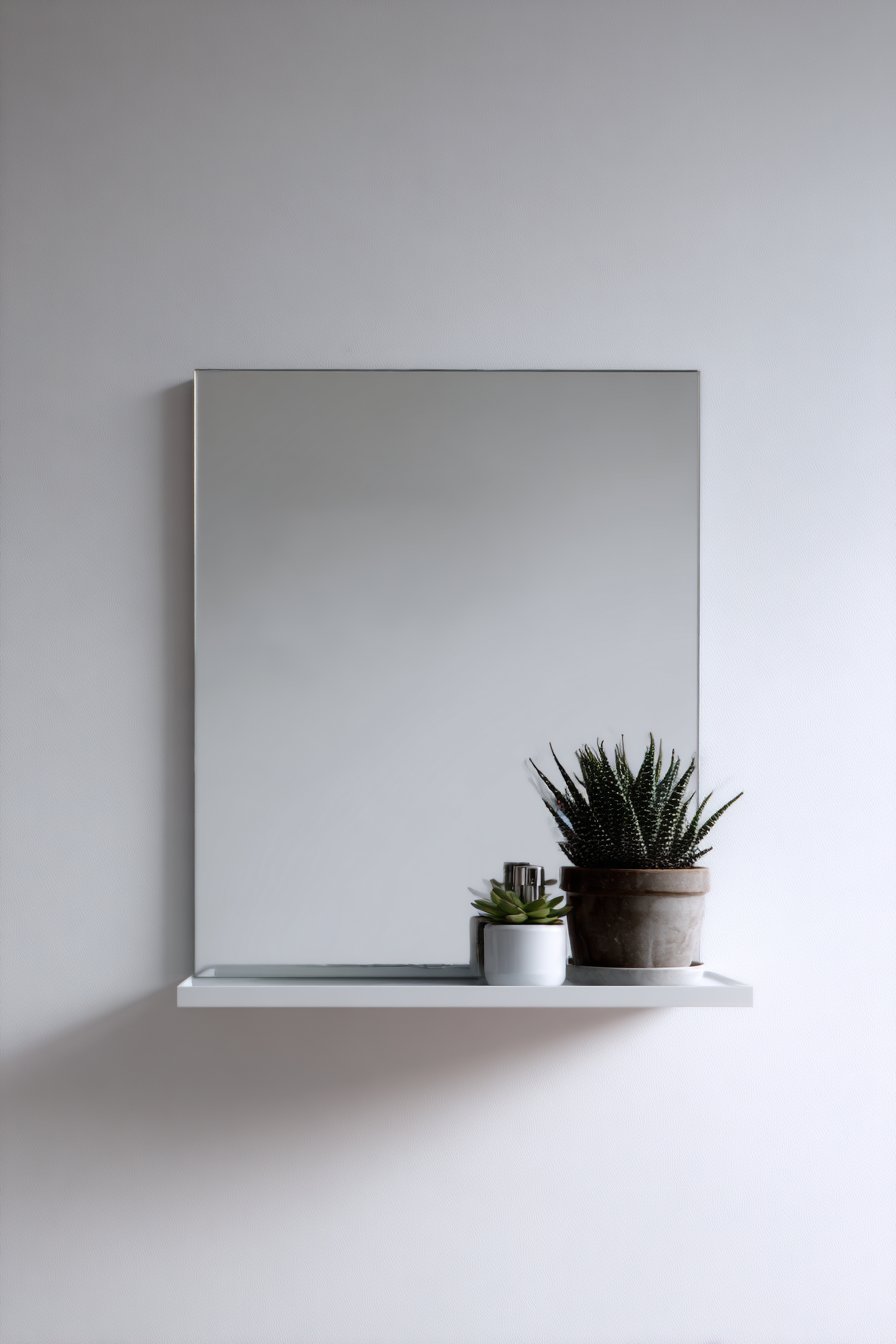
Key design tips for integrated shelf mirrors: Specify tempered glass for the integrated shelf to ensure safety and support adequate weight. Position the shelf 6-8 inches below the mirror’s bottom edge to create functional storage height. Limit shelf contents to 3-5 items maximum to prevent clutter and maintain the minimalist aesthetic. Choose a shelf depth of 4-6 inches—deep enough for toiletries but shallow enough to avoid protruding into the limited bathroom space. Mount the mirror-shelf combination so the mirror center sits at 60 inches from the floor with the shelf at comfortable reaching height. Select white or clear glass accessories to maintain the monochromatic palette and visual continuity.
16. Glamorous Sunburst Mirror with Metallic Rays
Art Deco elegance and contemporary glamour converge when a sunburst mirror with golden rays creates a dramatic focal point above a gray marble vanity. The radiating design—with elongated spikes or flattened rays emanating from a central circular mirror—makes a bold decorative statement that elevates the bathroom from utilitarian to luxurious. This mirror style celebrates ornamentation and visual drama, appealing to those who view their bathroom as an opportunity for self-expression and decorative indulgence rather than mere function.
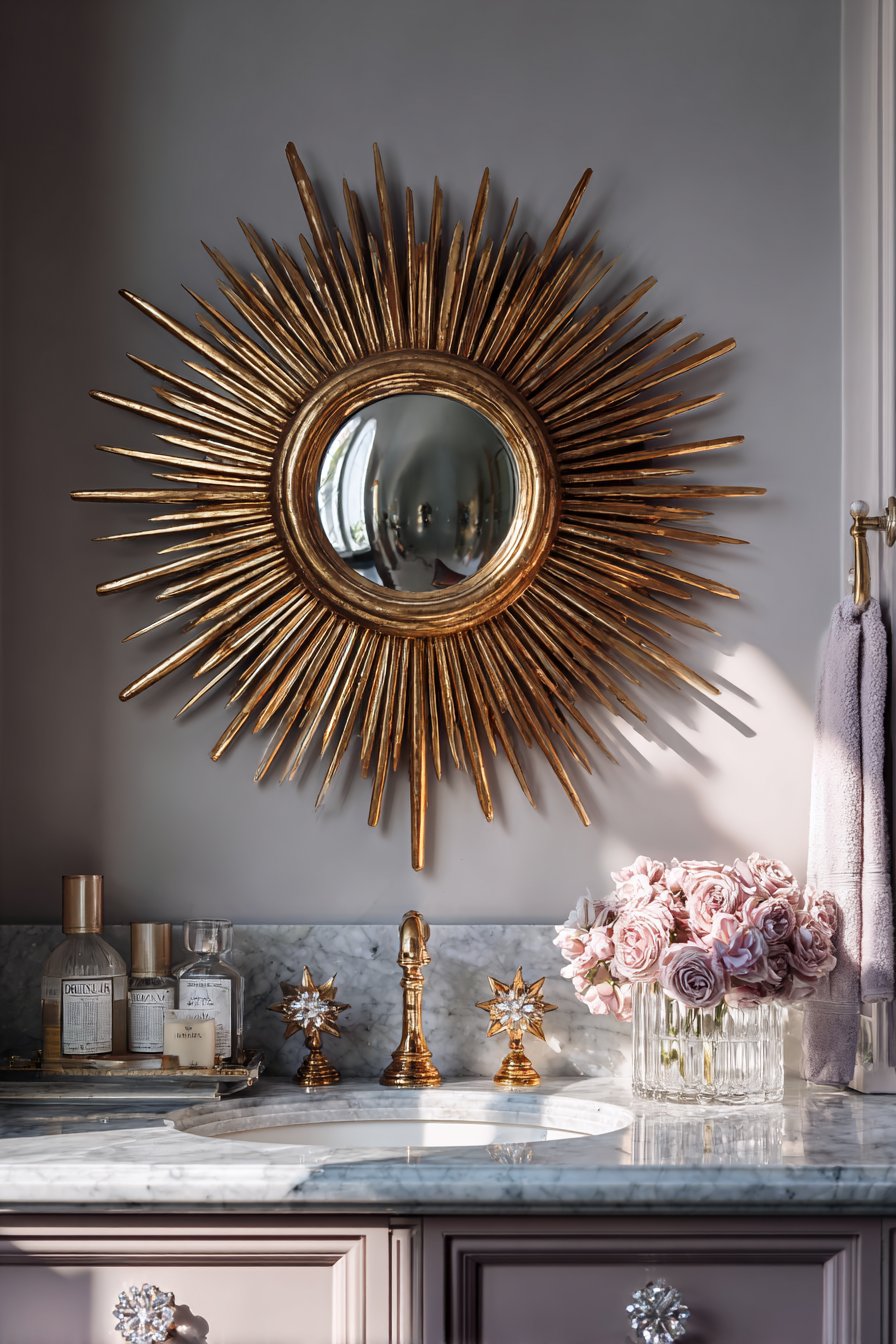
The golden metallic finish catches and reflects light from multiple angles, creating dynamic visual interest that changes throughout the day as natural light shifts. Each ray functions as a miniature reflector, bouncing light around the room and creating sparkle that amplifies the available illumination. This light-multiplying quality proves particularly valuable in small bathrooms where maximizing natural light is crucial. The warm gold tone introduces richness and luxury without the heaviness of darker metals, maintaining the sense of spaciousness essential in compact rooms.
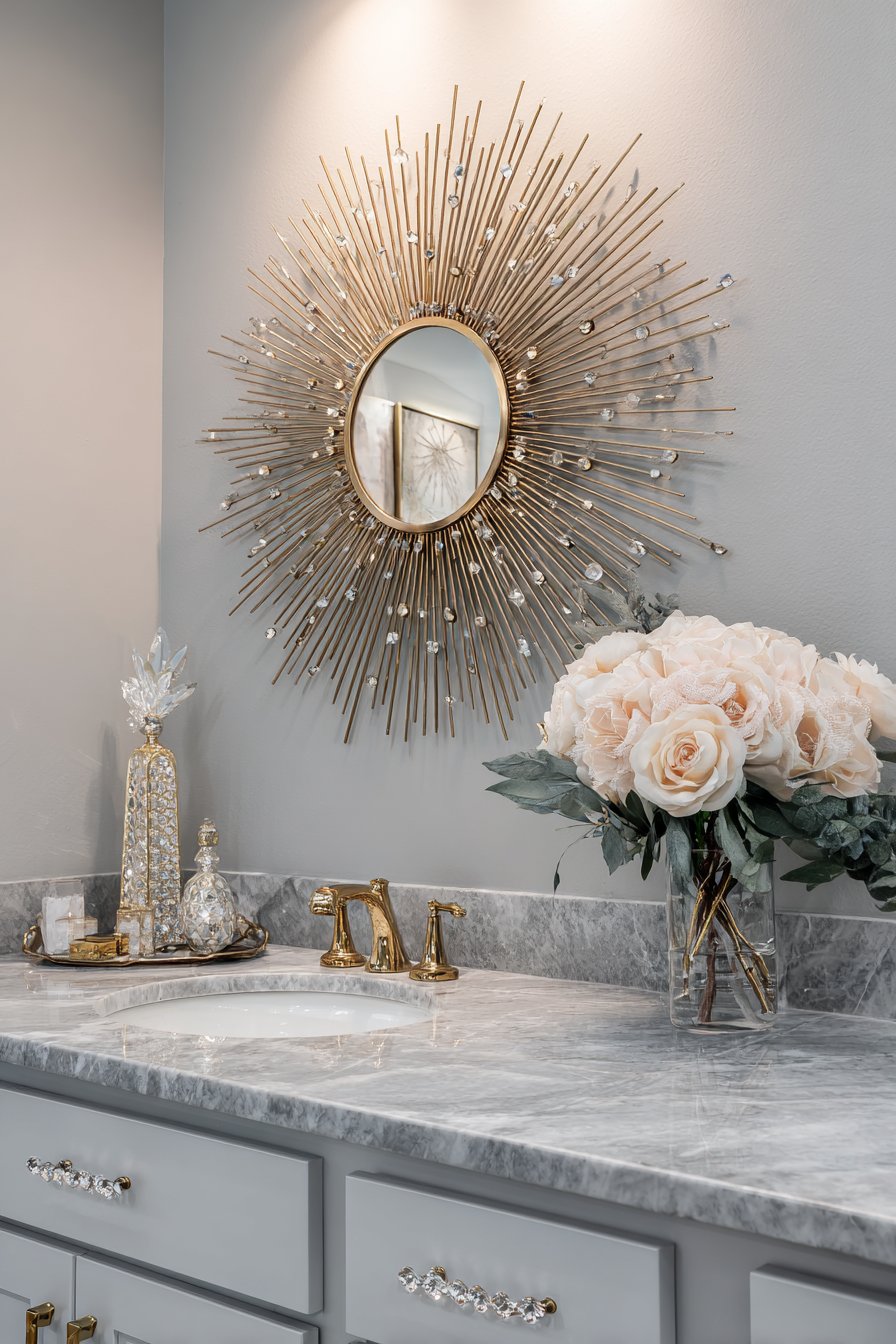
A gray marble vanity provides a sophisticated foundation that grounds the ornate mirror without competing for attention. The natural stone veining adds subtle pattern and movement while the gray color palette offers neutral elegance that allows the golden mirror to shine. Crystal drawer pulls reinforce the glamorous aesthetic with their faceted surfaces and light-catching properties, while a polished brass faucet coordinates with the golden mirror frame to create metallic continuity. The repetition of warm metallic finishes establishes a clear design vocabulary of luxury and refinement.
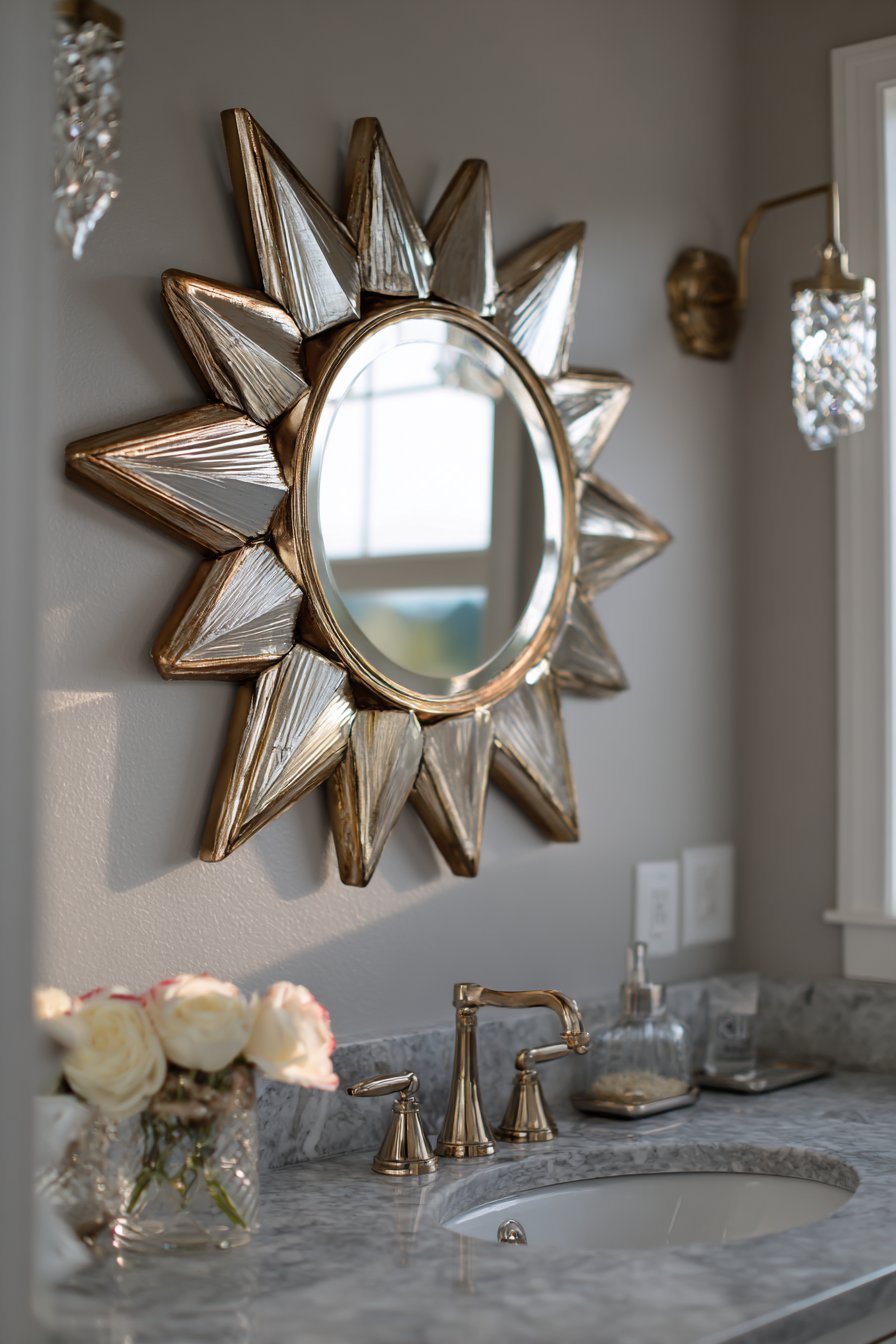
Soft gray walls prevent the ornate mirror from overwhelming the small space. Rather than mounting the dramatic sunburst on white walls where it might feel too stark or on dark walls where it could seem heavy, the soft gray provides perfect balance—enough contrast to let the gold shine while maintaining a sophisticated, cohesive overall impression.
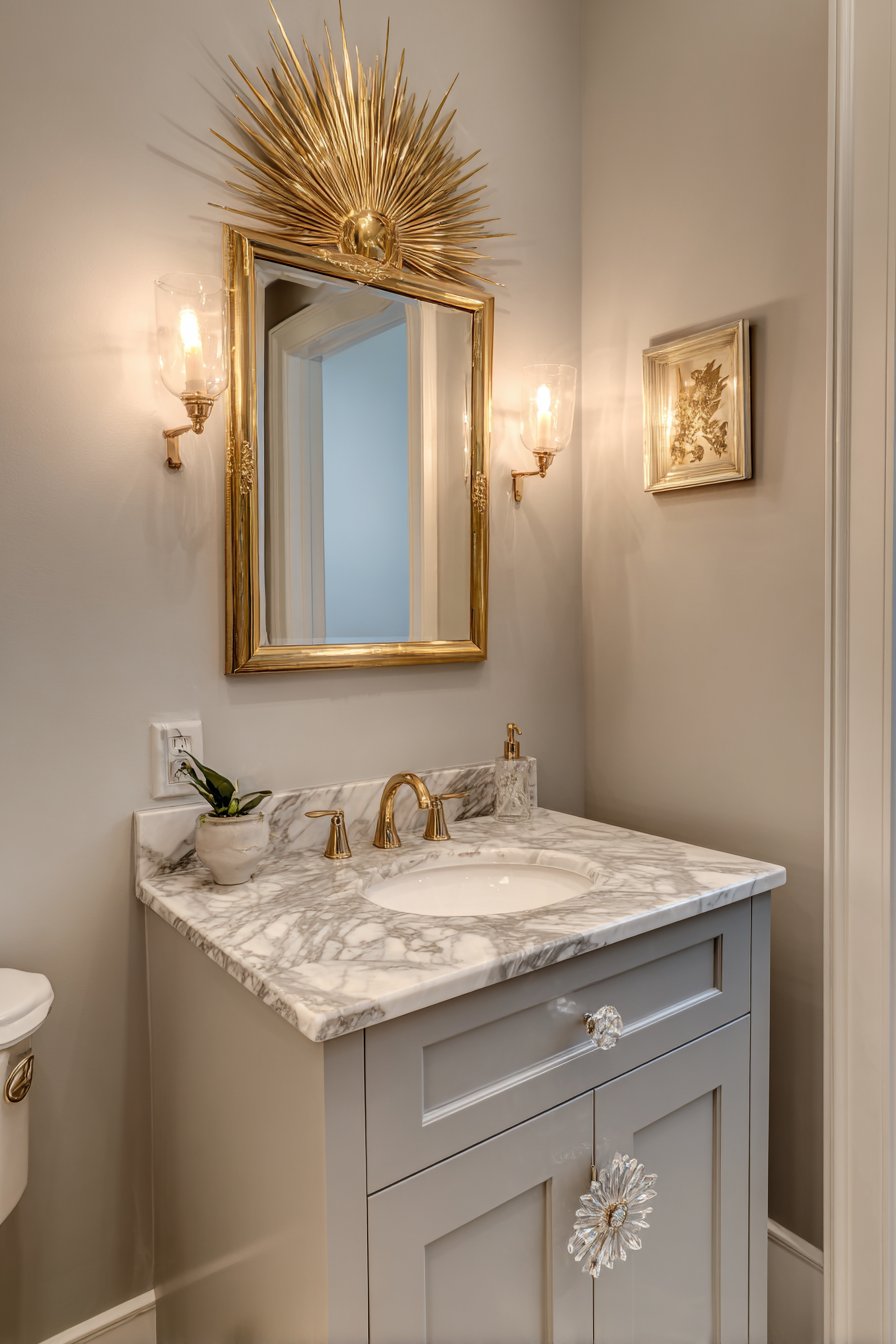
Key design tips for sunburst mirrors: Select mirrors with ray lengths proportionate to the room size—18-24 inch overall diameter for very small bathrooms, up to 36 inches for slightly larger spaces. Position the mirror so the rays don’t extend into adjacent wall corners or compete with wall sconces and other fixtures. Choose gold finishes with slight variation and texture rather than flat, uniform color for a more authentic, high-quality appearance. Coordinate the gray marble veining with wall colors, selecting cool-toned white veining if walls are cool gray, warm-toned veining if walls have beige undertones. Limit additional decorative elements to maintain focus on the dramatic mirror—too many competing ornate pieces will create visual chaos in a small space. Install simple recessed lighting to illuminate the mirror without adding visible fixtures that would clutter the wall composition.
17. Farmhouse Window Frame Mirror with Cottage Charm
Rustic cottage character fills a small bathroom when a repurposed window frame mirror with distressed white paint introduces farmhouse charm. The six-pane design references traditional double-hung windows common in historic homes and rural architecture, bringing nostalgic character and authentic period detail. Each pane contains mirror glass rather than clear glass, creating a multi-panel reflection that adds visual interest beyond what a single large mirror surface could achieve. The muntins—the wooden dividers between panes—create a grid pattern that adds structure and rhythm to the wall composition.
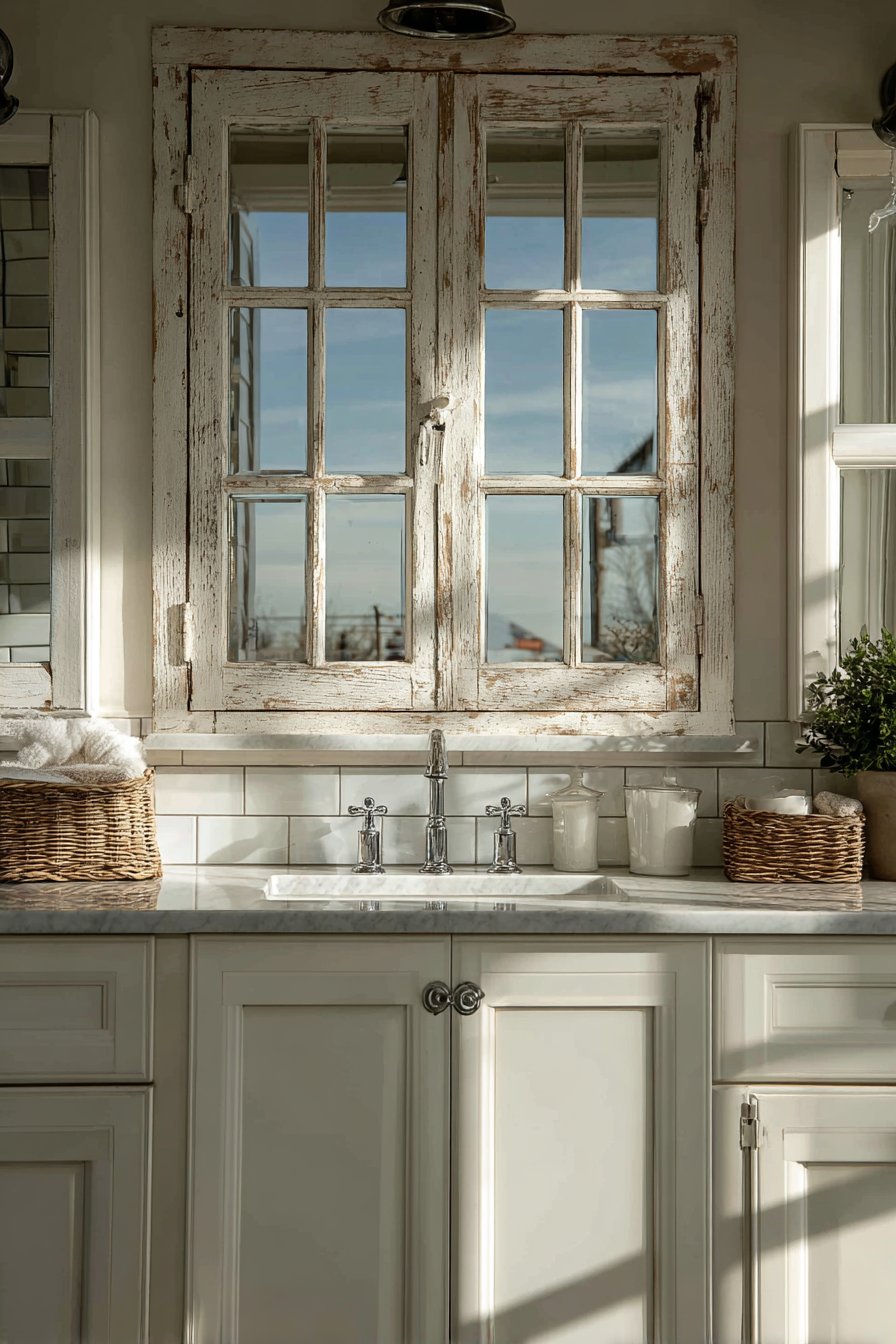
The distressed white paint finish demonstrates intentional aging that suggests history and story. Strategic paint removal along edges, corners, and high-contact areas reveals wood beneath, creating the impression that the frame has weathered years of use. This worn finish adds textural variation and prevents the white from feeling too pristine or precious. The authentic distressing requires careful technique—too much wear looks forced and artificial, too little fails to achieve the desired rustic character. The goal is to create a finish that could believably have developed naturally over decades in a farmhouse bathroom.
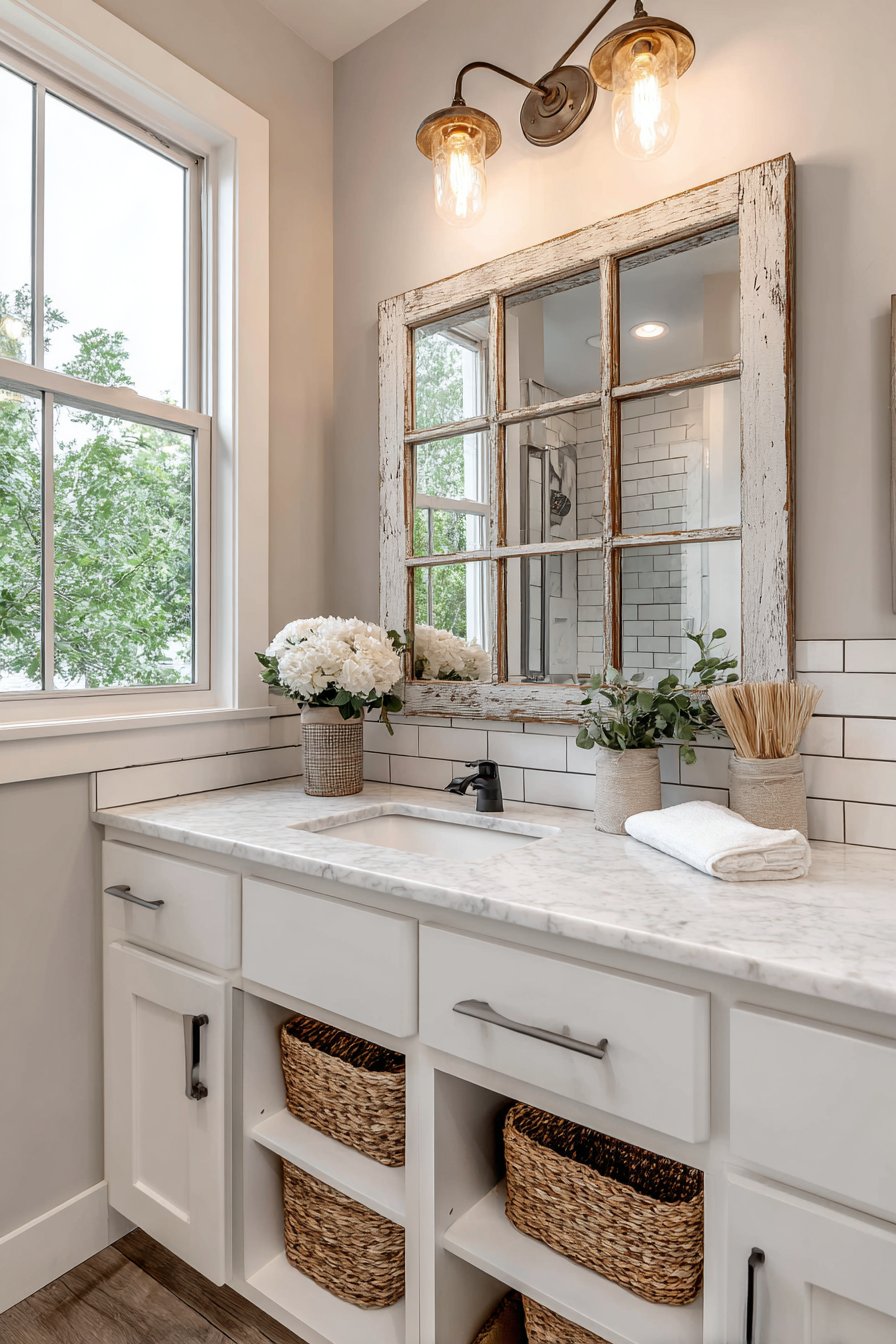
A white shaker-style vanity with marble countertop reinforces the farmhouse aesthetic through simple, functional design rooted in traditional American craftsmanship. Shaker cabinets feature flat-panel doors with minimal ornamentation, celebrating honest construction and quality materials rather than decorative excess. The white paint maintains consistency with the mirror frame while the marble top adds a touch of refinement that prevents the space from feeling too casual or rough. Galvanized metal light fixtures continue the farmhouse theme with their utilitarian industrial character, while subway tile backsplash provides classic, timeless wall covering.
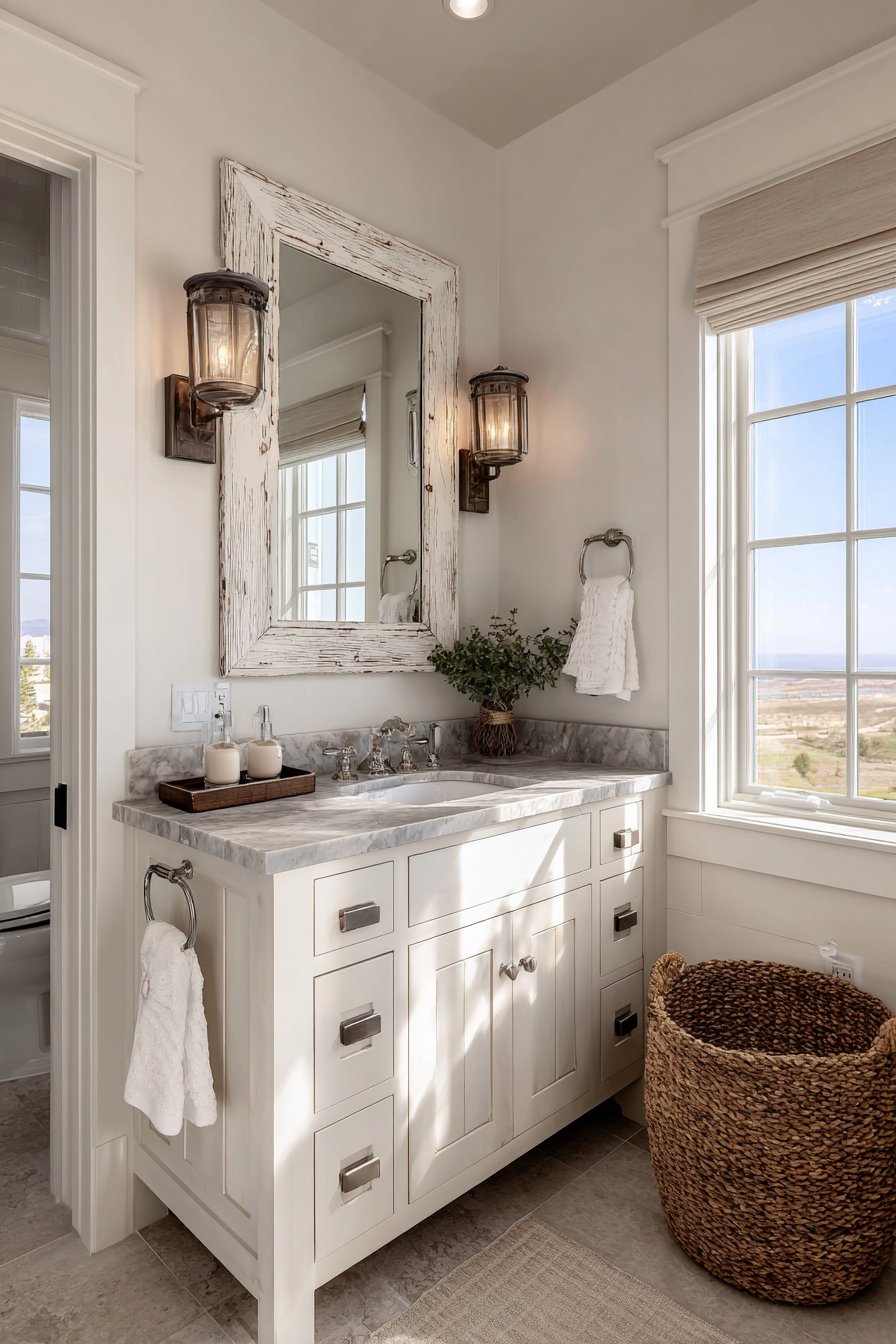
Woven baskets provide both texture and storage, their natural fiber construction introducing organic warmth that balances the painted wood surfaces. The baskets might hold rolled towels, extra toiletries, or bathroom linens, combining decorative appeal with practical function. Natural daylight filtering through a nearby window (or the illusion of such through clever mirror positioning) emphasizes the cottage’s connection to nature and simple living.
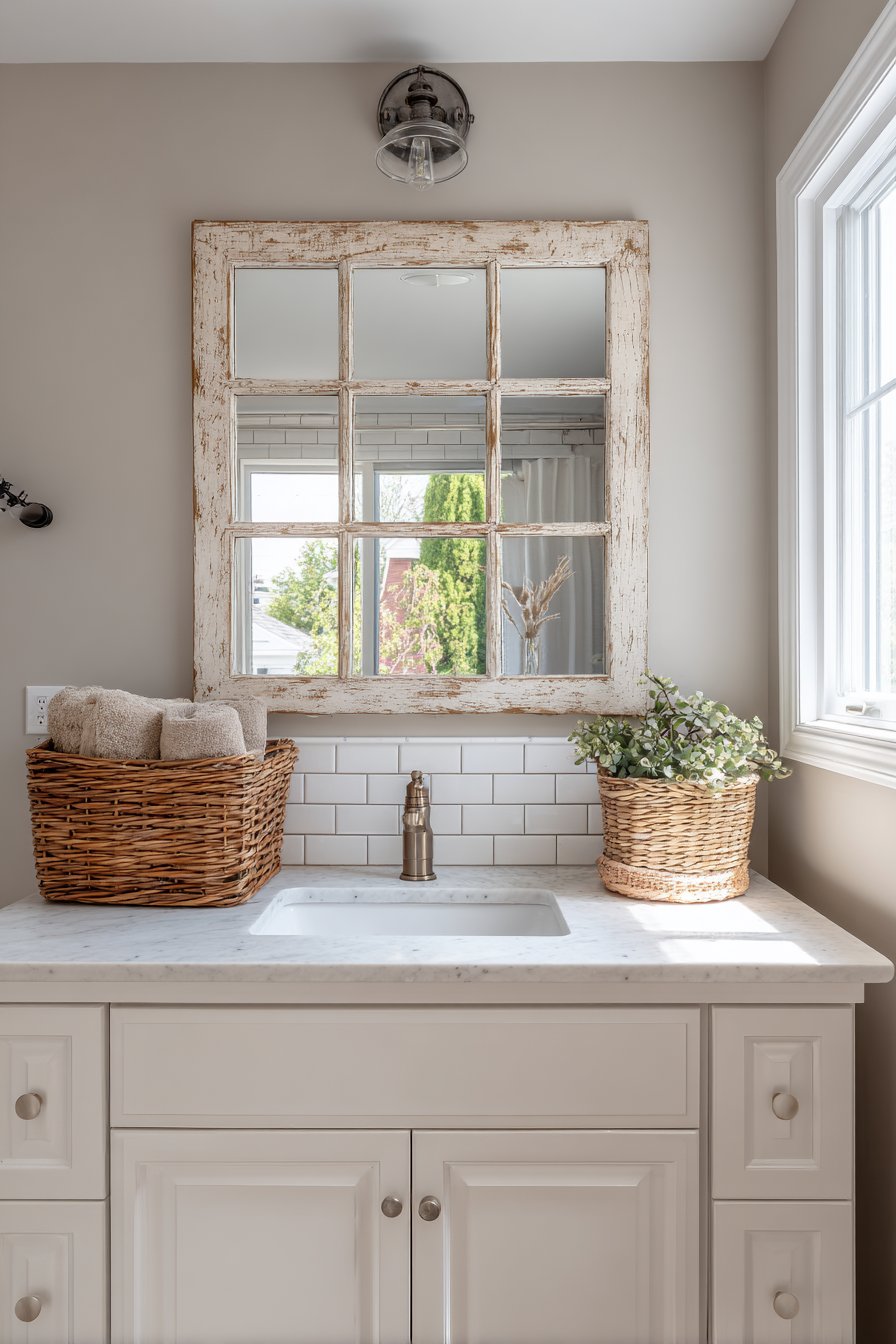
Key design tips for window frame mirrors: Source actual vintage window frames from architectural salvage for authentic proportions and construction, or purchase high-quality reproductions sized appropriately for bathroom use. Replace standard glass with mirror glass, ensuring each pane is properly secured in the frame. Distress white paint using sandpaper, focusing on edges, corners, and areas that would naturally experience wear over time. Position the mirror so the grid pattern doesn’t create awkward divisions across reflected faces—ideally the center panes align with eye level. Choose galvanized metal fixtures in simple, utilitarian forms rather than overly decorative styles. Incorporate 2-3 woven baskets in varying sizes for visual interest and practical storage without creating clutter.
18. Sophisticated Square Mirror with Champagne Gold Frame
Contemporary elegance achieves striking impact when a modern square mirror with a thin champagne gold frame pops against moody dark navy blue walls. This bold color pairing demonstrates design confidence—rather than playing it safe with traditional white or beige, the deep navy creates dramatic sophistication while the warm metallic frame provides luminous contrast. The square geometry feels clean, modern, and architectural, its equal proportions creating a sense of balance and stability that anchors the design composition.
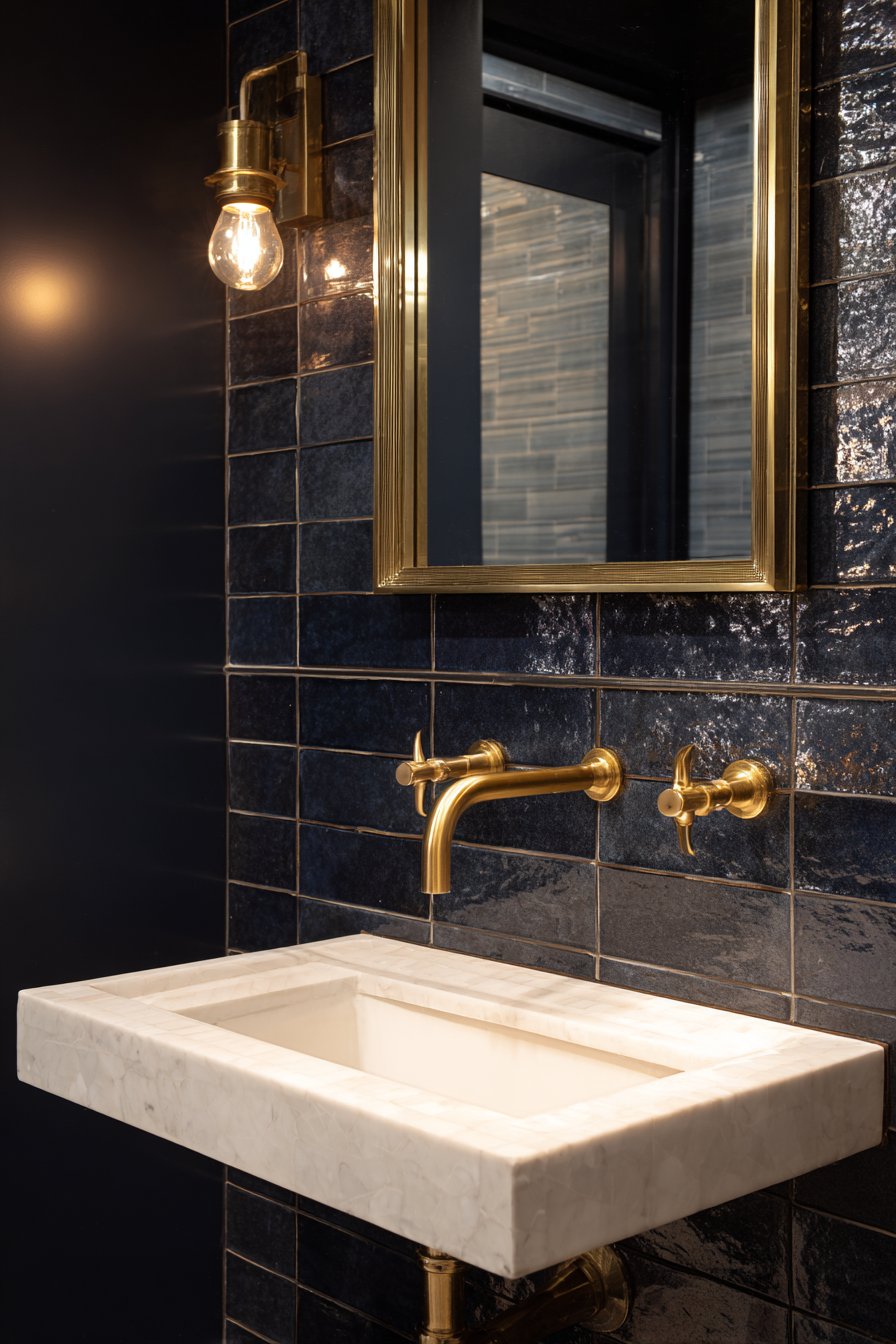
The champagne gold finish occupies a sophisticated middle ground between yellow gold and rose gold, offering warmth without the brassy quality that bright gold can introduce. This subtle metallic tone reads as luxurious and refined, catching light beautifully while maintaining enough restraint to feel contemporary rather than ostentatious. The thin frame profile—typically 1-2 inches wide—provides definition without bulk, allowing the mirror surface to dominate while the frame adds just enough decorative detail to elevate the piece beyond basic functionality.
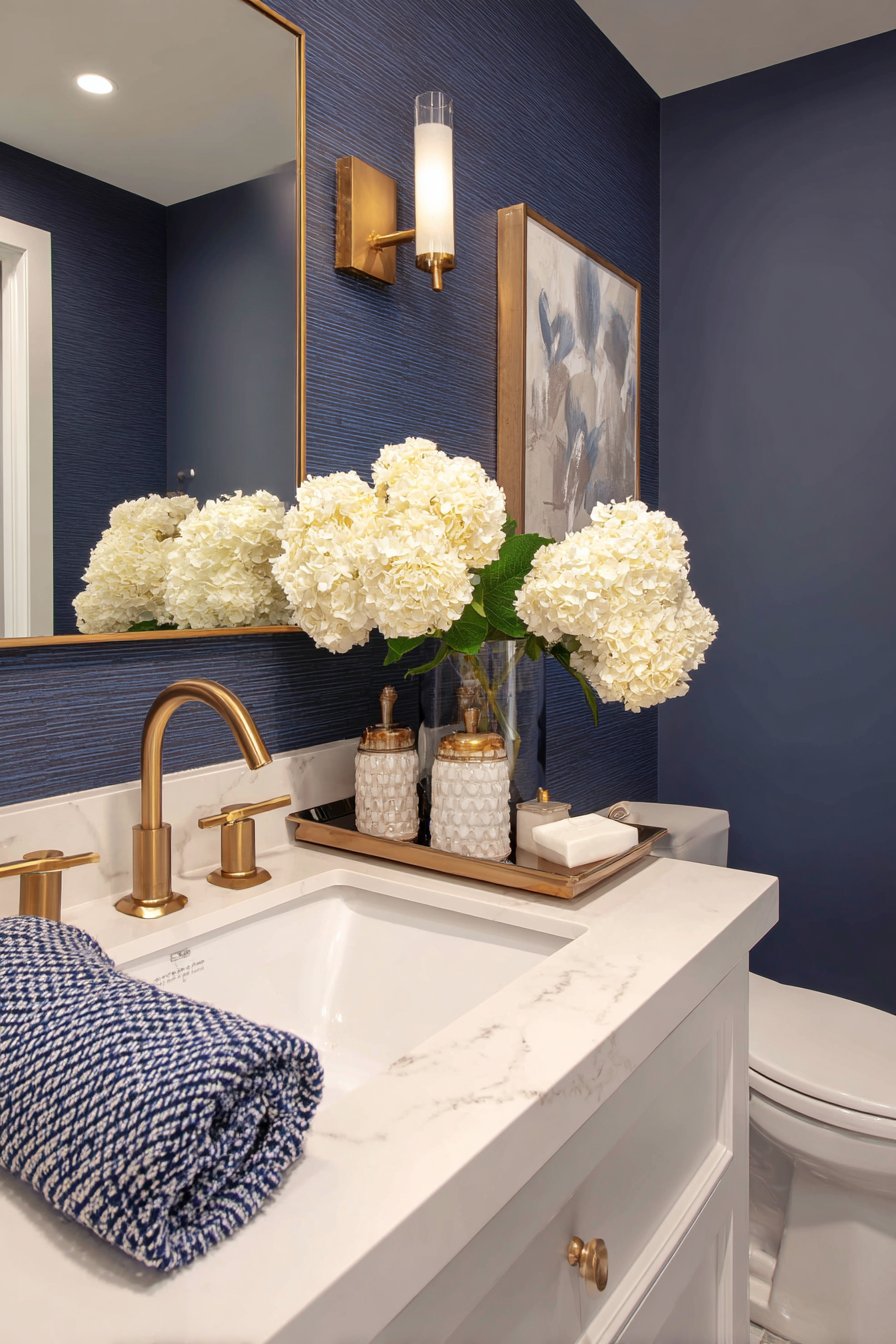
Dark navy blue walls create a cocoon-like, enveloping quality that makes the small bathroom feel intimate rather than cramped. This moody color choice requires courage, as conventional wisdom suggests light colors for small spaces. However, when executed well with adequate lighting and reflective surfaces, dark walls can actually make spaces feel more sophisticated and intentional. The navy provides a beautiful backdrop for white and metallic elements, creating crisp contrast that feels graphic and modern. The color also hides imperfections and creates depth that pure white walls cannot achieve.
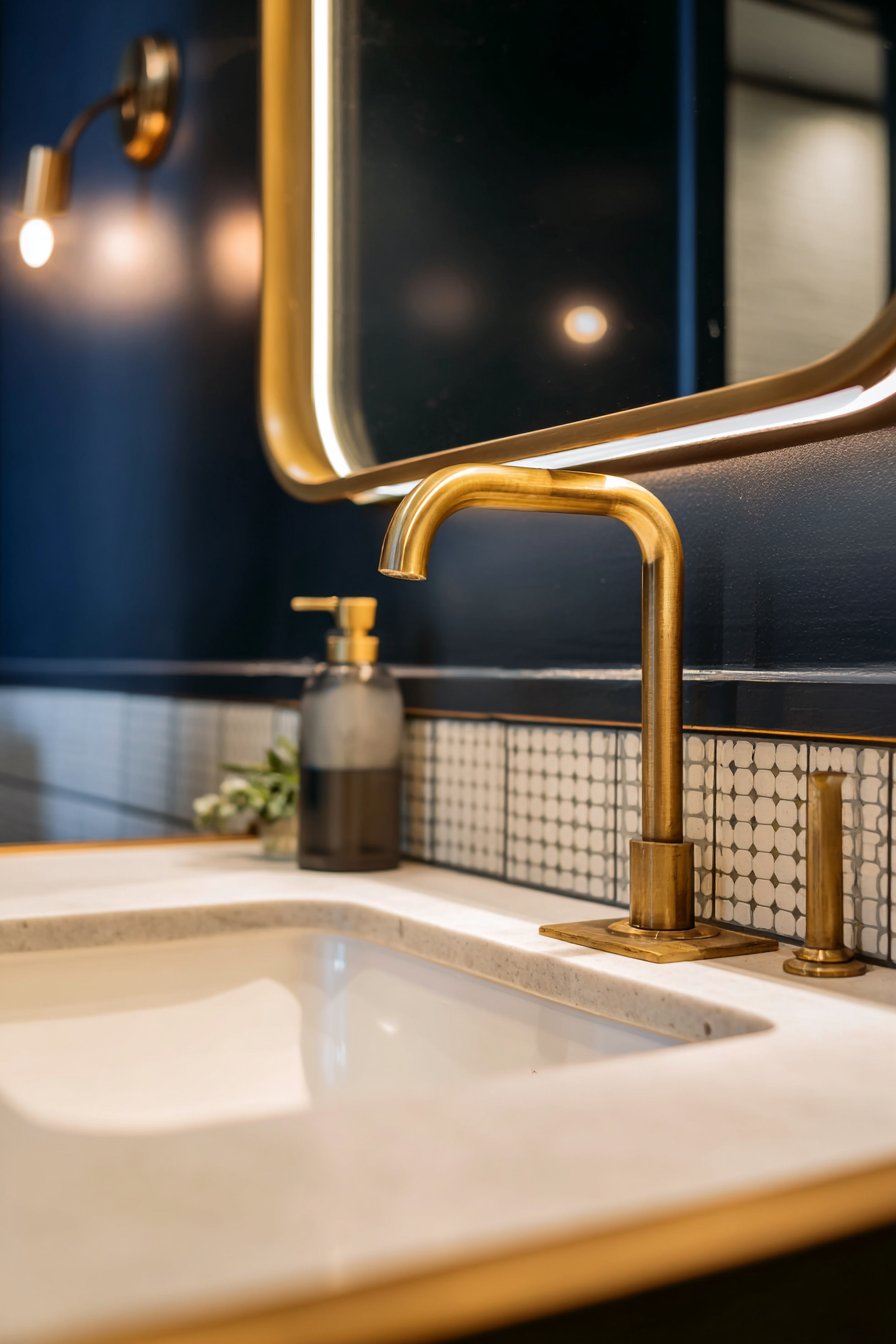
A white porcelain sink and brass fixtures complement the elegant color palette, their warm tones coordinating with the champagne gold mirror frame. Marble subway tiles add subtle pattern through natural veining while maintaining the sophisticated neutral foundation. The elongated subway tile format (3×12 inches rather than standard 3×6) feels more contemporary and creates fewer grout lines for a cleaner, more streamlined appearance.
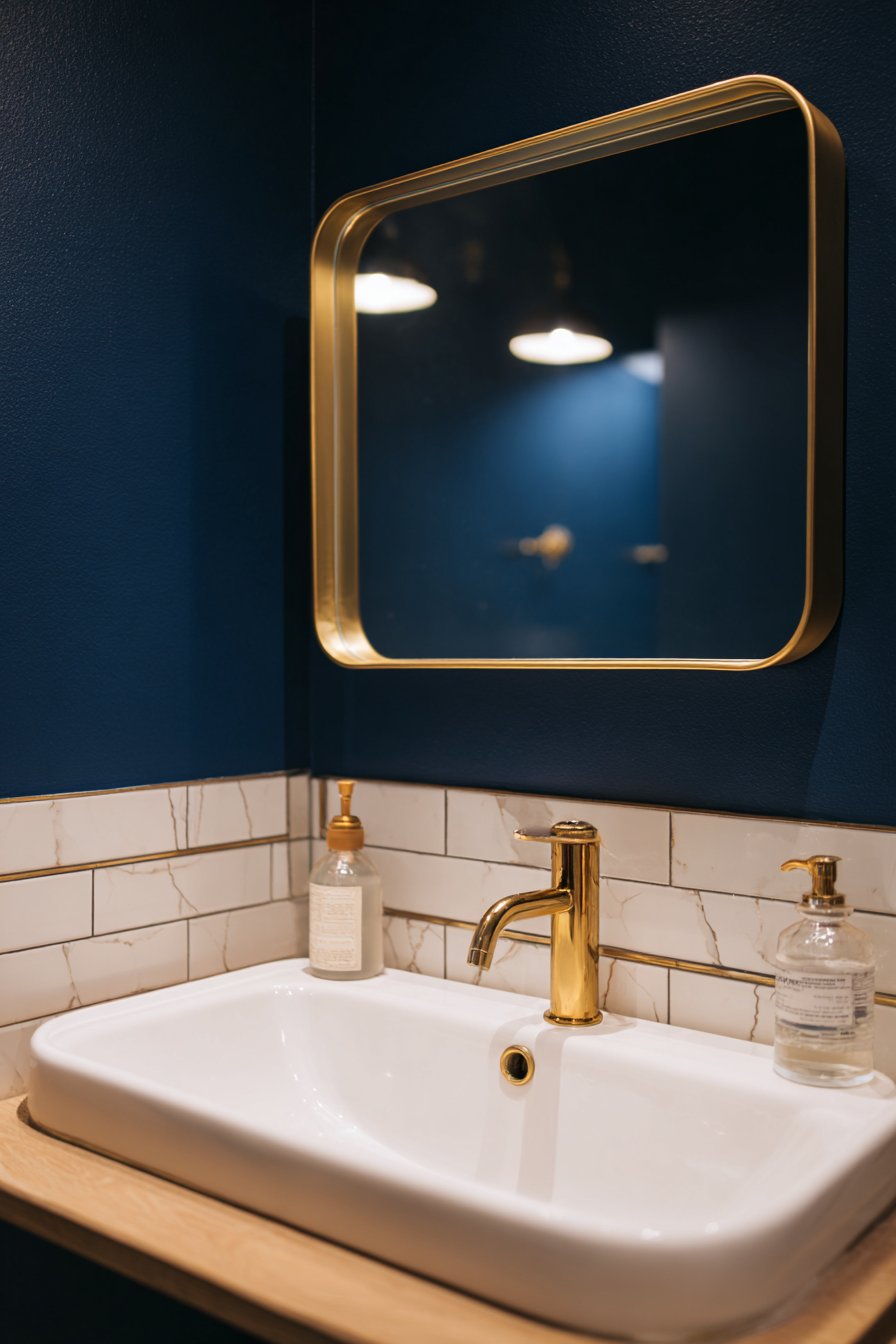
Key design tips for dramatic dark walls: Paint dark walls in matte or eggshell finish rather than glossy to prevent excessive light reflection that can emphasize imperfections. Ensure adequate lighting—dark walls absorb light, requiring more illumination than white walls to maintain brightness. Position the square mirror to reflect the most attractive view or light source, amplifying both visual interest and available light. Choose champagne gold with slight brushed or antiqued finish rather than mirror-bright for a more sophisticated appearance. Coordinate all metallic fixtures in warm tones—champagne gold, brass, or bronze—to maintain color temperature consistency. Limit the navy walls to a single accent wall if the bathroom is very small, painting remaining walls in soft gray or white to prevent the space from feeling too dark.
19. Luxurious Venetian Etched Mirror with Ornate Details
Vintage glamour reaches its apex when a Venetian-style etched mirror with decorative border detail creates an atmosphere of refined luxury. The ornate mirror surface features delicate floral etching around the perimeter—perhaps roses, scrolling vines, or classical motifs—creating a decorative frame within the mirror itself. This intricate detailing demonstrates Old World craftsmanship and artistic excellence, bringing a level of sophistication and luxury that elevates even the smallest powder room to special occasion status.
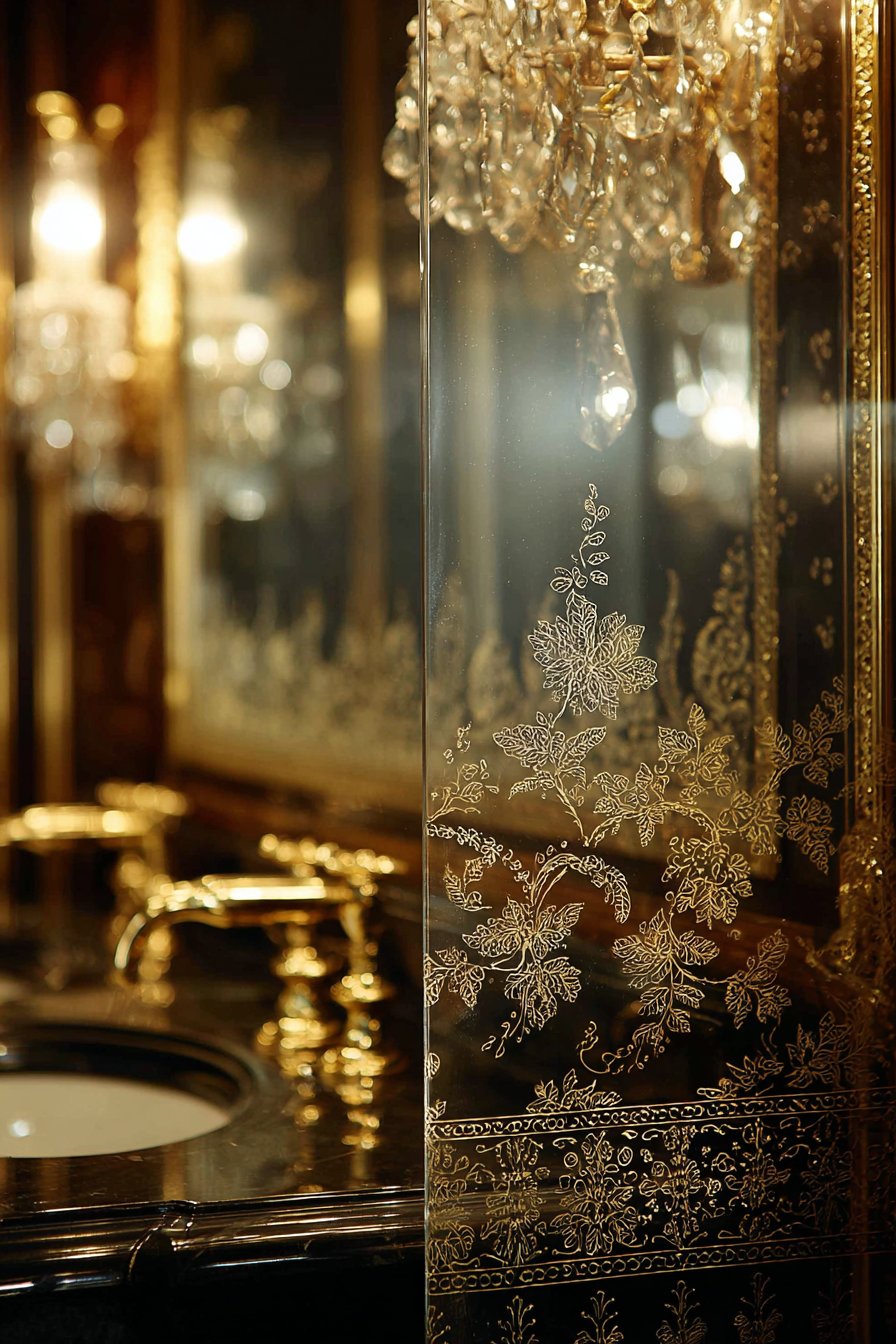
The etched border serves both decorative and practical purposes. Artistically, it creates visual interest and adds layers of detail that reward close examination. The etched glass catches light differently than clear mirror, creating subtle patterns and reflections that change based on viewing angle and light source. Practically, the decorative border draws the eye while leaving the central mirror area clear and unobstructed for functional reflection. This combination of beauty and utility represents thoughtful design that doesn’t sacrifice function for aesthetics.
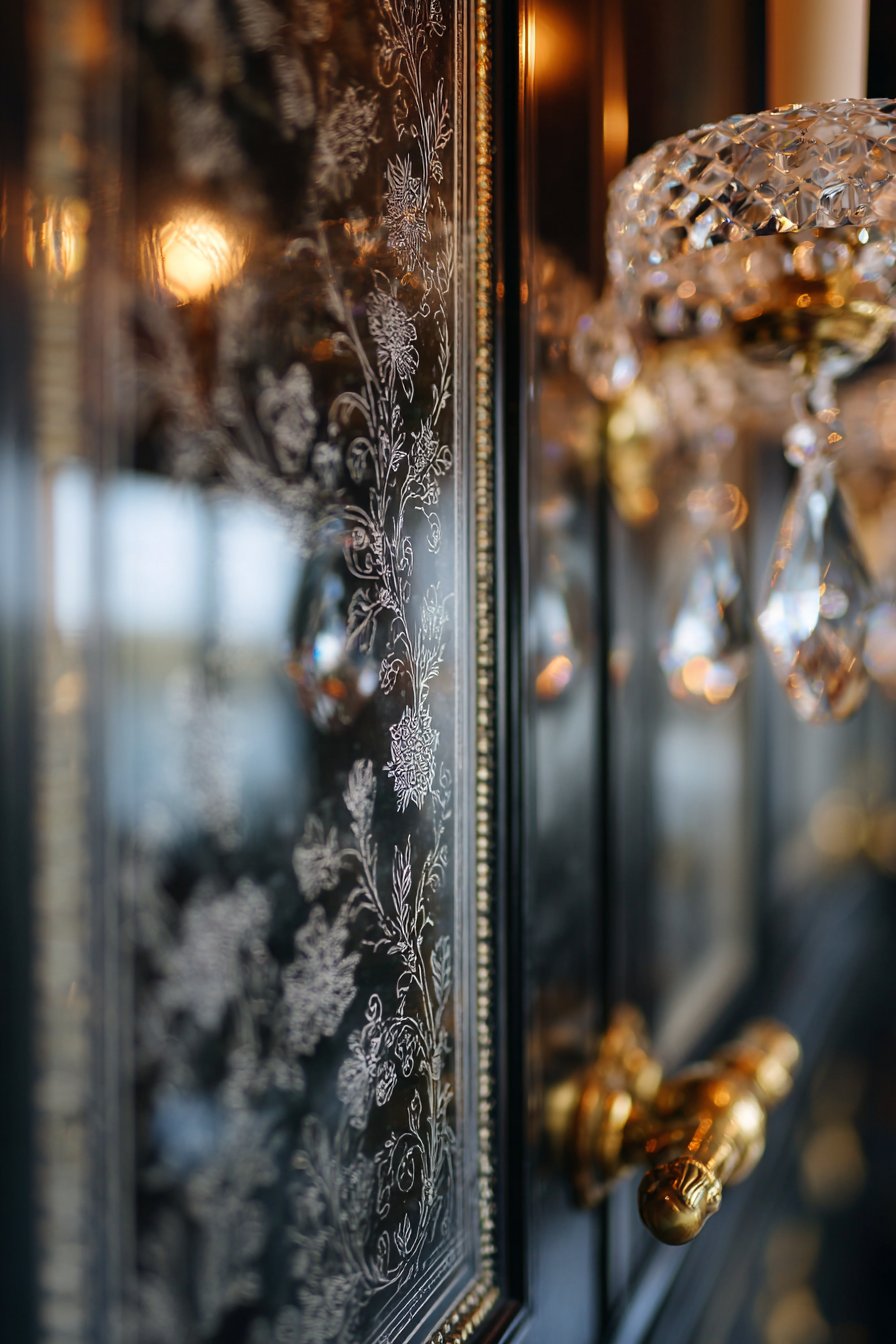
Mounted above a black marble vanity with gold hardware and fixtures, the etched mirror establishes a luxurious design narrative of opulence and refinement. The black marble—perhaps with dramatic white or gold veining—provides a dramatic foundation that anchors the composition with substantial presence. Gold drawer pulls, towel rings, and faucet create metallic continuity while the warm golden tone adds richness and warmth. The combination of black and gold represents classic luxury that never feels dated or trendy.
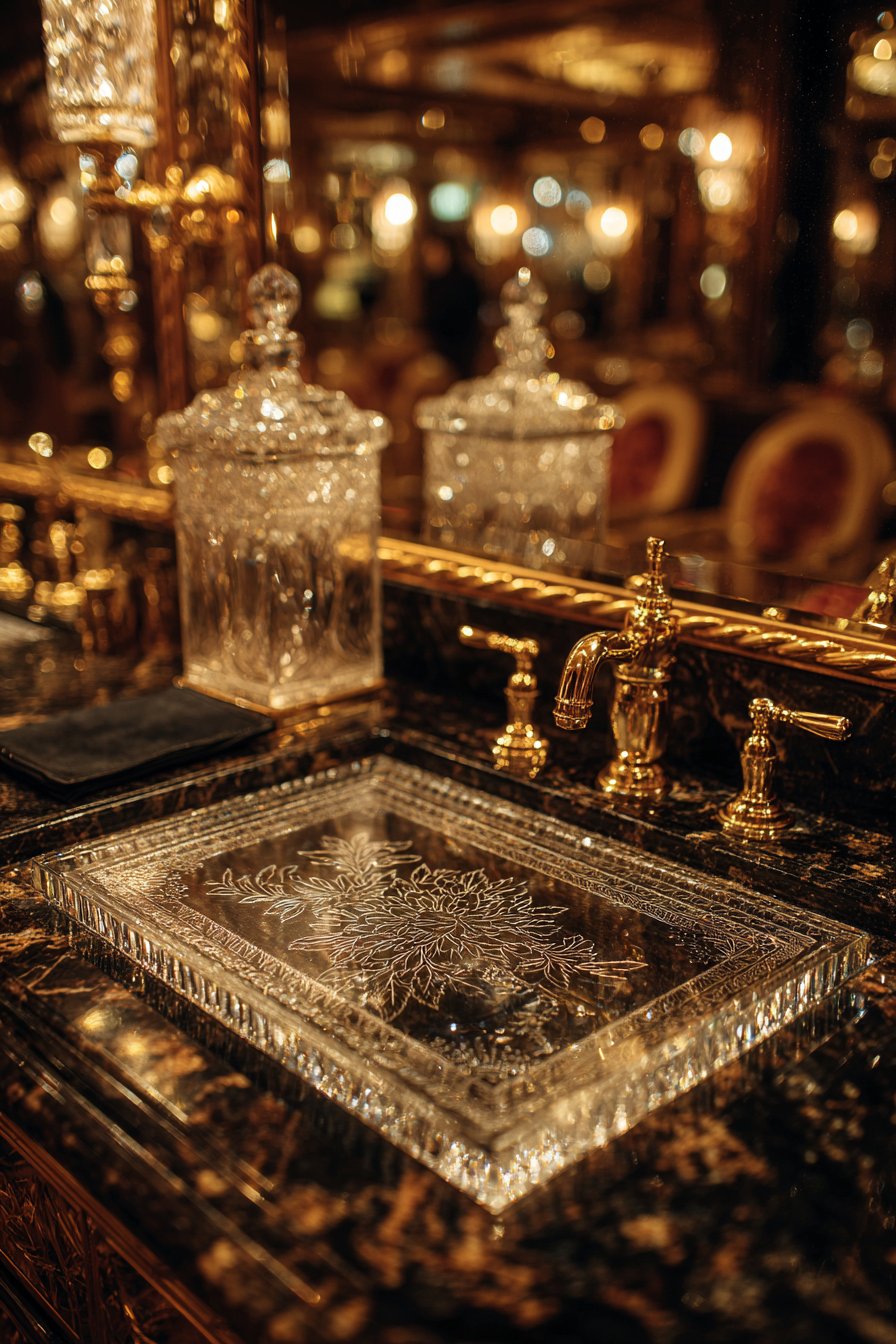
Crystal sconces flanking the mirror provide sparkling accent lighting that enhances the glamorous aesthetic. The faceted crystal elements refract light into rainbow prisms, creating jewelry-like sparkle that elevates the entire space. The sconces might feature crystal arms, crystal shades, or crystal drops that catch and multiply available light, making even a small bathroom feel luxurious and special.
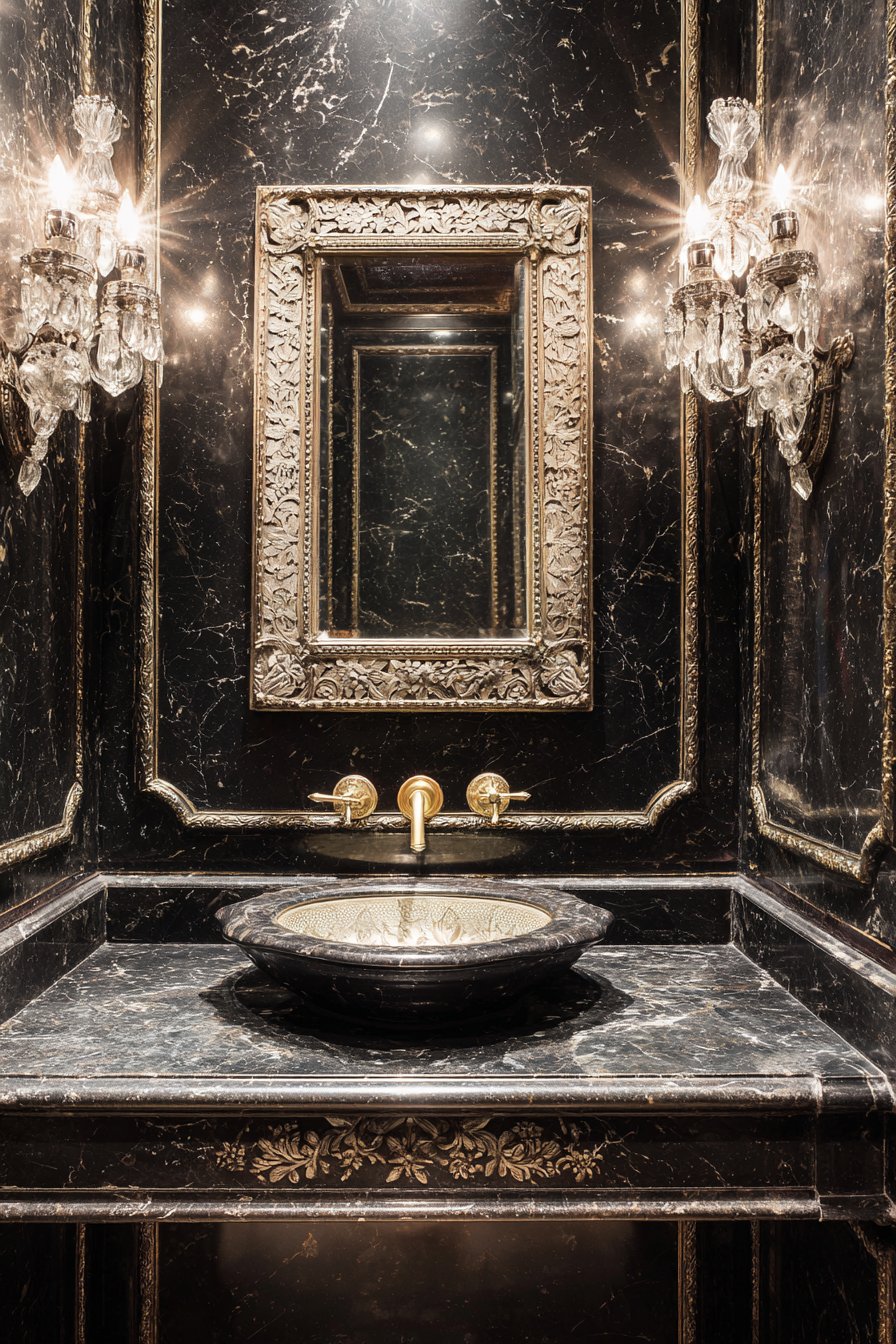
Key design tips for Venetian glamour: Source authentic Venetian-etched mirrors from specialty retailers or antique dealers, or commission custom etching from glass artists for unique designs. Position the mirror so the etched border is fully visible without being cut off by adjacent walls or fixtures. Choose black marble with dramatic veining for maximum visual impact, ensuring the stone is properly sealed for bathroom moisture resistance. Install crystal sconces on dimmer switches to adjust light levels and sparkle intensity based on time of day and mood. Limit additional decorative elements to prevent the space from feeling cluttered—the ornate mirror and crystal sconces provide sufficient ornamentation. Keep the vanity countertop minimal with only essential, beautiful items displayed in cohesive finishes.
20. Scandinavian Circular Mirror with Wide Oak Frame
Natural warmth and minimalist serenity merge when a contemporary circular mirror with a wide oak wood frame brings organic texture to a white minimalist bathroom. The substantial wooden frame—typically 4-6 inches wide—creates impact through material presence rather than ornamental detail. The oak’s natural grain patterns, color variations, and occasional knots add visual interest and organic character while maintaining the clean, unadorned aesthetic central to Scandinavian design philosophy.
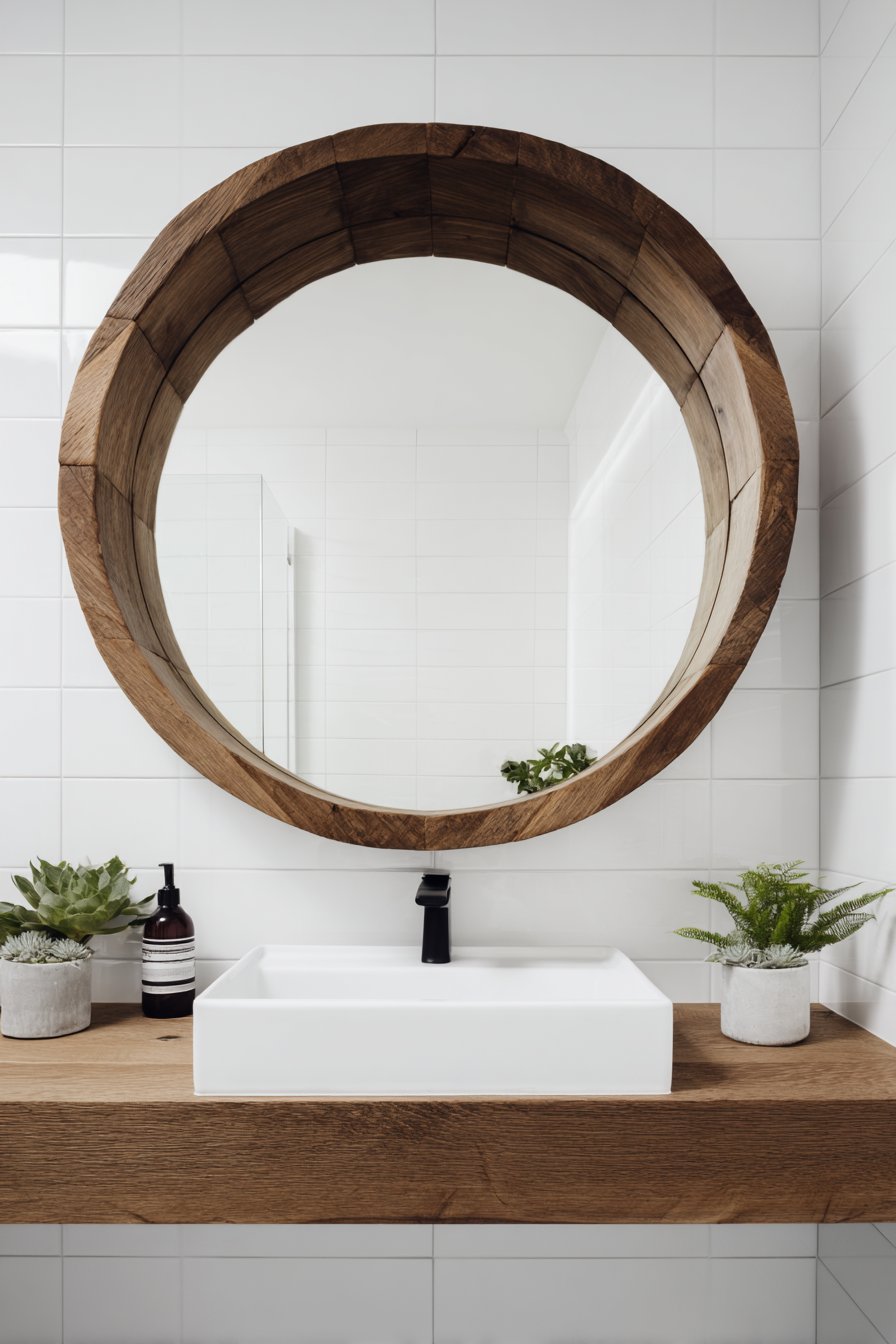
The circular shape introduces soft geometry that feels approachable and welcoming, contrasting with the angular architecture typical in bathrooms. The curve creates visual flow and prevents the space from feeling too rigid or austere. When paired with minimalist rectangular elements—subway tiles, floating vanity, linear fixtures—the round mirror provides essential balance and prevents the design from feeling too hard-edged or severe. The generous size of the mirror (typically 30-36 inches in diameter) ensures it functions as a focal point that grounds the entire composition.
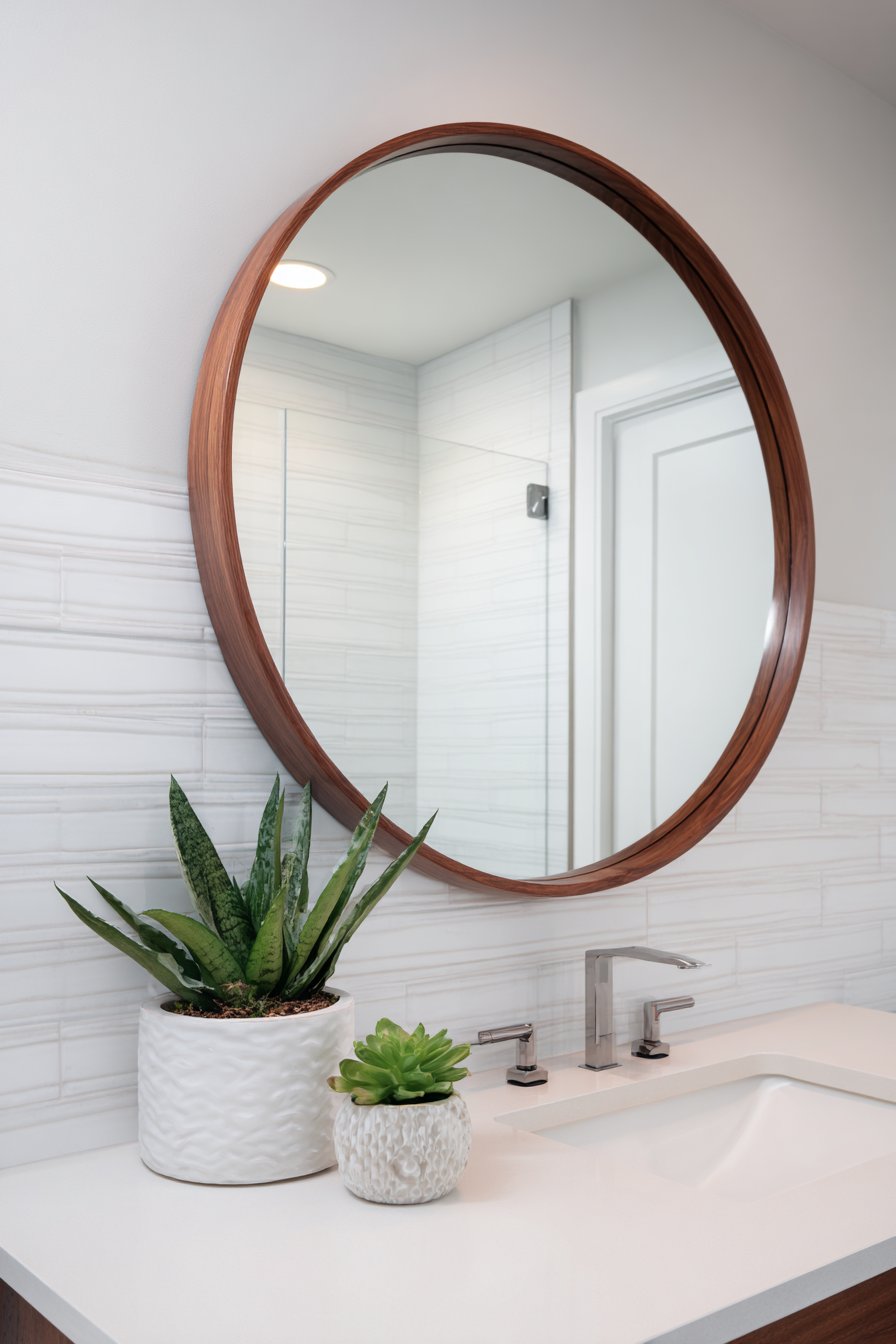
Crisp white subway tiles create a classic backdrop that allows the warm wood-framed mirror to serve as the anchor element in the serene monochromatic space. The white tiles reflect maximum light and create associations with cleanliness, purity, and simplicity—core values in Scandinavian design. A floating white vanity continues the minimalist aesthetic while revealing floor space that makes the room feel larger. Matte black fixtures add subtle contrast without disrupting the peaceful palette, their dark finish creating graphic accents that define functional elements.
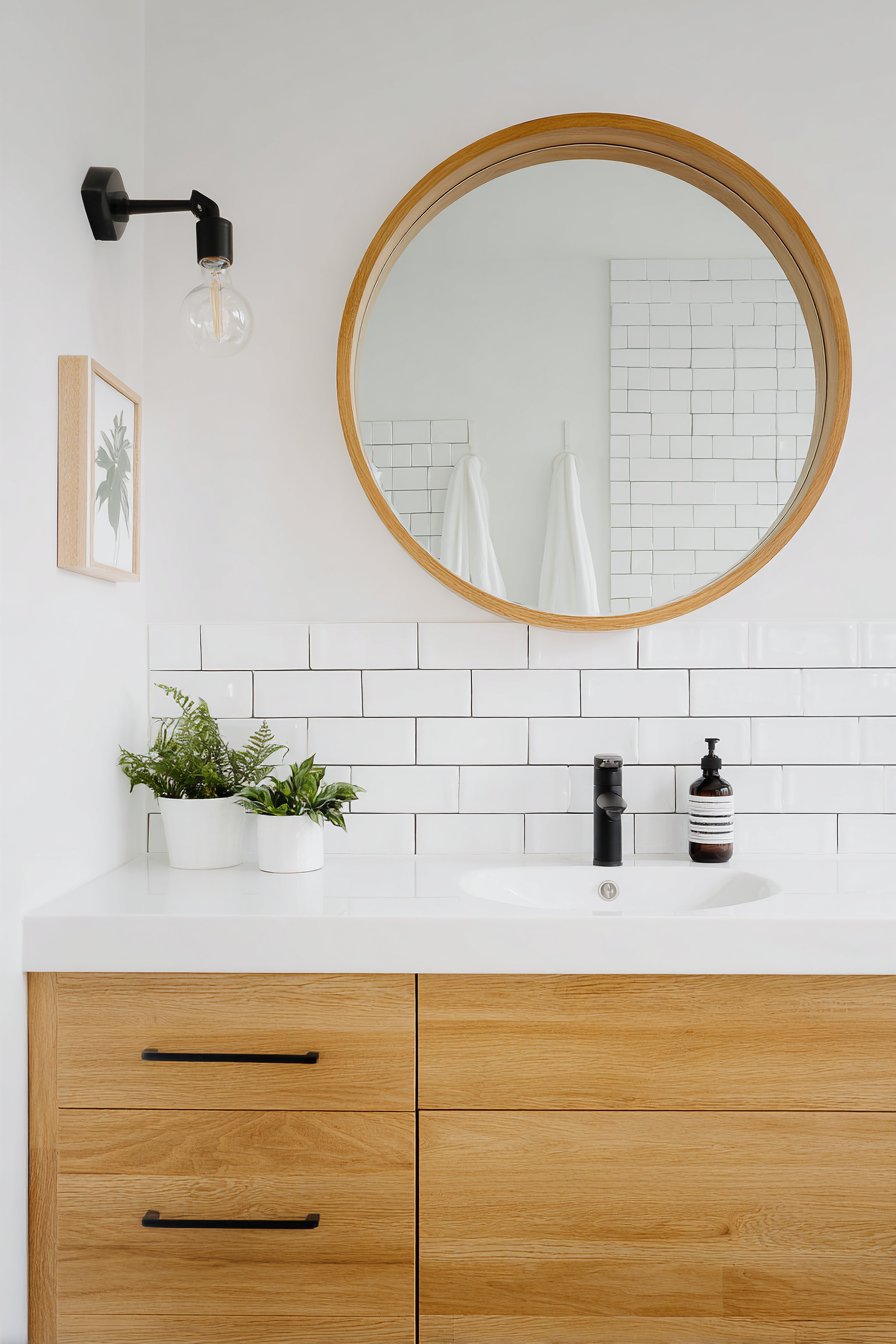
Small green plants add life and connection to nature, an essential component of Scandinavian design. The plants might include pothos, ferns, or succulents—varieties that thrive in bathroom humidity and require minimal maintenance. The green foliage provides the only significant color in the otherwise neutral space, creating a refreshing organic element that softens hard surfaces.
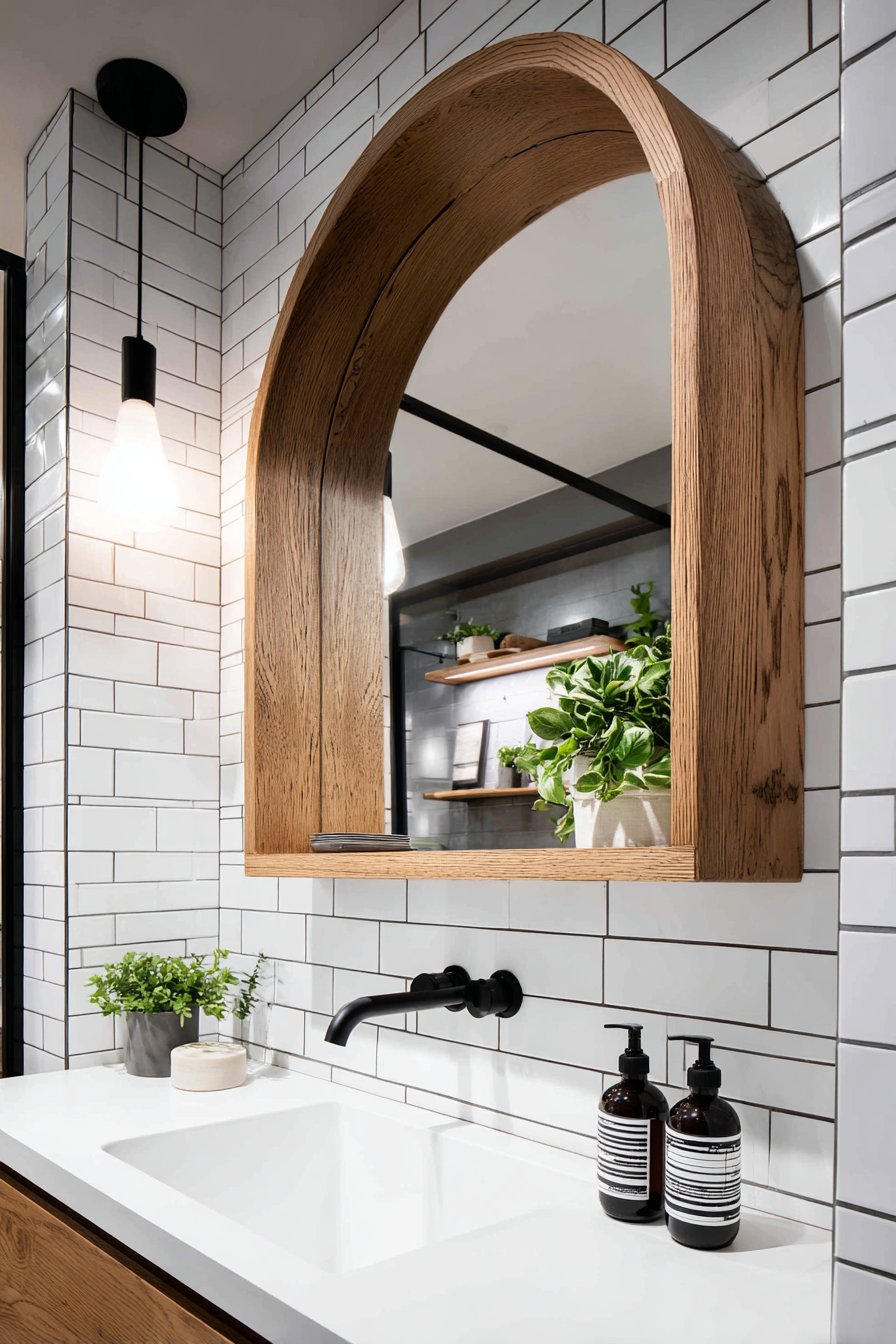
Key design tips for Scandinavian styling: Select oak frames in natural finish with visible grain patterns rather than stained or painted wood to celebrate the material’s authentic beauty. Position the circular mirror centered on the wall at standard height (60-65 inches to center) for balanced, symmetrical composition. Choose white subway tiles in 3×6-inch format with minimal grout lines (⅛ inch maximum) for clean, contemporary appearance. Install floating vanities 18-22 inches above the floor to reveal adequate floor space while maintaining functional storage height. Select matte black fixtures with simple, geometric forms rather than ornate or decorative styles. Incorporate 2-4 small plants in simple white or gray ceramic pots, positioning them on the vanity, shelf, or window sill.
21. Paired Rectangular Mirrors for Dual Vanity Functionality
Practical symmetry and efficient functionality define a small bathroom where dual rectangular mirrors with sleek black frames mount side by side above a double vanity. This paired approach addresses the needs of households where two people share bathroom time, providing individual mirror space without requiring a single oversized mirror that might overwhelm the compact room. Each mirror functions independently, allowing simultaneous use without crowding or shared reflection that can feel intrusive during morning routines.
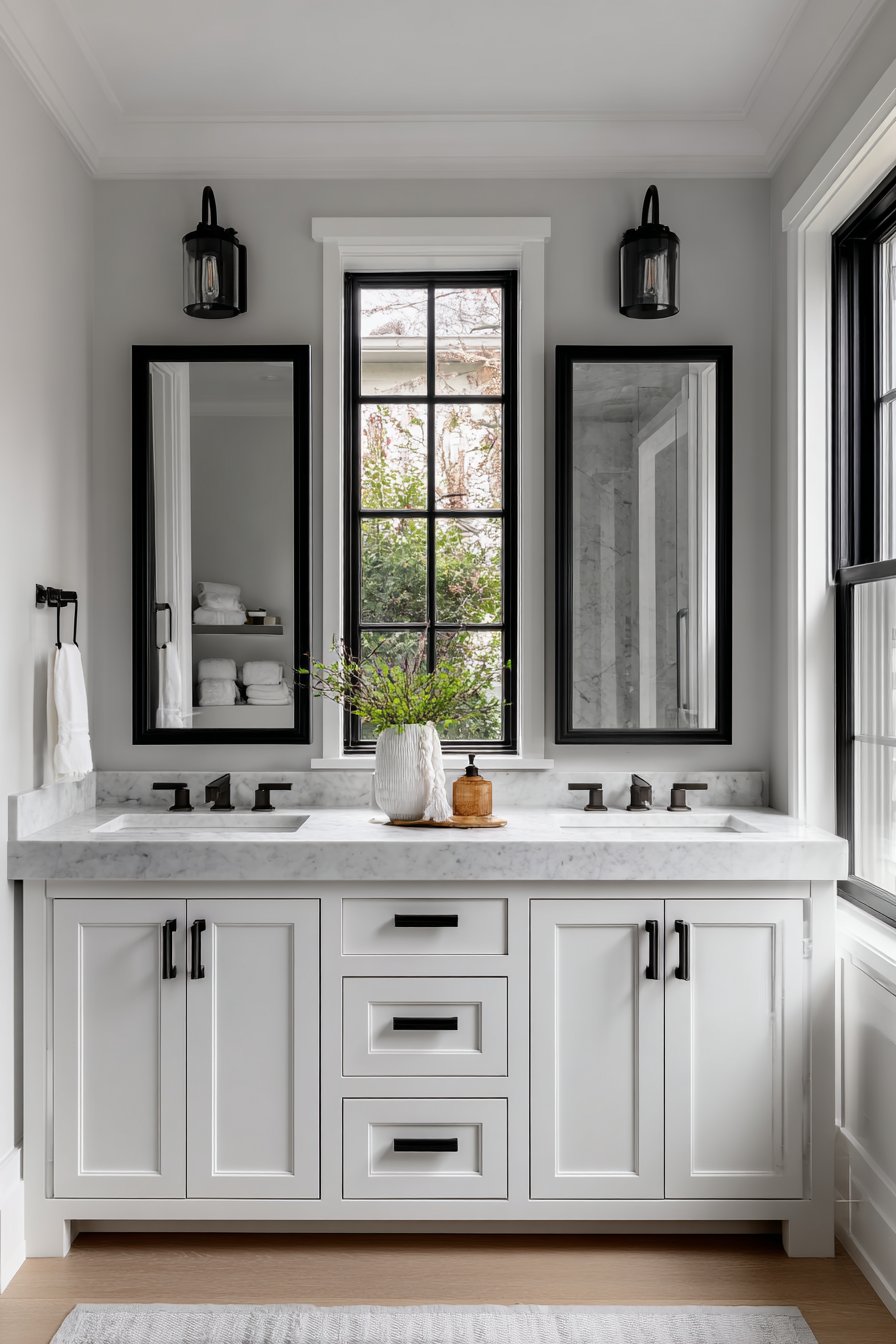
The matching black frames create cohesion and intentional symmetry that feels organized and thoughtful. The repetition of form establishes visual rhythm—the eye moves from one mirror to the other, creating engagement and interest beyond what a single mirror provides. The sleek frame profile maintains contemporary minimalism while providing enough definition to separate the two mirrors visually and establish them as distinct elements rather than a single divided surface. The black finish adds graphic impact and creates strong contrast against white walls and fixtures.
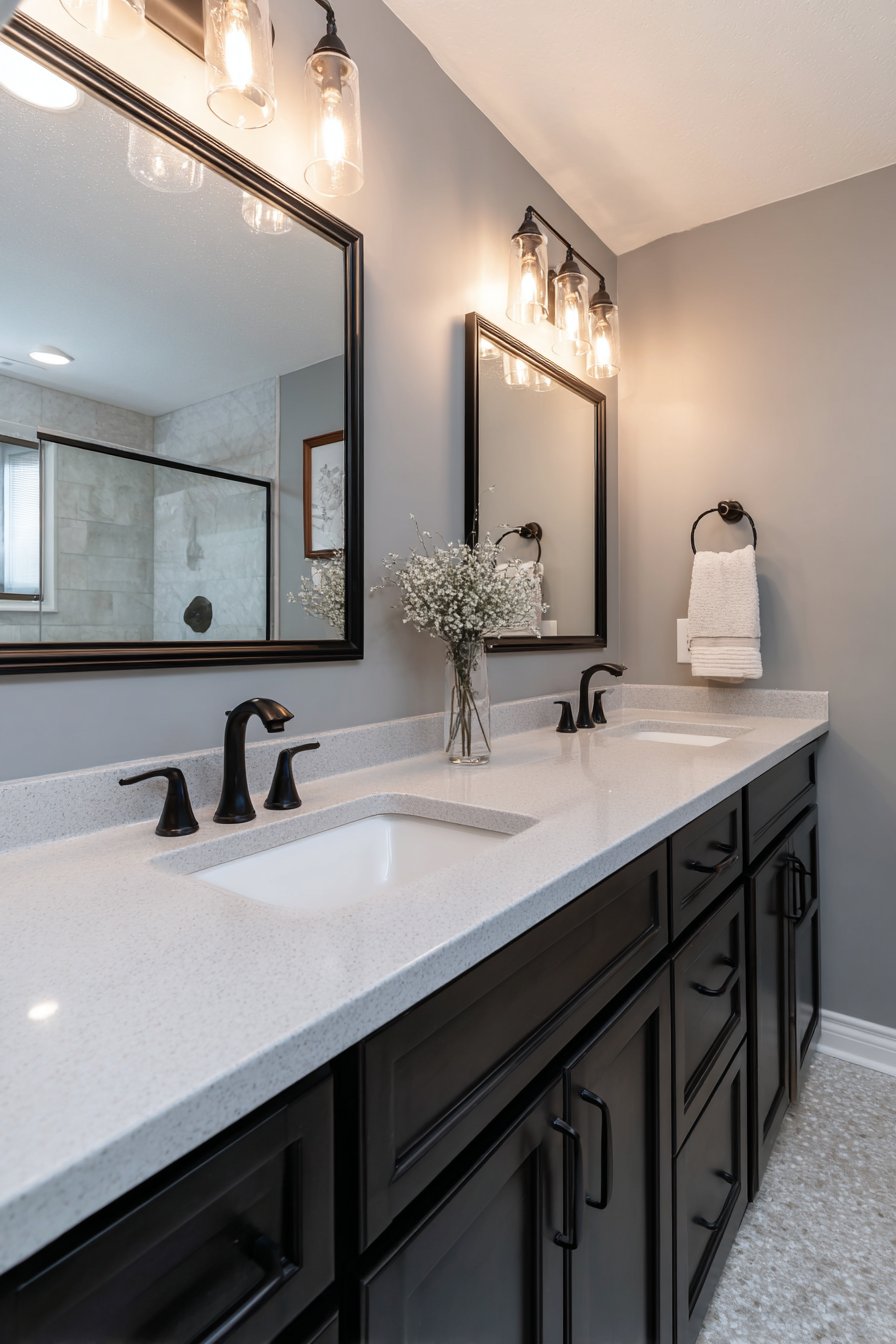
Individual task lighting above each mirror provides functional illumination tailored to each user’s needs. The separate light fixtures might be adjustable sconces, simple bar lights, or contemporary pendants, each positioned to eliminate shadows on faces during grooming activities. This lighting strategy proves more effective than a single central fixture that often creates problematic shadows. The ability to control each light independently adds convenience and energy efficiency.
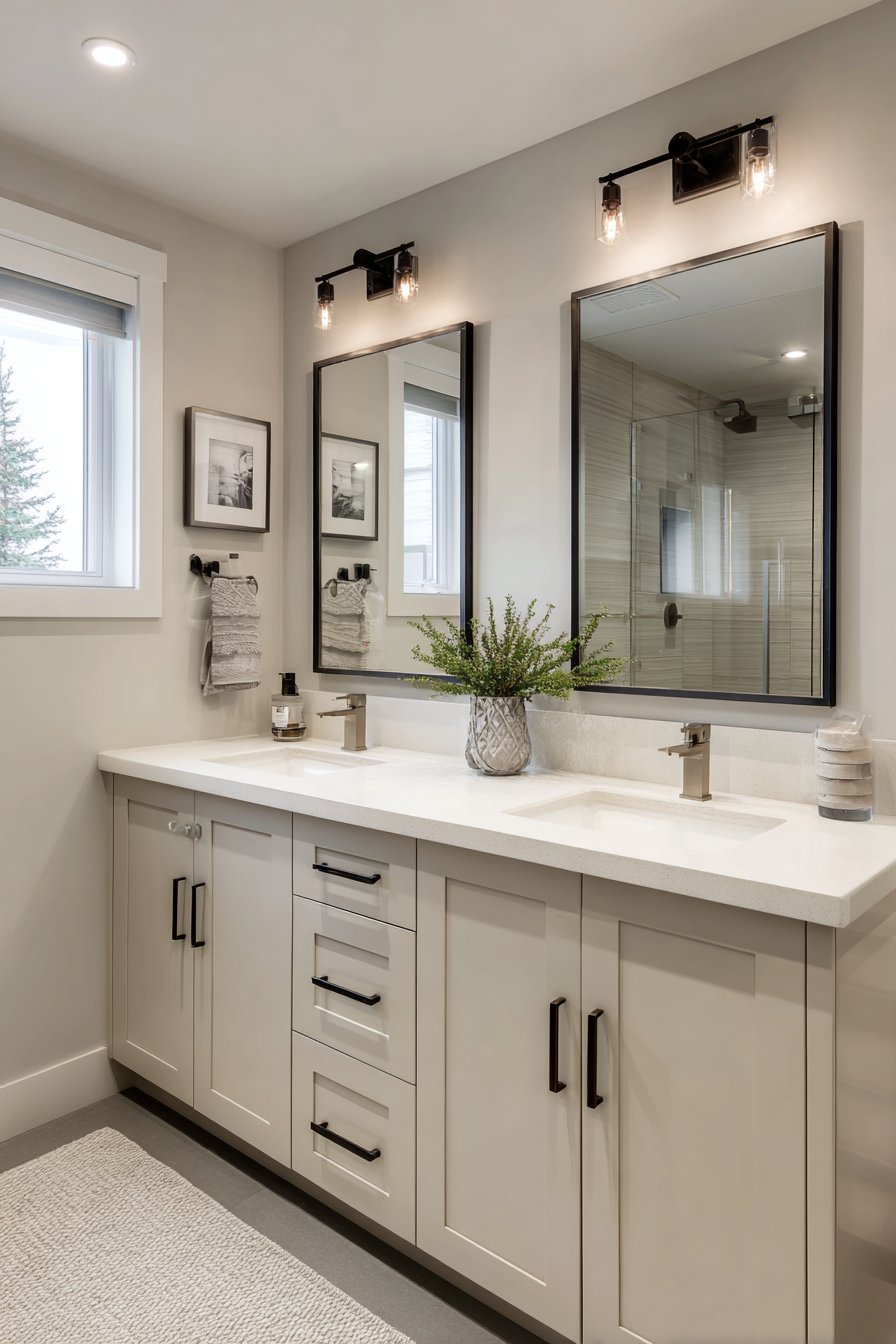
White quartz countertop and gray walls maintain a neutral backdrop that prevents the paired mirrors from feeling too busy or cluttered. The white surface reflects light and provides a clean, hygienic workspace, while gray walls add subtle definition without the starkness of pure white. Brushed nickel fixtures add subtle contrast and complement both the black mirror frames and gray walls, their satin finish avoiding the glare of polished chrome while maintaining contemporary appeal.
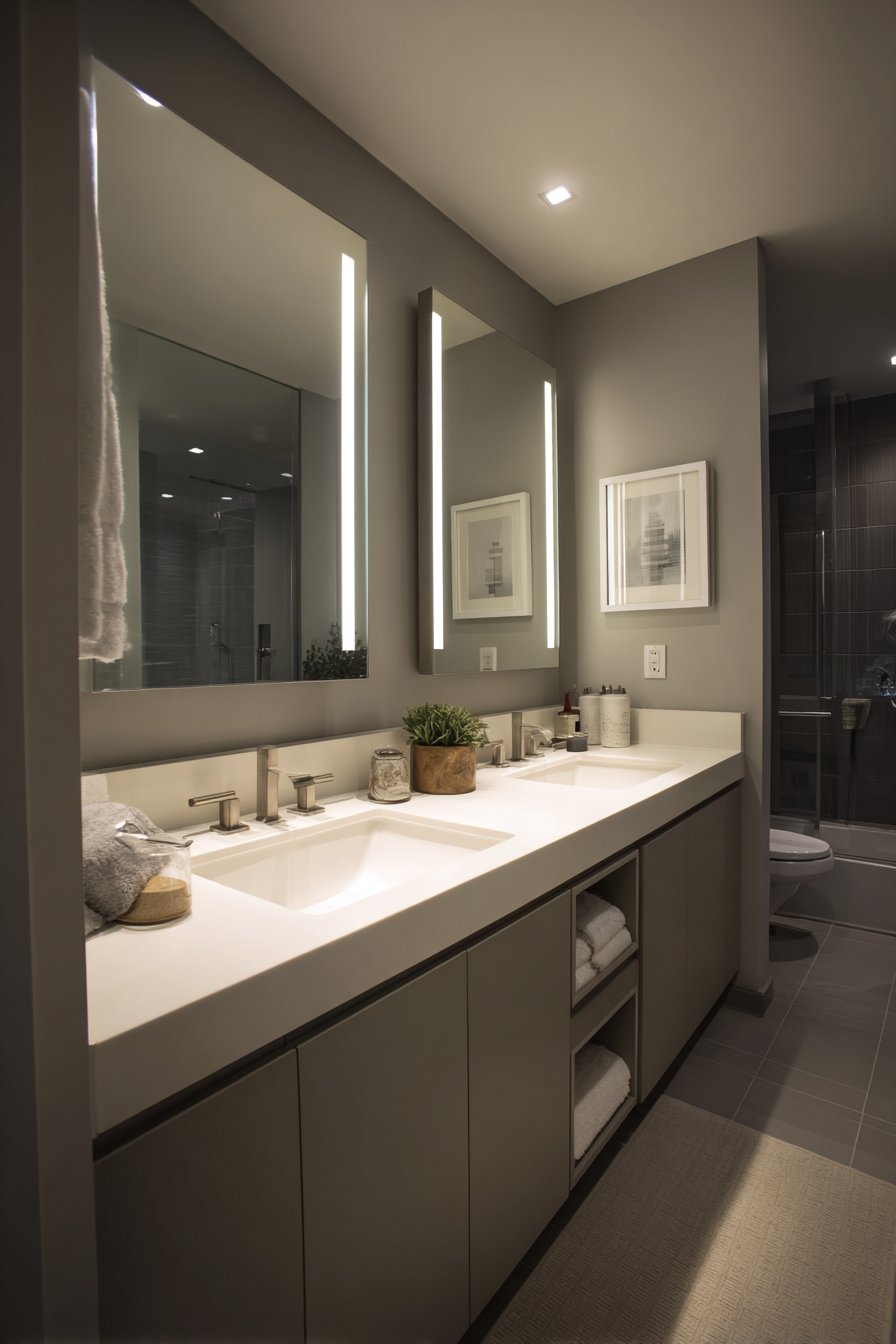
Key design tips for dual mirror installation: Space mirrors 4-6 inches apart to create distinct zones while maintaining visual connection between the two. Size each mirror proportionate to the vanity below—if the double vanity is 60 inches wide, each mirror might be 24-26 inches wide. Mount mirrors at consistent height with tops aligned perfectly for symmetrical appearance. Install individual task lighting centered above each mirror, positioned 75-78 inches from floor for appropriate clearance. Choose identical frames and sizes for both mirrors to maintain symmetry and cohesion. Position the paired mirrors so they’re visible immediately upon entering the bathroom to maximize their spatial impact.
Why These Small Bathroom Mirror Ideas Work
The twenty-one mirror designs explored in this comprehensive guide represent the full spectrum of possibilities for transforming small bathrooms through strategic mirror selection and placement. Each approach addresses the fundamental challenges inherent in compact bathroom spaces—limited square footage, insufficient natural light, storage constraints, and the need to create an environment that feels spacious rather than cramped. The effectiveness of these designs stems from their thoughtful integration of form, function, and spatial psychology.
The oversized round mirror and wall-to-wall frameless options demonstrate how scale defies expectations in small spaces. Rather than selecting diminutive mirrors that match the room’s modest size, these approaches embrace generous proportions that create visual impact and spatial expansion. The large reflective surfaces multiply available light, create depth through reflection, and establish commanding focal points that draw attention away from the room’s actual dimensions. This counterintuitive strategy—going bigger in smaller spaces—works because it prevents the fragmented, cluttered feeling that multiple small elements create.
The vintage-inspired designs including medicine cabinets, apothecary tri-folds, and gilt-framed mirrors succeed by combining aesthetics with essential storage and functionality. Small bathrooms particularly benefit from multipurpose elements that serve multiple needs without consuming additional space. A medicine cabinet provides reflection, storage, and often lighting in a single compact fixture. The vintage styling adds character and personality that transforms utilitarian spaces into rooms with story and soul. These designs prove that practical necessity doesn’t require sacrificing beauty or style.
The contemporary LED-backlit and geometric mirrors appeal through their embrace of modern technology and bold artistic expression. The integrated LED lighting solves the persistent challenge of adequate bathroom illumination while creating atmospheric ambiance that elevates the daily grooming routine to a spa-like experience. The asymmetrical geometric designs and mixed-metal frames demonstrate that even the most compact bathroom can showcase creative design and personal style. These mirrors function as sculptural art pieces that happen to serve practical purposes, proving that function and beauty need not be mutually exclusive.
The specialized solutions—pivot mirrors for adjustability, vertical floor-to-ceiling installations for height emphasis, dual mirrors for shared bathrooms—address specific functional requirements that standard mirror selections often overlook. A pivot mirror accommodates users of different heights without awkward positioning. A vertical mirror creates crucial height perception in bathrooms with standard ceiling heights. Paired mirrors transform a single-user bathroom into a shared space without sacrificing functionality. These targeted solutions demonstrate the importance of analyzing actual usage patterns and selecting mirrors that support daily routines rather than just looking attractive.
The material and finish diversity—from rustic reclaimed wood to polished brass, from matte black to champagne gold, from natural oak to ornate white paint—ensures compatibility with any existing bathroom style or design vision. A coastal bathroom benefits from nautical porthole mirrors and seafoam shiplap, while a modern space demands sleek LED-backlit designs and minimalist frameless installations. The farmhouse aesthetic requires window-frame repurposing and distressed finishes, while Art Deco glamour calls for sunburst designs and Venetian etching. This stylistic range means homeowners need not compromise their design preferences when working with small bathroom constraints.
The lighting integration across these designs—from Edison bulb sconces to crystal fixtures, from LED backlighting to strategic window positioning—recognizes that mirrors and light function symbiotically. A mirror without adequate lighting serves only partial purpose, while proper illumination without reflective surfaces fails to maximize its potential. The best small bathroom mirror designs consider how natural and artificial light sources will interact with reflective surfaces to brighten spaces, eliminate shadows, and create the inviting ambiance essential for daily grooming routines.
The color palette strategies—from monochromatic white schemes to dramatic navy backgrounds, from soft pink romance to sophisticated gray neutrals—demonstrate how mirror frames and surrounding colors work together to influence spatial perception. Light colors expand, dark colors envelop, and the right combination creates balance between spaciousness and intimacy. The mirror frame finish must complement wall colors while providing sufficient contrast to establish visual interest. These coordinated color approaches ensure cohesive designs that feel intentional rather than haphazard.
Conclusion
Small bathrooms present unique design challenges, but as these twenty-one mirror ideas demonstrate, constraints often inspire the most creative and effective solutions. The strategic selection and placement of bathroom mirrors transcends mere functionality, becoming a powerful tool for spatial transformation, light manipulation, and personal expression. Whether you choose an oversized round mirror that defies small-space conventions, a vintage medicine cabinet that combines storage with style, a dramatic LED-backlit installation that creates spa-like ambiance, or a rustic wood-framed design that brings natural warmth, your mirror choice fundamentally shapes the character and perceived spaciousness of your bathroom.
The most successful small bathroom mirror installations share common characteristics: they maximize reflective surface area to bounce light and create depth, they coordinate thoughtfully with existing fixtures and finishes, they serve multiple purposes when possible (reflection, storage, lighting, decoration), and they express clear design intent rather than defaulting to basic builder-grade selections. The mirror should feel like a considered choice that enhances your daily routine while contributing to an environment that feels spacious, well-lit, and personally meaningful.
As you consider which mirror approach best suits your small bathroom, reflect on your priorities: Do you need additional storage? Does the room lack natural light? Would you benefit from adjustable angles or specialized lighting? Does your design aesthetic lean traditional, contemporary, rustic, or glamorous? The answers to these questions will guide you toward the mirror solution that not only fits your space physically but also supports your lifestyle and design vision. Don’t be afraid to embrace bold choices—an oversized mirror in a tiny powder room, a dramatic dark wall behind a metallic frame, or an unconventional geometric shape that challenges expectations.
Transform your small bathroom from a purely functional necessity into a beautiful, inspiring space that you genuinely enjoy spending time in each day. The right mirror makes that transformation possible, proving that even the most compact rooms can deliver both style and substance when approached with creativity, intention, and a clear understanding of how design elements work together to shape our experience of space.
