
When it comes to interior design, few challenges are as rewarding as transforming a small bathroom into a beautiful, functional sanctuary. The flooring you choose for your compact bathroom serves as the foundation—quite literally—for the entire space’s aesthetic and practical success. Whether you’re renovating a powder room, updating a guest bathroom, or reimagining your primary ensuite, the right flooring choice can make your small bathroom feel larger, brighter, and infinitely more inviting. From timeless ceramic tiles to innovative luxury vinyl planks, the world of small bathroom flooring has evolved dramatically, offering homeowners an unprecedented array of options that balance beauty, durability, and budget considerations.
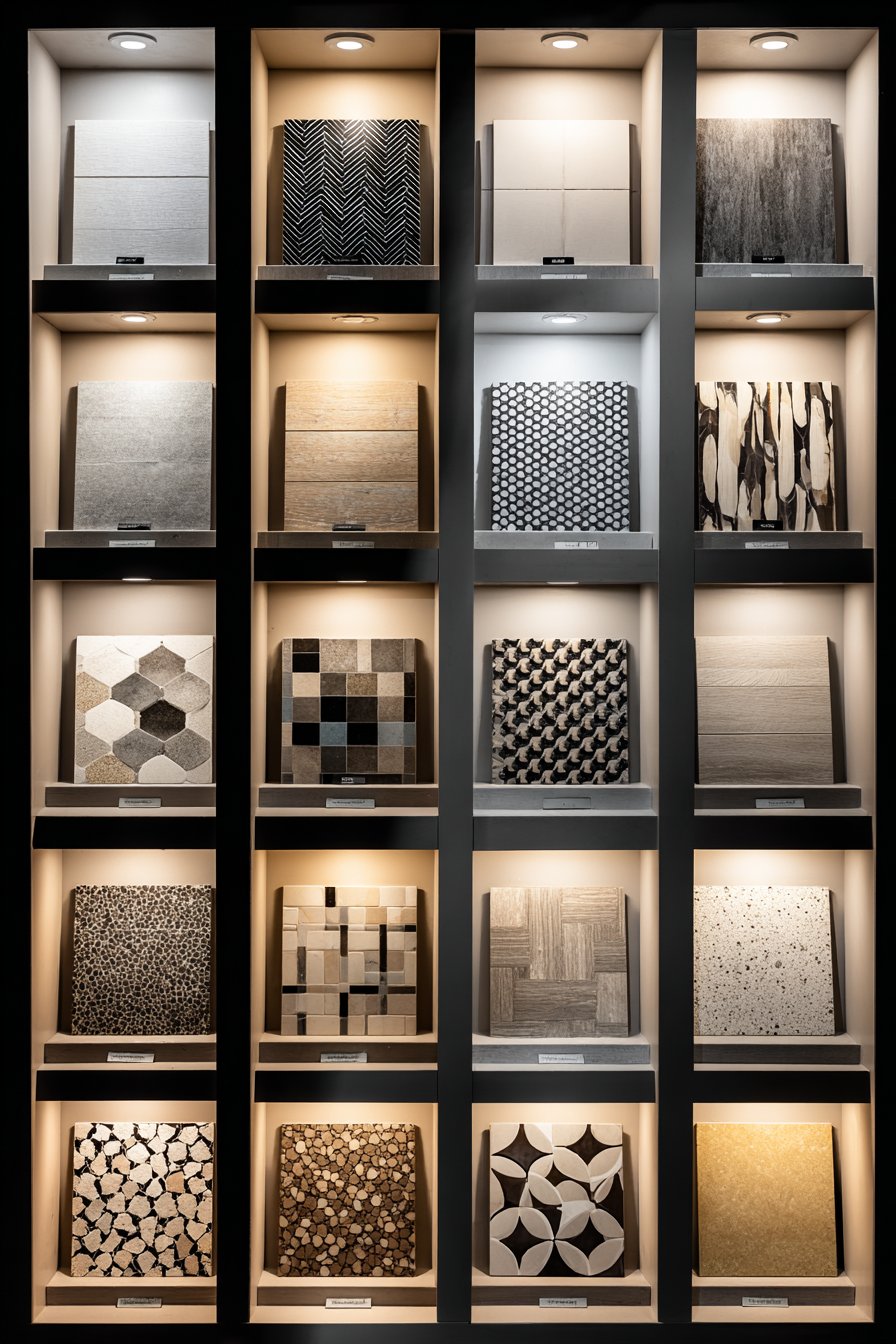
Small bathroom flooring ideas have become increasingly sophisticated, with manufacturers developing materials that address the unique challenges of compact, moisture-prone spaces while delivering stunning visual impact. The key to success lies in understanding how different flooring materials, patterns, colors, and installation techniques can manipulate spatial perception, enhance light reflection, and create cohesive design narratives. Modern flooring solutions go far beyond simple functionality—they’re opportunities to express personal style, create visual interest, and establish the mood for your entire bathroom experience. Whether you’re drawn to the classic elegance of marble-look porcelain, the warmth of wood-inspired luxury vinyl, or the artistic character of patterned cement tiles, there’s a perfect flooring solution waiting to transform your small bathroom.
In this comprehensive guide, we’ll explore 21 exceptional small bathroom flooring ideas that demonstrate the remarkable versatility available to today’s homeowners. Each concept showcases how thoughtful flooring choices can overcome spatial limitations, enhance architectural features, and create bathrooms that feel both luxurious and livable. From budget-friendly options that don’t compromise on style to premium materials that bring spa-like sophistication, these ideas will inspire you to see your small bathroom’s floor not as a limitation, but as a canvas for creative expression and functional excellence.
1. Light Gray Porcelain Elegance with Marble Veining
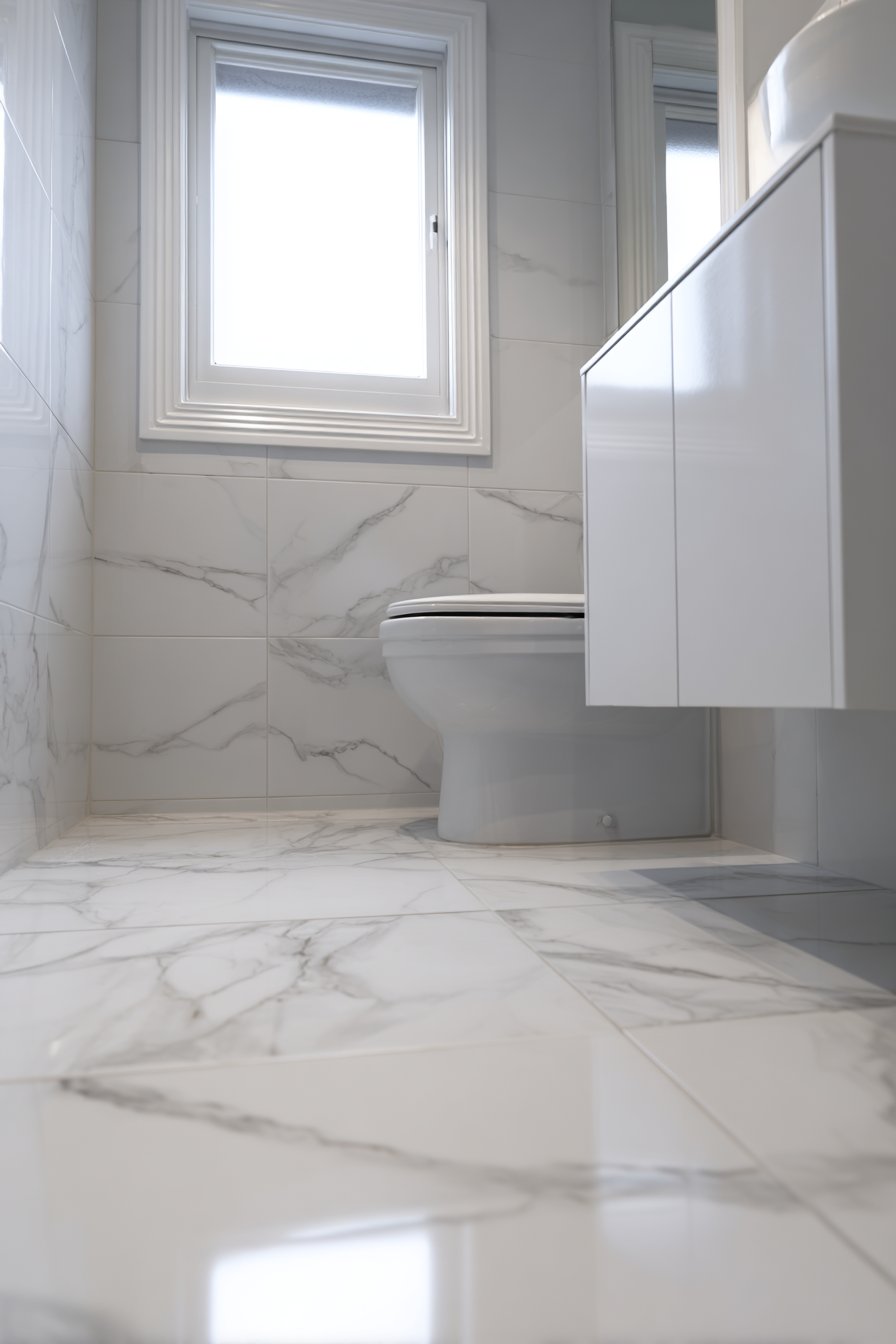
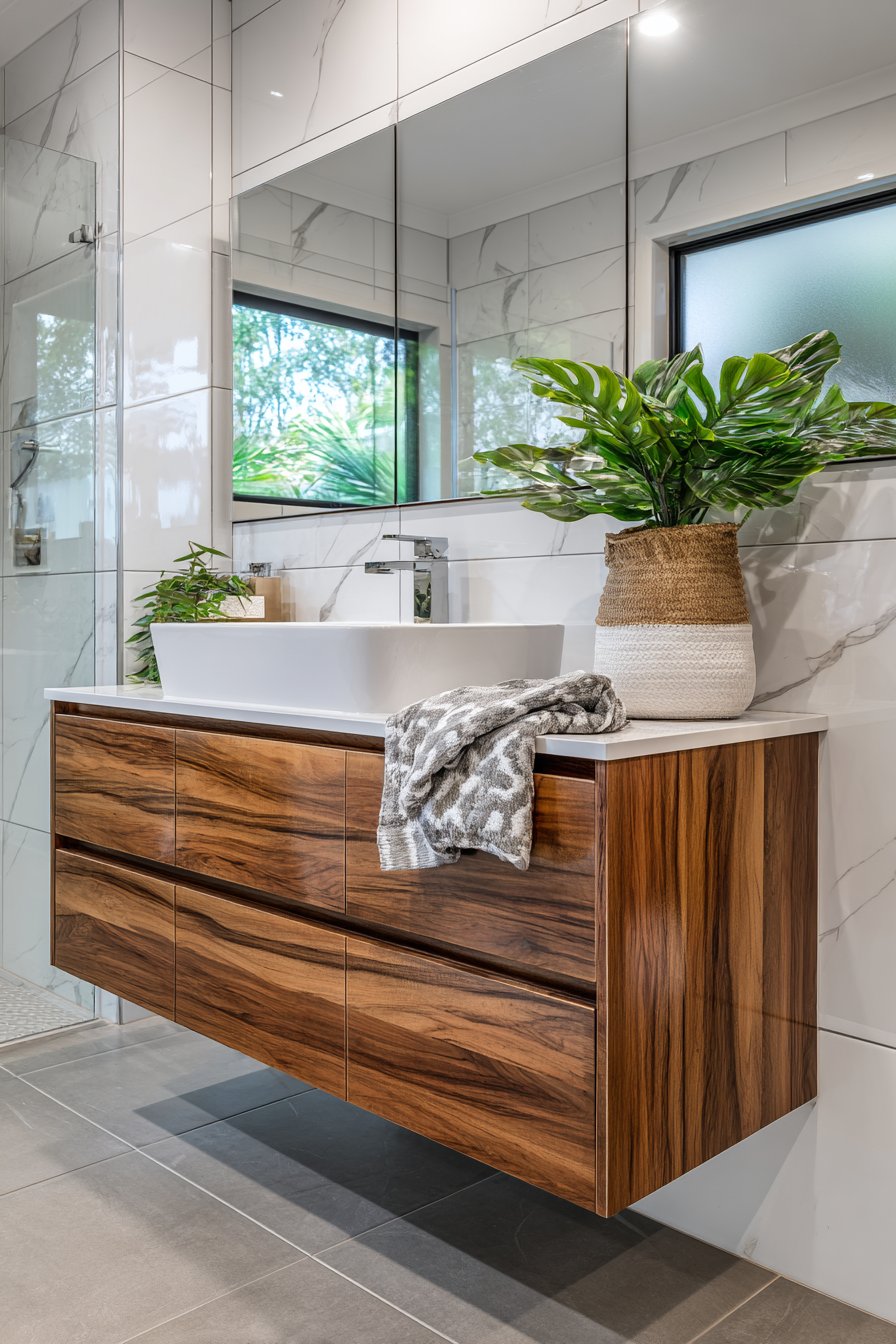
Large-format light gray porcelain tiles with subtle marble veining represent one of the most sophisticated approaches to small bathroom flooring ideas. These tiles create an illusion of expanded space through visual continuity, with minimal grout lines allowing the eye to travel uninterrupted across the floor surface. The gentle marble pattern adds depth and interest without overwhelming the compact dimensions, while the neutral gray palette provides a versatile foundation that complements virtually any design direction. The matte finish of these porcelain tiles offers practical slip resistance while maintaining an upscale aesthetic that rivals natural stone at a fraction of the cost and maintenance requirements.
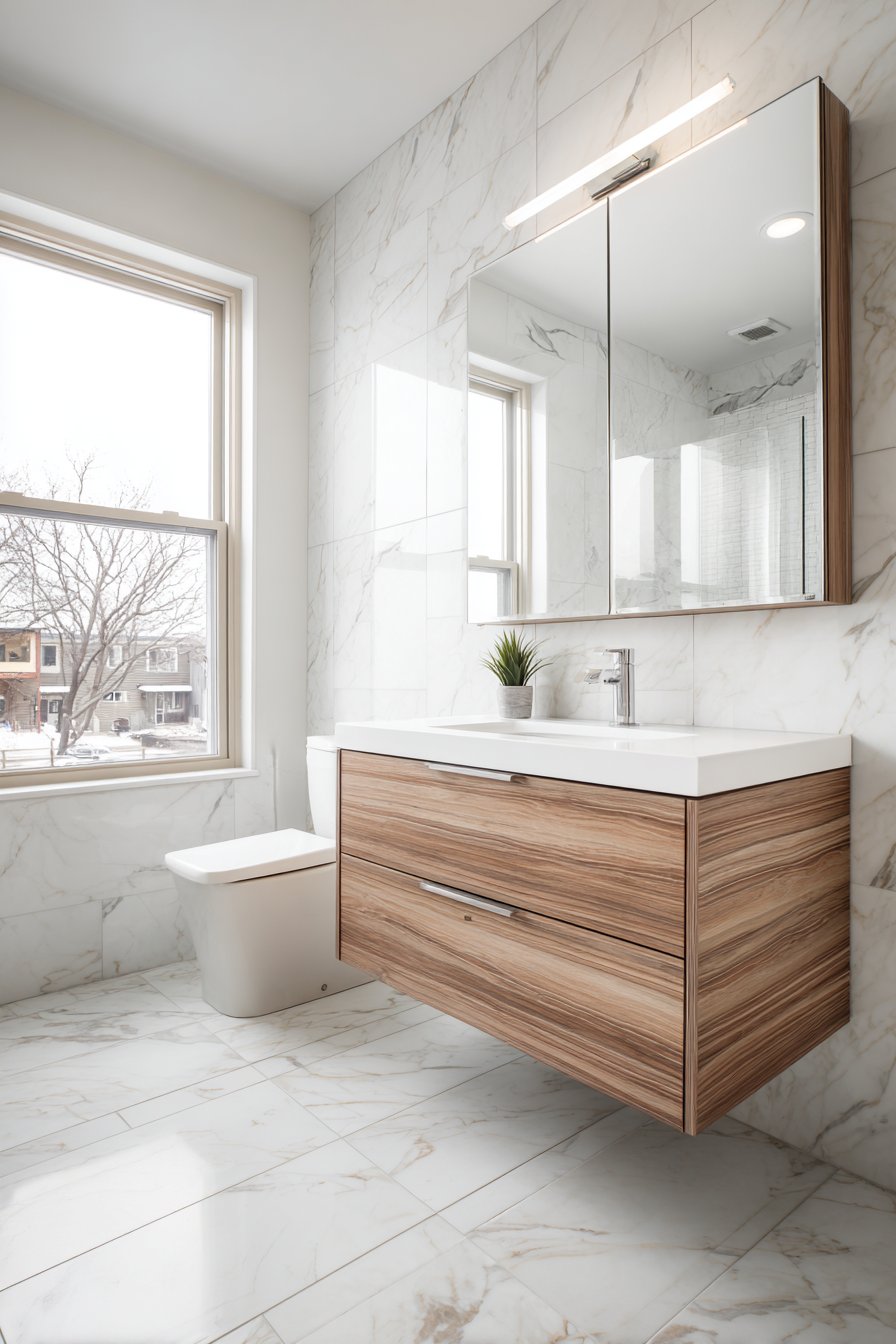
The beauty of this flooring approach lies in its ability to anchor a minimalist design scheme while providing enough visual texture to prevent sterility. When paired with matte white walls and a floating vanity, the gray porcelain creates a contemporary sanctuary that feels both spacious and grounded. The subtle veining catches natural light from windows, creating gentle movement across the surface that adds life to the space without busy patterns. This flooring choice works particularly well in small bathrooms because the large tile format reduces the number of grout lines, which can visually fragment a floor and make spaces feel smaller and more cluttered.
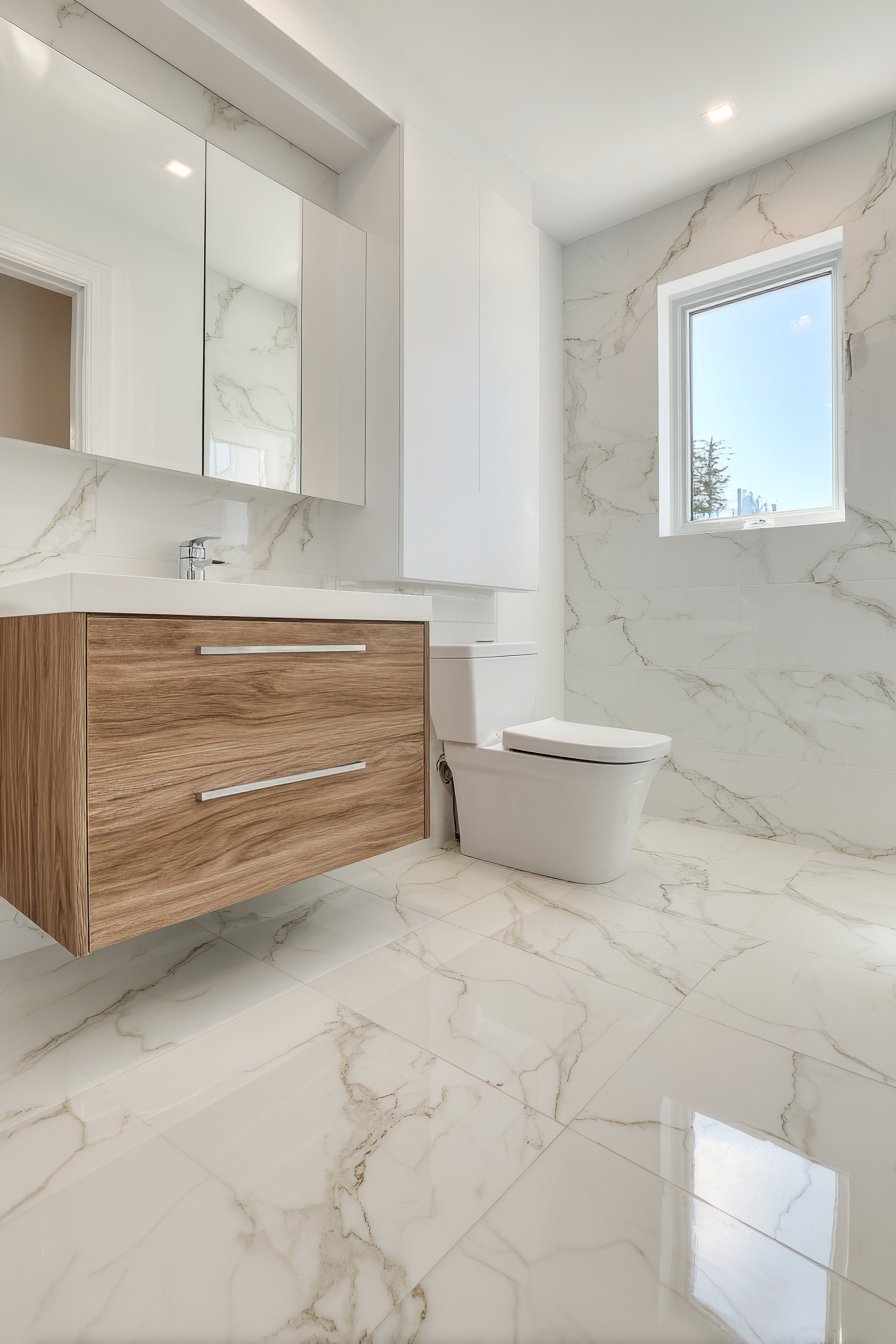
Professional interior designers frequently recommend this type of flooring for small bathrooms because it strikes the perfect balance between visual interest and spatial harmony. The porcelain material offers exceptional durability and water resistance—critical factors in bathroom environments where moisture exposure is constant. Unlike natural marble, which requires sealing and careful maintenance, porcelain tiles with marble aesthetics deliver the luxurious appearance without the high-maintenance demands. The light gray coloration also has the practical advantage of disguising water spots and minor wear better than pure white or very dark floors, making it an intelligent choice for busy households.
Key Design Tips:
- Select tiles at least 12×24 inches to minimize grout lines and maximize visual flow
- Install tiles in the same direction as the longest wall to emphasize length
- Choose a light to medium gray that coordinates with your fixture finishes
- Use light-colored grout in a similar tone to the tile for seamless appearance
- Extend the same flooring into the shower area to create unified visual space
2. Classic White Hexagonal Tile Pattern
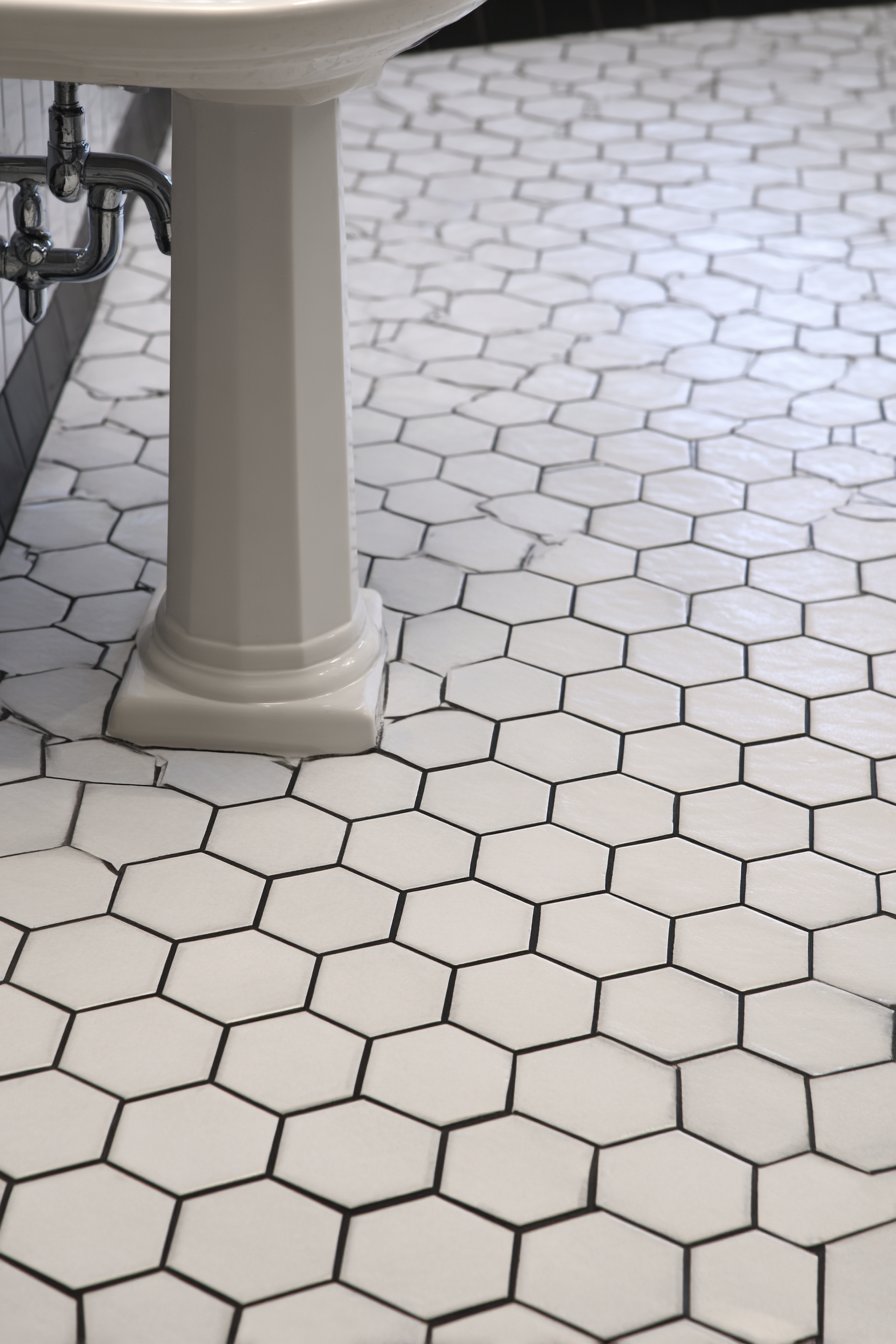
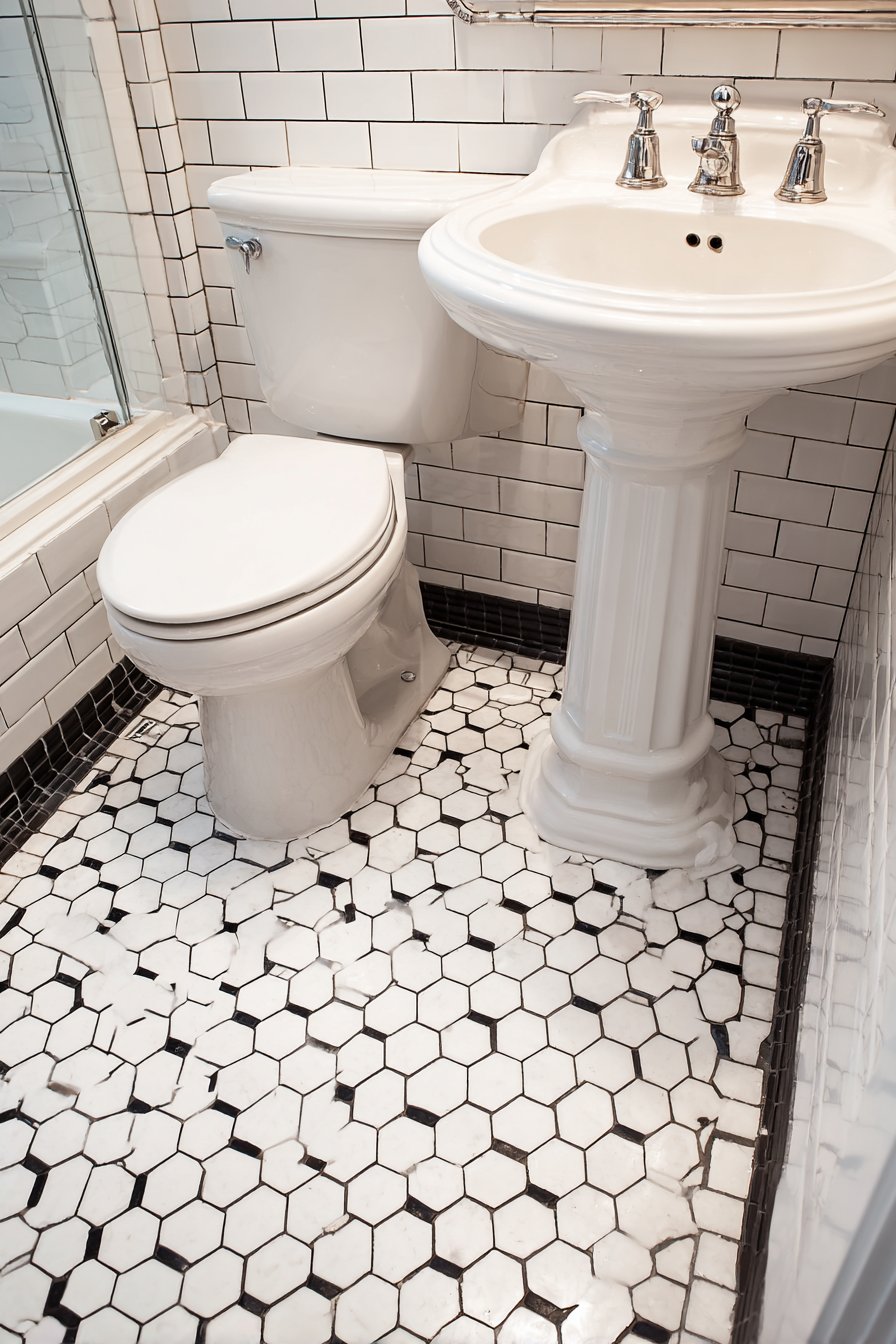
White hexagonal porcelain tiles represent a timeless small bathroom flooring idea that brings geometric interest to compact spaces without overwhelming them. The distinctive six-sided shape creates a honeycomb pattern that adds character and visual texture while maintaining the light-reflective properties essential for making small bathrooms feel more spacious. When installed with dark gray grout lines, these tiles achieve a striking contrast that defines the geometric pattern while providing a practical advantage—darker grout shows less staining and wear over time, maintaining its fresh appearance longer than white grout alternatives.
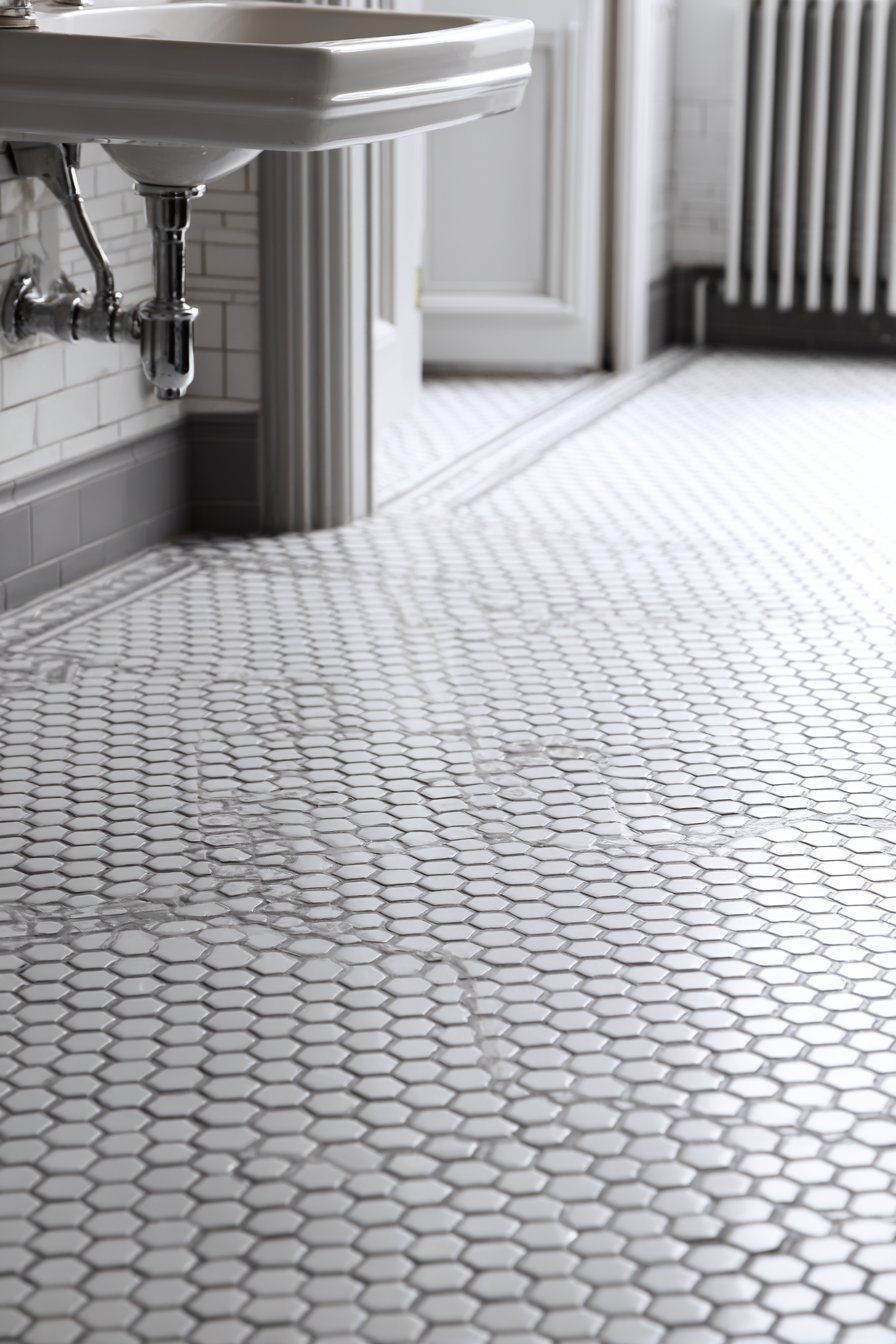
The hexagonal tile format works exceptionally well in small bathrooms because the pattern creates visual interest at a human scale—engaging enough to be noticed, yet restrained enough not to dominate. The geometric repetition provides rhythm and movement across the floor, drawing the eye throughout the space and creating a sense of dimension that flat, plain tiles cannot achieve. This classic pattern has enjoyed renewed popularity in recent years as homeowners embrace vintage-inspired and transitional design styles that bridge traditional and contemporary aesthetics. The white tile base ensures maximum light reflection, brightening even windowless bathrooms while providing a clean, hygienic appearance.
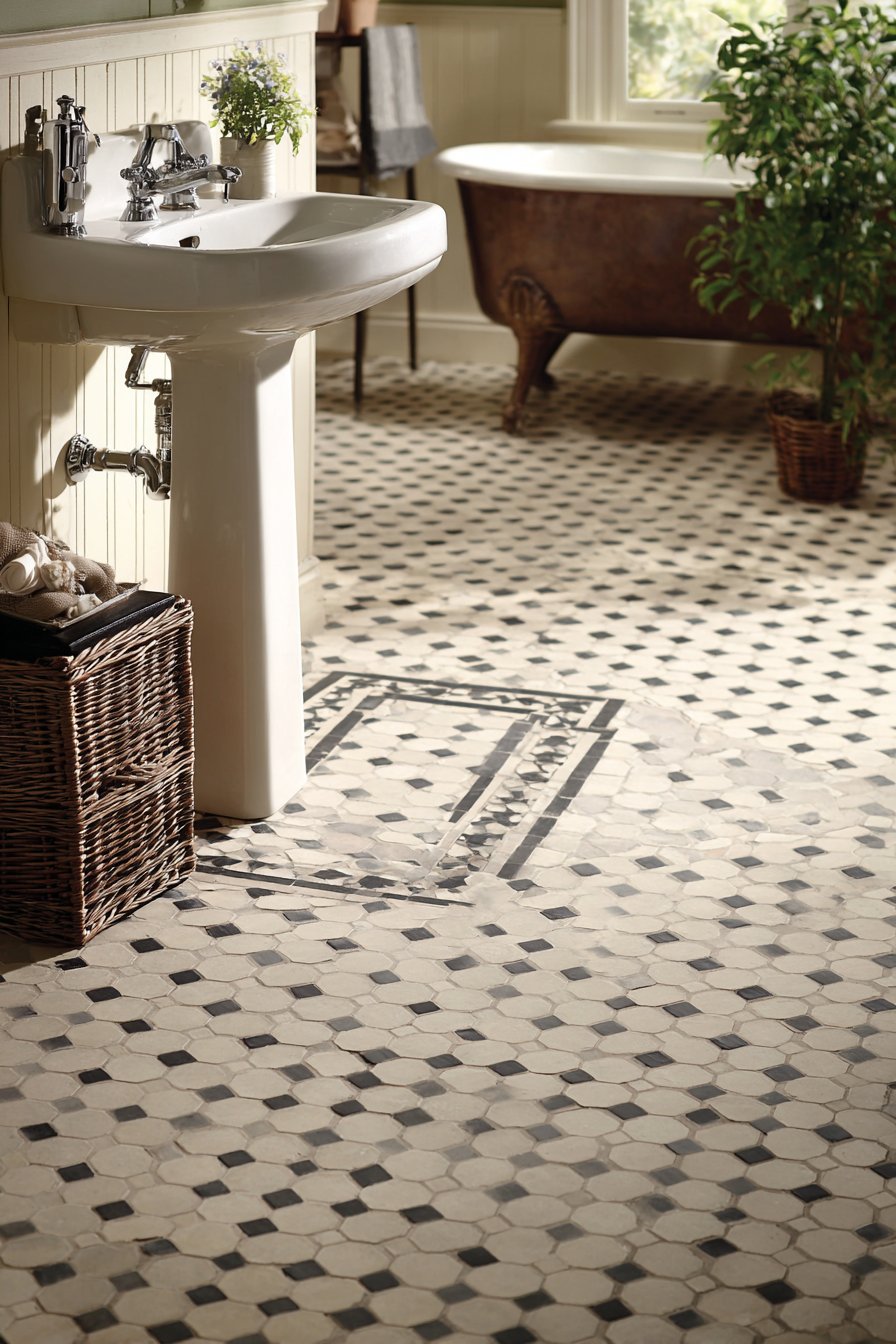
From a practical standpoint, hexagonal tiles offer advantages beyond aesthetics. The smaller individual tile size—typically 2 to 4 inches per side—makes them ideal for bathroom floors that require slopes toward drains or accommodate curved shower bases. The multiple grout lines provide excellent slip resistance when textured tiles are chosen, an important safety consideration in wet bathroom environments. The pattern also has the benefit of camouflaging imperfections in subfloor preparation better than large-format tiles, which can highlight even minor irregularities. This forgiving quality makes hexagonal tiles an excellent choice for renovation projects where perfect subfloor flatness may be challenging to achieve.
Key Design Tips:
- Choose matte or textured hexagonal tiles rather than glossy finishes for better slip resistance
- Use a high-quality epoxy grout in charcoal or gray for superior stain resistance and durability
- Consider extending the hexagonal pattern partway up walls for a cohesive, vintage-inspired look
- Pair with simple, streamlined fixtures to let the floor pattern be the focal point
- Ensure proper tile spacing and professional installation for pattern precision
3. Warm Honey-Toned Luxury Vinyl Planks in Diagonal Layout
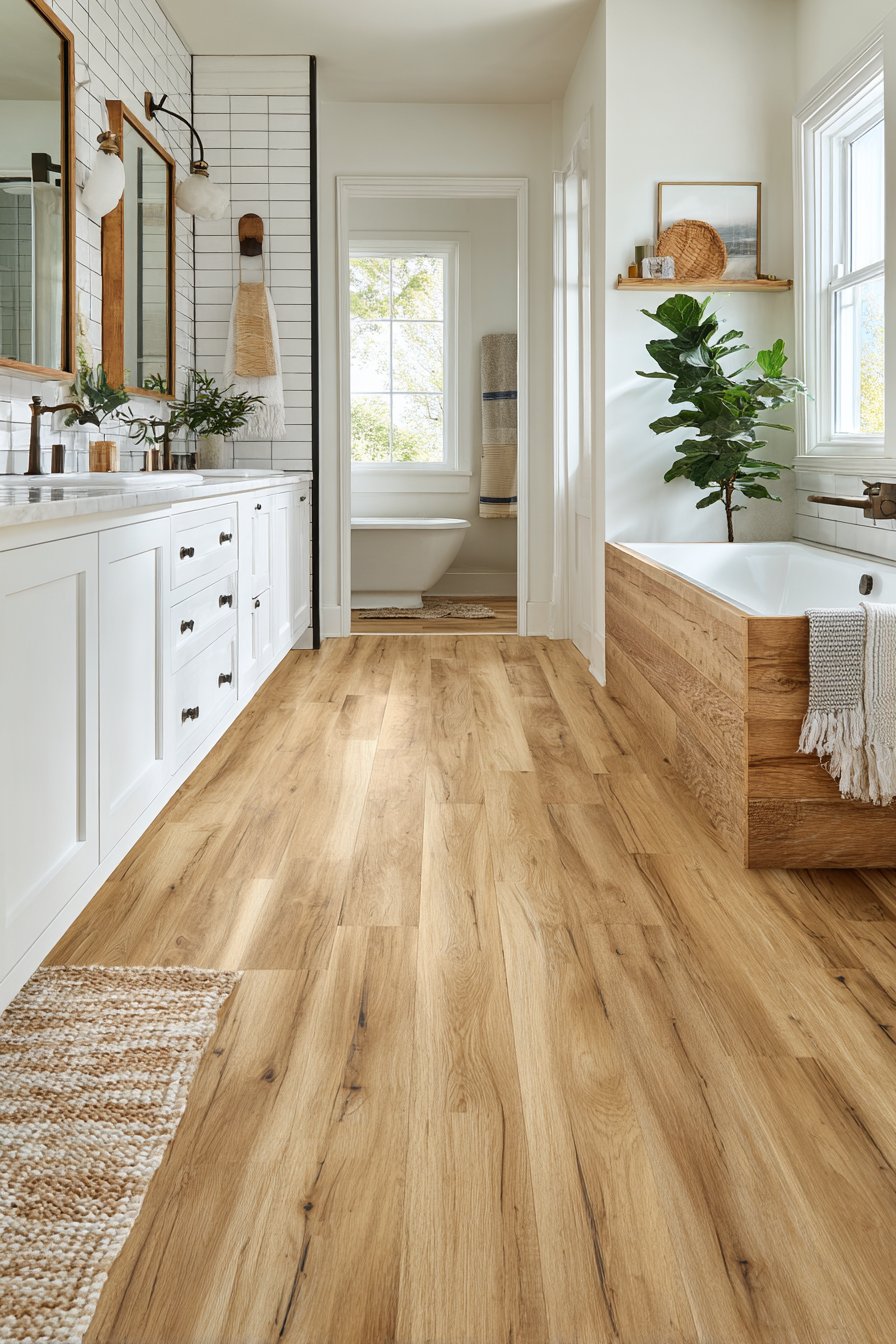
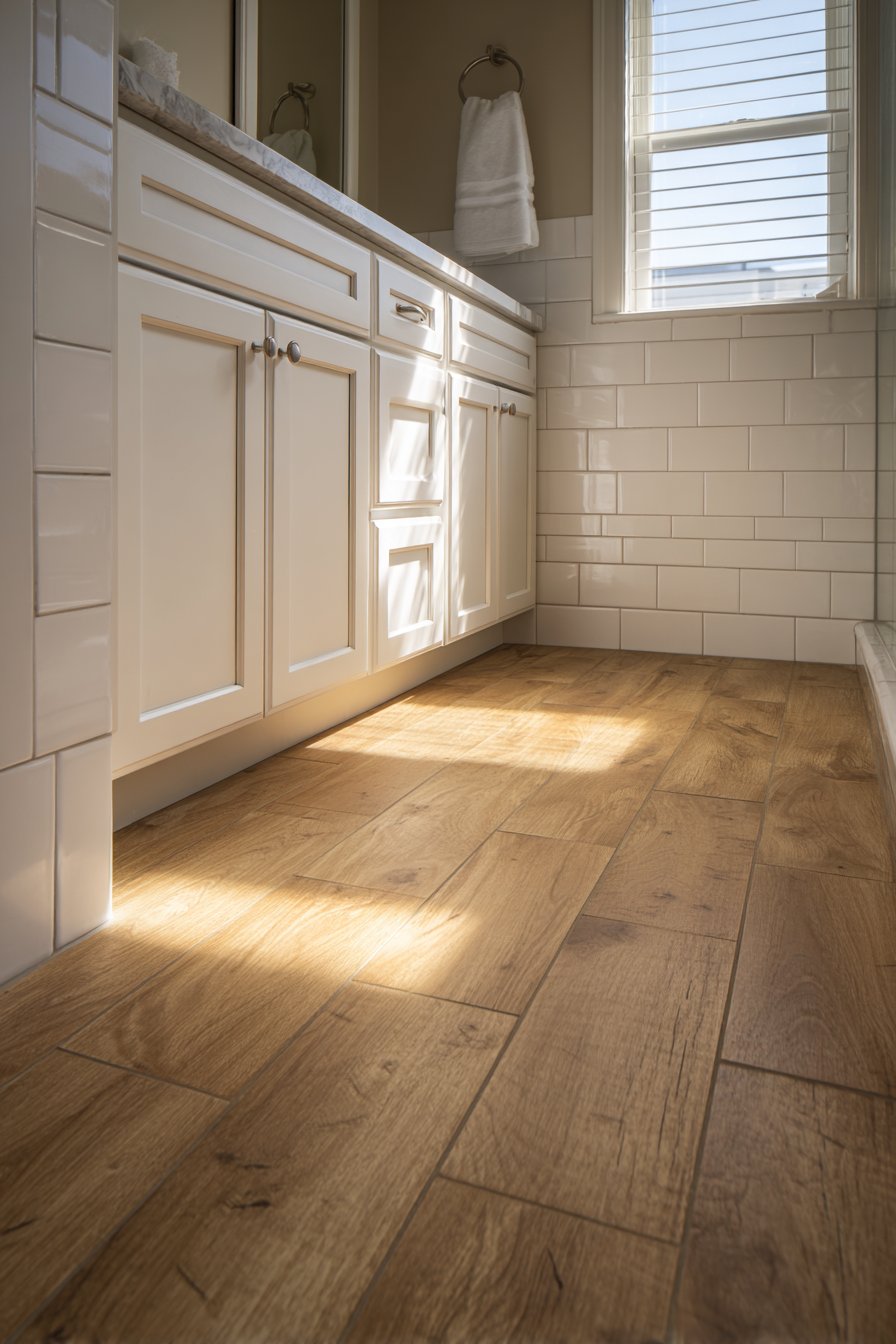
Luxury vinyl planks in warm honey tones offer an innovative small bathroom flooring idea that brings the organic beauty of wood into moisture-prone spaces without the drawbacks of real hardwood. When installed diagonally rather than parallel to walls, these planks create dynamic visual interest that tricks the eye into perceiving more space—the diagonal lines lead the gaze outward toward corners, making the room feel wider and more expansive. Modern luxury vinyl technology has achieved remarkable realism, with advanced printing and embossing techniques creating authentic grain patterns, knots, and color variations that closely mimic natural wood species like oak, maple, or hickory.
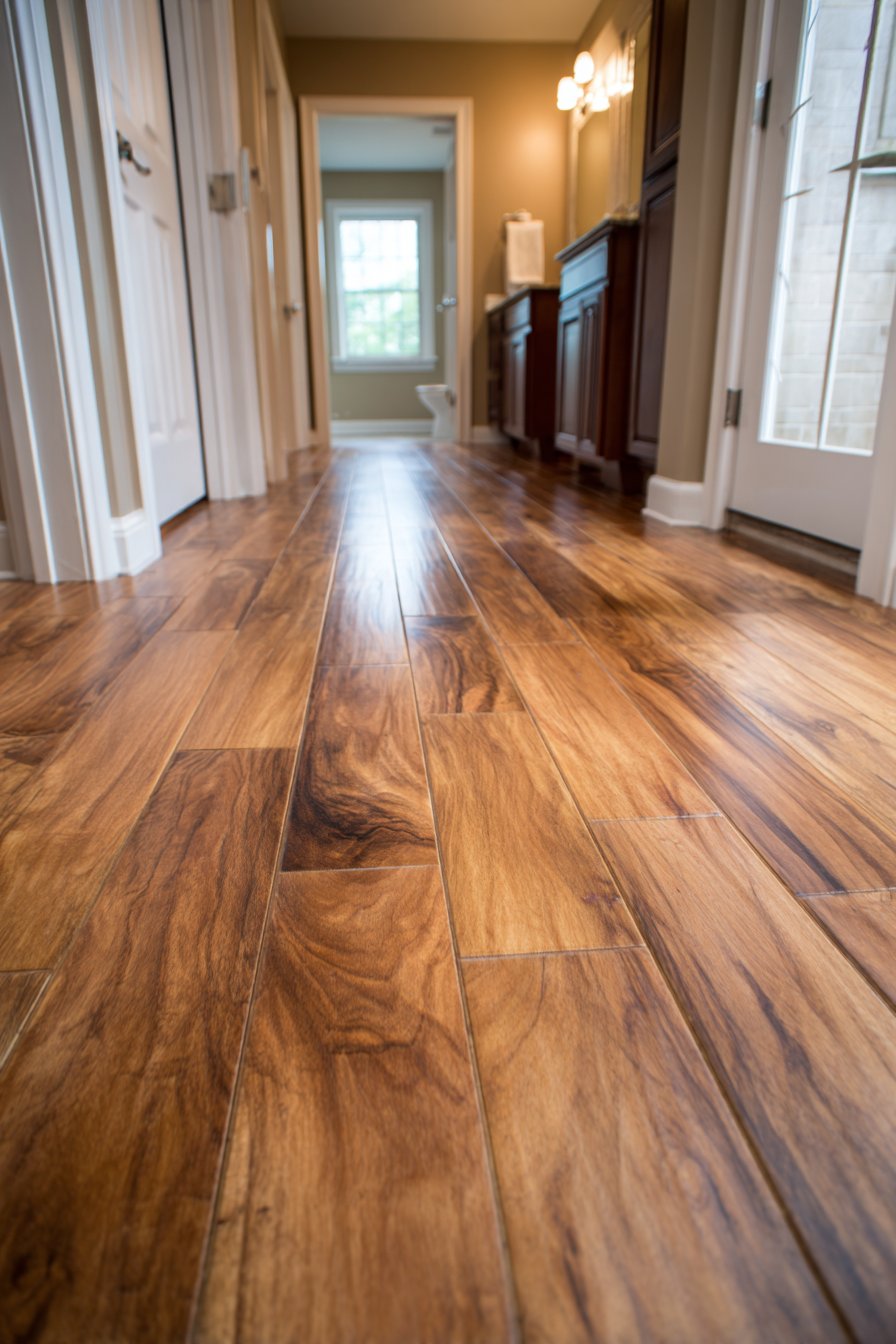
The warmth of honey-toned flooring provides psychological comfort in bathroom spaces, creating an inviting atmosphere that contrasts beautifully with the cool, hard surfaces typically found in bathrooms—ceramic sinks, glass shower enclosures, and metal fixtures. This color palette works particularly well in small bathrooms because warm neutrals reflect light effectively while adding depth that pure white or gray schemes sometimes lack. The wood-look aesthetic also helps small bathrooms feel more like intentional living spaces rather than purely functional rooms, elevating the design to match the rest of your home’s interior.
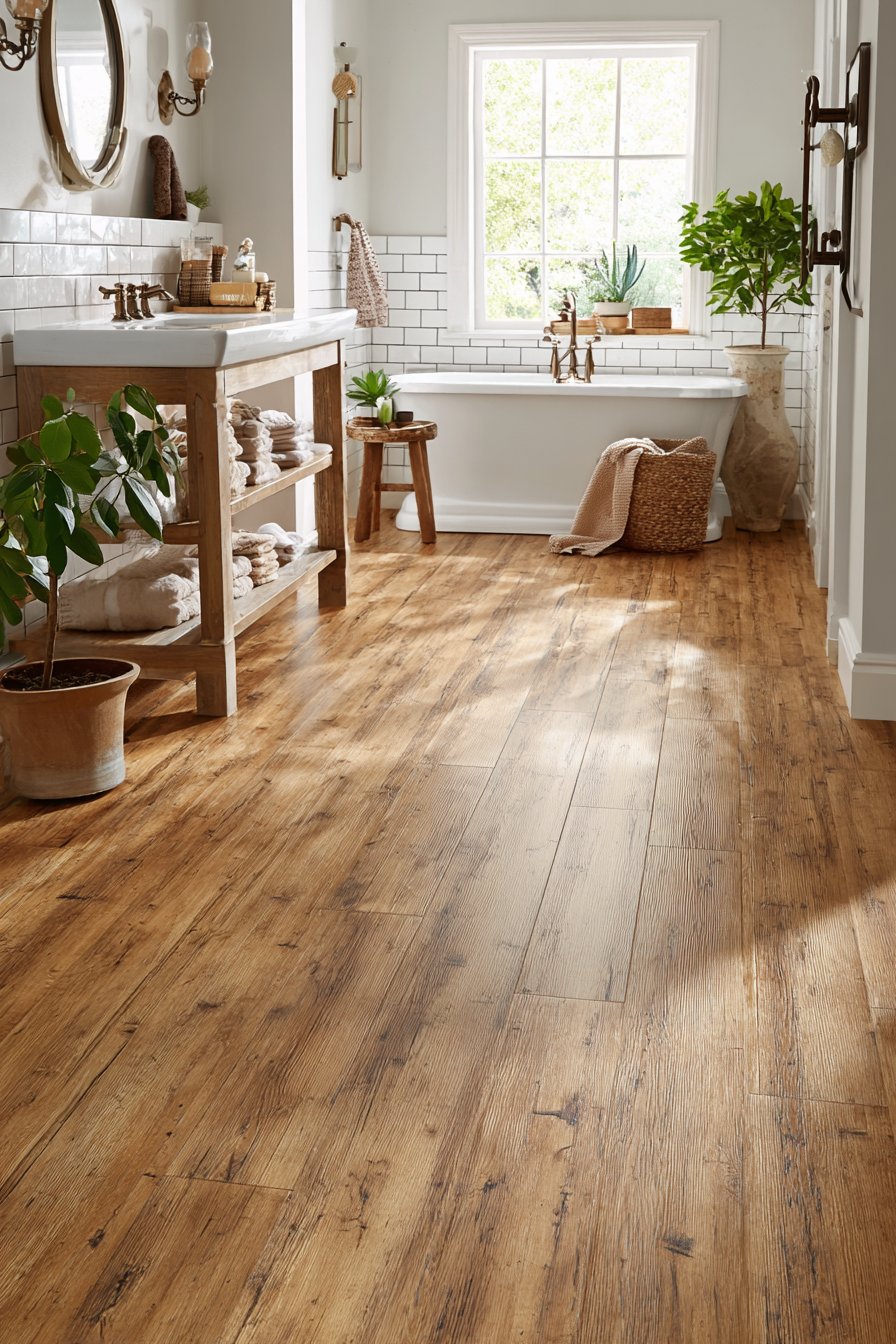
From a practical perspective, luxury vinyl planks represent one of the smartest small bathroom flooring ideas available today. The material is 100% waterproof in most quality products, standing up to splashes, humidity, and even standing water without warping, swelling, or deteriorating. Installation is often straightforward with click-lock systems that don’t require adhesives, making it a feasible DIY project for handy homeowners. The vinyl surface provides comfortable underfoot warmth—a significant advantage over cold ceramic or stone—and can be installed over various subfloors, including concrete and existing tile in many cases. The cost-effectiveness of luxury vinyl compared to hardwood or natural stone makes it an accessible option for budget-conscious renovations.
Key Design Tips:
- Choose luxury vinyl with attached padding for added comfort and sound absorption
- Install planks diagonally at a 45-degree angle to maximize the space-expanding effect
- Select products with realistic embossing that matches the printed grain pattern
- Ensure the subfloor is completely smooth and level for best results
- Use transition strips at doorways that complement the honey tones
4. Bold Black Slate Tile with Natural Texture
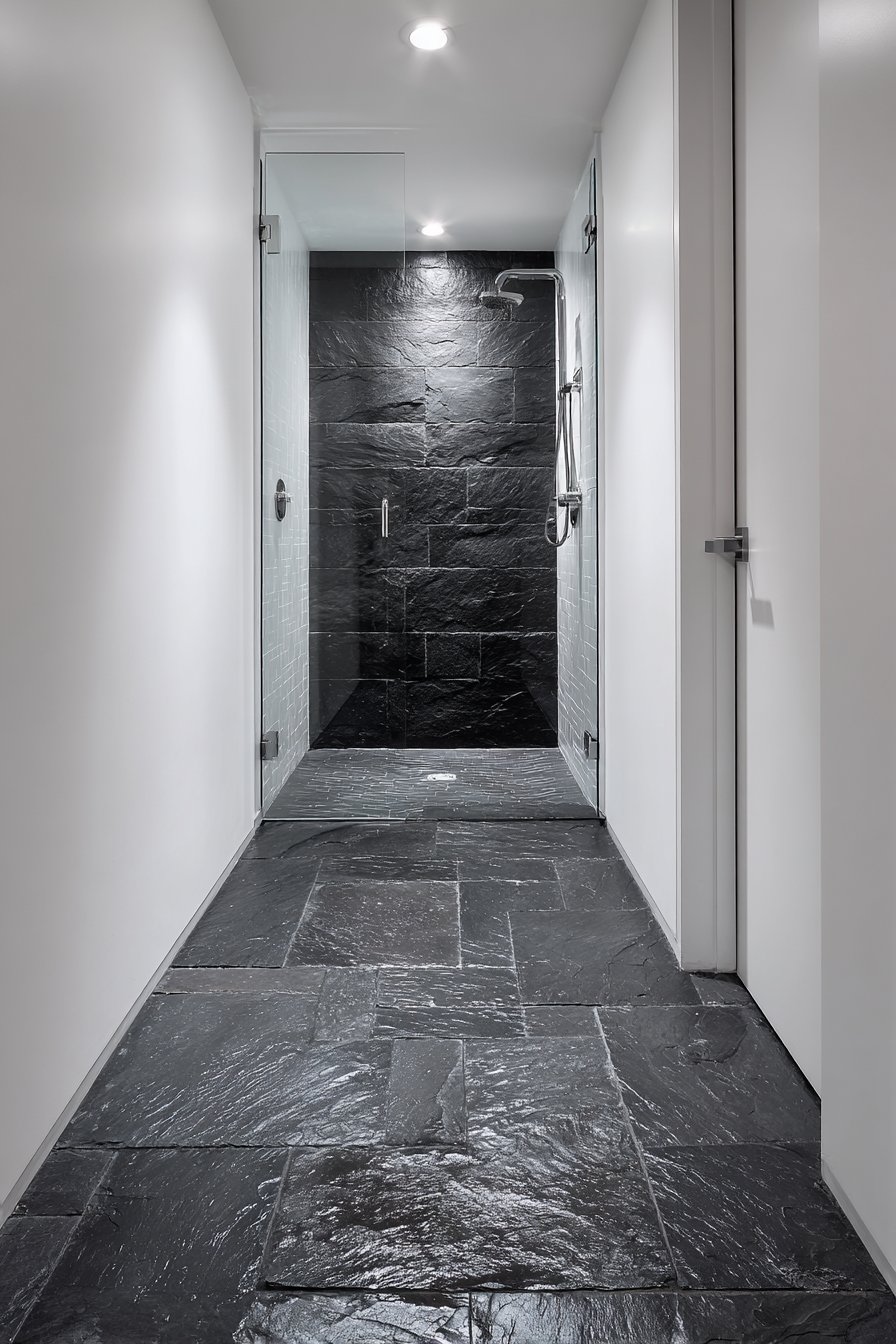
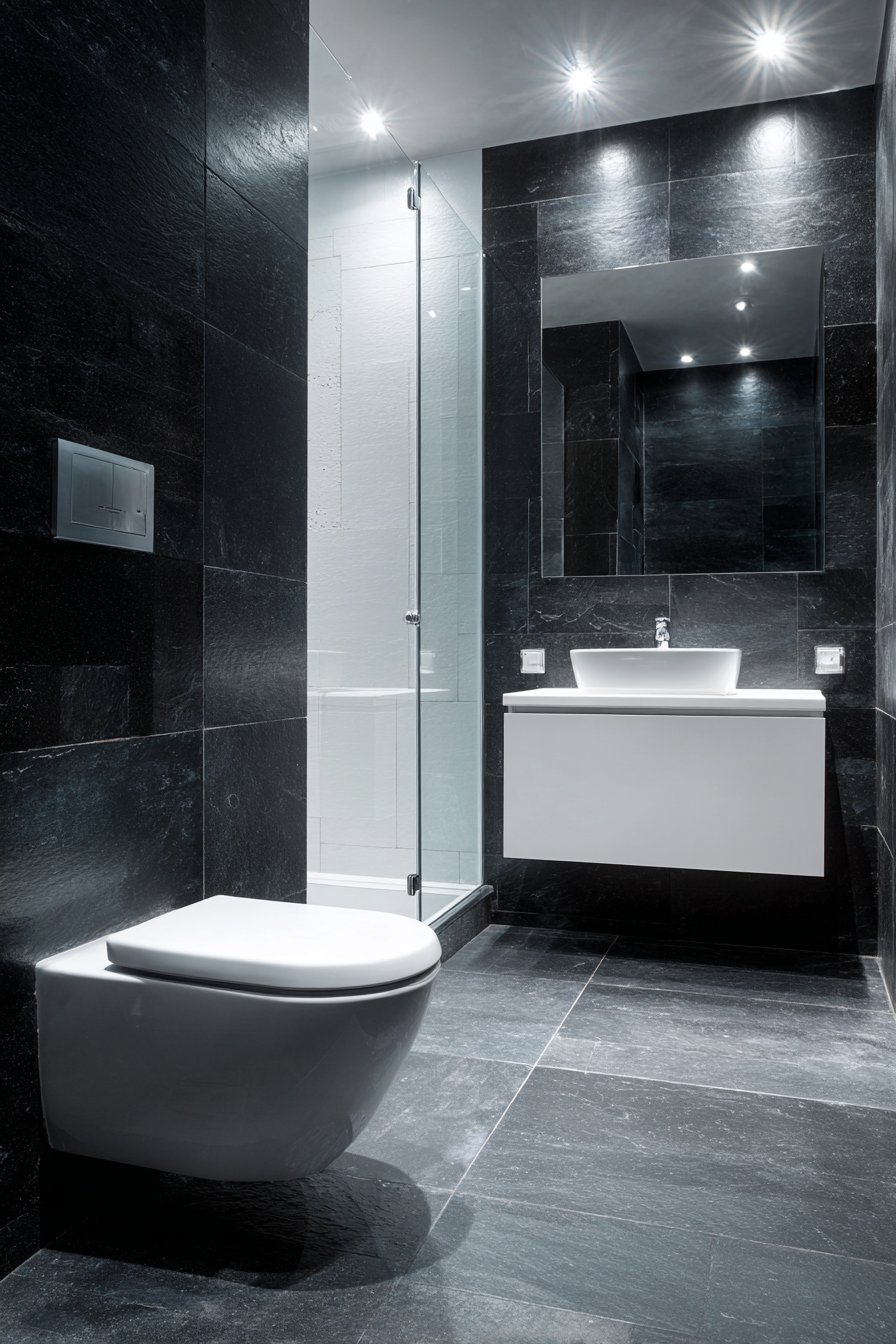
Black slate tiles bring dramatic sophistication to small bathroom flooring ideas, proving that dark colors can work beautifully in compact spaces when executed with intention and balanced with light-reflective elements. Natural slate texture provides depth, character, and organic beauty that elevates a small bathroom into a statement space. The dark flooring creates striking contrast against crisp white walls and bright fixtures, establishing a modern, boutique-hotel aesthetic that feels both luxurious and grounded. This bold choice demonstrates confidence in design, showing that small spaces can handle strong visual elements when properly supported by the surrounding design context.
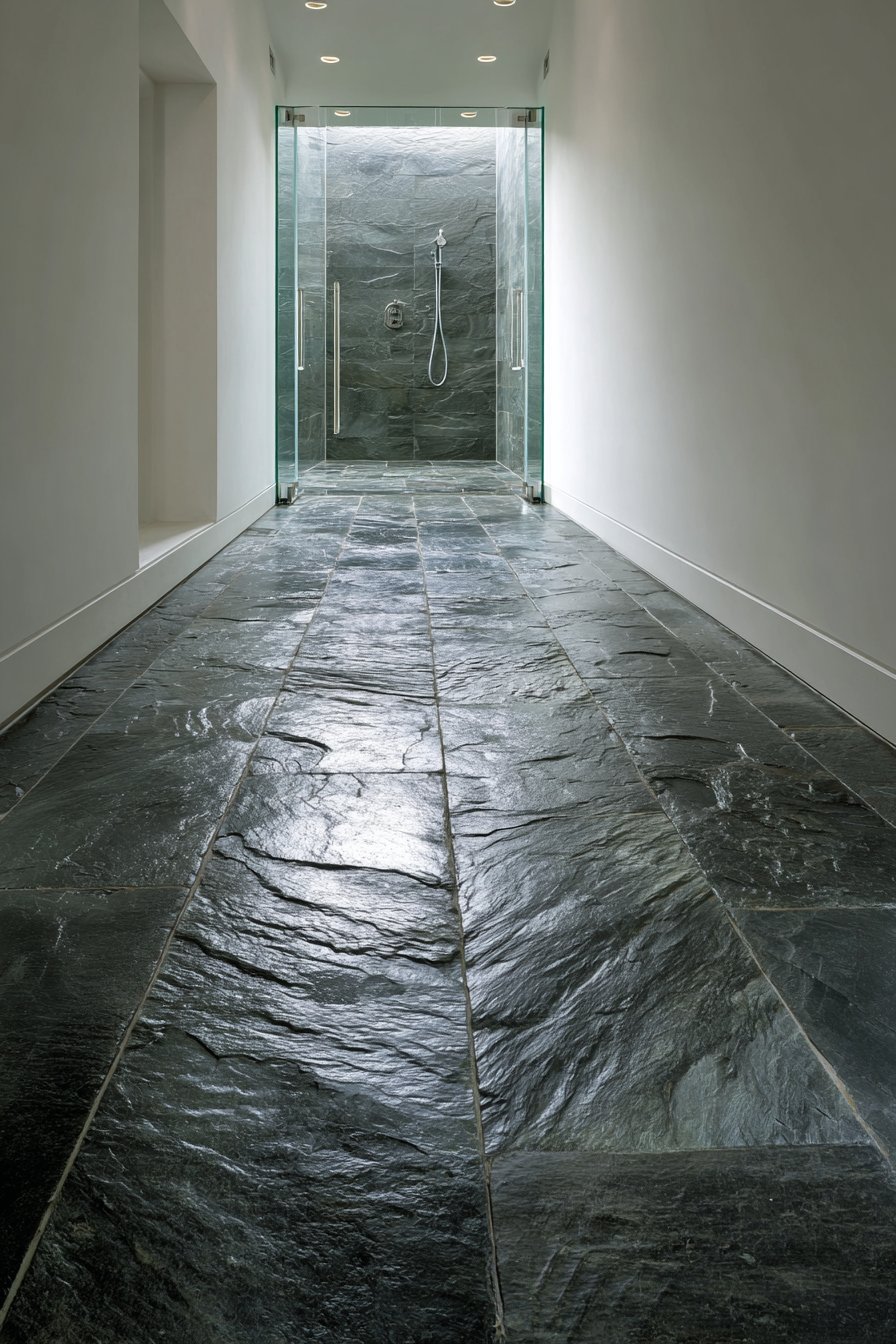
The natural texture inherent in slate tiles offers practical advantages beyond aesthetics. The slightly rough, cleft surface provides excellent slip resistance even when wet—a critical safety feature in bathroom environments where falls can occur. The texture also adds tactile interest and visual depth, preventing the dark floor from appearing flat or lifeless. Slate’s natural composition means each tile displays unique color variations, mineral deposits, and surface characteristics, ensuring your floor is truly one-of-a-kind. These natural variations add organic authenticity that manufactured materials struggle to replicate, connecting your bathroom to natural stone’s timeless appeal.
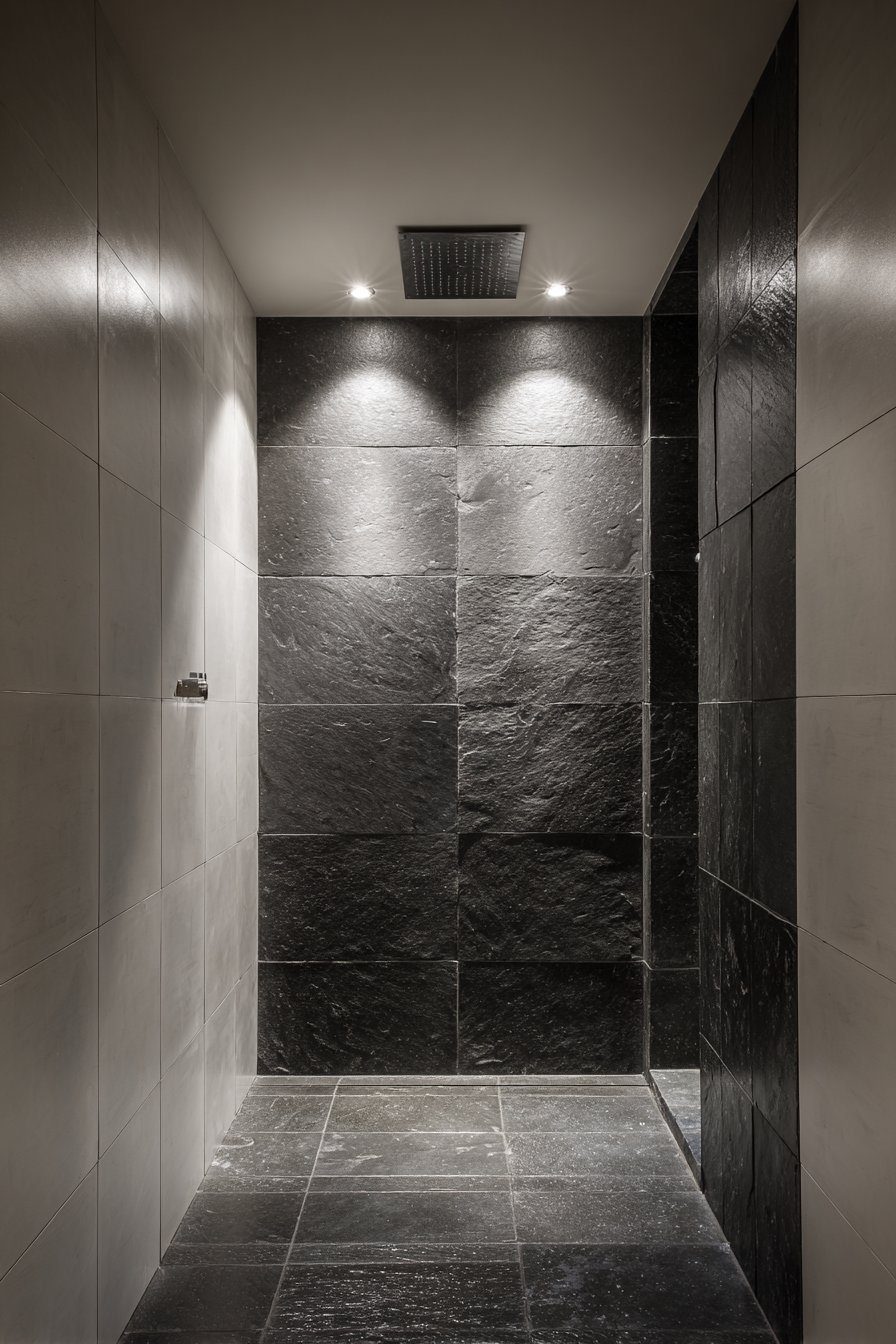
Implementing black slate in small bathrooms requires thoughtful lighting design to prevent the space from feeling cave-like or oppressive. Recessed lighting, well-placed vanity lights, and natural light sources become especially important when working with dark flooring. The payoff is substantial—when properly illuminated, black slate creates sophisticated ambiance with subtle highlights that dance across the textured surface. This flooring choice pairs exceptionally well with minimalist design approaches where clean lines and uncluttered surfaces allow the dramatic floor to command attention. The dark base also provides practical benefits, showing less dust, dirt, and water spotting than light-colored alternatives.
Key Design Tips:
- Balance dark flooring with bright white or light gray walls to maintain airiness
- Install ample lighting including recessed ceiling lights and task lighting at the vanity
- Seal slate tiles properly to enhance color depth and protect against staining
- Choose smaller slate tiles (12×12 inches or less) to accommodate shower slopes
- Add warm metallics like brushed brass or copper fixtures to soften the contrast
5. Soft Blue-Gray Small-Scale Mosaic Tiles
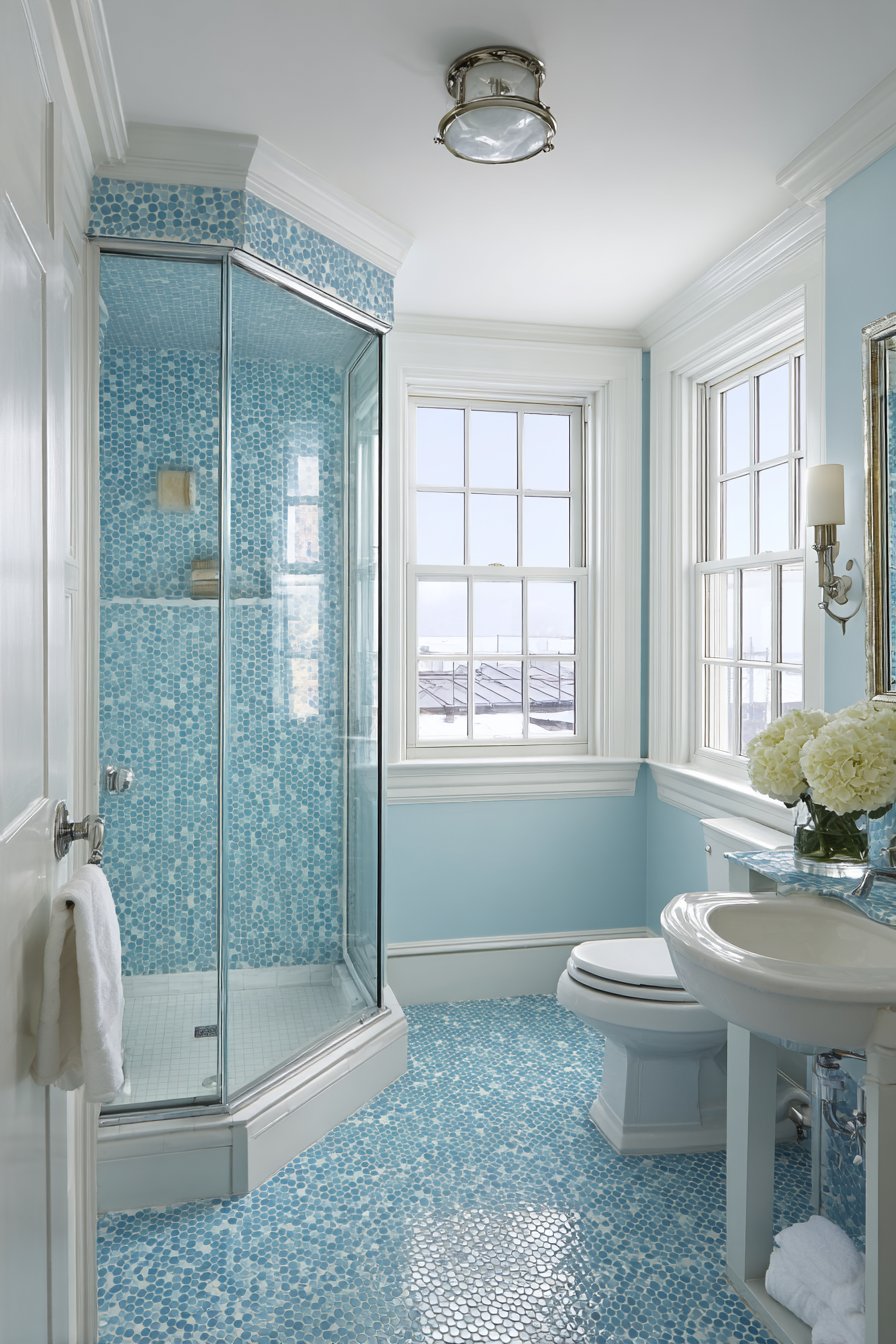
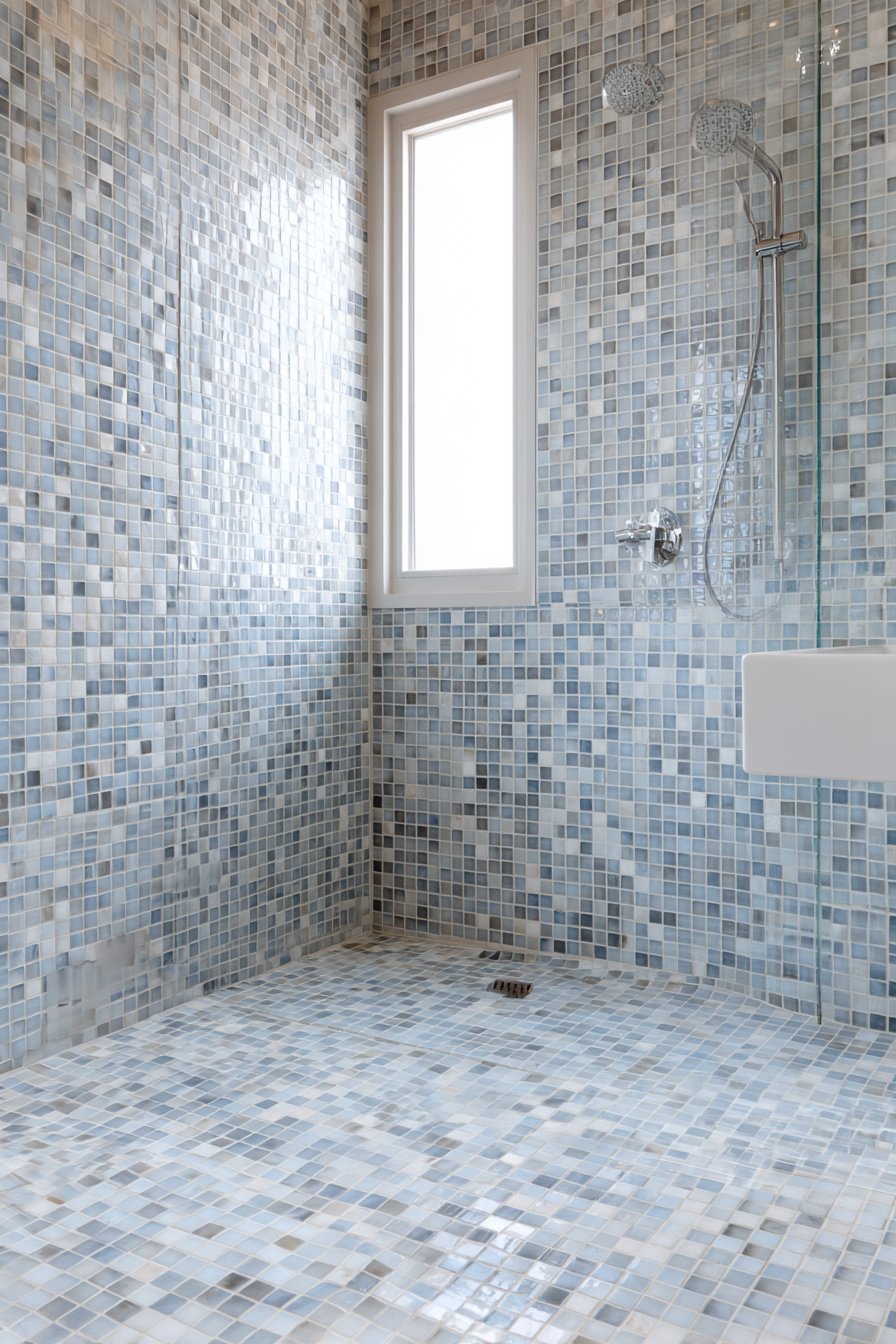
Small-scale mosaic tiles in soft blue-gray tones represent a refined approach to small bathroom flooring ideas that adds visual interest through texture rather than bold patterns. These 1-inch square tiles create a cohesive, slightly pixelated surface that introduces subtle color variations across the floor, adding dimension without overwhelming compact dimensions. The blue-gray palette evokes serenity and spa-like tranquility, making it an ideal choice for bathrooms intended as peaceful retreat spaces. The small tile format naturally provides excellent slip resistance due to the multitude of grout lines, making this both a beautiful and practical flooring solution.
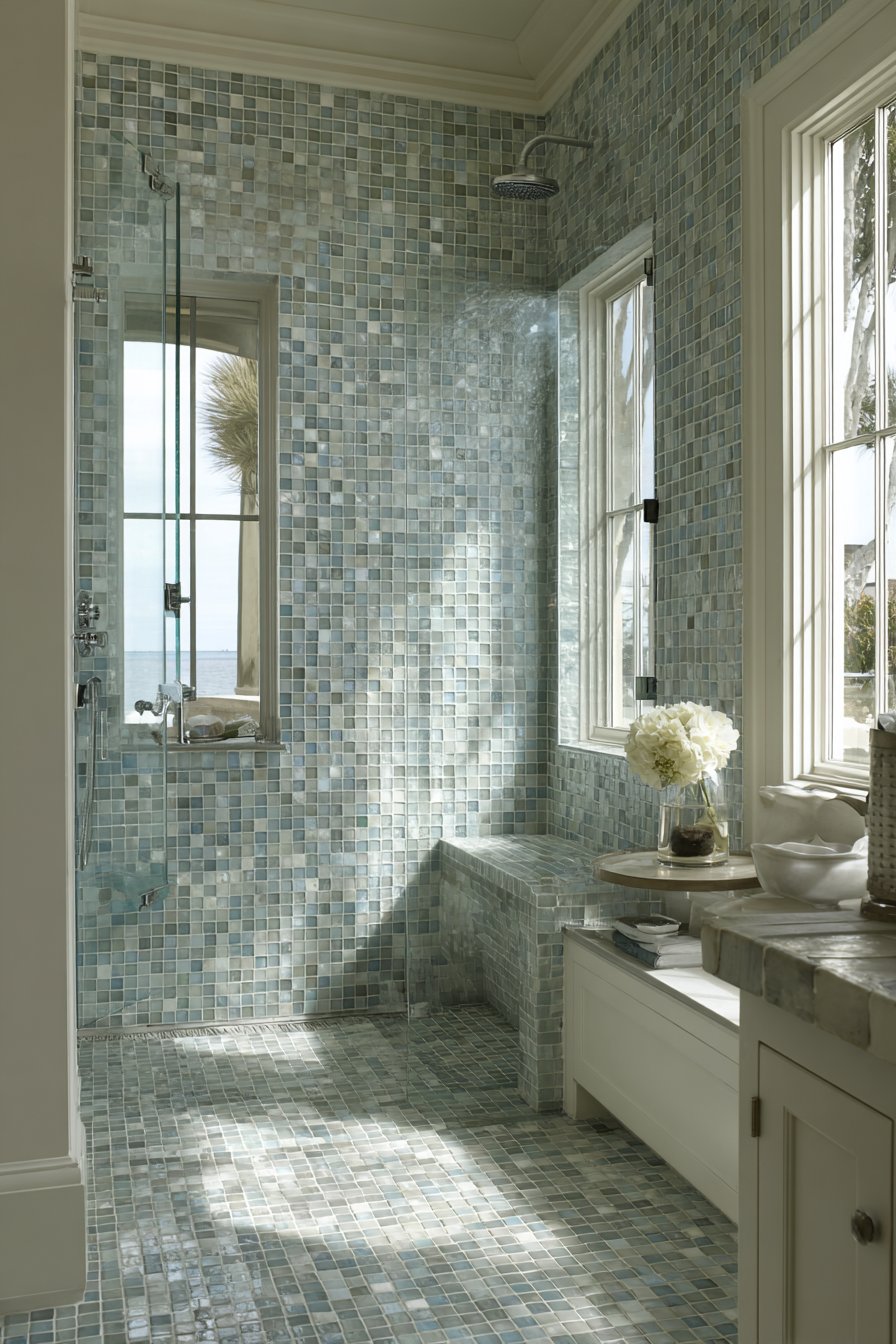
The beauty of mosaic tile flooring lies in its ability to handle the complex geometry typical of small bathrooms. Where large tiles require extensive cutting around toilets, vanity bases, and door frames, small mosaics conform easily to irregular shapes and tight spaces. This flexibility makes installation more straightforward in compact rooms with multiple fixtures and transitions. The tiles typically come mounted on mesh backing sheets, allowing relatively quick installation despite the small tile size. The resulting floor has an almost textile-like quality, with visual softness that contrasts pleasantly with harder bathroom surfaces like glass, porcelain, and metal.
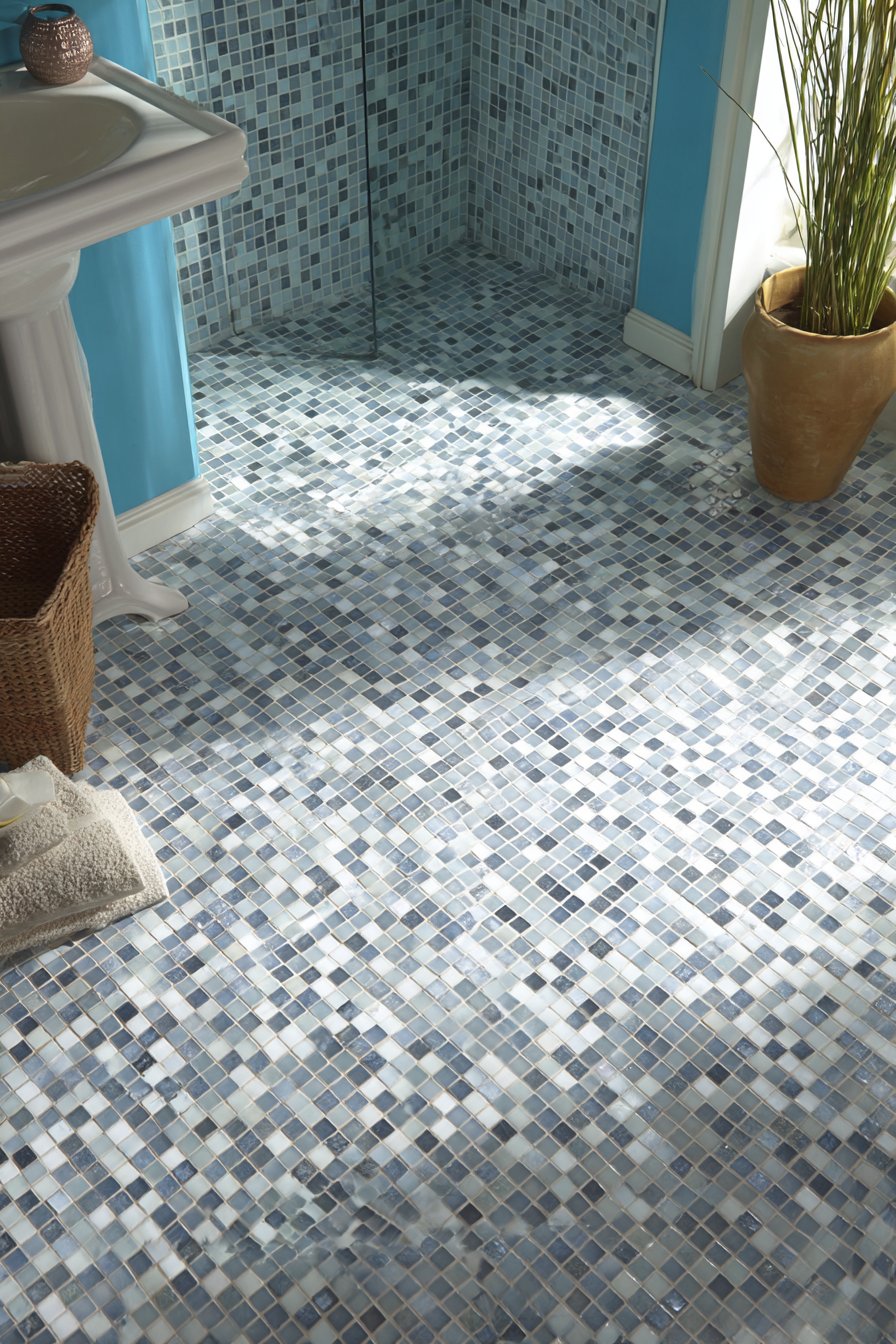
Color psychology plays an important role in the appeal of blue-gray mosaic flooring. Blue tones are inherently calming, associated with water and sky, making them psychologically appropriate for bathroom spaces. The gray component grounds the blue, preventing it from feeling too cold or sterile while maintaining the color’s soothing properties. The slight color variations within the mosaic field add organic interest that keeps the eye engaged without creating busy patterns. This flooring works beautifully in both contemporary and transitional bathroom designs, providing a neutral-enough foundation that won’t limit fixture and accessory choices while still offering more personality than plain white or beige tiles.
Key Design Tips:
- Choose mosaic tiles with slight color variation for organic, natural appearance
- Use a grout color that closely matches the tile for a seamless, cohesive look
- Extend the mosaic pattern into shower floors for visual continuity
- Pair with simple white fixtures to let the subtle flooring color shine
- Consider using the same mosaic as a shower accent wall for coordinated design
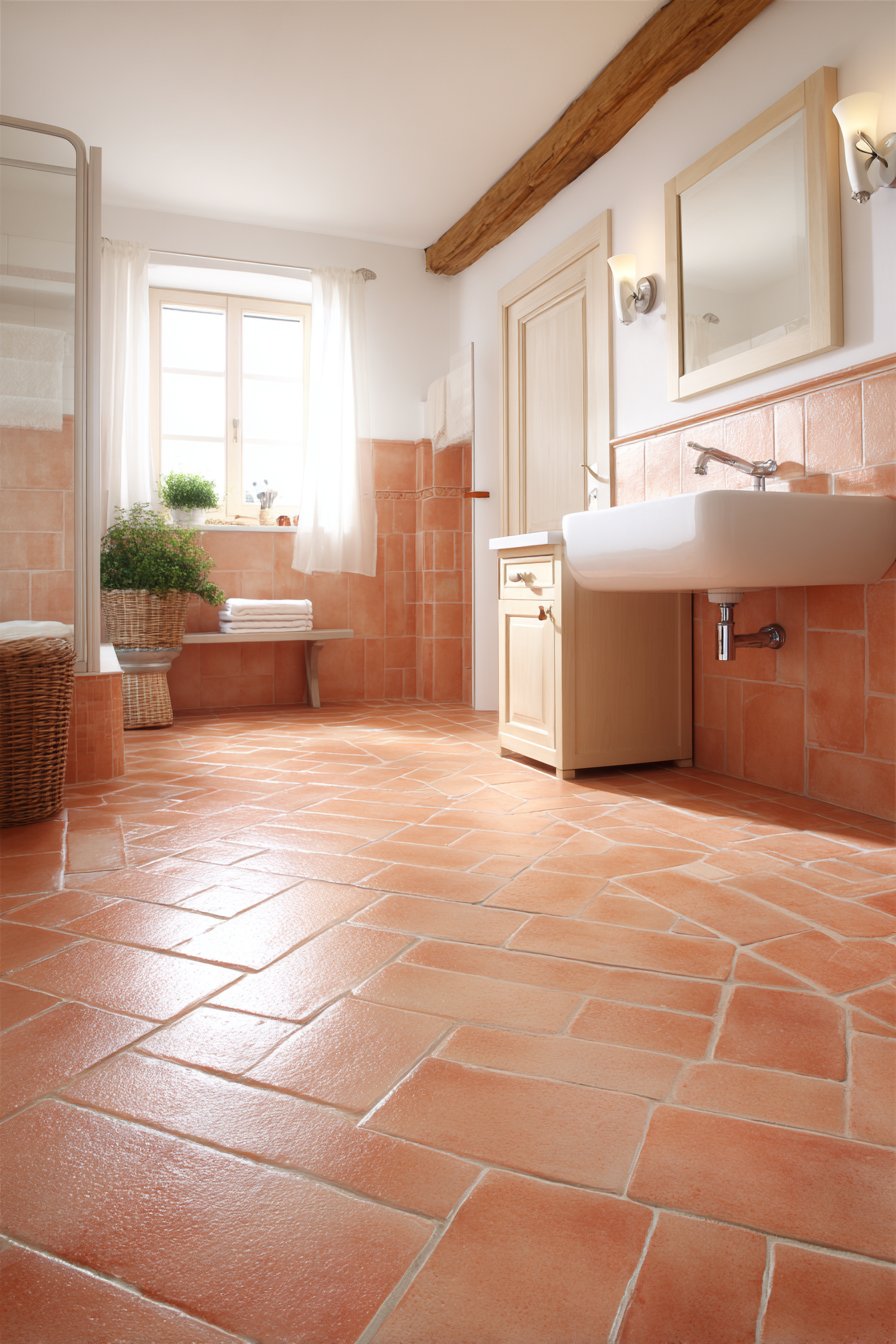
6. Warm Terracotta Ceramic Tile in Small Rectangular Format
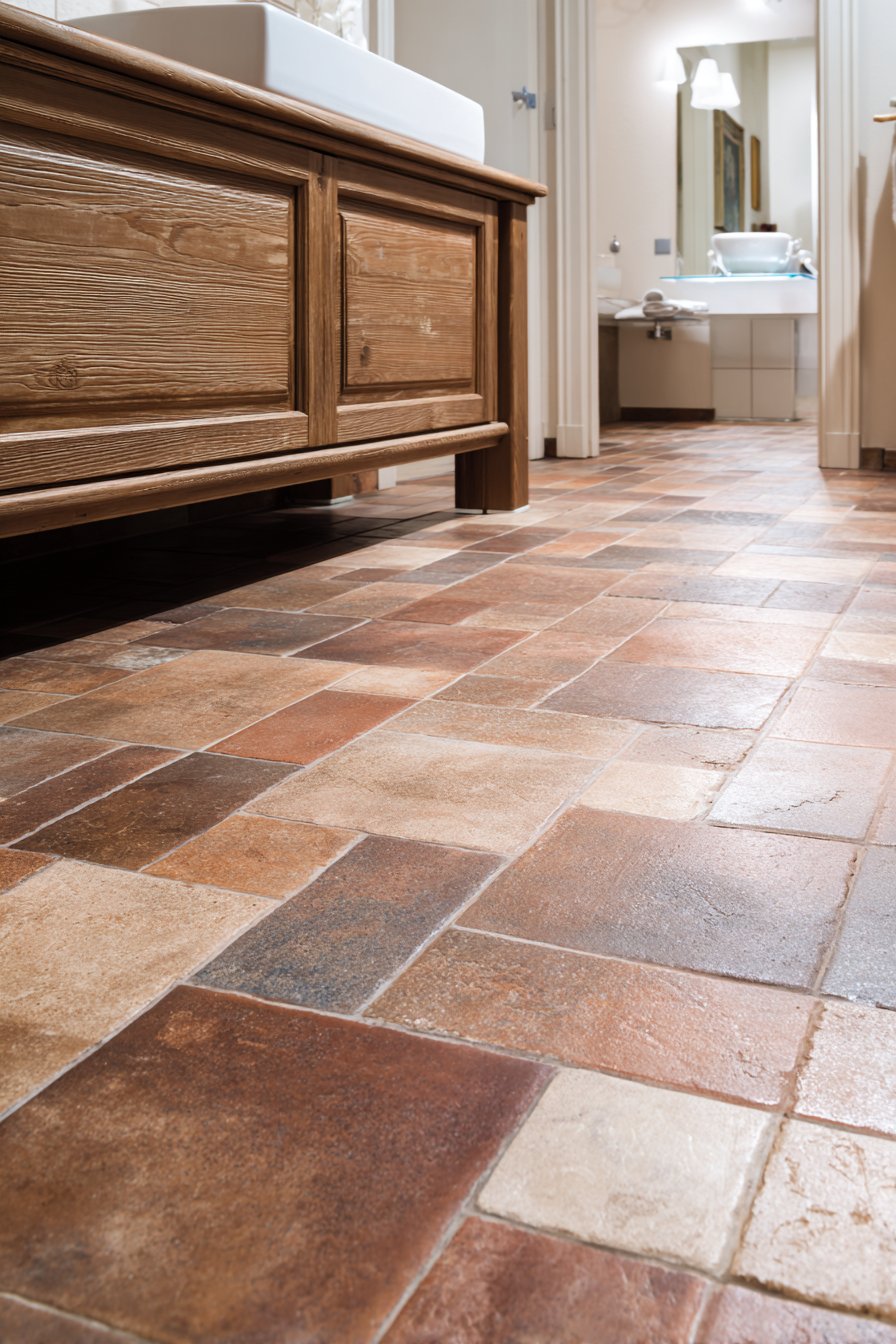
Terracotta-colored ceramic tiles bring Mediterranean warmth and Old-World charm to small bathroom flooring ideas, demonstrating how rich, earthy colors can create inviting intimacy in compact spaces. The warm orange-red tones evoke sun-baked clay, rustic European villages, and artisanal craftsmanship, instantly establishing character and personality. Small rectangular tile formats, reminiscent of traditional brick patterns, add visual texture without overwhelming small bathroom proportions. This flooring choice works particularly well in homes with Spanish Colonial, Mediterranean, or eclectic design styles, but can also provide welcome warmth as a contrast element in more contemporary schemes.
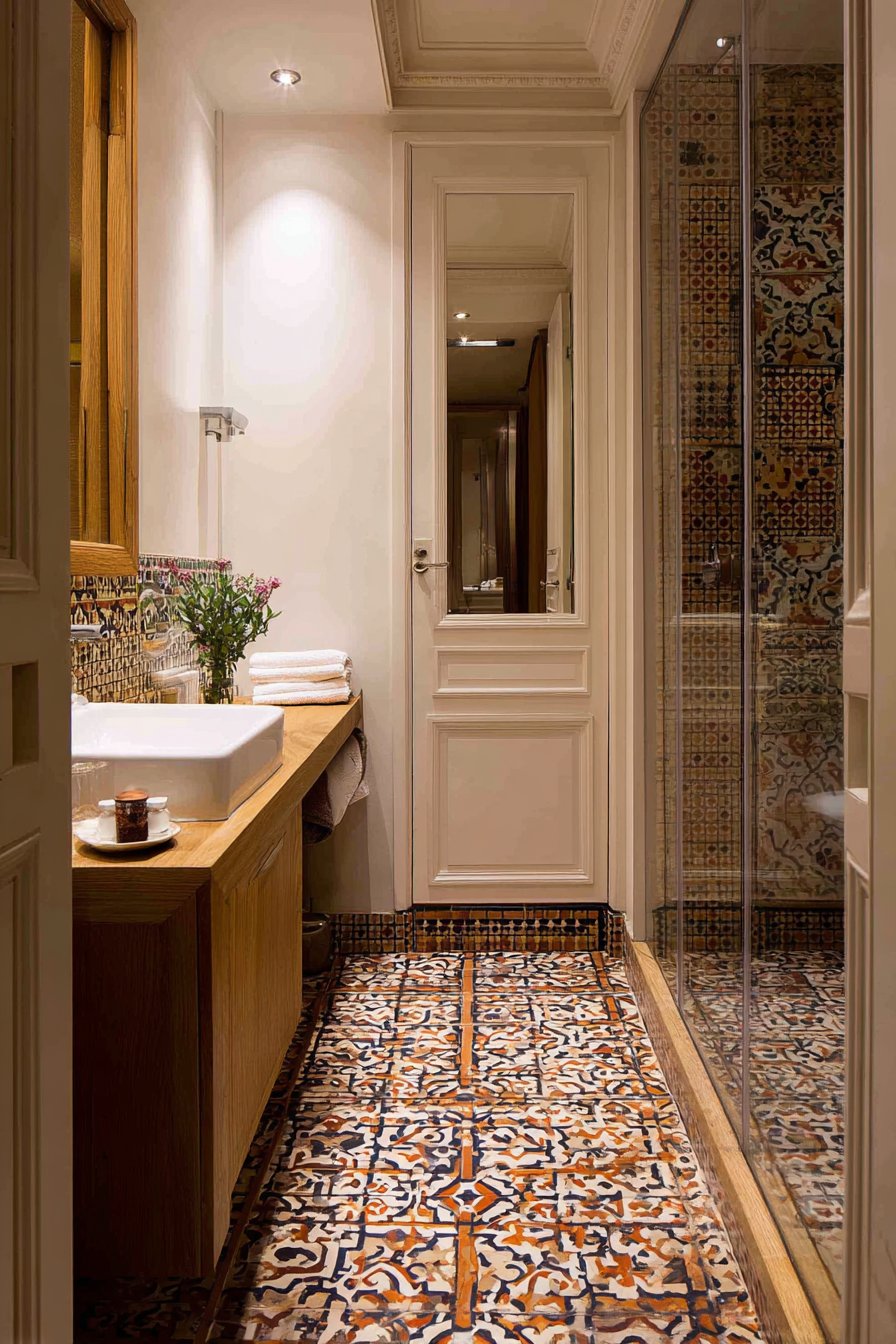
The psychological impact of warm terracotta flooring cannot be overstated. Where cool gray and white bathrooms feel clean and modern, terracotta creates cozy, welcoming atmosphere that makes small bathrooms feel like intentional, cherished spaces rather than purely functional afterthoughts. The earthy tones connect to natural materials and traditional building methods, adding authenticity and timelessness to the design. When balanced with white or cream walls and wooden accents, terracotta flooring creates a harmonious palette that feels both grounded and uplifting. The color’s inherent warmth also makes the space feel physically warmer—a psychological benefit appreciated during cold morning routines.
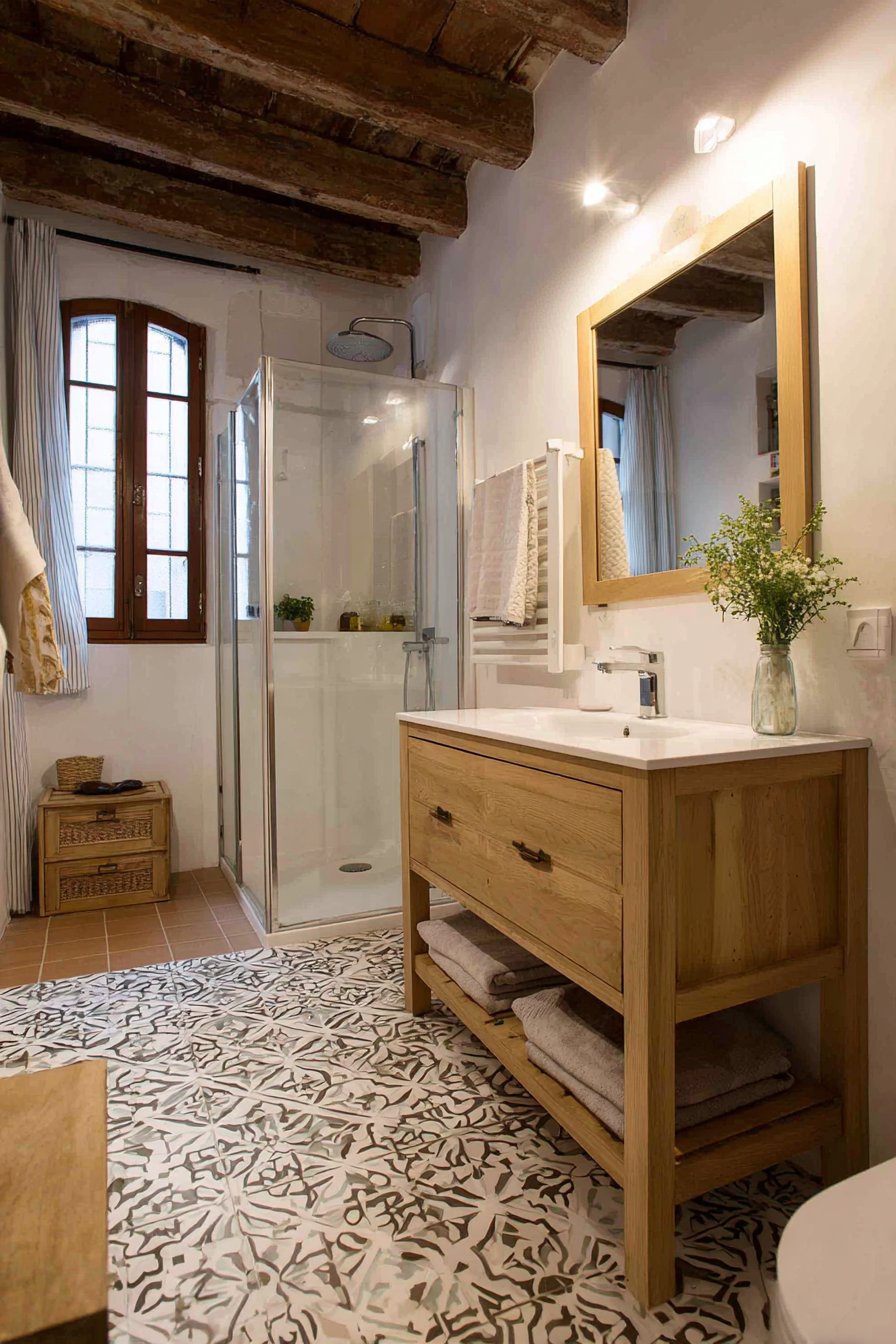
From a practical standpoint, ceramic tiles in terracotta tones offer excellent durability and ease of maintenance. The warm color naturally camouflages minor dirt, dust, and water spots better than light-colored alternatives, maintaining a cleaner appearance between deep cleanings. Modern ceramic manufacturing ensures these tiles provide excellent water resistance and wear durability suitable for high-traffic bathroom use. The slightly textured surface typical of terracotta-style ceramics provides good slip resistance while maintaining the authentic appearance of traditional clay tiles. This flooring choice proves that small bathrooms need not default to neutral, safe color palettes—bold, warm colors can create memorable, personalized spaces.
Key Design Tips:
- Balance warm terracotta with cool white walls to prevent color overwhelm
- Incorporate natural wood elements in vanities or shelving for cohesive earthy palette
- Choose matte or slightly textured finish for authentic terracotta appearance
- Use warm white or cream grout rather than bright white for softer, more authentic look
- Add plants and natural fiber accessories to enhance the organic, Mediterranean feel
7. Cream Travertine Tiles with Natural Character
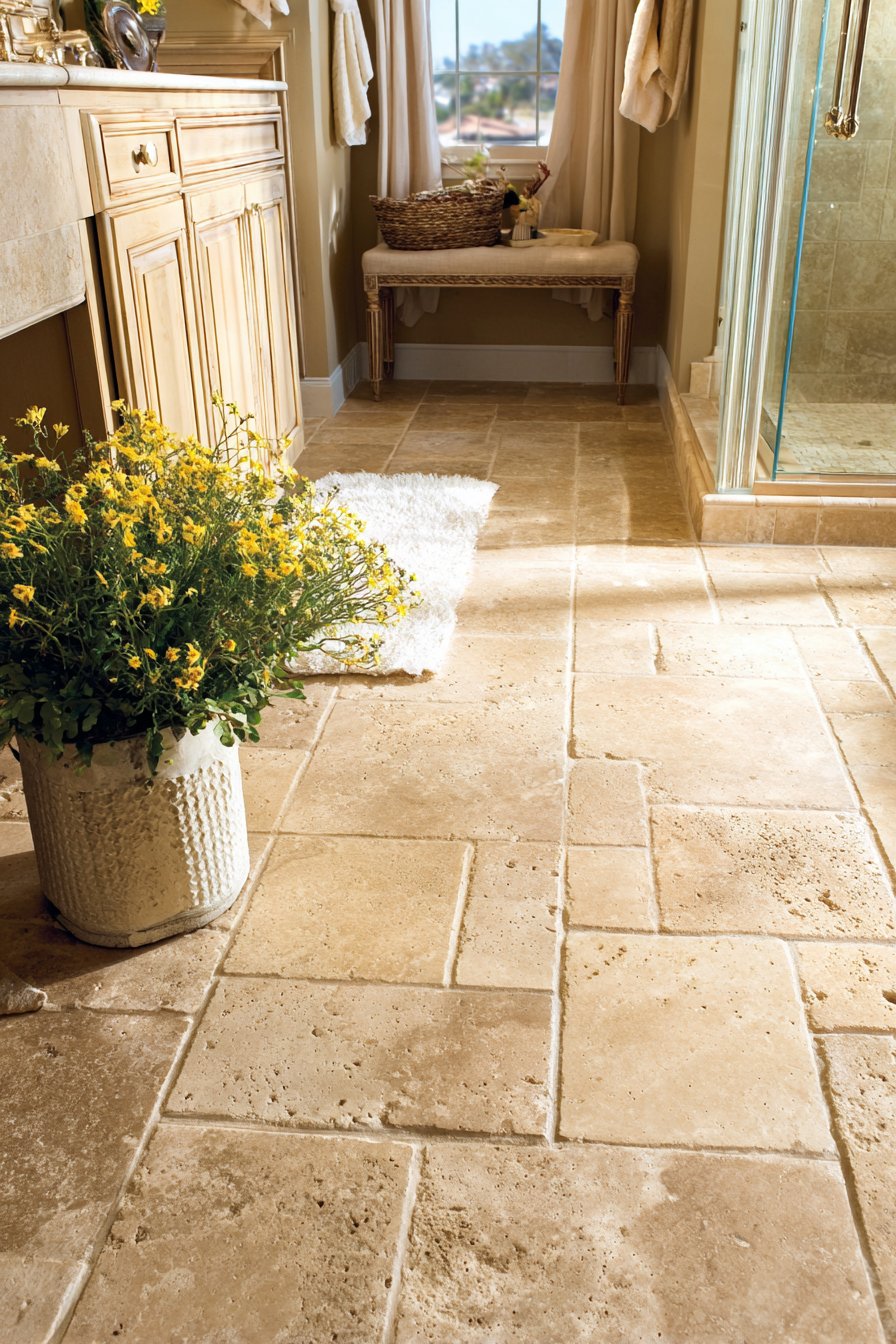
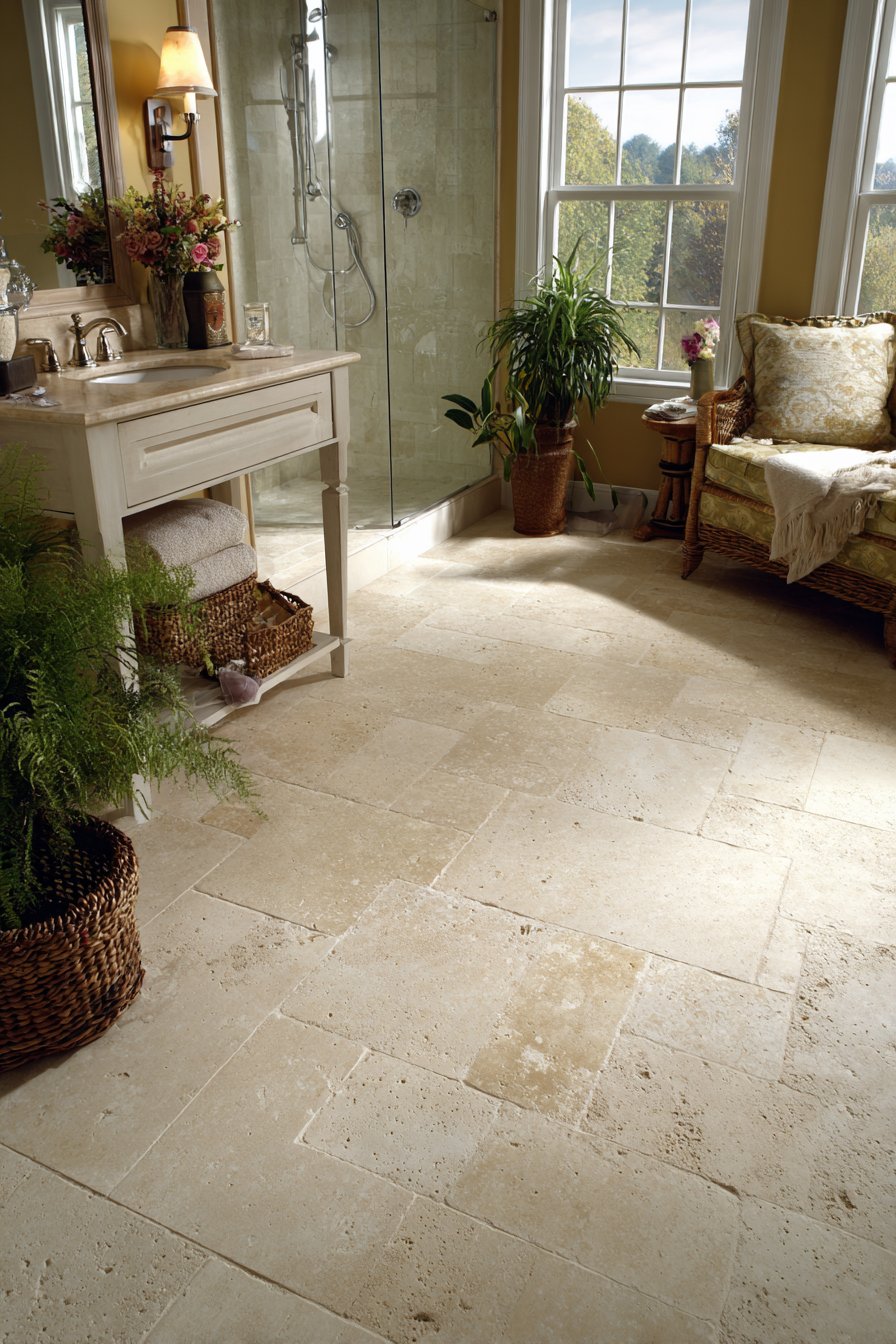
Cream-colored travertine tiles represent a luxurious approach to small bathroom flooring ideas, bringing the timeless elegance of natural stone into compact spaces. Travertine’s characteristic pitting, color variations, and subtle texture add organic beauty that manufactured materials cannot fully replicate. The cream tone provides warmth while maintaining the light-reflective properties essential for making small bathrooms feel spacious and bright. This natural stone has graced bathrooms in luxury homes and high-end hotels for decades, offering a proven track record of durability, beauty, and enduring appeal that transcends passing design trends.
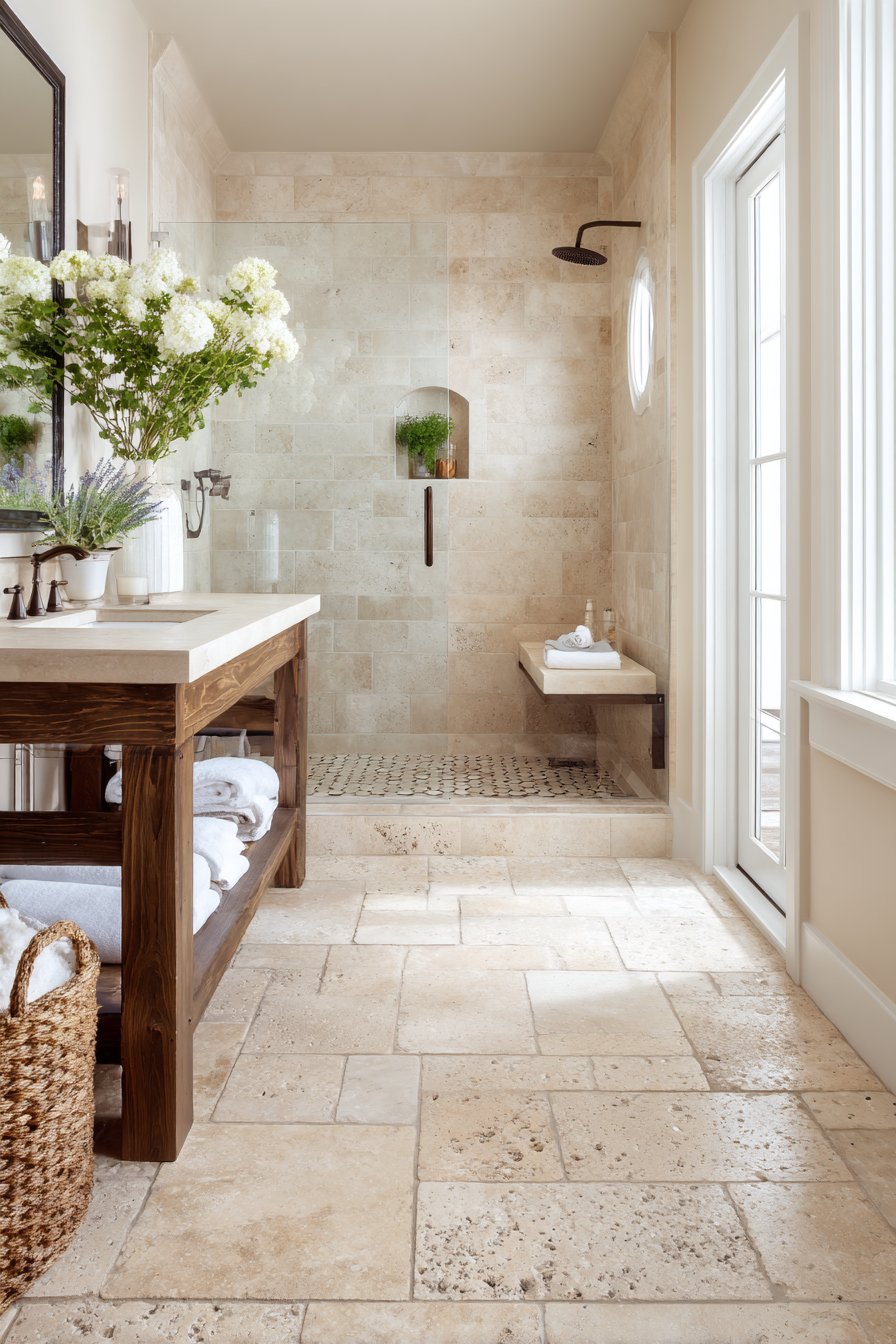
The natural characteristics of travertine—including its porous surface texture and color variations—give each installation unique personality and visual interest. No two travertine tiles are identical, with some displaying more pronounced pitting, others showing linear veining, and others presenting more uniform cream coloration. This natural variation prevents the monotony that can occur with manufactured tiles, ensuring your small bathroom floor remains visually engaging. The slightly textured surface provides natural slip resistance, while the neutral cream color works harmoniously with virtually any fixture finish, from chrome to brushed nickel to oil-rubbed bronze.
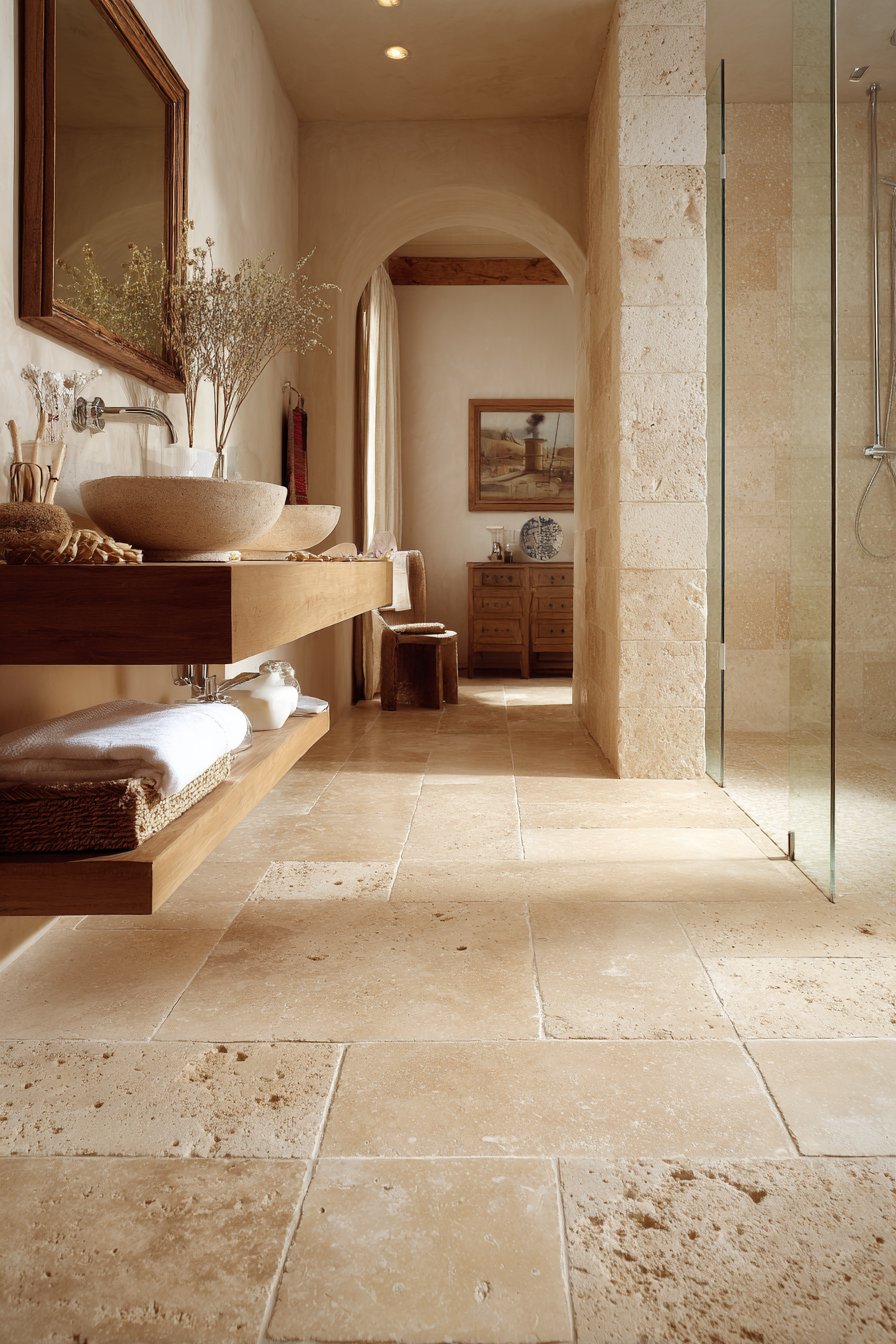
Installing travertine in small bathrooms does require proper preparation and maintenance awareness. The stone should be professionally sealed to protect against water absorption and staining—a critical step in moisture-prone bathroom environments. When properly sealed and maintained, travertine develops a beautiful patina over time, with the stone’s natural character becoming more pronounced and appealing with age. The investment in natural stone flooring pays dividends in both immediate aesthetic impact and long-term value, as natural stone remains a premium material that buyers recognize and appreciate. The cream coloration also provides practical advantages, showing less obvious wear patterns than very light or very dark alternatives.
Key Design Tips:
- Have travertine professionally sealed before and after installation for maximum protection
- Choose filled travertine (pits filled with resin) for easier cleaning in bathroom environments
- Select tiles with consistent thickness to ensure level installation
- Pair with frameless glass shower enclosures to showcase the stone’s beauty
- Use stone-safe cleaning products to maintain the seal and natural beauty
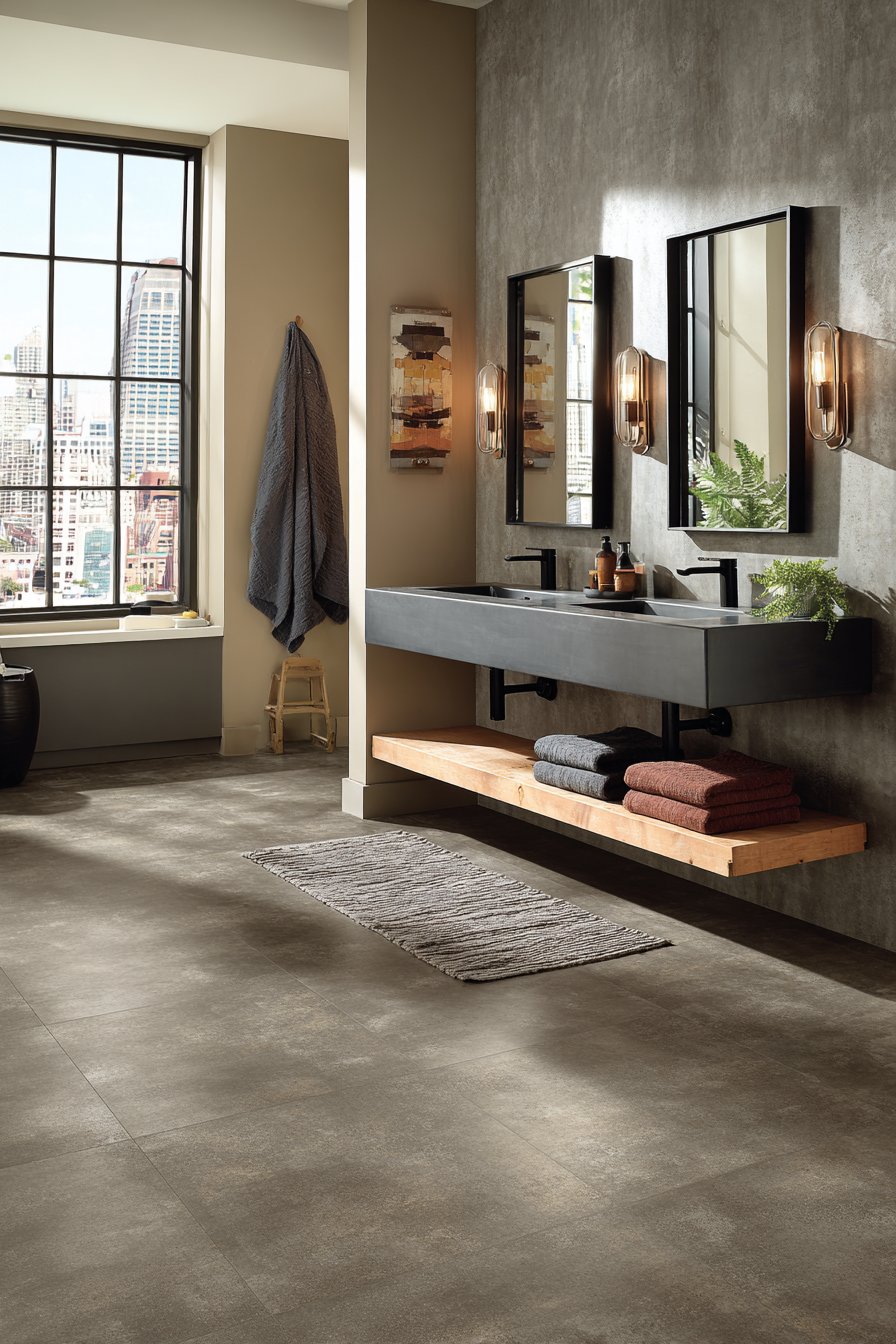
8. Contemporary Concrete-Look Porcelain Tiles
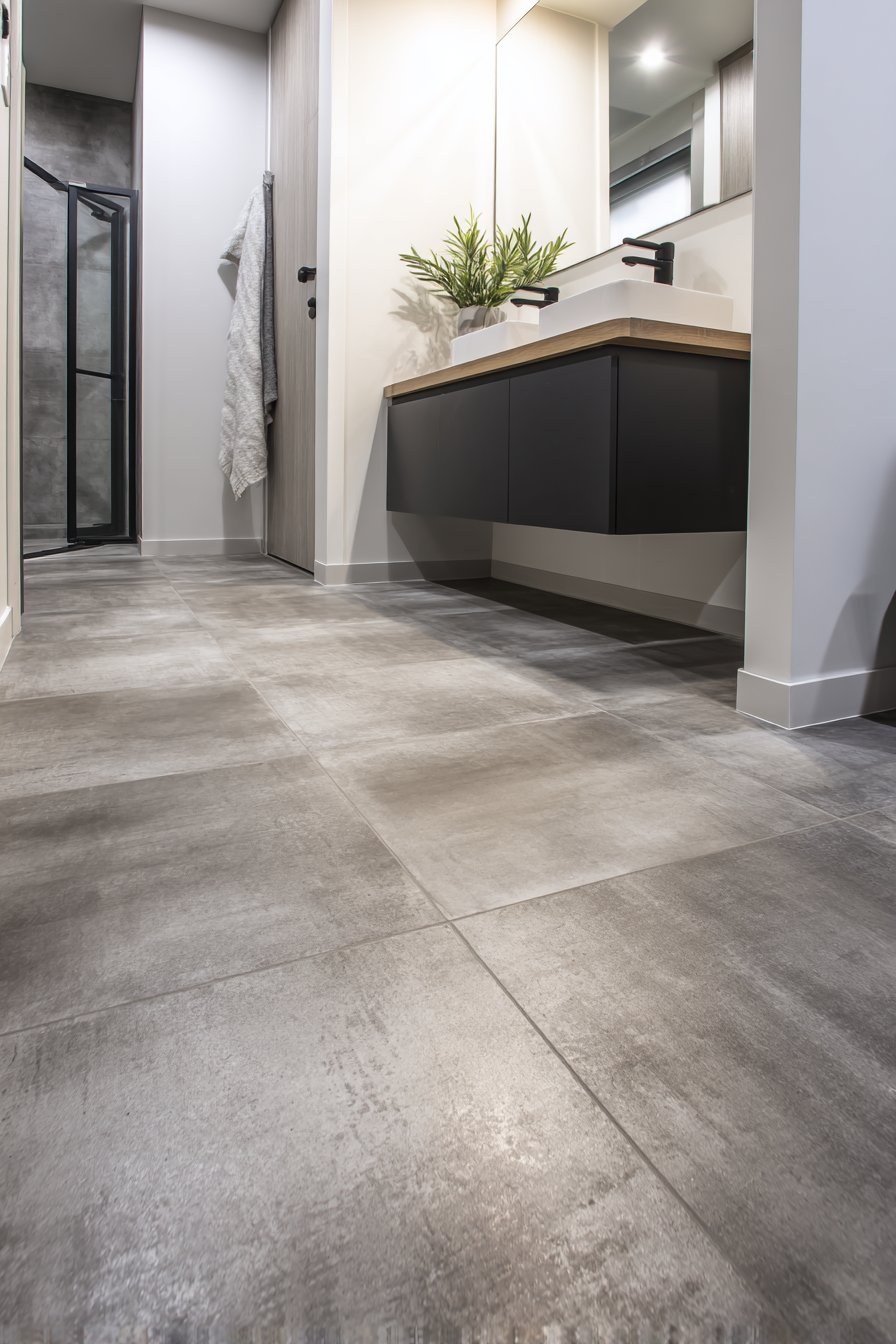
Concrete-look porcelain tiles in medium gray tones offer an urban, industrial-chic approach to small bathroom flooring ideas that appeals to contemporary design sensibilities. These tiles capture the raw, minimalist aesthetic of poured concrete while providing the practical benefits of porcelain—water resistance, durability, and easier maintenance. Large-format tiles with minimal grout lines create a seamless, almost monolithic appearance that makes small bathrooms feel more expansive and intentionally designed. The subtle texture and tonal variations in quality concrete-look tiles provide visual interest without pattern or color complexity.
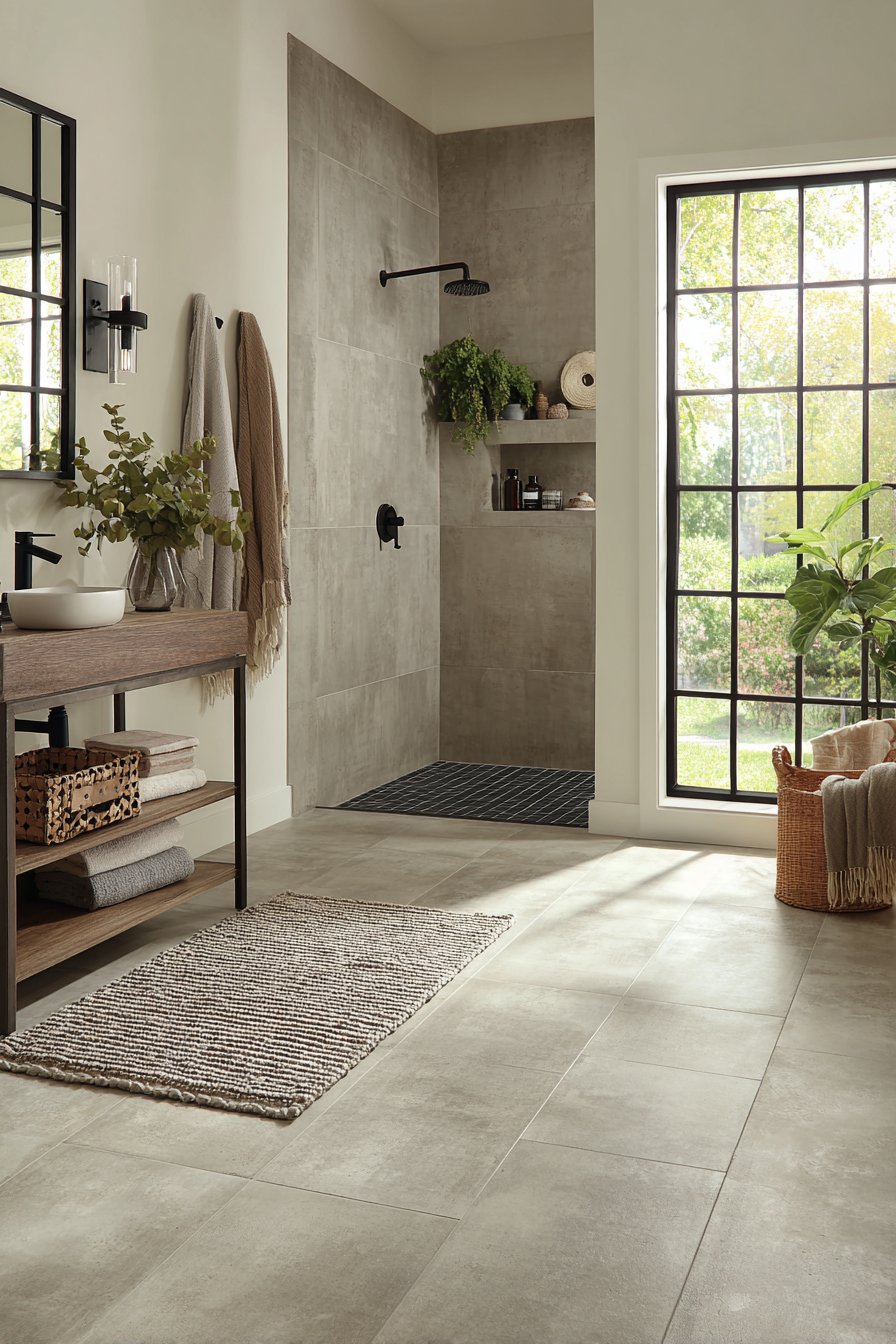
The industrial aesthetic created by concrete-look flooring brings an urban loft sensibility to small bathrooms, creating spaces that feel both modern and grounded. This flooring choice works exceptionally well with matte black fixtures, exposed piping, frameless glass, and minimalist floating vanities—elements that together create cohesive contemporary design. The neutral gray provides a versatile foundation that doesn’t compete with other design elements while still making a statement about aesthetic preferences. Unlike actual concrete, which requires sealing and can be cold underfoot, concrete-look porcelain offers the appearance without the drawbacks.
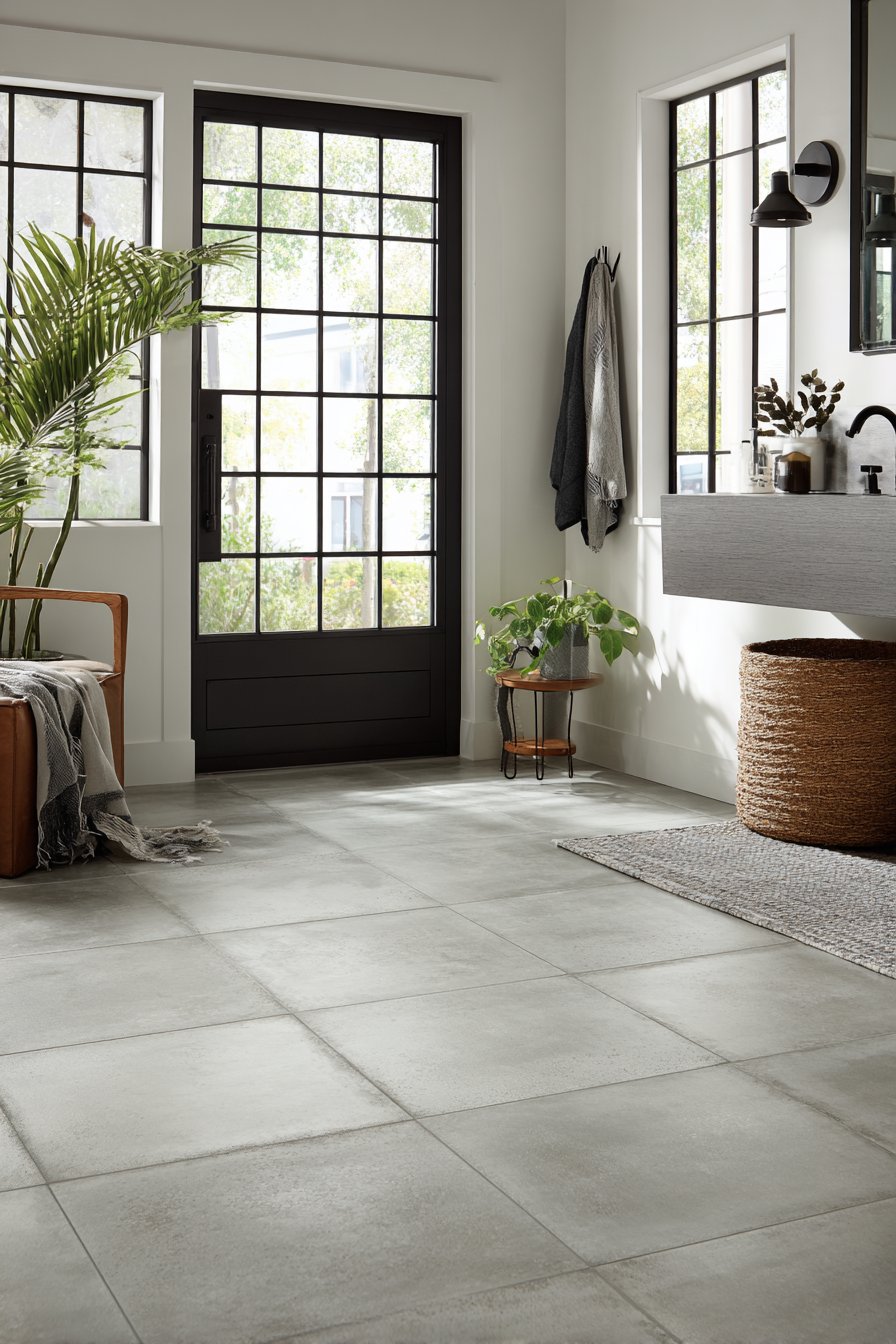
The large-format tiles typical of concrete-look flooring—often 24×48 inches or even larger—present both opportunities and challenges in small bathrooms. The minimal grout lines create visual continuity that expands perceived space, but installation requires perfectly level subfloors and precise cutting around fixtures. Professional installation is strongly recommended to achieve the seamless appearance that makes this flooring choice successful. When properly installed, the result is a sophisticated, gallery-like bathroom that feels intentional and curated rather than merely functional. The matte finish provides subtle texture that offers slip resistance while maintaining the authentic concrete appearance.
Key Design Tips:
- Choose porcelain with realistic concrete texture including subtle trowel marks and color variation
- Install tiles in running bond pattern with offset seams for authentic concrete appearance
- Use rectified tiles (precisely cut edges) for minimal grout lines
- Select dark gray grout that matches the tile for nearly invisible seams
- Pair with matte black fixtures and hardware for cohesive industrial aesthetic
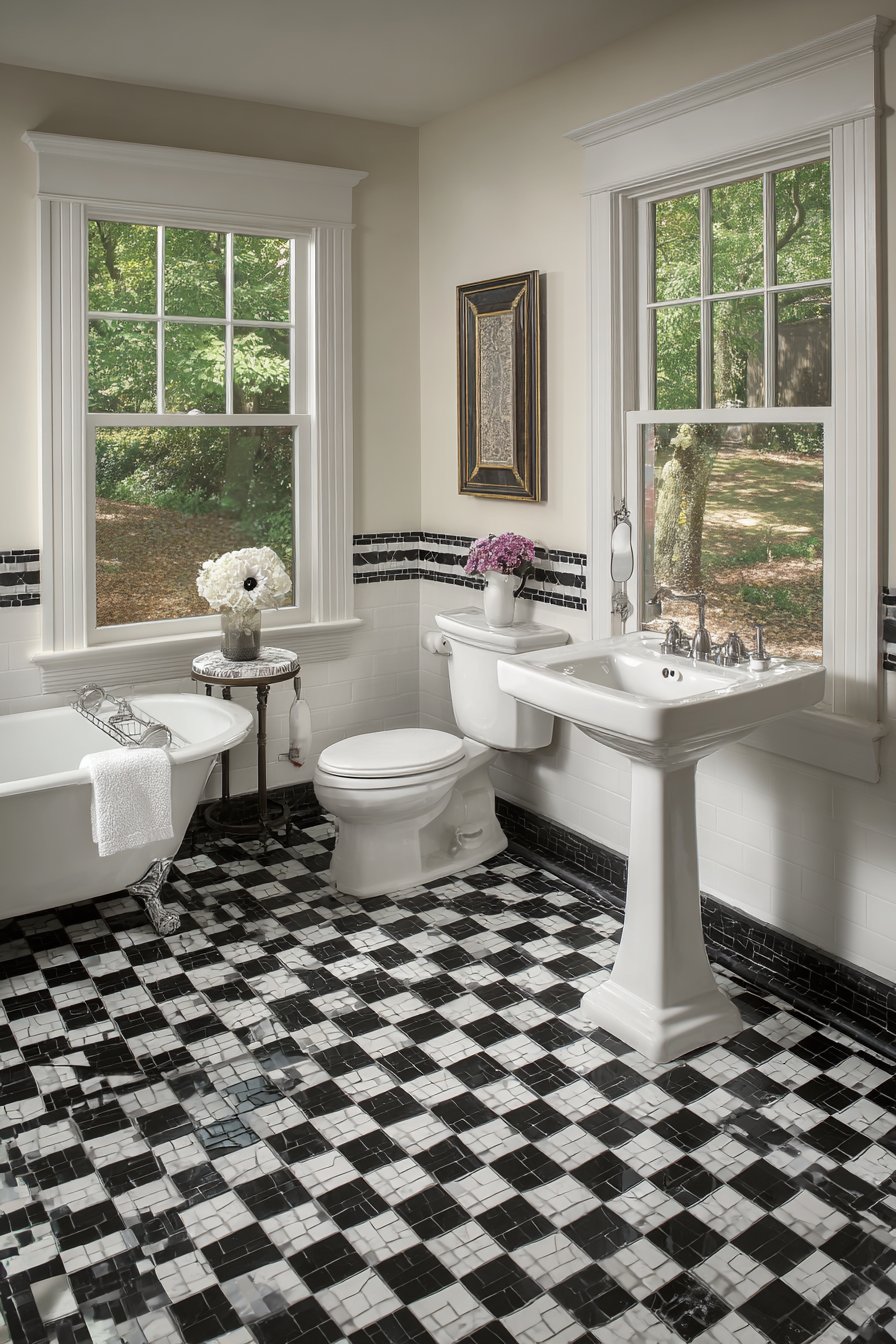
9. Timeless Black and White Checkerboard Pattern
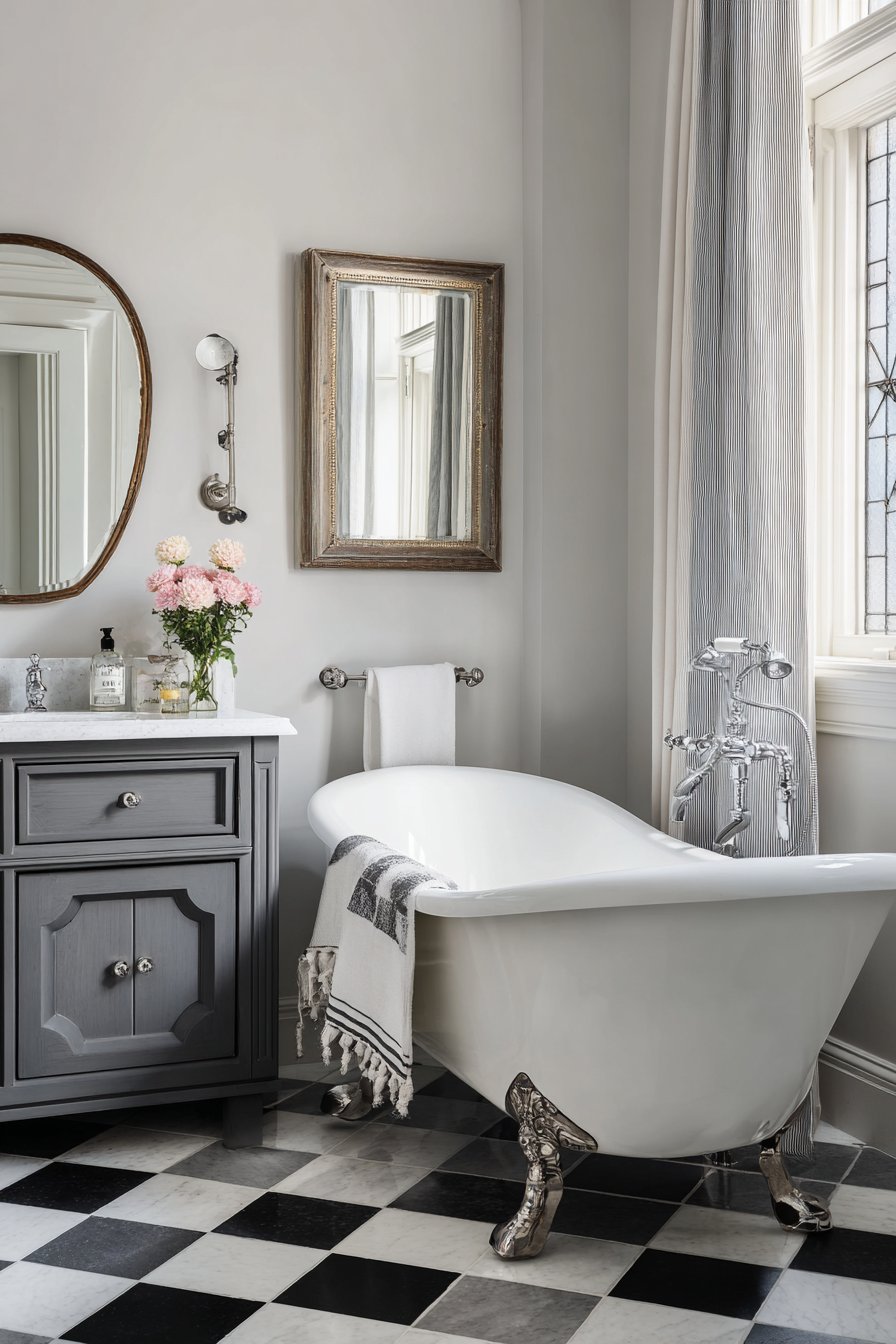
Black and white checkerboard flooring represents one of the most enduringly popular small bathroom flooring ideas, bringing vintage charm and bold graphic impact to compact spaces. This classic pattern using 4-inch ceramic tiles creates strong visual interest through dramatic contrast rather than color complexity or texture. The geometric regularity of the checkerboard provides structure and formality that elevates small bathrooms beyond purely utilitarian spaces, creating rooms with personality and design intention. This pattern works beautifully in homes with period architecture—from Victorian to Art Deco—while also providing striking contrast in contemporary settings when paired with modern fixtures.
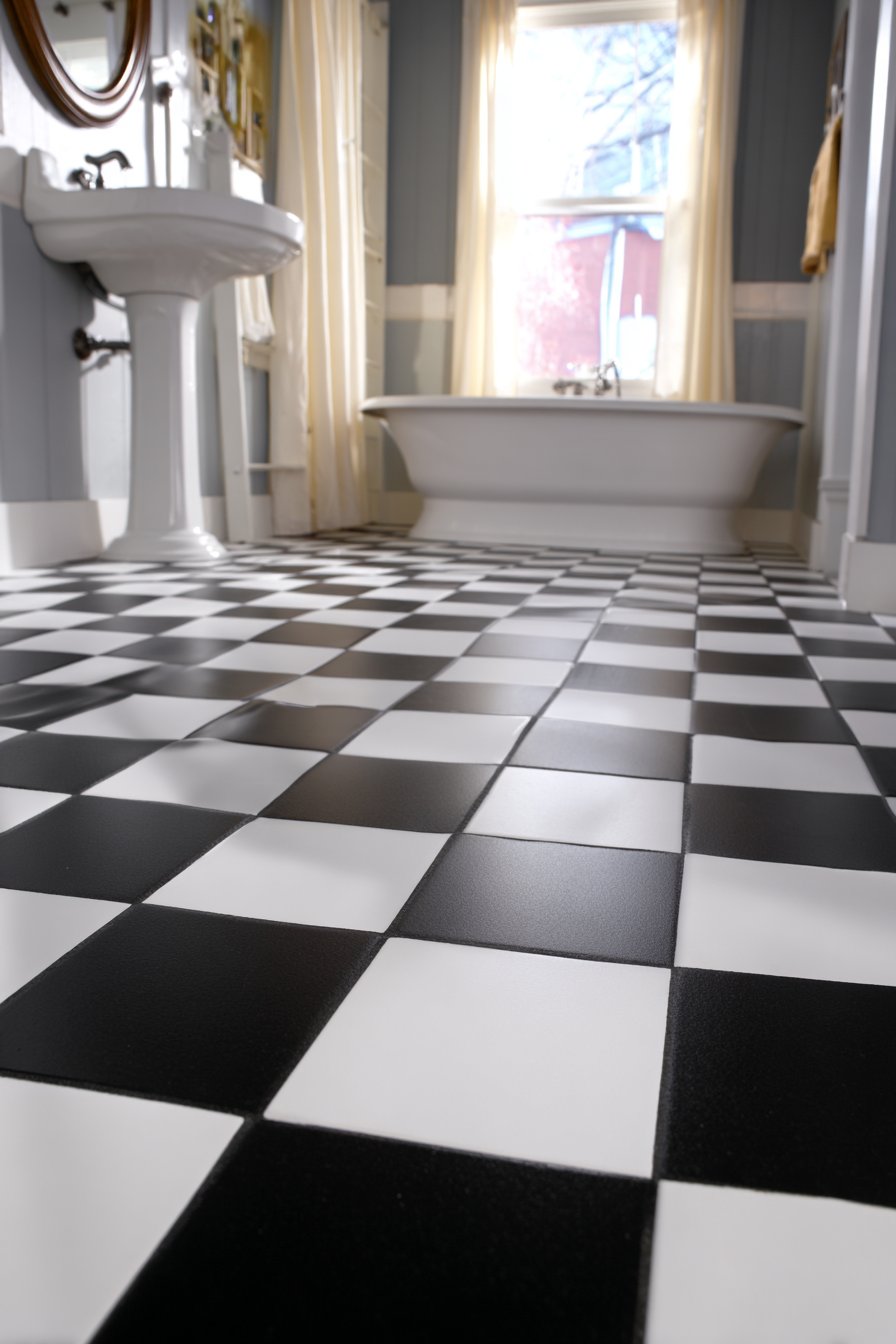
The beauty of checkerboard flooring lies in its ability to create sophisticated visual impact through simple geometric repetition. The alternating black and white squares draw the eye across the floor surface, creating movement and energy that makes small bathrooms feel more dynamic and less confined. The pattern also provides useful flexibility—installing it on the diagonal creates a more expansive feel, while straight installation parallel to walls creates classic formality. The high contrast between black and white ensures the pattern remains crisp and clear, never muddled or ambiguous. This clarity makes the space feel intentional and thoughtfully designed.
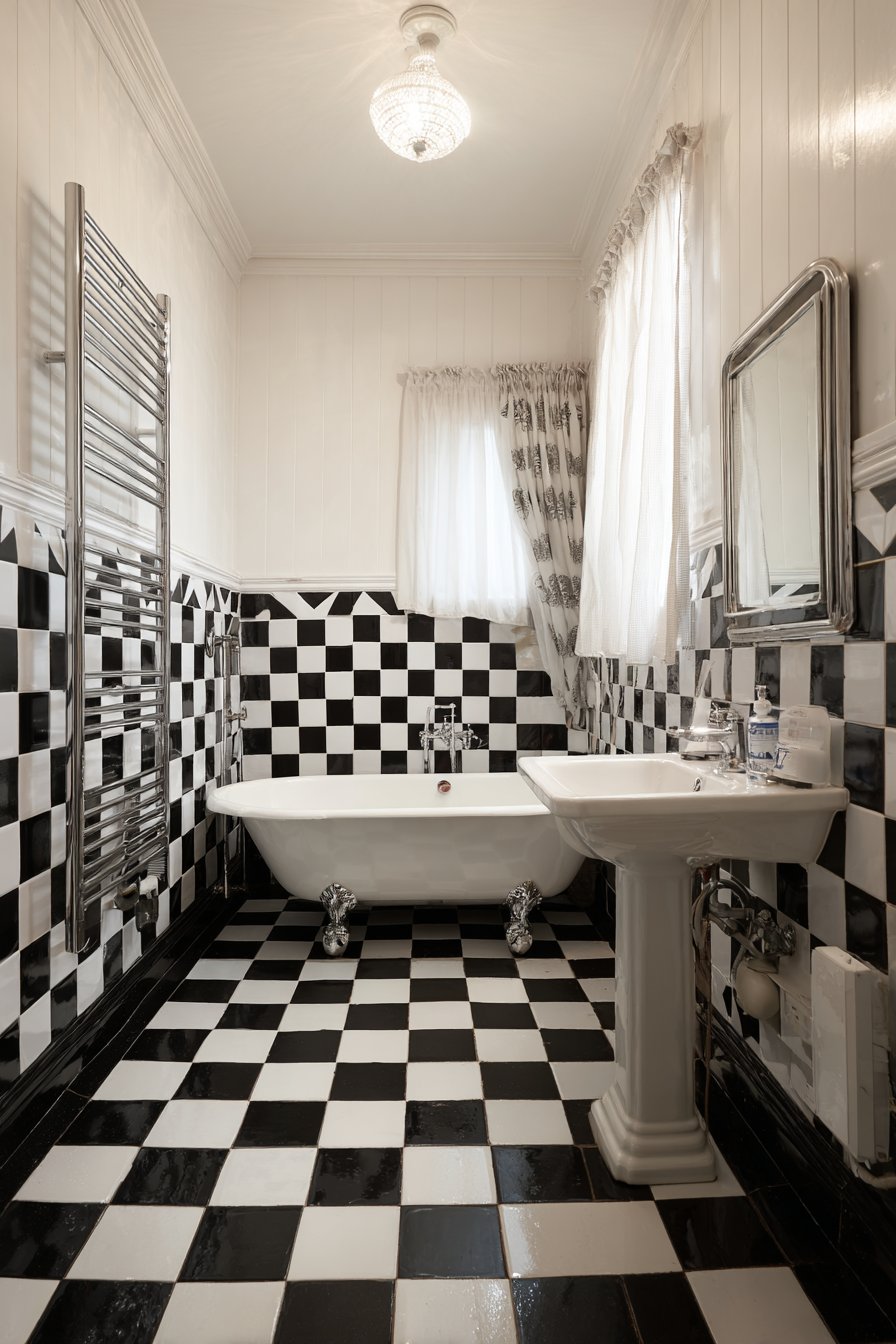
Implementing checkerboard flooring does present practical considerations. The white tiles will show dirt, water spots, and wear more readily than neutral tones, requiring more frequent cleaning to maintain pristine appearance. However, the dark grout typically used between tiles helps disguise everyday dirt, and the busy pattern naturally camouflages minor imperfections better than solid-color floors. The classic nature of this pattern also means it pairs well with various fixture styles—from vintage clawfoot tubs and pedestal sinks to modern floating vanities—providing design flexibility as your bathroom evolves. The timeless appeal ensures this flooring won’t date your bathroom, maintaining relevance across decades.
Key Design Tips:
- Use ceramic or porcelain tiles rather than vinyl for authentic appearance and durability
- Install tiles perfectly square and level for crisp, professional pattern execution
- Consider diagonal installation to maximize the space-expanding effect
- Choose matte or slightly textured tiles for better slip resistance in wet areas
- Balance the bold floor with simpler walls and fixtures to prevent visual overwhelm
10. Natural River Pebble Tile for Spa-Like Atmosphere
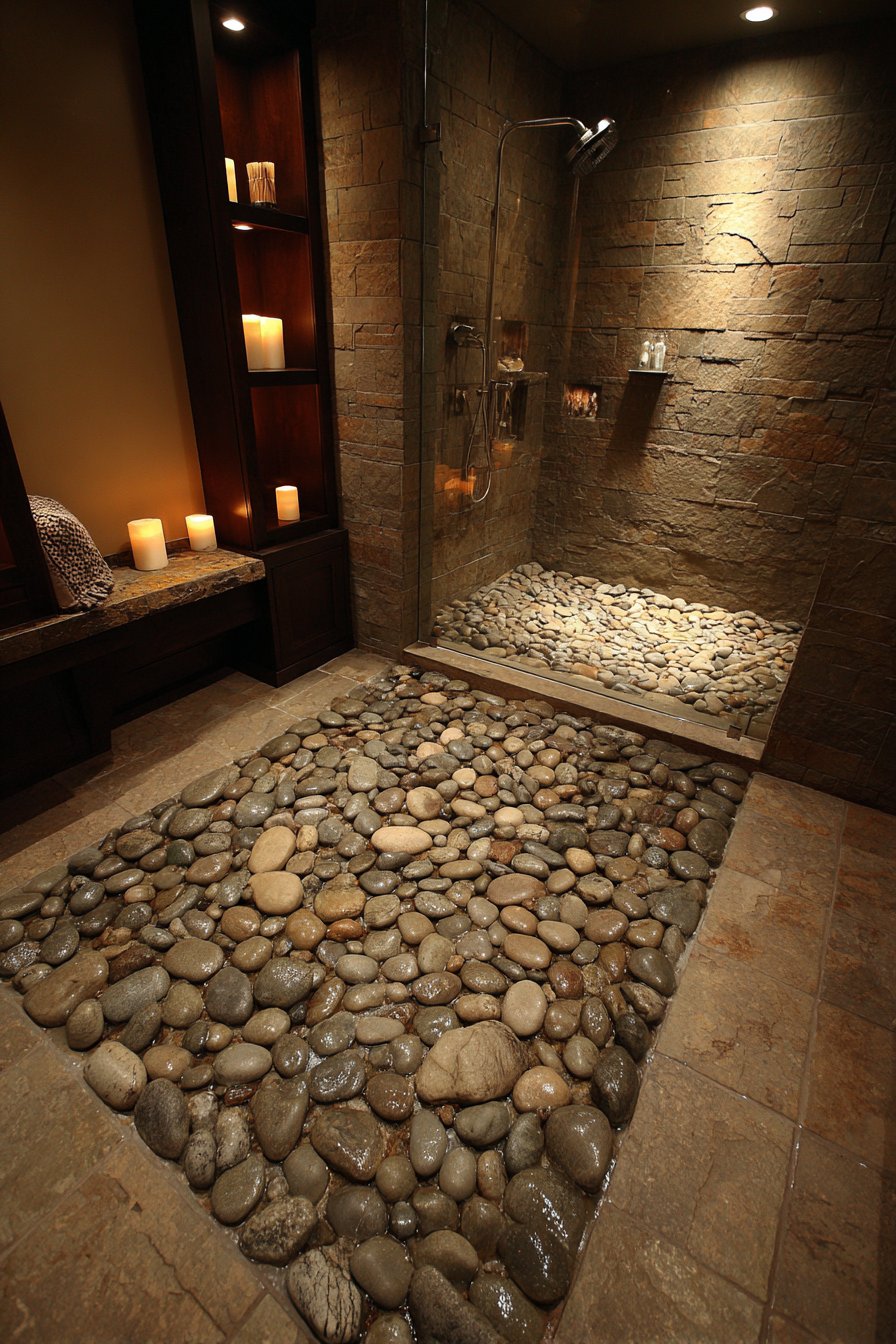
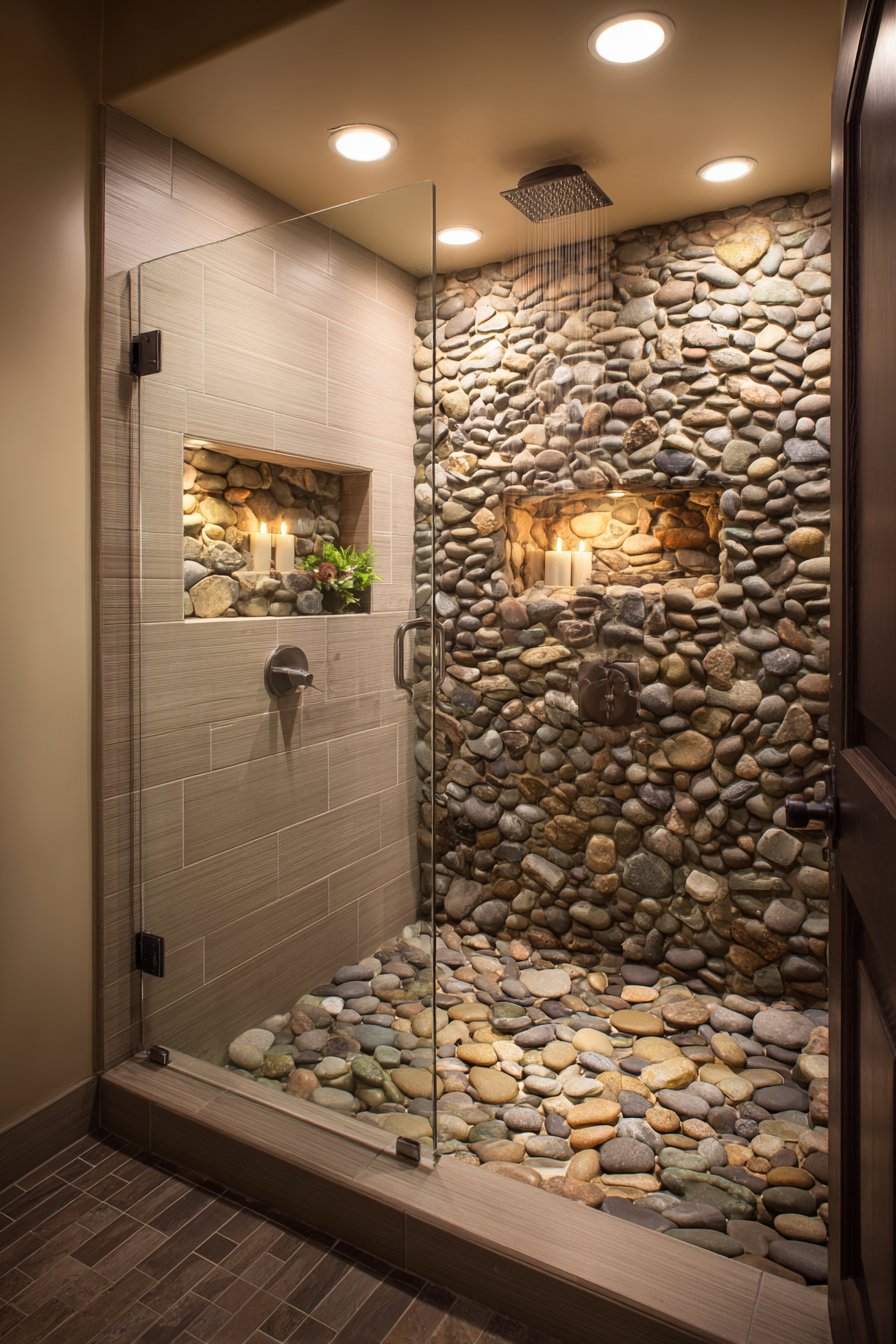
Natural river pebble tiles embedded in neutral grout create one of the most unique and tactile small bathroom flooring ideas available, transforming compact bathrooms into spa-like sanctuaries. The organic shapes, varied sizes, and natural color variations of river stones provide visual and textural interest that manufactured tiles cannot replicate. Each pebble displays unique characteristics—smooth water-worn surfaces, subtle color gradations, and organic forms that create a connection to nature within the bathroom environment. This flooring choice appeals to homeowners seeking to create peaceful, retreat-like bathrooms where stress melts away and relaxation takes priority.
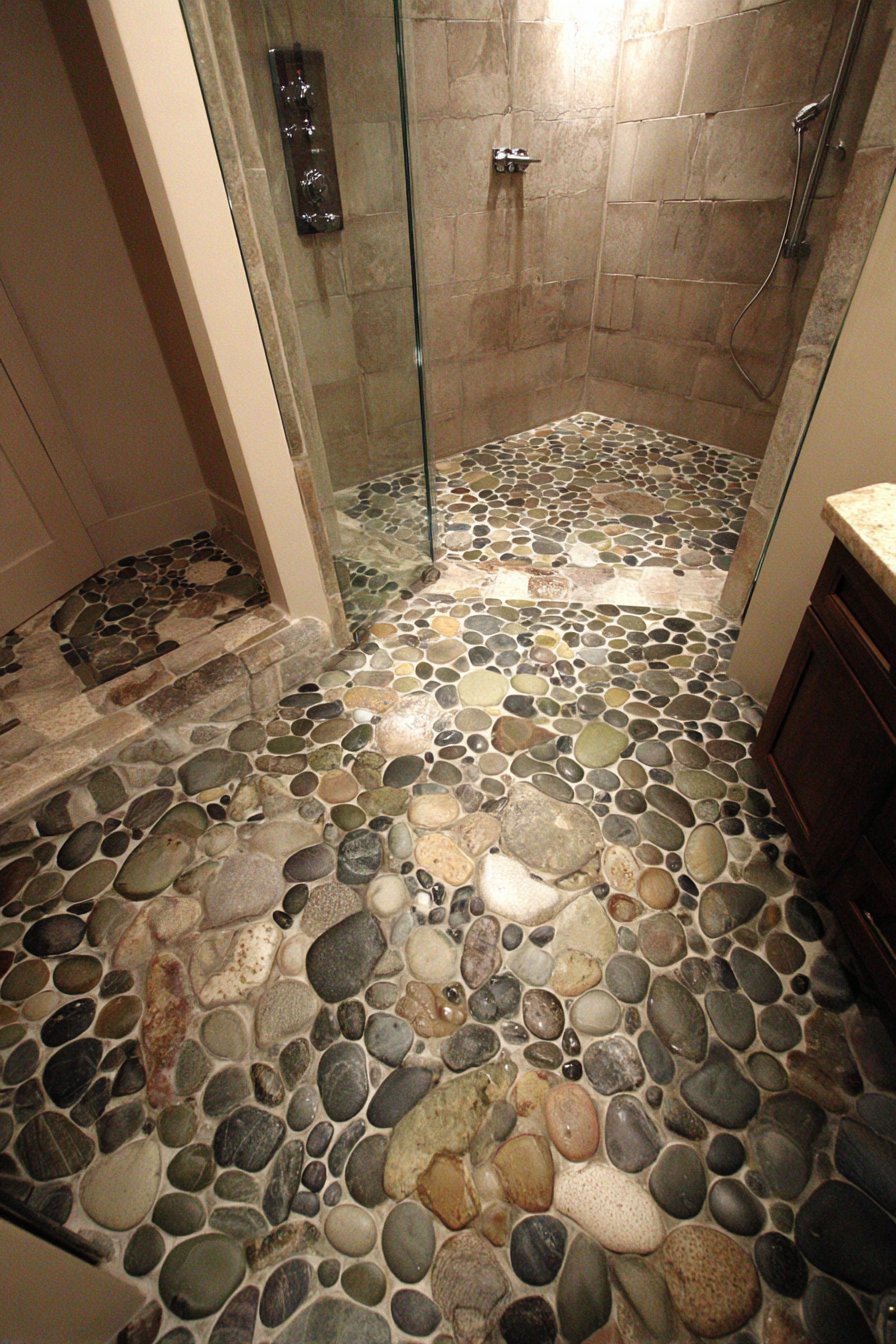
The psychological benefits of natural elements in interior spaces have been well documented, with natural materials promoting calm, reducing stress, and enhancing overall wellbeing. River pebble flooring brings this biophilic design principle directly into the bathroom, creating a sensory experience that engages both sight and touch. Walking barefoot on pebble tile provides gentle massage-like stimulation that many find therapeutic and grounding. The natural earth tones—grays, tans, blacks, creams—create a neutral palette that works harmoniously with various design styles while maintaining organic authenticity. When paired with natural wood, plants, and soft textiles, pebble flooring anchors a comprehensive spa-inspired design scheme.
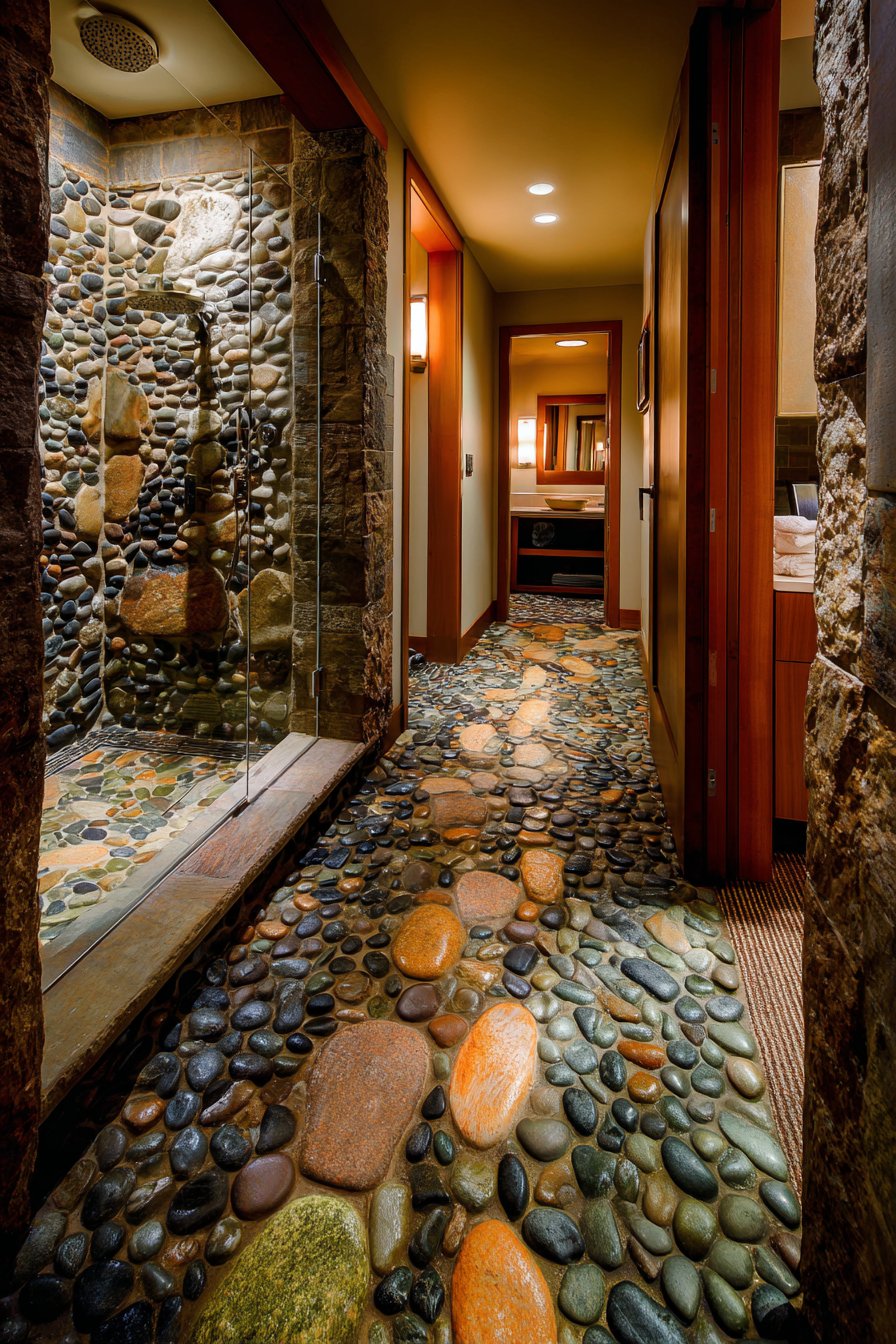
From a practical standpoint, pebble tile offers excellent slip resistance due to its inherently textured surface and the multitude of grout lines between individual stones. The natural material is durable and water-resistant when properly sealed, making it suitable for bathroom use including shower floors. Installation requires attention to ensure proper drainage and smooth grout application, but the result is a truly distinctive floor that becomes a conversation piece and design focal point. The pebbles’ natural variations mean no two installations are identical, giving your small bathroom unique, unrepeatable character. Maintenance involves regular sealing to protect the stones and grout from water absorption and staining.
Key Design Tips:
- Choose pebbles with relatively uniform size for more comfortable walking surface
- Have the tile professionally sealed before and after installation for maximum protection
- Pair with natural materials like wood vanities and bamboo accessories for cohesive organic design
- Install adequate drainage, especially in shower areas, as water can pool between stones
- Use neutral-colored grout that blends with the stone tones for seamless appearance
11. Soft Sage Green Elongated Subway Tiles
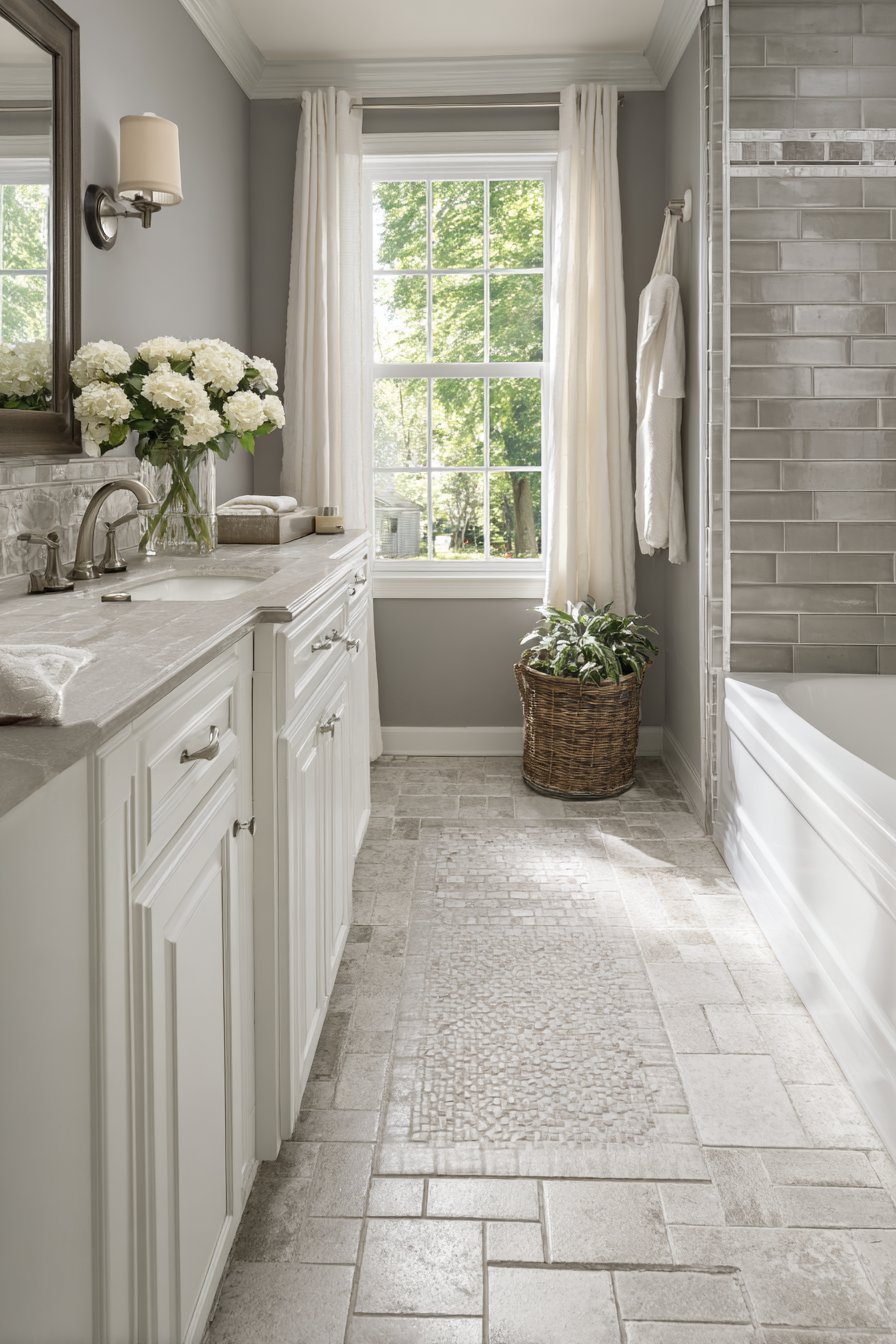
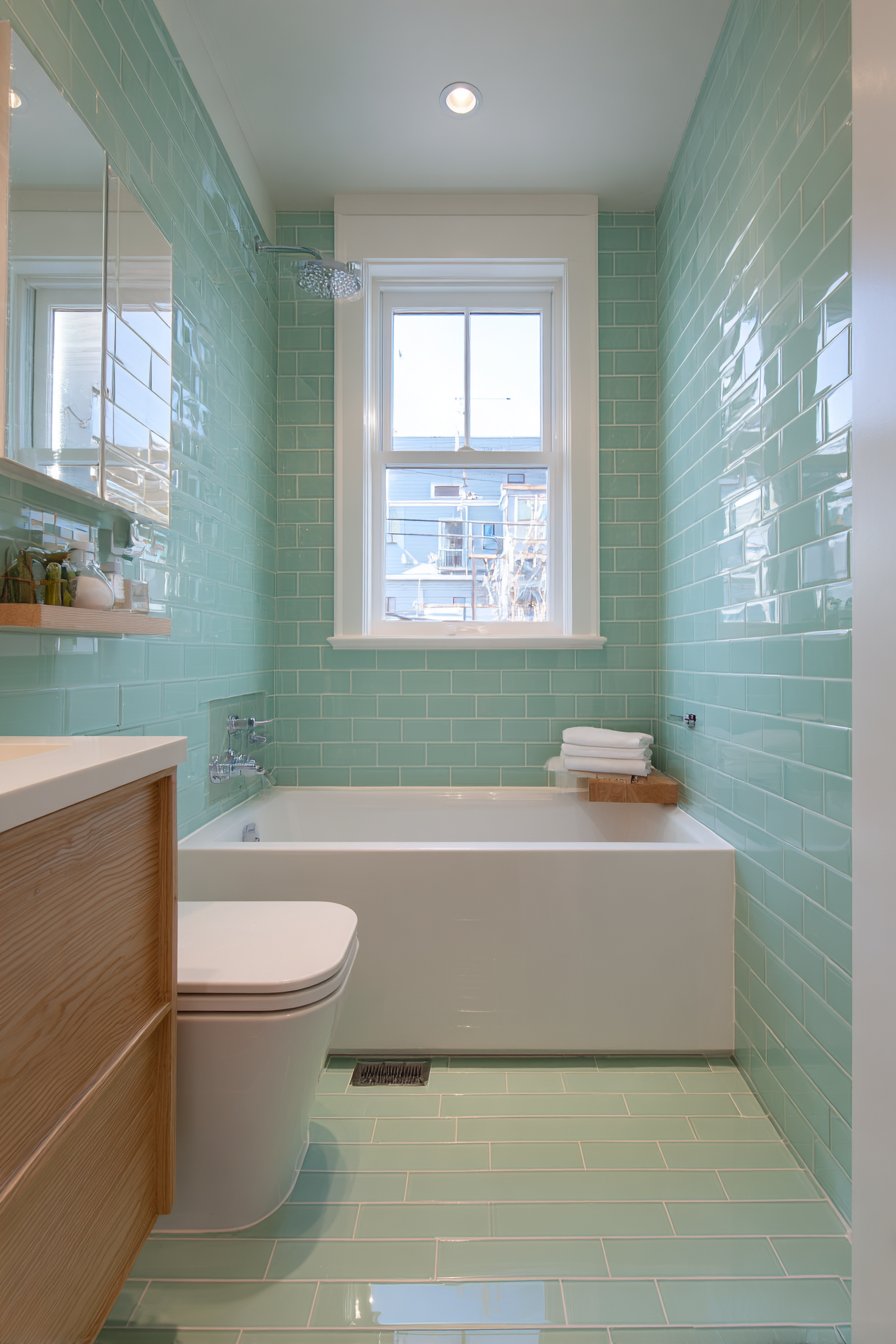
Soft sage green elongated subway-style ceramic tiles offer a refreshing twist on traditional small bathroom flooring ideas, bringing subtle color and modern proportions to compact spaces. The gentle green tone adds personality and freshness while maintaining enough neutrality to work with various fixture finishes and accessory colors. When laid in a running bond pattern—the classic subway tile installation method—these elongated tiles create horizontal lines that visually lengthen narrow bathrooms, making them feel more spacious. This contemporary take on classic subway tiles demonstrates how traditional formats can be reimagined through color and proportion to create relevant, modern designs.
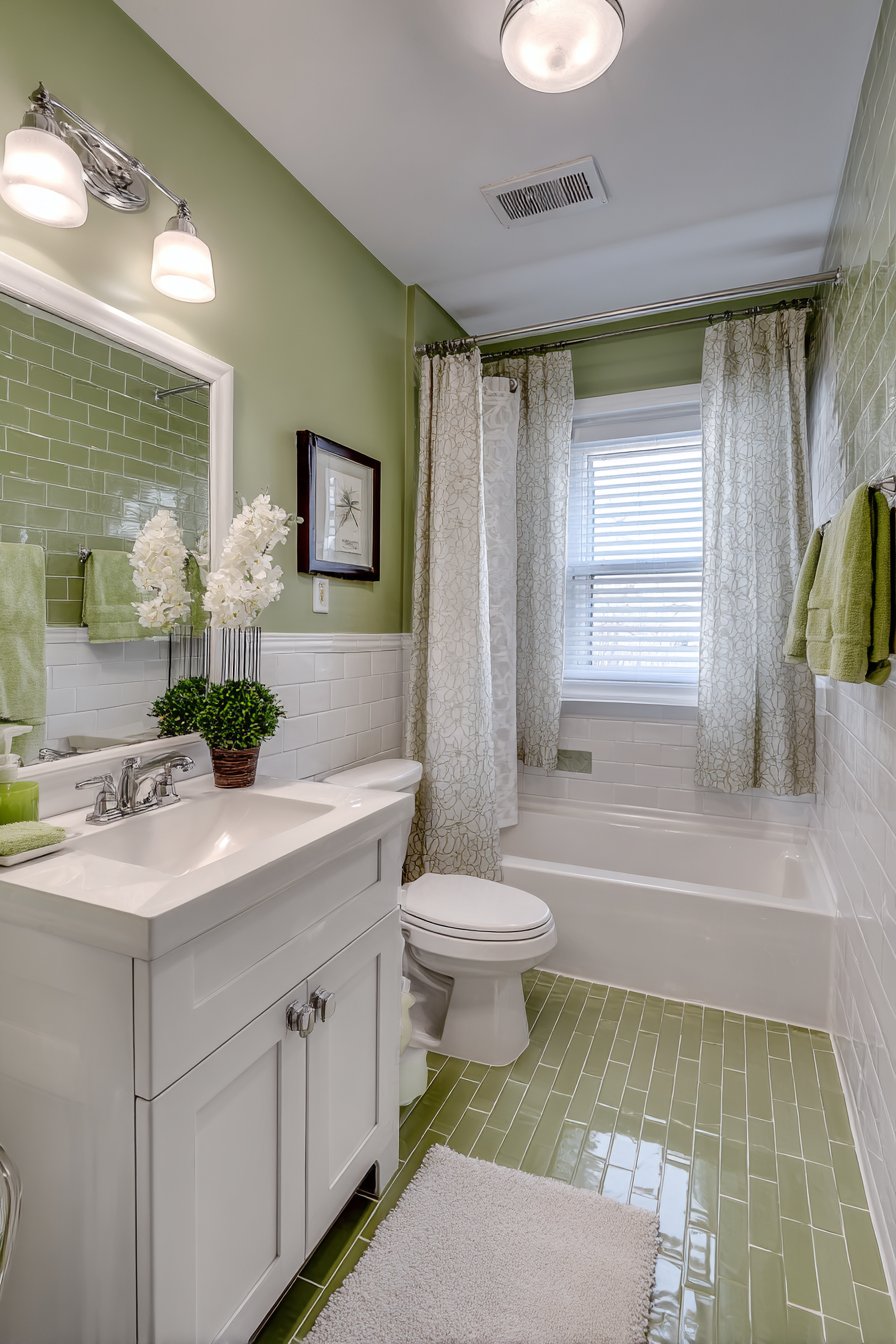
The sage green coloration provides psychological benefits that make it particularly well-suited for bathroom spaces. Green tones evoke nature, growth, and renewal—associations that align perfectly with bathrooms as spaces for cleansing, self-care, and personal renewal. The soft, muted quality of sage prevents the color from feeling juvenile or overwhelming, instead creating sophisticated, spa-like ambiance. The color also pairs beautifully with natural materials like wood and brass, allowing for warm, organic design schemes that feel current and timeless simultaneously. The subtle hue provides enough visual interest to prevent bland neutrality while remaining versatile enough to work with changing accessory colors and styles.
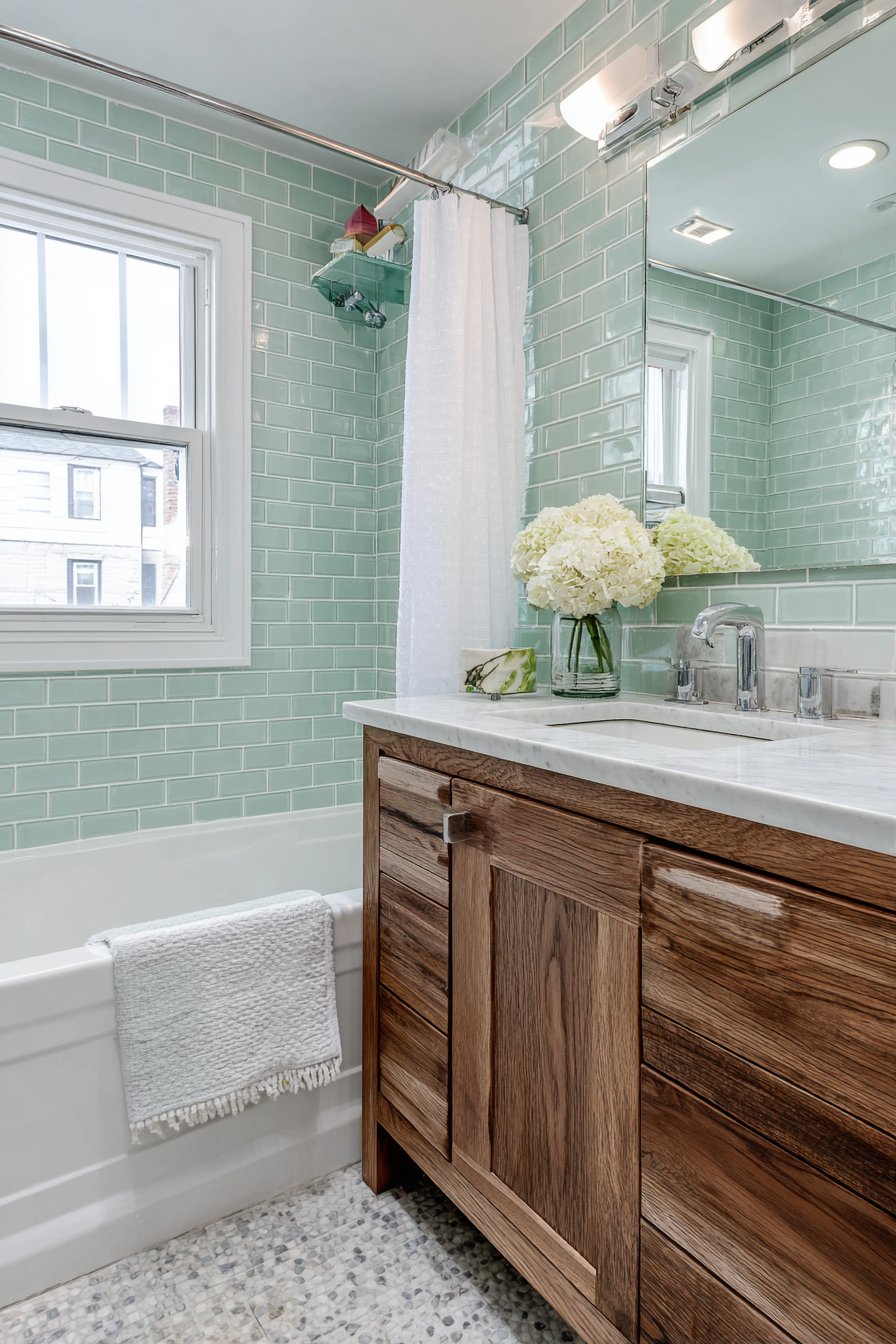
From a practical perspective, elongated subway tiles—typically 4×12 inches or 4×16 inches—offer advantages over both standard subway tiles and large-format options. The moderate size makes them easier to install around bathroom fixtures than very large tiles, while the elongated proportion creates more visual interest than square tiles. The running bond pattern with offset seams provides both aesthetic appeal and practical benefits—the staggered joints distribute stress more effectively than grid patterns, resulting in more durable installations. The glazed ceramic surface offers excellent water resistance and easy maintenance, with the sage color providing a forgiving backdrop that shows less obvious water spotting than pure white.
Key Design Tips:
- Lay tiles horizontally in a running bond pattern to emphasize room width
- Choose a grout color slightly darker than the tile for subtle definition without harsh contrast
- Pair with natural wood vanities and brass or gold fixtures for warm, organic cohesion
- Install tiles on walls as well as floors in very small bathrooms for enveloping color effect
- Add white fixtures and trim to provide crisp contrast against the soft green
12. Realistic Marble-Look Waterproof Luxury Vinyl
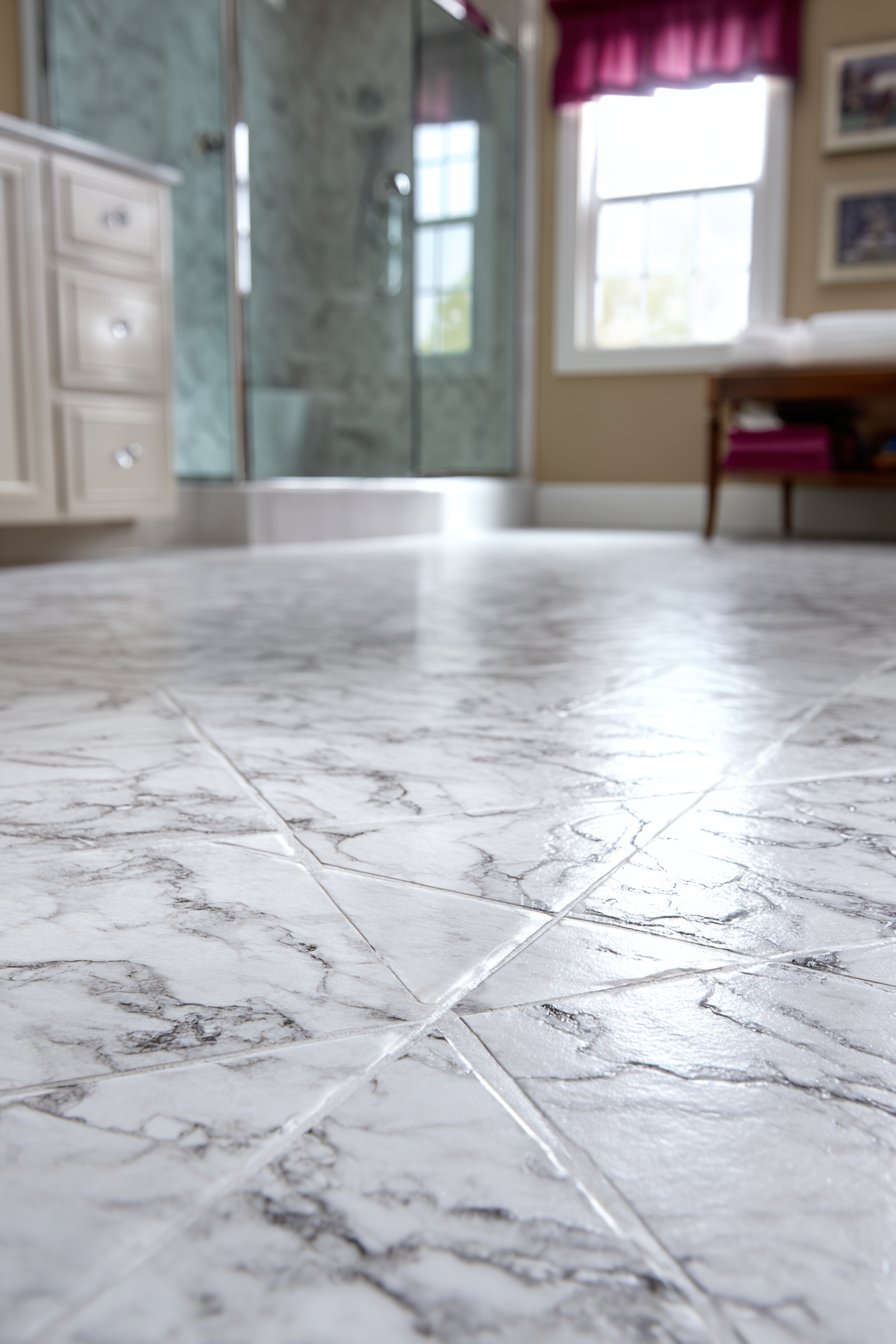
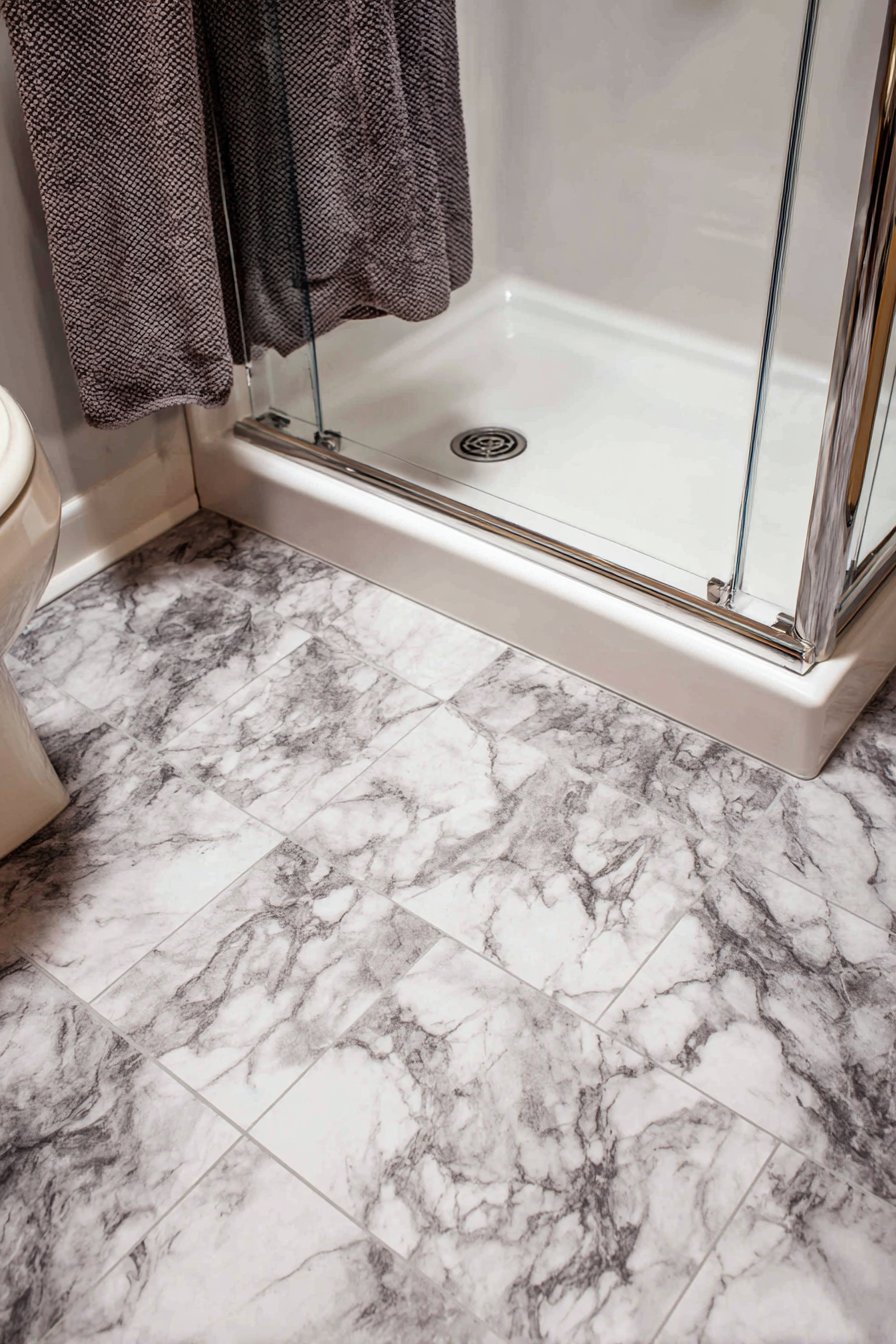
Waterproof luxury vinyl tiles with realistic marble appearance in white and gray veining represent one of the most practical and beautiful small bathroom flooring ideas available today. Modern printing and embossing technologies have achieved remarkable realism, creating vinyl products that closely mimic natural marble’s appearance at a fraction of the cost and maintenance requirements. The stone-look provides elegance and sophistication typically associated with high-end bathrooms, while the vinyl material delivers 100% waterproof performance, comfortable underfoot warmth, and easy installation. This combination of luxury aesthetics and practical benefits makes marble-look vinyl an increasingly popular choice for bathroom renovations.
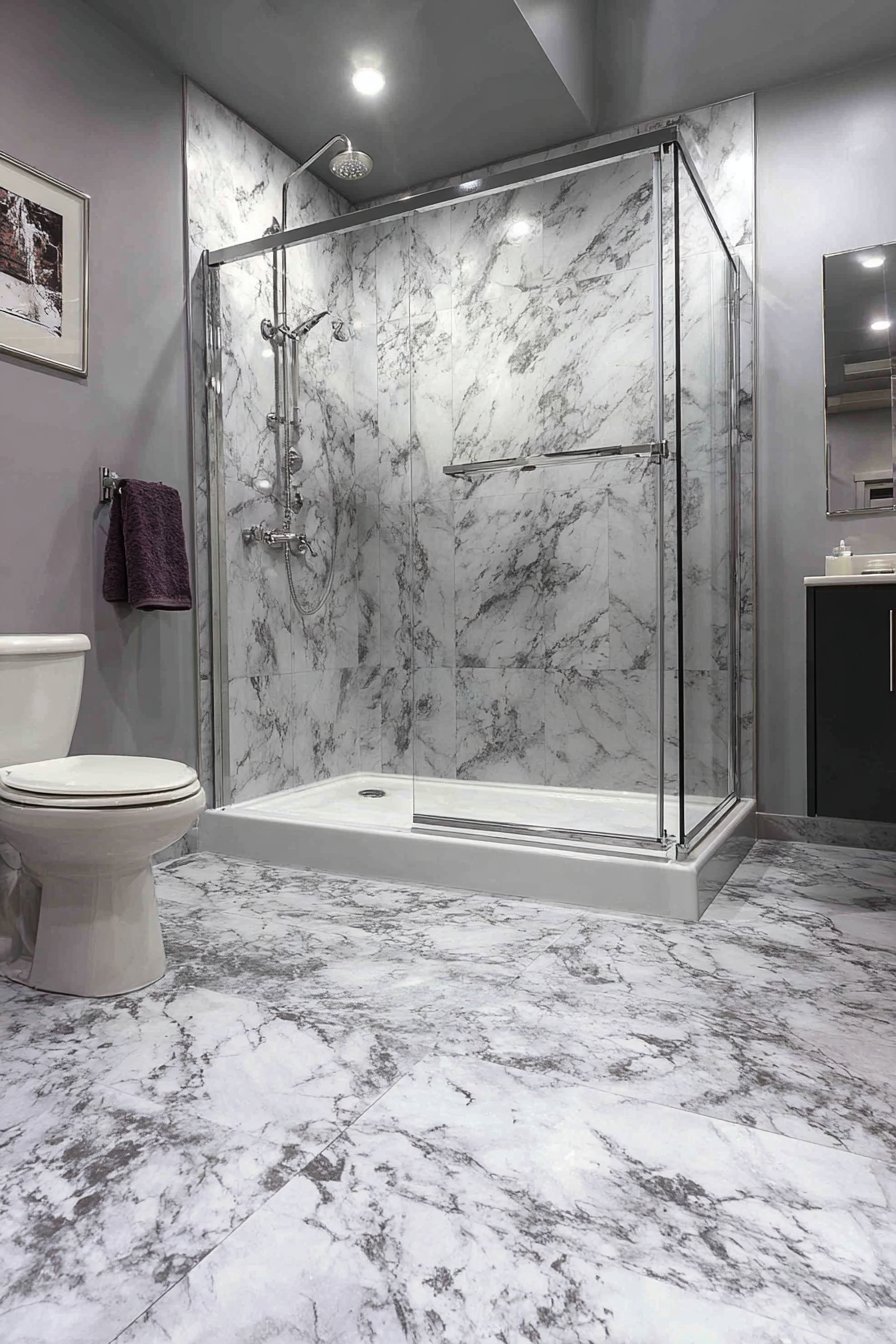
The white background with gray veining creates a bright, clean foundation that makes small bathrooms feel more spacious and luxurious. The marble pattern provides visual interest through organic veining rather than geometric patterns or bold colors, ensuring the floor enhances rather than overwhelms compact dimensions. The pattern’s natural variation means no two sections look identical, creating authentic stone-like appearance. Unlike real marble, which requires regular sealing, careful cleaning with pH-neutral products, and protection from acidic substances, luxury vinyl requires only routine cleaning with standard household products—a significant practical advantage for busy households.
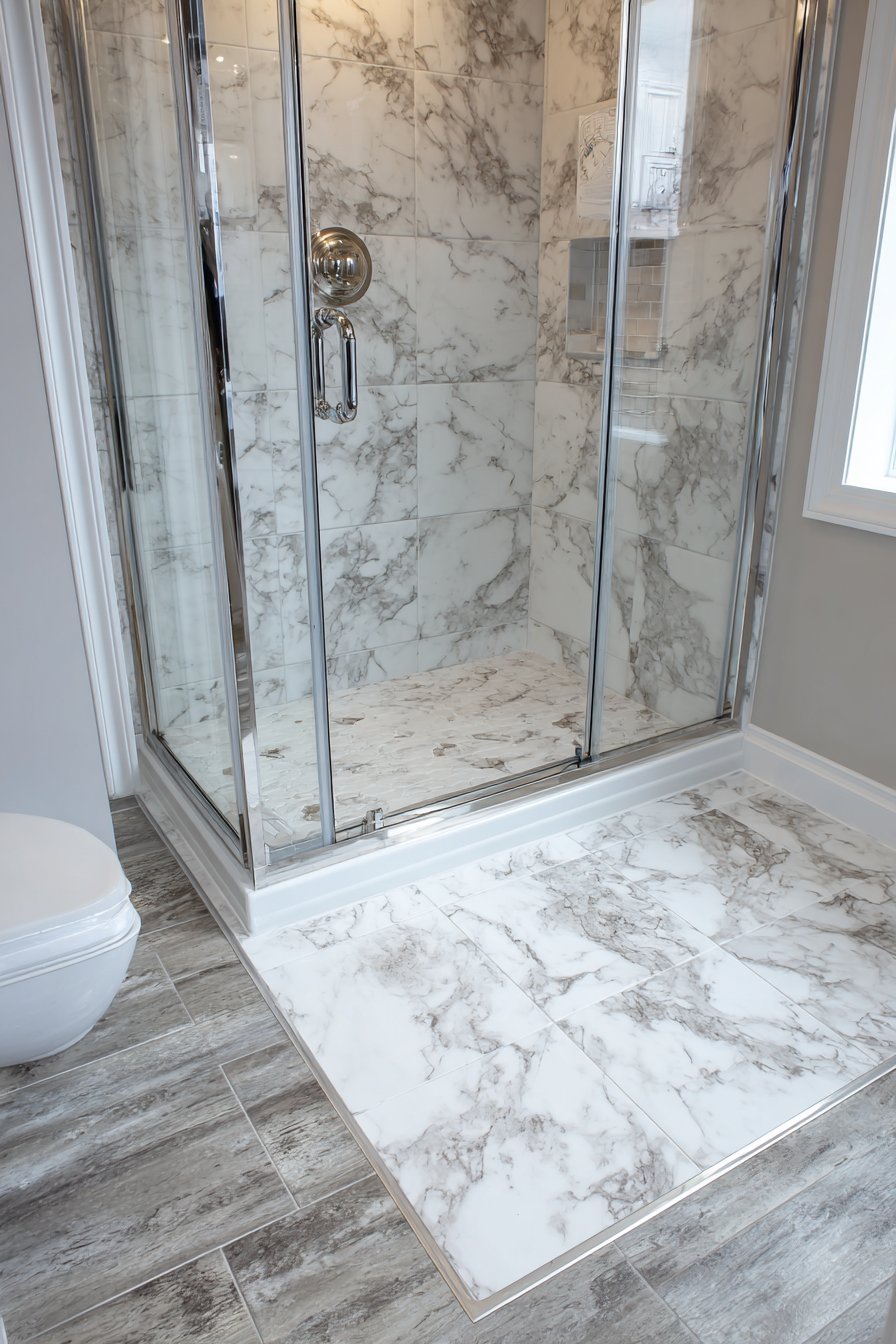
Installation of luxury vinyl tiles is considerably simpler than ceramic or natural stone, making it accessible for DIY enthusiasts with moderate skills. Many products feature click-lock installation systems that don’t require adhesives or specialized tools, floating over existing subfloors in many cases. The material can be cut with standard utility knives, making adjustments around toilets, vanities, and doorways straightforward. The vinyl composition provides slight cushioning underfoot—more comfortable than hard ceramic or stone—while maintaining surface durability suitable for high-traffic areas. The cost-effectiveness of luxury vinyl compared to real marble or porcelain allows homeowners to achieve high-end looks within modest budgets.
Key Design Tips:
- Choose products with enhanced embossing that matches the printed veining for maximum realism
- Install vinyl with its veining running in varied directions to mimic natural marble installation
- Select products specifically rated for bathroom use with superior water resistance
- Use color-matched transition strips and moldings for seamless, professional appearance
- Pair with chrome or polished nickel fixtures to enhance the marble’s elegant aesthetic
13. Matte White Penny Round Tiles for Classic Spa Appeal
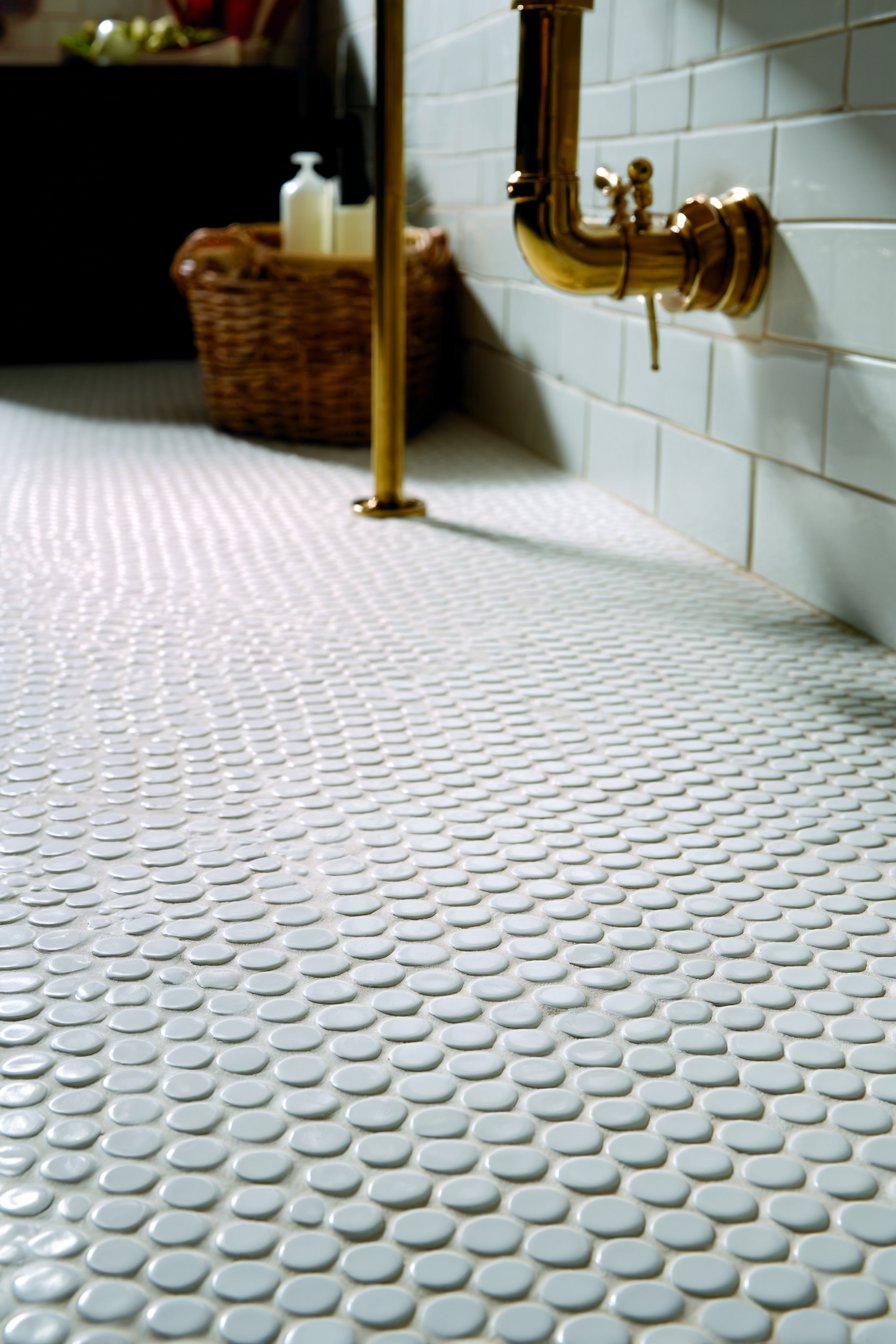
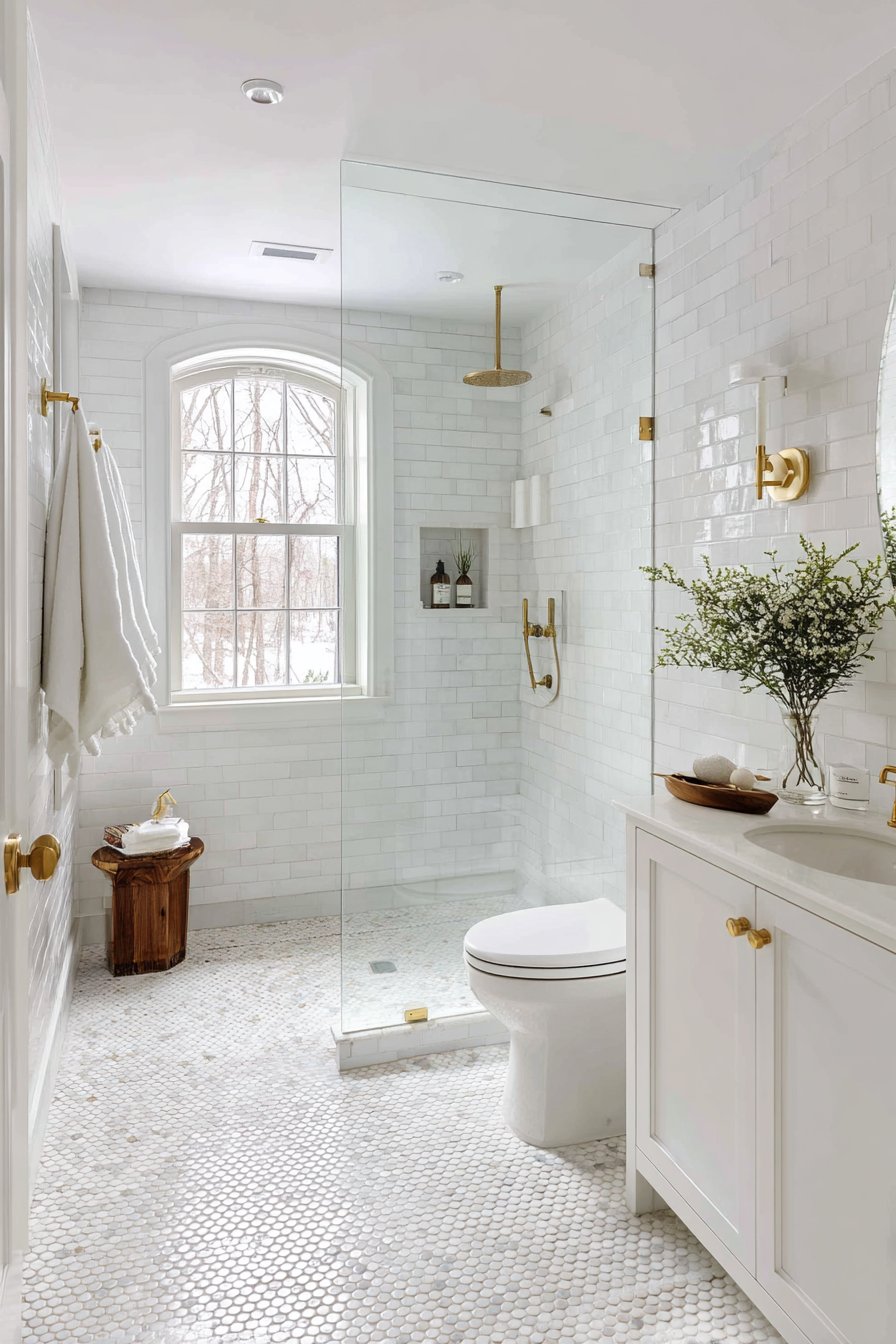
Matte white penny round porcelain tiles create charming, spa-like atmosphere in small bathroom flooring ideas, bringing three-dimensional texture and vintage appeal to compact spaces. The circular tiles—typically 3/4 to 1 inch in diameter—are mounted on mesh sheets for easier installation despite their small size. The repeating circular pattern creates visual rhythm and movement across the floor surface, adding interest through form rather than color or bold graphics. The matte white finish maximizes light reflection to brighten small bathrooms while the dimensional quality of the round tiles prevents the flatness that can occur with smooth, glossy white surfaces.
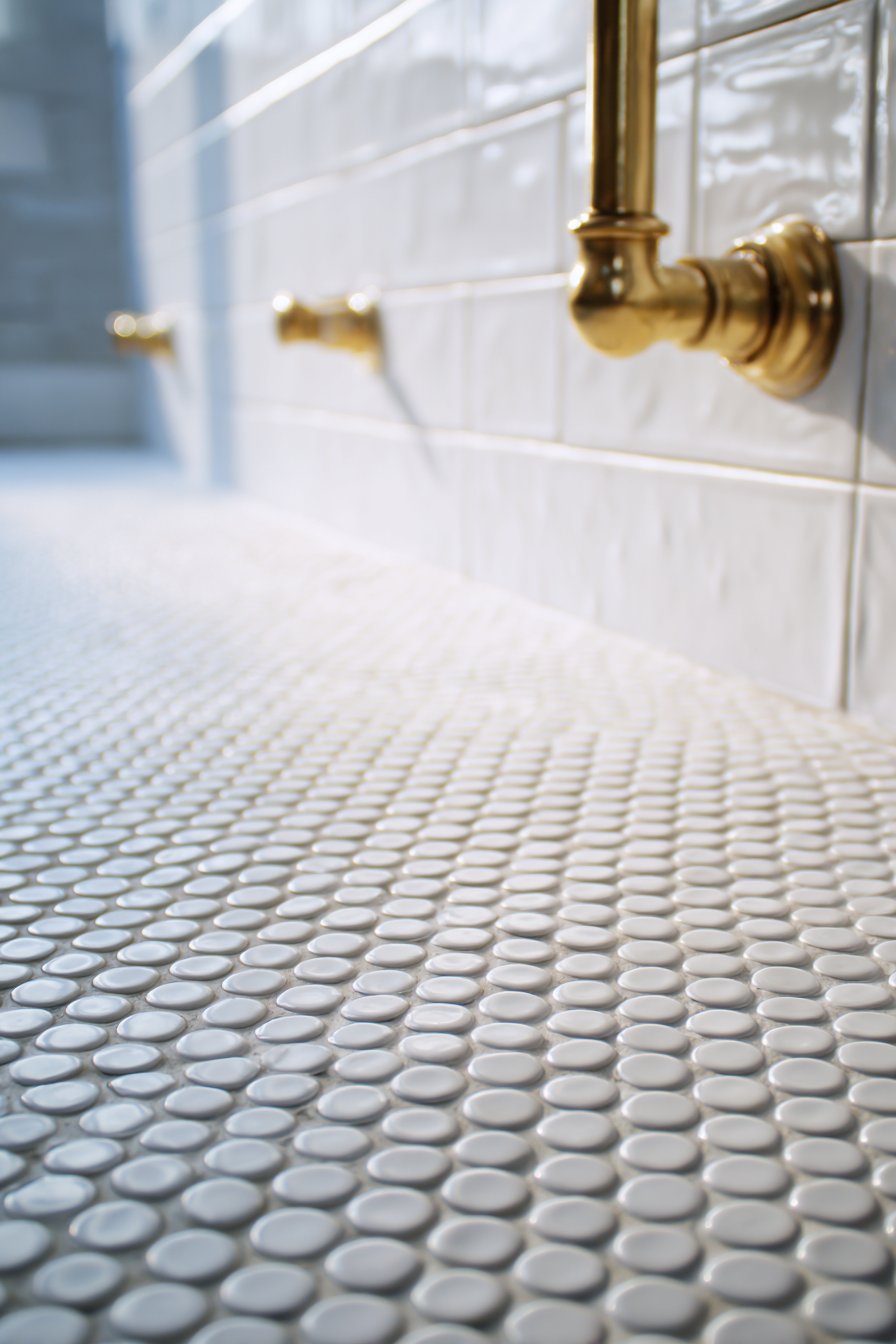
The penny tile format has enjoyed renewed popularity as homeowners embrace vintage-inspired and classic design aesthetics that provide visual comfort and timelessness. The pattern evokes early 20th-century bathrooms—a period when attention to detail and quality craftsmanship were paramount—while the clean white color keeps the look fresh and contemporary. The small tile size naturally accommodates bathroom floor slopes, curves around drains, and irregular spaces that larger tiles would require extensive cutting to navigate. The multitude of grout lines provides excellent slip resistance, making this both a beautiful and safe flooring choice for wet bathroom environments.
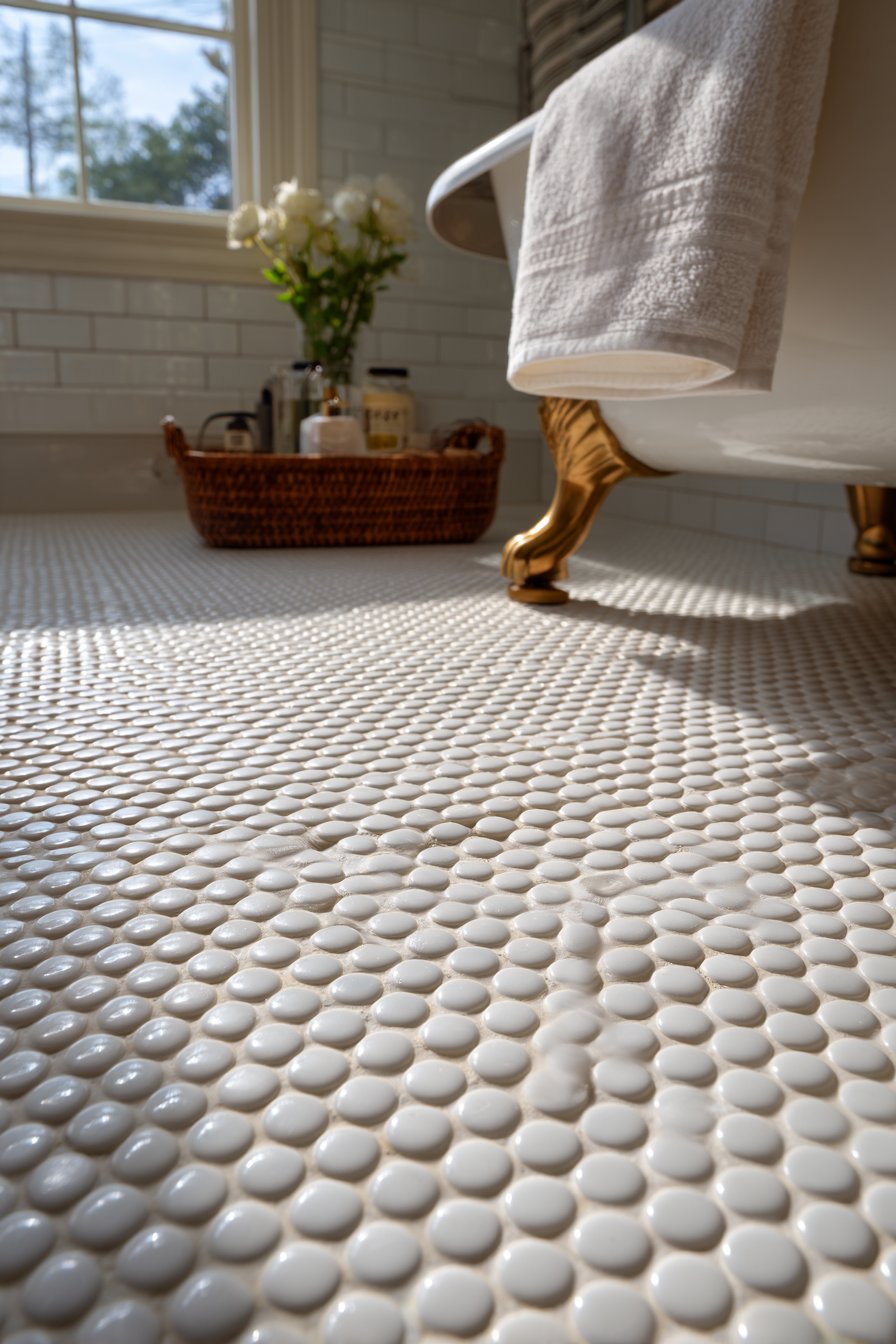
Installing penny tiles requires patience and precision to achieve professional results, with proper spacing and grout application critical to the finished appearance. The small tile size means more grout lines to clean and maintain compared to large-format alternatives, but the matte white finish is forgiving, showing less obvious dirt and water spotting than glossy white surfaces. The tiles pair beautifully with subway tile walls, creating cohesive period-appropriate designs, or with contemporary fixtures for pleasing traditional-modern contrast. The classic nature of this flooring ensures it won’t date your bathroom, maintaining relevance and appeal for decades while providing a neutral foundation that accommodates changing accessory colors and styles.
Key Design Tips:
- Choose matte rather than glossy finish for better slip resistance and more authentic vintage appearance
- Use white or light gray grout for cohesive, light-reflective appearance
- Extend penny tiles partway up walls for classic wainscot effect
- Pair with chrome fixtures and subway tile walls for authentic period bathroom design
- Ensure proper subfloor preparation as small tiles will telegraph substrate imperfections
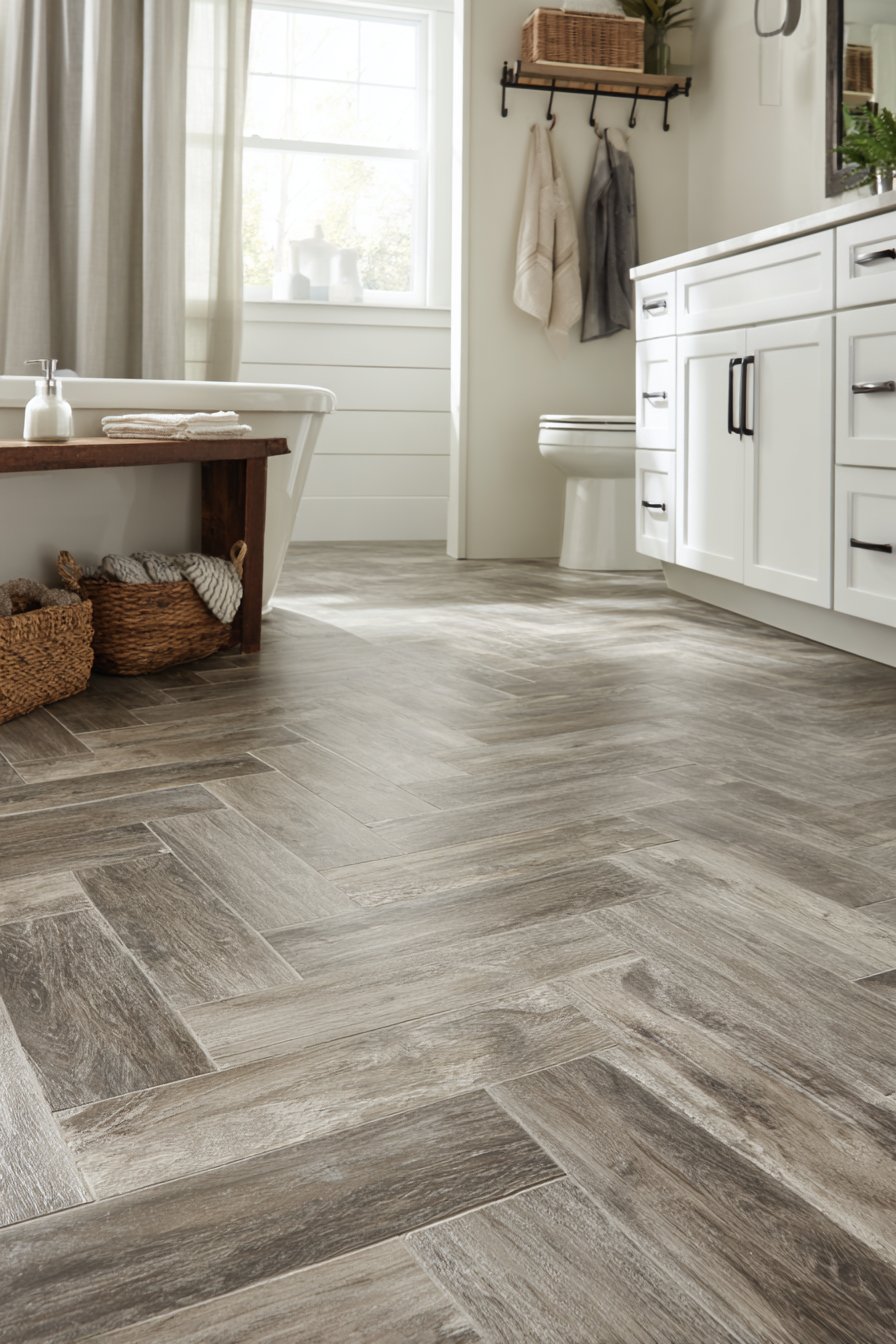
14. Sophisticated Herringbone Wood-Look Porcelain
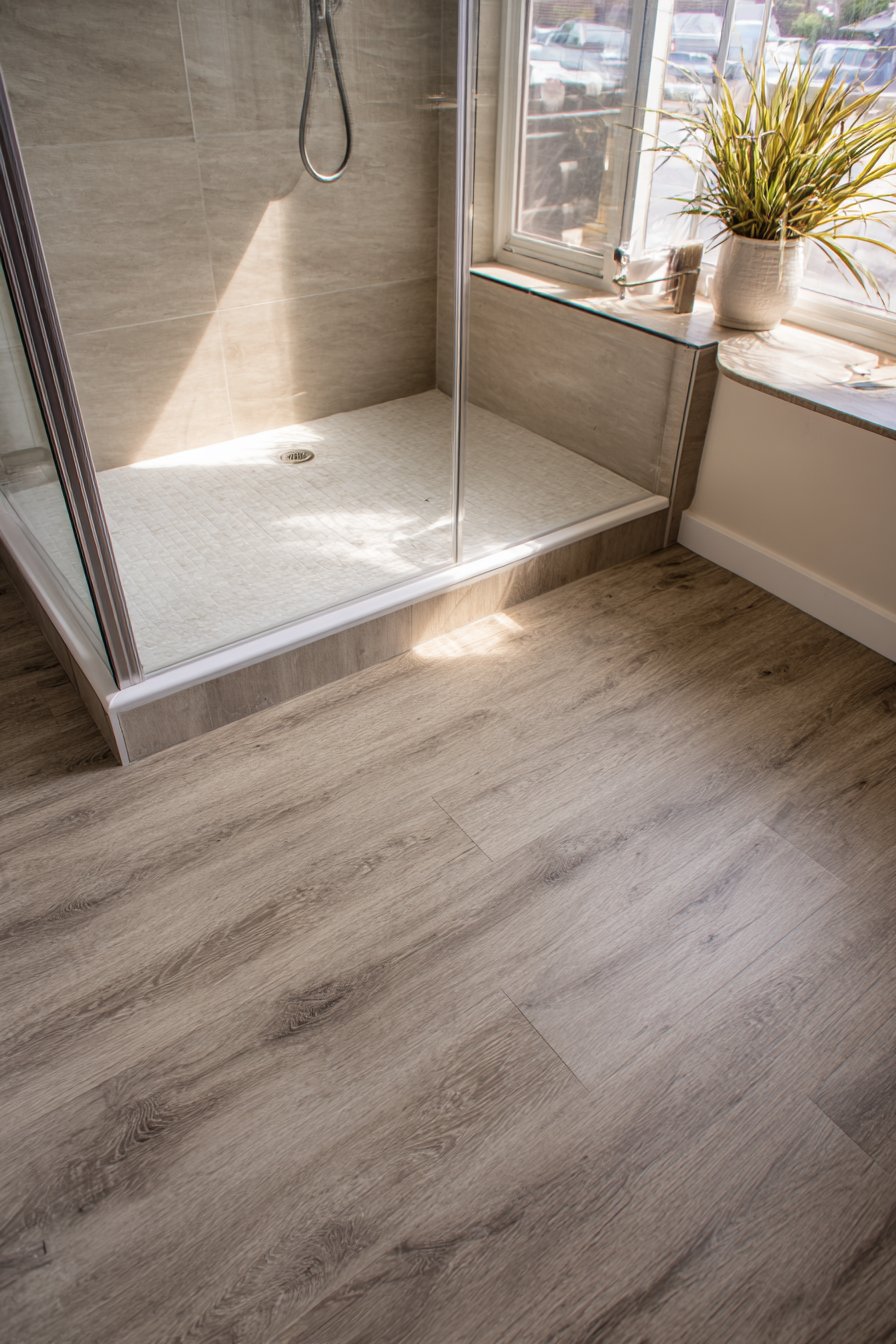
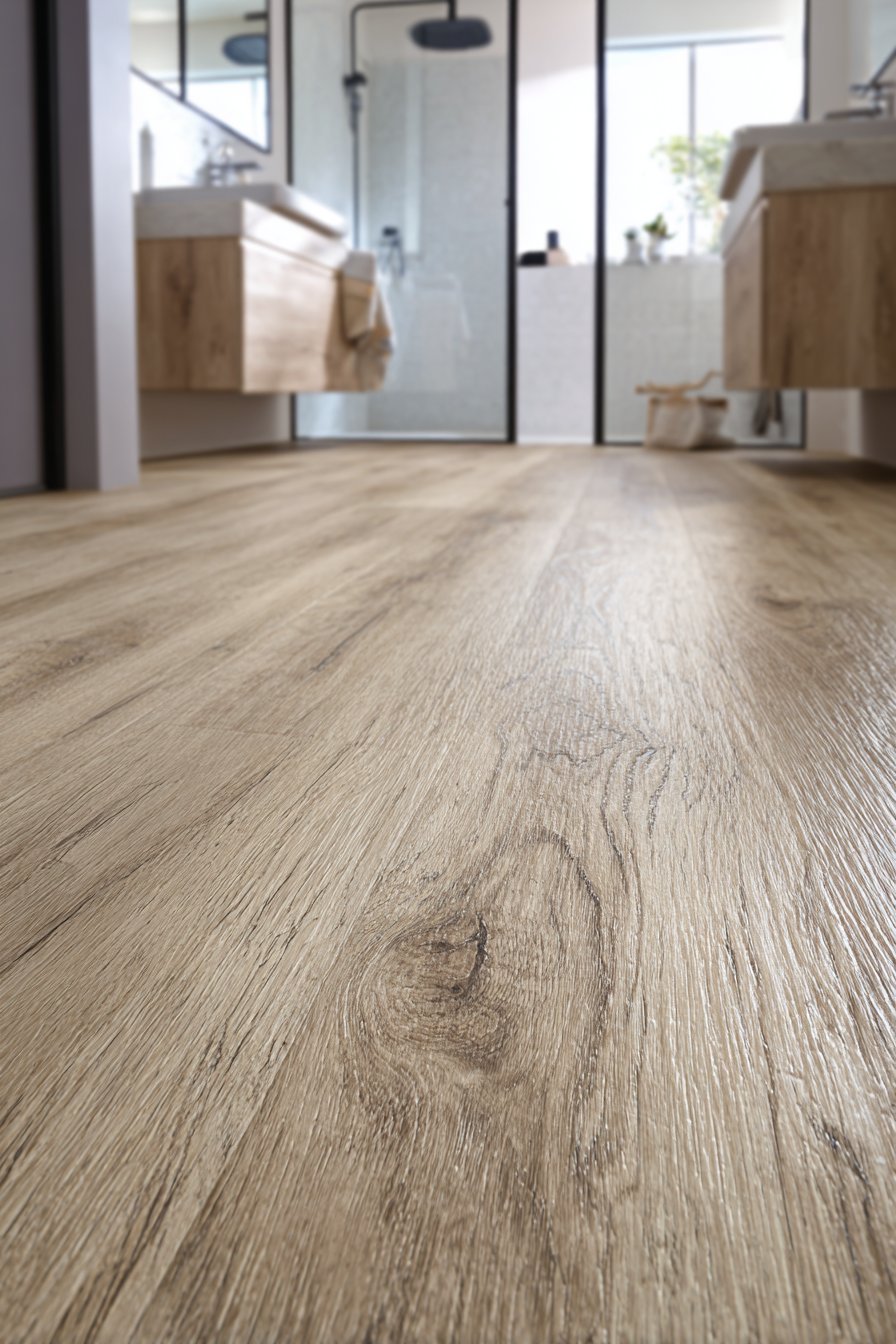
Herringbone-patterned wood-look porcelain tiles in medium oak tones bring sophisticated style and visual complexity to small bathroom flooring ideas without sacrificing practicality. The distinctive V-shaped weaving pattern creates dynamic visual interest that draws the eye across the floor surface, making small bathrooms feel more designed and intentional. Modern porcelain technology achieves remarkable wood realism, with detailed grain patterns, natural knots, and color variations that closely mimic genuine oak, maple, or walnut. The herringbone installation elevates the wood-look from simple to sophisticated, demonstrating design knowledge and attention to detail that transforms ordinary bathrooms into special spaces.
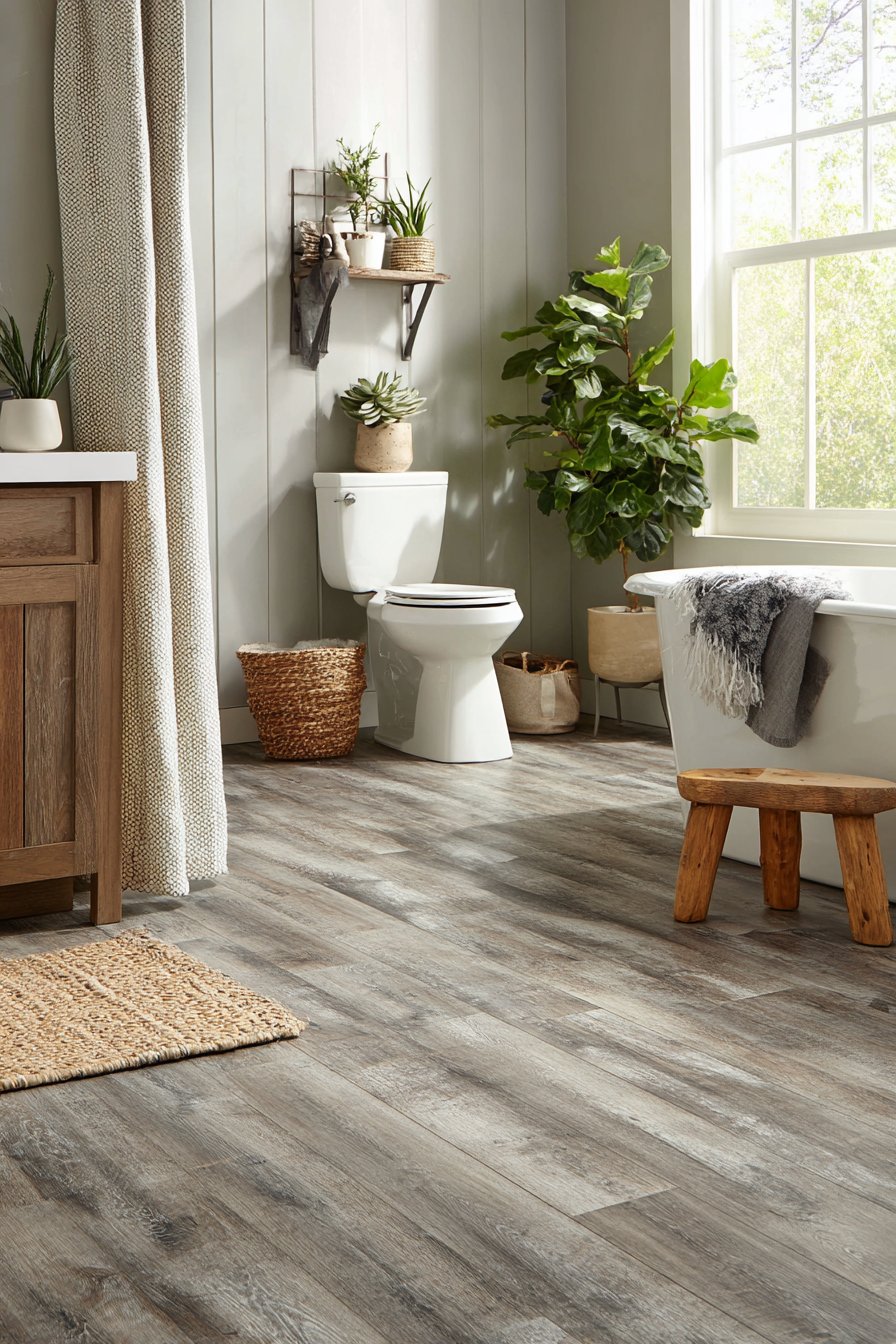
The diagonal lines inherent in herringbone patterns create visual movement that makes spaces feel larger and more dynamic than grid-pattern installations. This optical effect is particularly valuable in small bathrooms where spatial perception matters significantly. The pattern complexity also provides visual interest that keeps the eye engaged without requiring bold colors or busy graphics—the geometric interplay of the angled planks creates sufficient interest on its own. The medium oak tone provides warmth without darkness, balancing the cool, hard surfaces typical in bathrooms while maintaining enough neutrality to work with various fixture finishes and color schemes.
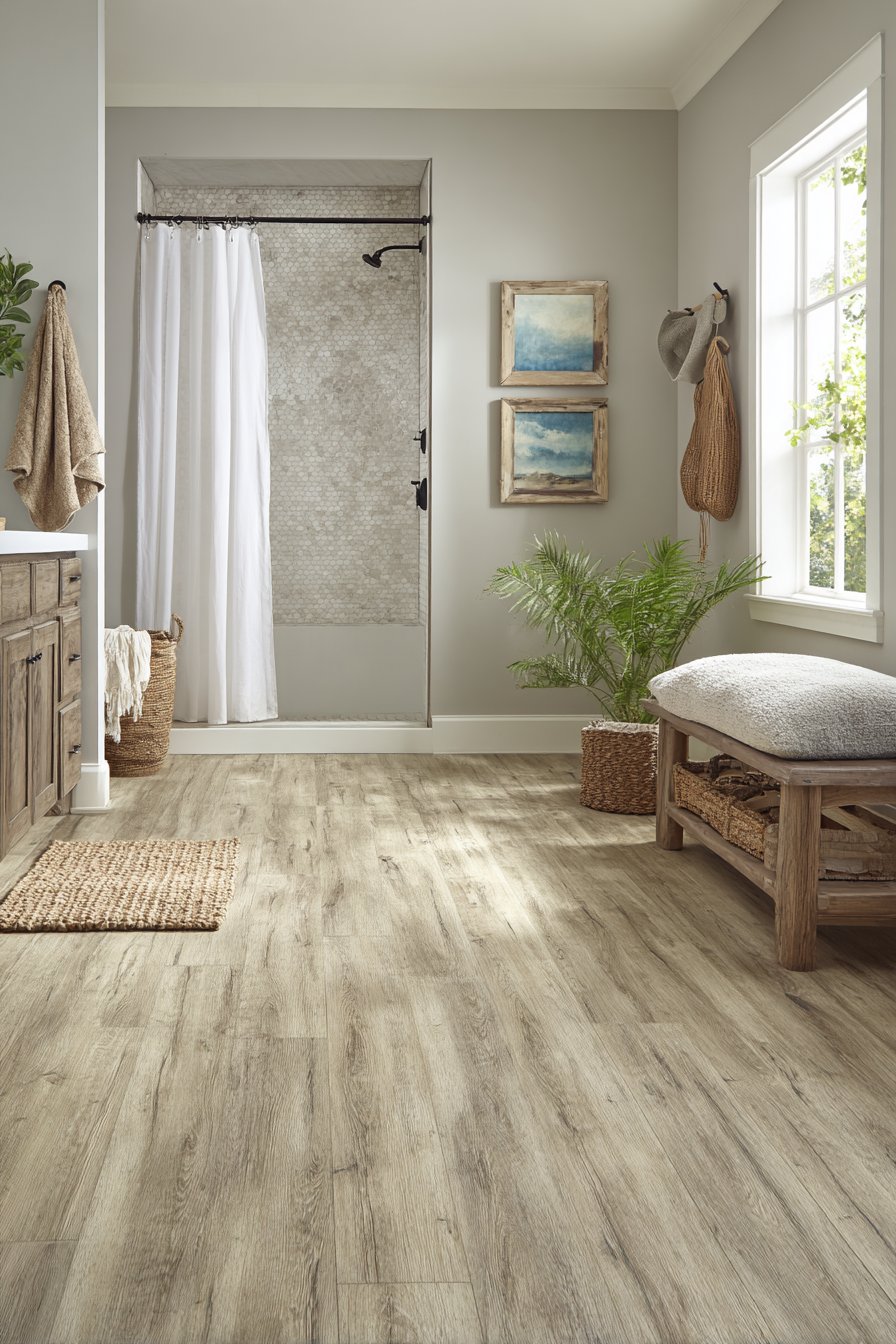
From a practical standpoint, wood-look porcelain offers the warmth and beauty of wood without moisture-related concerns. Unlike real hardwood, which would swell, warp, and deteriorate in bathroom humidity, porcelain is completely water-resistant and dimensionally stable. The tiles require no special sealing or maintenance beyond routine cleaning, making them far more practical than the wood they mimic. The herringbone pattern does require more material due to cutting waste and more complex installation than straight-lay patterns, typically necessitating professional installation for best results. The investment in pattern complexity pays dividends in visual impact—herringbone flooring immediately signals quality and attention to design detail.
Key Design Tips:
- Hire professional installers experienced with herringbone patterns for precise execution
- Order 15-20% extra tiles to account for pattern cutting waste
- Use rectified tiles (precisely cut edges) for tight joints and crisp pattern lines
- Install pattern at 90-degree or 45-degree orientation based on room proportions
- Pair with simple, contemporary fixtures to let the sophisticated floor pattern shine
15. Seamless Large-Format Gray Porcelain with Linear Veining
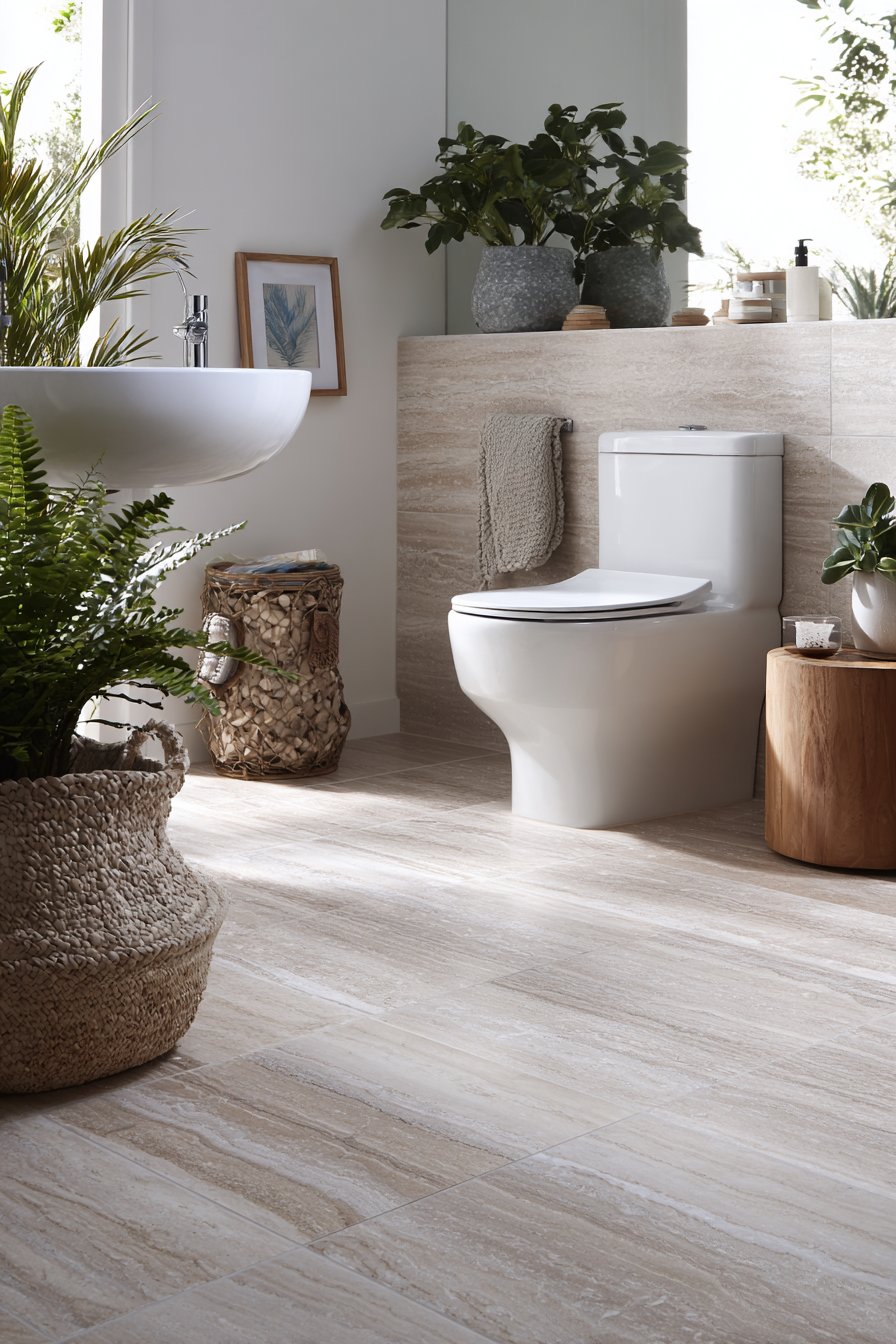
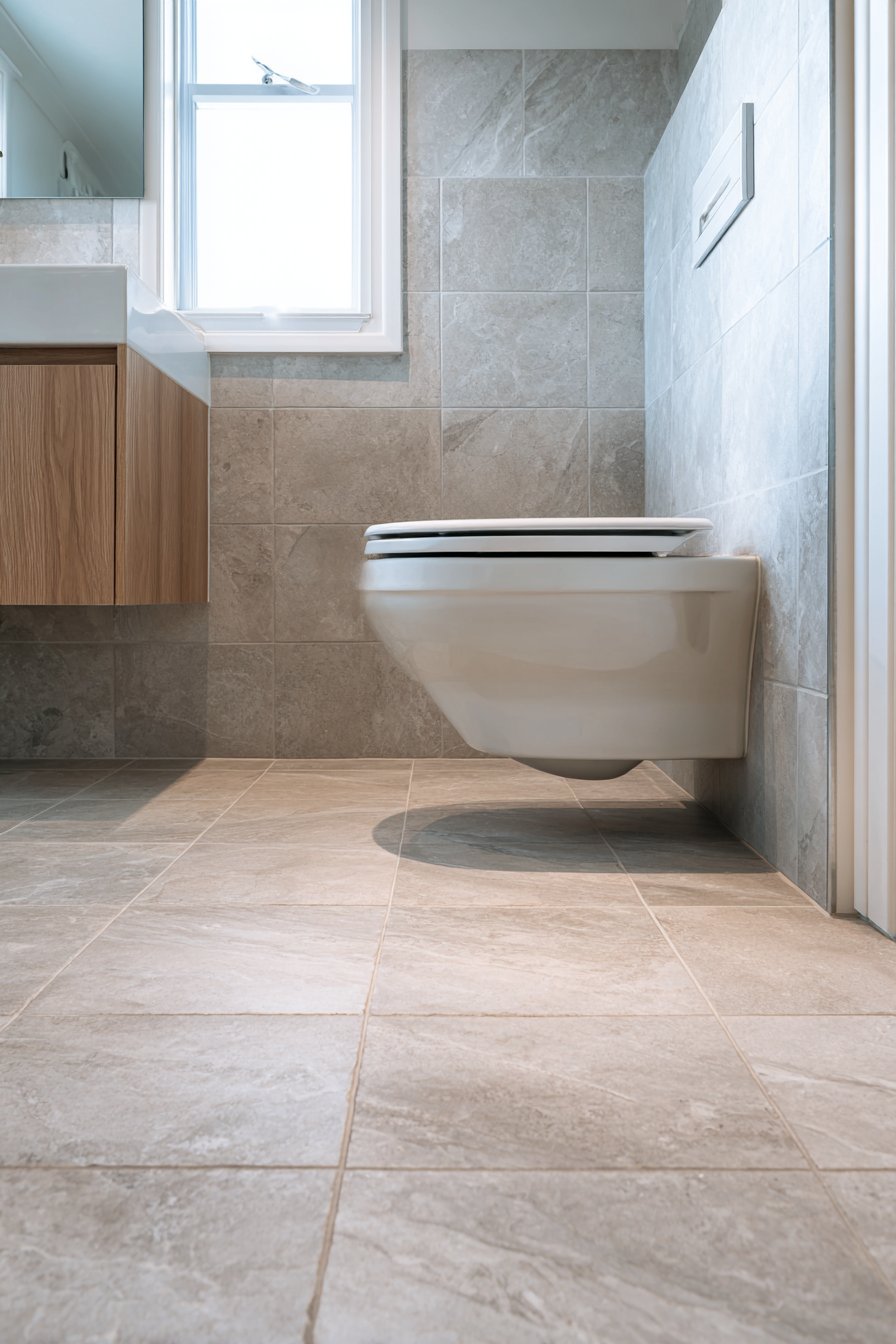
Large-format gray porcelain tiles with subtle linear veining represent one of the most contemporary small bathroom flooring ideas, creating sleek, minimalist foundations for modern design. These oversized tiles—often 24×48 inches or larger—are installed with minimal grout lines to create nearly seamless surfaces that make small bathrooms feel more expansive and less visually fragmented. The gray coloration provides versatile neutrality while the linear veining adds just enough visual interest to prevent flatness. This approach embodies the “less is more” philosophy of minimalist design, using restraint and simplicity to create calm, uncluttered spaces.
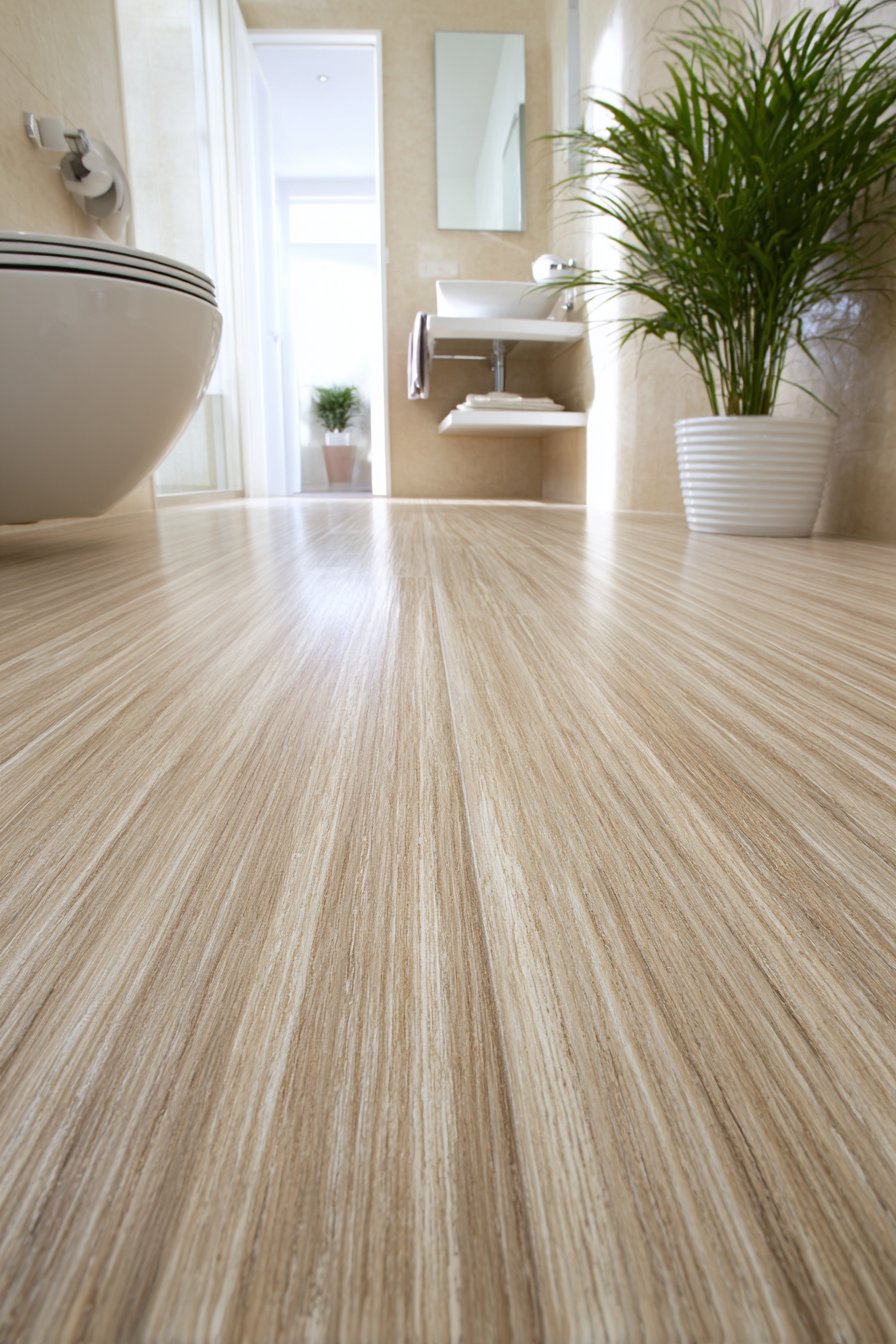
The benefits of large-format tiles in small bathrooms extend beyond aesthetics to practical considerations. Fewer grout lines mean less maintenance—grout requires regular cleaning and occasional resealing to maintain appearance and prevent mold or mildew growth. The larger tiles also create visual continuity that helps small spaces feel more cohesive and expansive rather than chopped up by numerous grout lines. The installation does require perfectly flat, level subfloors, as large tiles will rock or crack if placed over uneven surfaces. Professional installation with proper thinset application and leveling systems ensures the seamless appearance that makes this flooring choice successful.
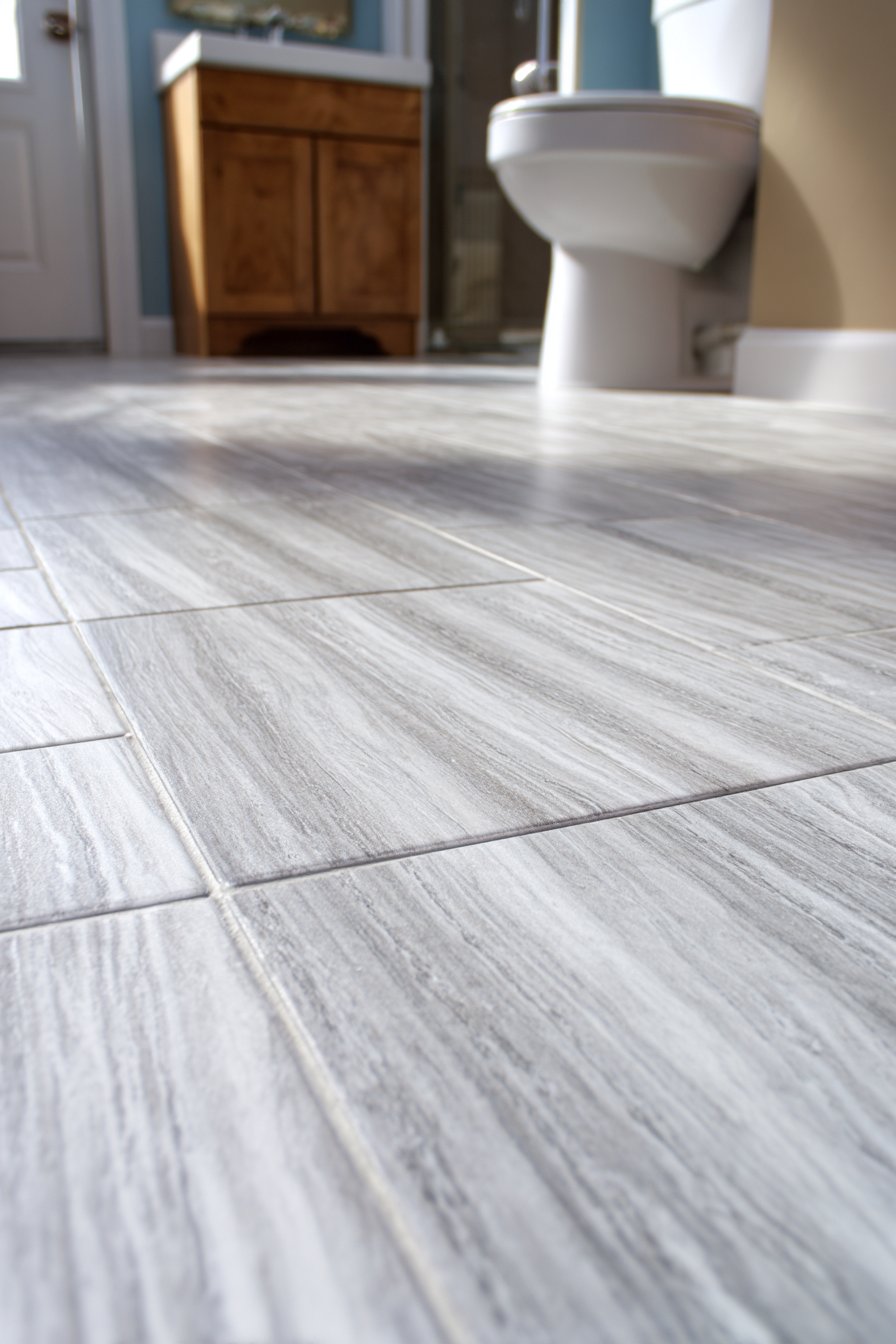
The gray palette with linear veining works particularly well in contemporary bathrooms featuring wall-mounted toilets, floating vanities, and frameless glass shower enclosures—elements that together create a sleek, uncluttered aesthetic. The neutral floor provides a calm foundation that doesn’t compete with architectural features or decorative elements, allowing flexibility in accessory choices and color accents. The slight veining adds organic interest that softens the modern geometry without introducing busy patterns. This flooring choice demonstrates that sophisticated design often comes from careful restraint rather than abundant decoration.
Key Design Tips:
- Ensure subfloor is perfectly flat and level before installation—large tiles show imperfections
- Use rectified tiles with precise edges for ultra-minimal grout lines
- Install with light gray grout that nearly matches the tile for seamless appearance
- Extend the same tile up walls in the shower for completely unified, gallery-like spaces
- Pair with wall-mounted fixtures to maximize the seamless, floating aesthetic
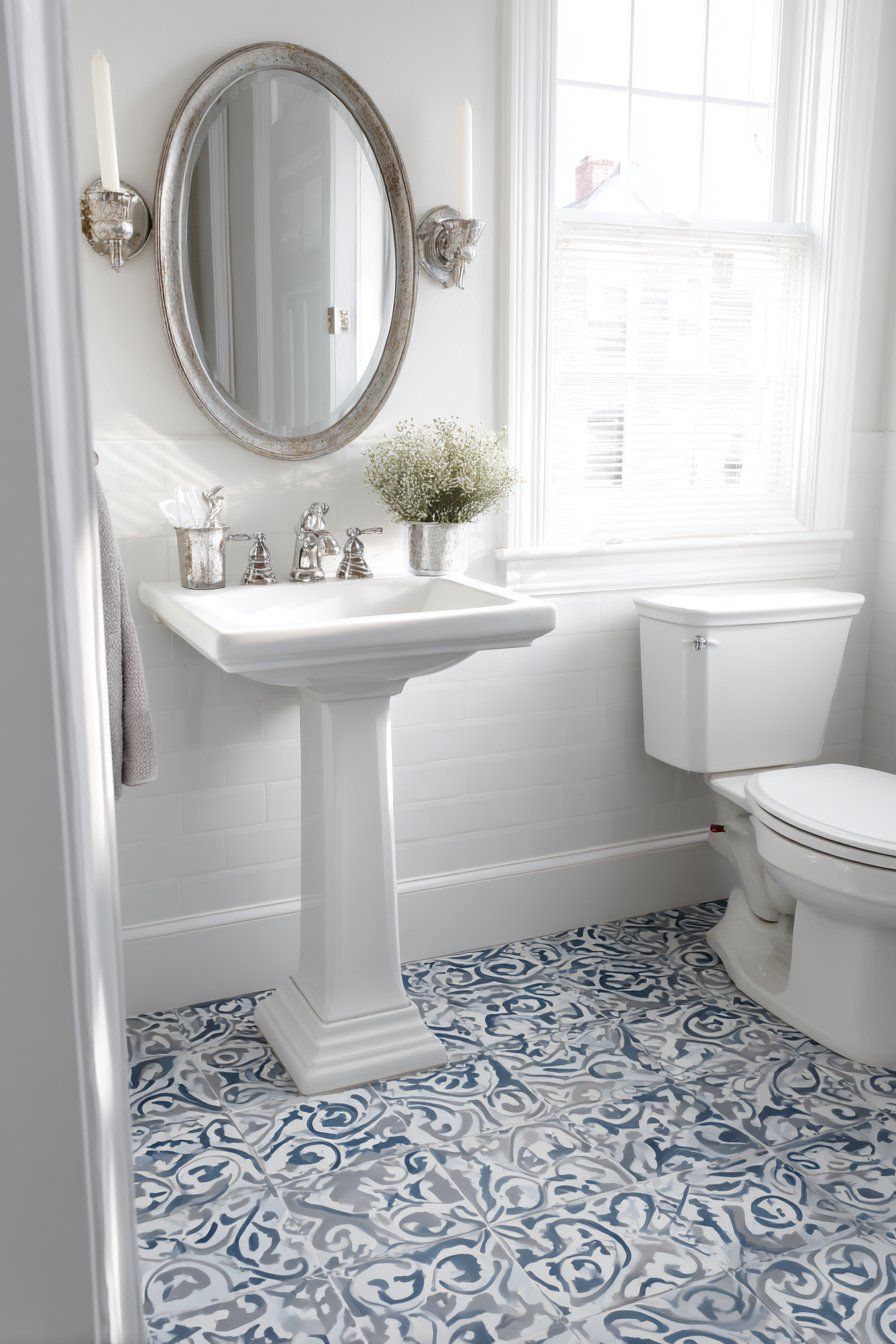
16. Artistic Encaustic Cement Tiles with Soft Geometric Pattern
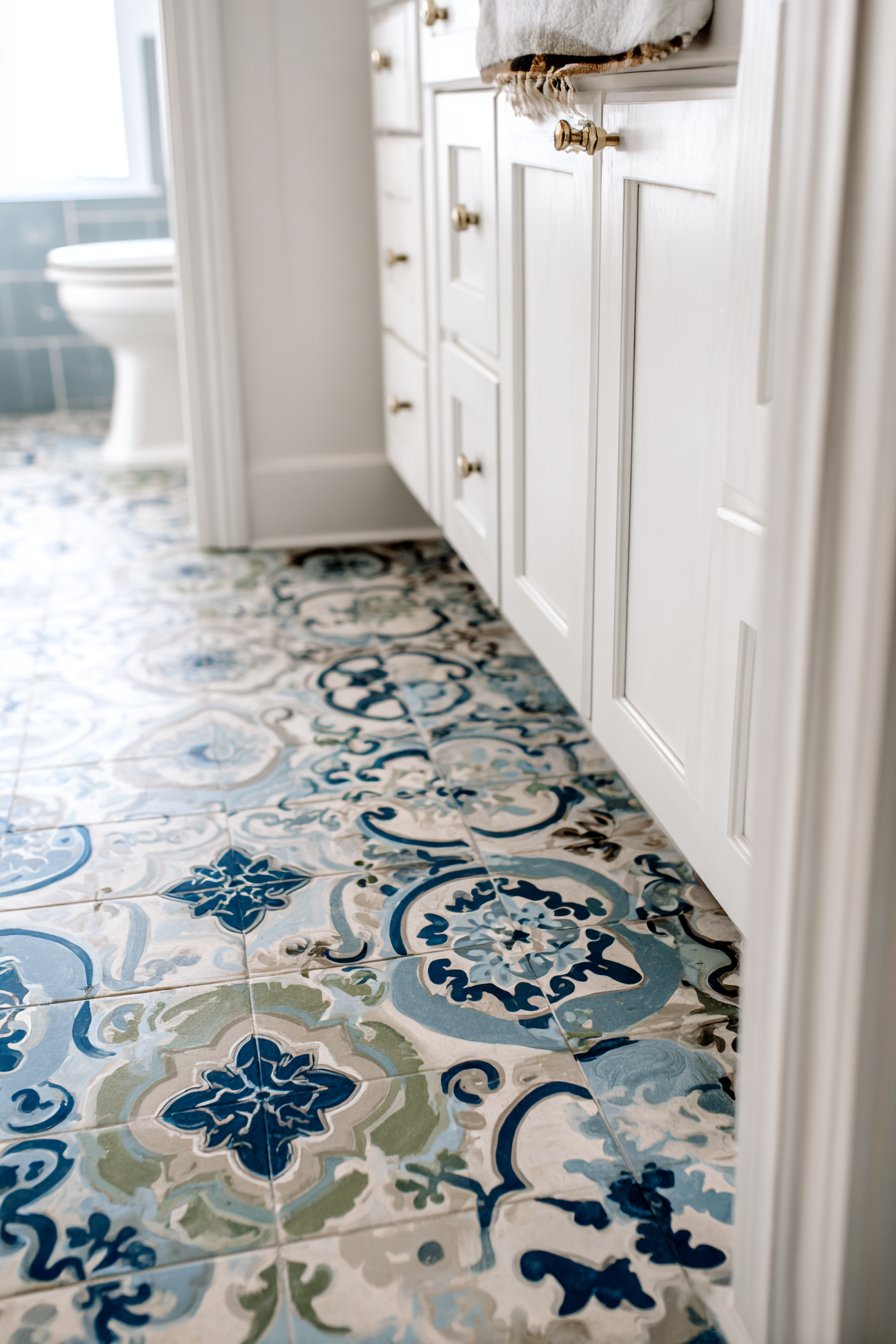
Encaustic cement tiles featuring soft geometric patterns in blues, grays, and whites bring artistic character to small bathroom flooring ideas without overwhelming compact dimensions. These handcrafted tiles display authentic color variations and subtle surface texture that reveal their artisanal origins, adding personality and uniqueness that mass-produced tiles cannot match. The geometric pattern provides visual interest and focal-point status, making the floor itself a design feature rather than simply a background element. This flooring choice appeals to homeowners who view their bathrooms as opportunities for creative expression rather than purely functional spaces.
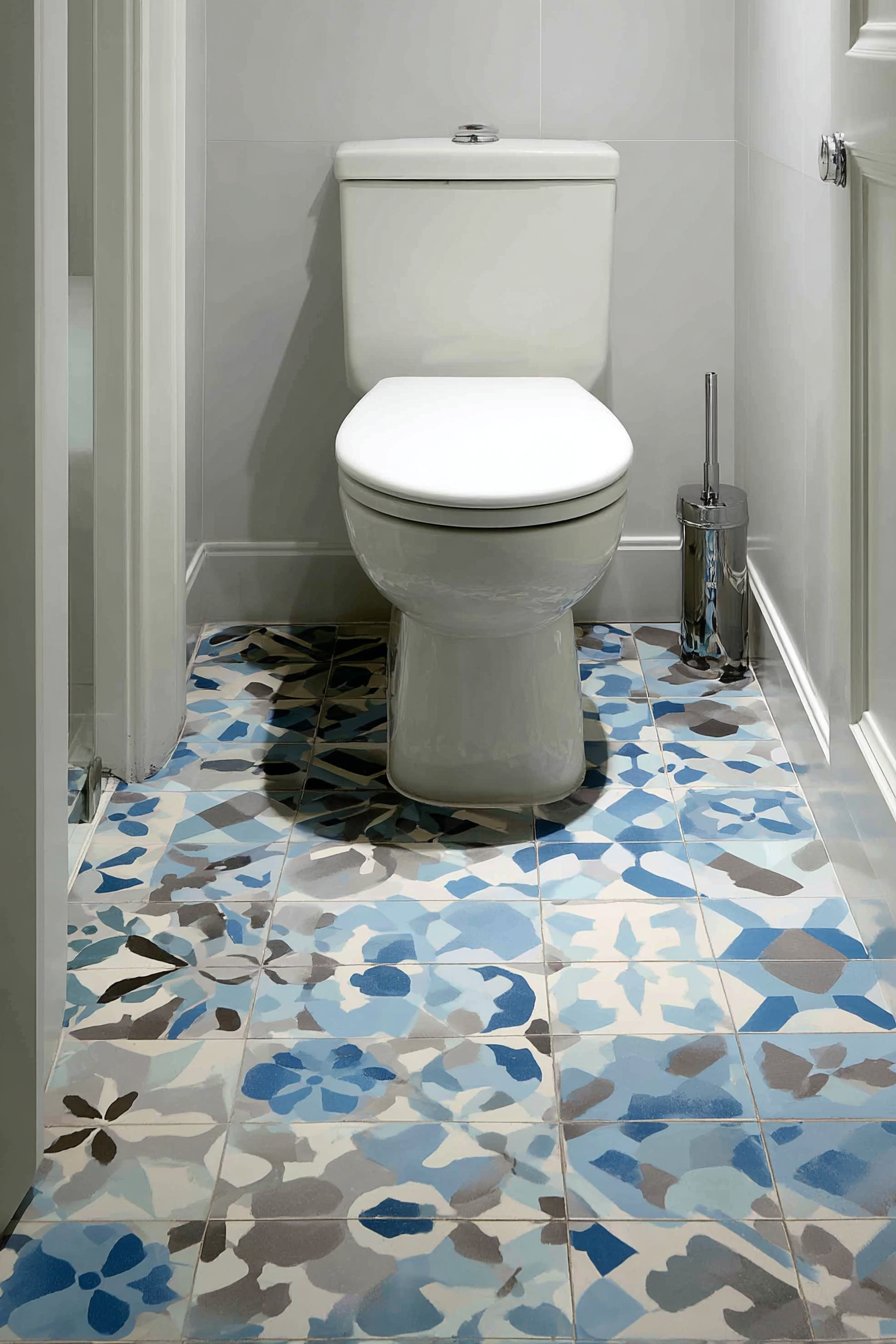
The beauty of encaustic cement tiles lies in their authentic craftsmanship—colors are not merely printed on the surface but rather extend through the tile body, created by pouring colored cement into metal molds separated by dividers. This traditional technique, used for over a century, creates tiles with depth, richness, and character that modern printing technologies struggle to replicate. The slight variations in color intensity and pattern registration between tiles add handmade charm and authenticity. When installed, these tiles create floors with artistic merit that become conversation pieces and design signatures for the entire bathroom.
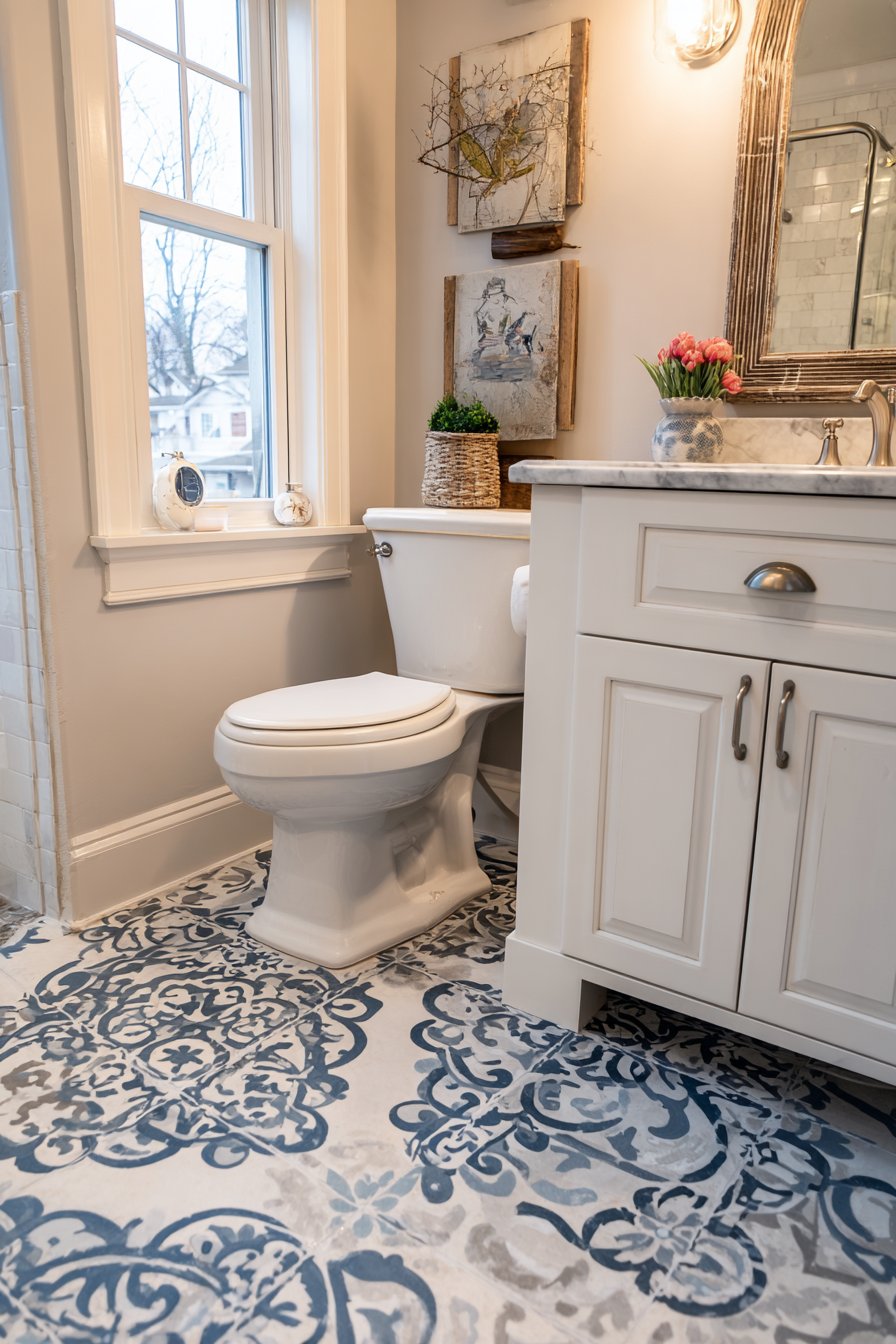
Implementing patterned cement tiles in small bathrooms requires design balance to prevent visual overwhelm. Pairing the decorative floor with simple white walls and unfussy fixtures allows the tile pattern to command attention without creating chaos. The soft color palette—blues, grays, and whites rather than bold primaries—ensures the pattern remains sophisticated rather than busy. The matte cement surface provides good slip resistance and comfortable underfoot feel, though the porous material requires sealing to protect against water absorption and staining. The initial investment in handcrafted cement tiles pays dividends in unique character and long-term durability.
Key Design Tips:
- Keep walls simple and white to let the patterned floor be the focal point
- Seal cement tiles properly before and after grouting to protect against staining
- Order extra tiles as handcrafted products can have color variations between production batches
- Use neutral fixtures and minimal accessories to balance the patterned floor
- Consider using the patterned tile in a defined area like the vanity zone while using solid tiles elsewhere
17. Weathered Gray Wood-Look Narrow Planks in Coastal Style
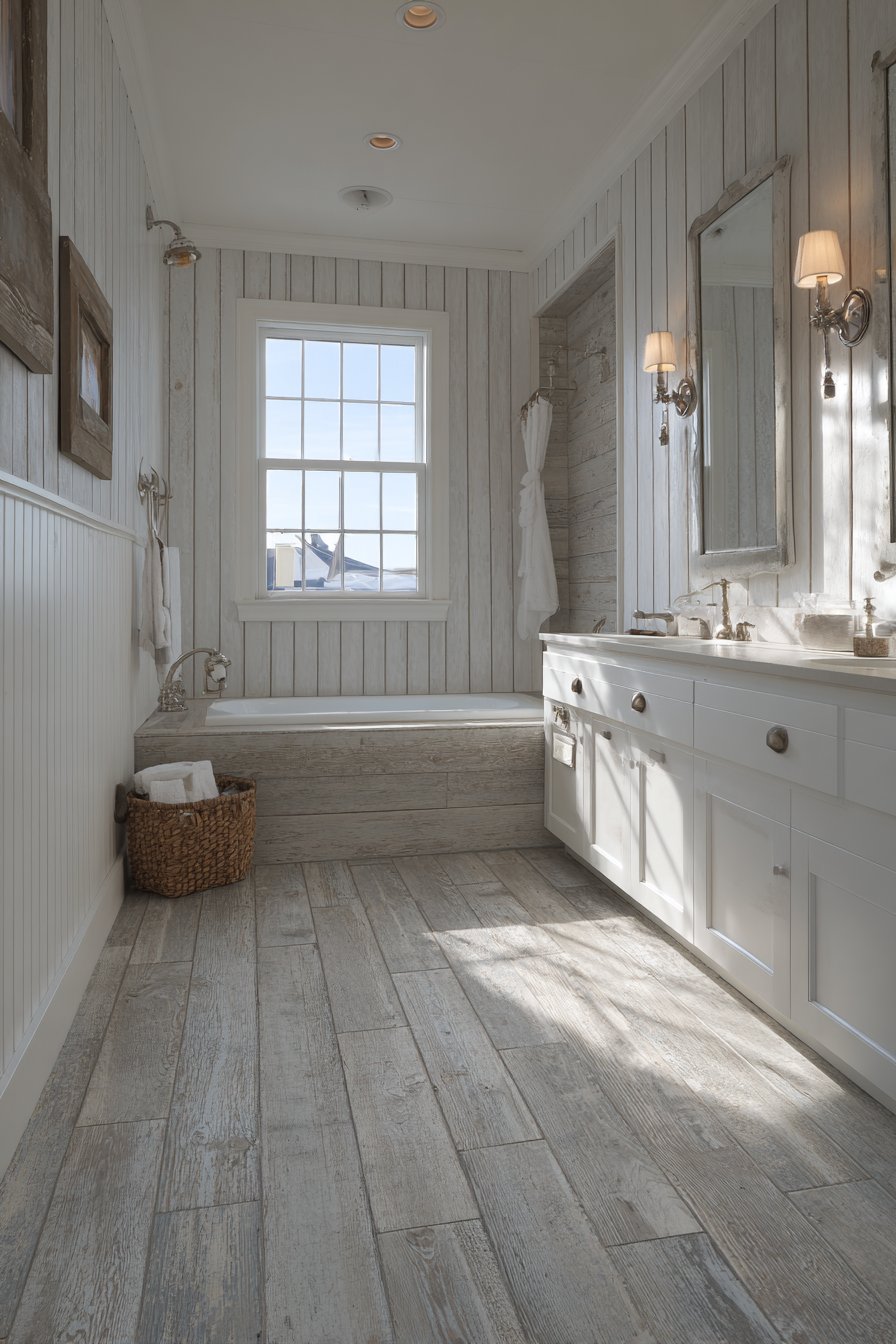
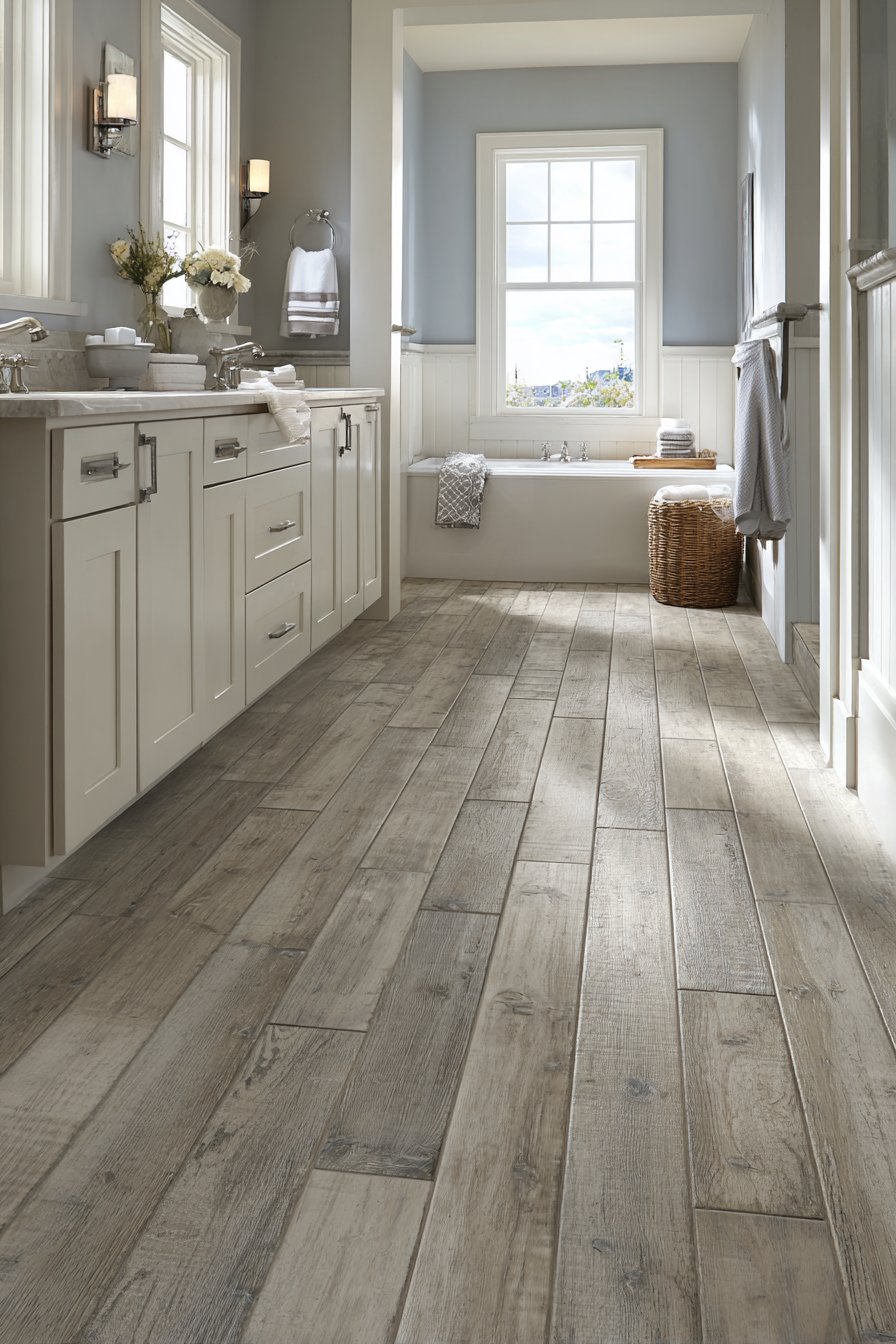
Narrow plank porcelain tiles in weathered gray wood appearance bring coastal cottage charm to small bathroom flooring ideas, creating relaxed, beach-inspired atmospheres perfect for retreat-like bathrooms. The wood-look captures the silvery patina of driftwood weathered by sun and salt, evoking seaside cottages and relaxed vacation homes. When arranged lengthwise in narrow bathrooms, these planks create visual lines that lead the eye forward, making compact spaces feel longer and more spacious. The realistic wood texture includes subtle knots, grain variations, and weathering effects that add authentic character without the maintenance challenges or moisture concerns of real wood.
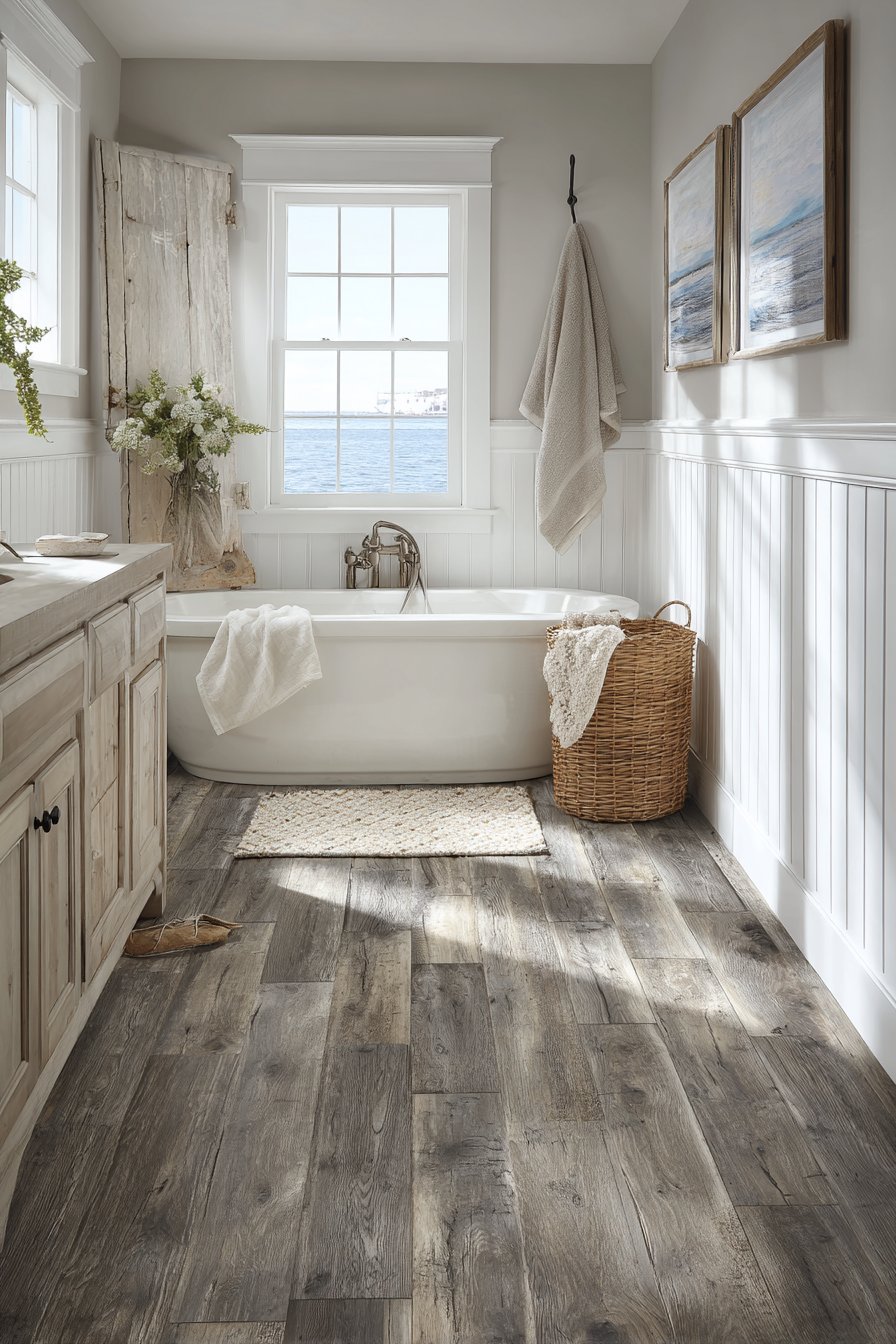
The coastal aesthetic created by weathered gray flooring provides psychological benefits through its associations with relaxation, vacation, and ocean environments. This design approach transforms ordinary small bathrooms into peaceful retreats that feel removed from daily stress and routine. The gray wood tones pair beautifully with white beadboard wainscoting and vintage-style fixtures like exposed piping, pedestal sinks, and clawfoot tubs, creating cohesive cottage charm. The neutral gray provides a versatile foundation that works with various accent colors—from classic navy and white to soft aquas and corals—allowing seasonal decorating flexibility.
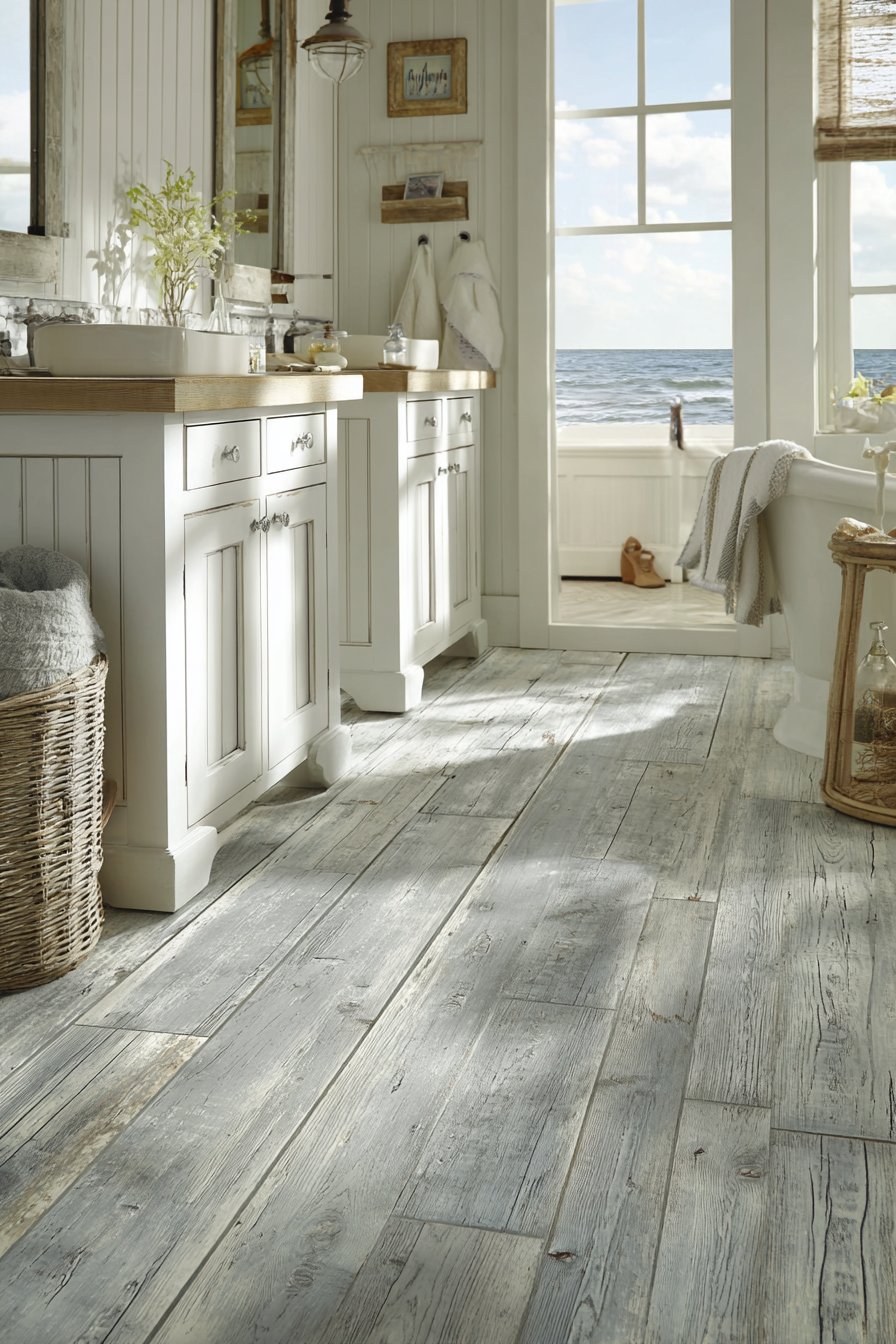
From a practical perspective, porcelain wood-look planks offer significant advantages over real wood in bathroom environments. The material is completely waterproof, dimensionally stable, and requires no sealing or special maintenance. The narrow plank format—typically 6 to 8 inches wide—provides more realistic wood appearance than wider planks while making the small tile size easier to cut and fit around bathroom fixtures. The lengthwise installation along the bathroom’s longest dimension maximizes the space-expanding effect. The matte finish and subtle texture provide slip resistance while maintaining the authentic weathered wood appearance that defines coastal cottage style.
Key Design Tips:
- Install planks lengthwise along the bathroom’s longest dimension to maximize visual length
- Choose porcelain with varied plank lengths for more authentic wood floor appearance
- Use light-colored grout that matches the wood tone for seamless plank transitions
- Pair with white beadboard, shiplap, or board-and-batten walls for cohesive cottage aesthetic
- Add rope baskets, driftwood accessories, and sea glass colors to complete the coastal theme
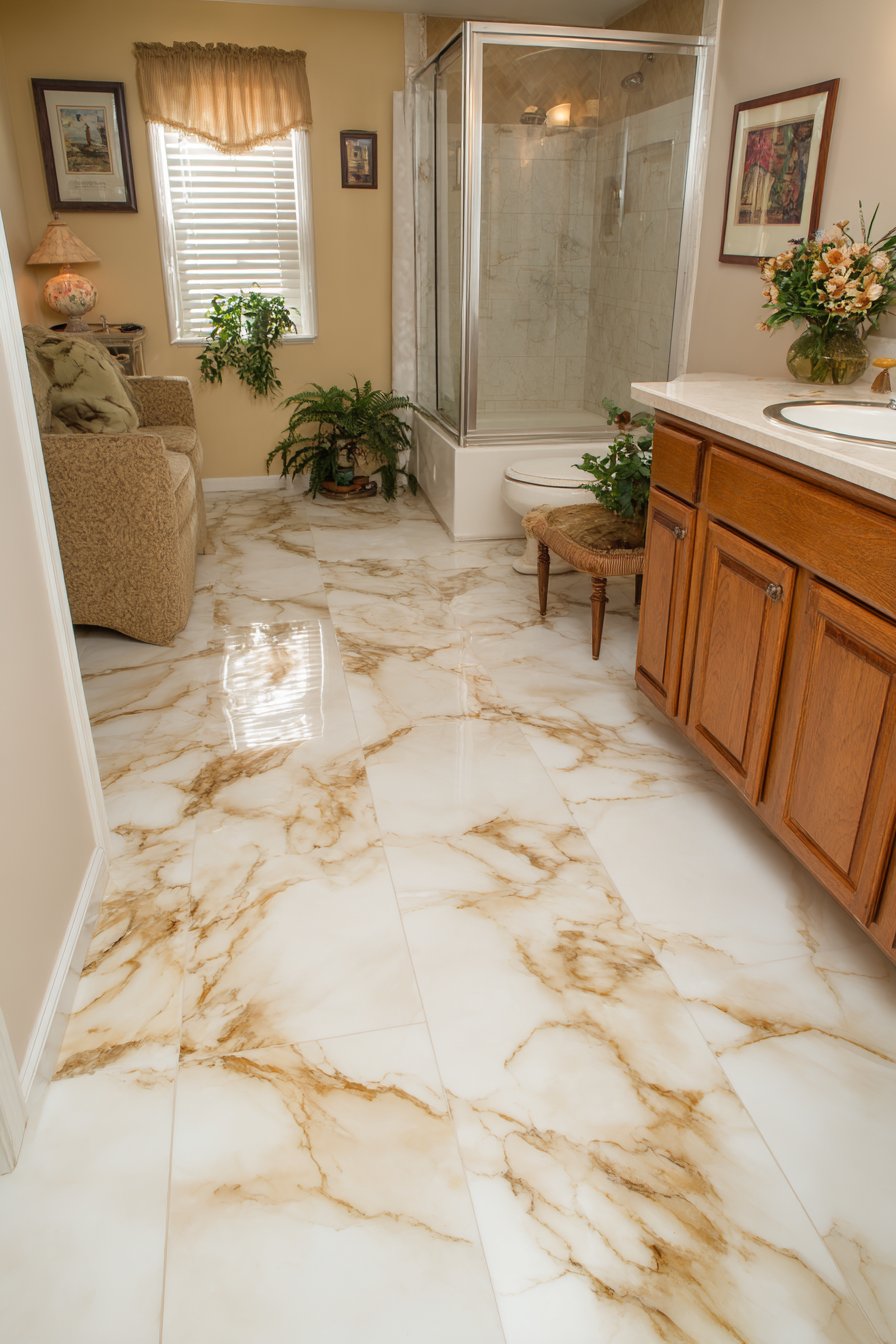
18. Luxurious Beige Marble-Look with Gold Veining
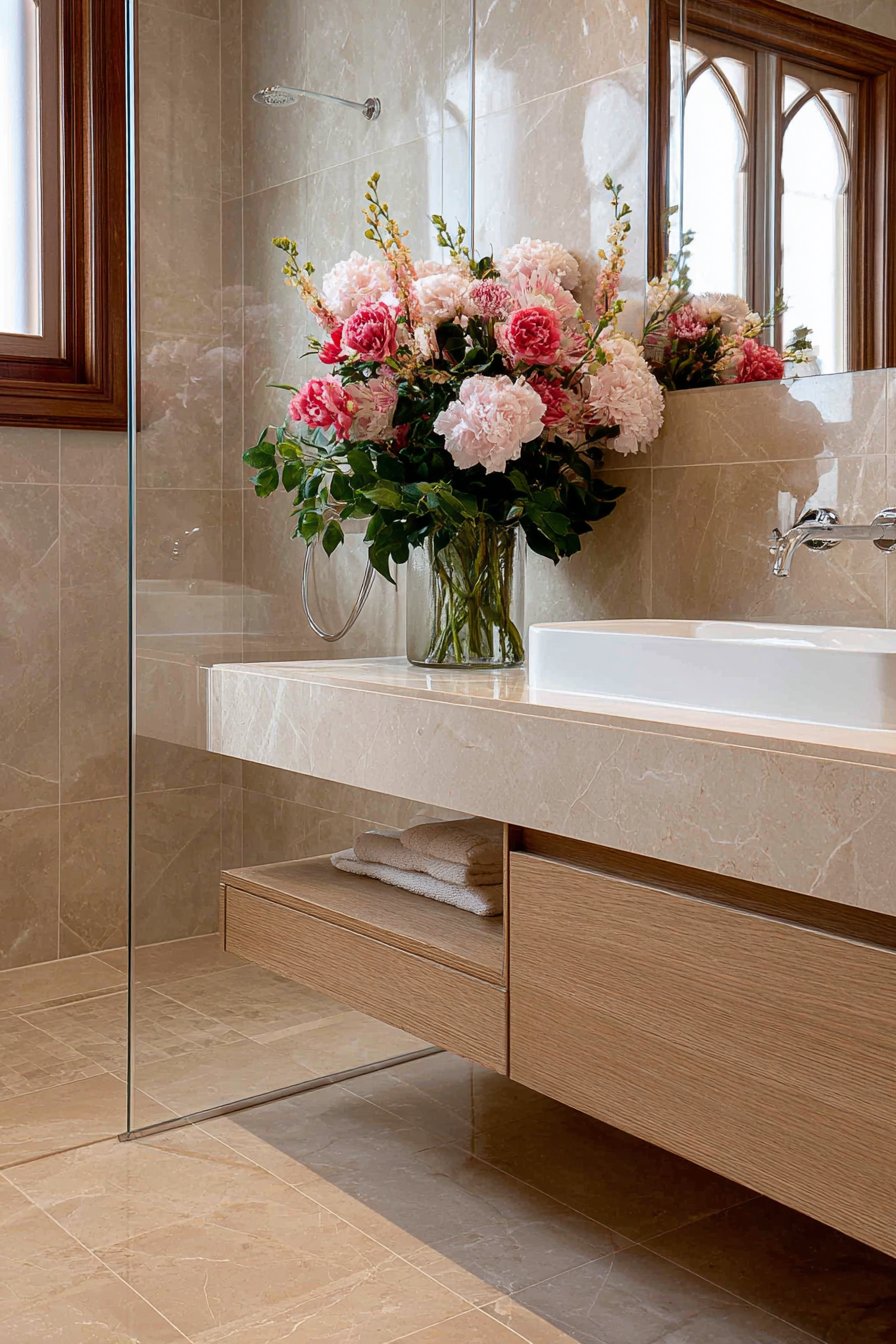
Polished marble-look porcelain tiles in warm beige with gold veining represent one of the most luxurious small bathroom flooring ideas, bringing opulent elegance to modest spaces. The sophisticated color palette—warm beige base with subtle gold metallic veining—creates understated luxury that feels both classic and current. The polished finish reflects light beautifully, brightening small bathrooms while creating a sense of quality and refinement. This flooring choice demonstrates that small bathrooms can embody luxury and high-end design without requiring extensive square footage—thoughtful material selection and execution matter more than size.
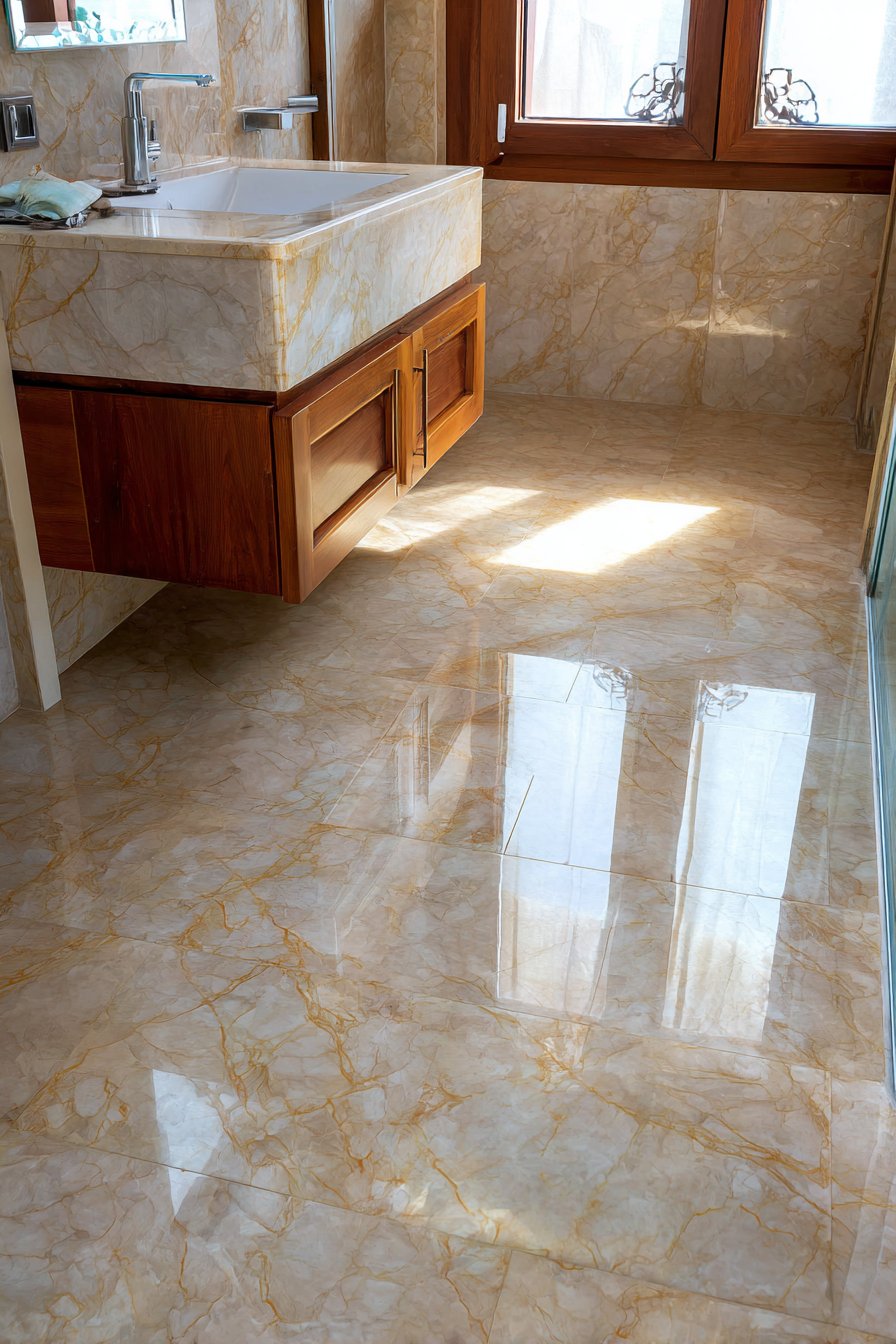
The warm beige coloration provides psychological comfort and visual warmth that cool gray or white schemes sometimes lack. The gold veining adds a jewelry-like quality that elevates the floor from simply functional to genuinely decorative. The subtle metallic element catches light dynamically, creating gentle movement and shimmer across the surface that adds life to the space. When coordinated with a marble-look vanity countertop, the floor and counters create visual continuity that makes small bathrooms feel more designed and cohesive. The classic marble aesthetic transcends passing trends, ensuring this flooring choice remains relevant and appealing for decades.
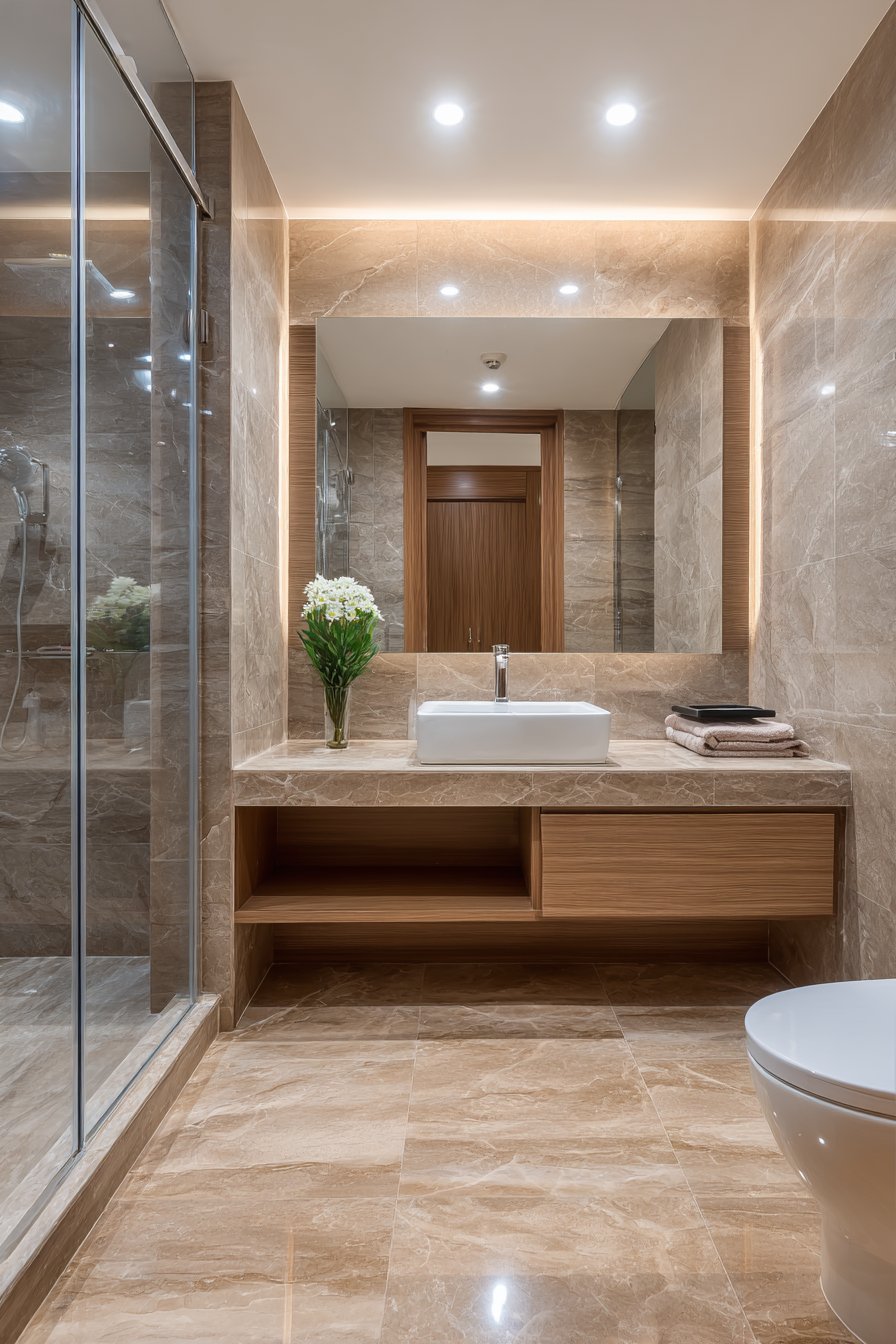
From a practical standpoint, marble-look porcelain provides the luxury appearance of natural marble without the maintenance challenges. Real marble requires regular sealing, careful cleaning with pH-neutral products, and protection from acidic substances that can etch the surface. Porcelain offers the look with virtually no maintenance requirements beyond routine cleaning. The polished finish does require attention to slip resistance—using textured bath mats in high-traffic areas and maintaining dry floors helps prevent falls. The investment in marble-look flooring signals quality and attention to detail, contributing to overall home value and creating bathrooms that feel like private spa sanctuaries.
Key Design Tips:
- Choose porcelain with realistic veining that varies across tiles to mimic natural marble installation
- Install with very thin grout lines using color-matched grout for seamless marble appearance
- Coordinate floor tile with marble-look vanity countertop for luxurious continuity
- Use polished chrome or brushed nickel fixtures to complement the elegant flooring
- Add a plush bath mat in high-traffic areas to improve slip resistance on the polished surface
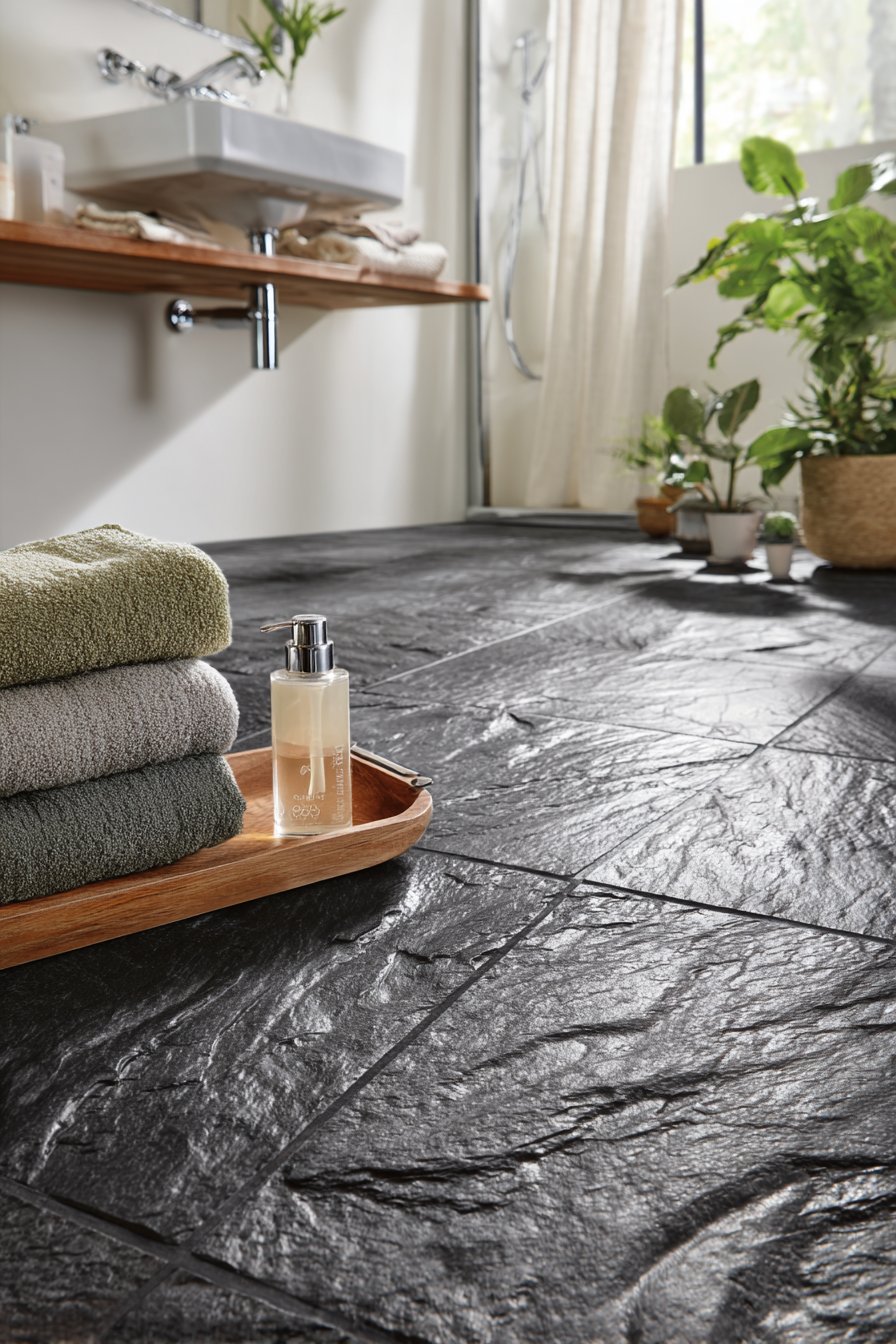
19. Practical Textured Slate-Look in Dark Charcoal
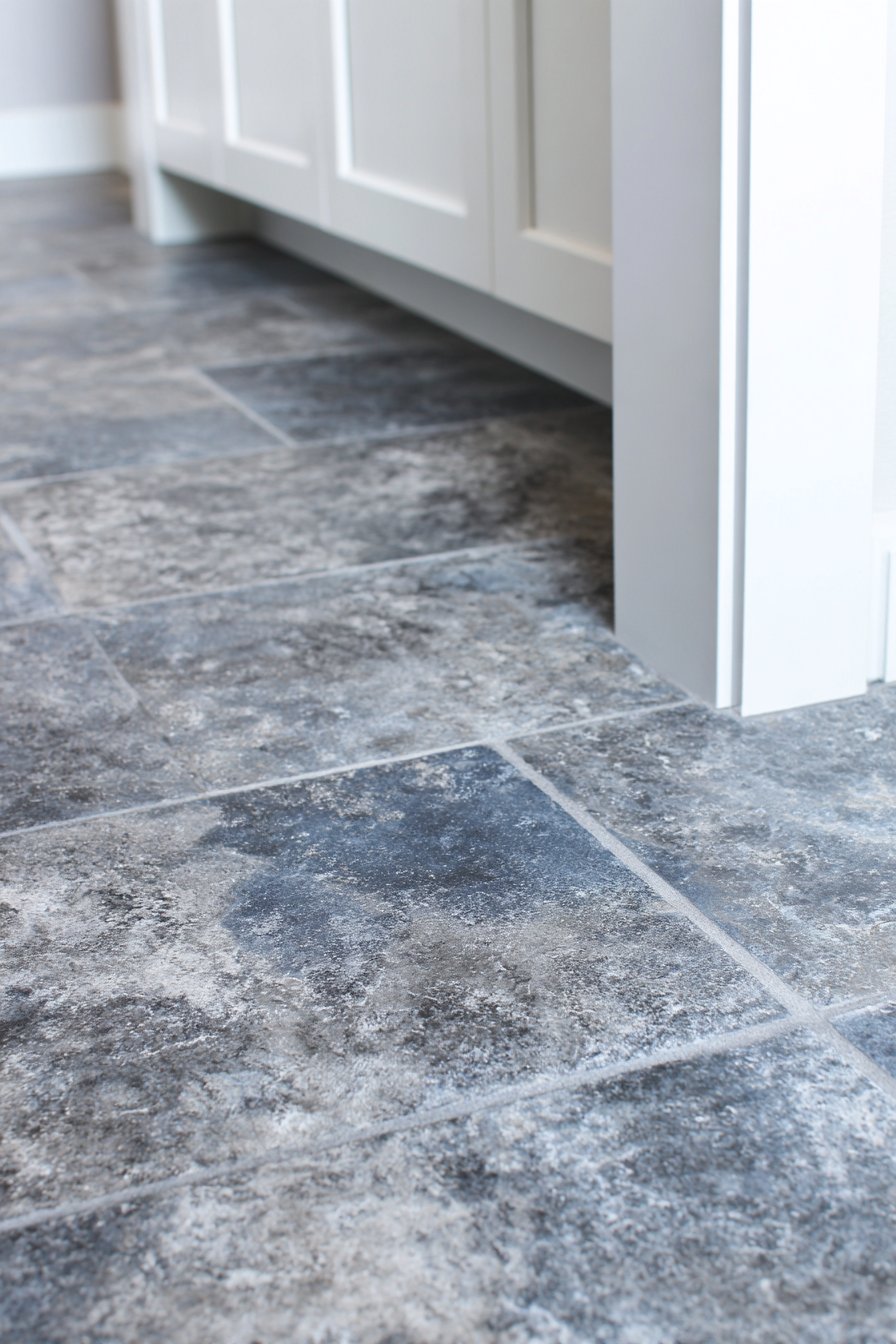
Textured slate-look ceramic tiles in dark charcoal bring practical beauty to small bathroom flooring ideas, combining slip-resistant safety features with sophisticated modern aesthetics. The natural cleft surface texture mimics the dimensional quality of real slate, providing excellent traction even when wet—a critical consideration for bathroom safety. The dark charcoal coloration creates dramatic contrast against white walls and bright fixtures, establishing bold contemporary design that makes confident visual statements. This flooring choice proves that practical considerations like slip resistance need not compromise aesthetic ambitions.
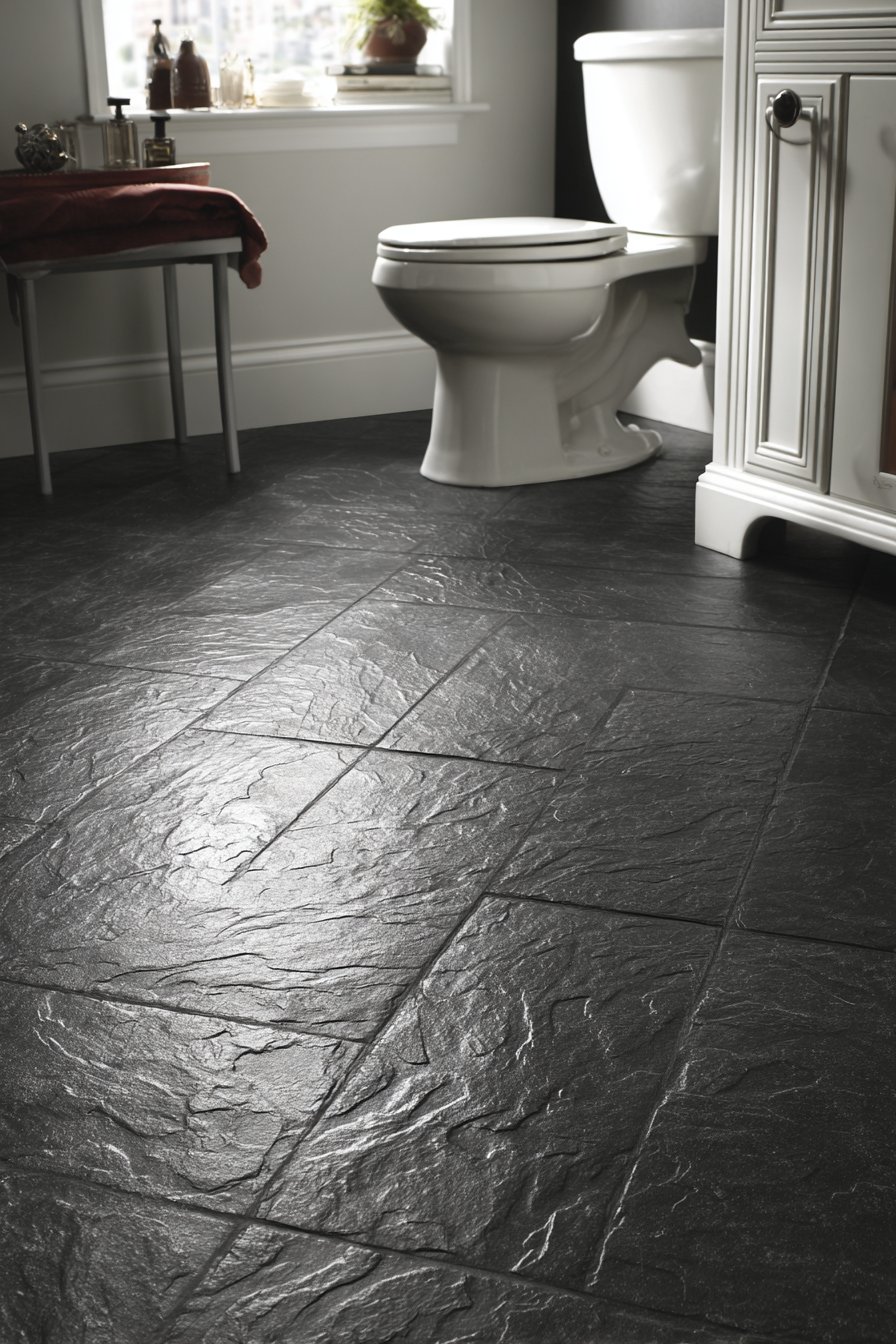
The matte finish and organic texture of slate-look tiles add depth and visual interest that prevents the dark floor from appearing flat or lifeless. The slight surface variations—including subtle color changes and texture irregularities—create authentic stone appearance that engages the eye and adds character to small bathrooms. The dark base provides practical advantages beyond aesthetics, showing less obvious dust, dirt, water spotting, and wear than light-colored alternatives. This forgiving quality makes dark slate-look flooring particularly suitable for high-traffic family bathrooms where maintenance ease matters as much as appearance.
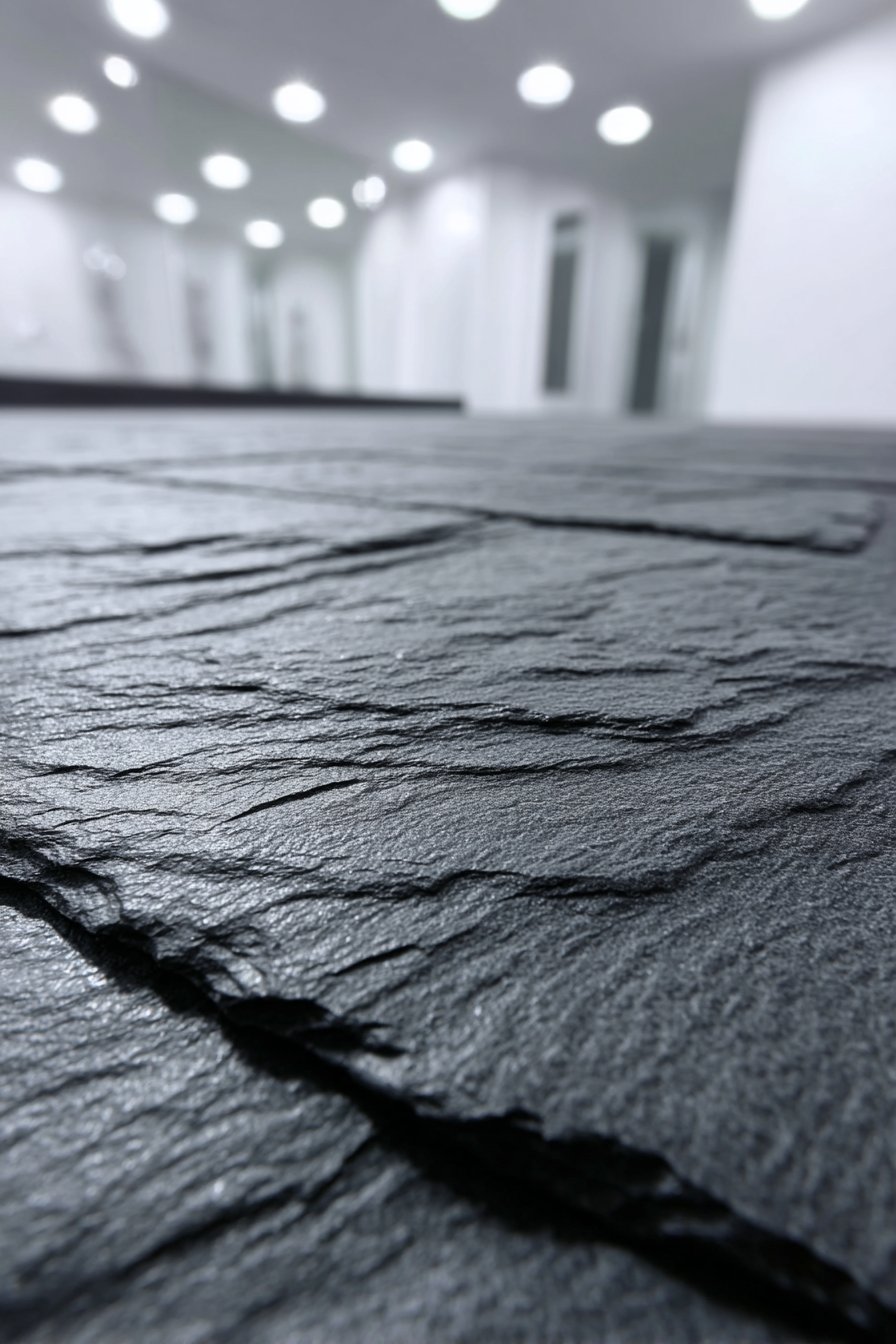
Implementing dark flooring in small bathrooms requires thoughtful supporting design to prevent spaces from feeling cave-like or oppressive. Crisp white walls, ample lighting including recessed ceiling fixtures and well-positioned vanity lights, and reflective surfaces like large mirrors become especially important. When properly executed with adequate light and bright contrasting elements, dark slate-look flooring creates sophisticated, boutique-hotel ambiance that feels both luxurious and grounded. The bold choice demonstrates design confidence and creates memorable spaces that stand out from typical neutral bathroom schemes.
Key Design Tips:
- Choose tiles with authentic cleft texture for maximum slip resistance and realistic appearance
- Balance dark flooring with bright white or light gray walls to maintain spacious feeling
- Install generous lighting including recessed ceiling lights and task lighting at vanity
- Use large mirrors to reflect light and brighten the space
- Select polished chrome fixtures for crisp contrast against the dark matte floor
20. Traditional Basketweave Mosaic in Black and White
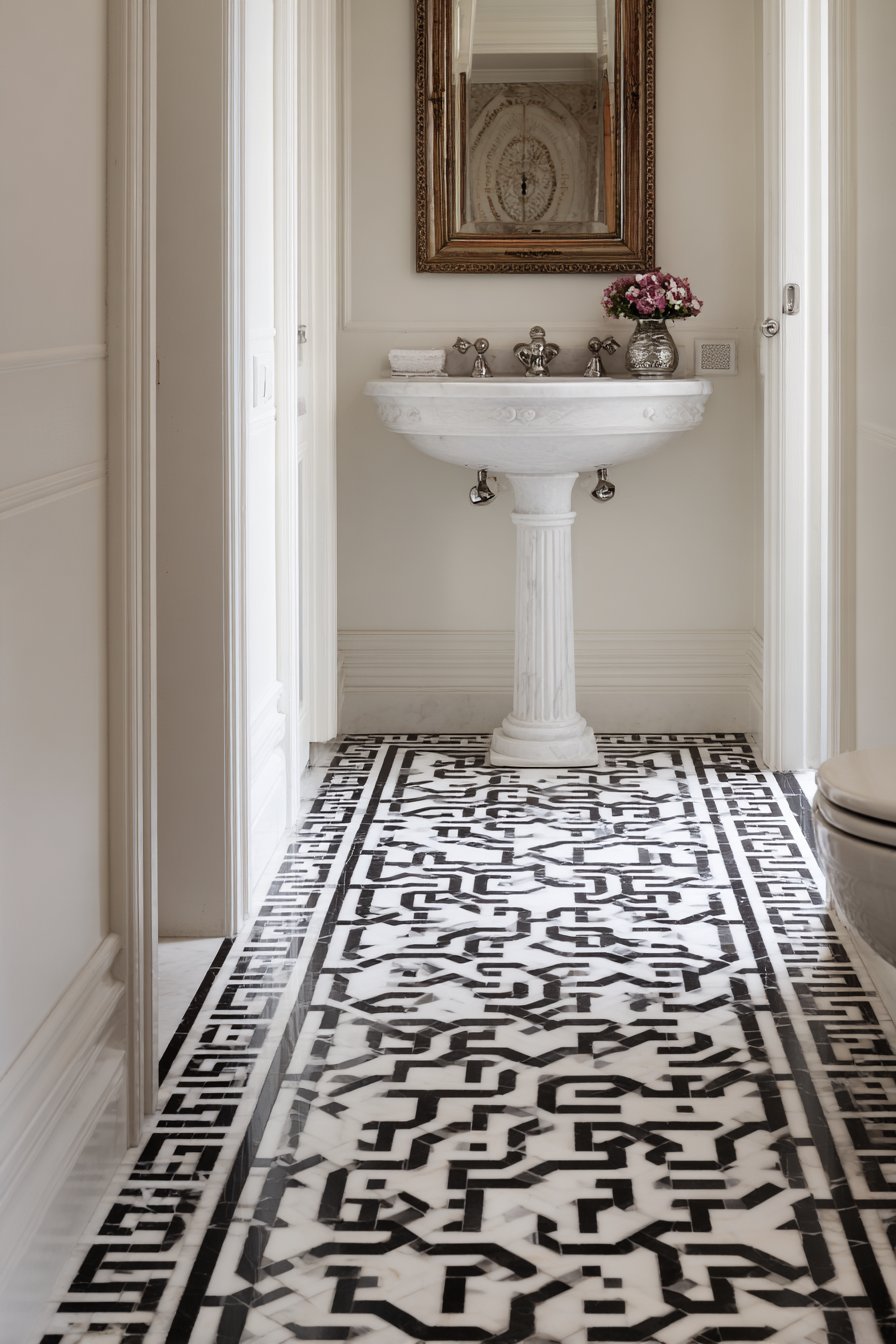
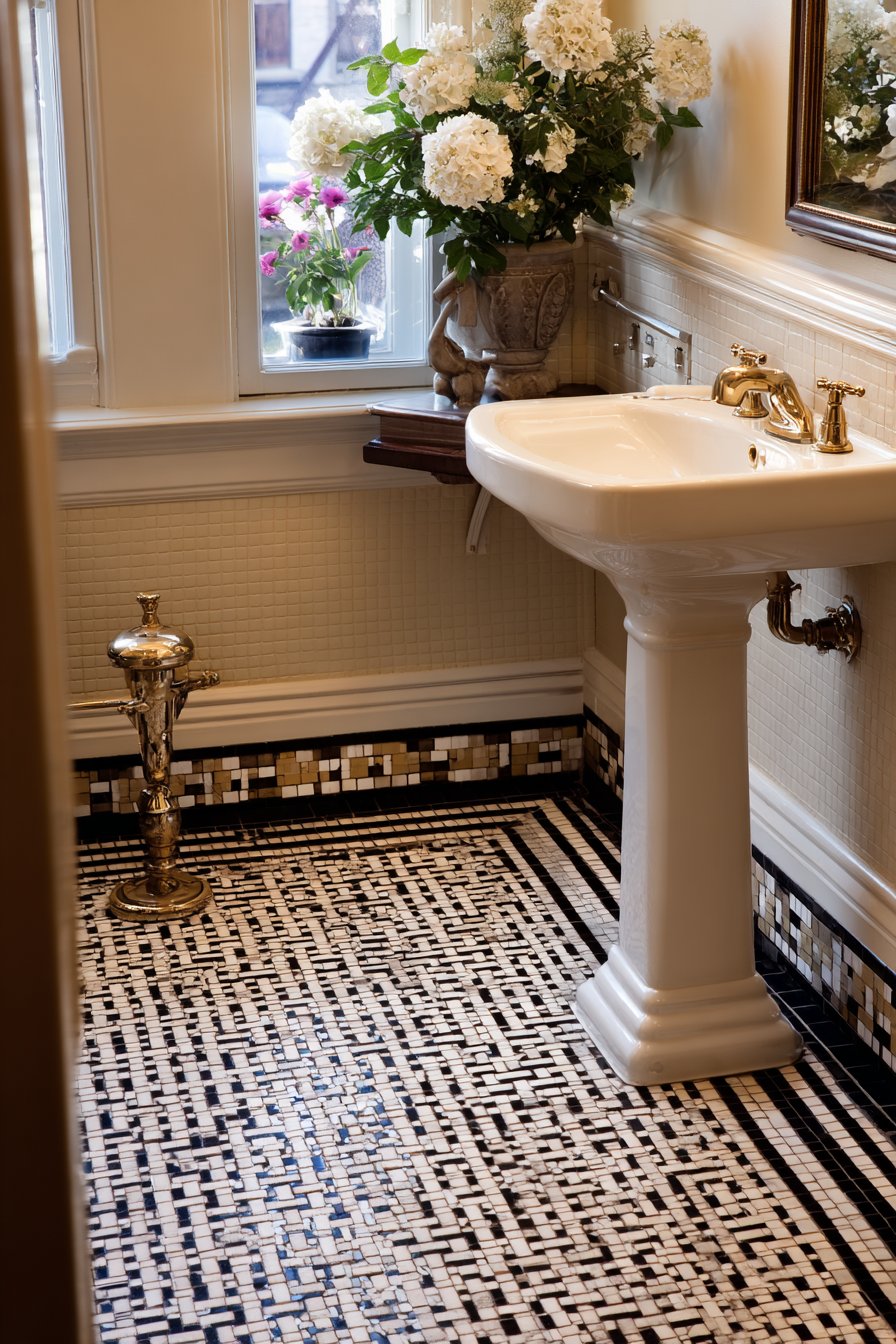
Basketweave pattern mosaic tiles in classic black and white marble-look porcelain bring vintage elegance to small bathroom flooring ideas through intricate pattern work and timeless color combinations. The basketweave—created by alternating vertical and horizontal tile orientations—produces sophisticated geometric interest at a scale appropriate for compact bathrooms. The black and white palette ensures crisp pattern definition while maintaining classic, period-appropriate aesthetics that work beautifully in homes with traditional architecture or in bathrooms seeking vintage charm. This flooring demonstrates how pattern complexity can add character without requiring bold colors or contemporary graphics.
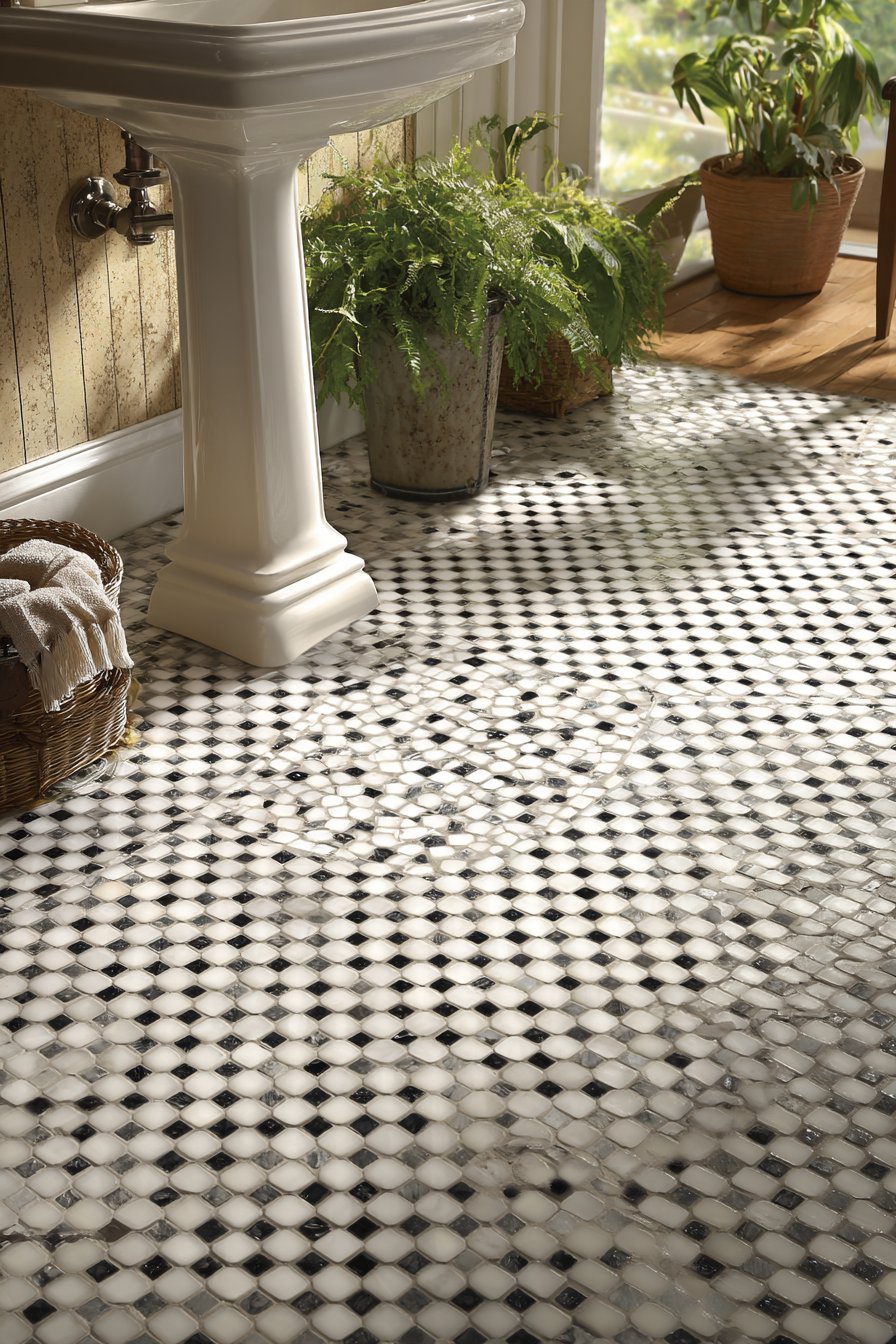
The basketweave pattern has graced elegant bathrooms for over a century, providing proven longevity and enduring appeal. The intricate pattern creates visual engagement that makes small bathrooms feel more considered and designed rather than simply functional. The marble-look porcelain captures the luxury aesthetic of natural stone while providing superior durability, water resistance, and maintenance ease. The small tile scale—typically using 1×2-inch rectangular tiles for the weave and 1×1-inch tiles for the dots—accommodates bathroom floor slopes and irregularities better than large-format tiles, making it practical as well as beautiful.
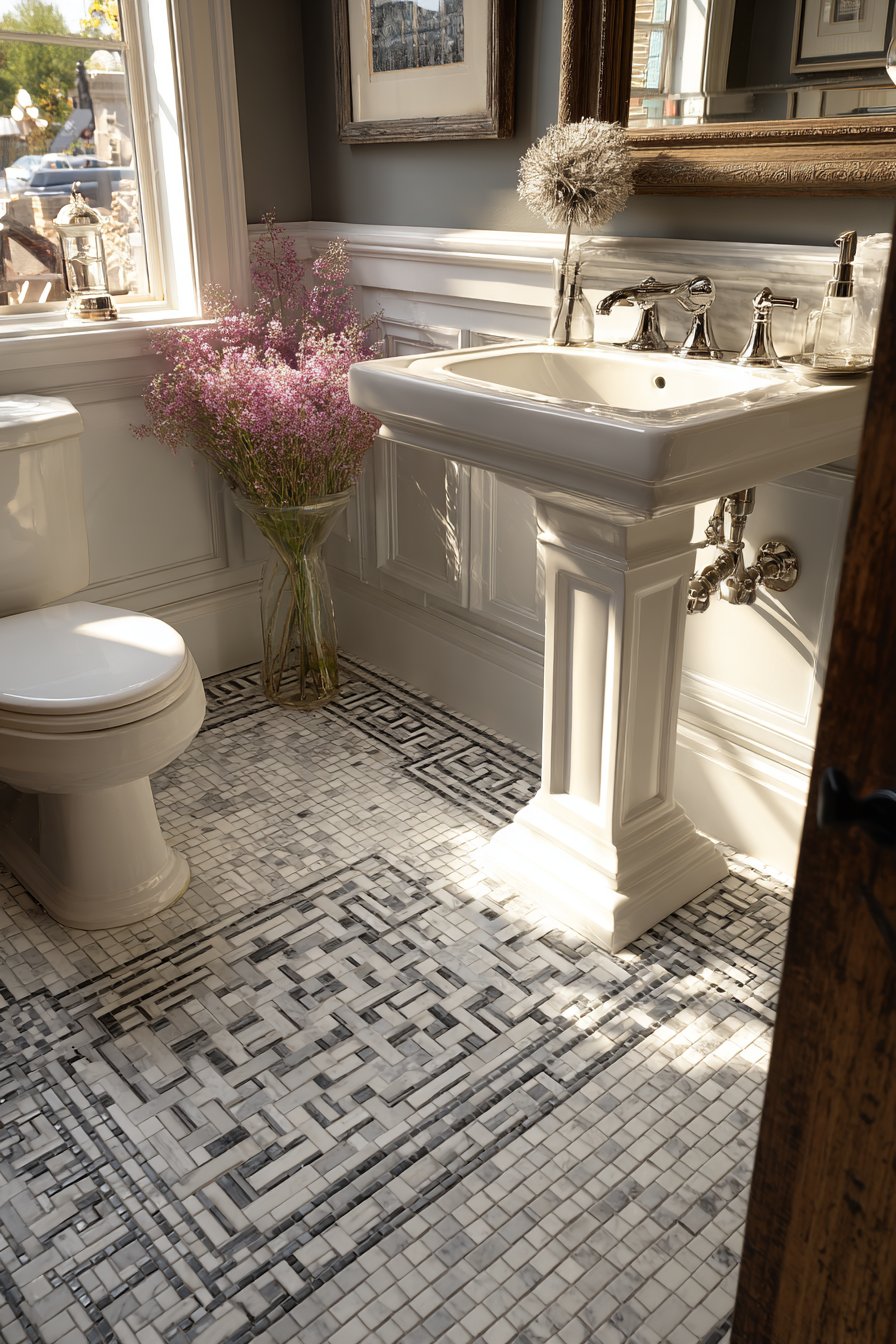
Installing basketweave mosaic requires precision and expertise to achieve professional results—the pattern complexity demands careful alignment and consistent spacing. Most basketweave mosaics come pre-mounted on mesh sheets, simplifying installation while maintaining pattern accuracy. The multiple grout lines provide excellent slip resistance, making this safe as well as elegant flooring. The classic pattern pairs beautifully with pedestal sinks, freestanding tubs, and vintage-style fixtures, creating cohesive period bathroom designs. The timeless nature ensures this flooring won’t date your bathroom, maintaining relevance and value for decades while providing distinctive character that sets your bathroom apart.
Key Design Tips:
- Choose marble-look porcelain rather than actual marble for better durability and easier maintenance
- Use dark gray or black grout rather than white to minimize staining and maintenance
- Pair with period-appropriate fixtures like pedestal sinks and vintage faucets
- Ensure proper subfloor preparation as small tiles will show substrate imperfections
- Consider professional installation for crisp, accurate pattern execution
21. Budget-Friendly Waterproof Laminate in Light Gray Oak
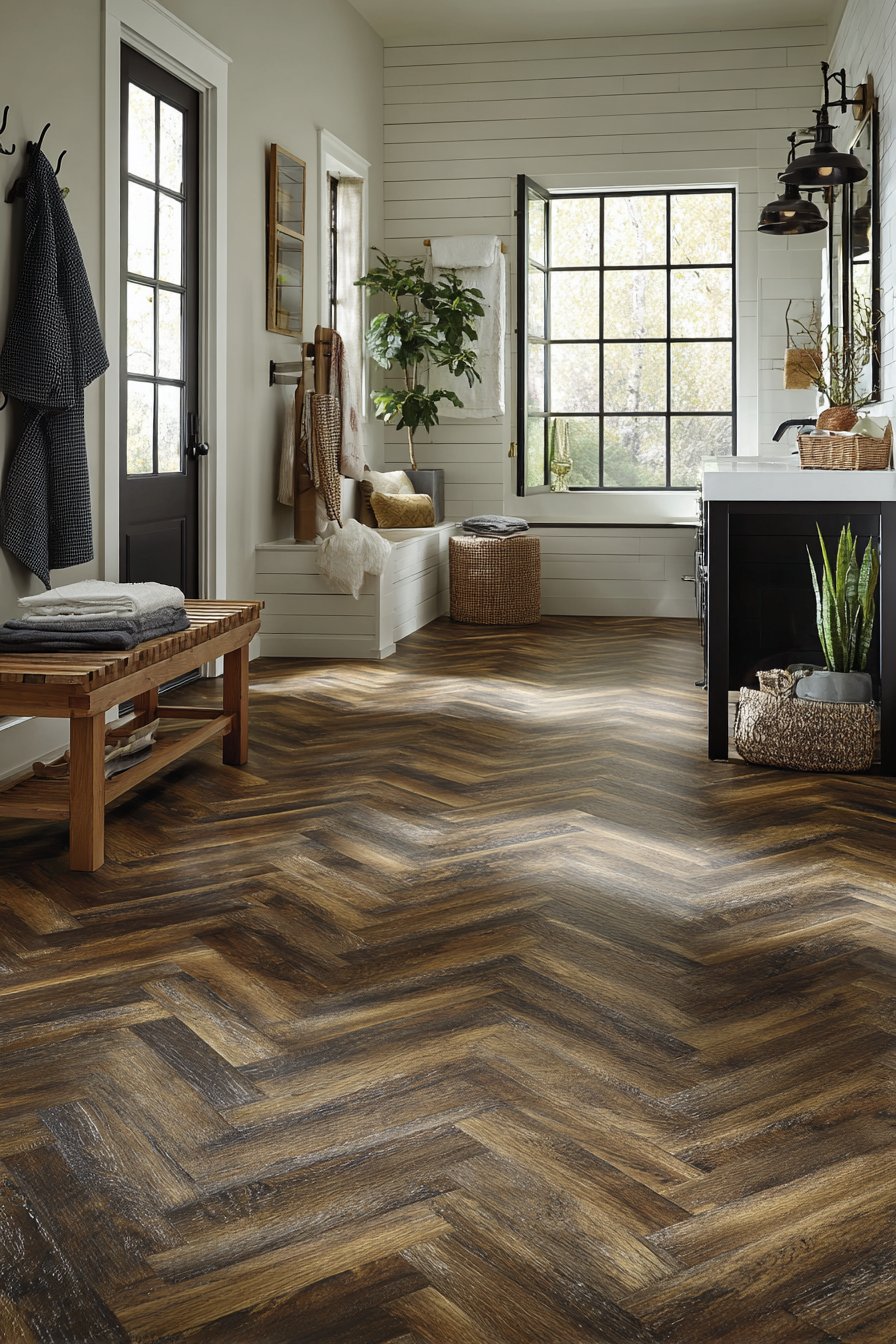
Waterproof laminate flooring in light gray oak appearance offers one of the most economical small bathroom flooring ideas without compromising style or quality. Modern laminate technology has achieved impressive realism, with embossed textures that match printed wood grain patterns to create convincing wood-look surfaces. The light gray oak coloration provides contemporary styling that works with various fixture finishes and design approaches, from minimalist modern to transitional farmhouse. The cost-effectiveness of laminate compared to hardwood, luxury vinyl, or tile makes it an accessible option for budget-conscious renovations, proving that beautiful bathroom design need not require premium materials.
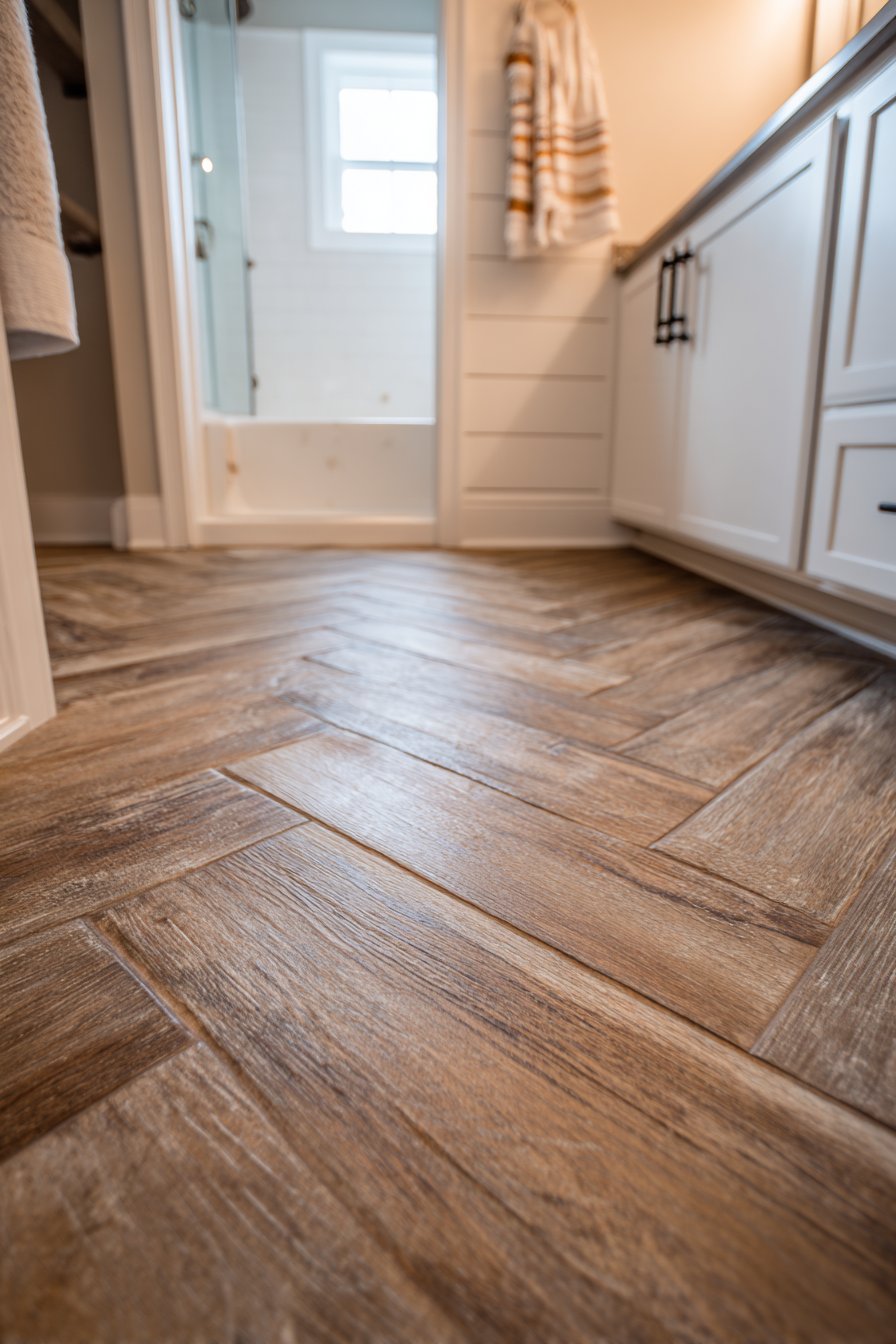
The practical advantages of waterproof laminate in bathroom environments are substantial. The product is engineered specifically for moisture exposure, with water-resistant core materials that won’t swell or warp when wet—a critical requirement for bathroom flooring. Installation is straightforward with click-lock systems that don’t require adhesives or specialized tools, making it a feasible DIY project for handy homeowners. The laminate surface provides comfortable underfoot warmth compared to cold ceramic or stone, enhancing comfort during morning routines. The durable wear layer resists scratching, staining, and everyday wear, maintaining appearance despite high traffic and frequent use.
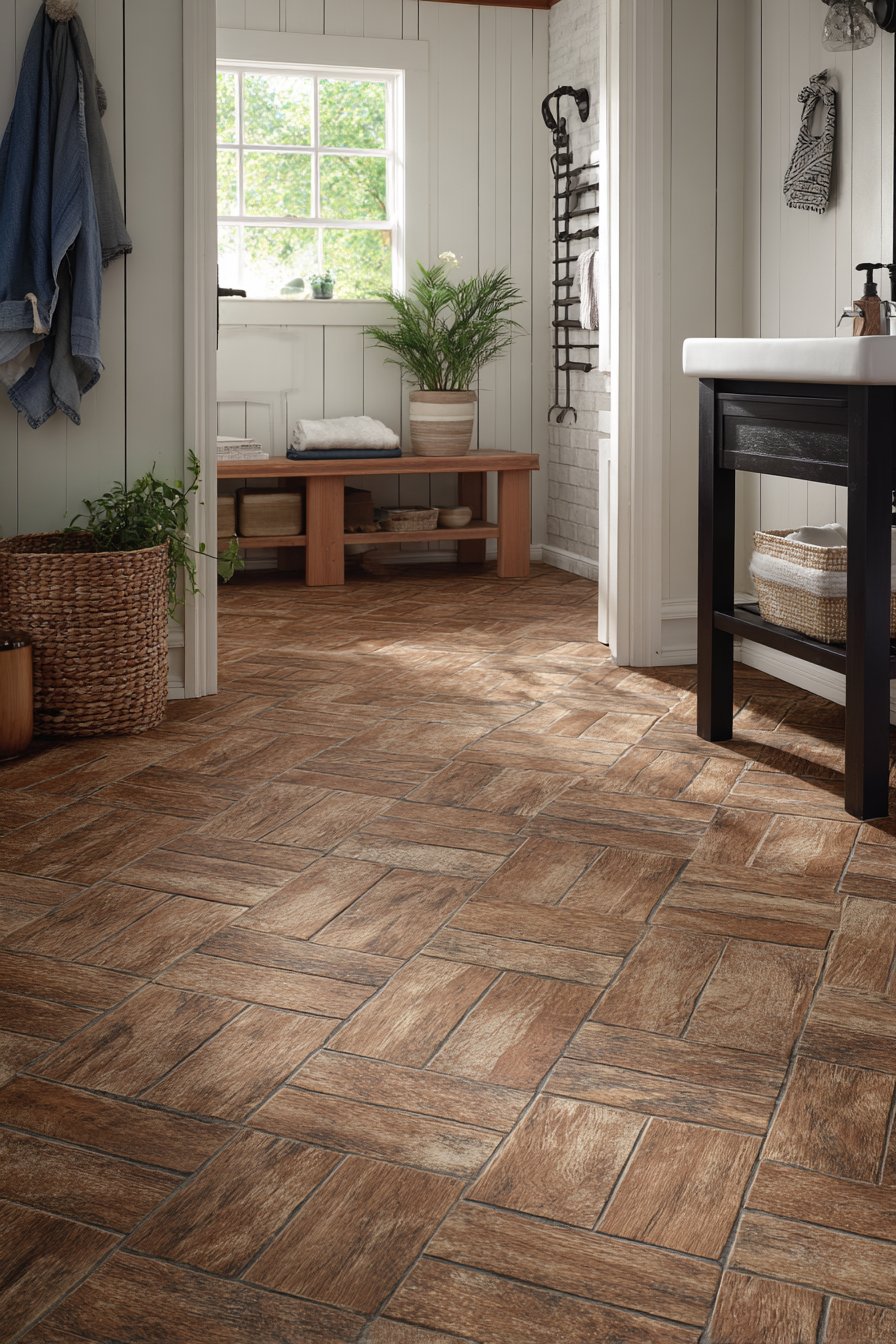
Implementing laminate flooring in small bathrooms requires attention to proper installation techniques including maintaining expansion gaps at room perimeters to accommodate the material’s slight dimensional changes with temperature and humidity fluctuations. Waterproof laminate has advanced significantly from earlier products, but proper installation following manufacturer specifications remains critical for long-term success. The wood-look aesthetic adds warmth and residential character that helps small bathrooms feel like intentional living spaces rather than purely functional rooms. When paired with modern fixtures and a frameless shower, laminate flooring creates stylish bathrooms that belie their budget-friendly material costs.
Key Design Tips:
- Choose laminate specifically rated for bathroom use with enhanced water resistance
- Install with proper expansion gaps covered by transition strips and moldings
- Clean up water spills promptly to prevent standing water at seams
- Use color-coordinated transitions at doorways for professional appearance
- Pair with modern fixtures and accessories to create cohesive contemporary design
Why These Small Bathroom Flooring Ideas Represent the Best Options
The small bathroom flooring ideas presented in this comprehensive guide represent the finest options available to today’s homeowners because they successfully balance multiple critical factors: aesthetic appeal, practical performance, installation feasibility, maintenance requirements, and cost considerations. Each flooring concept addresses the unique challenges of small bathroom spaces—limited square footage, high moisture exposure, frequent use, and the need to maximize perceived space—while delivering distinctive visual character that transforms utilitarian rooms into designed environments. The diversity of options ensures homeowners with different budgets, style preferences, and skill levels can find appropriate solutions.
These flooring ideas excel because they incorporate proven design principles specifically relevant to small bathrooms. Light-reflective surfaces like cream travertine, white hexagonal tiles, and light gray porcelain maximize natural and artificial light, making compact bathrooms feel more spacious and inviting. Diagonal installations and patterns like herringbone create visual movement that tricks the eye into perceiving more space. Large-format tiles with minimal grout lines, such as contemporary concrete-look porcelain, reduce visual fragmentation that can make small rooms feel cluttered. Meanwhile, textured options like river pebble tiles and slate-look ceramics provide slip resistance crucial for bathroom safety without compromising aesthetics.
The material choices represented—from luxury vinyl and waterproof laminate to porcelain, ceramic, and natural stone—showcase the remarkable advances in flooring technology. Modern manufacturing achieves wood and stone realism that was impossible just a decade ago, making premium aesthetics accessible at various price points. Waterproofing technologies in luxury vinyl and laminate bring wood-look beauty to moisture-prone bathrooms safely. Porcelain’s improvements in size, thickness, and surface printing allow it to convincingly mimic expensive natural materials while providing superior durability and lower maintenance. These technological advances democratize high-end design, making beautiful small bathrooms achievable for average homeowners rather than only luxury renovations.
The pattern and color diversity represented in these ideas demonstrates sophisticated understanding of how visual elements affect spatial perception and emotional response. Bold options like black slate and black-and-white checkerboard prove that small bathrooms can handle dramatic design when properly balanced with light walls and adequate lighting. Soft colors like sage green and blue-gray mosaics create calming, spa-like atmospheres that make bathrooms feel like retreat spaces. Warm tones in terracotta and honey-toned luxury vinyl provide psychological comfort and residential warmth. Pattern complexity ranging from simple large-format tiles to intricate basketweave mosaics offers options for minimalist and maximalist design preferences alike.
These flooring ideas represent best practices because they acknowledge the relationship between floor selection and overall bathroom design. The concepts demonstrate how flooring choices coordinate with—or deliberately contrast against—wall colors, fixture finishes, vanity styles, and decorative accessories to create cohesive design narratives. The herringbone wood-look porcelain suggests contemporary styling with minimalist fixtures. The vintage penny tiles and checkerboard patterns call for period-appropriate pedestal sinks and clawfoot tubs. The coastal weathered planks naturally pair with beadboard wainscoting and beach-inspired accessories. This holistic approach ensures flooring choices contribute to unified, intentional bathroom designs rather than existing as isolated decisions.
From practical standpoints, these flooring ideas excel because they consider real-world use and maintenance. Options emphasize slip resistance through textured surfaces, small tile formats with multiple grout lines, and matte finishes—critical safety features in wet bathroom environments. The ideas acknowledge maintenance realities, with many options specifically chosen for their ability to disguise water spots, minor dirt, and everyday wear. The inclusion of both premium natural materials and budget-friendly manufactured alternatives ensures homeowners at all price points can achieve beautiful bathrooms. Installation considerations are addressed, with some options suitable for confident DIYers and others requiring professional expertise.
The longevity and timeless appeal of many featured options—classic hexagonal tiles, marble aesthetics, basketweave patterns—ensure these flooring choices won’t quickly date bathrooms or require frequent updates to remain relevant. Simultaneously, contemporary options like concrete-look porcelain and large-format seamless tiles demonstrate awareness of current design trends and modern aesthetic preferences. This temporal balance means homeowners can choose options aligned with their design sensibilities knowing their floors will maintain appeal for years or decades, protecting their renovation investments and contributing to long-term home value.
These small bathroom flooring ideas represent the best available options because they demonstrate that constraint—in this case, limited bathroom square footage—need not limit design ambition or aesthetic achievement. Small bathrooms can be bold with black slate and checkerboard patterns. They can be luxurious with marble-look porcelain and gold-veined beige. They can be artistic with encaustic cement tiles. They can be serene with river pebbles and blue-gray mosaics. They can be practical with waterproof laminate and textured ceramics. The ideas prove that thoughtful material selection, pattern choice, color psychology, and installation technique matter more than square footage in creating bathrooms that inspire, function beautifully, and enhance daily life.
Conclusion
Transforming a small bathroom through thoughtful flooring selection represents one of the most impactful design decisions you can make in your home. As this comprehensive exploration of small bathroom flooring ideas demonstrates, the options available today are remarkably diverse, sophisticated, and accessible across various budgets and skill levels. From the timeless elegance of marble-look porcelain to the practical beauty of waterproof luxury vinyl, from bold dramatic choices like black slate to serene spa-inspired river pebbles, there is a perfect flooring solution for every small bathroom and every homeowner’s unique vision.
The key takeaways from these 21 flooring concepts emphasize that successful small bathroom design comes from understanding how materials, colors, patterns, and installation techniques work together to maximize spatial perception, enhance functionality, and create emotional resonance. Light colors and large-format tiles expand perceived space. Diagonal installations and dynamic patterns create visual movement. Textured surfaces provide essential slip resistance. Natural materials and organic colors create psychological comfort. These principles, applied thoughtfully with quality materials and proper installation, transform ordinary small bathrooms into extraordinary personal spaces that enhance daily life and contribute to overall home value.
As you consider your own small bathroom renovation or update, we encourage you to view your floor not as a limitation to work around, but as an opportunity to express creativity, solve practical challenges, and create a space that truly reflects your personal style and needs. Don’t be afraid to embrace bold choices if they speak to you—small spaces can handle dramatic design when properly balanced. Invest in quality materials and professional installation when budget allows, as flooring longevity and performance justify upfront investment. Most importantly, choose flooring that makes you happy every time you enter your bathroom, because the best design decisions are those that enhance your daily experience and bring joy to ordinary moments. Your small bathroom deserves thoughtful, beautiful design—these flooring ideas provide the inspiration and guidance to make it happen.
