
The bathroom is no longer just a functional space—it has evolved into a personal sanctuary where design meets tranquility. Among the countless design choices available, neutral bathroom tile ideas stand out as the epitome of timeless elegance and versatility. Neutral tones create a calming atmosphere that transcends fleeting trends, offering a foundation that can adapt to changing tastes and styles over the years. Whether you’re drawn to the soft warmth of beige travertine, the cool sophistication of grey marble, or the organic texture of natural stone, neutral tiles provide endless possibilities for creating a bathroom that feels both luxurious and livable.
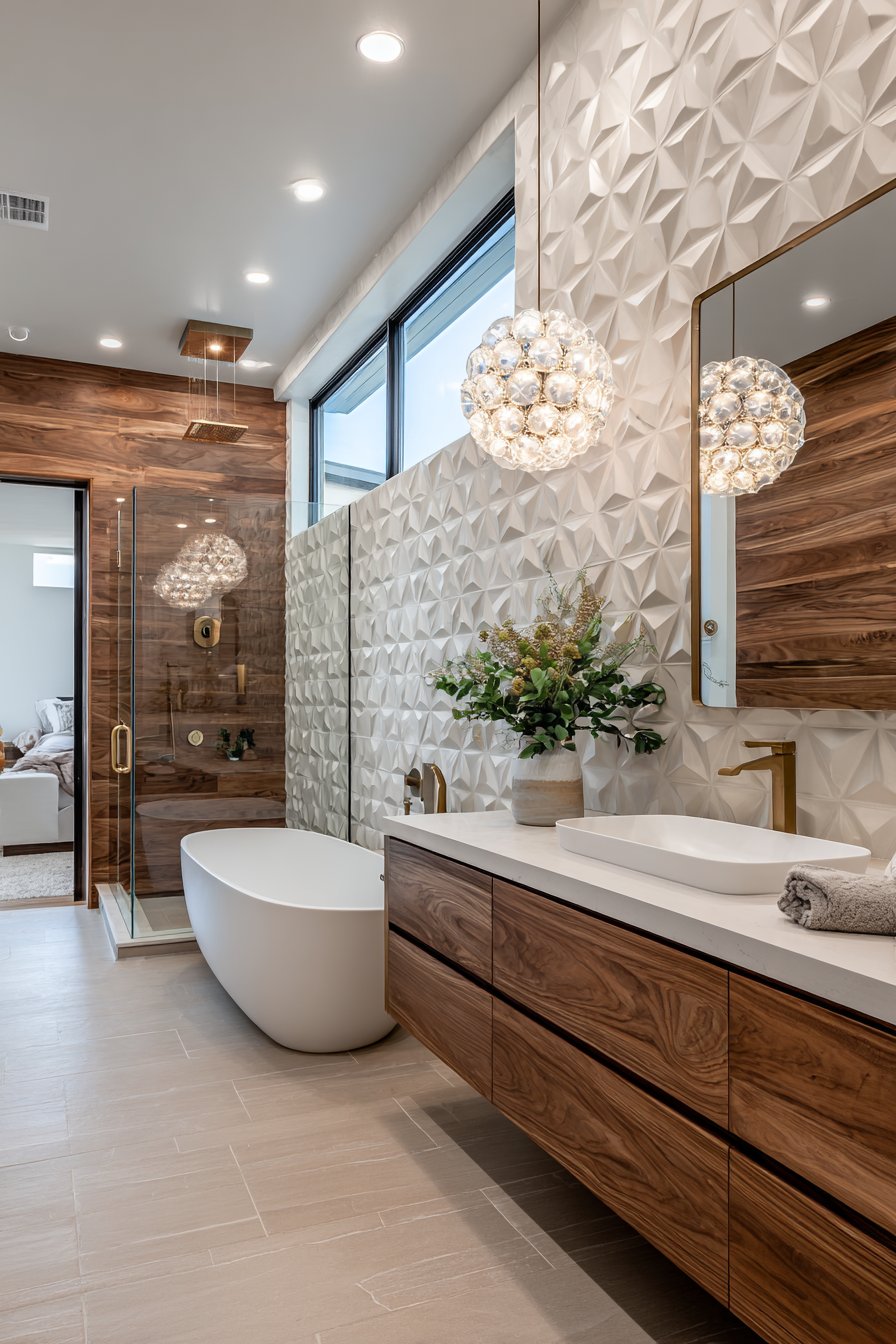
The beauty of neutral bathroom tile ideas lies in their remarkable ability to serve as both backdrop and statement. These understated hues—ranging from crisp whites and warm creams to sophisticated greys and earthy taupes—create visual harmony while allowing architectural features, fixtures, and accessories to shine. Neutral tiles work seamlessly with any design style, from minimalist modern to rustic farmhouse, and they make small bathrooms feel more spacious while adding depth and character to larger spaces. The key is understanding how to layer different neutral tones, textures, and patterns to create visual interest without overwhelming the senses.
In this comprehensive guide, we’ll explore 25 distinctive neutral bathroom tile ideas that showcase the remarkable versatility of this timeless palette. From spa-like retreats featuring natural limestone to bold industrial spaces with concrete-look porcelain, each design demonstrates how neutral tiles can be transformed into something extraordinary. You’ll discover practical tips for selecting the perfect tile combinations, learn how to balance textures and finishes, and gain insights into creating a cohesive design that reflects your personal style while maintaining the serene, sophisticated quality that makes neutral bathrooms so enduringly popular.
1. Travertine-Look Porcelain Serenity
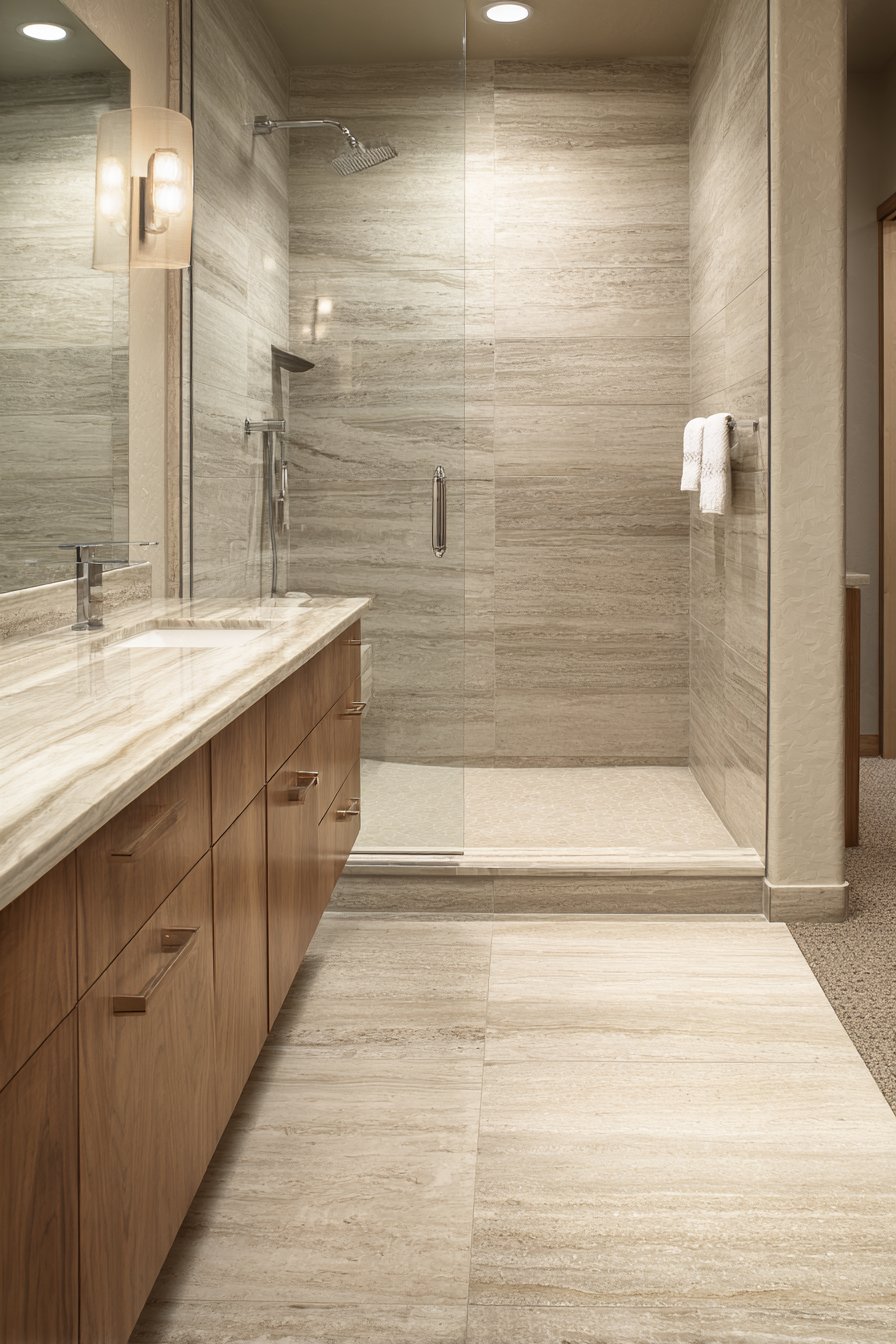
Step into a bathroom where large-format travertine-look porcelain tiles create an immediate sense of luxury and tranquility. The soft beige tones flow seamlessly from floor to accent wall, showcasing the realistic stone texture complete with subtle color variations and delicate natural veining that mimics authentic travertine. This neutral bathroom tile idea transforms the space into a serene retreat where every surface tells a story of natural beauty. The walk-in shower, enclosed by frameless glass, features complementary cream subway tiles that add just enough visual variation while maintaining the cohesive neutral palette.
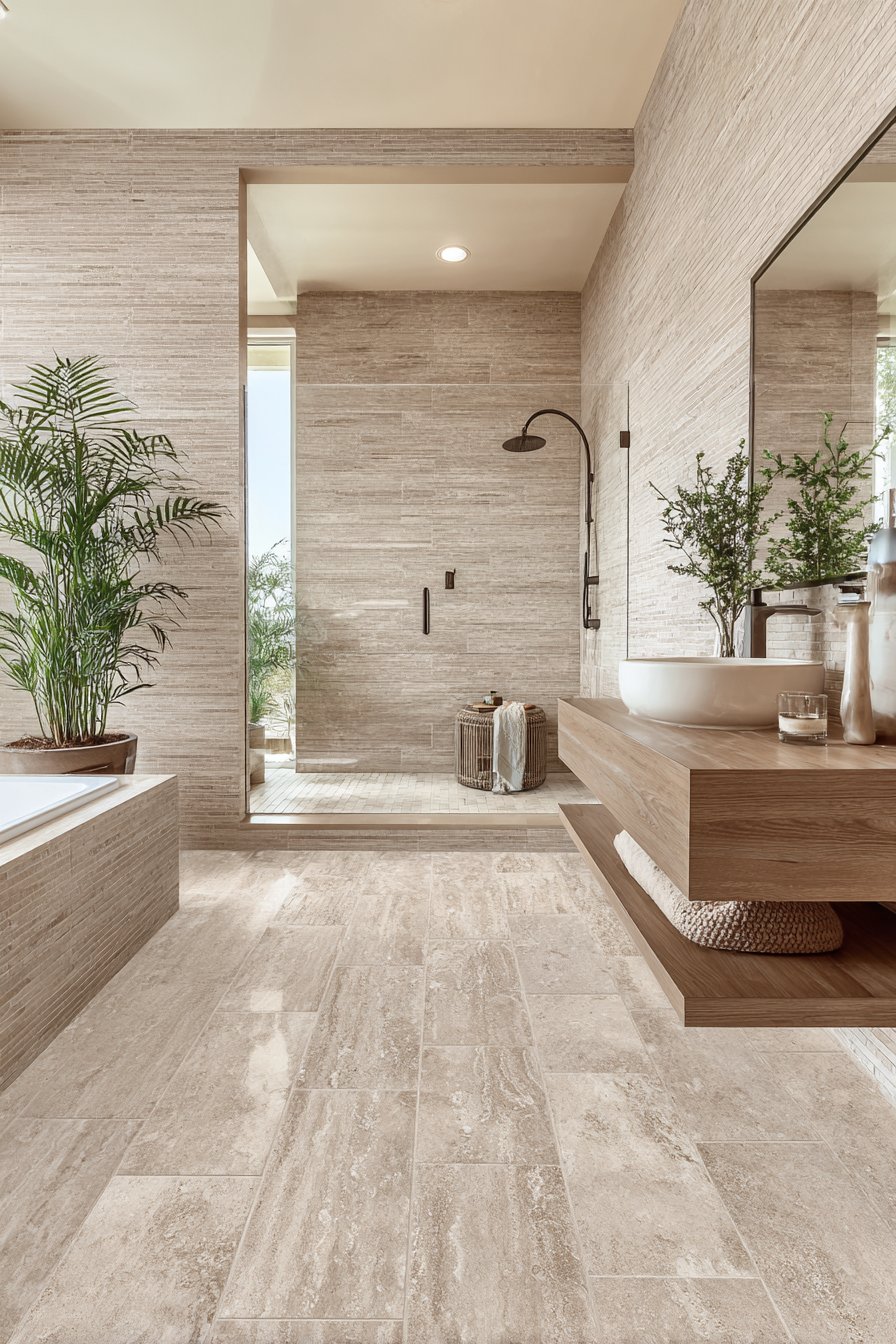
The genius of this design lies in its ability to create visual interest through texture rather than color. The travertine-look tiles display the characteristic porous surface and gentle color gradations found in natural stone, but with the practical benefits of porcelain—superior durability, easier maintenance, and consistent sizing. Brushed nickel fixtures add a soft metallic sheen that complements the warm undertones of the beige tiles, while a floating oak vanity introduces organic warmth and a touch of contemporary style. The natural wood grain provides just enough contrast to prevent the space from feeling too monochromatic.
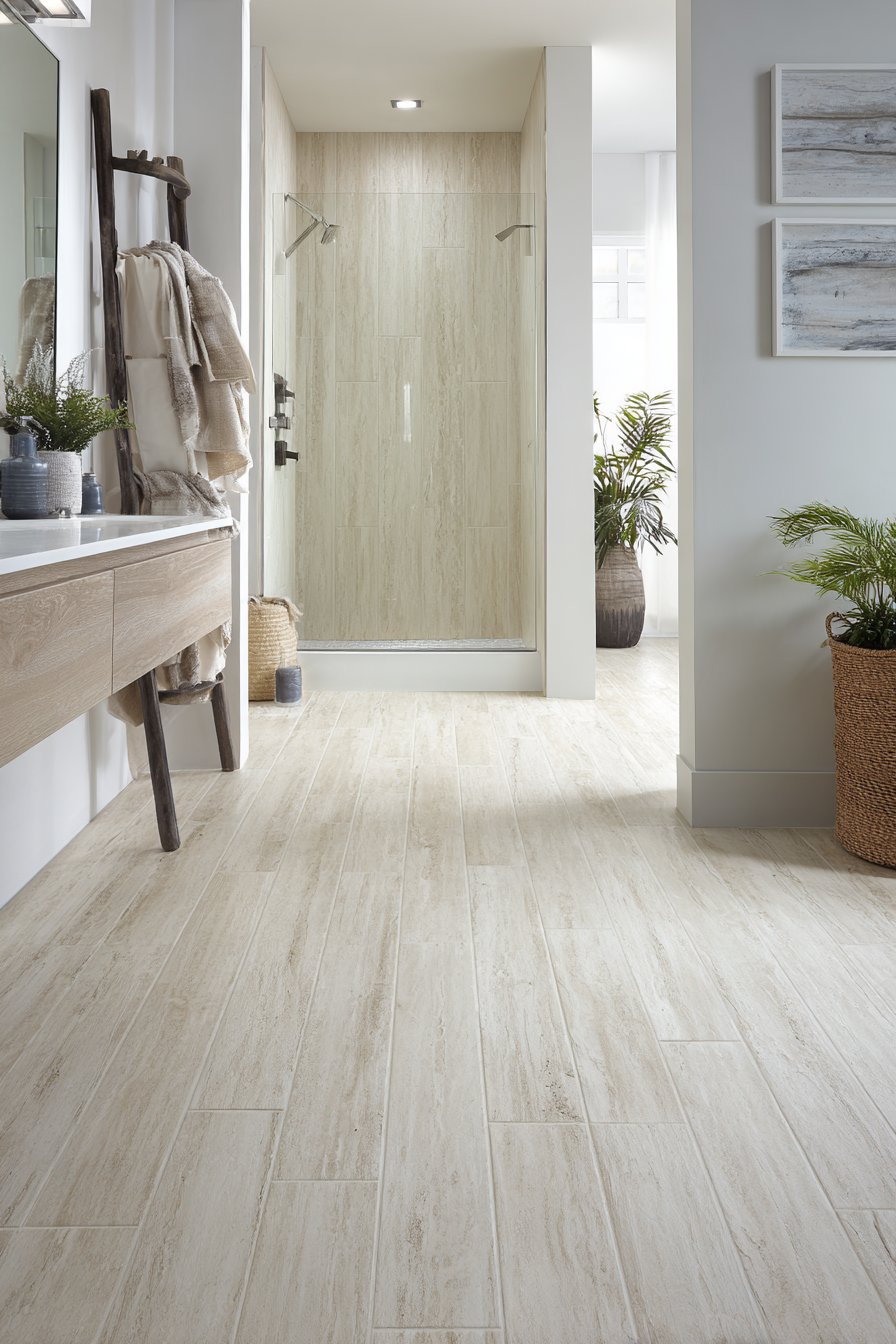
Wide-angle interior design photography captures how natural light plays across the varied tile surfaces, highlighting the subtle dimensional quality of the travertine texture. The way light catches the slight irregularities in the tile surface creates gentle shadows and highlights throughout the day, ensuring the space never feels flat or one-dimensional. This interplay of light and texture is essential to making neutral bathroom tile ideas feel dynamic and alive rather than merely bland or safe.
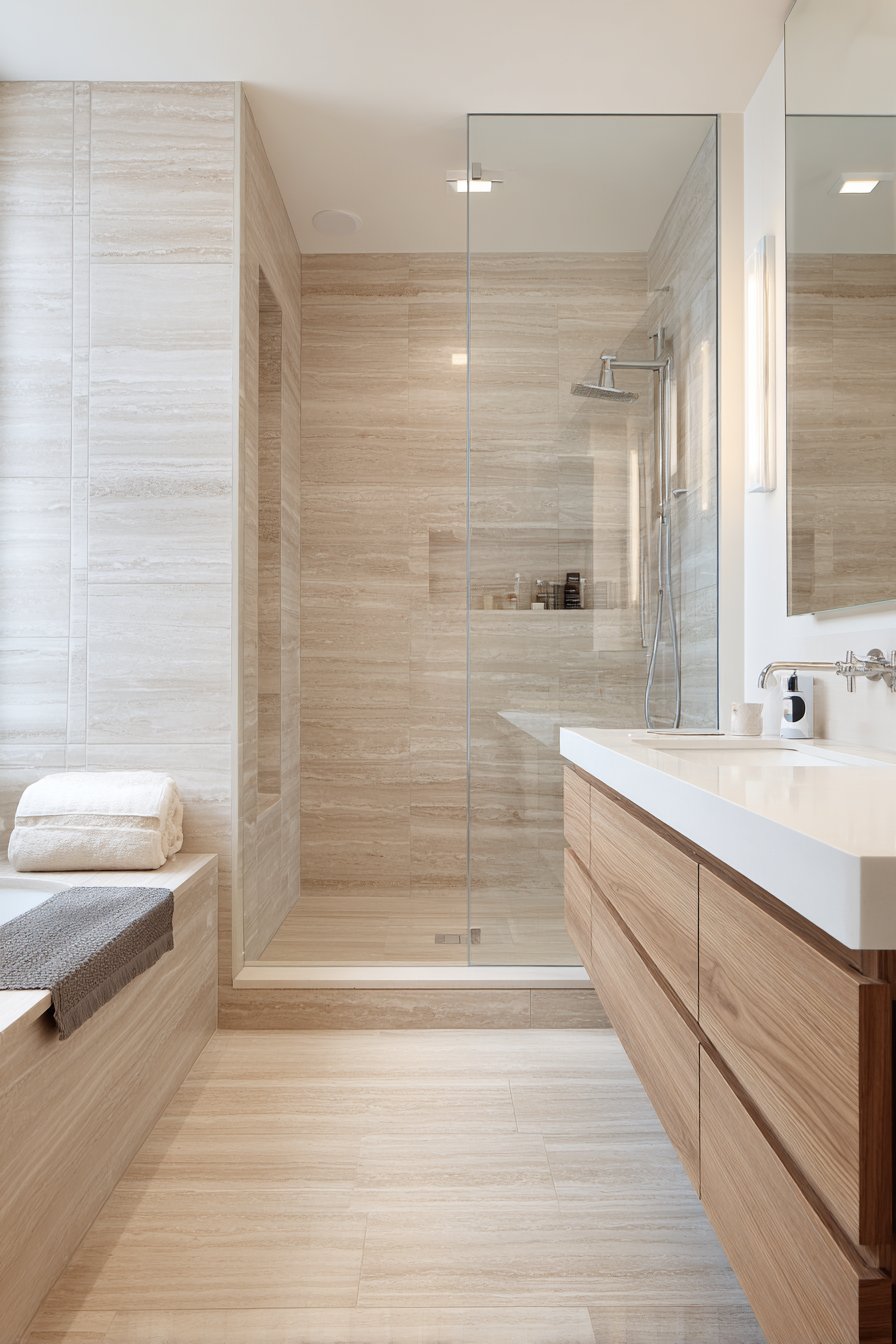
Key Design Tips: Choose large-format tiles to minimize grout lines and create a more seamless, luxurious appearance. Extend the same tile from floor to wall on at least one surface to create visual continuity and make the space feel larger. Select tiles with authentic texture and color variation rather than perfectly uniform options—the subtle imperfections are what make the space feel natural and sophisticated. Pair warm-toned neutral tiles with brushed or satin-finish fixtures rather than polished chrome to maintain a cohesive temperature throughout the design. Consider installing tiles in a staggered or brick pattern rather than stacked to add subtle visual movement.
2. Hexagonal Cement Tile with Modern Edge
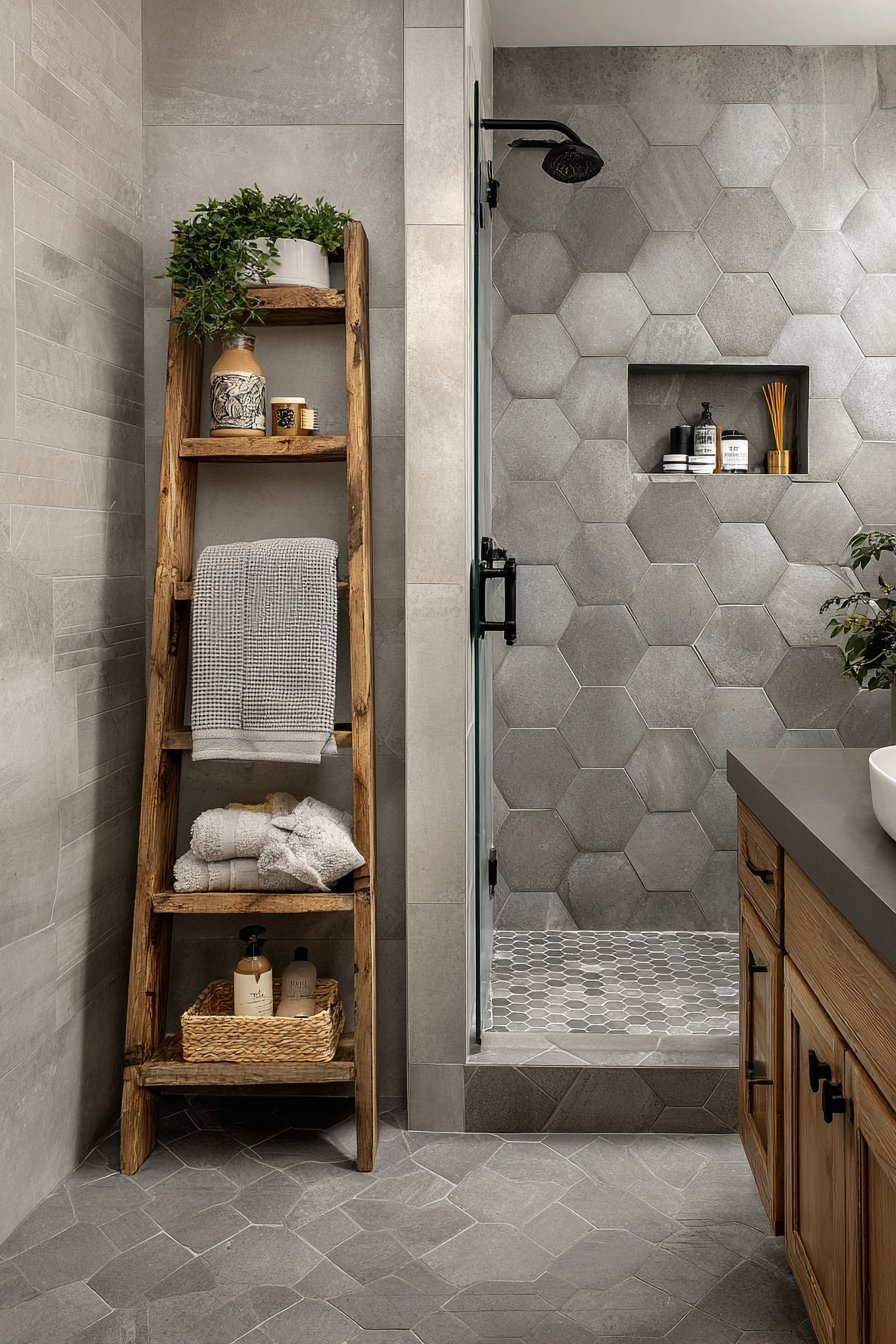
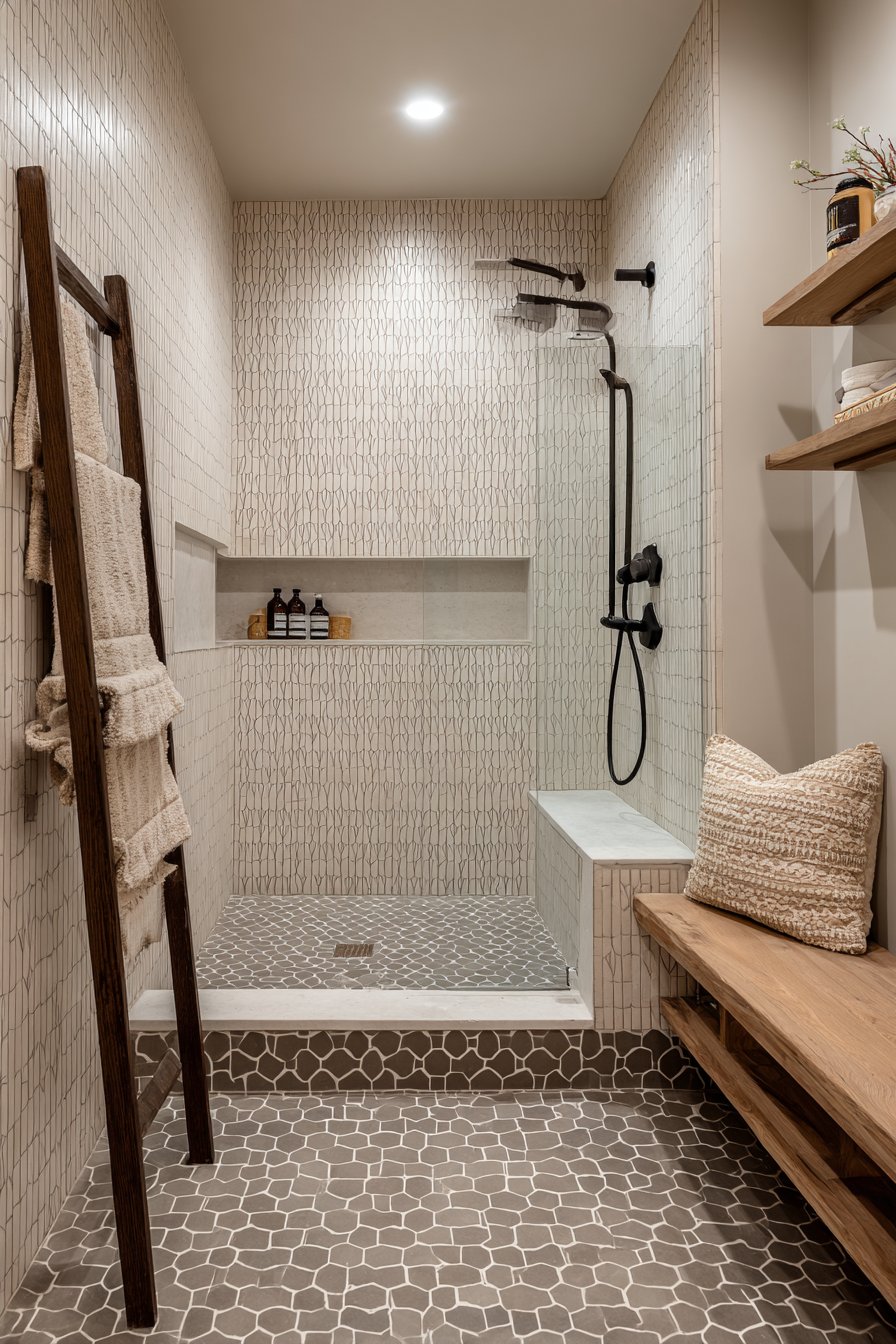
This modern neutral bathroom showcases the versatility of geometric patterns within a restrained color palette. Warm grey hexagonal cement tiles blanket the floor, creating an engaging visual foundation that draws the eye without overwhelming the senses. The geometric pattern adds architectural interest and a contemporary edge, proving that neutral bathroom tile ideas can be bold and dynamic without introducing color. The shower area takes a different approach with vertical stacked tiles in alternating shades of taupe and ivory, creating subtle striping that elongates the space and adds sophisticated dimension.
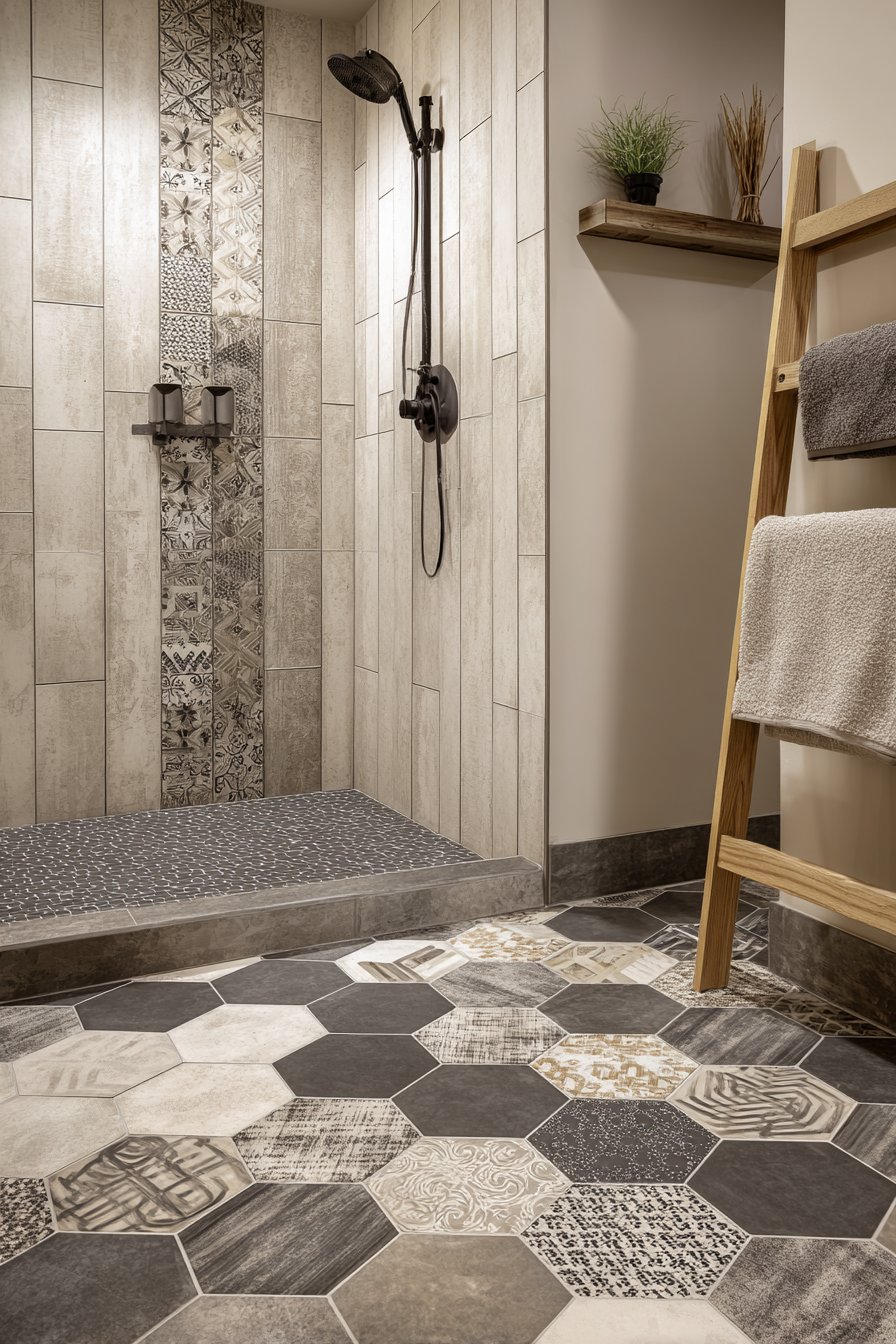
The juxtaposition of geometric floor tiles with linear wall tiles demonstrates an advanced understanding of how patterns can work together when unified by a neutral color scheme. The hexagons provide organic, honeycomb-inspired geometry that feels both modern and timeless, while the vertical stacking in the shower draws the eye upward, making the ceiling feel higher. Matte black fixtures serve as punctuation marks throughout the space, their dark finish providing just enough contrast to define edges and highlight the quality of the hardware without disrupting the peaceful neutral foundation.
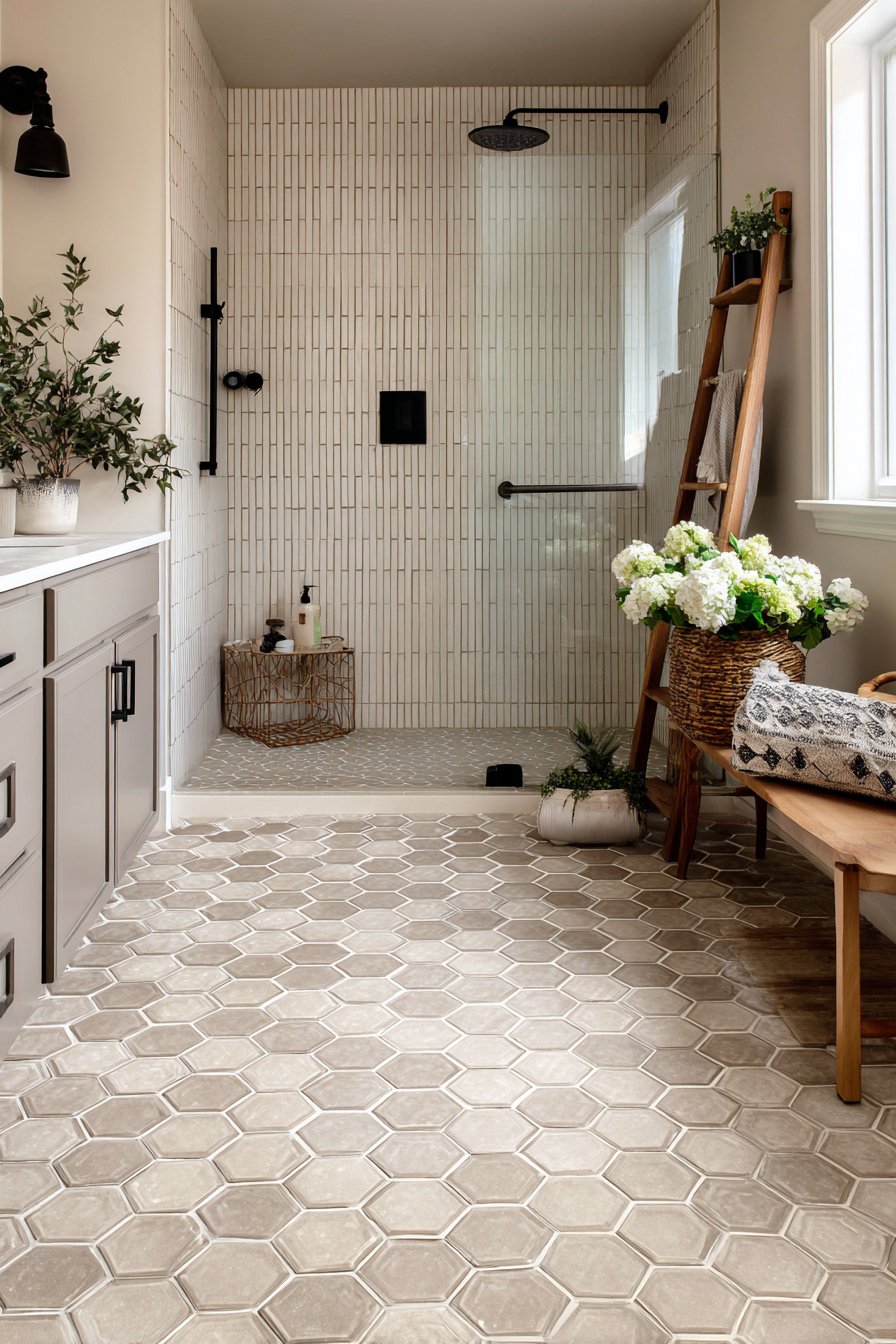
A wooden ladder shelf leans casually against one wall, introducing natural texture and organic warmth that softens the more architectural tile selections. This element is crucial—it reminds us that bathrooms should feel lived-in and welcoming, not sterile or cold. The ladder provides practical storage for rolled towels and small plants, adding layers of texture and life to the space. Professional interior photography with balanced exposure emphasizes how different neutral tile patterns can coexist harmoniously, creating depth and visual interest through shape and arrangement rather than relying on color for impact.
Key Design Tips: Mix geometric floor tiles with linear wall tiles to create visual interest while maintaining cohesion through color. Choose tiles with different shapes but similar tonal values to ensure patterns complement rather than compete. Use matte black fixtures as strategic accents to define spaces and add contemporary edge without introducing actual color. Incorporate at least one natural wood element to warm up grey-based neutral schemes and prevent them from feeling cold. Ensure your grout color is carefully selected—slightly darker grout can emphasize pattern, while matching grout creates a more seamless look. Consider the scale of patterns relative to room size; smaller bathrooms benefit from more delicate hexagons rather than oversized geometric shapes.
3. Coastal Sandy Beige Stone Flow
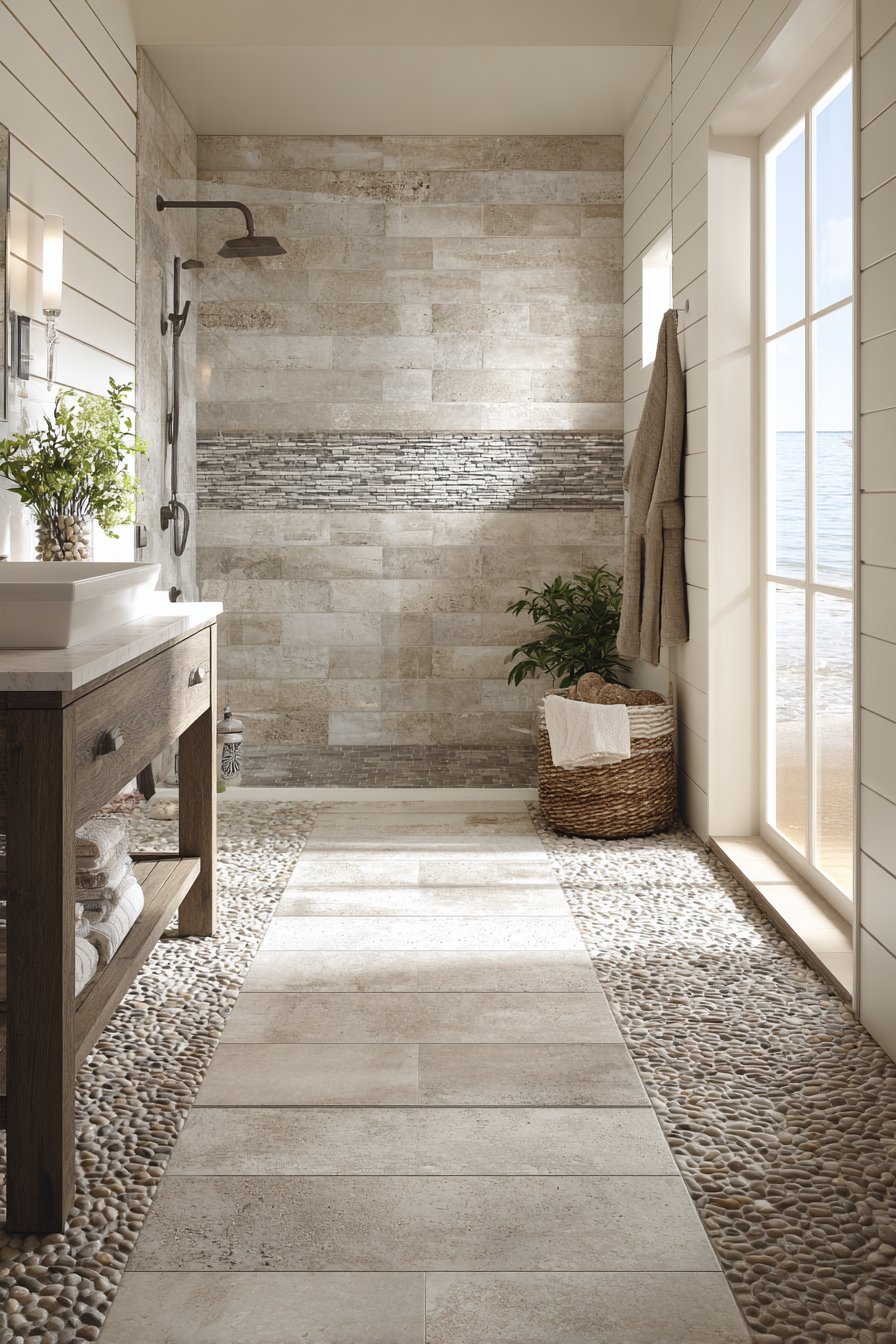
Transport yourself to a coastal retreat with this bathroom that embraces natural stone tiles in sandy beige tones. The neutral bathroom tile ideas here create a seamless floor-to-ceiling aesthetic in the wet area, with textured slate-look porcelain featuring subtle surface variation that mimics the organic irregularities of natural beach stone. A horizontal pebble tile accent strip runs at mid-height, introducing tactile three-dimensional texture that invites touch and adds a spa-like quality reminiscent of high-end resort bathrooms. This design proves that monochromatic doesn’t mean monotonous when you thoughtfully layer textures and finishes.
The genius of this coastal-inspired approach lies in its restraint. Rather than introducing literal beach motifs or nautical colors, the design captures the essence of coastal living through natural materials, organic textures, and a sun-bleached color palette. The sandy beige tones evoke driftwood, beach sand, and weathered stone without being overly literal or themed. Chrome fixtures add a clean, reflective quality that suggests water and light, while white shiplap on the upper walls provides a crisp contrast that keeps the space from feeling too earthy or heavy.
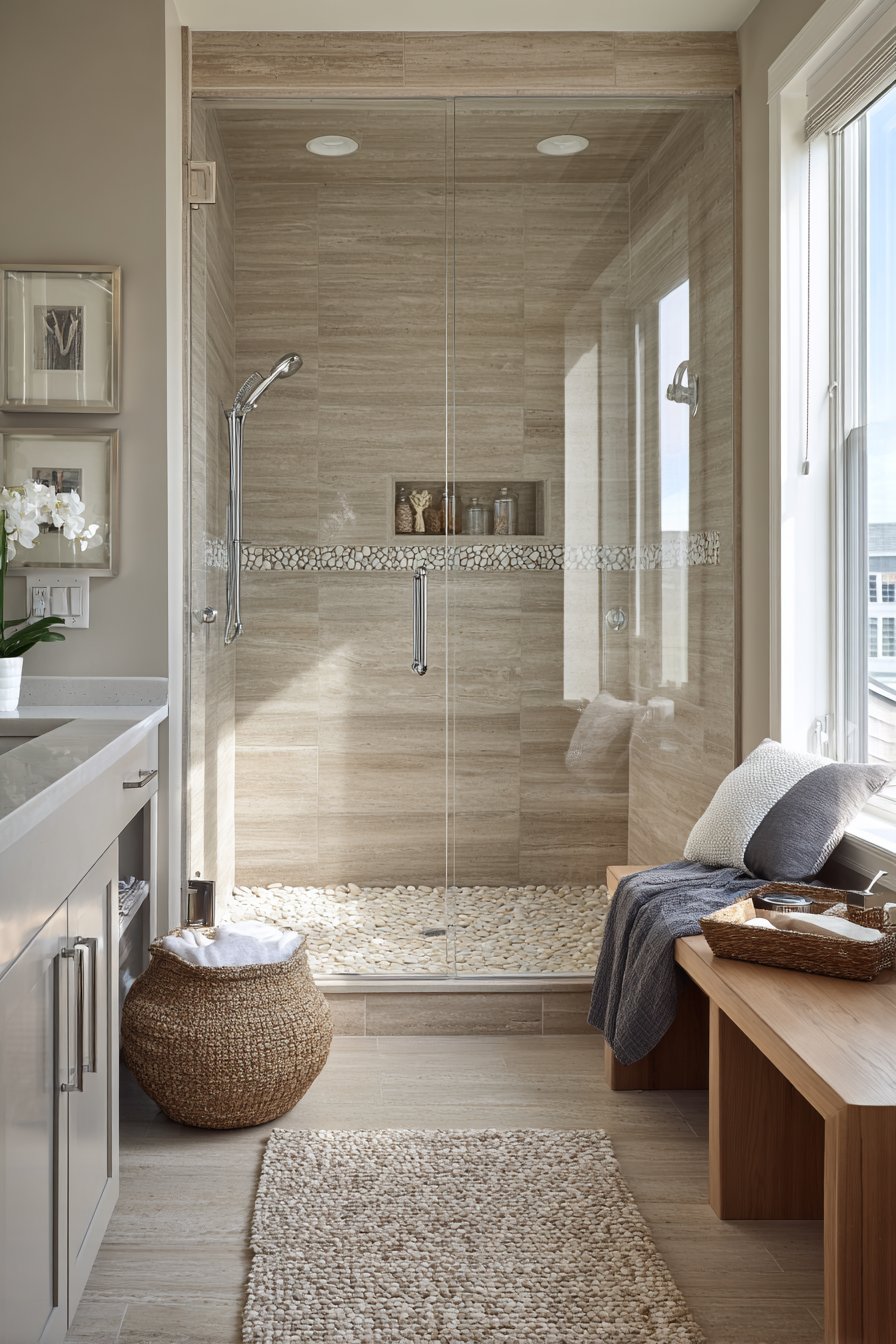
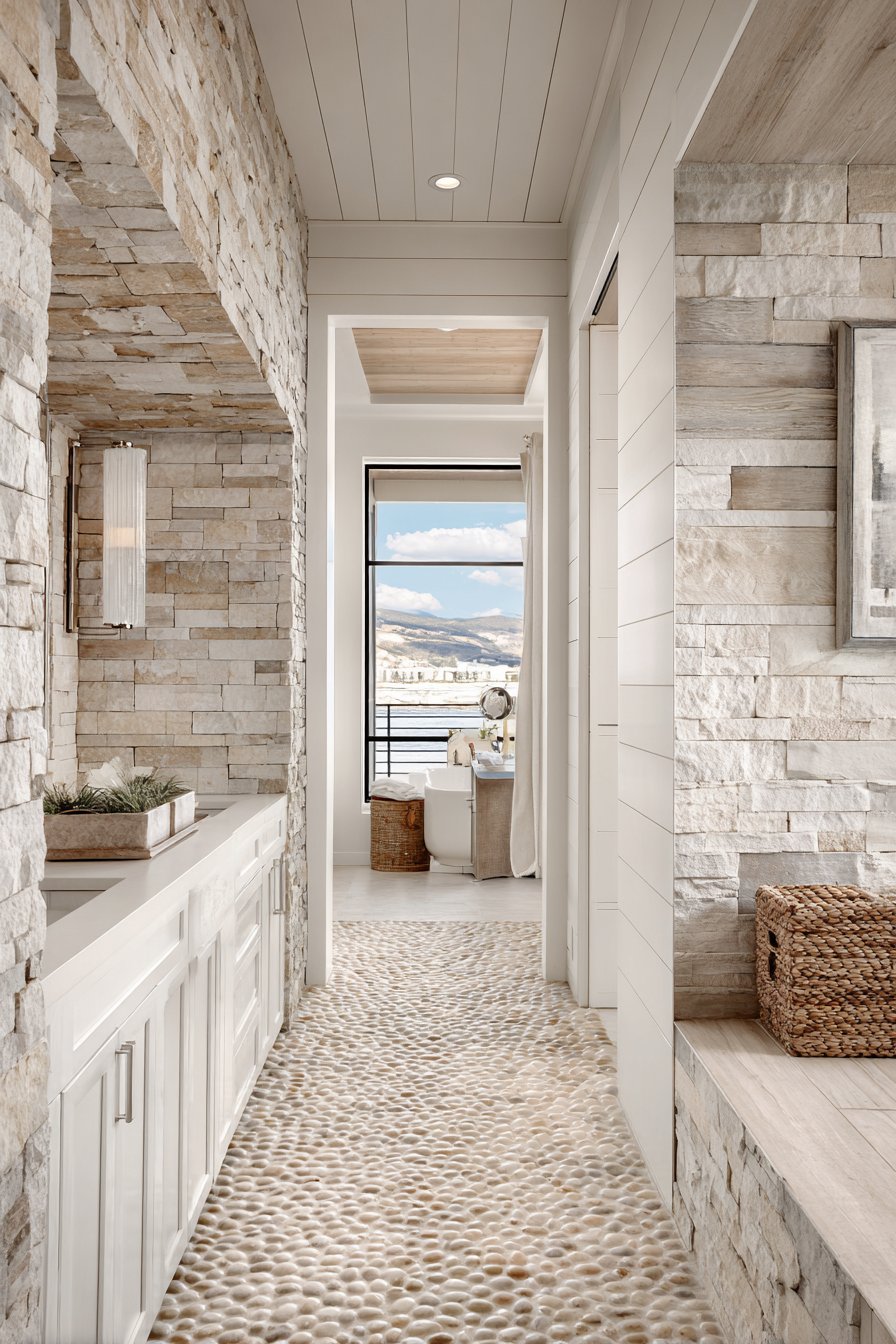
The pebble tile accent strip is particularly effective as it breaks up the large expanses of flat tile while introducing a natural element that feels both luxurious and grounding. These smooth river stones, carefully arranged and set in mesh backing, create a massage-like texture underfoot in the shower while adding visual interest at eye level when used as an accent band. Soft diffused daylight floods the space, highlighting the organic textures and subtle color variations within the neutral stone tiles, creating shadows and highlights that change throughout the day and connect the interior space to the natural world outside.
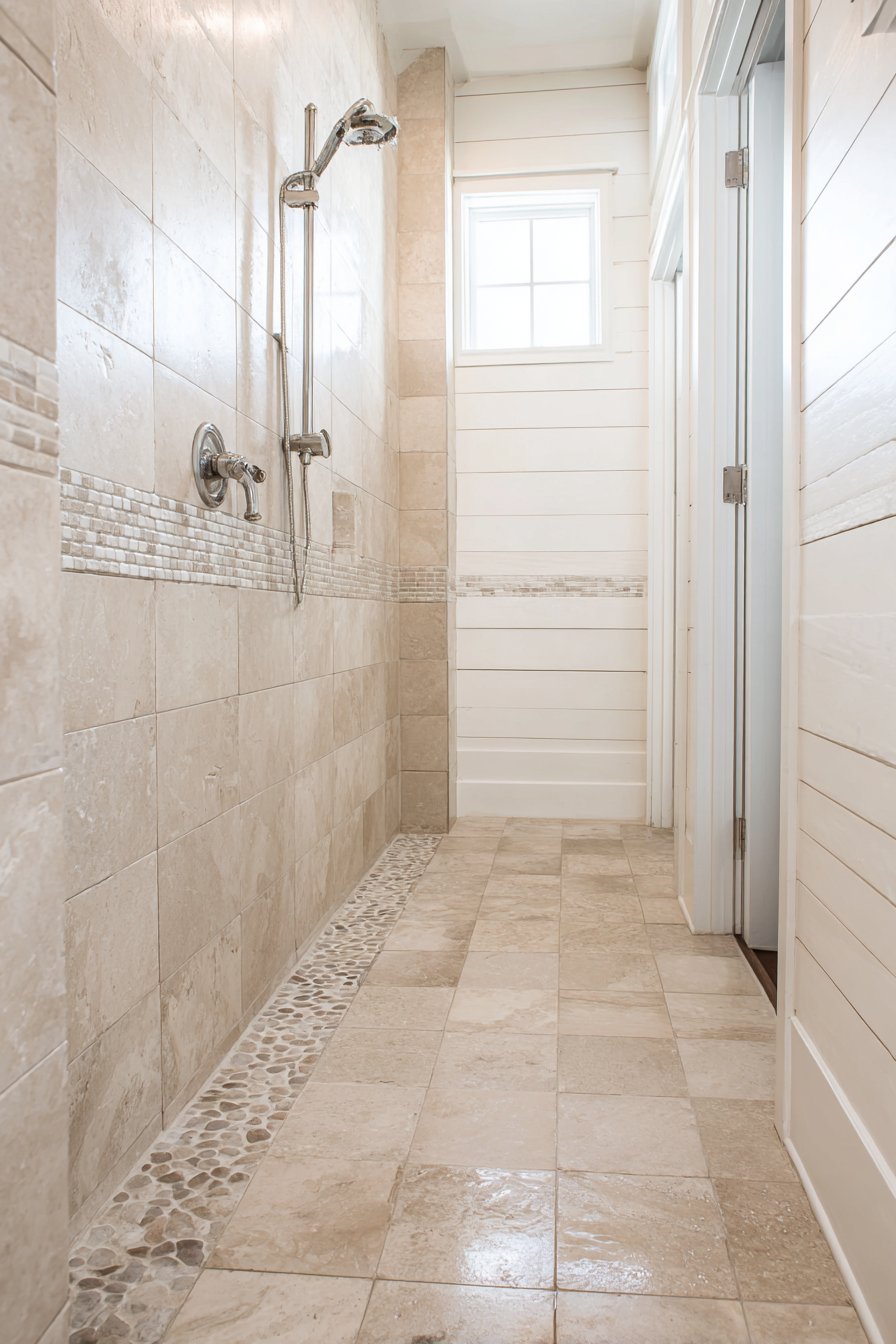
Key Design Tips: Create visual flow by using the same tile family from floor to ceiling in wet areas, varying only the finish or size. Incorporate pebble tile accents strategically—they work beautifully as shower floors, accent strips, or border details. Balance earthy natural stone with crisp white elements to prevent the space from feeling too heavy or dark. Choose chrome or polished nickel fixtures with coastal-inspired neutrals to add brightness and reflect light. Consider the undertones of your sandy beige tiles carefully—some lean pink, others yellow or grey—and select complementary materials accordingly. Use shiplap or beadboard on upper walls to add architectural detail while keeping the overall palette neutral and cohesive.
4. Minimalist Ivory Marble Slab Luxury
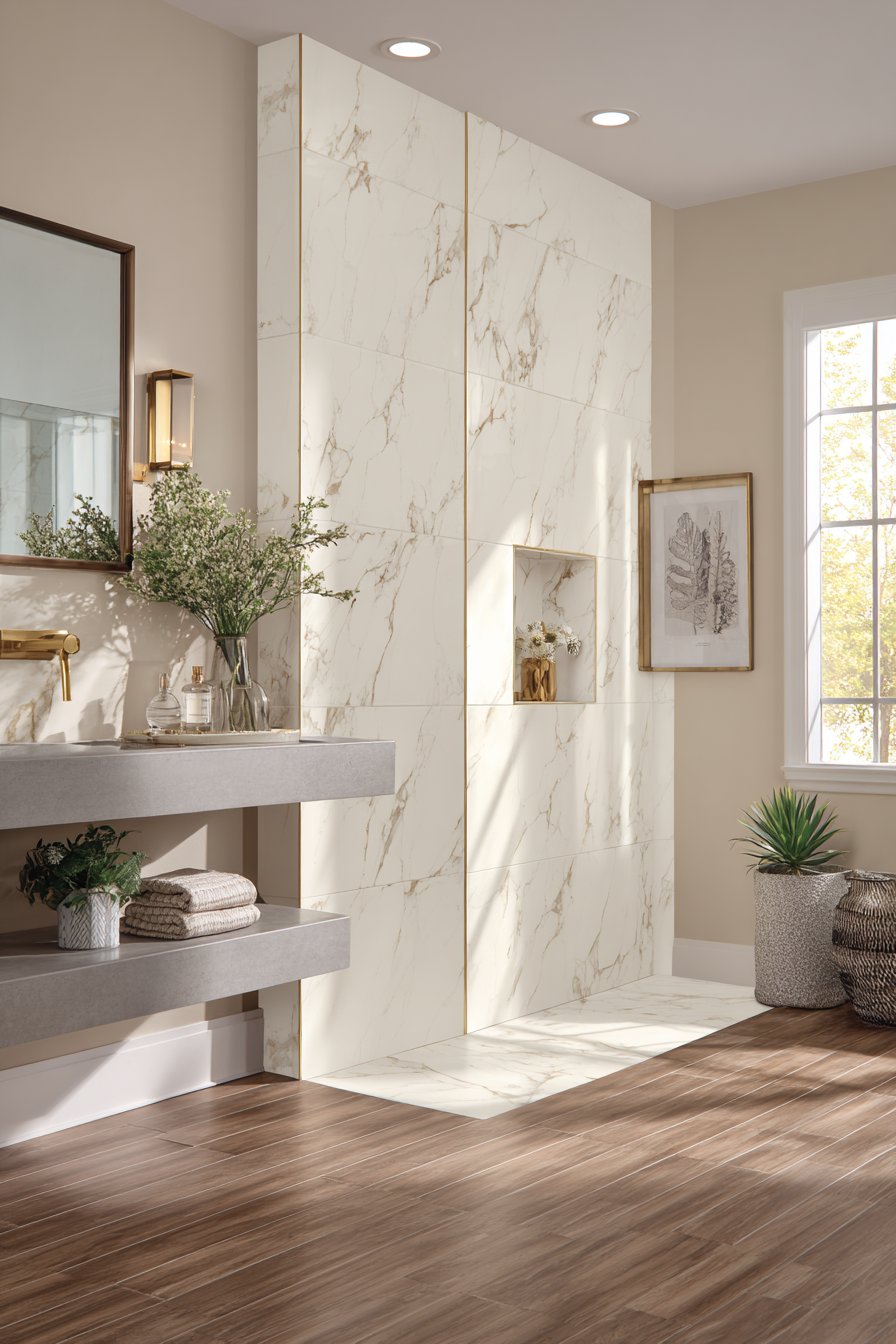
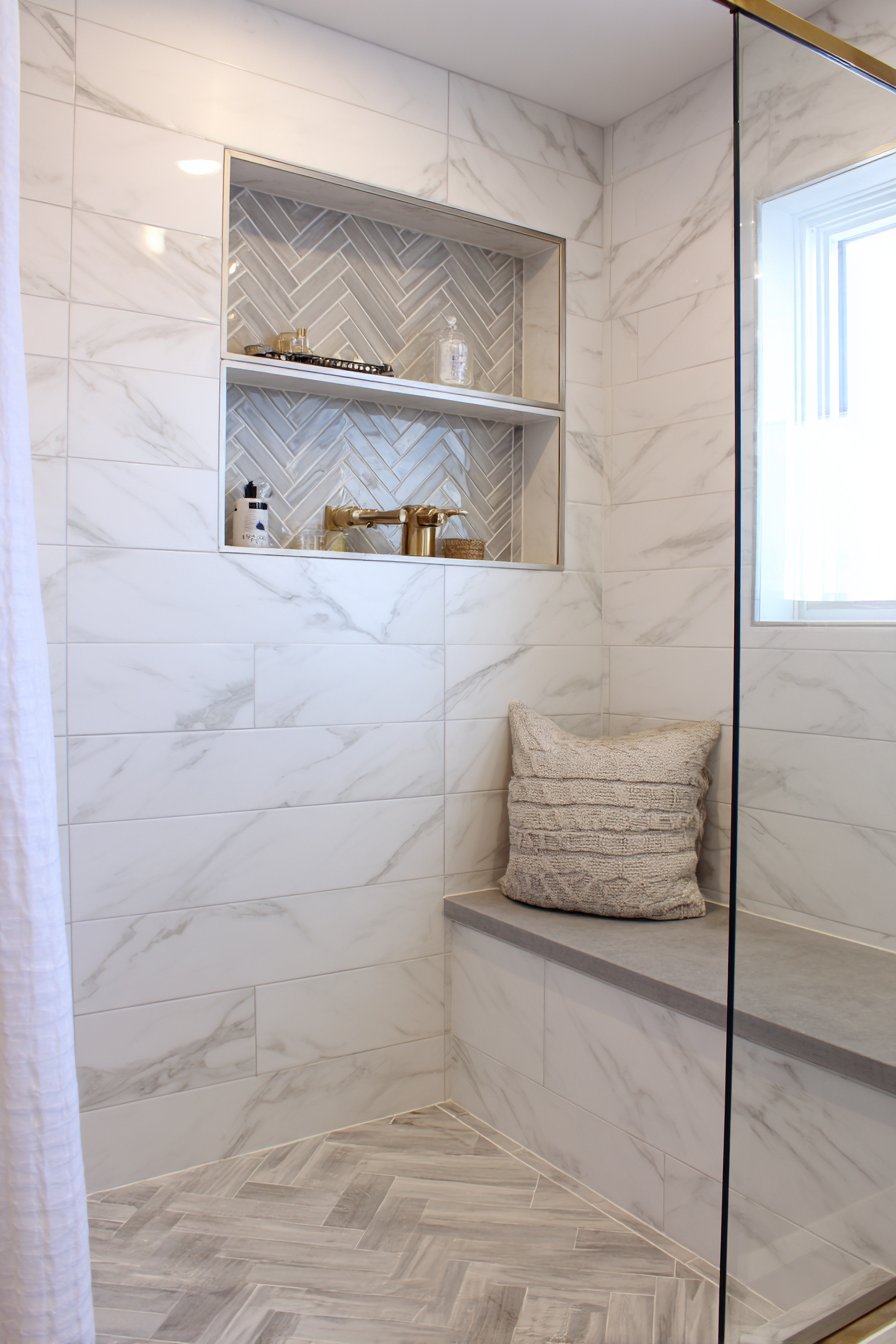
This minimalist sanctuary showcases the power of restraint and quality materials. Large 24×48 inch ivory porcelain slabs with delicate marble veining create a continuous, sophisticated aesthetic on both walls and floors. These neutral bathroom tile ideas embody the “less is more” philosophy, allowing the inherent beauty of the marble-look material to take center stage without competition from busy patterns or contrasting colors. The seamless appearance of large-format slabs creates a sense of spaciousness and calm that is essential to successful minimalist design.
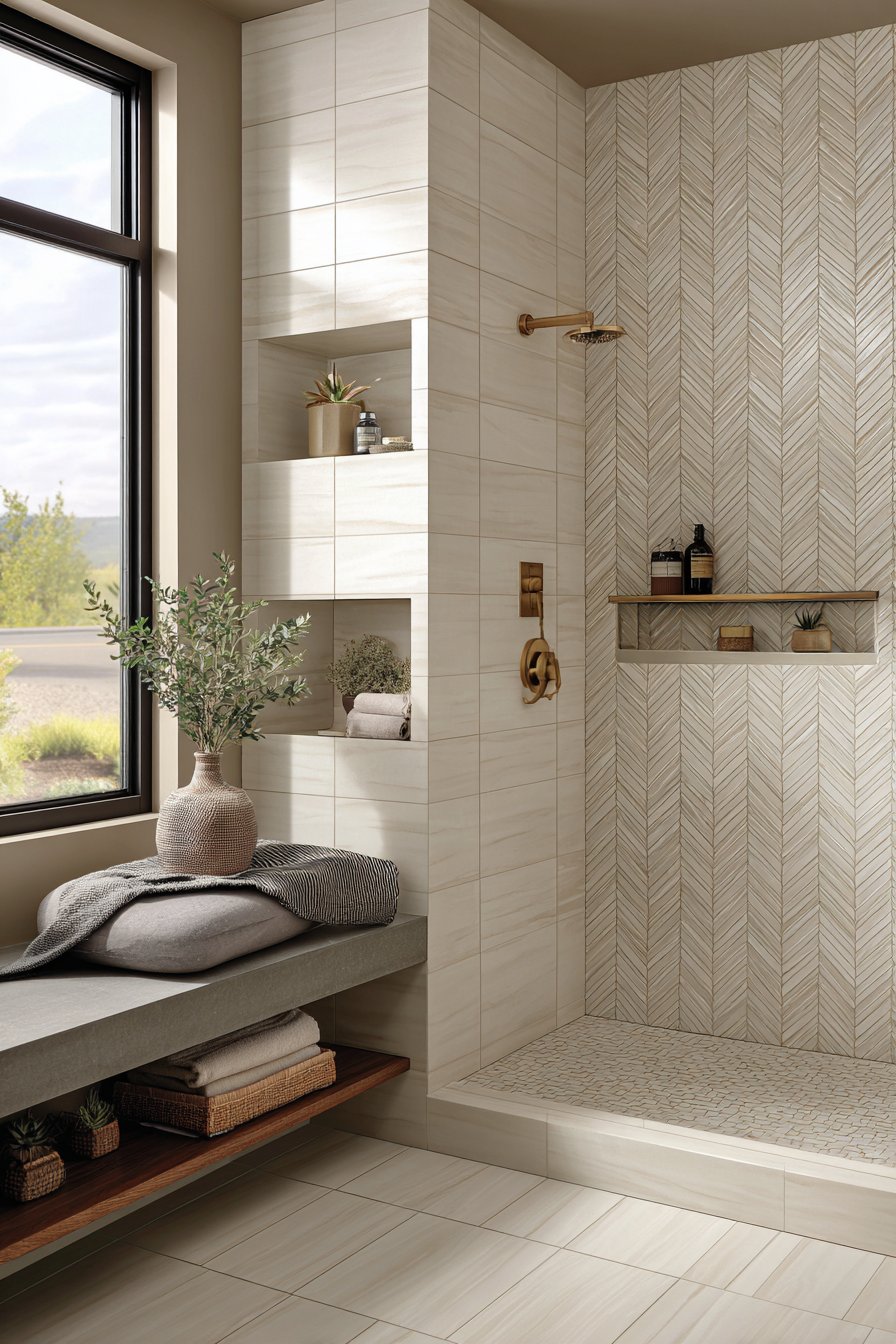
The shower niche provides the only deviation from the large slabs, featuring smaller matching tiles arranged in a herringbone pattern. This subtle detail adds just enough visual interest to prevent the space from feeling too austere while demonstrating sophisticated design thinking—the same material presented in a different scale and pattern creates dimension without disrupting the cohesive aesthetic. Brushed brass fixtures introduce warmth and a touch of luxury, their soft golden tone complementing the cool ivory tiles and adding a contemporary edge that elevates the space beyond basic minimalism.
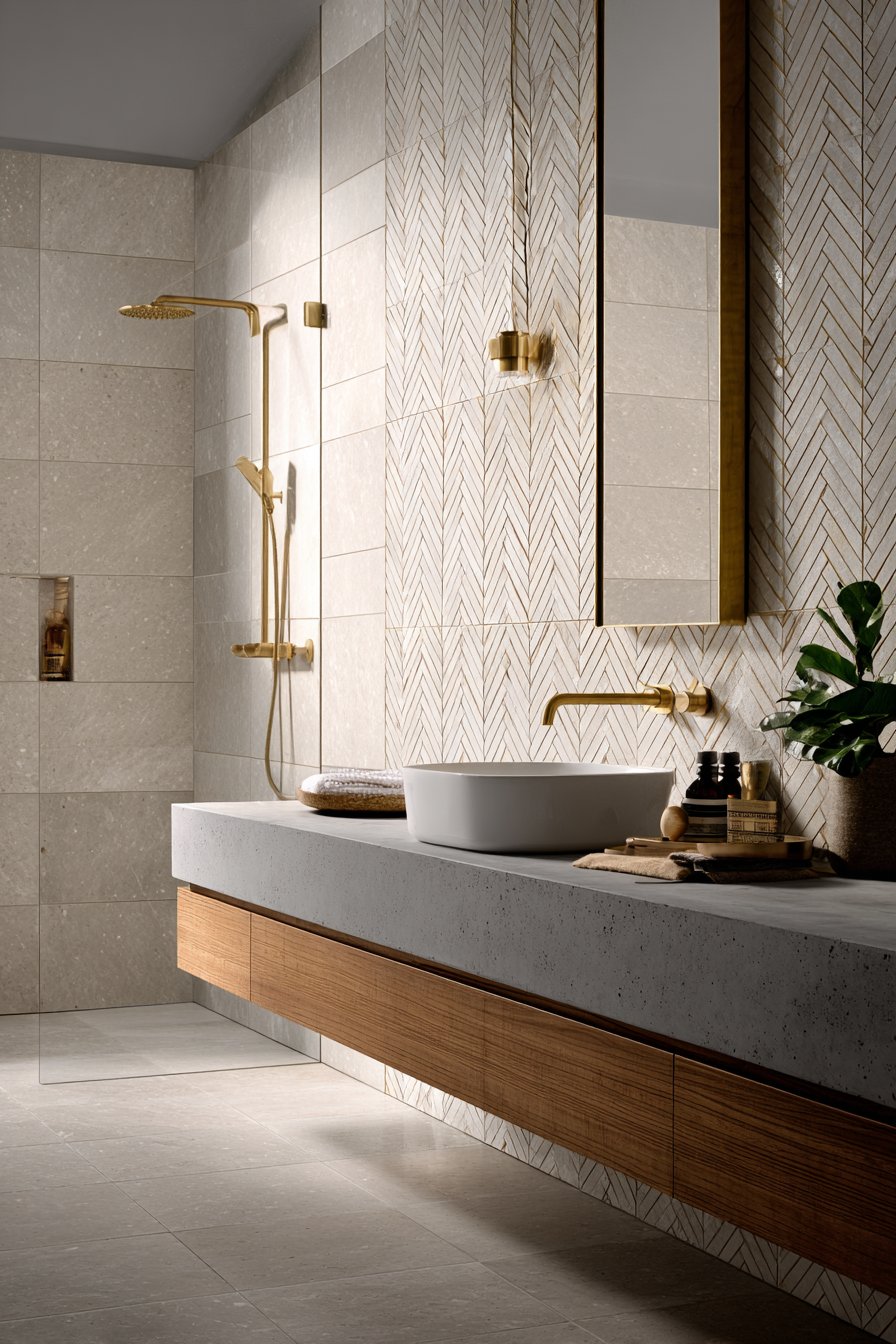
A concrete-look floating vanity grounds the space, providing visual weight at the lower level while maintaining the floating, open feeling that characterizes successful minimalist design. The industrial edge of the concrete finish creates an interesting tension with the elegant marble-look tiles, proving that minimalism doesn’t require everything to match perfectly—rather, it requires careful editing and thoughtful material selection. Wide-angle photography with abundant natural light emphasizes the sophisticated simplicity of this neutral tile selection, showing how the marble veining catches light and creates subtle movement across otherwise unadorned surfaces.
Key Design Tips: Invest in large-format tiles to minimize grout lines and create a seamless, luxurious appearance that makes spaces feel larger. Use the same tile in different sizes or patterns for niches and accent areas to add interest while maintaining cohesion. Choose one metallic finish and stick with it throughout—mixing metals works in eclectic spaces but undermines minimalist aesthetics. Balance cool marble tones with one warm element like brass fixtures or wood to prevent the space from feeling sterile. Keep decorative elements to a minimum, allowing the quality of materials to provide visual interest. Consider the placement of veining carefully when working with marble-look tiles—book-matching slabs creates a symmetrical, intentional look that enhances the minimalist aesthetic.
5. Scandinavian Greige Hygge Haven
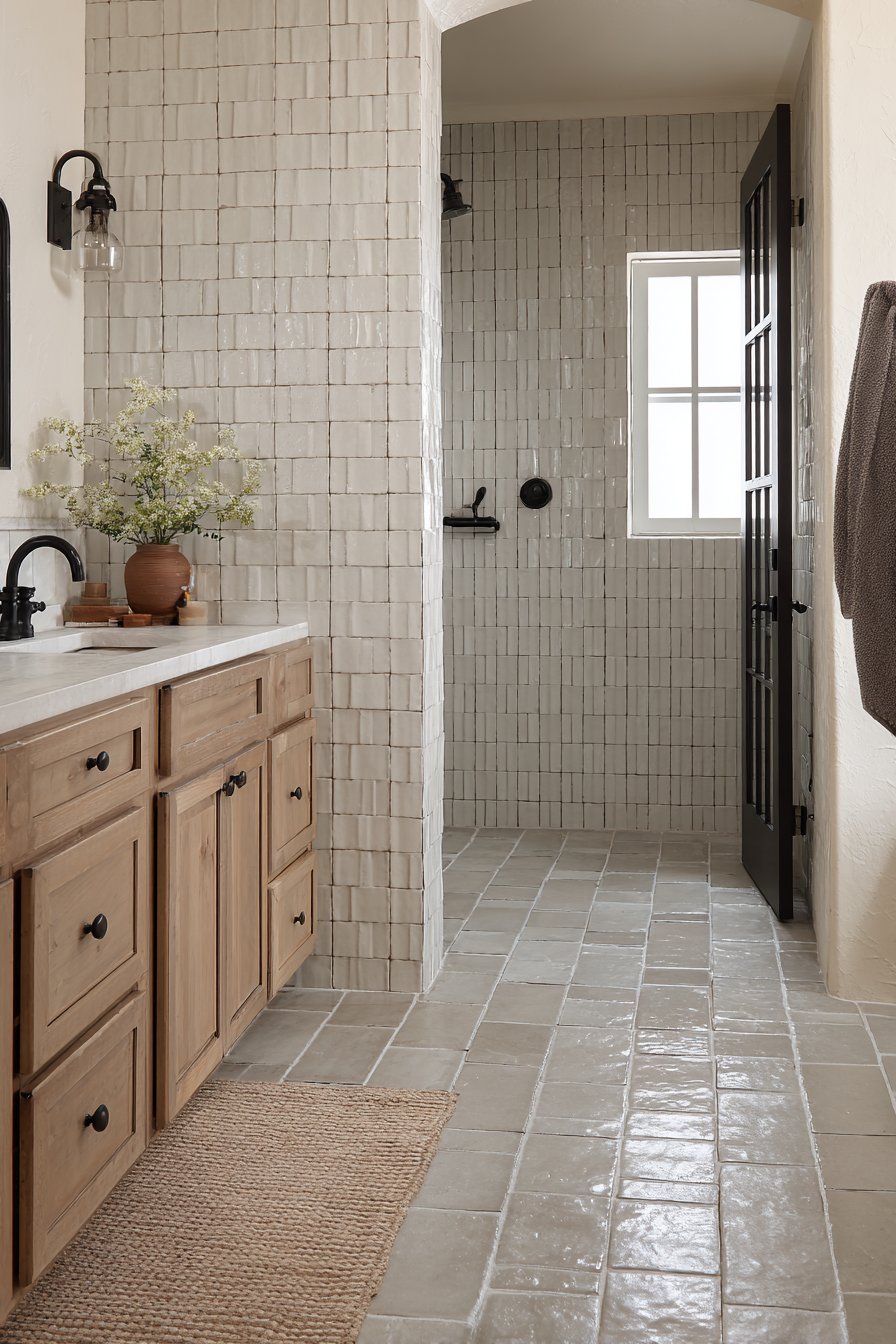
Embrace the Danish concept of hygge in this Scandinavian-inspired bathroom where matte finish tiles in soft grey-beige (affectionately known as “greige”) create the ultimate cozy retreat. These neutral bathroom tile ideas cover the floor and lower walls, providing a warm, enveloping foundation that feels like a gentle embrace. The greige color is the perfect neutral—neither too cool nor too warm, it creates a balanced backdrop that works beautifully with both silver-toned and gold-toned fixtures. A textured 3D wave pattern tile feature wall behind the vanity adds dimensional interest, with the same neutral tone creating subtle shadows and highlights as light plays across the undulating surface.
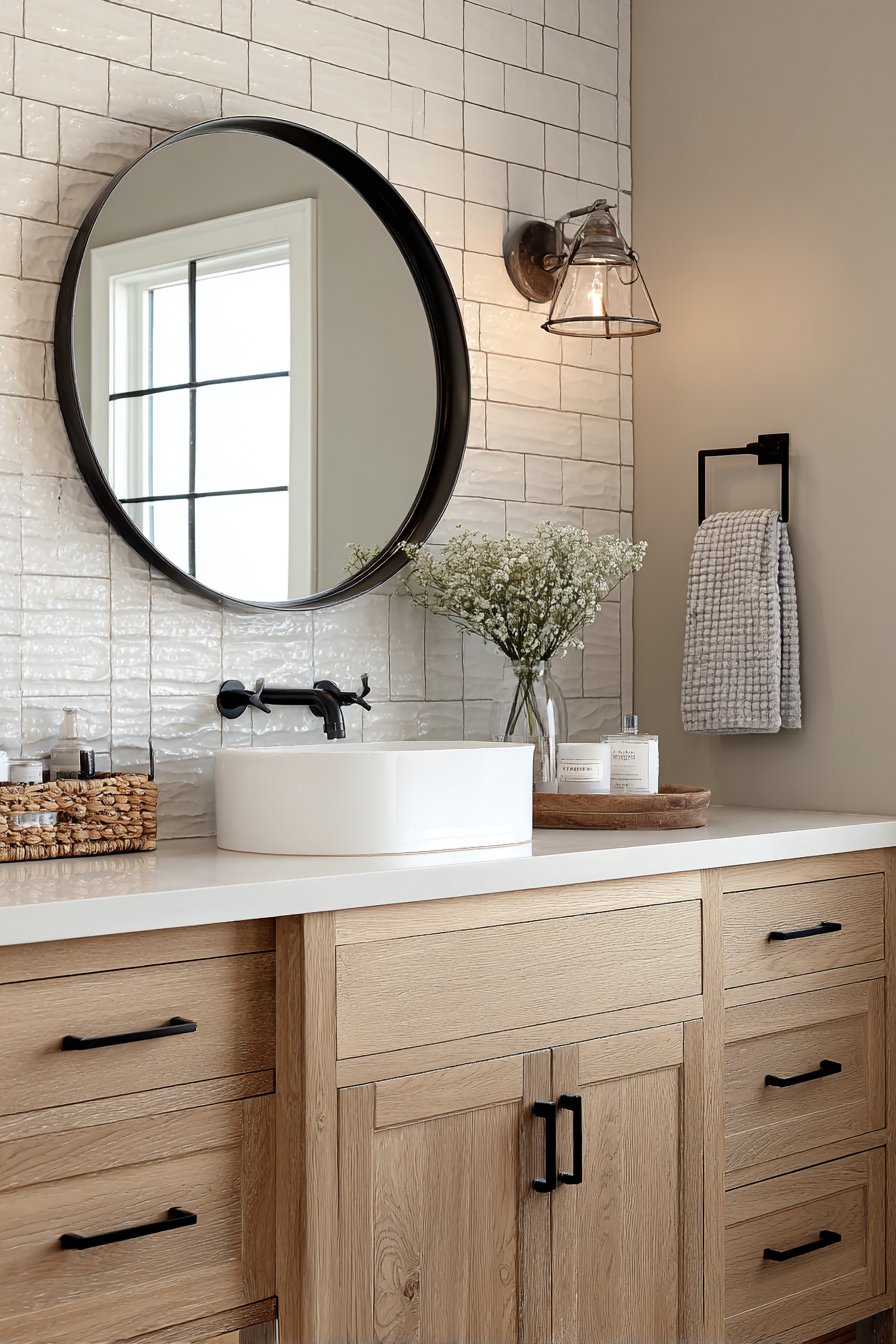
The shower area takes a different approach with classic white subway tiles featuring grey grout that ties back to the greige palette. This combination is quintessentially Scandinavian—clean, functional, and unpretentious while still being thoughtfully designed. The contrast between the textured feature wall and smooth subway tiles demonstrates the Scandinavian approach to layering simplicity, where interest comes from material variation rather than color or pattern complexity. Natural wood accents appear throughout the space—a wooden stool, a bamboo bath mat, floating shelves in light oak—each element adding organic warmth and connecting the interior to nature, a fundamental principle of Scandinavian design.
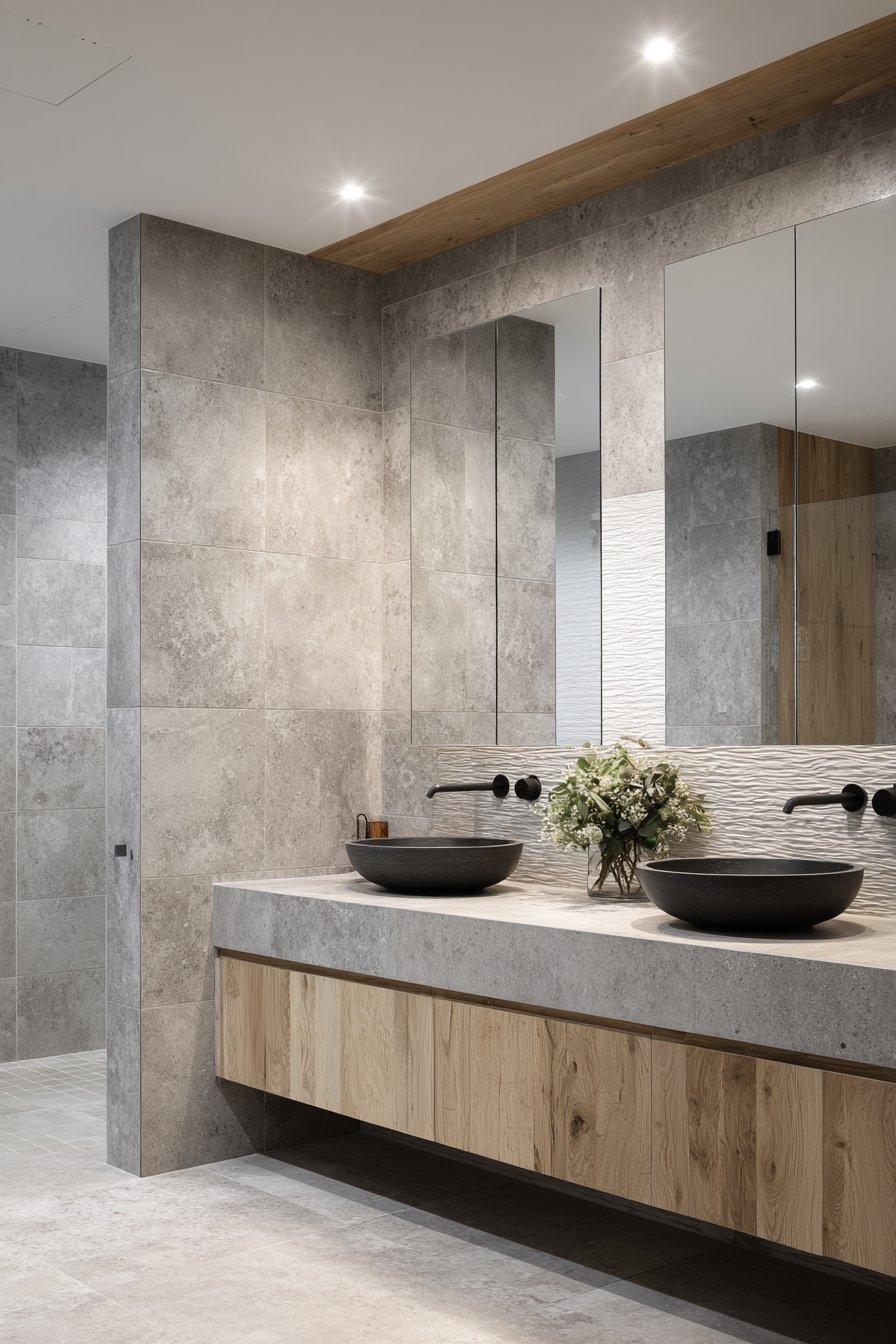
Black metal fixtures provide striking contrast against the soft neutral tiles, their matte finish adding an industrial edge that keeps the space from feeling too sweet or precious. This balance between cozy warmth and utilitarian simplicity is what makes Scandinavian design so enduringly popular—it’s comfortable without being cluttered, minimal without being cold. Professional photography captures the hygge atmosphere with gentle natural lighting that seems to glow from within the space, emphasizing material authenticity and the welcoming, peaceful quality that makes you want to linger in a hot bath with candles and a good book.
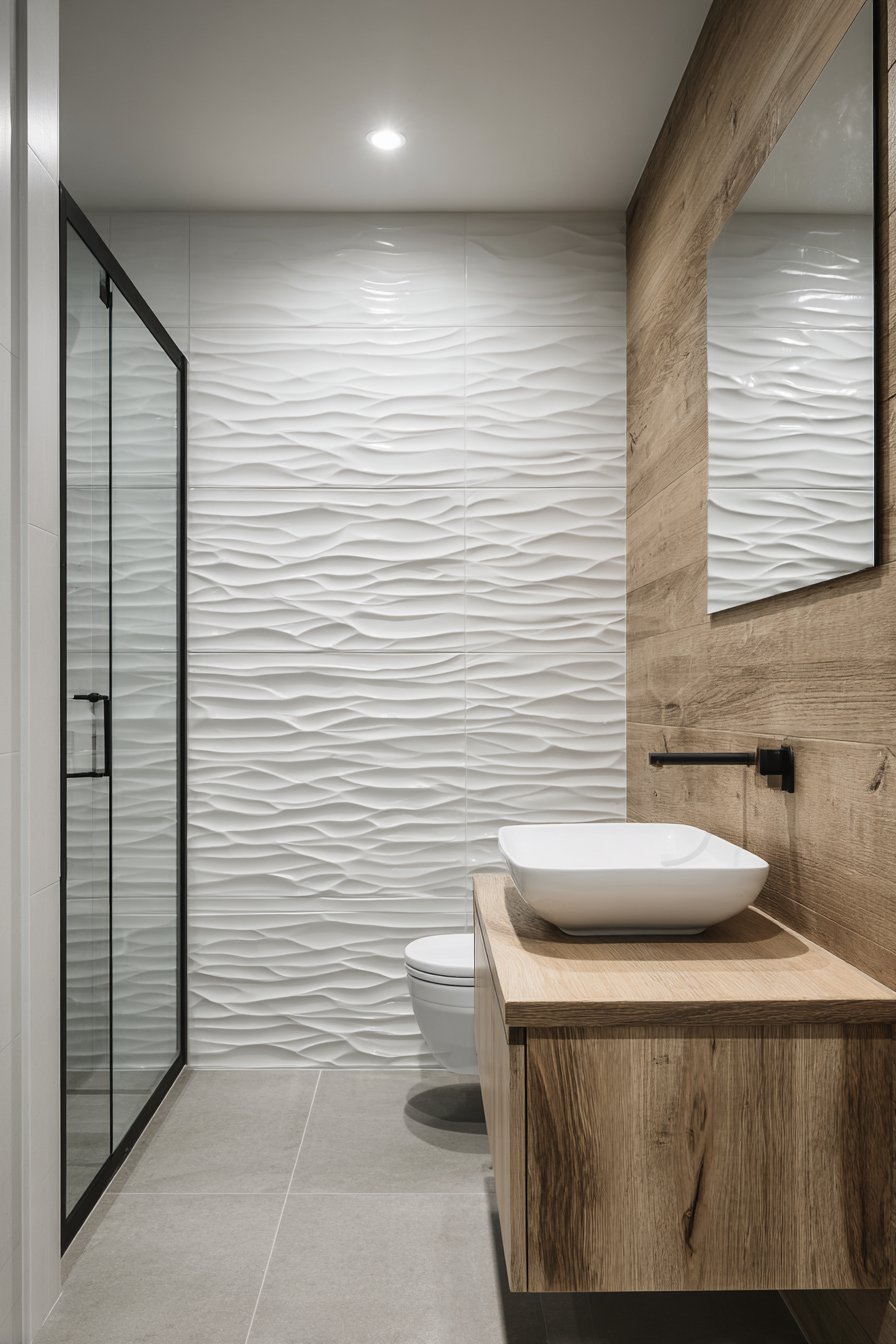
Key Design Tips: Choose greige tones carefully by testing samples in your space at different times of day—some lean more grey, others more beige, and the right choice depends on your lighting. Use textured tiles strategically as accent walls rather than covering entire rooms to add interest without overwhelming. Incorporate multiple natural wood elements in similar tones to create warmth and connection to nature. Select matte black fixtures to add Scandinavian edge while maintaining the understated aesthetic. Keep the color palette strictly neutral but vary textures extensively—smooth, rough, glossy, matte, woven, and natural materials all work together. Prioritize natural light and supplement with warm LED bulbs that mimic daylight to enhance the cozy, welcoming atmosphere essential to hygge.
6. Transitional White Marble Classic
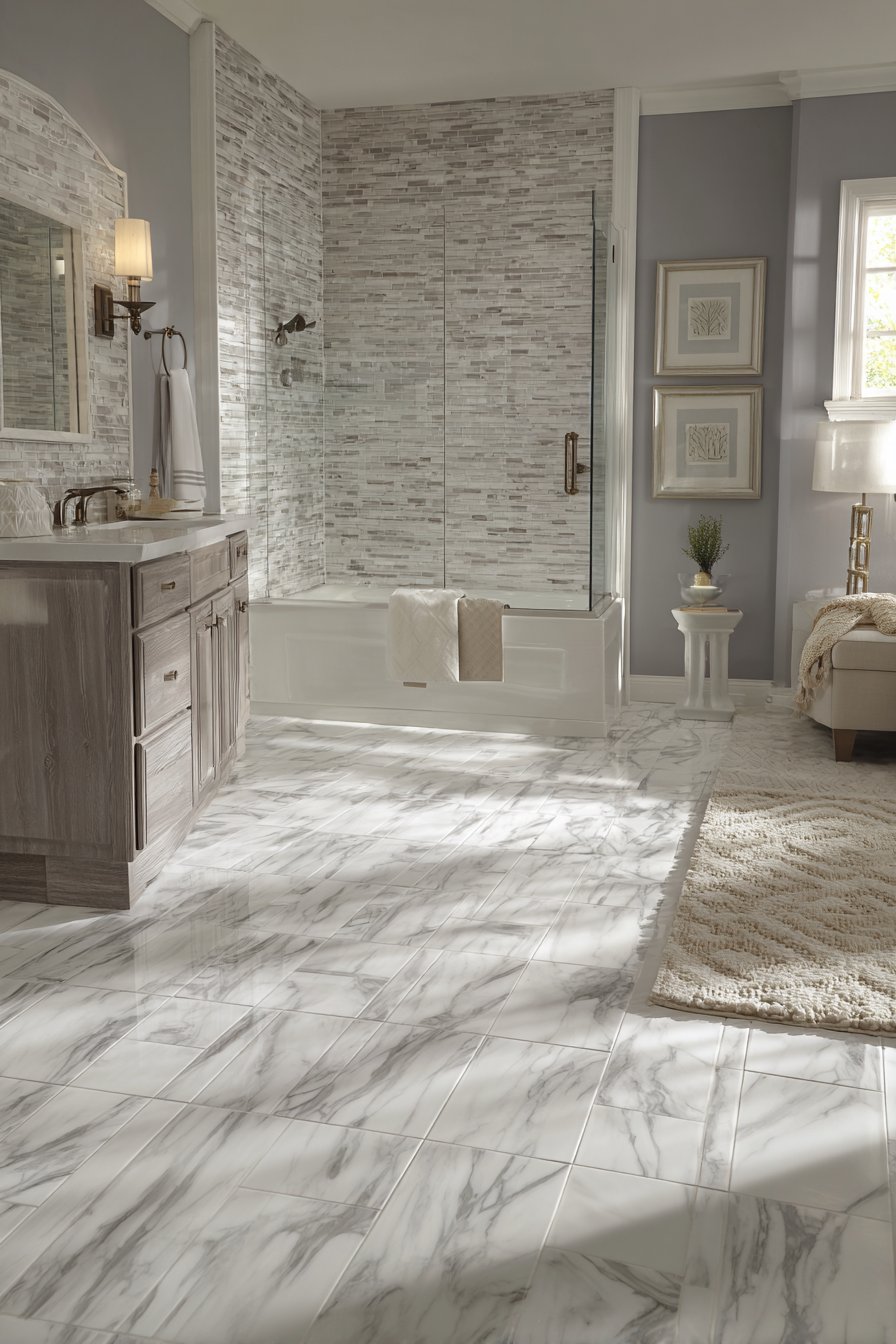
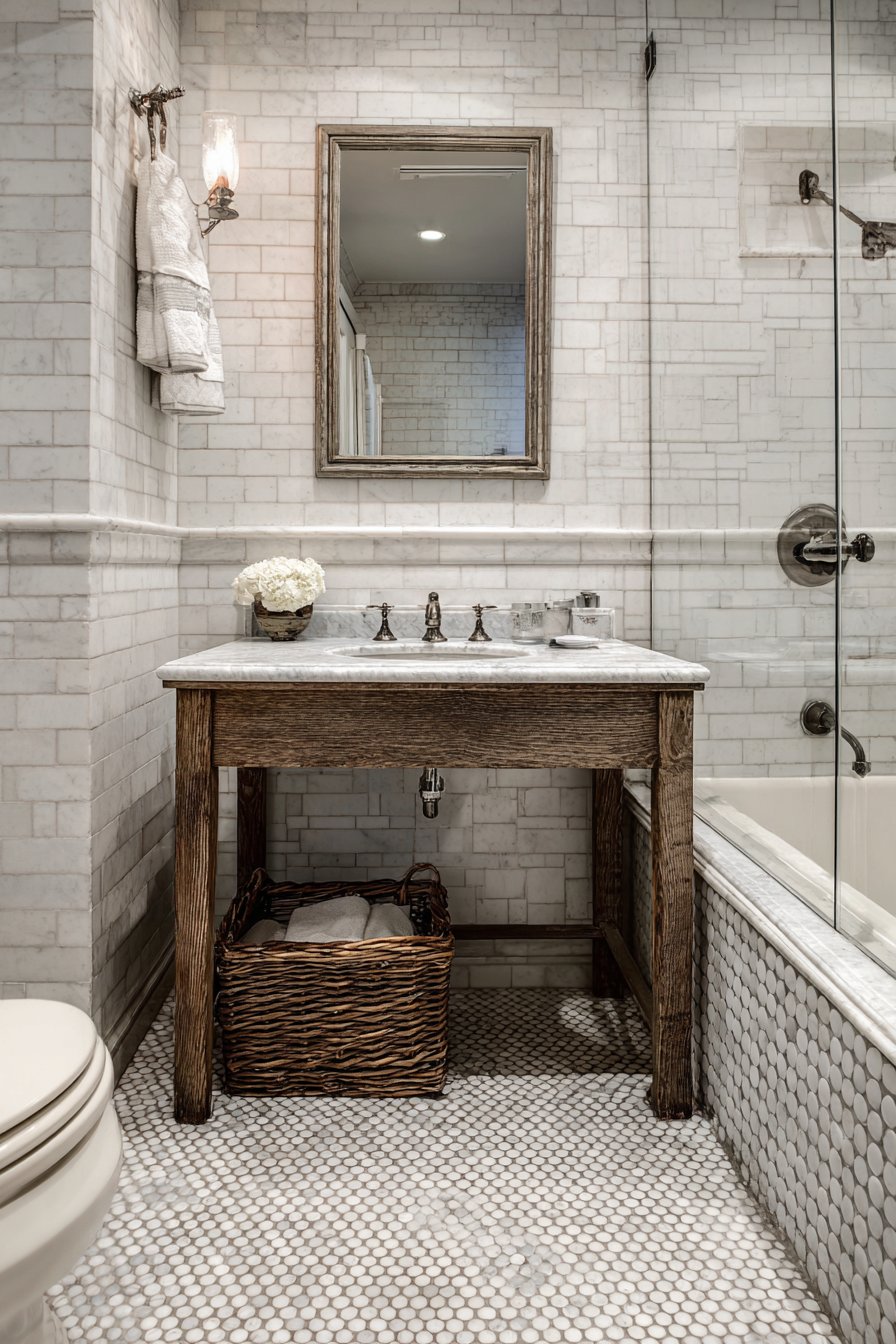
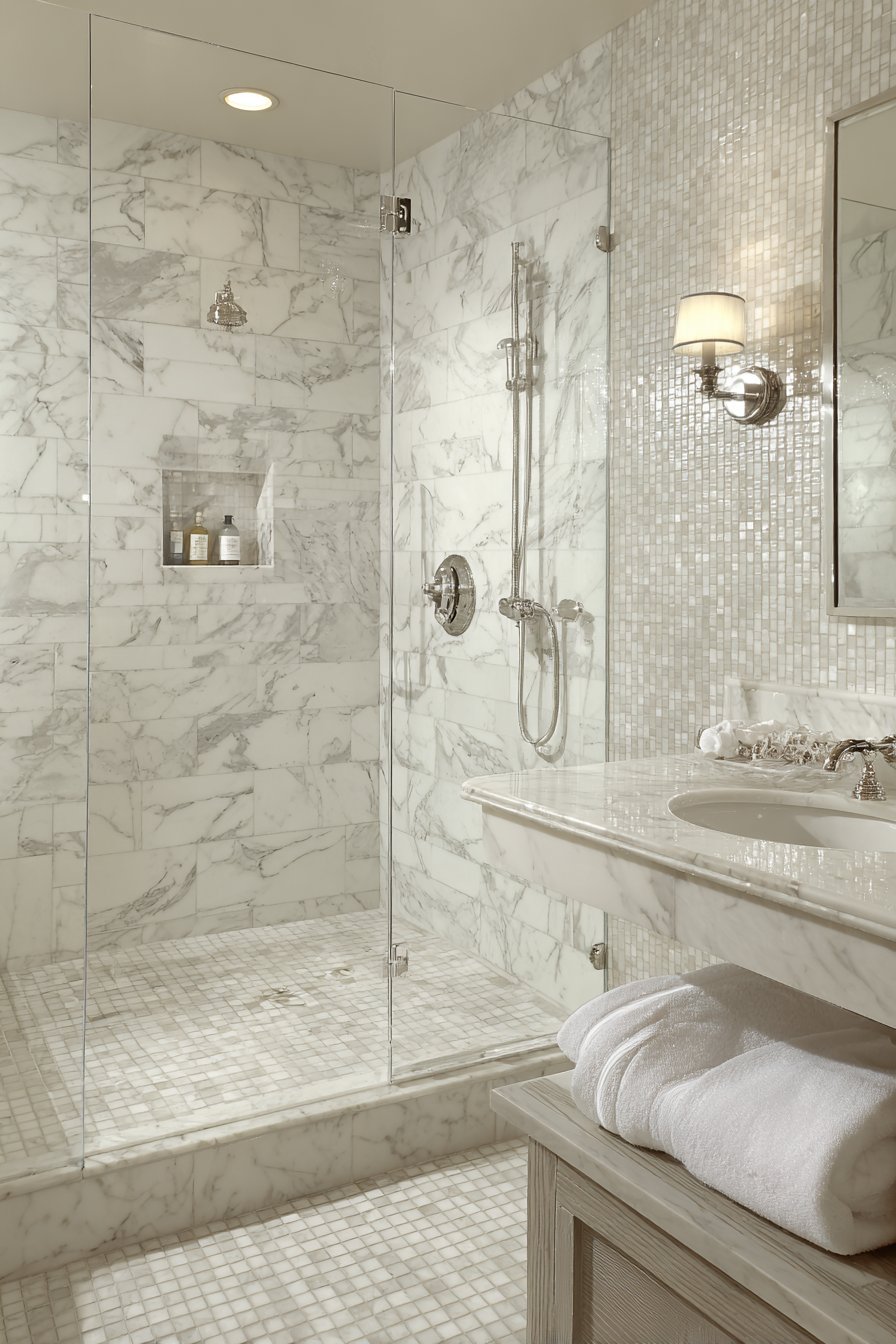
This transitional bathroom demonstrates how classic materials can feel both timeless and contemporary when applied with a modern sensibility. Classic white marble-look tiles with sophisticated grey veining serve as the primary neutral bathroom tile ideas throughout the space, creating a foundation of elegance that has appealed to designers for centuries. The floor takes a more playful approach with a basketweave pattern using smaller tiles in cream and light grey, adding texture and vintage charm while maintaining the neutral palette. This combination of classic material with varied patterns and applications creates a layered, collected look that feels curated rather than cookie-cutter.
A marble mosaic border defines the shower area, adding a decorative element that feels intentional and custom. This detail is reminiscent of traditional luxury bathrooms while remaining restrained enough for contemporary tastes. The mosaic provides an opportunity to introduce subtle color variation within the neutral scheme—perhaps small tiles in various shades of grey, cream, and white creating a softly variegated border that adds richness without disrupting the overall palette. Oil-rubbed bronze fixtures add unexpected depth and a touch of traditional elegance, their dark finish creating dramatic contrast against the light marble while introducing warm undertones that prevent the space from feeling too cool.
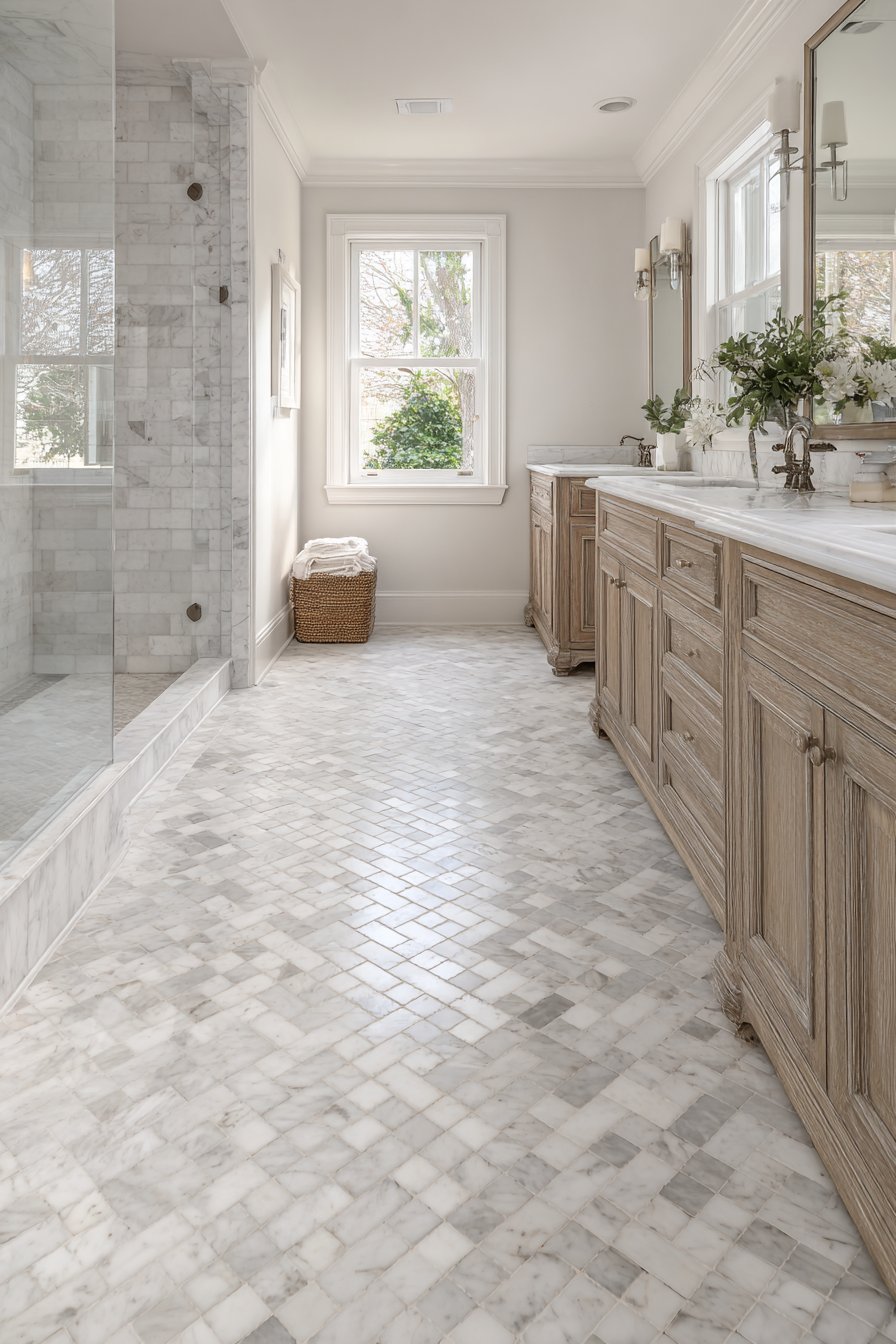
A weathered wood vanity is the crown jewel of this transitional space, bridging the gap between traditional elegance and contemporary simplicity. The aged finish suggests history and character, adding organic warmth and texture that softens the cool marble surfaces. Wide-angle interior photography with balanced exposure highlights how varied neutral tile applications create visual layers and depth, proving that working within a neutral palette doesn’t limit creativity—rather, it focuses attention on composition, texture, and the interplay of light and shadow that brings spaces to life.
Key Design Tips: Mix tile patterns within the same color family to add interest while maintaining cohesion—smooth walls, textured floors, and decorative borders all work together when unified by color. Use traditional materials like marble with contemporary fixtures and furniture to create transitional appeal that feels both classic and current. Choose basketweave or other geometric floor patterns to add movement and vintage charm without introducing color. Incorporate oil-rubbed bronze or aged brass fixtures to warm up white marble and add tonal depth. Select a statement vanity in natural wood with visible aging or distressing to introduce character and organic texture. Ensure your white marble tiles have enough veining to prevent the space from feeling too stark—subtle movement in the stone adds sophistication and visual interest.
7. Contemporary Putty Beige Vertical Stack
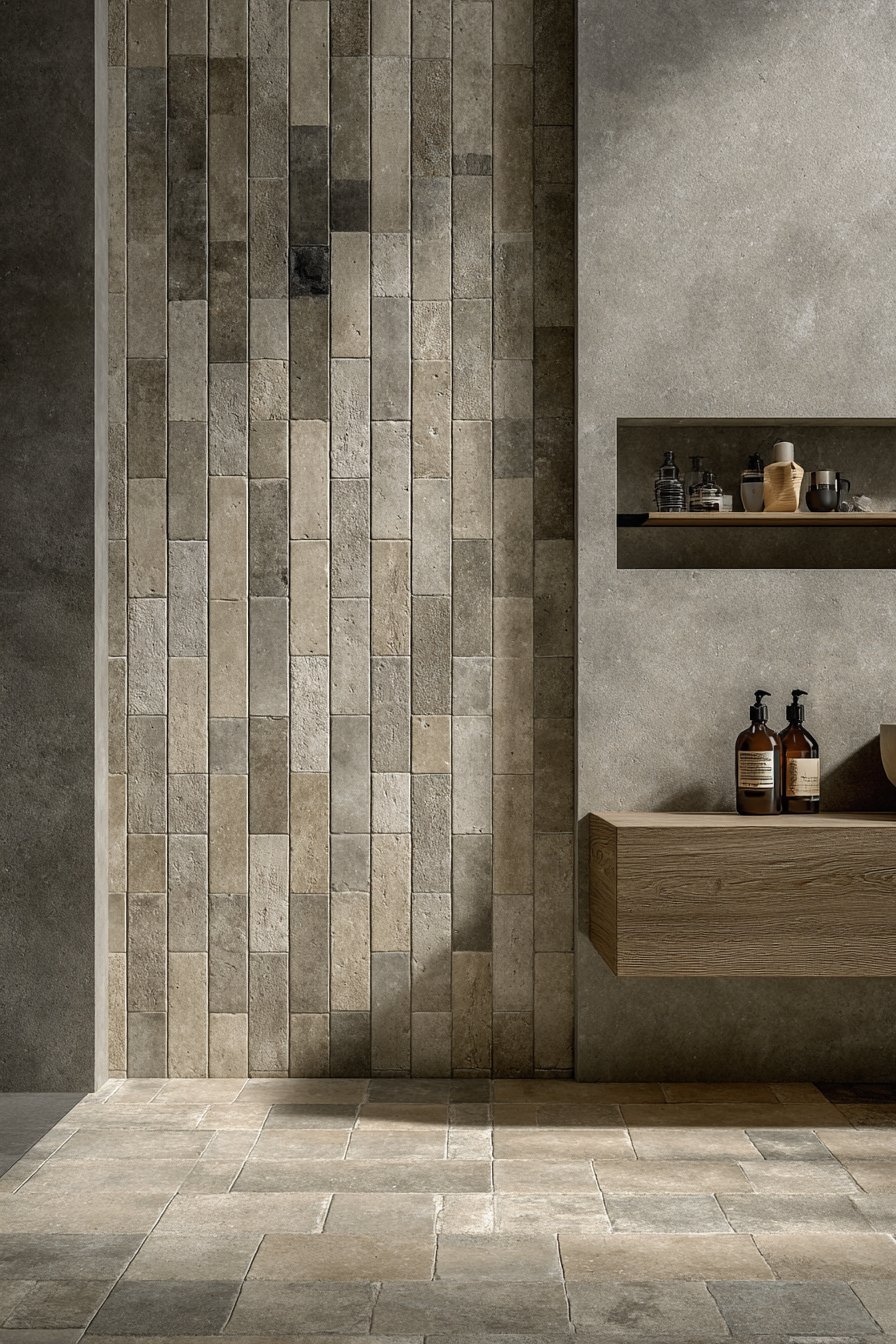
This contemporary bathroom makes a bold statement with elongated subway tiles in warm putty beige installed in a vertical stack pattern. These neutral bathroom tile ideas demonstrate how orientation can dramatically impact the perception of space—the vertical installation draws the eye upward, making ceilings feel higher and the entire room more expansive. The contemporary edge comes from the unexpected vertical arrangement, which feels fresh and modern compared to traditional horizontal subway tile layouts. The warm putty tone adds softness and approachability to the contemporary design, preventing it from feeling too cold or stark.
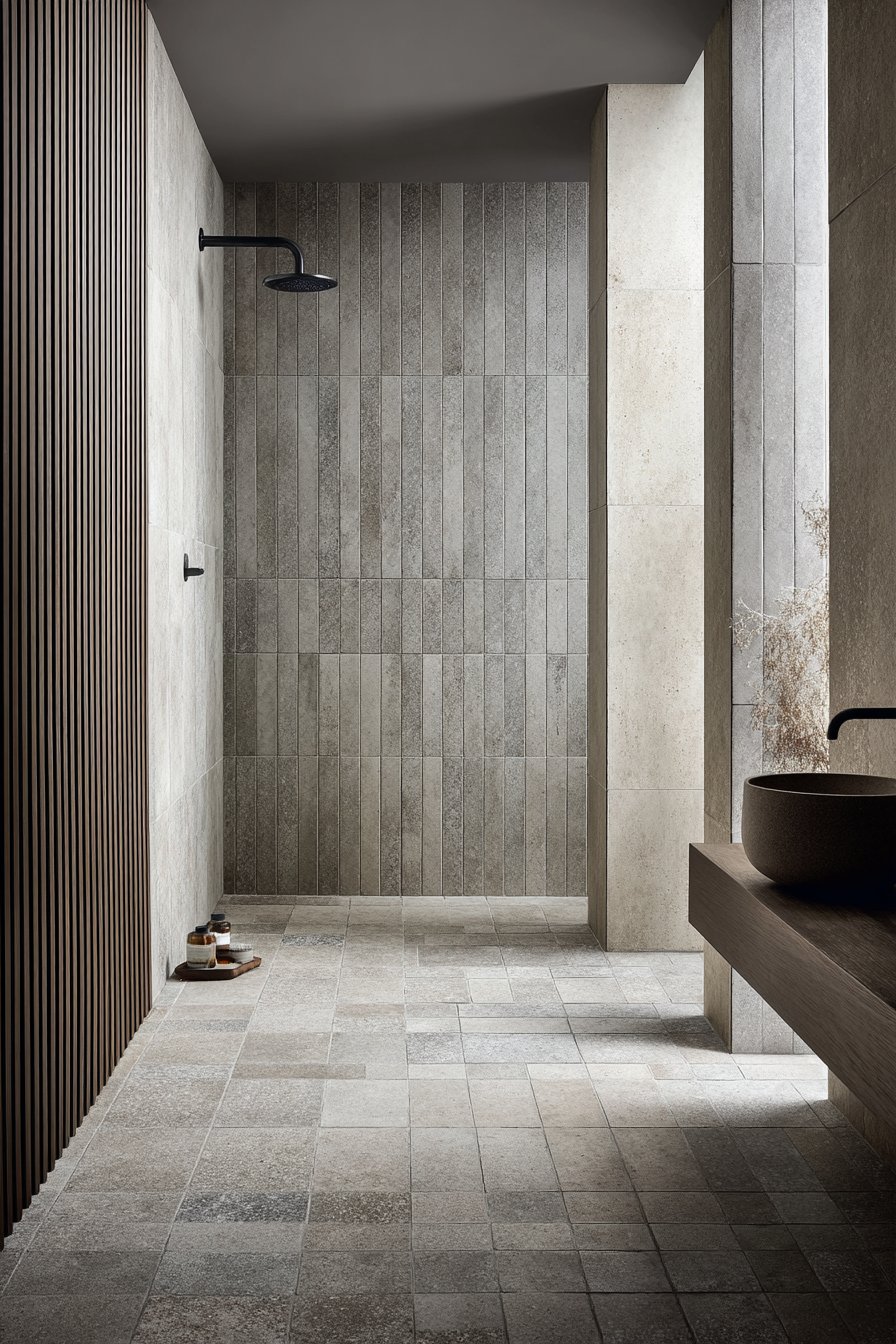
The floor provides grounding visual weight with large square tiles in coordinating neutral taupe featuring realistic concrete texture. This pairing of smooth, glazed wall tiles with textured floor tiles creates a satisfying contrast that engages multiple senses—the walls feel clean and reflective while the floors suggest substance and durability. A recessed shower niche uses the same elongated tiles in horizontal orientation, creating subtle visual interest through the directional change while maintaining material consistency. This detail demonstrates sophisticated design thinking—the same element presented differently provides variation without introducing new materials or colors.
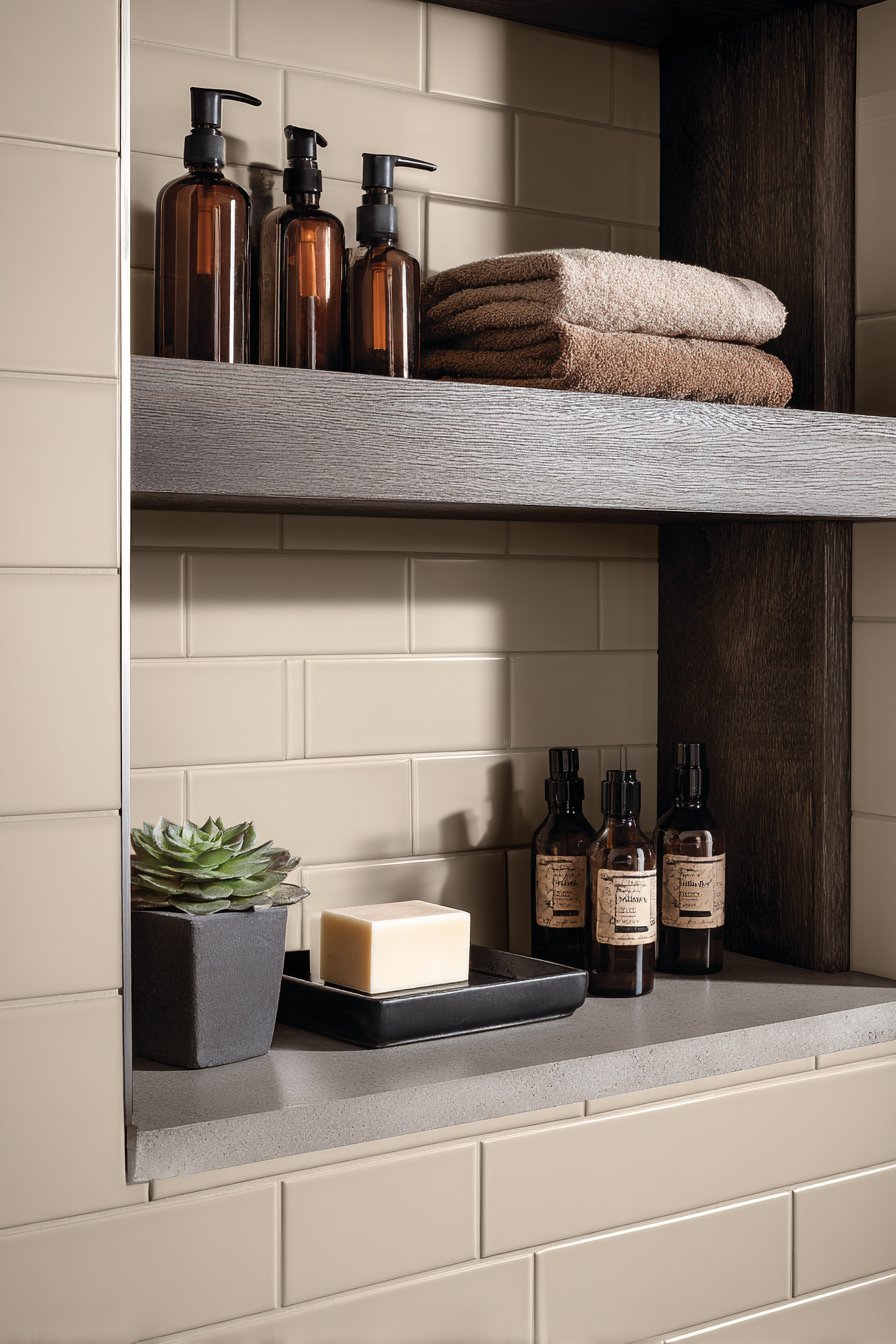
Matte black hardware punctuates the space with contemporary precision, each fixture and accessory acting as a crisp exclamation point against the soft neutral tiles. The contrast is striking but not jarring, as the warm undertones in the putty beige tiles bridge the gap between the neutral walls and dark fixtures. A floating grey-stained oak vanity completes the refined neutral scheme, its horizontal grain adding linear texture and organic warmth at the perfect height for daily use. Captured with professional interior photography that emphasizes texture details and natural shadows, this space proves that contemporary design can feel warm and welcoming when executed with attention to material quality and tonal harmony.
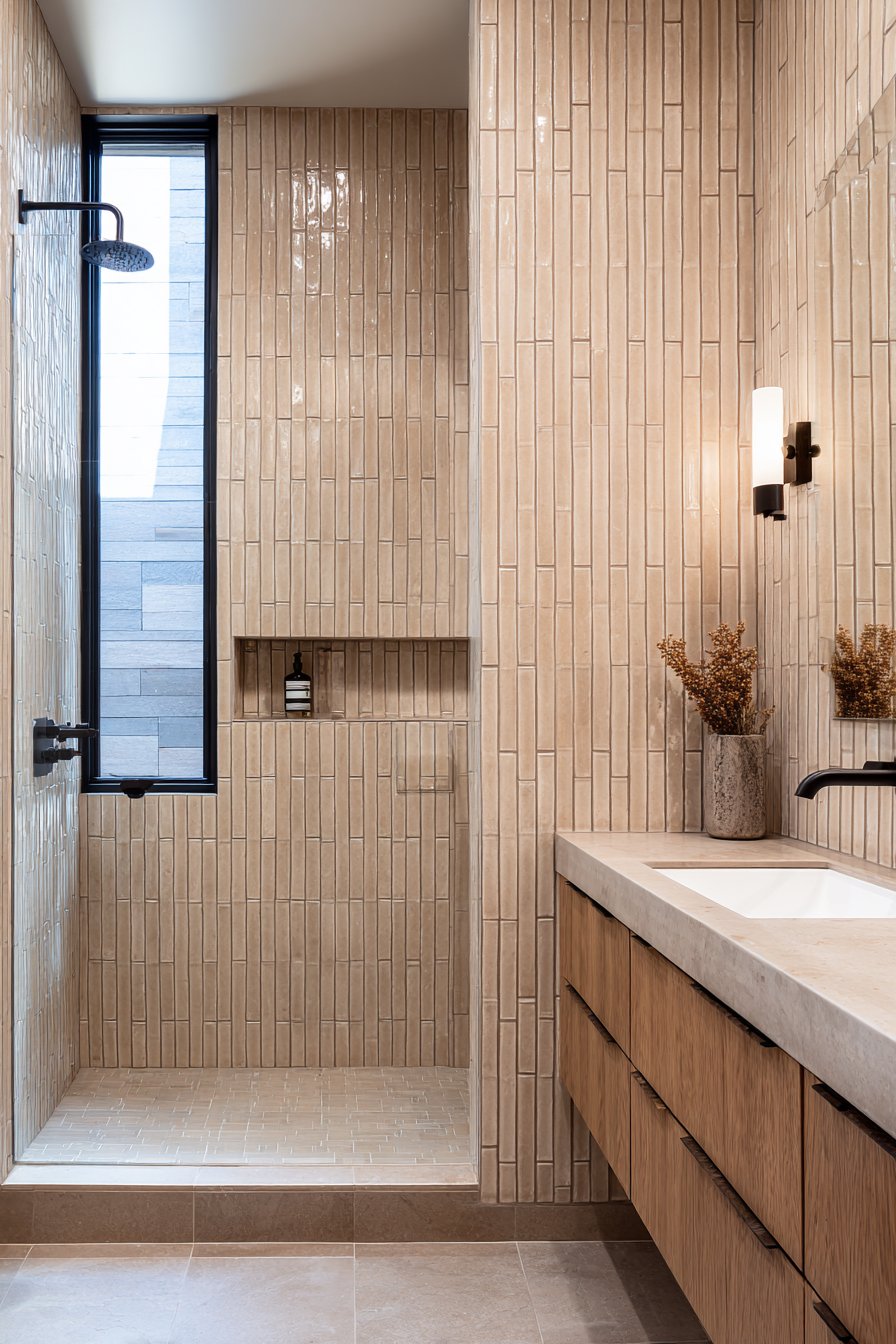
Key Design Tips: Install elongated subway tiles vertically to create the illusion of height and add contemporary edge to a classic material. Pair smooth glazed wall tiles with textured floor tiles for tactile interest and practical slip resistance. Use the same tile in different orientations for niches and accent areas to create subtle variation while maintaining consistency. Choose matte black fixtures with contemporary neutral tiles to add definition and modern sophistication. Select a floating vanity in grey-stained wood to maintain the neutral palette while introducing organic texture and warmth. Pay attention to grout color—slightly darker grout with vertical tiles emphasizes the linear pattern, while matching grout creates a more seamless look.
8. Spa-Like Natural Limestone Texture
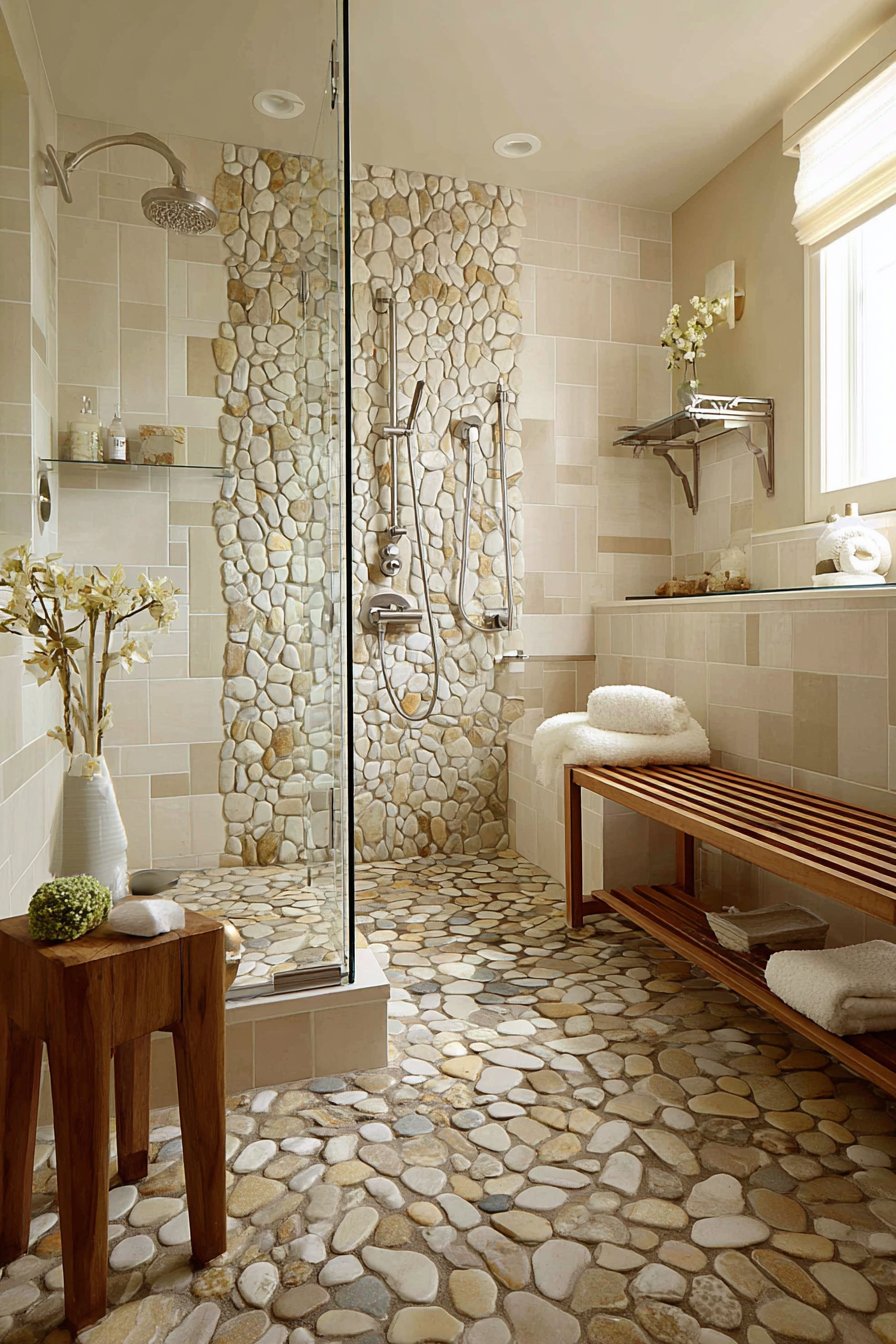
Immerse yourself in a spa-inspired bathroom where natural limestone tiles in soft cream create an authentic connection to the earth. These neutral bathroom tile ideas embrace organic imperfections—the subtle color variations, fossil details, and slightly irregular surface texture that make natural stone so appealing. The limestone covers both floor and shower walls, creating an enveloping, cave-like quality that feels protective and grounding. Unlike manufactured tiles that strive for perfection, natural limestone celebrates its geological origins, with each tile telling a different story through its unique patterning and coloration.
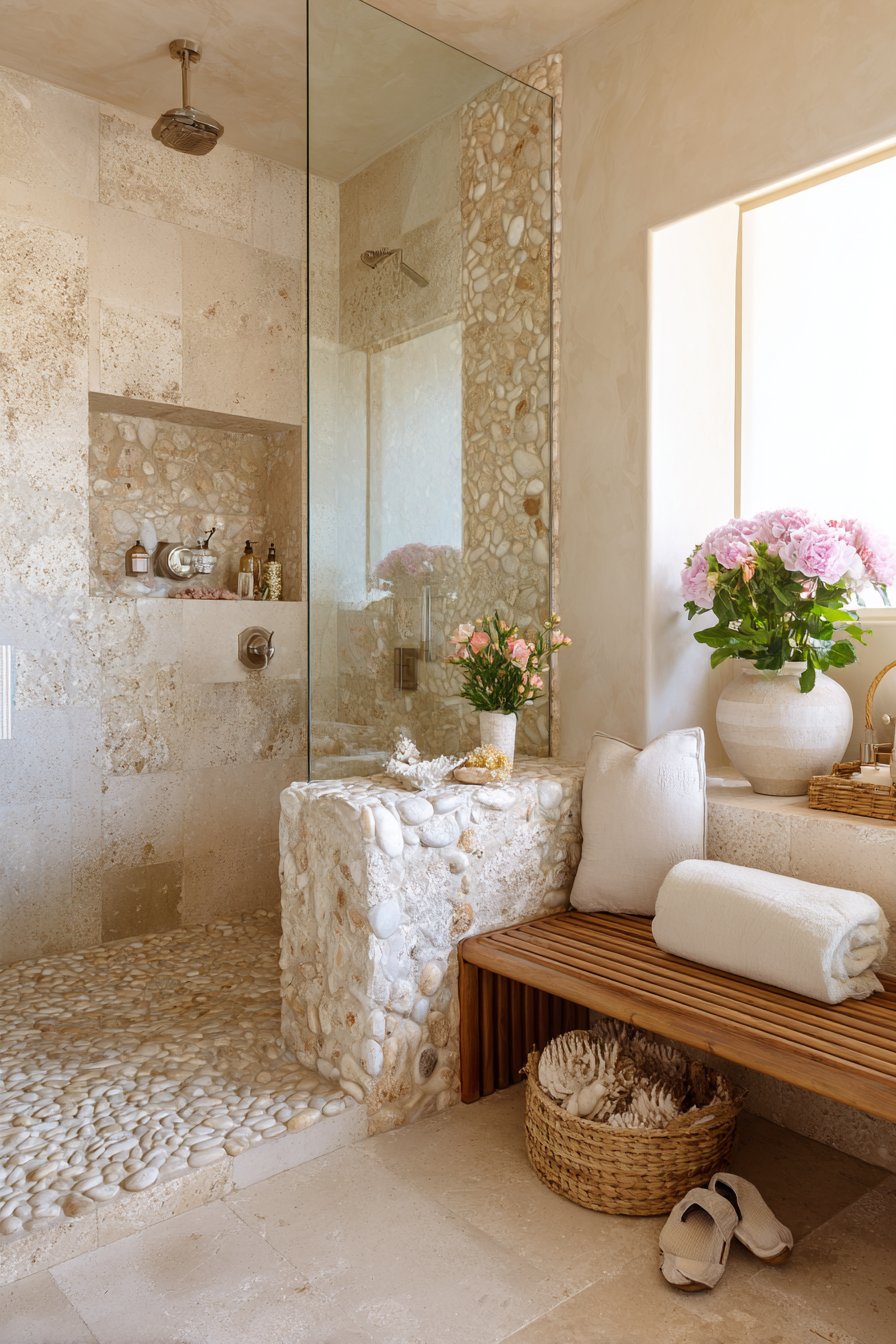
The shower floor introduces a pebble stone tile in coordinating neutral tones, adding significant tactile dimension and a massage-like quality underfoot. These smooth river stones, naturally tumbled over centuries, create a sensory experience that enhances the spa-like atmosphere. The combination of flat limestone walls with dimensional pebble floors demonstrates how varying tile topography creates interest within a monochromatic scheme. Brushed nickel fixtures maintain the natural aesthetic with their soft, understated finish that neither competes with nor disappears against the limestone.
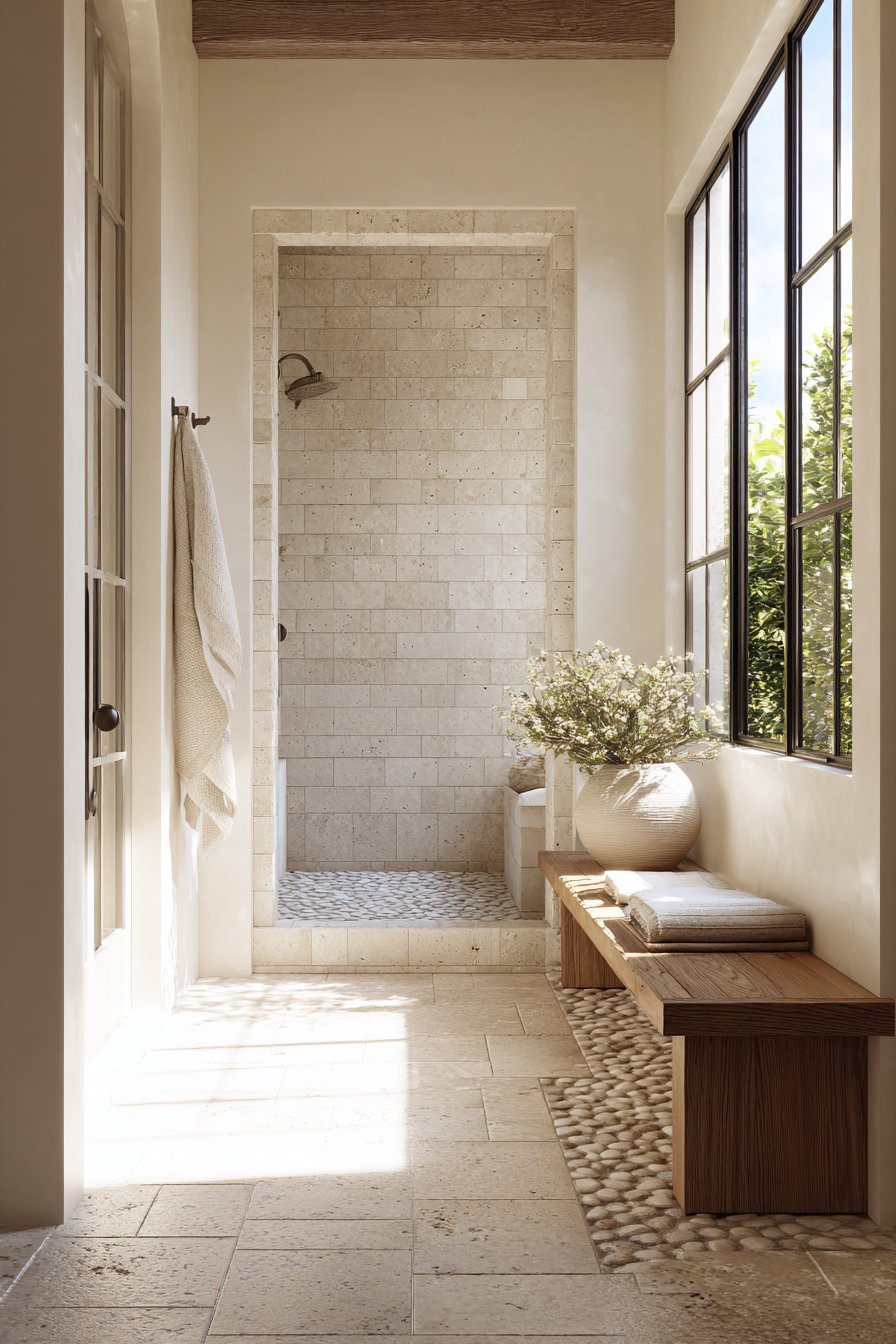
A teak wood bench in the shower area provides both practical seating and a crucial natural element that warms the cool stone surfaces. Teak is ideal for wet environments due to its natural oils and resistance to moisture, making it both beautiful and functional. Interior design photography with soft golden hour lighting reveals the depth and character within the neutral tile palette, showing how the warm glow of afternoon sun brings out the honey tones hidden in the cream limestone and creates dramatic shadows in the pebble tile’s three-dimensional surface. This is a bathroom designed for long soaks and moments of meditation—a true personal sanctuary.
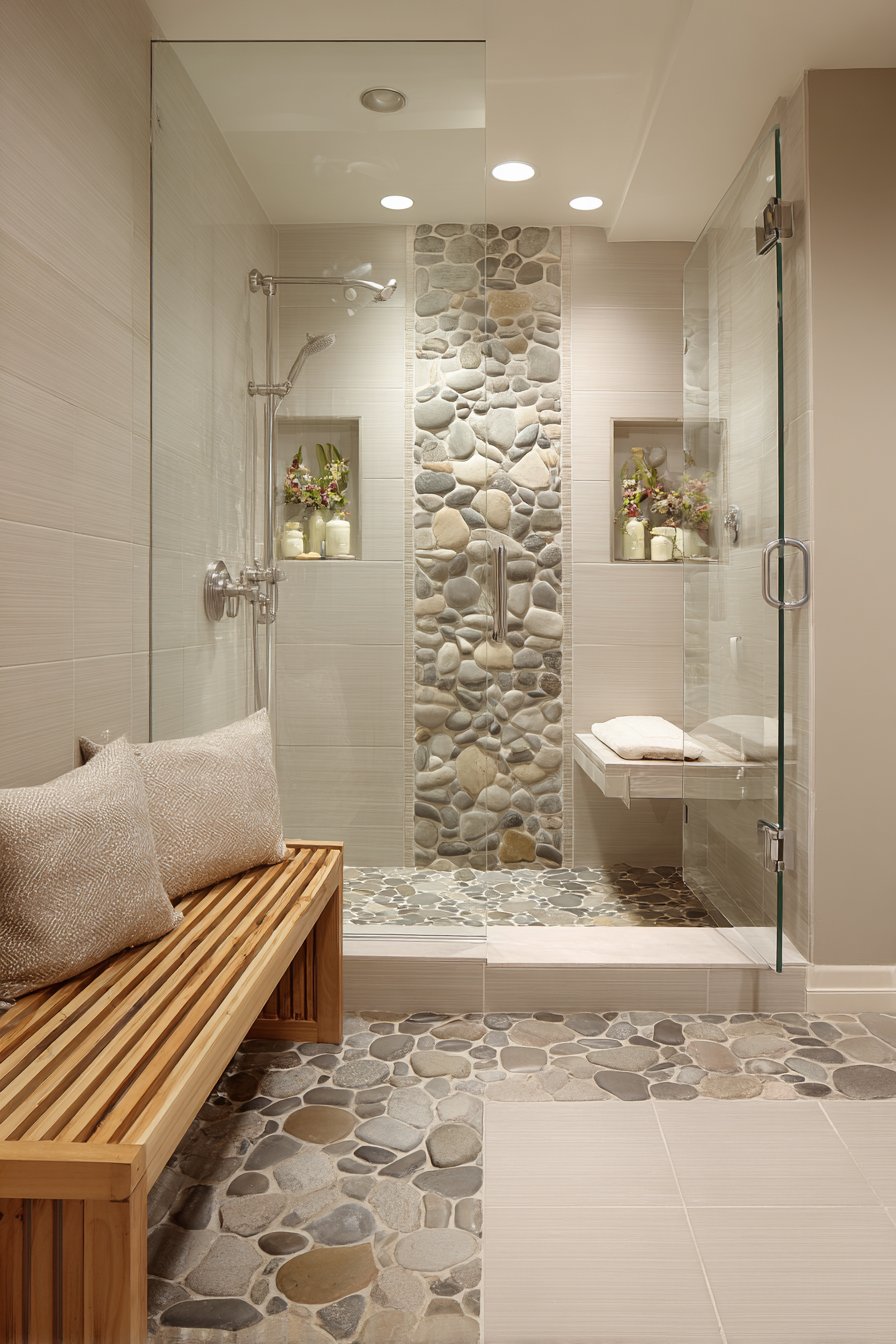
Key Design Tips: Choose natural limestone over manufactured alternatives when seeking authentic texture and unique character—no two tiles will be identical. Incorporate pebble tile in shower floors for massage-like texture and enhanced slip resistance in wet areas. Select brushed nickel or chrome fixtures that complement natural stone without adding competing warmth or coolness. Include a teak bench or shelf in the shower to introduce essential warmth and provide practical functionality. Seal natural stone properly and maintain it according to manufacturer recommendations to preserve its beauty and prevent staining. Embrace the natural variation in limestone rather than trying to create a uniform look—the organic imperfections are what make it special and spa-like.
9. Farmhouse White Subway with Warmth
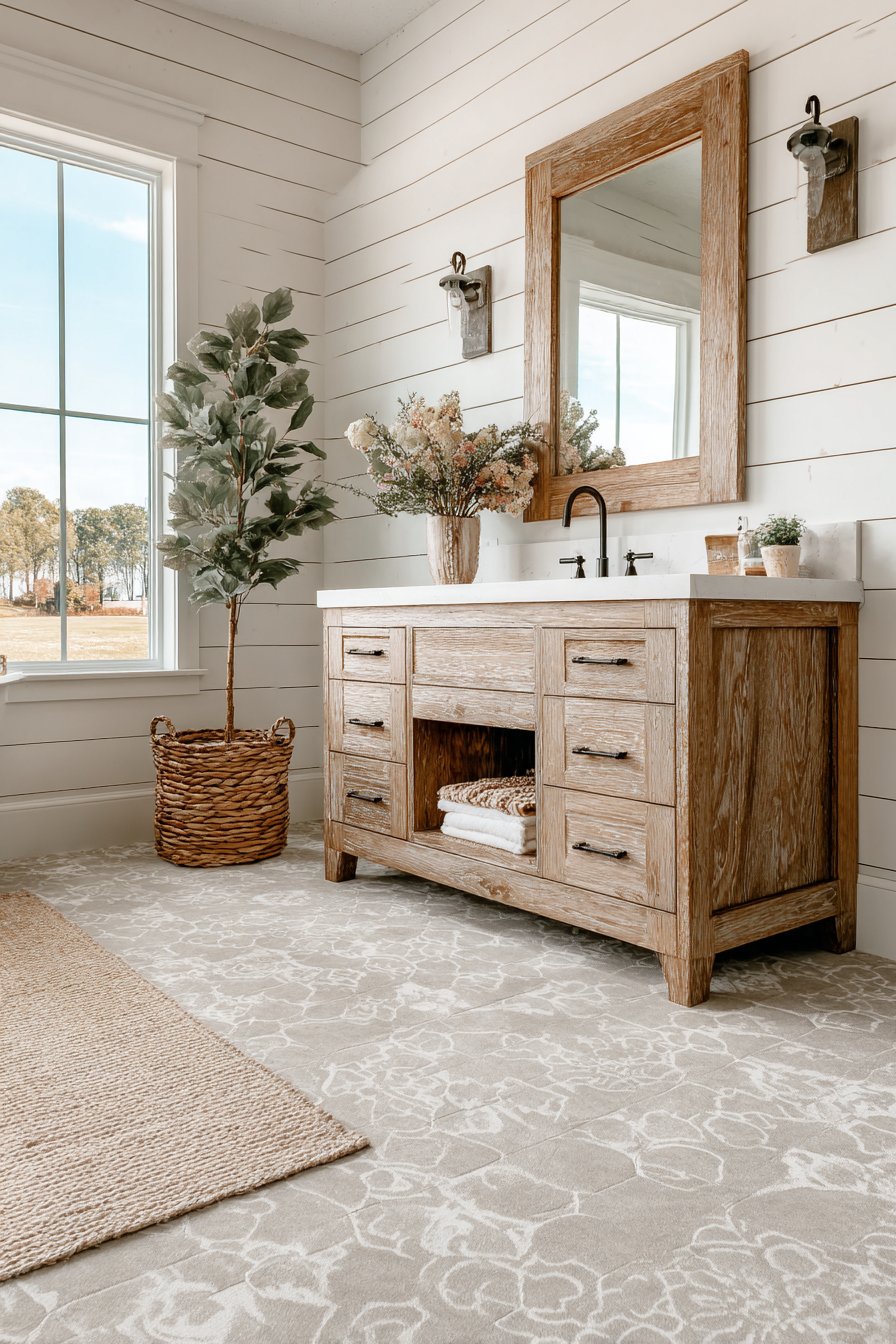
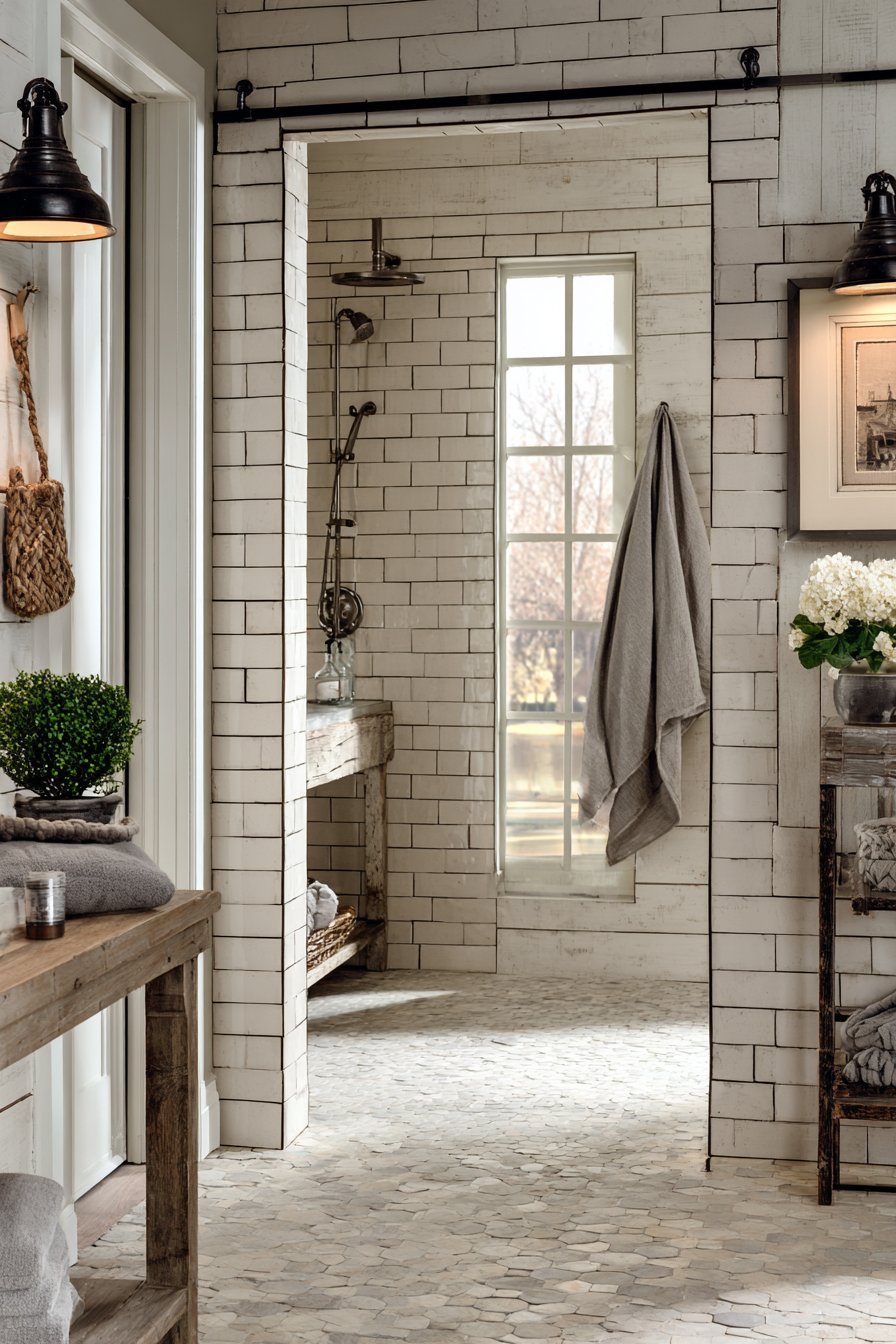
This farmhouse-inspired bathroom strikes the perfect balance between traditional charm and livable practicality. Classic white subway tiles with warm beige grout create a softer, more approachable take on neutral bathroom tile ideas compared to the stark white-on-white subway tile that can feel too clinical. The beige grout is the secret ingredient here—it adds warmth, hides minor imperfections and soap residue, and creates a softer grid pattern that feels more forgiving and lived-in. This is a bathroom designed for real family life, where perfection is less important than comfort and functionality.
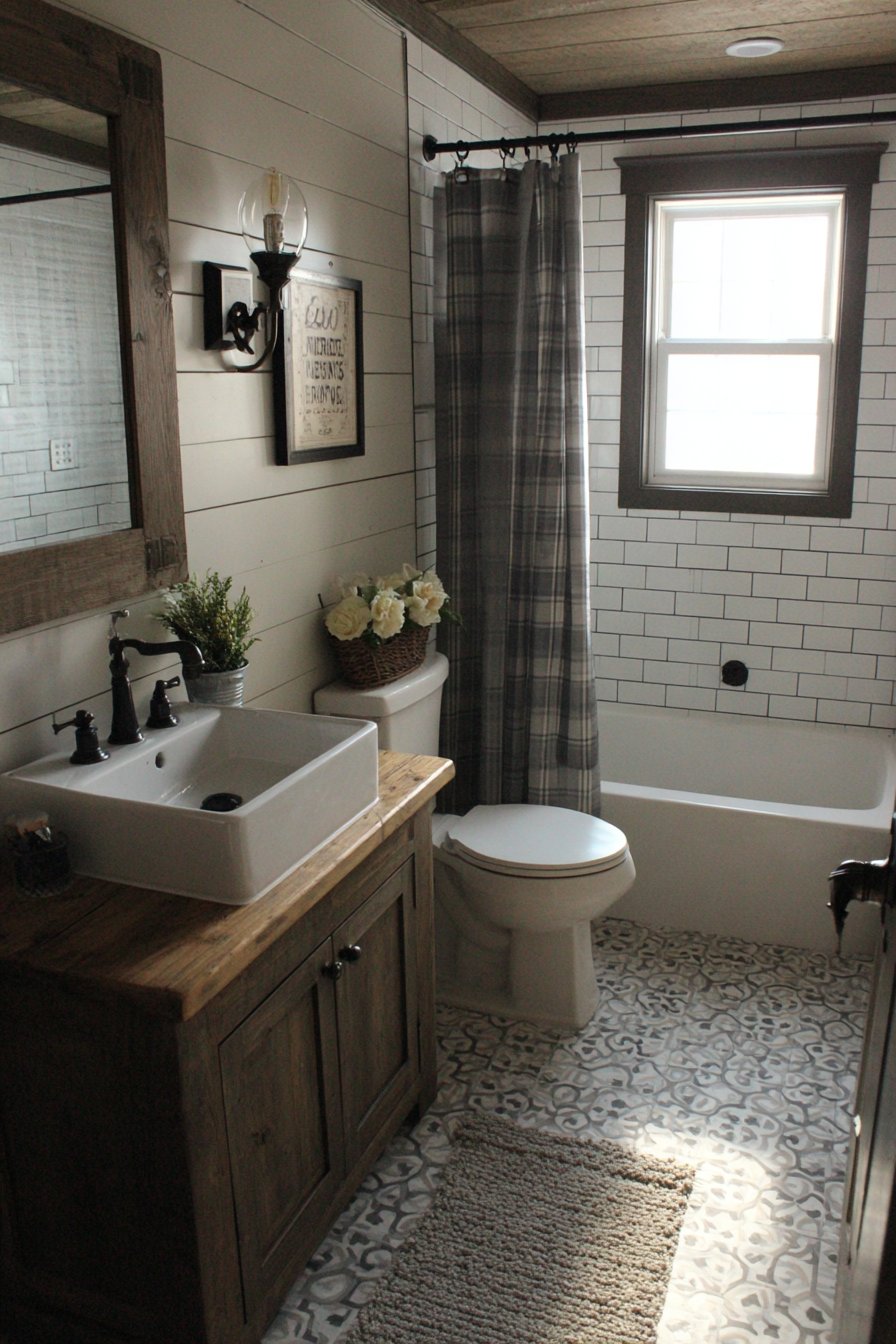
The floor introduces delightful complexity with hexagonal cement tiles in a subtle pattern mixing cream, grey, and taupe. These decorative tiles bring personality and vintage charm while remaining firmly within the neutral palette, proving that pattern doesn’t require color to make an impact. The geometric floor tiles create visual interest at ground level while the simple subway tiles on the walls prevent the space from feeling too busy or overwhelming. Shiplap walls in weathered white balance the tile selections, adding architectural texture and reinforcing the farmhouse aesthetic while maintaining the light, airy quality essential to making smaller bathrooms feel spacious.
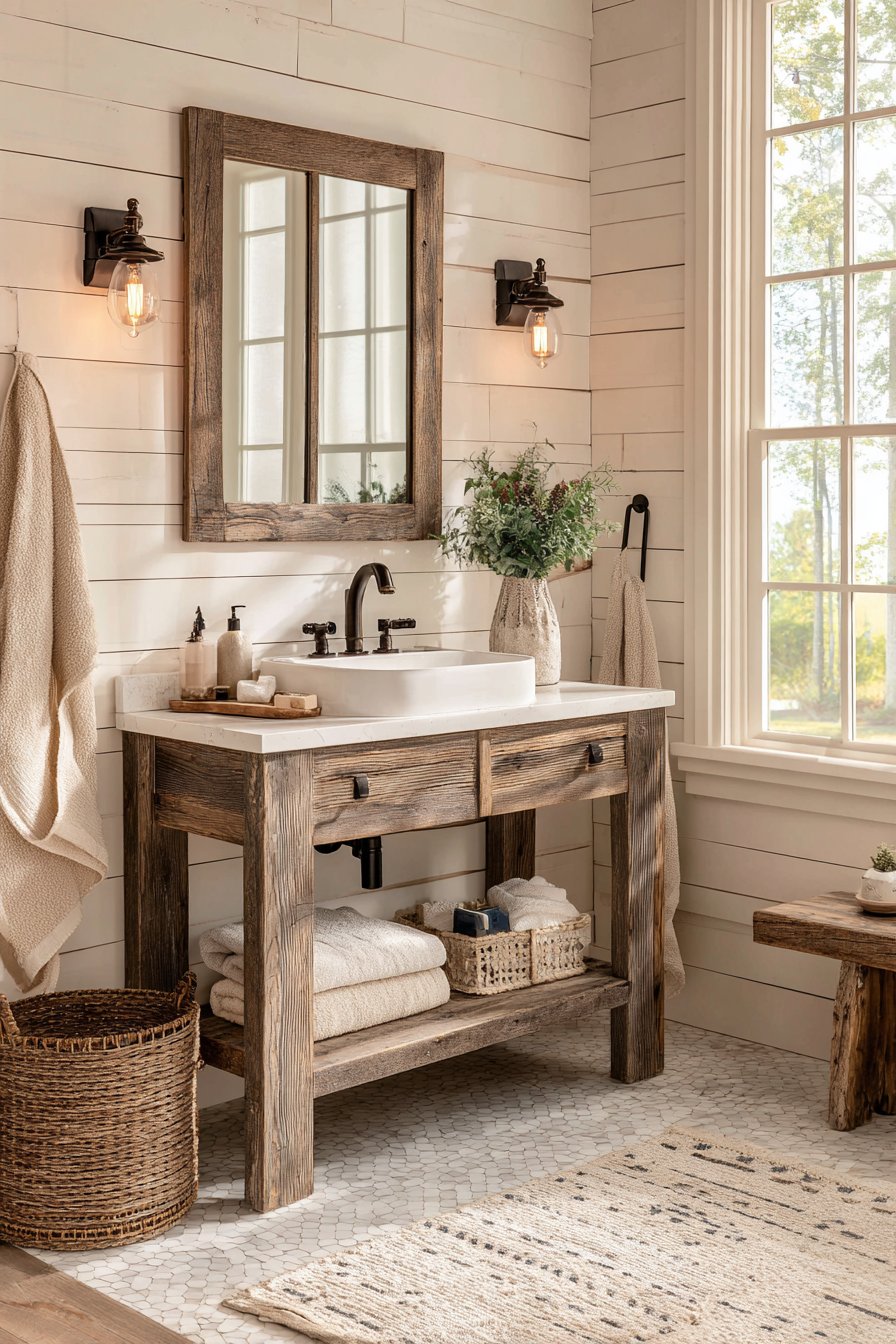
Oil-rubbed bronze fixtures add rustic charm and tonal depth, their dark finish creating satisfying contrast against the light tiles while introducing warm undertones. A reclaimed wood floating vanity serves as the statement piece, its weathered finish and visible grain suggesting history and authenticity. The natural imperfections in the wood—knots, color variations, saw marks—add character that manufactured materials simply cannot replicate. Wide-angle shots with natural window light showcase the approachable, lived-in quality of these neutral tile choices, emphasizing that beautiful design doesn’t require perfection or pretension—sometimes the most appealing spaces are those that feel welcoming and real.
Key Design Tips: Use beige or light grey grout with white subway tiles to add warmth and create a softer, more forgiving look than stark white grout. Incorporate patterned cement tiles on floors to add personality while keeping walls simple and allowing the pattern to be the star. Install shiplap or beadboard on upper walls to add architectural detail and reinforce farmhouse style. Choose oil-rubbed bronze fixtures to add rustic warmth and create contrast against light neutral tiles. Select a reclaimed or distressed wood vanity to introduce authentic character and organic texture. Consider the overall balance of patterns—decorative floors work best with simple walls, while patterned walls benefit from solid-color flooring.
10. Luxurious Champagne Marble Statement
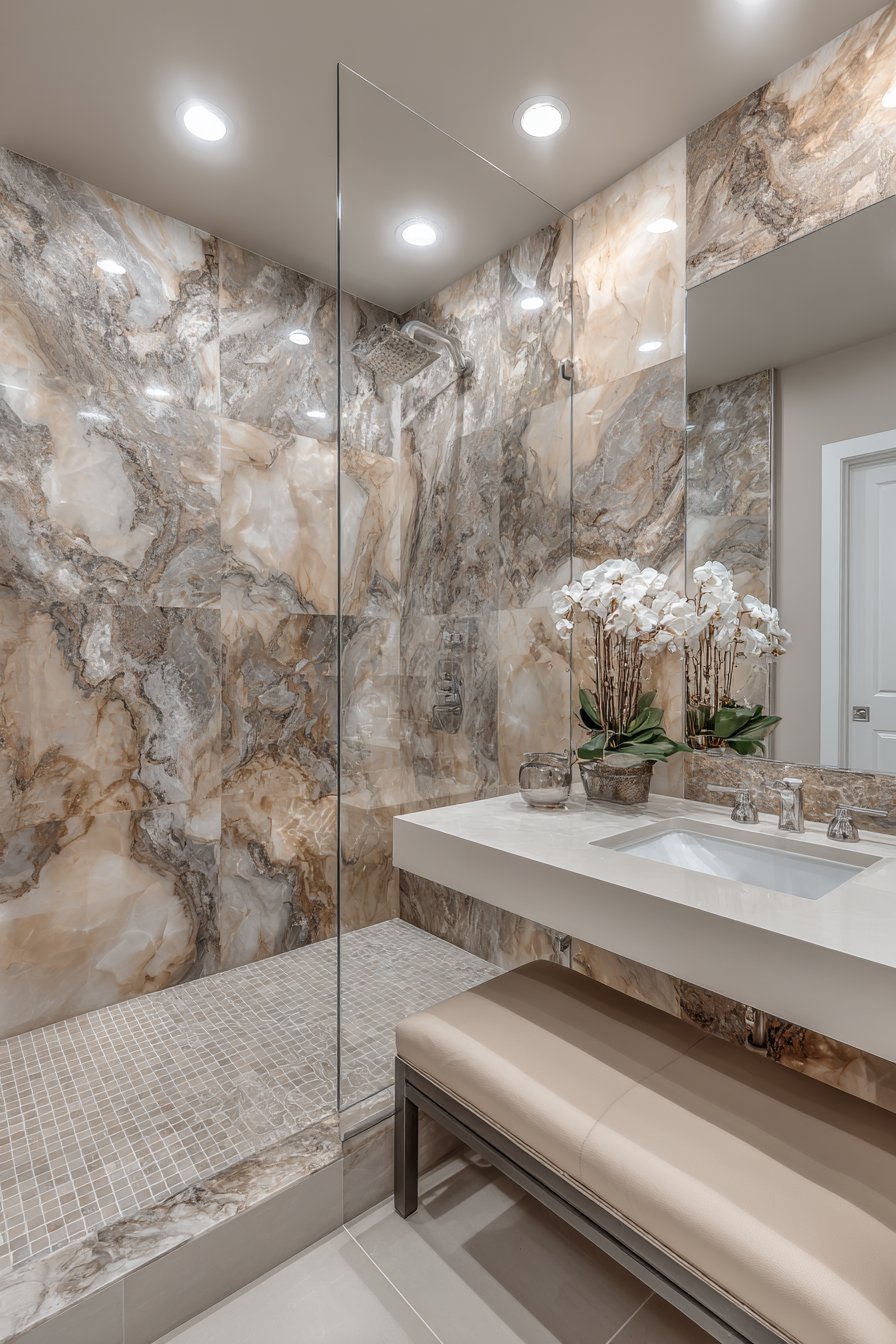
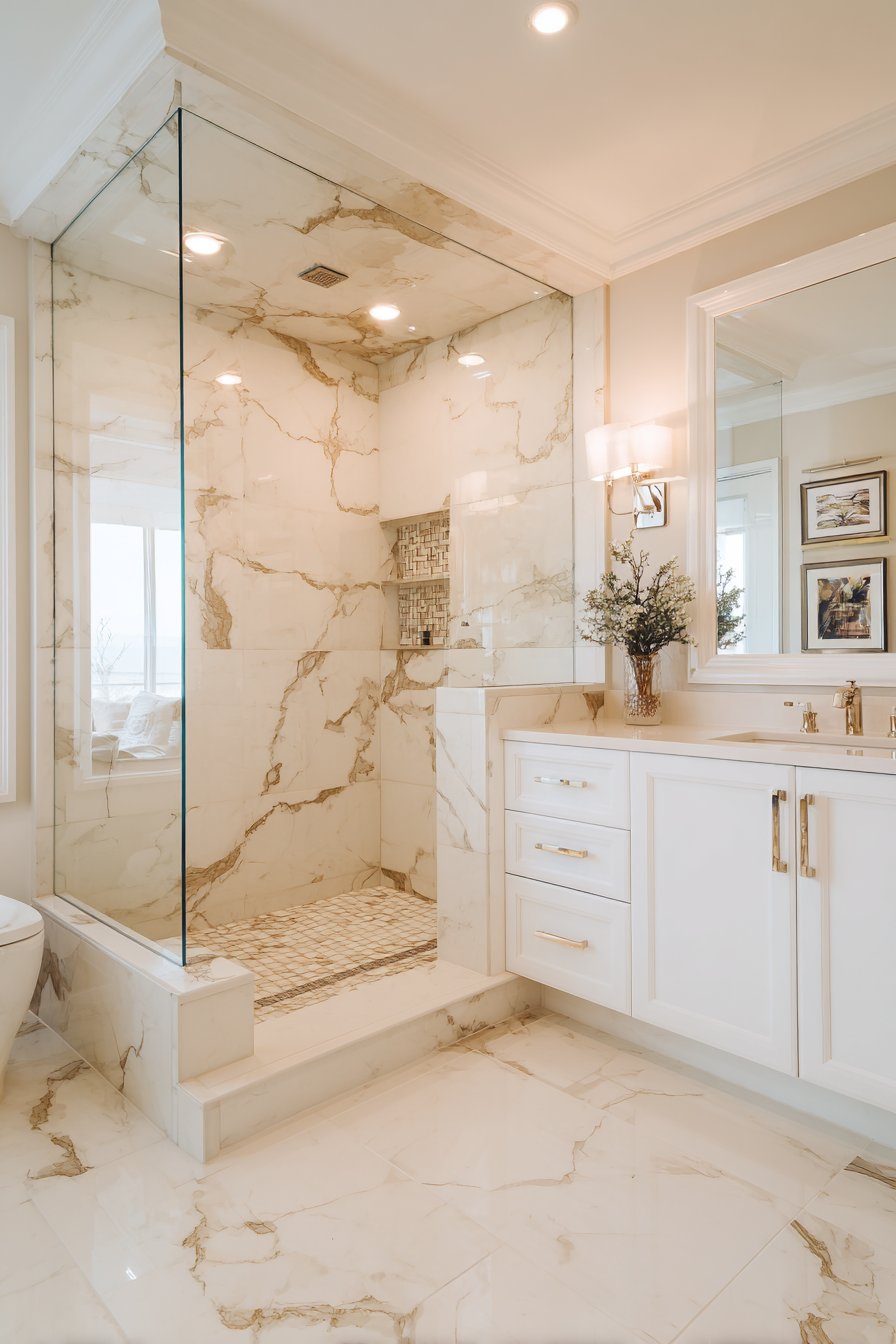
Step into opulence with this luxurious bathroom featuring book-matched marble slabs in champagne beige as the show-stopping neutral bathroom tile ideas on the shower walls. Book-matching creates a mirror-image effect where adjacent slabs are opened like a book, creating a dramatic butterfly pattern with the natural veining perfectly aligned. This technique elevates natural stone from beautiful to breathtaking, creating a focal point that rivals fine art. The champagne tone—a sophisticated neutral between beige and grey with golden undertones—exudes warmth and elegance without feeling overly traditional or heavy.
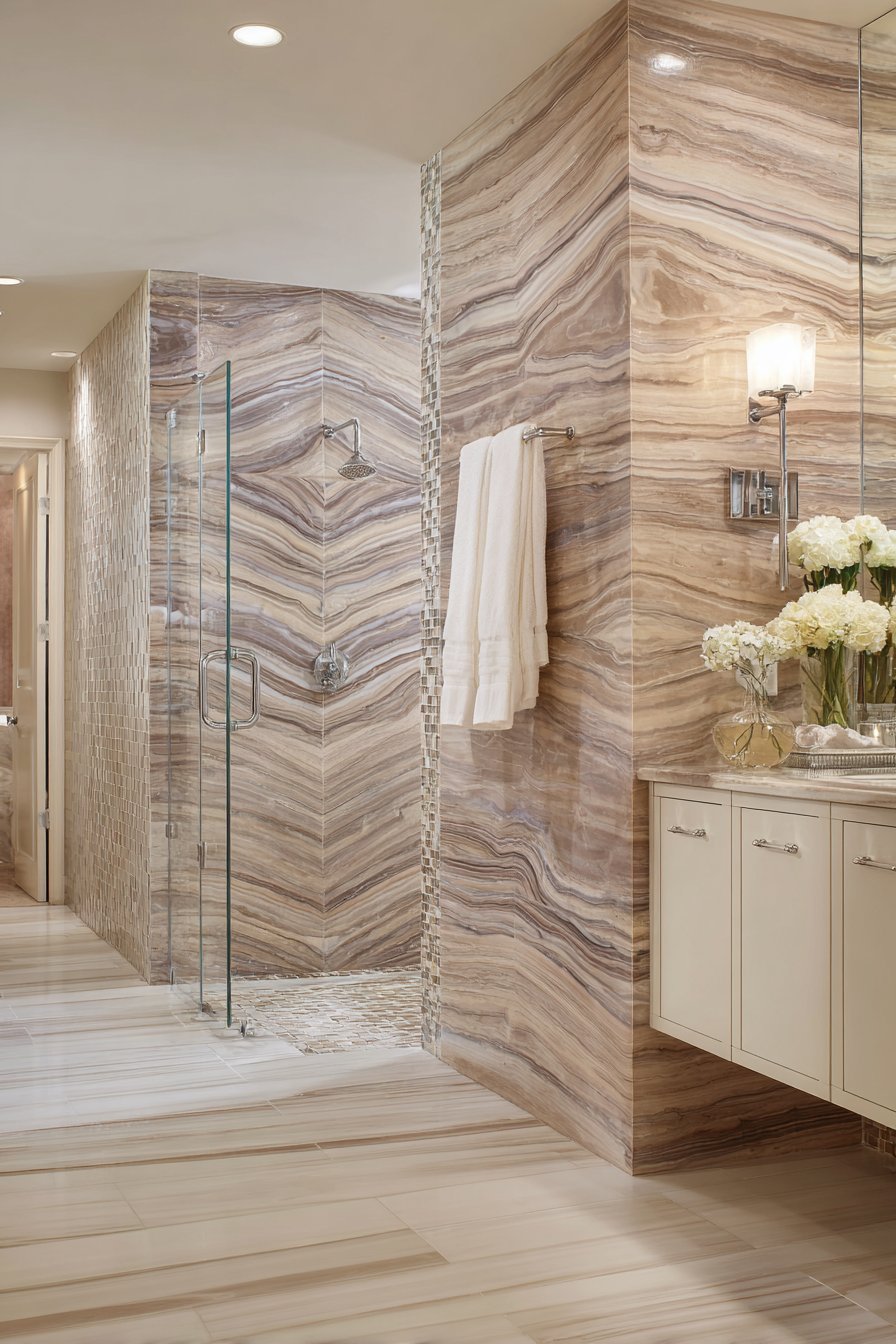
Large-format porcelain tiles in coordinating neutral sand tone cover the floor, providing a simpler foundation that allows the book-matched shower walls to command attention. The floor tiles feature subtle movement and tonal variation that complement without competing with the dramatic marble feature. A marble mosaic in neutral tones creates an elegant border detail, perhaps defining the shower threshold or creating a decorative stripe at chair rail height. This layering of the same material in different scales and applications demonstrates sophisticated design maturity—everything is coordinated but not matchy-matchy.
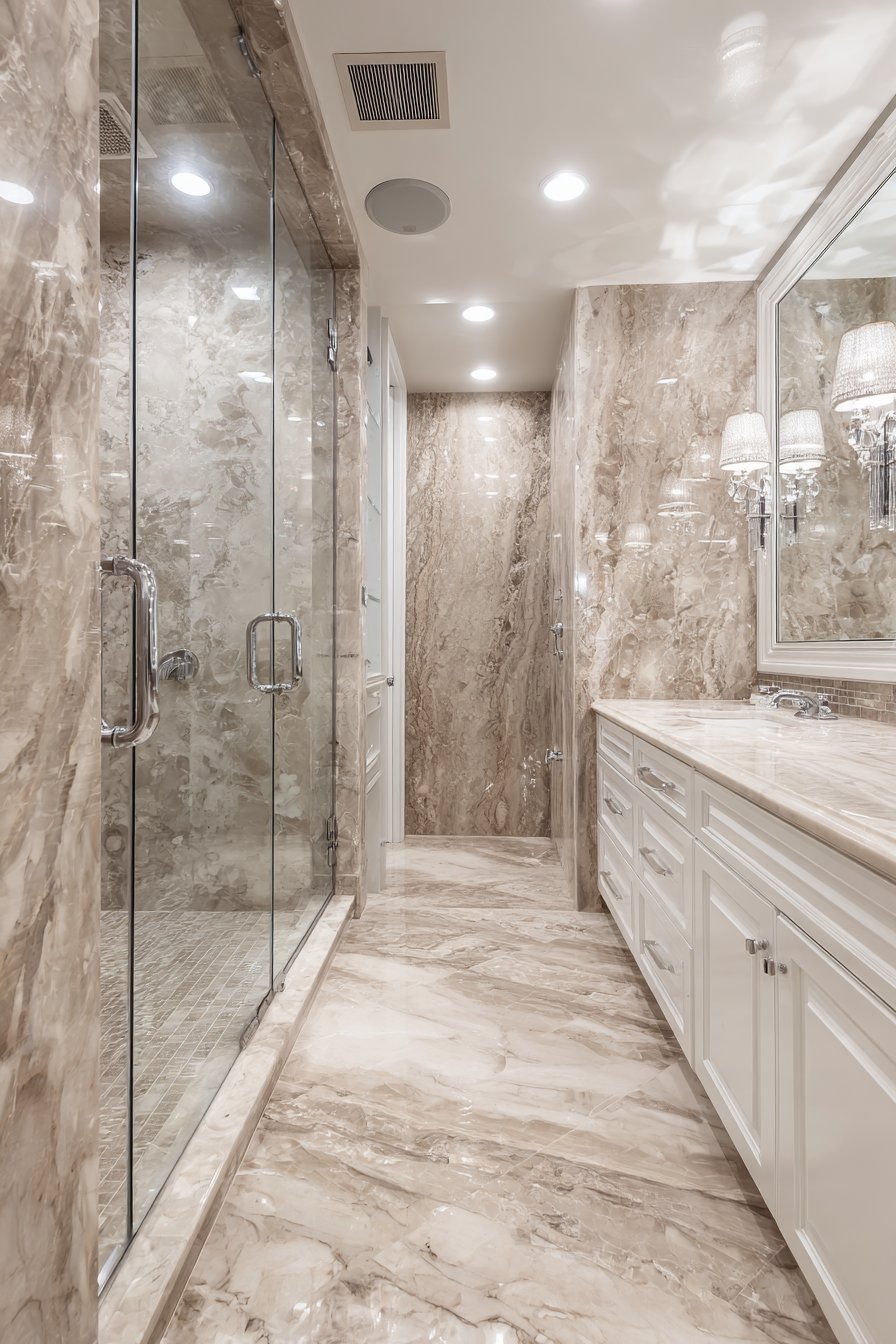
Polished chrome fixtures reflect light and add sparkle, their bright finish appropriate for this more formal, luxurious aesthetic. A white lacquered vanity keeps the space feeling bright and open despite the visual richness of the marble, its glossy finish adding contemporary polish. LED-lit mirrors provide both practical task lighting and atmospheric glow, casting flattering light that makes the champagne marble shimmer. Professional photography with balanced lighting captures the upscale elegance of the neutral tile applications, showing how high-end materials and thoughtful installation can create bathroom design that balances luxury with livability, proving that neutral doesn’t mean boring or safe—it can be absolutely spectacular.
Key Design Tips: Invest in book-matched slabs for dramatic impact in focal areas like shower walls—the symmetrical veining creates an instant wow factor. Use large-format floor tiles in simpler patterns to provide a calm foundation that allows featured walls to star. Incorporate marble mosaics as border details to add visual interest at human scale while maintaining material consistency. Choose polished chrome fixtures with formal marble installations to enhance the luxurious aesthetic and reflect light. Select a white or light-colored vanity to keep the space feeling bright and prevent rich stone from overwhelming. Ensure professional installation of book-matched slabs—precise alignment is critical to achieving the desired effect.
11. Japanese Zen Pebble and Stone
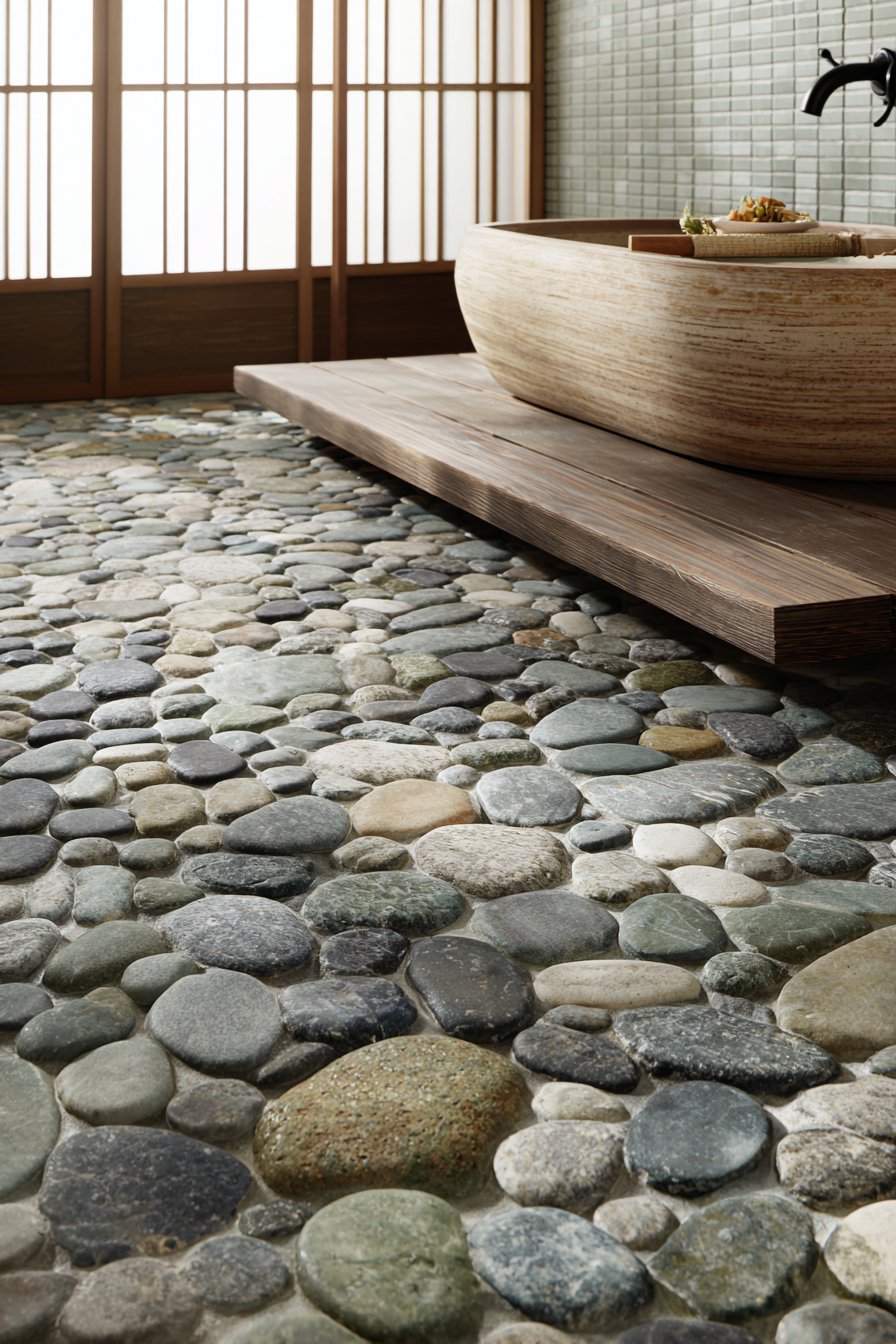
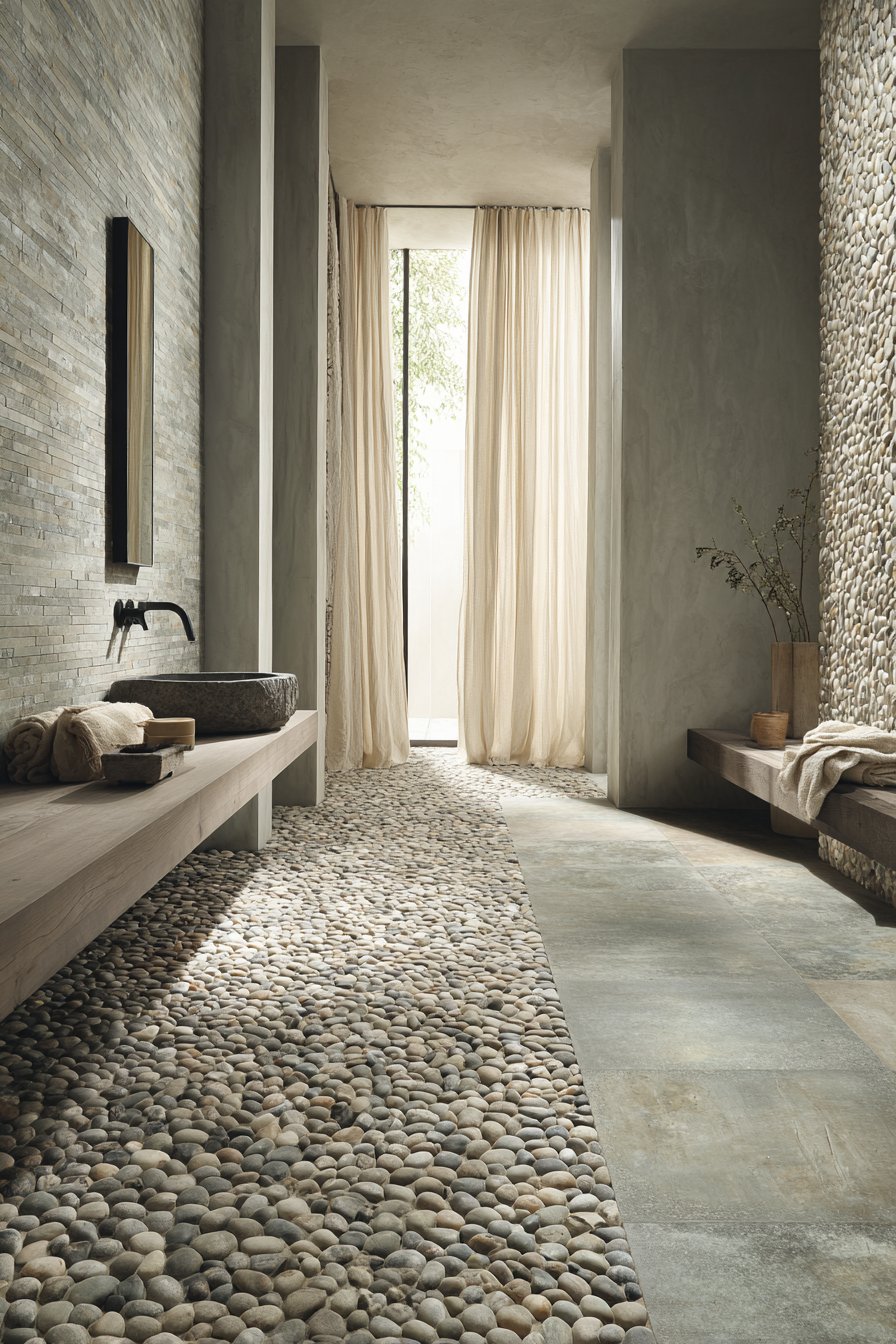
Find tranquility in this Japanese-inspired bathroom where neutral bathroom tile ideas embrace organic textures and natural materials. Natural river rock pebble tiles in mixed neutral tones of grey, beige, and taupe create a textured, sensory-rich shower floor that provides both massage-like comfort and authentic connection to nature. Each smooth stone has been naturally tumbled by water over centuries, creating varied shapes and sizes that fit together like a natural riverbed. This is texture you can feel with bare feet—grounding, calming, and deeply satisfying in its organic irregularity.
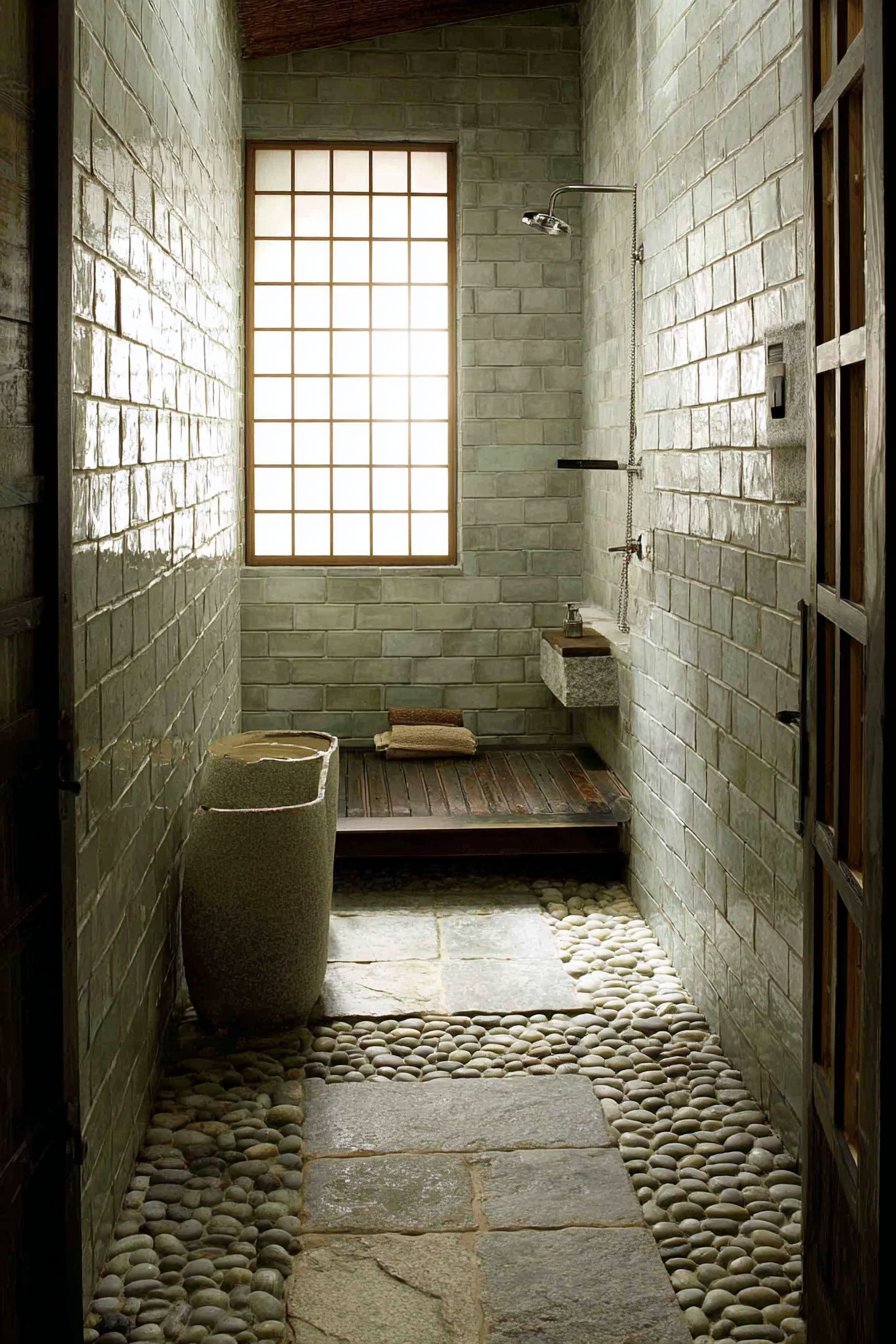
Smooth rectangular tiles in soft grey-green line the walls in a horizontal brick pattern, their cool tone evoking the color of weathered copper or aged patina. The elongated horizontal format emphasizes the room’s width and creates a sense of calm progression, with the linear pattern suggesting the ordered simplicity central to Japanese design philosophy. A wooden soaking tub platform uses matching neutral floor tiles to create visual continuity, with the deep wooden tub itself serving as both functional element and sculptural focal point. The contrast between angular tiles and the organic curves of the wooden tub creates satisfying visual tension.
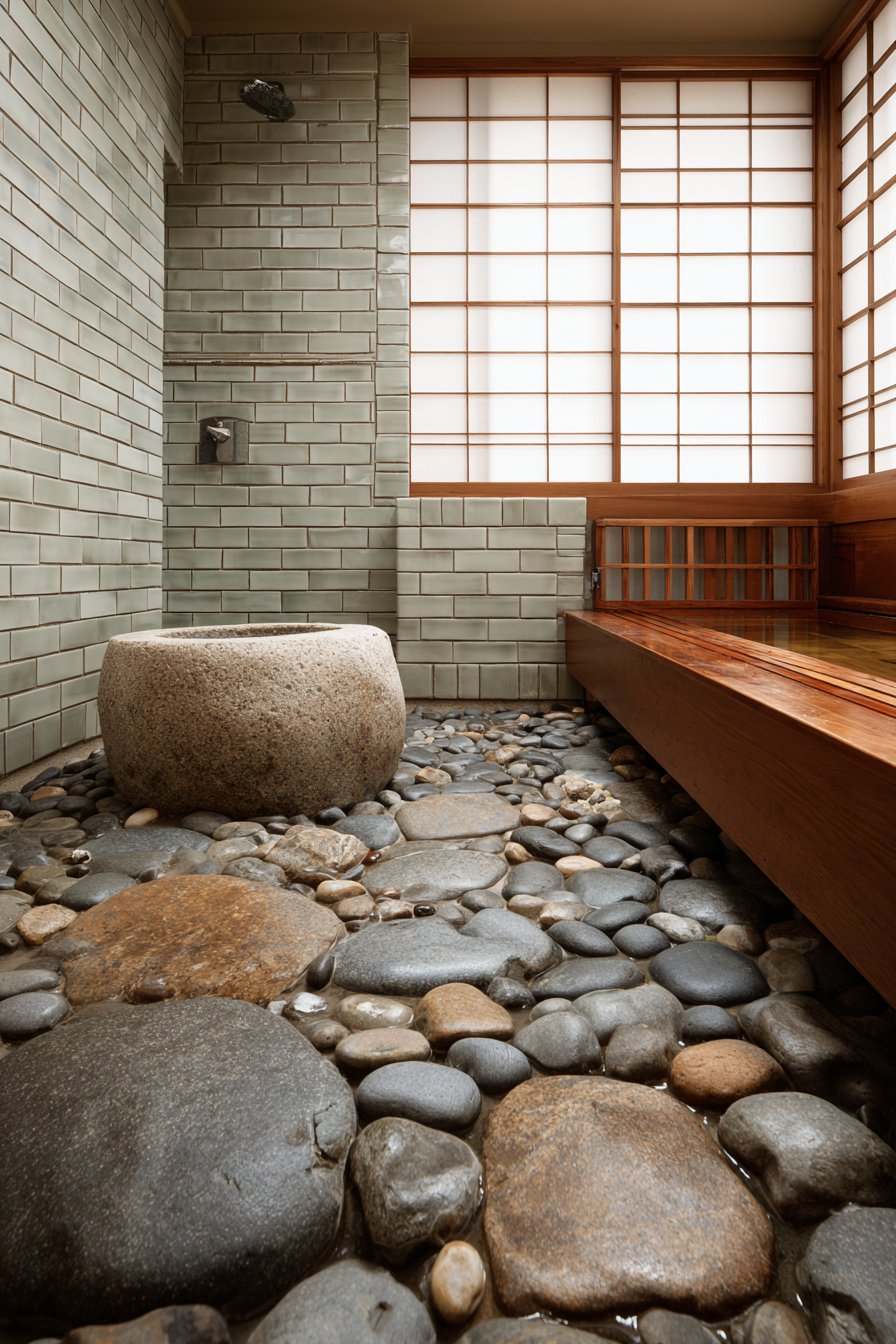
Black matte fixtures provide minimal contrast and spare, utilitarian elegance that aligns with Japanese design principles. Every element serves a purpose with no excess decoration or unnecessary embellishment—this is design as meditation, where simplicity creates space for contemplation. Interior photography emphasizing the zen-like quality shows soft natural light filtering through rice paper window treatments, creating diffused illumination that changes throughout the day like natural outdoor light. The shadows across the pebble tiles shift and move, creating a living landscape that connects the bathing experience to the passage of time and the rhythms of nature.
Key Design Tips: Use natural pebble tiles in shower floors for authentic texture, massage benefits, and strong connection to natural materials. Choose elongated rectangular tiles in horizontal orientation to create calm, linear movement and emphasize room width. Incorporate a wooden soaking tub or substantial wood element to introduce essential warmth and organic curves. Select matte black fixtures for Japanese-inspired spaces to maintain minimal contrast and utilitarian simplicity. Filter natural light through rice paper or shoji-style screens to create soft, diffused illumination that changes throughout the day. Maintain strict discipline in material selection—limit your palette to stone, wood, and metal, with each material appearing in its most natural, unadorned state.
12. Mid-Century Terrazzo Revival
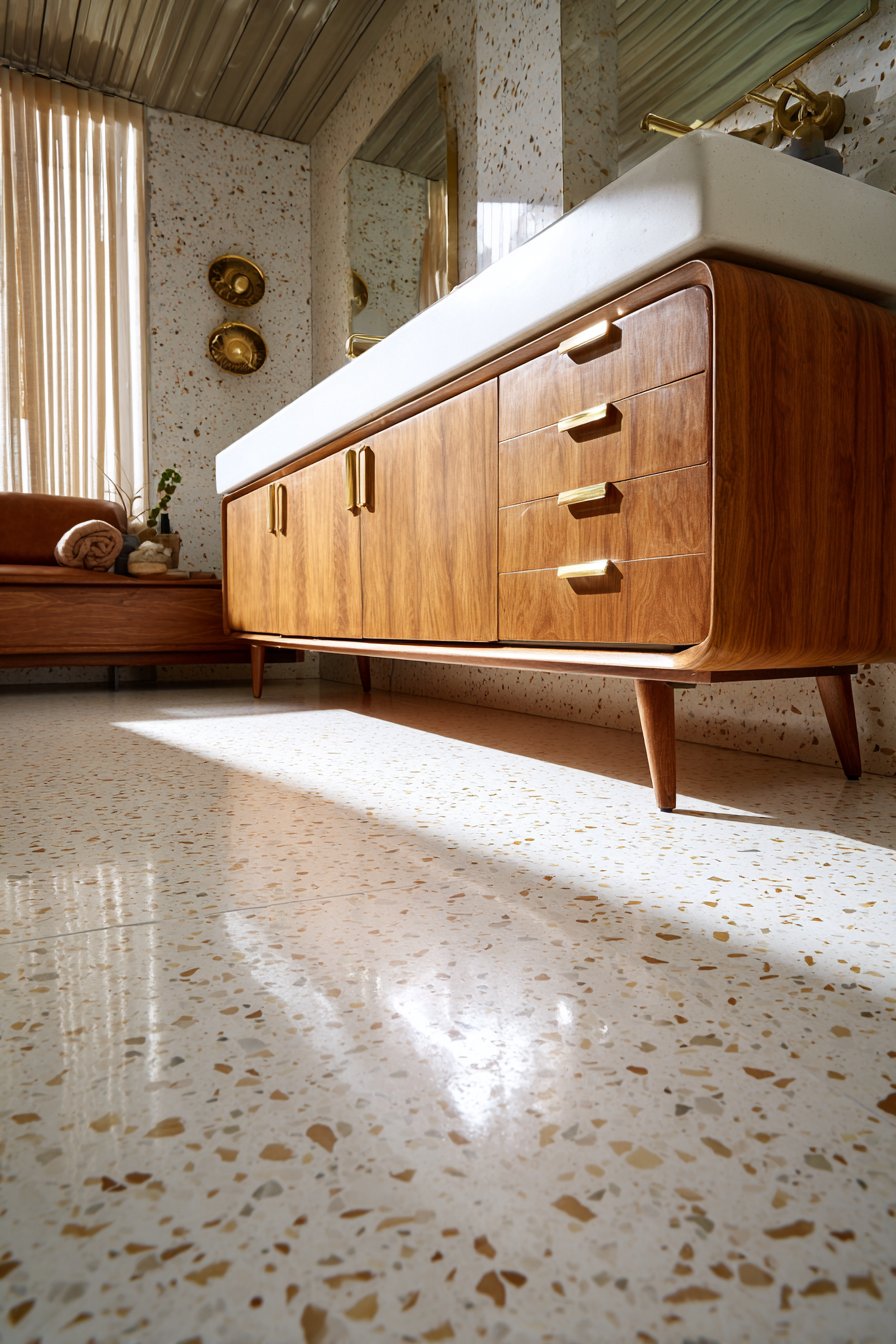
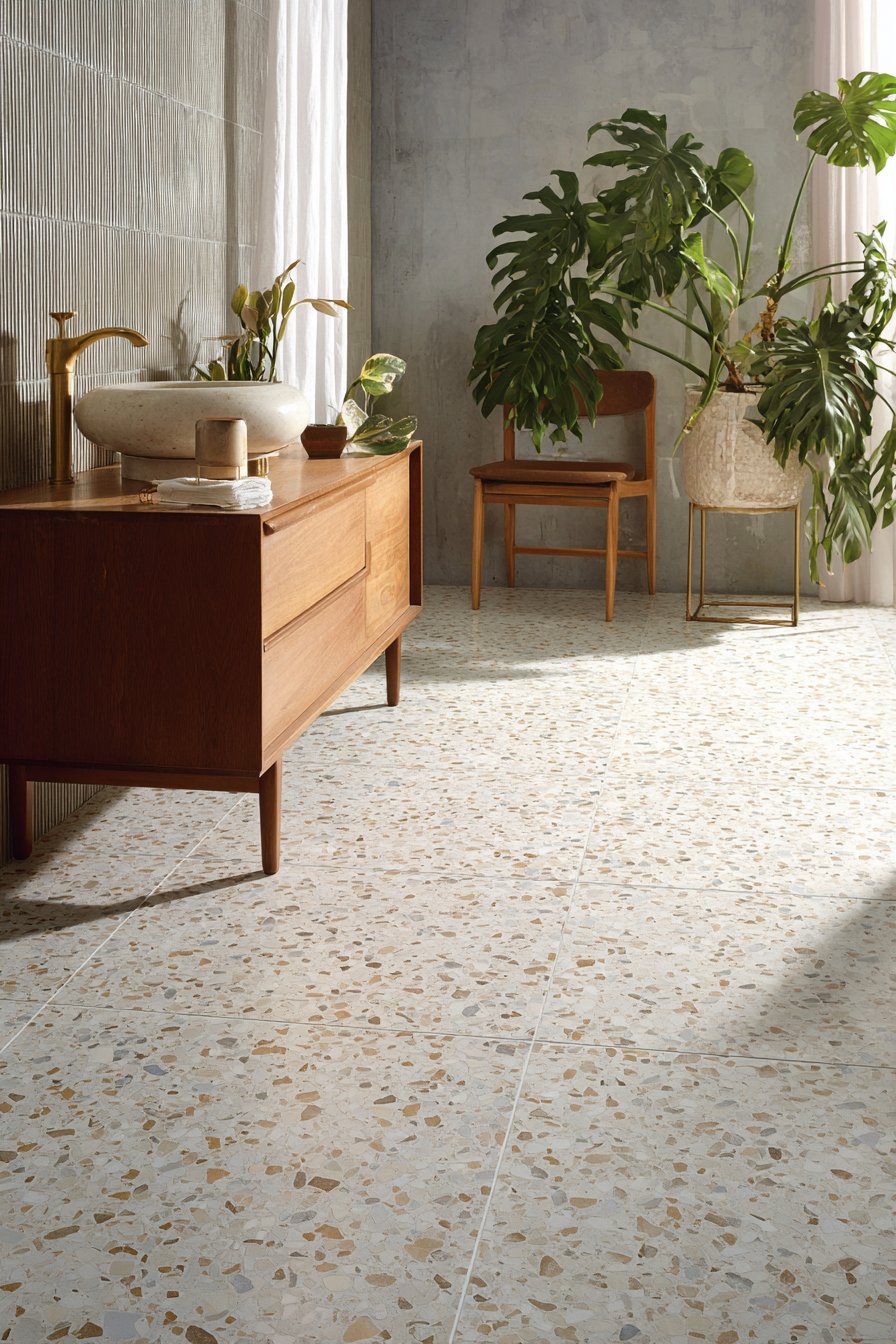
Celebrate retro style with this mid-century modern bathroom displaying terrazzo-style porcelain tiles that capture the playful sophistication of the era. These neutral bathroom tile ideas feature an ivory base scattered with aggregate in cream, grey, and tan, creating visual interest through speckled pattern rather than bold color. Terrazzo originated in Italy centuries ago but became synonymous with mid-century design thanks to its appearance in commercial and residential spaces throughout the 1950s and 60s. The modern porcelain version captures the aesthetic while offering superior durability and easier maintenance than traditional terrazzo.
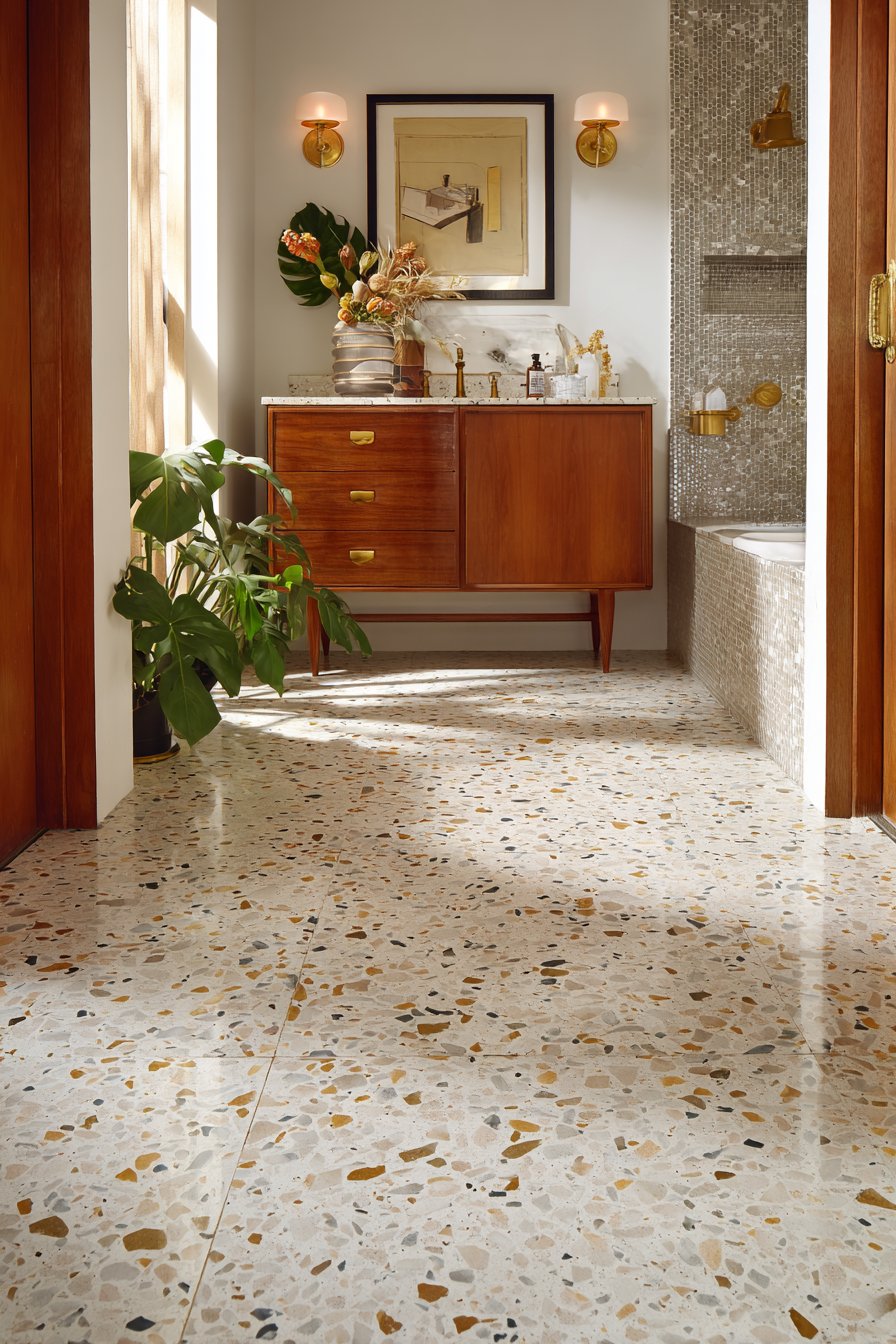
The floor continues the terrazzo pattern while accent walls use solid warm grey tiles, creating balance between pattern and simplicity that prevents the space from feeling too busy. This restraint is key—terrazzo is busy by nature, so pairing it with solid surfaces allows the eye to rest. Brass fixtures honor the era’s love affair with warm metals, their polished finish adding glamour and reflecting light to make the space feel larger and more luminous. A walnut vanity with tapered legs exemplifies mid-century furniture design, its clean lines and functional form demonstrating the era’s design philosophy that beauty should emerge from utility.
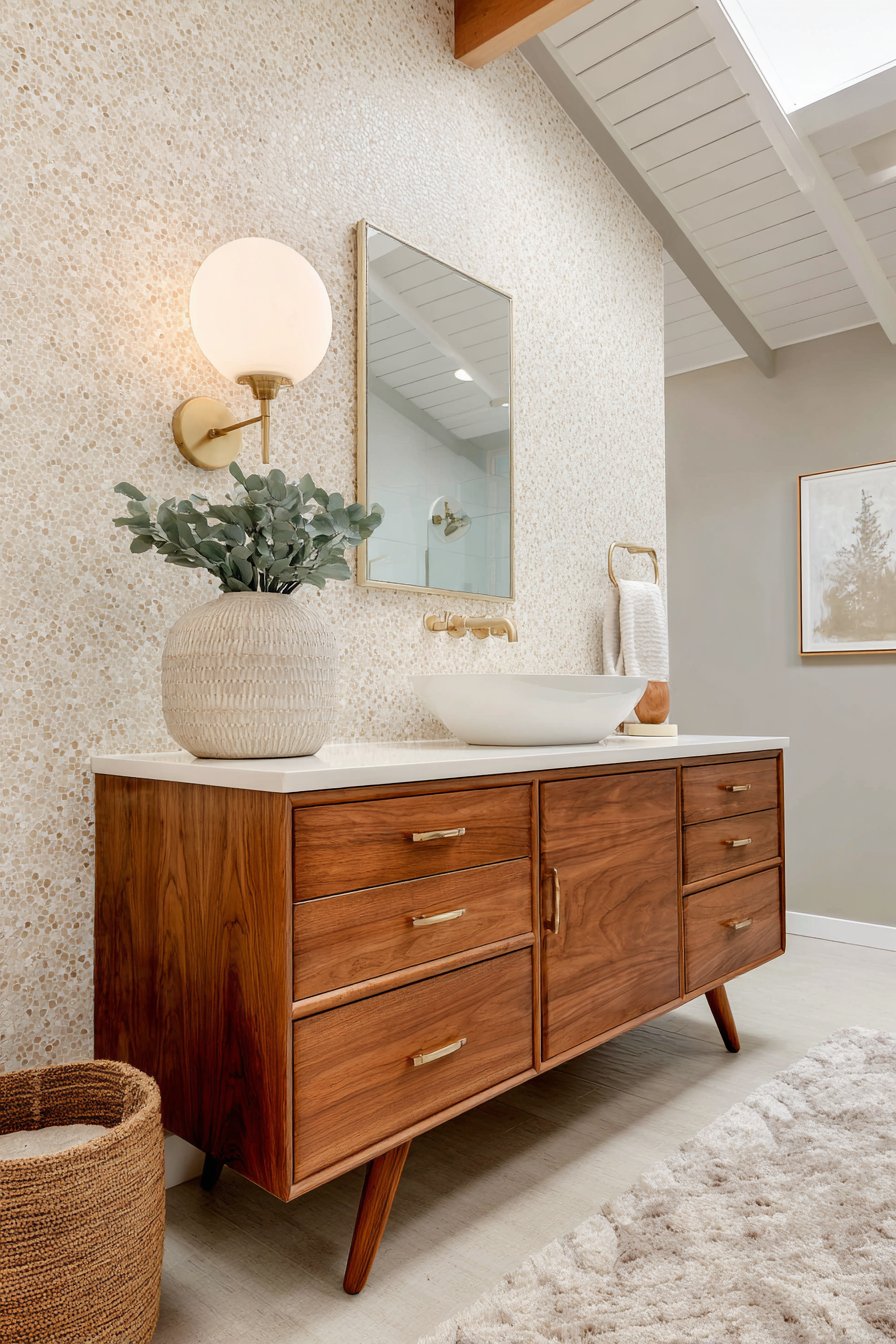
Wide-angle interior design photography captures the retro-contemporary fusion, showing how vintage-inspired patterns can feel fresh and current when executed in neutral tones and paired with modern amenities. The terrazzo tiles create texture and movement without introducing loud color, proving that you can achieve the playful spirit of mid-century design while maintaining the calming, sophisticated qualities of a neutral palette. This bathroom works for lovers of vintage style who also want the serenity and versatility that neutral colors provide—it’s the best of both worlds.
Key Design Tips: Choose terrazzo-style tiles with neutral aggregate colors to capture vintage charm while maintaining contemporary sophistication. Balance patterned terrazzo tiles with solid-color accent walls to prevent visual overwhelm and create resting points for the eye. Select brass or warm-toned metal fixtures to honor mid-century aesthetics and add glamorous polish. Incorporate a walnut or teak vanity with tapered legs and clean lines that exemplify mid-century furniture design. Consider the scale of terrazzo chips—smaller aggregate creates a busier pattern suitable for larger spaces, while larger chips read more clearly in compact bathrooms. Use terrazzo strategically rather than covering every surface—floors and one accent wall is usually sufficient.
13. Compact Vertical Greige Maximization
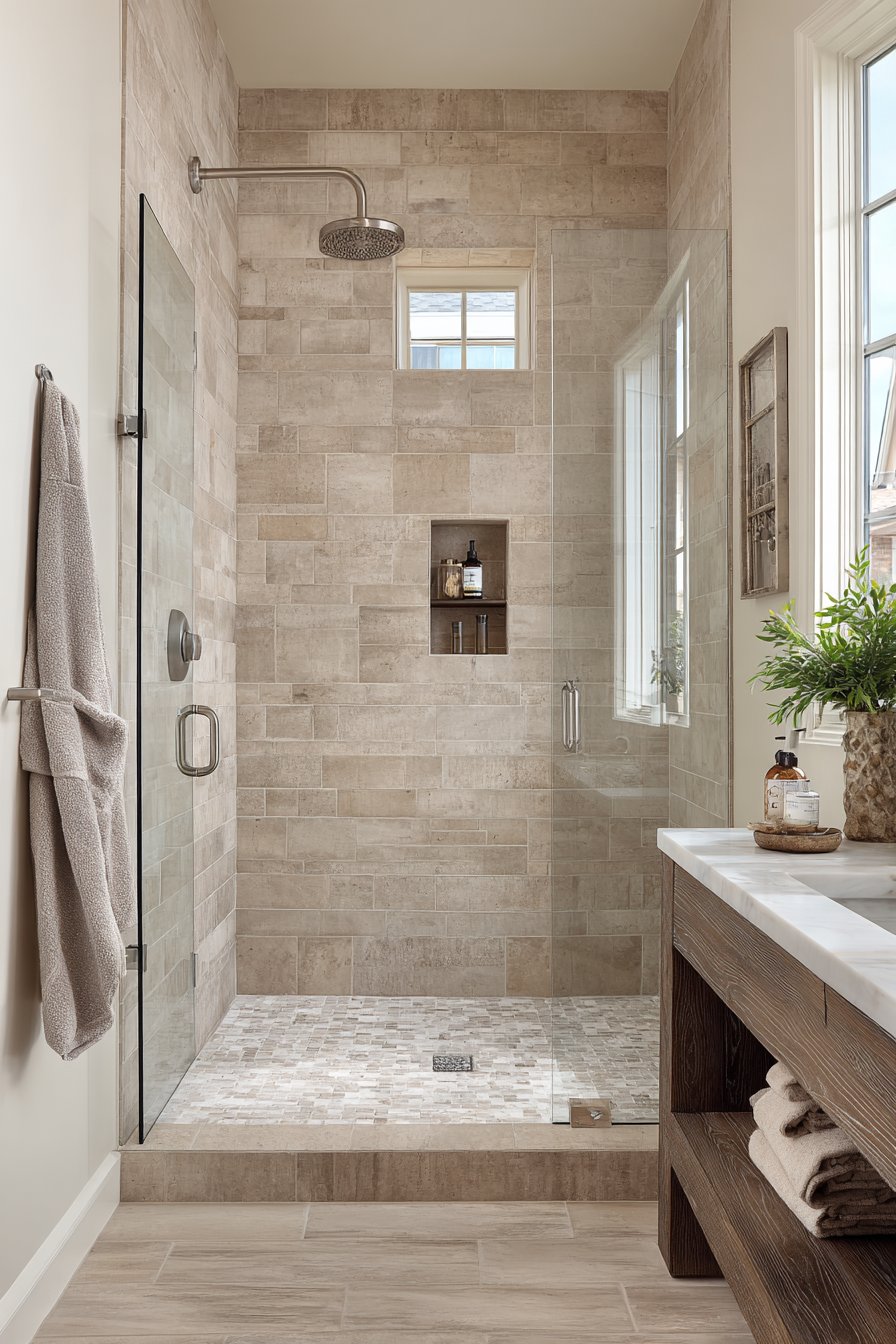
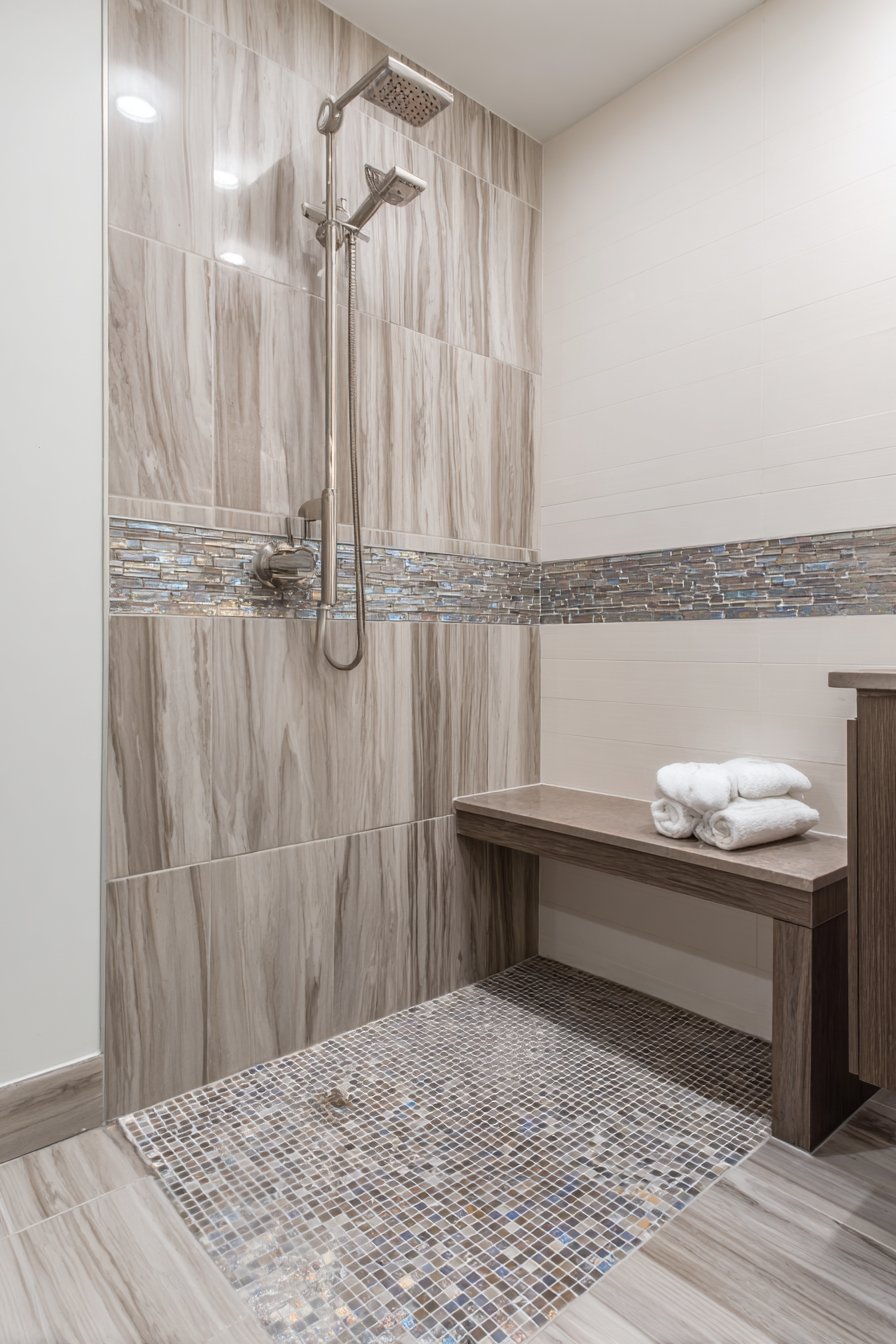
Discover how smart tile choices can transform small bathrooms in this compact space featuring vertical stacked rectangular tiles in light greige. These neutral bathroom tile ideas specifically address the challenge of small square footage by emphasizing height and creating the illusion of taller ceilings. The vertical orientation draws the eye upward continuously, making the space feel less cramped and more expansive than it actually is. The light greige color—that perfect neutral between grey and beige—reflects light effectively while providing enough warmth to prevent the small space from feeling cold or institutional.
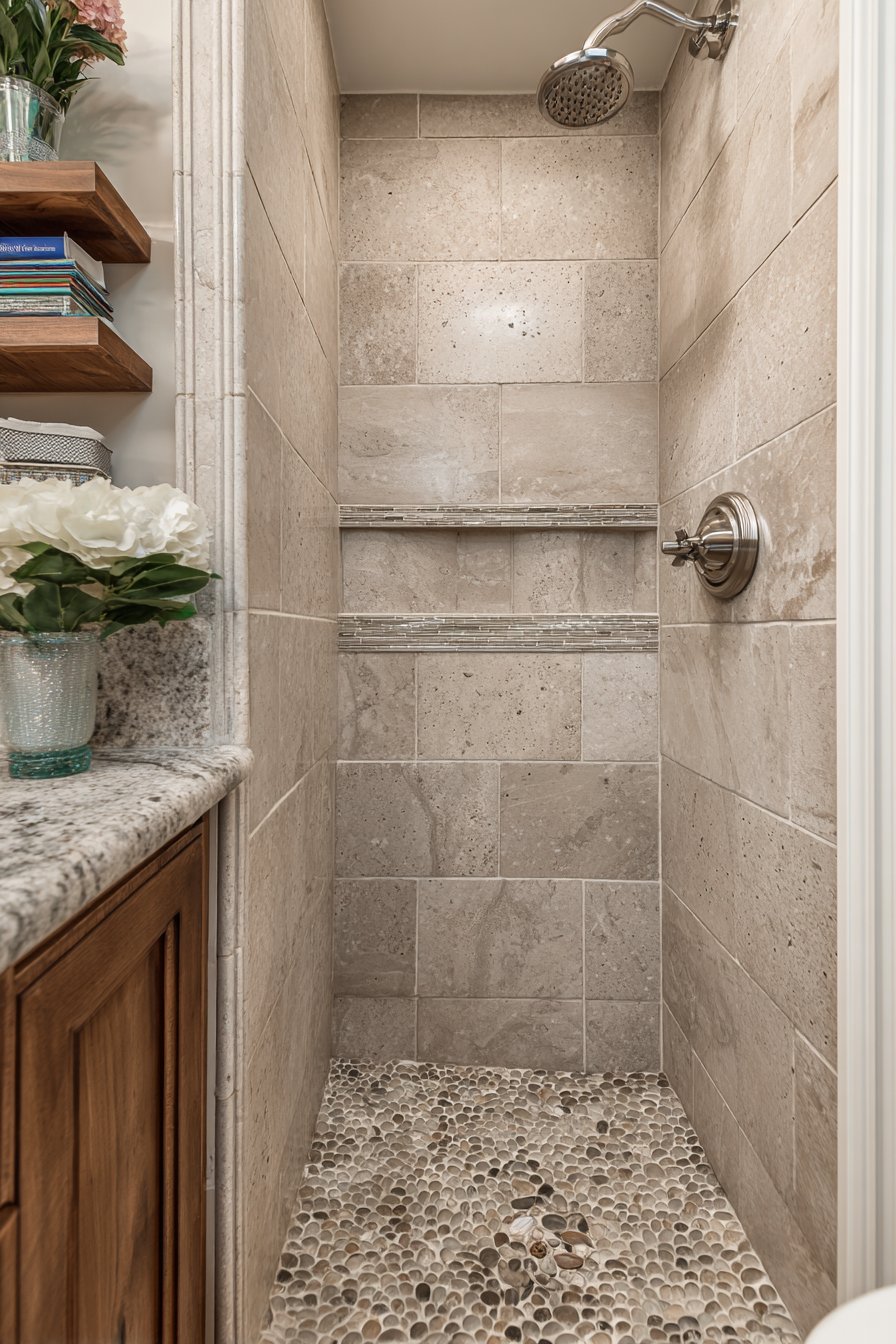
The shower floor demonstrates thoughtful scale consideration with smaller mosaic tiles in coordinating neutrals. This change in scale serves two purposes: it provides necessary slip resistance in the wet shower area, and it creates visual distinction that helps define the different zones within the compact bathroom without requiring actual walls or barriers. A single accent strip of textured neutral tile adds interest at eye level, providing a focal point and breaking up the vertical lines just enough to add dimension. Brushed nickel fixtures and a small floating ash wood vanity maintain the airy feel essential in small bathrooms, with the floating design preserving valuable floor space and creating the illusion of more room.
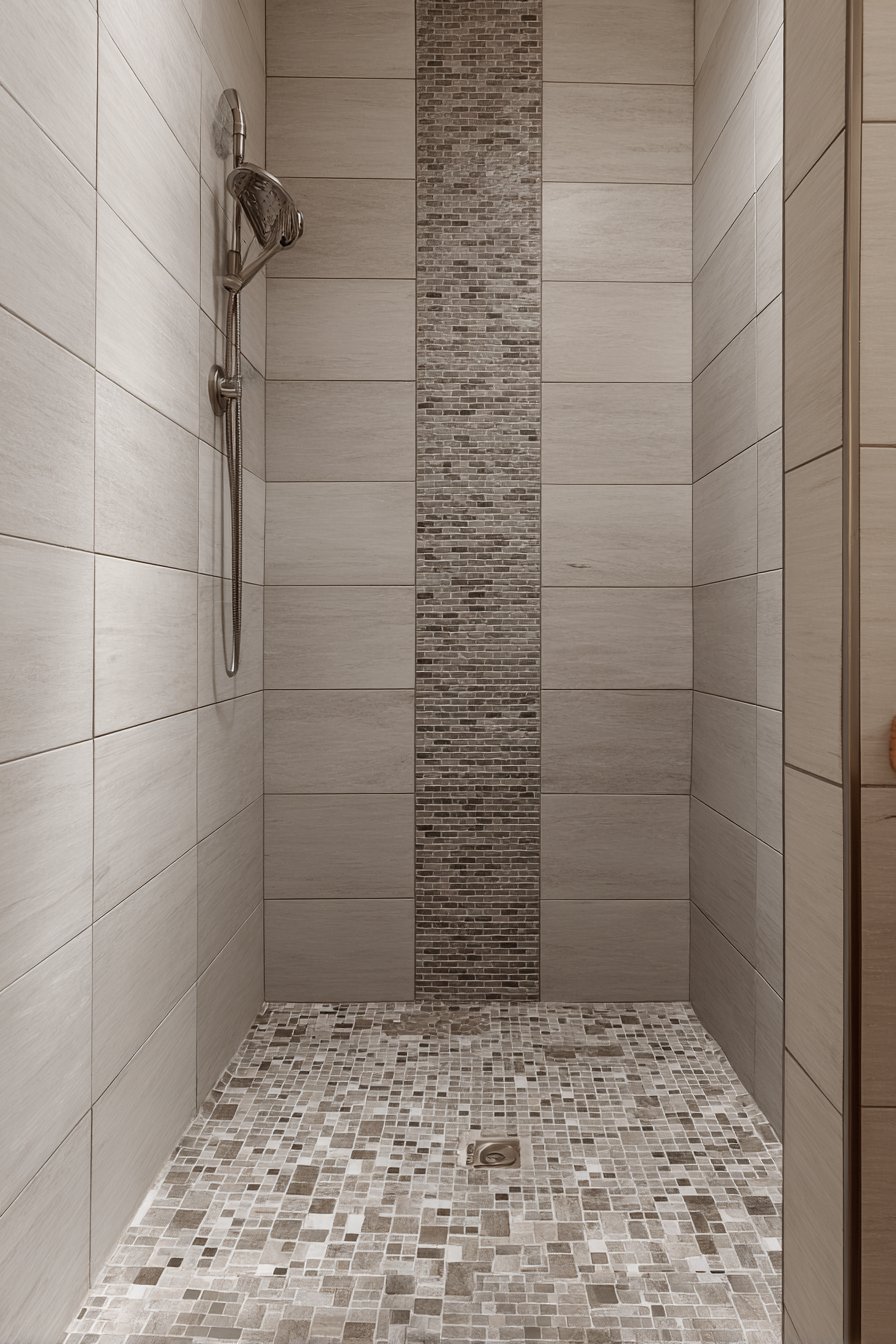
Professional interior photography demonstrates how smart neutral tile choices enhance small spaces rather than simply coping with their limitations. The vertical lines create dynamism and movement, while the light neutral color keeps the space feeling open and bright even with limited natural light. This is proof that small bathrooms can be just as beautiful and sophisticated as their larger counterparts when designed with intention and understanding of how materials, colors, and patterns affect spatial perception. Every choice in this bathroom serves the dual purpose of beauty and function—nothing is merely decorative.
Key Design Tips: Install tiles vertically in small bathrooms to maximize perceived height and make ceilings feel taller than they are. Choose light neutral colors like greige or pale grey to reflect light and keep compact spaces feeling open and airy. Use smaller mosaic tiles in shower floors for scale variation and enhanced safety through better slip resistance. Add a single textured accent strip at eye level to create a focal point without overwhelming the small space. Select floating vanities to preserve floor space and enhance the sense of openness essential in tight quarters. Ensure adequate lighting—small bathrooms with limited natural light benefit from multiple light sources including task lighting, ambient lighting, and accent lighting to prevent them from feeling cave-like.
14. Industrial Concrete Grey Boldness
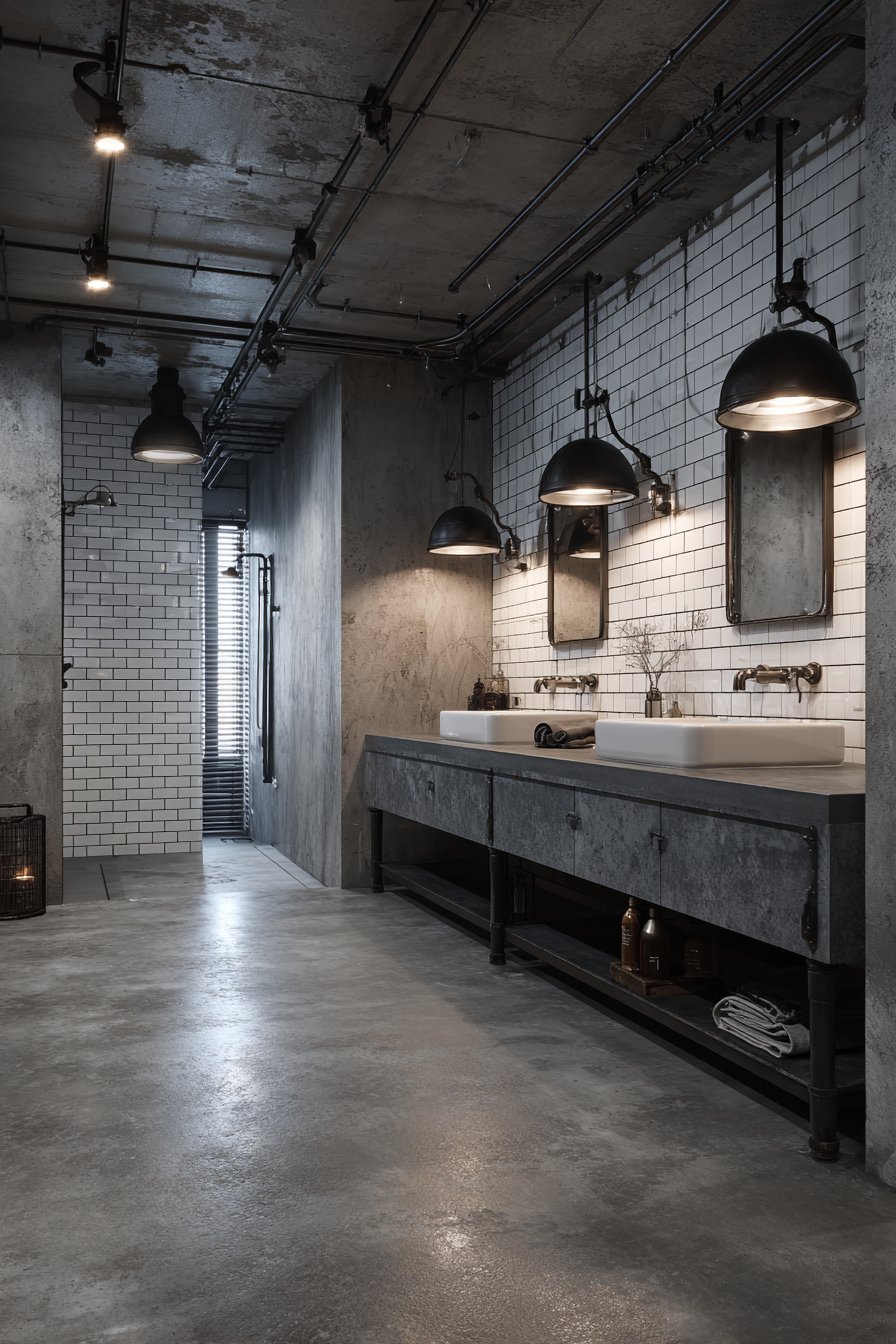
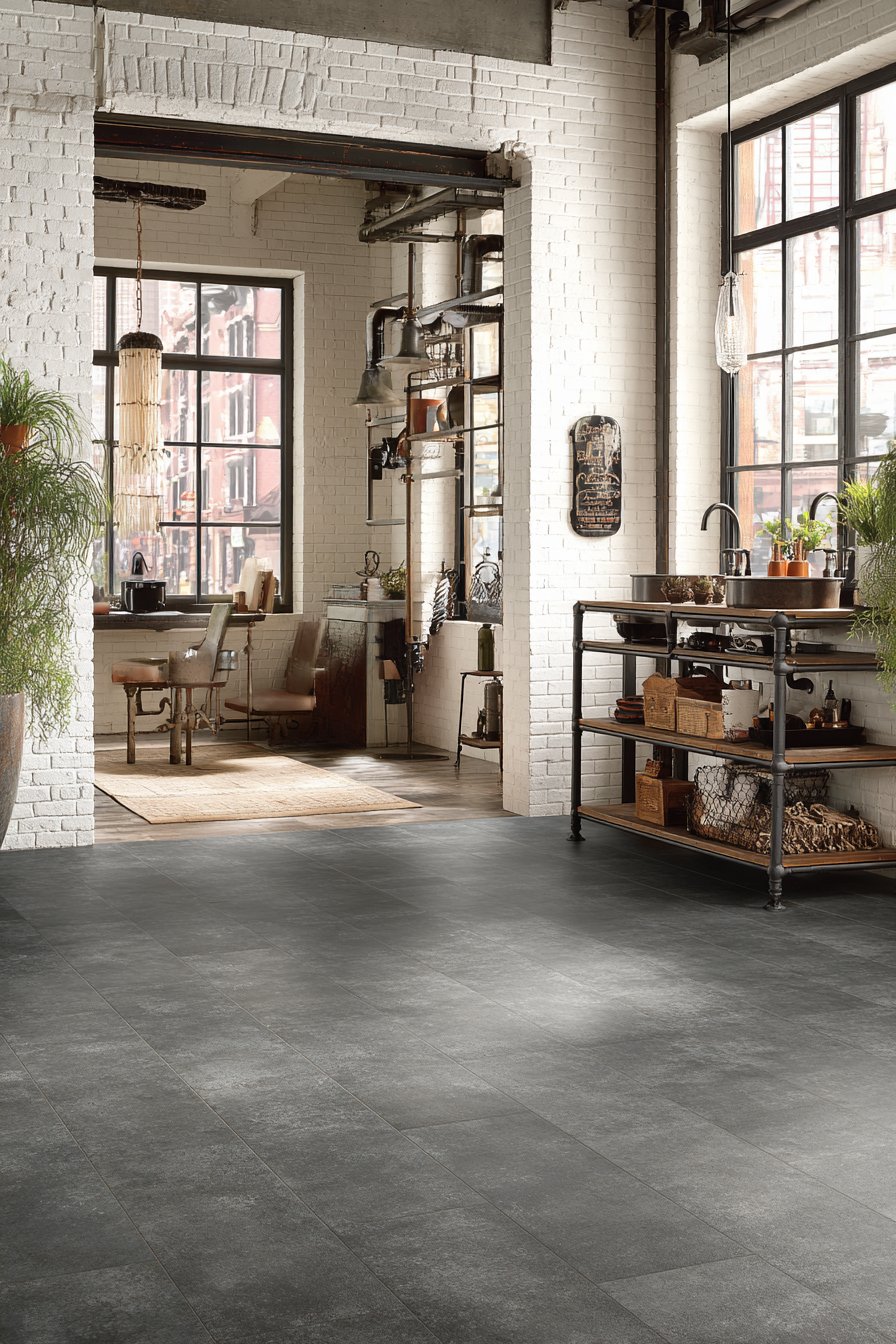
Embrace urban edge with this industrial-chic bathroom showcasing concrete-look porcelain tiles in charcoal grey as bold neutral bathroom tile ideas. These large-format tiles feature realistic surface texture that captures the raw, unfinished quality of poured concrete, complete with subtle color variations and faint impressions that suggest formwork. This darker neutral choice makes a strong statement—it’s moody, dramatic, and unapologetically masculine without relying on overtly industrial clichés. The charcoal provides depth and sophistication while still functioning as a neutral that can adapt to changing accessories and decor.
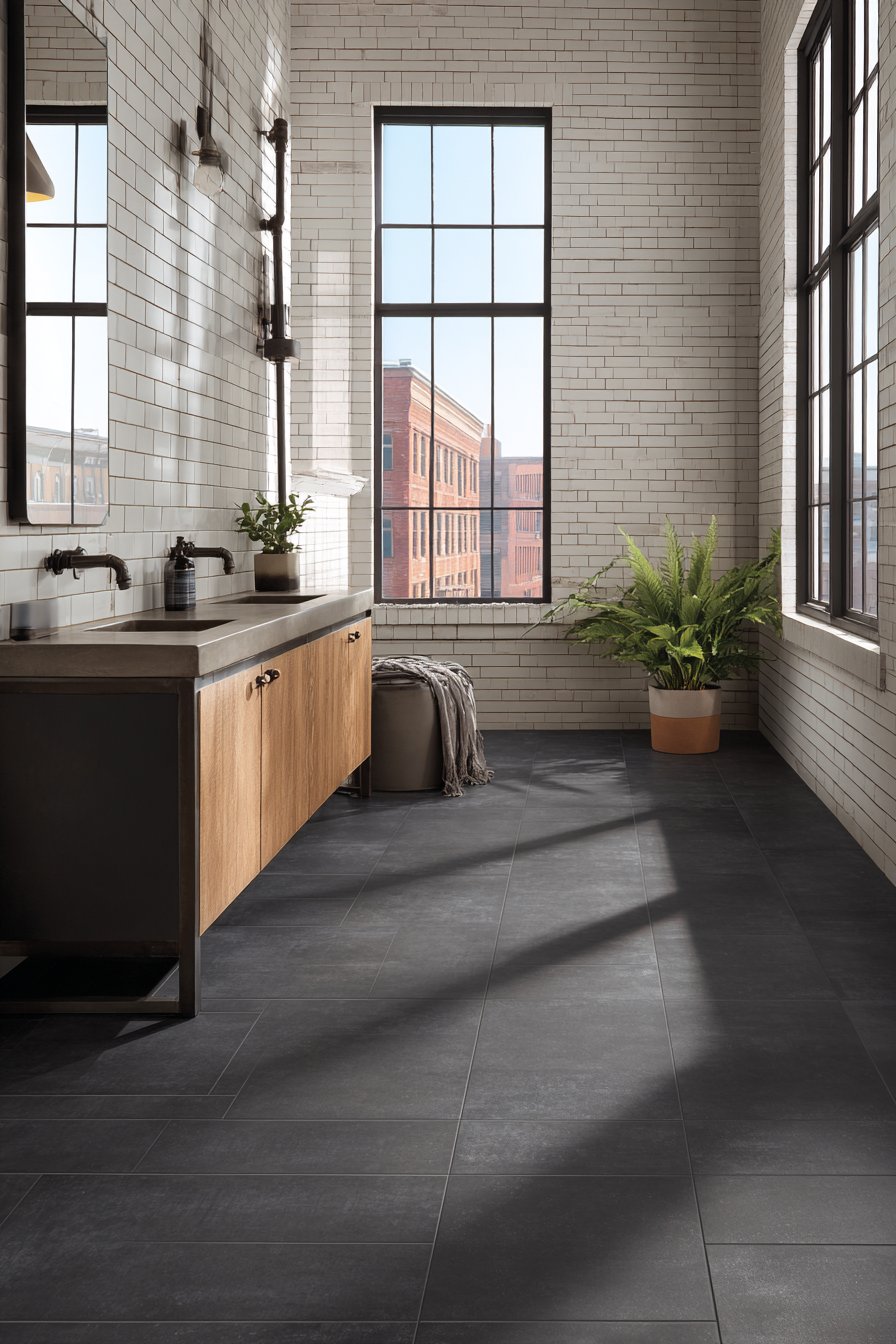
The floor features large-format tiles in lighter cement grey, creating essential tonal contrast that prevents the space from feeling too dark or cave-like. This layering of different grey values within the same material family demonstrates sophisticated color theory—the darker walls recede slightly while the lighter floor reflects light upward, creating balance. Exposed pipe fixtures in matte black embrace the industrial aesthetic fully, celebrating the functional beauty of plumbing rather than hiding it. A raw steel vanity base reinforces the urban edge, its industrial materials and straightforward construction rejecting any pretense of softness or decoration.
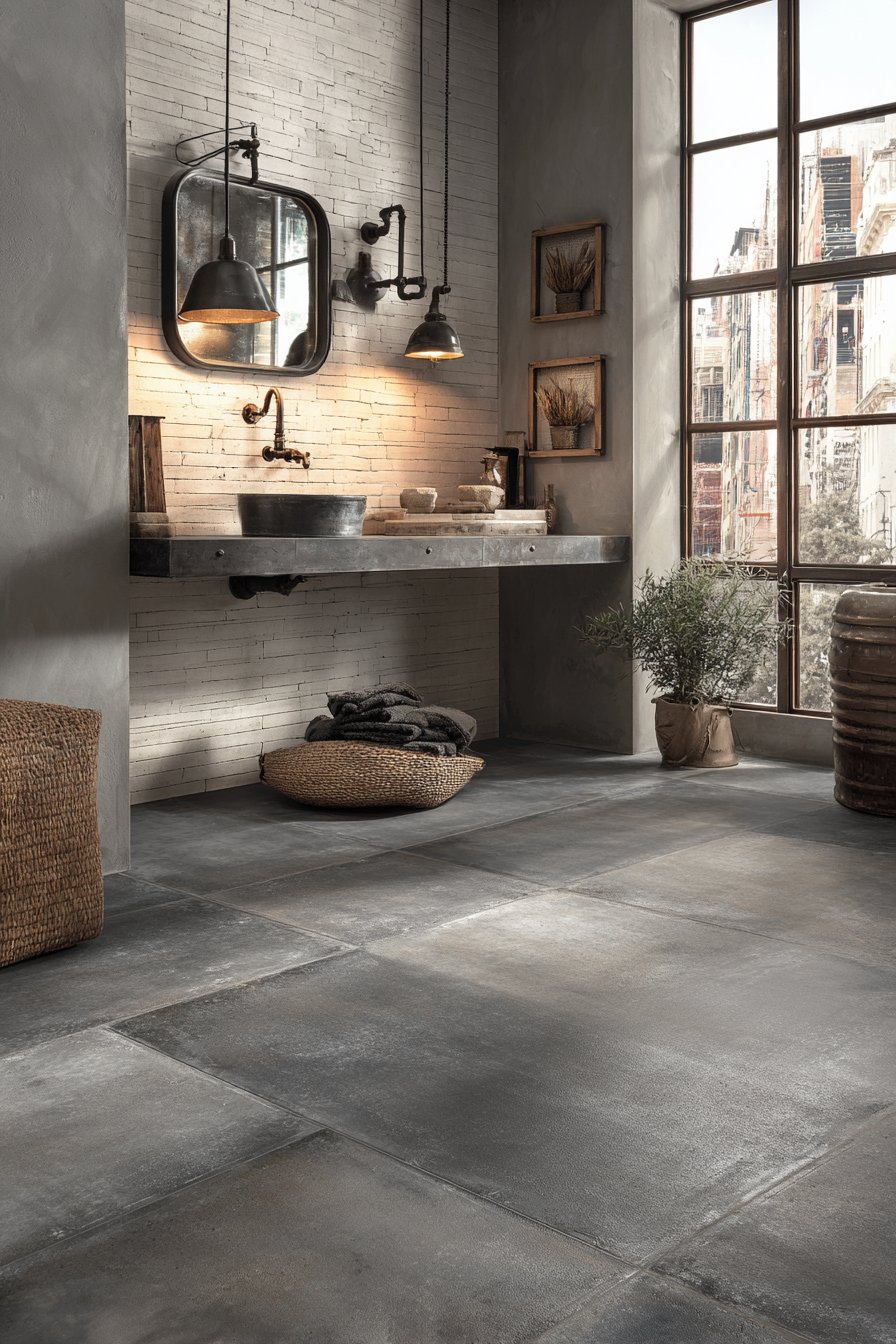
A single wall of white subway tile prevents the space from feeling too dark or oppressive, providing necessary brightness and creating strategic contrast. This demonstrates design wisdom—even when pursuing a bold aesthetic, balance and livability remain important. Interior photography with dramatic natural lighting highlights the urban edge of the neutral tile selections, showing how angled sunlight creates strong shadows across the concrete texture and emphasizes the raw, architectural quality of the space. This bathroom is for those who view their home as a loft-like canvas and appreciate design that celebrates materials in their most honest, unadorned forms.
Key Design Tips: Use darker charcoal tiles on walls with lighter grey on floors to create tonal contrast and prevent the space from feeling too dark. Choose concrete-look tiles with authentic texture and color variation rather than flat, uniform grey to add depth and realism. Incorporate matte black exposed pipe fixtures to embrace industrial aesthetics fully and celebrate functional elements. Select a raw metal vanity base—steel, iron, or blackened metal—to reinforce the urban industrial edge. Add at least one bright element like white subway tile to provide contrast and prevent darker neutrals from overwhelming the space. Ensure adequate lighting in bathrooms with darker tiles—multiple light sources including overhead, task, and accent lighting are essential to maintain functionality while enhancing the moody atmosphere.
15. Traditional Beige Travertine Versailles
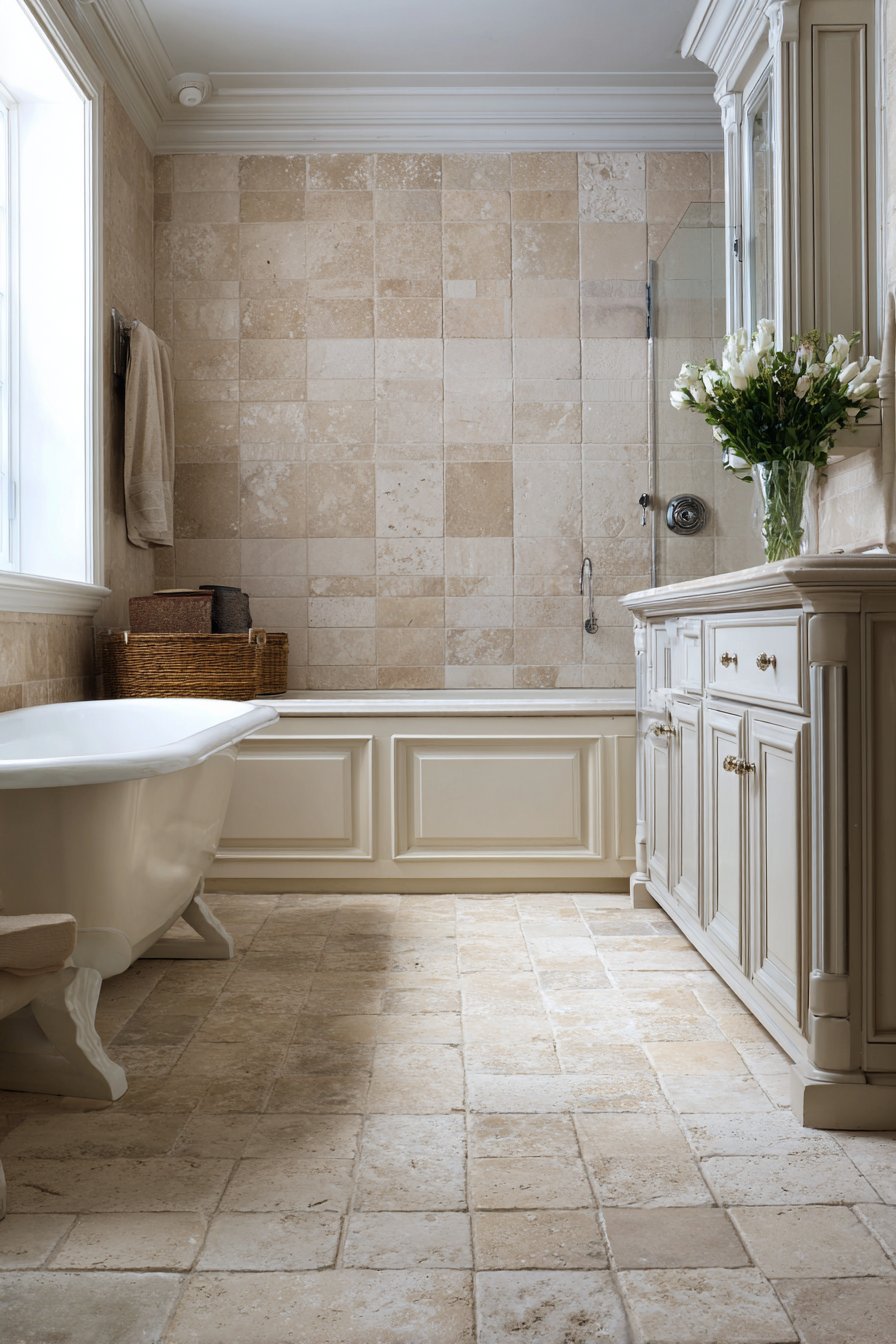
Step into Old World elegance with this traditional bathroom featuring classic beige travertine tiles with authentic chiseled edges and filled holes. These neutral bathroom tile ideas celebrate natural stone in its most traditional form, installed in a Versailles pattern that combines multiple tile sizes into an intricate, non-repeating layout. The Versailles pattern originated in French chateaus and immediately suggests luxury, history, and sophisticated taste. The beige travertine’s warm honey tones and visible geological formation—layers, veining, and small fossil impressions—create a connection to ancient Mediterranean architecture.
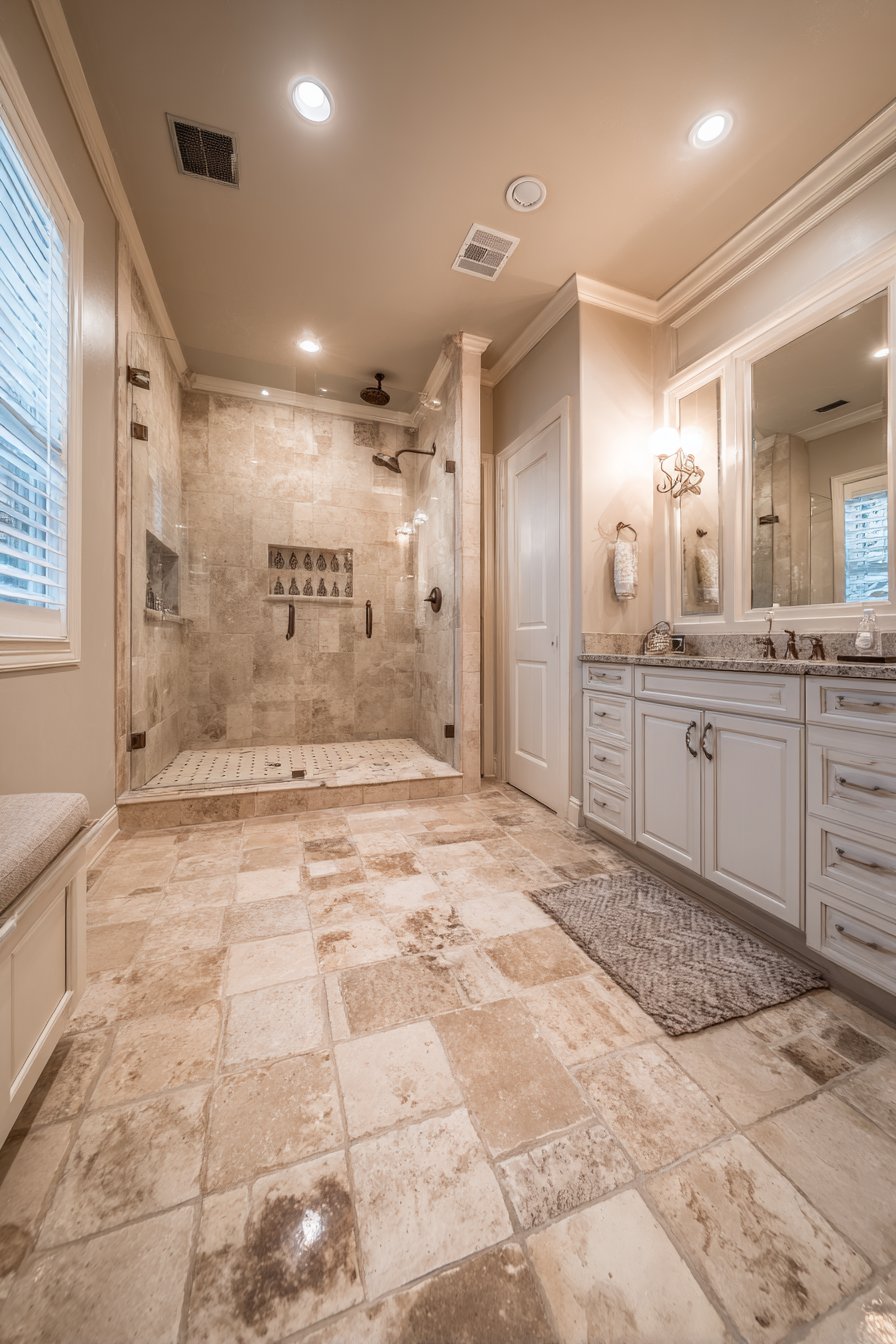
Tumbled travertine in lighter cream tones covers the shower walls, providing textural contrast to the honed floor tiles while maintaining tonal harmony. Tumbling gives travertine a softer, more aged appearance with gently rounded edges and a matte finish that suggests centuries of wear. Crown molding and wainscoting in white provide architectural detail and create visual separation between the earthy stone and painted upper walls, a classic approach that adds formality and traditional elegance. These architectural elements ground the design in historical precedent while providing practical protection for walls in high-moisture areas.
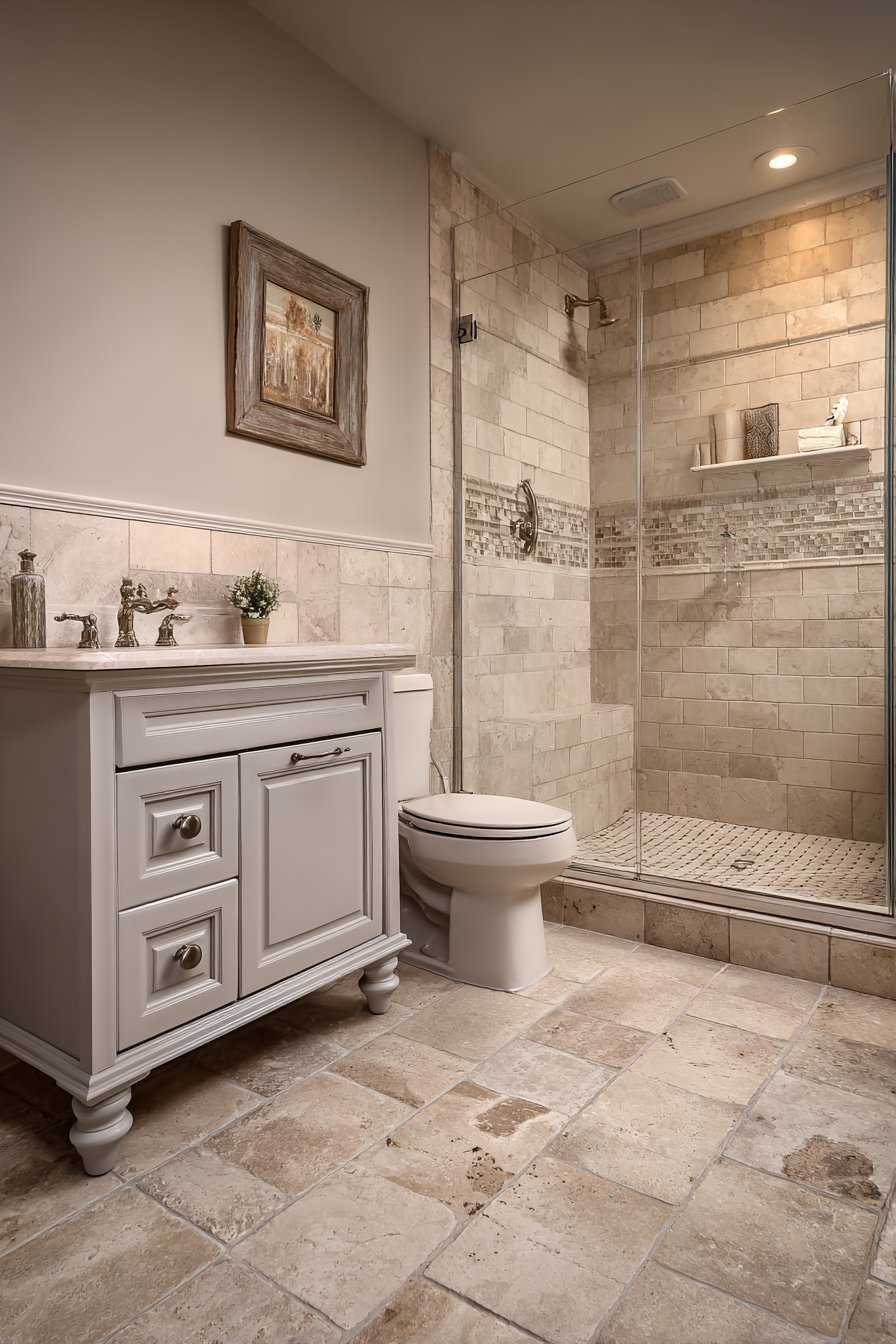
Polished nickel fixtures add timeless elegance without the too-bright quality of chrome, their soft sheen complementing the warm travertine tones. A furniture-style vanity in soft grey completes the traditional look, its detailed construction with drawers, doors, and decorative hardware suggesting fine cabinetry rather than utilitarian bathroom storage. Wide-angle photography with warm natural lighting emphasizes the Old World charm, showing how afternoon sun brings out the golden undertones in the beige travertine and creates dramatic shadows in the Versailles pattern’s intricate layout. This bathroom transcends trends, creating a classically beautiful space that will remain elegant for decades.
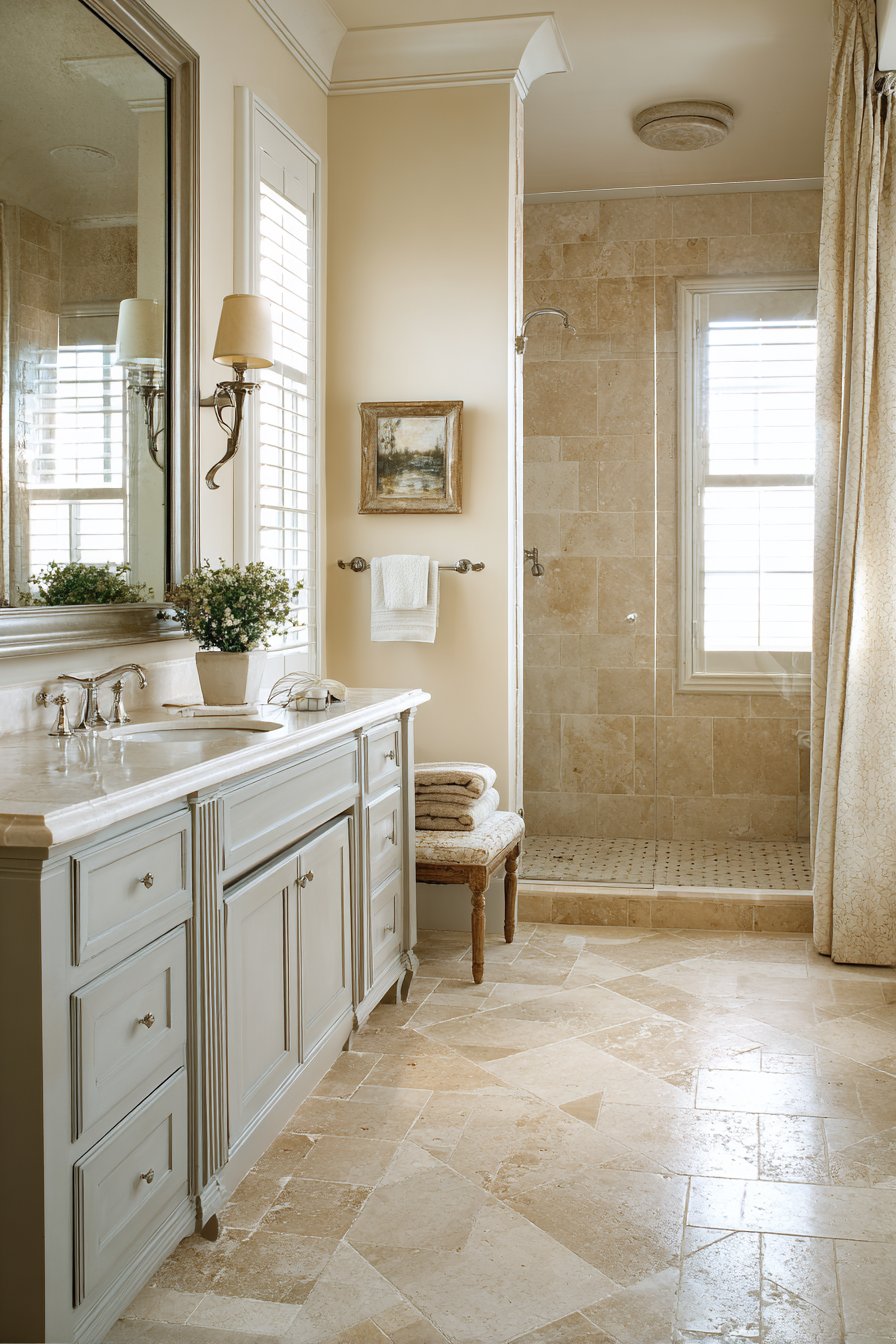
Key Design Tips: Choose natural travertine with chiseled edges and filled holes for authentic traditional character—avoid overly perfect manufactured alternatives. Install floor tiles in a Versailles pattern for immediate Old World elegance and visual sophistication. Use tumbled travertine in showers for softer texture and more aged appearance than honed finishes. Add crown molding and wainscoting in white to create architectural detail and traditional elegance. Select polished nickel fixtures rather than chrome or brass to achieve timeless elegance without being too formal or trendy. Incorporate a furniture-style vanity with detailed construction to reinforce traditional aesthetics. Seal and maintain natural stone properly—travertine requires regular sealing to prevent staining and maintain its beauty.
16. Bohemian Moroccan Pattern Play
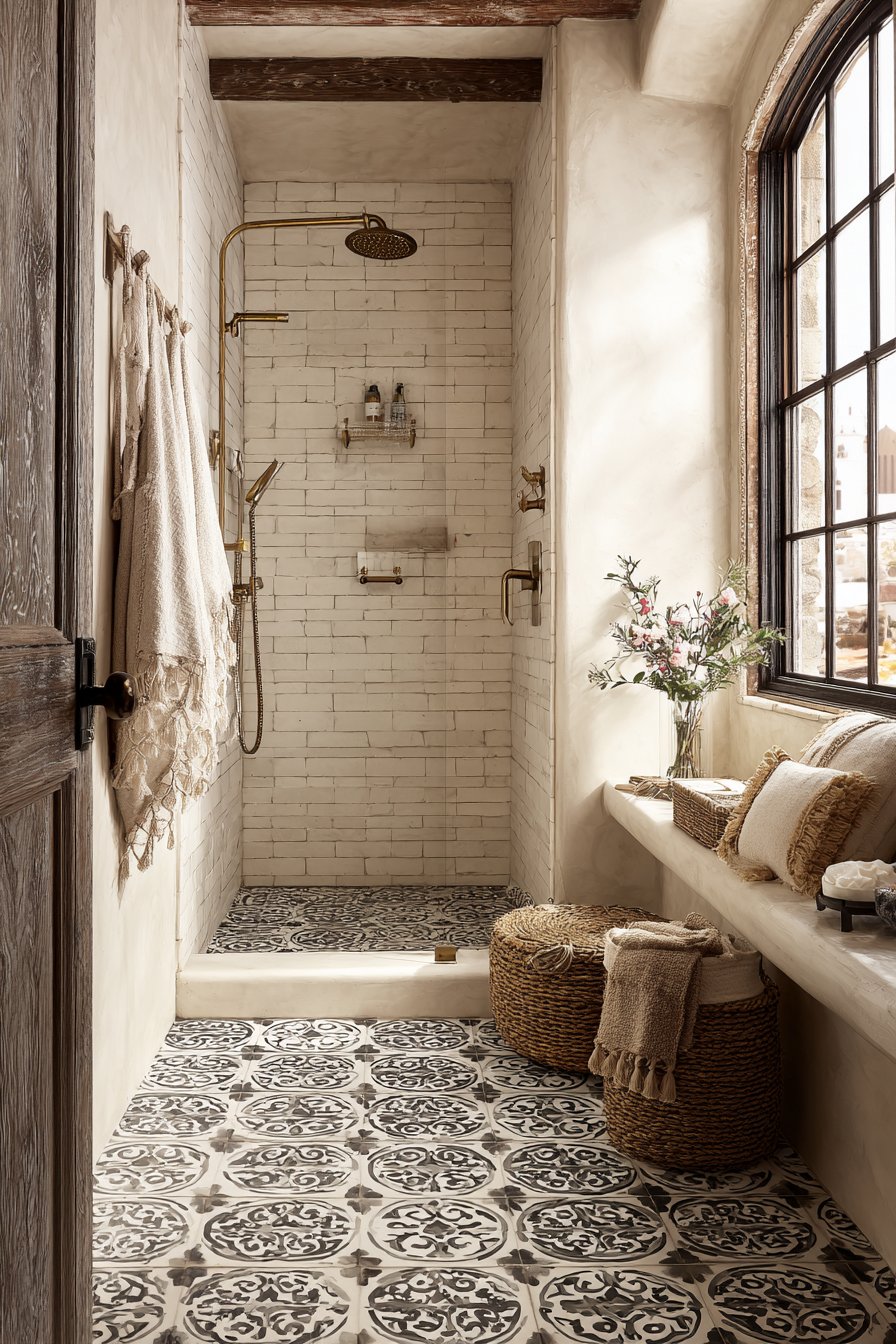
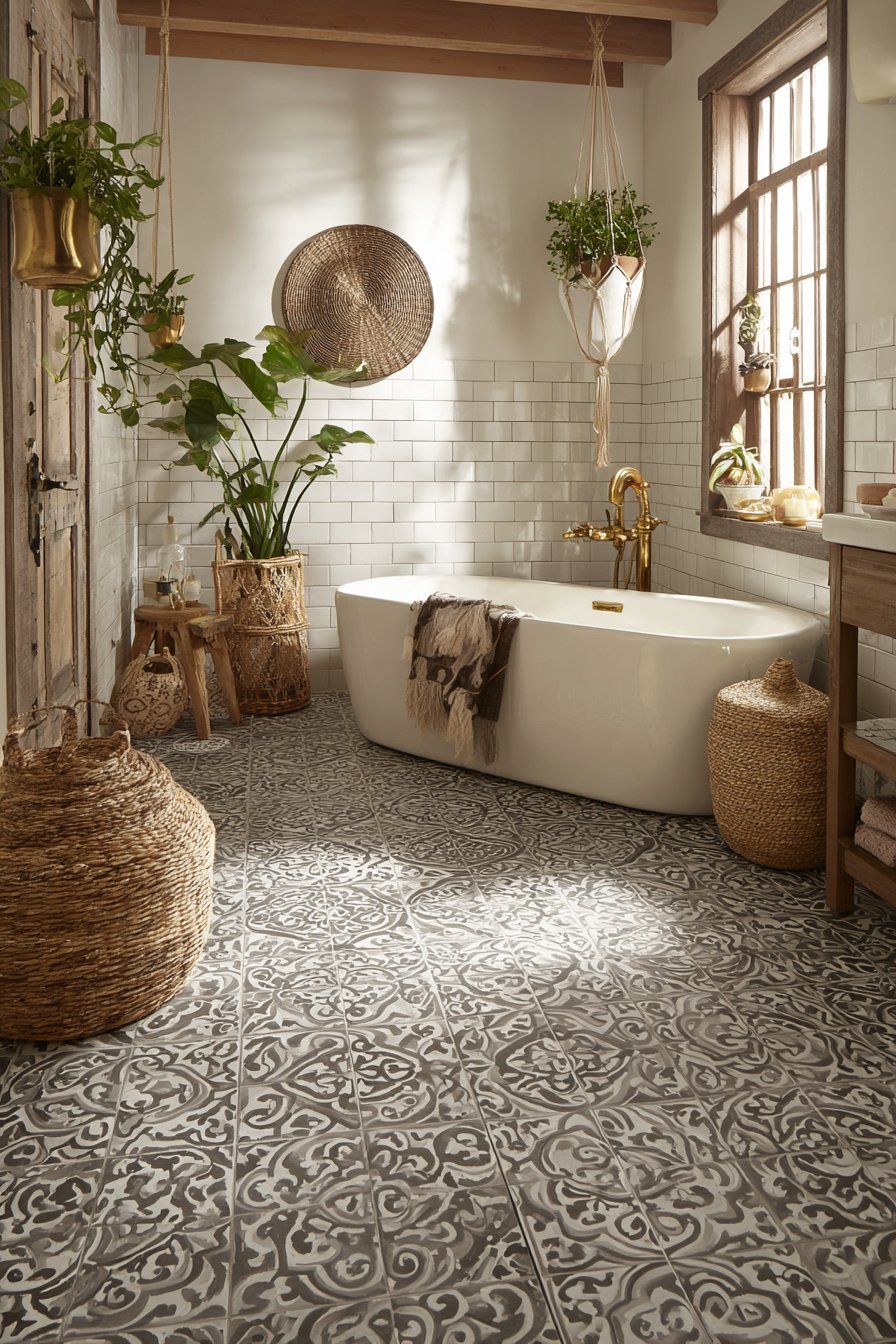
Embrace global style with this bohemian-inspired bathroom featuring Moroccan-style cement tiles in intricate patterns using only neutral tones. These neutral bathroom tile ideas prove that you can achieve the vibrant, eclectic spirit of bohemian design while maintaining the calming sophistication of a neutral palette. The pattern tiles in ivory, taupe, and charcoal create mesmerizing geometric designs that draw the eye and invite close examination—each tile interlocks with its neighbors to form larger patterns that reveal themselves gradually. This is design that rewards attention, with new details emerging the longer you look.
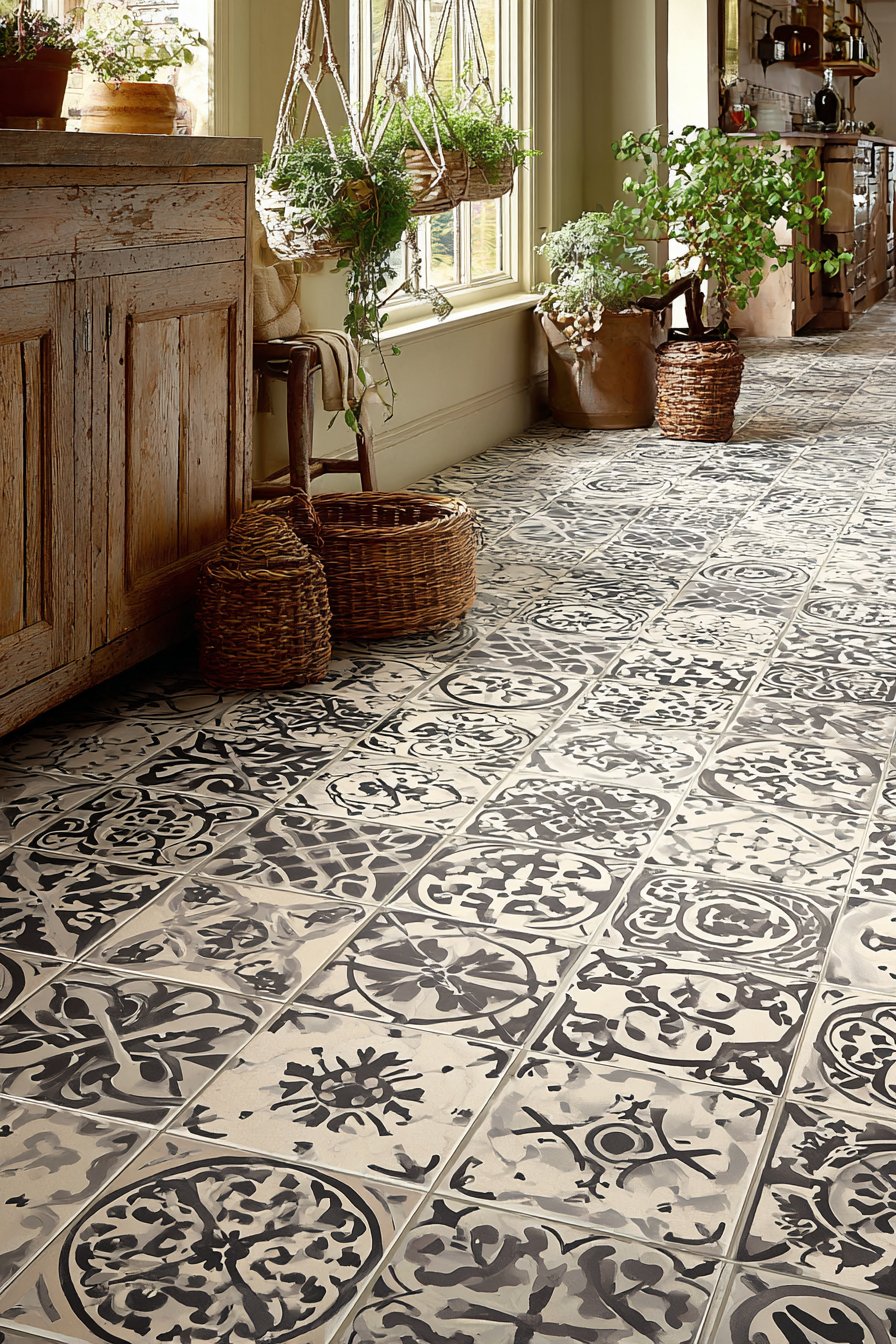
The patterned cement tiles cover the floor, creating a spectacular foundation that serves as the room’s primary decorative element. The walls take a simpler approach with plain cream subway tiles, allowing the floor pattern to truly shine without competition. This restraint is crucial when working with busy patterns—the pattern needs breathing room and simpler surroundings to prevent visual chaos. Macramé plant hangers add bohemian texture and introduce living greenery that softens the hard tile surfaces, while woven baskets provide practical storage with organic, handcrafted appeal. Brass fixtures add warmth and a touch of exotic glamour appropriate to the globally-inspired aesthetic.
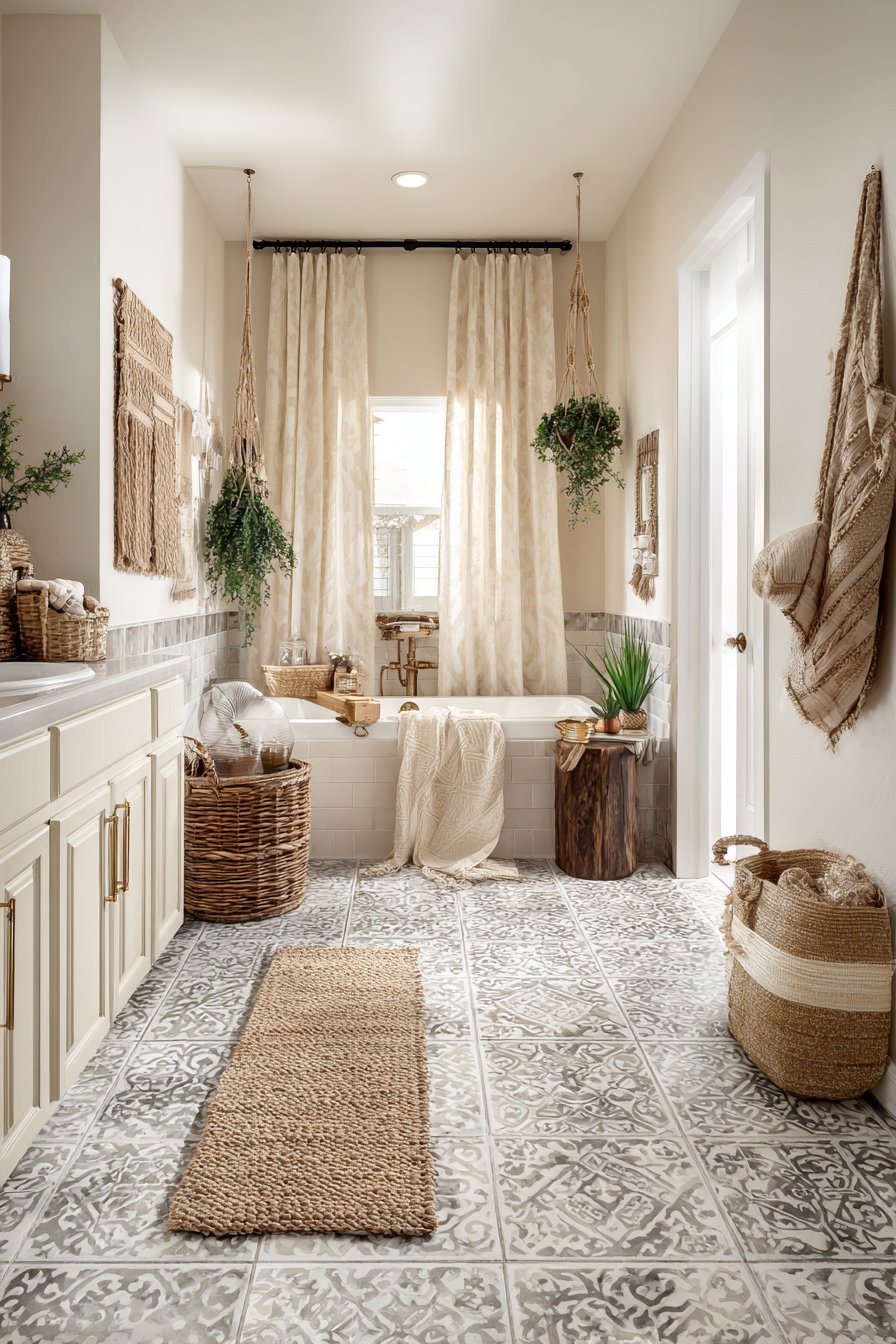
Natural lighting through a vintage window highlights the handcrafted quality and global influence of the neutral tile pattern, showing how sunlight creates shifting shadows within the geometric design throughout the day. The window itself, perhaps with original wavy glass or decorative mullions, adds architectural character and reinforces the collected, eclectic quality essential to bohemian style. This bathroom feels traveled and curated, as though each element was carefully selected over time from different sources and places, yet everything comes together through the unifying neutral color palette.
Key Design Tips: Use patterned cement tiles on floors with simple walls to showcase the pattern without creating visual overwhelm. Choose Moroccan tiles in neutral colors to achieve bohemian spirit while maintaining sophisticated restraint. Incorporate macramé, woven baskets, and natural textiles to add bohemian texture and handcrafted appeal. Select brass or mixed metal fixtures to introduce warmth and global eclecticism appropriate to the style. Include living plants in hanging planters to add life, color, and organic softness to hard tile surfaces. Seek out vintage or antique elements like mirrors, windows, or light fixtures to reinforce the collected, well-traveled aesthetic. Consider the scale of cement tile patterns—busier patterns work better in larger bathrooms with good natural light.
17. Modern Farmhouse Brick and Plank
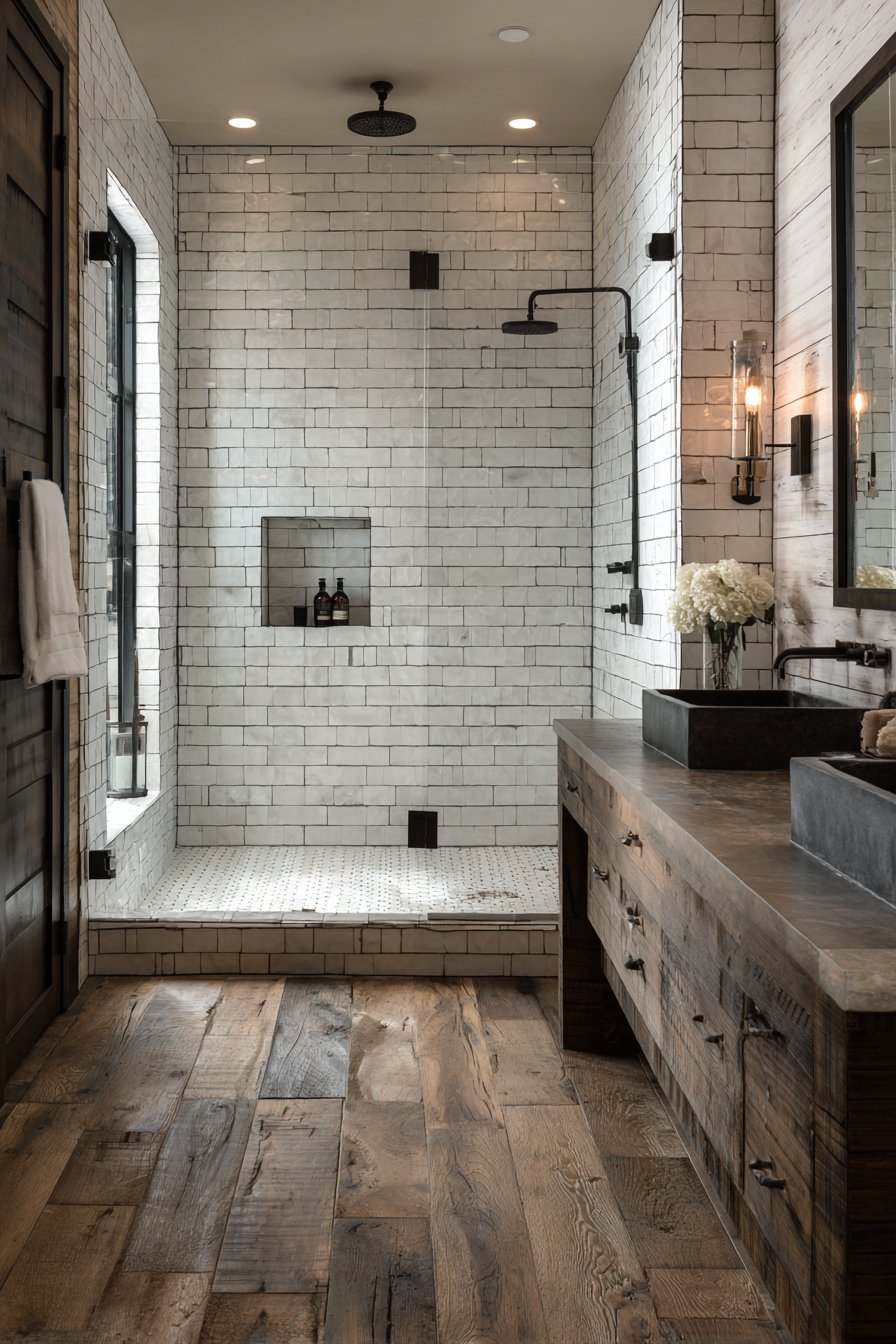
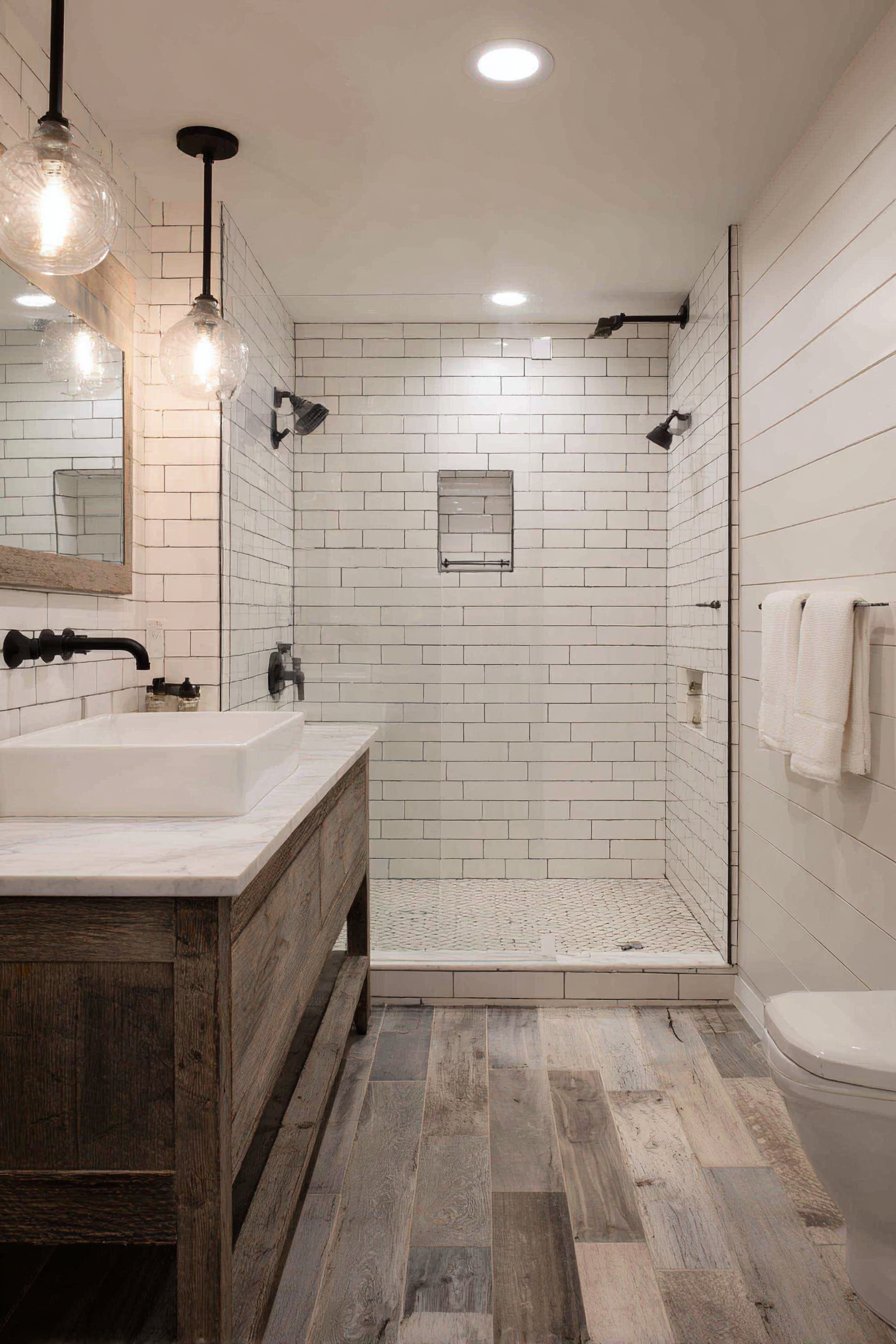
Discover rustic-refined style in this modern farmhouse bathroom that masterfully blends urban and rural influences. White brick-style tiles with deep grout lines create texture on shower walls, their dimensional quality and visible mortar lines suggesting reclaimed architectural salvage. These neutral bathroom tile ideas bridge the gap between traditional farmhouse simplicity and contemporary sophistication. The floor displays wood-plank porcelain tiles in weathered grey-brown, creating the warmth and character of hardwood floors with the practical benefits of porcelain—water resistance, durability, and easy maintenance.
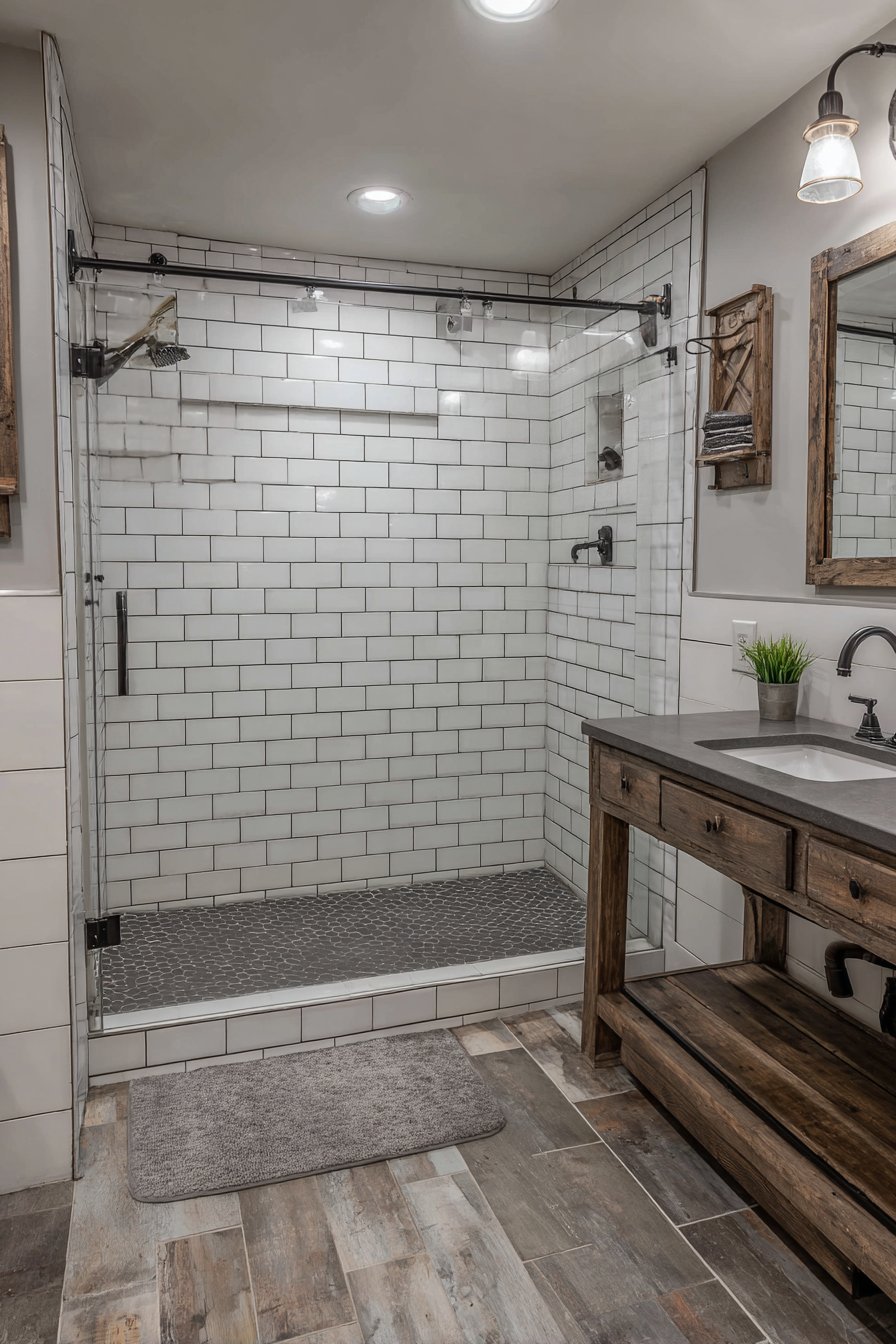
The genius of this design lies in its material translation—using porcelain to mimic other materials while gaining practical advantages. The wood-plank tiles capture authentic wood grain, knots, and color variation so convincingly you might not realize they’re ceramic until you touch them. A shiplap accent wall in soft white anchors the space, adding architectural detail and reinforcing the farmhouse aesthetic while providing textural contrast to the tiles. The horizontal boards create linear movement and visual interest without pattern or color, demonstrating how simple materials can be deployed to great effect.
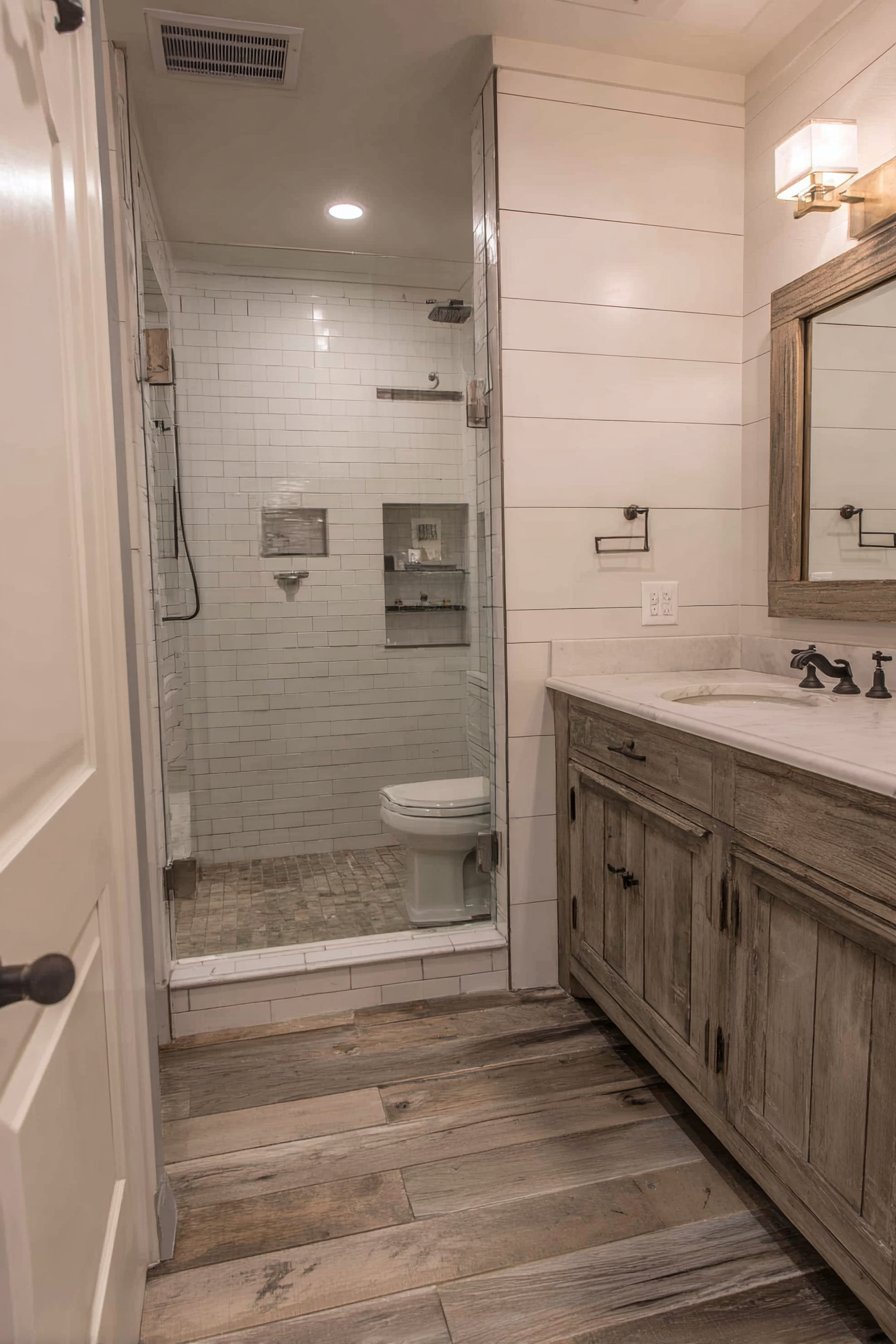
Matte black fixtures add contemporary edge and create striking contrast against the light neutral tiles, preventing the farmhouse aesthetic from feeling too sweet or cottage-like. A distressed wood vanity completes the rustic-refined look, its weathered finish and visible wear suggesting years of use and adding authentic character that manufactured perfection cannot replicate. Interior photography capturing the cozy functionality shows soft diffused lighting that creates gentle shadows across the textured brick tiles and highlights the grain in the wood-plank floor, emphasizing the layered, collected quality that makes modern farmhouse style so appealing.
Key Design Tips: Use brick-style tiles with deep grout lines to create authentic texture and dimensional interest on accent walls. Choose wood-plank porcelain tiles for bathroom floors to achieve the warmth of wood with the practicality of ceramic. Install shiplap on accent walls to add architectural detail and reinforce farmhouse style without covering every surface. Select matte black fixtures to add contemporary edge and prevent farmhouse style from feeling too traditional or precious. Incorporate a distressed or weathered wood vanity to introduce authentic character and organic texture. Balance rustic elements with clean, simple backgrounds—farmhouse works best when it’s edited rather than cluttered. Consider the direction of wood-plank tiles carefully—running them the length of the room makes narrow spaces feel wider, while running them across the width can make long narrow spaces feel more balanced.
18. Art Deco Geometric Glamour
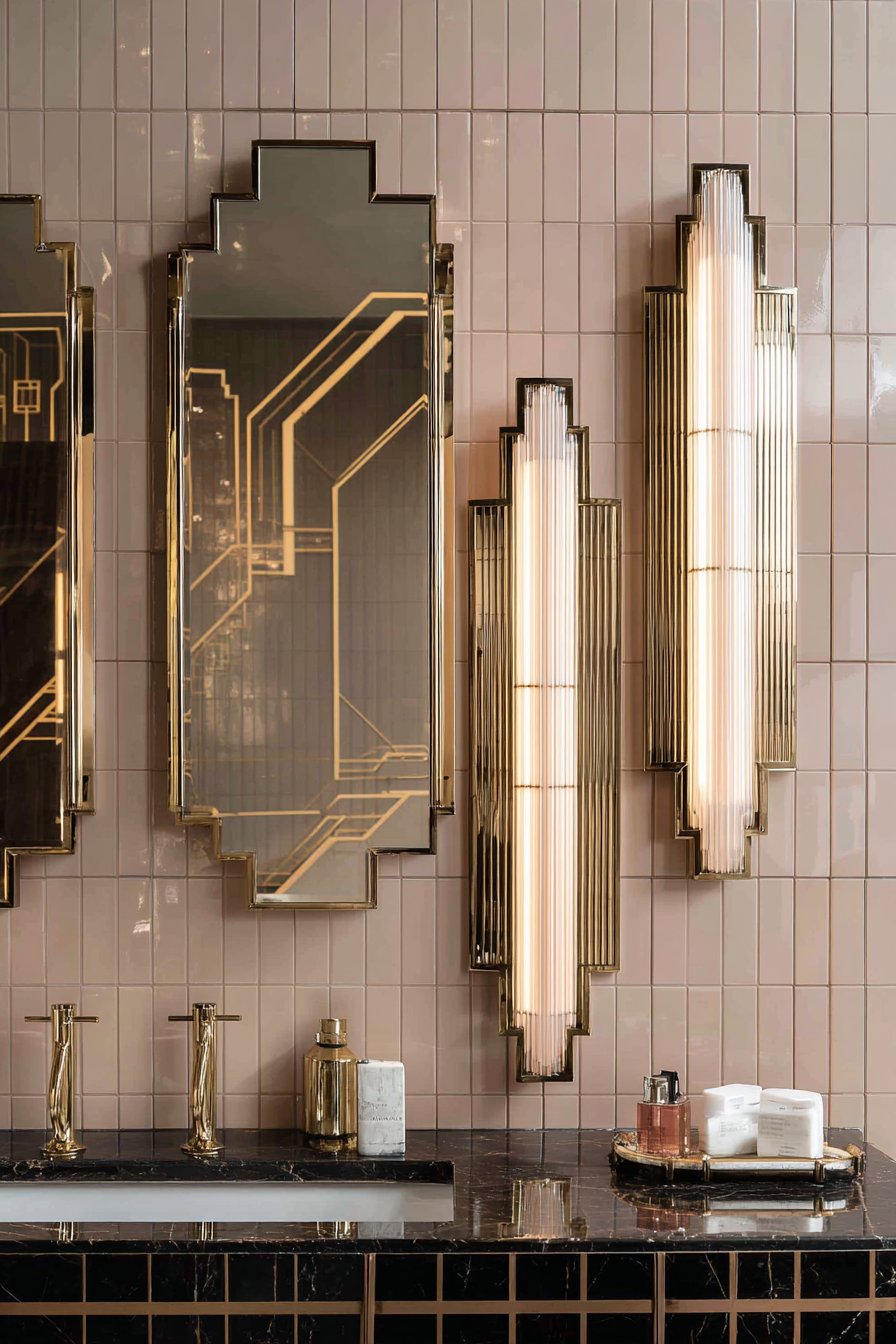
Step into the glamorous 1920s with this art deco-inspired bathroom featuring elongated rectangular tiles in sophisticated taupe arranged in a geometric stepped pattern. These neutral bathroom tile ideas capture the bold geometric spirit of the art deco era while maintaining the restraint and sophistication of a neutral palette. The stepped pattern creates dimensional interest through tile placement alone, with the three-dimensional quality casting subtle shadows that change throughout the day. This is architecture and decoration merged—the tiles themselves become sculptural elements.
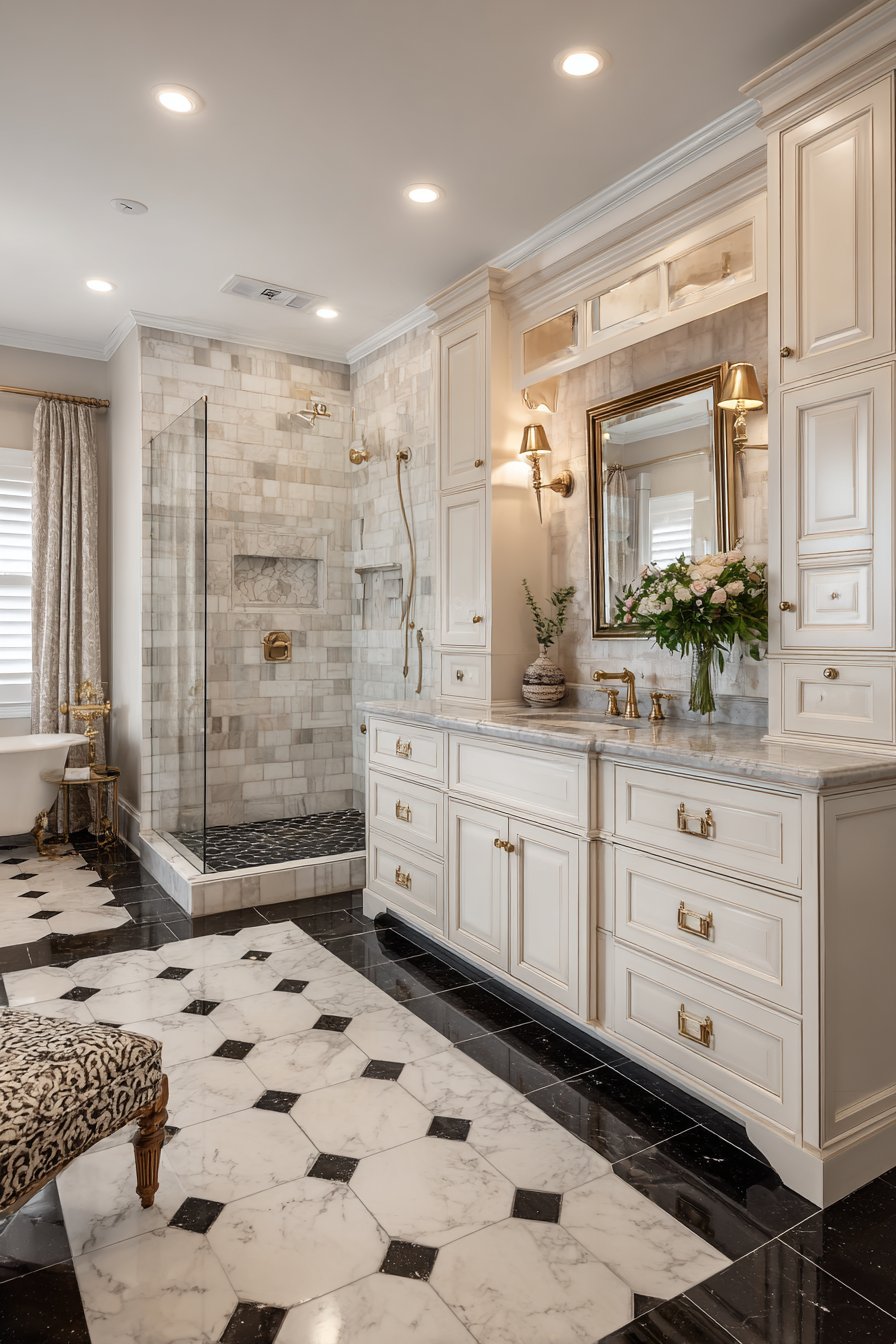
The floor showcases black and cream tiles in a classic deco checkerboard pattern, scaled appropriately for the bathroom size. The high contrast geometric floor creates drama and visual anchor while the taupe walls provide softer, more forgiving surfaces. This balance between bold pattern and neutral simplicity characterizes successful art deco revival—capturing the era’s glamour without becoming costume-like. Gold fixtures add essential luxury and warm metallic shine, their polished finish reflecting light and suggesting the prosperity and optimism of the jazz age. A marble-topped vanity with geometric details in its base construction honors the era’s love of luxurious materials and angular, streamlined forms.
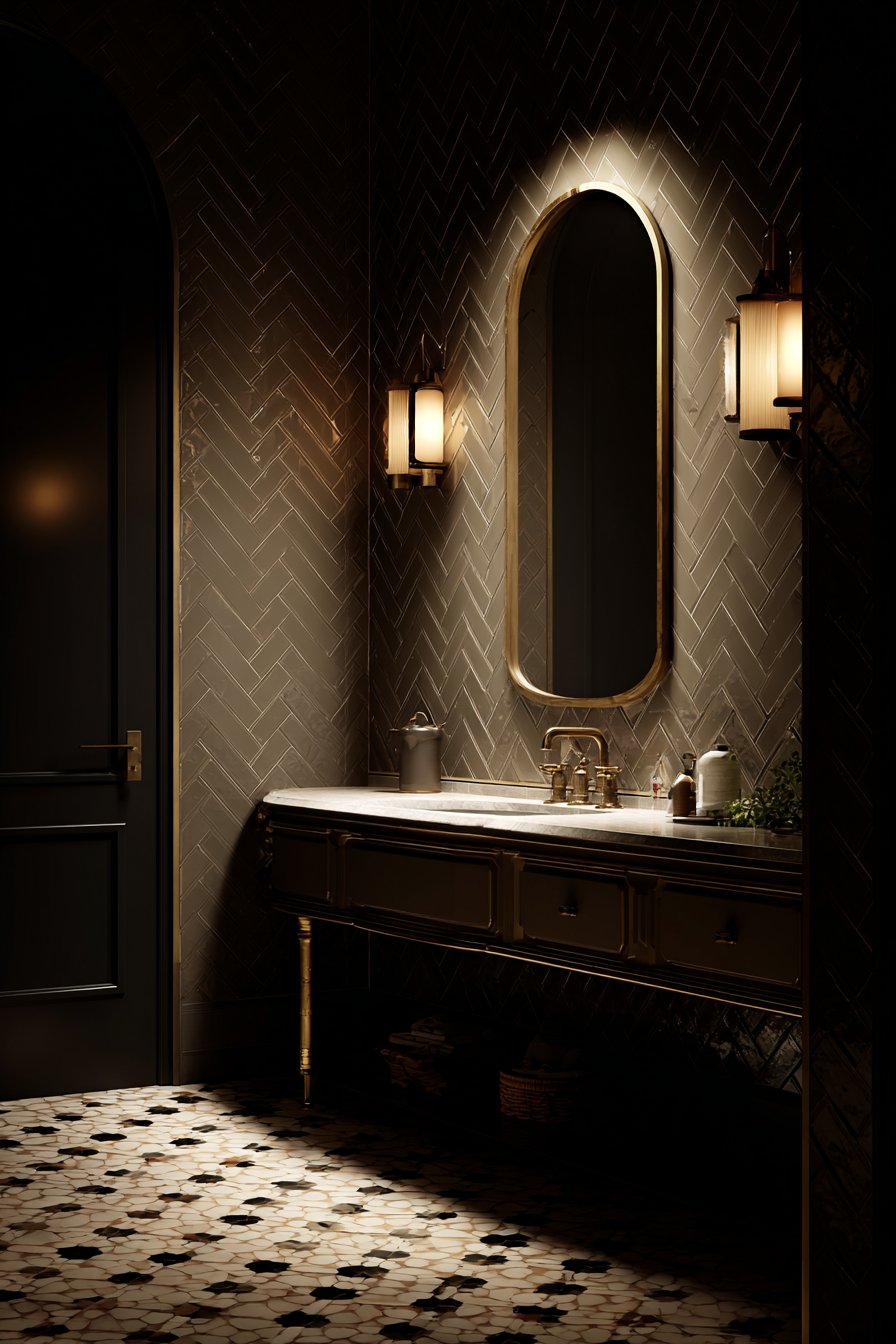
Professional photography with dramatic lighting emphasizes the glamorous geometry and refined neutral palette, showing how angled light creates strong shadows in the stepped tile pattern and highlights the contrast between black and cream floor tiles. The overall effect is sophisticated and theatrical—this bathroom makes a statement and creates an experience rather than simply providing function. It’s proof that neutral colors can be as dramatic and memorable as any bold hue when combined with strong geometric patterns and luxurious materials.
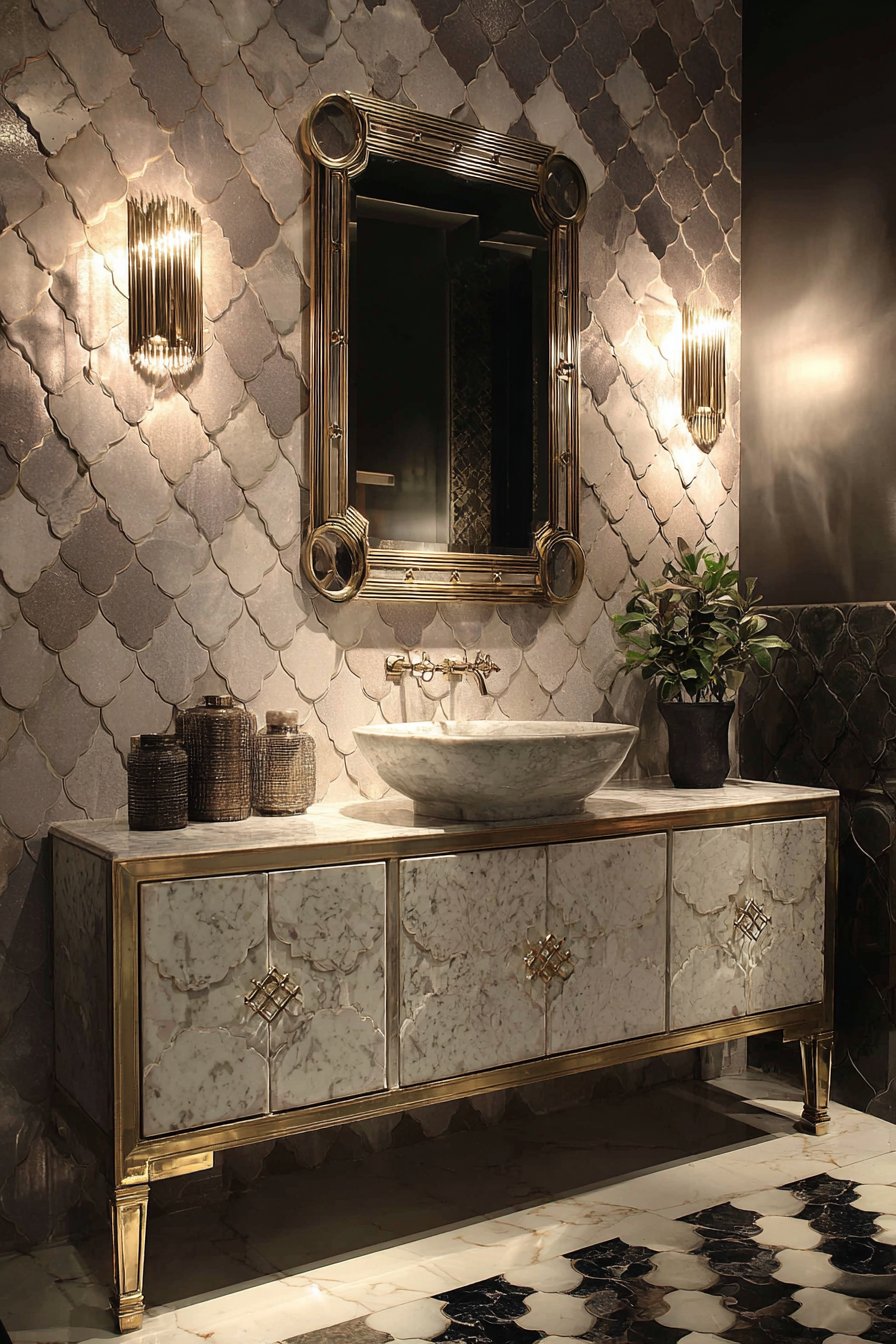
Key Design Tips: Arrange tiles in geometric patterns like stepped or basketweave designs to create architectural interest through placement alone. Use high-contrast checkerboard floors in black and cream for dramatic art deco impact—scale the pattern appropriately for your space size. Select gold or brass fixtures in polished finishes to add essential glamour and warm metallic shine characteristic of the era. Choose marble countertops and incorporate geometric details in vanity construction to honor art deco’s love of luxury materials and angular forms. Balance bold geometric floors with simpler walls to prevent the space from feeling too busy or overwhelming. Consider symmetry carefully—art deco design often emphasizes perfect bilateral symmetry that creates a sense of order and formality. Ensure adequate dramatic lighting—art deco spaces benefit from statement fixtures and strong directional light that emphasizes shadows and geometry.
19. Wellness Linen-Texture Cocoon
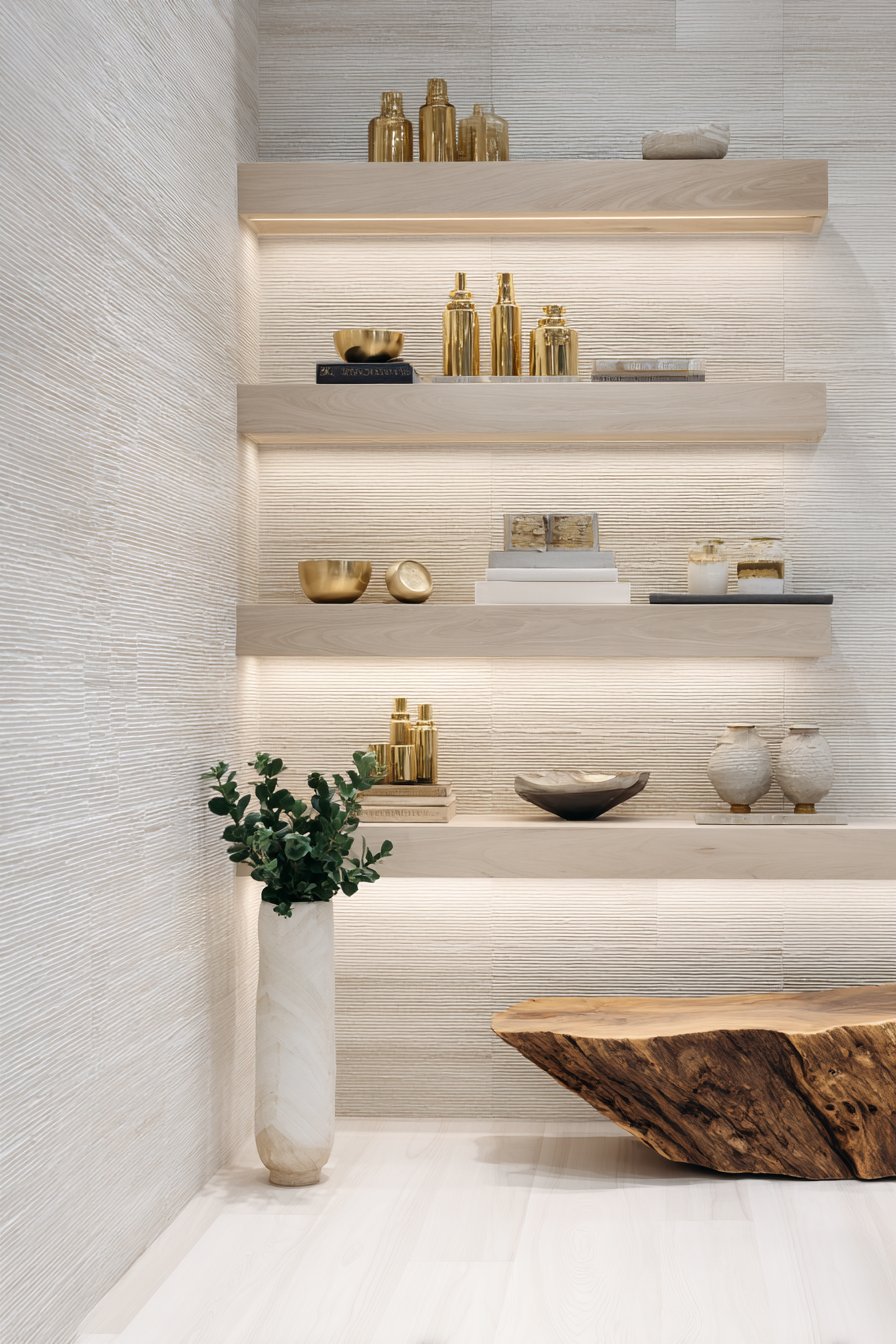
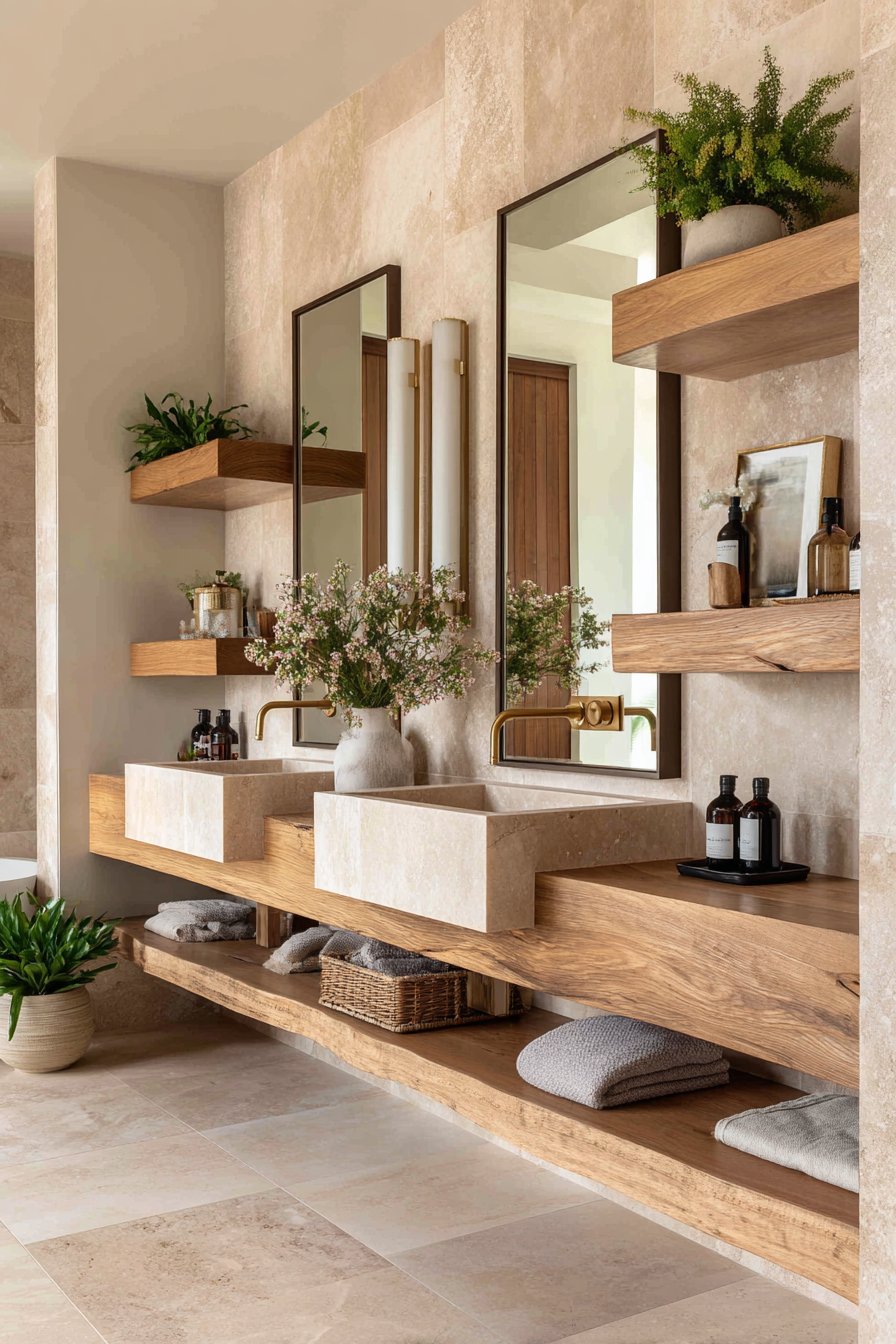
Find your sanctuary in this wellness-focused bathroom featuring large-format porcelain slabs in warm sand beige with subtle texture that mimics natural linen fabric. These neutral bathroom tile ideas create a unique sensory experience—the tiles look and feel like woven textile, with delicate crosshatch patterns that suggest fabric threads. The continuous tile application from floor to ceiling creates a seamless, enveloping cocoon that promotes relaxation and withdrawal from the outside world. This is design as therapy, where every material choice supports mental and physical wellbeing.
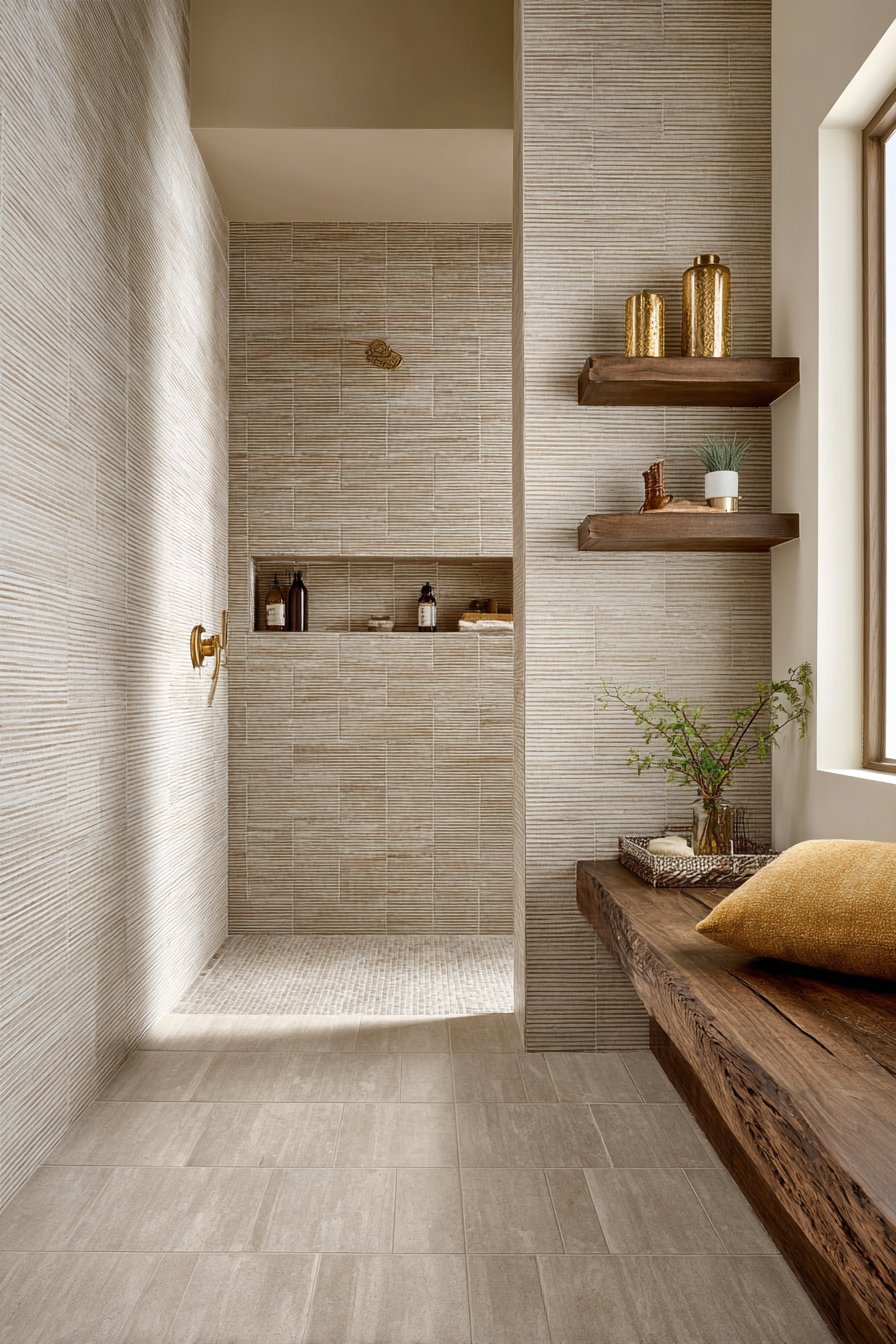
The linen-texture tiles demonstrate how far ceramic technology has advanced—capturing not just the visual appearance but also the tactile quality of fabric in durable, water-resistant porcelain. Recessed LED lighting behind floating shelves creates an ambient glow that highlights the textural quality of the tiles without harsh direct illumination. This layered lighting approach—combining general overhead light with accent lighting—allows for customization based on mood and time of day. Matte gold fixtures add warmth and a touch of luxury appropriate for a wellness-focused space, their soft gleam suggesting quality without ostentation.
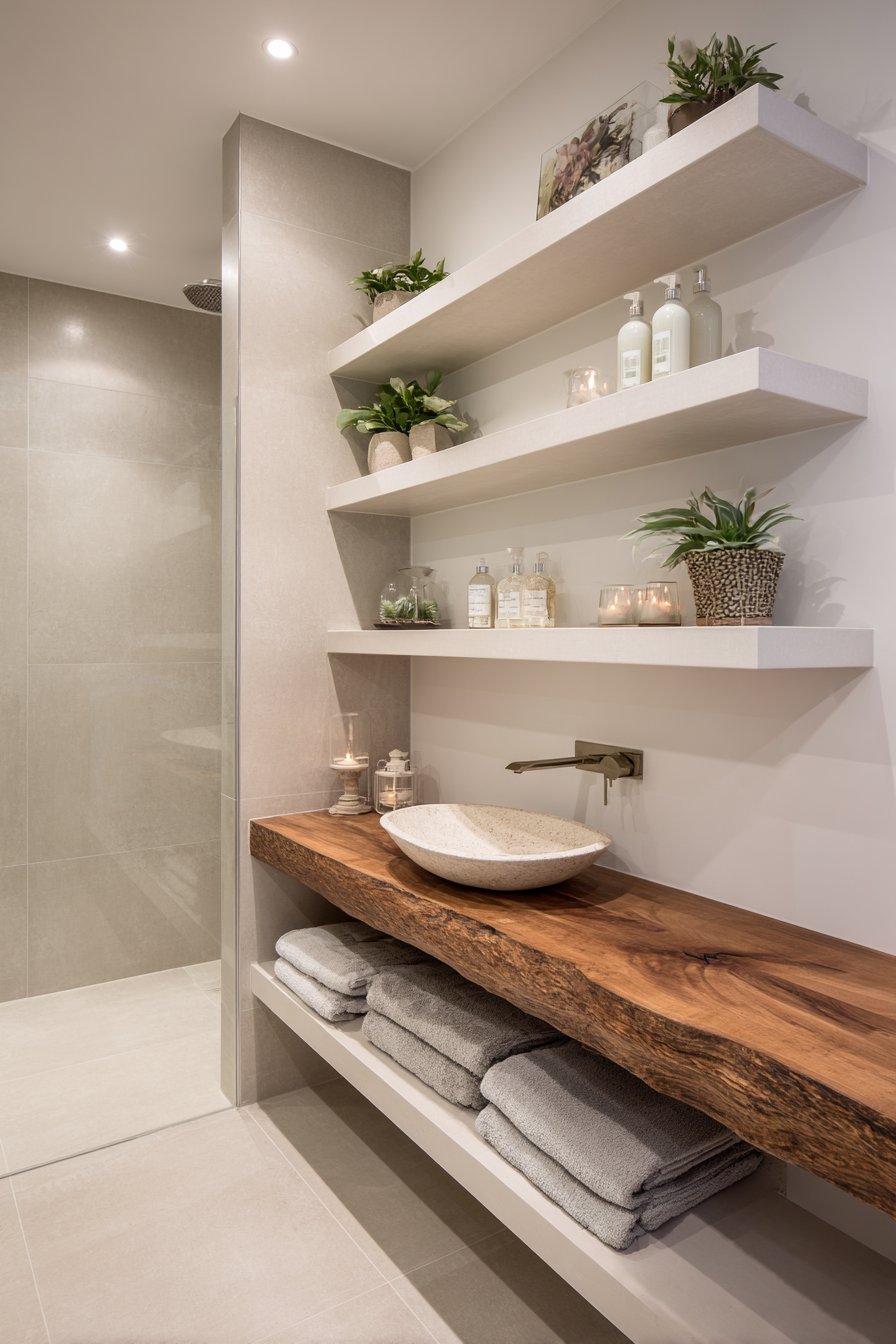
A live-edge wood vanity introduces essential organic texture and connection to nature, its irregular edge and visible grain patterns celebrating the tree it came from rather than attempting to disguise its origins. Interior design photography with soft, even lighting emphasizes the calming, monochromatic neutral approach, showing how the gentle shadows across the linen-textured tiles create subtle movement without disruption. This bathroom supports daily wellness rituals—long soaks, skincare routines, meditation—by creating an environment that feels removed from stress and focused on restoration.
Key Design Tips: Choose textured tiles that mimic natural materials like linen, woven fabric, or raw silk to create unique sensory experiences. Install tiles continuously from floor to ceiling in similar tones to create an enveloping, cocoon-like effect. Incorporate recessed LED lighting in shelving and niches to create ambient glow and highlight textural details. Select matte gold fixtures to add warmth and subtle luxury appropriate for wellness-focused spaces. Include a live-edge wood vanity to introduce organic texture and authentic connection to natural materials. Layer lighting sources to allow customization—combine overhead ambient light with task lighting and accent lighting. Maintain a strict monochromatic or analogous color scheme in wellness spaces to promote calm and reduce visual stimulation. Consider adding elements like heated floors, towel warmers, or steam features that enhance the wellness experience beyond aesthetics.
20. Mediterranean Terracotta Warmth
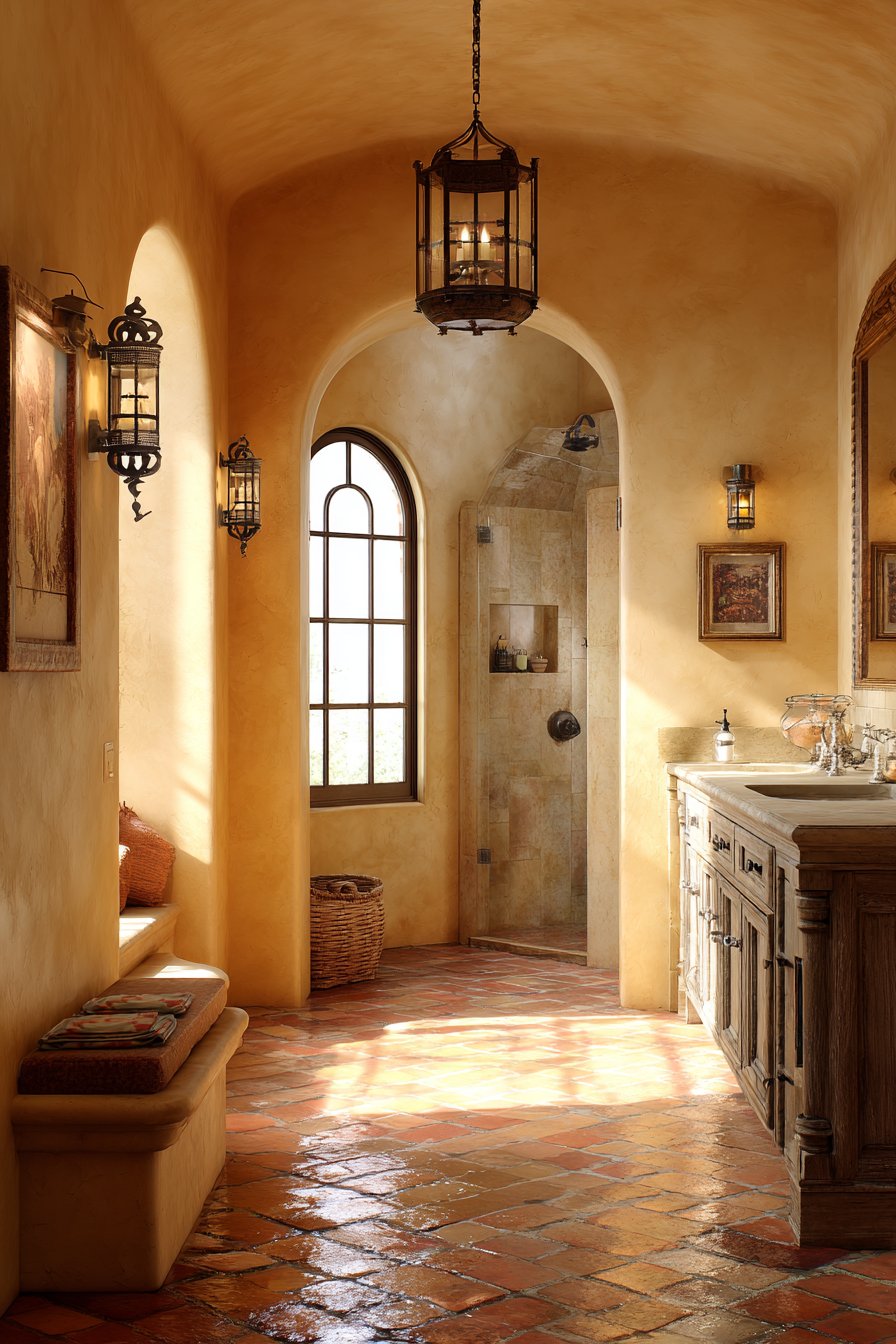
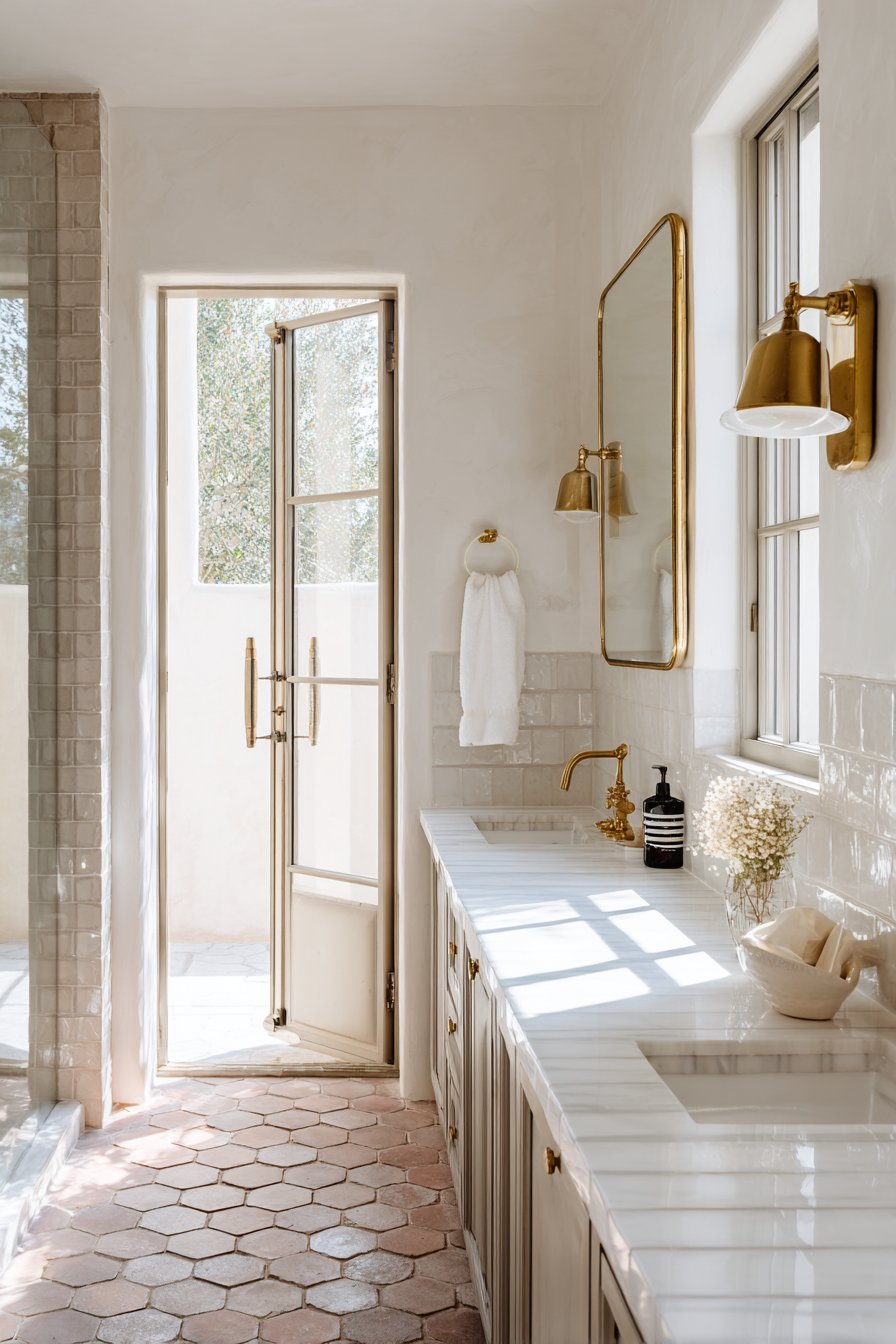
Transport yourself to the sun-drenched Mediterranean with this bathroom displaying terracotta-colored tiles with authentic handmade irregularities. These neutral bathroom tile ideas embrace the warm end of the neutral spectrum, with rich earthy tones that evoke clay, fired pottery, and ancient architecture. The floor tiles showcase the beautiful imperfections of traditional handcrafted ceramics—slight size variations, color gradations, and surface irregularities that prove these are made by human hands rather than machines. This authentic craftsmanship adds soul and character impossible to achieve with perfect manufactured tiles.
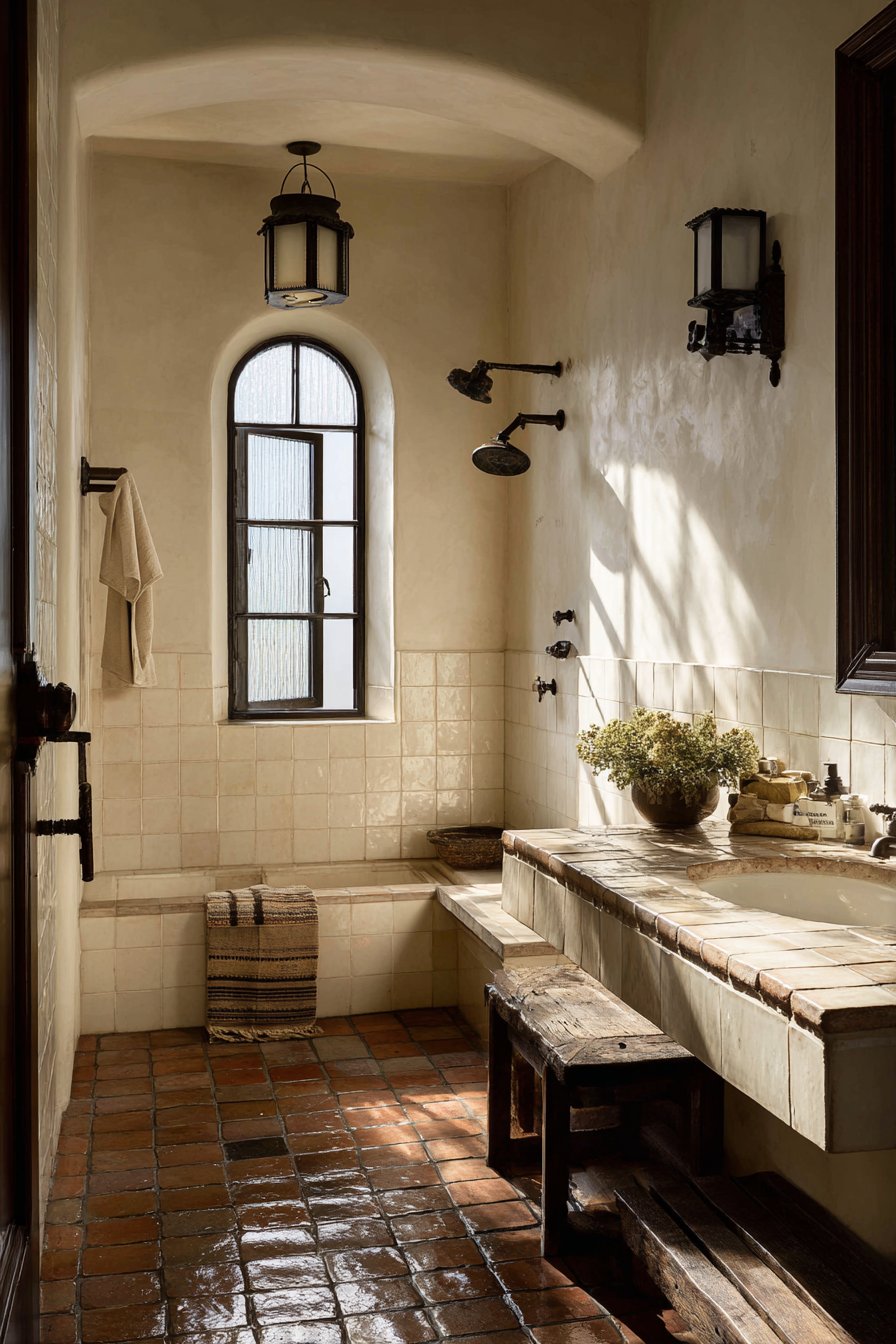
Cream-colored zellige tiles with characteristic surface variation cover the shower walls, their hand-cut edges and faceted surface catching light differently from every angle. Zellige is a traditional Moroccan tilework technique where each small tile is individually chipped from a larger clay slab, resulting in slightly irregular shapes that create a softly undulating surface when installed. The way these tiles reflect light—sometimes glossy, sometimes matte, always changing—creates a living surface that responds to sunlight and shadow throughout the day. Wrought iron fixtures and a plaster-finished vanity base maintain regional authenticity, their hand-forged and hand-troweled qualities reinforcing the artisanal theme.
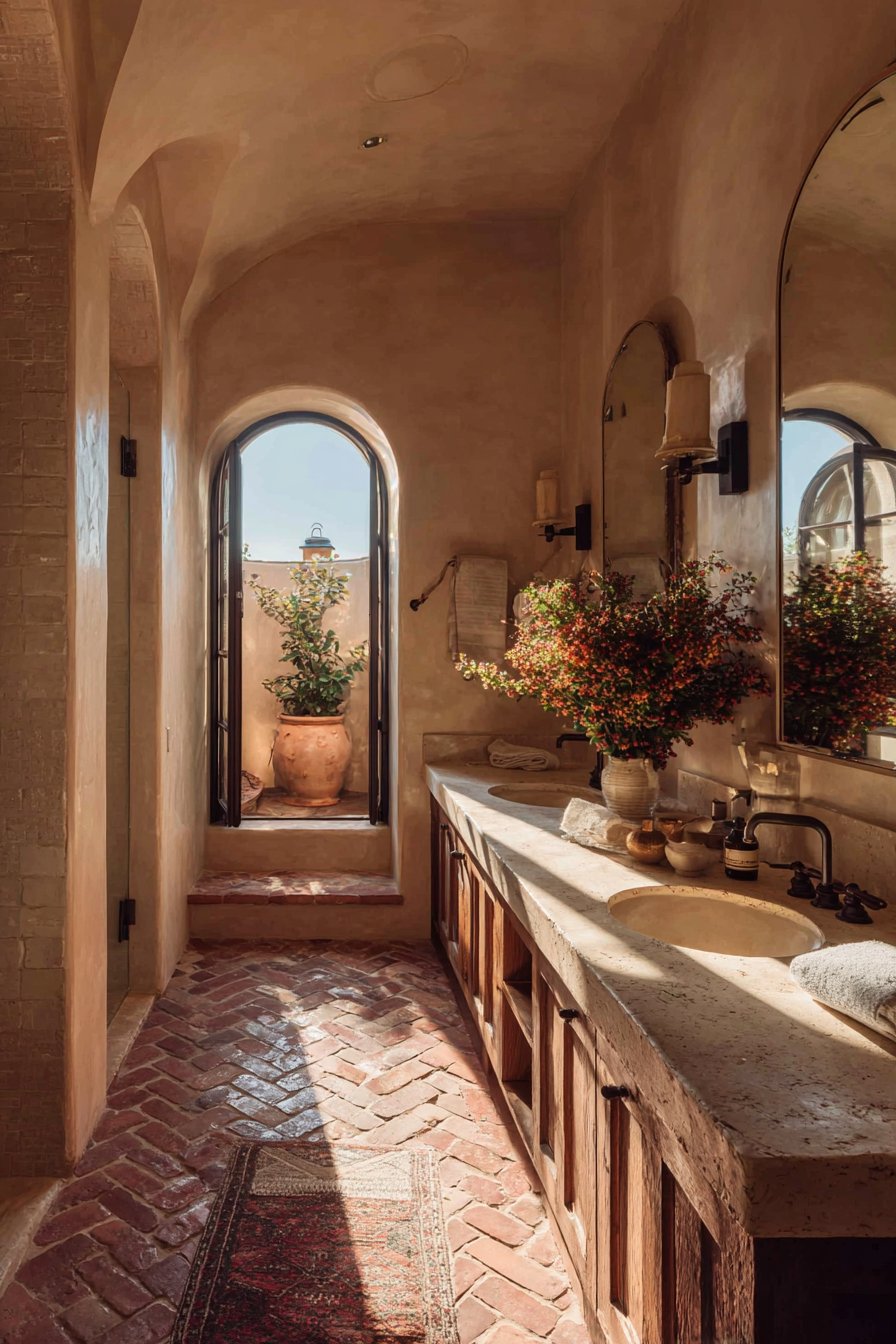
Natural sunlight through an arched window illuminates the rich textures and sun-baked quality of the neutral tile selections, casting dramatic shadows that emphasize the dimensional quality of the zellige and highlight the warm terracotta tones. The arched window itself—perhaps with decorative wrought iron grillwork or simple shutters—reinforces the Mediterranean connection and adds architectural character. This bathroom celebrates traditional craftsmanship and regional design wisdom developed over centuries in hot, dry climates where tile work reached extraordinary heights of beauty and sophistication.
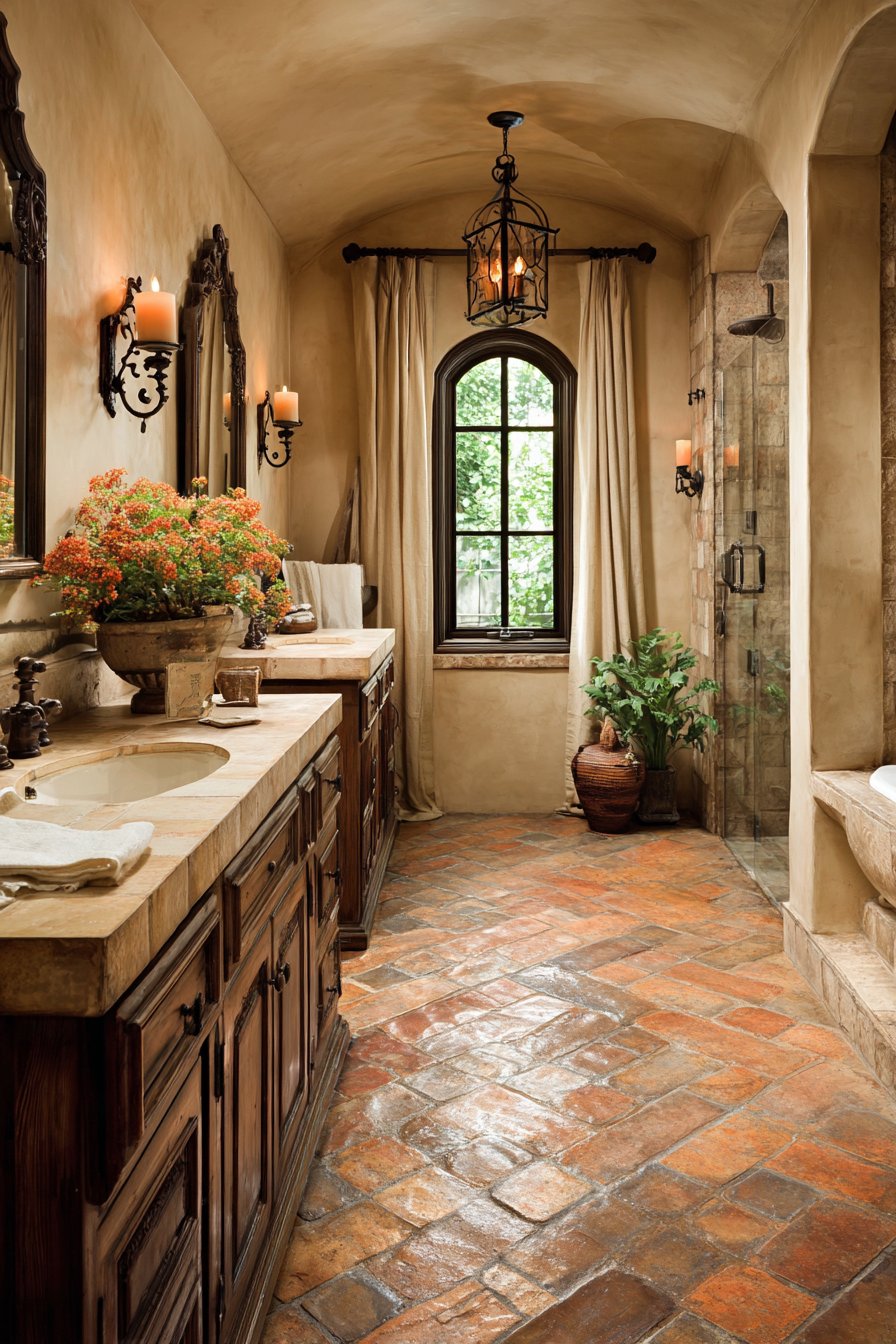
Key Design Tips: Choose terracotta tiles with visible handmade irregularities to embrace authentic craftsmanship and regional character. Use zellige or other hand-cut tiles in shower areas to create fascinating light-reflective surfaces that change throughout the day. Select wrought iron fixtures to reinforce Mediterranean authenticity and add handcrafted metalwork. Incorporate plaster or tadelakt finishes on vanity or accent walls to add traditional artisanal texture. Include arched architectural elements like windows, doorways, or niches to strengthen the Mediterranean connection. Embrace color variation within your terracotta tiles—the shifting from light to dark, orange to brown, is part of their authentic beauty. Consider the orientation and quantity of natural light—Mediterranean-inspired bathrooms benefit from abundant sunlight that brings out the warmth in terracotta tones and creates dramatic shadows.
21. Contemporary Concrete Minimalist Flow
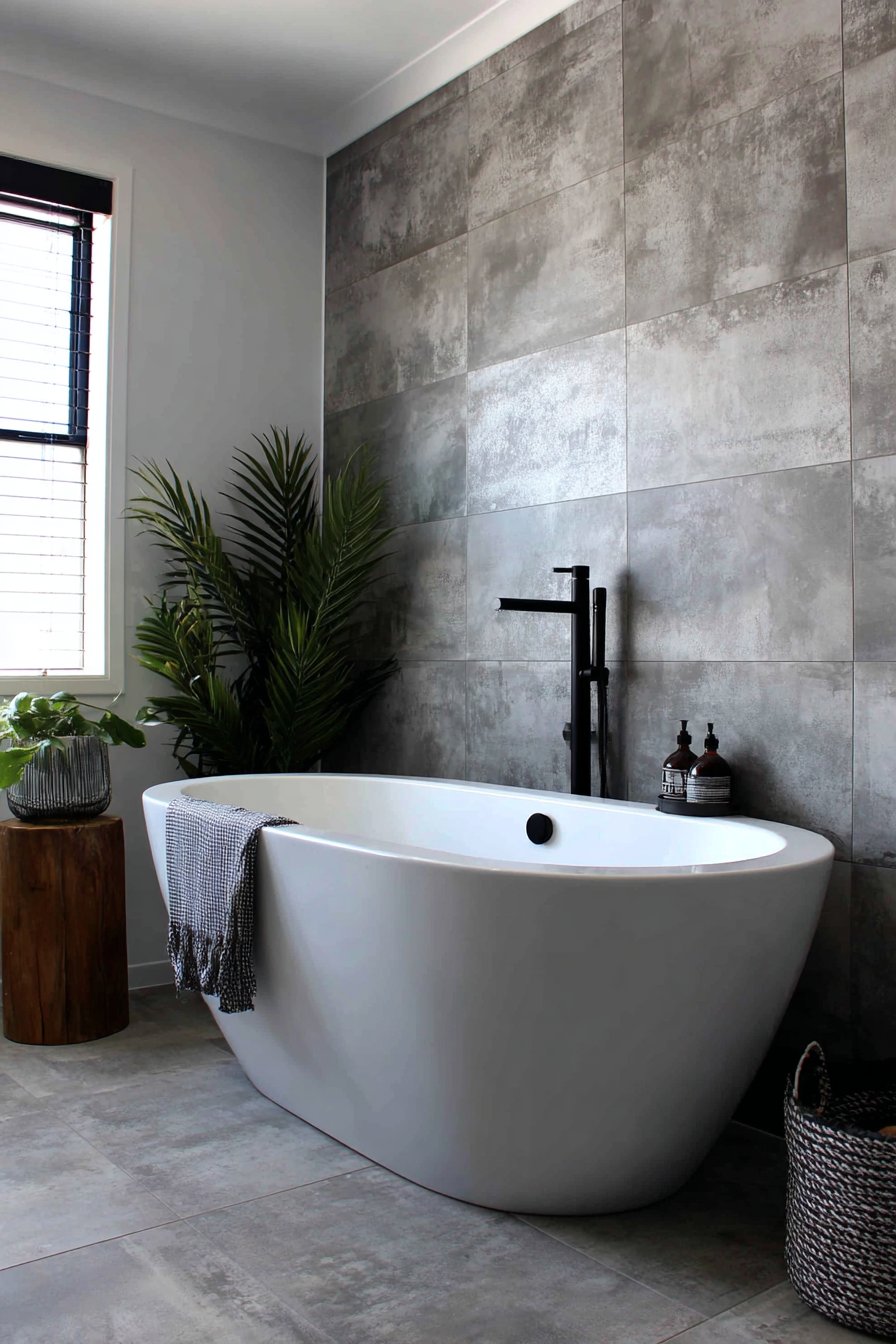
Experience modern luxury in this contemporary bathroom featuring extra-large 36×36 inch tiles in soft grey with realistic concrete texture. These neutral bathroom tile ideas create a seamless modern look with minimal grout lines—an essential characteristic of contemporary design where clean, uninterrupted surfaces reign supreme. The soft grey tone provides sophistication without coldness, its subtle warm undertones preventing the industrial concrete aesthetic from feeling harsh. A feature wall behind the freestanding tub uses the same tiles in vertical orientation, creating subtle visual interest through directional change while maintaining perfect material consistency.
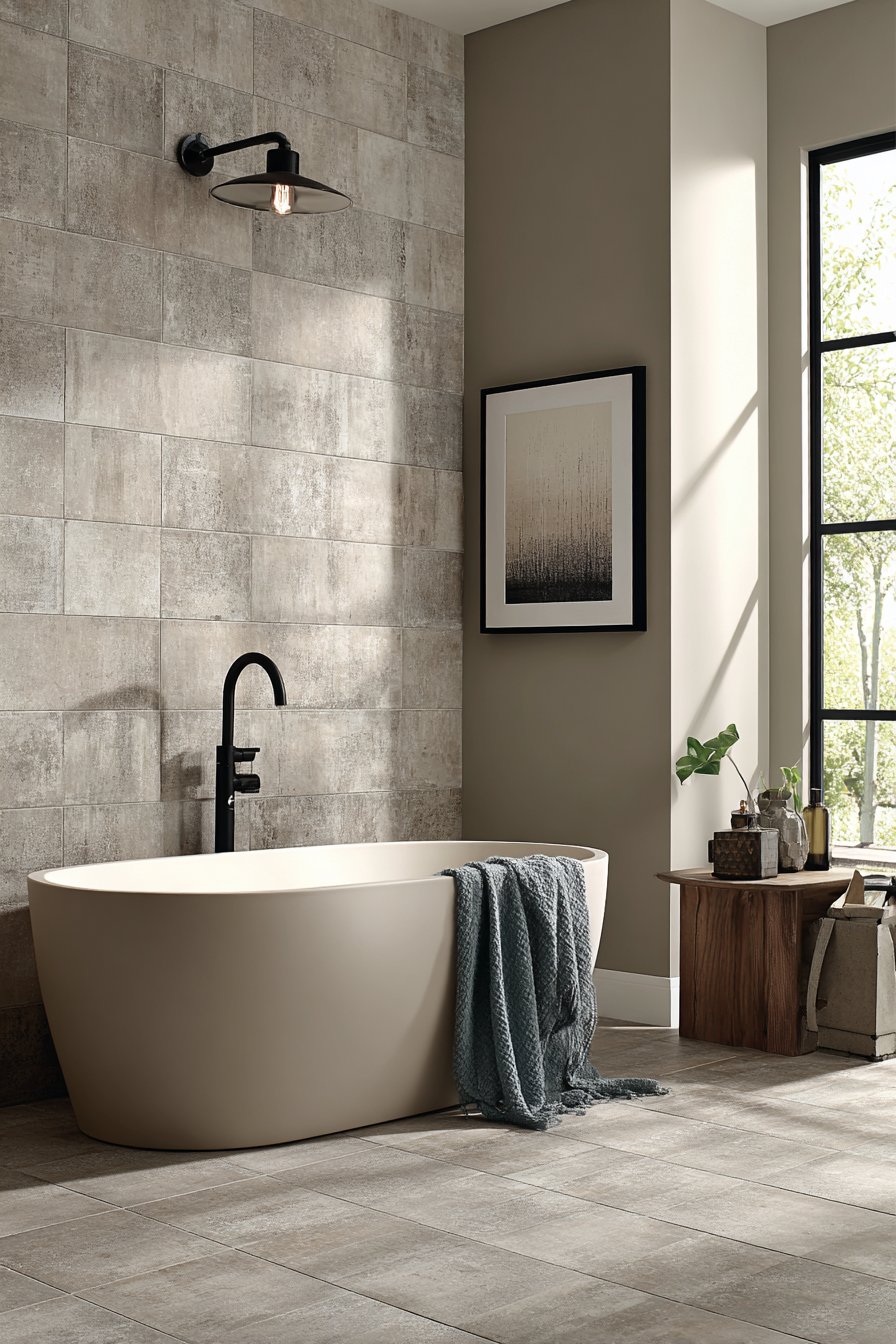
The shower displays smaller coordinating tiles in lighter grey, demonstrating sophisticated color gradation within the same material family. This tonal layering—darker walls, lighter accent surfaces—creates depth and prevents monochromatic spaces from feeling flat. The size variation between large wall tiles and smaller shower tiles also serves practical purposes, with the smaller format providing better drainage and slip resistance in the wet area. Matte black fixtures provide striking contemporary contrast, their dark forms creating crisp definition against the grey tiles while maintaining the sophisticated, minimal aesthetic.
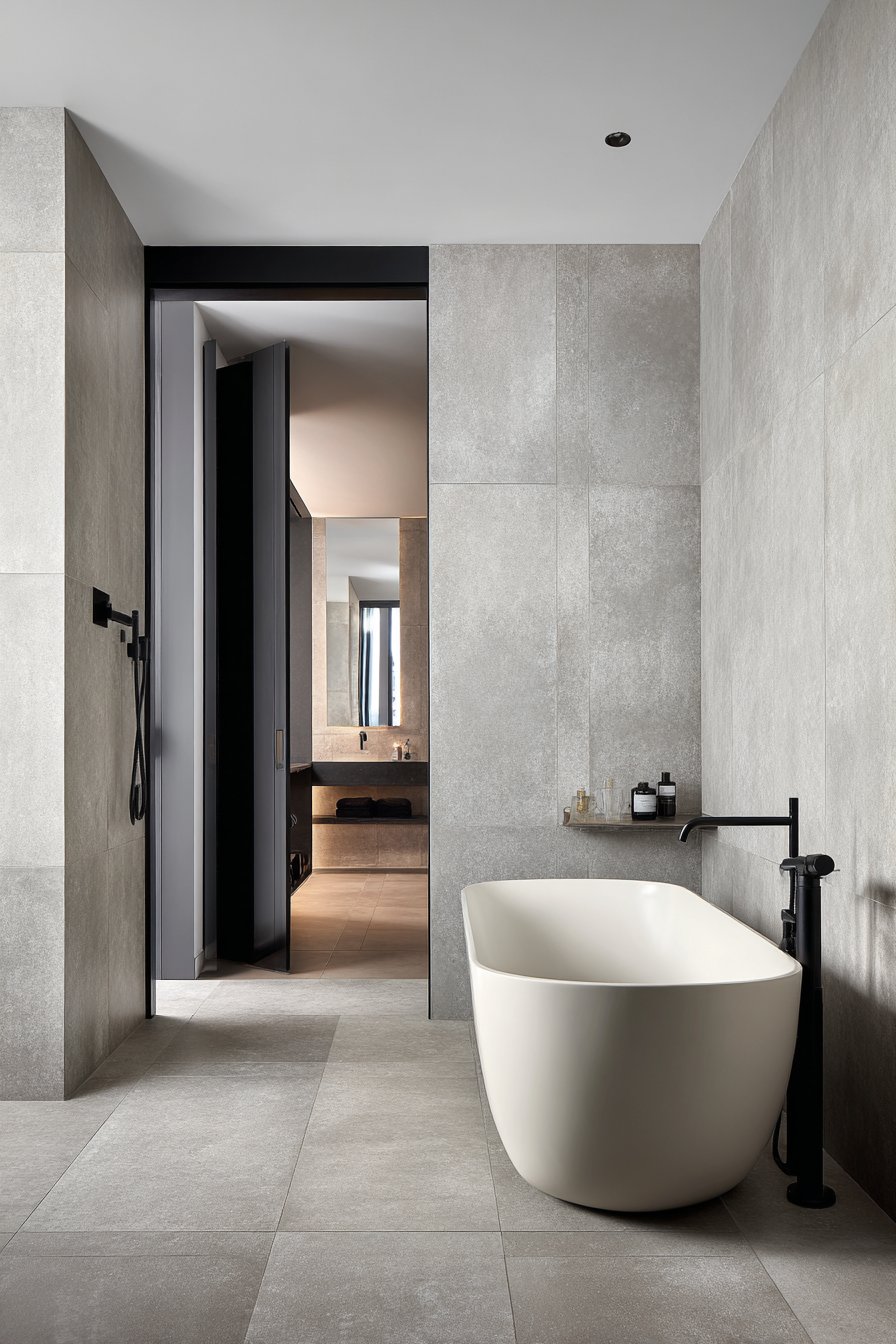
Wide-angle photography showcases the expansive feel created by large-format neutral tiles and strategic layout. The continuous surfaces and minimal grout lines make the bathroom feel larger and more luxurious than it might actually be—this is design sleight of hand using material selection and installation technique to manipulate spatial perception. The vertical orientation of the feature wall draws the eye upward and emphasizes height, while the horizontal expanse of floor and other walls emphasizes breadth. This is contemporary design at its best—materially honest, visually clean, and experientially calm.
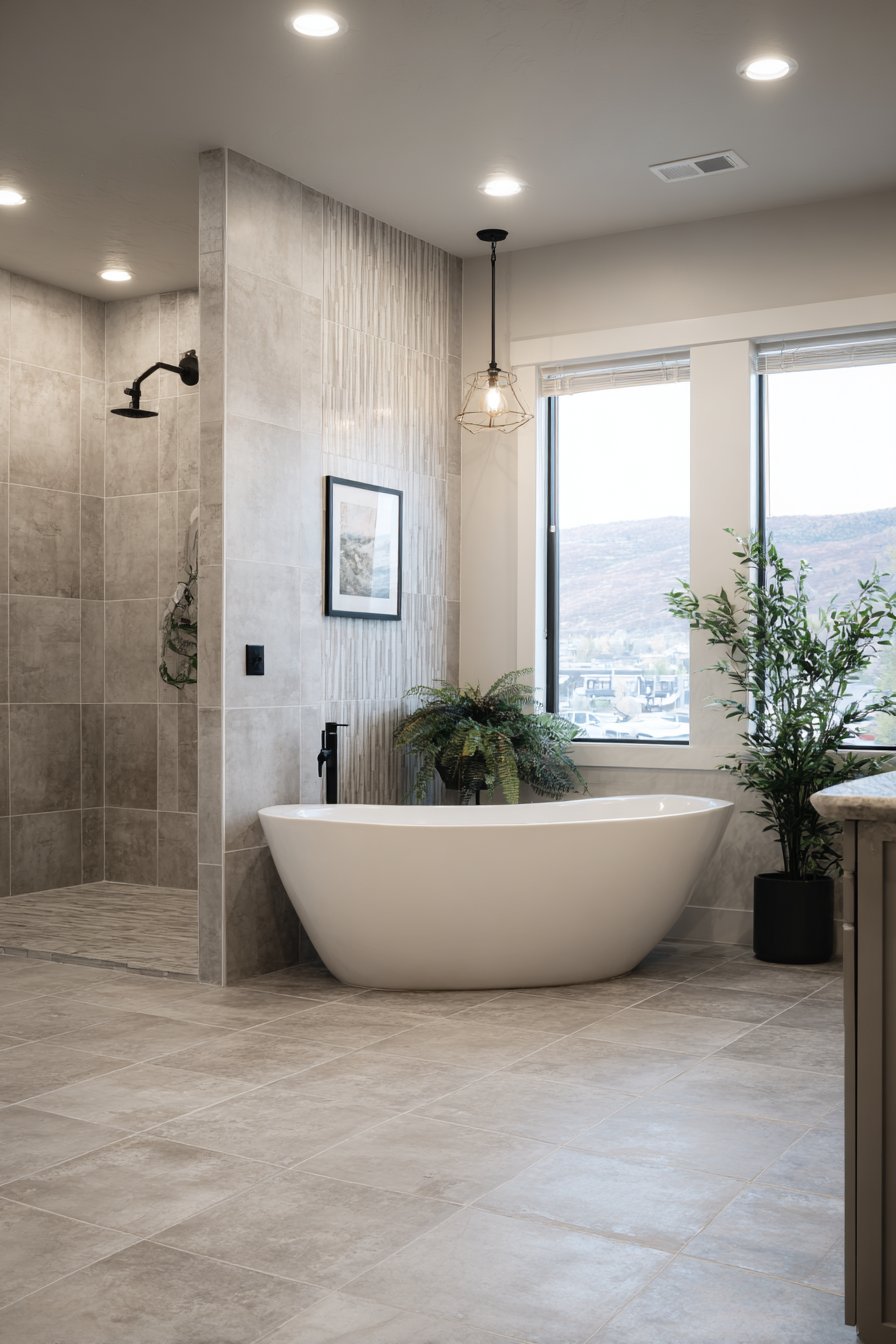
Key Design Tips: Use extra-large format tiles (30+ inches) to minimize grout lines and create seamless contemporary surfaces. Employ tonal gradation with the same material in multiple shades to create depth within monochromatic schemes. Install the same tile in different orientations for feature walls to create subtle variation while maintaining consistency. Choose matte black fixtures to provide contemporary contrast and crisp definition against neutral grey tiles. Vary tile sizes strategically—larger for walls, smaller for floors and showers where drainage and safety matter. Keep decorative elements to absolute minimum, allowing the quality of materials and precision of installation to provide visual interest. Consider heating large-format floor tiles—their expansive surfaces benefit greatly from radiant heat, adding comfort to beauty.
22. Cottage Penny Round Charm
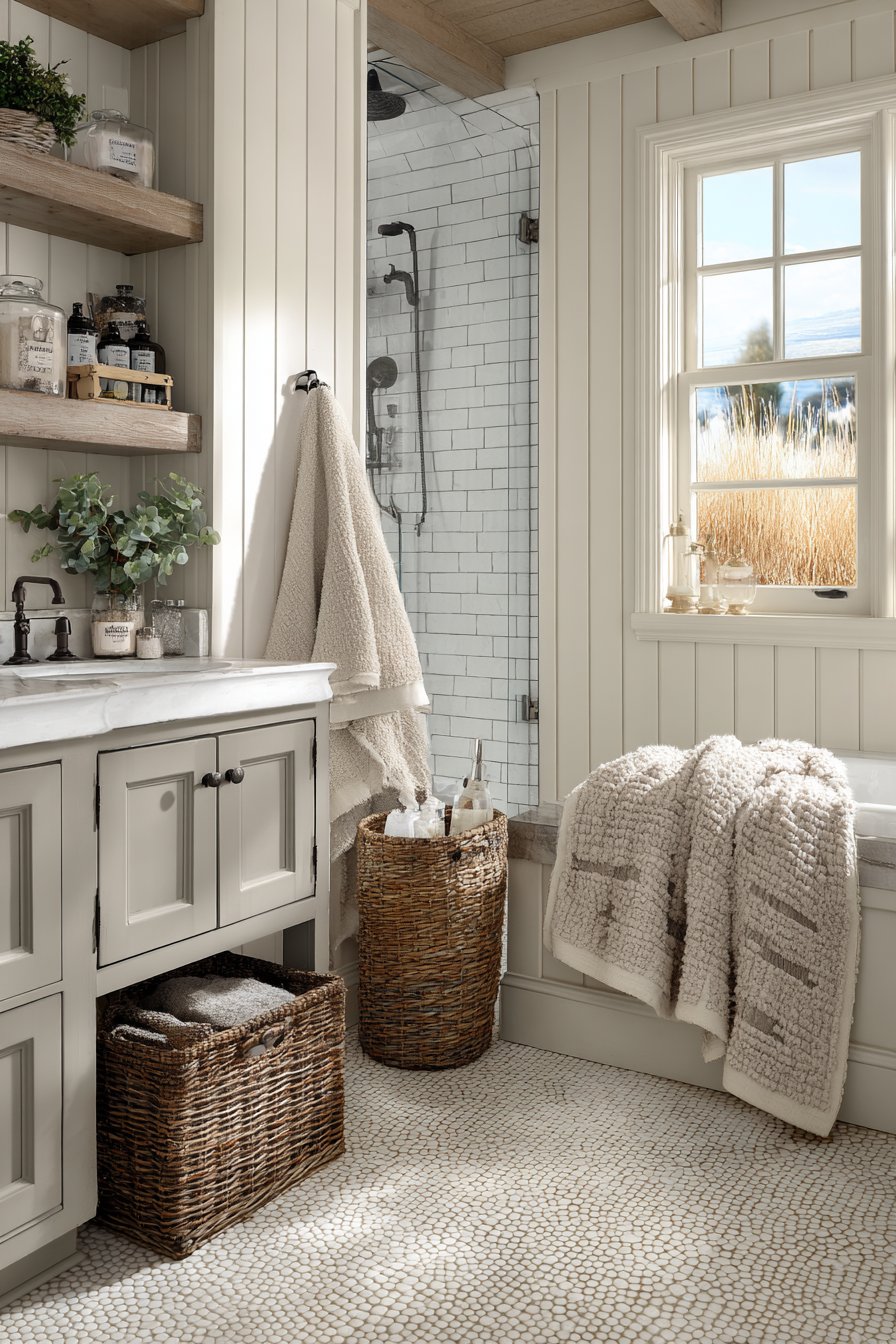
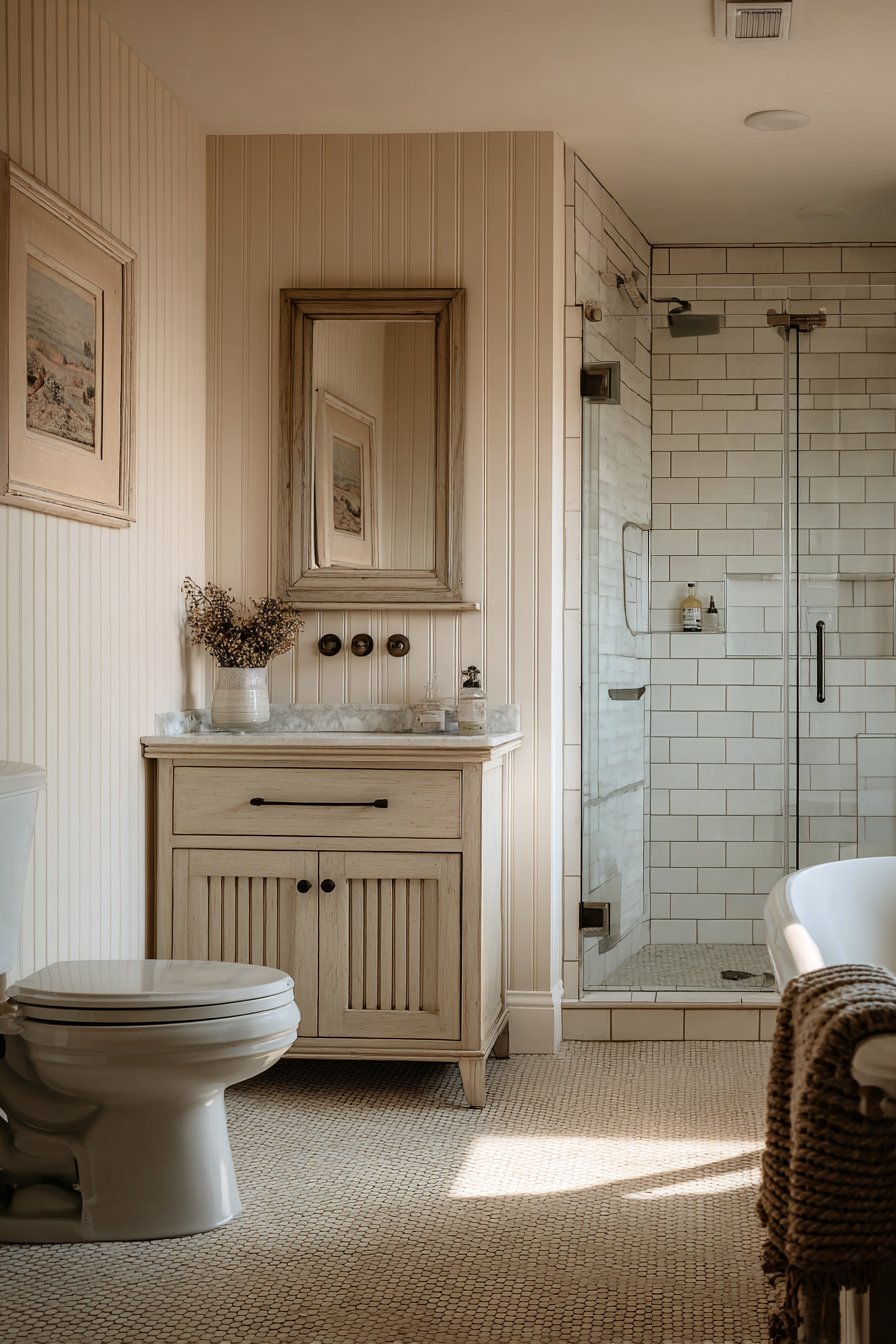
Embrace cozy nostalgia in this cottage-style bathroom showcasing classic penny round tiles in soft cream. These neutral bathroom tile ideas bring vintage charm and tactile interest to the shower floor, their small circular format creating a gentle, organic pattern that feels handcrafted and timeless. Penny rounds—so named because they’re roughly the size of old pennies—became popular in early 20th century bathrooms and remain beloved for their retro appeal and practical slip resistance. The soft cream color keeps them feeling light and airy rather than heavy or dated.
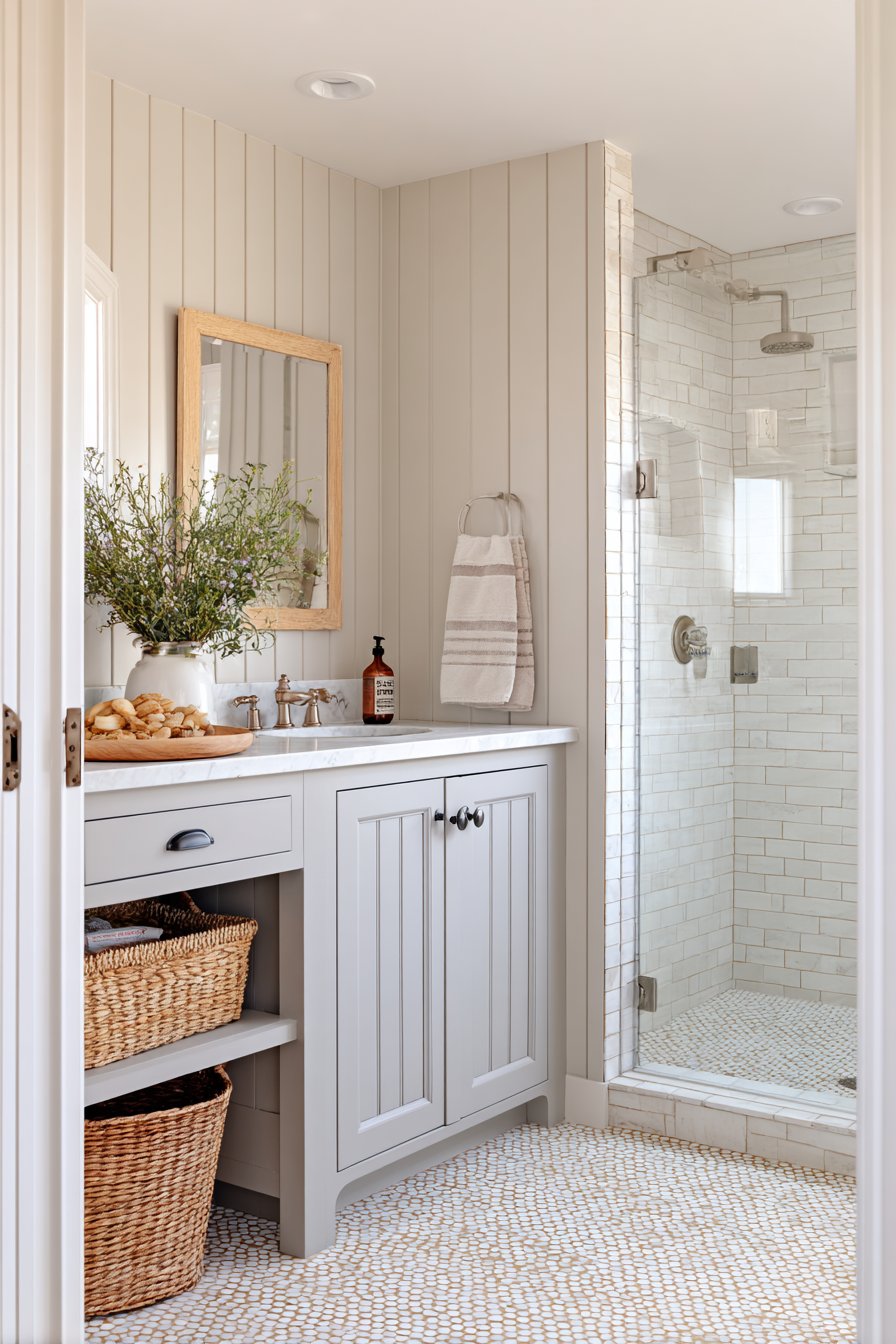
The walls feature handmade-look subway tiles in warm white with subtle irregularities and thick grout lines that suggest artisanal production. These imperfections are intentional and desirable—they add character and authenticity that perfectly uniform tiles lack. The thick grout lines create a visible grid that emphasizes the individual tiles and reinforces the handcrafted aesthetic. Painted beadboard wainscoting in pale grey complements the tiles beautifully, adding architectural detail and cottage charm while providing practical protection for lower walls. Brushed bronze fixtures introduce warm metallic tones that coordinate with the cream and grey palette.
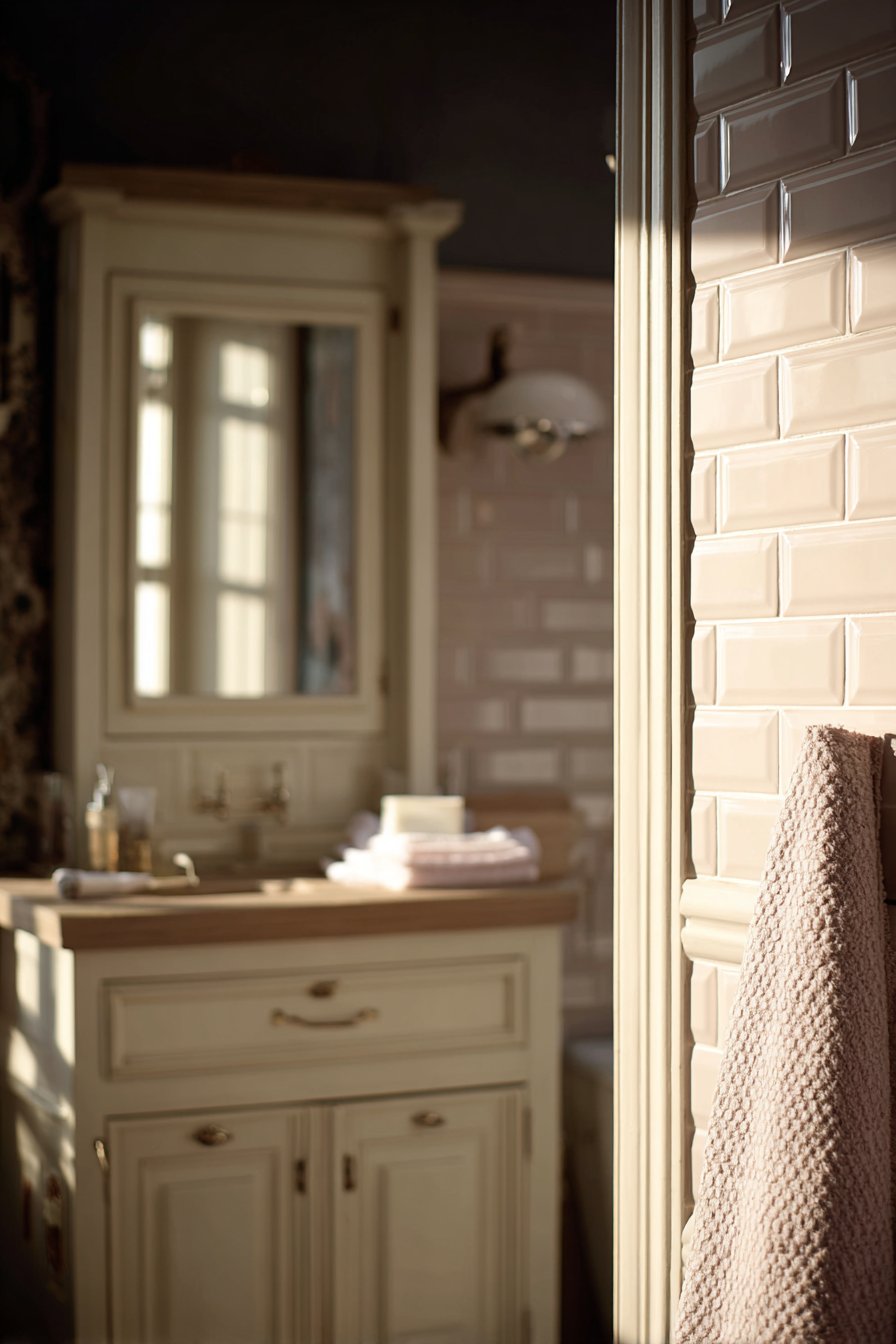
A painted furniture vanity completes the cozy, collected feel—perhaps a repurposed dresser or chest painted in soft blue-grey or sage green, with original hardware and visible brush strokes that suggest lovingly maintained vintage furniture. Interior photography with gentle natural light emphasizes the vintage-inspired, approachable neutral tile choices, showing how morning sun creates soft shadows across the penny rounds and highlights the texture of the handmade subway tiles. This bathroom feels like a cherished family cottage—comfortable, unpretentious, and full of quiet charm.
Key Design Tips: Use penny round tiles in showers and floors to add vintage charm and excellent slip resistance through their small scale and numerous grout lines. Choose handmade-look subway tiles with intentional irregularities and thick grout lines to emphasize artisanal character. Install beadboard or painted wainscoting on lower walls to add cottage architectural detail and practical protection. Select brushed bronze or antique brass fixtures to introduce warm metallic tones that coordinate with cream and off-white neutrals. Incorporate a painted furniture-style vanity—consider repurposing actual vintage furniture for authentic character. Embrace imperfection—cottage style celebrates the lived-in, loved quality of spaces that have been enjoyed for years. Consider adding vintage accessories like apothecary jars, enamelware, or antique mirrors to reinforce the collected, nostalgic aesthetic.
23. Masculine Slate Ledger Drama
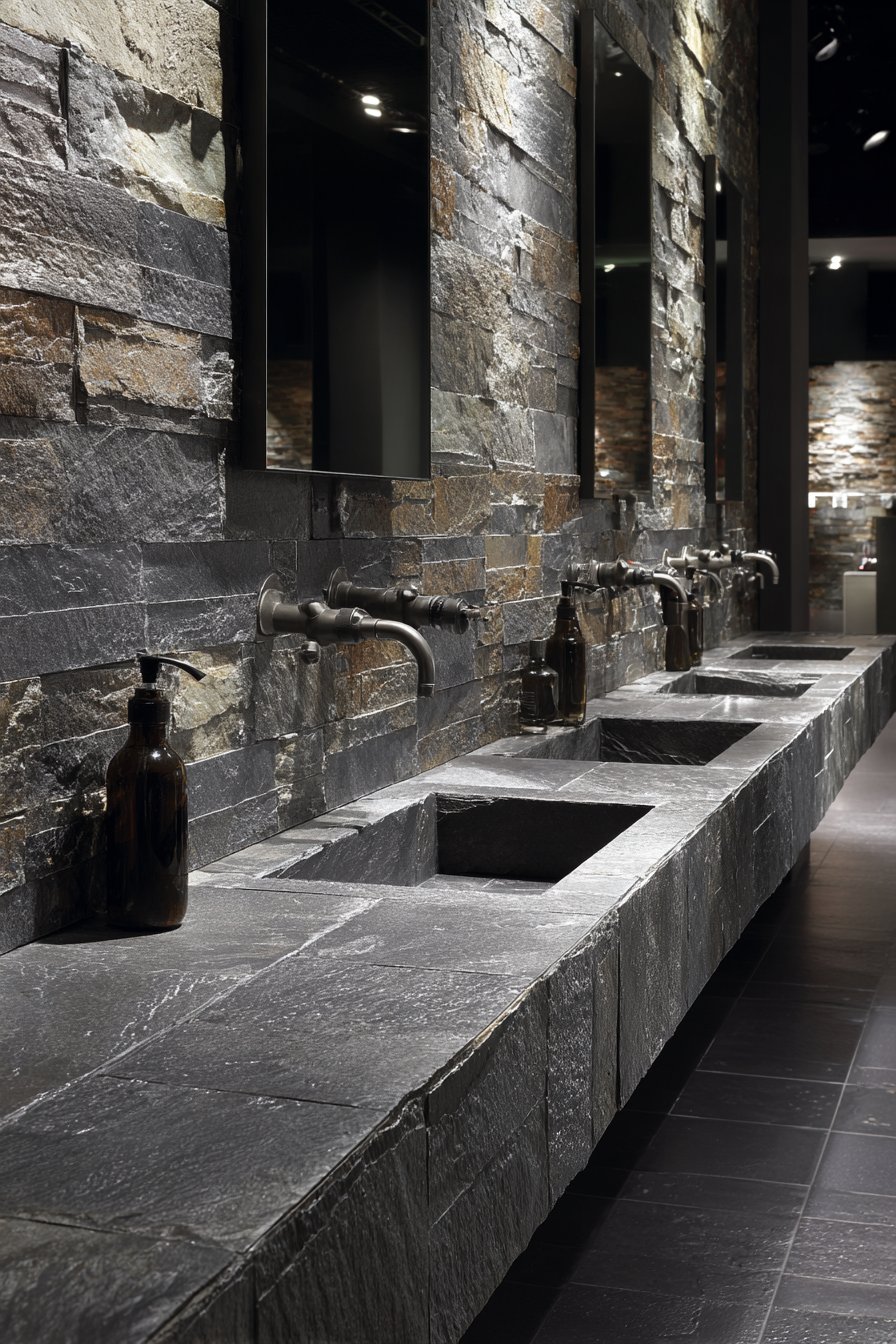
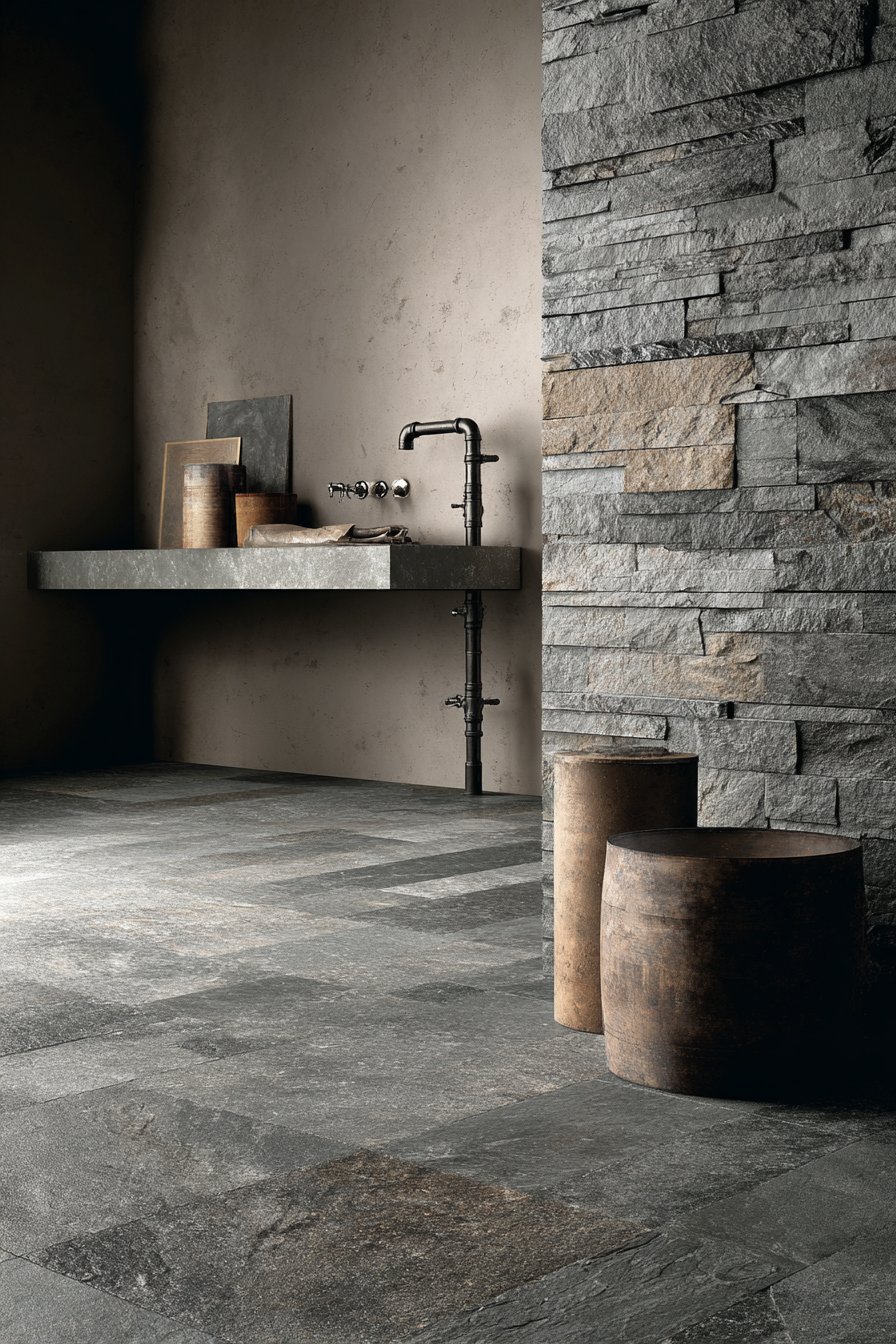
Make a bold statement in this masculine bathroom featuring large slate-look porcelain tiles in deep charcoal grey. These neutral bathroom tile ideas demonstrate that darker neutrals can create sophisticated, dramatic spaces when balanced properly with lighting and scale. The tiles feature realistic riven texture—the slightly rough, naturally split surface characteristic of natural slate—with authentic color variation ranging from nearly black to medium grey. The large format and dark color create visual weight and gravitas, making the space feel grounded and substantial.
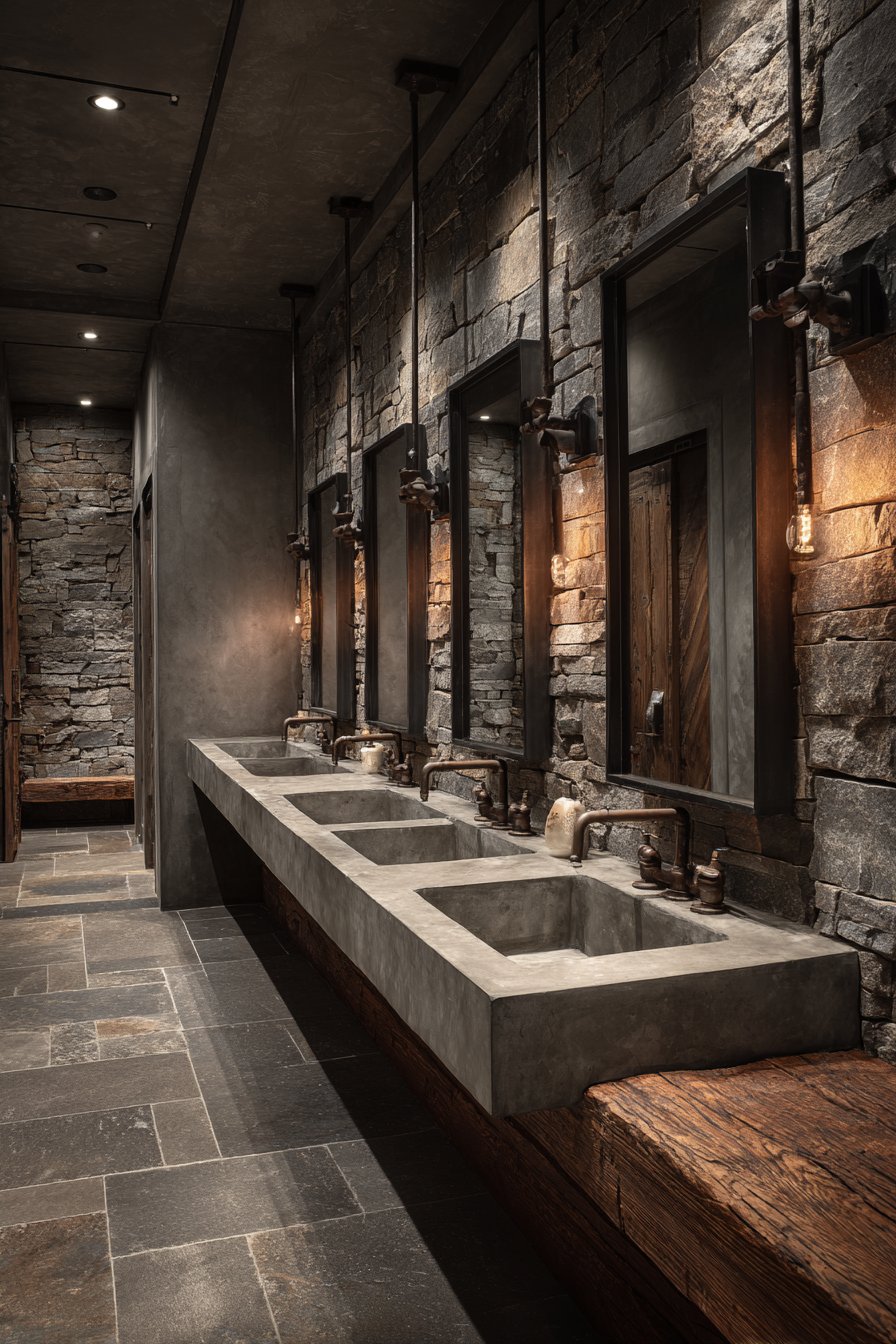
The floor uses matching tiles in a staggered brick pattern, the offset installation adding movement and visual interest to the expansive dark surface. One accent wall displays stacked stone ledger panels in mixed grey tones, introducing significant three-dimensional texture and creating a dramatic focal point. The ledger stone panels—thin cuts of natural stone with split faces that project slightly from the wall—add geological authenticity and tactile richness that flat tiles cannot achieve. Industrial pipe fixtures in matte black reinforce the strong aesthetic, their exposed installation celebrating functional elements rather than concealing them.
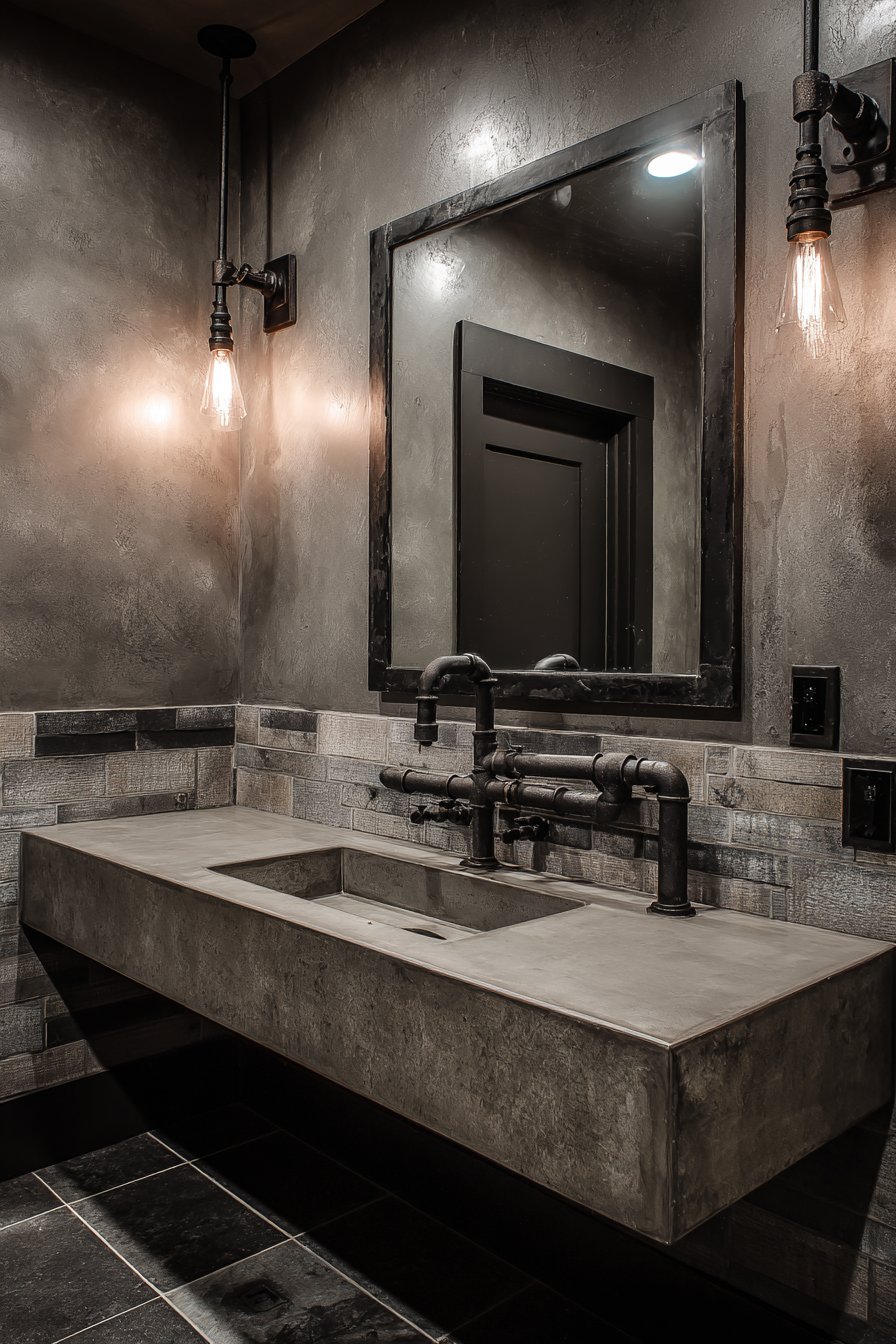
A concrete countertop vanity completes the masculine design, its raw industrial material and straightforward construction rejecting any softness or decoration. Professional photography with moody lighting showcases how darker neutrals create dramatic sophistication—shafts of light from a window or spotlight create strong contrast, emphasizing the texture in the slate and ledger stone while allowing darker areas to recede into shadow. This bathroom is unapologetically masculine and confident, proving that neutral doesn’t mean safe or boring—it can be bold, dramatic, and memorable.
Key Design Tips: Use large-format dark tiles to create visual weight and sophisticated drama—ensure adequate lighting to prevent the space from feeling cave-like. Install tiles in staggered patterns to add movement and prevent large expanses of dark color from feeling too heavy. Incorporate stacked stone ledger panels as accent walls to add three-dimensional texture and geological authenticity. Select matte black exposed pipe fixtures to reinforce industrial masculine aesthetics and celebrate functional elements. Choose concrete or raw metal for vanity countertops to maintain the strong, unembellished material palette. Layer lighting strategically in bathrooms with dark tiles—combine overhead ambient light, focused task lighting at the vanity, and accent lighting to highlight textures. Consider the overall balance—dark bathrooms benefit from at least one lighter element (ceiling, one wall, or fixtures) to prevent them from feeling too heavy.
24. Eclectic Neutral Mix Mastery
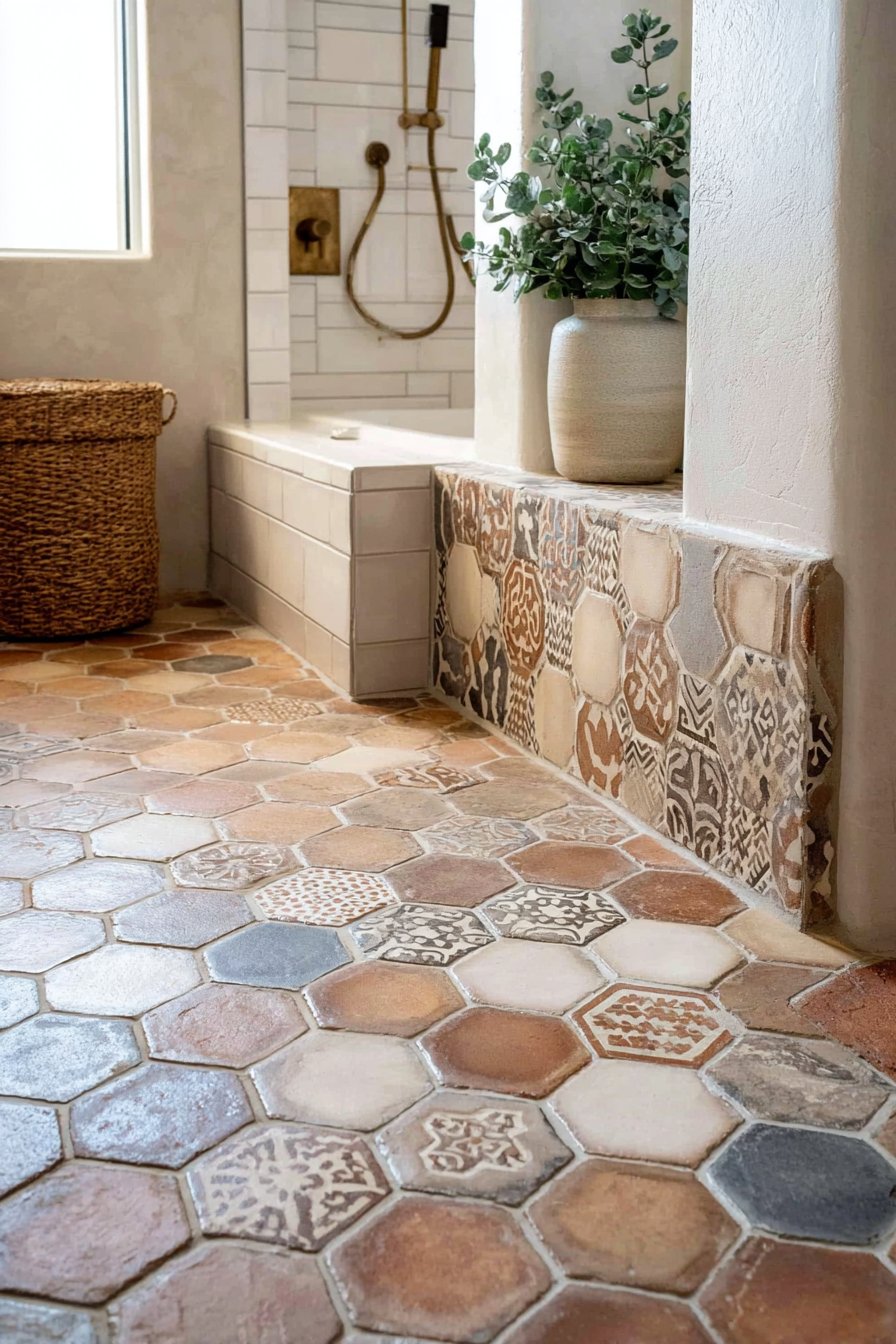
Celebrate design freedom in this eclectic bathroom featuring a creative mix of neutral bathroom tile ideas that demonstrates how diverse materials can coexist harmoniously. Hexagonal terracotta tiles cover the floor, their warm earthy tone and geometric pattern providing grounding visual weight. Vertical white subway tiles line the walls, their classic form and clean installation creating a simple backdrop that allows other elements to shine. A strip of decorative cement tiles in neutral geometric pattern serves as a border—perhaps running horizontally at chair rail height or defining the shower threshold—adding a layer of pattern and handcrafted detail.
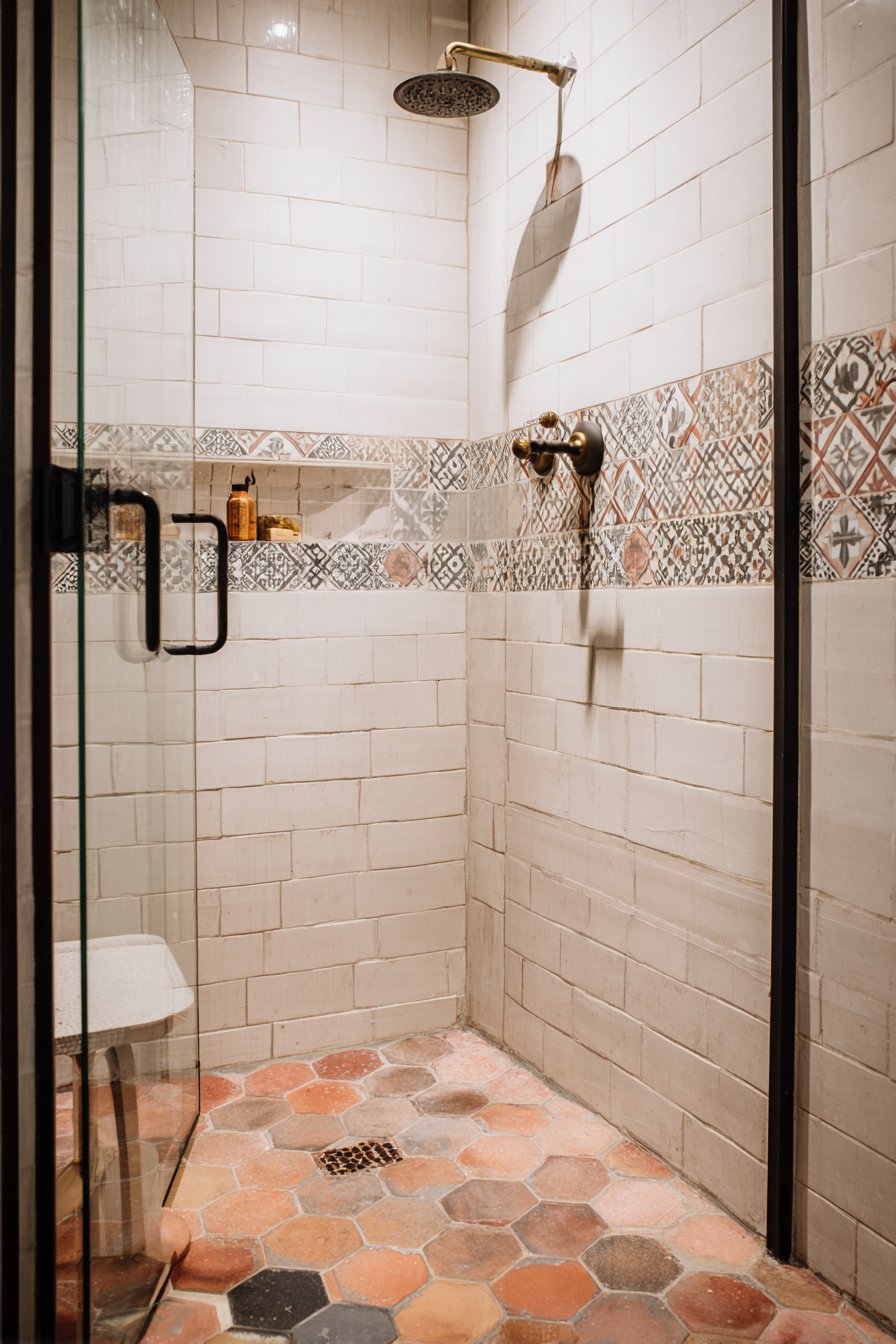
The magic lies in the careful neutral color coordination spanning cream, taupe, grey, and terracotta. Despite the variety of materials, patterns, and scales, everything works together because the color temperature and value range remain consistent. This is advanced design thinking—unifying disparate elements through careful color editing while allowing each material to maintain its individual character. Brass and black mixed-metal fixtures add personality and reinforce the eclectic aesthetic, their combination suggesting a space assembled over time rather than designed all at once.
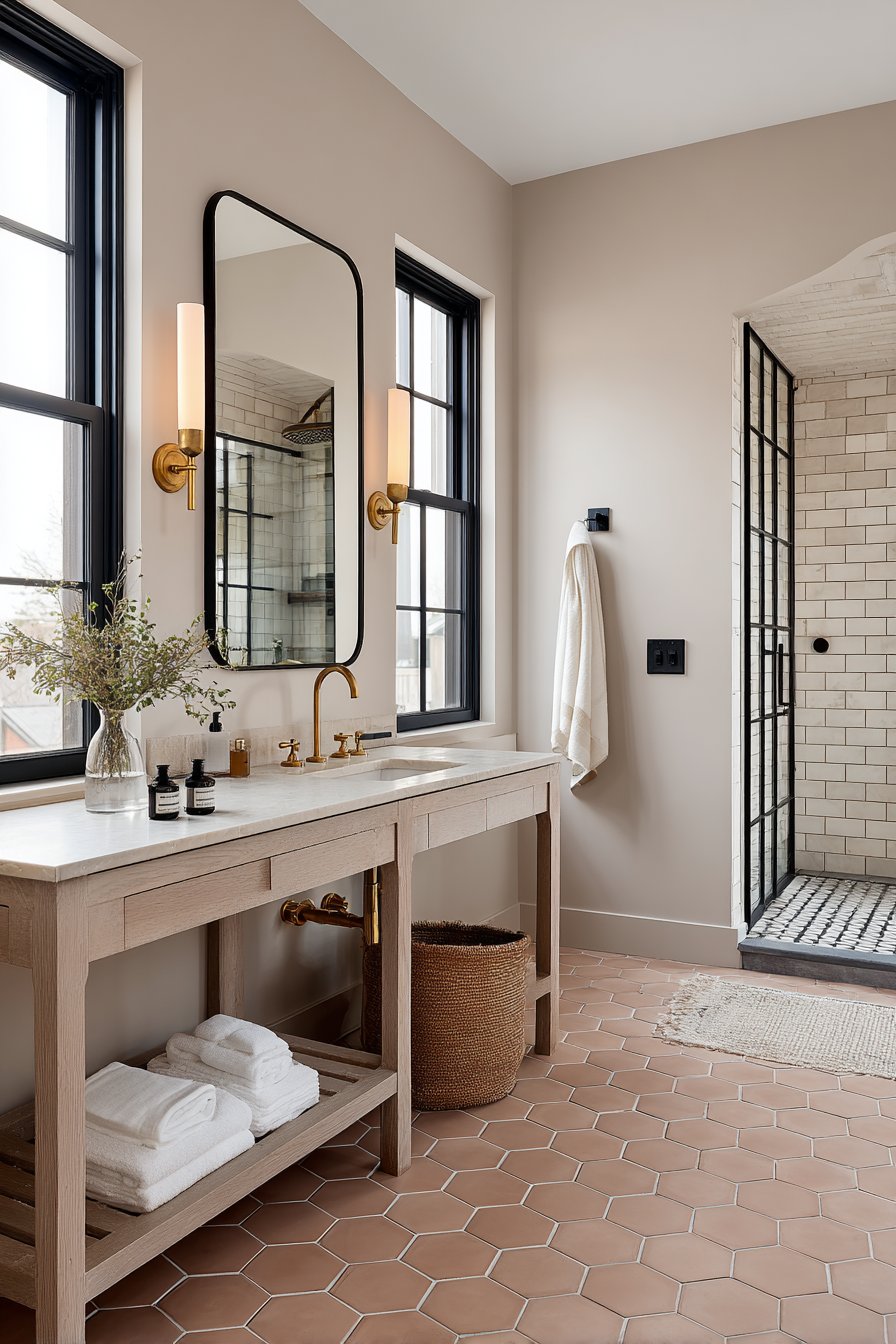
Natural lighting highlights how diverse neutral tiles can coexist harmoniously when unified by color temperature and thoughtful placement. Morning sun might emphasize the warm terracotta floor, while afternoon light brings out the cool grey in the cement tile border—the changing light throughout the day reveals different aspects of the layered design. This bathroom feels collected and personal, as though each element was selected for specific reasons and the overall composition evolved organically. It’s proof that eclectic doesn’t mean chaotic when guided by a cohesive color palette and clear design vision.
Key Design Tips: Mix different tile types (terracotta, subway, cement) by unifying them through careful neutral color coordination. Use geometric floor tiles with simple wall tiles to balance pattern and simplicity—avoid pattern on both surfaces. Incorporate decorative cement tile borders to add artisanal detail and create visual interest at human scale. Combine brass and black mixed-metal fixtures to reinforce eclectic aesthetic and suggest collected-over-time authenticity. Maintain color temperature consistency across different materials—all warm neutrals or all cool neutrals, avoiding uncomfortable mixing. Allow natural light to highlight the textural variety in mixed materials throughout the day. Start with a base tile (usually walls) in simple neutral, then add personality through floor pattern and accent borders rather than covering everything in busy patterns.
25. Hotel-Inspired Grey Oak Luxury
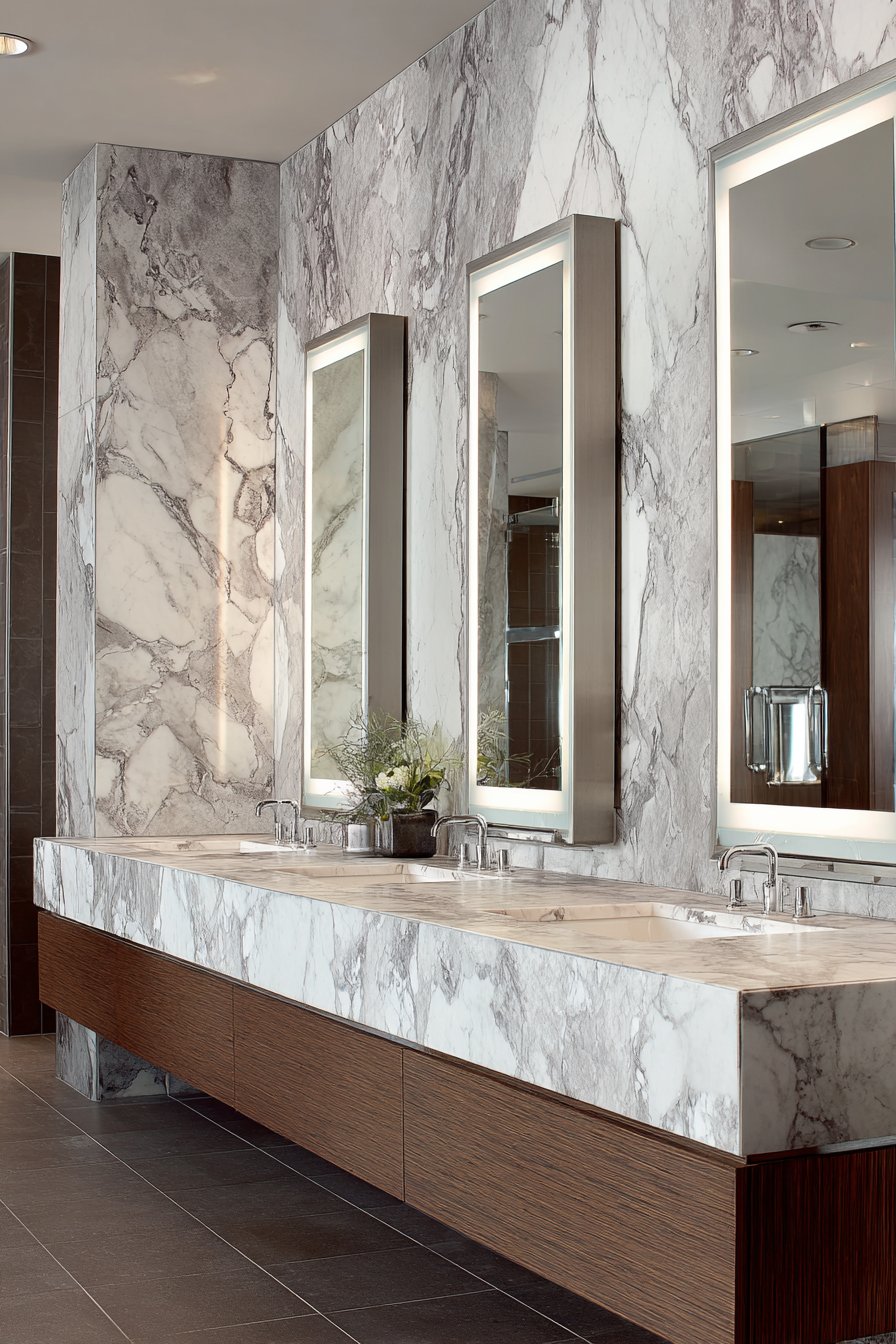
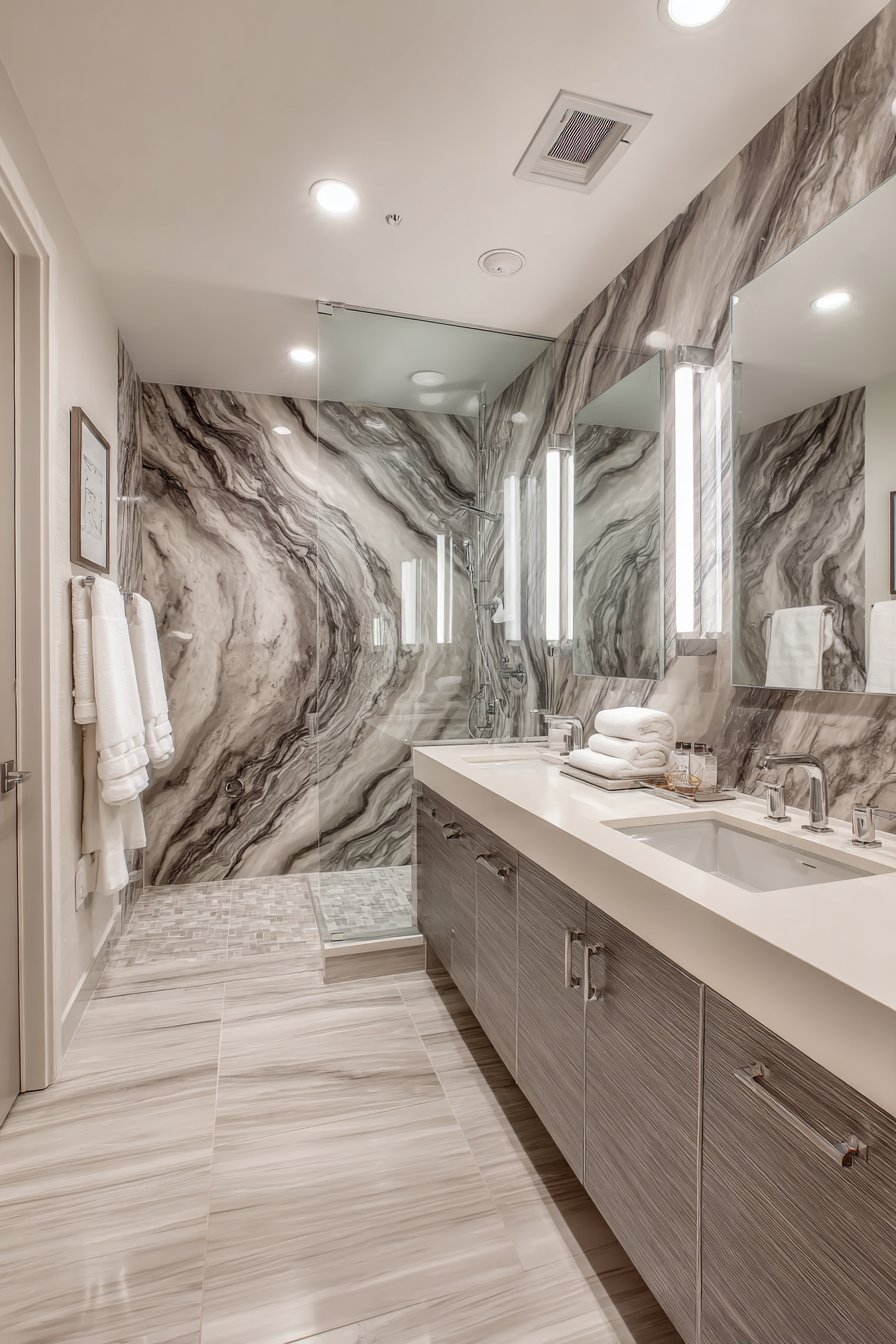
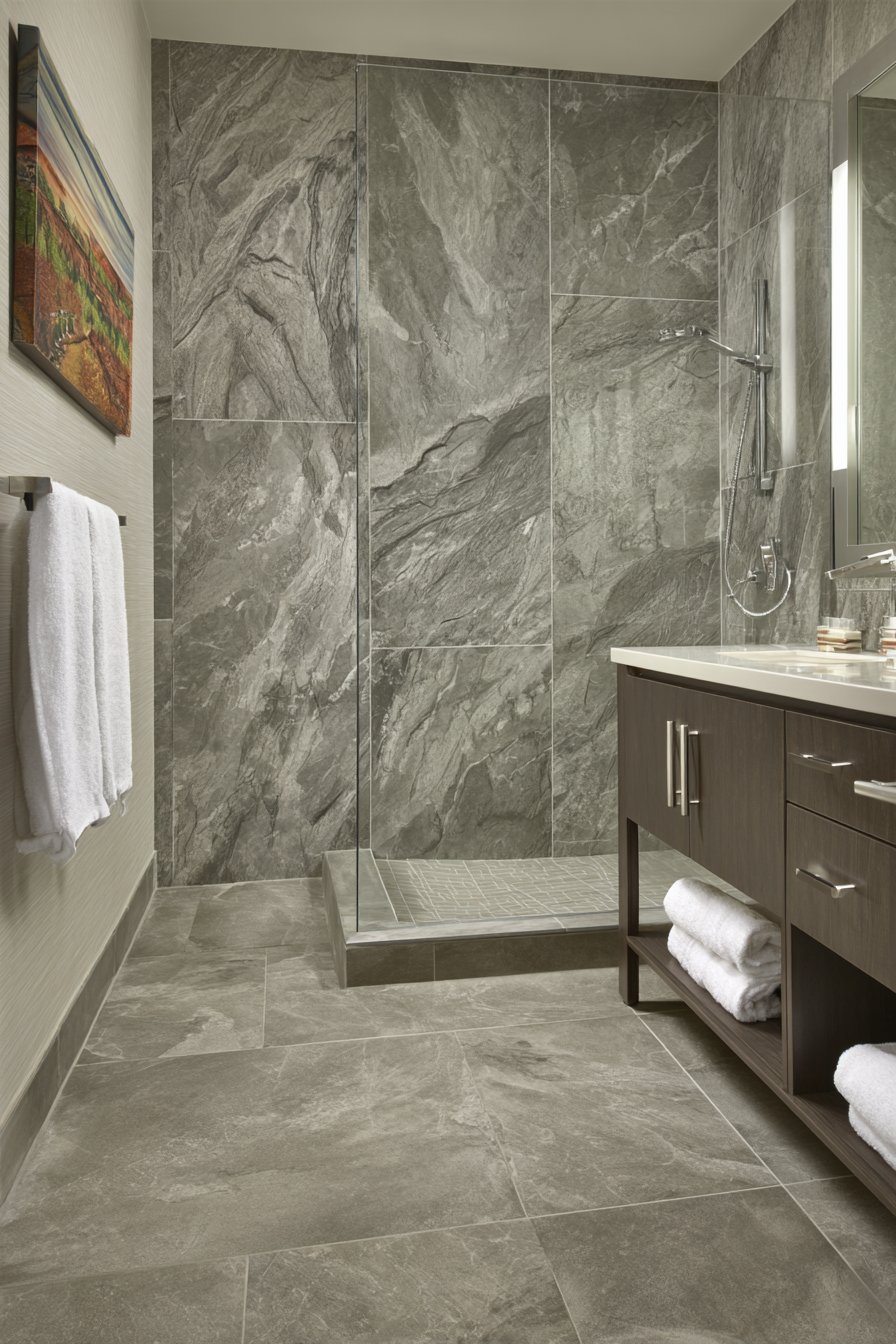
Experience five-star elegance at home with this hotel-inspired bathroom featuring book-matched porcelain slabs in grey-veined marble-look creating a continuous dramatic backdrop. These neutral bathroom tile ideas showcase luxury hotel design principles—impeccable materials, perfect installation, and sophisticated restraint that creates memorable impact without gimmickry. The book-matched slabs display dramatic veining that mirrors across the centerline, creating a butterfly effect that draws the eye and serves as living artwork. The grey veining against a cream-white background provides just enough movement to create interest while maintaining the calming neutrality essential to spa-like spaces.
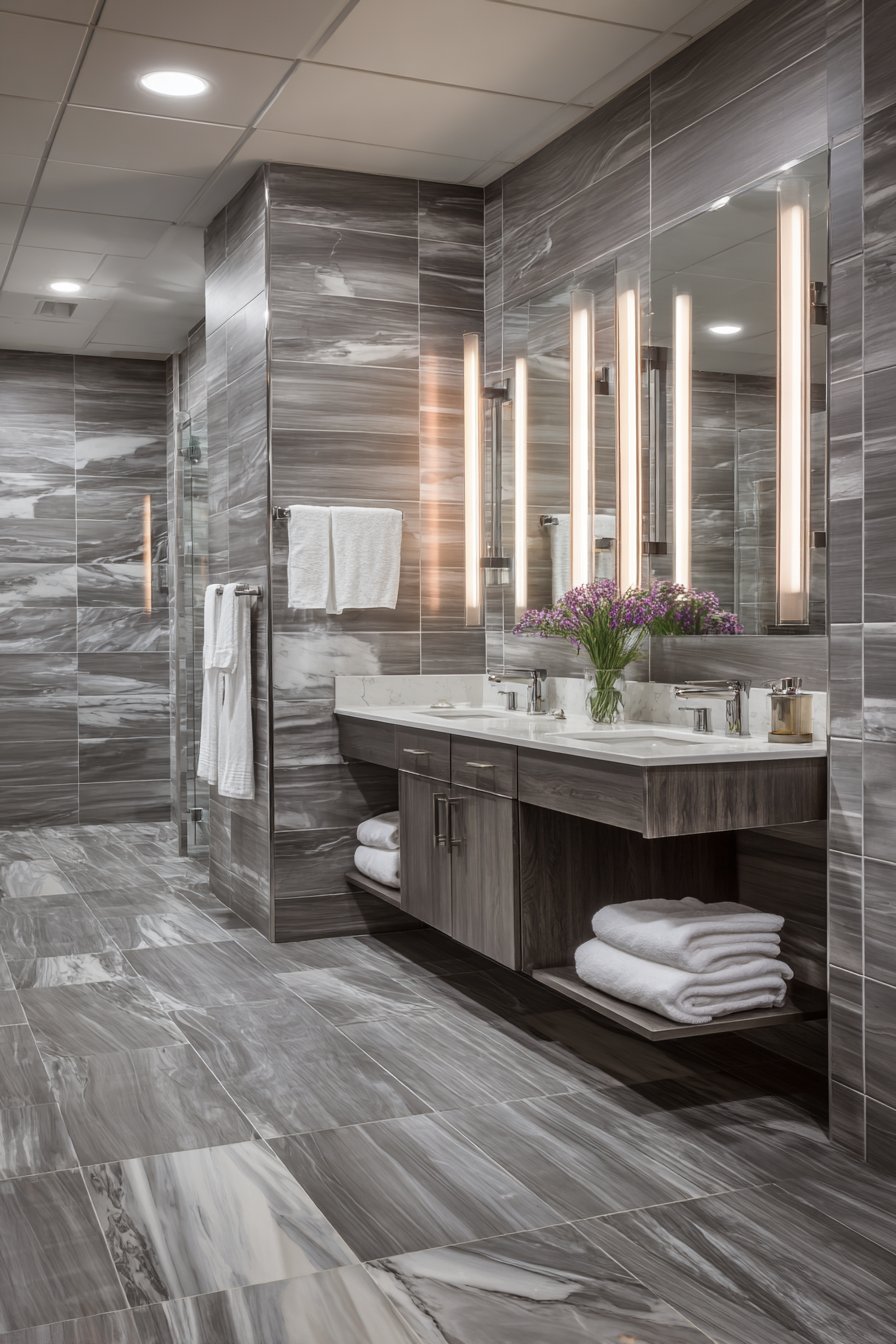
The floor displays large-format tiles in coordinating neutral grey with subtle movement—enough pattern to add interest but not so much that it competes with the dramatic walls. This hierarchy is crucial in luxury design: identify your statement element (here, the book-matched walls) and keep everything else supporting rather than competing. Heated towel rails in polished chrome add both practical luxury and visual sparkle, their vertical lines creating rhythm along the walls. A floating double vanity in grey oak provides ample practical storage while maintaining clean contemporary lines, its natural wood grain adding organic warmth that prevents the elegant stone from feeling cold.
LED-lit mirrors provide flattering task lighting and ambient glow, their even illumination eliminating shadows and creating the kind of perfect grooming light found in luxury hotels. Professional interior photography with perfect exposure shows how high-end neutral tile applications create sophisticated, timeless bathroom design that balances luxury and livability. The space feels expensive and special while remaining practical and functional—this is design that improves daily life rather than merely impressing visitors. It proves that neutral bathroom tile ideas, when executed with quality materials and expert installation, can achieve the same wow factor as any bold color scheme while maintaining the flexibility and serenity that makes them enduringly popular.
Key Design Tips: Invest in book-matched marble or marble-look slabs for dramatic luxury impact—the symmetrical veining creates instant sophistication. Use large-format floor tiles with subtle pattern to support rather than compete with dramatic walls. Install heated towel rails for practical luxury that also adds vertical visual rhythm. Choose floating double vanities in natural wood to provide warmth and practical storage while maintaining contemporary clean lines. Incorporate LED-lit mirrors for flattering task lighting and ambient glow that enhances the luxury spa feeling. Maintain strict material editing—fewer materials in higher quality creates more luxurious results than many materials in average quality. Consider the complete experience including comfort features like heated floors, steam showers, or built-in speakers that enhance functionality beyond aesthetics.
Conclusion: The Enduring Appeal of Neutral Bathroom Tile Ideas
Throughout these 25 distinctive designs, we’ve explored the remarkable versatility and timeless sophistication of neutral bathroom tile ideas. From the sun-baked warmth of Mediterranean terracotta to the cool industrial edge of charcoal concrete, from the classic elegance of beige travertine to the contemporary drama of book-matched marble slabs, neutral tiles prove themselves endlessly adaptable. They serve as perfect canvases for personal expression while maintaining the calming, cohesive quality that makes bathrooms feel like true sanctuaries rather than merely functional spaces.
The beauty of choosing neutral bathroom tiles lies not in limitation but in liberation. By removing the constraint of committing to specific colors that might fall out of favor or clash with future decor changes, you create a timeless foundation that can evolve with your tastes. Neutral tiles allow your fixtures, accessories, and textiles to rotate through trends while the bones of your bathroom remain perpetually sophisticated. Whether you prefer the organic imperfections of natural stone, the precise perfection of large-format porcelain, or the handcrafted character of cement tiles, the neutral palette accommodates every aesthetic preference while maintaining design coherence.
These designs demonstrate that creating visual interest within a neutral palette requires thoughtful attention to texture, pattern, scale, and light. The most successful neutral bathrooms layer different materials and finishes—matte with glossy, smooth with textured, large-format with mosaic—to create dimension and prevent monotony. They understand that neutral doesn’t mean uniform, and that the interplay of shadows across varied surfaces brings spaces to life. As you embark on your own bathroom design journey, remember that neutral bathroom tile ideas offer not a design compromise but rather a sophisticated foundation for creating spaces that feel both personally meaningful and universally appealing—bathrooms that will remain beautiful and relevant for decades to come.
