
When it comes to interior design, bathrooms often receive the least creative attention, relegated to purely functional spaces with predictable fixtures and safe color choices. Yet, these intimate sanctuaries present incredible opportunities for self-expression and design experimentation. A quirky bathroom isn’t just about adding unusual elements—it’s about creating a space that reflects your personality, sparks joy every morning, and challenges conventional design thinking. Whether you’re drawn to bold color combinations, unexpected material choices, or whimsical decorative elements, embracing quirky bathroom ideas can transform your daily routine into an experience of delight and inspiration.
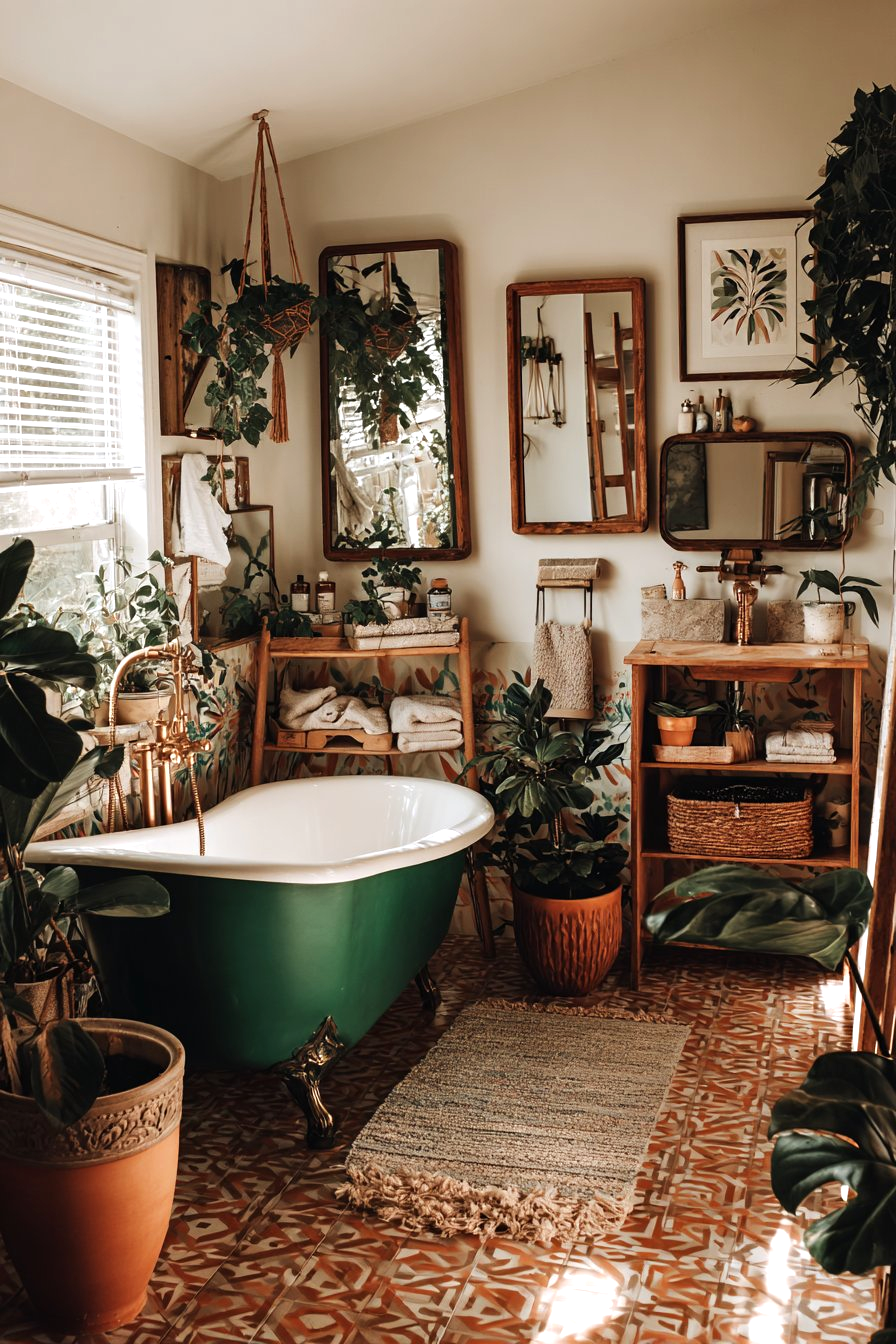
The beauty of quirky design lies in its fearless approach to mixing styles, eras, and aesthetics that traditional design rules might discourage. From vintage clawfoot tubs painted in jewel tones to walls adorned with eclectic gallery collections, quirky bathrooms celebrate individuality over conformity. These spaces prove that functionality and personality can coexist harmoniously, creating environments that are both practical and visually captivating. The key is finding the right balance between creative expression and livability, ensuring your quirky choices enhance rather than hinder your bathroom’s usability.
In this comprehensive guide, we’ll explore twenty-five distinctive quirky bathroom ideas that span various styles, from bohemian eclecticism to retro nostalgia, from artistic expression to cultural fusion. Each concept demonstrates how thoughtful design choices—whether bold color schemes, unexpected furniture repurposing, or creative pattern mixing—can elevate a standard bathroom into something extraordinary. These ideas cater to different tastes and budgets, proving that quirky design is accessible to everyone willing to think outside the conventional bathroom design box.
1. Eclectic Emerald Showcase with Vintage Mirrors
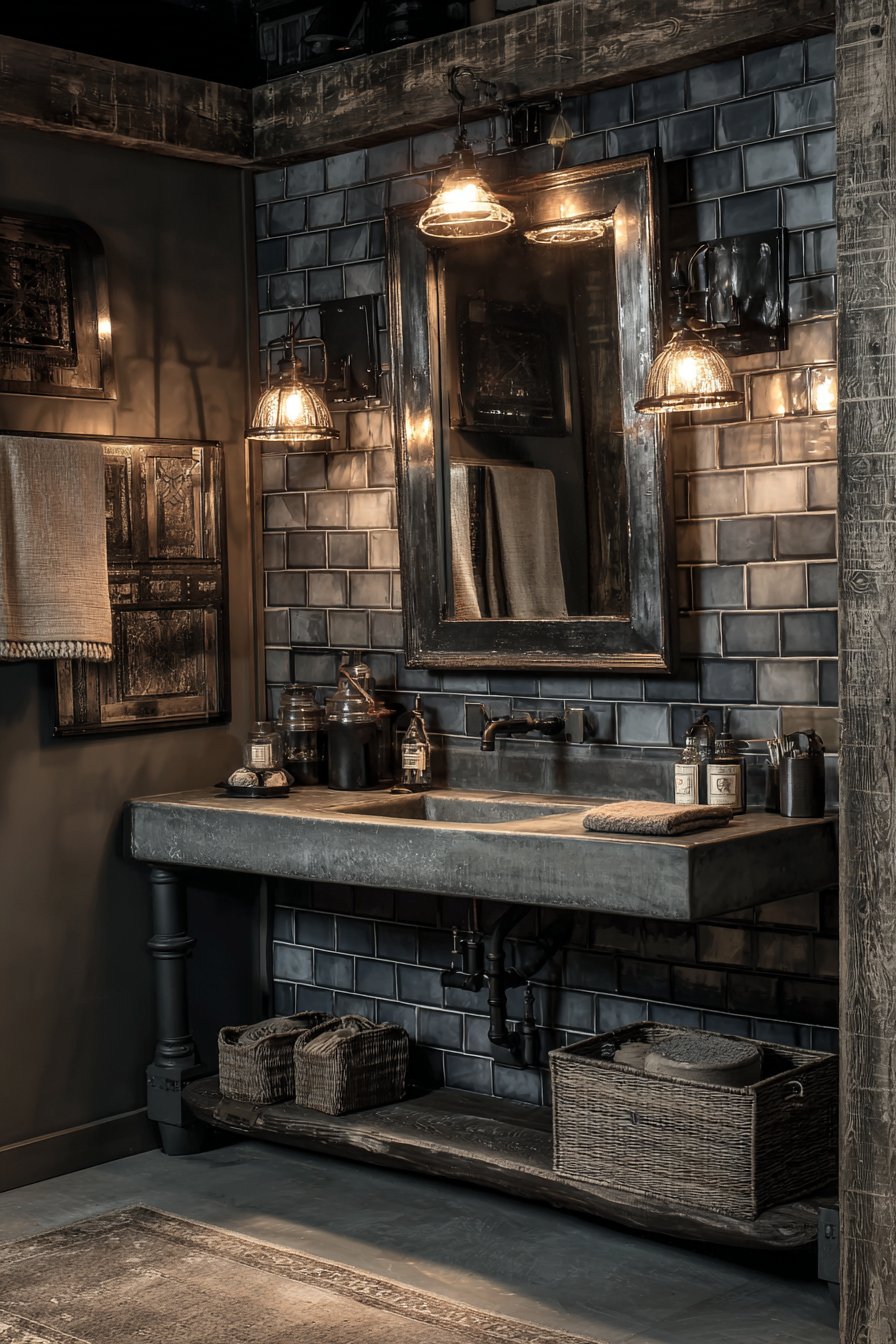
The ultimate expression of quirky bathroom design begins with an unexpected hero piece: a vintage clawfoot bathtub transformed with a bold coat of emerald green paint. This stunning centerpiece immediately captures attention and sets the tone for an eclectic space that celebrates the unconventional. Surrounding this jewel-toned tub, a carefully curated wall of mismatched vintage mirrors in various shapes, sizes, and frame styles creates a captivating focal point that reflects light and adds dimensional interest. The mirrors range from ornate baroque frames in tarnished gold to simple geometric shapes in weathered wood, each one telling its own story while contributing to the cohesive whole.
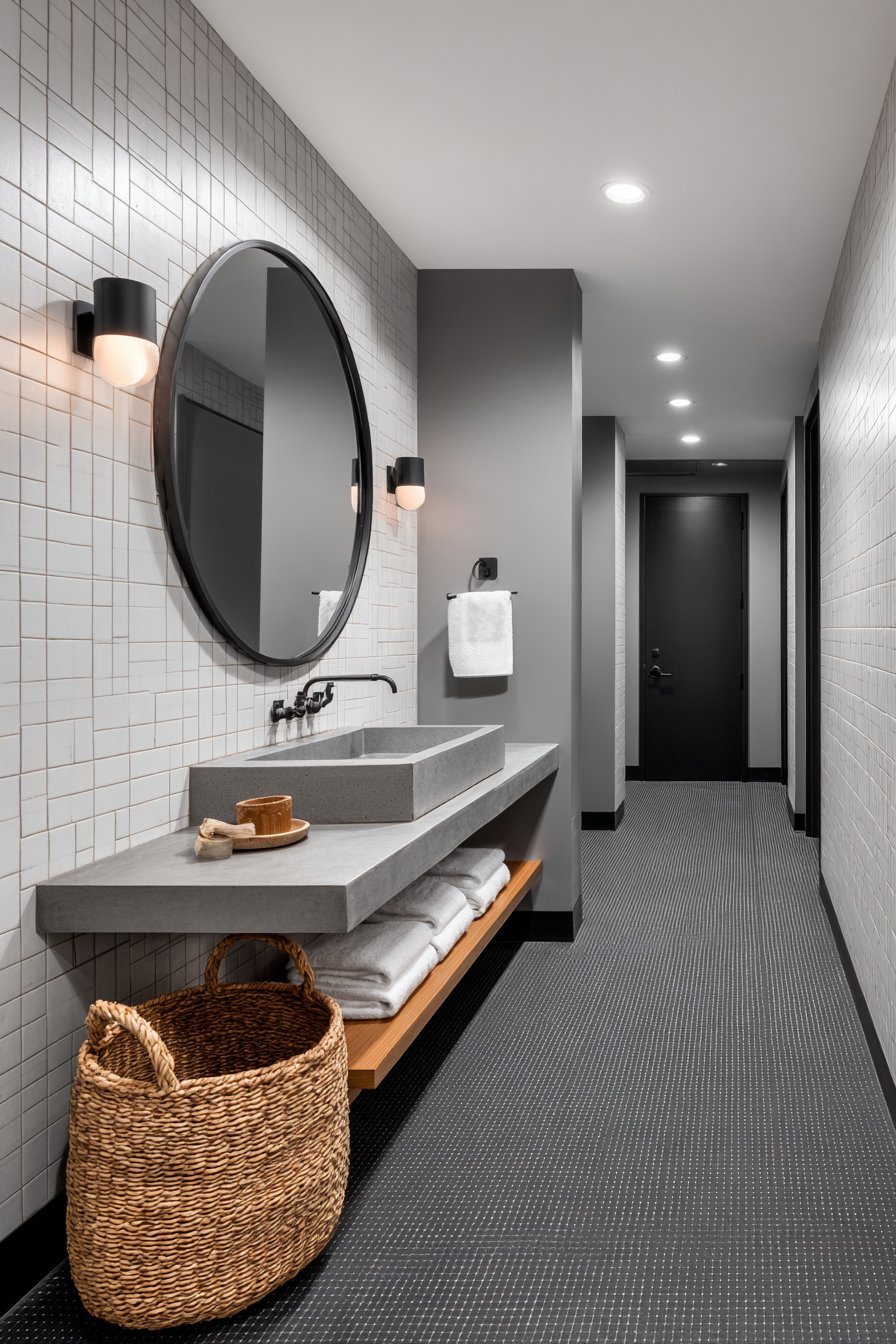
A repurposed wooden ladder leans casually against the wall, serving dual purposes as both sculptural art piece and practical towel rack. This unexpected furniture choice exemplifies the creativity at the heart of quirky design—taking everyday objects and reimagining their function in new contexts. Hanging plants cascade from macramé holders suspended at varying heights, introducing organic movement and natural purification to the space. The trailing pothos and spider plants soften hard surfaces while adding crucial textural variety to the room’s visual composition.
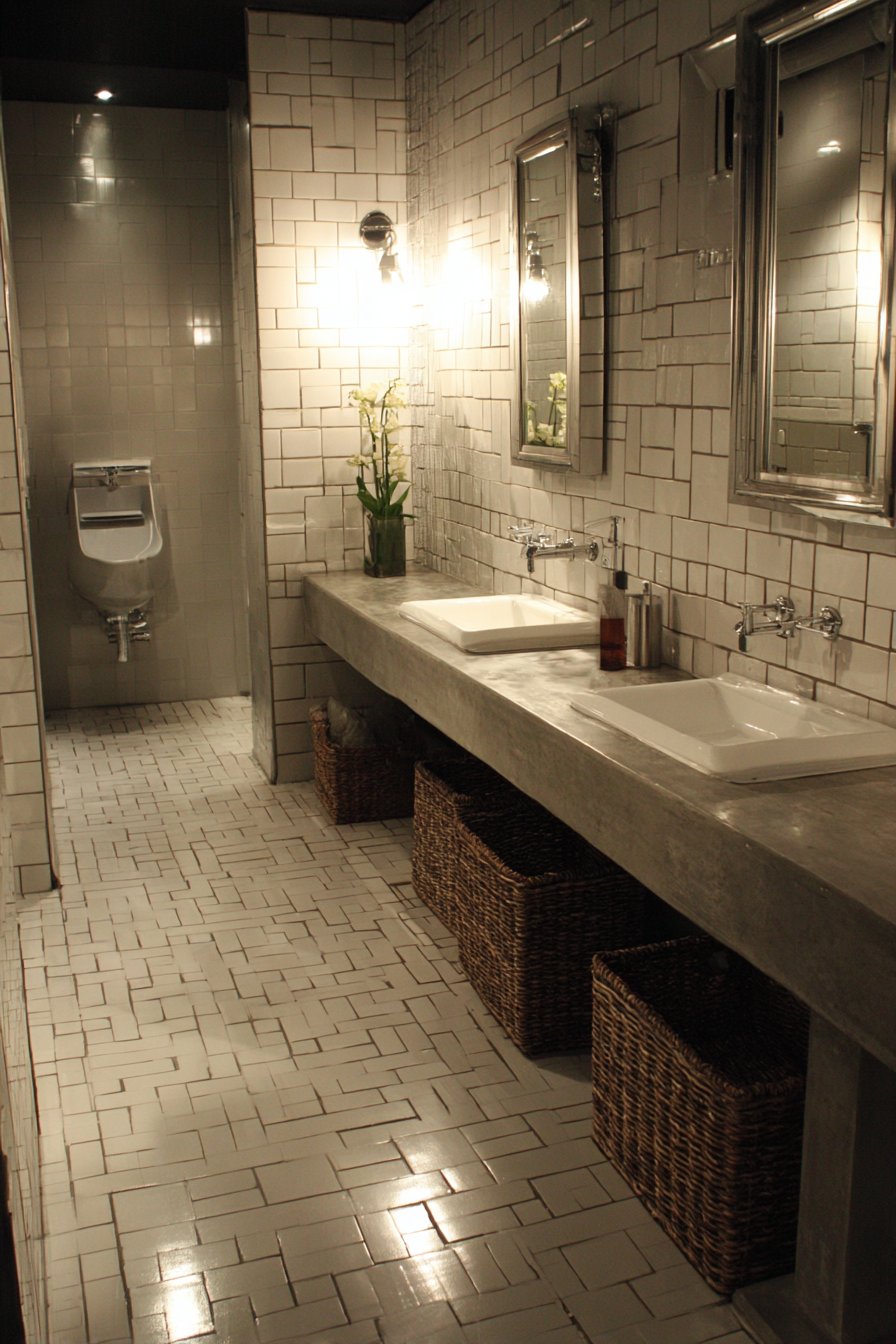
The floor showcases colorful encaustic cement tiles arranged in mesmerizing geometric patterns, their vibrant hues pulling together the diverse elements above. One accent wall features whimsical wallpaper with playful patterns—perhaps oversized botanicals or abstract artistic motifs—that adds another layer of visual interest without overwhelming the space. Antique brass fixtures throughout the bathroom provide warmth and character, their aged patina suggesting stories from decades past. A stained-glass window accent filters natural light into prismatic colors that dance across surfaces throughout the day, creating an ever-changing atmospheric display.
Key Design Tips:
- Paint vintage fixtures in unexpected bold colors to create instant focal points
- Collect mirrors over time from flea markets and antique shops for authentic eclectic appeal
- Use vertical space creatively with hanging plants and repurposed furniture
- Mix metallic finishes freely—brass, copper, and even chrome can coexist in quirky spaces
- Balance busy patterns and colors with strategic neutral zones to prevent visual overwhelm
2. Hand-Painted Folk Art Pedestal Sink
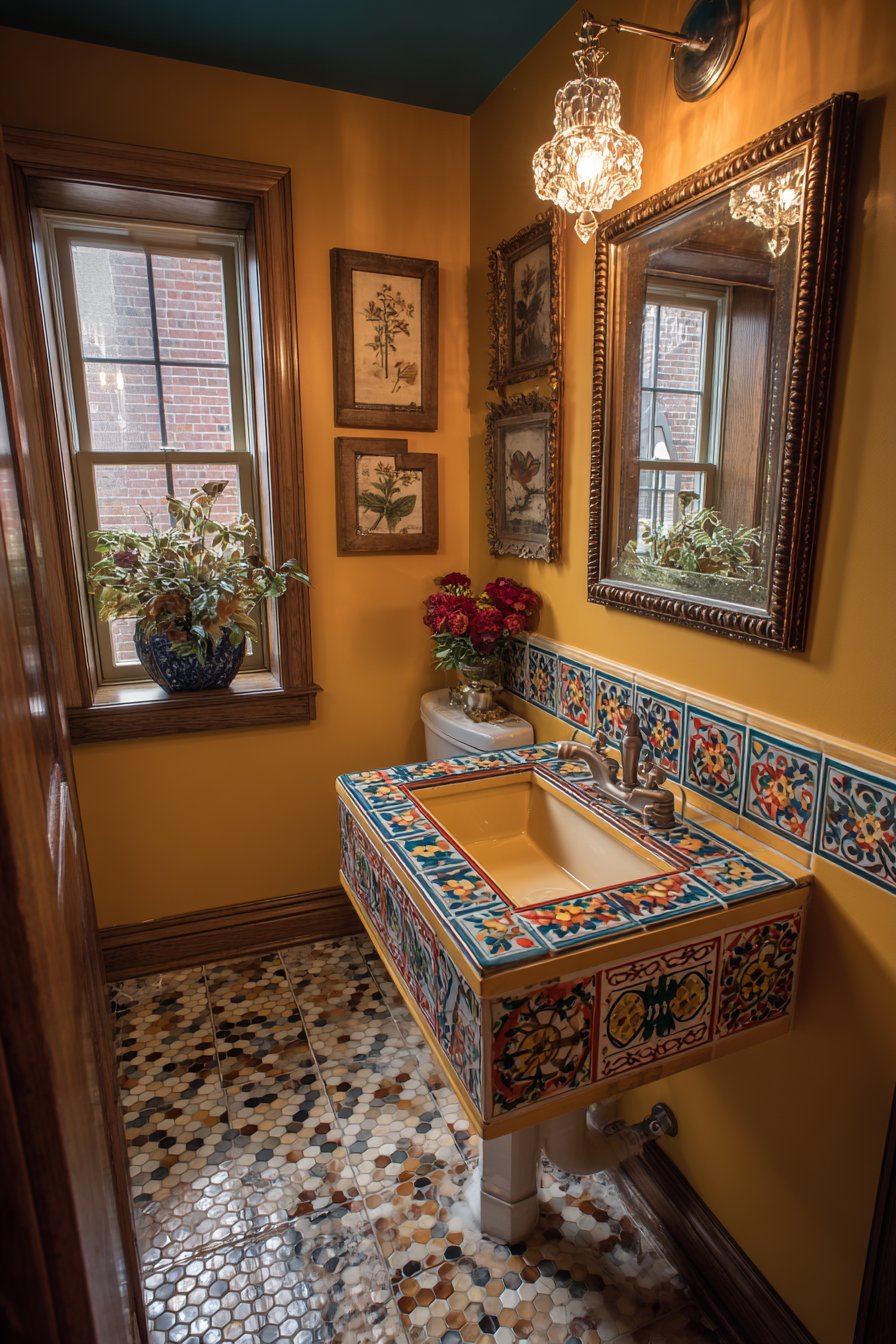
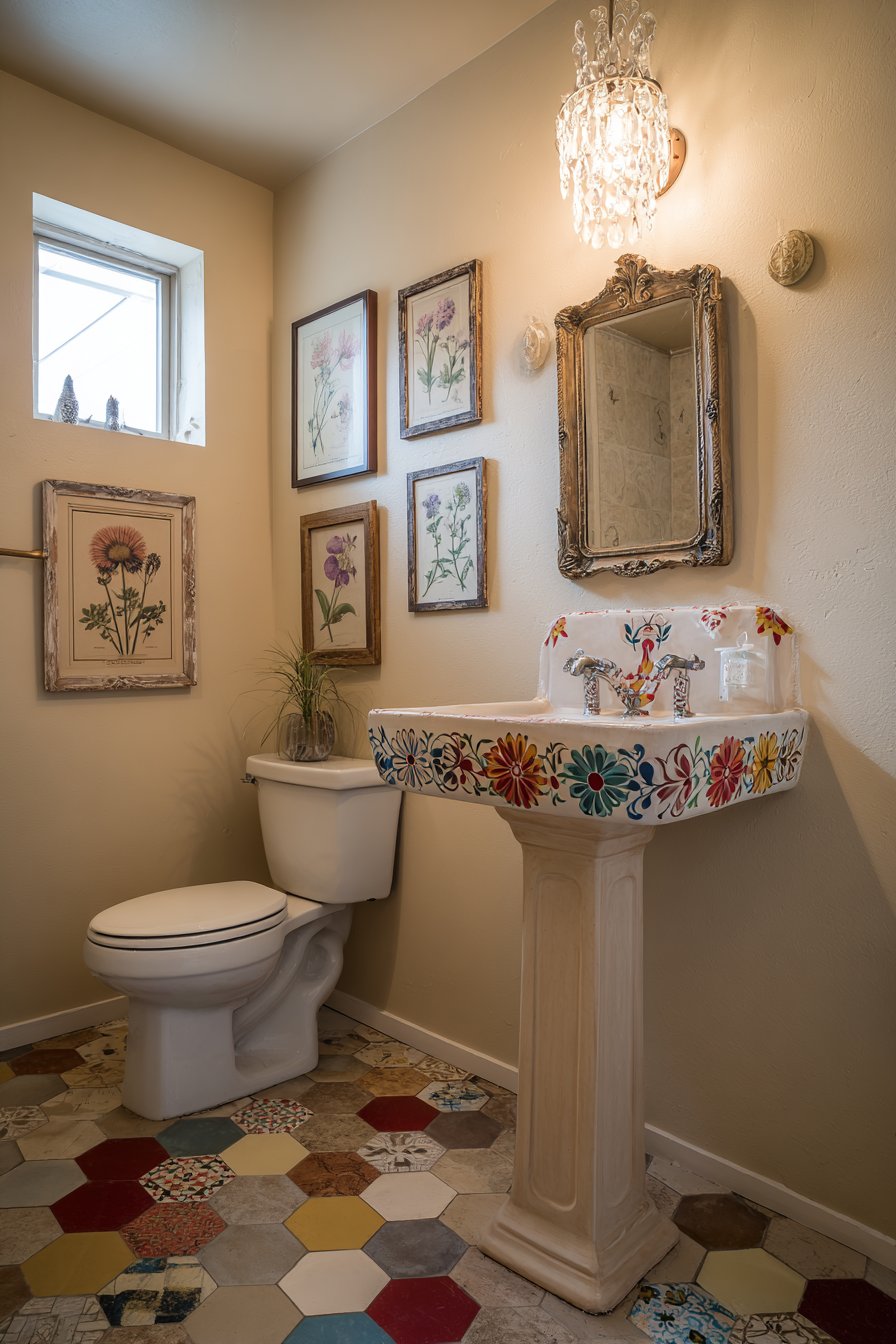
Transforming a standard pedestal sink into a work of art sets this quirky bathroom apart from the ordinary. The basin features hand-painted decorative motifs inspired by folk art traditions, with vibrant colors like cobalt blue, sunflower yellow, and rustic red swirling together in patterns that celebrate craftsmanship and cultural heritage. This custom artistic treatment turns a purely functional fixture into a conversation piece that immediately reveals the homeowner’s appreciation for handmade artistry and individual expression. The painted designs might include traditional floral rosemaling, Pennsylvania Dutch hex signs, or Mexican Talavera-inspired patterns.
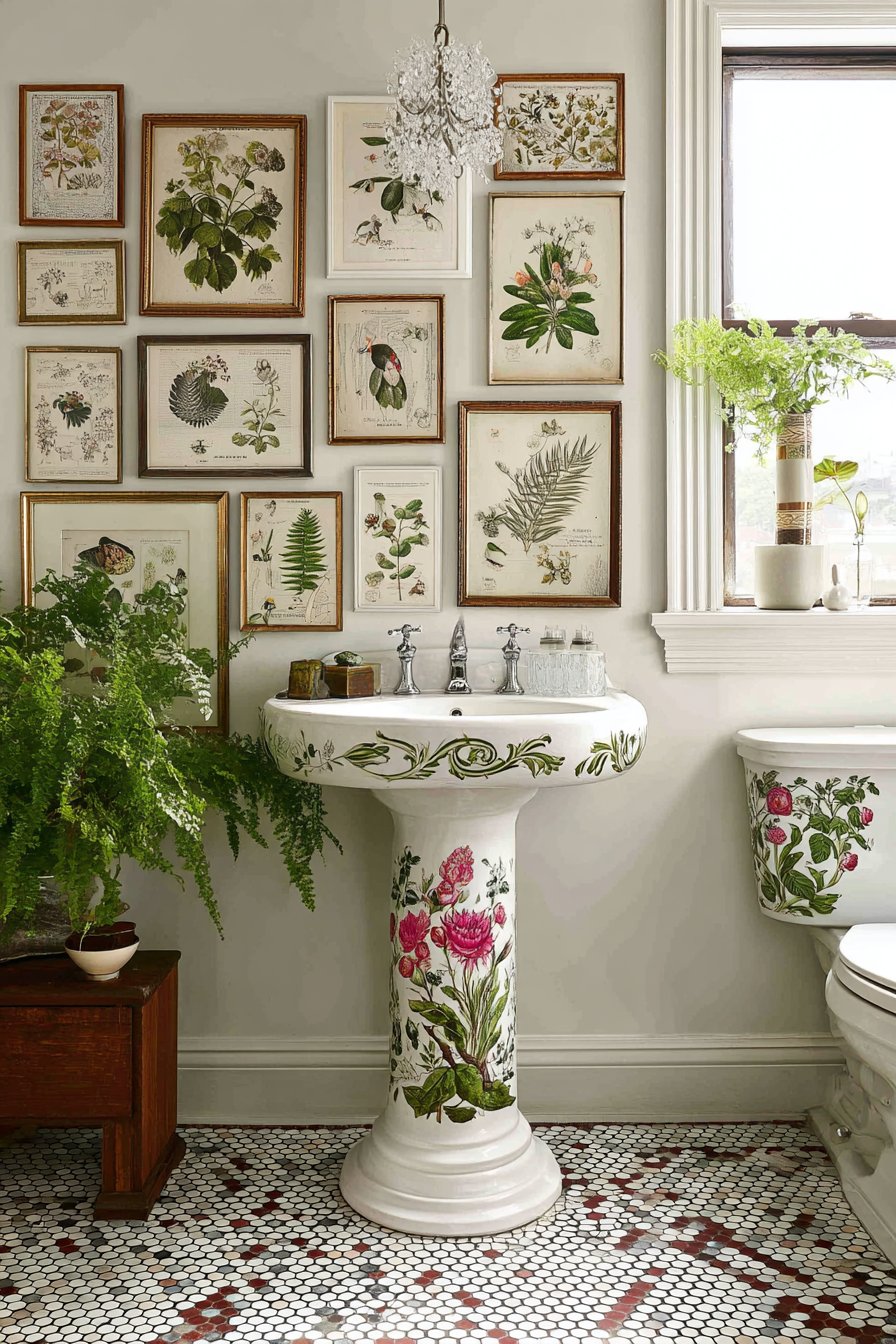
Surrounding this artistic centerpiece, the wall displays a carefully arranged gallery of vintage botanical prints housed in mismatched ornate frames. These scientific illustrations of ferns, flowers, and medicinal herbs add educational interest while maintaining the quirky aesthetic through their varied frame styles—some gilded and elaborate, others simple and understated. The collection creates a museum-quality display that elevates the bathroom beyond its utilitarian purpose. Above the sink, a small crystal chandelier provides unexpected elegance, its faceted drops catching and refracting light throughout the space, creating sparkle and movement even in this humble room.
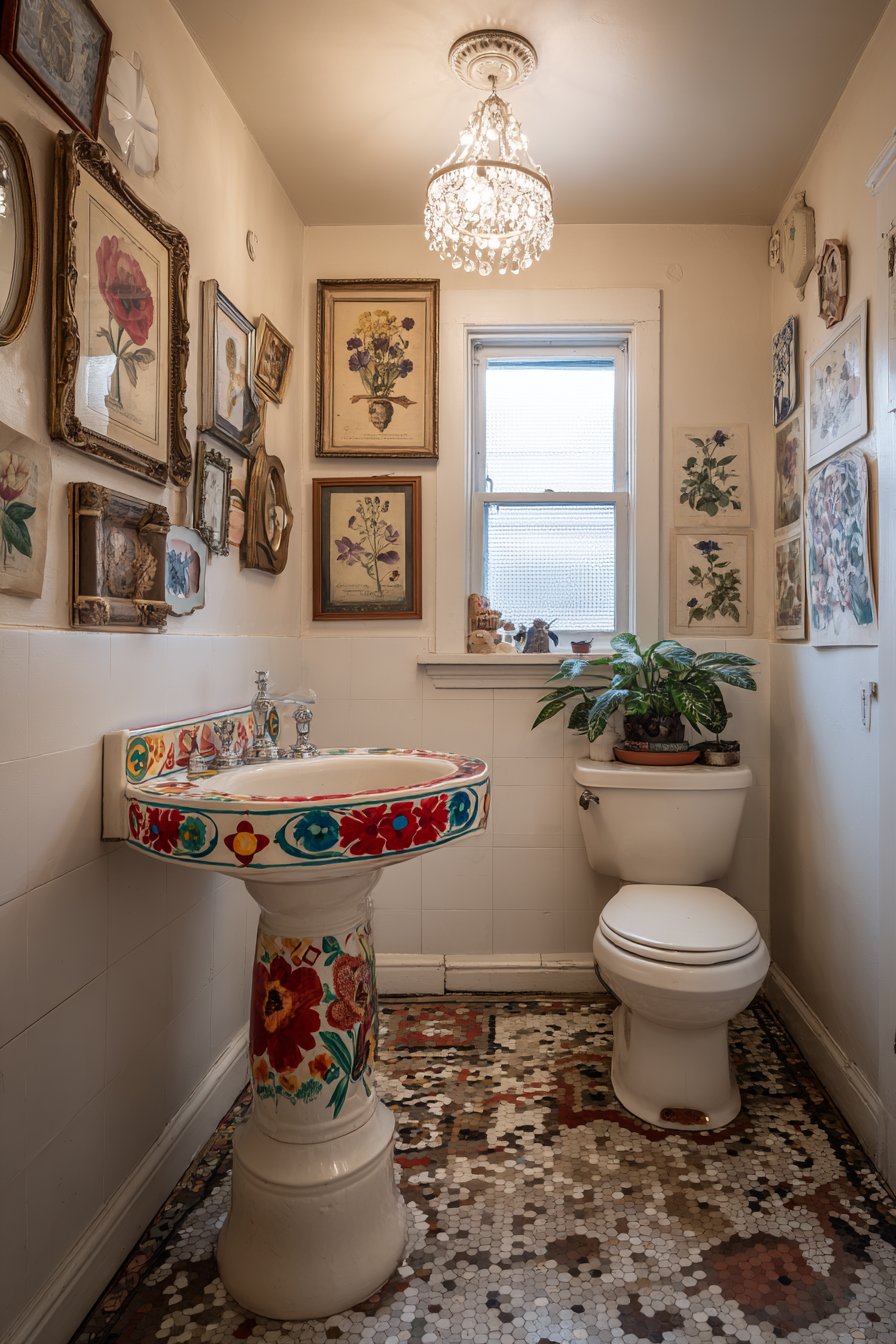
The floor features hexagonal tiles in mixed patterns, perhaps alternating between solid colors and decorative motifs, creating a honeycomb effect that adds geometric interest underfoot. This pattern choice works beautifully with the organic curves of the pedestal sink while providing visual grounding for the eclectic wall treatments. Natural light streams through a small window dressed with vintage lace or embroidered curtains, casting delicate shadow patterns that enhance the room’s romantic, collected-over-time atmosphere.
Key Design Tips:
- Commission a local artist to hand-paint existing fixtures for one-of-a-kind character
- Create botanical print galleries using affordable reproductions in varied vintage frames
- Install unexpected lighting like chandeliers to add glamour to small spaces
- Mix tile patterns deliberately rather than randomly for cohesive visual impact
- Consider the room’s architectural features when planning eclectic wall displays
3. Mustard Yellow and Teal Color Collision
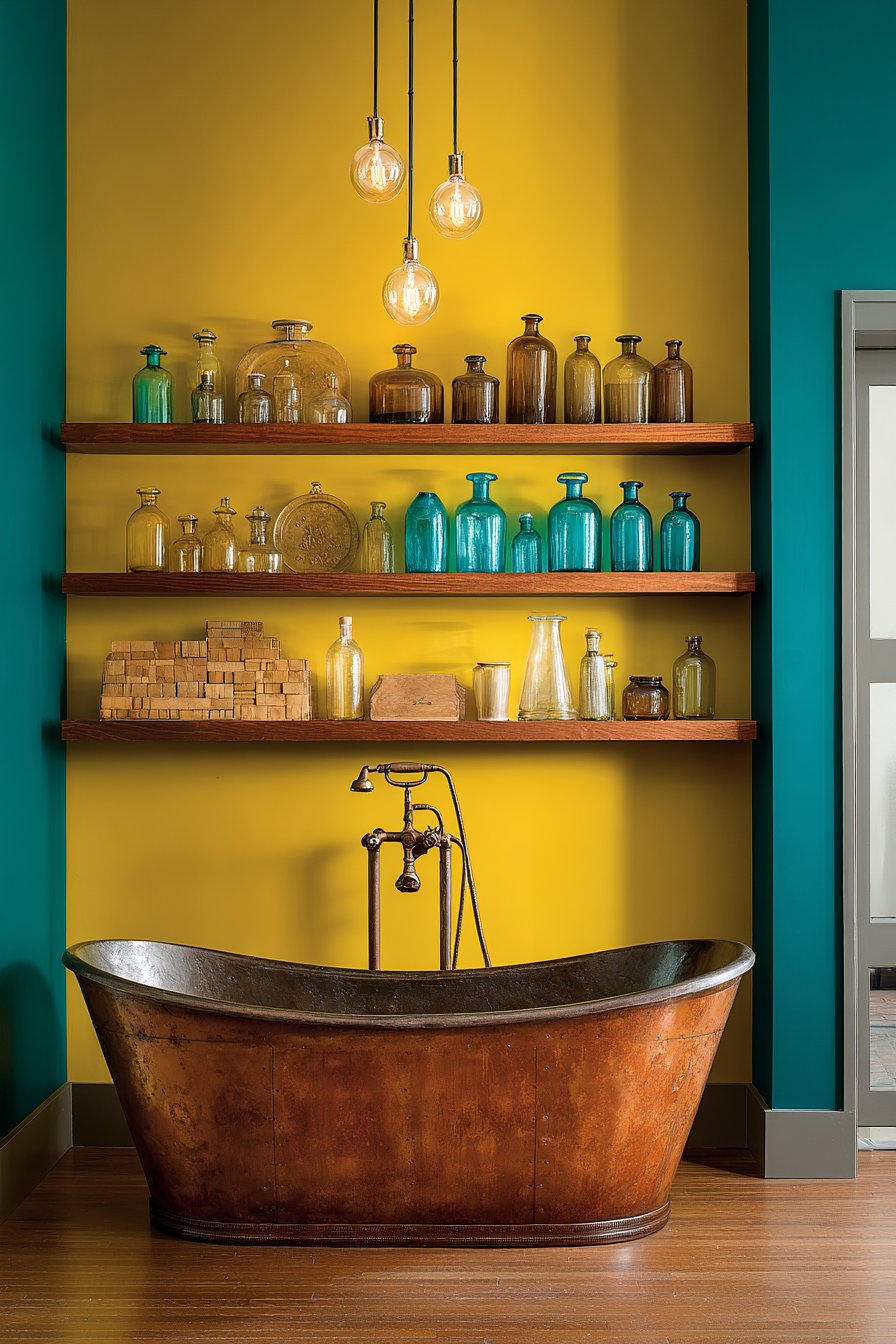
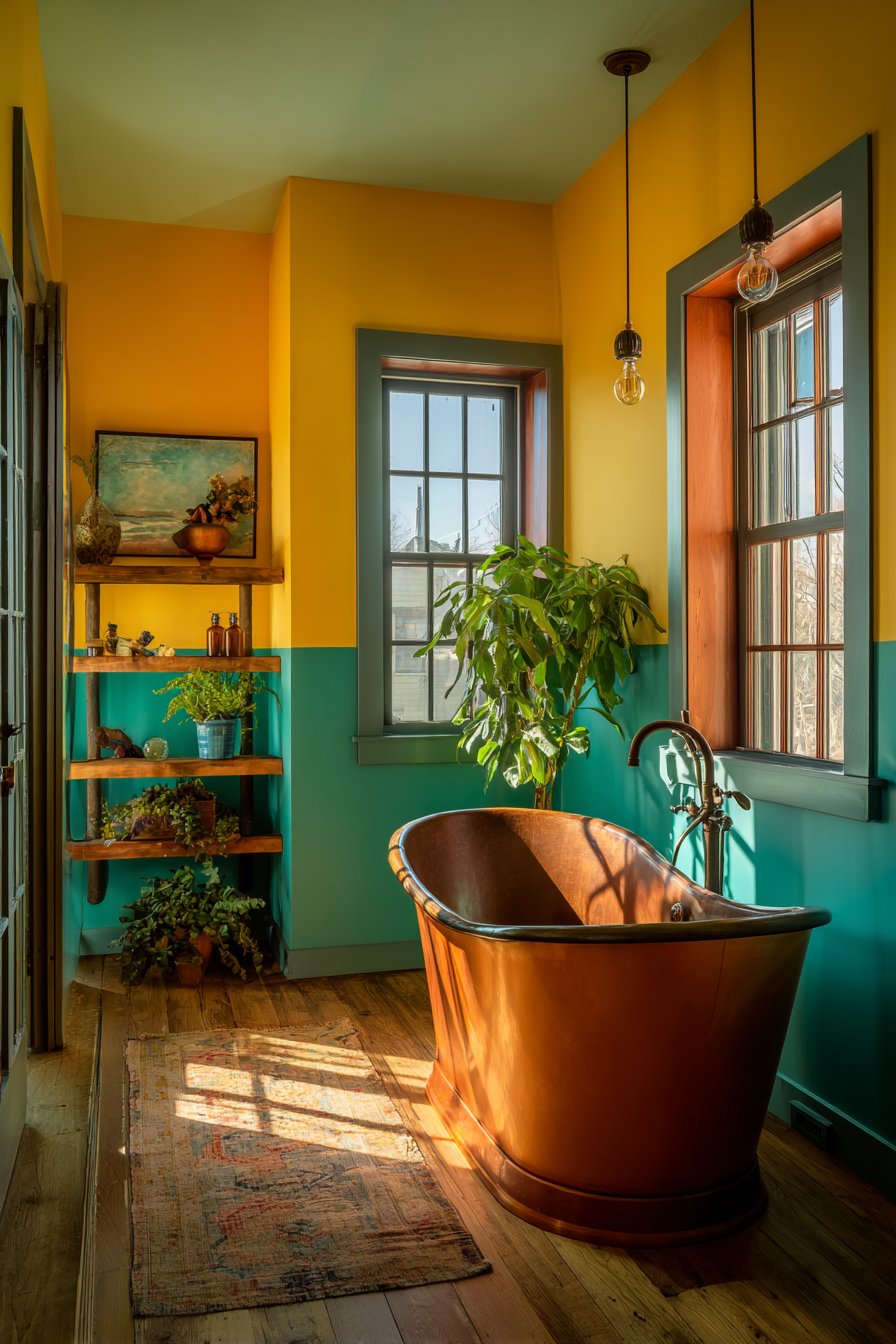
Bold color choices define this fearlessly quirky bathroom where mustard yellow walls meet deep teal accents in a combination that energizes and invigorates. This daring palette challenges conventional bathroom color wisdom, proving that spaces dedicated to relaxation can also be visually stimulating and full of personality. The warm golden tones of the mustard yellow create an enveloping atmosphere, while strategic teal accents—perhaps in towels, decorative objects, or a painted ceiling—provide cooling contrast that prevents the space from feeling overwhelming. This color theory application demonstrates sophisticated understanding of complementary hues.
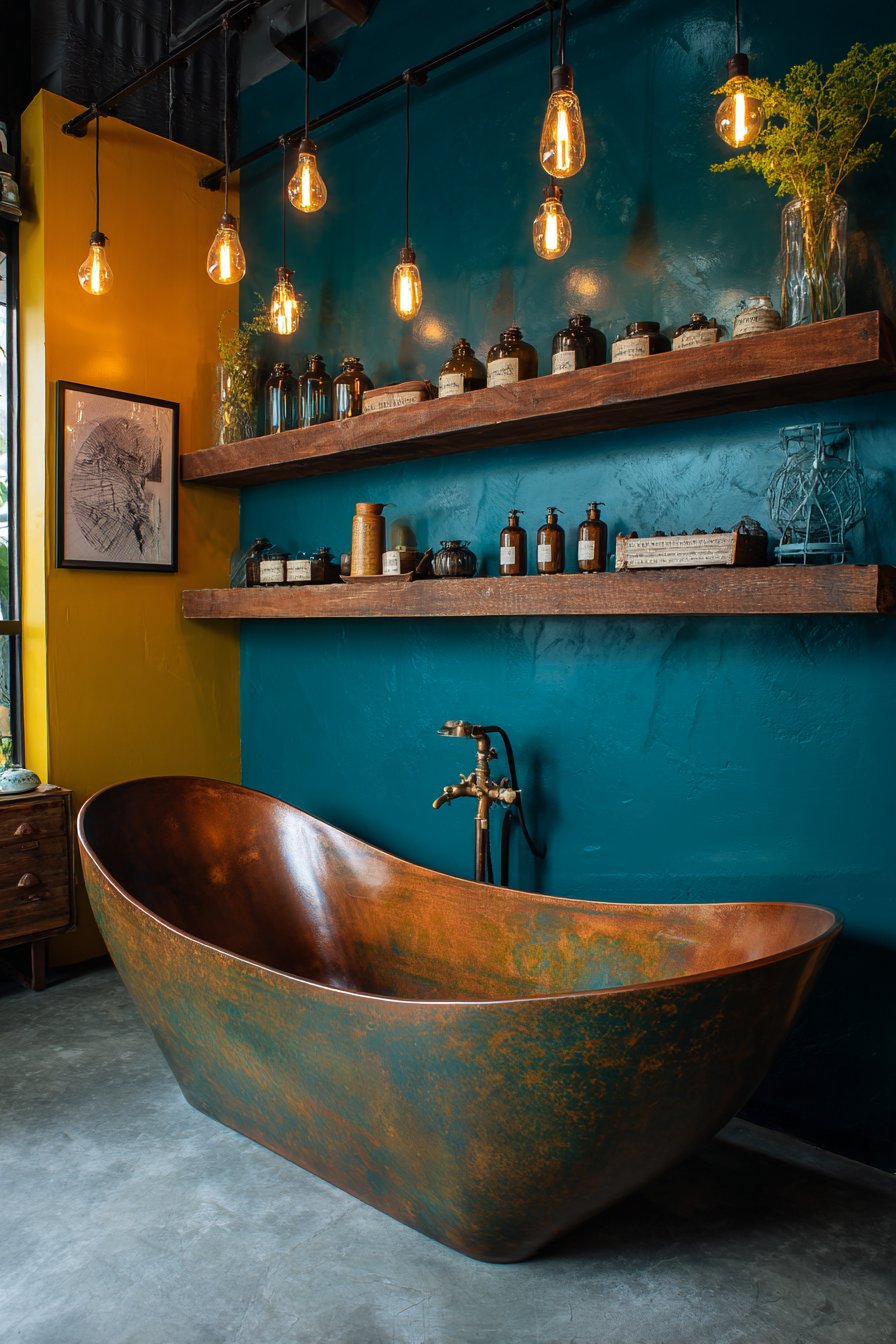
The star of this space is a freestanding copper bathtub that develops natural patina over time, its surface evolving from bright burnished copper to rich brownish tones with hints of green oxidation. This living finish means the tub literally changes and matures with use, creating an ever-evolving focal point that embodies the organic nature of authentic design. The copper’s metallic sheen catches and reflects the bold wall colors, creating subtle color shifts throughout the day as natural light changes. Open wooden shelving provides practical storage while displaying a curated collection of vintage apothecary bottles in amber and cobalt glass, their contents and labels adding to the room’s narrative richness.
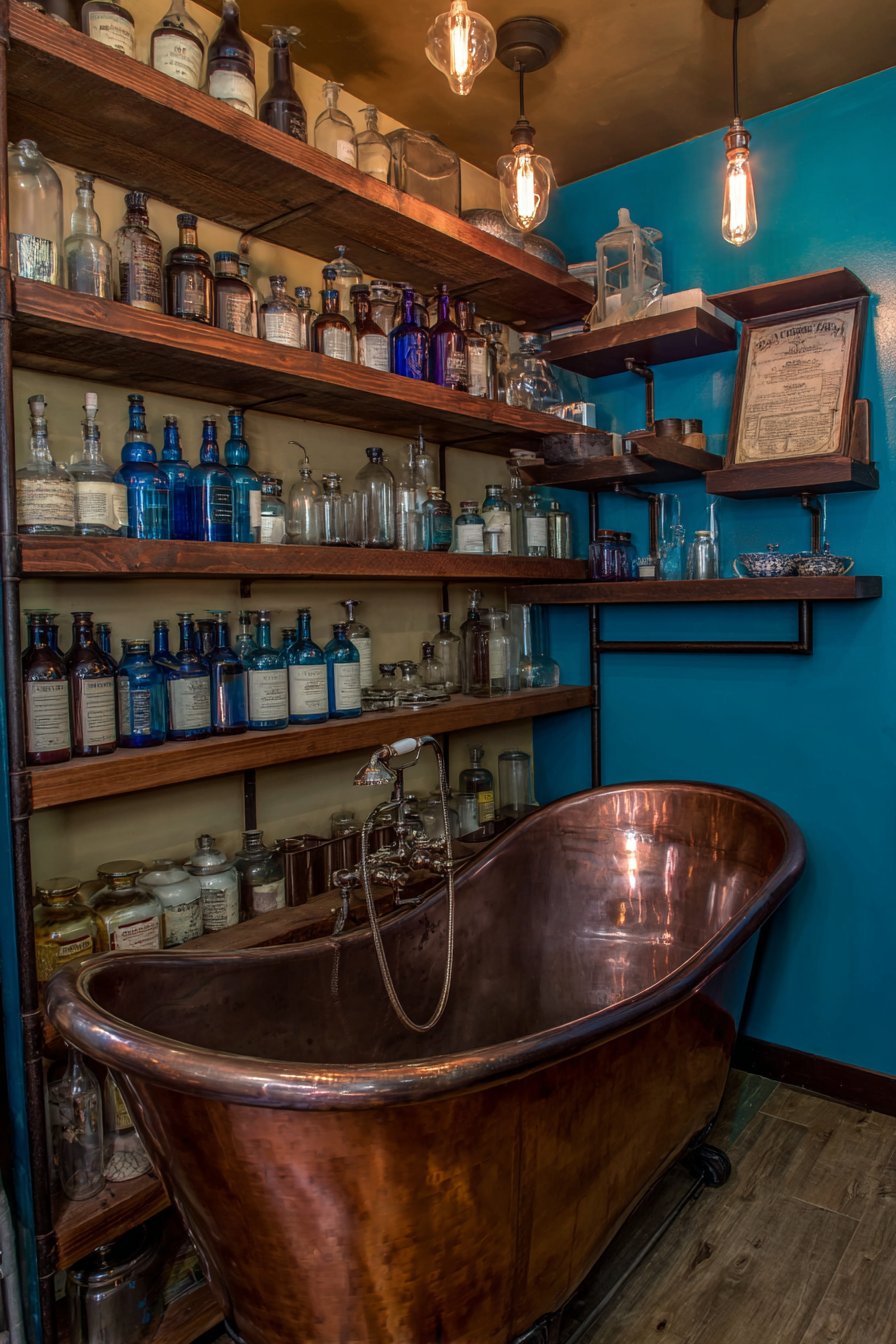
Exposed Edison bulb fixtures suspended from fabric-wrapped cords provide warm ambient lighting that enhances the color palette’s golden undertones. These industrial-style lights reference early twentieth-century design while fitting perfectly into contemporary aesthetics—a hallmark of successful quirky design that transcends single style categories. Unusual decorative objects—perhaps vintage medical instruments, antique scales, or curiosity cabinet specimens—populate the shelves, transforming functional storage into display worthy of a boutique hotel or designed showroom.
Key Design Tips:
- Test bold color combinations on large sample boards before committing to full walls
- Choose living finishes like copper or brass that develop character through use
- Balance intense wall colors with neutral flooring for visual relief
- Display collections intentionally, editing and curating rather than overcrowding
- Layer multiple light sources at different heights for dimensional illumination
4. Whimsical Shower Curtain Statement
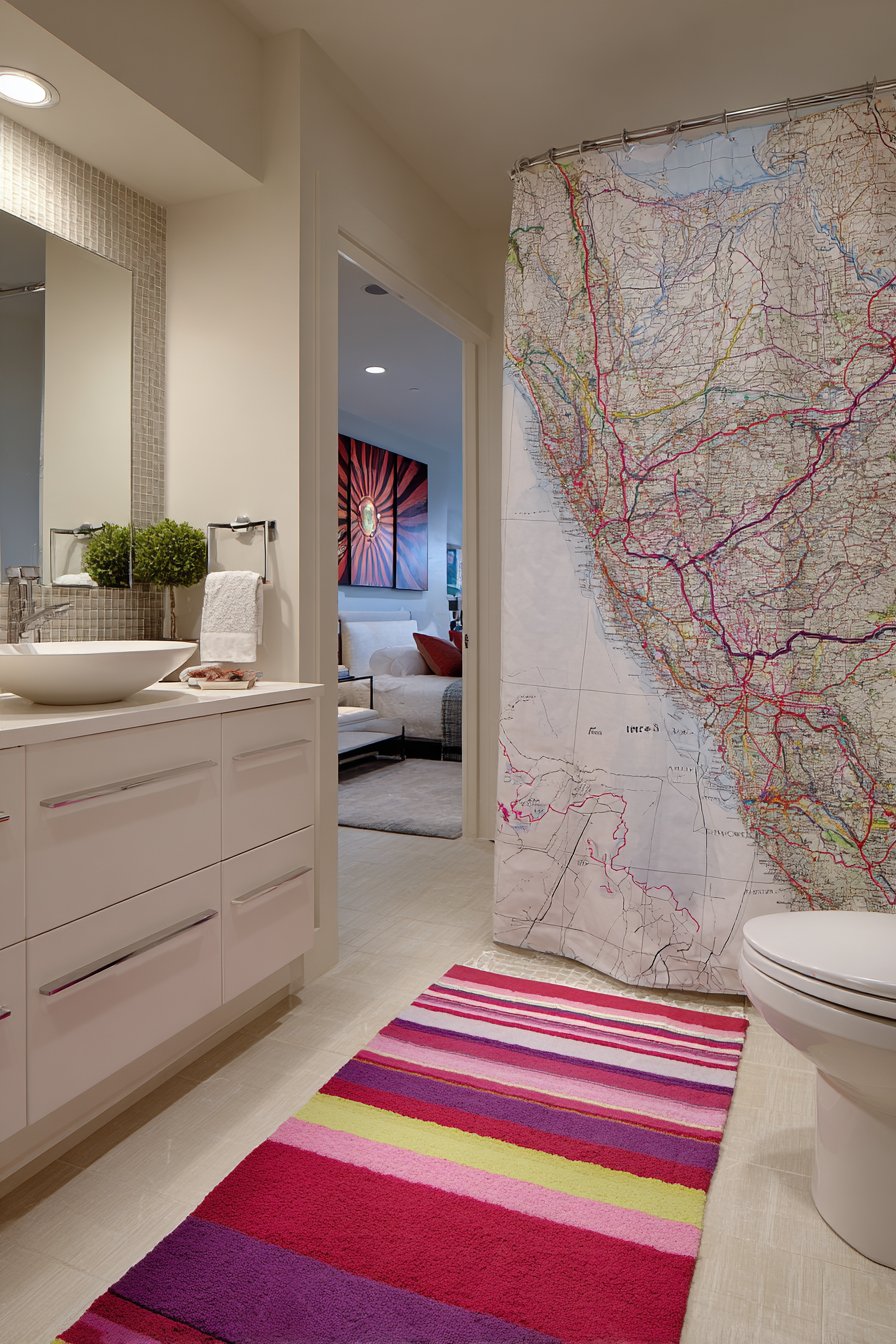
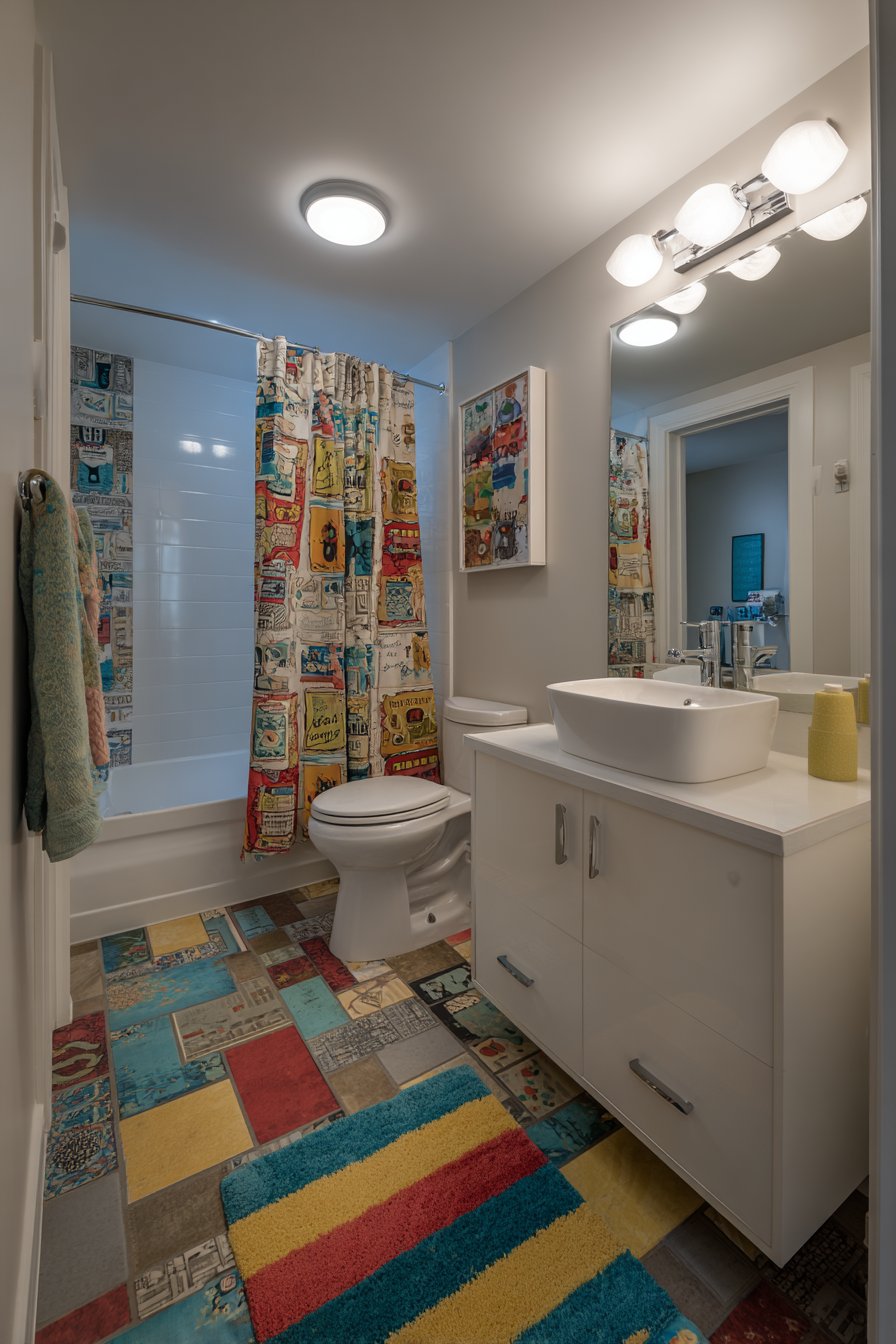
Sometimes quirky design starts with a single bold choice, and in this bathroom, an oversized shower curtain featuring whimsical patterns becomes the room’s defining element. Whether showcasing vintage world maps charting ancient geography, retro comic book panels bursting with Pop Art energy, or illustrated botanical gardens teeming with detailed flora, this textile focal point immediately establishes the bathroom’s playful personality. The large-scale pattern creates visual impact disproportionate to the modest investment, proving that strategic choices can transform spaces without requiring major renovations or significant budgets.
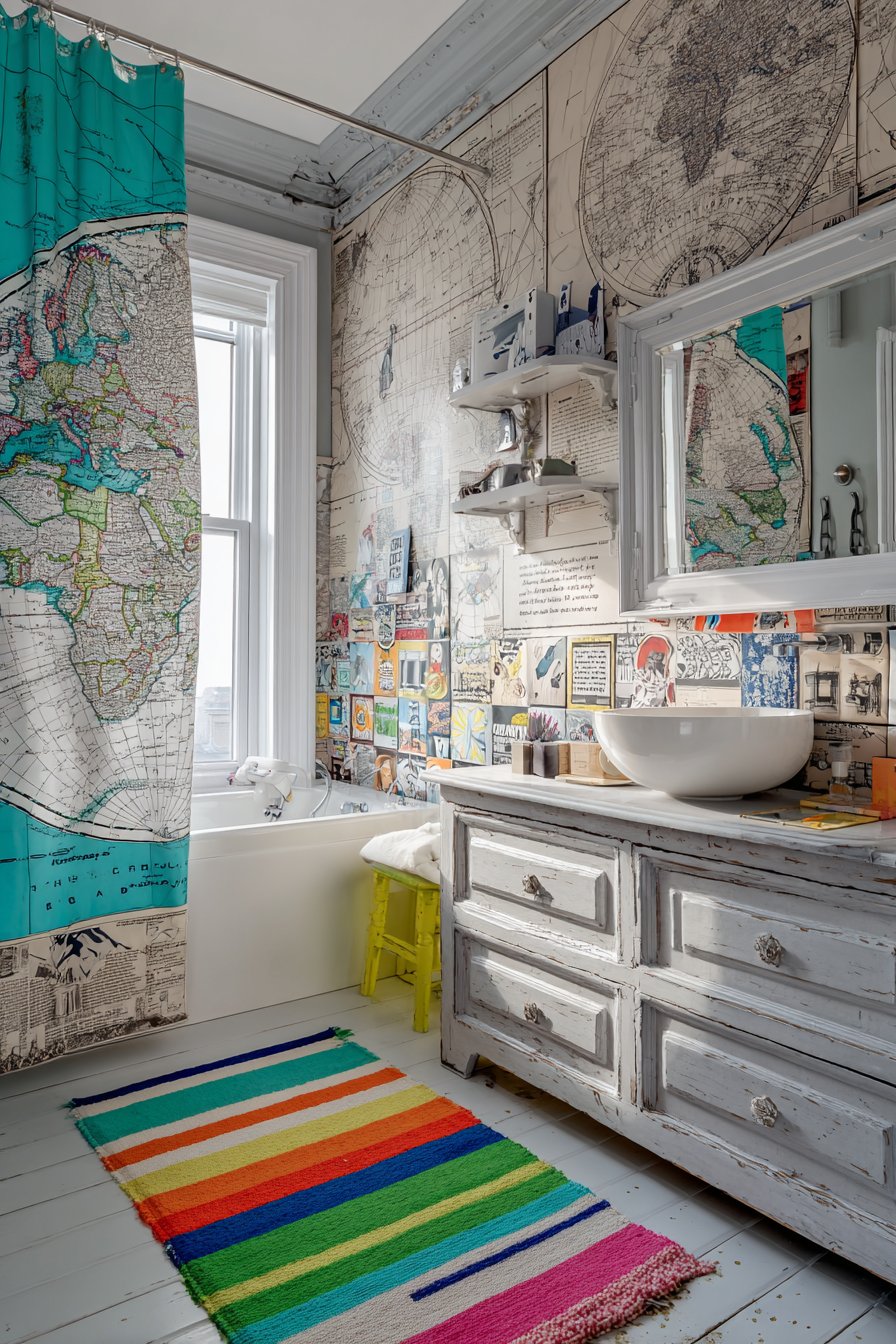
Beneath this statement curtain, a repurposed antique dresser has been expertly converted into a vanity, its original hardware preserved and patina celebrated. This furniture transformation exemplifies the sustainable creativity at quirky design’s heart—seeing potential in existing pieces and adapting them for new purposes. The dresser’s drawers provide generous storage while its height and proportions create a more comfortable and personalized bathroom experience than standard vanity cabinets. A vessel sink rests atop the dresser’s surface, connected to wall-mounted plumbing that maintains the furniture’s integrity while providing modern functionality.
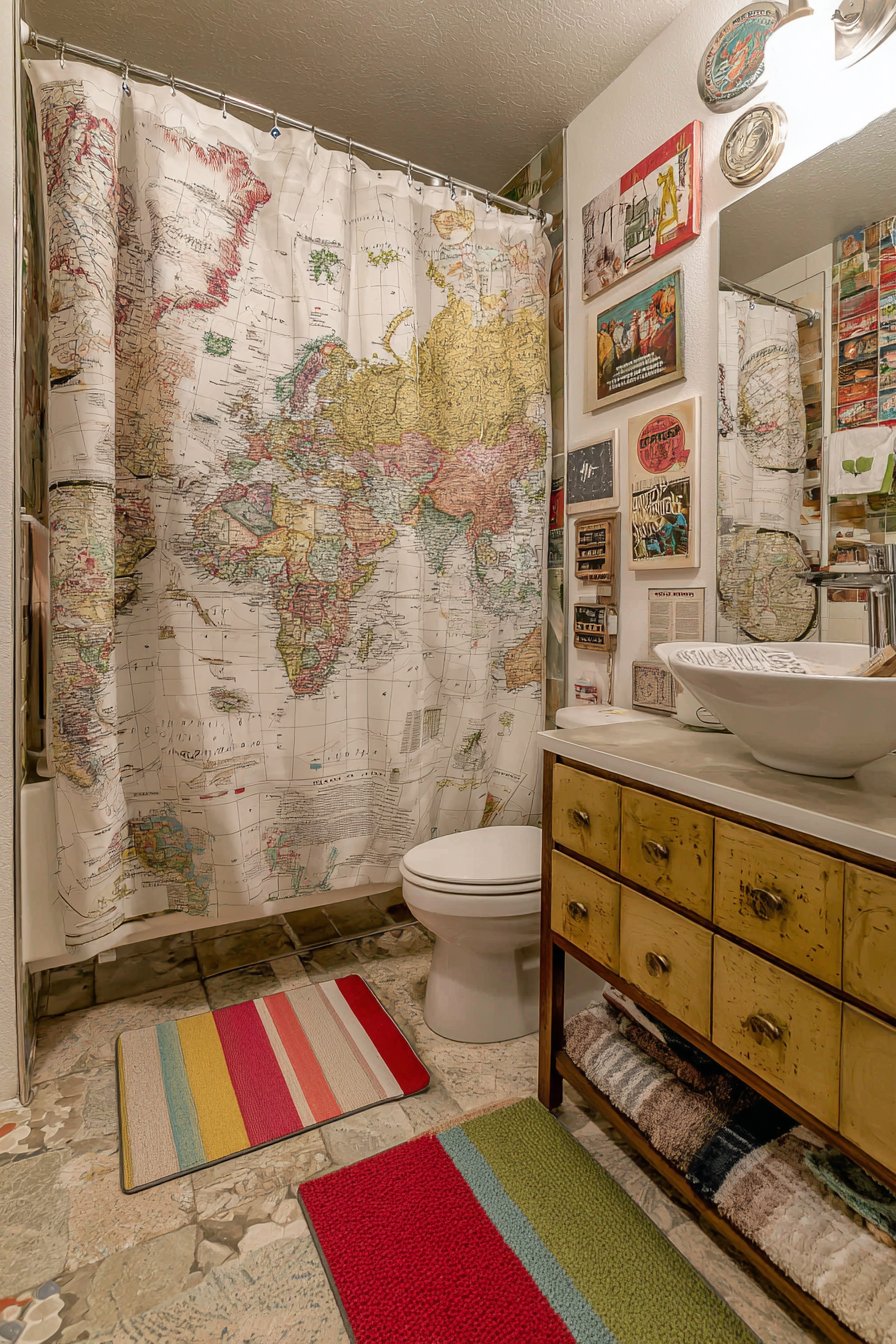
The backsplash area features mismatched decorative tiles creating an intentional patchwork effect. Rather than uniform subway tiles, this approach celebrates variety—perhaps combining hand-painted Moroccan zellige, Portuguese azulejo, and Mexican Talavera tiles in a deliberately composed arrangement. Each tile tells its own story while contributing to the cohesive whole. A colorful striped bath mat introduces yet another pattern into the mix, its bold lines providing visual grounding and demonstrating confident pattern mixing that could intimidate less adventurous designers.
Key Design Tips:
- Invest in high-quality printed shower curtains that resist mildew and maintain color
- Seal antique wood furniture properly for bathroom humidity resistance
- Mix decorative tile styles by maintaining consistent scale or color themes
- Layer patterns confidently, varying their scales for successful combination
- Choose vessel sinks that complement rather than compete with furniture bases
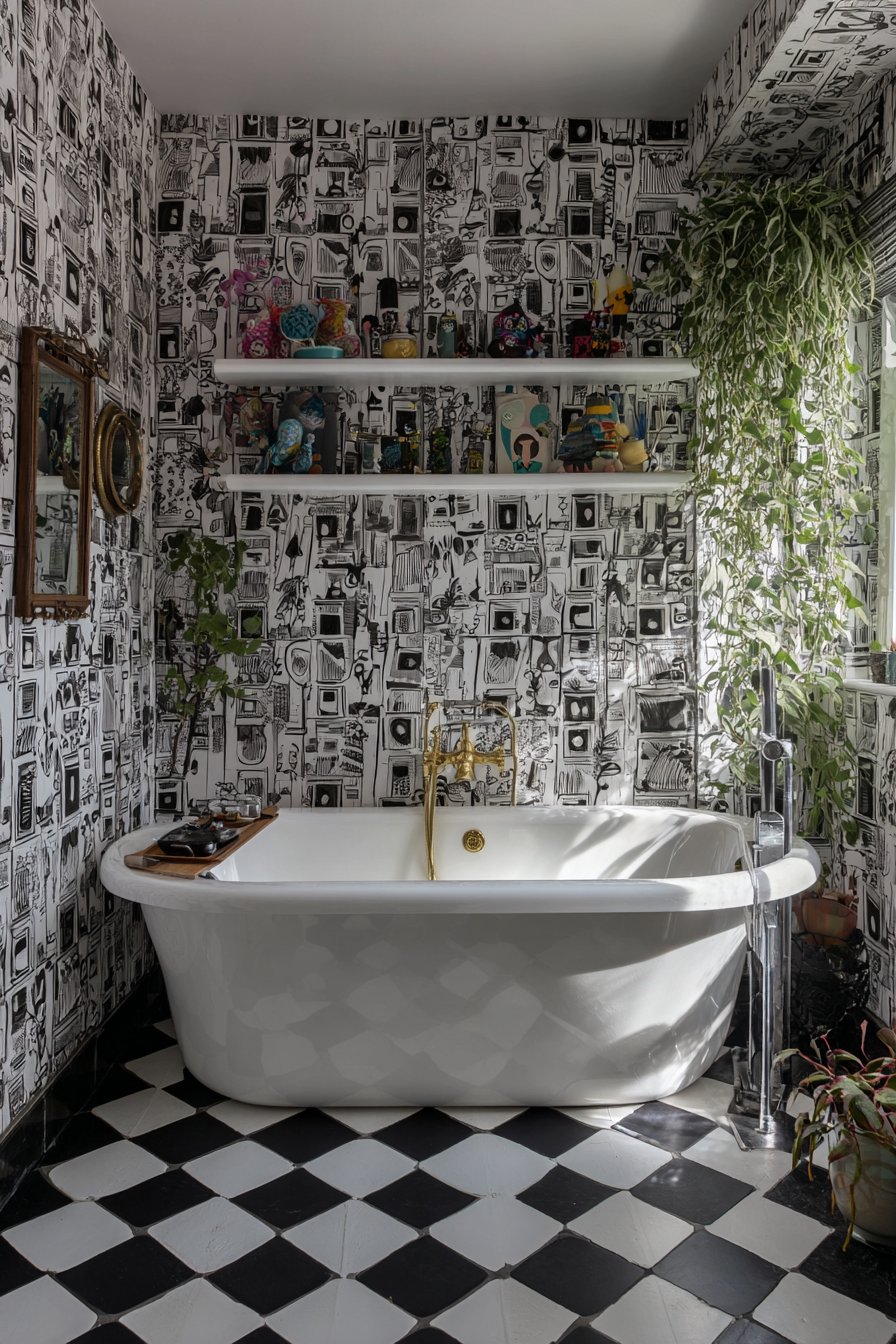
5. Checkered Floor with Jungle Wallpaper
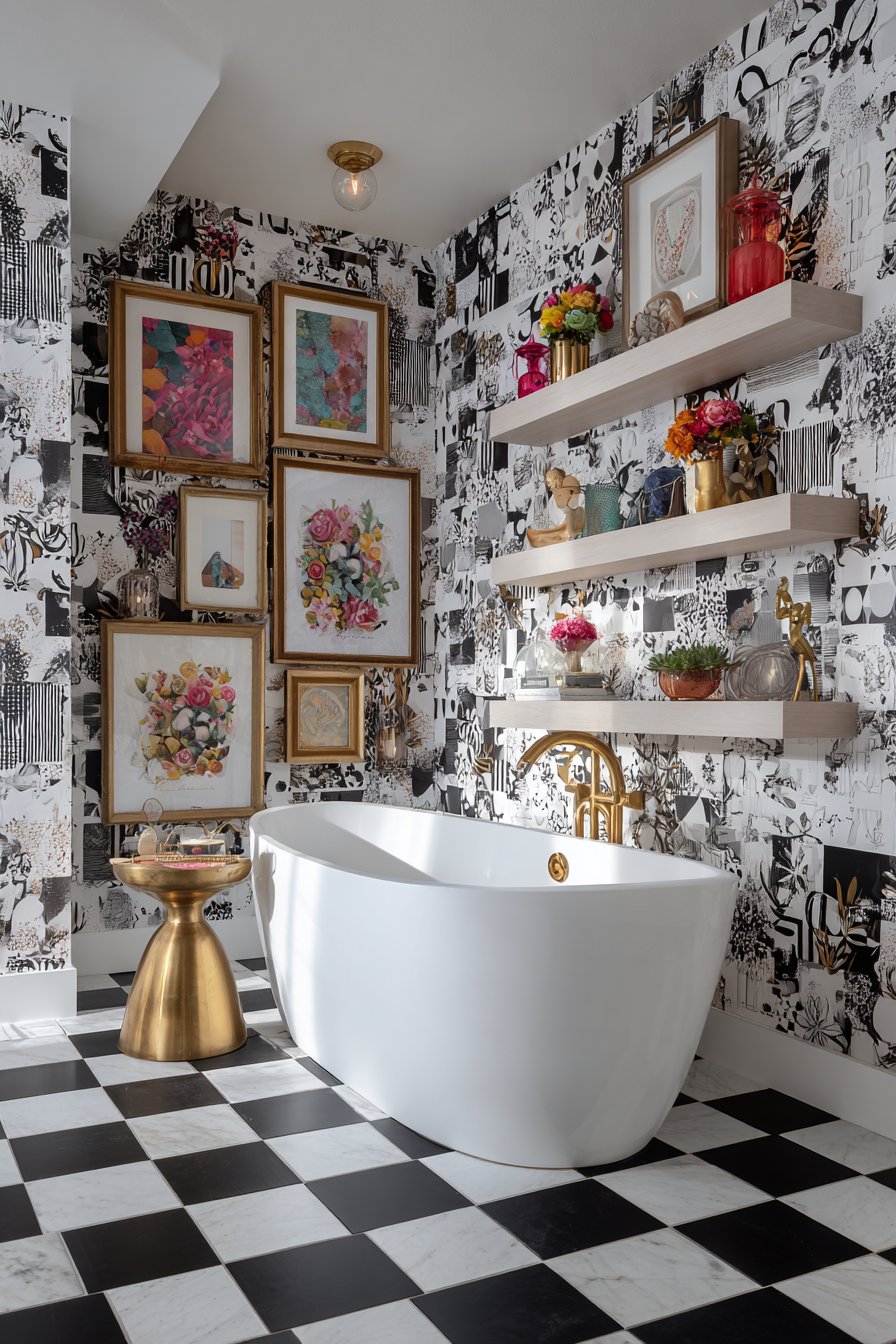
Classic black and white checkered flooring provides timeless graphic punch in this quirky bathroom, its high-contrast pattern creating the perfect foundation for even bolder wall treatments. This chess-board floor references vintage diners and Art Deco bathrooms while remaining thoroughly contemporary, proving certain design elements transcend trend cycles. The geometric precision of the floor creates visual order that anchors the space, allowing wilder design choices elsewhere without descending into chaos. The alternating squares create optical dynamism that makes small bathrooms feel larger while adding architectural interest to expansive spaces.
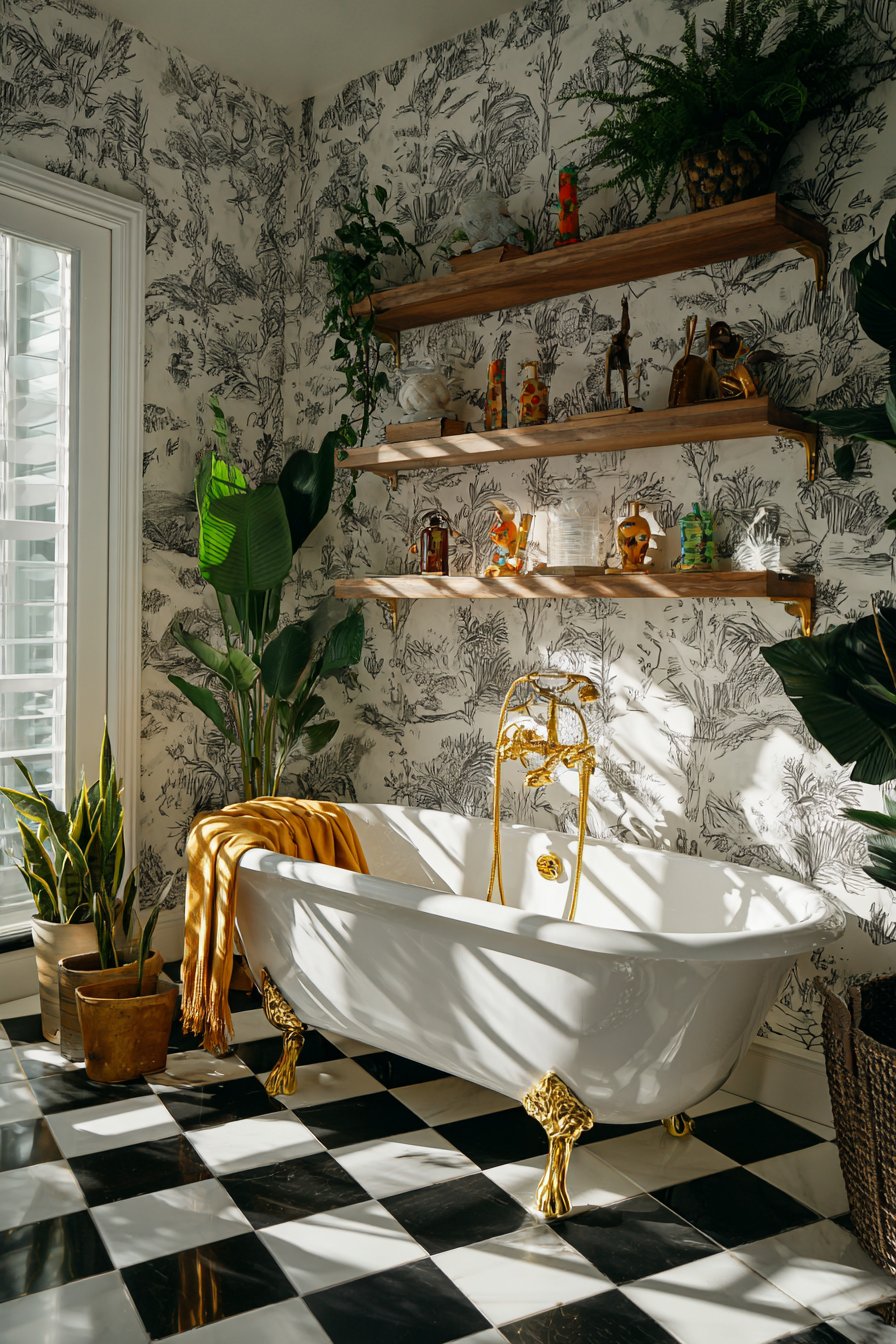
Above this structured foundation, walls explode with quirky removable wallpaper featuring unusual motifs—perhaps jungle animals peering through tropical foliage, abstract geometric faces rendered in bold primary colors, or surrealist compositions that challenge perception. Modern peel-and-stick wallpaper technology makes such bold choices practical even for renters or commitment-phobic designers, as patterns can be changed seasonally or whenever inspiration strikes. This flexibility encourages experimentation and evolution, key principles in authentic quirky design that embraces change rather than seeking permanent perfection.
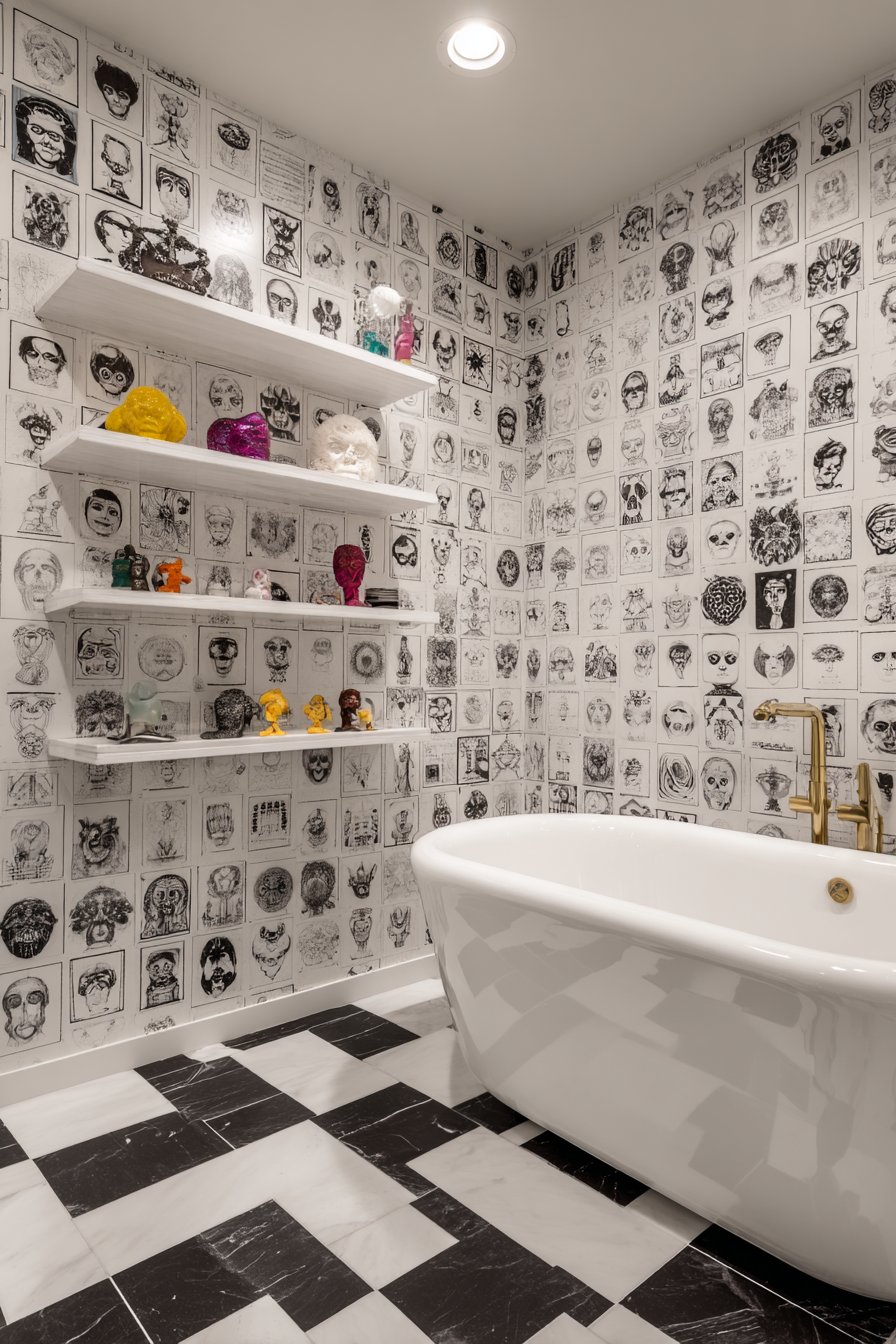
A modern white pedestal tub provides serene contrast against the busy surroundings, its clean lines and pure color creating visual rest amid the pattern and color. Vintage brass fixtures add warmth and historical reference without competing for attention. Floating shelves in simple materials display eccentric decorative items—small sculptures, colorful glass bottles containing beach finds, vintage toys, or found objects from travels—each piece carefully chosen for its quirky appeal and personal significance. Natural daylight streaming through an unadorned window highlights the bold pattern mixing while preventing the space from feeling too enclosed.
Key Design Tips:
- Use high-contrast flooring as a stabilizing element when planning busy wall treatments
- Choose removable wallpaper for flexibility and renter-friendly transformations
- Balance pattern intensity with solid-colored fixtures and surfaces
- Display quirky objects in odd-numbered groupings for visual appeal
- Maximize natural light in pattern-heavy spaces to prevent them feeling cave-like
6. Celestial Navy Ceiling with Rainbow Grout
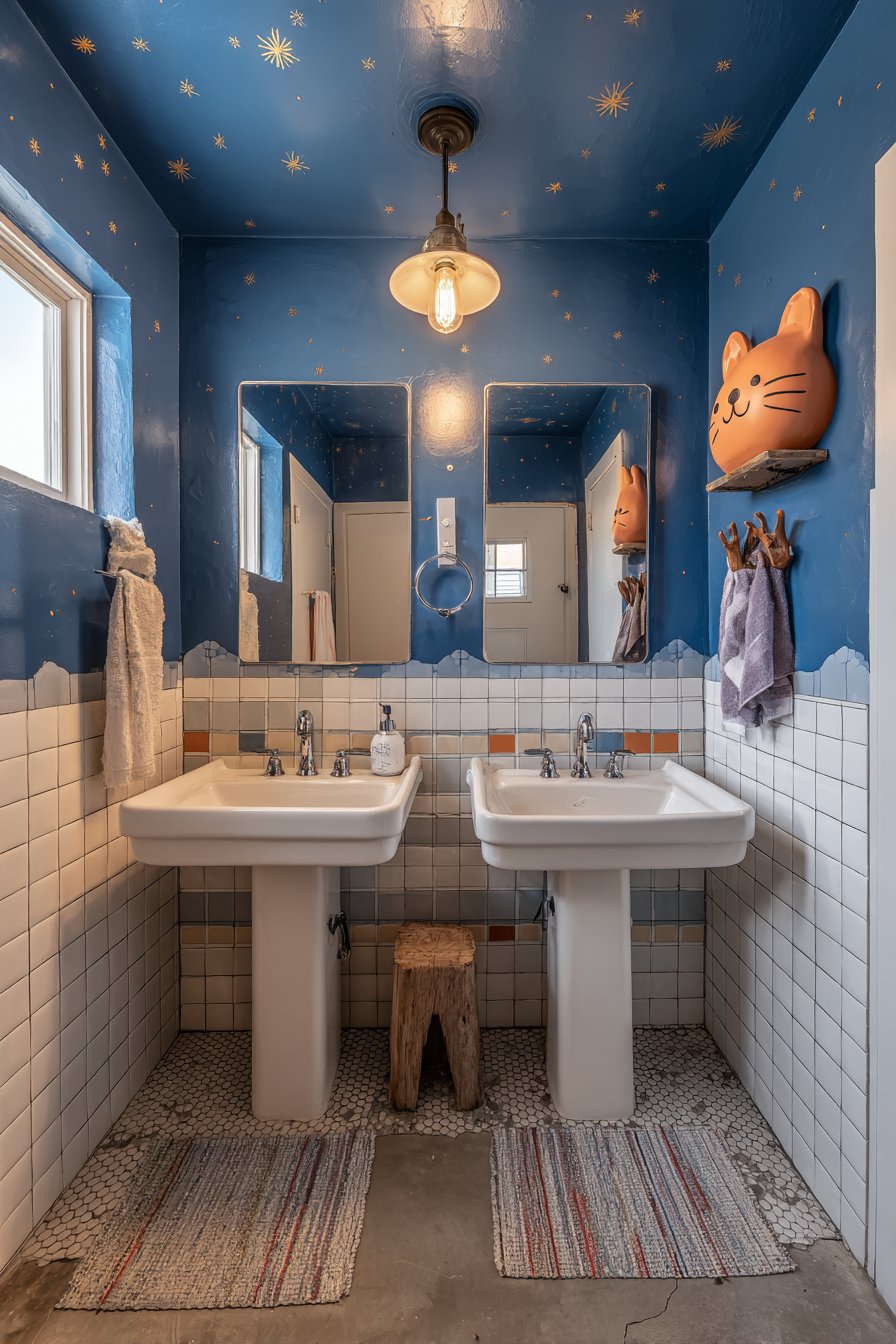
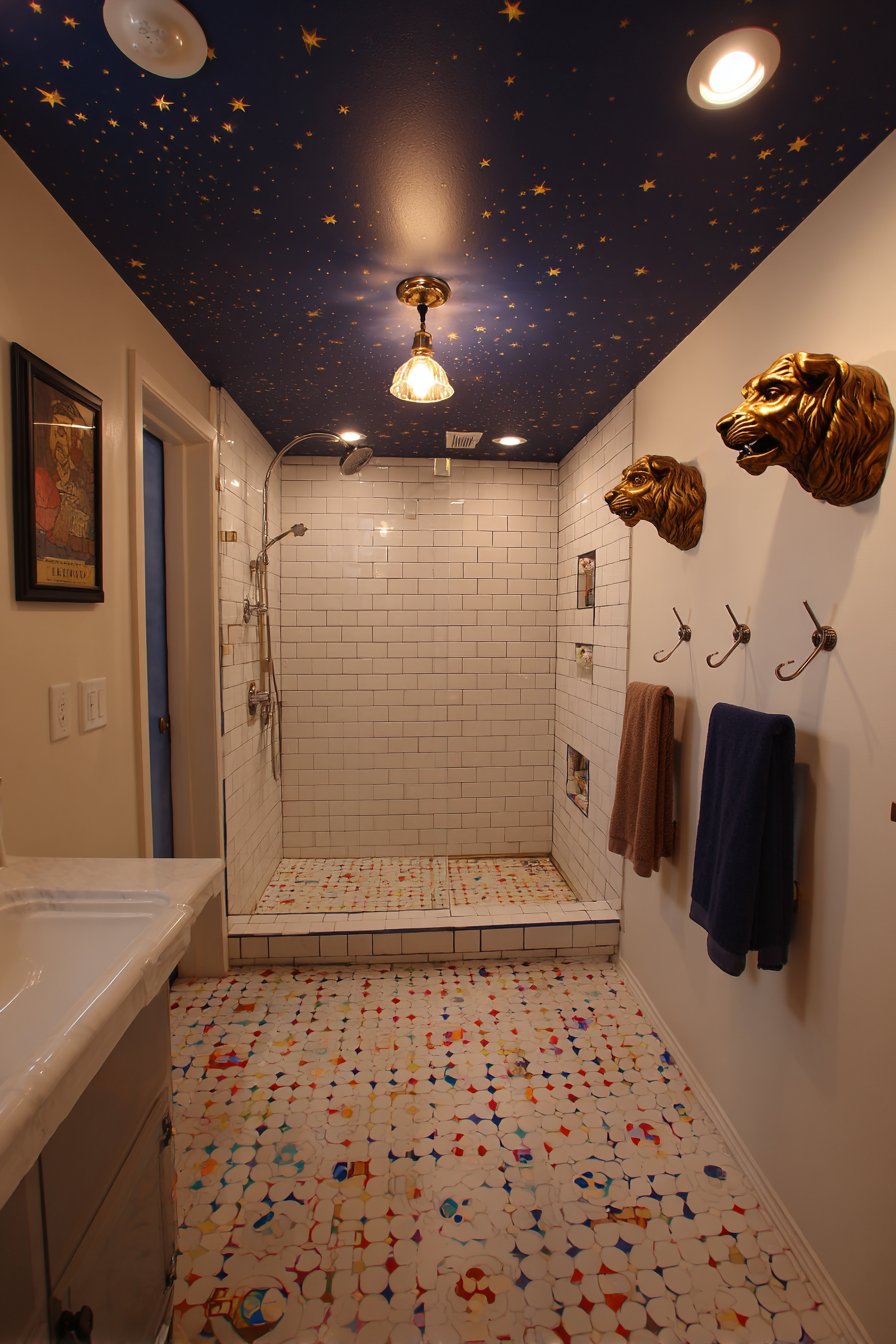
Looking upward in this quirky bathroom reveals an unexpected surprise: a ceiling painted deep navy blue and adorned with gold star decals creating a personal planetarium effect. This often-neglected surface becomes a focal point, rewarding those who recline in the tub with a contemplative view of the cosmos. The dark ceiling creates dramatic contrast with lighter walls while adding unexpected depth and dimension to the room. This design choice demonstrates how quirky thinking examines every surface as potential canvas for creative expression, refusing to accept conventional limitations.
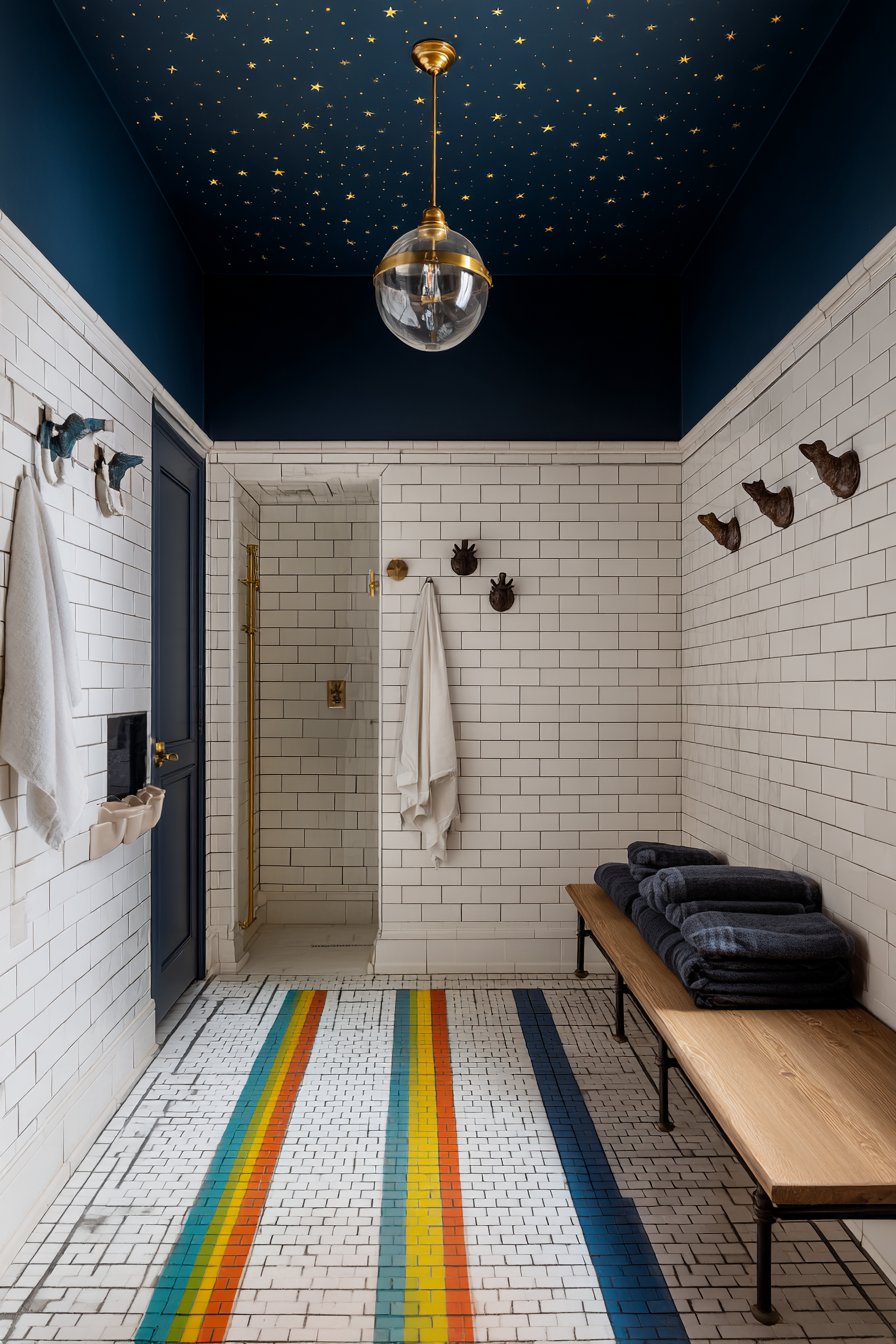
Below this celestial canopy, white subway tiles receive their own quirky treatment through rainbow-colored grout lines that transform standard materials into playful art. Each grout line might graduate through the spectrum—red, orange, yellow, green, blue, indigo, violet—creating a subtle pride flag effect or simply celebrating color for its own joyful sake. This detail-oriented approach shows how small modifications can dramatically alter familiar materials, proving quirky design needn’t require exotic or expensive elements when creativity can transform the ordinary into extraordinary.
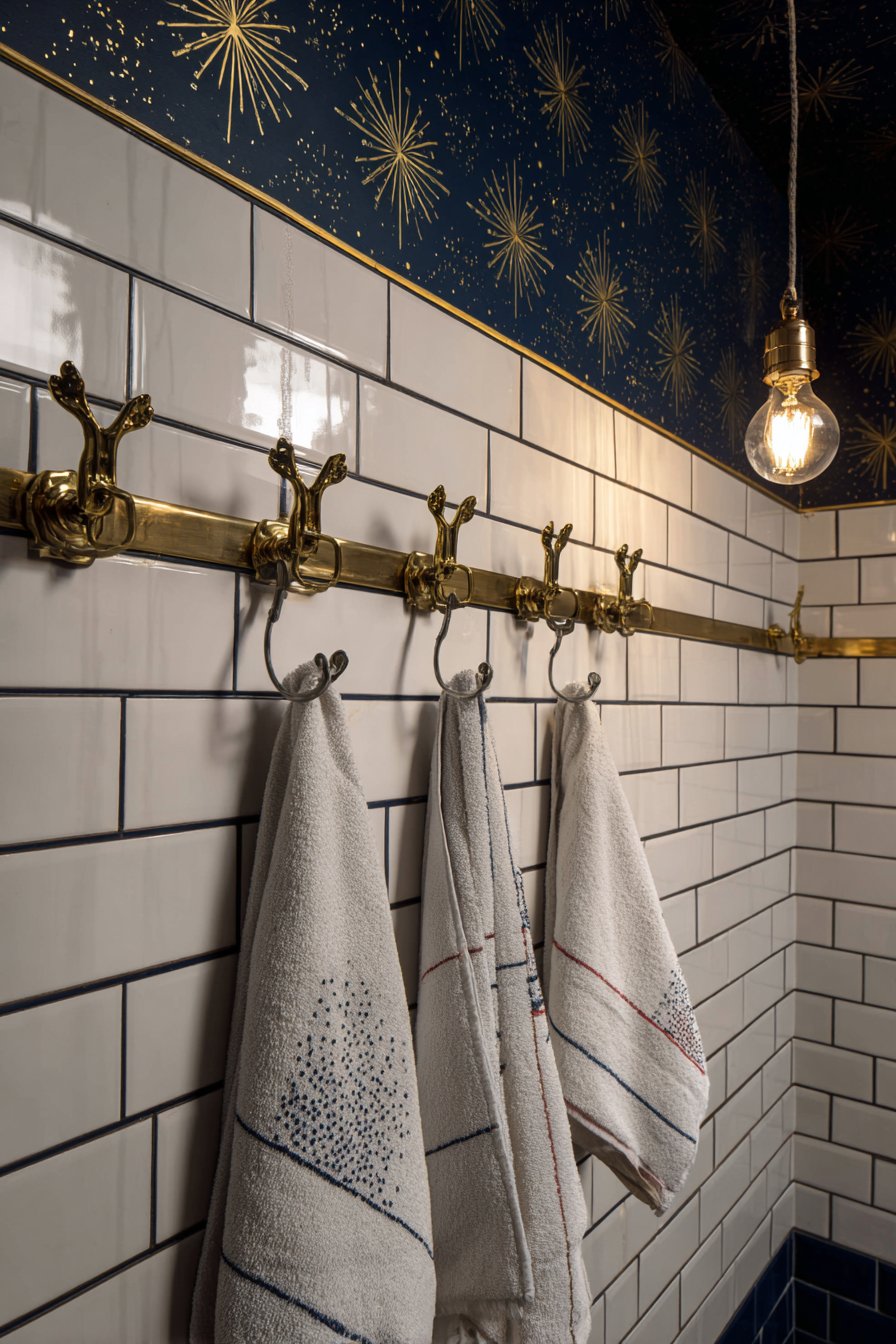
A vintage schoolhouse pendant light hangs at the room’s center, its milk glass shade and aged brass fittings providing nostalgic charm while delivering practical illumination. Wall-mounted hooks shaped like animal heads—perhaps stately stags, whimsical rabbits, or exotic birds—hold towels and robes, turning utilitarian storage into sculptural moments. These playful hardware choices inject humor and personality at eye level, creating smile-inducing moments throughout daily routines.
Key Design Tips:
- Paint ceilings in dark colors to add drama and perceived height
- Use colored grout as an affordable way to customize standard tile installations
- Install dimmer switches for celestial ceilings to control atmospheric mood
- Choose quirky hardware and hooks that function as decorative sculpture
- Consider the view from the tub when planning ceiling treatments
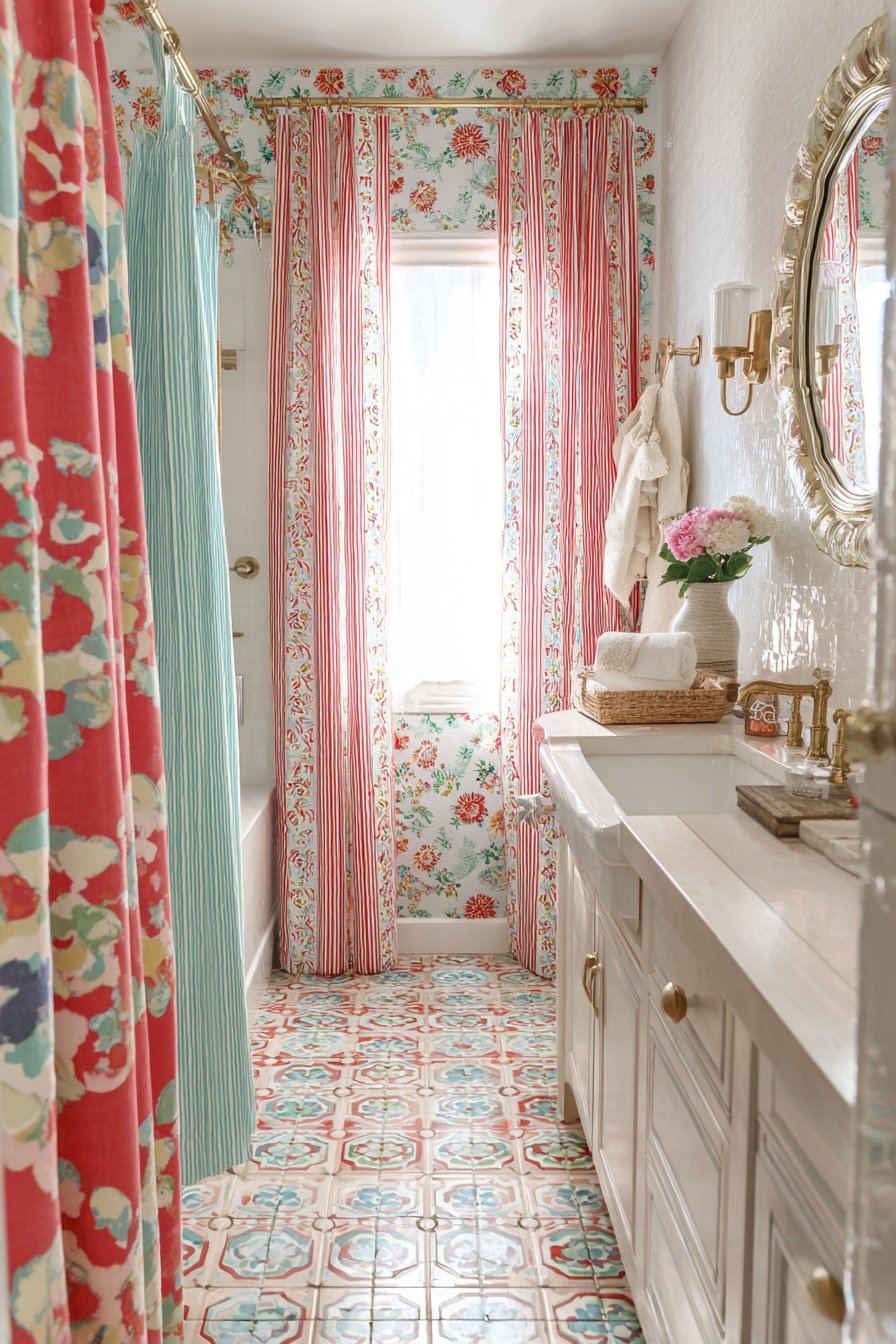
7. Maximalist Pattern Layering Paradise
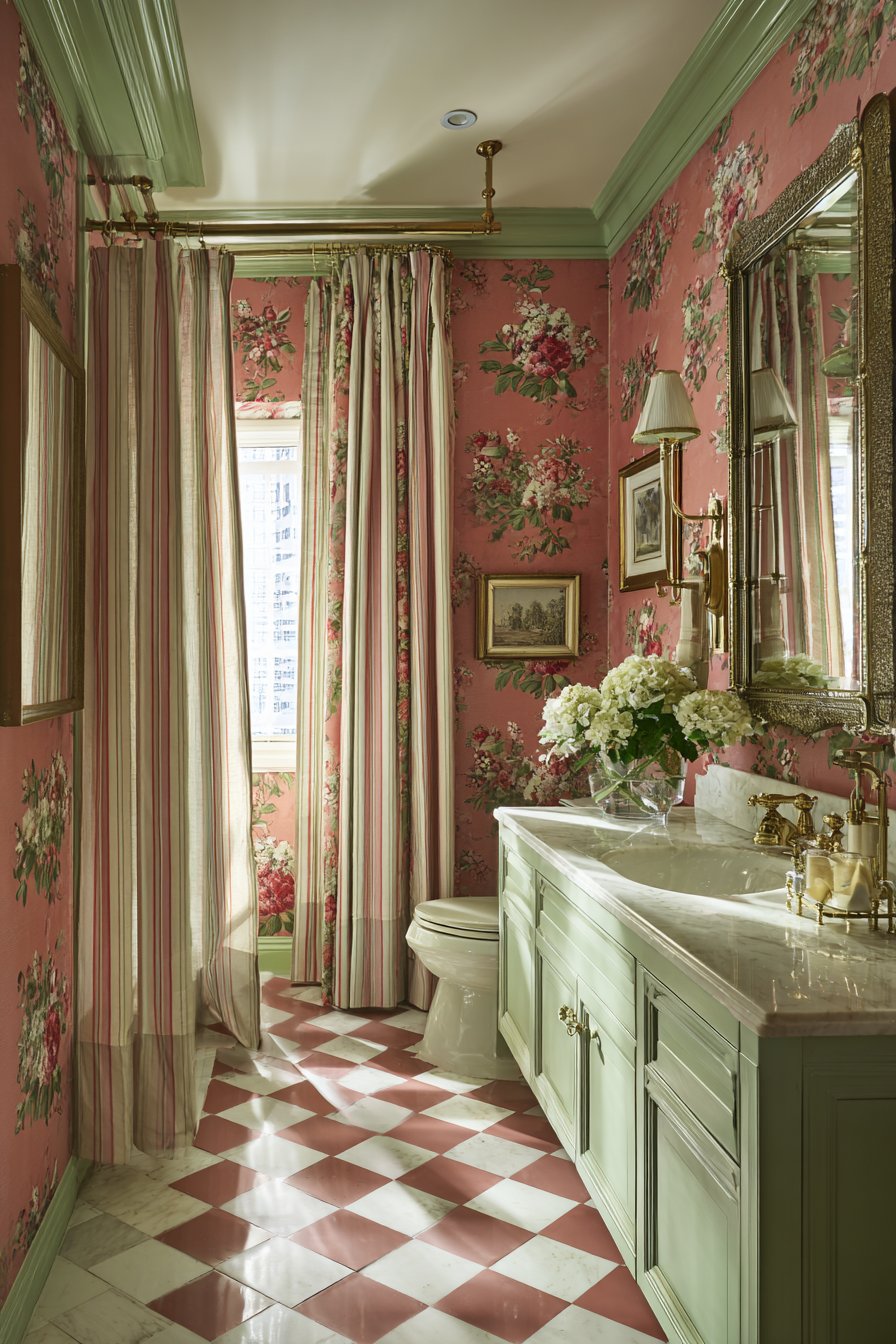
This bathroom embraces maximalism wholeheartedly, layering floral wallpaper, striped shower curtains, and geometric floor tiles in a fearless celebration of pattern and color. The key to success lies in the careful color coordination—all patterns share a common palette of coral, mint, and gold that unifies the diverse designs. The floral wallpaper features oversized blooms in romantic vintage styling, its coral background providing warmth. The shower curtain introduces bold vertical stripes in alternating mint and white, its linear pattern providing directional contrast to the organic flowers. Geometric floor tiles complete the trifecta with Moroccan-inspired tessellations incorporating all three signature colors.
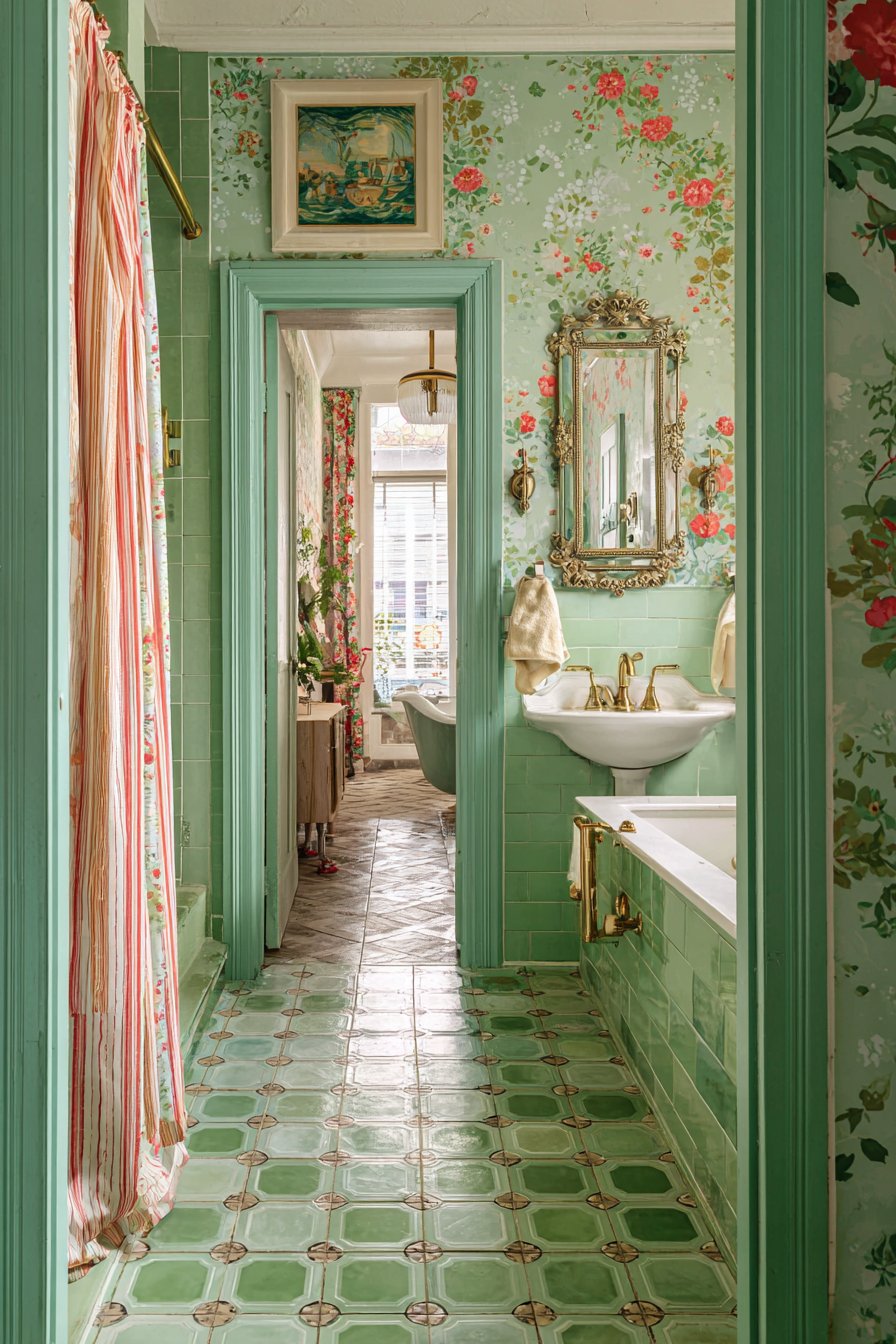
A painted vintage mirror frame in metallic gold finish serves as the room’s jewelry, its ornate detailing catching light and adding glamorous contrast to the busy surroundings. The mirror’s reflective surface doubles the visual impact of the patterns while creating illusions of expanded space—a practical benefit in addition to decorative appeal. Brass fixtures throughout echo the gold tones, their warm metallic finish tying together the various pattern elements while adding sophisticated polish to the exuberant design scheme.
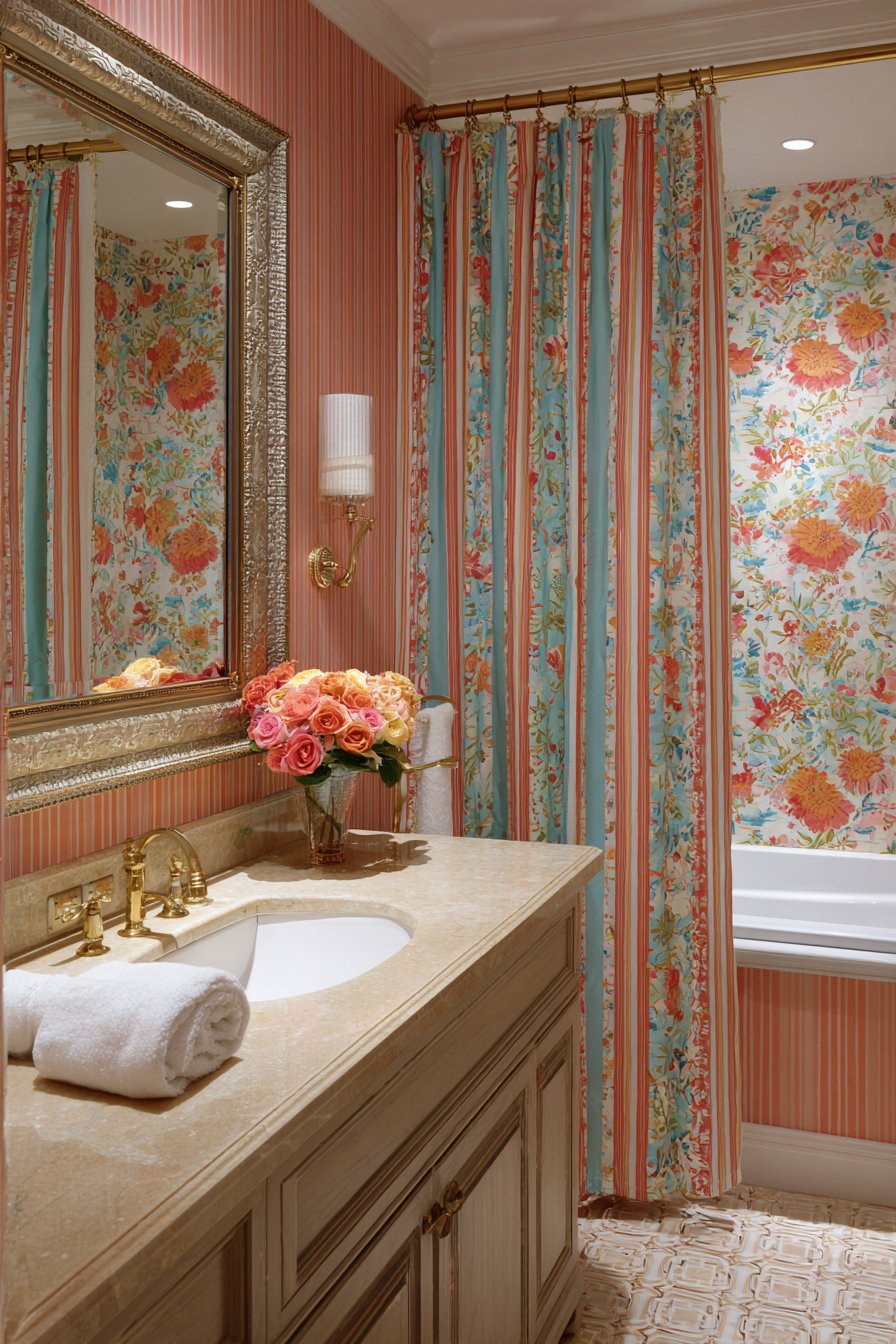
The overall effect resembles stepping into a jewel box or vintage couture boutique—opulent, feminine, and unapologetically decorative. This bathroom demonstrates how maximal design, when executed with attention to color harmony and scale variation, creates enveloping environments that feel rich rather than chaotic. The layered patterns provide endless visual interest, revealing new details upon each viewing while maintaining overall cohesion through disciplined color discipline.
Key Design Tips:
- Limit pattern mixing to three complementary designs varying in scale
- Establish a strict three-to-four color palette before selecting patterns
- Include at least one linear pattern to balance organic designs
- Use metallic accents to add sophistication to busy pattern schemes
- Vary pattern scales from large (wallpaper) to medium (curtain) to small (floor)
8. Industrial Pipe Shelving with Eclectic Styling
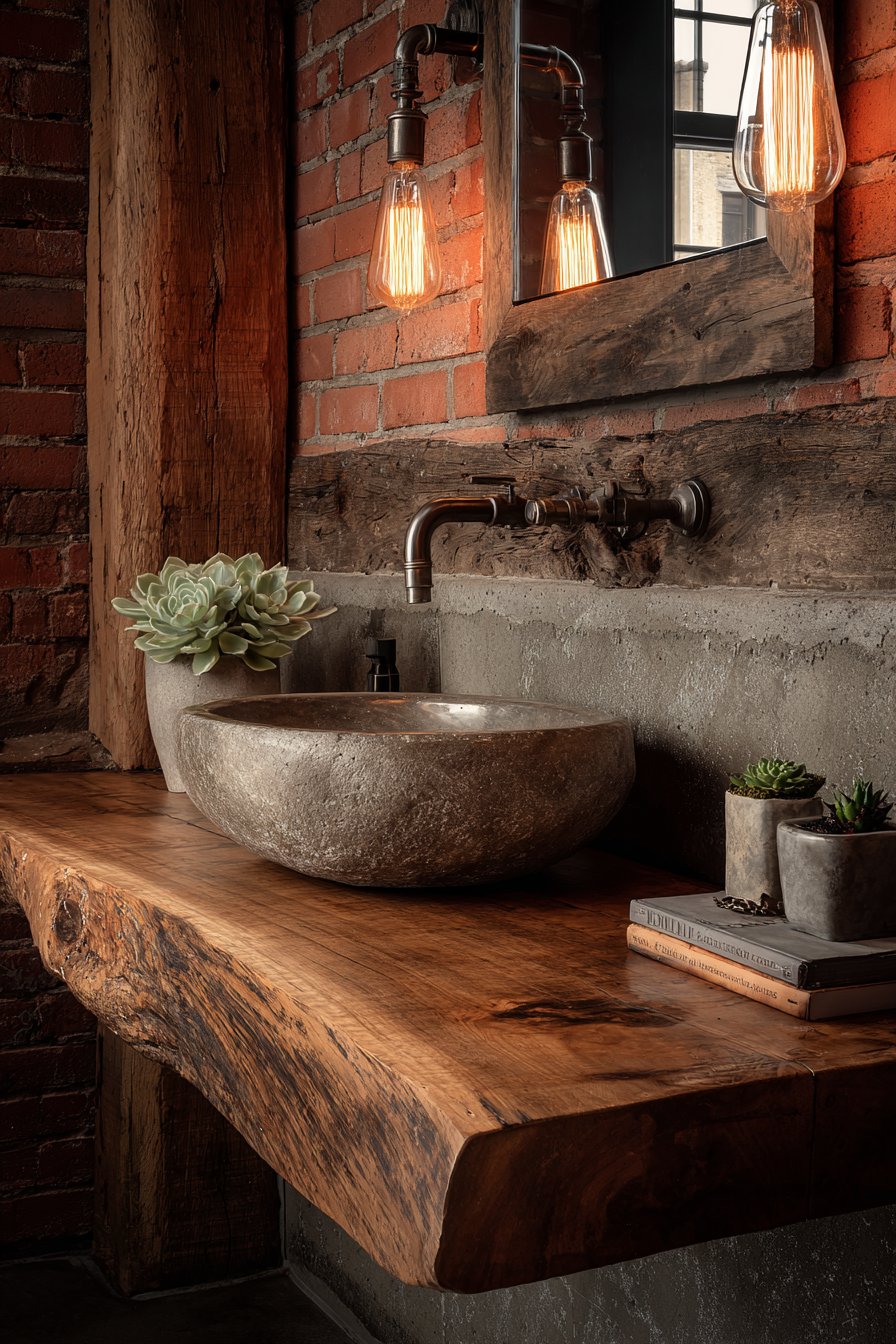
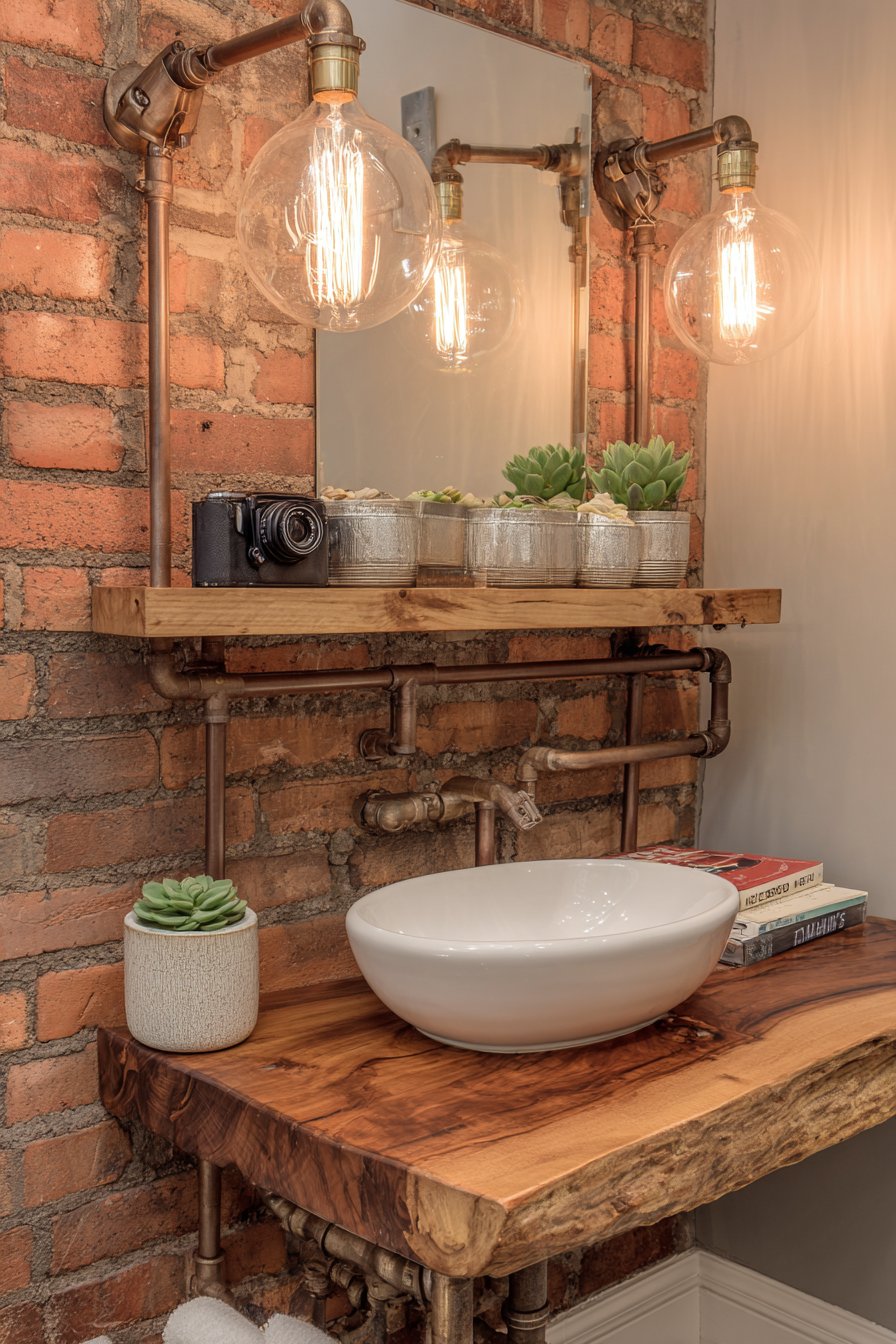
Industrial elements form the backbone of this quirky bathroom where black iron pipes and reclaimed wood planks create a custom shelving system that’s simultaneously rugged and refined. The exposed piping references urban loft aesthetics and steampunk sensibilities, its raw materiality providing honest structural expression. Thick wooden planks, perhaps salvaged from old barns or industrial buildings, rest across the pipes, their weathered surfaces showing nail holes, saw marks, and color variations that speak to previous lives and purposes. This foundation of industrial authenticity provides perfect contrast for the unexpected decorative elements that follow.
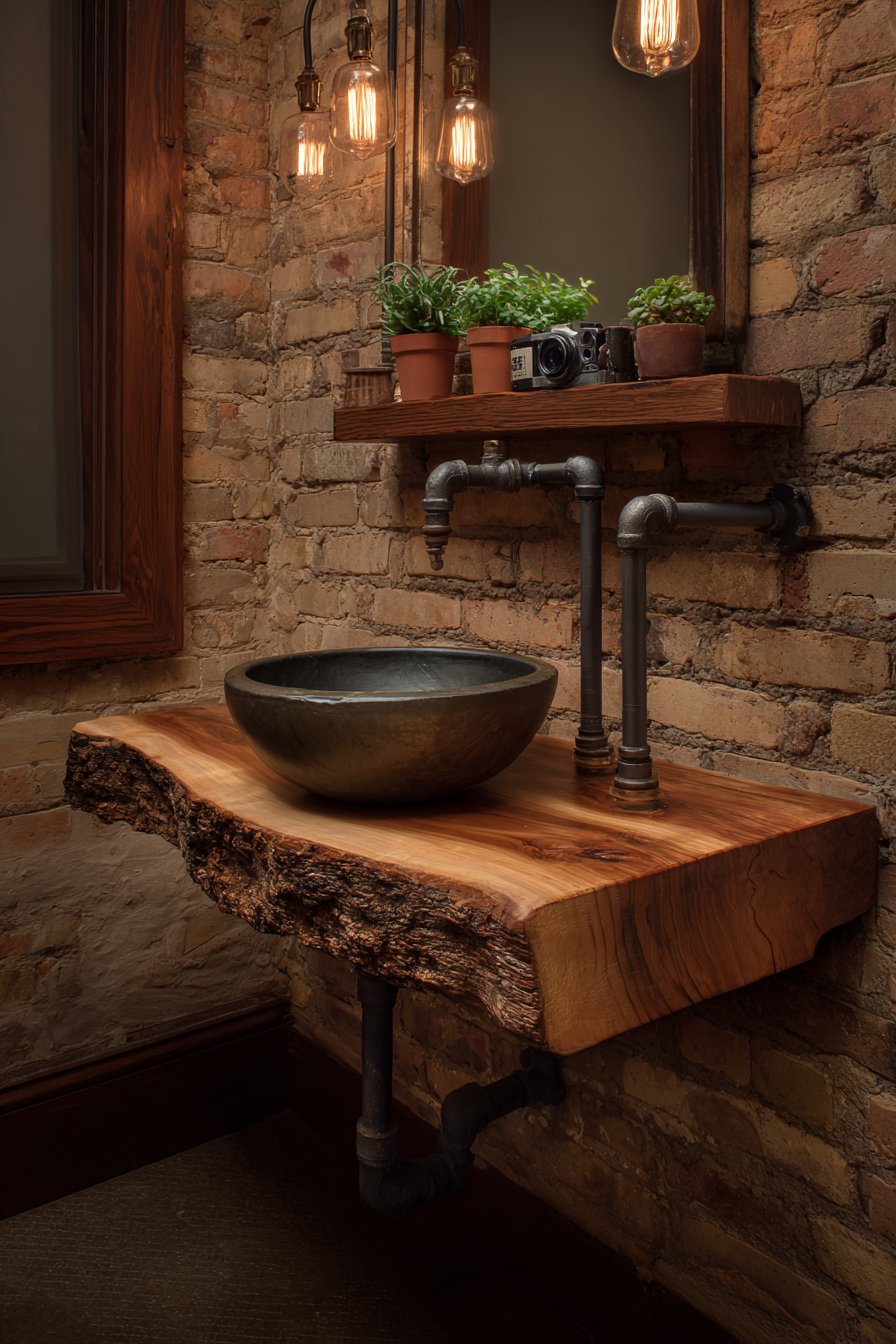
Rather than typical bathroom products, these shelves display an curated collection of eclectic objects: small potted succulents in vintage tins, antique cameras with worn leather cases, art books with beautiful spines, vintage grooming tools, and perhaps small framed photographs or postcards. This unconventional styling transforms functional storage into personal museum display, revealing the homeowner’s interests and collections. The juxtaposition of hard industrial materials with delicate decorative objects creates compelling tension that defines sophisticated quirky design.
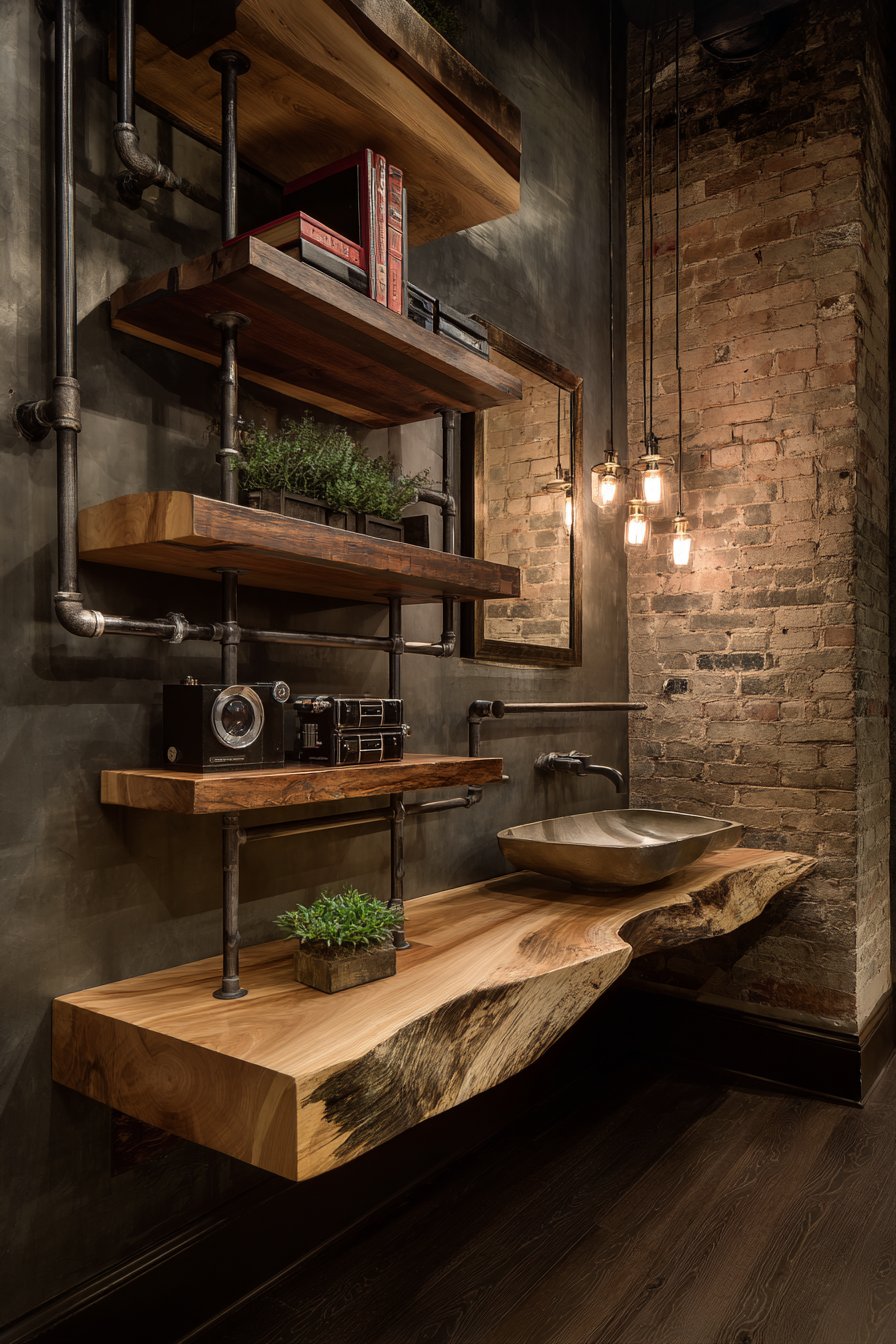
An exposed brick accent wall provides textural richness and historical reference, its rough surface and varied coloring adding warmth to the industrial materials. A modern vessel sink sits atop a live-edge wood slab vanity, the natural organic edge providing beautiful contrast to the manufactured pipes and bricks. Edison bulb sconces flank the mirror, their visible filaments and amber glow continuing the industrial aesthetic while providing flattering illumination. The overall composition balances masculine industrial elements with personal decorative touches, creating a bathroom that feels both strong and intimate.
Key Design Tips:
- Secure pipe shelving systems properly to wall studs for safety
- Seal reclaimed wood with waterproof finishes suitable for humid environments
- Style shelves with 50/60 percent functional items, 40/50 percent decorative
- Embrace intentional imperfection in materials for authentic industrial appeal
- Balance hard industrial elements with soft textiles and organic forms
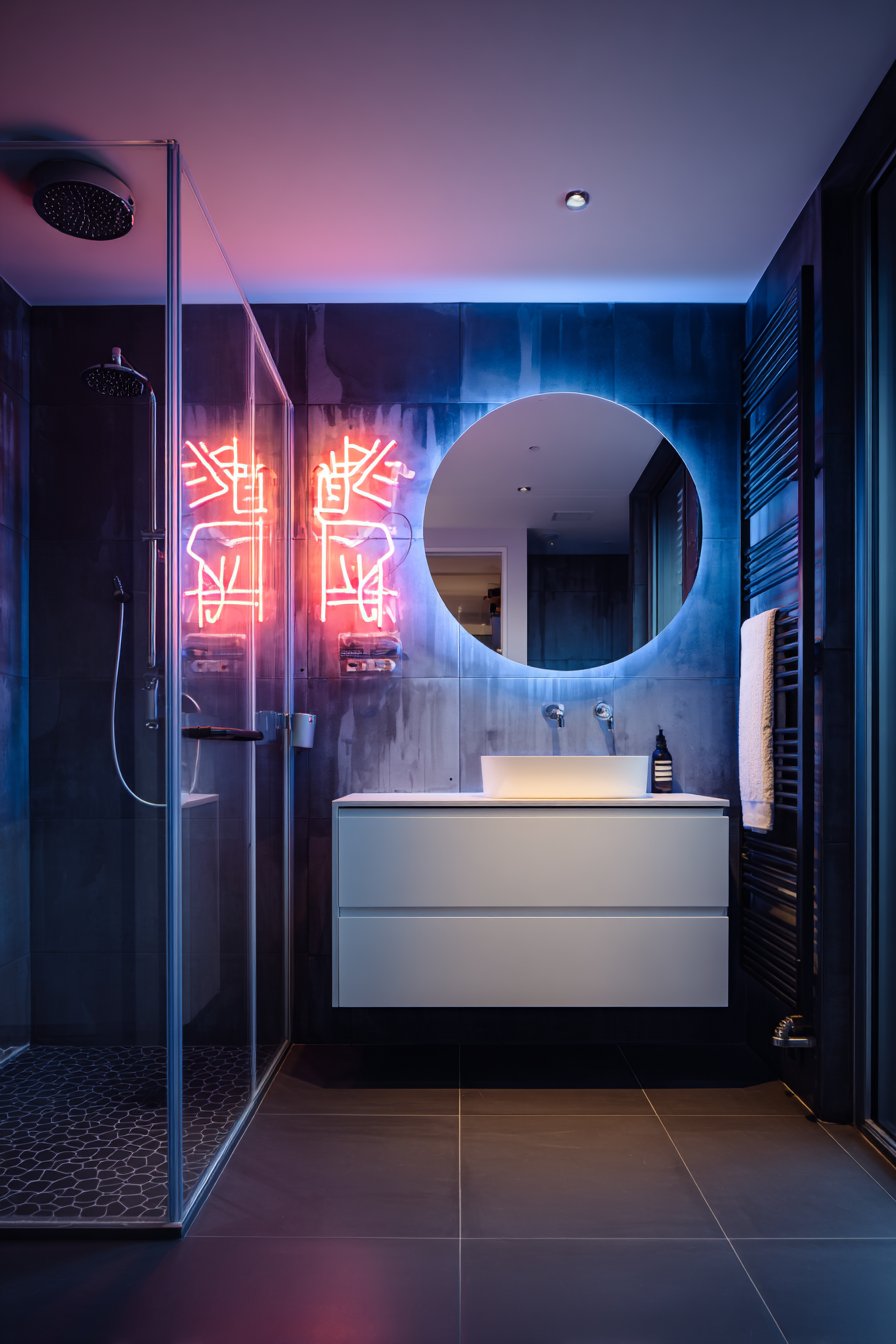
9. Neon Sign Nightclub Glamour
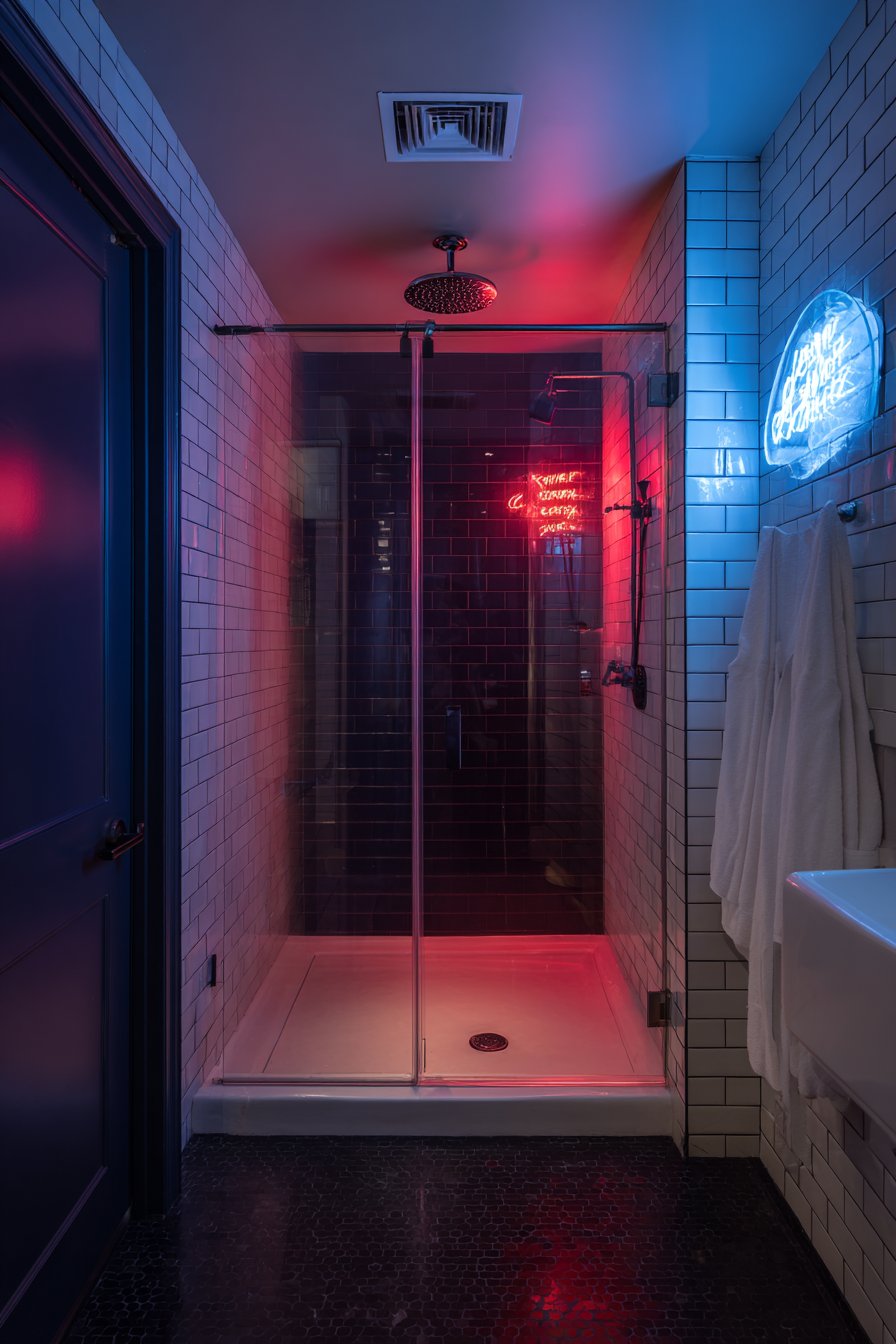
Darkness and drama define this audaciously quirky bathroom where vintage neon signs create an unexpected nightclub atmosphere in a residential setting. The statement wall painted in deep charcoal or black provides the perfect backdrop for a collection of neon signs—perhaps classic “Open” signs, retro arrow markers, or custom text in flowing script. The glowing tubes cast colorful light across the space, transforming mundane activities into atmospheric experiences. This bold choice challenges bathroom conventions completely, proving these spaces can embrace adult sophistication and entertainment venue aesthetics.
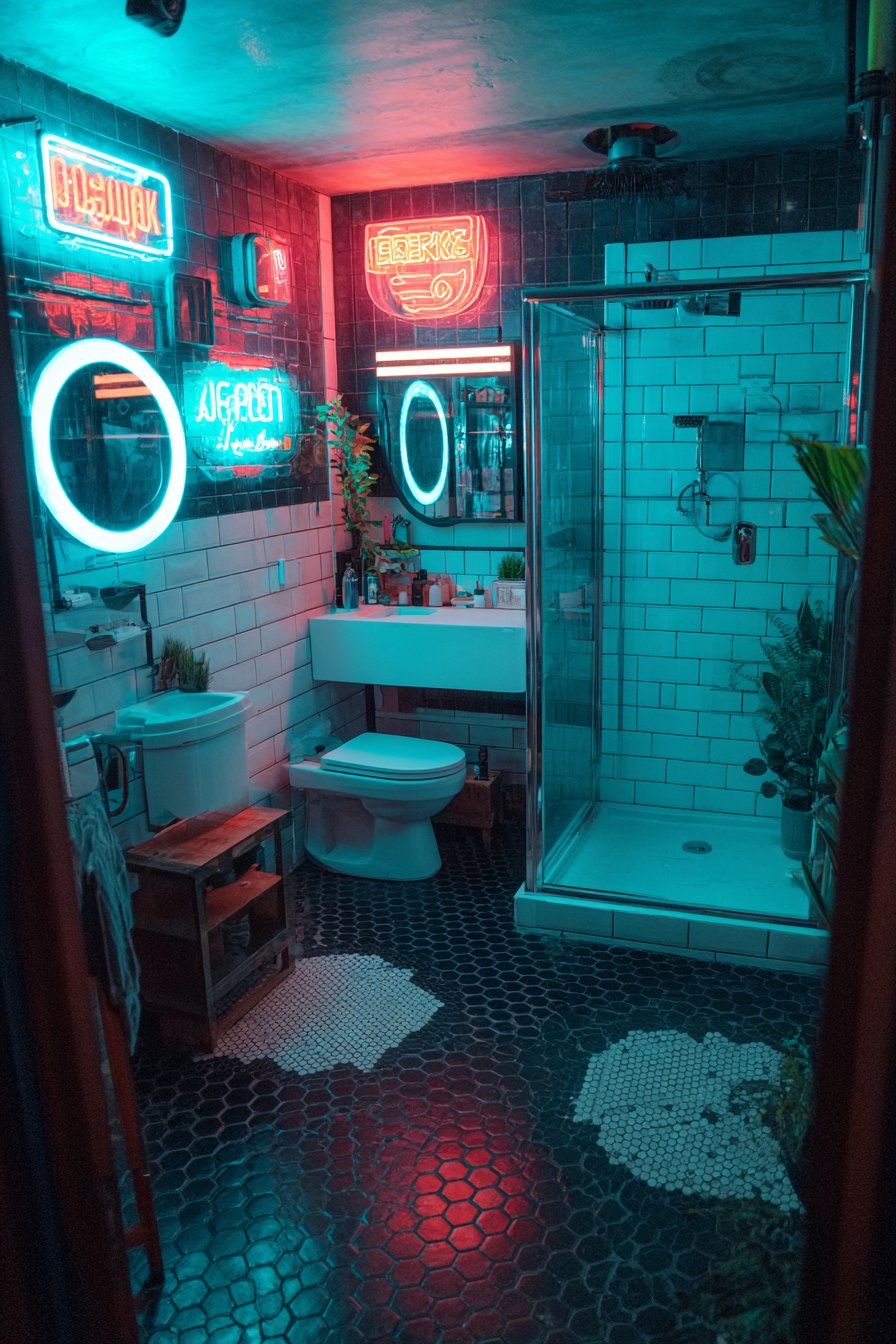
Modern white fixtures—toilet, sink, and tub—provide essential contrast against the dark walls, their clean lines and pure color preventing the space from feeling oppressive or cave-like. The white also reflects and amplifies the neon colors, creating an interactive light show across porcelain surfaces. Black hexagonal floor tiles ground the space with geometric pattern while maintaining the dark moody atmosphere. Their angular shapes create visual movement that complements the neon signs’ flowing lines and organic curves.
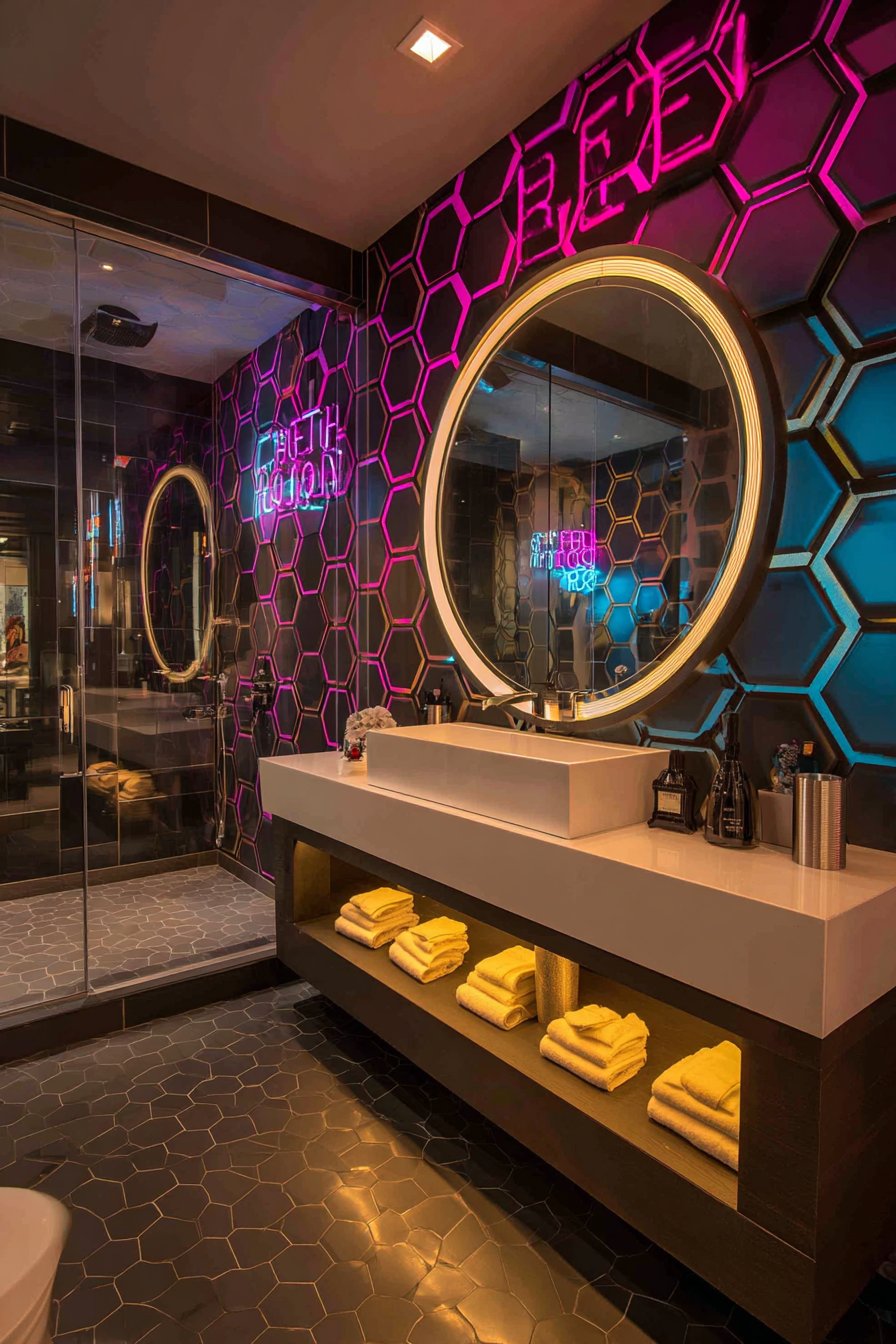
A frameless round mirror doubles the neon effect through reflection, creating kaleidoscopic color plays that change depending on viewing angle. The mirror’s simple circular shape provides geometric contrast to the neon tubes’ irregular forms. This bathroom works best for those who entertain regularly or enjoy dramatic evening soaks, as the neon lighting creates entirely different experiences than conventional bathroom illumination. Dimmers controlling the neon intensity allow adjustment from full theatrical effect to subtle ambient glow.
Key Design Tips:
- Install neon signs with proper electrical work meeting safety codes
- Use dark wall colors to maximize neon glow and contrast
- Include traditional lighting options for practical tasks requiring bright light
- Choose LED neon alternatives for energy efficiency and longevity
- Consider the psychological effects of colored lighting on mood and relaxation
10. Underwater Mural Immersion
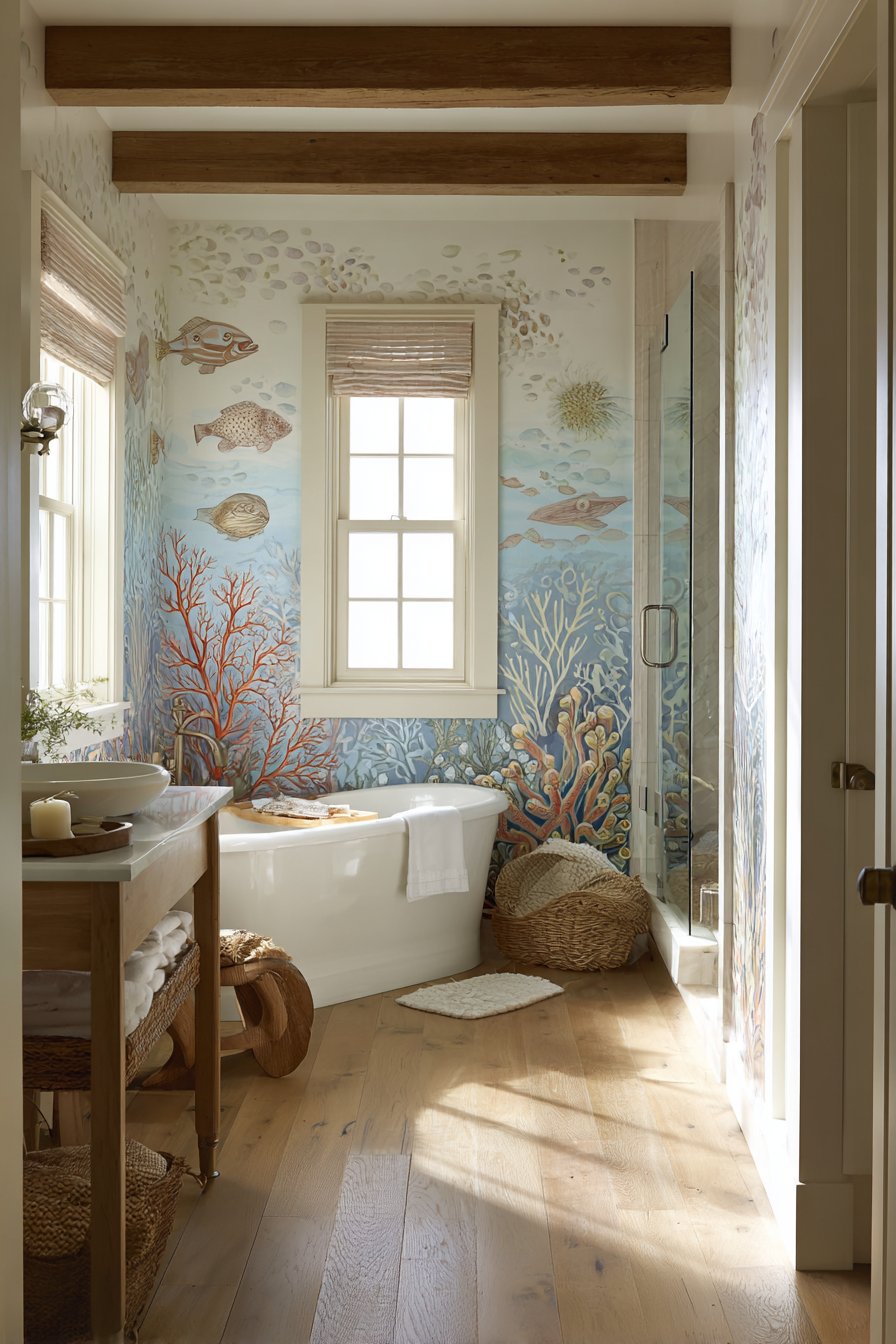
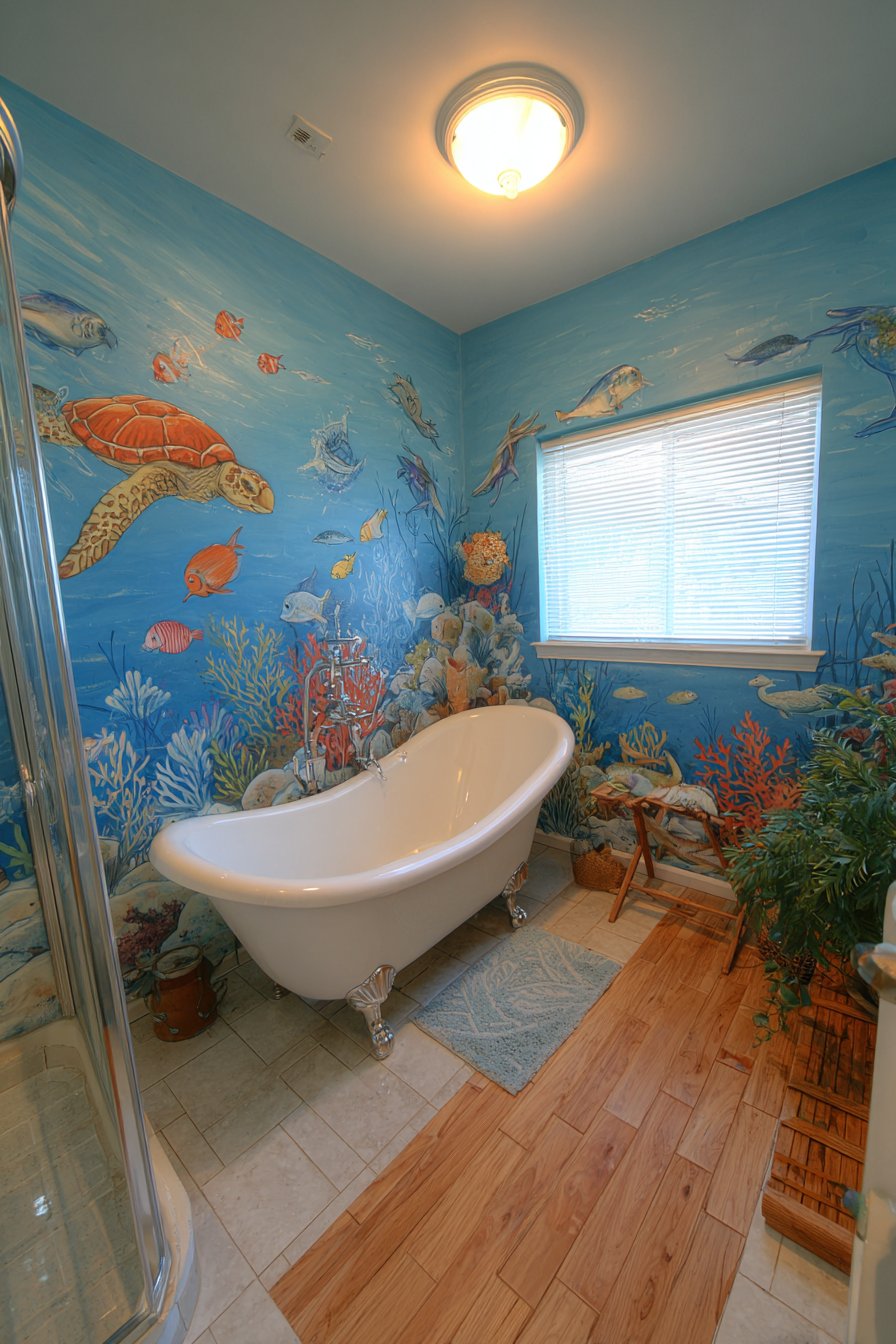
Artistic expression reaches its zenith in this quirky bathroom where a hand-painted mural transforms an entire wall into an underwater seascape. Whimsical sea creatures—perhaps smiling octopi, curious seahorses, playful dolphins, and colorful tropical fish—swim through coral reefs rendered in vibrant purples, pinks, oranges, and blues. The mural style might range from realistic marine biology illustration to cartoonish animation to abstract artistic interpretation, depending on the homeowner’s taste and chosen artist’s style. This immersive artwork transforms bathing into an imaginative journey beneath ocean waves.
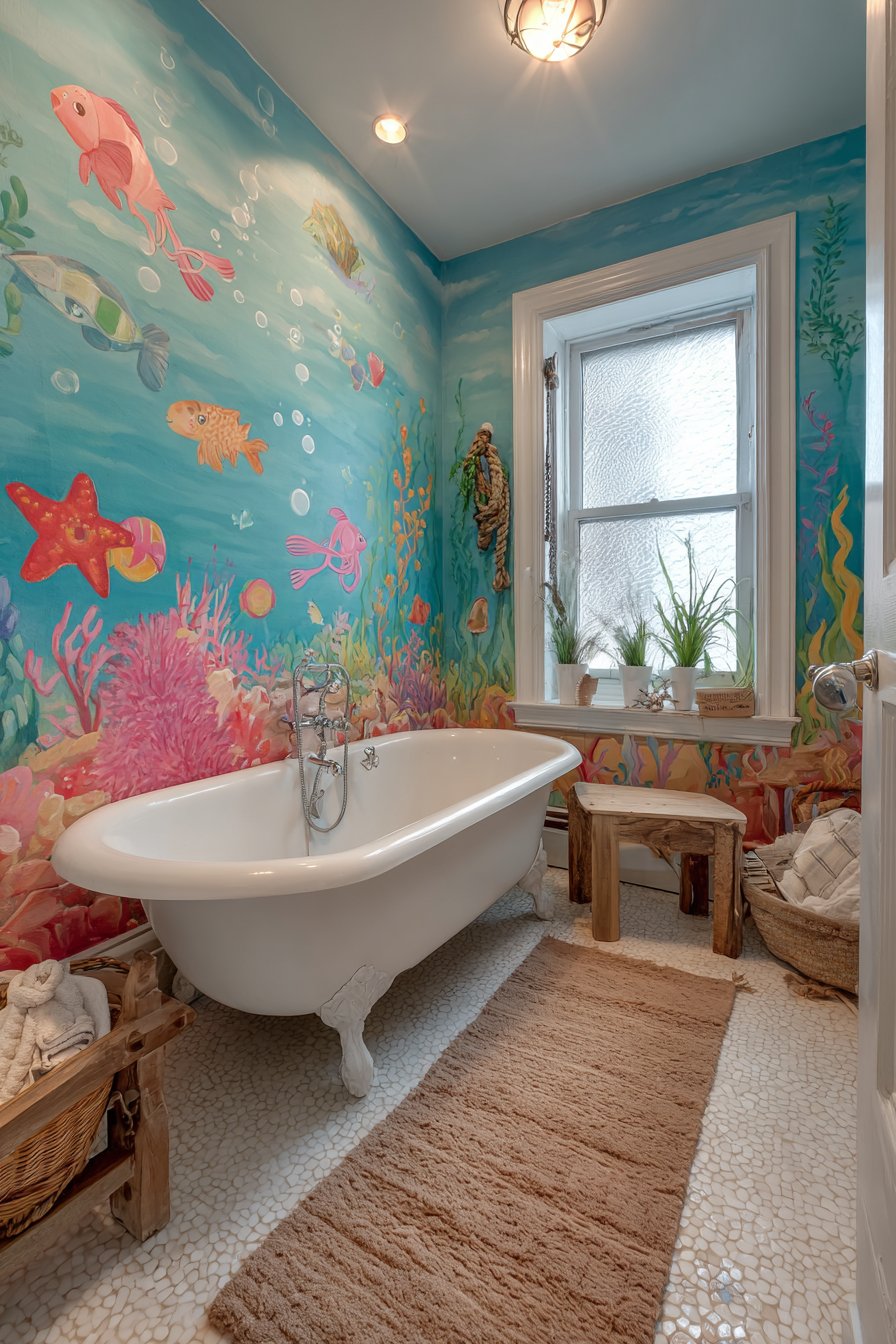
A white clawfoot tub positions strategically before the mural, allowing bathers to recline and fully appreciate the underwater scene while soaking. The tub’s classic curves and pristine white finish provide neutral counterpoint to the busy, colorful artwork, ensuring the space maintains balance despite the bold mural. Natural wood accessories—perhaps a teak bath caddy, wooden stool, or bamboo shelving—enhance the nautical theme while introducing warm organic tones that complement the cool blues and greens of the seascape.
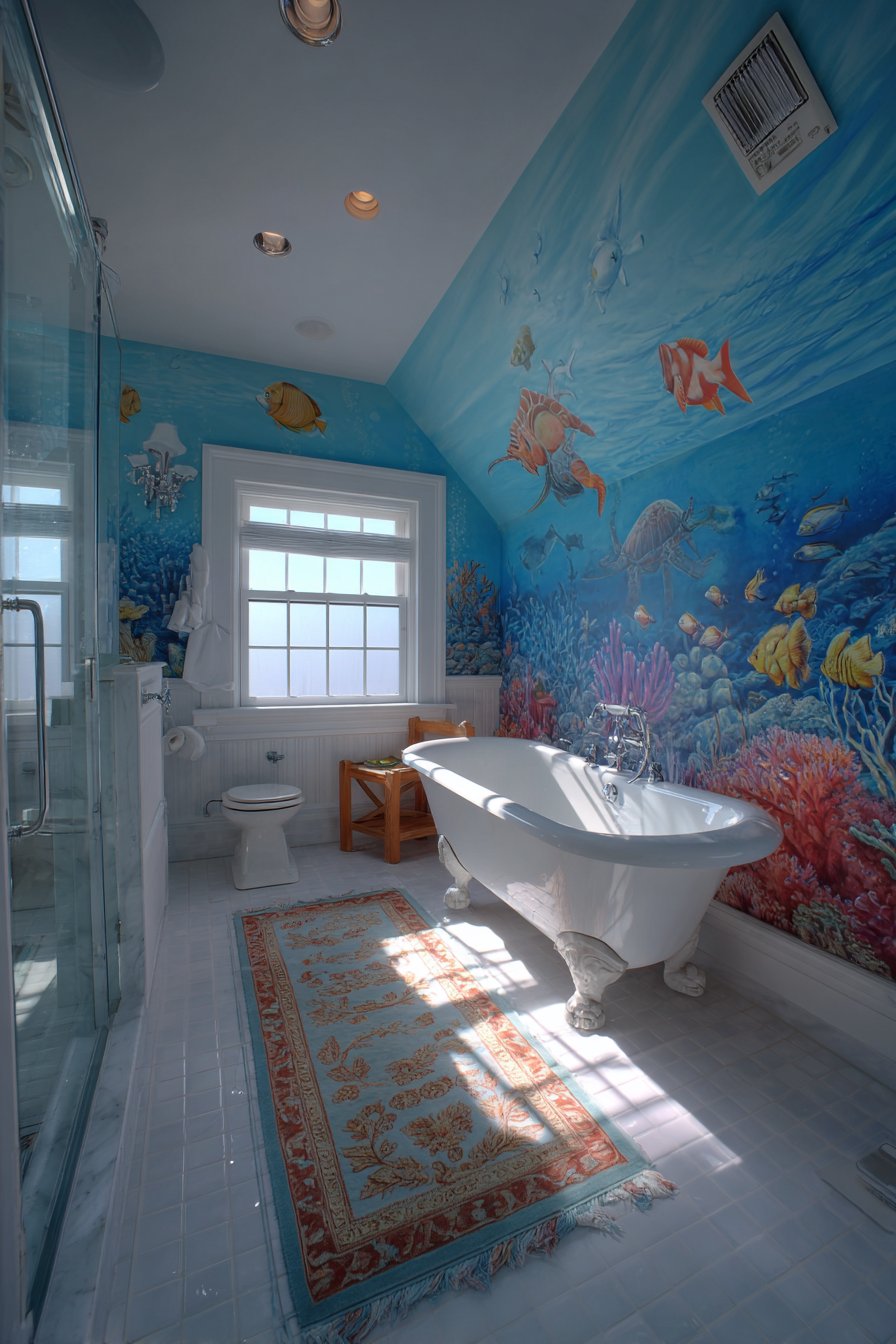
Rope details wrapped around towel bars or used as decorative accents reference maritime traditions and sailing culture, strengthening the oceanic theme without literal boat imagery. A frosted glass window filters soft diffused daylight that illuminates the mural like underwater sunlight filtering through water, creating ethereal atmospheric effects. As natural light changes throughout the day, the mural reveals different details and takes on varying moods, providing endless visual interest and rewarding repeated viewing.
Key Design Tips:
- Commission murals from local artists or use removable wallpaper murals for flexibility
- Position statement fixtures like tubs to complement rather than block artwork
- Use lighting to enhance murals—consider adjustable spots highlighting key areas
- Coordinate accessory colors with mural palette for cohesive theming
- Seal murals properly in humid bathroom environments for longevity
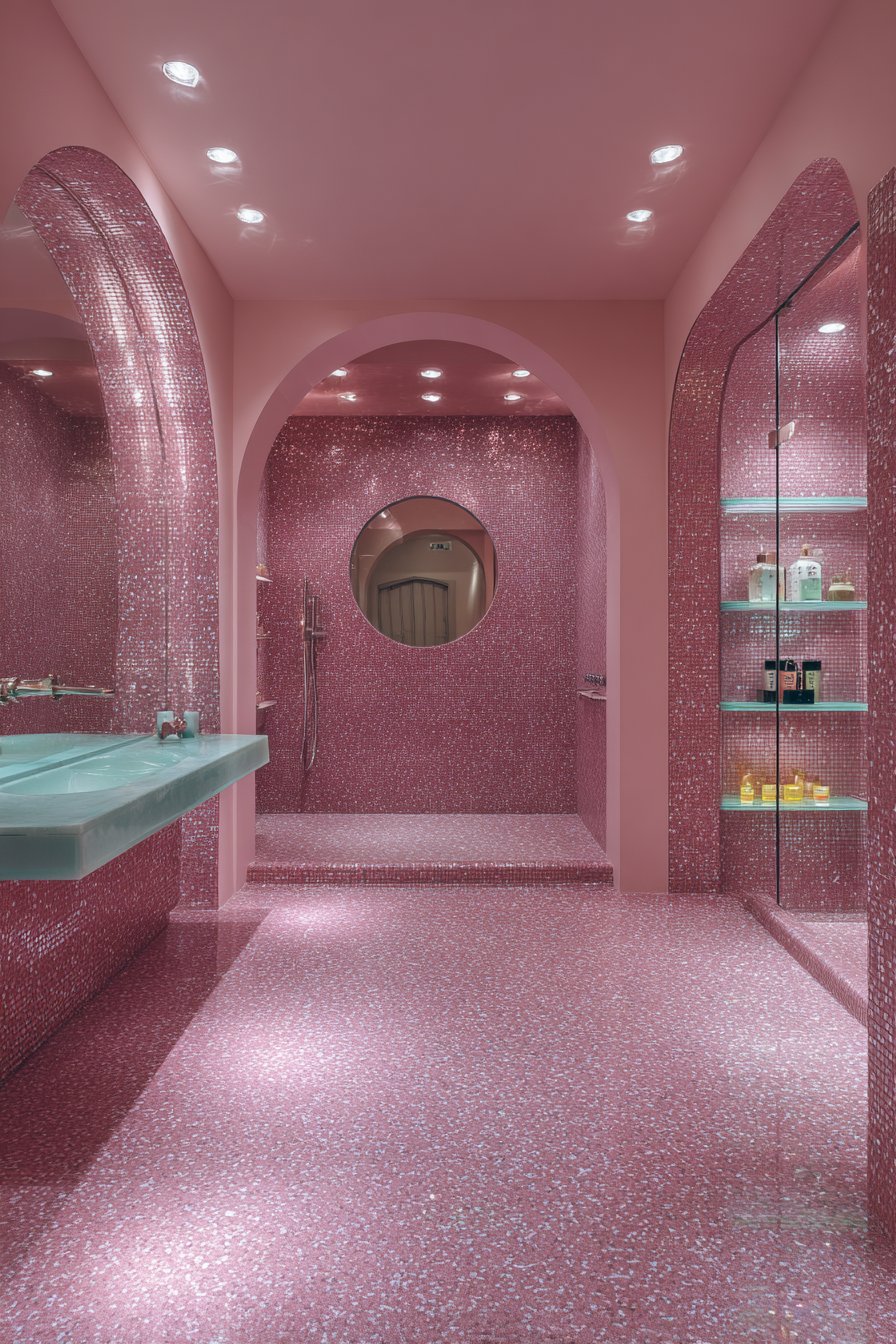
11. Pink and Turquoise Terrazzo Boldness
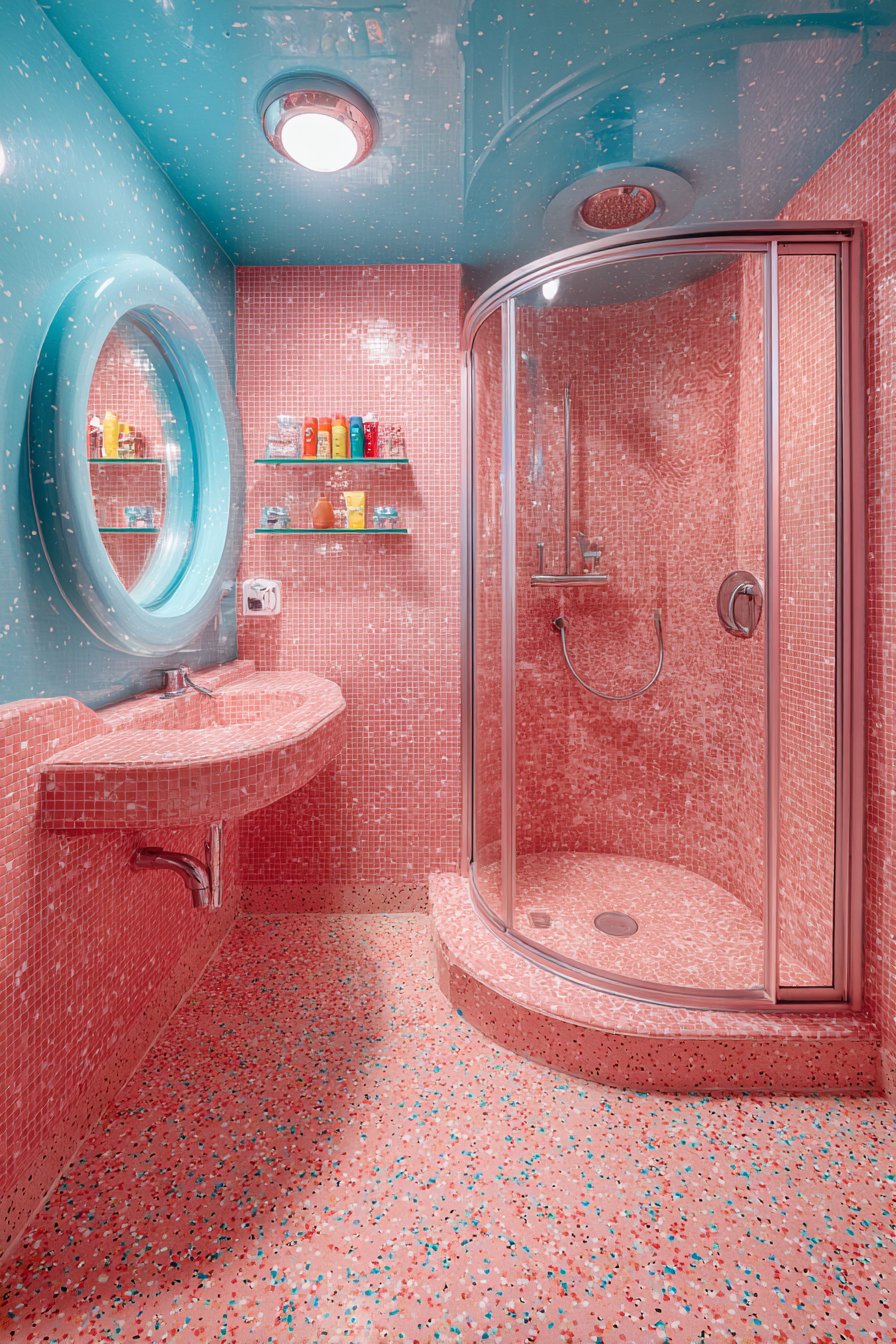
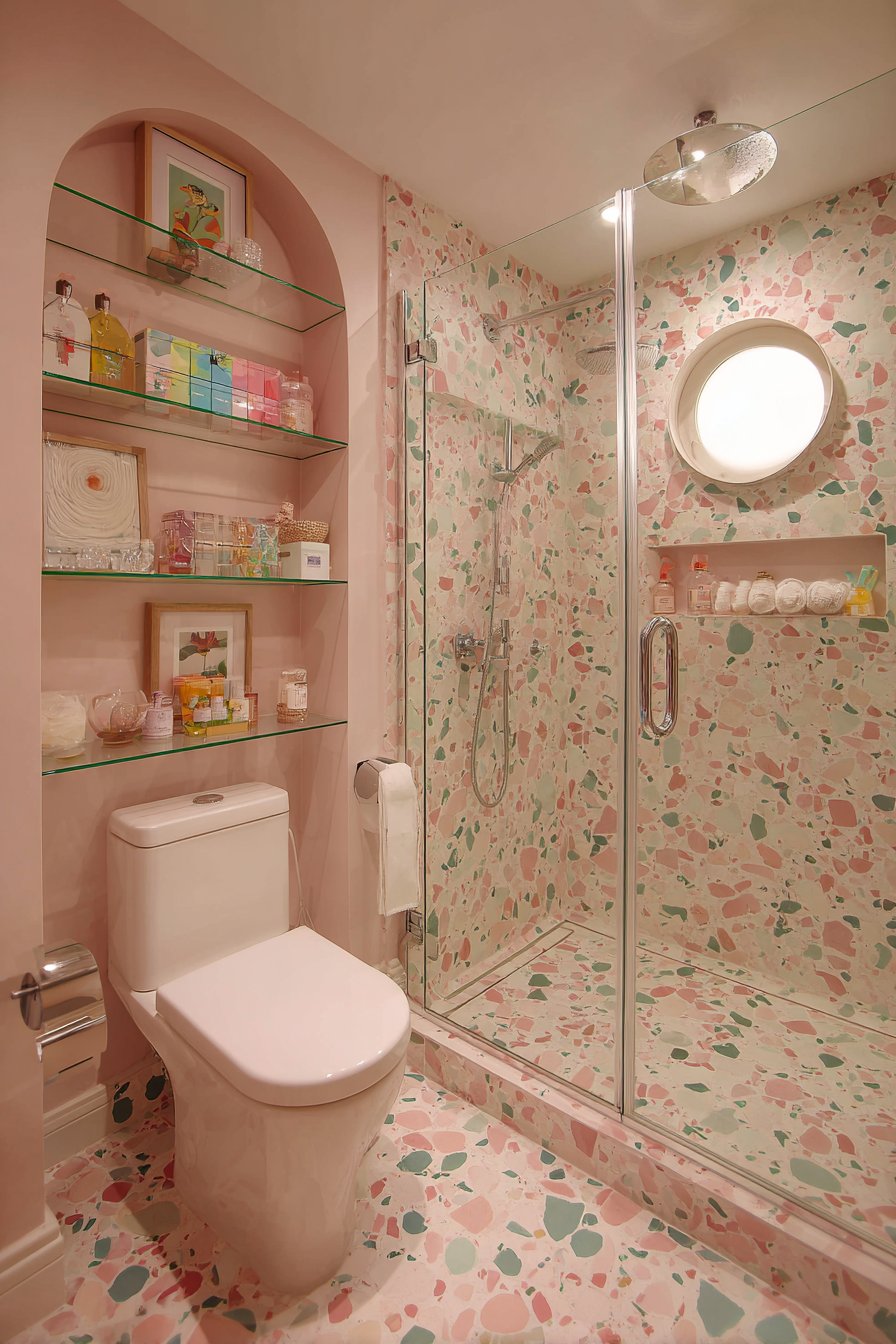
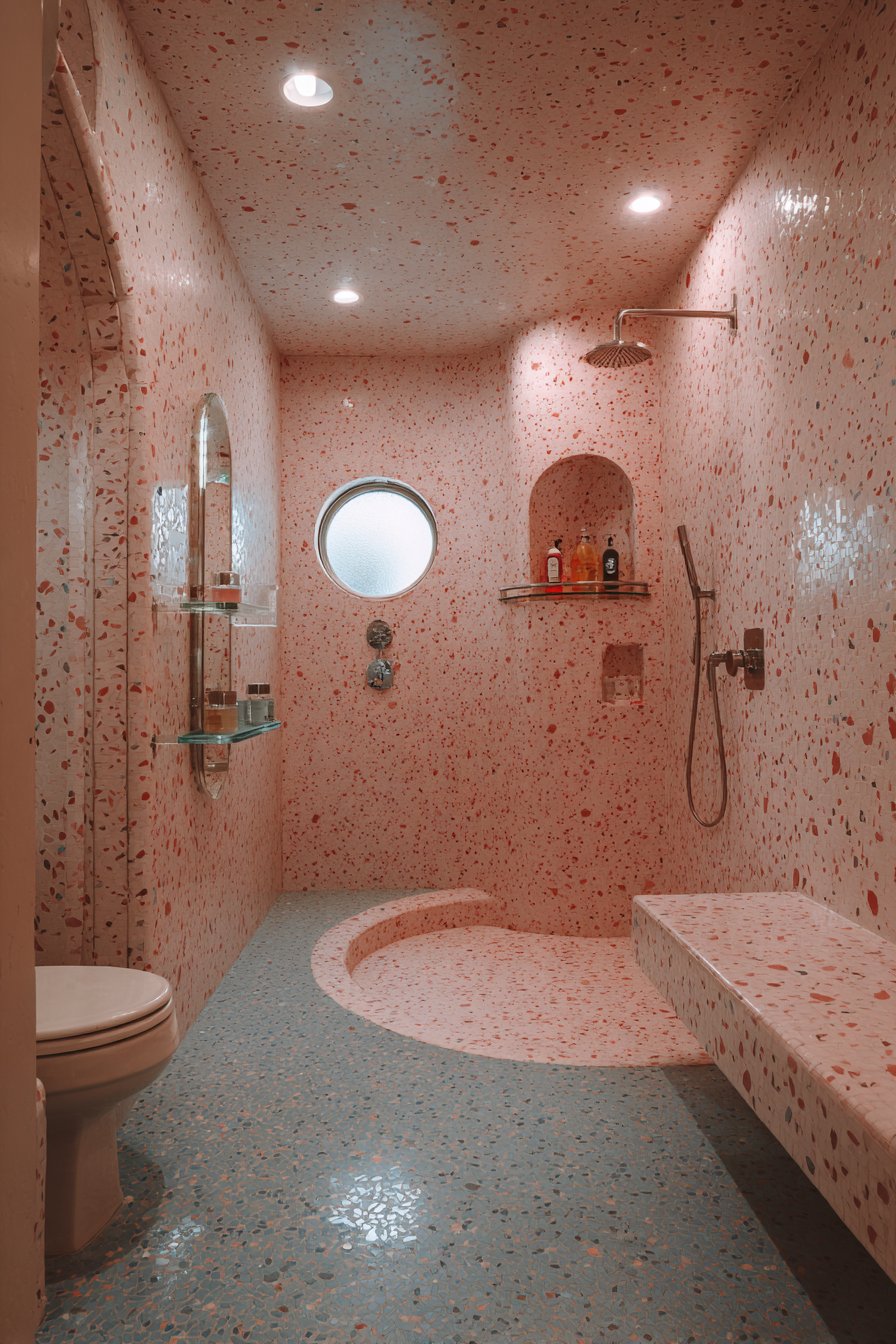
Custom terrazzo surfaces make an unforgettable statement in this color-forward quirky bathroom. The floor and shower walls feature terrazzo with pink and turquoise aggregate chips embedded in neutral cement base, creating a speckled effect that’s simultaneously retro and contemporary. This material choice references mid-century modern design while feeling thoroughly current, demonstrating how certain aesthetic approaches transcend temporal categorization. The pink and turquoise combination creates Miami Vice energy—playful, tropical, and unapologetically exuberant. The terrazzo’s inherent texture provides slip-resistance in wet areas while its seamless installation eliminates grout lines that collect mildew.
Curved chrome fixtures add streamlined retro-modern appeal, their flowing forms and mirror-bright surfaces complementing the terrazzo’s geometric pattern. These shapely faucets and shower hardware reference automobile design and space-age optimism, their curves providing organic contrast to the angular aggregate chips. A round porthole-style mirror continues the geometric theme while introducing nautical references that play beautifully with the turquoise tones suggesting tropical waters. The mirror’s circular form creates focal point while its chrome frame echoes the fixture finishes.
Floating shelves in clear acrylic practically disappear against the colorful terrazzo, allowing displayed items to appear suspended in space. Rather than hiding bath products, this design strategy embraces them as decorative elements—colorful shampoo bottles, jewel-toned soaps, and vibrant towels become part of the room’s color story. This approach celebrates the everyday objects that inhabit bathrooms rather than attempting to conceal them behind closed cabinet doors, a refreshingly honest approach that defines much quirky design thinking.
Key Design Tips:
- Research terrazzo fabricators specializing in custom color combinations
- Use curved fixtures to soften geometric material patterns
- Select bath products in complementary colors to enhance design schemes
- Install adequate lighting to showcase terrazzo’s light-reflective properties
- Consider terrazzo’s significant weight when planning installations
12. Vintage Suitcase Storage Tower
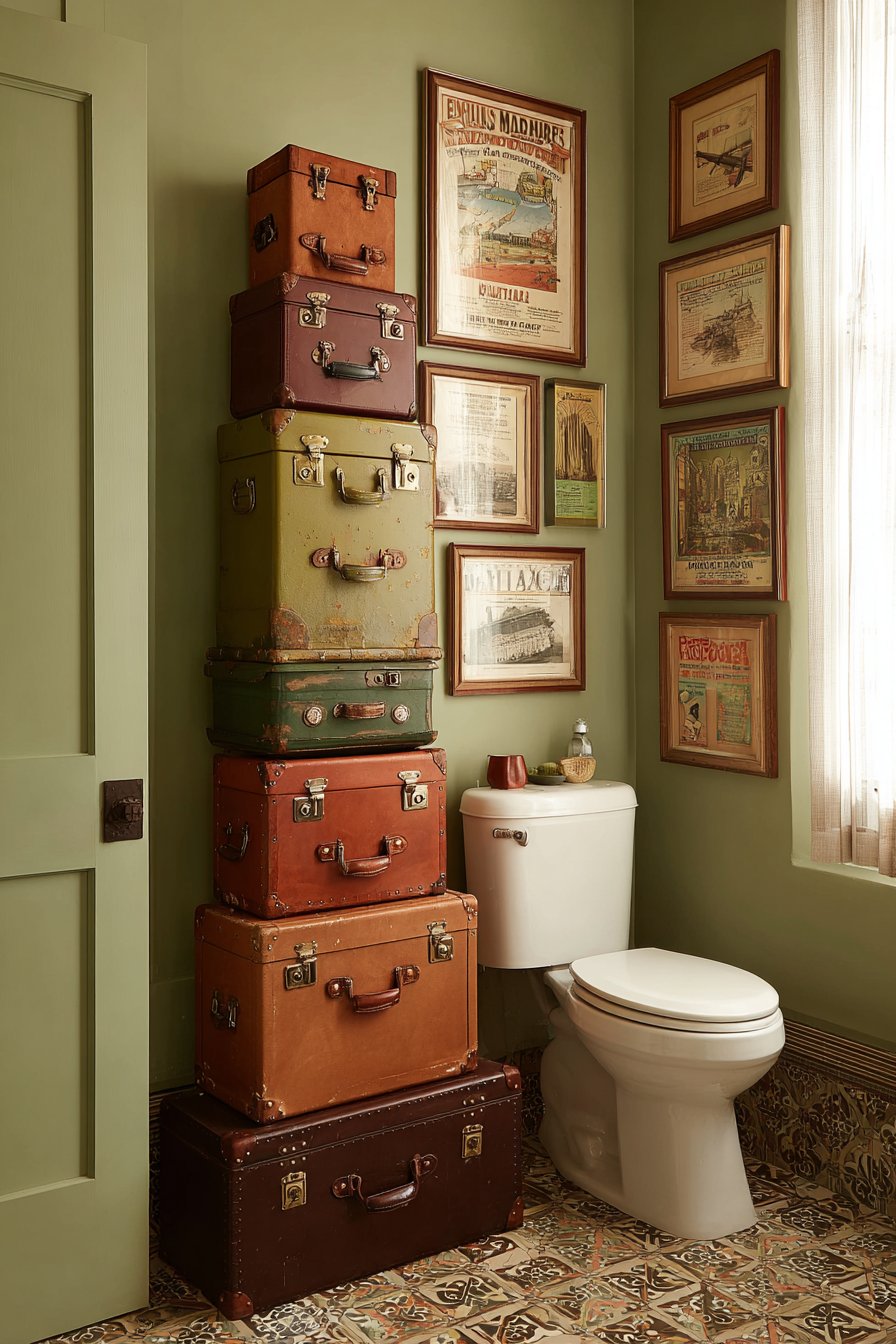
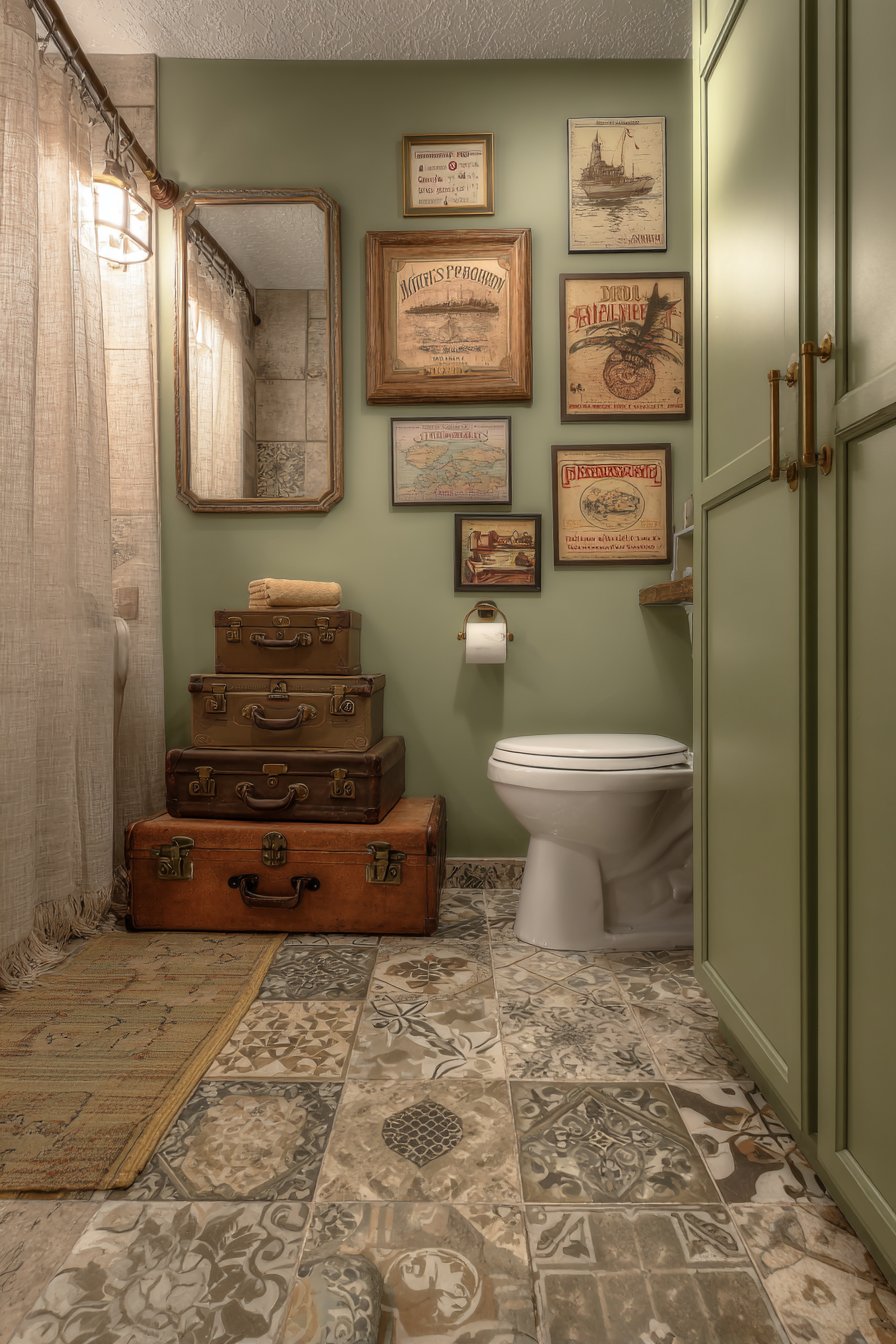
Resourceful creativity shines in this quirky bathroom where vintage suitcases stack vertically beside the toilet, transformed from travel gear into unique storage furniture. The suitcases, perhaps collected from estate sales and flea markets, show honest wear—scuffed corners, faded labels, worn leather straps—that adds to their appeal. Each case opens to reveal storage for extra toilet paper rolls, cleaning supplies, or rolled towels, proving quirky design can be both aesthetically interesting and practically functional. The suitcase tower introduces verticality without requiring wall mounting, making it ideal for renters or those hesitant about permanent installations.
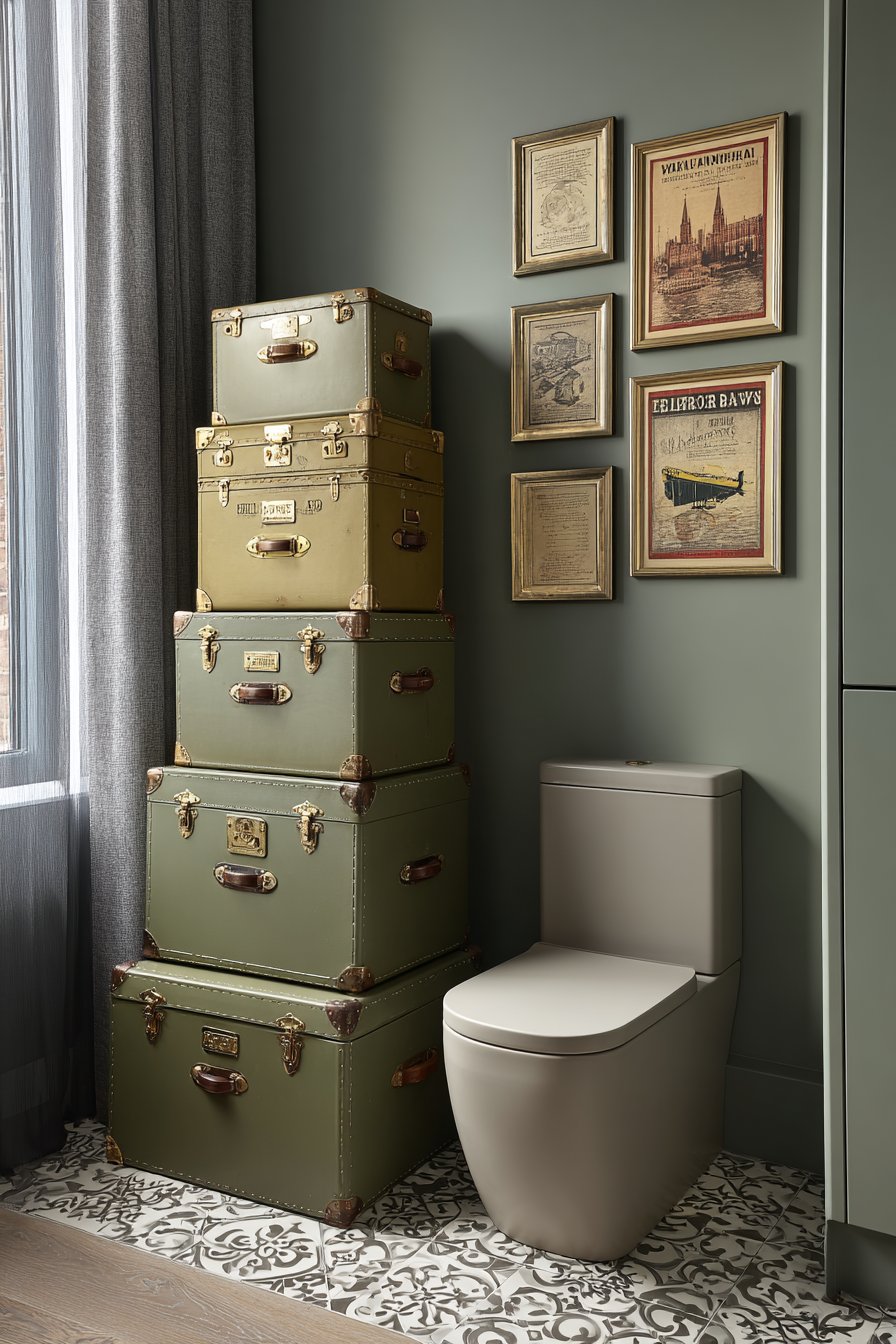
Sage green walls provide soothing backdrop that lets the vintage suitcases shine while creating calming atmosphere appropriate for bathroom retreats. Brass hardware on both the suitcases and throughout the bathroom creates warm metallic throughline unifying the design. A gallery wall of framed vintage travel posters continues the wanderlust theme—perhaps advertising transatlantic cruises, European railway journeys, or exotic destinations rendered in Art Deco graphic styles. These posters add color, pattern, and narrative richness while reinforcing the travel-inspired concept.
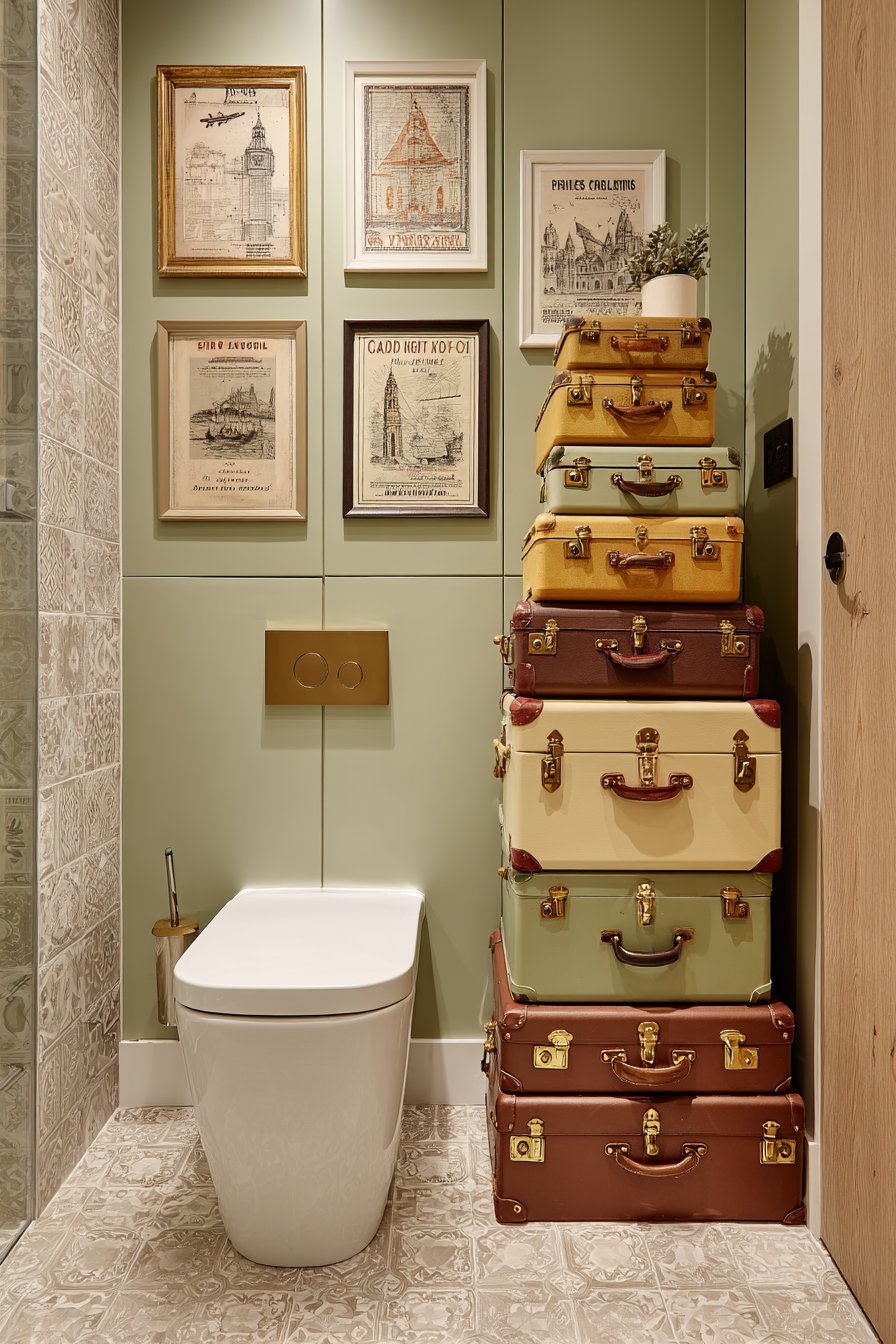
Patterned cement tiles in muted earth tones—perhaps terracotta, cream, sage, and charcoal—create geometric foundation that grounds the space. Their complex patterns add visual interest underfoot while maintaining the vintage aesthetic through historically appropriate design references. Natural lighting through sheer linen curtains creates soft diffused glow that enhances the collected-over-time atmosphere, suggesting lazy Sunday mornings and unhurried self-care rituals.
Key Design Tips:
- Secure stacked suitcases with hidden connectors preventing toppling
- Line suitcase interiors with cedar or lavender sachets for fresh scents
- Group travel posters by color palette or era for cohesive gallery walls
- Choose suitcases in complementary colors even if buying separately over time
- Consider weight distribution when stacking—heaviest cases on bottom
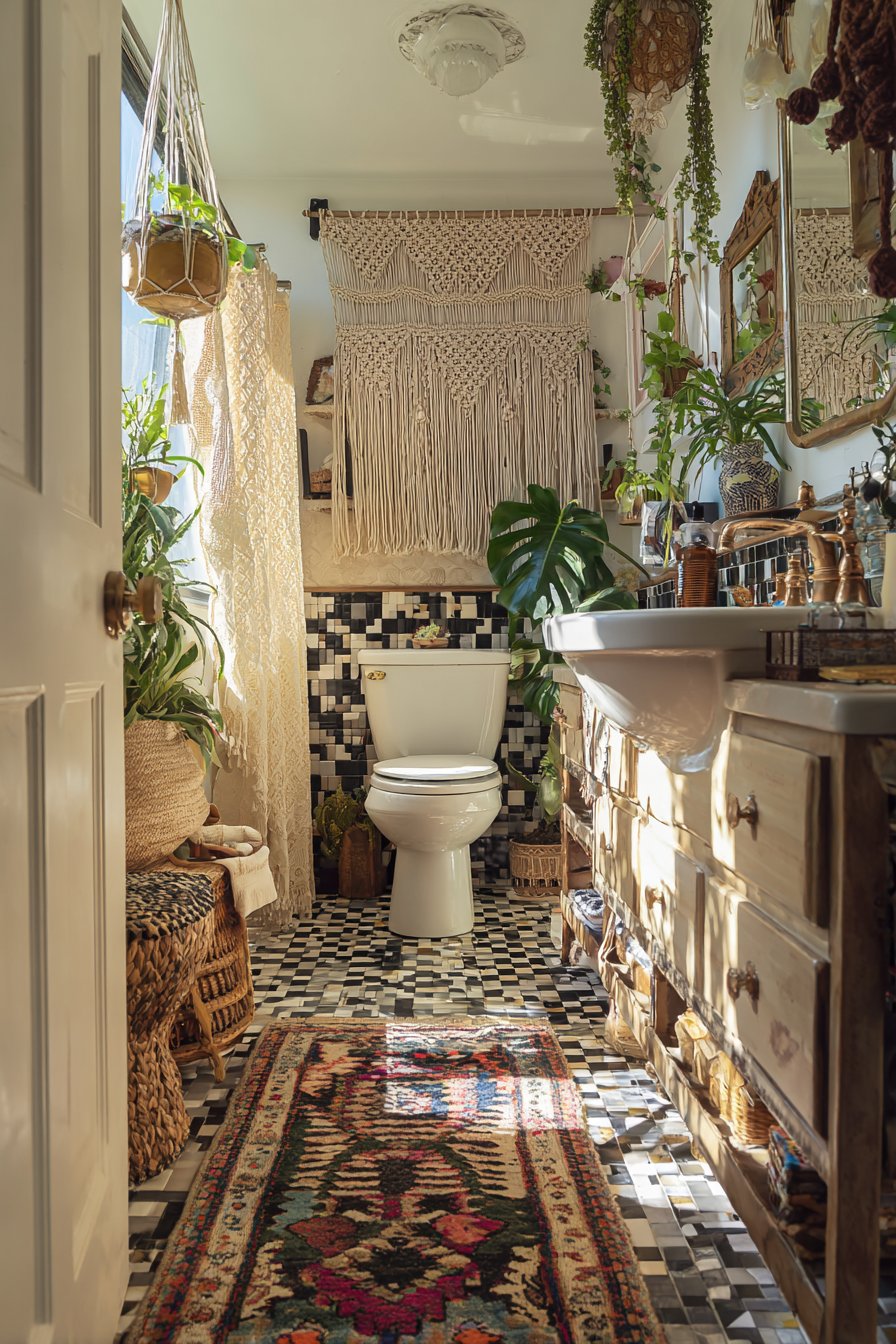
13. Bohemian Jungle with Mixed Metals
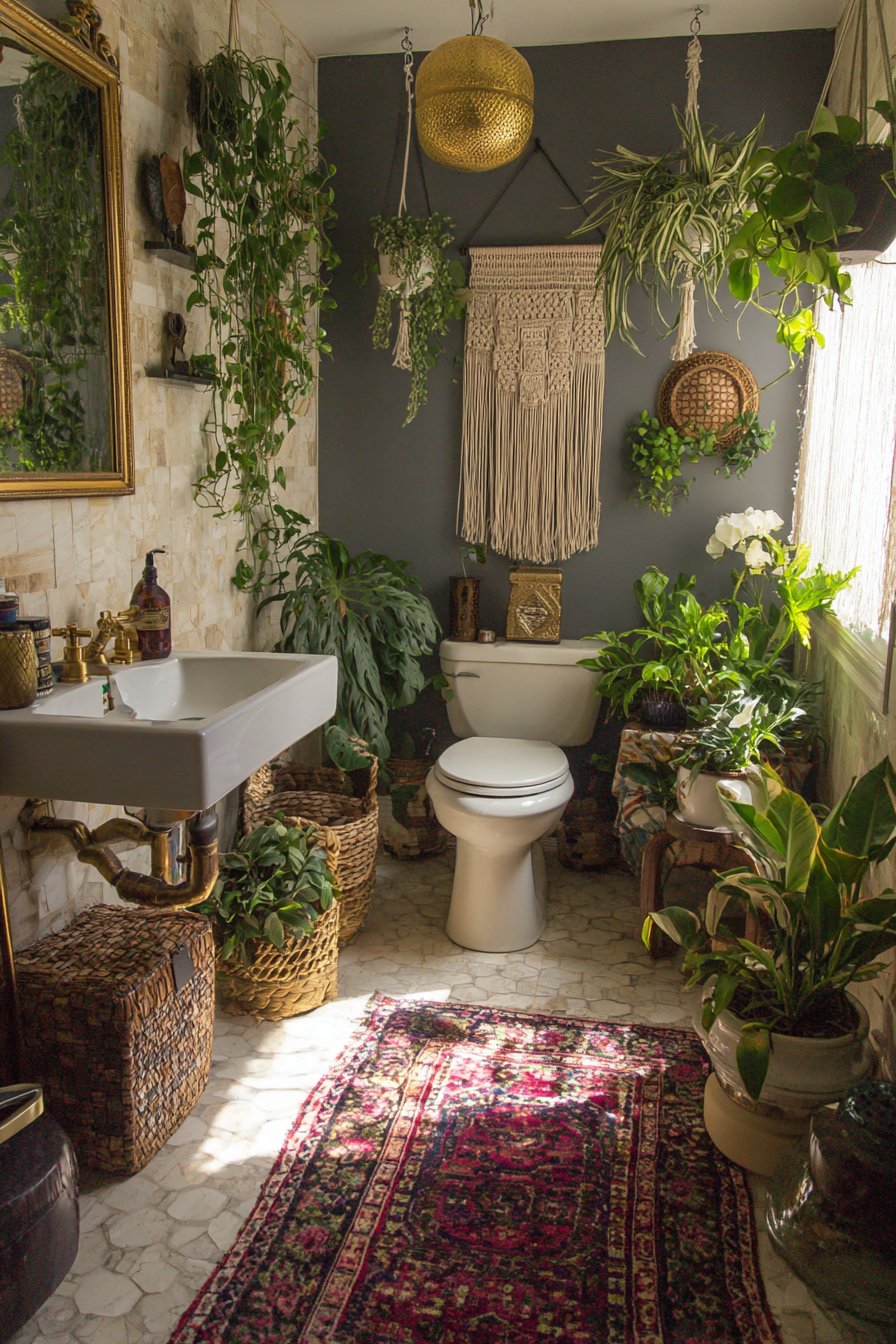
Layered eclecticism defines this bohemian-inspired quirky bathroom where natural materials, global textiles, and plant life combine in relaxed abundance. A macramé wall hanging featuring intricate knotwork patterns hangs above the toilet, its natural cotton fibers and dimensional texture introducing softness to hard bathroom surfaces. Woven basket storage in various sizes—seagrass, rattan, bamboo—provides organic textural interest while concealing necessities. The baskets’ natural variations in color and weave pattern add subtle visual complexity that rewards close viewing.
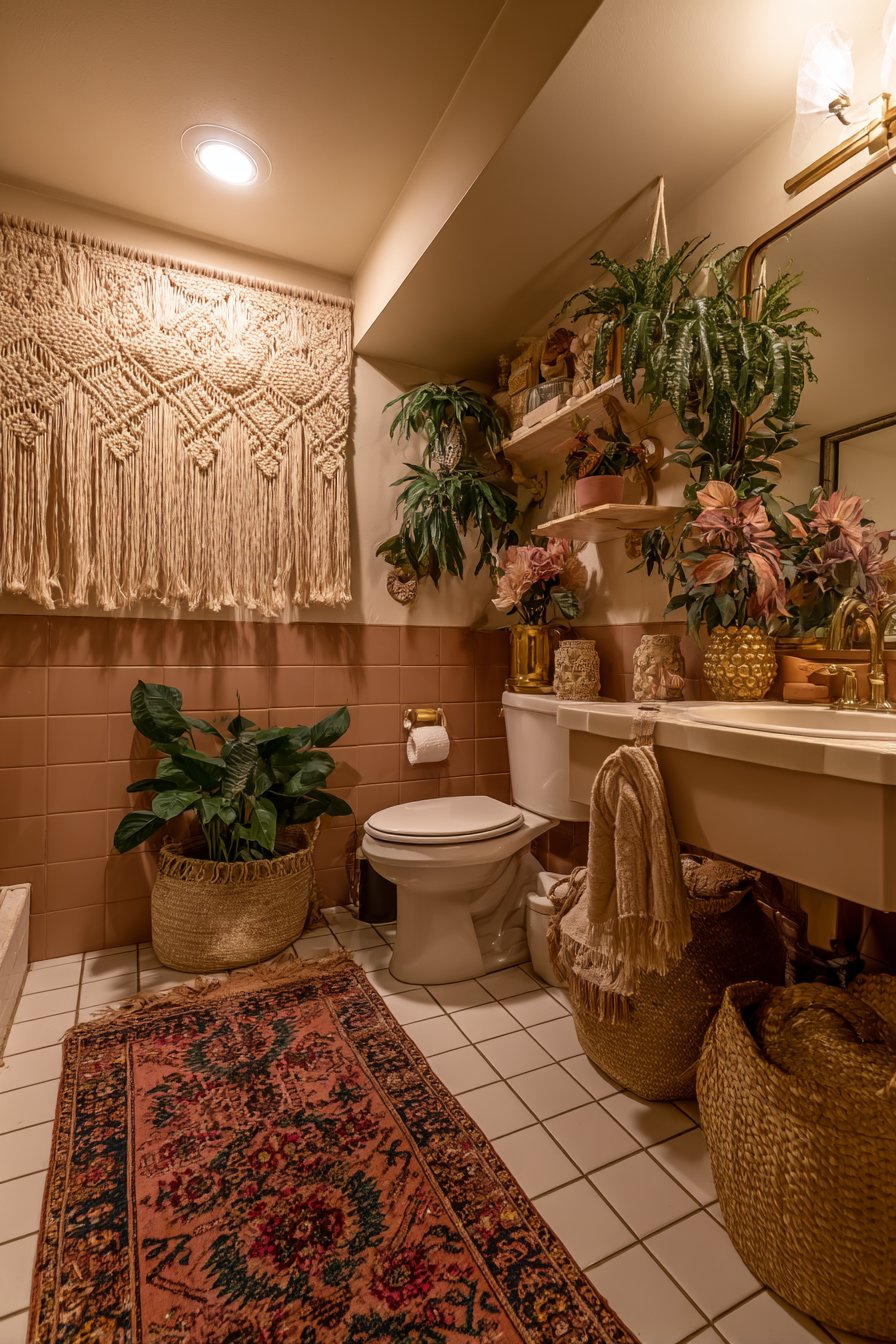
Most daringly, the space features mixed metal fixtures combining gold, copper, and black finishes throughout. Traditional design rules warn against such mixing, but this bathroom proves that rules exist to be broken by confident designers. Gold drawer pulls, copper towel rings, and matte black faucets coexist harmoniously, their warm and cool tones creating dynamic visual interest. The key lies in distributing the mixed metals evenly throughout the space rather than clustering them, which creates balance through repetition.
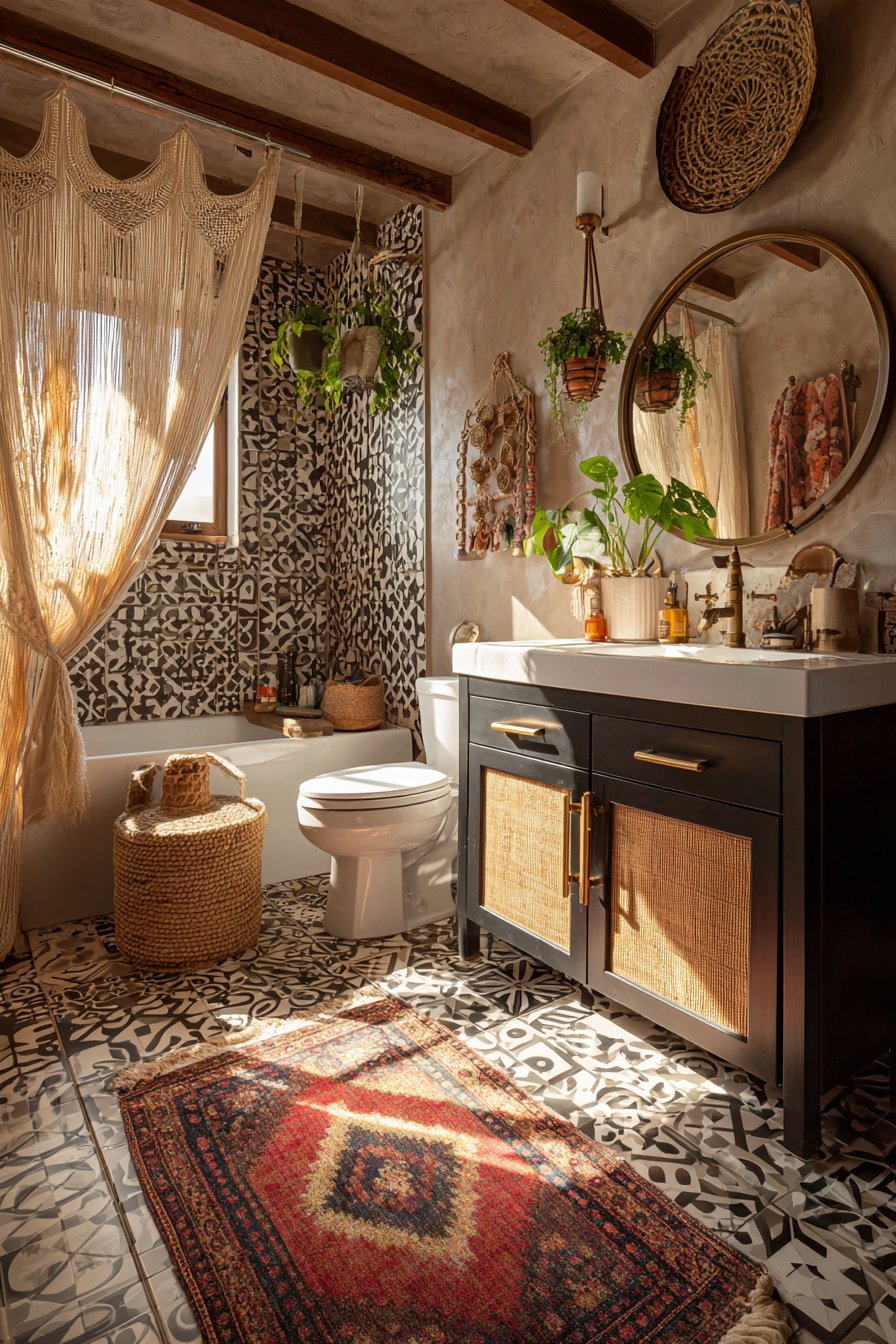
Terra cotta tile flooring adds earthy warmth while suggesting Mediterranean courtyards and desert landscapes. Hanging plants in various vessels—ceramic pots, macramé hangers, wall-mounted planters—create a jungle-like atmosphere that brings life, movement, and air-purifying benefits to the space. Pothos vines trail down walls, spider plants arch gracefully from shelves, and perhaps a small staghorn fern mounts directly to the wall. A vintage Persian or Turkish rug adds jewel-toned color and intricate pattern, its complex design providing visual richness while surprising guests who don’t expect such luxury underfoot in bathrooms.
Key Design Tips:
- Mix metals in odd numbers (three different finishes) for visual balance
- Distribute mixed metals evenly rather than grouping by finish
- Choose bathroom-appropriate plants tolerating humidity and varying light
- Layer multiple textile textures—macramé, woven baskets, vintage rugs
- Seal textile rugs with waterproofing treatments for bathroom durability
14. Vintage Tile Sample Art Wall
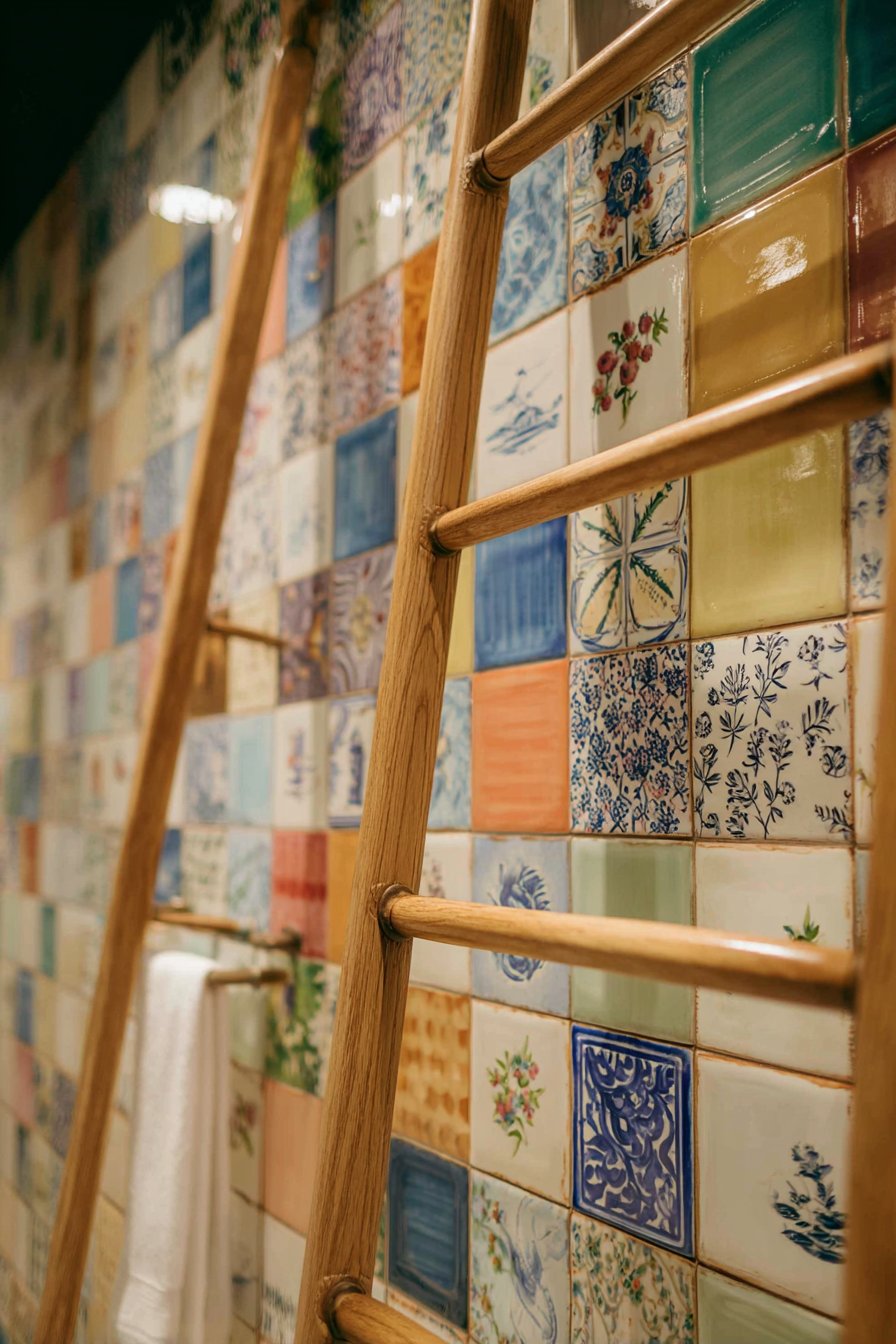
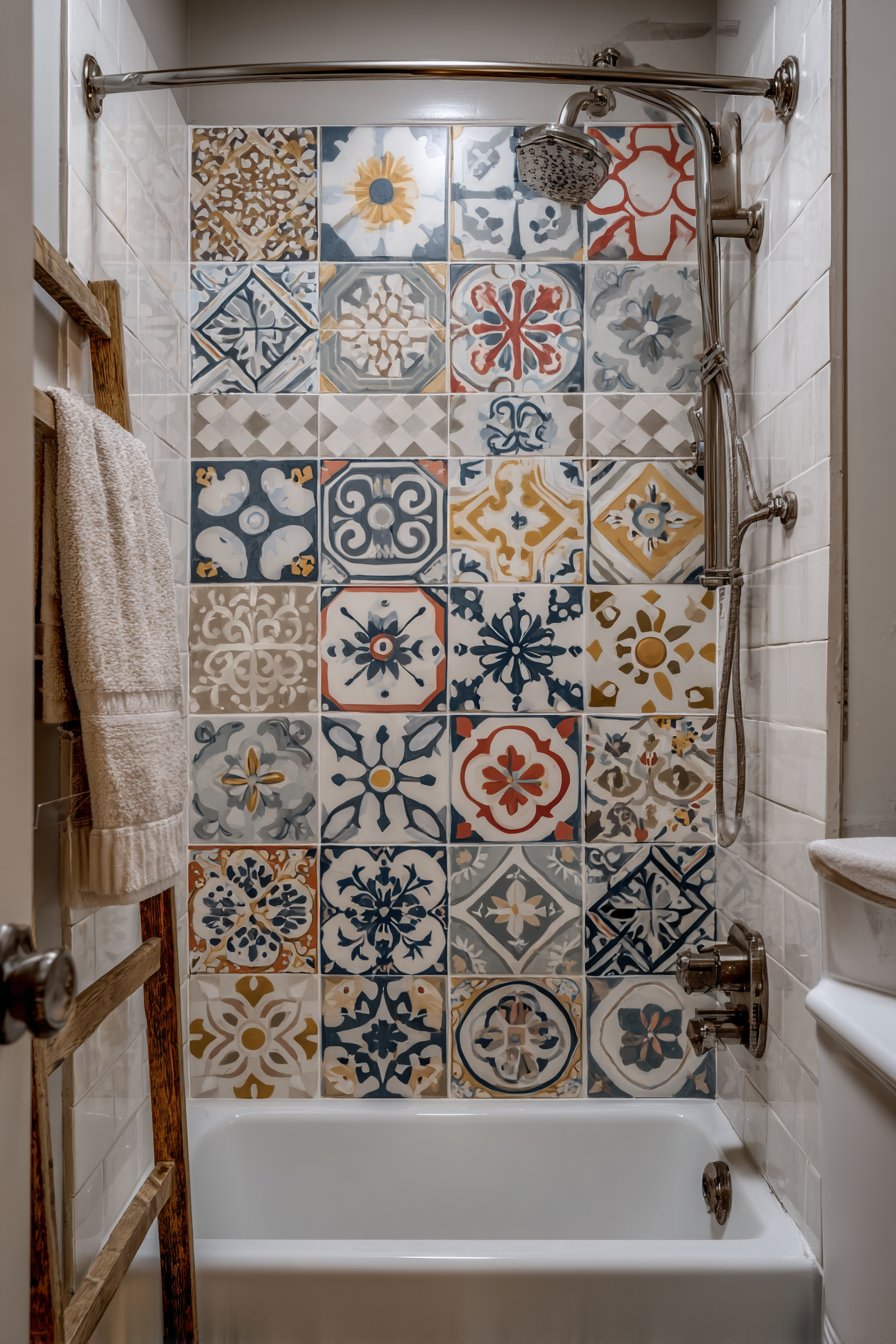
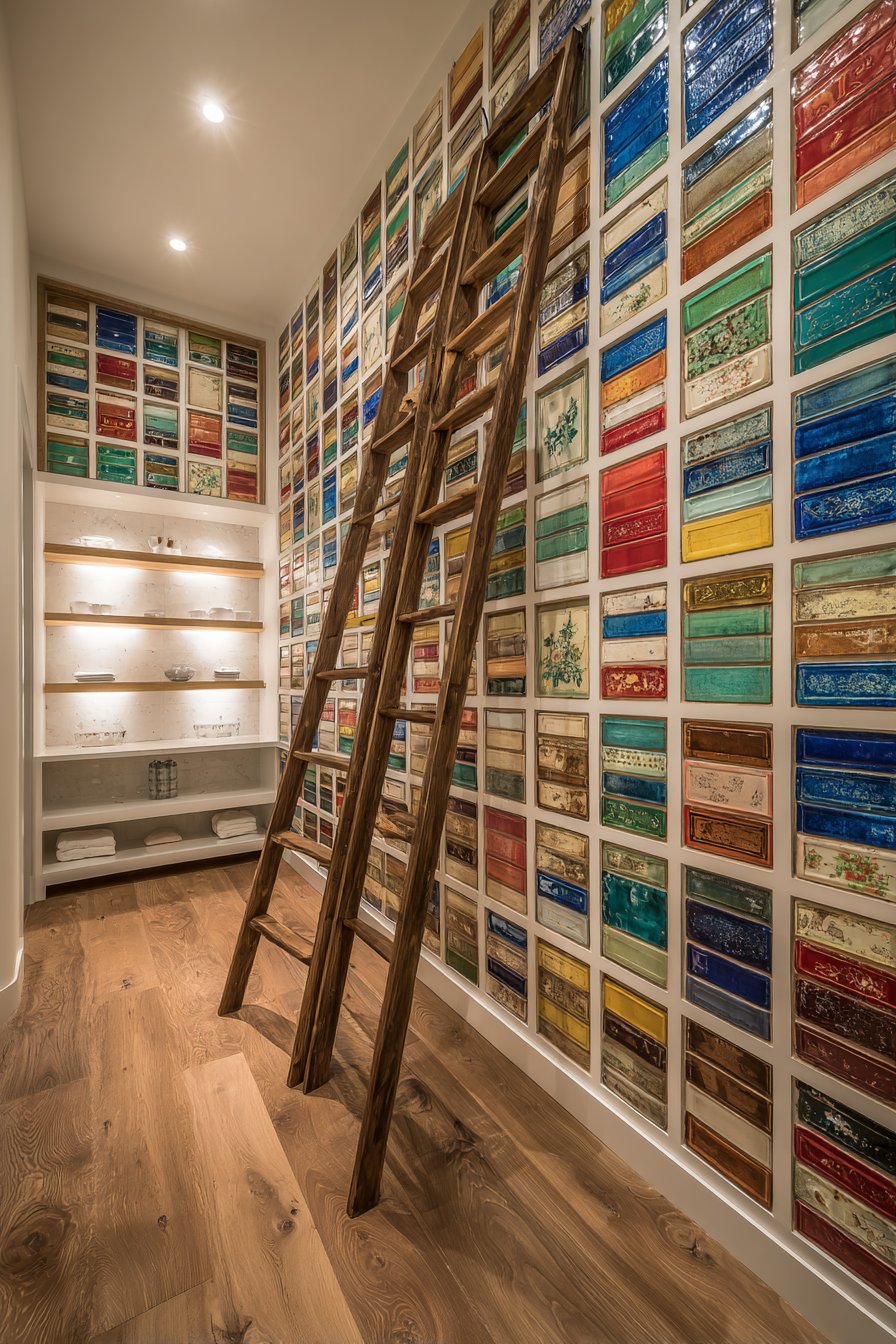
Collectors and design enthusiasts will appreciate this quirky bathroom featuring a statement wall composed entirely of vintage tile samples arranged in a deliberate mismatched grid. Each tile differs in color, pattern, and texture—perhaps including Art Deco geometrics, Victorian florals, mid-century atomic patterns, and Mexican Talavera designs—creating a museum-quality installation celebrating ceramic history. This approach transforms what could be random chaos into intentional artistry through careful arrangement considering color balance, pattern distribution, and visual rhythm. The tile wall becomes conversation piece and historical document simultaneously.
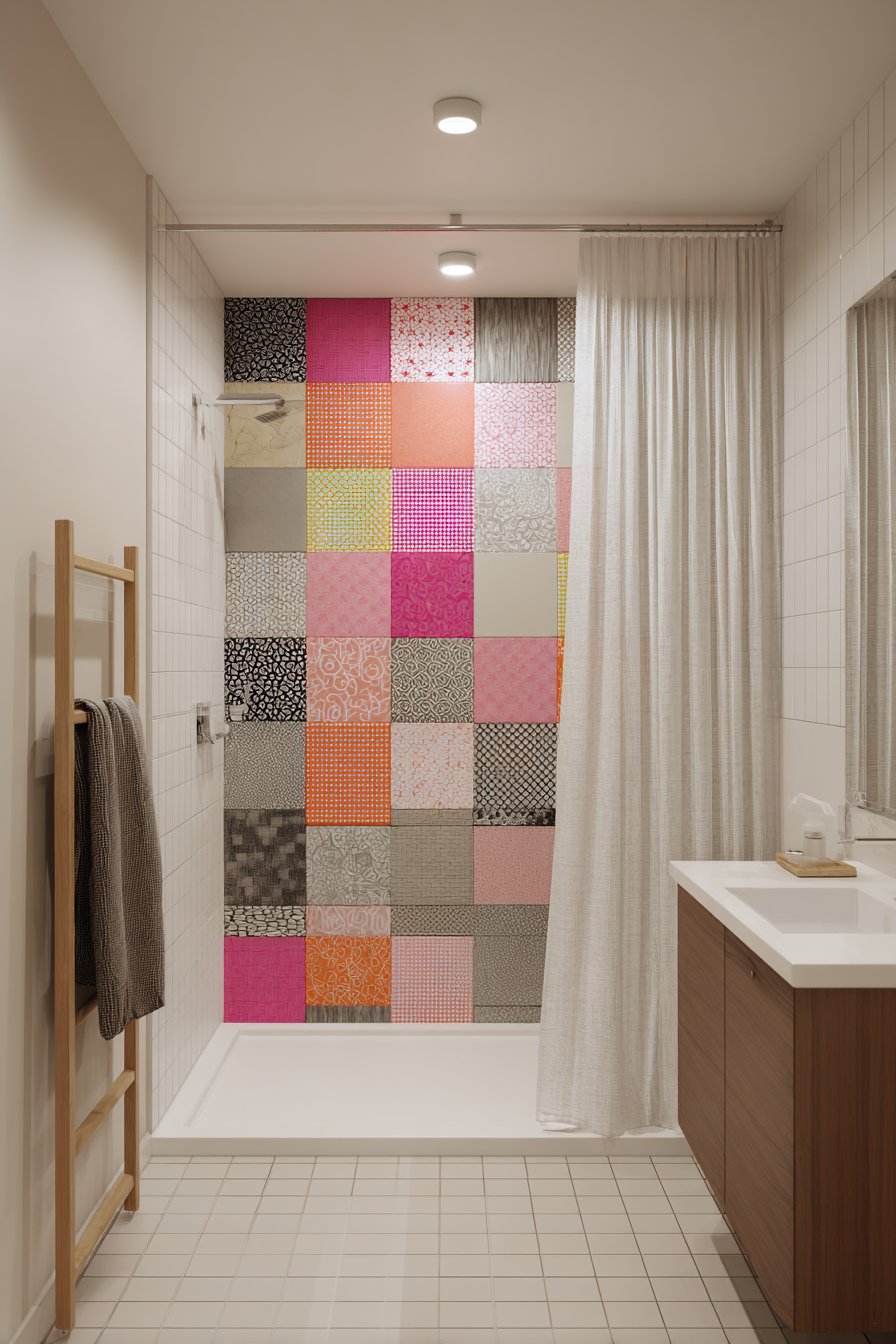
Modern white fixtures throughout the bathroom provide necessary visual rest, their clean contemporary lines preventing the space from feeling costume-like or museum-static. The white creates negative space that allows the tile wall to breathe and shine without competition. A natural wood ladder leans casually against a neutral wall, serving as both towel storage and sculptural element that introduces organic warmth without pattern complexity. The ladder’s simple construction and honest materials provide welcome simplicity amid the tile wall’s visual richness.
Professional interior photography would capture this space emphasizing the tile wall as undisputed focal point, with balanced exposure highlighting individual tile details while showing overall composition. Natural lighting ideally comes from the side, creating subtle shadows that enhance the tiles’ dimensional relief patterns and glazed surfaces. This bathroom particularly appeals to designers, architects, and anyone fascinated by decorative arts history, as the tile collection tells stories spanning decades and continents through pattern, color, and manufacturing techniques.
Key Design Tips:
- Plan tile arrangements on floor before permanent installation
- Vary tile sizes while maintaining consistent overall grid structure
- Consider professional tile installation for complex arrangements
- Frame the tile wall with trim or molding for finished appearance
- Photograph tiles individually before installation for documentation
15. Baroque Glamour Meets Modern Function
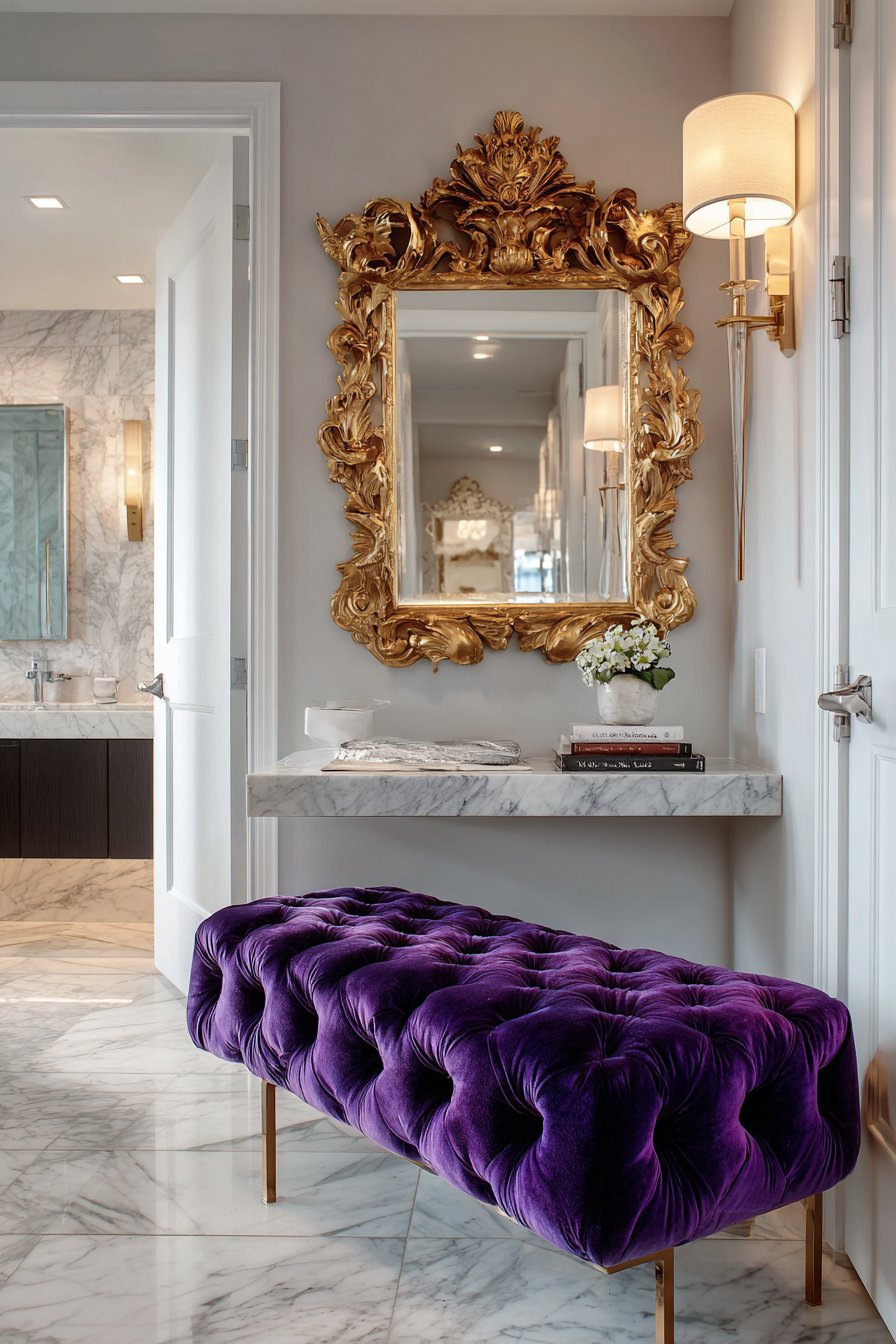
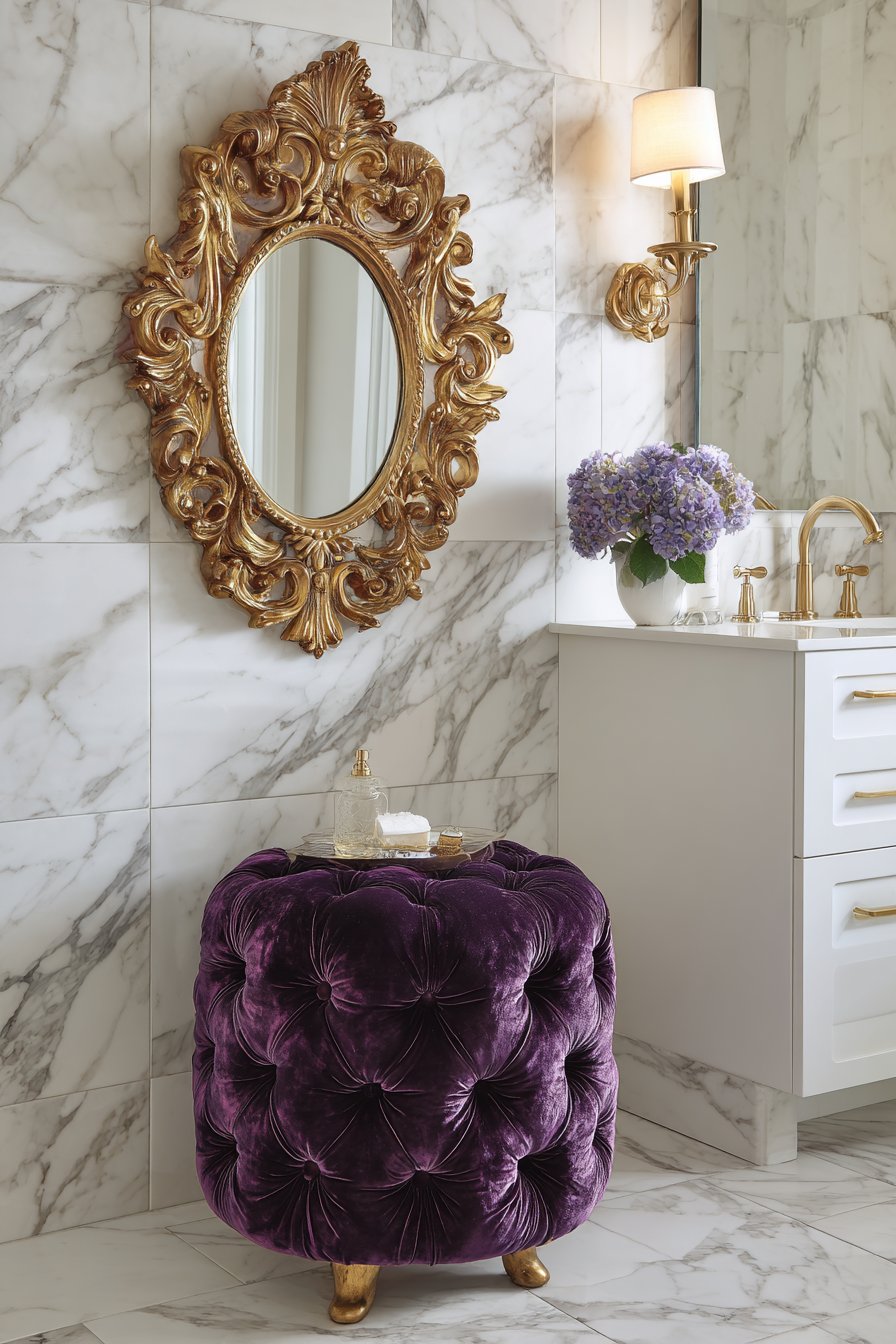
High-low design mixing reaches sophisticated heights in this quirky bathroom where opulent baroque elements combine unexpectedly with contemporary furnishings. A velvet tufted ottoman in jewel-tone purple—perhaps amethyst or eggplant—provides luxurious seating, its button-tufted surface and plush pile suggesting royal chambers. Above the vanity hangs an ornate gold baroque mirror with elaborate scrollwork, cherubs, and foliate details that command attention and add vertical drama. These aristocratic elements could easily overwhelm, but modern white fixtures throughout prevent the space from feeling costume-like or overly theatrical.
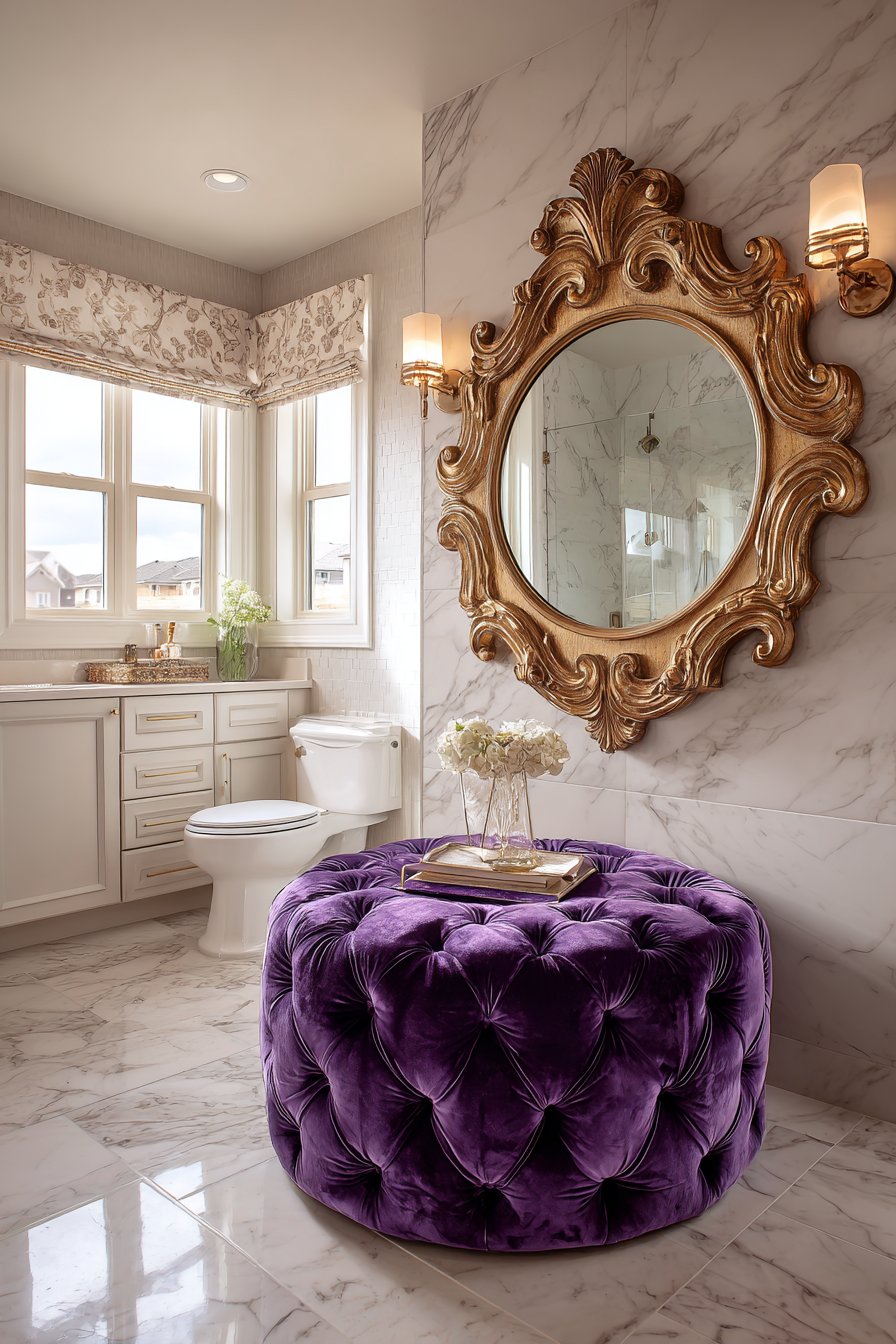
The key to this design’s success lies in restraint—choosing just two or three baroque statement pieces rather than overwhelming every surface. Marble-look porcelain tiles provide neutral foundation with just enough luxury through veining patterns without competing with the ornate mirror and rich ottoman. The tiles’ cool whites and grays create serene backdrop that makes the gold and purple pop dramatically. A vintage-style sconce with candle-shaped bulbs and crystal droplets provides ambient lighting that enhances the glamorous atmosphere while remaining practical.
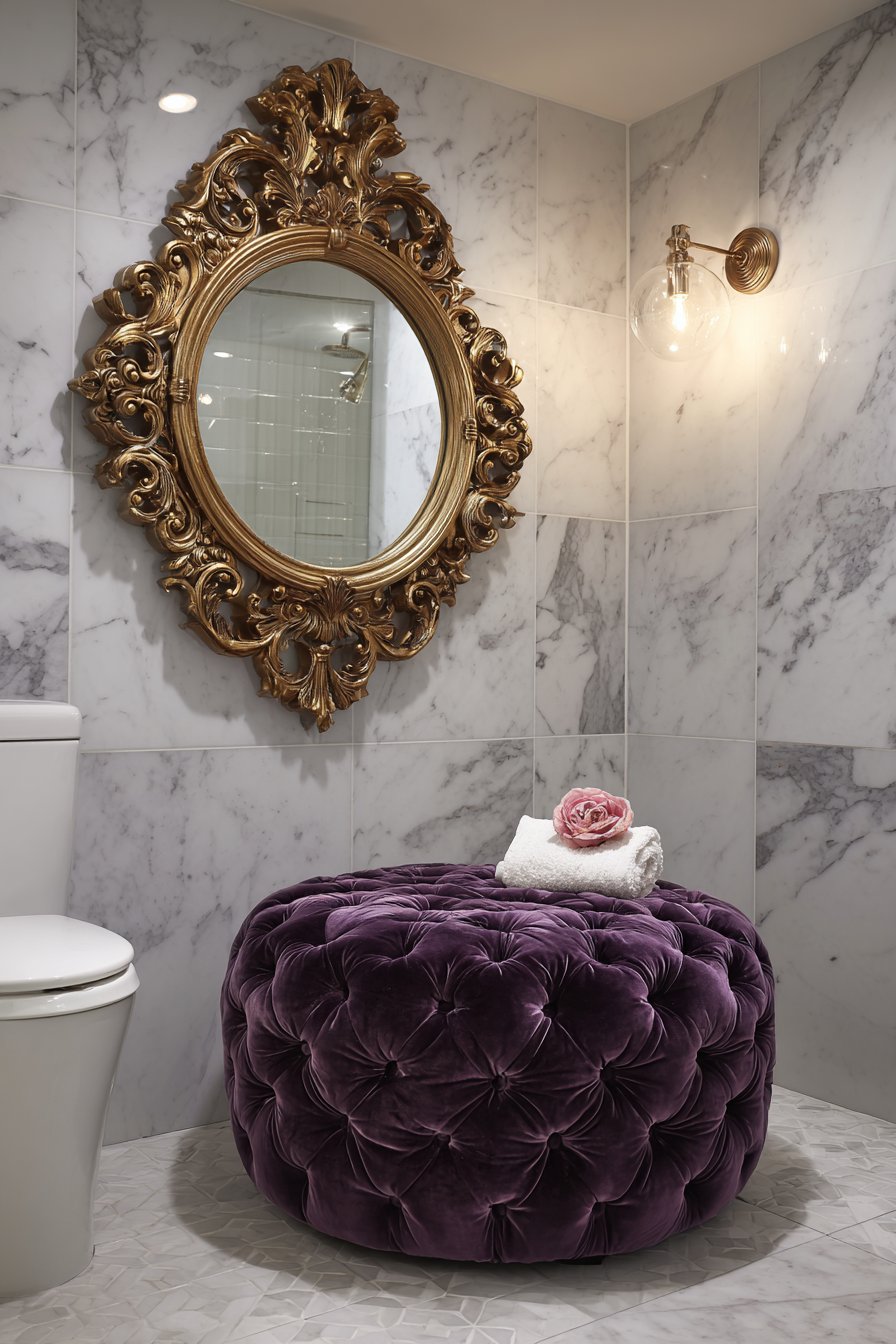
This bathroom demonstrates how mixing design periods creates more interesting spaces than period-perfect installations. The juxtaposition of old-world opulence and contemporary simplicity creates tension that keeps the eye engaged, discovering new details with each viewing. The space feels sophisticated rather than stuffy, glamorous rather than gaudy, proving that quirky design at its best balances contrasting elements into harmonious wholes that transcend individual components.
Key Design Tips:
- Limit ornate baroque pieces to two or three statement items
- Choose modern fixtures in simple white to provide visual breathing room
- Invest in quality reproductions if authentic antiques exceed budget
- Position ornate mirrors where they reflect interesting views or light
- Clean baroque frames regularly as their details collect dust
16. River Rock Spa Grotto
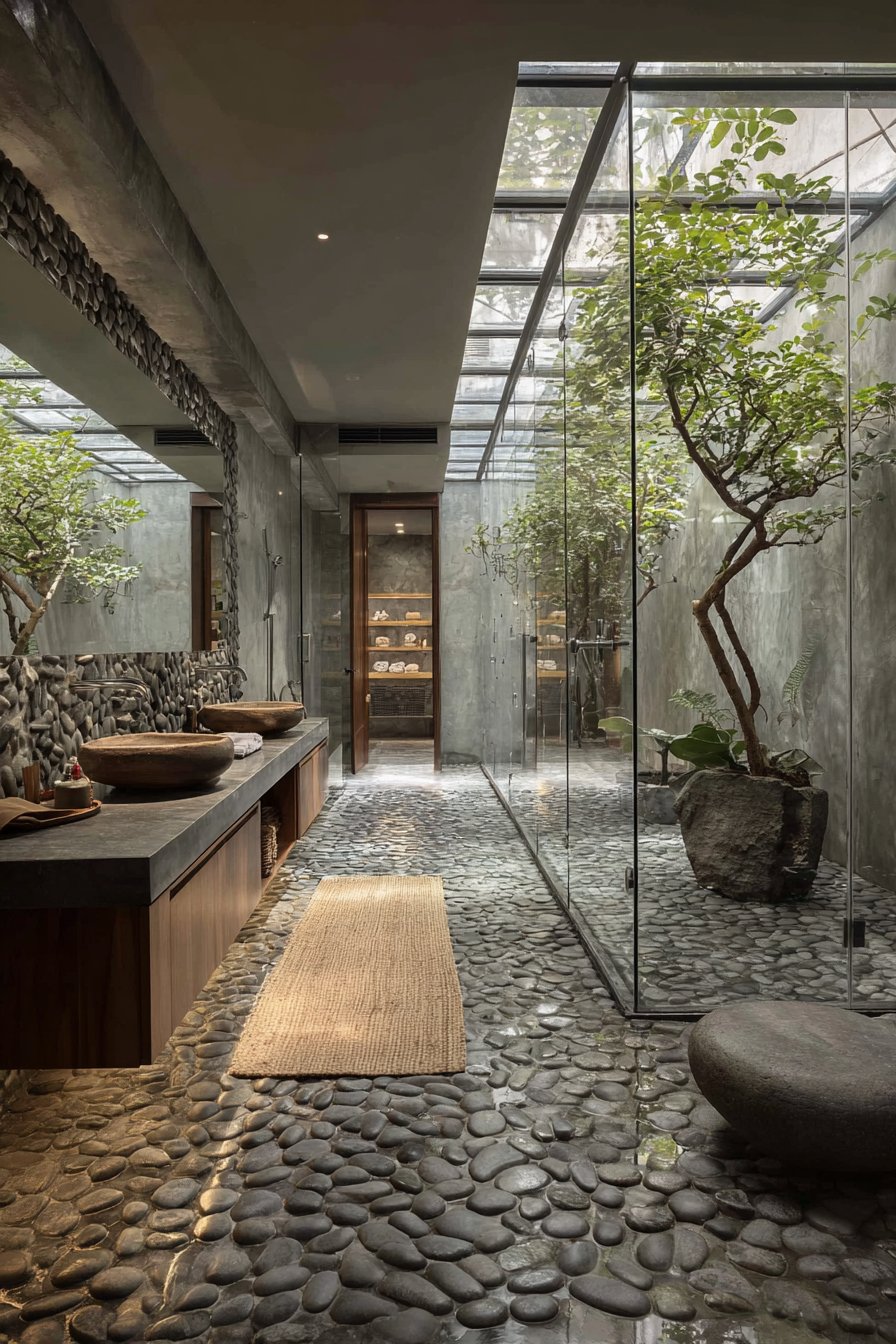
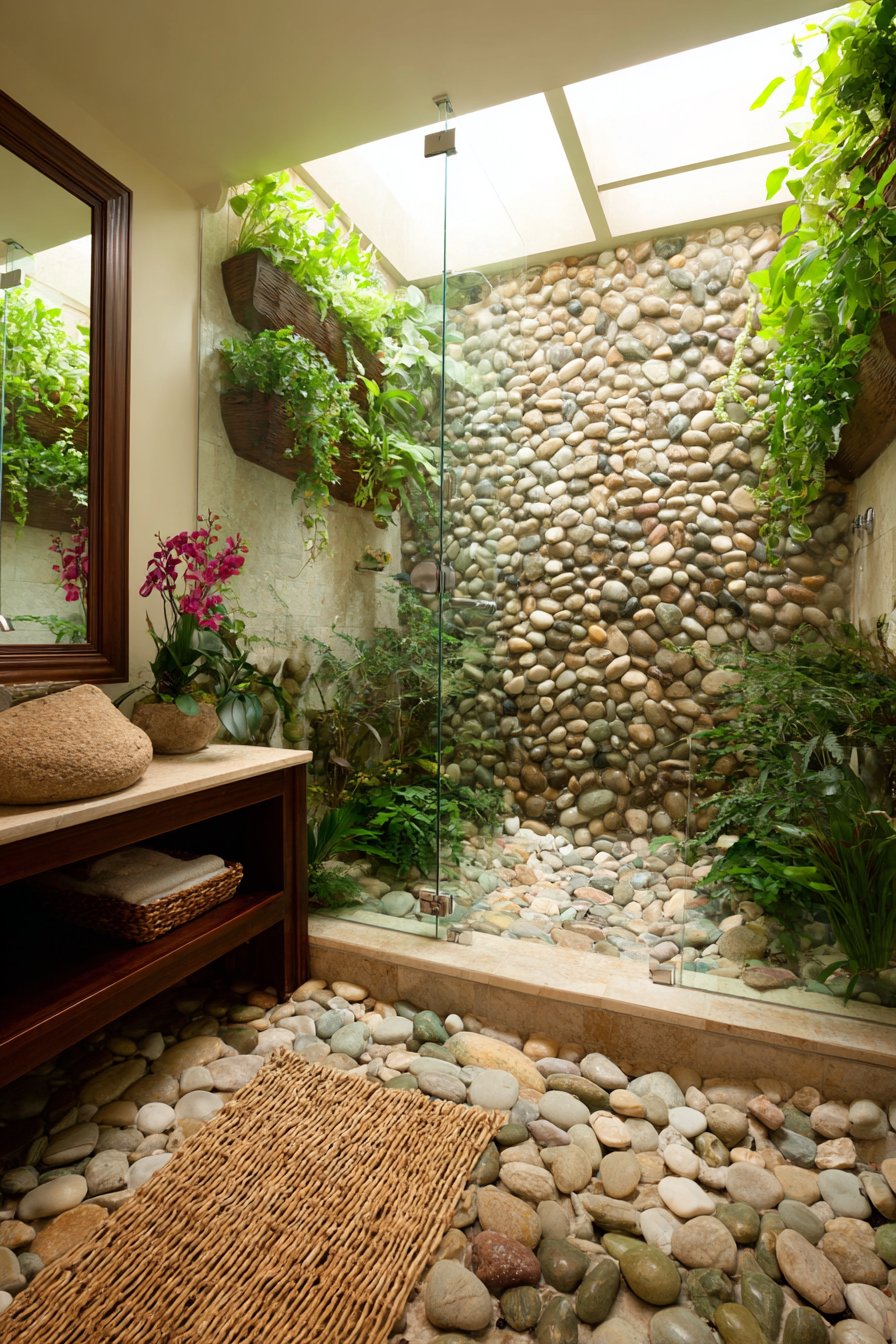
Nature comes indoors dramatically in this quirky bathroom featuring a shower with transparent glass walls revealing an interior surface covered entirely in smooth river rock pebbles. The stones range in color from charcoal gray to warm taupe to creamy white, creating organic color variation that mimics natural stream beds. Water cascading over these rounded stones during showers creates mesmerizing visual and auditory effects, transforming ordinary hygiene routines into sensory spa experiences. The pebble surface provides natural slip-resistance while massaging feet—functional benefits enhancing the aesthetic appeal.
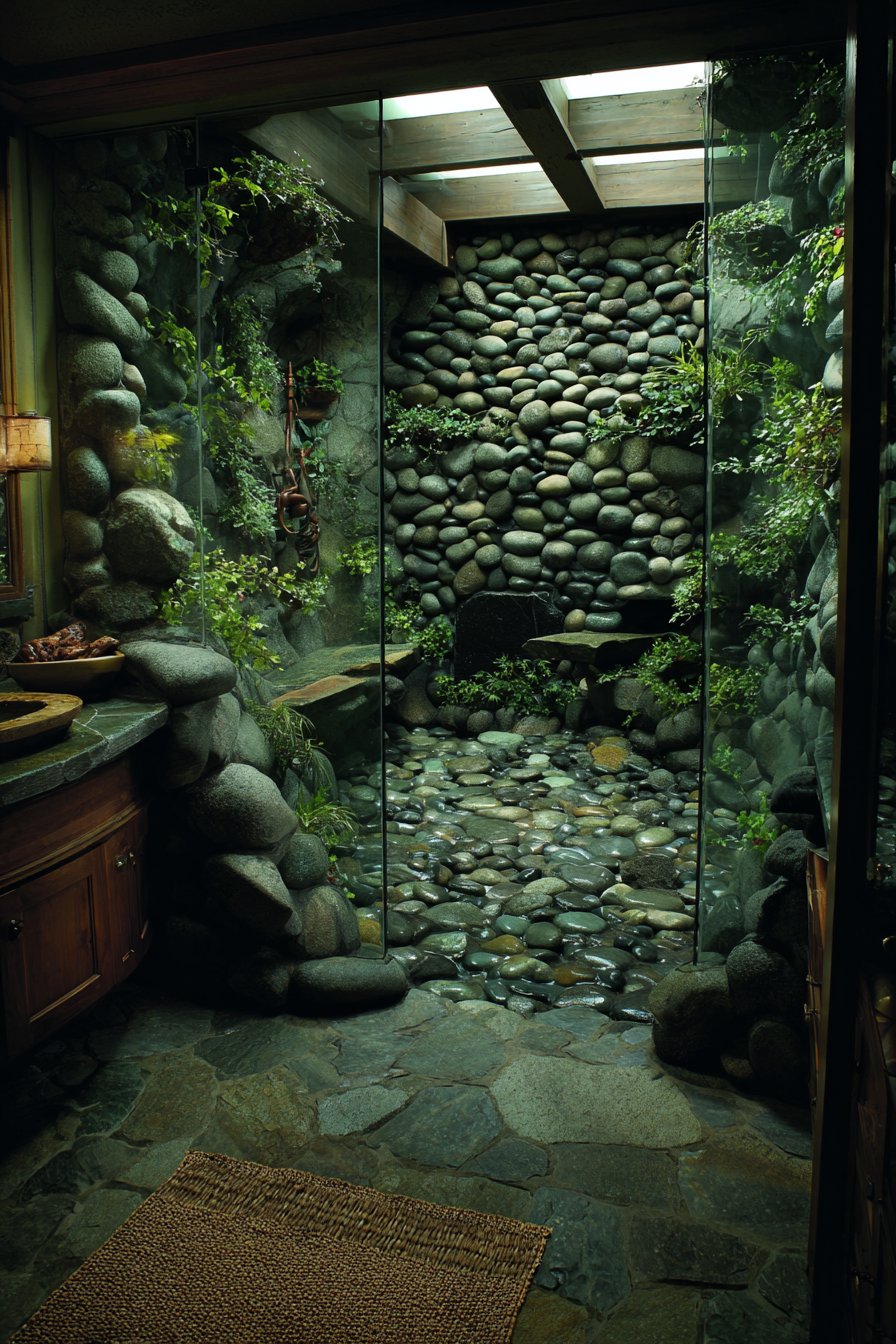
Live plants positioned on multiple levels throughout the bathroom strengthen the organic atmosphere. A staghorn fern mounts directly to the wall, its prehistoric fronds creating dramatic silhouette. Potted ferns perch on floating shelves while trailing pothos vines soften corners and edges. These plants thrive in bathroom humidity, effectively turning environmental challenge into design advantage. The greenery provides air purification benefits while introducing movement, color variation, and living energy that artificial plants cannot match.
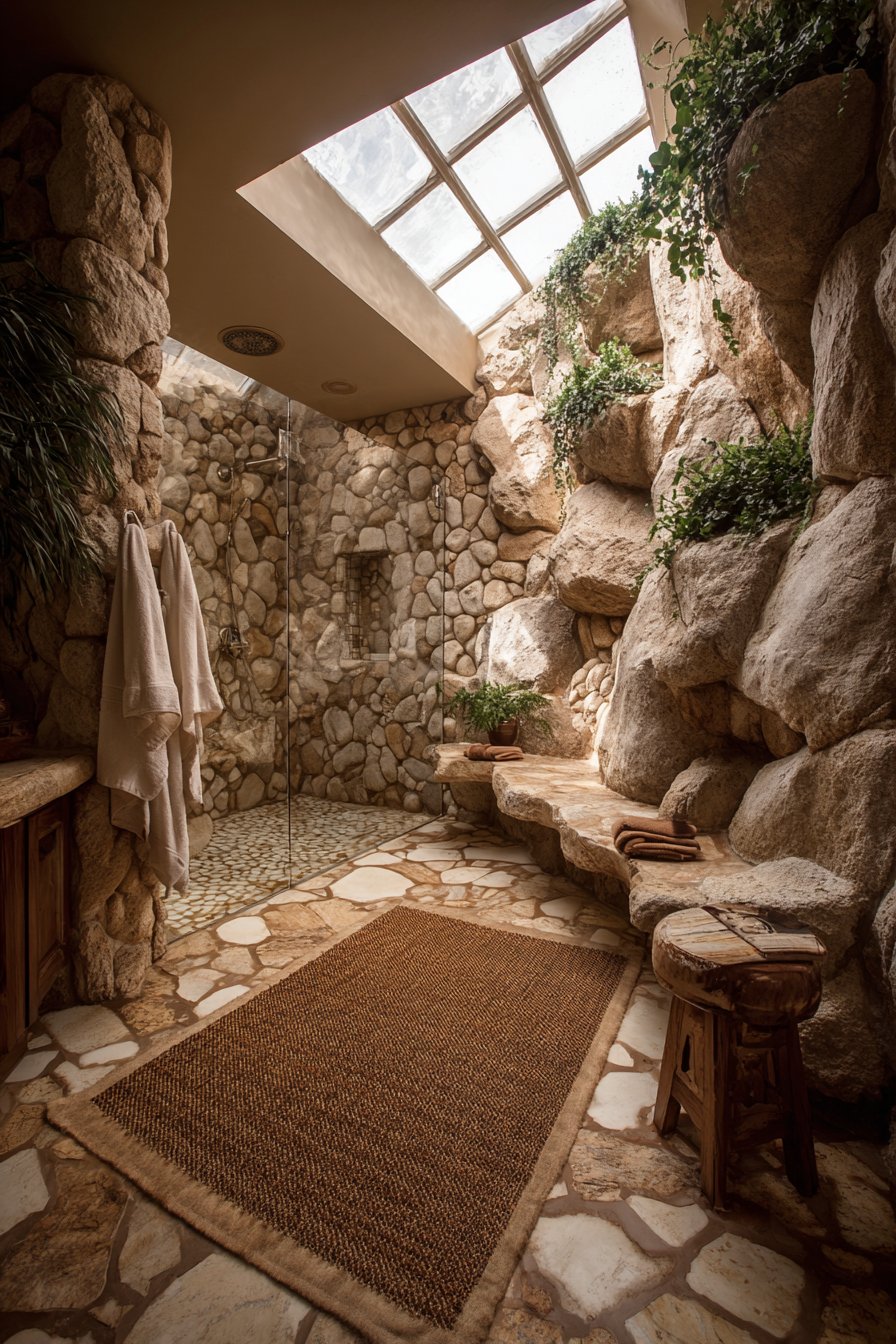
Wooden bath accessories—perhaps teak bath mats, bamboo shelving, or carved wooden bowls holding natural sponges—enhance the nature-inspired theme while introducing warm organic tones complementing the cool grey stones. Natural daylight filters through a skylight directly above the shower, creating dramatic overhead illumination that mimics forest canopy dappled sunlight. As the sun moves throughout the day, changing light creates evolving atmospheres, ensuring the space never looks or feels exactly the same twice.
Key Design Tips:
- Install proper waterproofing behind pebble tile installations
- Choose smooth river rocks rather than rough stones for comfort
- Plan lighting to highlight plants and create dramatic shadows
- Select bathroom plants based on available natural light levels
- Ensure adequate ventilation to prevent mold in humid plant-filled spaces
17. 1970s Time Capsule Revival
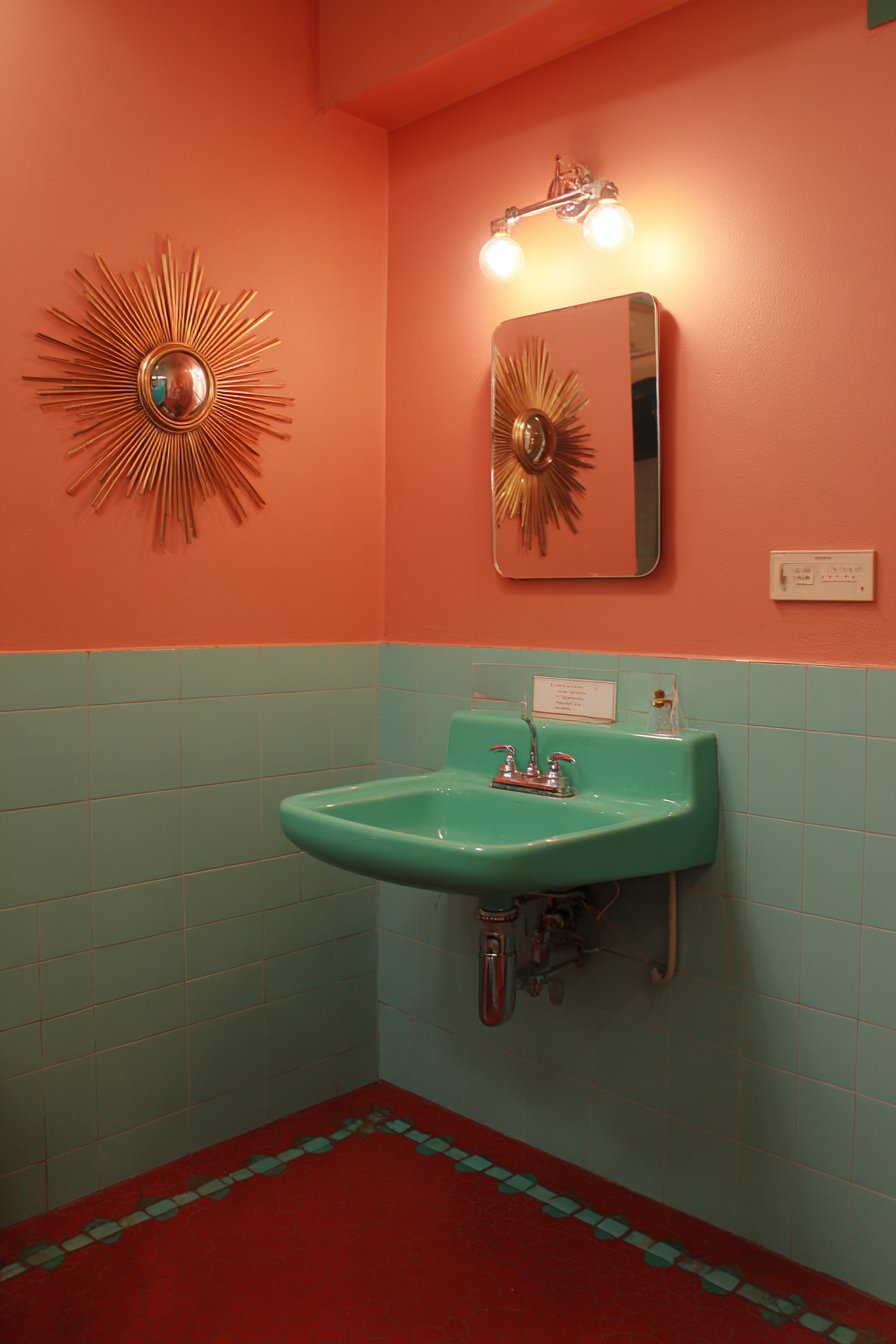
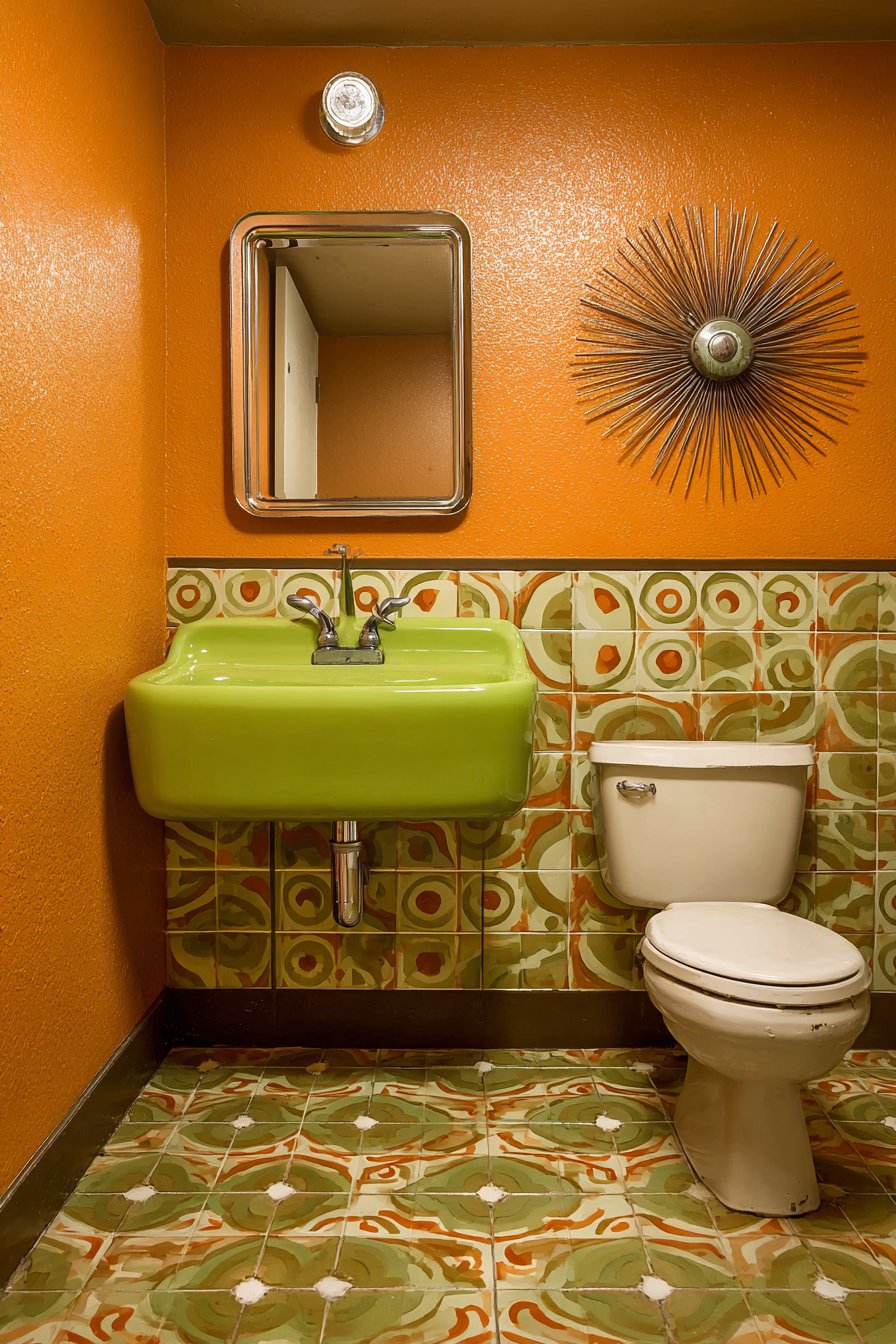
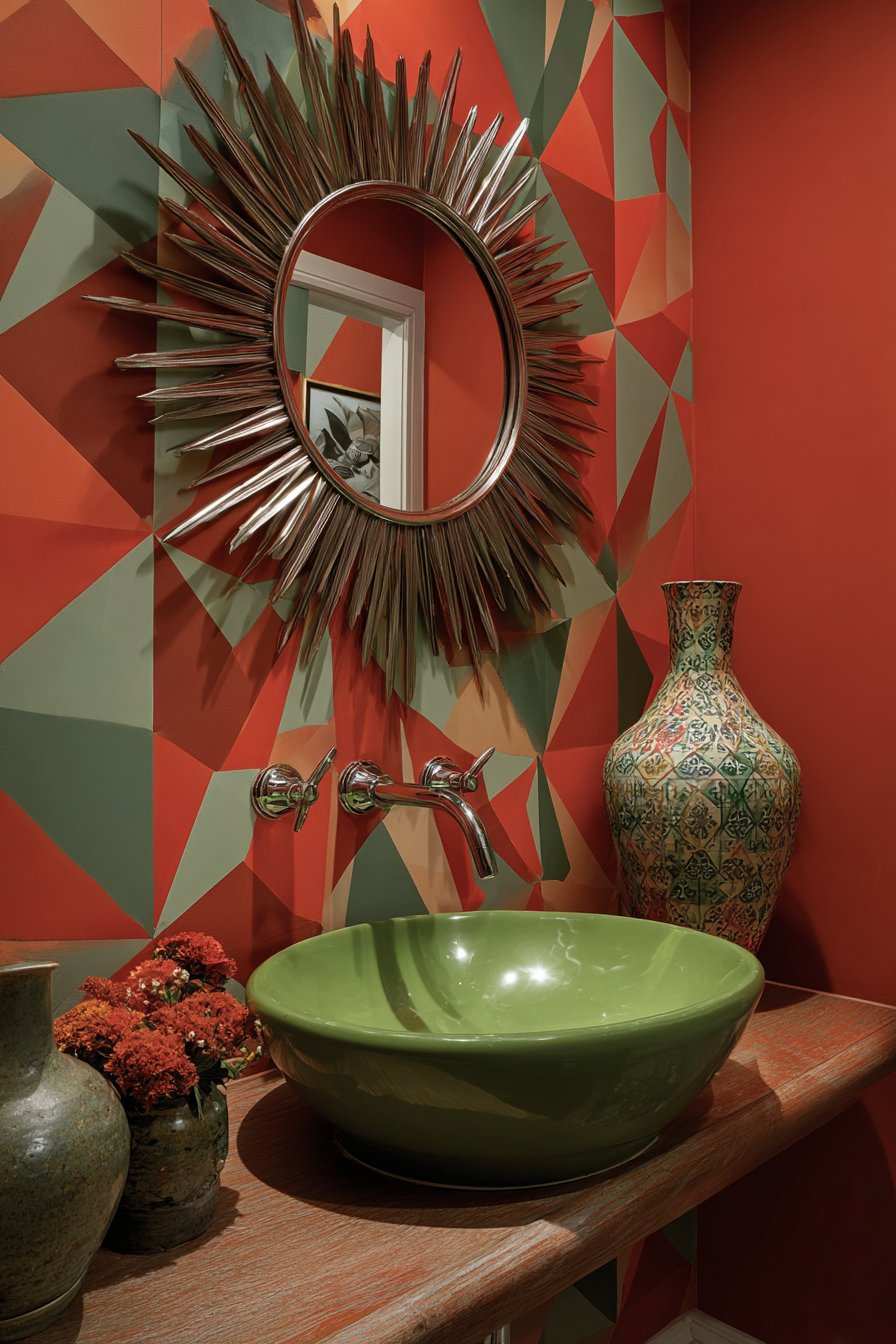
Nostalgic authenticity drives this quirky bathroom celebrating 1970s design without irony or apology. Burnt orange walls create enveloping warmth that defined the decade’s interior design, their earthy saturation suggesting harvest gold and autumn leaves. An avocado green vintage sink—perhaps original to the home or salvaged from architectural salvage—provides the room’s quirky centerpiece, its dated color now feeling fresh again through the cyclical nature of design trends. Original geometric tile work preserved from mid-century renovation showcases authentic period patterns—perhaps hexagons, diamonds, or optical illusions in brown, gold, and olive tones.
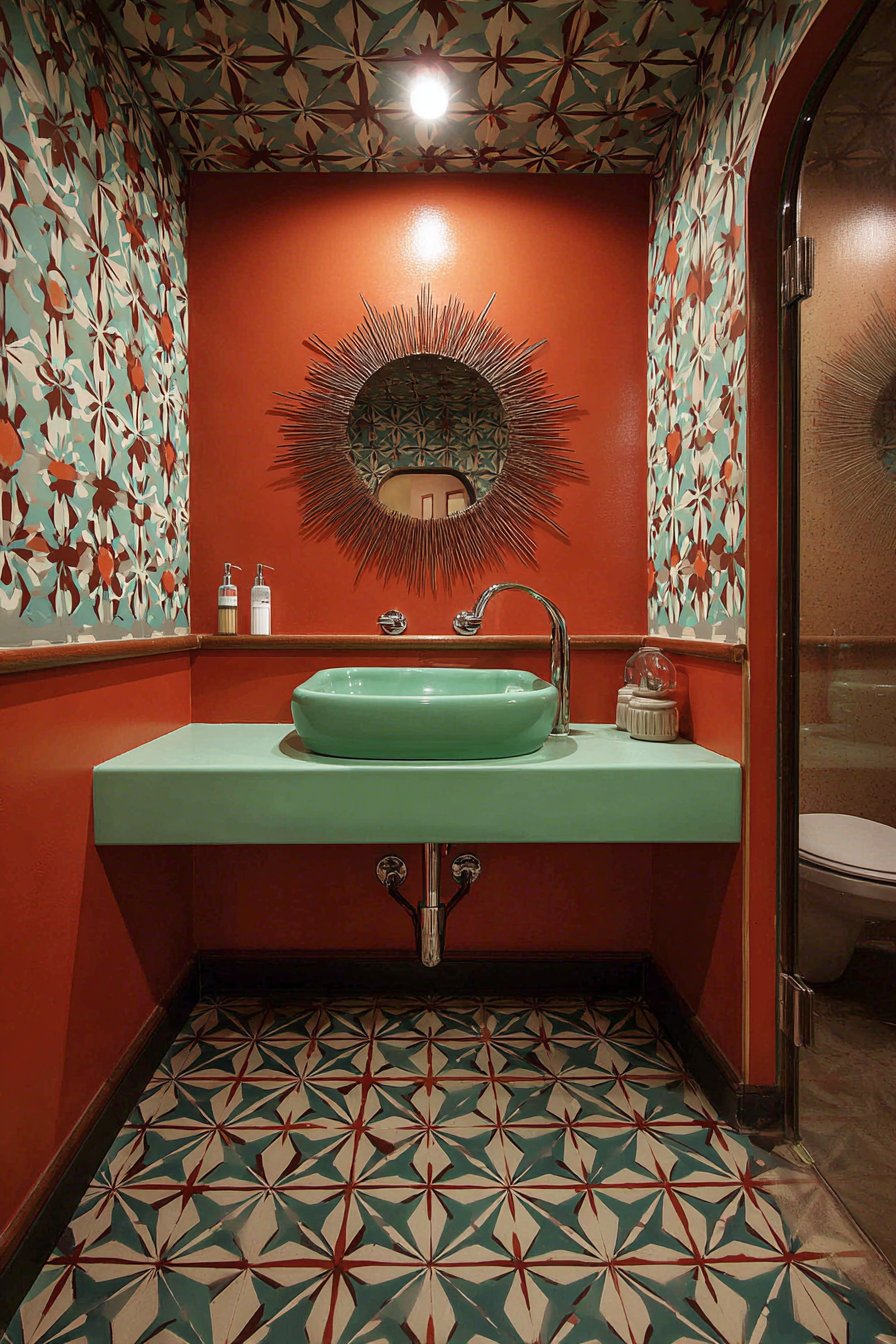
Chrome fixtures gleam against the bold colors, their mirror-bright surfaces catching and reflecting the warm hues while maintaining period-appropriate styling. A sunburst mirror—that ubiquitous 1970s icon—adds sculptural interest and period-appropriate detail above the vanity, its radiating spokes creating dynamic movement. Rather than apologizing for these dated elements or attempting to “update” them, this bathroom leans fully into its retro identity, celebrating rather than disguising its historical aesthetic.
Interior photography honoring this bathroom’s authentic vintage aesthetic would use techniques showing functional charm and nostalgic appeal rather than trying to make it look contemporary. The space particularly appeals to homeowners appreciating design history, embracing kitsch, or seeking alternatives to safe contemporary neutrality. It proves that quirky design can mean celebrating what already exists rather than constantly pursuing the new, finding beauty in preservation and authenticity rather than demolition and replacement.
Key Design Tips:
- Preserve original fixtures when possible rather than replacing with reproductions
- Research period-appropriate accessories and hardware for authentic details
- Embrace color confidence—don’t apologize for bold period palettes
- Consider period lighting fixtures from architectural salvage sources
- Maintain vintage fixtures properly to ensure continued functionality
18. Interactive Chalkboard Creativity
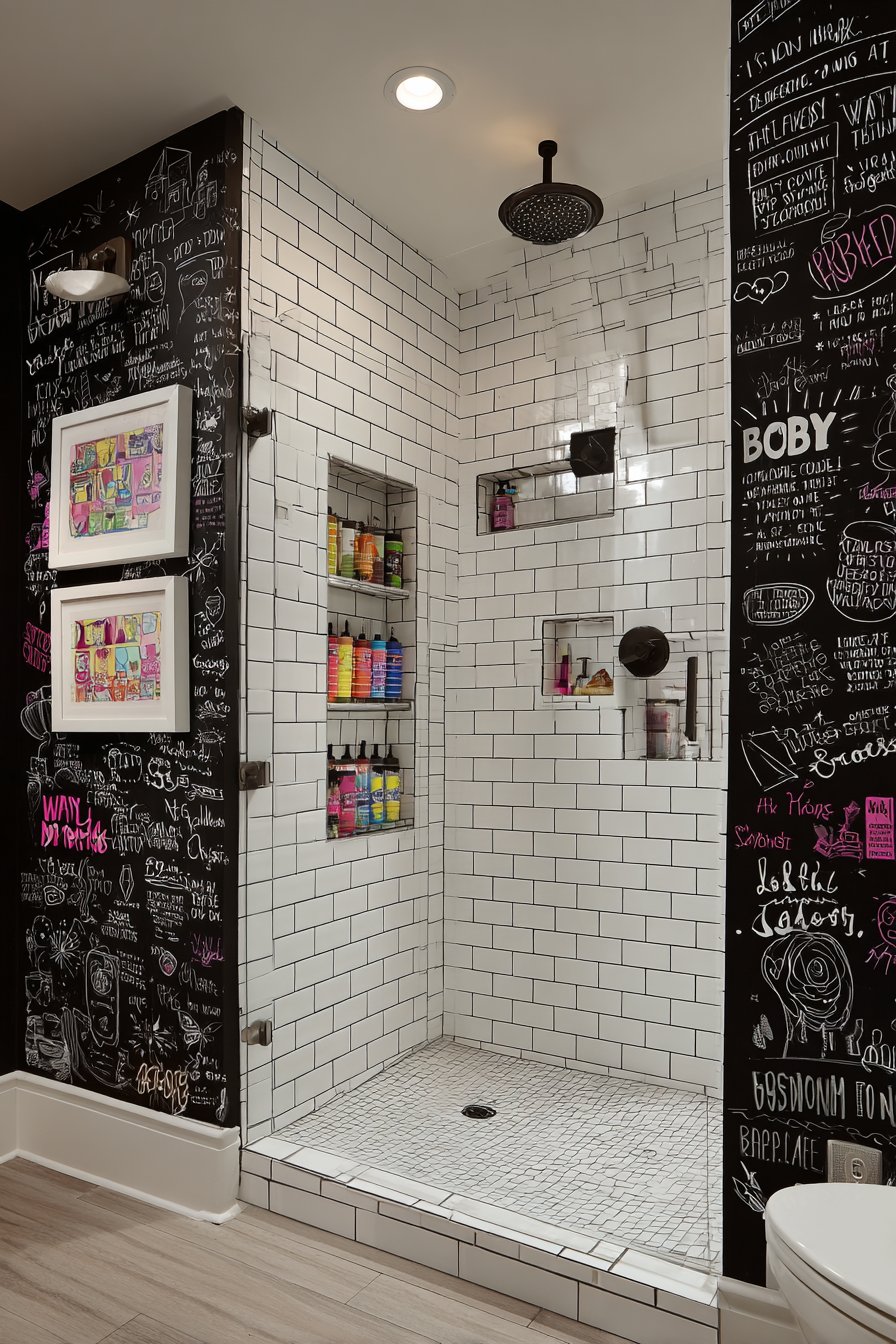
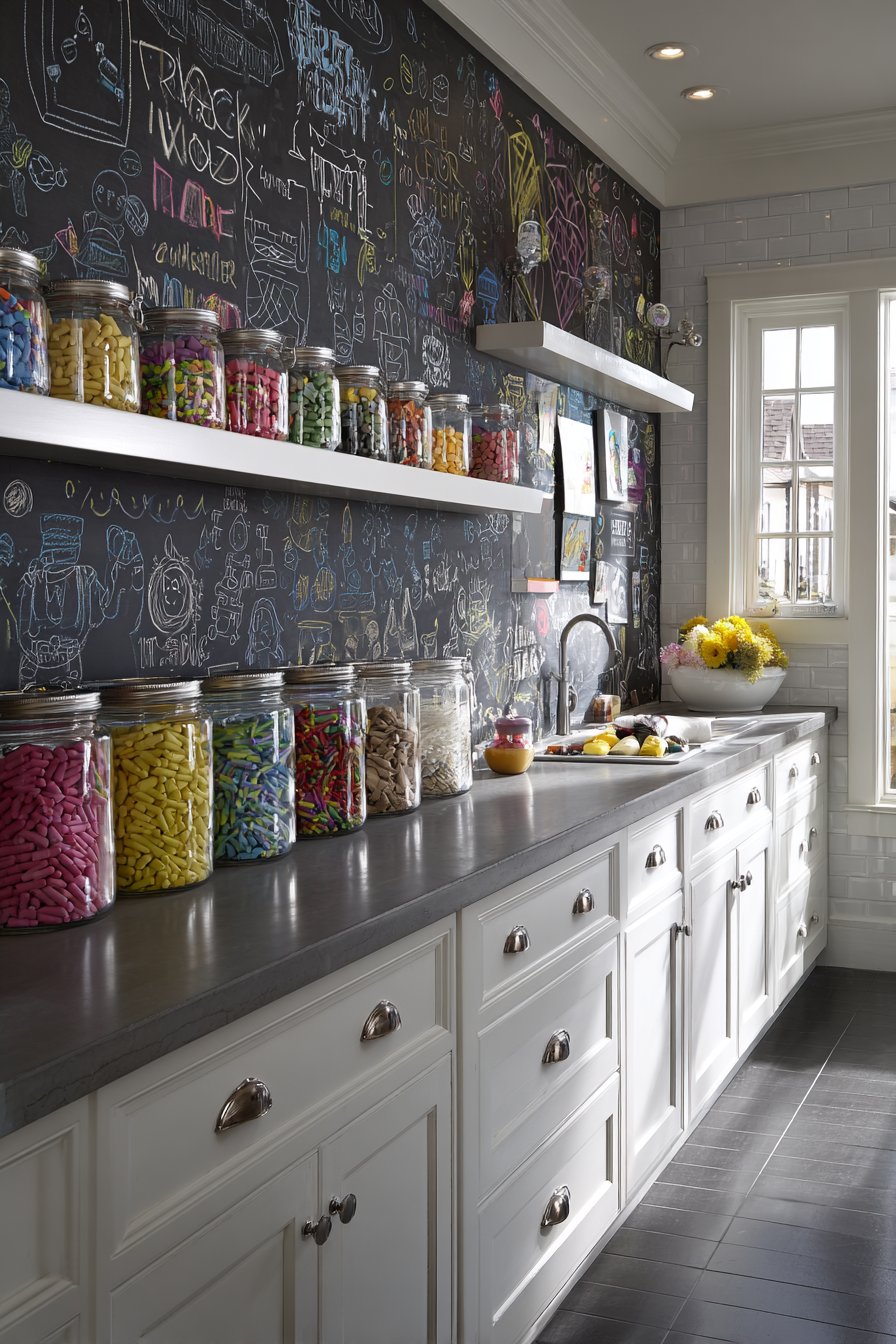
Personalization reaches playful heights in this quirky bathroom featuring an entire wall covered in chalkboard paint, transformed into an ever-changing canvas for creativity. Hand-drawn doodles, inspirational quotes, playful illustrations, mathematical equations, daily affirmations, or simply abstract mark-making cover the dark surface, creating art that evolves with the homeowner’s moods and interests. This interactive element transforms the bathroom from passive space into active creative outlet, encouraging daily engagement and self-expression. Children particularly love this feature, turning tooth-brushing time into drawing opportunities.
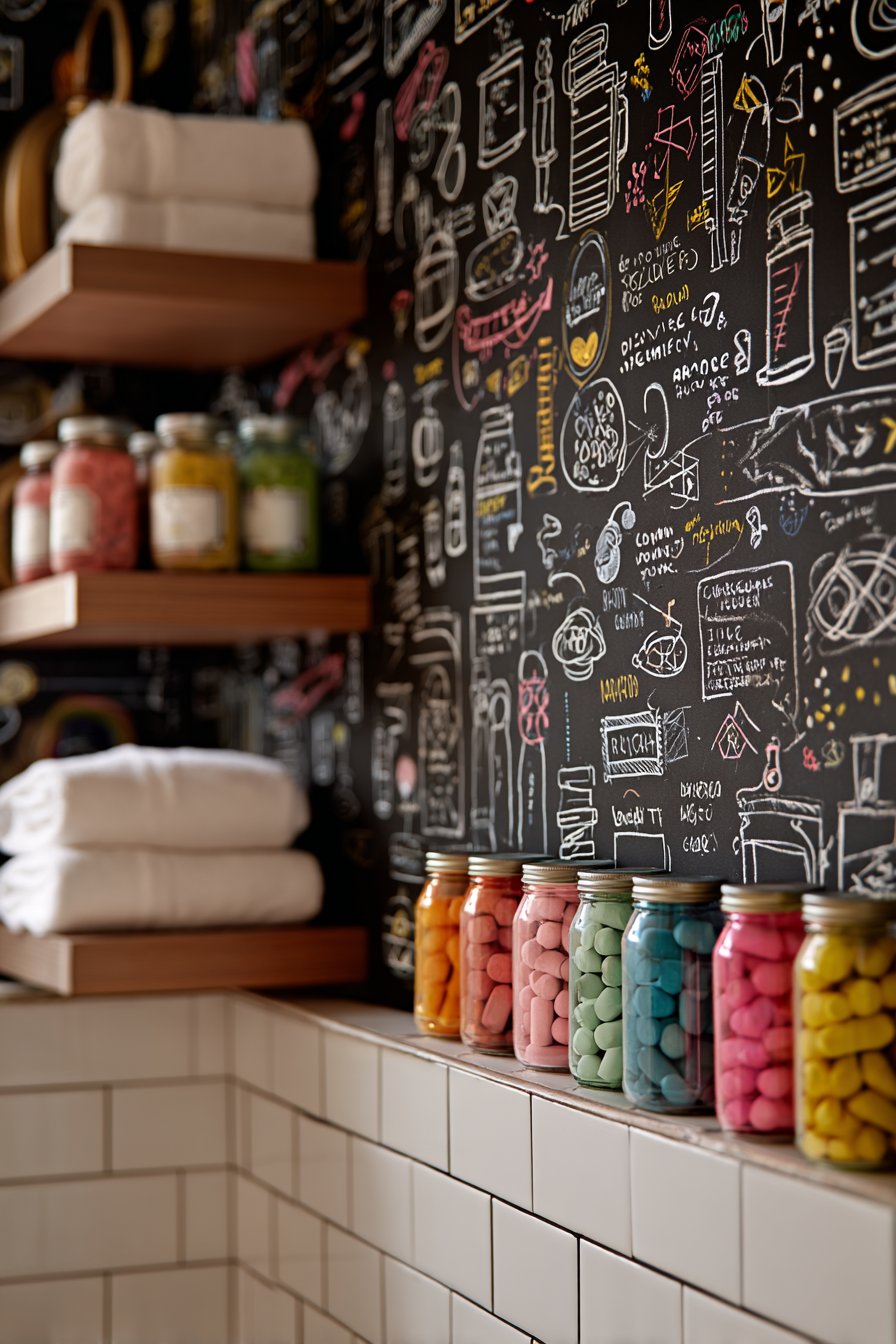
White subway tiles and modern fixtures keep the space fresh and clean-feeling despite the chalkboard’s dark surface, preventing the room from feeling oppressive or cave-like. The contrast between pristine white and matte black creates graphic impact reminiscent of Scandinavian design’s high-contrast palette. Colorful chalk displayed in vintage containers—perhaps old tin cans, glass jars, or small wooden boxes—provides artistic supplies while serving as decorative elements in their own right, their rainbow hues popping against the monochromatic backdrop.
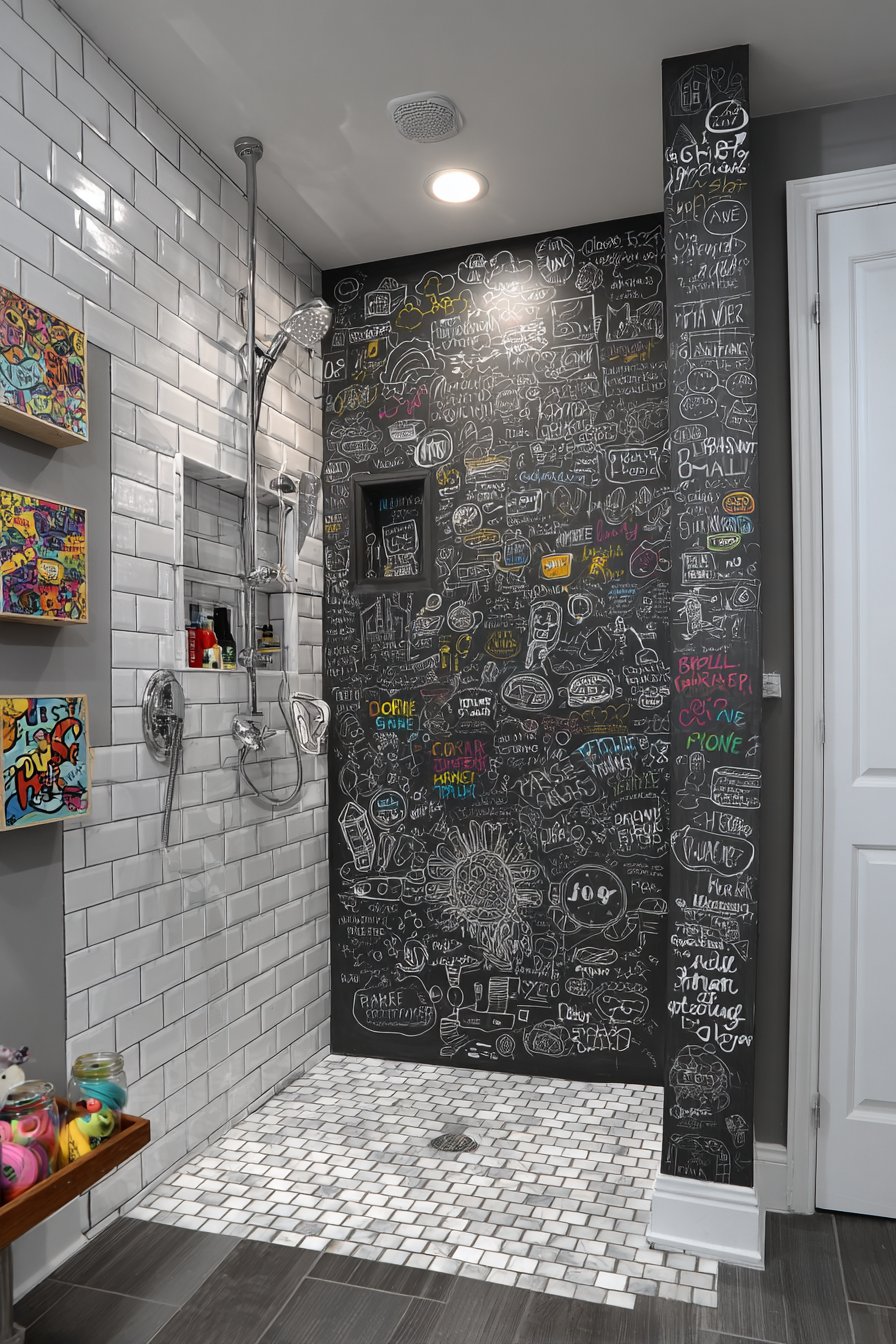
Natural lighting through a generous window becomes crucial in this design, illuminating the chalkboard surface and preventing the dark wall from overwhelming the space. The light also reveals the chalk’s slight dusty texture and the wall’s subtle imperfections—eraser marks, ghosted previous drawings—that add character and authenticity. This bathroom celebrates impermanence and evolution, accepting that perfect preservation isn’t the goal when interactive creativity takes priority.
Key Design Tips:
- Use high-quality chalkboard paint applying multiple coats for best surface
- Provide quality chalk in multiple colors for creative flexibility
- Install task lighting directly illuminating the chalkboard area
- Keep a damp cloth accessible for easy erasing and editing
- Consider magnetic chalkboard paint for additional interactive possibilities
19. Global Fusion Cultural Mix
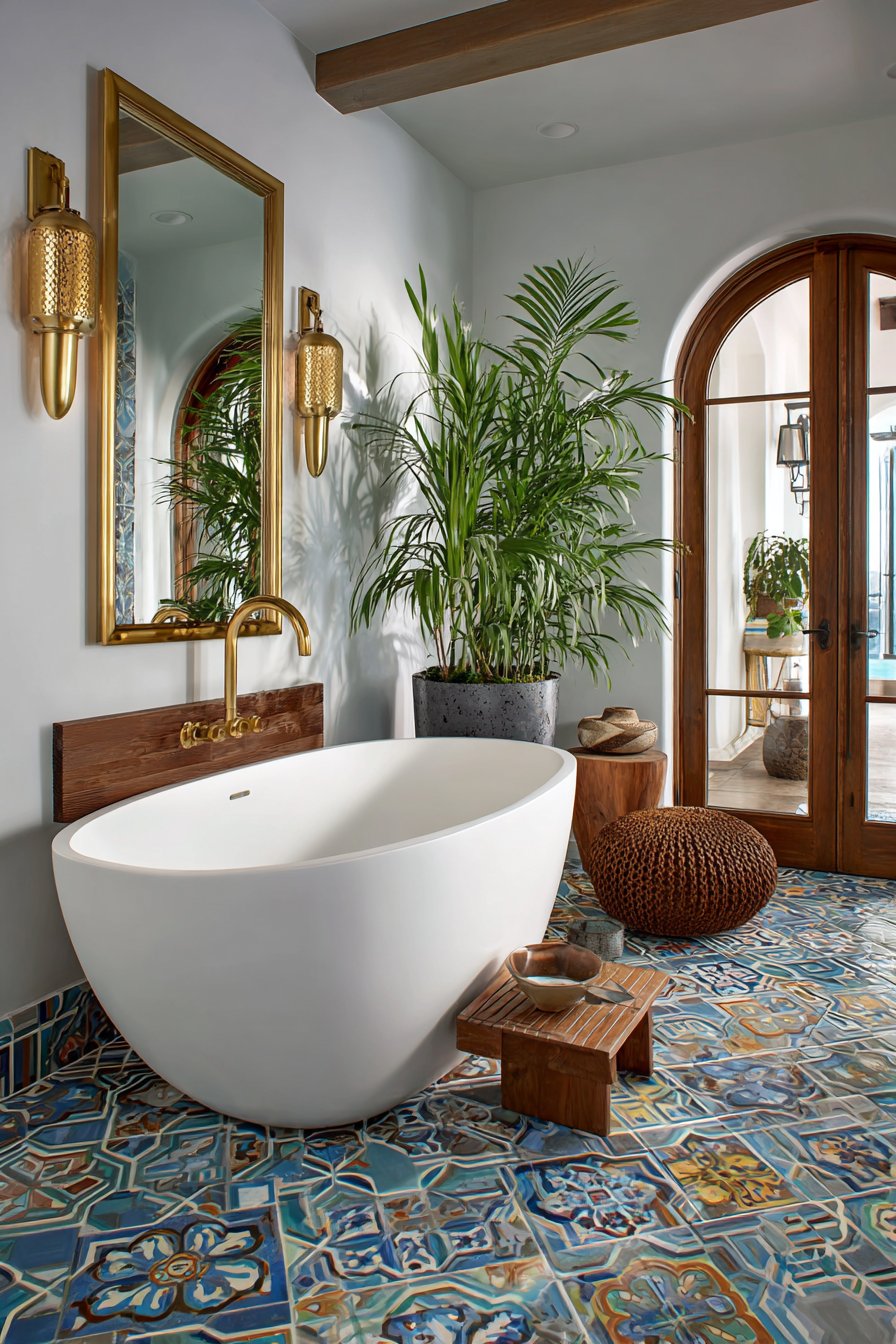
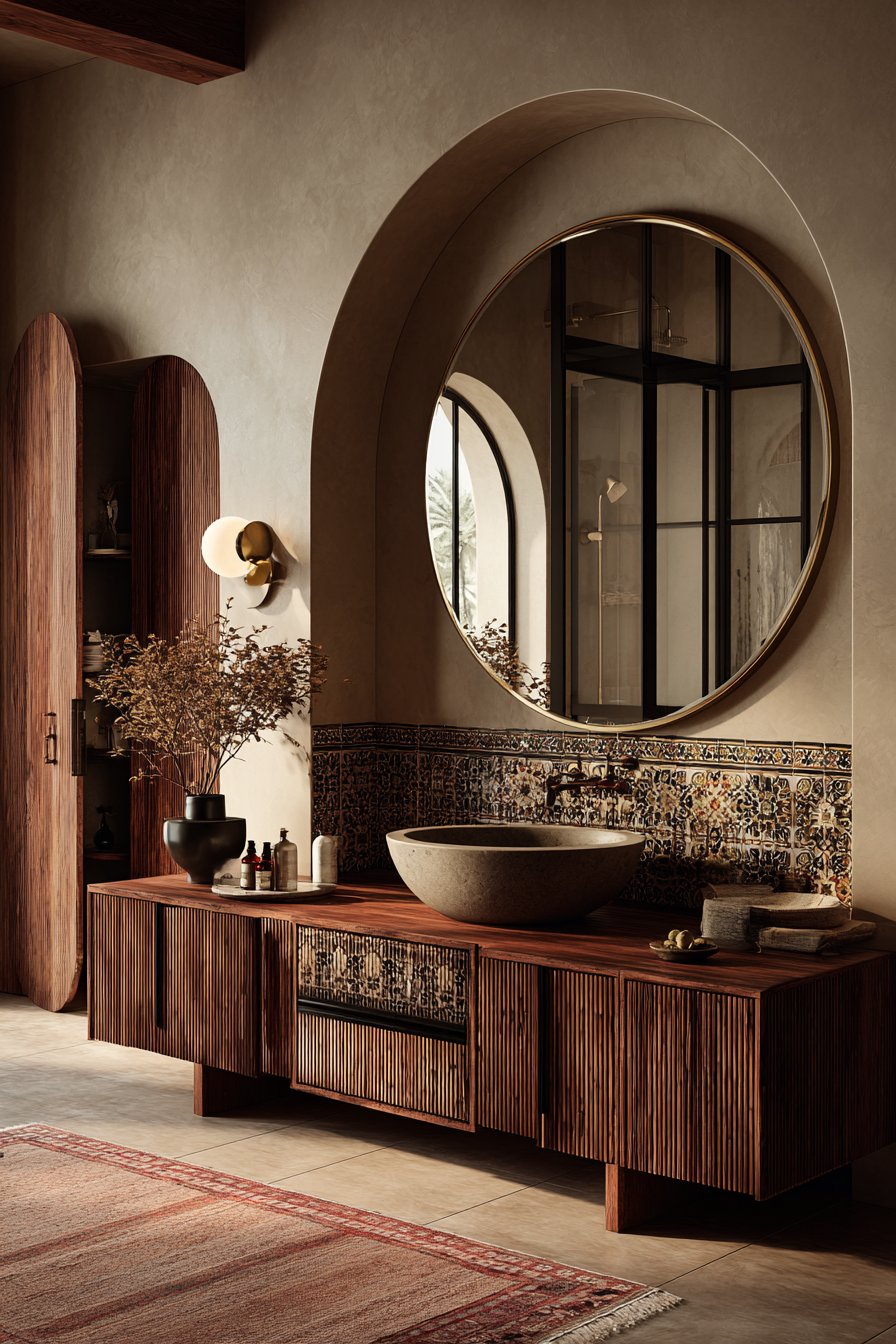
Cultural elements from diverse traditions combine harmoniously in this adventurous quirky bathroom proving that thoughtful eclecticism transcends geographical boundaries. A Japanese-inspired soaking tub provides the foundation—perhaps a wooden ofuro or deep modern tub designed for upright bathing. This bathing style emphasizes contemplation and full-body immersion rather than Western reclining approaches. Colorful Mexican Talavera tiles create an accent border surrounding the tub or defining the shower area, their hand-painted patterns in cobalt blue, sunny yellow, and terracotta orange introducing vibrant energy.
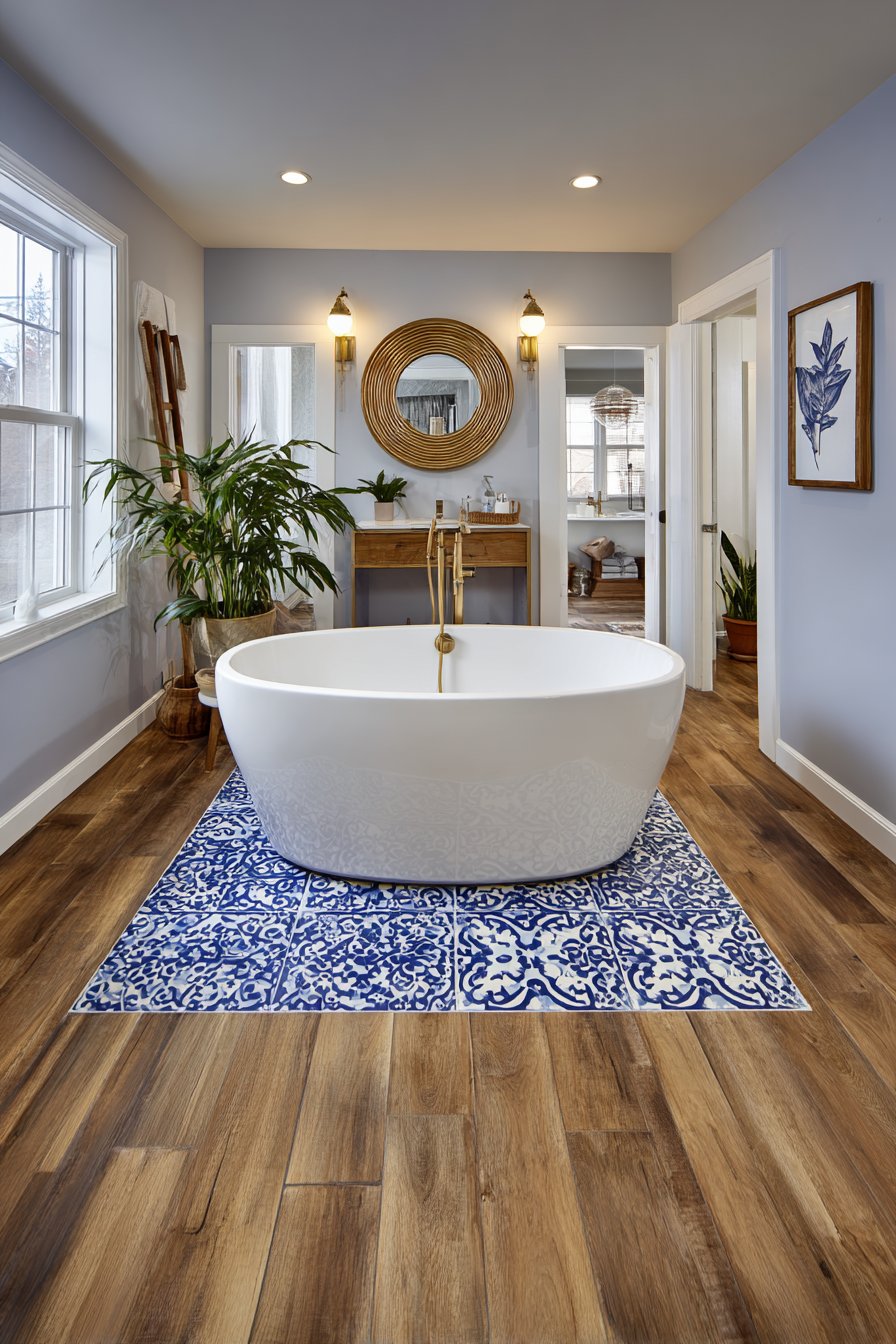
A Moroccan-style brass mirror with intricate geometric cutwork patterns hangs above the vanity, its Islamic design principles and metalwork craftsmanship adding another cultural layer. Scandinavian wood accessories—perhaps a simple teak stool, blonde wood shelving, or birch towel holders—complete the global mix with their clean lines and natural finishes. Rather than creating confused cacophony, these diverse elements unite through their shared appreciation for handcraftsmanship, natural materials, and functional beauty.
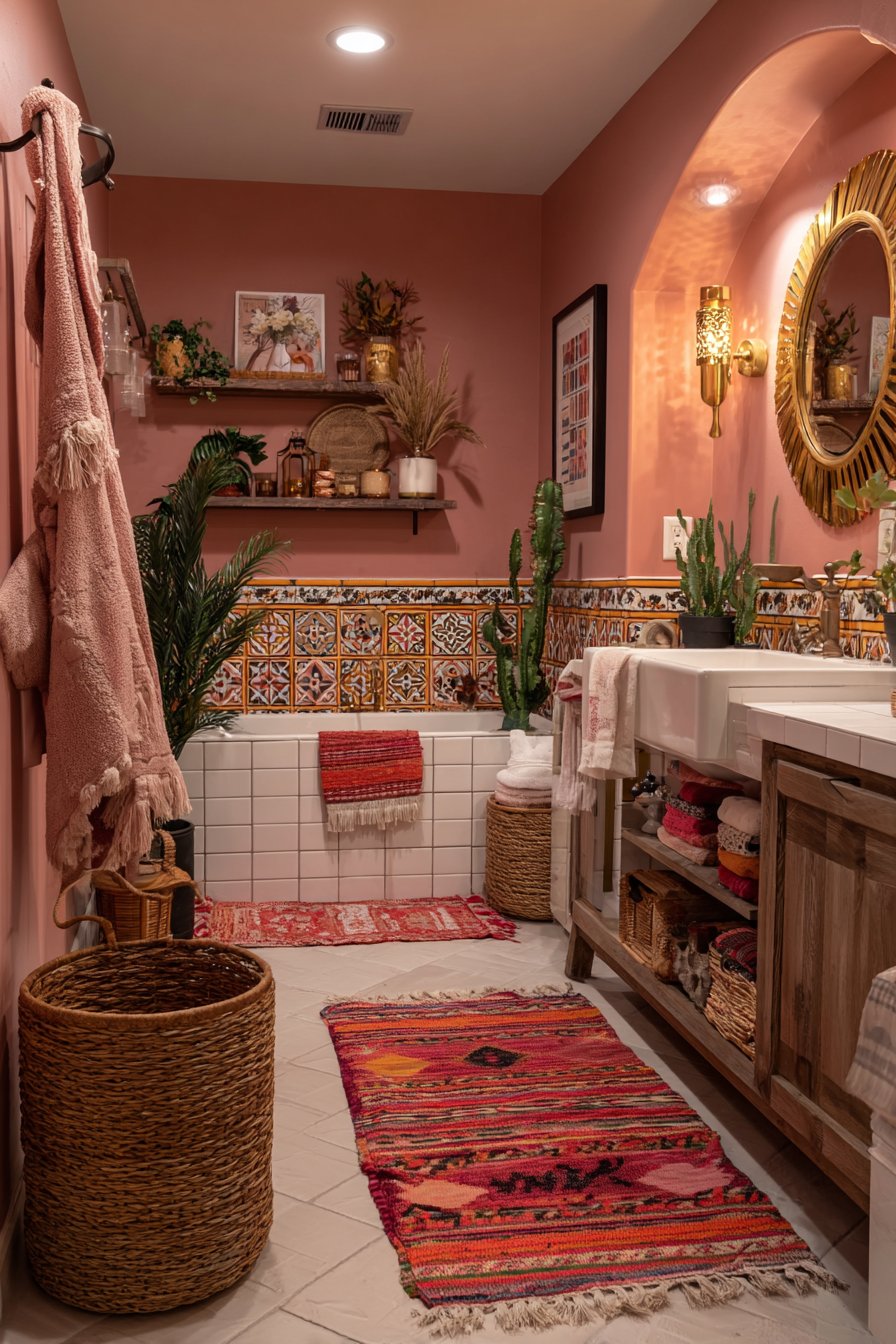
The cultural fusion creates unique character impossible to achieve through single-style approaches, telling stories of travel, appreciation for global arts, and openness to diverse aesthetic traditions. Wide-angle interior photography would capture this globally-inspired mix with balanced exposure showing how different material textures—smooth brass, rough ceramic tiles, warm wood—harmonize through careful color palette coordination. The space demonstrates sophisticated design understanding that respects cultural sources while creating something personally meaningful rather than literal museum recreation.
Key Design Tips:
- Research cultural elements respectfully, appreciating rather than appropriating
- Unite diverse elements through consistent color palette or material families
- Limit cultural references to three or four to prevent overwhelming chaos
- Choose handcrafted items supporting traditional artisans when possible
- Consider the room’s overall function while incorporating diverse aesthetics
20. Hidden Storage Reclaimed Wood Wall
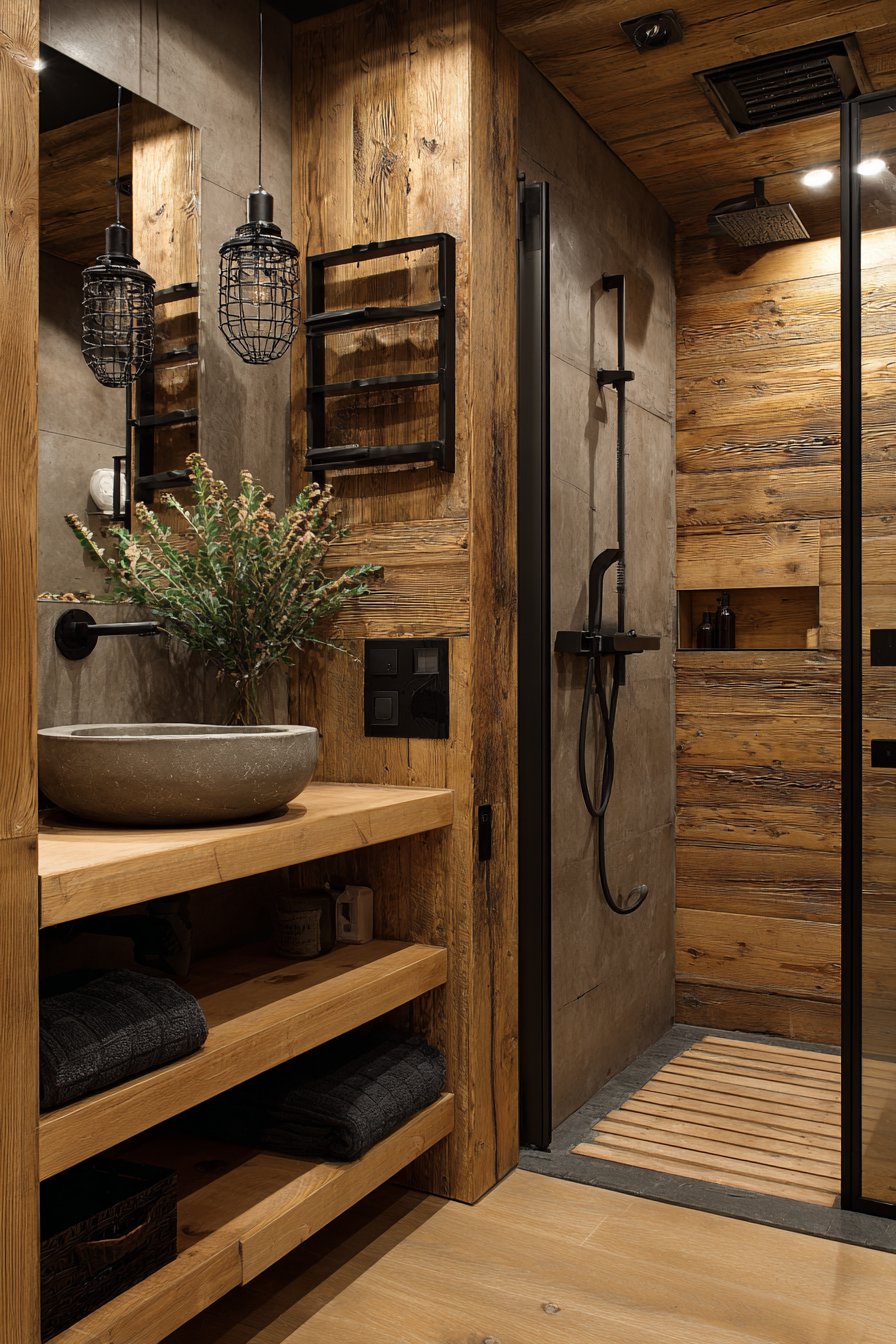
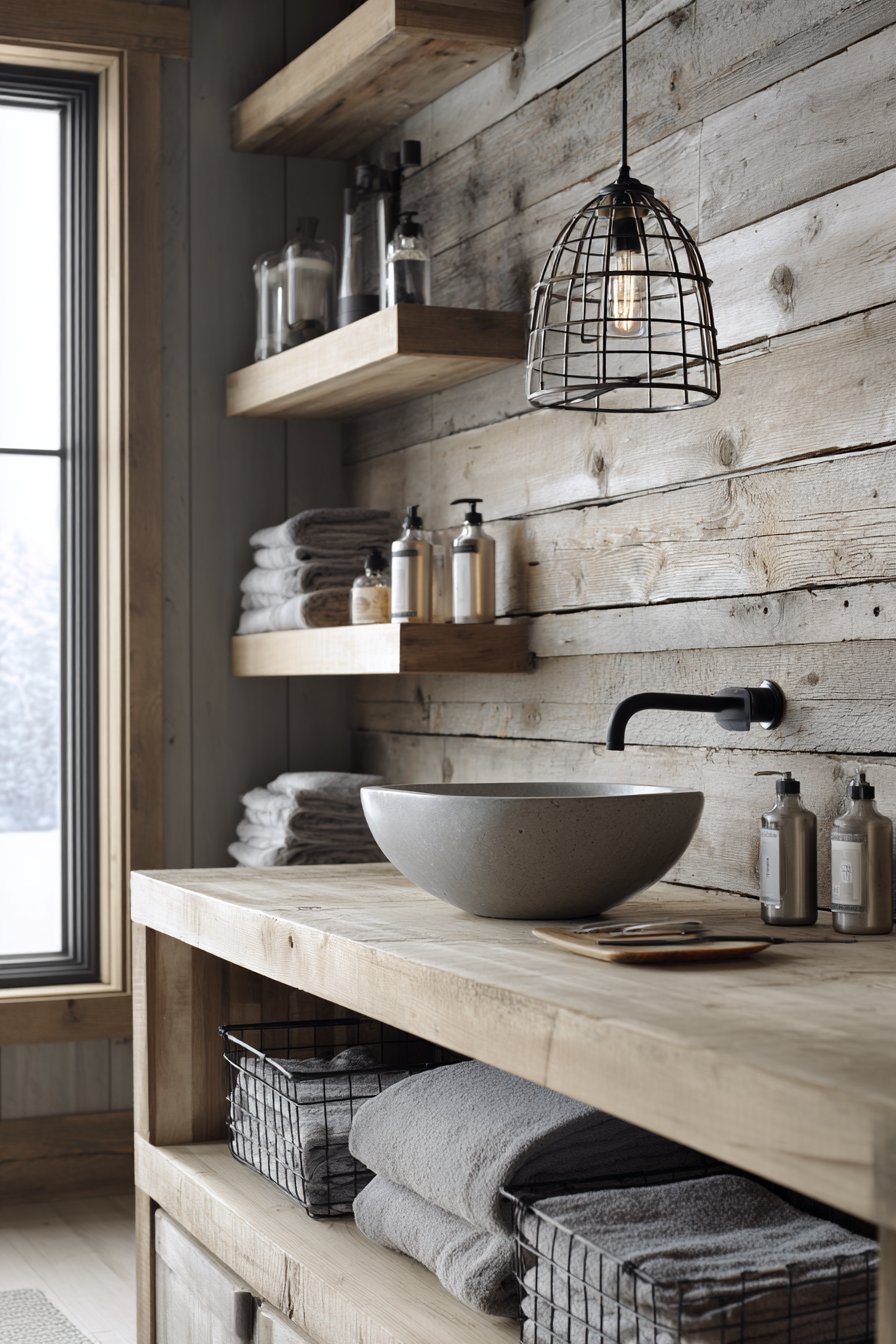
Functionality and beauty merge seamlessly in this quirky bathroom where a reclaimed wood plank accent wall conceals hidden storage compartments blending into the rustic surface. Touch-latches allow cabinet doors disguised as wall planks to swing open, revealing practical storage for toiletries, medications, cleaning supplies, and bathroom necessities. This clever design maintains the room’s aesthetic integrity while providing generous hidden storage, solving the perpetual bathroom challenge of balancing visual appeal with practical needs. The wood’s natural variations in tone, texture, and grain patterns make the cabinet seams virtually invisible.
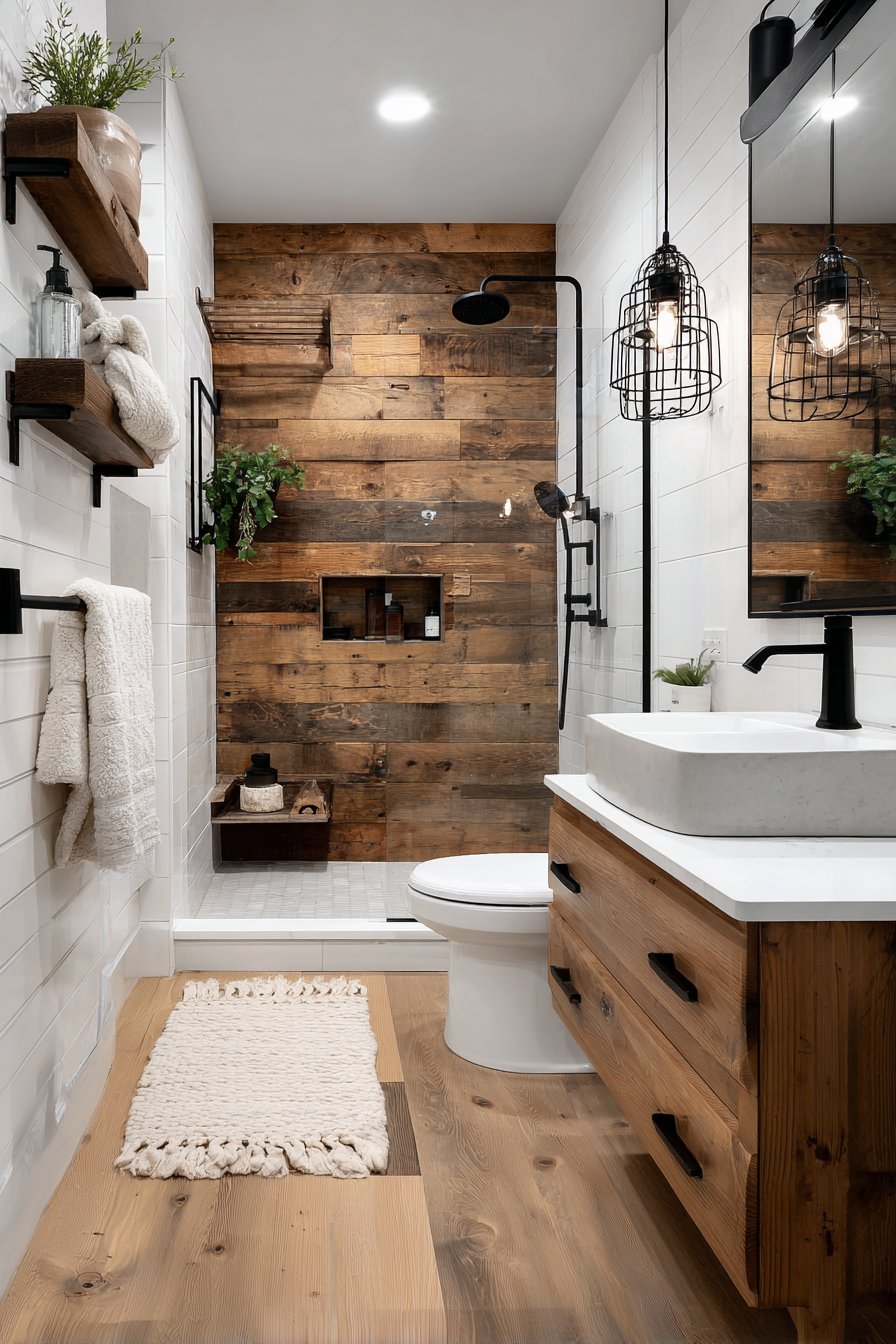
Modern matte black fixtures provide striking contrast against the warm reclaimed wood, their contemporary styling preventing the space from feeling too rustic or country-themed. The black’s graphic punch creates focal points that draw the eye while demonstrating how contrasting finishes can coexist successfully. A concrete vessel sink adds industrial edge to the mix, its smooth polished surface and sculptural form introducing modern material sensibility. The concrete’s cool gray tones bridge the warm wood and stark black, creating visual harmony through material diplomacy.
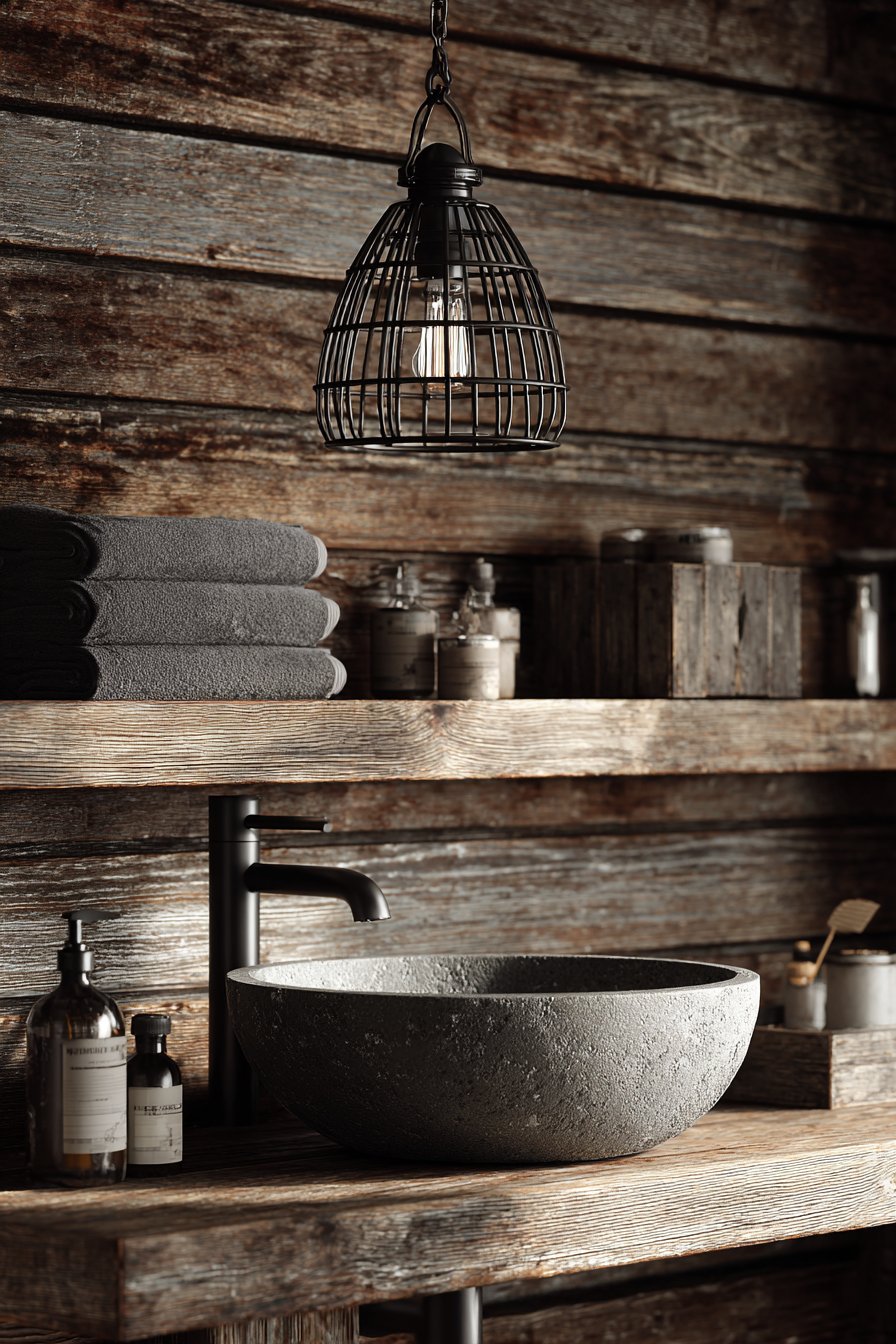
Vintage factory-style cage pendant lights hang at varying heights, their exposed bulbs and metal guards continuing the industrial aesthetic while providing excellent task and ambient lighting. The lights’ varied suspension heights create dynamic visual rhythm while ensuring even illumination across the space. Interior photography would emphasize the clever combination of raw materials and concealed functionality, highlighting wood grain details and demonstrating how hidden storage maintains clean visual lines. This bathroom particularly appeals to those valuing both aesthetic minimalism and practical organization.
Key Design Tips:
- Work with experienced carpenters for hidden storage installations ensuring proper alignment
- Use push-to-open hardware eliminating visible handles that compromise disguise
- Match wood grain patterns across cabinet doors for seamless appearance
- Seal reclaimed wood properly protecting against moisture damage
- Plan storage depths carefully maximizing capacity without protruding excessively
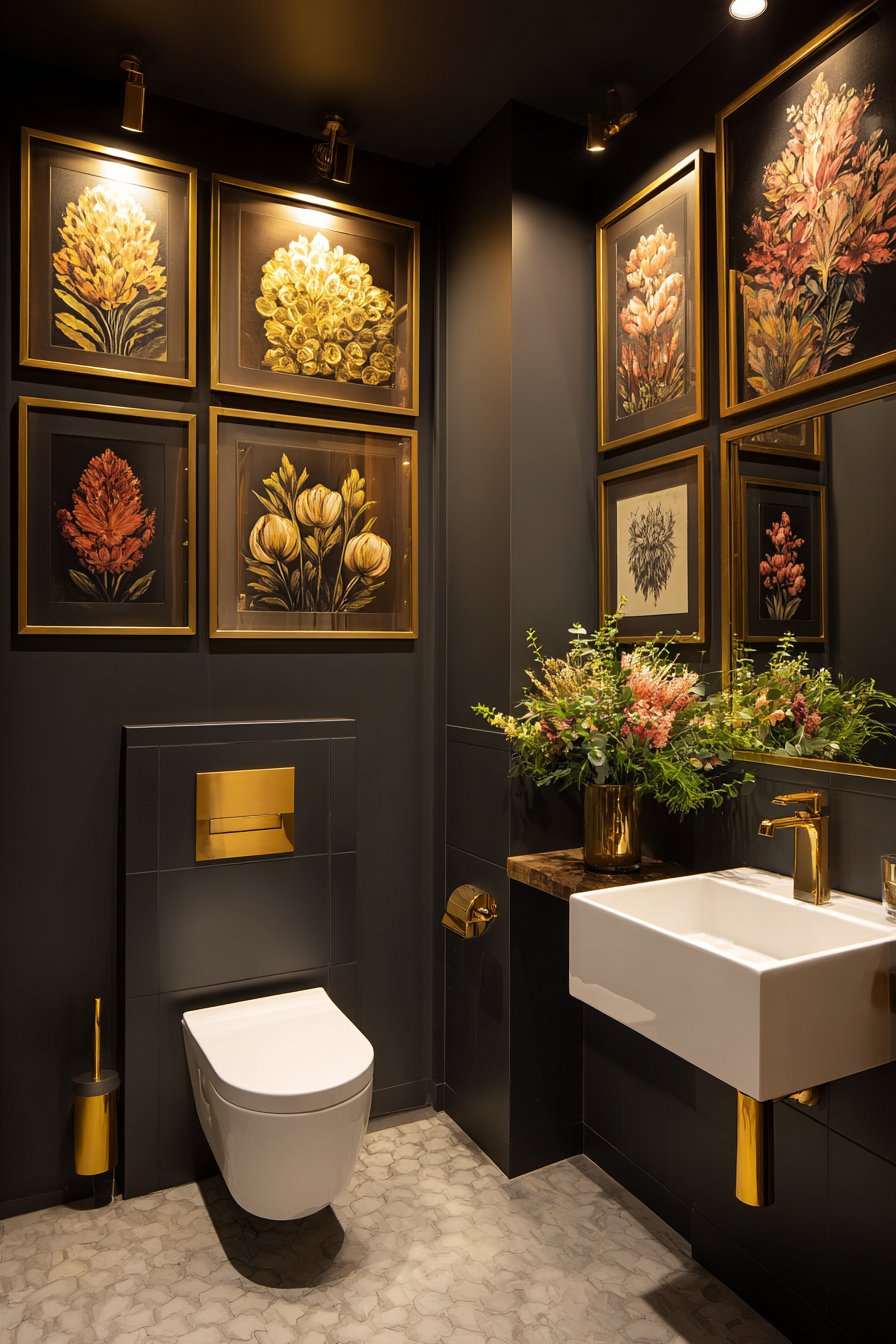
21. Dark Art Gallery Aesthetic
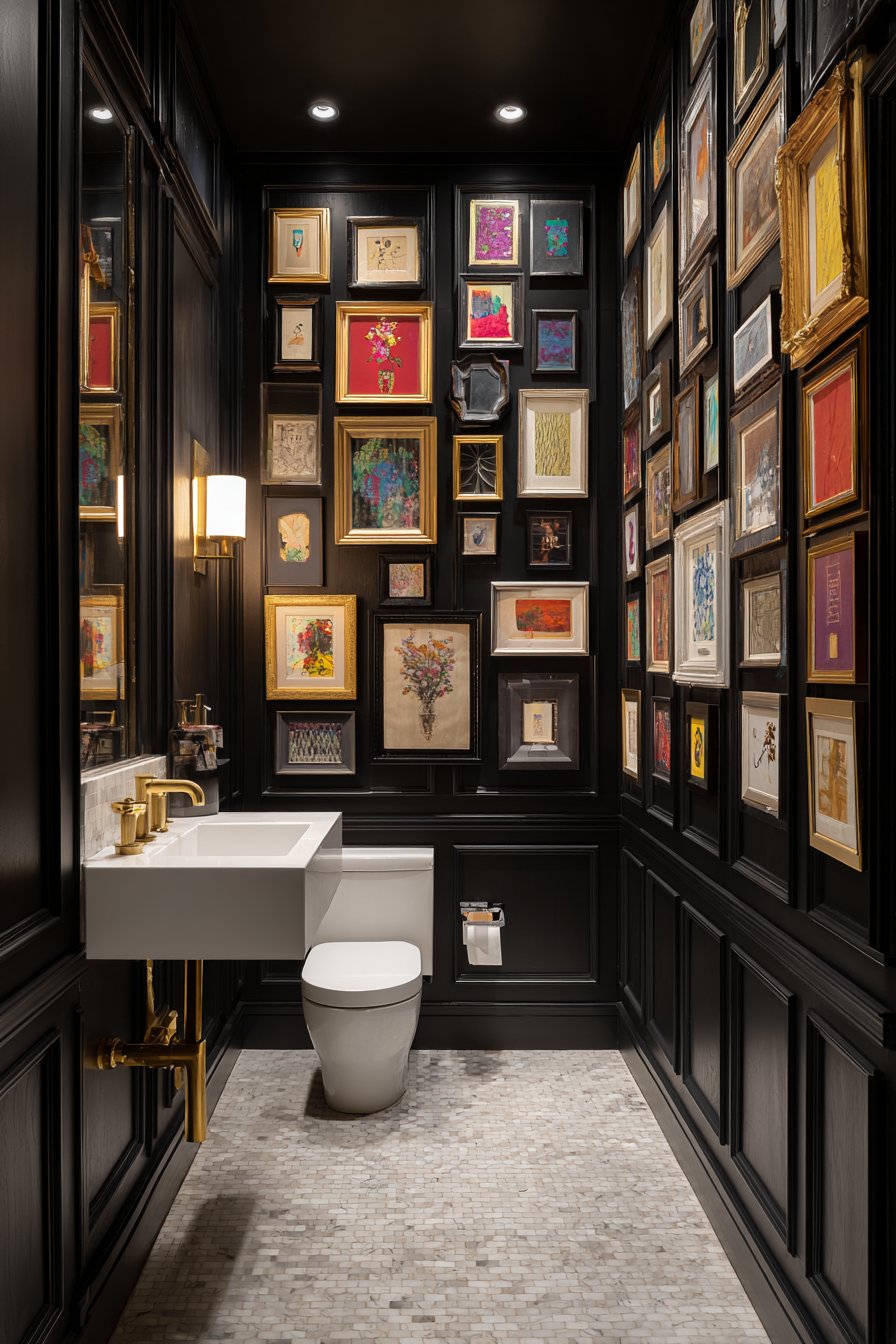
Sophistication and drama combine in this moody quirky bathroom where dramatic black walls serve as gallery backdrop for rotating art collection. The dark walls could intimidate in theory, but in execution they create intimate atmosphere while making colorful artwork pop with museum-quality impact. Framed pieces might include contemporary photography, abstract paintings, vintage posters, or mixed media works—the collection evolving as the homeowner discovers new artists or their taste shifts. This approach treats the bathroom as legitimate gallery space rather than afterthought, elevating daily routines through exposure to visual art.
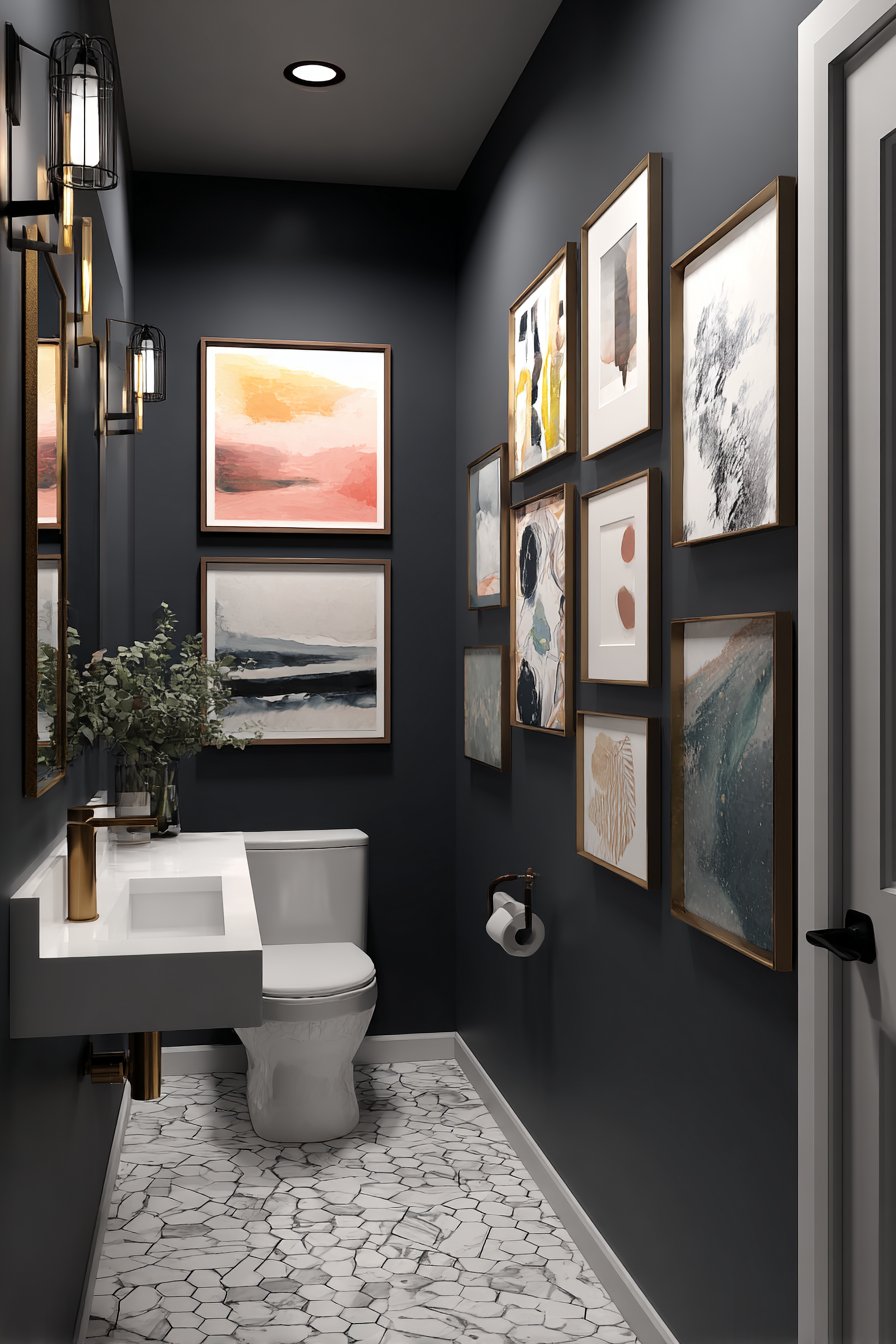
Gold fixtures throughout add luxurious warmth against the dark walls, their metallic gleam catching light and creating sparkle that prevents the space from feeling too heavy or serious. The gold might appear in faucets, drawer pulls, light fixtures, and towel bars, creating consistent metallic throughline that unifies the design. White marble hexagon floor tiles provide luminous contrast, their geometric pattern and reflective surface bouncing light upward while creating visual complexity through their angular arrangement. The white floor also provides practical bright surface in an otherwise dark room.
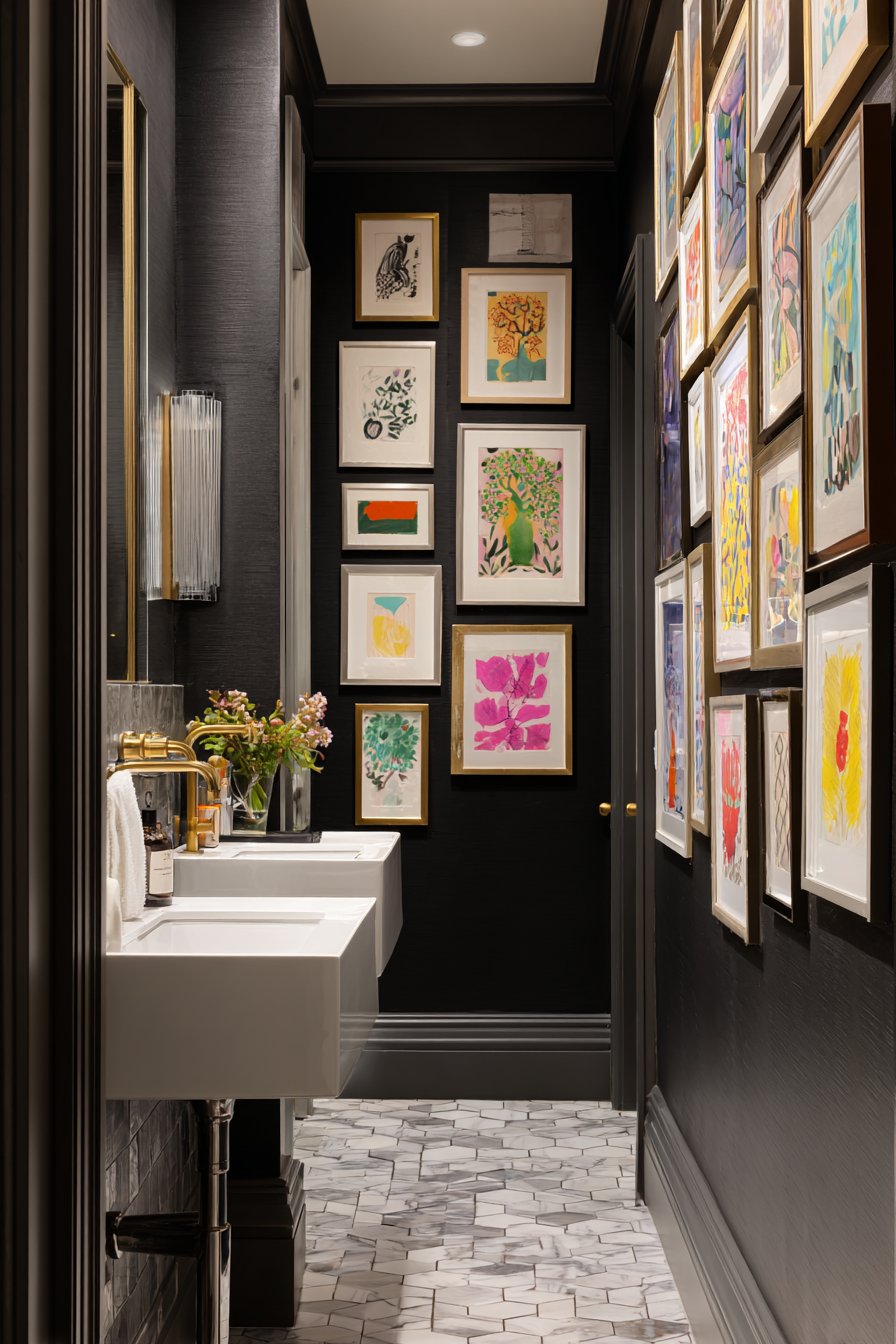
A modern floating vanity in high-gloss white maintains visual lightness despite the surrounding darkness, its suspended form creating illusion of expanded space while providing practical storage. The glossy white finish reflects both the gold fixtures and the surrounding artwork, integrating all elements through reflection. Professional interior photography would carefully balance lighting showing the sophisticated moody atmosphere without making the space appear dingy or cave-like—a technical challenge requiring skill and proper equipment.
Key Design Tips:
- Install picture lights or track lighting to properly illuminate artwork
- Choose matte or eggshell black paint rather than glossy for sophisticated finish
- Vary art sizes and frame styles for collected-over-time gallery appearance
- Include adequate task lighting for functional activities despite dark walls
- Use museum putty or proper picture hanging hardware on painted walls
22. Vintage Barber Shop Nostalgia
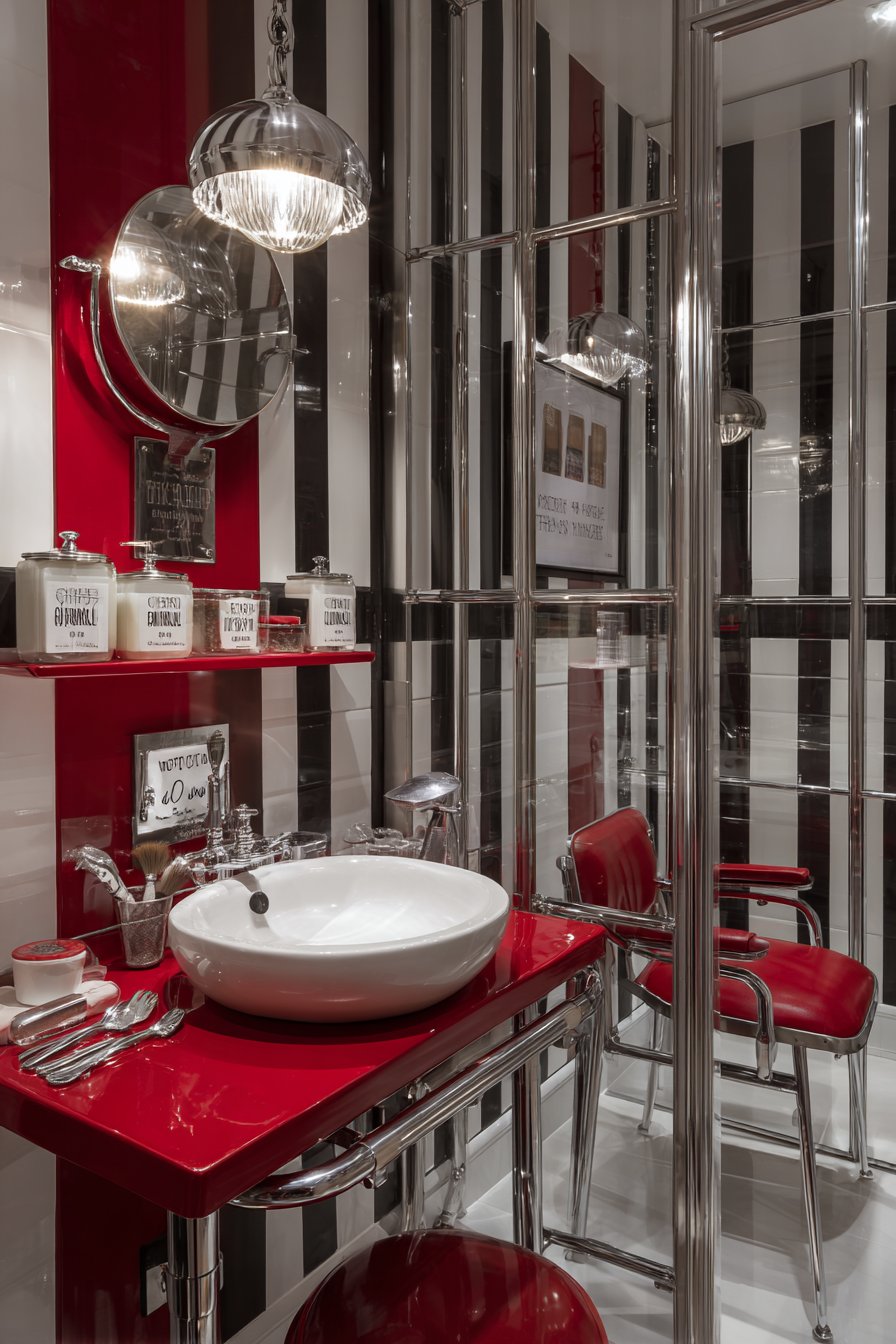
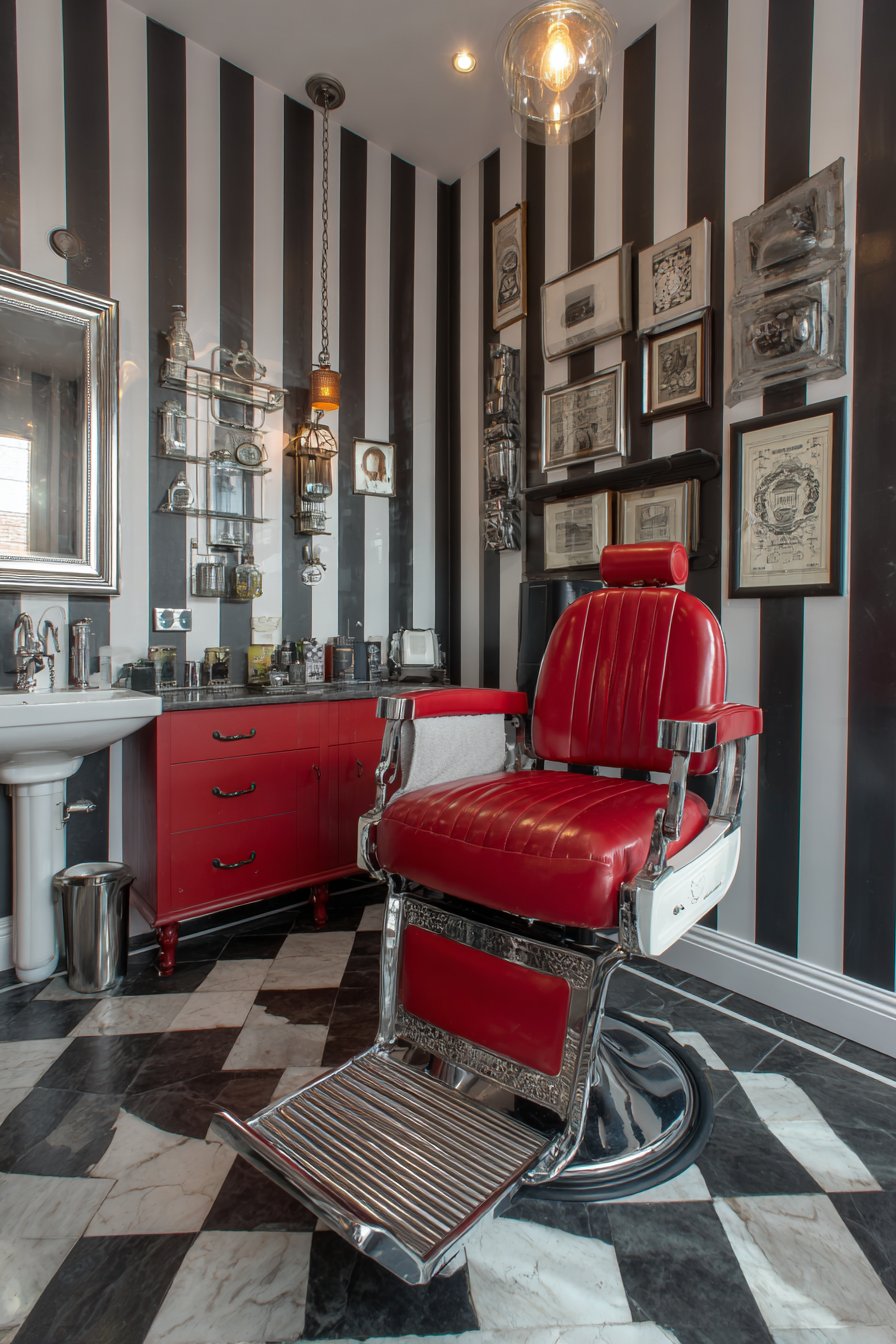
Masculine vintage charm defines this quirky bathroom channeling classic barber shop aesthetics into residential setting. Black and white striped walls create immediate visual impact, their bold graphic pattern referencing both barber poles and early twentieth-century commercial design. A restored antique barber chair—complete with original leather upholstery, chrome lever mechanisms, and cast iron base—provides unique seating that’s both functional and sculptural. This statement piece immediately establishes the room’s character while providing surprisingly comfortable place to sit while trimming nails, putting on shoes, or simply relaxing.
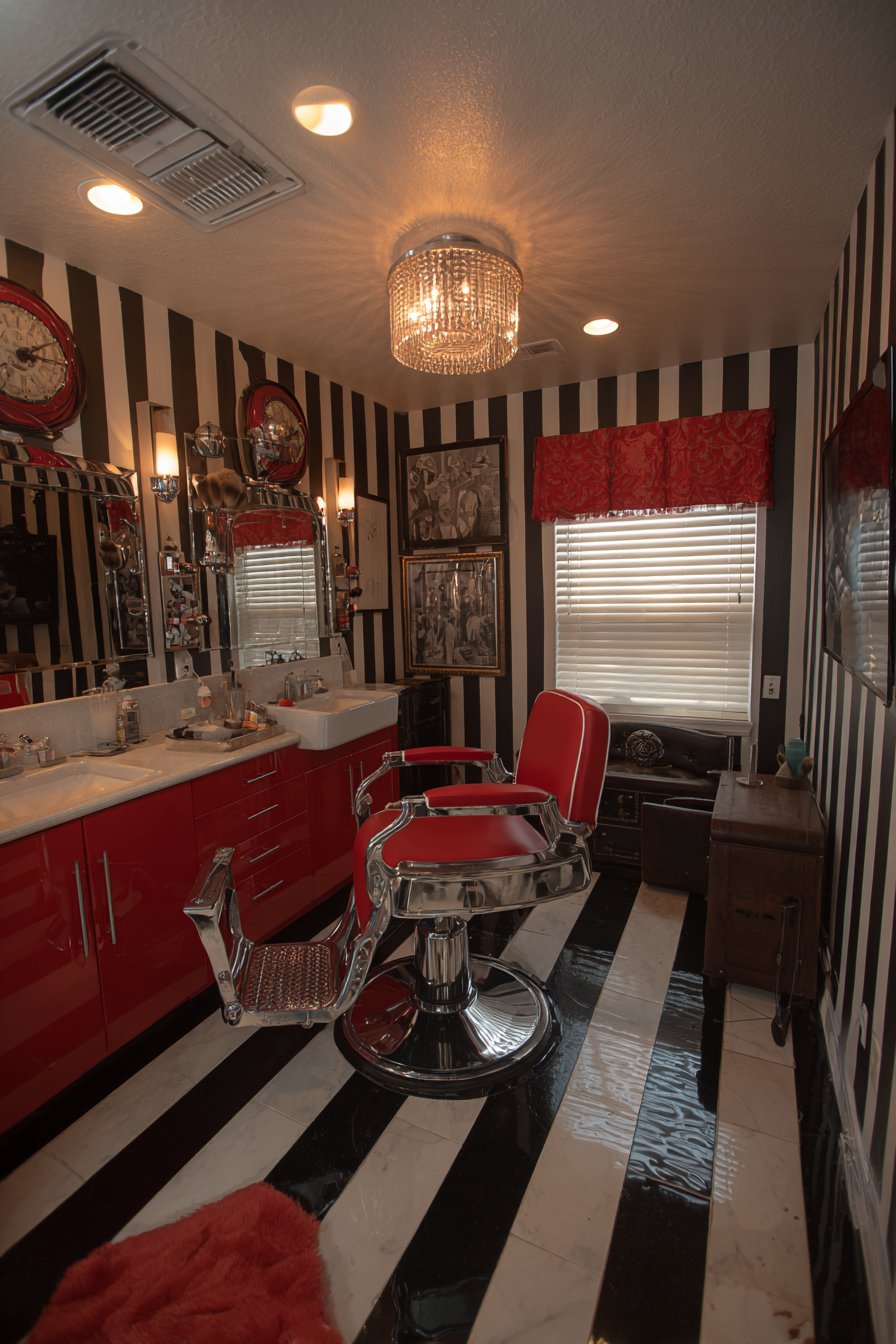
Collections of vintage shaving brushes with bone or ivory-colored handles, straight razors with ornate detailing, and grooming tools display as decorative art in shadow boxes or on floating shelves. These objects tell stories of masculine grooming traditions while serving as sculptural elements that reward close examination. Chrome fixtures throughout maintain the barber shop aesthetic, their mirror-bright surfaces referencing the gleaming equipment of traditional men’s salons. Red accent details—perhaps in towels, a small stool, or decorative objects—add the classic barber pole’s third color while providing energizing visual punctuation.
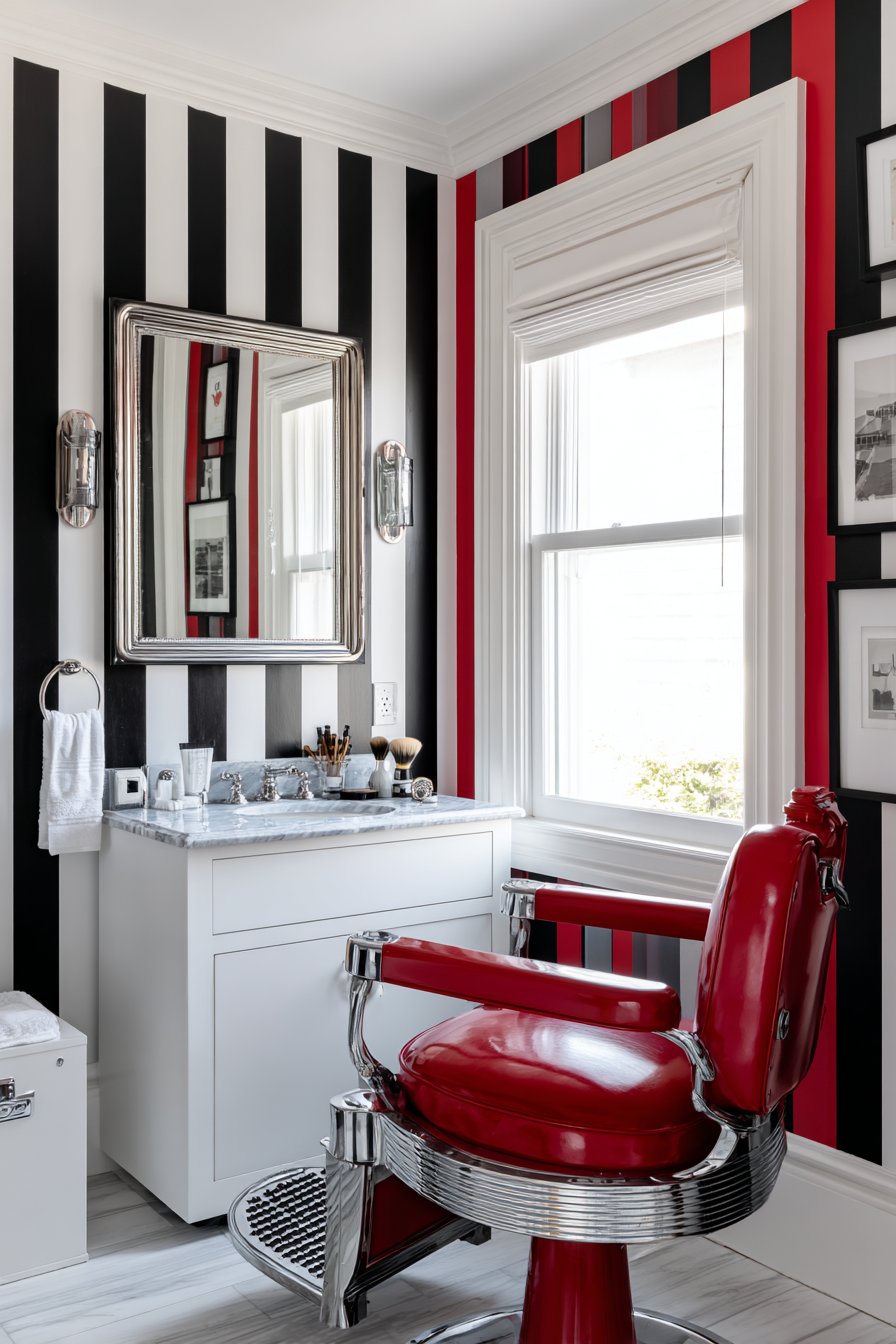
The space particularly appeals to men seeking alternatives to generic bathroom design or anyone appreciating vintage commercial aesthetics. Wide-angle interior design photography would capture the themed transformation while attending to authentic period details showing how residential bathrooms can successfully incorporate commercial design inspiration. The barber chair’s presence immediately signals that conventional rules don’t apply here, encouraging other unconventional choices throughout the space.
Key Design Tips:
- Source barber chairs from commercial equipment suppliers or restoration specialists
- Create proper electrical connections for vintage equipment requiring power
- Display grooming tool collections behind glass for protection and visibility
- Maintain consistent era references rather than mixing multiple time periods
- Consider moisture effects on leather and upholstery materials in humid environments
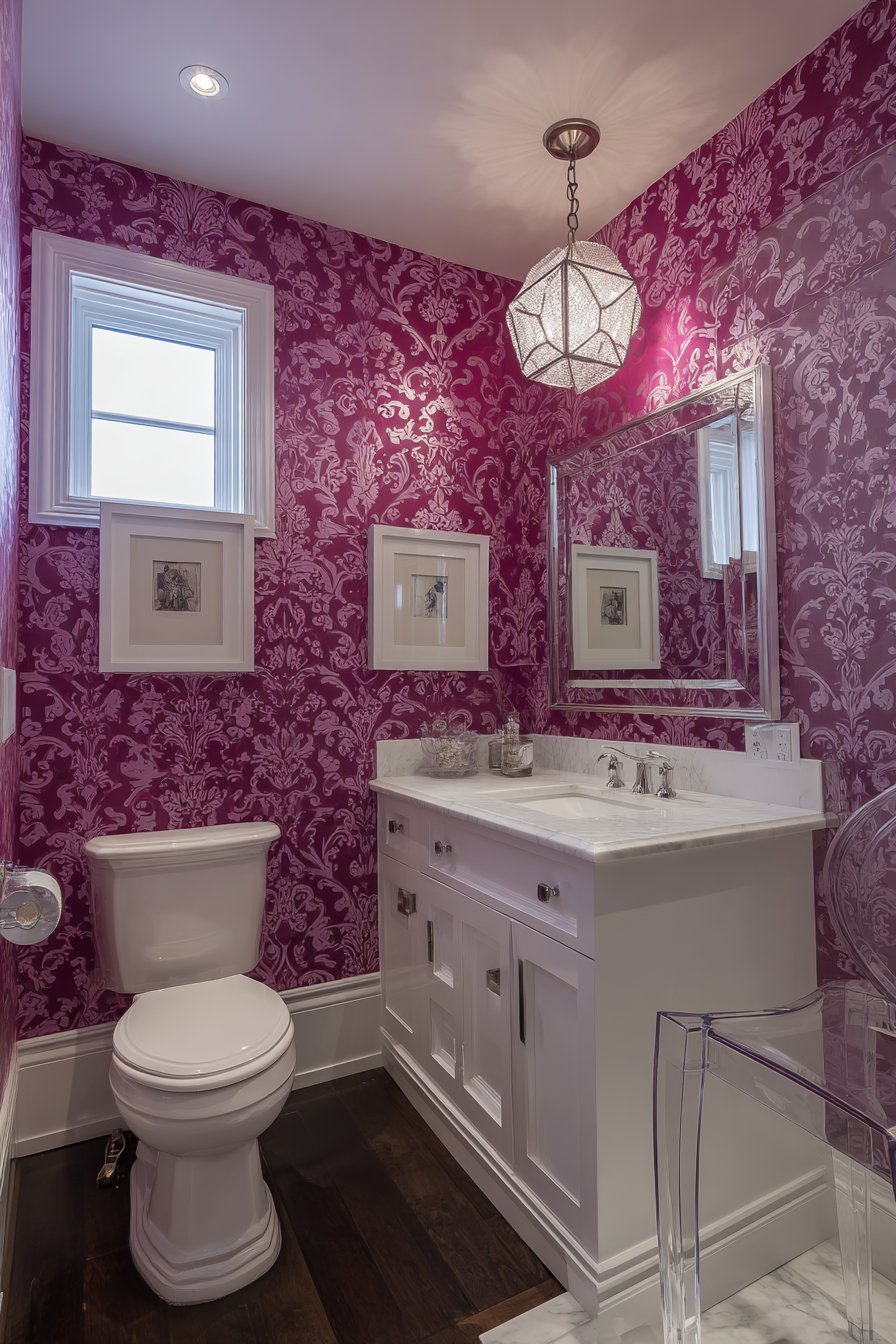
23. Victorian Opulence with Acrylic Twist
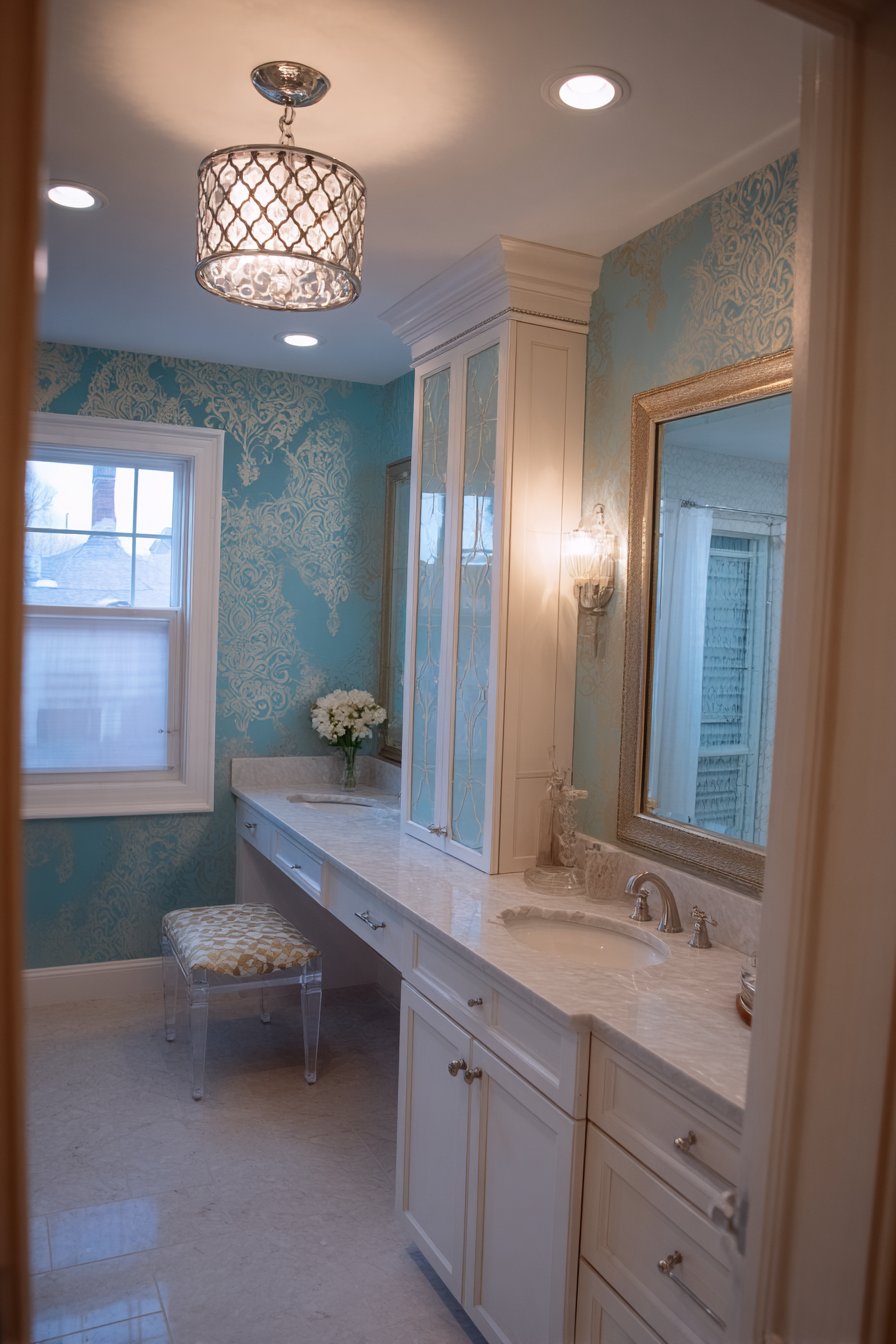
Historical opulence meets contemporary materials in this quirky bathroom blending Victorian excess with modern transparency. Contemporary white fixtures provide clean foundation while jewel-toned damask wallpaper covers the walls in patterns suggesting nineteenth-century maximalism. The wallpaper features perhaps emerald green or sapphire blue backgrounds with intricate gold or silver patterns—florals, paisleys, or abstract organic forms creating visual richness. Crystal cabinet knobs on the vanity reference Victorian love of sparkle while adding tactile luxury to everyday interactions.
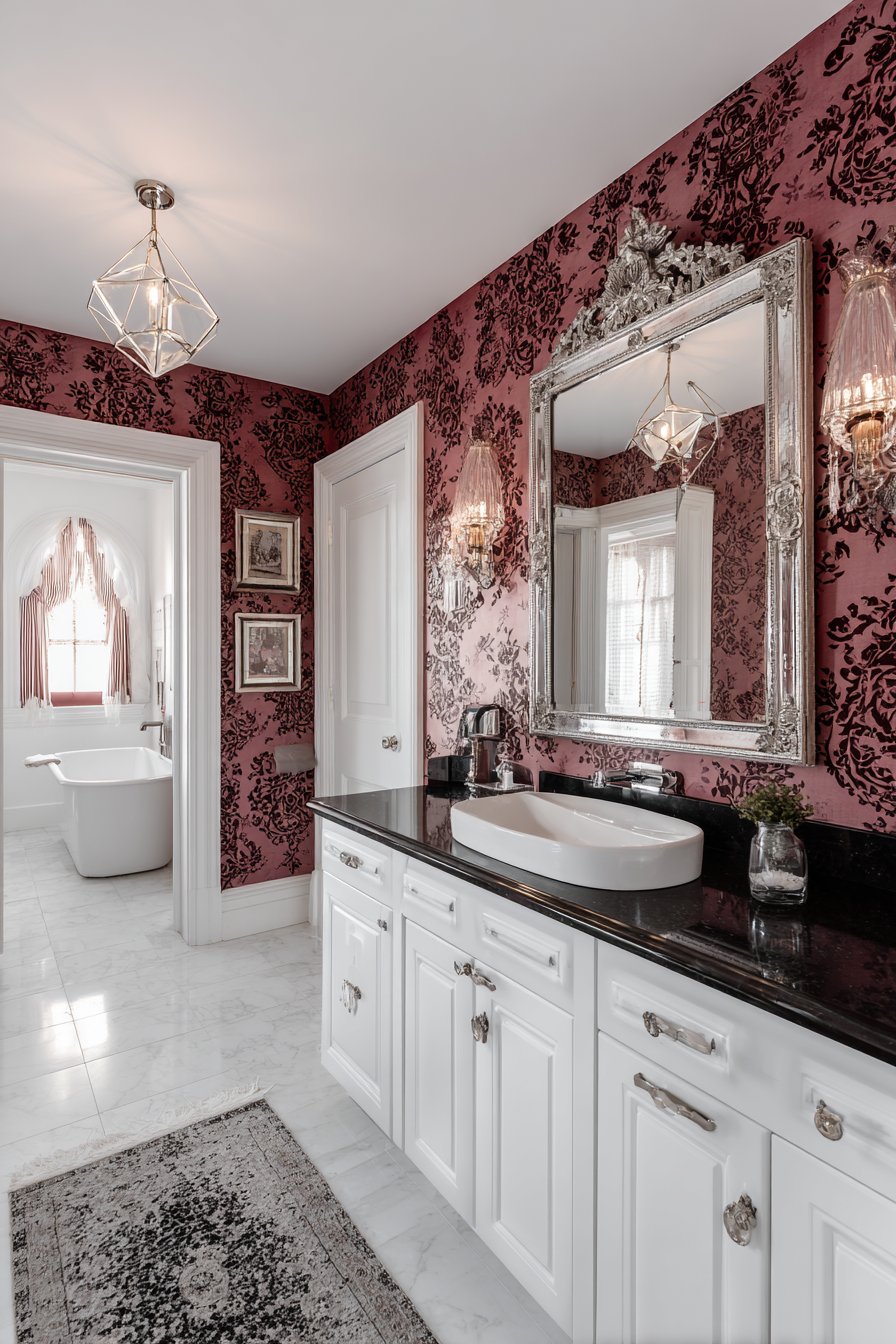
The unexpected element that prevents this from becoming mere period recreation is an acrylic lucite vanity stool that bridges centuries through material innovation. The clear acrylic practically disappears visually, allowing the elaborate wallpaper to show through uninterrupted while providing modern sculptural form. This piece demonstrates how single contemporary element can anchor historical references in present moment, preventing spaces from feeling like museum displays or costume sets. The lucite’s transparency creates visual lightness balancing the wallpaper’s visual weight.
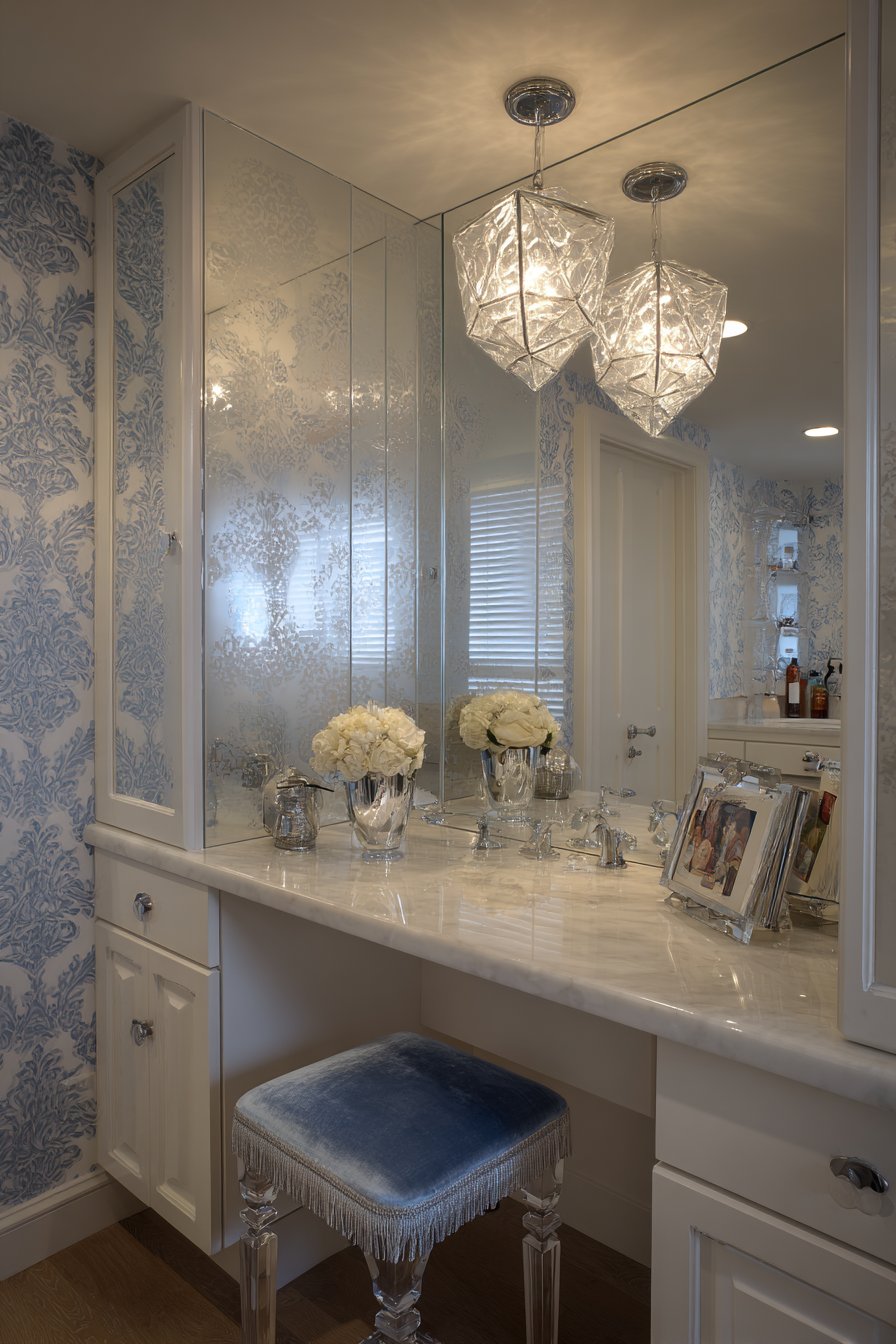
Marble countertops add natural elegance and geological beauty, their veining patterns providing organic contrast to the wallpaper’s manufactured patterns. A contemporary geometric light fixture—perhaps a cluster of exposed bulbs in angular metal frame—prevents the space from feeling too dated, introducing twenty-first century design sensibility that respects but doesn’t replicate the past. Interior photography would emphasize successful blending of historical opulence with modern functionality, showing how thoughtful eclecticism creates timeless rather than trendy spaces.
Key Design Tips:
- Balance ornate historical elements with simple contemporary pieces
- Choose Victorian-inspired wallpapers in contemporary colorways for updated feel
- Incorporate transparent materials like acrylic to lighten visually heavy designs
- Mix lighting from different eras to bridge historical and contemporary
- Avoid perfect period recreation in favor of personalized interpretation
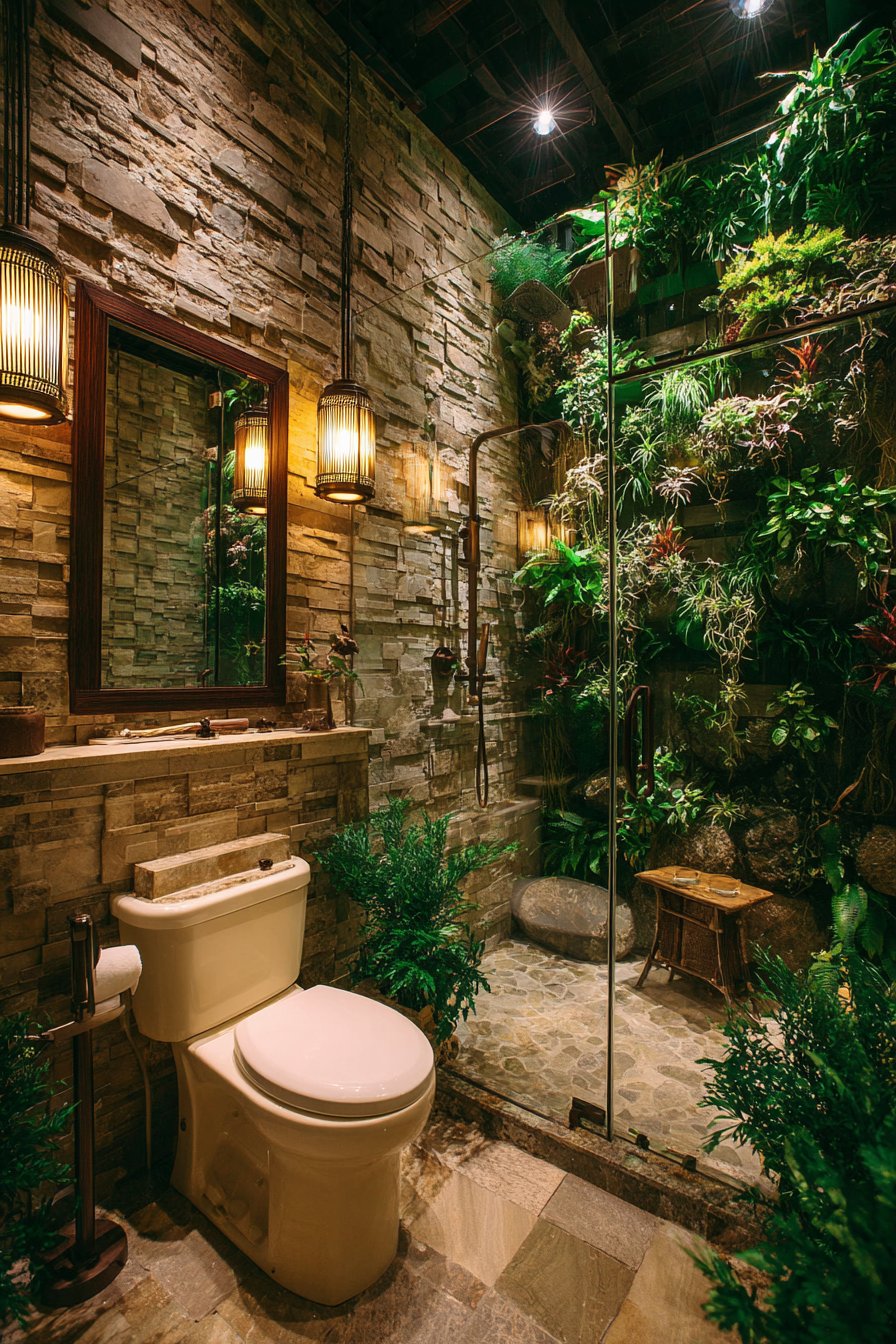
24. Living Plant Wall Biophilic Design
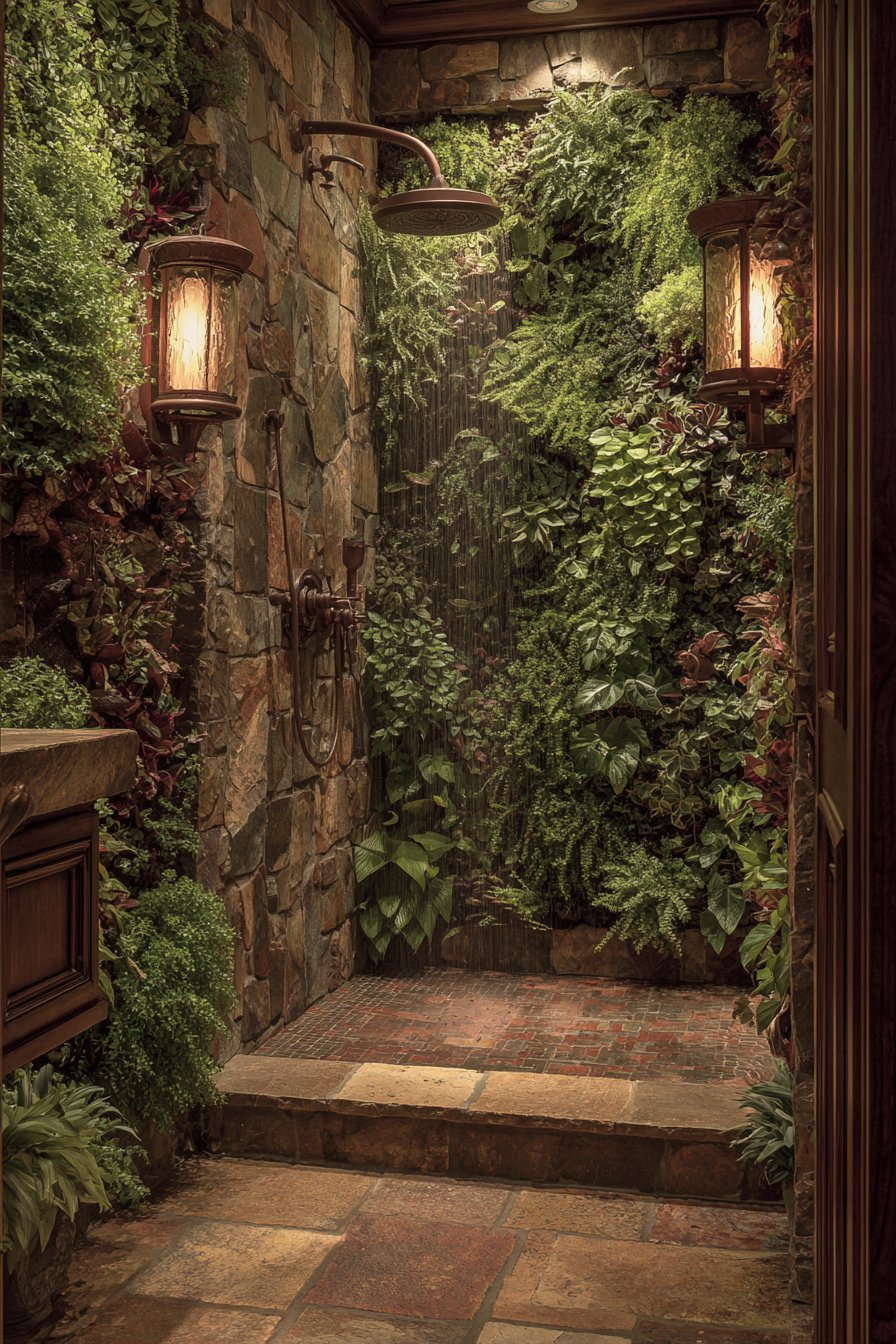
Biophilic design principles reach their fullest expression in this innovative quirky bathroom featuring a full living wall of vertical plants covering an entire shower wall behind waterproof glass panels. Ferns, pothos, philodendrons, and other humidity-loving species create lush tropical rainforest effect, their varied leaf shapes, sizes, and green tones creating organic tapestry that changes gradually as plants grow and evolve. The living wall provides air purification benefits, humidity regulation, and psychological wellness advantages in addition to stunning visual impact. Showering becomes immersive nature experience rather than purely functional activity.
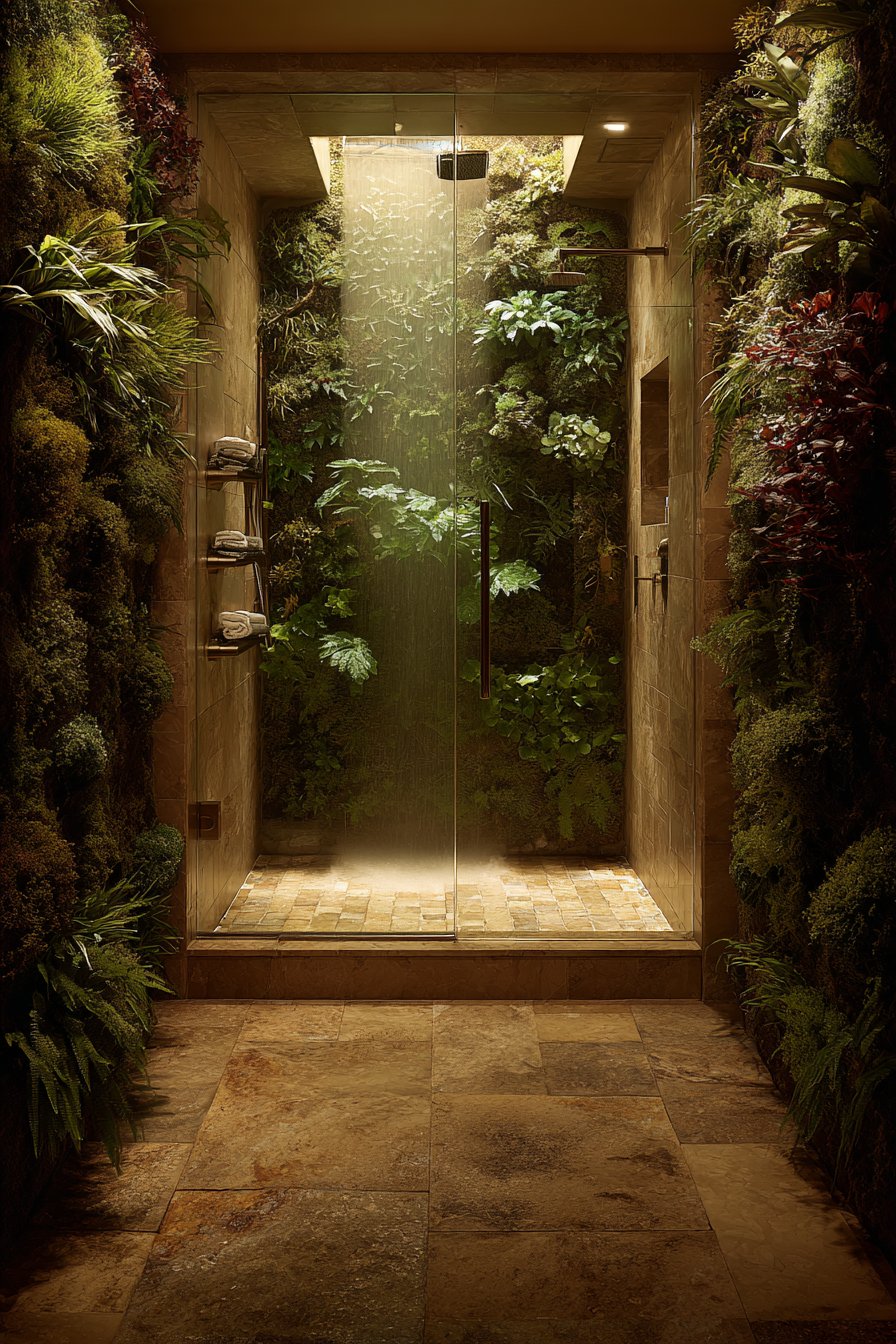
Natural stone tiles complement the organic theme, their irregular surfaces and earthy colors suggesting riverbeds and forest floors. The stones might range from slate gray to sandy beige to warm terracotta, creating geological color story that grounds the abundant greenery. Brushed bronze fixtures add warmth through their metallic glow, their muted finish preventing the shiny brightness that would compete with the plants. The bronze’s earthy tone coordinates beautifully with natural stone while providing necessary metallic accent.
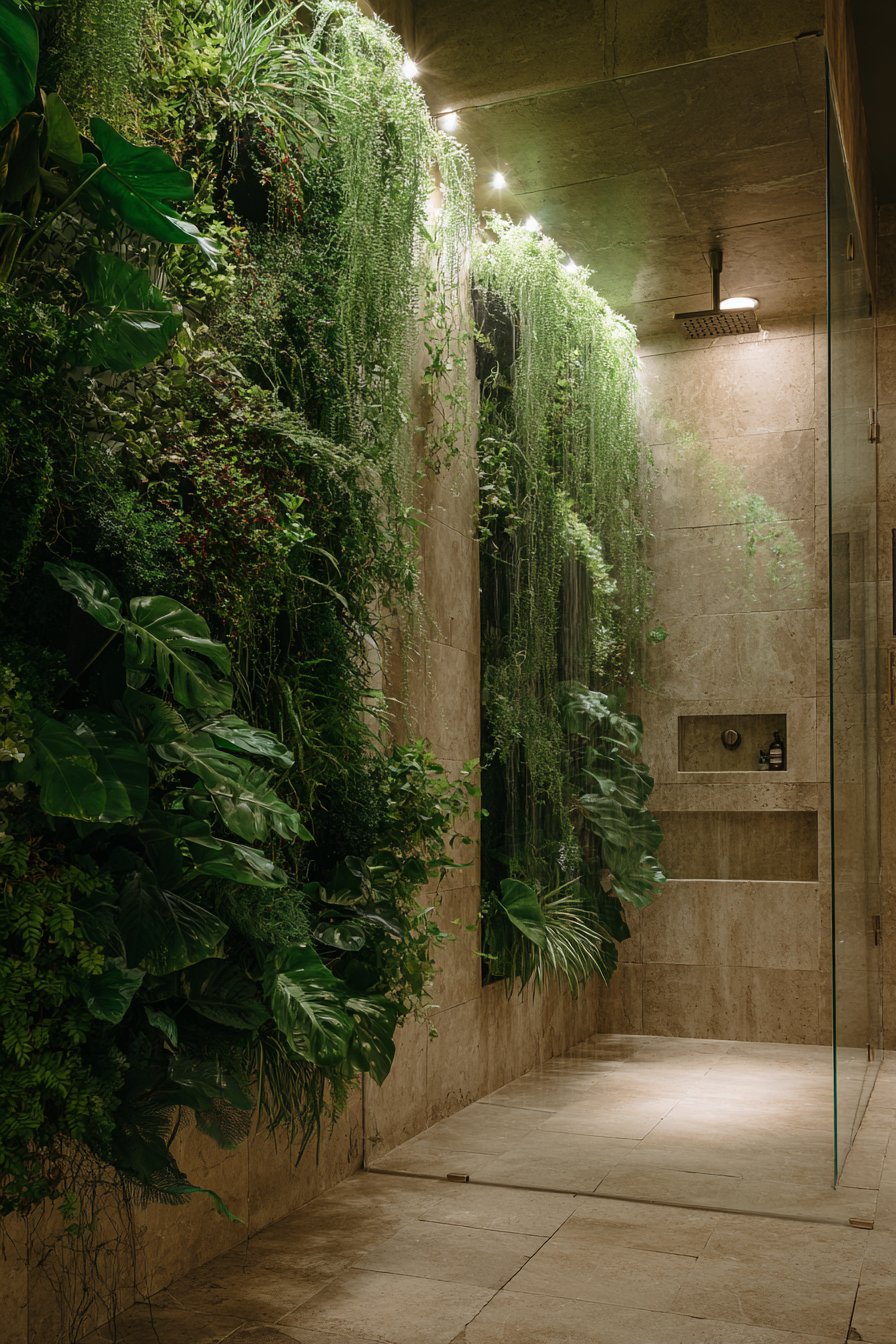
Soft natural lighting ideally comes from above through skylight or high window, mimicking forest canopy conditions and providing ideal growing conditions for the living wall. The changing daylight creates evolving shadows and highlights across the plant wall, ensuring the space looks different throughout the day. Professional interior photography would capture the innovative integration of biophilic design within a functional wet space, emphasizing how nature and modern plumbing can coexist successfully when properly engineered.
Key Design Tips:
- Consult with living wall specialists for proper installation and plant selection
- Install adequate waterproofing protecting walls behind planted panels
- Choose plants based on bathroom’s specific light and humidity conditions
- Plan irrigation systems with easy access for maintenance and adjustments
- Consider weight loads of saturated living walls on structural supports
25. Monochromatic Texture Study
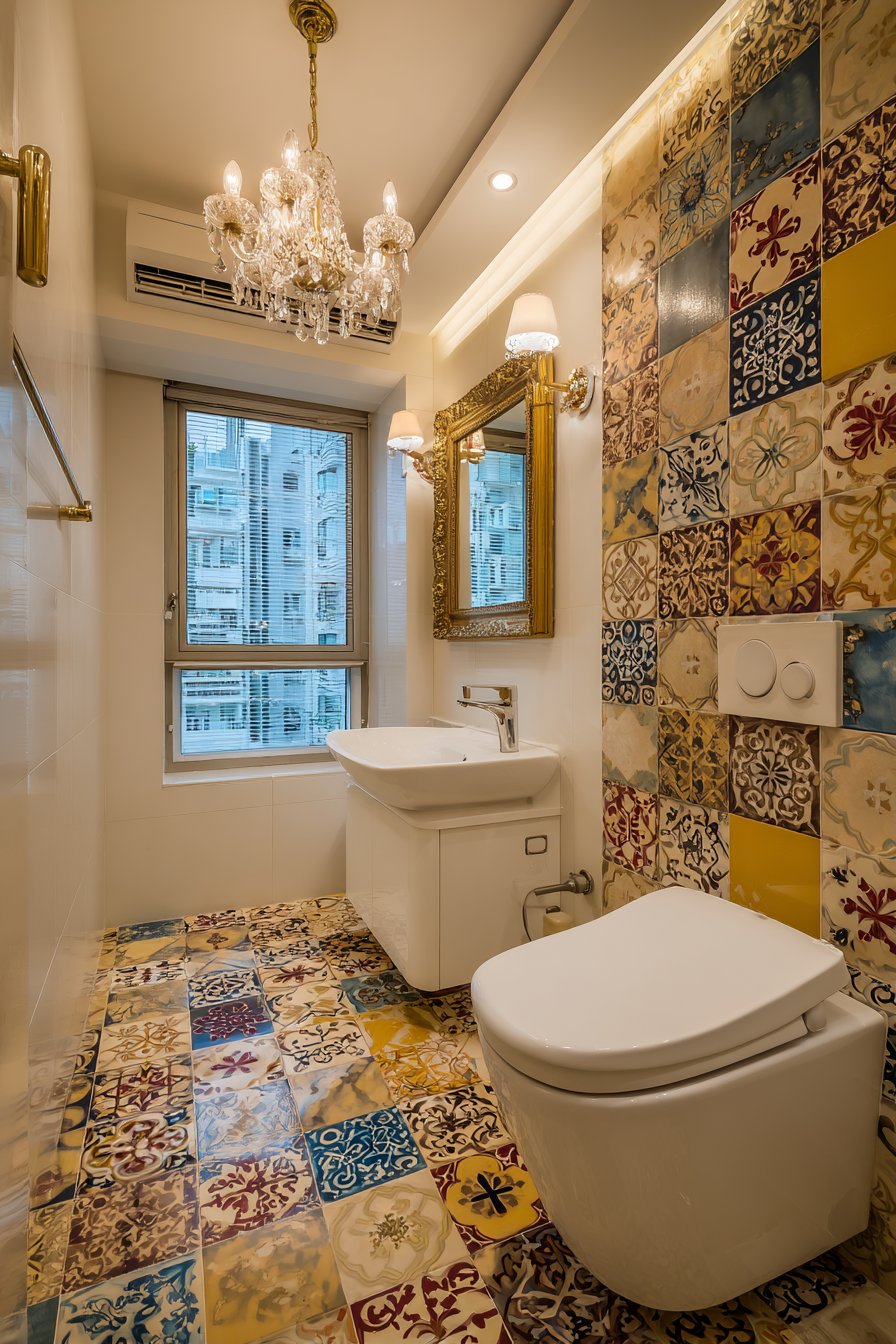
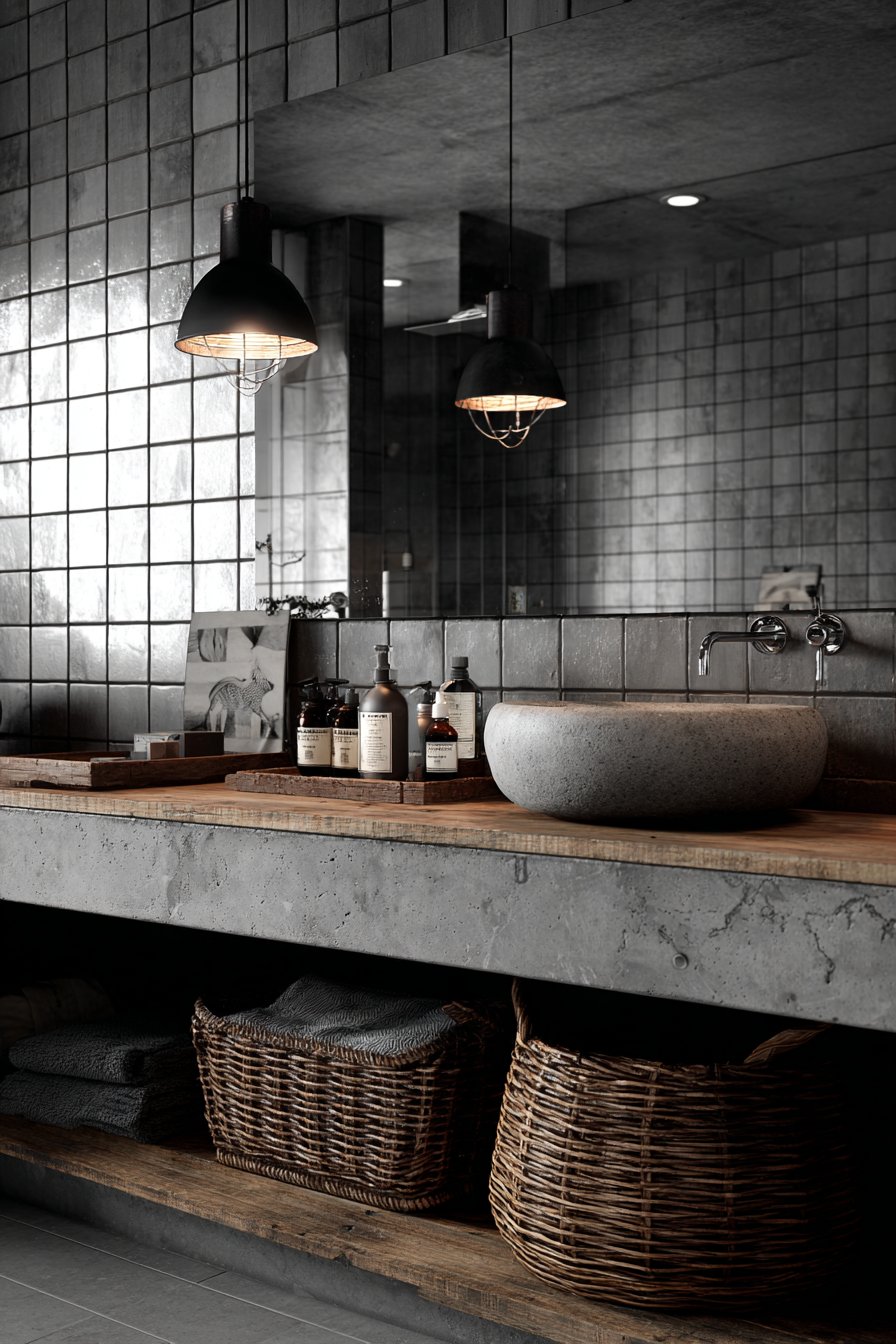
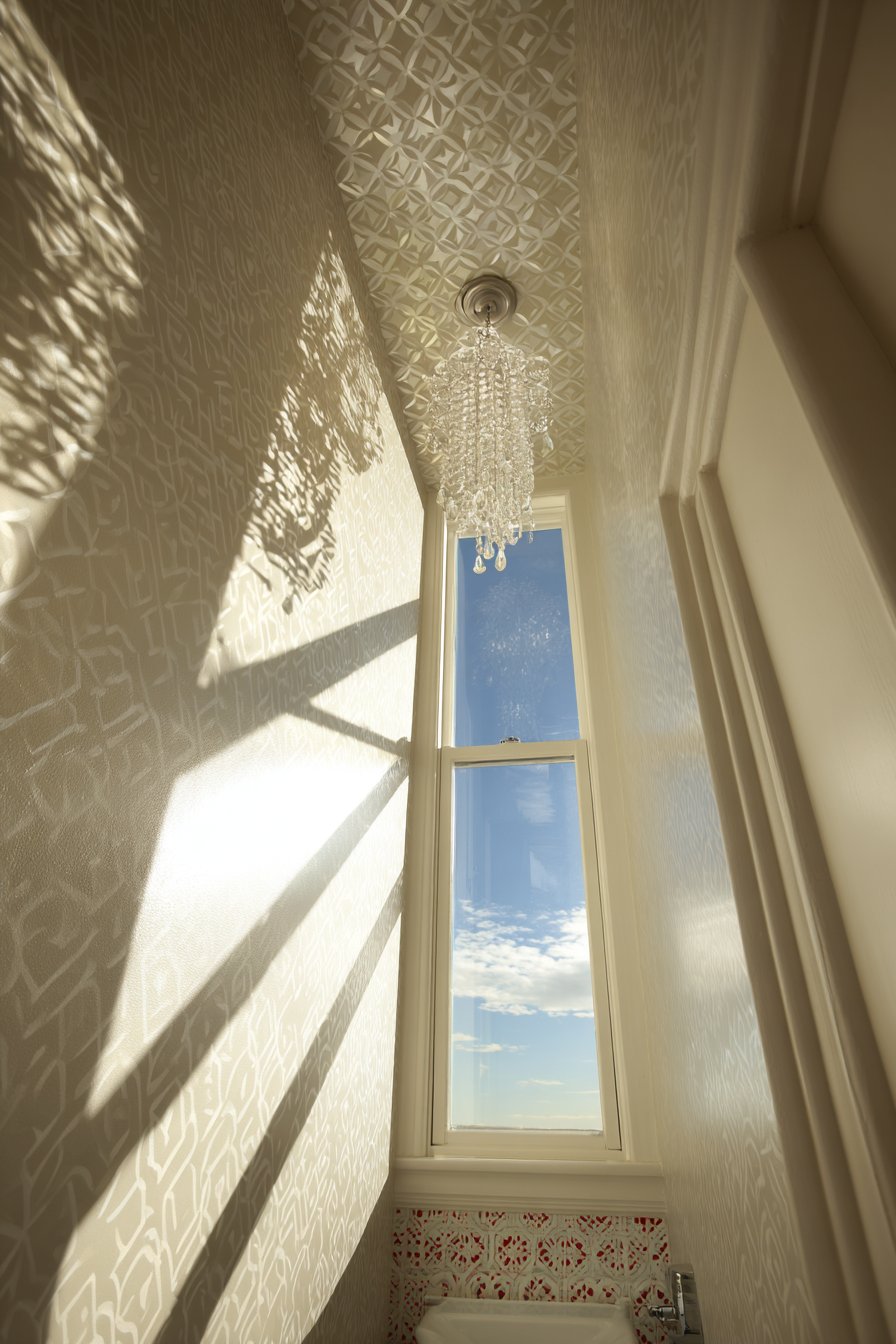
Sophisticated restraint defines this quirky bathroom where visual interest derives entirely from textural variety rather than color contrast. The space embraces monochromatic scheme in coordinating shades of grey and white, but achieves remarkable complexity through surface variation. Glossy white subway tiles reflect light brilliantly, their glassy surface creating highlight and shine. Matte painted walls absorb light, their flat finish providing calm visual rest. Rough concrete countertops introduce industrial texture and honest materiality, their hand-troweled surfaces showing subtle variations and gentle irregularities.
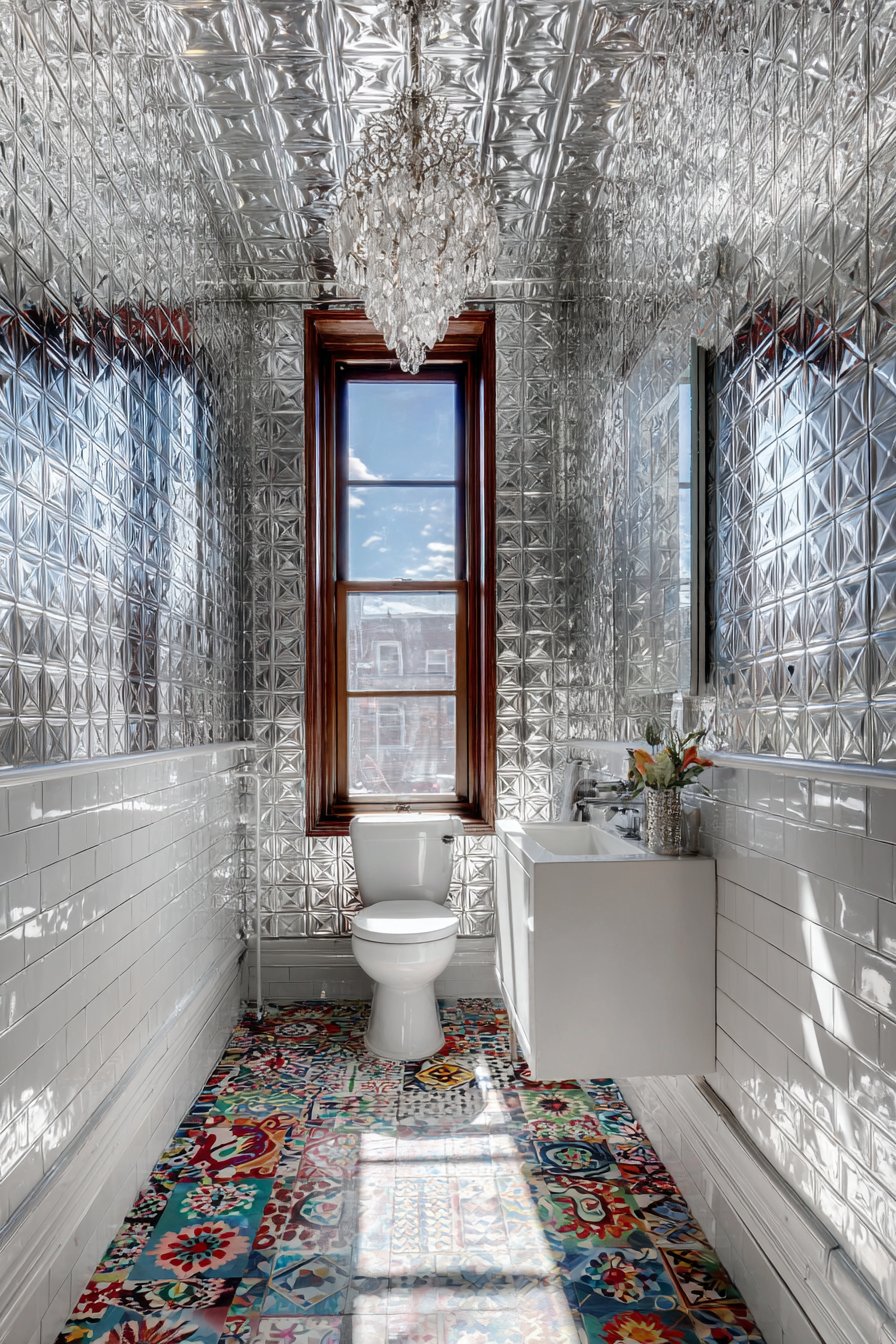
Smooth white porcelain fixtures provide refined traditional surfaces while woven basket storage introduces organic textile texture with visible weave patterns and natural fiber variations. The baskets’ handmade quality adds human element to the manufactured materials surrounding them. Chrome fixtures provide mirror-bright metallic surfaces that reflect and multiply all other textures, creating visual complexity through repetition and distortion. Wide-angle interior photography with careful lighting would show how texture creates depth and interest within minimal color palette, demonstrating sophisticated design understanding.
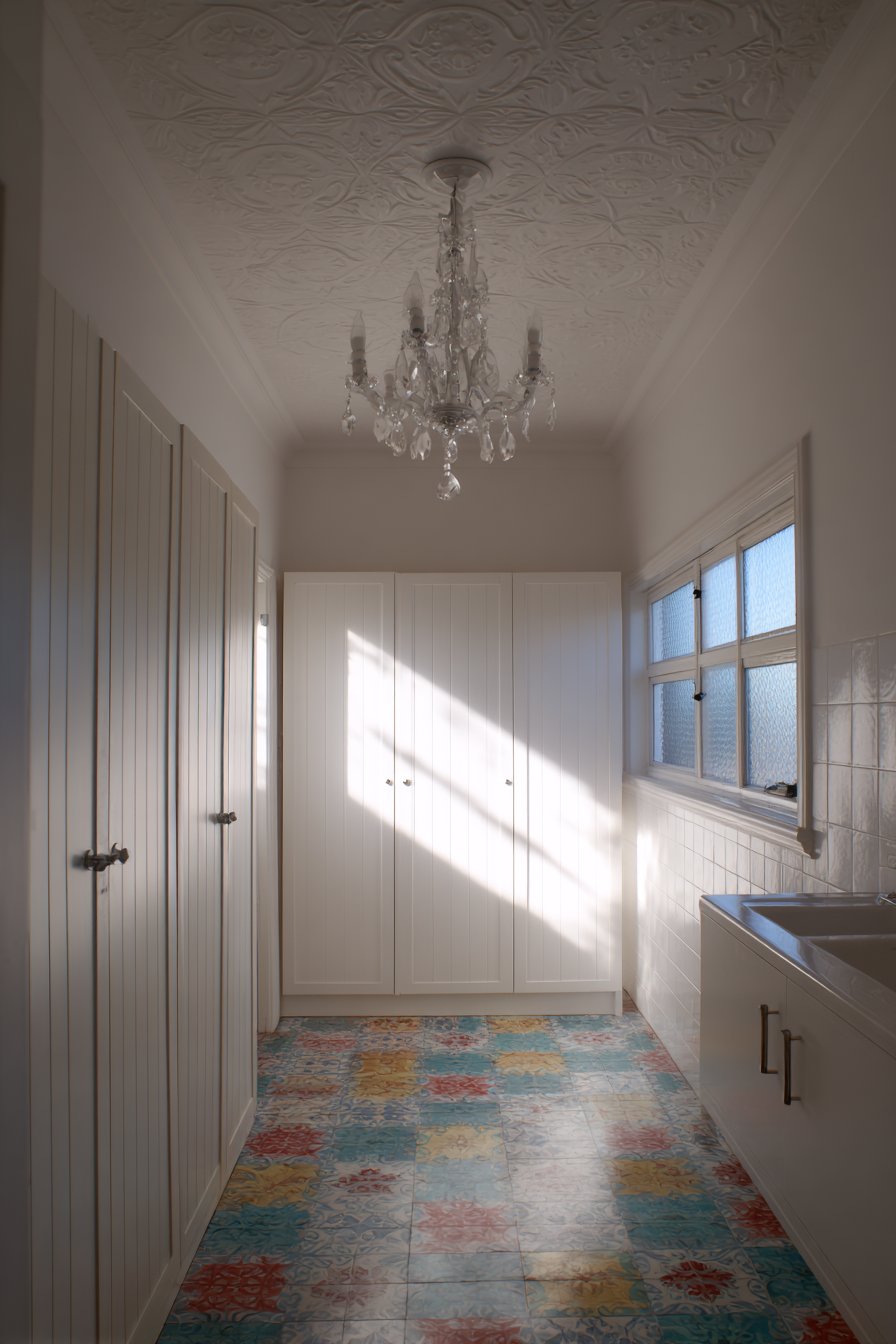
This approach proves that restraint needn’t mean boring when executed thoughtfully. The monochromatic palette creates serene atmosphere perfect for relaxation while the textural variety prevents visual monotony. The space demonstrates how limiting one design variable—color—allows greater freedom exploring others—texture, form, material. This bathroom particularly appeals to minimalist sensibilities and those seeking calm retreat from visually chaotic daily environments. The grey and white palette feels timeless, unlikely to appear dated as trend cycles continue their inevitable rotation.
Key Design Tips:
- Vary surface finishes deliberately—glossy, matte, rough, smooth—for interest
- Include both manufactured and natural materials for textural diversity
- Light monochromatic spaces carefully to emphasize surface variations
- Choose whites and greys with similar undertones for cohesive palette
- Avoid perfectly matching tones—subtle variations create sophisticated depth
Why These Quirky Bathroom Ideas Work
These twenty-five distinctive bathroom designs succeed because they embrace core principles that define excellent quirky design. First and foremost, they demonstrate authenticity—each space reflects genuine personality rather than following prescribed trends or magazine formulas. Whether celebrating vintage collections, expressing artistic inclinations, or exploring bold color relationships, these bathrooms tell stories about their occupants’ interests, travels, and aesthetic preferences. This personal authenticity creates spaces with soul and character that generic bathrooms lack, transforming purely functional rooms into environments that inspire and delight.
Successful quirky bathroom design also requires courage—the willingness to make unconventional choices despite safe alternatives. Painting ceilings navy blue, installing neon signs, or commissioning wall murals involves risk that safer beige neutrality avoids. But this courage pays dividends in spaces that stand out, spark conversation, and bring daily joy to their users. The bathrooms featured here prove that calculated risk-taking in residential design creates memorable environments worth the vulnerability required. They demonstrate how rejecting conformity in favor of personal expression results in spaces with lasting appeal transcending temporary trends.
Balance represents another crucial element making these quirky designs successful rather than chaotic. Each bathroom carefully calibrates its unconventional elements with stabilizing traditional components—the underwater mural balances with a classic clawfoot tub, the maximalist pattern mixing grounds in consistent color palette, the industrial pipes soften with vintage decorative objects. This push-pull between boldness and restraint prevents the spaces from overwhelming or exhausting their occupants while maintaining the quirky character that makes them special. Understanding where to be bold and where to exercise restraint separates sophisticated eclectic design from confused hodgepodge.
Functionality grounds all these quirky concepts in practical reality. Despite bold aesthetics, each bathroom maintains essential functions—adequate lighting, proper ventilation, efficient water delivery, sufficient storage. The quirky elements enhance rather than hinder these fundamental requirements. Repurposed dressers still hold bathroom necessities, artistic tile installations still provide waterproofing, dramatic lighting still illuminates faces for grooming. This pragmatic foundation allows the creative elements to shine without compromising the room’s primary purpose, proving that beauty and utility needn’t compete but can reinforce each other.
Material quality elevates these quirky bathrooms beyond novelty into lasting design. Whether using reclaimed wood, vintage fixtures, custom terrazzo, or hand-painted tiles, these spaces demonstrate investment in materials that age gracefully and withstand bathroom humidity. The quality choices ensure quirky design decisions remain delightful rather than becoming dated embarrassments or maintenance nightmares. Vintage suitcases serving as storage, for instance, work because they’re substantial leather and wood rather than flimsy reproductions. The material integrity allows these unconventional choices to feel intentional and sophisticated rather than cheap or gimmicky.
Conclusion
Transforming your bathroom with quirky design ideas represents more than aesthetic makeover—it’s an opportunity for self-expression and daily joy. These twenty-five concepts demonstrate that bathrooms needn’t remain boring, predictable spaces relegated to pure function. Through bold color choices, unexpected material combinations, creative furniture repurposing, artistic installations, and confident eclecticism, ordinary bathrooms become extraordinary personal sanctuaries reflecting individual personalities and celebrating design creativity.
The key to successful quirky bathroom design lies in balancing courage with restraint, authenticity with functionality, and personal taste with universal design principles. Start by identifying which elements resonate with your personality—perhaps you’re drawn to bold color combinations, vintage collections, artistic expression, or cultural fusion. Then consider your bathroom’s existing architecture, available natural light, and functional requirements. Build your quirky vision gradually, adding elements thoughtfully rather than overwhelming the space immediately.
Remember that quirky design succeeds through intention rather than random accumulation. Each element should earn its place through aesthetic contribution, functional purpose, or personal meaning. Don’t hesitate to experiment with removable elements like wallpaper, paint colors, or decorative objects before committing to permanent installations. Your bathroom should evolve as your taste develops and your life circumstances change, embracing impermanence as part of its quirky charm.
Most importantly, trust your instincts and embrace choices that bring you genuine joy, even if they challenge conventional bathroom design wisdom. Your bathroom exists primarily for your daily use and pleasure, not for impressing visitors or achieving magazine-perfect perfection. The most successful quirky bathrooms reflect their owners’ authentic personalities, creating spaces that inspire morning energy and facilitate evening relaxation through thoughtful design that celebrates individuality over conformity. Let these ideas spark your imagination and courage to create a bathroom that’s uniquely, wonderfully, and unapologetically yours.
