
Creating a beautiful and functional bathroom in your basement presents unique challenges and opportunities that can result in one of the most impressive spaces in your home. Whether you’re adding value to your property, accommodating growing family needs, or simply maximizing your home’s potential, basement bathrooms require thoughtful planning that addresses moisture control, lighting limitations, and spatial constraints while delivering on style and comfort. The transformation of a dark, damp below-grade area into a luxurious sanctuary is not only possible but can become a showcase of innovative design thinking and practical problem-solving.
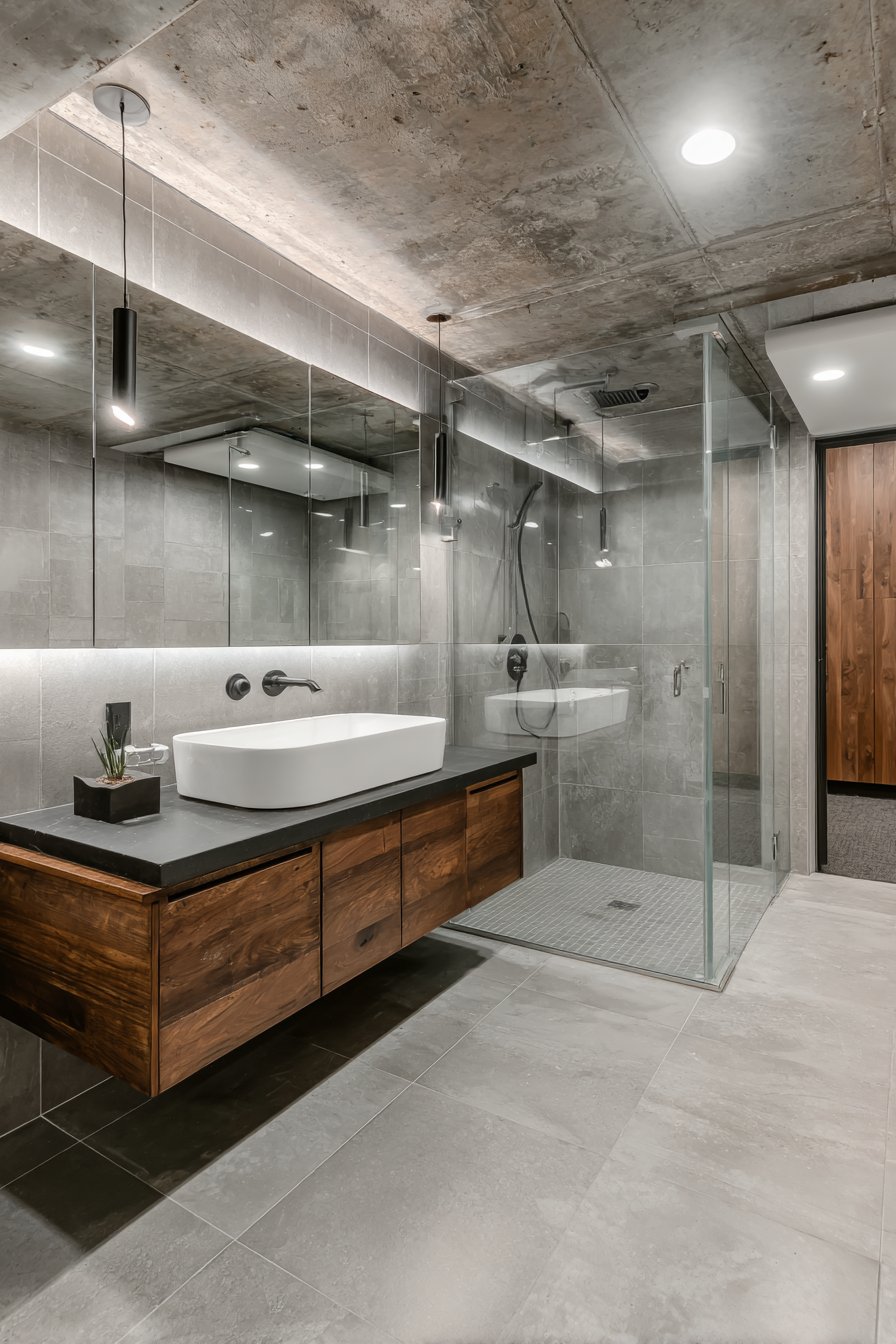
Basement bathrooms have evolved far beyond the utilitarian afterthought they once represented. Today’s homeowners are discovering that these below-grade spaces can rival—and even surpass—their main-floor counterparts in terms of sophistication, functionality, and visual impact. From industrial-chic designs that celebrate exposed elements to spa-inspired retreats that prioritize relaxation, the possibilities are virtually limitless when you understand the unique requirements of basement construction and embrace creative solutions for common challenges like natural light deficiency and moisture management.
This comprehensive guide explores twenty-seven distinct basement bathroom designs, each addressing specific needs, styles, and budgets while providing actionable insights you can apply to your own project. Whether you’re working with a compact powder room tucked beneath the stairs or planning a full luxury suite complete with soaking tub and walk-in shower, these ideas demonstrate how thoughtful material selection, strategic lighting, proper ventilation, and creative design choices can transform any basement space into a bathroom that’s both beautiful and built to last.
1. Practical Moisture-Resistant Layout
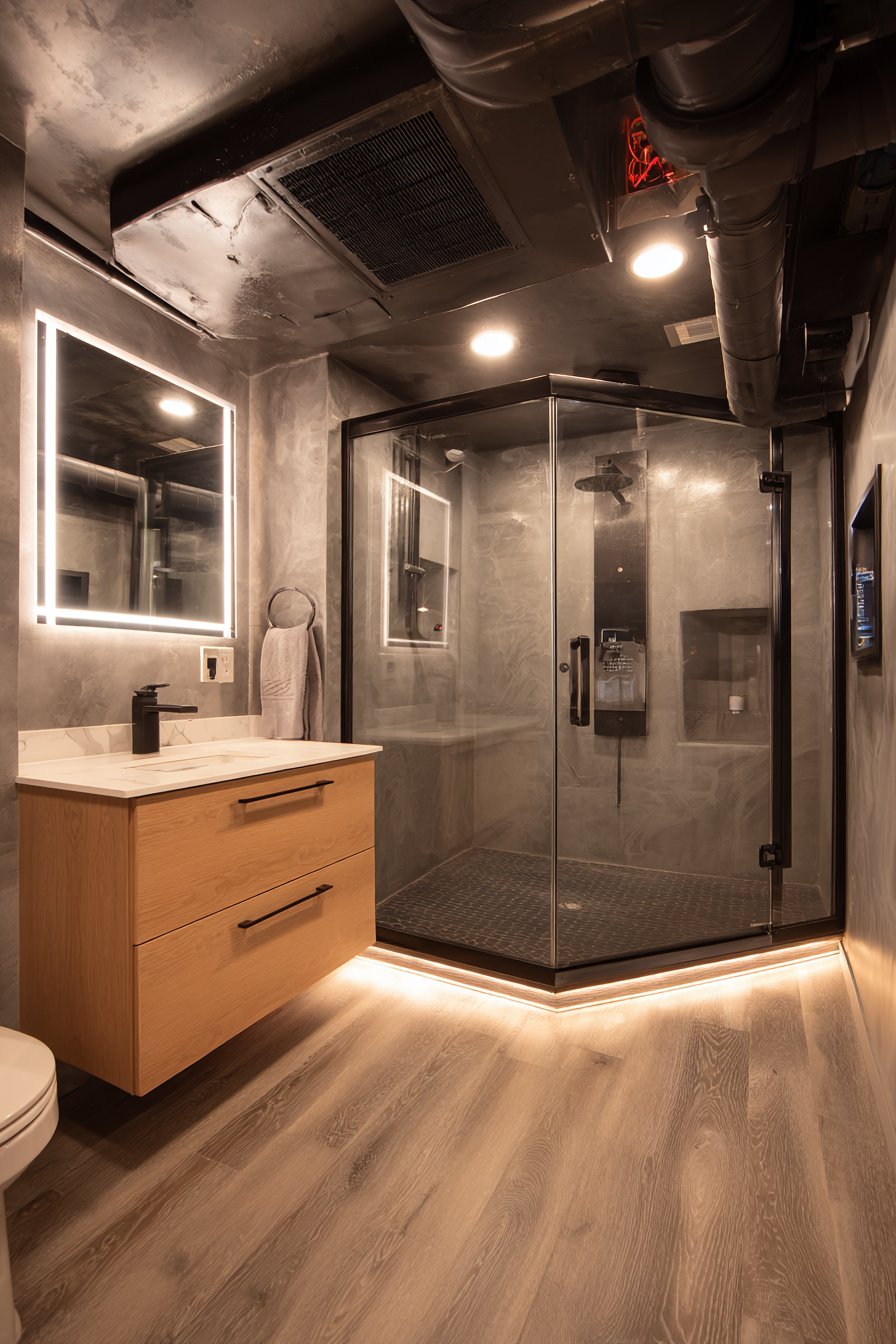
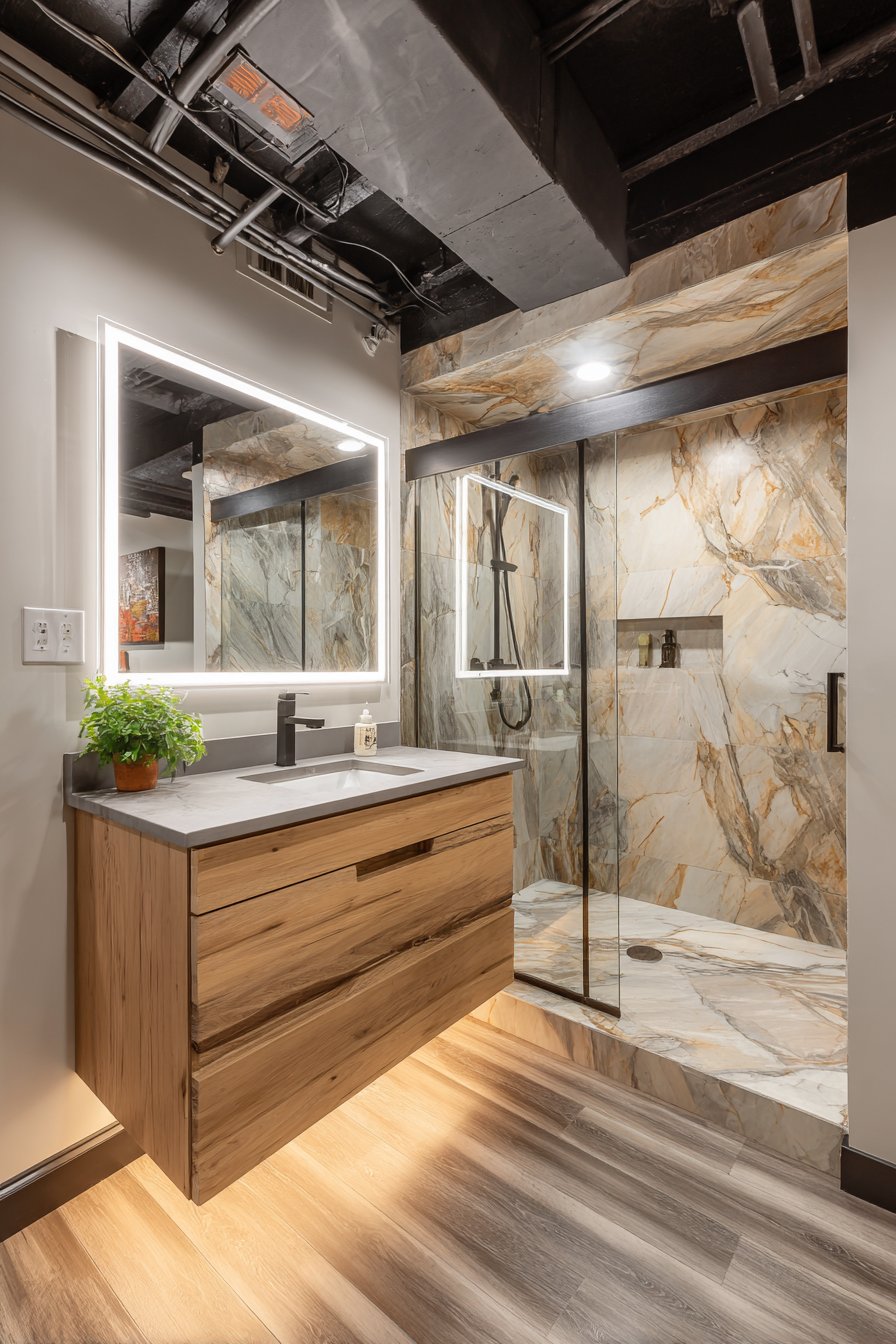
Smart material selection forms the foundation of successful basement bathroom ideas, and this practical layout demonstrates how waterproof luxury vinyl plank flooring in gray oak finish delivers the warmth of natural wood without vulnerability to moisture damage. The planks install over concrete subfloors with appropriate underlayment, providing both comfort underfoot and reliable performance in the challenging below-grade environment. Moisture-resistant drywall treated with semi-gloss paint in warm white creates surfaces that can withstand occasional splashes while remaining easy to clean and maintain over years of use.
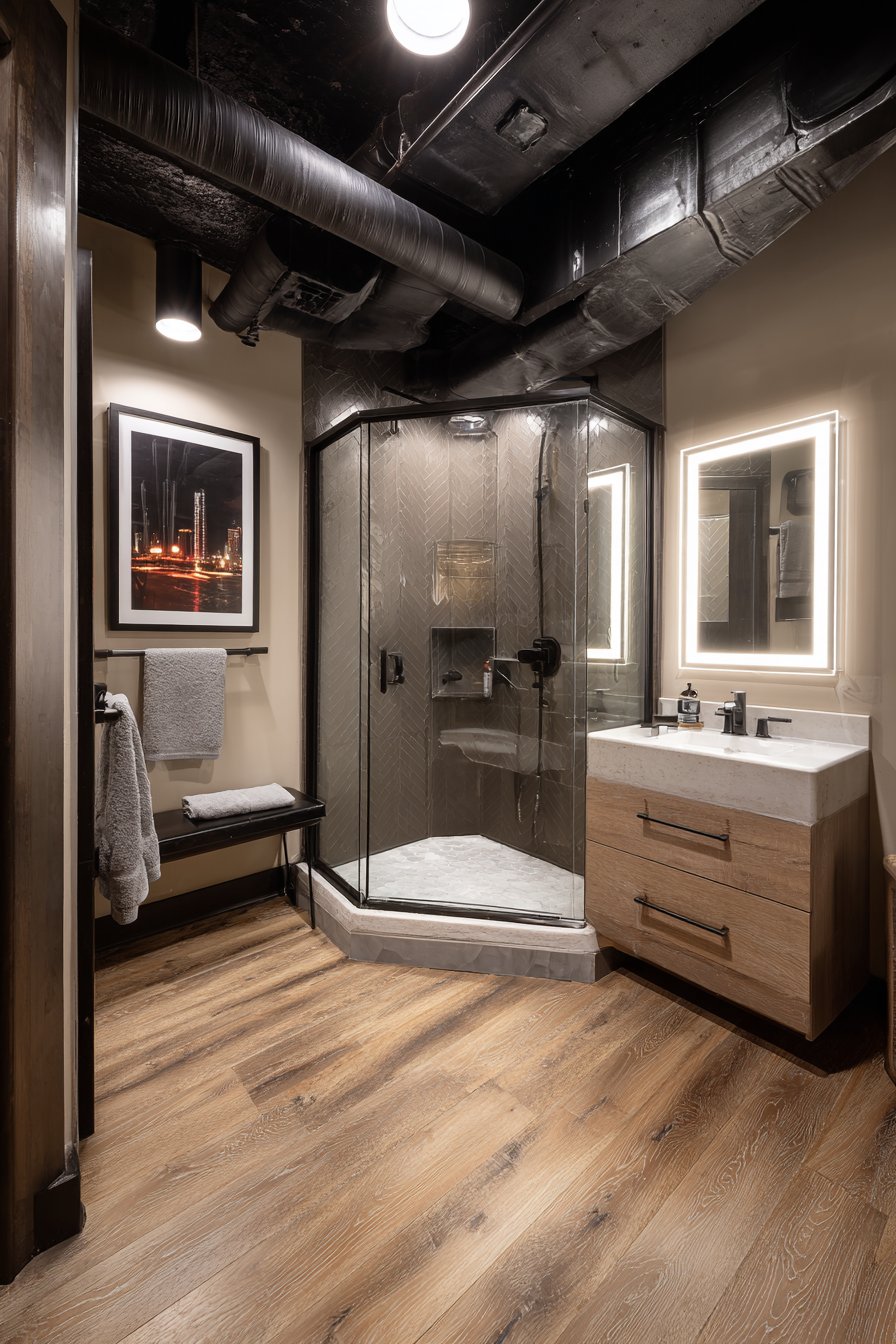
The corner shower configuration maximizes floor space efficiency while the cultured marble base provides a durable, non-porous surface that resists mold and mildew growth. Recessed LED lighting positioned throughout the ceiling compensates for the absence of natural light, with strategic placement ensuring no shadows fall across the vanity mirror or shower area. A compact vanity with multiple storage drawers sits beneath a large backlit mirror, the illuminated reflection further enhancing brightness while providing excellent task lighting for grooming activities.
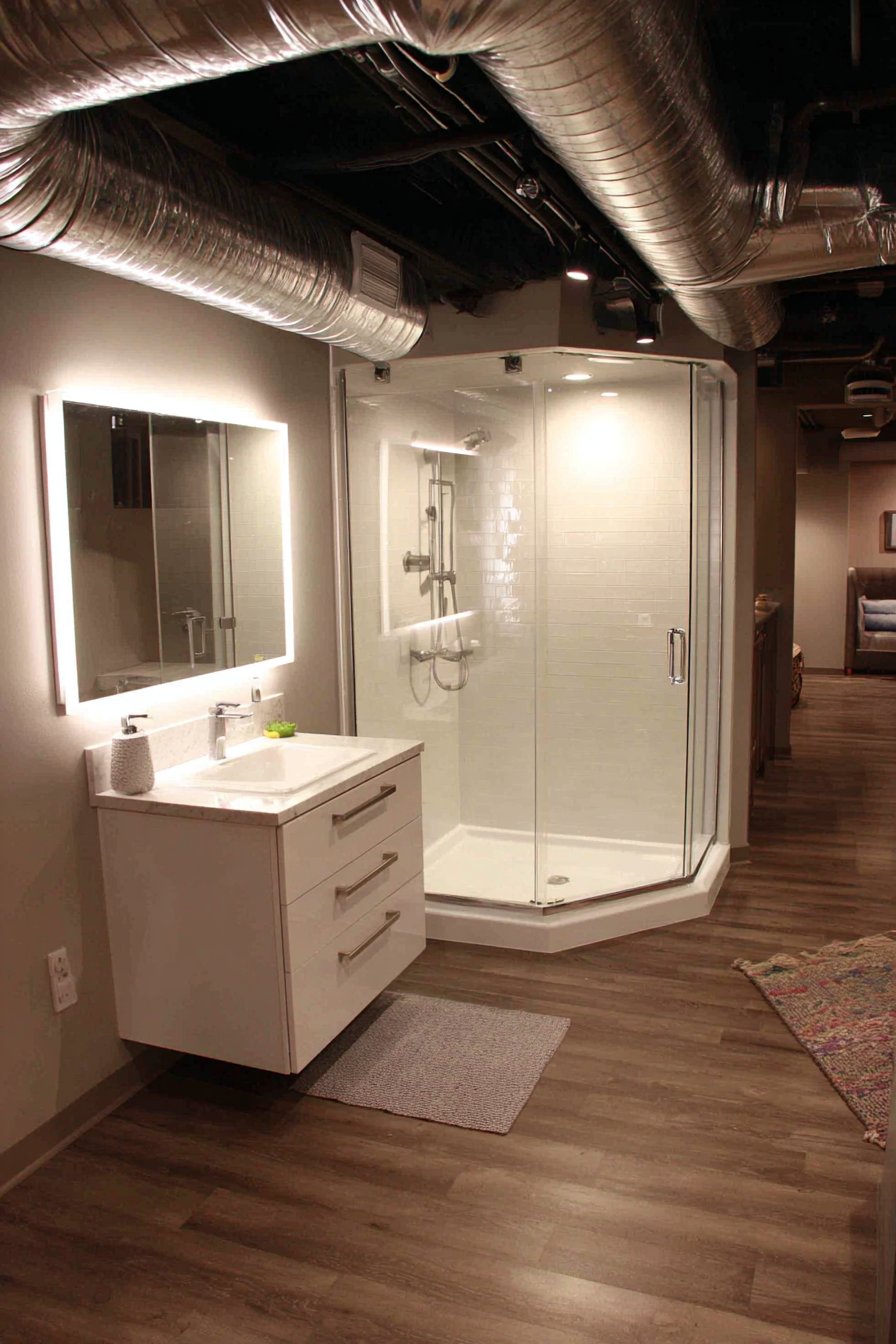
Perhaps most intriguing is the decision to leave ductwork exposed while painting it matte black, transforming a potential eyesore into an intentional design element that maintains precious ceiling height. This approach exemplifies the creative problem-solving required in basement spaces, where mechanical systems often run through areas that would be finished ceilings on upper floors. The industrial character introduced by the exposed ducts harmonizes with modern fixtures and clean-lined cabinetry, proving that practical necessities can contribute positively to overall aesthetics.
Key Design Tips:
- Choose luxury vinyl plank with attached underlayment for easier installation and moisture protection
- Apply semi-gloss or satin paint finishes that resist moisture and clean easily
- Install moisture-resistant drywall (green board or purple board) rather than standard drywall
- Paint exposed mechanicals in cohesive colors rather than concealing them with dropped ceilings
- Select cultured marble or solid surface shower bases for seamless, grout-free installation
2. Natural Light Maximization
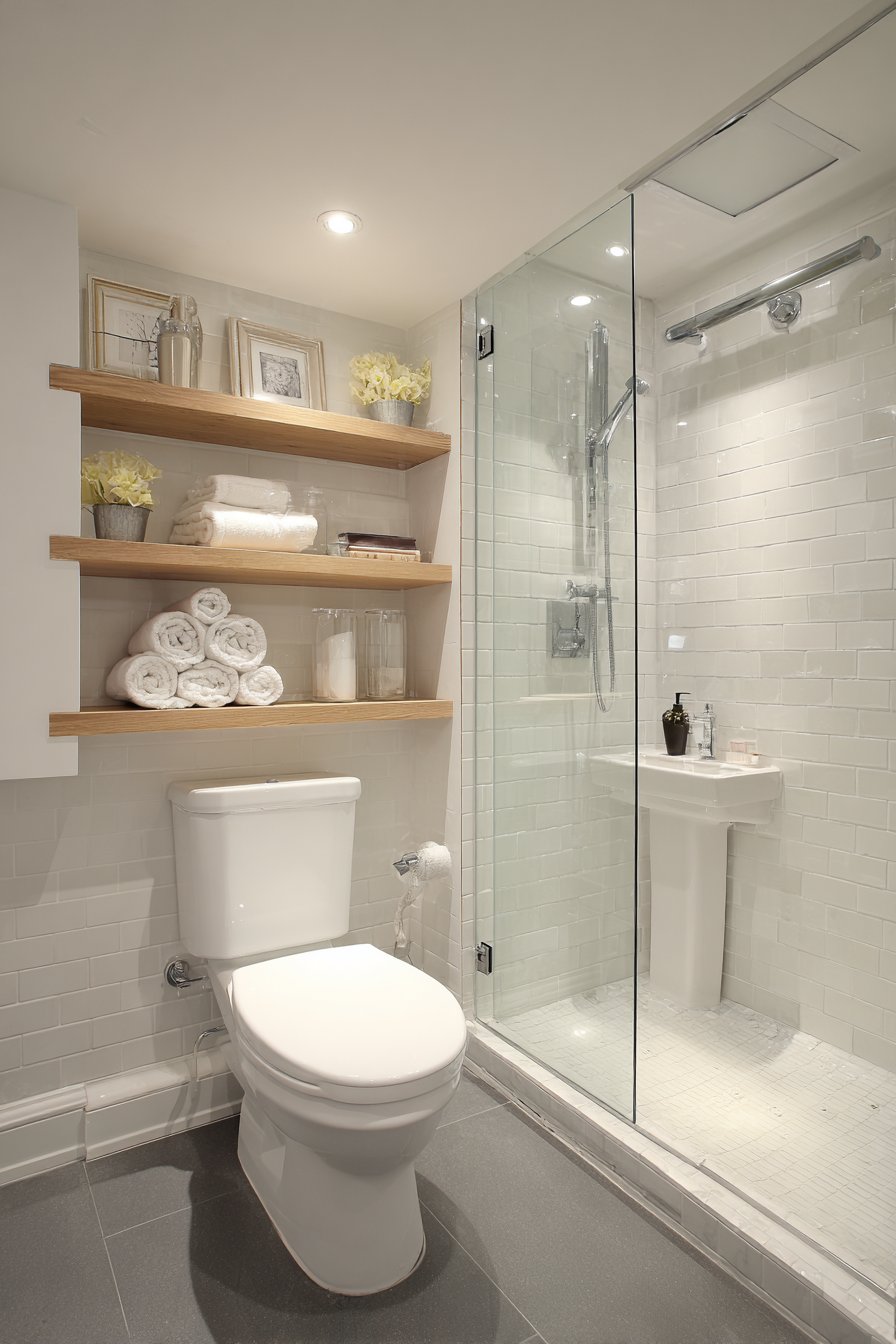
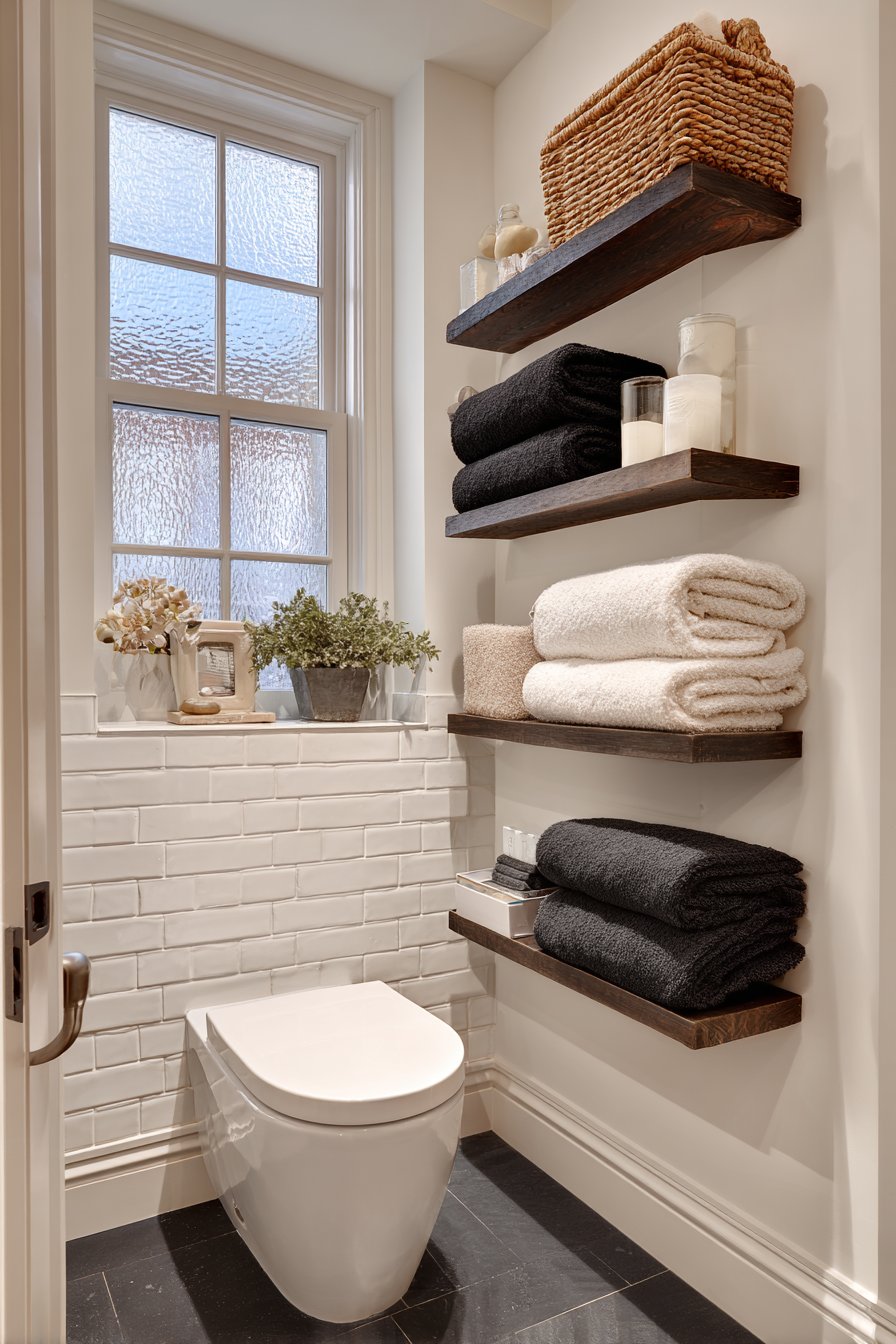
Egress windows represent one of the most valuable additions to basement bathroom ideas, providing not only precious natural light but also meeting code requirements for below-grade living spaces. This design places an egress window with frosted glass as the focal point, maximizing daylight penetration while maintaining privacy—an ideal solution for basement bathrooms where street-level placement might otherwise compromise discretion. Large subway tiles in crisp white cover the walls, their reflective glazed surfaces bouncing light throughout the space and creating an airy, expansive feeling despite the below-grade location.
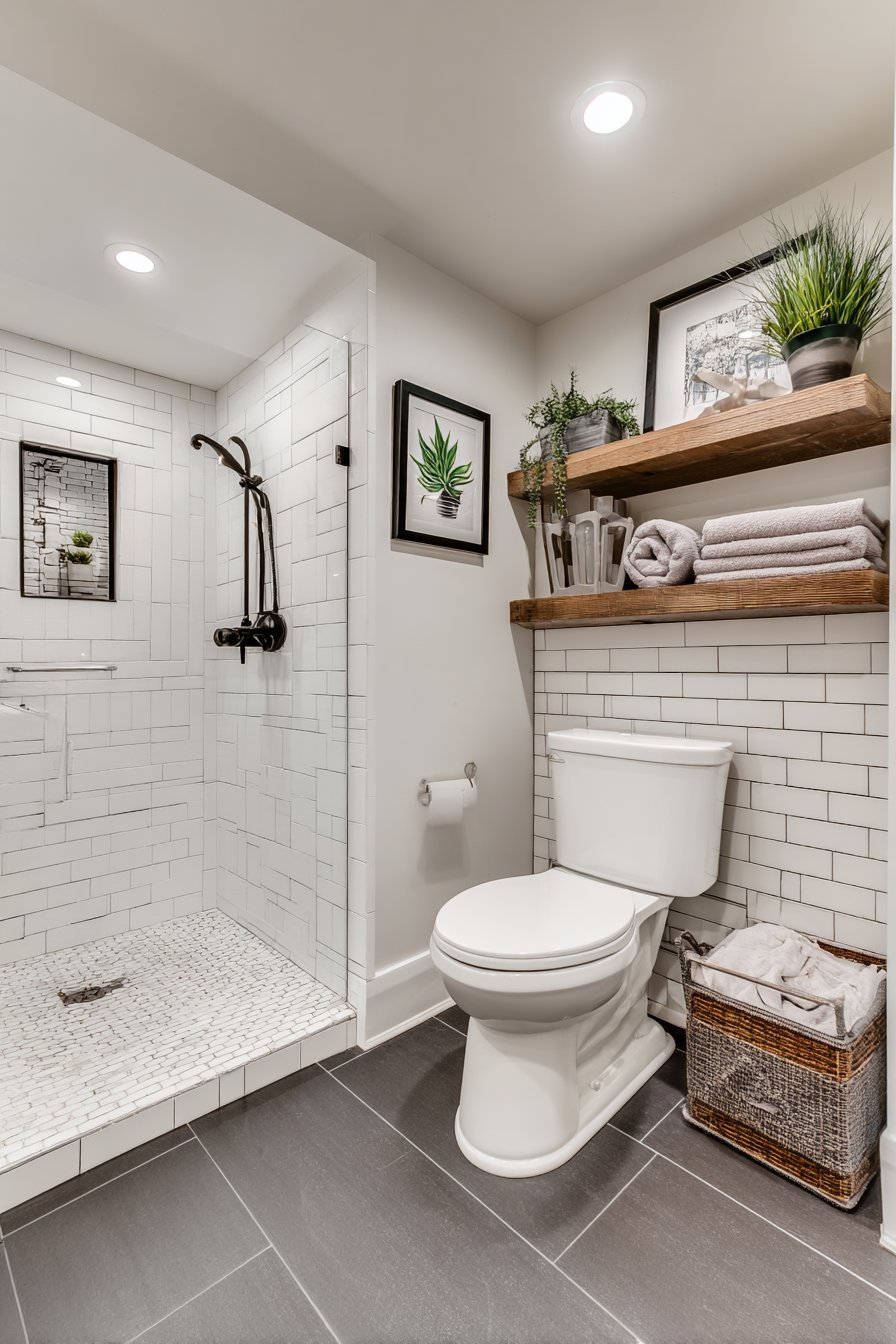
Heated porcelain floor tiles in charcoal gray provide luxurious comfort while addressing the inherent coolness of basement concrete slabs. The radiant heat system not only delivers warmth underfoot but also helps control humidity levels by gently warming the air, contributing to the moisture management strategy essential in below-grade installations. A wall-hung toilet saves valuable floor space while facilitating easier cleaning, its concealed tank system contributing to the streamlined, contemporary aesthetic that makes the bathroom feel more spacious.
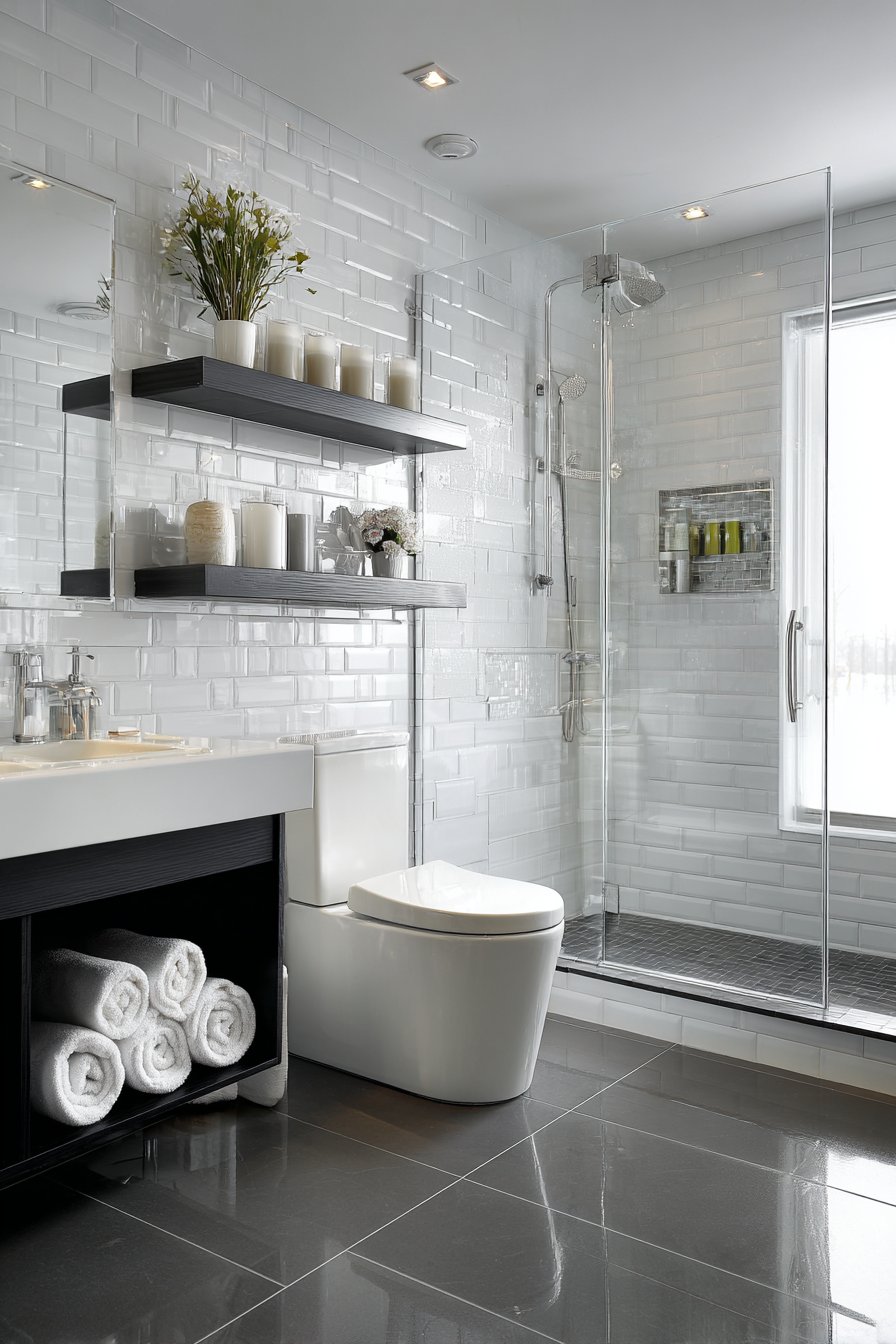
Floating shelves constructed from sealed wood display rolled towels and carefully curated decorative elements, adding personality and functionality without overwhelming the clean-lined design. The wood receives multiple coats of polyurethane sealant, protecting it from moisture damage while maintaining its natural beauty. Light-reflective surfaces appear throughout the design, from polished chrome fixtures to glossy tile finishes, each element working to amplify the natural light streaming through the egress window and create a bright, welcoming environment.
Key Design Tips:
- Position egress windows on walls that receive maximum daylight exposure
- Use frosted or textured glass for privacy without sacrificing light transmission
- Install heated flooring systems to combat basement chill and control humidity
- Choose glossy tile finishes over matte to maximize light reflection
- Seal all wood elements with marine-grade polyurethane for moisture protection
3. Bold Monochromatic Drama
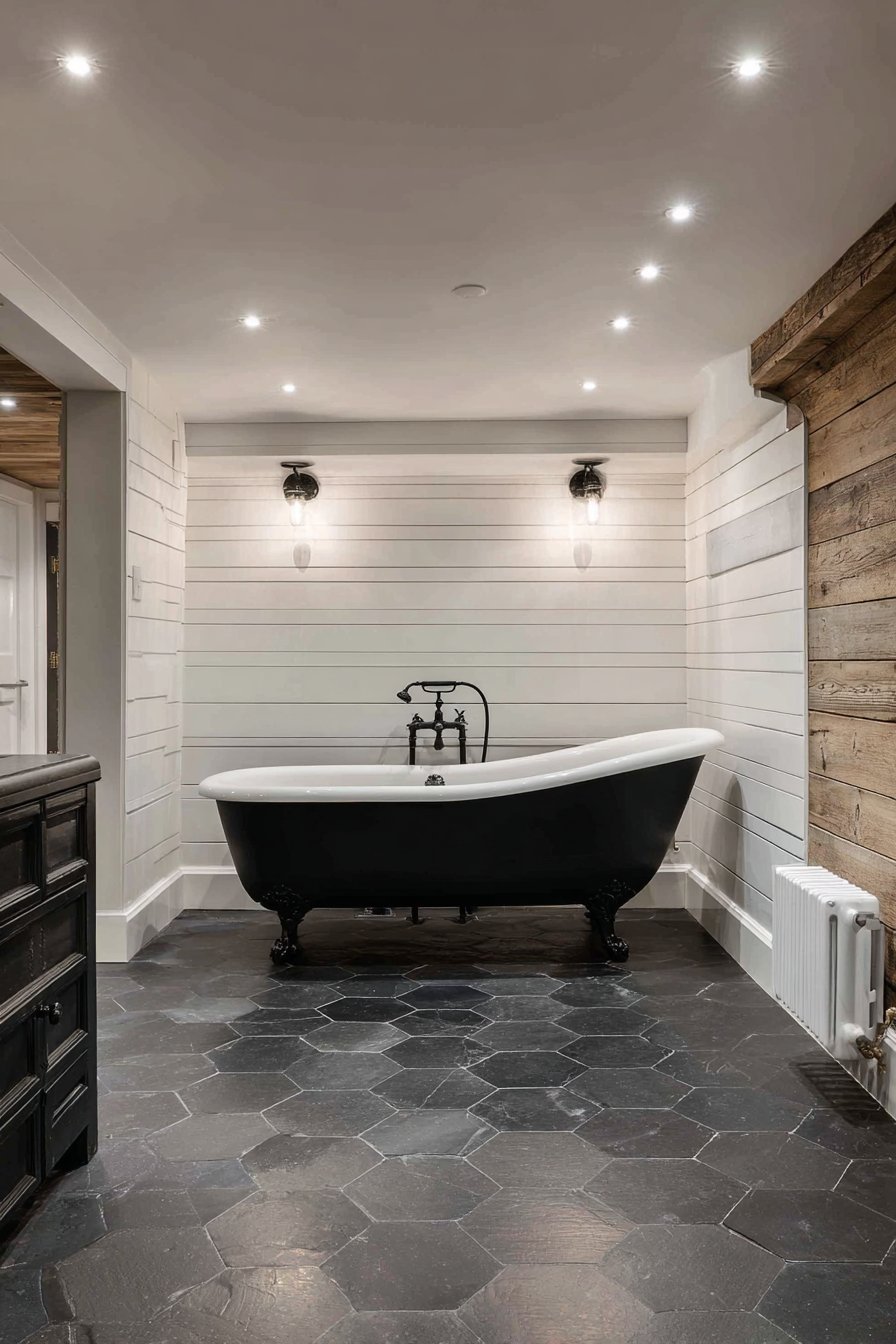
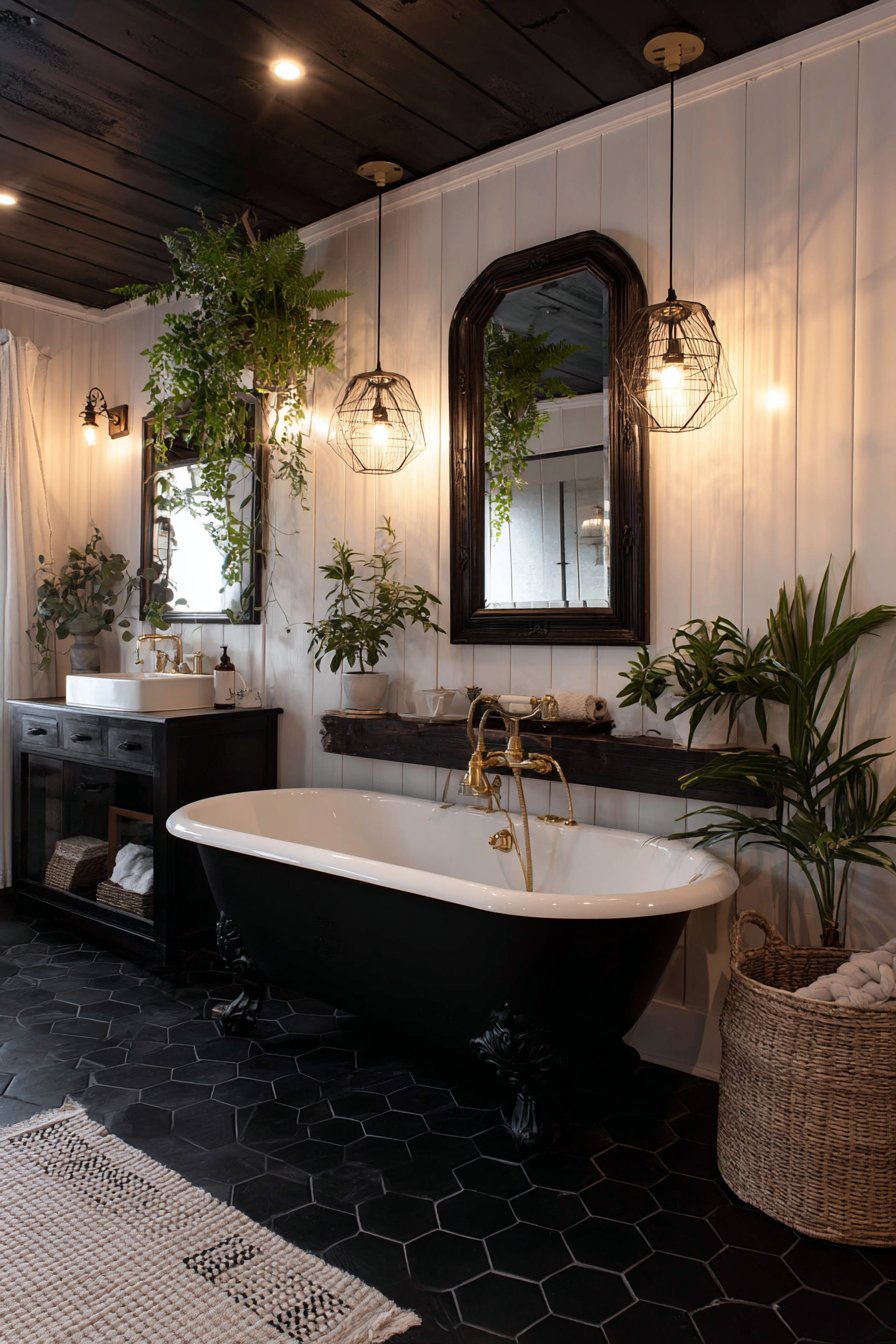
Dramatic contrast defines this approach to basement bathroom ideas, where black hexagon floor tiles create geometric interest against pristine white shiplap walls. The hexagonal pattern introduces visual texture and movement while the dark flooring grounds the space, creating definition that prevents the white walls from feeling too stark or clinical. Each piece of shiplap receives treatment with moisture-resistant coating before installation, ensuring the wood-look aesthetic performs reliably in the humid basement environment without warping or developing mold.
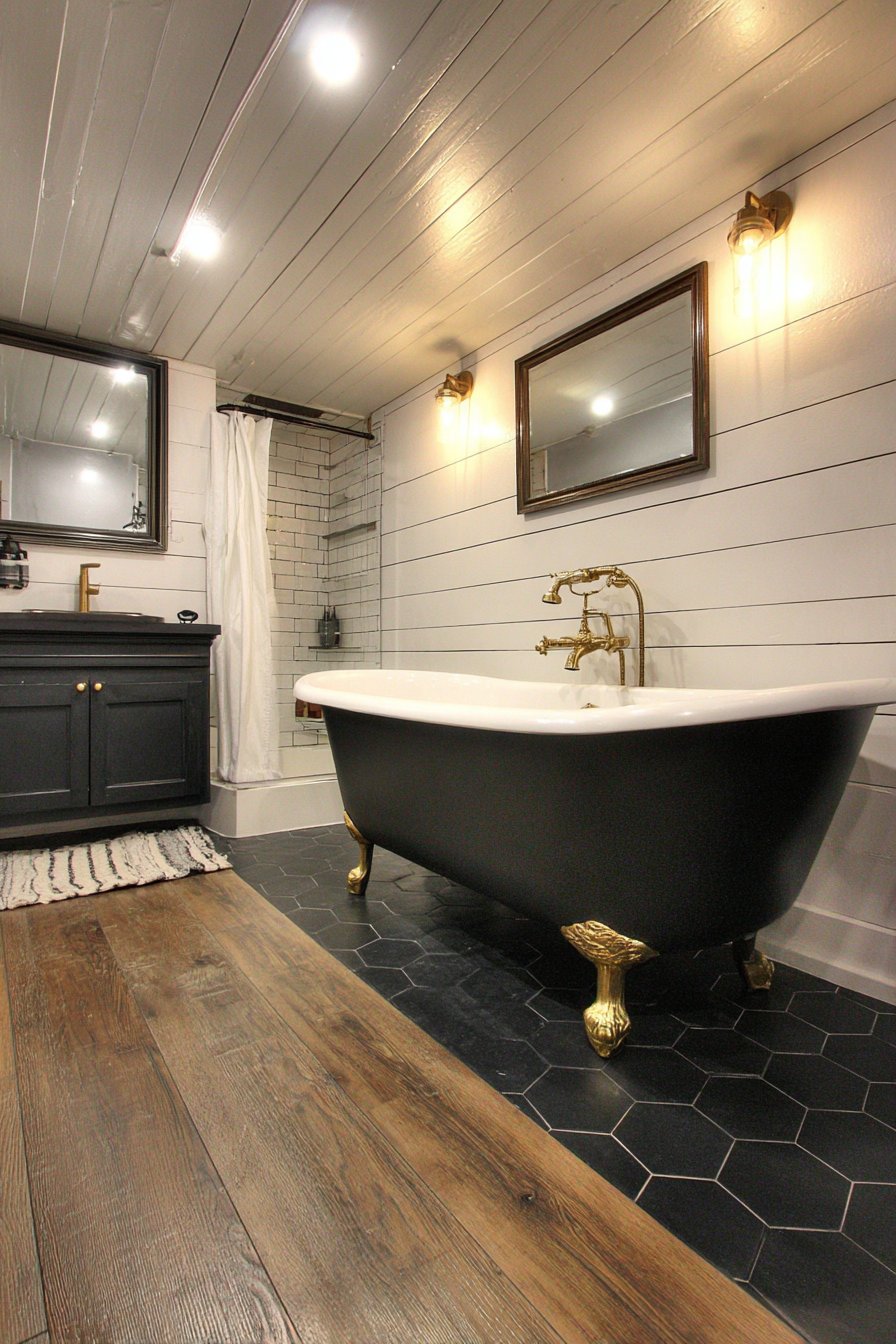
A vintage-style clawfoot tub refinished in matte black serves as the undeniable focal point, its classic silhouette providing sculptural presence that anchors the entire design. Strategic recessed lighting positions above the tub create a spotlight effect, emphasizing the fixture’s dramatic form while providing adequate illumination for safe bathing. Brass fixtures throughout the space add warmth and sophisticated contrast, their golden tones bridging the black-and-white palette while introducing a third material that elevates the overall design complexity.
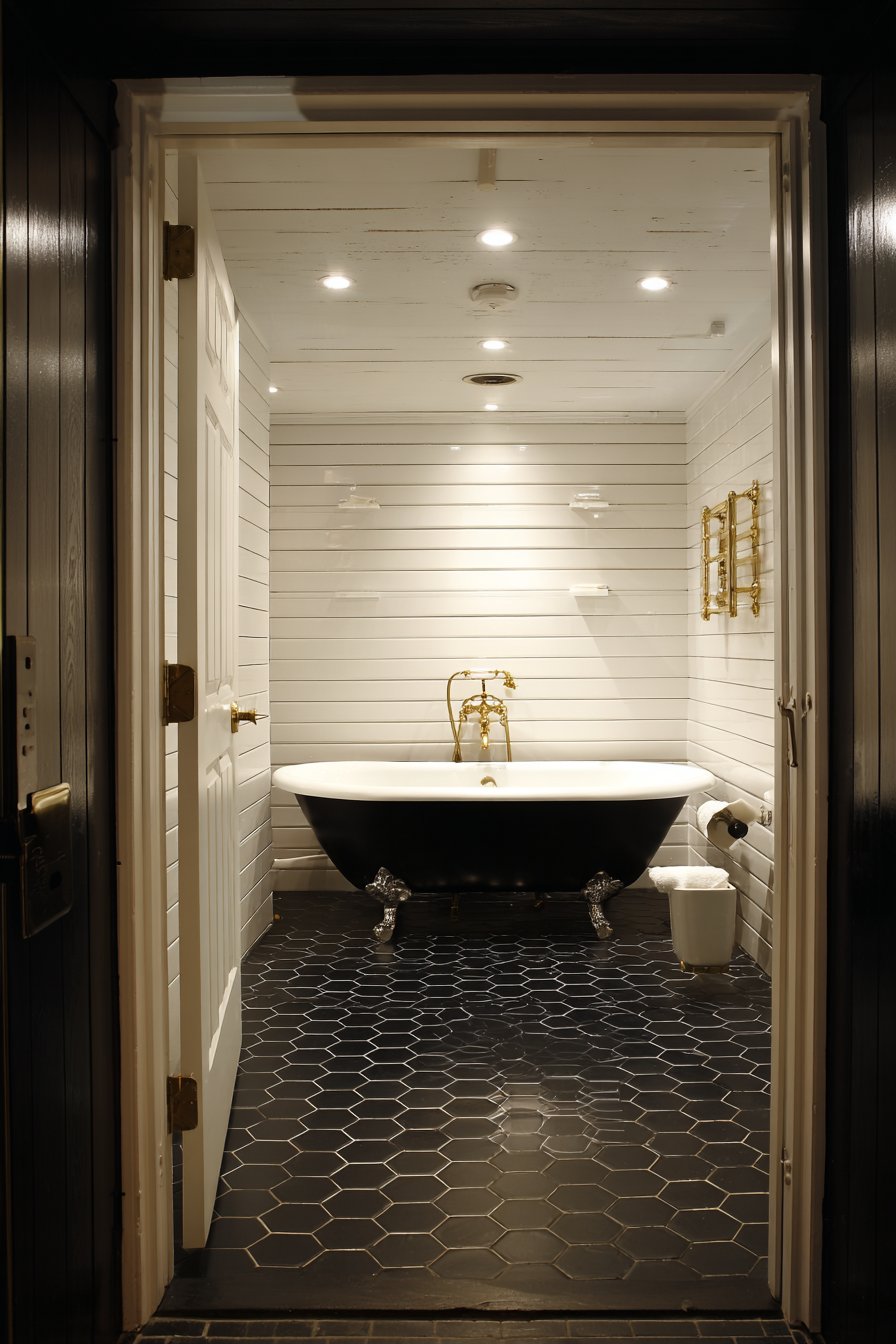
The dehumidifier integrates discretely into custom cabinetry, maintaining optimal moisture levels without compromising the carefully composed aesthetic. This attention to mechanical systems represents crucial thinking in basement bathroom planning, where proper ventilation and humidity control protect both the space and the home’s structural integrity. The bold aesthetic choices demonstrate confidence, proving that basement bathrooms need not default to safe, neutral schemes but can instead make powerful design statements.
Key Design Tips:
- Select matte black fixtures for sophisticated contrast without maintenance concerns of polished finishes
- Treat all wood surfaces with moisture-resistant coatings before installation
- Install hexagonal tiles with properly sealed grout to prevent moisture penetration
- Position lighting fixtures to highlight focal points like freestanding tubs
- Integrate mechanical systems into cabinetry or architectural elements for seamless appearance
4. Space-Efficient Compact Design
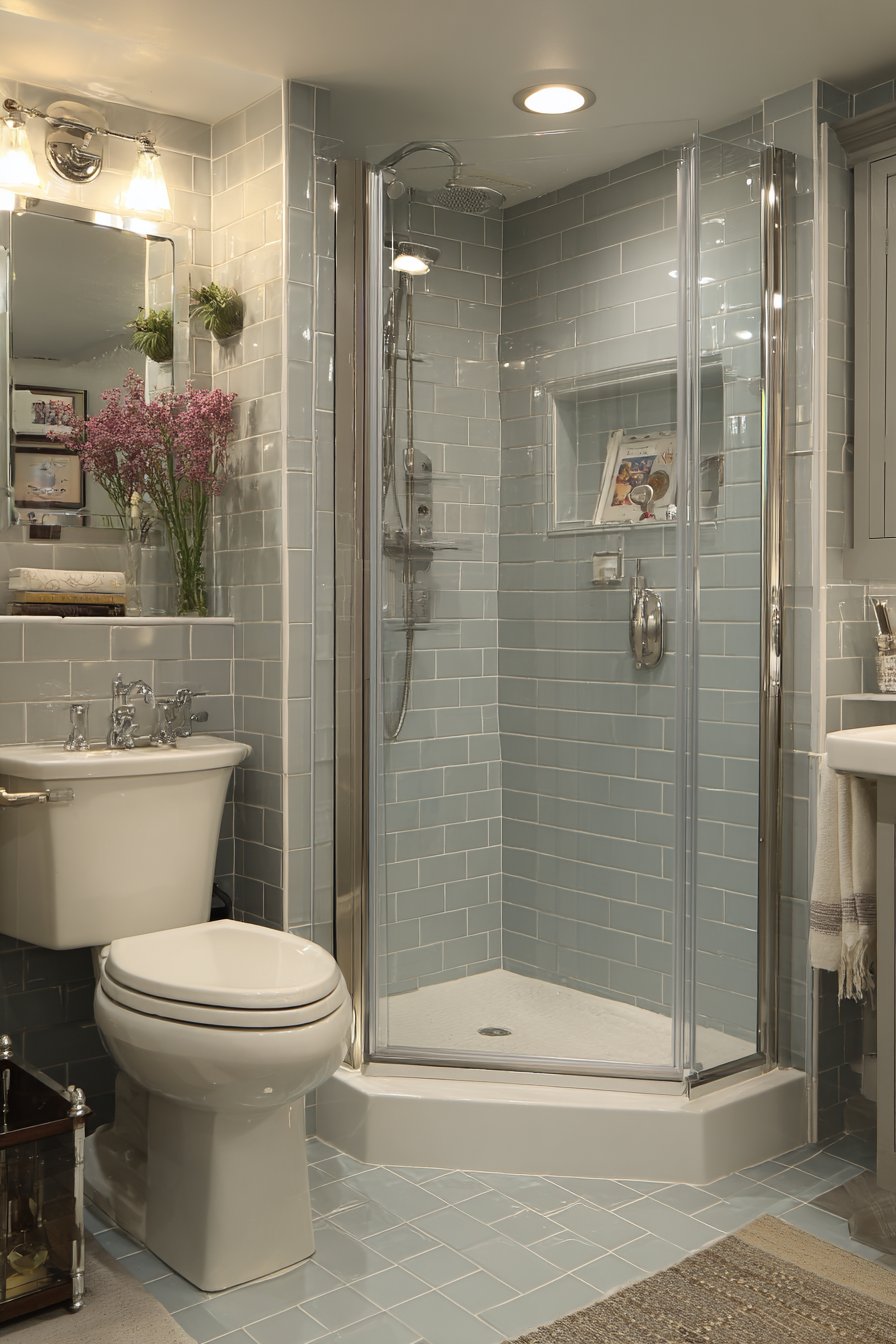
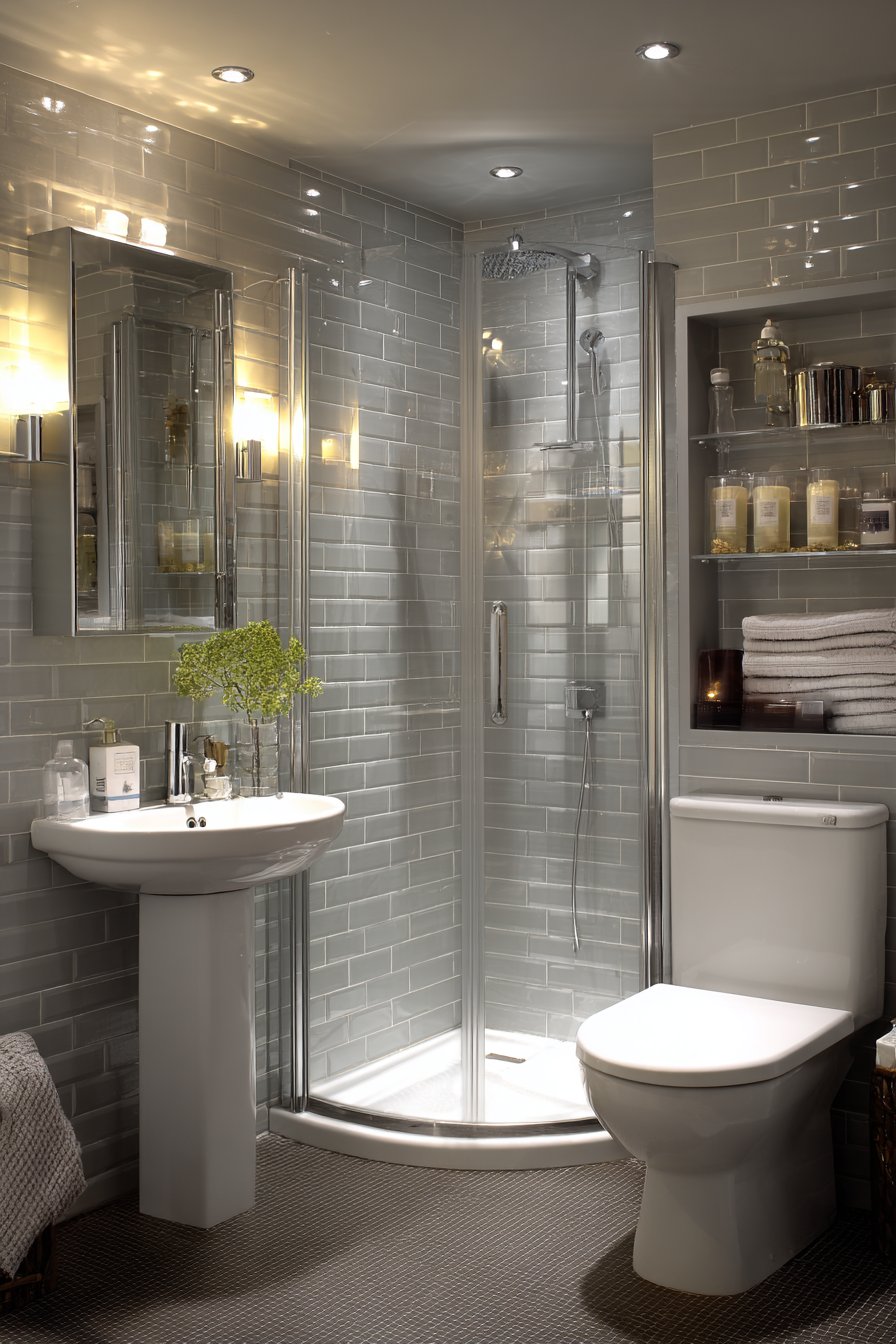
When square footage is limited, basement bathroom ideas must prioritize efficiency without sacrificing style or functionality. This compact solution demonstrates how corner placement of fixtures maximizes usable space, with a corner pedestal sink consuming minimal floor area while providing adequate washing facilities. The wall-mounted toilet further preserves precious square footage, its lack of base allowing for easier cleaning while contributing to an uncluttered, streamlined appearance that makes the small bathroom feel larger than its actual dimensions.
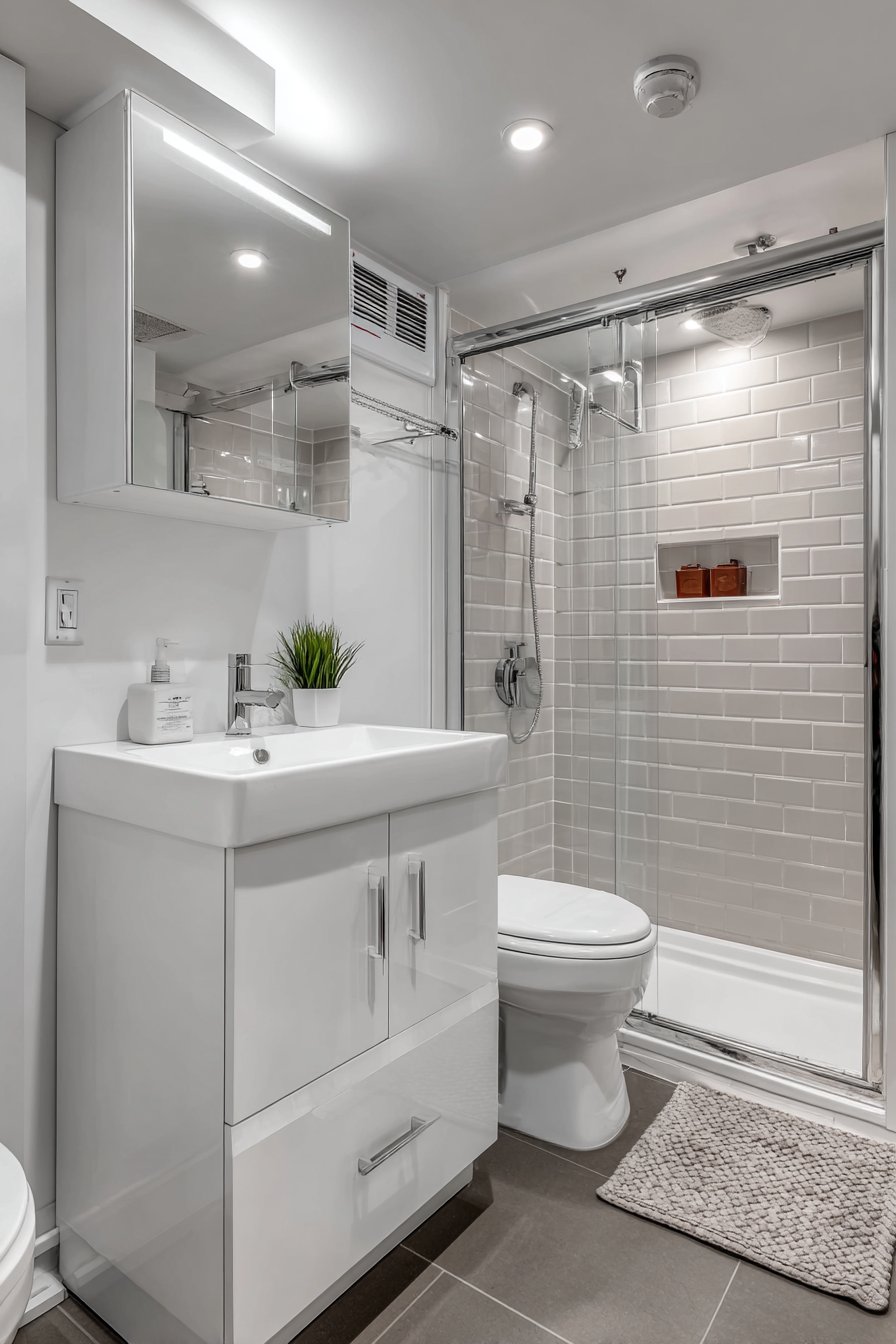
Vertical subway tiles extending to the ceiling create the illusion of height, their elongated installation pattern drawing the eye upward and counteracting any sense of confinement. The light gray color selection strikes an ideal balance, providing more visual interest than stark white while maintaining the brightness essential for small, windowless spaces. Multiple light sources layer throughout the compact footprint—ceiling fixtures provide general illumination, sconces eliminate shadows at the vanity, and LED mirror lighting ensures excellent visibility for grooming tasks.
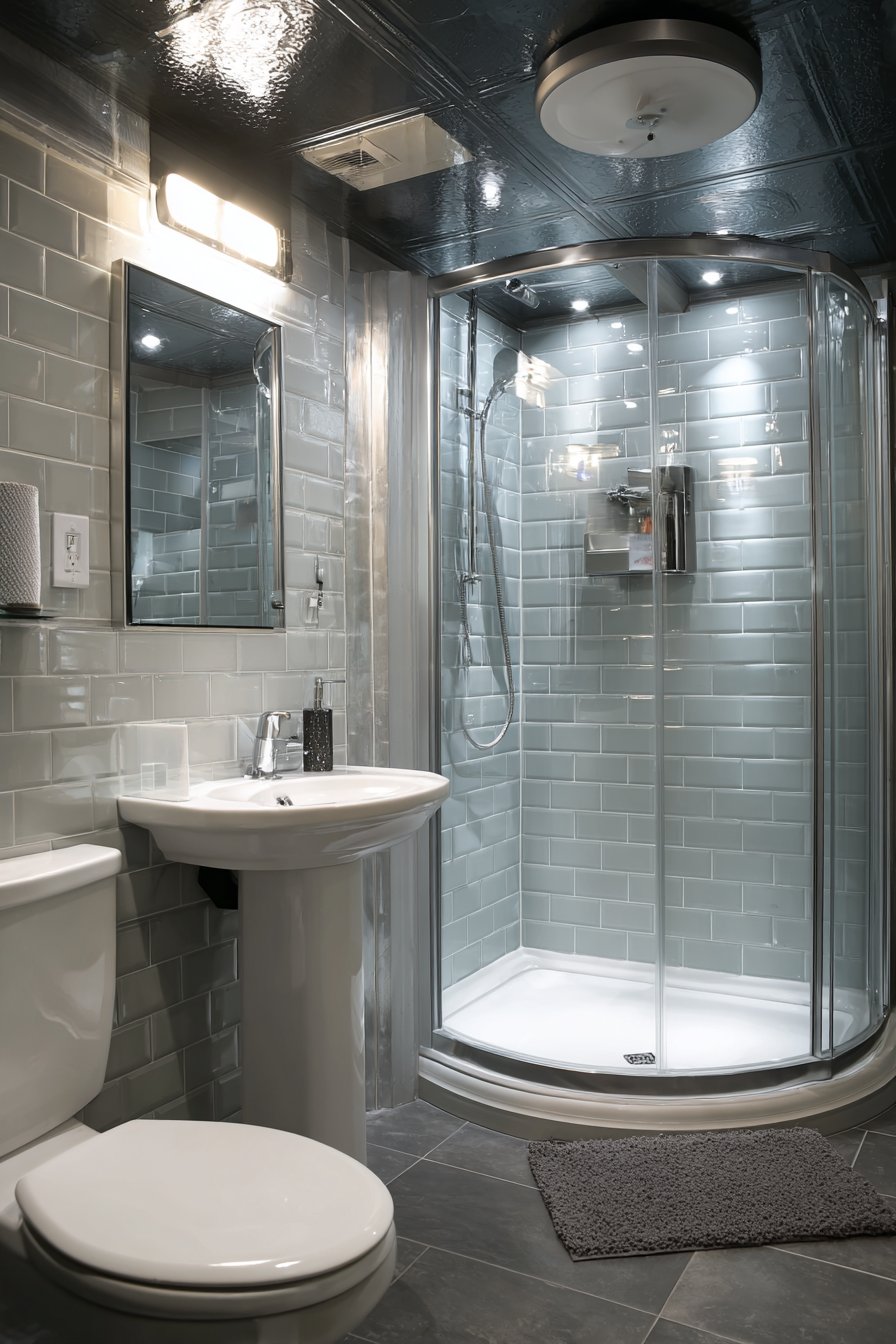
The narrow shower stall features a clear glass door that maintains visual continuity rather than fragmenting the space with opaque barriers. This transparency allows light to flow freely throughout the bathroom, preventing the shower area from becoming a dark corner that would diminish the overall sense of spaciousness. Every design decision serves the dual purpose of aesthetic appeal and practical performance, demonstrating that size limitations need not compromise quality or style.
Key Design Tips:
- Install tiles vertically to create height illusion in compact spaces
- Choose clear glass shower doors over frosted or patterned options
- Layer multiple light sources at different heights for comprehensive illumination
- Select wall-mounted fixtures to maximize floor space and simplify cleaning
- Use a single color palette to prevent visual fragmentation in small areas
5. Luxurious Wet Room Execution
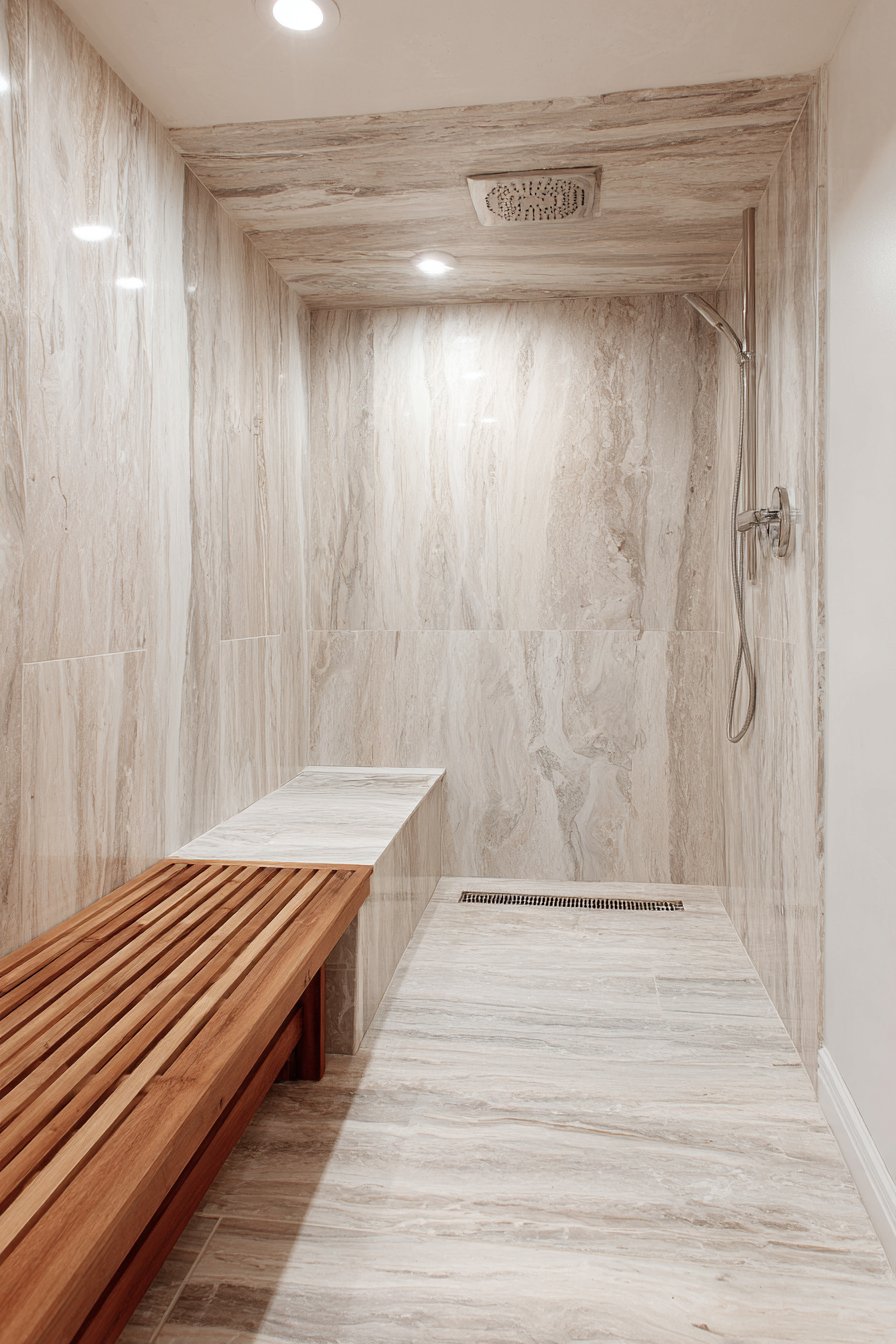
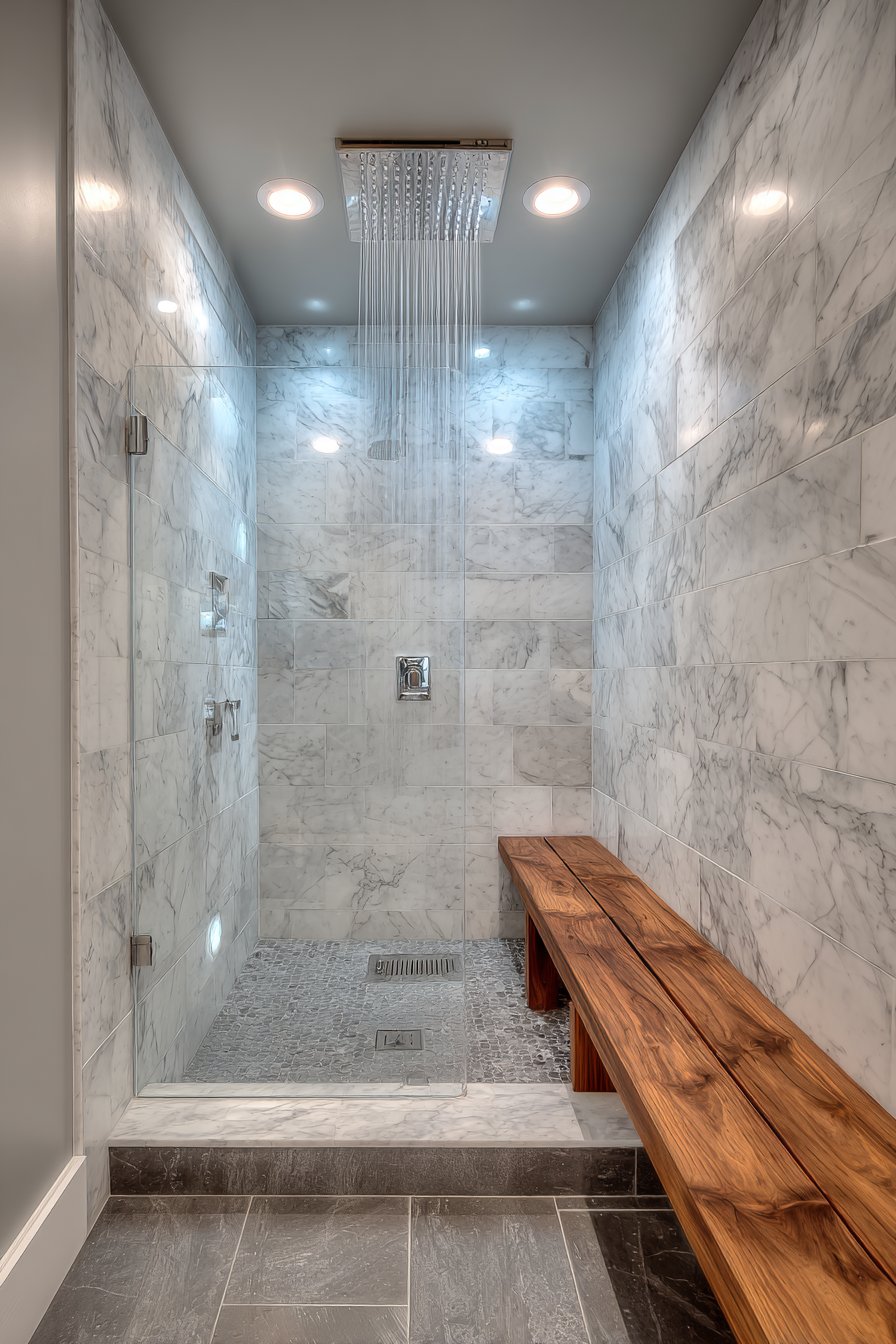
Wet room design represents the pinnacle of sophisticated basement bathroom ideas, eliminating traditional shower enclosures in favor of completely waterproofed spaces where water flows freely to strategically positioned drains. Floor-to-ceiling porcelain tiles in natural stone appearance create seamless surfaces that combine beauty with performance, their non-porous nature resisting moisture penetration while delivering the organic elegance of quarried stone. The linear drain system integrates flush with the flooring, its sleek profile maintaining clean lines while efficiently channeling water away from all areas of the room.
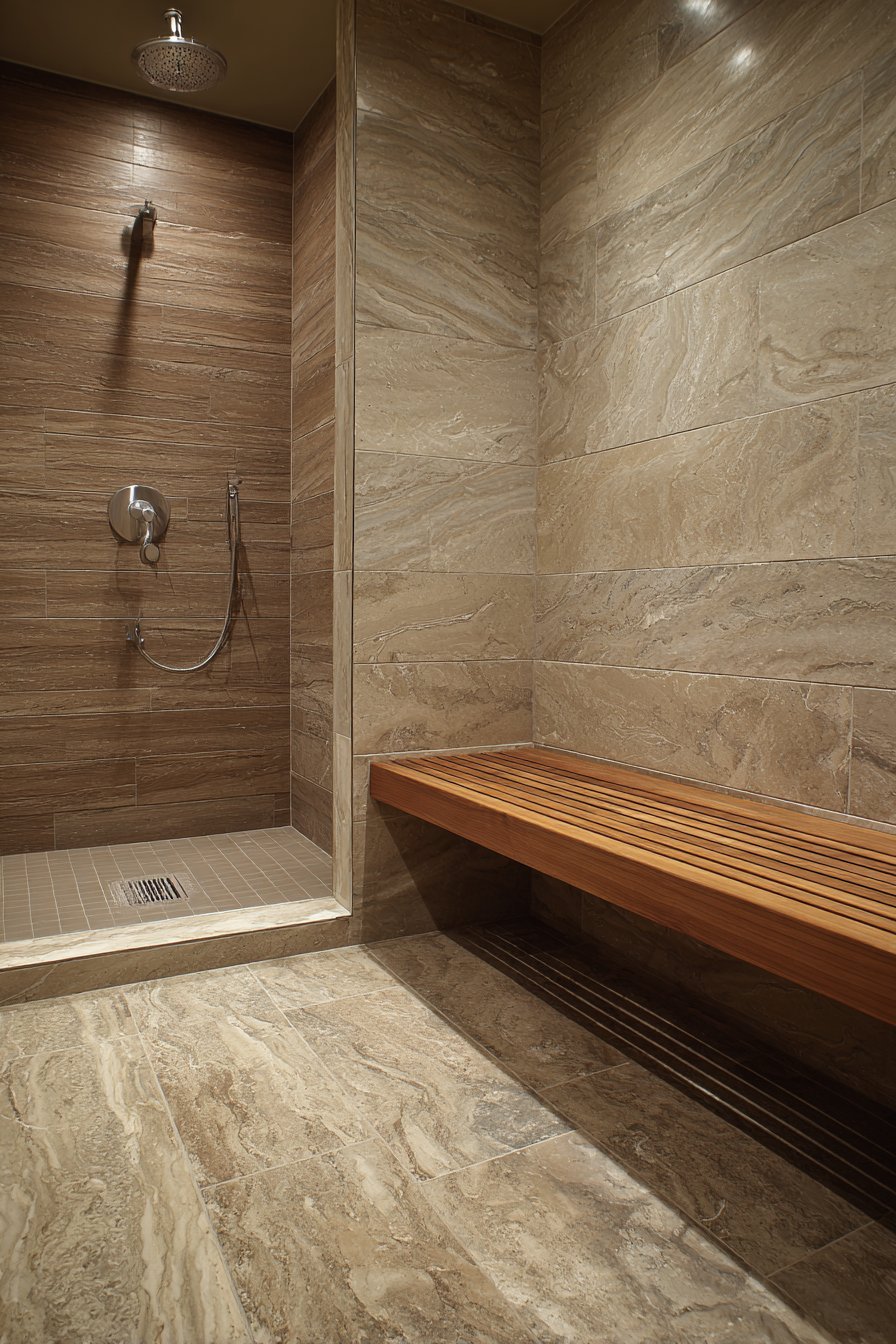
The walk-in shower area features a rainfall showerhead that provides spa-like luxury, complemented by proper waterproofing membrane installation visible in subtle construction details that demonstrate the thoroughness of the moisture barrier system. Heated flooring combat the inherent chill of basement concrete slabs, providing comfort that transforms the bathing experience from merely functional to genuinely luxurious. A teak wood bench introduces natural warmth and provides practical seating, its naturally water-resistant properties making it ideal for wet room applications.
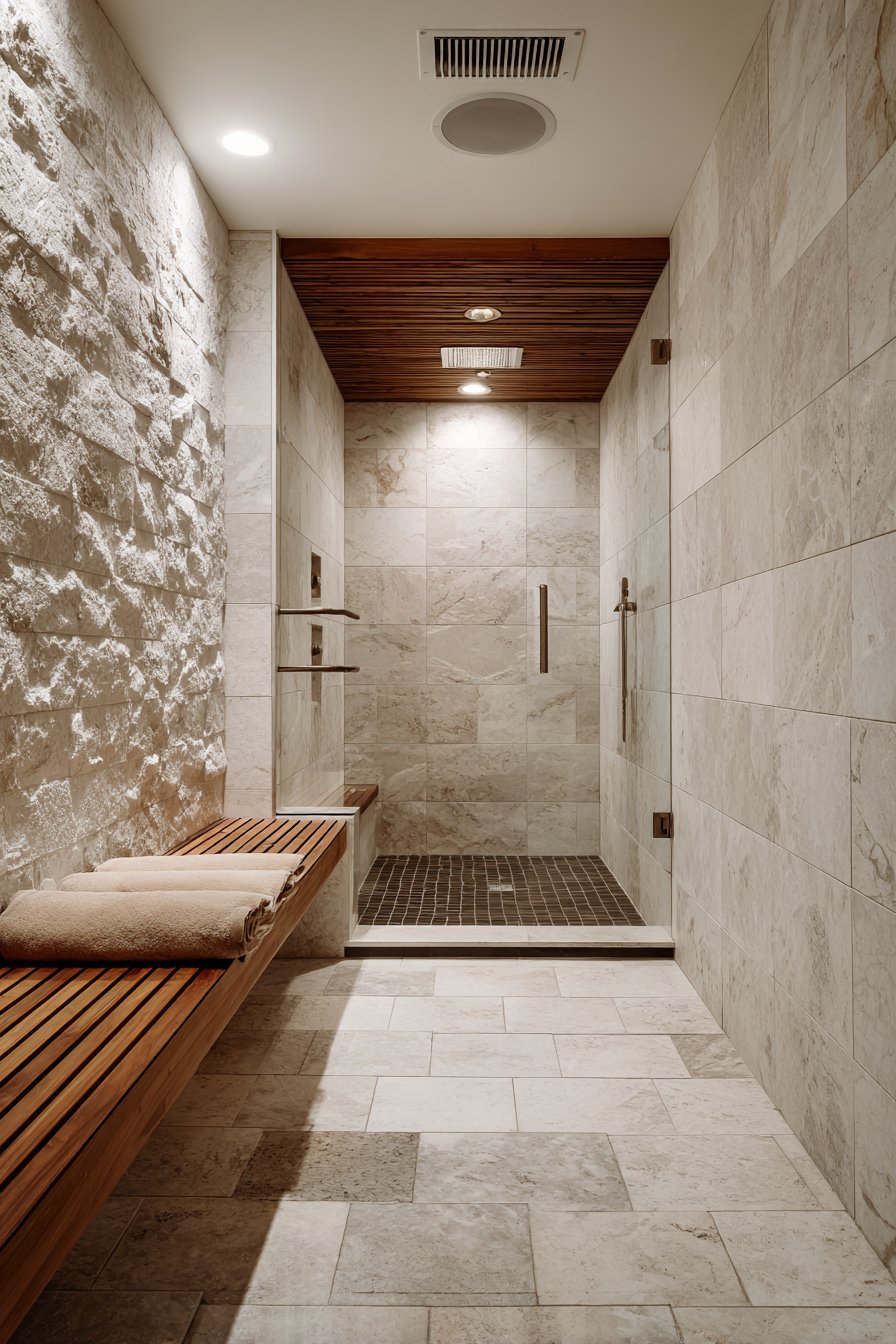
This design approach requires meticulous attention to waterproofing details, with every seam, corner, and penetration receiving careful treatment to prevent moisture migration into surrounding structure. The seamless aesthetic belies the complex construction methods involved, from sloped subfloors ensuring proper drainage to carefully detailed transitions between wall and floor surfaces. The result justifies the investment, creating a bathroom that feels more like a private spa than a basement utility space.
Key Design Tips:
- Install comprehensive waterproofing membranes on all surfaces, not just shower areas
- Slope the entire floor toward the linear drain at proper gradient (typically 1/4 inch per foot)
- Choose large-format tiles to minimize grout lines and maintenance
- Select naturally water-resistant wood species like teak for any wooden elements
- Install heated flooring throughout for comfort and moisture management
6. Strategic Lighting Solutions
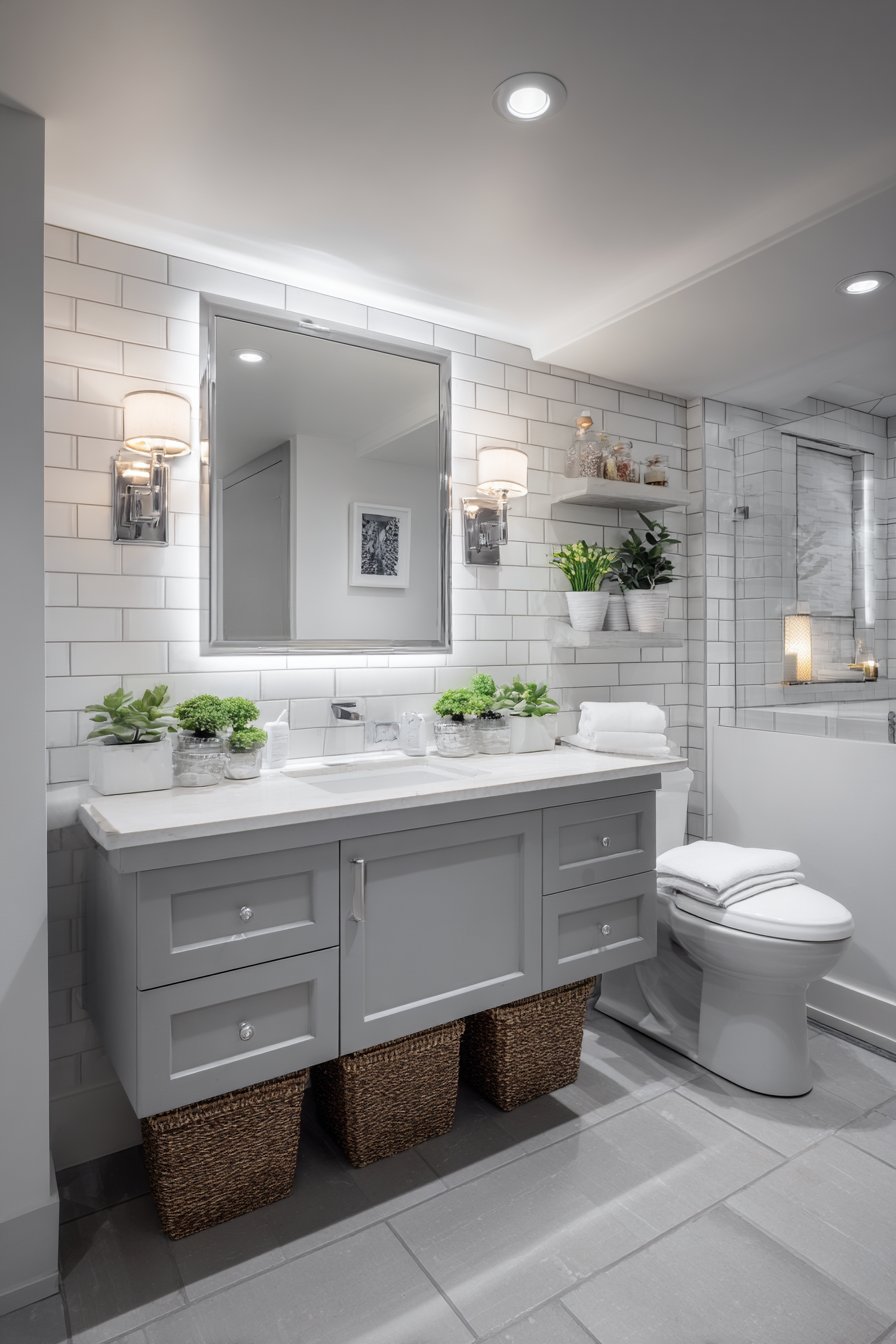
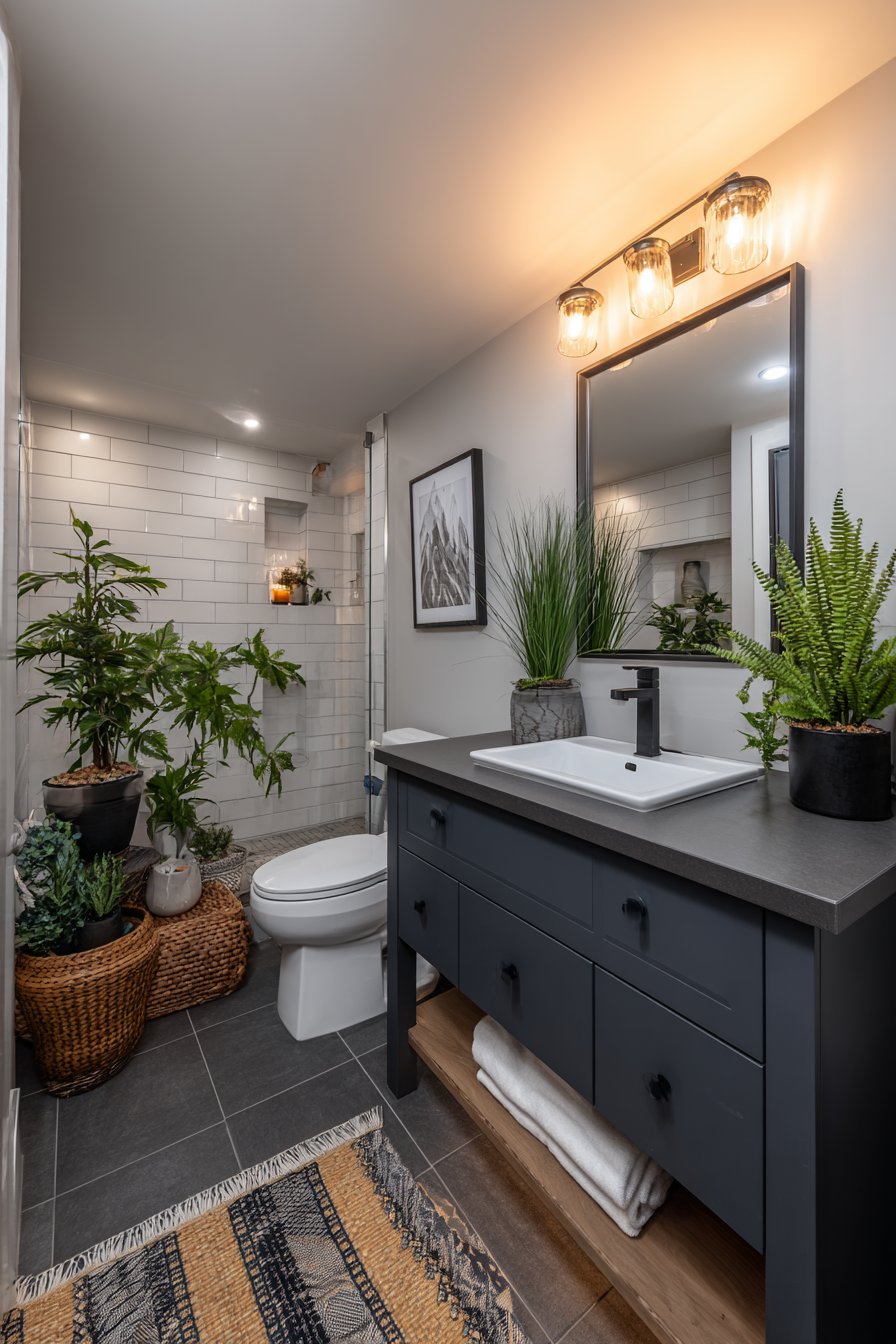
Lighting transforms basement bathroom ideas from dark, uninviting spaces into bright, welcoming retreats. This design showcases the power of layered illumination, combining recessed ceiling cans for general ambient light with vanity sconces positioned at ideal heights for task lighting during grooming activities. Warm LED bulbs throughout create inviting atmosphere while consuming minimal energy, their 2700-3000K color temperature providing flattering illumination that makes the windowless space feel cozy rather than clinical.
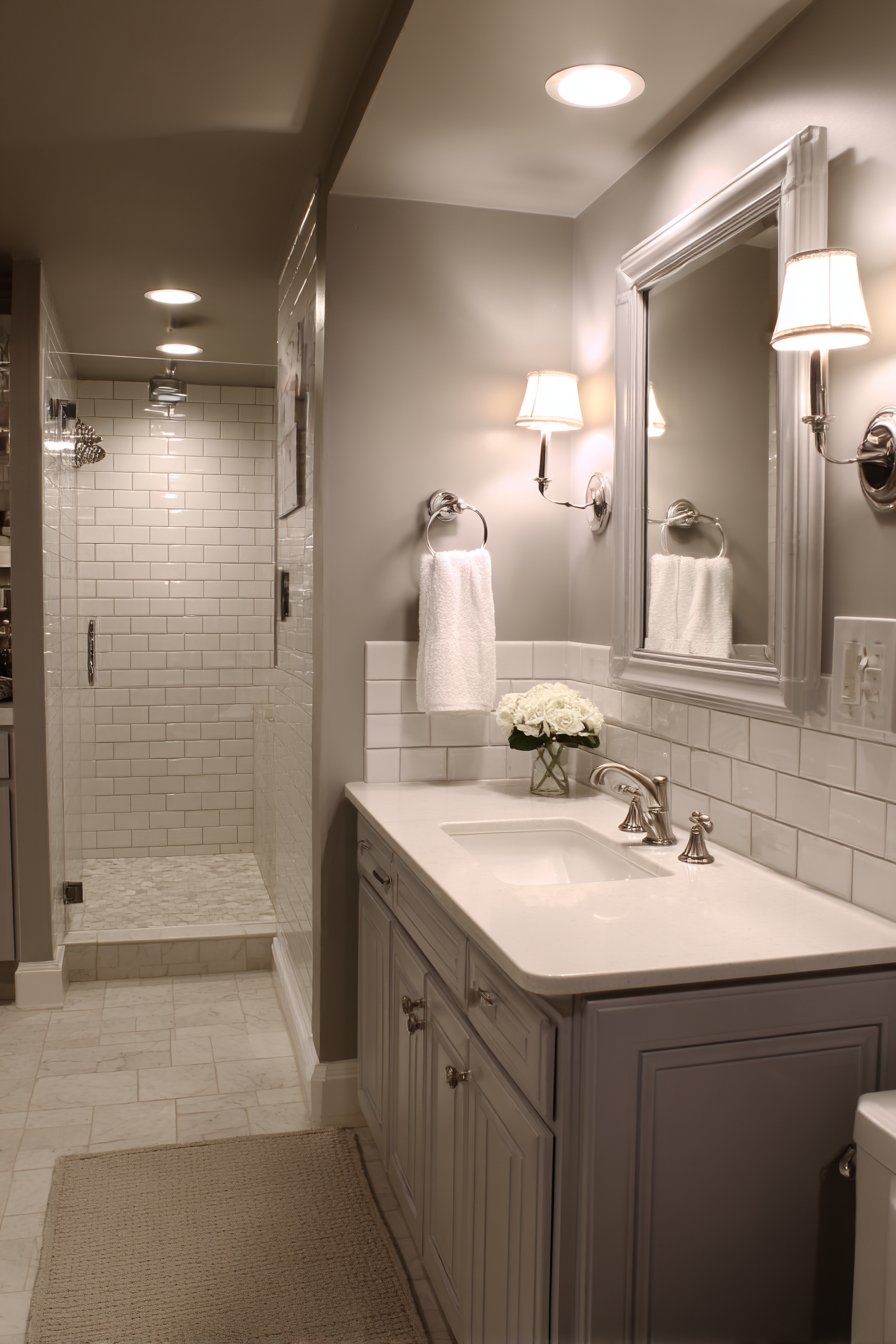
White beveled subway tiles maximize light reflection, their dimensional surface creating subtle shadows that add visual interest while maintaining brightness. The floating gray vanity with soft-close drawers provides ample storage without overwhelming the space, its elevated design maintaining visual flow along the floor plane. Under-cabinet lighting adds another illumination layer, eliminating shadows in the vanity toe-kick area while providing practical light for locating stored items.
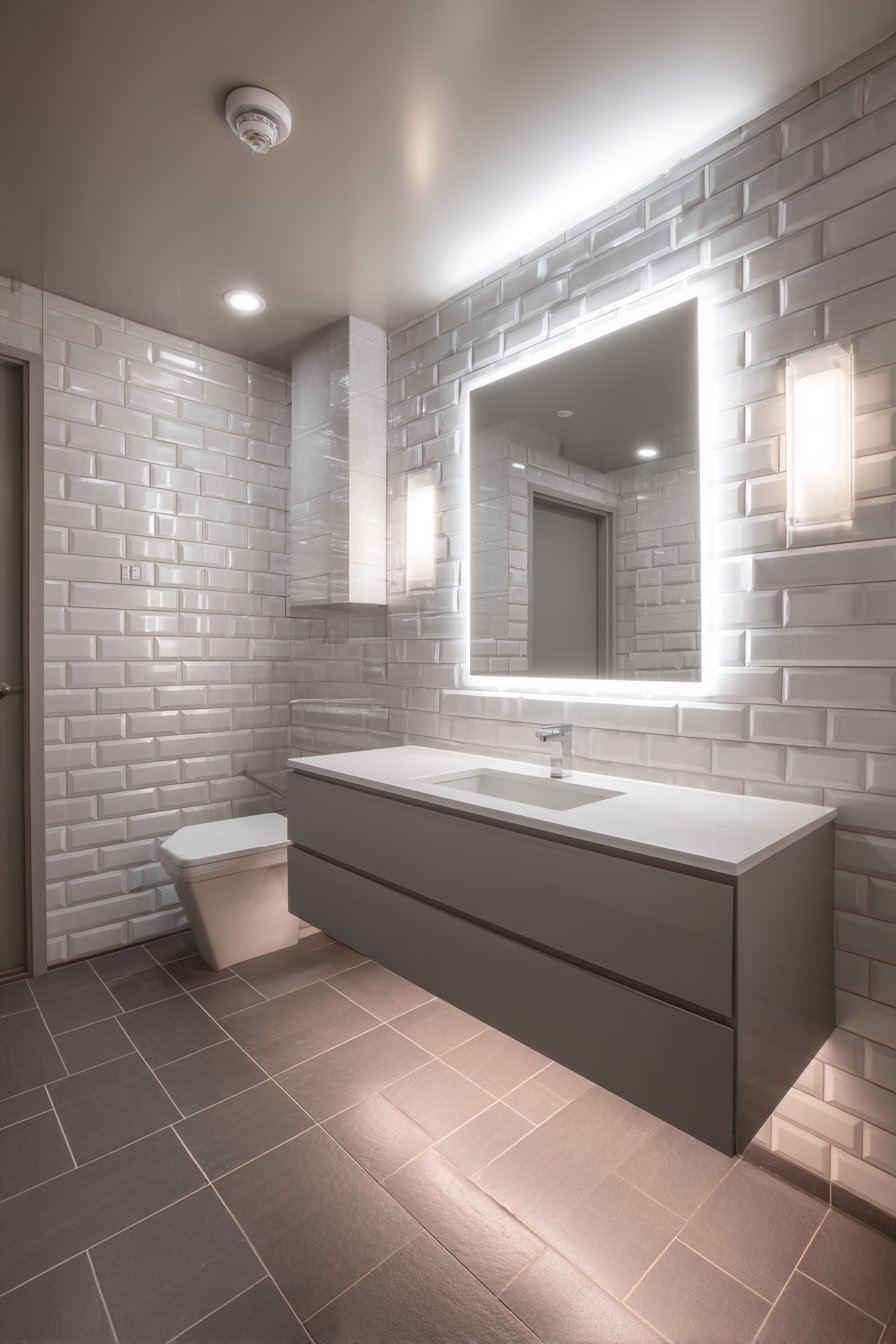
A frameless mirror with integrated LED backlighting serves triple duty—providing task lighting for the vanity, creating ambient glow that washes the wall, and amplifying the perceived size of the room through reflection. This attention to lighting design demonstrates how proper illumination strategy can completely transform the character of basement spaces, turning potential darkness into an asset by creating warm, inviting atmosphere through thoughtful fixture selection and placement.
Key Design Tips:
- Install dimmable switches on all lighting circuits for flexible ambiance control
- Position vanity sconces at 60-65 inches from floor for optimal face lighting
- Choose LED bulbs in warm color temperatures (2700-3000K) for flattering light
- Layer multiple light sources rather than relying on single overhead fixtures
- Use backlit mirrors to create ambient glow while providing task lighting
7. Rustic Cabin Aesthetic
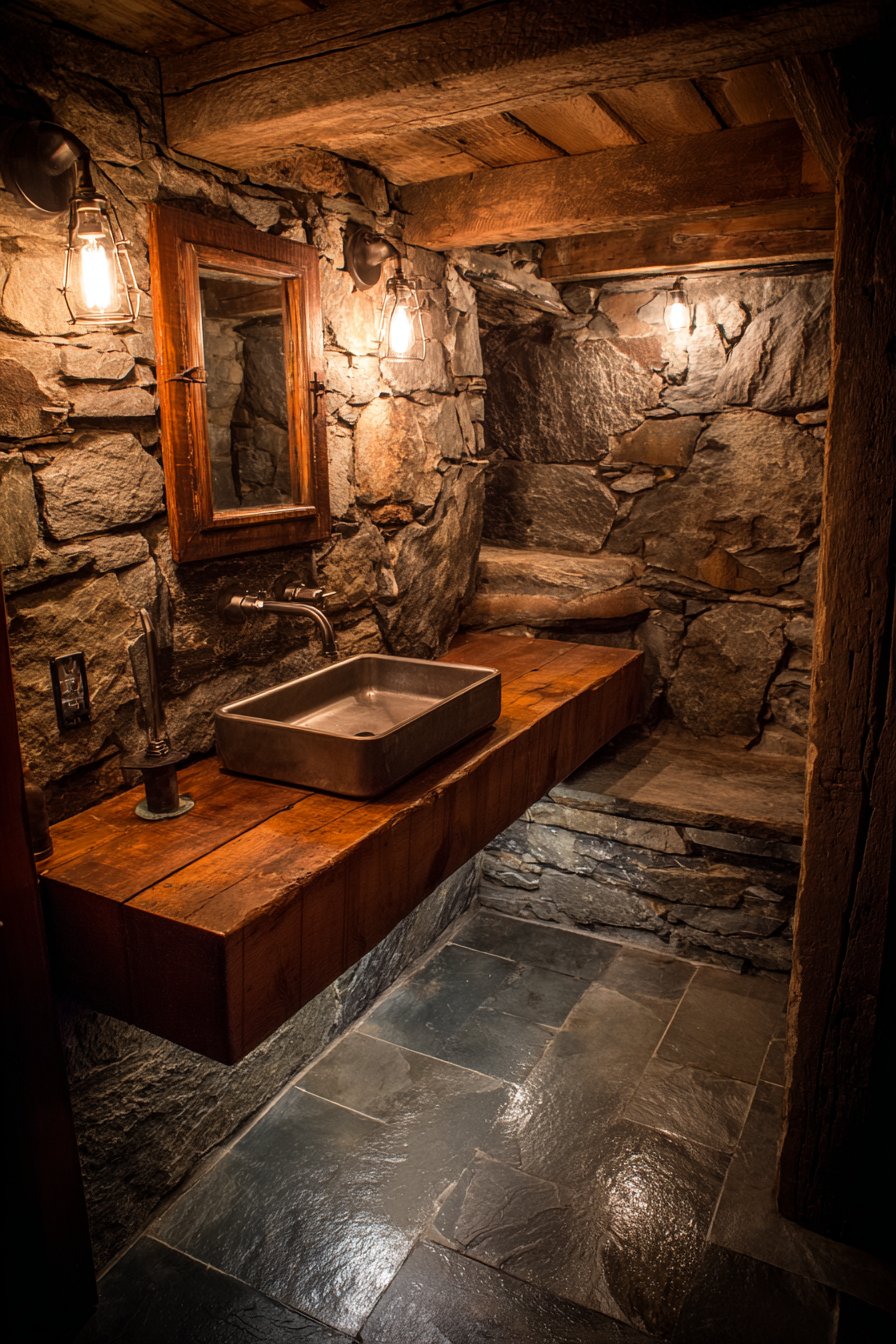
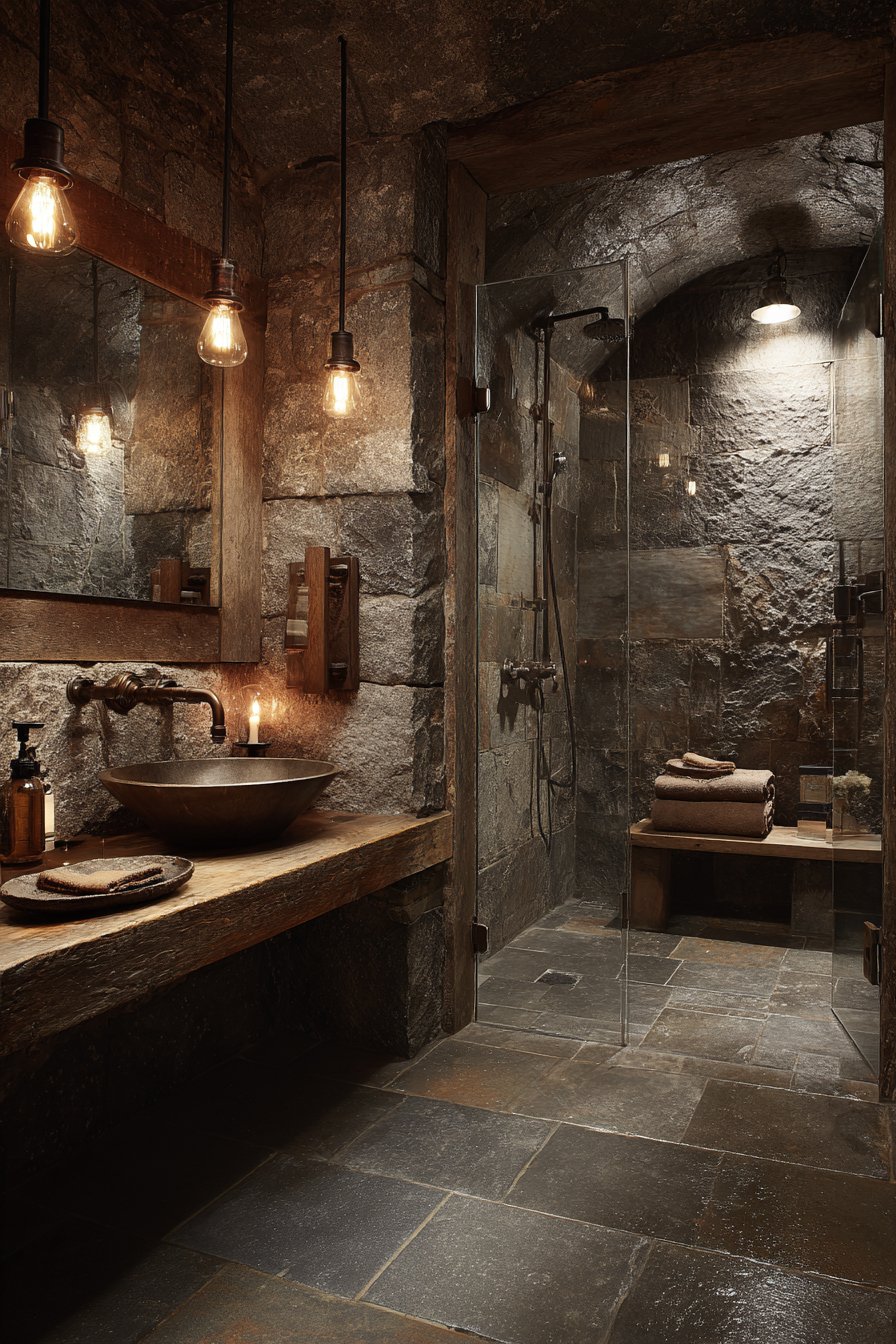
Rustic charm adapts beautifully to basement bathroom ideas when materials are properly selected and treated for below-grade moisture conditions. An exposed stone accent wall sealed with waterproof coating provides dramatic texture and organic character, its varied tones and natural irregularities creating visual interest that becomes the room’s focal point. Reclaimed wood fashioned into a floating vanity introduces warmth and history, each weathered plank telling a story while the vessel sink adds contemporary counterpoint to the aged wood.
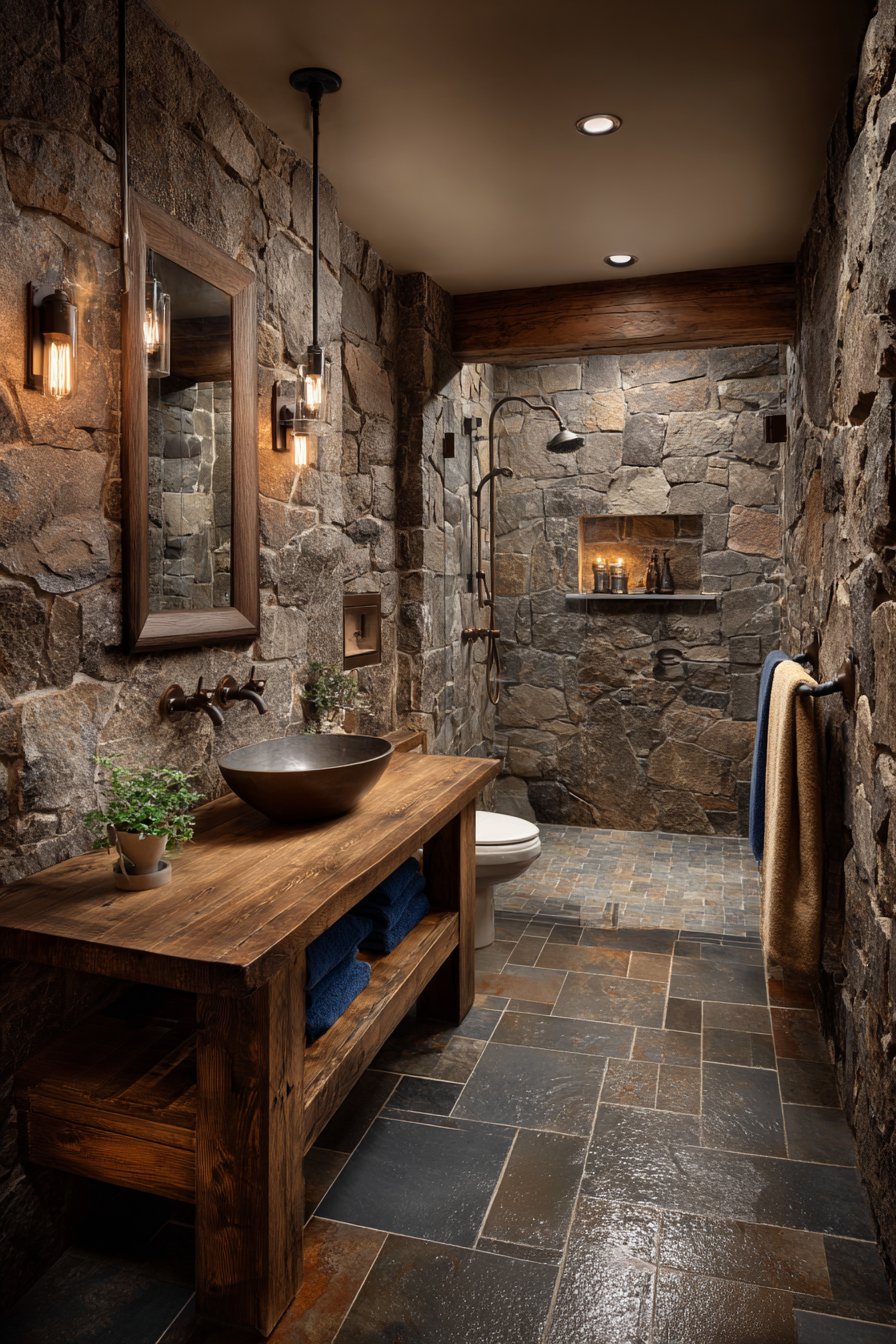
Oil-rubbed bronze fixtures throughout the space harmonize with the rustic aesthetic, their dark patina complementing both the stone and reclaimed wood while providing durability and timeless style. Edison bulb pendant lighting and wall sconces create ambient warmth, their visible filaments adding vintage character while casting golden glow that enhances the cozy cabin atmosphere. Slate-look porcelain tiles cover the floor with proper drainage slope, delivering the appearance of natural stone while offering superior moisture resistance and easier maintenance.
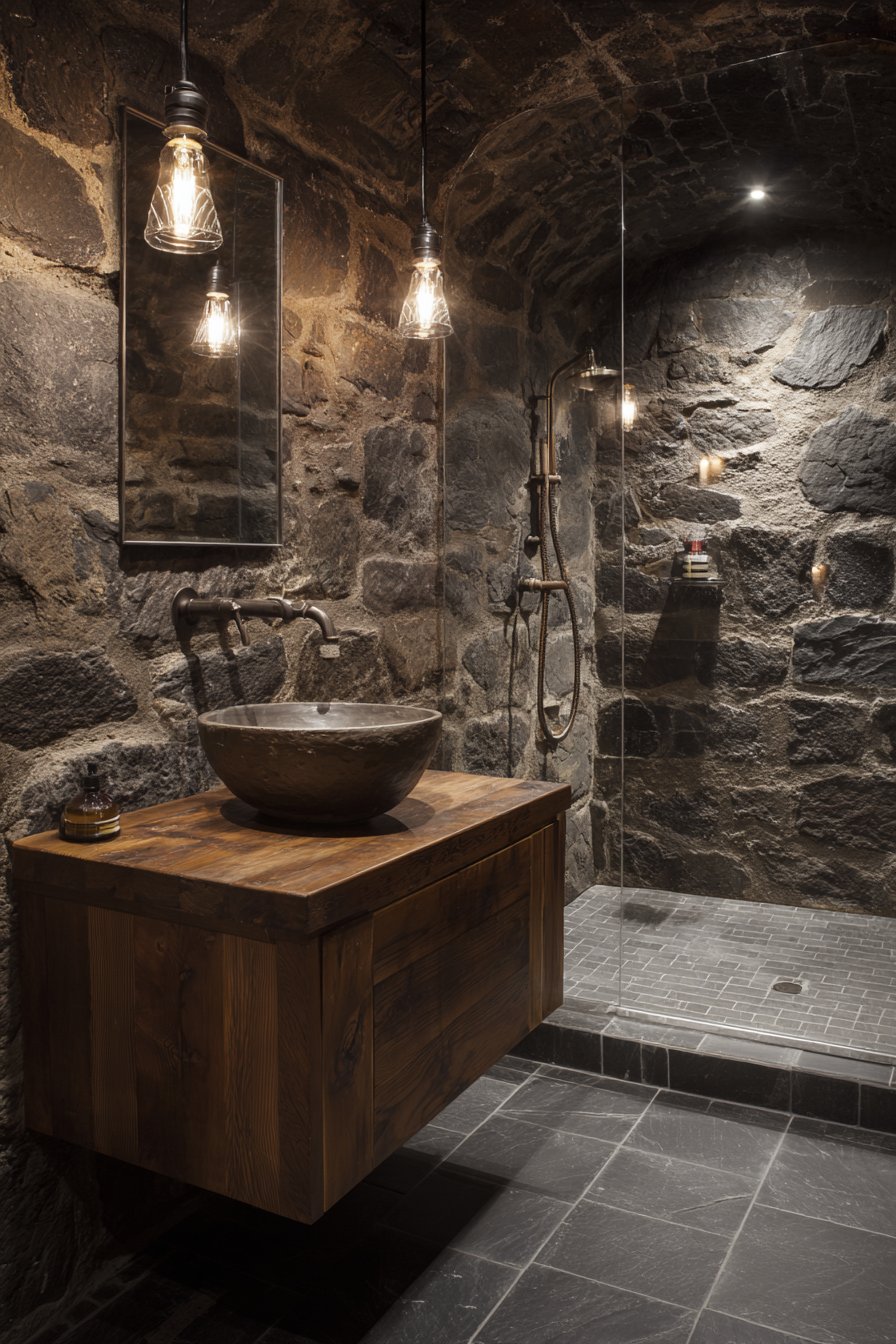
The careful balance between rustic character and practical performance exemplifies thoughtful basement bathroom design. Every material undergoes appropriate treatment—the stone receives multiple coats of penetrating sealer, the reclaimed wood gets sealed with marine-grade finish, and even the bronze fixtures are selected specifically for their corrosion resistance in high-humidity environments. This attention to moisture management ensures the rustic aesthetic remains beautiful for decades rather than deteriorating in the challenging basement conditions.
Key Design Tips:
- Seal all stone surfaces with penetrating waterproof sealer before grouting
- Choose reclaimed wood that’s been kiln-dried and treat with marine-grade sealant
- Install porcelain tiles that mimic natural materials for easier maintenance
- Select oil-rubbed bronze fixtures rated for high-moisture environments
- Ensure proper ventilation to protect natural materials from excess humidity
8. Contemporary Glass Seamlessness
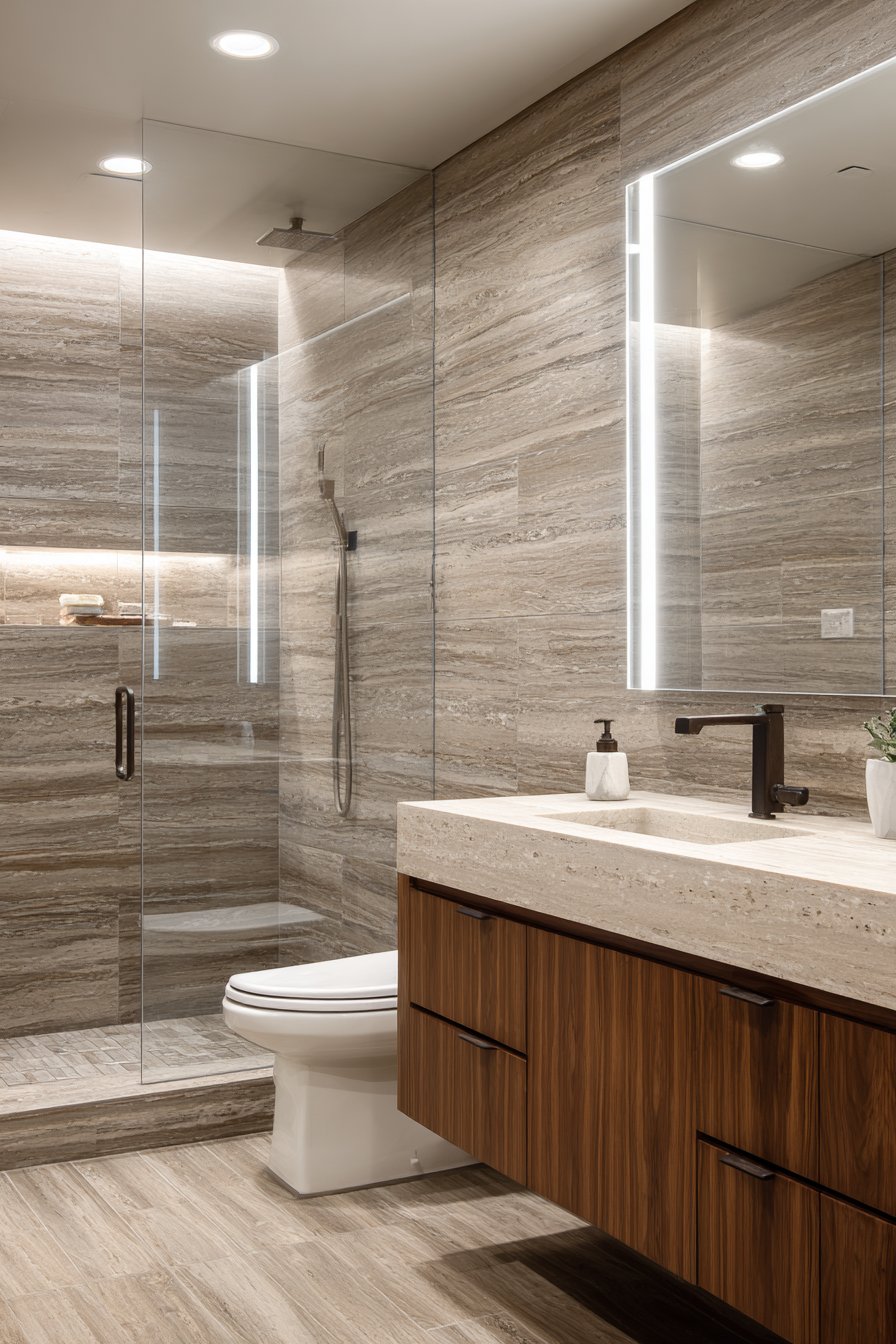
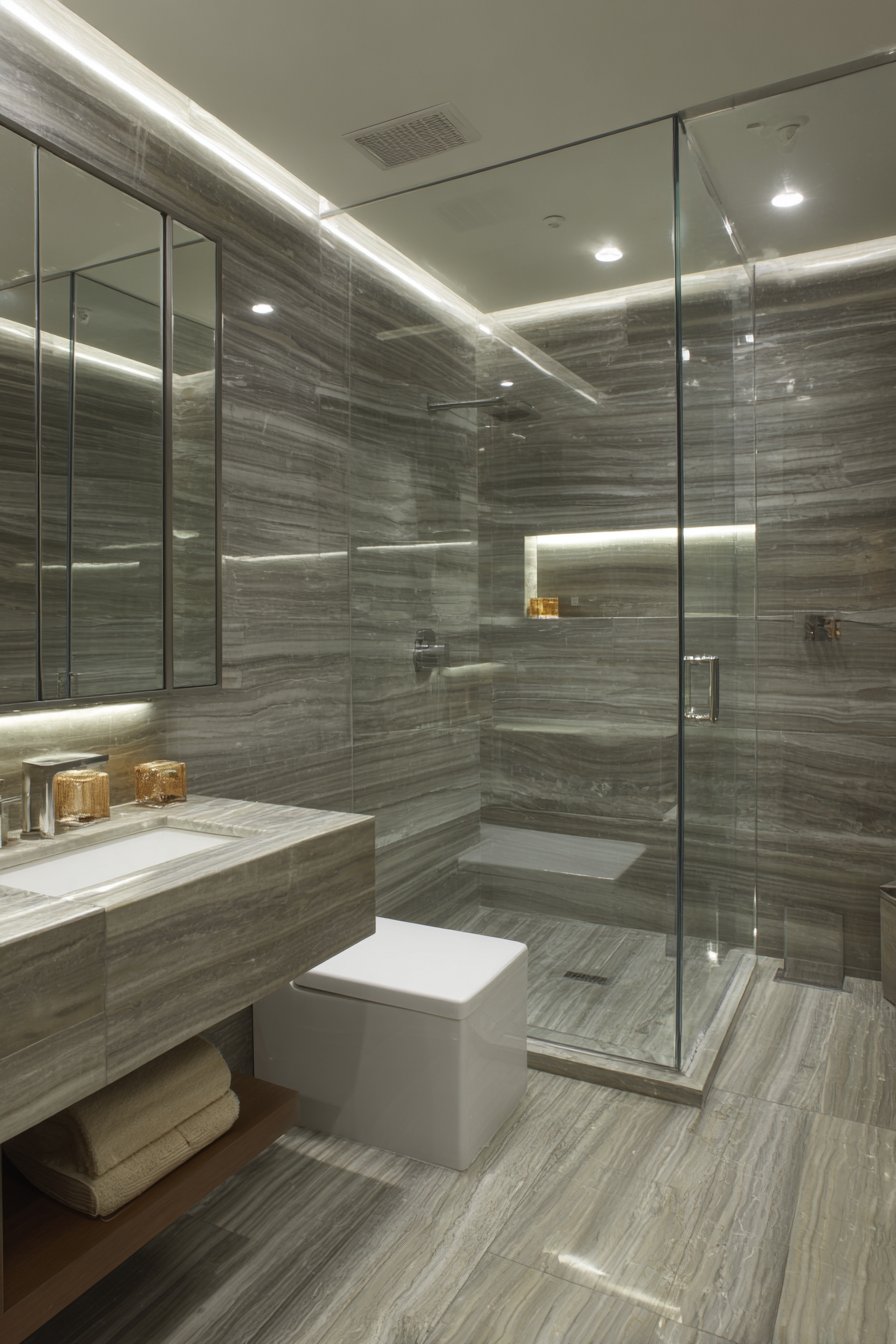
Minimalist sophistication defines this approach to basement bathroom ideas, where seamless glass shower enclosures eliminate visual barriers and create the illusion of expanded space. Large-format gray porcelain slabs cover walls with minimal grout lines, their expansive surfaces creating contemporary elegance while simplifying cleaning and maintenance. The floating toilet with concealed cistern maintains clean lines, its wall-mounted design freeing floor space and contributing to the uncluttered aesthetic that characterizes truly modern bathrooms.
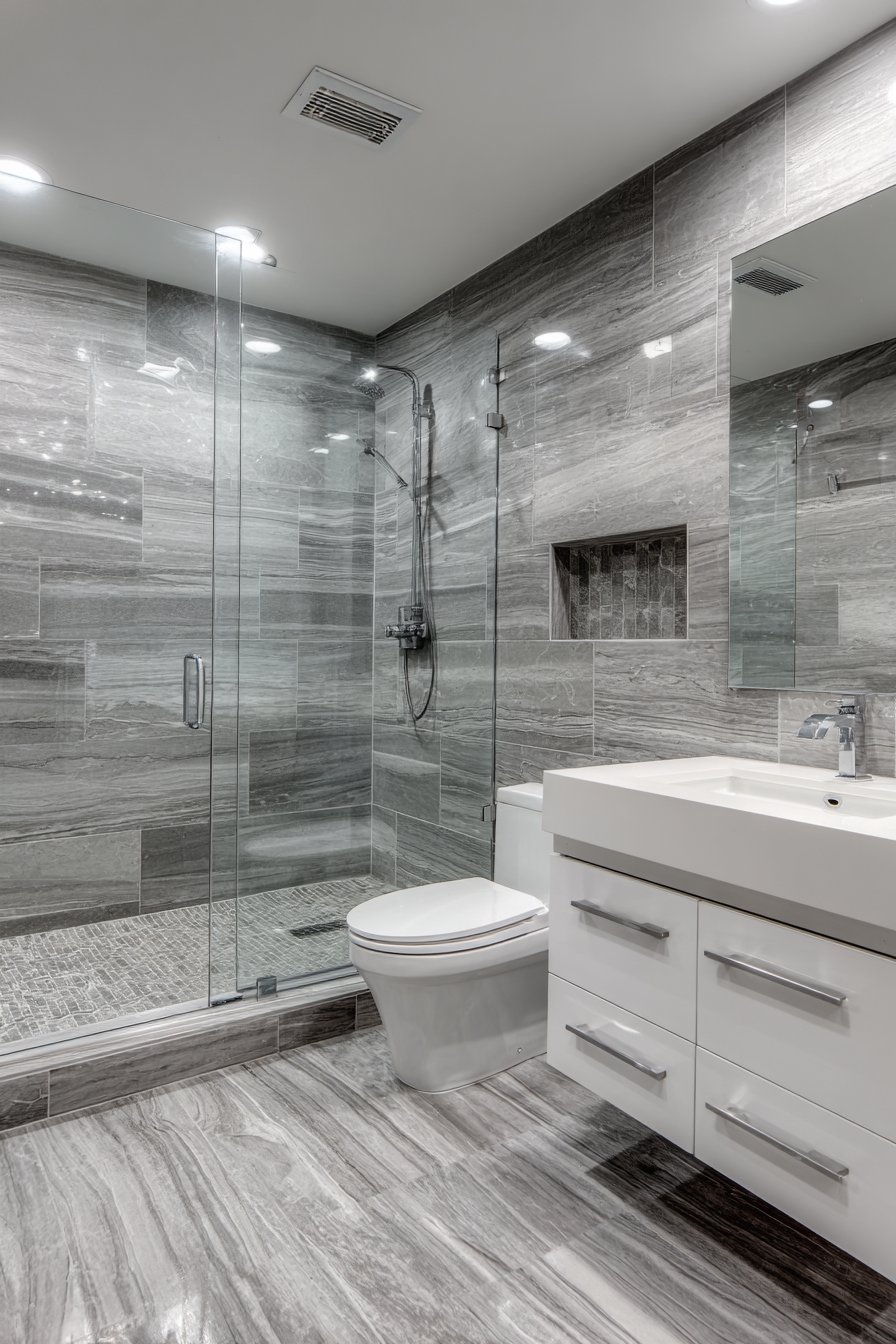
Chromatic LED lighting in the shower niche provides color therapy options, allowing users to customize their bathing experience with warm, cool, or colored light depending on mood and desired atmosphere. This technological integration demonstrates how basement bathrooms can incorporate modern amenities that rival or exceed what’s possible in traditional above-grade spaces. A wall-mounted faucet positioned over a trough sink maximizes counter space while introducing architectural interest through its geometric form.
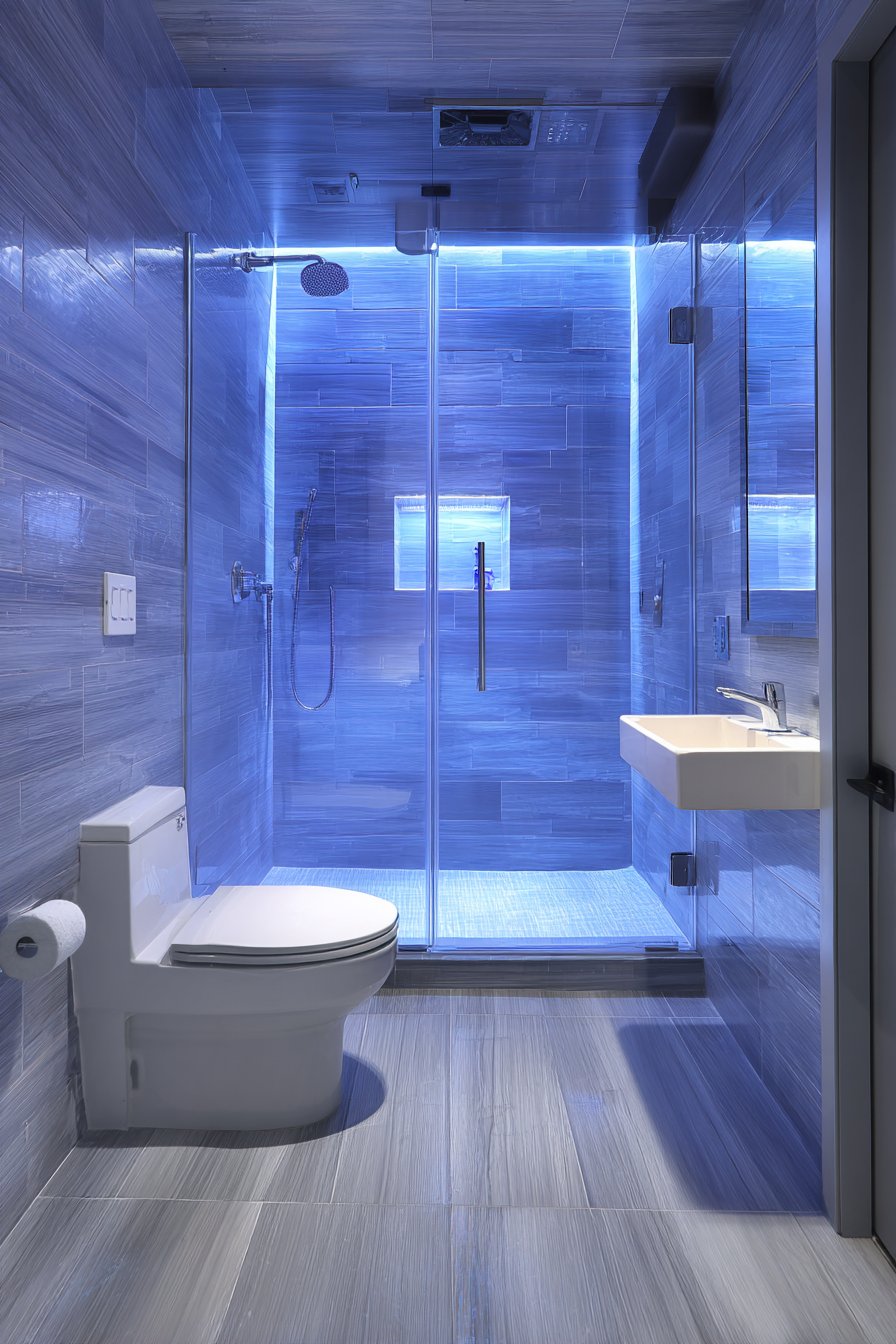
The gray color palette flows throughout the space in carefully varied tones, from light silvery walls to deeper charcoal flooring, creating subtle depth that prevents monotony while maintaining cohesive sophistication. Chrome fixtures and hardware provide brilliant contrast, their reflective surfaces catching and amplifying light throughout the room. Every element serves the overarching design philosophy of contemporary minimalism, proving that basement bathrooms can achieve the same refined aesthetic as the most sophisticated above-grade spaces.
Key Design Tips:
- Choose large-format tiles (24×48 inches or larger) to minimize grout maintenance
- Install wall-mounted toilets with reinforced framing during construction phase
- Select chromatic LED systems with remote controls for easy color adjustment
- Use floating fixtures throughout to maximize floor visibility and cleaning ease
- Maintain monochromatic color schemes with varied tones for visual depth
9. Nature-Inspired Organic Retreat
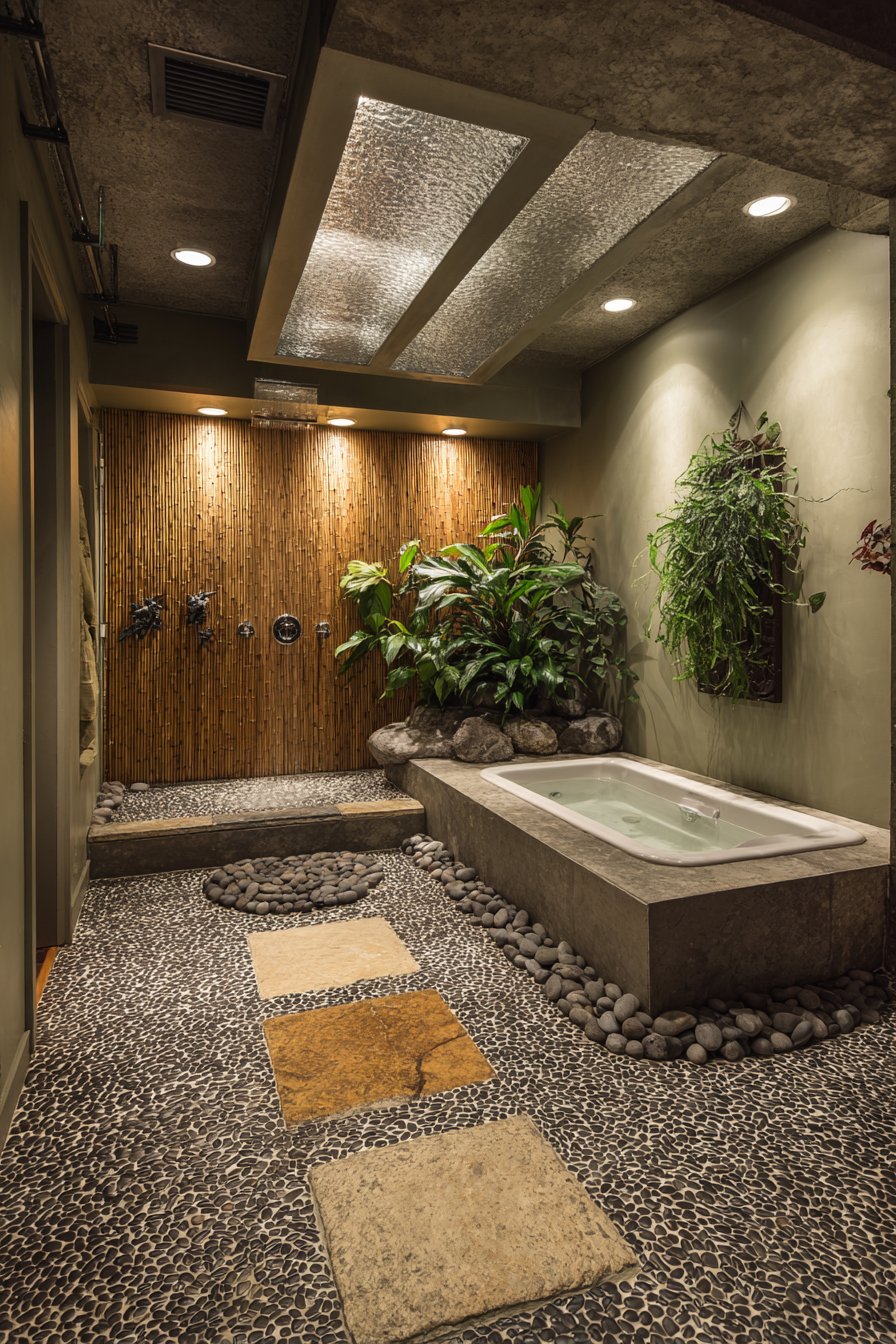
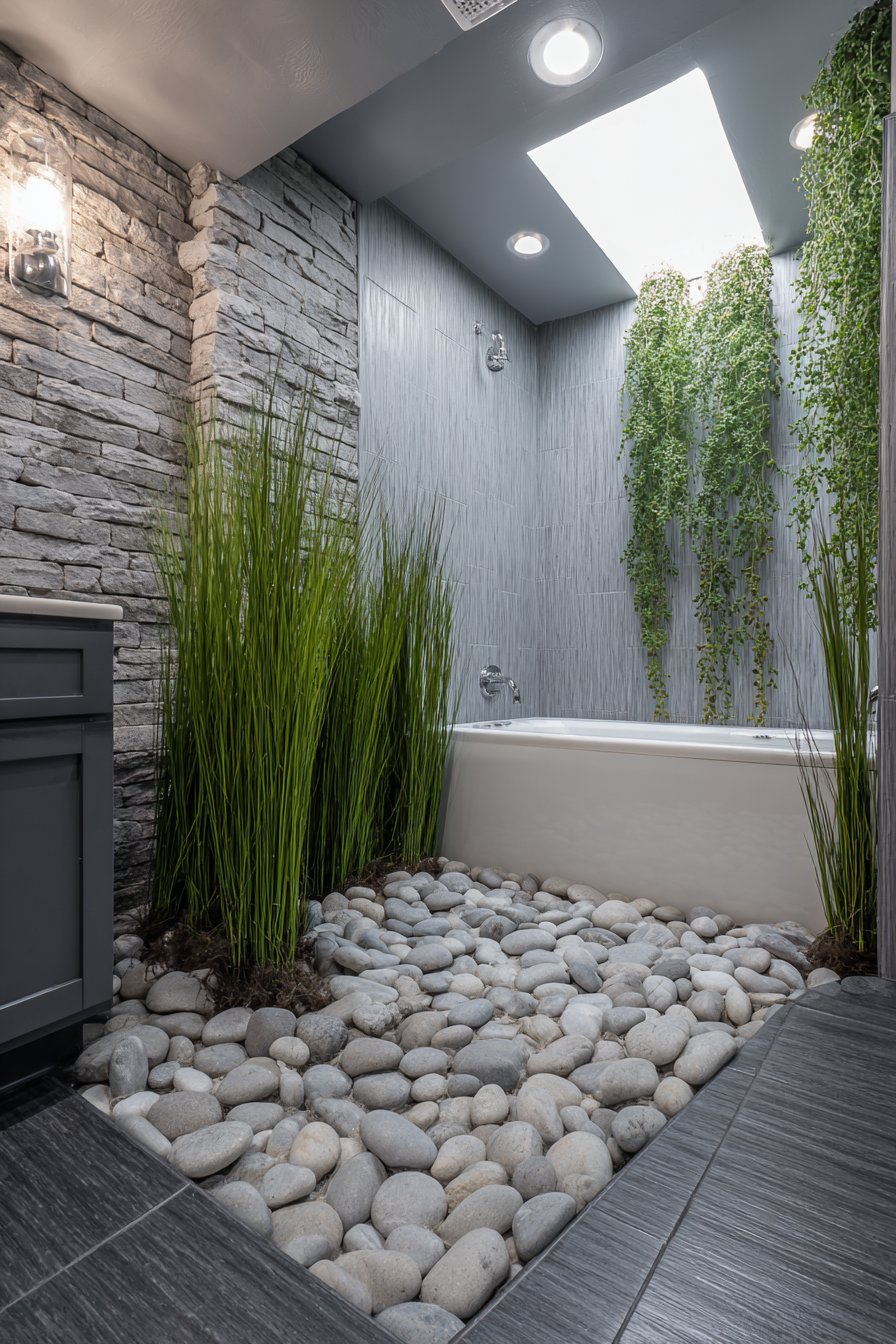
Bringing natural elements into basement bathroom ideas creates soothing environments that counter the enclosed feeling of below-grade spaces. Pebble tile shower floors provide gentle massage effect underfoot while their organic texture and varied tones add visual interest and superior slip resistance. Bamboo-look waterproof laminate wall panels deliver the warmth of natural wood with performance characteristics ideal for high-moisture environments, their vertical grain pattern drawing the eye upward while resisting warping and water damage.
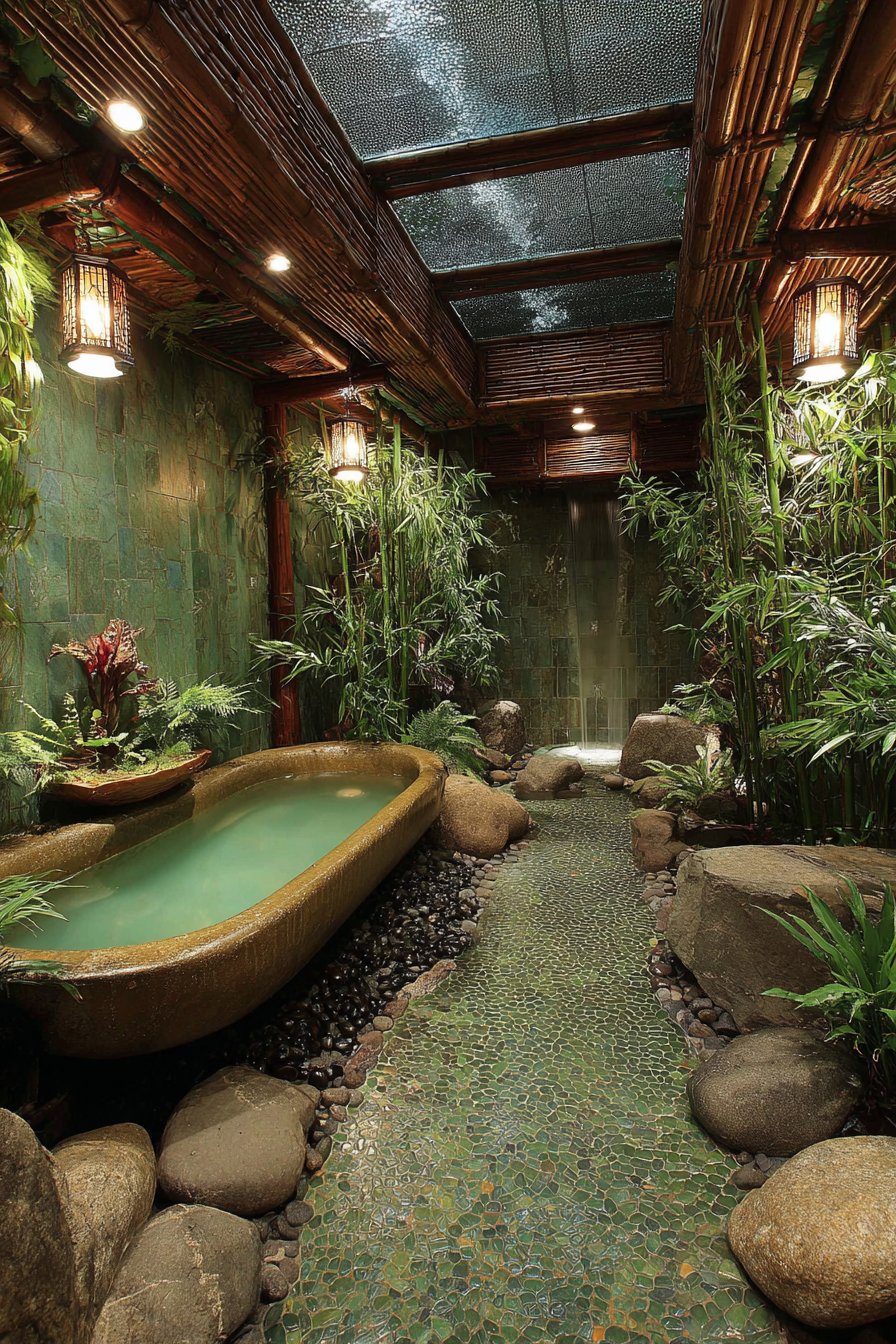
A soaking tub positioned beneath a skylight tunnel captures precious natural light, the tubular design channeling sunlight from the roof through reflective surfaces that illuminate the basement space below. This innovative solution addresses one of the primary challenges of basement bathroom design—the lack of natural light—while creating a luxurious focal point that elevates the entire space. River rock accents and live plants in moisture-loving varieties like ferns and pothos add organic touches that soften hard surfaces and improve air quality.
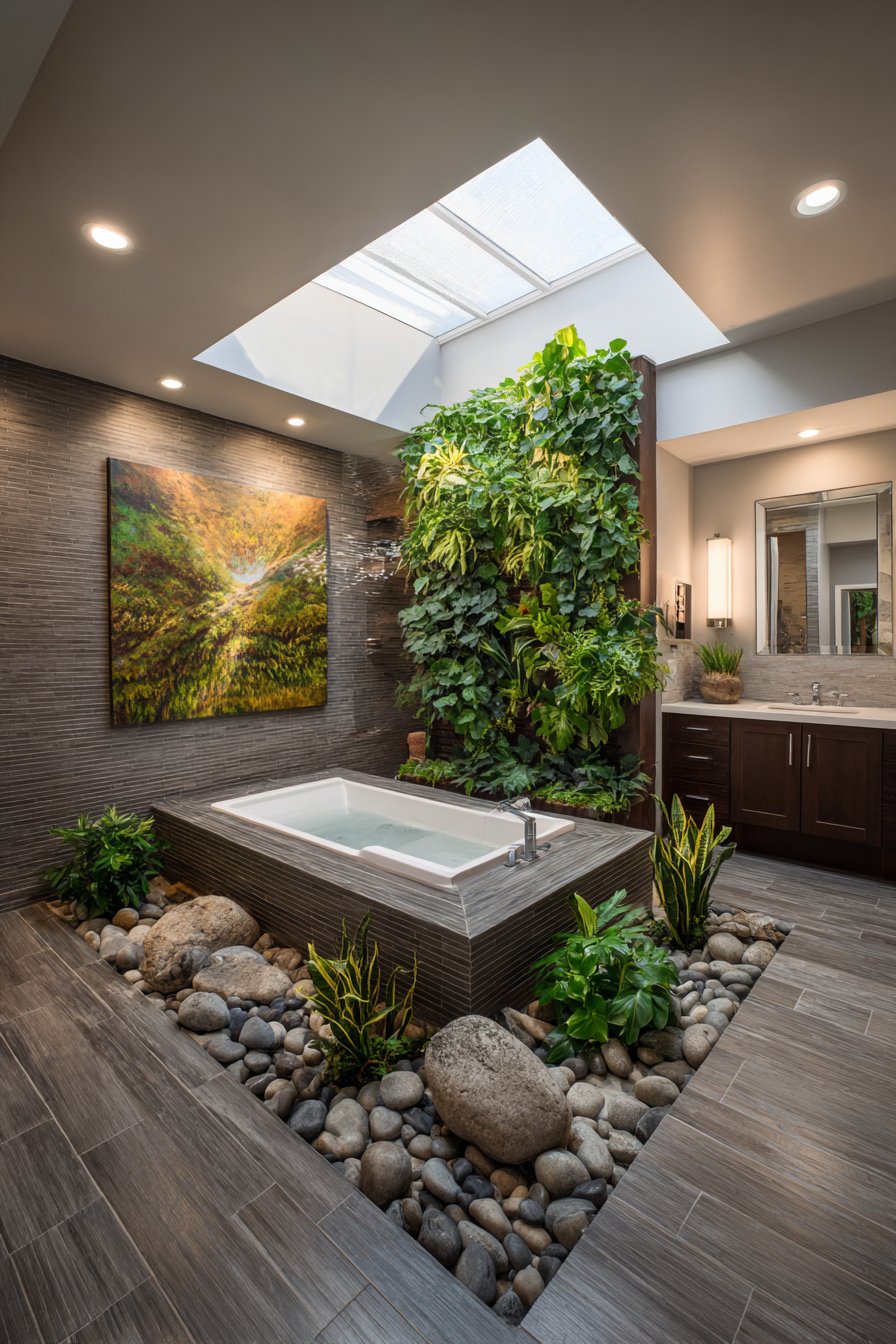
The nature-inspired aesthetic requires thoughtful consideration of both design and practicality. Plants selected must thrive in high-humidity, lower-light conditions, making bathroom-appropriate species essential for success. The skylight tunnel requires proper installation and flashing to prevent leaks, but the investment delivers transformative benefits by bringing natural light deep into the below-grade space. Strategic placement of natural elements throughout the bathroom creates a cohesive organic sanctuary.
Key Design Tips:
- Choose waterproof laminate panels specifically rated for wet area installation
- Install skylight tunnels with professional flashing to prevent roof leaks
- Select pebble tiles with varied stone sizes for authentic natural appearance
- Choose humidity-loving plants like ferns, pothos, and peace lilies
- Ensure adequate ventilation to prevent excess moisture that could damage plants
10. Budget-Friendly Practical Approach
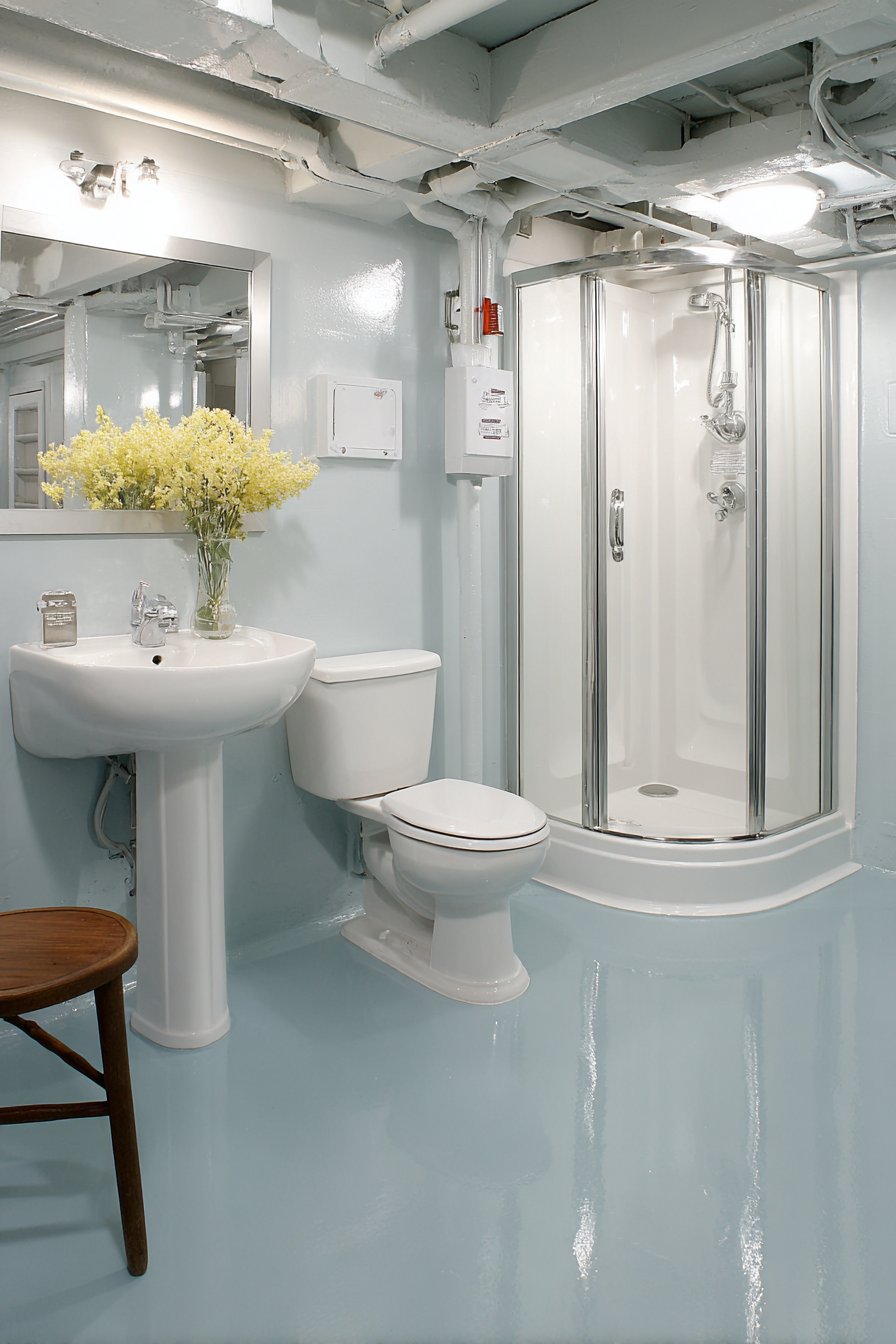
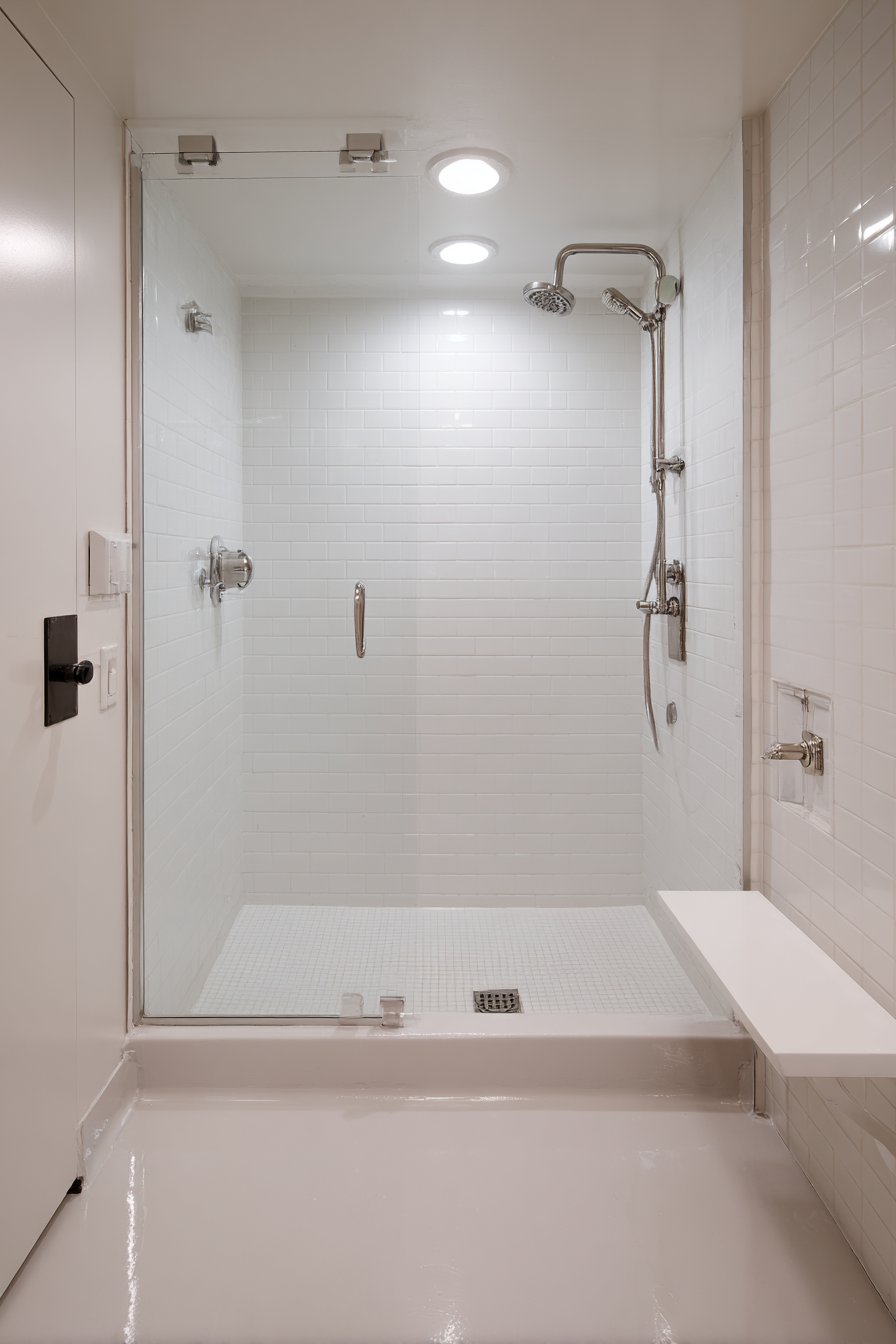
Smart basement bathroom ideas don’t require luxury budgets when homeowners make strategic choices that maximize impact while controlling costs. Painted concrete floors treated with epoxy sealant in light gray provide durable, waterproof surfaces at fraction of tile installation costs, their solid color creating clean backdrop for other design elements. Basic white ceramic tiles installed halfway up walls deliver splash protection where needed while painted moisture-resistant drywall above reduces material expenses without compromising performance.
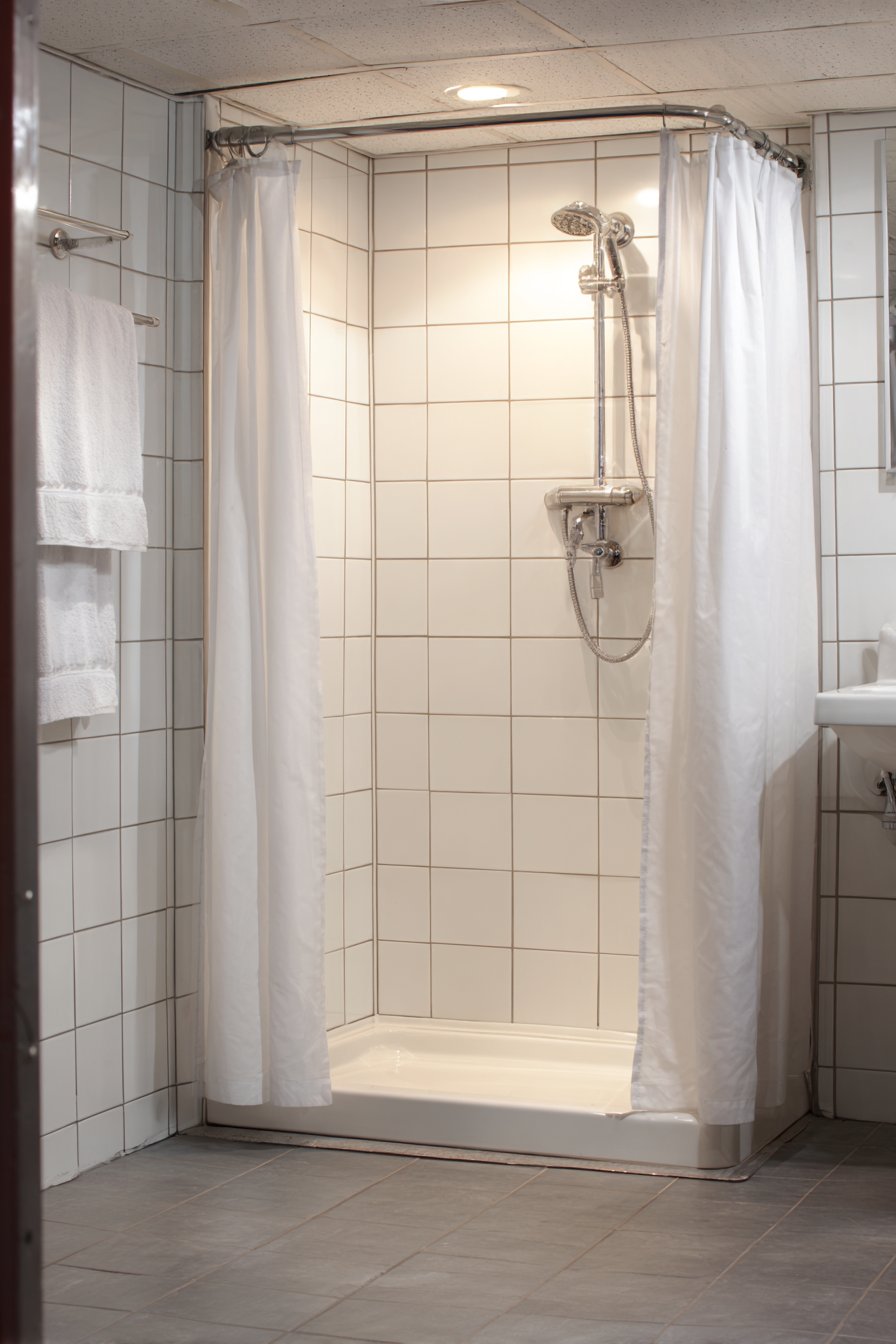
Prefabricated shower units simplify installation and reduce labor costs while providing reliable waterproofing and modern styling. These one-piece or multi-piece units arrive ready for connection to plumbing, eliminating the complexities of custom tile work while ensuring watertight construction. Simple chrome fixtures keep costs down while providing timeless style that won’t appear dated, their standard sizing making future replacements affordable and readily available.
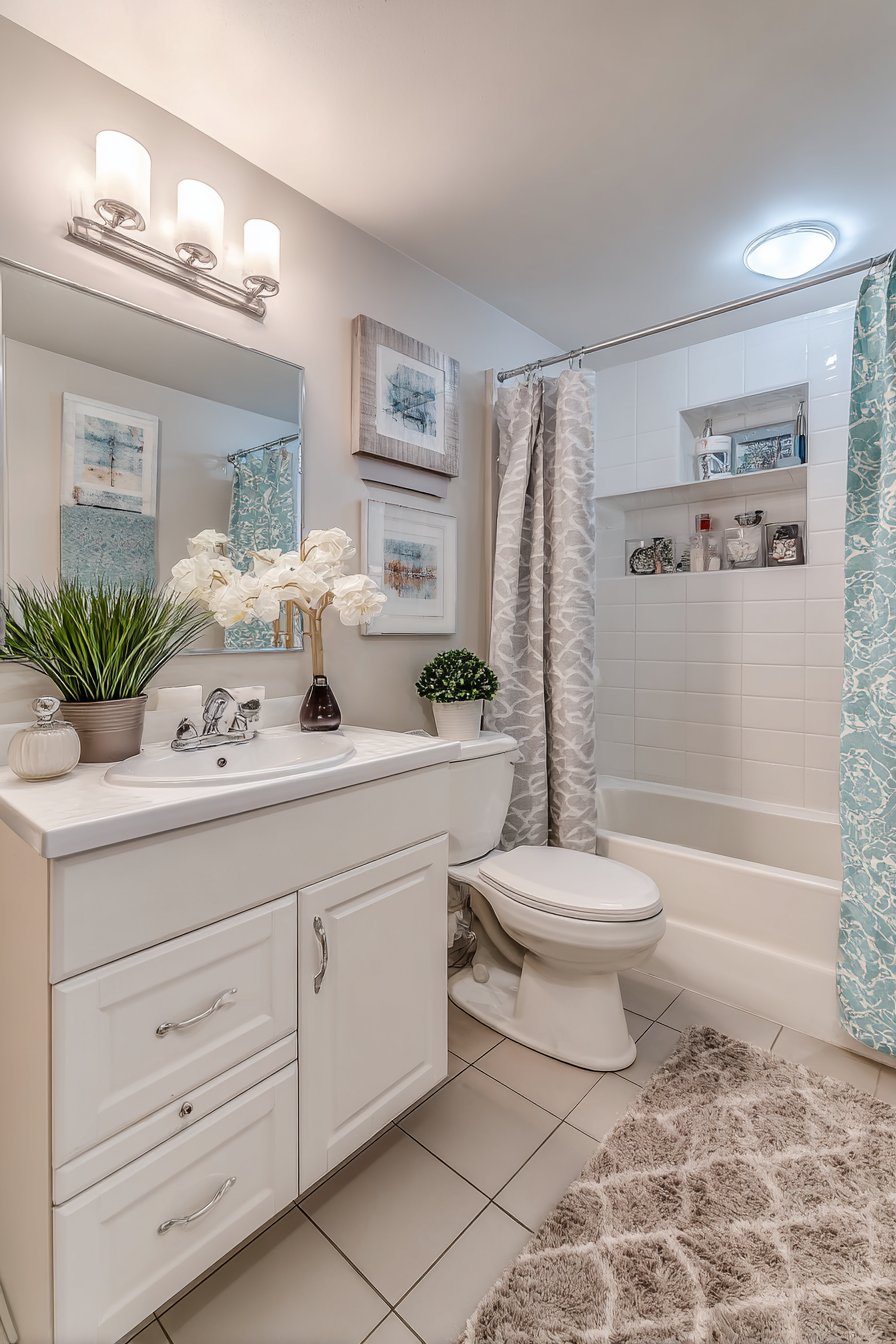
Strategic mirror placement and bright white LED lighting maximize the sense of space, proving that effective design doesn’t always require expensive materials. Large mirrors positioned opposite light sources amplify illumination while creating the illusion of expanded square footage—an inexpensive trick that delivers significant visual impact. The budget-conscious approach demonstrates that beautiful, functional basement bathrooms remain achievable for homeowners working with modest renovation budgets when priorities are clear and choices are strategic.
Key Design Tips:
- Apply concrete floor paint and epoxy topcoat for durable, waterproof finish
- Tile only wet areas and use paint elsewhere to reduce material costs
- Choose prefabricated shower units over custom tile for easier installation
- Select standard-sized fixtures and fittings for lower costs and future availability
- Install LED bulbs in basic fixtures rather than investing in expensive light fixtures
11. Industrial Exposed Elements
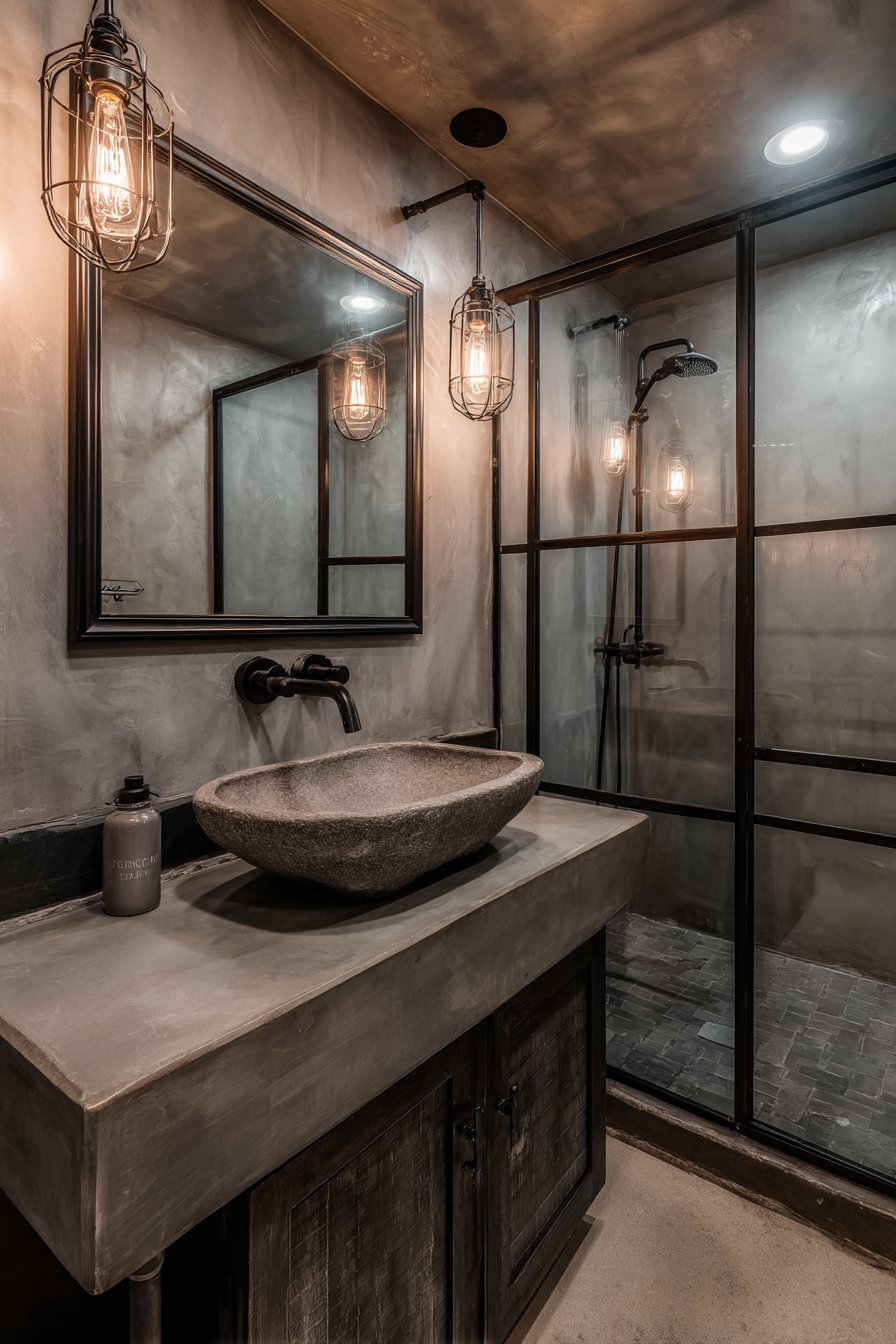
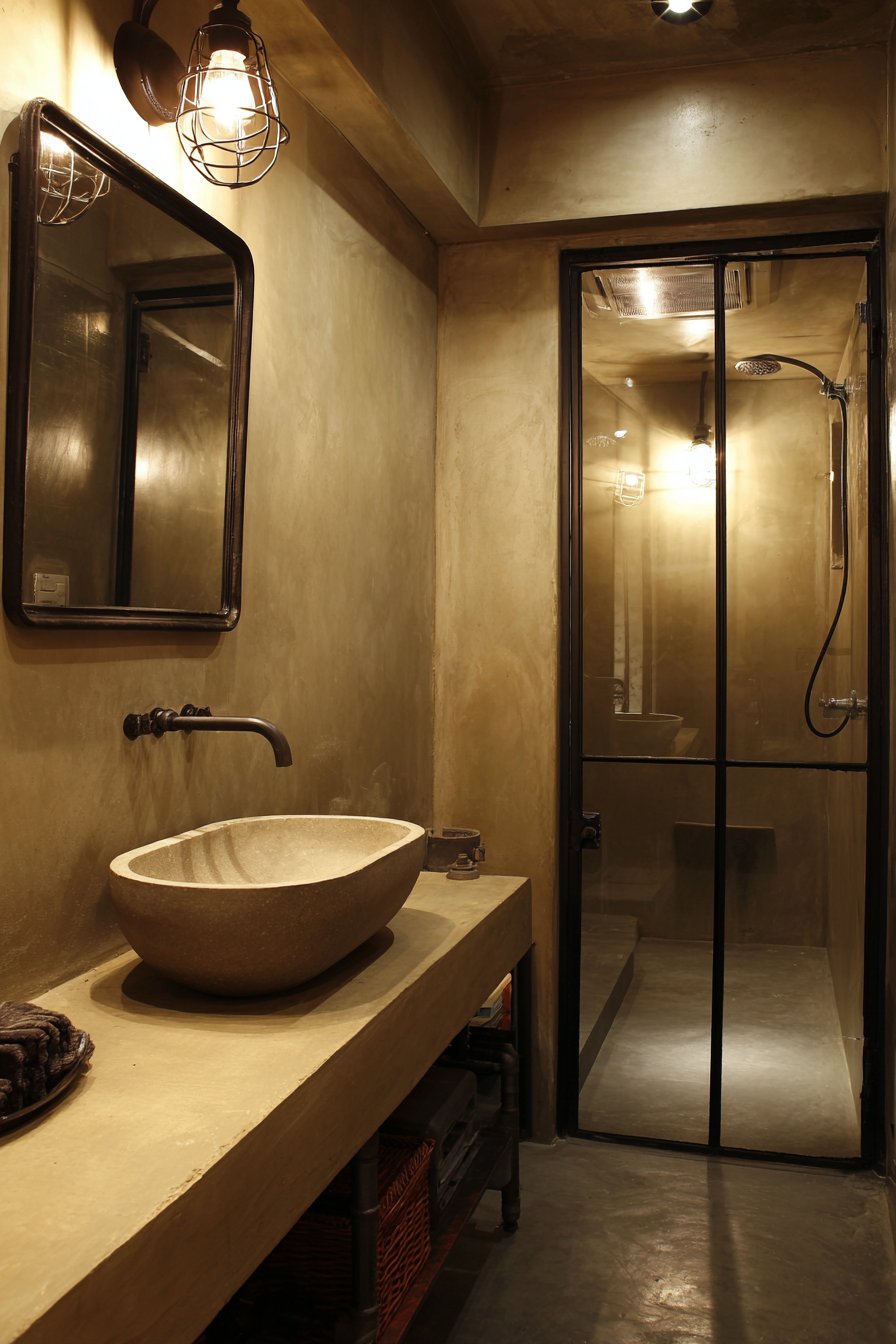
Authentic industrial design celebrates raw materials and honest construction in basement bathroom ideas that transform potential drawbacks into intentional features. Painted concrete walls in warm gray embrace the basement’s inherent character rather than concealing it, their textured surface providing visual interest while requiring minimal finishing work. Black metal-framed shower enclosures introduce graphic strength, their powder-coated steel construction providing durability while establishing the industrial aesthetic that defines the space.
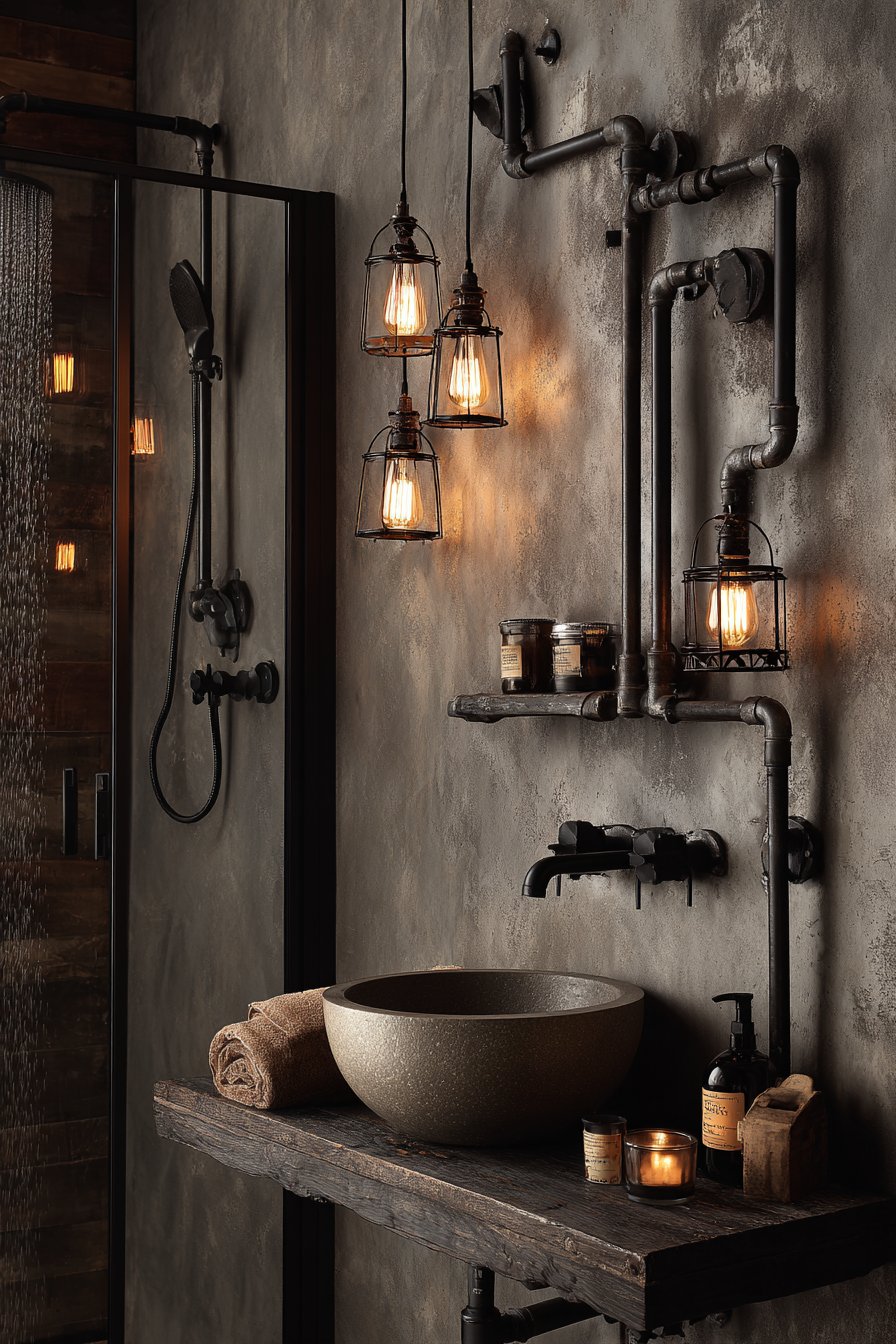
A concrete vessel sink positioned on a steel pipe vanity base exemplifies creative fixture selection that embraces industrial materials and forms. The exposed plumbing receives treatment as design feature rather than element to hide, with black pipes creating sculptural interest while maintaining full functionality. Edison bulbs housed in cage fixtures provide character lighting that casts warm glow while their visible filaments contribute to the authentic warehouse-loft aesthetic.
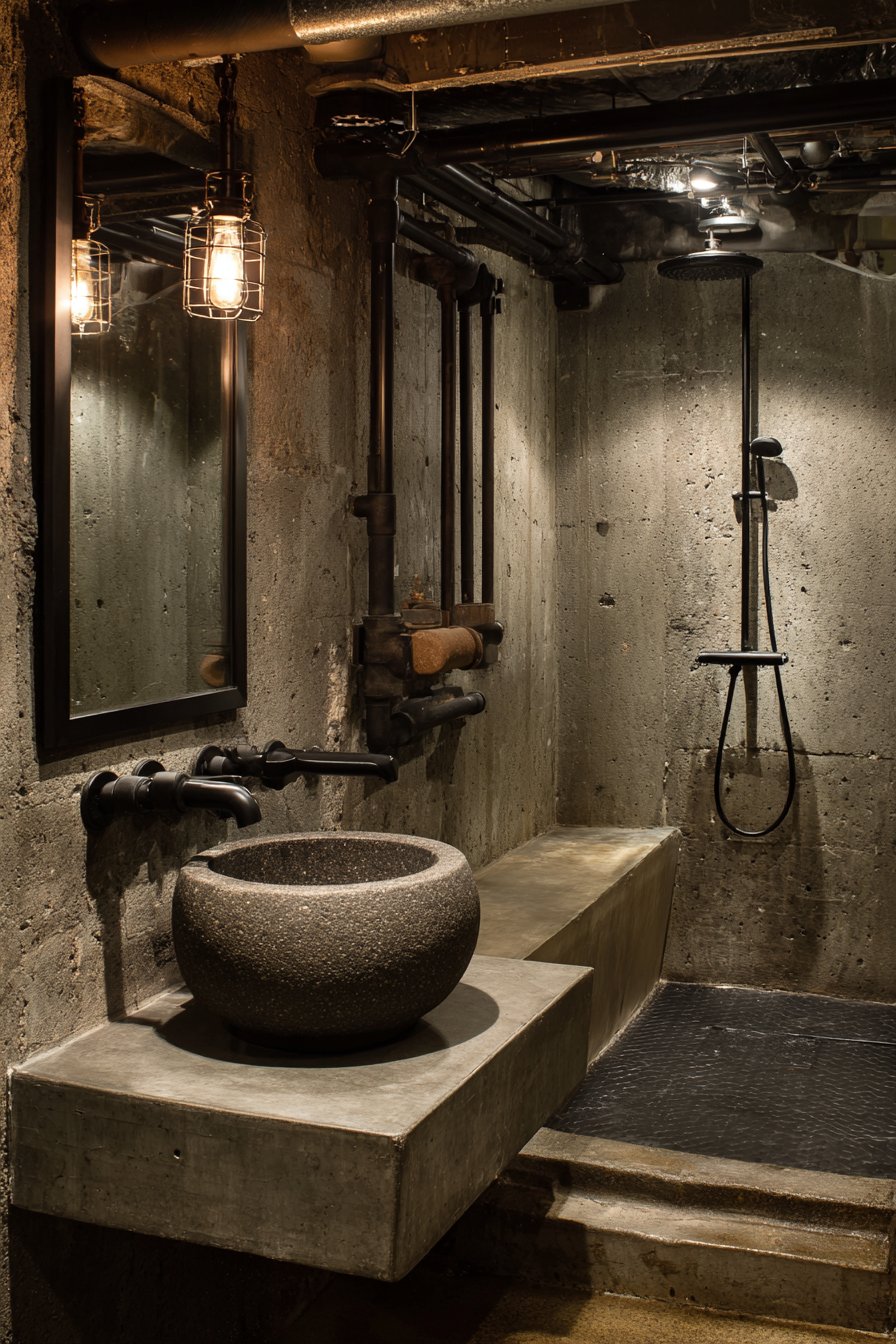
This design approach requires proper moisture barriers behind exposed concrete walls to prevent water infiltration into surrounding structure, demonstrating that even raw industrial aesthetics require careful construction methods. The concrete surfaces receive appropriate sealants that protect while maintaining their natural appearance, and all metal elements are selected for corrosion resistance in humid bathroom environments. The result combines edgy style with practical performance, creating a basement bathroom with strong character and reliable functionality.
Key Design Tips:
- Seal concrete walls with penetrating sealers that protect without creating shiny finish
- Choose powder-coated metal frames for shower enclosures to prevent rust
- Paint exposed pipes with oil-based paint formulated for metal surfaces
- Install proper moisture barriers behind concrete walls before finishing
- Select Edison-style LED bulbs for authentic look with modern efficiency
12. Luxury Spa-Inspired Design
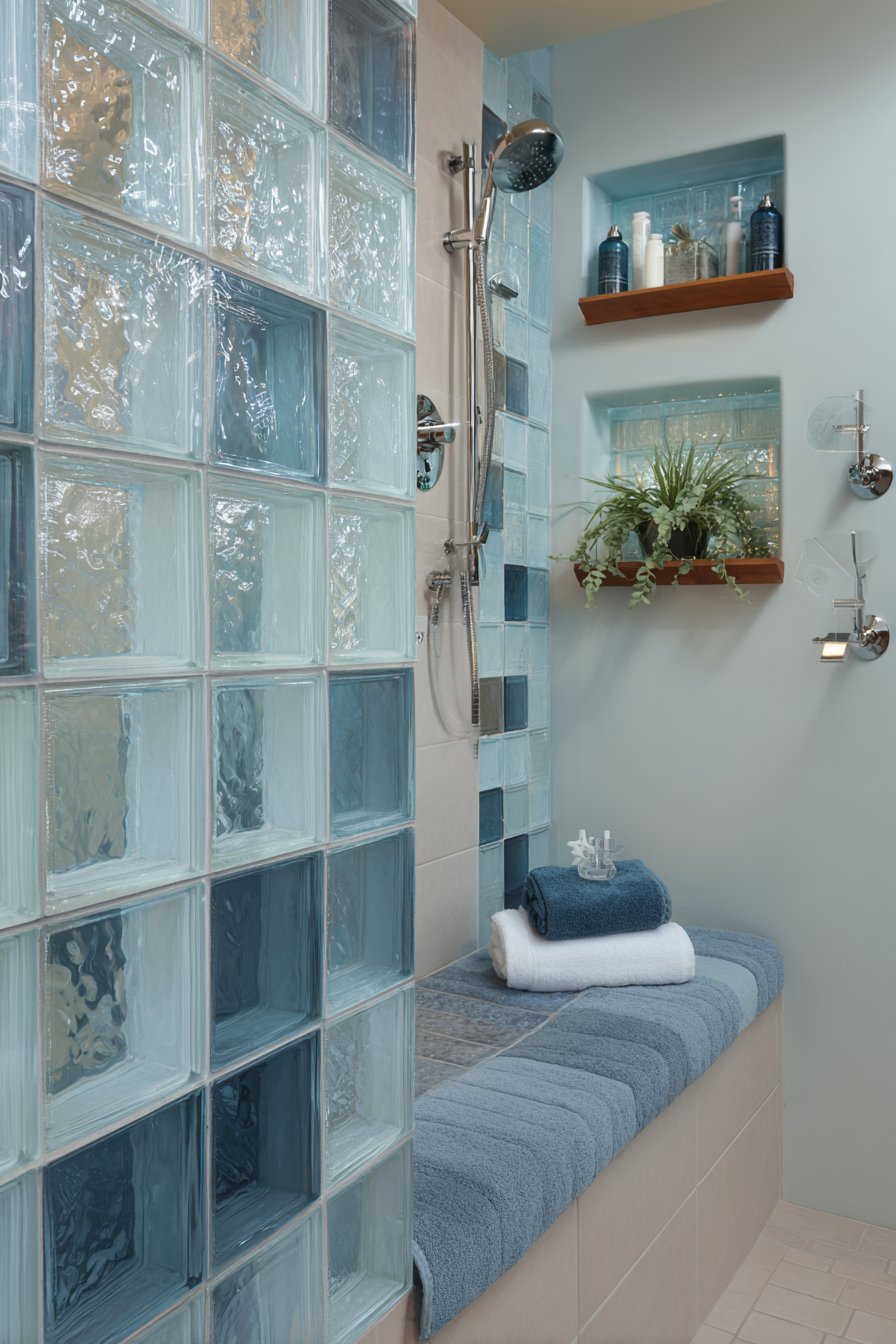
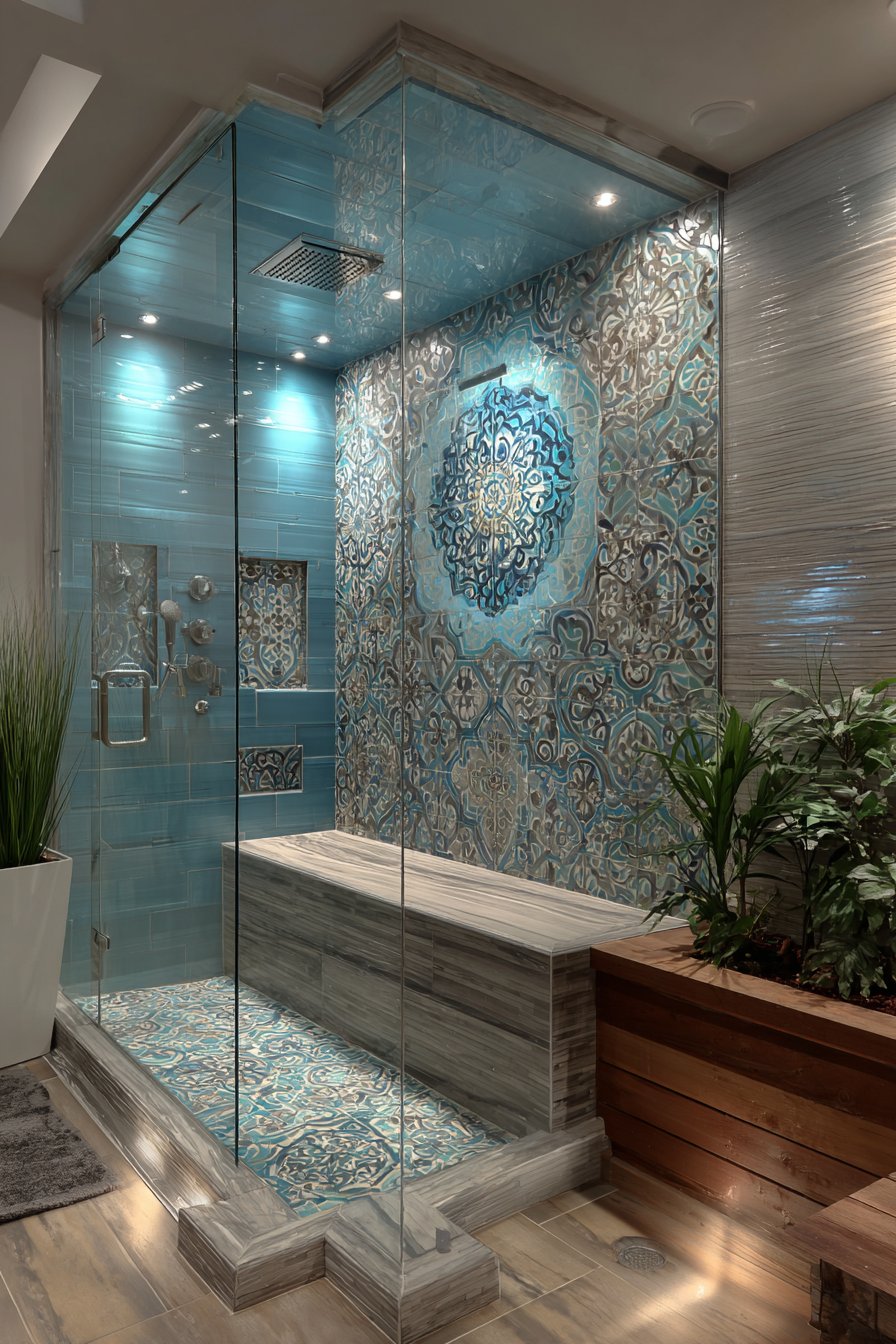
Resort-quality features elevate basement bathroom ideas from functional necessities to genuine retreats that provide daily escape and relaxation. Custom tile mosaics in ocean blues and grays create focal walls that transport users mentally to seaside destinations, their carefully composed patterns adding artistry and visual complexity. Built-in bench seating in the steam shower provides comfort while the multiple showerheads including body sprays deliver spa-level luxury, each water source independently controlled for customized bathing experience.
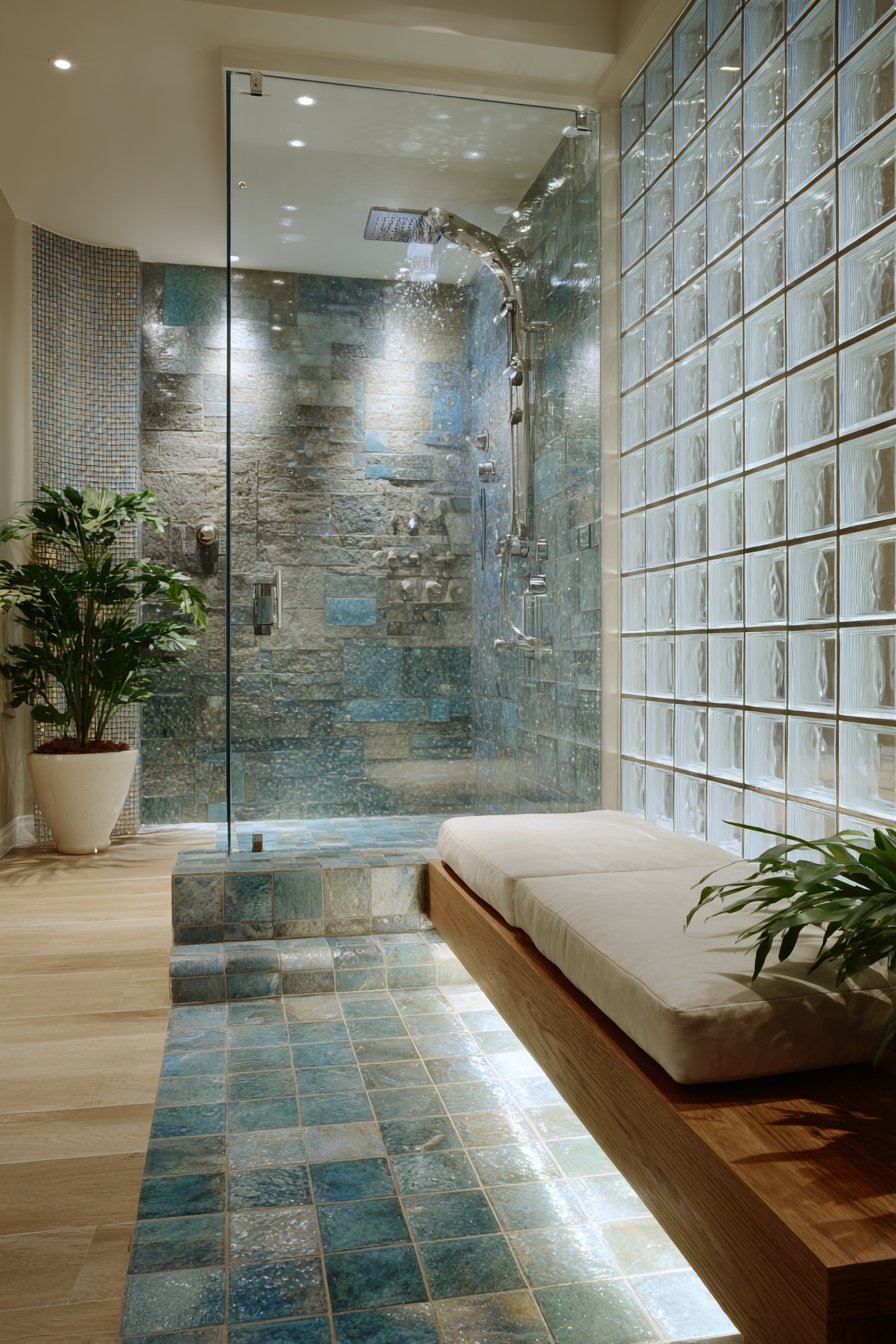
Heated towel racks ensure fluffy, warm towels await after bathing, adding hotel-like comfort that transforms routine into ritual. Frosted glass block windows allow natural light penetration while maintaining complete privacy, their translucent quality creating soft, diffused illumination that enhances the spa atmosphere. Teak accents throughout the space introduce natural warmth and organic texture while their inherent water resistance makes them ideal for humid bathroom environments.
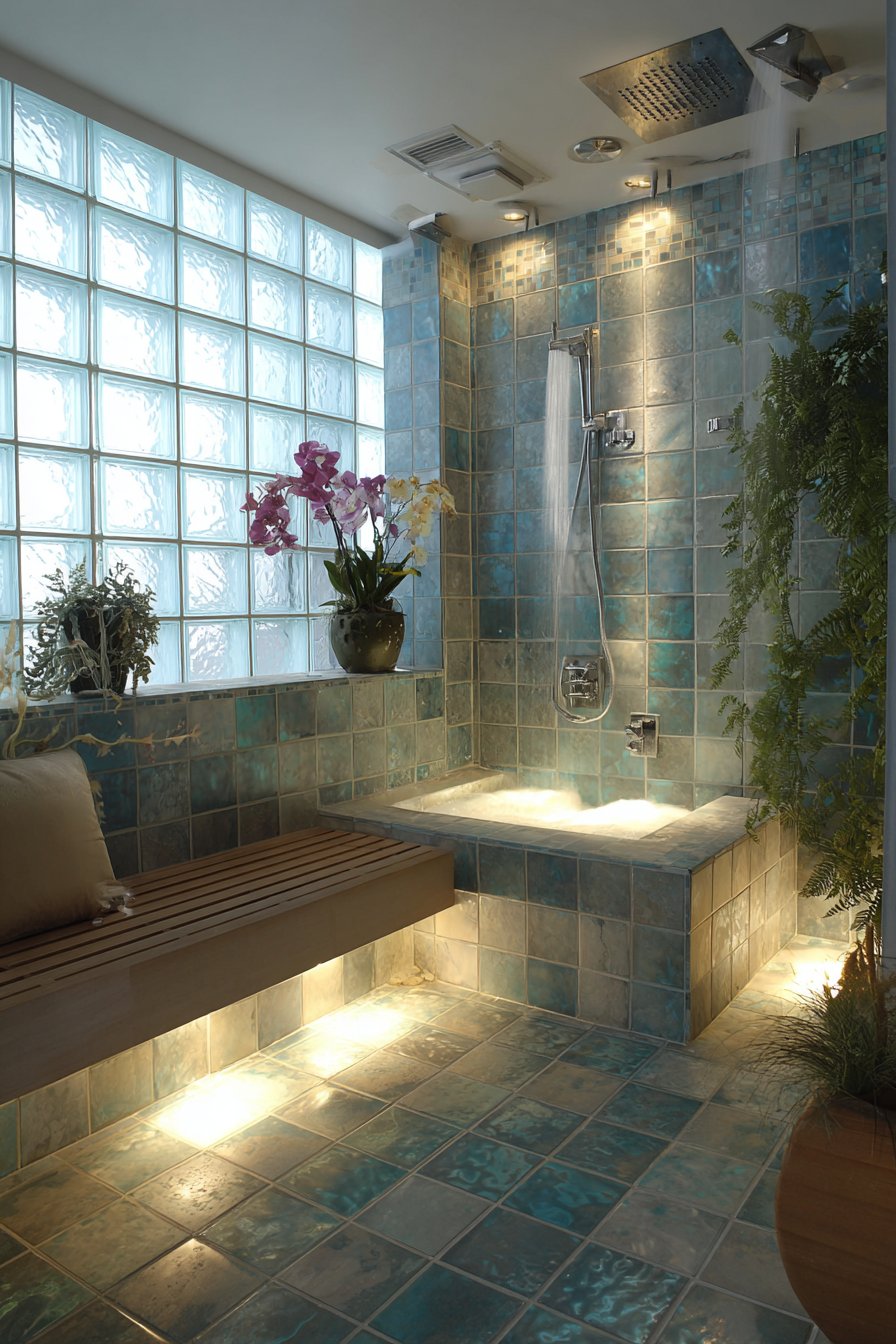
Live plants selected for their ability to thrive in bathroom conditions add living elements that improve air quality and create resort ambiance. The comprehensive spa design requires robust waterproofing systems, particularly for steam shower installation, along with properly sized exhaust fans and dehumidification equipment to manage the substantial moisture generated. Professional installation ensures all systems function reliably, protecting the investment while delivering years of spa-quality experiences in the comfort of home.
Key Design Tips:
- Install steam generators sized appropriately for shower volume calculations
- Choose porcelain tiles for mosaic work to ensure color consistency and moisture resistance
- Position body spray jets at different heights for comprehensive coverage
- Install oversized exhaust fans rated for steam room applications
- Select natural teak or ipe wood for benches and accents in wet areas
13. Scandinavian Minimalist Brightness
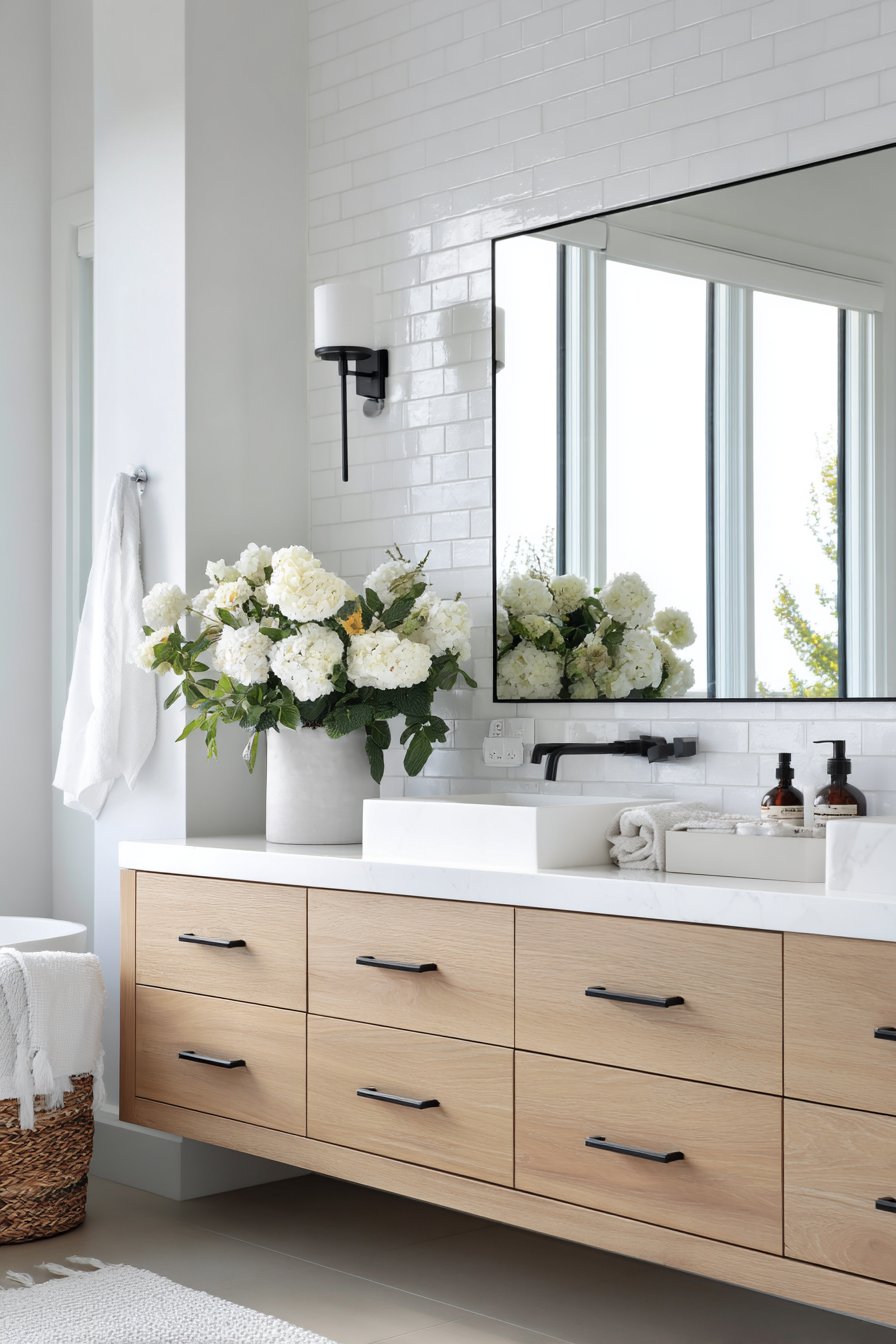
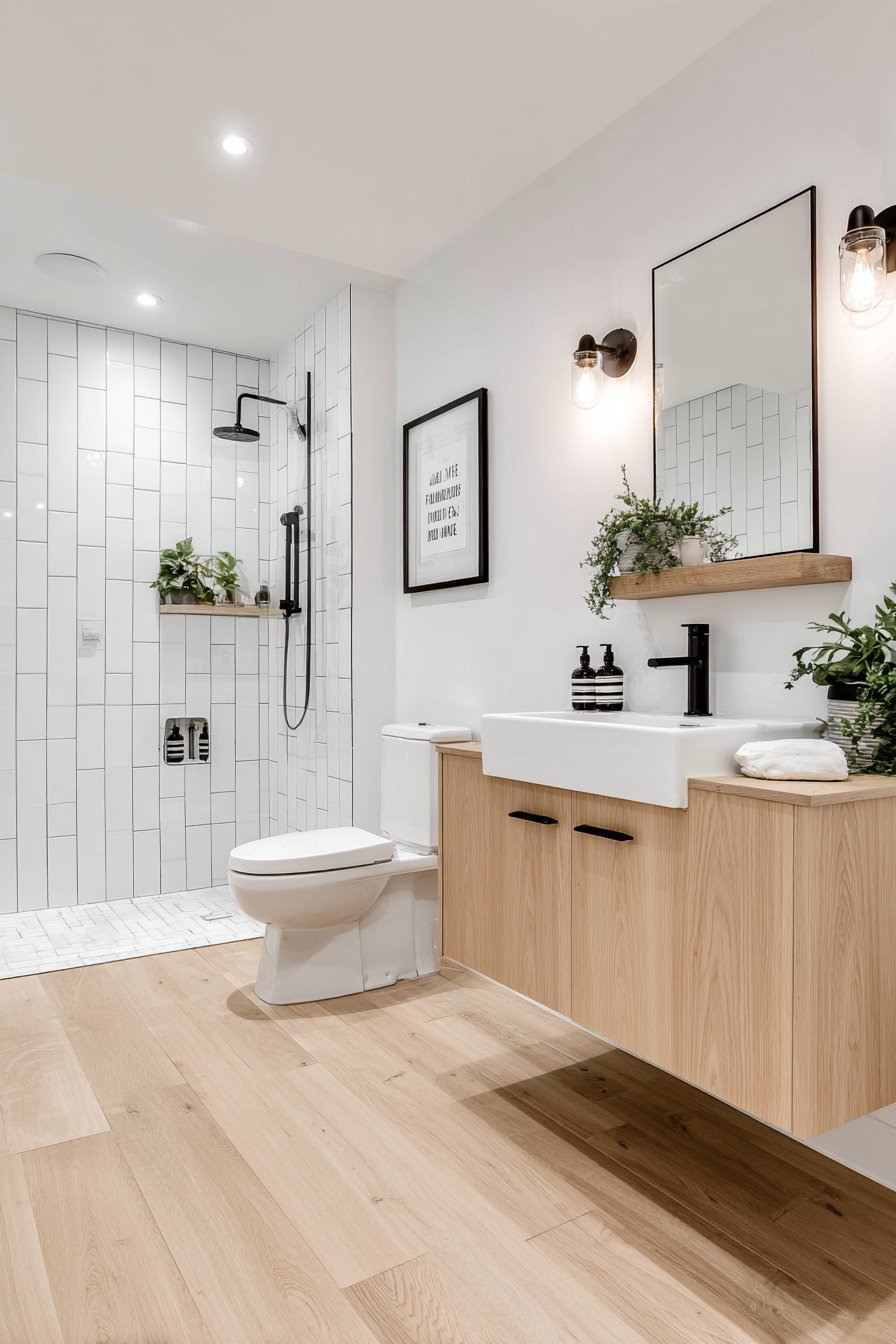
All-white palettes maximize brightness in basement bathroom ideas where natural light is limited, creating clean, serene environments that feel spacious despite below-grade locations. Matte white wall tiles establish seamless backdrops while white oak floating vanities introduce subtle warmth through their pale wood grain. White porcelain fixtures maintain the monochromatic scheme while white subway tiles in the shower create familiar, timeless patterns that never feel dated.
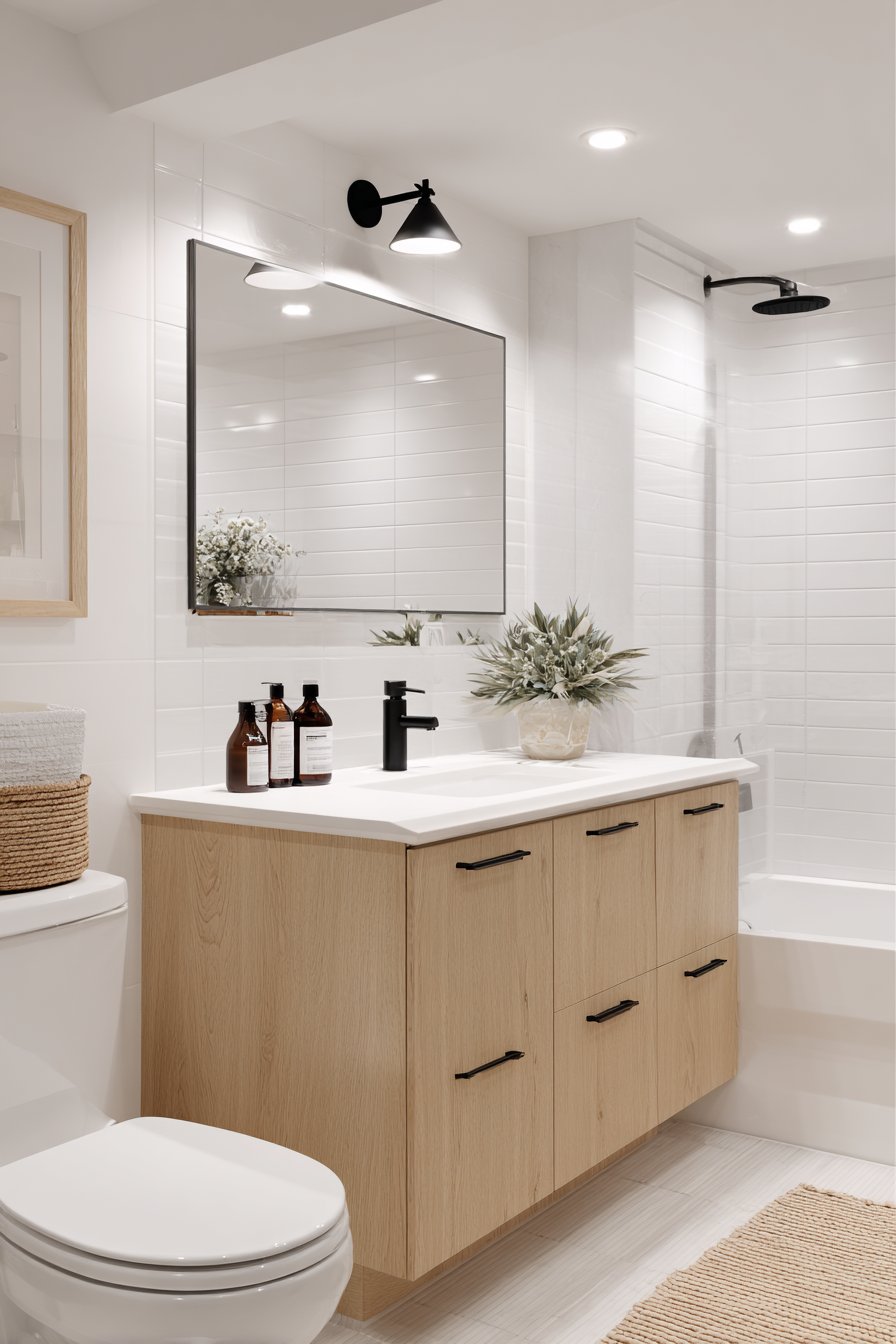
Black metal accents on hardware and light fixtures provide essential contrast that prevents the white space from feeling sterile or bland, their dark tones creating graphic punctuation that defines edges and draws attention to quality fixtures. A single large mirror reflects available light throughout the space, its expansive surface effectively doubling the perceived room size while contributing to the bright, airy atmosphere. The Scandinavian approach emphasizes quality over quantity, with fewer, better-chosen elements creating calm rather than clutter.
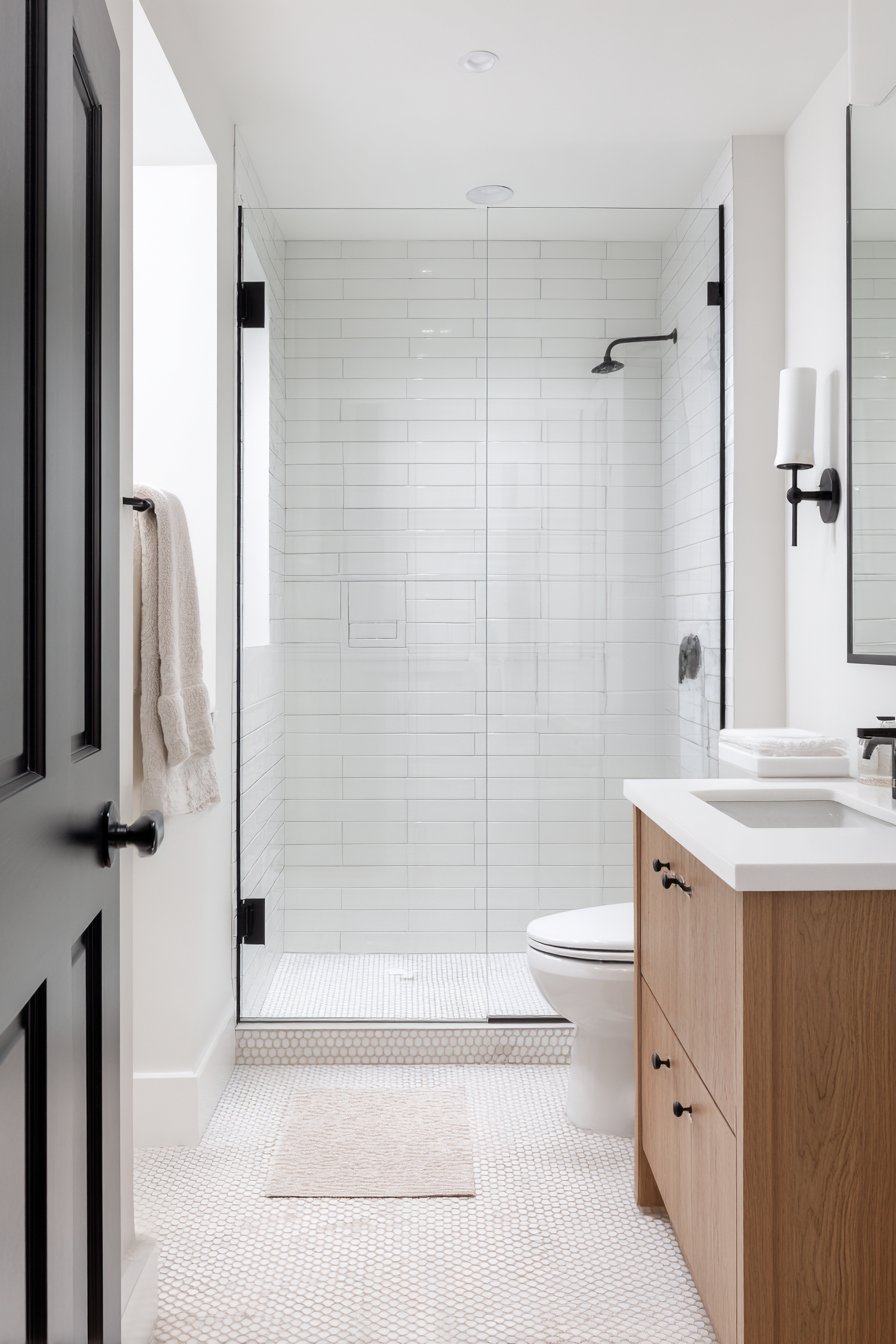
This minimalist aesthetic requires discipline in execution—every element must earn its place through function or contribution to the overall design harmony. Storage stays concealed within the floating vanity to maintain clean surfaces, and accessories are carefully edited to prevent visual noise. The monochromatic white scheme works particularly well in basement bathrooms by reflecting maximum light from artificial sources, counteracting the natural darkness of below-grade spaces through pure, clean surfaces.
Key Design Tips:
- Choose matte white tiles to prevent glare while maintaining brightness
- Introduce wood tones through blonde or white-washed options for subtle warmth
- Limit black accents to hardware and lighting for graphic contrast
- Keep surfaces clear and store items in concealed cabinetry
- Select frameless mirrors in maximum sizes for light amplification
14. Accessible Universal Design
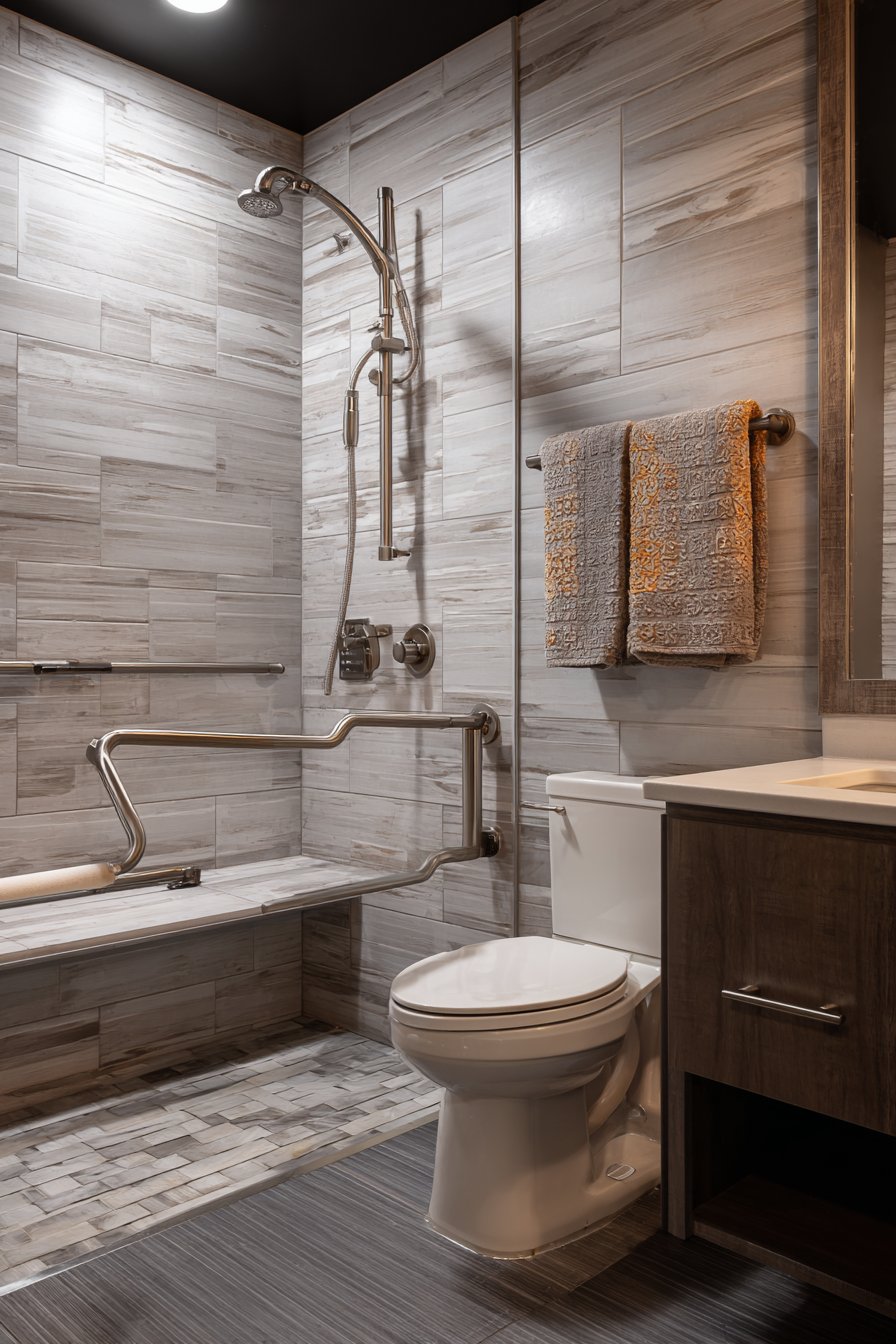
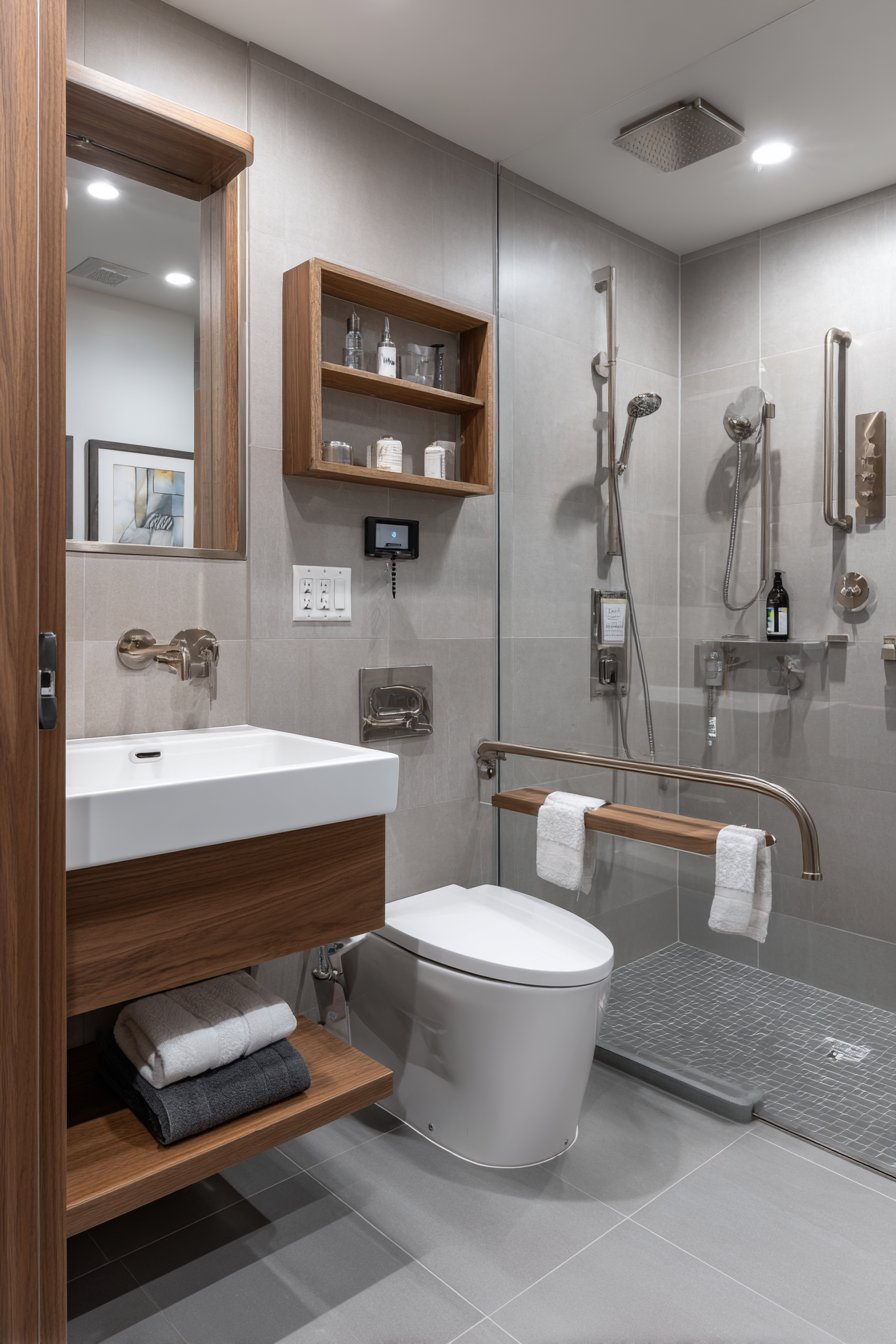
Barrier-free design principles ensure basement bathroom ideas serve users of all abilities while maintaining sophisticated aesthetics that don’t announce their accessibility features. Curbless roll-in showers with both handheld and fixed showerheads accommodate wheelchair users while appealing to all users through their contemporary, spa-like appearance. Comfort-height toilets position seats at optimal levels for easier transfers while ADA-compliant vanities include knee space for wheelchair approach without sacrificing storage or style.
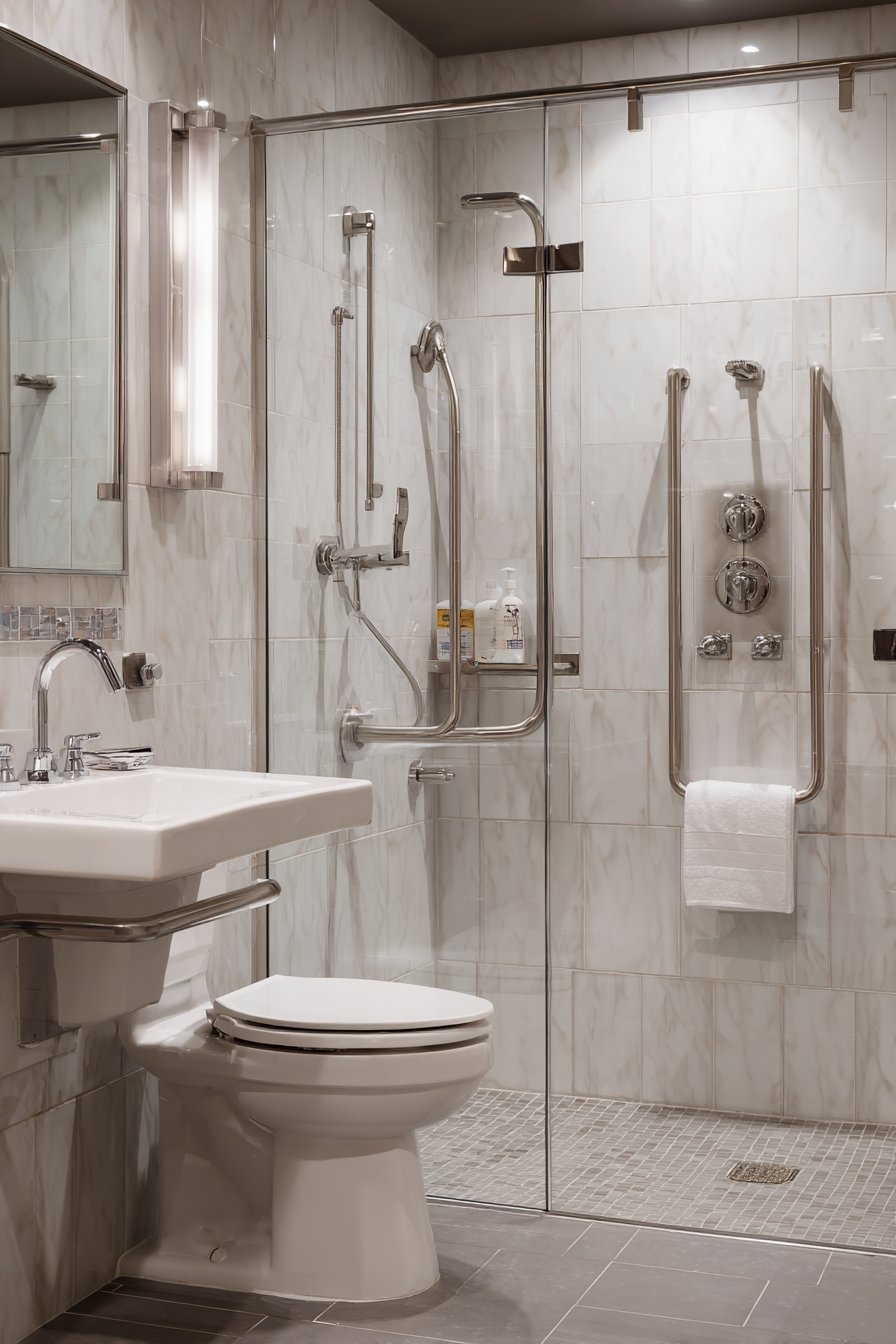
Grab bars integrated as design elements in brushed nickel finish provide essential safety support while appearing as intentional architectural features rather than medical equipment. Their strategic positioning near toilets, showers, and tubs follows accessibility guidelines while thoughtful finish selection ensures they coordinate with other fixtures. Non-slip porcelain tiles throughout feature textured surfaces that provide traction without appearing institutional, their subtle grip preventing falls while maintaining refined appearance.
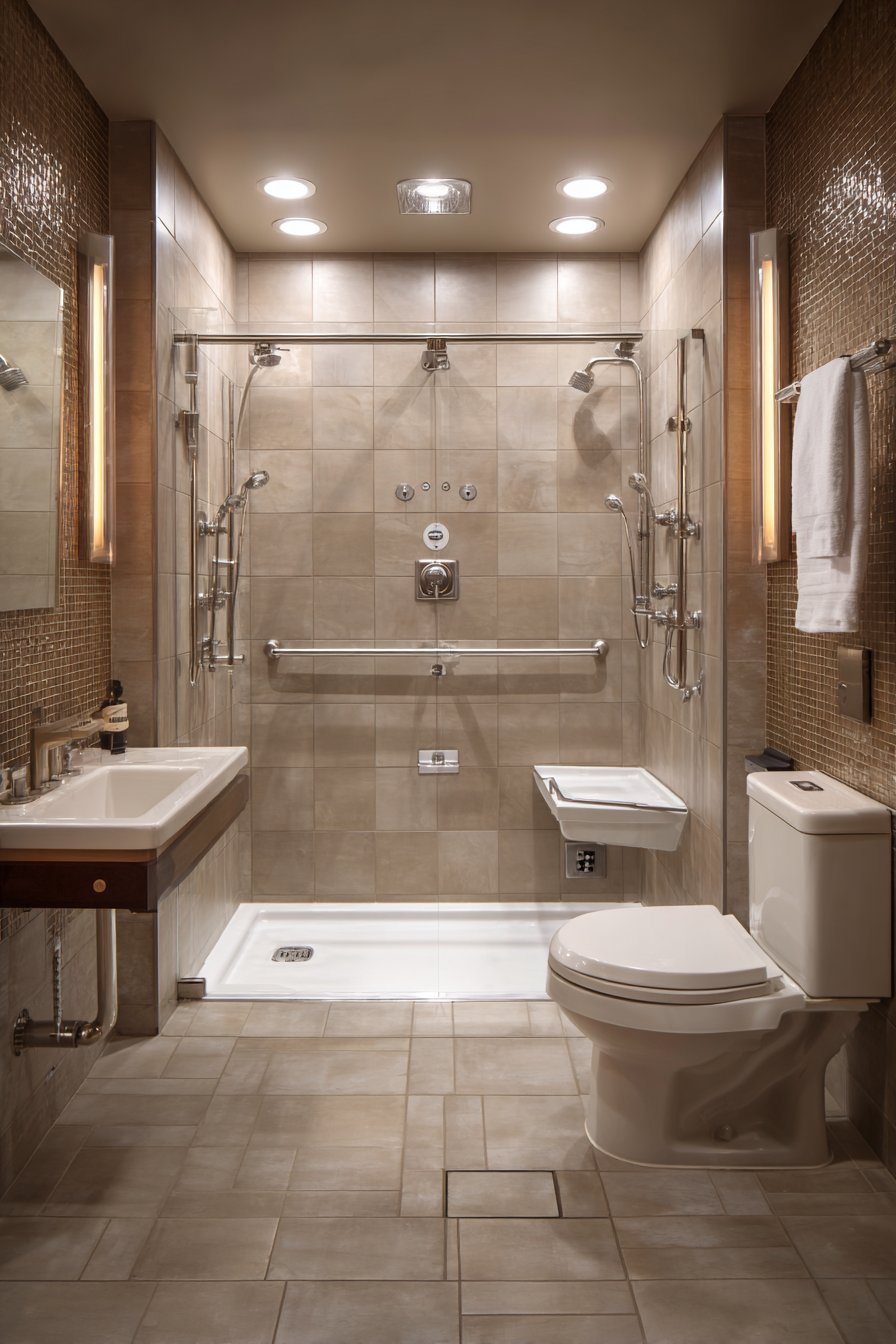
Universal design creates spaces that serve the broadest possible range of users, from small children to elderly adults, from temporarily injured individuals to permanent wheelchair users. The principles inform everything from door widths to faucet selections, light switch heights to mirror positioning. Thoughtful implementation results in basement bathrooms that work beautifully for everyone while maintaining sophisticated design integrity that never feels compromised by accessibility requirements.
Key Design Tips:
- Install curbless showers with linear drains for seamless floor transitions
- Position grab bars at ADA-specified heights and locations for proper support
- Choose lever-handle faucets that operate easily for users with limited hand strength
- Install comfort-height toilets at 17-19 inches for easier sitting and standing
- Ensure minimum 60-inch turning radius for wheelchair maneuverability
15. Vintage-Modern Timeless Blend
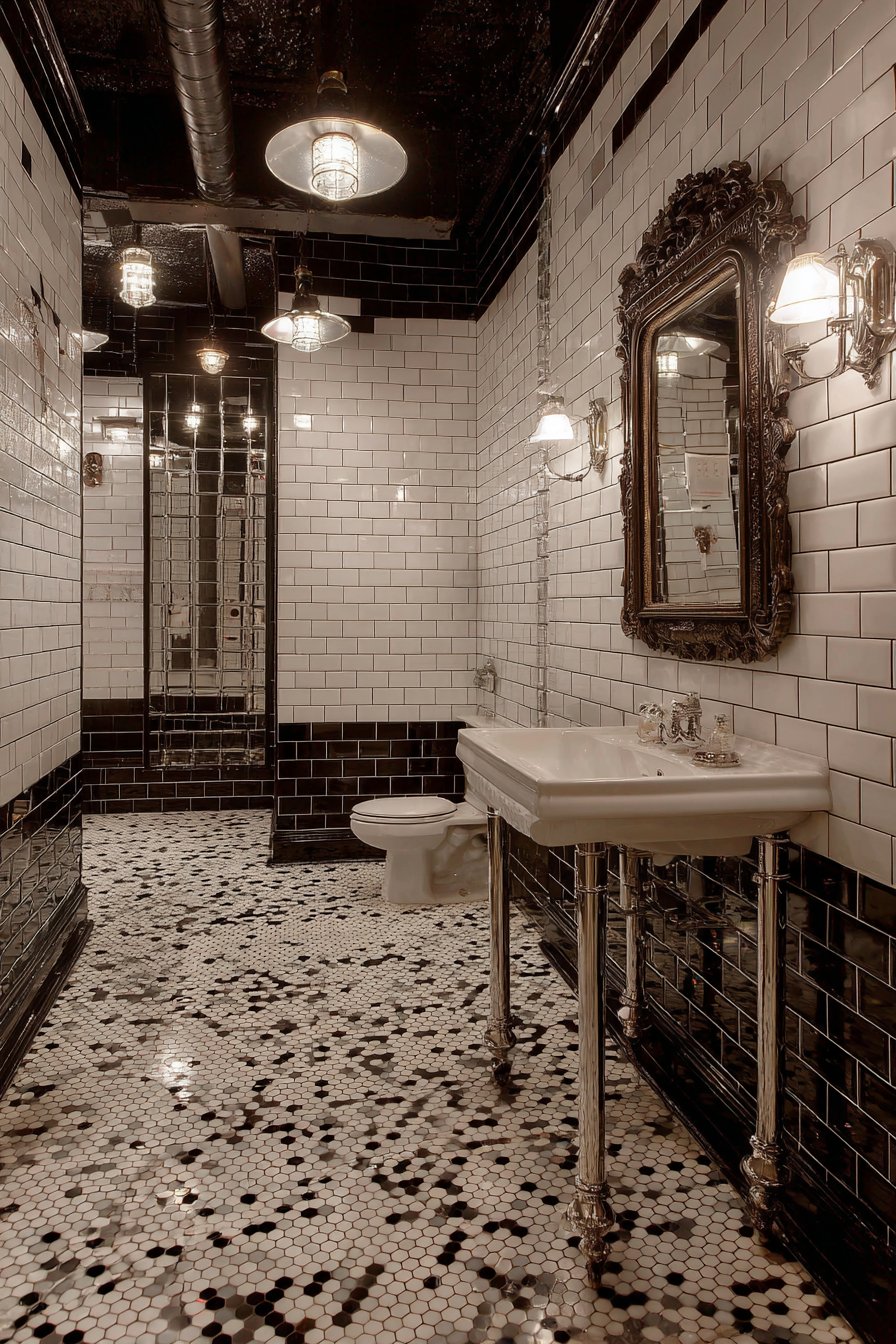
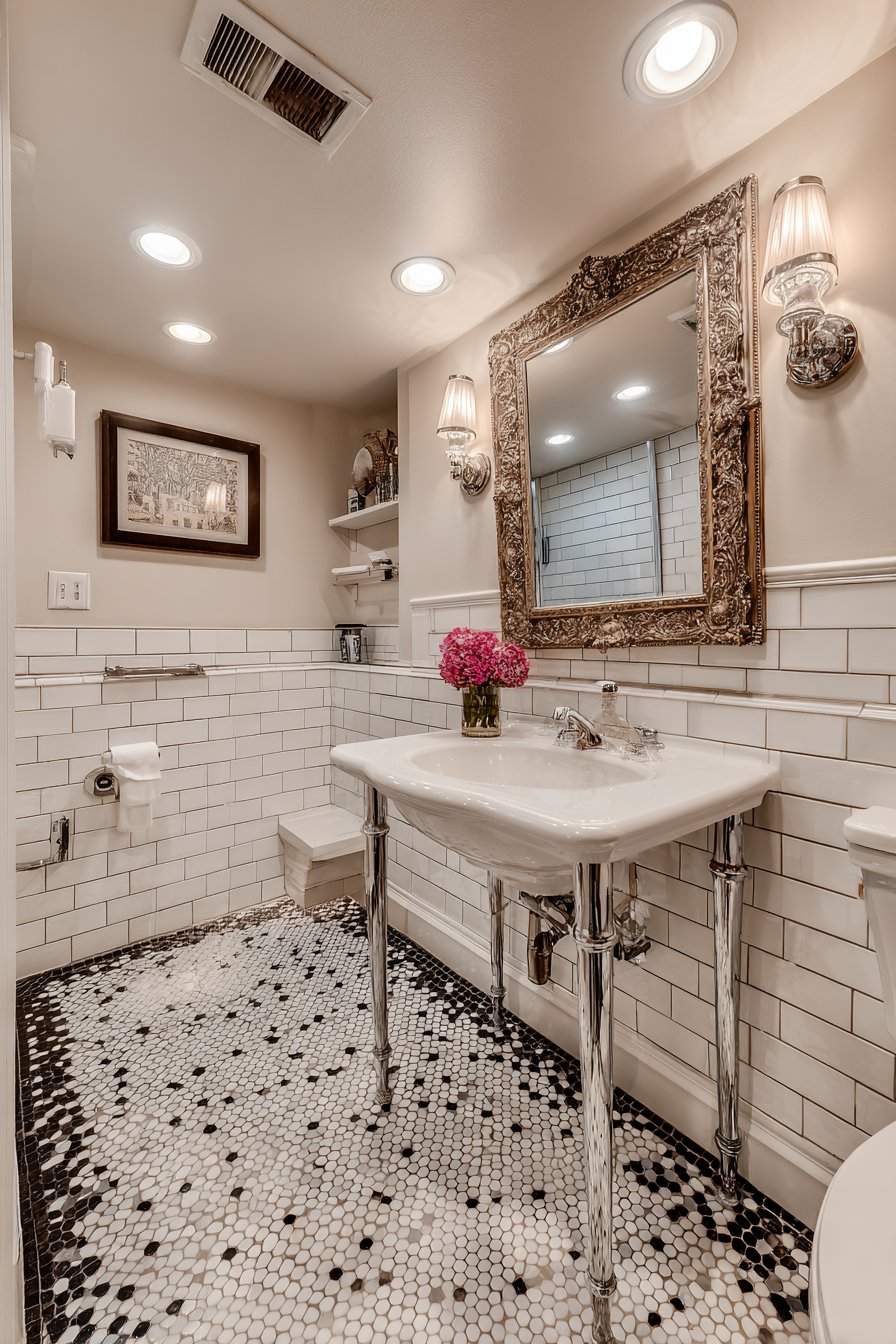
Mixing classic and contemporary elements creates basement bathroom ideas with enduring appeal that transcends trends. Penny tile flooring in traditional black and white pattern establishes timeless foundation while subway tiles with dark grout line the walls, their historic profiles updated through modern color selection. A pedestal sink with chrome legs provides vintage charm while efficient modern low-flow toilet delivers contemporary water conservation concealed within traditional form.
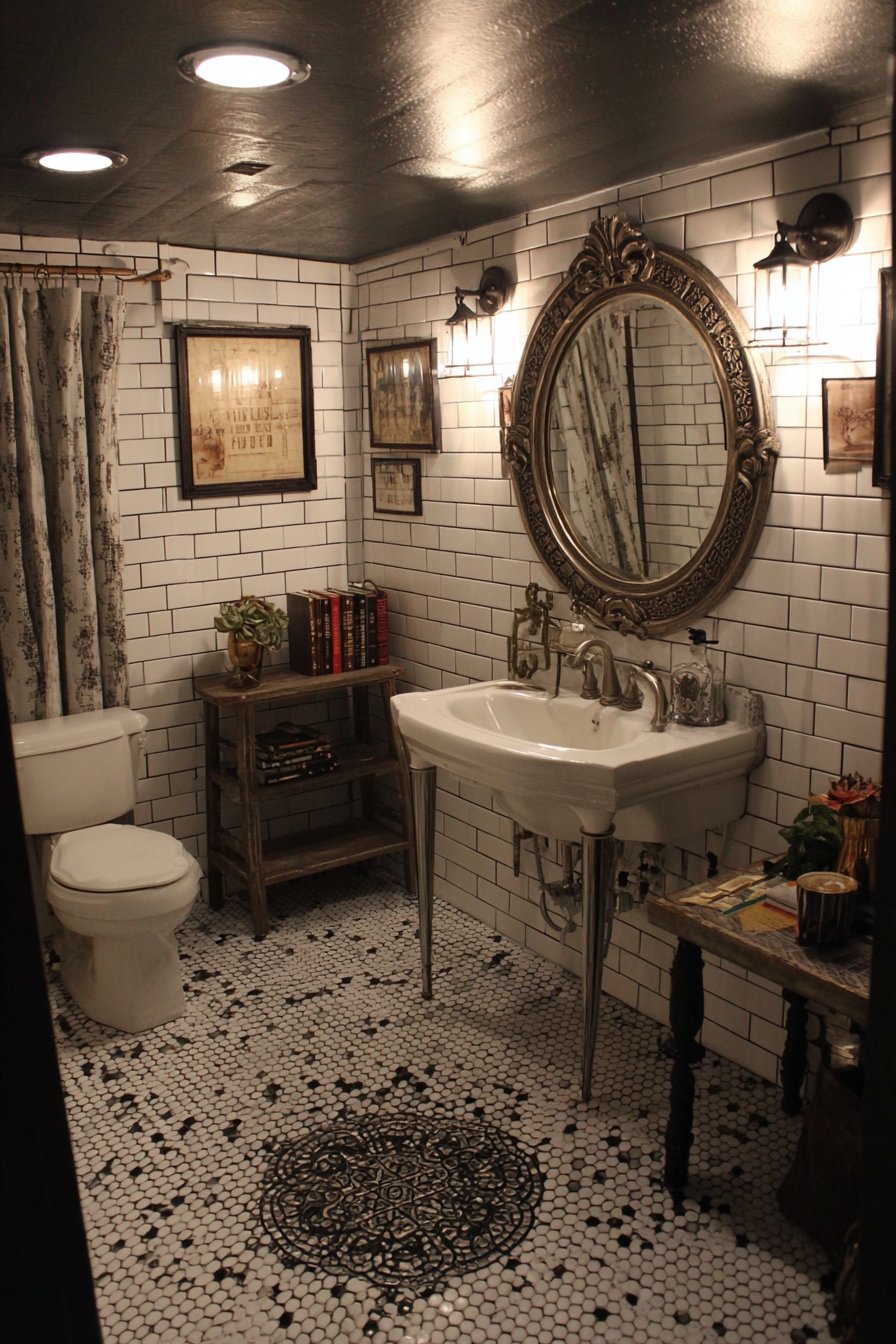
Antique-style mirrors with ornate frames become sculptural focal points that add character and personality, their decorative profiles contrasting beautifully with clean-lined fixtures and cabinetry. Modern LED lighting housed in vintage-style fixtures combines old and new, delivering contemporary efficiency and long life while maintaining period-appropriate appearance. The blend of eras creates spaces that feel collected rather than decorated, as if thoughtfully assembled over time rather than installed in single renovation project.
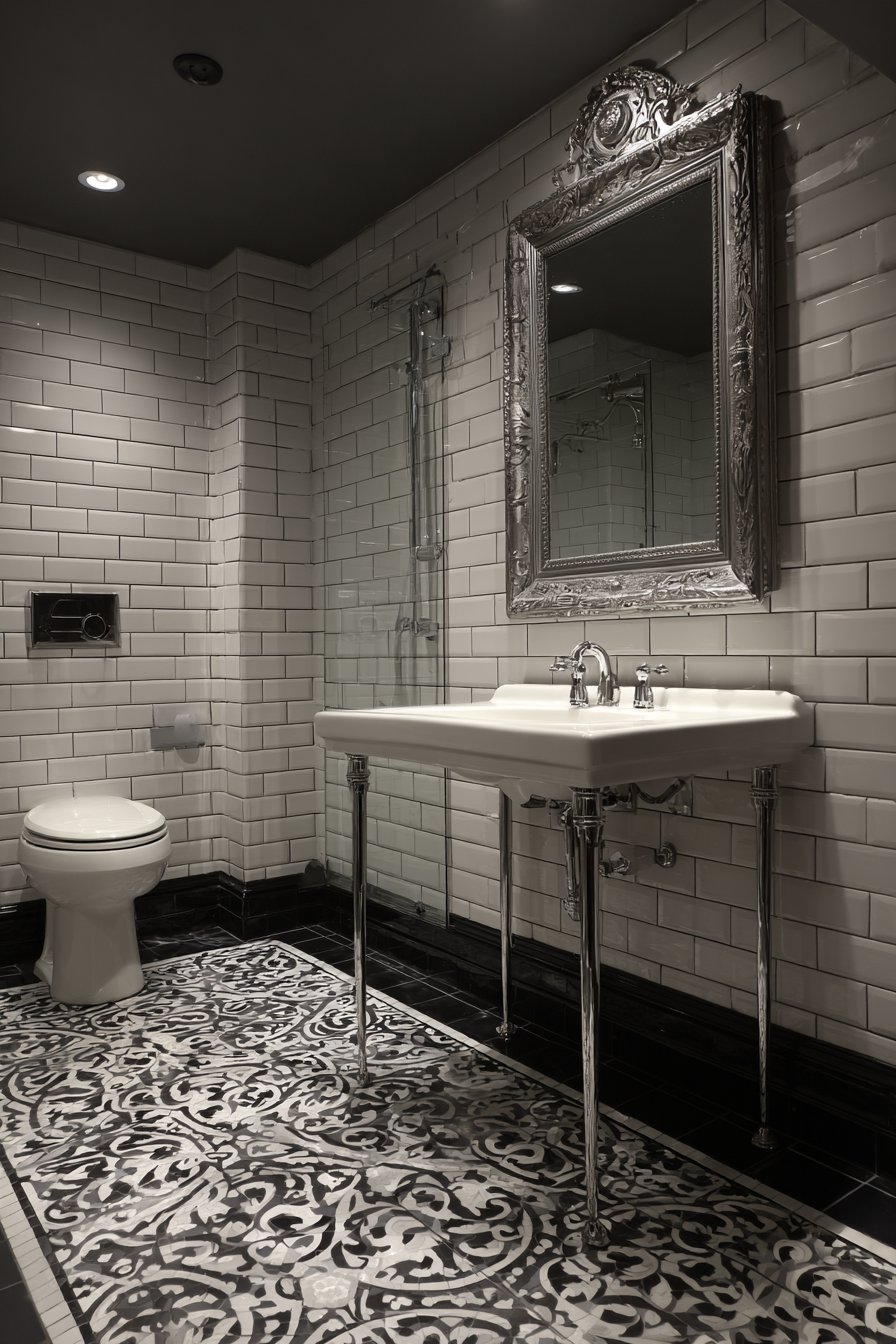
This vintage-modern approach requires careful material selection to ensure historical-looking elements actually perform well in challenging basement moisture conditions. Reproduction fixtures often incorporate modern waterproofing and corrosion resistance while maintaining authentic vintage styling. The penny tiles and subway tiles, while traditional in pattern, utilize contemporary porcelain materials that resist moisture far better than historic ceramic alternatives. This attention to performance ensures the vintage aesthetic ages gracefully rather than deteriorating.
Key Design Tips:
- Choose porcelain penny tiles over ceramic for superior moisture resistance
- Install vintage-style LED fixtures for authentic look with modern efficiency
- Select reproduction fixtures that combine classic styling with modern performance
- Use dark grout on subway tiles for vintage appearance with easier maintenance
- Frame mirrors with moisture-resistant materials even when styled as antiques
16. Storage-Maximized Organization
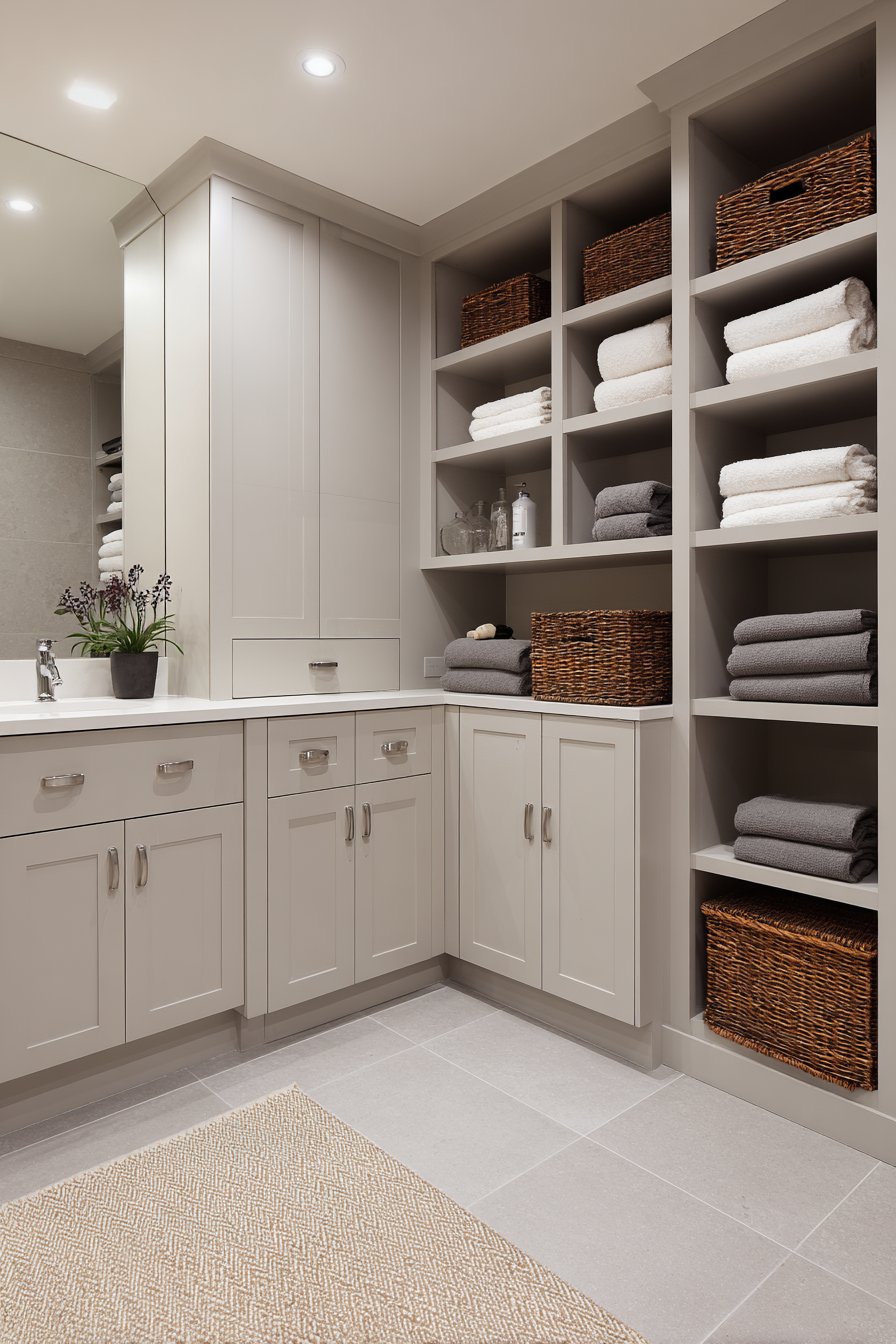
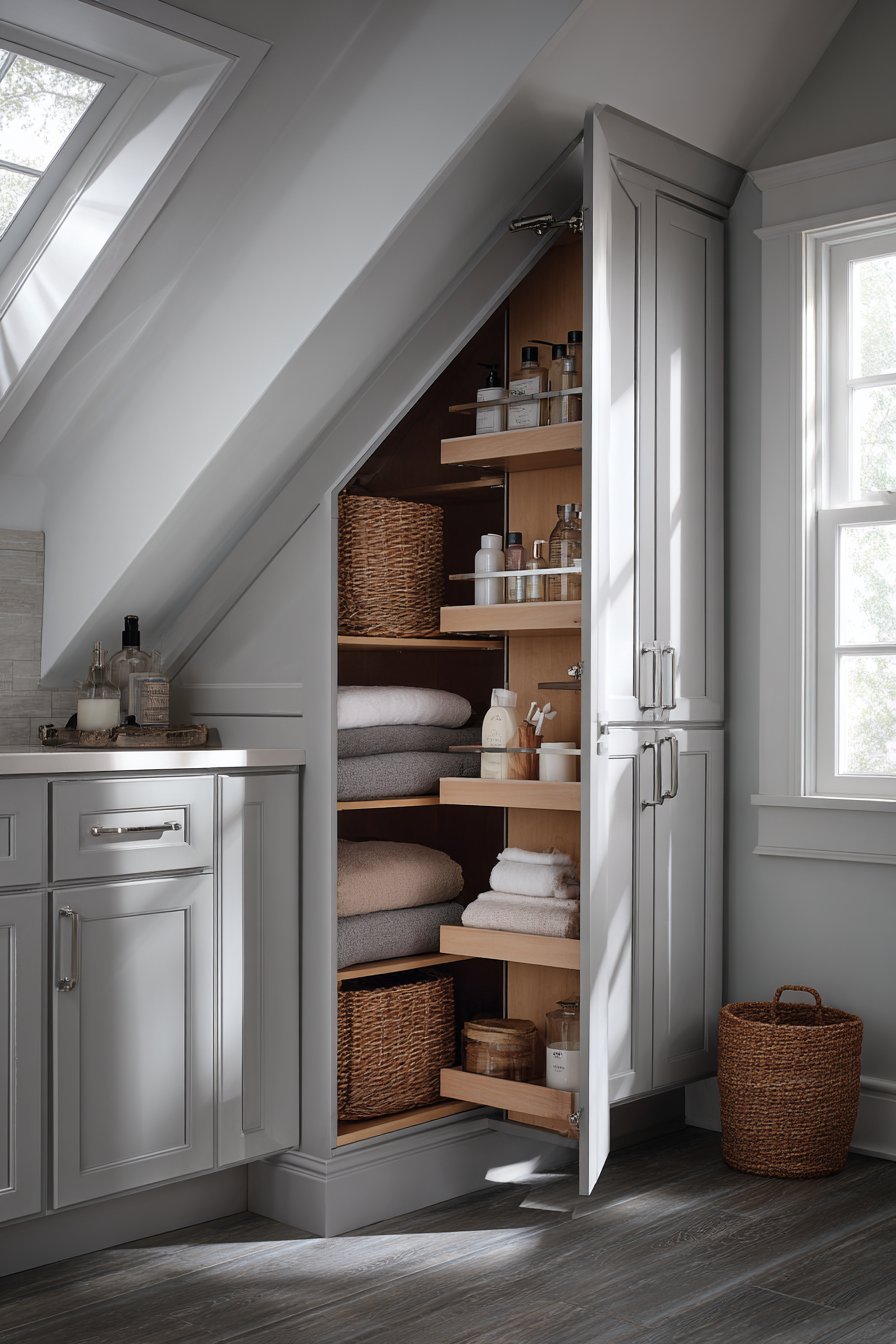
Comprehensive storage solutions address common challenges in basement bathroom ideas where linen closets and adjacent storage spaces may not exist. Floor-to-ceiling built-in cabinetry in moisture-resistant materials lines one wall, its full-height design maximizing vertical space while providing abundant storage for towels, toiletries, cleaning supplies, and spare tissue. Recessed medicine cabinets disappear into walls, their mirrored fronts serving dual purposes while concealing stored items.
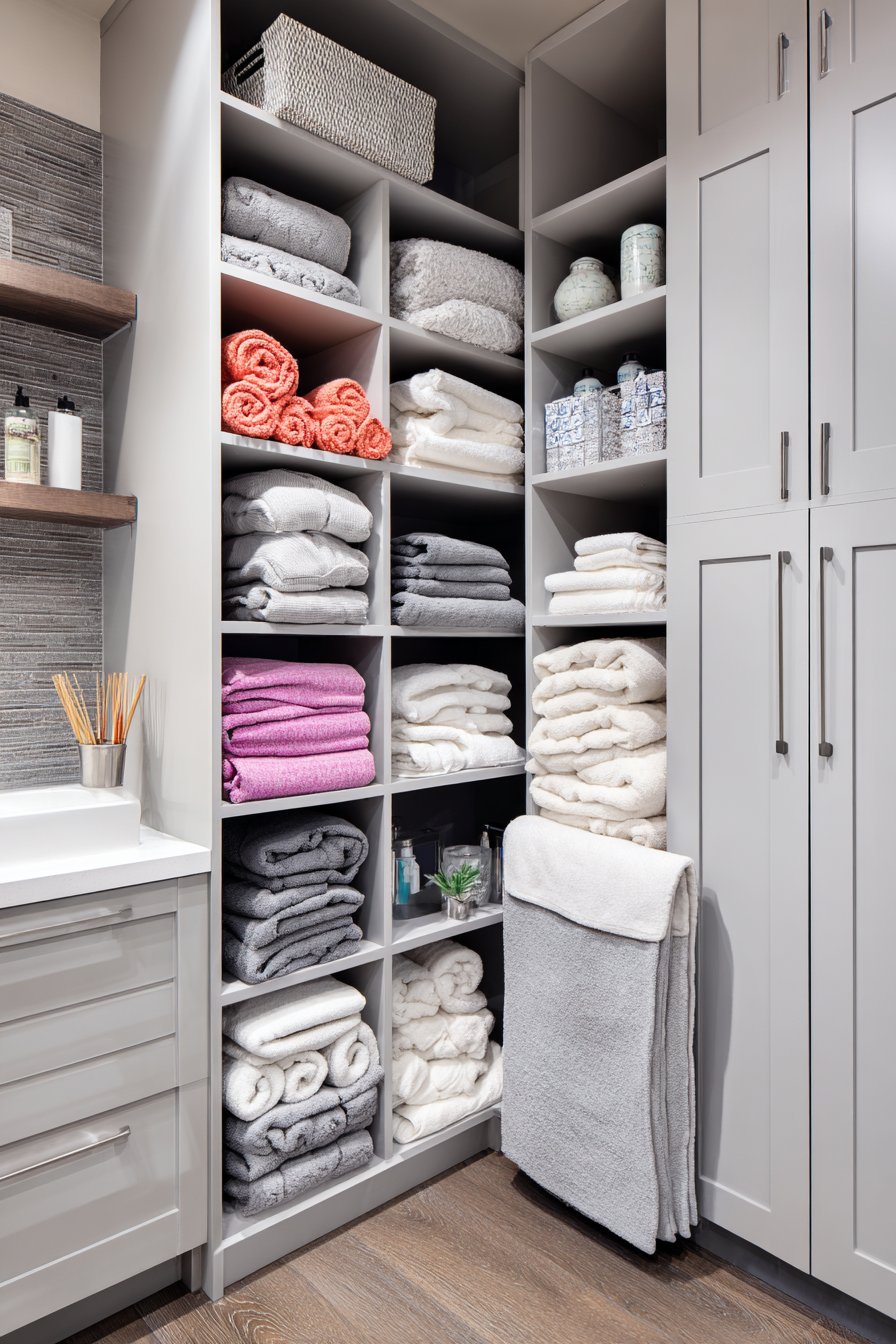
Pull-out organizers beneath the floating vanity maximize accessibility, their sliding mechanisms bringing items from the cabinet depths forward for easy selection. Clever corner spaces receive special attention through rotating carousel shelves or angled cabinetry that captures otherwise wasted square footage. Light gray shaker-style cabinets with soft-close mechanisms establish traditional elegance while open shelving displays organized towels and toiletries as decorative elements that add visual softness.
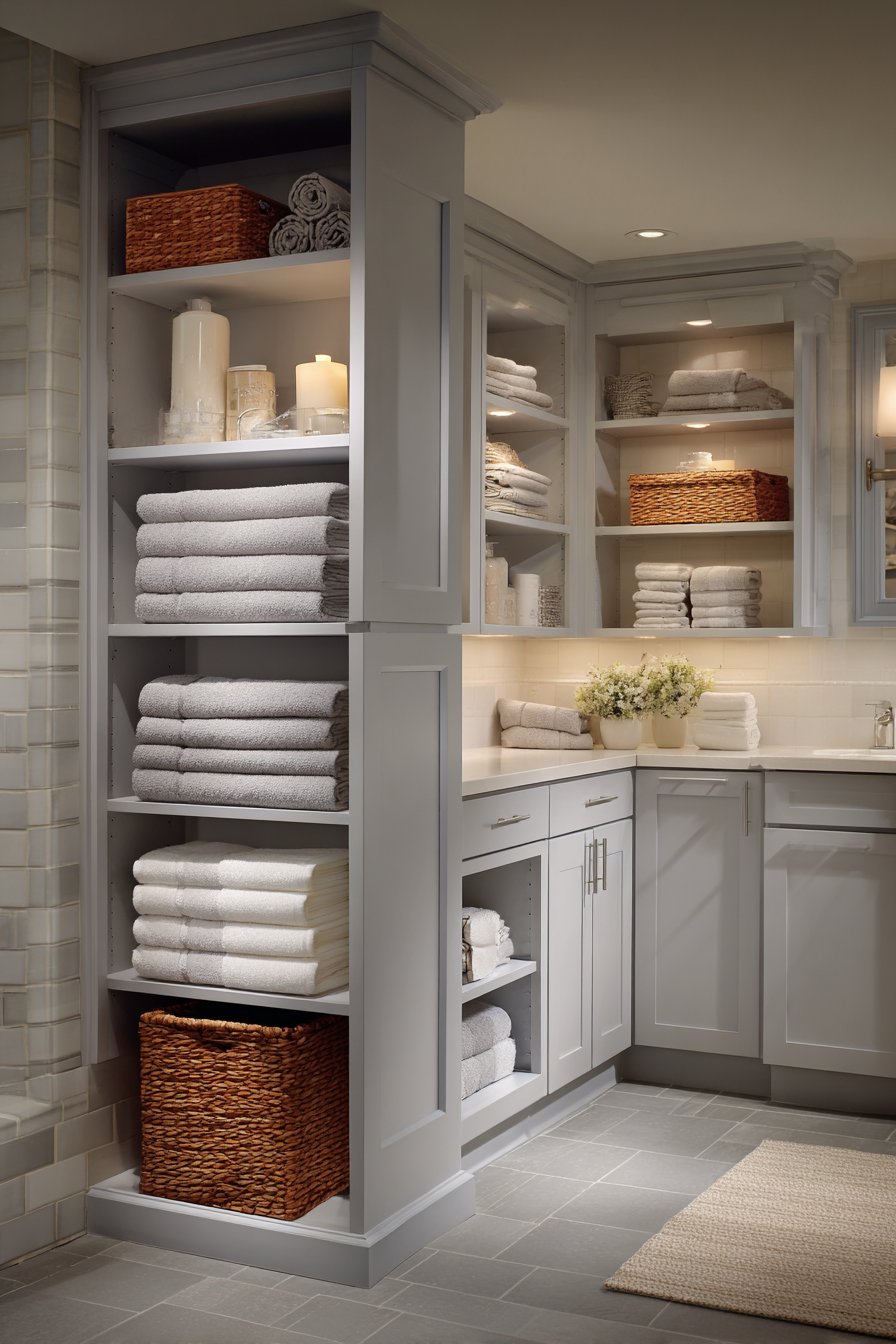
The storage-focused design recognizes that basement bathrooms often serve guest suites, entertainment areas, or teen bedrooms where adequate storage becomes essential for practical daily use. By incorporating comprehensive organizational systems during initial construction, the bathroom maintains clean, uncluttered appearance while providing everything needed for comfortable use. Moisture-resistant cabinet materials ensure longevity even in humid basement conditions, with properly sealed interiors preventing warping or delamination over time.
Key Design Tips:
- Choose plywood cabinet boxes over particleboard for moisture resistance
- Install pull-out organizers for deep cabinets to improve accessibility
- Incorporate medicine cabinets that recess into wall cavities for space efficiency
- Use corner carousel units to maximize typically wasted angular spaces
- Select soft-close hinges and drawer slides for quiet, smooth operation
17. Colorful Energizing Accent
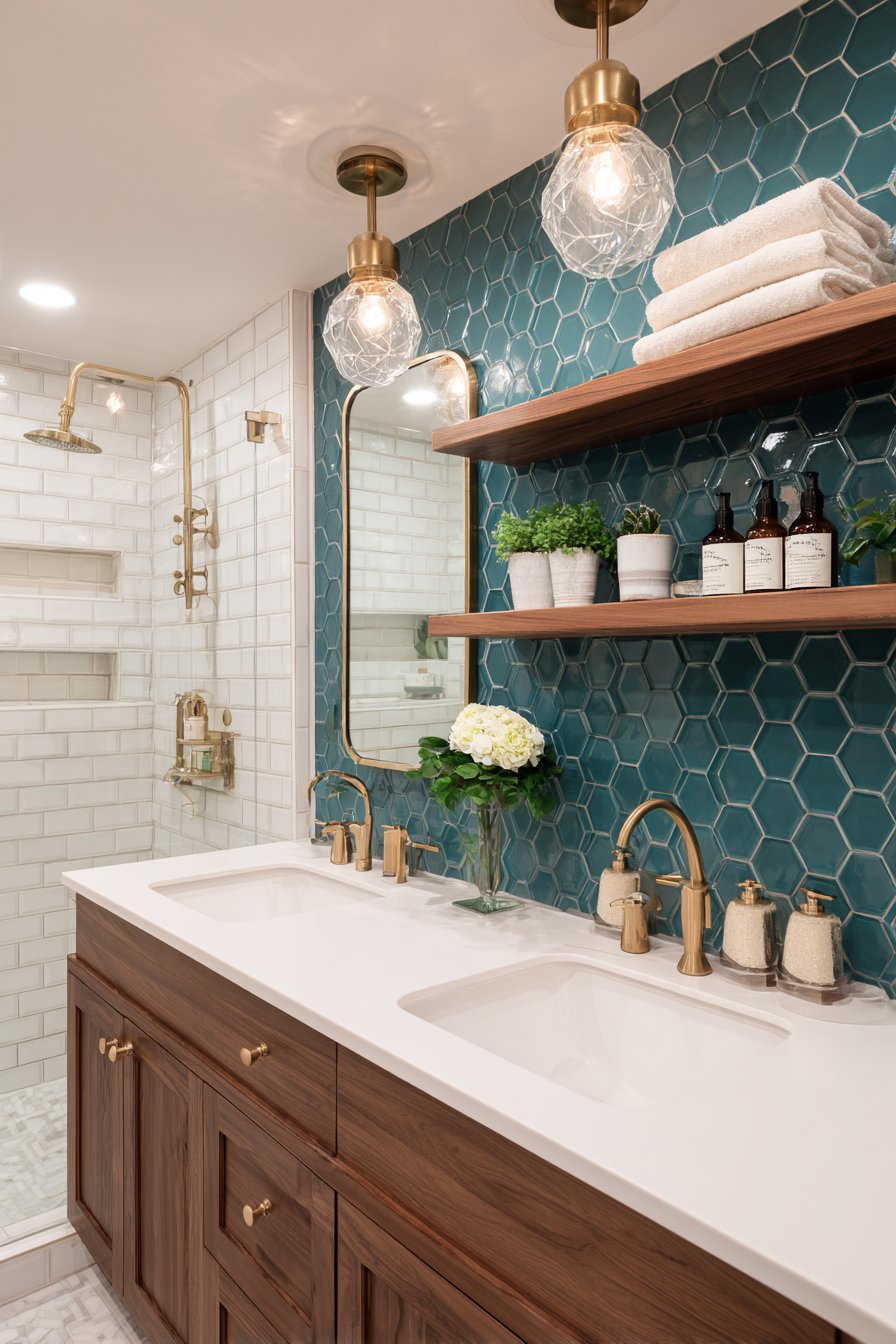
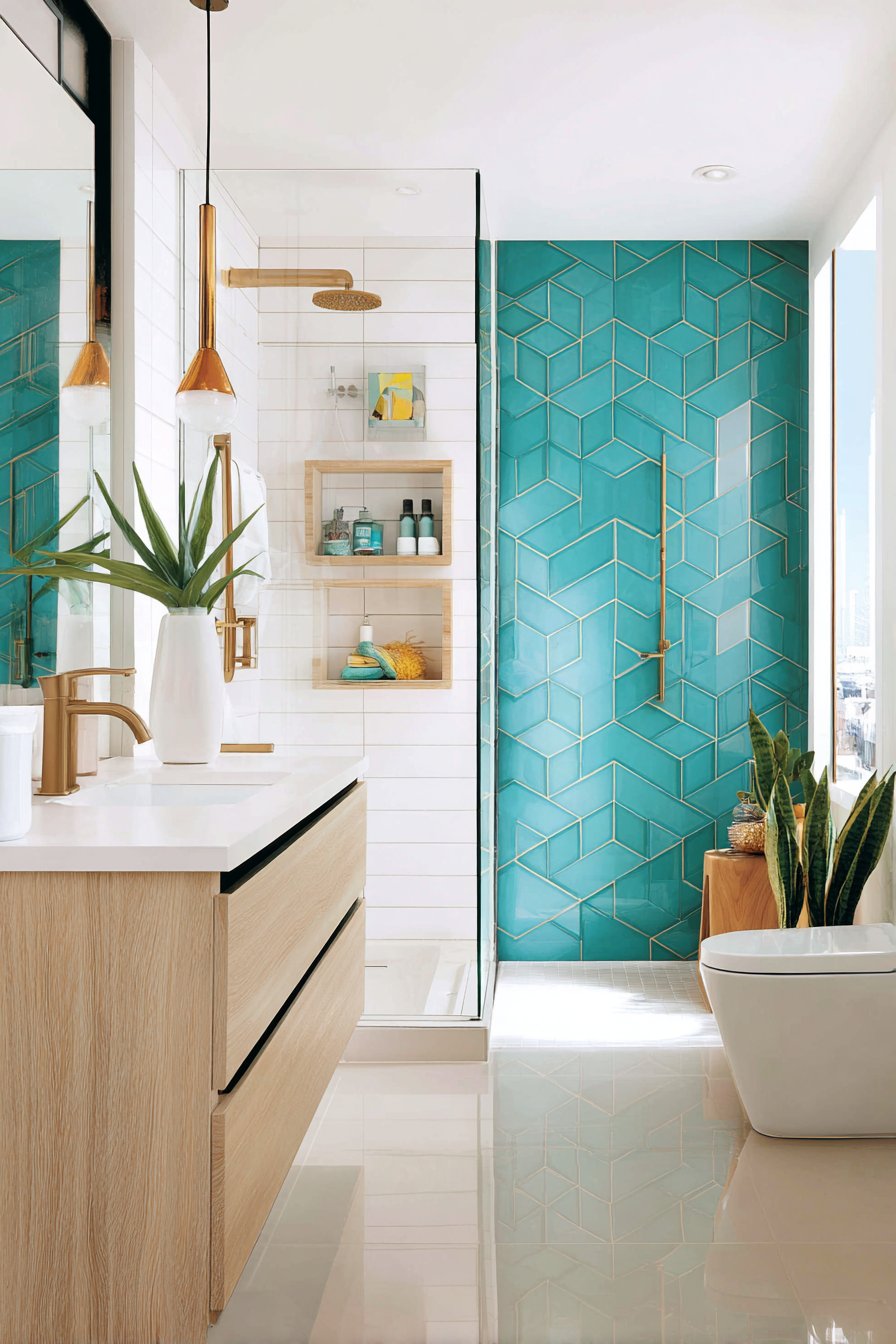
Strategic color injection transforms basement bathroom ideas from neutral backgrounds into energizing spaces with distinct personality. A teal accent wall featuring geometric tile patterns creates bold focal point while white subway tiles on remaining walls provide balance and brightness. The color concentration on a single wall delivers impact without overwhelming the space, allowing the vibrant hue to energize without dominating. Brass fixtures add warmth that bridges the cool teal with the neutral whites, their golden tones creating harmonious transition.
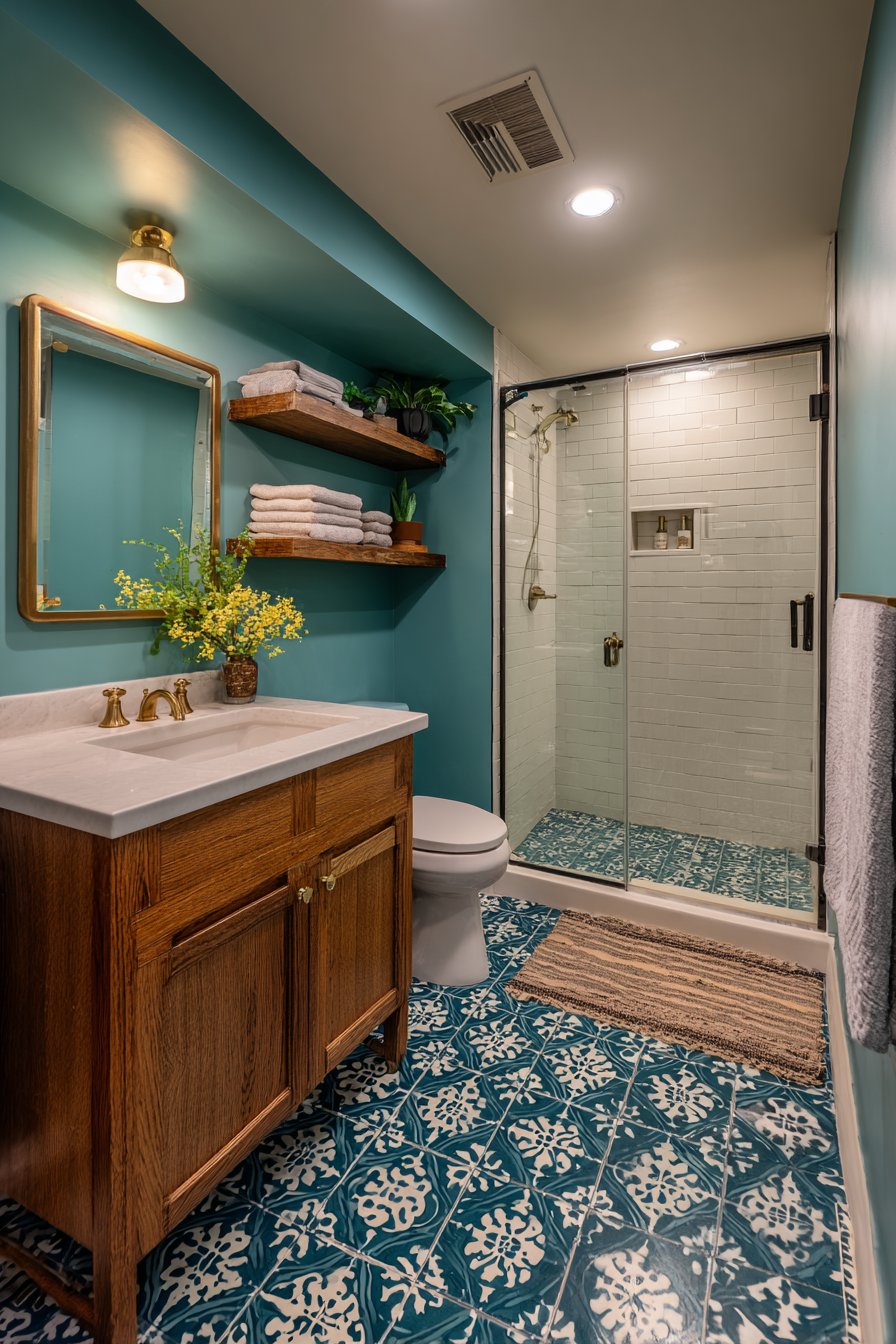
Natural wood floating shelves introduce organic texture and additional warmth, their simple horizontal lines providing places for display while breaking up the tiled surfaces. Multiple light sources including a statement pendant over the vanity ensure the colorful tiles receive proper illumination that shows their true hue and dimensional pattern. The lighting combats basement darkness while reflecting off glossy tile surfaces, amplifying both artificial and any available natural light.
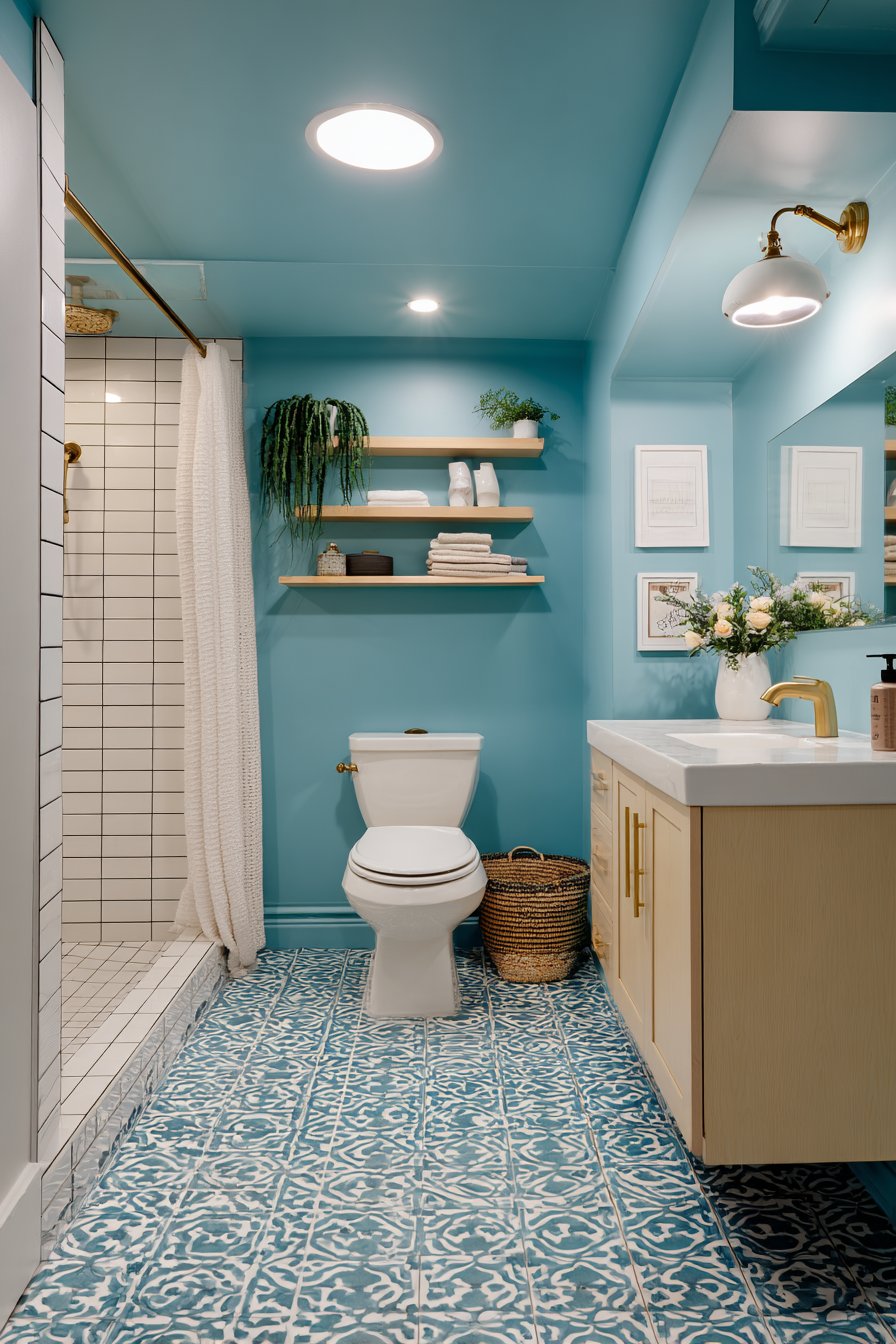
The colorful approach demonstrates that basement bathrooms need not default to safe neutrals but can instead embrace personality and vibrancy. The geometric tile pattern adds complexity and visual interest beyond simple color blocks, creating focal point worthy of attention. By limiting the bold color to one wall and surrounding it with bright neutrals, the design maintains sophistication while injecting energy and character that makes the basement bathroom feel special rather than secondary.
Key Design Tips:
- Limit bold colors to single accent walls to prevent overwhelming small spaces
- Choose glossy tile finishes to maximize light reflection from colored surfaces
- Coordinate fixture finishes with color undertones (brass with warm colors, chrome with cool)
- Install adequate lighting to properly showcase colored tiles and patterns
- Balance bold colors with neutral surroundings for sophisticated contrast
18. Low-Ceiling Height Solutions
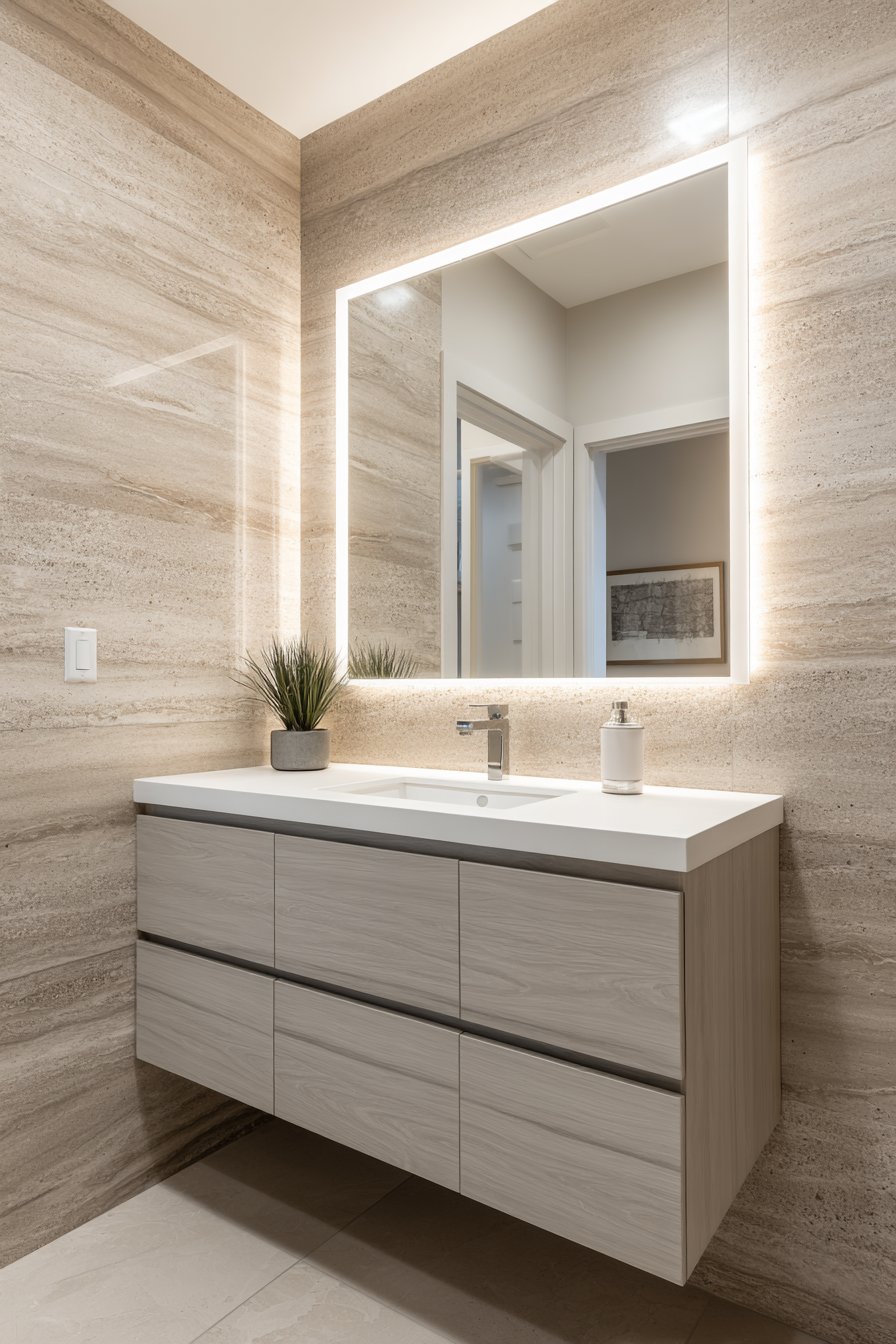
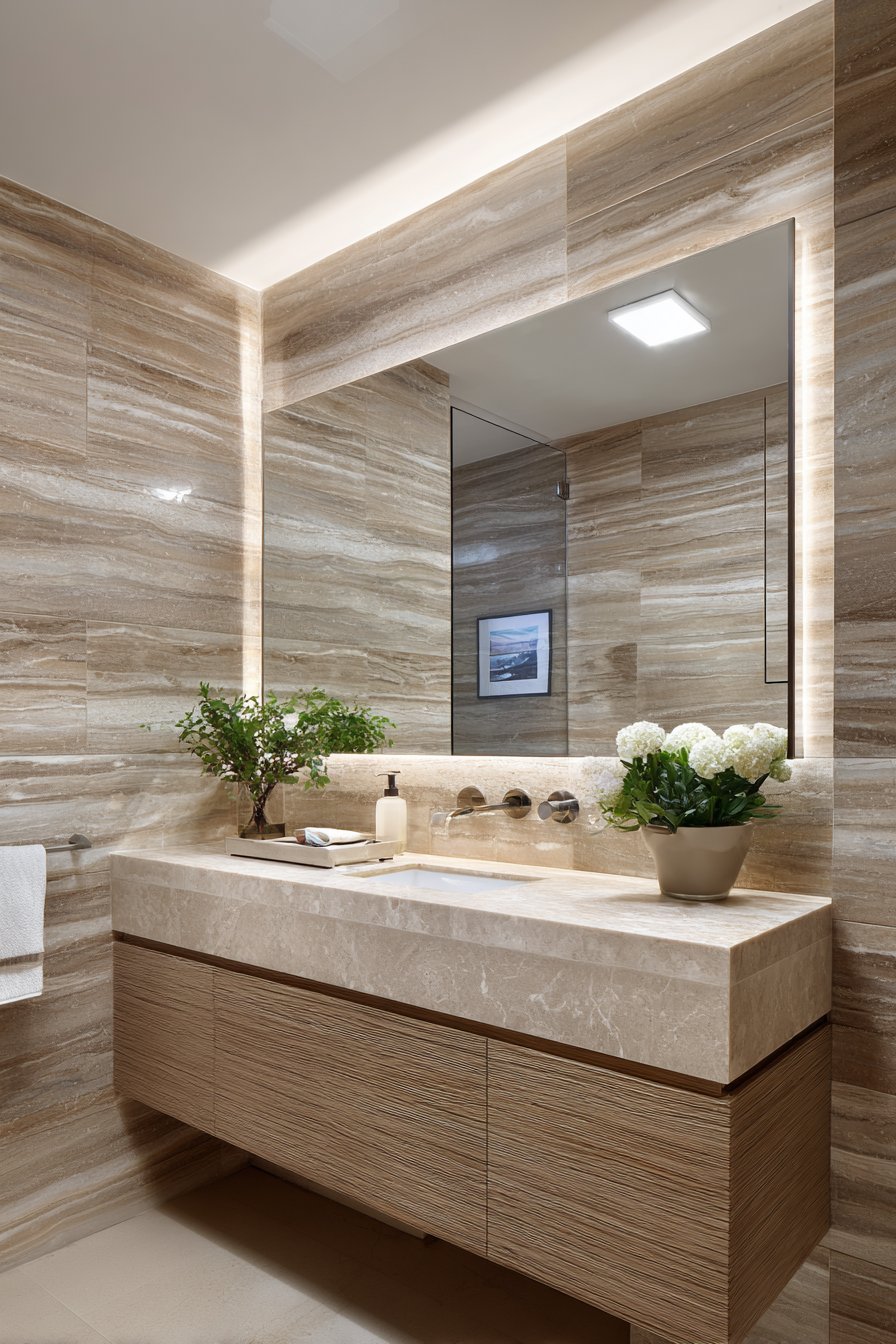
Architectural constraints common in basement bathroom ideas require creative design responses that turn limitations into opportunities. Horizontal tile patterns create visual width, counteracting any sense of compression from limited overhead clearance. Wall-mounted fixtures save floor space while their floating appearance reduces visual weight that could make low ceilings feel more oppressive. A large frameless mirror extending nearly to the ceiling draws the eye upward, creating vertical emphasis despite limited height.
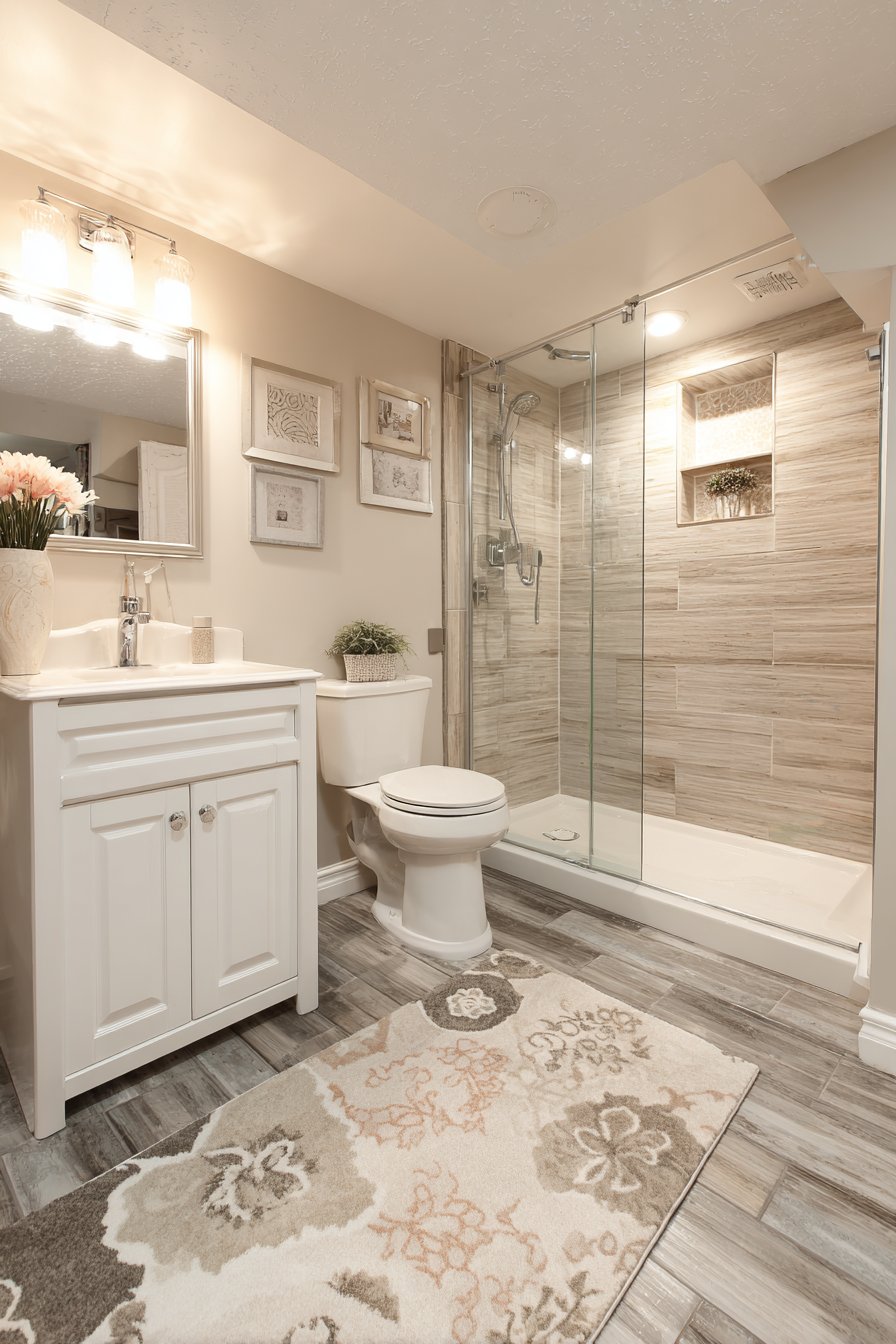
Flush-mount LED panel lighting provides comprehensive illumination without consuming precious vertical space that traditional pendant or recessed fixtures would require. Light neutral palette in beige and cream tones with minimal visual breaks prevents the space from feeling choppy or confined, the soft colors reflecting light while creating serene atmosphere. Every design decision serves the goal of maximizing perceived height and maintaining openness despite structural realities.
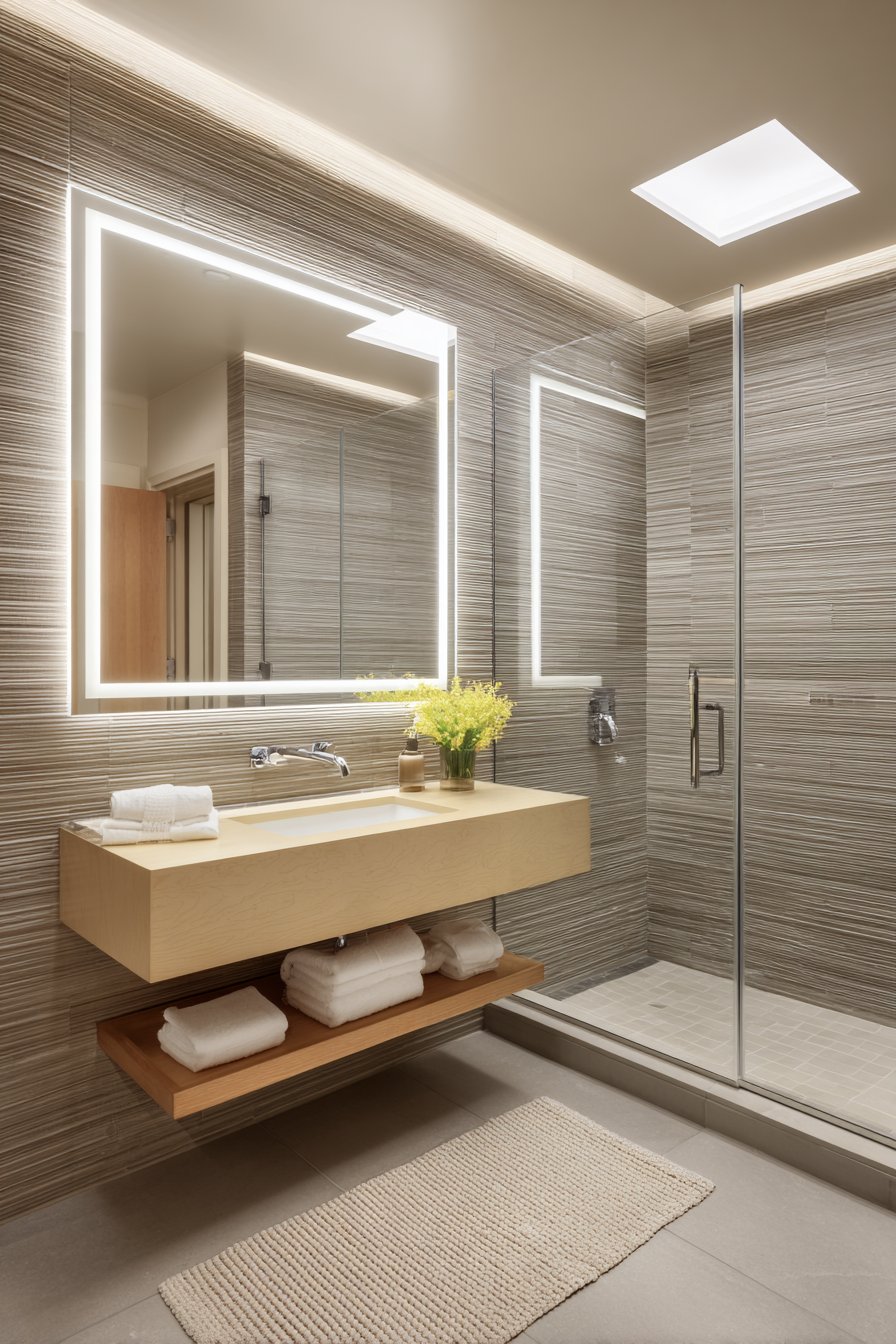
The low-ceiling solution demonstrates that basement bathrooms can overcome significant architectural challenges through thoughtful design strategies. By eliminating unnecessary visual interruptions, emphasizing horizontal and vertical lines appropriately, and using light colors with ample illumination, even spaces with limited overhead clearance can feel comfortable and inviting rather than claustrophobic. The key lies in accepting constraints and working creatively within them rather than fighting against structural realities.
Key Design Tips:
- Install tiles horizontally to create visual width that counteracts low ceilings
- Choose flush-mount or surface-mount lighting to preserve overhead clearance
- Extend mirrors to maximum height to create vertical visual emphasis
- Use continuous color schemes without breaks that would fragment space
- Select low-profile fixtures that don’t extend far from walls or ceiling
19. Dual-Function Laundry Integration
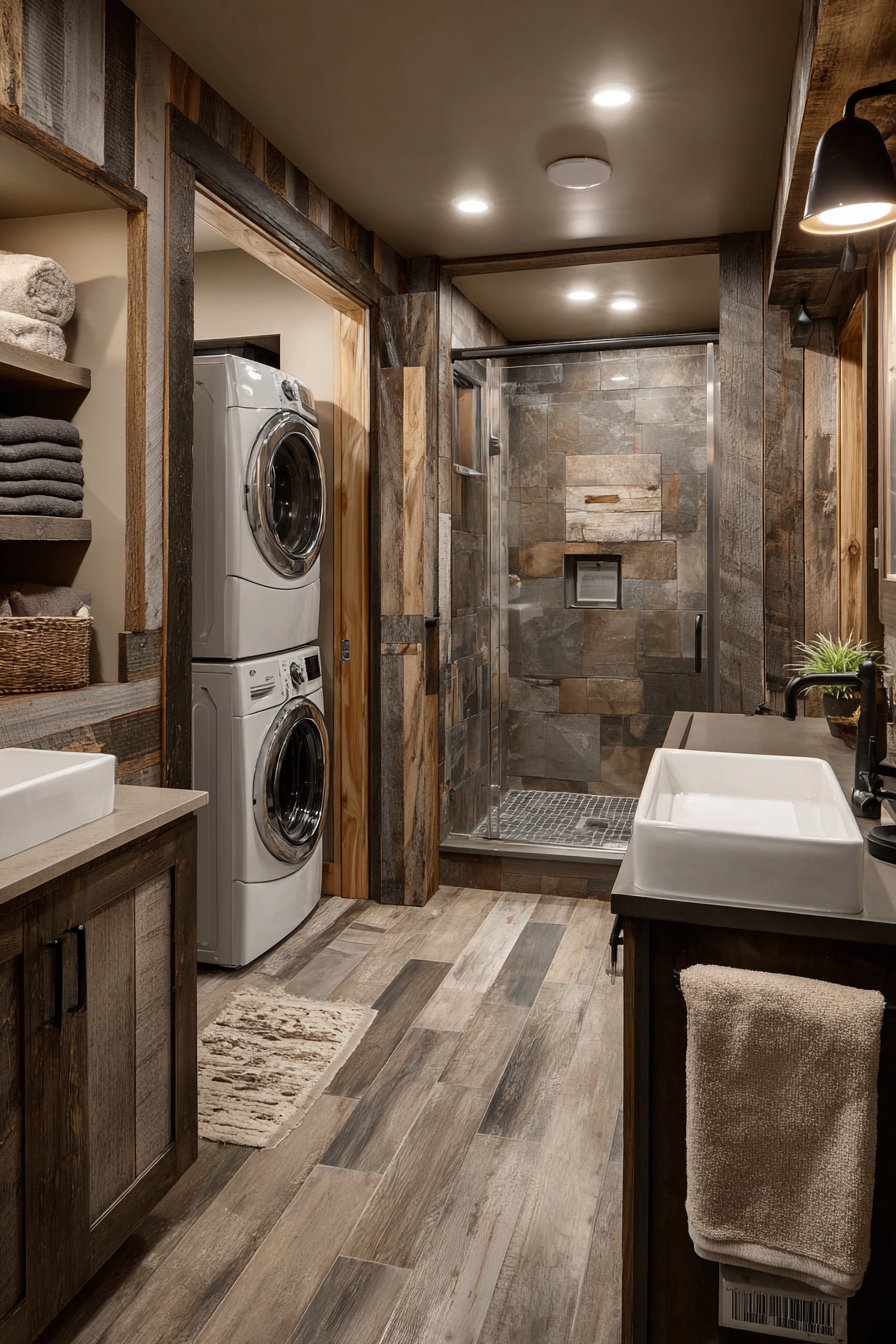
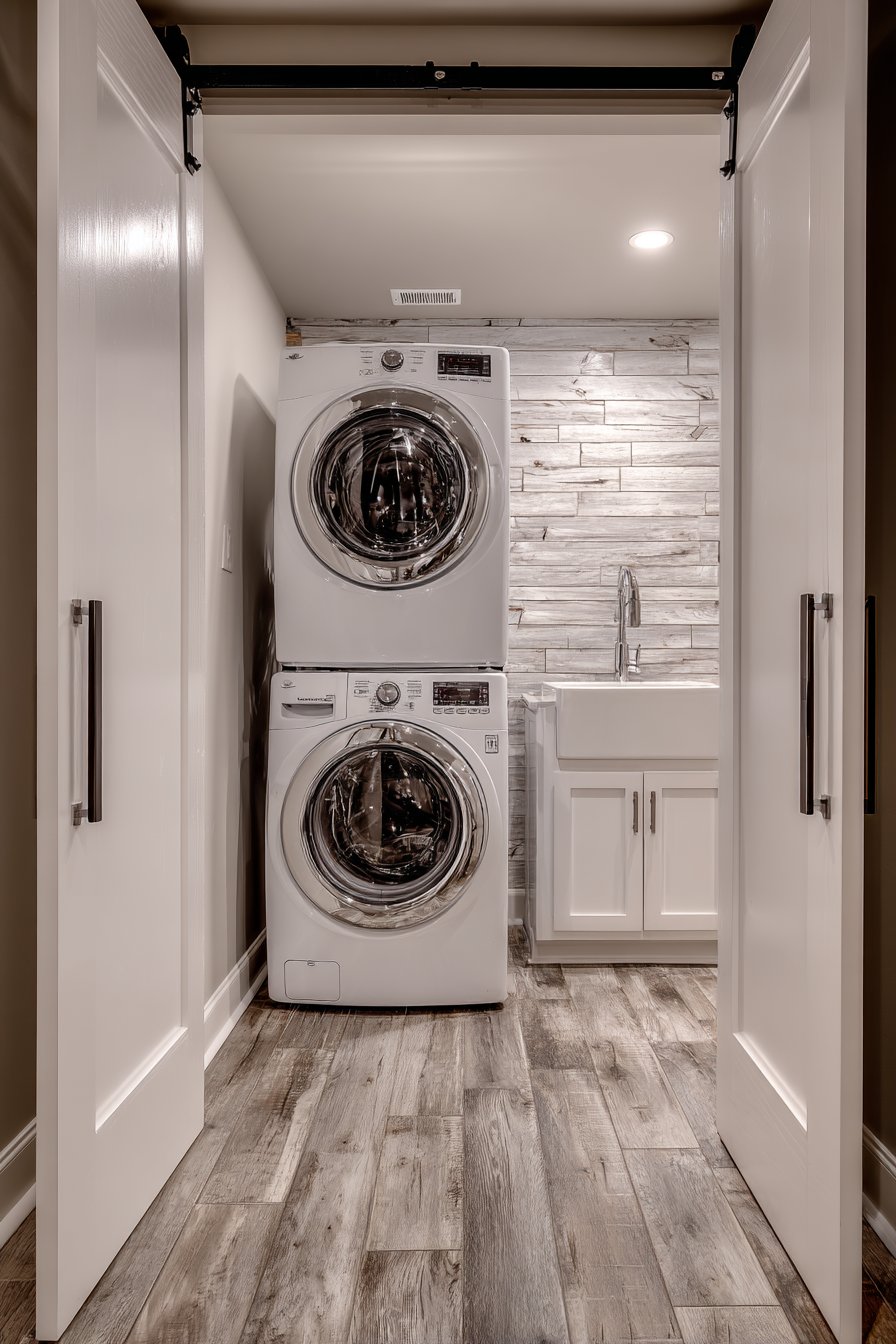
Multi-purpose planning maximizes basement bathroom ideas where space limitations require creative solutions that serve multiple functions. Stacked washer-dryer units concealed behind custom sliding barn doors provide laundry capability while maintaining bathroom aesthetics when appliances aren’t in use. A deep utility sink doubles as hand washing station, its generous basin accommodating both cleaning tasks and personal hygiene. Vinyl plank flooring provides moisture resistance suitable for both bathroom and laundry functions.
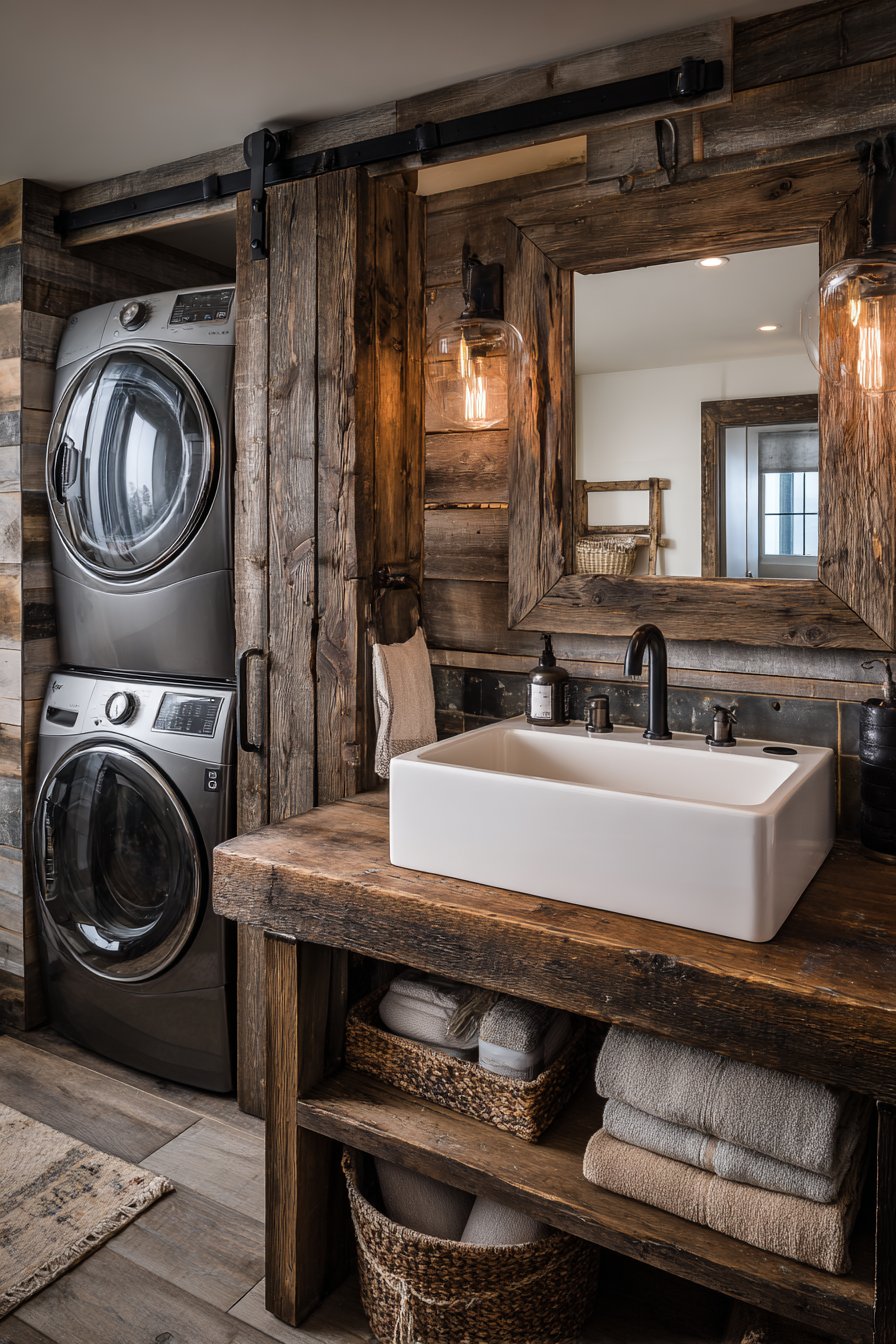
Ventilation systems receive careful planning to handle humidity from both bathing and laundry activities, with properly sized exhaust fans and adequate makeup air preventing moisture buildup. The barn door hardware adds rustic charm while its space-saving sliding mechanism avoids conflicts with bathroom fixtures that swinging doors might create. Storage spaces accommodate both bathroom supplies and laundry products, with clear organization preventing confusion between the different functional areas.
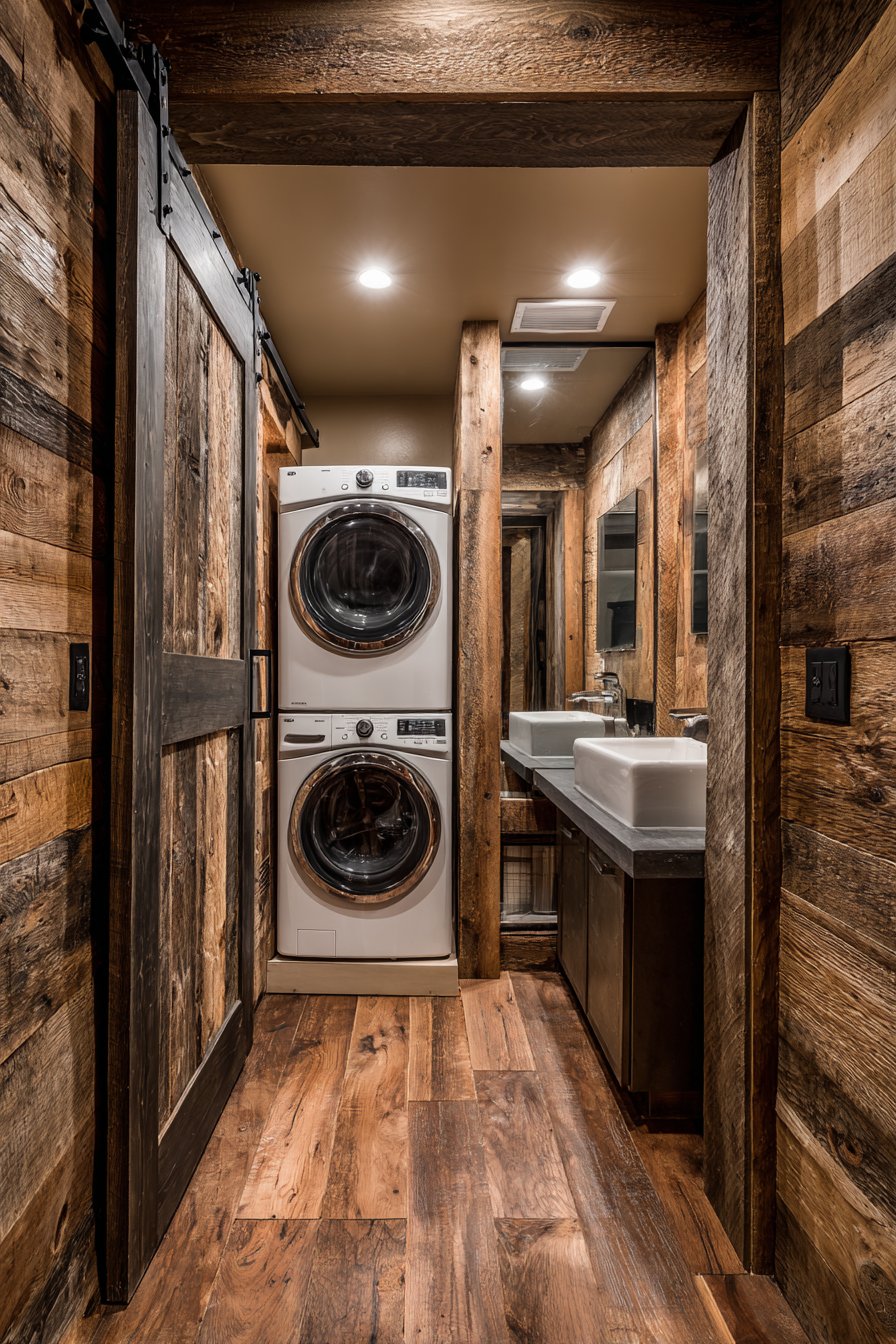
This dual-purpose approach recognizes practical realities of basement renovations where plumbing access may be limited to specific areas, making combined spaces more practical than separate rooms. The key to successful integration lies in proper planning that ensures neither function compromises the other—adequate ventilation prevents laundry humidity from damaging bathroom finishes, while waterproof flooring protects against both bathroom splashes and potential appliance leaks. Thoughtful design creates spaces that serve both purposes gracefully.
Key Design Tips:
- Install dedicated exhaust fans for both bathroom and laundry areas
- Choose waterproof flooring that handles both functions without damage
- Use sliding doors to conceal appliances without requiring door swing clearance
- Install deep utility sinks that serve multiple purposes efficiently
- Organize storage clearly to separate bathroom and laundry supplies
20. Critical Moisture Management Focus
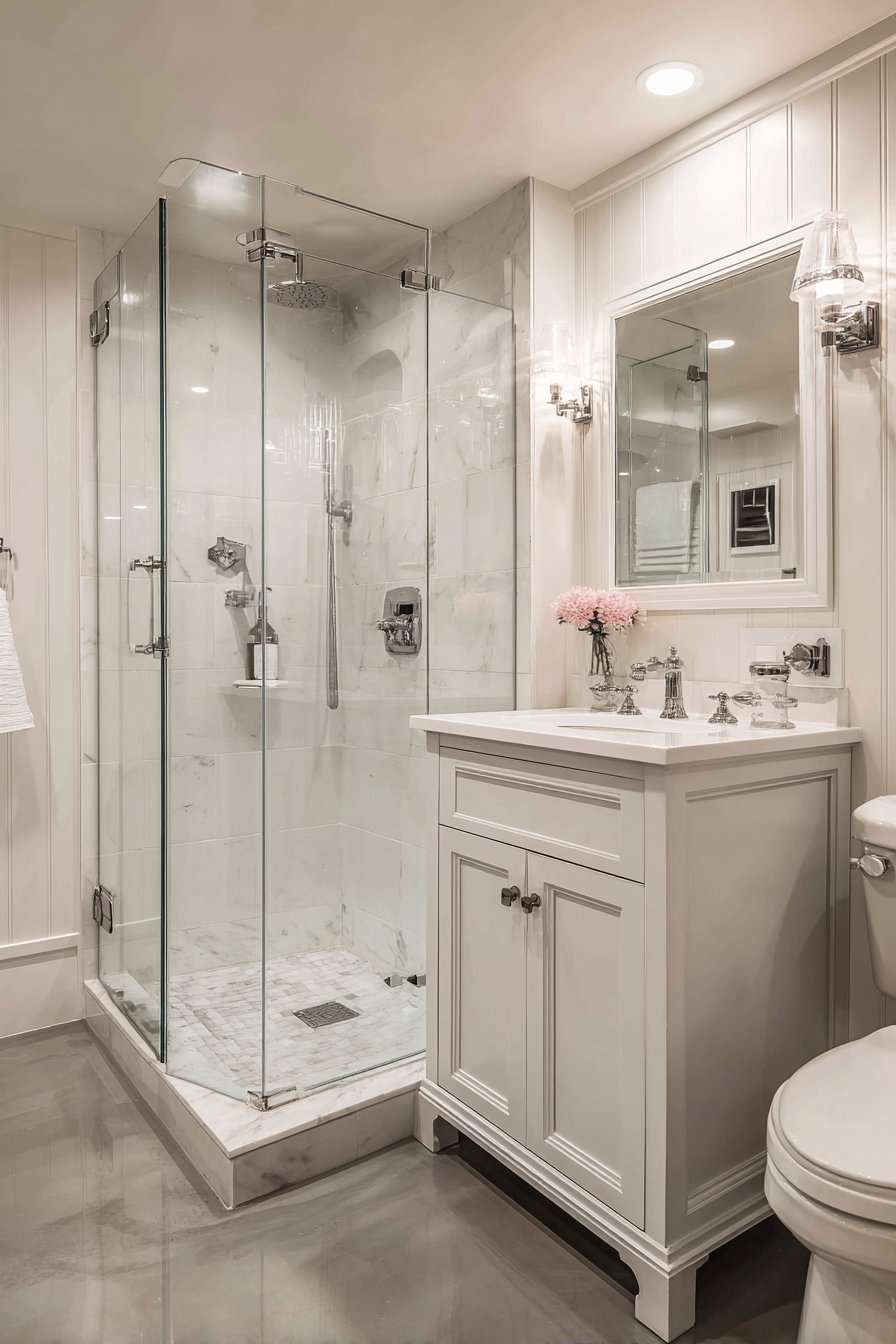
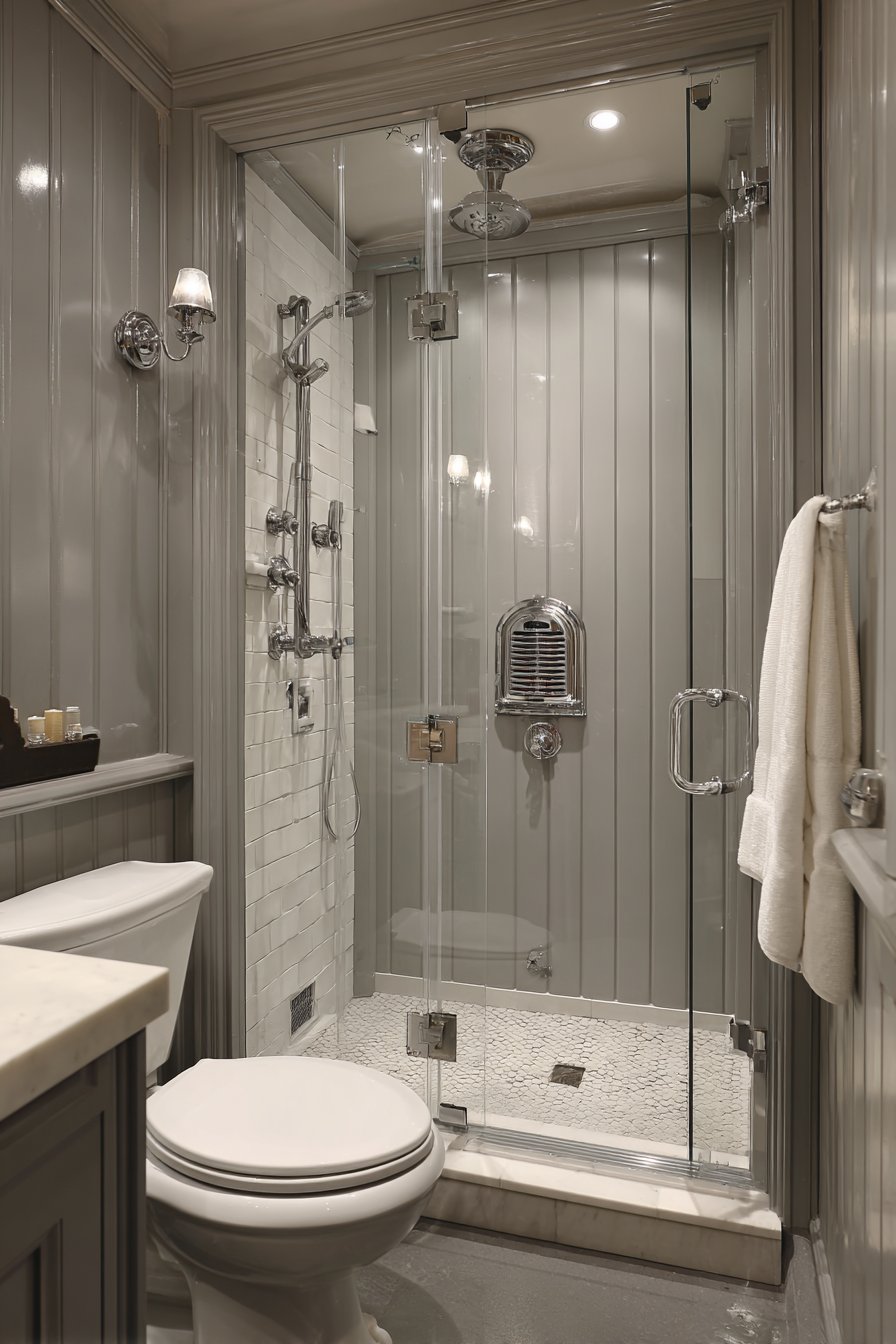
Understanding moisture control fundamentals proves essential for successful basement bathroom ideas, and this design makes water management visible rather than hidden. A dehumidifier elegantly housed in custom cabinetry maintains optimal humidity levels, its presence acknowledged and integrated rather than afterthought. Exhaust fans with built-in humidity sensors activate automatically when moisture levels rise, ensuring ventilation occurs whenever needed without requiring user intervention.
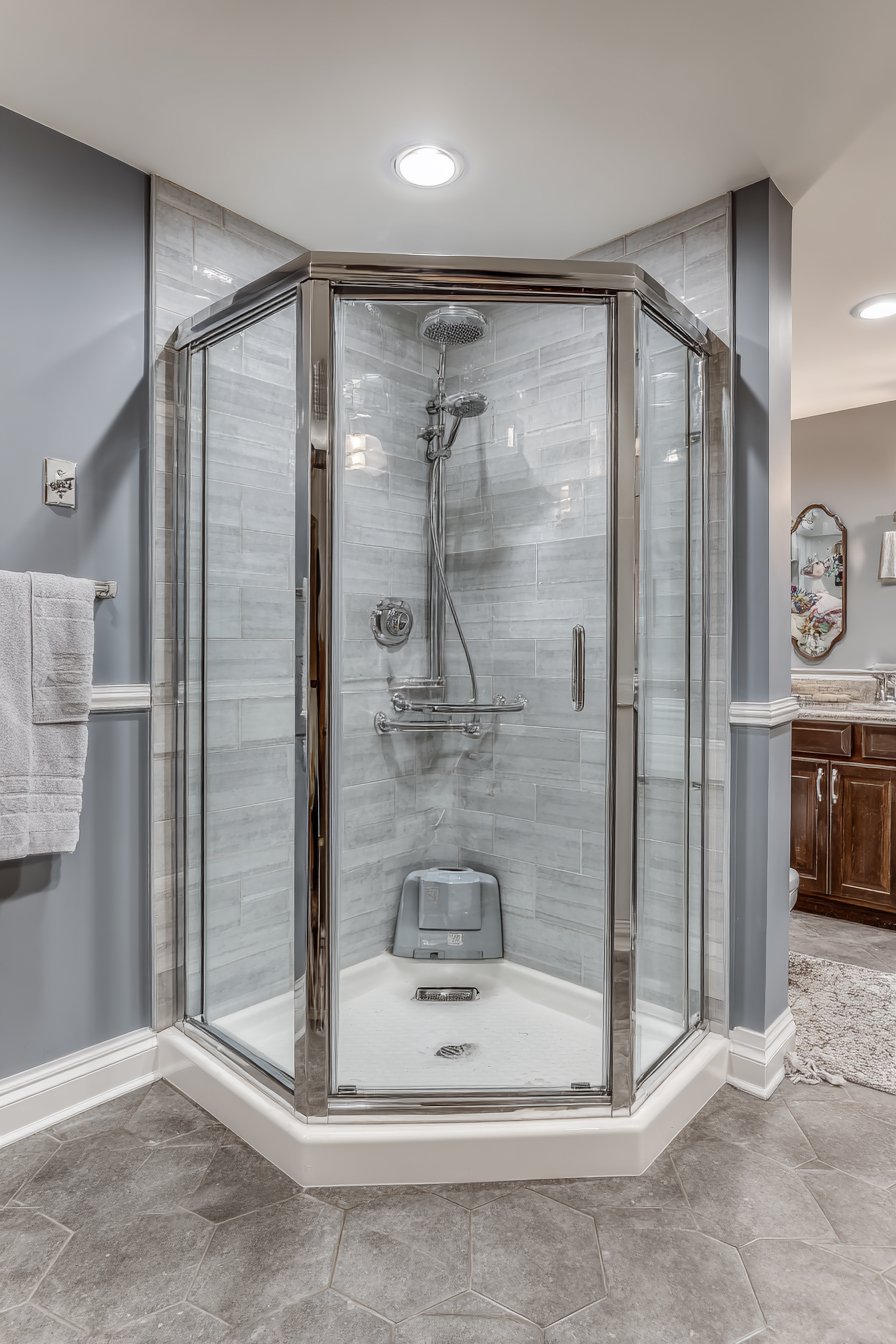
Waterproof wainscoting panels in gray extend four feet up walls, providing robust moisture protection in splash zones while sealed concrete flooring with subtle slope toward dedicated drain handles any water that reaches the floor. Moisture-resistant paint on upper walls completes the defensive strategy, every surface selected for performance in challenging below-grade conditions. Chrome fixtures and glass shower doors resist corrosion while maintaining clean aesthetic that doesn’t draw attention to their practical performance characteristics.
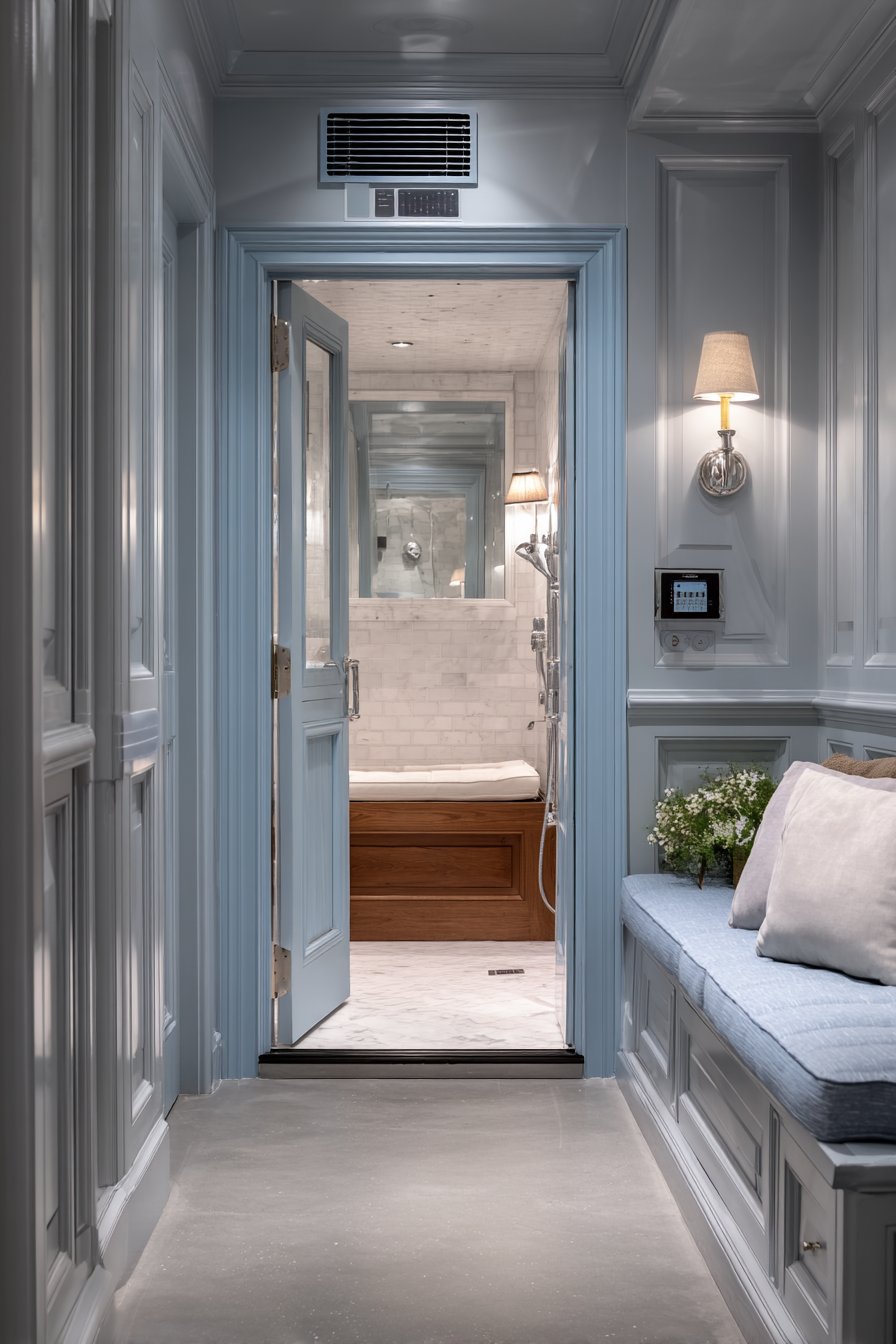
The moisture-focused design demonstrates that protecting basement bathrooms from water damage doesn’t require industrial appearance—thoughtful integration of mechanical systems and strategic material selection can address practical needs while maintaining sophisticated aesthetics. Regular dehumidifier operation prevents musty odors and mold growth, while proper ventilation removes excess humidity before it condenses on cool surfaces. These invisible protections ensure the bathroom remains healthy and beautiful for decades of reliable use.
Key Design Tips:
- Install exhaust fans rated for bathroom cubic footage with humidity sensors
- Choose dehumidifiers sized appropriately for space and moisture load
- Apply waterproof wainscoting in areas likely to experience water contact
- Slope floors toward drains at minimum 1/4 inch per foot for drainage
- Use moisture-resistant paint with mildew inhibitors on all wall surfaces
21. Guest Suite Hotel-Inspired Luxury
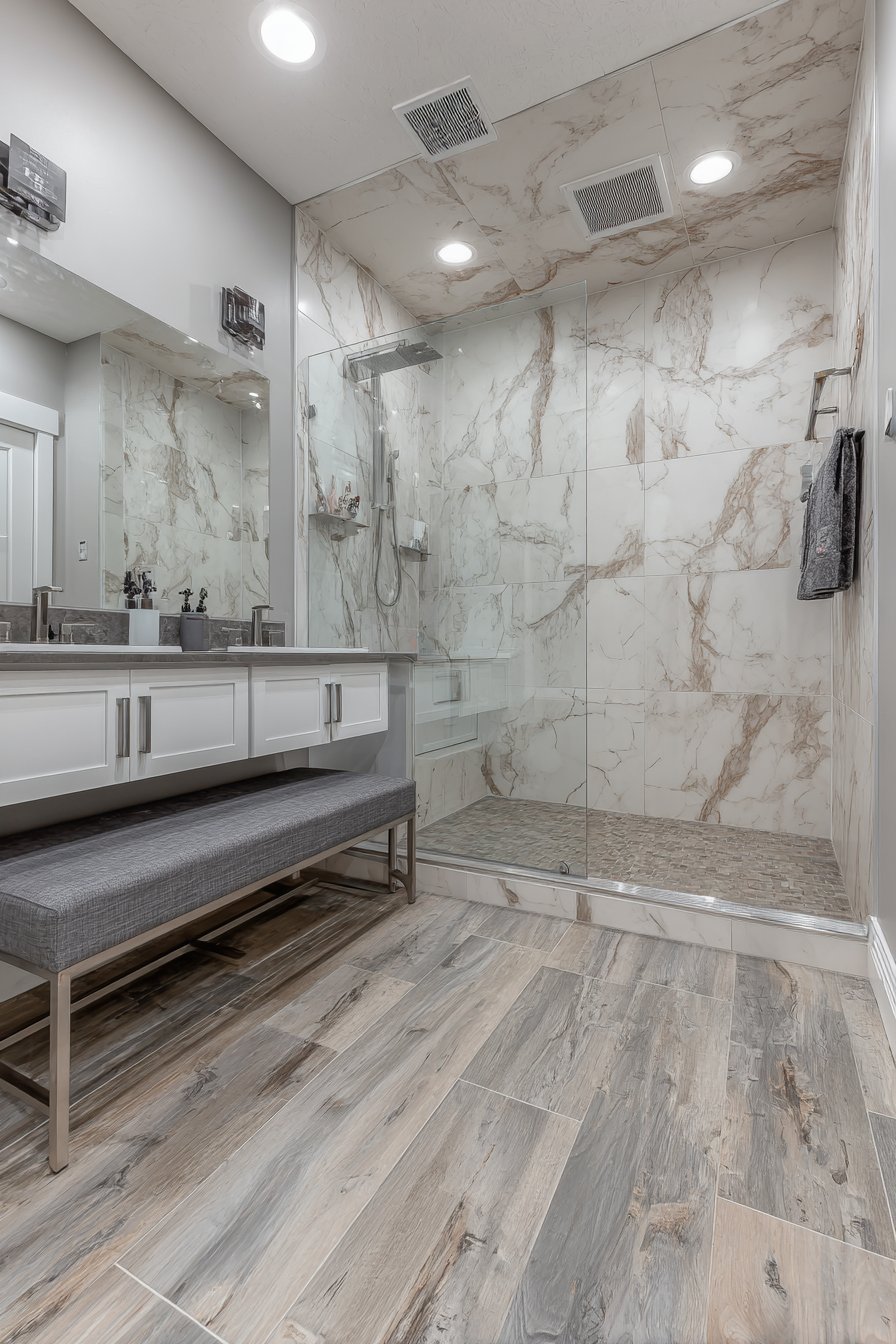
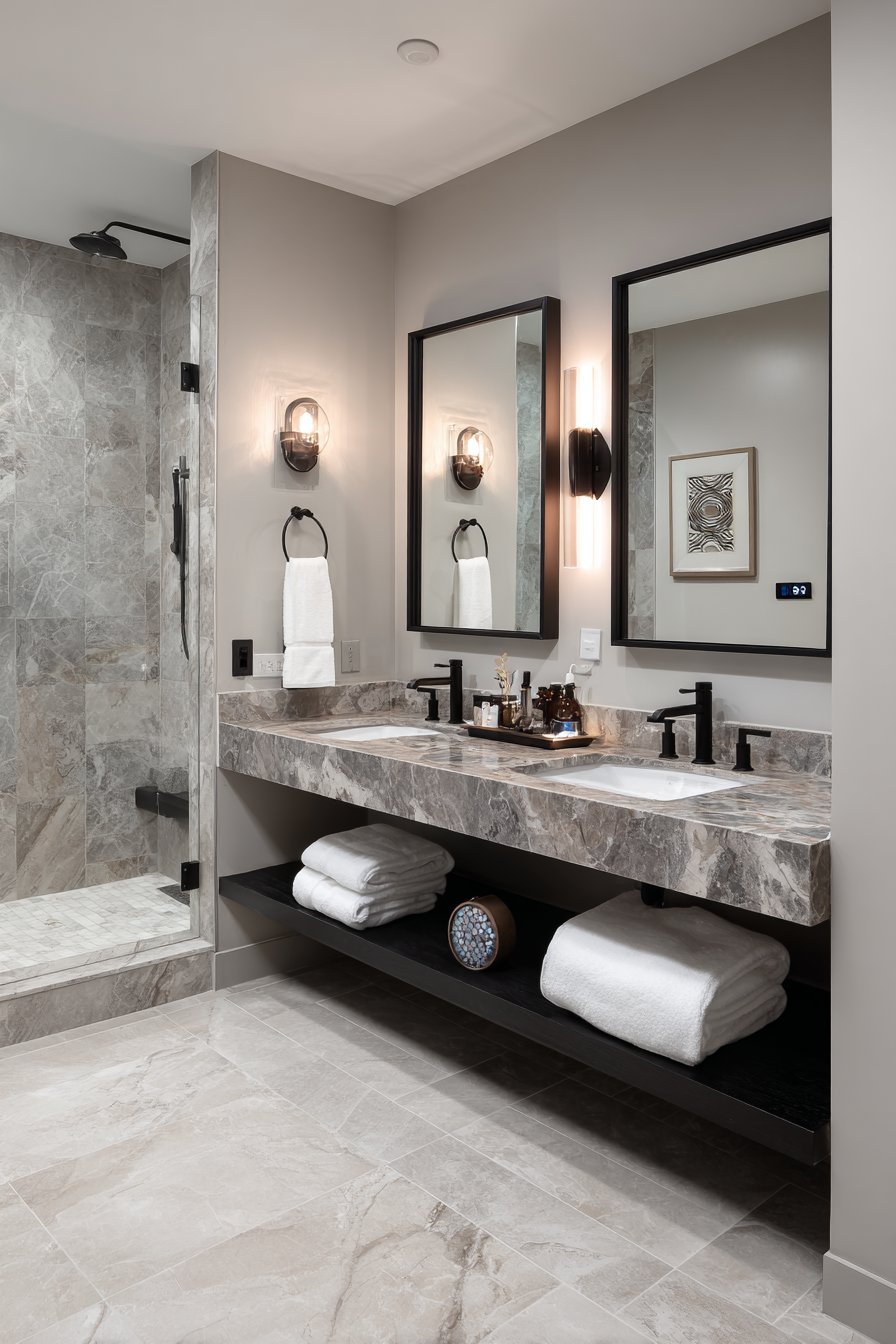
Creating hotel-quality experiences in basement bathroom ideas elevates guest accommodations to memorable luxury levels. Floating double vanities provide personal space for couples while backlit mirrors deliver flattering illumination and spa-like ambiance. Frameless glass showers with built-in bench seating offer comfort and accessibility while rainfall showerheads and handheld options accommodate different preferences. Luxury details like heated floors and towel warmers add comfort that guests remember long after their visits.
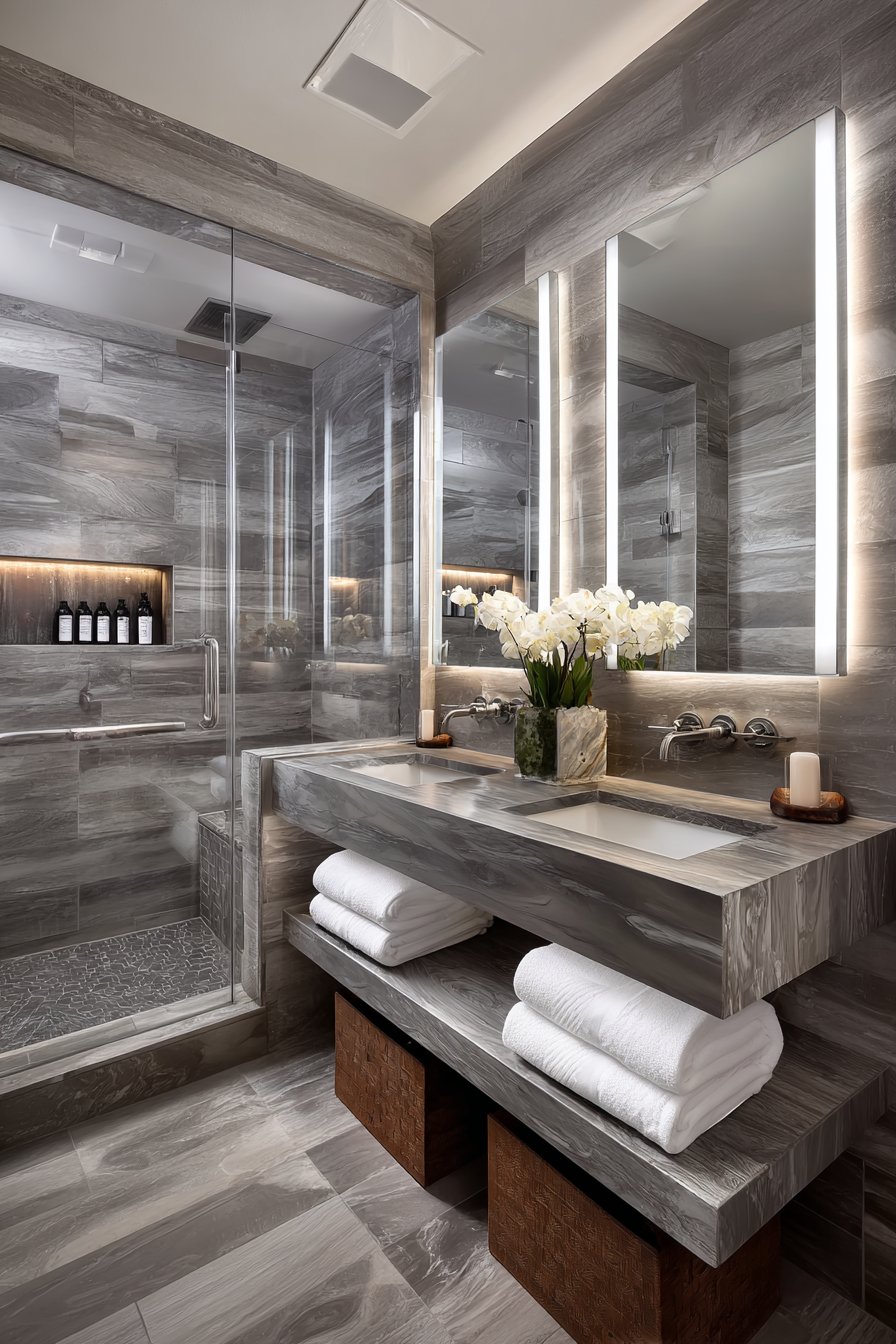
Neutral palette in grays and whites with marble-look porcelain tiles creates sophisticated elegance that appeals to broad range of tastes. The marble appearance delivers luxury aesthetic while porcelain’s superior performance and easier maintenance make it ideal for guest bathrooms that may experience irregular use. Proper ventilation and sump pump access integrate subtly into the design, protecting the investment while ensuring reliable performance even during extended guest stays.
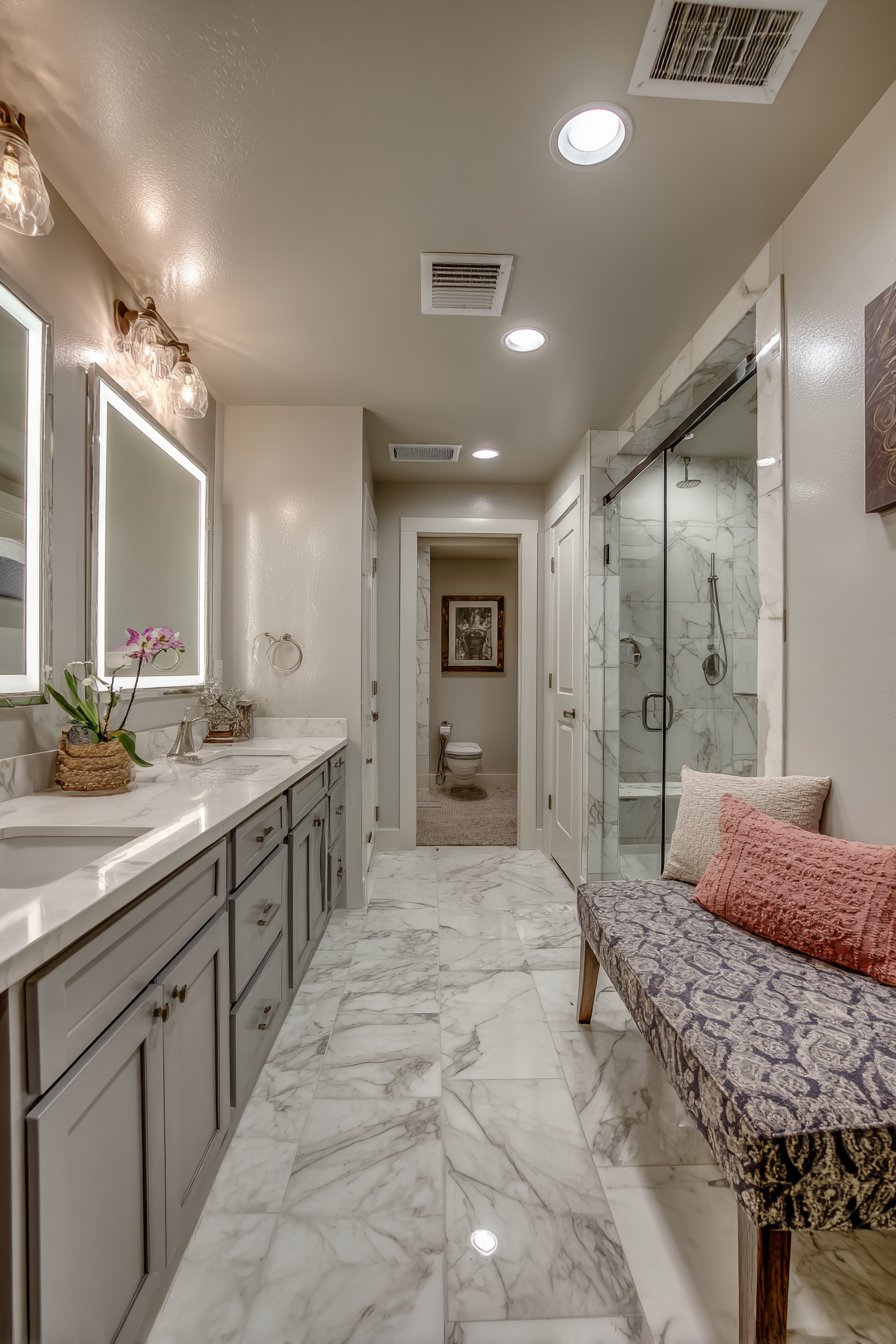
The hotel-inspired approach recognizes that guest bathrooms represent hosts’ hospitality and attention to detail. By incorporating luxury amenities and ensuring absolute reliability of systems, homeowners create guest experiences that rival boutique hotels. The upscale finishes and thoughtful touches demonstrate respect for guests while the robust construction and proper mechanical systems ensure worry-free hosting regardless of usage patterns or duration of stays.
Key Design Tips:
- Install dual vanities with minimum 60-inch total width for comfortable shared use
- Choose porcelain tiles that mimic natural stone for luxury appearance with easy care
- Include heated floors and towel warmers for memorable comfort details
- Select frameless glass shower enclosures for spa-like openness
- Ensure robust ventilation to handle intensive use during guest visits
22. Mediterranean Moroccan Influence
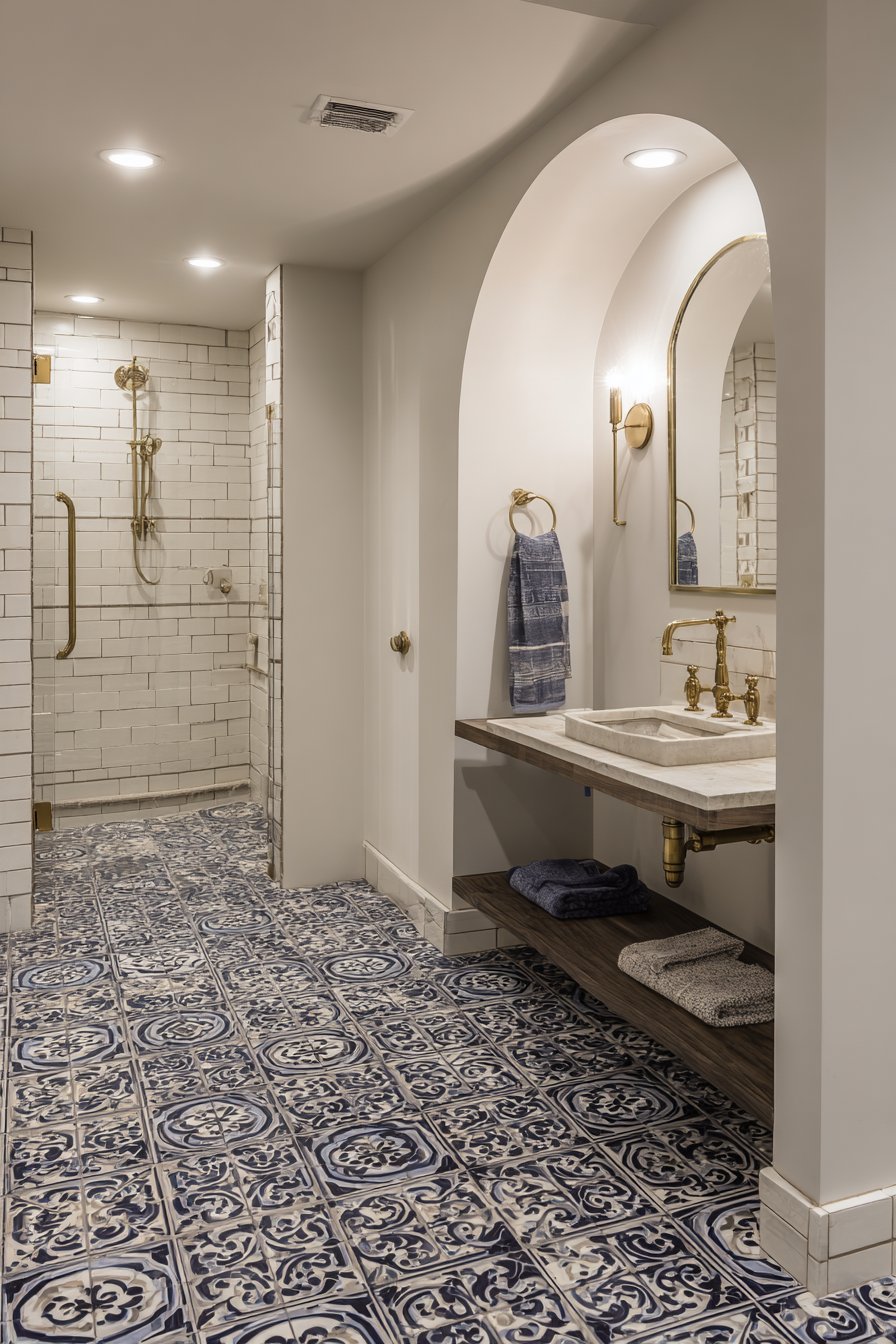
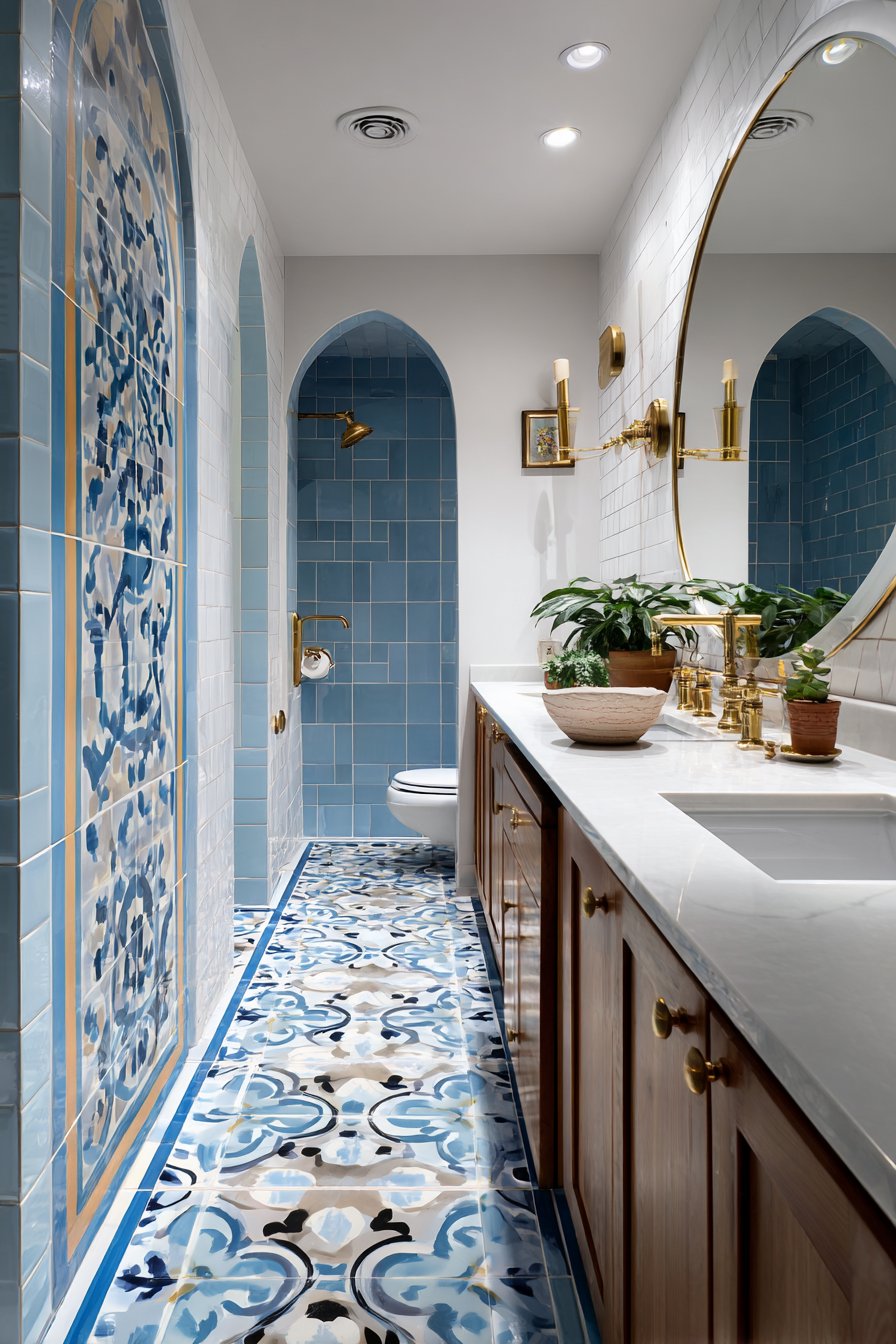
Global design influences bring distinctive character to basement bathroom ideas, and this Mediterranean-inspired space showcases how international styles adapt beautifully to below-grade locations. Cement tiles featuring intricate Moroccan patterns in blues and grays create stunning floors that become artwork underfoot, their hand-crafted appearance and geometric complexity establishing the space’s exotic character. White subway tiles on walls provide neutral backdrop that allows the patterned floor to shine while maintaining brightness essential in windowless spaces.
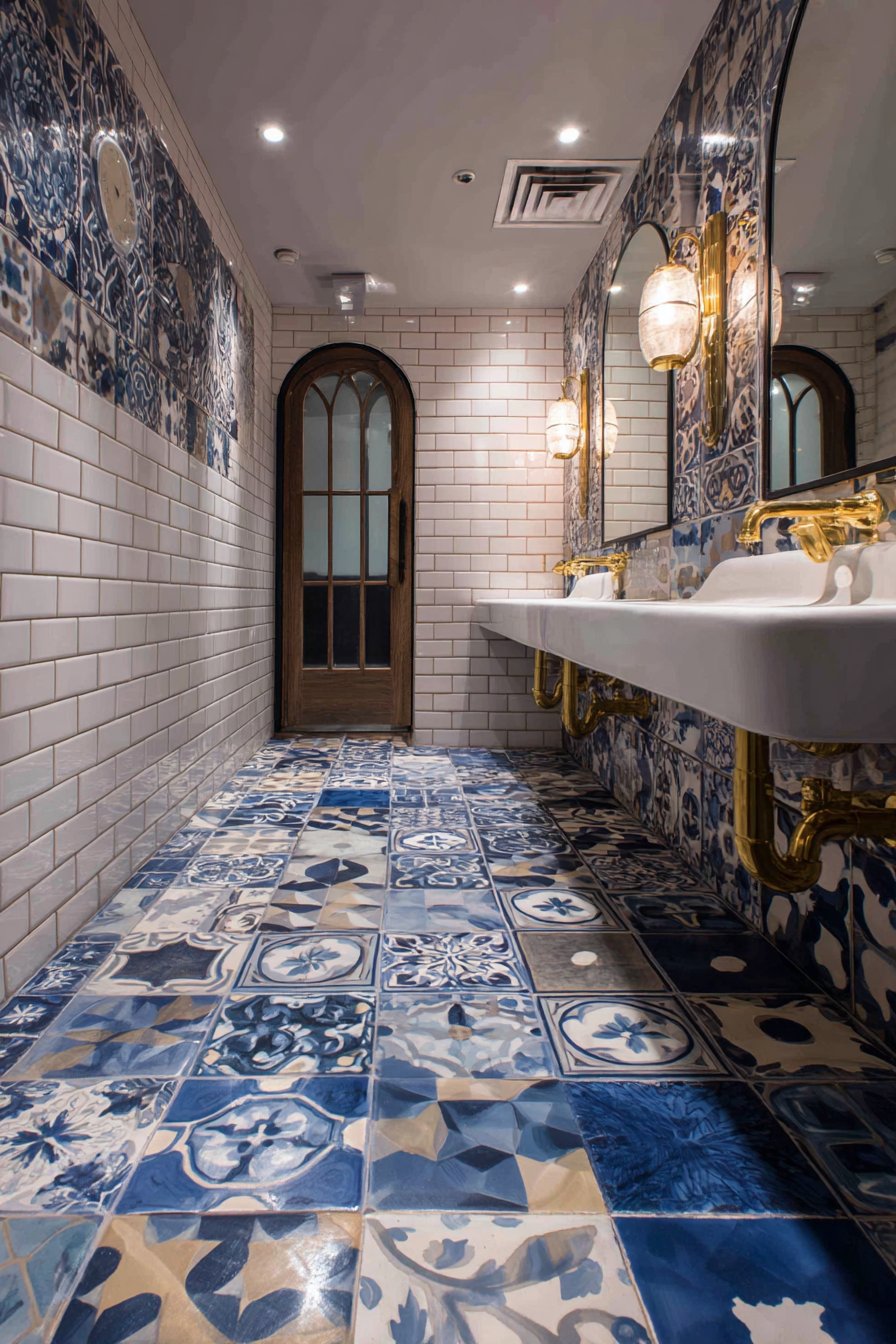
An arched doorway detail introduces architectural interest that reinforces the Mediterranean theme, its curved form softening the typically angular basement geometry. Brass fixtures throughout the space add warmth and echo the golden tones common in North African and Southern European design traditions. Strategic lighting including wall sconces flanking the mirror and recessed ceiling lights ensures proper illumination while creating ambient glow that enhances the intimate, exotic atmosphere.
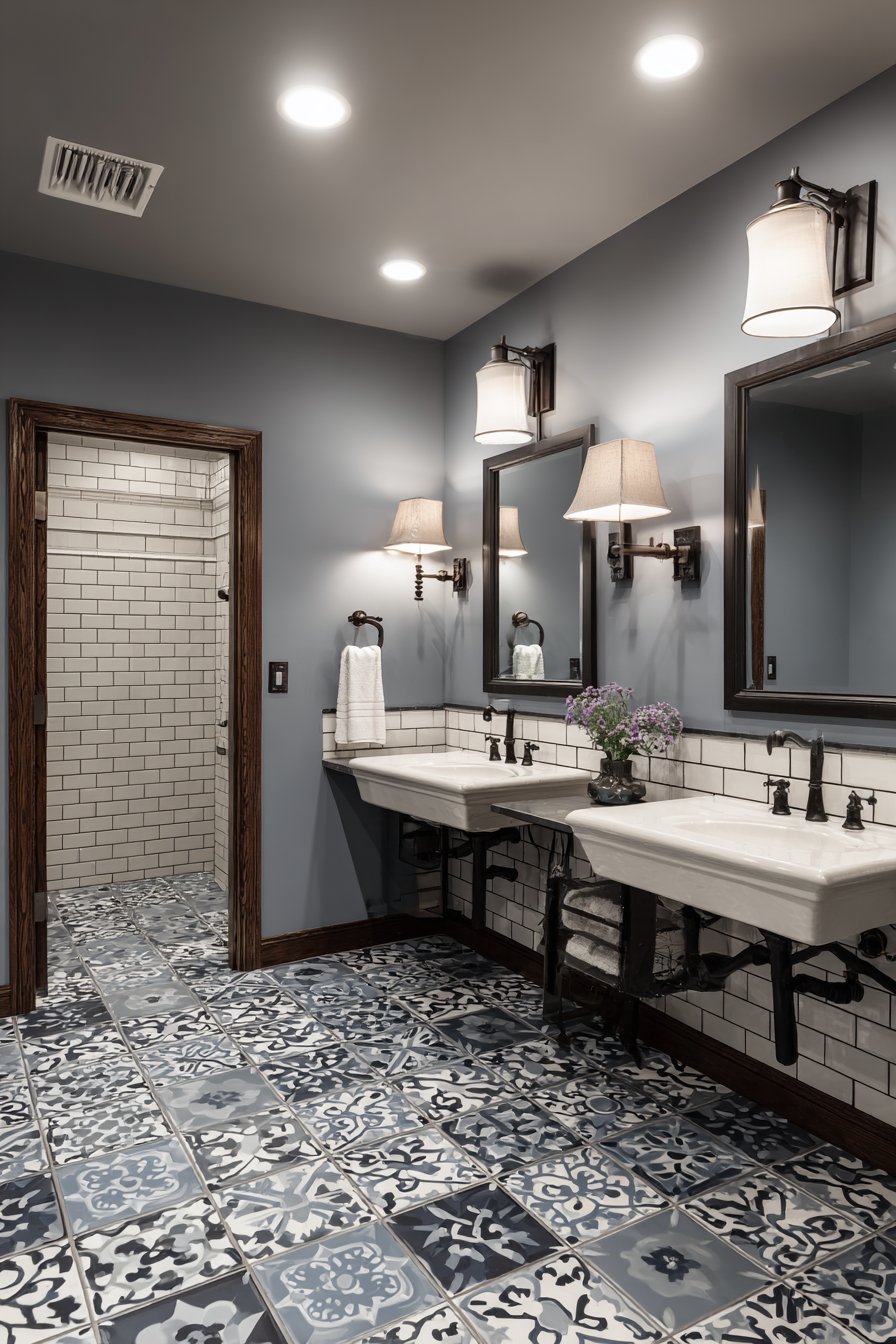
The global-influenced design requires attention to moisture management with cement tiles, as their porous nature demands proper sealing to protect against water damage in basement humidity. Multiple coats of penetrating sealer followed by grout sealing creates protective barrier while maintaining the tiles’ beautiful matte surface. The Mediterranean aesthetic proves that basement bathrooms can embrace rich cultural influences while meeting practical performance requirements through thoughtful material preparation and installation methods.
Key Design Tips:
- Seal cement tiles with multiple coats of penetrating sealer before grouting
- Apply grout sealer to protect patterns and prevent moisture penetration
- Choose simplified Moroccan patterns for DIY installation or hire specialists for complex designs
- Introduce arched elements through doorways, mirrors, or niches for architectural interest
- Balance patterned floors with simple wall treatments to prevent visual overwhelm
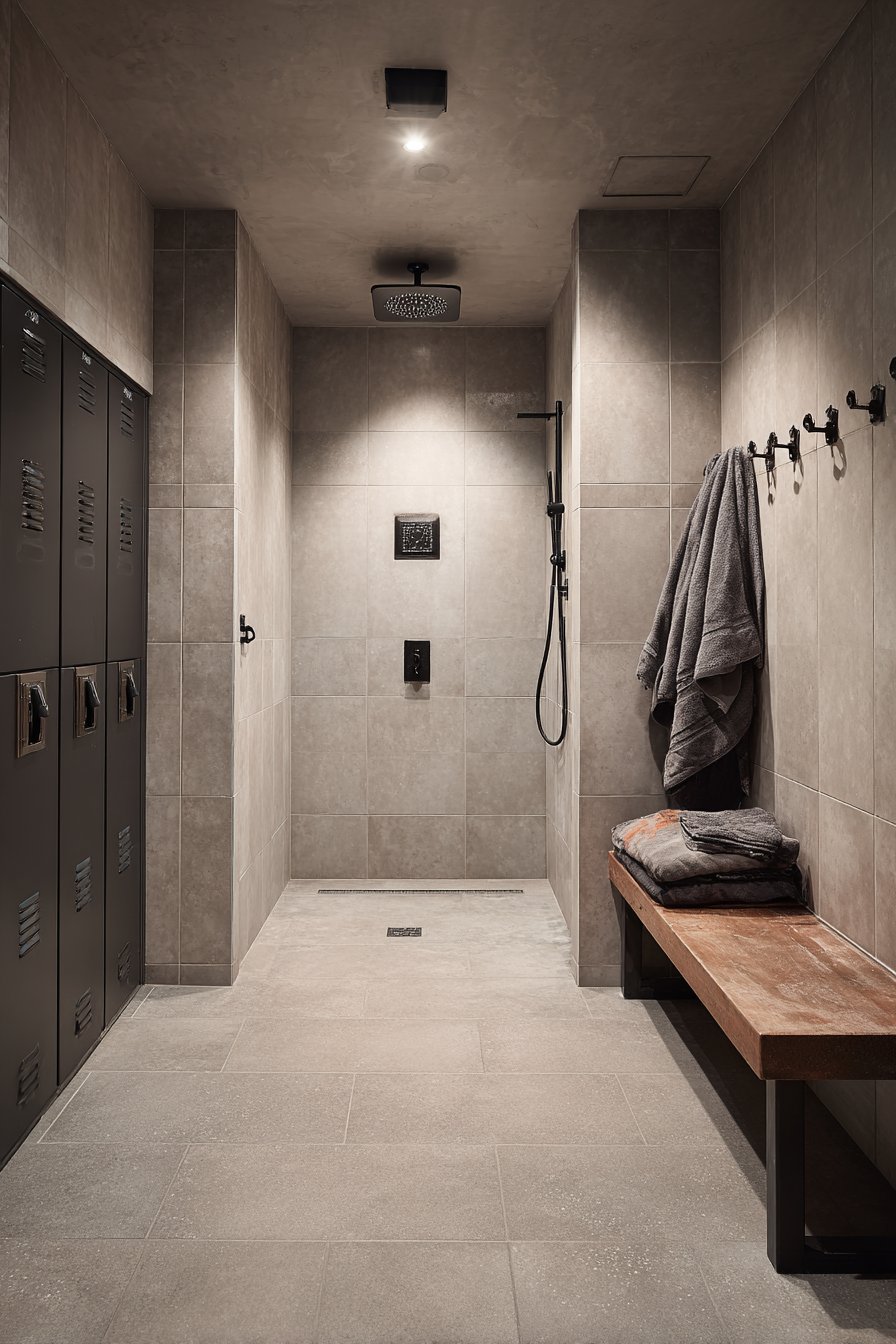
23. Athletic Facility Practical Function
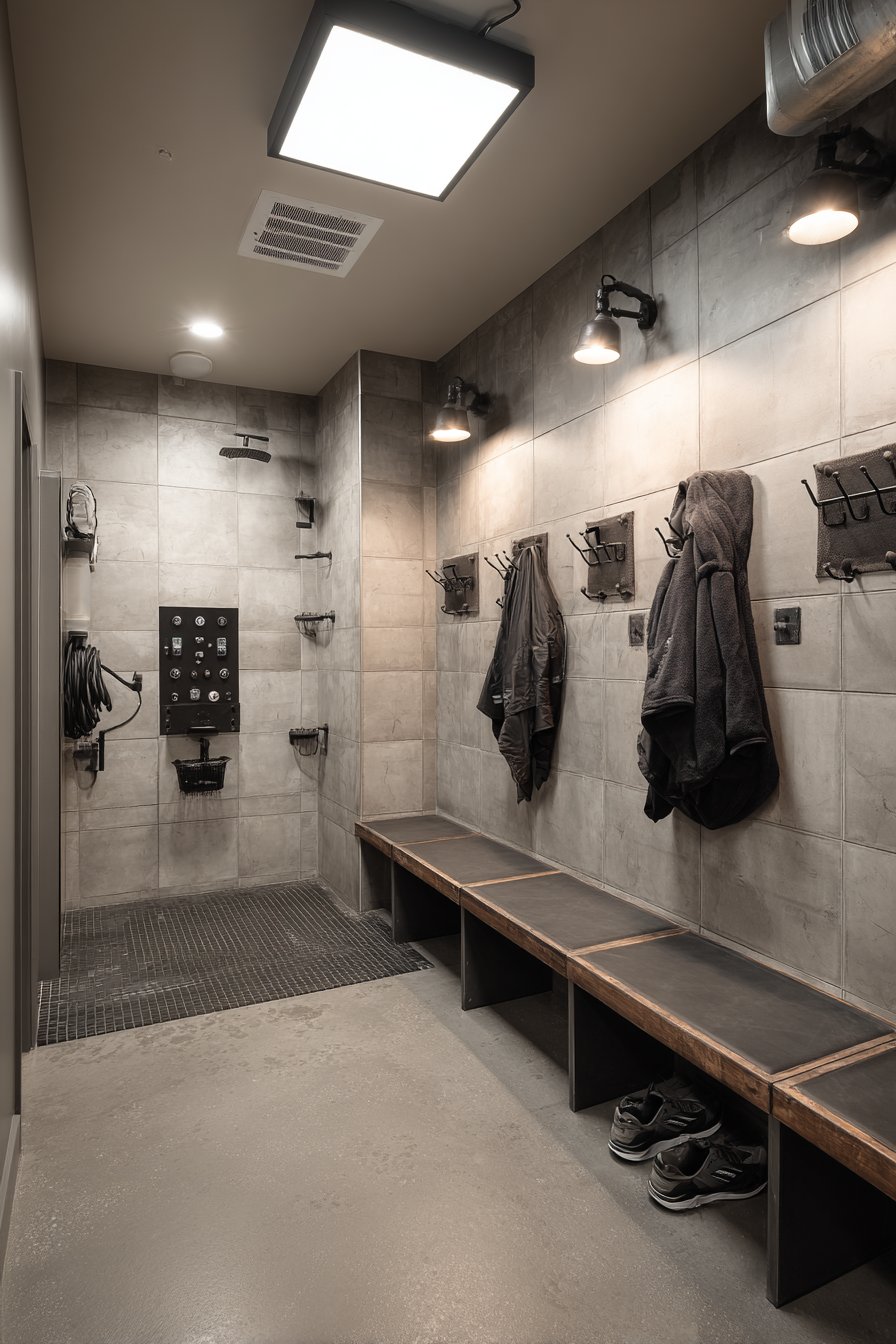
Dedicated workout area bathrooms require basement bathroom ideas that prioritize function, durability, and easy maintenance over decorative elements. Large gray porcelain tiles on both walls and floors create seamless, easily cleaned surfaces that withstand heavy use and frequent washing. Barrier-free shower with multiple jets provides effective rinsing after intense workouts while built-in bench offers convenient seating for stretching or post-exercise recovery.
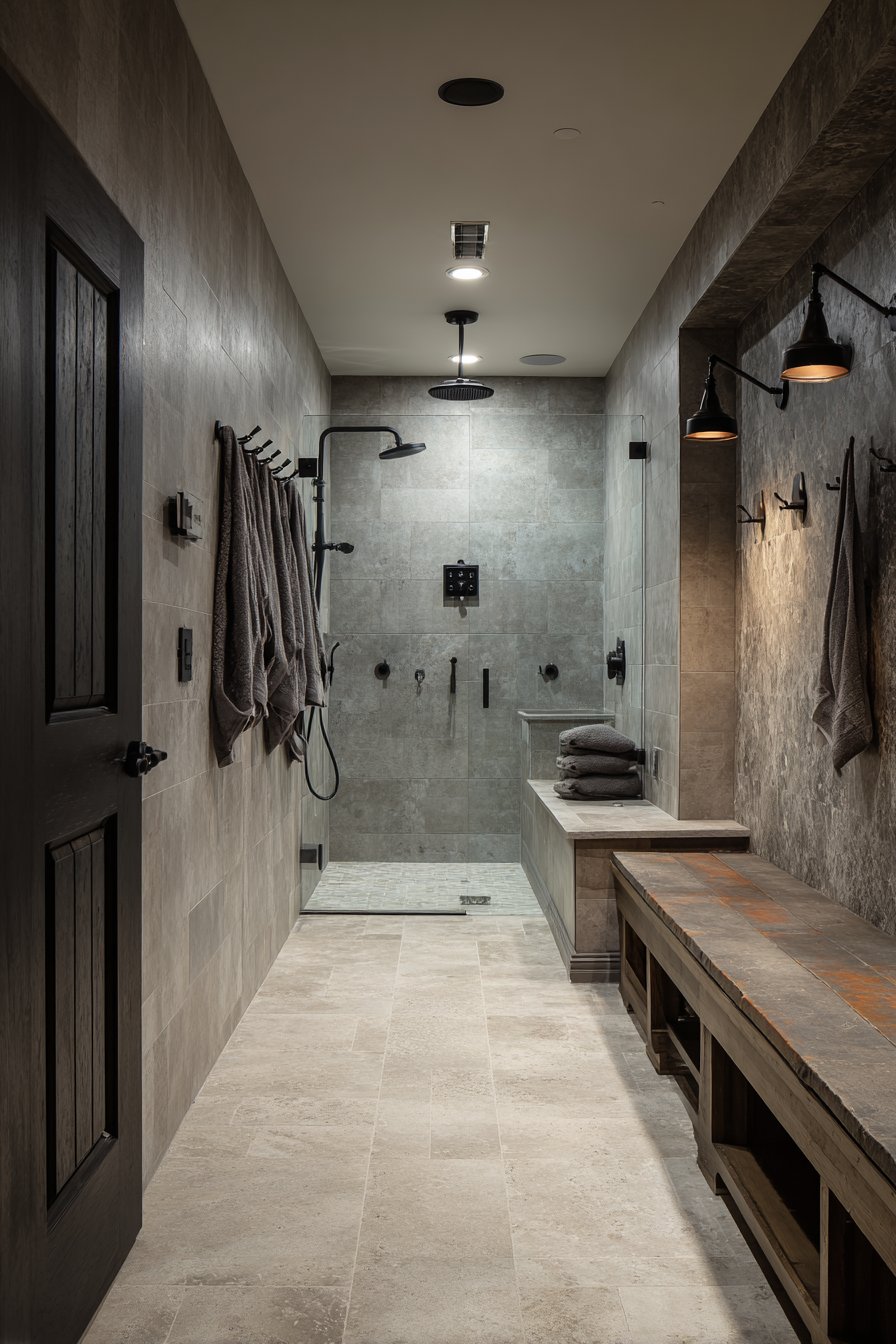
Heavy-duty hooks positioned at various heights accommodate towels, robes, and workout gear, their strategic placement ensuring items remain organized and accessible. Ventilation fans on timers automatically clear steam and humidity without requiring user attention, maintaining optimal air quality even during back-to-back uses. Industrial-style fixtures in matte black prioritize durability over delicacy, their substantial construction and corrosion-resistant finishes ensuring long life despite intensive use.
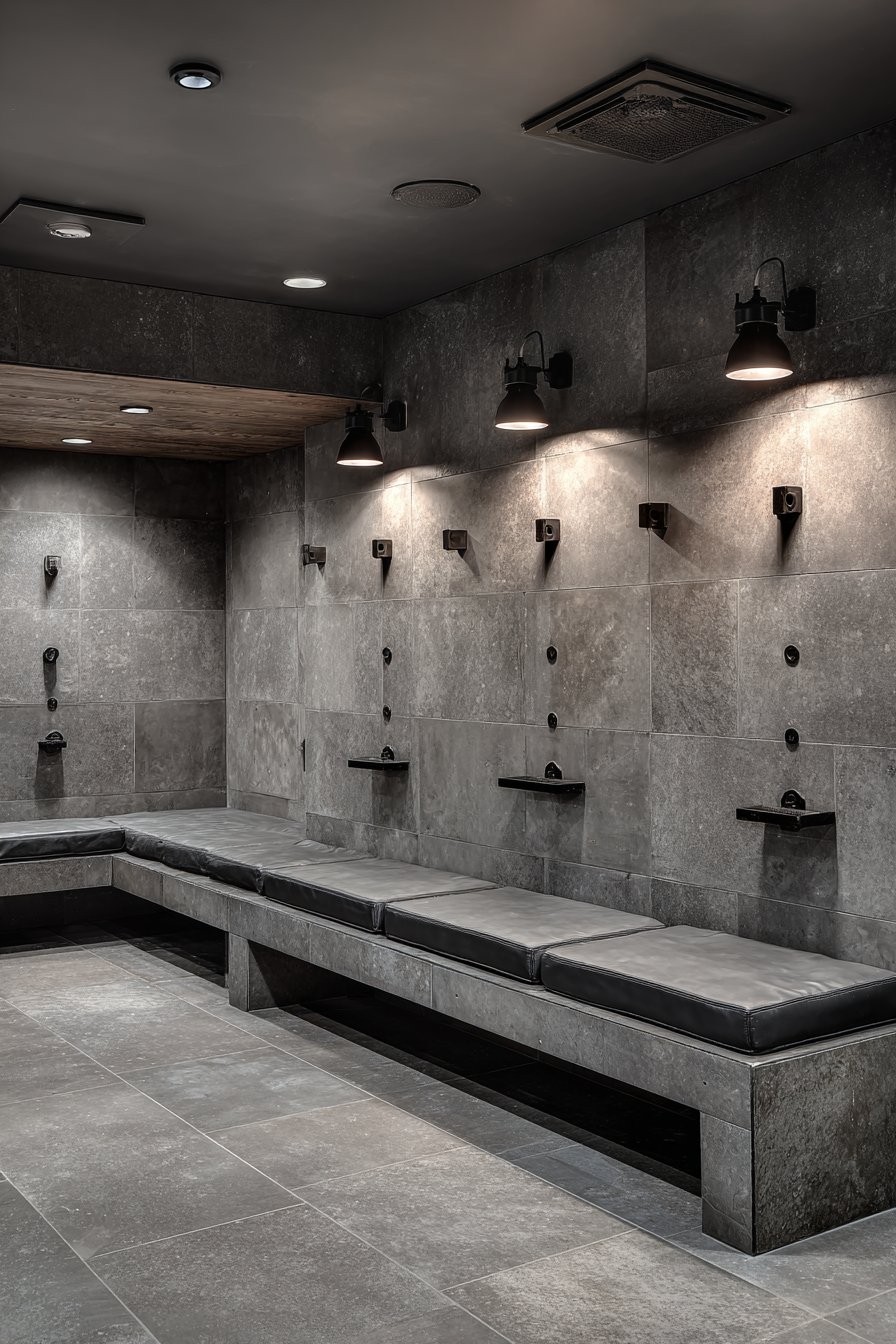
The athletic-focused design recognizes that workout area bathrooms serve different purposes than decorative powder rooms or relaxing spa baths. Minimal decoration reduces maintenance while durable materials withstand the wear, moisture, and frequent use associated with post-exercise cleaning. The emphasis on function doesn’t preclude style—the cohesive gray palette and industrial fixtures create masculine, purposeful aesthetic appropriate for workout spaces while every element earns its place through practical contribution.
Key Design Tips:
- Choose large-format tiles throughout for minimal grout maintenance
- Install multiple hooks and storage at convenient heights for active use
- Select matte finishes that hide water spots better than polished surfaces
- Ensure robust ventilation to handle intensive shower use
- Prioritize durability over decoration in all fixture and material selections
24. Natural Light Innovation
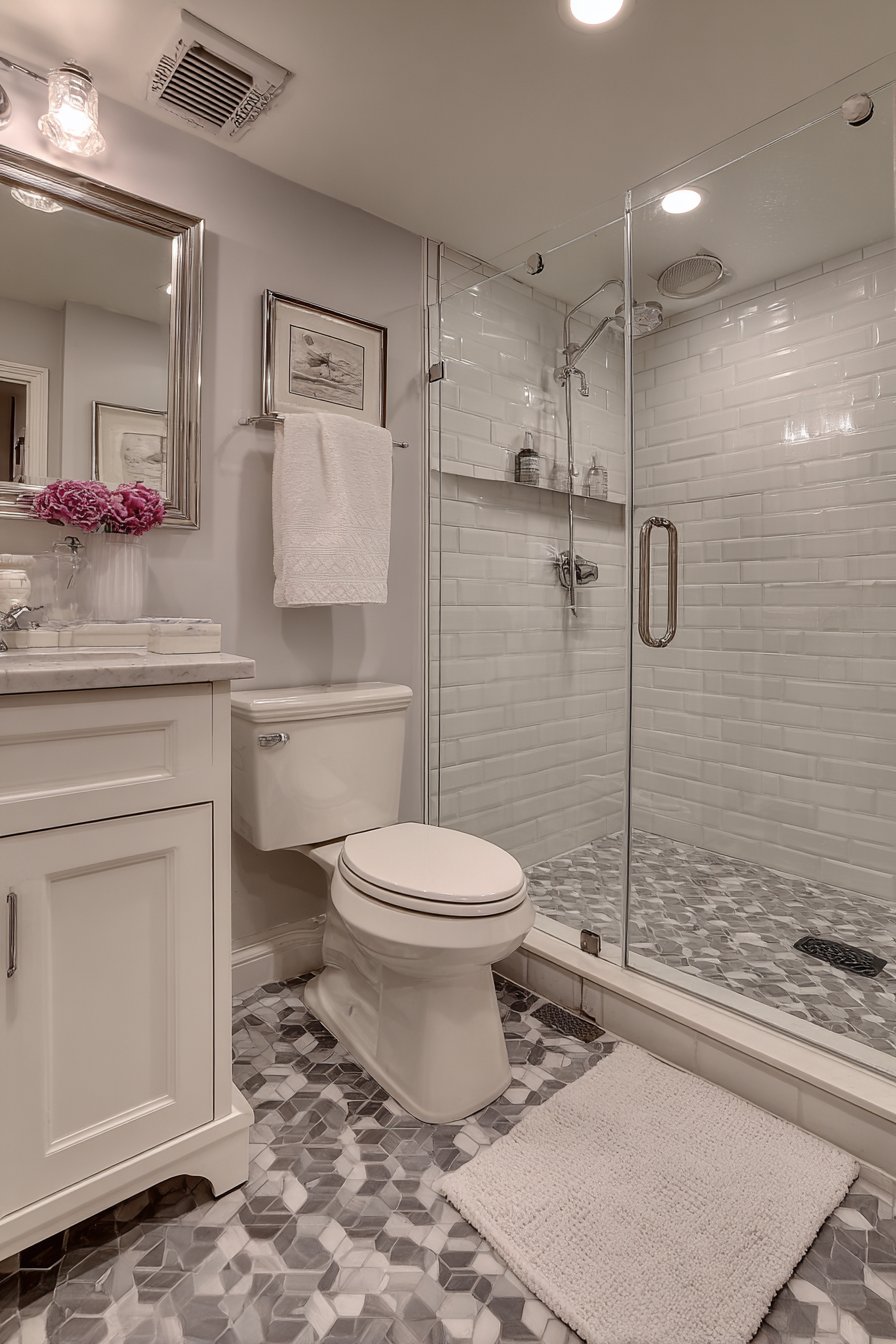
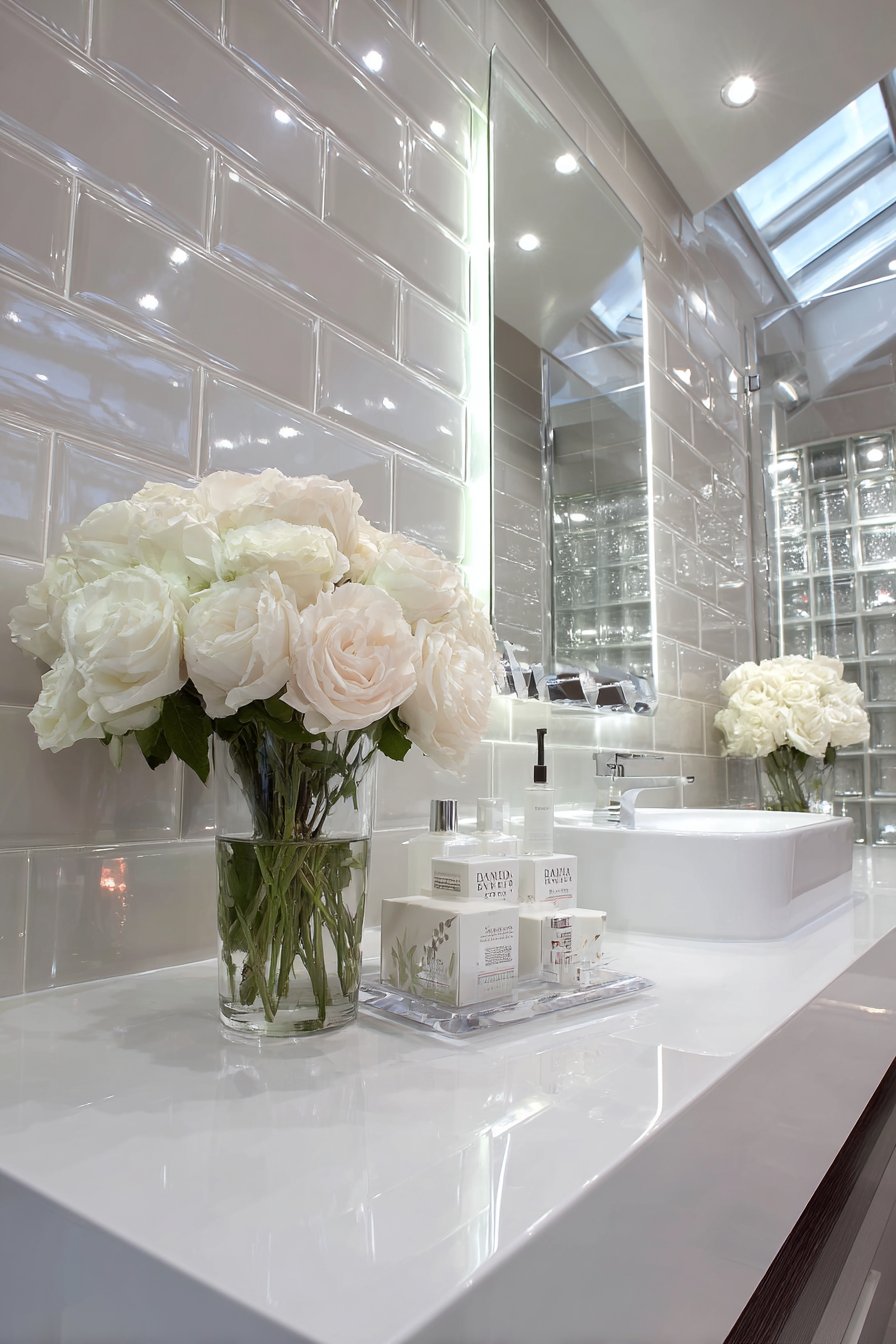
Creative daylighting solutions transform basement bathroom ideas from perpetually artificial environments into spaces blessed with real sunlight. Light tube skylights capture rooftop sunlight and channel it through reflective tubes that deliver natural illumination deep into below-grade spaces. Glass block wall sections allow borrowed light from adjacent areas to penetrate while maintaining privacy and structure. Maximum use of reflective surfaces including glossy white tiles and expansive mirrors amplifies whatever natural light reaches the space.
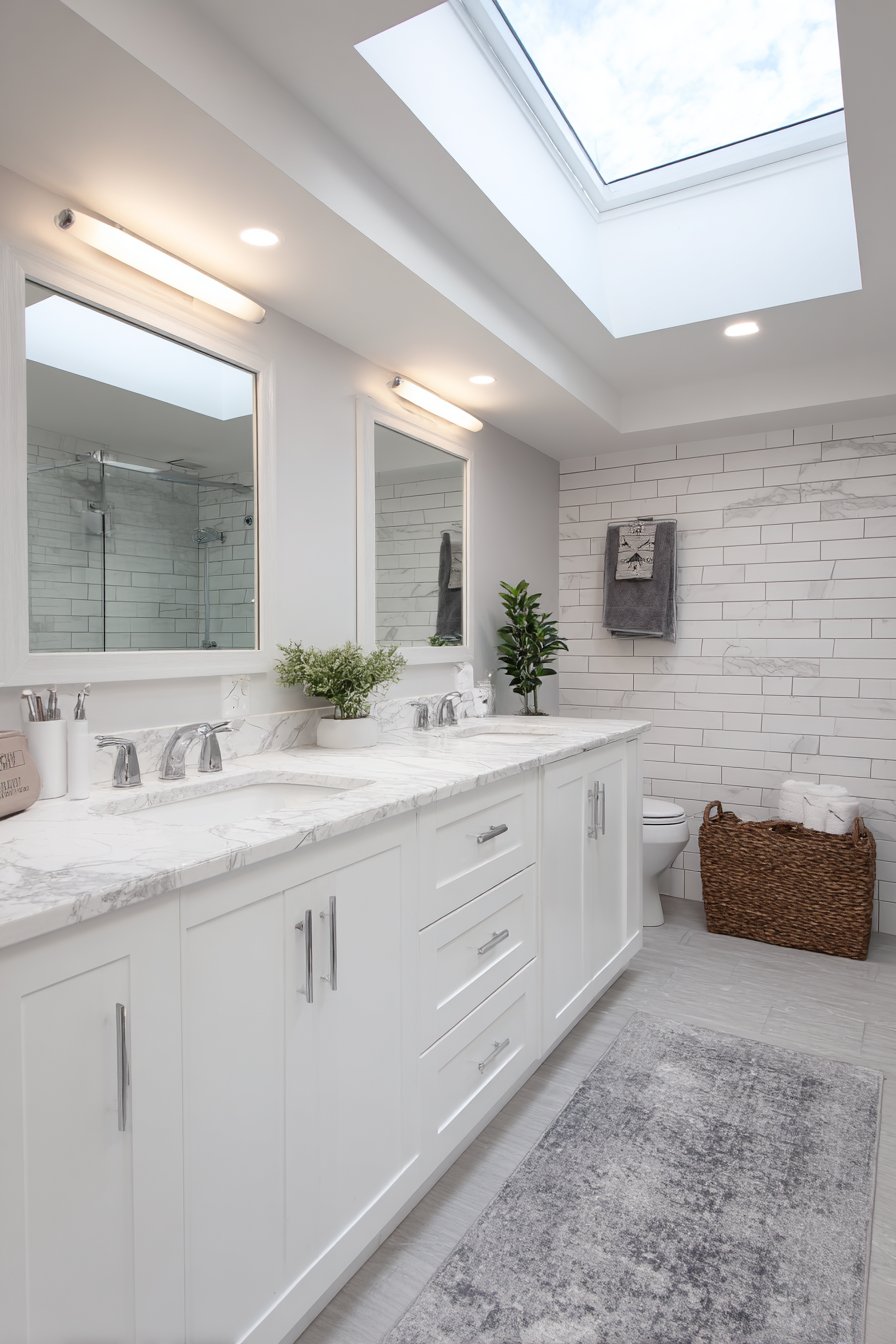
Bright white fixtures and chrome accents work as light multipliers, their reflective qualities bouncing illumination throughout the room and preventing dark corners. The strategic combination of actual natural light sources, light-transmitting architectural elements, and reflective finishes creates basement bathrooms that feel surprisingly bright despite their underground locations. The innovative approaches to daylighting demonstrate that windowless spaces need not remain eternally dim when creative design thinking addresses light transmission from source to destination.
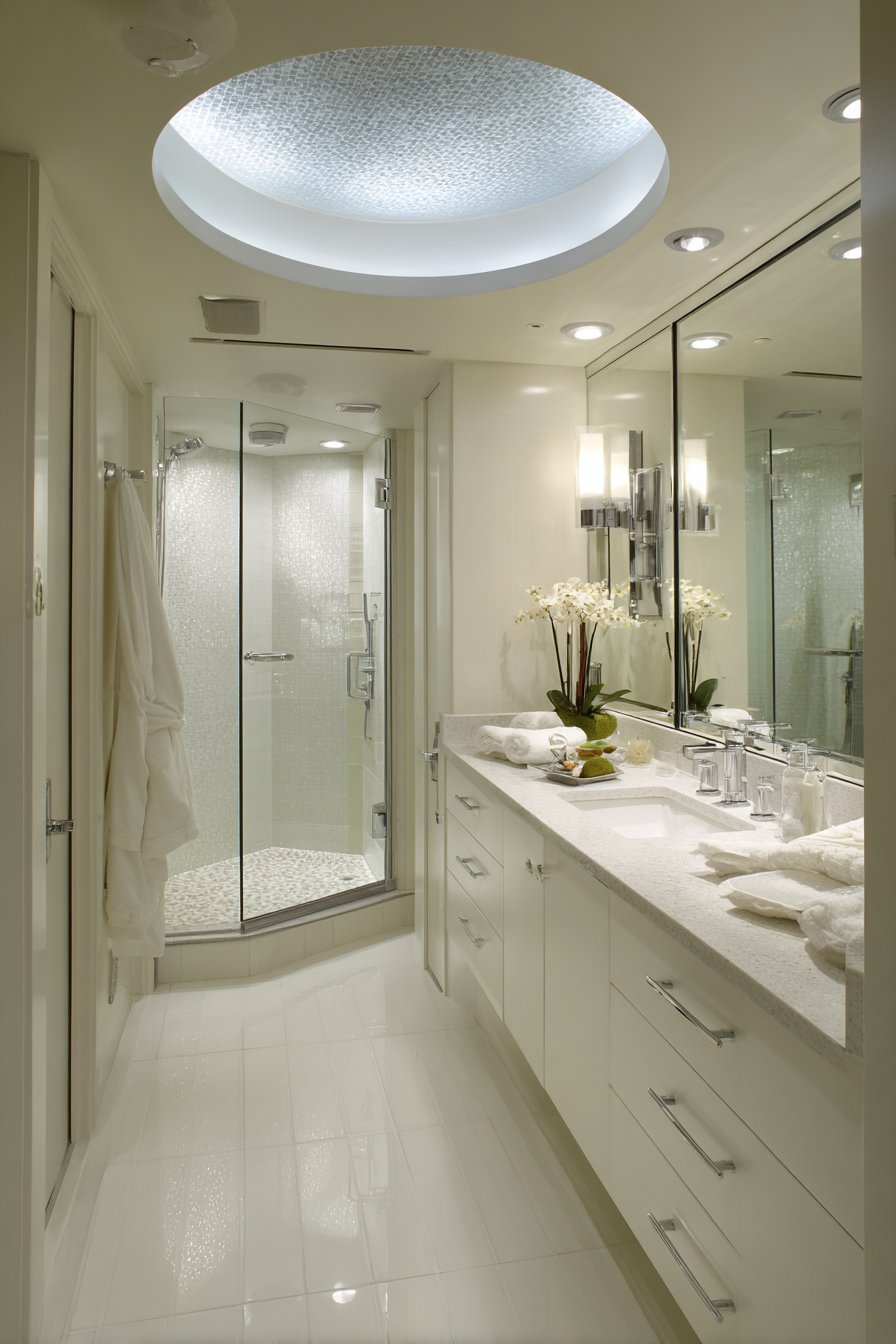
Natural light provides benefits beyond simple illumination—it supports circadian rhythms, improves mood, and makes colors appear more true than artificial alternatives. By investing in light tubes, glass block walls, or other daylighting innovations during construction, homeowners create basement bathrooms that enjoy genuine sunlight’s unique qualities. The enhanced brightness and natural illumination cycles contribute to healthier, more pleasant spaces that feel less like basements and more like airy, welcoming bathrooms that happen to be located below grade.
Key Design Tips:
- Install light tubes on roof sections with maximum sun exposure throughout day
- Choose glass block in clear or lightly frosted patterns for maximum light transmission
- Use glossy tile finishes throughout to maximize light reflection
- Install large mirrors opposite any natural light sources to amplify illumination
- Paint ceilings brilliant white to reflect light downward into space
25. Sustainable Eco-Conscious Design
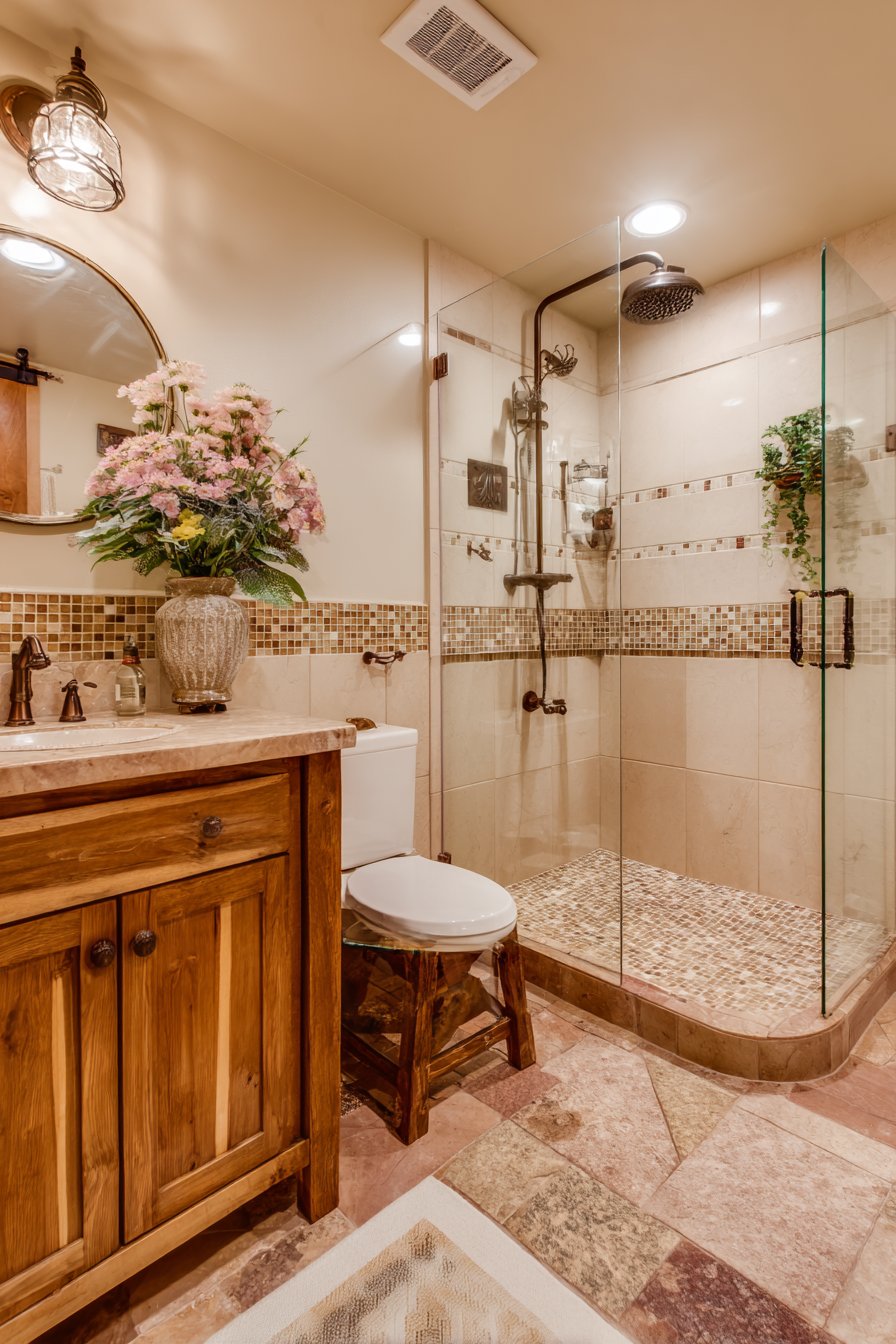
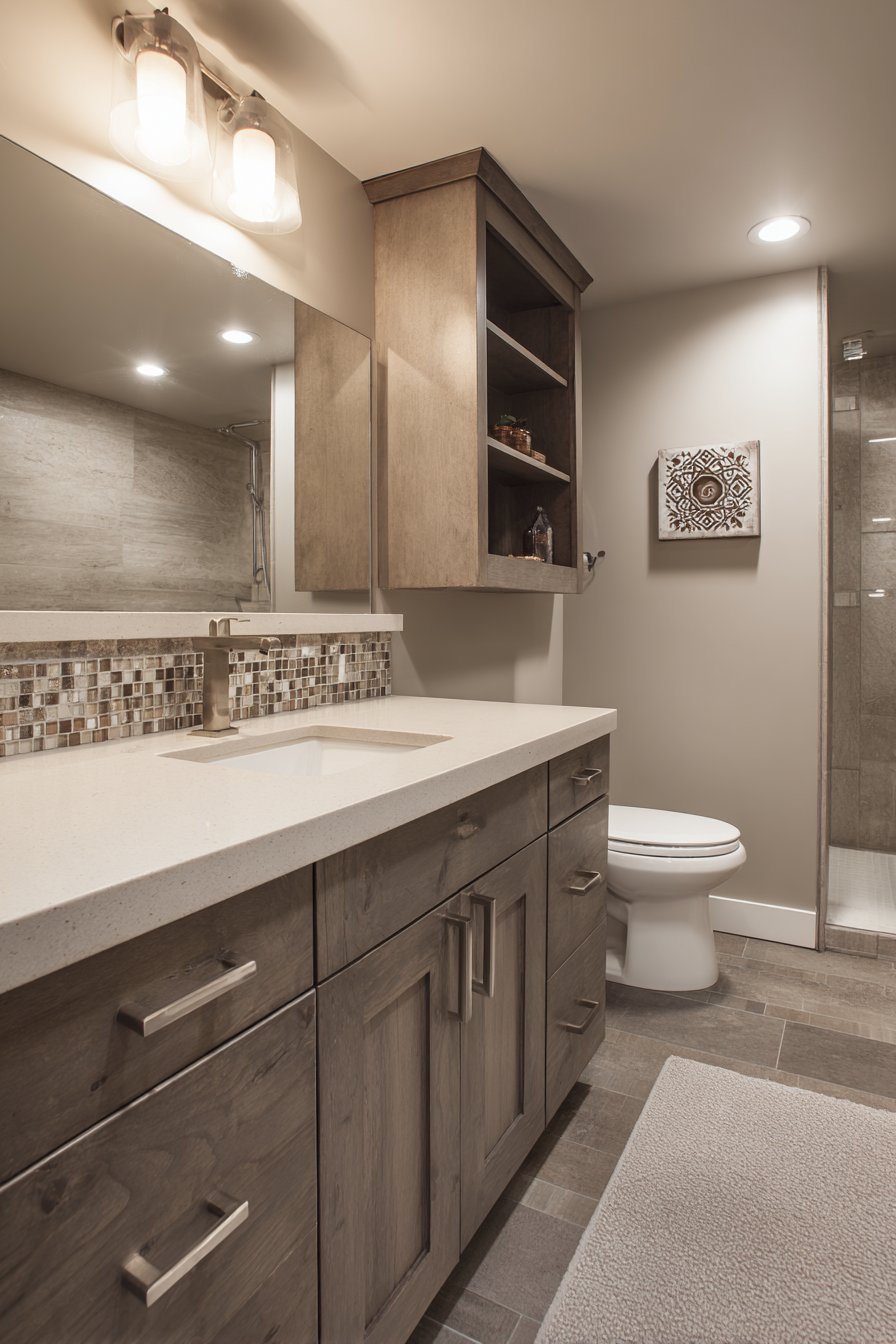
Environmental responsibility guides basement bathroom ideas that minimize resource consumption while creating healthy, beautiful spaces. Low-flow fixtures including WaterSense certified toilets and faucets reduce water usage without compromising performance, their efficient designs saving thousands of gallons annually. LED lighting throughout consumes minimal electricity while providing decades of reliable illumination, eliminating frequent bulb replacements and reducing energy costs.
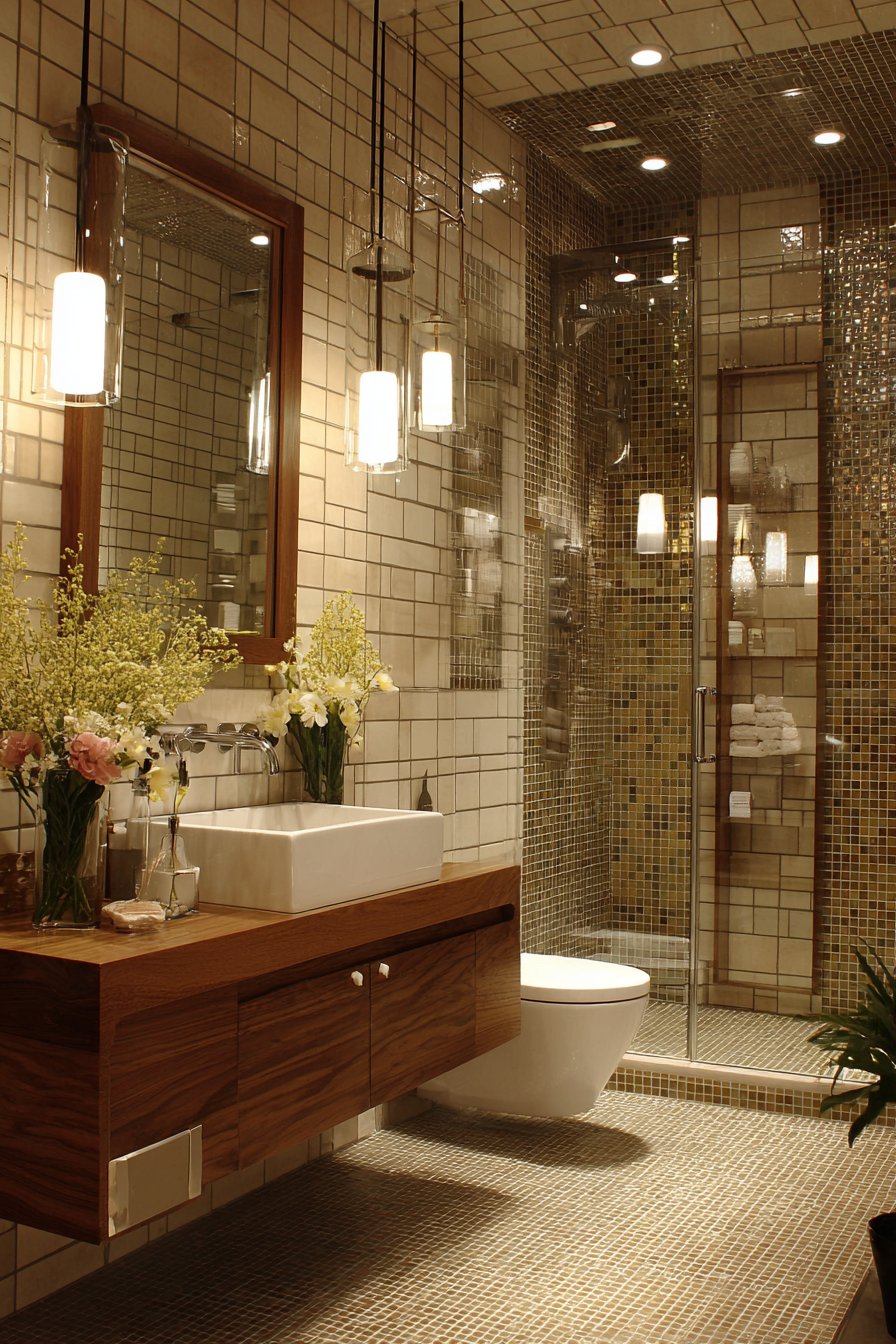
Reclaimed wood vanities give new life to salvaged materials while their weathered character adds unique personality impossible to achieve with new lumber. Recycled glass tile accents in earth tones introduce sustainable luxury, their production diverting waste from landfills while creating beautiful surfaces. Proper insulation visible in construction details prevents energy waste through temperature loss, while dual-flush toilets provide options for different flushing volumes appropriate to waste type.
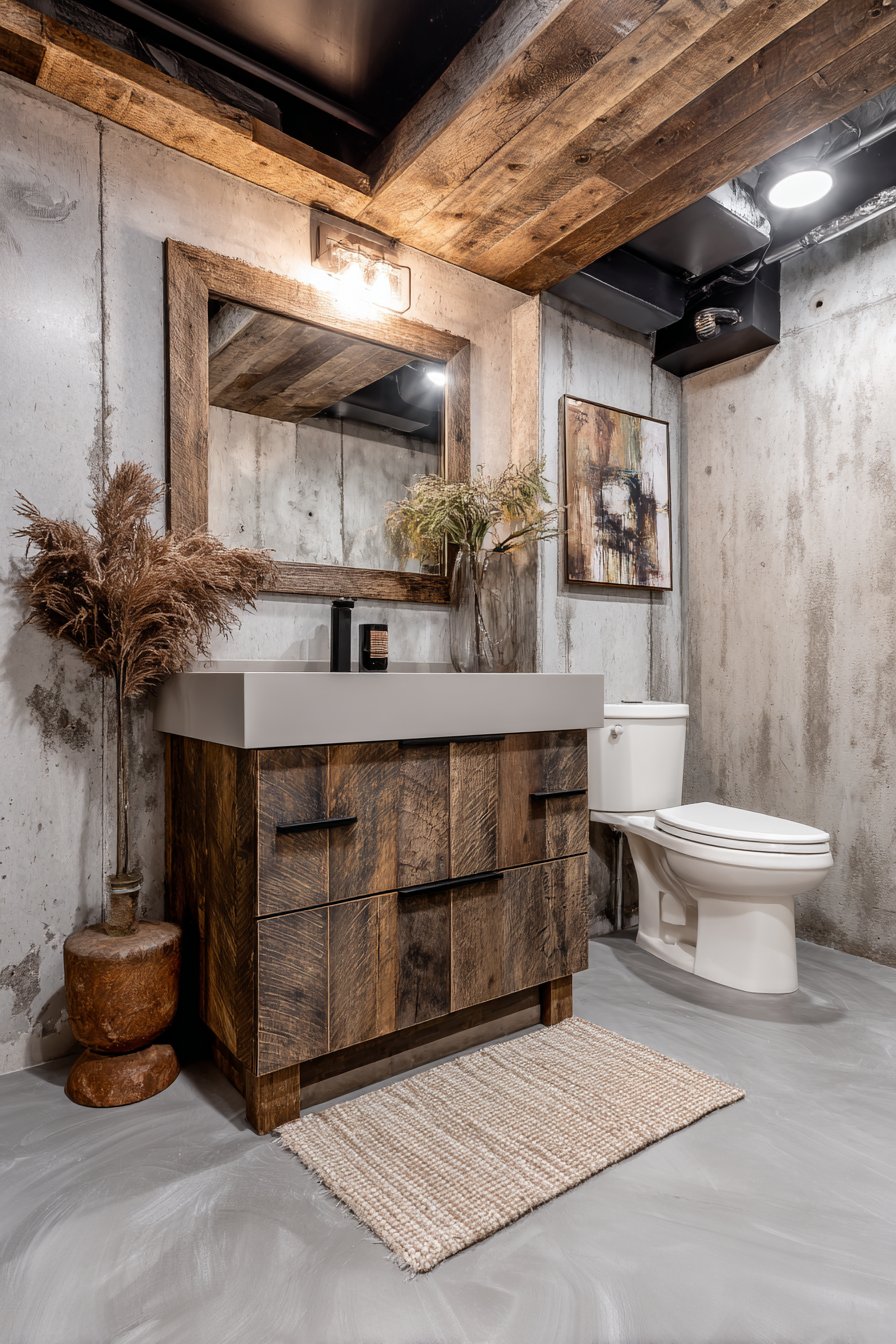
The sustainable approach recognizes that basement bathroom construction impacts both immediate homeowners and broader environment. By selecting eco-conscious materials and water-conserving fixtures, the design reduces operational costs while minimizing environmental footprint. Many sustainable choices also deliver superior performance—low-flow fixtures have evolved to provide excellent function, LED bulbs last indefinitely compared to incandescents, and reclaimed wood offers stability and character unavailable in new lumber. Sustainability and quality align rather than conflict.
Key Design Tips:
- Choose WaterSense certified fixtures that meet EPA efficiency standards
- Install LED bulbs throughout for 80% energy savings compared to incandescent
- Source reclaimed wood from architectural salvage suppliers and seal properly
- Select recycled glass tiles that divert waste while creating unique beauty
- Insulate properly with moisture-resistant materials for thermal efficiency
26. Smart Home Technology Integration
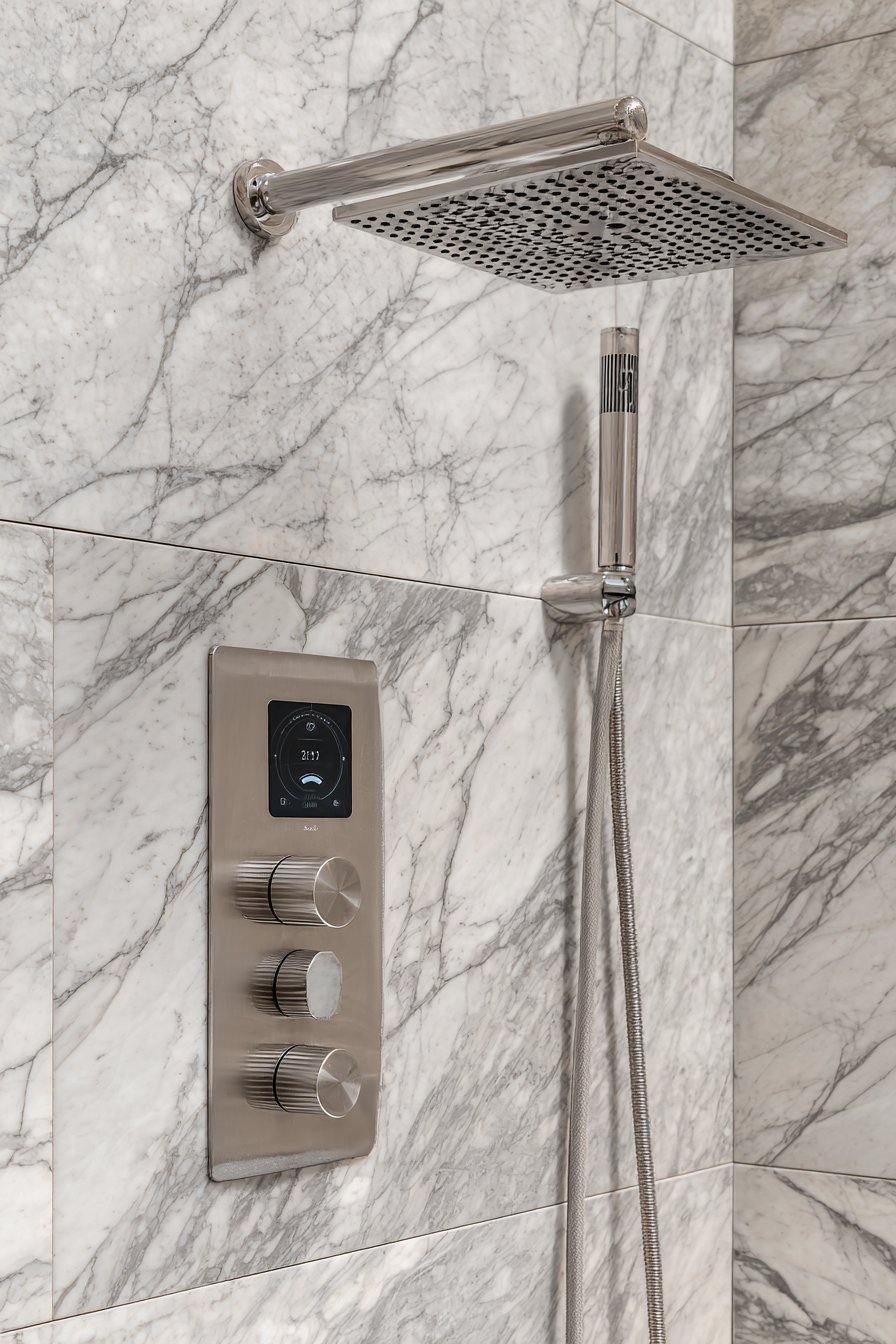
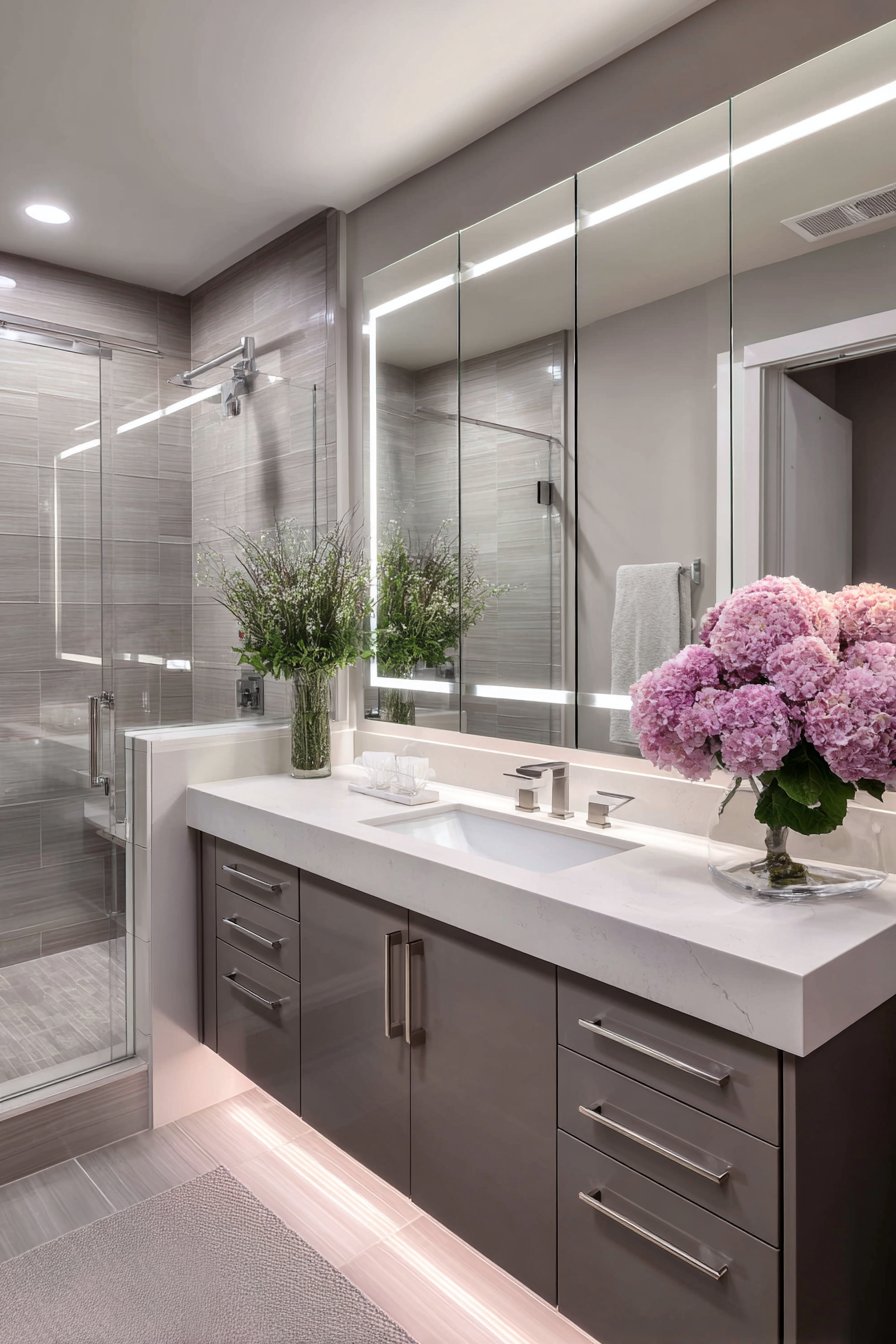
Modern technology elevates basement bathroom ideas through intelligent systems that enhance comfort, convenience, and efficiency. Digital shower controls allow precise temperature and flow presets that activate with single touch, eliminating the need to adjust multiple knobs to achieve desired settings. Heated mirrors with built-in defoggers maintain clear reflection regardless of steam levels, their subtle heating elements preventing condensation without requiring manual intervention.
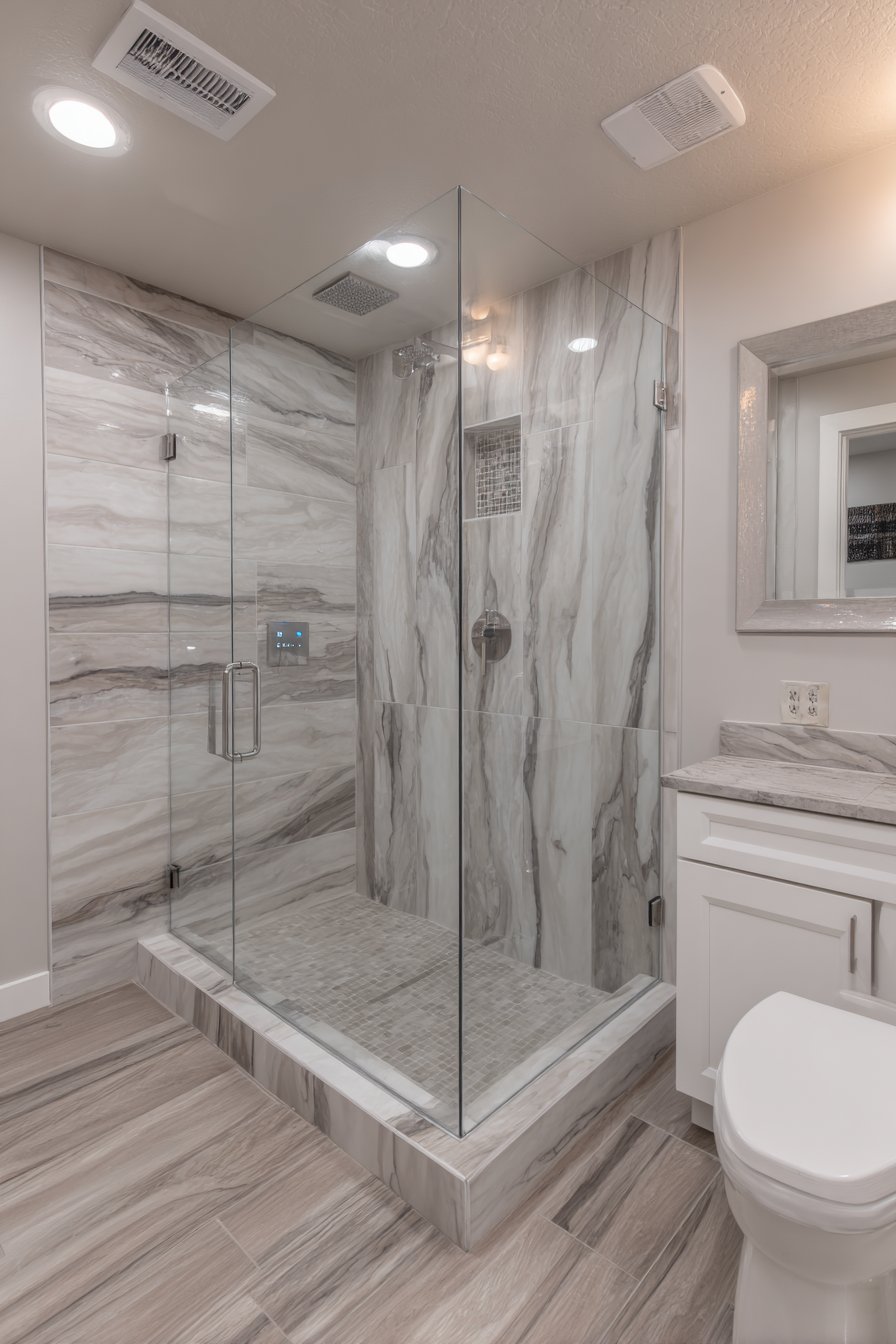
Motion-sensor lighting activates automatically when users enter, providing immediate illumination without fumbling for switches in dark basements. Bluetooth ceiling speakers enable music streaming or podcast listening during bathing or grooming, their wireless connectivity eliminating installation complexity. Voice-activated exhaust fans respond to commands, adjusting ventilation levels without requiring physical interaction with controls.
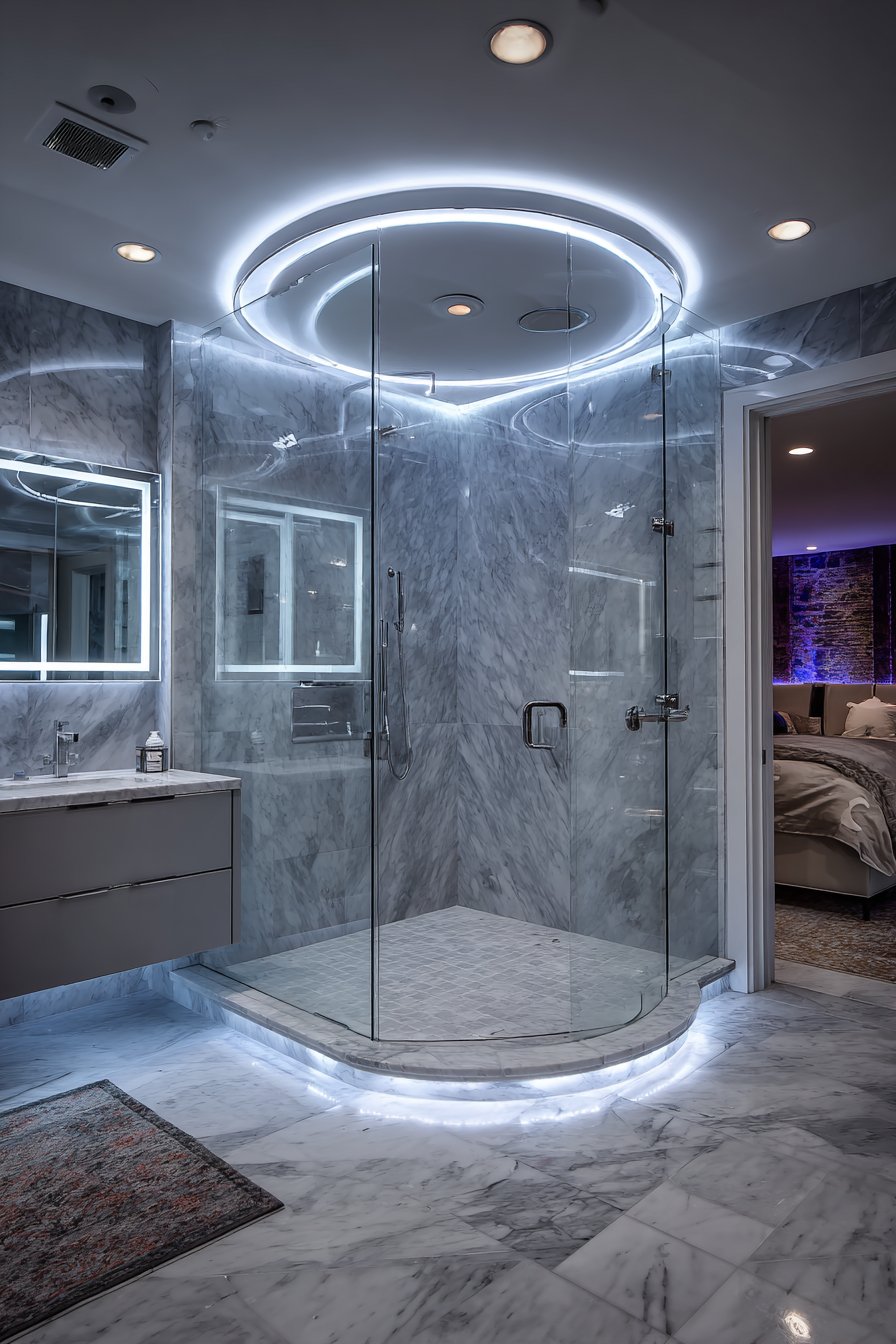
The smart bathroom integration demonstrates how technology enhances daily routines through automation and personalization. Connected devices communicate through home networks, enabling remote control and monitoring from smartphones. Pre-programmed settings remember individual preferences, and usage data can inform energy-saving strategies. The seamless technology integration maintains clean contemporary aesthetic while delivering futuristic convenience that makes basement bathrooms feel more advanced than their above-grade counterparts, proving that below-grade locations need not mean behind-the-times amenities.
Key Design Tips:
- Install digital shower systems during construction for concealed valve placement
- Choose heated mirrors with integrated lighting for multi-function efficiency
- Wire ceiling speakers during construction to hide connections
- Select motion sensors adjustable for sensitivity and delay timing
- Ensure robust Wi-Fi coverage in basement for reliable smart device connectivity
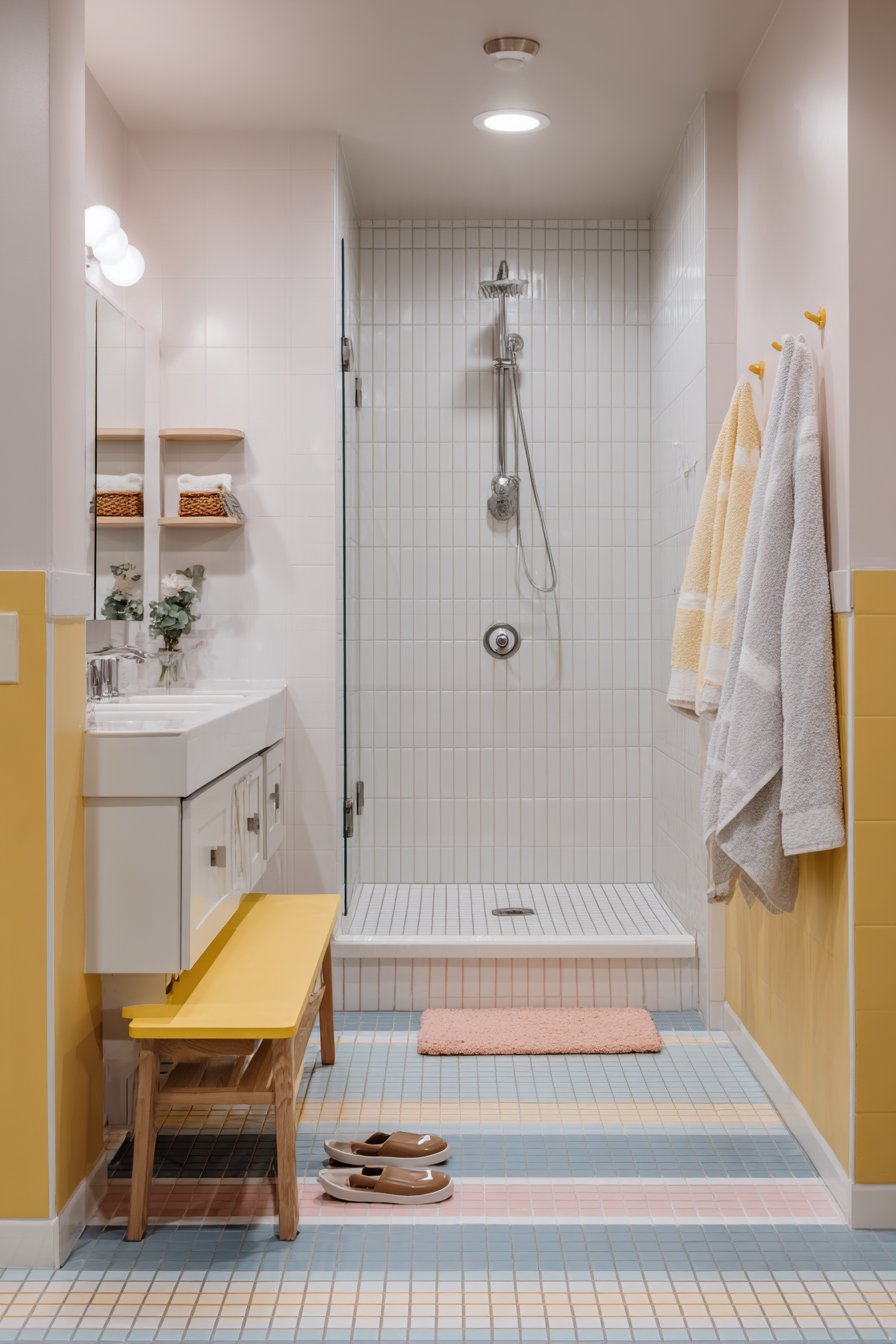
27. Kid-Friendly Family Design
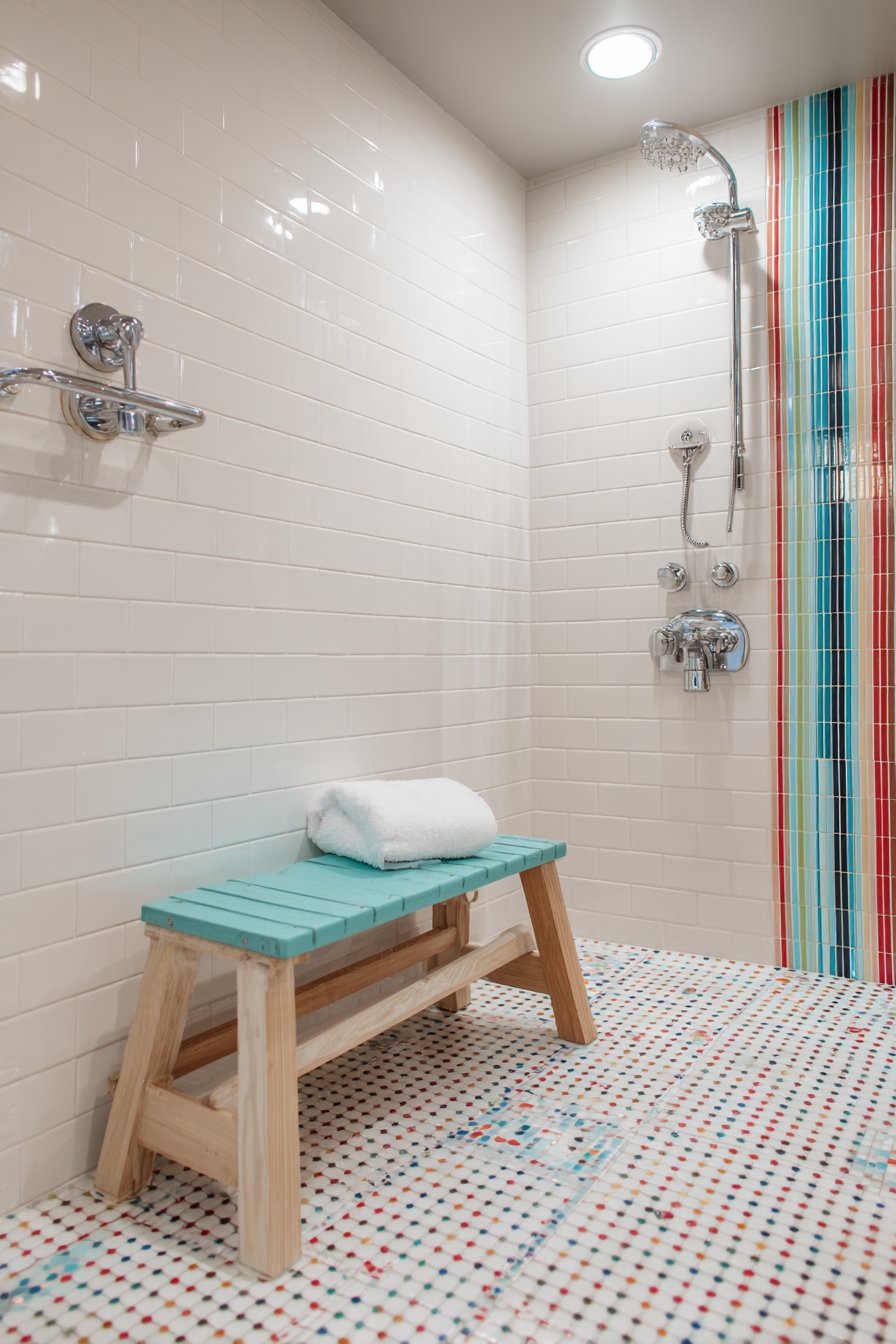
Family-focused basement bathroom ideas prioritize safety, durability, and playful design elements that appeal to children while maintaining style adults appreciate. Colorful mosaic tile stripes add visual interest and define spaces without overwhelming, their playful patterns creating energy while remaining sophisticated enough for long-term enjoyment. Lower vanity height with integrated step stool storage ensures young children reach sinks comfortably while the concealed stool maintains clean appearance when not needed.
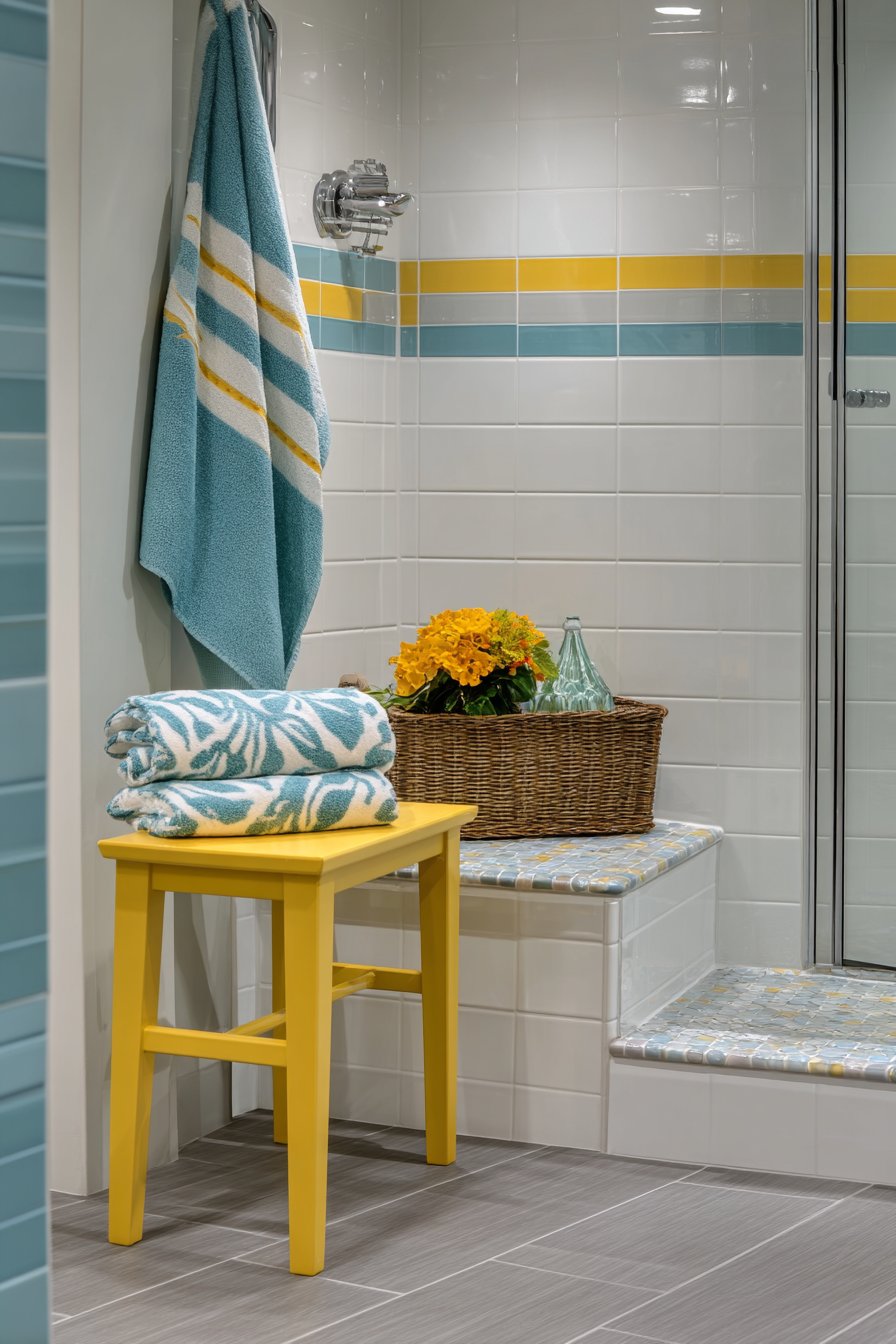
Anti-scald shower valves prevent dangerous temperature spikes that could burn sensitive skin, their thermostatic controls maintaining safe water temperature regardless of pressure fluctuations elsewhere in the home. Non-slip textured floor tiles in fun patterns provide essential traction for wet feet while their varied designs add personality and visual interest. Bright primary color accents on towel hooks, light switches, and accessories inject youthful energy without requiring permanent installation of elements children may outgrow.
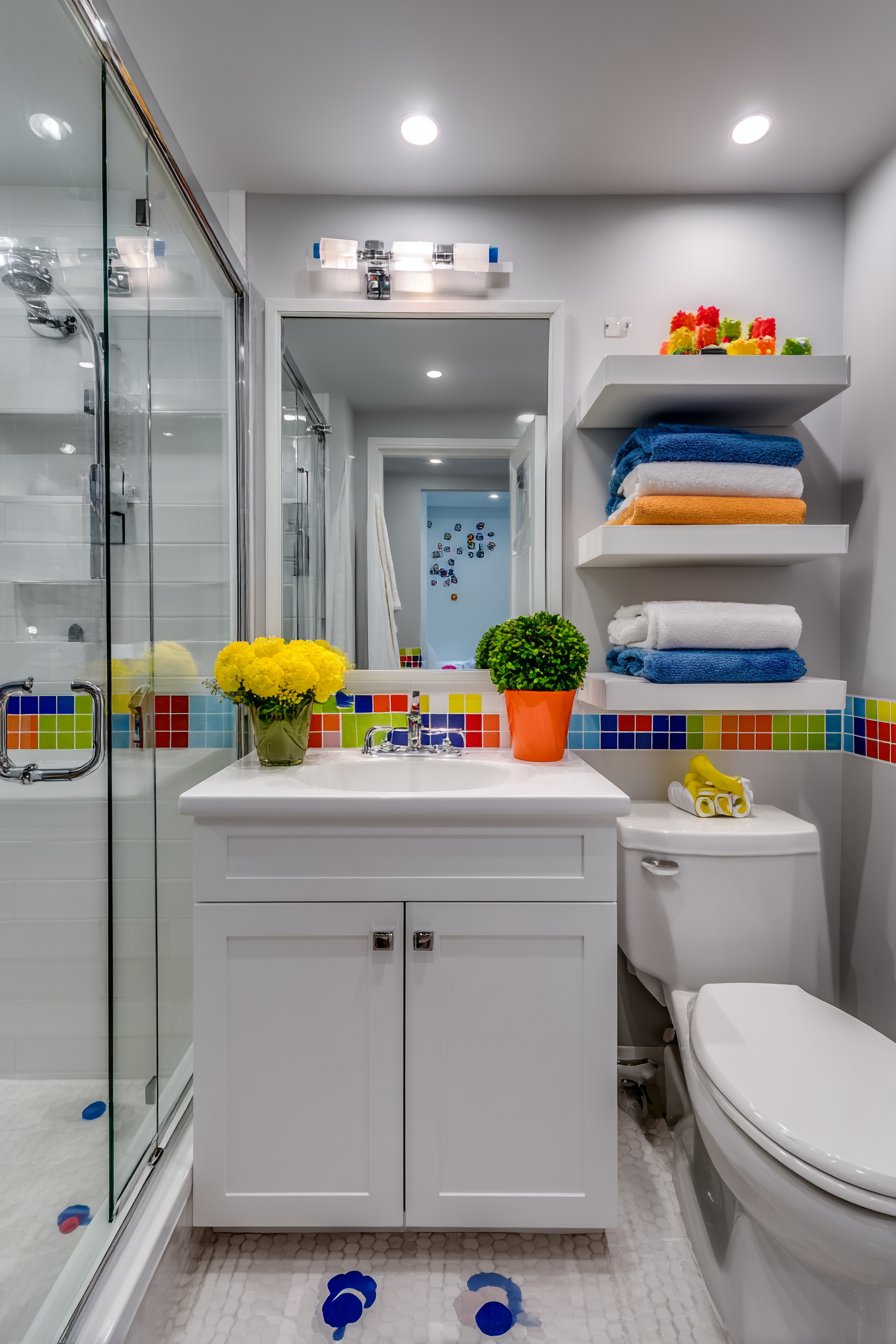
Durable moisture-resistant materials throughout withstand the intensive use and occasional rough treatment that accompanies active families. Easy-to-clean surfaces simplify maintenance, recognizing that children’s bathrooms experience frequent messes requiring regular cleaning. The family-friendly approach balances safety requirements, durability needs, and playful aesthetics, creating basement bathrooms that serve young families practically while maintaining sufficient style sophistication to avoid appearing juvenile as children age.
Key Design Tips:
- Install thermostatic mixing valves to prevent scalding from temperature fluctuations
- Choose textured tiles with high slip-resistance ratings for wet area safety
- Lower vanity heights or provide sturdy step stools for young children
- Select durable materials that resist damage from rough use
- Use removable color accents that can change as children’s preferences evolve
Conclusion: Transforming Below-Grade Spaces into Bathroom Showcases
The comprehensive exploration of these twenty-seven basement bathroom ideas reveals that below-grade locations present opportunities rather than limitations when approached with creativity, proper planning, and understanding of basement-specific requirements. From industrial-chic designs celebrating raw materials to spa-inspired retreats prioritizing luxury and relaxation, from budget-conscious practical solutions to technology-integrated smart bathrooms, the diversity of approaches demonstrates that basement bathrooms can achieve any aesthetic while meeting critical performance requirements for moisture management, lighting, and ventilation.
The most successful basement bathroom projects share common foundations regardless of style—proper waterproofing protects structural integrity, strategic lighting combats inherent darkness, robust ventilation manages humidity, and thoughtful material selection ensures durability in challenging conditions. These technical requirements need not compromise design vision; rather, they inform creative solutions that often result in more interesting, innovative spaces than conventional above-grade bathrooms might achieve. The constraints of basement construction push designers and homeowners toward ingenious approaches that solve multiple problems simultaneously while creating distinctive character.
Whether you’re adding value through a rental suite bathroom, creating guest accommodations that rival boutique hotels, establishing a spa-like personal retreat, or simply adding functional bathrooms to support growing families, basement locations offer untapped potential waiting for transformation. The investment in proper construction methods and quality materials pays dividends through decades of reliable performance and daily enjoyment. Begin your basement bathroom project by identifying your primary goals—functionality, style, budget, or some combination—then draw inspiration from these diverse approaches to create a below-grade bathroom that exceeds expectations and demonstrates that basements can house some of the most impressive bathrooms in your entire home.
