
The kitchen has evolved from a purely functional space into the heart of the home—a gathering place where families connect, meals are lovingly prepared, and memories are made. In our increasingly digital and fast-paced world, there’s a growing desire to create spaces that ground us, that reconnect us with the natural world and provide a sense of calm and authenticity. This is where earthy kitchen design comes into play, offering a refreshing departure from cold, sterile modern aesthetics and instead embracing the warmth, texture, and organic beauty found in nature.
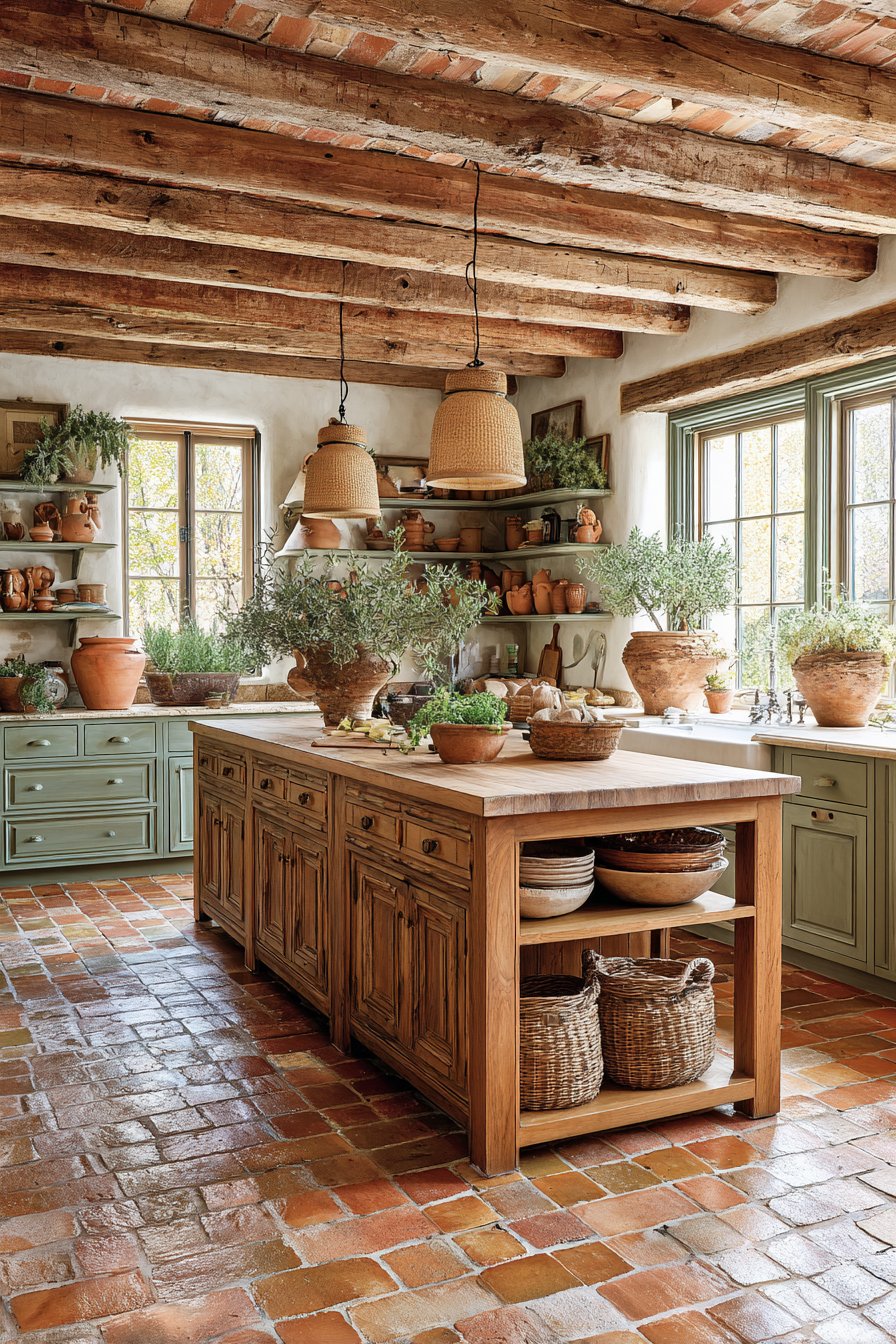
Earthy kitchen ideas draw inspiration from the natural world, incorporating materials like wood, stone, clay, and natural fibers that have been used in home construction for millennia. These designs celebrate imperfection, showcasing the unique grain patterns in wood, the subtle variations in handmade tiles, and the rich patinas that develop on metal fixtures over time. The color palette mirrors landscapes—warm terracottas reminiscent of desert sunsets, sage greens evoking peaceful meadows, rich browns reflecting forest floors, and creamy neutrals suggesting sandy beaches. This approach to kitchen design creates spaces that feel instantly welcoming, lived-in, and deeply personal.
In this comprehensive guide, we’ll explore 23 distinct earthy kitchen concepts, each offering a unique interpretation of natural design principles. From rustic farmhouse sinks surrounded by handmade tiles to sophisticated concrete countertops paired with warm walnut cabinetry, these ideas demonstrate the incredible versatility of earthy design. Whether you’re planning a complete kitchen renovation or simply looking to infuse more natural elements into your existing space, you’ll find inspiration and practical guidance to create a kitchen that not only looks beautiful but also nourishes your soul and supports your daily rituals.
1. Rustic Stone Sink Sanctuary
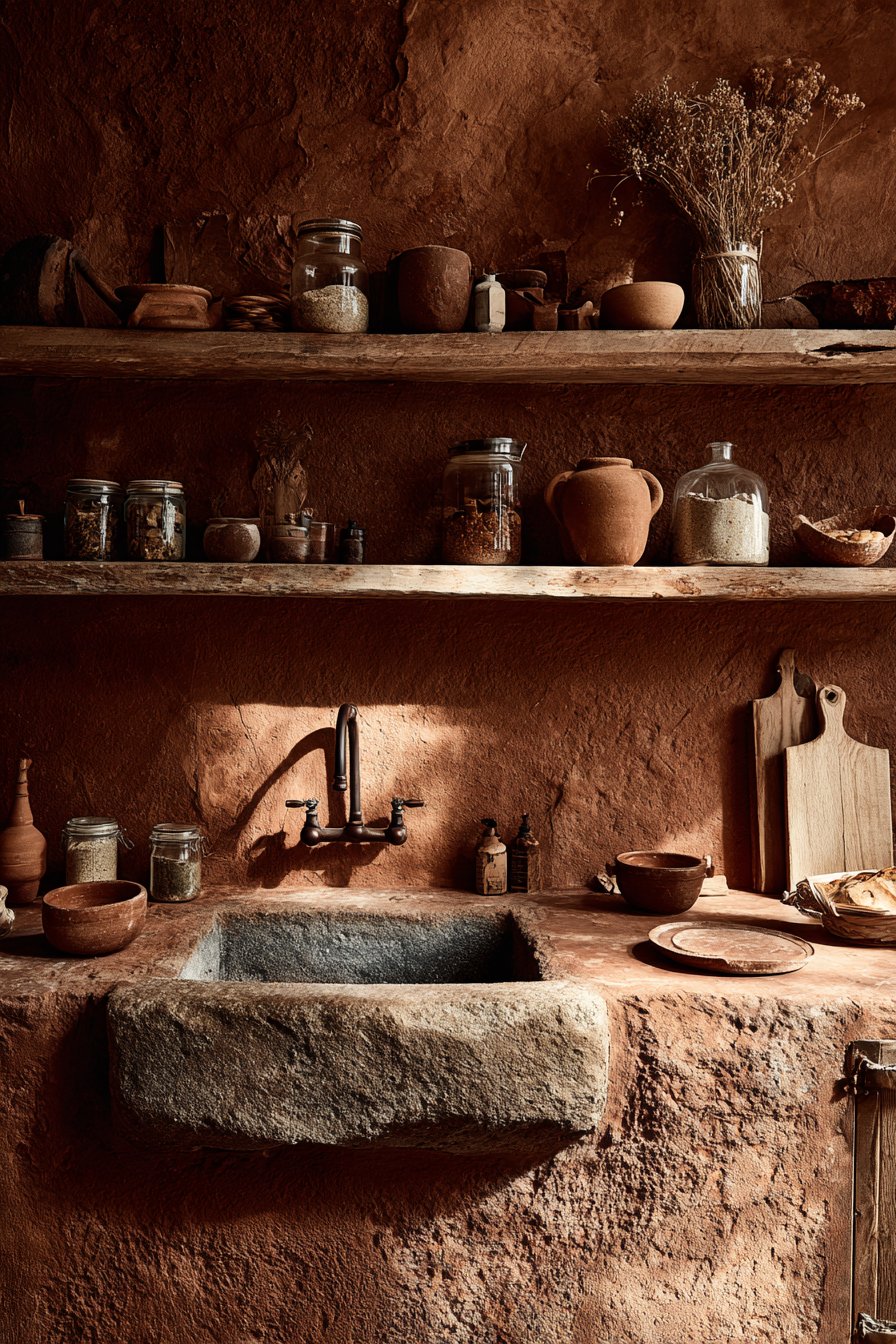
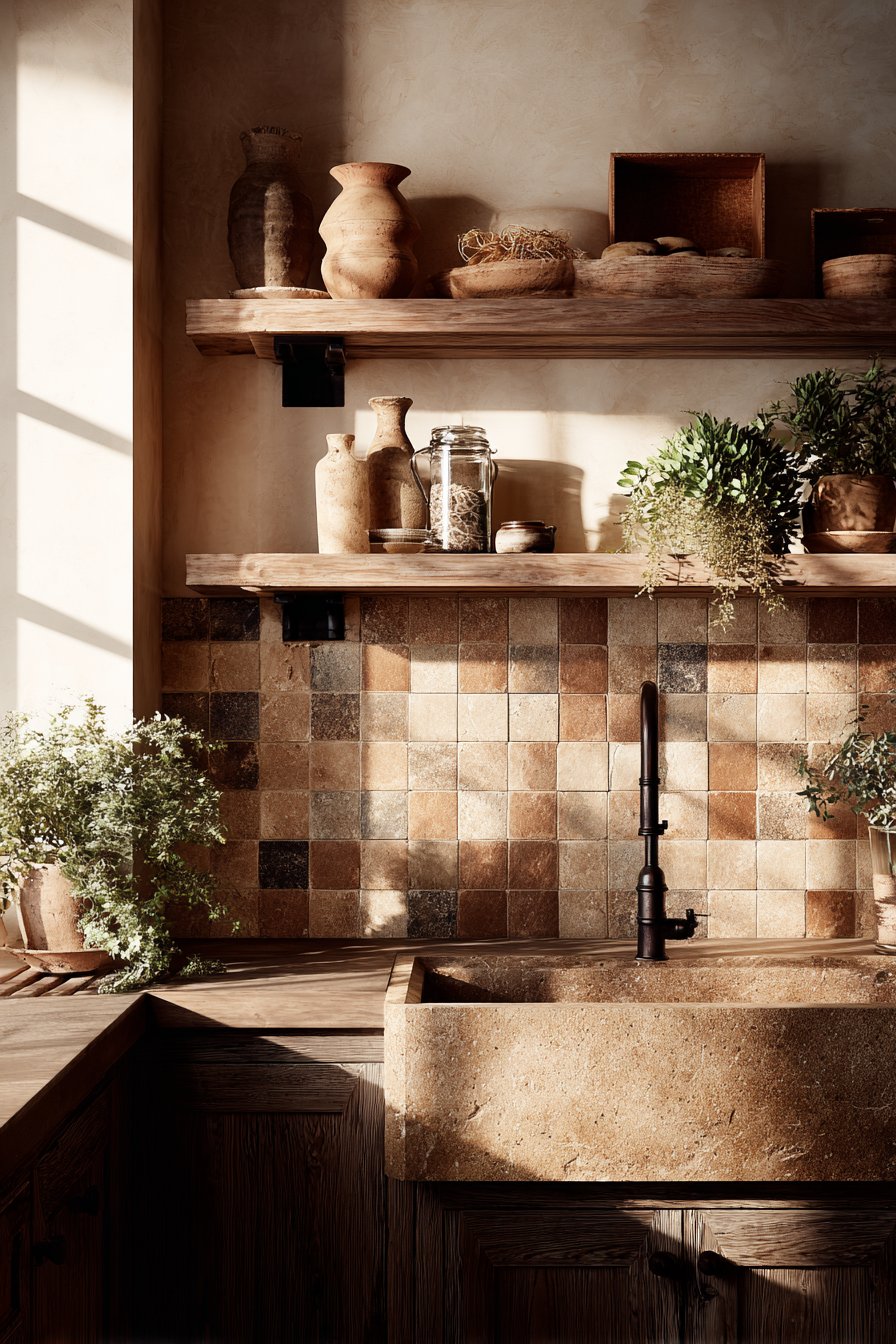
The foundation of this earthy kitchen design centers around a stunning natural stone farmhouse sink that immediately captures attention with its organic presence. The sink’s irregular surface and cool grey tones provide a striking contrast to the oil-rubbed bronze faucet, which develops a beautiful patina over time. Behind this functional artwork, a backsplash of handmade ceramic tiles in warm terracotta and cream tones creates visual interest while protecting the wall from water damage. Each tile tells its own story with slight variations in color and texture that machine-made alternatives simply cannot replicate.
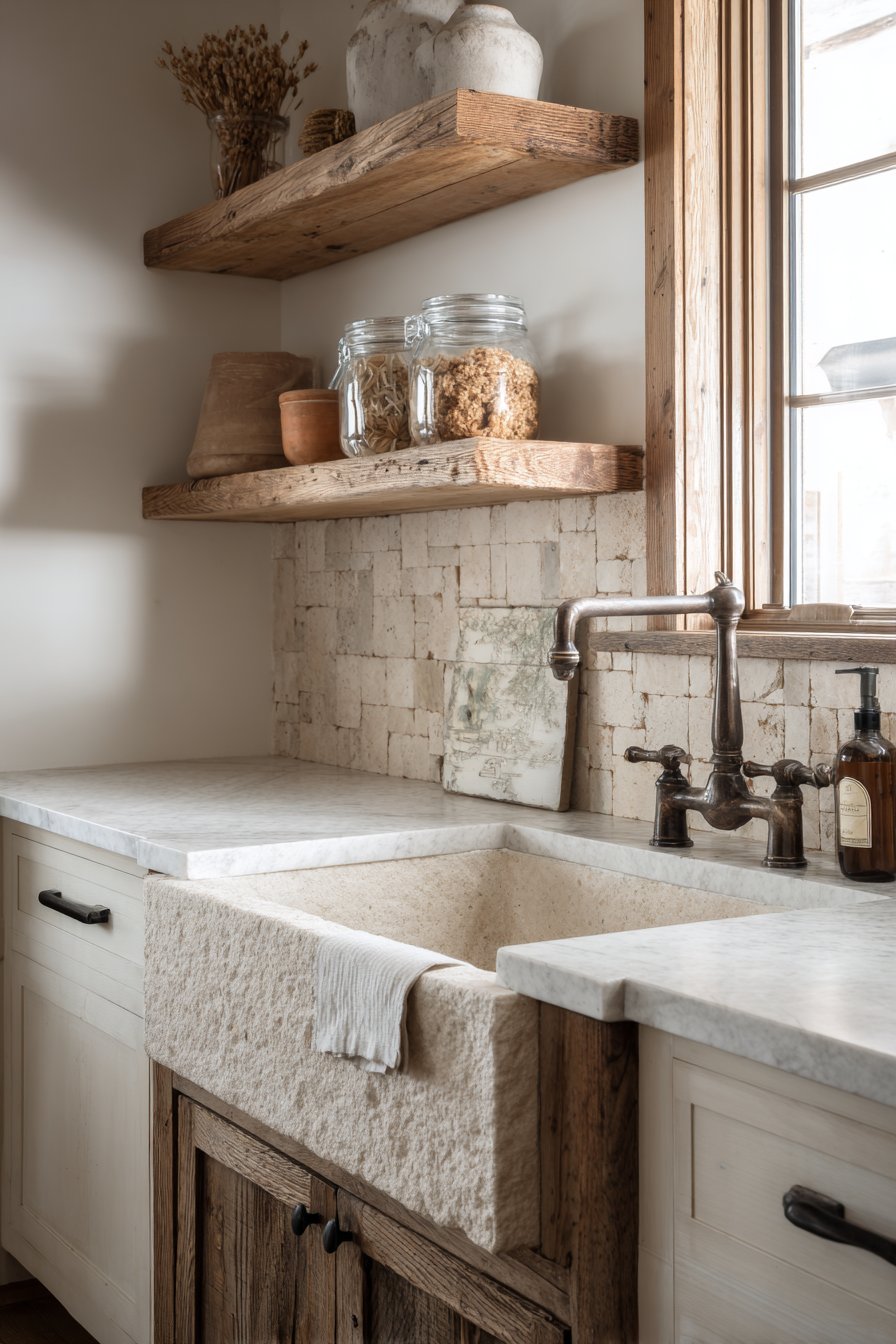
The open wooden shelving above the sink serves both practical and aesthetic purposes, displaying earthenware pottery that doubles as functional kitchenware and decorative objects. Glass jars filled with dried goods—lentils, rice, pasta—add pops of color and texture while keeping ingredients visible and accessible. This approach to storage creates a living, breathing kitchen where everyday items become part of the design narrative rather than hidden behind closed doors.
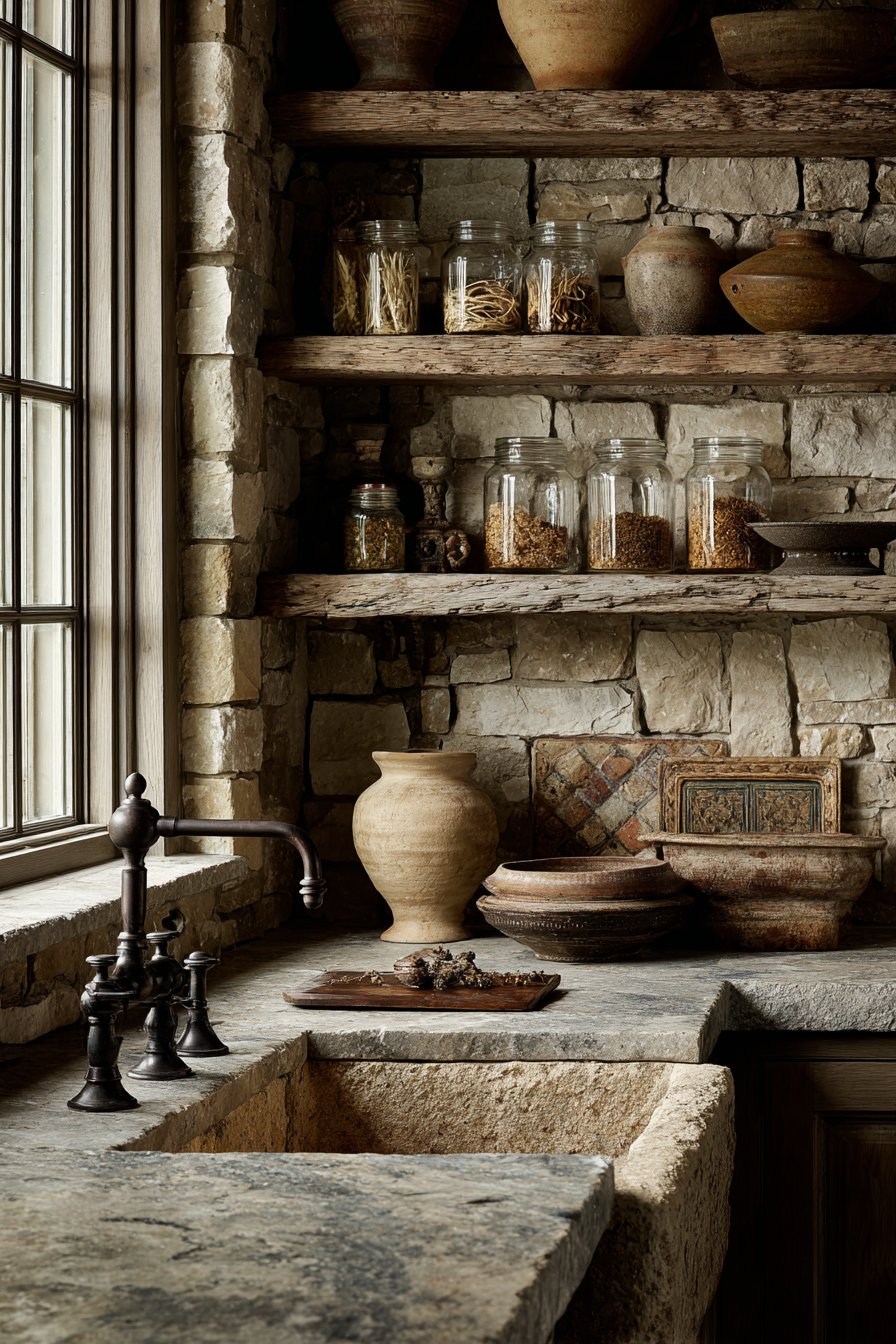
Morning light streaming through nearby windows illuminates the organic textures and warm color palette, creating an ever-changing display of shadows and highlights that brings the space to life throughout the day. The interplay between natural light and these authentic materials creates a sense of warmth and vitality that artificial lighting alone could never achieve.
Key Design Tips:
- Select a natural stone sink with visible texture and color variation for authentic character
- Choose handmade tiles to introduce subtle imperfections that add warmth and personality
- Install open shelving to display functional pottery and create visual interest
- Position the sink near windows to maximize natural light and create a pleasant workspace
- Opt for oil-rubbed bronze fixtures that develop character over time
2. Island Centerpiece with Reclaimed Wood
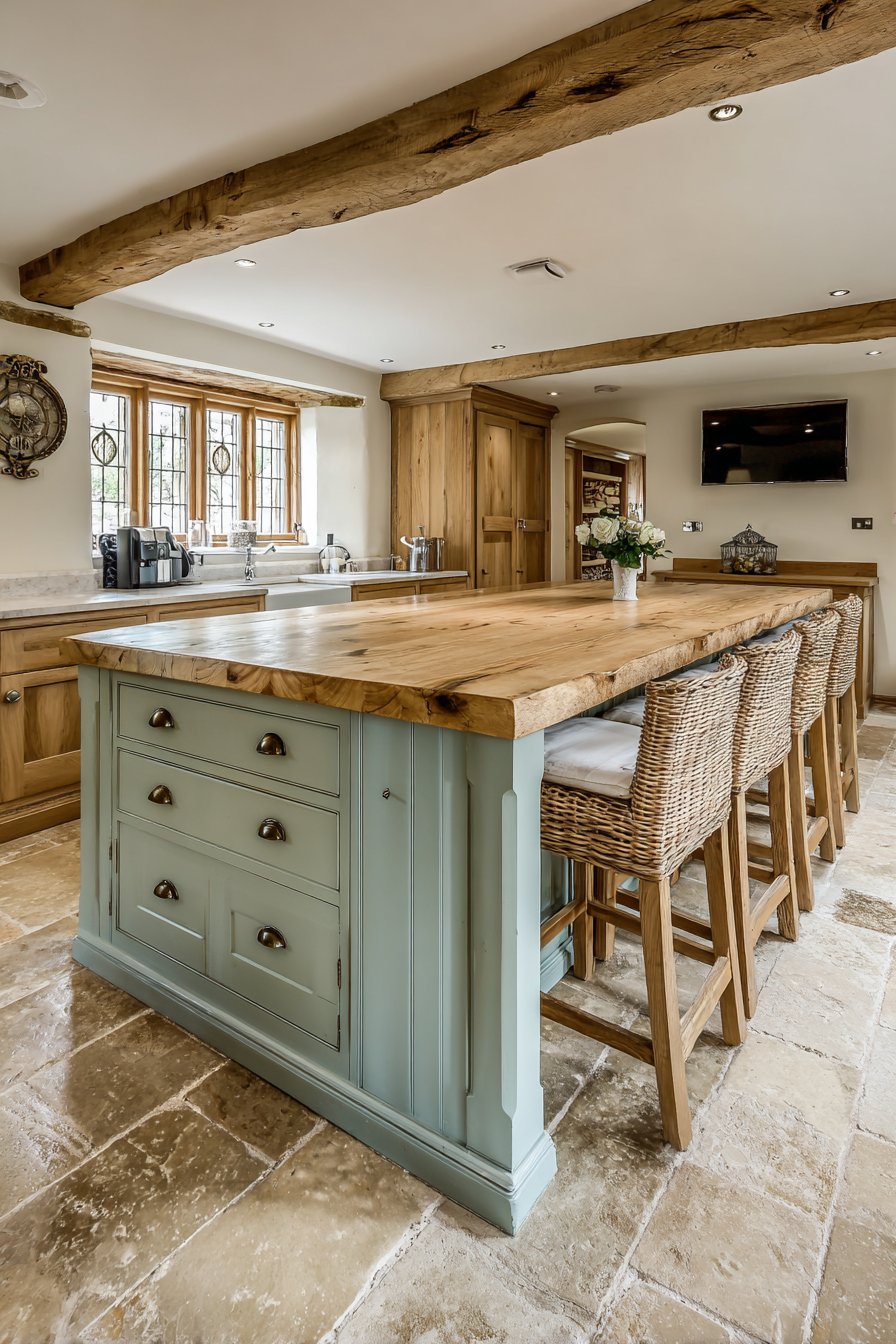
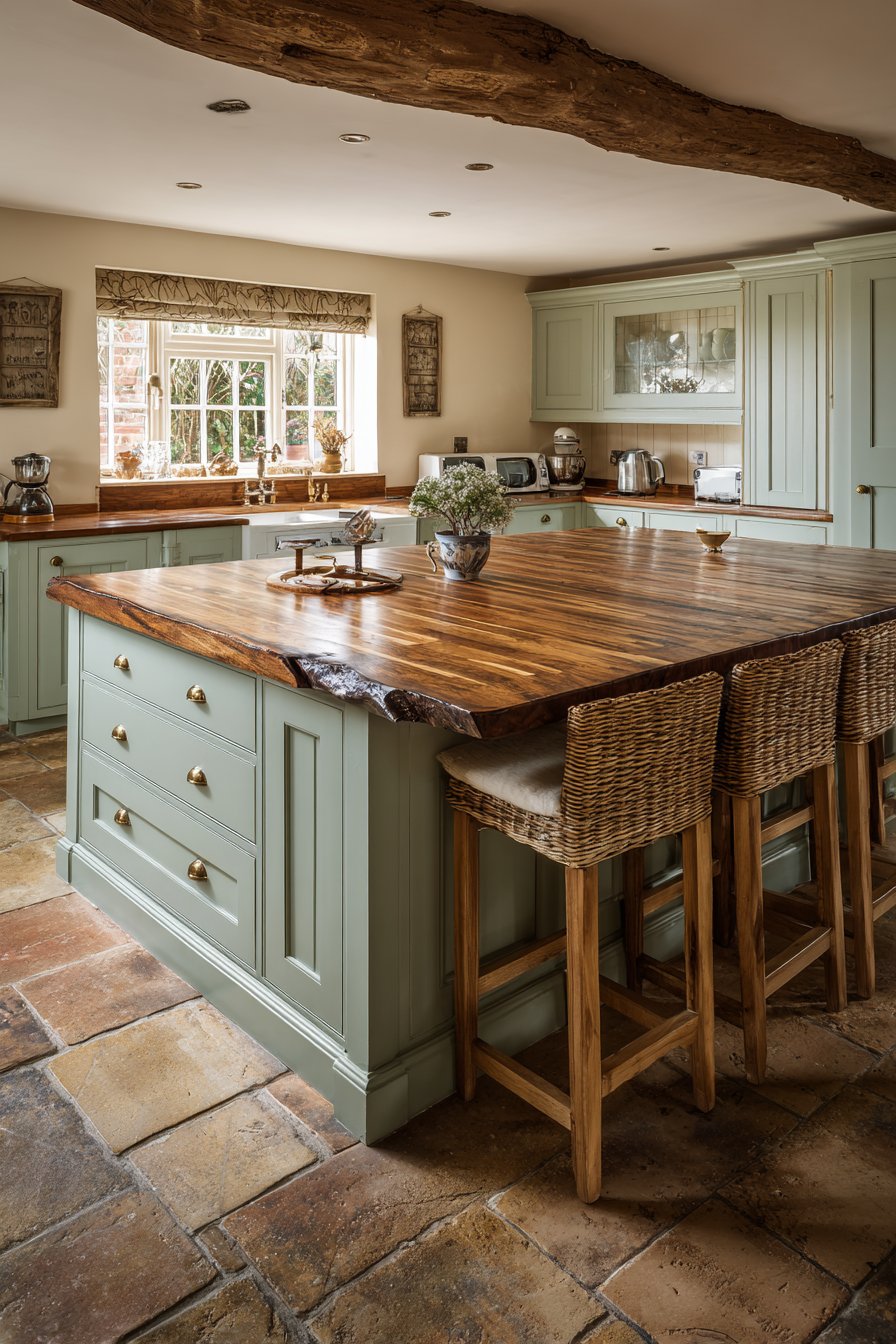
A substantial kitchen island constructed from reclaimed wood serves as the undisputed focal point of this earthy design, combining exceptional functionality with raw, authentic beauty. The countertop showcases natural edge details where the bark once grew, preserving the tree’s original form and creating an organic, one-of-a-kind work surface. The honey-toned finish enhances the wood’s natural grain patterns while providing protection for daily use, allowing the material’s inherent beauty to shine through without excessive processing or artificial enhancement.
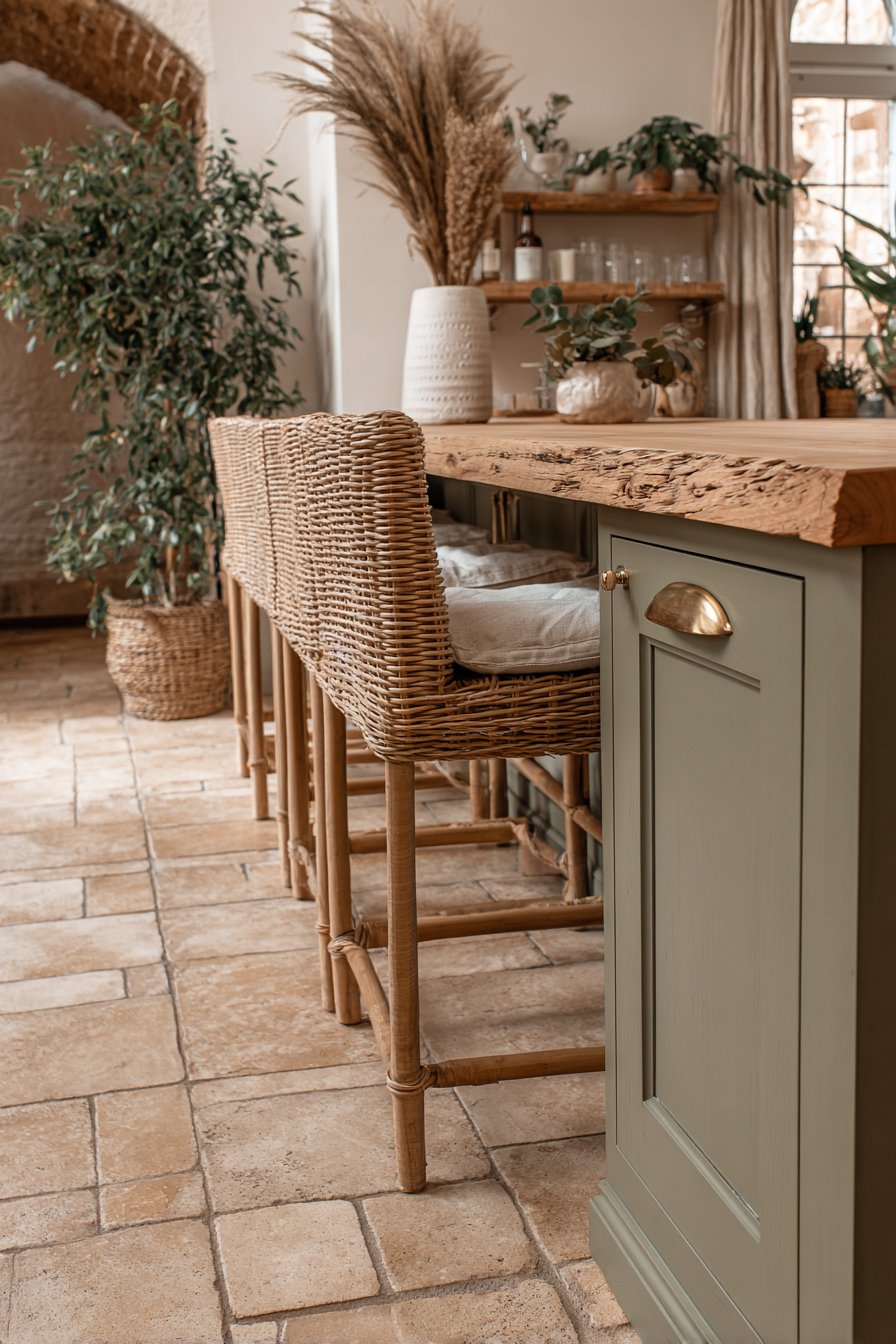
The island’s base features sage green shaker-style cabinetry that introduces a soft, natural color while providing ample storage for cookware, serving pieces, and everyday essentials. Brass cup pulls add warm metallic accents that catch and reflect light, creating small moments of visual interest throughout the day. These thoughtful details elevate the design from merely rustic to sophisticated and intentional.
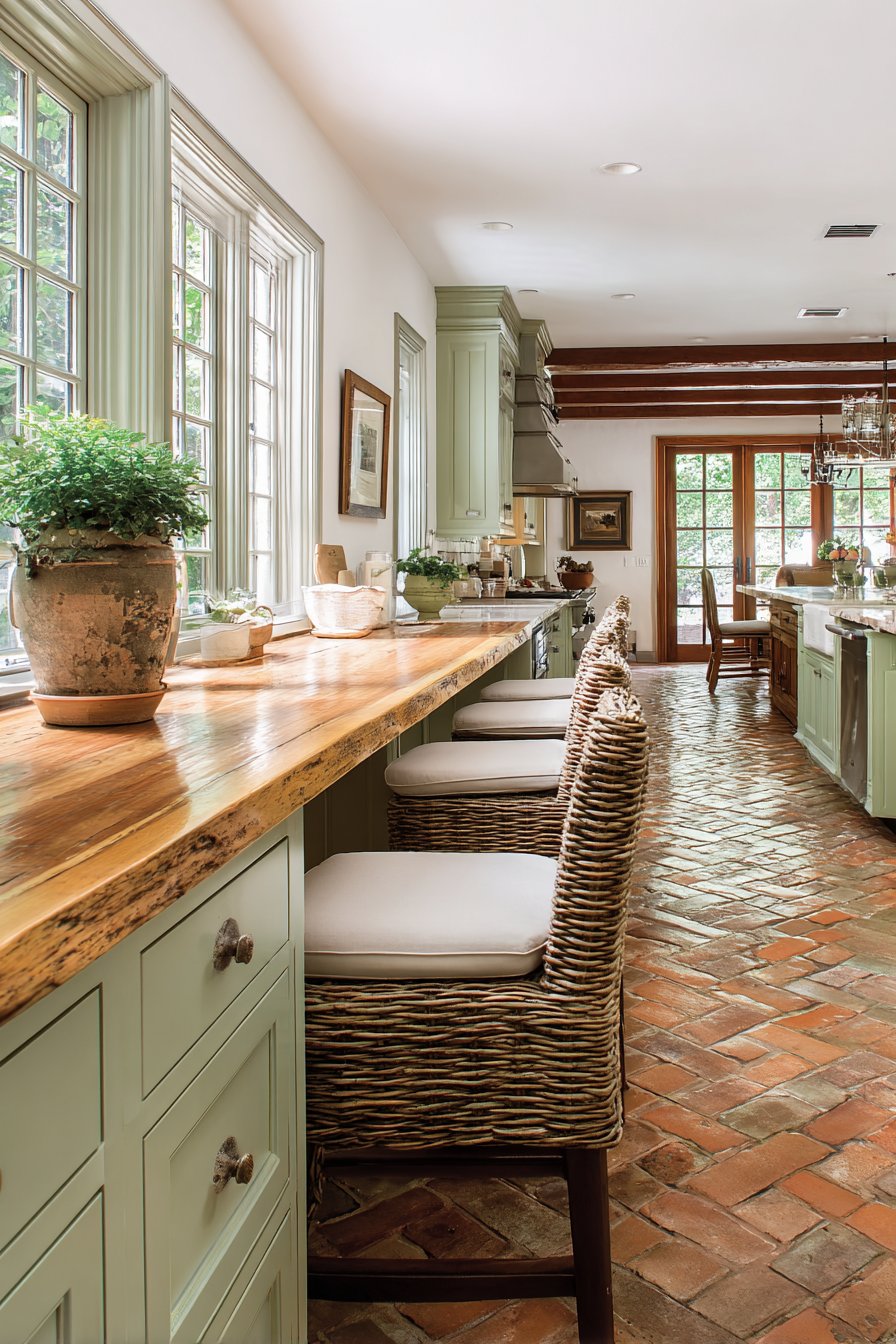
Woven rattan bar stools with linen cushions provide comfortable seating at the island, introducing additional natural textures while maintaining the earthy aesthetic. The terracotta floor tiles anchor the entire composition with their warm, matte finish and natural color variation—no two tiles are exactly alike, creating a floor that feels authentic and grounded. This island becomes more than just a prep surface; it’s a gathering place where family and friends naturally congregate, drawn to its warmth and substantial presence.
Key Design Tips:
- Source reclaimed wood with visible grain patterns and natural edge details for maximum character
- Paint lower cabinetry in muted natural tones like sage green or soft grey
- Choose brass or bronze hardware for warm metallic accents that complement wood tones
- Select woven natural fiber seating to introduce texture and maintain the organic aesthetic
- Install terracotta or natural clay tiles for flooring that grounds the space
3. Natural Oak Cabinet Foundation
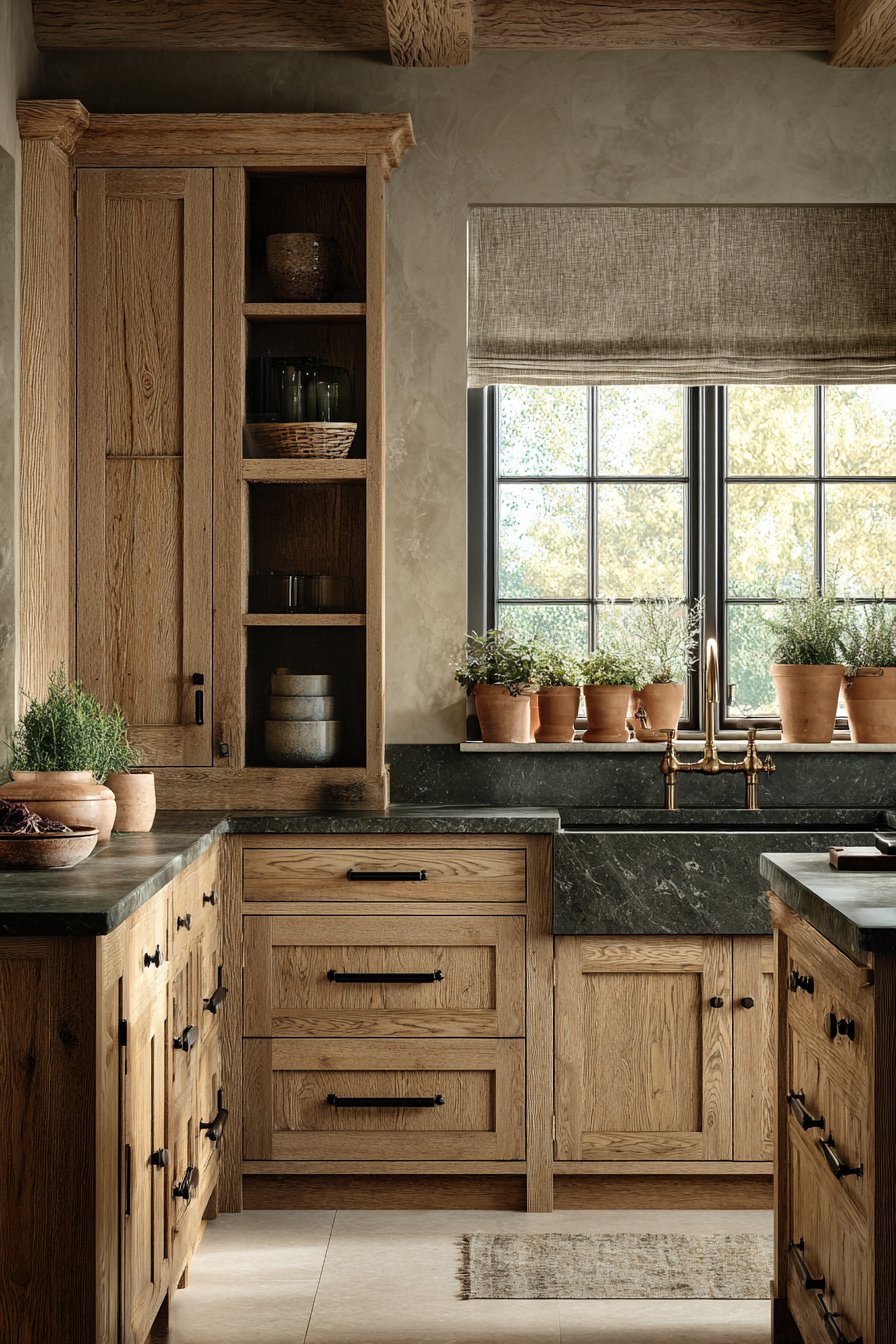
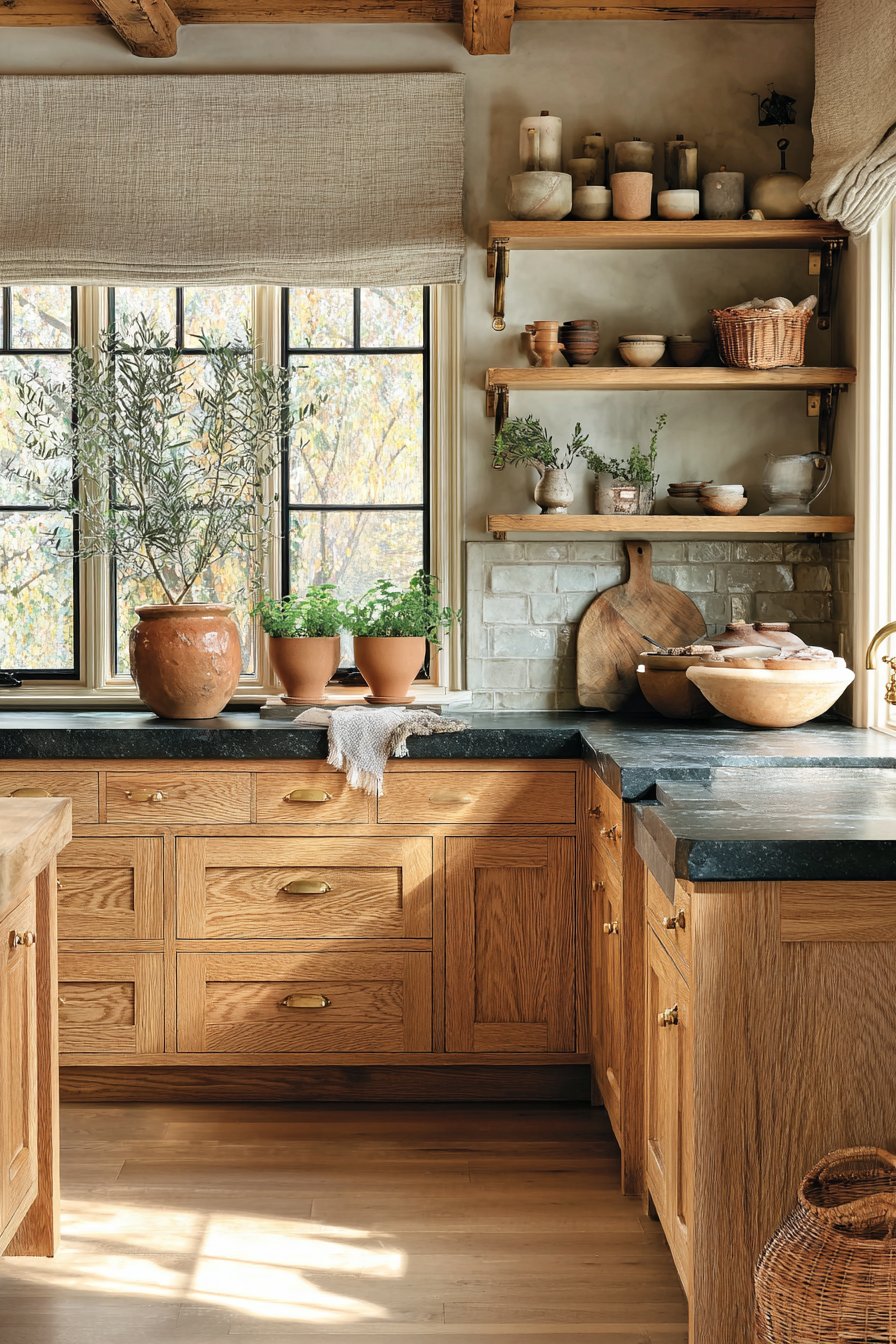
This kitchen design celebrates the timeless beauty of natural oak cabinetry, allowing the wood’s distinctive grain patterns and warm honey tones to create the foundation for the entire space. The matte finish on the cabinets enhances the wood’s natural texture without the artificial shine of high-gloss finishes, creating a more authentic, lived-in feel. Each cabinet door and drawer front showcases the unique characteristics of oak—the sweeping grain lines, occasional knots, and subtle color variations that make real wood irreplaceable in quality kitchen design.
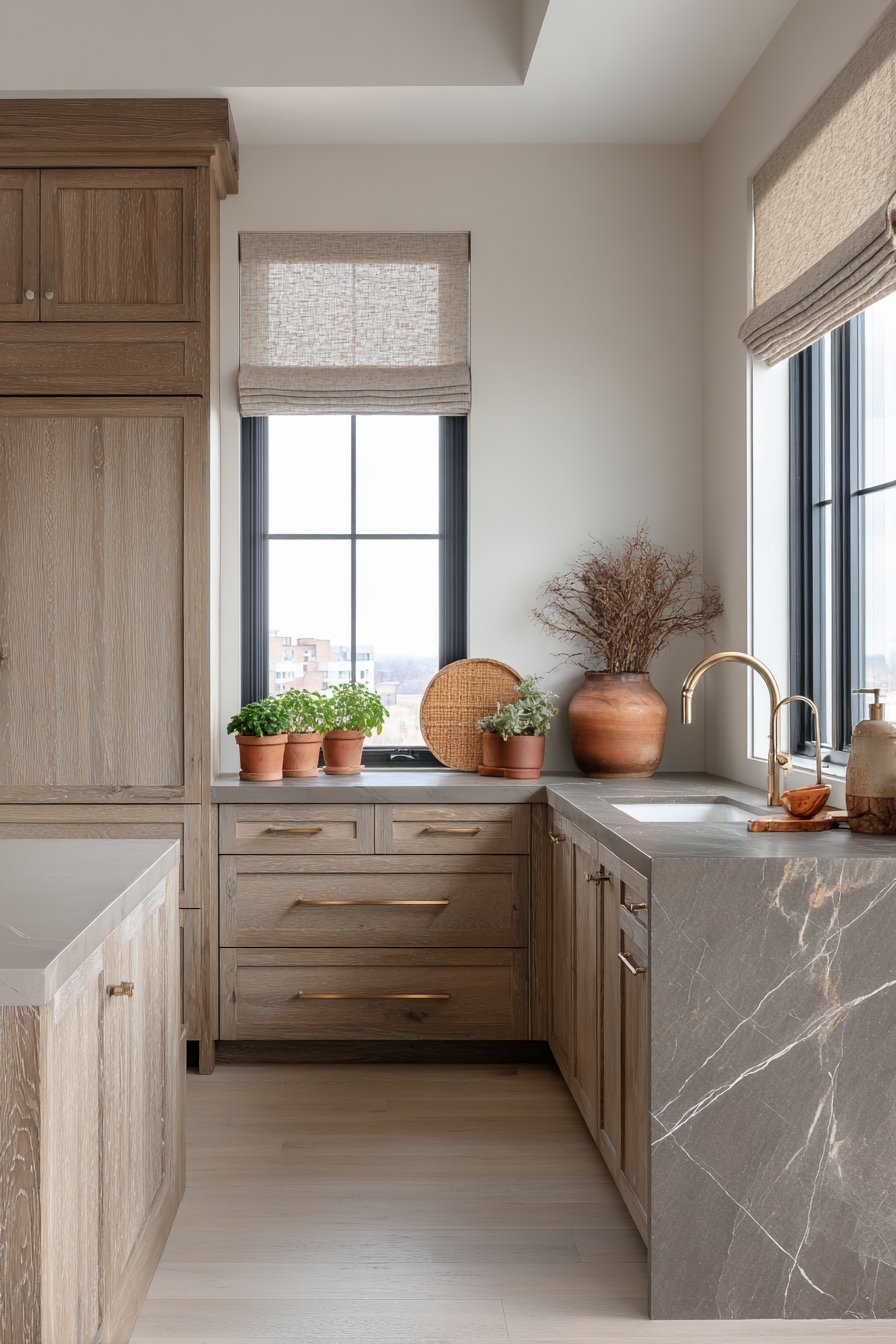
Soapstone countertops provide a sophisticated contrast to the warm oak, their subtle grey-green veining and cool, smooth surface offering both practical benefits and aesthetic appeal. Unlike marble, soapstone is non-porous and incredibly durable, developing a richer patina over time that many homeowners find desirable. The stone’s natural characteristics make each installation unique, with veining patterns that can never be replicated.
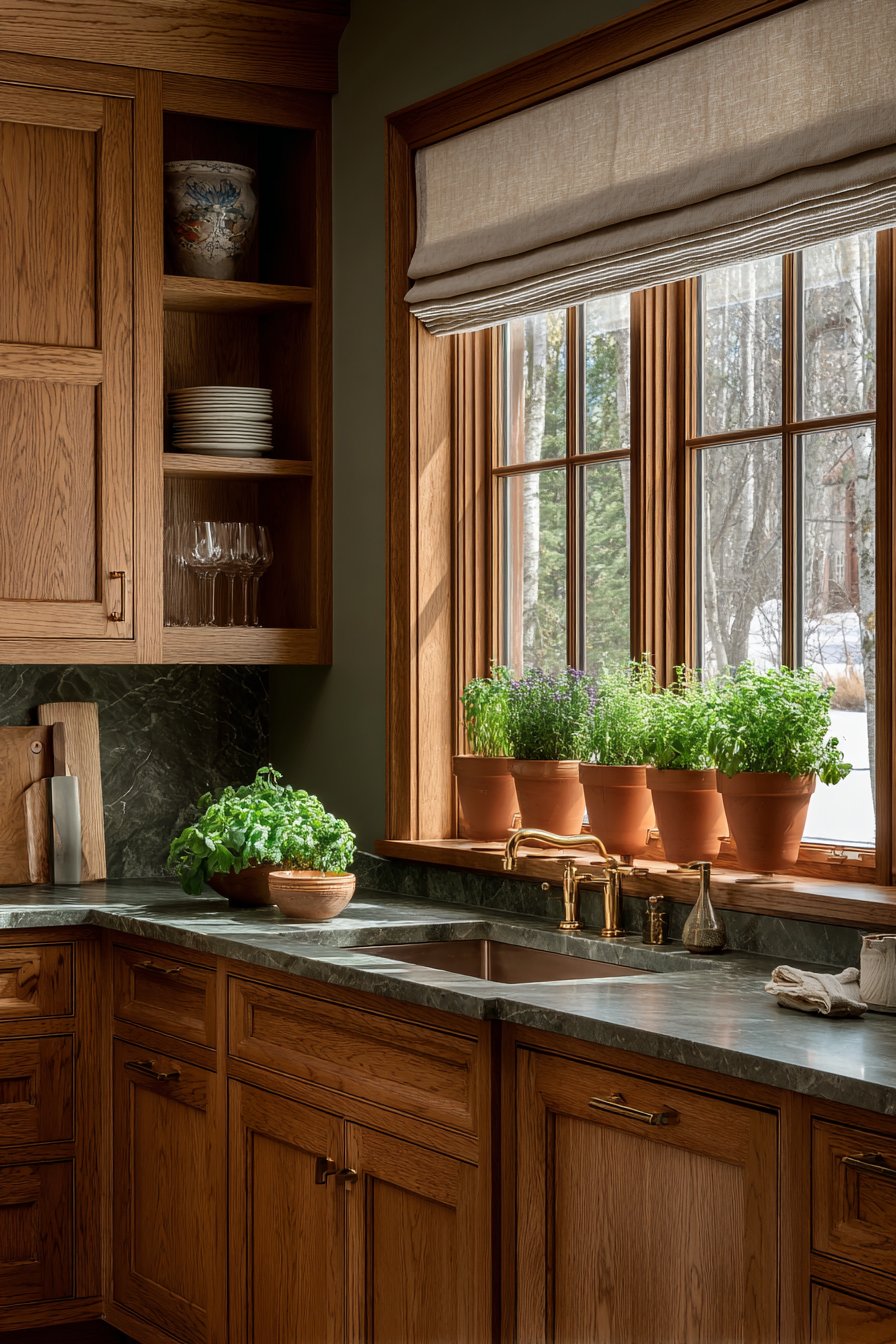
Brushed brass hardware punctuates the cabinetry with warm metallic accents that bridge the temperature gap between the cool soapstone and warm oak. Above the prep area, a simple linen roman shade on the window provides soft, filtered light while maintaining privacy. Terracotta pots lined along the windowsill hold fresh herbs—basil, thyme, rosemary—that not only provide ingredients for cooking but also introduce living greenery and pleasant aromas into the space.
Key Design Tips:
- Choose oak cabinetry with visible grain patterns and natural knots for authentic character
- Pair warm wood tones with cool stone countertops for balanced temperature contrast
- Install brushed brass or bronze hardware to add warm metallic accents
- Use natural linen window treatments for soft light filtration
- Display fresh herbs in terracotta pots for functional greenery and pleasant aromas
4. Exposed Beam Architecture
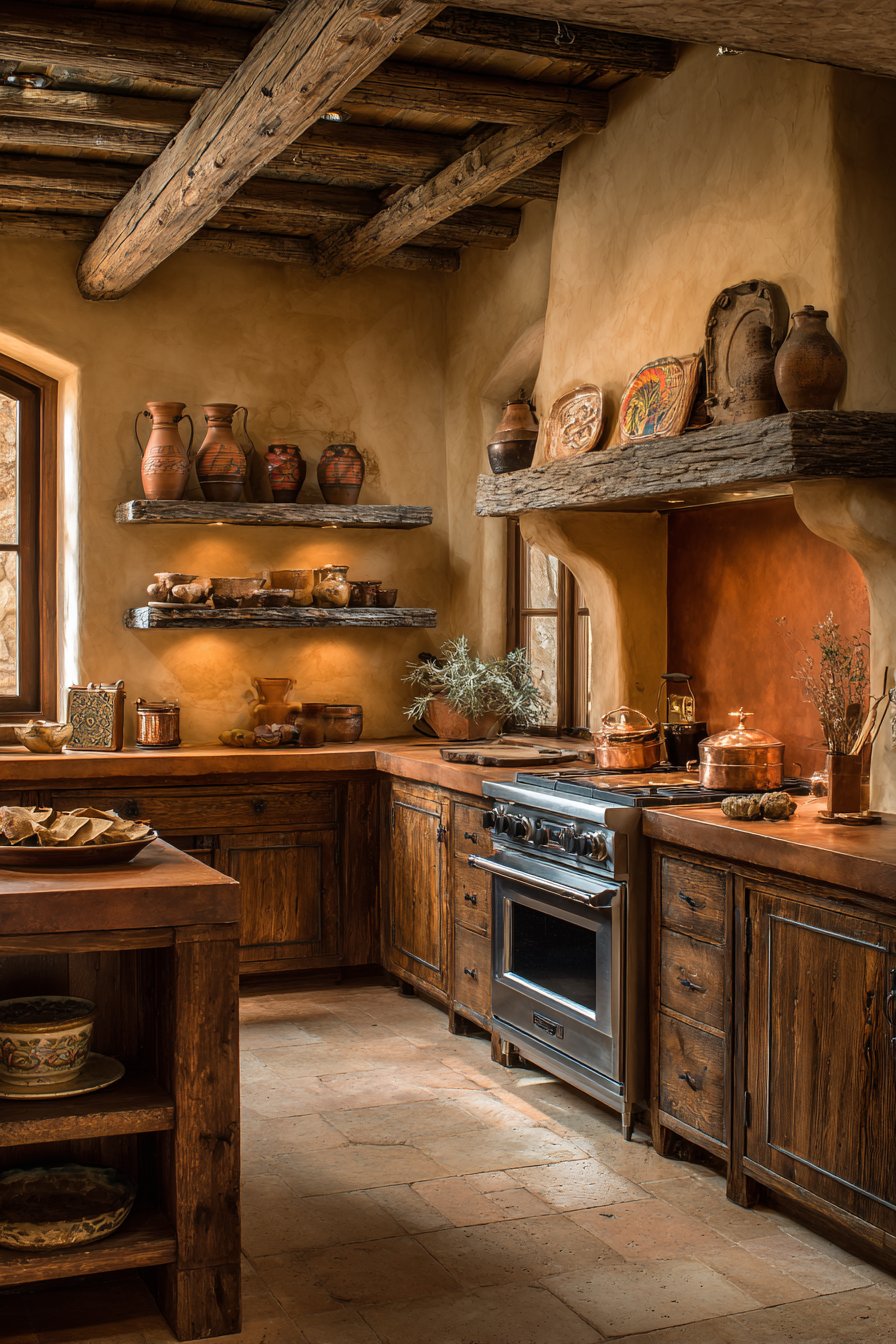
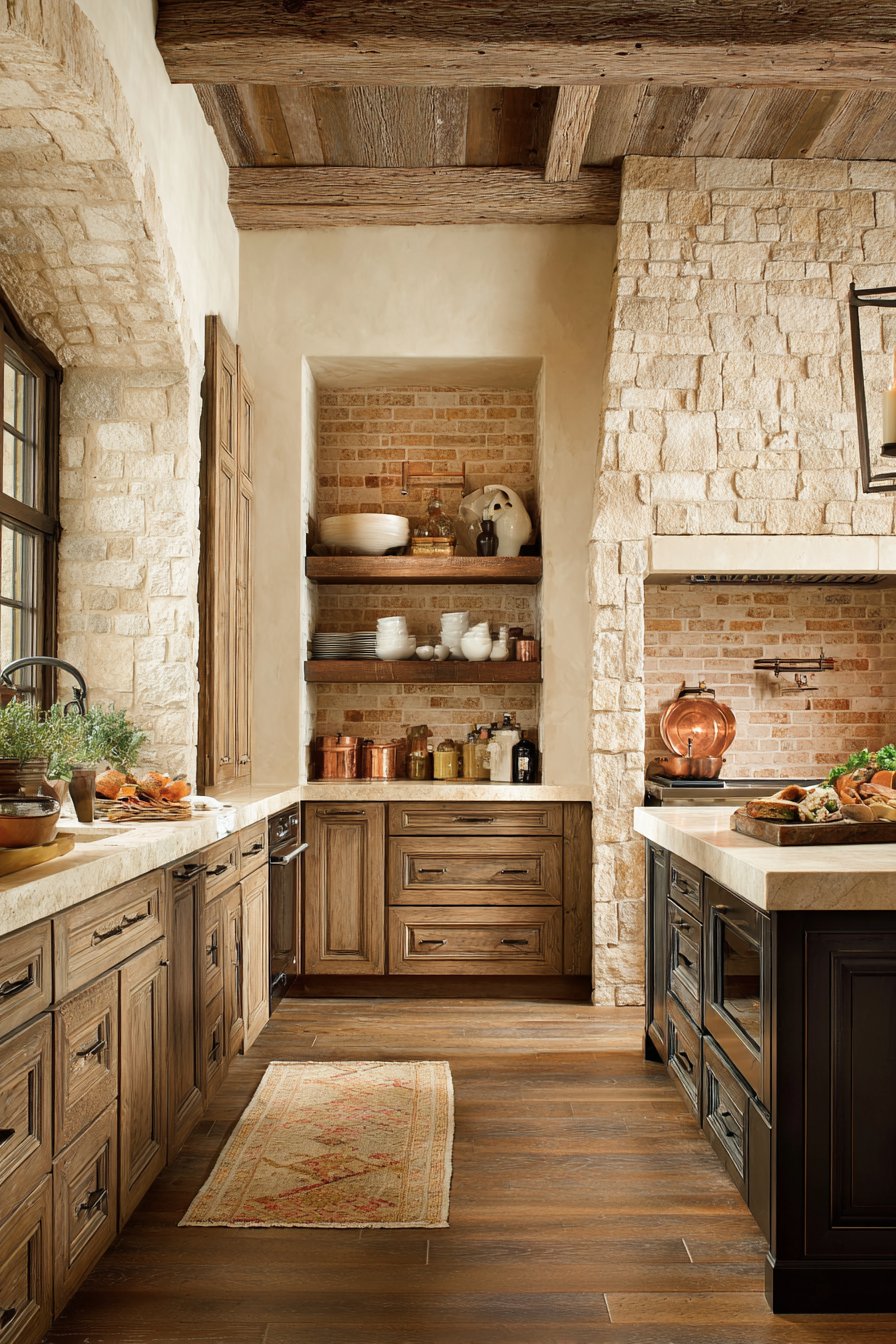
The architectural bones of this earthy kitchen make a bold statement with exposed wooden ceiling beams in weathered oak that draw the eye upward and add substantial visual weight to the space. These beams, whether original to the home or added during renovation, create a sense of history and permanence that immediately grounds the design in tradition. The weathered finish suggests decades of life, even if the beams are newly installed, adding instant character and depth.
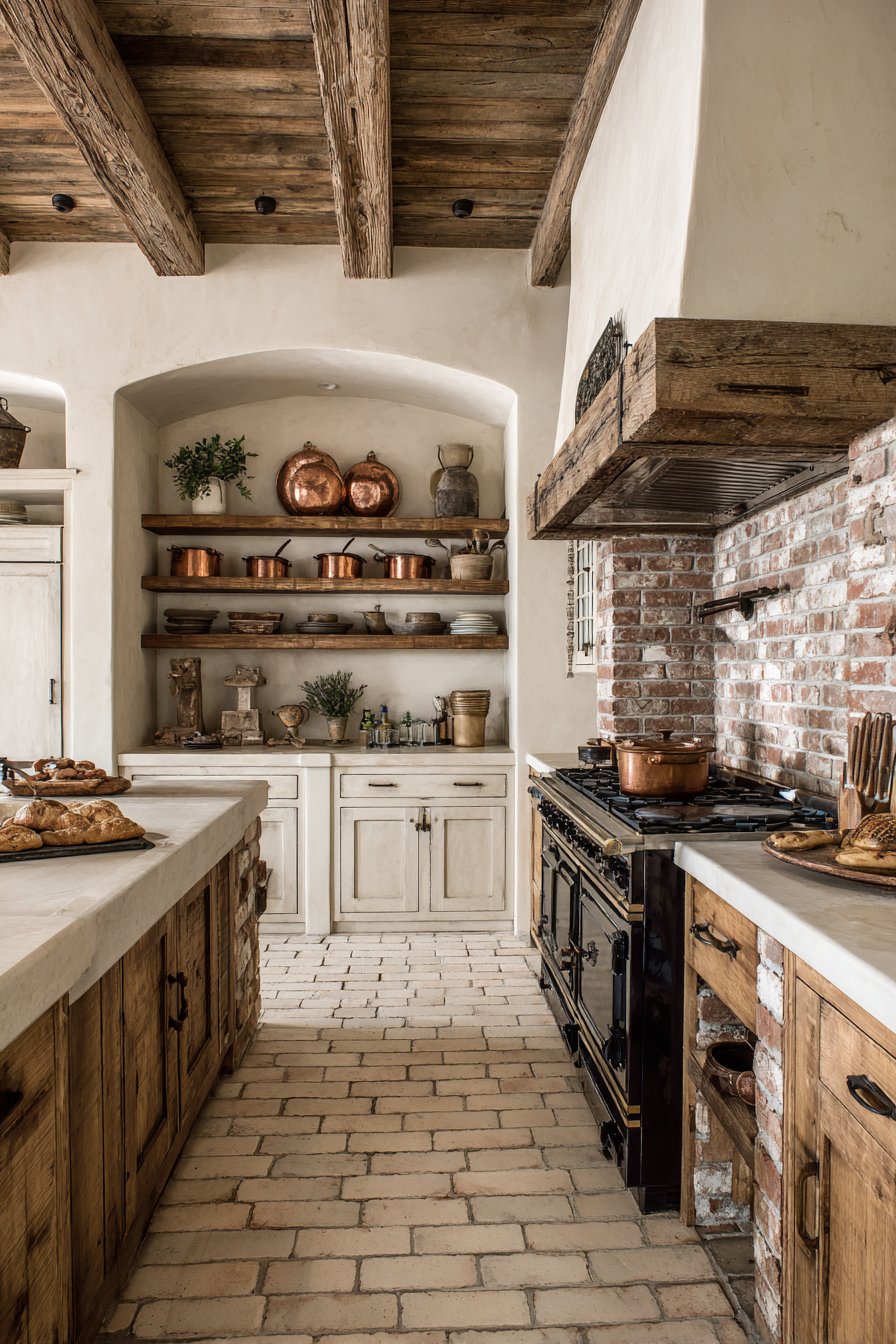
Cream-colored plaster walls provide a neutral backdrop that allows the architectural elements and functional features to take center stage. The textured plaster finish introduces subtle surface variation that catches light differently throughout the day, creating a living wall that changes with natural illumination. A brick accent wall in warm red-brown tones surrounds a vintage-style range, creating a focal point that celebrates cooking as a central home activity worthy of special attention and beautiful framing.
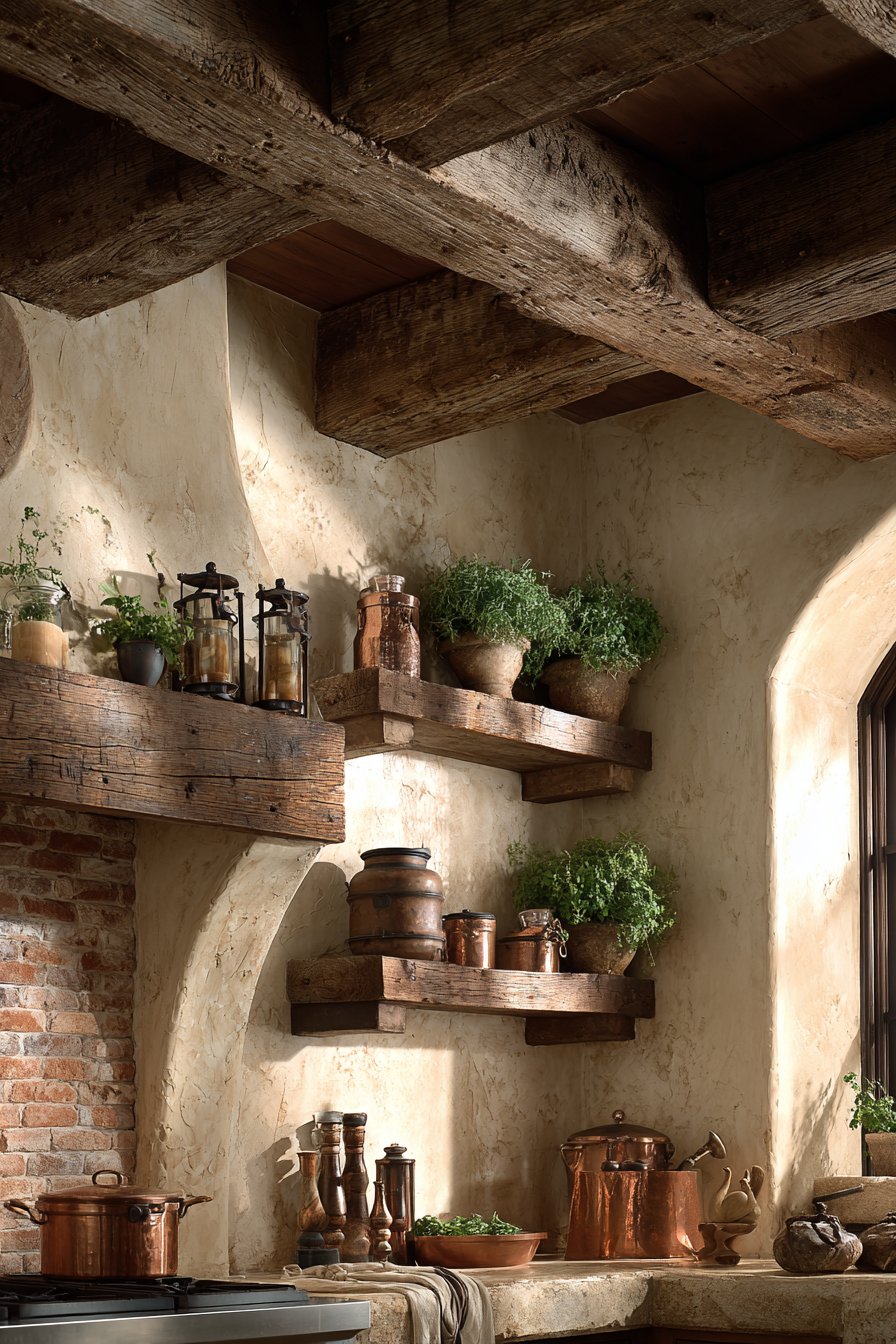
Floating shelves made from reclaimed barn wood display copper cookware and ceramic serving pieces, turning functional items into decorative elements that reinforce the earthy aesthetic. The copper’s warm glow reflects light beautifully and develops a natural patina over time, while ceramic pieces in earth tones tie together the color palette. This approach to display and storage celebrates the tools of cooking rather than hiding them away, acknowledging that a well-used kitchen is a beautiful kitchen.
Key Design Tips:
- Install or expose wooden ceiling beams to add architectural interest and visual weight
- Use textured plaster on walls for subtle surface variation and authentic character
- Create a brick accent wall around the range to establish a functional focal point
- Display copper cookware on open shelving for warm metallic accents
- Choose reclaimed wood for floating shelves to introduce history and texture
5. Natural Stone Backsplash Feature
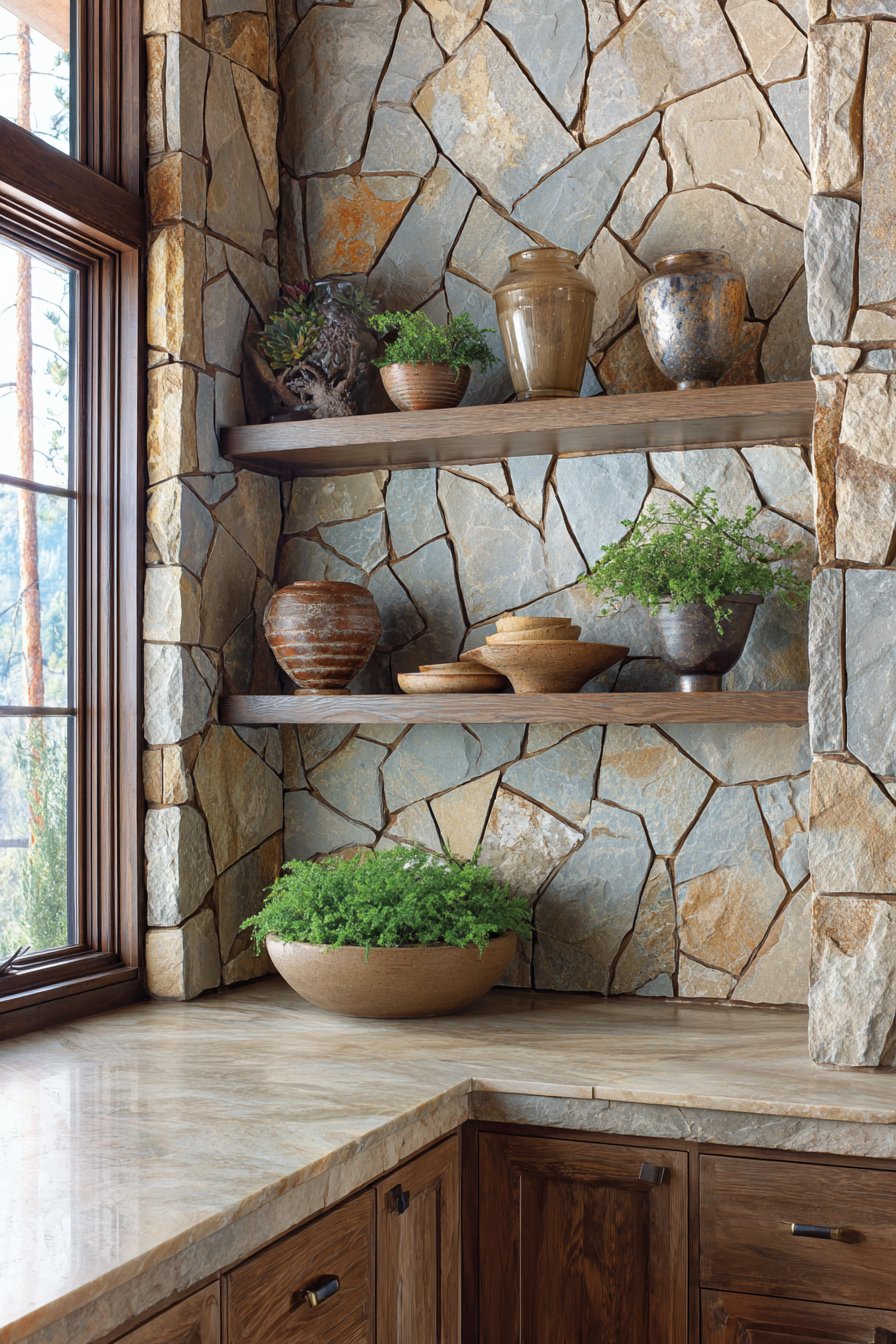
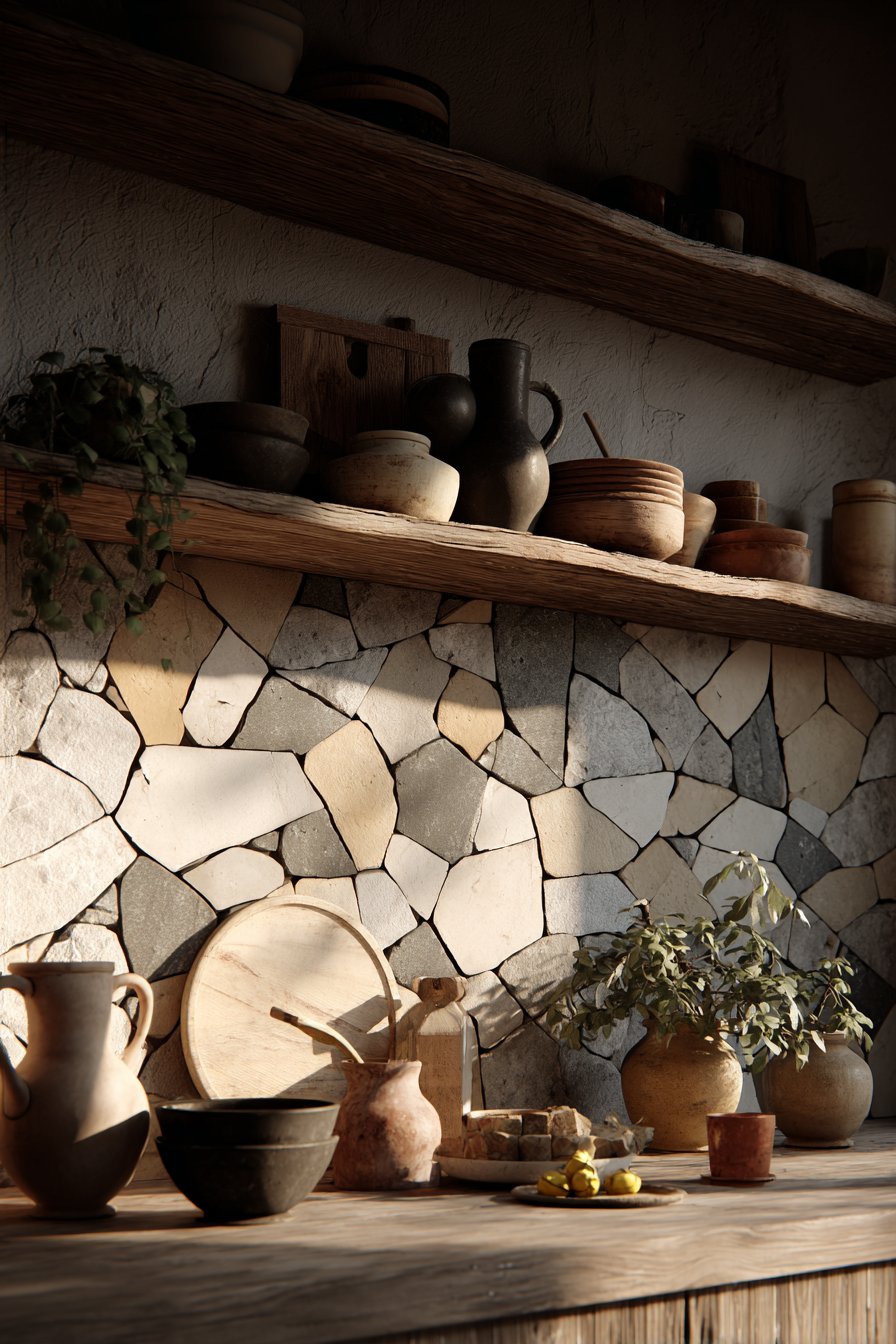
The backsplash becomes the star of this earthy kitchen design, featuring natural stone tiles in varying shades of beige, taupe, and warm grey with irregular edges that create organic, flowing patterns. Unlike perfectly uniform subway tiles, these stones celebrate natural variation—no two pieces are exactly alike. The irregular edges require more installation skill but result in a surface that looks like it could have been part of the home for generations, with grout lines that follow the stones’ natural contours rather than forcing them into rigid grid patterns.
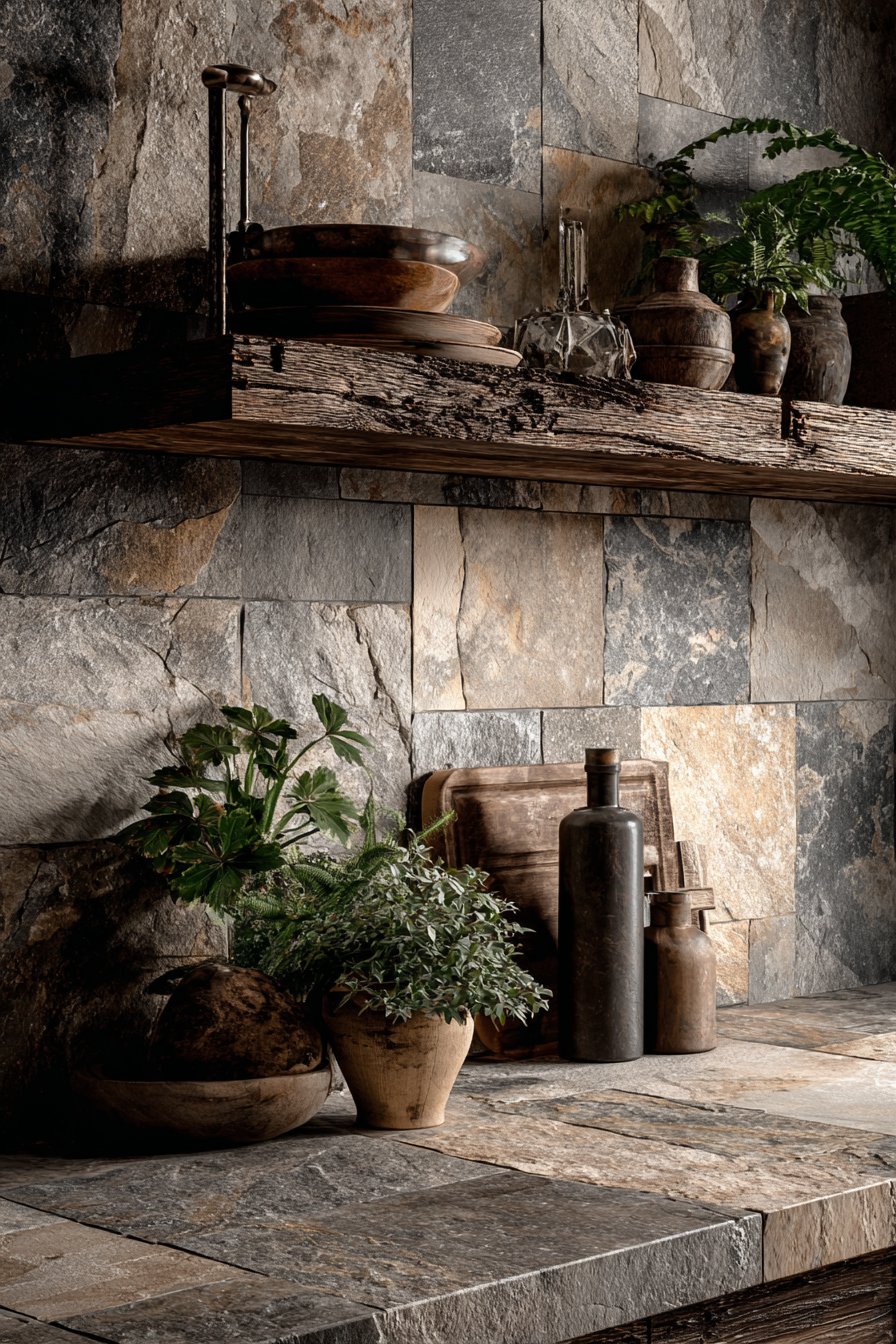
Dark bronze fixtures provide striking contrast against the light stone, their deep, rich tones grounding the neutral palette and adding visual weight where needed. Aged wood open shelving continues the natural material theme, its weathered surface suggesting years of use and adding warmth against the cool stone. The shelving holds essential items within easy reach while contributing to the layered, textural quality that defines earthy design.
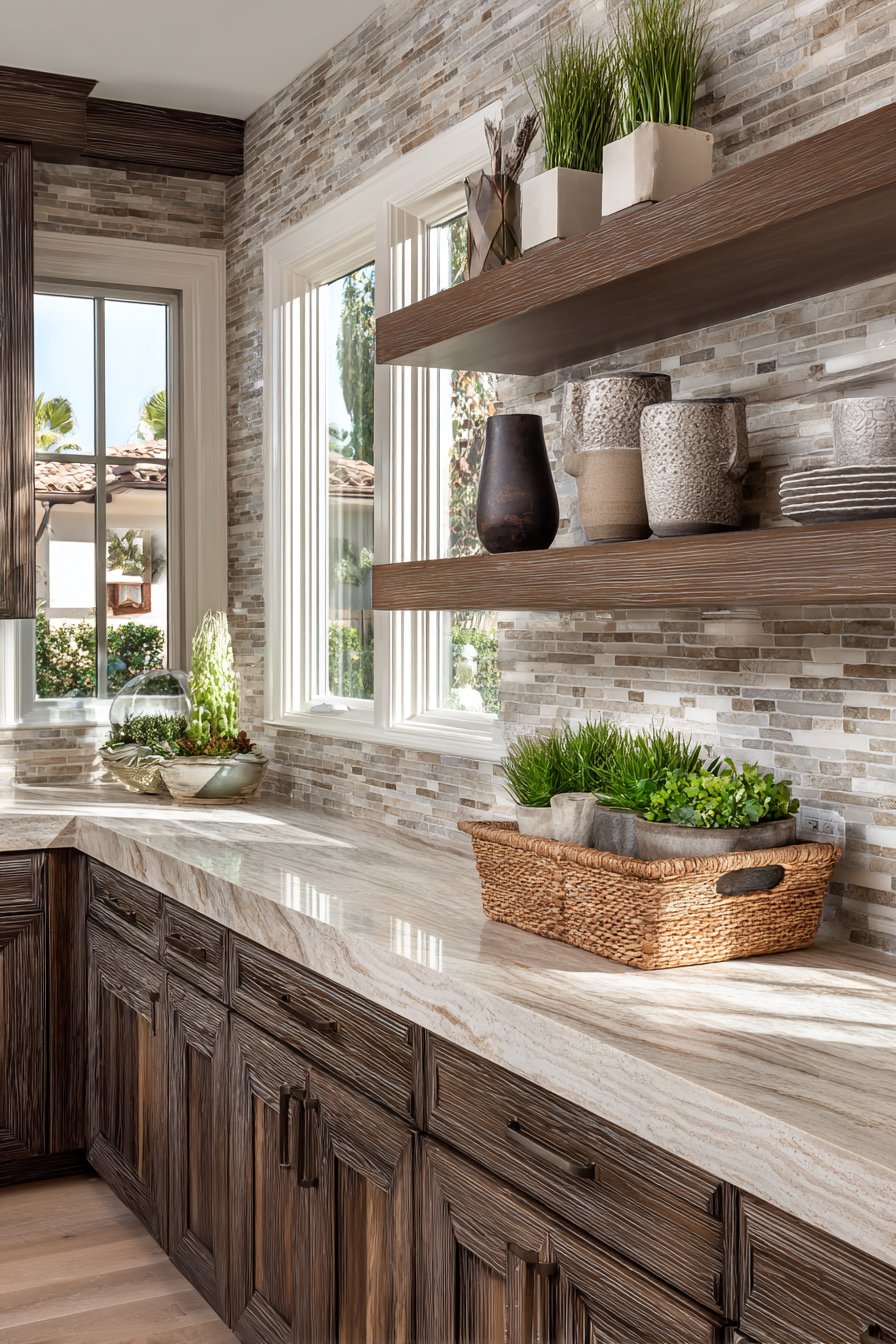
Potted plants strategically placed on counters and shelving introduce living greenery that softens hard surfaces and literally brings life into the space. These aren’t just decorative—herbs like basil, mint, and cilantro serve practical culinary purposes while their varied leaf shapes and vibrant green tones add visual interest. Natural light creates depth through shadows on the textured stone surface, highlighting its dimensional qualities and creating an ever-changing display throughout the day.
Key Design Tips:
- Select natural stone tiles with irregular edges for organic, non-uniform patterns
- Choose stones in warm neutral tones that complement rather than dominate
- Install dark bronze or black fixtures for grounding contrast
- Position potted herbs on the backsplash area for functional greenery
- Use aged or weathered wood for shelving to introduce warmth and texture
6. Terracotta Floor Foundation
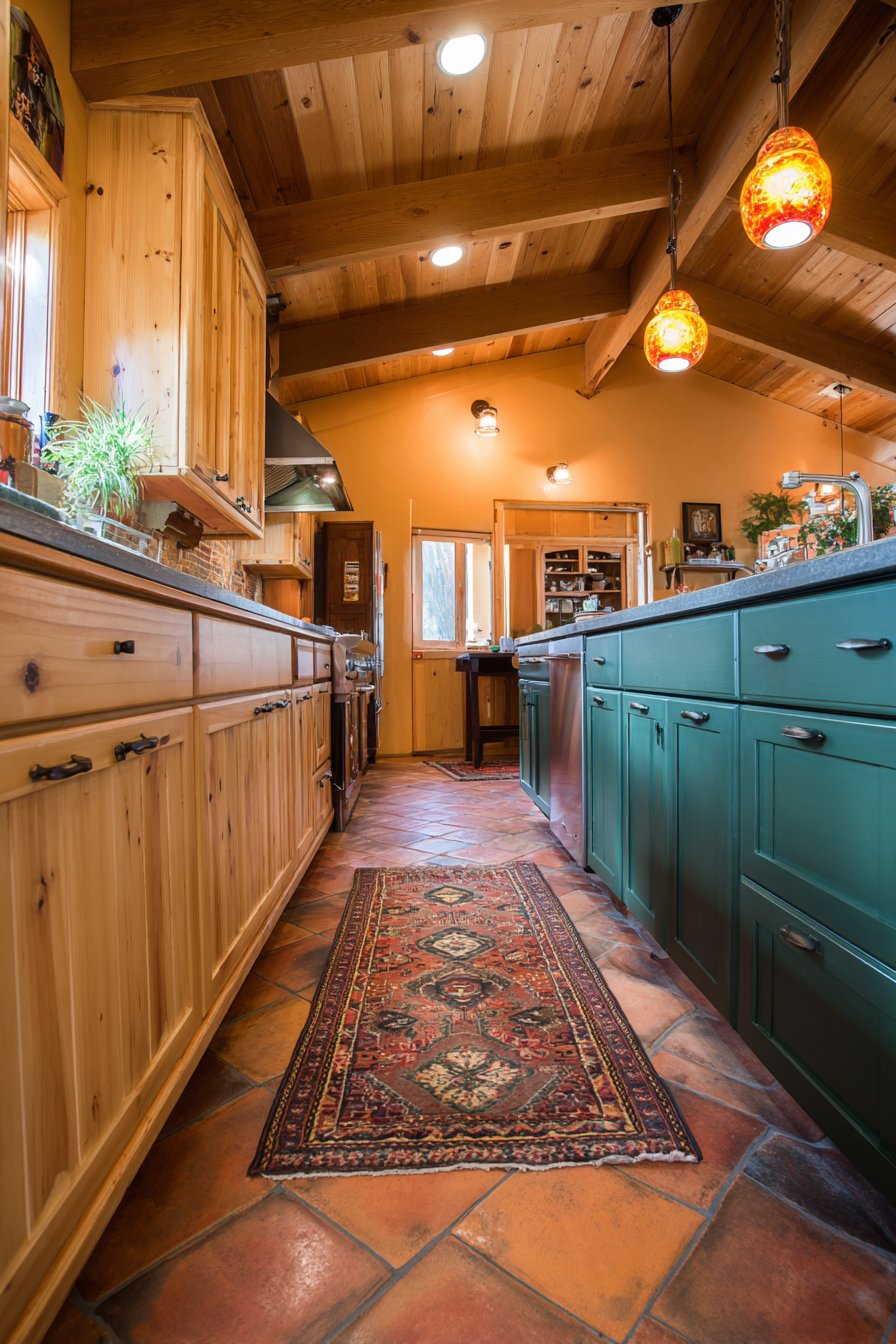
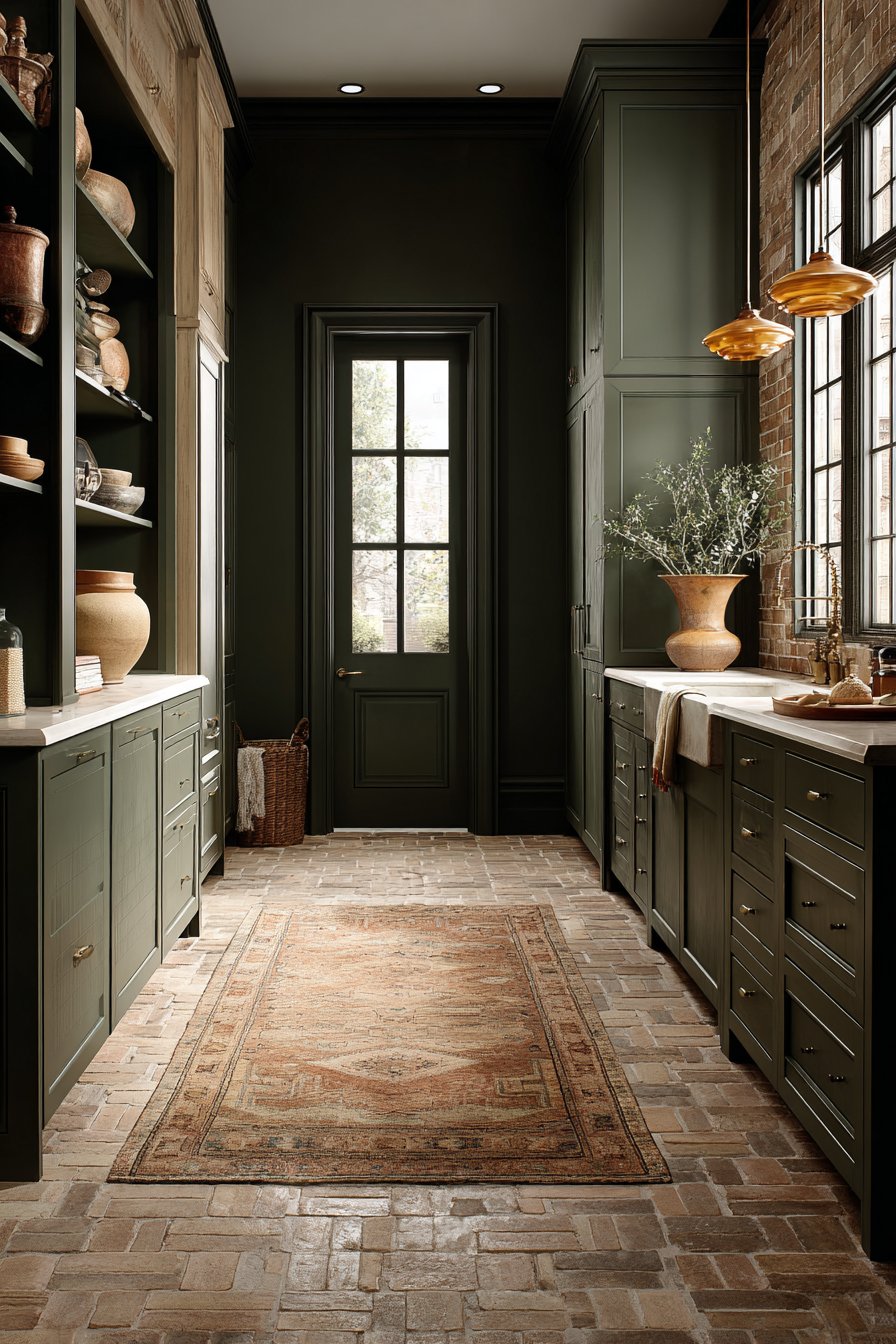
The flooring sets the tone for this entire earthy kitchen design, with terracotta tiles in their natural matte finish creating a warm, grounded foundation that influences every other design decision. The tiles’ natural color variation—ranging from pale peachy tones to deep rust—creates a floor that feels authentic and hand-crafted. No two tiles match exactly, and this imperfection is precisely what gives the floor its character and charm. The matte finish is practical for kitchen use, hiding minor scratches and wear while maintaining its beauty.
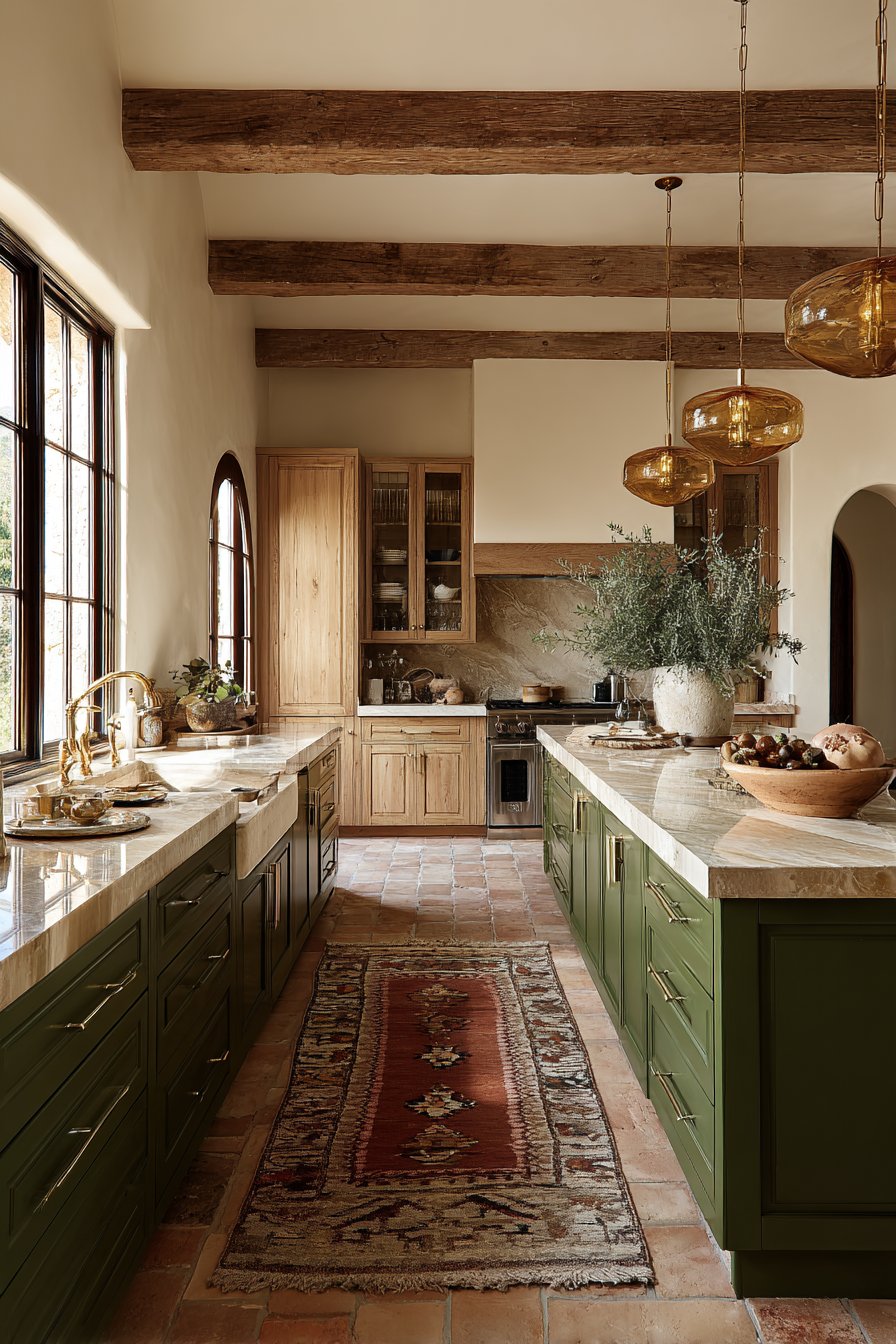
Lower cabinets painted in deep forest green provide rich, saturated color that feels organic rather than artificial, while upper cabinets in natural pine introduce warm wood tones that complement the terracotta flooring. This two-toned approach creates visual interest and prevents the space from feeling too heavy or too light. The combination of colors draws inspiration from natural landscapes—forest floors covered in fallen leaves and pine needles.
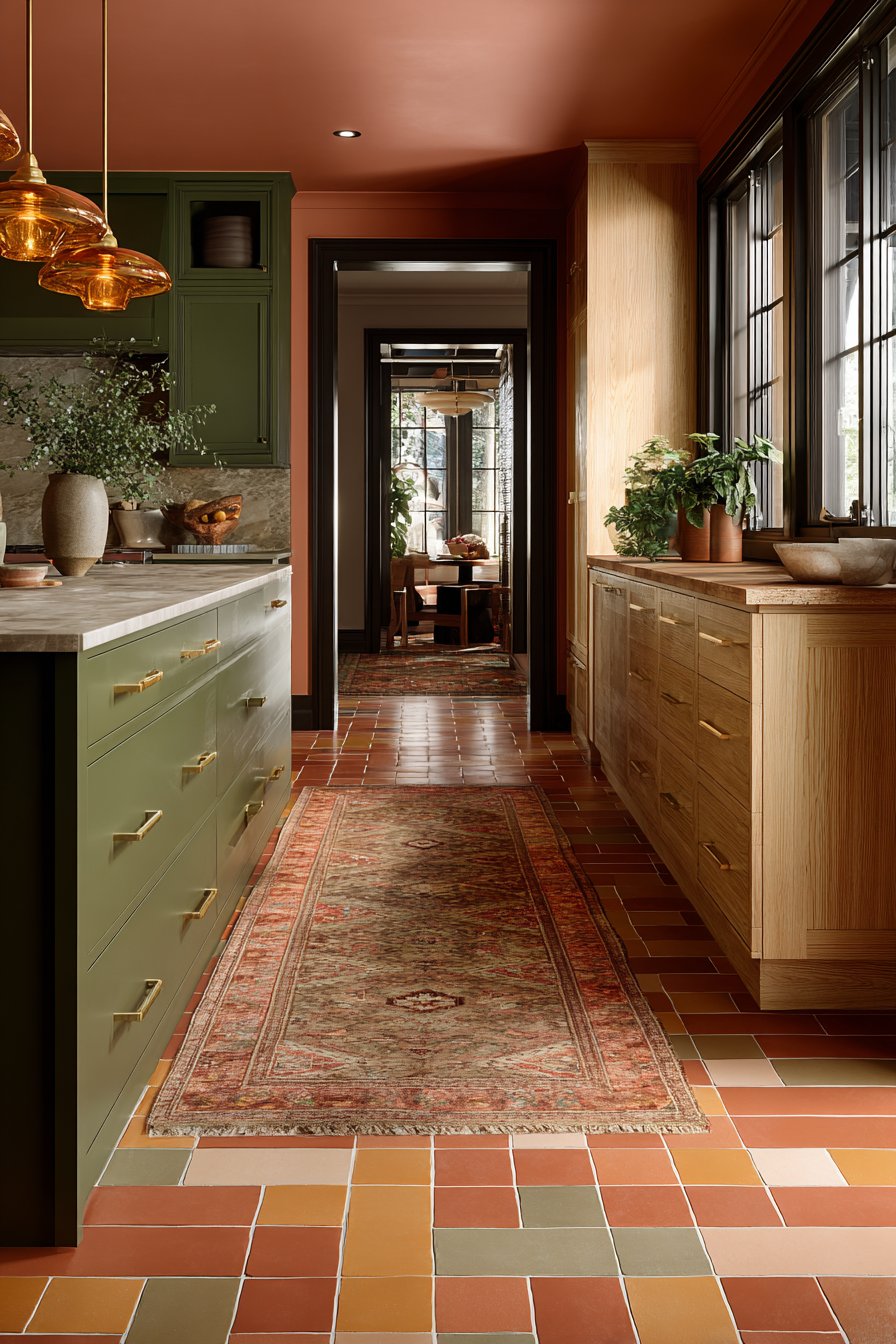
A vintage Persian runner in rust and cream tones adds softness underfoot in the main work area while introducing intricate pattern and additional texture. The runner’s colors echo and enhance the terracotta tiles, creating cohesion while adding an unexpected element of tradition and craftsmanship. Brass pendant lights with amber glass shades provide warm illumination that enhances the earthy color scheme, their golden glow making the space feel welcoming even on grey days.
Key Design Tips:
- Install terracotta floor tiles with natural color variation for authentic character
- Use two-toned cabinetry with forest green lowers and natural wood uppers
- Layer a vintage runner over tile flooring for added warmth and texture
- Choose brass pendant lights with amber glass to enhance warm tones
- Embrace color variation in natural materials rather than seeking uniformity
7. Butcher Block Prep Station
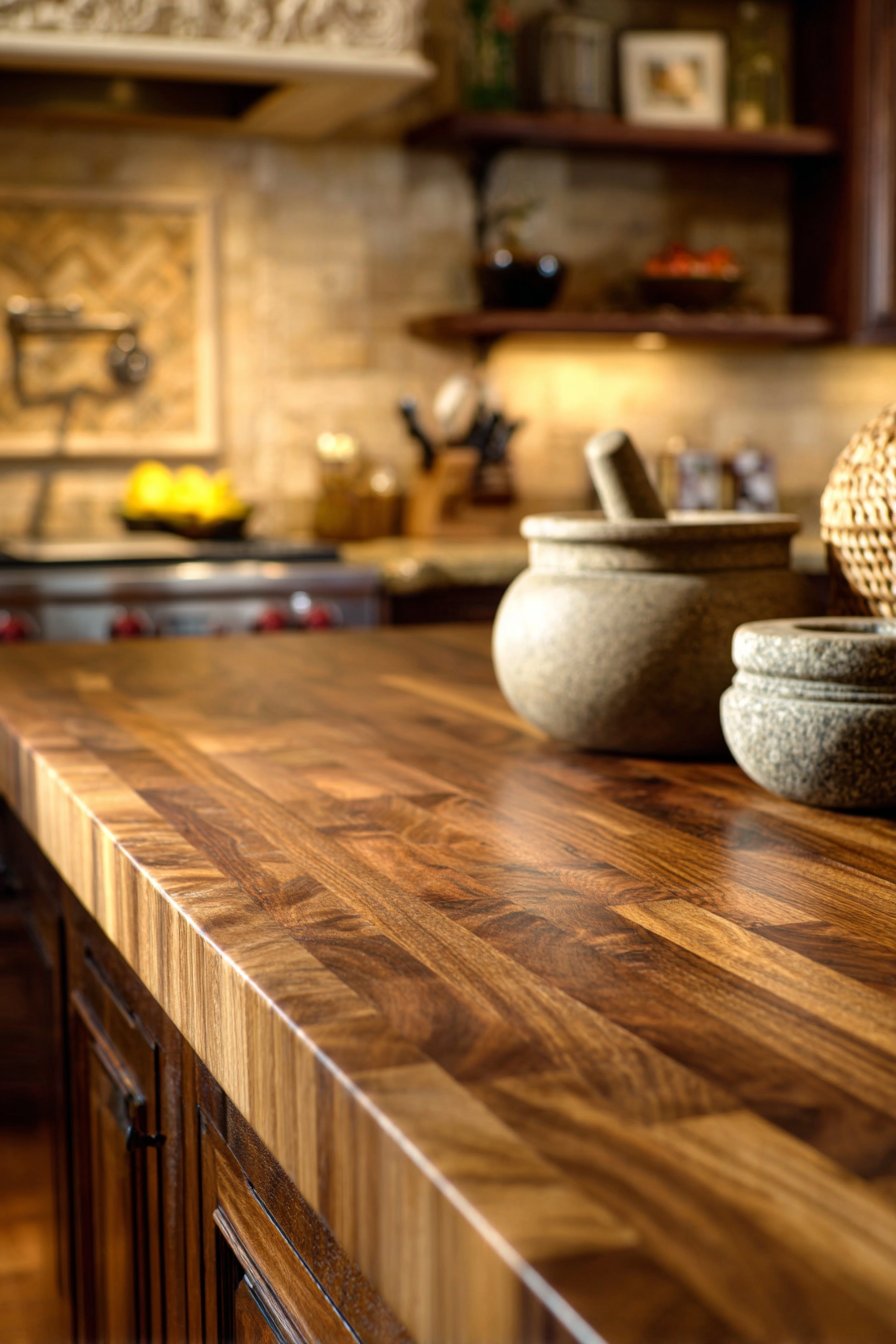
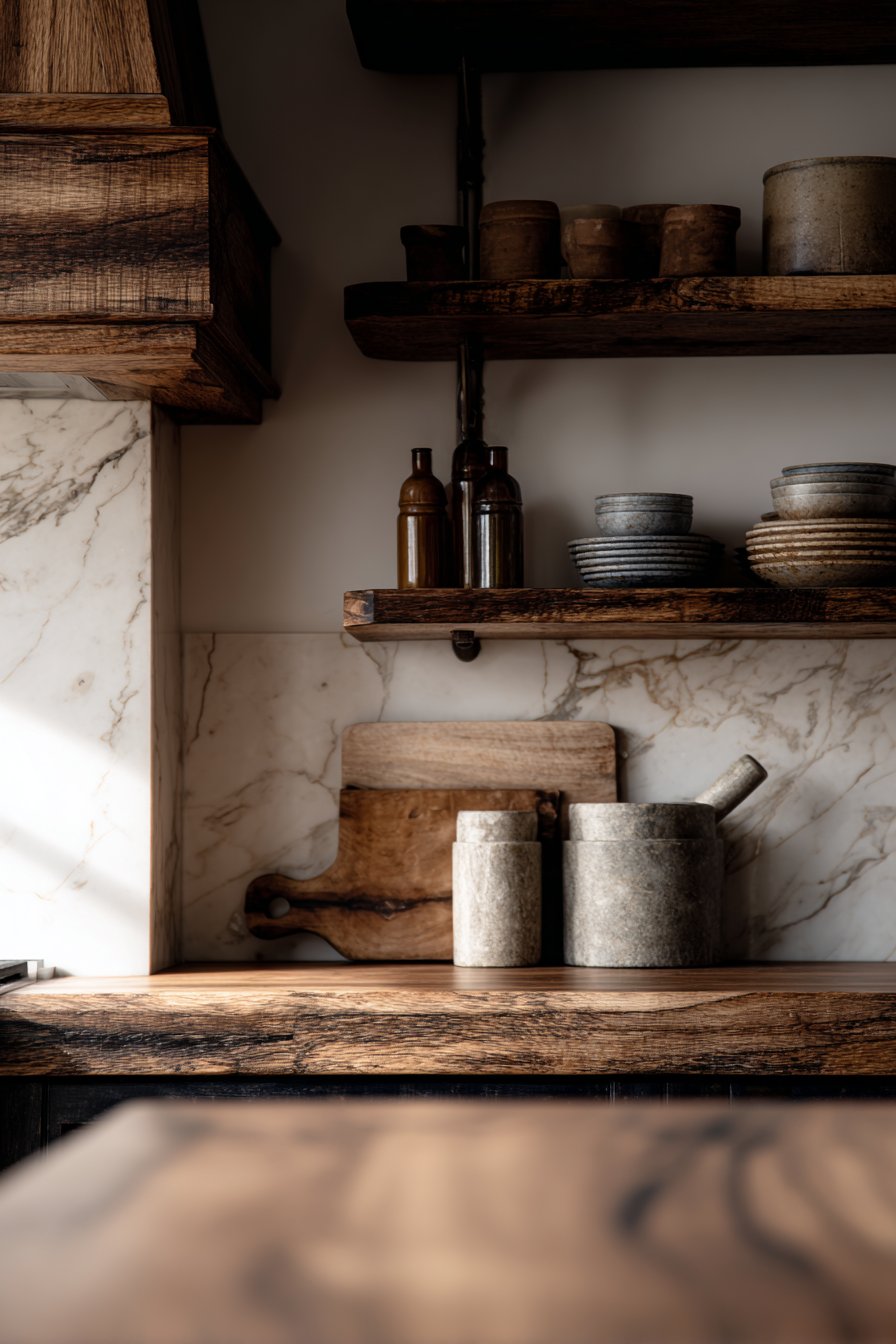
This design focuses on creating a dedicated prep area centered around a luxurious butcher block surface in rich walnut tones, where the wood’s natural grain patterns and deep color create a workspace that’s both beautiful and supremely functional. The surface shows honest signs of use—knife marks and subtle wear patterns that tell the story of meals prepared and family fed. This isn’t damage; it’s patina, the visual record of a kitchen that’s truly lived in and loved.
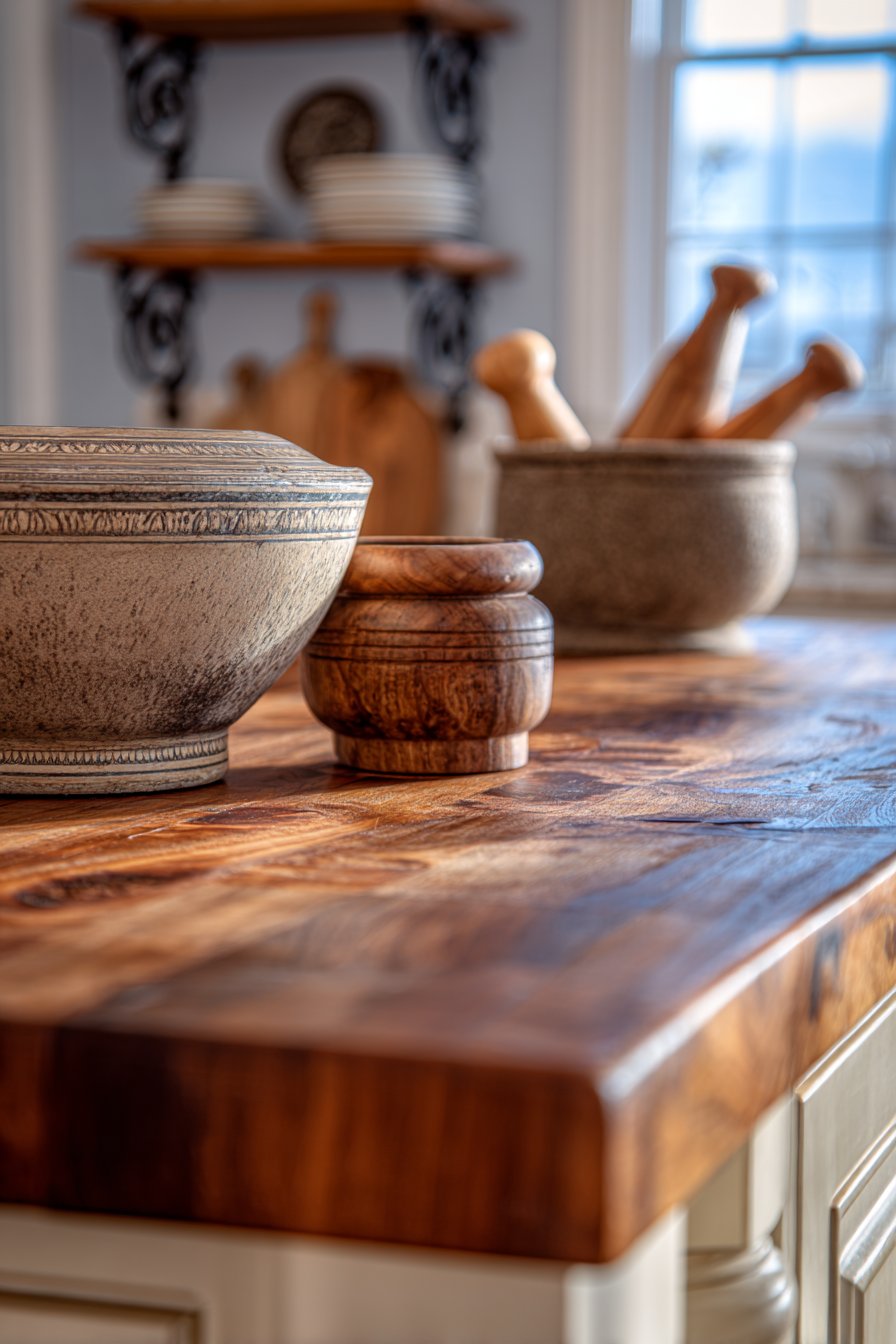
Surrounding countertops in honed limestone provide cool, smooth surfaces for rolling pastry and other tasks where a cool surface is beneficial. The limestone’s pale, creamy color and subtle texture complement the dark walnut, creating temperature contrast while maintaining the natural material palette. Open shelving in wrought iron holds wooden cutting boards of various sizes and stone mortar and pestle sets, keeping essential tools within reach while contributing to the kitchen’s layered, textural aesthetic.
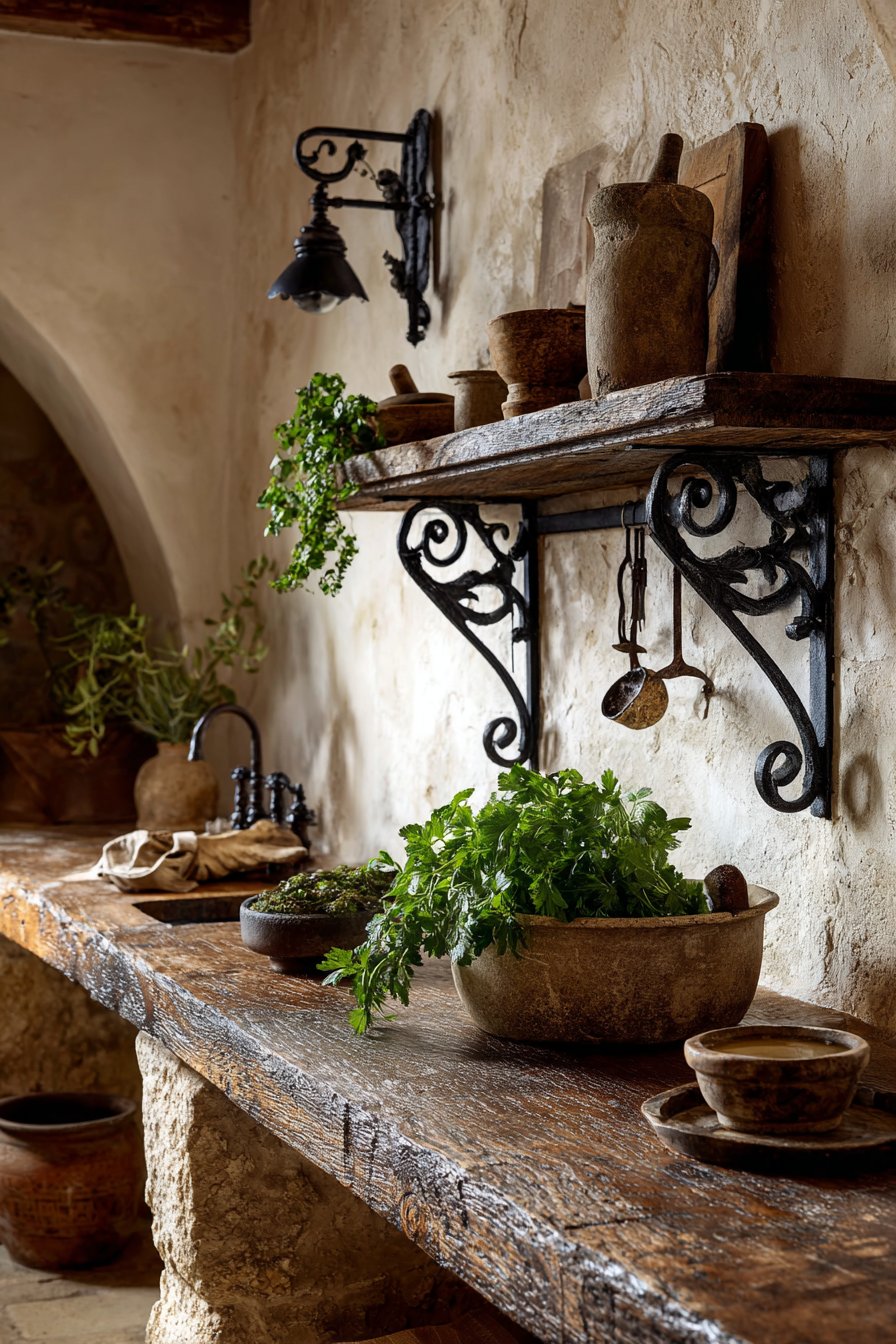
The directional lighting from nearby windows creates dramatic shadows that emphasize the butcher block’s grain patterns and the limestone’s subtle texture, turning functional surfaces into sculptural elements that change throughout the day. This play of light and shadow adds dimension and visual interest that flat, uniform surfaces could never provide.
Key Design Tips:
- Install a walnut butcher block section for a dedicated prep area
- Embrace knife marks and wear patterns as desirable patina
- Pair warm wood with cool stone countertops for functional variety
- Use wrought iron open shelving for essential prep tools
- Position prep areas near windows for optimal natural task lighting
8. Handcrafted Clay Tile Backsplash
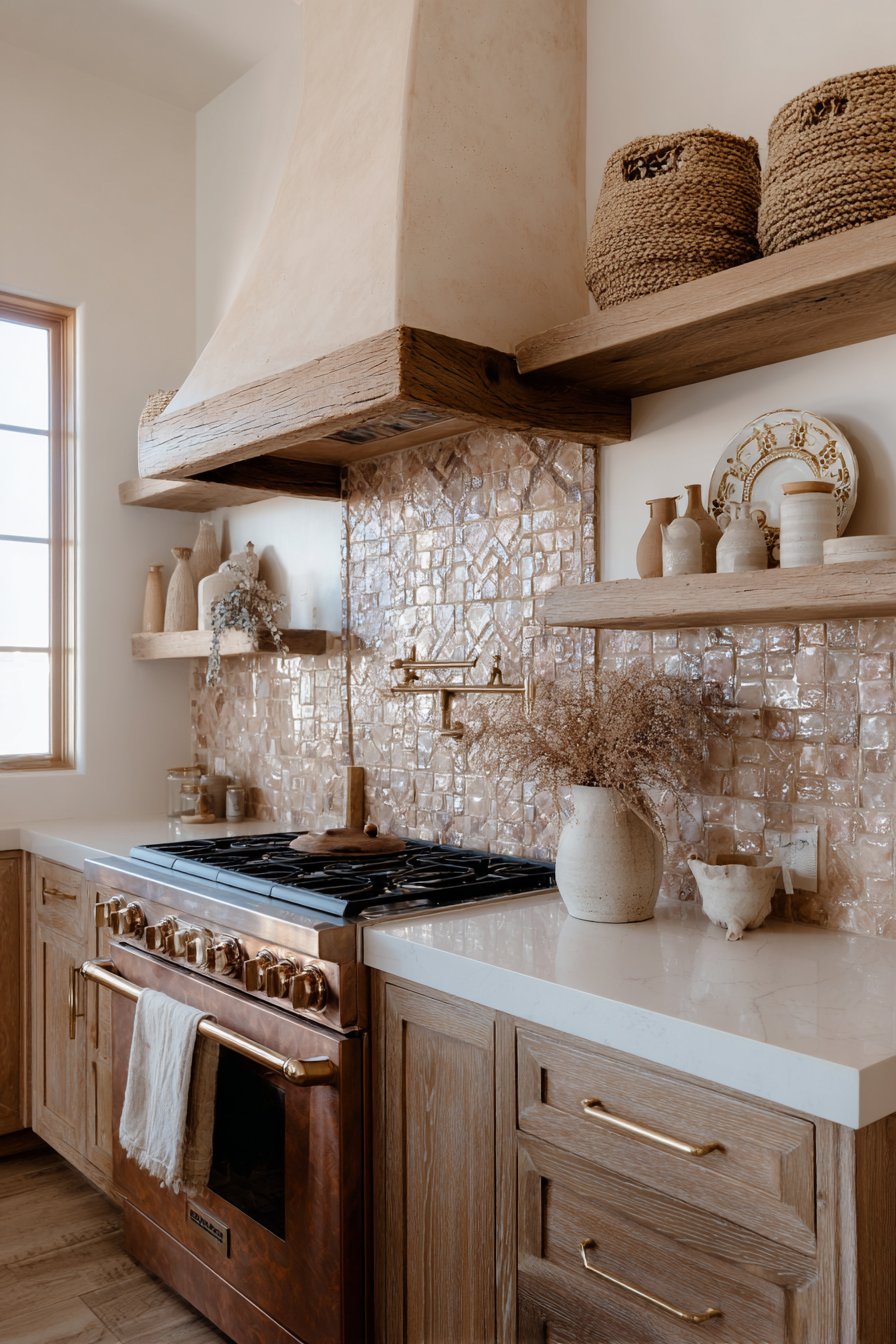
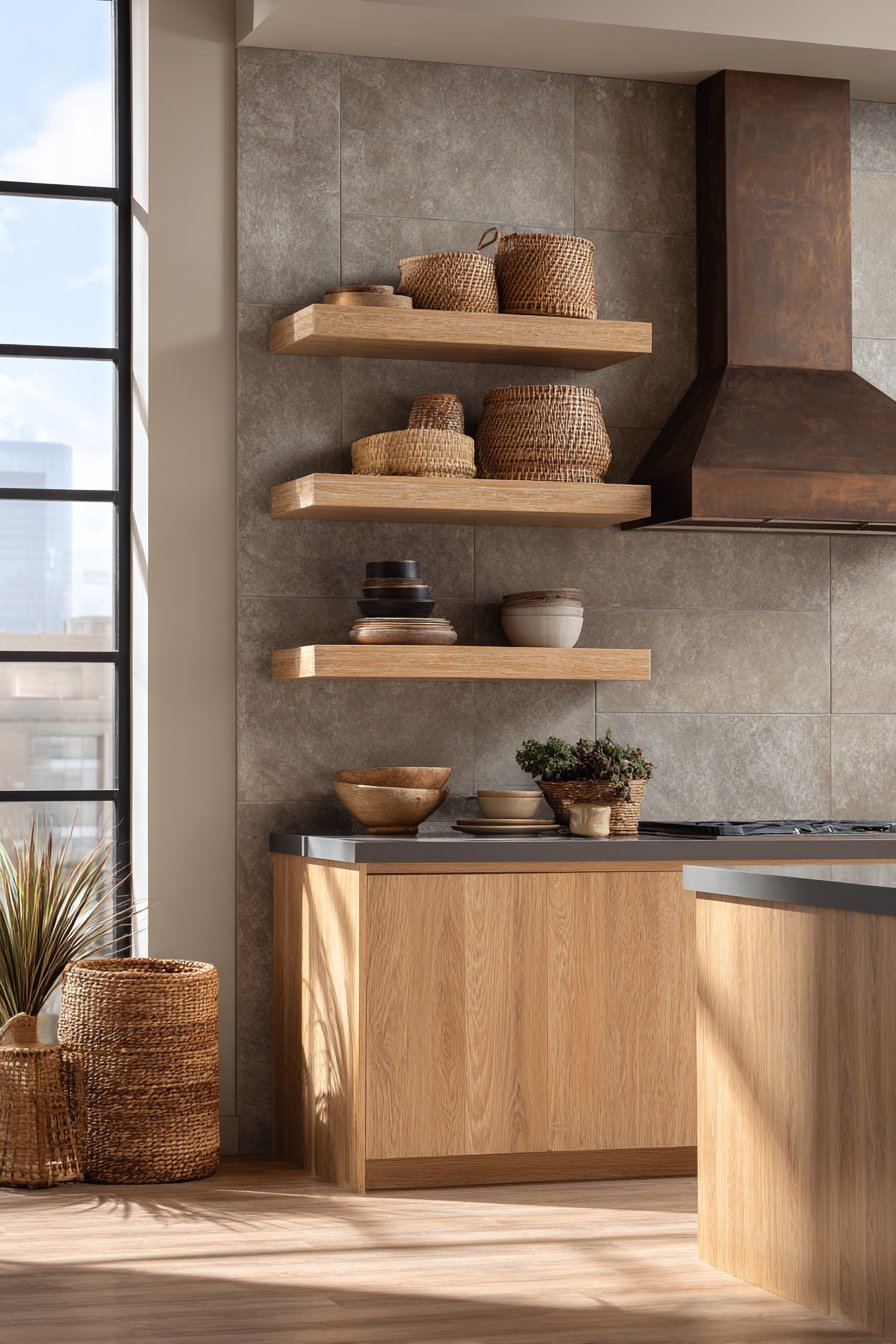
The backsplash becomes a gallery of artisan craftsmanship in this design, featuring clay tiles in warm ochre and sienna tones with hand-glazed finishes that showcase the maker’s touch. Each tile exhibits subtle variations in color, glaze thickness, and surface texture—the inevitable and beautiful results of handcraft that give the backsplash depth and personality. The tiles’ irregular surfaces catch and reflect light differently than machine-made alternatives, creating a living, breathing surface that changes with shifting daylight.
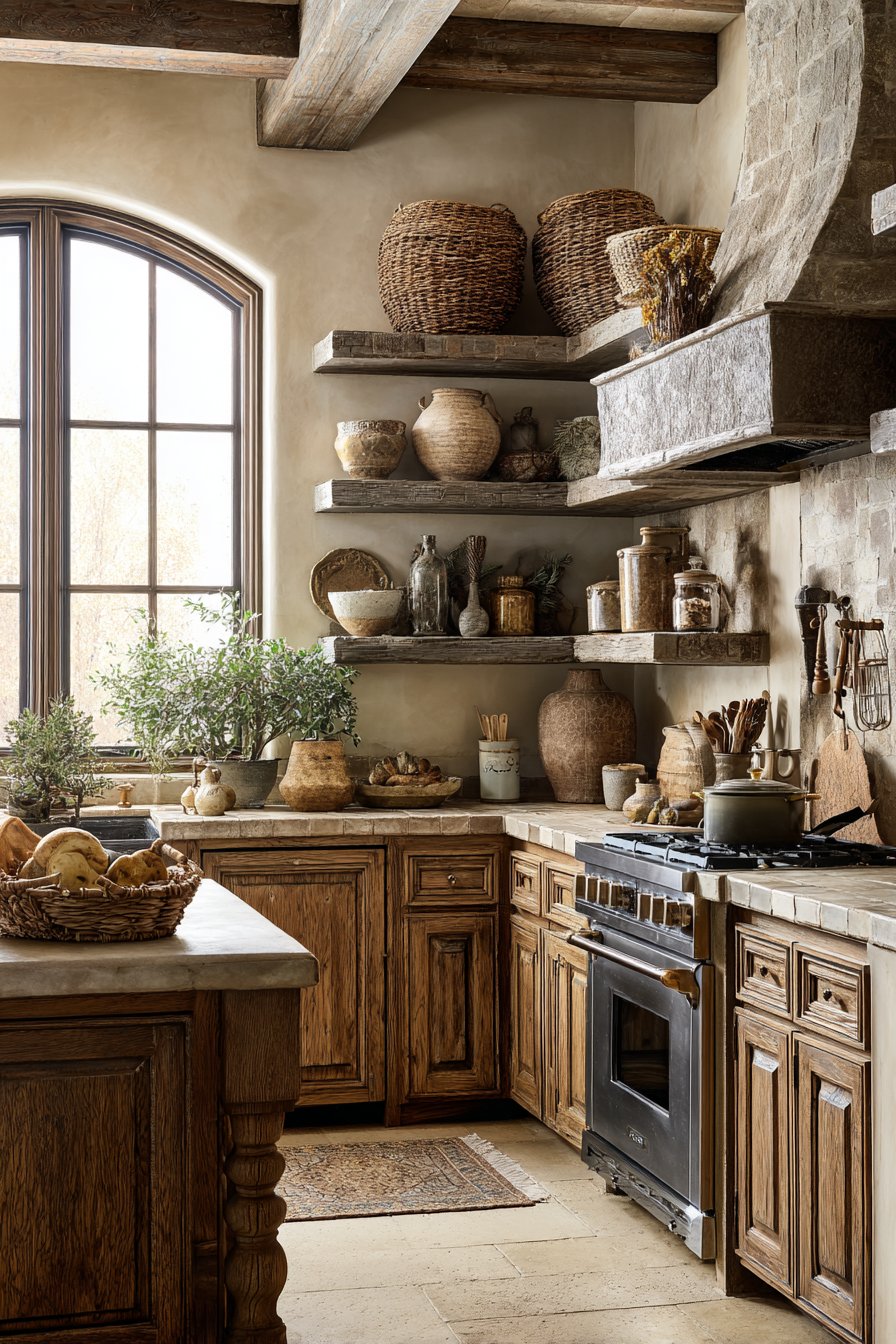
Natural oak cabinetry frames the cooking area, its warm honey tones complementing the clay tiles’ earthy palette while providing visual structure and grounding. A copper range hood adds a substantial metallic element that serves as both functional ventilation and artistic focal point. The copper’s warm, reddish tones bridge the oak and clay beautifully, while its surface develops a natural patina over time that many homeowners treasure as it darkens and deepens.
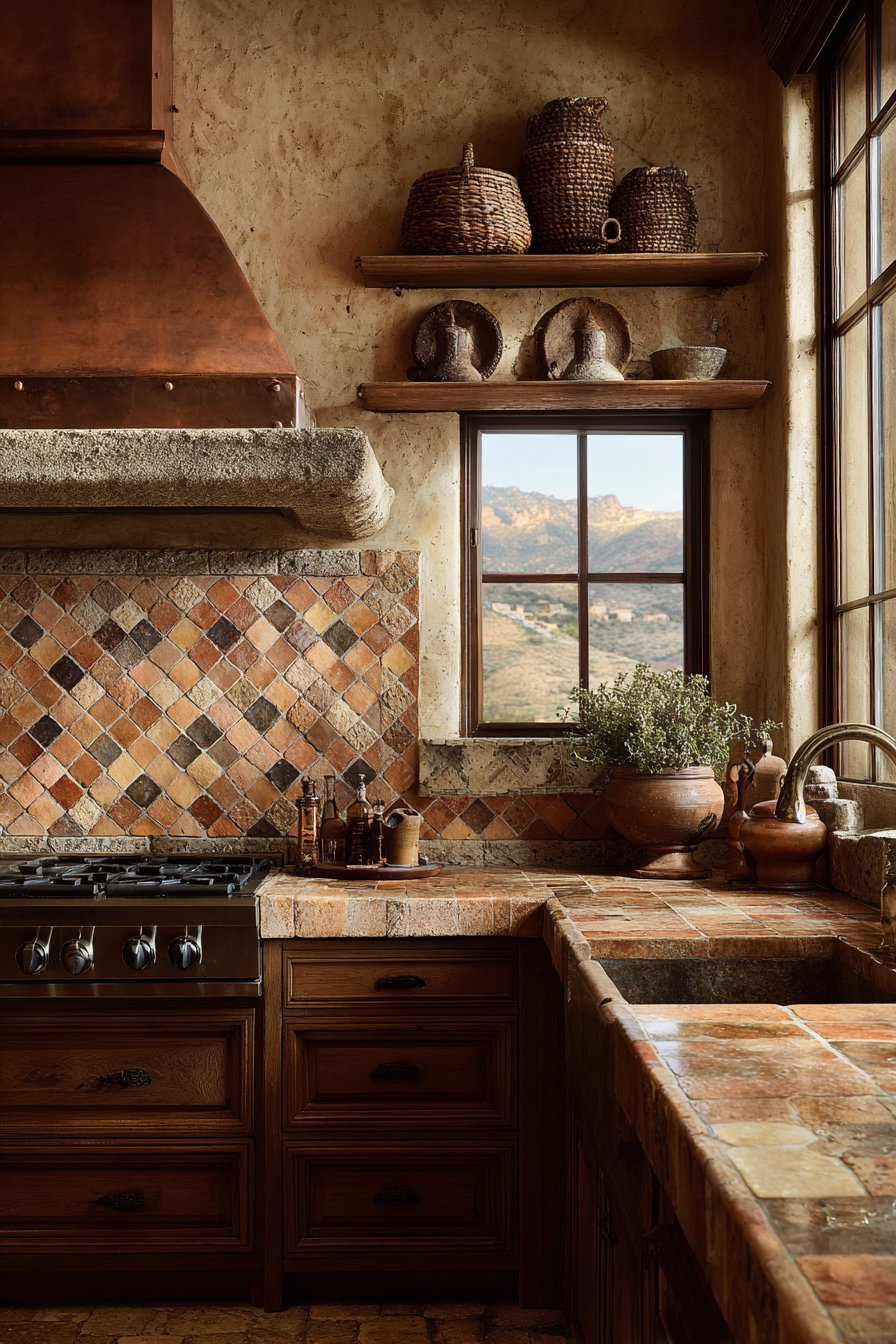
Woven basket storage on upper shelves provides both practical organization and textural interest, their natural fiber construction and handmade quality reinforcing the artisan aesthetic. These baskets can hold everything from dish towels to root vegetables, keeping items accessible while contributing to the overall design. The combination of handcrafted elements—tiles, copper, baskets—creates a kitchen that feels curated and intentional rather than mass-produced.
Key Design Tips:
- Choose handmade clay tiles to introduce authentic artisan character
- Select tiles in warm earth tones like ochre, sienna, and terracotta
- Install a copper range hood for functional focal point with natural patina
- Use woven baskets for upper storage to add texture and maintain the natural aesthetic
- Embrace glaze variations as desirable rather than defects
9. Farmhouse Dining Integration
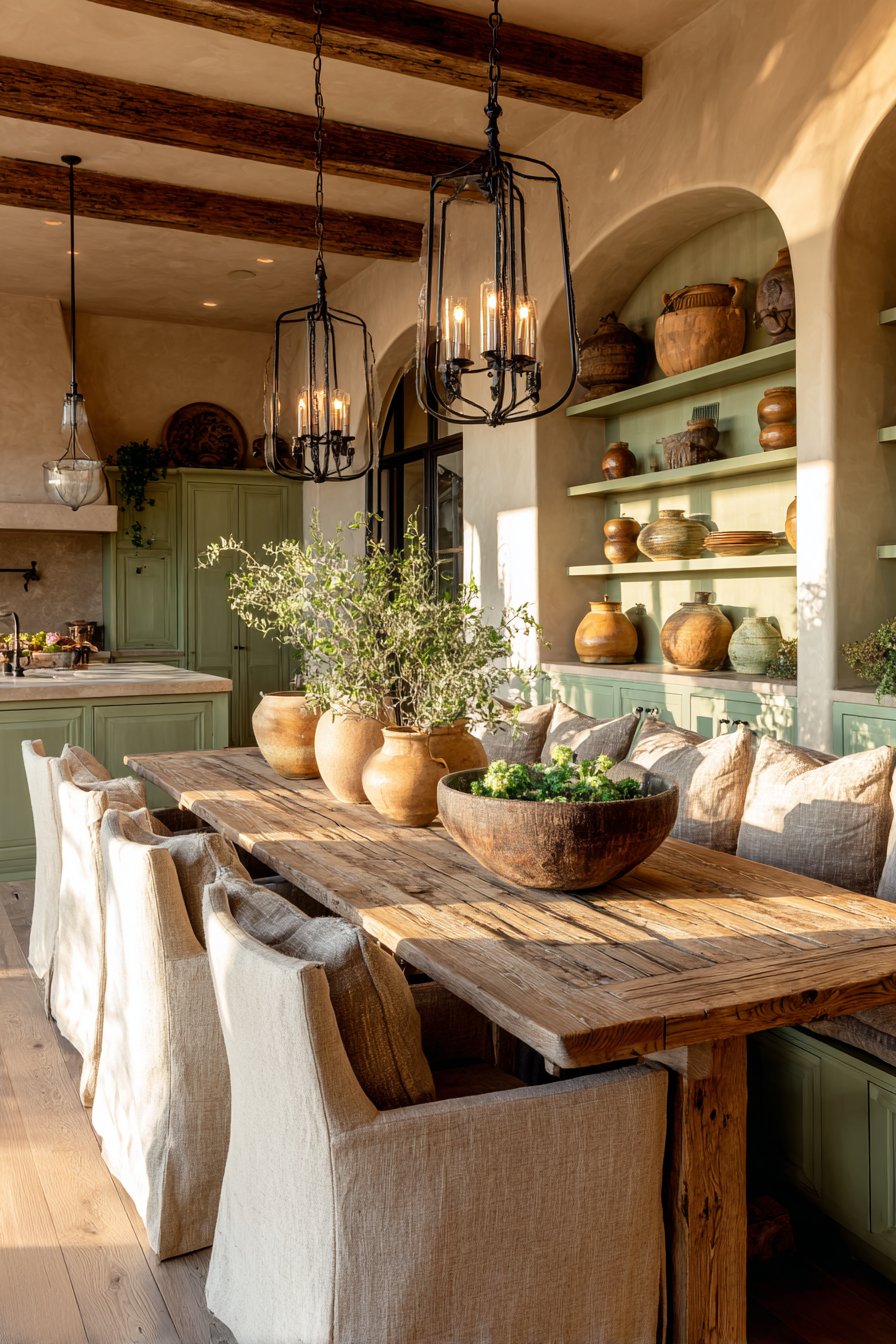
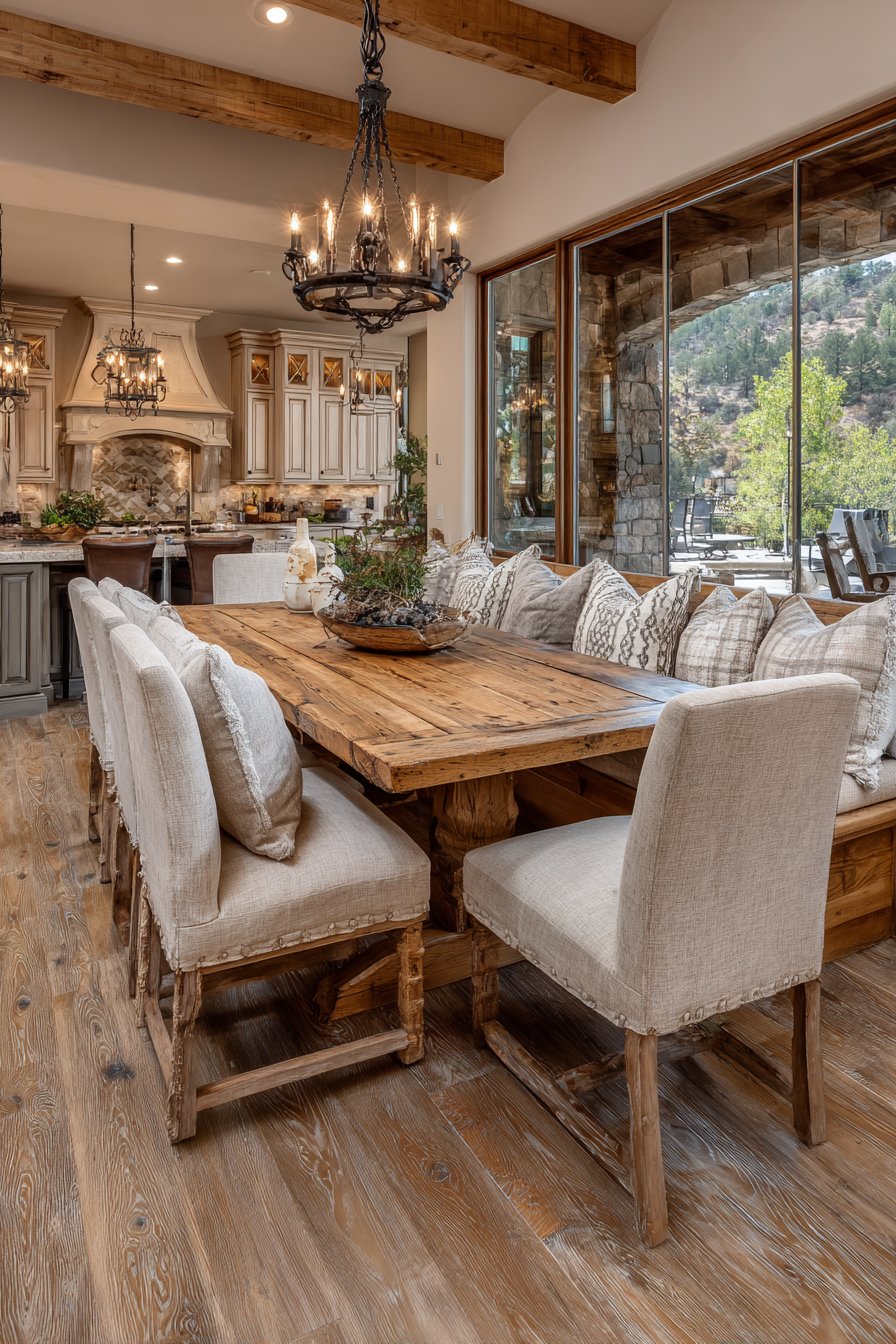
This design seamlessly integrates a dining area into the kitchen space, centered around a large farmhouse table constructed from reclaimed pine that bears the marks of its previous life. The table’s substantial size and rustic character make it a natural gathering spot, while bench seating upholstered in natural linen fabric provides comfortable, casual seating that encourages lingering over meals. The linen’s neutral tone and slightly rumpled texture feel relaxed and unpretentious, perfectly suiting the farmhouse aesthetic.
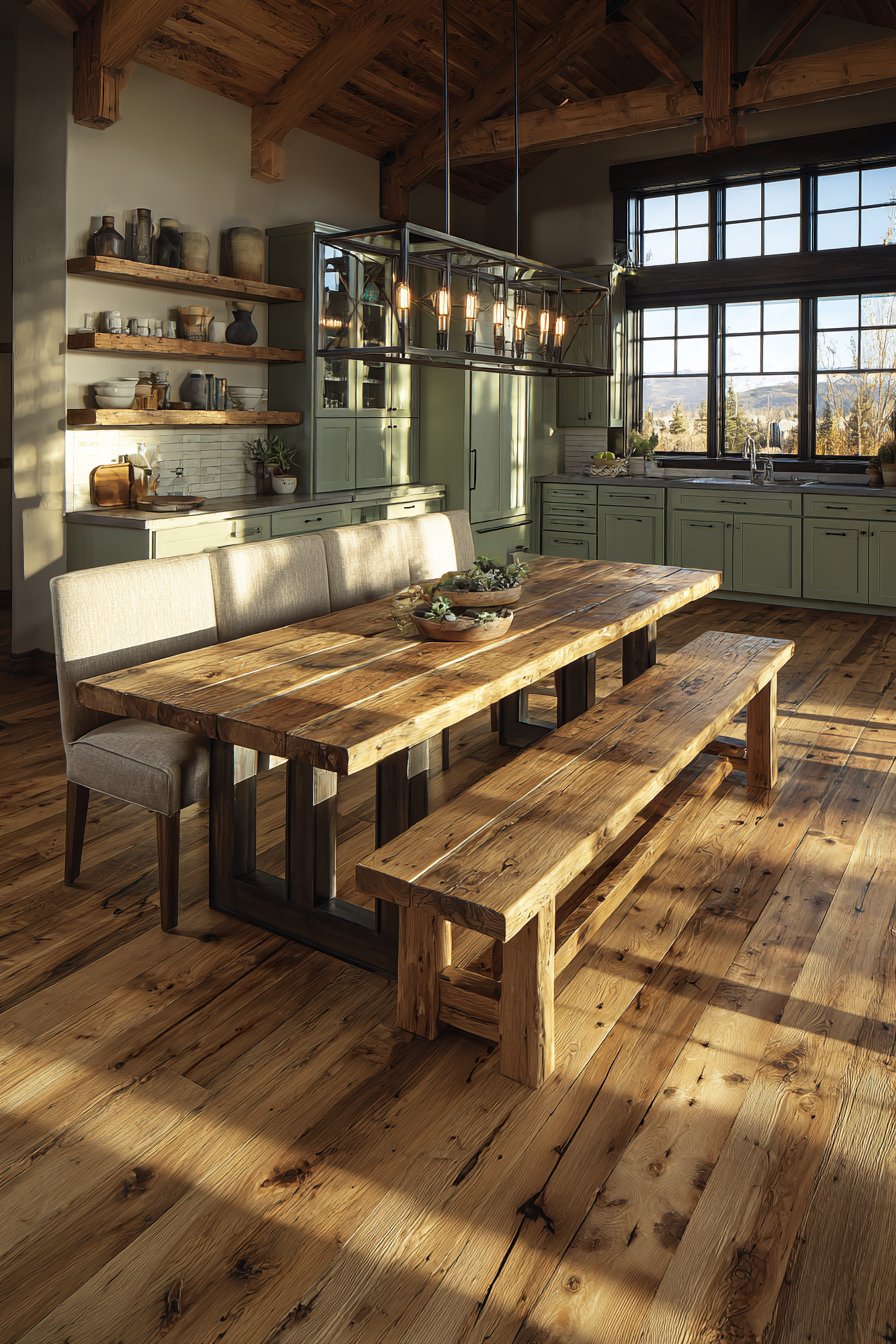
Wide-plank oak flooring with visible knots and grain variation extends throughout the space, creating visual continuity between cooking and dining areas while adding warmth and character underfoot. The wide planks suggest historical construction methods and add to the sense that this kitchen has been here forever, even if it’s newly built. Above the table, a wrought iron chandelier with Edison bulbs provides ambient lighting with vintage industrial flair, its exposed bulbs and simple framework feeling honest and straightforward.
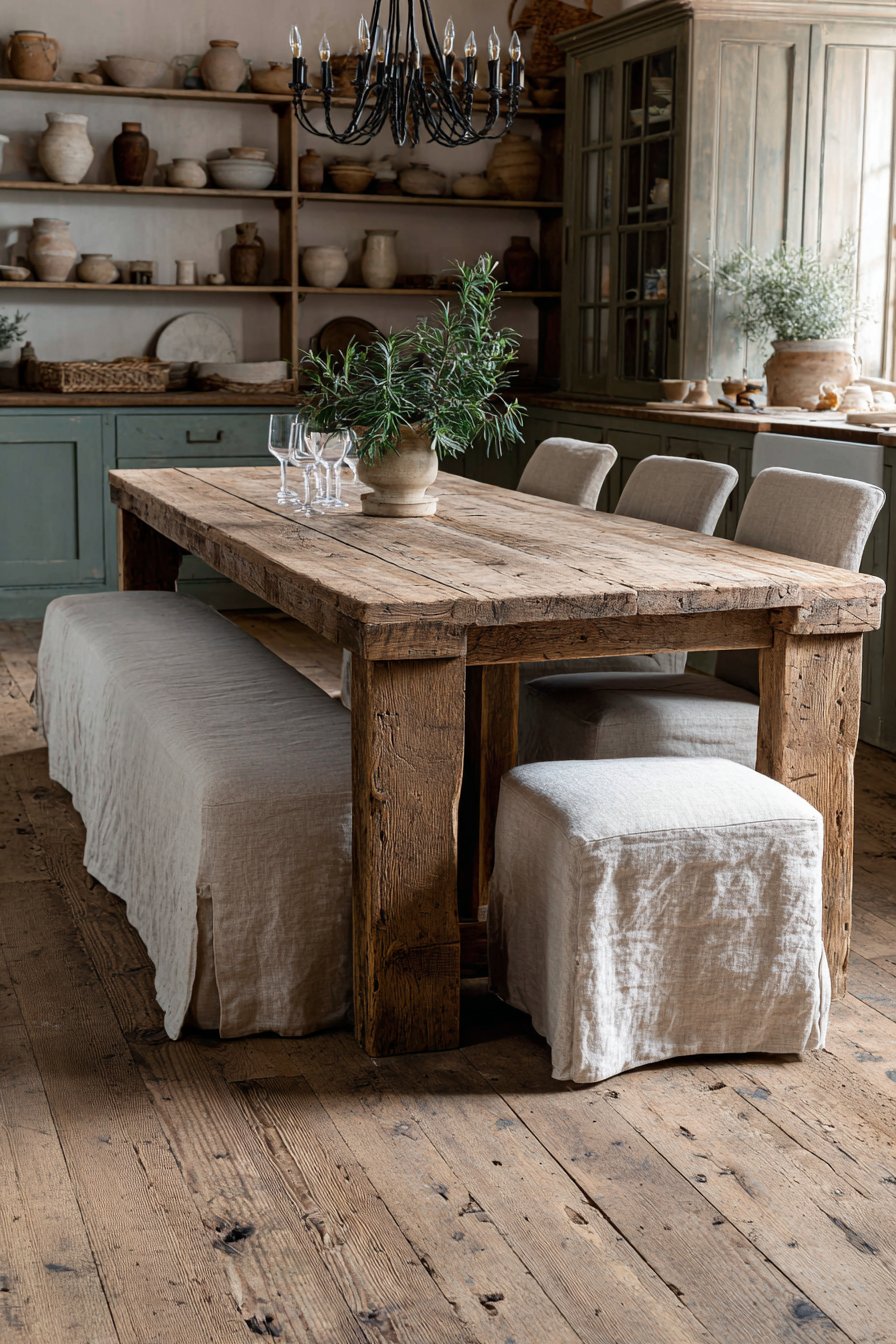
In the background, sage green cabinetry and open shelving display pottery in complementary earth tones, creating a cohesive backdrop that ties the dining area to the kitchen proper. The golden hour lighting creates warm shadows and highlights that emphasize wood textures and make the entire space glow with inviting warmth.
Key Design Tips:
- Choose a large reclaimed wood table to anchor the dining area
- Use bench seating with linen upholstery for casual, comfortable dining
- Install wide-plank oak flooring to create visual continuity
- Select a wrought iron chandelier with Edison bulbs for vintage character
- Position the dining area to receive late afternoon light for warm ambiance
10. Floor-to-Ceiling Pantry Organization
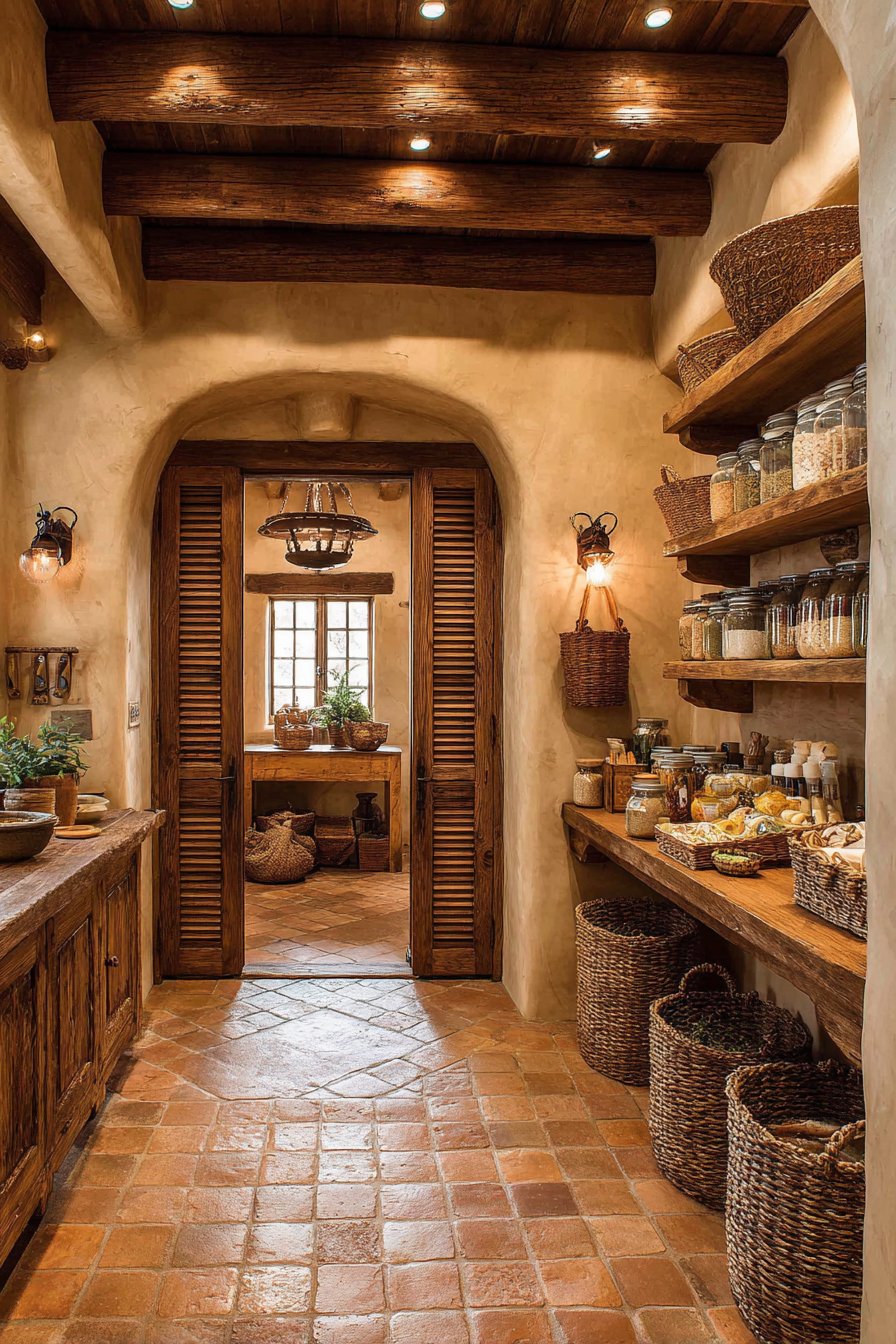
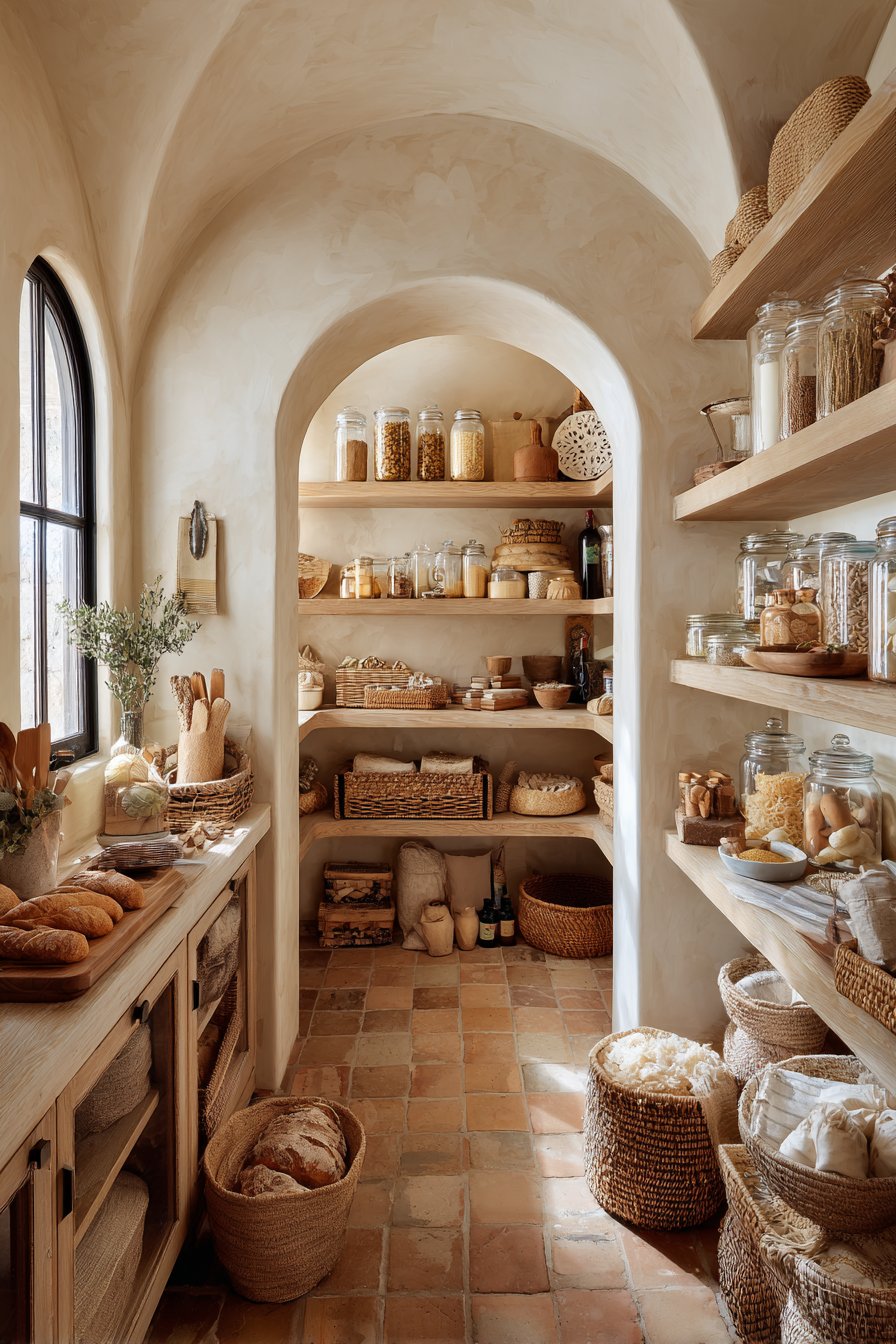
This design prioritizes storage and organization with a floor-to-ceiling pantry system that combines beauty with exceptional functionality. Natural wood louvered doors provide ventilation while maintaining the organic aesthetic, their horizontal slats creating visual rhythm and interesting shadow patterns. Behind these doors, internal organization relies on woven basket systems that allow for flexible storage while maintaining the natural material palette—no plastic bins or wire racks disrupting the earthy aesthetic.
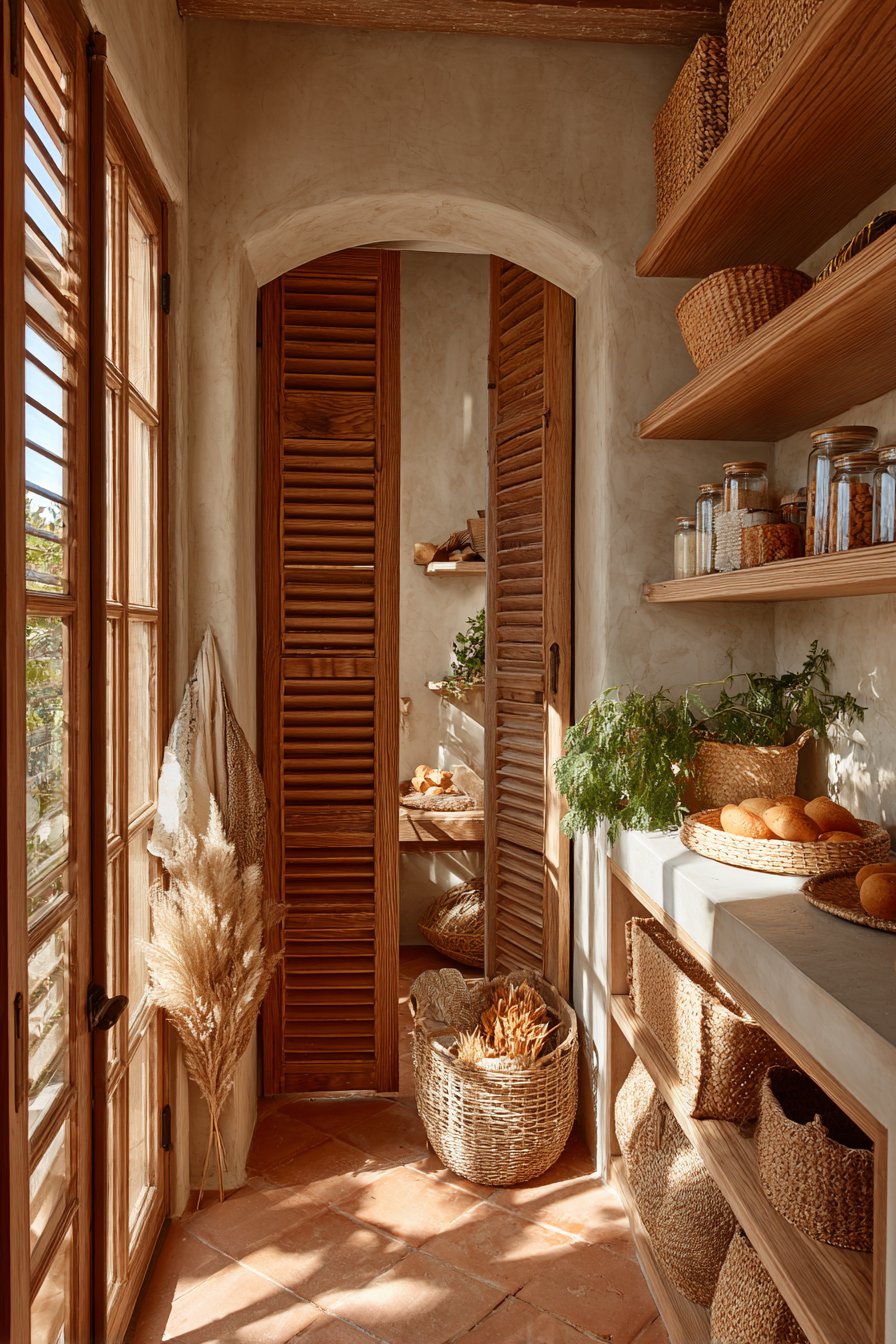
Glass jar displays for dry goods turn staples into decorative elements, with dried beans, pasta, grains, and flour creating colorful, textural displays that make ingredient selection easier while contributing to the kitchen’s visual appeal. The jars’ clear glass allows you to see at a glance what needs replenishing, combining form and function seamlessly. Surrounding walls feature textured plaster in warm cream that provides a neutral backdrop, while terracotta tile flooring continues into the pantry space, creating visual flow.
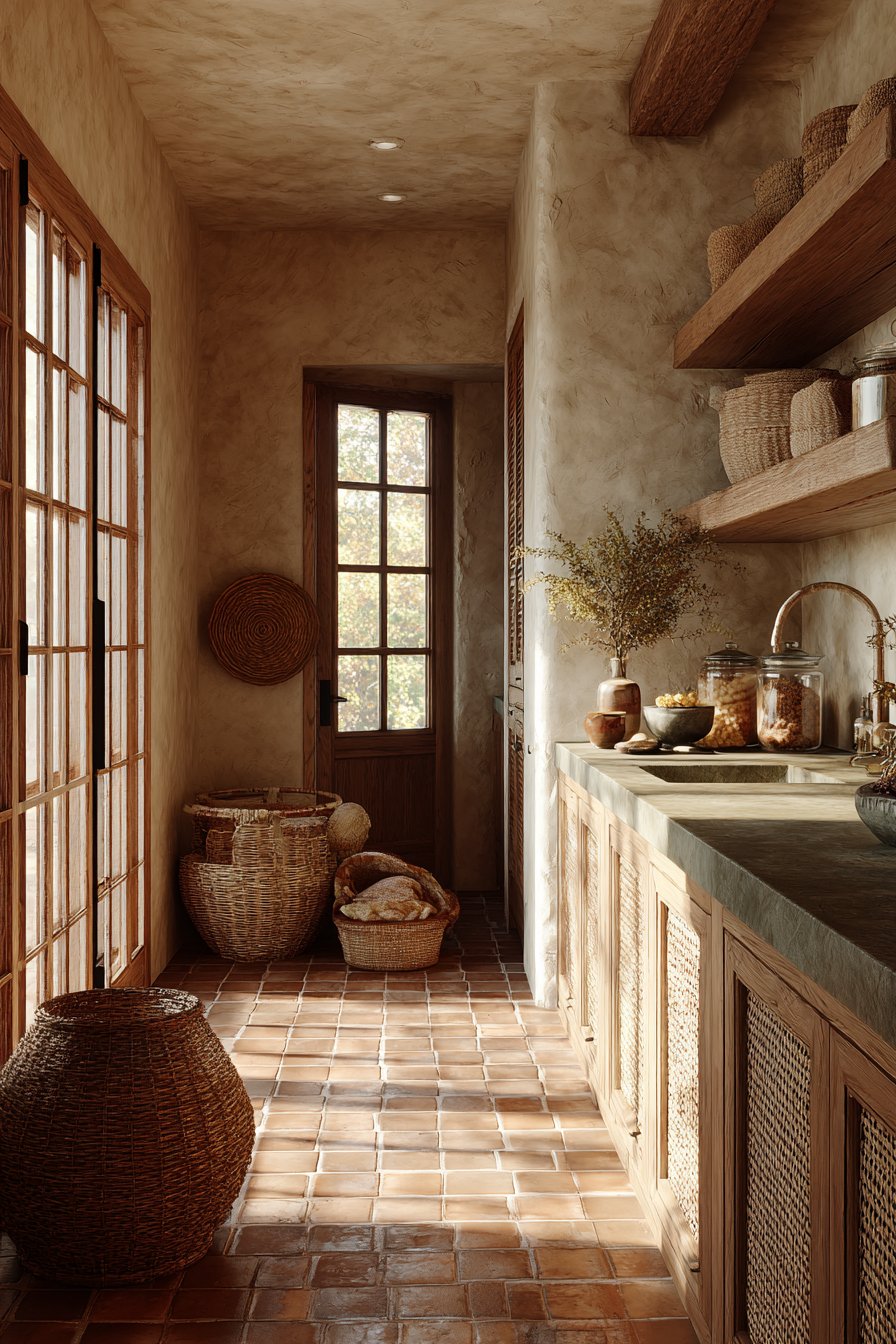
The wide-angle view demonstrates how this practical storage solution maintains the organic aesthetic rather than introducing jarring modern elements. Natural lighting from adjacent windows ensures the pantry feels bright and welcoming rather than dark and cave-like, making it a pleasure to use rather than a forgotten storage zone.
Key Design Tips:
- Install floor-to-ceiling storage to maximize capacity in a small footprint
- Choose natural wood louvered doors for ventilation and visual interest
- Use woven baskets for internal organization instead of plastic containers
- Display dry goods in clear glass jars for both function and beauty
- Extend flooring into pantry area to create visual continuity
11. Herb Garden Window Display
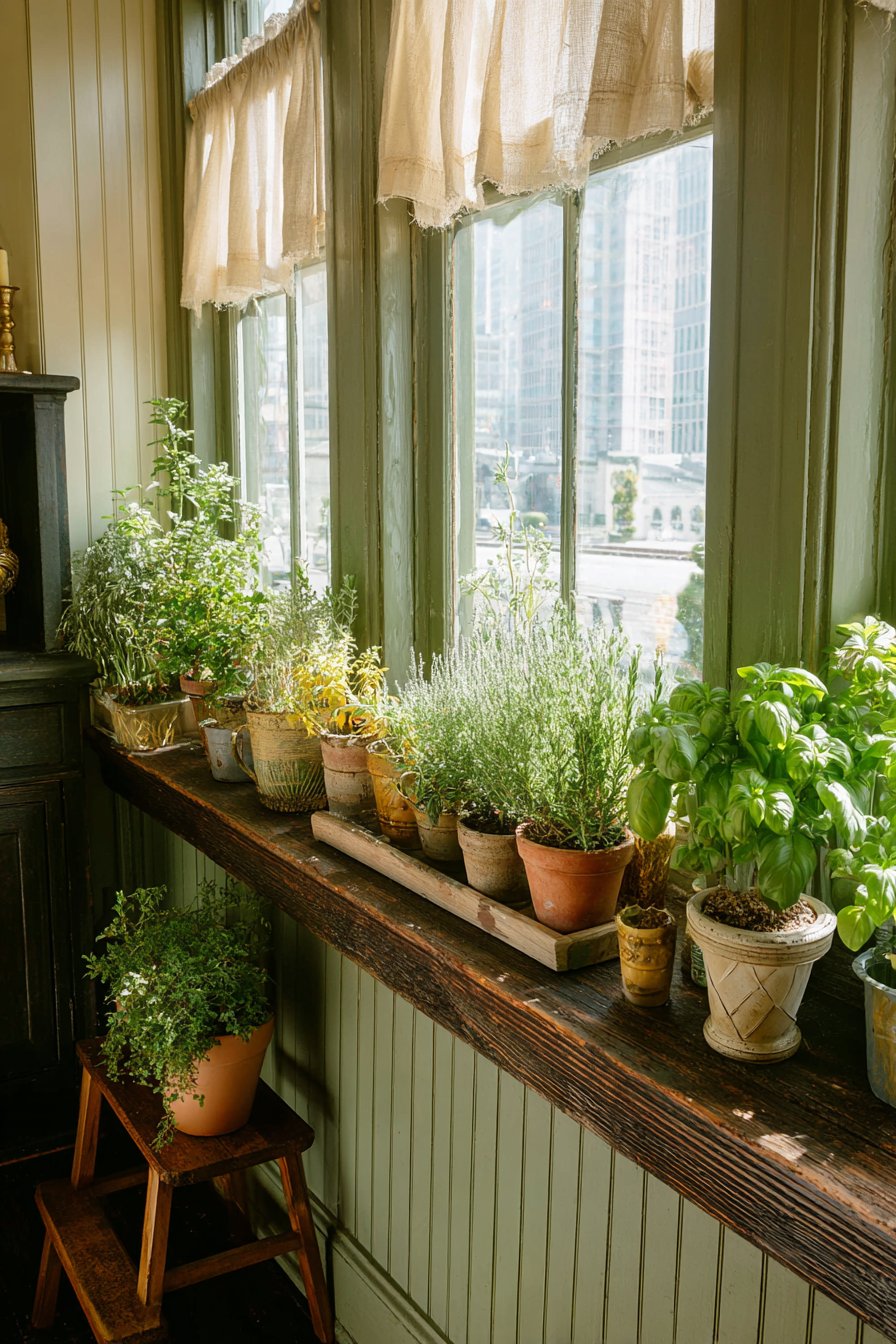
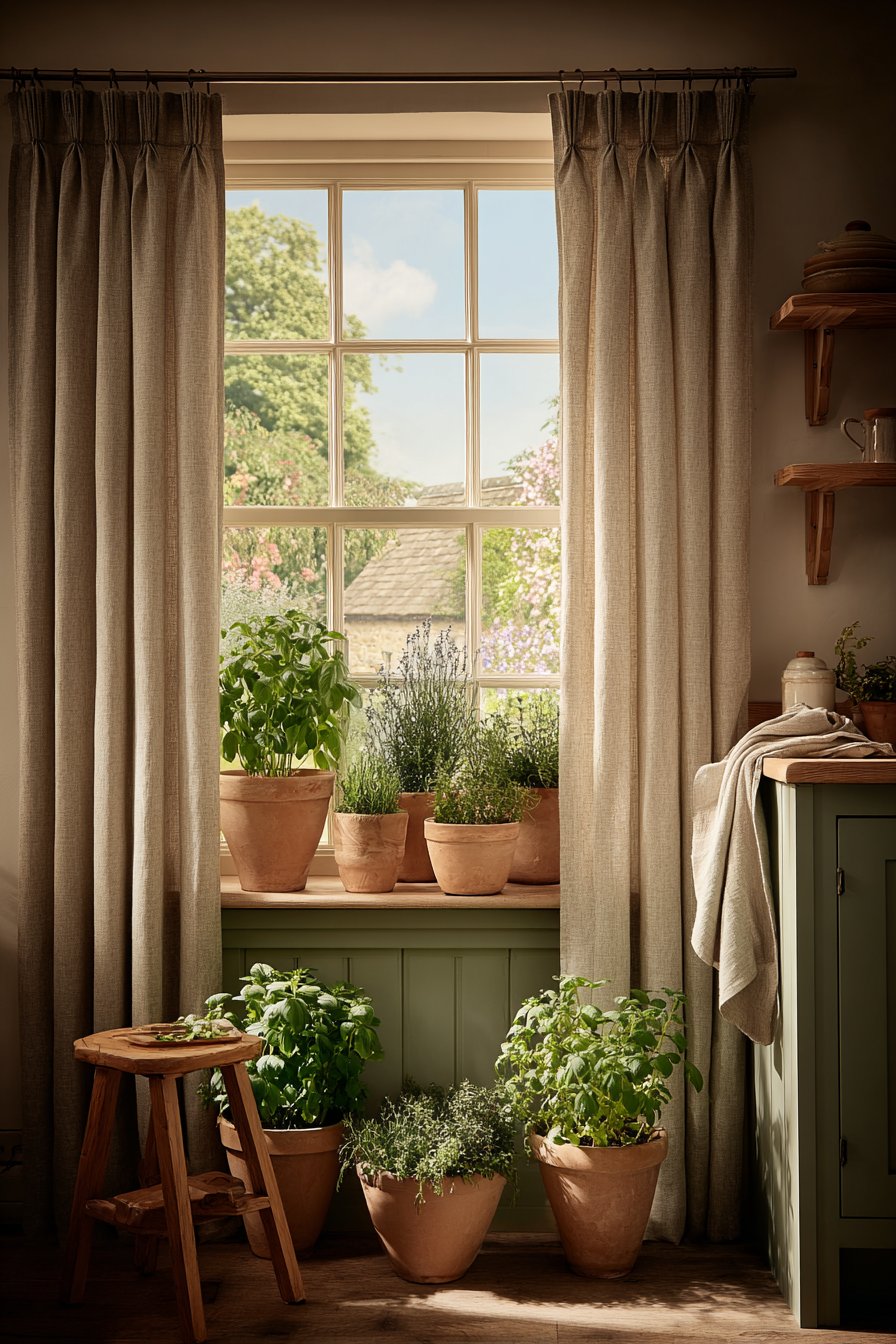
This design celebrates the connection between indoor cooking and outdoor growing with a dedicated herb garden window display that brings life, color, and fresh ingredients directly into the kitchen workspace. The deep wooden window sill provides ample room for terracotta pots of various sizes, each containing a different herb—basil, thyme, rosemary, oregano, parsley. The pots’ warm, earthy tones and slightly rough texture feel perfectly at home in this natural aesthetic, while their varied sizes create visual interest and accommodate different plant needs.
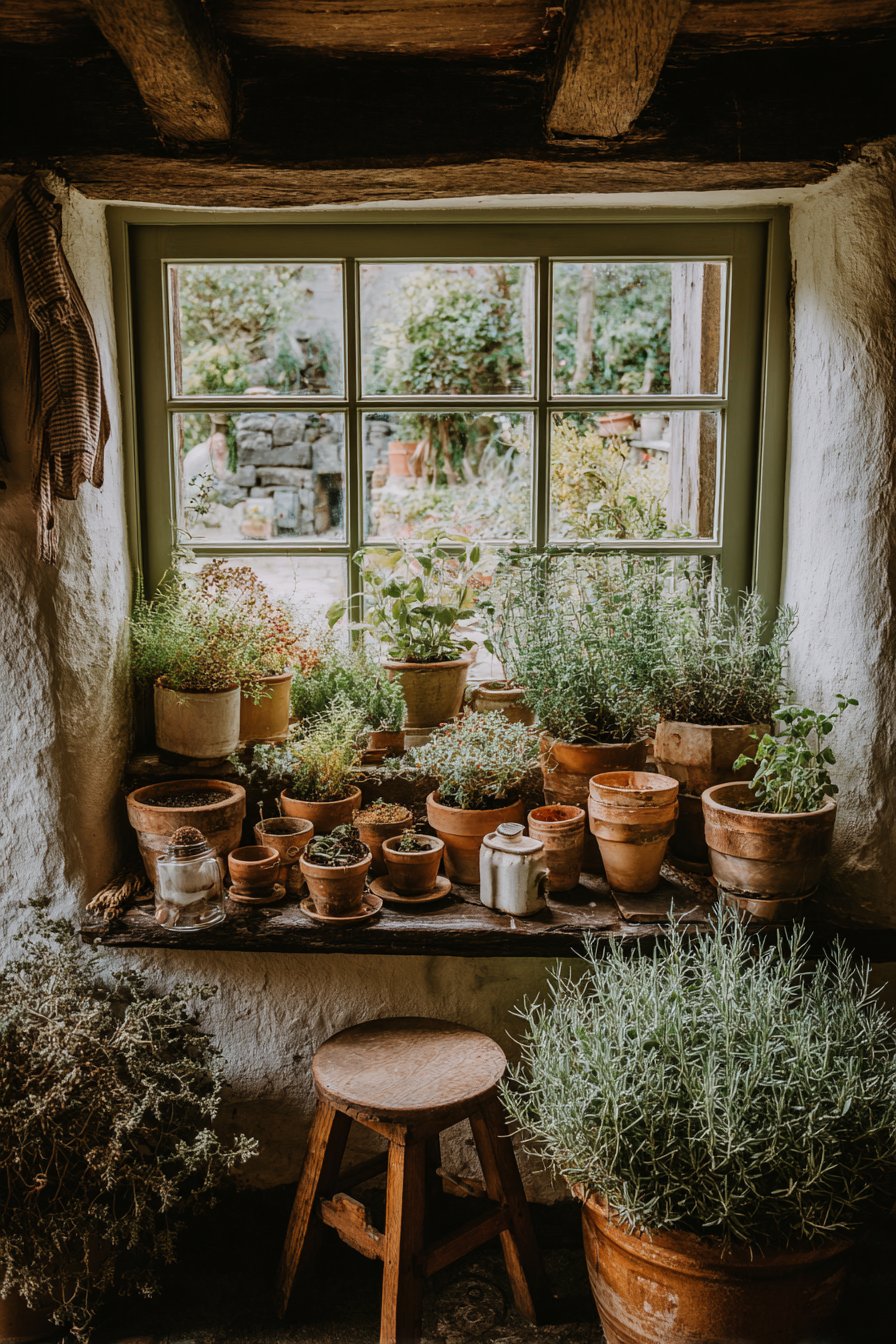
The window frame painted in muted olive green complements cream-colored walls while echoing the living green of the herbs themselves. This subtle color choice frames the view without overwhelming it, drawing attention to the plants rather than the architectural element. Linen cafe curtains in natural beige provide soft privacy when needed while filtering harsh sunlight to protect the herbs, their simple, unfussy style suiting the earthy aesthetic perfectly.
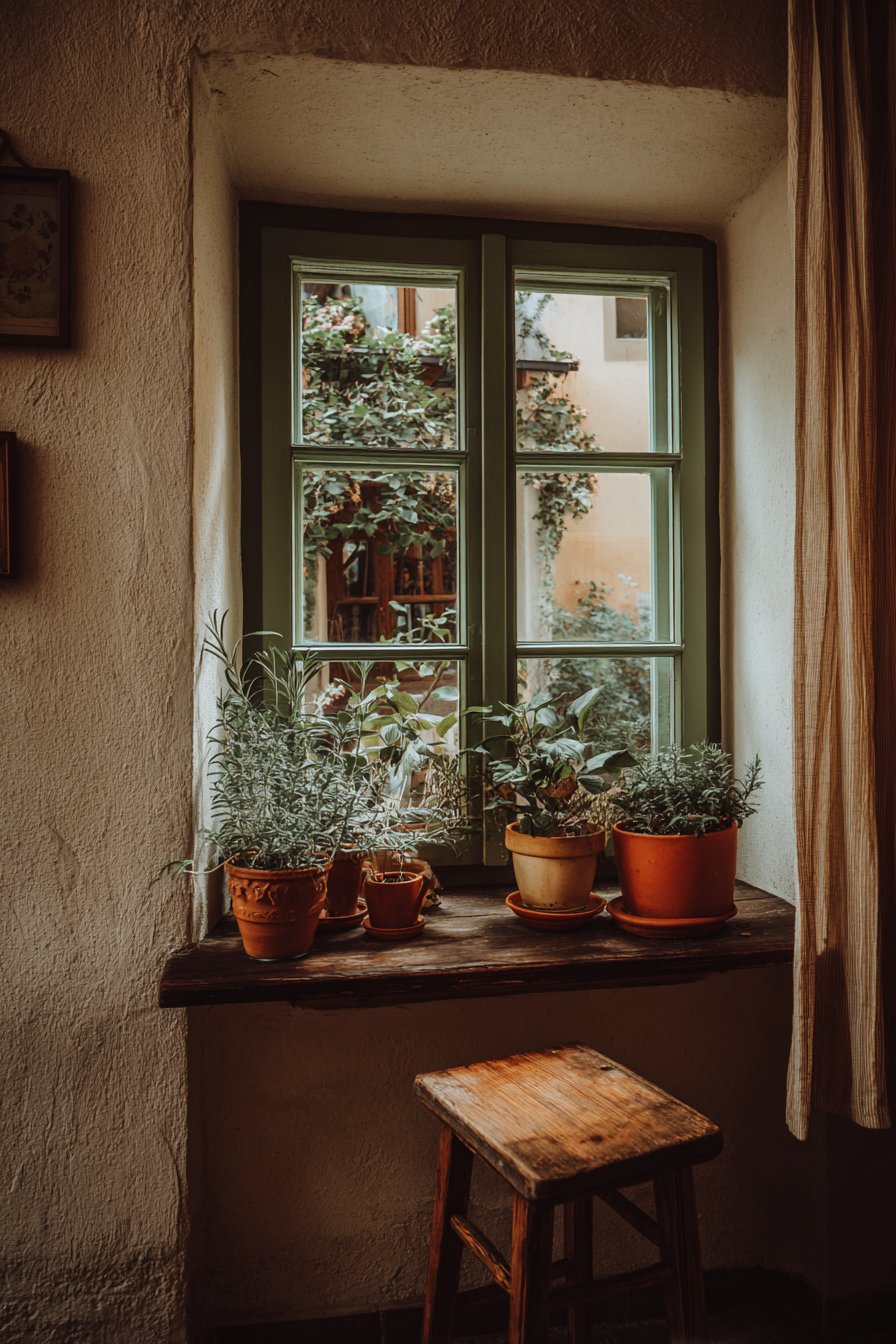
A small wooden stool positioned nearby holds additional plants or serves as a convenient seat for tending the herbs, reinforcing the idea that this garden is meant to be interacted with daily rather than simply admired. Morning light streaming through the window creates ideal growing conditions while bathing the space in natural brightness that makes the kitchen feel alive and connected to the outdoors.
Key Design Tips:
- Create a dedicated herb garden on a deep window sill
- Use terracotta pots in varied sizes for visual interest
- Paint window frames in muted natural tones like olive green
- Install linen cafe curtains for light filtering and soft privacy
- Position herbs where you’ll interact with them daily while cooking
12. Concrete and Walnut Contrast
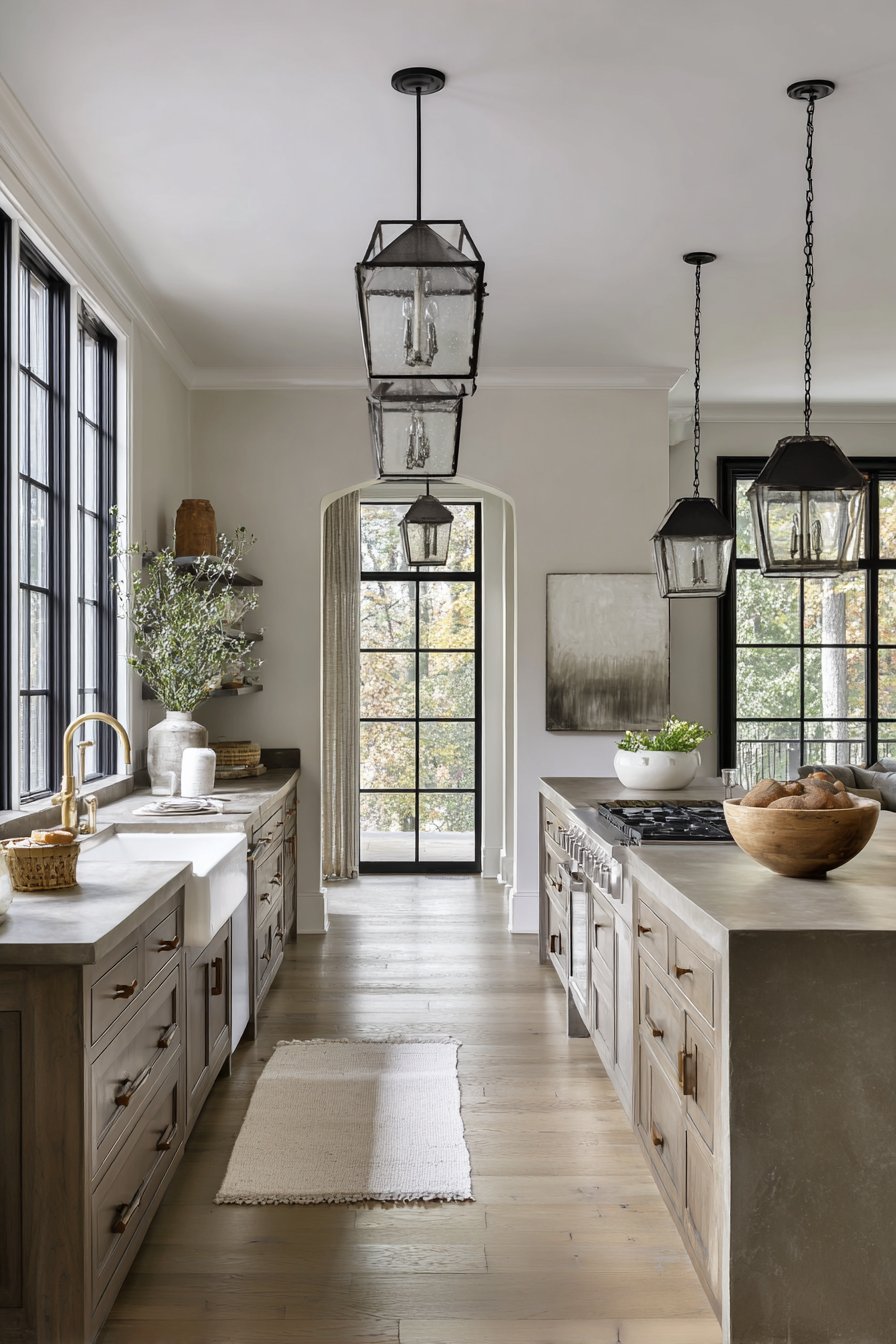
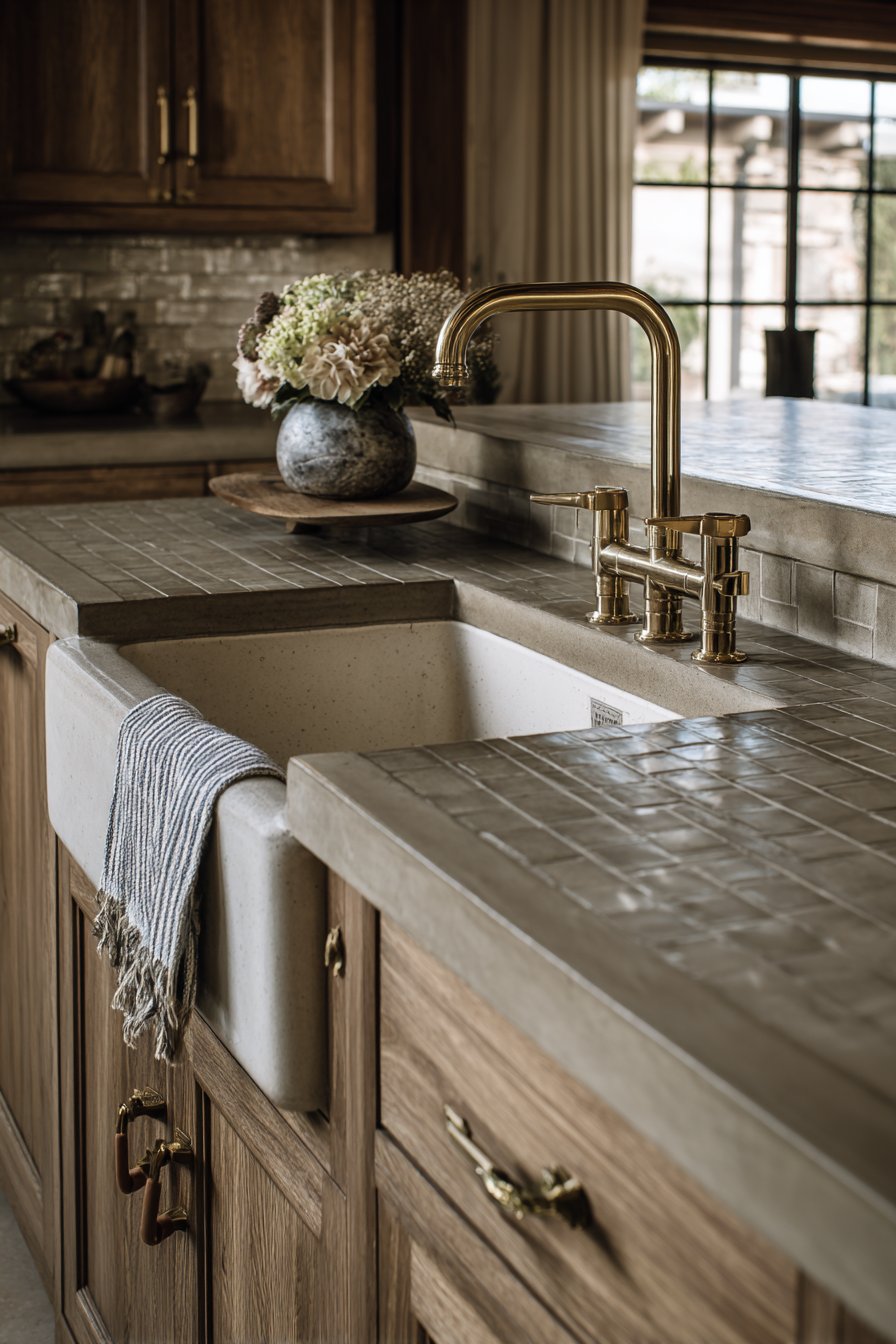
This sophisticated earthy kitchen design pairs the industrial coolness of concrete countertops with the organic warmth of walnut cabinetry, creating a study in contrasts that feels both modern and timeless. The concrete’s subtle warm grey tones and natural aggregate texture provide an unexpected neutral that looks nothing like standard stone or laminate, while its slightly rough surface develops character over time as it’s properly sealed and maintained. Each concrete installation is unique, with slight color variations and aggregate patterns that ensure no two kitchens are identical.
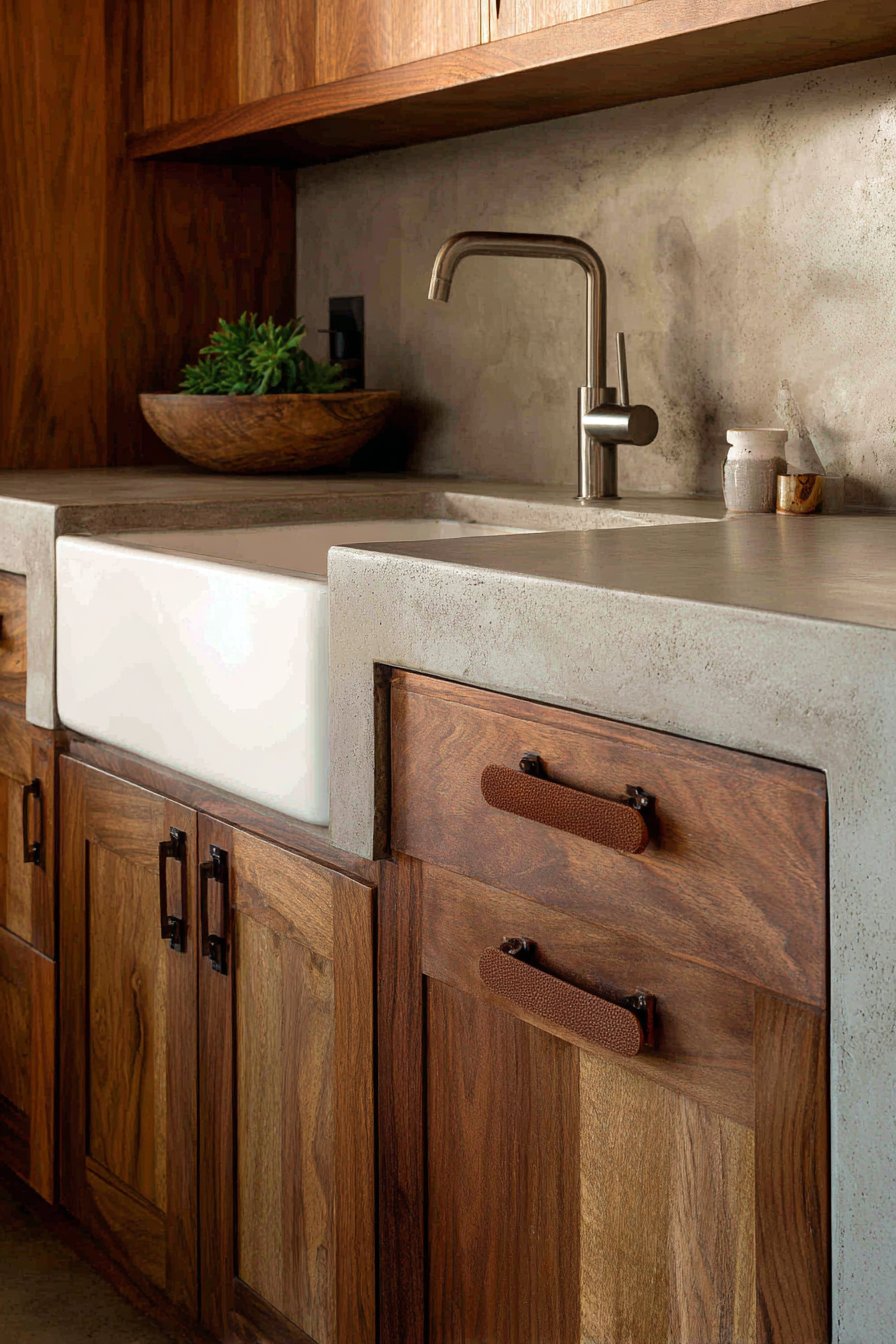
Cabinetry in warm walnut stain showcases the wood’s characteristic dark chocolate tones and distinctive grain patterns, with occasional lighter sapwood streaks adding visual interest. The walnut’s richness prevents the concrete from feeling too cold or industrial, while the concrete keeps the dark wood from overwhelming the space. A farmhouse sink in white fireclay provides a bright focal point that bridges these two dominant materials, its clean white surface and traditional form feeling both fresh and timeless.
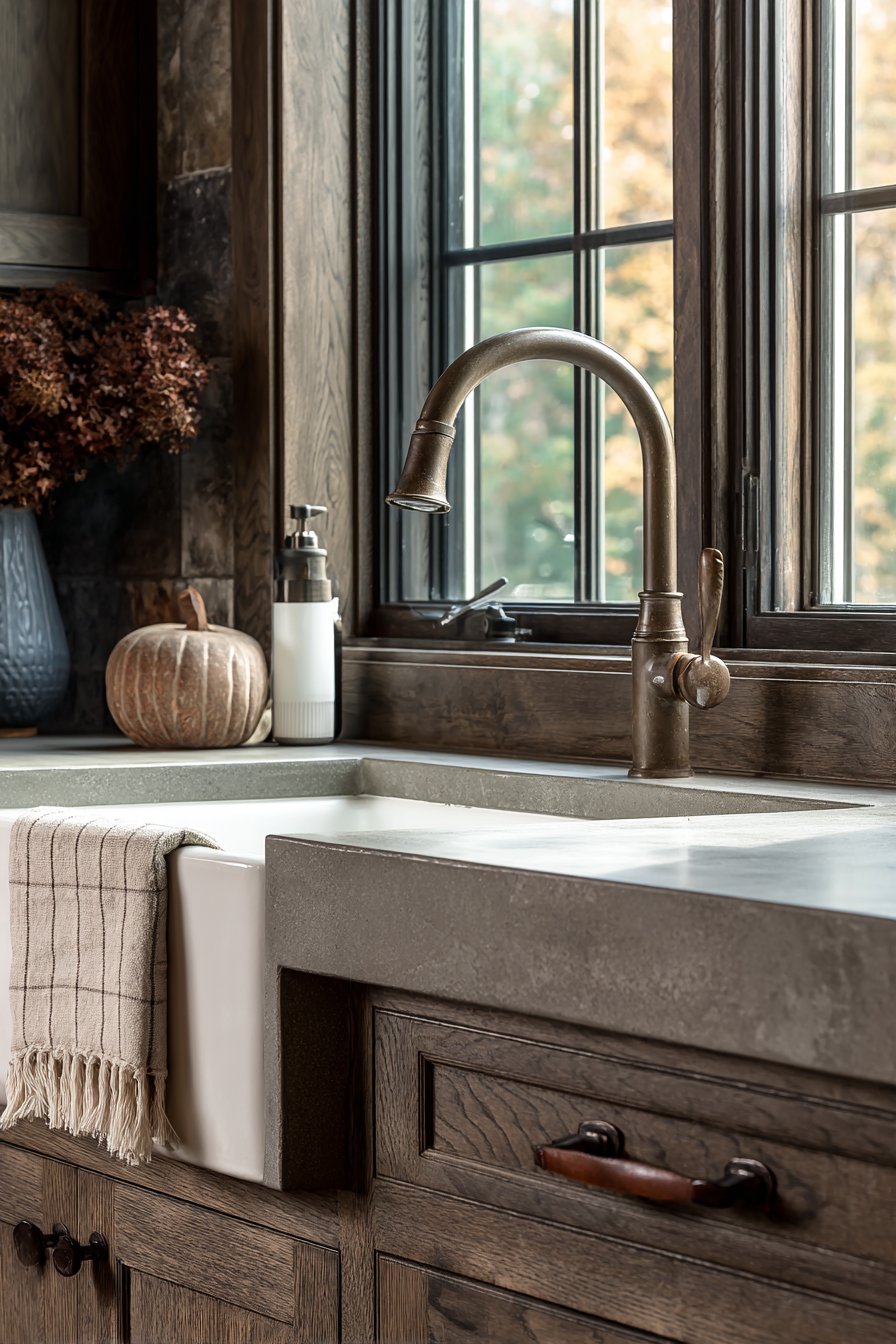
Bronze fixtures and leather cabinet pulls add luxe accent details that elevate the design beyond rustic into sophisticated territory. The leather pulls feel wonderful in the hand and develop a beautiful patina with use, while bronze fixtures acquire character over time. The combination of these carefully selected materials creates a kitchen that feels both substantial and refined.
Key Design Tips:
- Pair concrete countertops with warm wood cabinetry for temperature contrast
- Choose walnut for its rich, dark tones and distinctive grain
- Install a white fireclay sink as a bright focal point
- Select bronze fixtures for warm metallic accents that develop patina
- Add leather cabinet pulls for tactile luxury and authentic aging
13. Rustic Wooden Range Hood
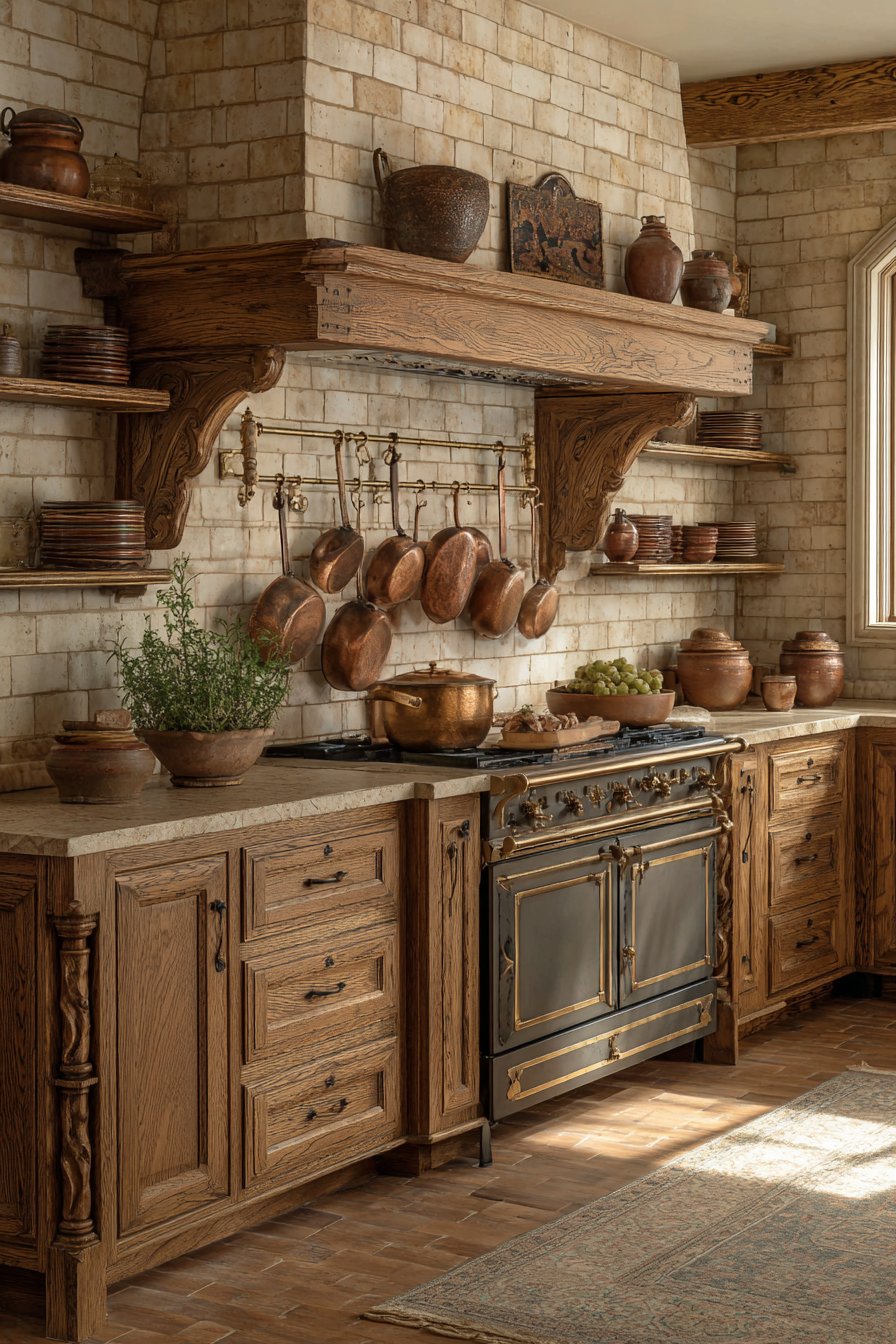
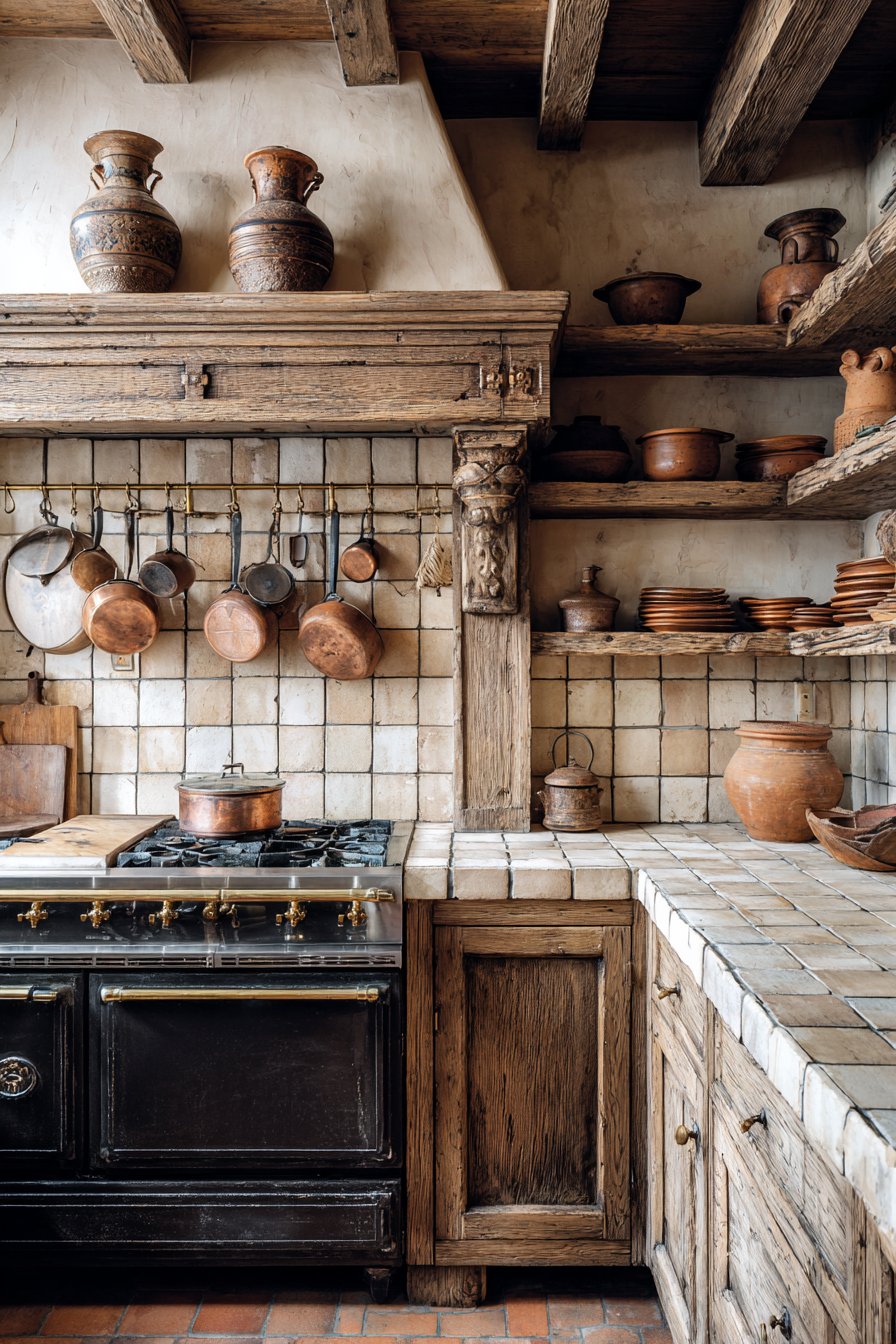
The cooking area becomes an architectural statement in this design, centered around a substantial rustic wooden range hood with corbel supports in weathered oak finish. The hood’s presence transforms the range from a simple appliance into the heart of the kitchen, acknowledging cooking as a central activity worthy of special architectural attention. The corbels add structural drama while serving the practical purpose of supporting the hood’s weight, their carved details and weathered finish suggesting European farmhouse traditions.
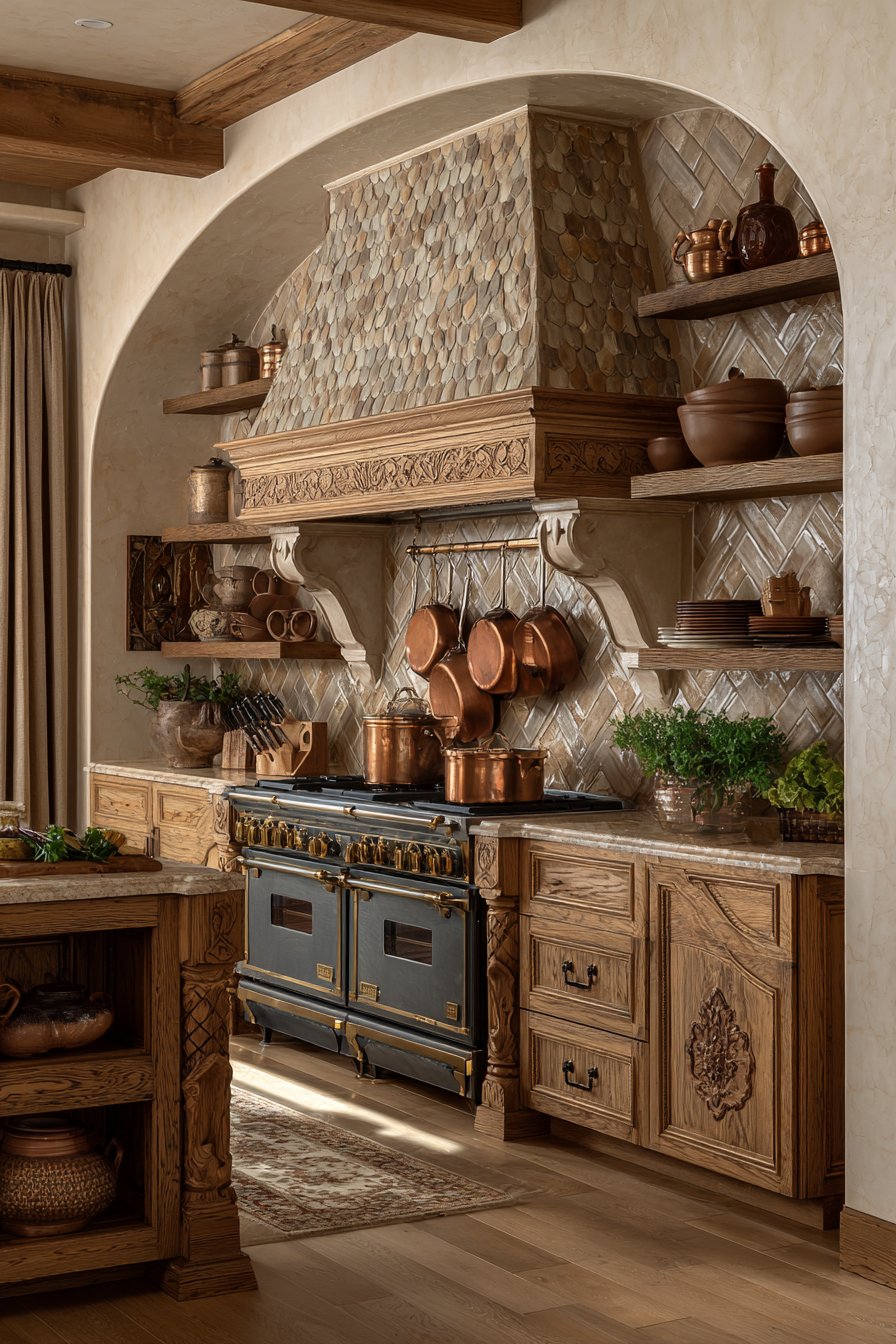
Surrounding the hood, cream subway tiles laid in running bond pattern provide a clean, classic backdrop that doesn’t compete for attention while offering easy-clean practicality in the cooking zone. The tiles’ slight gloss catches light and makes the area feel brighter, while their traditional form and installation pattern feel timeless rather than trendy. A vintage brass pot rack hangs nearby, displaying copper and cast iron cookware that represents serious cooking tools developed and refined over centuries.
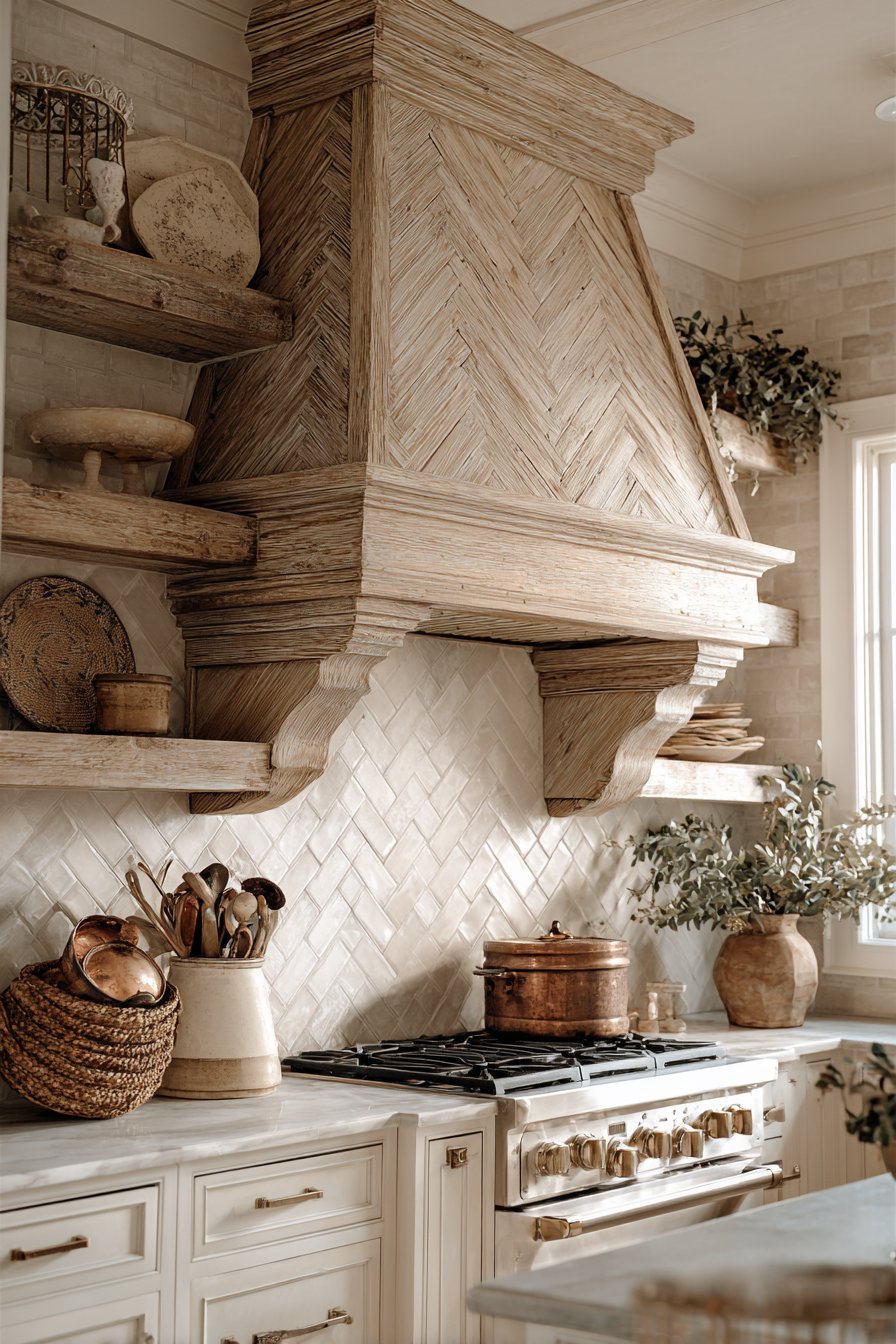
Open shelving on adjacent walls holds earthenware dishes in warm neutral tones, their handmade quality and natural colors reinforcing the kitchen’s organic aesthetic. The layered textures—weathered wood, smooth tile, hammered copper, rough iron—create visual richness that rewards close attention, while natural side lighting emphasizes these surface qualities and the warm patina of aged materials.
Key Design Tips:
- Install a wooden range hood to create an architectural focal point
- Add corbel supports for structural drama and period character
- Use subway tiles in running bond for a clean, classic backdrop
- Display copper and cast iron cookware on a vintage pot rack
- Layer multiple natural textures for visual richness and depth
14. Dedicated Beverage Station
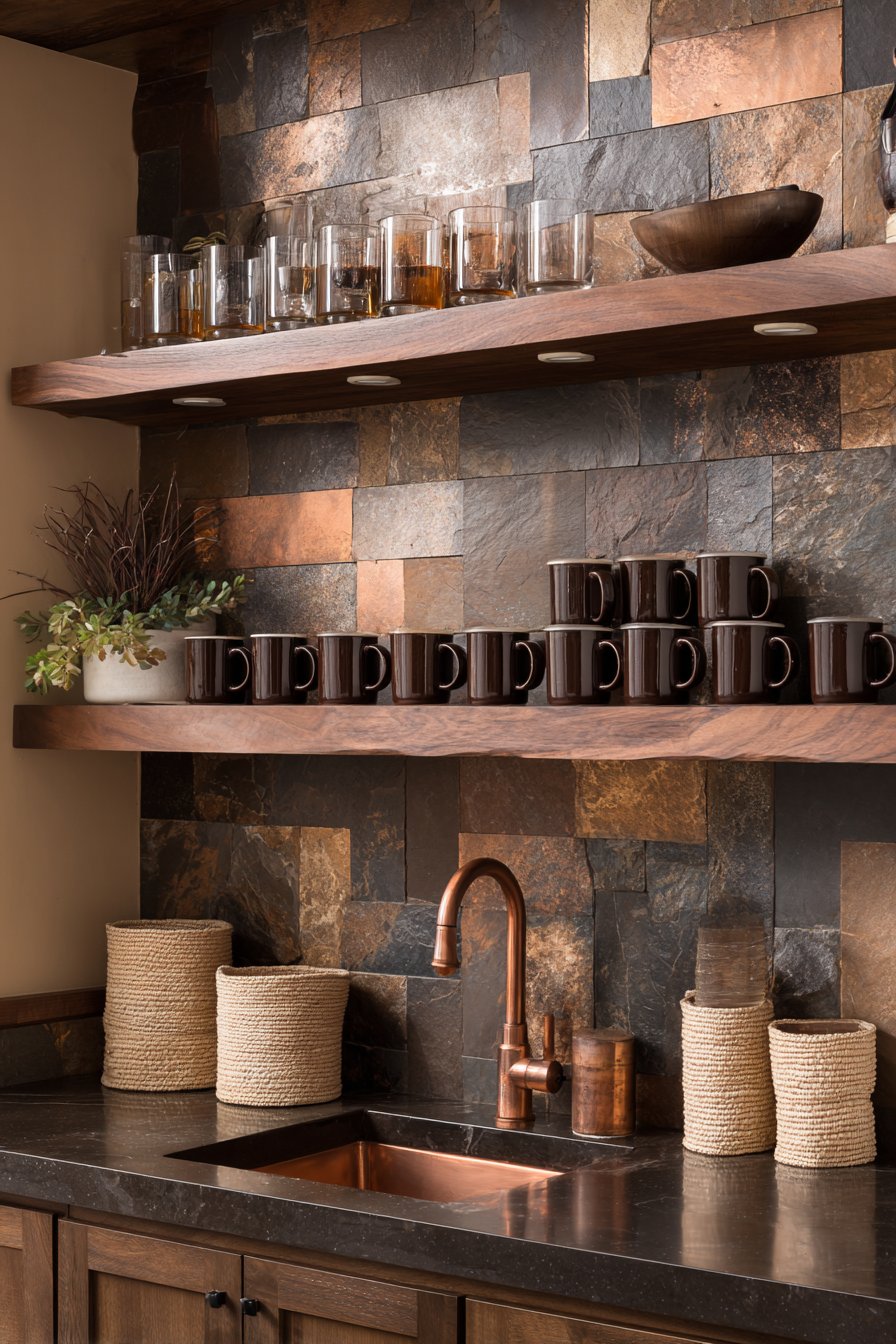
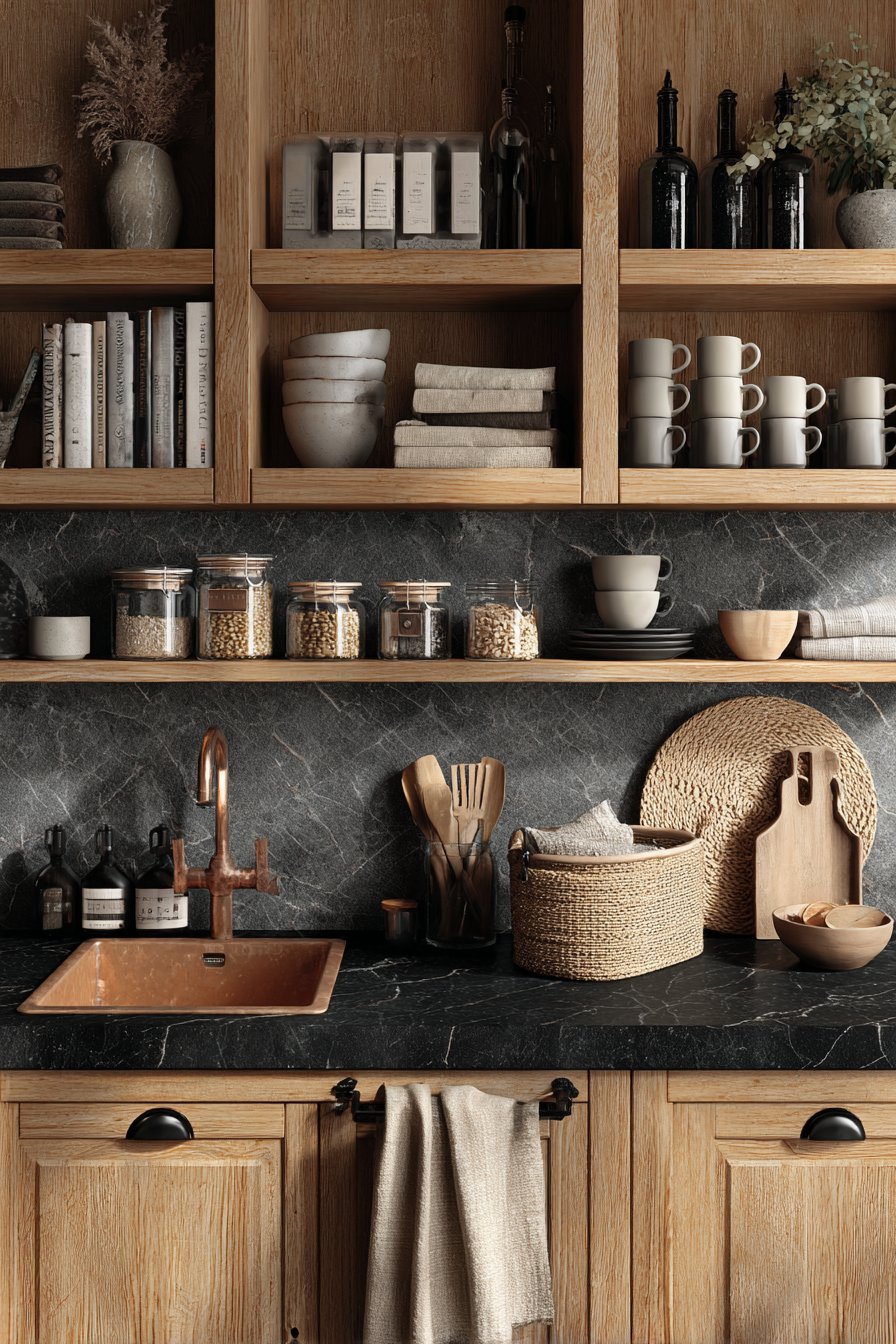
This design carves out a specialized zone for coffee and tea preparation, creating a dedicated beverage station that elevates the morning ritual. Natural slate tile provides a durable, water-resistant backdrop with its characteristic layered texture and deep grey-blue tones that introduce cool contrast. Floating shelves in live-edge walnut display artisan coffee mugs and glass containers for beans, sugar, and other supplies, their organic edges adding sculptural interest while the walnut’s warmth balances the cool slate.
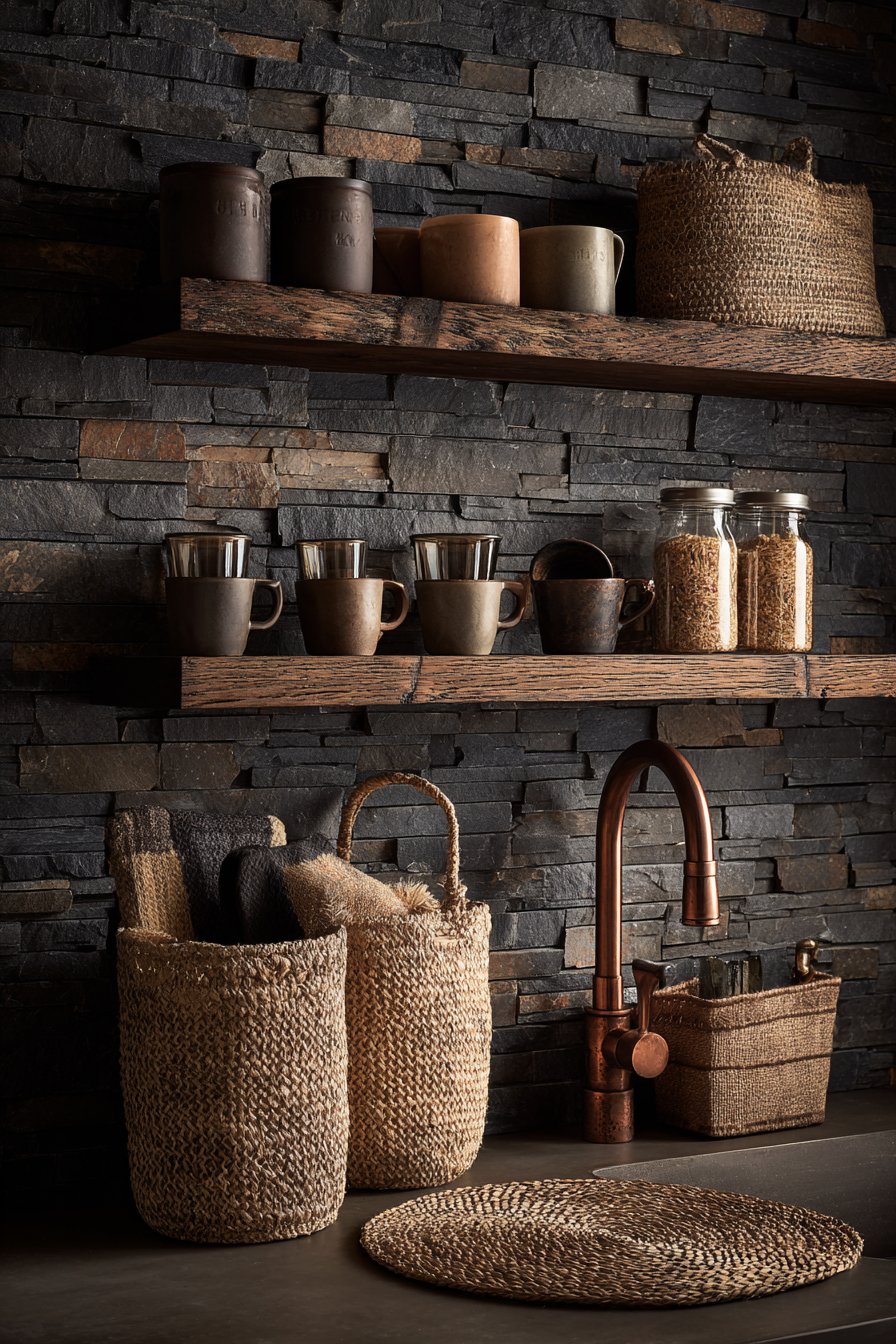
A small copper sink with gooseneck faucet provides functionality in a compact footprint, perfect for rinsing cups and filling kettles without occupying the main kitchen sink. The copper’s warm, rosy tones create a beautiful focal point that catches light and develops character over time as the metal oxidizes. Below, woven placemats and jute storage baskets organize supplies—coffee filters, tea bags, napkins—maintaining the natural material palette while keeping essentials accessible.
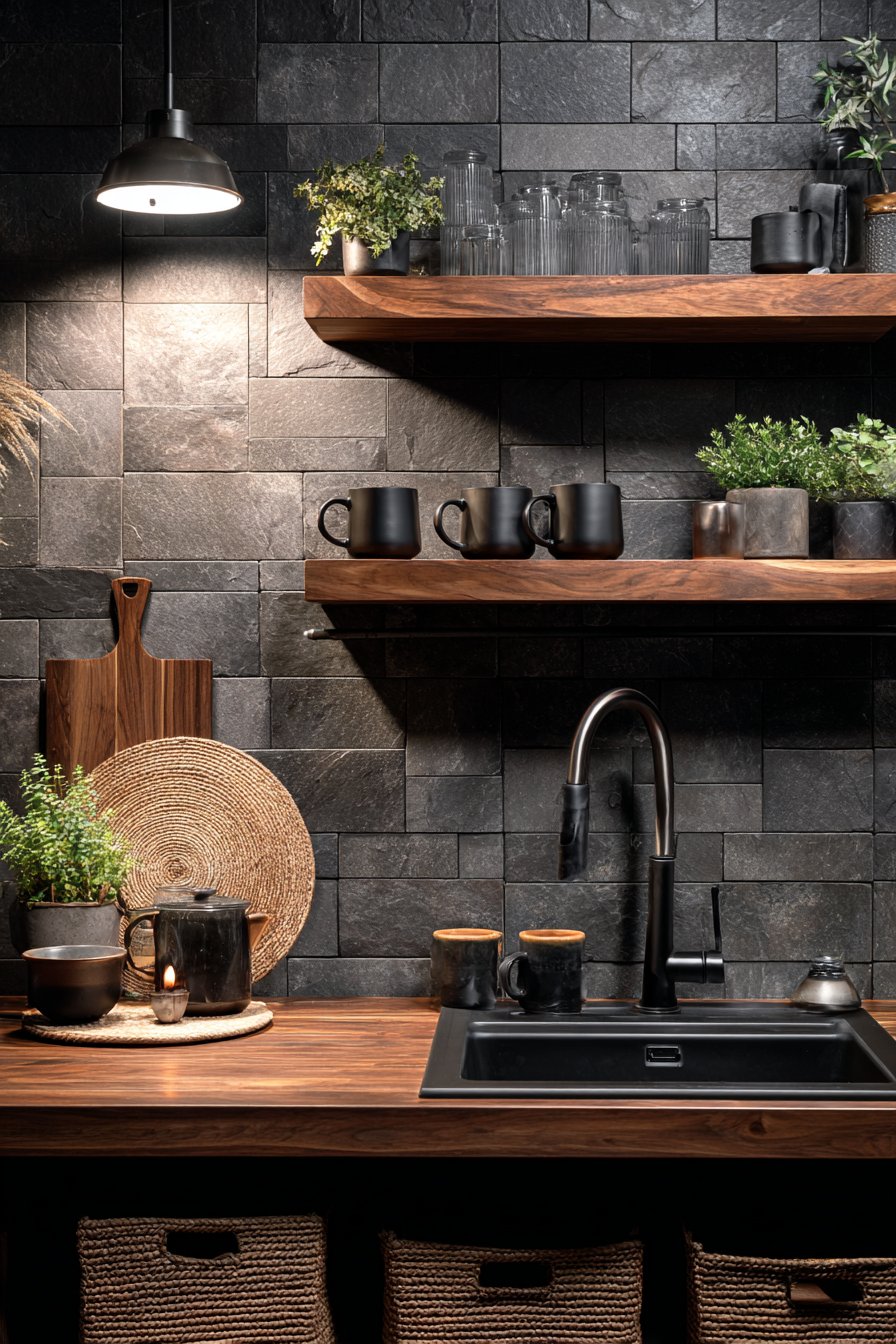
The detail-focused composition highlights the curated collection of natural materials and organic textures that make this small area feel special and intentional rather than leftover space. Soft overhead lighting ensures early morning visibility while creating a warm glow that makes the beverage station inviting even before coffee has worked its magic.
Key Design Tips:
- Create a dedicated beverage station for morning efficiency
- Use slate tile for a water-resistant backdrop with natural texture
- Install live-edge walnut shelving for organic sculptural interest
- Add a small copper sink for dedicated functionality
- Organize supplies in woven baskets to maintain the natural aesthetic
15. Cozy Breakfast Nook
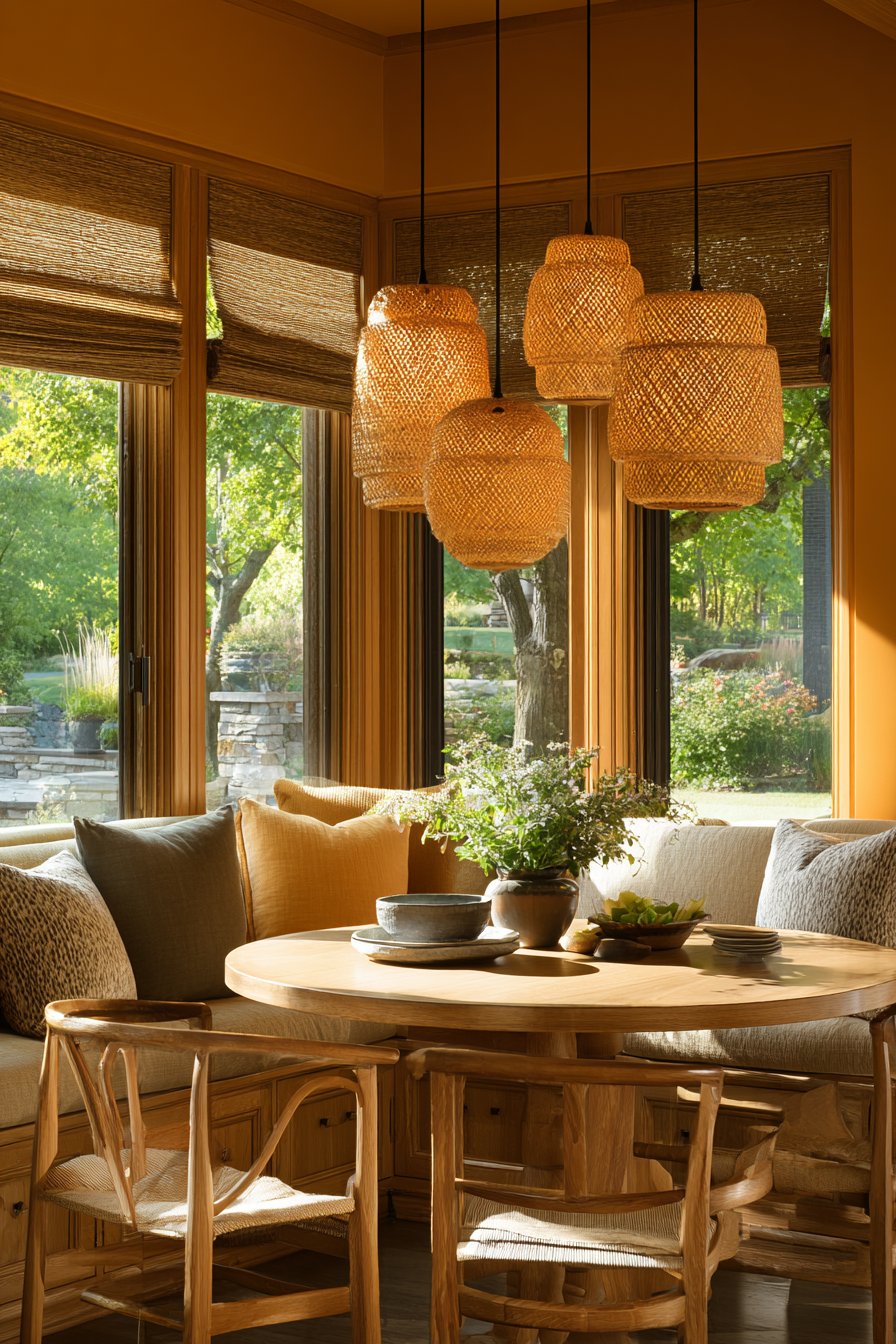
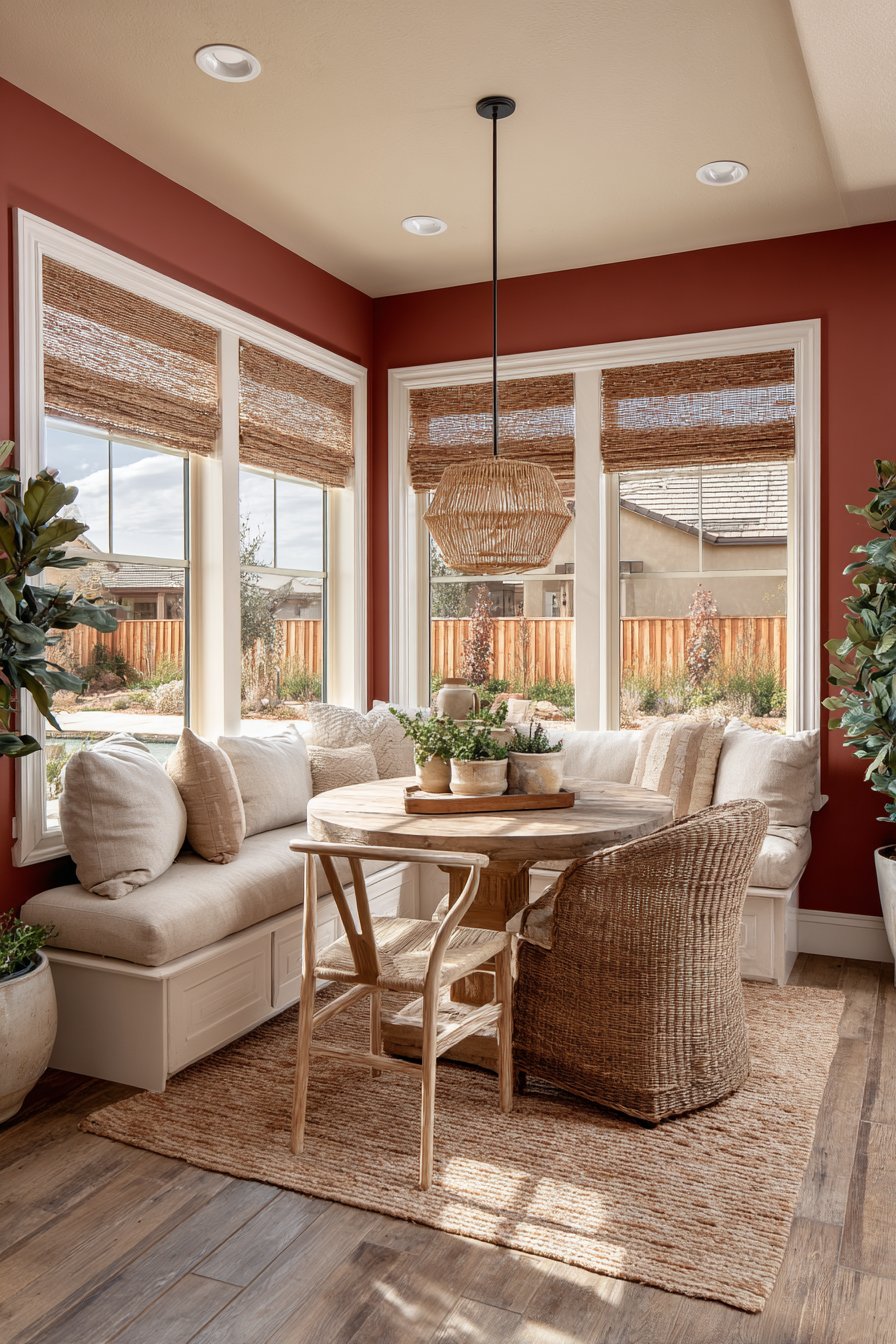
This design integrates a breakfast nook directly into the kitchen space, creating an intimate dining area with built-in bench seating upholstered in oatmeal linen. The benches provide comfortable seating while maximizing space efficiency, and the linen upholstery feels soft and inviting against skin while maintaining the natural, organic aesthetic. Storage below the benches offers practical organization for table linens, seasonal items, or rarely used serving pieces, making efficient use of every cubic inch.
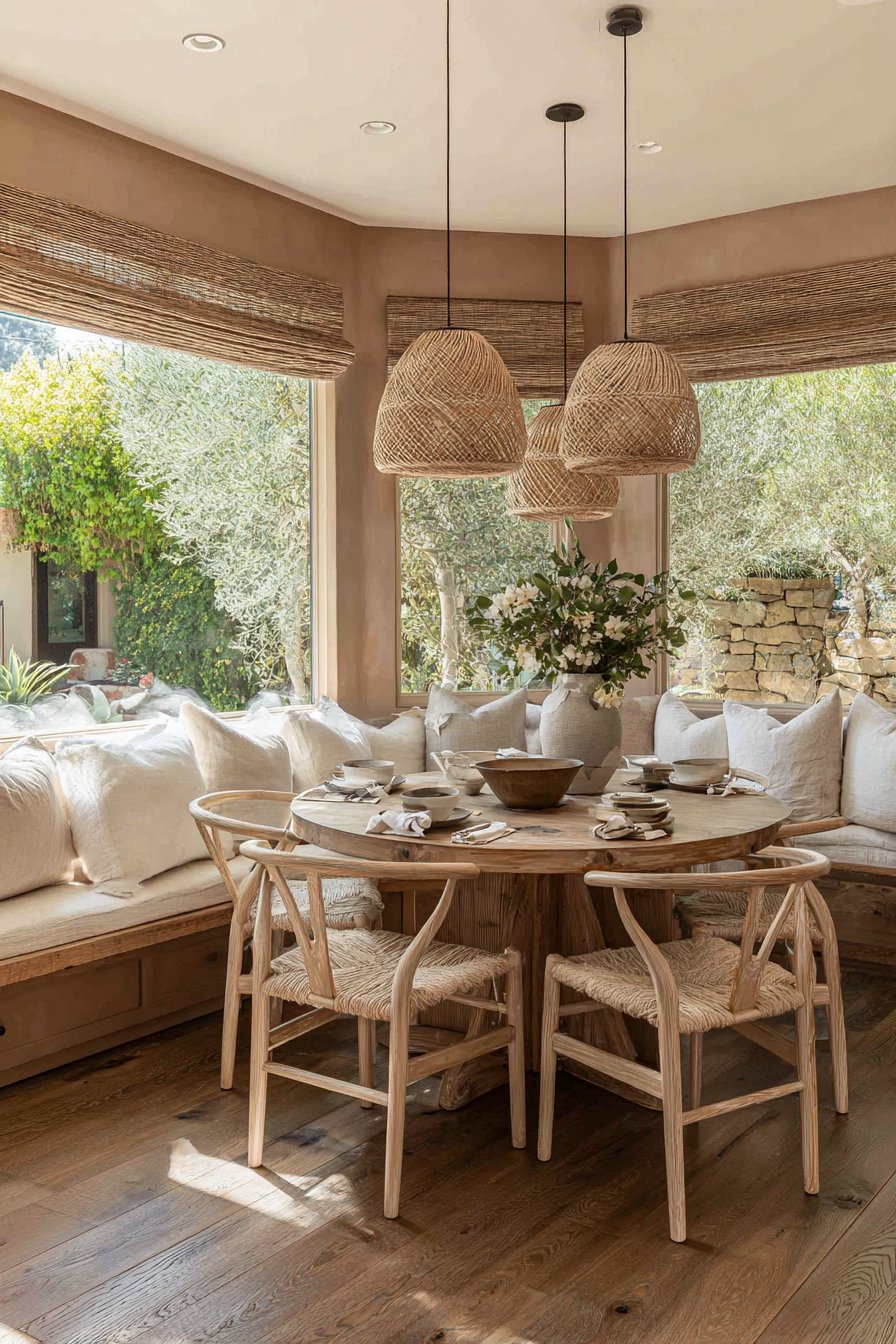
Walls painted in warm terracotta create an enveloping, cozy atmosphere that makes the nook feel like a separate room within the larger kitchen. This bold color choice works because it’s balanced with plenty of natural wood—a round pedestal table in natural oak centers the space, its smooth top and turned base feeling both traditional and versatile. Ladder-back chairs supplement the bench seating, their simple wooden construction and honest craftsmanship fitting the earthy aesthetic perfectly.
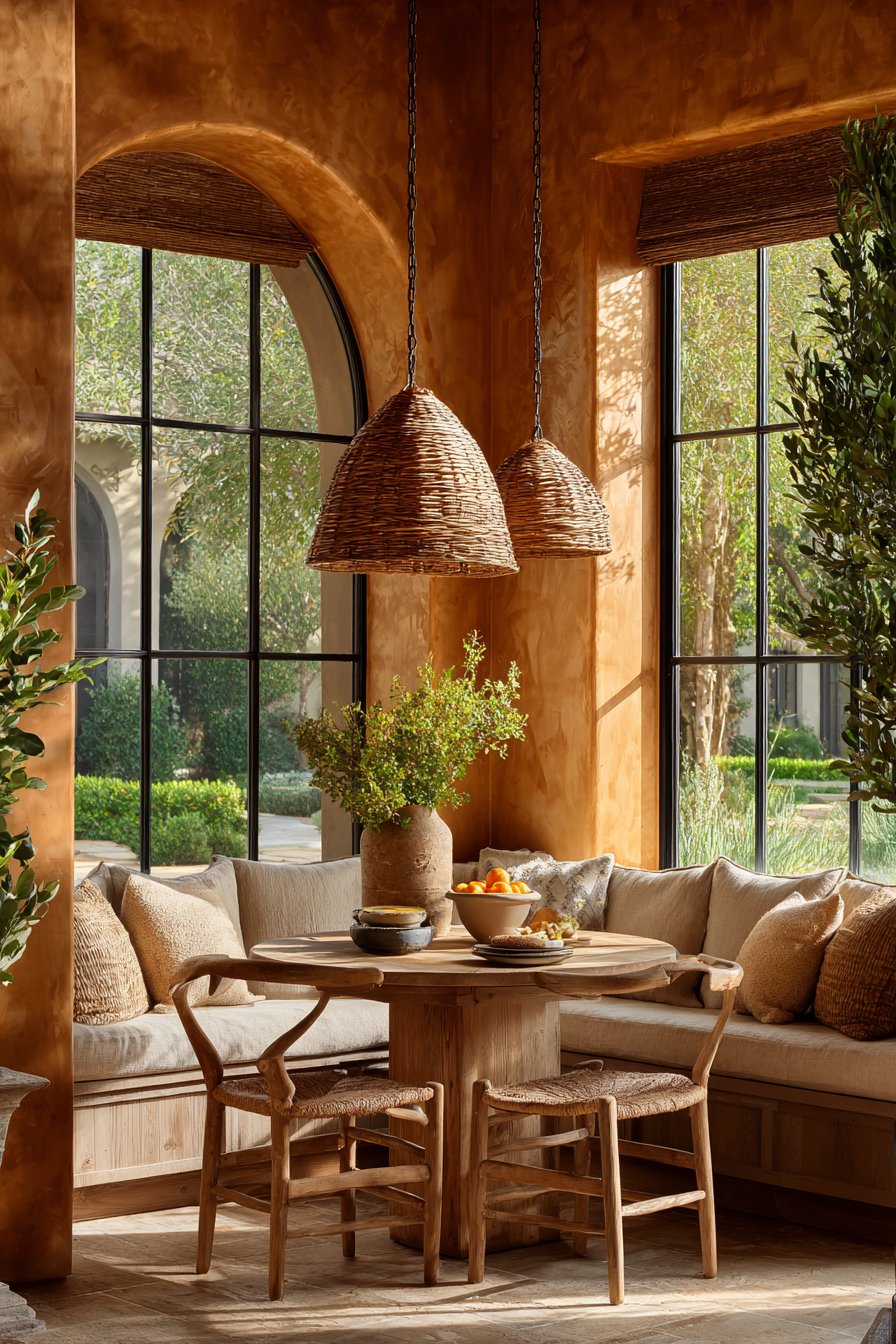
Pendant lights with rattan shades hang above the table, their woven texture casting intricate shadow patterns while providing warm, diffused light ideal for morning coffee or evening family dinners. Large windows with bamboo roman shades frame garden views, connecting the indoor dining experience with outdoor nature. Morning light floods the space, making breakfast here a daily pleasure rather than a rushed obligation.
Key Design Tips:
- Build in bench seating with storage below for space efficiency
- Use linen upholstery in neutral tones for softness and comfort
- Paint nook walls in warm terracotta for an enveloping atmosphere
- Choose a round pedestal table to maximize seating capacity
- Install rattan pendant lights for textural interest and warm illumination
16. Exposed Brick Open Shelving
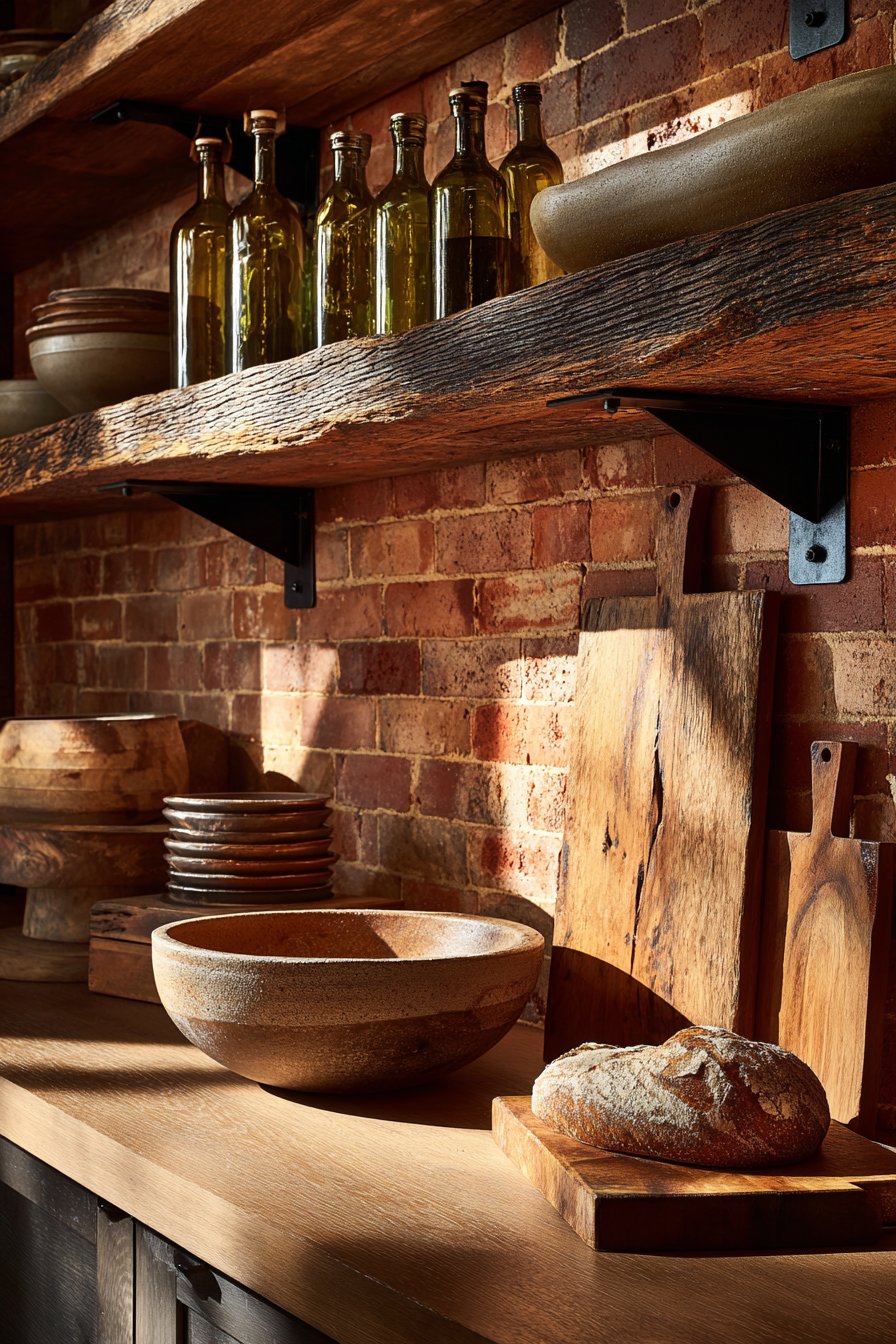
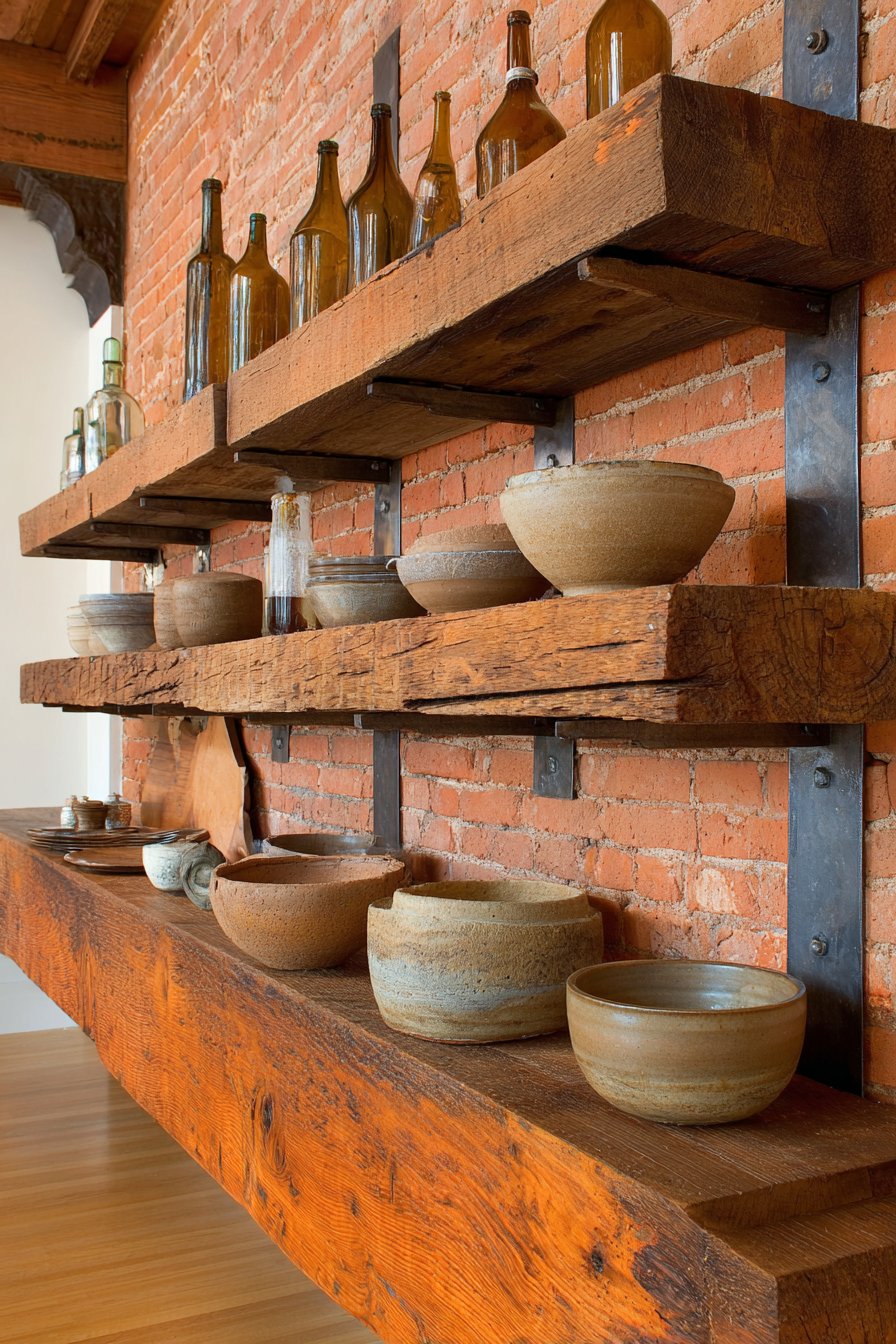
This design celebrates industrial elements within an earthy aesthetic, featuring open shelving constructed from thick reclaimed wood planks supported by metal brackets in dark bronze finish. The shelves’ substantial thickness—at least two inches—gives them visual weight and suggests they can handle serious loads. The reclaimed wood shows authentic wear patterns, nail holes, and grain variation that new lumber simply cannot replicate, adding instant history and character to the installation.
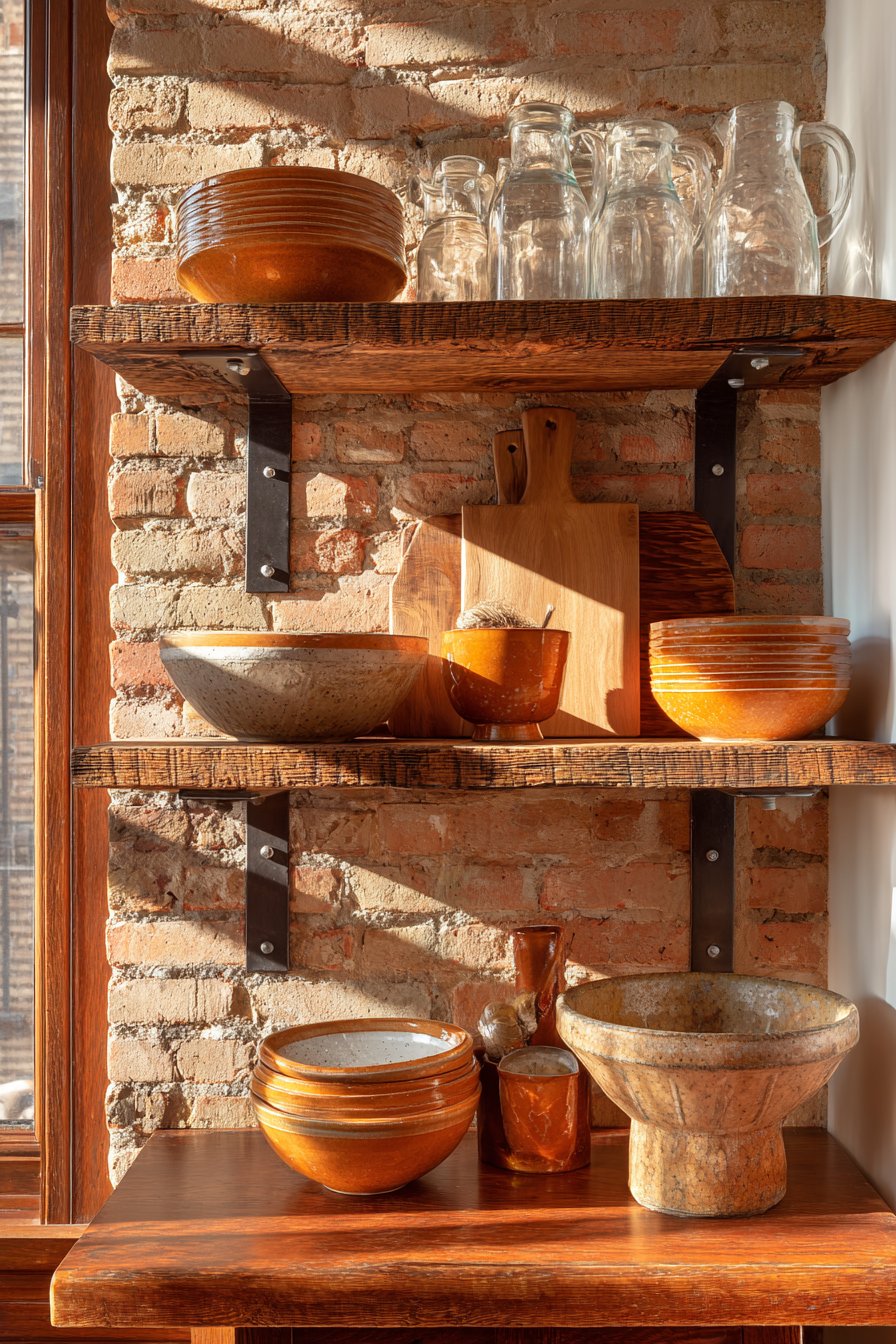
The shelves display a carefully curated collection of stoneware bowls in warm neutral glazes, wooden serving boards in various sizes showing knife marks and oil stains from years of use, and vintage glass bottles in shades of amber and green that catch light beautifully. This collection represents both functional items used daily and decorative objects that contribute to the overall aesthetic—the line between form and function blurs intentionally.
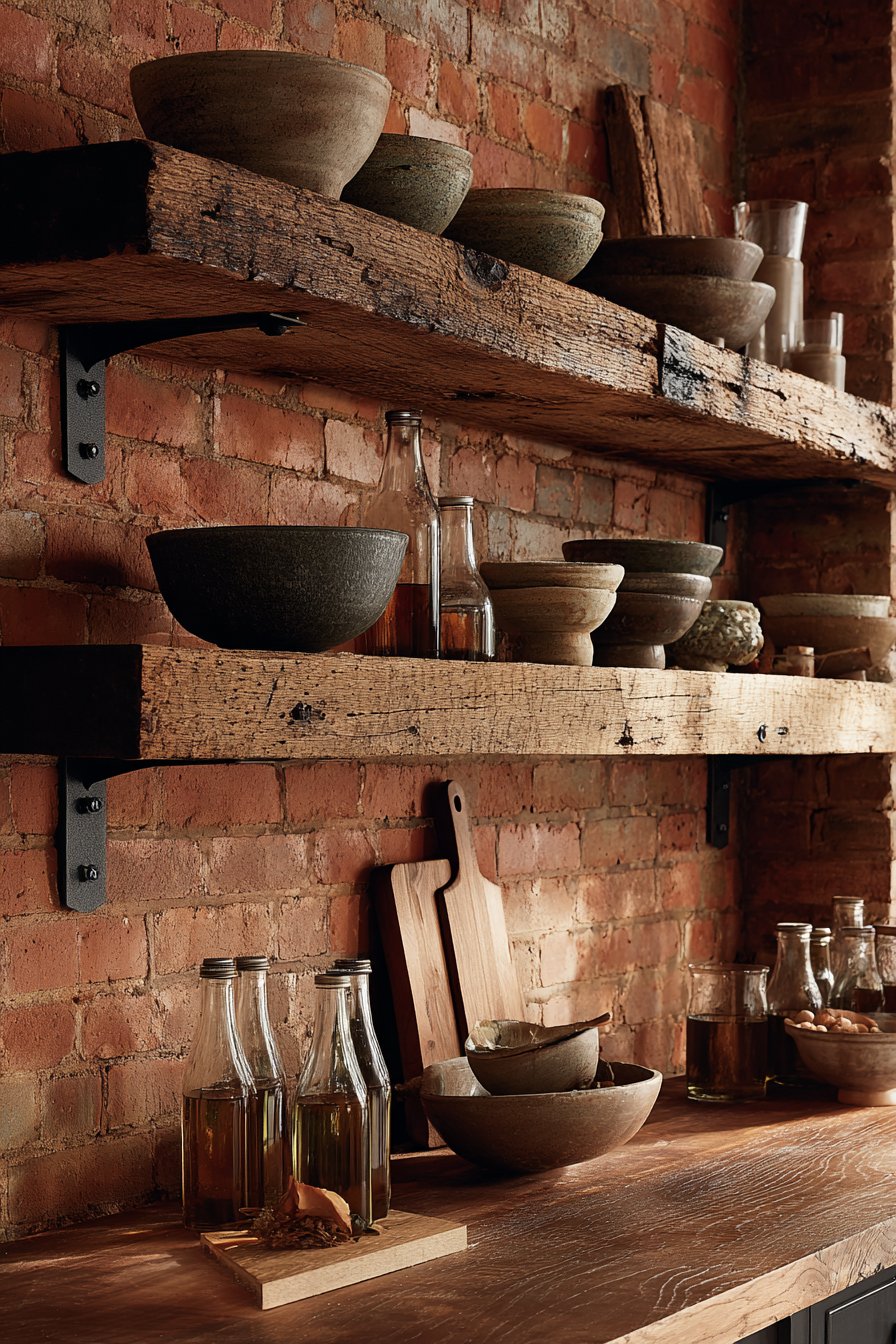
Behind the shelves, exposed brick in warm red-orange tones creates a textured backdrop that adds depth and architectural interest. The brick’s dimensional quality creates shadows and highlights that change throughout the day, turning a static wall into a dynamic surface. Interior photography captures the authentic wear patterns on wood and the dimensional quality created by natural lighting, showing how these elements work together to create visual richness.
Key Design Tips:
- Use thick reclaimed wood planks for substantial, characterful shelving
- Install dark bronze metal brackets for industrial-meets-organic aesthetic
- Display both functional items and decorative objects
- Expose brick walls to add texture and architectural interest
- Curate shelf contents in warm neutral tones for cohesion
17. Waterfall Edge Peninsula
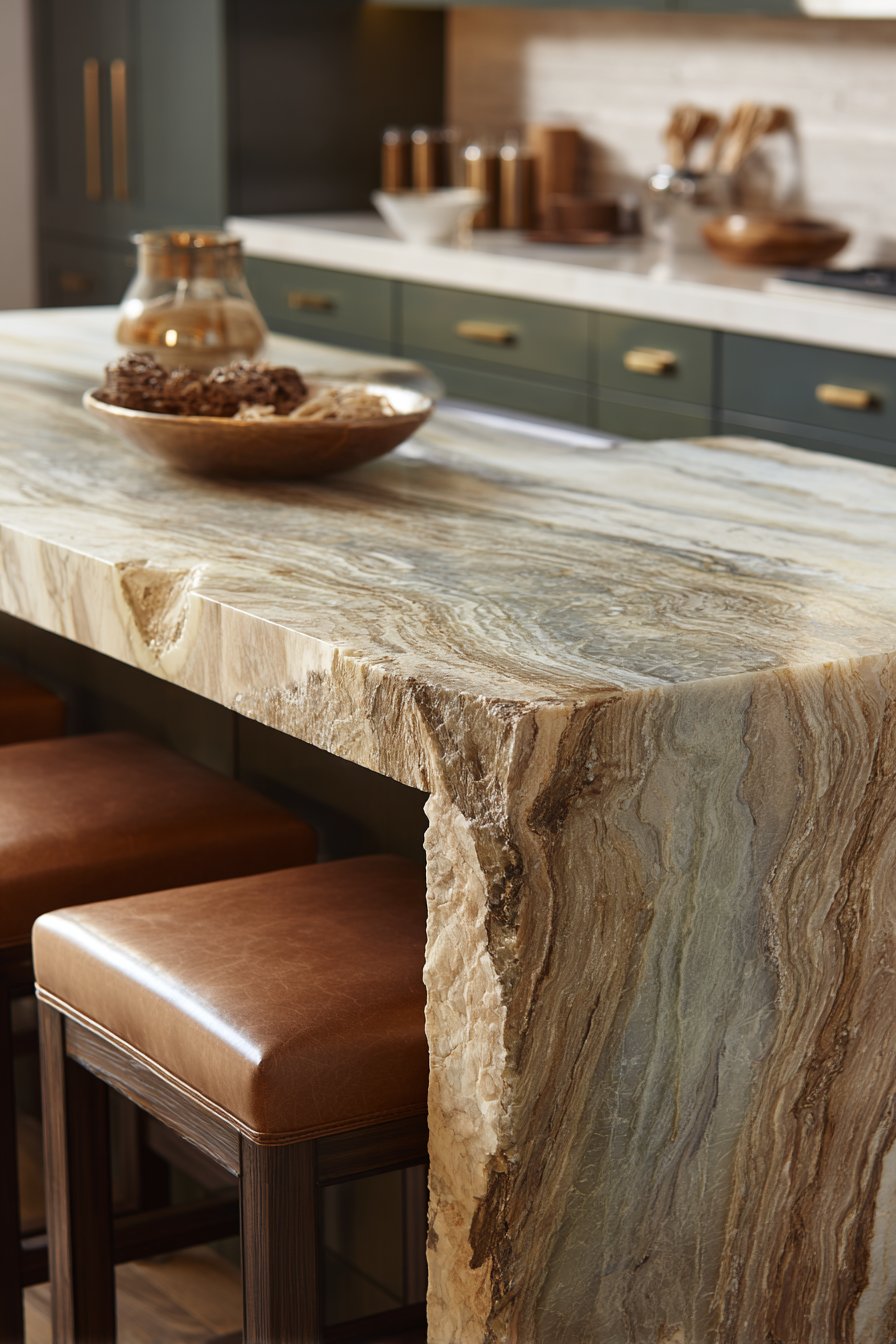
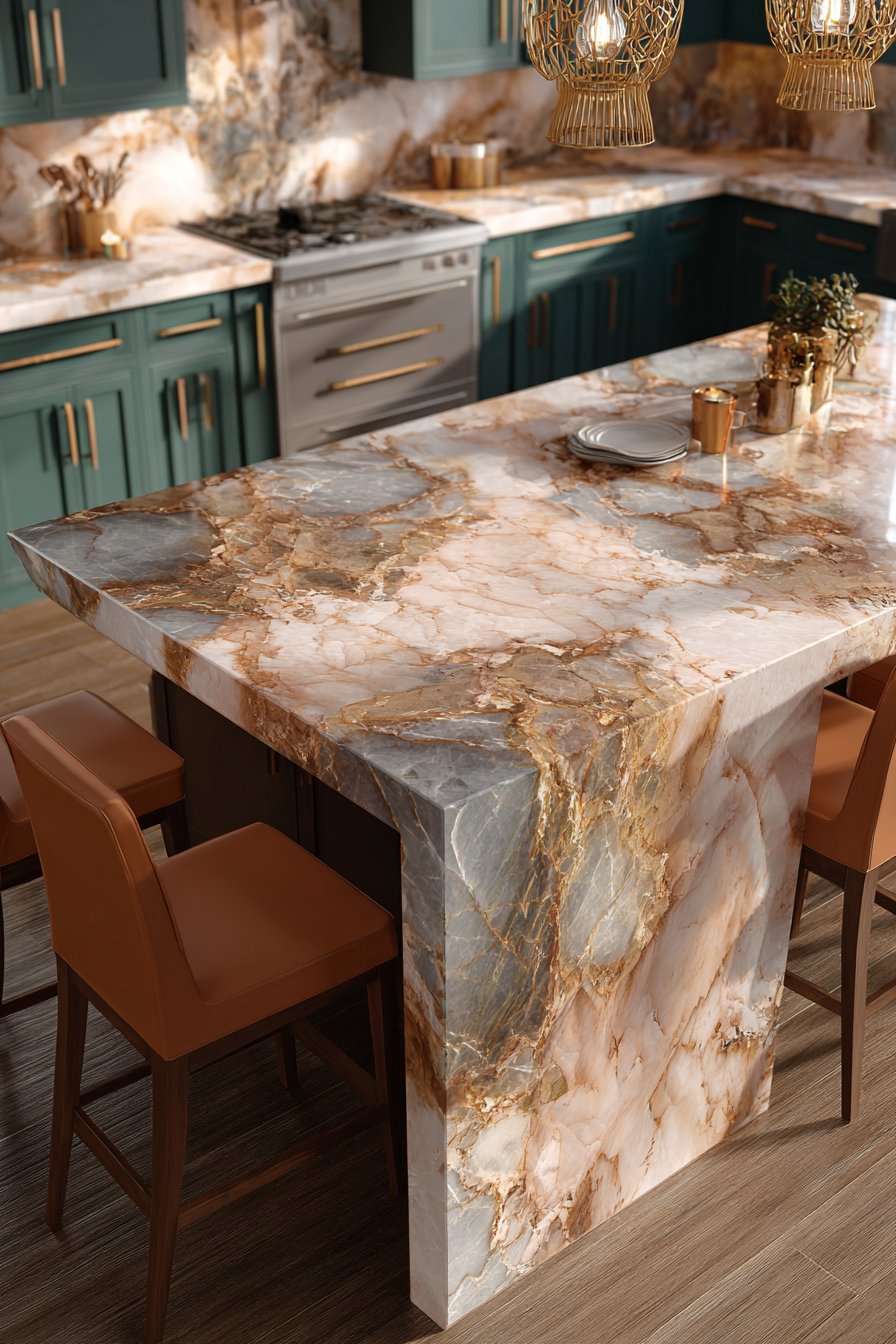
This design introduces sophisticated luxury through a kitchen peninsula with waterfall edge countertop in book-matched quartzite. The stone features warm beige and taupe veining that creates natural abstract art, and the book-matching—where two slabs are mirrored to create symmetrical patterns—produces a striking visual effect that elevates the peninsula from functional surface to focal point. The waterfall edges, where the countertop material extends vertically to the floor, create clean, contemporary lines while showcasing the stone’s beauty.
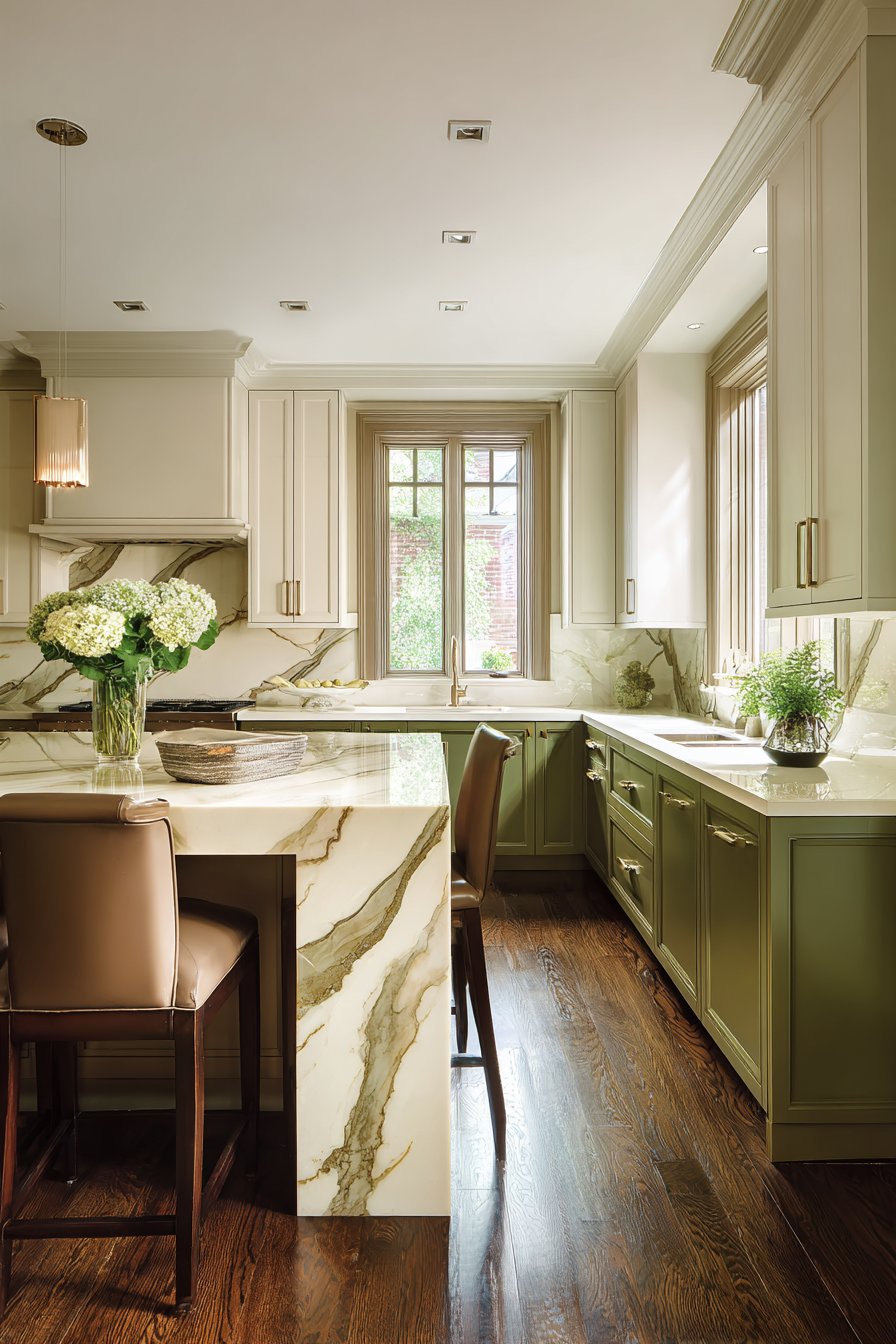
Base cabinets painted in deep moss green provide rich, saturated color that feels organic and grounding rather than artificial or overly bold. The green has enough grey in it to feel sophisticated rather than bright, and it complements the warm stone beautifully. Aged brass hardware adds warm metallic accents that catch light and develop character over time, their patina suggesting quality that improves with age rather than deteriorates.
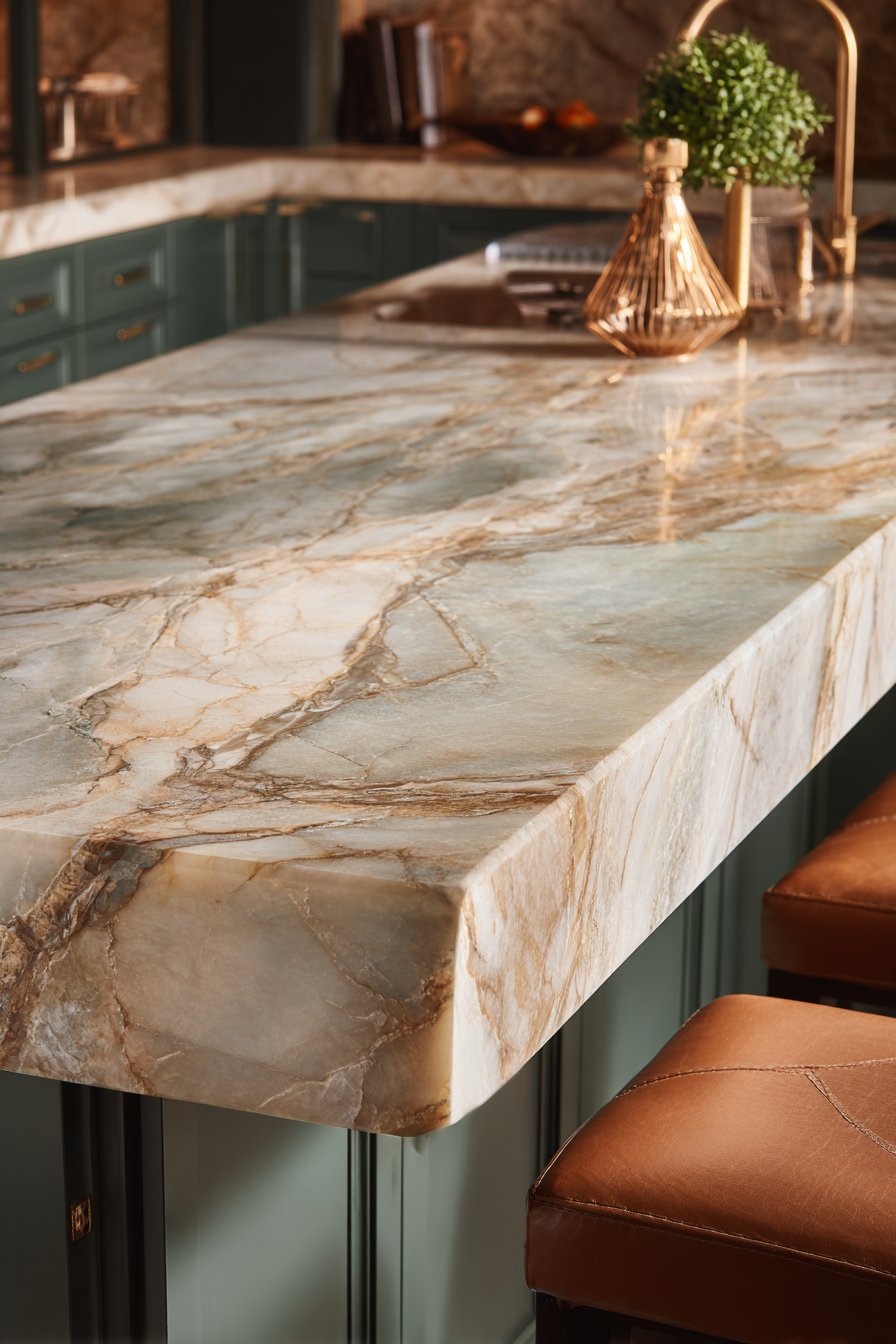
Upholstered counter stools in cognac leather provide seating at the peninsula, their rich brown tones and supple material adding luxury and warmth. The leather will develop a beautiful patina with use, becoming softer and more character-rich over time. Professional interior photography captures the luxe natural stone details and sophisticated earthy color palette, showing how natural materials can create spaces that feel both organic and refined.
Key Design Tips:
- Specify book-matched quartzite for dramatic visual impact
- Choose waterfall edges to showcase stone beauty
- Paint base cabinets in sophisticated earth tones like moss green
- Install aged brass hardware for developing patina
- Select cognac leather seating for luxury and warmth
18. Copper Backsplash Coffee Bar
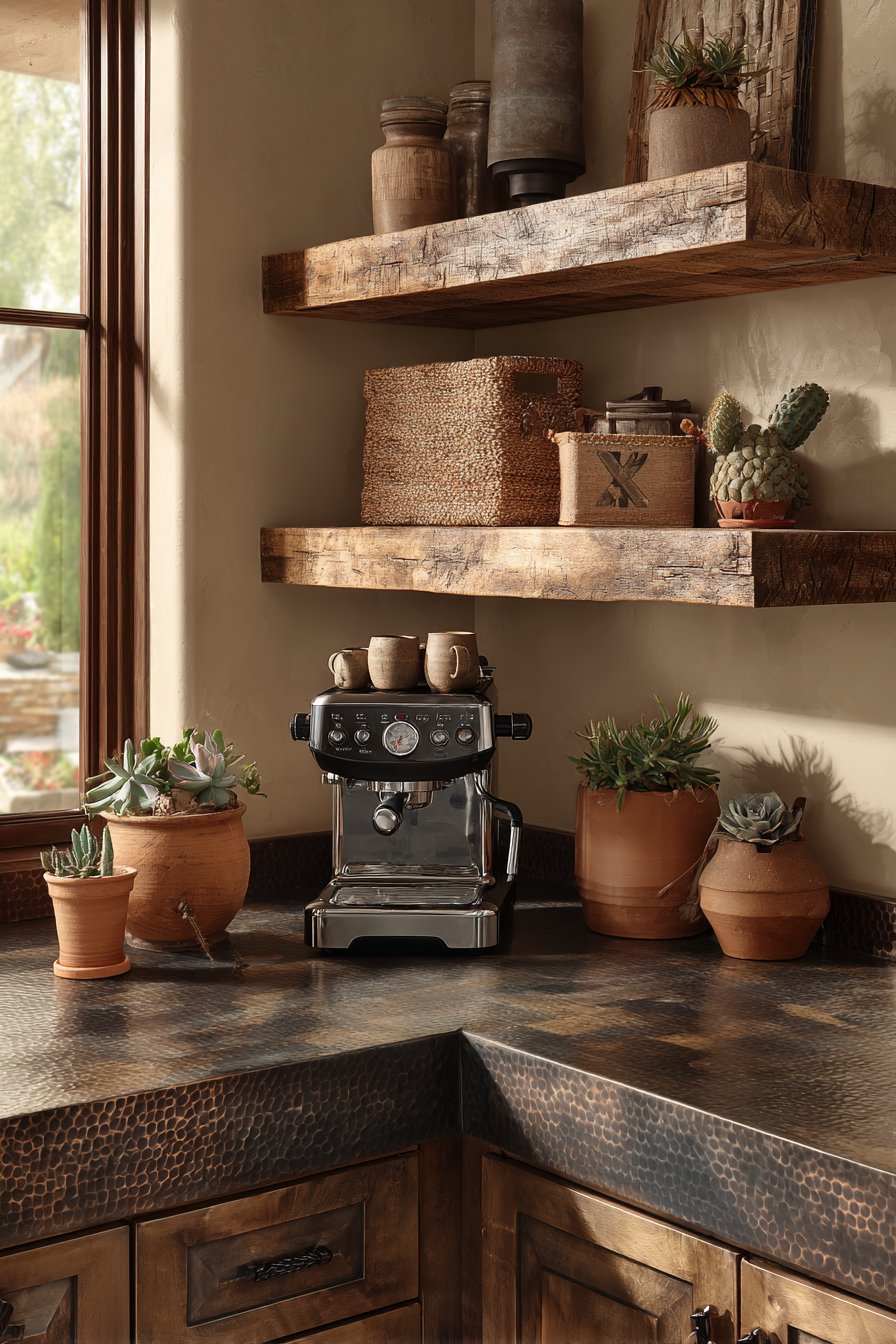
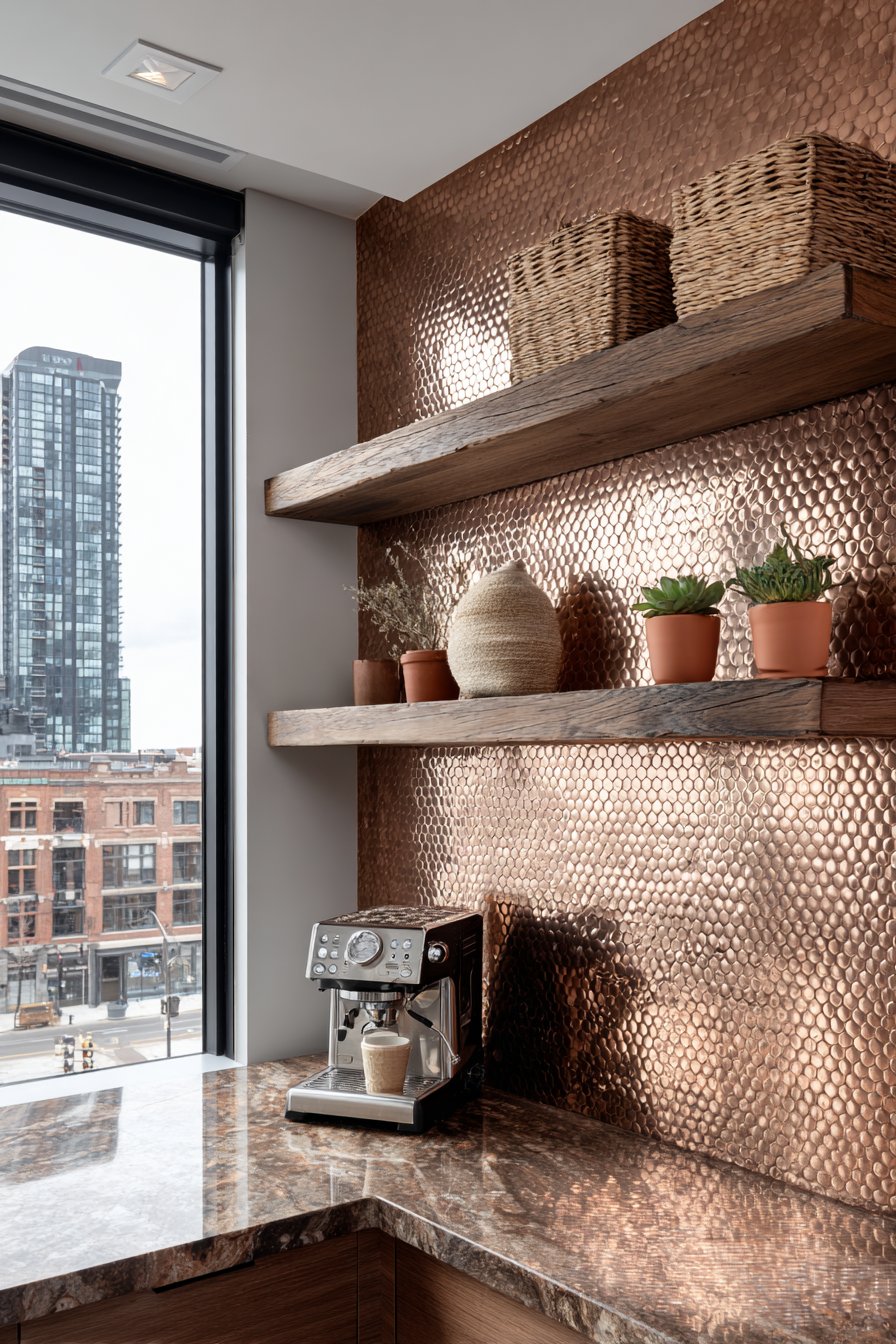
This design creates a specialized corner coffee bar that feels like a jewel box within the larger kitchen, featuring aged wood floating shelves supporting a hammered copper backsplash. The copper tiles catch and reflect warm light in constantly changing ways as natural illumination shifts throughout the day, their hammered surface creating subtle texture and dimension that flat tiles could never achieve. The copper’s warm, rosy tones create an almost glowing effect that makes the coffee bar feel special and celebratory.
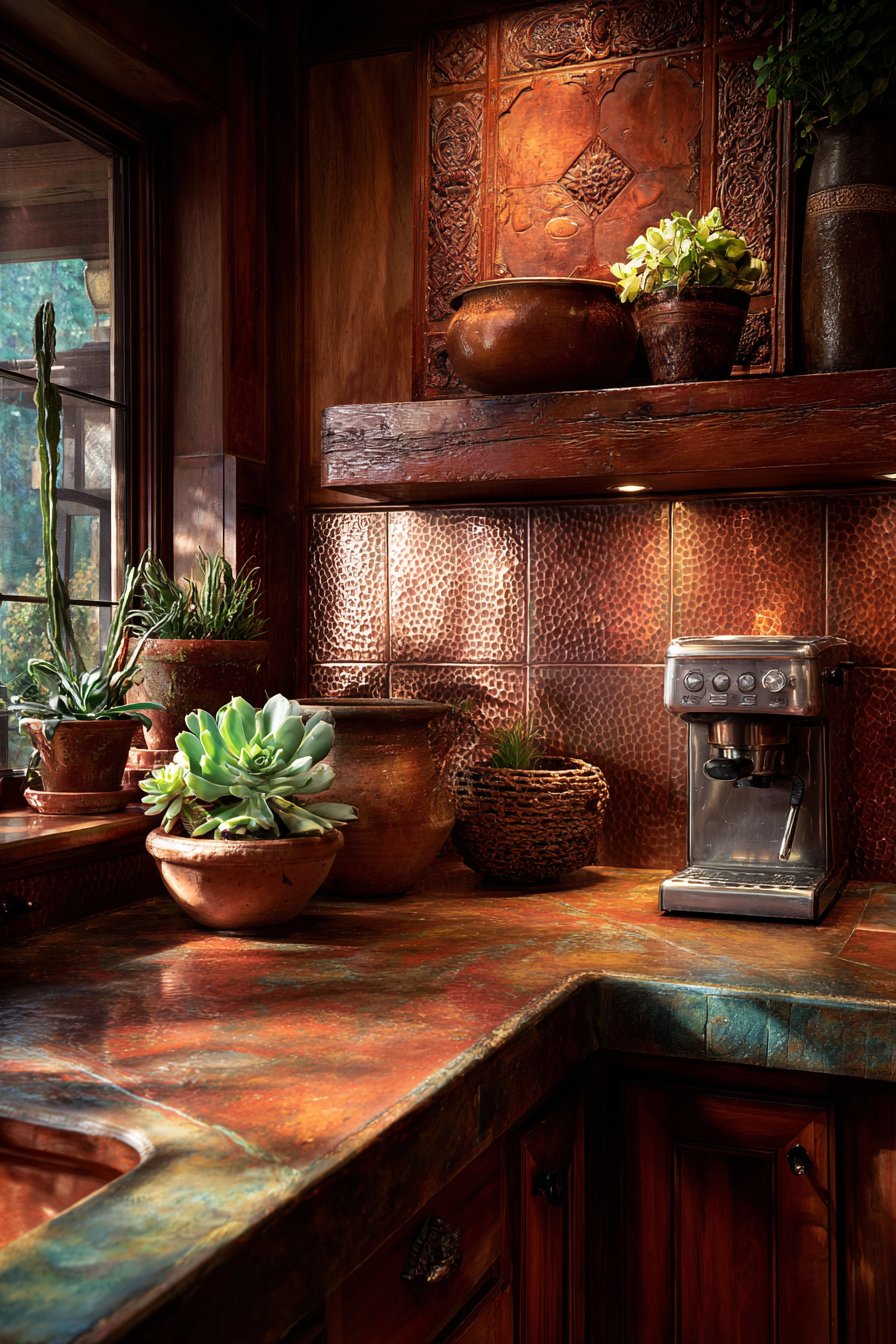
A vintage espresso machine sits on honed granite countertop, its chrome details and traditional design serving as both functional equipment and sculptural object. The granite’s dark grey tones and matte finish provide visual weight that anchors the copper’s brightness, preventing the area from feeling too shiny or overwhelming. Woven baskets store coffee supplies—beans, filters, sugar—maintaining the natural material palette while keeping essentials organized and accessible.
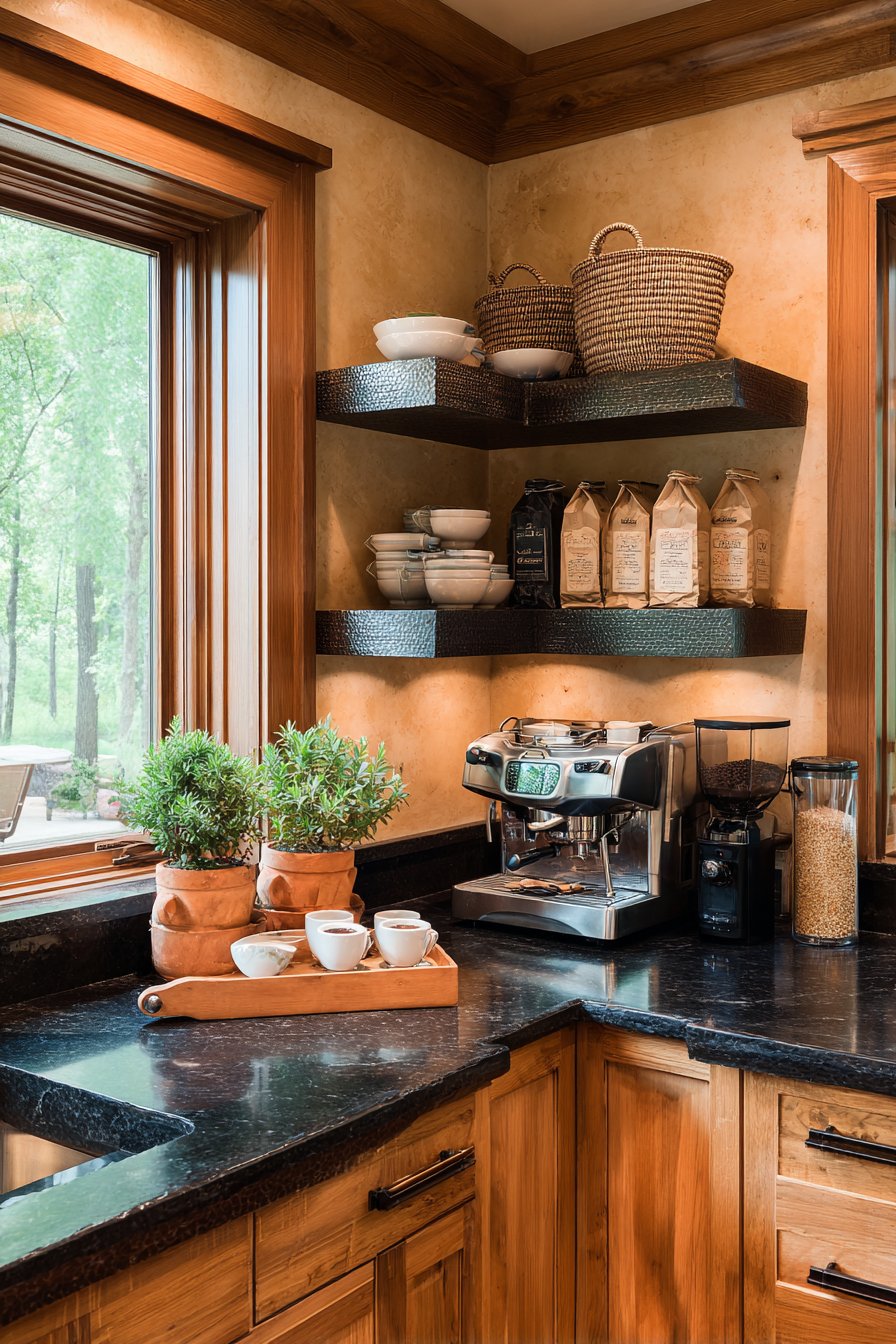
Terracotta planters hold small succulents that require minimal care while adding living elements and organic shapes. Their blue-green foliage provides color contrast against the warm copper and terracotta, while their compact size suits the small-scale space. Close-up interior design photography emphasizes the rich metallic patina and organic textures, showing how carefully selected materials can create impact in even small areas.
Key Design Tips:
- Install hammered copper tiles for light-catching texture
- Use aged wood for floating shelves to add warmth
- Choose honed granite for visual weight and contrast
- Store supplies in woven baskets instead of plastic containers
- Add succulents in terracotta pots for low-maintenance greenery
19. Pot Filler Installation
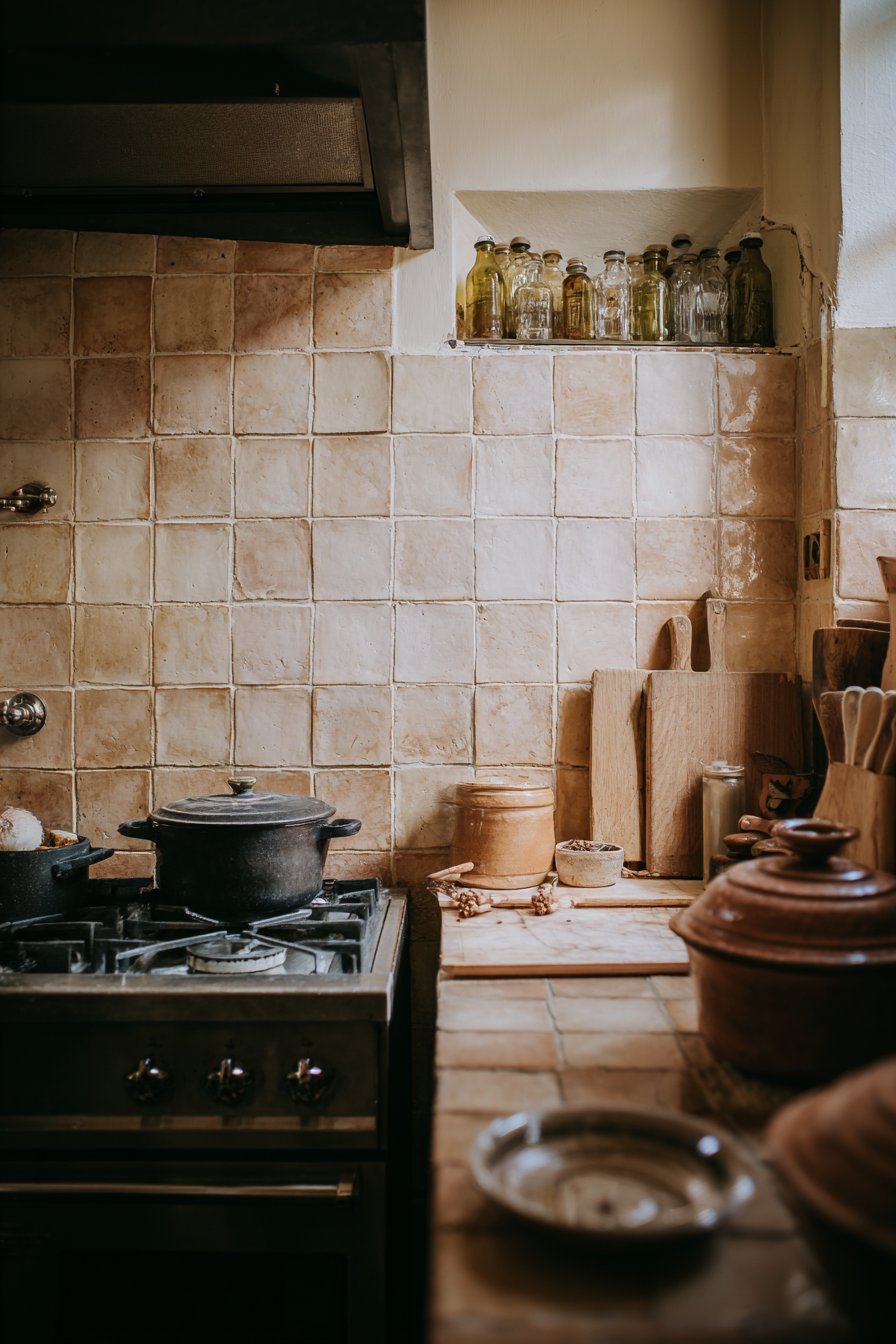
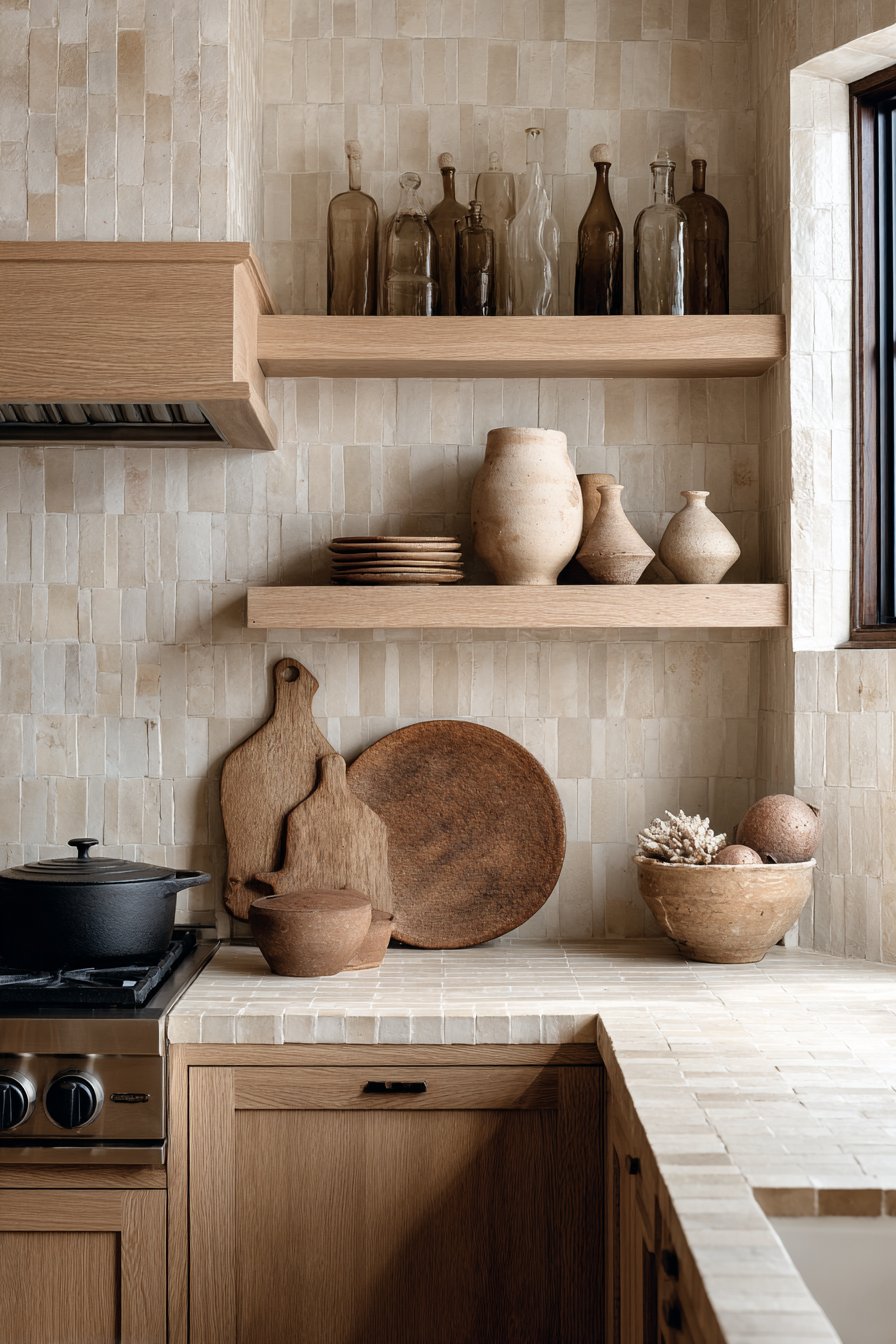
This design focuses on the cooking zone, featuring a pot filler faucet installation above a professional range that serves both practical and aesthetic purposes. The pot filler eliminates the need to carry heavy pots of water from sink to stove, while its articulated arm and vintage-style design add architectural interest to the wall. Surrounding this practical feature, handmade zellige tiles in warm neutral tones showcase natural irregularities and glaze variations that machine-made tiles lack—ripples, slight size variations, and glaze pools that create depth and authenticity.
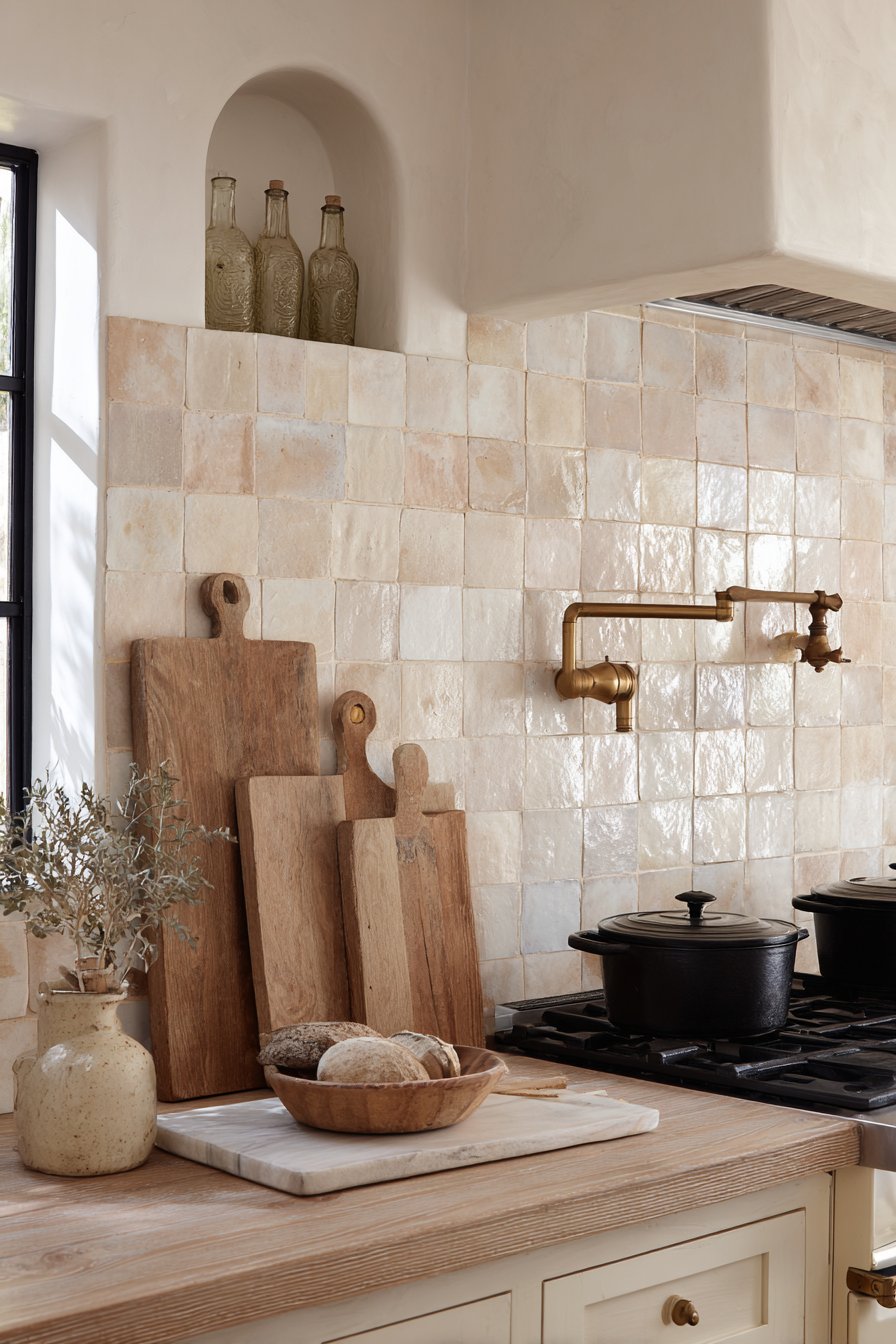
Wooden cutting boards in various sizes lean casually against the tile, ready for use while contributing to the organized-but-lived-in aesthetic. Cast iron pots rest on the range, their matte black surfaces and substantial weight suggesting serious cooking equipment built to last generations. These aren’t decorative props but actual working tools that contribute to the kitchen’s authentic character.
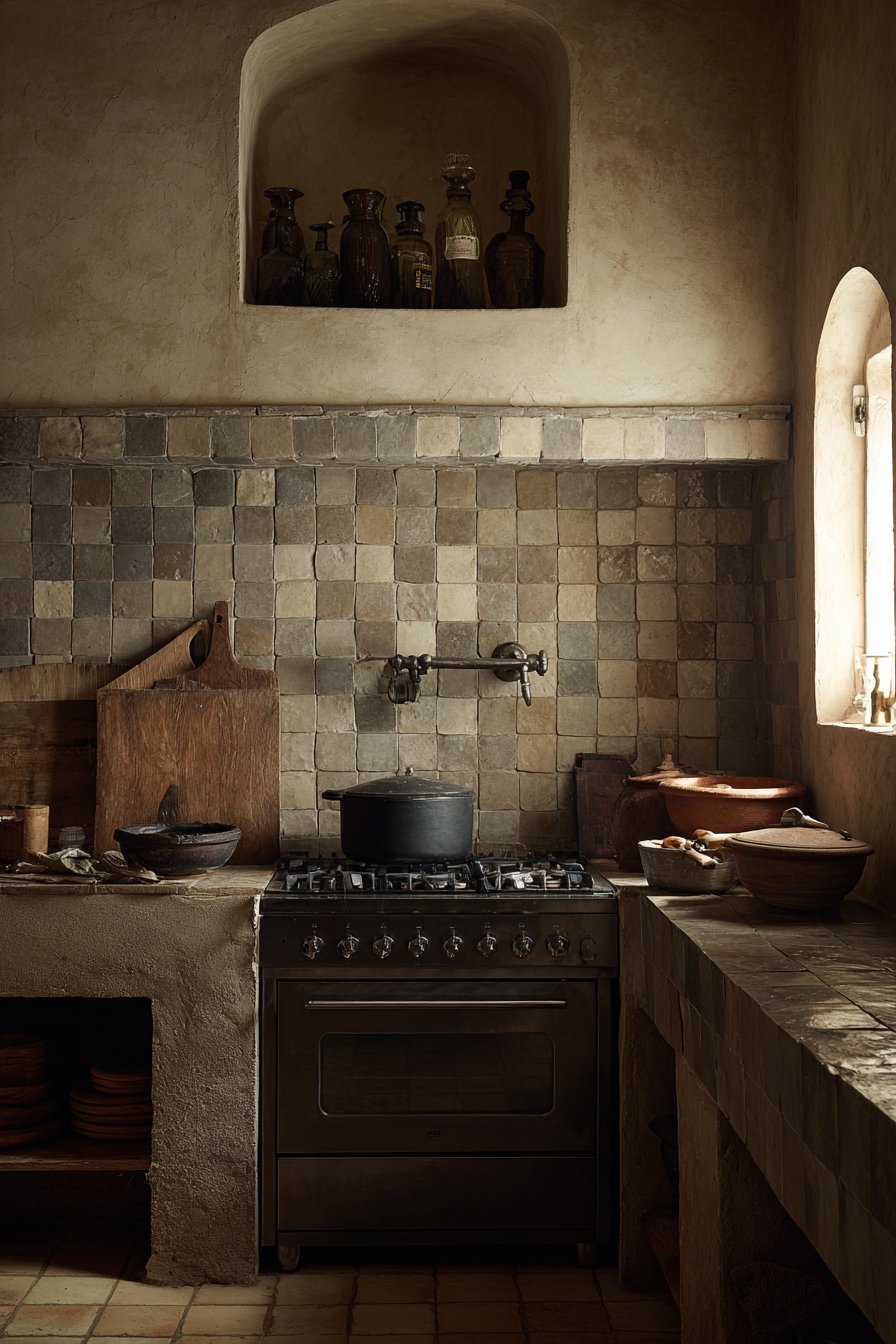
A small window above the range features a collection of vintage glass bottles in amber, green, and clear glass that catch light and add color without requiring any care. The bottles’ varied shapes and ages tell stories, and their translucent qualities create beautiful effects when backlit by natural daylight. Detail-focused interior photography highlights these handcrafted materials and how soft natural daylight enhances their authentic qualities.
Key Design Tips:
- Install a pot filler faucet for both function and visual interest
- Choose handmade zellige tiles for authentic irregularities
- Display wooden cutting boards leaning against backsplash
- Keep cast iron cookware visible as functional decor
- Arrange vintage glass bottles in windows to catch light
20. Mudroom Kitchen Transition
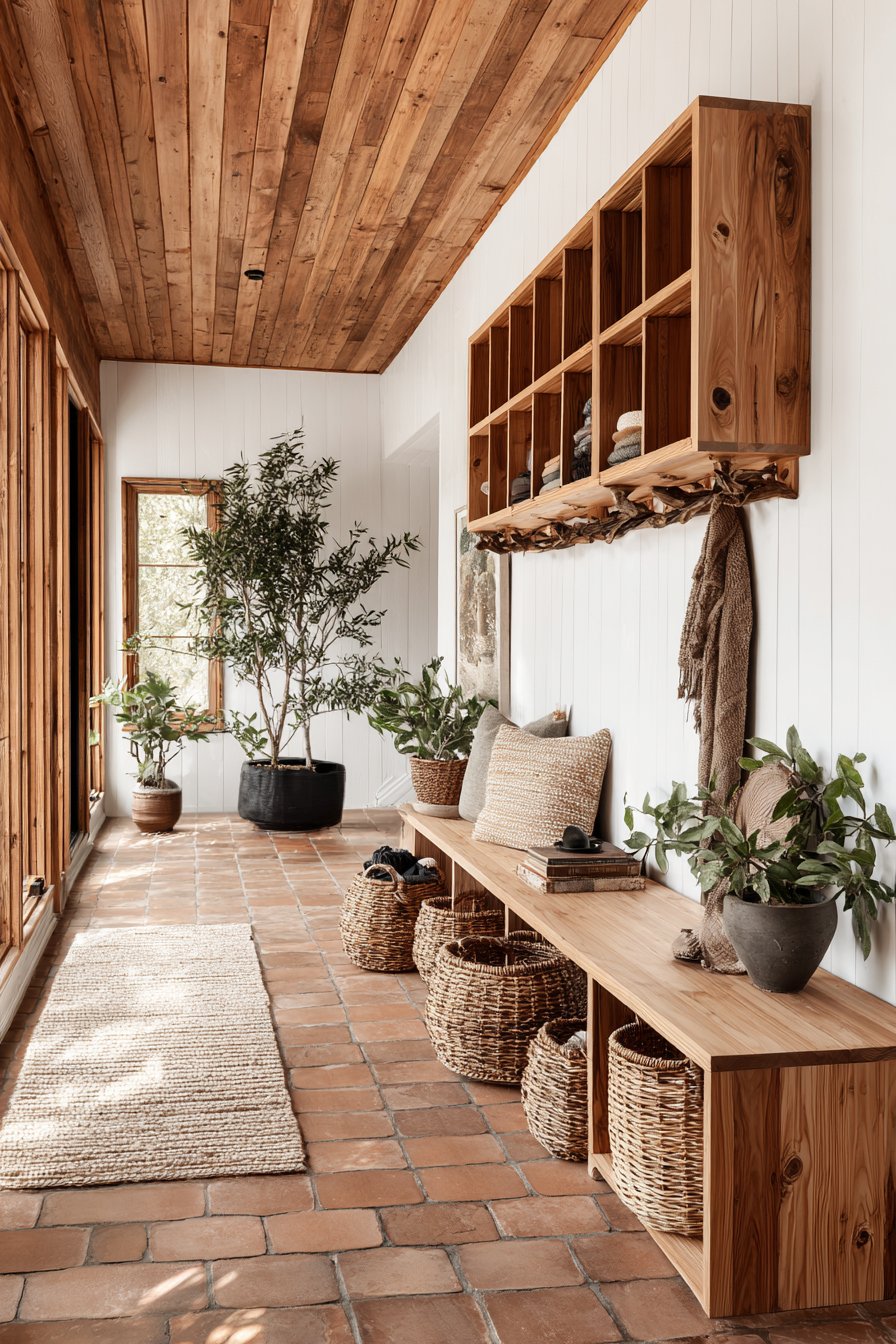
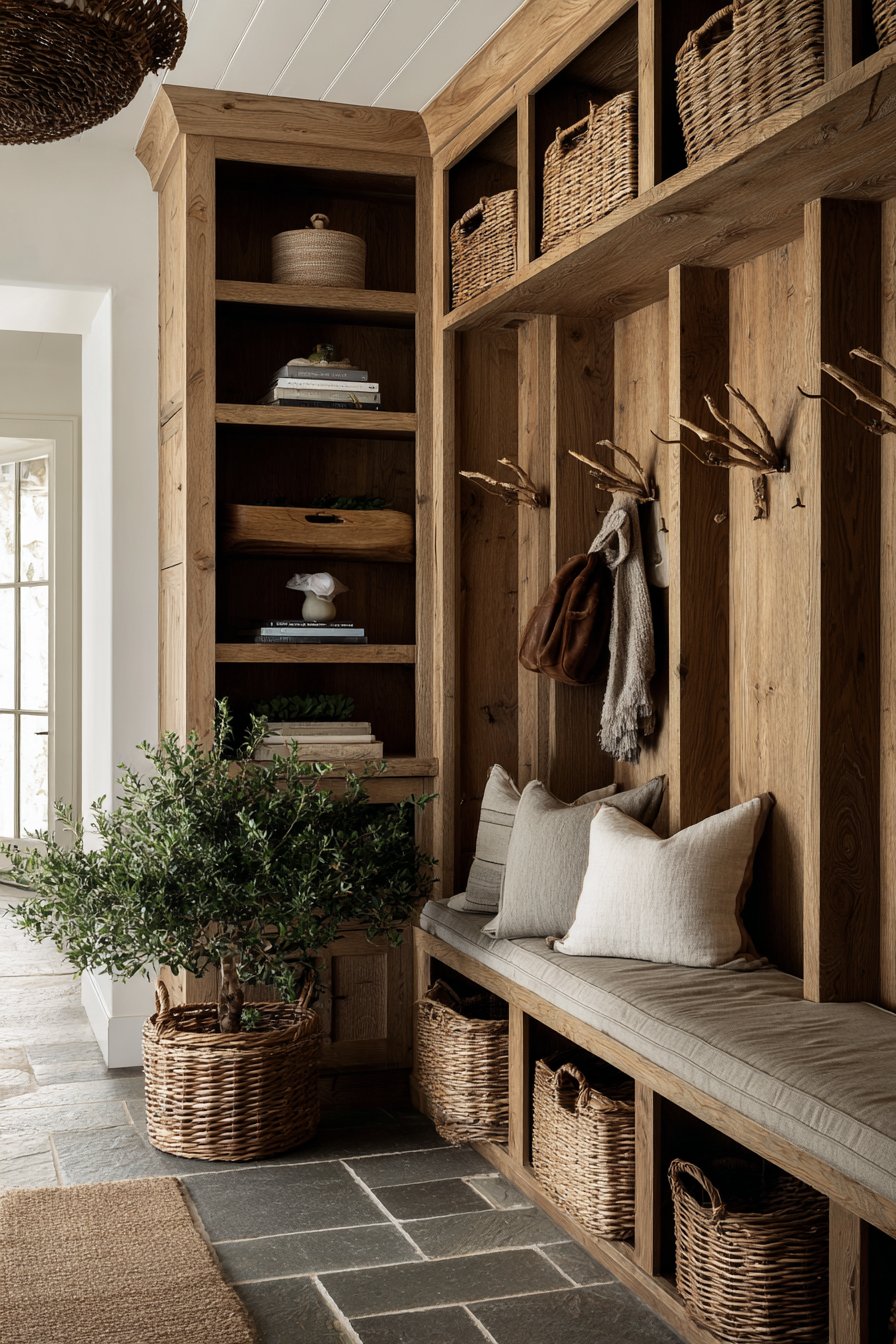
This design addresses the often-awkward transition between mudroom and kitchen with intentional integration that maintains the earthy aesthetic throughout. Built-in cubbies in natural pine provide dedicated storage for each family member, with hooks made from actual tree branches adding rustic character and natural forms. The branch hooks feel wonderful in the hand and create visual interest with their irregular shapes and visible bark texture.
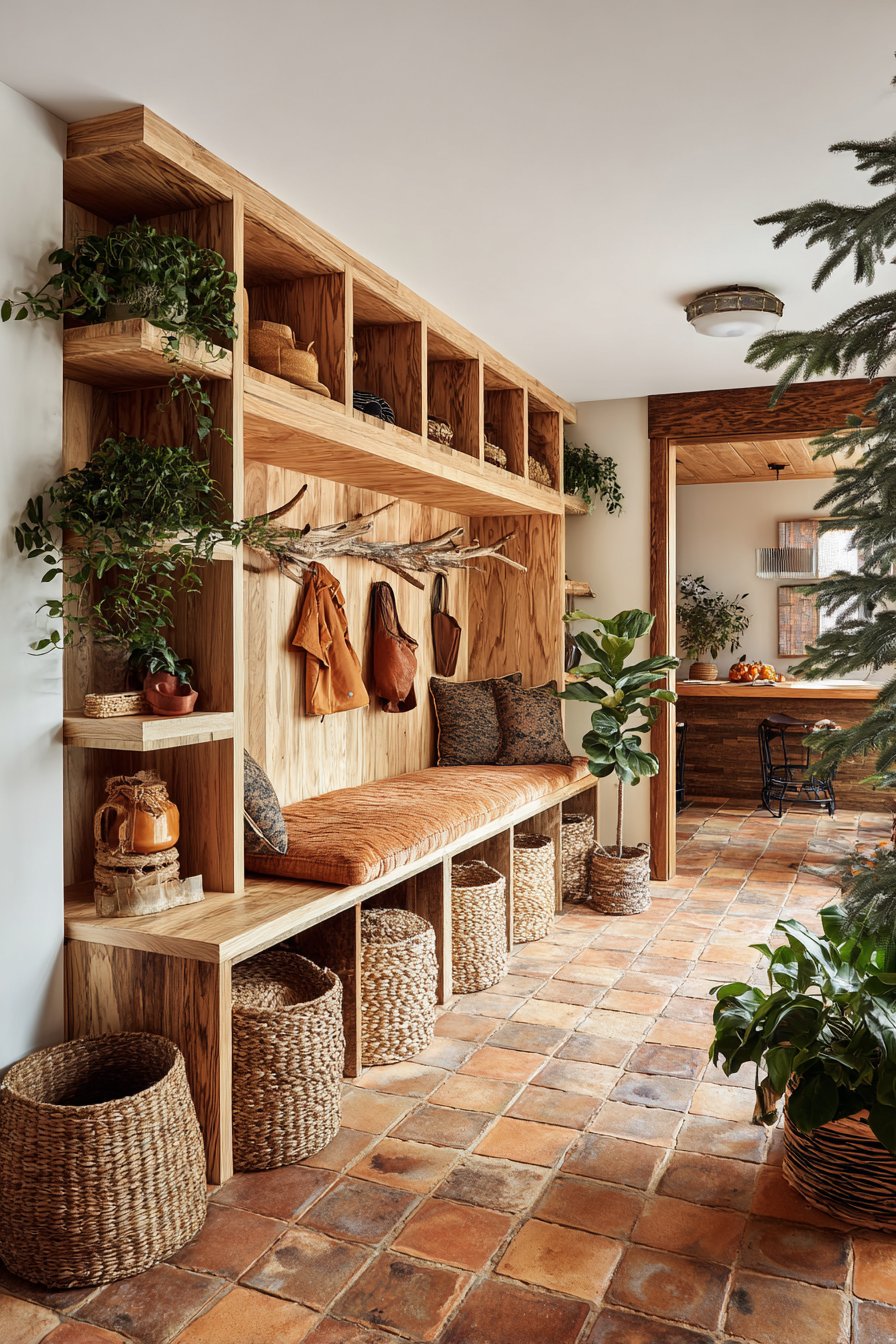
A bench with woven seating provides a comfortable spot for removing shoes while adding substantial textural interest—the woven material creates intricate patterns and allows air circulation. Terracotta tile flooring continues from the kitchen into the mudroom, creating visual flow and practical durability in this high-traffic area. The tiles’ warm tones and matte finish hide dirt well while maintaining their beauty.
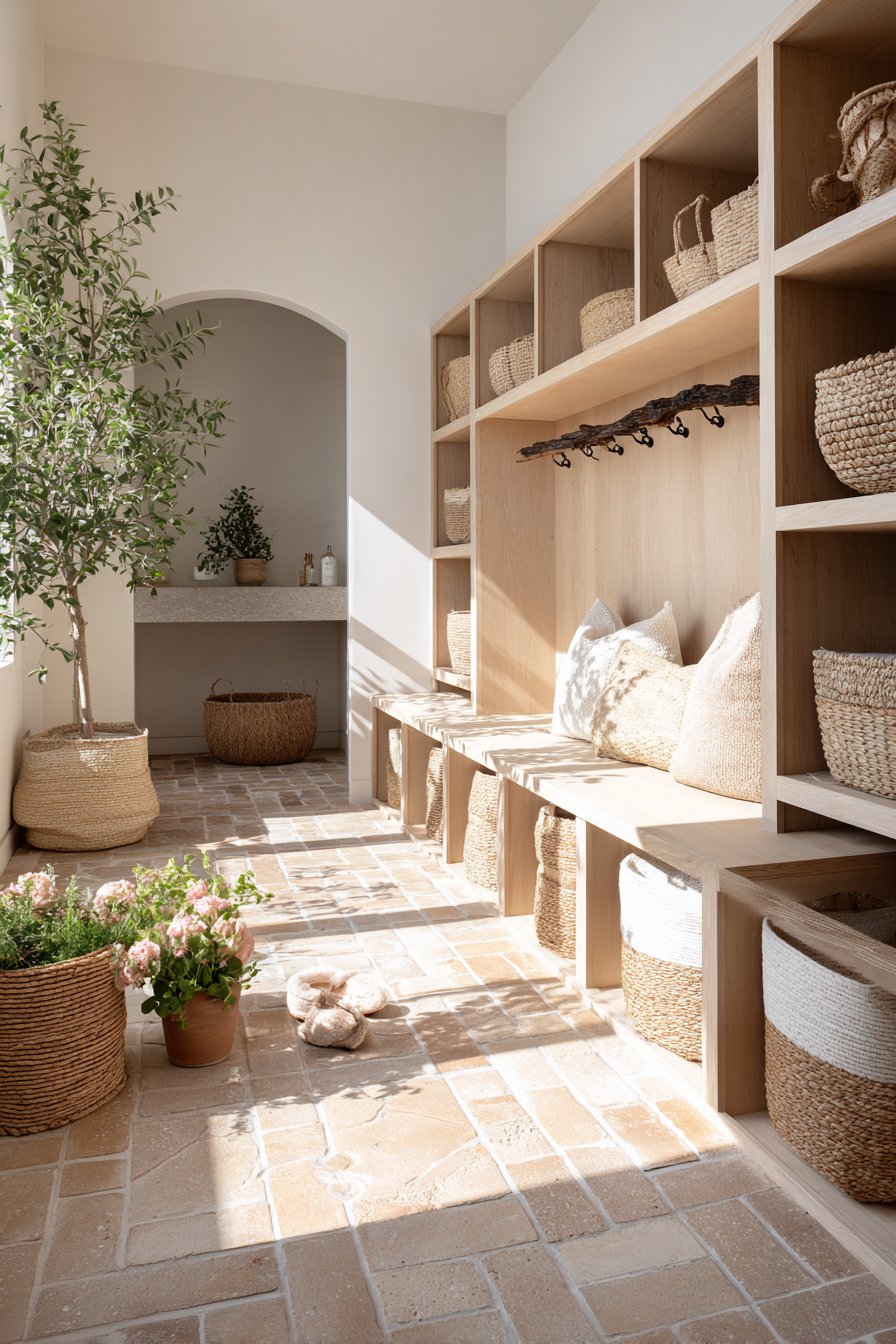
Wicker baskets organize shoes and accessories, their natural fiber construction and handmade quality reinforcing the organic aesthetic while providing practical, breathable storage. Potted plants add greenery and life, softening the hard surfaces and making the transition space feel welcoming rather than purely utilitarian. Wide-angle interior photography demonstrates the seamless flow between functional spaces while maintaining consistent natural material aesthetic.
Key Design Tips:
- Build in cubbies with natural pine for organized storage
- Use tree branch hooks for rustic character and organic forms
- Extend kitchen flooring into mudroom for visual continuity
- Choose woven seating for texture and air circulation
- Organize with wicker baskets instead of plastic bins
21. Window Backsplash Maximization
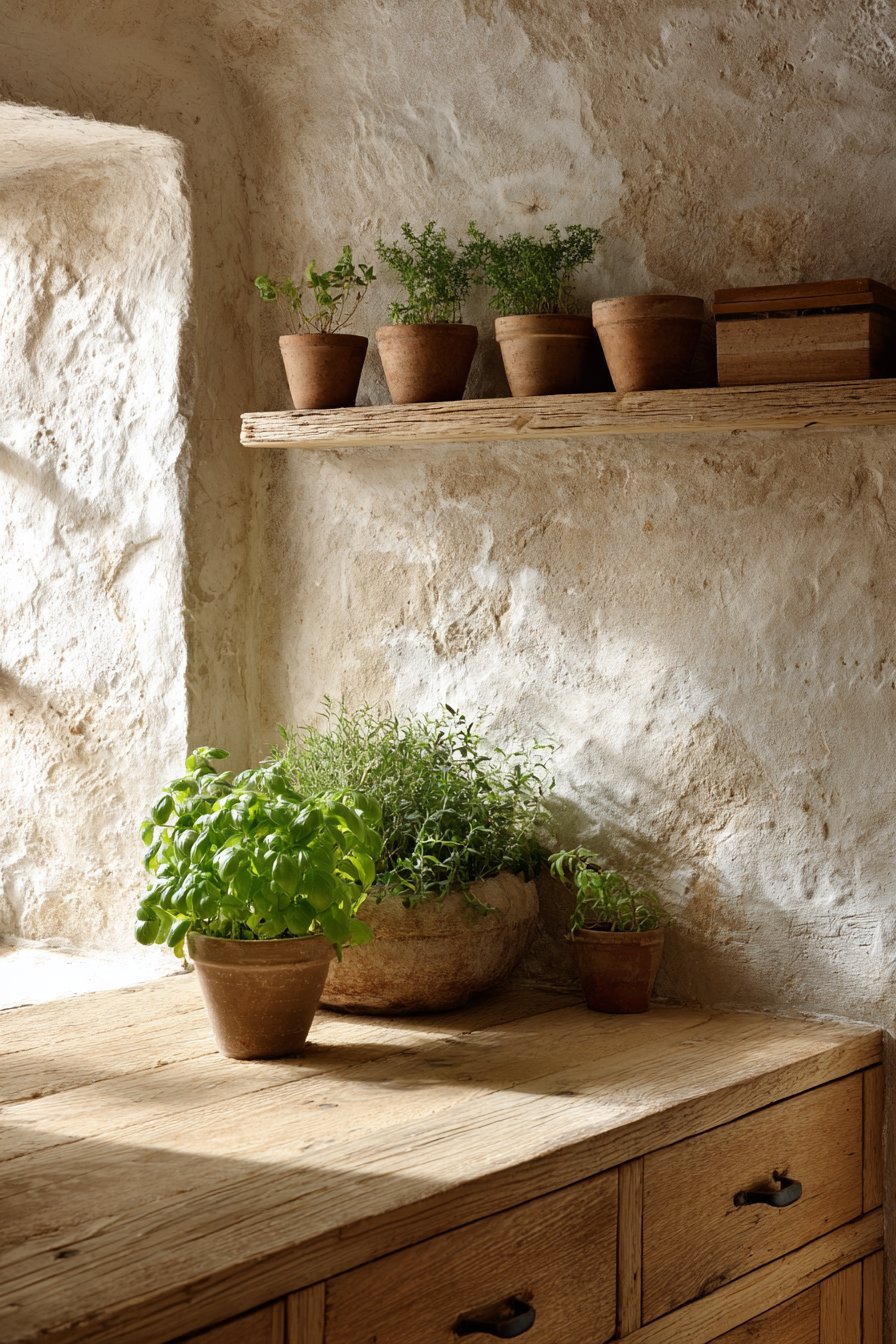
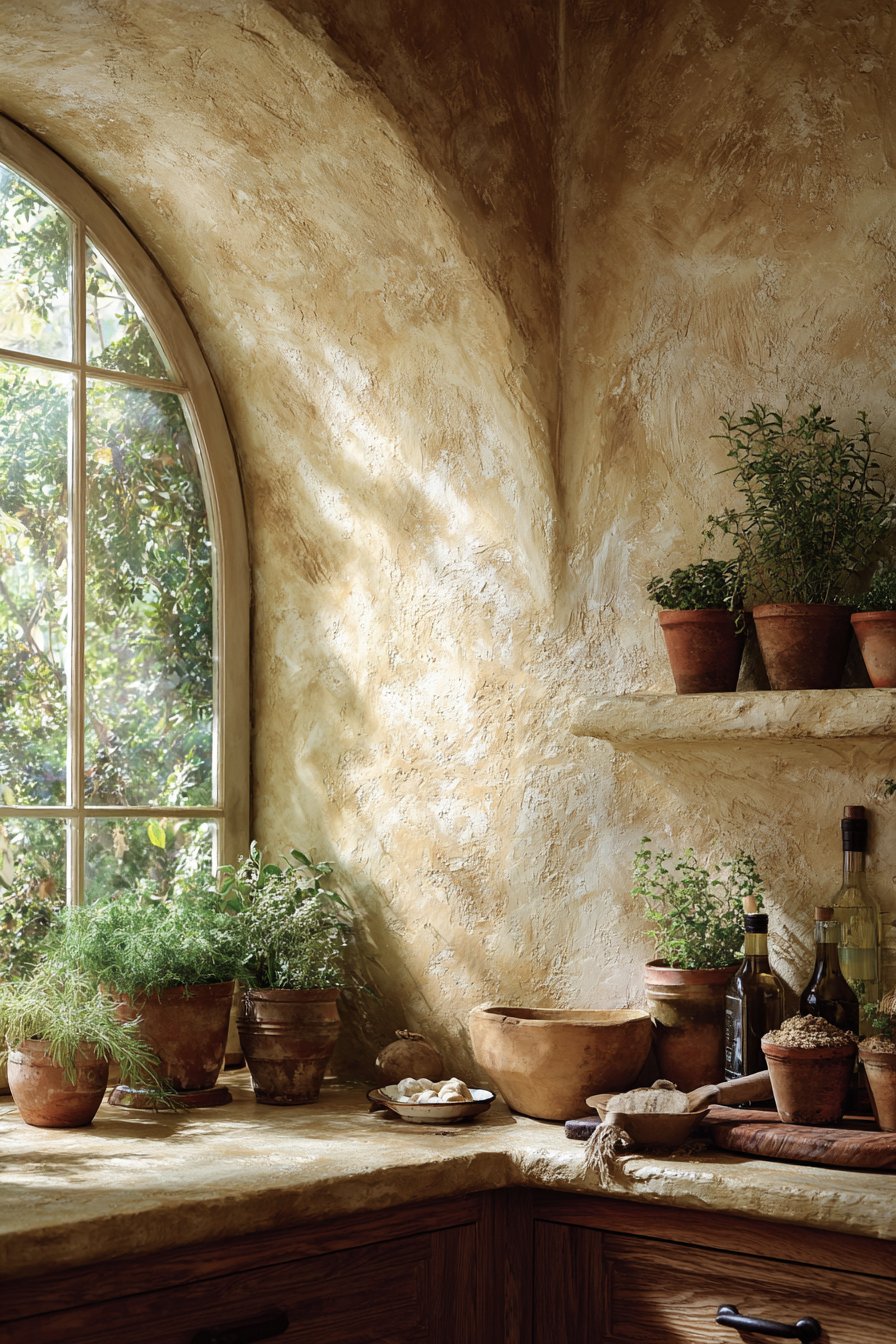
This design takes an unconventional approach by eliminating upper cabinets entirely in favor of maximizing natural light and views. The window backsplash area creates an open, airy feeling that makes the kitchen feel larger and more connected to the outdoors. The window sill extends slightly to create a narrow shelf perfect for displaying small terracotta pots with fresh herbs—basil, mint, cilantro—that thrive in the abundant sunlight while providing ingredients within arm’s reach of the prep area.
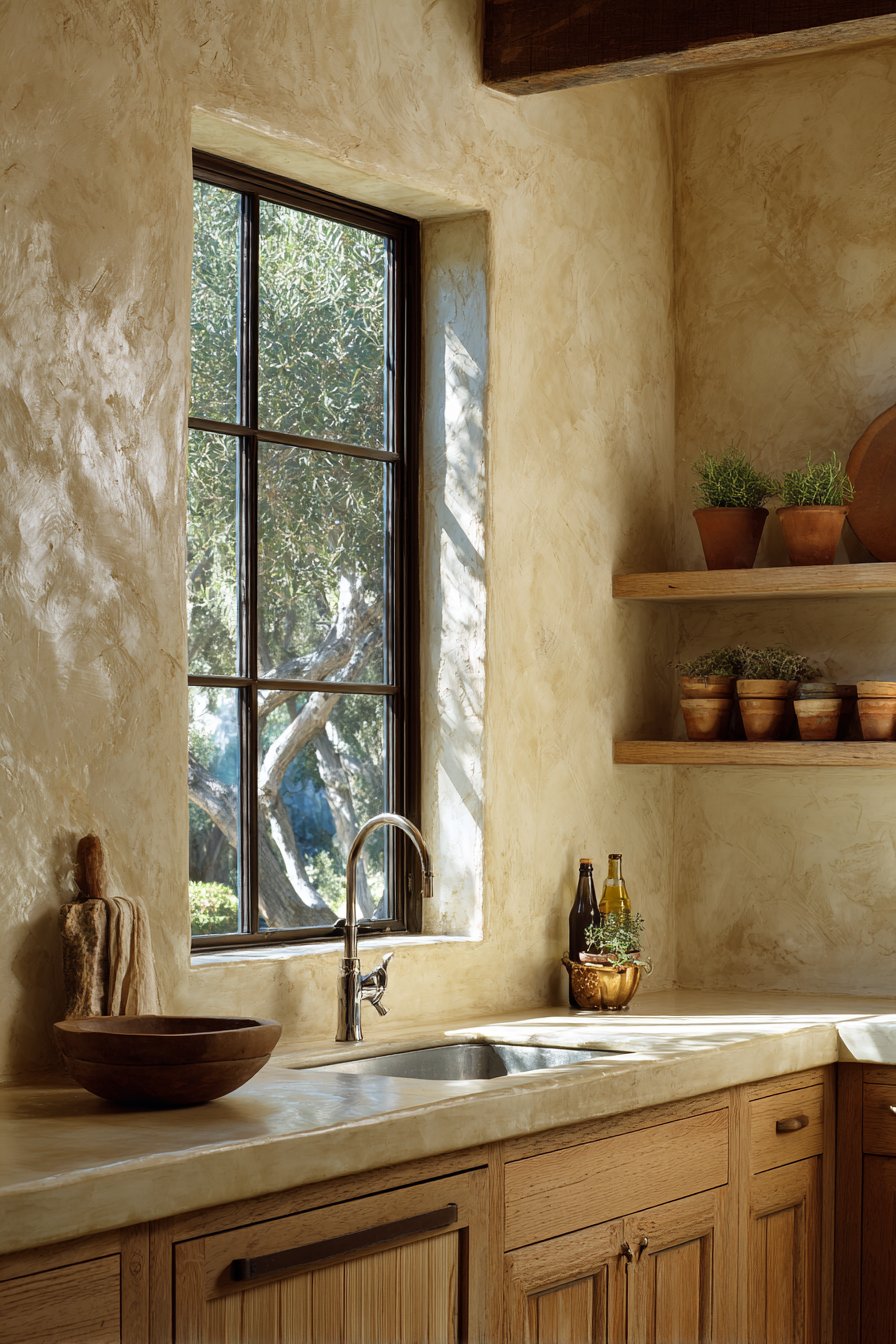
Walls finished in Venetian plaster with warm beige undertones create subtle surface variation and depth that paint cannot achieve. The plaster’s slight sheen and troweled texture catch light beautifully, creating a sophisticated backdrop that feels both traditional and timeless. Lower cabinets in medium-toned oak with simple bronze pulls provide ample storage while maintaining the warm, natural aesthetic.
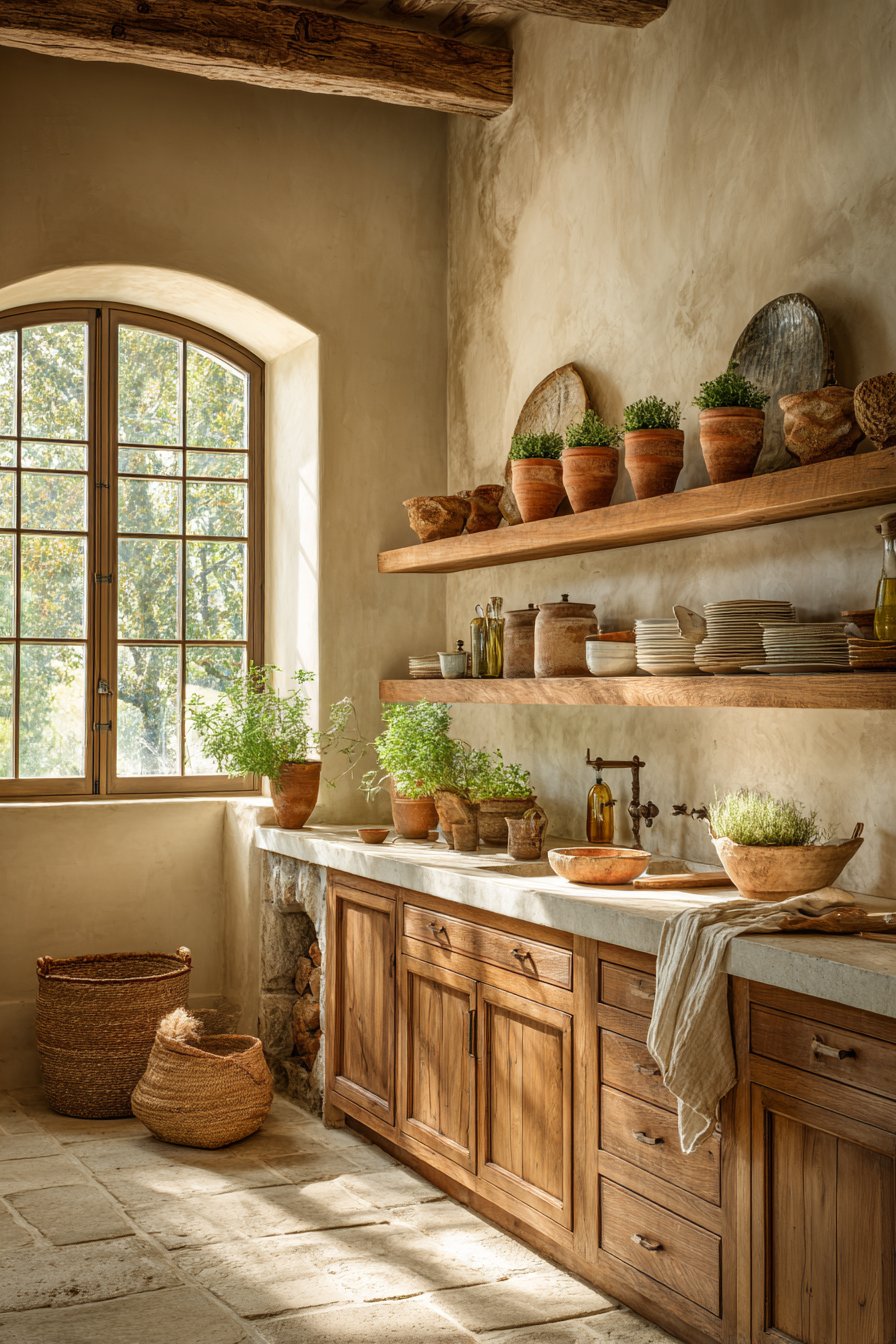
The abundant natural light enhances all the organic textures and warm color palette, making materials appear richer and more dimensional. Without upper cabinets blocking light, the entire kitchen feels brighter and more open throughout the day. This approach works especially well in kitchens with beautiful views or limited square footage where maximizing light perception creates the illusion of more space.
Key Design Tips:
- Eliminate upper cabinets to maximize natural light
- Extend window sills to create herb garden display
- Use Venetian plaster for sophisticated surface texture
- Choose medium-toned wood for lower cabinets to ground the space
- Position herbs where they’ll receive optimal sunlight
22. Vertical Architectural Interest
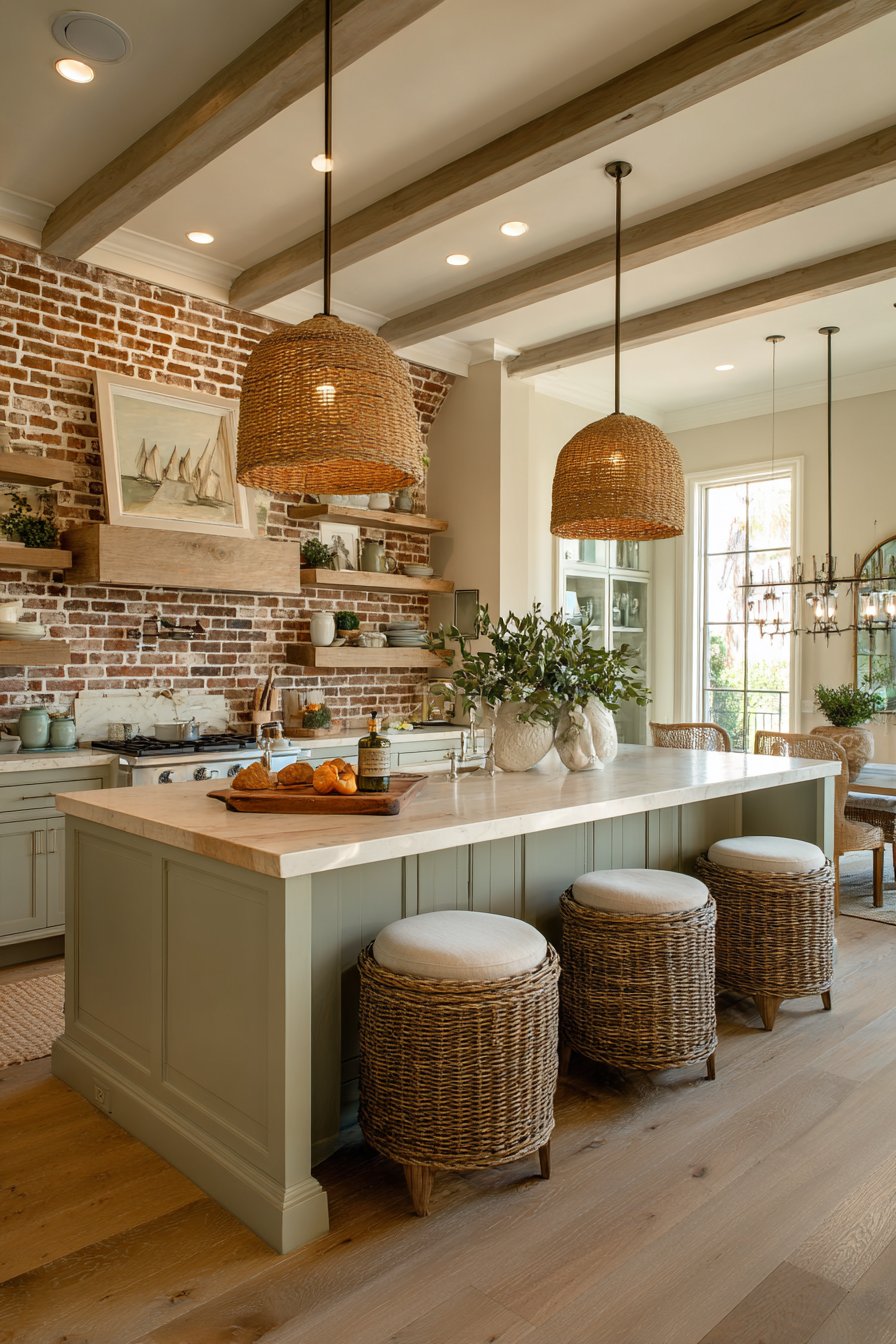
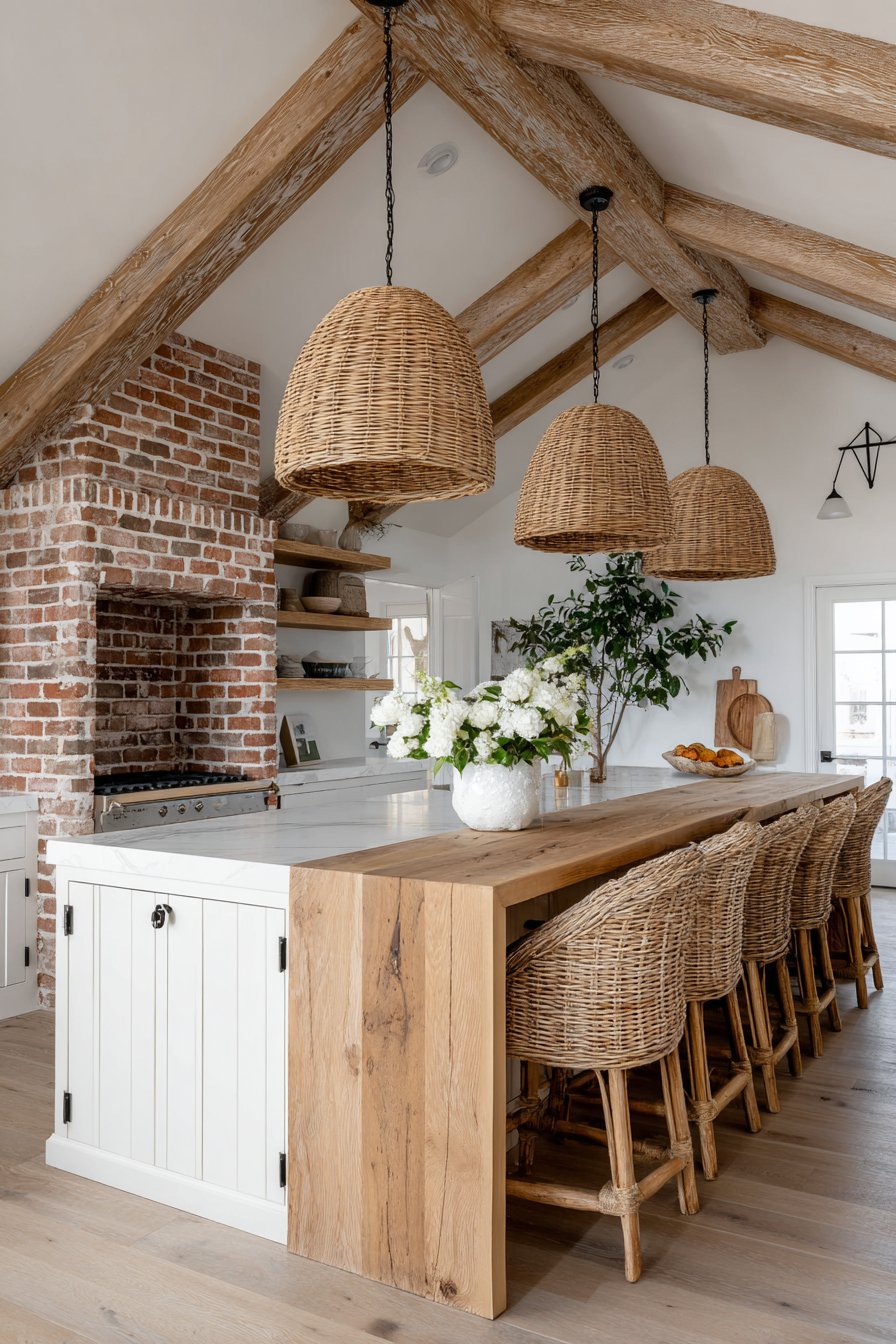
This design draws the eye upward with exposed wood trusses in grey-washed oak that create dramatic vertical architectural interest. The trusses’ structural honesty—you can see how they work—adds both visual drama and historical reference to structural systems used for centuries. The grey wash softens the wood’s natural tones without obscuring grain patterns, creating a lighter, airier feel than dark-stained beams while maintaining natural character.
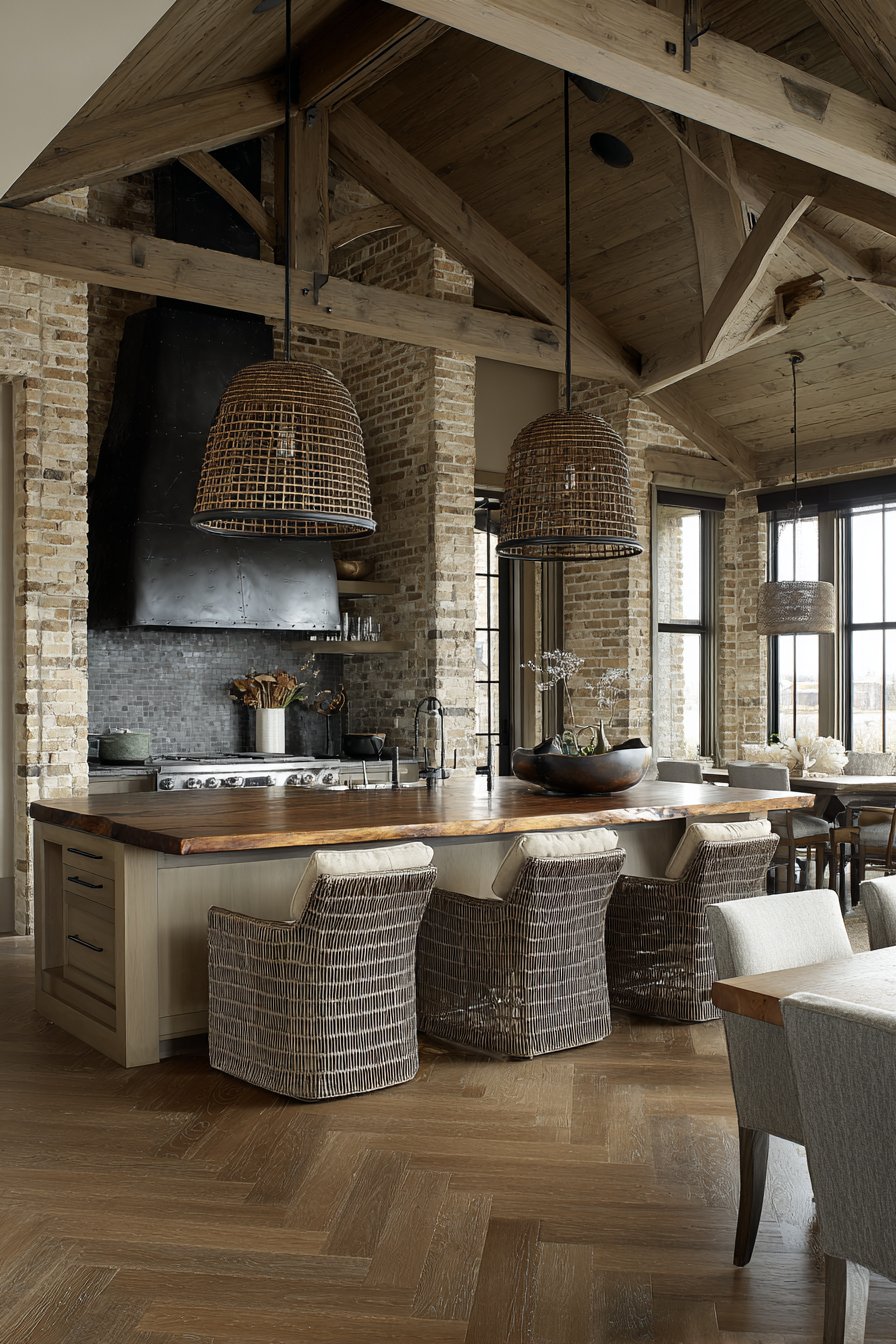
A reclaimed brick accent wall adds horizontal texture that balances the vertical trusses, its warm red-brown tones and irregular mortar lines creating visual complexity. Pendant lights featuring woven seagrass shades hang at varied heights, their organic texture casting intricate shadow patterns while providing functional task lighting. The kitchen island below features a live-edge wood countertop—with one side preserving the tree’s natural edge—and a cream-painted shaker base that provides visual rest amidst all the texture.
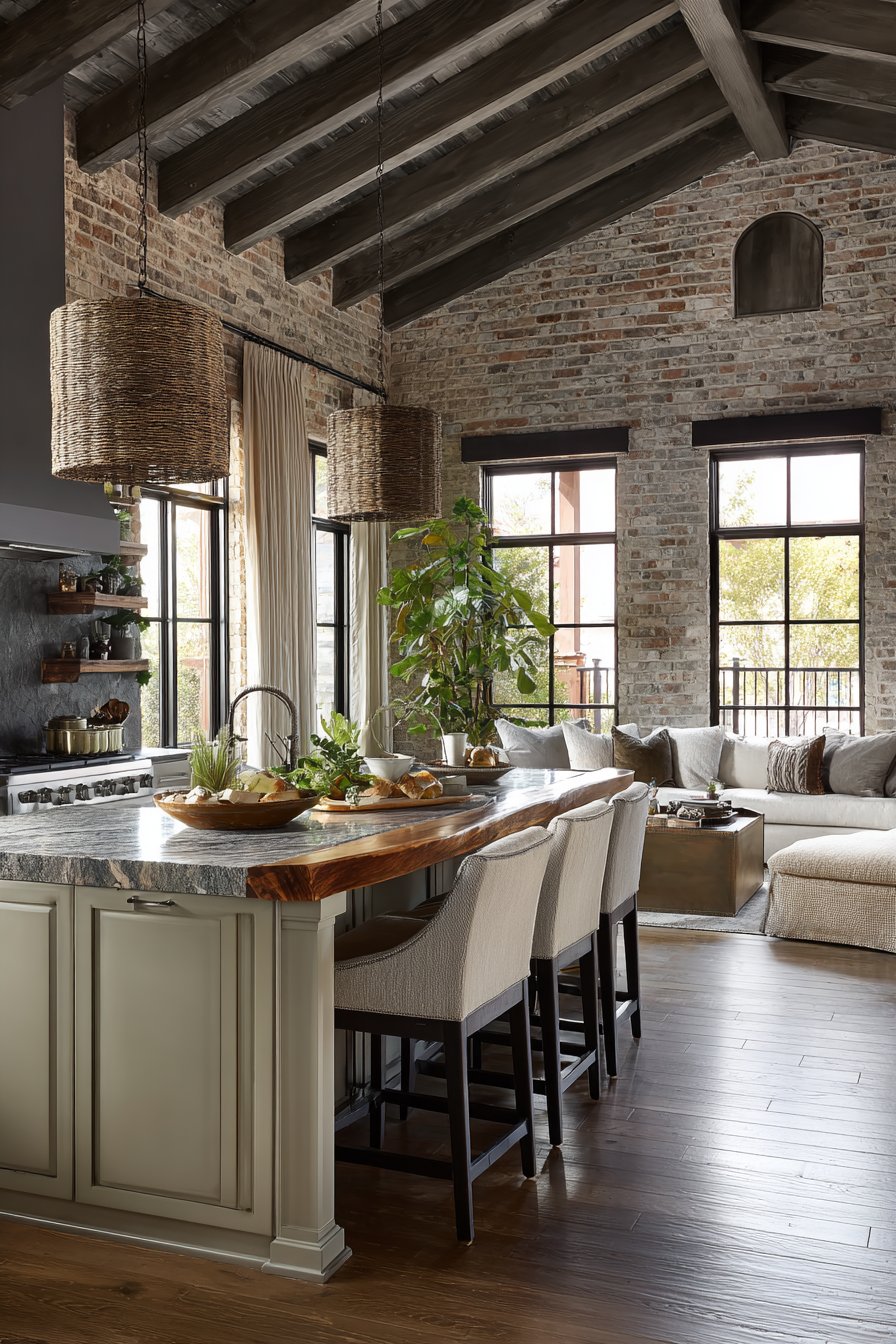
Wide-angle interior design photography captures the vertical architectural interest and shows how natural and artificial lighting layers create depth. The high ceilings and structural elements make the space feel grand and substantial, while the warm materials and earthy colors keep it grounded and welcoming rather than intimidating.
Key Design Tips:
- Expose or add wood trusses for dramatic vertical interest
- Use grey wash to lighten beams while maintaining texture
- Balance vertical elements with horizontal textured walls
- Hang woven pendant lights at varied heights
- Choose a live-edge countertop to showcase natural forms
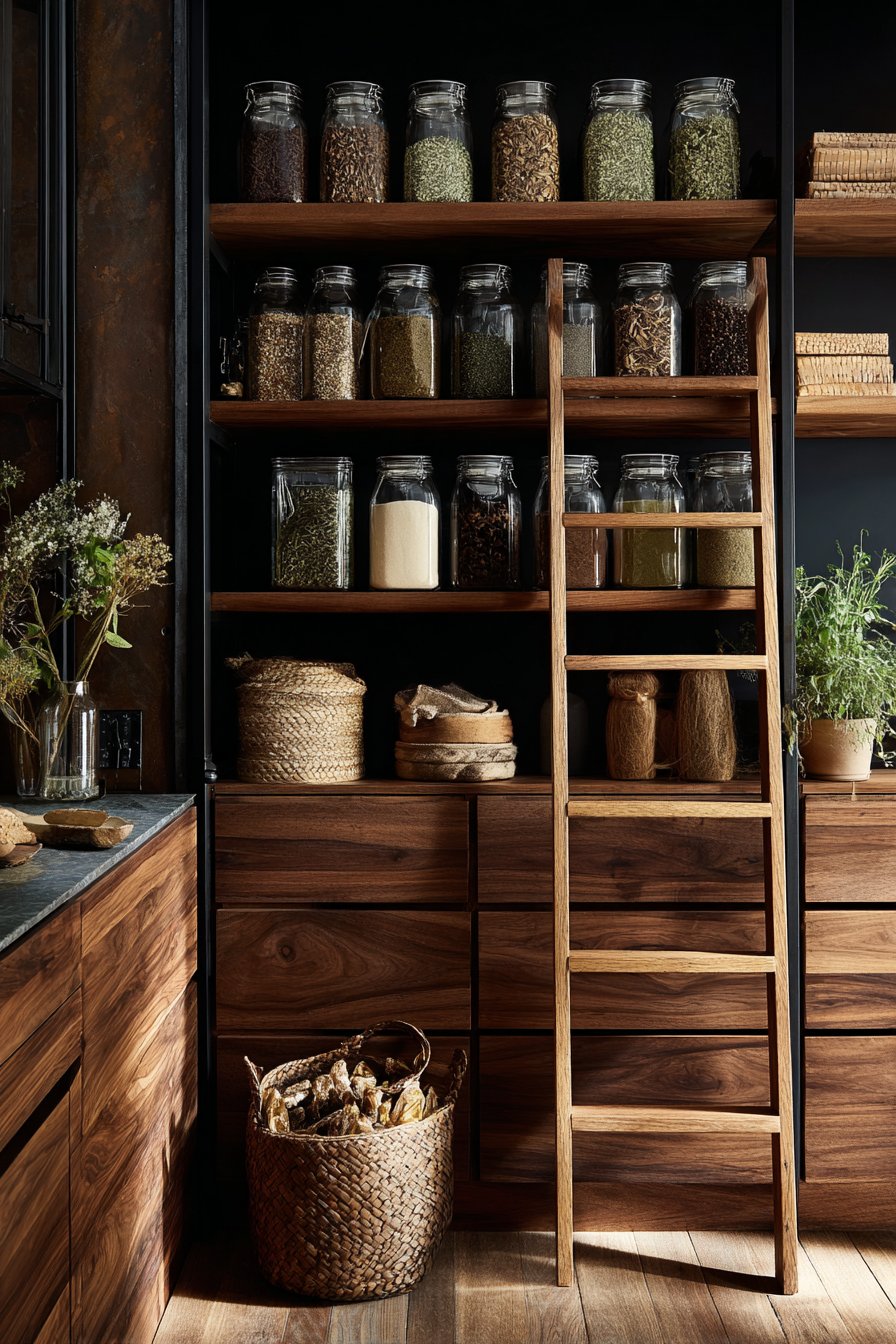
23. Magnetic Spice Display
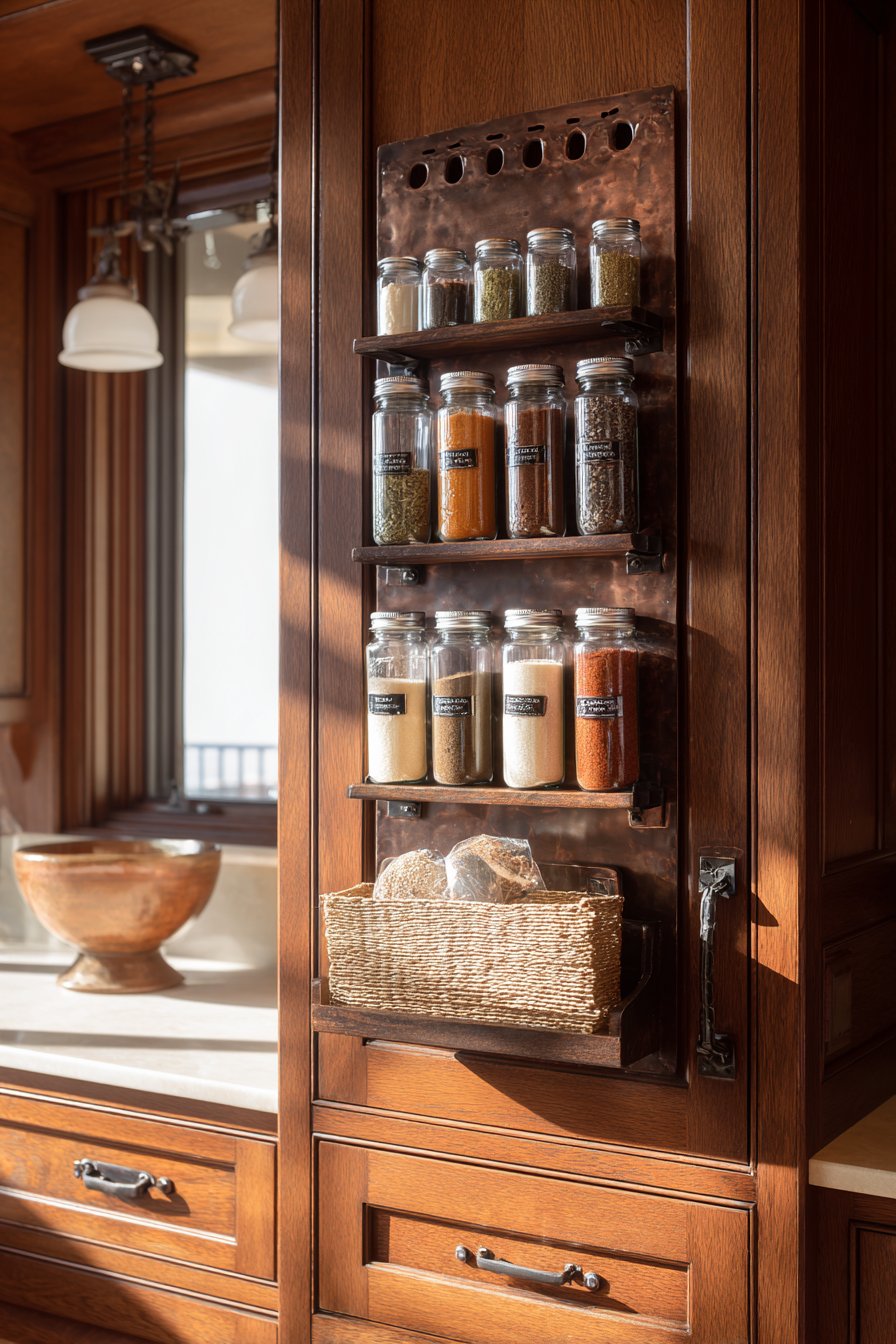
This final design focuses on practical organization with an artistic flair, featuring magnetic wall-mounted glass jars displayed on a steel panel with intentional rust patina finish. The jars hold whole spices—coriander seeds, peppercorns, dried chilies—their varied colors and textures creating a living art installation that changes as jars are used and refilled. The magnetic mounting system makes jars easy to remove for cooking while keeping them organized and visible.
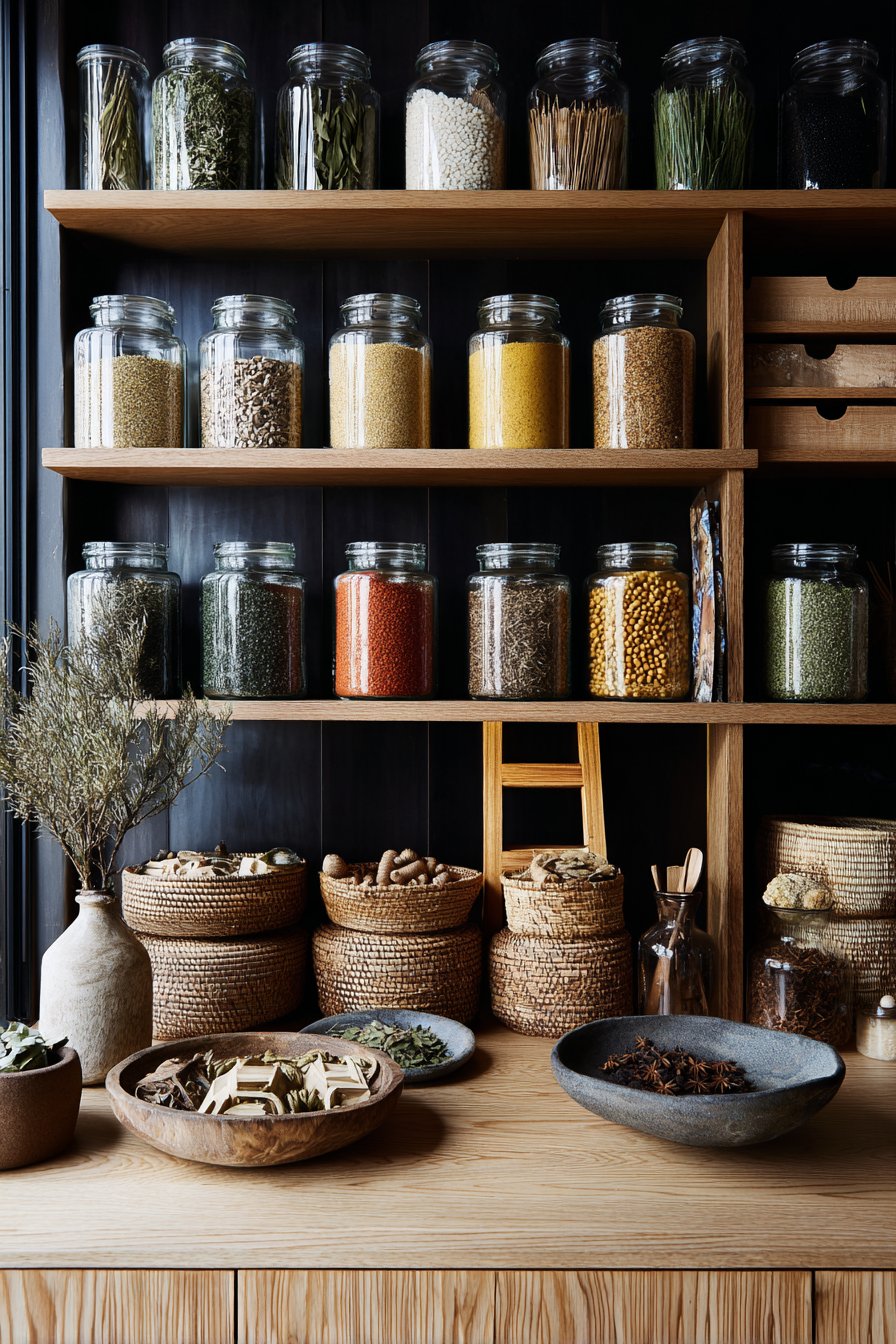
The steel panel’s rust patina introduces industrial elements that feel authentic rather than artificially aged—this is real oxidation creating unique patterns and warm orange-brown tones. Surrounding cabinetry in natural cherry wood provides warm reddish-brown tones that complement the rust while maintaining the organic aesthetic. A small wooden ladder provides access to upper storage, its simple construction and natural finish feeling practical and unpretentious.
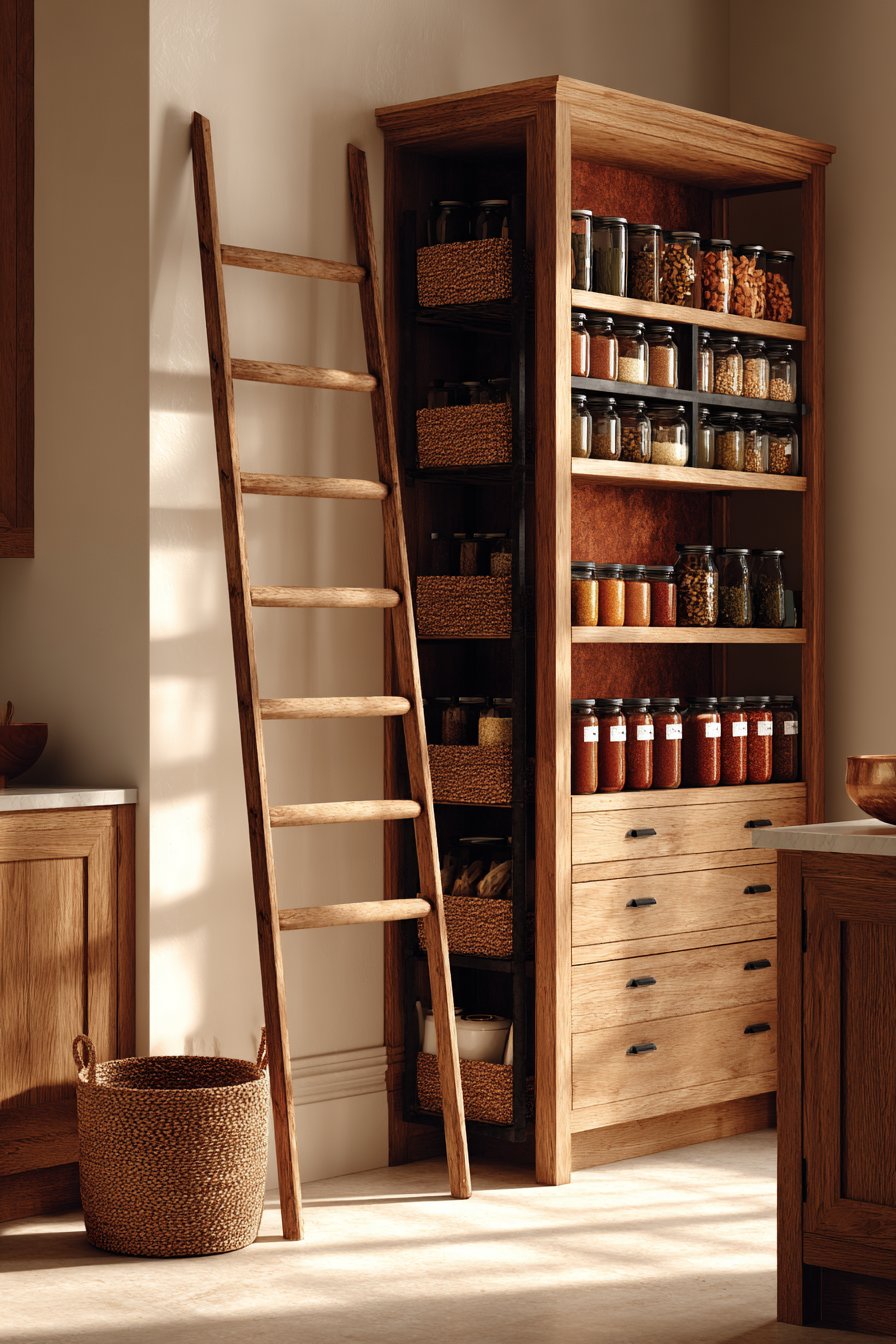
Woven basket pulls on drawers add textural detail and tactile pleasure—they feel wonderful in the hand and introduce natural fiber texture at eye level where it makes maximum impact. Professional interior photography focuses on this practical organizational system while highlighting the warm wood tones and how the industrial-meets-organic aesthetic creates unexpected harmony.
Key Design Tips:
- Mount magnetic spice jars on steel panel for flexible organization
- Embrace rust patina for authentic industrial character
- Choose cherry wood cabinetry for warm reddish-brown tones
- Add a small wooden ladder for upper storage access
- Use woven basket pulls for textural and tactile interest
Why These Earthy Kitchen Designs Represent the Best in Natural Interior Design
The collection of earthy kitchen ideas presented in this comprehensive guide represents the pinnacle of natural, organic interior design for several compelling reasons. First and foremost, these designs prioritize authenticity over artifice—they celebrate real materials with honest characteristics rather than laminates pretending to be wood or synthetic surfaces mimicking stone. This authenticity creates spaces that feel genuine and grounded, qualities increasingly valued in our digital age where so much feels virtual and ephemeral. Reclaimed wood countertops, natural stone sinks, handmade clay tiles, and exposed brick walls all showcase materials as they truly are, complete with variations, imperfections, and the unique character that comes from natural formation or artisan craftsmanship.
The earthy kitchen aesthetic also excels at creating warmth and welcome—qualities essential for a space that serves as the heart of the home. The warm color palettes drawn from nature—terracotta, sage green, warm oak, cream, rust, and stone grey—create psychologically comforting environments that make people want to gather and linger. Natural materials like wood, stone, clay, and natural fibers have inherent warmth that cold modern materials like stainless steel and glass cannot replicate. The textures in these designs—rough hewn wood, hammered copper, woven baskets, textured plaster—invite touch and create sensory richness that engages multiple senses rather than just vision.
These designs also demonstrate exceptional versatility and timelessness. Unlike trendy design approaches that quickly feel dated, earthy aesthetics draw from centuries of human habitation and material use. Stone, wood, clay, and metal have been used in kitchen construction for millennia, and designs incorporating these materials tap into deep human connections with the natural world. This means earthy kitchens remain relevant and appealing across generations rather than requiring updates to stay current. The aesthetic works equally well in urban lofts, suburban homes, rural farmhouses, and mountain cabins—it adapts to context while maintaining core principles of natural materials, warm colors, and organic textures.
From a practical standpoint, these earthy kitchen designs often prove more sustainable and environmentally responsible than conventional alternatives. Many incorporate reclaimed materials—barn wood shelving, salvaged brick, vintage fixtures—that give new life to materials that might otherwise end up in landfills. Natural materials like wood, stone, and clay often require less energy-intensive manufacturing than synthetic alternatives, and they tend to age gracefully rather than deteriorate. A butcher block countertop that develops knife marks over years tells the story of use and can be refinished multiple times, while laminate simply degrades and requires replacement. Copper develops patina, wood gains character, stone develops a lived-in sheen—these materials improve with age when properly maintained.
The emphasis on open storage and display in many of these designs also represents best practices in functional kitchen organization. Displaying pottery on open shelving, storing spices in visible glass jars, hanging copper cookware from pot racks—these approaches keep frequently used items accessible while turning functional objects into decorative elements. This reduces visual clutter from having things scattered on counters while eliminating the frustration of rummaging through closed cabinets. The aesthetic honesty of showing real cooking tools and ingredients also creates spaces that feel authentic and lived-in rather than styled for photography and never actually used.
These earthy kitchen concepts also excel at creating emotional resonance and personal connection. Natural materials connect us to the physical world in ways that synthetic materials cannot—we can imagine the tree that became the cabinet, the clay dug from earth and shaped by hand, the stone quarried from specific geological formations. This creates psychological grounding and sense of place that many people find deeply satisfying. The variations and imperfections in natural materials also create uniqueness—no two kitchens incorporating these design principles will ever be exactly alike, even if following the same general approach. This individuality allows homeowners to create spaces that feel personally meaningful rather than generic.
The lighting considerations in these designs also represent sophisticated understanding of how natural light interacts with materials throughout the day. Terracotta tiles glow warmly in morning light, copper catches and reflects golden hour illumination, wood grain becomes more pronounced in directional light, stone surfaces reveal dimensional texture through shadow and highlight. These designs work with light rather than fighting it, positioning windows strategically, choosing materials that respond beautifully to illumination changes, and supplementing with warm artificial lighting that enhances rather than contradicts the natural palette.
Finally, these earthy kitchen designs demonstrate successful integration of multiple design elements—architecture, materials, color, lighting, storage, and function—into cohesive wholes that feel greater than the sum of their parts. Each design decision supports and enhances others rather than competing for attention. The exposed beams harmonize with brick accent walls, copper fixtures complement terracotta flooring, sage green cabinetry balances warm wood tones. This holistic approach creates kitchens that feel intentional and considered, where every element has purpose and contributes to the overall atmosphere of natural warmth and organic beauty.
Conclusion: Bringing Earth’s Beauty Into Your Kitchen
Creating an earthy kitchen represents more than just a design choice—it’s a commitment to authenticity, sustainability, and creating spaces that nurture both body and soul. The 23 design concepts explored in this guide demonstrate the remarkable versatility of natural materials, warm earth-toned palettes, and organic textures in creating kitchens that feel welcoming, timeless, and deeply personal. Whether you’re drawn to the rustic charm of reclaimed wood and exposed brick, the sophisticated contrast of concrete and walnut, or the artisan beauty of handmade clay tiles and copper accents, earthy design offers endless possibilities for creating a kitchen that truly feels like the heart of your home.
As you consider incorporating these ideas into your own space, remember that earthy design isn’t about perfection—it’s about authenticity, character, and the beauty of materials as they naturally are. Start with one element that resonates with you: perhaps replacing standard tiles with handmade ceramics, installing open shelving to display pottery, adding terracotta planters with fresh herbs, or introducing a reclaimed wood element. Each natural material you introduce will contribute to a more grounded, welcoming atmosphere that celebrates the connection between your home and the natural world.
The beauty of earthy kitchen design lies in its accessibility and adaptability. You don’t need an unlimited budget or a complete renovation to begin incorporating these principles. Even small changes—swapping plastic storage for woven baskets, displaying wooden cutting boards, adding plants in terracotta pots, or replacing chrome fixtures with warm bronze—can shift your kitchen’s atmosphere toward something warmer and more organic. Trust your instincts, prioritize natural materials over synthetic alternatives when possible, and create a space that reflects your personal connection to the earth’s beauty. Your kitchen should be a place where you genuinely want to spend time, where cooking feels like a pleasure rather than a chore, and where family and friends naturally gather—and earthy design principles can help you create exactly that kind of nurturing, inspiring space.
