
The kitchen has evolved from a purely utilitarian space into the heart of the modern home—a place where culinary creativity meets social connection, where morning coffee rituals unfold, and where families gather to share not just meals but moments. At the center of this transformation is an architectural feature that has revolutionized kitchen design: the peninsula. Unlike its island cousin, a peninsula extends from existing cabinetry or walls, creating an additional work surface that seamlessly integrates into your kitchen’s footprint while maximizing both functionality and aesthetic appeal.
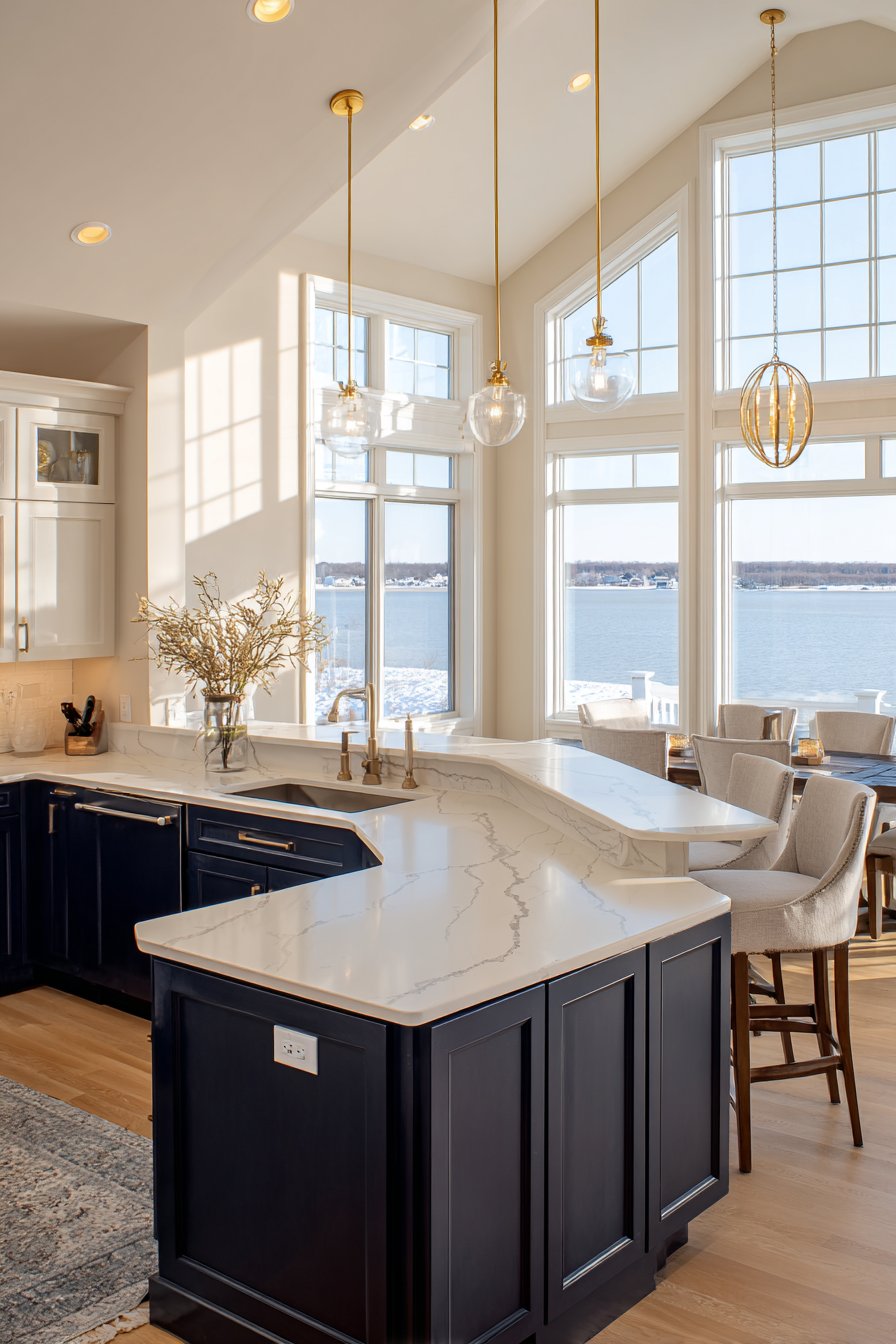
Peninsula kitchens offer a remarkable solution for homeowners seeking to enhance their cooking spaces without the square footage requirements of a traditional island. This versatile design element serves multiple purposes—it can function as a breakfast bar for casual dining, a prep station for ambitious cooking projects, a natural room divider in open-concept layouts, or even a stylish backdrop for entertaining guests. The beauty of peninsula kitchen design lies in its adaptability; whether you’re working with a compact urban apartment or a spacious suburban home, there’s a peninsula configuration that can elevate your space while addressing your specific needs and lifestyle preferences.
In this comprehensive guide, we’ll explore twenty-five distinct peninsula kitchen ideas that span the spectrum of interior design styles—from the warmth of modern farmhouse aesthetics to the sleek sophistication of contemporary minimalism, from the rustic charm of lodge-inspired spaces to the glamorous appeal of Art Deco elegance. Each design showcases how thoughtful material selection, strategic lighting, intelligent storage solutions, and cohesive color palettes can transform a peninsula from a simple architectural extension into a stunning focal point that defines your entire kitchen. Whether you’re planning a complete kitchen renovation or seeking inspiration for a targeted update, these ideas will help you envision the possibilities that peninsula kitchen design can bring to your home.
1. Modern Farmhouse Peninsula with Butcher Block Warmth
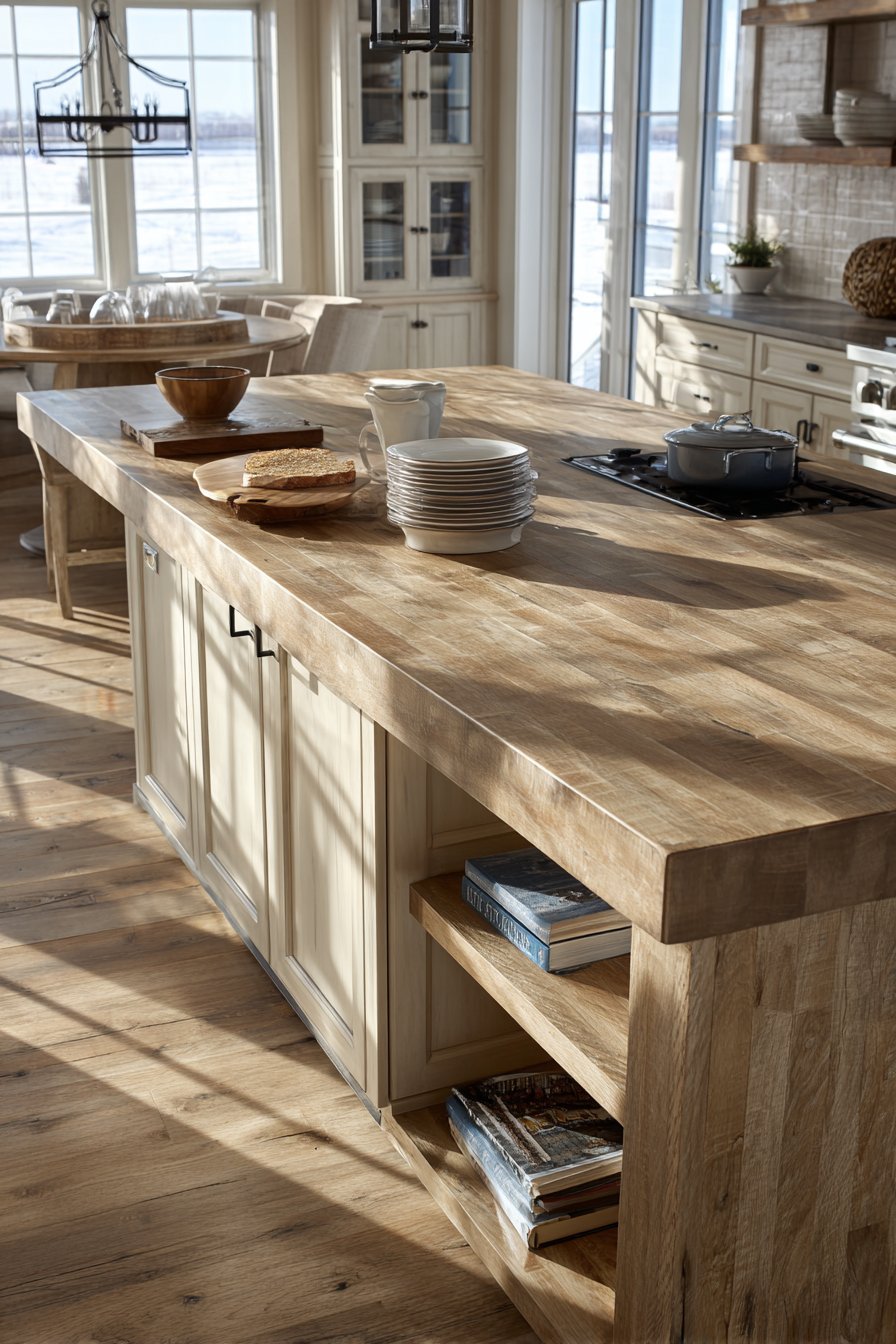
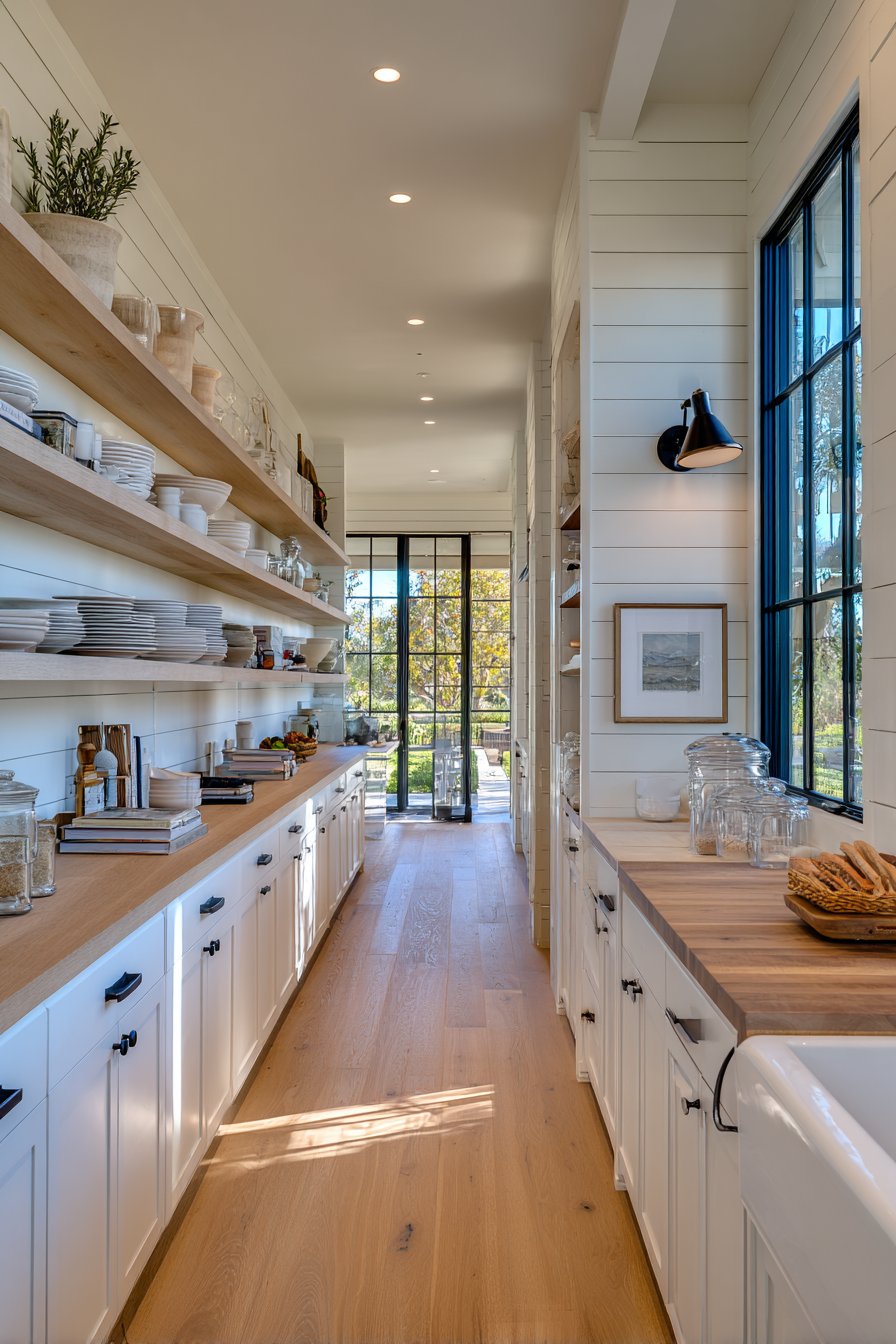
Step into a kitchen where modern farmhouse charm radiates from every carefully chosen detail, anchored by a substantial peninsula that bridges contemporary convenience with rustic authenticity. The butcher block countertop commands attention with its rich grain patterns flowing across the surface—each line telling the story of the oak from which it was crafted. This natural wood element provides not just visual warmth but also a practical cutting surface that develops character over time, embracing the philosophy that lived-in beauty surpasses sterile perfection. The peninsula extends generously from the main kitchen workspace, creating an intuitive division between cooking and living areas while maintaining the open, connected feel that defines modern home design.
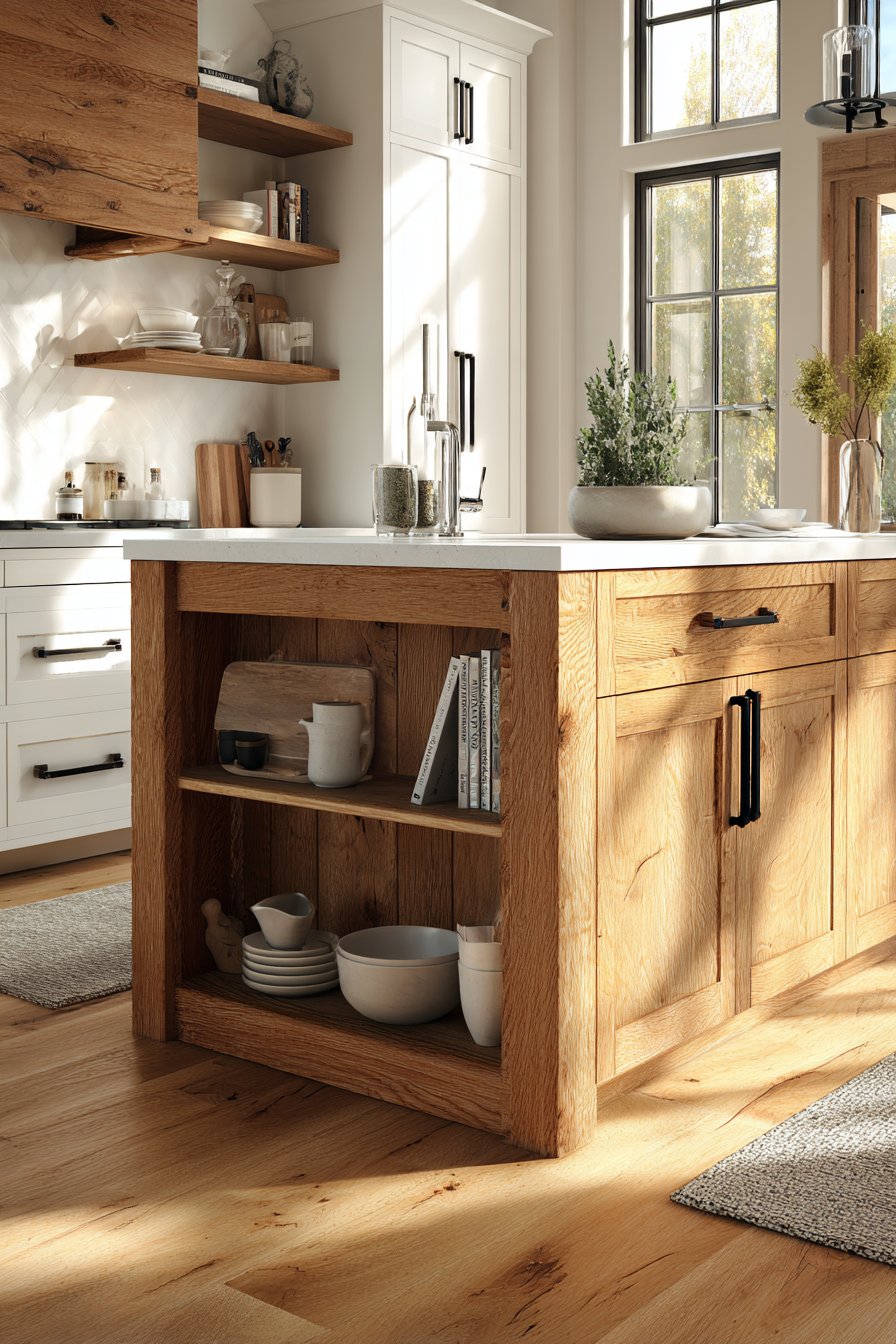
White shiplap paneling wraps the peninsula’s base, its horizontal lines creating a rhythmic visual element that’s quintessentially farmhouse while feeling fresh and updated. Black iron hardware punctuates the white cabinetry with striking contrast—simple cup pulls and hinges that reference vintage utilitarian design without veering into costume territory. These dark accents ground the light palette and provide tactile satisfaction with their substantial weight and smooth finish. Open shelving on the peninsula’s exterior transforms what could be dead space into a curated display opportunity, where well-loved cookbooks lean against vintage cutting boards, and your grandmother’s mixing bowls sit ready for impromptu baking sessions.
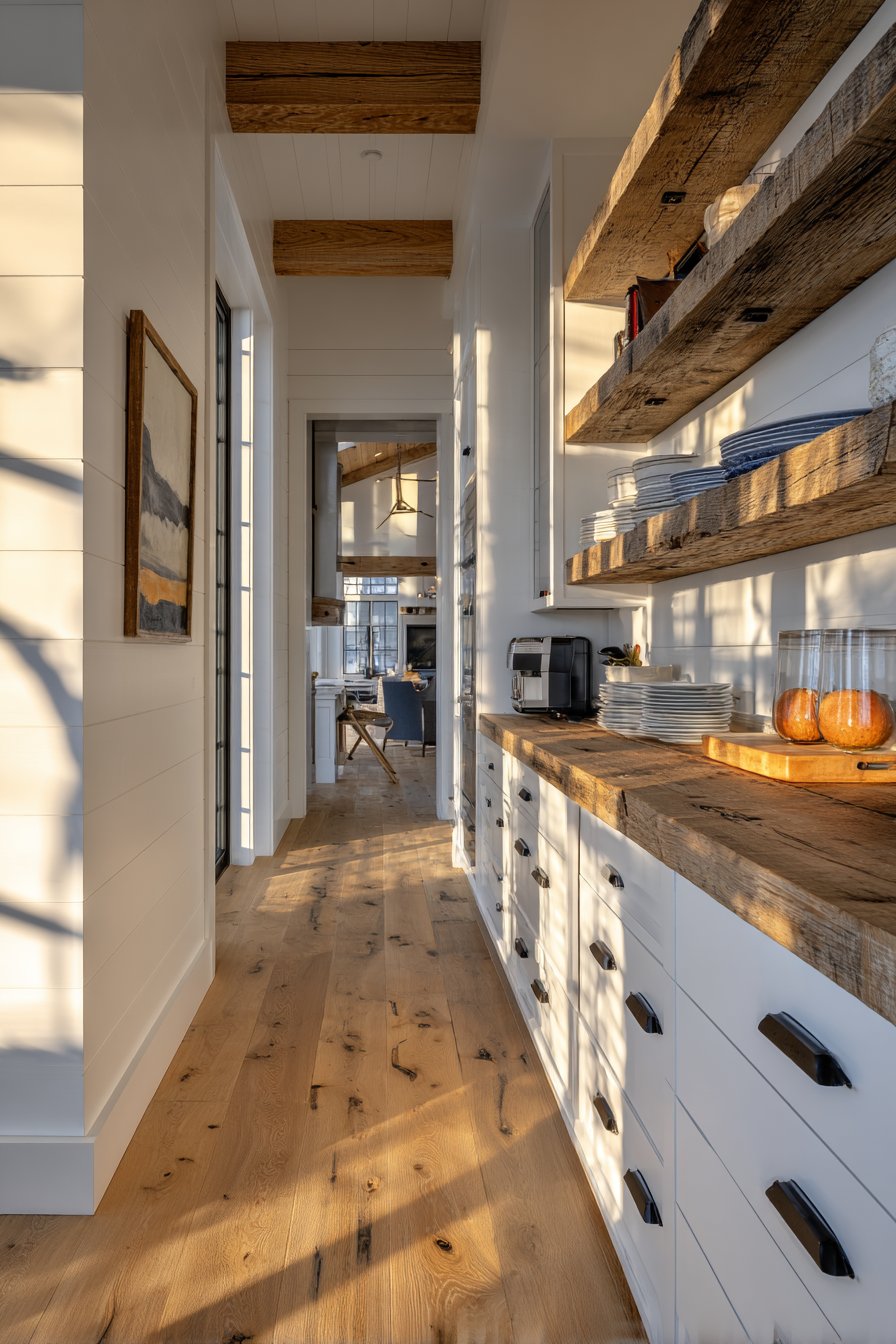
Natural oak flooring flows seamlessly throughout the space, its honey tones harmonizing with the butcher block countertop to create layers of warm wood that prevent the white elements from feeling too clinical. Morning light streams through nearby windows, catching the grain of the wood and casting gentle shadows that emphasize the peninsula’s depth and the texture of the shiplap panels. This interplay of natural illumination with carefully chosen materials creates an atmosphere that feels both energizing for morning routines and welcoming for evening gatherings.
Key Design Tips:
- Select butcher block with tight grain patterns for durability and easier maintenance in high-use areas
- Apply food-safe mineral oil monthly to protect wood countertops and enhance their natural patina
- Balance the warm wood tones with crisp white cabinetry to prevent the space from feeling too heavy
- Install open shelving at a comfortable reach height for both display and genuine daily use
- Consider adding brackets or corbels beneath the butcher block overhang for both structural support and visual interest
- Position the peninsula perpendicular to natural light sources to showcase wood grain variations throughout the day
2. Compact Urban Peninsula with Smart Space Solutions
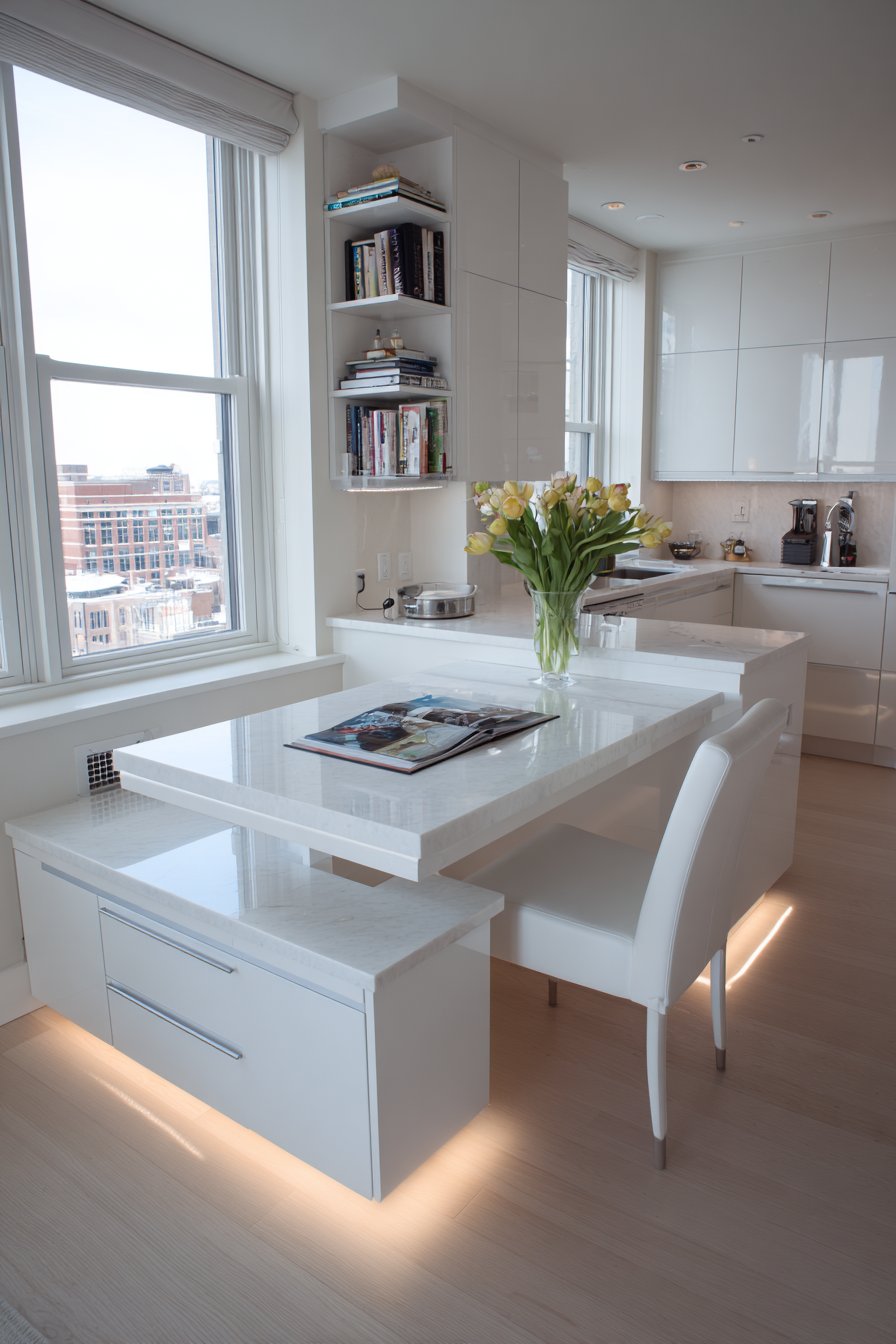
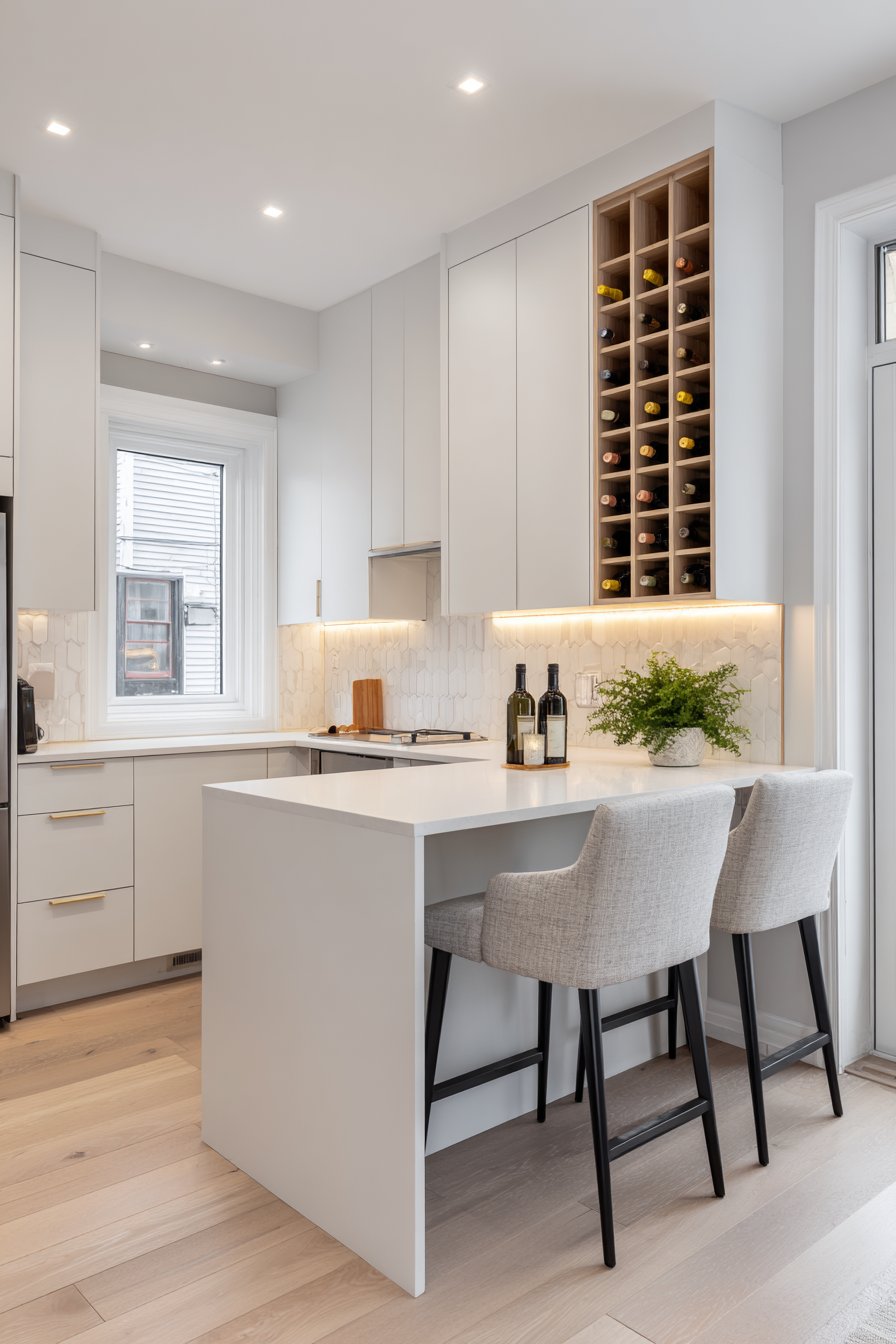
In the realm of urban apartment living where every square foot carries premium value, this peninsula kitchen demonstrates how intelligent design can deliver both style and substance within modest dimensions. The peninsula extends strategically from the main counter run, transforming what might otherwise be wasted circulation space into a multifunctional asset that serves as prep surface, dining counter, and visual centerpiece. Light grey quartz countertops bring a contemporary sensibility while offering the practical benefits of a non-porous surface that resists staining—crucial in a compact kitchen where one surface must serve many masters.
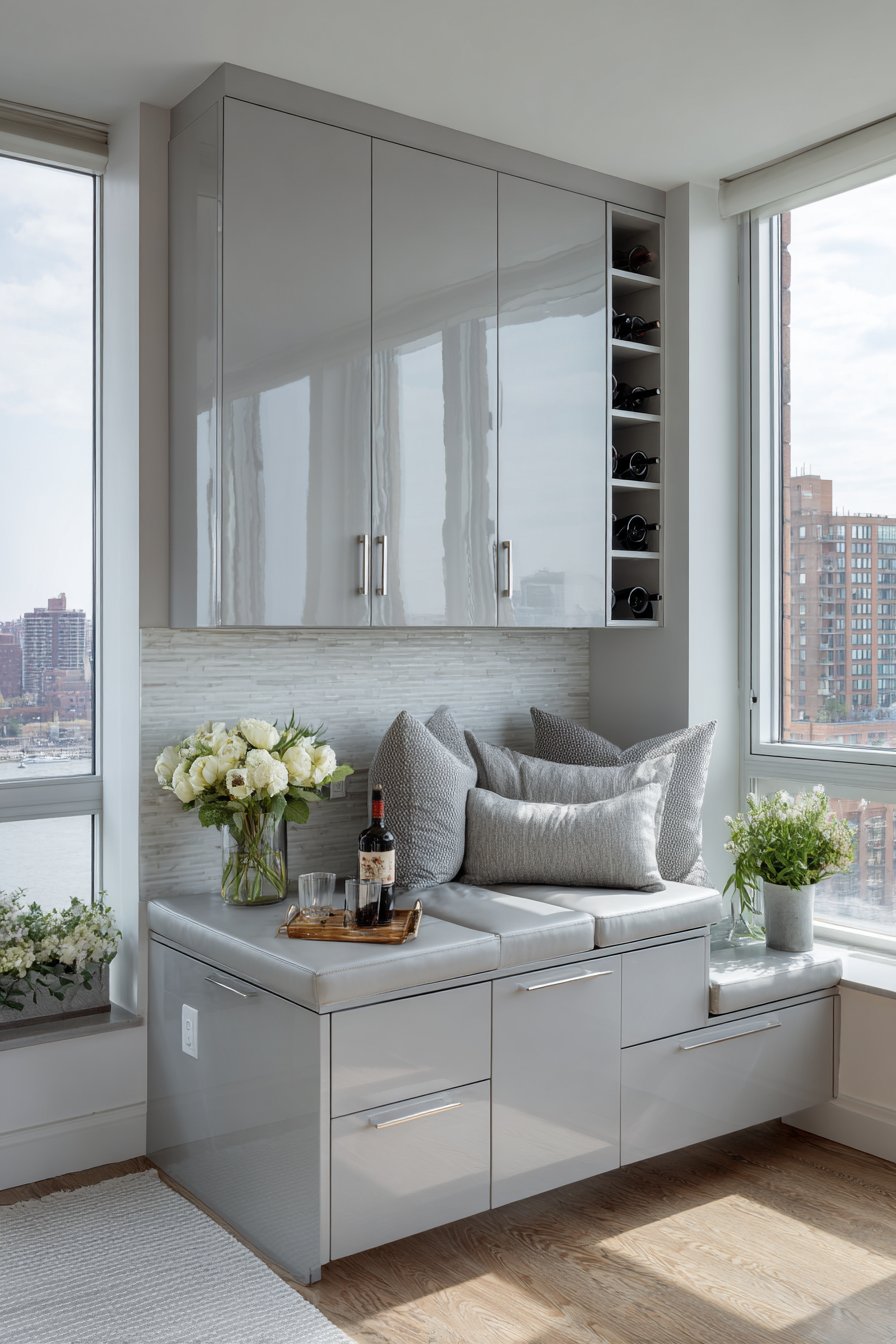
Handleless white lacquer cabinets create an uninterrupted visual flow that makes the small space feel larger through their seamless surfaces. The push-to-open mechanism eliminates the visual clutter of hardware while providing a satisfying tactile interaction that feels distinctly modern. This minimalist approach extends to the peninsula’s carefully considered storage solutions: hidden drawers glide open to reveal organized interiors with custom dividers, while a built-in wine rack transforms awkward corner space into a sophisticated display that celebrates your collection without demanding floor space for a separate bar cart.
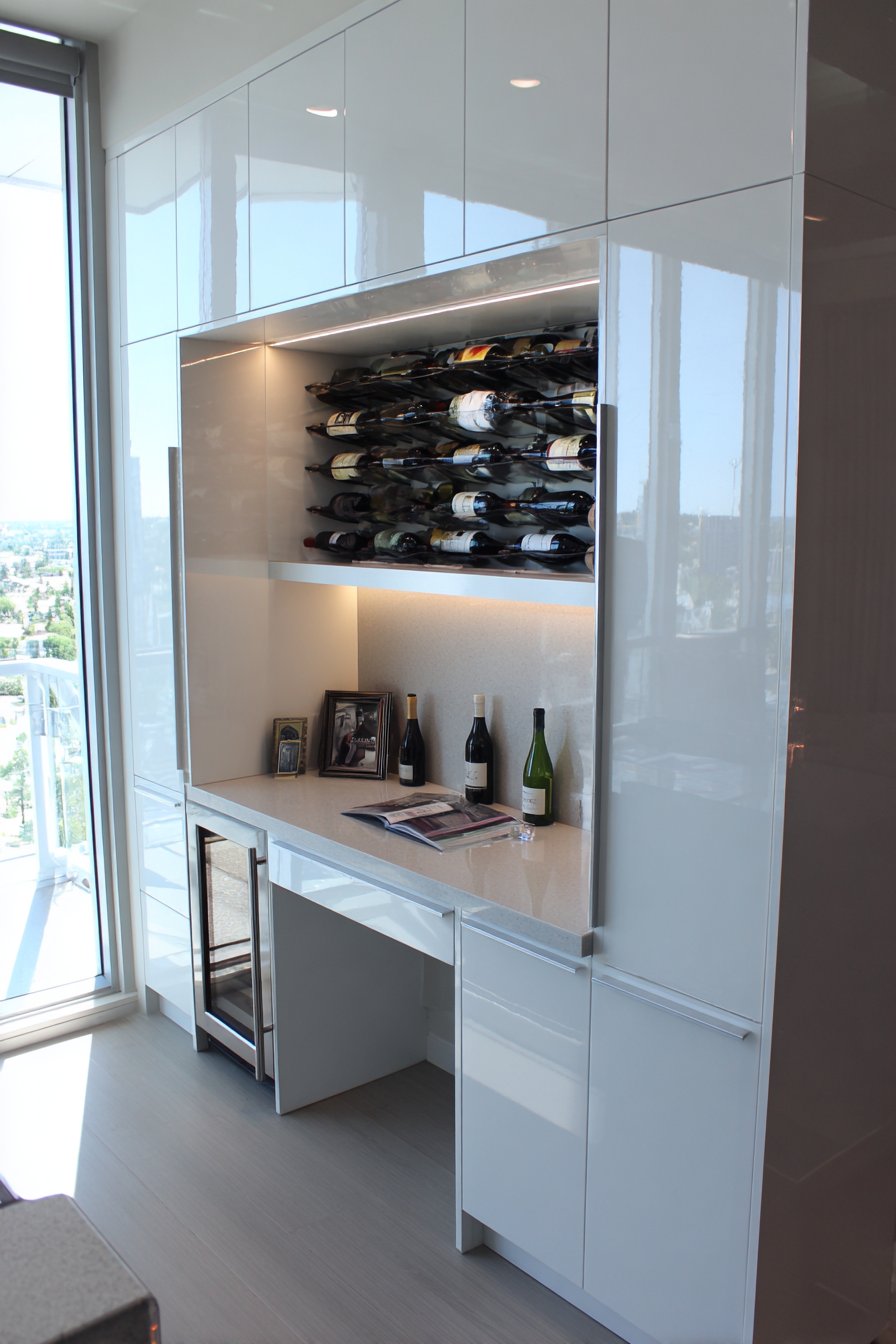
Recessed LED lighting installed beneath the countertop overhang serves dual purposes—it provides task lighting for those seated at the peninsula enjoying breakfast or working on laptops, while also creating a subtle ambient glow that visually lifts the peninsula and emphasizes its floating quality. The lighting’s warm color temperature (around 2700K) prevents the grey and white palette from feeling cold, instead cultivating an inviting atmosphere that makes the compact kitchen feel like a destination rather than merely a functional necessity.
Key Design Tips:
- Choose handleless cabinetry to create clean lines that visually expand limited square footage
- Install lighting beneath overhangs to define zones and add functional illumination without consuming valuable space
- Opt for light-reflective materials like glossy lacquer and polished quartz to bounce natural light throughout the room
- Maximize peninsula storage with custom drawer organizers designed for your specific kitchen tools and habits
- Consider counter-depth appliances to maintain consistent sightlines and preserve precious circulation space
- Use a single countertop material throughout to create visual continuity that makes the space feel more cohesive
3. Traditional Peninsula with Granite Elegance
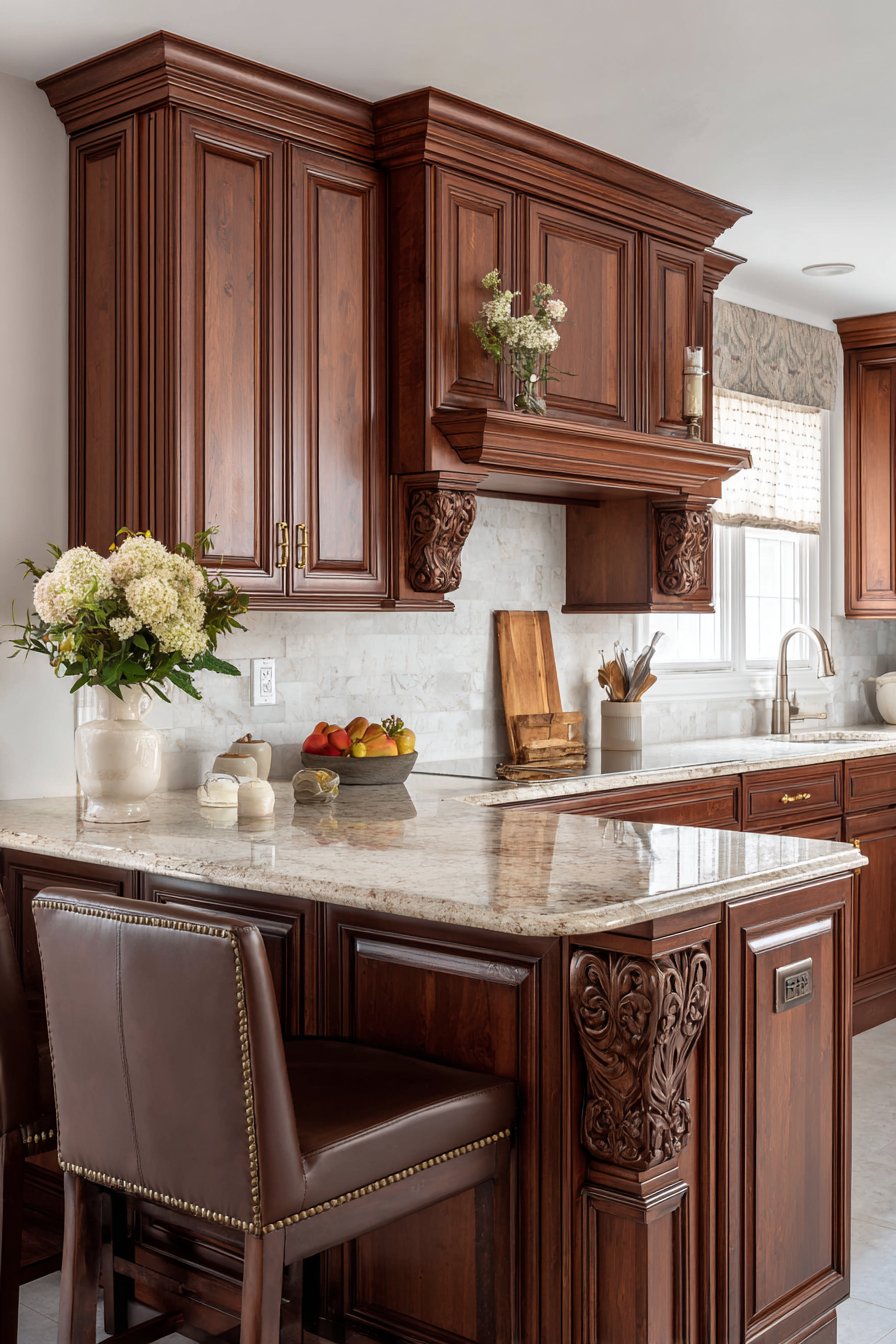
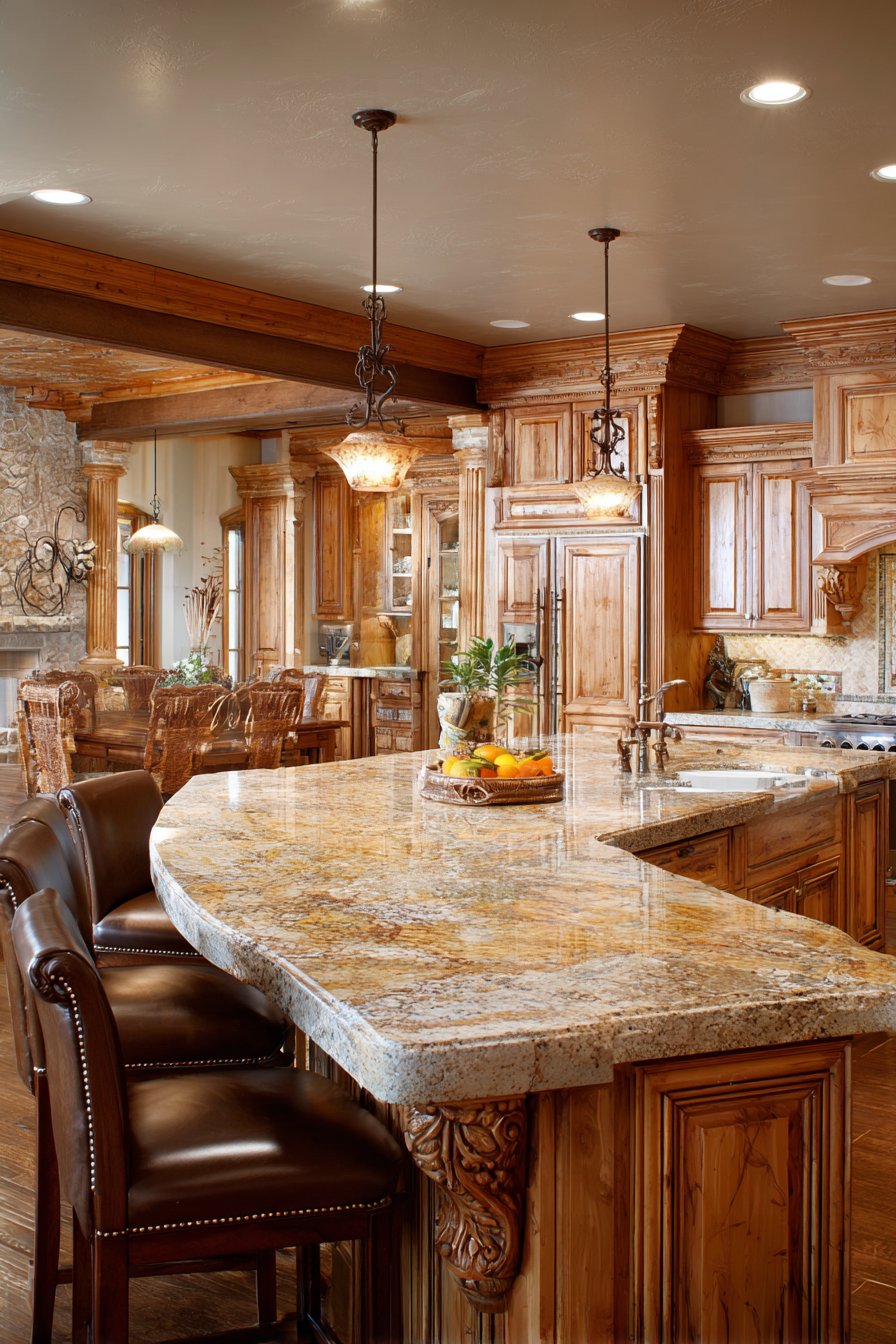
This kitchen pays homage to timeless design principles where quality craftsmanship and enduring materials create spaces that age gracefully rather than feeling dated. The peninsula serves as the kitchen’s stately anchor, topped with granite countertops in warm beige tones liberally peppered with natural mineral inclusions that create a subtle speckled pattern unique to each slab. This stone surface brings geological history into the home—patterns formed over millennia now serving your daily culinary routines with unmatched durability and heat resistance that makes it ideal for everything from rolling pastry to setting down hot pots directly from the stove.
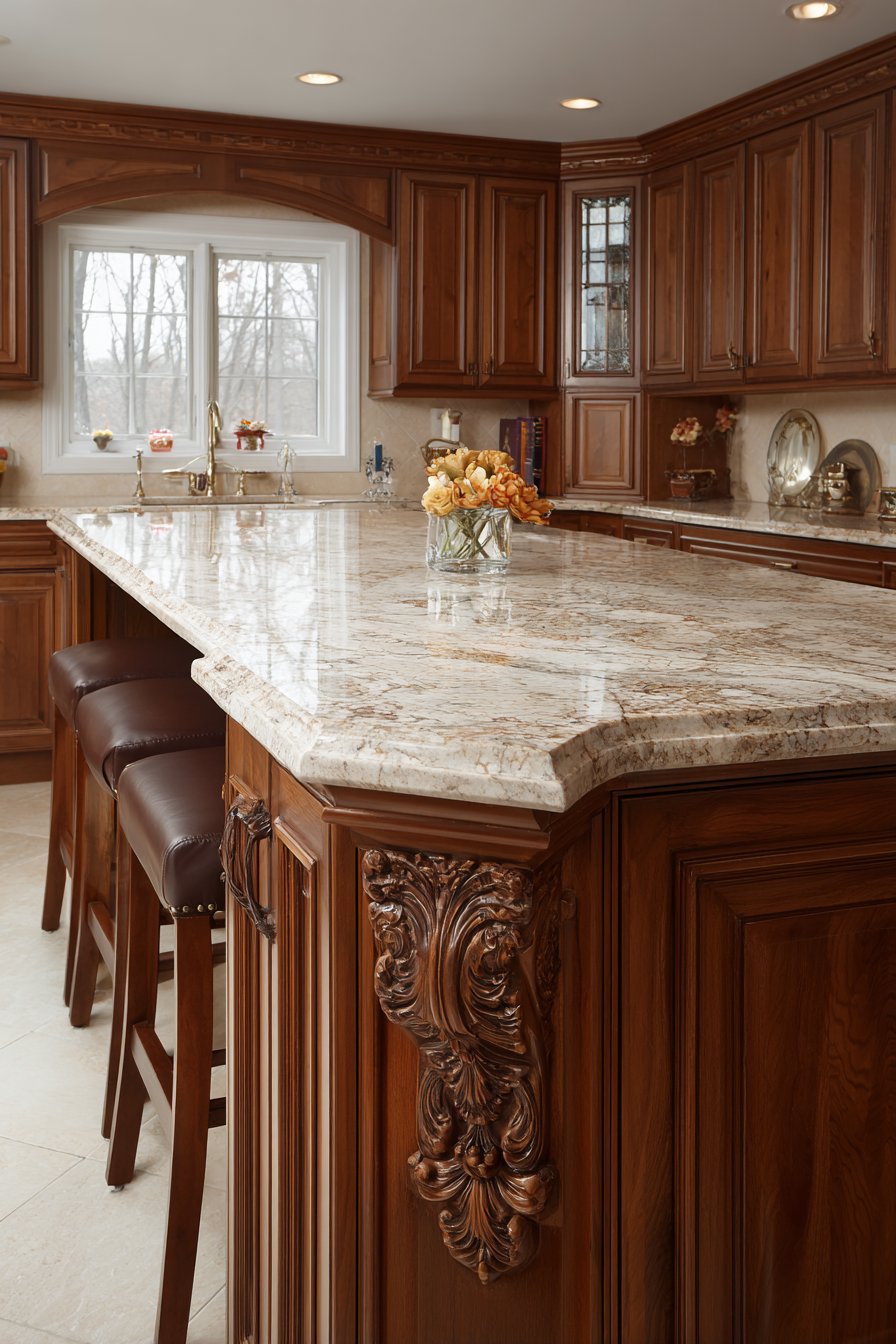
Cherry wood cabinetry envelops the peninsula in rich, reddish-brown tones that deepen over time as the wood continues its natural aging process. Raised panel doors reference classical furniture design, their dimensional surfaces creating play of light and shadow that adds visual interest without relying on color contrast. Antique brass hardware—selected for its developing patina rather than despite it—punctuates each door and drawer with hardware that feels substantial in hand. These elements combine to create a kitchen that communicates permanence and investment in quality.
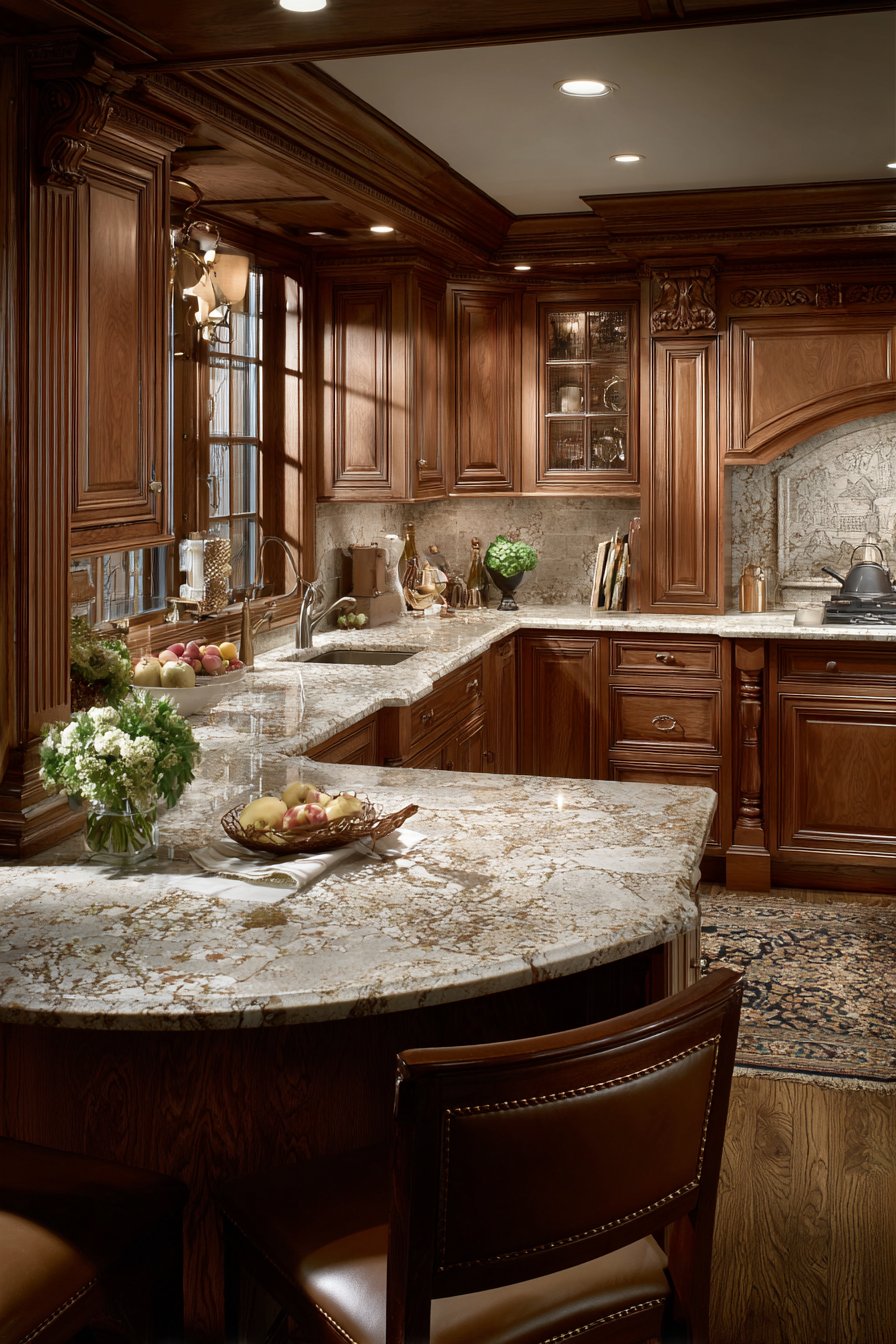
The peninsula houses a vegetable sink positioned strategically for prep work, allowing the cook to face into the living areas while washing produce or filling pots. Leather-upholstered bar stools in deep brown tones provide comfortable seating that invites lingering over morning coffee or afternoon wine. Decorative corbels support the countertop overhang, their carved details adding architectural interest while serving the structural purpose of bearing weight. The overall composition speaks to a philosophy that views the kitchen not as a space for rapid style turnover but as a long-term investment in daily living quality.
Key Design Tips:
- Select granite with movement and variation rather than uniform coloring for visual interest that hides minor wear
- Position task sinks in peninsulas to keep the cook engaged with family activities during meal preparation
- Choose wood species like cherry that develop richer patina over time, celebrating age rather than fighting it
- Install corbels rated for actual structural support, not merely decorative appliqués
- Consider leather or vinyl upholstery for seating that can be easily wiped clean of spills
- Apply appropriate sealant to granite surfaces every 1-2 years to maintain stain resistance
4. Contemporary White Marble Waterfall Peninsula
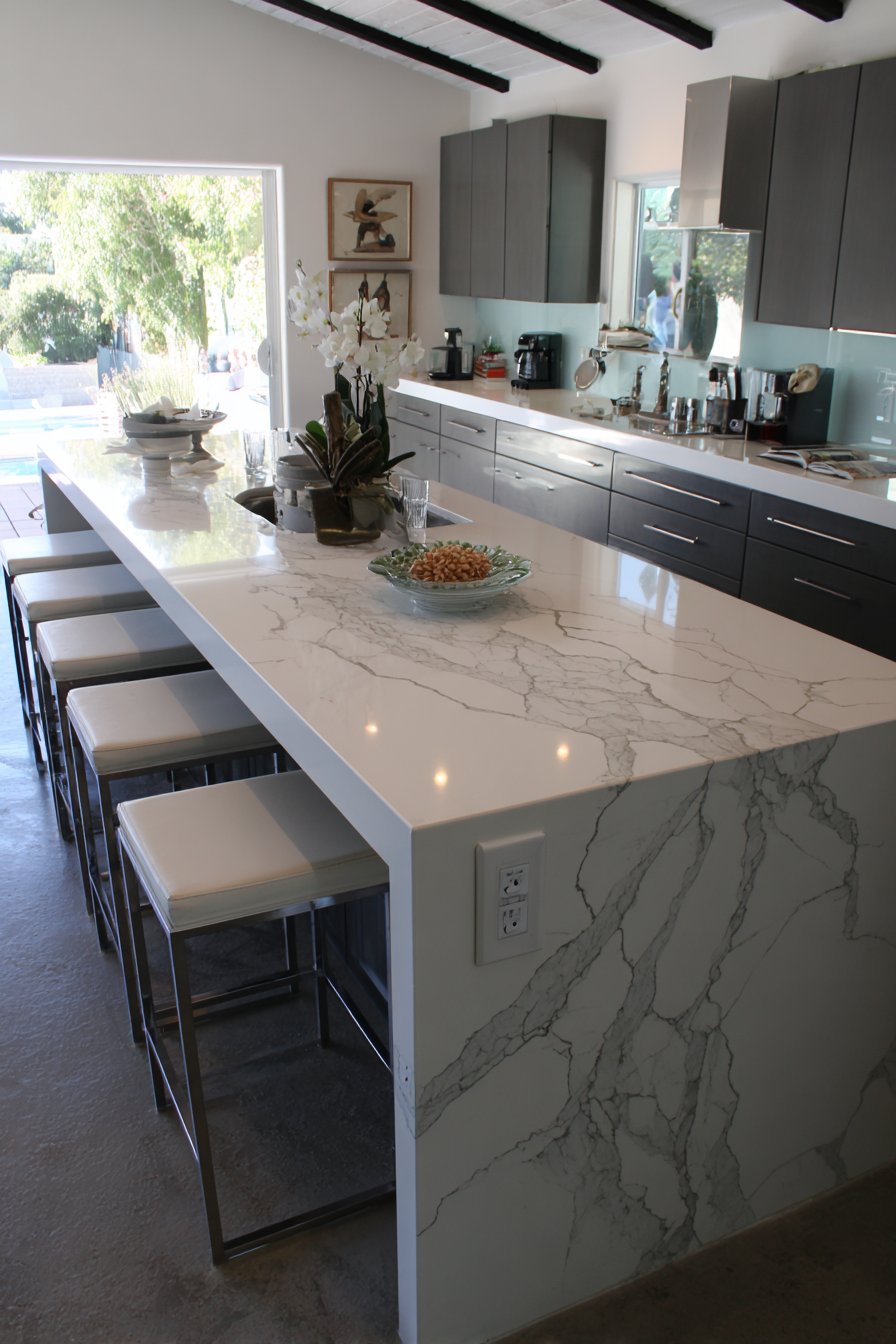
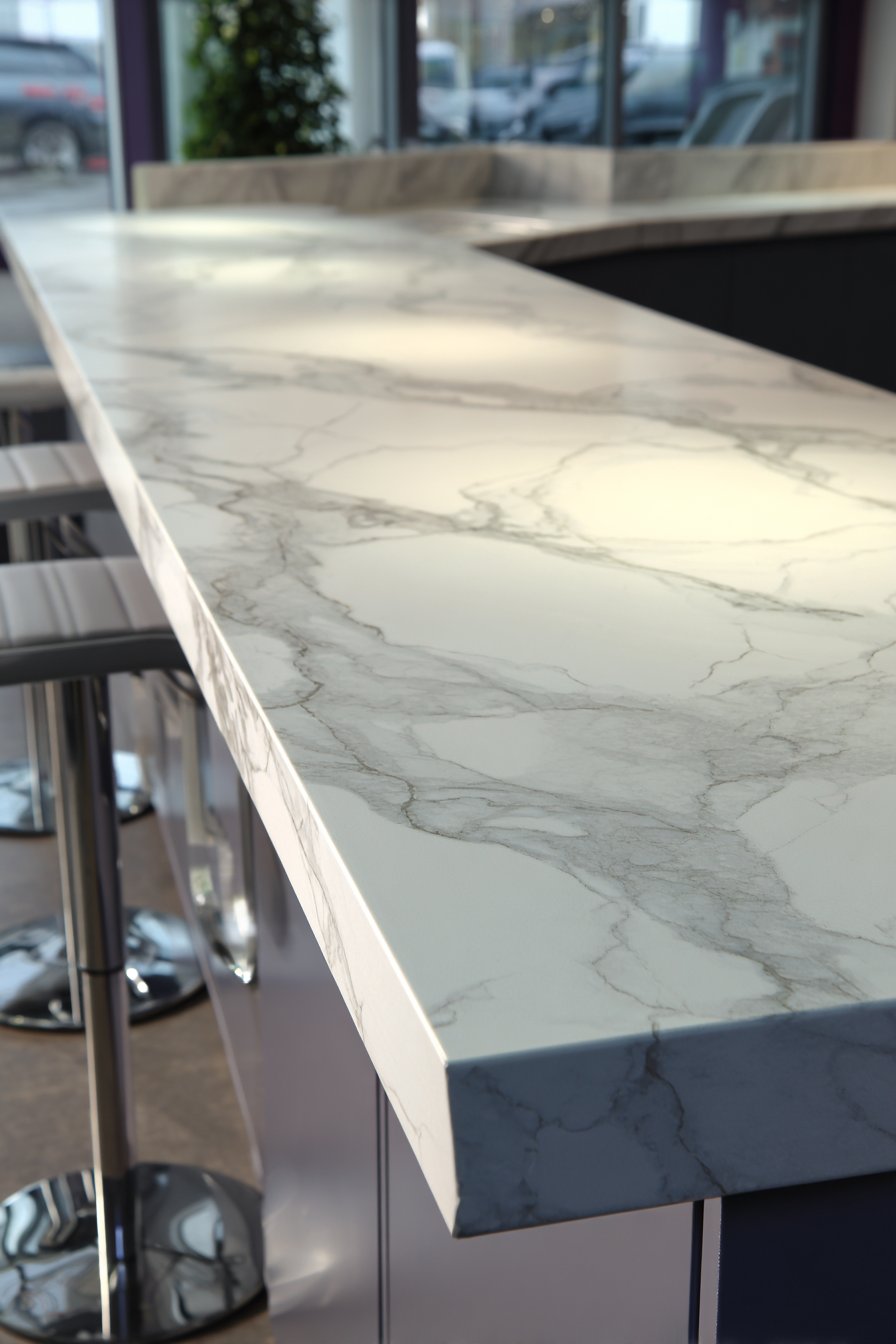
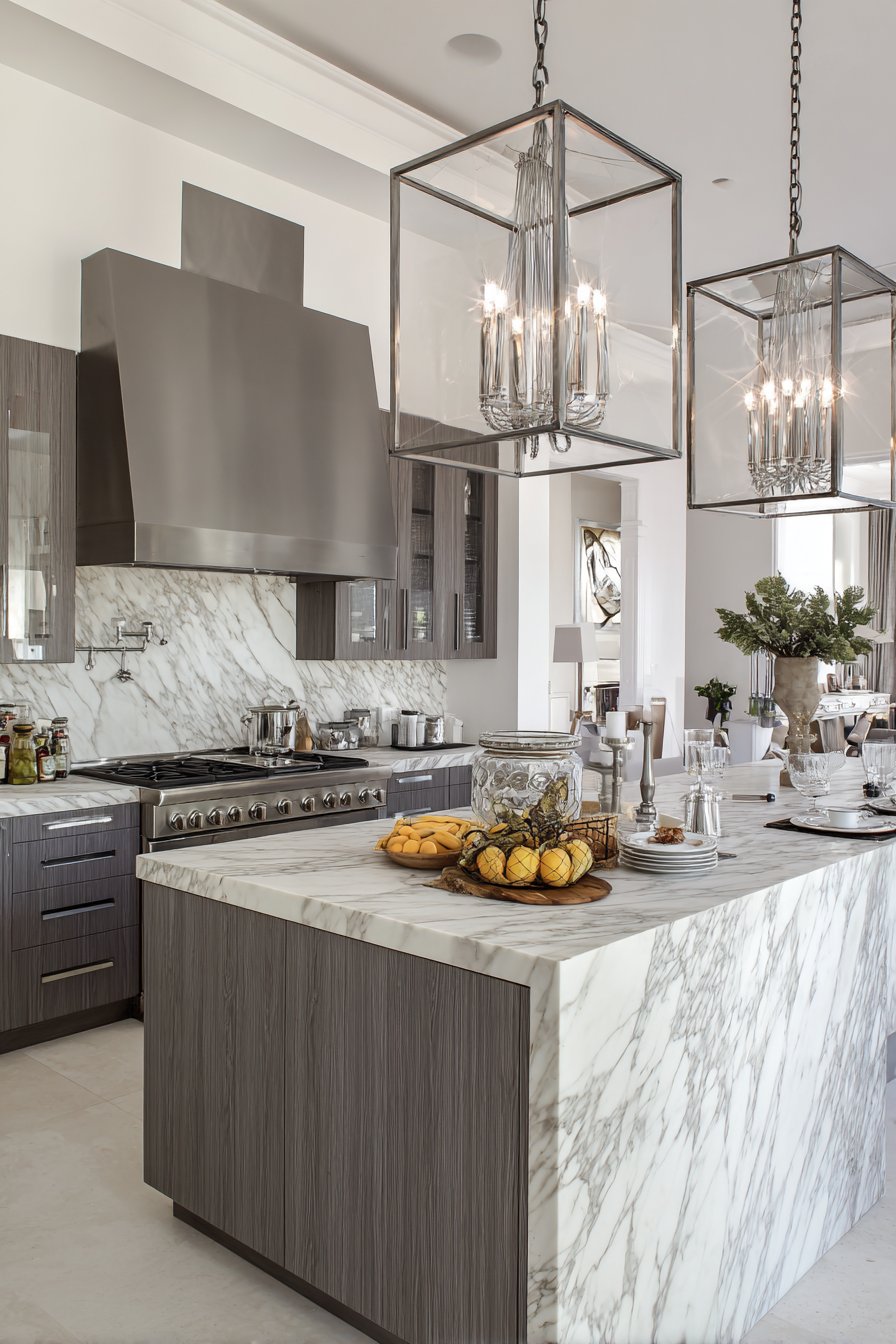
Clean lines and luxurious materials converge in this contemporary peninsula design where the star attraction is undoubtedly the seamless white marble countertop that cascades down the sides in the signature waterfall edge detail. This continuous surface treatment transforms the peninsula from merely functional cabinetry into a sculptural element—the marble flowing uninterrupted from horizontal surface to vertical edge, showcasing the stone’s distinctive grey veining in both orientations. The waterfall edge creates visual weight and presence while protecting the cabinet edges beneath from impacts and wear.
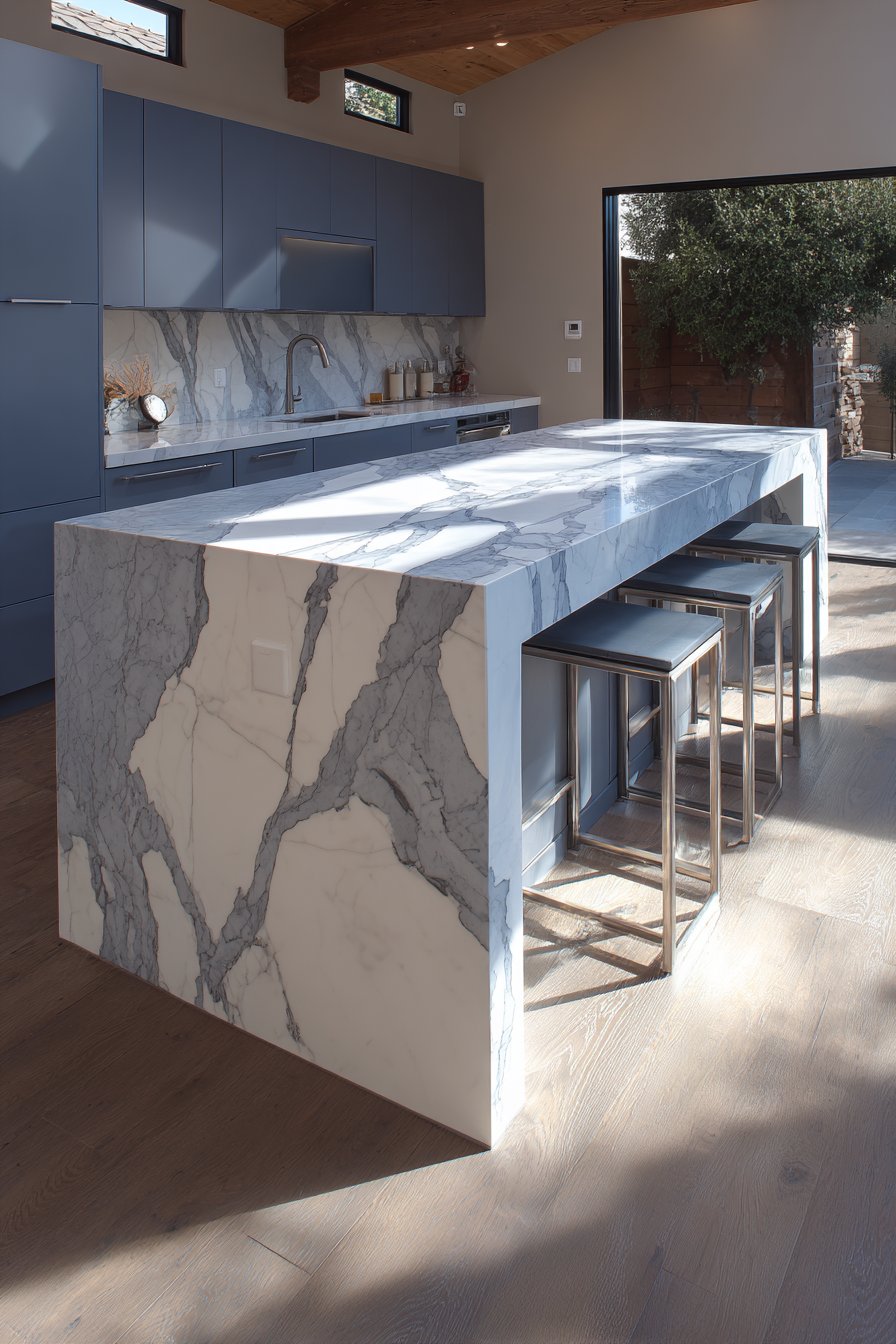
Flat-panel cabinets in matte charcoal grey provide storage beneath the peninsula, their simple rectangular forms letting the marble take center stage while contributing to the overall contemporary aesthetic. The absence of decorative elements on the cabinet faces reflects the modernist principle that beauty emerges from proportion and material quality rather than applied ornamentation. Integrated power outlets are discreetly installed flush with the countertop surface, providing convenient charging and appliance connections without disrupting the clean lines with surface-mounted strips or dangling cords.
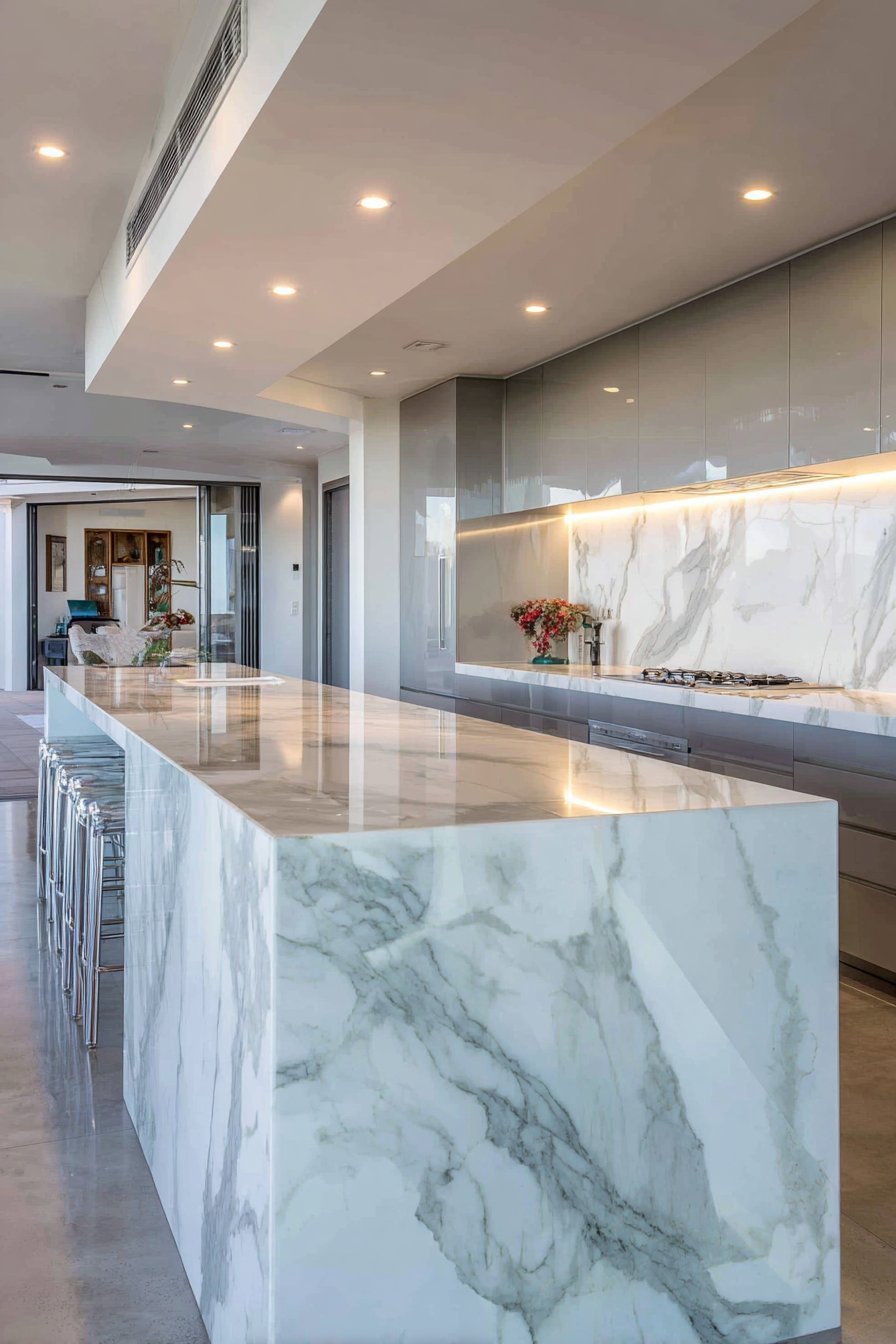
Modern chrome bar stools with low, minimally designed backs slide beneath the overhang, their polished metal bases echoing the cool metallic elements throughout the kitchen. Natural light plays across the varied surfaces—catching the subtle sheen of the marble, reflecting off the chrome, and being absorbed by the matte cabinet faces. This interplay creates visual dynamism within a restrained color palette, proving that contemporary design need not rely on bold colors to achieve impact.
Key Design Tips:
- Consider marble carefully—beautiful but requires regular sealing and shows etching from acidic substances
- Extend countertop material down peninsula sides for a waterfall edge that creates architectural presence
- Install flush-mount outlets during construction to maintain clean countertop surfaces
- Choose low-backed stools that tuck completely under the overhang to preserve sightlines and circulation
- Maintain consistency in hardware finishes throughout the kitchen for a cohesive contemporary look
- Use matte and glossy finishes strategically to create contrast without introducing new colors
5. Transitional Peninsula as Room Divider
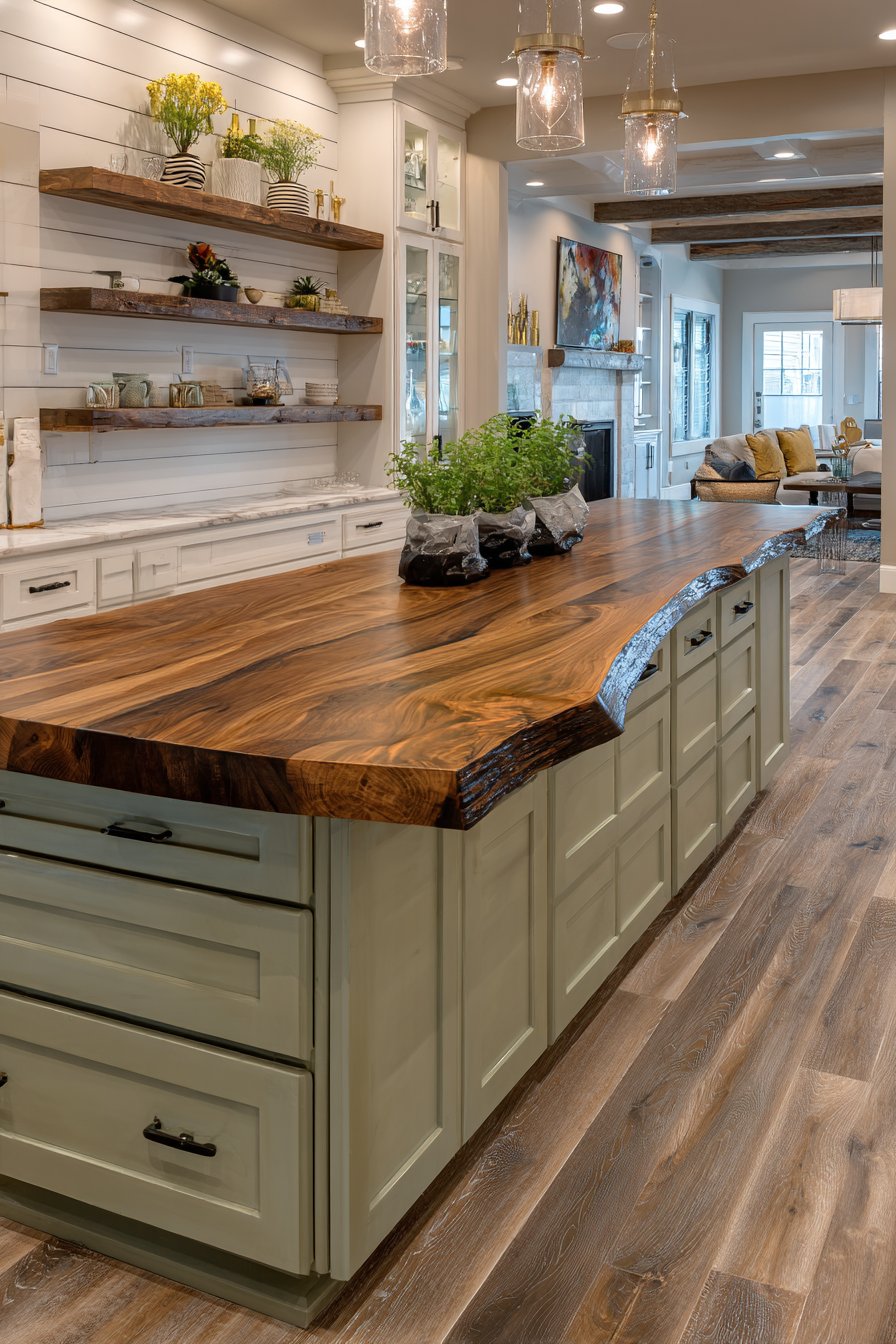
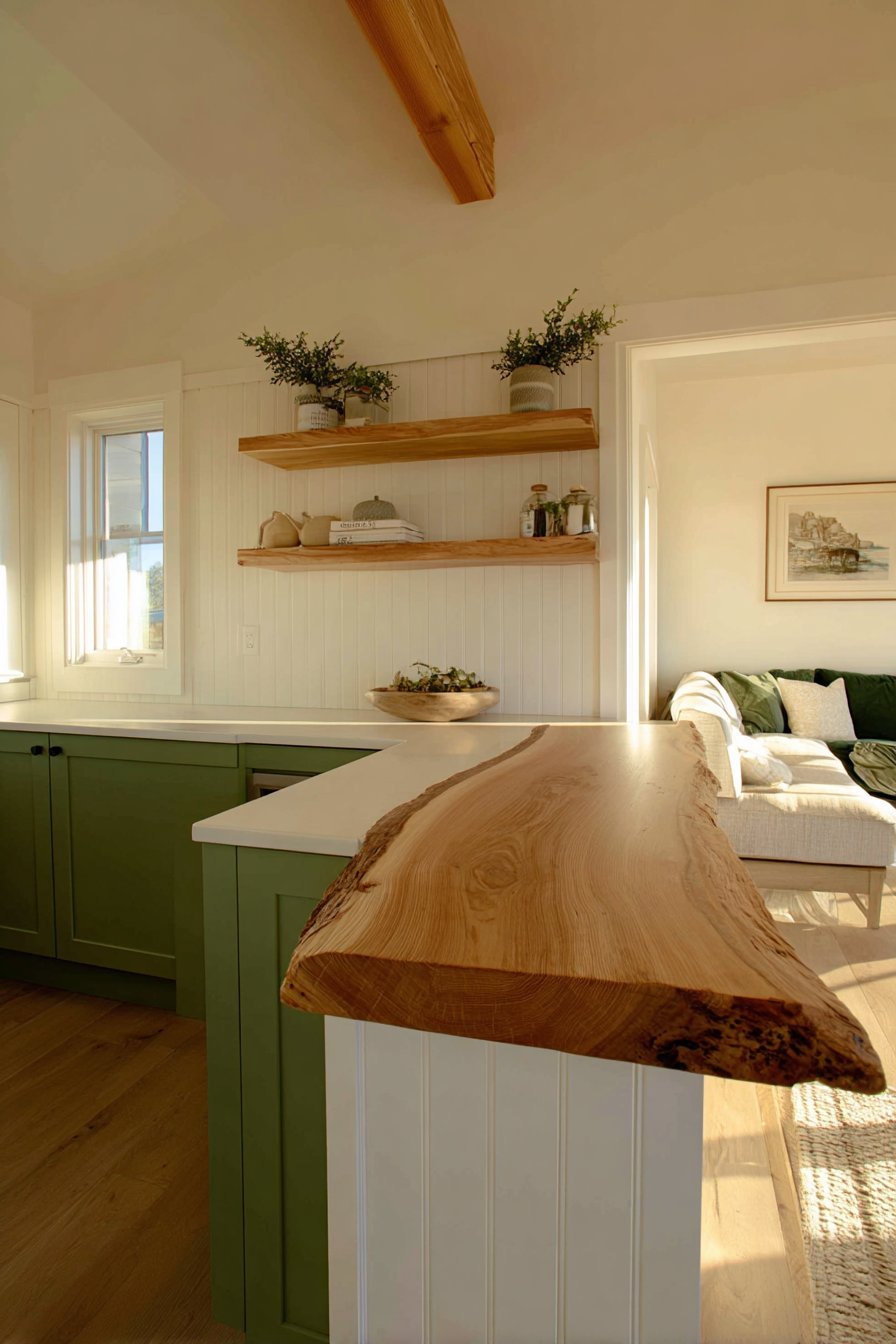
The genius of this peninsula design lies in its architectural role as a physical and visual bridge between distinct living zones. In open-concept homes where kitchen, dining, and living areas share continuous space, the peninsula provides gentle definition without the harsh separation of walls. The two-tone cabinetry strategy—sage green base cabinets facing the kitchen side, white beadboard paneling facing the living room—acknowledges that this element serves two masters. The kitchen side prioritizes function with its closed storage and durable painted finish, while the living room side offers decorative appeal with its cottage-inspired paneling that reads more as furniture than kitchen cabinetry.
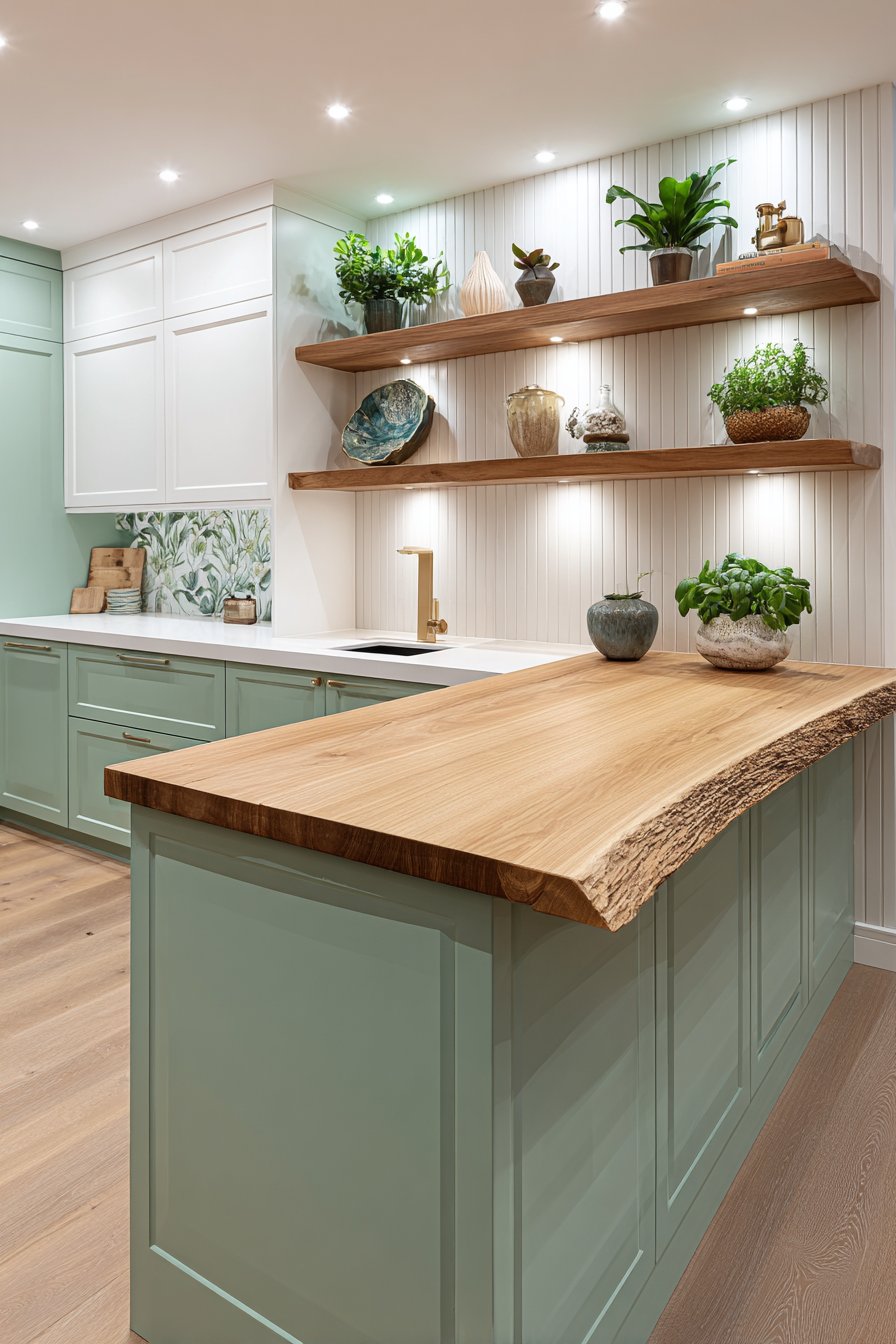
Warm-toned wood countertops with live edge detail bring organic texture and natural beauty to the peninsula’s surface. Unlike perfectly machined edges, the live edge preserves the tree’s original contour, complete with the subtle irregularities and bark inclusions that prove its natural origins. This material choice introduces biophilic design principles—connecting inhabitants to nature even within built environments. The wood’s warmth mediates between the cooler sage green and the crisp white, while its organic form softens the otherwise rectilinear composition.
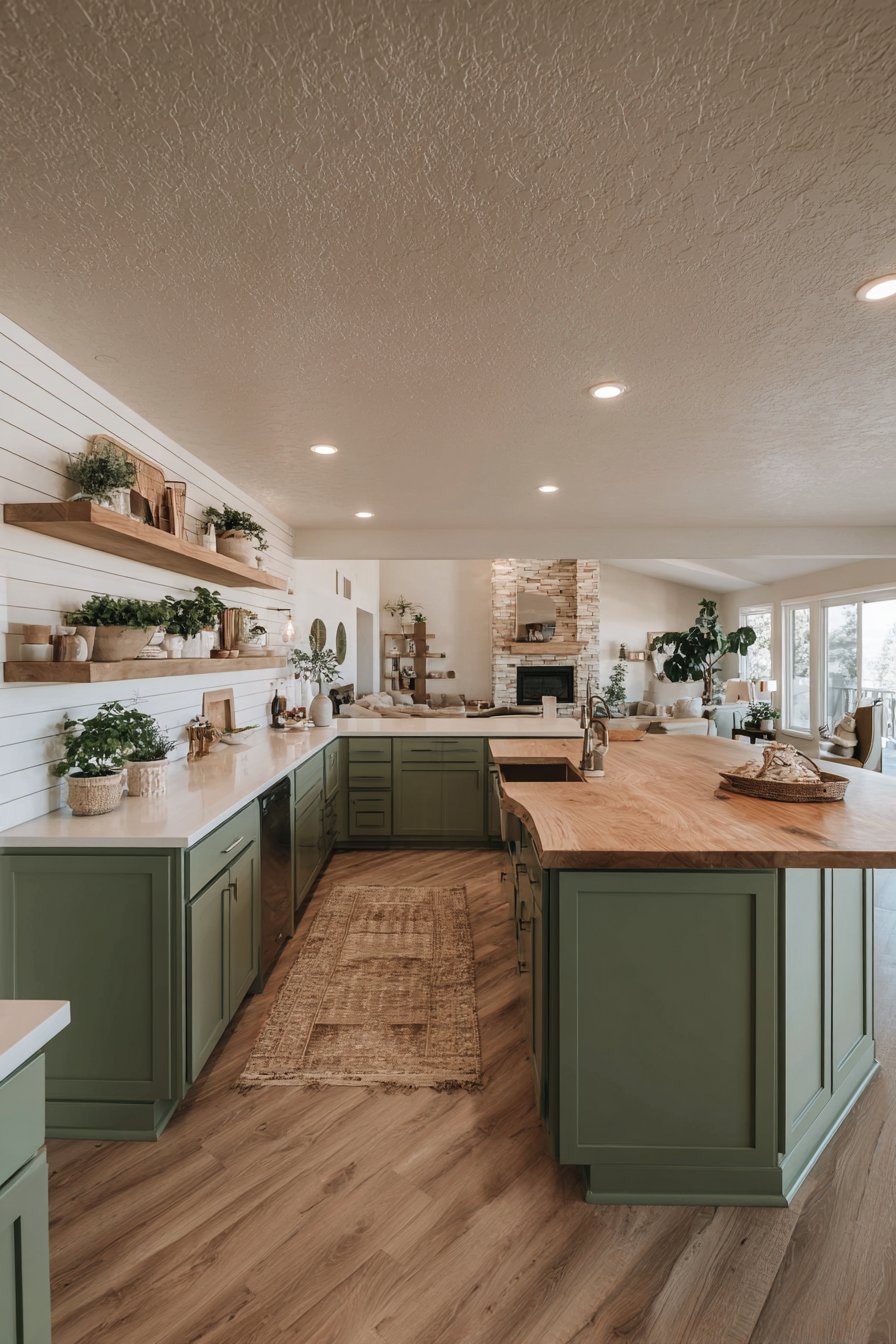
Floating shelves suspended above the peninsula create vertical interest without blocking sightlines between spaces. These shelves serve dual purposes: displaying potted herbs within easy reach of the cooking zone while presenting decorative objects—perhaps a small sculpture or framed photograph—to those seated in the living area. The transparency they provide prevents the peninsula from creating too much visual separation while still marking the transition between functional zones.
Key Design Tips:
- Use two-tone cabinetry on peninsulas in open layouts to acknowledge their dual-facing nature
- Select live edge wood from sustainable sources and seal properly to prevent water damage
- Install floating shelves above peninsulas at heights that preserve sightlines while providing accessible storage
- Choose sage green and similar nature-inspired colors that create calming atmospheres conducive to both cooking and relaxing
- Consider the views from multiple angles when designing peninsulas in open-concept spaces
- Add subtle lighting beneath floating shelves to illuminate both the peninsula surface and create ambient glow
6. Industrial Loft Peninsula with Raw Materials
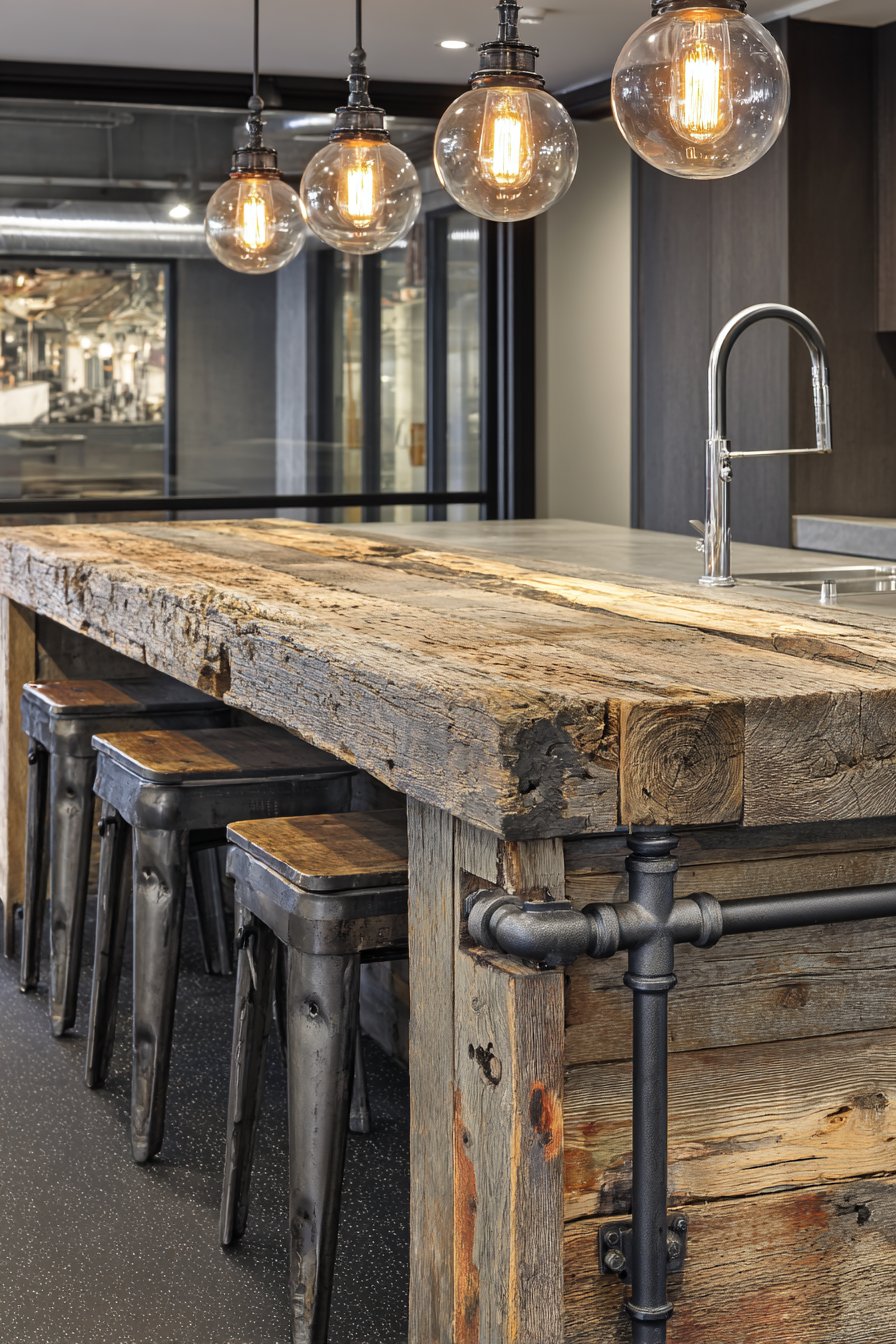
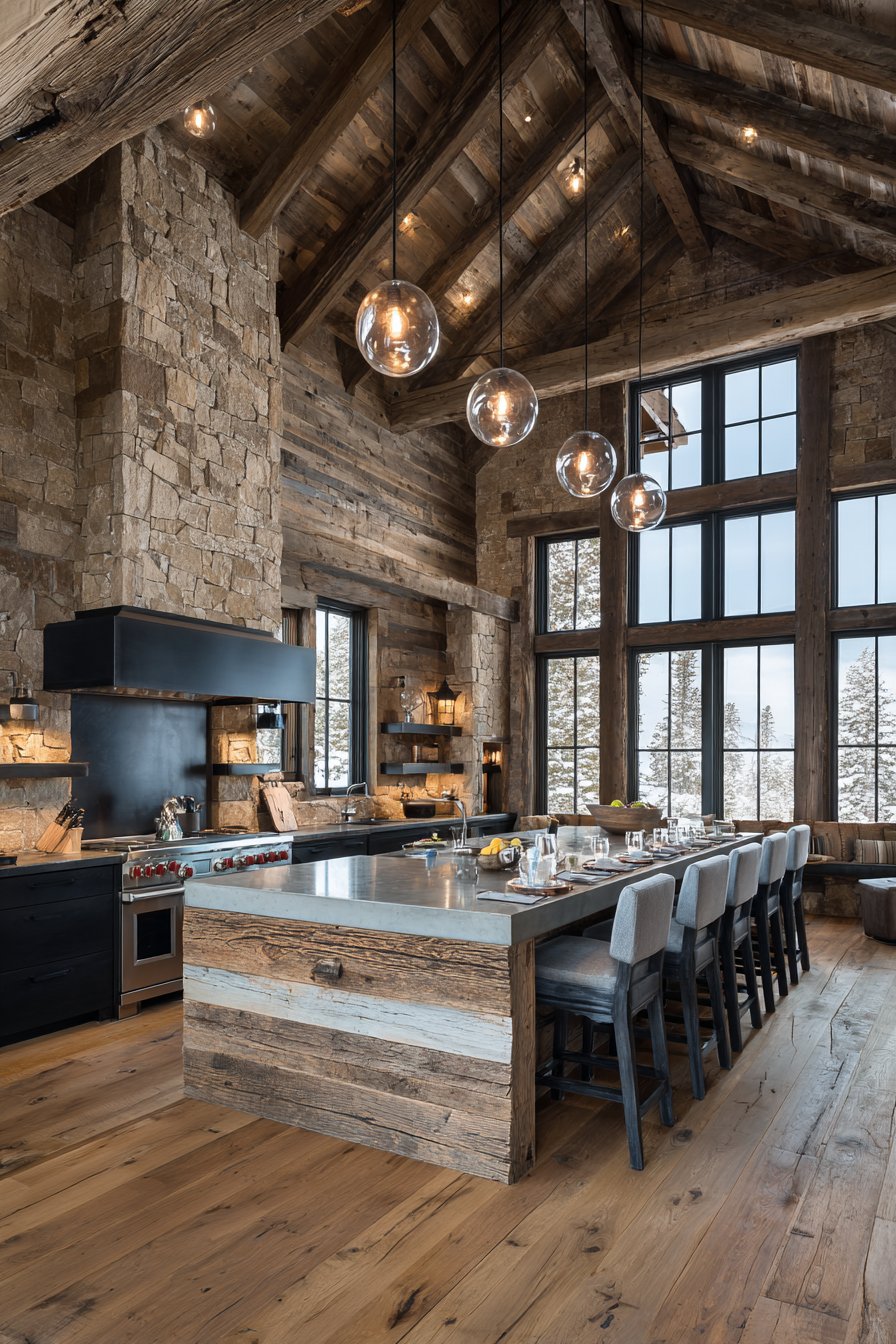
Exposed elements and honest materials define this industrial-style peninsula that would feel equally at home in a converted warehouse loft or a newly built space seeking that coveted urban edge. The peninsula counter itself is constructed from reclaimed wood planks, their surfaces bearing the authentic marks of previous lives—weathered grain, nail holes, subtle color variations, and minor dings that machine-made lumber simply cannot replicate. This choice celebrates material history, viewing imperfection not as flaw but as character that tells stories of the wood’s previous incarnation as barn siding, factory flooring, or warehouse shelving.
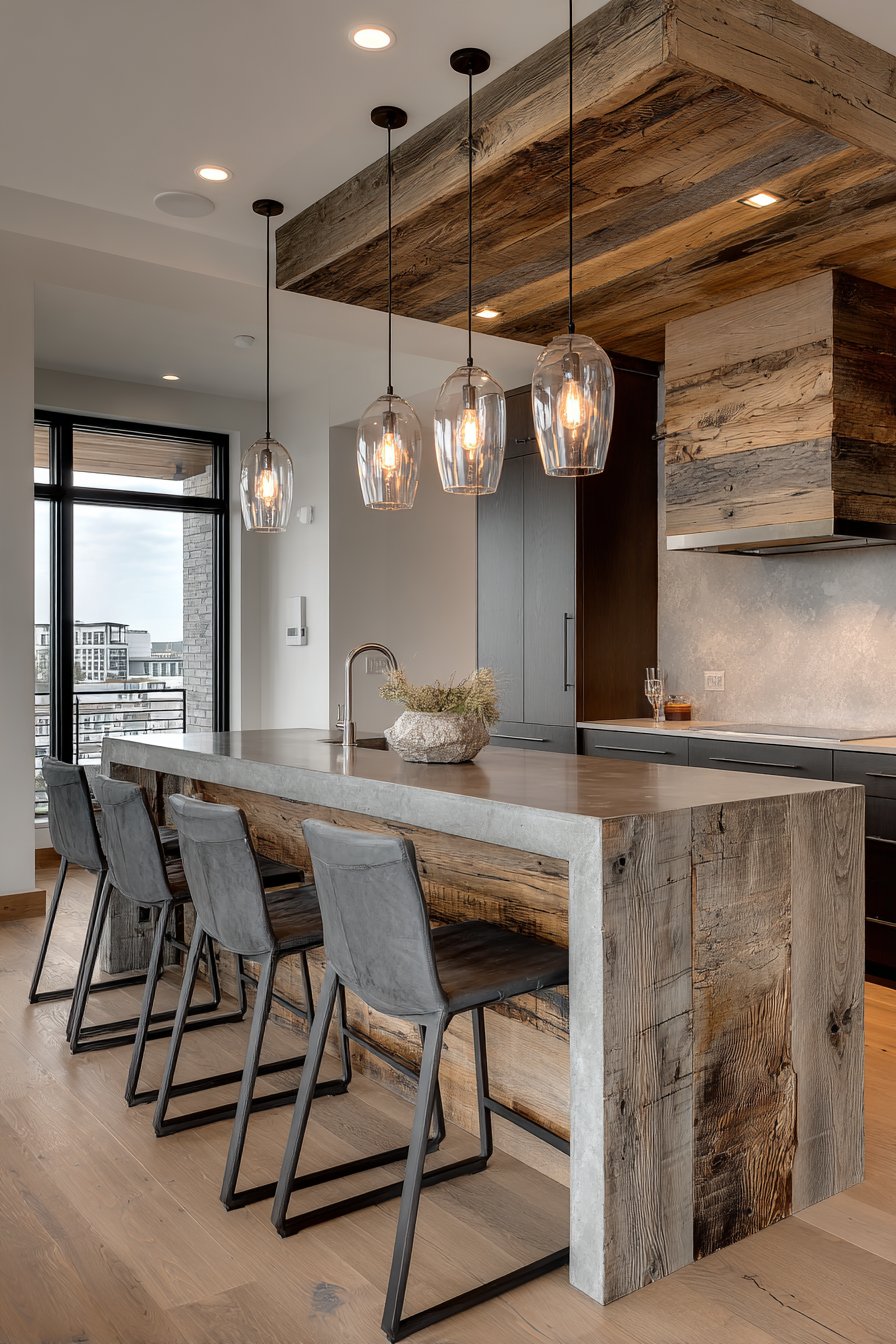
Black metal framework provides structural support with industrial directness—no attempt to hide the mechanics of how the peninsula stands. Exposed brackets connect wood to metal with visible hardware, while pipe-style legs reference utilitarian plumbing fixtures turned architectural elements. This transparency about structure aligns with industrial design philosophy that emerged from 19th-century factories where function dictated form and ornament was considered wasteful expense. Concrete countertops on the main kitchen section provide textural contrast to the peninsula’s wood surface while maintaining the industrial aesthetic through their association with commercial and institutional architecture.
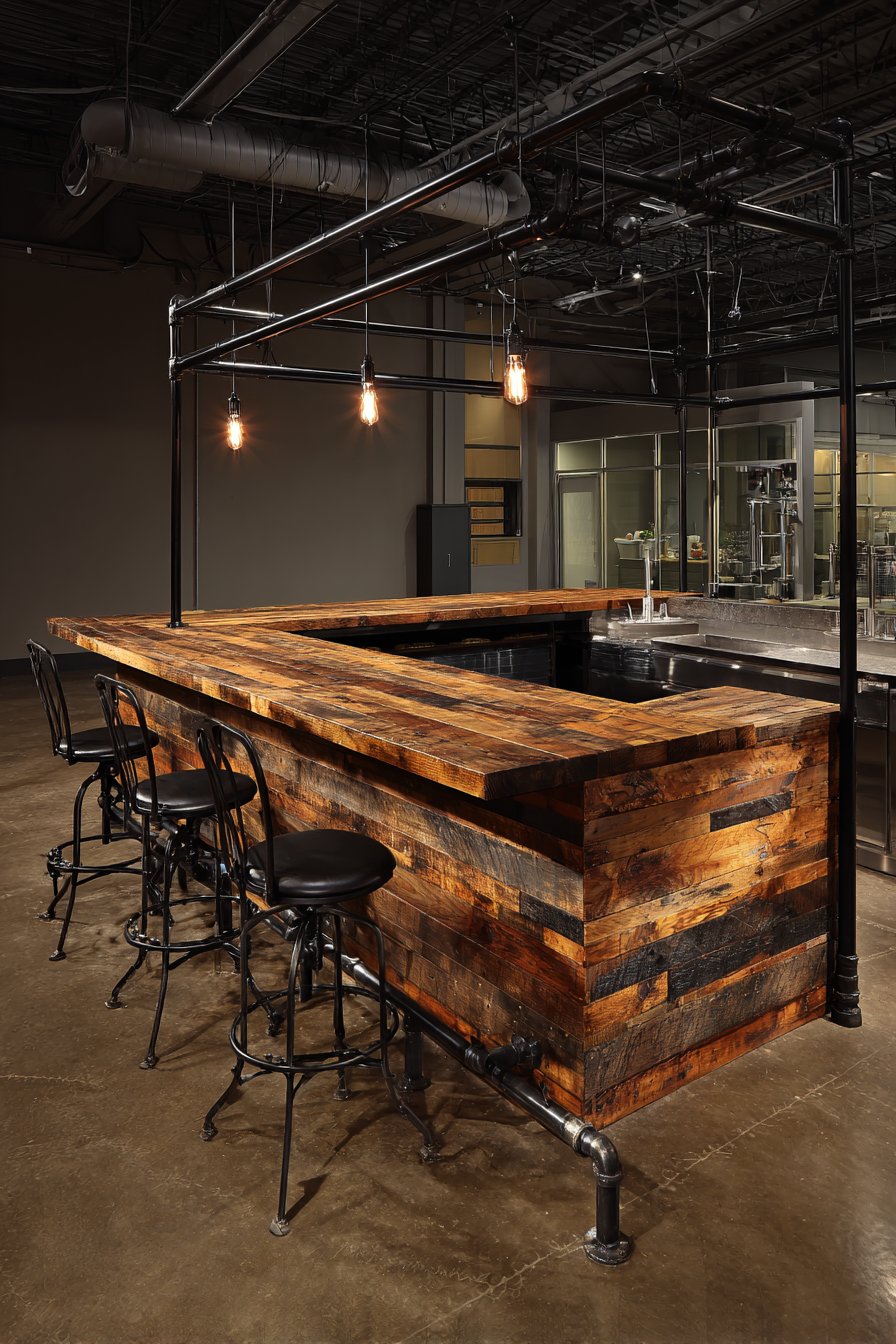
Edison bulb pendants suspended above the seating area complete the industrial narrative. These exposed filament bulbs—whether authentic vintage specimens or contemporary reproductions—celebrate the beauty of the light source itself rather than hiding it behind shades or diffusers. Their warm glow creates pools of intimate illumination that soften the harder edges of metal and concrete, making the space feel lived-in rather than merely styled. The overall effect is a kitchen that acknowledges its structural bones while creating surprising warmth through the golden tones of reclaimed wood and the amber glow of vintage-style lighting.
Key Design Tips:
- Source reclaimed wood from reputable suppliers who can verify its history and ensure it’s properly dried and treated
- Embrace visible hardware and structural elements as design features rather than elements to conceal
- Balance industrial materials’ harder edges with warm wood tones and thoughtful lighting
- Consider sealed concrete countertops that resist staining while maintaining their matte industrial appearance
- Install dimmer switches on Edison bulb fixtures to control ambiance from bright task lighting to intimate glow
- Leave some metal elements with natural patina or deliberate rust finish for authentic industrial character
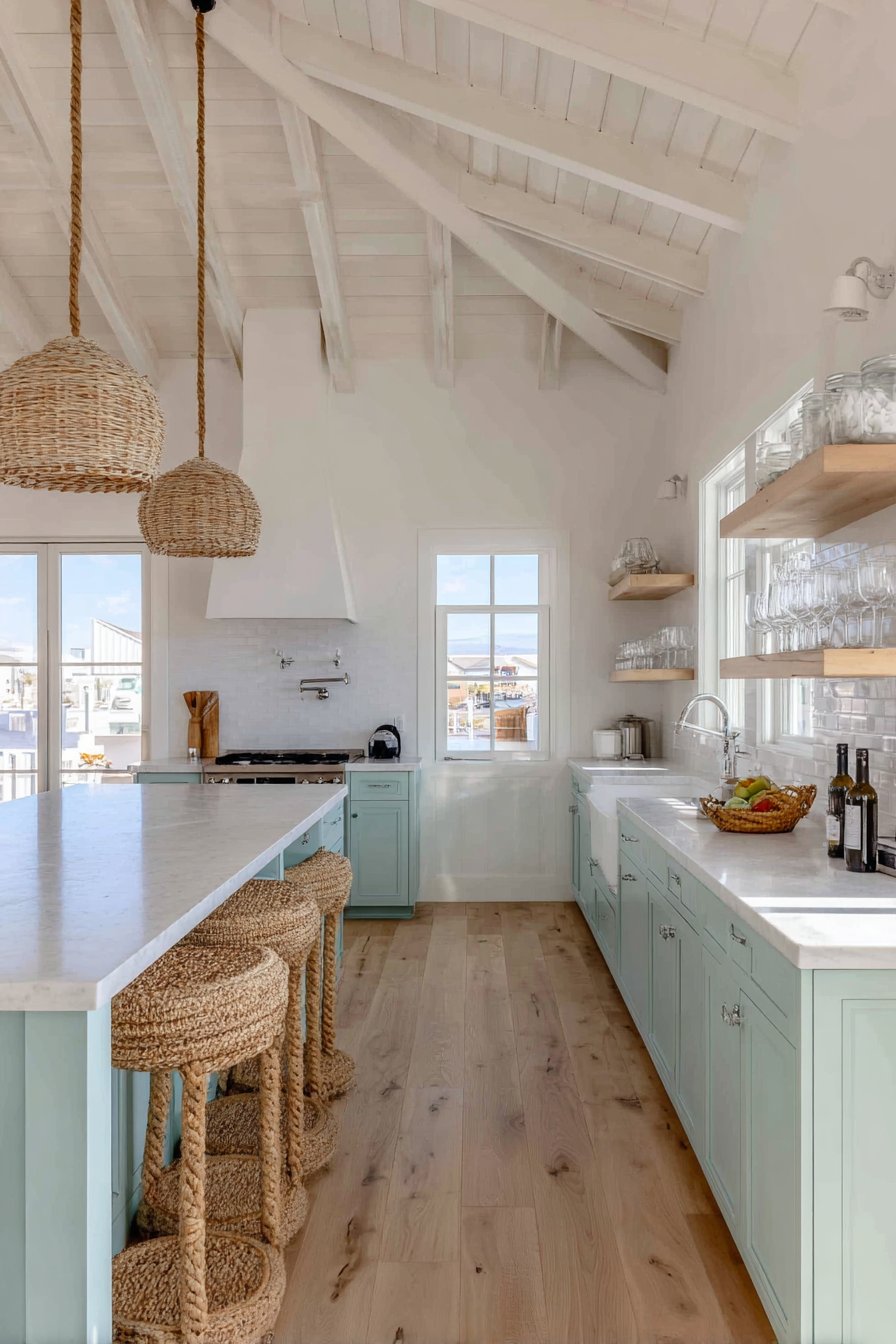
7. Coastal Style Peninsula with Light Blue Serenity
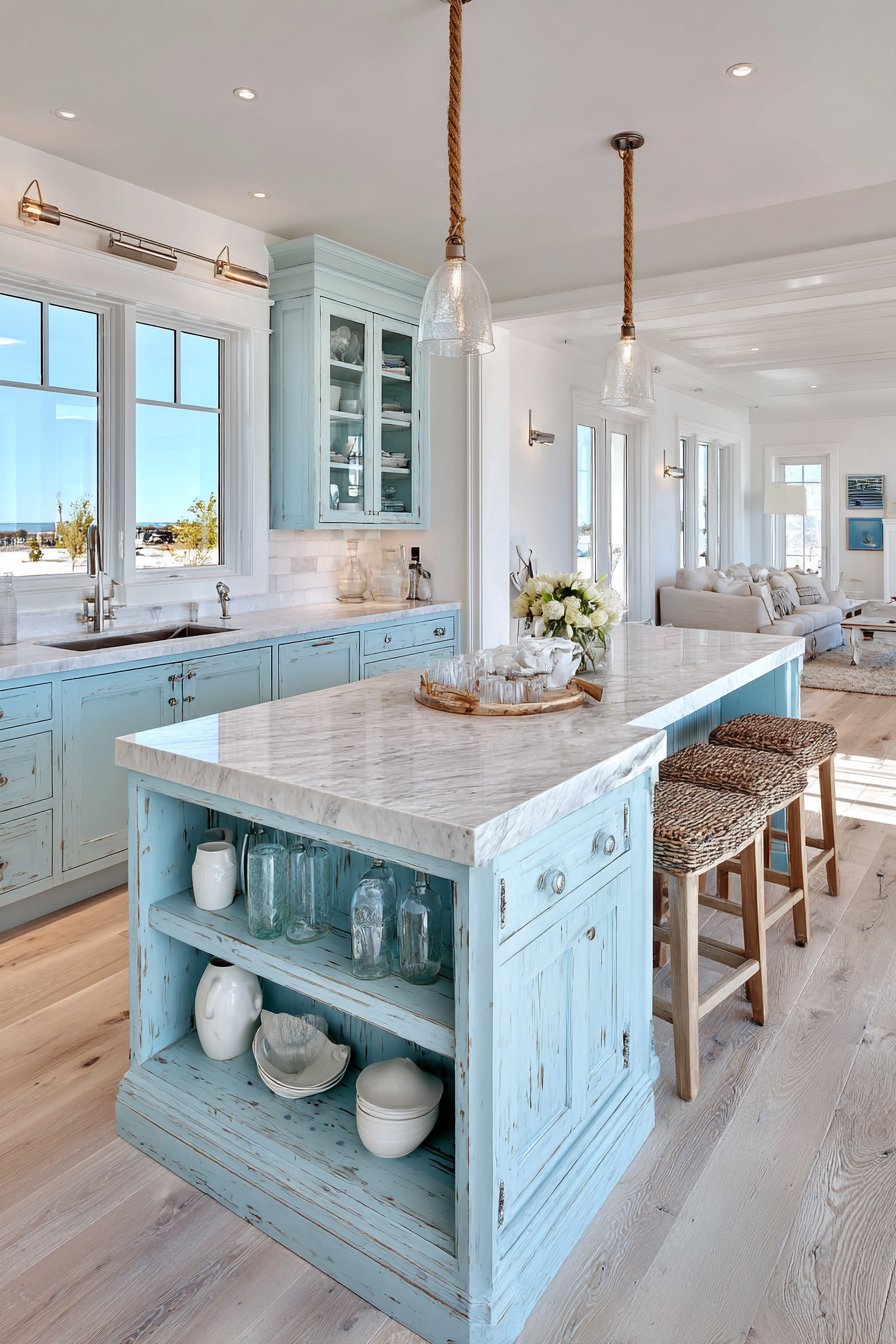
Breezy seaside relaxation permeates this peninsula kitchen where every element evokes the calming atmosphere of coastal living. The peninsula’s cabinetry wears a light blue-grey paint color—the particular hue that hovers between grey and blue, reminiscent of beach stones worn smooth by endless waves or the ocean horizon on a misty morning. This carefully calibrated color avoids the too-literal navy or turquoise often associated with coastal themes, instead capturing the subtle, nuanced tones actually found in nature’s coastal palette.
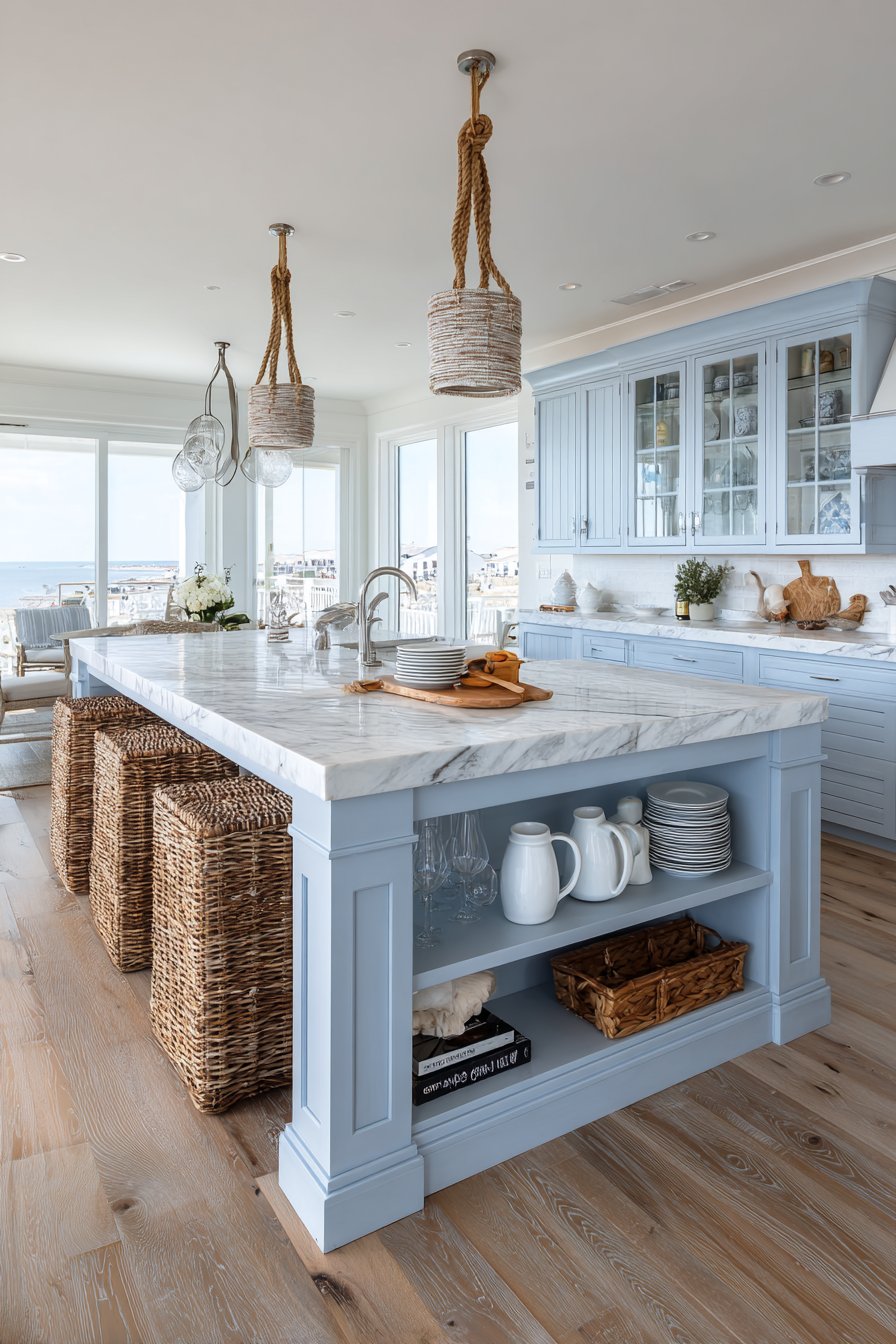
Distressed white quartz countertops bring the textural interest of weathered surfaces while maintaining the practical benefits of engineered stone. The subtle veining and slight color variation across the surface prevent the stark brightness that can feel sterile, instead offering the soft white of sun-bleached driftwood. Whitewashed oak flooring extends throughout, its pale tone and visible grain creating foundation that amplifies natural light and contributes to the overall sense of airiness. The wood’s texture prevents the white and blue palette from feeling too smooth or slick, grounding the design with organic warmth.
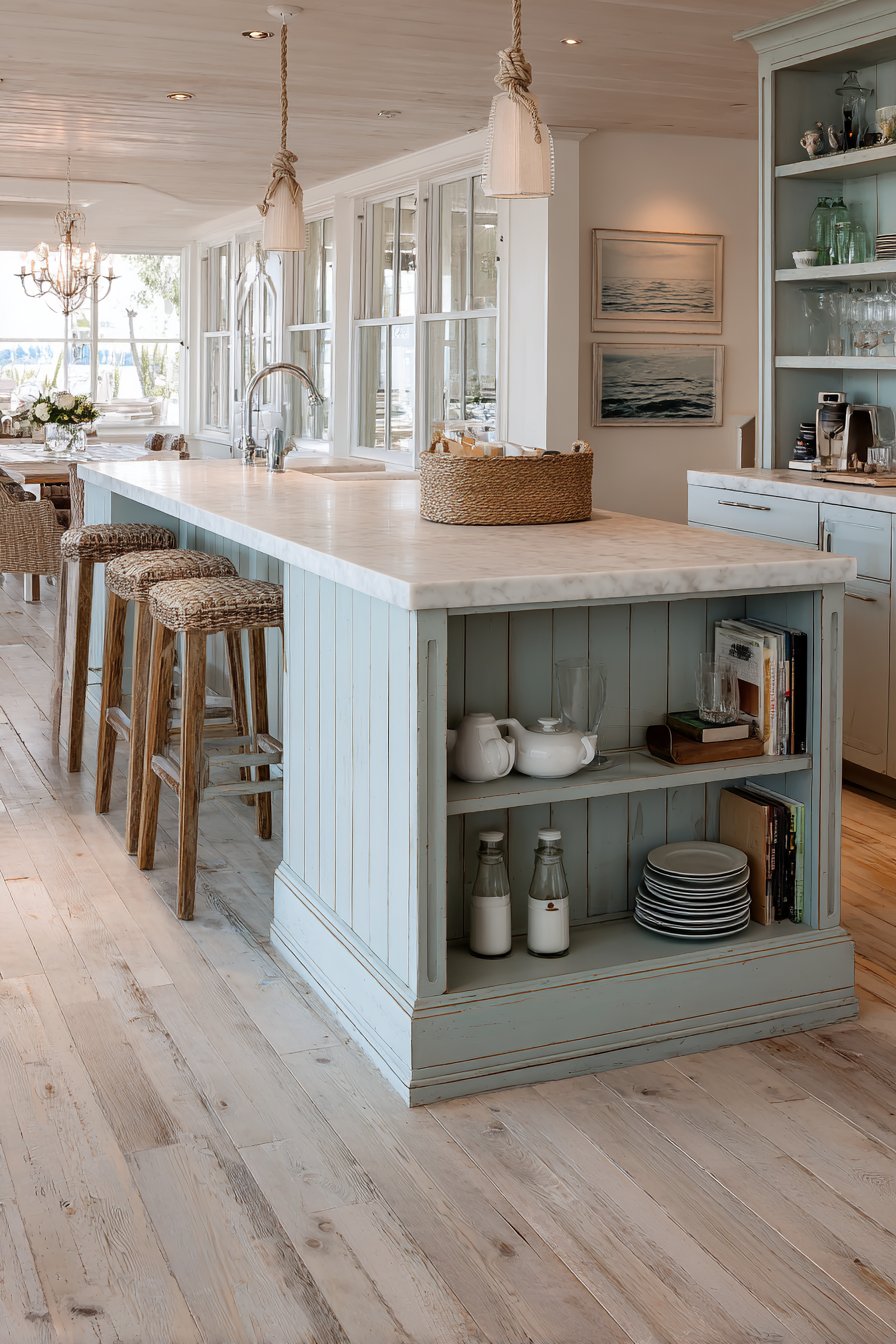
Open shelving displays white ceramic dishware and collections of clear glass bottles—perhaps vintage soda bottles or apothecary jars—that catch and refract light like sea glass tumbled smooth on the shore. Natural rope accents on pendant light fixtures add nautical charm without descending into theme park literalism. Woven seagrass bar stools provide casual, textured seating that’s both durable and comfortable, their natural fiber composition furthering the organic coastal aesthetic. Natural light streams through nearby windows, essential to achieving the bright, fresh atmosphere that defines successful coastal design.
Key Design Tips:
- Choose blue-grey tones rather than bright blues for a sophisticated coastal look that won’t feel dated
- Incorporate white and natural materials in varied textures to prevent a monochromatic scheme from feeling flat
- Select open shelving for some areas to create visual lightness and display opportunities
- Use natural fiber materials like seagrass and rope for authentic coastal texture
- Maximize natural light with sheer window treatments or no treatments where privacy permits
- Add collections of glass, shells, or driftwood as accessories that reference coastal environments without cartoon themes
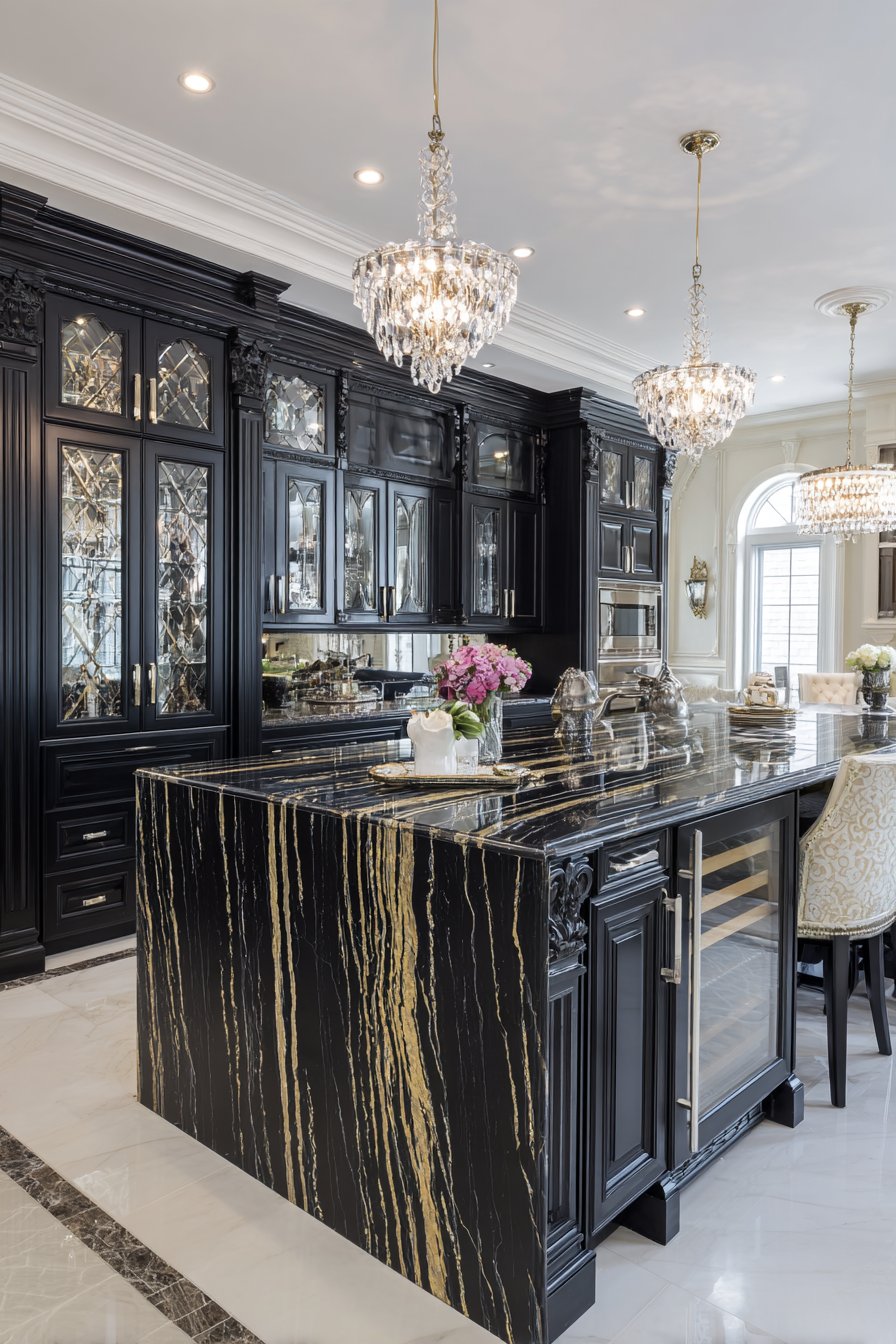
8. Luxury Peninsula with Dramatic Black Marble
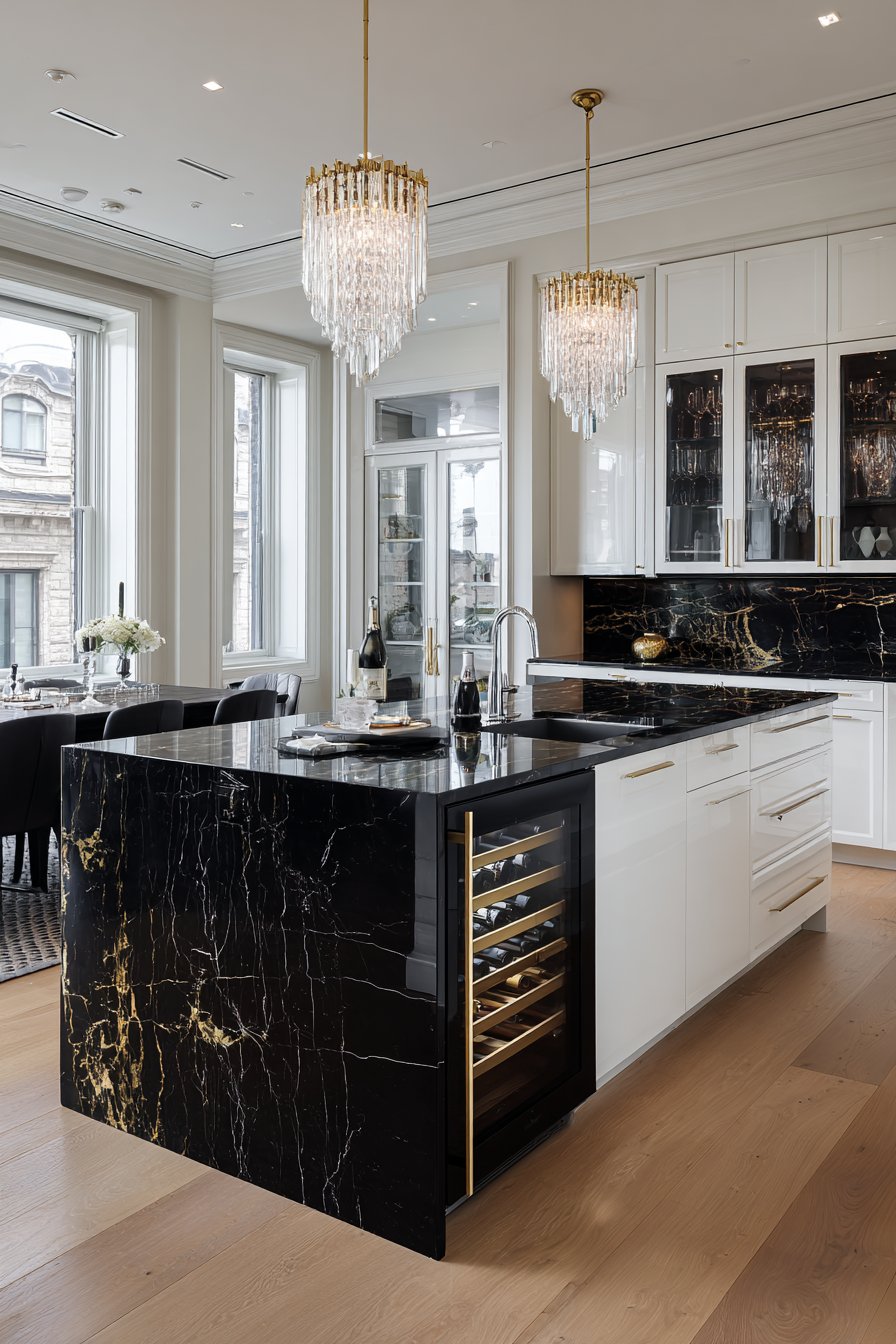
Unabashed glamour defines this luxury peninsula design where high-impact materials and sophisticated detailing create a kitchen that makes bold artistic statements. The peninsula’s surface features bookmatched marble slabs in dramatic black with striking gold veining—the stone cut from adjacent sections of the same block and opened like a book to create mirror-image patterns. This intentional symmetry transforms geological accident into deliberate artistry, the gold veins flowing across the surface like lightning captured in stone or abstract calligraphy in precious metal.
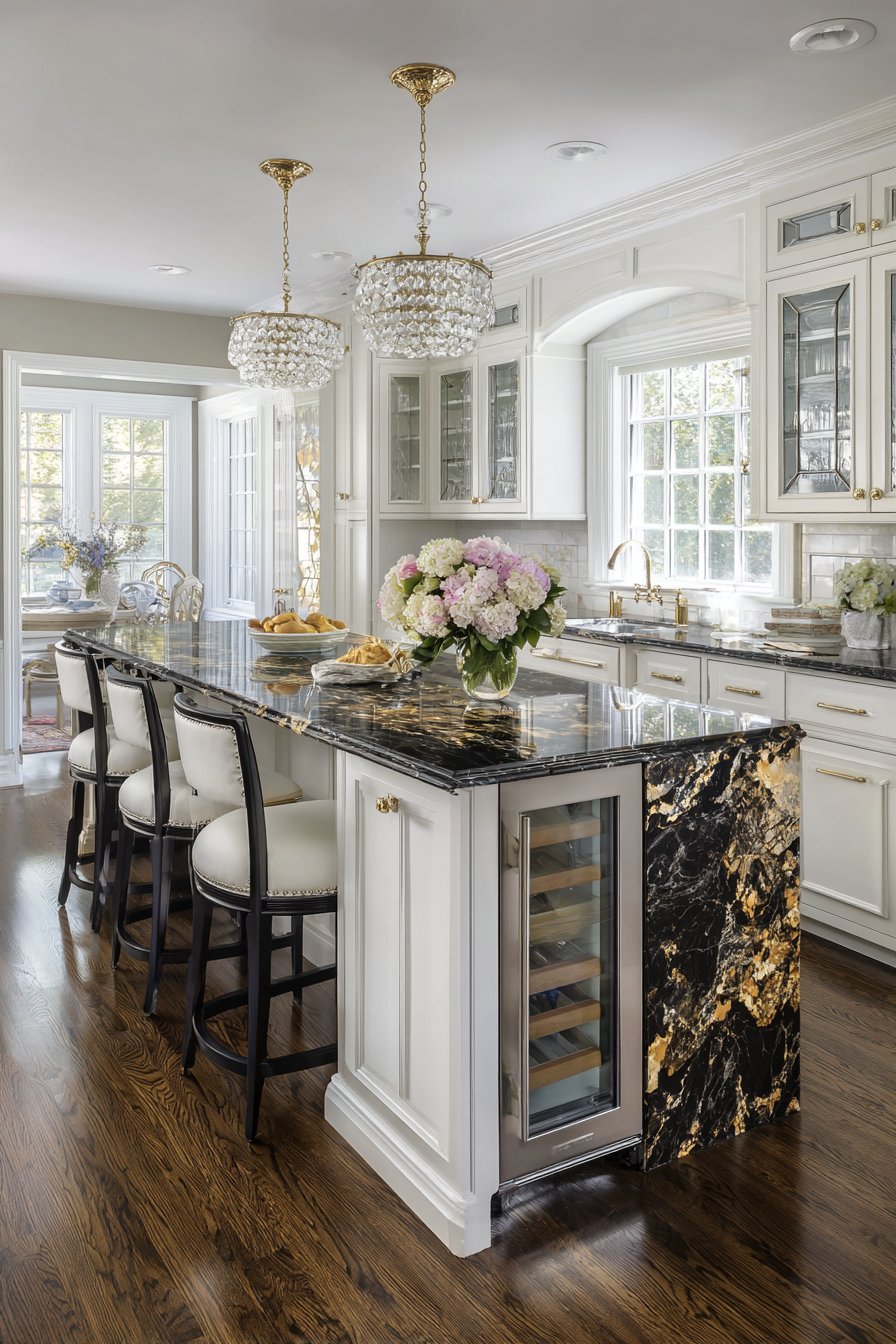
High-gloss white lacquer cabinets provide stark contrast to the dark countertops, their reflective surfaces bouncing light and creating the impression of more space while delivering visual punch through the black-and-white pairing. The glossy finish requires more maintenance than matte alternatives but the payoff in visual impact justifies the effort—surfaces that look perpetually fresh and that photograph beautifully. The peninsula integrates sophisticated storage solutions including a built-in wine cooler that maintains optimal temperature for your collection and decorative glass-front cabinets that display stemware as if in a high-end boutique.
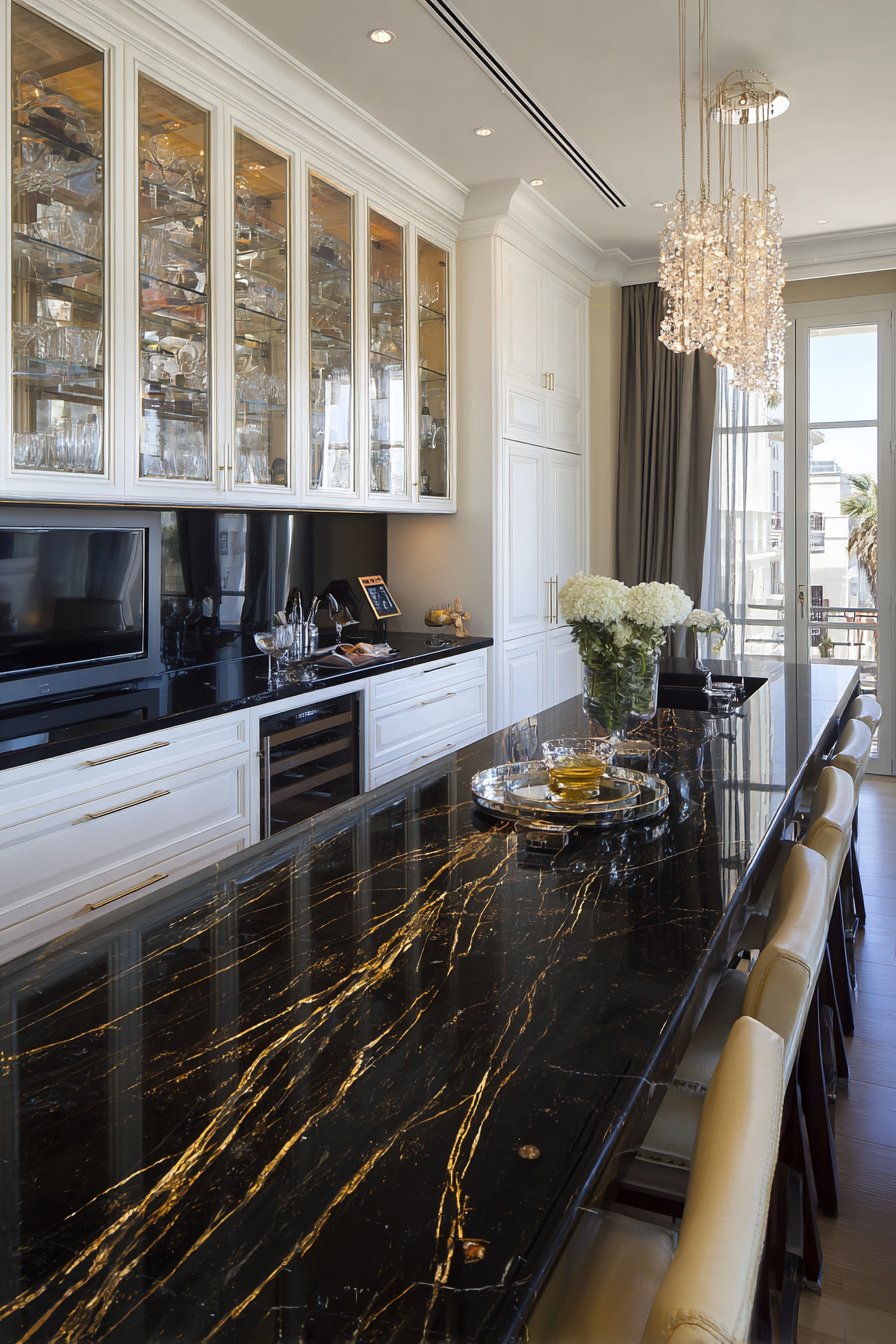
Crystal chandelier-style pendant lights suspend above the seating area, their faceted surfaces fracturing light into prismatic displays that dance across surrounding surfaces. These fixtures reference classic luxury while their contemporary proportions prevent the space from feeling like a period recreation. The overall aesthetic speaks to homeowners unafraid of drama—those who view their kitchen as a space for entertaining and impressing as much as cooking and eating.
Key Design Tips:
- Invest in bookmatching for marble countertops if budget permits—the symmetry creates instant luxury impact
- Balance dark dramatic materials with light cabinetry to prevent the space from feeling too heavy or cave-like
- Install adequate lighting to showcase luxury materials properly—dark surfaces absorb light and need compensation
- Consider integrated appliances behind matching cabinet panels to maintain the sleek, cohesive luxury aesthetic
- Choose statement lighting fixtures that match the ambition of your material selections
- Accept that high-gloss finishes show fingerprints and require regular maintenance—or embrace matte alternatives
9. Galley Kitchen Peninsula Transformation
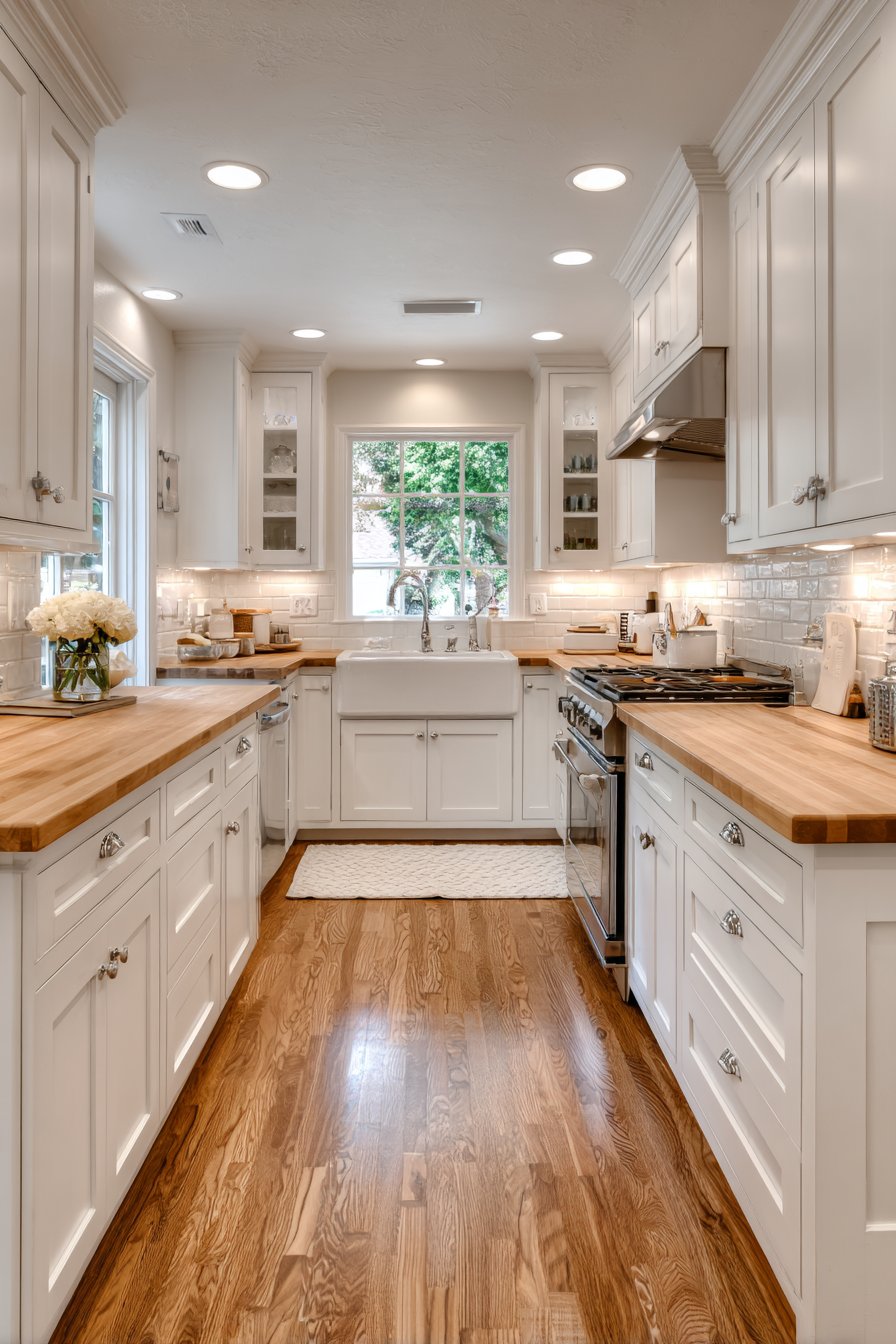
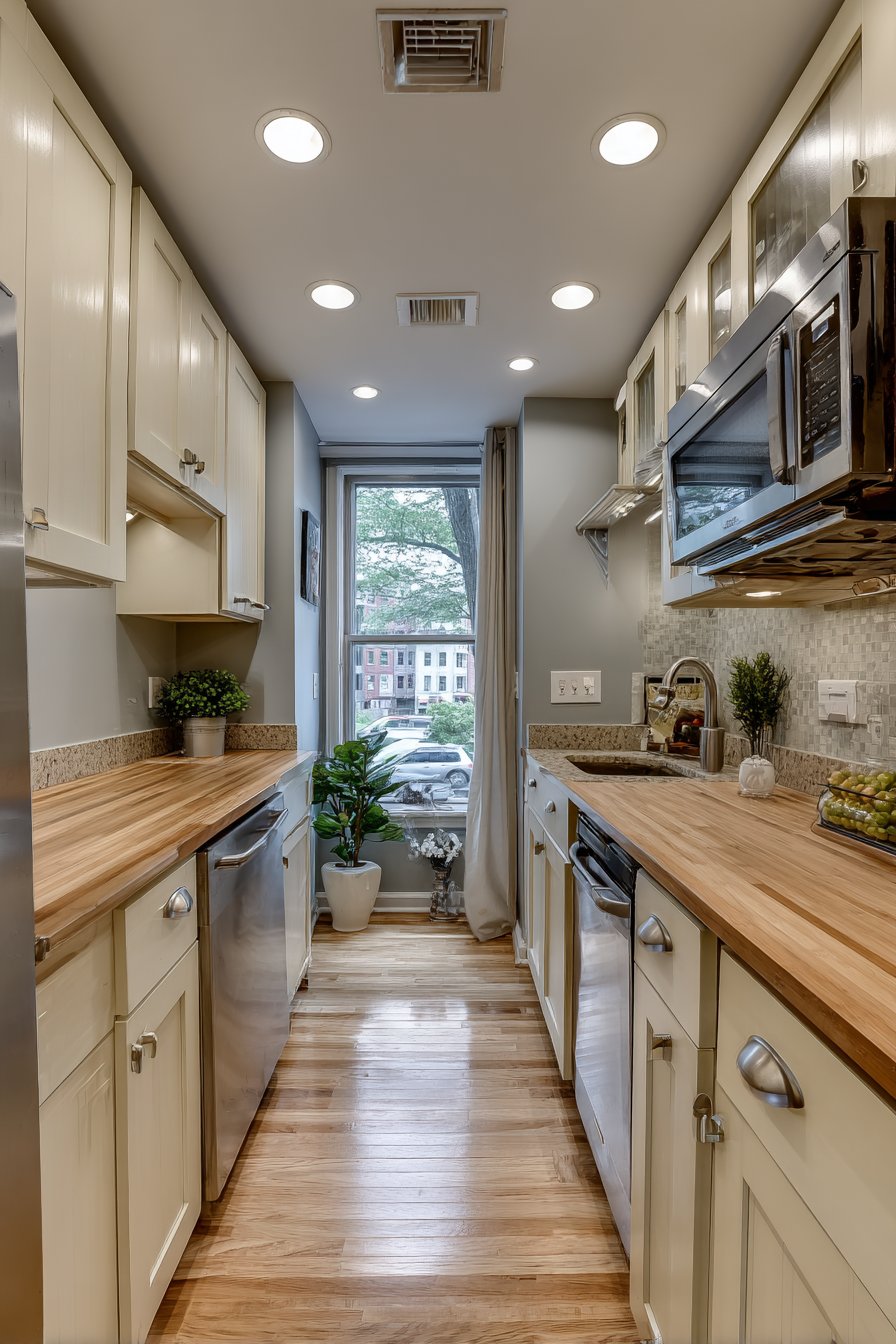
The challenge of galley kitchens—those narrow corridors flanked by cabinetry on both sides—finds elegant solution in this peninsula design that breaks one wall to create openness and connection. Where claustrophobic enclosed galley once confined the cook in isolation, the peninsula extends outward into adjacent living space, dramatically transforming both the kitchen’s functionality and the home’s spatial relationships. Warm honey-toned bamboo countertops bring sustainable beauty and remarkable durability, their linear grain patterns complementing the kitchen’s extended proportions.
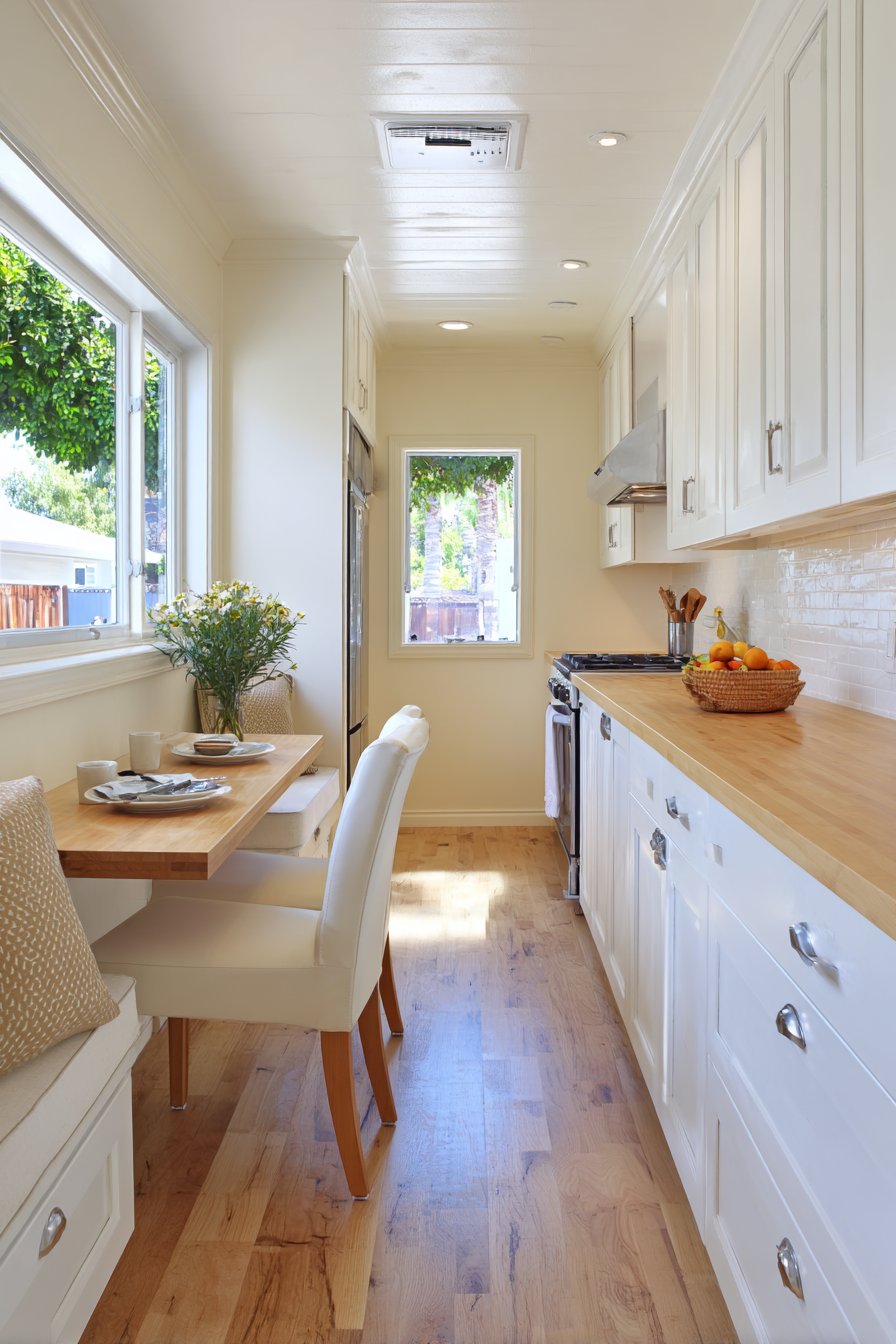
Soft white shaker cabinets with brushed nickel hardware maintain traditional sensibility while feeling fresh and current. The shaker style’s recessed center panel provides subtle dimensionality without the heavier presence of raised panels, keeping the narrow space feeling as open as possible. The peninsula provides desperately needed prep space—galley kitchens typically offer minimal counter area—while simultaneously creating casual dining for two, eliminating the need for a separate breakfast table that many galley kitchen floor plans cannot accommodate.
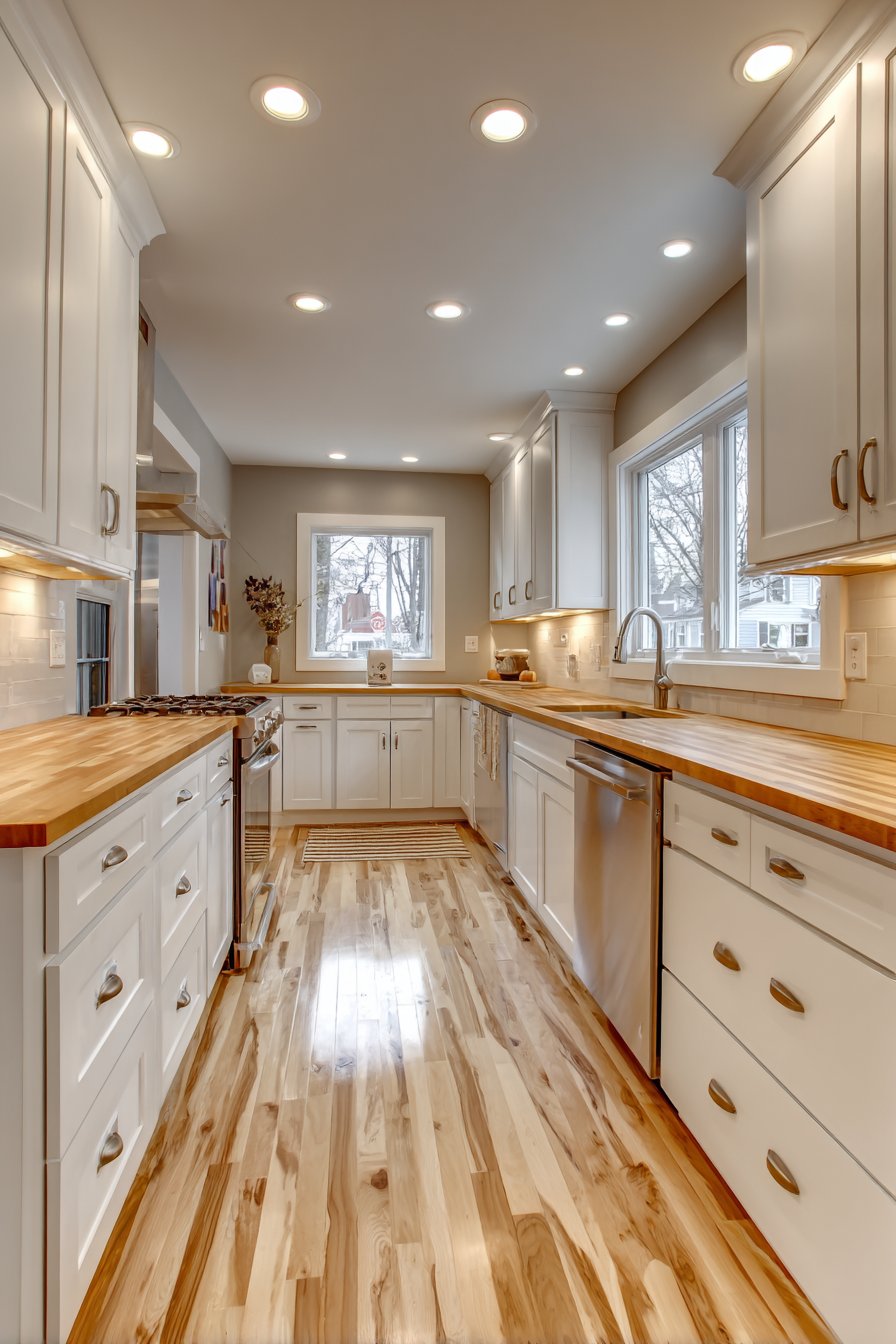
Under-cabinet lighting illuminates the workspace, essential in galley configurations where the cook’s body often blocks overhead light. Natural morning light streams through a window at the galley’s end, the peninsula’s perpendicular orientation allowing this light to wash across its surface. The transformation proves that even challenging architectural constraints can be overcome through strategic design thinking that reimagines how spaces connect and flow.
Key Design Tips:
- Consider breaking one wall of a galley kitchen to add a peninsula that opens the space
- Choose light cabinet colors in narrow kitchens to maximize the sense of spaciousness
- Install ample task lighting under cabinets to compensate for reduced natural light in galley configurations
- Use the peninsula to add both prep space and casual dining—solving multiple problems with one element
- Select bamboo or similar sustainable materials that offer both beauty and environmental responsibility
- Maintain clear traffic flow around the peninsula—minimum 36 inches, preferably 42-48 inches for comfortable circulation
10. Scandinavian Minimalist Peninsula
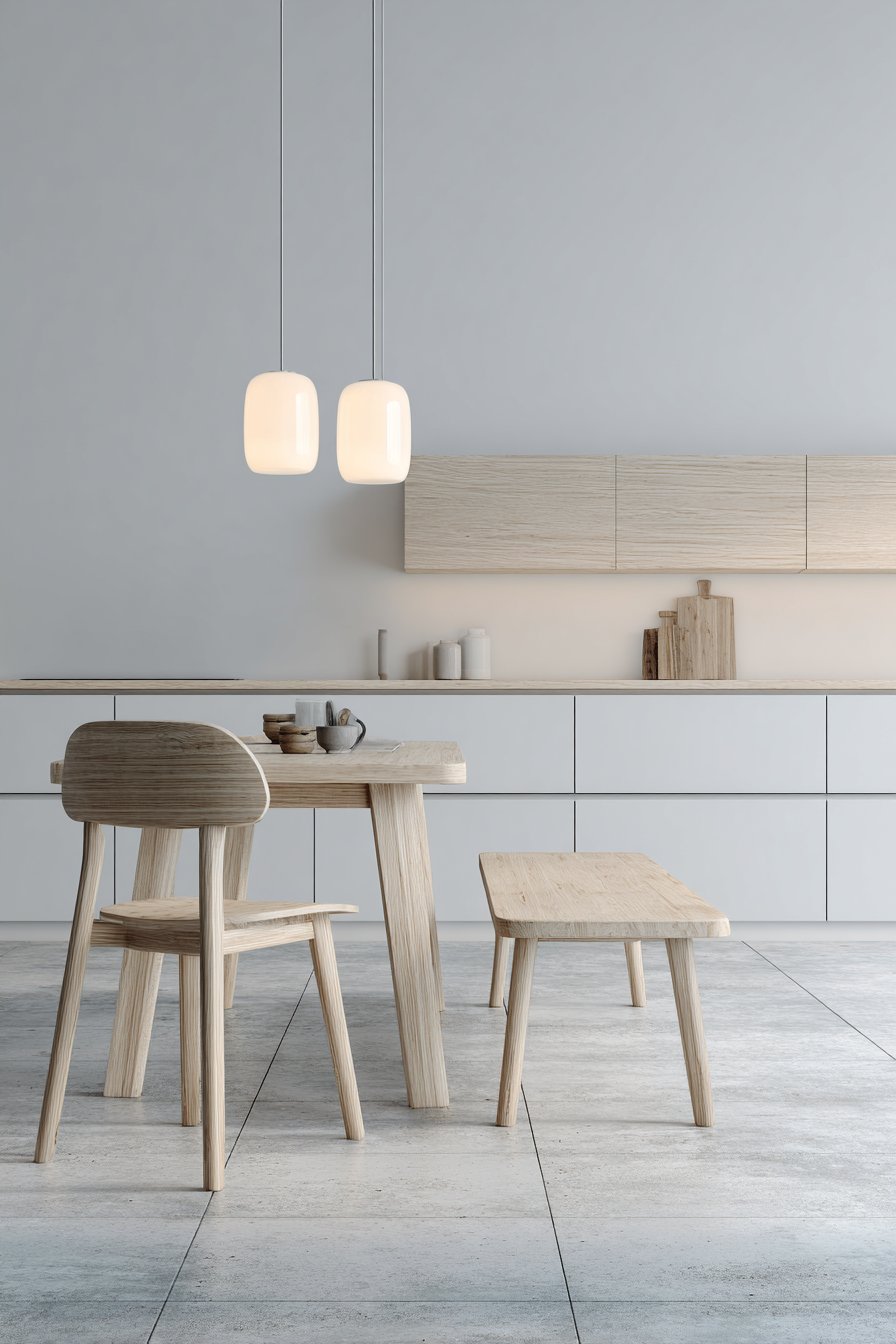
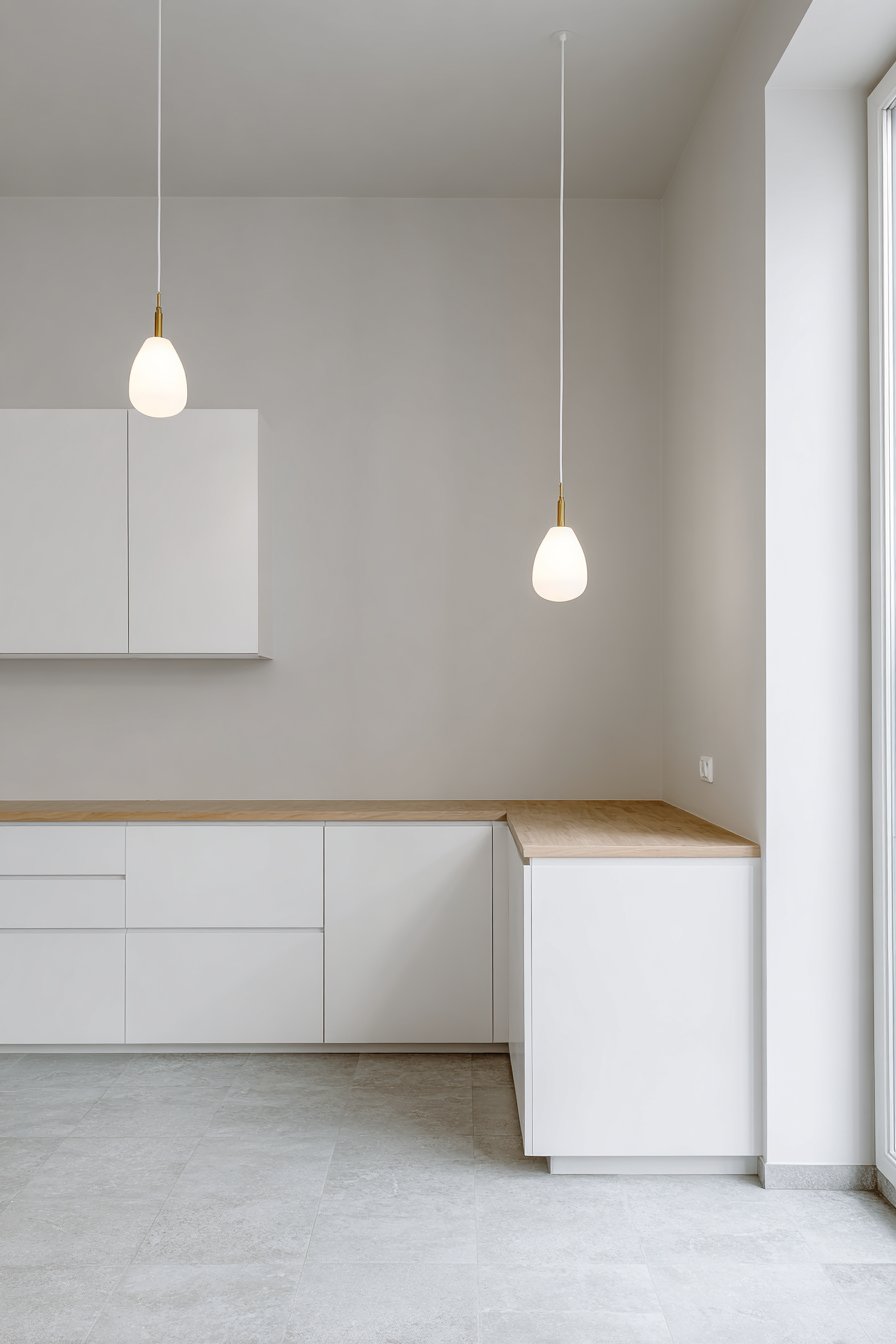
Restraint and intentionality characterize this Scandinavian-inspired peninsula where “lagom”—the Swedish concept of “just the right amount”—guides every decision. Pale ash wood countertops bring organic warmth through subtle grain patterns and soft grey-blonde tones that feel neither overtly warm nor aggressively cool. The wood’s natural character provides essential texture and life to what might otherwise risk sterility, proving that minimalism need not equal coldness. Handle-free white matte cabinets eliminate visual clutter through integrated push-to-open mechanisms, their uninterrupted surfaces creating the clean lines central to Nordic design philosophy.
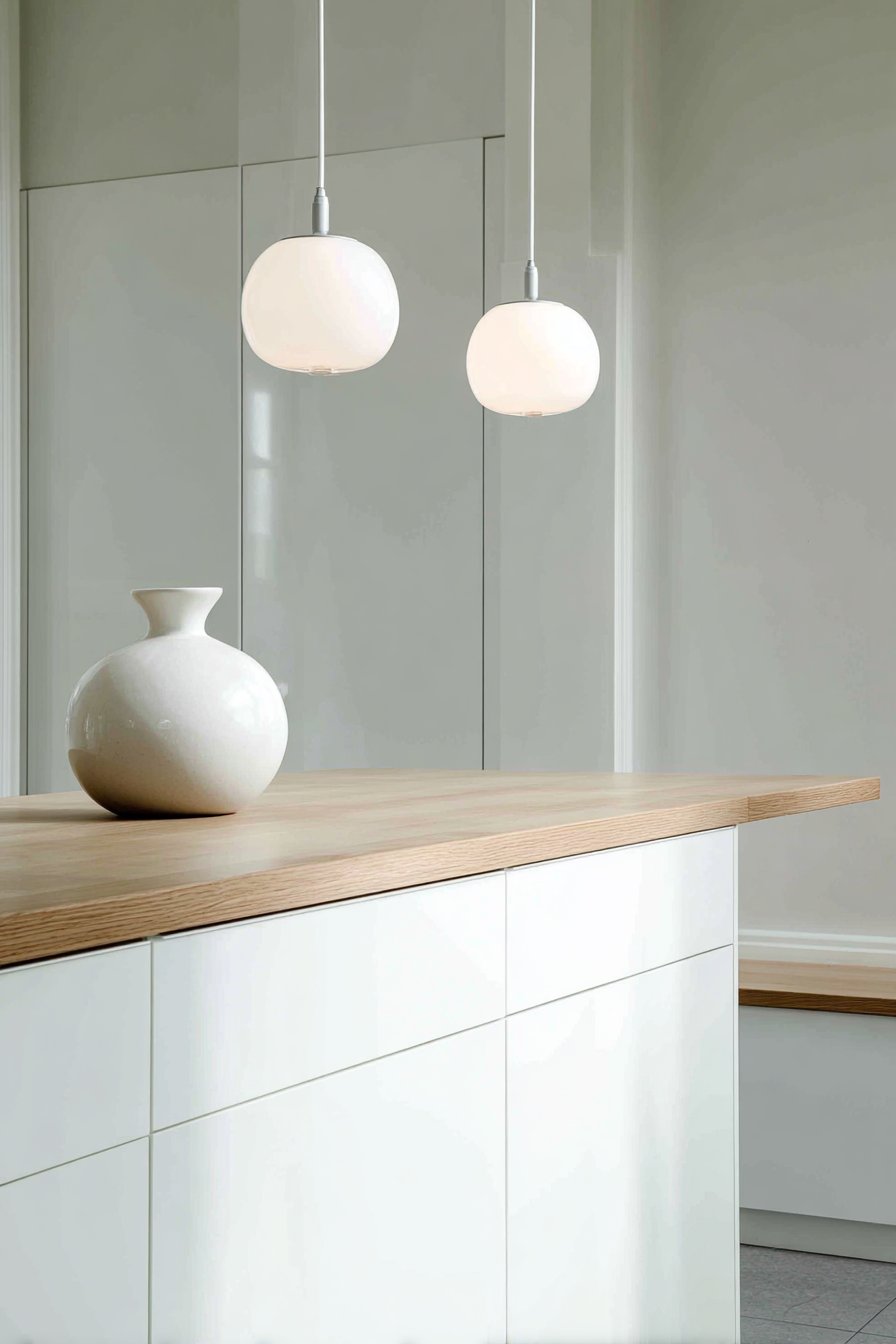
The peninsula’s form emphasizes functionality over decoration, each element earning its place through utility rather than mere aesthetics. There are no corbels, no decorative moldings, no applied ornaments—just carefully proportioned rectangular forms that create beauty through their relationships to one another and their honest expression of purpose. Simple pendant lights with opal glass shades provide soft, diffused illumination that avoids harsh shadows, their forms reduced to essential geometric shapes that complement rather than compete with the architecture.
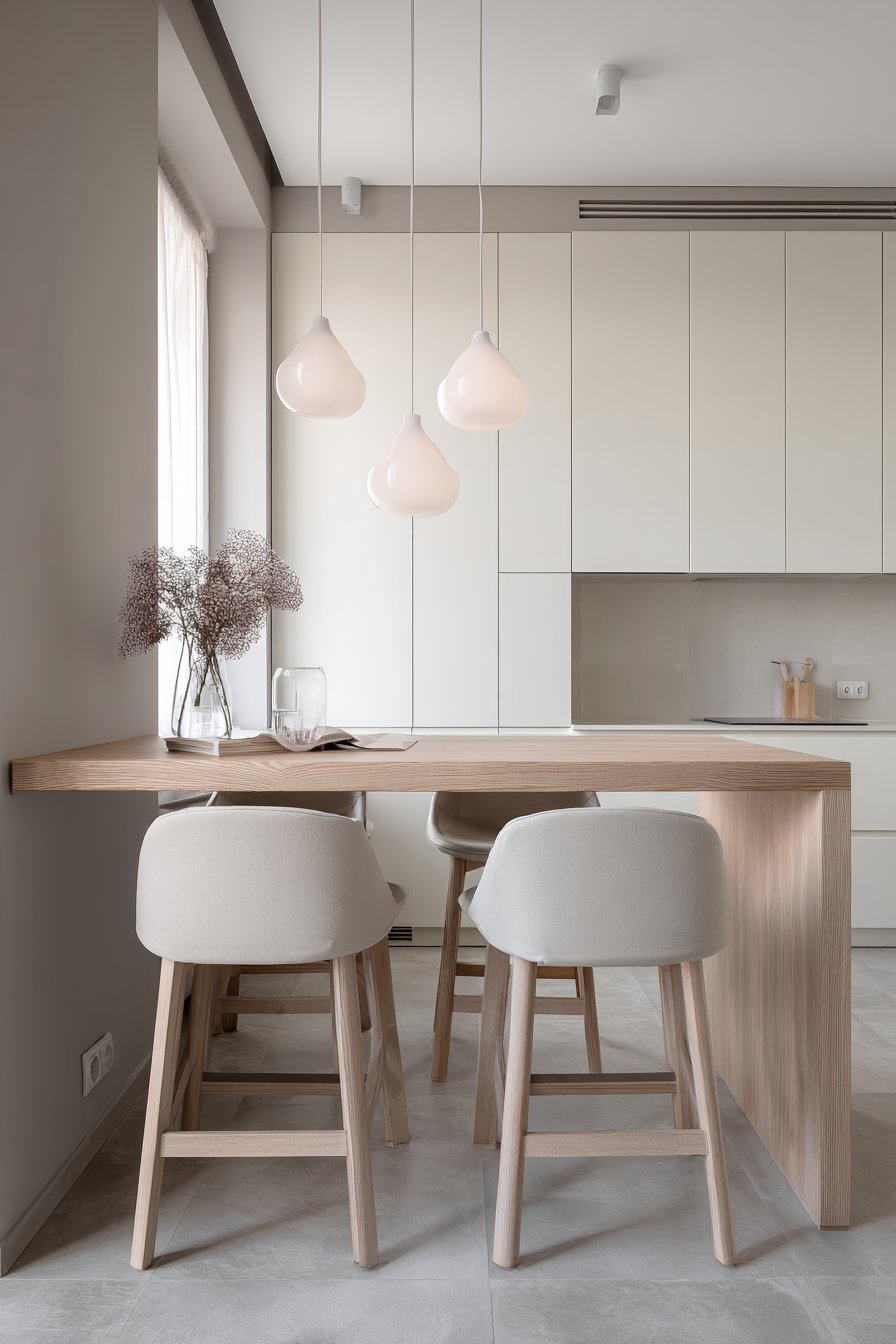
Light grey concrete-look porcelain floor tiles complement the neutral palette while providing practical flooring that resists moisture and wear. The porcelain’s authentic texture mimics poured concrete but offers easier maintenance and warmer underfoot comfort. Natural light, essential to Scandinavian design, floods the space through generous windows, the pale materials maximizing this precious resource. The overall effect is serene, uncluttered, and conducive to the contemplative quality that Scandinavian design promotes.
Key Design Tips:
- Embrace a neutral palette with varied textures to prevent minimalist spaces from feeling sterile or cold
- Select pale woods that bring warmth without heavy grain patterns that might feel too busy
- Install handle-free cabinetry to maintain uninterrupted surfaces essential to minimalist aesthetics
- Choose lighting fixtures with simple geometric forms and warm light output to create inviting ambiance
- Maximize natural light through generous windows and light-colored surfaces that reflect rather than absorb
- Edit ruthlessly—display only items that serve function or bring genuine joy, avoiding decorative clutter
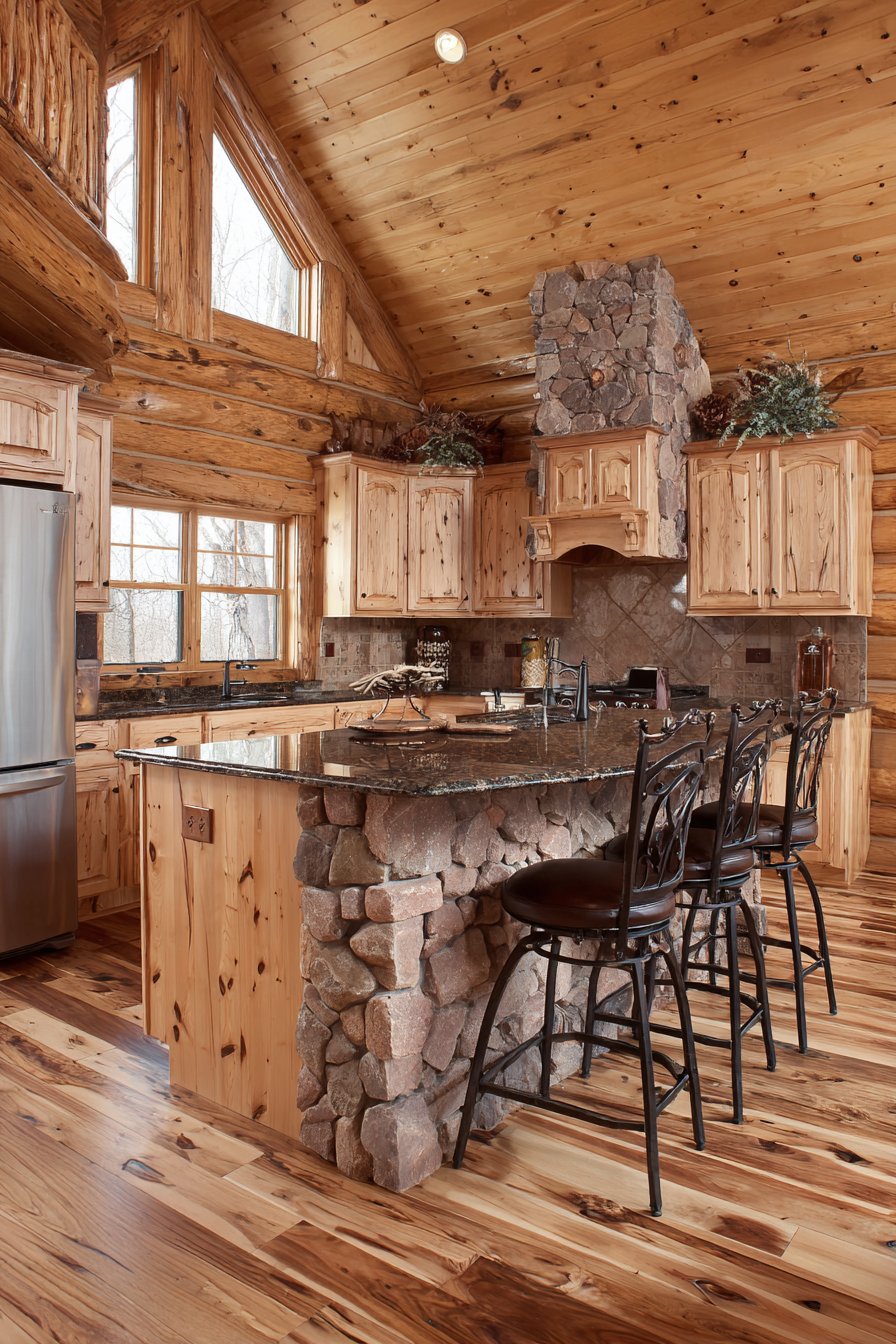
11. Rustic Lodge Peninsula with Knotty Pine Character
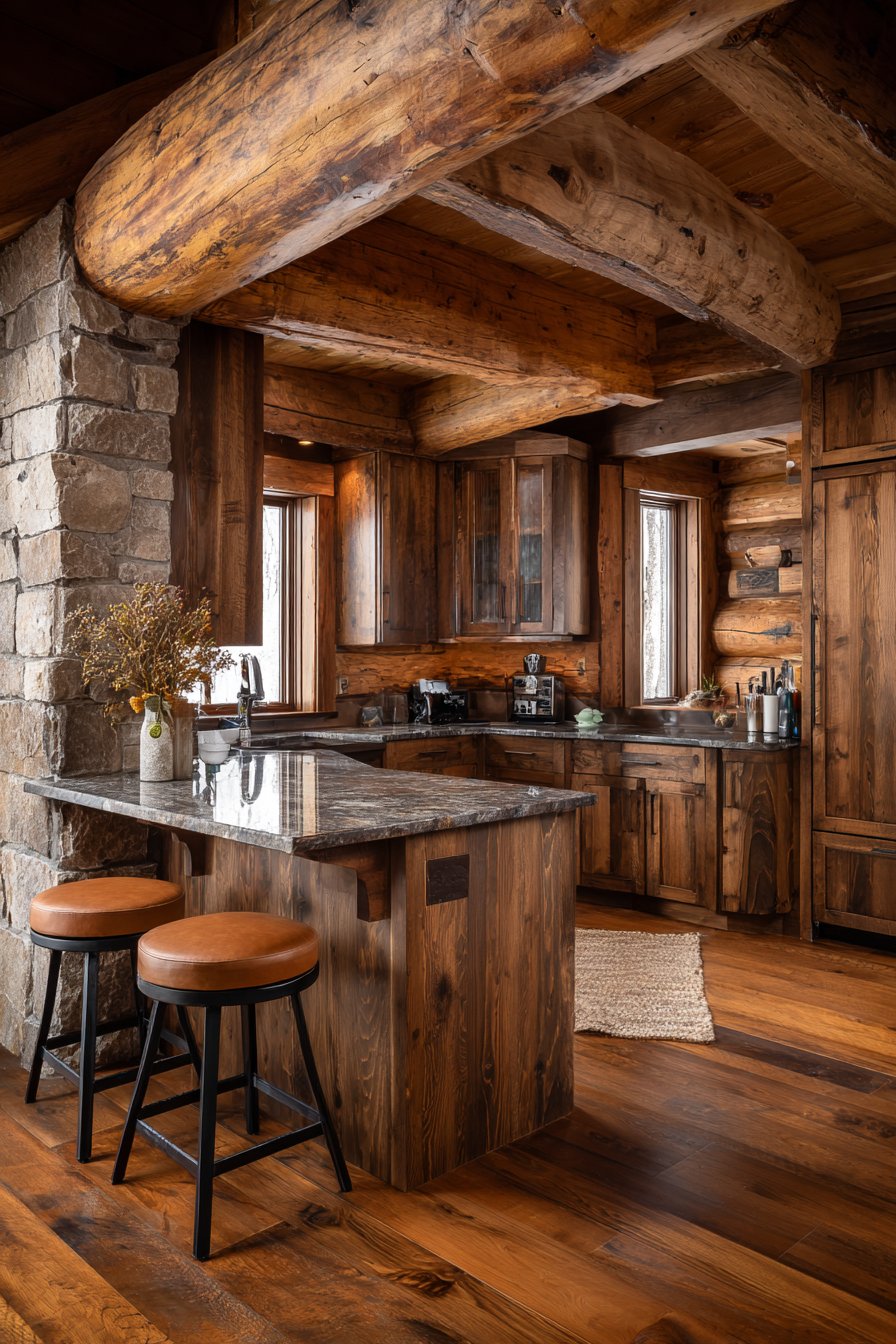
Mountain retreat atmosphere permeates this lodge-style peninsula where substantial materials and natural finishes create spaces that feel connected to forest surroundings. The peninsula structure showcases knotty pine—the knots, swirls, and grain variations that are often avoided in formal furniture become celebrated features in this rustic application. Clear protective finish allows the wood’s natural character to shine through while providing necessary protection against moisture and wear, the golden honey tones deepening over time as the finish ages.
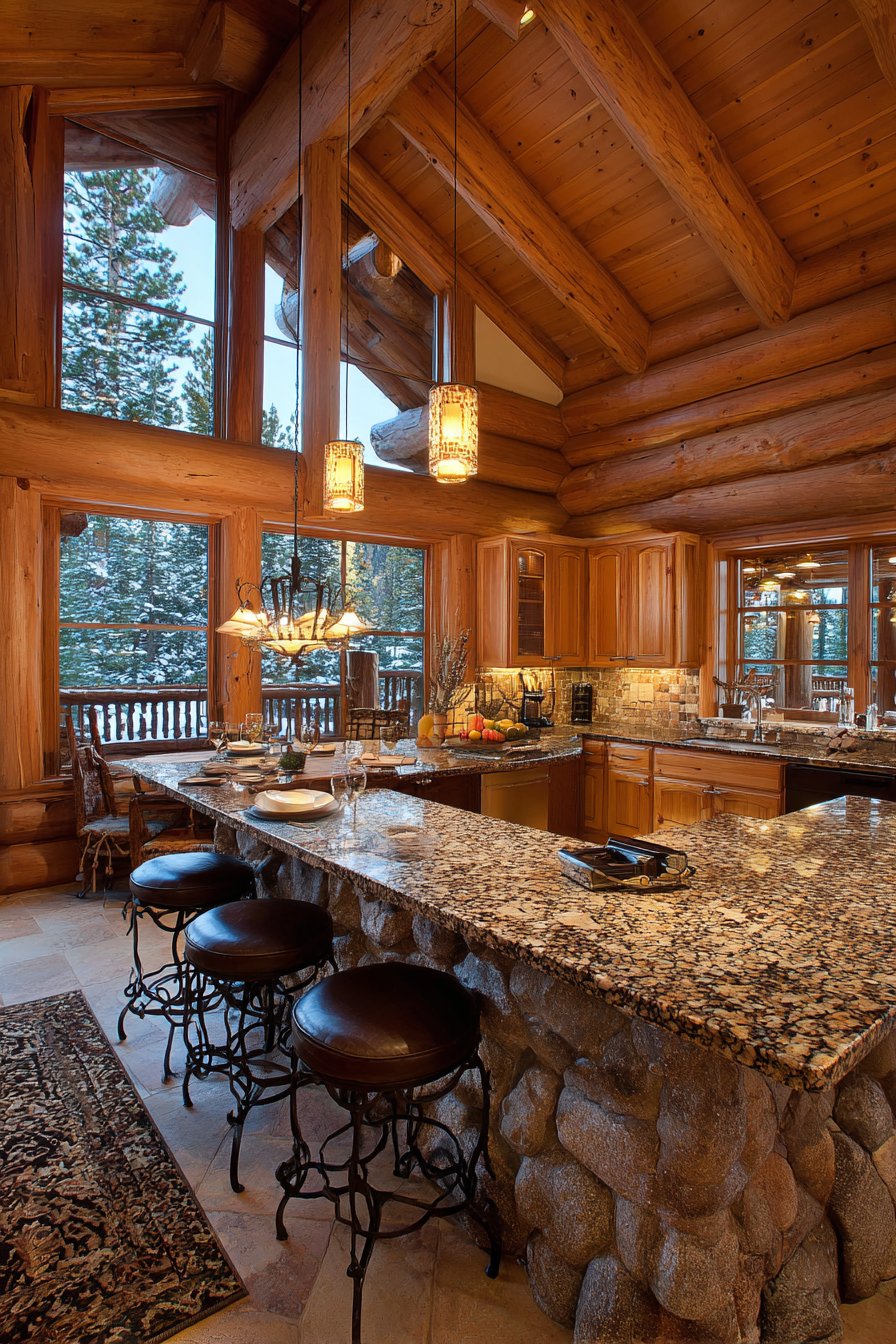
Stone veneer covers the peninsula base in mixed earth tones—buff, brown, grey, and rust colors that reference the rocky outcroppings and river stones found in mountain landscapes. This stone cladding transforms the peninsula into something more architectural than typical cabinetry, giving it the substantial presence of a permanent fixture built into the home’s structure. Dark granite countertops provide contrast to the lighter pine while offering durable surface suitable for rustic living where function matters more than fussy maintenance.
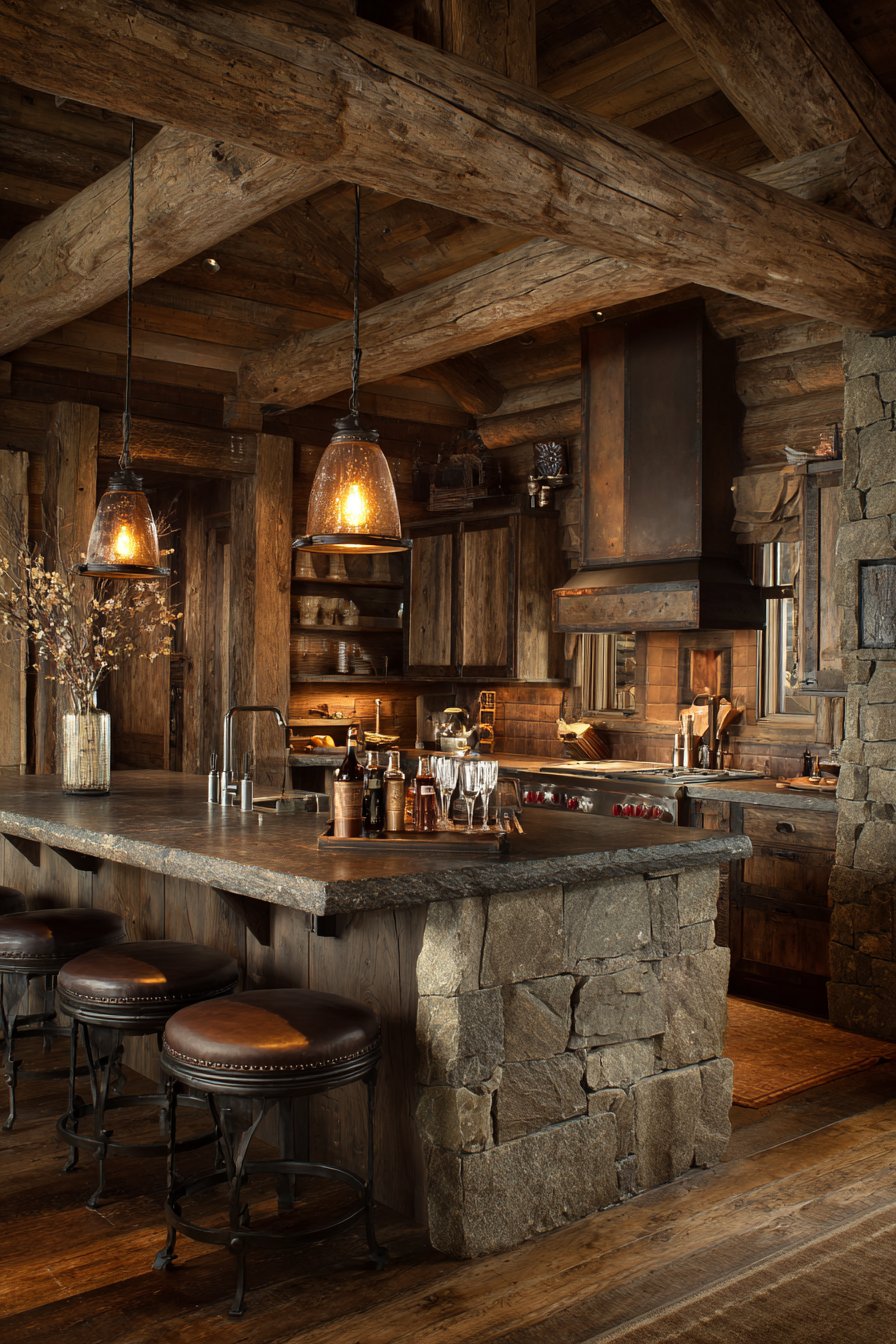
Wrought iron bar stools with leather seats complement the mountain aesthetic, their substantial metal construction and natural material upholstery continuing the theme of honest materials honestly used. The leather will develop patina and character marks over time—scratches, worn areas, color variations—that align with the rustic philosophy that beautiful things should show their use and history. Warm ambient lighting from strategically placed fixtures creates the glow of firelight, essential to achieving the cozy atmosphere that makes lodge design so appealing.
Key Design Tips:
- Embrace wood imperfections like knots and grain variations as character rather than defects in rustic designs
- Use stone veneer to add architectural presence and textural interest without the weight of solid stone
- Select granite or similar durable materials for countertops that can withstand rustic living’s demands
- Choose seating with leather or other natural materials that develop attractive patina with use
- Layer lighting types—ambient, task, and accent—to create the warm glow essential to cozy rustic atmospheres
- Apply clear finishes to wood surfaces that protect while showcasing natural beauty rather than concealing it with stain
12. Transitional Peninsula Bridging Design Eras
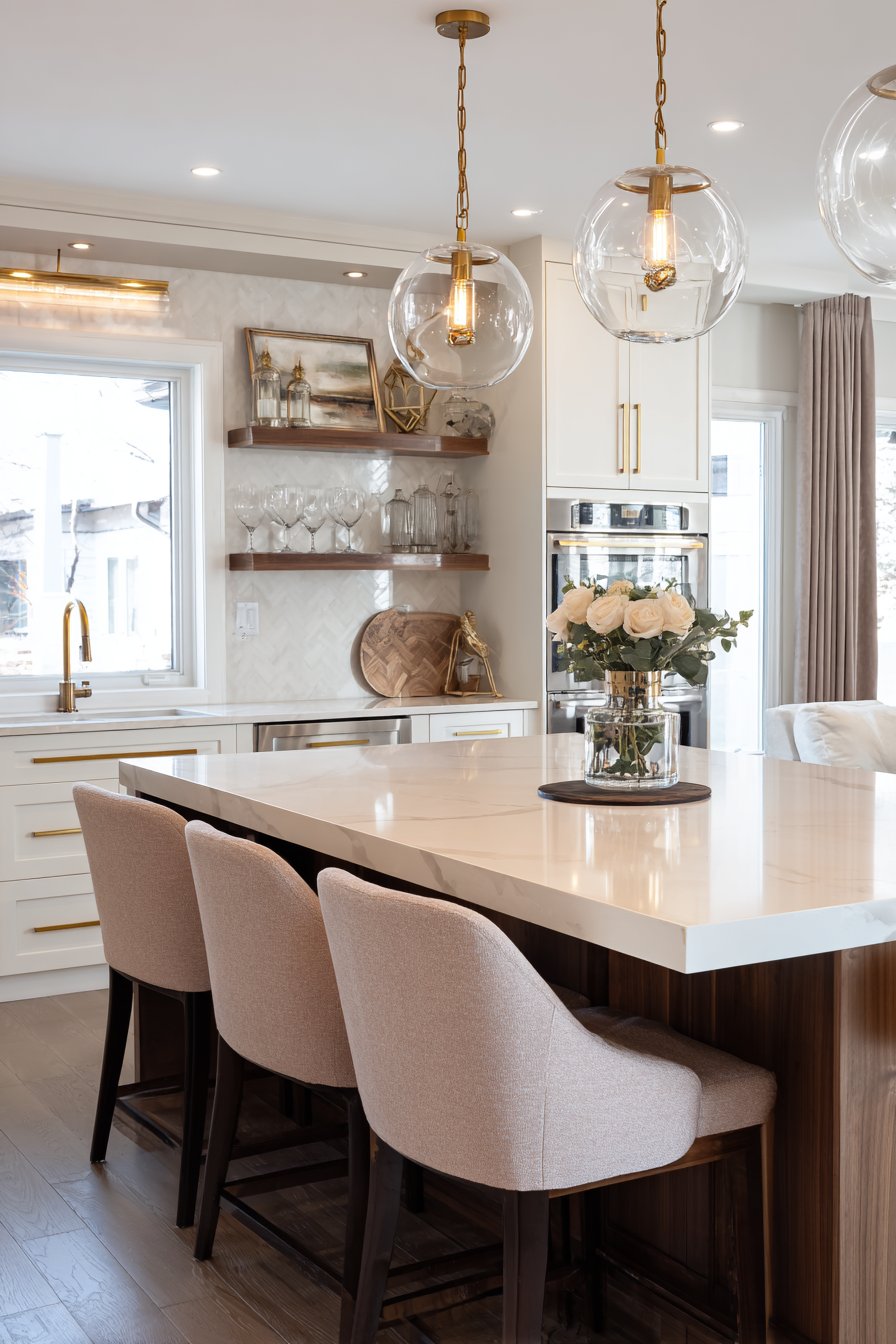
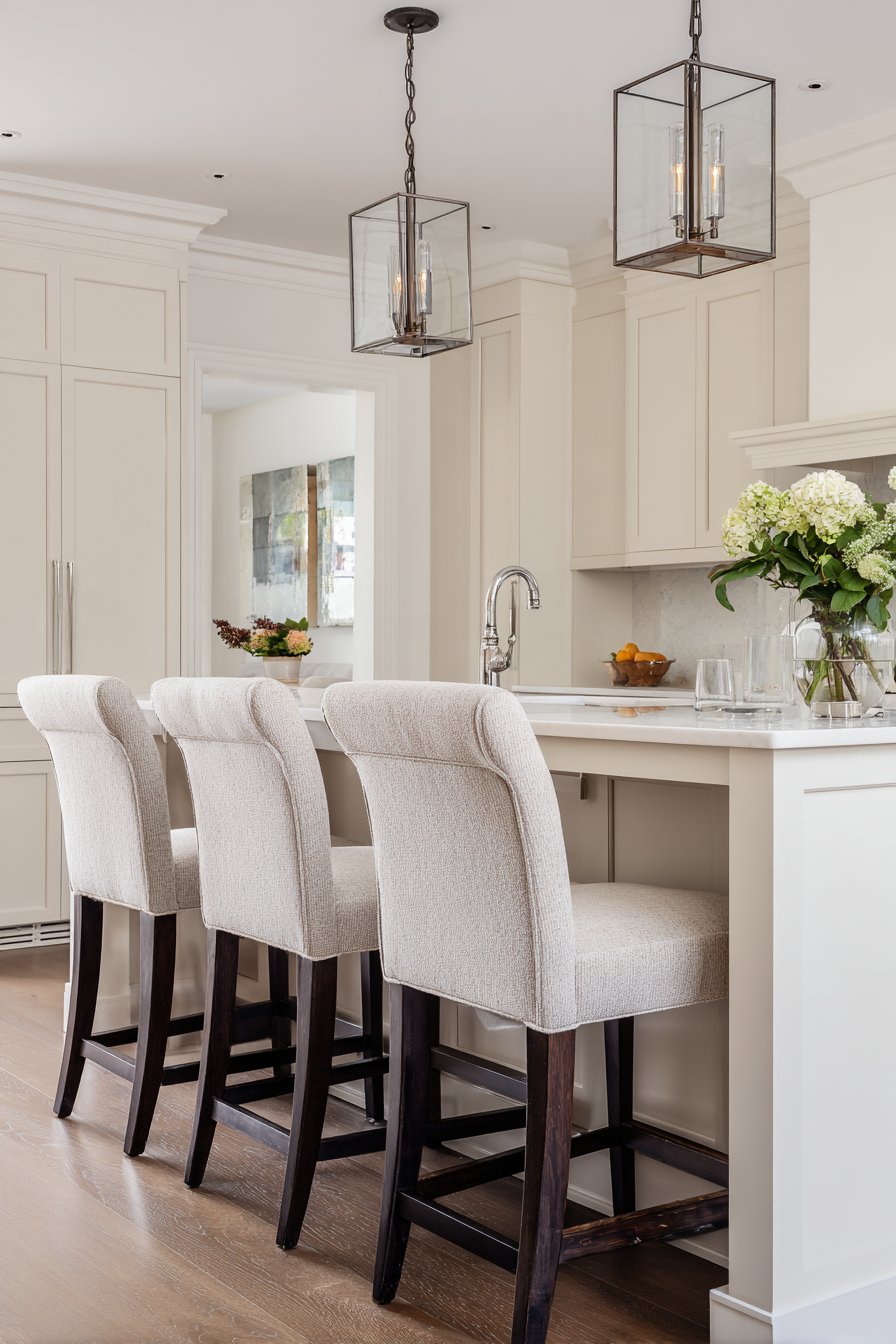
The beauty of transitional design lies in its diplomatic balance—taking the best from traditional and contemporary aesthetics while avoiding the pitfalls of either extreme. This peninsula exemplifies that philosophy through its shaker-style cabinets painted in warm greige, that sophisticated neutral hovering between grey and beige. This color choice speaks to both traditional sensibilities (the soft, muted tone) and contemporary preferences (the grey influence), creating a foundation that feels current without risking rapid obsolescence.
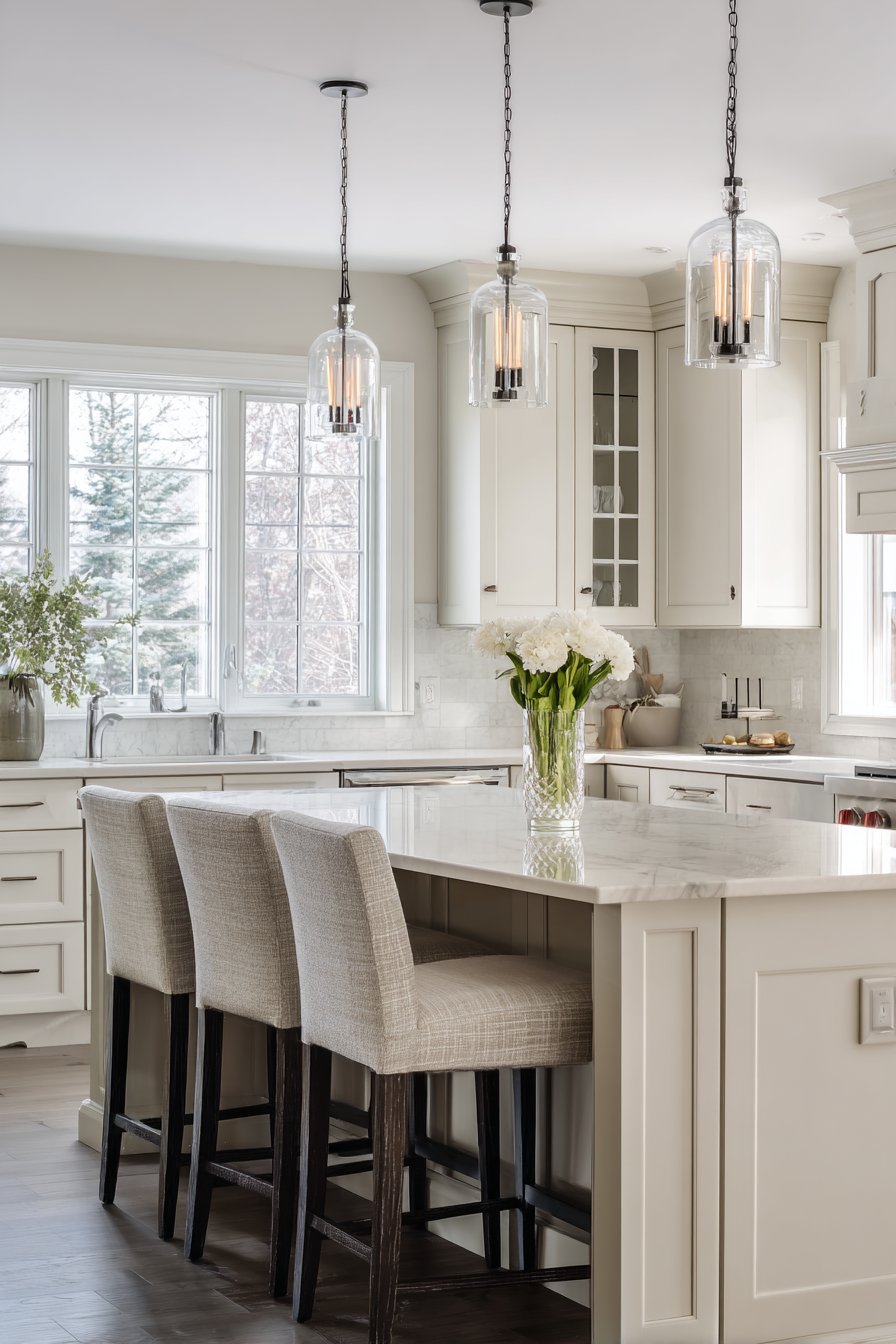
Modern quartz countertops in cream with subtle movement provide practical benefits—stain resistance, durability, zero maintenance—wrapped in a natural-looking package that doesn’t scream “engineered material.” The slight variation in color and pattern prevents the uniformity that can make some quartz look artificial while maintaining the clean, consistent appearance that traditional natural stone cannot guarantee. The peninsula incorporates both closed storage for concealing necessities and open display shelving with integrated LED strip lighting that showcases chosen objects while providing ambient glow.
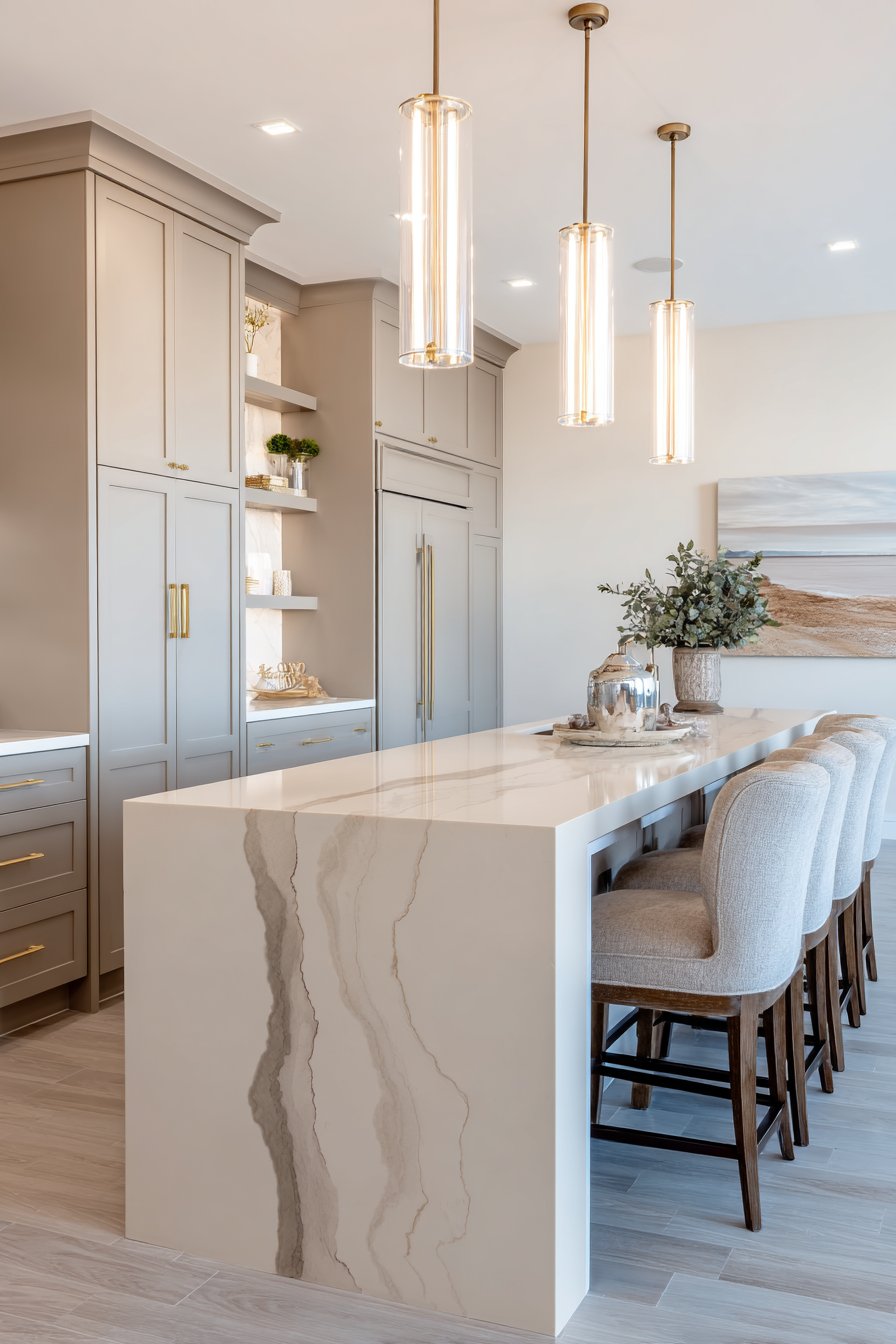
Transitional-style pendant lights with brushed bronze finish hang above upholstered counter-height chairs, their design neither too ornate for modern tastes nor too stark for traditional preferences. The brushed bronze finish strikes similar balance—more interesting than basic nickel but less showy than polished brass or oil-rubbed bronze. Natural daylight highlights the balanced design elements that appeal across generational and stylistic preferences, making this peninsula suitable for homes where occupants may have different aesthetic inclinations.
Key Design Tips:
- Select greige and similar transitional neutrals that reference both traditional and contemporary palettes
- Combine shaker cabinet styling with contemporary hardware for blended aesthetic appeal
- Mix closed storage with open shelving to balance practicality with display opportunities
- Choose quartz that mimics natural stone variation without requiring natural stone maintenance
- Install LED strip lighting in open shelving for both functional and ambient illumination
- Select fixtures and finishes that read as “timeless” rather than tied to specific design trends
13. Compact Condo Peninsula with Maximized Efficiency
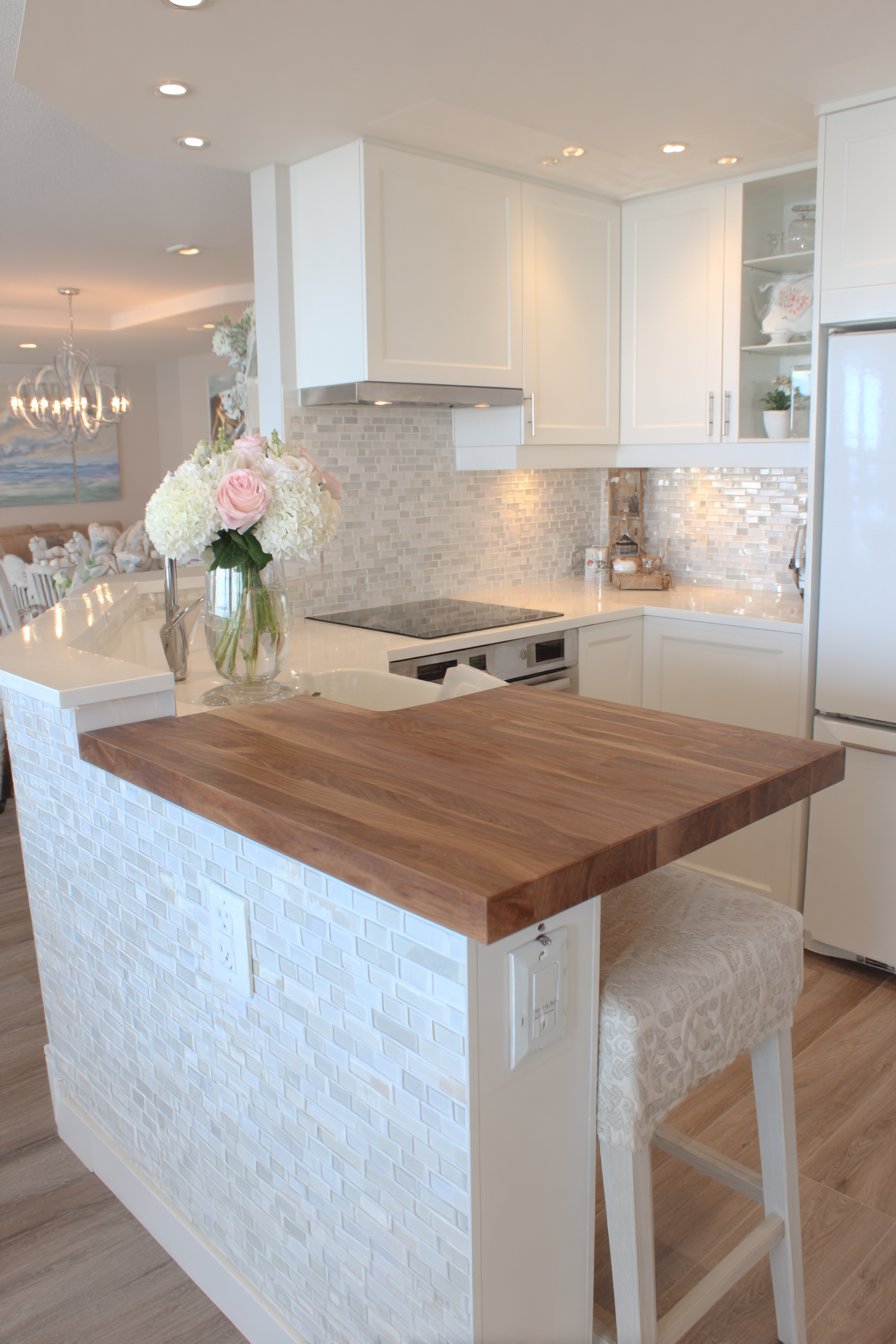
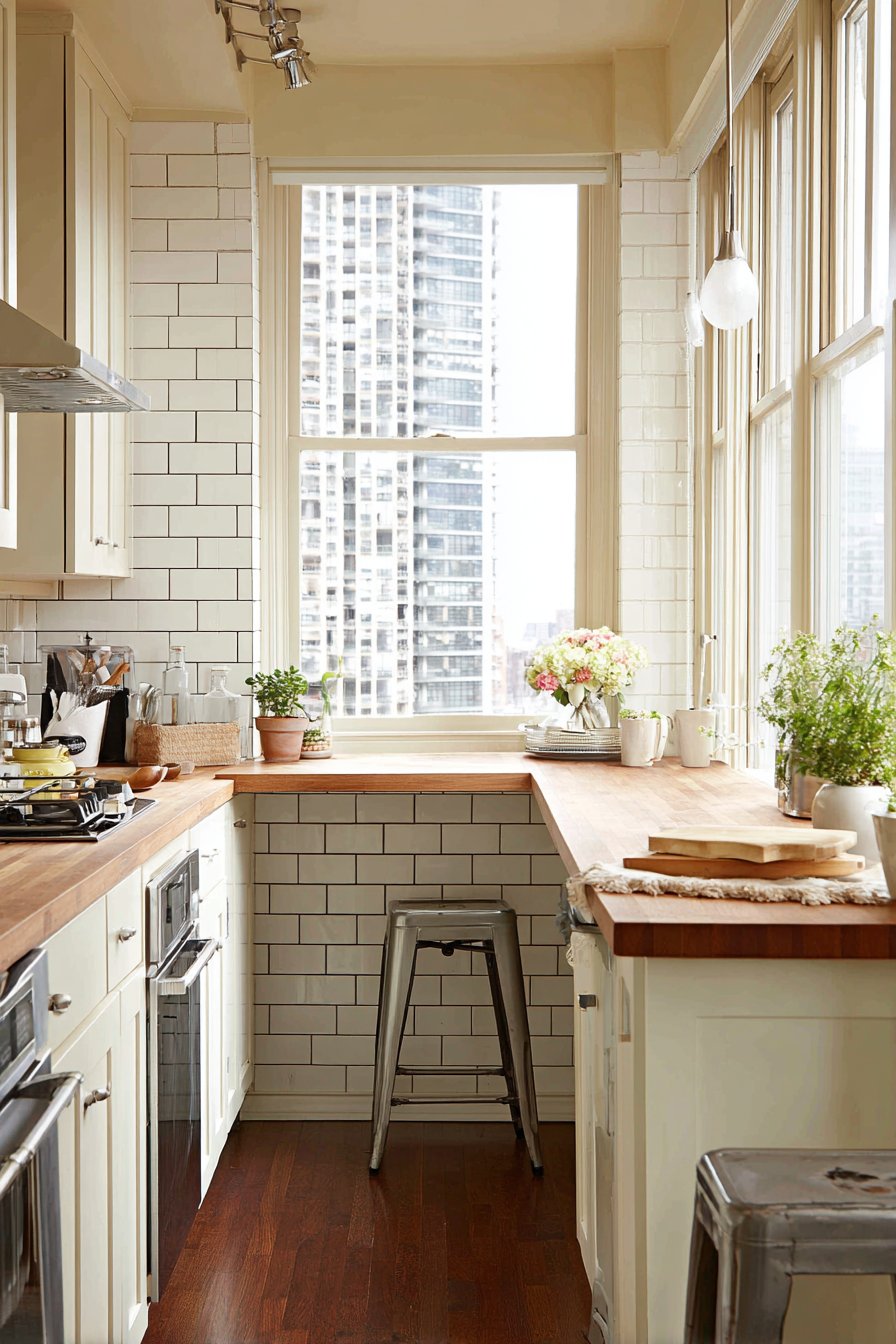
Small-space living demands creative solutions, and this compact condo peninsula delivers maximum functionality within minimal footprint. The design strategy prioritizes efficiency without sacrificing style, proving that limited square footage need not mean limited ambition. White subway tile backsplash wraps around to the peninsula side, its classic pattern and light-reflective surface helping the space feel larger while providing easy-clean protection. The continuous tile treatment creates visual cohesion that prevents the small space from feeling choppy or fragmented.
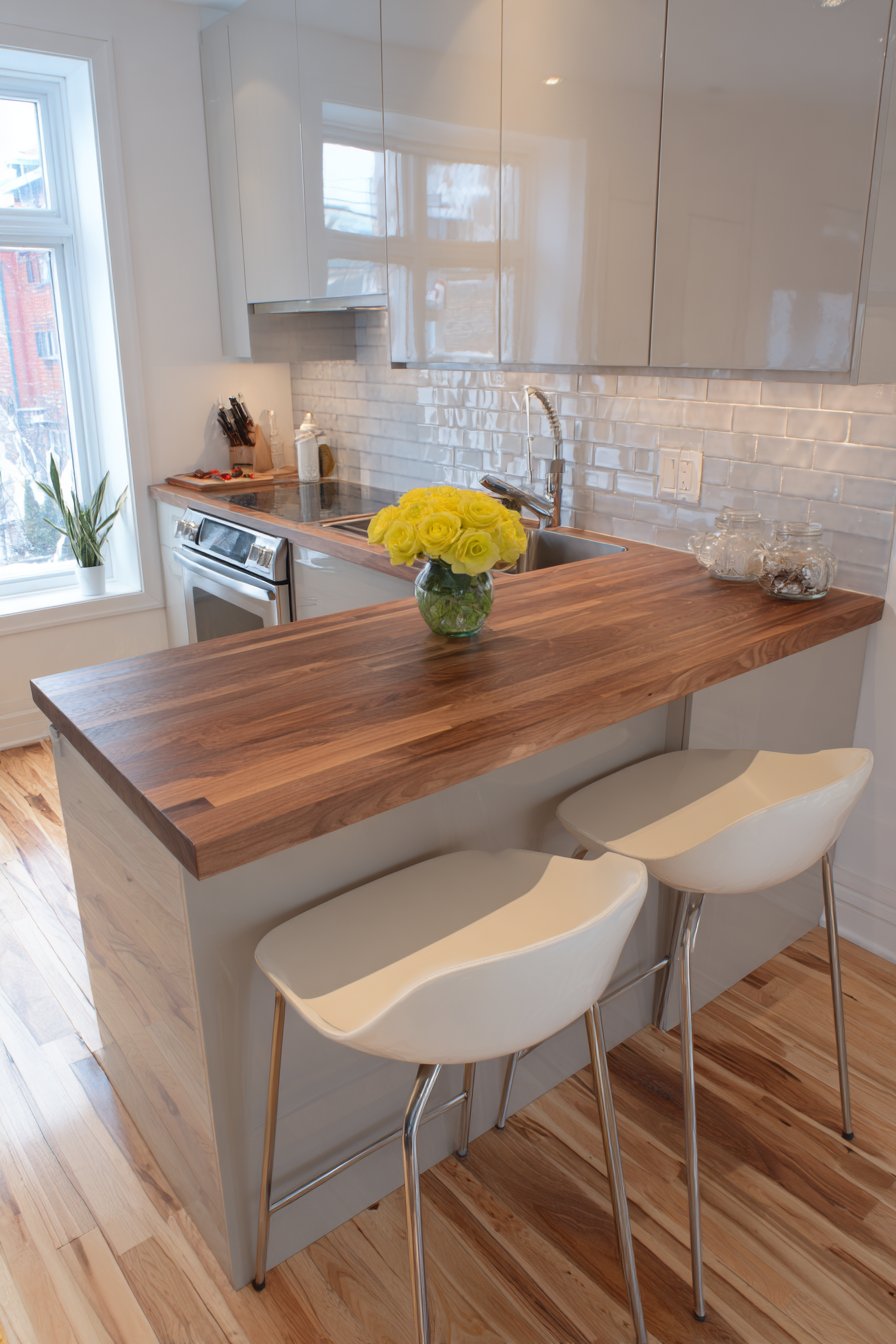
Butcher block countertops add warmth while providing practical cutting surface—in compact kitchens where counter space is precious, having prep surface that can double as cutting board eliminates the need to find storage for separate boards. Narrow base cabinets maximize every inch with pull-out organizers that bring contents forward rather than requiring reaching into deep cabinets where items get lost and forgotten. These organizers might include spice racks, utensil dividers, and slide-out trash bins—each system custom-designed for specific storage needs.
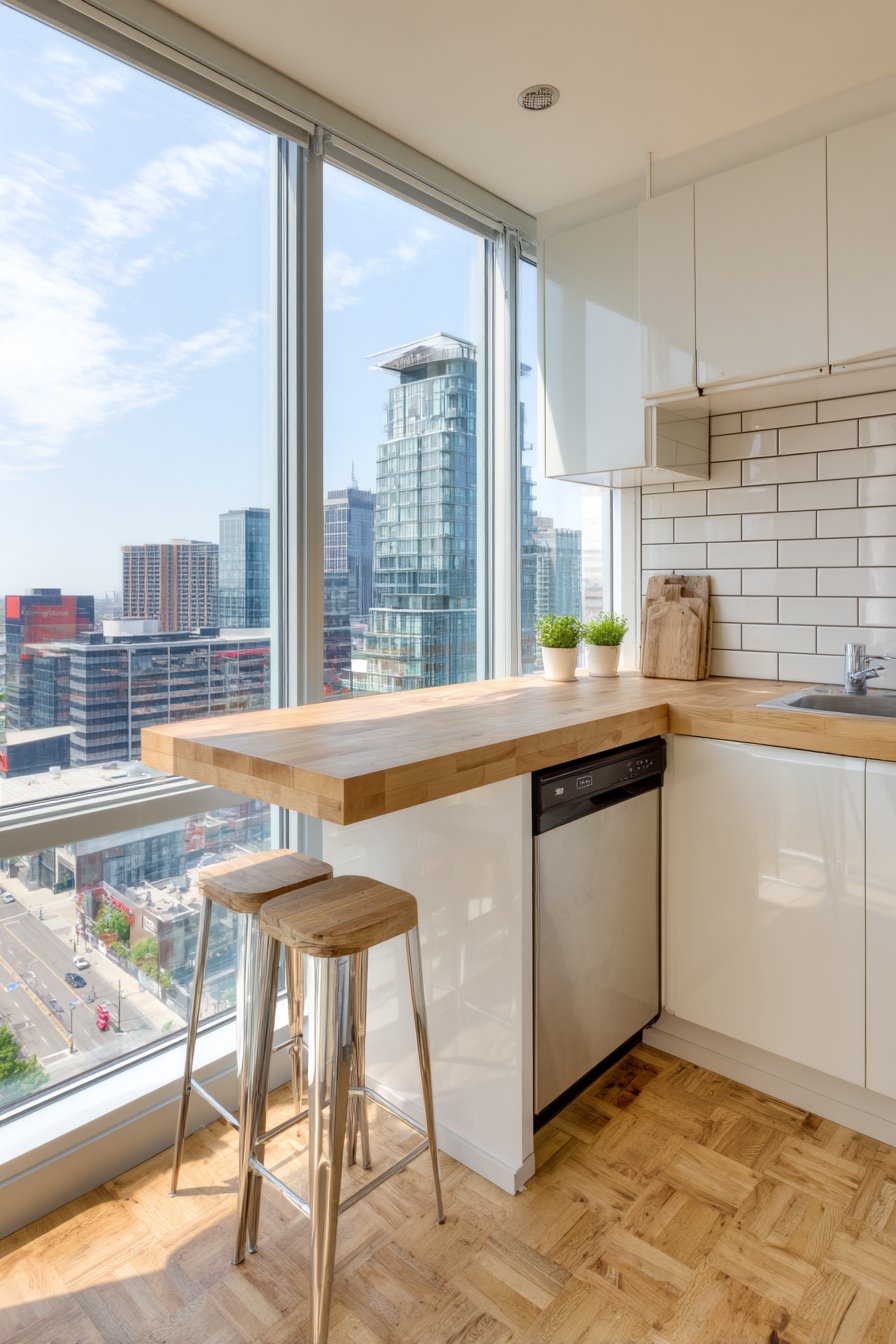
Two slim bar stools tuck completely under the overhang when not in use, their narrow profiles and armless design allowing them to disappear beneath the peninsula and preserve precious floor space. This tucking capability is crucial in compact condos where circulation space is limited and furniture that can be concealed when not needed makes daily living more comfortable. Bright natural lighting, maximized through minimal window treatments, makes the compact kitchen feel larger and more welcoming than its modest dimensions might suggest.
Key Design Tips:
- Extend backsplash tile around peninsula sides for visual continuity in small spaces
- Choose butcher block countertops that serve multiple functions, reducing need for extra kitchen tools
- Install pull-out organizers in every cabinet to maximize accessibility and storage efficiency
- Select narrow, armless stools that can tuck completely beneath the peninsula overhang
- Use light colors and reflective materials throughout to maximize the sense of spaciousness
- Minimize window treatments to allow maximum natural light penetration, essential in small spaces
14. Mid-Century Modern Peninsula with Period Authenticity
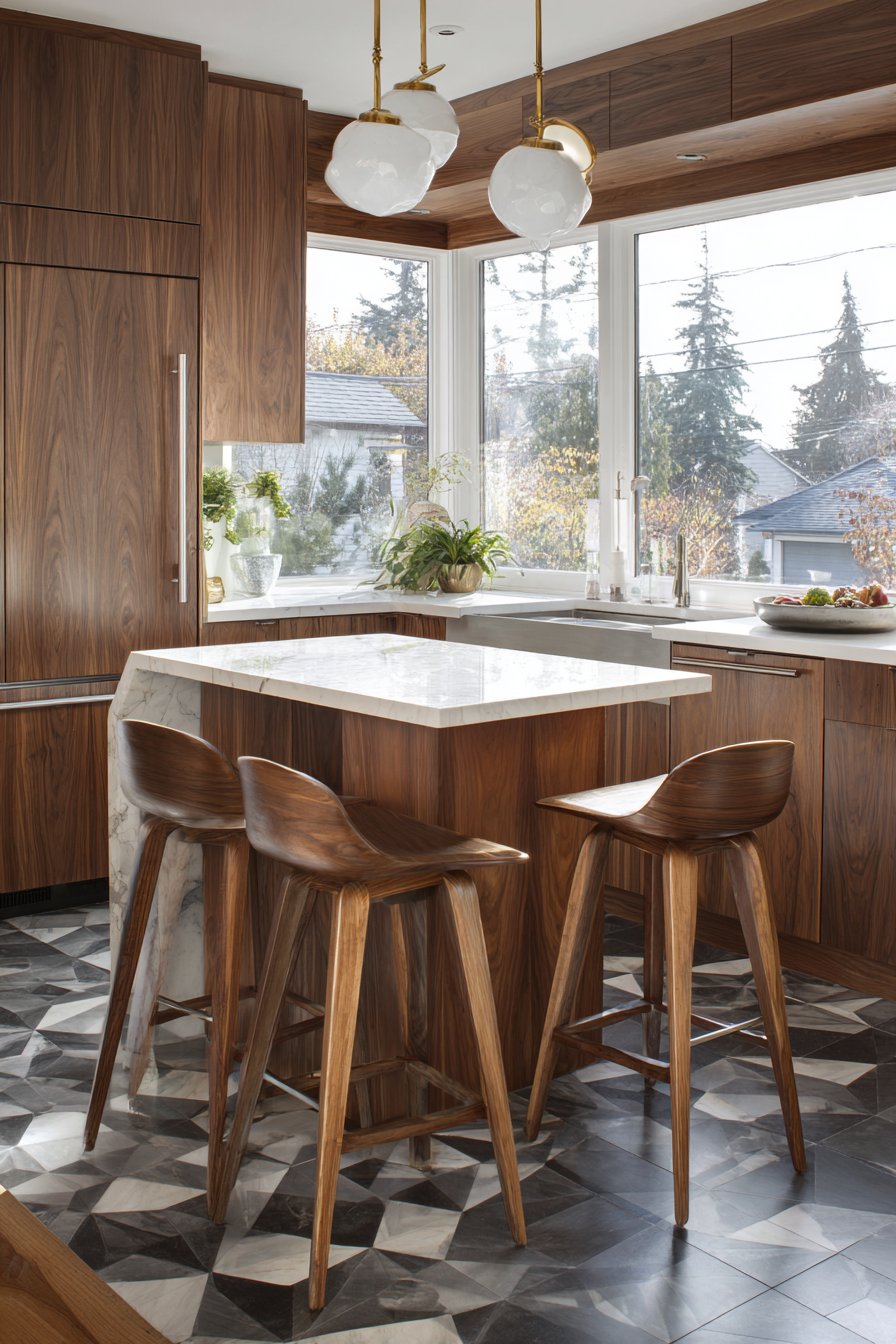
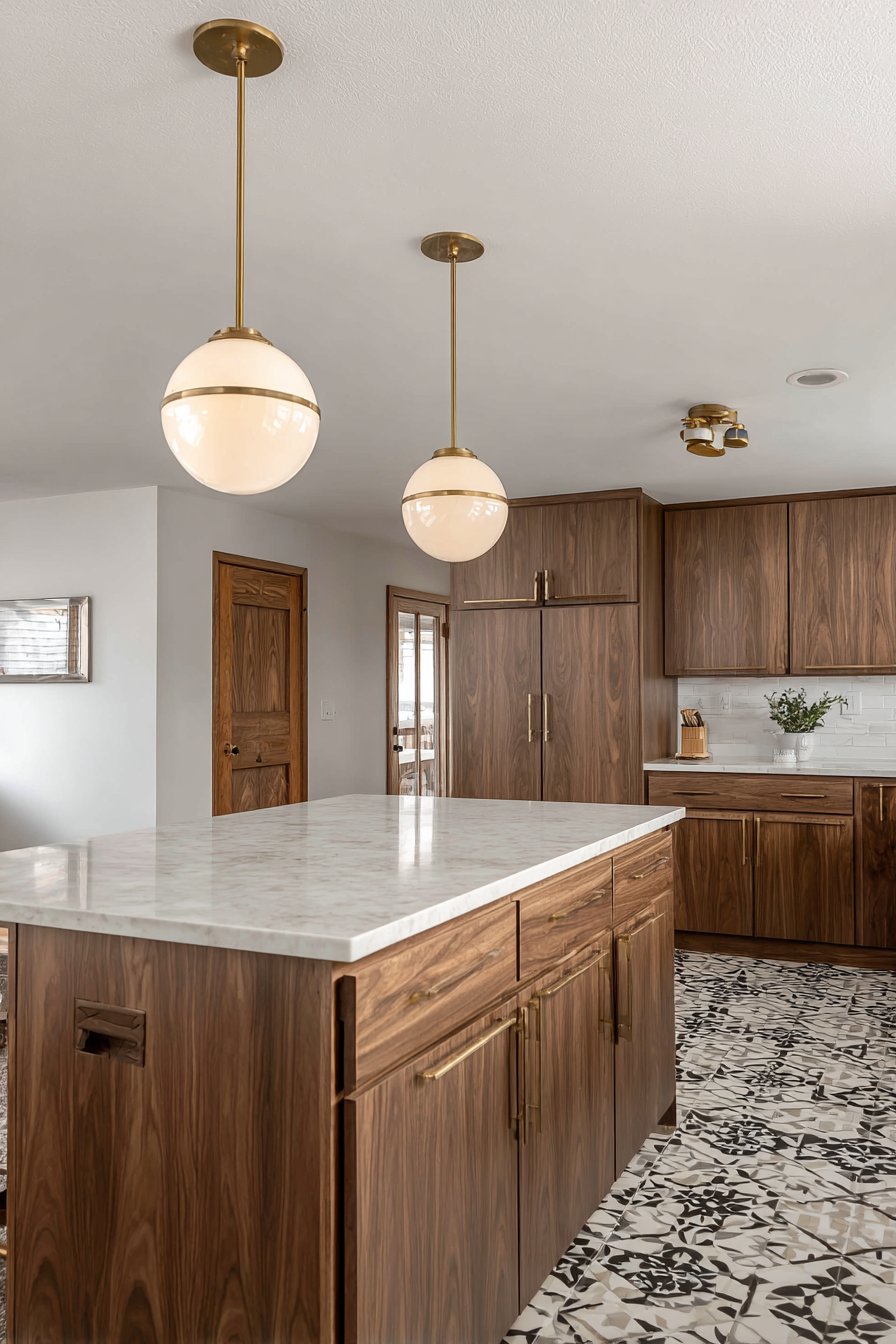
The mid-century modern movement’s enduring appeal stems from its marriage of sculptural beauty and functional design, principles beautifully demonstrated in this peninsula featuring walnut veneer cabinets and white Carrara marble countertops. Walnut’s rich brown tones with subtle purple undertones and distinctive grain patterns defined 1950s and 60s furniture, its warmth and organic beauty providing essential counterpoint to the era’s embrace of new synthetic materials. The cabinet’s clean lines and simple rectangular forms reference modernist rejection of applied ornament in favor of form following function.
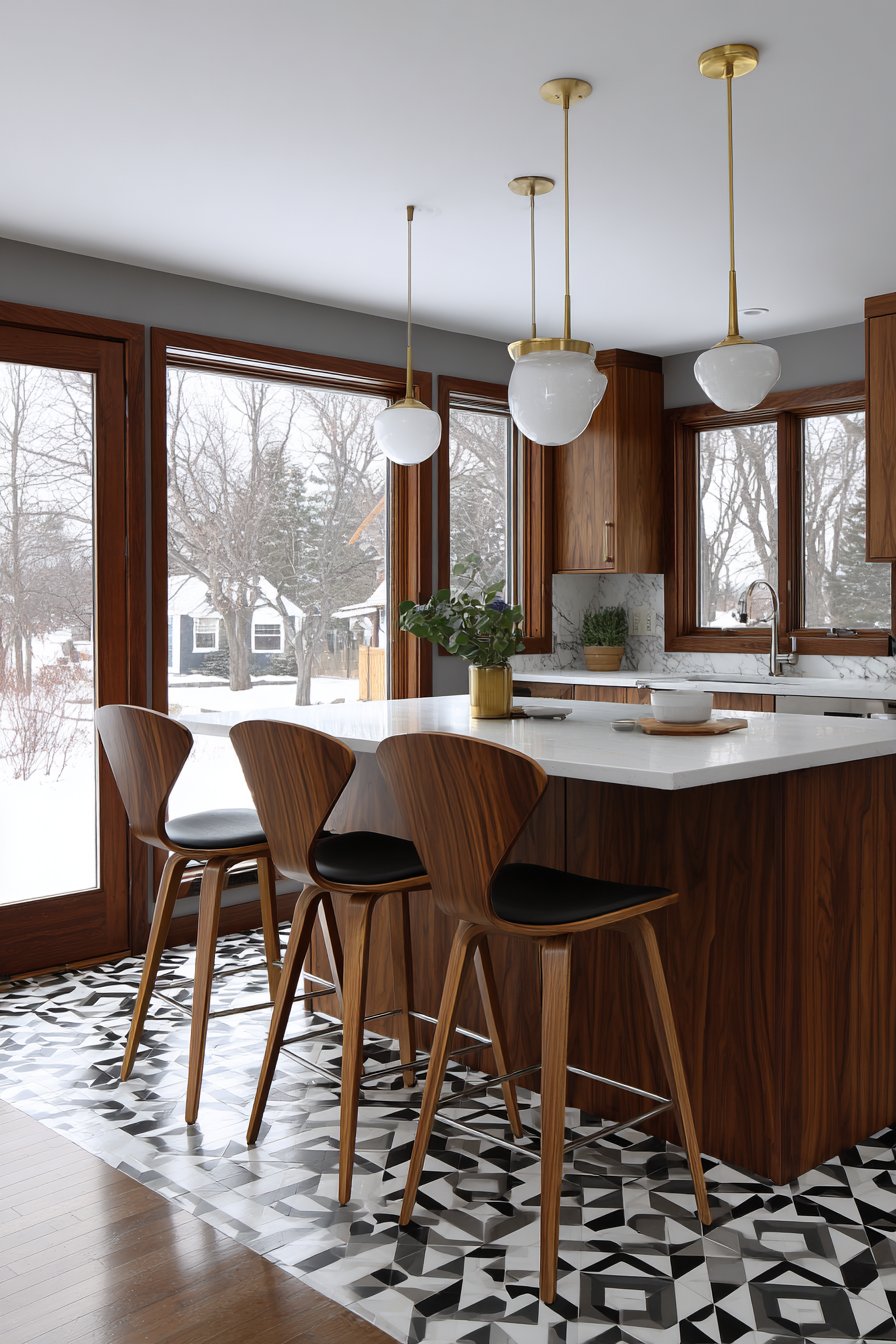
Tapered wooden legs support the peninsula overhang in authentic mid-century fashion—this signature detail transformed cabinetry from built-in fixtures into furniture pieces, reflecting the era’s emphasis on flexibility and lightness over the heavy, permanent built-ins of previous generations. These legs create visual breathing room beneath the peninsula, preventing it from appearing as a heavy mass anchored to the floor. Geometric patterned tile flooring in black, white, and grey adds period-appropriate retro charm, its abstract patterns referencing the atomic age’s fascination with science and modern art.
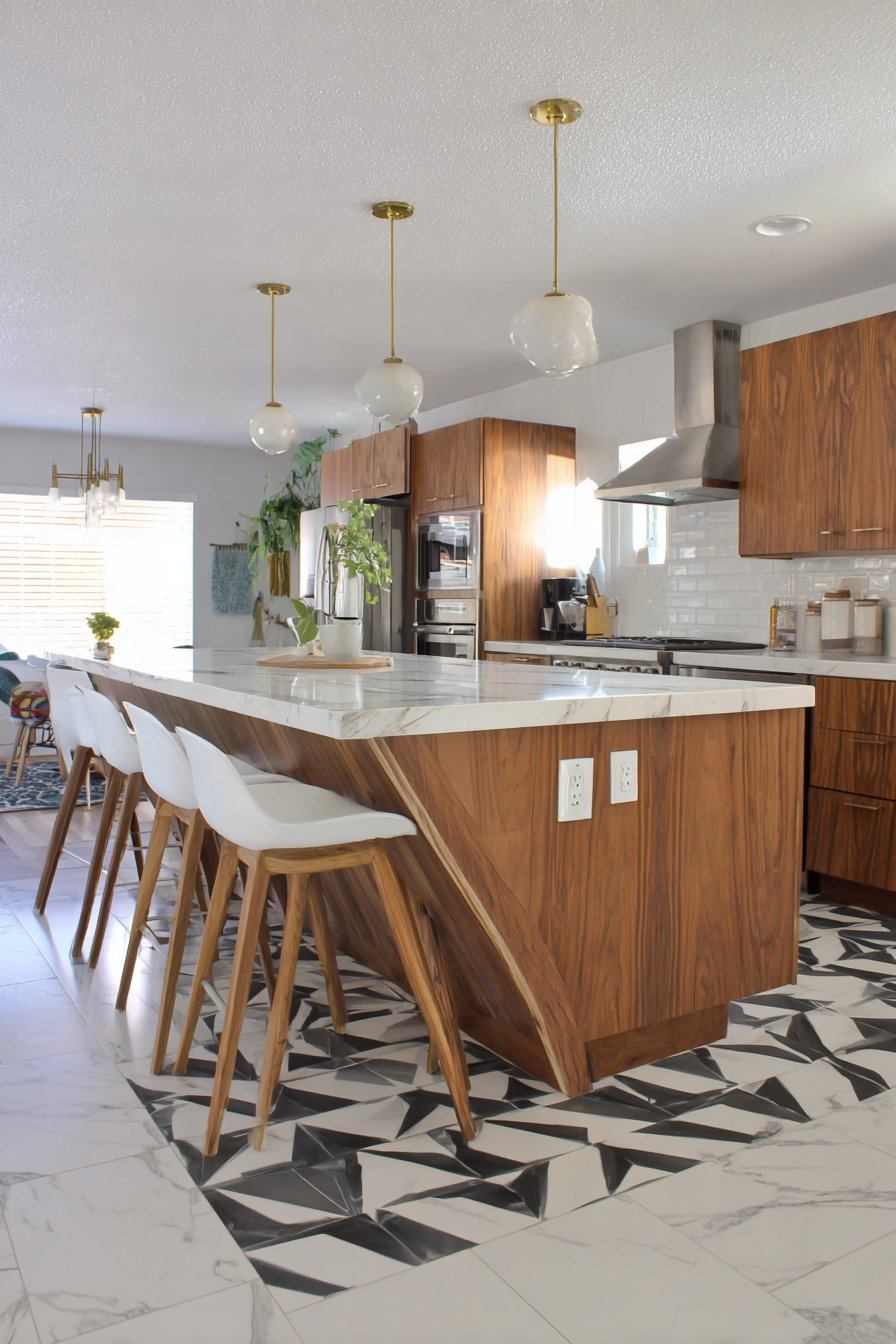
Vintage-inspired pendant lights with brass accents and frosted glass globes complete the mid-century narrative. The globe form—simple, pure, geometric—epitomizes modernist design philosophy while the brass finish adds warmth and luxury that prevents the space from feeling too utilitarian. The combination of materials, forms, and details creates a peninsula that could have been installed in 1959 or 2019, demonstrating how truly great design transcends its originating moment.
Key Design Tips:
- Choose walnut or teak woods with rich grain patterns that define mid-century modern aesthetics
- Install tapered legs to support overhangs rather than solid bases for authentic period styling
- Select geometric tile patterns in black, white, and grey for flooring that references the atomic age
- Choose lighting fixtures with globe shapes and brass or brass-tone finishes typical of the era
- Embrace white marble for countertops—its natural beauty aligned with mid-century modern values
- Maintain clean lines and avoid fussy details that would contradict modernist principles
15. Professional-Grade Cooking Peninsula
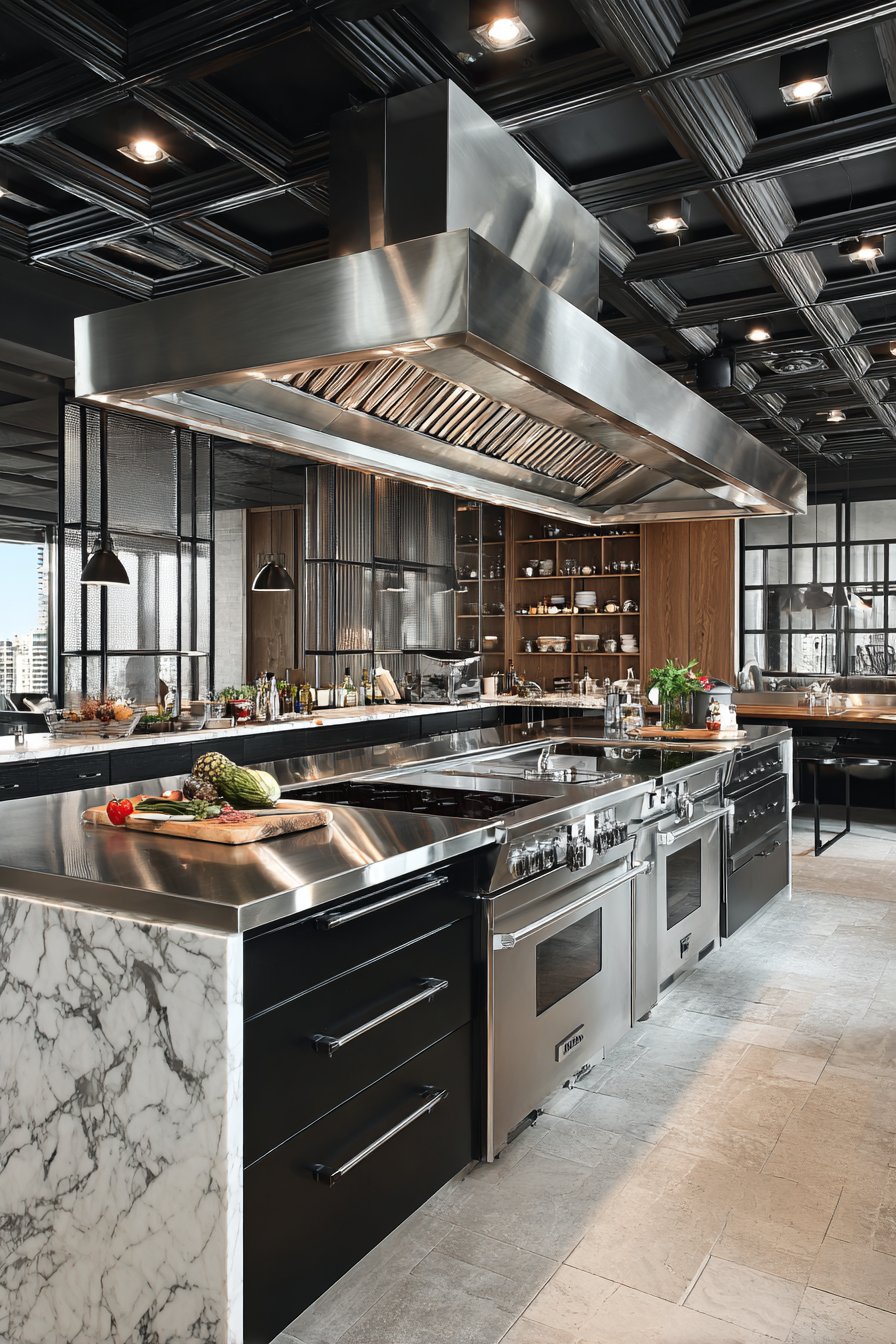
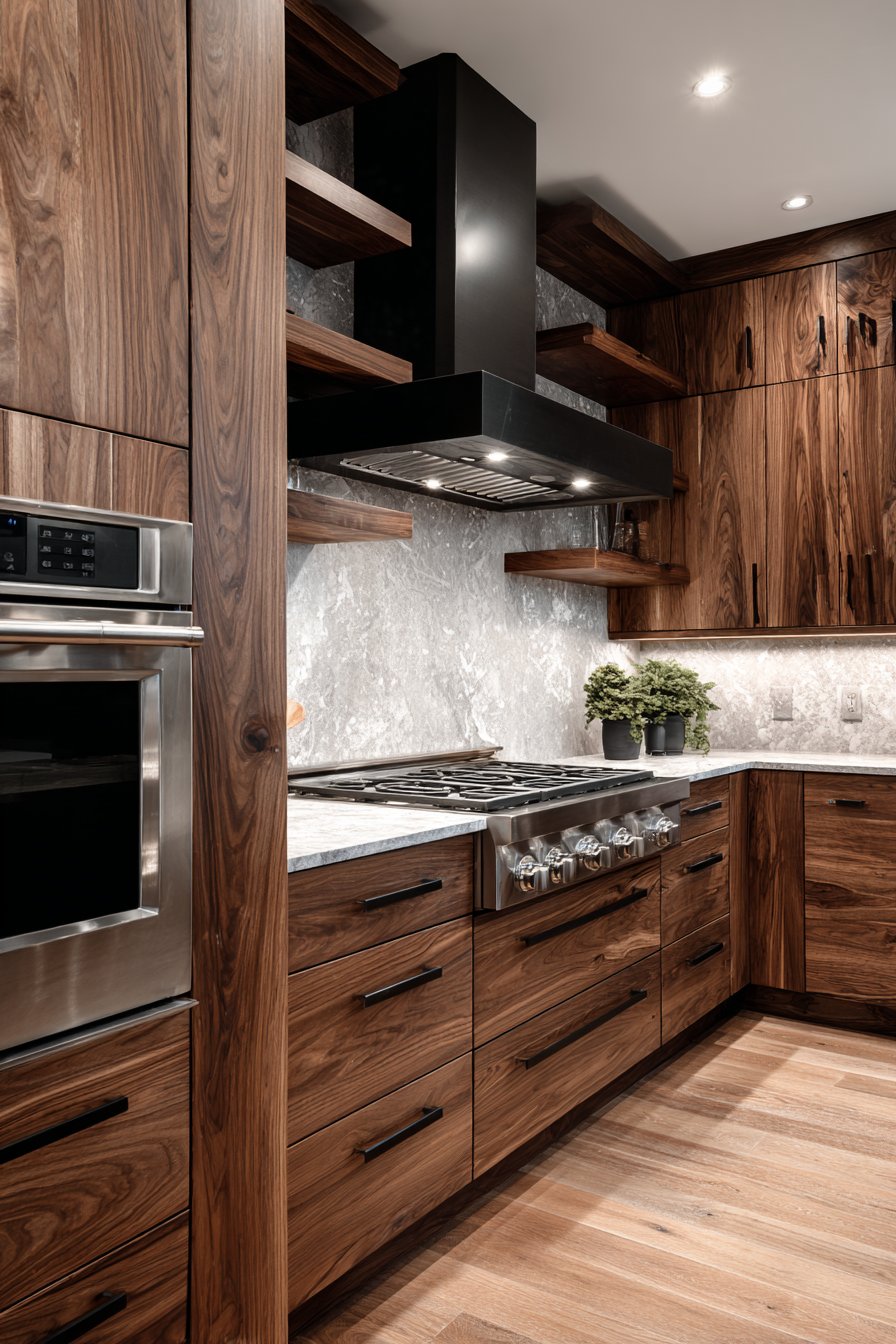
For serious home cooks, the kitchen is workshop as much as showplace, and this professional-grade peninsula prioritizes culinary capability over decorative concerns. The peninsula houses a built-in cooktop with downdraft ventilation—a system that pulls cooking vapors, smoke, and odors down through ductwork rather than up through a traditional hood. This configuration allows the peninsula to maintain open sightlines to adjacent spaces while providing powerful ventilation that captures steam and grease before they can permeate the home.
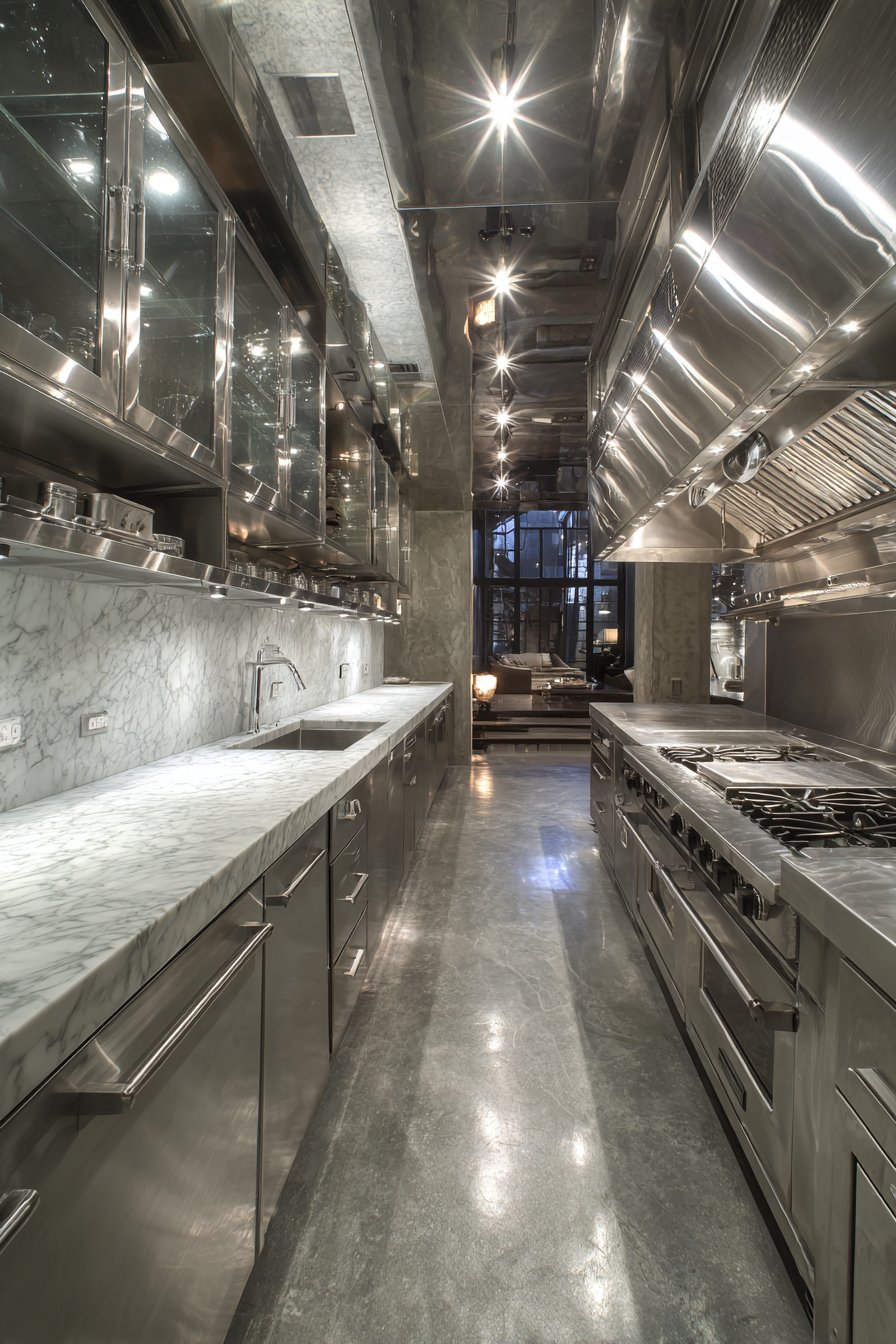
Stainless steel countertops on the peninsula provide heat-resistant work surface essential around cooking equipment—you can set down hot pans directly from the cooktop without concern for damage, a practical consideration when cooking demands quick movements and split-second timing. The stainless surface’s industrial appearance makes clear this peninsula’s serious purpose while creating striking contrast with white marble on perimeter counters. A commercial-style range hood—even though the peninsula’s downdraft ventilation means it serves the main cooking surface—becomes architectural feature through its substantial sculptural presence.
The overall aesthetic speaks to homeowners for whom cooking is passion rather than chore—those who view kitchen equipment as tools deserving the same consideration an artist gives to brushes or a craftsperson to specialized implements. Professional interior photography captures the serious cooking functionality while dramatic lighting highlights the industrial-grade appliances and durable materials chosen for performance over mere appearance.
Key Design Tips:
- Install downdraft ventilation in peninsulas to avoid bulky overhead hoods that block views
- Choose stainless steel countertops around cooking surfaces for heat resistance and professional aesthetics
- Ensure adequate amperage and gas supply for professional-grade cooking equipment
- Install fireproof materials immediately adjacent to cooking surfaces per building codes
- Consider commercial-grade equipment carefully—many require special ventilation, utility connections, or clearances
- Accept that professional materials like stainless show fingerprints and scratches—part of their working character
16. Eclectic Bohemian Peninsula with Artistic Flair
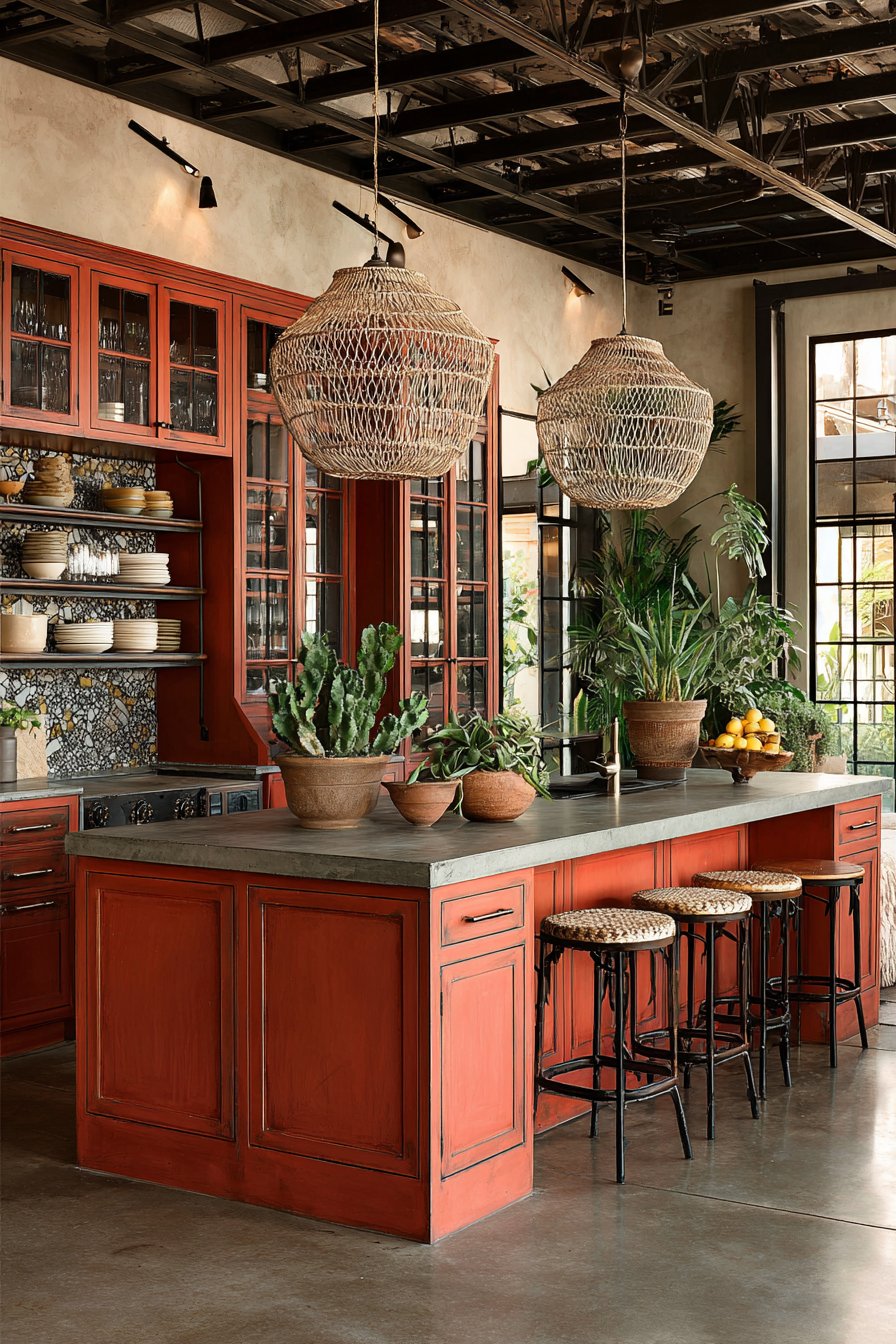
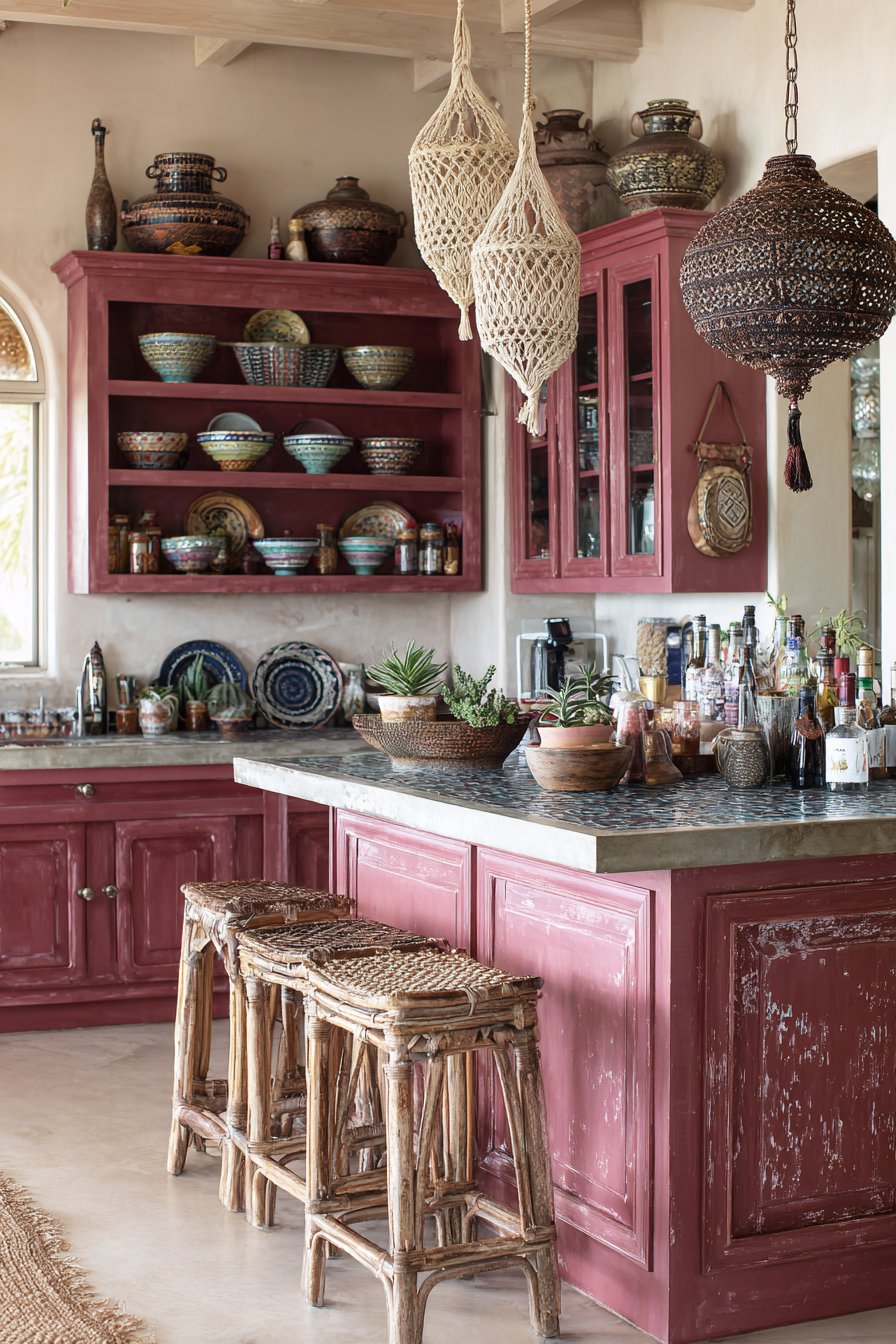
Rules are made to be broken, at least according to this eclectic bohemian peninsula that celebrates creative expression over design conventions. The peninsula wears deep terracotta paint color applied with distressed finish that reveals hints of underlying layers—perhaps cream, perhaps sage green—creating the impression of a piece with history, as if successive inhabitants have left their mark over decades. This faux-aged appearance captures bohemian appreciation for objects with stories, things collected over time rather than purchased all at once from matching sets.
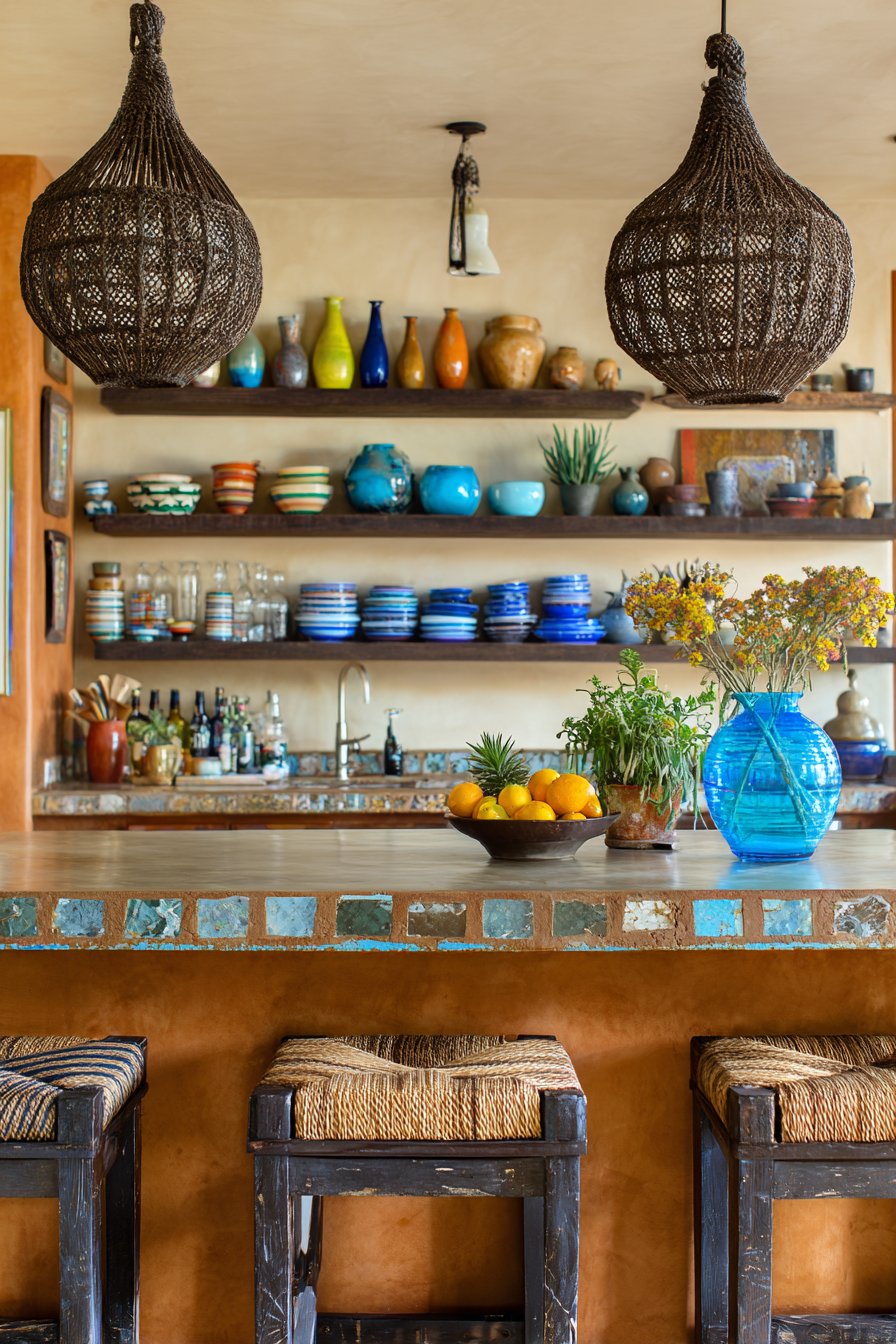
Mixed materials define the counter surface: concrete embedded with colorful glass fragments creating artistic detail that catches light and provides unexpected pops of color within the otherwise earthy palette. This technique references mosaic traditions while creating one-of-a-kind surface that could never be mass-produced—each embedded fragment placed by hand, each resulting surface unique. Open shelving displays colorful ceramic dishes in mismatched patterns and glazes alongside potted succulents in terracotta pots, their silvery-green foliage providing organic sculpture.
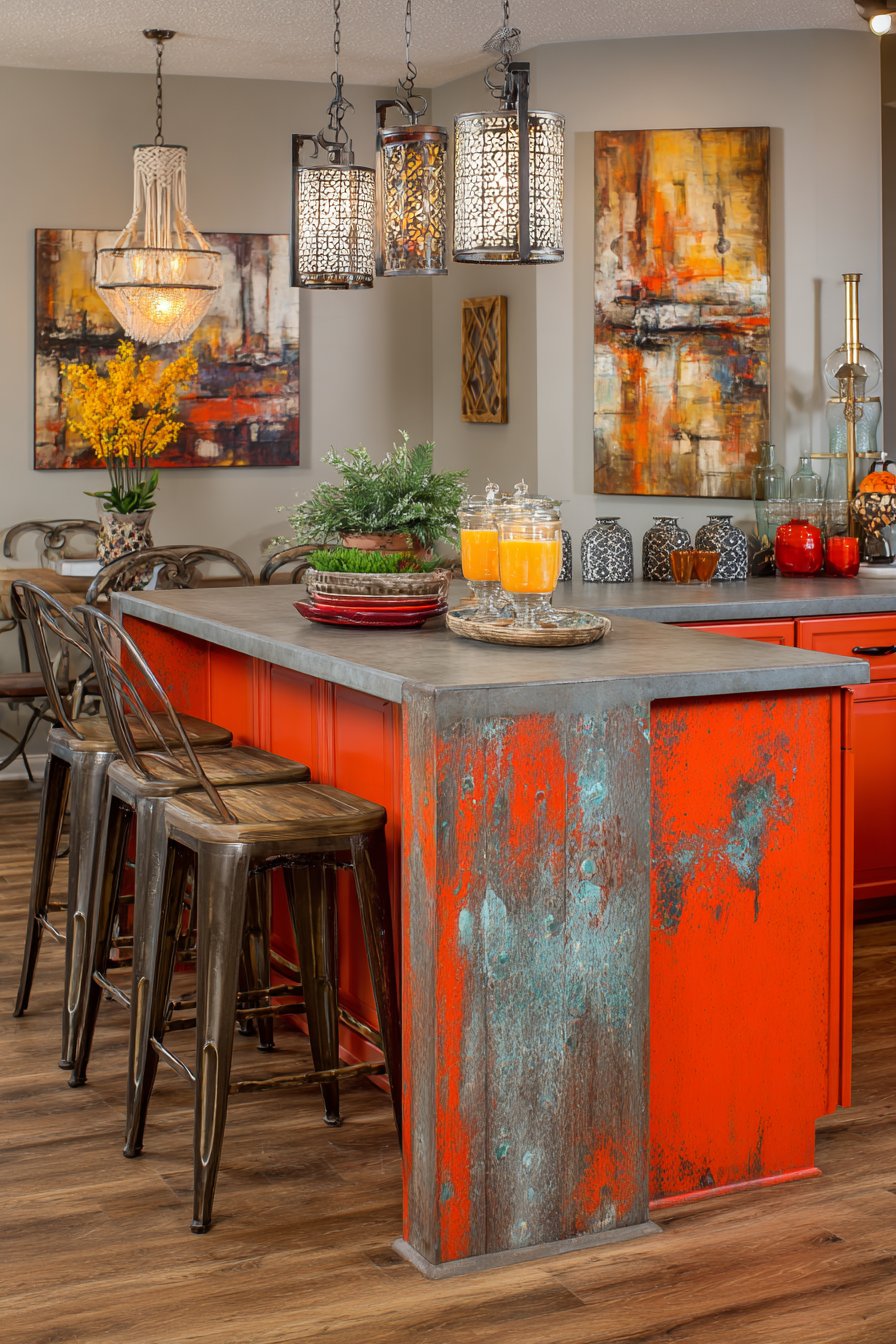
Macramé pendant lights hang above mismatched vintage bar stools—perhaps one wooden stool painted turquoise, another metal stool with worn red paint, a third upholstered seat on turned legs. This deliberate mismatch reflects bohemian values that prize individual character over matching sets, uniqueness over uniformity. The overall effect is a kitchen that feels collected over time by someone with strong personal aesthetic—spaces that could never be replicated exactly but that inspire others to trust their own creative instincts.
Key Design Tips:
- Embrace bold colors like terracotta that create strong personality and warmth
- Use distressing techniques on painted surfaces to create aged, collected-over-time appearance
- Embed glass, tile, or other materials in concrete countertops for custom artistic details
- Display mismatched dishware and collections that reflect personal interests and travels
- Choose varied seating rather than matching sets to reinforce eclectic, collected aesthetic
- Trust your instincts—bohemian style succeeds when spaces reflect genuine personal taste rather than following rules
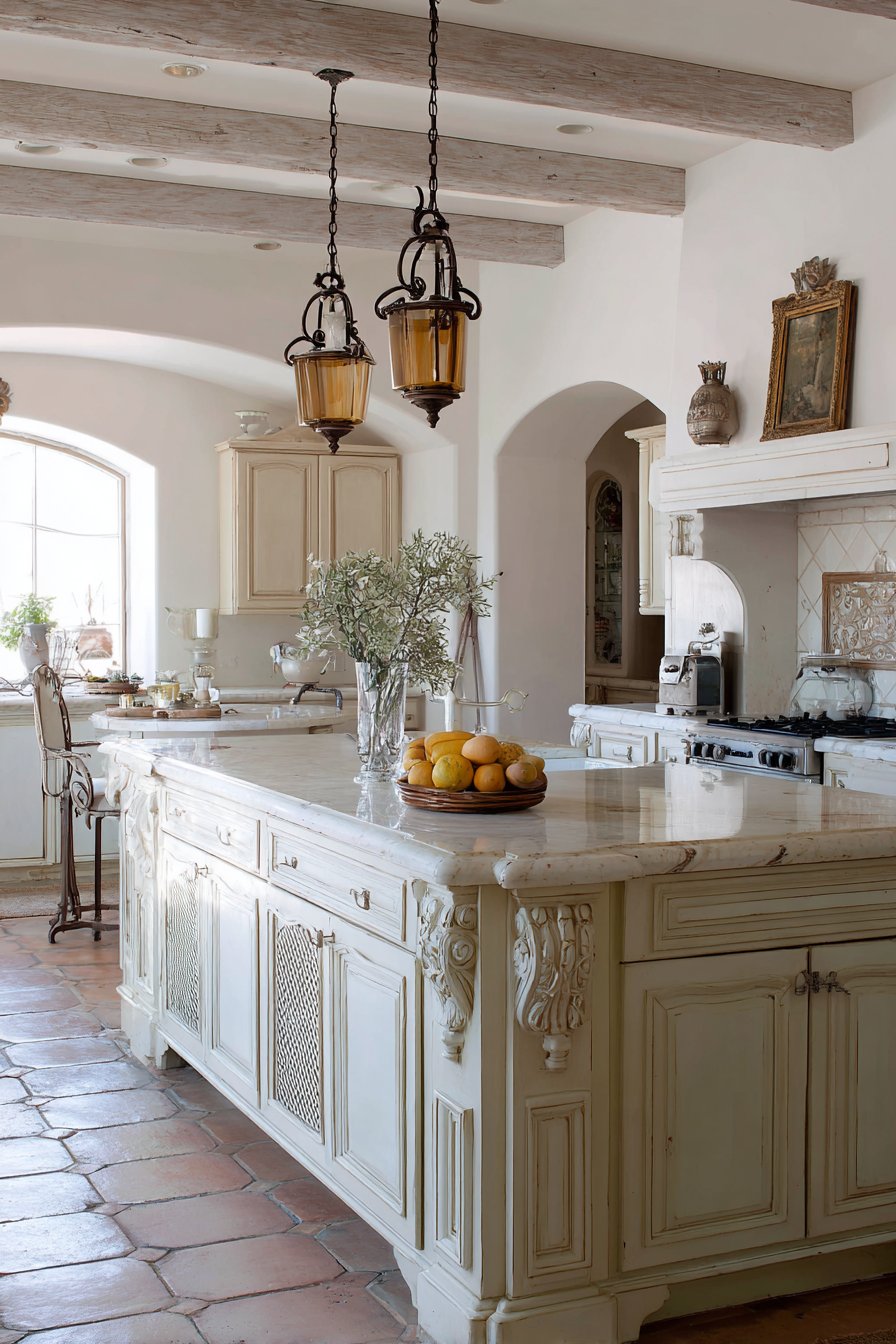
17. French Country Peninsula with Provincial Romance
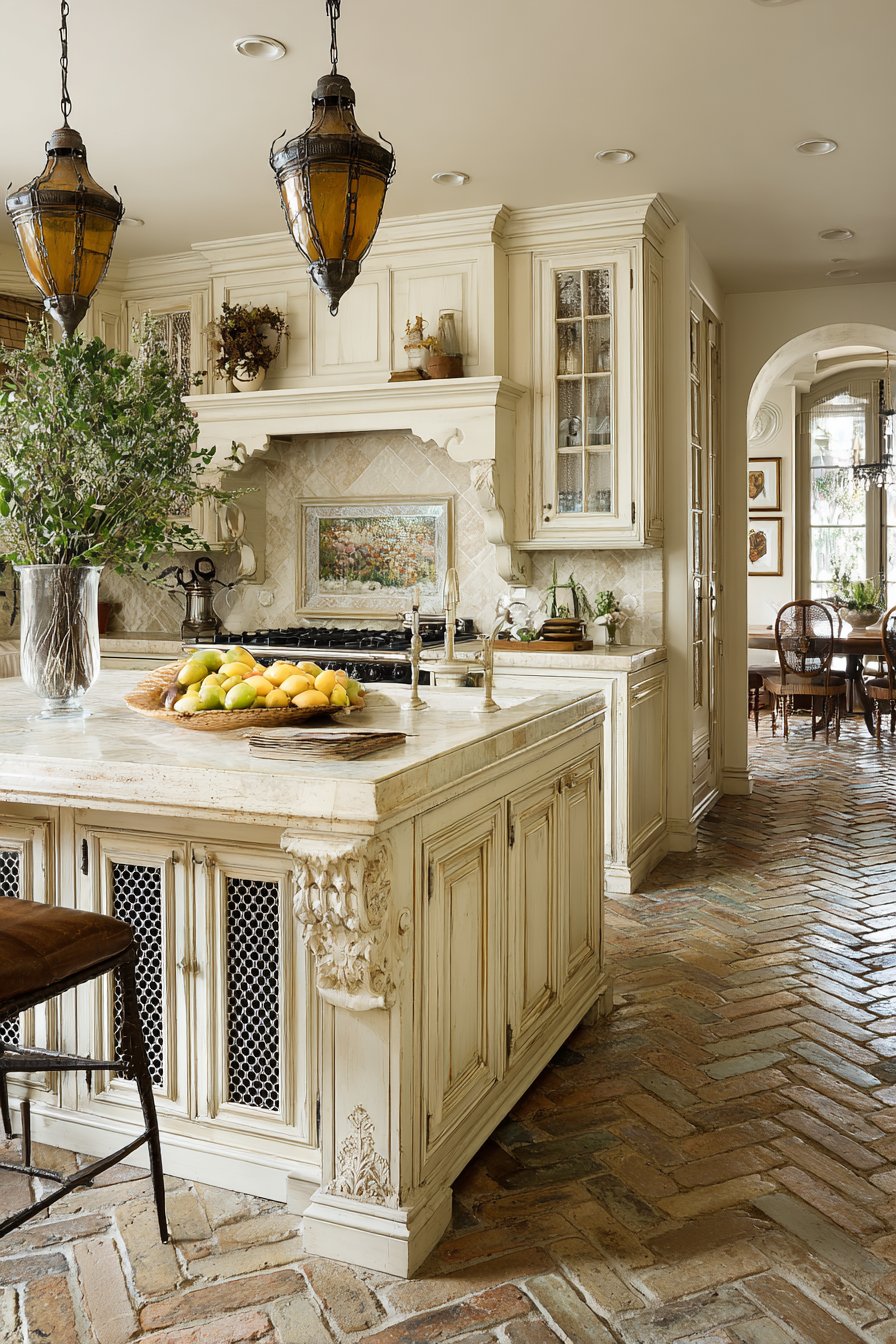
Rustic elegance and old-world charm define this French country peninsula where provincial traditions meet livable comfort. Antiqued cream-colored cabinets wear their finish with the slight unevenness and subtle color variations that suggest age—perhaps applied with specialized glazing techniques that pool darker tones in recesses and corners, or achieved through physical distressing that creates worn edges where use would naturally occur over decades. Tumbled marble countertops in soft beige tones continue the aged aesthetic, their edges softened as if by centuries of use, their surfaces showing the slightly textured finish that results from tumbling process.
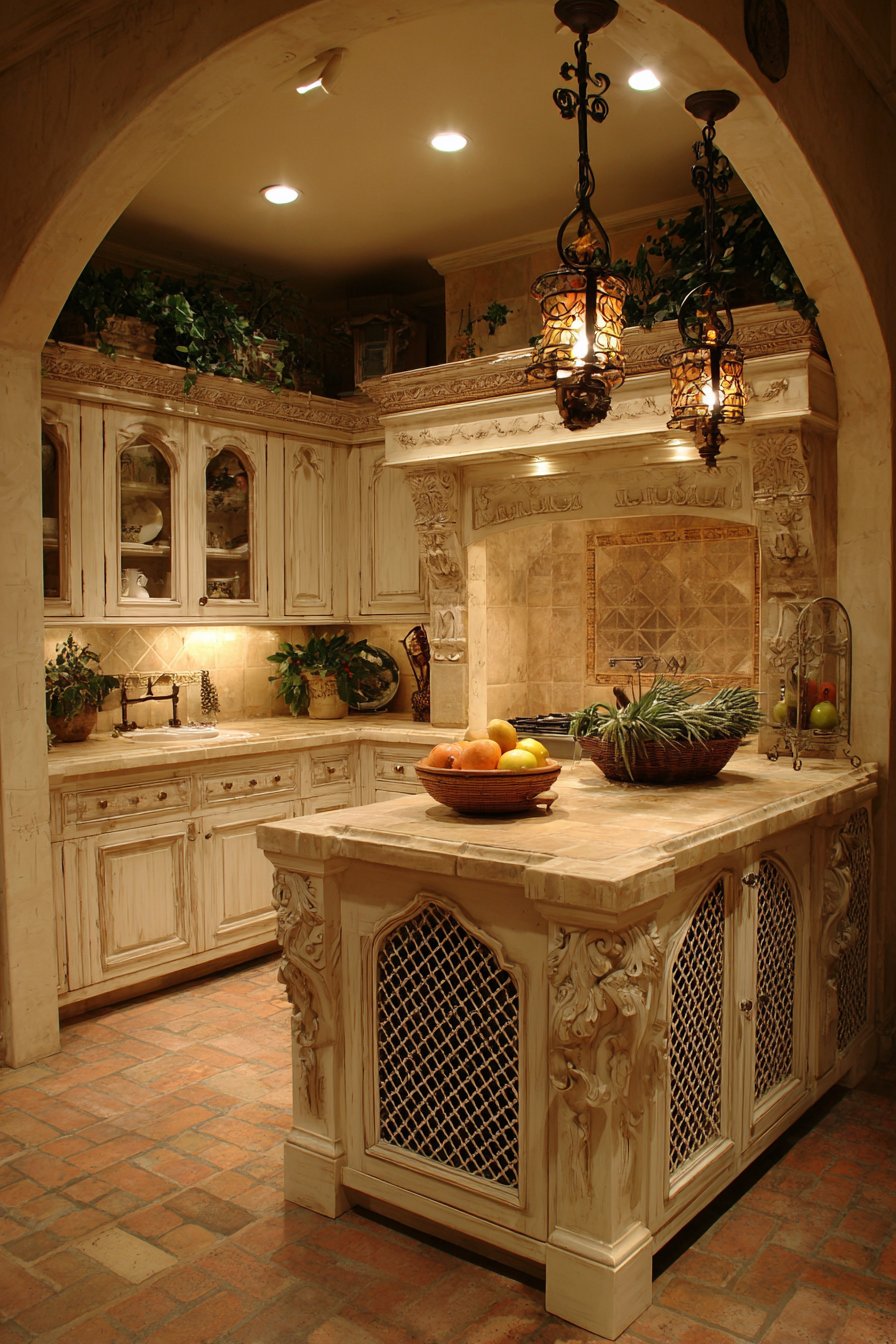
Decorative carved corbels support the generous overhang, their acanthus leaf details or scrollwork adding old-world craftsmanship that elevates the peninsula beyond mere function. These carved elements reference French furniture traditions where ornament celebrated the maker’s skill and the patron’s taste. Chicken wire cabinet doors on the peninsula provide ventilated storage for produce—onions, potatoes, garlic—that prefer air circulation to sealed containers, this practical solution simultaneously serving functional and decorative purposes.
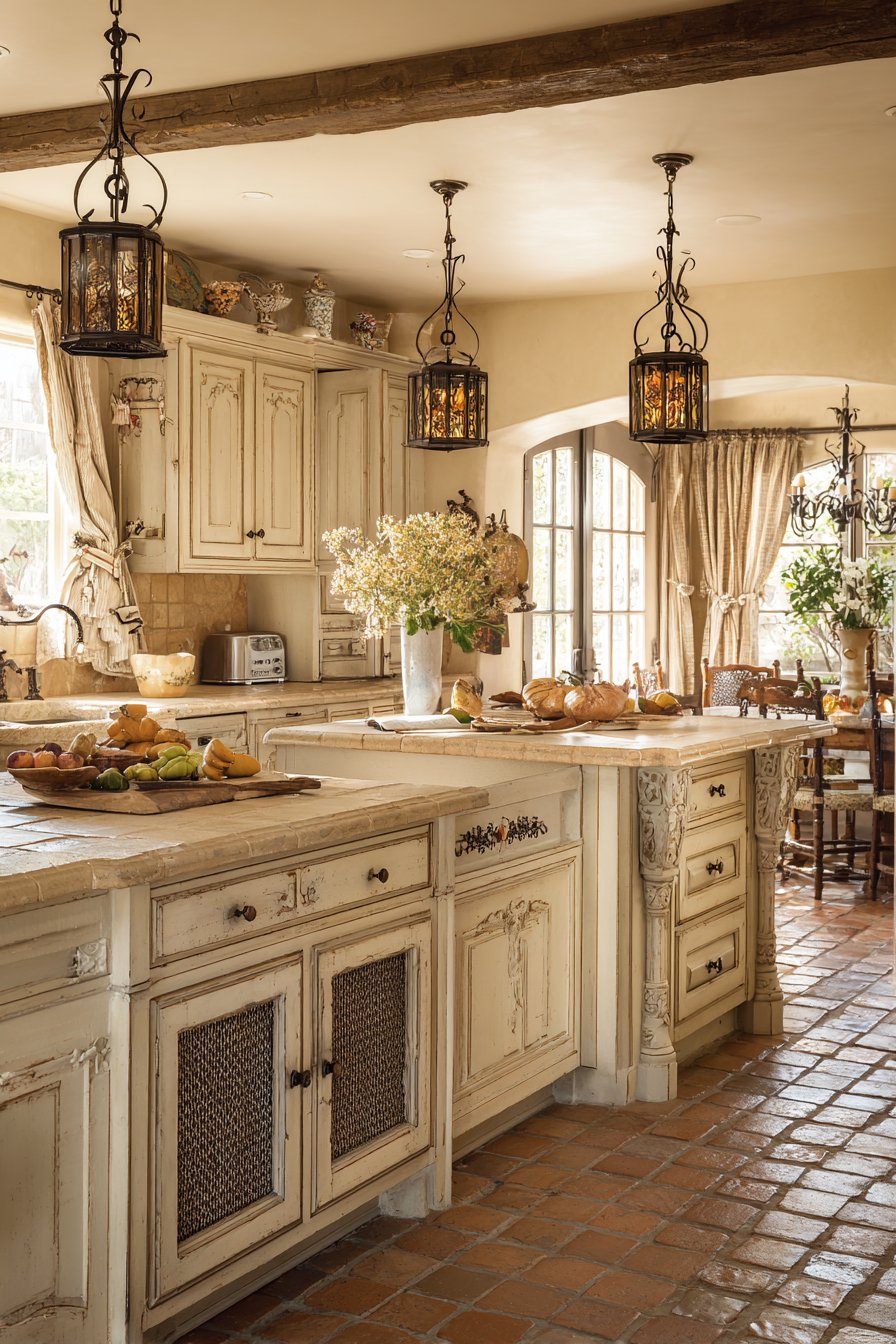
Wrought iron pendant lights with amber glass shades add Old World charm, their hand-forged appearance and warm-toned glass creating pools of golden light reminiscent of candlelight in provincial cottages. Terra cotta floor tiles complete the Provençal atmosphere, their warm peachy-orange tones and slightly irregular surfaces referencing the hand-made tiles that have paved French country homes for centuries. The overall aesthetic transports inhabitants to the south of France, where meals unfold slowly and living well means savoring simple pleasures.
Key Design Tips:
- Apply glazing or distressing techniques to cabinetry for authentic aged appearance
- Choose tumbled marble with softened edges that suggest age and use
- Install genuine carved corbels rather than simple brackets to add French country authenticity
- Use chicken wire cabinet panels for ventilated storage that’s both functional and decorative
- Select wrought iron lighting fixtures with warm amber glass for old-world romance
- Install terra cotta or terra cotta-look tiles for flooring that references French provincial traditions
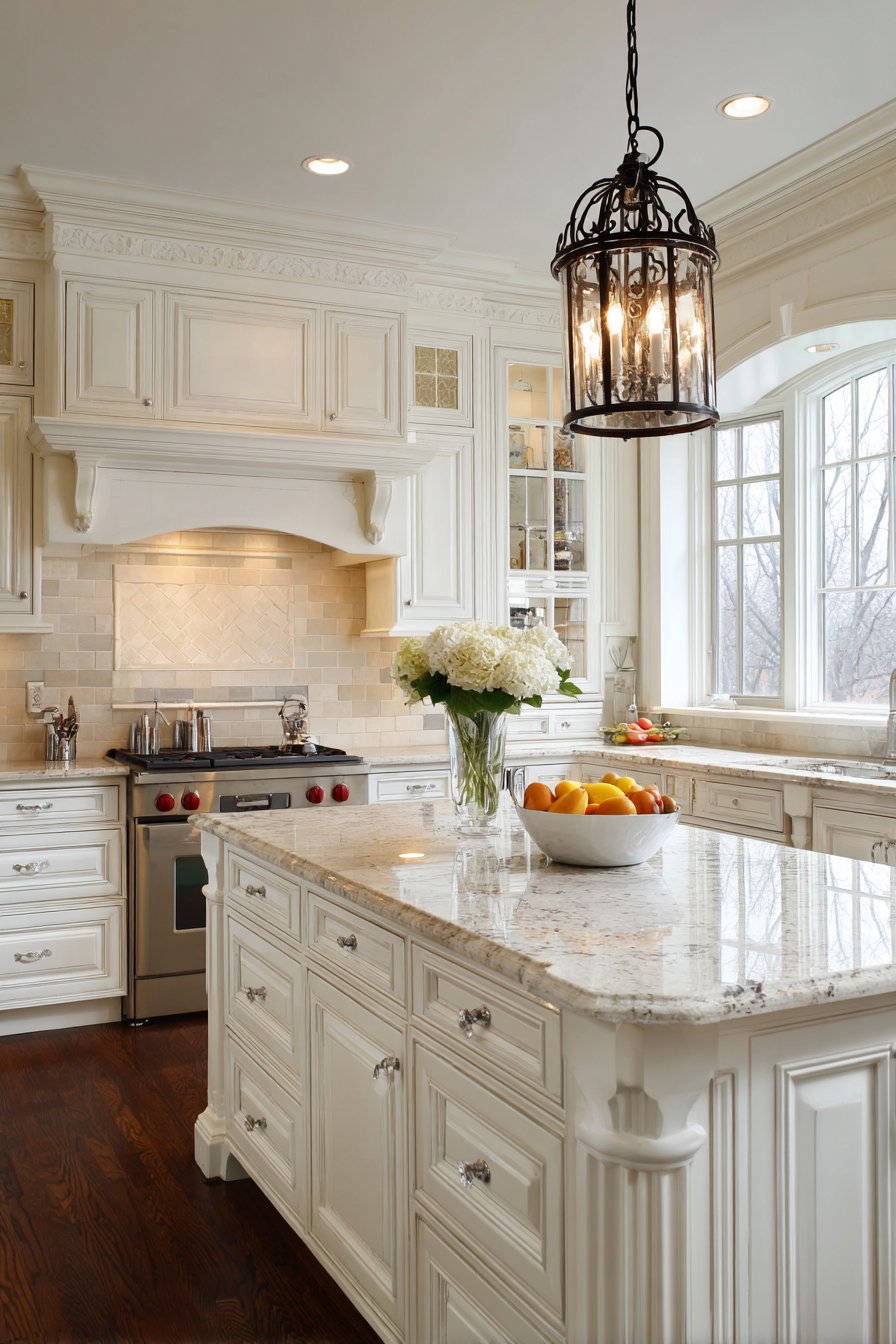
18. Accessible Universal Design Peninsula
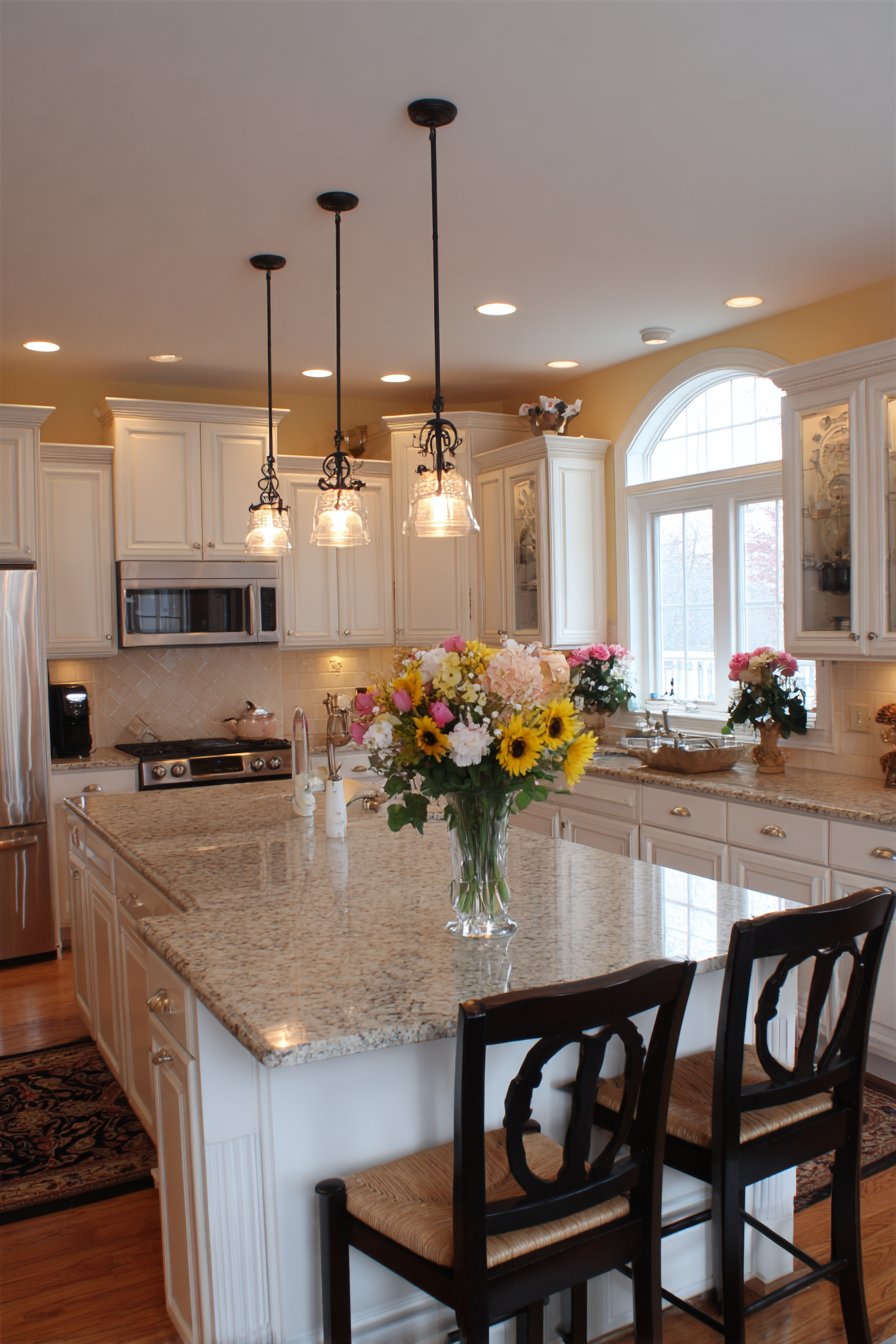
Thoughtful design creates spaces usable by people of all ages and abilities, and this peninsula demonstrates how accessibility features can be integrated beautifully rather than appearing as afterthoughts or institutional accommodations. Variable-height countertops accommodate both standing and seated food preparation—one section at standard 36-inch height for standing work, another lowered to 32 inches for comfortable access from a wheelchair or seated position. This variation allows the peninsula to serve diverse needs while appearing as intentional design element rather than obvious accommodation.
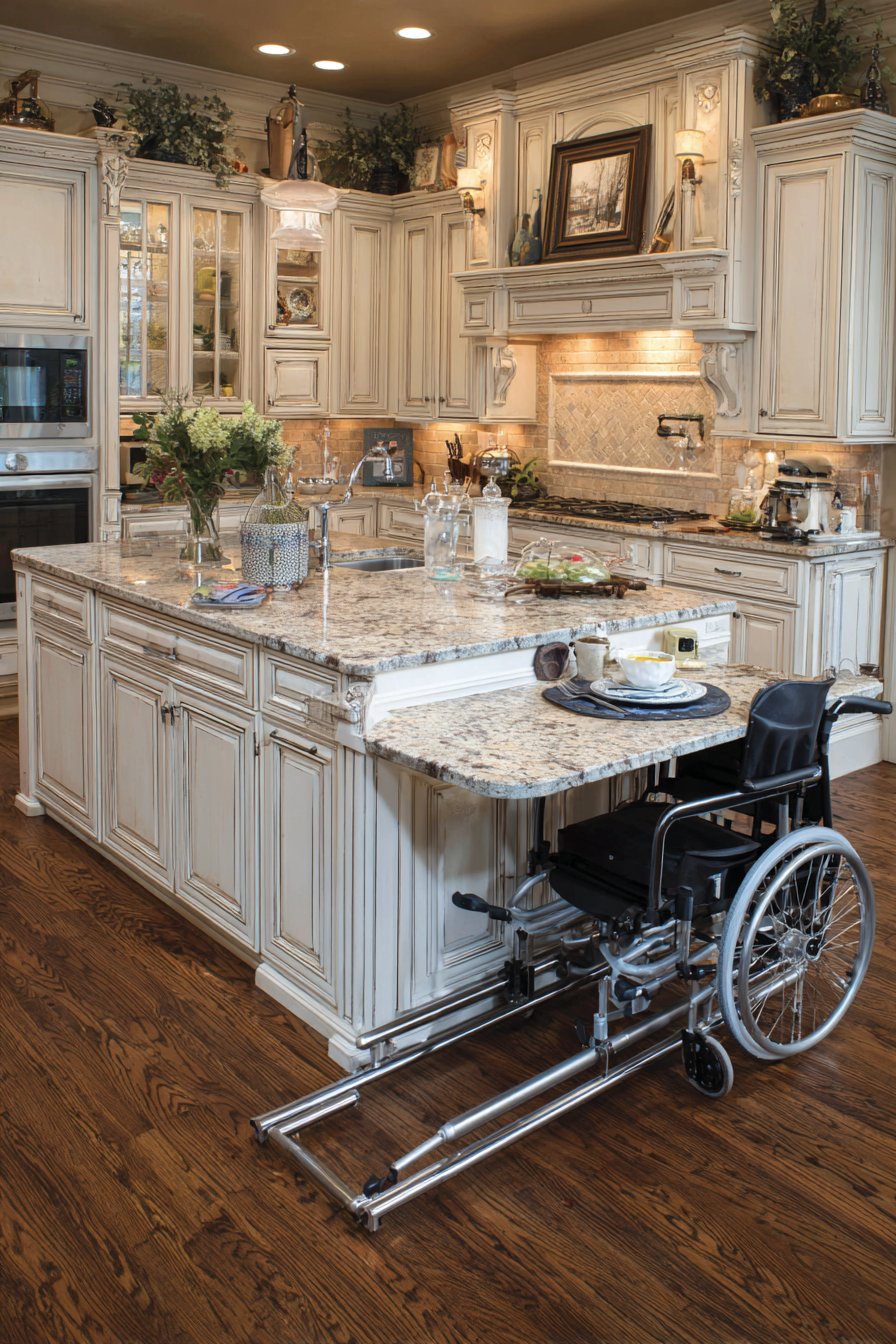
The lowered section provides knee clearance beneath, allowing wheelchair users to roll directly to the counter rather than working at awkward angles from the side. This clearance extends 27 inches under the counter and at least 30 inches wide, meeting ADA guidelines while feeling spacious and well-proportioned. Easy-grip cabinet hardware with D-shaped pulls requires minimal hand strength and fine motor control, easier to operate than traditional knobs for anyone with arthritis, reduced grip strength, or limited dexterity. Touch-activated faucet eliminates the need to twist difficult controls, responding instead to a simple tap anywhere on the spout or handle.
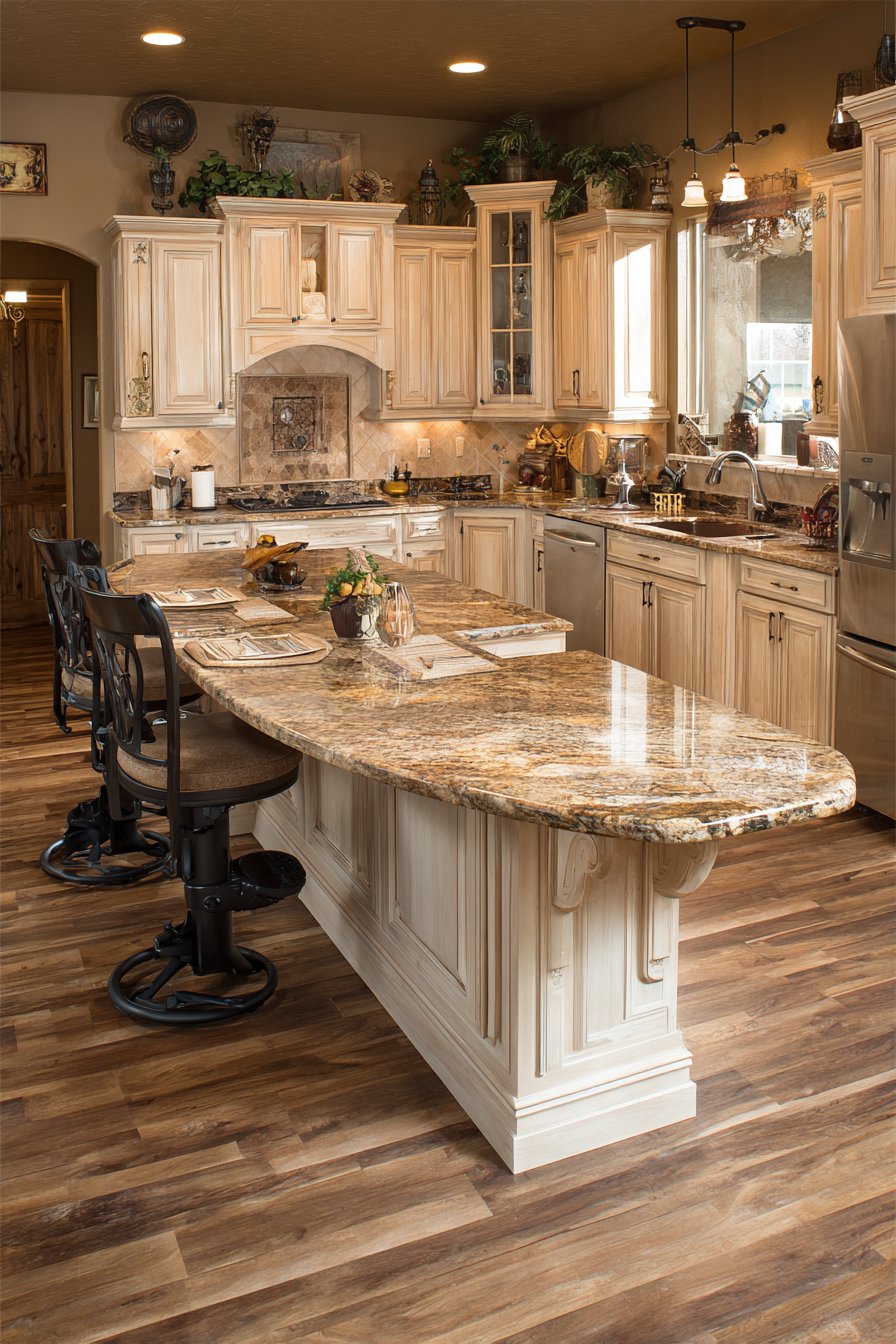
Contrast edge banding on countertops aids visibility for those with limited sight, the darker trim creating clear definition between horizontal counter surface and vertical edge—helpful for anyone but essential for those with visual impairments. Wide aisles around the peninsula provide ample maneuvering space, the minimum 60-inch turning radius allowing wheelchair users to navigate comfortably. Interior design photography clearly demonstrates these thoughtful accessibility features while maintaining aesthetic appeal, proving that universal design creates better spaces for everyone.
Key Design Tips:
- Install variable-height countertops to accommodate both standing and seated users
- Provide knee clearance under at least one section of peninsula for wheelchair access
- Choose D-pull hardware that’s easier to grasp than traditional knobs
- Install touch-activated or lever-style faucets that require minimal strength or dexterity
- Use contrast edge banding to improve visibility of counter edges for those with limited sight
- Maintain clear circulation paths of at least 36 inches, preferably 42-48 inches for comfortable wheelchair passage
19. Smart Home Technology Peninsula
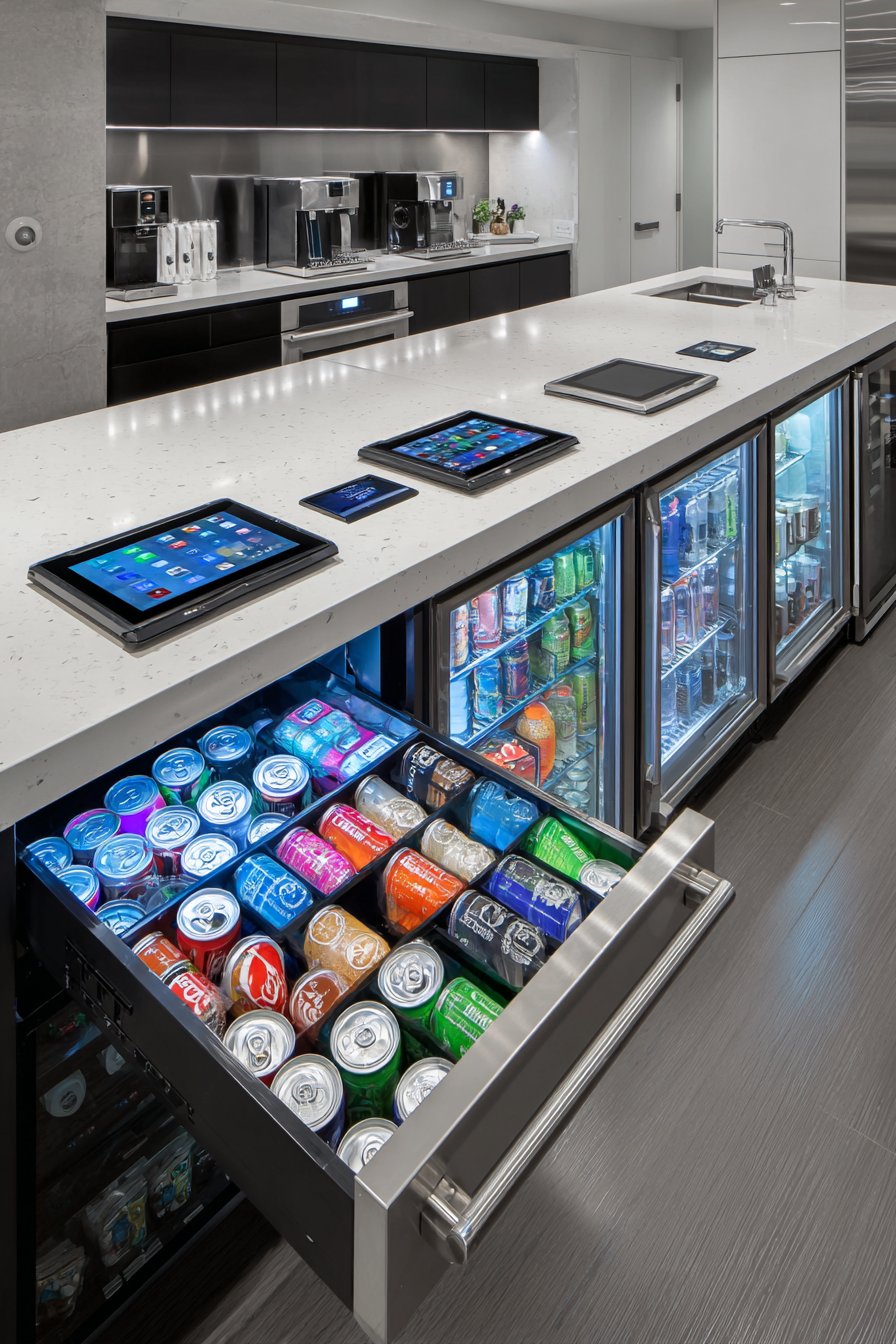
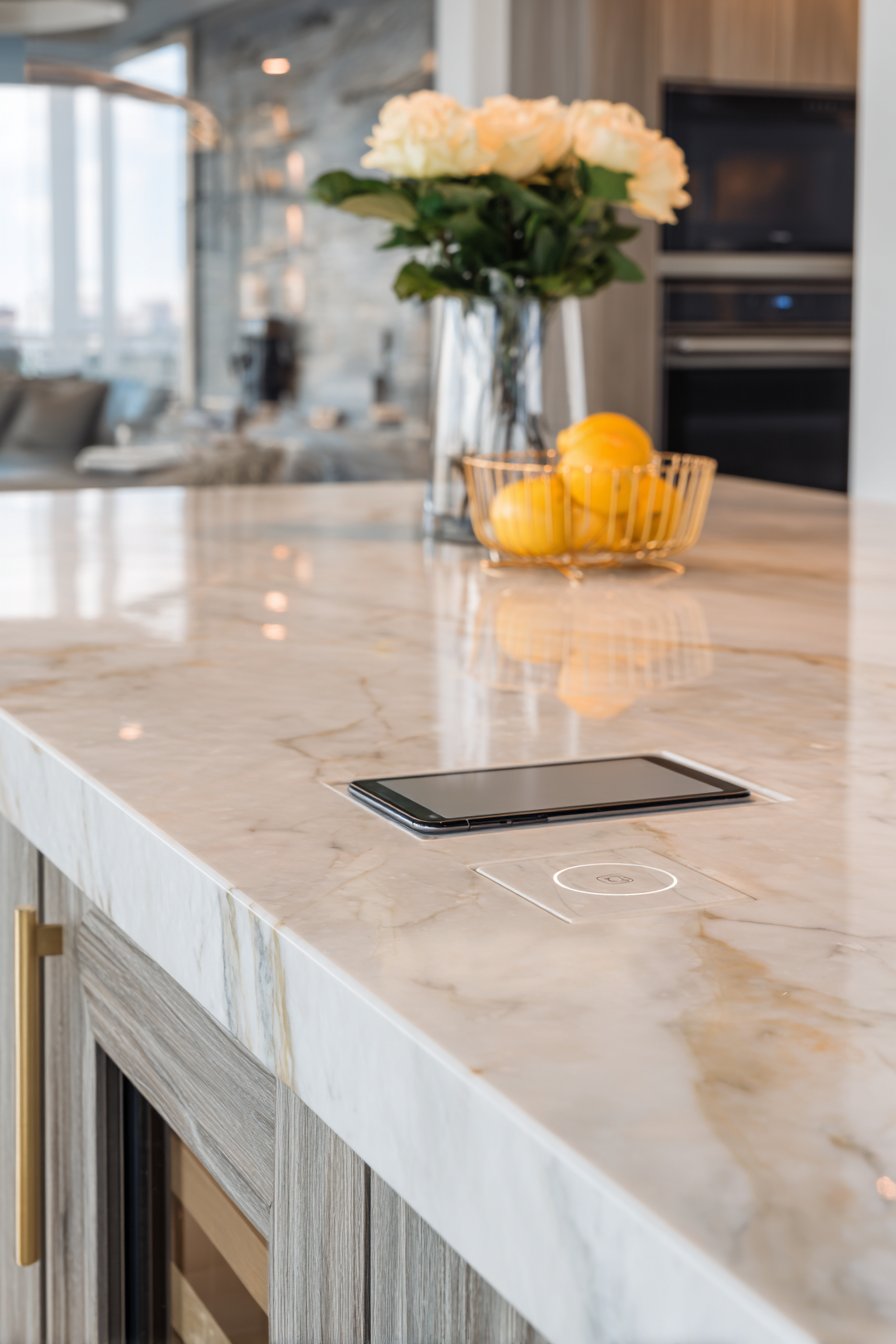
The future of kitchen design integrates seamlessly with our connected lives, as demonstrated in this peninsula featuring thoughtfully incorporated smart home technology. Built-in wireless charging stations embedded directly in the countertop eliminate the cable clutter of traditional charging solutions—simply place your phone on the designated area and watch it charge without hunting for cords or adapters. These charging zones are marked subtly with different material finish or slight variation in surface pattern, visible enough to locate but discreet enough not to disrupt the overall aesthetic.
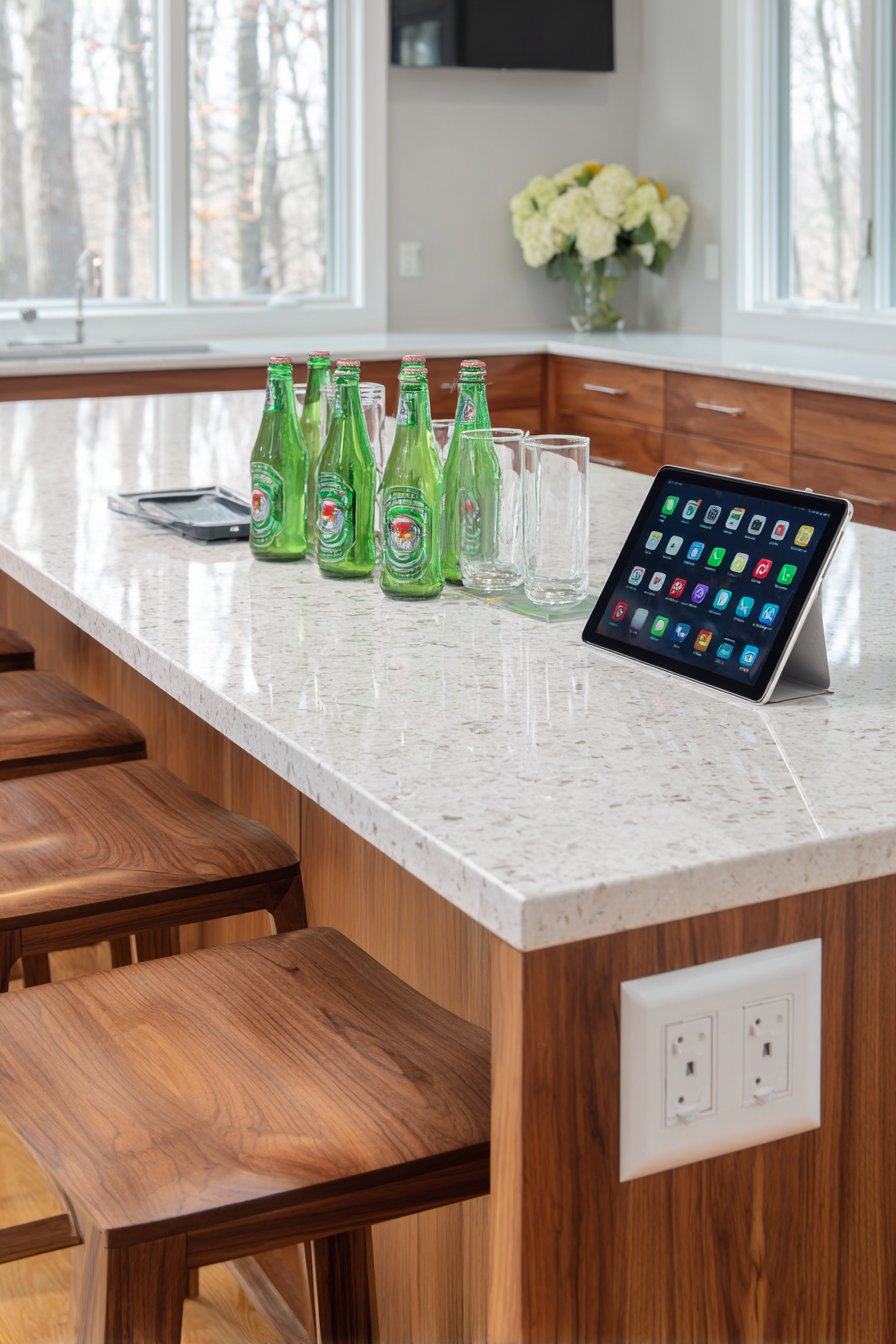
Pop-up power outlets rise from the countertop surface when needed and retract flush when not in use, this clever solution providing convenient electrical access without the visual clutter of surface-mounted power strips or the inconvenience of outlets placed in inconvenient locations. Under-counter refrigerator drawers with glass fronts display beverages at perfect serving temperature while eliminating the need to walk to the main refrigerator—perfect for entertaining when the peninsula serves as bar station. The glass fronts allow easy inventory at a glance while the drawer configuration makes access easy without bending to reach into deep shelves.
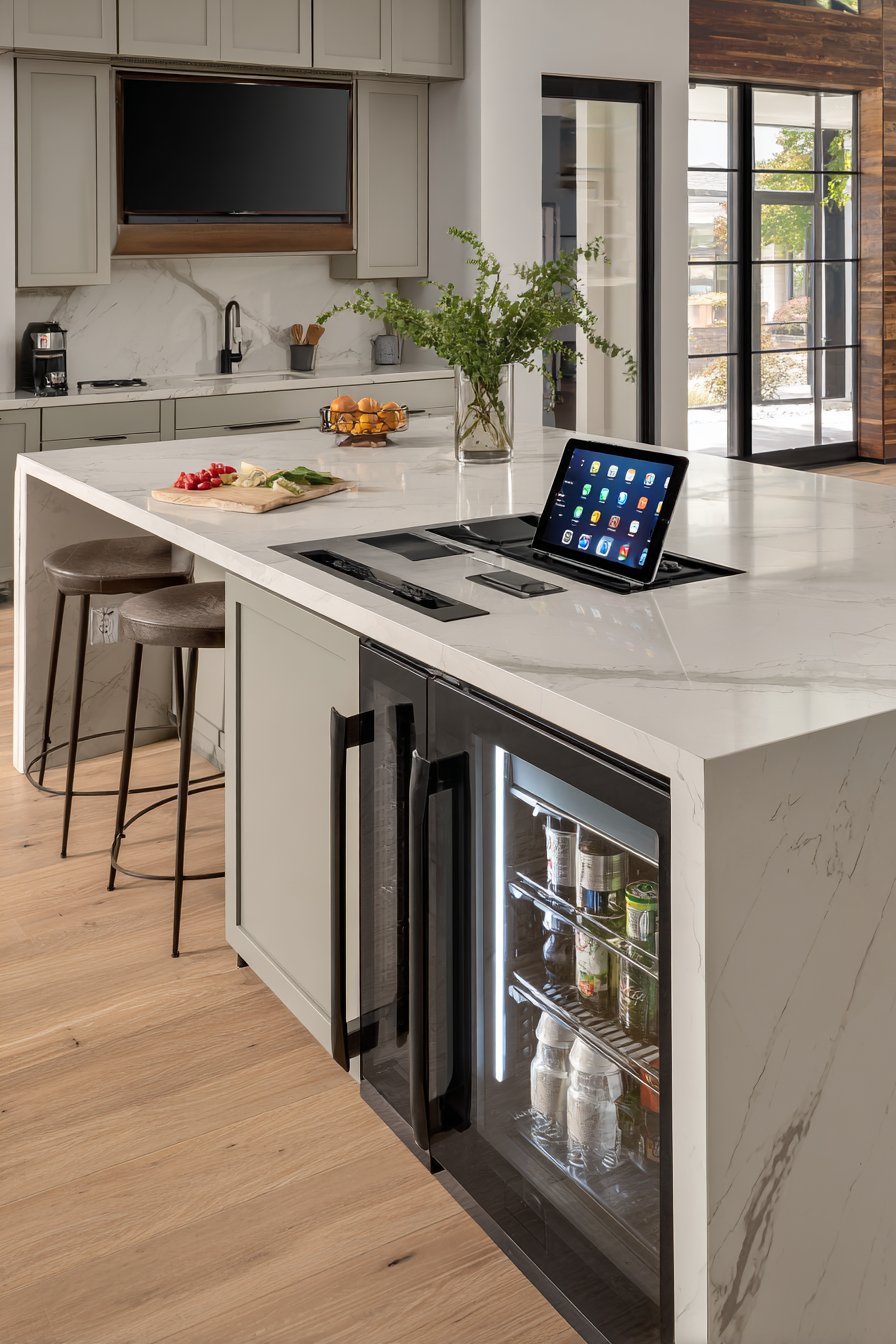
Integrated tablet holder allows recipe viewing during meal prep, the device positioned at comfortable viewing angle and height while keeping it safely away from spills and splatters. LED strip lighting with color-changing capability provides ambiance control—cool white for task lighting during food prep, warm amber for dinner parties, or even colored light for special occasions. Professional interior photography highlights the seamless technology integration within sleek contemporary cabinetry and quartz surfaces, demonstrating how smart features can enhance function without compromising aesthetics.
Key Design Tips:
- Install wireless charging zones in countertops where phones are naturally set down
- Choose pop-up outlets that retract flush rather than fixed outlets that create visual clutter
- Include refrigerator or beverage drawers in peninsulas that serve entertaining functions
- Position tablet holders at comfortable viewing angle while maintaining safe distance from cooking splatter
- Select LED lighting with dimming and color temperature control for versatile ambiance
- Ensure adequate electrical infrastructure during construction to support smart features without visible wiring
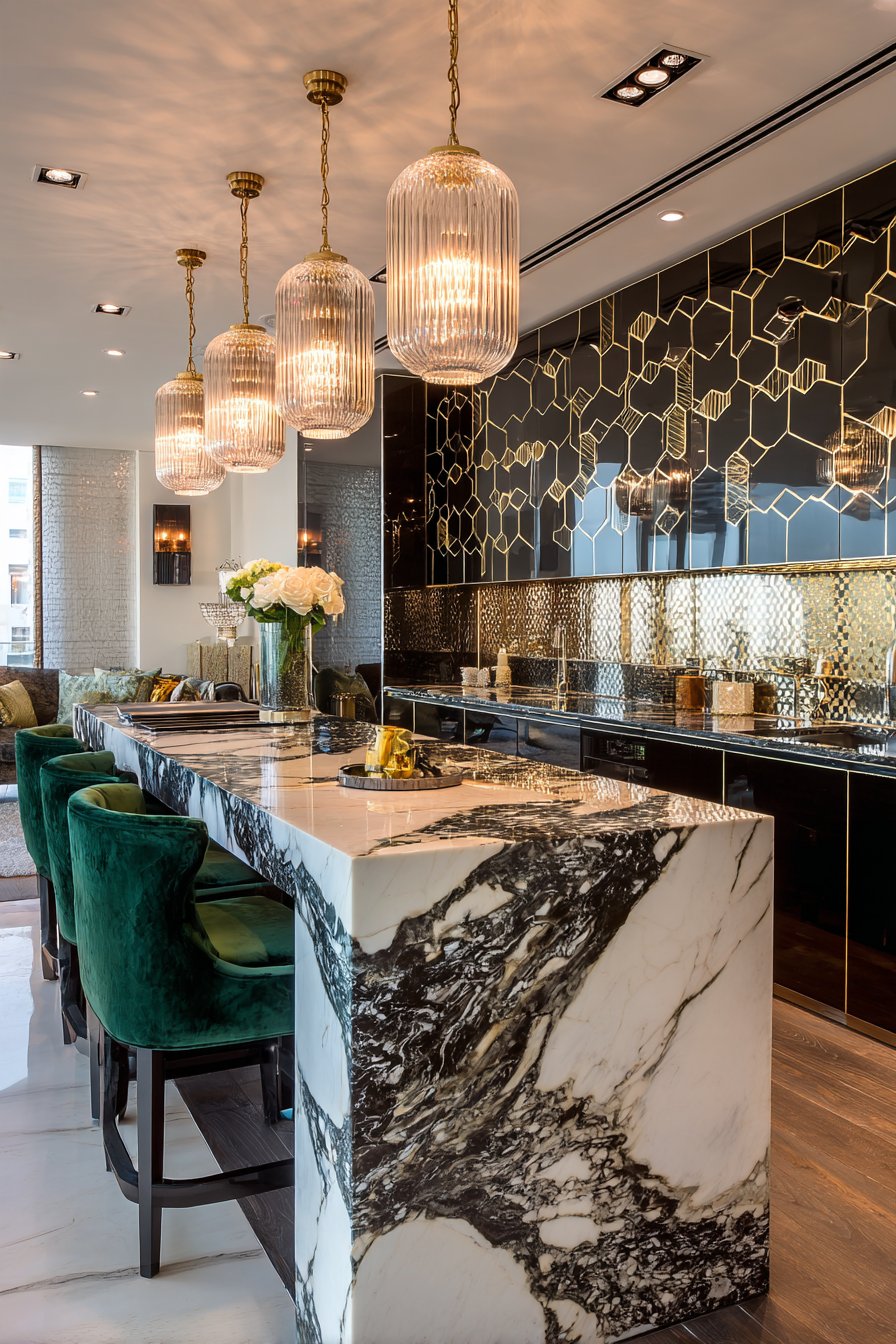
20. Art Deco Peninsula with Glamorous Period Detail
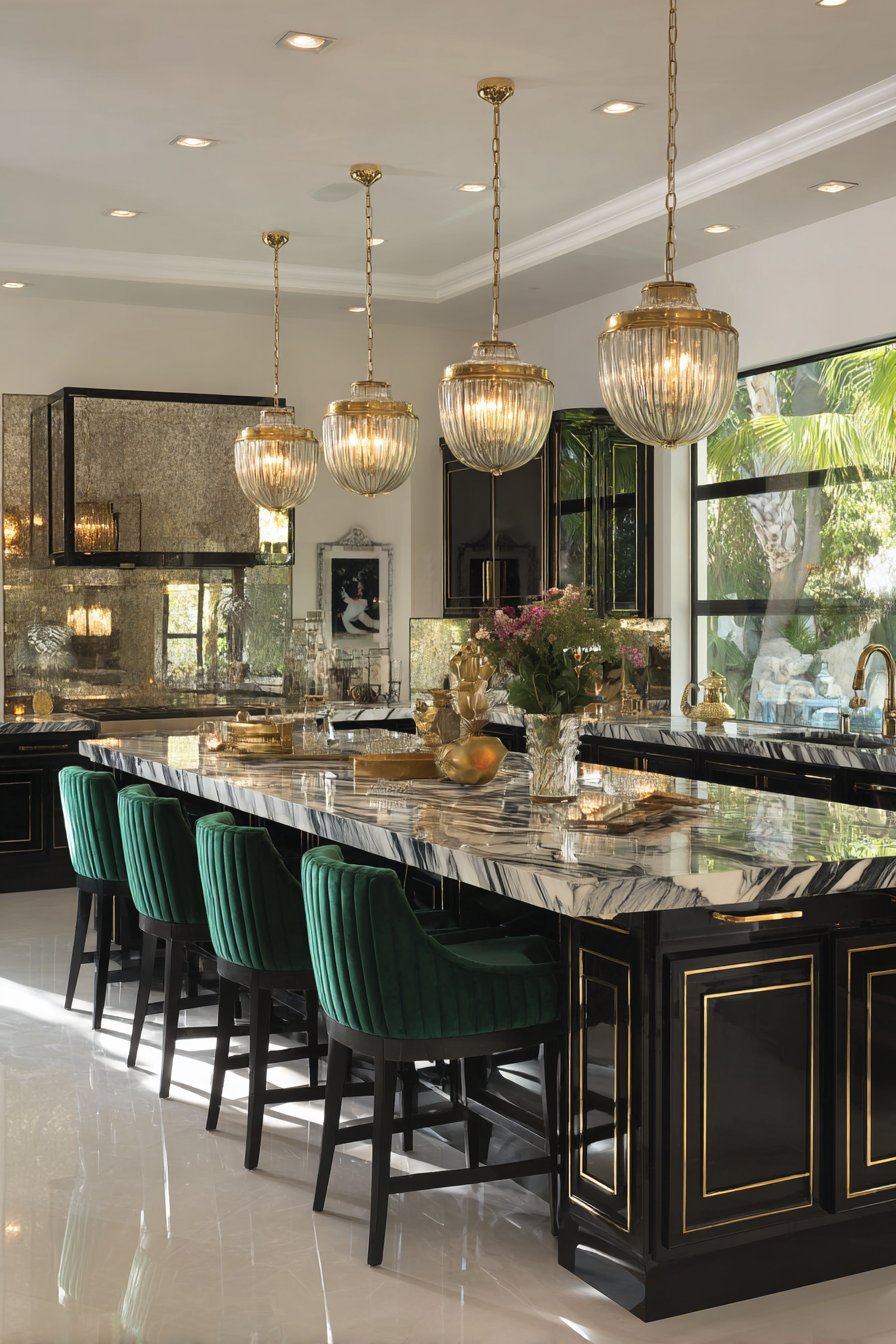
The Art Deco movement’s marriage of luxury and geometry finds expression in this glamorous peninsula where period-specific details create drama and sophistication. High-gloss black lacquer cabinets provide the deep, reflective surfaces that defined 1920s and 30s high-style design—their mirror-like finish requires meticulous maintenance but delivers unmatched visual impact through almost liquid-looking surfaces that reflect surrounding elements. White marble countertops with bold black veining create strong graphic contrast, the veins’ angular patterns echoing Art Deco’s characteristic geometric emphasis.
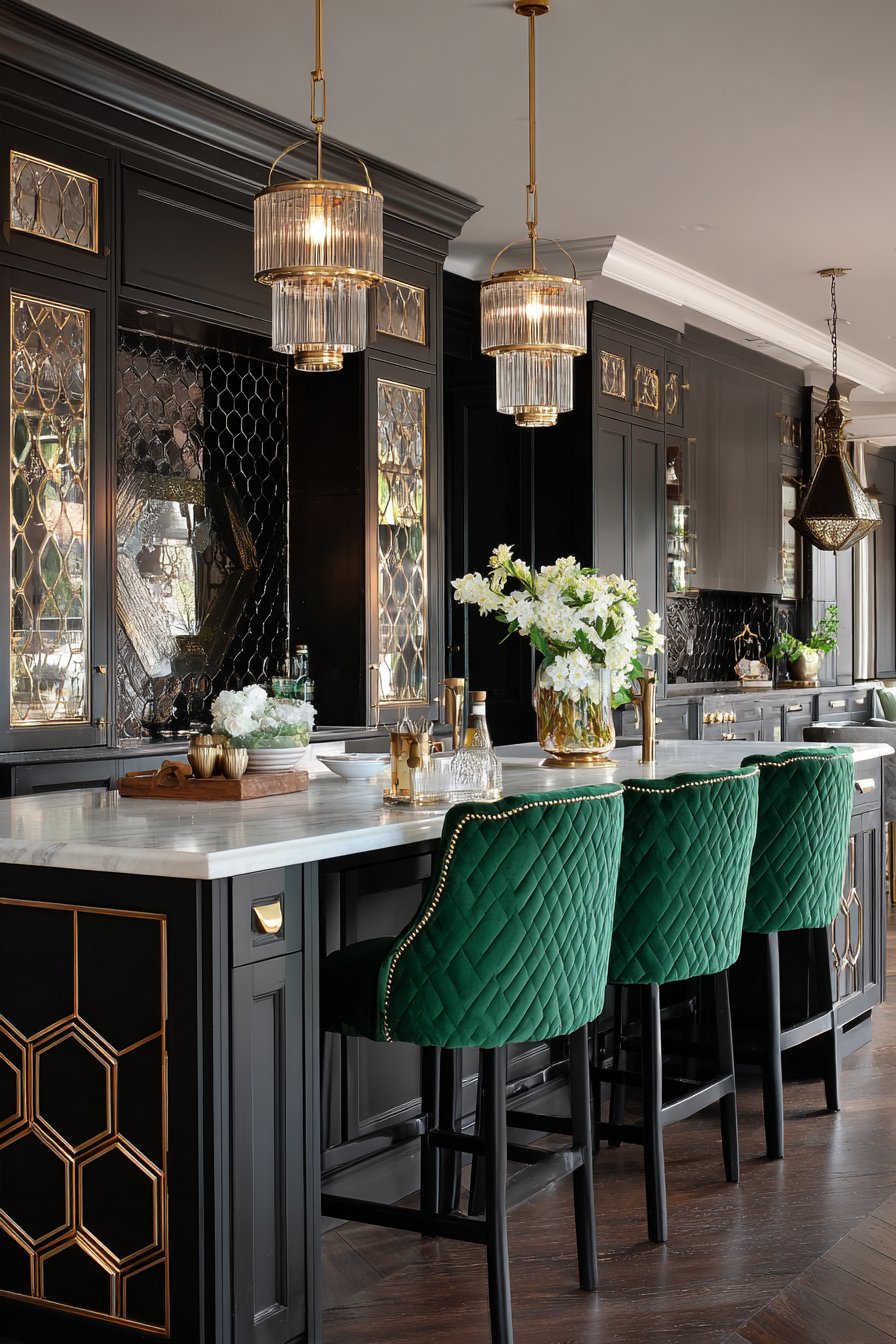
Geometric brass inlay details accent the cabinet faces, thin metal strips forming zigzag patterns, stepped forms, or sunburst motifs characteristic of the period. These inlays reference the era’s celebration of machine-age precision and its embrace of new manufacturing techniques that allowed complex decorative effects. The peninsula incorporates a mirrored backsplash panel that reflects light and creates illusion of expanded space—mirrors were Art Deco design staples, their reflective surfaces amplifying both natural and artificial light while adding glamour.
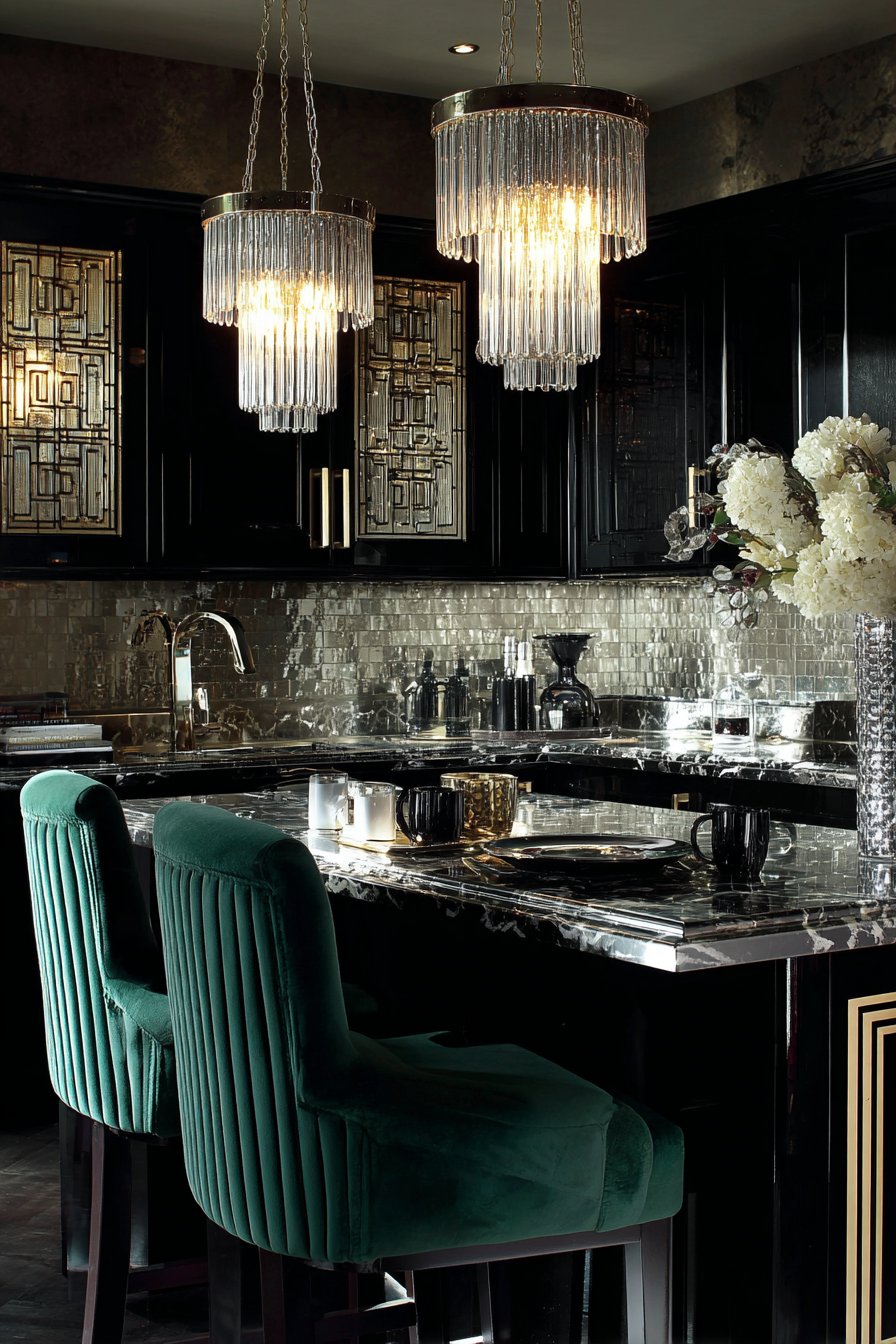
Statement pendant lights with tiered glass design and gold finish hang above velvet-upholstered bar stools in rich emerald green, the jewel-tone fabric adding color and luxury. The tiered glass creates cascading light effect reminiscent of 1930s cinema palace chandeliers, while the gold finish references the period’s love of metallic accents. Interior design photography captures the luxurious period details with dramatic lighting that emphasizes the bold contrast and metallic accents, proving that historical design movements retain power to create striking contemporary spaces.
Key Design Tips:
- Choose high-gloss black lacquer finishes for dramatic Art Deco impact—accept higher maintenance requirements
- Select marble with bold veining patterns that create graphic interest
- Incorporate geometric brass inlay details that reference Art Deco’s characteristic patterns
- Install mirrored elements to amplify light and add glamour typical of the period
- Choose jewel-tone fabrics like emerald, sapphire, or ruby for upholstery that adds period-appropriate color
- Select lighting fixtures with geometric, tiered, or stepped designs characteristic of Art Deco style
21. Multi-Generational Family Peninsula
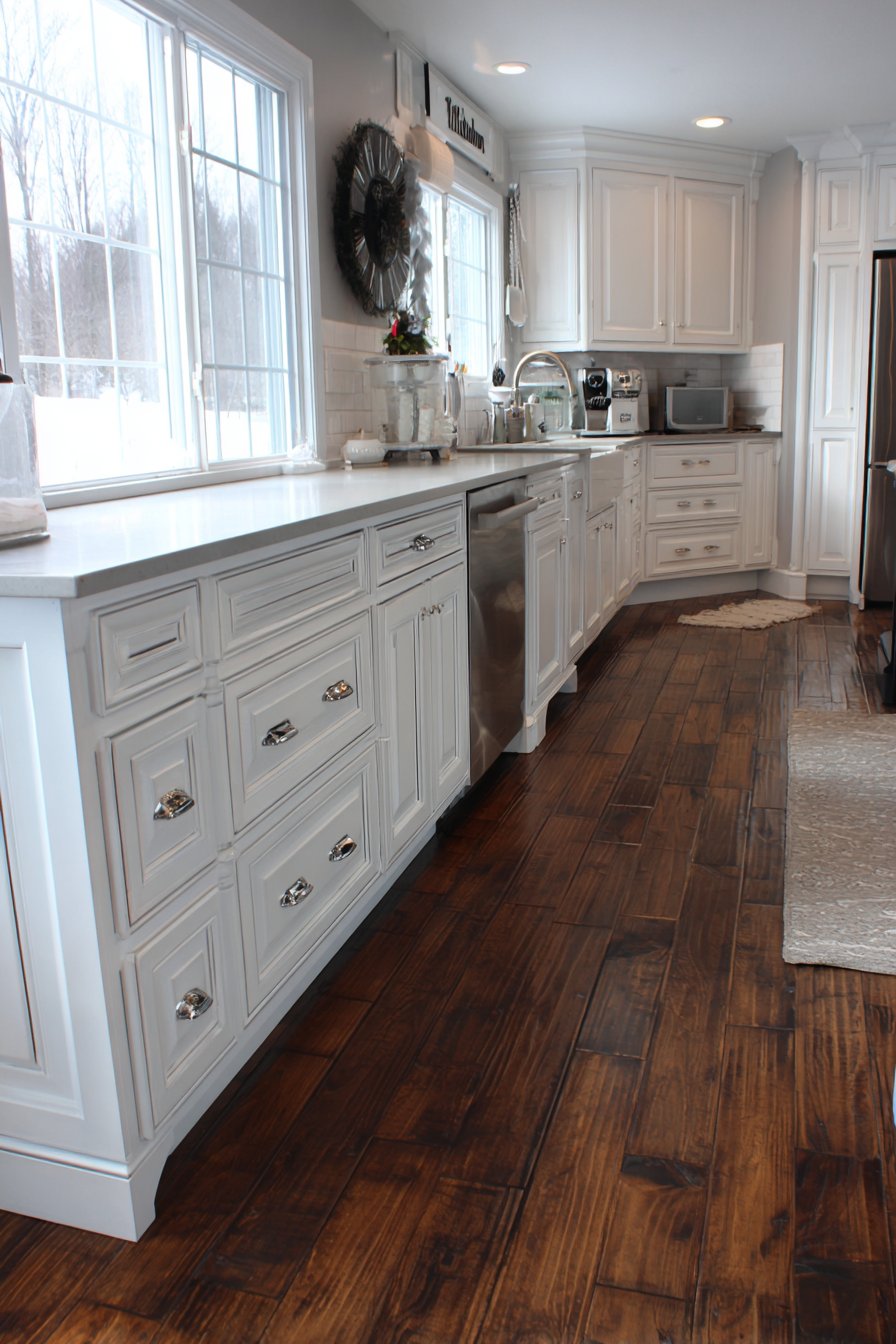
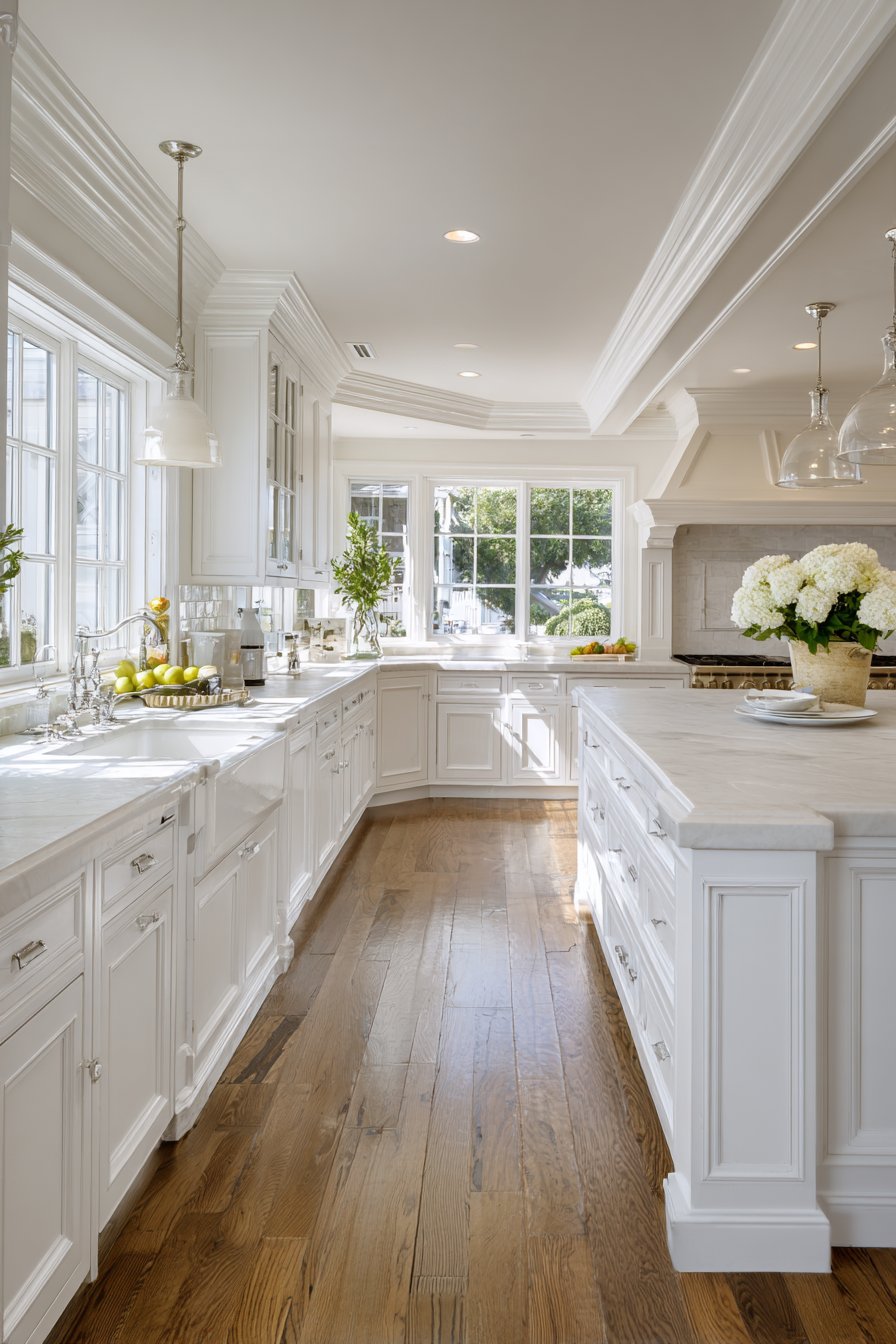
Designing for households that span generations requires thoughtful consideration of diverse needs and abilities, beautifully demonstrated in this family-friendly peninsula. The counter features a lowered section specifically designed for children to participate in meal preparation—positioned at comfortable height for kids aged 5-12 to help wash vegetables, mix ingredients, or assemble simple dishes. This dedicated workspace sends powerful message that children are valued family members whose participation in kitchen activities is welcomed and facilitated rather than merely tolerated.
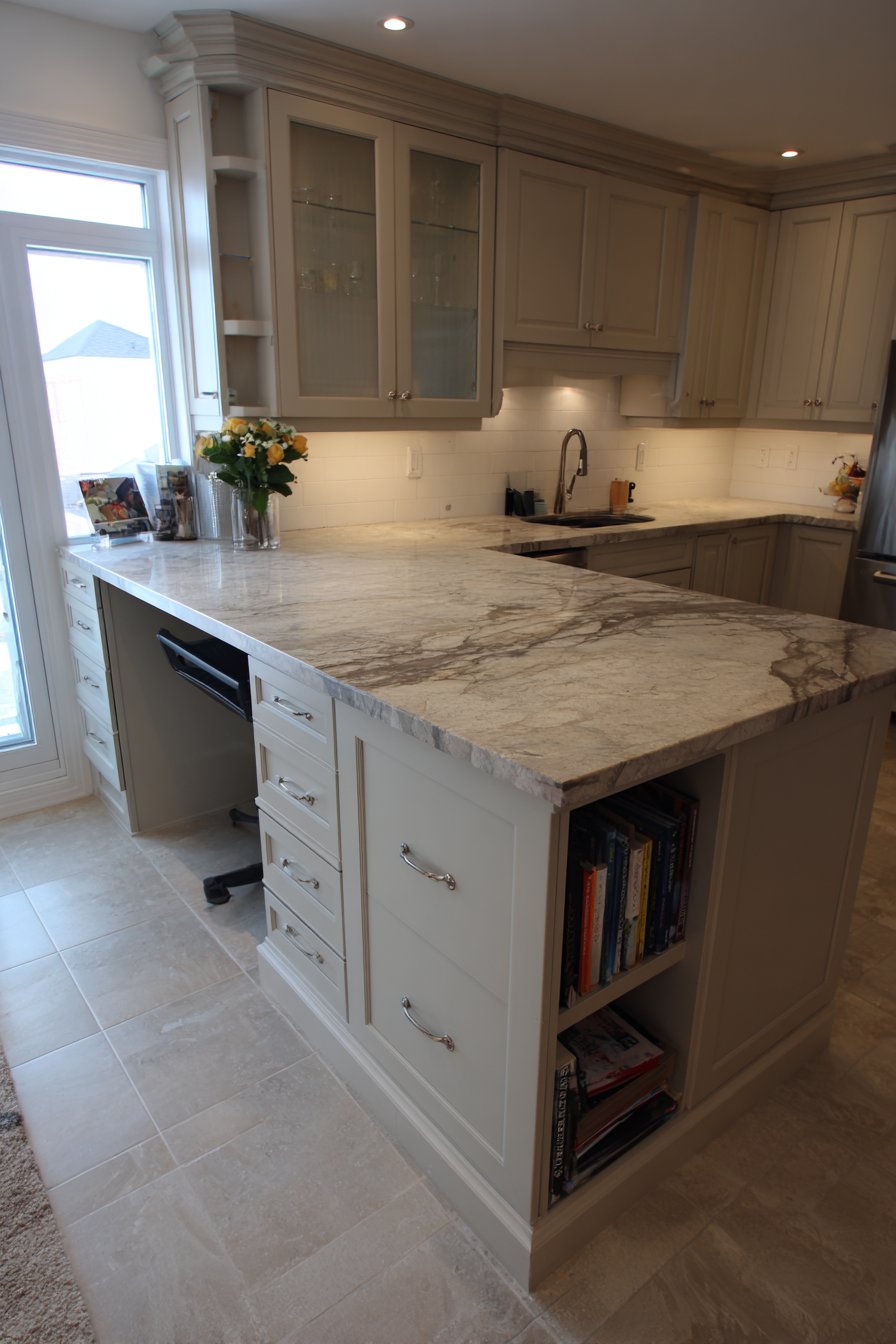
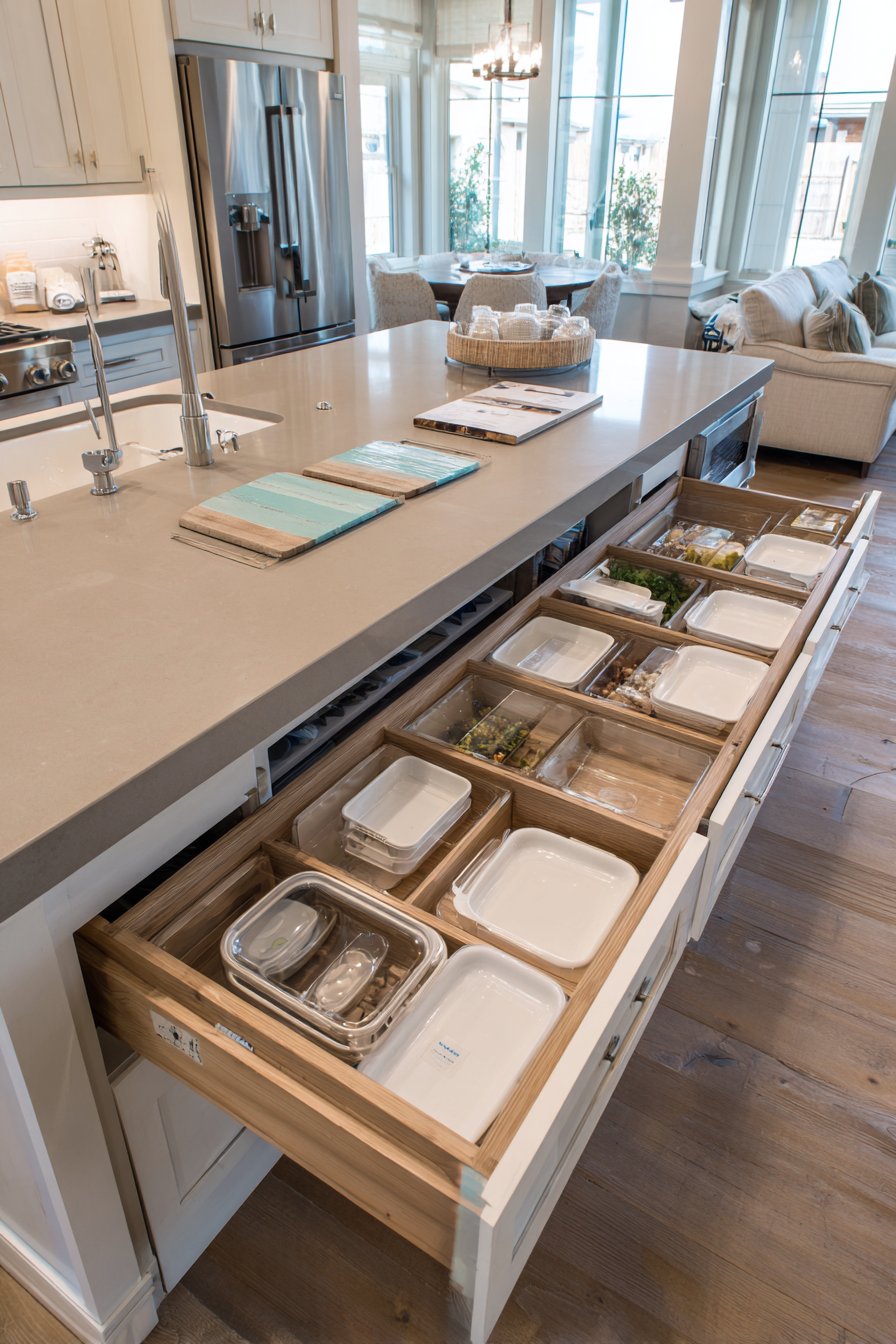
Durable laminate countertops in warm grey withstand the inevitable impacts, spills, and hard use that come with active family life. Unlike more precious materials that require careful handling, laminate forgives accidents and cleans easily—exactly what busy families need. Deep drawers below the peninsula provide accessible storage for kids’ dishes, lunch supplies, and snack items, the items positioned at heights children can reach independently, fostering self-sufficiency and reducing constant requests for adult assistance.
One end of the peninsula incorporates a built-in homework station with electrical outlets for charging devices and comfortable seating. This integration acknowledges modern reality that kitchens serve as family command centers where homework happens alongside meal prep, where parents can supervise activities while cooking dinner. The overall design recognizes that successful family spaces must accommodate diverse activities and abilities while maintaining cohesive aesthetic that adults appreciate.
Key Design Tips:
- Include lowered counter sections at 28-30 inches high for comfortable child access
- Choose durable, easy-clean materials like laminate that forgive accidents and hard use
- Install drawer storage at child-accessible heights to encourage independence
- Incorporate charging stations and homework-friendly surfaces for modern family needs
- Consider rounded countertop corners in family kitchens to reduce injury risk from impacts
- Design with awareness that family kitchens serve multiple simultaneous functions beyond just cooking
22. Japanese-Inspired Peninsula with Zen Simplicity
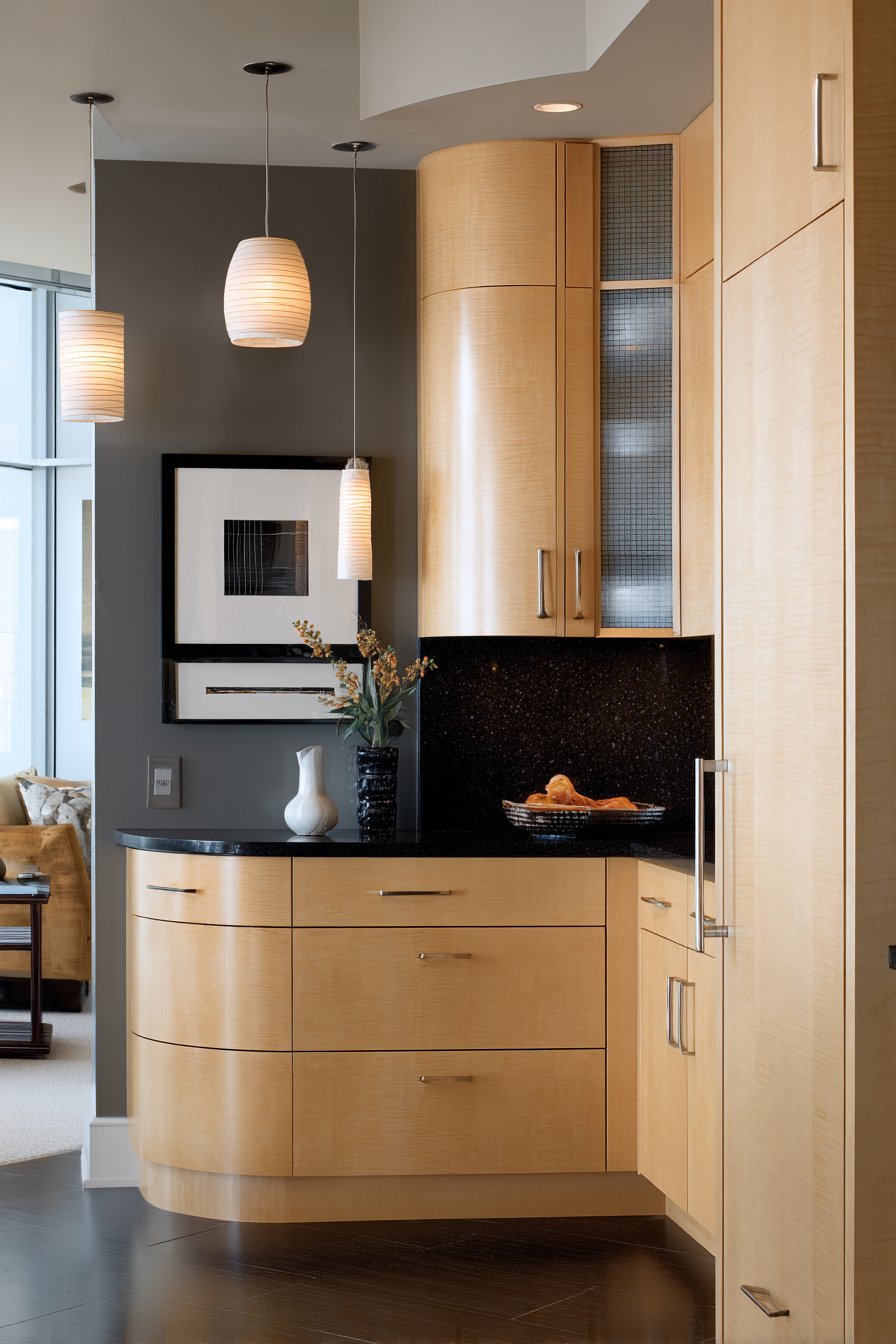
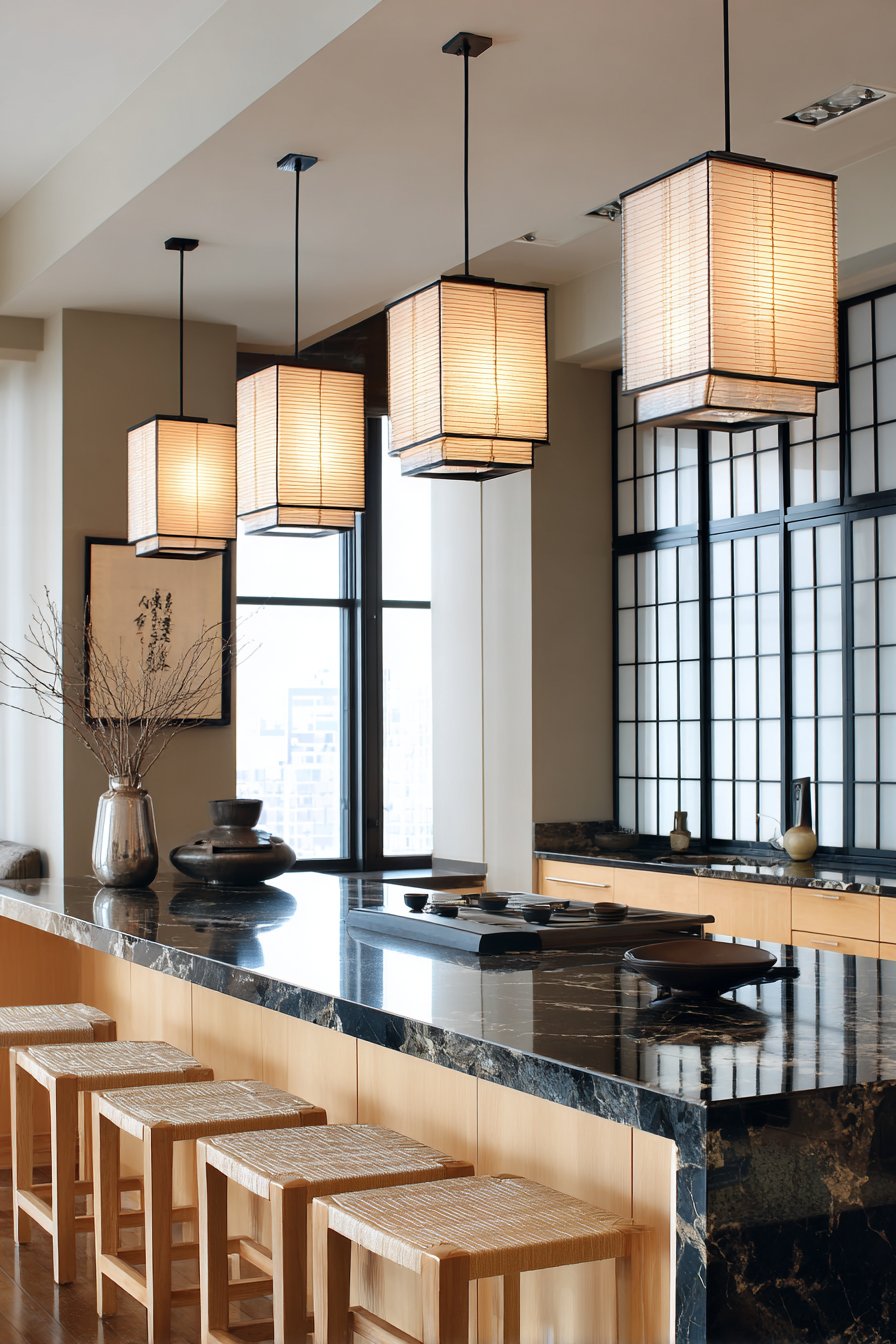
Eastern design philosophy emphasizing harmony, balance, and connection to nature informs this Japanese-inspired peninsula where every element serves purposeful role while contributing to overall sense of tranquility. Clean horizontal lines create visual calm, the peninsula’s form emphasizing width over height in characteristic Japanese preference for ground-hugging proportions that create stability and peace. Natural maple wood cabinets display subtle grain patterns that provide texture without busy visual noise, the wood’s pale honey tones bringing warmth while maintaining the light, airy feeling essential to Japanese aesthetics.
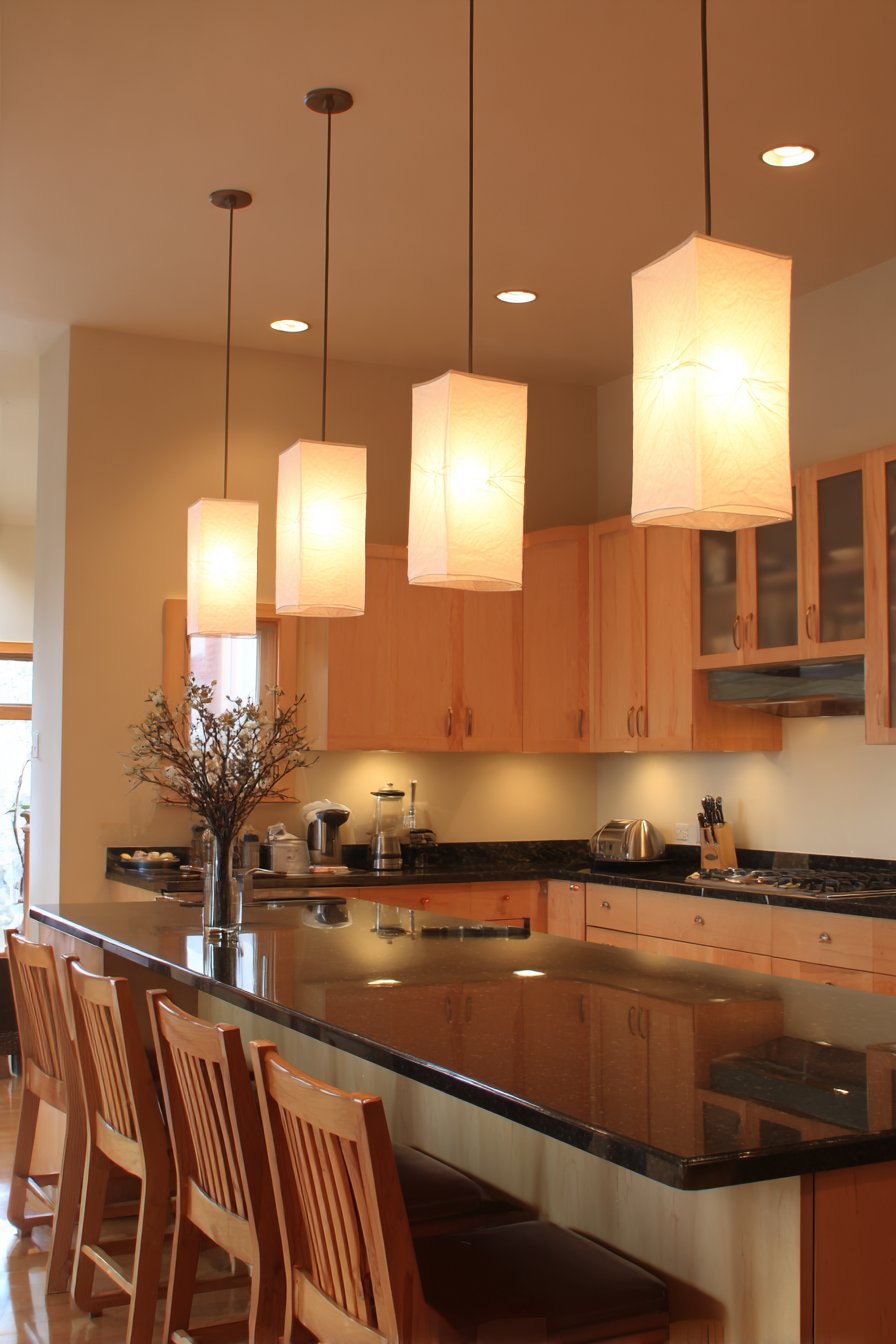
Honed black granite countertops provide matte finish that resists fingerprints while creating sophisticated contrast to the pale cabinets—the surface’s subtle texture adds depth without shine or reflection that might feel too active or demanding. Minimal hardware features recessed finger pulls that maintain uncluttered aesthetic, eliminating the visual punctuation of knobs or handles that would disrupt the calm horizontal lines. Shoji screen-inspired glass cabinet inserts diffuse interior lighting, their translucent panels providing gentle glow while obscuring cabinet contents to maintain visual serenity.
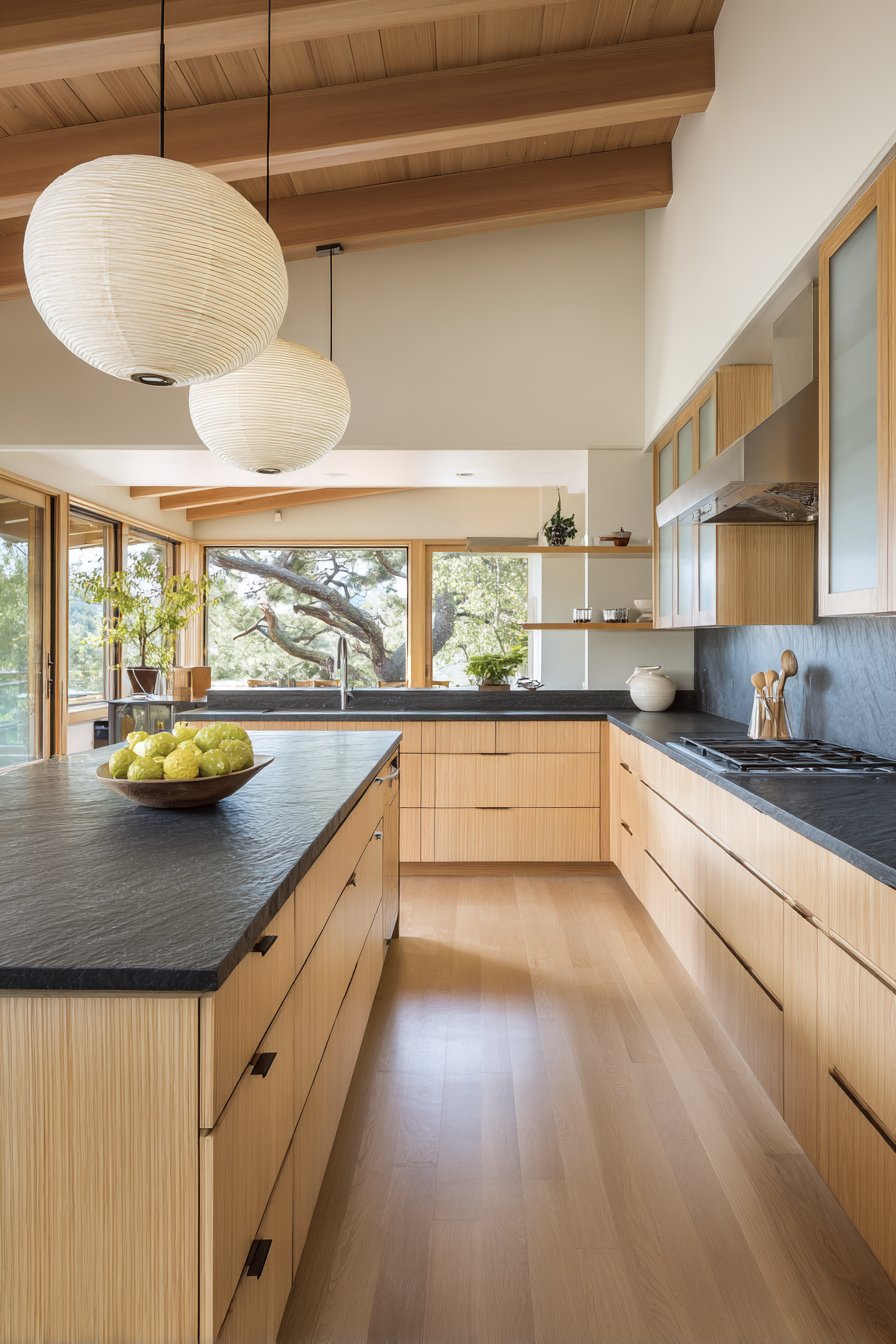
Simple pendant lights with washi paper shades hang above the seating area, their organic materials and soft light diffusion creating ambiance reminiscent of traditional Japanese lanterns. The lights’ cylindrical forms reference bamboo segments, continuing the natural material theme. Overall composition achieves the zen-like tranquility and disciplined simplicity that characterize Japanese design at its best, creating space that encourages mindful presence rather than distracted multitasking.
Key Design Tips:
- Emphasize horizontal lines and low proportions characteristic of Japanese design
- Choose pale woods with subtle grain patterns that provide warmth without visual busyness
- Select honed stone finishes rather than polished for sophisticated matte appearance
- Install recessed finger pulls rather than visible hardware to maintain clean surfaces
- Use shoji-inspired translucent panels that diffuse light while concealing storage contents
- Choose natural materials like wood, stone, paper, and bamboo that connect spaces to nature
23. Extended Peninsula Breakfast Zone
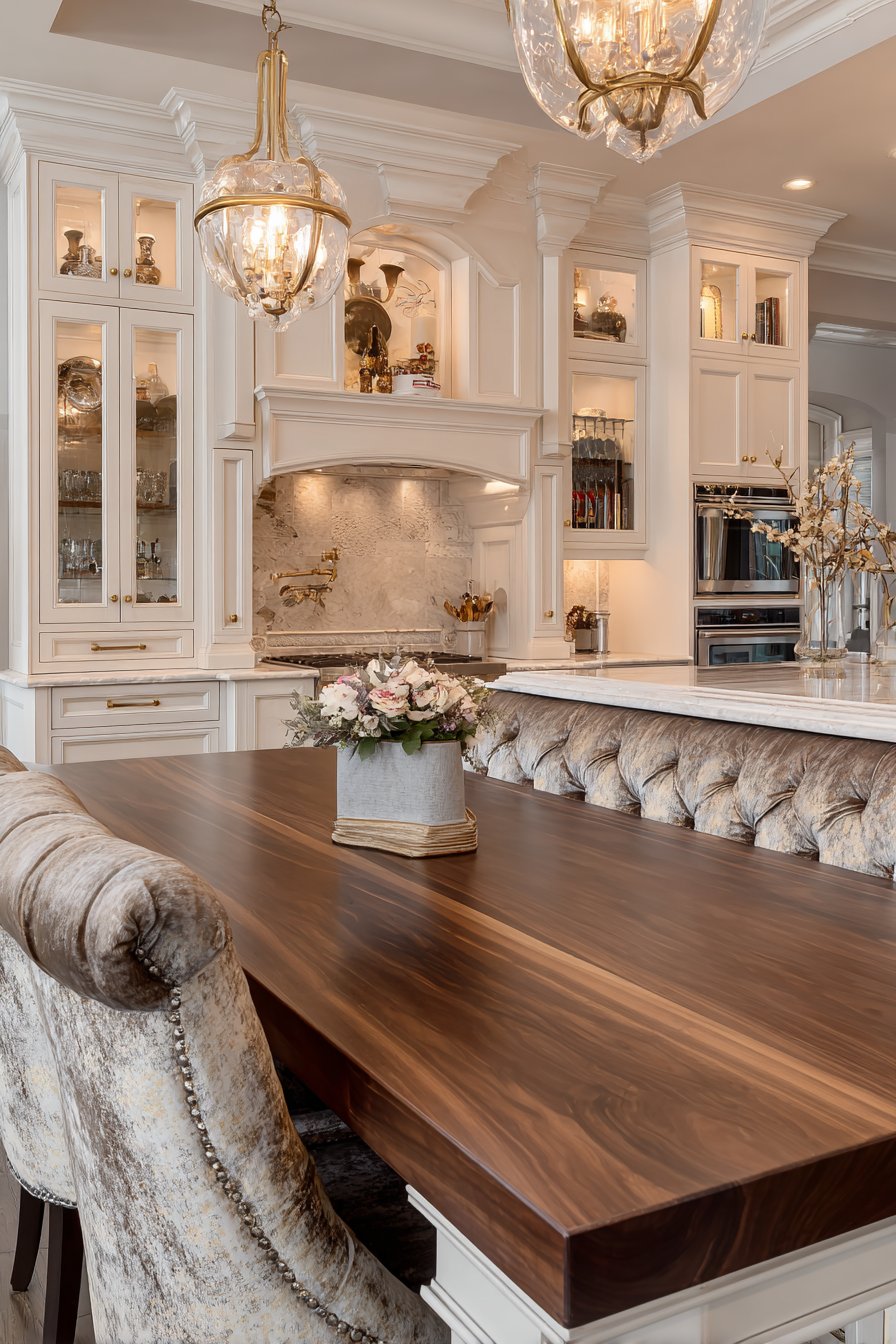
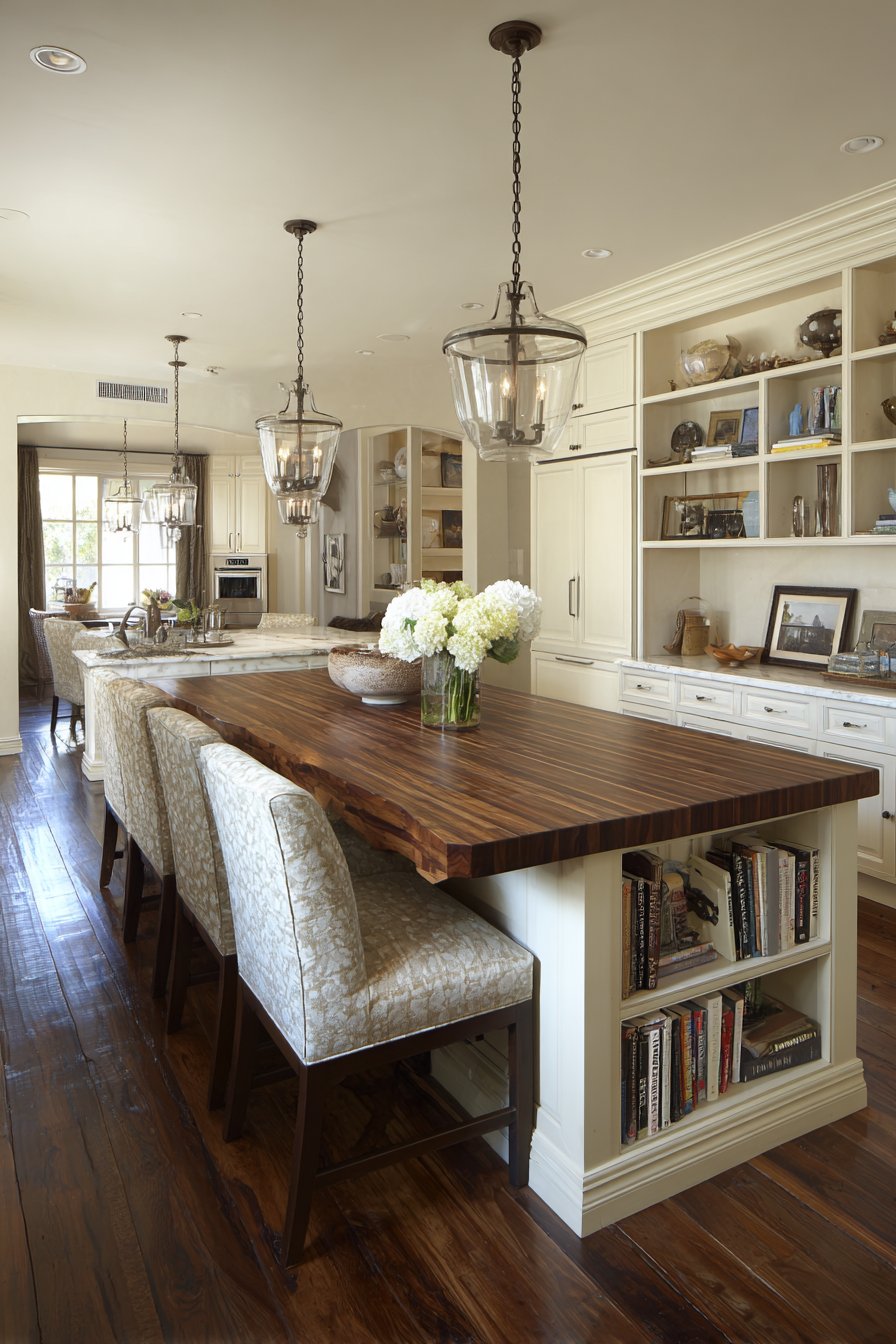
Rethinking traditional peninsula proportions creates new possibilities, as demonstrated by this extended version that accommodates four comfortable upholstered dining chairs rather than typical bar stools. The peninsula extends significantly from the main kitchen run—perhaps 8 or even 10 feet—creating dining surface comparable to a small table while maintaining the peninsula’s connection to kitchen cabinetry and countertops. This extended proportion transforms the peninsula from quick breakfast bar into proper casual dining area suitable for leisurely meals.
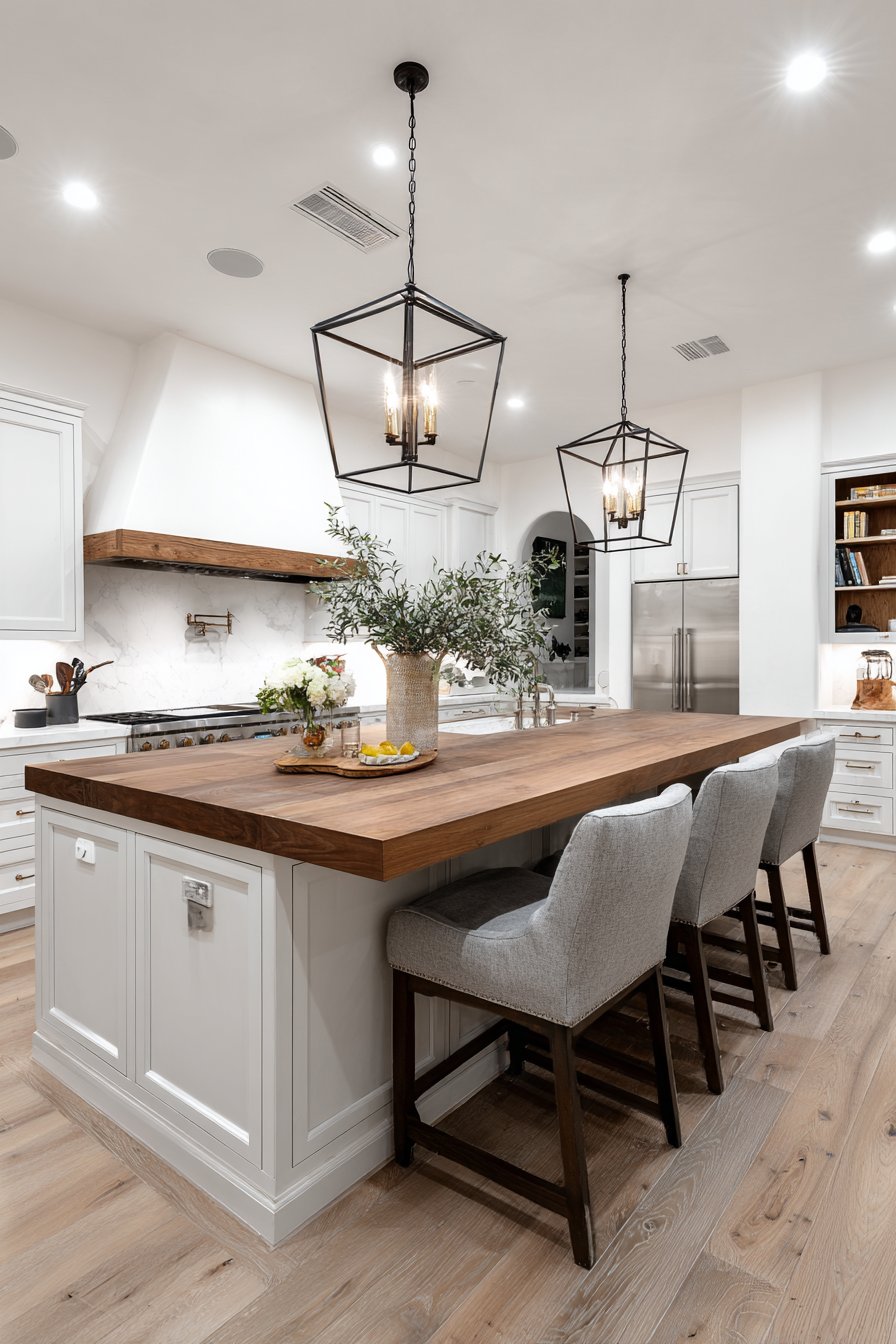
The extended peninsula features darker stained oak countertop contrasting with white perimeter cabinetry, this material and color change creating visual definition between cooking and dining zones. The wood surface feels more furniture-like and dining-appropriate than cool stone or engineered surfaces, its warmth inviting lingering over coffee or conversation. Built-in wine storage integrates into the peninsula base—perhaps a wine rack that displays bottles horizontally, or a wine refrigerator that maintains optimal temperature—while cookbook shelving provides accessible storage for frequently referenced recipes.
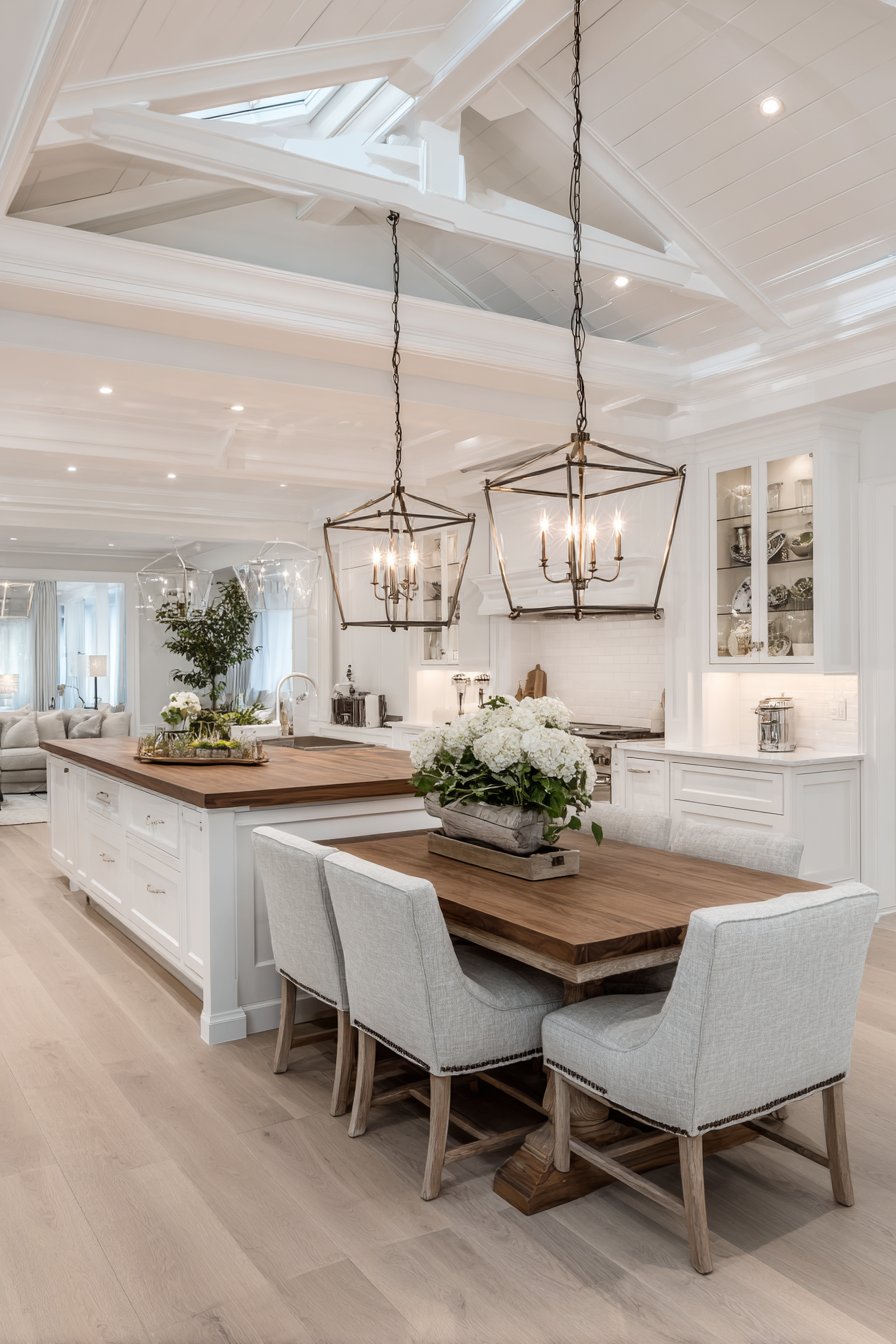
Four upholstered dining chairs surround the peninsula, their comfortable seating encouraging extended meals rather than the perch-and-go posture of bar stools. The chairs’ standard dining height makes the peninsula more accessible for elderly family members or those with mobility limitations who struggle with tall stools. Professional interior design photography captures the generous proportions and the peninsula’s successful transformation into proper casual dining area that blurs the line between kitchen and dining room.
Key Design Tips:
- Extend peninsula length to 8-10 feet when intending to accommodate proper dining for four
- Use darker countertop material to differentiate dining surface from food prep areas
- Choose comfortable upholstered dining chairs rather than bar stools for extended meal comfort
- Integrate wine storage and cookbook shelving into peninsula to support dining and cooking functions
- Ensure adequate legroom—minimum 24 inches of counter width per person for comfortable dining
- Position lighting fixtures to illuminate the dining surface appropriately for meal service
24. Modern Farmhouse with Authentic Reclaimed Wood
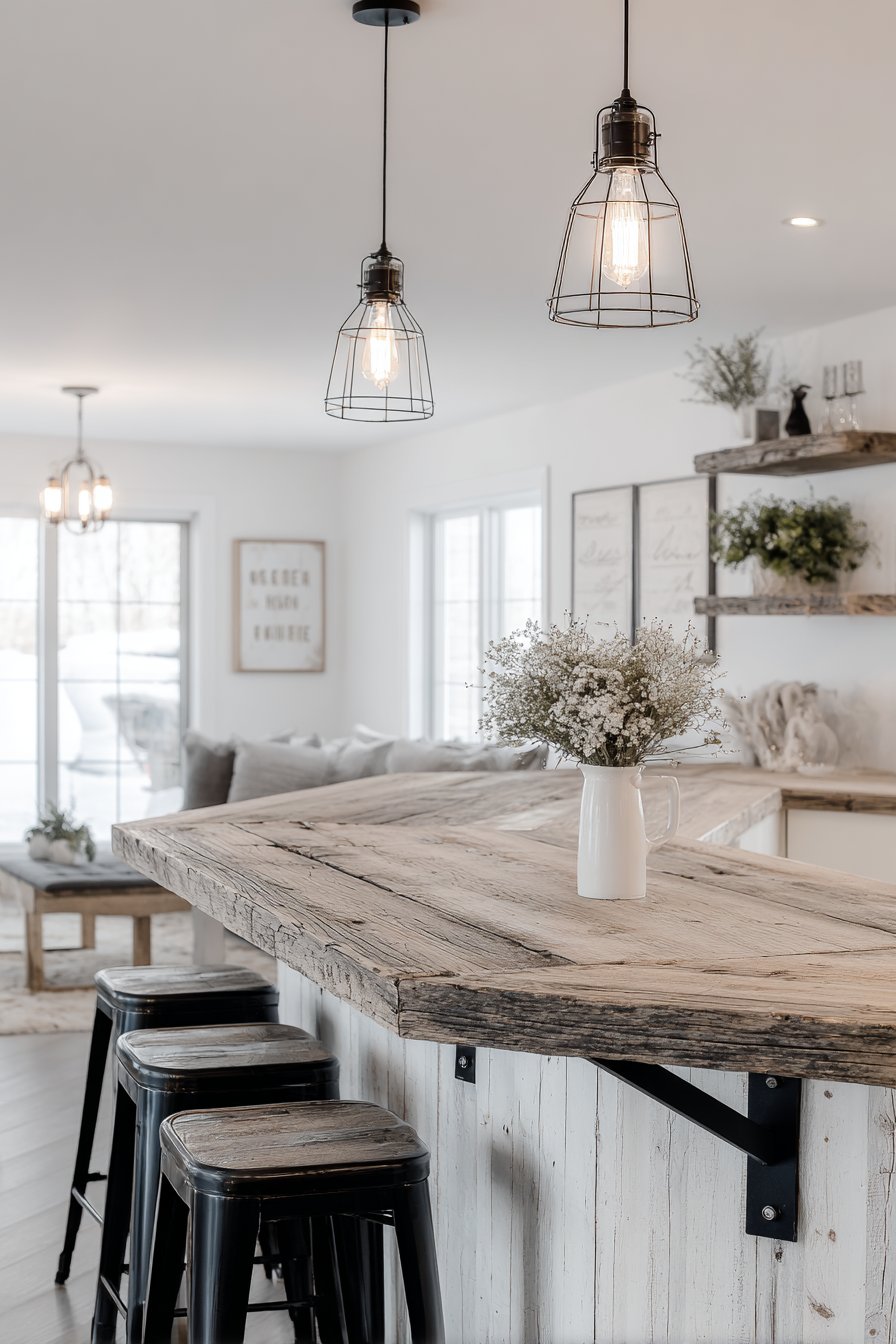
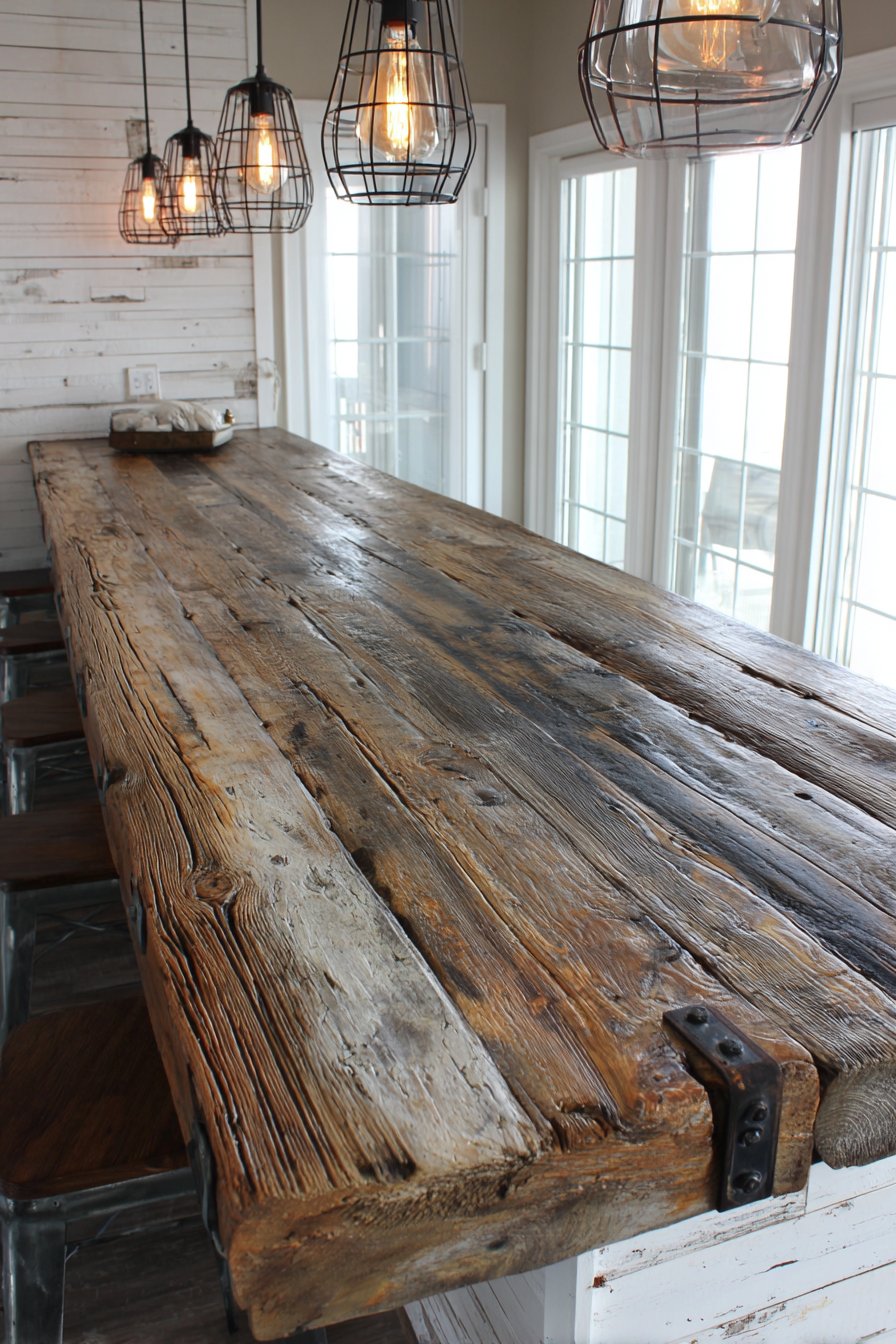
Authenticity elevates this modern farmhouse peninsula from styled interpretation to genuine expression of rustic values. Reclaimed barn wood countertops showcase genuinely weathered surfaces bearing the marks of their previous life—nail holes where boards were attached to barn frames, subtle color variations from decades of sun exposure, and the natural patina that develops only through years of honest use. This material choice rejects the ersatz distressing of factory-made “rustic” furniture in favor of wood that has earned its character through actual history.
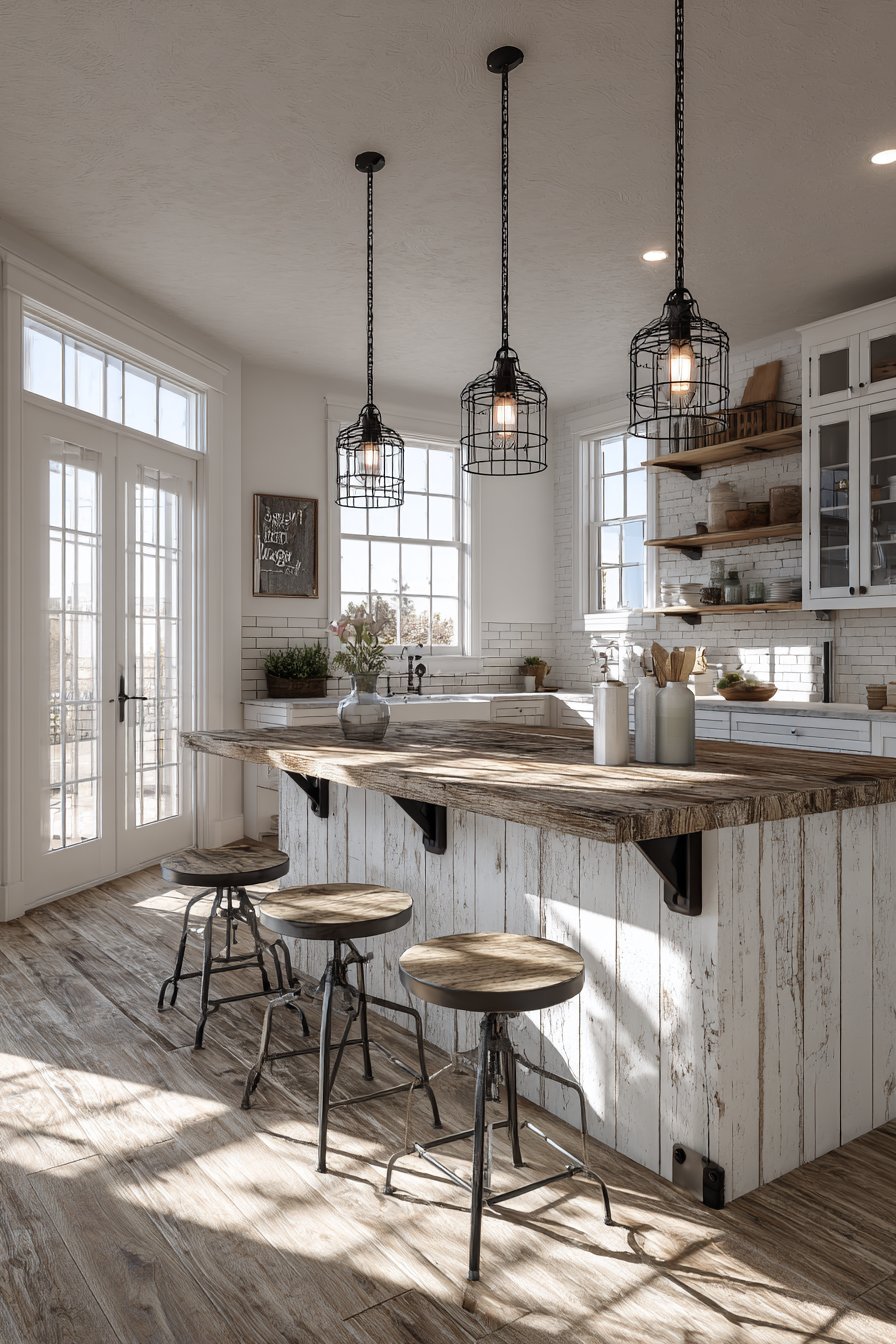
Crisp white shiplap covers the peninsula base, its horizontal lines creating rhythmic visual element while the bright white provides essential contrast to the aged wood countertop. Black metal brackets provide both structural and decorative support, their industrial character creating interesting tension with the agricultural origins of the barn wood. These brackets might be custom-fabricated from flat steel stock, or they might be salvaged hardware from the same era as the barn wood itself—either approach maintains the authentic, honest-materials aesthetic.
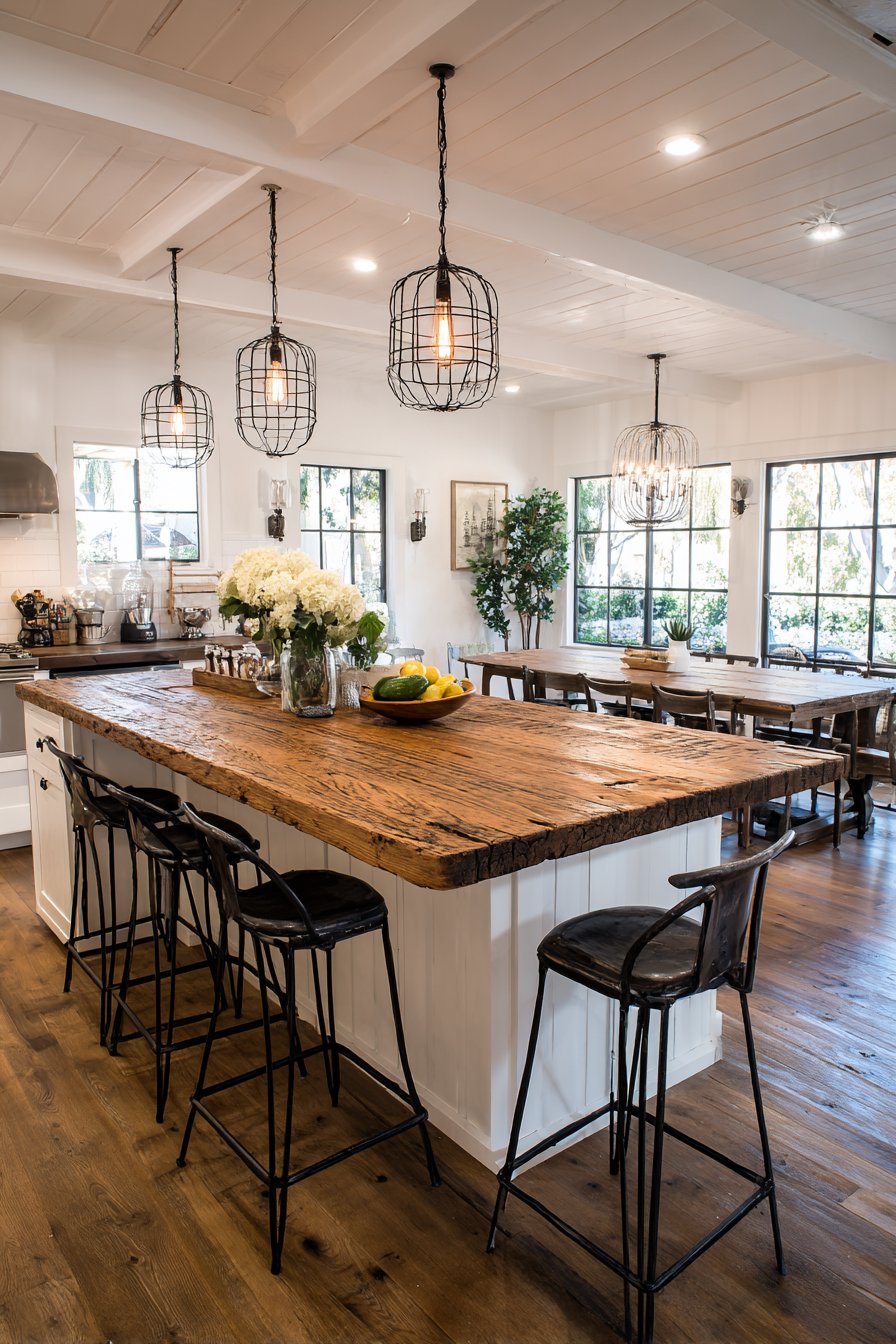
Industrial-style pendant lights with wire cages and Edison bulbs hang above vintage metal bar stools, the lighting fixtures’ raw appearance complementing both the reclaimed wood and metal brackets. Soft natural lighting streaming through nearby windows highlights the genuine aged wood character and the perfect imperfections that give the space authentic charm—the slightly uneven surfaces, the varying board widths, the honest evidence that this wood was something else before becoming your kitchen peninsula.
Key Design Tips:
- Source genuinely reclaimed wood from reputable suppliers rather than manufactured “distressed” materials
- Embrace authentic imperfections like nail holes, saw marks, and color variations as character
- Seal reclaimed wood properly to protect against moisture while maintaining its authentic appearance
- Pair aged wood with crisp white cabinetry to prevent the space from feeling too dark or heavy
- Choose metal brackets and hardware that match the era and aesthetic of reclaimed materials
- Accept that authentic reclaimed wood surfaces won’t be perfectly flat or uniform—that’s part of their appeal
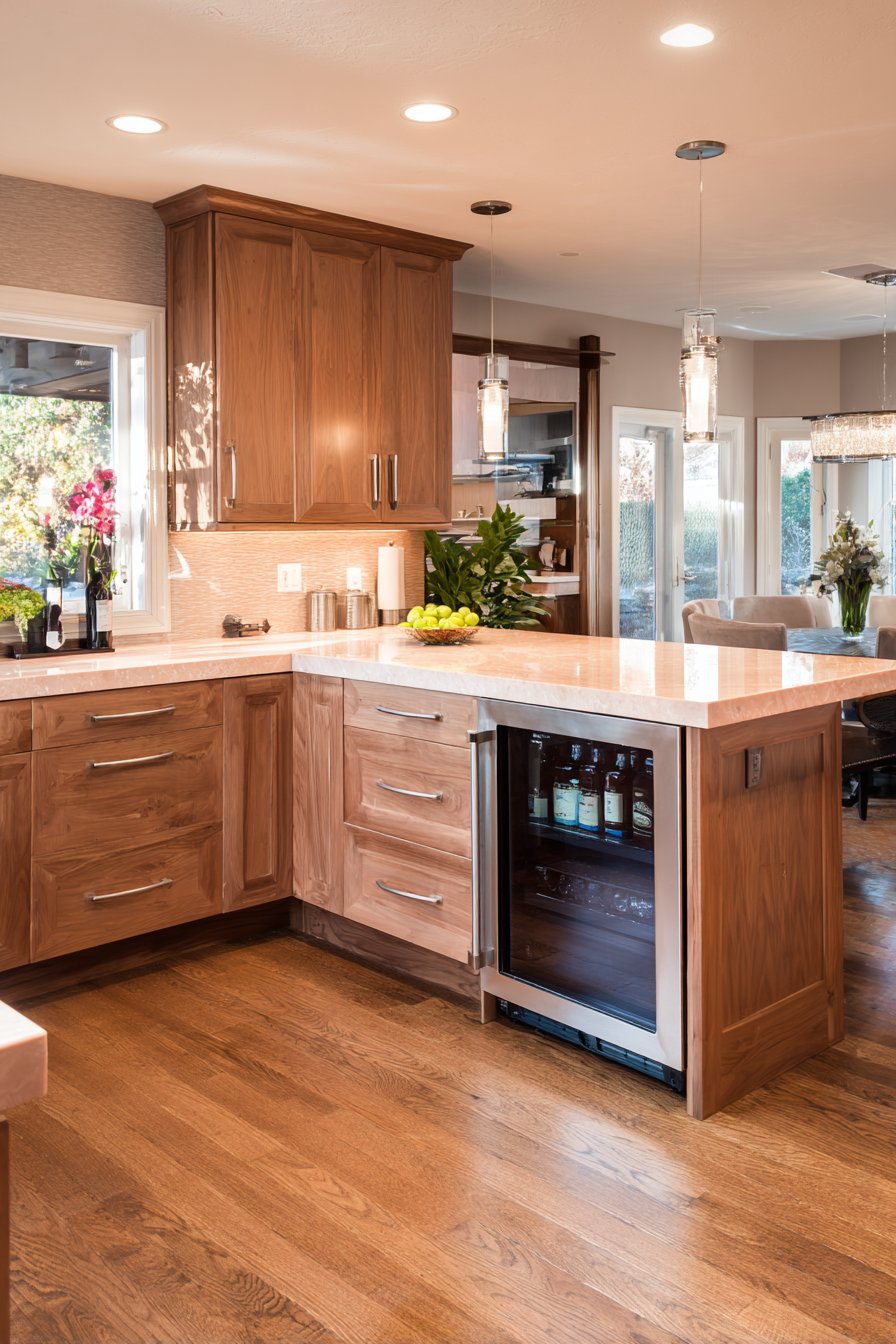
25. Entertainer’s Peninsula with Built-In Amenities
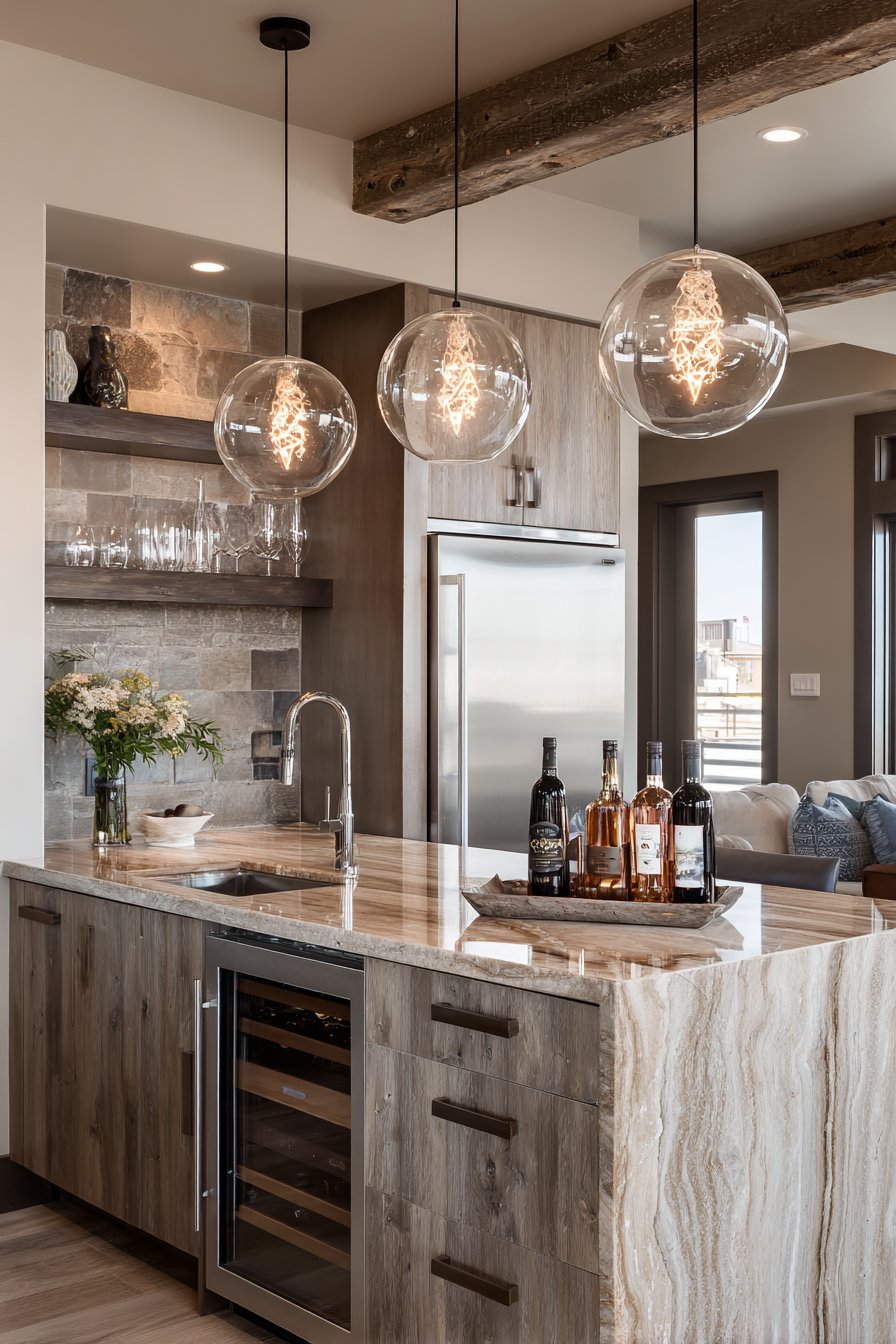
For homeowners who view their kitchen as social hub and entertainment venue, this peninsula design prioritizes hosting capabilities through thoughtfully integrated amenities. Built-in beverage refrigerator keeps drinks chilled and accessible without repeated trips to the main refrigerator—stock it with white wine, beer, and sparkling water for instant hospitality. Automatic ice maker produces clear restaurant-quality ice cubes continuously, ensuring you never run out during parties. Wine glass storage hangs from overhead racks, the stemware displayed like artwork while remaining accessible for quick service.
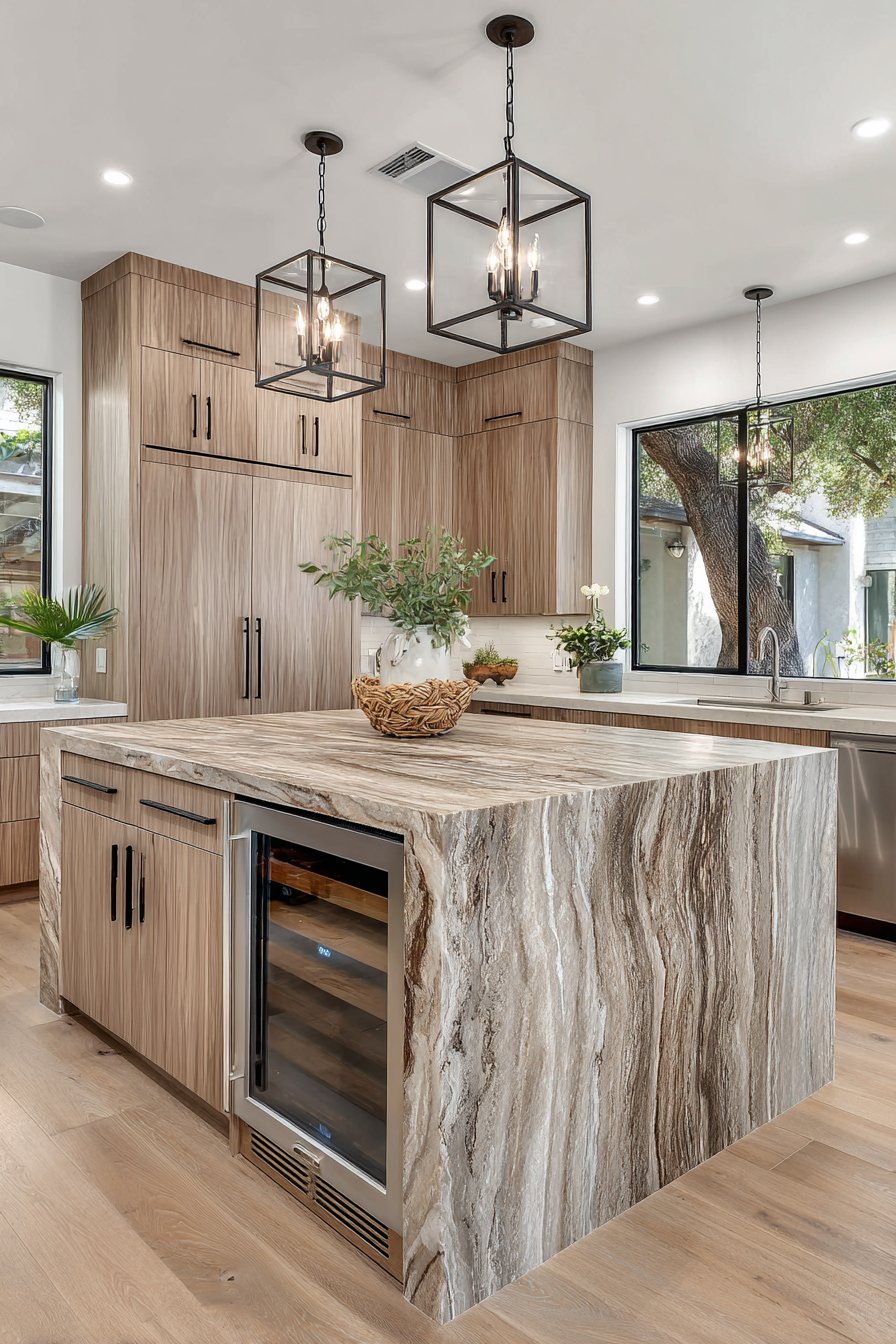
Durable quartzite countertops in warm beige tones provide serving surface that resists staining from wine spills, hot dishes, or the inevitable food debris of hosting. The raised bar section at one end separates kitchen mess from guest areas—you can be elbow-deep in food prep on the kitchen side while guests enjoy conversation and drinks at the higher bar surface, never seeing the chaos behind the scenes. Multiple electrical outlets accommodate small appliances during parties—plug in the blender for frozen cocktails, the electric wine opener, or the warming tray for appetizers.
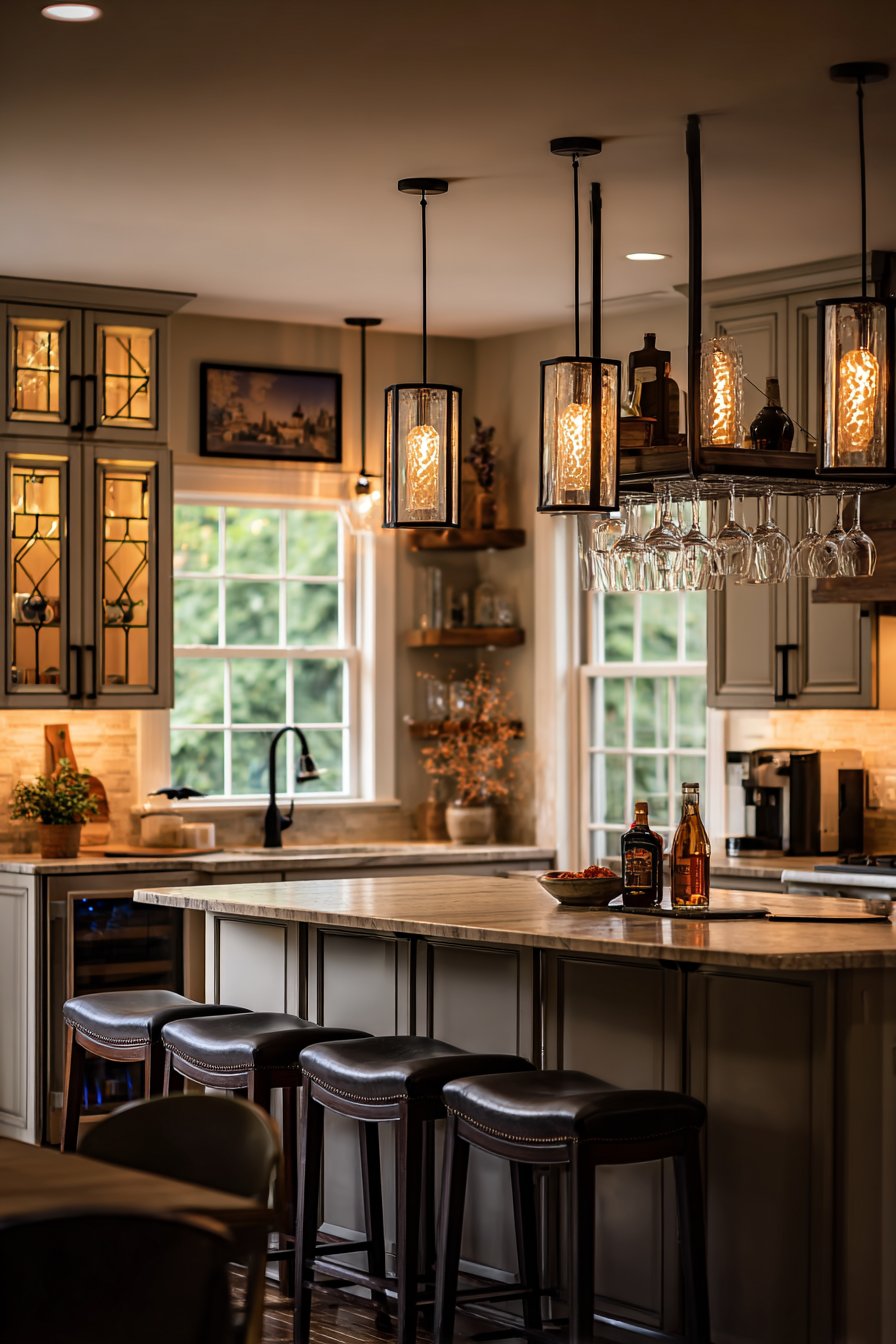
Statement pendant lights create focal point above the entertaining zone, their design merits attention while providing task lighting for drink preparation and serving. Wide-angle professional photography captures the party-ready layout with warm evening lighting that emphasizes the social functionality and thoughtful amenities. Every element serves the goal of making entertaining effortless—from the beverage storage to the generous counter space to the separation between working kitchen and socializing guests.
Key Design Tips:
- Install beverage refrigerator and ice maker for entertaining convenience without space-consuming standalone units
- Hang wine glass storage from overhead racks to save cabinet space while creating visual interest
- Choose quartzite or similar durable countertops that resist staining from food and drink spills
- Include raised bar section to visually separate food prep mess from guest areas
- Install abundant electrical outlets to accommodate small appliances during parties
- Position lighting to create ambiance while providing functional illumination for drink preparation
Why These Peninsula Kitchen Ideas Represent the Best in Design
The twenty-five peninsula kitchen ideas presented in this comprehensive guide represent excellence in contemporary kitchen design because they address the diverse needs, aesthetic preferences, and practical constraints that real homeowners face when planning kitchen renovations or new construction. These designs succeed not through following rigid formulas but through thoughtful problem-solving that balances beauty with function, aspiration with achievability, and personal expression with timeless appeal.
Each peninsula configuration demonstrates sophisticated understanding of spatial relationships and how peninsulas can transform kitchen functionality. Whether opening up a claustrophobic galley kitchen to adjacent living space, providing much-needed prep surface and casual dining in compact apartments, serving as elegant room dividers in open-concept homes, or creating dedicated entertaining zones with integrated amenities, these peninsulas prove that this architectural element offers solutions far beyond simple counter extension. The designs showcase how peninsulas can adapt to virtually any kitchen footprint, style preference, or lifestyle requirement while maintaining aesthetic cohesion.
Material selection across these twenty-five ideas reflects deep knowledge of both practical performance and visual impact. From the warm authenticity of reclaimed barn wood and butcher block to the sophisticated luxury of bookmatched marble and quartzite, from the industrial honesty of concrete and stainless steel to the contemporary convenience of engineered quartz—each material choice serves specific functional needs while contributing to overall design narrative. The guide demonstrates how material combinations create visual interest through textural contrast: smooth marble against grainy wood, matte honed stone beside glossy lacquer cabinets, natural materials juxtaposed with manufactured surfaces.
Color strategy throughout these designs shows remarkable sophistication in creating cohesive palettes that range from bold drama to serene neutrality. The use of sage green in transitional designs, terracotta in bohemian spaces, light blue-grey in coastal kitchens, and warm greige in transitional styles demonstrates how color establishes mood and supports stylistic intentions. The guide shows how strategic color placement—using darker tones for peninsulas that face living spaces while maintaining lighter colors on kitchen-facing sides—creates visual definition without harsh separation. Monochromatic schemes in Scandinavian and contemporary designs prove that limited color palettes create impact through texture and material variation rather than chromatic contrast.
Lighting considerations across these peninsula ideas reveal professional understanding of how illumination shapes spatial perception and functional capability. The incorporation of task lighting beneath overhangs for seated users, ambient lighting from carefully selected pendant fixtures, natural light maximization through material and color choices, and even programmable LED systems with color-changing capabilities—all demonstrate that successful kitchen design considers lighting as essential architectural element rather than afterthought. The guide shows how lighting must serve multiple purposes: providing adequate illumination for food preparation, creating intimate atmosphere for dining and socializing, highlighting beautiful materials and finishes, and supporting the peninsula’s role as visual focal point.
Storage innovation across these twenty-five designs addresses one of homeowners’ most pressing kitchen concerns through creative solutions that maximize capacity while maintaining aesthetic integrity. Pull-out organizers in compact peninsulas, integrated wine storage for entertainers, built-in homework stations for family kitchens, accessible storage at child-friendly heights, and specialized storage like chicken wire ventilated cabinets or glass-front beverage refrigerators—these features demonstrate that beautiful design need not sacrifice practical functionality. The integration of hidden storage, open display shelving, and specialized organizational systems proves that peninsulas can serve serious storage functions while remaining visually appealing.
Style diversity represented in these ideas ensures that readers with virtually any aesthetic preference will find inspiration and practical guidance. Traditional elegance with raised panel cherry cabinets and granite counters coexists with industrial loft aesthetics featuring reclaimed wood and exposed metal framework. Scandinavian minimalism’s serene simplicity contrasts with Art Deco glamour’s bold drama. Coastal breezy freshness offers different appeal than rustic lodge warmth. This range demonstrates that peninsula design succeeds across the entire spectrum of interior design movements, from historically referenced styles to cutting-edge contemporary expressions.
Accessibility and universal design principles integrated into several featured peninsulas—variable height countertops, knee clearance for wheelchair access, easy-grip hardware, contrast edge banding—demonstrate progressive thinking about kitchen design serving diverse users. These features prove that accommodation for varied abilities enhances rather than compromises aesthetic quality. The designs show how family-friendly features, multi-generational considerations, and universal design principles create kitchens that serve everyone better regardless of age or ability.
Technology integration in the smart home peninsula points toward kitchen design’s future while remaining grounded in present-day practicality. Wireless charging, pop-up outlets, integrated beverage refrigeration, tablet holders, and programmable lighting systems demonstrate how contemporary kitchens can incorporate connectivity and convenience without sacrificing design integrity. These features prove that technology and beauty need not conflict when integration is thoughtful and execution is skillful.
The professional-grade cooking peninsula acknowledges that for many homeowners, the kitchen serves as serious culinary workshop requiring specialized equipment and durable materials. This design respects cooking as craft and art, prioritizing performance and functionality that support ambitious culinary projects. The inclusion of this option alongside more decorative or entertaining-focused designs demonstrates the guide’s comprehensive approach to diverse homeowner priorities and usage patterns.
Scale awareness across these designs—from compact condo peninsulas maximizing limited footprint to extended breakfast zone versions accommodating proper dining for four—shows sophisticated understanding that successful design must respond to actual available space rather than imposing ideal configurations regardless of constraints. The guide demonstrates how peninsulas can be scaled and configured for virtually any kitchen size while maintaining proportional integrity and functional capability.
Material authenticity emphasized throughout—particularly in designs featuring reclaimed wood, natural stone, and honest expression of materials’ inherent characteristics—reflects values increasingly important to contemporary homeowners. The rejection of fake finishes, appreciation for patina and signs of use, and celebration of materials’ natural imperfections align with broader cultural movements toward sustainability, authenticity, and connection to craft traditions. These designs prove that respecting materials’ honest nature creates more compelling results than concealing or distorting their characteristics.
The integration of these peninsula ideas with broader open-concept living reflects understanding of how contemporary homes function as connected spaces rather than isolated rooms. Peninsulas that serve as room dividers while maintaining visual connection, two-tone cabinetry acknowledging dual-facing orientation, and material transitions that define zones without walls—these strategies demonstrate sophisticated spatial thinking essential to successful open-plan design.
Cultural and historical design references—from French Provincial to Japanese Zen, from Art Deco glamour to Mid-Century Modern—show how peninsula design can express diverse aesthetic traditions while remaining relevant to contemporary living. These designs prove that historical styles succeed not through rigid recreation but through understanding and reinterpreting essential principles that made original movements compelling. The guide shows how to capture styles’ essential character while adapting them to modern materials, technologies, and lifestyle requirements.
Conclusion: Transforming Your Kitchen Through Peninsula Design
The remarkable versatility demonstrated across these twenty-five peninsula kitchen ideas proves that this architectural element deserves serious consideration in any kitchen planning process, whether you’re embarking on complete renovation, new construction, or targeted updates to existing spaces. Peninsulas offer unique combination of benefits—they provide generous additional counter space for food preparation without requiring the square footage of freestanding islands, they create natural gathering spots for casual dining and social interaction, they can define spatial boundaries in open-concept layouts while maintaining visual connection, and they offer valuable storage opportunities within their base cabinetry and surrounding areas.
The diversity of styles, materials, and configurations explored in this guide demonstrates that successful peninsula design begins not with predetermined formulas but with careful analysis of your specific needs, available space, aesthetic preferences, and lifestyle patterns. Consider how you actually use your kitchen: Do you entertain frequently and need beverage storage and serving surfaces? Do you have young children who would benefit from kid-friendly prep surfaces? Are you serious home cooks requiring professional-grade equipment and heat-resistant materials? Is your kitchen part of open-concept living space requiring thoughtful visual transitions? The answers to these questions should guide your peninsula design decisions more powerfully than any trending styles or generic recommendations.
Material selection deserves particular attention, as your choices will impact both daily functionality and long-term satisfaction with your peninsula. Natural materials like wood, stone, and concrete bring authentic character and often improve with age, developing patina that tells the story of your kitchen’s use. Engineered materials like quartz offer practical benefits including stain resistance and minimal maintenance while providing consistent appearance that some homeowners prefer. The key is selecting materials that align with both your aesthetic vision and your realistic maintenance capabilities—choosing high-gloss lacquer cabinets means accepting regular cleaning to maintain their mirror-like finish, while selecting butcher block counters requires periodic oiling but rewards you with warmth and natural beauty.
Color strategy in peninsula design creates opportunities for both cohesion and definition within your kitchen. Matching peninsula cabinetry to surrounding kitchen cabinets creates seamless integration that makes spaces feel larger and more unified. Contrasting your peninsula with different color, material, or finish creates visual interest and can help define zones within open layouts—perhaps darker peninsula cabinetry facing living spaces while lighter kitchen cabinetry maintains brightness in the work zone. Both approaches succeed when executed thoughtfully, so let your space’s specific characteristics and your design goals guide these decisions.
Lighting your peninsula requires multi-layered approach addressing different needs and activities. Task lighting beneath overhangs ensures comfortable illumination for those seated at the peninsula, whether they’re eating breakfast, working on laptops, or helping with meal preparation. Pendant fixtures above the peninsula provide ambient lighting while creating visual focal point—select fixtures that complement your overall design style while providing adequate illumination. Consider how natural light interacts with your peninsula throughout the day, positioning it to benefit from available daylight while ensuring artificial lighting compensates during evening hours.
Storage integration within and around your peninsula maximizes this element’s value beyond surface area alone. Base cabinets can house anything from pots and pans to small appliances, from pantry items to specialized equipment. Consider pull-out organizers, lazy susans, drawer dividers, and other organizational systems that keep contents accessible and visible rather than lost in deep cabinet recesses. Open shelving on peninsula exteriors provides display opportunities while keeping frequently used items convenient. Specialized storage like wine racks, cookbook shelves, or charging stations transforms your peninsula into command center addressing multiple household needs.
Scale and proportion matter enormously in peninsula design—a peninsula that’s too small fails to justify its footprint, while one that’s too large overwhelms the space and impedes circulation. General guidelines suggest minimum 24-inch depth for adequate prep surface, with 36-42 inches being typical. Length depends on available space and intended uses, but ensure adequate circulation on all sides—minimum 36 inches for clearance, preferably 42-48 inches for comfortable movement, especially in households with multiple cooks or wheelchair users. The peninsula’s height should align with your needs: standard 36-inch counter height works well for food preparation, while raised bar height (42 inches) creates visual separation and accommodates bar stools, and lowered sections (28-32 inches) serve accessibility needs or children’s participation.
As you move forward with your peninsula kitchen project, remember that the most successful designs emerge from honest assessment of your needs rather than blind pursuit of trends or magazine-perfect aesthetics. Trust your instincts about what will serve your household well. Invest in quality materials and professional installation—peninsulas are permanent fixtures deserving thoughtful execution. Don’t hesitate to work with kitchen designers or architects who can help translate your vision into reality while addressing technical considerations like structural support, utility routing, and code compliance.
The twenty-five ideas presented here offer starting points for your imagination rather than rigid templates to copy exactly. Mix elements from multiple designs to create peninsula that’s uniquely yours—perhaps the material palette from the Scandinavian minimalist example combined with the storage solutions from the compact condo design, or the color scheme from the coastal style merged with the technology integration from the smart home peninsula. Great design emerges from synthesis and adaptation rather than pure imitation.
Your peninsula kitchen has potential to transform not just your cooking space but your entire home’s daily rhythms and social dynamics. It can become the spot where morning coffee and conversation happen, where kids do homework while you prepare dinner, where guests naturally gather during parties, where cooking becomes collaborative rather than isolating. By investing thought, care, and resources into creating peninsula that truly serves your needs while expressing your aesthetic sensibilities, you’re building infrastructure for better daily living—spaces that support the activities and connections that make houses into homes. Take inspiration from these ideas, adapt them to your circumstances, and create peninsula kitchen that you’ll love using for years to come.
