
The kitchen island has evolved from a simple workspace addition to the commanding centerpiece of modern kitchen design. Today’s islands serve multiple purposes—they’re food preparation stations, dining areas, storage solutions, and social hubs all rolled into one architectural element. Whether you’re planning a complete kitchen renovation or simply dreaming of your ideal cooking space, understanding the vast possibilities of island-centric kitchen layouts can transform how you envision your home’s heart.
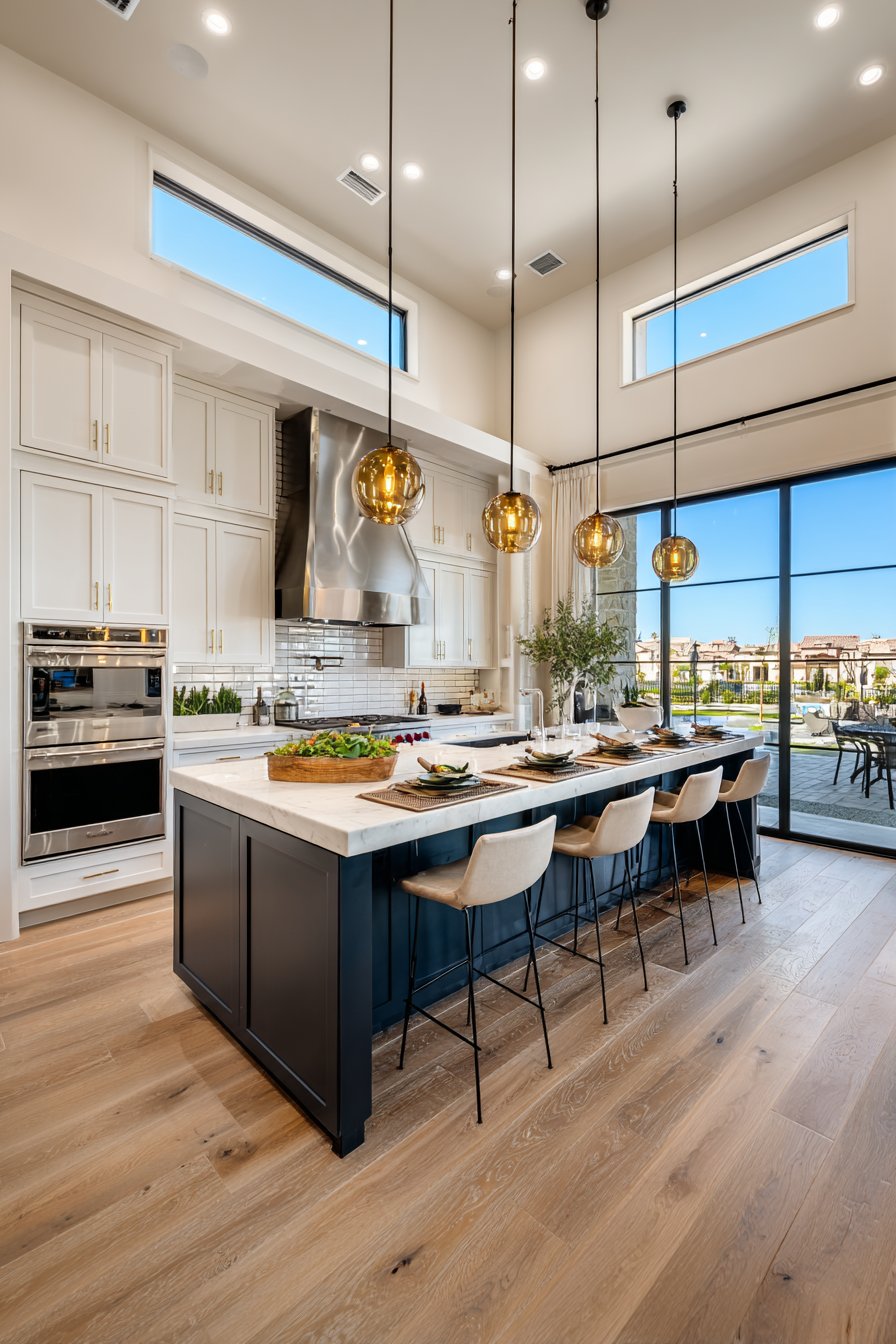
The beauty of kitchen islands lies in their versatility. From compact mobile units perfect for city apartments to sprawling multi-functional centerpieces in open-concept homes, islands adapt to virtually any space, style, or cooking lifestyle. They bridge the gap between pure functionality and aesthetic statement, offering homeowners the opportunity to express their design sensibilities while solving practical challenges. The island becomes a canvas where materials, colors, and architectural elements converge to create spaces that are both beautiful and brilliantly functional.
In this comprehensive guide, we’ll explore 29 distinct kitchen layout ideas with islands, each showcasing unique approaches to spatial design, material selection, and functional innovation. From rustic farmhouse charm to sleek contemporary minimalism, from space-saving solutions to luxury custom designs, these concepts demonstrate how the right island can revolutionize your kitchen experience. Whether you’re drawn to traditional elegance, coastal casualness, or cutting-edge modern design, you’ll discover inspiration and practical insights to help you create a kitchen that perfectly suits your lifestyle and aesthetic vision.
1. L-Shaped Efficiency with Statement Island
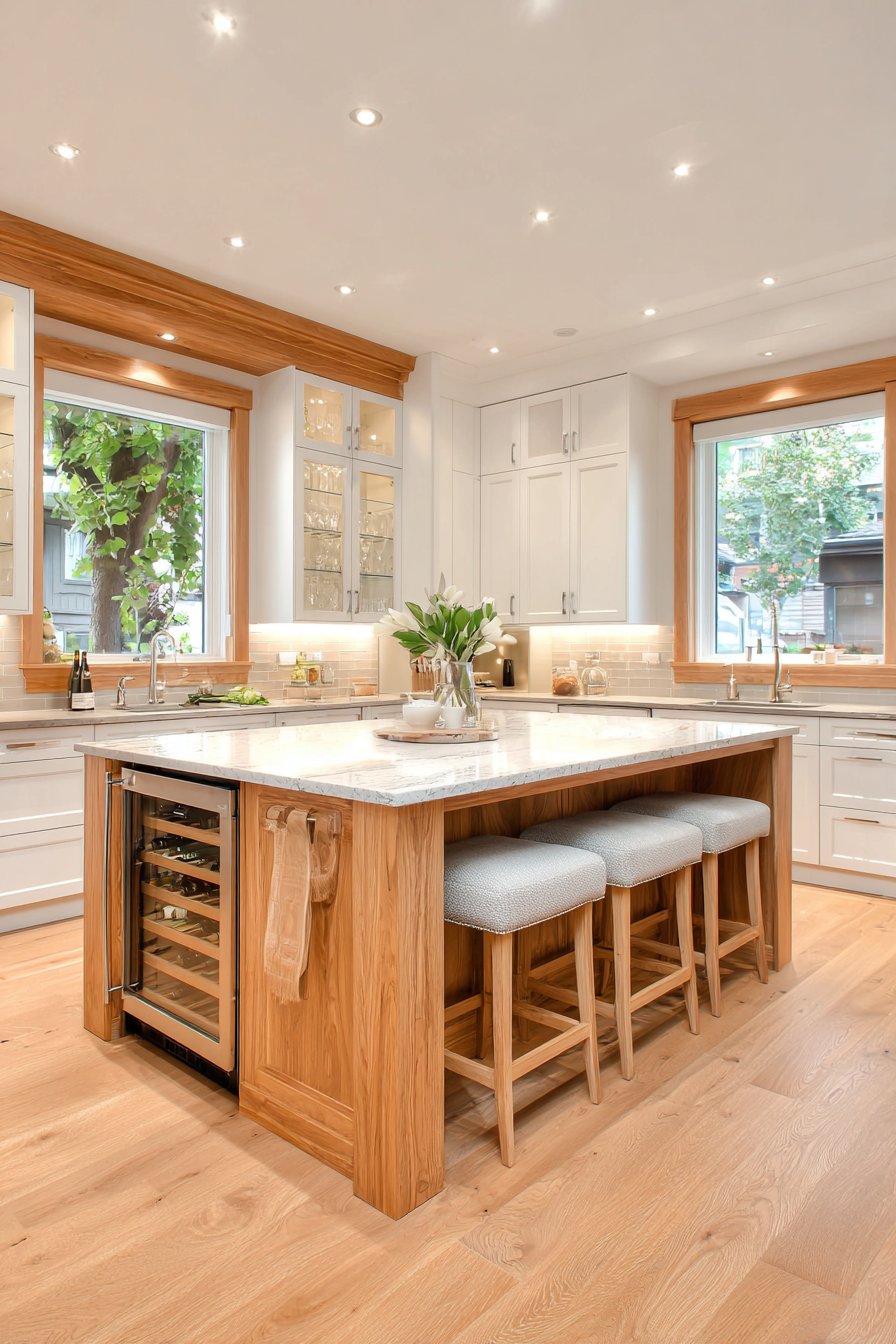
The L-shaped kitchen configuration paired with a substantial rectangular island represents one of the most practical and popular layout solutions for modern homes. This design maximizes corner space while the island serves as the linchpin of the kitchen’s work triangle, creating an intuitive flow between cooking, cleaning, and food storage zones. The rectangular island featured in this layout includes deep drawers specifically designed for pot storage, eliminating the awkward reach into lower cabinets that plague many kitchens. A built-in wine cooler adds a touch of sophistication while maintaining functionality.
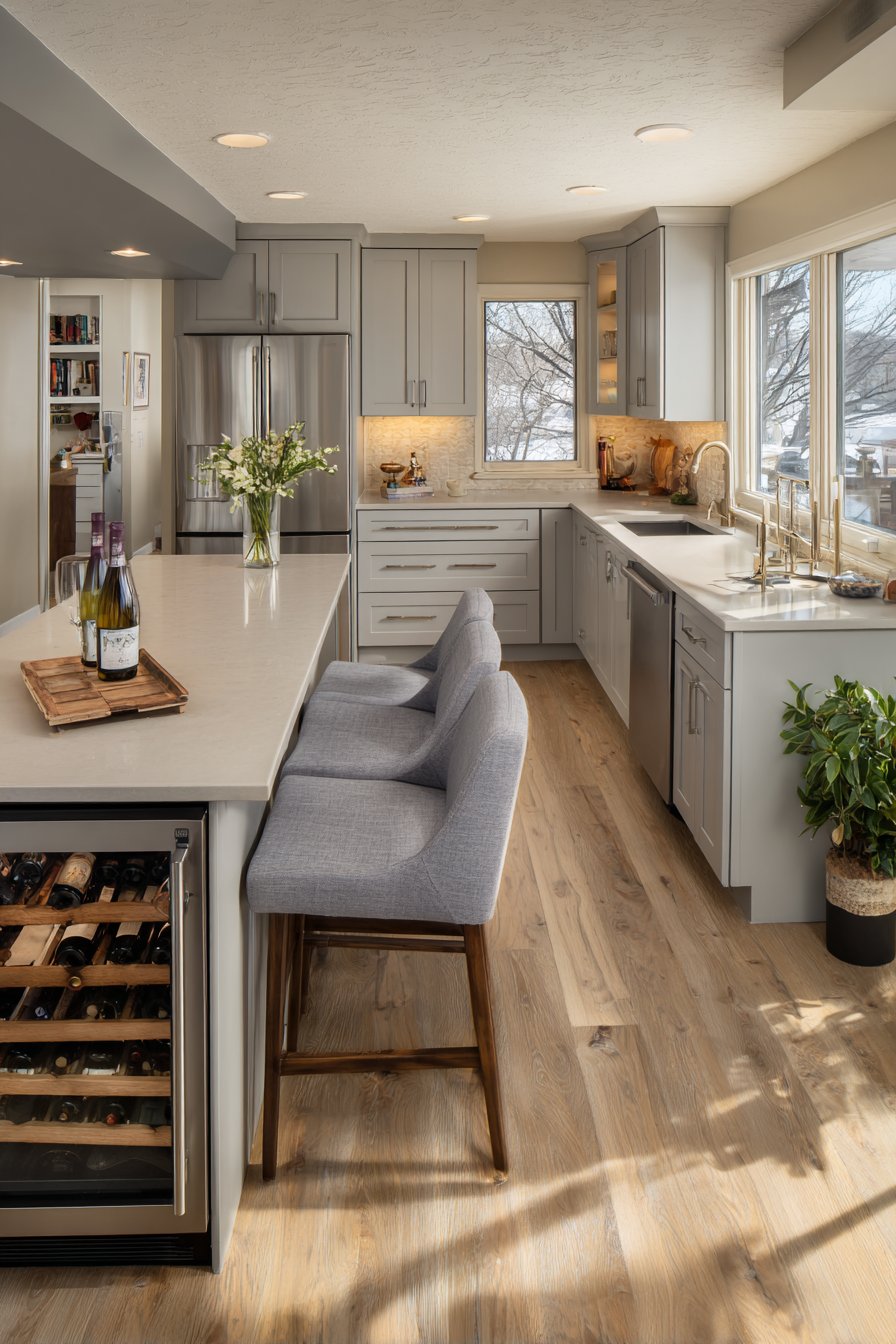
The breakfast bar extension transforms the island from purely utilitarian workspace to a gathering spot where family members can enjoy casual meals or keep the cook company during food preparation. Three upholstered counter stools in soft grey linen provide comfortable seating that doesn’t compromise the kitchen’s refined aesthetic. The contrast between warm oak flooring and crisp white perimeter cabinets creates visual interest while maintaining a sense of openness and cleanliness.
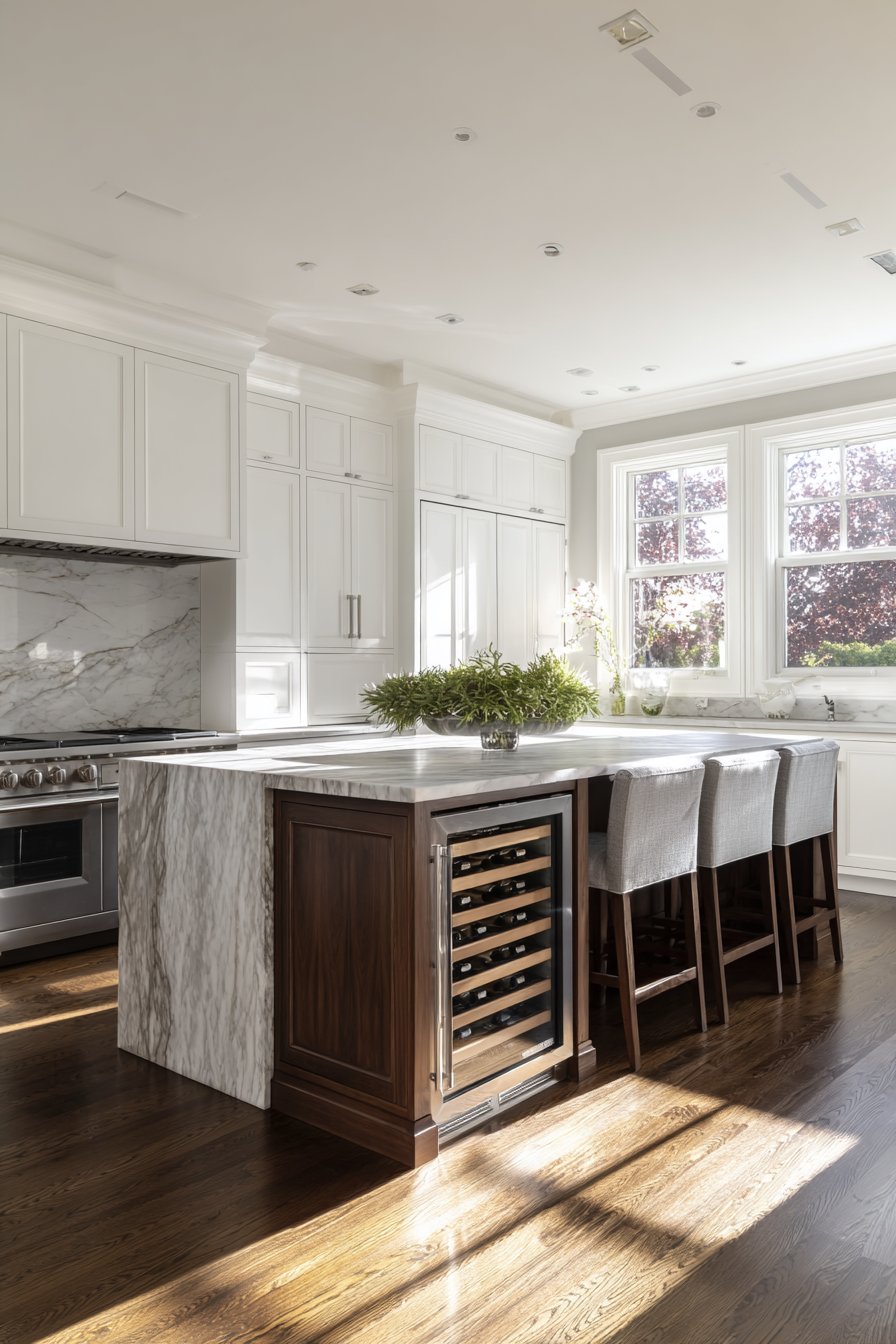
Lighting plays a crucial role in this layout’s success. Recessed ceiling fixtures provide general illumination, while under-cabinet LED strips ensure work surfaces remain well-lit for detailed food preparation tasks. The combination eliminates shadows and dark corners, making the kitchen both safer and more pleasant to work in. Natural light streaming through garden-facing windows adds warmth and connects the interior space to the outdoor environment, creating a kitchen that feels vibrant throughout the day.
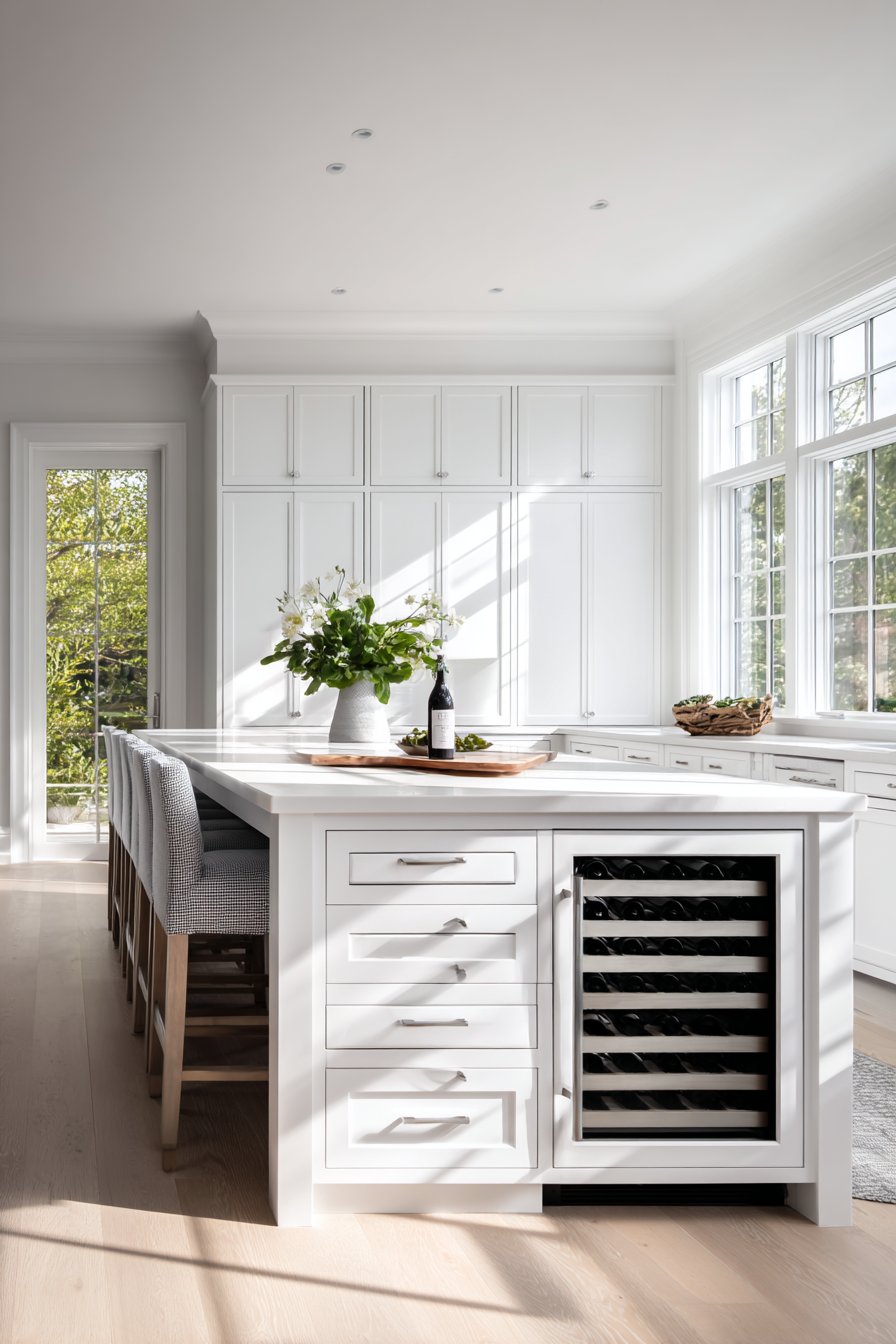
Key Design Tips: Choose deep drawers over traditional cabinets for easier access to heavy cookware and better organization. Position the island to maintain at least 42 inches of clearance on all sides for comfortable traffic flow. Install under-cabinet lighting to illuminate work surfaces and reduce eye strain during food preparation. Select flooring with warm tones to balance cool-toned cabinetry and create visual warmth. Consider a wine cooler as a space-efficient alternative to a full wine rack or dedicated wine storage area.
2. Flexible Galley Solution with Mobile Island
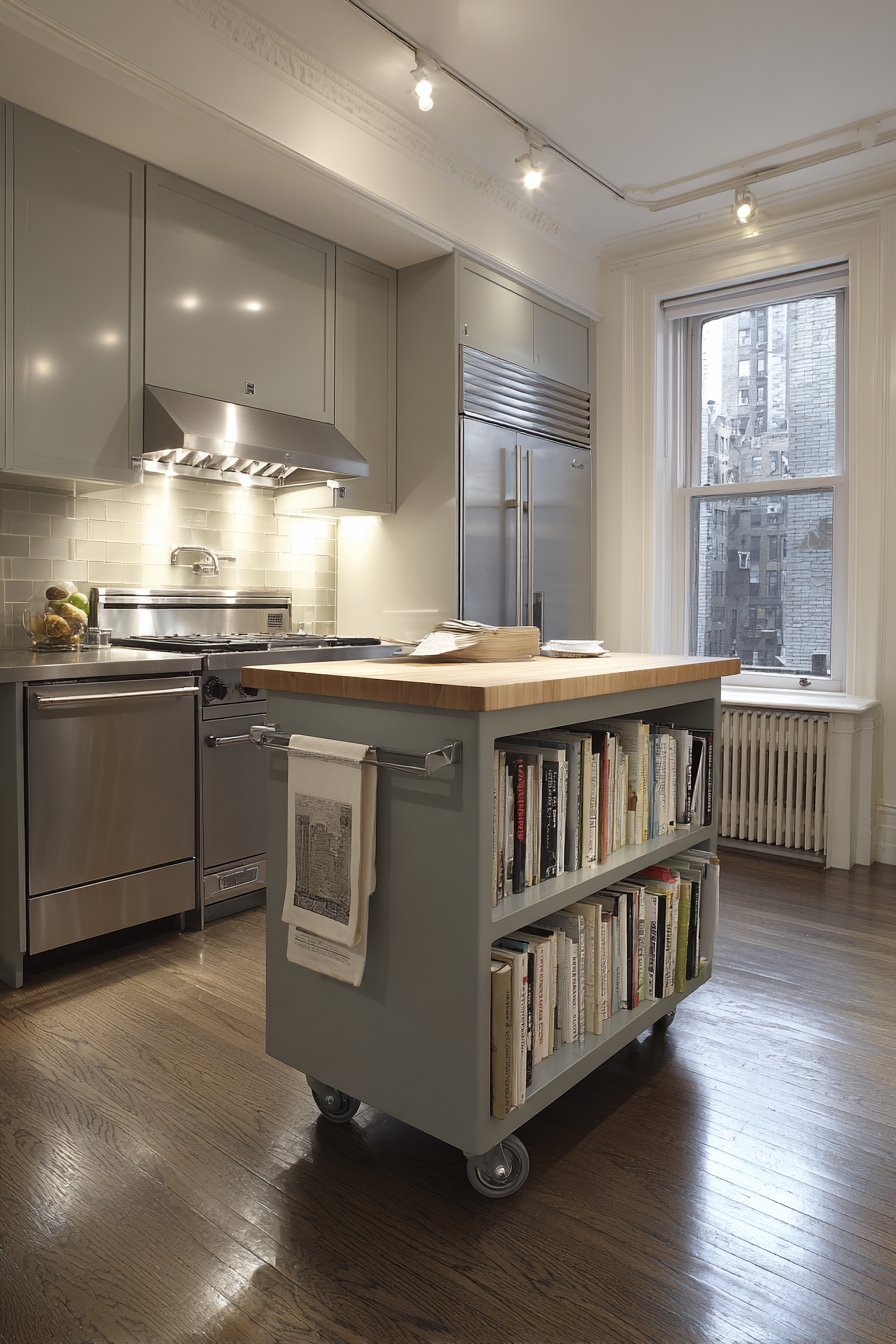
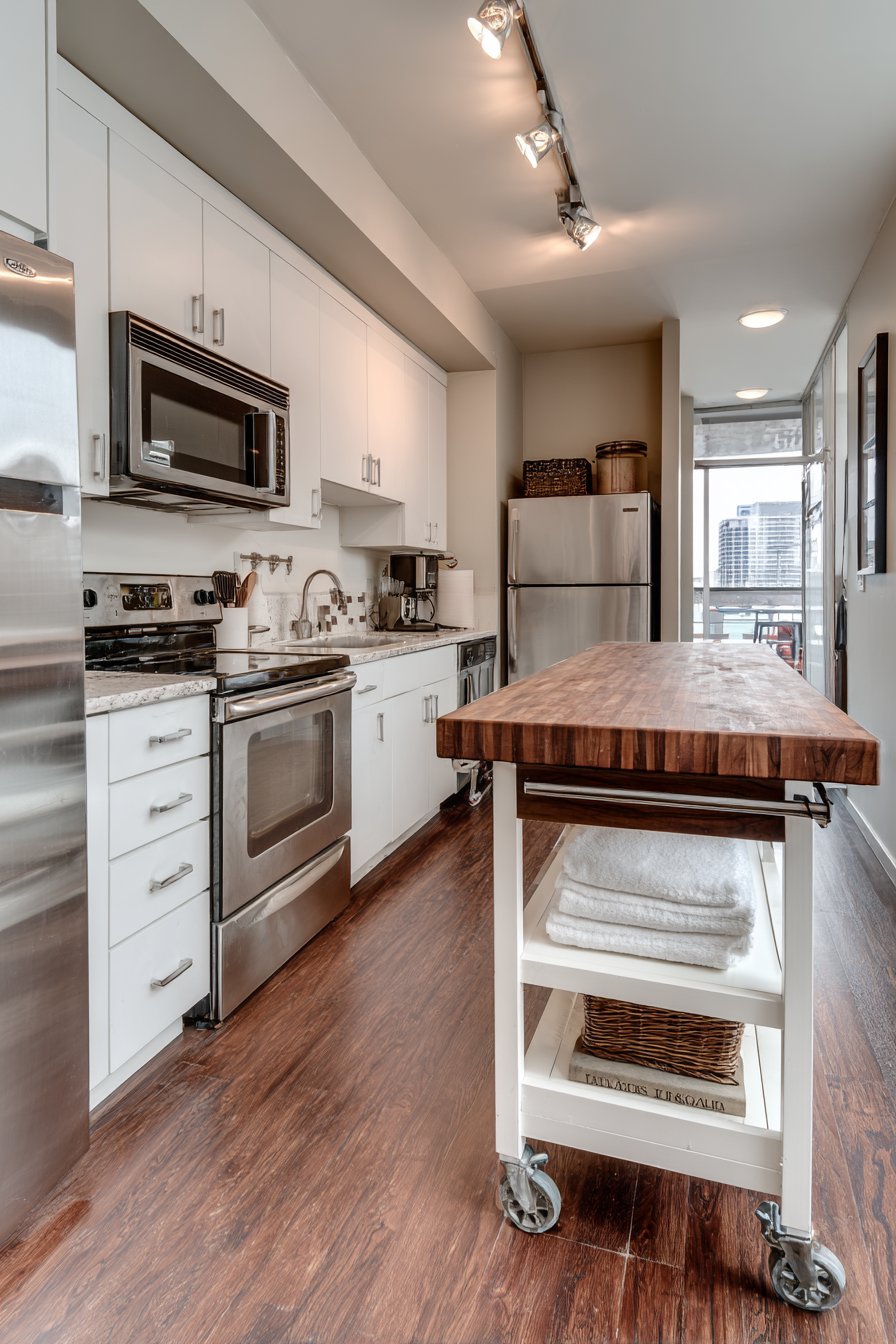
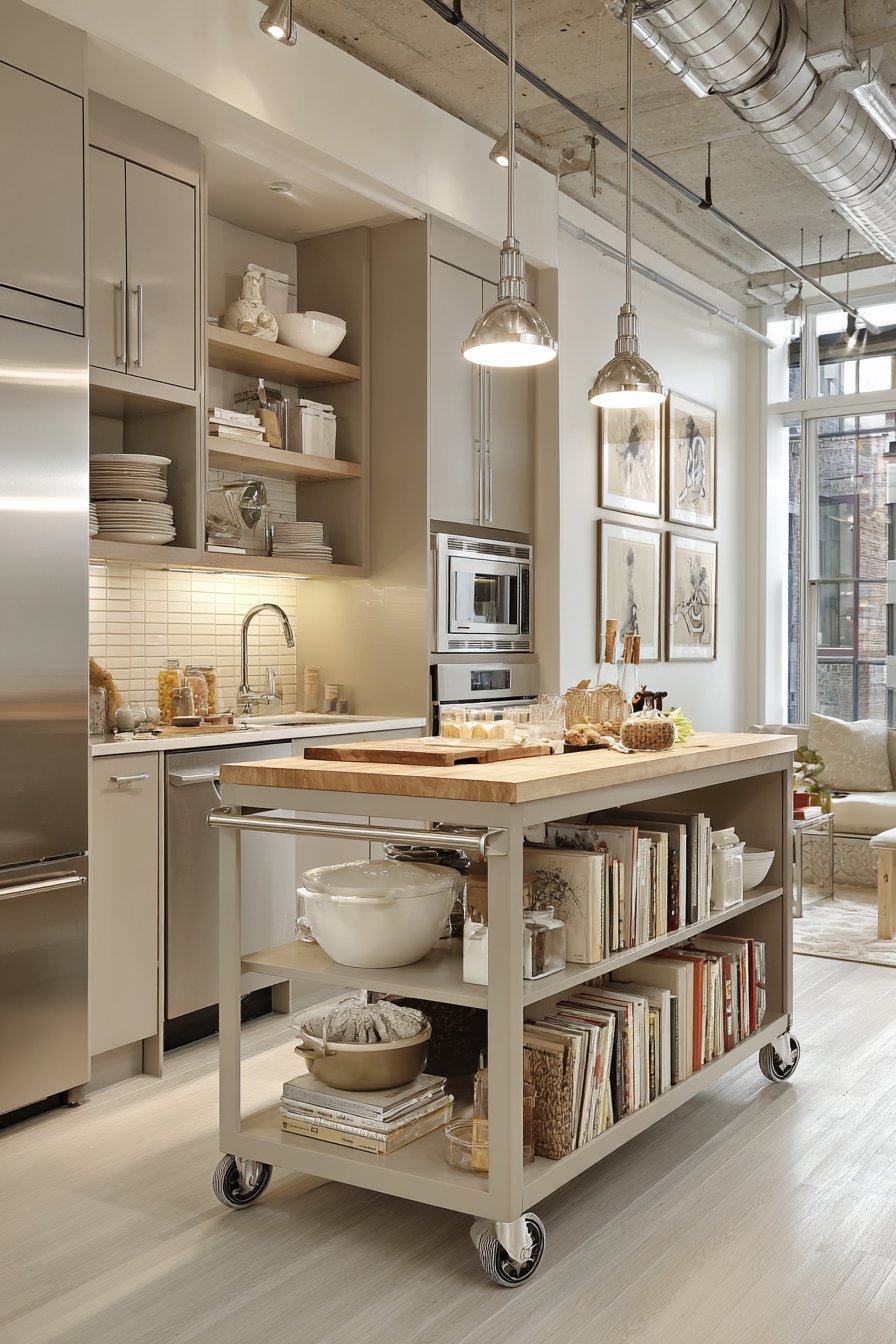
Urban apartment dwellers often face the challenge of creating functional kitchens within limited square footage. This galley-style layout demonstrates how a compact mobile island on locking casters can dramatically improve a small kitchen’s versatility without permanently reducing clearance space. The island’s butcher block top provides an additional food preparation surface that’s particularly valuable when cooking elaborate meals, while its mobility allows it to be repositioned or moved aside entirely when extra floor space is needed.
The genius of this design lies in its thoughtful storage solutions. Open shelving on one side of the mobile island keeps frequently referenced cookbooks within easy reach, transforming the island into both workspace and library. A towel bar attachment adds another layer of functionality, providing convenient access to kitchen towels exactly where they’re most needed. This multi-purpose approach ensures every inch of the island contributes to kitchen efficiency.
Stainless steel appliances line both walls of the galley, creating a professional aesthetic while maintaining minimal walking distances between work zones. This arrangement supports the classic kitchen work triangle even in a narrow footprint, allowing one cook to move efficiently between refrigerator, sink, and cooktop. The realistic proportions make this layout particularly suitable for city living, where space efficiency isn’t just desirable—it’s essential.
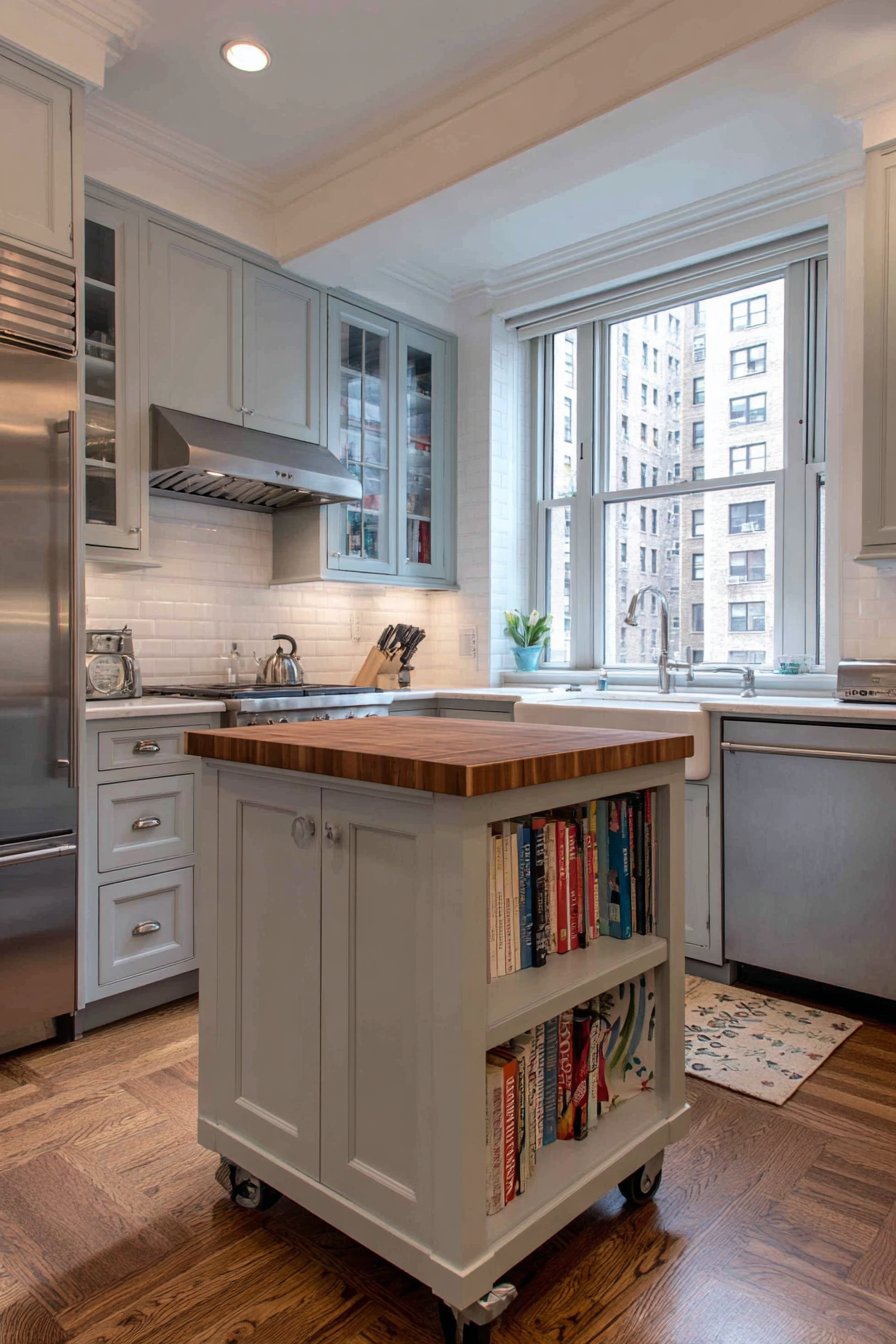
Key Design Tips: Choose a mobile island with quality locking casters that secure firmly to prevent movement during use. Opt for butcher block tops that can be sanded and refinished over time, extending the island’s lifespan. Keep the island’s width to 24-30 inches to maintain adequate clearance in galley kitchens. Install open shelving rather than closed cabinets on one side for easy access to frequently used items. Select a complementary finish for the mobile island that coordinates with but doesn’t exactly match fixed cabinetry, creating visual interest while maintaining cohesion.
3. Modern Farmhouse with Reclaimed Wood Centerpiece
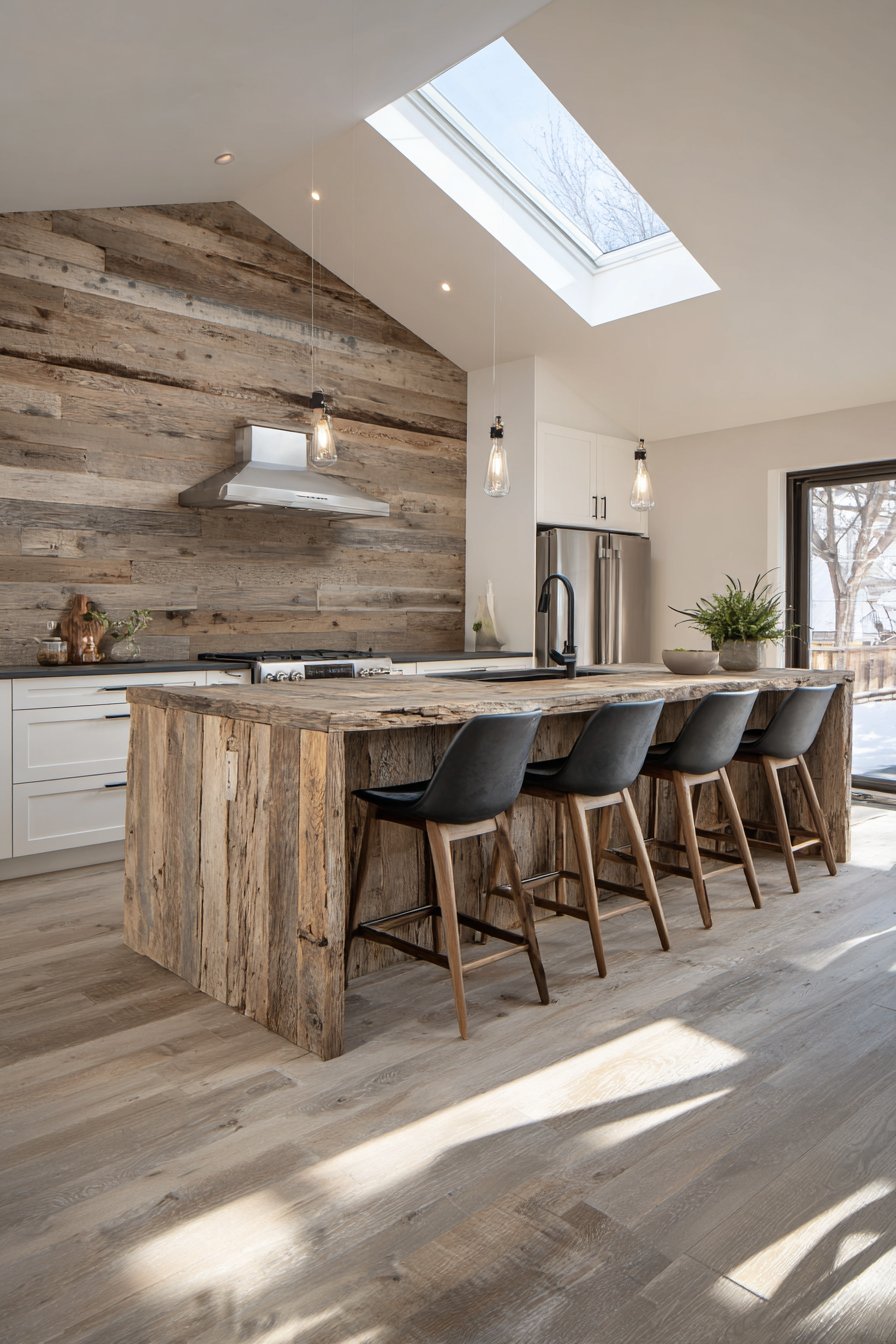
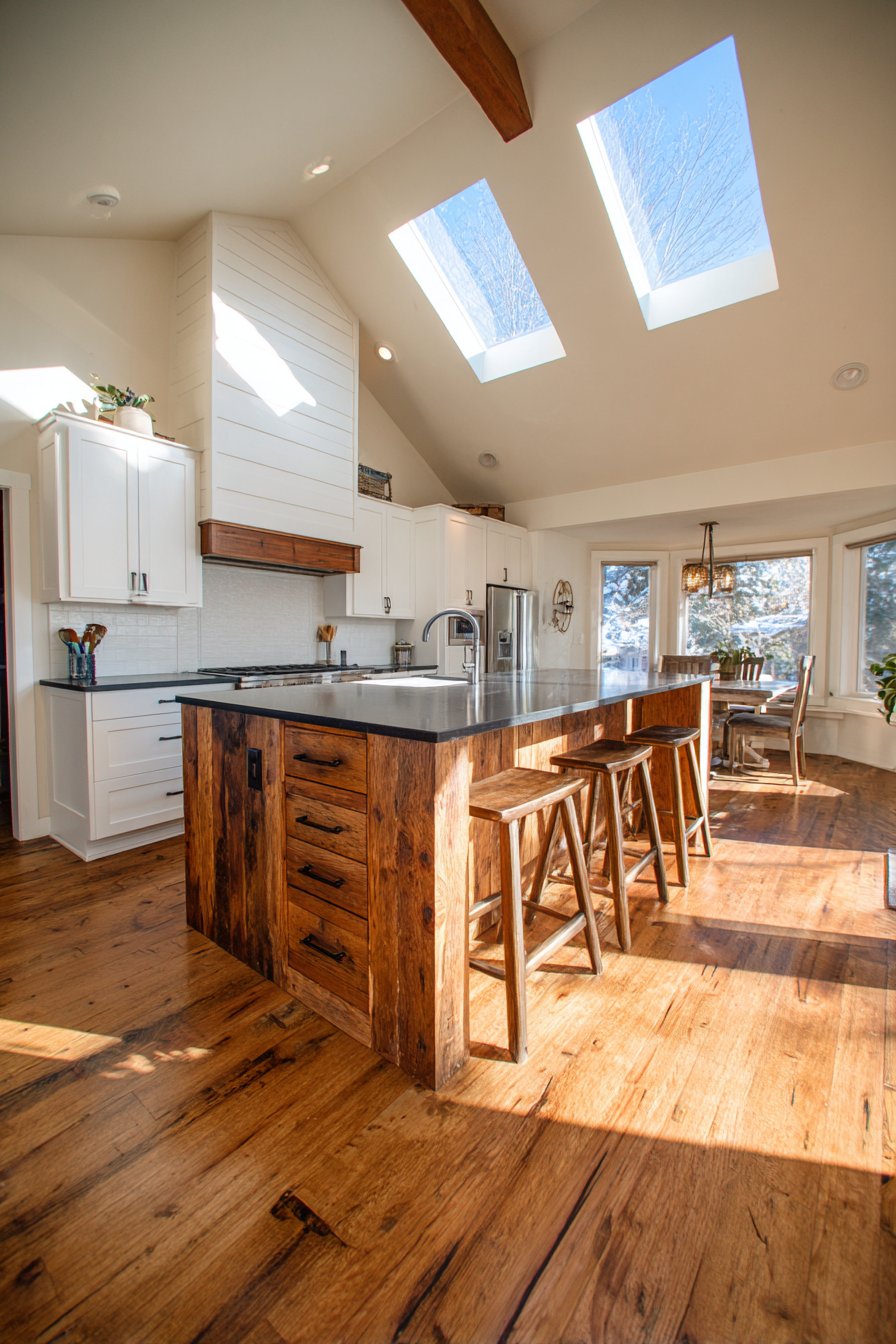
The modern farmhouse aesthetic achieves its distinctive character by balancing rustic elements with contemporary cleanliness, and nowhere is this more evident than in a kitchen centered around a substantial reclaimed wood island. This layout showcases how aged materials can serve as stunning focal points while maintaining practical functionality. The island’s weathered surface tells a story, with each imperfection and variation in color adding character impossible to replicate with new materials. A prep sink integrated into the island allows for vegetable washing and other tasks to occur at the social center of the kitchen rather than at the perimeter.
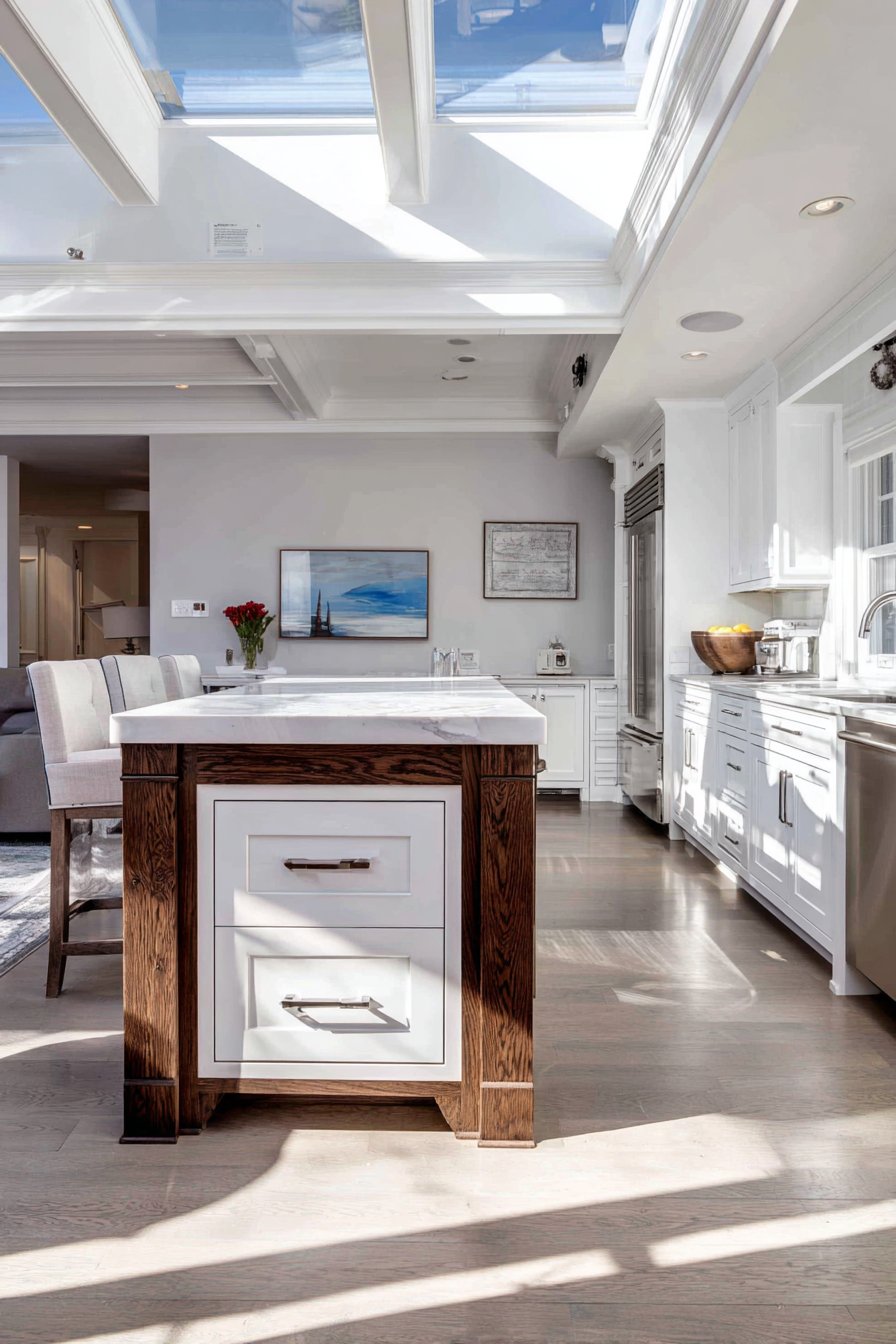
Shiplap accent walls behind the range create textural interest without overwhelming the space, their horizontal lines drawing the eye and making the kitchen feel wider. White cabinets with simple cup pulls maintain clean lines that prevent the rustic elements from feeling too heavy or cluttered. The combination creates a balanced aesthetic where traditional farmhouse warmth meets contemporary simplicity, resulting in a kitchen that feels both timeless and current.
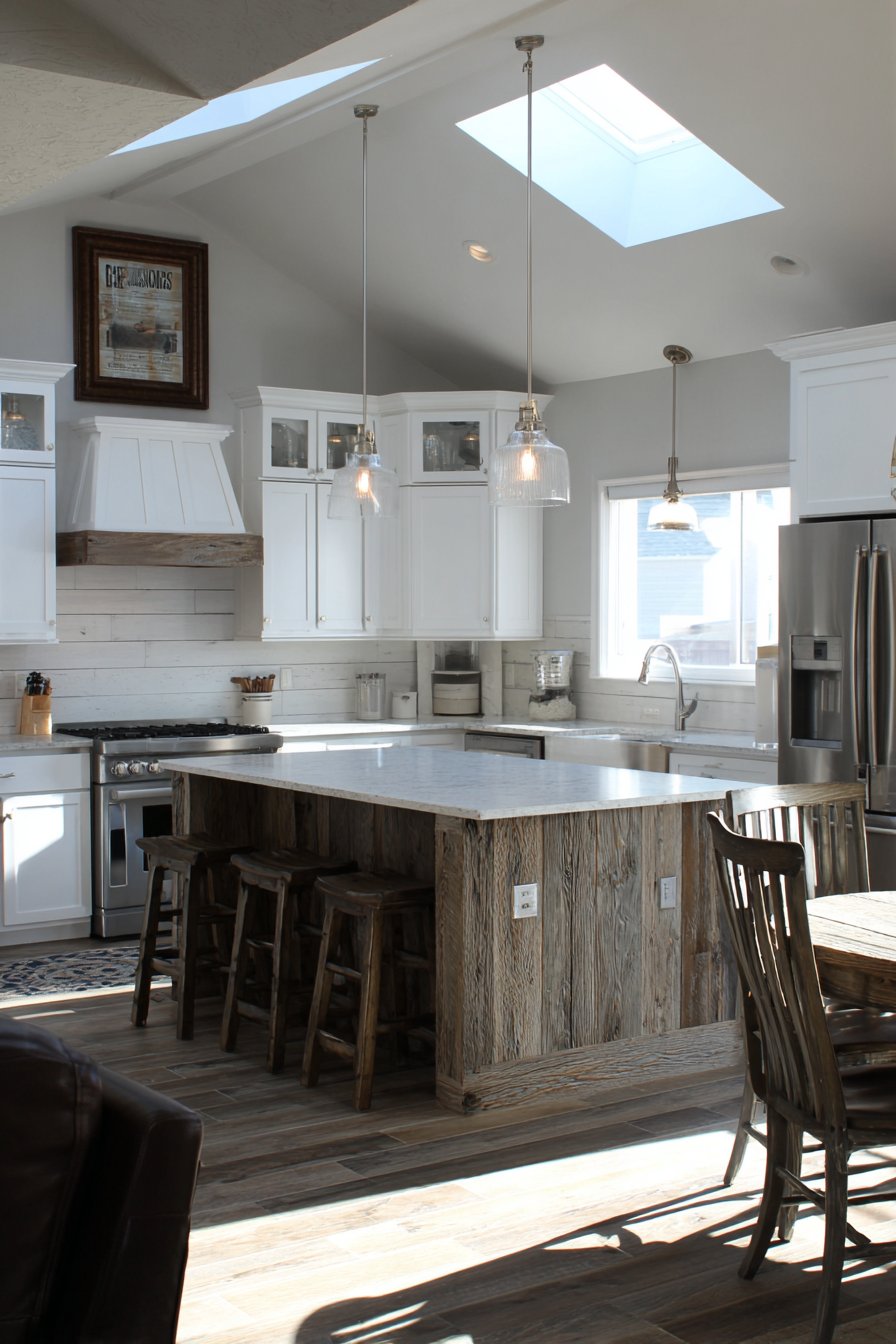
The open floor plan integration demonstrates how islands can define space without creating barriers. The substantial reclaimed wood island serves as a visual and functional boundary between kitchen and dining areas, anchoring the kitchen workspace while maintaining sight lines and conversation flow to adjacent living spaces. Natural light from skylights creates dynamic shadows that play across the wood grain throughout the day, highlighting the material’s natural beauty and bringing the space to life.
Key Design Tips: Source reclaimed wood from reputable suppliers who can verify the wood’s history and ensure it’s been properly treated for food-safe use. Seal reclaimed wood islands with food-grade finishes that protect against moisture and staining while maintaining the wood’s character. Position skylights strategically to highlight key design elements like the island while providing general illumination. Keep perimeter cabinetry simple and light-colored to prevent rustic elements from overwhelming the space. Include a prep sink in the island to increase functionality and reduce congestion at the main sink during meal preparation.
4. Two-Level U-Shaped Entertainment Hub
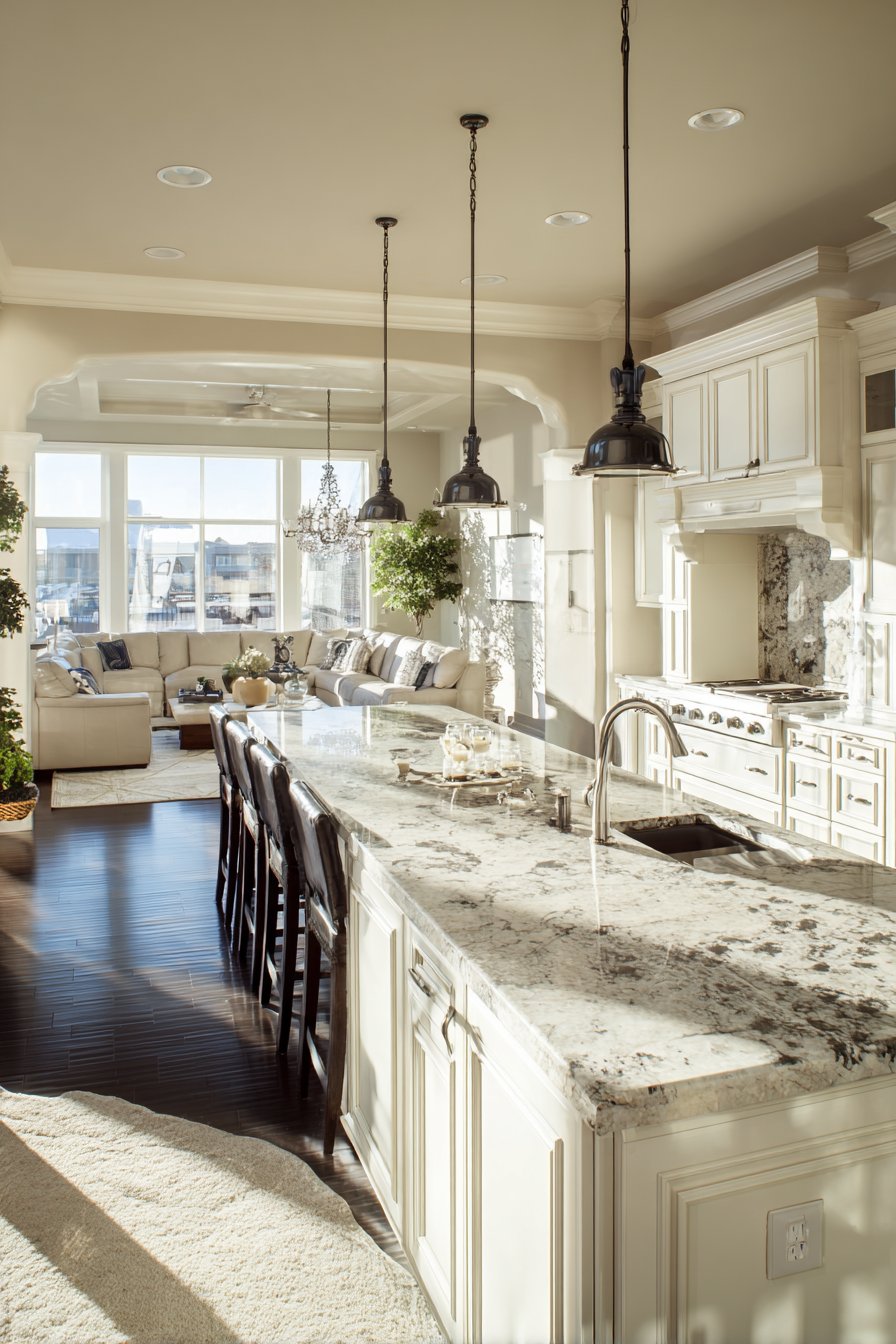
The U-shaped kitchen configuration offers maximum counter and storage space, and when paired with a thoughtfully designed two-level island, it creates an exceptional environment for both cooking and entertaining. This layout features an innovative elevation change that separates the working height food prep surface from a lower dining counter, allowing cooks to work without guests or family members viewing the inevitable mess of active cooking. The raised section provides a subtle visual barrier that maintains conversation flow while hiding dirty dishes and food preparation chaos.
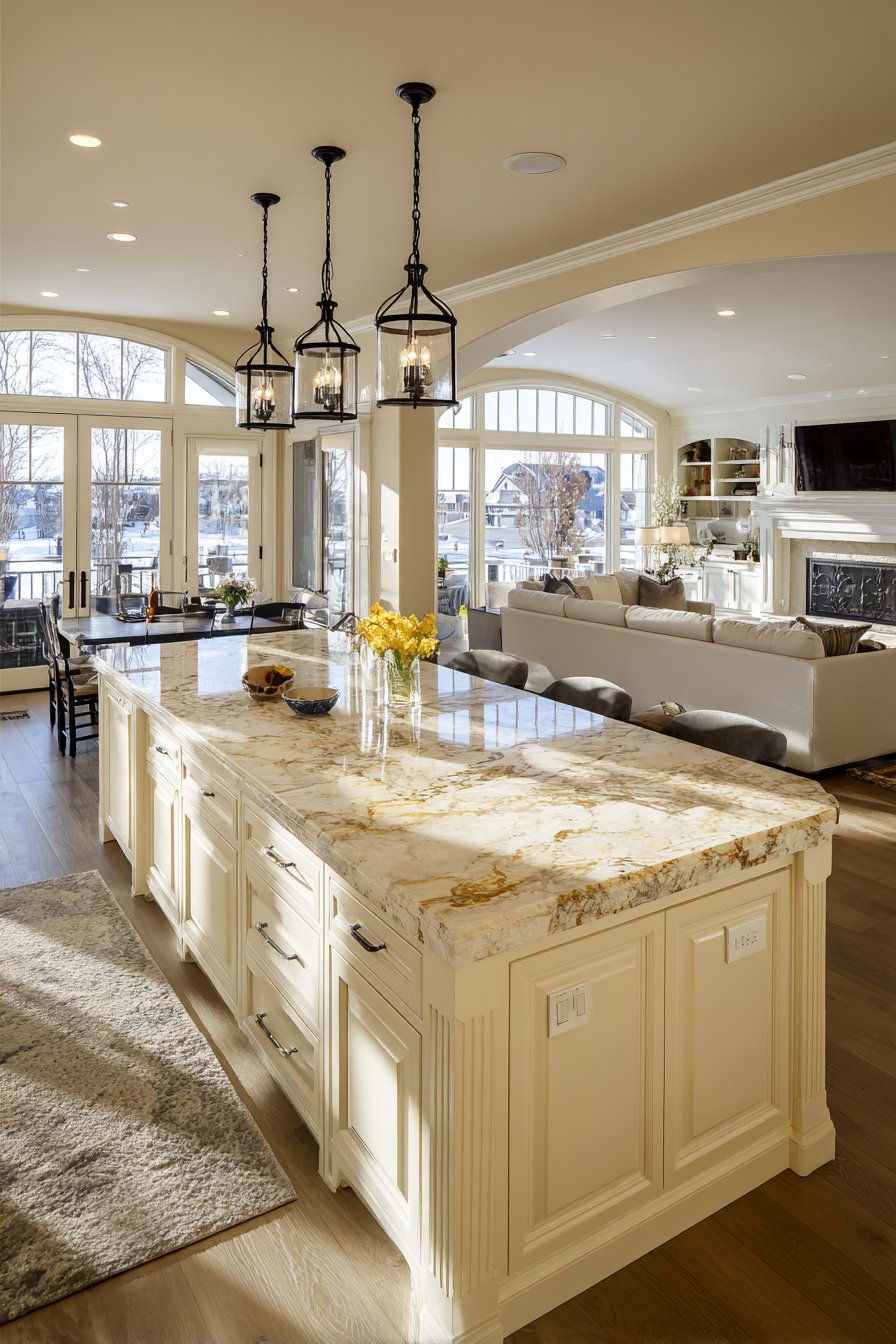
Matte black pendant lights suspended over the seating area create a defined dining zone within the larger kitchen space, their dark finish providing striking contrast against cream-colored cabinetry. The lighting fixtures serve double duty, illuminating the eating area while adding sculptural interest that draws the eye upward. Marble countertops deliver elegant sophistication while offering practical benefits—their cool surface is ideal for pastry work, and their durability withstands the demands of busy kitchen life.
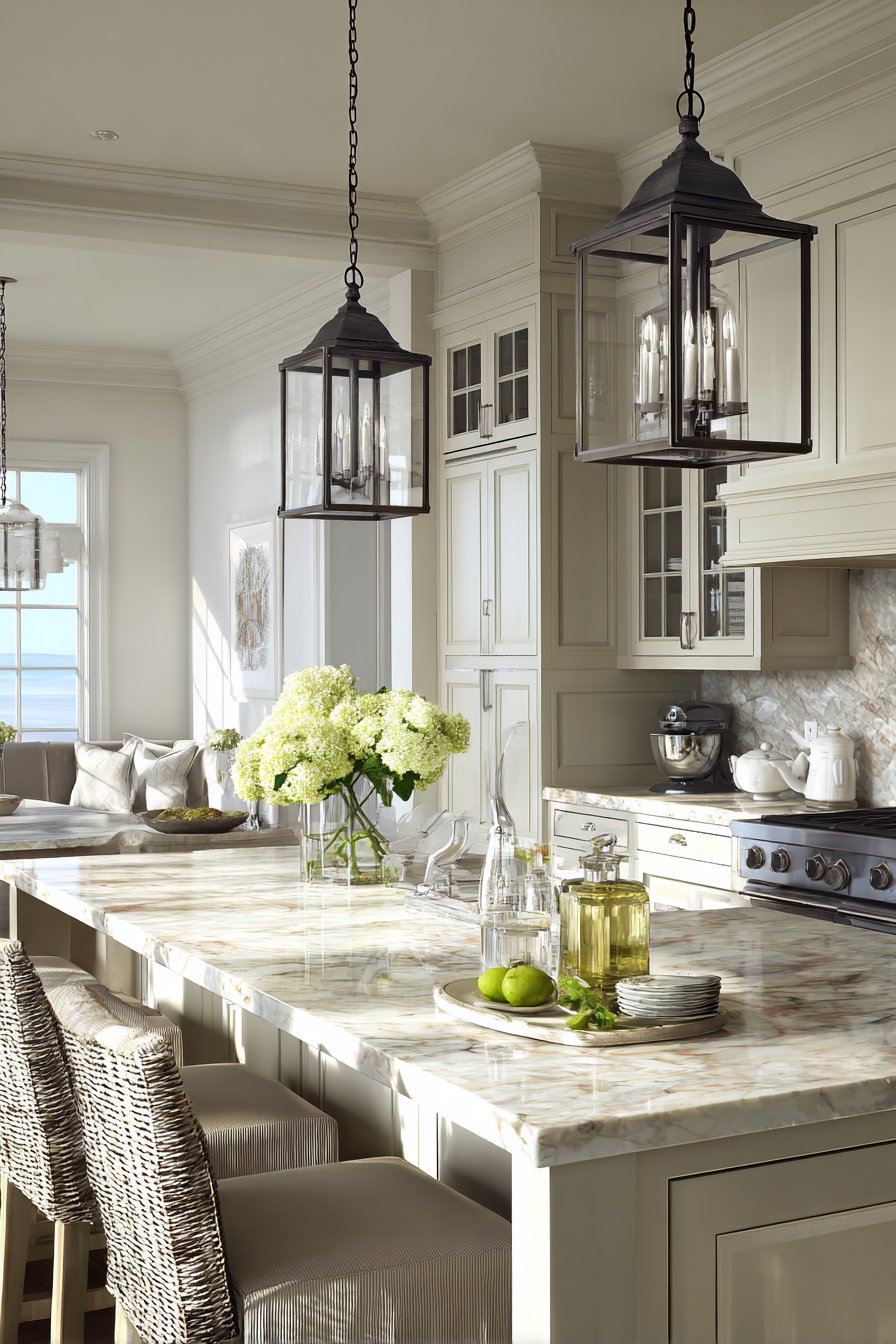
The island’s strategic position creates a natural barrier between kitchen and living spaces, effectively zoning the open floor plan without erecting walls that would compromise the sense of openness. This arrangement facilitates both cooking and entertaining by allowing the cook to prepare meals while remaining socially engaged with guests. Morning light streaming through windows highlights the marble’s natural veining, creating ever-changing patterns that add visual interest throughout the day.
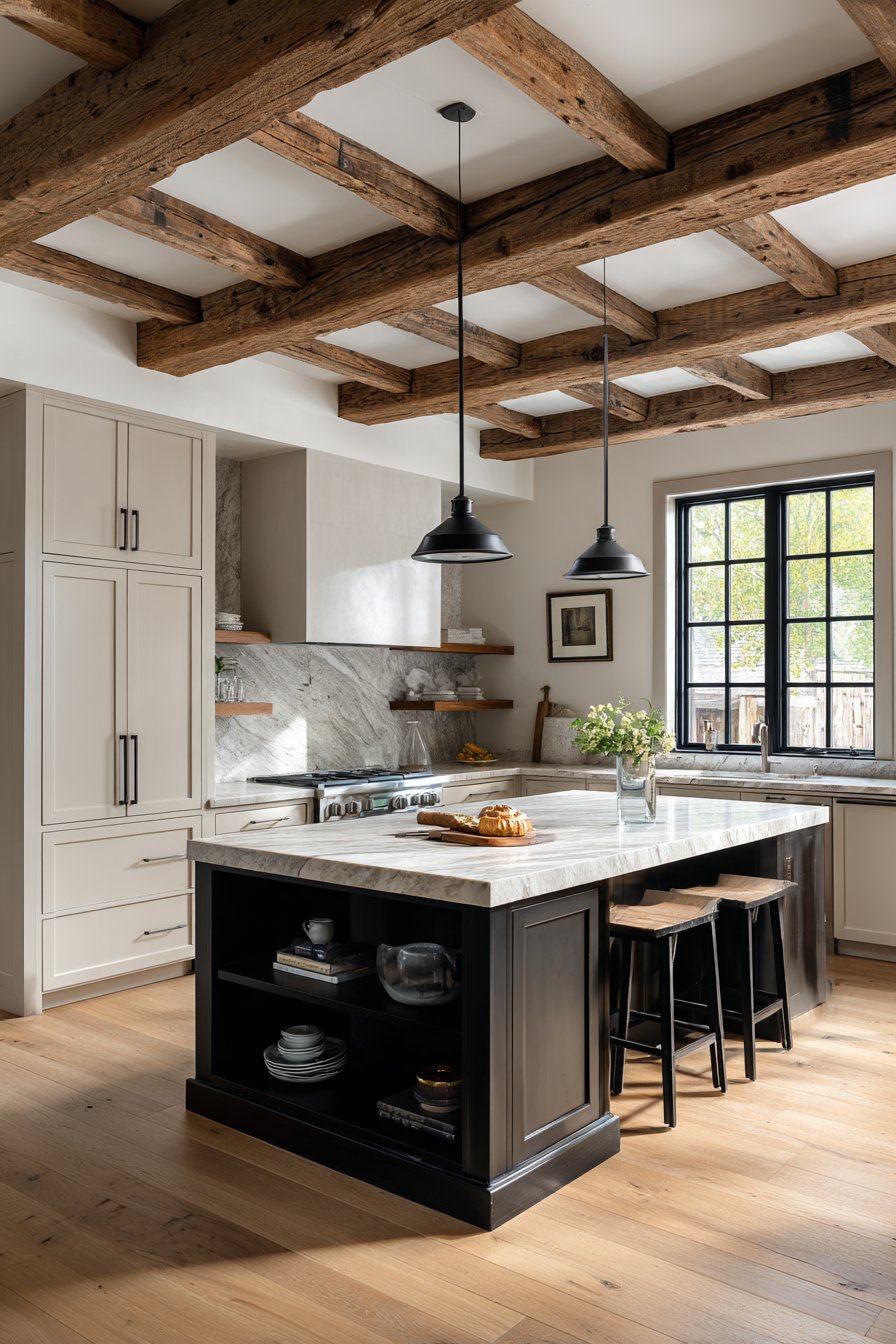
Key Design Tips: Maintain a 10-15 inch height difference between prep and dining levels to effectively screen work mess while keeping surfaces at comfortable heights. Choose pendant lights with adjustable hanging lengths to ensure proper clearance above the seated diners. Install electrical outlets on the raised section’s side panels for convenient appliance use without visible cords. Select marble with subtle rather than dramatic veining for a more versatile look that won’t overwhelm the space. Position the island to maintain clear paths to all kitchen zones, ensuring the U-shape doesn’t create congested corners.
5. Space-Optimized Narrow Island Design
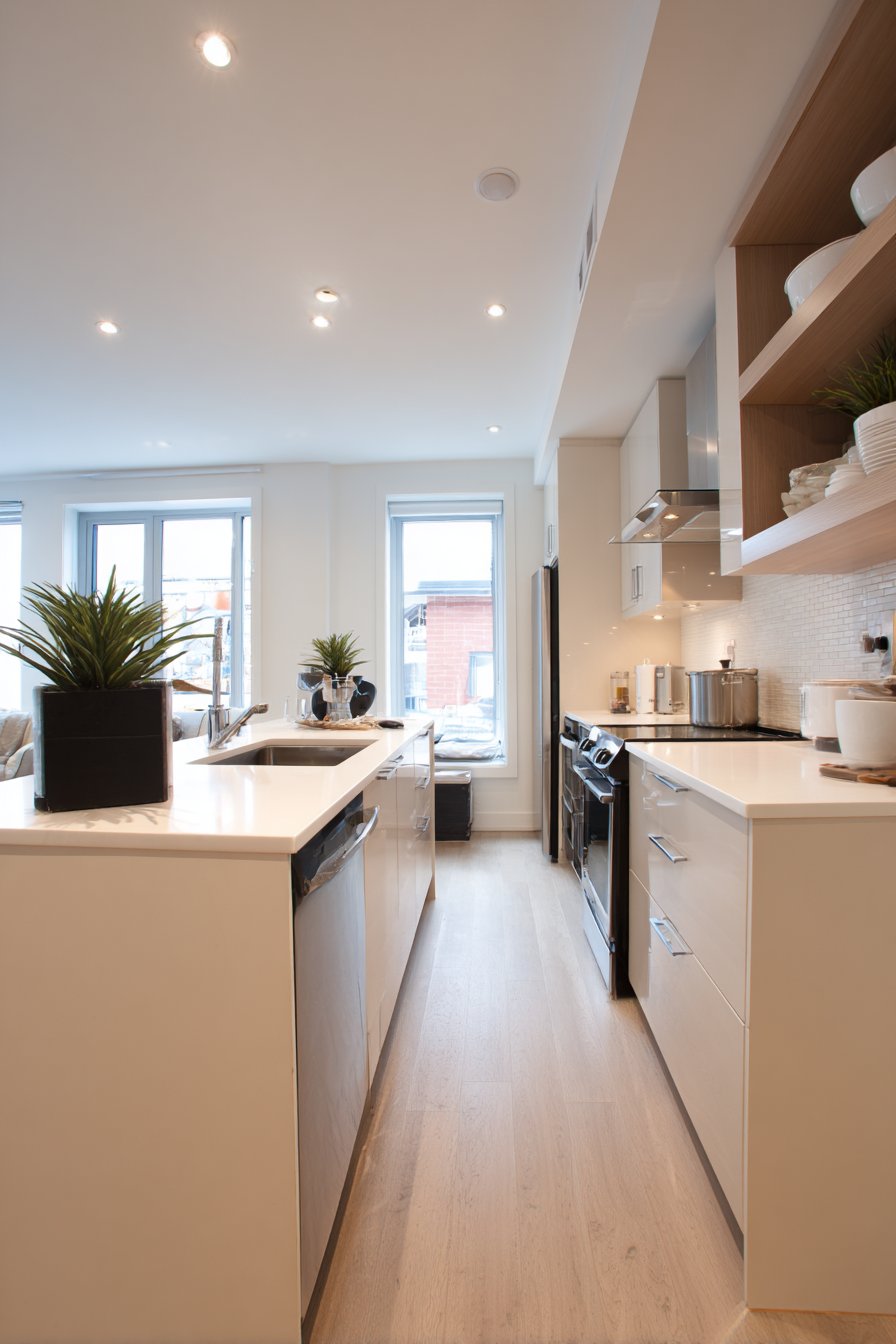
Not every kitchen can accommodate a sprawling island, but that doesn’t mean homeowners must forgo this valuable feature entirely. This narrow island design proves that even slim profiles can deliver substantial functional benefits when thoughtfully planned. Measuring just enough to include a single-basin sink while maintaining adequate traffic flow on both sides, this island maximizes utility without overwhelming the space. The sink faces the living area, transforming dish duty from isolated drudgery into an opportunity for social connection.
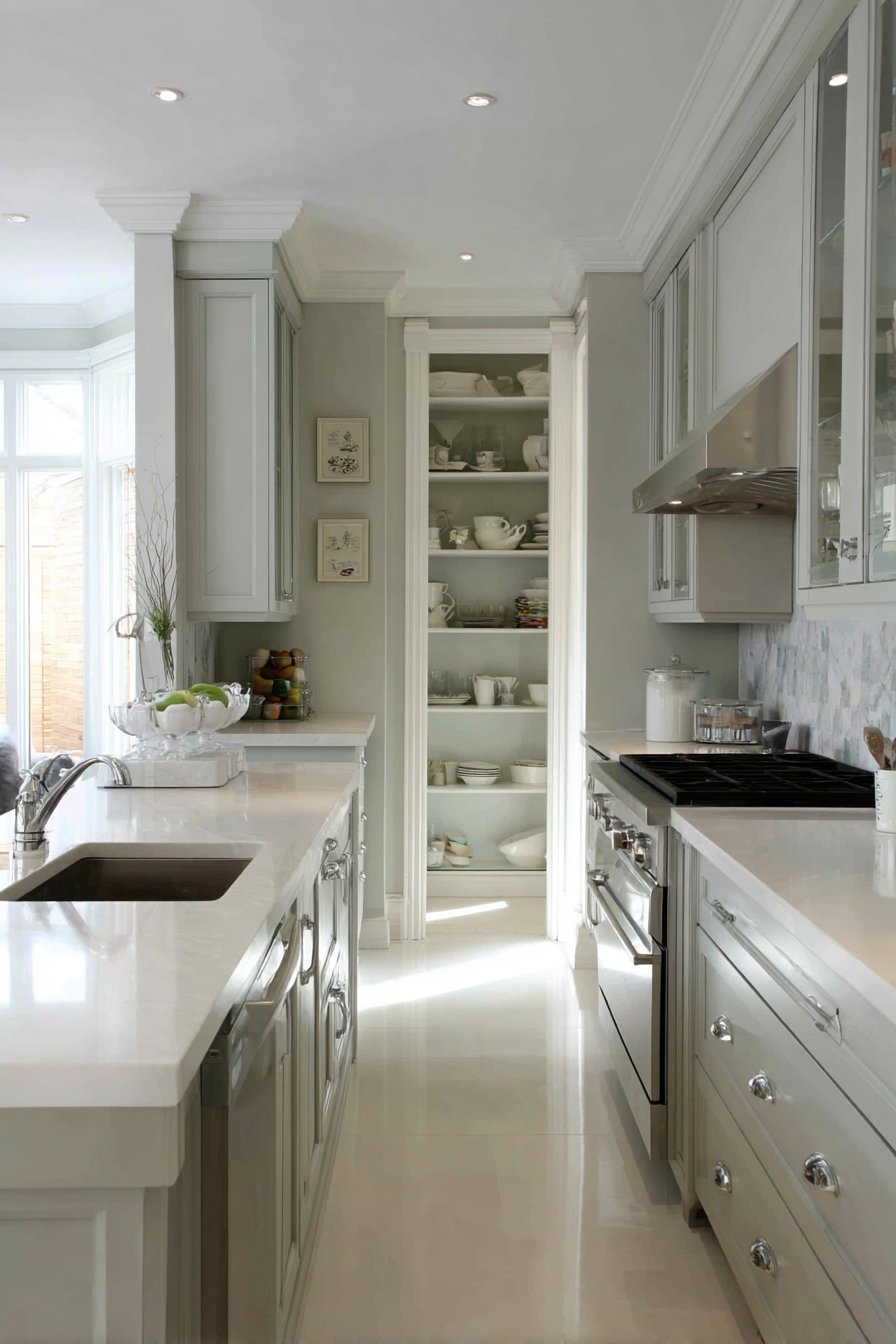
Light grey cabinetry plays a crucial optical trick, reflecting available light throughout the compact space and creating a sense of airiness that darker colors would diminish. This strategic color choice makes the kitchen feel larger while providing a neutral backdrop that adapts to changing decor preferences over time. Storage cabinets on the island’s back side, facing away from the living area, maintain a clean visual presentation while offering valuable storage for items that don’t require constant access.
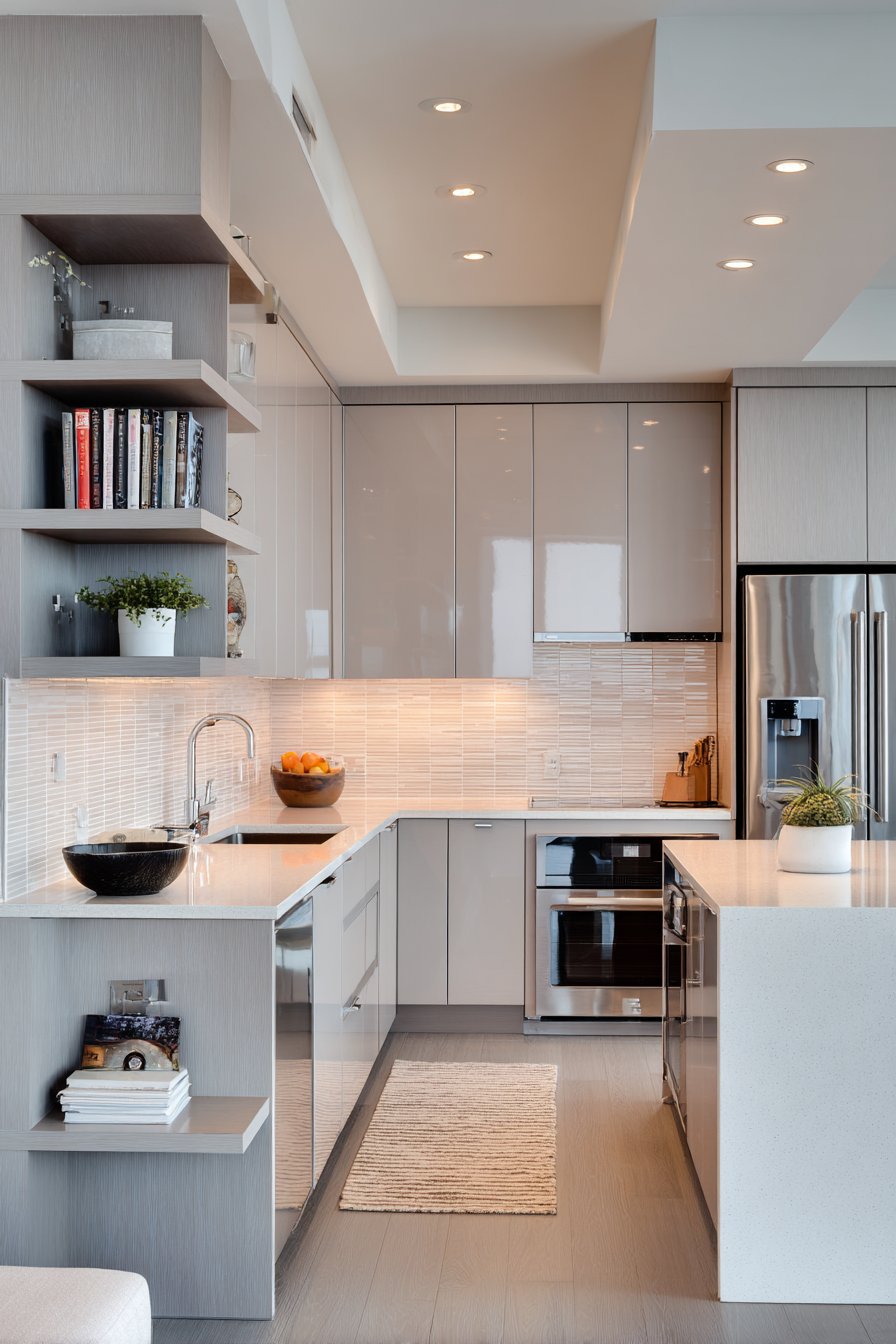
Open shelving on one end wall prevents the galley layout from feeling tunnel-like, breaking up the wall of cabinets and providing display space for attractive dishware or decorative objects. This thoughtful detail demonstrates how small design choices can significantly impact a space’s perceived size and character. The careful space planning ensures the island enhances rather than hinders movement, proving that compact doesn’t have to mean compromised.
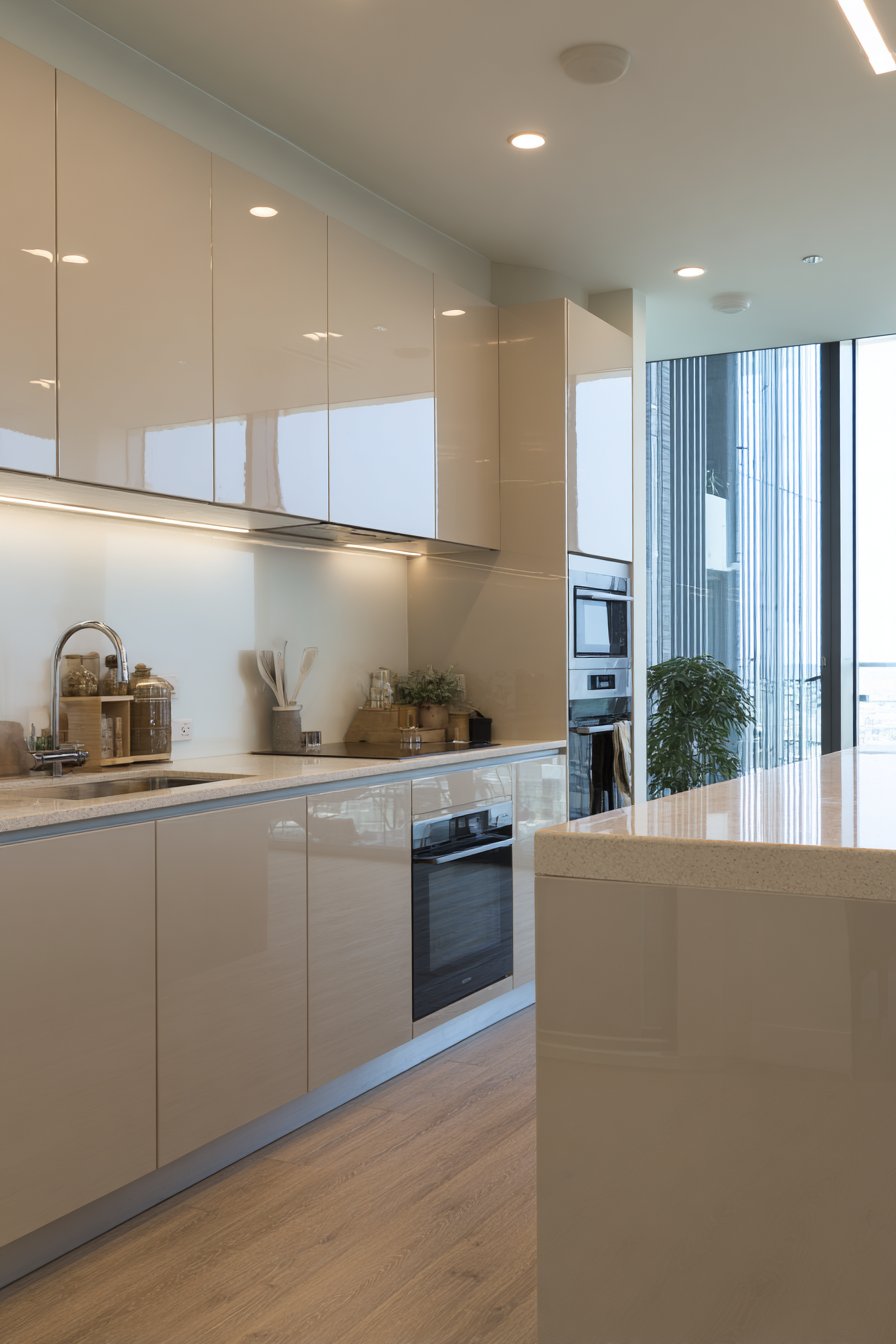
Key Design Tips: Limit narrow island width to 24 inches to maintain 36-42 inches of clearance on both sides for comfortable passage. Orient the sink toward the most social area to keep the cook connected to household activities. Choose light reflective cabinet finishes to maximize brightness in compact spaces. Install slim-profile fixtures and hardware to avoid visual bulk that makes small spaces feel cramped. Consider removing cabinet doors from one section of perimeter cabinetry to create breathing room and display opportunities.
6. Angular Contemporary with Geometric Drama
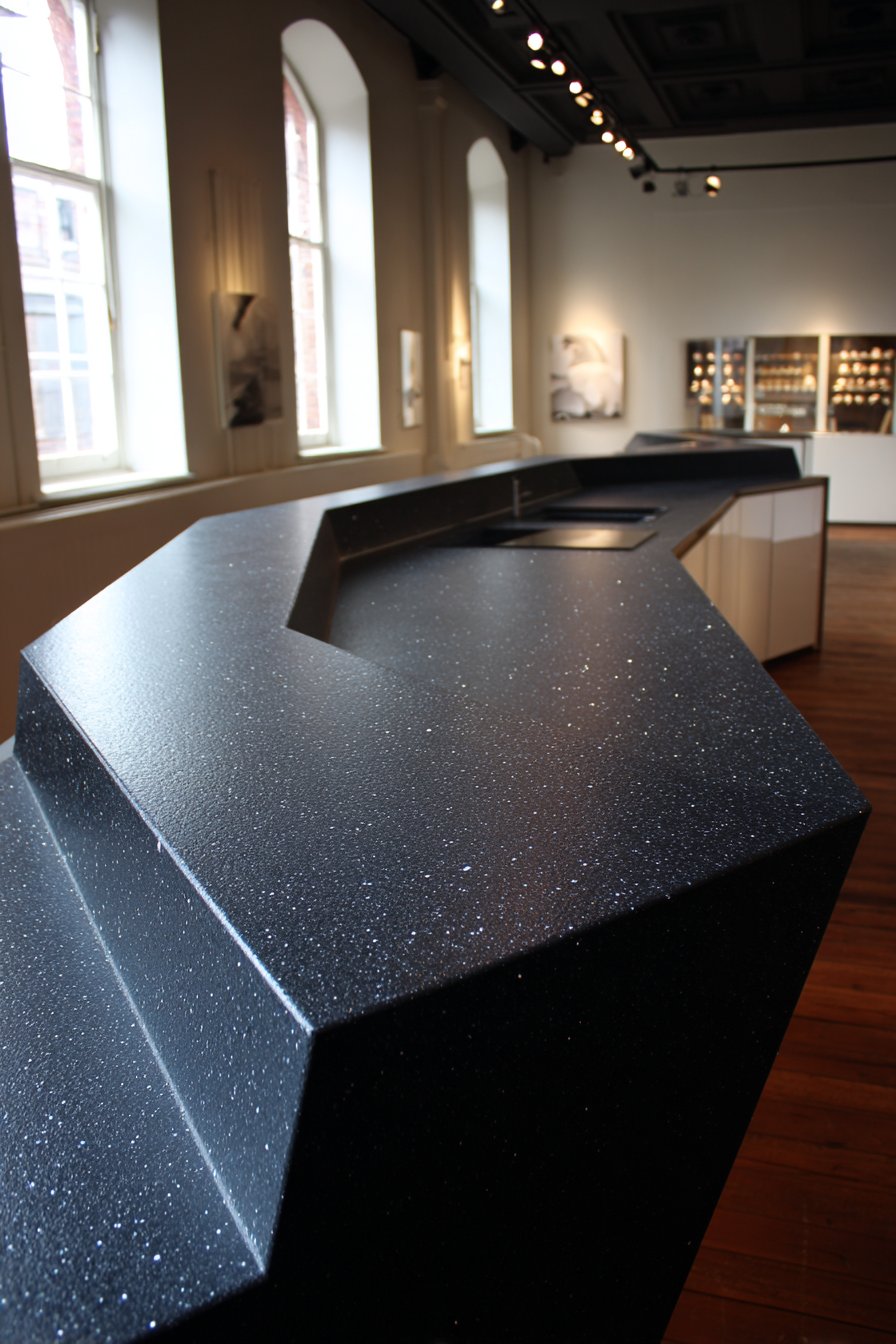
Contemporary design embraces bold choices, and this angular kitchen layout with its dramatic hexagonal island challenges conventional rectangular thinking. The unconventional shape isn’t merely aesthetic—it creates distinct zones for different activities while facilitating more efficient traffic flow patterns around the island. Sharp angles naturally define separate areas for food prep and casual dining without requiring physical barriers or level changes, demonstrating how geometry can solve functional challenges elegantly.
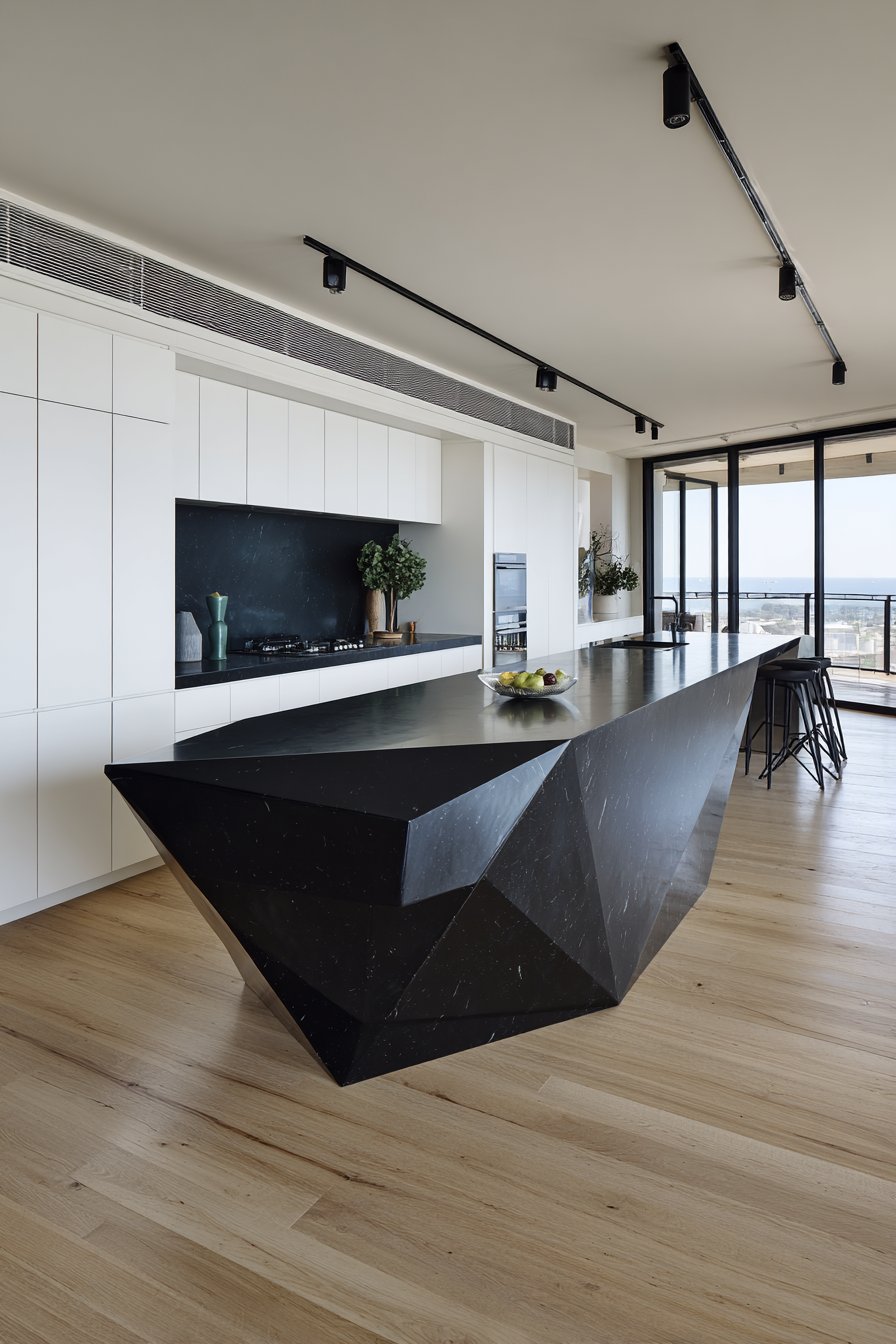
Waterfall-edge black quartz makes a powerful statement, the material cascading down the island’s sides in a continuous flow that showcases the stone’s dramatic veining. This detail elevates the island from mere furniture to architectural sculpture, creating a focal point that anchors the entire kitchen design. Handleless white lacquer cabinets along the walls provide stark contrast, their smooth surfaces and minimalist aesthetic allowing the island to command attention without competition.
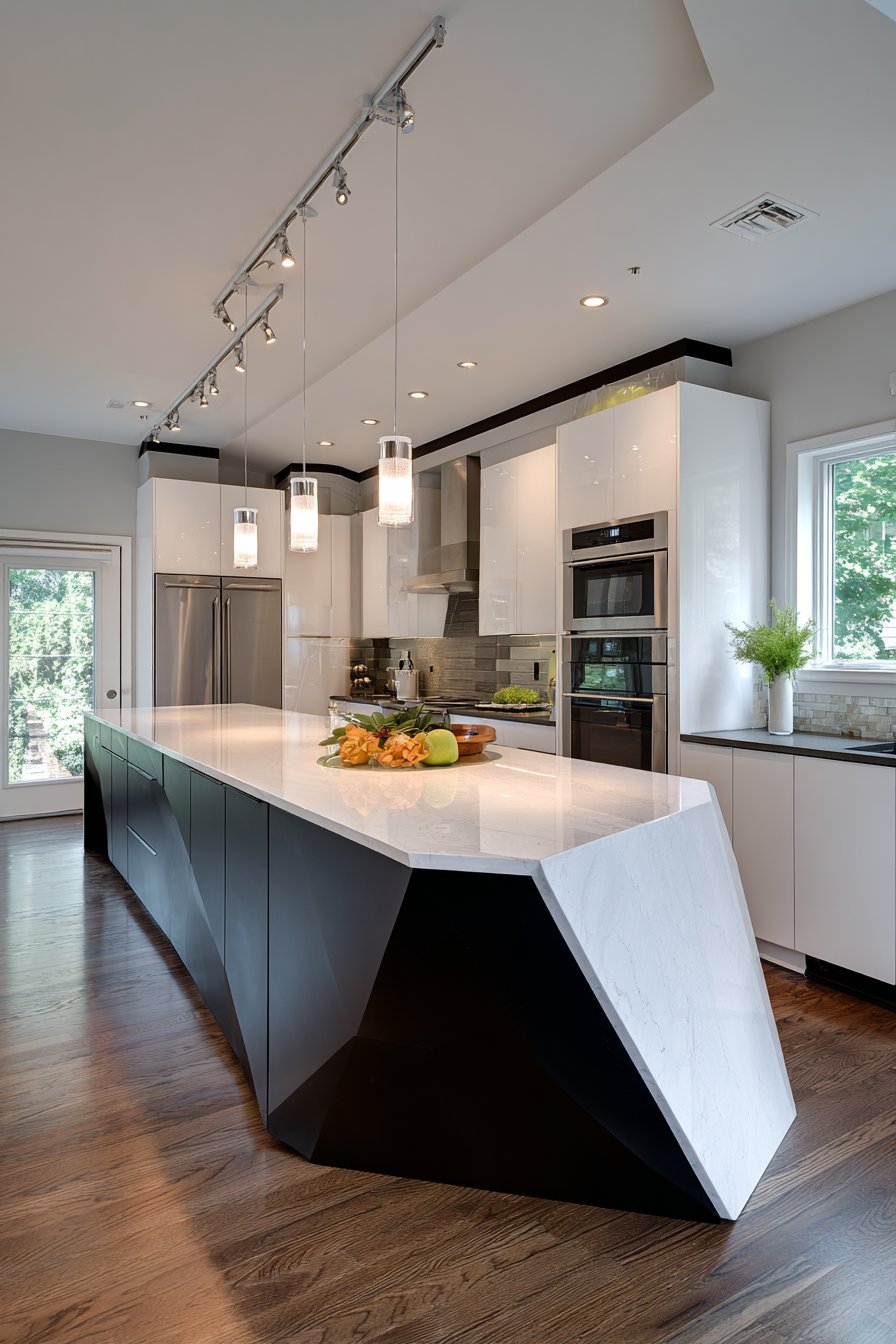
Integrated appliances maintain the sleek lines that define contemporary aesthetics, with refrigerator panels, dishwasher fronts, and other appliances concealed behind matching cabinetry. Track lighting provides adjustable task illumination, its utilitarian form complementing the space’s modern sensibility while offering practical flexibility. The bold geometric layout demonstrates how the right island design transforms a kitchen from simple workspace into an artistic statement that reflects the homeowner’s sophisticated design sensibility.
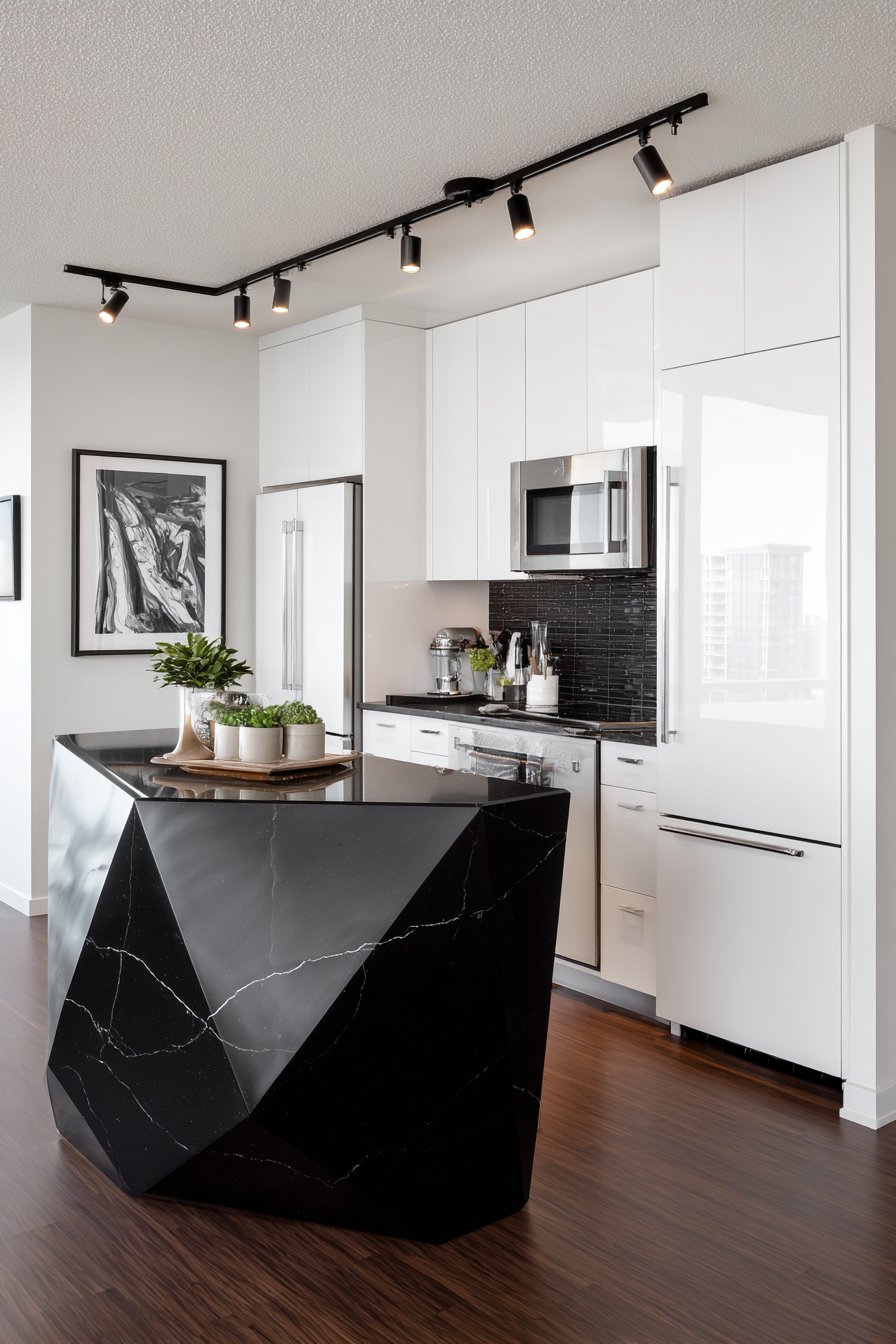
Key Design Tips: Work with a kitchen designer to ensure angular islands maintain proper clearances despite their unconventional shapes. Choose waterfall edges for islands using dramatic stone to maximize the material’s visual impact. Install handleless cabinets with push-to-open mechanisms for seamless contemporary aesthetics. Use track or rail lighting systems that can be adjusted as needs change over time. Maintain visual calm in perimeter design when featuring a bold statement island to prevent visual chaos.
7. Transitional Furniture-Style Elegance
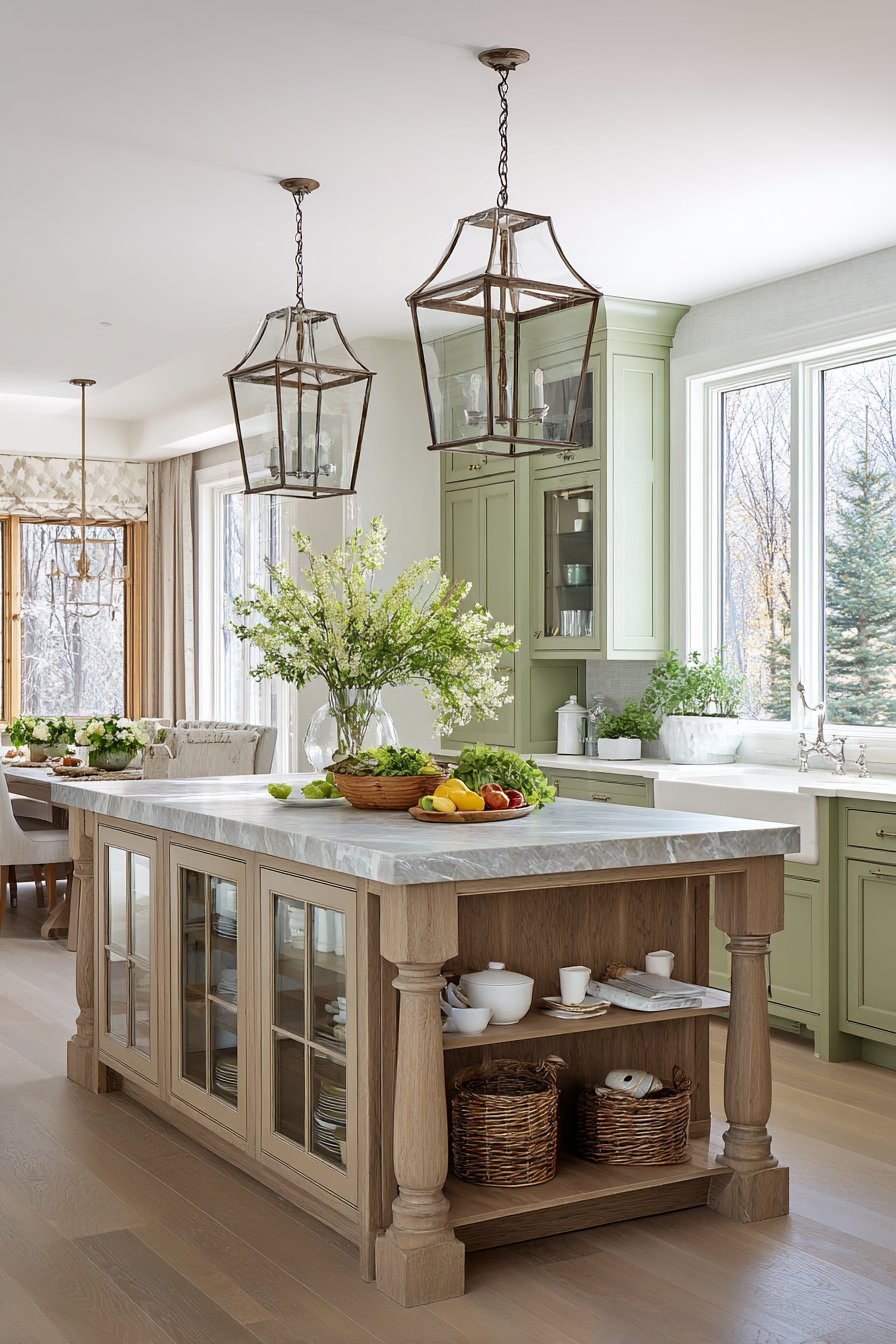
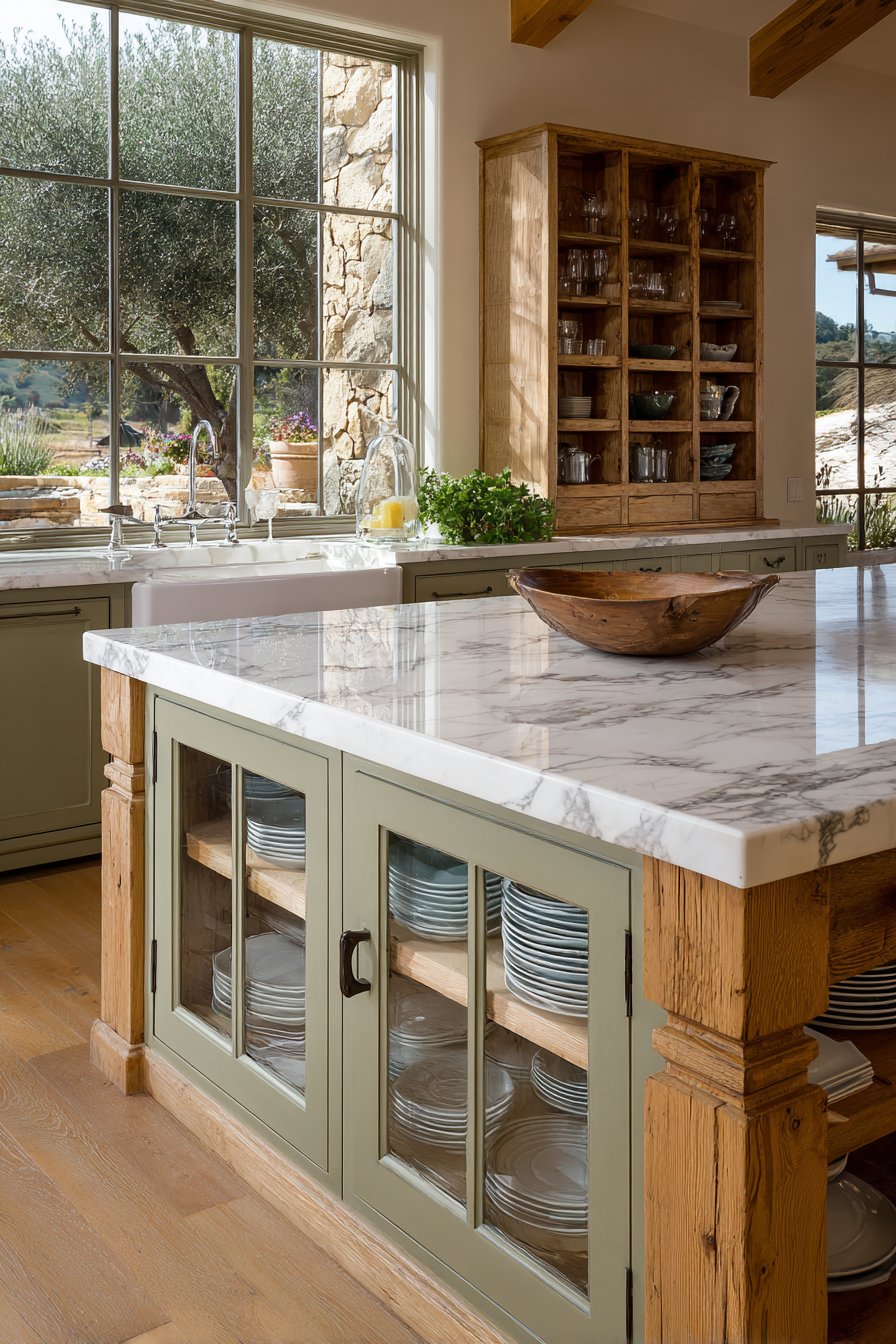
Transitional design bridges traditional and contemporary aesthetics, creating spaces that feel both timeless and current. This kitchen layout exemplifies the approach through its furniture-style island featuring turned legs and architectural details typically associated with freestanding furniture rather than built-in cabinetry. The substantial marble top with grey veining provides elegant contrast to the natural wood base, its cool tones balancing the warmth of the wooden legs and creating visual interest through material juxtaposition.
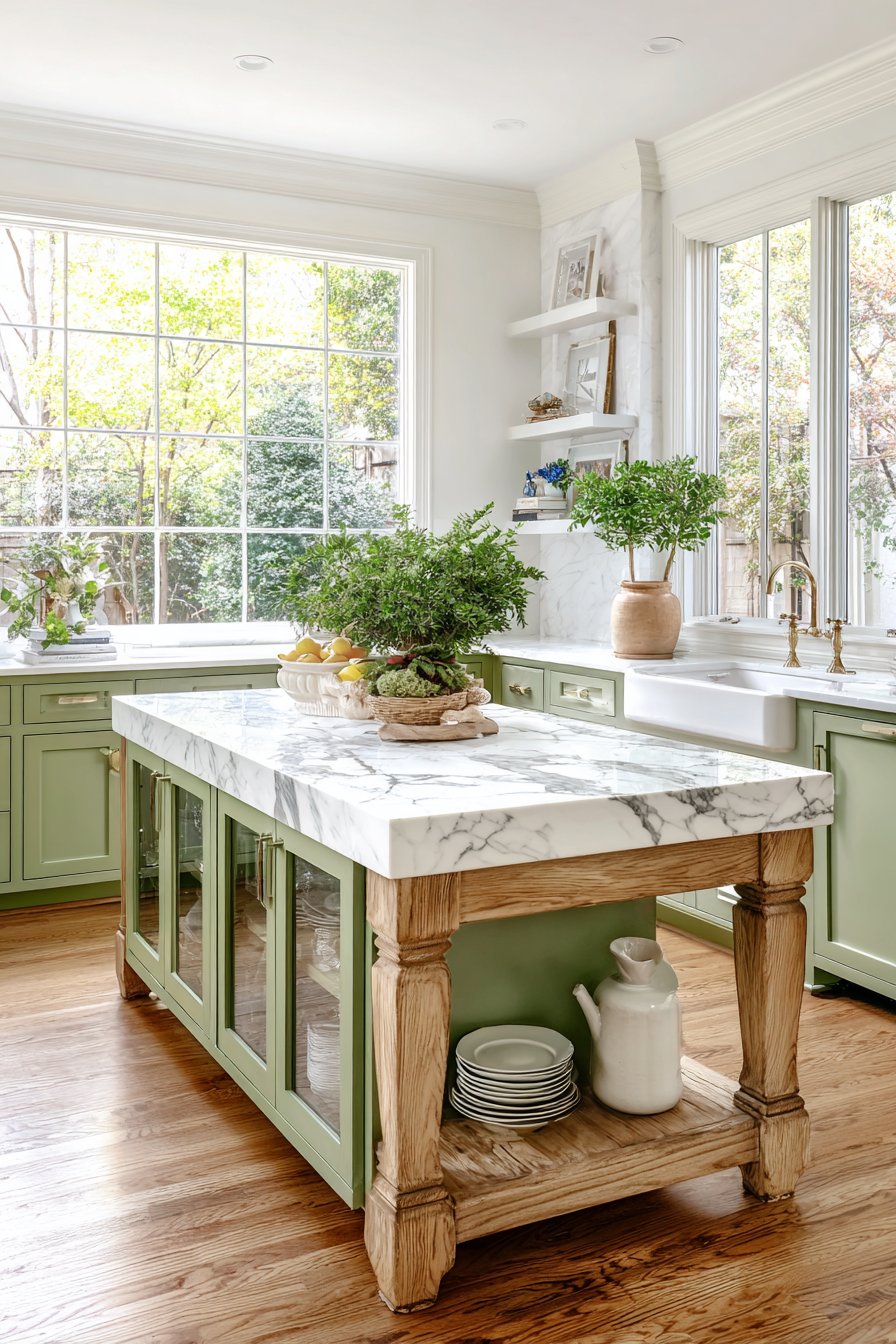
Glass-front cabinet doors on the island’s storage sections display organized dinnerware, transforming functional storage into decorative opportunity. This open approach requires thoughtful organization but rewards the effort by adding personality and visual texture to the kitchen. Soft sage green perimeter cabinets provide a sophisticated colored backdrop that complements rather than matches the natural wood island, demonstrating how transitional design embraces variety while maintaining cohesion.
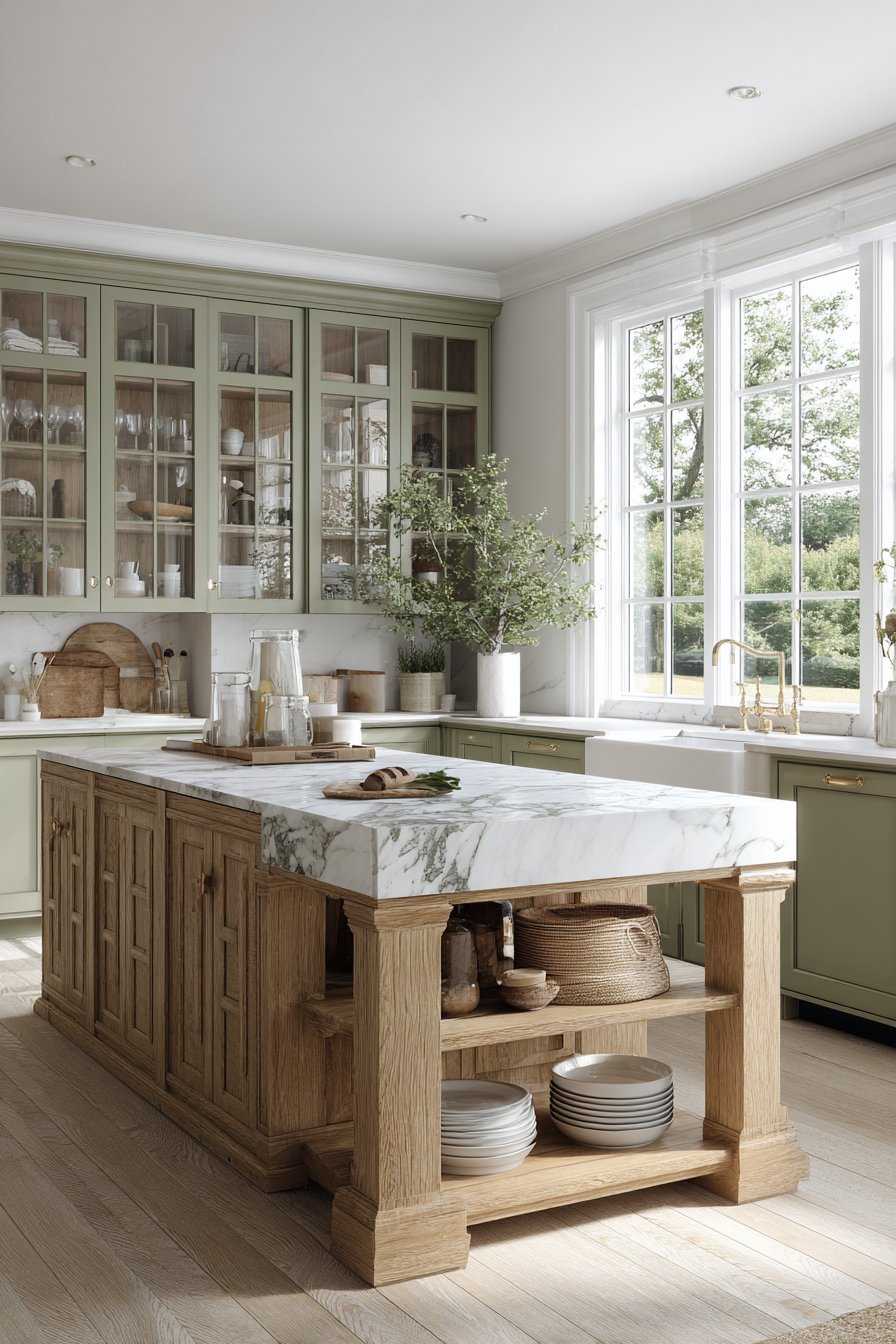
A farmhouse sink facing windows with garden views connects the indoor workspace to outdoor beauty, transforming mundane tasks like dishwashing into more pleasant experiences. The deep basin accommodates large pots and baking sheets that challenge standard sinks, while its apron front adds architectural interest to the cabinet run. Natural daylight streaming through the windows creates an ever-changing play of light and shadow across the marble’s surface, highlighting the stone’s natural variations and bringing the kitchen to life throughout the day.
Key Design Tips: Choose island legs substantial enough to appear structural rather than decorative, ensuring visual balance with the countertop weight. Select marble with moderate rather than heavy veining for versatility that won’t overwhelm or date quickly. Install interior cabinet lighting in glass-front sections to highlight displayed items and add ambient glow. Paint perimeter cabinets in colors with low saturation for sophistication that won’t tire over time. Position islands with furniture-style legs where all sides are visible to maximize their decorative impact.
8. Multi-Functional Open-Concept Command Center
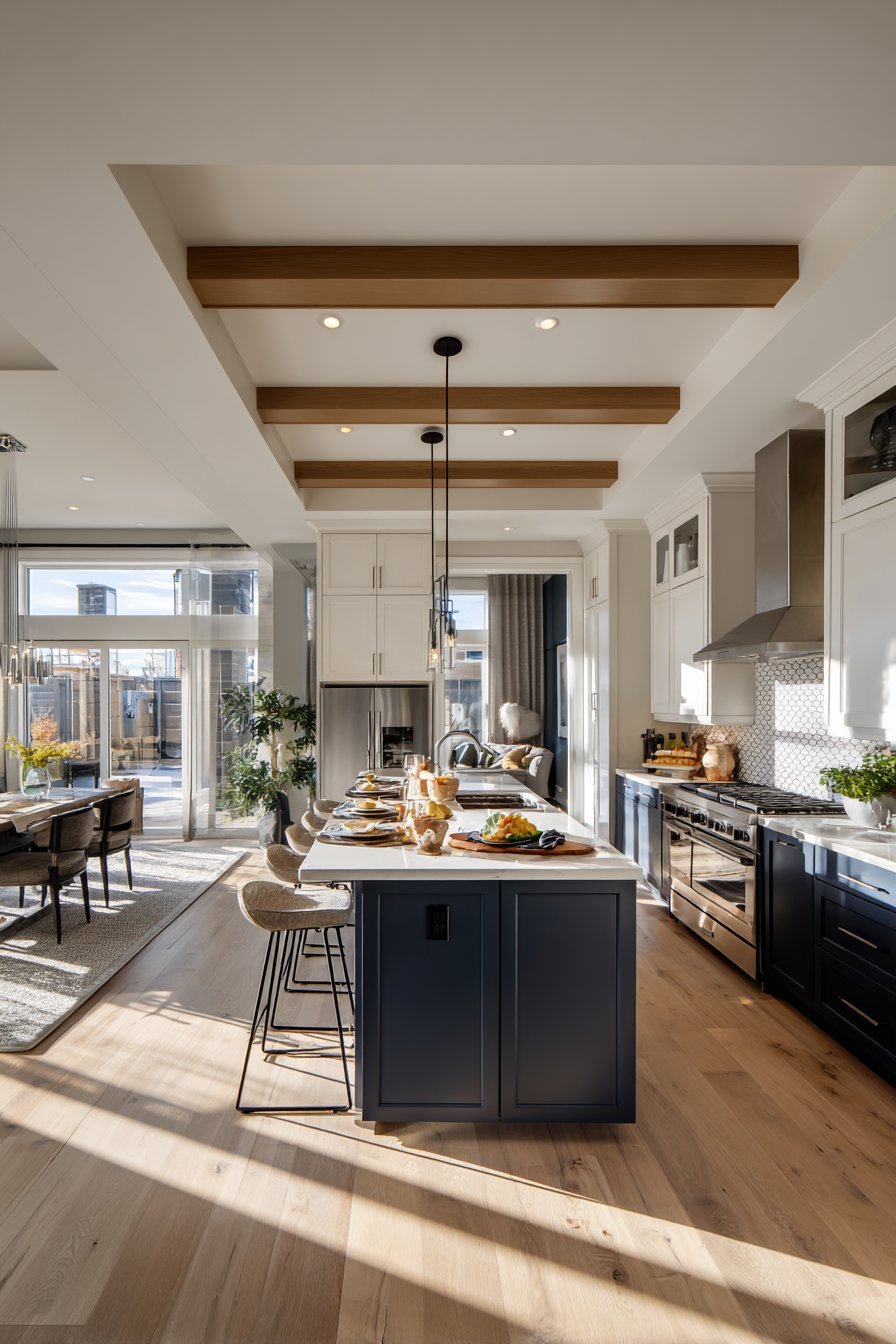
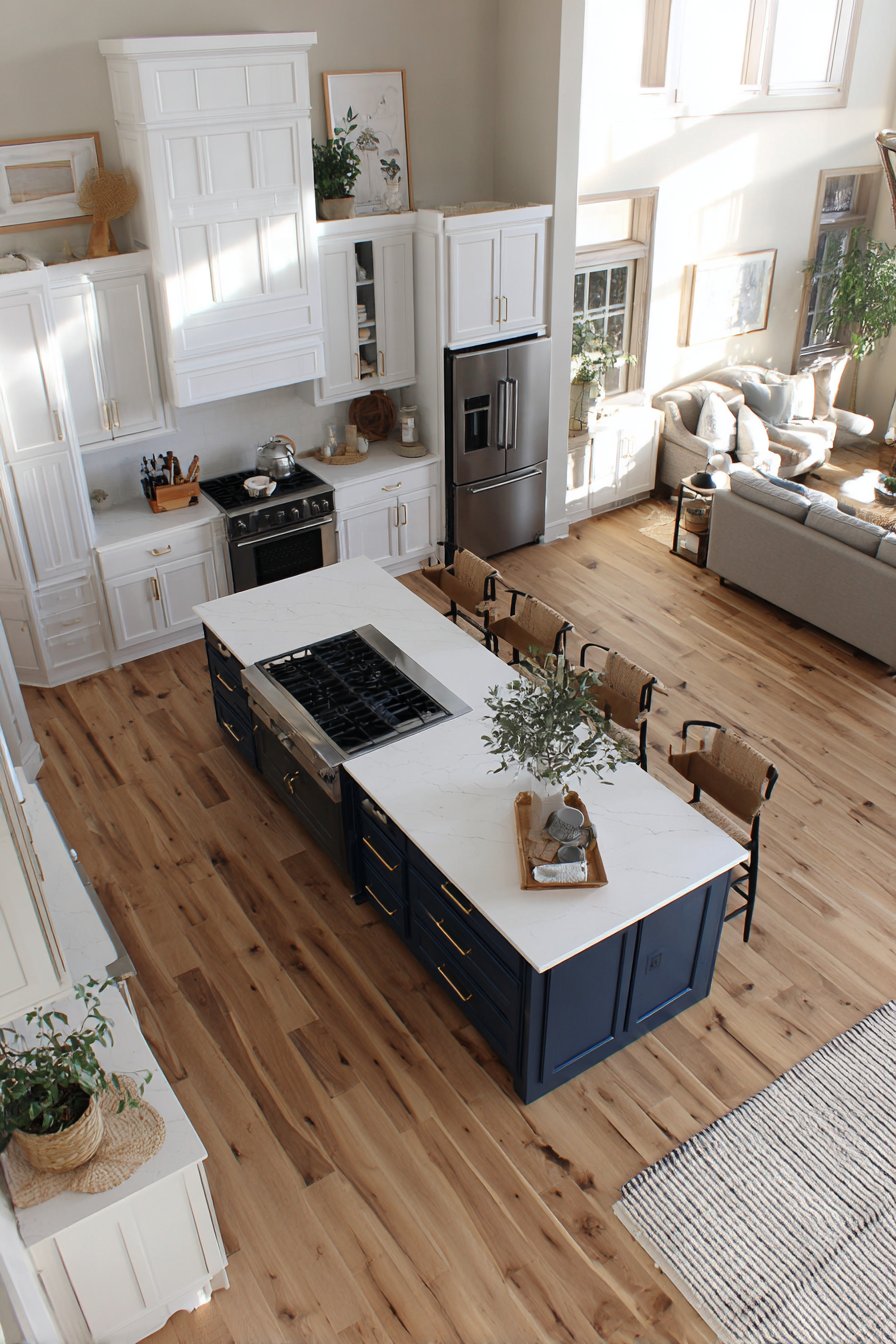
Open-concept living demands that kitchens function as both cooking spaces and social hubs, and this layout delivers with a large multi-functional island that serves as the home’s true center. The integrated cooktop with downdraft ventilation eliminates the need for overhead range hoods that would obstruct sight lines to adjacent living areas, maintaining the open feeling while providing powerful ventilation. Extensive drawer storage houses everything from utensils to cookware, keeping essential items organized and accessible without cluttering countertops.
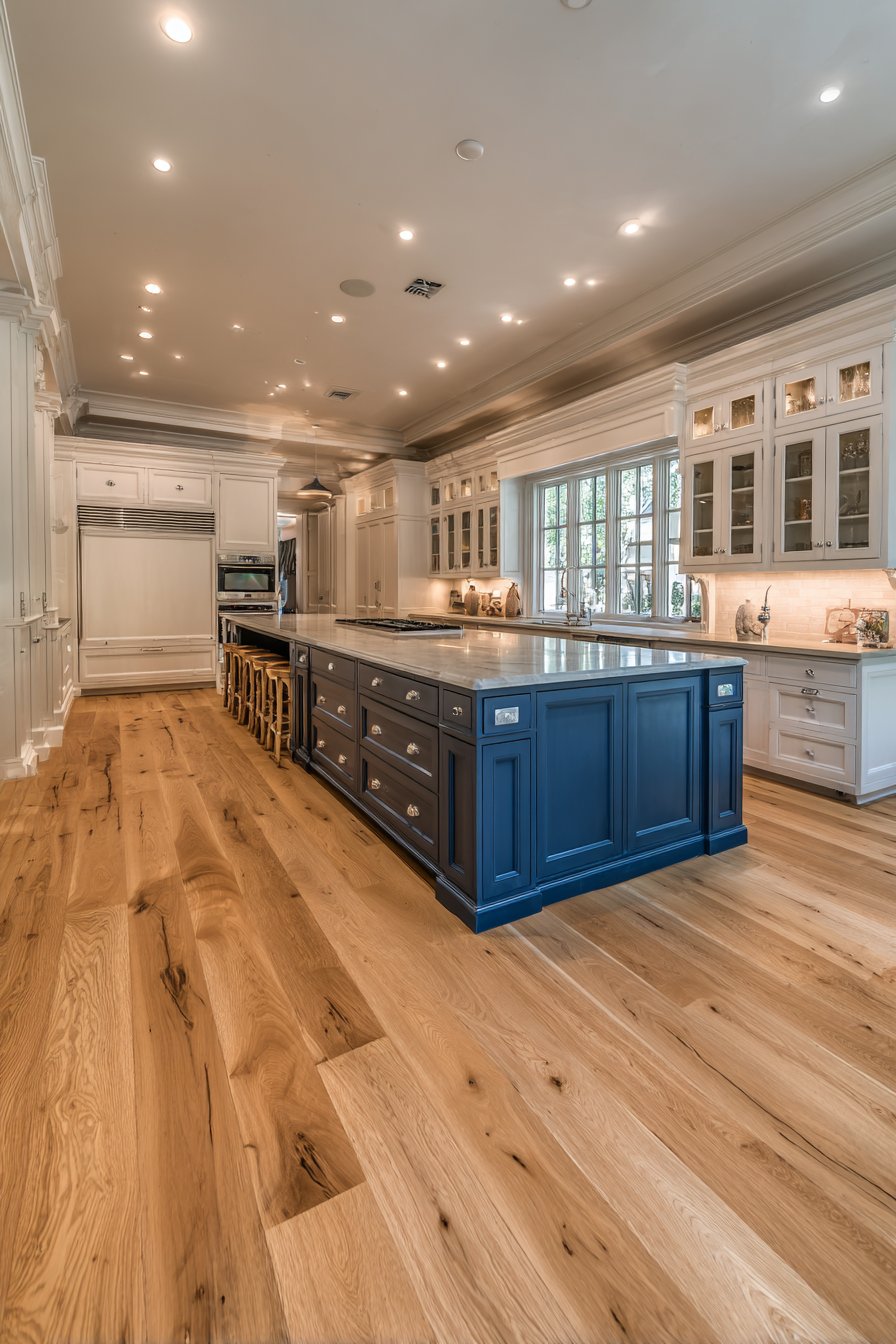
The overhang for four bar stools transforms part of the island into a casual dining area where family members can enjoy quick meals or keep the cook company during food preparation. This arrangement facilitates the conversational cooking experience that makes open-concept living so appealing. Two-tone cabinetry using navy for the island and crisp white for perimeter cabinets creates visual interest and helps define the kitchen zone within the larger open space, the darker island anchoring the area while lighter walls maintain airiness.
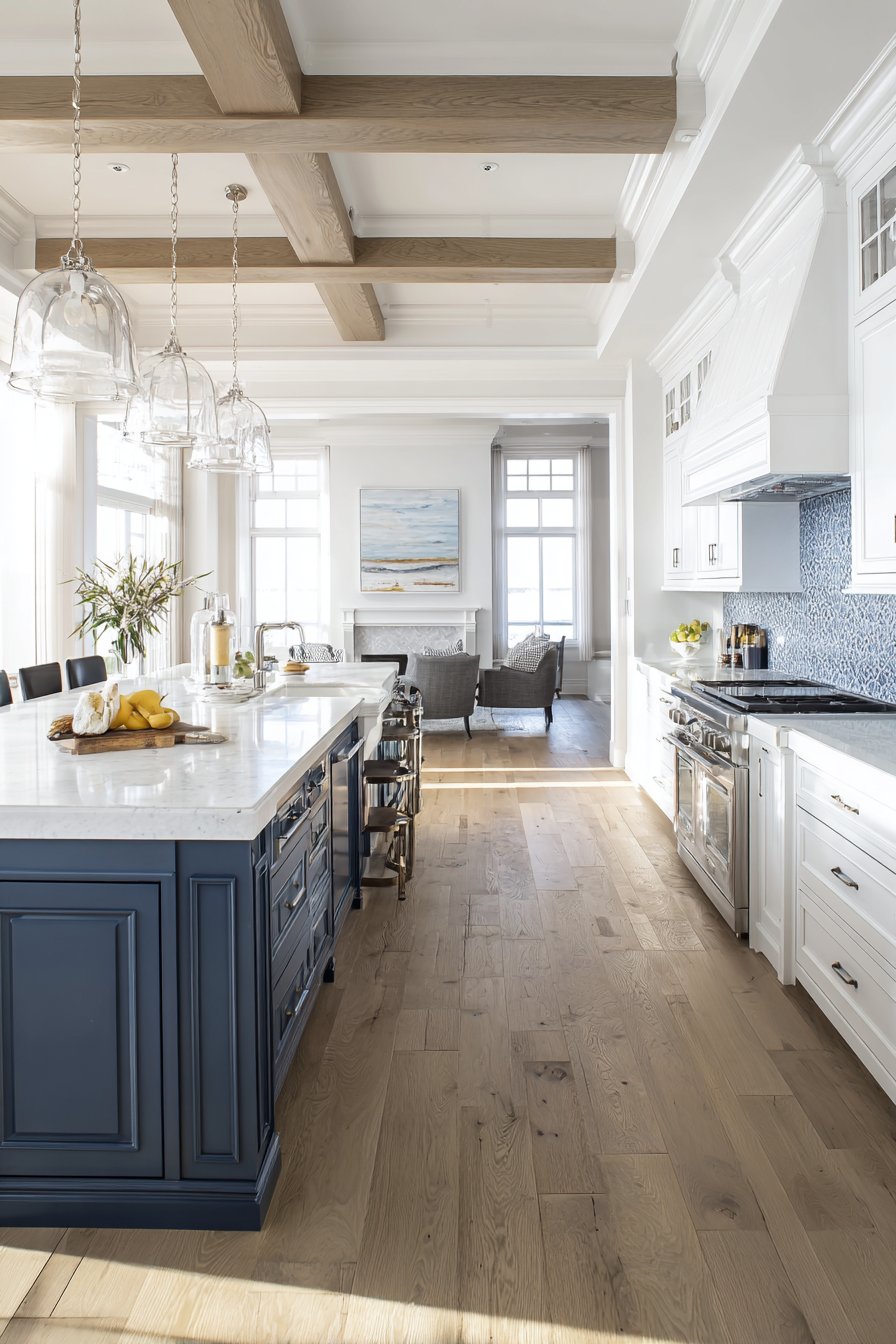
Natural oak hardwood flooring extends throughout the entire open area, creating visual continuity that unifies distinct functional zones. The wood’s warm tones provide an organic counterpoint to the cabinetry’s painted finishes, adding natural texture and warmth that prevents the space from feeling cold or sterile. Late afternoon light streaming through multiple windows creates warm ambiance that highlights the practical layout, demonstrating how proper orientation to natural light sources enhances both functionality and mood.
Key Design Tips: Choose downdraft ventilation for islands with cooktops in open-concept spaces to maintain sight lines and conversation flow. Install a minimum 15-inch overhang for comfortable seating that provides adequate knee room. Use contrasting colors on the island to help define kitchen boundaries in open floor plans. Extend flooring throughout open spaces to create visual flow rather than using different materials to separate zones. Position cooktops away from primary seating areas to prevent guests from being too close to active cooking splatters and heat.
9. Compact Condominium Flexibility
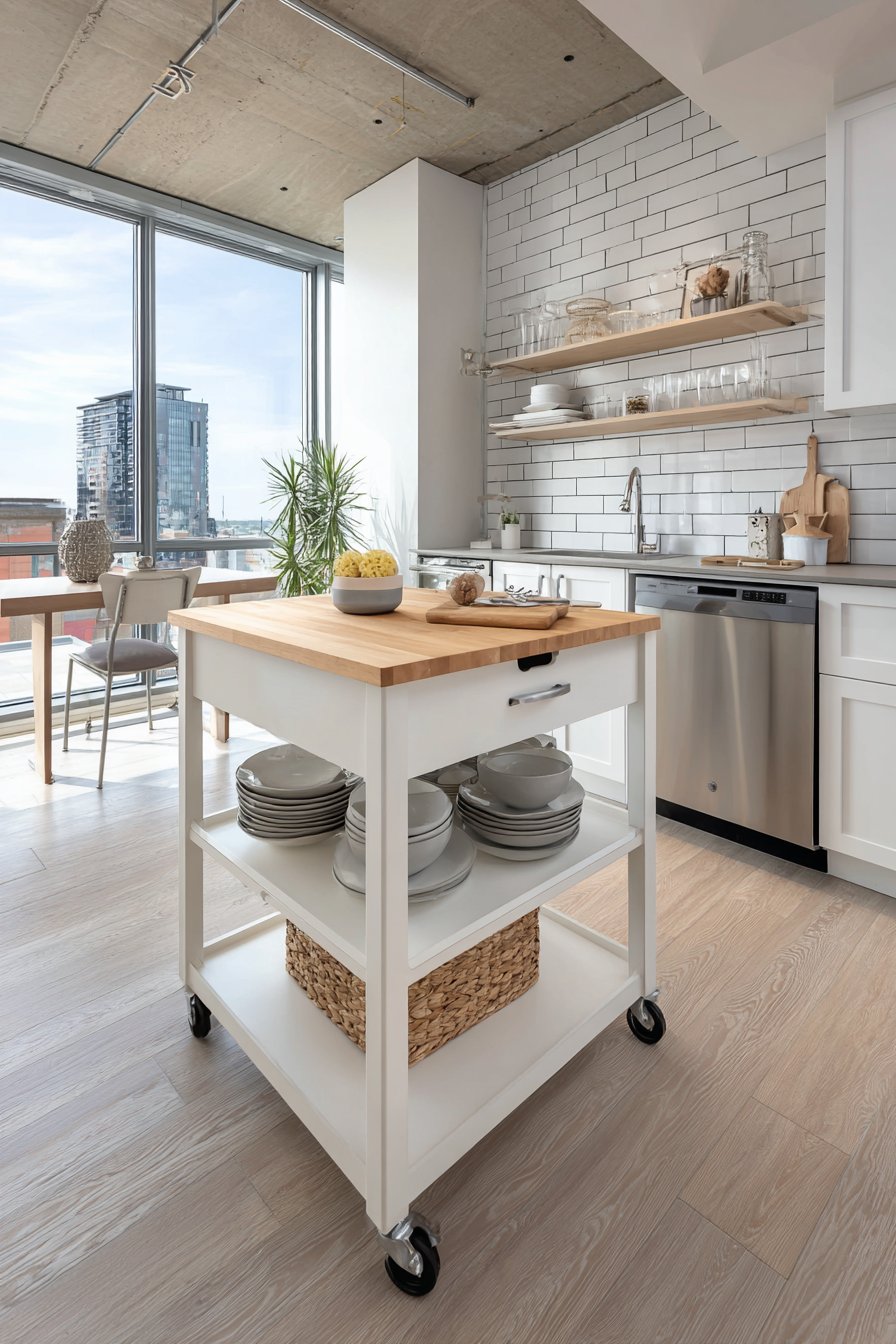
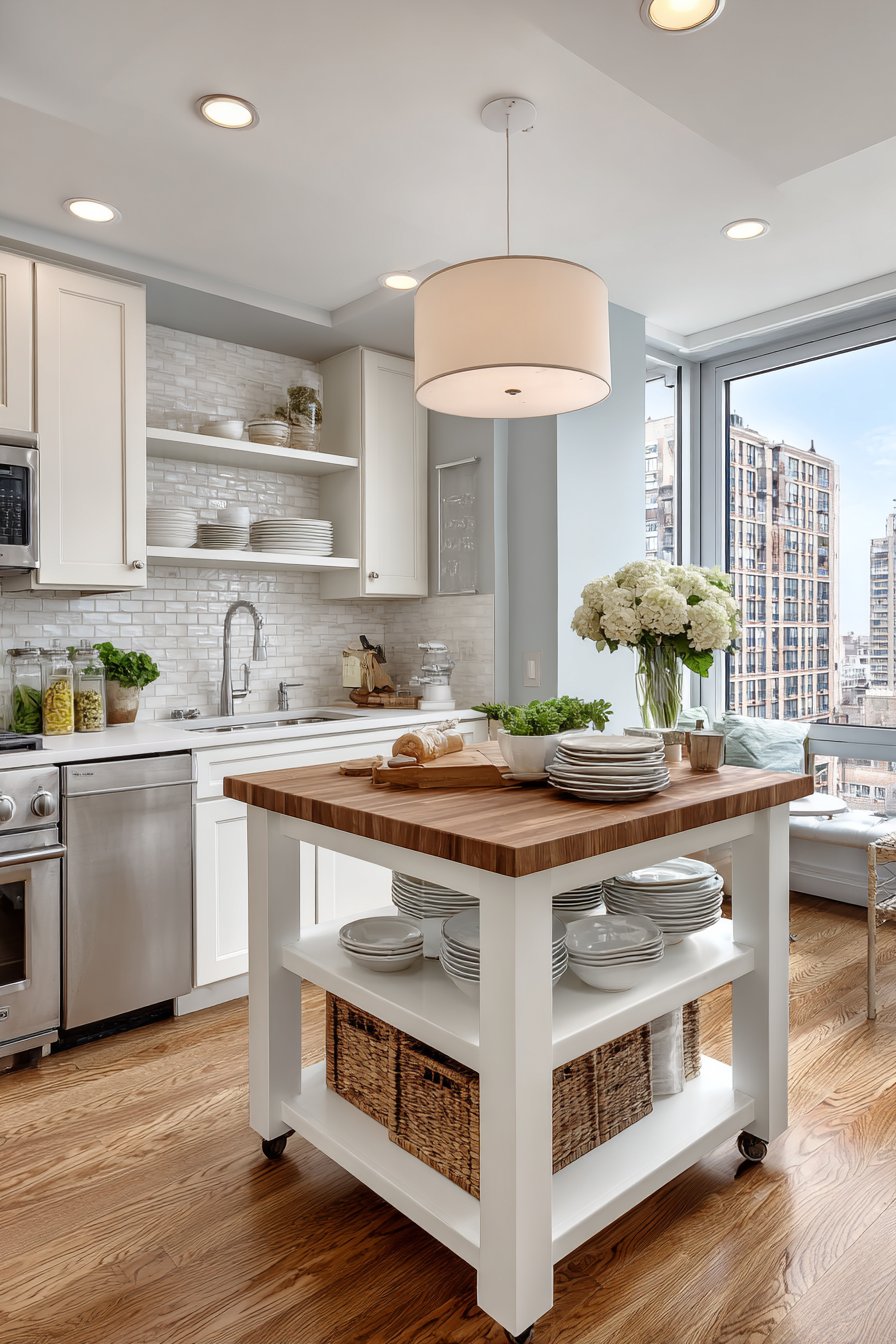
Urban condominium living often means working within challenging space constraints, but this compact square island proves that small doesn’t mean sacrificed functionality. The solid walnut butcher block top provides a beautiful, warm work surface that’s perfect for food preparation while adding natural material richness to a small space. Storage underneath keeps frequently used items accessible, while the island’s modest footprint allows it to enhance rather than overwhelm the compact kitchen.
The island’s mobility represents its most valuable feature—locking casters allow it to be repositioned based on current needs or moved aside entirely when maximum floor space is required. This flexibility proves invaluable in small kitchens where static layouts can’t adapt to different activities. White subway tiles create a classic backdrop that makes the space feel clean and bright, their rectangular format adding subtle visual interest without overwhelming limited square footage.
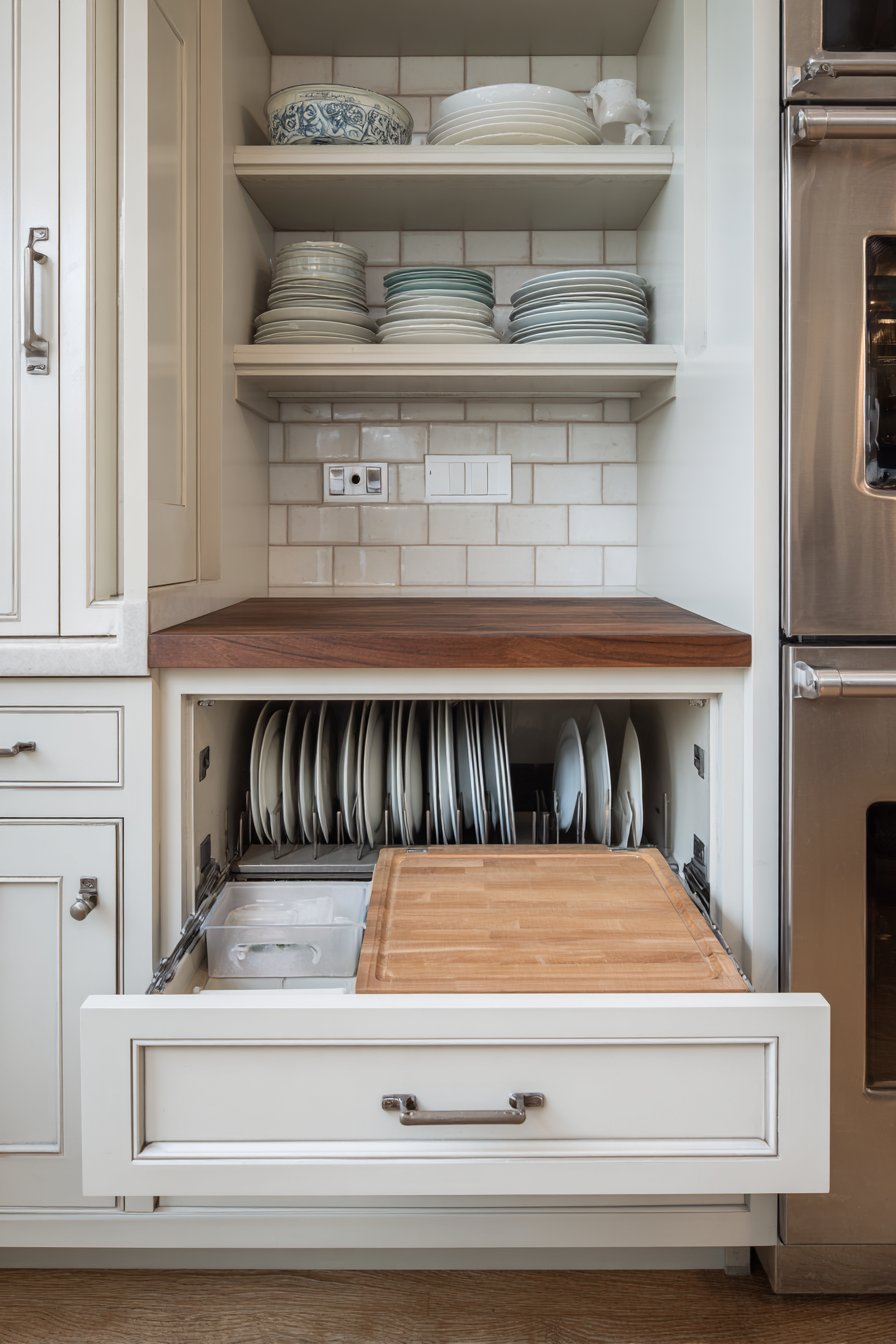
Open floating shelves replace some upper cabinets, displaying everyday dishes while preventing the kitchen from feeling enclosed by cabinetry on all sides. This strategic design choice makes the small space feel larger and more accessible. Stainless steel appliances maintain a clean, cohesive aesthetic while reflecting light throughout the space. The efficient use of limited space demonstrates how the right island provides essential extra prep area even in the most compact kitchens, proving that thoughtful design overcomes dimensional constraints.
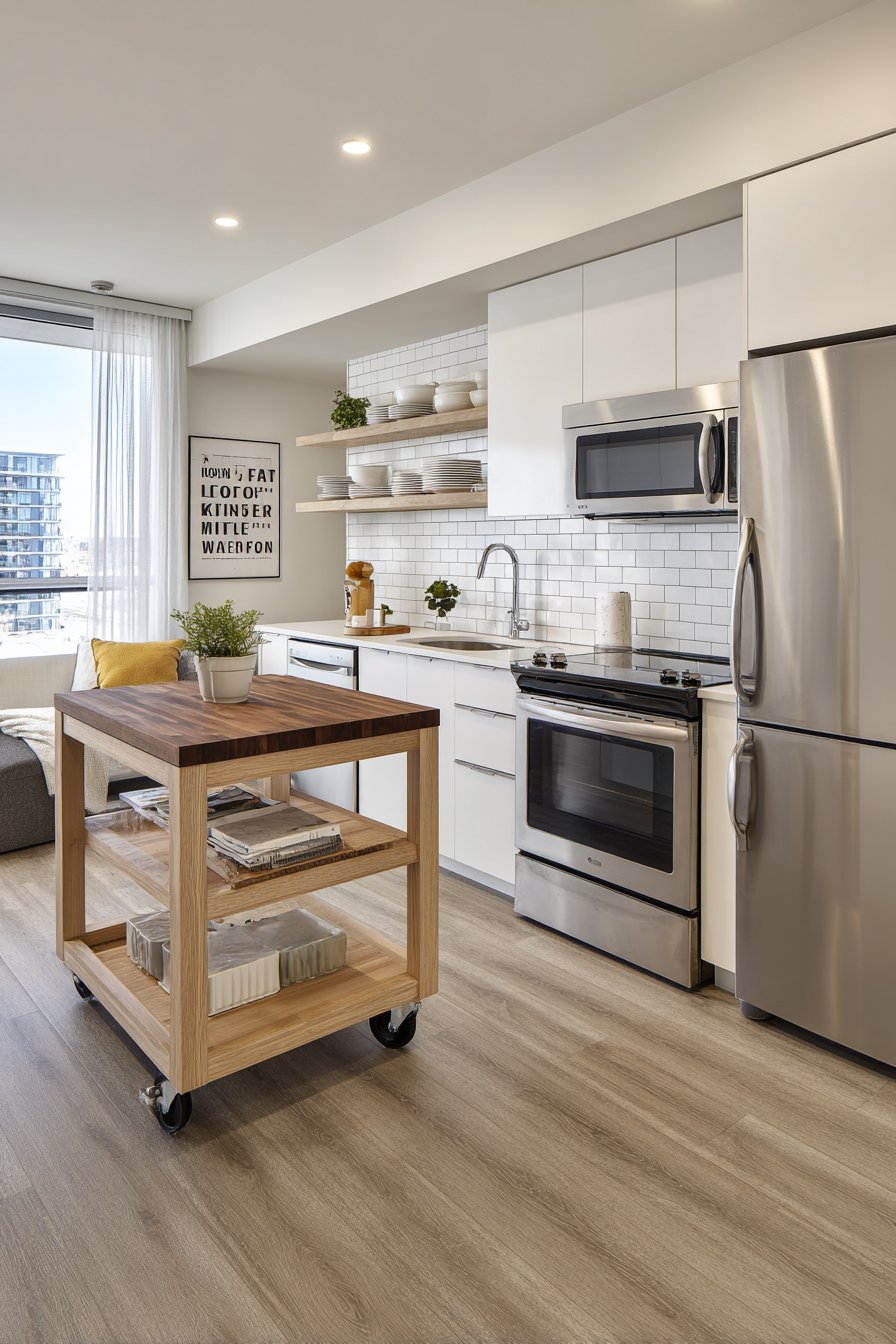
Key Design Tips: Choose butcher block tops that can be sanded and refinished to maintain beauty despite heavy use. Install heavy-duty locking casters rated for the island’s loaded weight to ensure stability during use. Limit mobile island size to what one person can reasonably move, typically 30×30 inches or smaller. Use open shelving for items used daily to reduce time spent opening and closing cabinet doors. Select appliances in single finish family (all stainless or all white) to create visual cohesion in small spaces.
10. Rustic Reclaimed Barn Wood Character
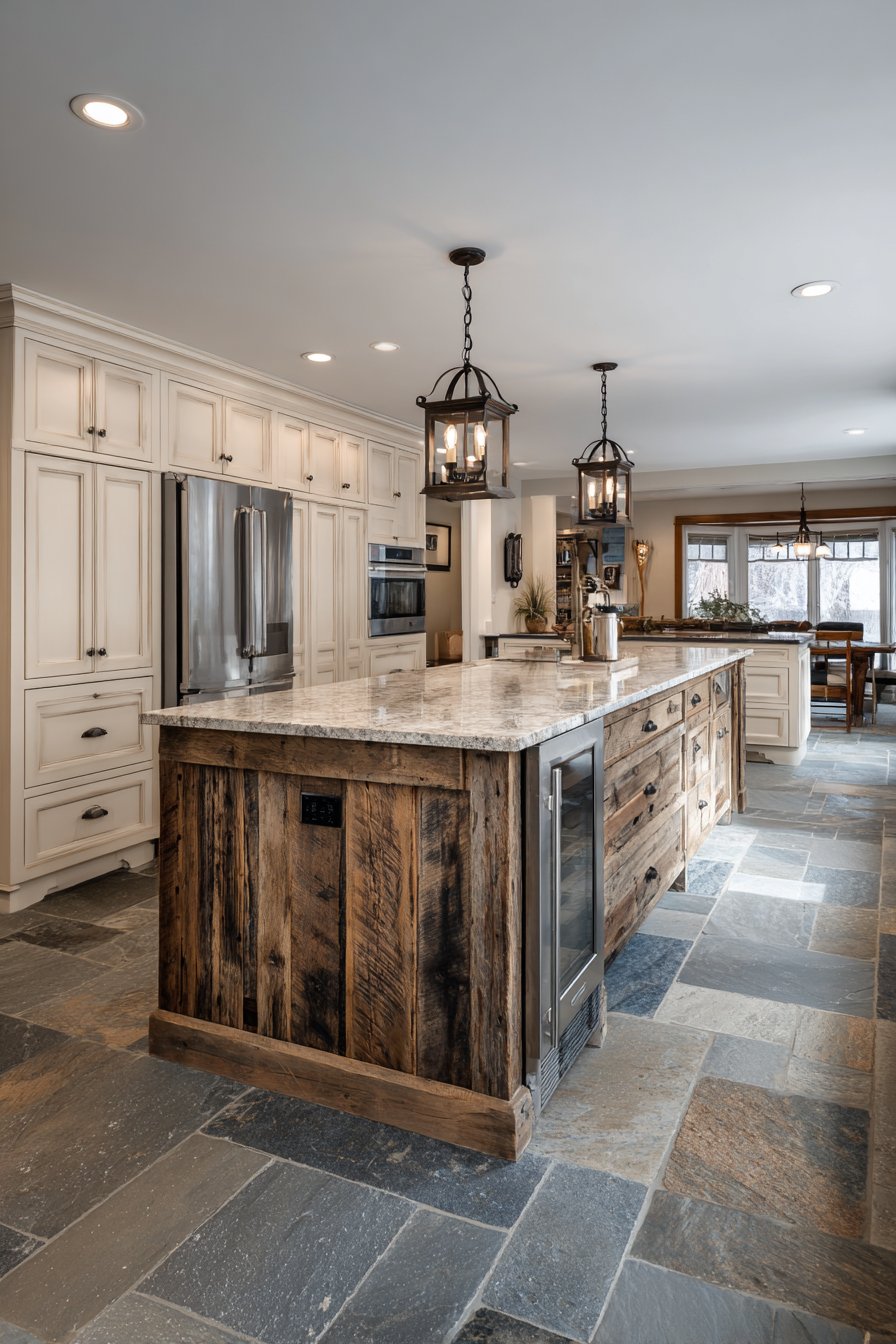
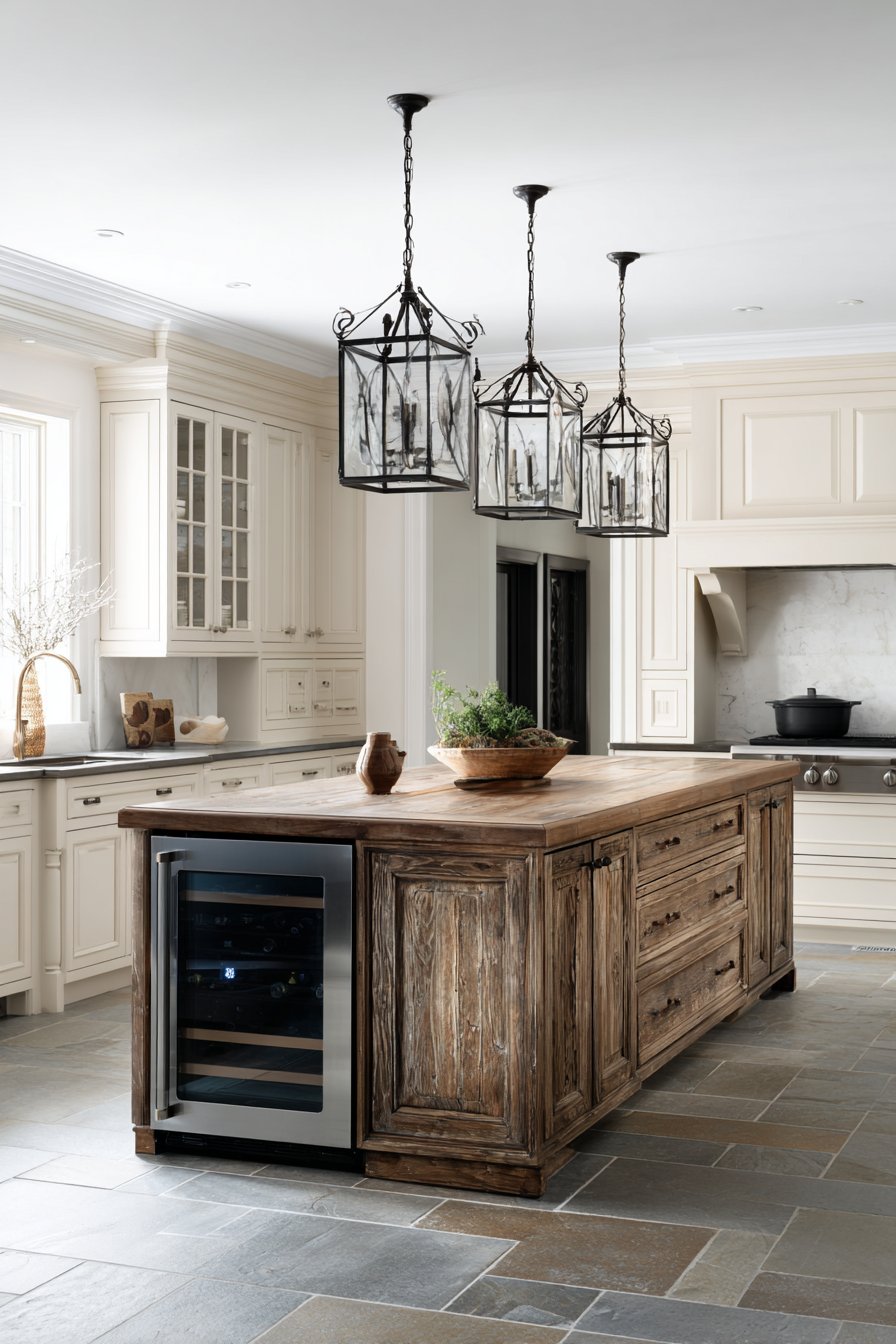
Authentic rustic design requires genuine materials, and this kitchen layout centers on a substantial island crafted from reclaimed barn wood that brings history and character into the modern home. The wood’s original patina remains visible, complete with nail holes, saw marks, and color variations that tell the story of the material’s previous life. A built-in beverage refrigerator and microwave drawer transform the rustic centerpiece into a fully functional modern workspace, demonstrating how old materials can serve contemporary needs.
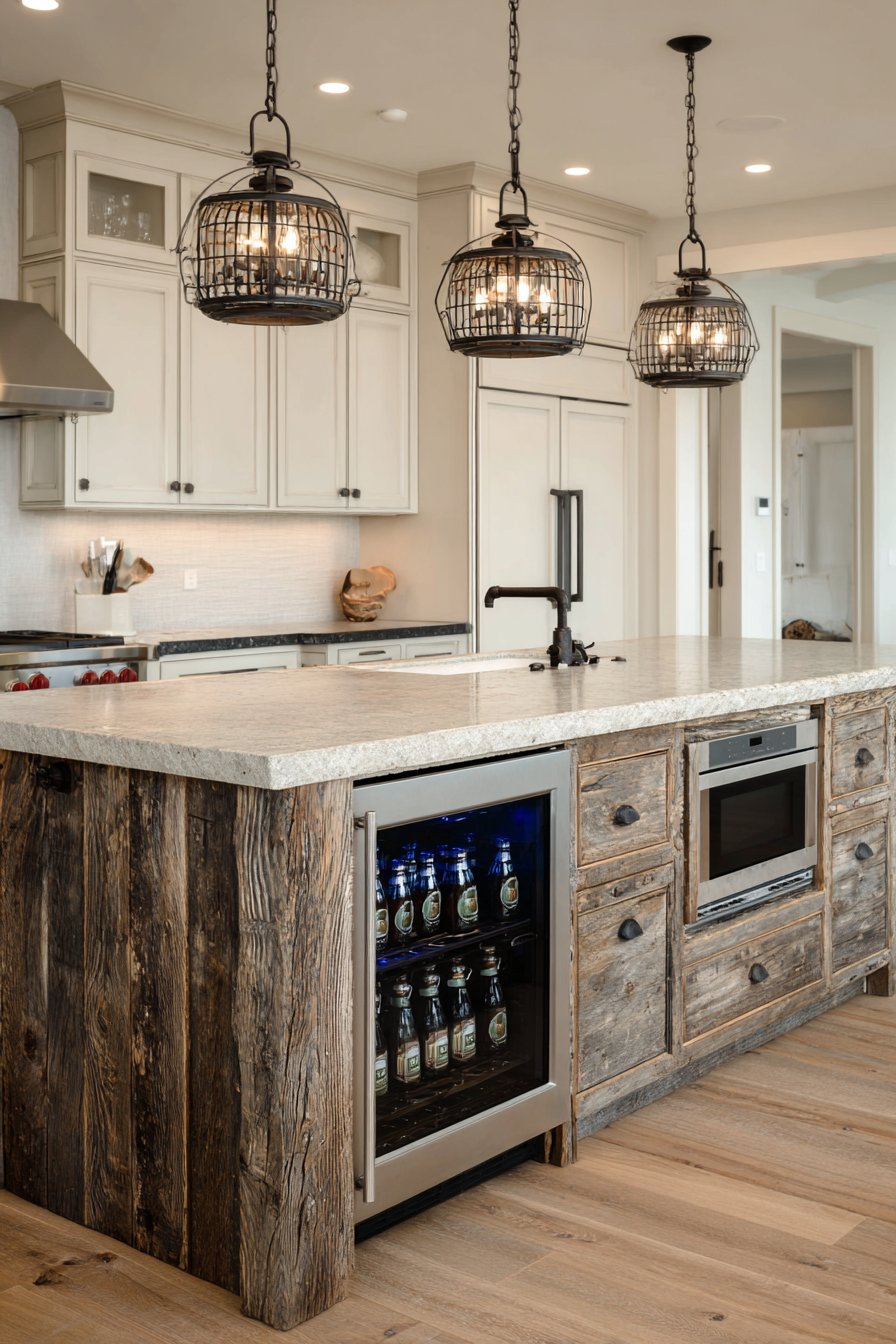
Wrought iron pendant lights suspended above the island complement the wood’s aged character while providing essential task lighting. Their dark finish and simple forms echo traditional craftsmanship, maintaining period authenticity without appearing costume-like. Cream-colored shaker cabinets with oil-rubbed bronze hardware line the perimeter, their classic simplicity allowing the dramatic island to command attention without competing visual elements.
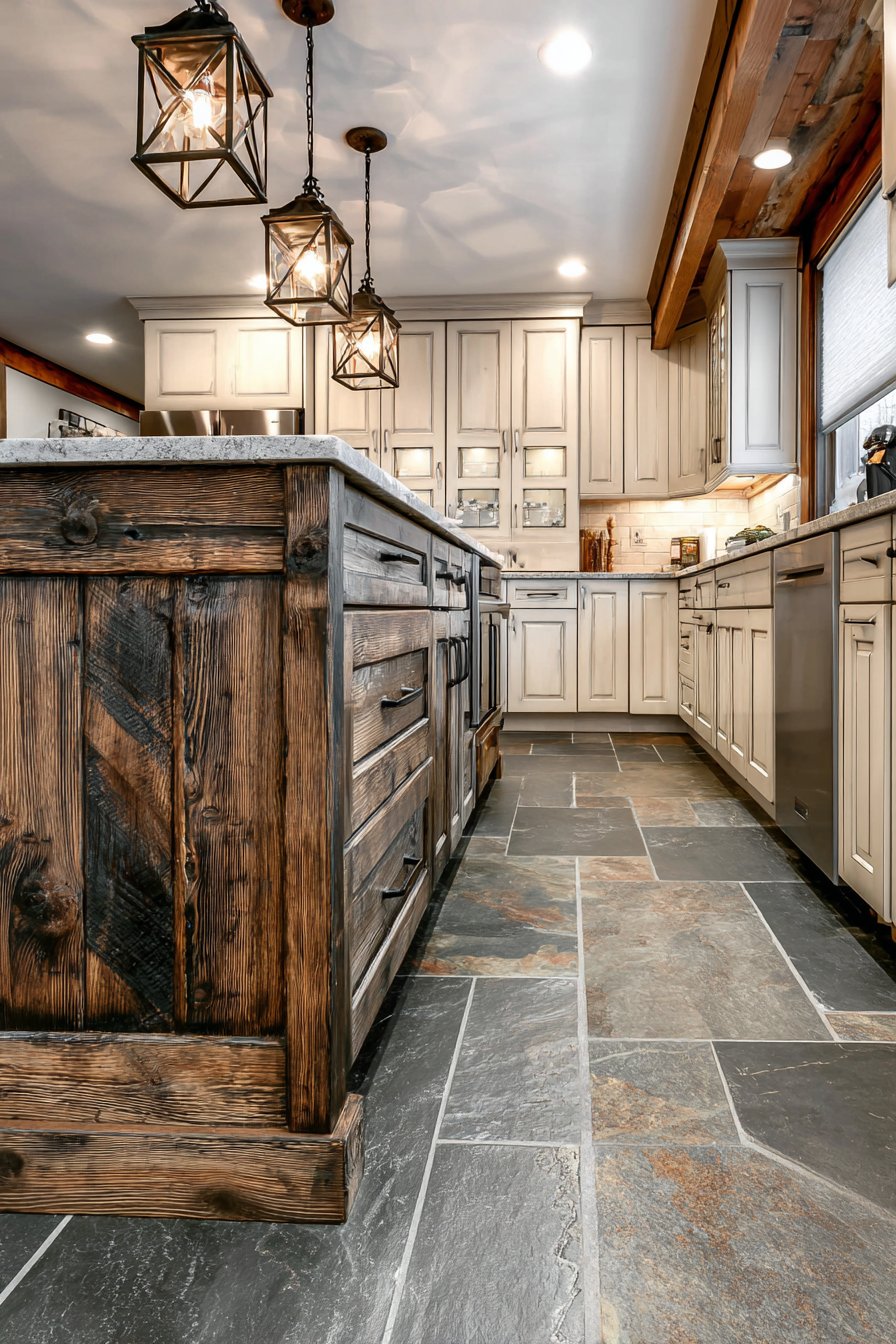
Slate tile flooring adds to the organic feeling, its natural variations and textured surface grounding the design in earthiness. The stone’s cool tones provide welcome contrast to the warm wood, creating balance that prevents the space from feeling monotonous. The combination of reclaimed wood, wrought iron, natural stone, and simple painted cabinetry creates layered texture and authentic character that manufactured materials simply cannot replicate, resulting in a kitchen that feels collected over time rather than installed all at once.
Key Design Tips: Verify reclaimed wood has been properly kiln-dried and treated to eliminate pests and prevent warping. Apply multiple coats of food-safe sealer to protect barn wood from kitchen moisture and staining. Choose simple perimeter cabinetry that won’t compete with a dramatic rustic island for visual attention. Install adequate lighting above islands to compensate for dark wood surfaces that absorb rather than reflect light. Balance rustic elements with some modern conveniences to create livable rather than museum-like spaces.
11. Scandinavian Minimalist Serenity
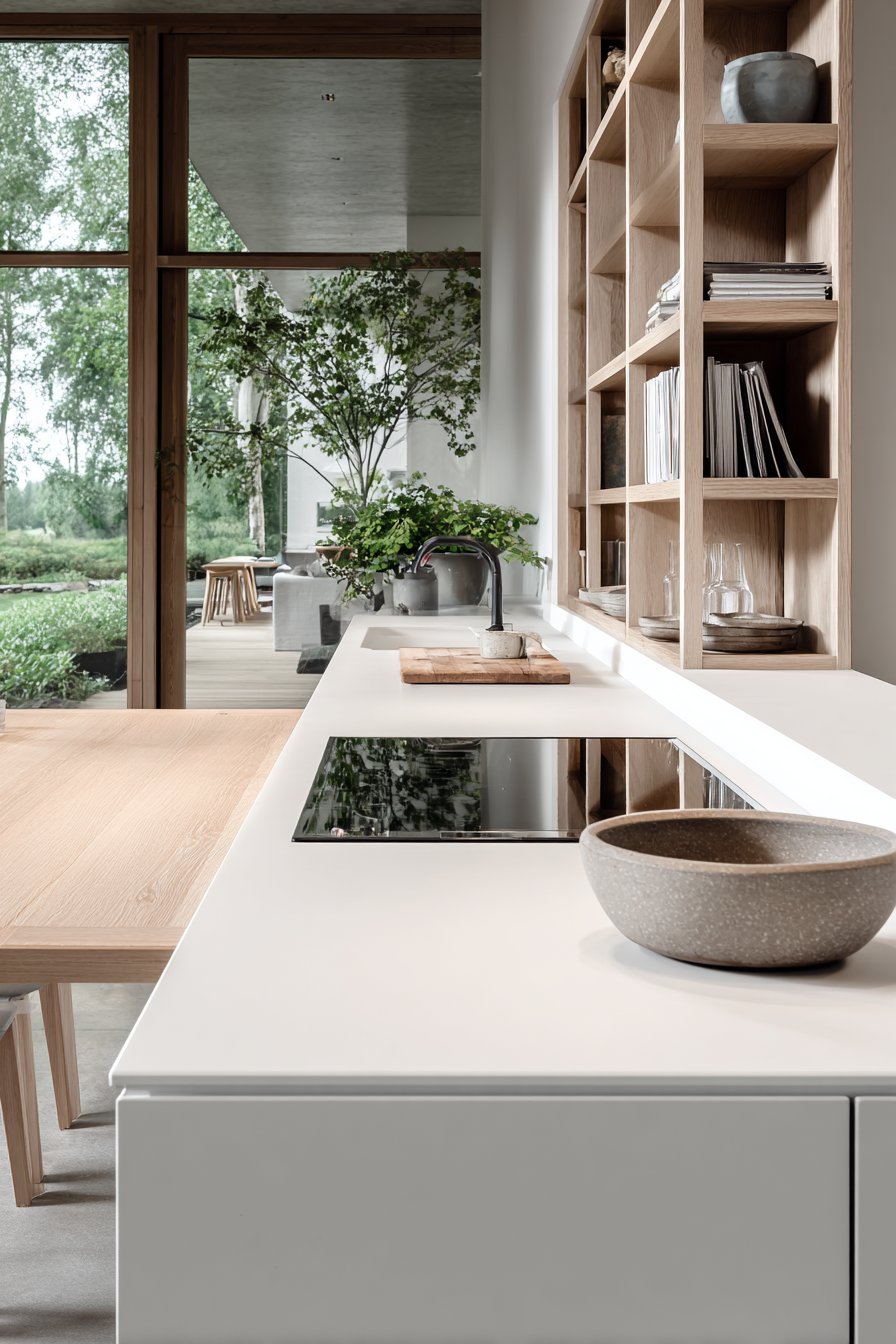
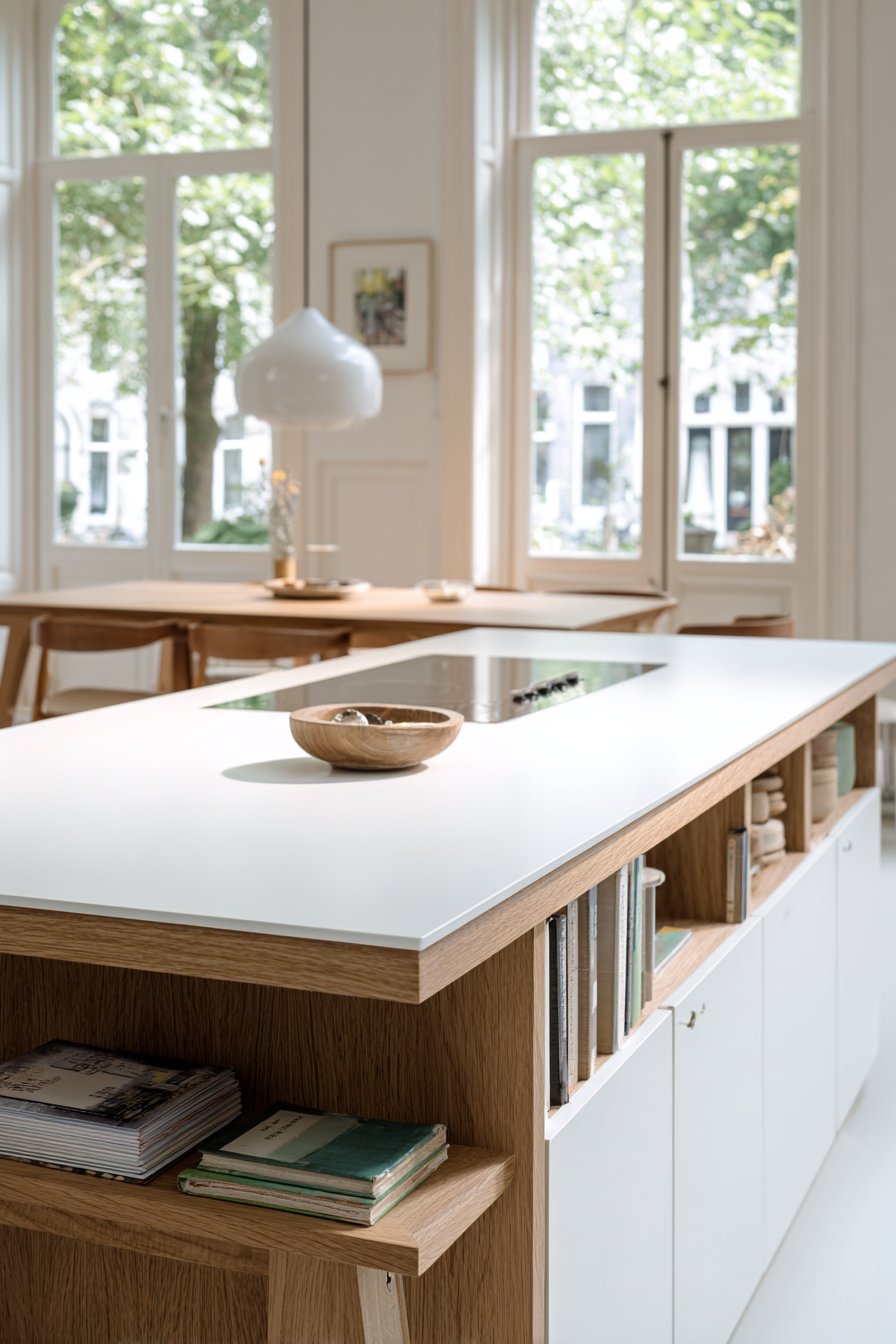
Scandinavian design principles emphasize simplicity, functionality, and connection to natural materials, and this kitchen layout embodies these values through its minimalist white island with integrated induction cooktop and seamless cabinetry. The absence of visible hardware creates unbroken surfaces that emphasize the design’s clean lines, while the integrated cooktop eliminates the visual clutter of a traditional range. Push-to-open drawers and cabinets maintain the streamlined aesthetic while providing ample storage.
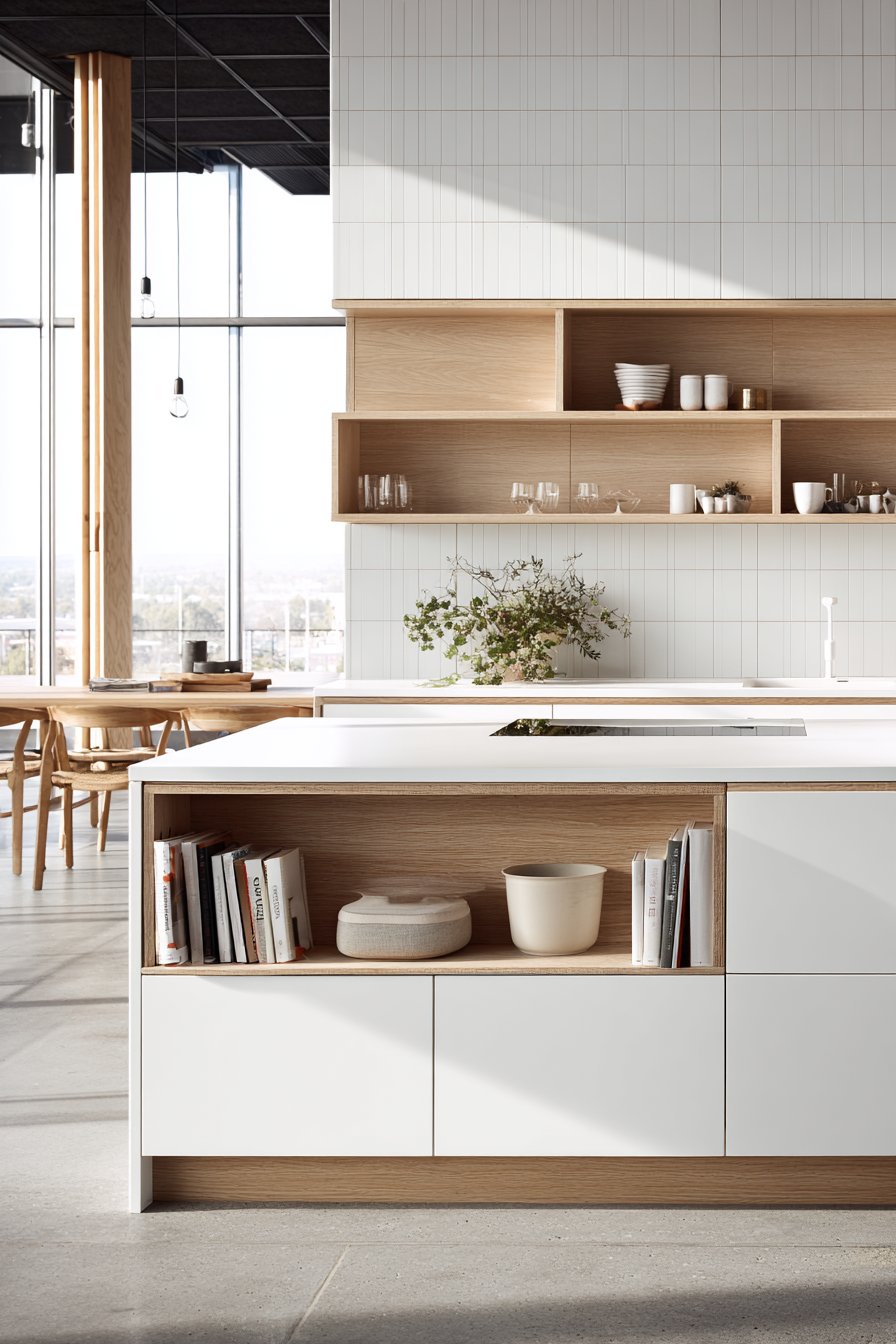
Light ash wood accents appear in open shelving and the dining table visible beyond the kitchen, introducing natural warmth that prevents the white palette from feeling cold or clinical. This strategic use of wood demonstrates the Scandinavian principle of bringing nature indoors through material choices. Matte white tiles create a monochromatic backdrop that enhances the sense of calm and cleanliness, their subtle texture adding dimension without introducing visual noise.
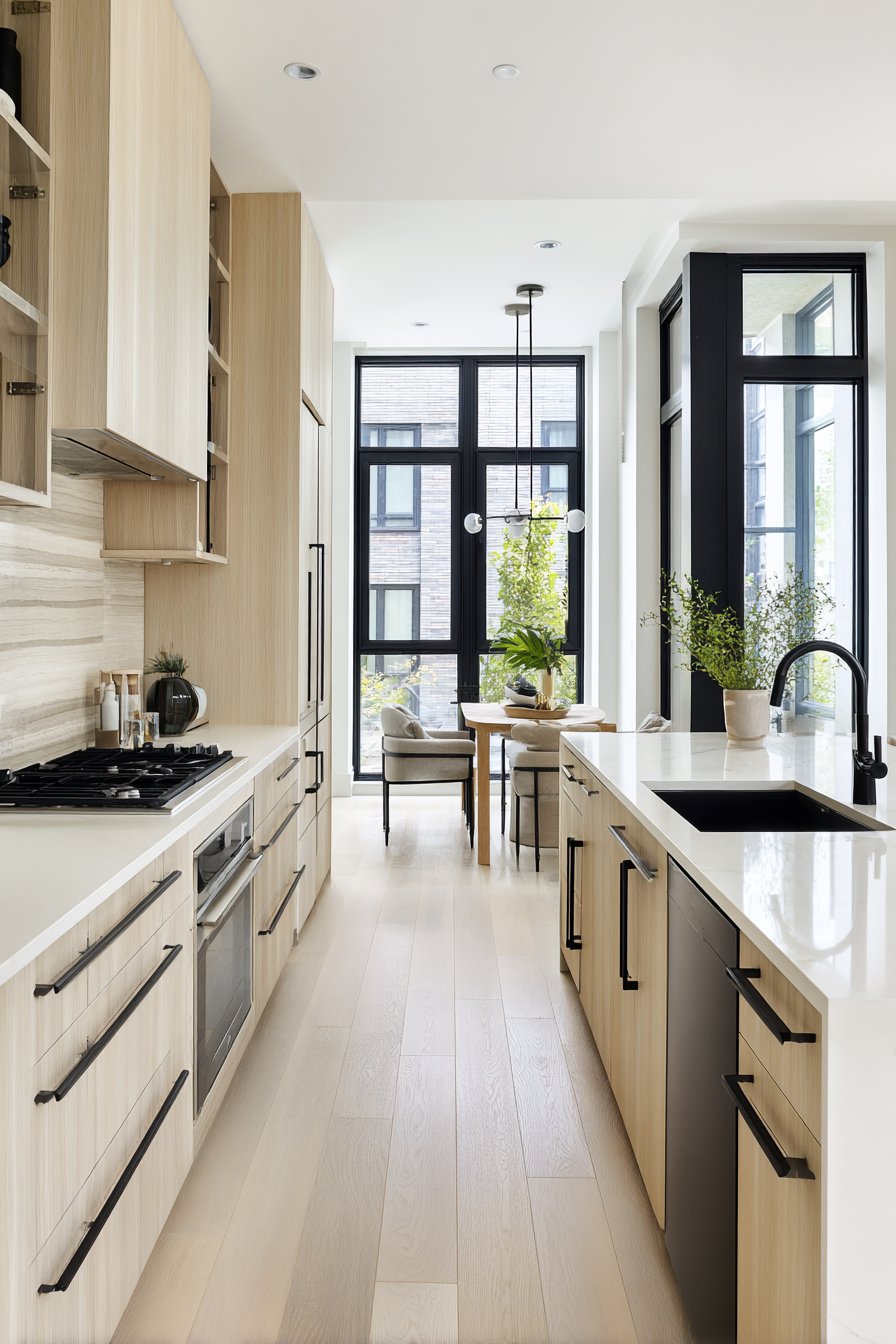
The island’s clean lines and hidden storage exemplify Nordic functionality—the belief that beautiful design must serve practical purposes rather than existing purely for aesthetics. Every element has been carefully considered and refined to its essential form, eliminating decorative excess while maintaining visual interest through proportion, material, and subtle detail. Abundant natural light from large windows creates the bright, airy atmosphere central to Scandinavian living, emphasizing the island’s role in the uncluttered, efficient workspace.
Key Design Tips: Choose handleless cabinetry with high-quality push mechanisms that will withstand years of daily use. Install induction cooktops for their seamless appearance and superior energy efficiency. Limit color palette to whites, greys, and natural wood tones for authentic Scandinavian aesthetics. Maximize natural light through large windows and minimal window treatments. Select furniture and accessories with simple forms that emphasize function over decoration.
12. Industrial Loft Raw Materials
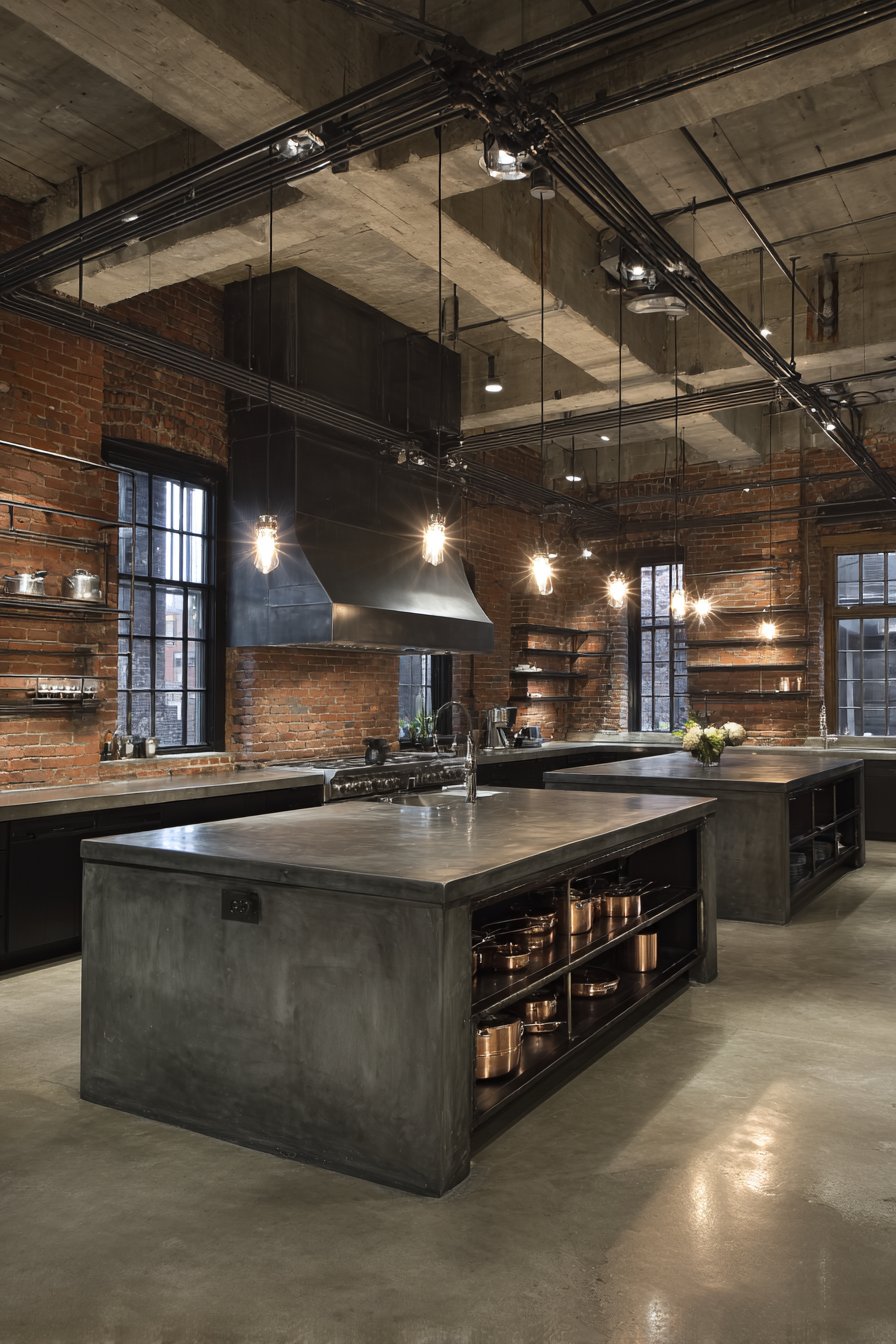
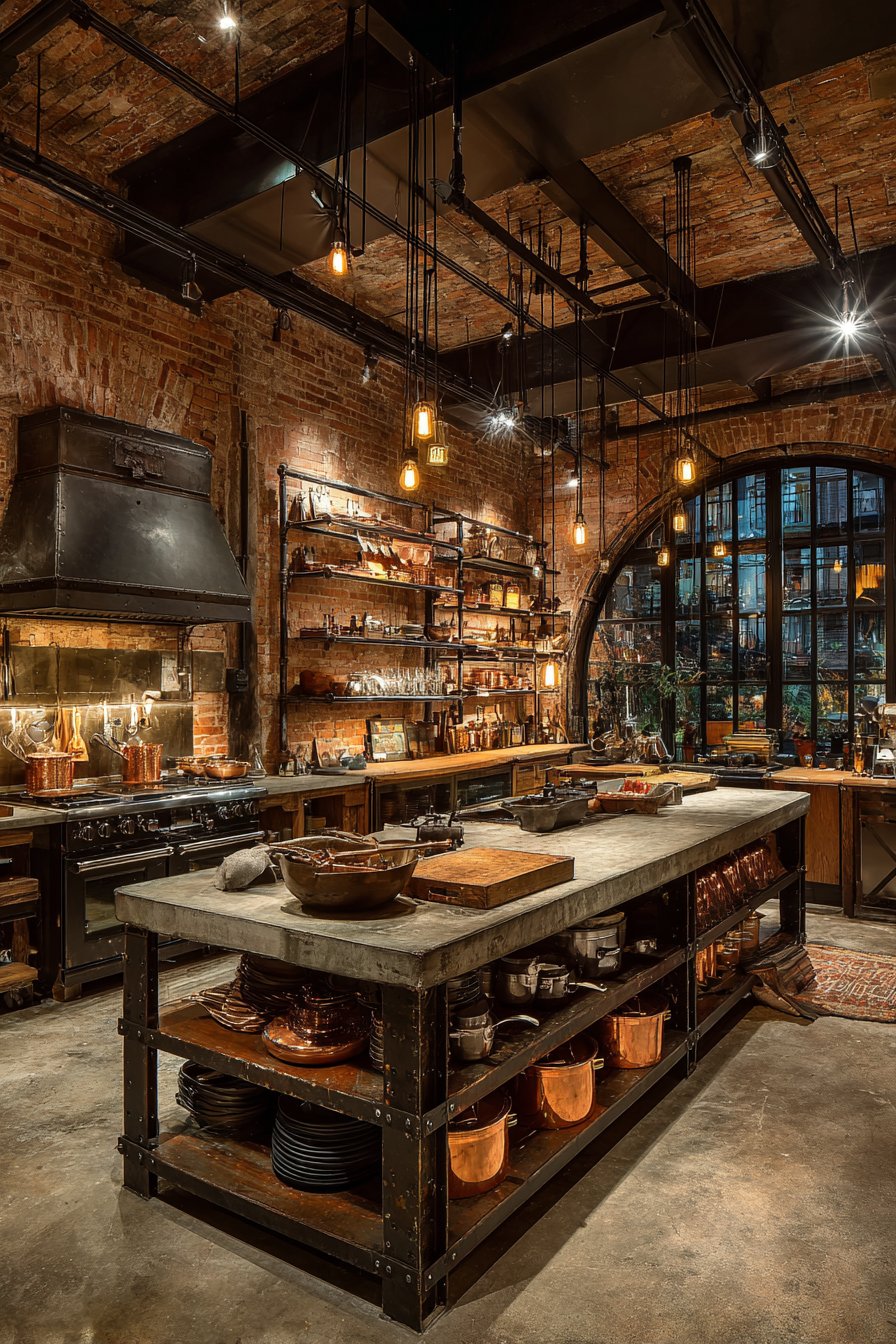
Industrial design celebrates exposed materials and utilitarian forms, and this loft kitchen layout embraces these principles through a custom steel and concrete island that makes no apologies for its raw aesthetic. The exposed metal framework showcases structural elements typically hidden, transforming functional support into decorative feature. Polished concrete top provides an indestructible work surface while contributing to the space’s urban, unfinished character.
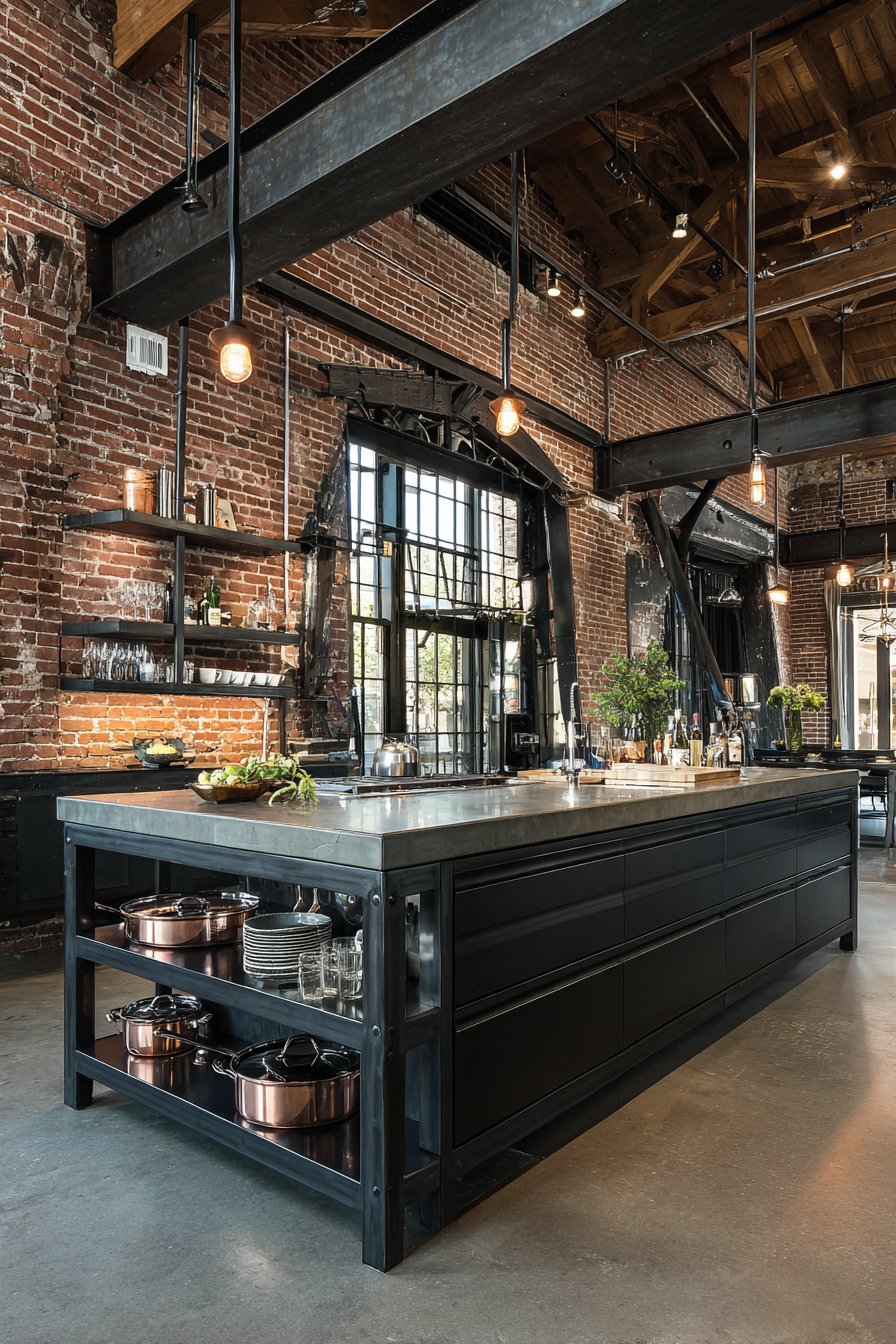
Open metal shelving on the island’s sides displays copper cookware, the warm metallic tones providing striking contrast against the cool grey concrete and dark steel. This thoughtful detail demonstrates how industrial design can incorporate color and warmth without abandoning its core aesthetic. Exposed brick walls and black-framed windows create architectural interest while reinforcing the loft’s industrial heritage, their texture and history adding depth that new construction cannot replicate.
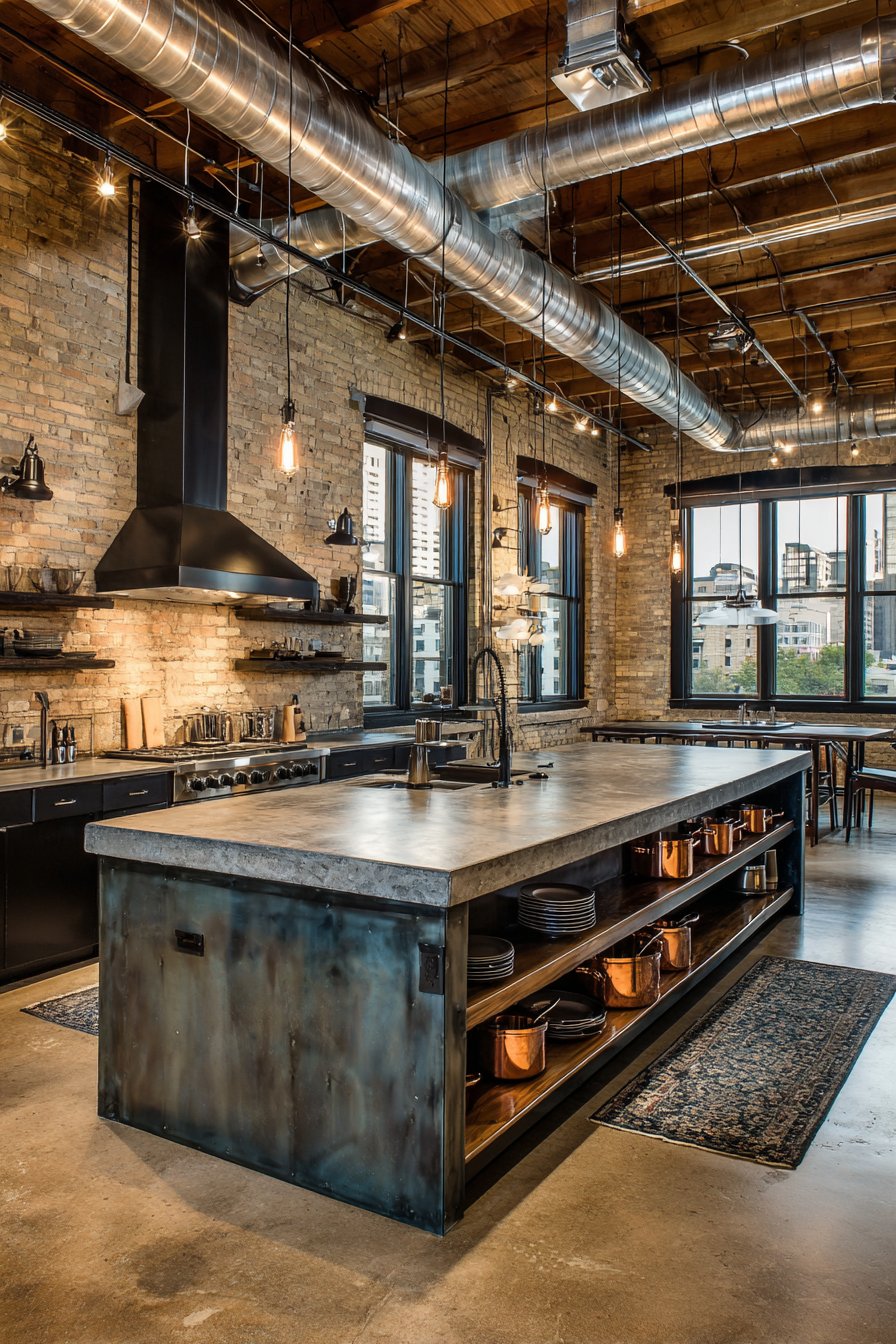
Edison bulb pendants provide ambient lighting while serving as sculptural elements, their visible filaments and simple sockets celebrating the beauty of basic technology. The warm glow they cast softens the hard materials and creates inviting atmosphere despite the space’s raw finishes. Dramatic shadows cast by the exposed framework emphasize the industrial materials and textures, creating ever-changing visual interest as light shifts throughout the day.
Key Design Tips: Seal concrete countertops with multiple coats of penetrating sealer to prevent staining from oils and acidic foods. Choose steel with rust-resistant treatments or embrace patina development as part of the aesthetic. Install adequate lighting to compensate for dark surfaces and minimal natural light common in urban lofts. Balance raw industrial elements with some softer materials or textiles to prevent spaces from feeling cold. Display attractive cookware and kitchen tools as part of the decor in industrial kitchens where open storage is common.
13. Traditional Blue-Grey Elegance
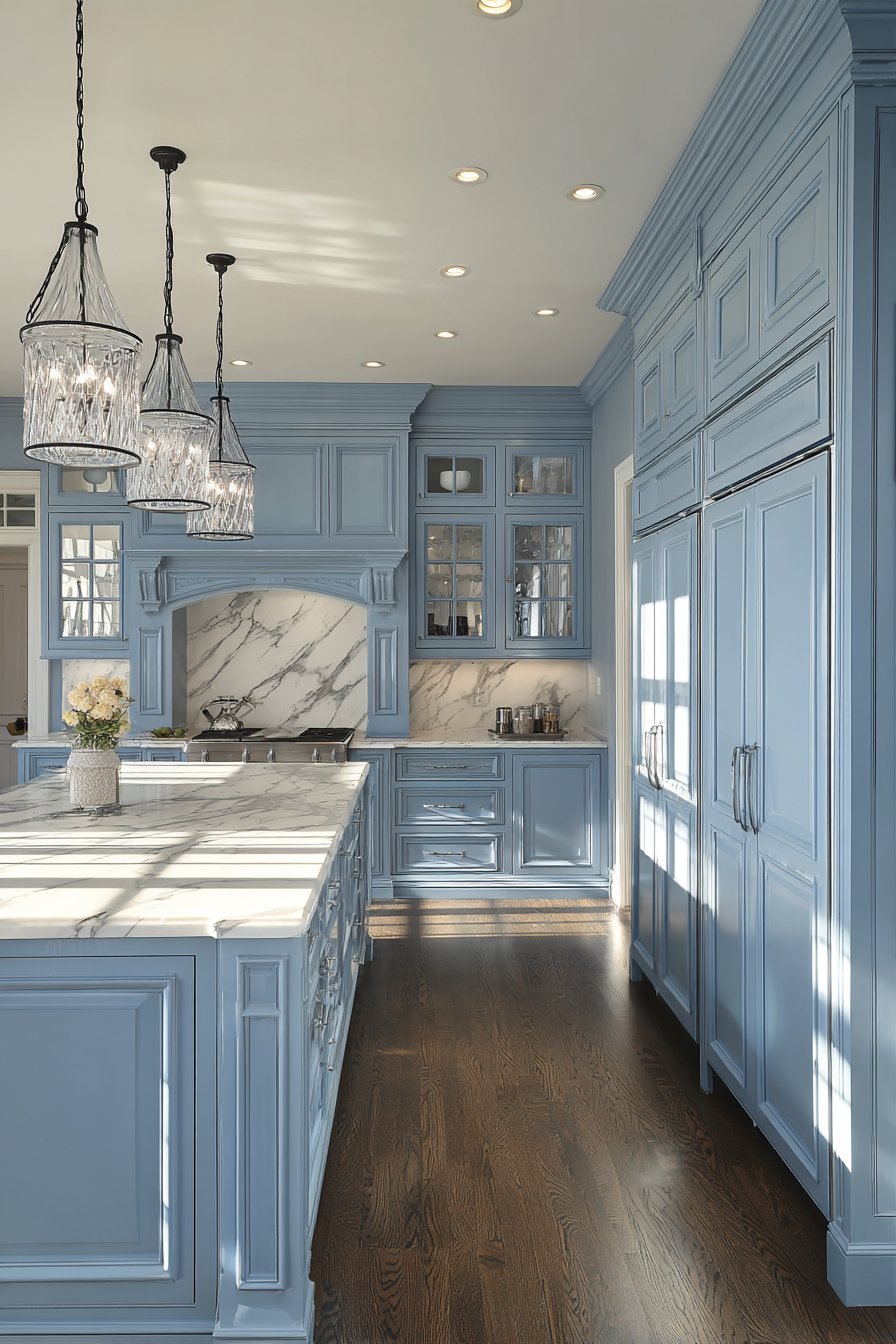
Traditional kitchen design never goes out of style, and this layout demonstrates why through its large glazed-finish island in soft blue-grey with raised panel doors and decorative details. The furniture-quality craftsmanship evident in the island’s construction elevates it from mere cabinetry to showpiece, with each panel and detail reflecting skilled woodworking. A small prep sink integrated into the island reduces congestion at the main sink while adding convenience, and pull-out spice racks keep frequently used seasonings organized and accessible.
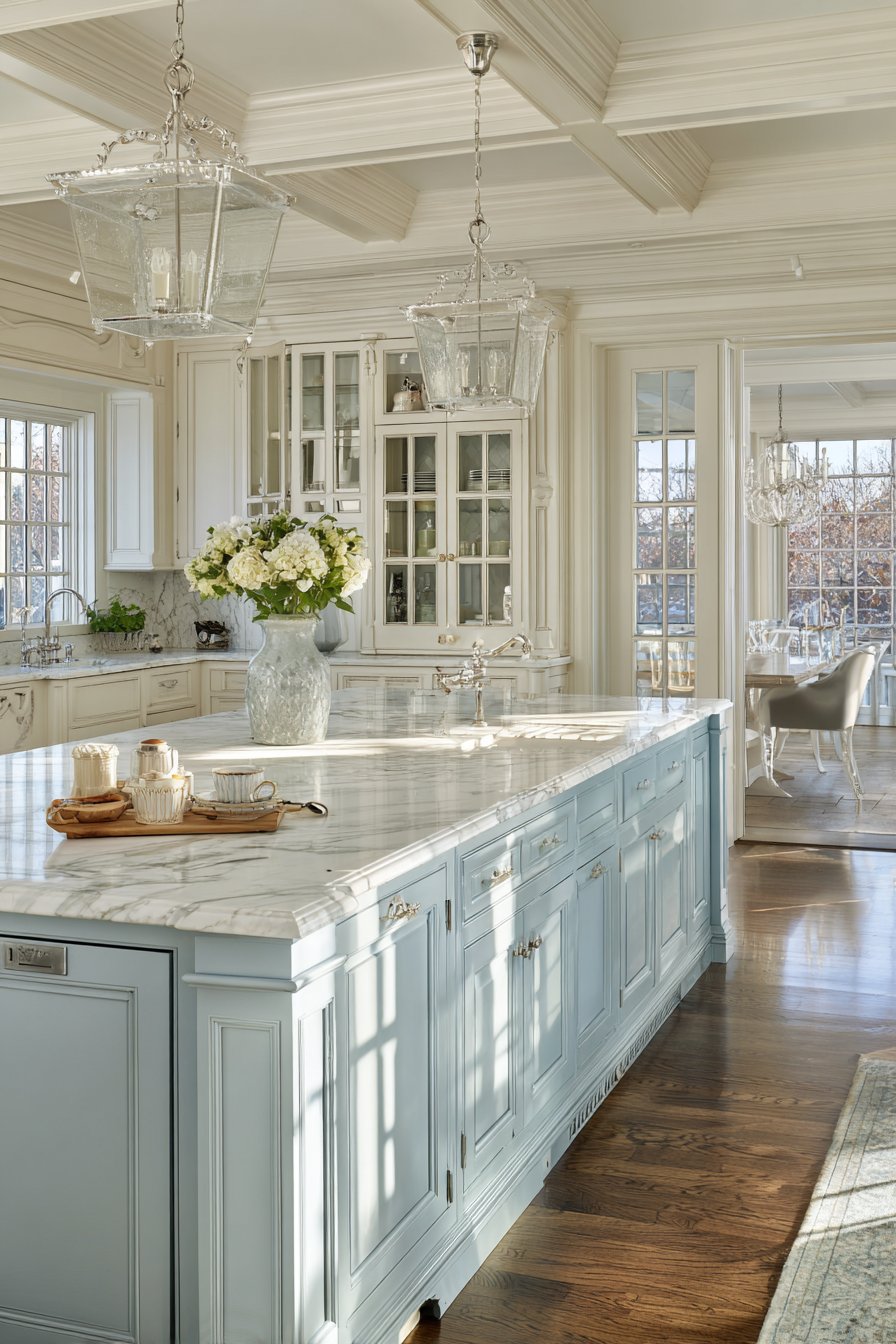
White marble countertops with subtle veining extend across both island and perimeter surfaces, their classic beauty and cool elegance perfect for traditional aesthetics. Crystal pendant lights add refined sparkle and romantic ambiance, their faceted surfaces catching and reflecting light throughout the space. Crown molding and furniture-style details like decorative corbels and turned posts create the architectural richness that defines traditional design.
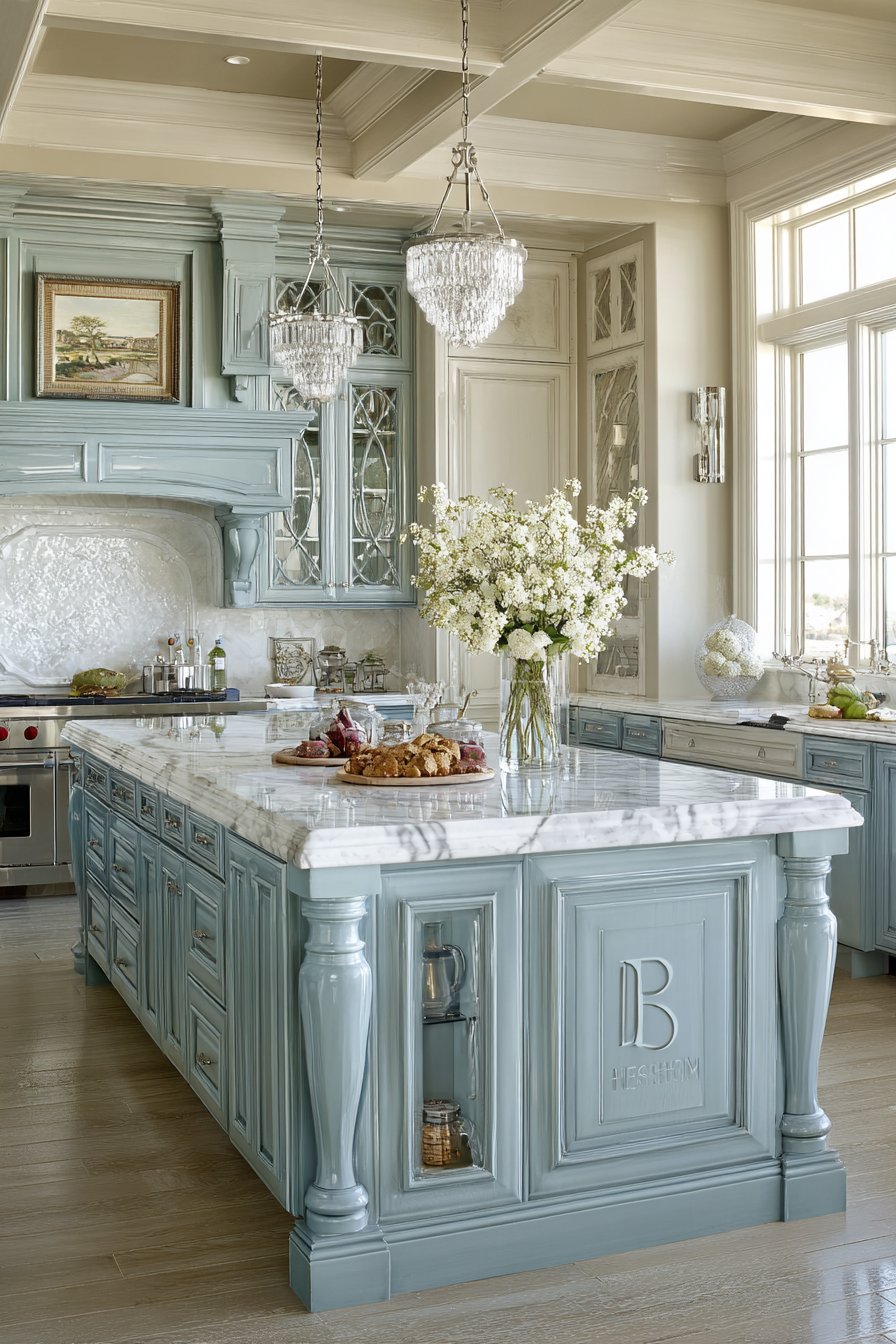
The formal yet functional layout demonstrates how traditional design serves practical needs while creating beautiful spaces. Every detail has been considered—from the glazed finish that adds depth to the painted surfaces to the carefully scaled proportions that create visual harmony. Natural light from French doors floods the space, highlighting the island’s decorative elements and classic proportions while connecting the indoor kitchen to outdoor views.
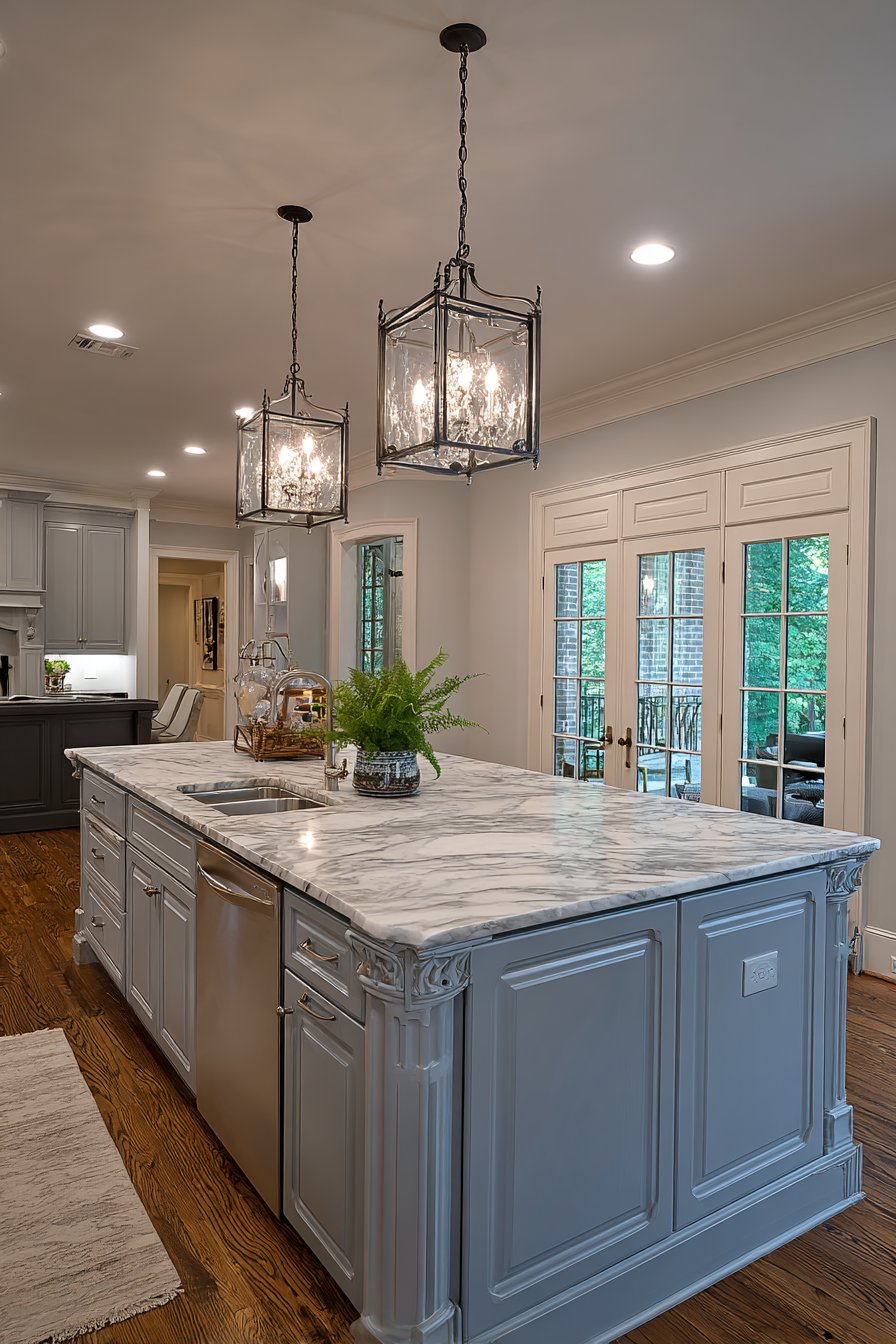
Key Design Tips: Choose glazed cabinet finishes over flat paint for depth and character that improves with age. Install prep sinks at least 15 inches from the island edge to allow adequate counter space on both sides. Select marble with subtle rather than dramatic veining for traditional spaces to maintain elegant restraint. Hang crystal or glass light fixtures on dimmers to control ambiance for different activities. Include architectural details like crown molding and furniture feet to enhance traditional character.
14. Coastal Weathered White Casual Living
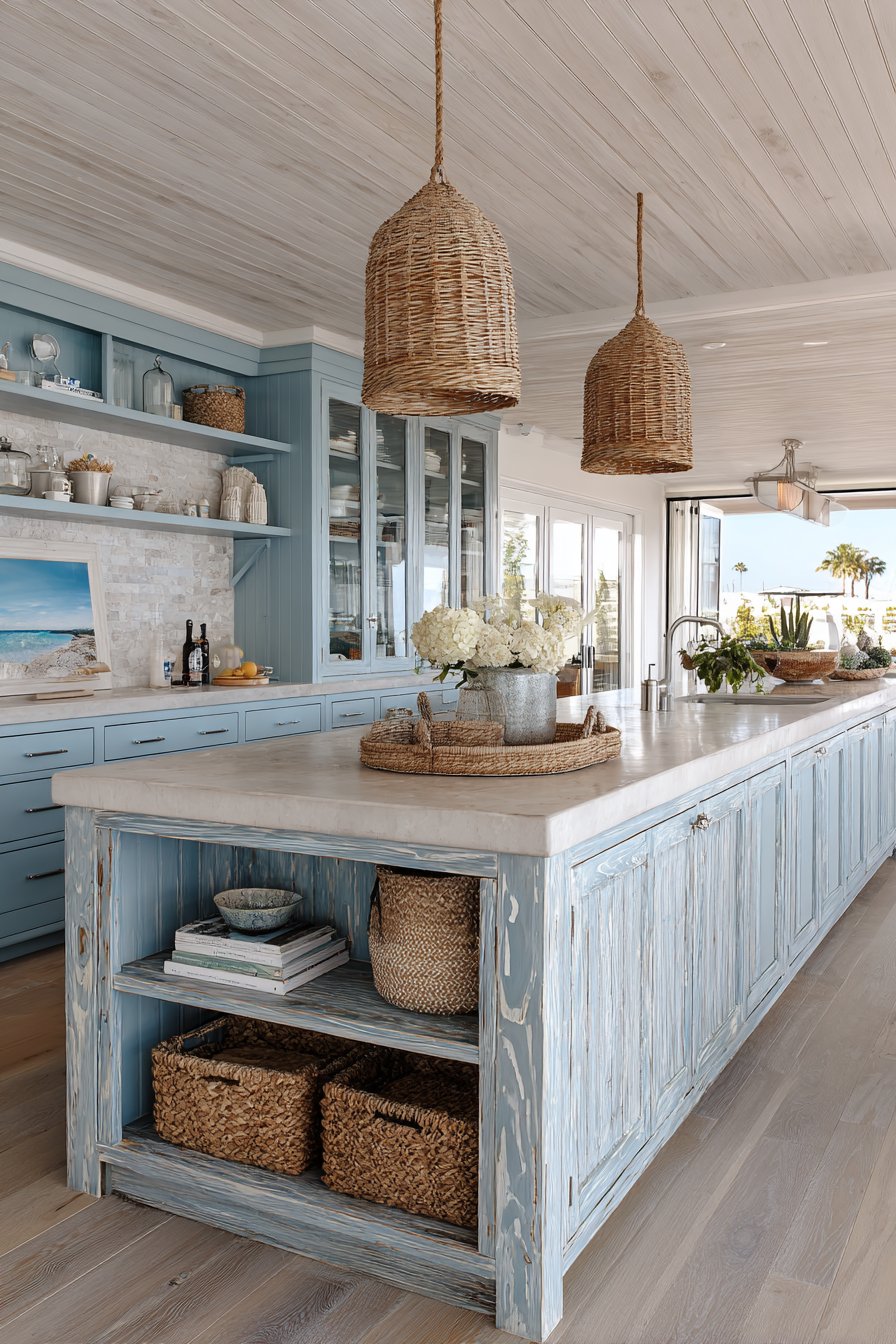
Coastal design captures the relaxed, breezy feeling of seaside living, and this kitchen layout achieves this through a weathered white-washed wood island that looks perfectly at home in a beach house. The distressed finish suggests years of use and exposure to salt air, creating instant character and casual charm. Open shelving displays woven baskets and beach-inspired accessories, bringing coastal texture and natural materials into the functional kitchen space.
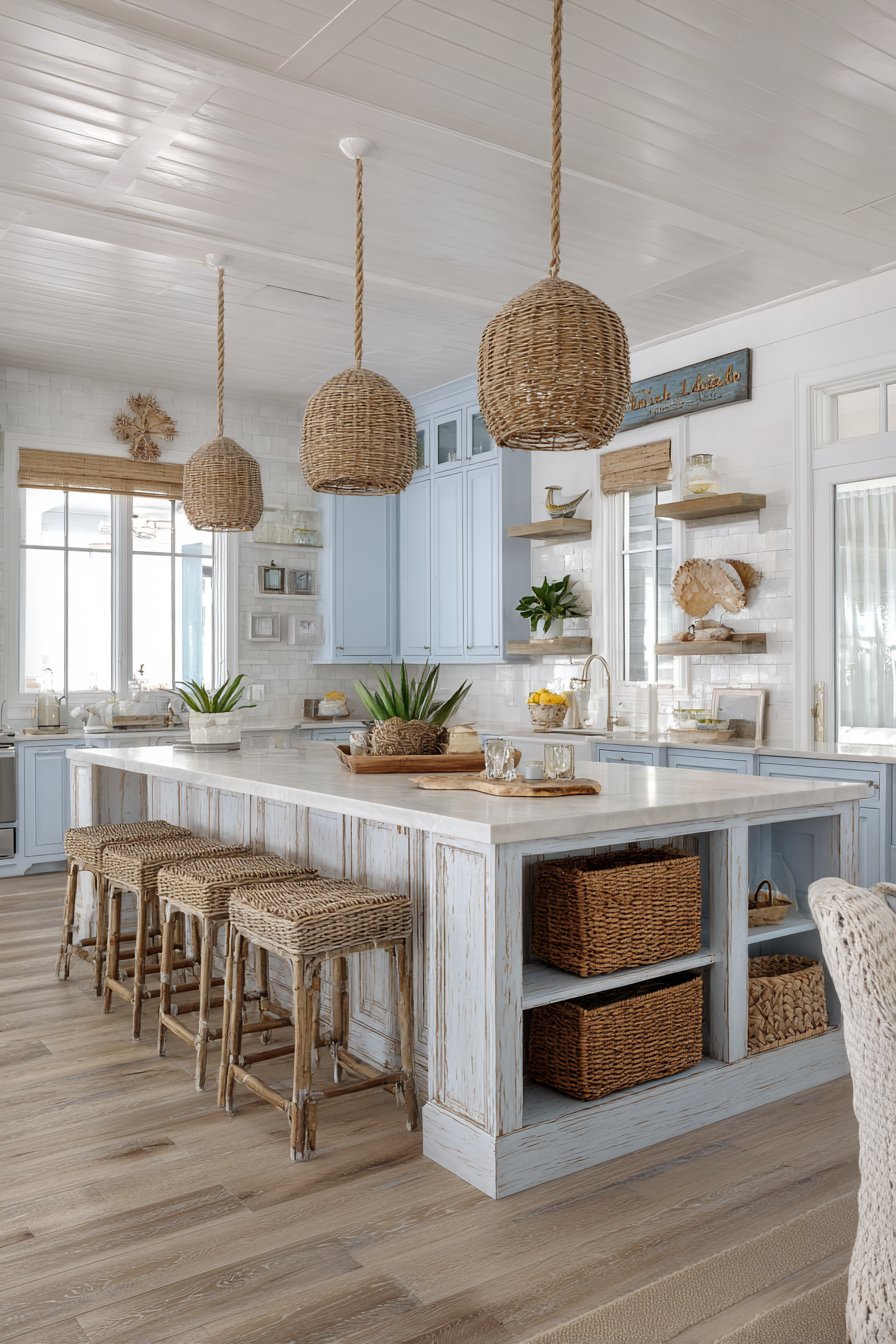
Light blue perimeter cabinets complement the weathered island while evoking ocean colors, their soft hue creating a calming backdrop that reinforces the coastal theme. White beadboard ceiling adds traditional cottage detail while brightening the space, its vertical lines drawing the eye upward and making the kitchen feel taller. Rope pendant lights and brushed nickel fixtures maintain the breezy aesthetic while providing necessary illumination and functional hardware.
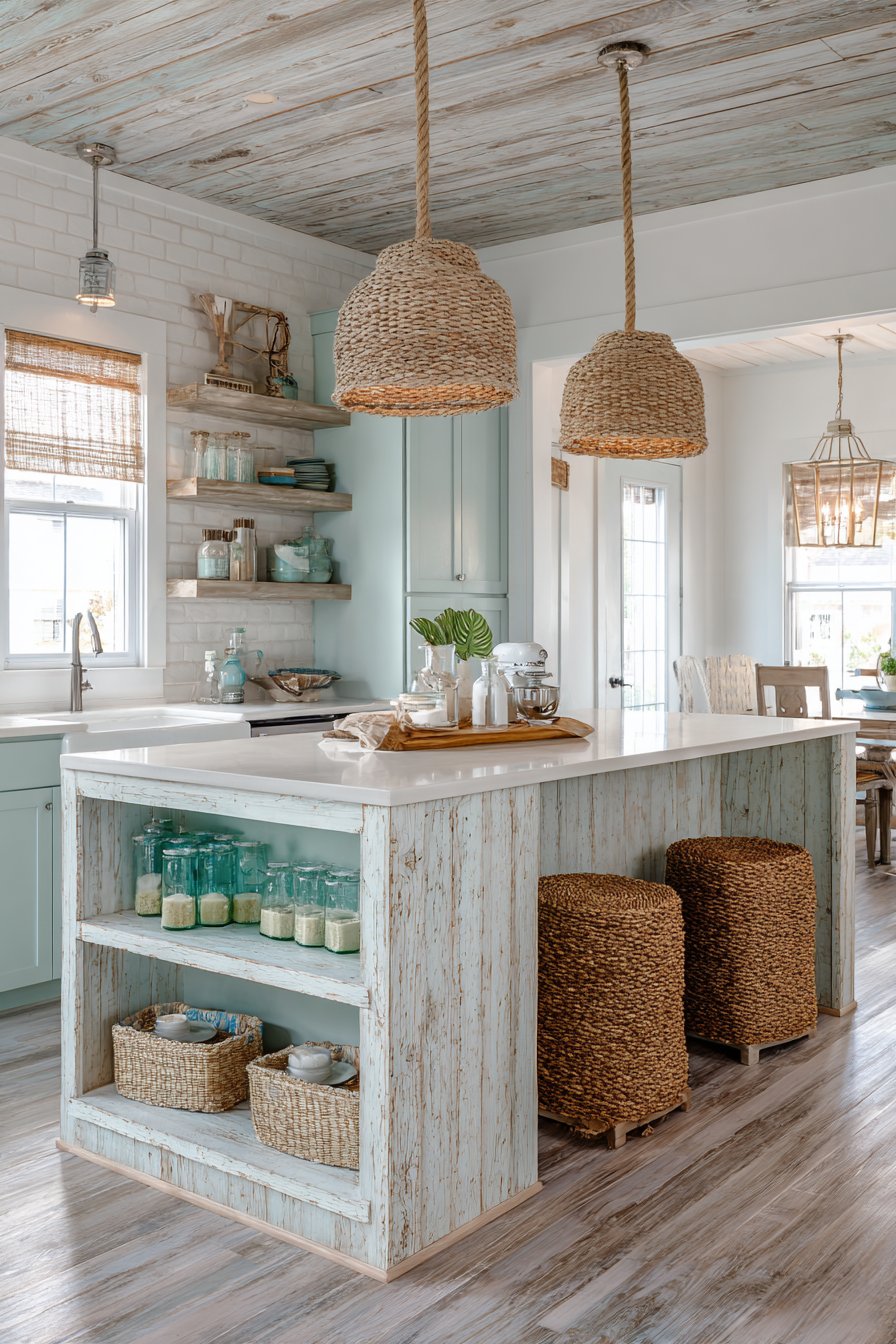
The relaxed layout creates a casual gathering spot where family and friends can congregate without formality, perfectly suited to the laid-back lifestyle coastal living represents. Bright natural light simulating seaside ambiance floods through windows, emphasizing how the island creates this casual gathering spot while providing essential storage and counter space. The overall effect is a kitchen that feels like a permanent beach vacation—relaxed, welcoming, and effortlessly beautiful.
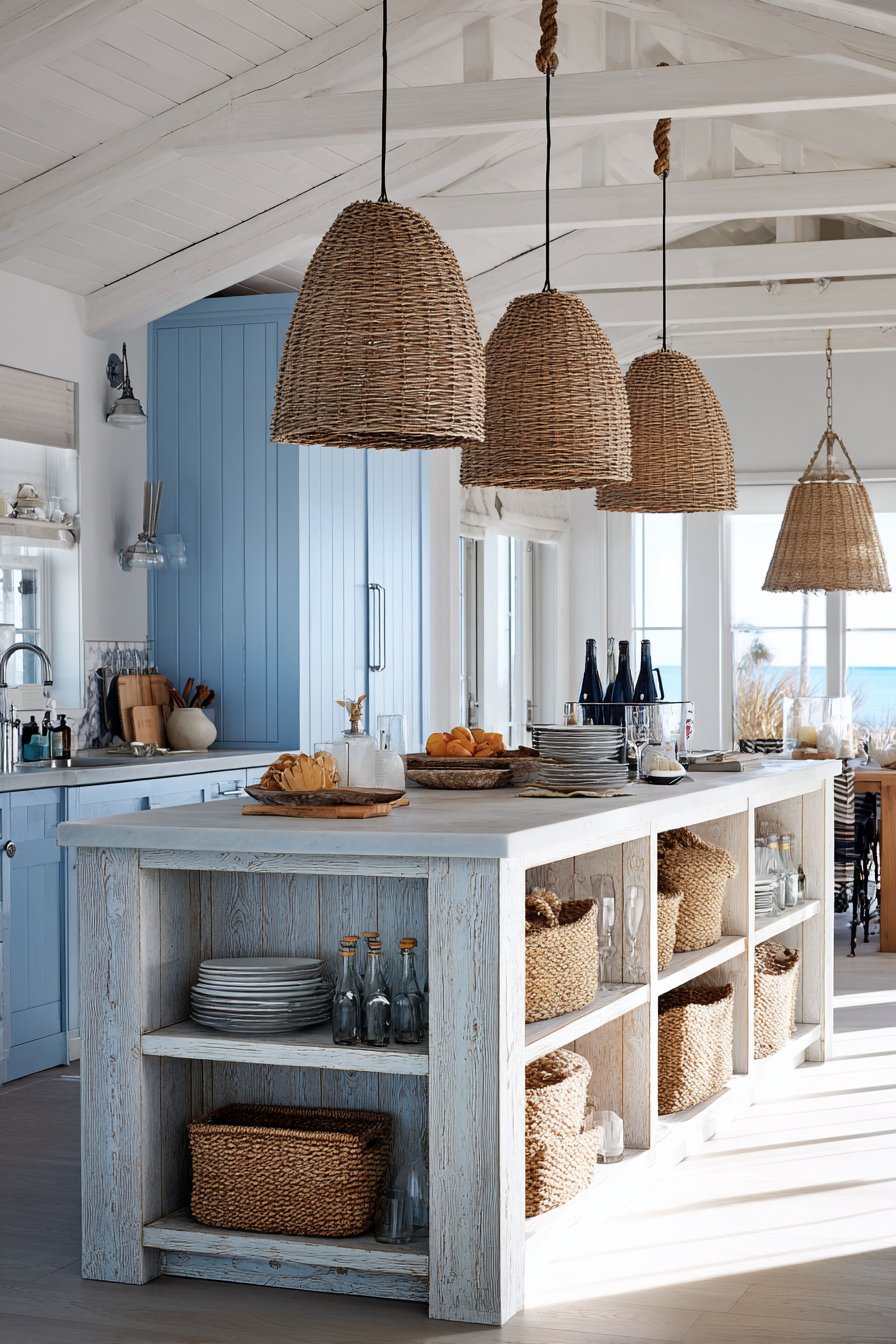
Key Design Tips: Create weathered finishes using paint layering techniques and distressing tools rather than harsh chemicals. Choose blue cabinet colors with grey undertones to avoid juvenile appearances in adult spaces. Install open shelving at eye level for easy access to frequently used items and display opportunities. Select rope or natural fiber light fixtures that can withstand kitchen humidity without deteriorating. Use brushed or satin metal finishes rather than polished ones for appropriate casual coastal aesthetic.
15. One-Wall Parallel Efficiency
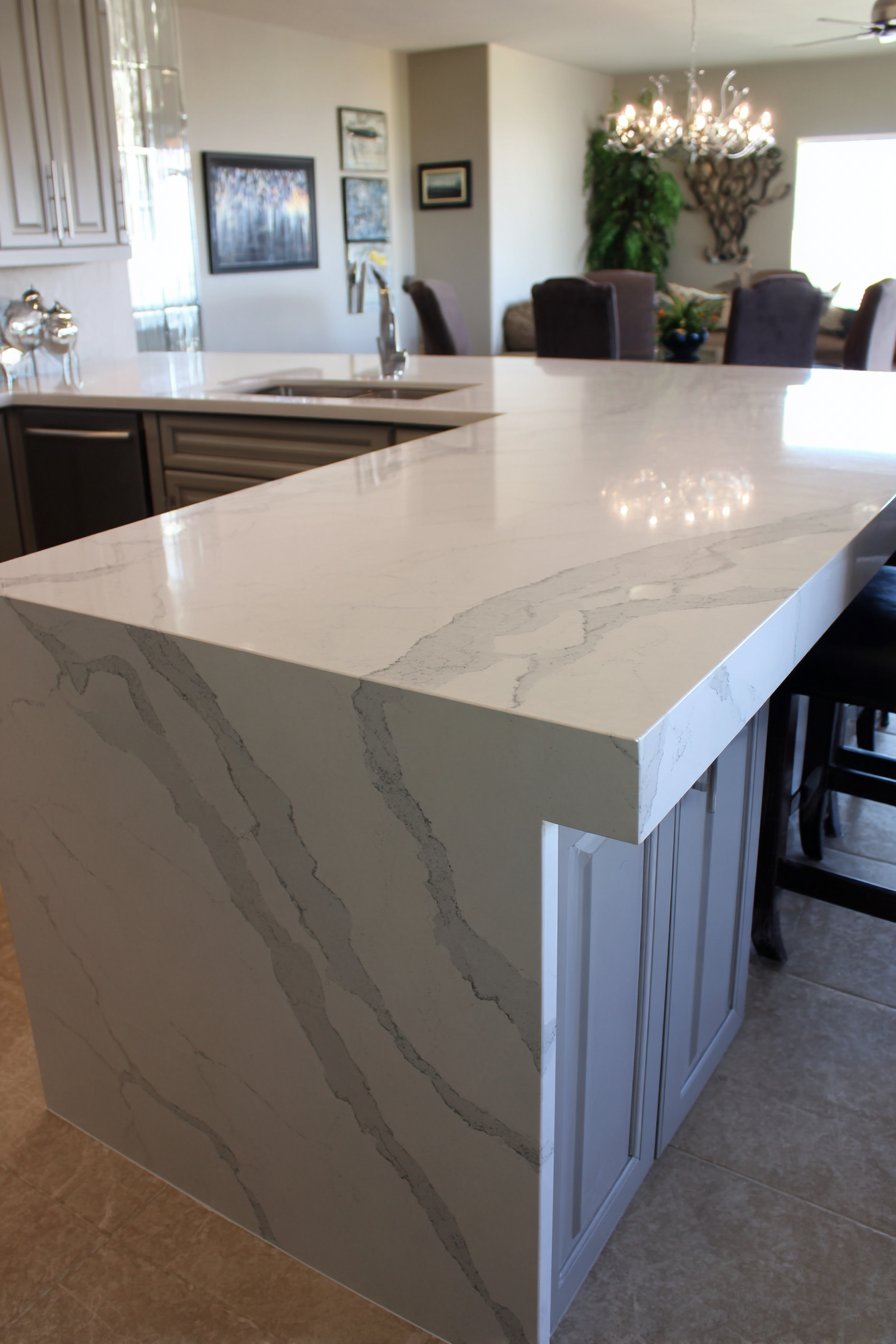
Single-wall kitchens present unique challenges, but this layout solves them elegantly through a parallel island that creates an efficient workspace corridor. The raised breakfast bar with waterfall edge on one side serves as a visual and functional division between cooking and dining zones, its cascading material creating architectural interest. Storage on the opposite side maintains clean sight lines from the dining area while providing valuable cabinet space.
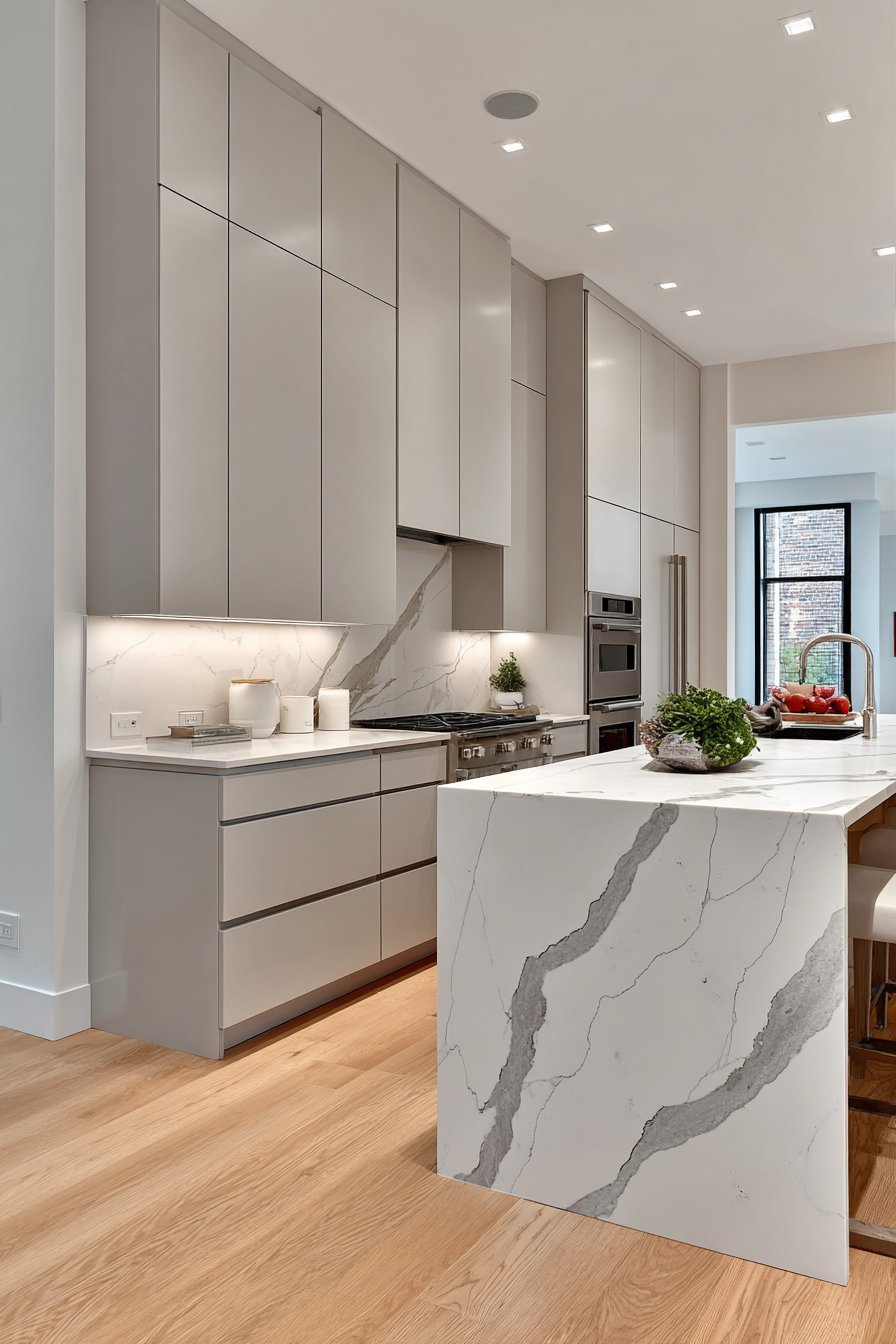
Light grey handleless cabinetry maintains modern simplicity, its smooth surfaces and minimal visual breaks creating contemporary sophistication. The absence of hardware enhances the streamlined appearance while requiring high-quality mechanisms to ensure doors and drawers open smoothly. Quartz countertops in white with grey veining provide durable work surfaces that resist staining and scratching while coordinating with the grey cabinetry.
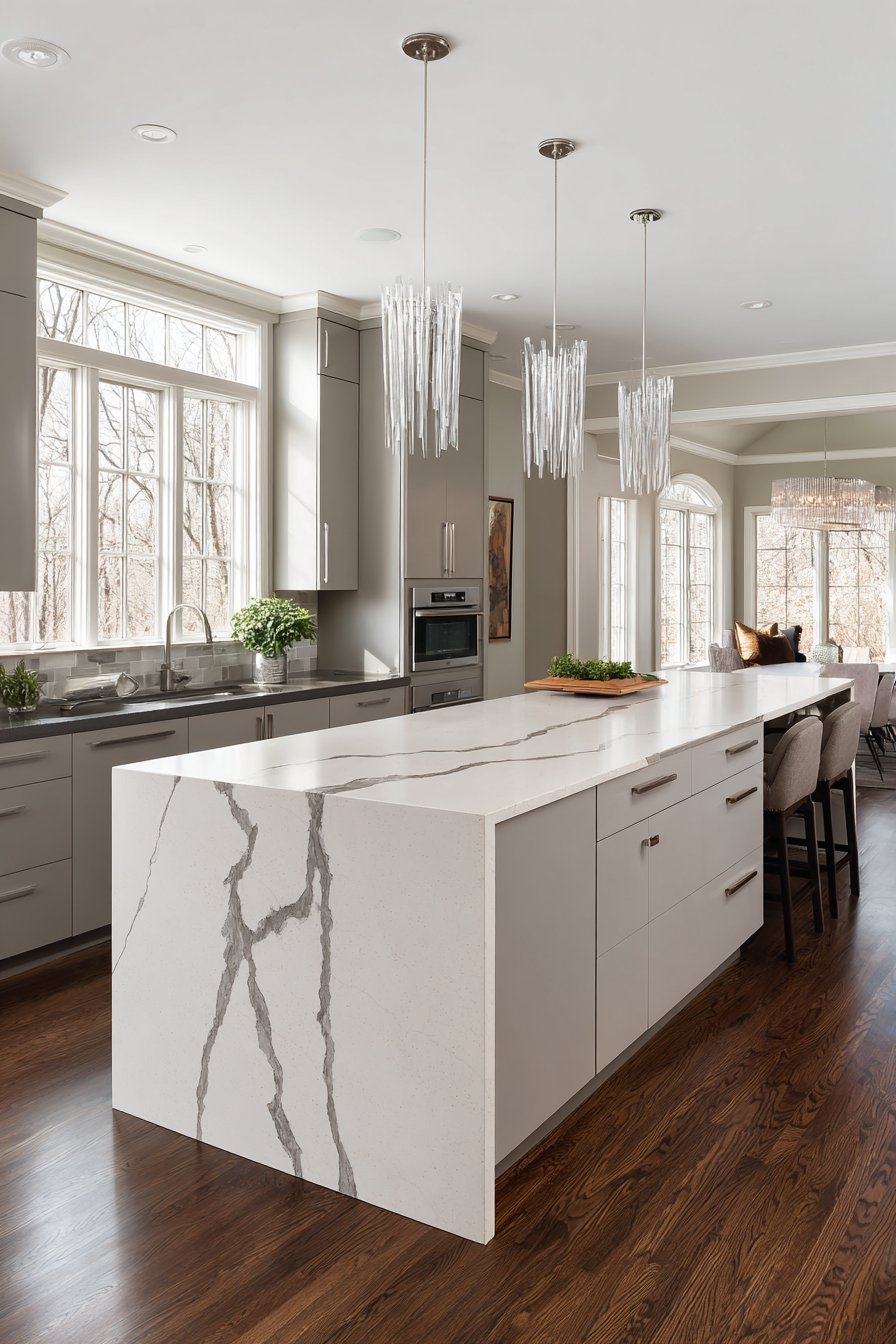
The linear layout’s efficiency becomes apparent through careful analysis—the parallel island essentially doubles the available counter space while creating natural workflow patterns. Everything remains within easy reach, with the island housing frequently used items and the wall containing appliances and less-accessed storage. Professional photography captures the precise exposure showing clean lines and material quality, demonstrating how proper lighting reveals the design’s sophisticated simplicity.
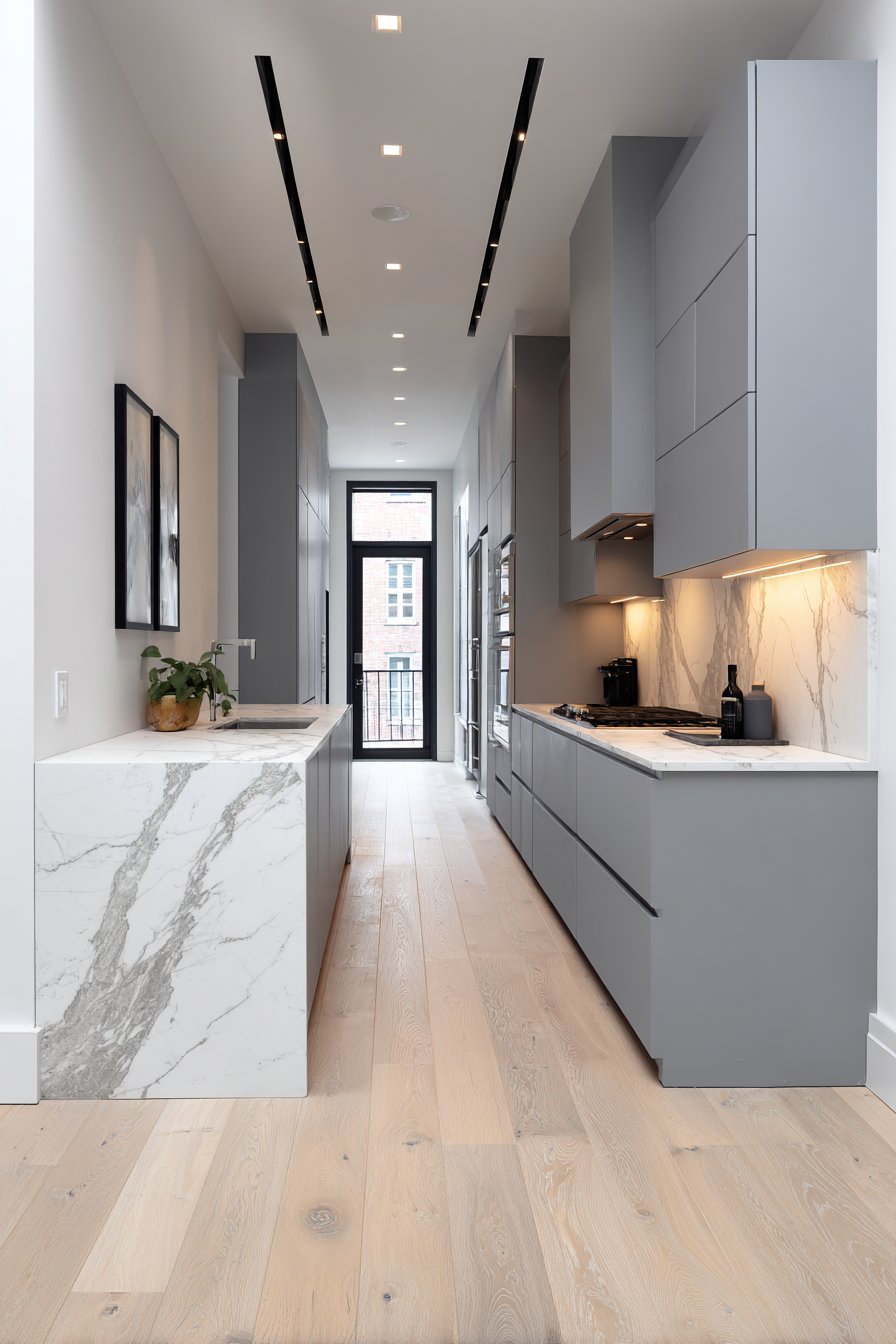
Key Design Tips: Maintain 48 inches minimum between wall and island in one-wall kitchens to allow comfortable two-cook working space. Choose handleless cabinets with touch-latch or push-to-open mechanisms for clean contemporary lines. Install waterfall edges on at least one side of islands to create architectural interest in minimal designs. Select quartz over marble for worry-free maintenance in busy kitchens. Use consistent countertop material on both island and perimeter to create visual cohesion in linear layouts.
16. Mediterranean Terra Cotta Warmth
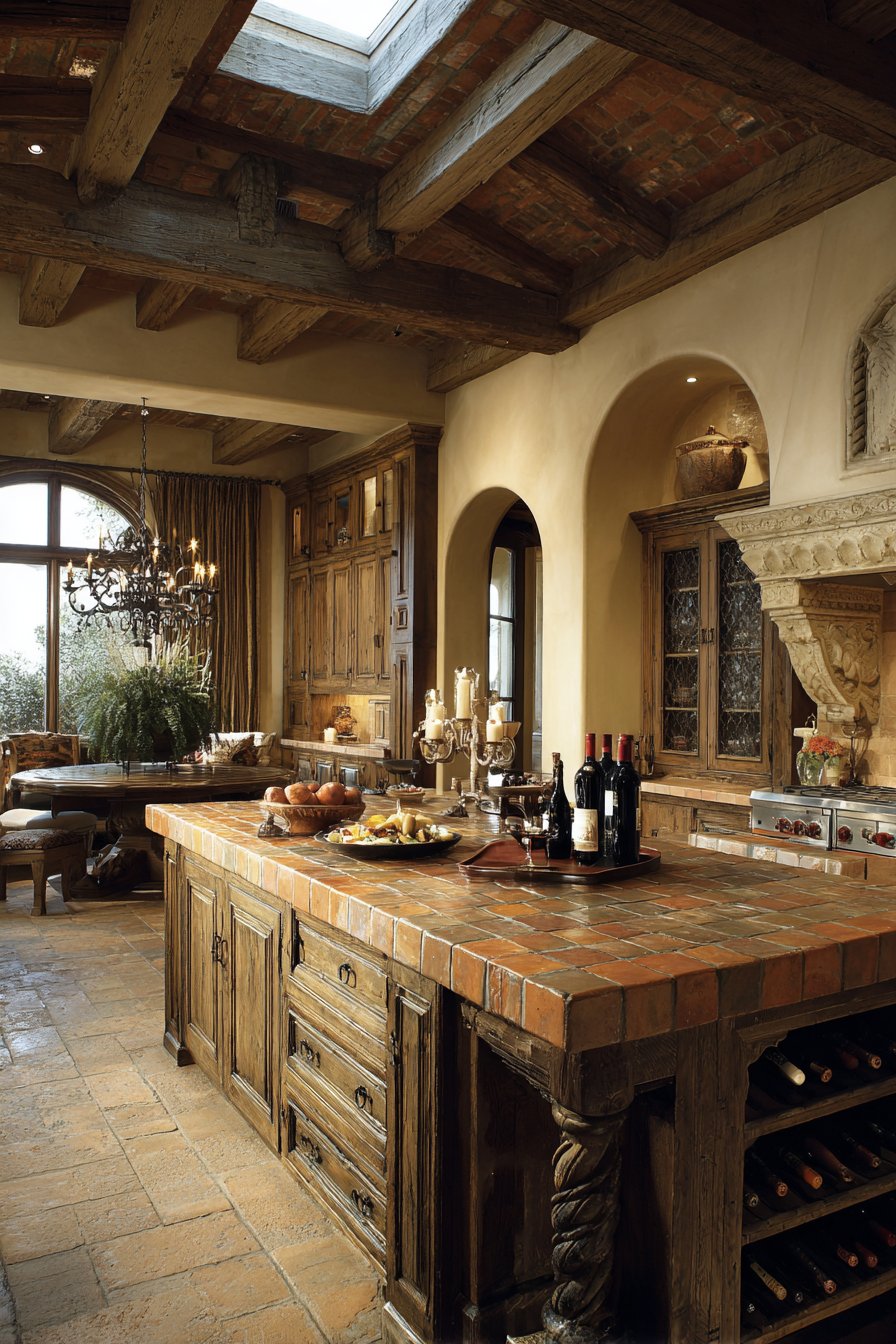
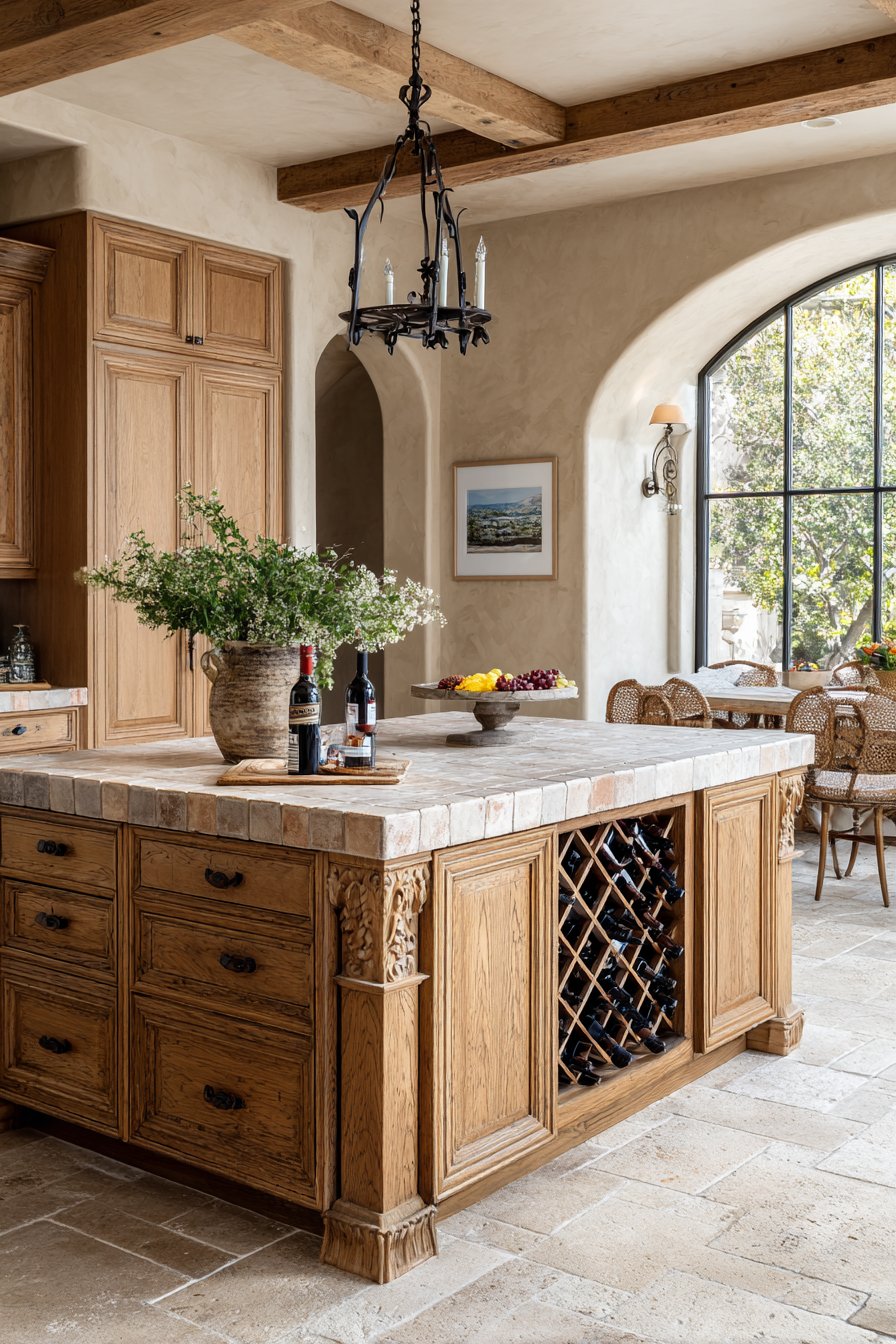
Mediterranean design celebrates earthiness, warmth, and connection to ancient building traditions, and this kitchen layout captures these qualities through a terra cotta tile island base and thick limestone countertop. The natural stone and clay materials connect the modern kitchen to centuries-old building practices, their organic textures and warm tones creating immediate comfort. A built-in wine rack and drawer storage for table linens transform the island into an entertaining hub, housing everything needed for gracious hosting.
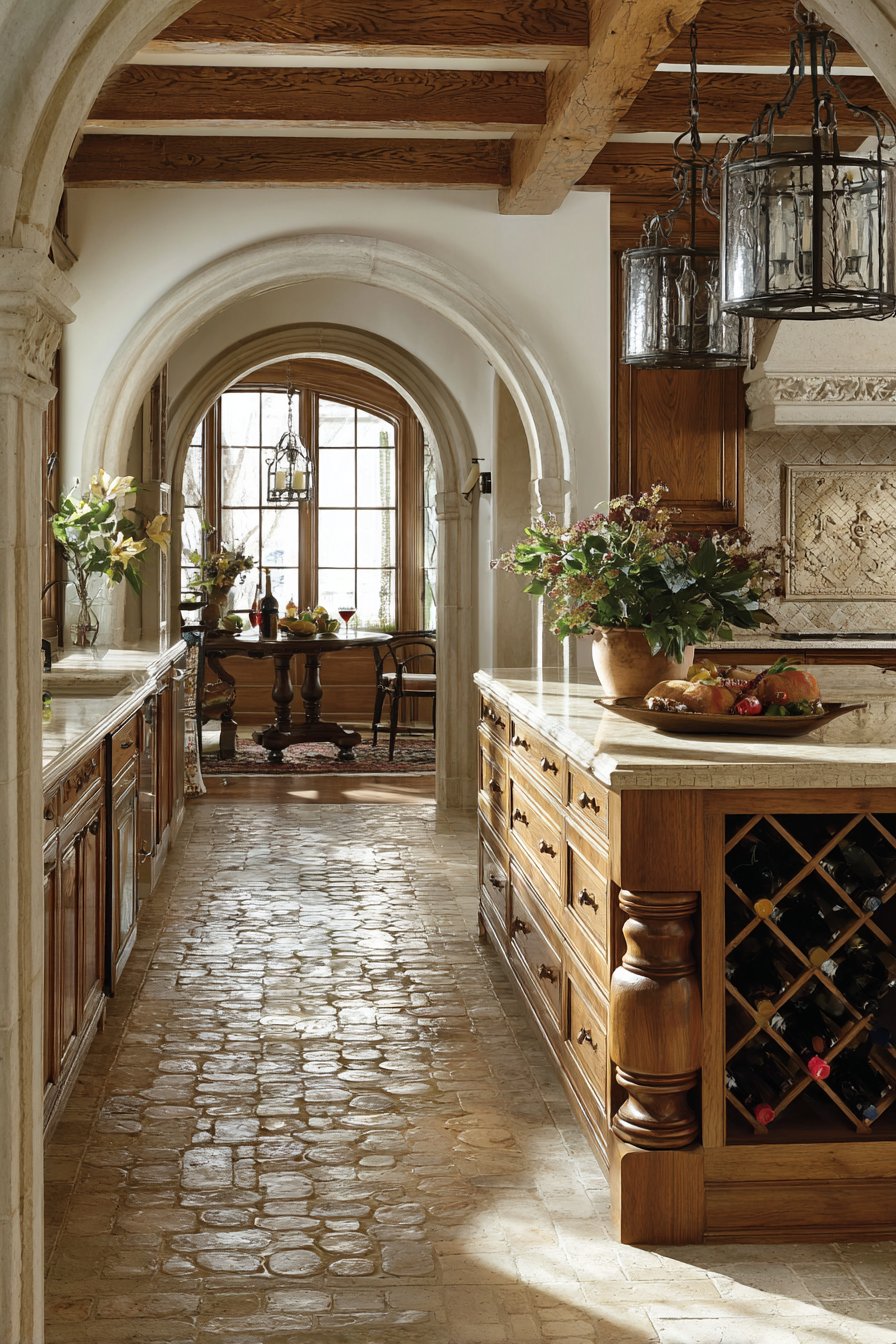
Warm wood cabinets with decorative corbels line the walls, their honey tones and carved details adding richness and Old World charm. Arched doorways frame views to adjacent rooms, their curved forms softening the space while referencing Mediterranean architecture. Wrought iron light fixtures complete the aesthetic, their hand-forged appearance and dark finish complementing the natural materials throughout.
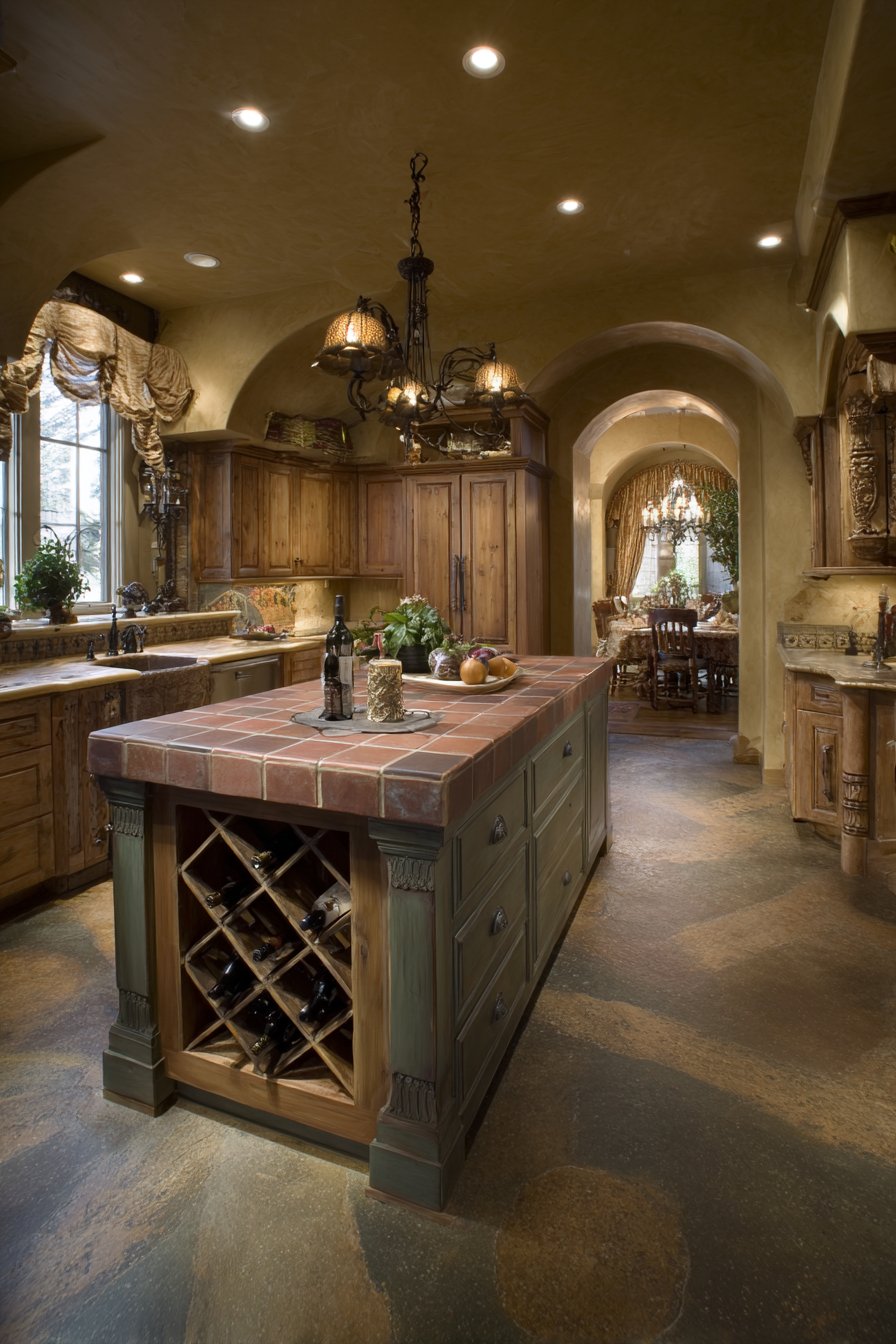
Natural daylight creates warm afternoon light that emphasizes the earthy materials and rich textures, making the kitchen feel like it could exist in a Tuscan villa or Spanish hacienda. The substantial island serves as both prep area and gathering space, its generous proportions inviting people to linger over glasses of wine and conversation. The inviting layout demonstrates how Mediterranean design creates kitchens that prioritize hospitality and connection as much as cooking.
Key Design Tips: Choose authentic terra cotta tiles rather than printed ceramic imitations for genuine material character. Seal limestone countertops promptly and reseal regularly to prevent staining from wine, citrus, and oils. Install corbels that actually support weight rather than purely decorative versions for structural integrity. Select wood cabinets with visible grain rather than painted finishes to maximize warmth. Include wine storage in islands to emphasize the hospitality focus central to Mediterranean living.
17. Contemporary Floating Island Drama
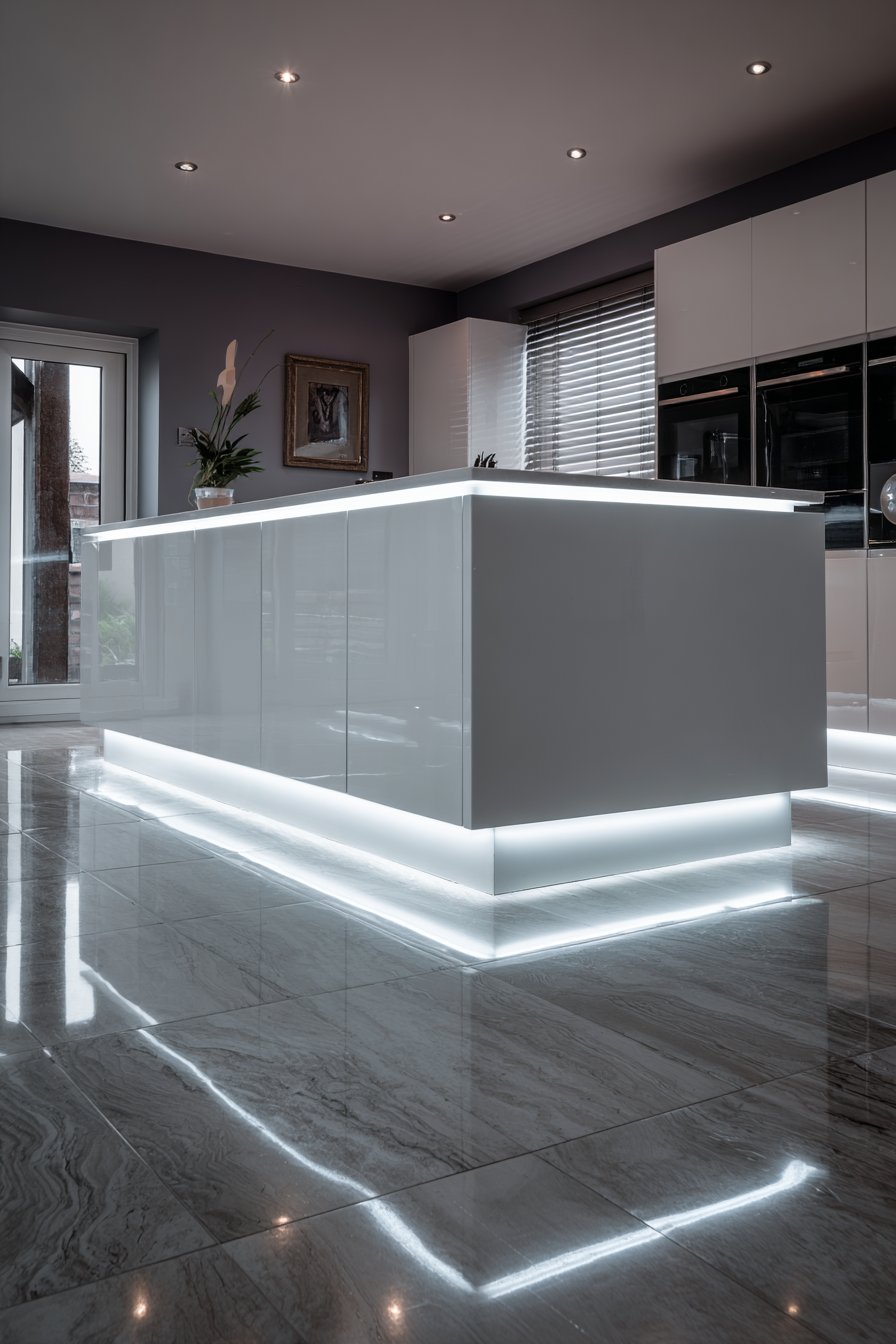
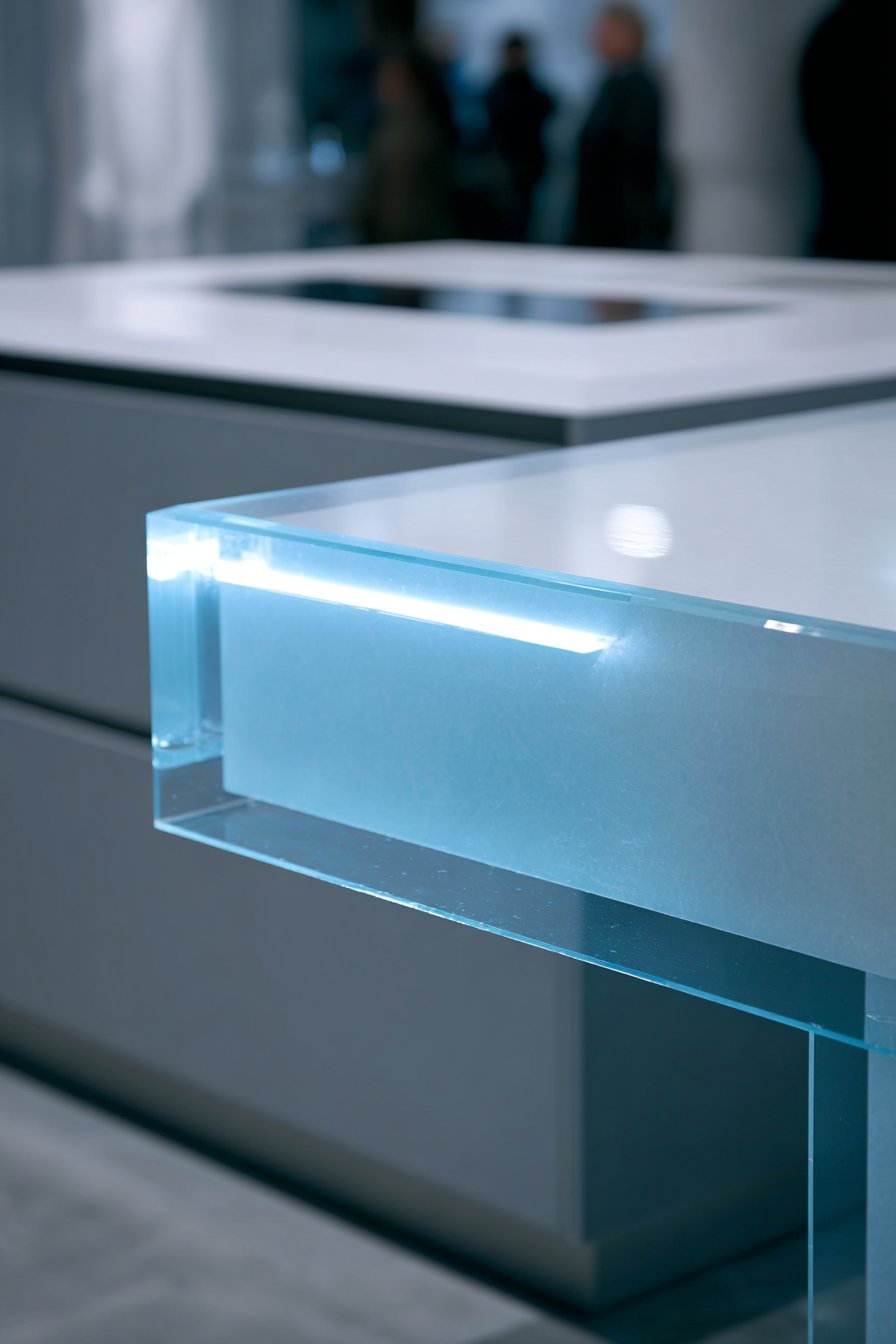
Contemporary design sometimes pushes boundaries, and this minimalist space features a floating island with hidden support structure that creates a dramatic visual effect seemingly defying gravity. The cantilevered design requires precise engineering, with substantial support concealed within the floor structure to create the illusion of levitation. Glossy white lacquer surfaces reflect natural light while emphasizing the island’s sculptural quality.
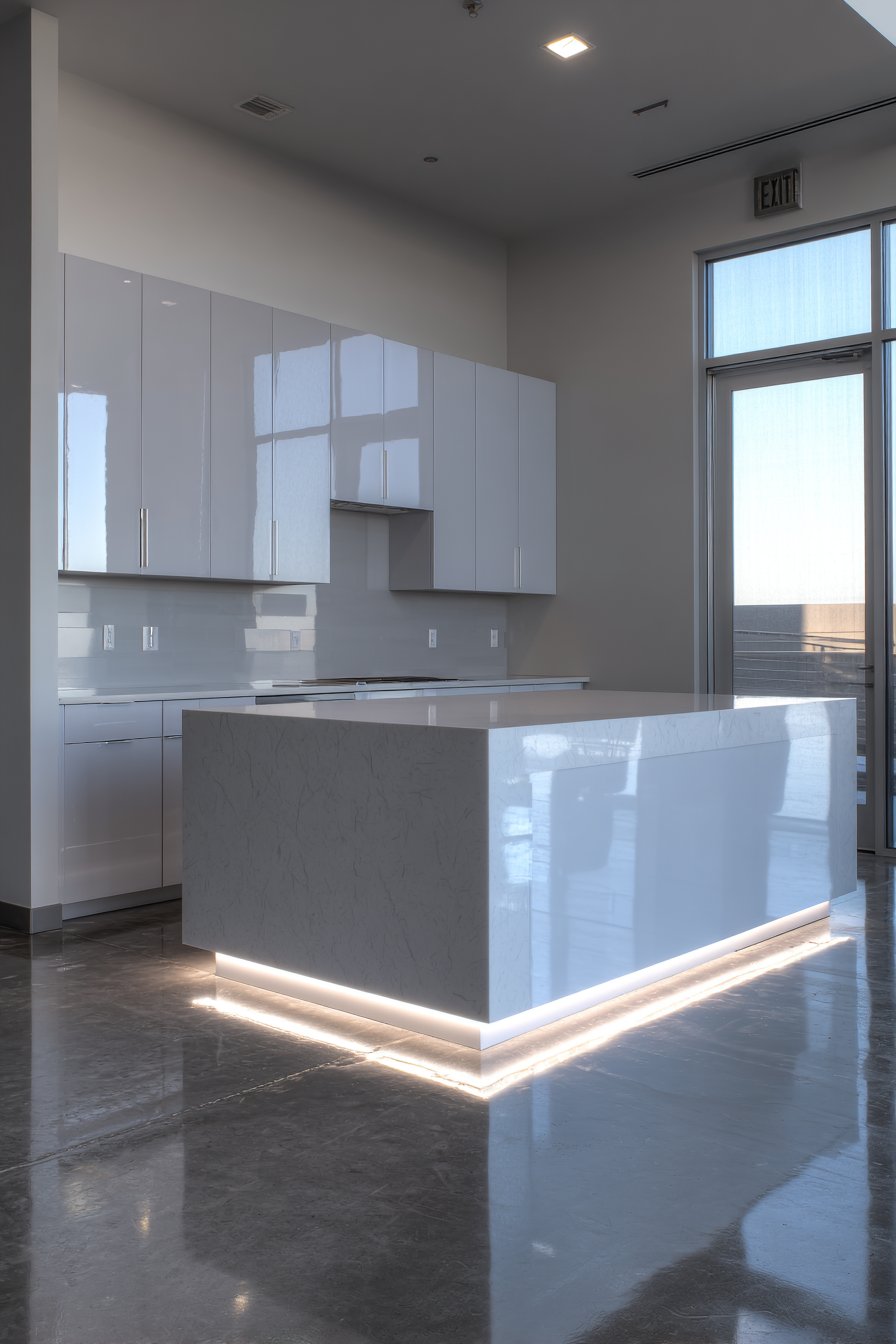
Integrated LED strips underneath provide ambient glow that enhances the floating effect, the light washing across the floor and creating a halo that makes the island appear even more suspended. Handle-free cabinets in charcoal grey line the walls, creating striking contrast that makes the white island pop while maintaining the clean contemporary aesthetic. Every surface remains unbroken by hardware or visible seams, the ultimate expression of minimalist refinement.
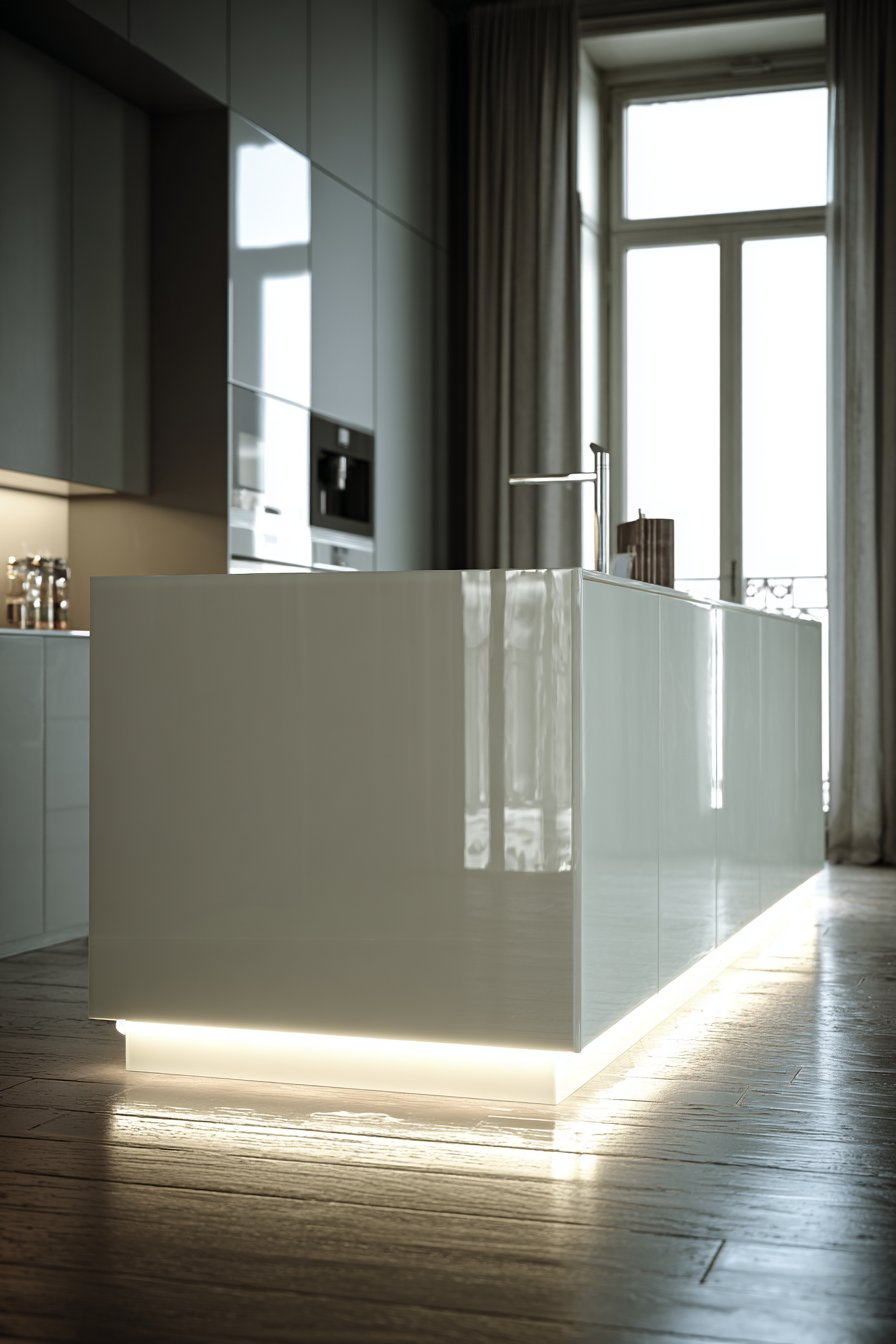
The striking layout captured with precise exposure shows the island appearing to levitate, with carefully controlled lighting emphasizing the clean geometry and innovative design. This kitchen demonstrates how contemporary design can create functional spaces that double as art installations, where every element has been considered and refined to its essential form. The result is a kitchen that feels more like a gallery than a cooking space, yet remains fully functional for daily meal preparation.
Key Design Tips: Hire structural engineers to ensure floating islands have adequate hidden support for their intended use. Choose glossy finishes that reflect light to enhance the floating effect rather than matte surfaces that absorb it. Install LED strips with dimming capability to adjust ambiance for different activities. Keep floating island sizes reasonable—typically no more than 6 feet long—to maintain structural integrity. Use contrasting wall colors to make floating islands stand out rather than blend into backgrounds.
18. Victorian Period Romance
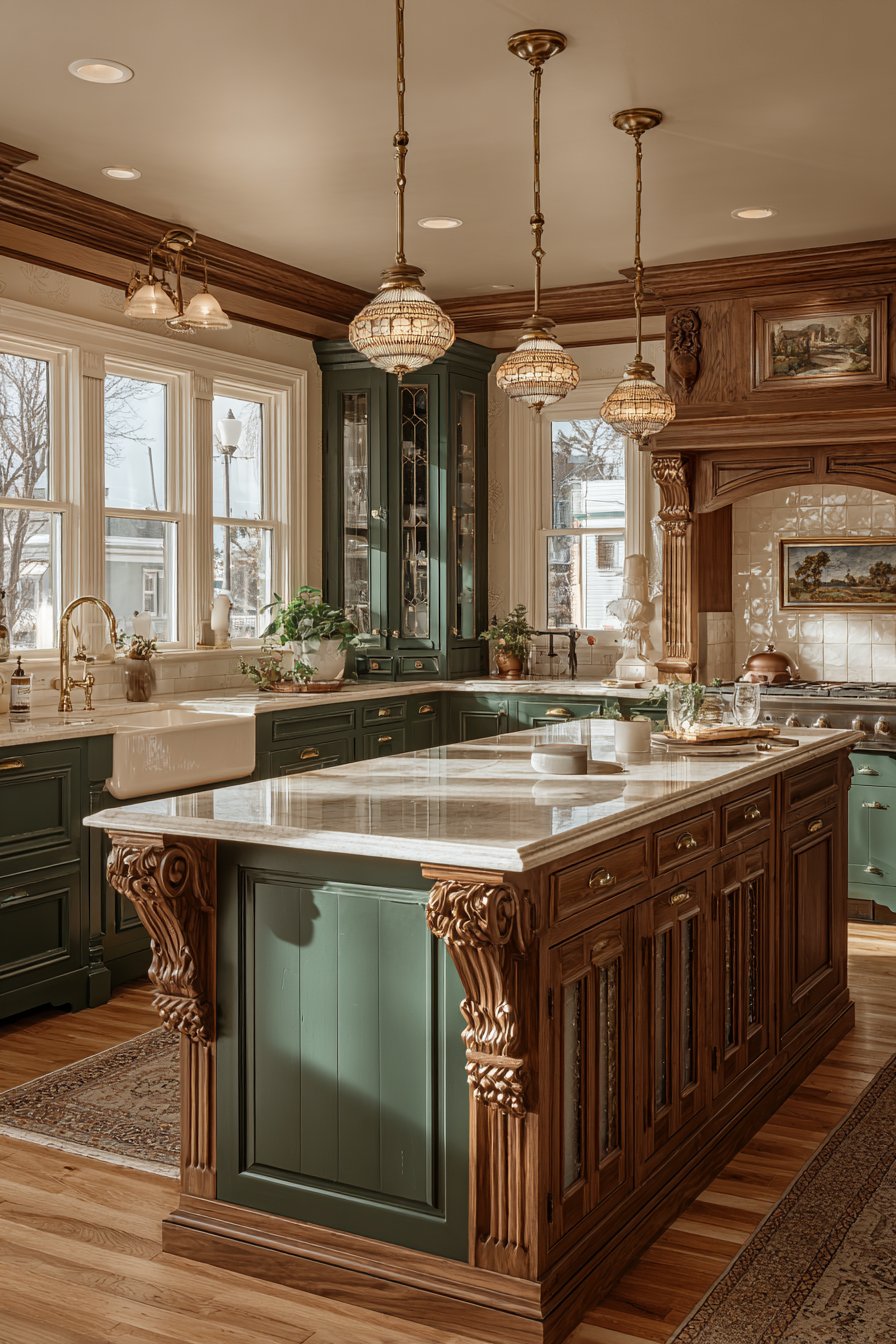
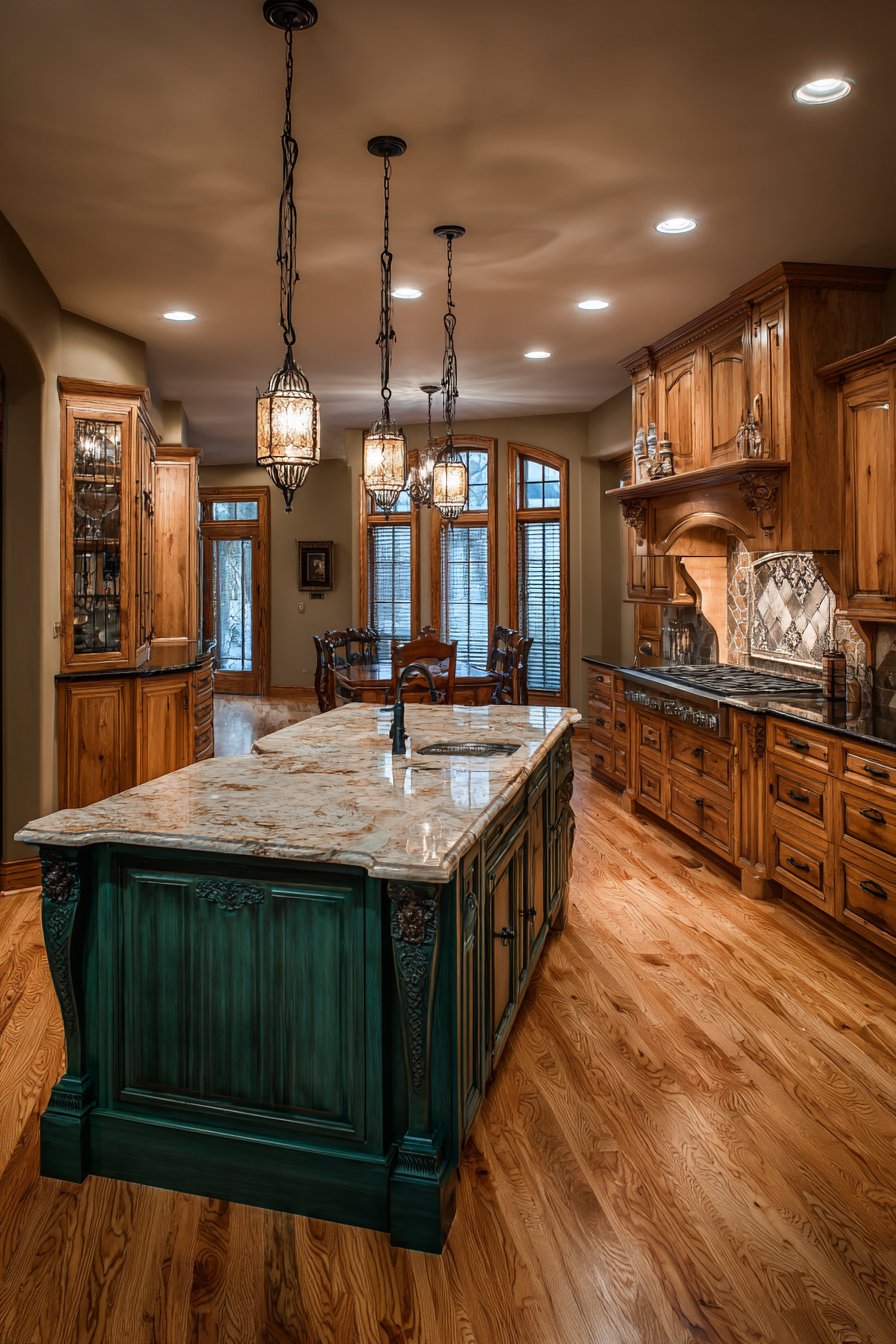
Victorian design celebrates ornamentation and craftsmanship, and this kitchen renovation demonstrates how to incorporate period details while maintaining modern functionality. The custom island with ornate corbels and furniture legs provides traditional elegance worthy of a 19th-century home, its decorative elements reflecting the Victorian love of embellishment. A marble top with decorative edge profile adds another layer of refinement, while glass-front cabinet doors display fine china or colorful dishware.
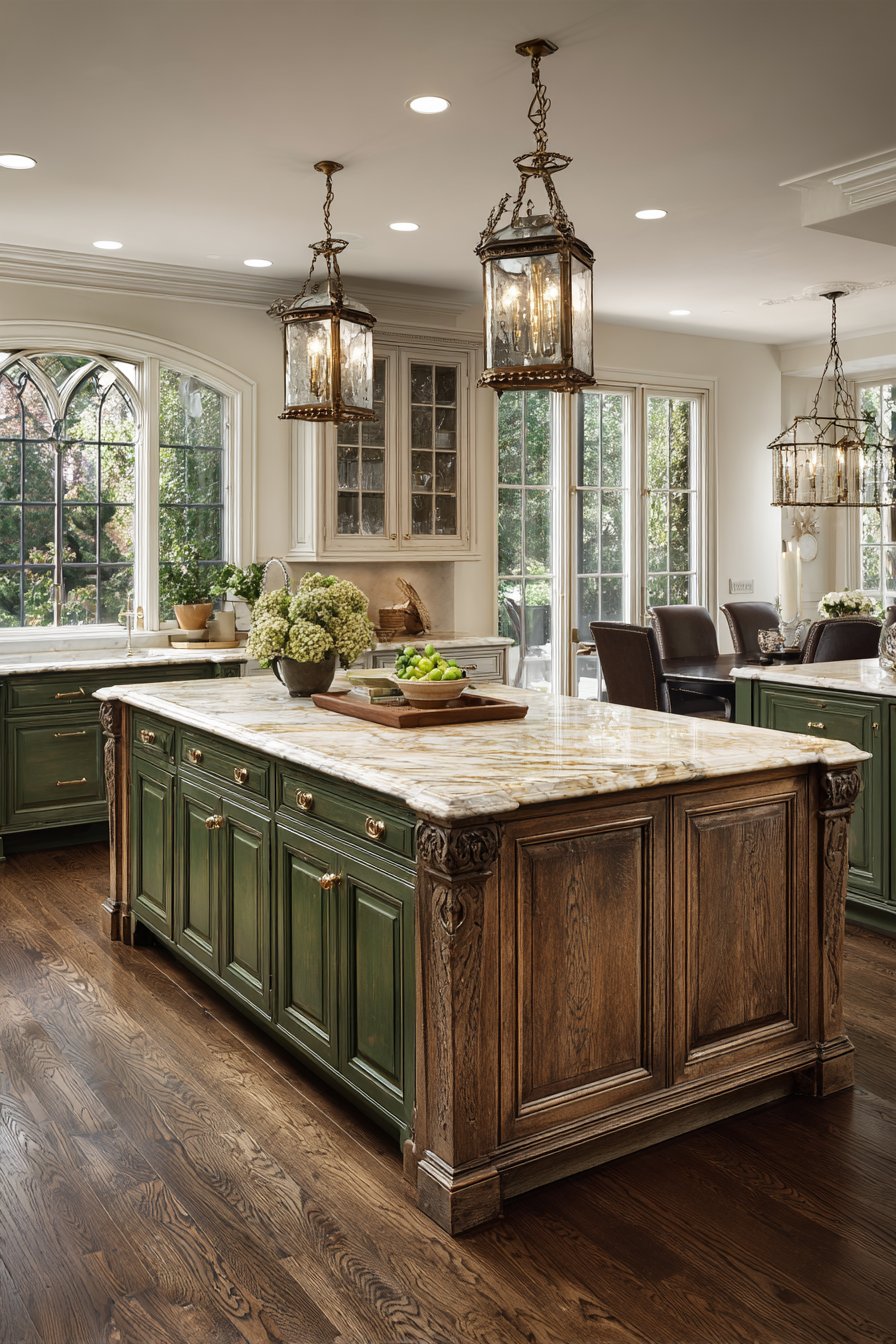
Deep green painted perimeter cabinets complement the natural wood island, the rich color adding drama and sophistication while referencing period color preferences. Vintage-style pendant lights and polished brass hardware add period detail throughout, their warm metallic finish catching light and adding sparkle. Every element has been carefully selected to maintain historical accuracy while incorporating modern conveniences like soft-close drawers and undermount lighting.
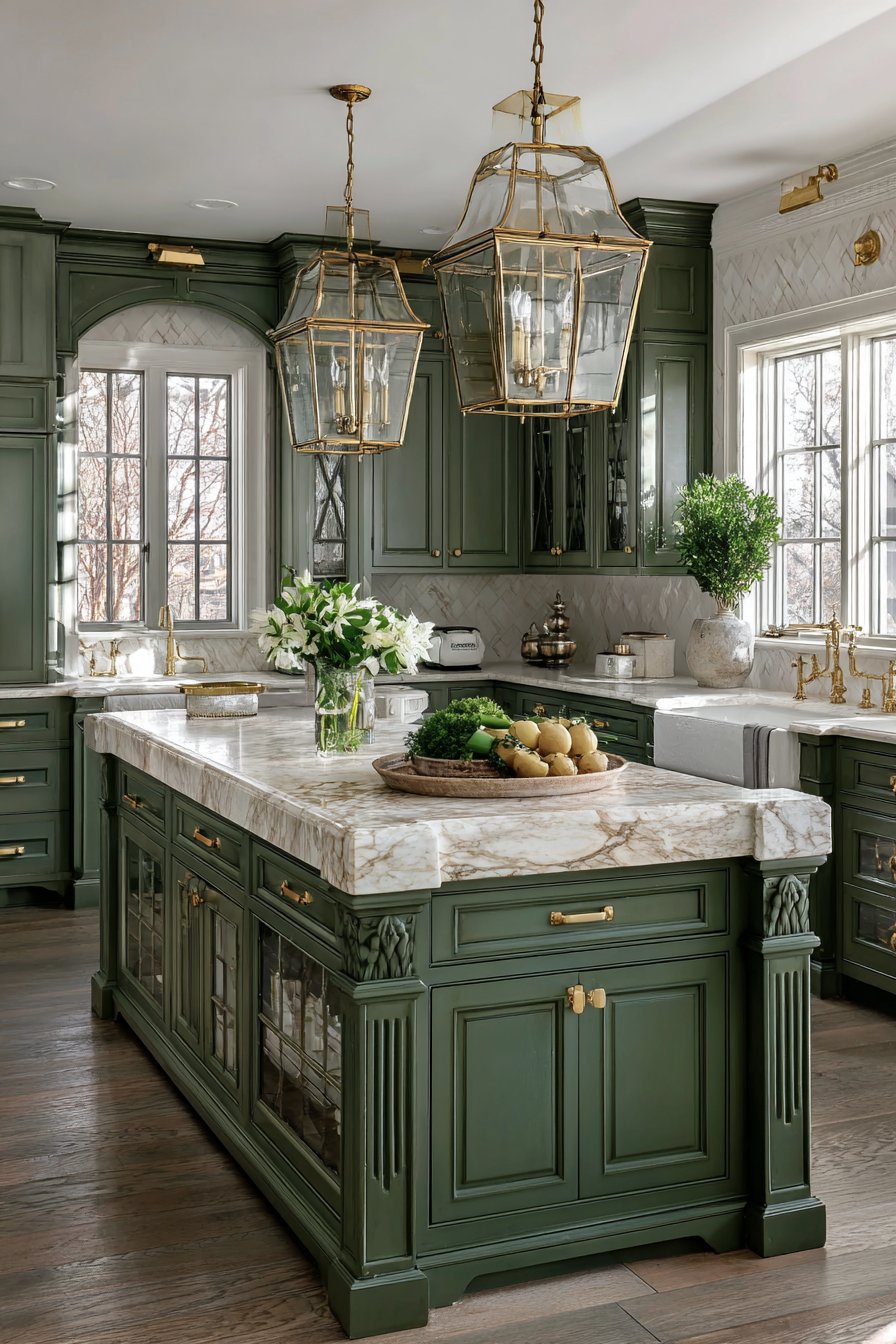
The historically-informed layout bridges old-world charm with modern function, allowing homeowners to enjoy Victorian aesthetics without sacrificing contemporary conveniences. Natural light reveals intricate woodwork details, highlighting the skilled craftsmanship evident in every carved element and turned post. The statement island becomes the kitchen’s jewel, a piece of functional furniture that could have graced a Victorian manor house while serving today’s cooking needs perfectly.
Key Design Tips: Source authentic antique islands or commission custom reproductions from skilled woodworkers for genuine period character. Choose marble with warm rather than cool tones to complement Victorian color preferences. Install brass hardware with living finishes that develop patina over time rather than lacquered versions that remain static. Paint perimeter cabinets in historically accurate colors like deep greens, burgundies, or navy blues. Include at least some glass-front cabinets to display collections as Victorians preferred.
19. Multi-Cook Collaborative Design
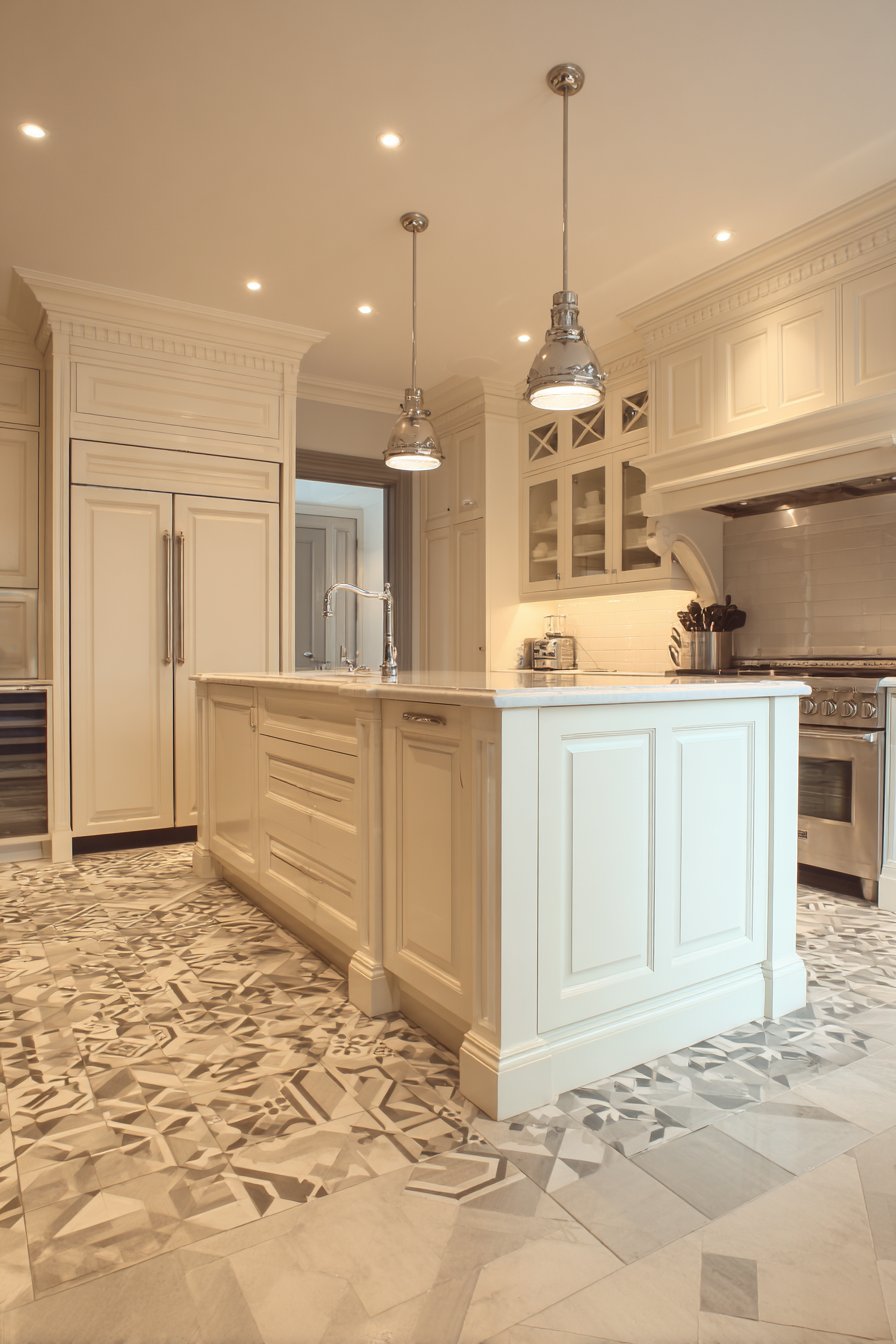
Modern families often include multiple cooks working simultaneously, and this kitchen layout addresses this reality through thoughtful design featuring two distinct work zones separated by a large island. Dual sinks and a secondary dishwasher eliminate bottlenecks that plague single-sink kitchens when multiple people need water access. The island’s generous proportions allow several cooks to work side-by-side without crowding, with adequate counter space for various food preparation tasks occurring simultaneously.
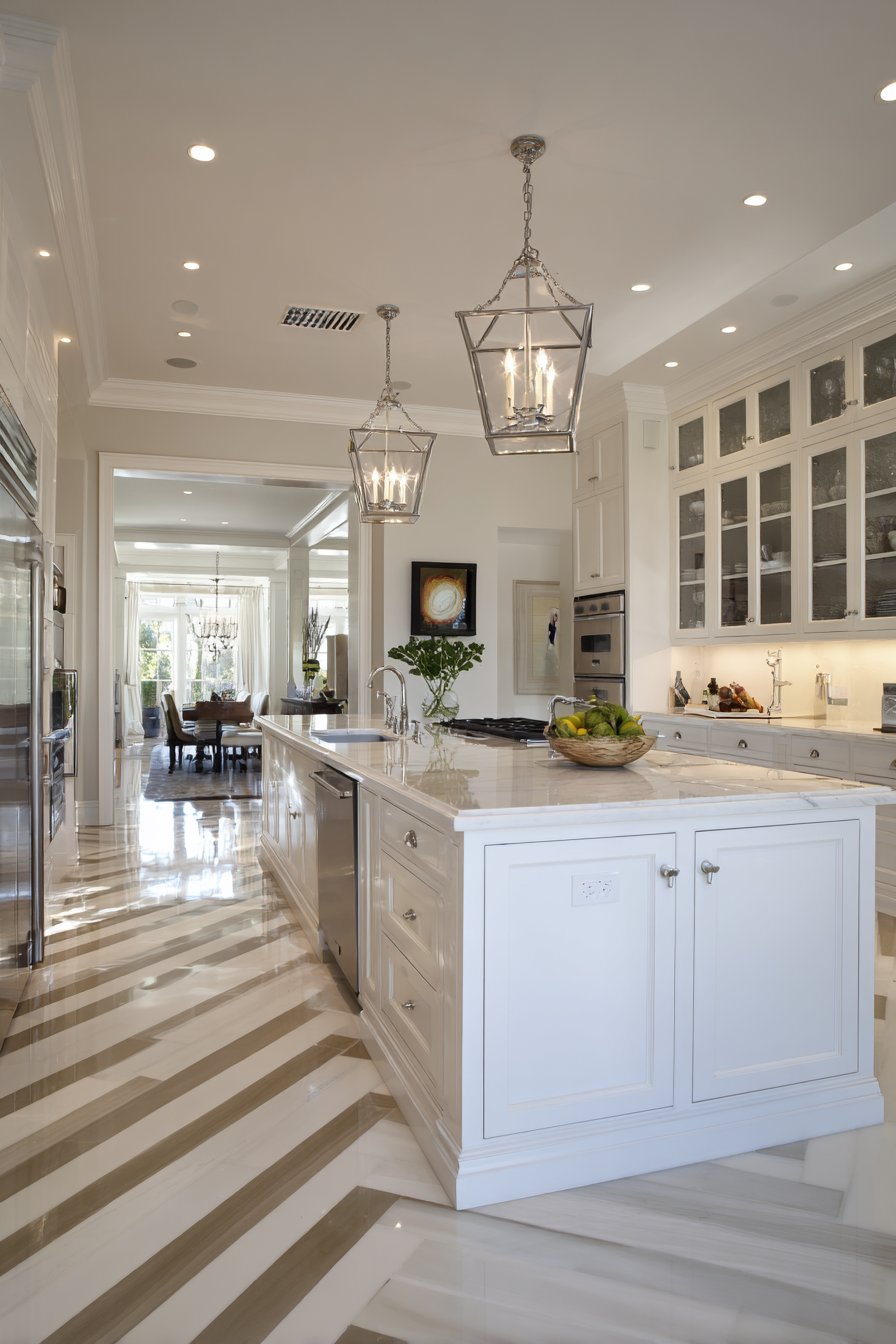
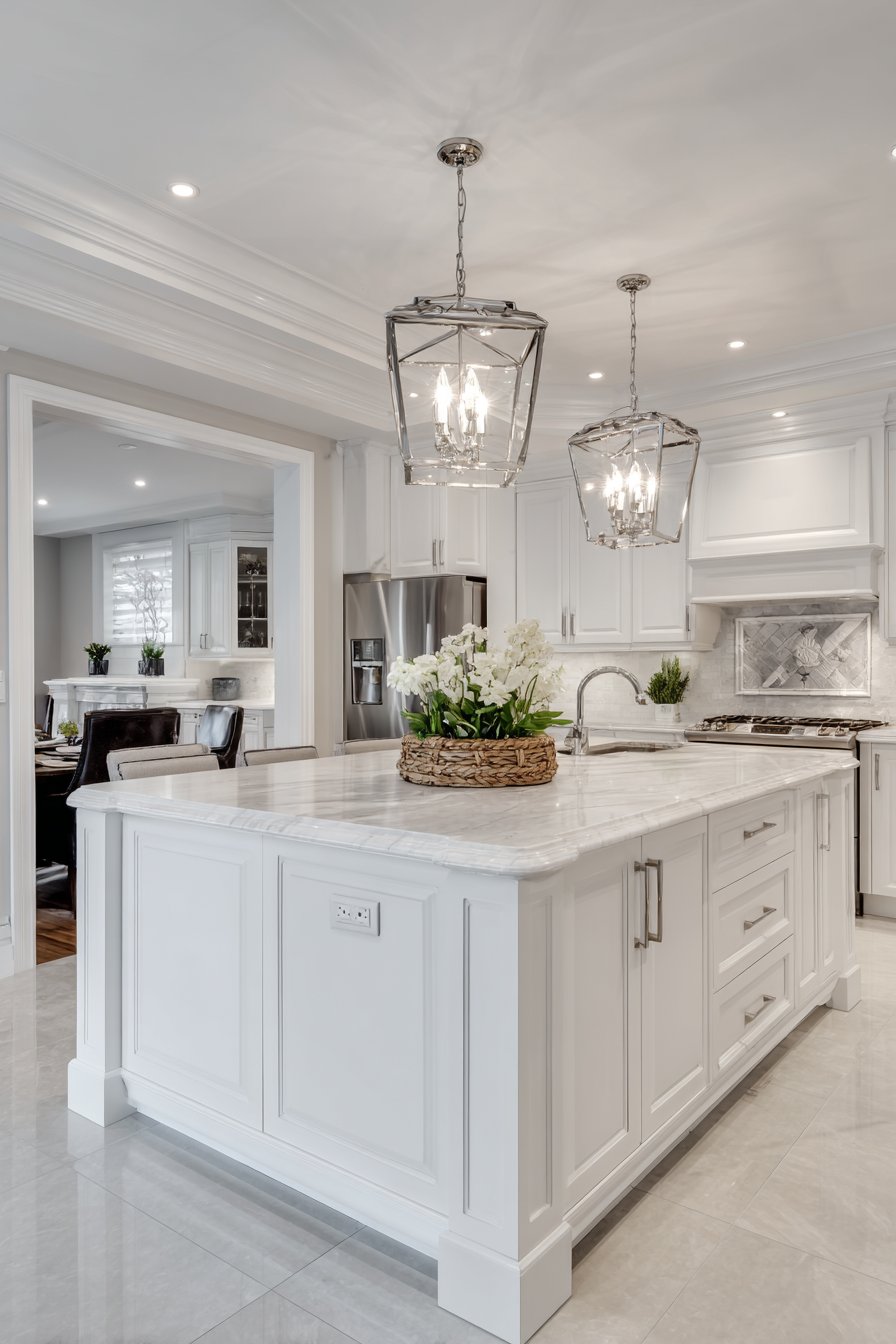
White cabinetry maintains visual unity throughout the expansive space, preventing the multiple work zones from feeling fragmented or chaotic. Stainless steel appliances provide professional capability while maintaining cohesive appearance. Geometric cement tiles create visual interest on the floor, their pattern adding personality without overwhelming the space or competing with the functional layout’s primary focus.
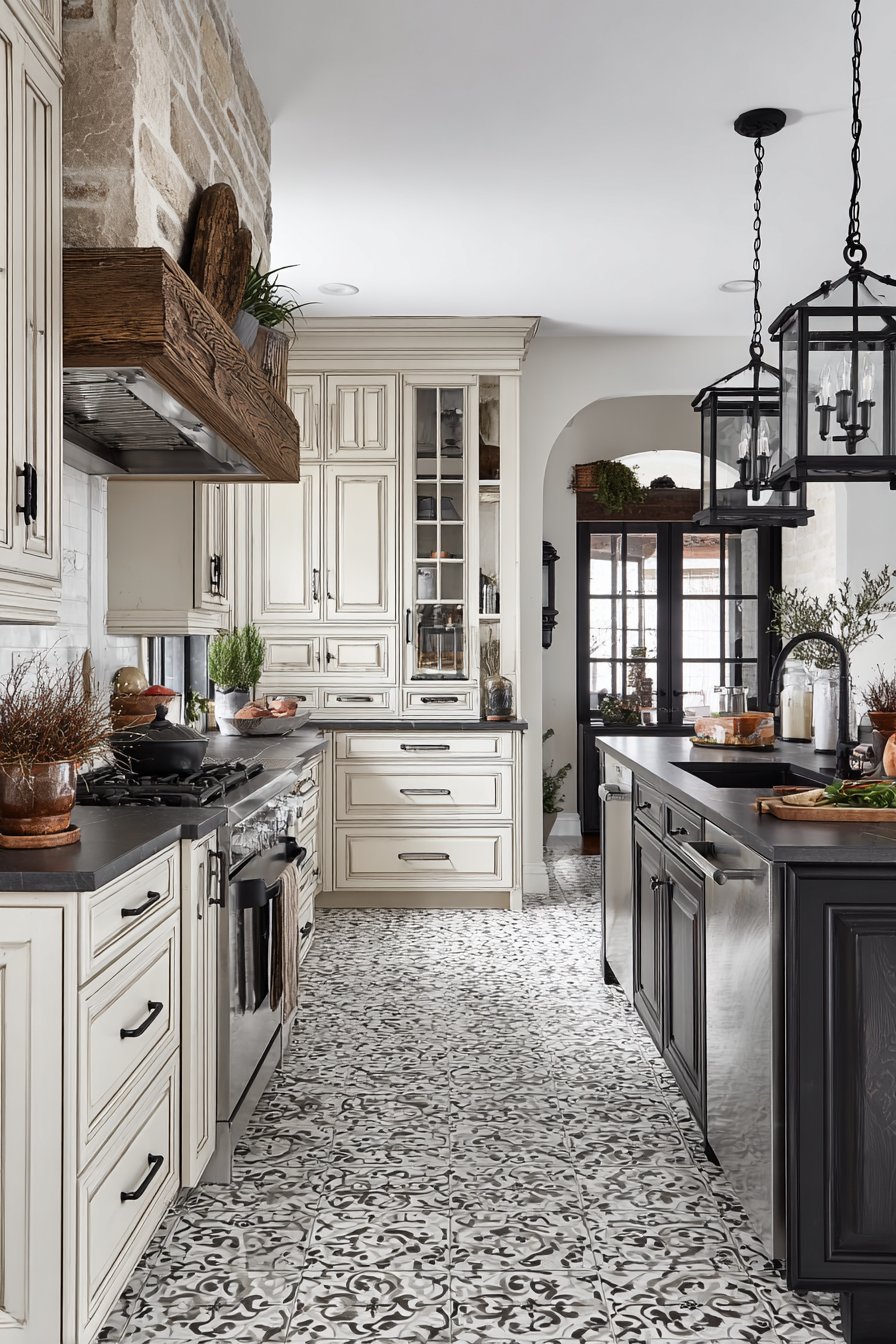
The collaborative layout facilitates efficient multi-person cooking with even lighting showing spatial relationships and workflow patterns. This design recognizes that today’s kitchens often function as family activity centers where cooking becomes a shared experience rather than solitary task. The island anchors the space while enabling people to work together comfortably, transforming meal preparation from chore into connection opportunity.
Key Design Tips: Install at least two sinks when planning for multiple cooks to eliminate water access conflicts. Position work zones with adequate separation (minimum 4 feet) to prevent cooks from bumping into each other. Include multiple landing spaces near the refrigerator and appliances for ingredients and dishes. Choose durable flooring like cement tiles that withstand heavy traffic from multiple users. Install task lighting at each work zone rather than relying solely on general overhead illumination.
20. Mid-Century Modern Authentic Period
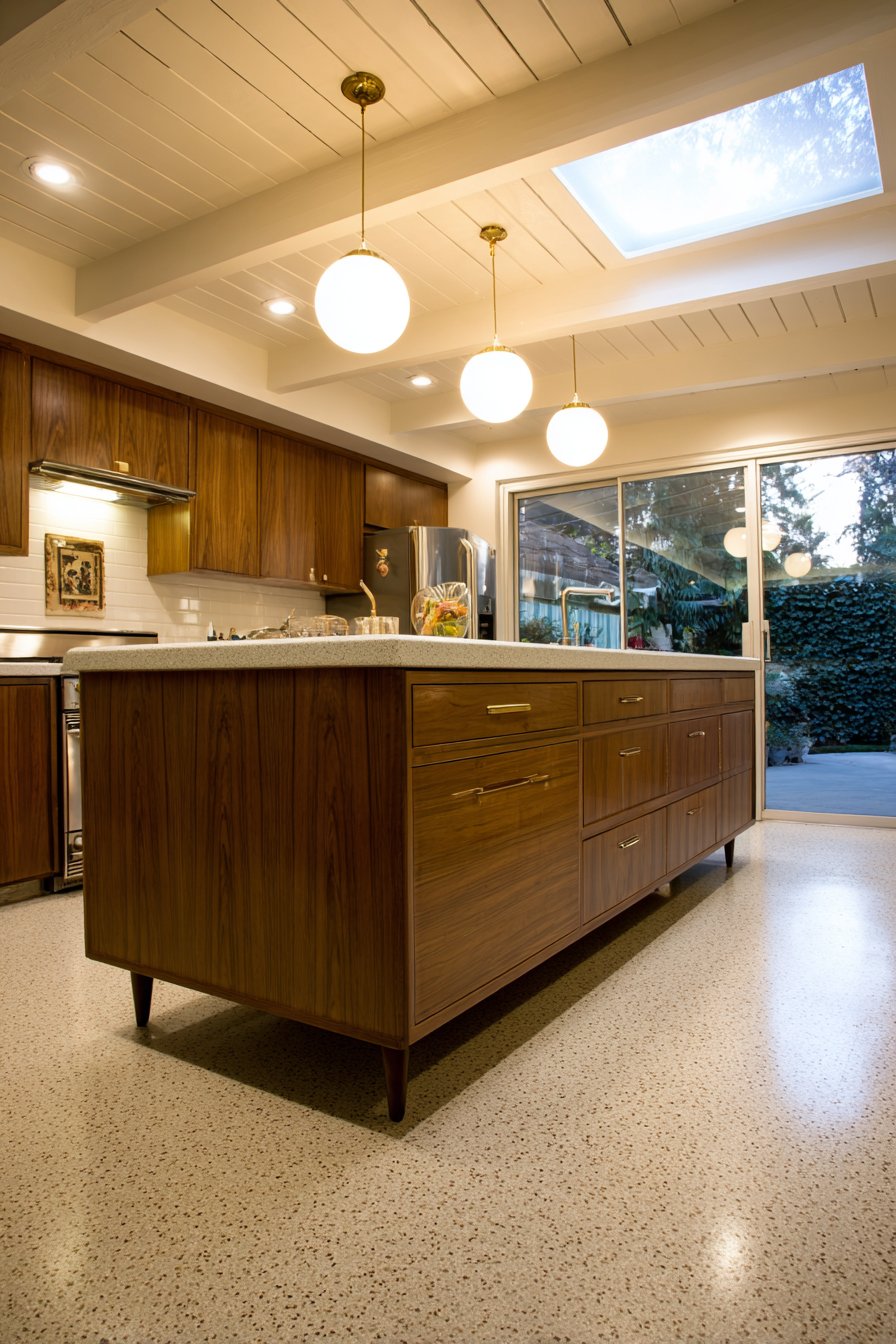
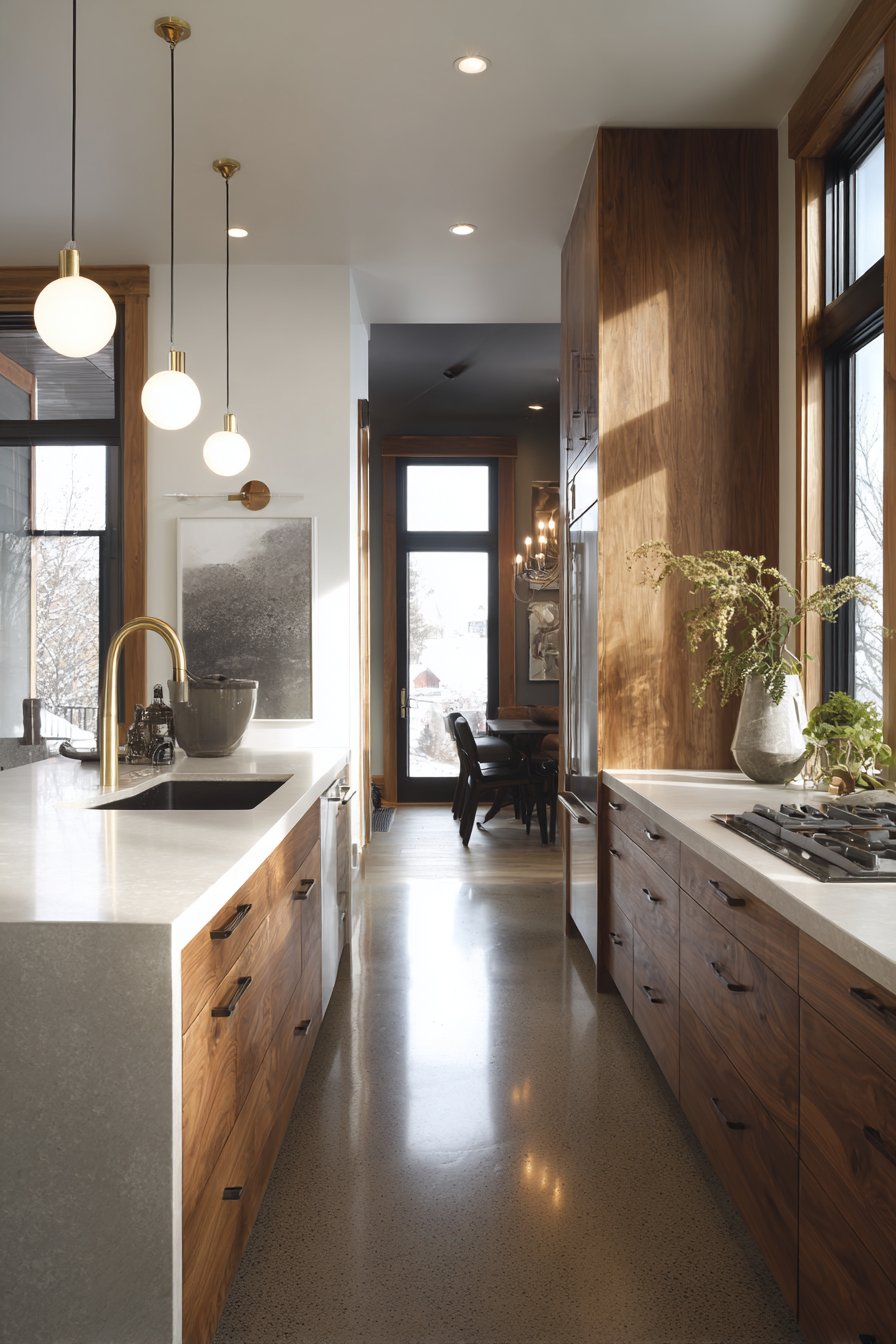
Mid-century modern design from the 1950s and 60s continues influencing contemporary aesthetics, and this kitchen honors the period through authentic details beginning with a low-profile teak wood island featuring tapered legs and stone composite top. The island’s clean horizontal lines and organic material complement period-appropriate walnut cabinets with simple pulls, their warm tones and simple forms embodying mid-century principles of honest materials and functional beauty.
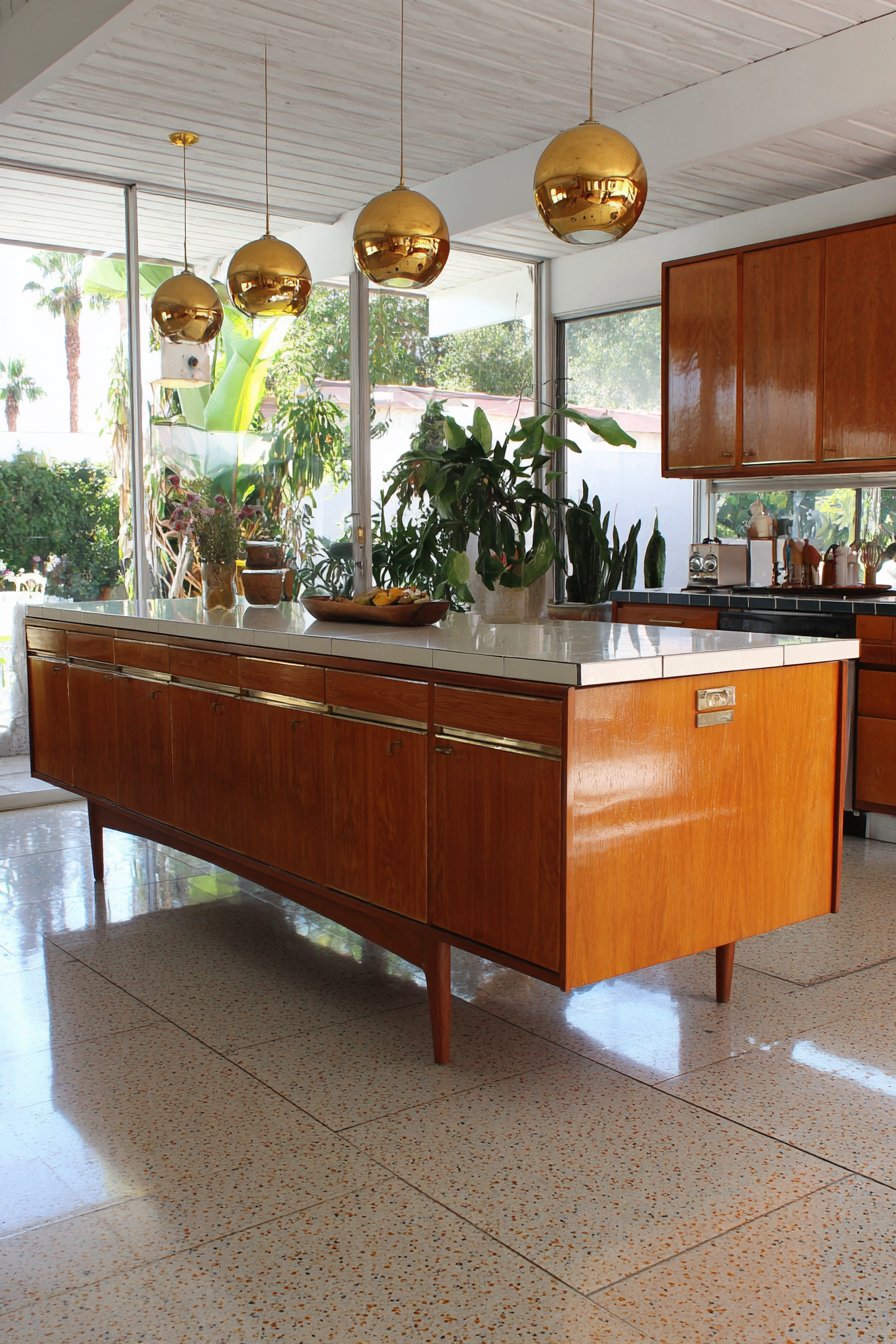
Terrazzo flooring adds authentic retro appeal, its speckled pattern and cheerful colors typical of mid-century commercial and residential design. The durable material has proven its longevity through decades of use while maintaining its fresh, optimistic character. Globe pendant lights in brass finish provide era-appropriate lighting, their simple spherical forms and warm metallic tones completing the period aesthetic.
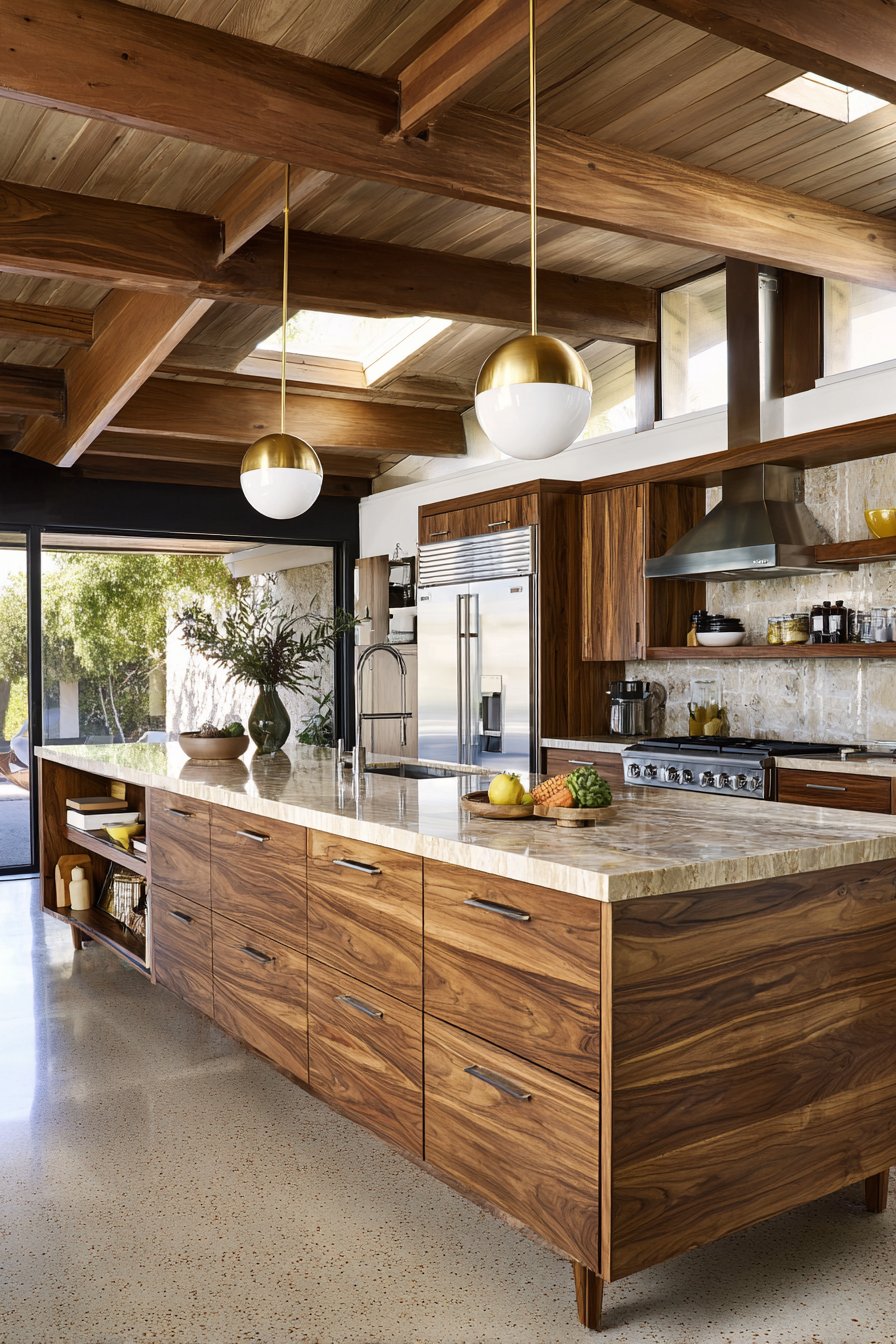
The authentic period layout serves as both functional workspace and design statement, the island embodying mid-century values of simplicity, functionality, and honest material expression. Warm natural light emphasizes the rich wood tones and vintage aesthetic, creating a kitchen that could have existed in a 1960s home yet feels fresh and relevant today. The design demonstrates how well-executed period aesthetics transcend trends to create lasting beauty.
Key Design Tips: Source vintage mid-century furniture or commission quality reproductions that respect original proportions and joinery methods. Choose teak or walnut for cabinetry and islands to achieve authentic period wood tones. Install terrazzo flooring or period-appropriate vinyl if authentic terrazzo exceeds budget. Select lighting fixtures with simple geometric forms rather than ornate or organic shapes. Keep color palettes warm and optimistic, avoiding the grey tones popular in contemporary design.
21. Smart Technology Integration
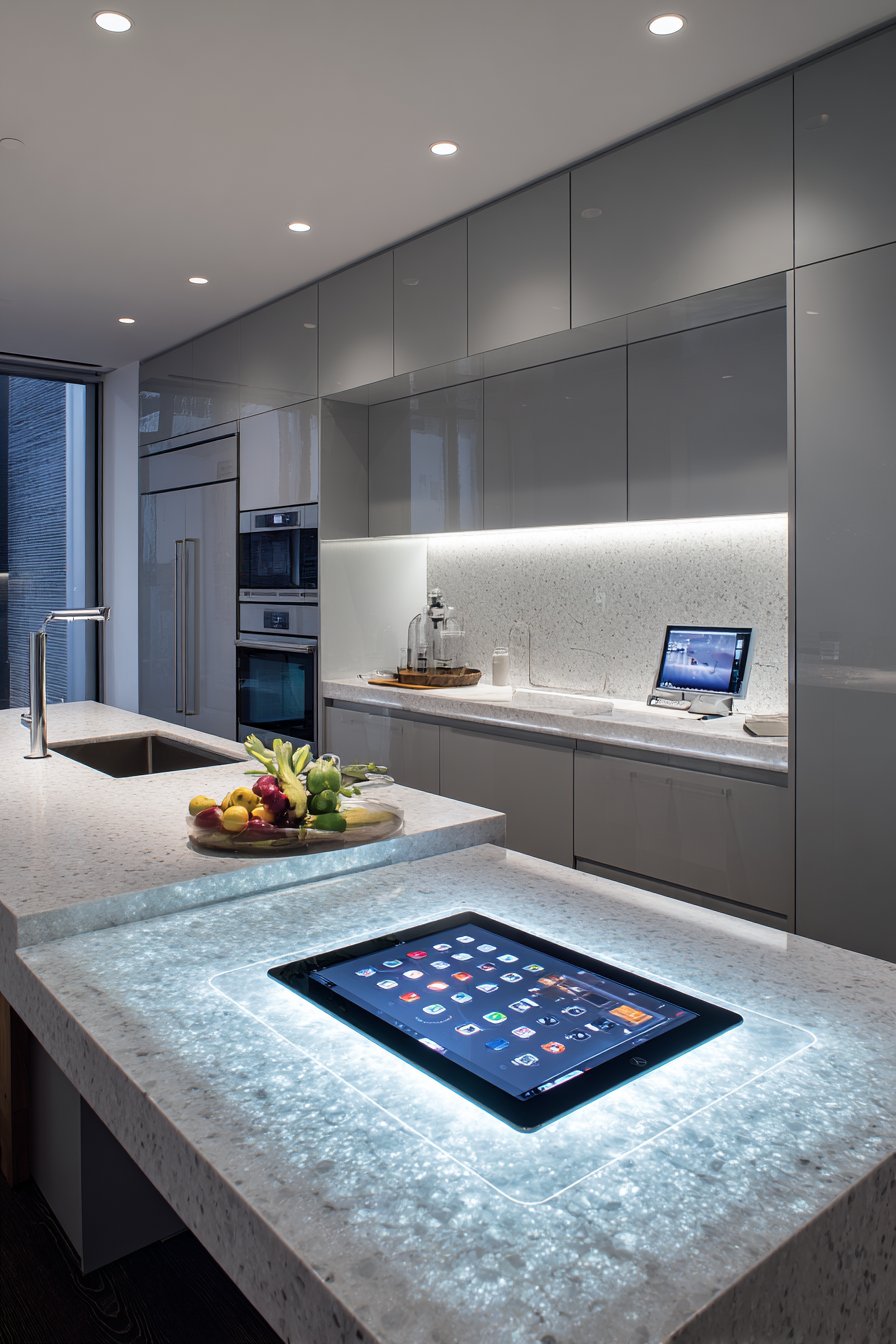
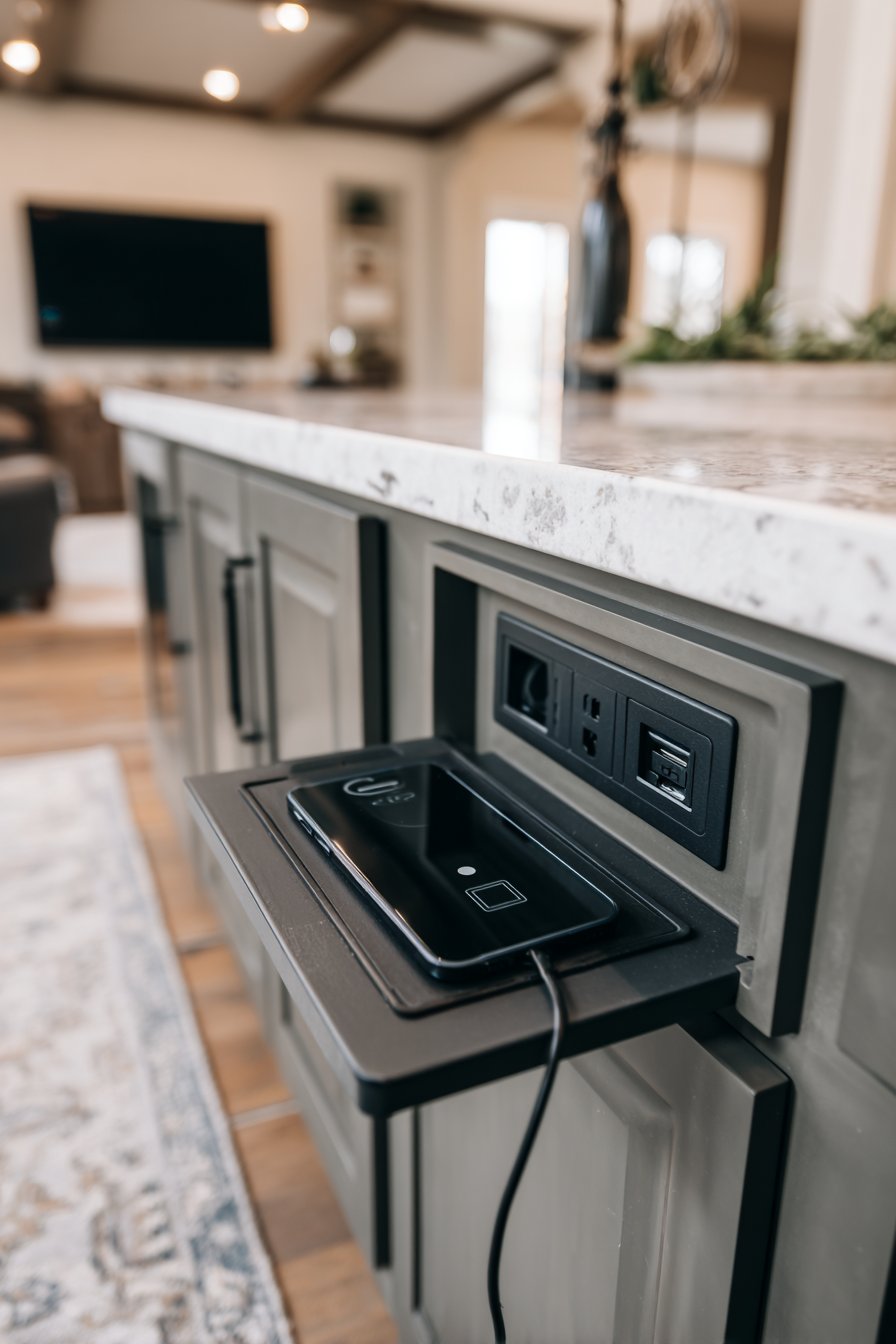
Modern technology transforms how kitchens function, and this tech-forward island demonstrates possibilities through wireless charging pads embedded in quartz surface, pop-up electrical outlets, and tablet docking station. These features support contemporary cooking where recipes appear on tablets, phones need charging during the day, and small appliances require convenient power access. The technology integrates seamlessly into the island’s design, hidden when not needed yet easily accessible when required.
Sleek grey cabinetry with touch-latch doors maintains contemporary aesthetics while concealing the technology within, their smooth surfaces and minimal visual breaks creating sophisticated simplicity. Under-cabinet and under-island LED lighting responds to motion sensors, automatically illuminating work areas when someone approaches and turning off when the space sits empty. This intelligent lighting reduces energy consumption while ensuring proper illumination is always available exactly when needed.
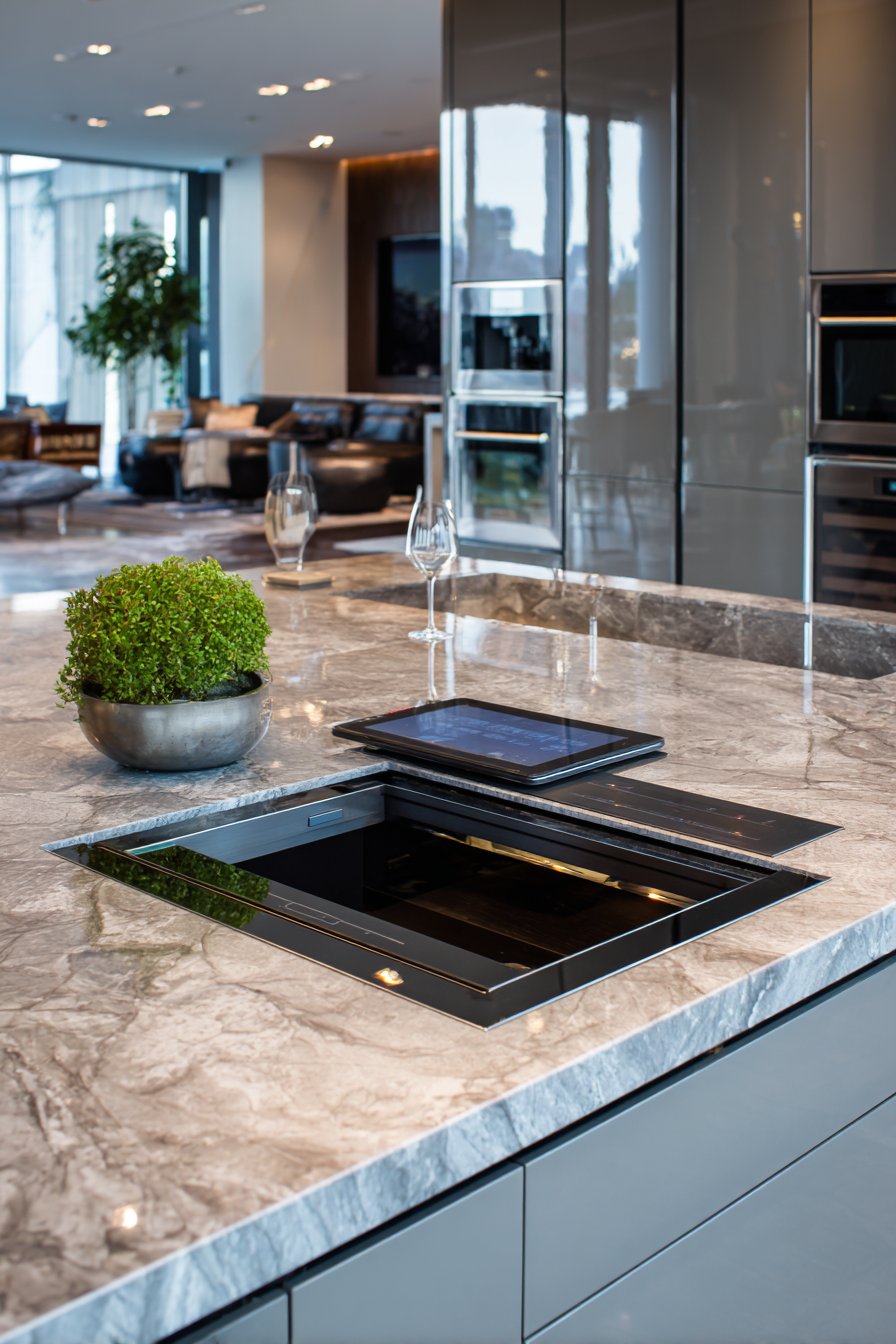
The innovative layout captured with precise exposure shows hidden technology features while maintaining clean visual lines, demonstrating how smart home integration enhances function without compromising aesthetics. Balanced ambient lighting reveals the seamless integration of function and style, proving that technology and beauty aren’t mutually exclusive. This kitchen represents the future of residential design where invisible technology serves occupants without demanding attention.
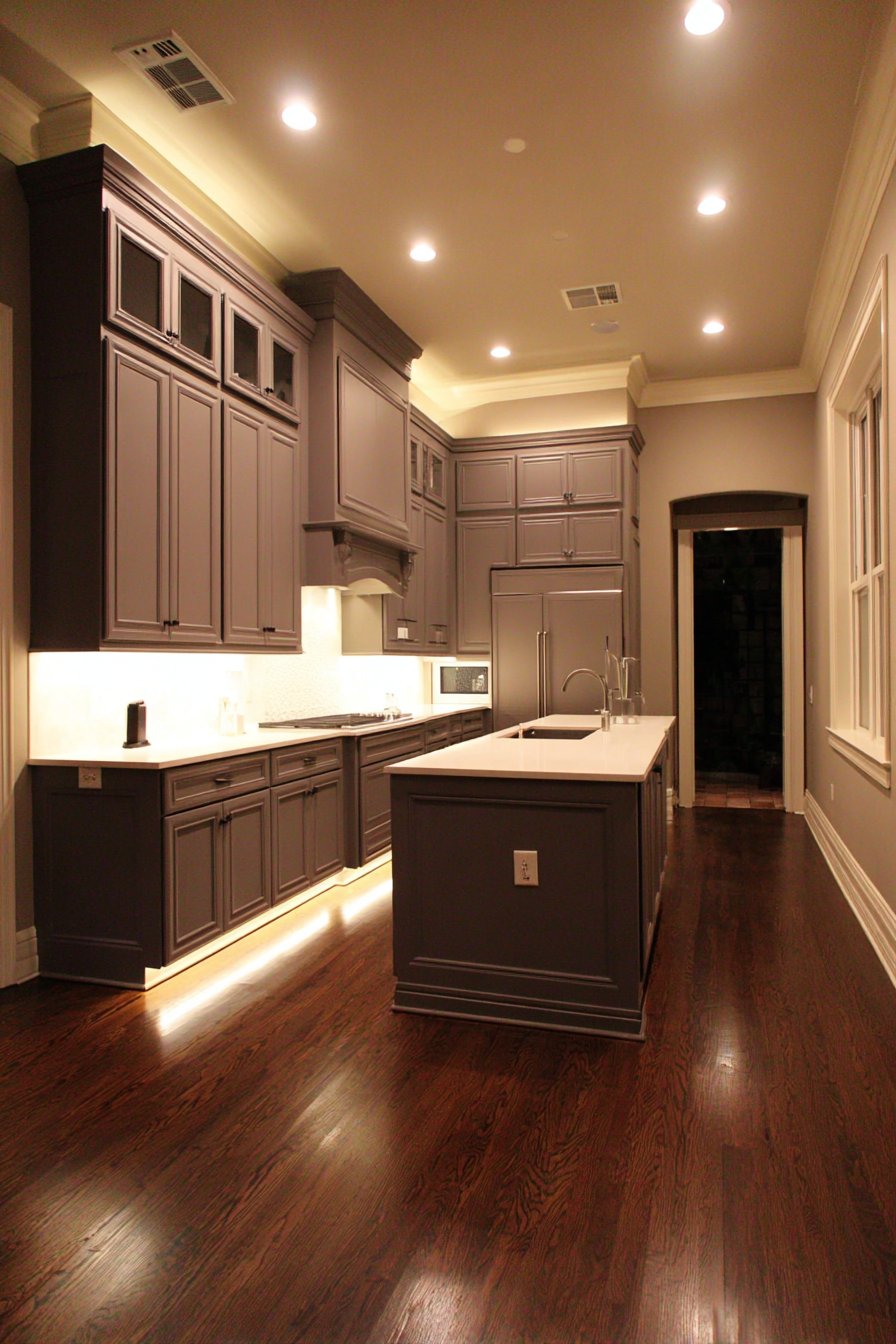
Key Design Tips: Install wireless charging pads compatible with multiple device types rather than brand-specific versions. Choose pop-up outlets that sit flush when closed to maintain clean counter surfaces. Include adequate electrical capacity and data connections to support future technology additions. Select motion sensor lighting with adjustable sensitivity to prevent false triggers while ensuring reliable activation. Specify waterproof touch controls for any electronic interfaces exposed to kitchen moisture.
22. Universal Design Accessibility
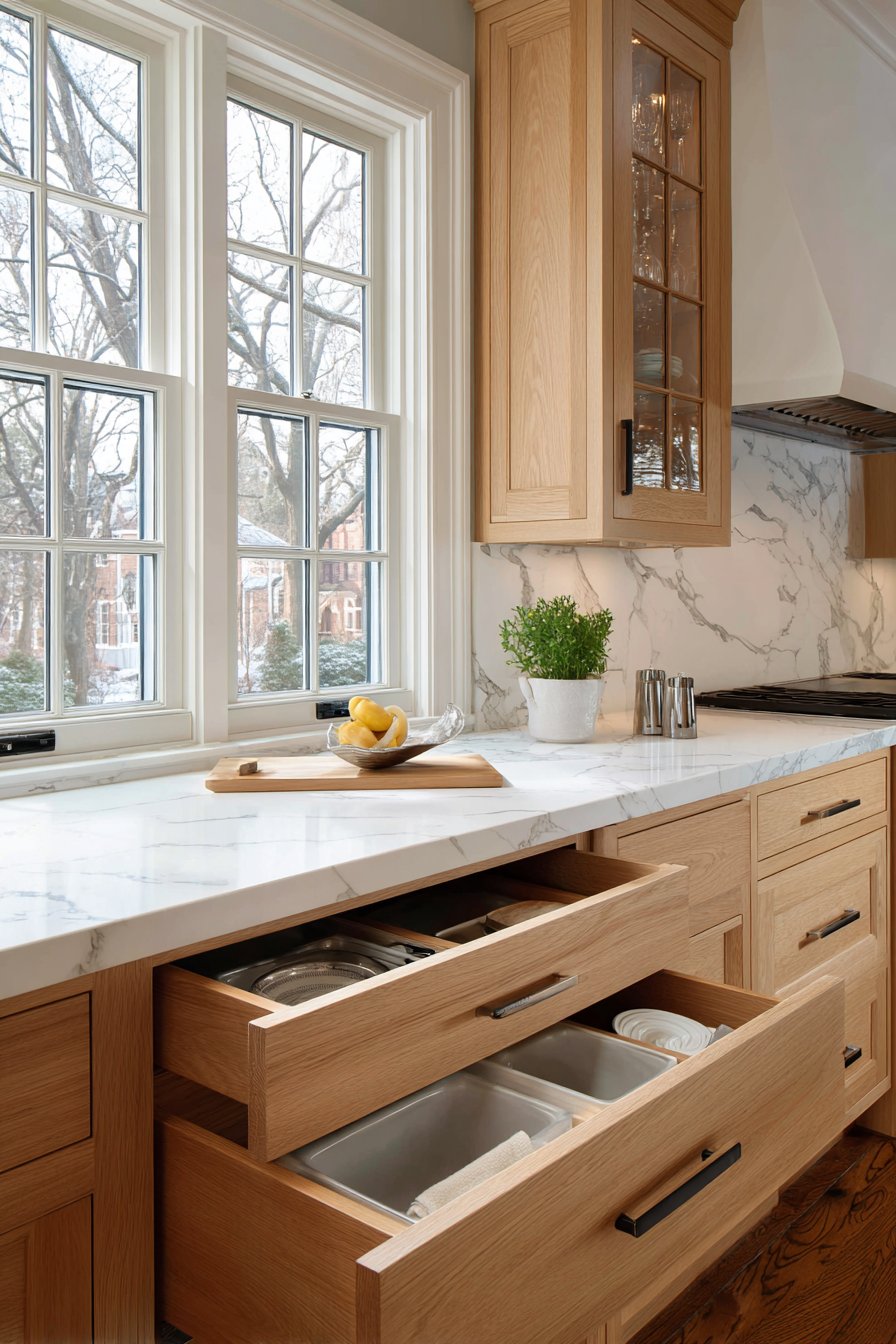
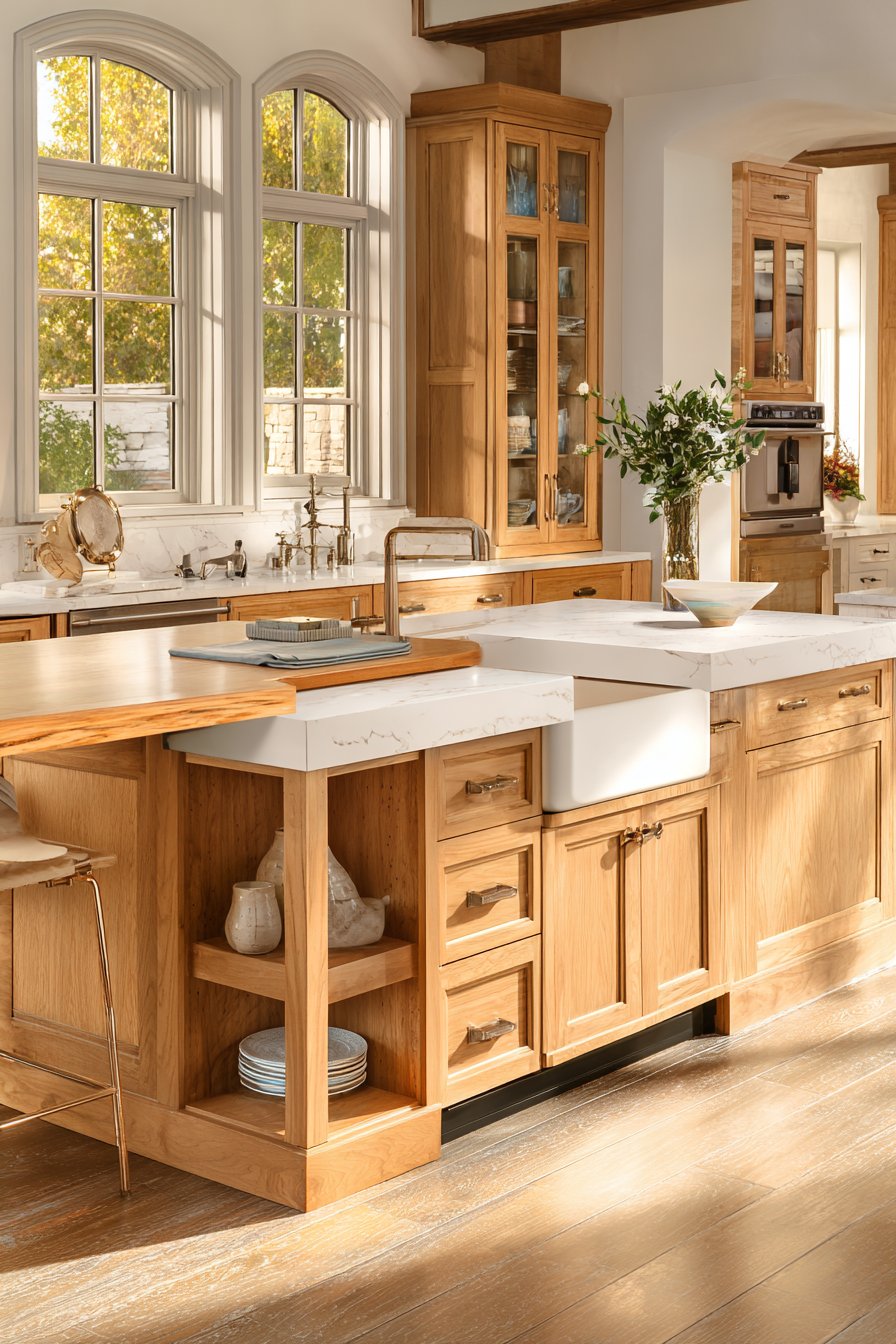
Inclusive design ensures kitchens serve users of all abilities, and this accessible layout features a variable-height island that can lower for wheelchair access while raising for standing work. The motorized mechanism operates smoothly and quietly, allowing the same workspace to accommodate different users throughout the day. Knee space on one side provides clear access for wheelchair users, while varied counter heights address different tasks and user preferences without compromising aesthetic appeal.
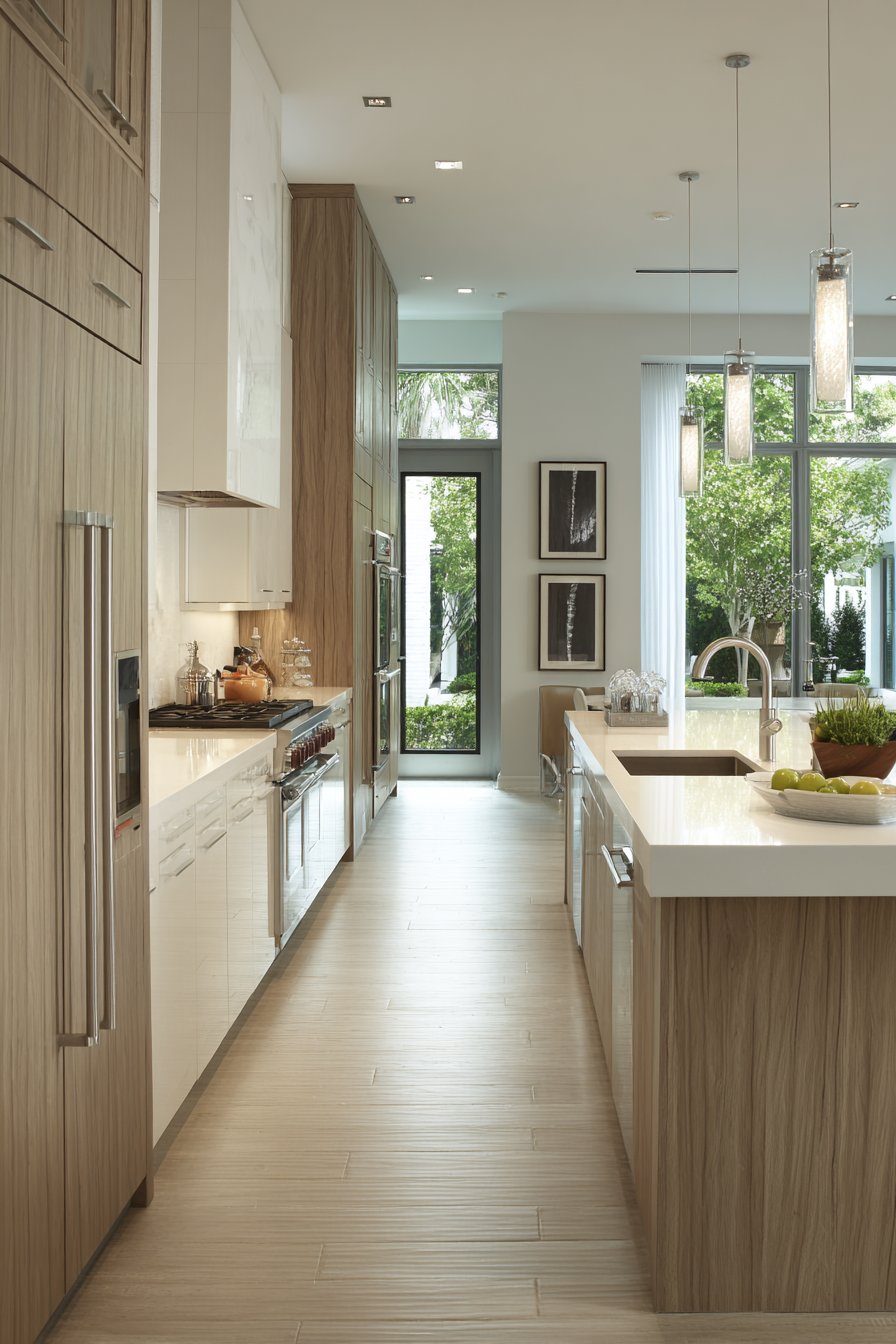
Soft-close drawers with D-shaped pulls operate easily with minimal grip strength, their curved profiles providing secure grasp points for users with limited hand dexterity. Light wood cabinetry and white countertops maintain high visibility, helping users with vision impairments navigate the space safely. Every design choice prioritizes function and accessibility while maintaining attractive appearance that doesn’t broadcast its accessible features.
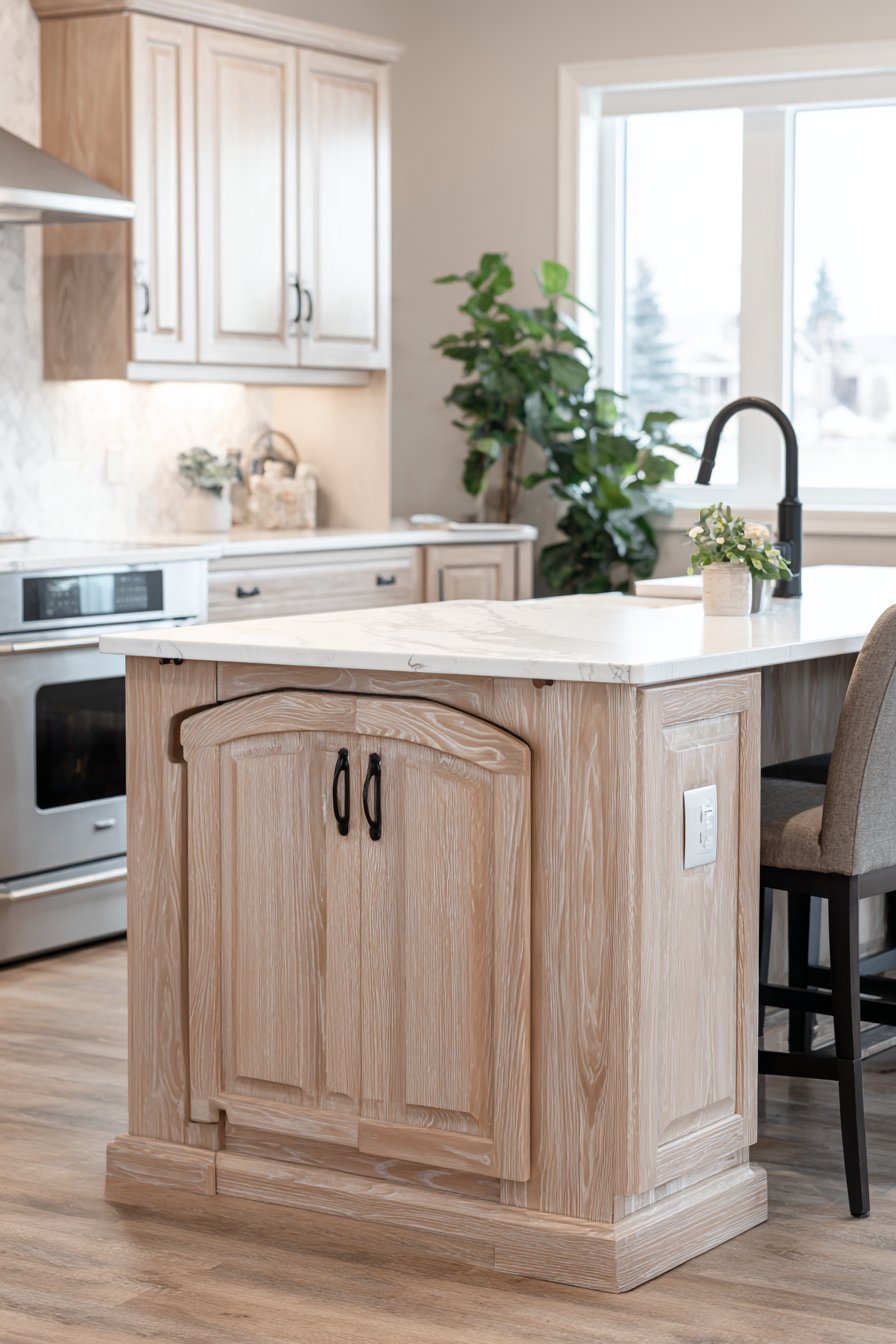
The inclusive layout emphasizes how the island accommodates diverse users while maintaining aesthetic appeal, demonstrating that universal design benefits everyone rather than stigmatizing users with disabilities. Natural light highlights the thoughtful ergonomic details and practical adaptations, proving that accessible design can be beautiful design. This kitchen welcomes all users regardless of physical ability, embodying the best principles of inclusive residential design.
Key Design Tips: Install adjustable-height islands with quality motorized mechanisms that will withstand years of daily adjustment. Provide clear knee space at least 27 inches high and 30 inches wide for wheelchair access. Choose hardware shapes that work for various grip strengths, avoiding small knobs that require pinching. Maintain high color contrast between counters, cabinets, and floors to assist users with vision impairments. Install task lighting that can be adjusted in intensity to serve users with different vision needs.
23. Authentic Farmhouse Reclaimed Character
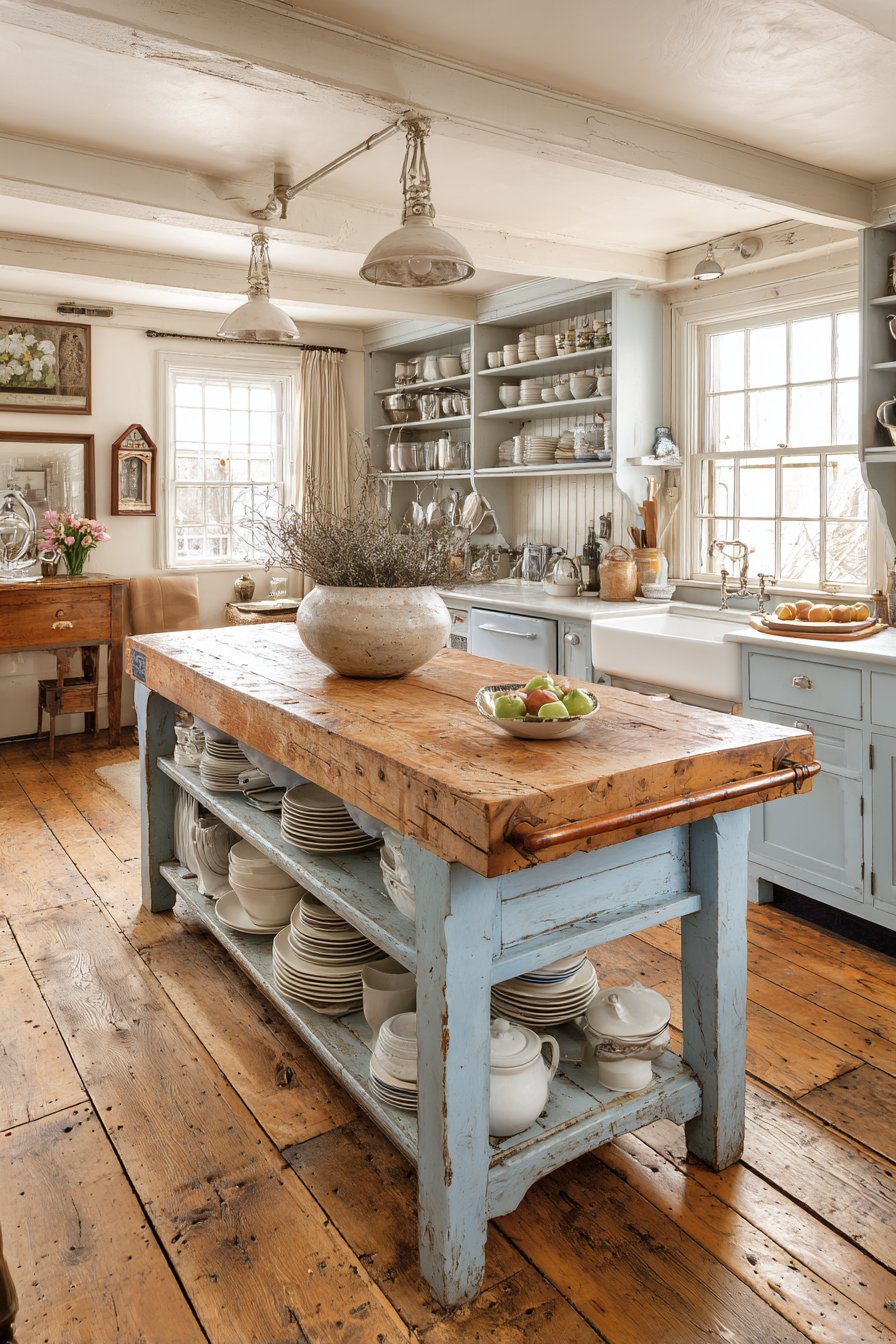
Farmhouse kitchens embody comfort, history, and connection to agricultural roots, and this layout achieves authentic character through a substantial antique pine island with original patina and copper-wrapped countertop edge. The copper adds warm metallic accent while providing antimicrobial benefits and developing beautiful patina over time. Open shelving displays vintage crockery, while a built-in pot rack overhead keeps cookware accessible and adds to the kitchen’s working farm aesthetic.
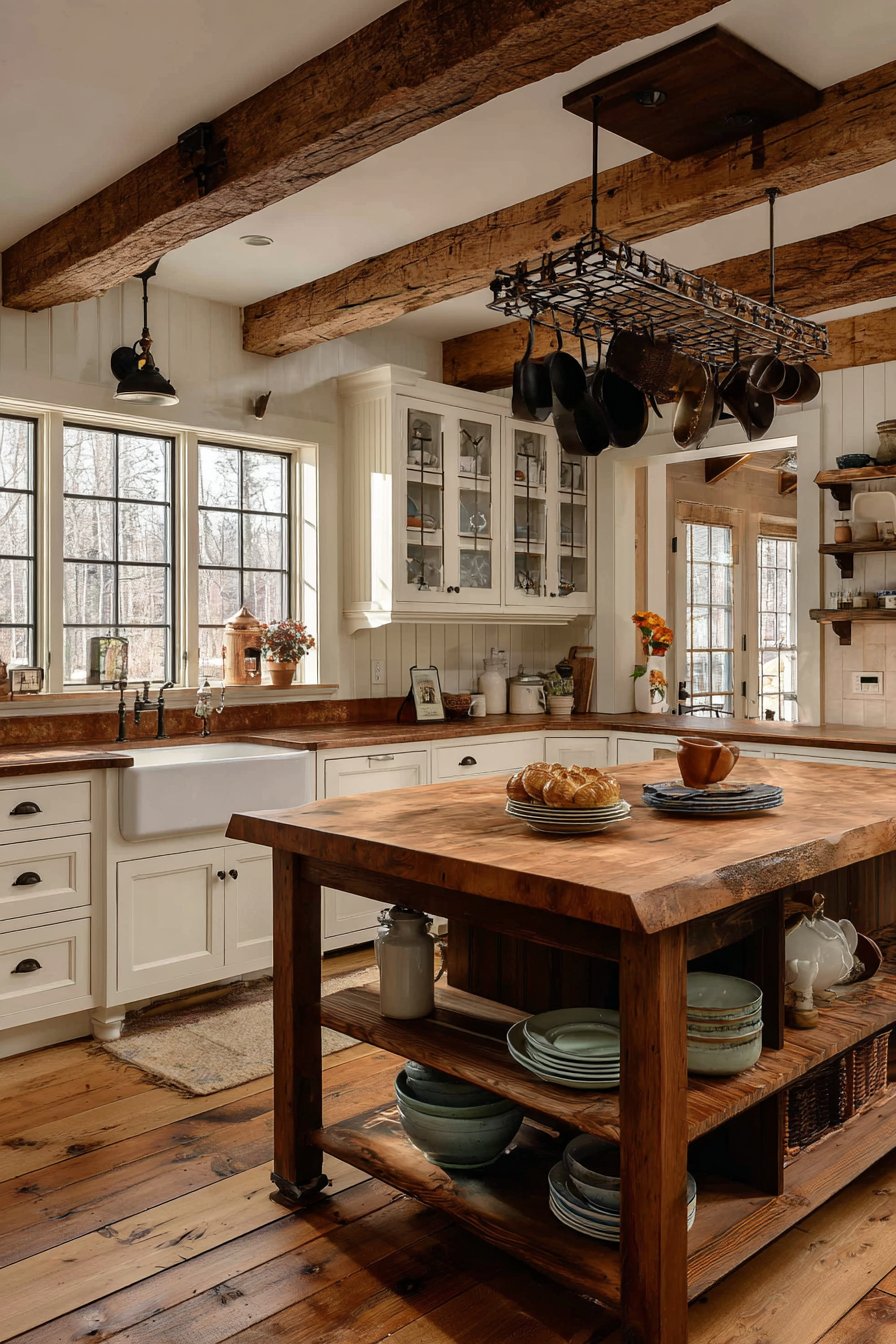
White beadboard cabinets and a farmhouse sink maintain country charm while providing practical storage and deep washing capacity. The apron-front sink’s exposed face creates visual interest while accommodating large pots and baking sheets. Wide-plank oak flooring shows natural wear patterns that add to rather than detract from the space’s character, each scratch and dent telling stories of meals prepared and gatherings hosted.
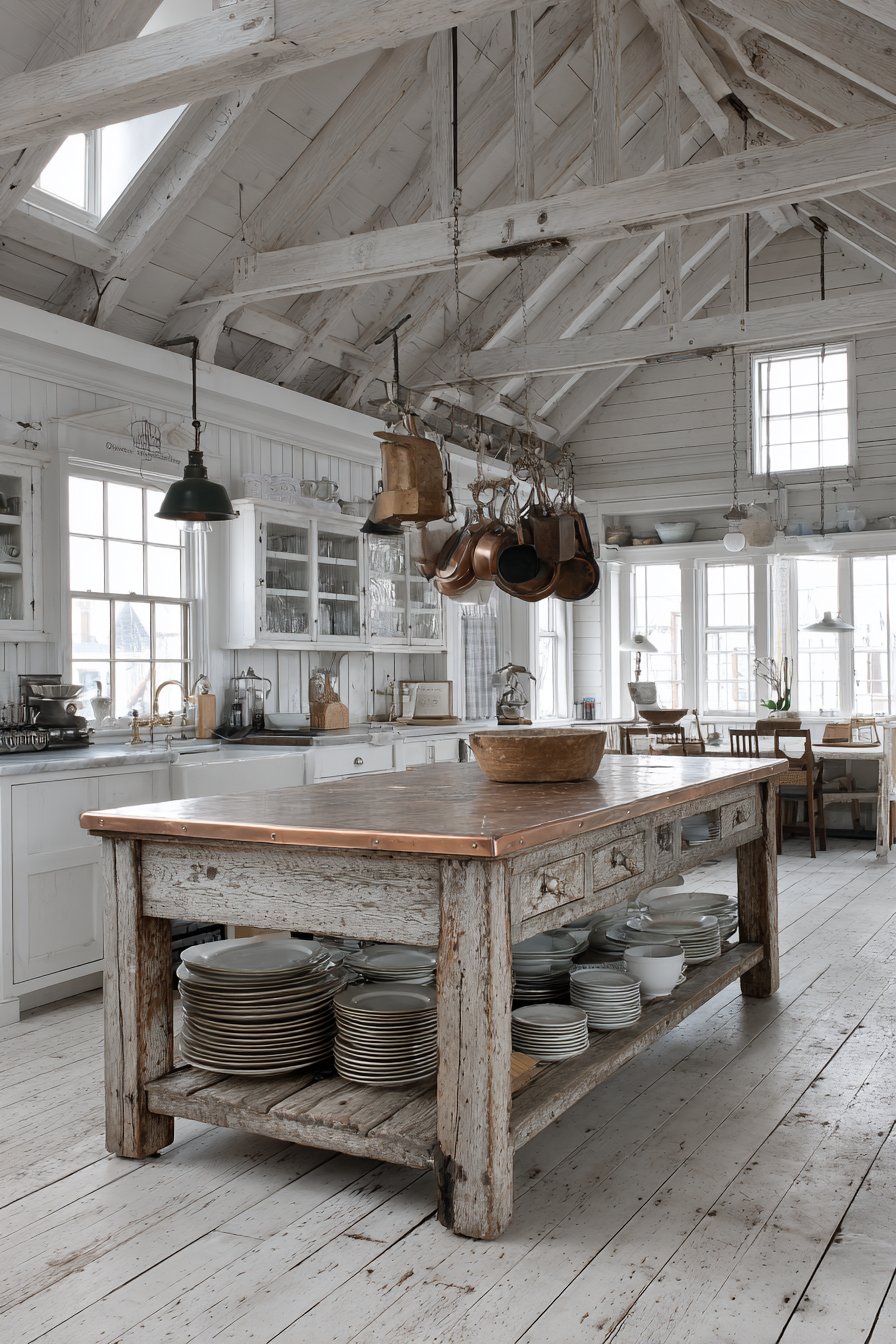
The authentic rustic layout anchors the space with the reclaimed island, soft natural light from multiple windows revealing the wood’s age and character. Every imperfection in the antique pine adds visual interest and authenticity impossible to fake with new materials. This kitchen celebrates the beauty of things that have lived and been used, creating a space that feels collected over generations rather than installed all at once.
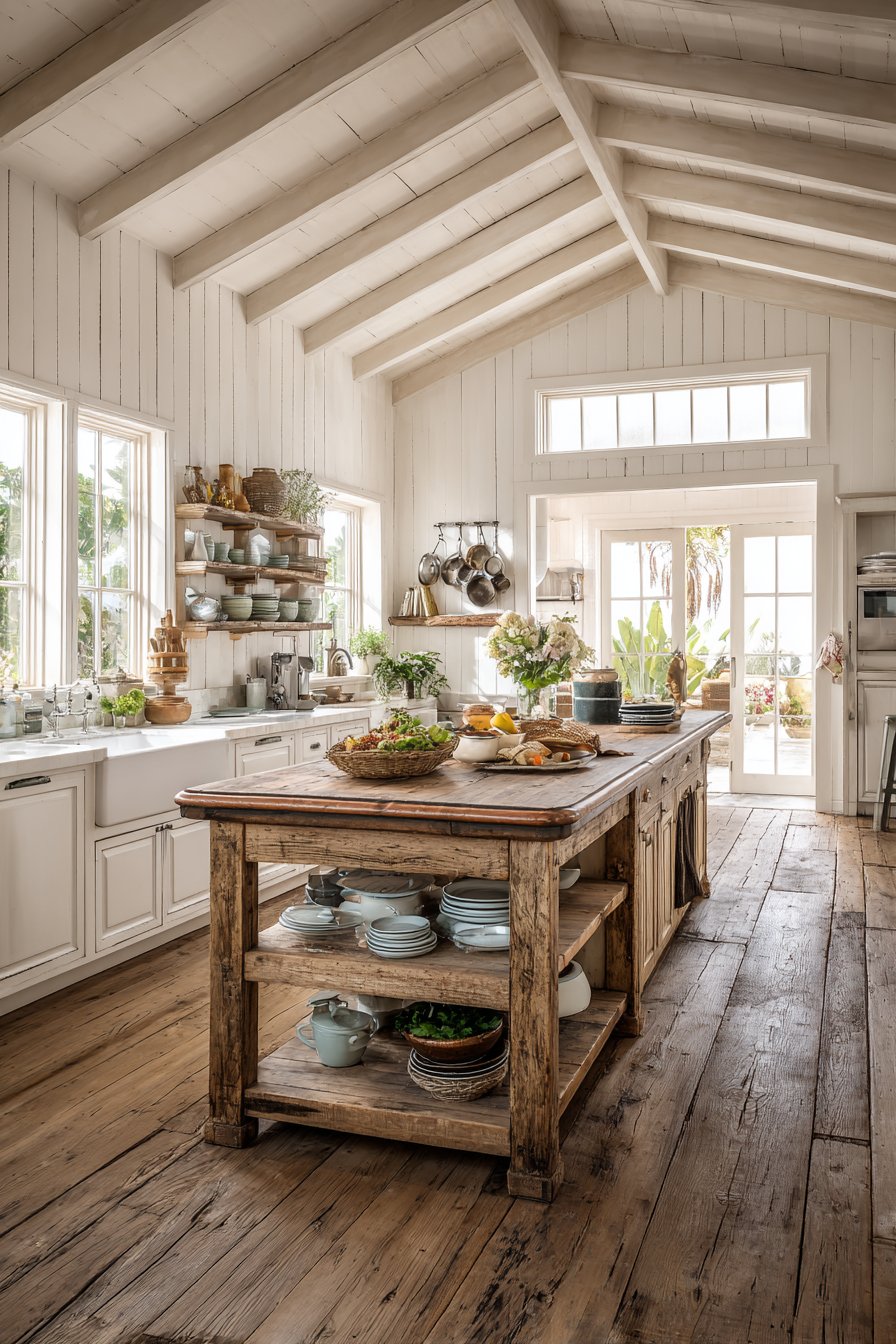
Key Design Tips: Purchase antique islands from architectural salvage dealers who can verify provenance and structural soundness. Seal antique wood thoroughly while maintaining visible character and patina. Choose copper with unlacquered finish that will develop natural patina rather than remaining static. Install farmhouse sinks with proper support brackets as their weight requires reinforcement. Display vintage collections rather than new items to maintain authentic period character.
24. Sustainable Eco-Friendly Materials
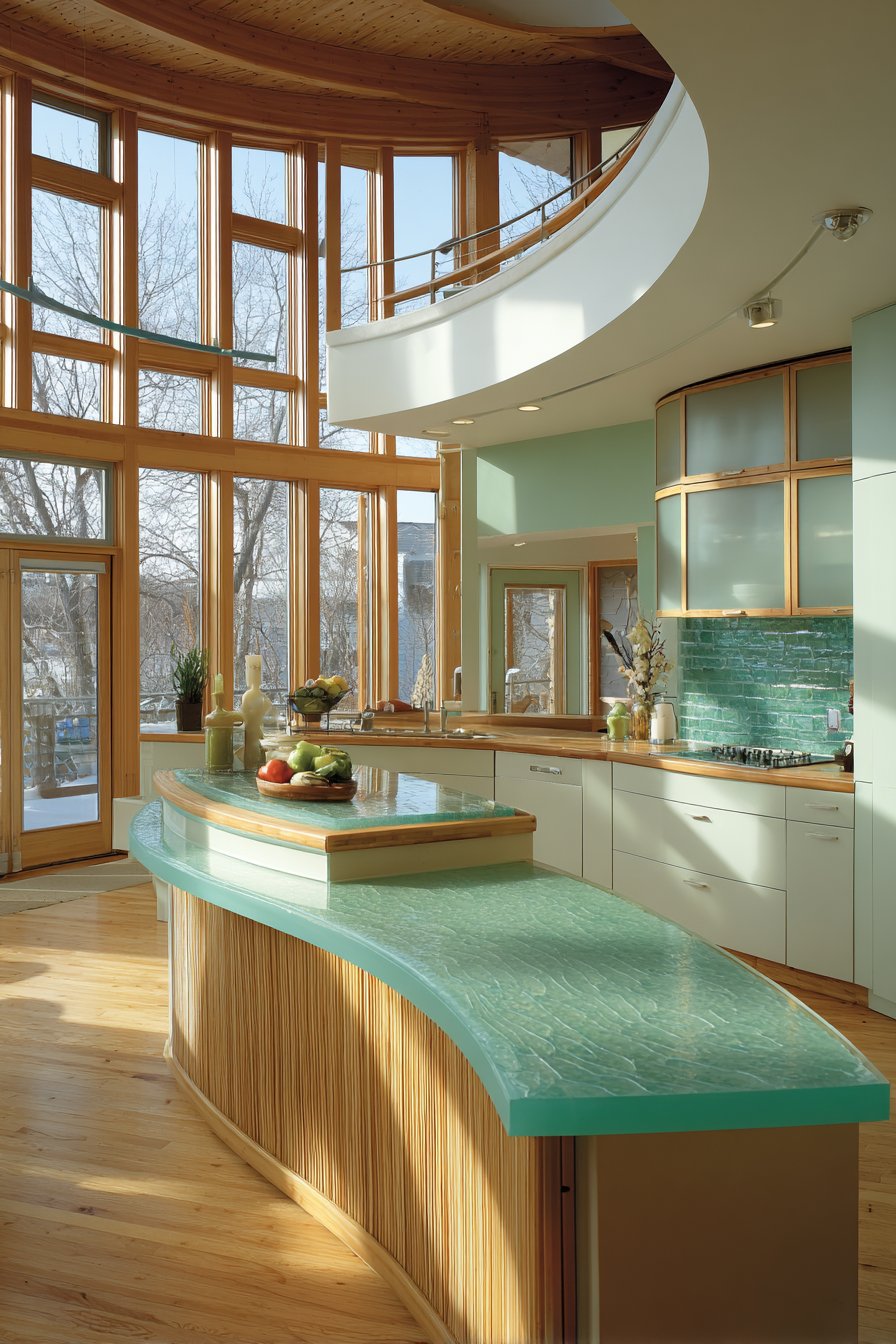
Environmental consciousness increasingly influences design decisions, and this eco-friendly kitchen demonstrates how sustainability and beauty coexist through a bamboo island featuring renewable materials throughout. Bamboo’s rapid growth and strength make it an excellent environmentally responsible choice, while its distinctive grain pattern adds visual interest. Built-in composting drawer and recycling bins integrate waste management into the island design, making sustainable practices convenient rather than burdensome.
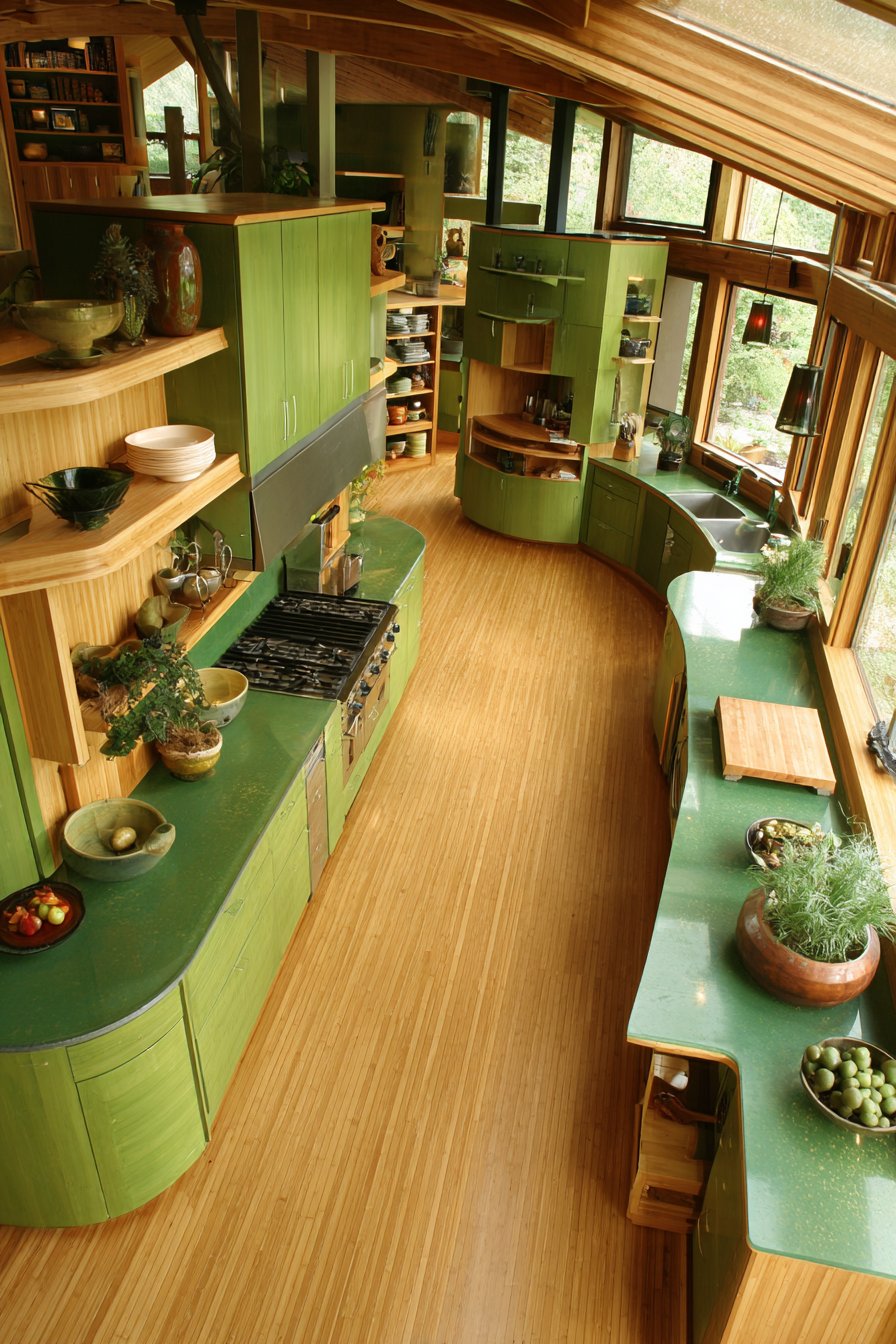
Cork flooring provides renewable surface underfoot, its natural warmth and cushioning making standing more comfortable while its antimicrobial properties and sound absorption add practical benefits. Recycled glass countertops in ocean blue create visual interest while giving new life to materials otherwise destined for landfills. Energy-efficient LED lighting and low-VOC painted cabinets complete the green approach, creating a kitchen where every choice reflects environmental values.
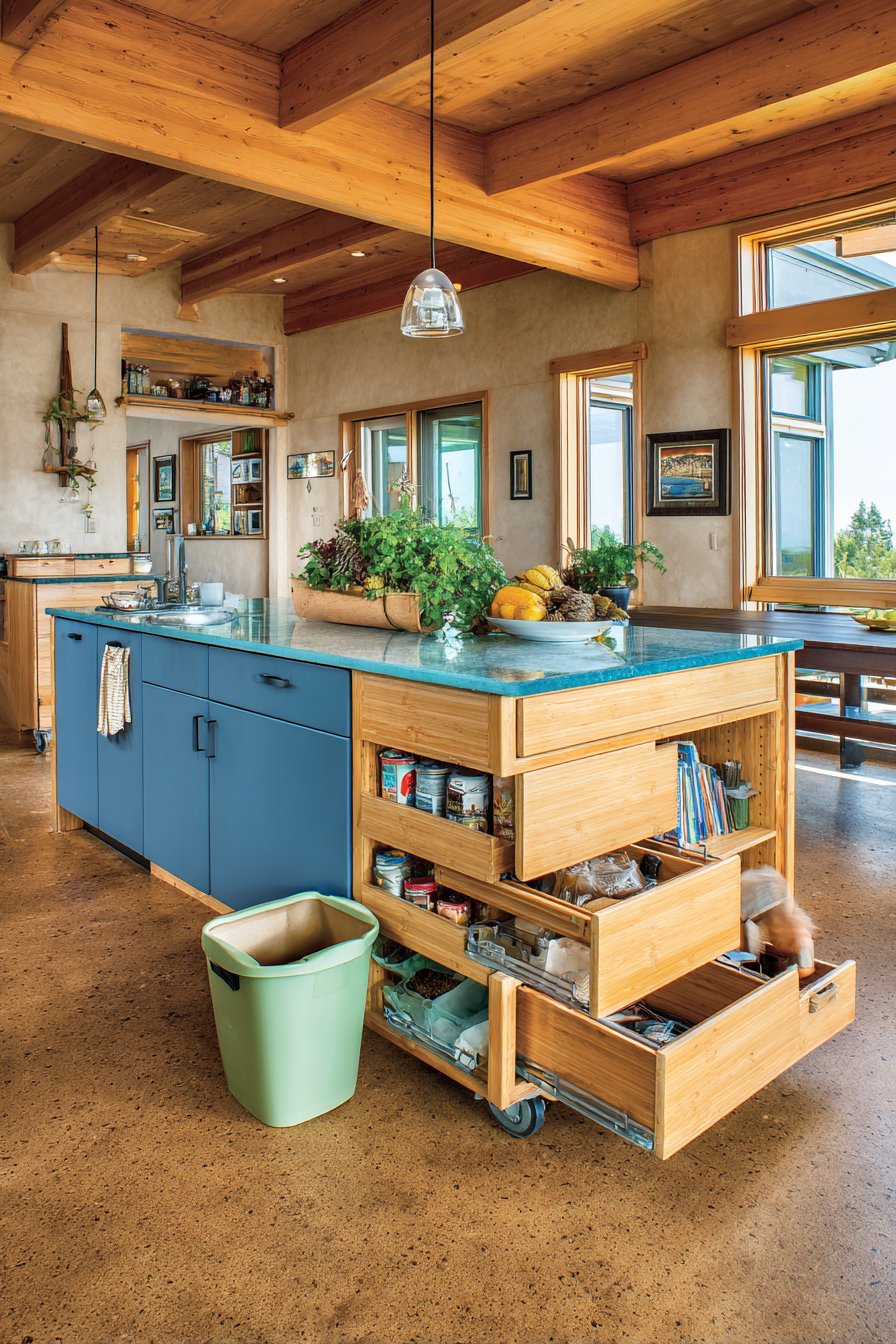
The environmentally conscious layout demonstrates that sustainable choices don’t require aesthetic compromise, natural daylight emphasizing the organic materials and earth-friendly finishes. The bamboo island anchors a kitchen that proves environmental responsibility and beautiful design aren’t mutually exclusive. This space will appeal to homeowners who want their values reflected in their homes’ physical spaces.
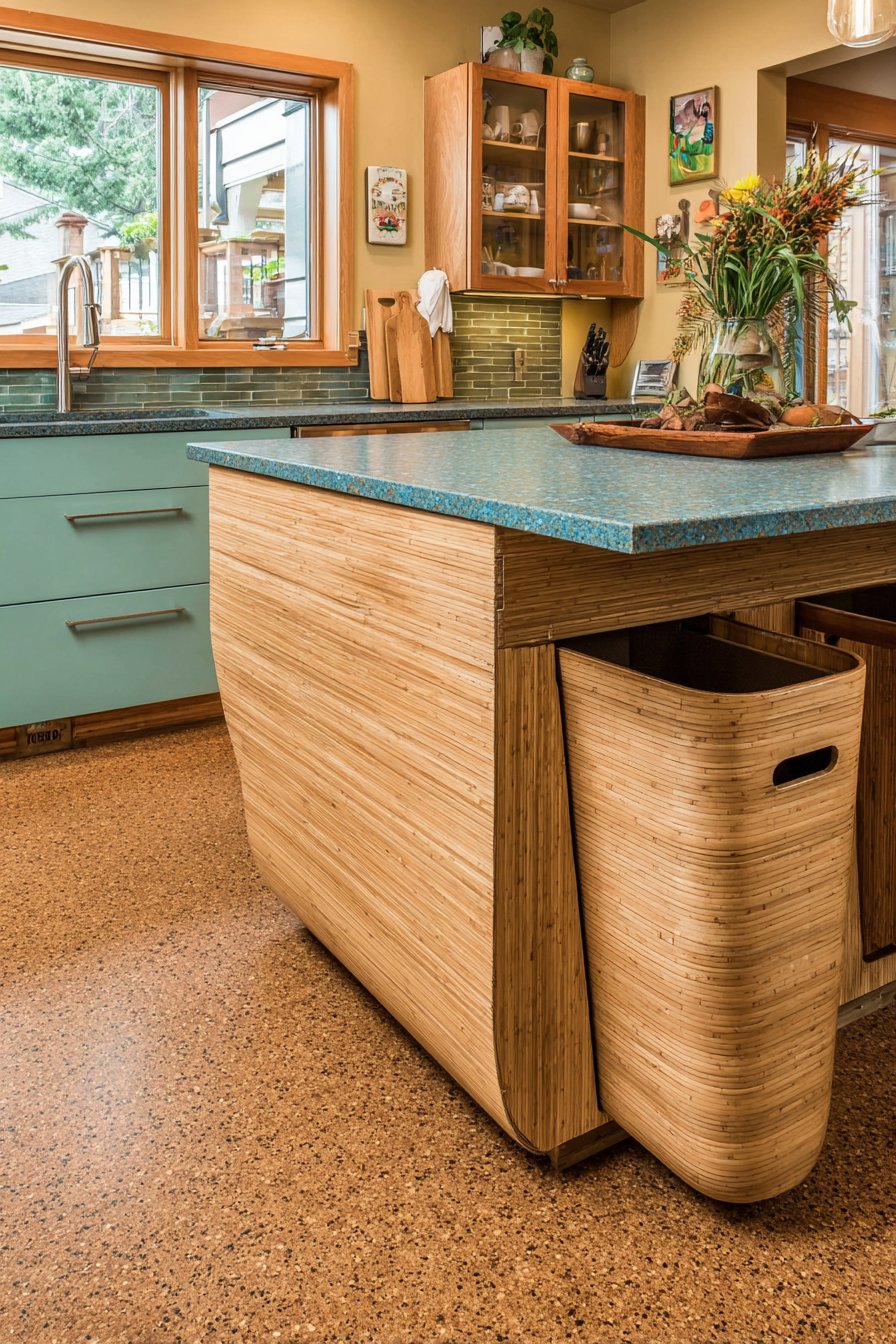
Key Design Tips: Choose FSC-certified bamboo from responsible suppliers to ensure genuine sustainability. Install cork flooring in kitchen-appropriate thicknesses (at least 4mm) for adequate durability. Select recycled glass countertops with adequate resin content for proper strength and stain resistance. Specify LED lighting throughout for maximum energy efficiency and long bulb life. Use zero or low-VOC paints and finishes to maintain healthy indoor air quality.
25. Baker’s Specialized Workspace
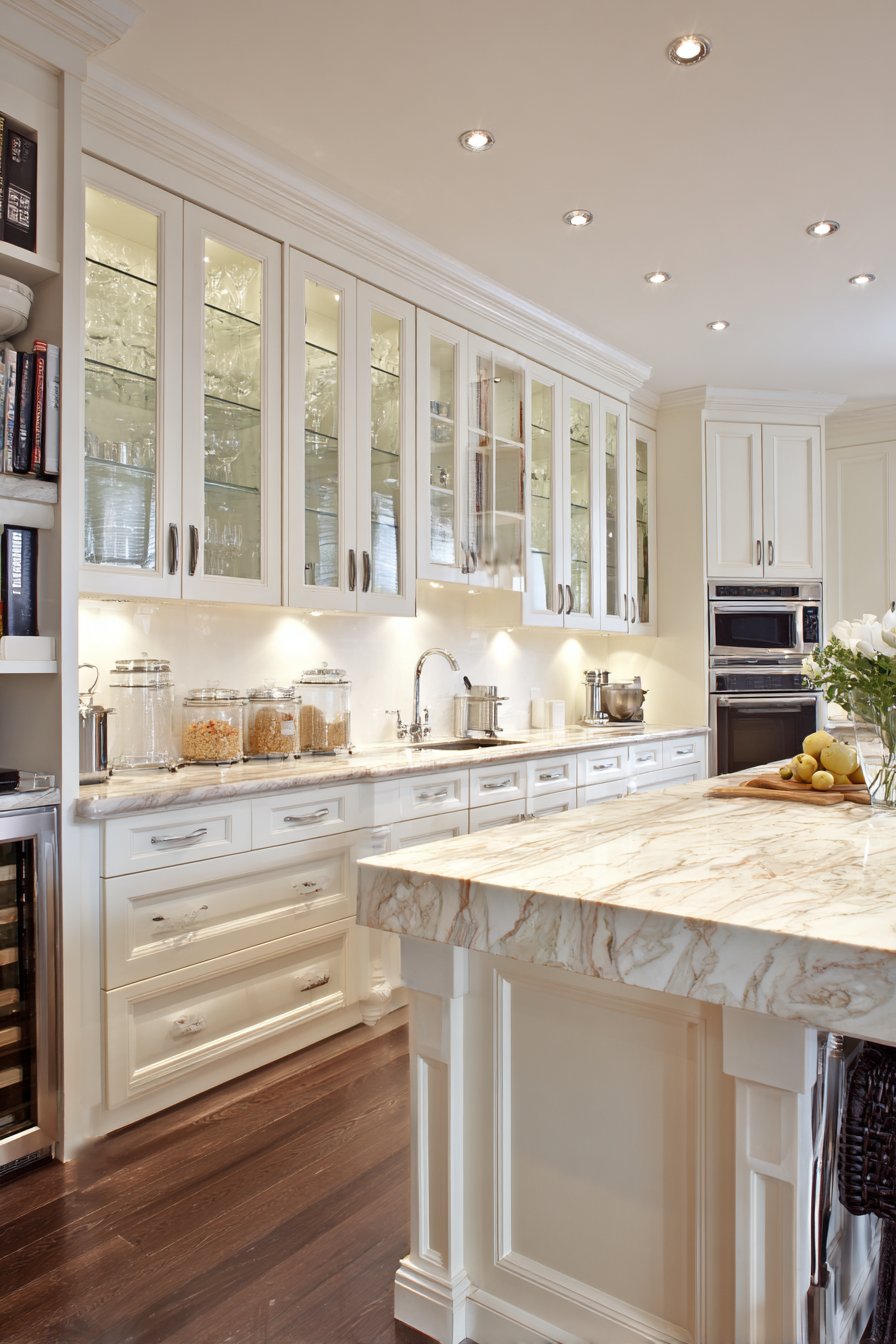
Serious home bakers require specific features, and this specialized layout centers on a marble-topped island designed for pastry work. The cool marble surface keeps dough at ideal temperature during rolling, while a dedicated flour storage bin underneath keeps this essential ingredient always accessible. A lowered section provides comfortable height for extended rolling sessions, preventing the back strain that plagues bakers working at standard counter heights.
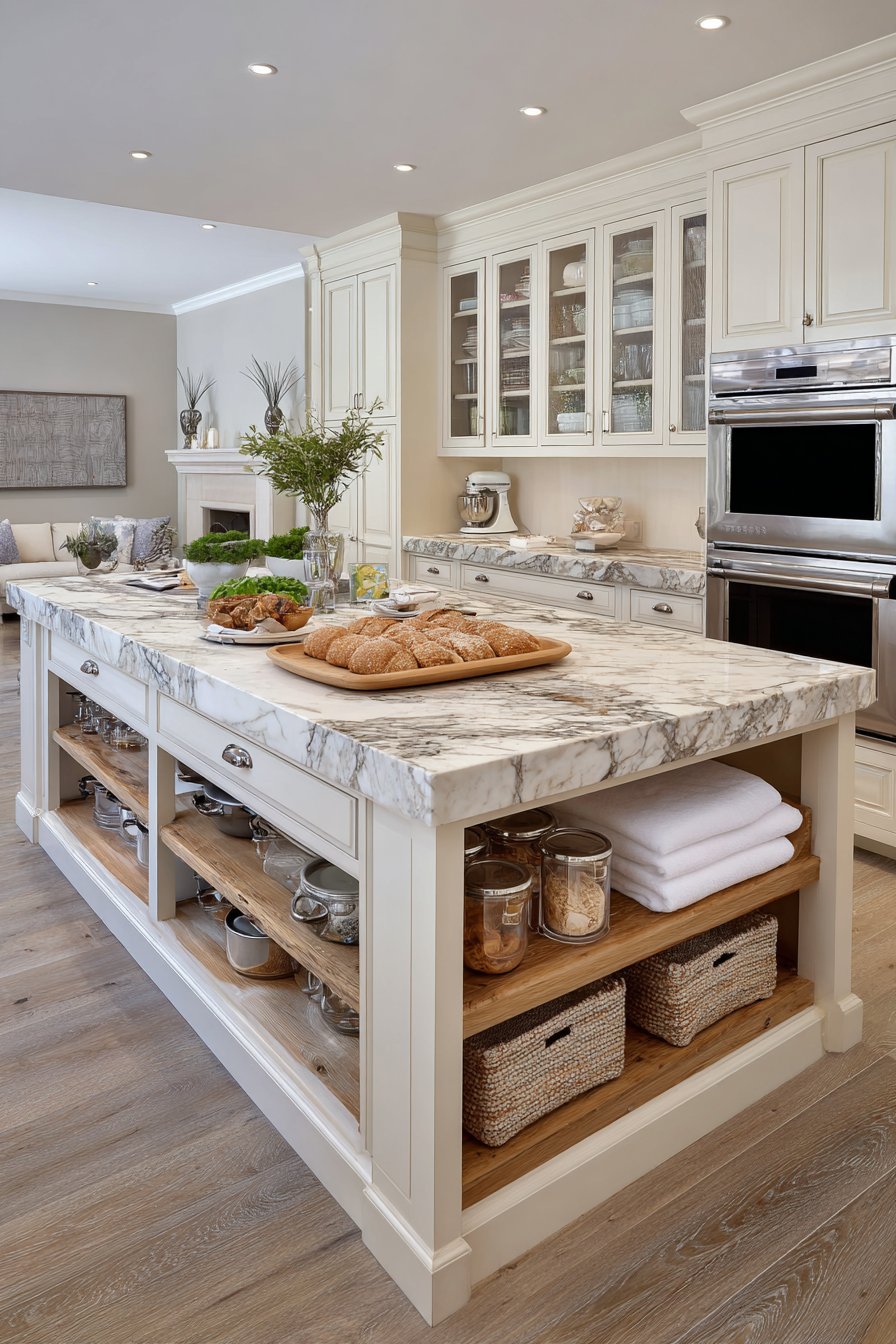
Cream-colored cabinets with glass doors display baking equipment organized for easy access, with measuring cups, mixing bowls, and specialty tools visible at a glance. Professional-grade appliances include a double oven providing capacity for multiple baking projects simultaneously. The specialized equipment and thoughtful organization reflect serious commitment to the baking craft while creating a beautiful, functional space.
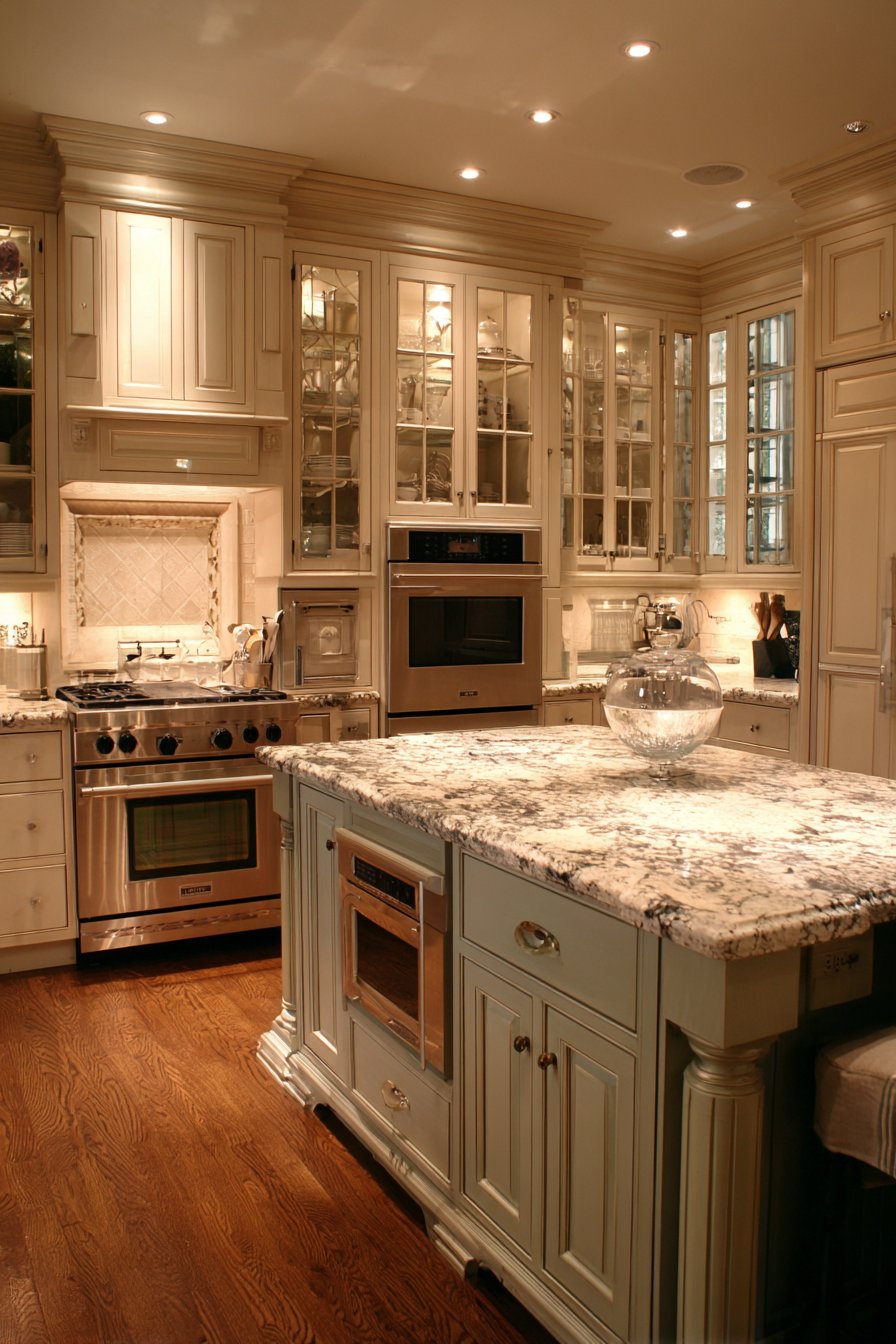
The specialized layout serves baking enthusiasts with bright even lighting revealing the marble’s surface and thoughtful organization of tools and ingredients. Every detail supports the baking process, from the cool work surface to the abundant storage to the professional equipment. This kitchen demonstrates how islands can be customized for specific cooking specialties, creating spaces that support homeowners’ culinary passions.
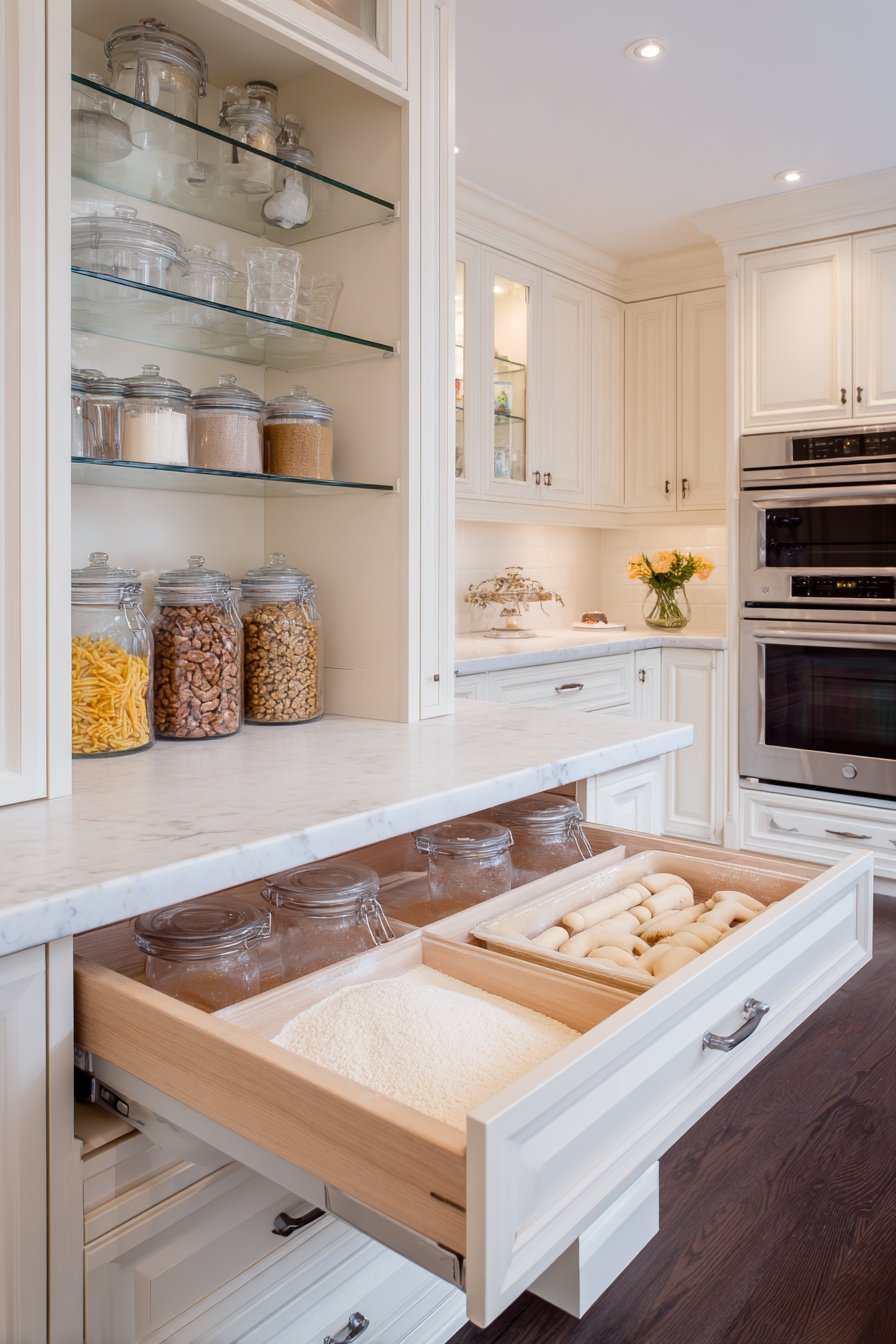
Key Design Tips: Install real marble rather than quartz for genuine temperature benefits essential to pastry work. Include a separate lowered section at 32-34 inches height for comfortable rolling and kneading. Store flour in built-in bins with airtight seals to maintain freshness and prevent pest access. Display baking tools in glass-front cabinets for easy visual access and inventory management. Choose double ovens with precise temperature control for successful baking results.
26. Transitional Grey-Stained Oak Bridge
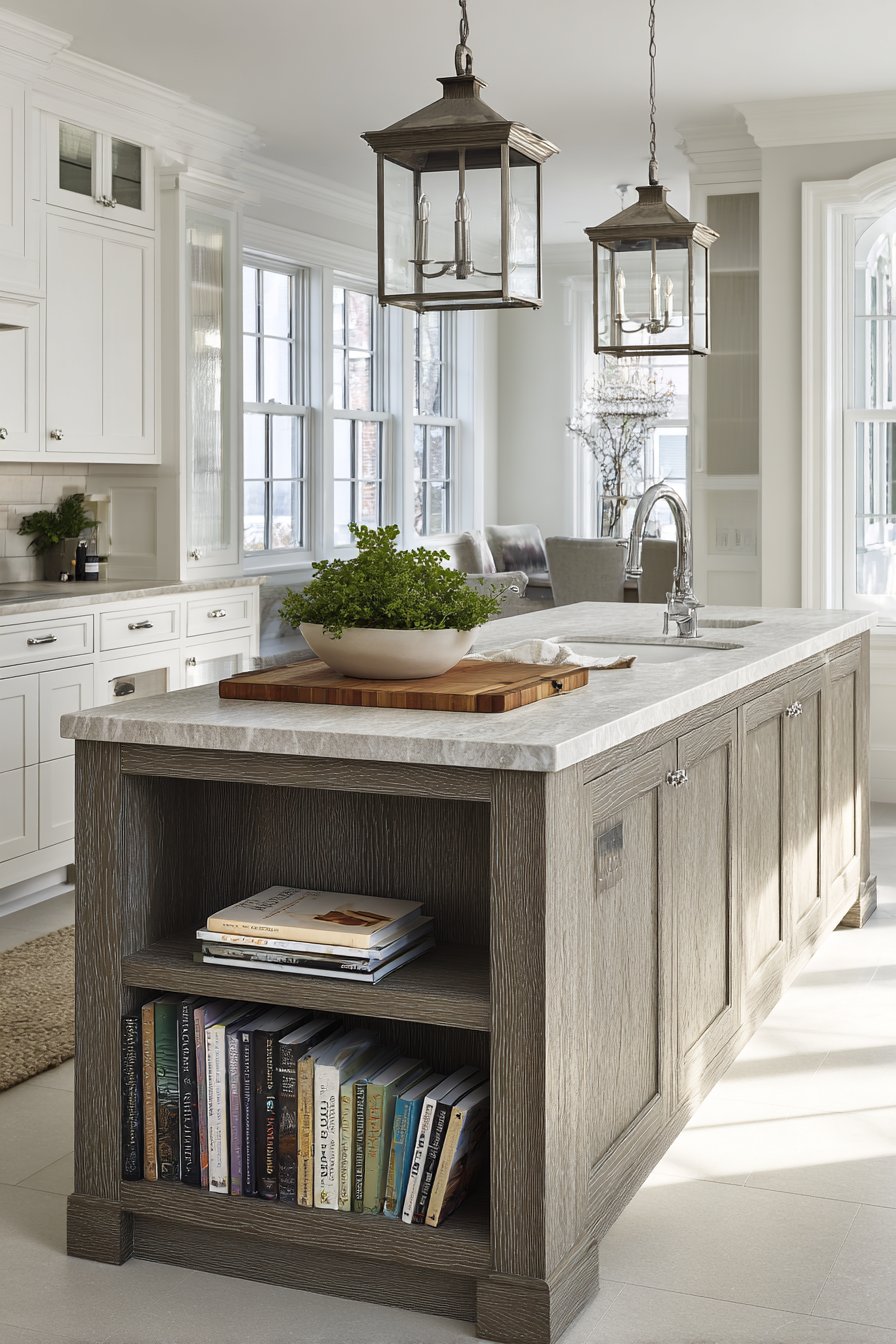
Transitional design bridges traditional and contemporary, and this kitchen achieves the balance through a grey-stained oak island with subtle grain visible through the finish. The stain color feels current while the visible wood grain maintains warmth and natural character. A built-in bookshelf end cap displays cookbooks accessibly, transforming the island’s end into a culinary library, while a butcher block insert provides dedicated chopping surface.
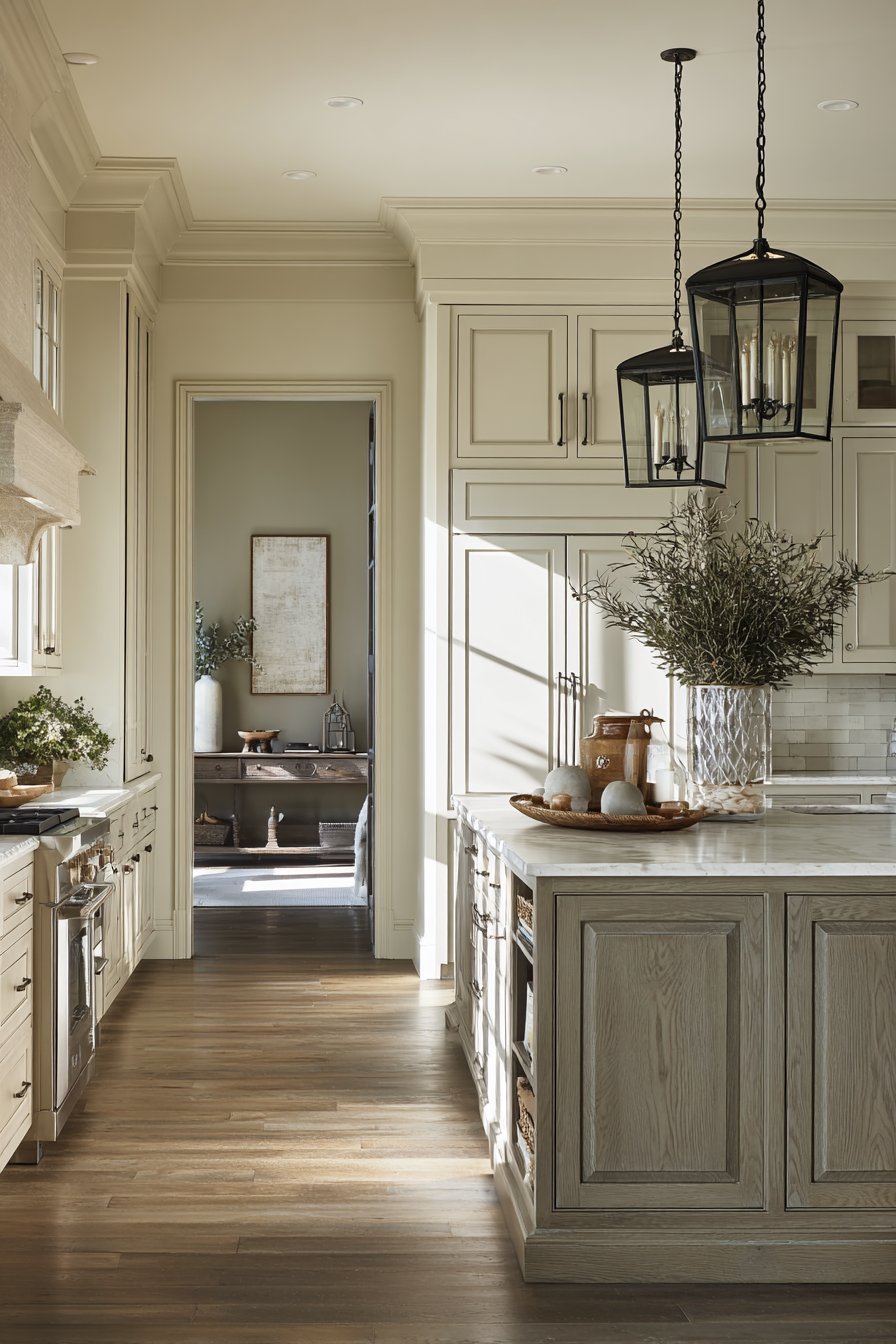
Shaker-style cabinets in soft white surround the space, their simple recessed panels working equally well in traditional or contemporary contexts. Quartz countertops in warm beige tie together the color palette, their neutral tone coordinating with both the grey island and white cabinetry. Lantern-style pendants provide warm ambient light, their traditional form rendered in contemporary finishes that bridge style periods.
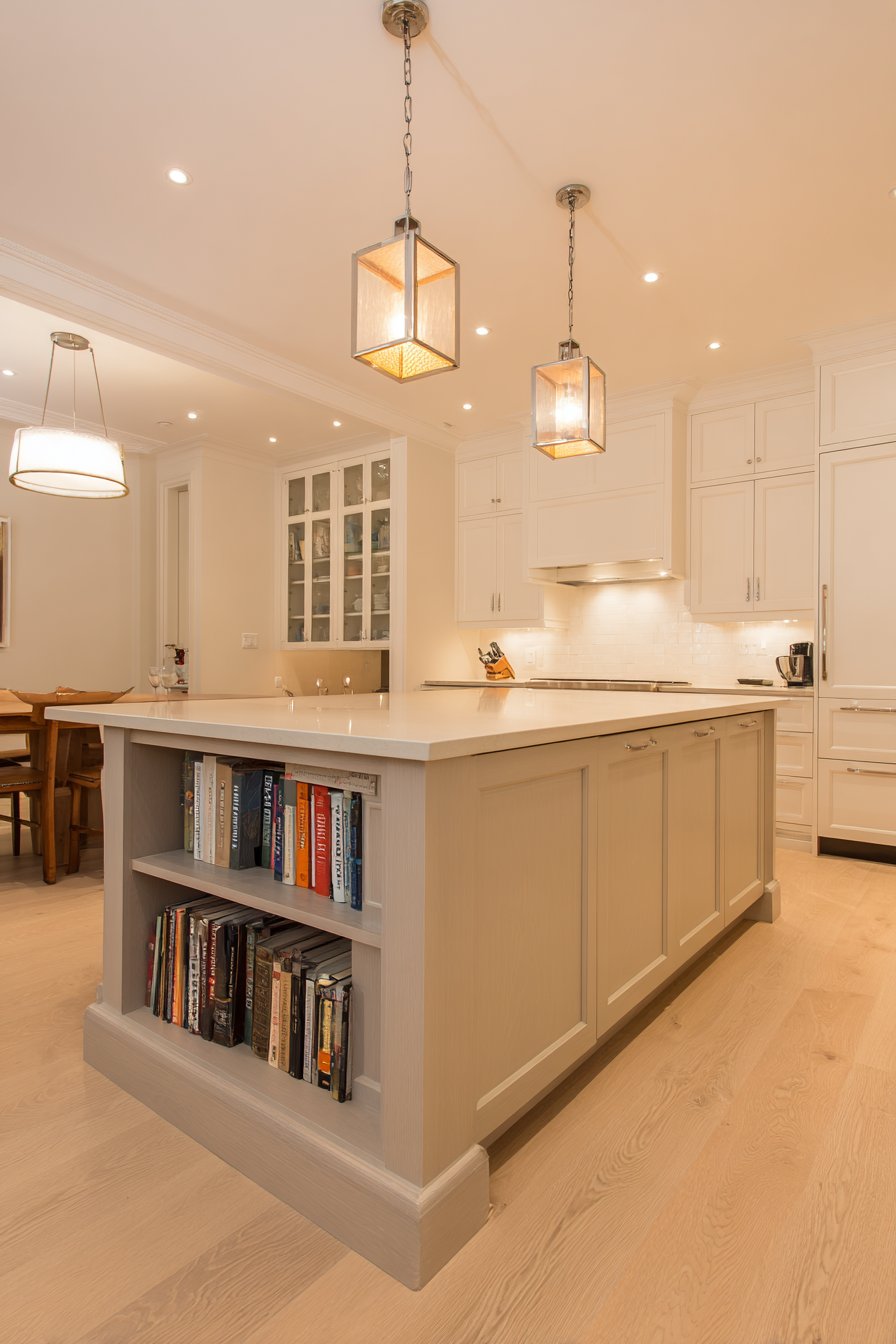
The versatile layout bridges traditional and contemporary styles with afternoon light emphasizing the wood grain and mixed material textures. The island serves as the transition point where different aesthetics meet and merge, creating a kitchen that will remain relevant through changing design trends. This approach appeals to homeowners who appreciate both contemporary simplicity and traditional warmth.
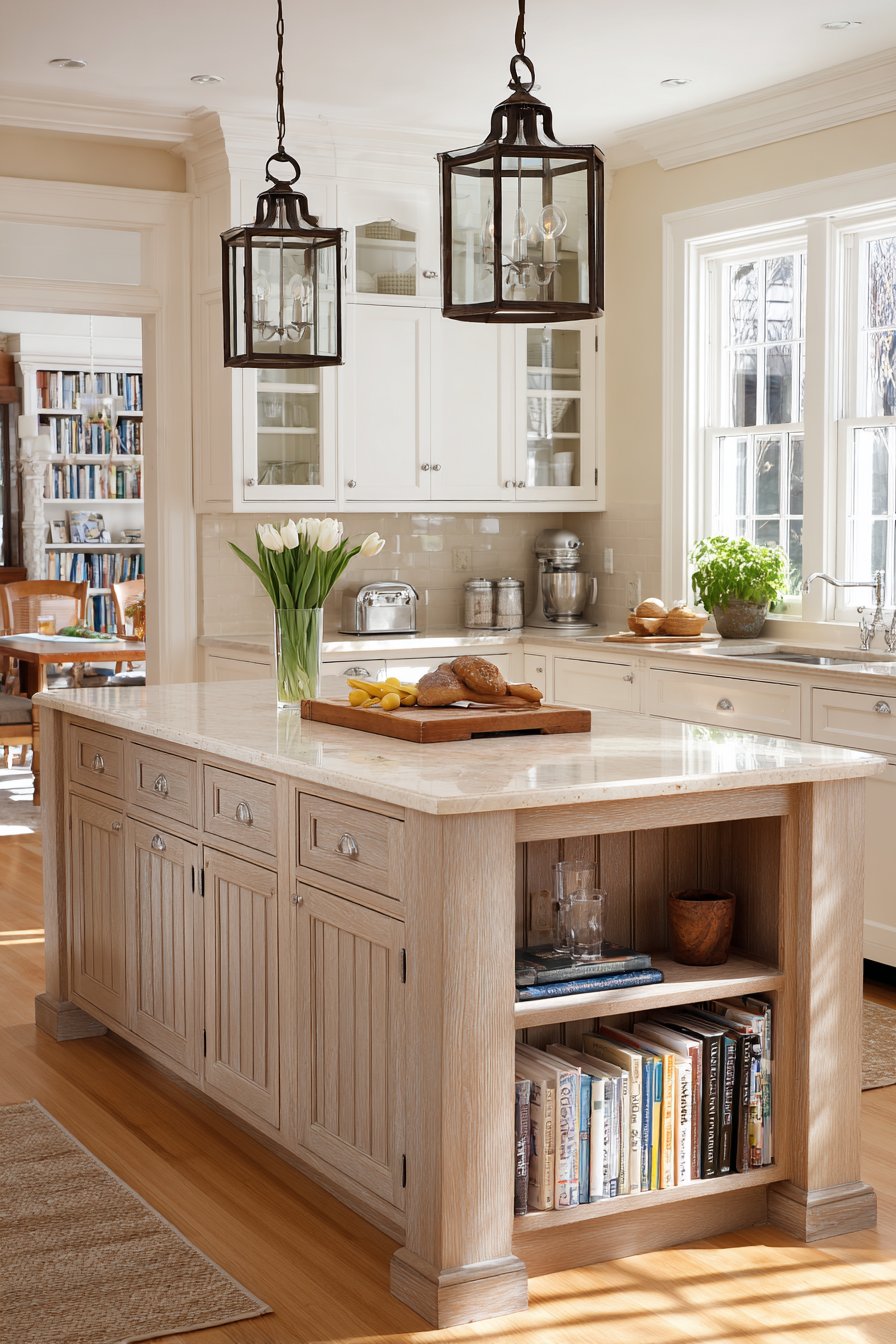
Key Design Tips: Choose grey stains with warm rather than cool undertones to maintain inviting atmosphere. Select oak or other open-grain woods where stain won’t completely obscure natural grain patterns. Install bookshelf sections at island ends where they won’t interfere with seating or workflow. Include butcher block inserts with adequate depth (at least 1.5 inches) to withstand years of chopping. Select transitional light fixtures that could work in either traditional or contemporary contexts.
27. European Furniture-Quality Craftsmanship
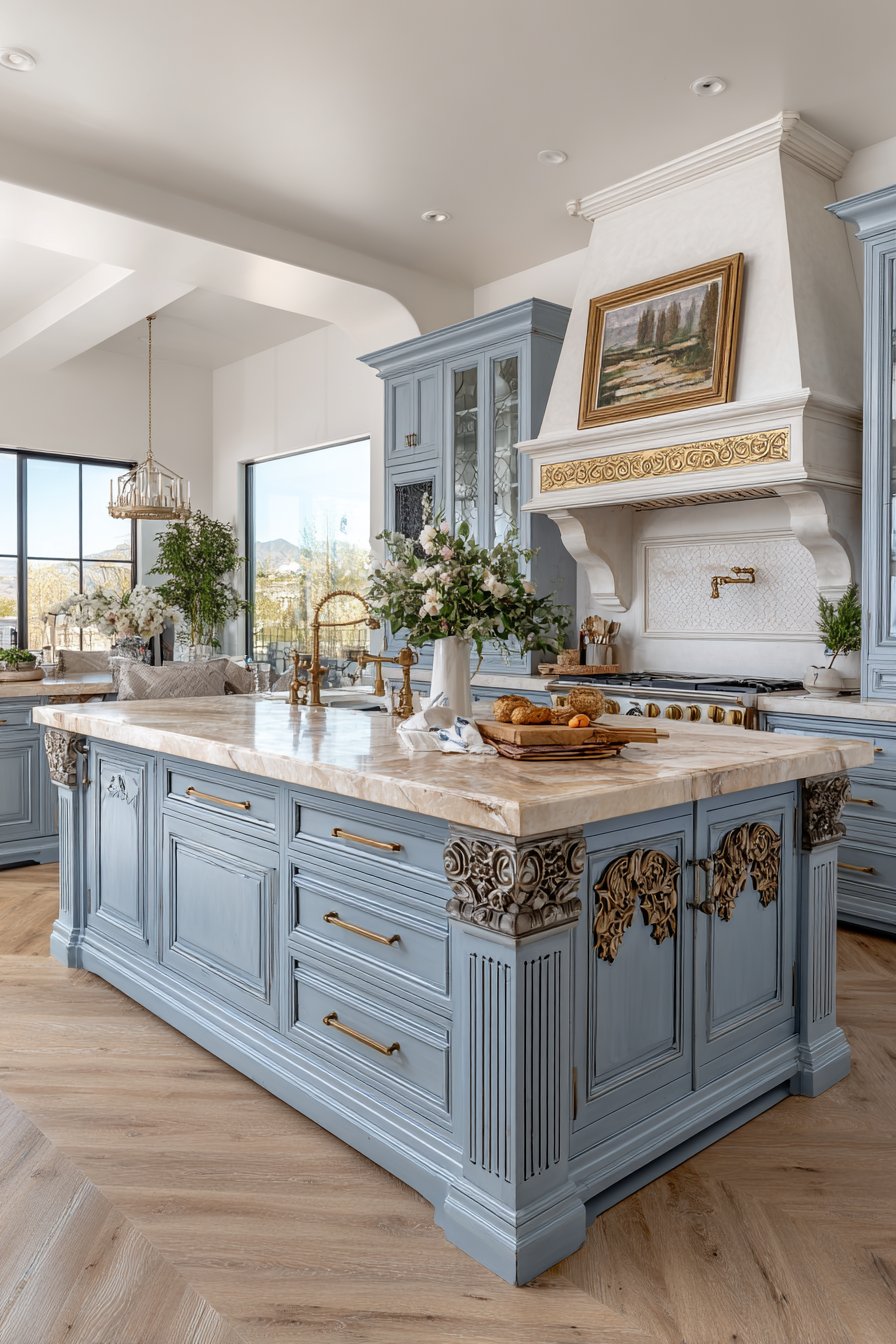
European kitchen design emphasizes furniture-quality construction and refined details, and this kitchen showcases these values through an island featuring carved details and honed marble top. The cabinetry uses inset construction where doors sit within rather than overlay the cabinet frame, requiring precise joinery and superior craftsmanship. Decorative hardware in antique brass adds jewelry-like detail while providing functional pulls and knobs.
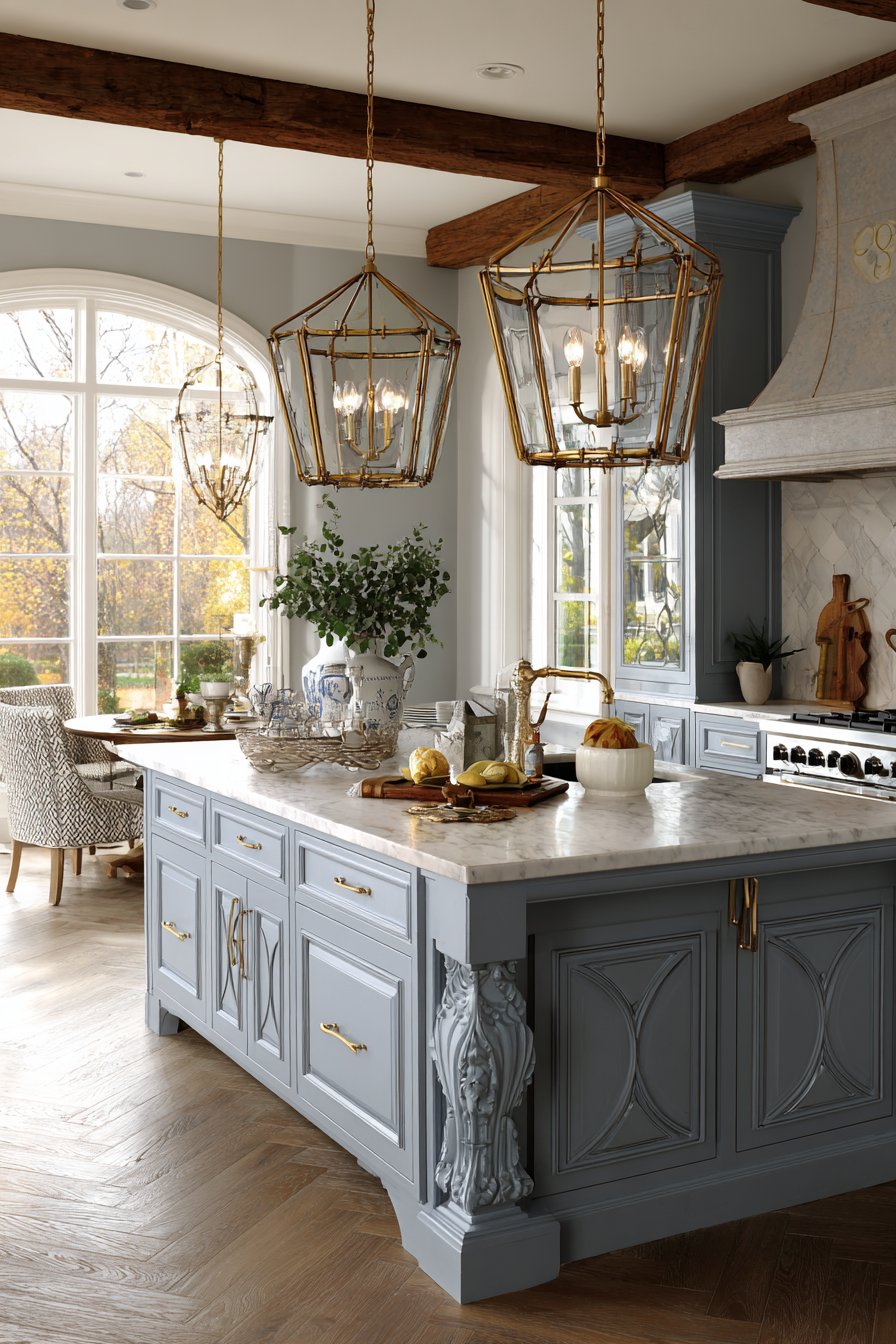
Perimeter cabinets in soft grey-blue create sophisticated backdrop that allows the ornate island to shine without competition. Herringbone wood floors add pattern and movement, their diagonal orientation creating visual interest while making the space feel larger. Ornate brass fixtures and a traditional range hood complete the refined aesthetic, every element contributing to the sense of quality and permanence.
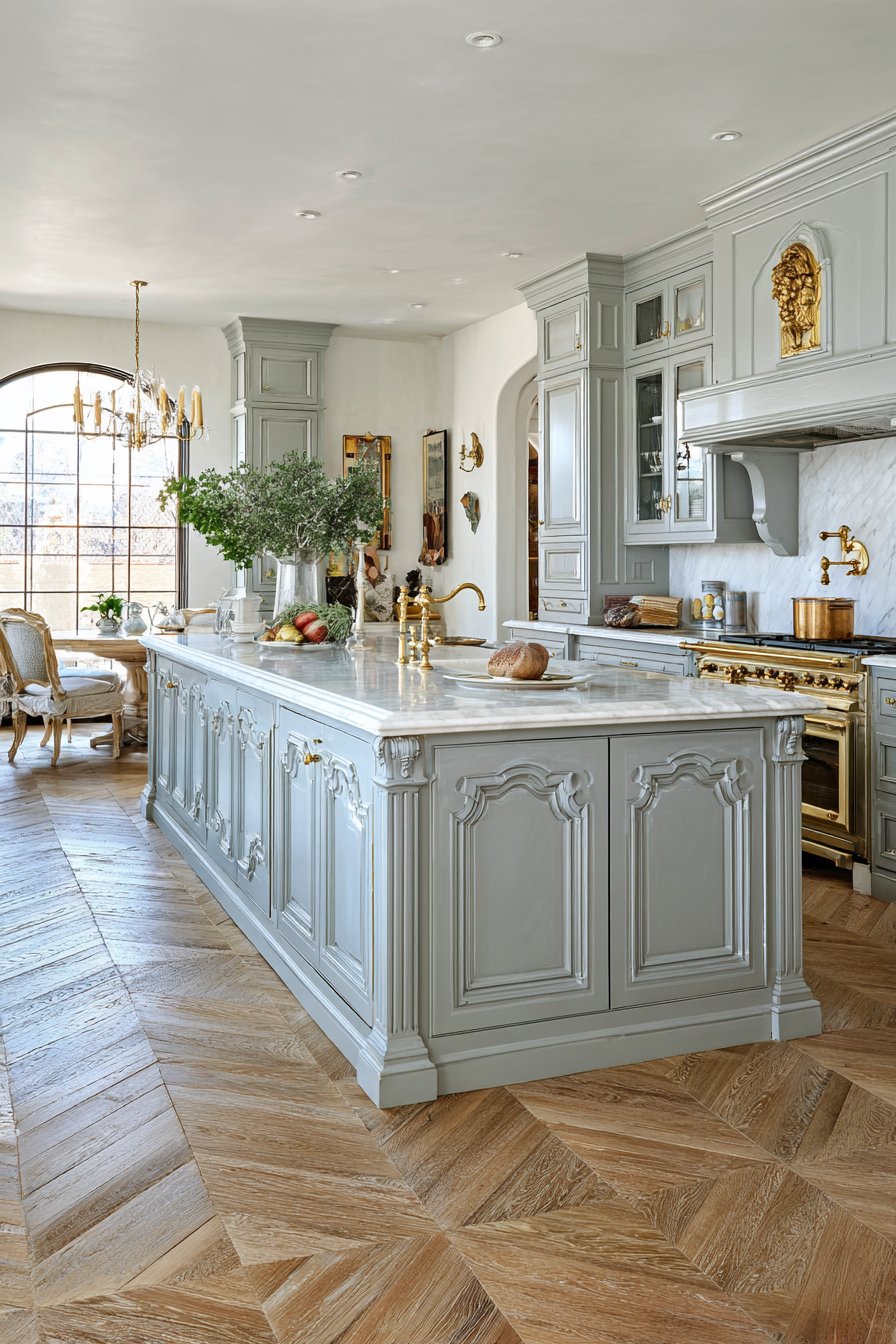
The elegant layout functions as both practical workspace and artful centerpiece, with natural light from tall windows revealing craftsmanship details throughout. The furniture-quality island demonstrates European values of investing in pieces built to last generations rather than following temporary trends. This kitchen will serve beautifully for decades while maintaining its elegance and sophistication.
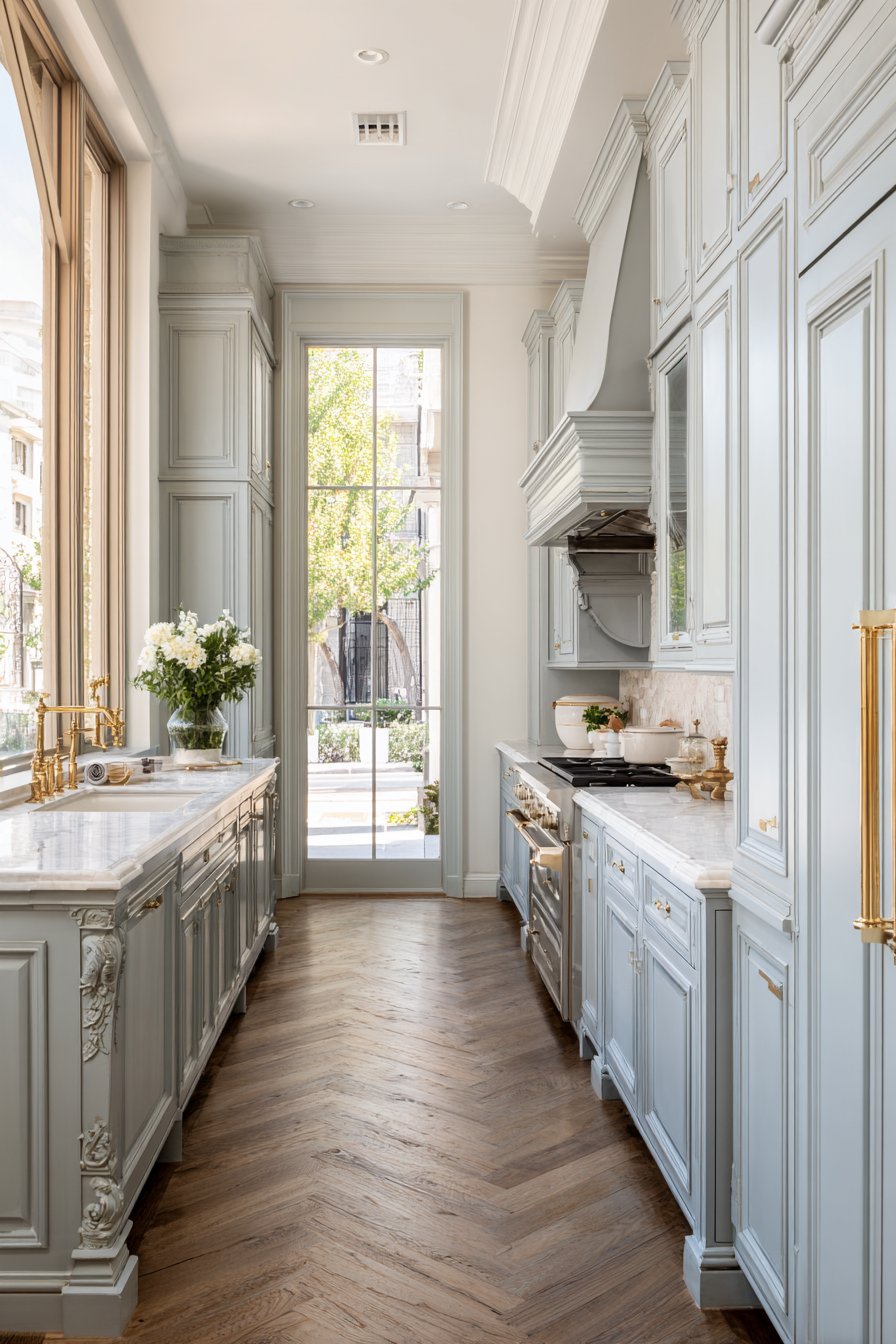
Key Design Tips: Choose inset cabinetry construction for superior quality despite higher costs. Select honed rather than polished marble for sophisticated understated elegance. Install herringbone floors with borders to frame the pattern and create finished appearance. Specify solid brass hardware that can be polished and maintained rather than plated versions that wear through. Include architectural details like decorative range hoods to reinforce European aesthetic.
28. Apartment Rolling Island Flexibility
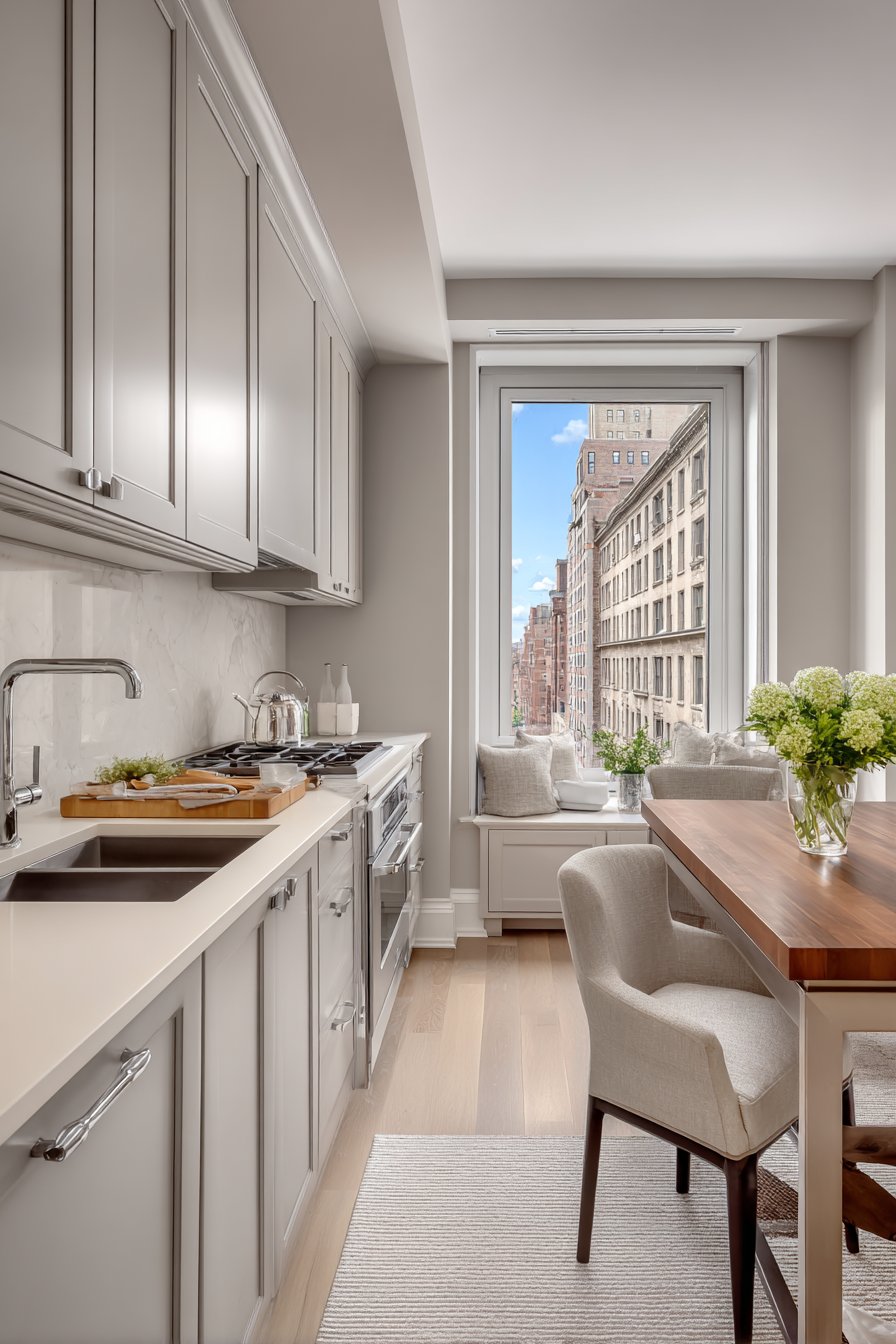
Small apartment kitchens demand creative solutions, and this compact design features a narrow rolling island providing flexible functionality within severe space constraints. The butcher block top offers additional prep space exactly when needed, while the lower shelf holds frequently used items like oils, utensils, and cookbooks. When maximum floor space is required for other activities or traffic, the island simply rolls aside, stored in a corner or even moved to another room.
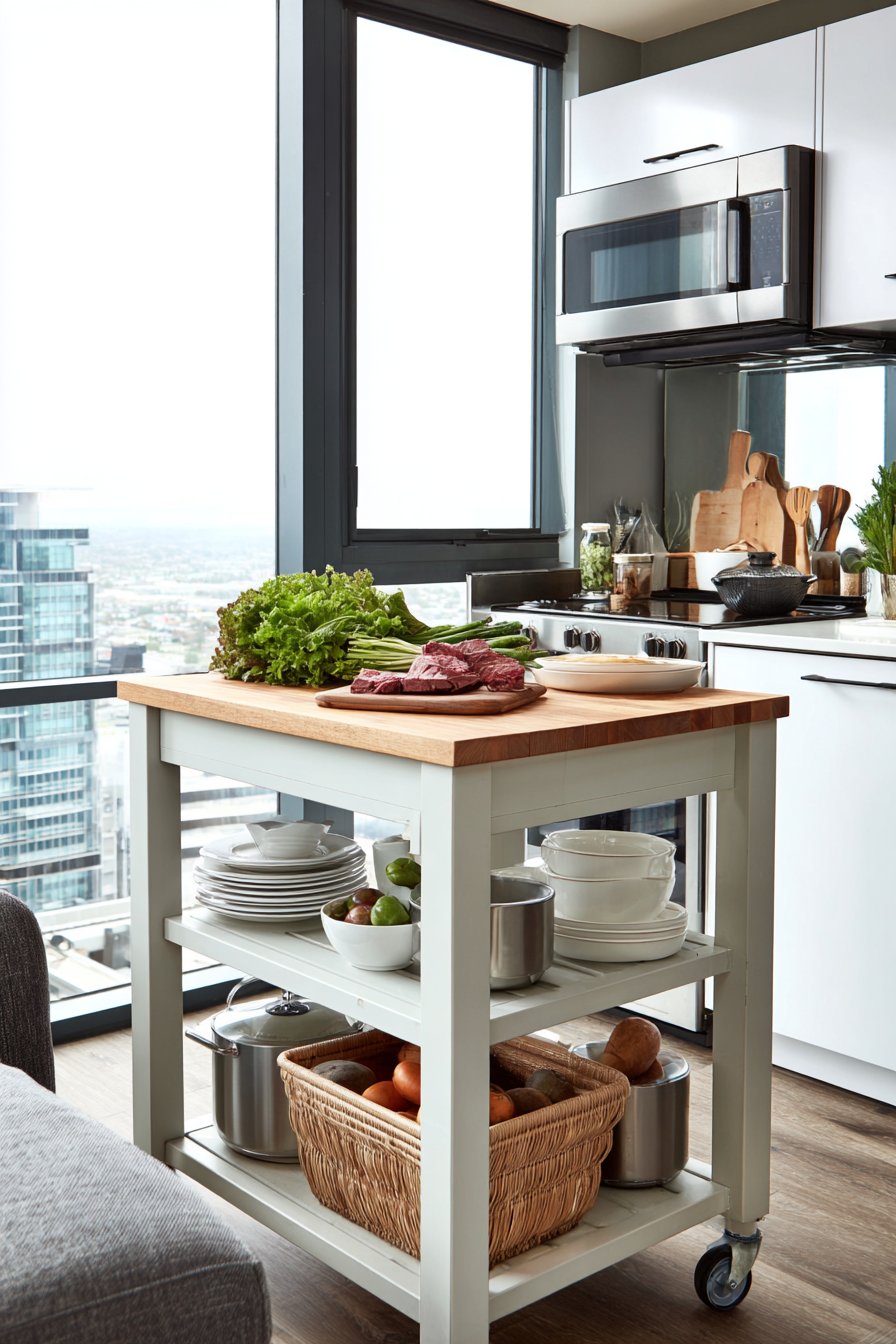
White galley cabinets maximize wall space with vertical storage solutions including tall pantry cabinets and stacked shelving. Every inch of wall surface works hard, eliminating wasted space while keeping essentials accessible. Mirrored backsplash creates illusion of space, reflecting light and views to make the compact kitchen feel significantly larger than its actual dimensions.
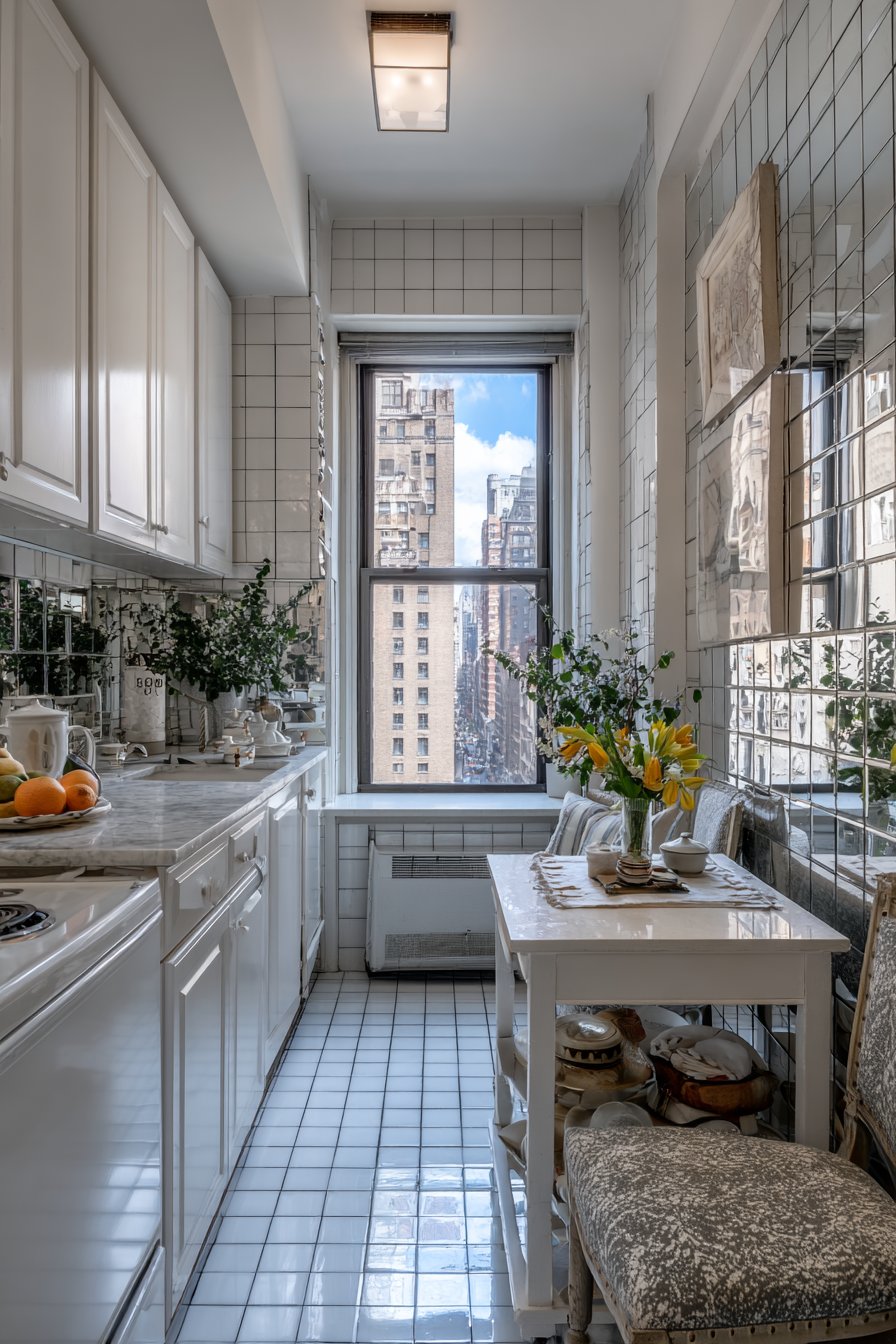
The clever small-space layout demonstrates how mobile islands can be positioned as needed or moved aside, with natural light from a single window highlighting efficient use of every square inch. This design proves that even the smallest kitchens can benefit from island functionality through creative, flexible solutions. The rolling island provides essential extra workspace without the permanent commitment of fixed installation.
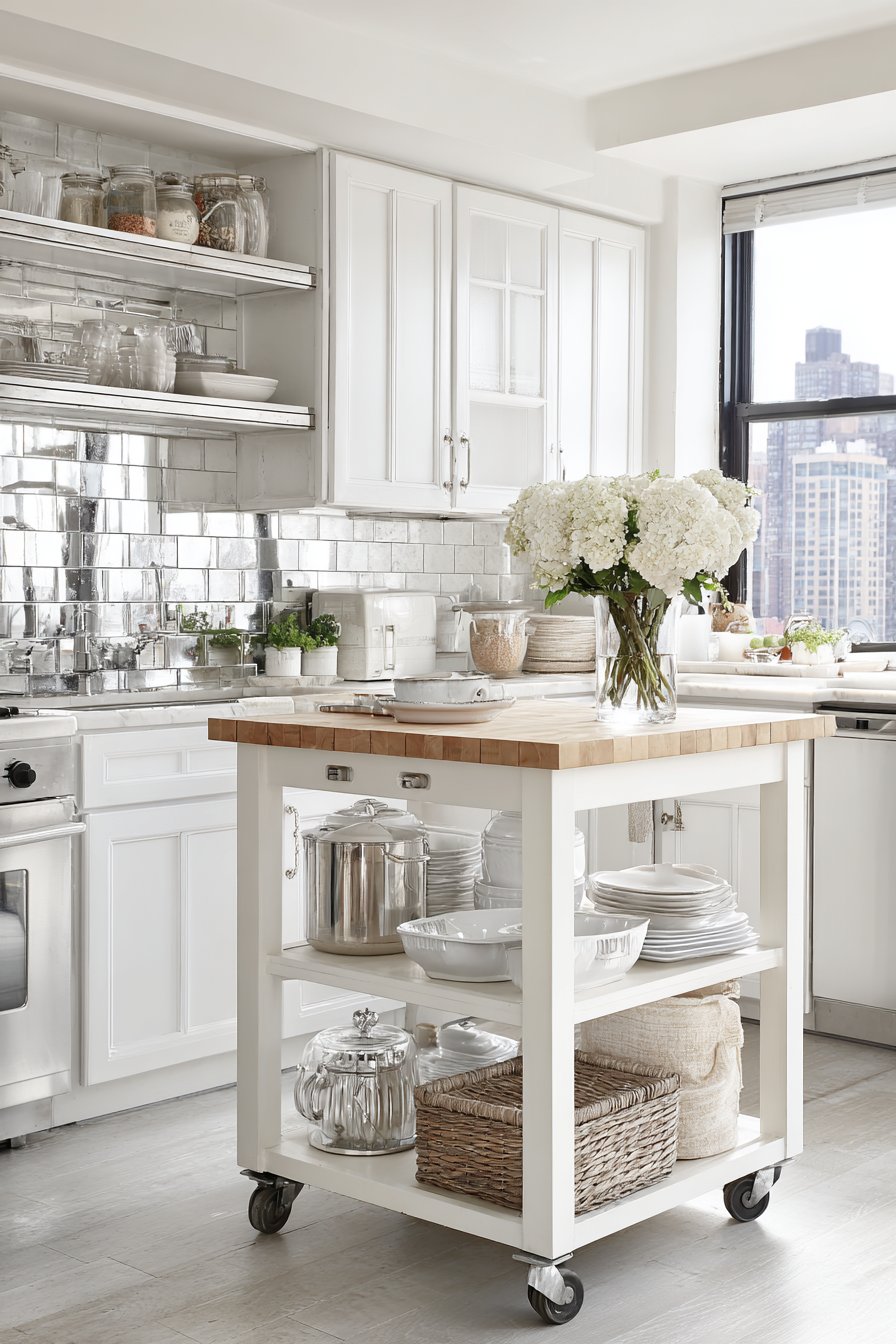
Key Design Tips: Choose narrow rolling islands (maximum 20 inches wide) that store easily when not in use. Install heavy-duty locking casters that secure firmly during use and roll smoothly when moving. Use mirrored or glossy backsplash materials to reflect light and create spaciousness. Maximize vertical storage with floor-to-ceiling cabinets to compensate for limited floor space. Keep rolling islands lightweight enough for one person to move easily while sturdy enough for food prep.
29. Luxury Custom Multi-Zone Excellence
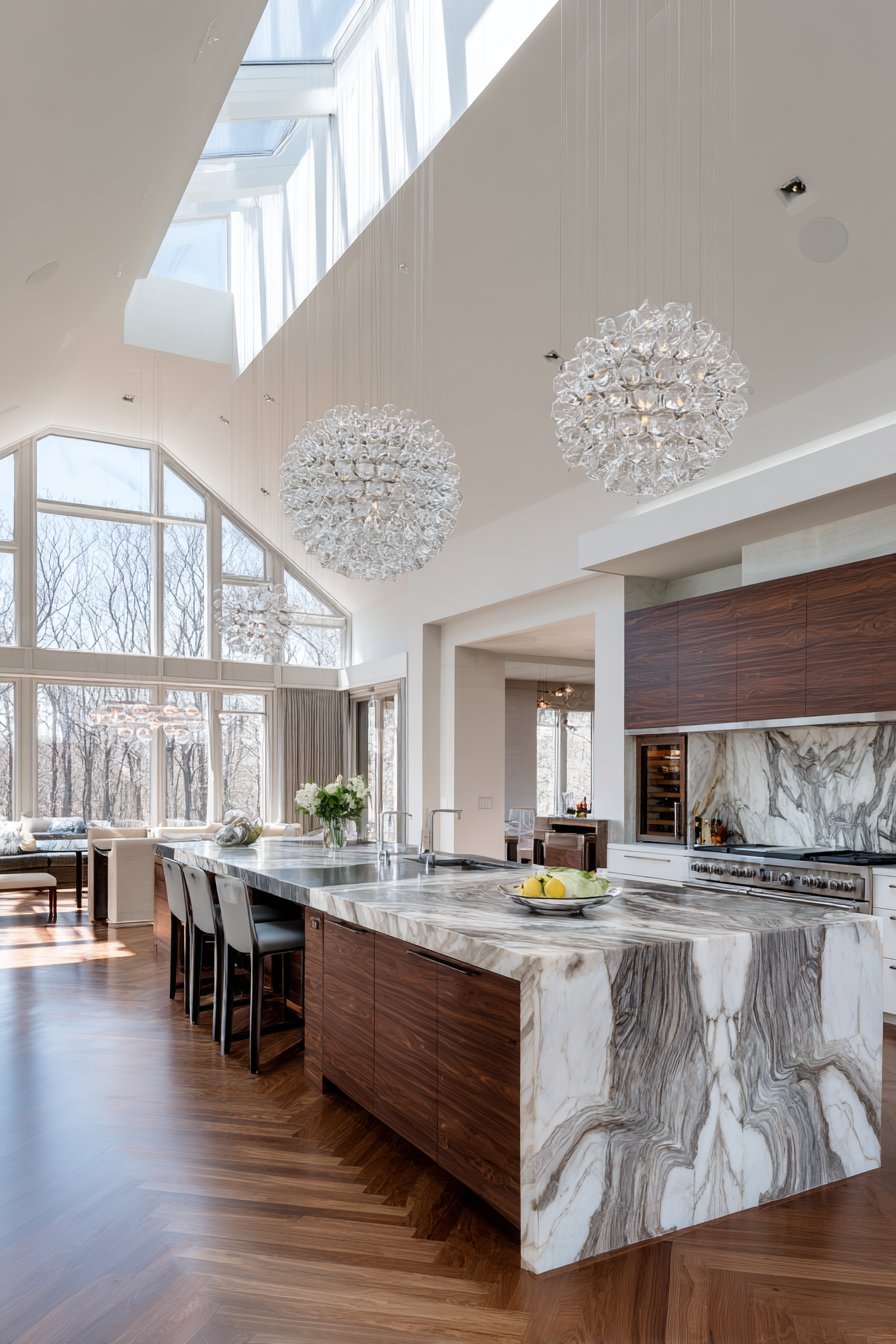
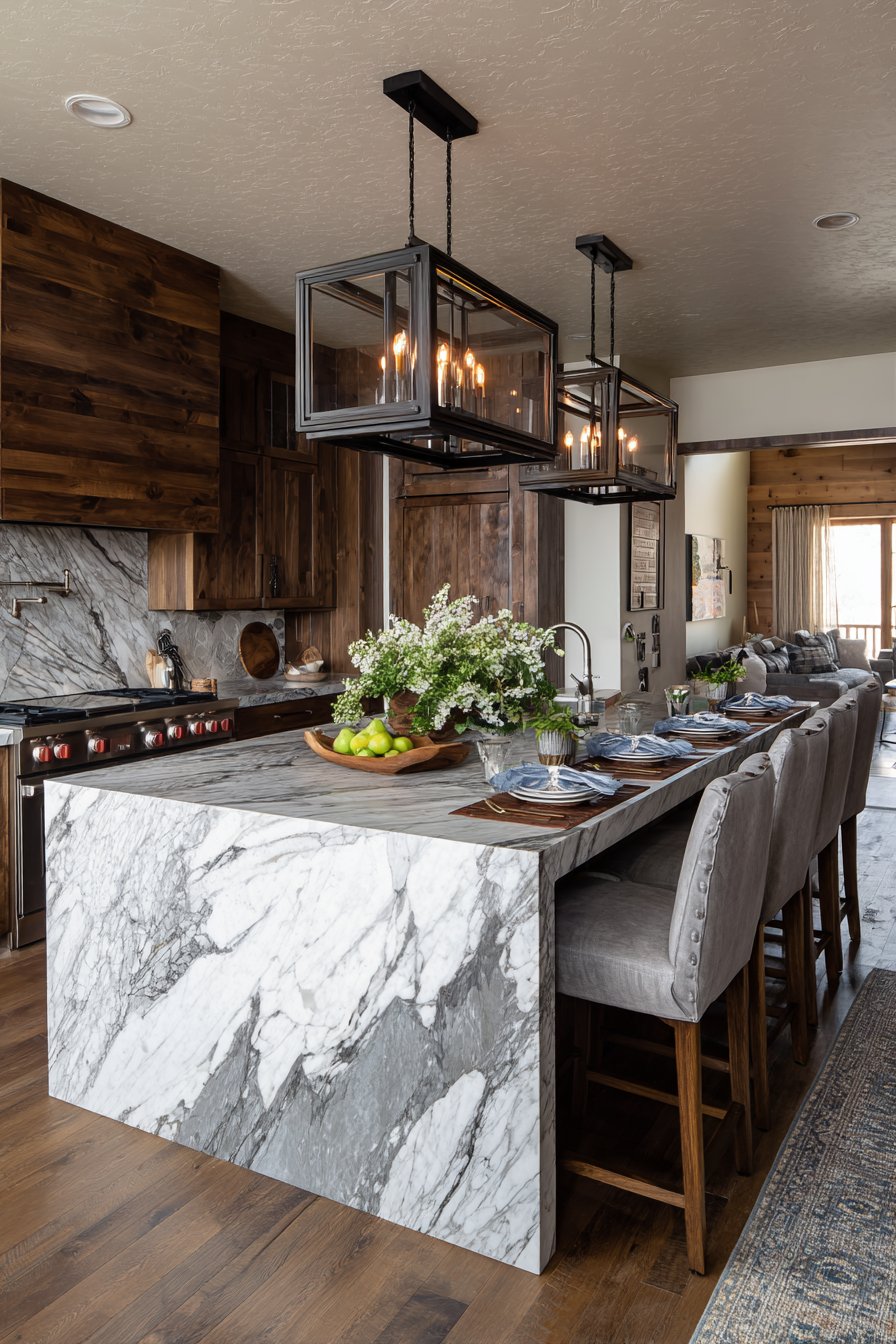
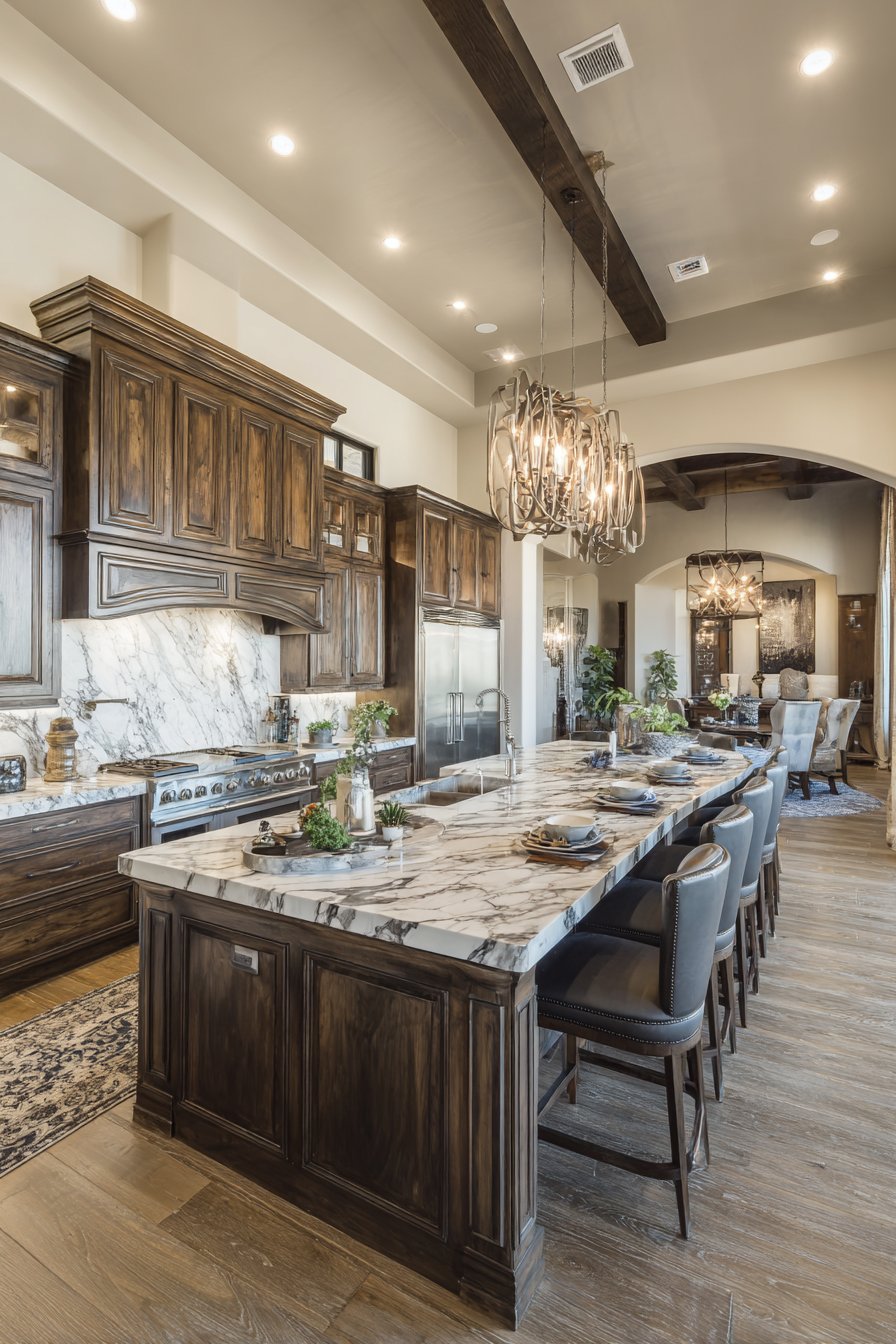
The ultimate kitchen island transcends single-purpose design to become a complete culinary center, and this luxury custom design features separate zones for food prep, cooking with built-in range, serving with secondary sink, and dining with extended counter overhang for six stools. Each zone operates independently while remaining connected through the island’s unified design, allowing multiple activities to occur simultaneously without conflict or congestion.
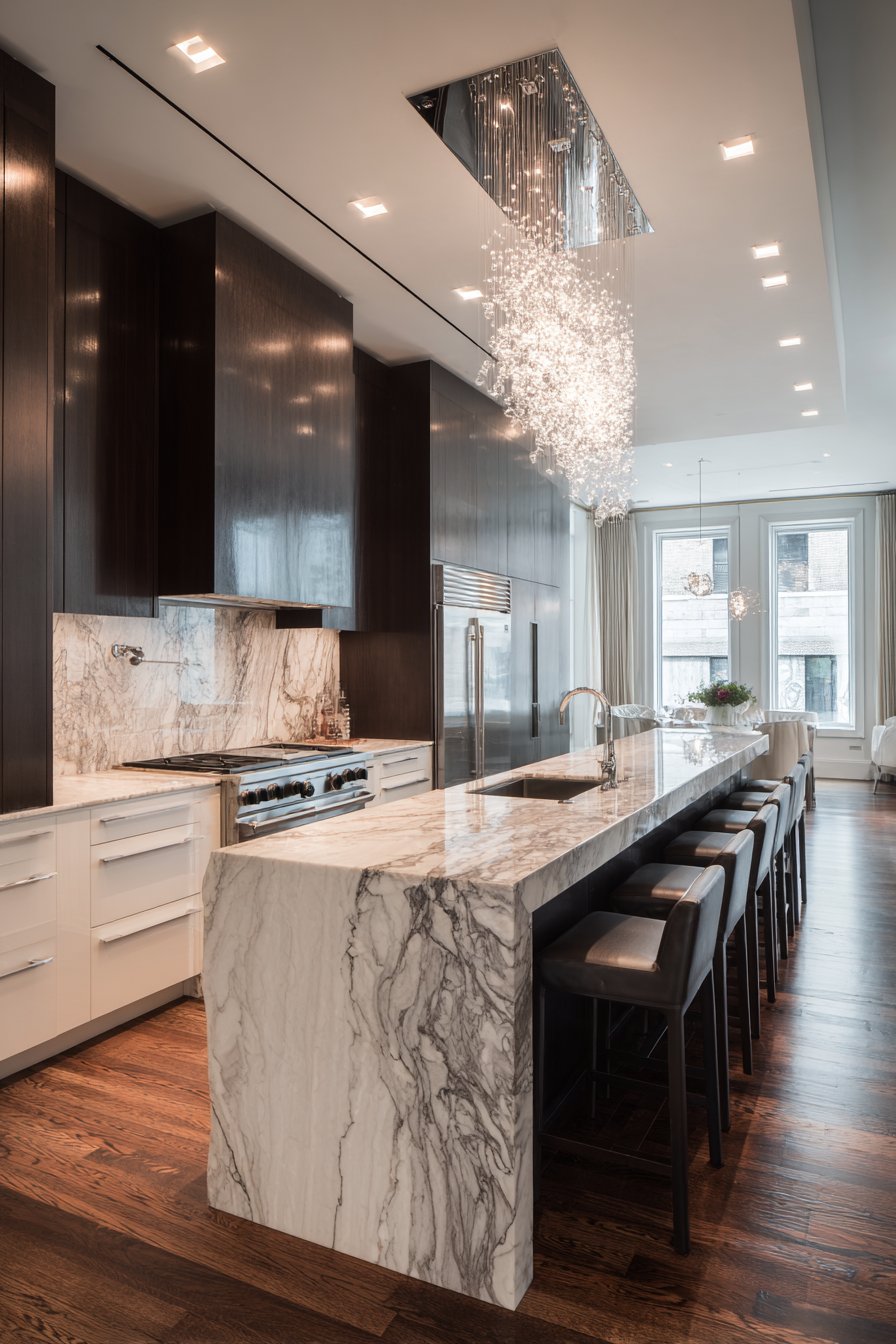
Book-matched marble surfaces showcase the stone’s dramatic veining pattern, cut and arranged so the pattern mirrors across the centerline creating stunning symmetry. Dark walnut base cabinets provide rich contrast while offering extensive storage throughout the massive island. Professional-grade appliances strategically placed around the perimeter include multiple ovens, warming drawers, and specialized refrigeration, creating a kitchen equipped for serious cooking and elaborate entertaining.
A statement chandelier above the island creates dramatic focal point, its scale appropriate to the island’s substantial proportions. The grand layout demonstrates how multi-functional islands can command expansive spaces, with carefully balanced lighting revealing premium materials and exceptional craftsmanship throughout. This kitchen represents the pinnacle of residential island design, where budget and space limitations don’t constrain creativity or capability.
Key Design Tips: Plan for minimum 10-foot island length when including multiple activity zones. Choose book-matched stone carefully, ensuring the pattern alignment creates intentional symmetry. Install separate electrical circuits for each appliance zone to prevent overload. Specify professional-grade ventilation adequate for built-in cooking surfaces. Include multiple types of lighting (task, ambient, accent) controlled separately for flexibility. Work with experienced kitchen designers when planning complex multi-zone islands to ensure proper clearances and workflow.
Why These Kitchen Layout Ideas with Island Represent the Best in Modern Design
The diverse collection of kitchen layout ideas with island presented throughout this article demonstrates the remarkable versatility and enduring appeal of island-centered designs. Each layout solves specific challenges while expressing distinct aesthetic visions, proving that islands adapt to virtually any space, style, or functional requirement. From space-constrained urban apartments to expansive luxury homes, from traditional elegance to cutting-edge contemporary, these kitchen island designs showcase how this single element transforms cooking spaces into true hearts of the home.
The best kitchen layouts with islands share several key characteristics regardless of their specific style or size. They maintain proper clearances for safe, comfortable movement—typically 42-48 inches around all sides of the island, though narrower kitchens may work with 36 inches minimum. They incorporate adequate storage through thoughtfully designed drawers and cabinets that make the island more than just counter space. They consider sightlines and traffic patterns, positioning islands where they enhance rather than impede natural movement through the space.
Superior island designs also integrate appropriate utilities. Kitchens with island sinks create secondary washing stations that reduce congestion during meal preparation and cleanup. Islands with cooktops become interactive cooking stages where family and guests engage with the chef. Electrical outlets—whether traditional, pop-up, or wireless charging stations—make islands functional spaces for appliance use, phone charging, and laptop work. The most successful kitchen island layouts anticipate how the space will actually be used rather than simply following conventional templates.
Material selection distinguishes exceptional island designs from merely adequate ones. The kitchen islands featured here showcase diverse materials from reclaimed barn wood to polished concrete, from book-matched marble to sustainable bamboo. These material choices don’t simply affect appearance—they influence durability, maintenance requirements, and even food preparation capabilities. Marble’s cool surface benefits bakers, butcher block provides ideal chopping surfaces, and quartz offers worry-free durability. The best kitchen layout ideas with island match materials to actual usage patterns rather than selecting based solely on aesthetics.
Scale and proportion separate truly great island designs from those that miss the mark. Islands must relate properly to overall kitchen size and ceiling height. Massive islands overwhelm small kitchens, making spaces feel cramped and difficult to navigate. Conversely, undersized islands in large kitchens appear lost and fail to anchor the space effectively. The featured designs demonstrate appropriate scaling, with compact rolling islands for small apartments and substantial multi-zone islands for open-concept great rooms.
Lighting integration represents another characteristic of superior kitchen island designs. The best layouts feature layered lighting that combines ambient illumination, task lighting for work surfaces, and accent lighting that highlights materials and creates ambiance. Pendant lights suspended over islands provide focused task lighting while adding sculptural interest. Under-island LED strips create atmospheric glow while illuminating floor surfaces for safety. Recessed fixtures supplement natural light, ensuring islands remain functional even on overcast days or during evening hours.
Storage innovation distinguishes excellent island designs from basic rectangular boxes with cabinets. The kitchens presented here showcase creative storage solutions including pull-out trash and recycling bins, built-in wine racks, microwave drawers, beverage refrigerators, spice organizers, and specialized storage for everything from cookbooks to table linens. These thoughtful details transform islands from simple counter extensions into highly organized command centers that reduce clutter while increasing efficiency.
The best kitchen island layouts also address seating integration. Whether through overhang extensions, lowered dining heights, or dedicated breakfast bar sections, successful islands provide comfortable gathering spaces for casual meals and social interaction. The featured designs demonstrate various seating approaches, from traditional bar stools to built-in banquettes, each solution properly scaled with adequate knee clearance and logical positioning relative to cooking zones.
Style consistency across these diverse kitchen layout ideas with island proves that islands successfully express virtually any aesthetic vision. Victorian ornate elegance, industrial raw materials, Scandinavian minimalism, coastal casual charm, traditional sophistication, and contemporary innovation all shine through the featured island designs. This stylistic flexibility makes islands appropriate for any home, from historic renovations to new construction, from urban lofts to suburban houses.
Functional zones within islands represent advanced design thinking present in several featured kitchens. Multi-functional islands that incorporate separate areas for food prep, cooking, serving, and dining optimize workflow while accommodating multiple users simultaneously. These sophisticated layouts recognize that modern kitchens often serve several people working together, requiring thoughtful space planning that prevents congestion and conflict.
Technology integration increasingly defines cutting-edge kitchen island designs. Smart features like motion-activated lighting, wireless charging surfaces, pop-up outlets, and adjustable-height mechanisms make islands more responsive to contemporary needs. The featured tech-forward island demonstrates how invisible technology can enhance function without compromising clean aesthetics, pointing toward future directions in kitchen design.
Accessibility considerations in universal design kitchen islands ensure spaces serve users of all abilities. Variable-height islands, adequate knee clearance, easy-grip hardware, and high-contrast finishes make kitchens welcoming to everyone regardless of physical capability. These inclusive design principles benefit all users while specifically accommodating those with mobility, vision, or dexterity limitations.
Sustainability emerges as an important consideration in contemporary kitchen island design. Eco-friendly materials like bamboo and cork, recycled content countertops, energy-efficient lighting, and integrated waste management systems allow homeowners to express environmental values through material choices. These sustainable kitchen layouts prove that ecological responsibility doesn’t require aesthetic sacrifice.
The relationship between islands and overall kitchen layouts significantly impacts functionality. L-shaped configurations, U-shaped arrangements, galley kitchens with parallel islands, and one-wall layouts with perpendicular islands each create distinct traffic patterns and work triangles. The best kitchen layout ideas with island optimize these spatial relationships, positioning islands where they improve rather than disrupt natural movement and workflow.
Color and finish choices across the featured island designs demonstrate how these elements dramatically affect perceived space and style. Dark islands anchor light kitchens, creating grounding focal points. Light islands brighten small spaces while maintaining airiness. Two-tone approaches using different colors for islands and perimeter cabinets define kitchen zones within open floor plans. These color strategies show how thoughtful finish selection enhances both function and aesthetics.
The featured kitchen island designs span various price points and complexity levels, proving that effective island solutions exist for virtually any budget. Simple rolling butcher block islands provide valuable functionality at minimal cost, while custom furniture-quality pieces with exotic materials represent significant investments. The diversity ensures homeowners at any budget level can incorporate islands into their kitchen plans.
Historical and regional design traditions influence many featured islands, from Victorian ornamentation to Mid-Century Modern simplicity, from Mediterranean earthiness to Scandinavian minimalism. These culturally rooted designs demonstrate how islands can express heritage and personal history while serving contemporary needs. The best kitchen layout ideas with island honor design traditions while adapting them for modern life.
Practical considerations like maintenance requirements, durability, and real-world usability distinguish truly successful island designs from those that look good in photographs but fail in daily use. The featured kitchens prioritize materials and finishes that withstand kitchen rigors—sealed wood surfaces, stain-resistant quartz, easy-clean cabinet finishes, and durable flooring. These pragmatic choices ensure kitchens remain beautiful through years of heavy use.
The emotional and psychological impact of well-designed kitchen islands shouldn’t be underestimated. Islands create gathering places that draw people together, fostering connection and conversation. They transform cooking from isolated work into shared experience, allowing cooks to face family and guests rather than walls. The best kitchen layout ideas with island recognize these social dimensions, designing spaces that nurture relationships as much as they facilitate meal preparation.
Adaptability and flexibility represent final characteristics of excellent island designs. Mobile islands on casters adjust to changing needs, tech-integrated islands accept upgrades and modifications, and simple designs accommodate evolving aesthetic preferences. The best kitchen islands grow with their owners, remaining relevant through lifestyle changes and design trend cycles.
Conclusion
Kitchen islands have revolutionized residential design, transforming kitchens from purely utilitarian workspaces into multi-functional living centers that serve as cooking stations, dining areas, homework desks, entertaining hubs, and family gathering spots. The 29 kitchen layout ideas with island presented throughout this article demonstrate the remarkable diversity possible within this single design element, showcasing solutions for every space, style, budget, and functional requirement.
Whether you’re drawn to the rustic character of reclaimed barn wood, the sleek sophistication of contemporary minimalism, the comfortable elegance of traditional design, or the innovative functionality of smart technology integration, there’s an island approach perfectly suited to your needs and preferences. The key lies in understanding your specific requirements—available space, cooking habits, storage needs, entertaining frequency, and aesthetic preferences—then selecting an island design that addresses these factors while expressing your personal style.
The most successful kitchen islands balance beauty with practicality, creating spaces that delight the eye while serving daily needs efficiently. They maintain proper proportions and clearances, incorporate adequate storage and utilities, feature appropriate materials for their intended use, and integrate seamlessly with overall kitchen design. By studying the diverse examples presented here and applying the design principles and practical tips included with each, you can create a kitchen island that transforms your cooking space into a true heart of the home—beautiful, functional, and perfectly tailored to your life.
