
The intersection of restful sleep and intellectual pursuits has long captivated interior designers and book lovers alike. A library bedroom represents the ultimate sanctuary—a space where the comfort of your sleeping quarters merges seamlessly with the contemplative atmosphere of a personal library. This innovative design concept addresses the needs of avid readers who refuse to separate their passion for literature from their most intimate living space. Whether you’re working with a sprawling master suite or a compact urban apartment, integrating bookshelves, reading nooks, and literary-inspired décor can transform an ordinary bedroom into an extraordinary retreat that nourishes both body and mind.
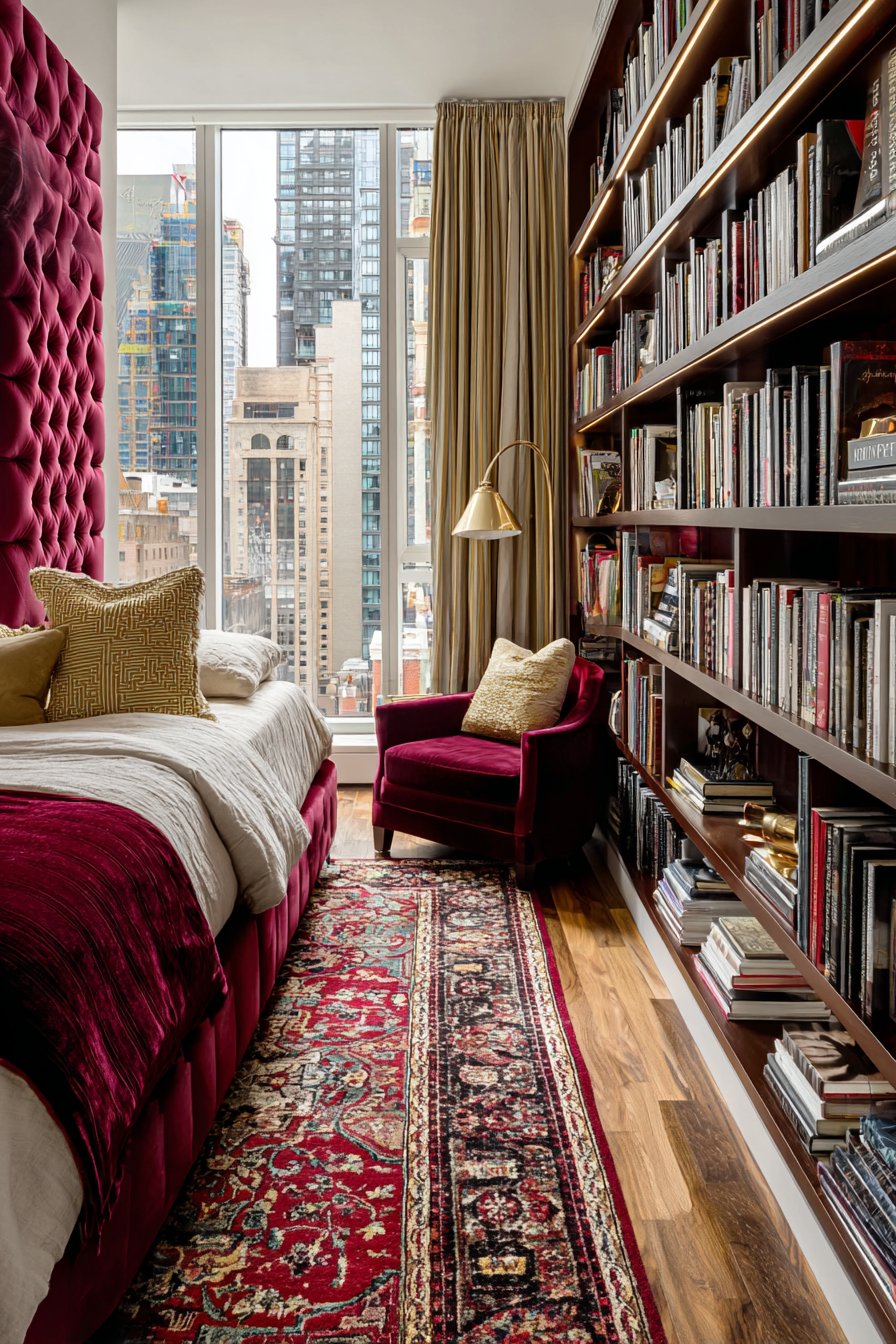
The beauty of library bedroom design lies in its remarkable versatility. From traditional mahogany bookcases housing leather-bound classics to minimalist floating shelves displaying contemporary fiction, the aesthetic possibilities are boundless. These spaces can embody virtually any design philosophy—Scandinavian simplicity, industrial edge, bohemian eclecticism, or timeless traditional elegance—while maintaining their core identity as bibliophile sanctuaries. The key is thoughtful integration: ensuring that books enhance rather than overwhelm the space, that storage solutions are both beautiful and functional, and that the bedroom remains a calming environment conducive to rest.
This comprehensive guide explores twenty-seven distinctive library bedroom concepts, each offering unique approaches to blending literary passion with bedroom design. You’ll discover innovative storage solutions, creative spatial arrangements, and sophisticated styling techniques that prove books and bedrooms are natural companions. From dramatic floor-to-ceiling installations to clever space-saving innovations, these ideas demonstrate that regardless of your square footage, budget, or design preference, you can create a personalized library bedroom that reflects your love of reading while maintaining the serenity essential to quality sleep.
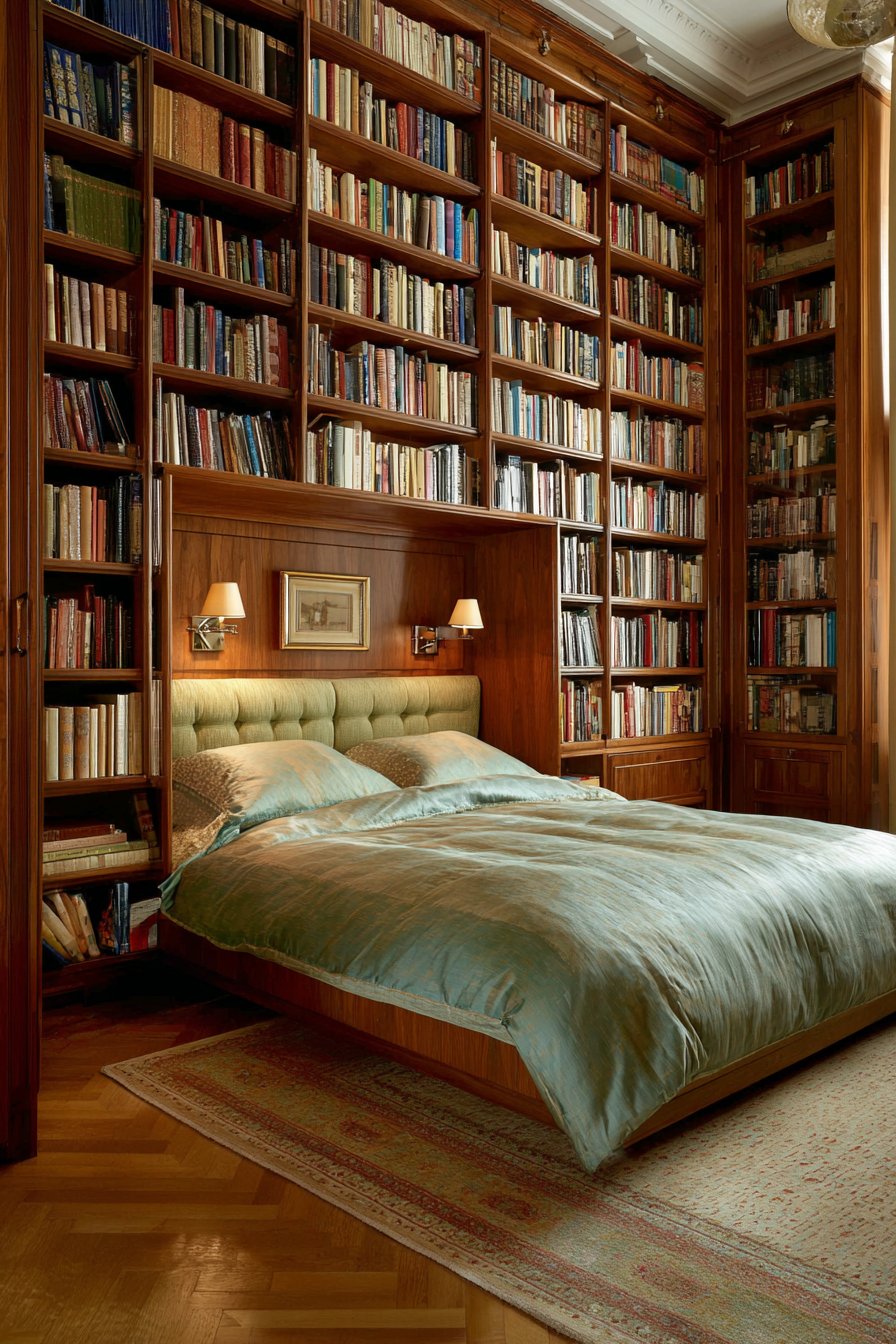
1. Classic Built-In Elegance with Floor-to-Ceiling Walnut Shelving
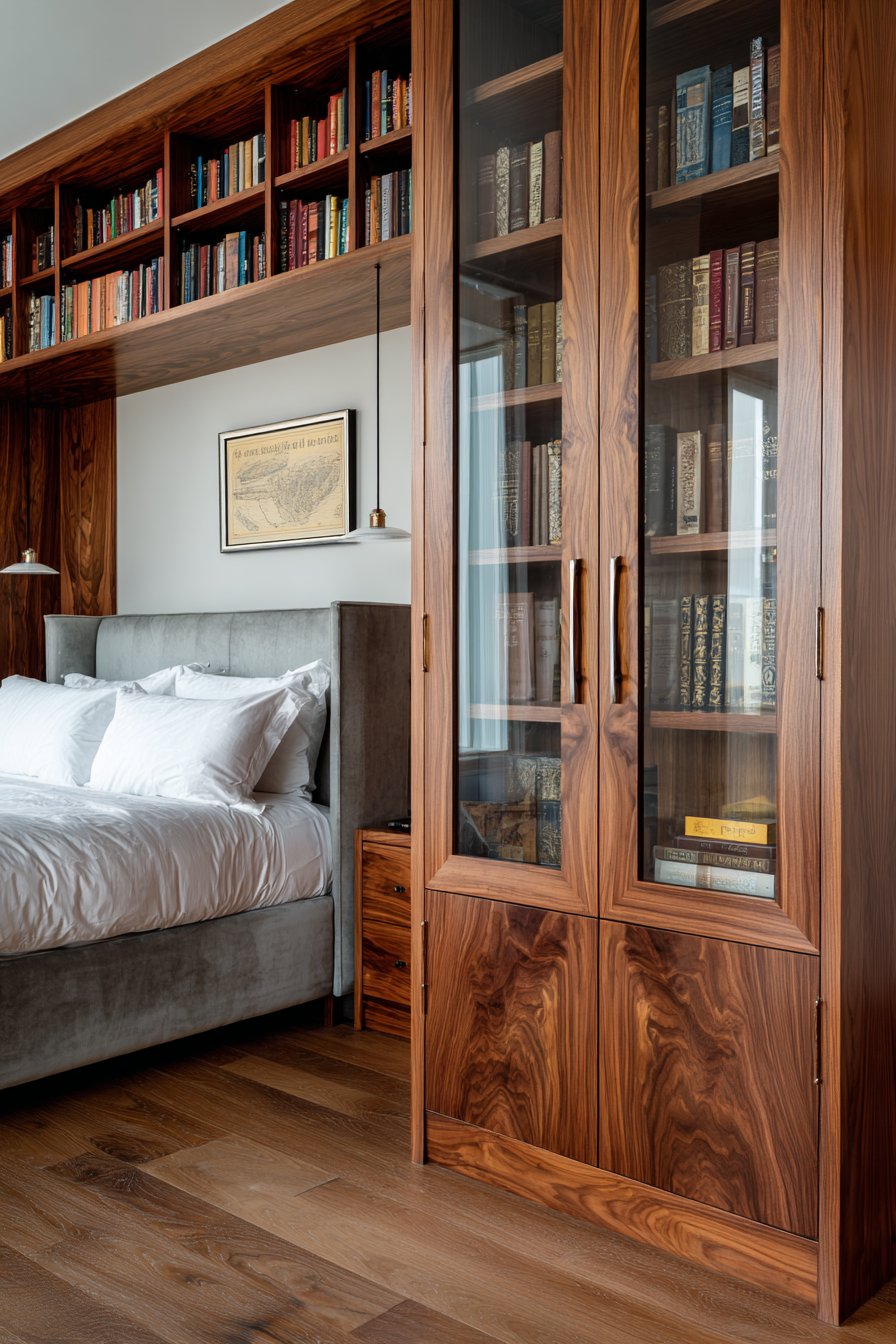
The quintessential library bedroom begins with custom built-in bookshelves that command attention while providing substantial storage. Imagine a full wall of rich walnut cabinetry stretching from floor to ceiling, each shelf meticulously filled with organized volumes arranged by color and size. This approach creates a stunning visual backdrop that doubles as functional storage, transforming what might otherwise be blank wall space into the room’s defining architectural feature. The warm honey tones of walnut wood bring natural elegance to the space, creating a sophisticated atmosphere that elevates the entire bedroom.
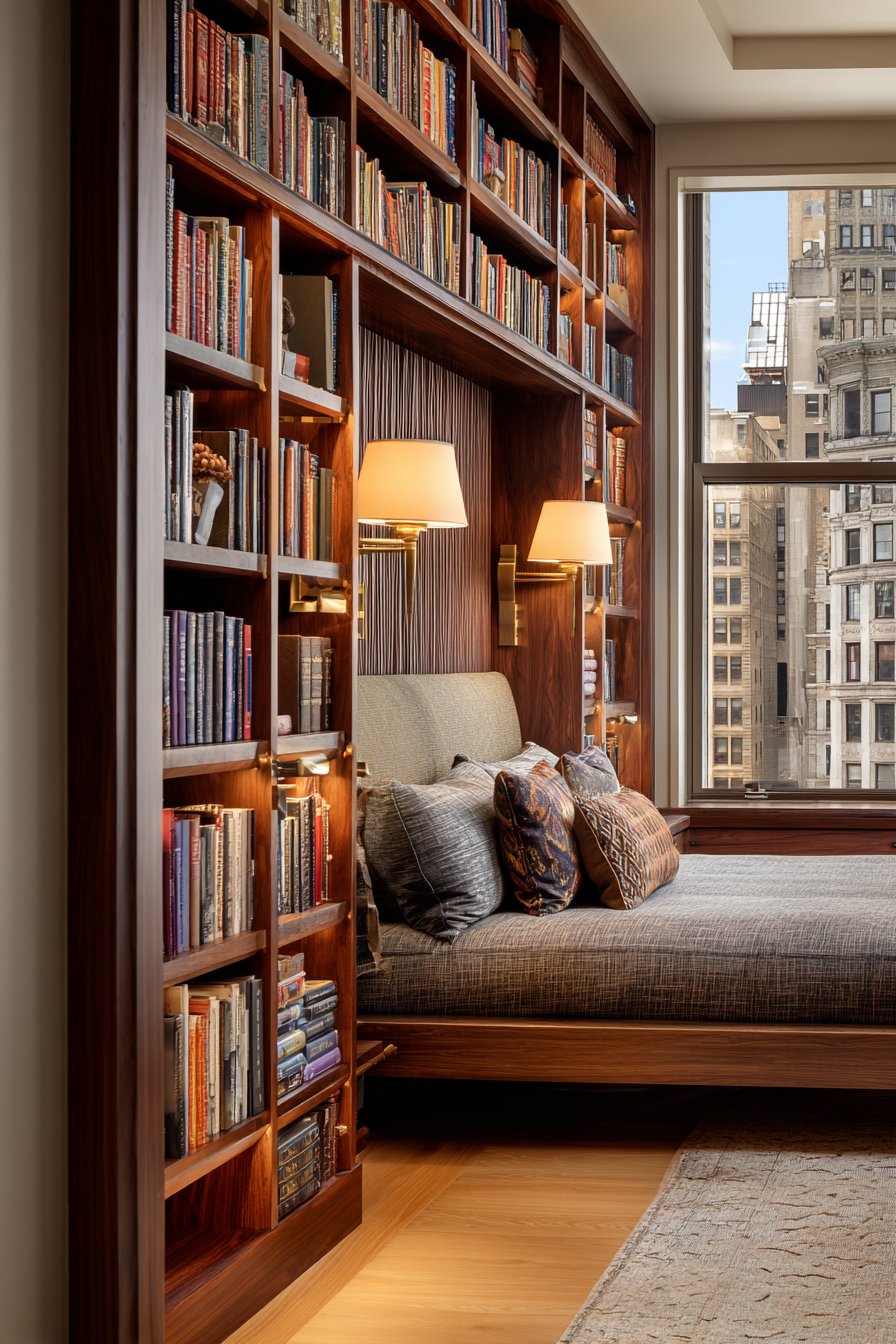
The sleeping area in this design features an upholstered linen headboard in sage green, positioned centrally against the impressive bookshelf wall. This placement creates an intimate relationship between rest and reading, with your entire library visible from the comfort of your bed. Brass reading sconces flanking the bed provide focused task lighting for late-night reading sessions, their warm metallic finish complementing the walnut tones beautifully. The natural oak flooring grounds the space with additional wood texture, while a wool area rug in muted tones adds softness underfoot and helps define the sleeping zone within the larger room.
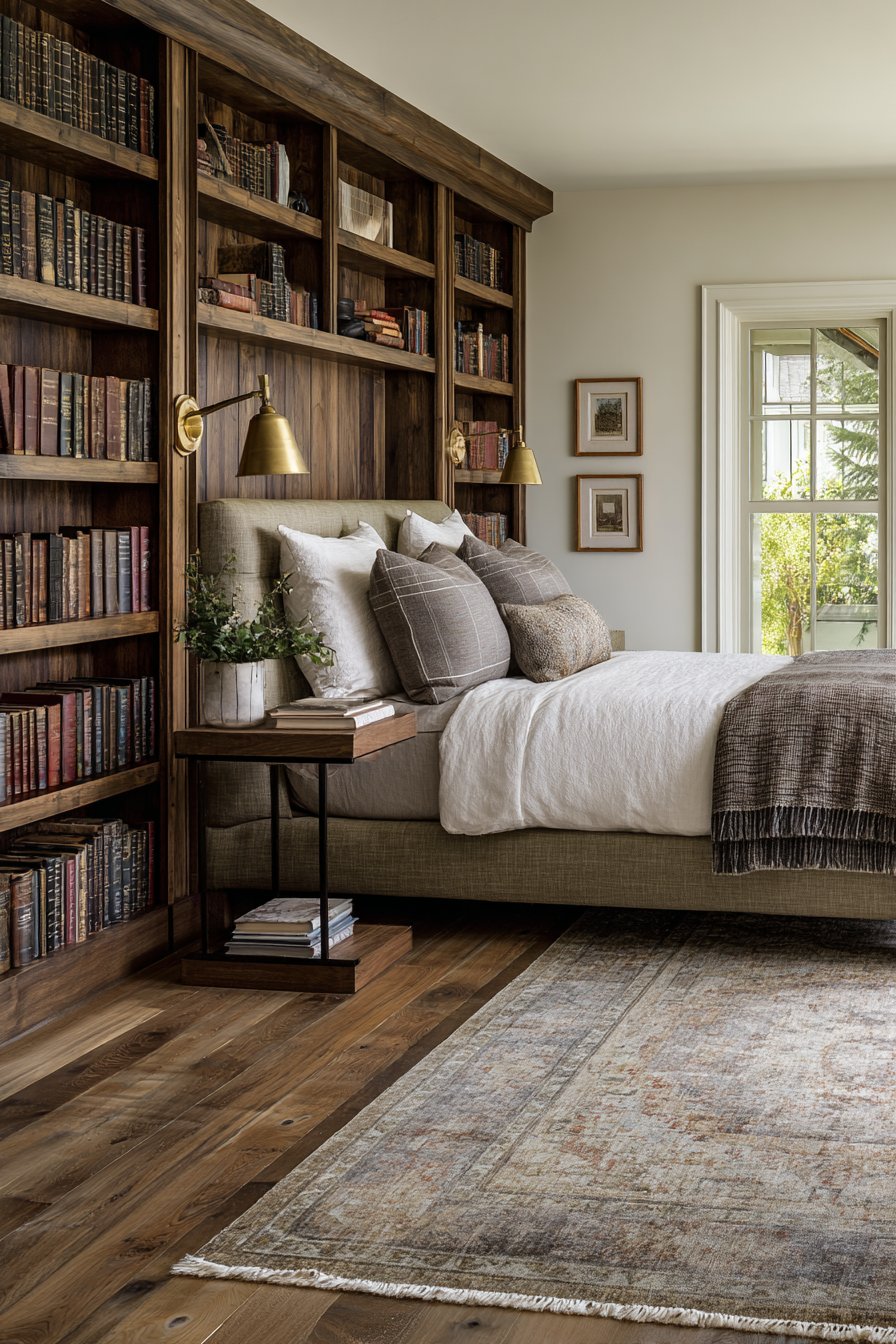
Professional interior photography capturing this space would emphasize the interplay between the substantial bookshelf installation and the more delicate bedroom furnishings. Soft diffused daylight from a side window would illuminate the varied book spines, creating subtle color variations across the wall and highlighting the grain patterns in the walnut wood. This lighting approach reveals the depth and dimensionality of the built-in shelving while maintaining the cozy, intimate atmosphere essential to bedroom spaces. The overall effect is one of cultivated sophistication—a room that speaks to both intellectual curiosity and refined taste.
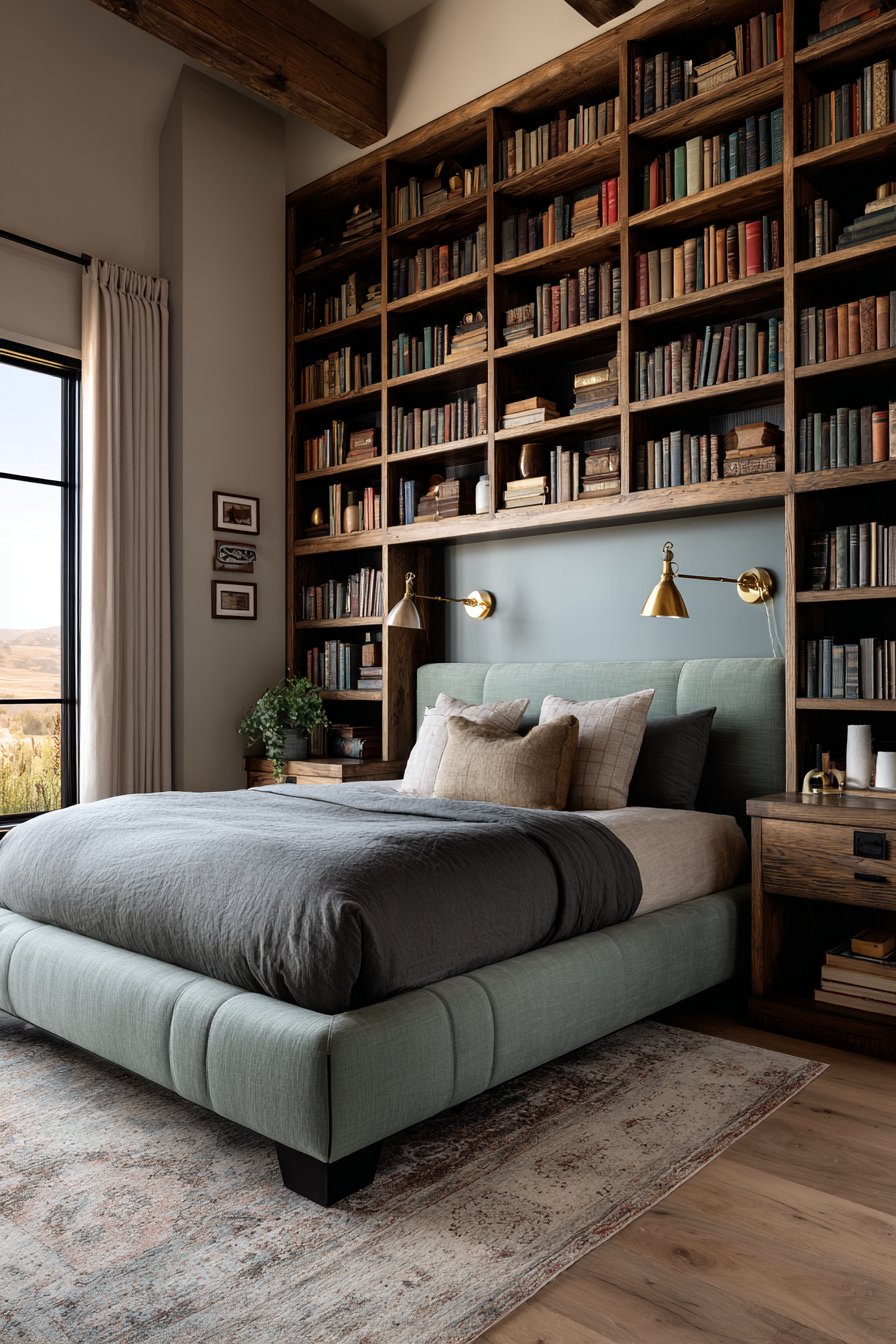
Key design considerations include selecting books as decorative elements themselves, using horizontal and vertical arrangements to create visual rhythm, incorporating adjustable shelving to accommodate various book heights, ensuring adequate lighting reaches all shelf levels, choosing upholstery colors that complement rather than compete with the wood tones, and maintaining clear pathways despite the substantial furniture presence.
2. Vertical Space Optimization with Ladder-Accessible Storage
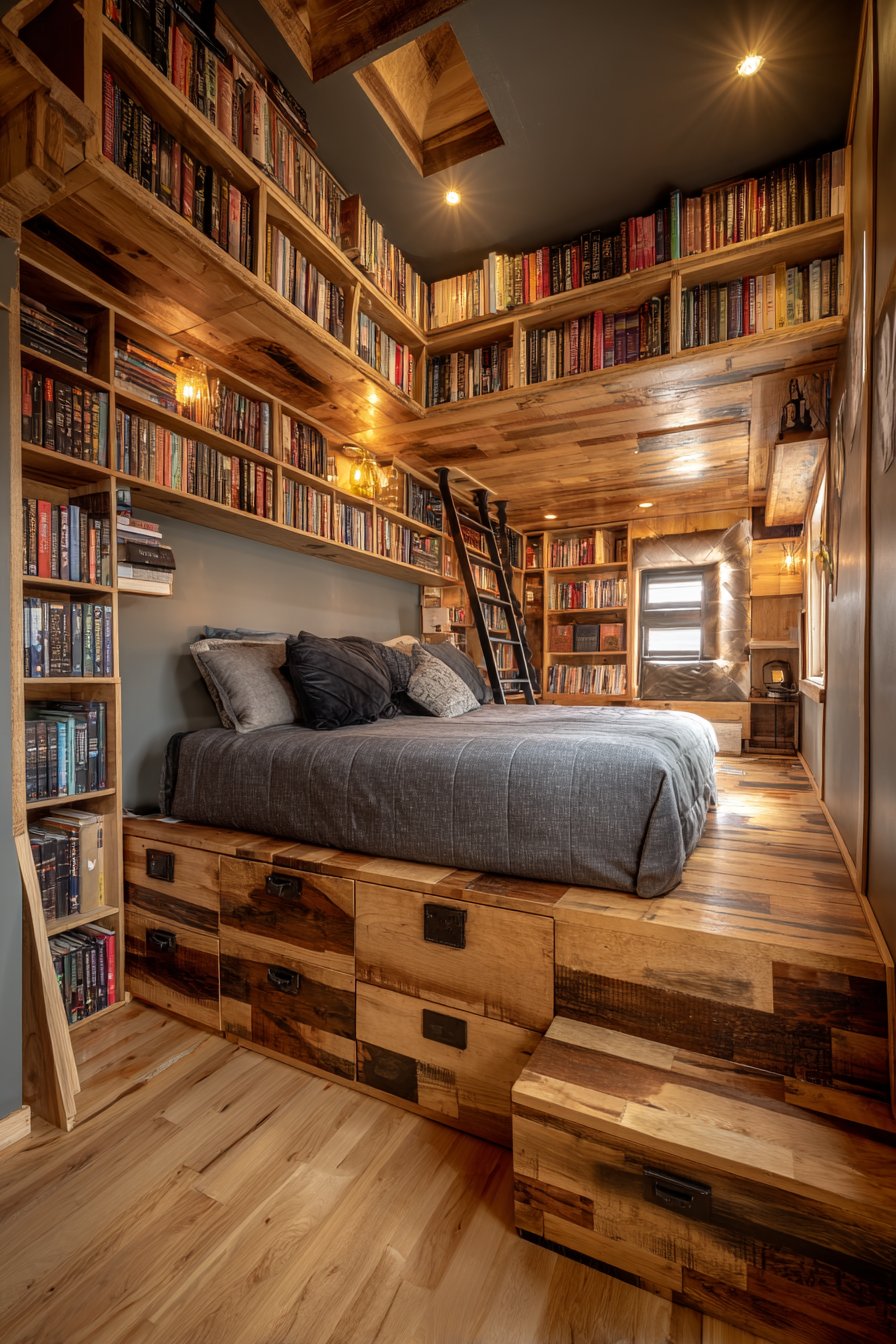
When ceiling height becomes your greatest asset, vertical library bedroom design maximizes every inch from floor to soaring ceilings. Picture bookshelves reaching upward to ten-foot heights, their upper reaches accessed via a classic rolling ladder that adds both functionality and vintage charm. This approach transforms limited floor space into abundant storage through strategic vertical expansion, making it particularly valuable in urban apartments or converted lofts where square footage comes at a premium. The ladder itself becomes a design statement—its brass or wood rails and wheels adding industrial or traditional character depending on material choices.
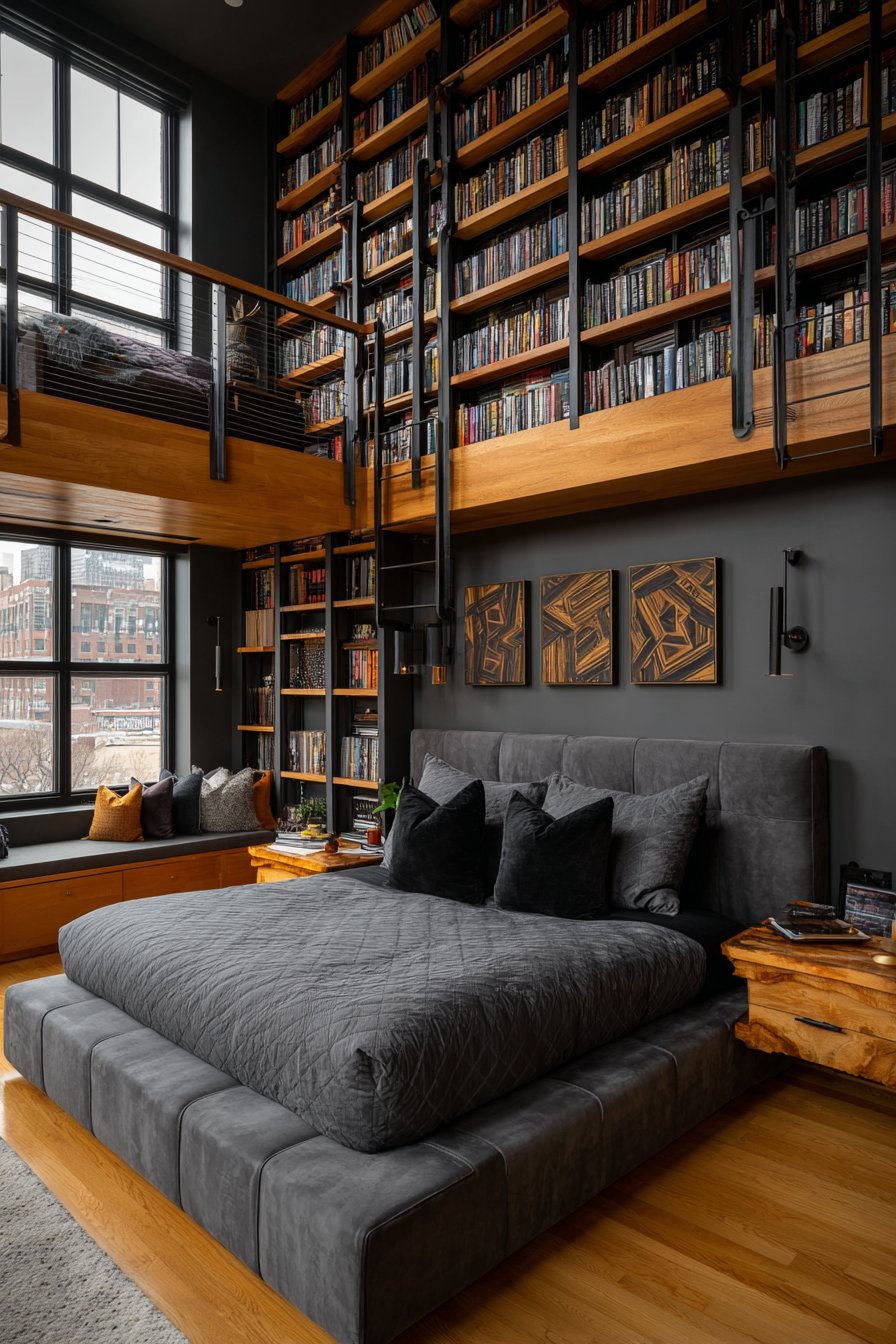
The sleeping arrangement in this configuration features a queen-size platform bed with integrated storage drawers beneath, positioned strategically under the towering bookshelves. This placement creates a cozy, enveloping feeling—like sleeping in a literary cocoon surrounded by thousands of stories. The bed upholstery in charcoal grey fabric provides sophisticated contrast against lighter book spines and wall colors, while floating nightstands crafted from reclaimed wood attach directly to the bookshelf structure, eliminating the need for additional floor space. This integrated approach ensures every element serves multiple purposes, essential in compact environments.
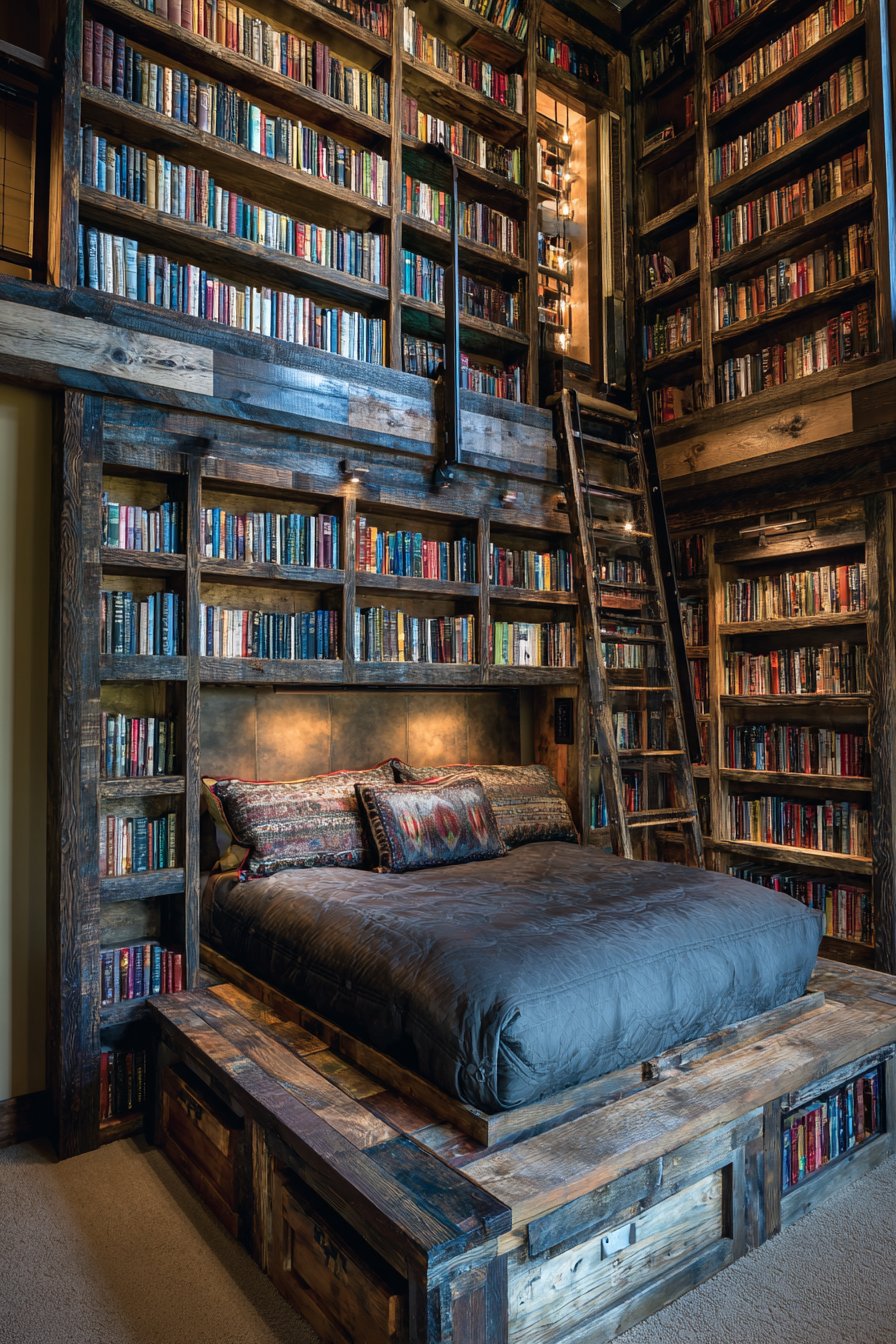
The photography perspective for this space would employ wide-angle techniques to capture the full vertical drama, showing how the eye travels upward along the book-lined walls. Balanced exposure would highlight the rich wood grain of the reclaimed nightstands while maintaining detail in both shadowed lower shelves and light-filled upper reaches. The organized book spines would create a tapestry of color and texture running from floor to ceiling, demonstrating that limited footprint need not mean limited collection. This design proves that with creative thinking, even the most challenging spatial constraints can be transformed into distinctive advantages.
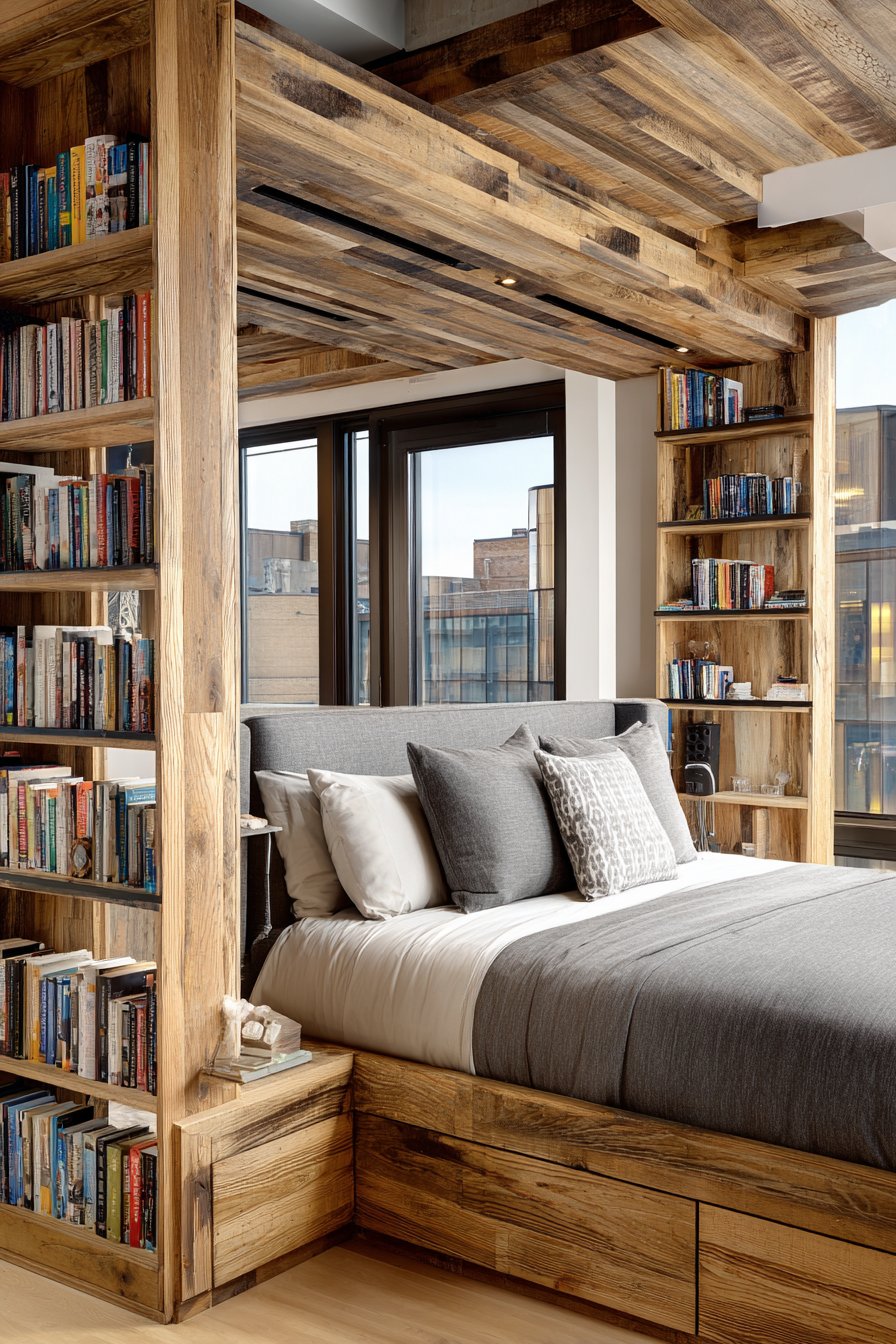
Essential tips include investing in a quality rolling ladder with smooth operation and safety features, organizing frequently accessed books at mid-height levels for convenience, using upper shelves for decorative objects or rarely-read volumes, incorporating library-style shelf labels for easy navigation, ensuring adequate lighting at all heights with track or adjustable fixtures, and maintaining proper ladder clearance in your floor plan.
3. The Intimate Reading Alcove Within Book-Lined Walls
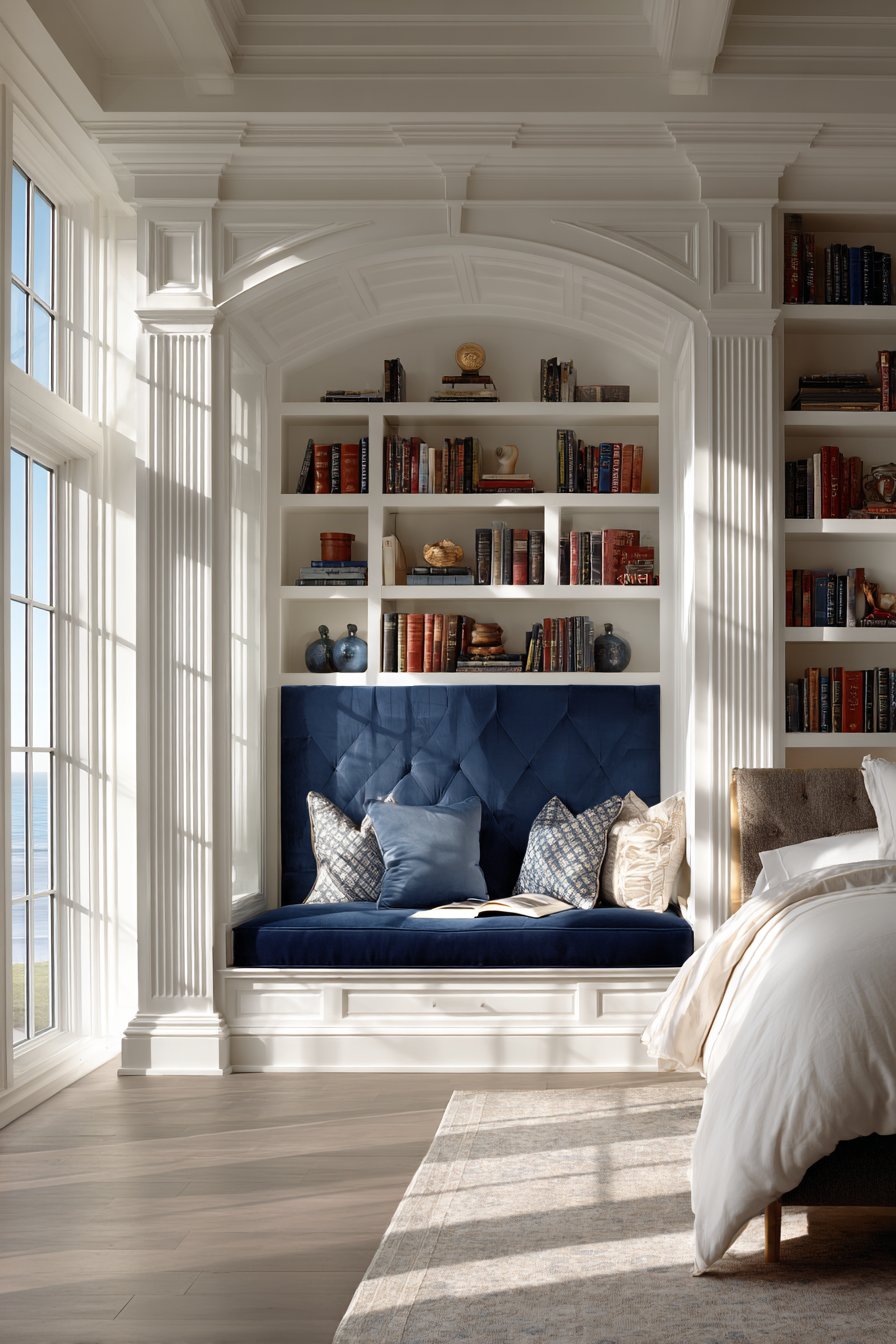
Few library bedroom features rival the appeal of a dedicated reading alcove carved into floor-to-ceiling built-in shelving. Envision a cushioned window seat upholstered in luxurious navy velvet, nestled within a wall of books like a jewel in its setting. Plush throw pillows in complementary tones invite hours of comfortable reading, while the surrounding shelves display leather-bound classics and contemporary fiction with thoughtfully placed decorative bookends. This architectural feature creates a destination within the bedroom—a place specifically designed for the act of reading rather than just book storage.
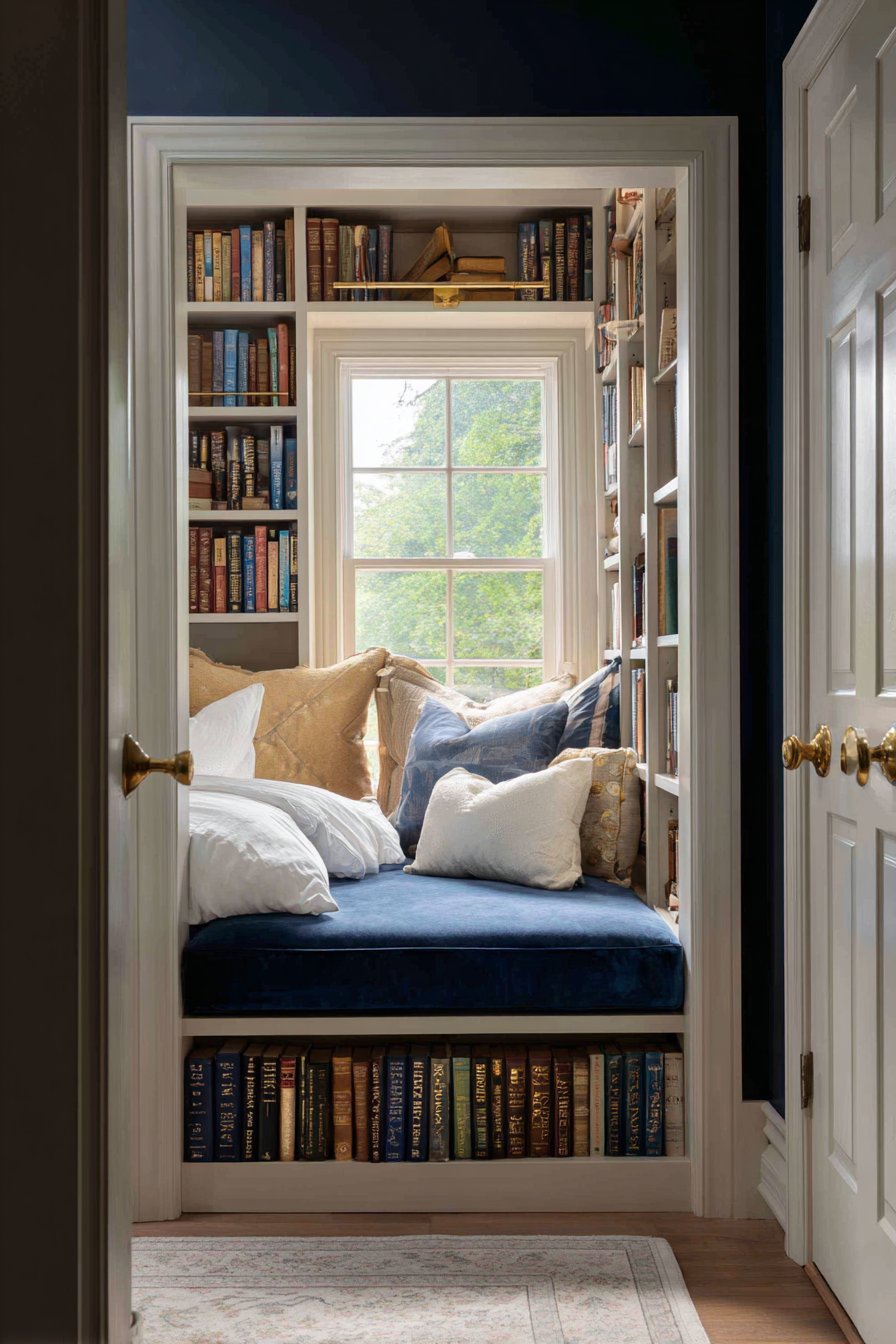
The alcove’s positioning near a window is crucial to its success, as natural light transforms it from simple seating into a genuine reading retreat. During daylight hours, the space becomes suffused with soft illumination perfect for extended reading sessions, while the view beyond provides periodic visual rest for tired eyes. The main sleeping area, featuring a brass bed frame dressed in crisp white linens, maintains its own distinct character yet relates harmoniously to the literary theme. The brass metalwork provides an elegant traditional touch that bridges between the alcove’s cozy intimacy and the bedroom’s more formal sleeping zone.
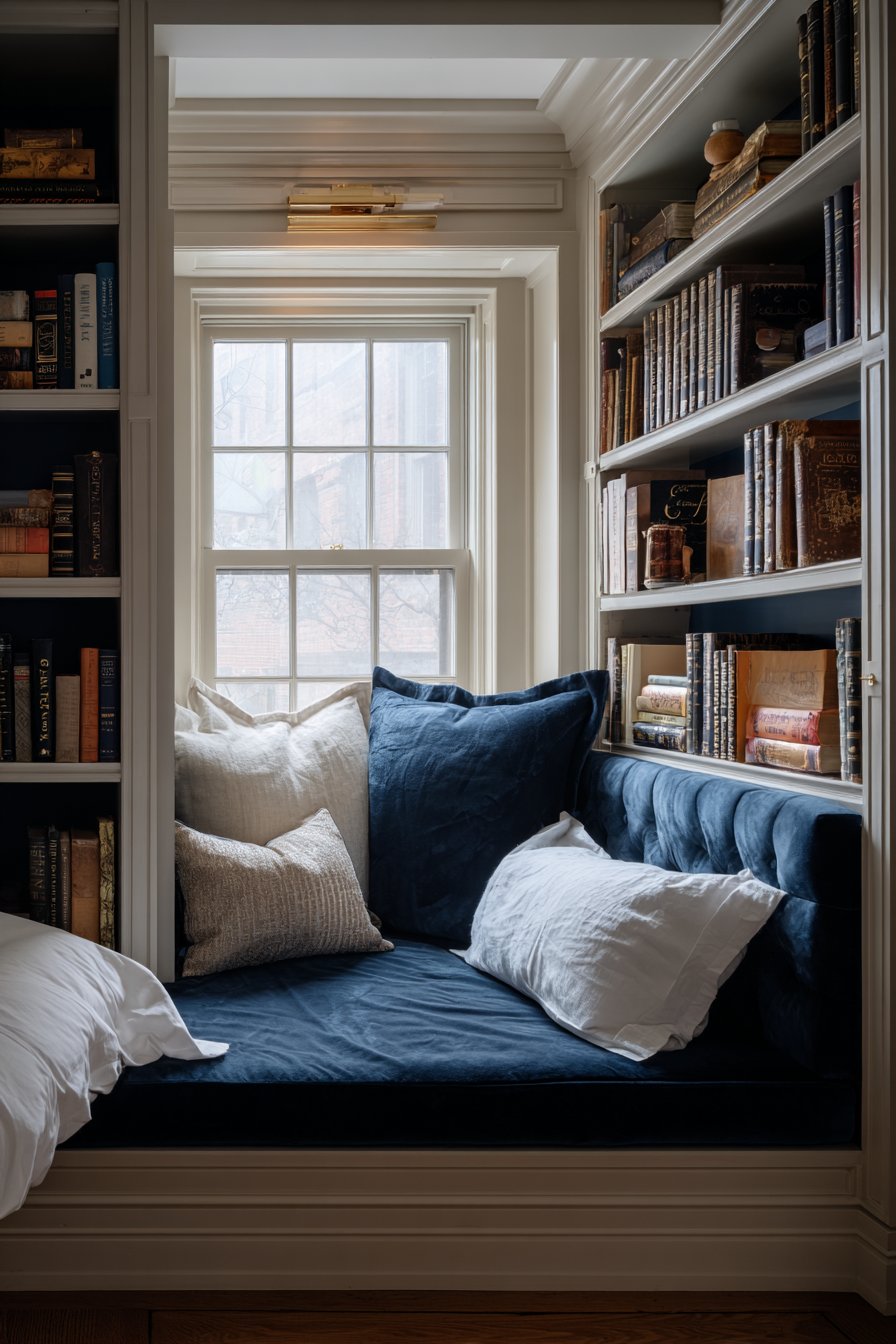
Photographing this space requires capturing both the inviting nature of the reading nook and its integration within the larger room composition. Natural lighting streaming through the alcove window would create soft shadows that define the recessed nature of the seating area, emphasizing its role as a retreat within a retreat. The varied textures of book spines, velvet upholstery, and smooth brass would each catch light differently, creating visual interest across the frame. The image would communicate both the practical functionality of the design and its emotional appeal—the promise of countless peaceful hours spent reading in perfect comfort.
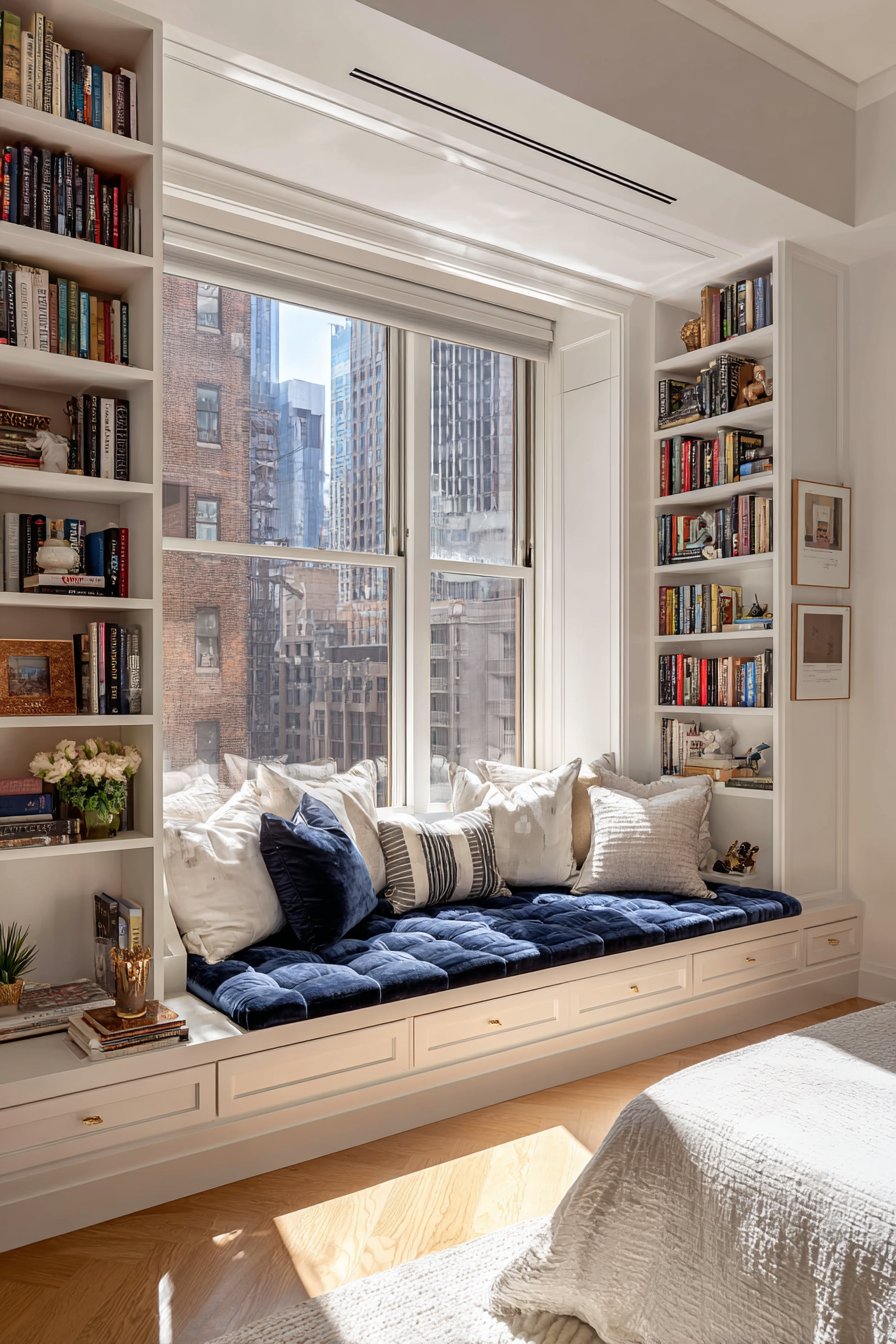
Design essentials include ensuring window seat depth provides comfortable extended sitting with back support, selecting durable upholstery fabrics that can withstand daily use, providing supplementary task lighting for evening reading, incorporating hidden storage beneath the seat cushion, choosing pillow fills that maintain their shape while providing comfort, and selecting books for the surrounding shelves that complement the alcove’s intimate scale.
4. Contemporary Transparency with Glass and Metal Shelving
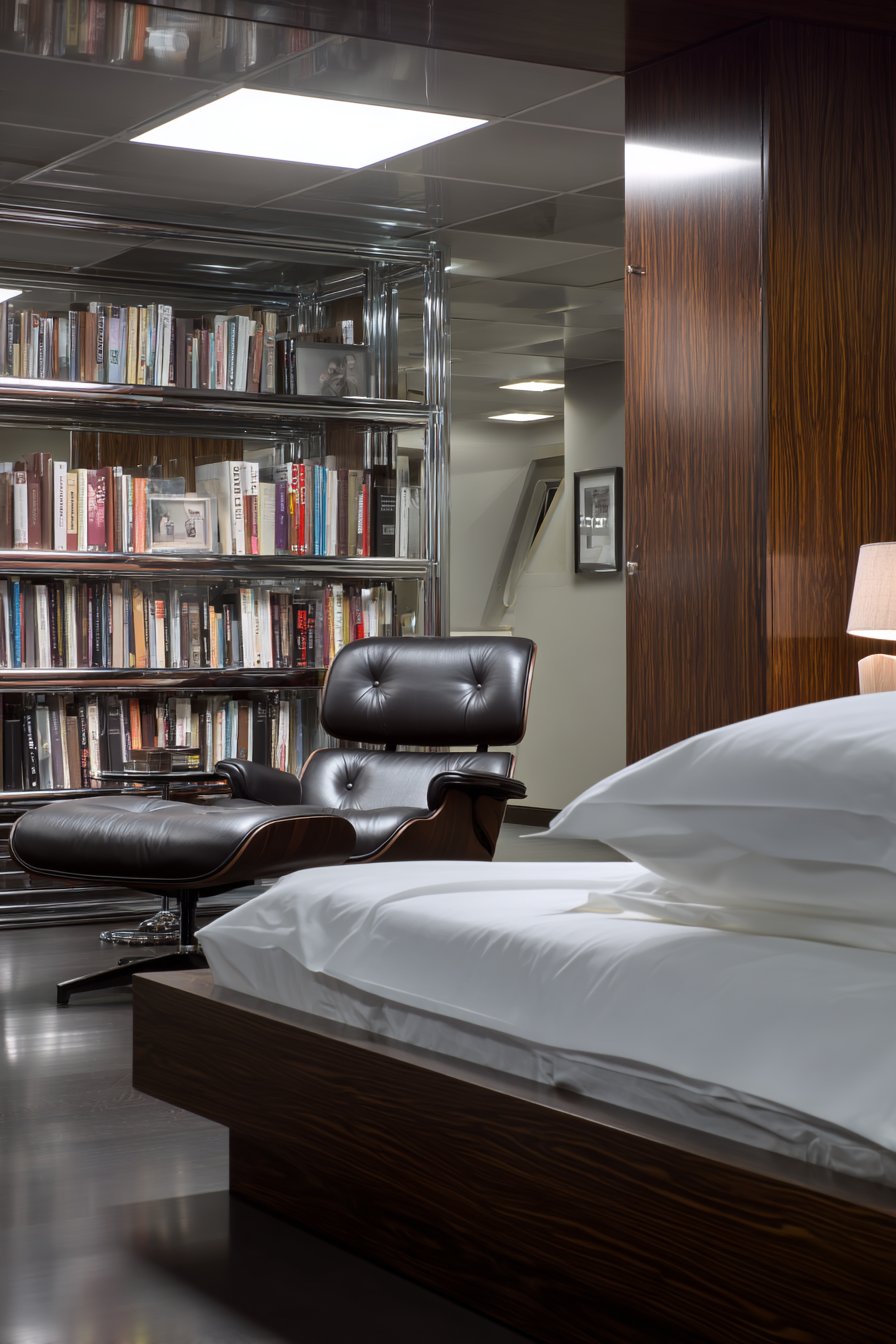
Modern library bedroom design embraces sleek materials and open structures that create visual lightness despite extensive book storage. Imagine black metal frames supporting tempered glass shelves, their minimalist construction allowing light to pass through while still providing robust support for an extensive collection. This approach prevents the visual weight that solid wood shelving can introduce, particularly valuable in smaller bedrooms or spaces with limited natural light. The transparency creates an almost floating effect—books appear suspended in space, their colorful spines providing the primary visual interest against the stark architectural framework.
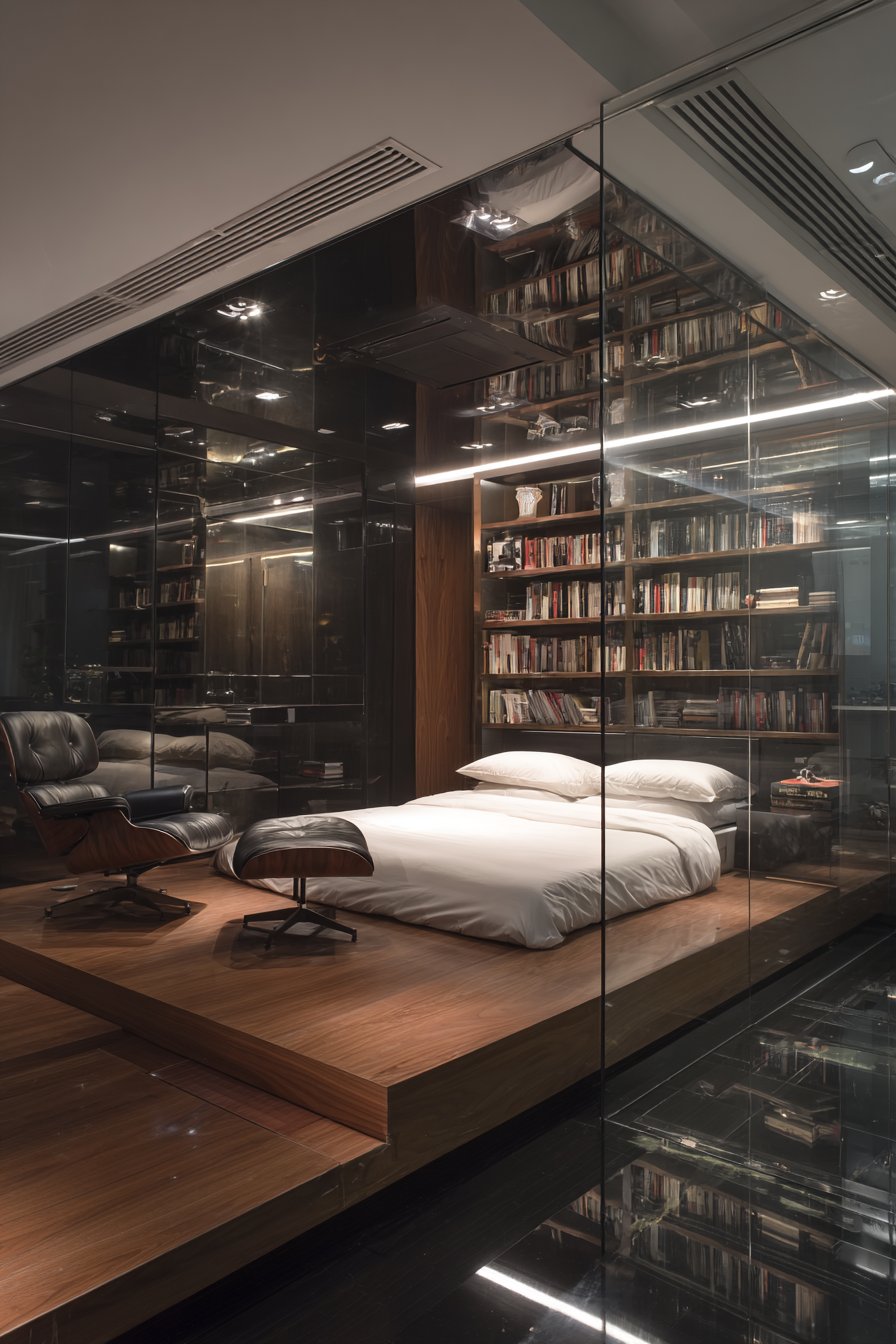
The sleeping area in this contemporary scheme features a low-profile platform bed in dark walnut, its clean horizontal lines echoing the geometric shelving system. Minimalist bedding in crisp white creates sharp contrast against the dark wood and provides visual breathing room within the book-filled environment. A leather reading chair with matching ottoman positioned near the shelving offers a secondary seating area, its rich material adding warmth to the otherwise cool metal and glass palette. Recessed lighting with dimmer controls provides adjustable ambiance, allowing the space to transition from bright reading environment to subdued sleeping sanctuary as needed.
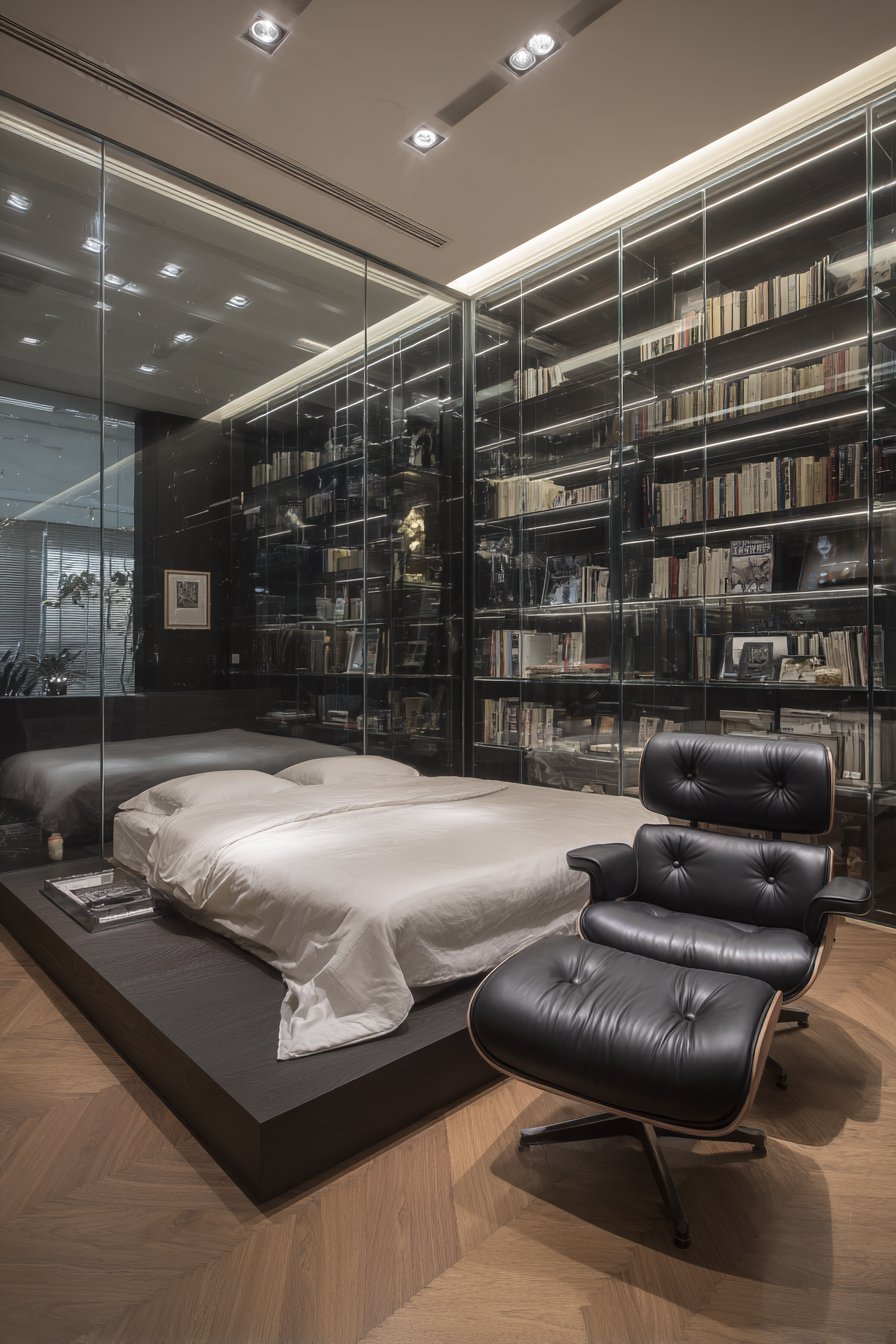
Interior photography would emphasize the interplay between solid and transparent elements, showing how the glass shelves maintain openness while still defining the room’s library character. Balanced exposure would capture reflections in both glass surfaces and polished metal frames, adding depth and dimensionality to the composition. The clean lines and contemporary aesthetic would be highlighted through careful attention to geometric patterns created by shelf placement and the vertical/horizontal relationships between architectural elements. Material contrasts—the smoothness of glass against textured leather, the warmth of walnut against cool metal—would provide tactile interest even in a two-dimensional image.
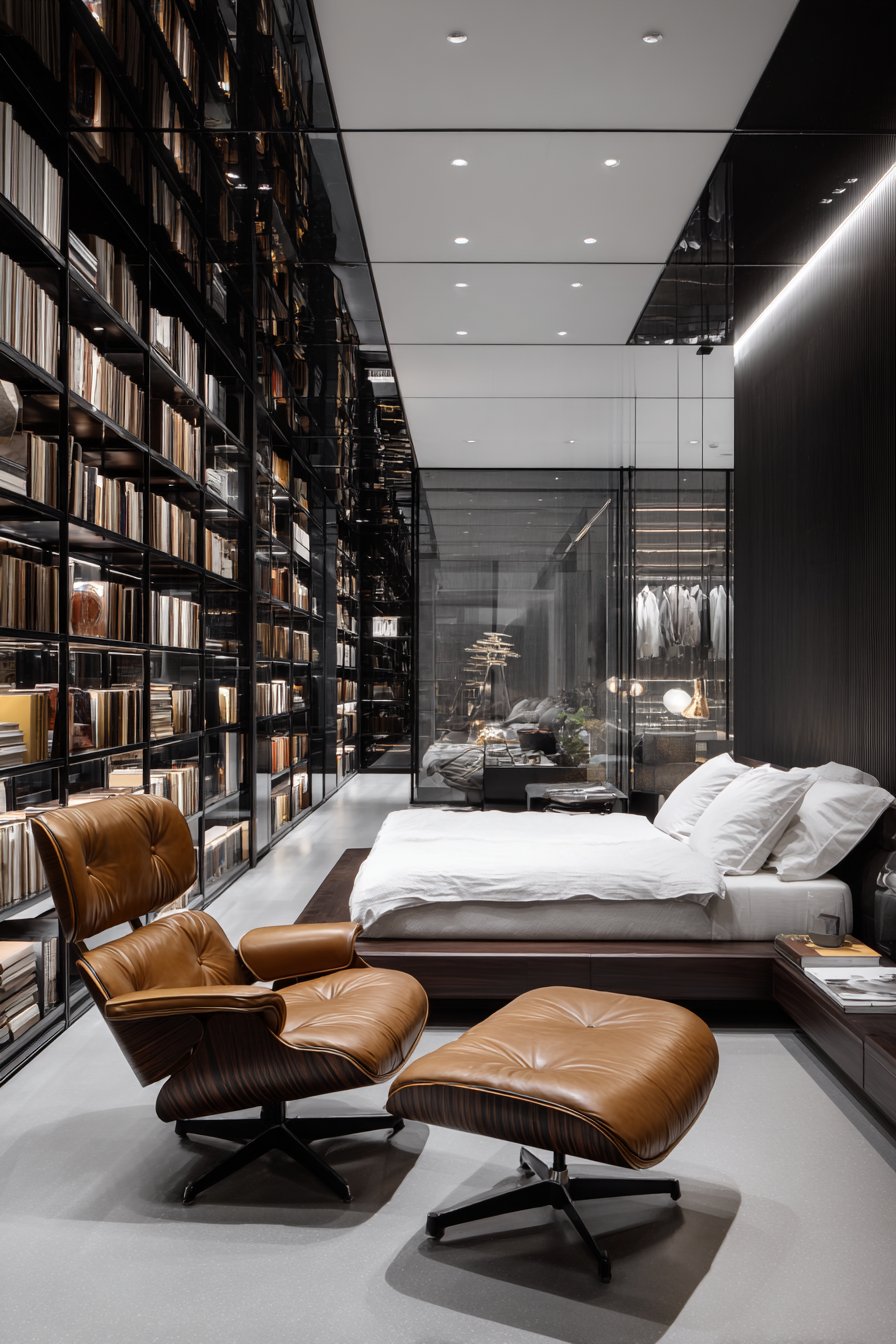
Key considerations include ensuring glass thickness provides adequate support for book weight, selecting metal finishes that resist fingerprints and maintain appearance, positioning shelves to minimize glare from reflective surfaces, incorporating lighting that doesn’t create harsh reflections, choosing furniture with similarly refined modern aesthetics, and maintaining disciplined organization to prevent the open shelving from appearing cluttered.
5. Traditional Luxury with Mahogany and Glass-Front Cabinets
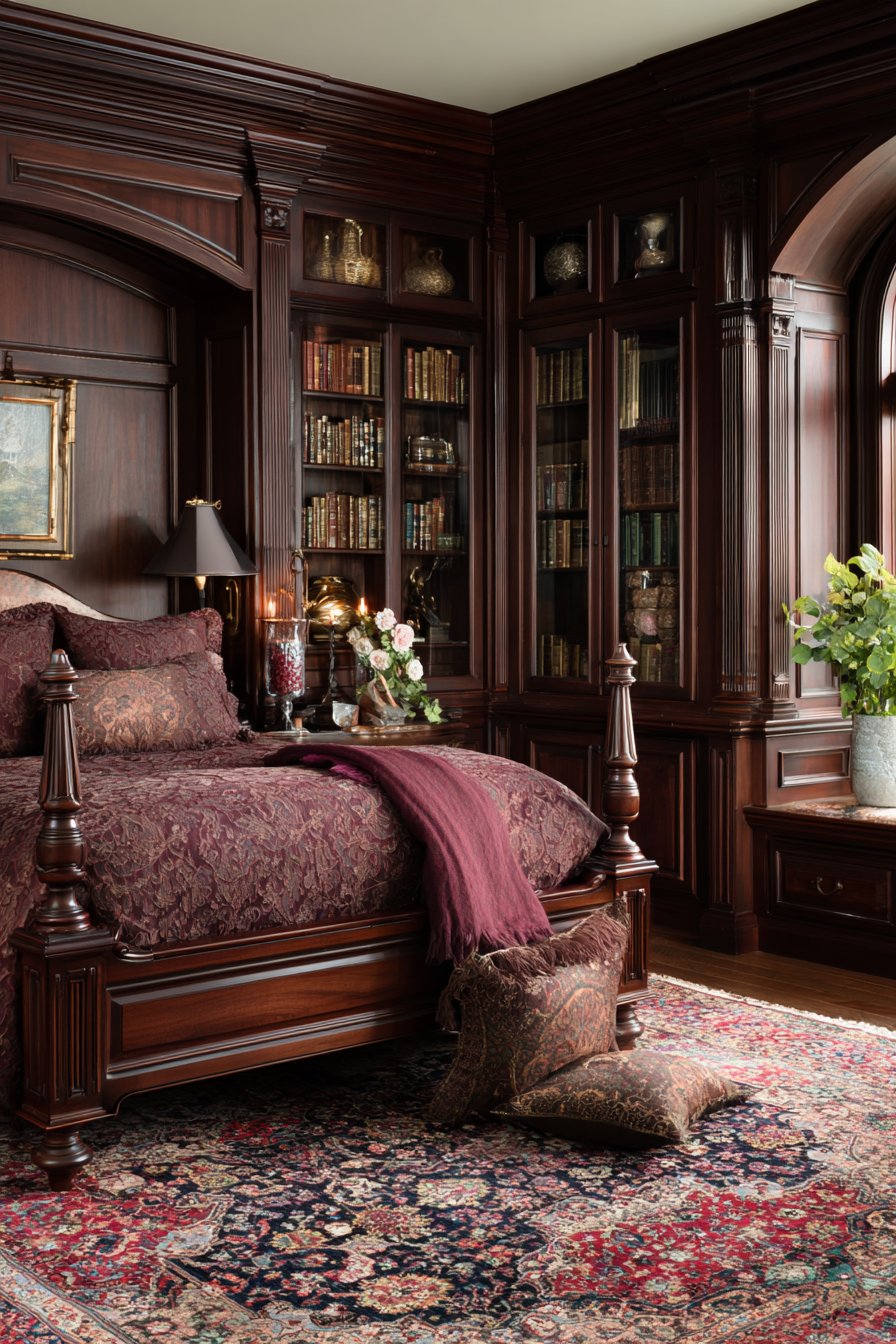
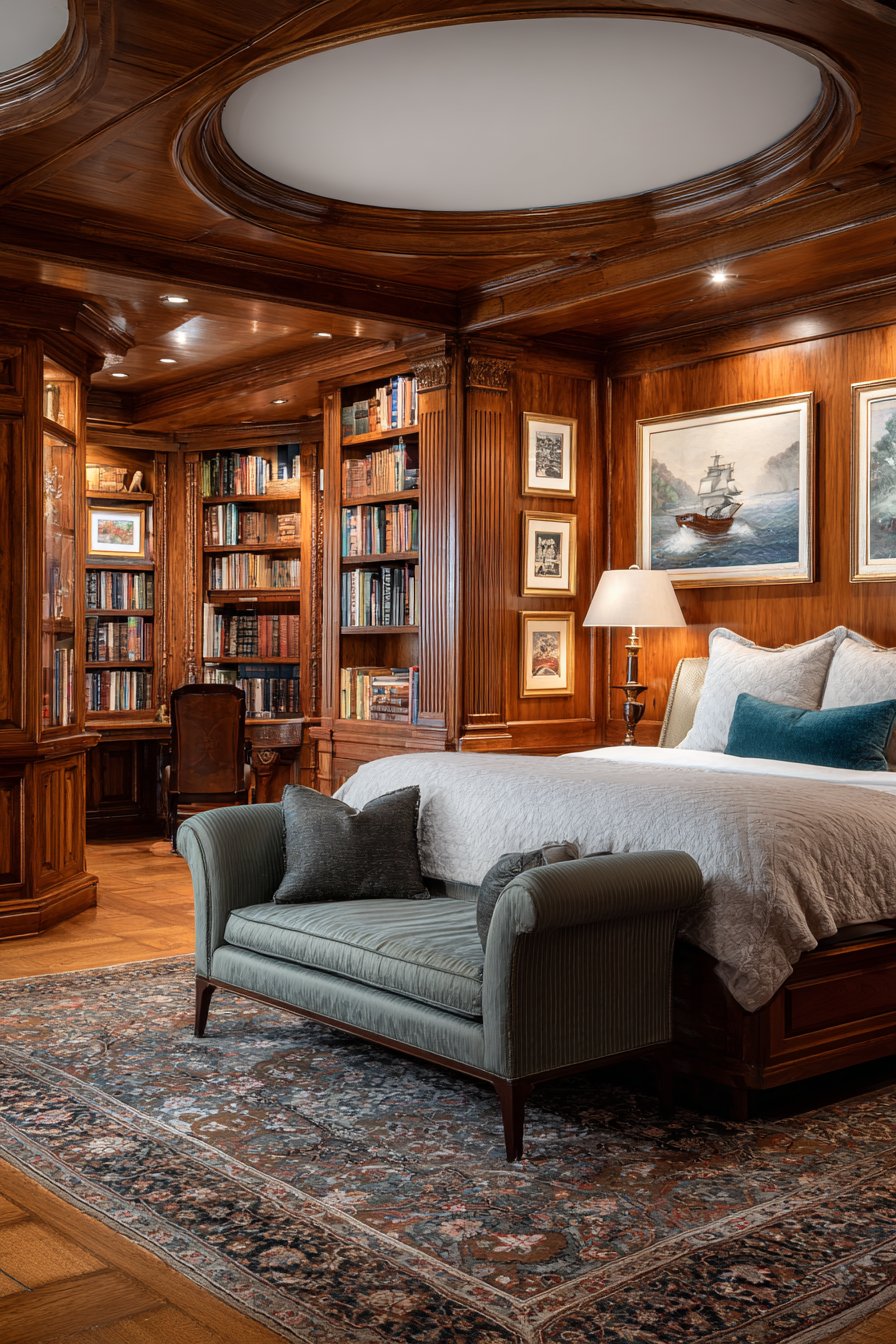
For collectors of rare or valuable editions, a traditional library bedroom with protective cabinetry offers both security and display. Rich mahogany built-in bookcases with crown molding and glass-front cabinet doors create an atmosphere of timeless elegance while safeguarding precious volumes from dust, light damage, and handling. This approach recalls private libraries in historic estates, bringing that sense of cultivated refinement into the bedroom environment. The glass fronts allow visual appreciation of special collections while the solid wood construction provides the gravitas appropriate to housing literary treasures.
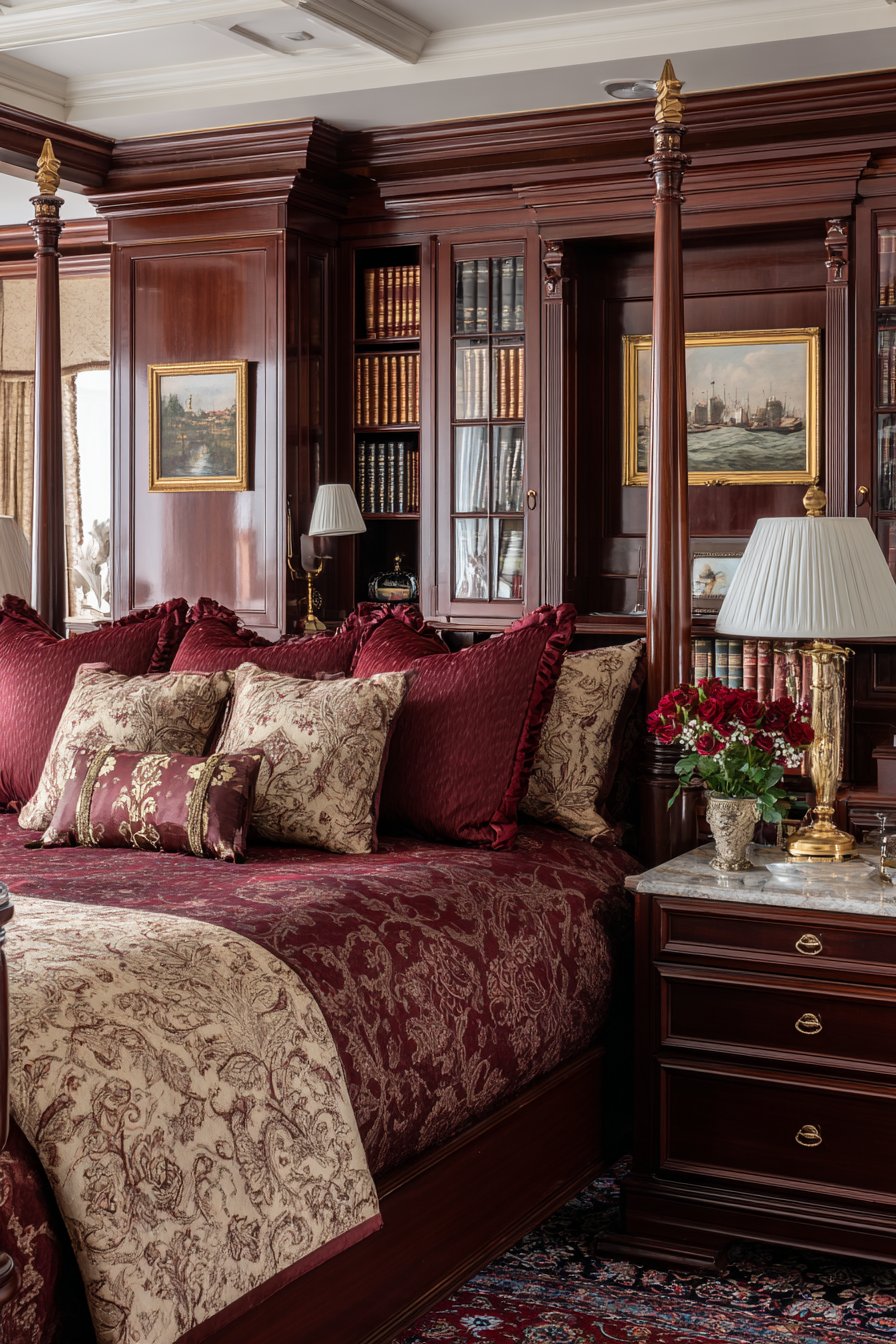
The four-poster bed with hand-carved posts and burgundy damask bedding serves as the room’s centerpiece, its traditional grandeur complementing the formal bookcase aesthetic. A Persian rug in deep reds and blues anchors the space, its intricate patterns adding visual richness that balances the vertical lines of both bed posts and cabinetry. Antique brass table lamps atop marble-topped nightstands provide warm pools of light for bedside reading, their traditional silhouettes maintaining the room’s cohesive period aesthetic. Every element speaks to appreciation for craftsmanship, quality materials, and time-honored design principles.
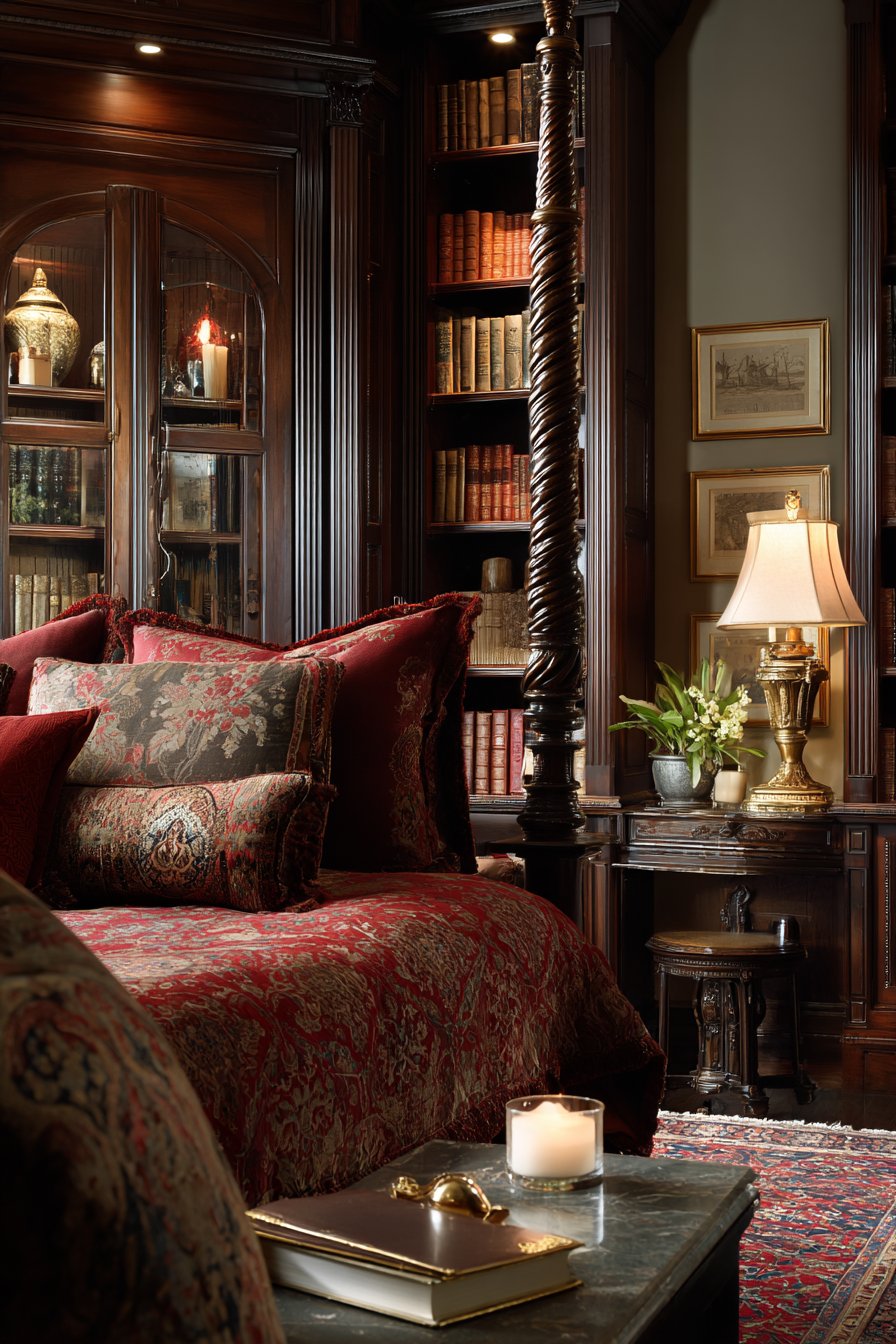
Professional photography would capture the classical elegance through warm artificial lighting that creates intimate shadows and highlights the lustrous patina of aged wood. The rich tones of mahogany, burgundy, and deep rug colors would be rendered with appropriate depth and saturation, conveying the room’s luxurious atmosphere. Attention to details like hardware finishes, wood grain patterns, and textile textures would communicate the quality and thoughtfulness of every design choice. The image would evoke a sense of stepping into a bygone era while recognizing the space’s contemporary relevance as a comfortable, functional bedroom.
Essential elements include selecting UV-filtering glass to protect books from light damage, incorporating proper humidity control to preserve valuable volumes, installing interior cabinet lighting to illuminate collections, choosing hardware that complements the wood finish and period aesthetic, ensuring adequate ventilation to prevent musty odors in enclosed shelving, and maintaining consistent traditional styling across all furnishings and accessories.
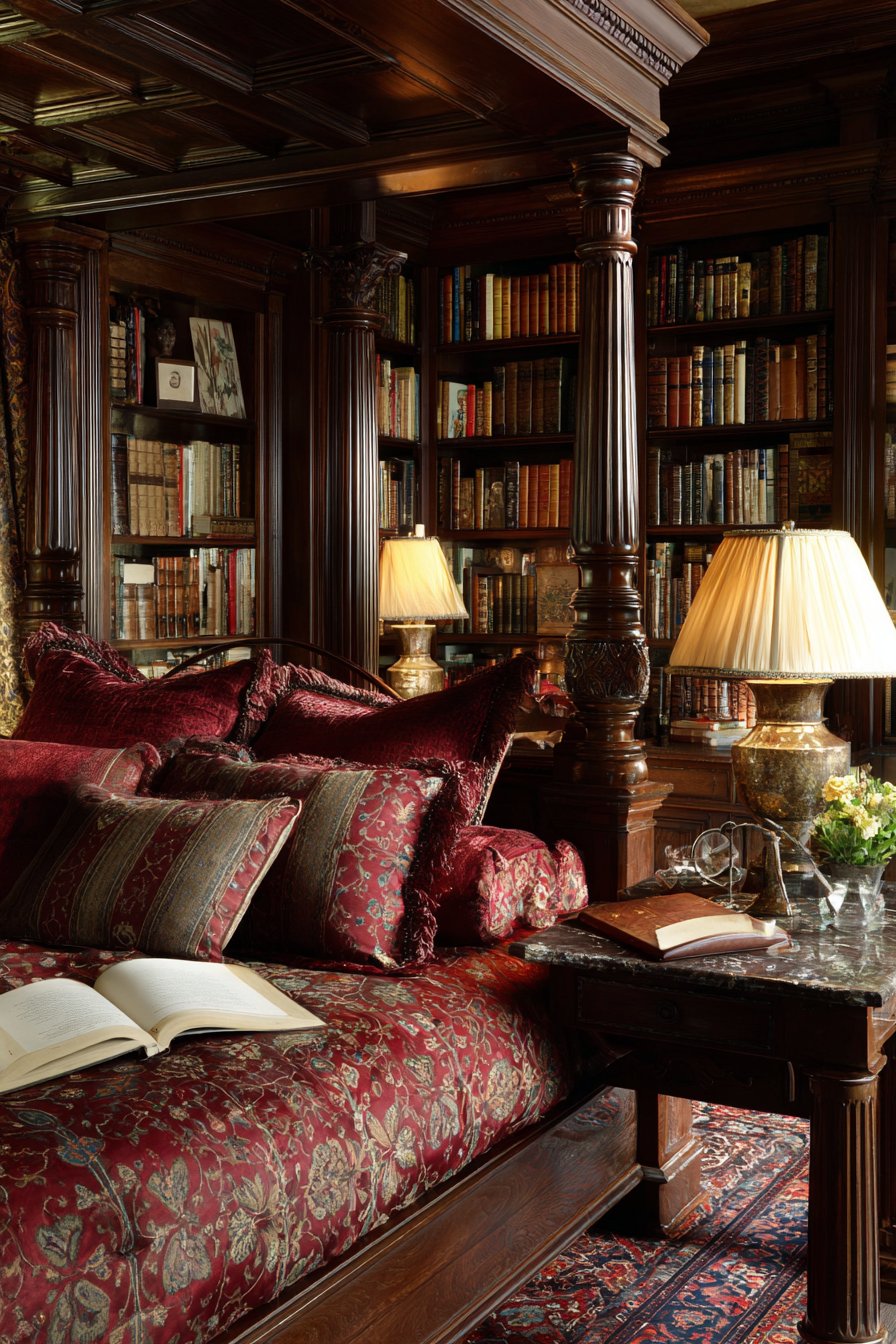
6. Nordic Simplicity with Asymmetric Floating Shelves
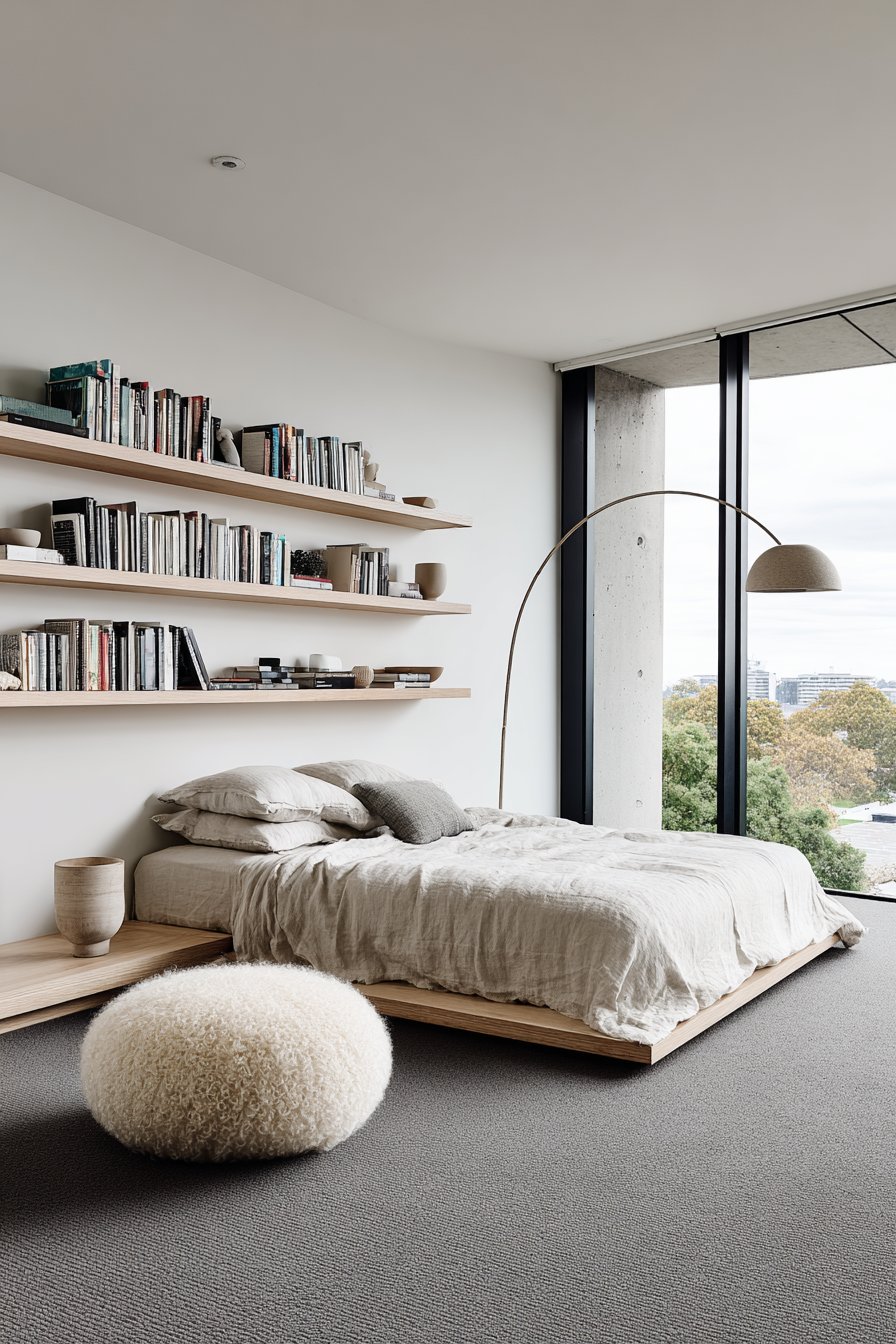
Scandinavian design principles bring refreshing clarity to the library bedroom concept, emphasizing light, simplicity, and connection to natural materials. Light ash wood floating shelves arranged in asymmetric patterns create visual interest without the visual weight of traditional bookcases. This approach allows the wall itself to remain a design element, with books and minimal décor arranged more as curated displays than dense storage. The aesthetic celebrates restraint—each book carefully chosen, each decorative object purposefully placed—resulting in a space that feels calm and uncluttered despite housing a respectable collection.
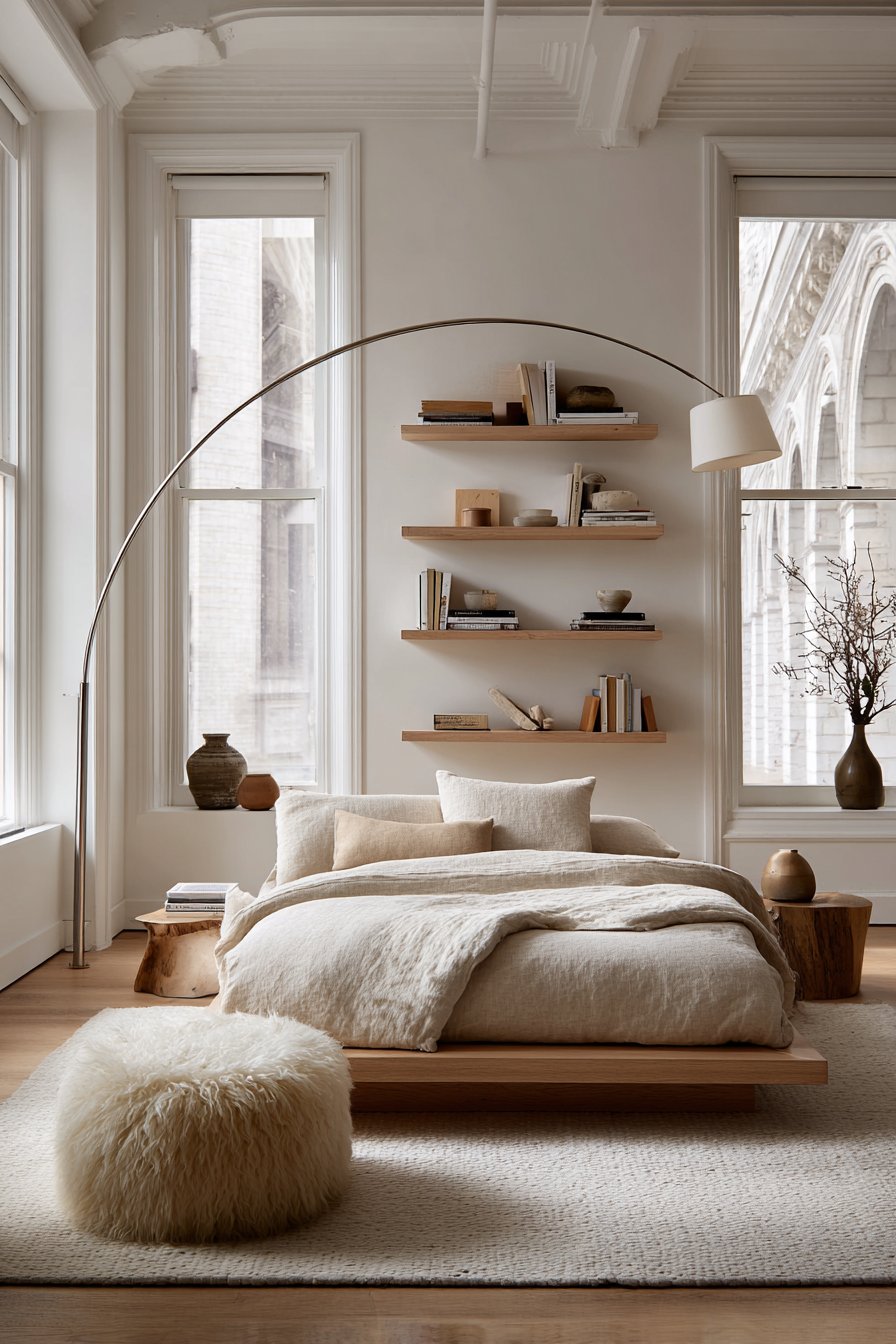
The bed frame echoes the floating shelf aesthetic with simple wooden construction in matching ash, dressed in natural linen bedding in off-white tones that enhance the room’s airy quality. A modern arc floor lamp provides reading light over a sheepskin-covered pouf, creating a cozy reading spot without requiring dedicated floor space for a full chair. White walls maximize the limited natural light typical of Nordic climates, while large windows ensure the space feels connected to the outdoors. Every design choice supports the overarching goal of creating a peaceful, unencumbered environment where rest and reading both flourish.
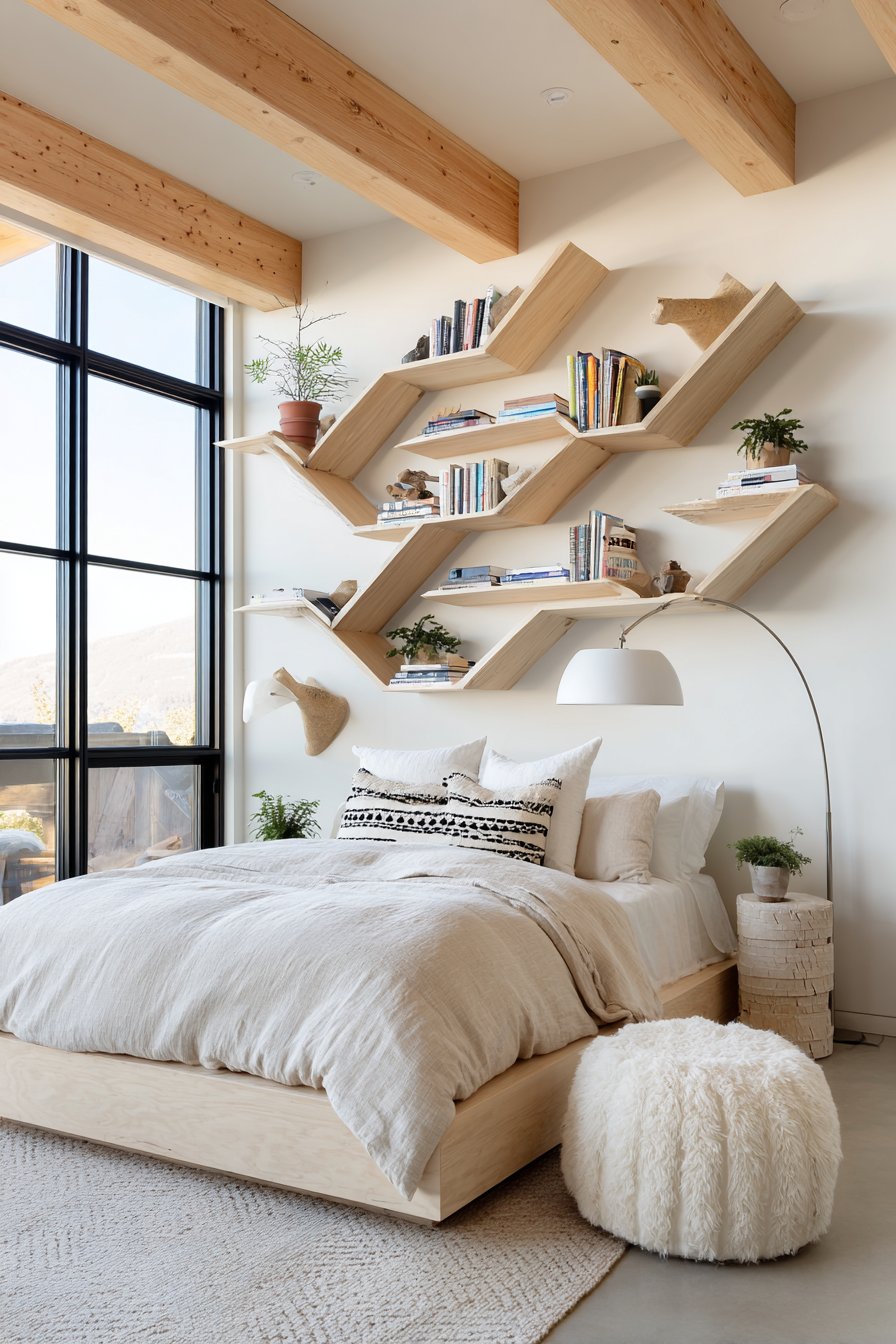
Photography would embrace soft Nordic lighting aesthetics, capturing the gentle quality of diffused daylight and emphasizing the room’s clean simplicity. The light wood tones would be rendered with attention to their warm honey notes, preventing the white-and-wood palette from appearing cold or sterile. Emphasis on natural materials—the grain in the wood, the weave of the linen, the texture of the sheepskin—would provide visual interest within the restrained color scheme. The asymmetric shelf arrangement would create subtle dynamism, proving that minimalism need not mean monotony.
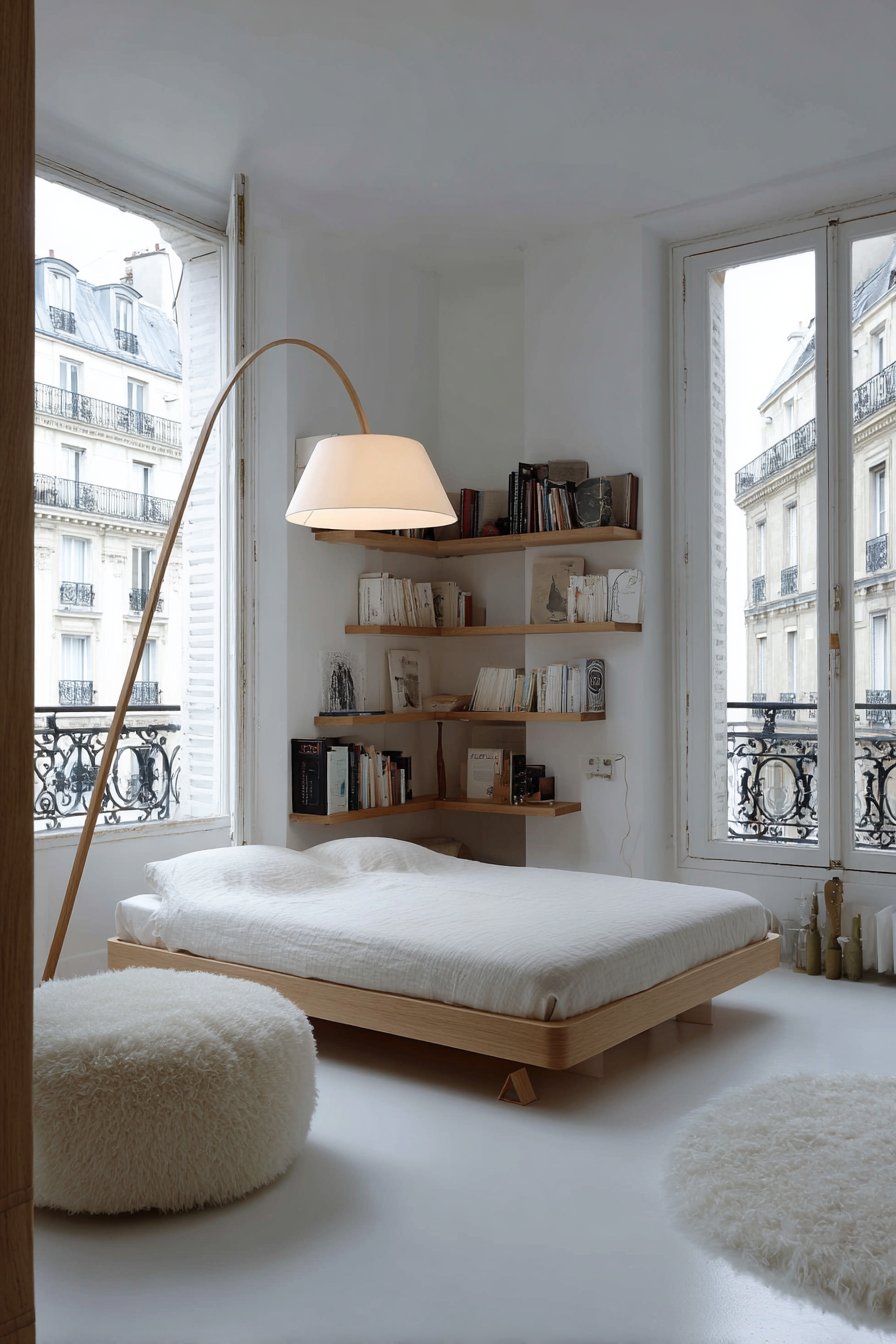
Design principles include limiting color palette to neutrals and natural wood tones, selecting books with attractive spines for display (storing others away), using negative space as a design element rather than filling every surface, incorporating plants or natural elements to soften architectural lines, ensuring ample natural light through window treatments or paint choices, and maintaining strict discipline about what items earn a place in the space.
7. Cottage Charm with Corner Wraparound Shelving
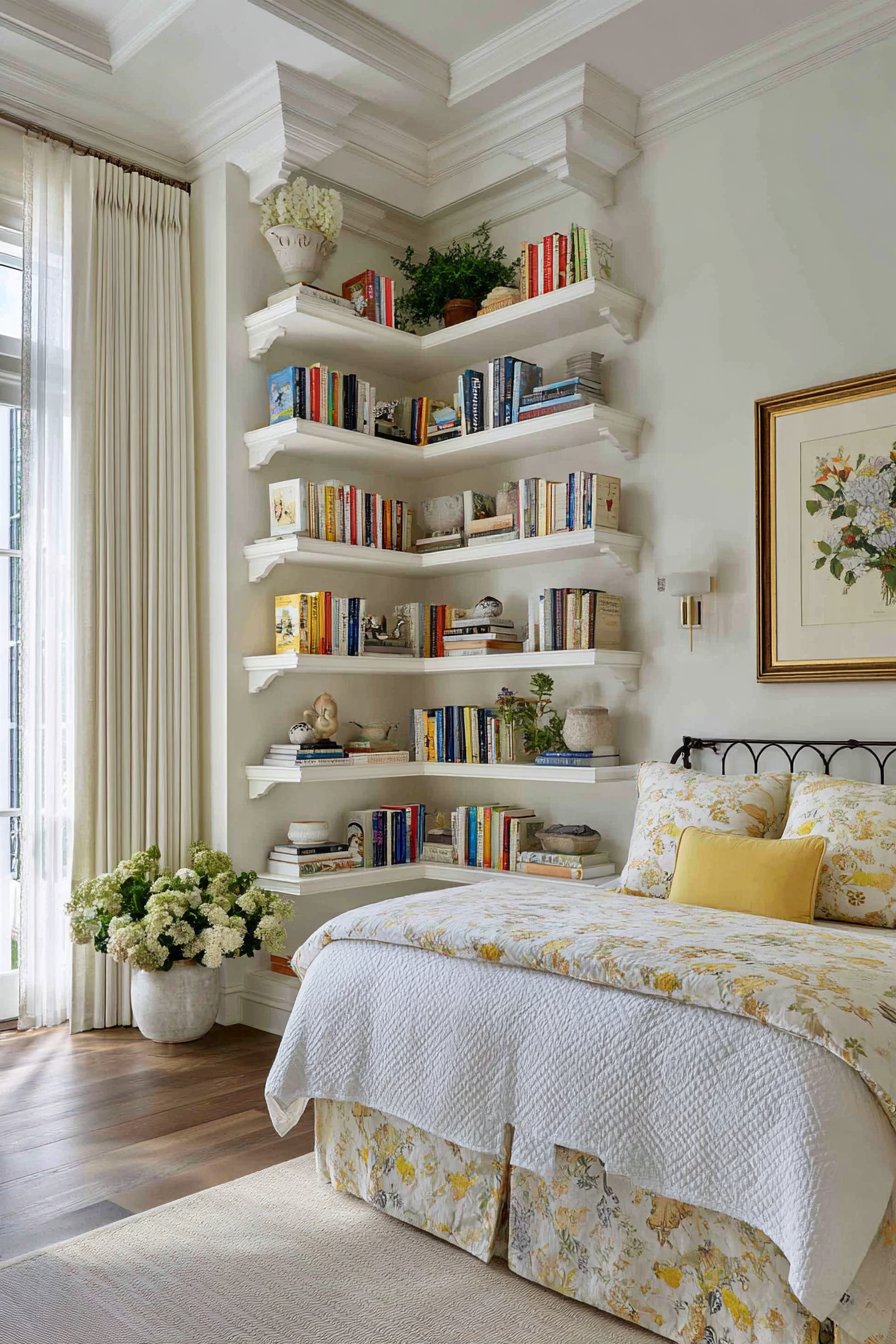
A cottage-style library bedroom embraces warmth, color, and personal touches that make a space feel genuinely lived-in and loved. Corner wraparound bookshelves in painted white finish create a bright, welcoming atmosphere while maximizing storage in what’s often underutilized space. These shelves house not just books but a personalized collection of colorful spines mixed with potted plants and family photographs—a curated display of what makes life meaningful. This integrated approach to shelving transforms books from mere storage into autobiography, with each volume and object telling part of the resident’s story.
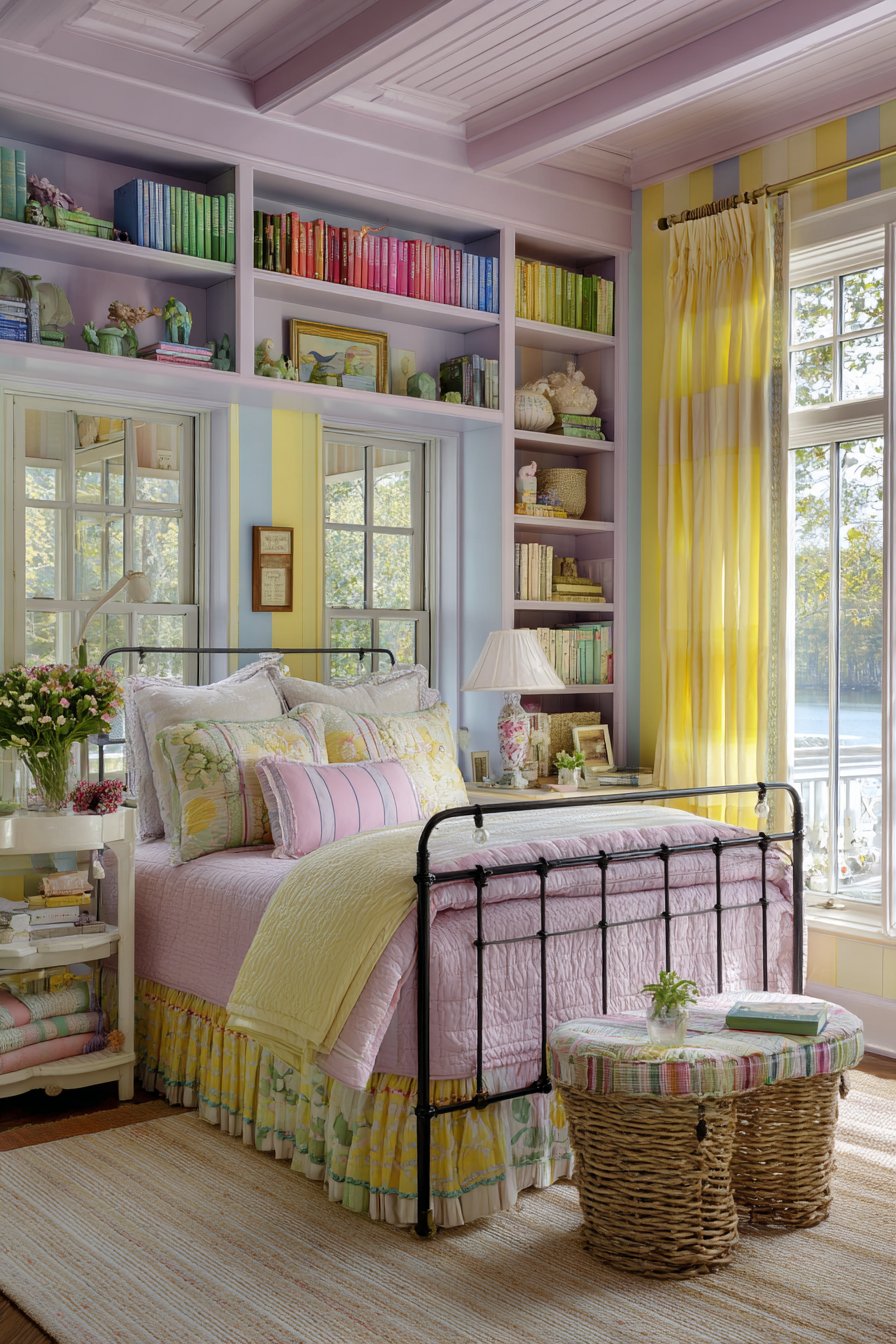
The wrought iron bed frame with quilted coverlet in soft pastels provides a romantic focal point that balances the painted shelving’s casual charm. Sheer curtains filter sunlight across hardwood floors, creating gentle light play that changes throughout the day and softens the room’s edges. The overall effect is one of comfortable, unpretentious elegance—a space that prioritizes comfort and personal expression over rigid design rules. Detail-focused interior photography would capture the layers of personality embedded in book choices, photograph placement, and the integration of living plants among literary volumes.
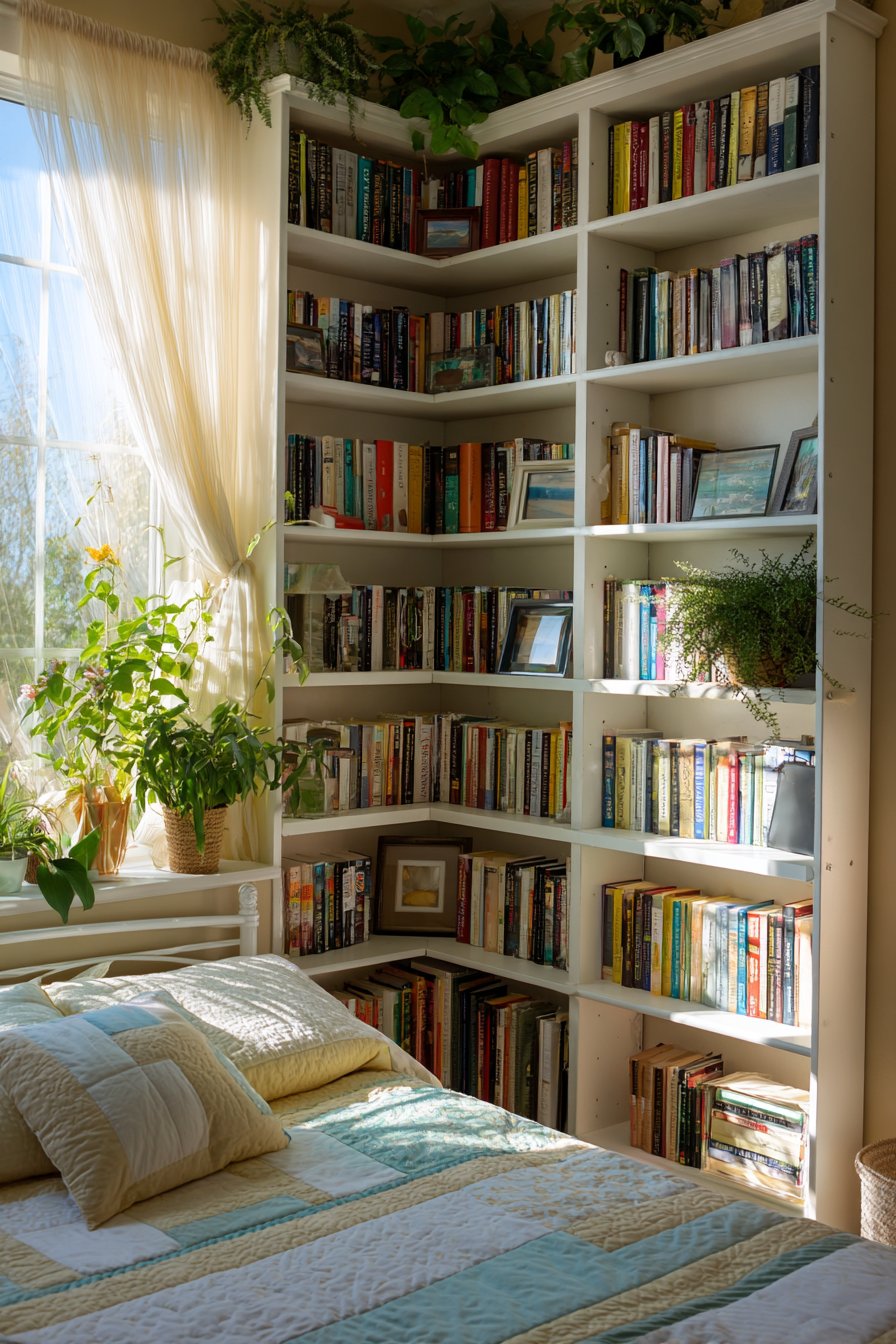
This design particularly suits those who view their bedroom as a deeply personal space rather than a showplace, where comfort and emotional resonance outweigh design purity. The mix of books, plants, and photographs prevents the space from reading as single-purpose, acknowledging that bedrooms serve multiple roles in our lives. Morning light streaming across this varied collection would create a dynamic visual experience, with natural shadows defining different depths and layers within the corner shelving unit.
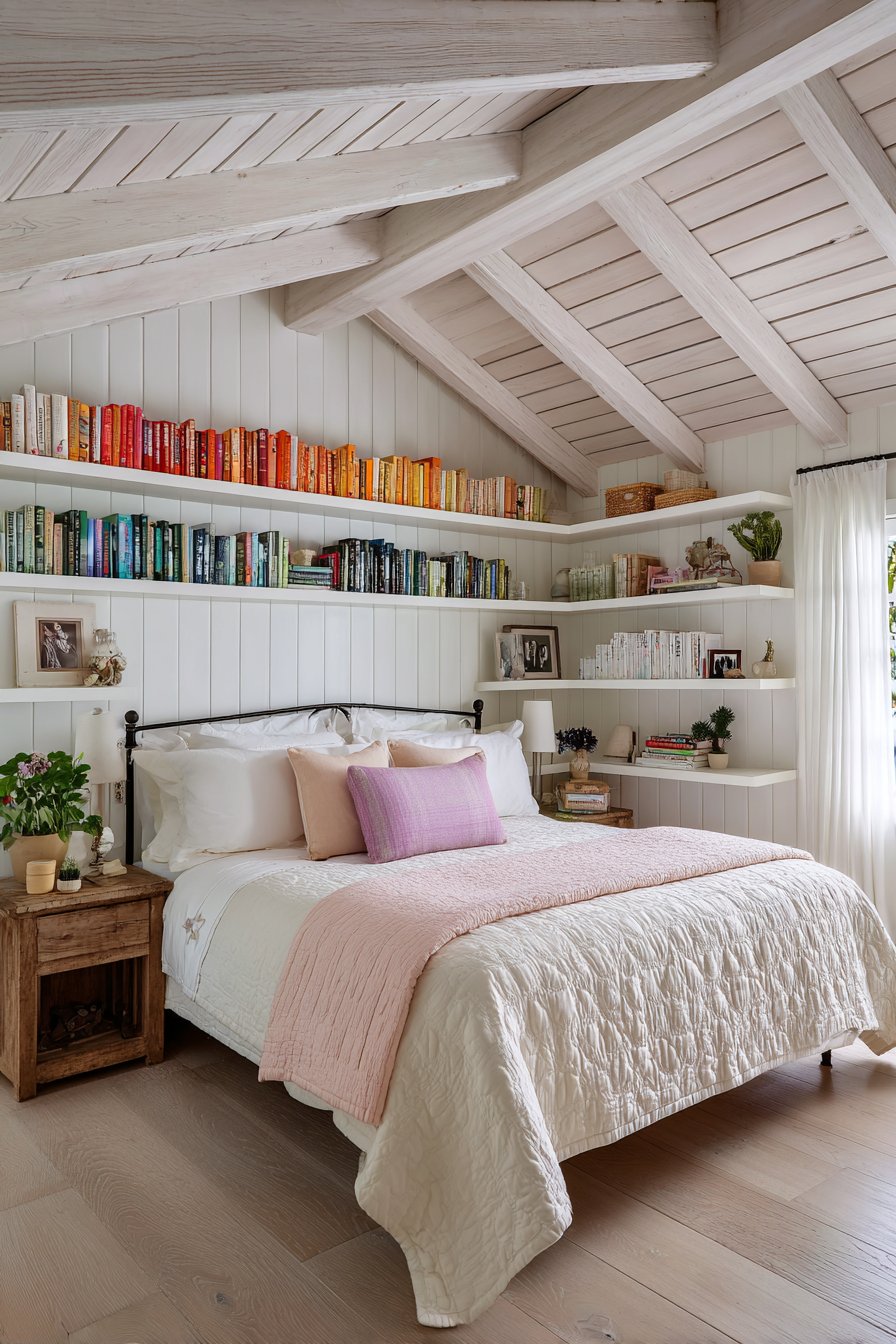
Important considerations include selecting paint finishes that withstand humidity in bedroom environments, varying shelf heights to accommodate different object sizes beyond just books, incorporating plant choices suited to bedroom light levels, displaying photographs in sizes and frames that relate well to book proportions, maintaining balance between personalization and visual coherence, and ensuring the corner placement doesn’t create dark zones by providing adequate lighting.
8. Glamorous Drama with Statement Shelving and Rolling Ladder
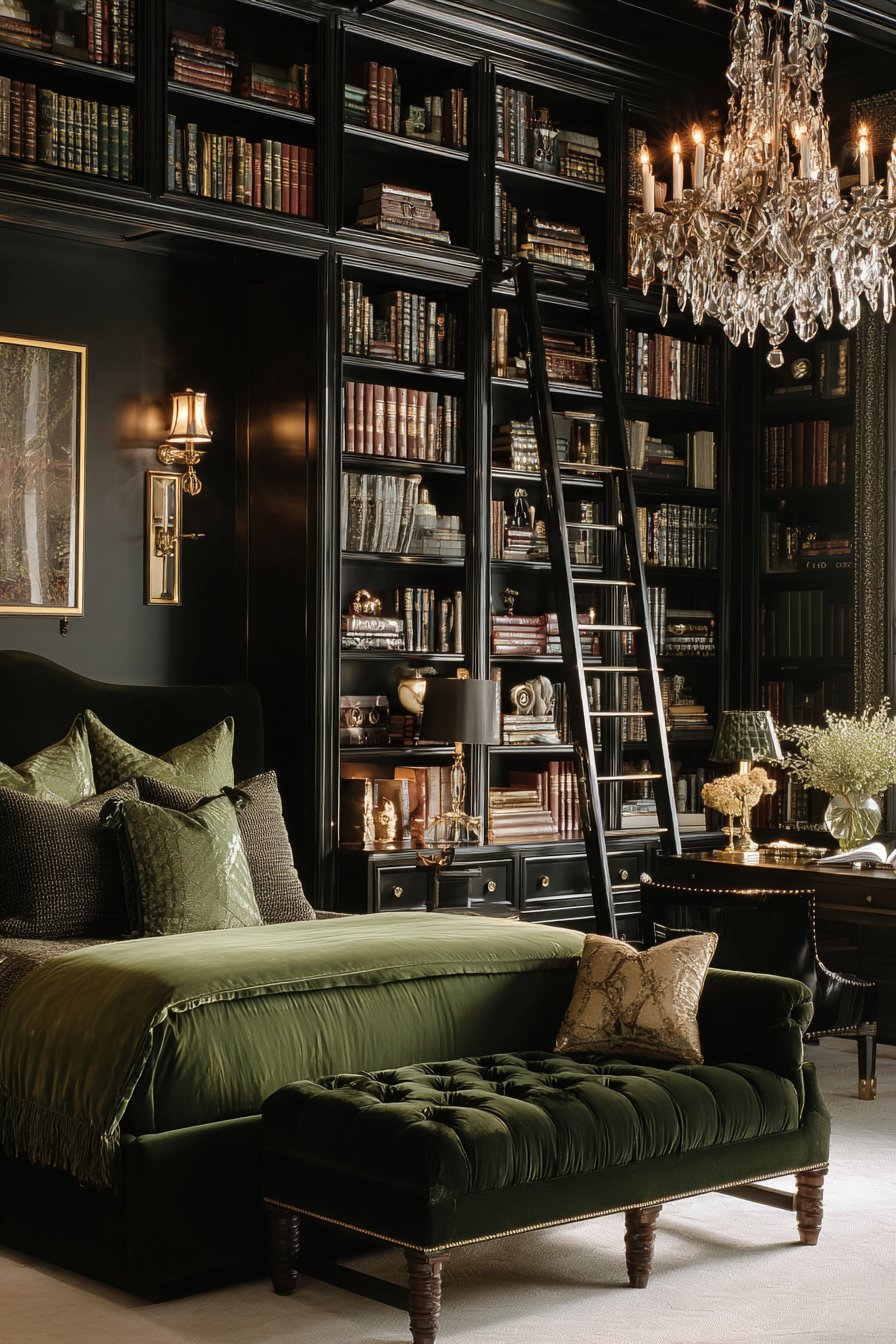
When library bedroom design aims for maximum impact, dark stained oak shelving with integrated rolling ladder on brass hardware delivers undeniable presence. This approach embraces the drama of floor-to-ceiling storage while adding the practical romance of library ladder access. Books organized by theme fill the shelving, their arrangement reflecting both aesthetic consideration and intellectual logic. The brass rolling hardware becomes jewelry for the room—its warm metallic sheen catching light and drawing the eye along the wall’s length. This is library bedroom design as grand statement rather than subtle integration.
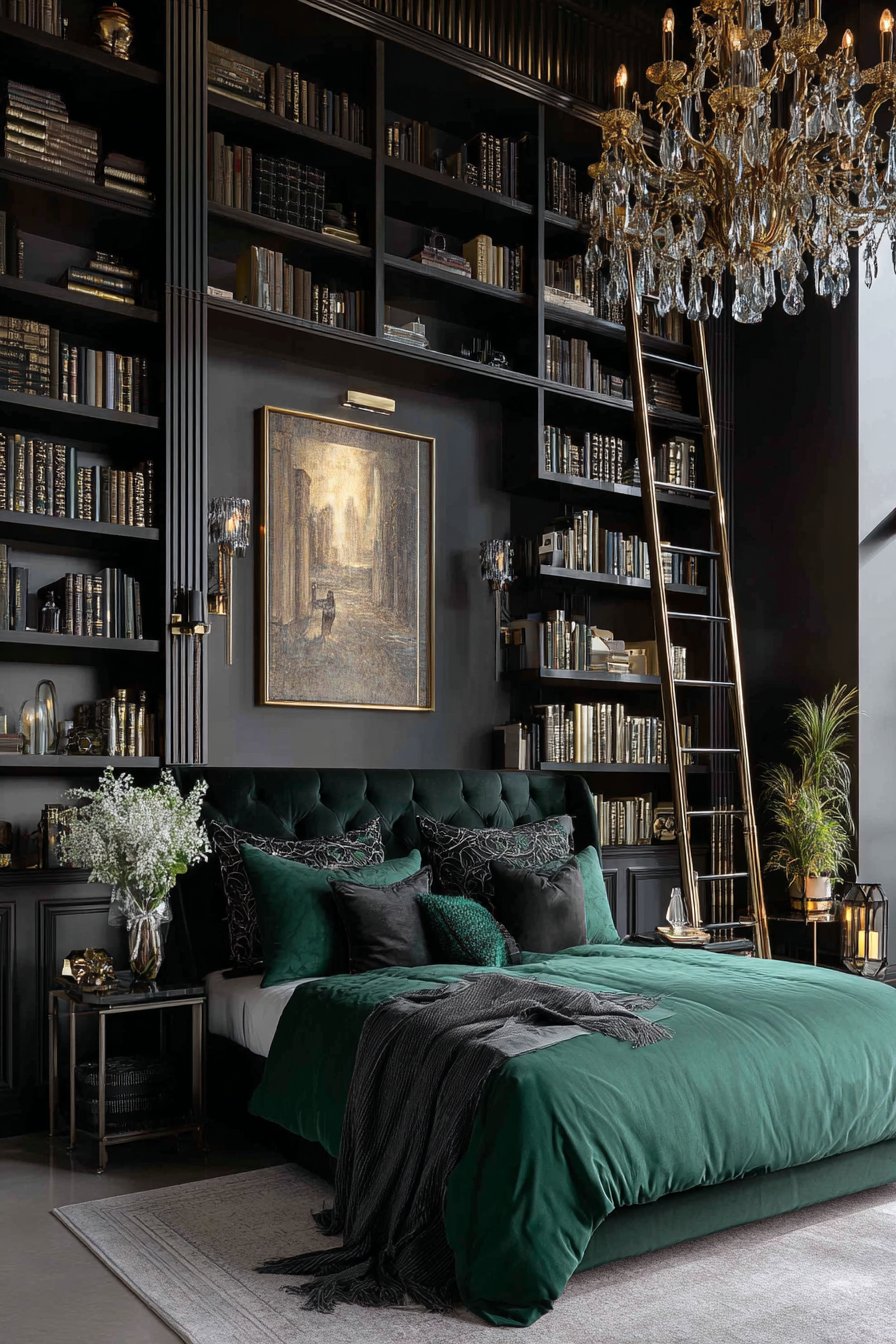
The sleeping area rises to meet this dramatic backdrop with a velvet upholstered sleigh bed in jewel-toned emerald green, its rich color and luxurious texture matching the shelving’s opulent character. Coordinating throw pillows in complementary hues create layers of visual interest on the bed, while a crystal chandelier provides ambient lighting with appropriate glamour. Brass picture lights illuminate the shelves, ensuring the book collection remains visible even in evening hours while adding warm accent lighting that enhances the room’s luxurious atmosphere. Every element contributes to an overall sense of cultivated indulgence.
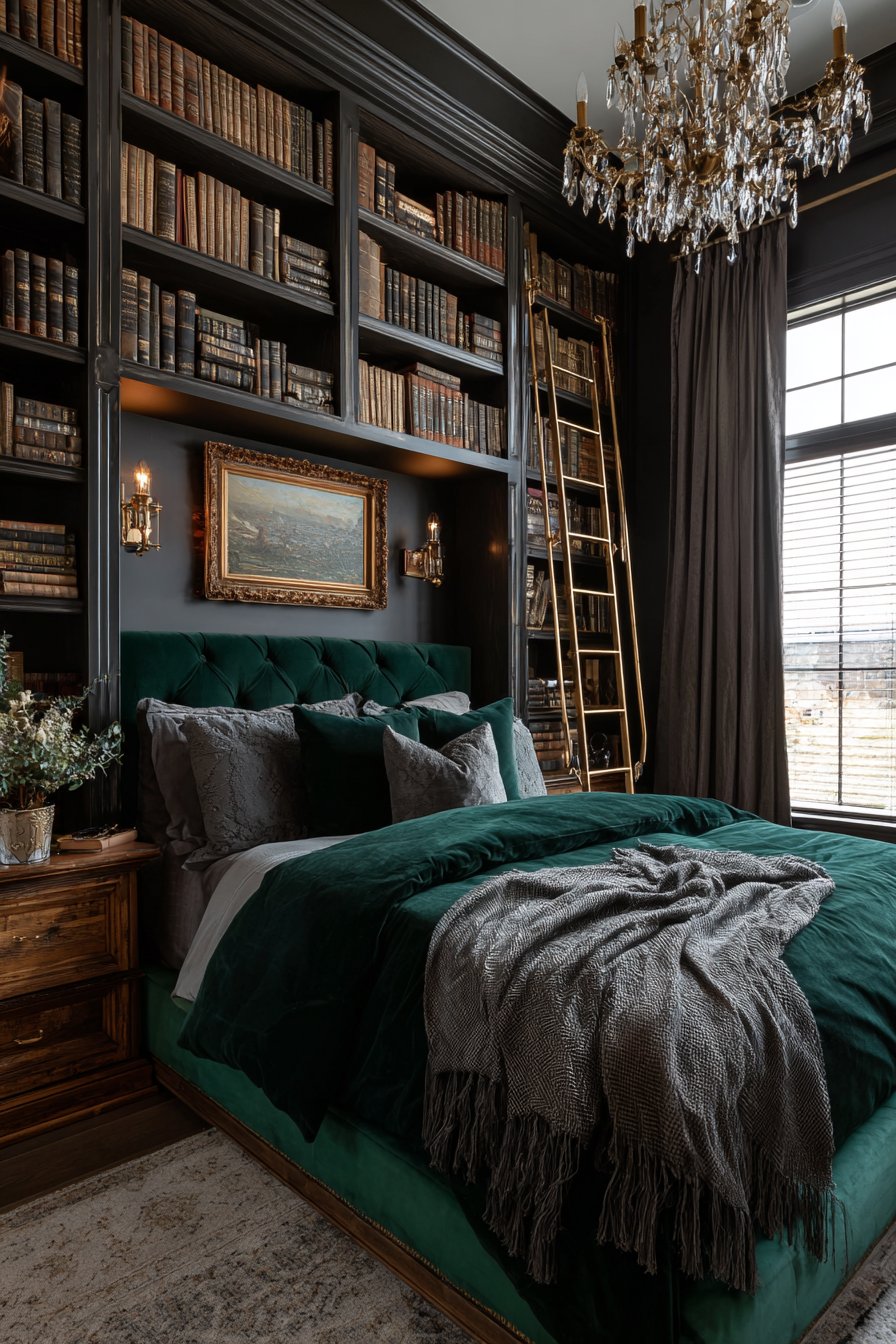
Professional photography would employ golden hour lighting to create rich shadows and highlight the luxe material details—the deep pile of velvet, the complex grain in stained oak, the glittering facets of crystal. The warm brass tones would unify the composition, connecting ladder hardware to picture lights to chandelier. The image would convey not just the physical attributes of the space but its emotional character: confident, sophisticated, unapologetically luxurious. This is a library bedroom that makes a statement about its occupant’s appreciation for both literature and the finer things in life.
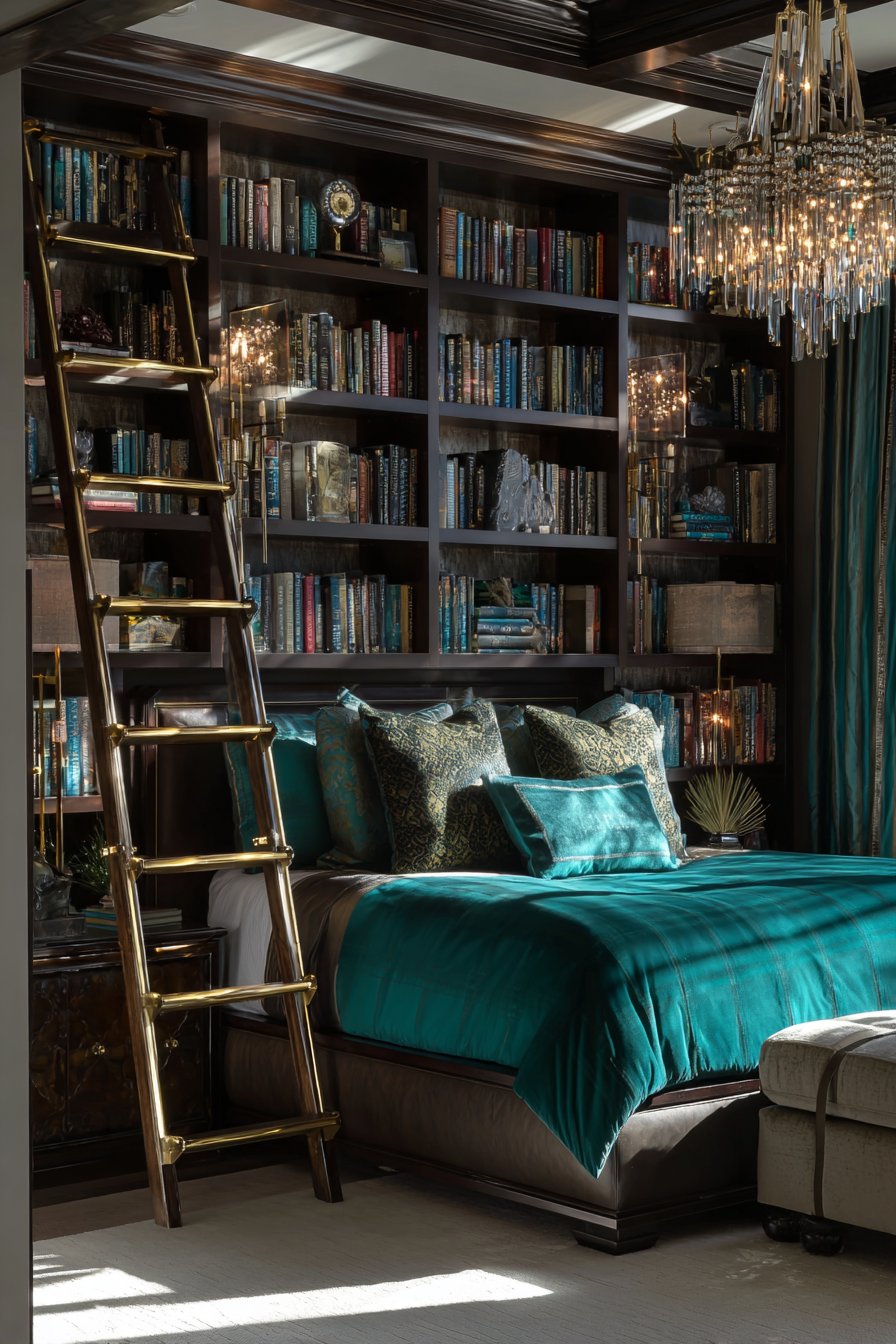
Essential elements include selecting brass hardware with smooth operation and appropriate weight capacity, choosing chandelier scale appropriate to ceiling height and room proportions, installing picture lights at proper distances and angles to illuminate shelves without glare, coordinating velvet upholstery color with wood stain undertones, maintaining consistent metallic finishes across all hardware and lighting, and organizing books with both visual appeal and functional access in mind.
9. Zen Minimalism with Concealed Storage Solutions
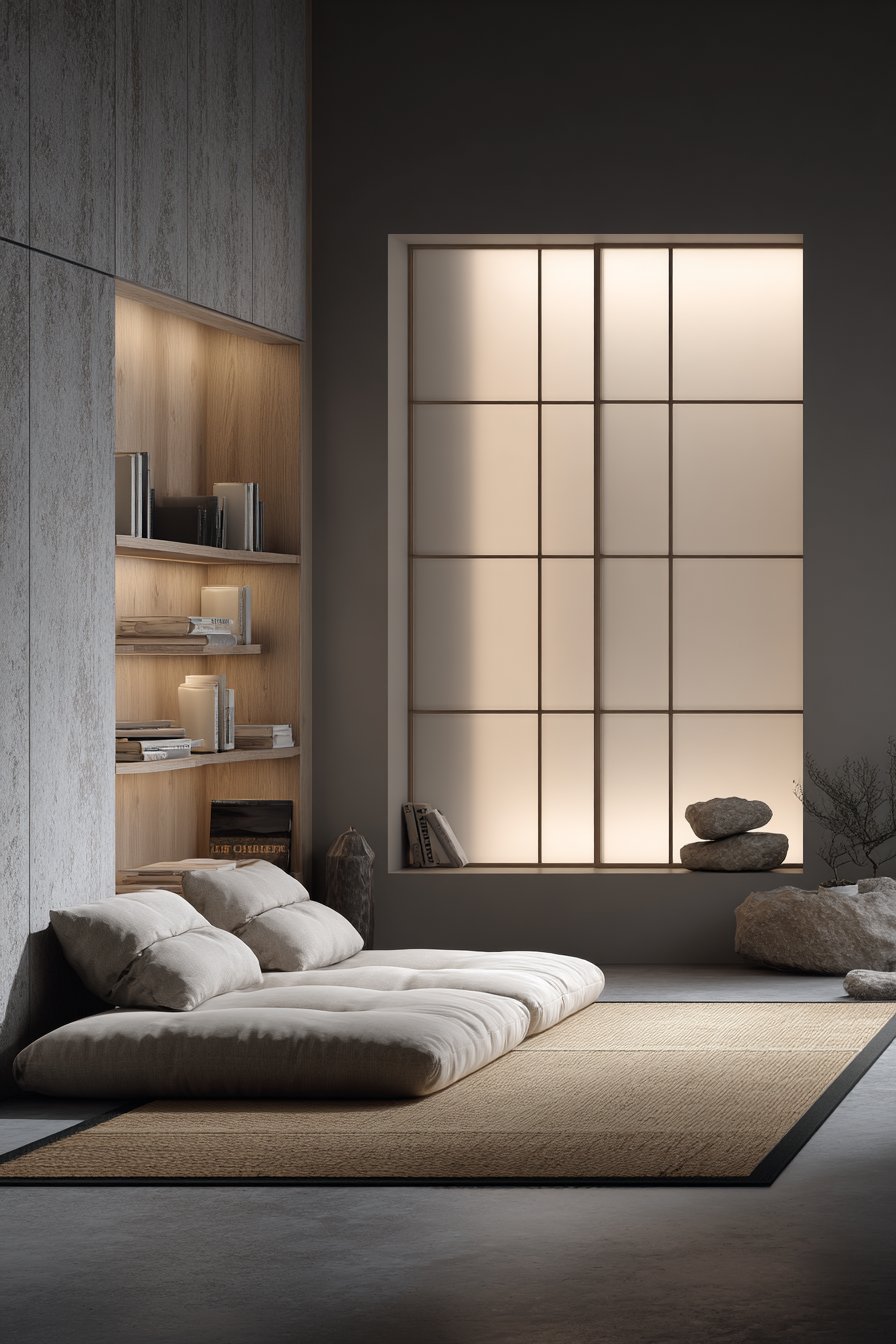
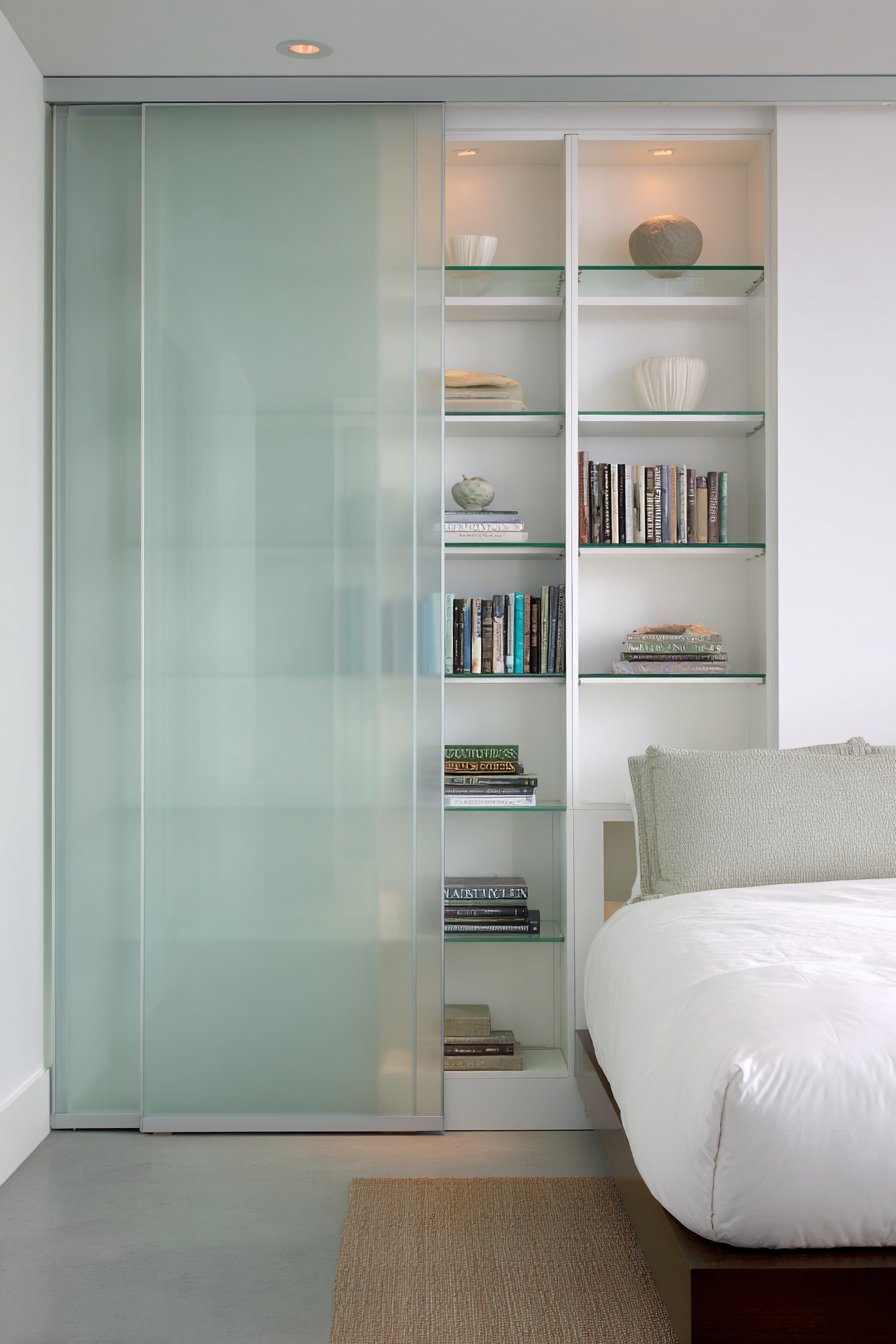
The intersection of minimalist philosophy and book collection presents an interesting design challenge, resolved brilliantly through concealed storage where books hide behind sliding frosted glass panels in floor-to-ceiling cabinetry. This approach satisfies the practical need for substantial book storage while maintaining the visual simplicity essential to minimalist aesthetics. The exposed shelving section displays only carefully curated design books and sculptural objects, ensuring every visible item earns its place through both beauty and meaning. The result is a serene environment that doesn’t broadcast its storage capacity but reveals it on demand.
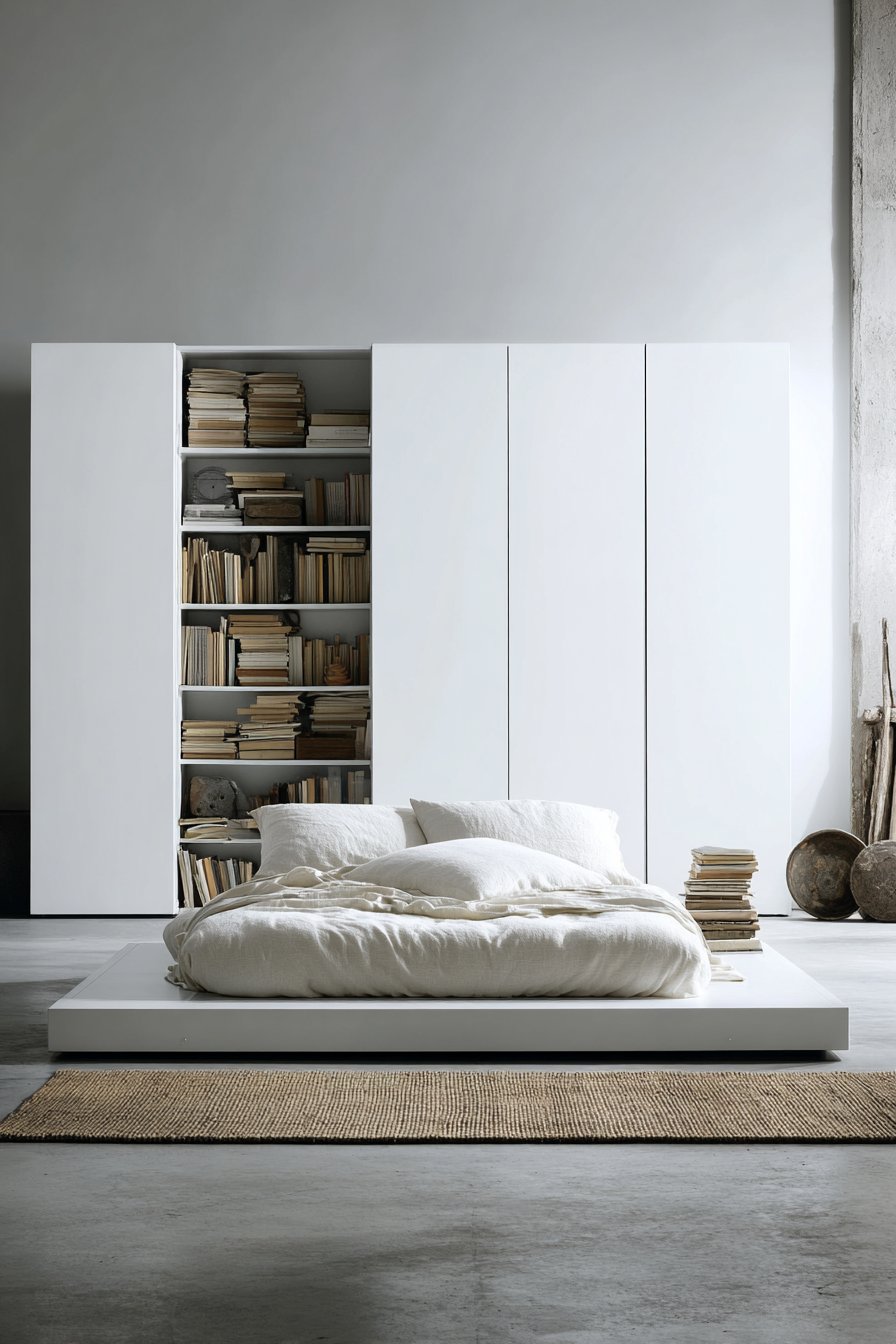
A Japanese-inspired low platform bed with organic cotton bedding in neutral tones continues the minimalist theme, its horizontal emphasis creating a restful visual foundation. Concrete flooring with radiant heating provides both modern industrial edge and practical comfort, while a simple jute rug defines the sleeping zone with natural texture. The room eschews ornamentation in favor of perfect proportions, quality materials, and thoughtful negative space. Interior design photography would emphasize these qualities, celebrating the room’s restraint and the subtle material textures that provide interest within the disciplined palette.
This design particularly appeals to those who love books but find visible collections visually overwhelming, or who appreciate the flexibility of transforming the space’s character by simply sliding panels open or closed. The concealed storage acknowledges that not all beloved possessions need constant display, and that sometimes the most luxurious design choice is the absence of visual clutter. Clean diffused lighting would enhance the zen-like quality, eliminating harsh shadows and creating an even, peaceful illumination.
Key considerations include selecting sliding door hardware with silent, smooth operation, providing adequate interior lighting within closed cabinets for book selection, ensuring proper ventilation to prevent musty odors in enclosed storage, choosing exposed display items with exceptional visual merit, maintaining strict discipline about visible clutter, and designing the exposed shelving section with proper proportions and spacing to prevent overcrowding.
10. Space-Saving Innovation with Murphy Bed Integration
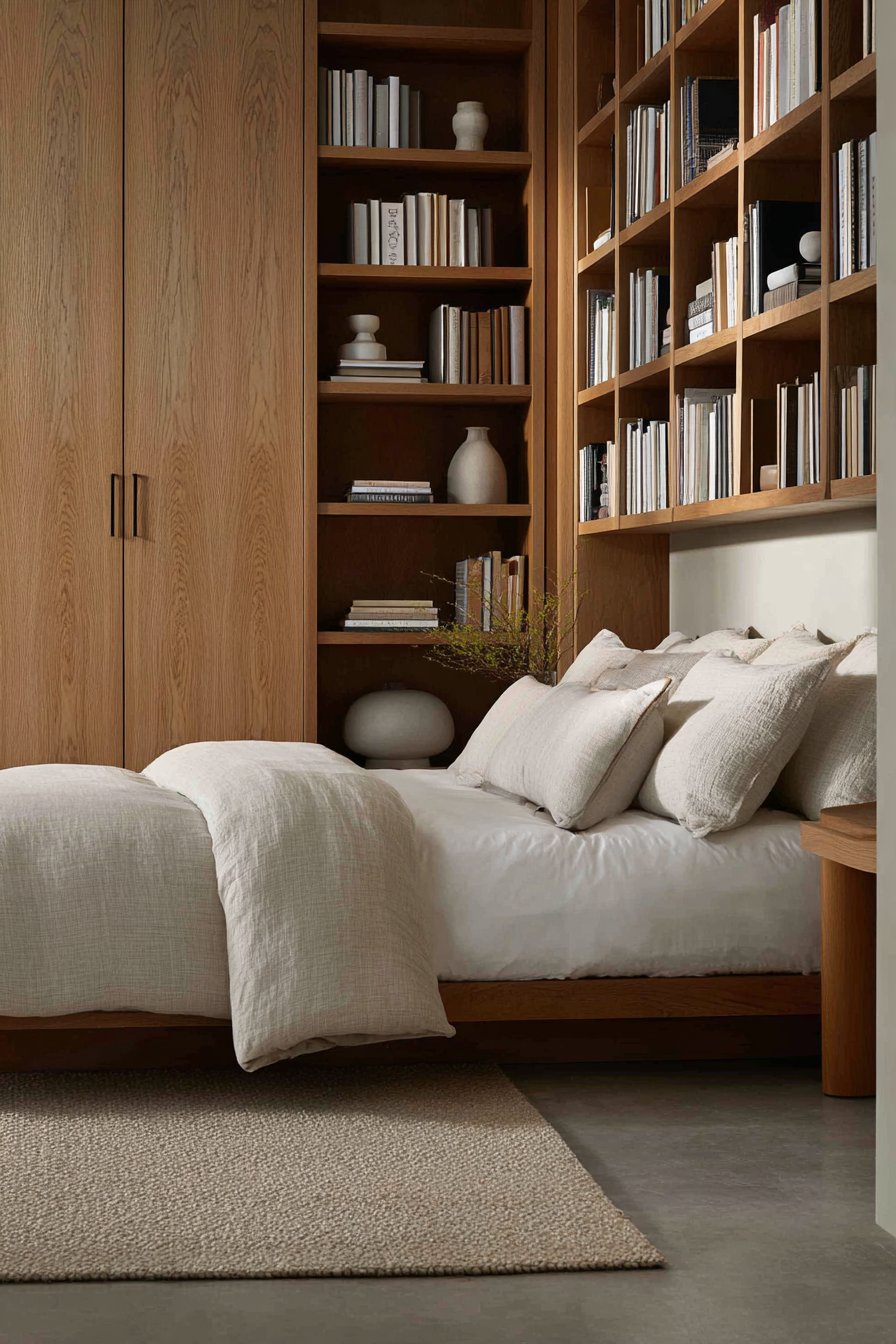
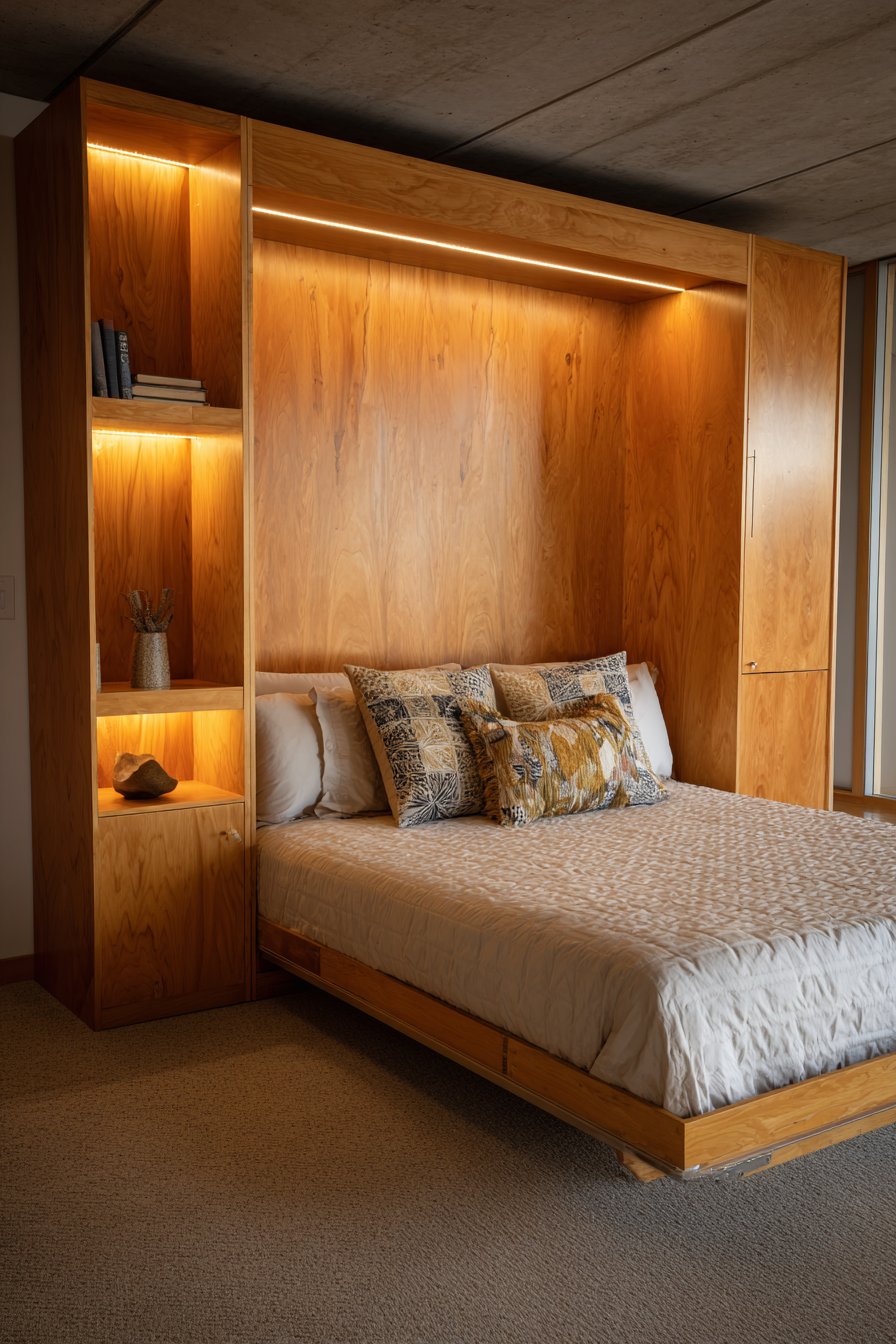
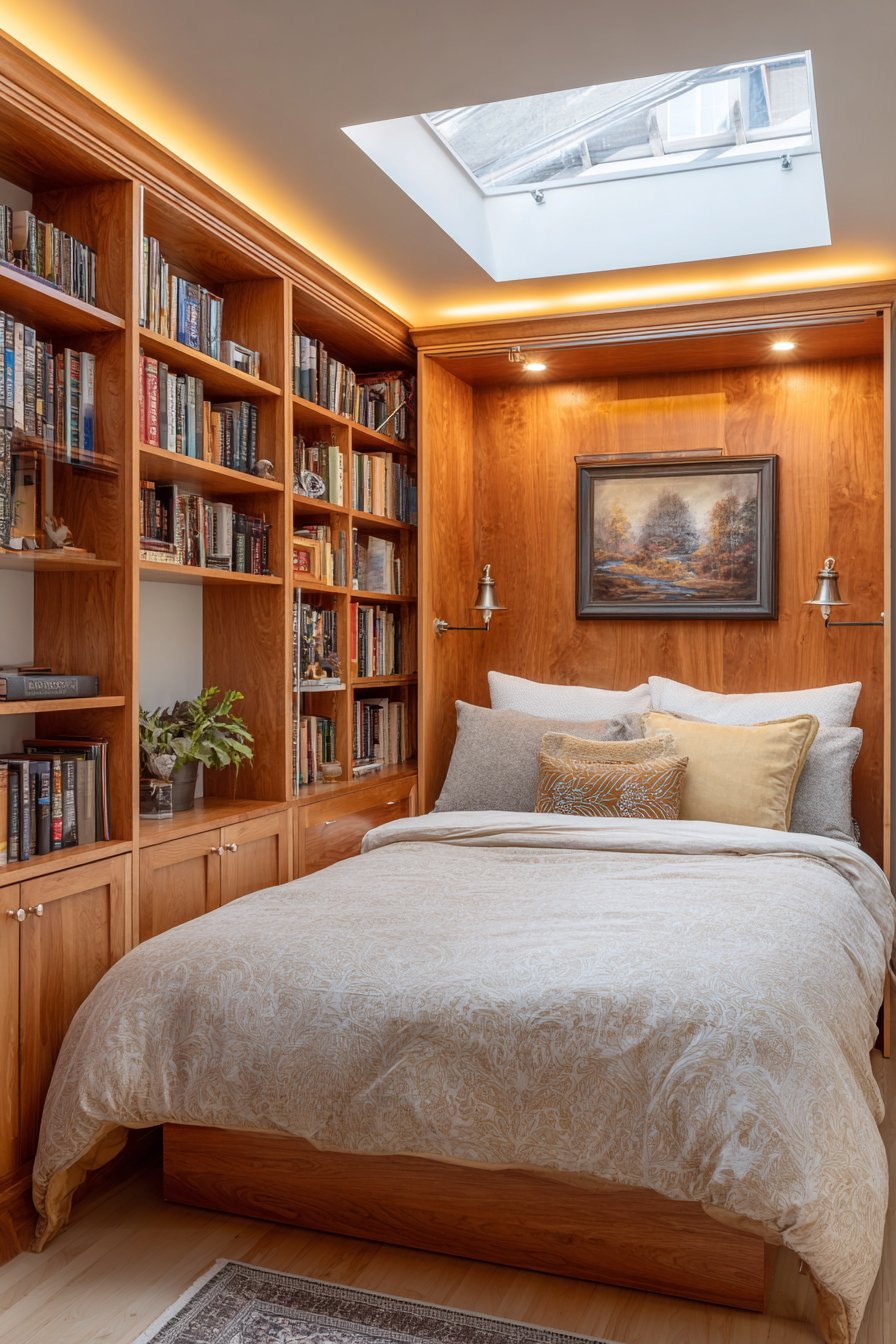
Small space library bedroom design reaches its creative peak with murphy bed systems that fold up to reveal bookshelf storage behind. This transformative furniture allows a single room to serve dual purposes seamlessly—by day, a library or study with visible book collection; by night, a bedroom with accessible storage. When the bed folds down, built-in side shelving remains accessible from the sleeping position, ensuring favorite volumes stay within arm’s reach for bedtime reading. This integrated approach represents the ultimate in space efficiency without sacrificing either book storage or sleeping comfort.
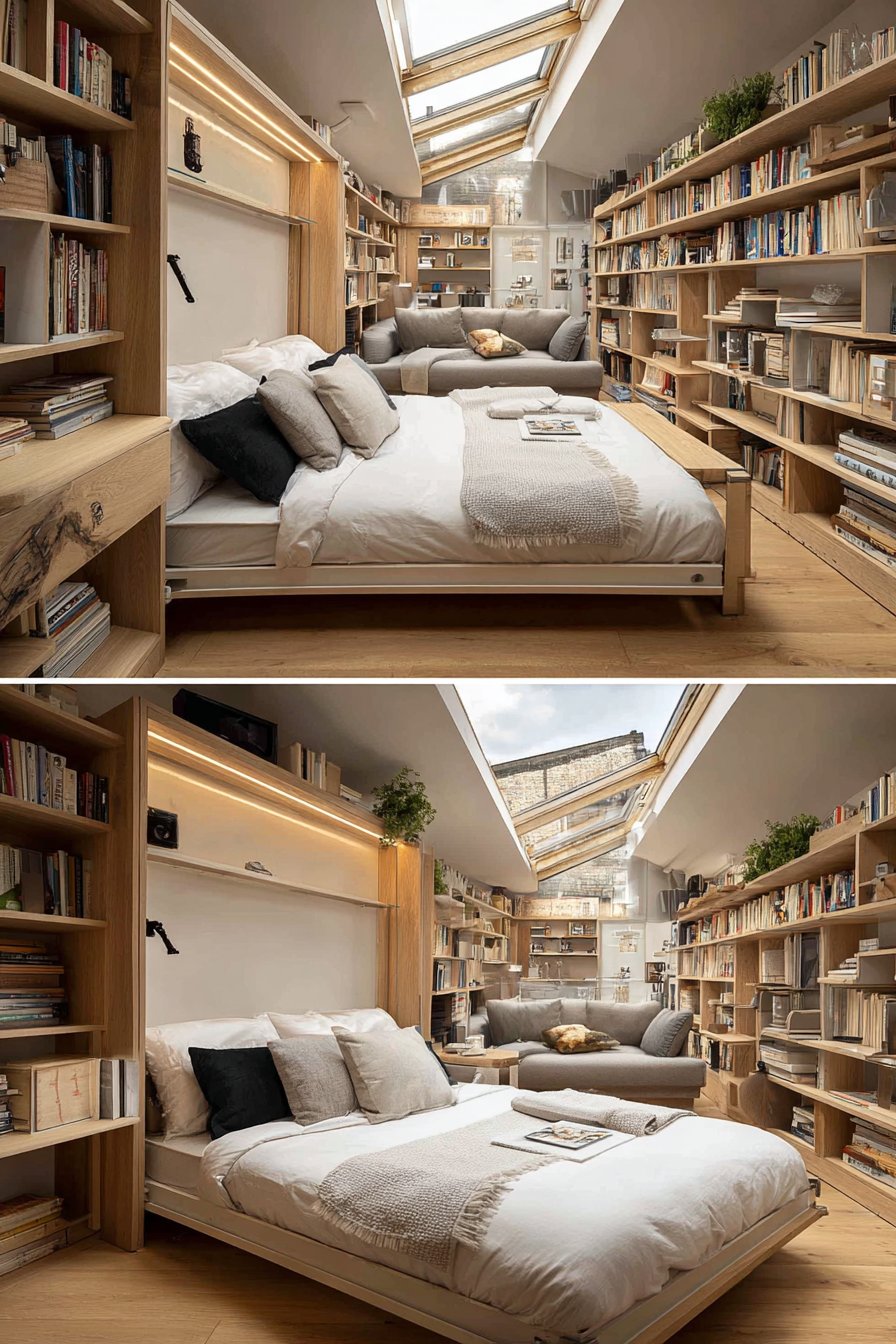
The warm honey-toned wood throughout creates visual continuity whether the bed is raised or lowered, while integrated LED lighting in the shelving tracks ensures functionality in both configurations. The space-saving design requires careful planning—murphy bed mechanisms must be robust enough for nightly use, and shelving must be secured to prevent items from falling during bed operation. Yet when executed properly, the result is remarkably elegant, appearing as thoughtfully designed built-in cabinetry rather than obviously transformative furniture.
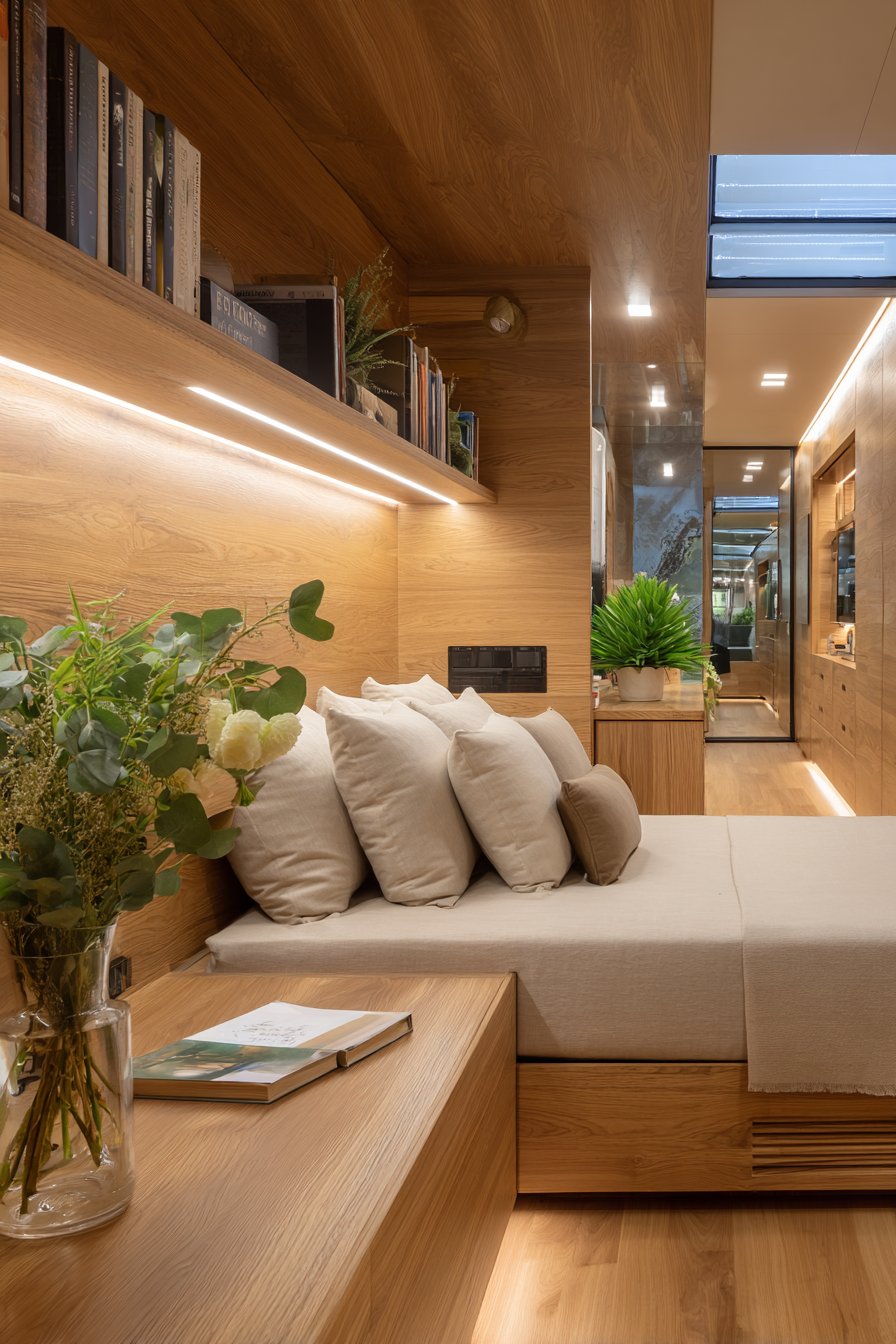
Photography would capture this dual functionality, perhaps through multiple images showing the transformation or through careful composition that hints at the hidden capability. Wide-angle interior shots would demonstrate the space optimization, showing how a room that might otherwise be too small for both adequate book storage and a full bedroom becomes perfectly functional for both purposes. Balanced natural light from a skylight above would illuminate both configurations equally, emphasizing that this isn’t a compromise solution but rather a creative approach that makes small space living genuinely enjoyable.
Important factors include investing in commercial-grade murphy bed hardware designed for frequent use, ensuring proper weight distribution so loaded shelves don’t interfere with bed operation, incorporating safety mechanisms that prevent accidental closure, planning furniture arrangement that accommodates both bed configurations, selecting bedding and pillows that can remain on the bed when folded, and organizing shelving contents to prevent items from shifting during transformation.
11. Bohemian Eclecticism with Reclaimed Materials
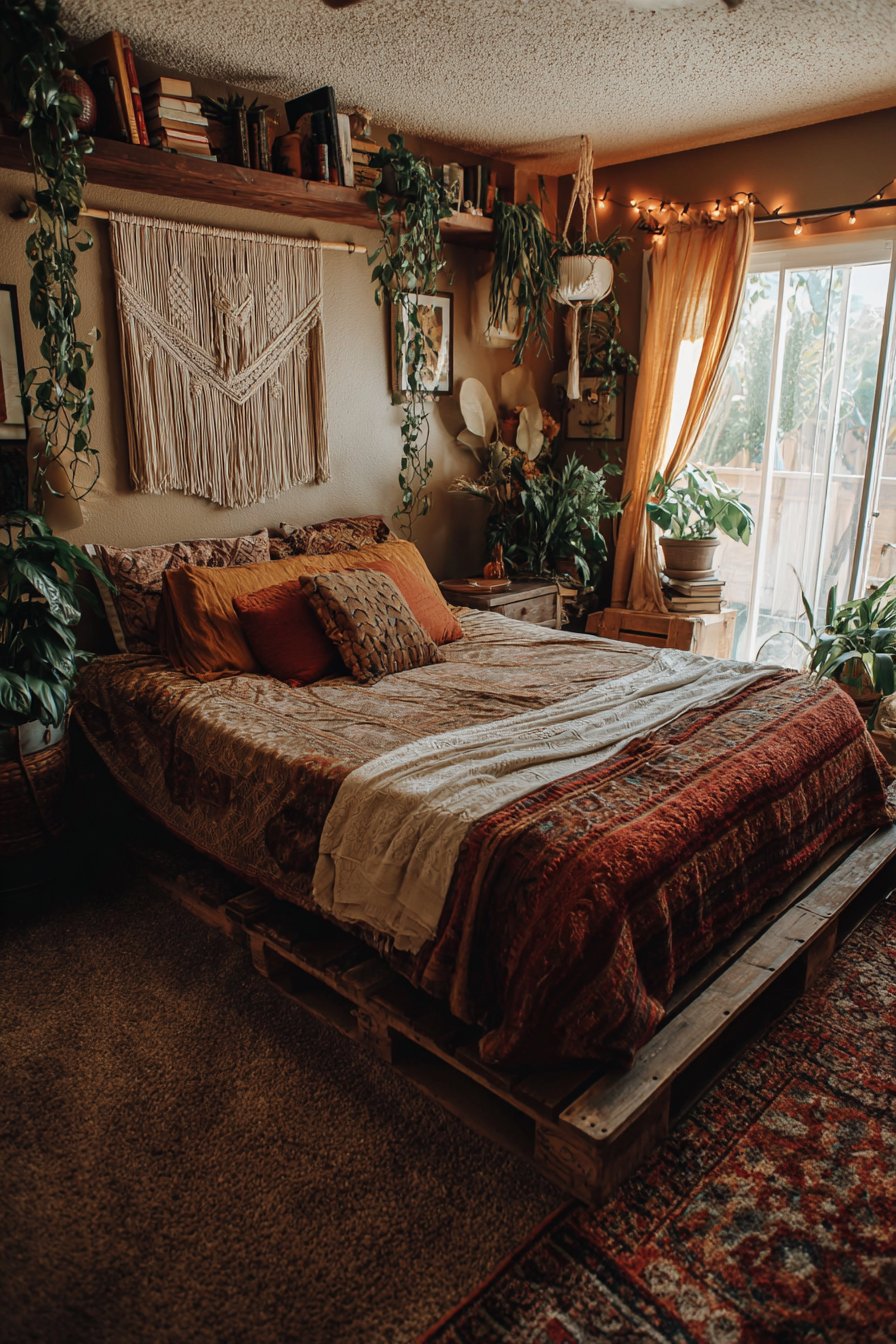
A bohemian library bedroom celebrates individual expression and collected character through eclectic open shelving made from reclaimed scaffold boards and metal pipe brackets. This industrial-meets-organic approach brings rawness and authenticity to book storage, with each shelf bearing the marks of its previous life. Books mingle with vintage curiosities, trailing potted plants, and collected objects from travels—creating a living collage that evolves over time. The styling reflects a worldly, artistic sensibility where rules take a backseat to personal expression and nothing matches too perfectly.
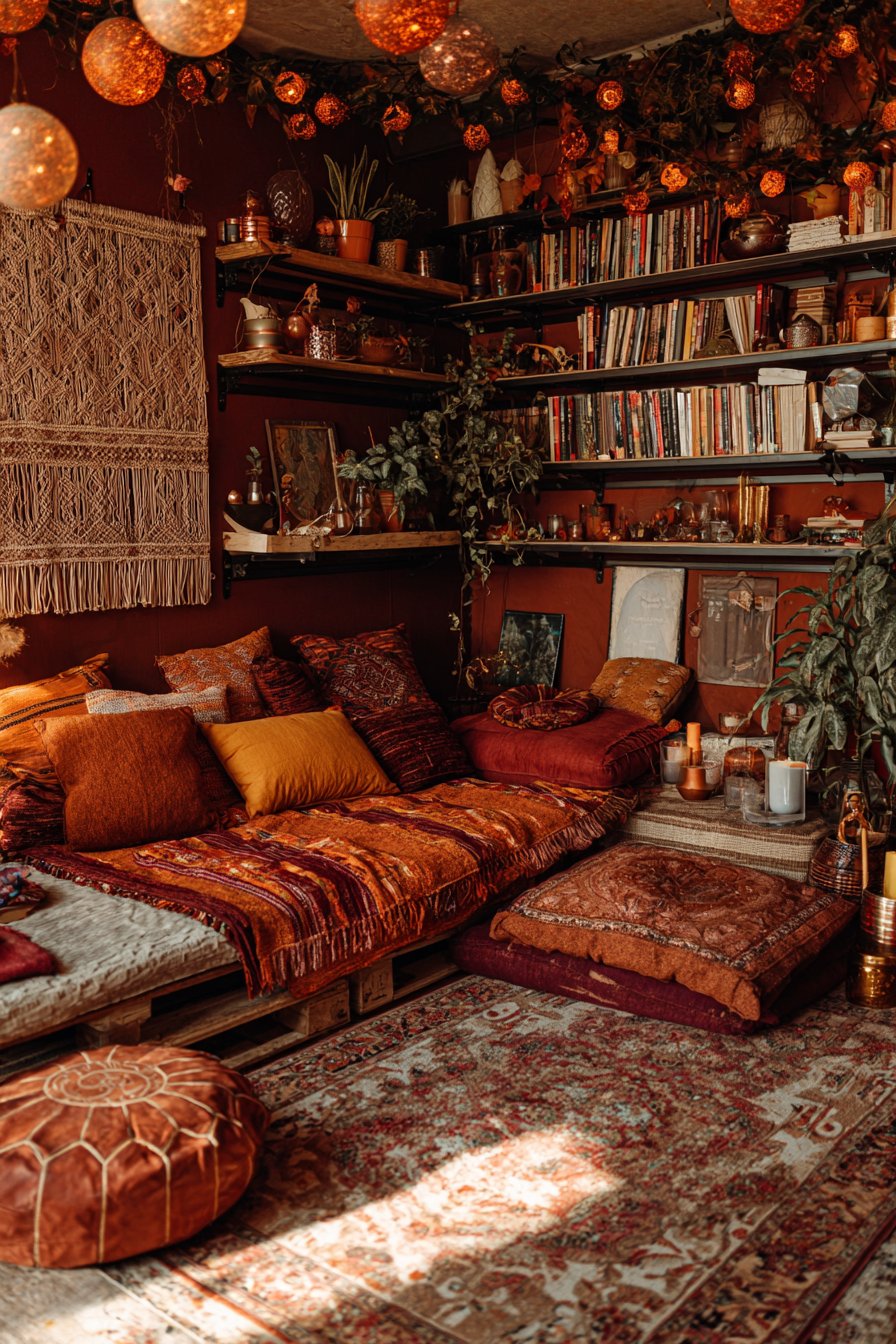
The sleeping area features a low mattress on a wooden pallet base layered with textiles in rich jewel tones and varied patterns from different cultural traditions. Macrame wall hangings and string lights add whimsical touches that enhance the bohemian atmosphere. This is a space that prioritizes soul over perfection, where slight imperfections and unconventional choices create character rather than flaws. Natural light photography would capture the lived-in, creative atmosphere, emphasizing layered textures and the global-inspired accessories that make the space feel traveled and worldly.
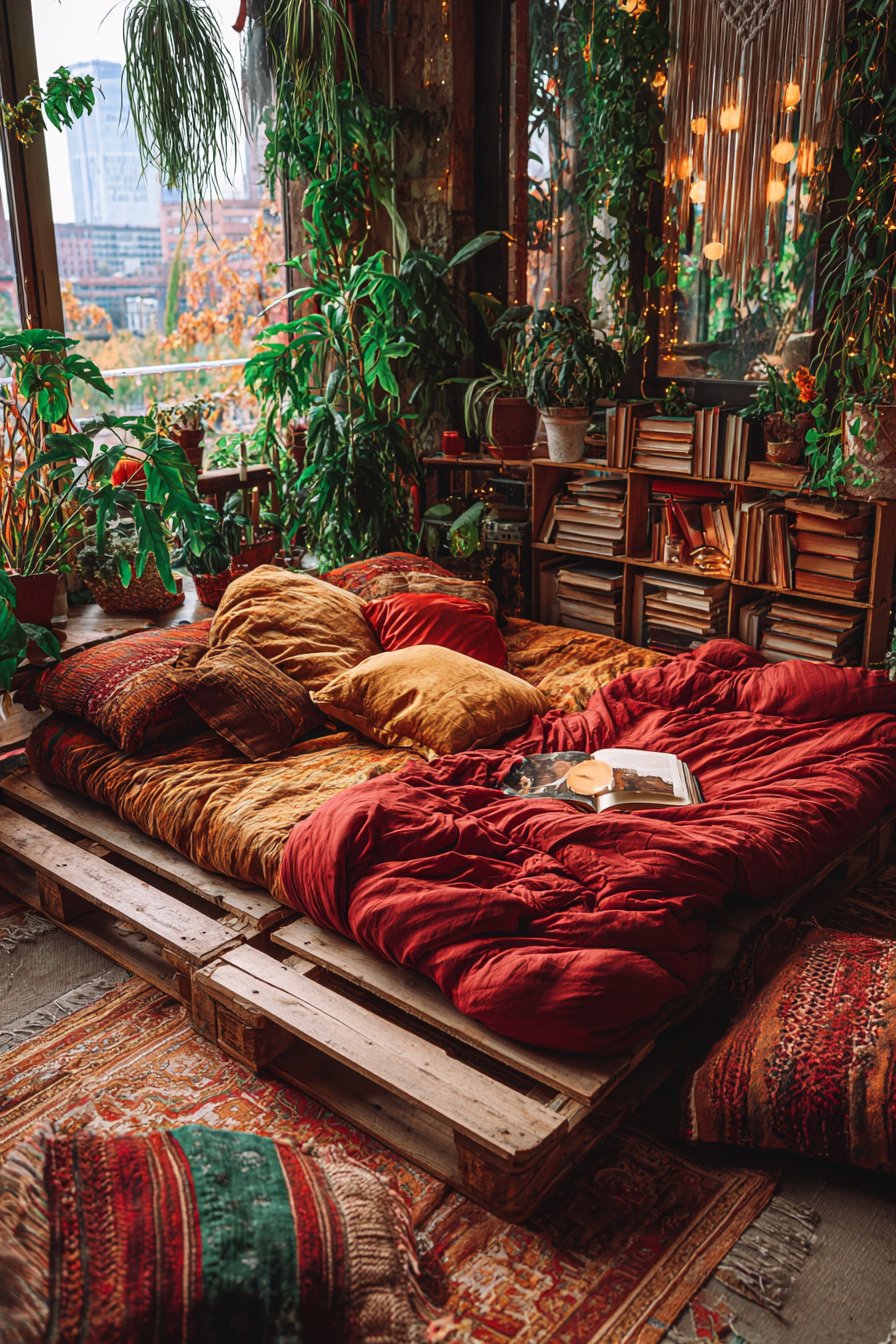
The beauty of bohemian library bedroom design lies in its permission to break rules—books need not be organized by any particular system, shelves can be mismatched, and collections can be wonderfully chaotic. This approach particularly suits creative individuals who find traditional organization stifling and prefer spaces that feel organic and personally meaningful. The trailing plants add life and movement, softening the hard edges of books and scaffolding while improving air quality in the sleeping space.
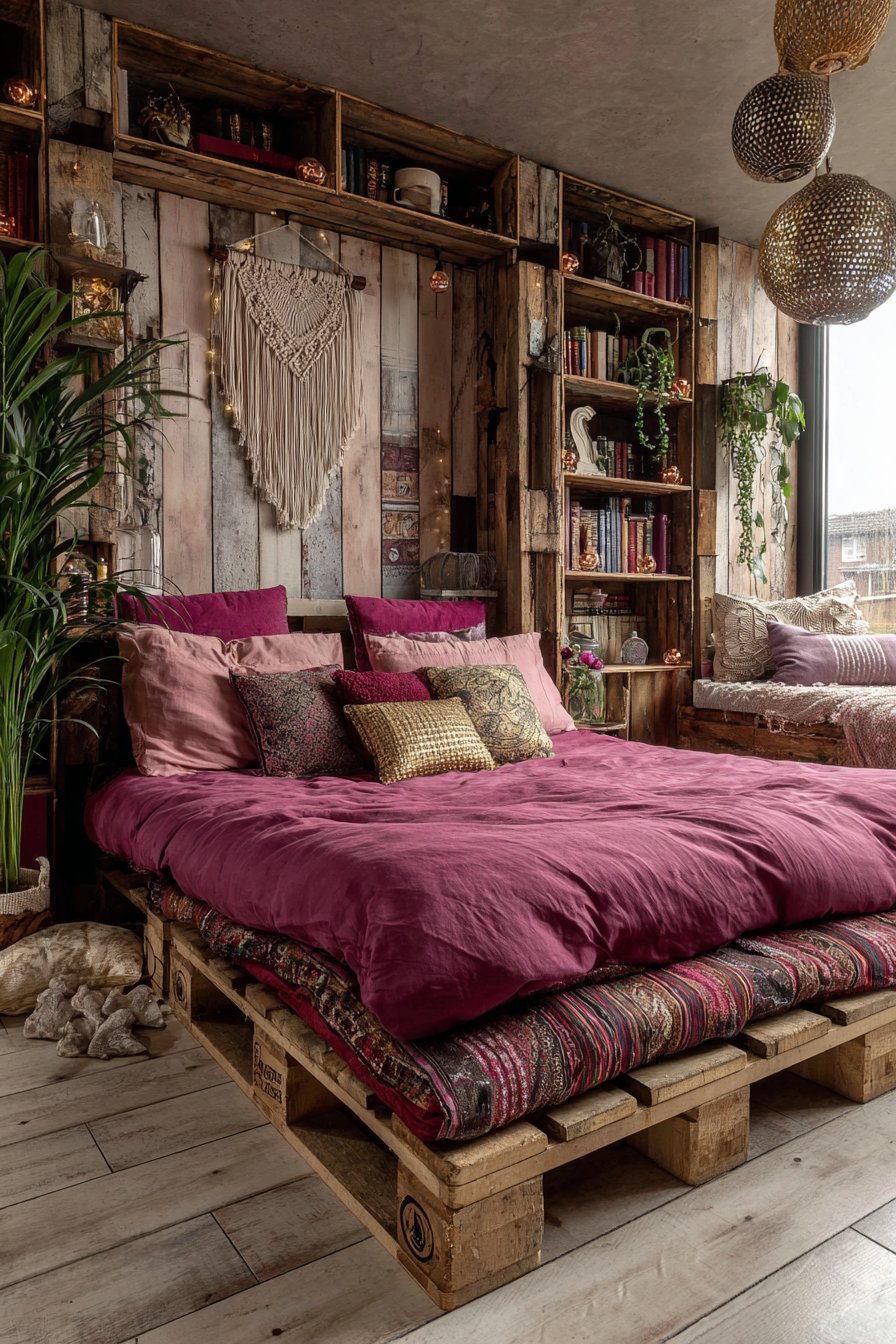
Design principles include embracing imperfection and patina in reclaimed materials, mixing patterns and colors confidently rather than matching precisely, incorporating living plants to add vitality and organic movement, displaying travel souvenirs and meaningful objects alongside books, layering textiles for comfort and visual richness, and allowing the collection to evolve naturally rather than adhering to a rigid plan.
12. Architectural Innovation with Headboard Shelving
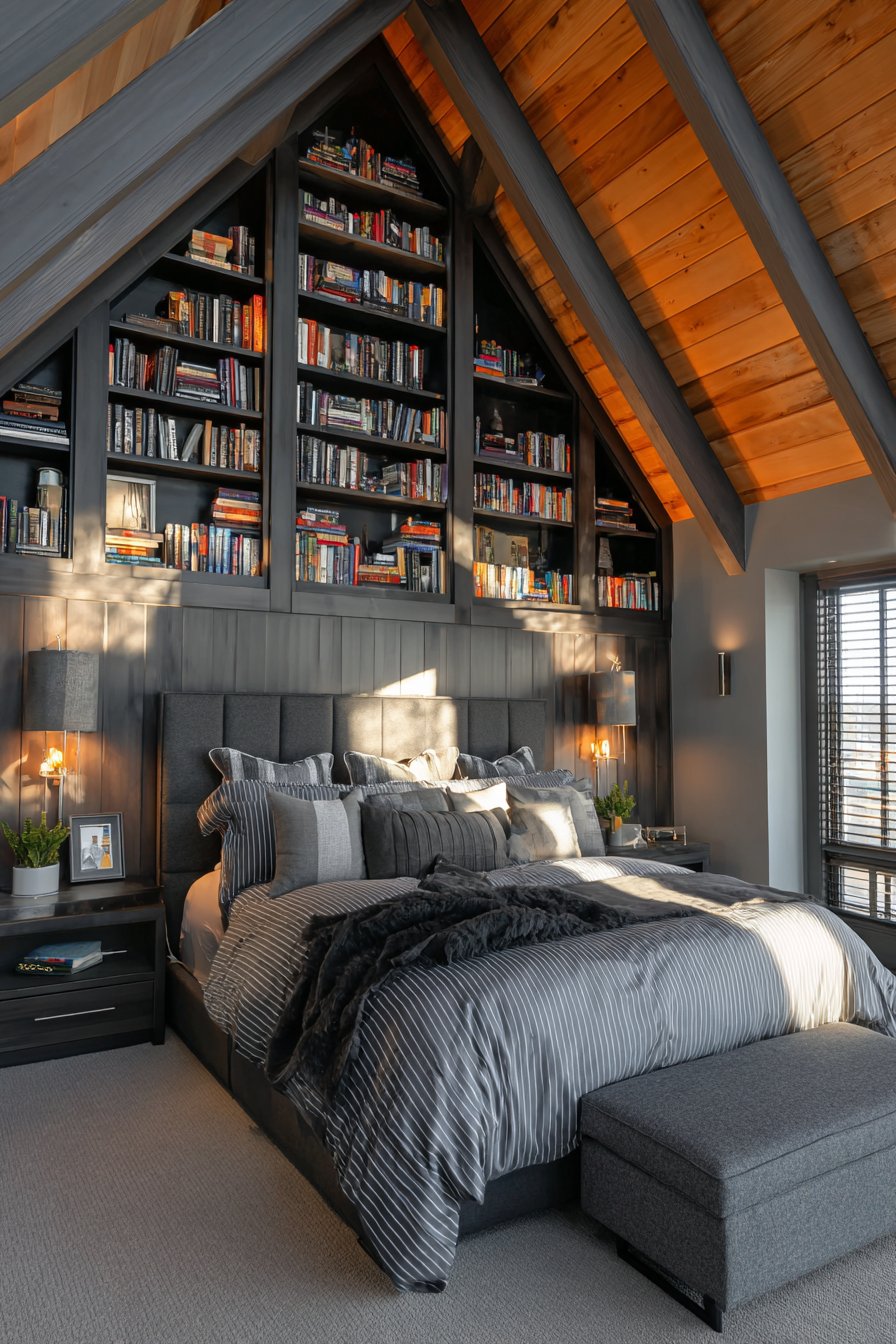
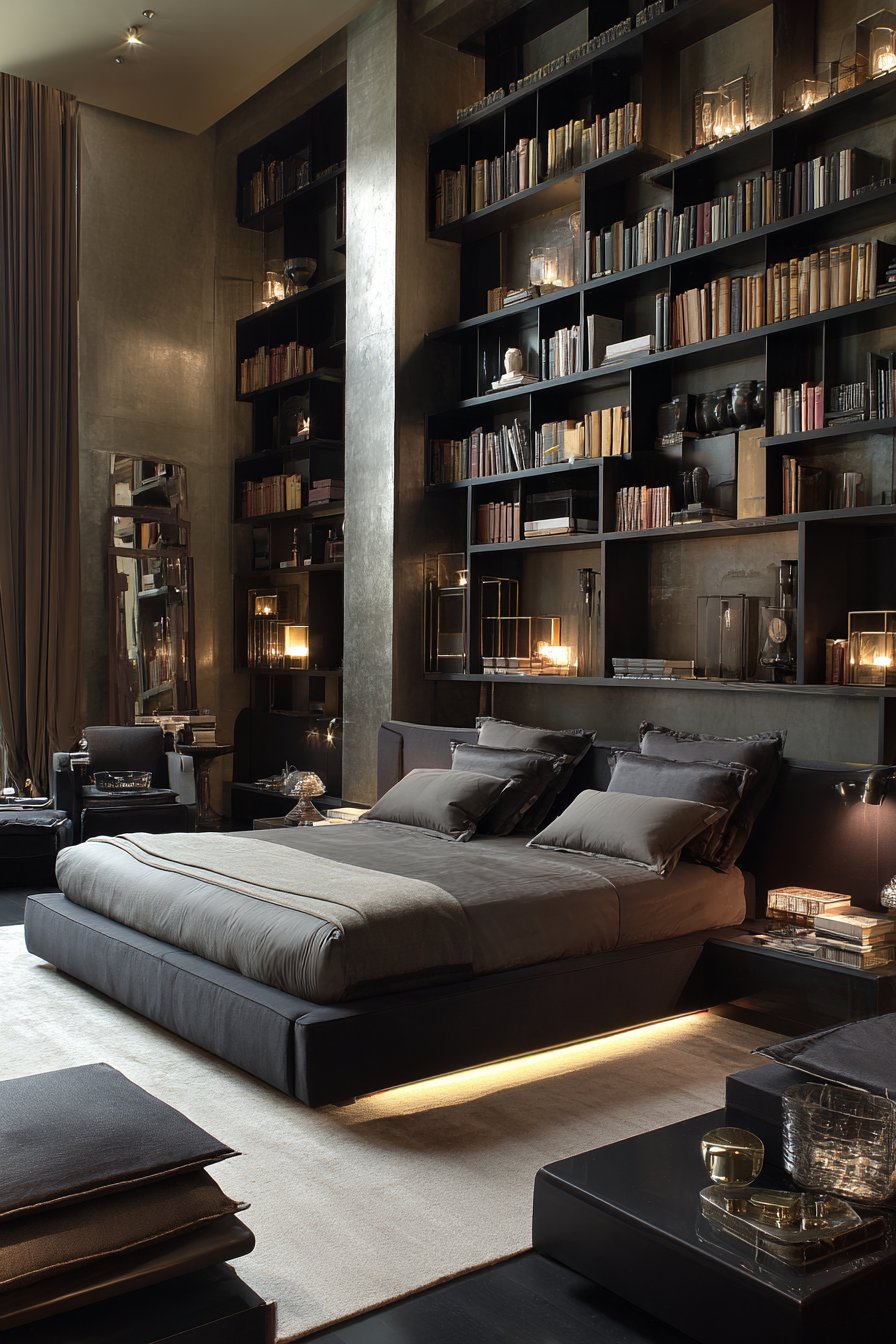
Transforming the headboard itself into a functional library represents one of the most space-efficient approaches to library bedroom design. Imagine a custom-built structure extending several feet above the mattress, providing book storage directly behind the sleeping area at arm’s reach. This integrated approach eliminates the need for separate nightstands while creating striking architectural interest that defines the entire room’s character. The shelving structure becomes a three-dimensional headboard—simultaneously practical, comfortable, and visually commanding.
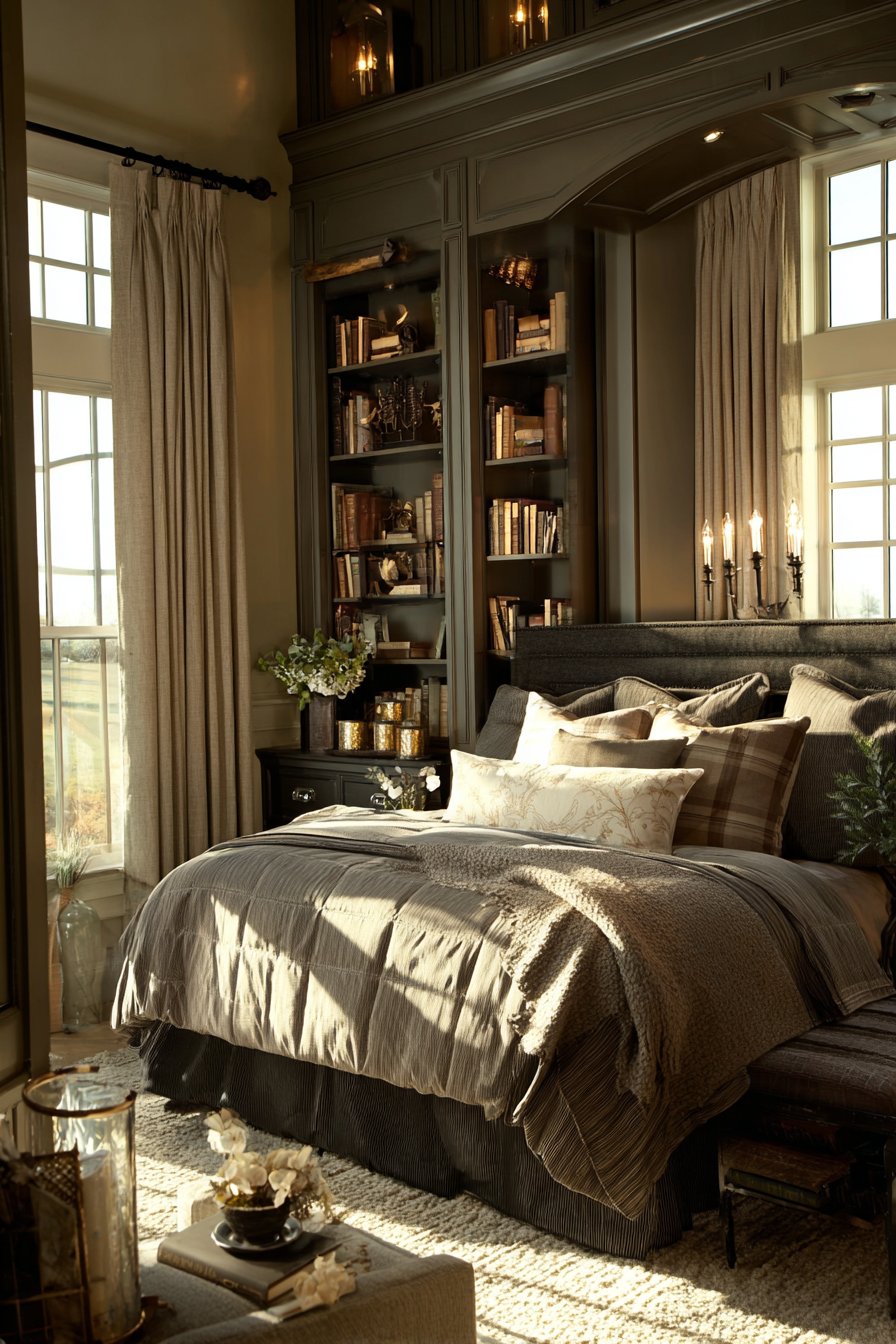
Upholstered side panels in charcoal linen soften the look where the sleeper’s head rests, preventing the all-wood construction from feeling too hard or industrial. Matching nightstand shelving units flanking the bed maintain visual continuity while providing surfaces for lamps, alarm clocks, and current reading. Professional photography with dramatic side lighting would create depth and shadows, highlighting the innovative storage solution’s three-dimensionality and demonstrating how the structure frames the sleeping area without overwhelming it.
This design proves particularly valuable in smaller bedrooms where every wall is precious real estate, as it consolidates sleeping and storage functions into a single architectural element. The ability to reach books without leaving bed enhances the space’s functionality for avid readers, while the visual impact transforms what might be a modest room into something genuinely special. The key is ensuring proper proportions so the structure feels protective rather than looming.
Essential considerations include building the structure with proper depth to prevent books from falling onto the sleeper, incorporating dust protection such as glass fronts or periodic deep cleaning, providing adequate lighting that doesn’t disturb sleep, ensuring structural stability and proper wall mounting, selecting books carefully for this prime location based on both aesthetics and reading frequency, and coordinating upholstered panels with overall bedroom color scheme.
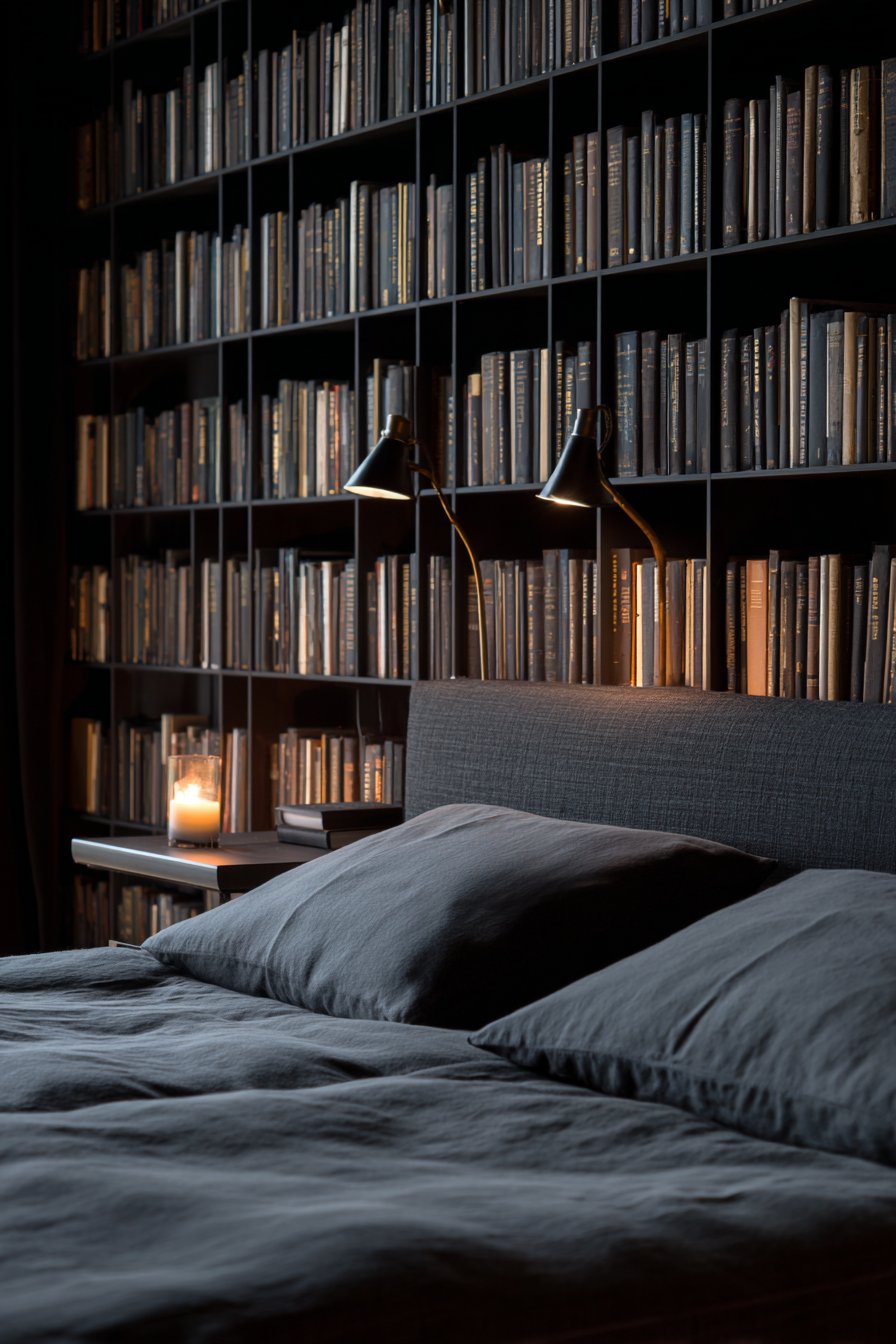
13. Rustic Cabin Atmosphere with Rough-Hewn Timber
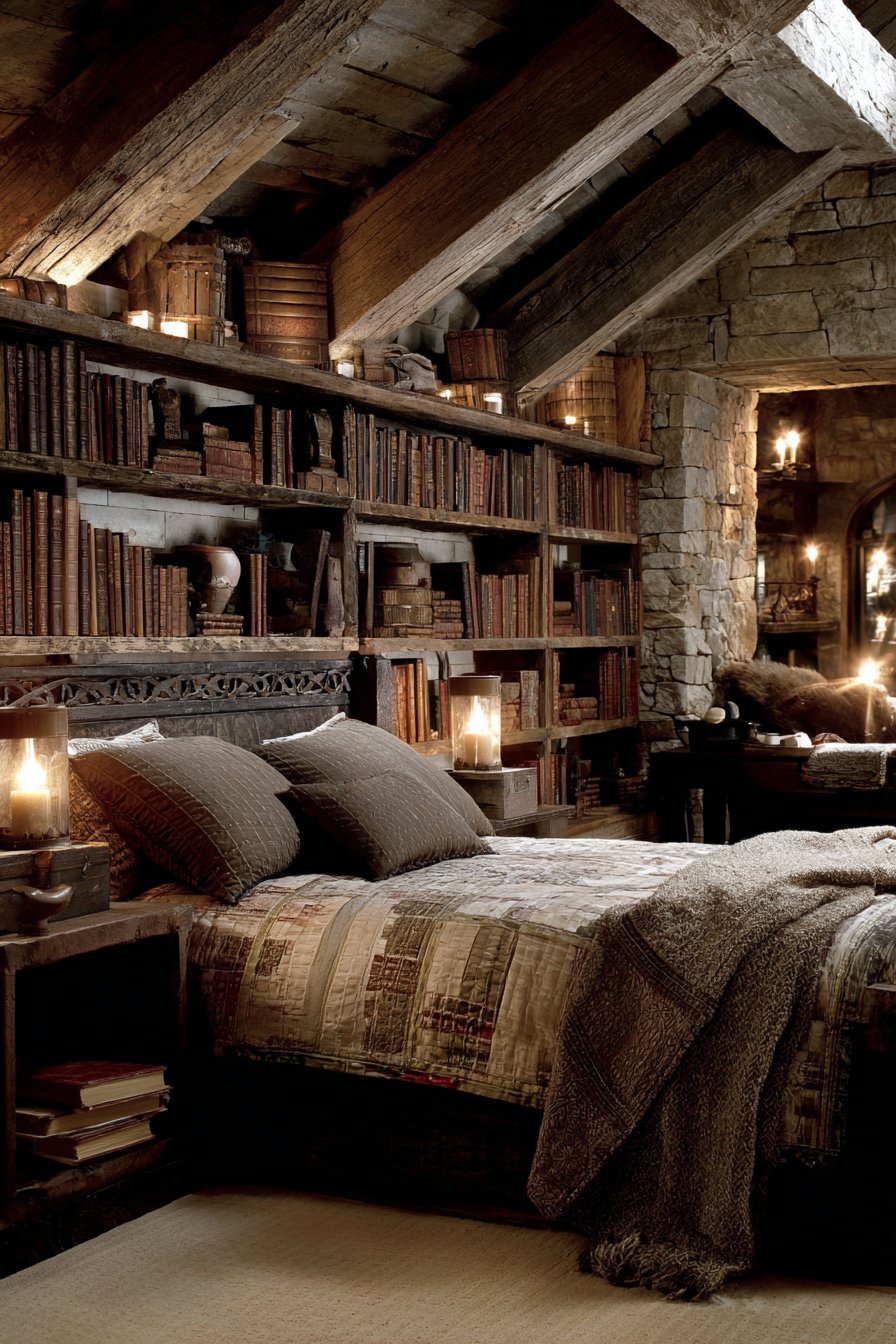
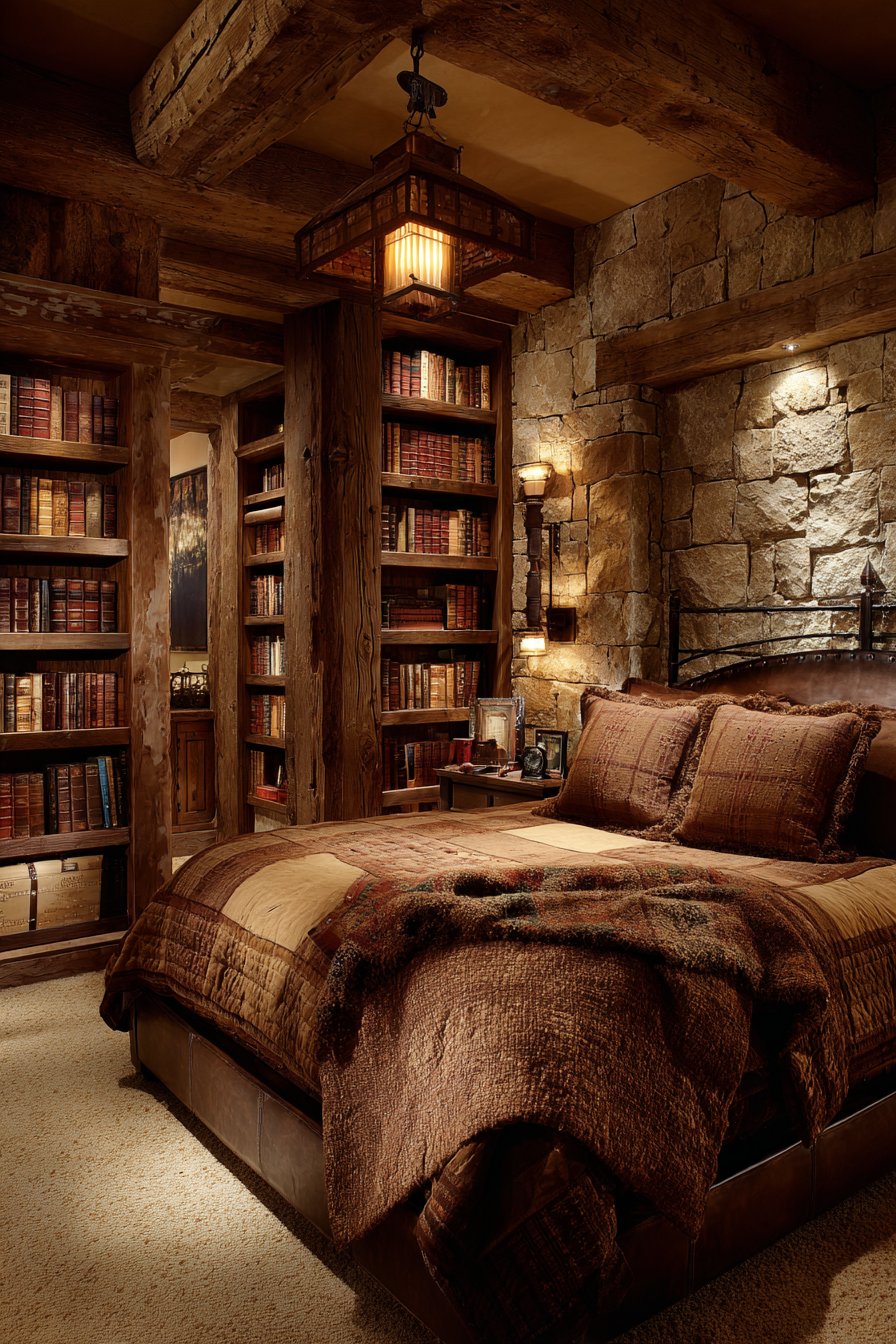
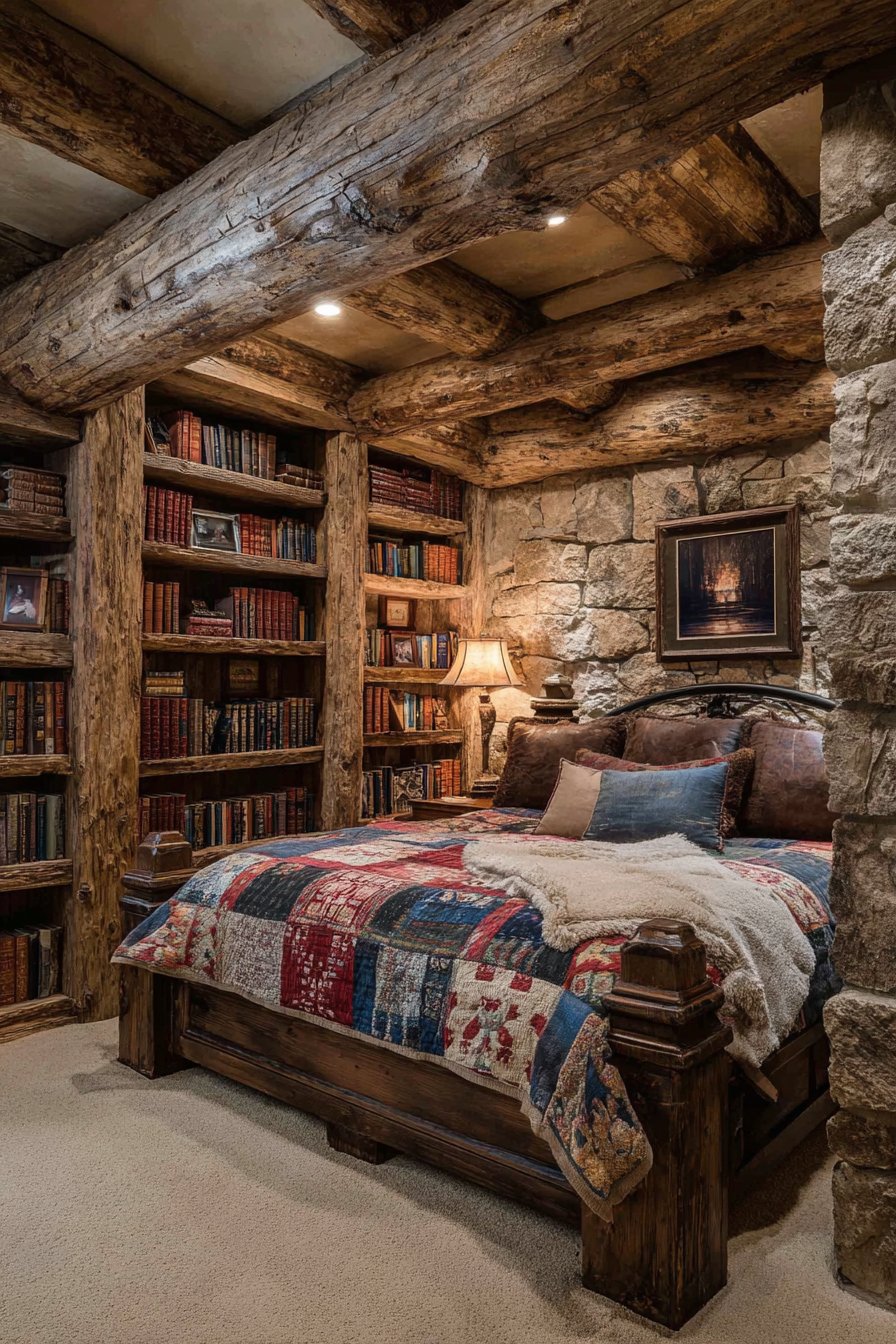
A rustic library bedroom embraces the character of natural materials with rough-hewn timber bookshelves featuring visible saw marks and live edge details. This approach brings cabin warmth and organic texture to book storage, with each shelf celebrating rather than concealing the wood’s natural variations. The collection displayed here might include a mix of leather-bound volumes and well-worn paperbacks, the varied conditions and bindings adding to rather than detracting from the rustic aesthetic. Books arranged somewhat casually rather than with rigid organization support the overall lived-in, comfortable atmosphere.
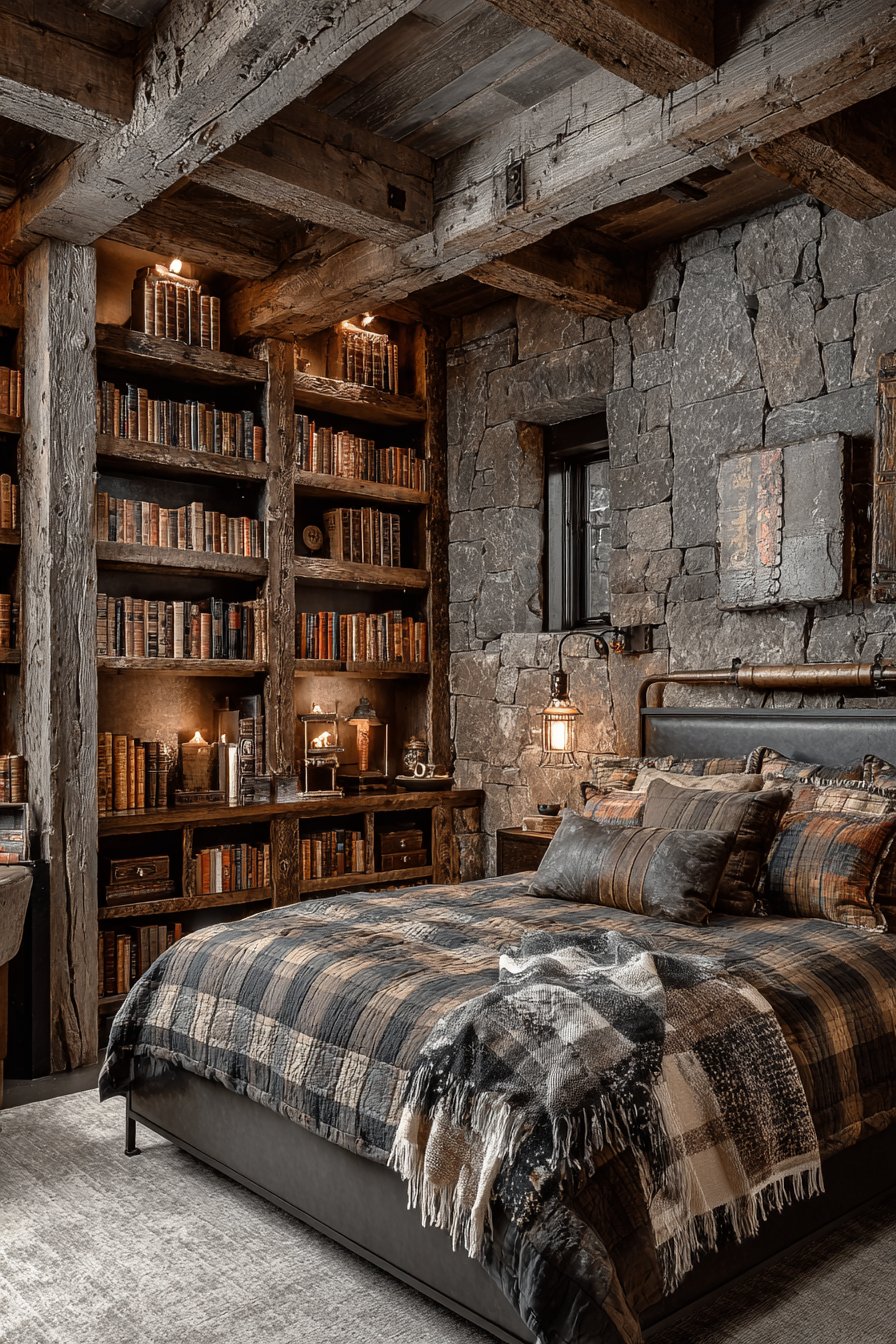
The wrought iron bed frame with patchwork quilt and layered throw blankets creates a cozy sleeping area that embraces textile comfort over minimalist restraint. Exposed beam ceiling and stone accent wall add architectural weight that grounds the space and reinforces the cabin aesthetic. Warm incandescent lighting from Edison bulb fixtures creates cozy ambiance with a nostalgic quality, their visible filaments adding another layer of rustic character. Interior photography would capture these rugged textures with soft focus on environmental details, conveying warmth and comfort rather than pristine perfection.
This design particularly appeals to those who appreciate handcrafted quality and natural materials, or who want their library bedroom to feel like a retreat to simpler times. The rustic approach accepts and even celebrates imperfections—knots in wood, slight unevenness in shelving, the accumulated wear on favorite books. These “flaws” become features that give the space soul and distinguish it from generic retail environments. The overall effect is a room that feels hand-built and personally meaningful rather than professionally decorated.
Key elements include selecting timber with interesting grain patterns and natural edge appeal, embracing rather than sanding away saw marks and tool impressions, choosing wrought iron or hand-forged metal hardware, incorporating authentic rather than faux rustic elements, providing warm-toned lighting that enhances wood colors, and arranging books and objects with casual ease rather than rigid precision.
14. Multipurpose Functionality with Integrated Workspace
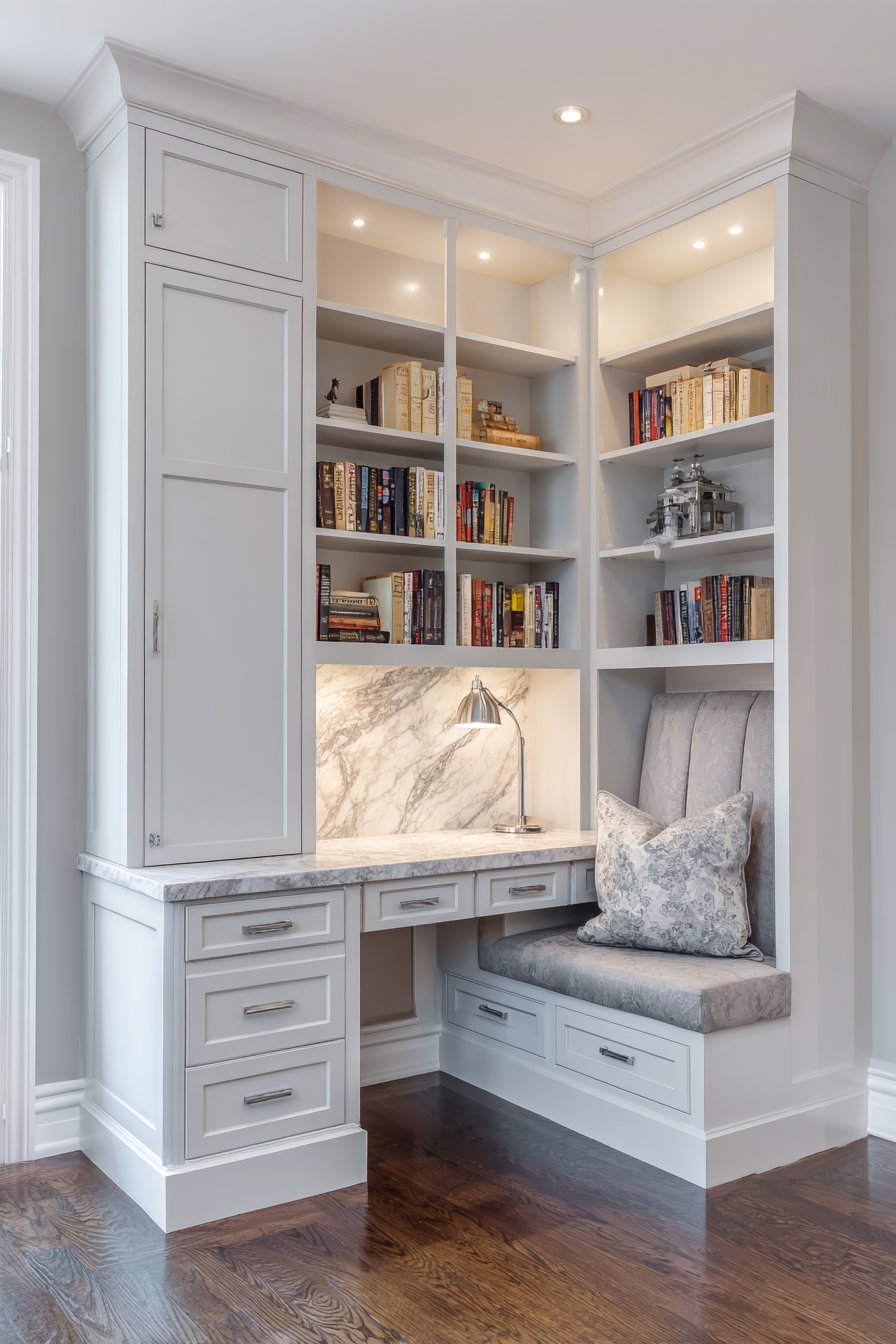
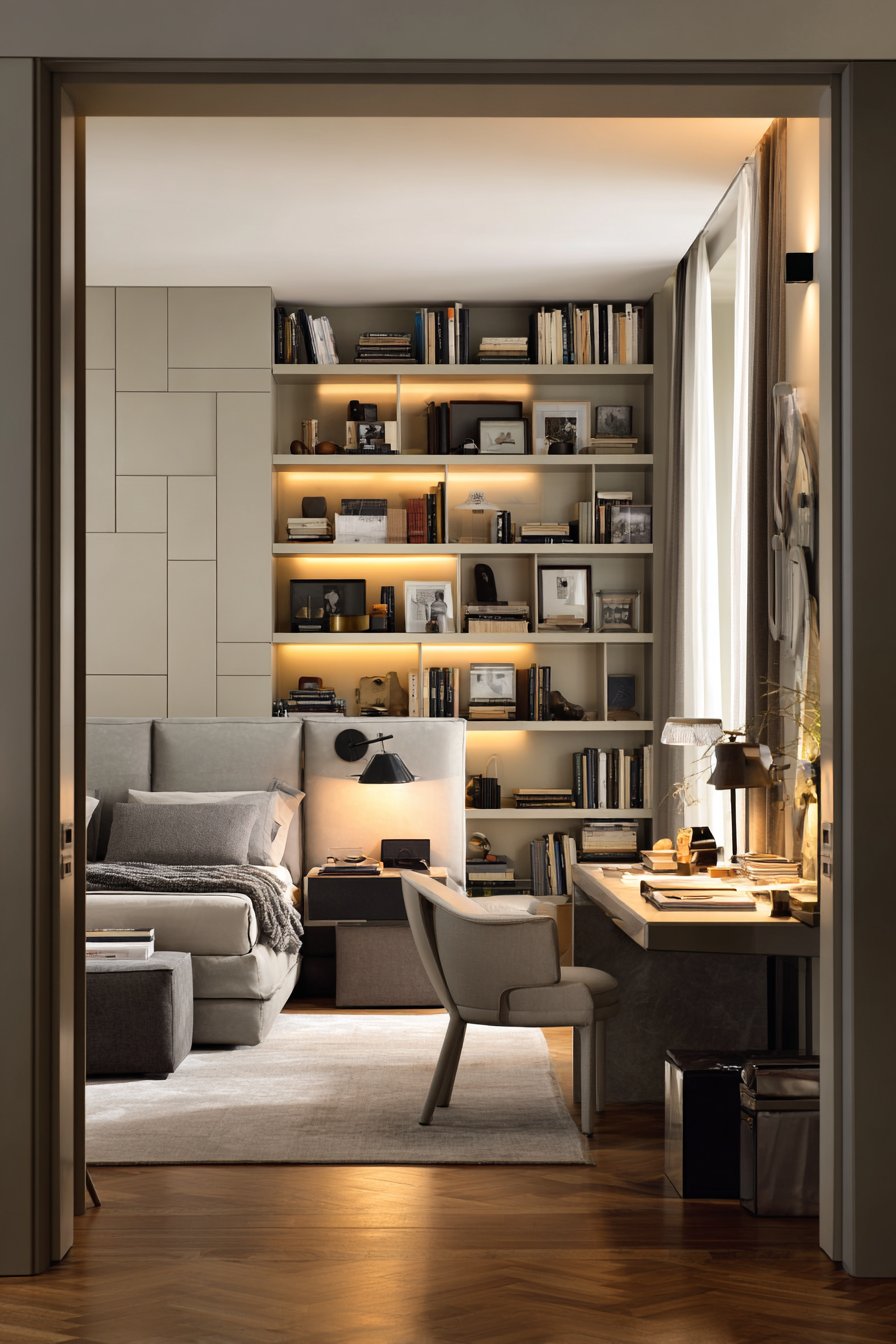
Modern living often requires rooms to serve multiple functions, addressed elegantly in library bedroom designs that incorporate dedicated workspace. A sophisticated built-in desk and shelving unit creates a functional home office within the bedroom, with desk surface in durable grey quartz integrating seamlessly with floor-to-ceiling bookshelves in matte white finish. This configuration acknowledges that bedrooms increasingly serve as home offices, study spaces, or creative studios while maintaining their primary sleeping function. The challenge lies in creating clear zones that allow productive work without disrupting restful sleep.
The adjacent sleeping area features upholstered panels and coordinating grey bedding that relates to the workspace aesthetic while maintaining distinct character. Task lighting from adjustable arm lamps provides focused illumination for work, while ambient LED shelf lighting creates softer mood lighting for evening relaxation. Wide-angle photography would show the multipurpose layout with balanced exposure, demonstrating how thoughtful design allows a single room to support multiple activities without feeling cluttered or confused.
This approach particularly suits remote workers, students, or creative professionals who need dedicated workspace within their homes but lack a separate room for an office. The key is creating clear visual and functional separation between work and sleep zones—ensuring that when you’re in bed, you’re not staring at tomorrow’s to-do list, and when you’re working, you’re not tempted by the bed. Proper lighting design plays a crucial role, allowing each zone to have appropriate illumination for its function.
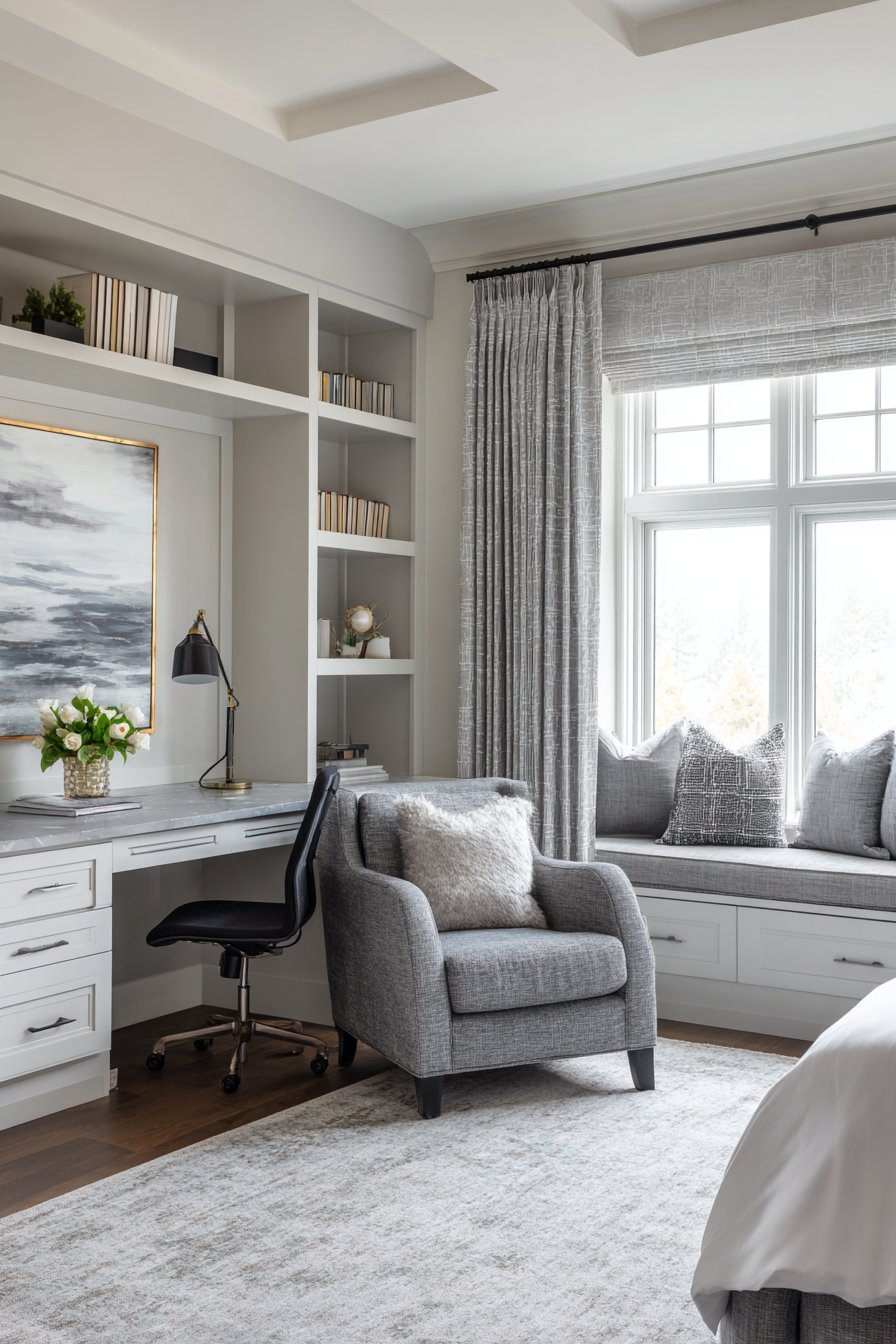
Important considerations include positioning the desk to avoid viewing it directly from bed, incorporating cable management solutions for technology needs, providing ergonomic seating and proper work surface height, including adequate closed storage for work materials that can be hidden at day’s end, ensuring work lighting doesn’t disturb sleep, and styling the workspace shelves differently from bedroom shelves to reinforce zone distinction.
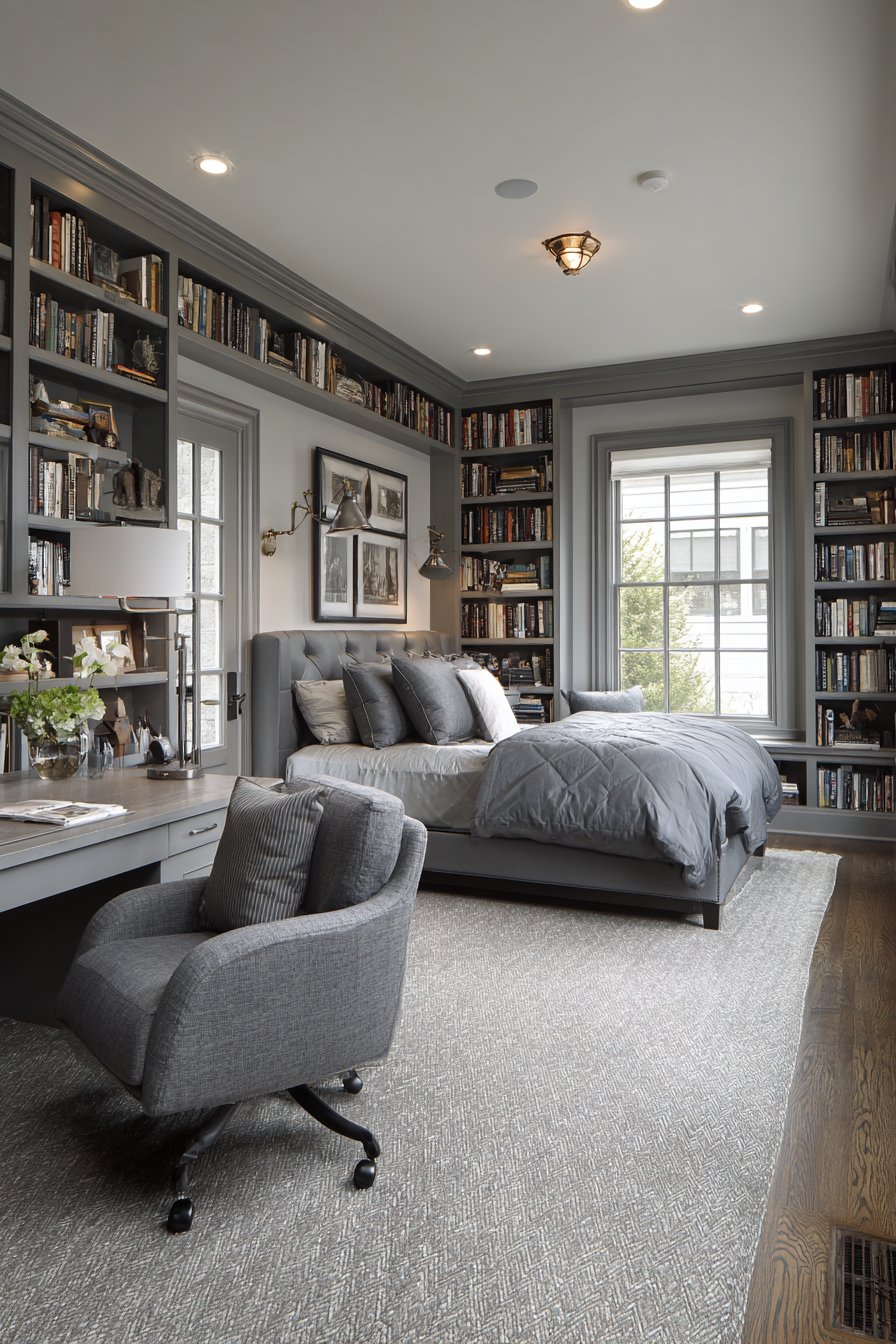
15. Futuristic Elegance with Backlit Acrylic Shelving
Contemporary technology enables library bedroom designs that would have been impossible in previous eras, such as backlit acrylic shelving that makes books appear to float luminously against the wall. This dramatic approach creates stunning visual impact, with the translucent shelving edges glowing to highlight book outlines and create an almost ethereal display. Color-changing LED lighting allows customization of the room’s mood—warm amber for cozy reading sessions, cool white for crisp morning wake-up, or even colored washes for creative ambiance. The result is a library bedroom that feels simultaneously cutting-edge and comfortable.
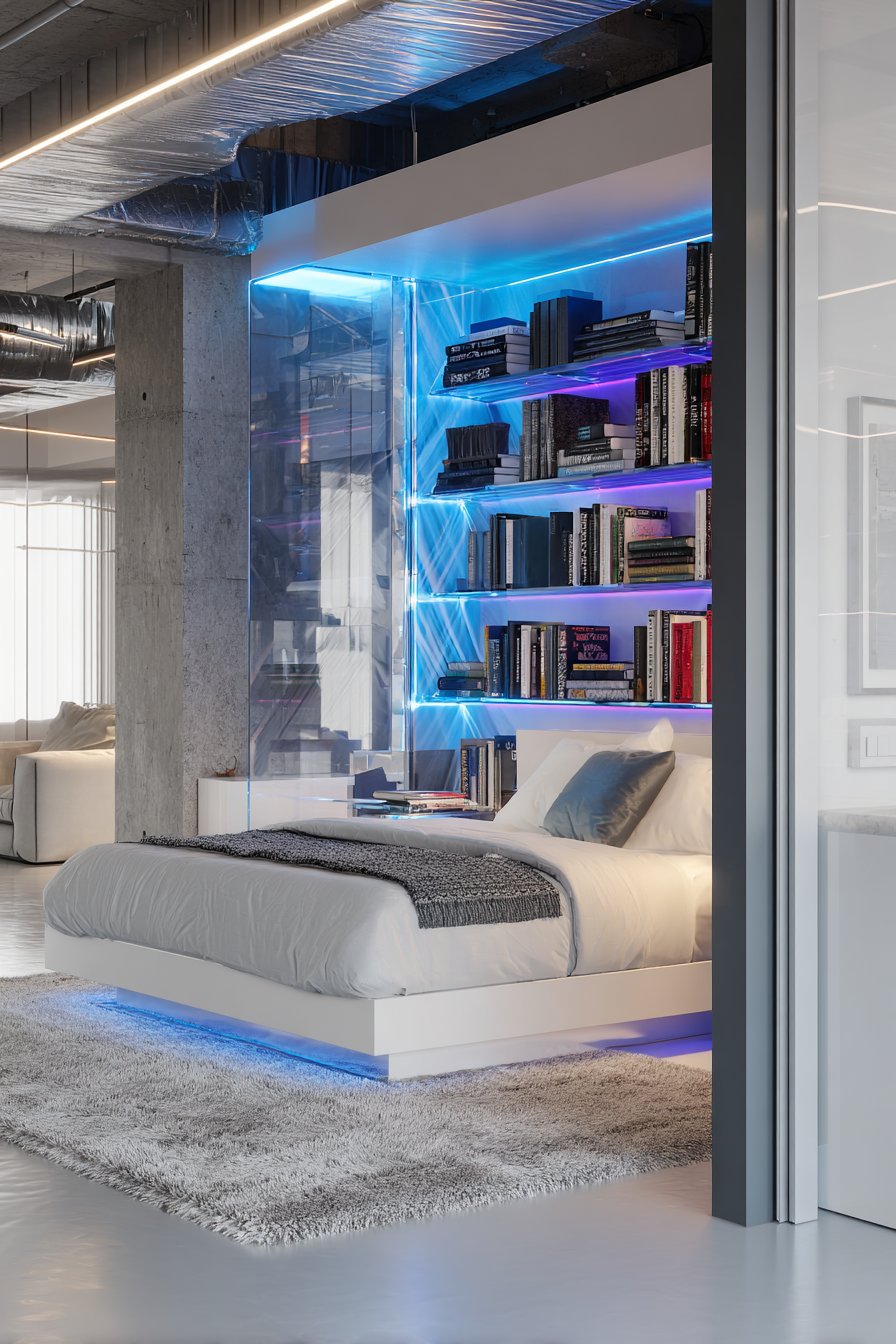
The minimal bed frame in powder-coated steel with crisp white bedding maintains the modern aesthetic without competing with the shelving’s visual drama. Concrete flooring with underfloor heating provides contemporary industrial edge while ensuring practical comfort, and a high-pile area rug adds softness underfoot near the bed. Interior photography with evening lighting would showcase the illuminated shelving effect, demonstrating how the backlit edges create definition and drama while maintaining the functional purpose of book storage.
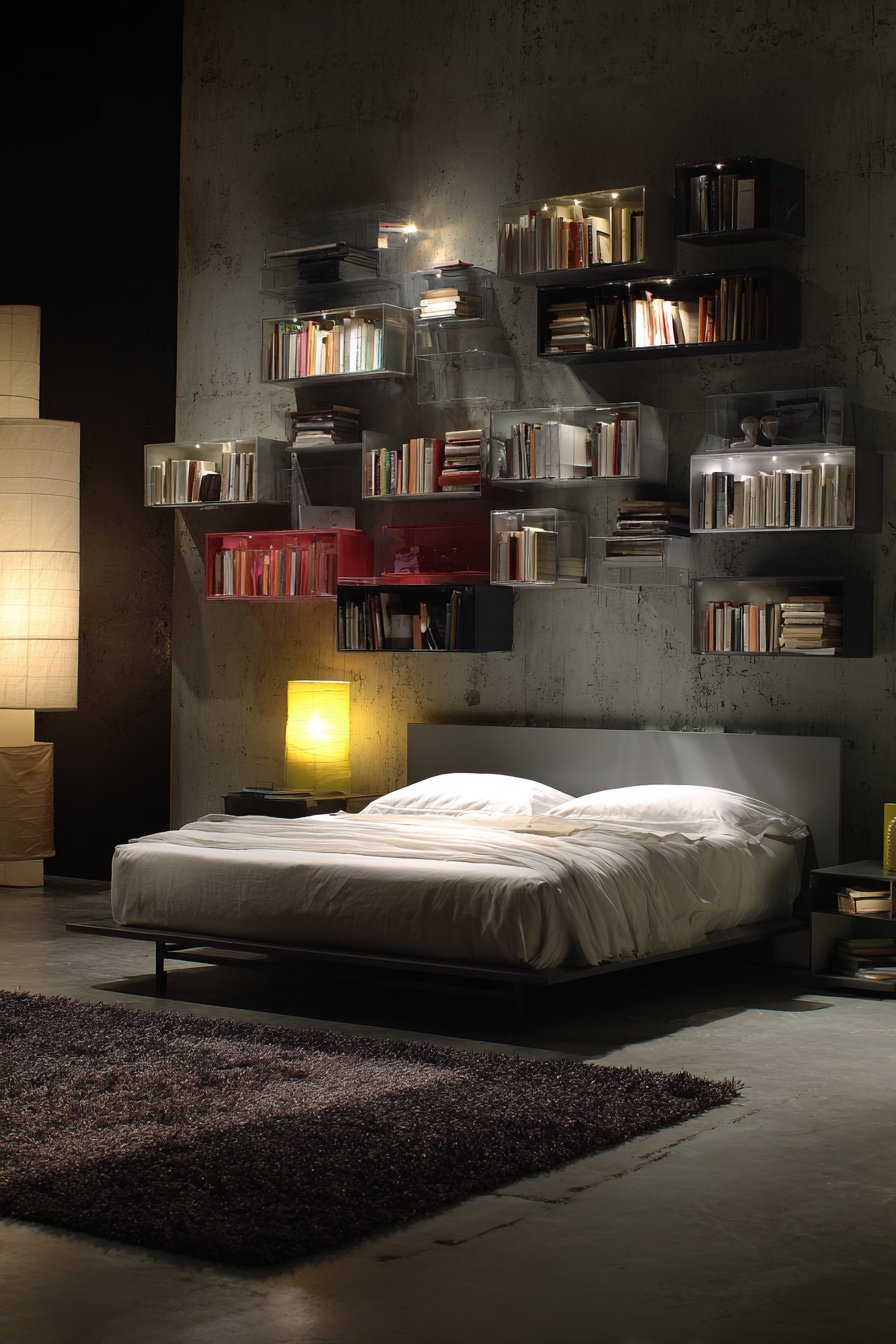
This design appeals to those who embrace technology and contemporary aesthetics, appreciating how modern materials and lighting can transform traditional library concepts into something entirely new. The floating appearance created by edge lighting adds levity to what could otherwise be heavy visual elements, while the customizable lighting acknowledges that our moods and needs change throughout the day. The contemporary material palette—acrylic, steel, concrete—creates a sleek, uncluttered aesthetic that feels distinctly of the present moment.
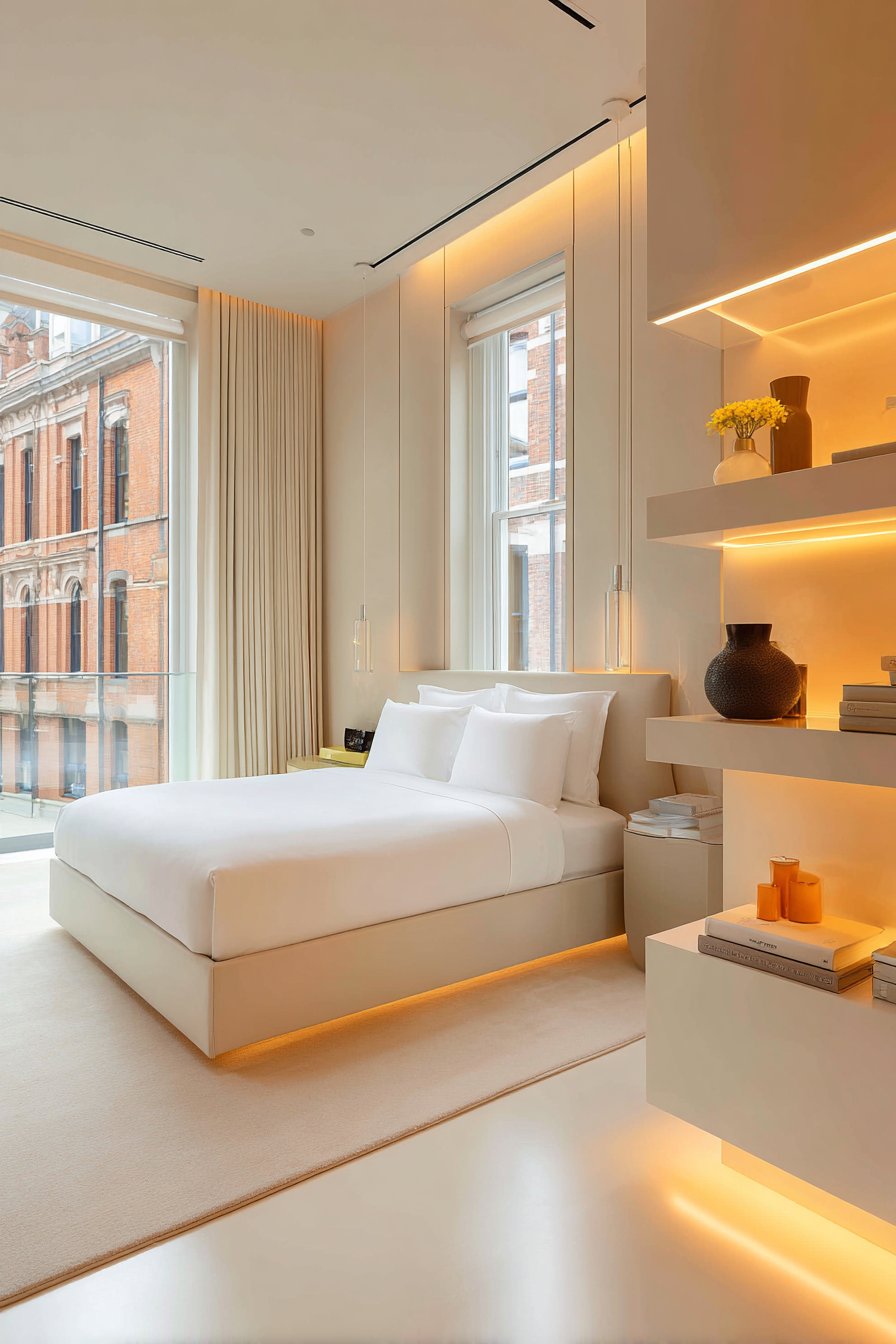
Essential elements include selecting high-quality LED strips with good color rendering for accurate book spine colors, ensuring proper heat dissipation to protect books from LED warmth, providing separate control for ambient and task lighting needs, coordinating acrylic thickness with book weight requirements, maintaining clean contemporary aesthetics throughout all furnishings, and incorporating smart home integration for lighting control convenience.
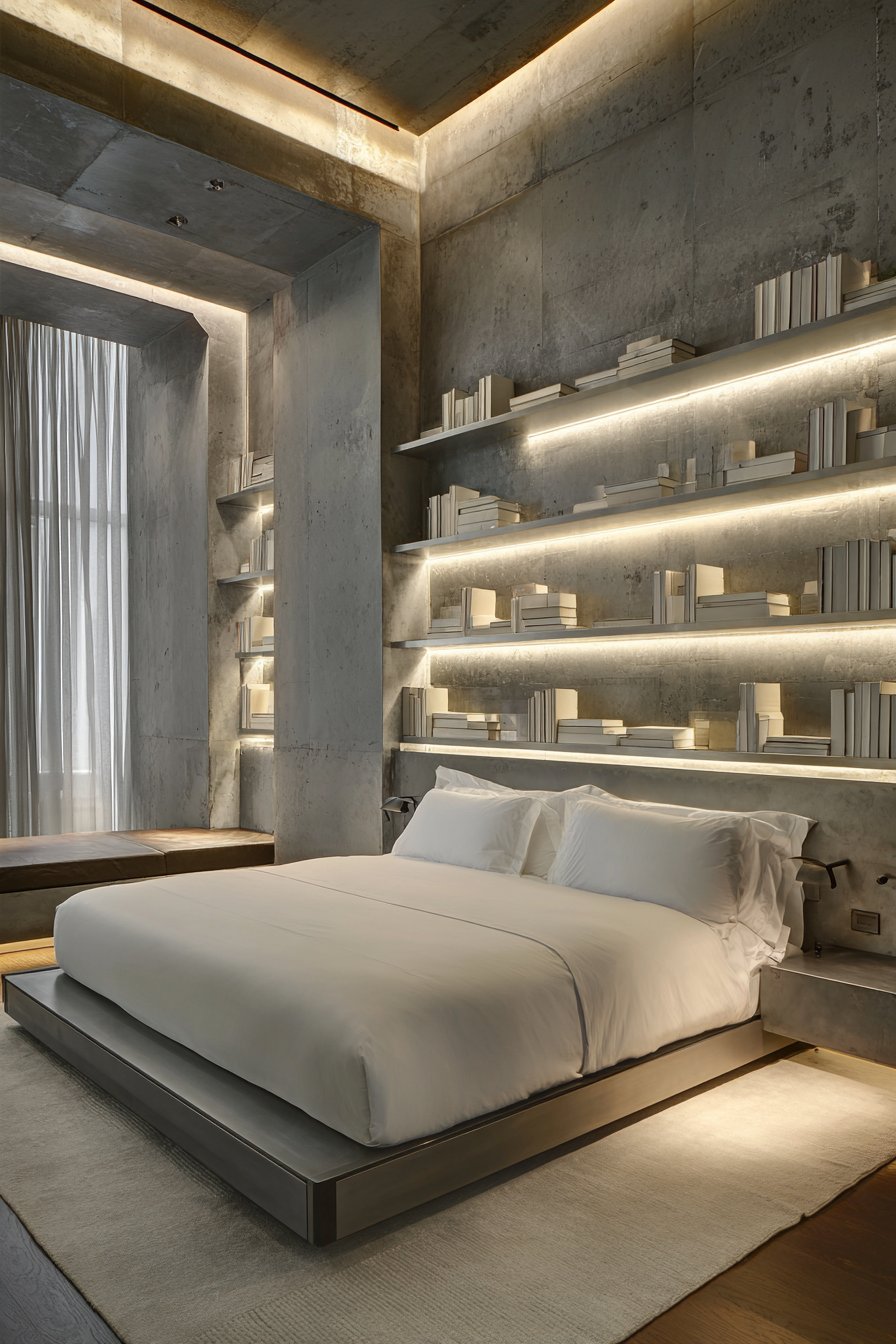
16. Vintage Character with Antique Library Ladder
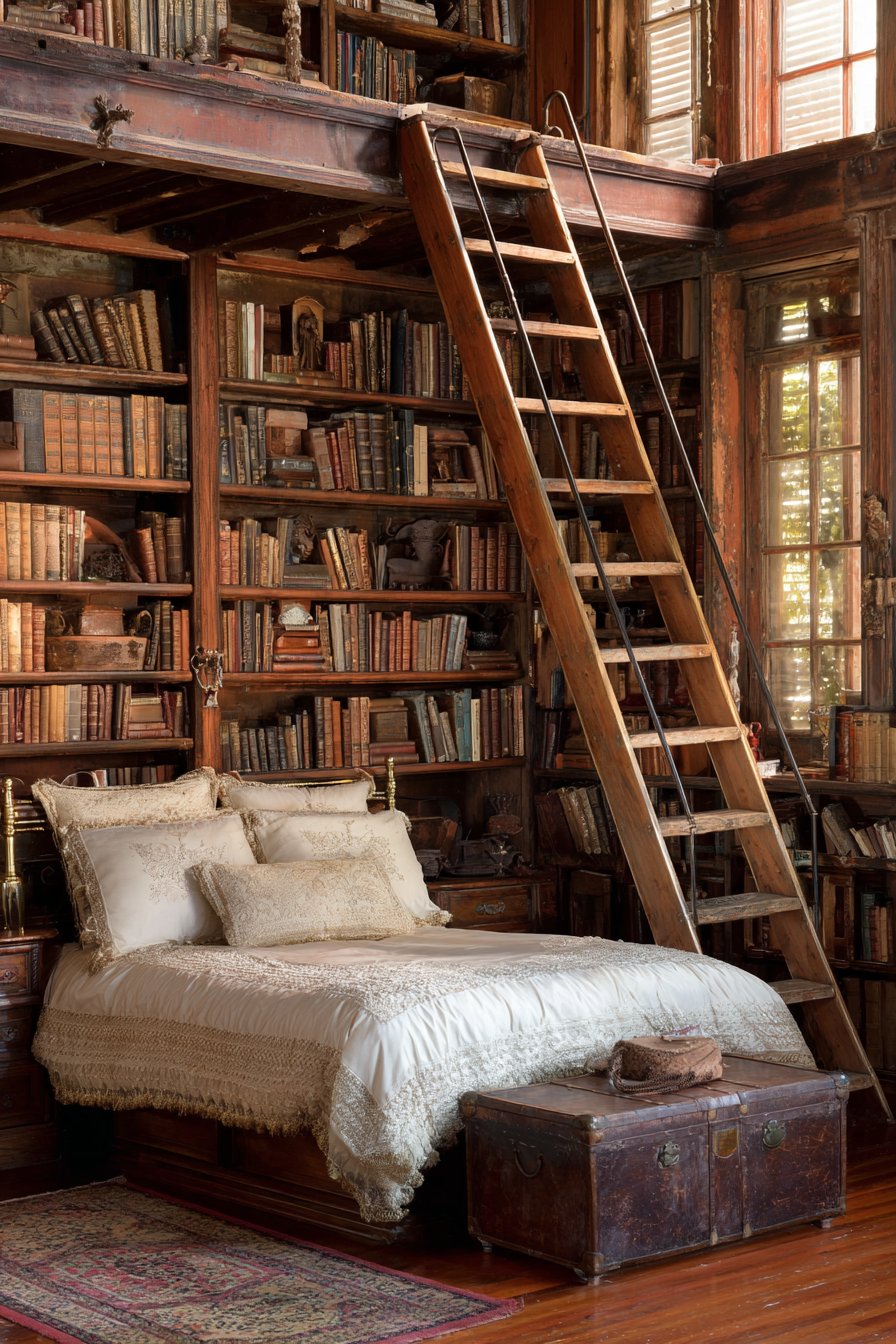
Nothing captures the romance of personal libraries quite like a vintage library ladder mounted on brass rails, providing both functional access and nostalgic charm. This feature transforms any bookshelf wall into an evocative space that feels connected to literary history. The ladder itself becomes a focal point—its aged wood patina and brass hardware suggesting countless previous readers who have climbed these same rungs in pursuit of books. Upper shelves filled with antique volumes and decorative objects create varied visual interest, rewarding the effort of ladder use with discoveries.
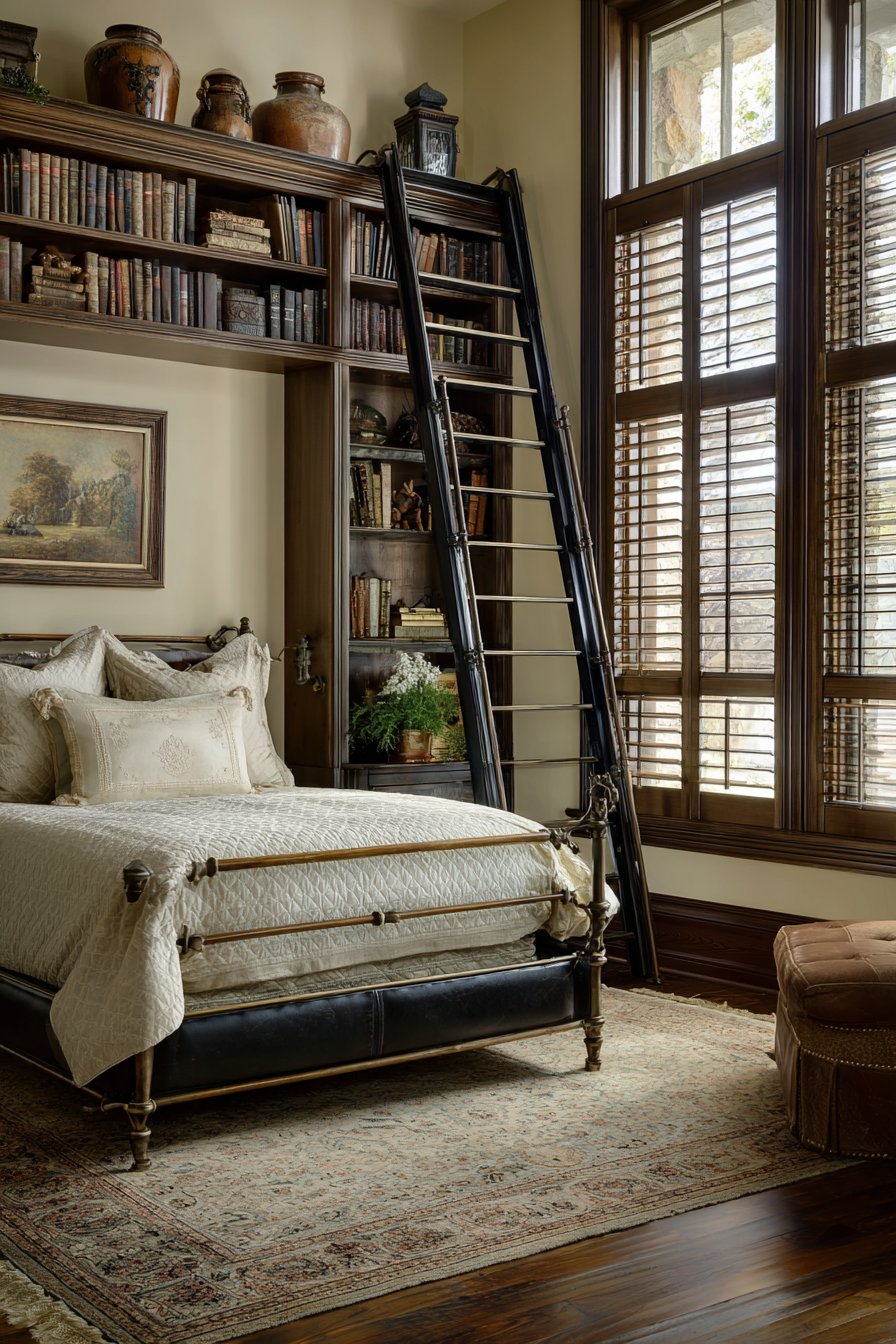
The bedroom features a brass bed frame with white matelassé bedding and embroidered pillows, maintaining the vintage aesthetic without appearing costume-like or overly themed. Hardwood floors in medium walnut finish provide warm foundation tones, while a faded Oriental rug adds pattern and color with appropriate age and wear. Natural light from tall windows with wooden shutters can be modulated throughout the day, providing bright reading conditions or filtered softness as needed. Professional photography would capture the timeless elegance and aged patina of materials, using soft directional lighting that enhances rather than overpowers the space’s inherent character.
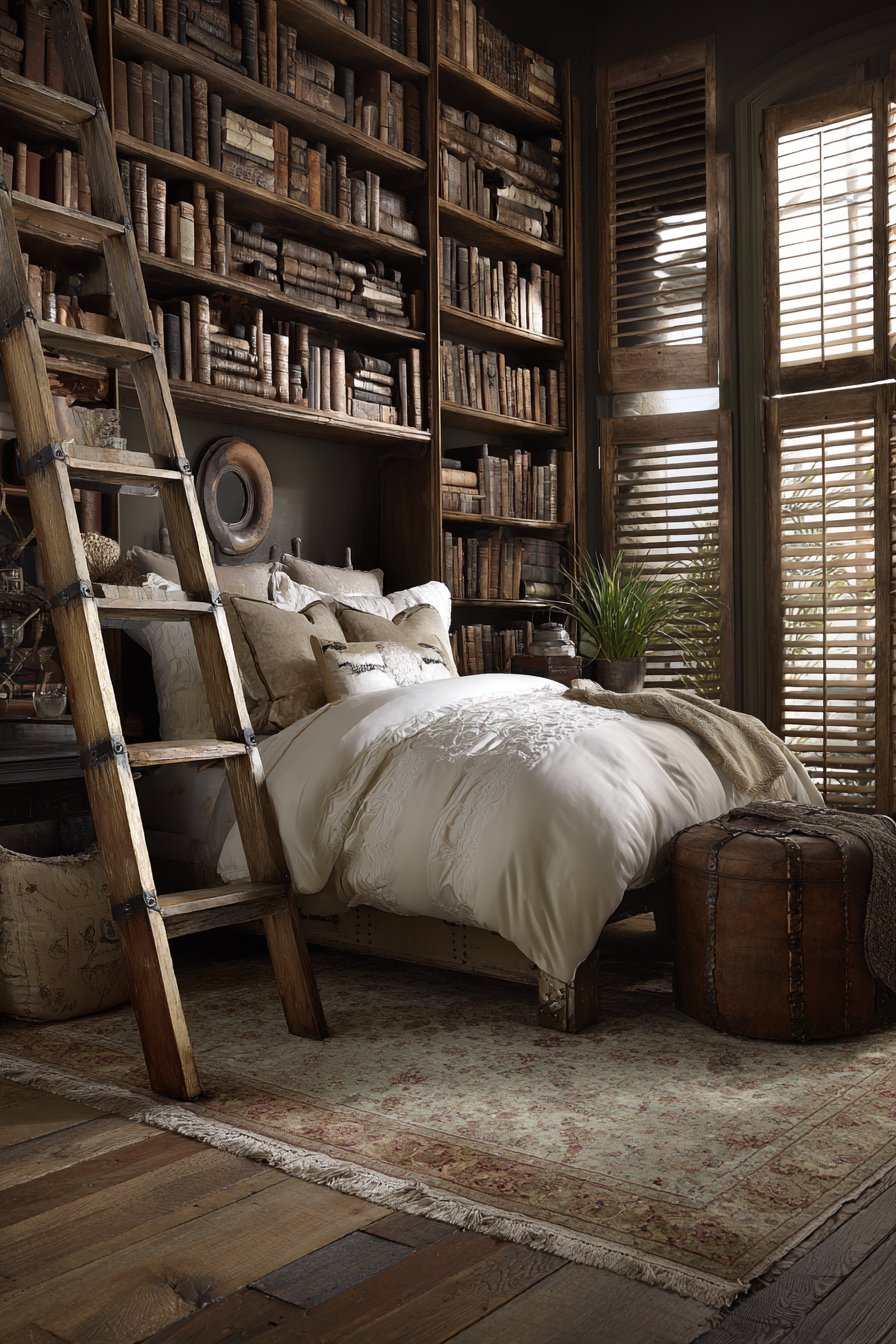
This design particularly suits those who appreciate antiques and historical character, or who want their library bedroom to feel connected to the long tradition of personal book collecting. The ladder suggests a substantial collection requiring vertical access, lending gravity and seriousness to the book ownership. The vintage approach also permits—even encourages—mixing periods and styles, as historical rooms typically accumulated furnishings over time rather than being decorated all at once with matching pieces.
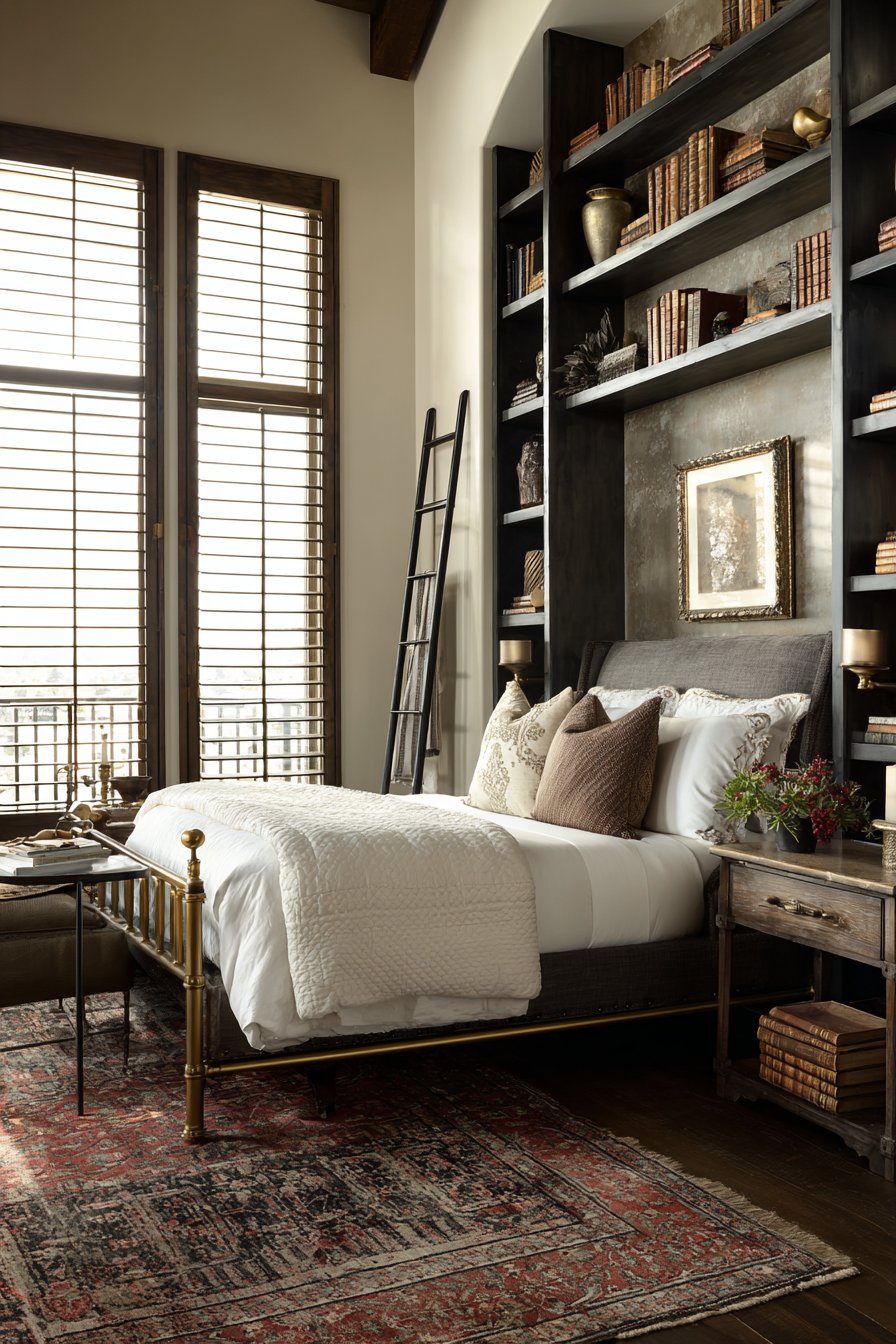
Key considerations include selecting a vintage ladder in good structural condition or a quality reproduction with proper safety features, ensuring rail mounting can support both ladder and user weight, organizing upper shelves with items accessed less frequently, providing adequate lighting at all shelf heights, coordinating brass finishes across ladder, bed frame, and other hardware, and embracing the patina and wear that gives vintage pieces their character.
17. Youth-Focused Design with Modular Flexibility
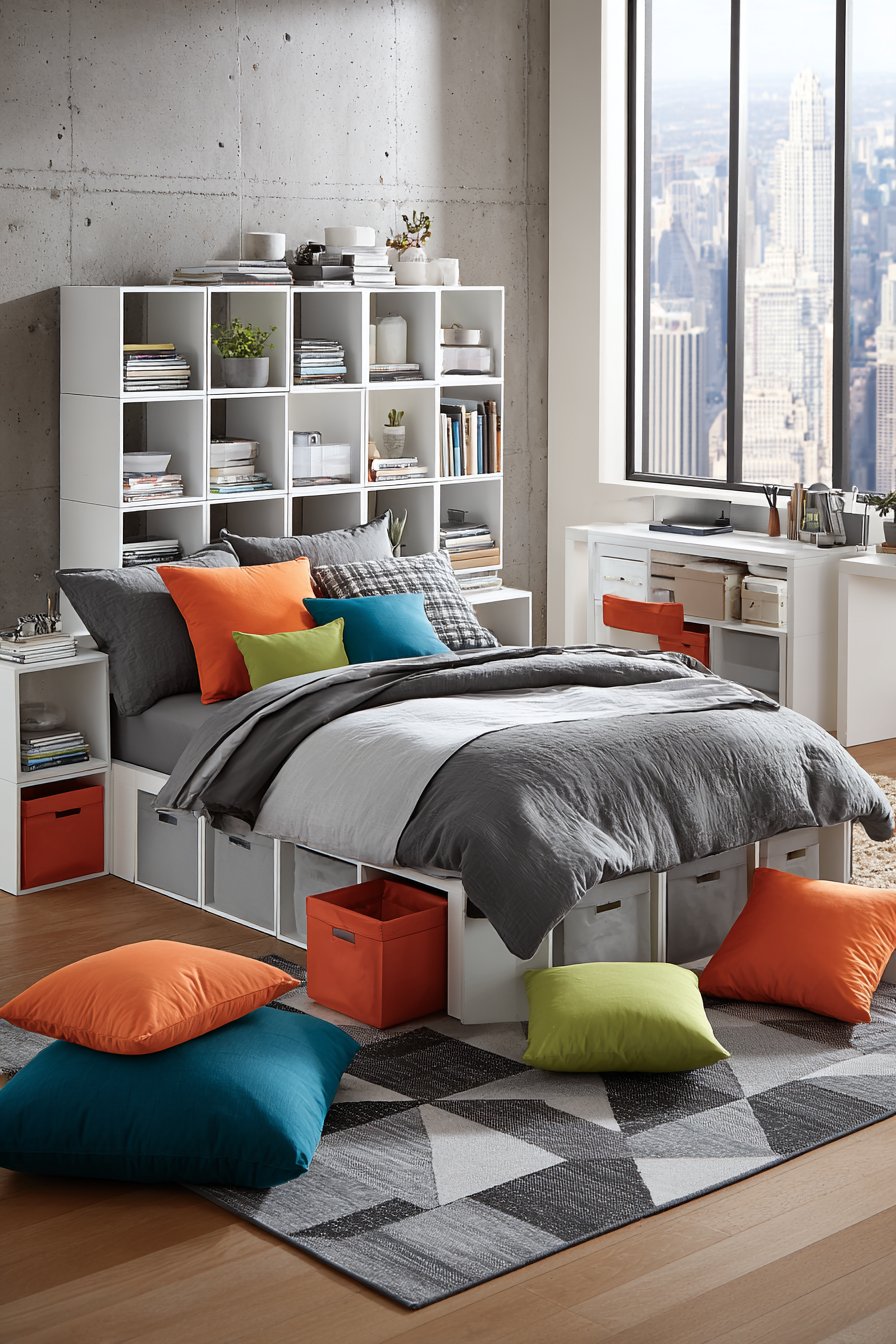
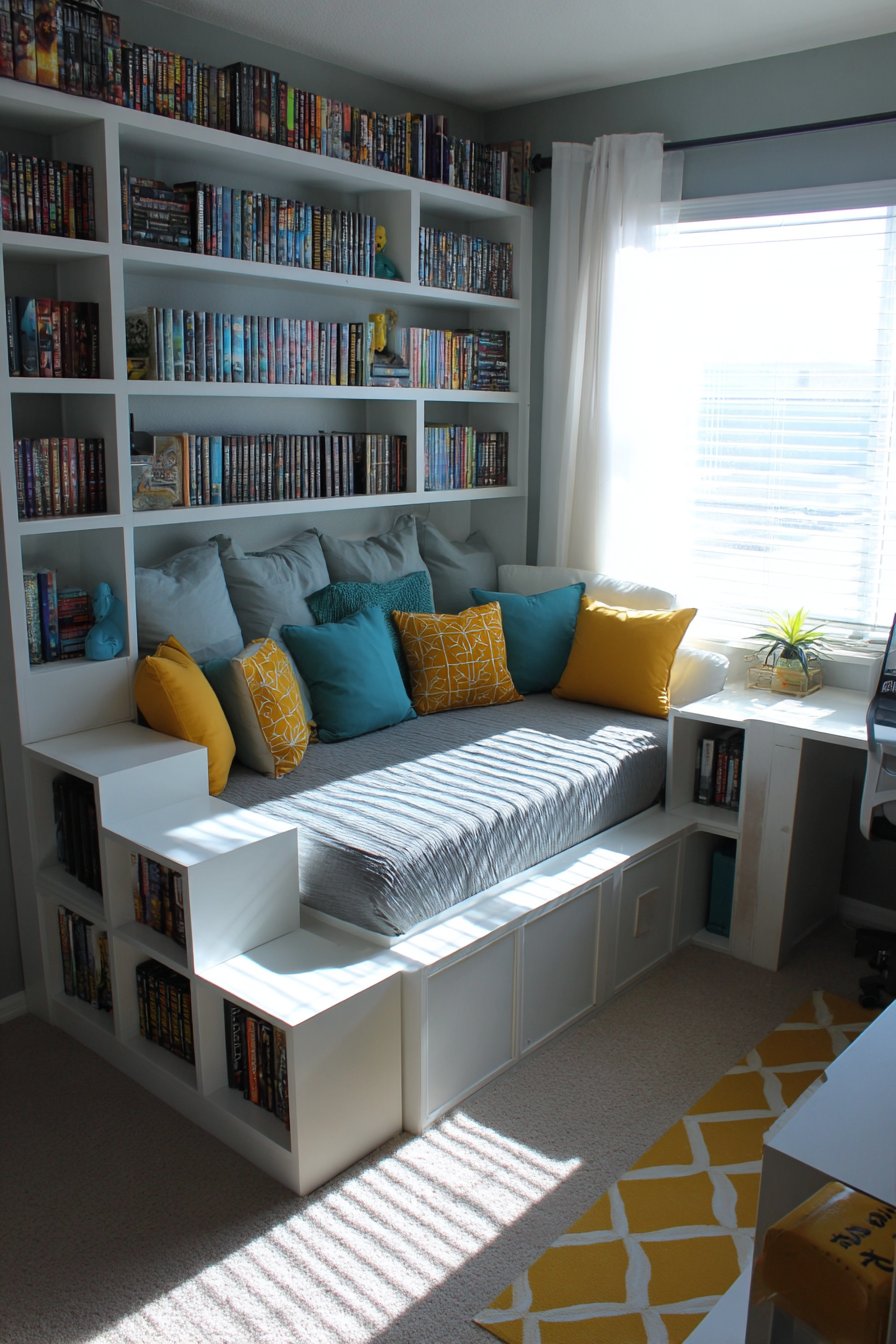
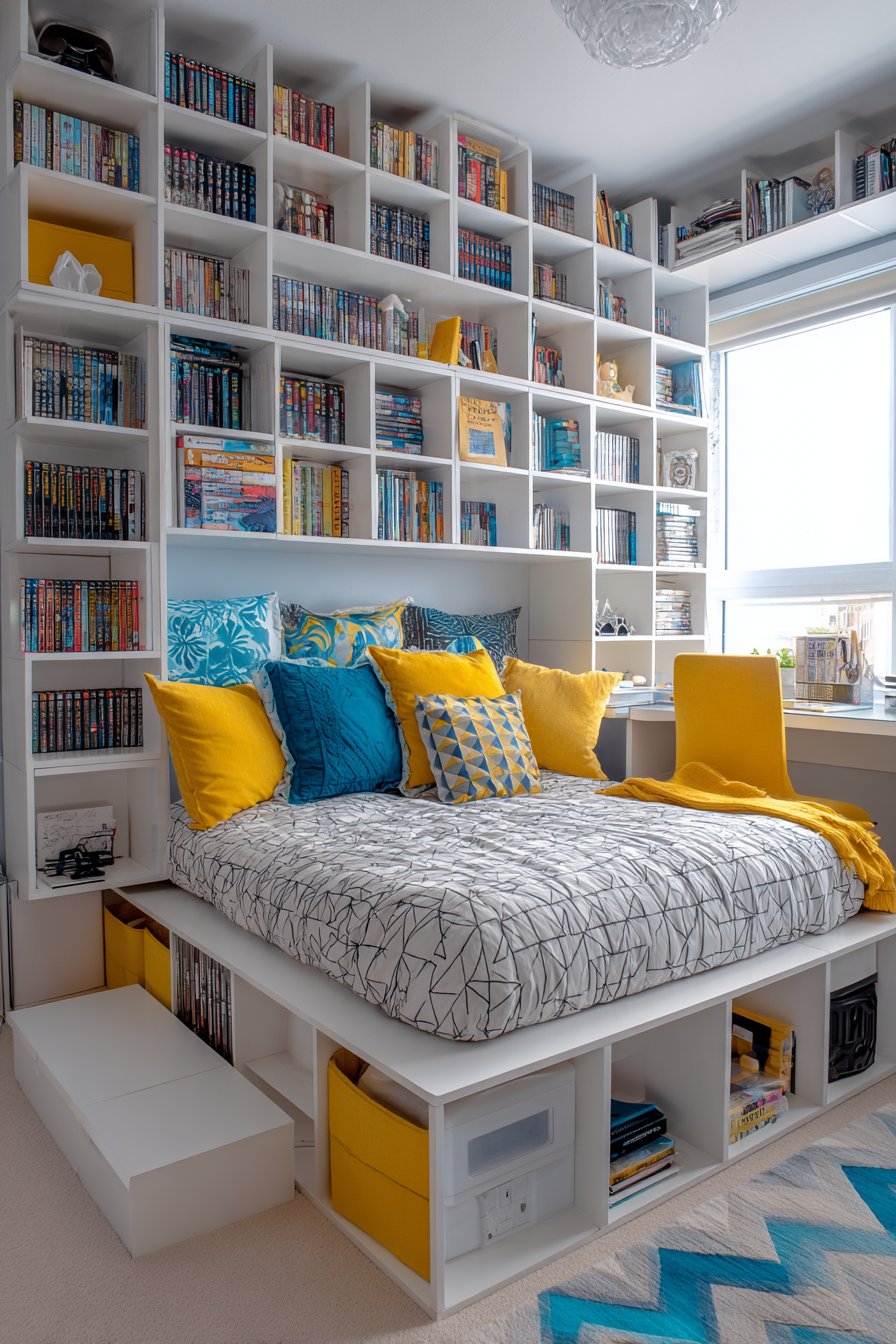
A gender-neutral library bedroom for teens requires flexibility, personalization, and acknowledgment of changing needs as young people mature. Modular cube shelving in bright white that can be rearranged provides this adaptability, allowing the room to evolve without requiring complete redesign. Books ranging from young adult fiction to graphic novels to school textbooks share space democratically, reflecting the varied reading interests typical of this age. The ability to reconfigure the shelving system means the room can adapt as interests change and academic needs shift.
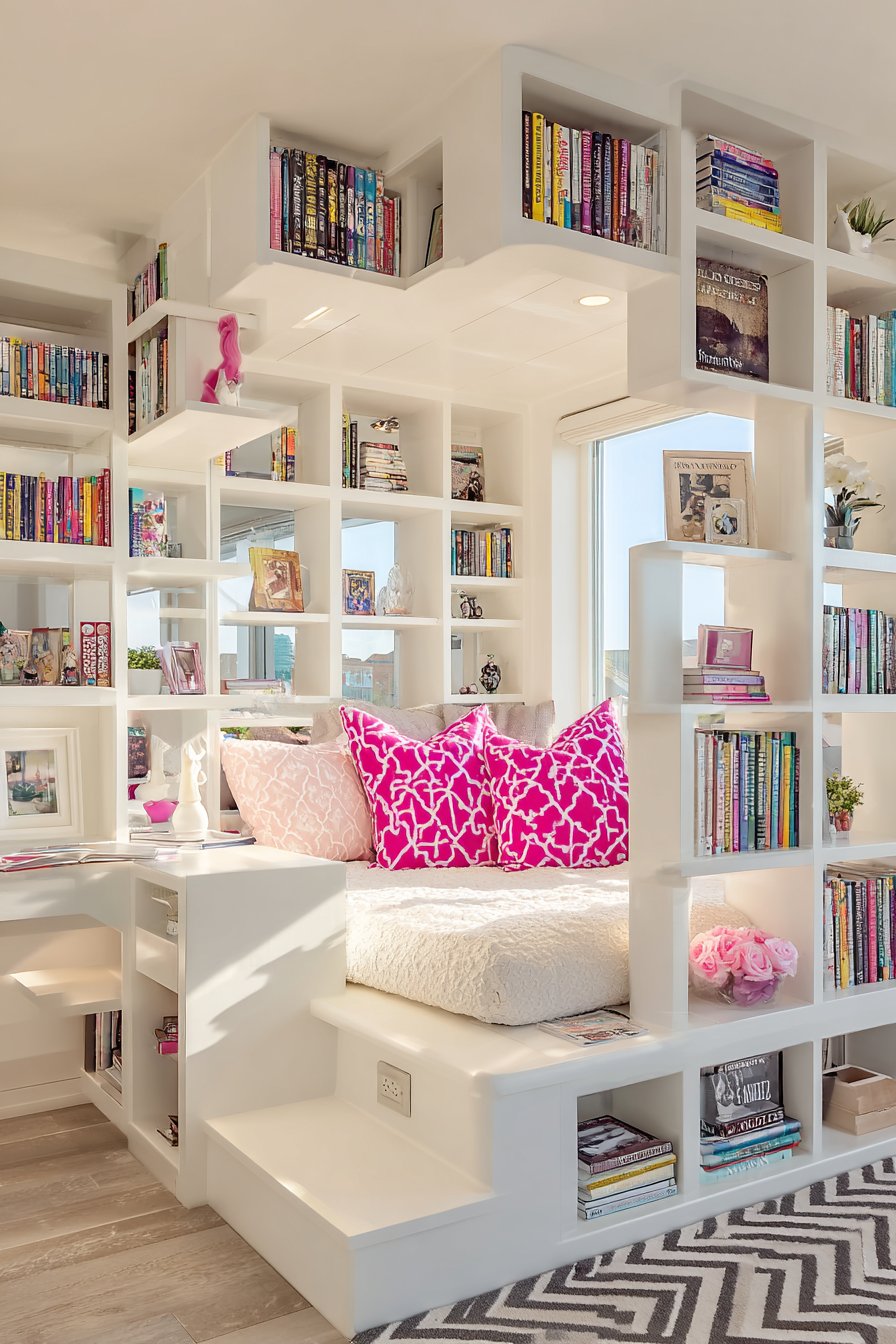
A modern platform bed with built-in USB charging ports and under-bed storage addresses teen-specific needs for technology integration and organization. Colorful accent pillows and a geometric rug add personality without overwhelming the space or feeling juvenile. A desk area integrated into the shelving system acknowledges that teen rooms must support homework and study alongside sleep and leisure. Bright natural light photography would show the versatile, age-appropriate design with clean contemporary aesthetic that will remain relevant as the teen approaches adulthood.
This design recognizes that teen spaces must balance parental concerns for functionality and organization with the teen’s need for personal expression and independence. The modular approach democratizes room design—allowing the teen to participate in arrangement decisions and adjust the space as they see fit. The bright white shelving provides a neutral canvas that won’t clash with changing décor preferences, while the modern styling avoids both childish themes and overly adult sophistication.
Important elements include selecting modular systems with secure connections despite reconfiguration capability, providing adequate electrical outlets and charging solutions, incorporating both open and closed storage to hide clutter, choosing durable materials that withstand heavy use, allowing teen input on color and personalization decisions, and ensuring adequate task lighting for studying while maintaining ambiance lighting for relaxation.
18. Collector’s Paradise with Climate-Controlled Display
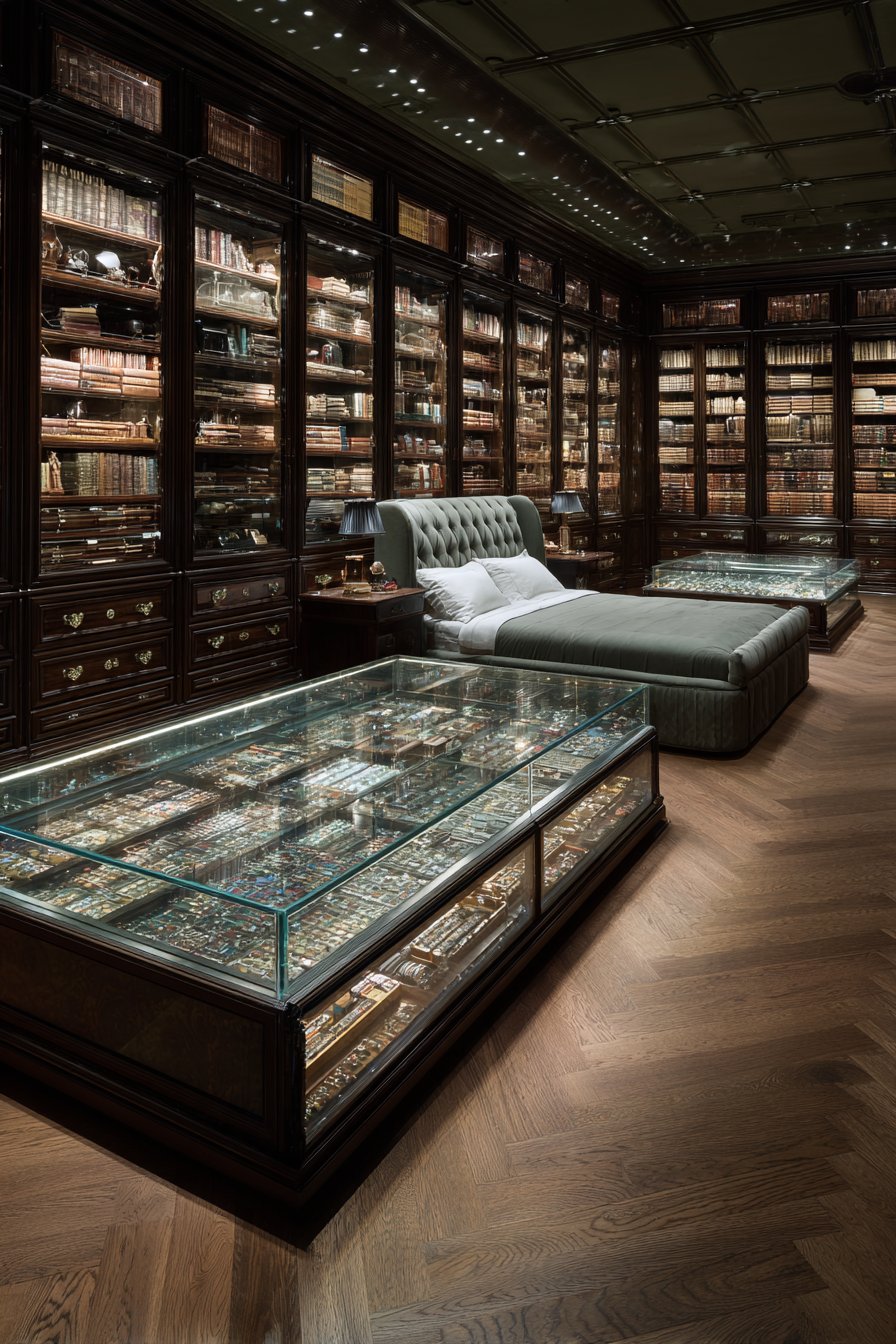
Serious book collectors require specialized storage that protects valuable volumes while allowing visual appreciation, achieved through climate-controlled glass cases built into custom cabinetry alongside regular open shelving. This approach acknowledges that not all books are equal—some represent significant financial investment or irreplaceable first editions requiring museum-quality environmental control. The glass cases provide not just protection but also designation, visually communicating that these volumes deserve special attention. Museum-quality picture lighting ensures safe viewing without UV damage, while temperature and humidity controls prevent deterioration.
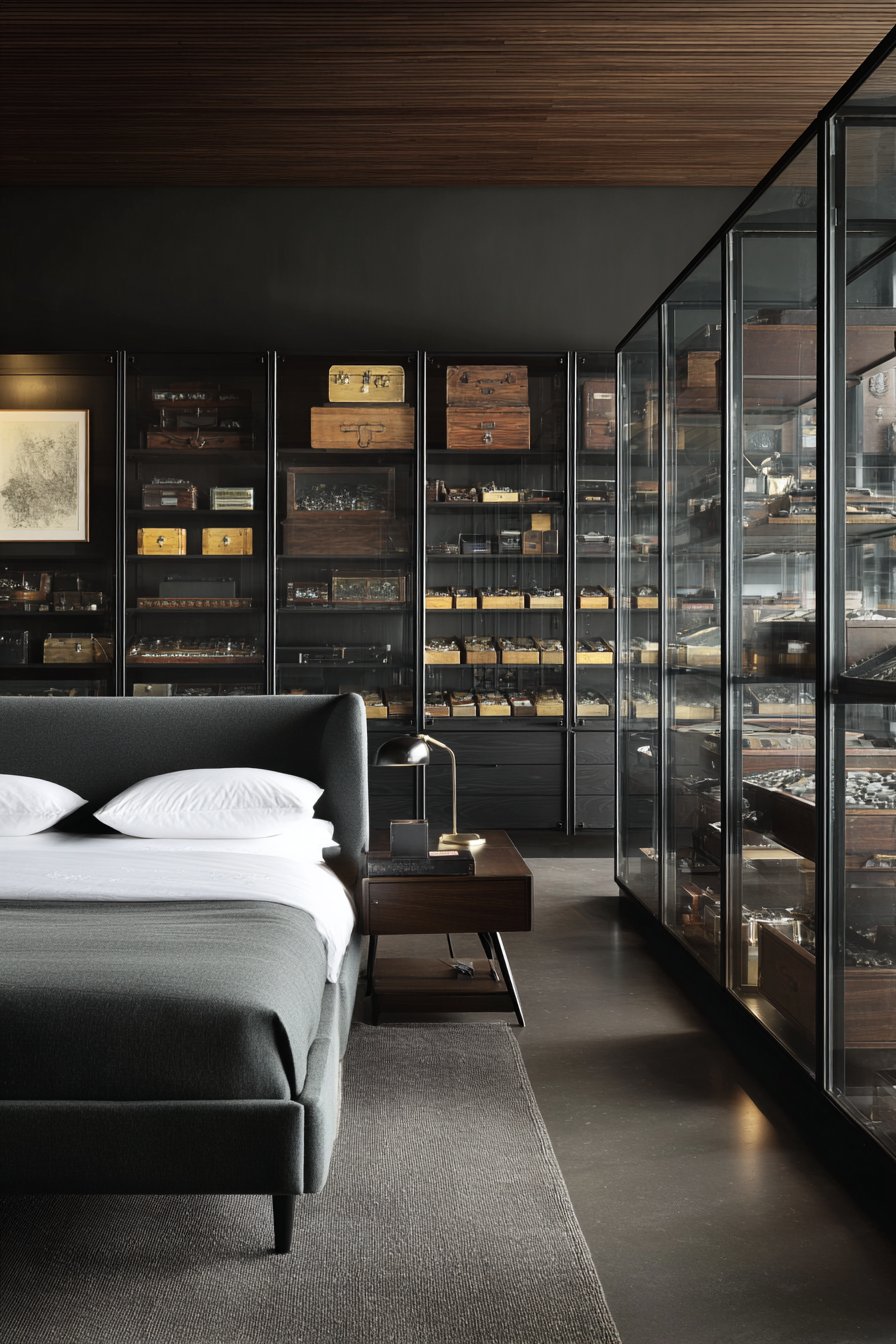
The sleeping area maintains appropriate gravitas with a wingback upholstered bed in dove grey velvet with hotel-quality white linens. Rich walnut woodwork throughout unifies the various storage and sleeping elements, creating cohesive high-end atmosphere. Interior design photography would use carefully controlled lighting to protect sensitive materials while showcasing the collector’s setup and fine craftsmanship details. The image would convey both the monetary and emotional investment represented by the collection, and the thoughtfulness of the preservation approach.
This design appeals to serious bibliophiles whose collections include rare or valuable editions, first printings, signed copies, or historically significant volumes. The specialized cases acknowledge that these books are more than just reading material—they’re investments, family heirlooms, or pieces of literary history. The regular open shelving ensures the room maintains functionality for everyday reading and current favorites, while the protected cases elevate special volumes to their deserved status.
Essential considerations include investing in proper climate control systems with temperature and humidity monitoring, selecting UV-filtering glass or acrylic for case fronts, providing interior lighting that doesn’t generate heat or UV radiation, ensuring adequate insurance coverage for valuable collections, creating detailed inventory systems for high-value volumes, and consulting conservation professionals for particularly rare or delicate books.
19. Lofted Creativity with Under-Bed Library Space
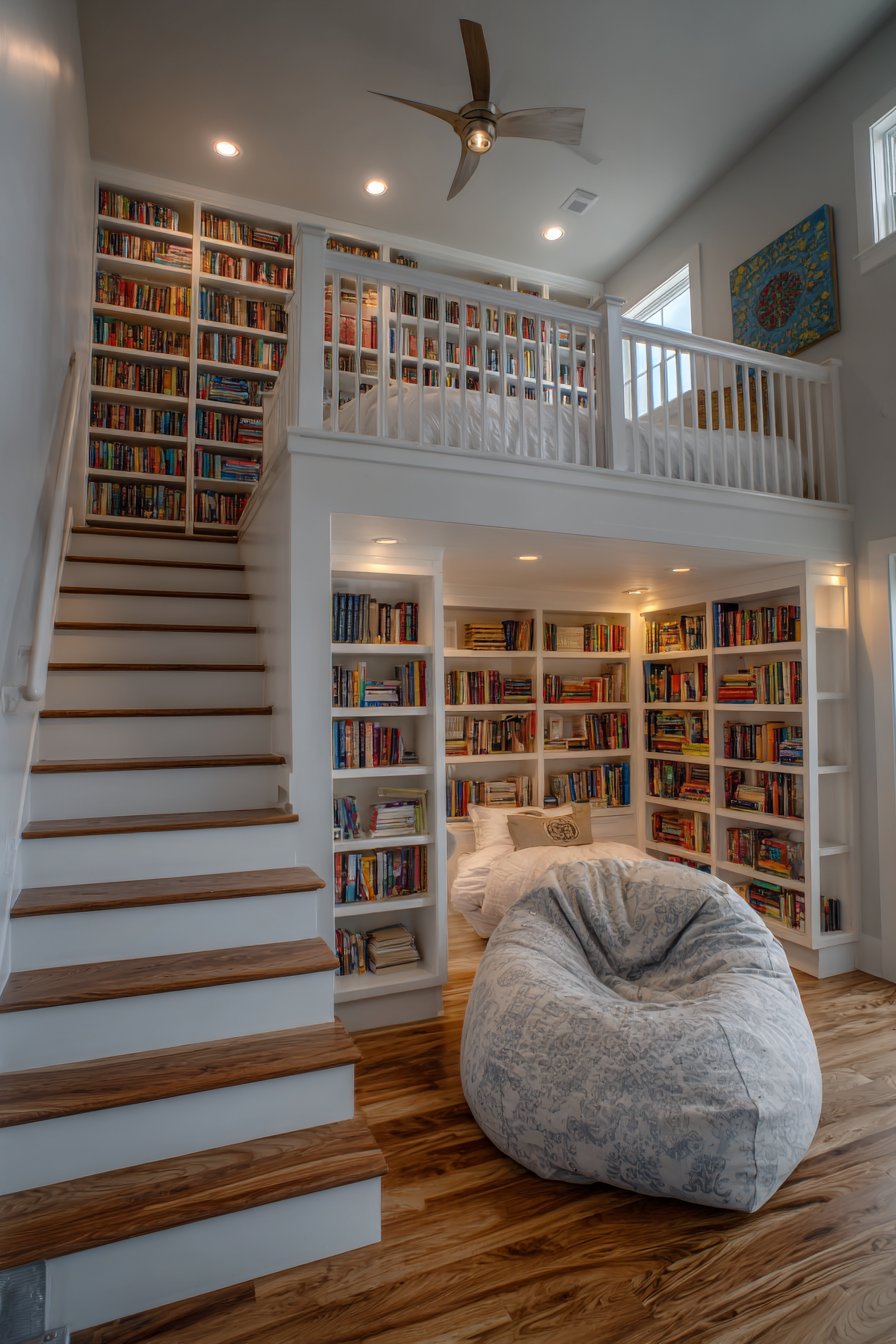
Vertical space utilization reaches new heights with lofted bed platforms that create library space beneath the elevated sleeping area. Imagine extensive bookshelving occupying the zone under a lofted bed, transforming what might be wasted vertical space into a cozy reading room accessed by built-in stairs that themselves contain book storage in the risers. String lighting and a comfortable bean bag chair in the lower reading zone create an inviting retreat within a retreat. White painted wood throughout maintains brightness despite the lower ceiling height, while pops of color from book spines add visual interest.
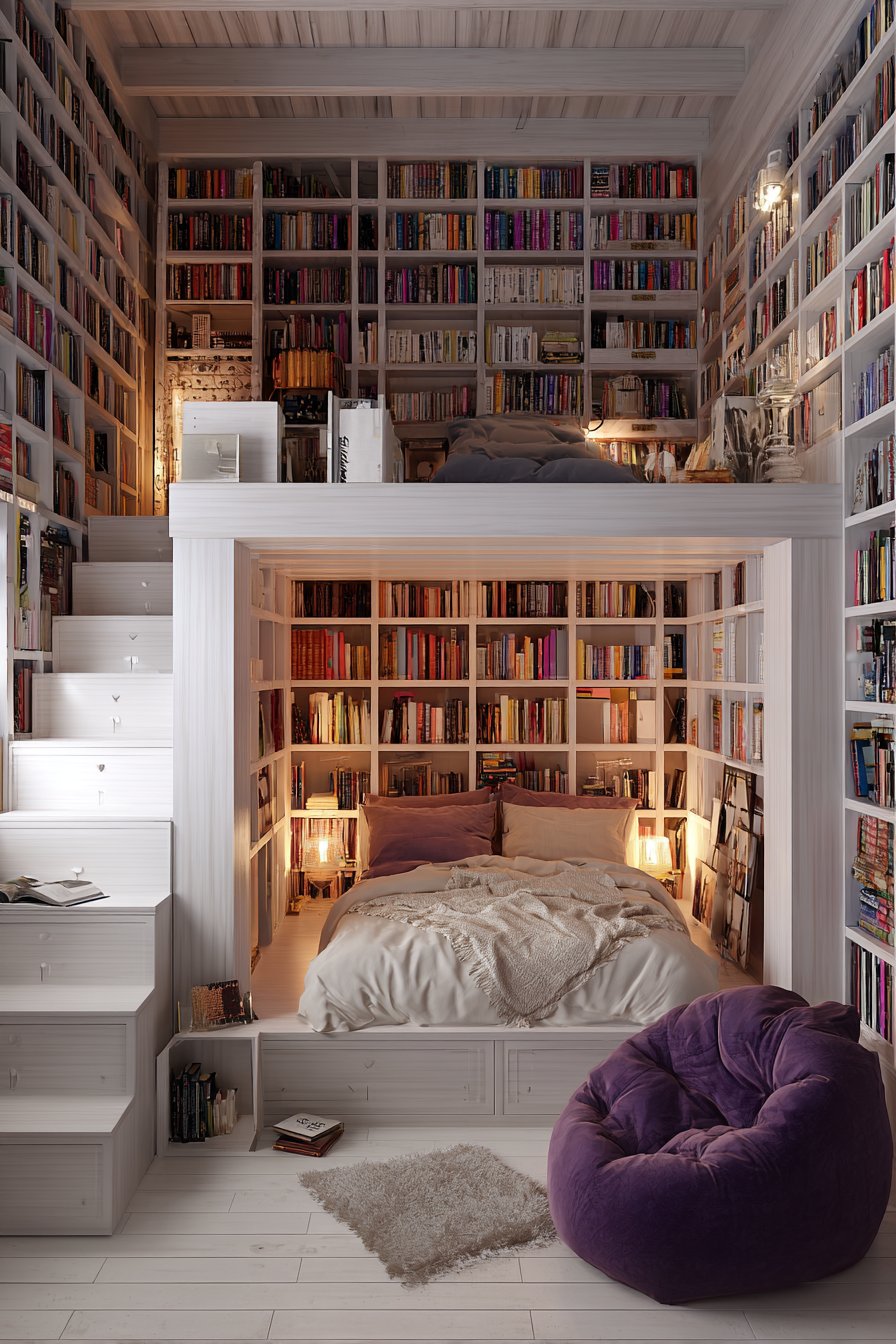
This configuration particularly suits children’s rooms, teen spaces, or small apartments where every square foot must work harder. The lofted approach effectively creates two distinct zones within a single room—active reading and study below, quiet sleep above. The physical separation supports healthy sleep hygiene by creating clear spatial distinction between activities. Creative spatial photography would show the vertical space utilization and dual-level functionality, demonstrating how thoughtful design transforms challenging spatial constraints into unique advantages.
The appeal lies partly in the novelty and partly in the practical efficiency, but also in the sense of adventure and personal retreat the design creates. The under-bed library becomes a private escape—a place that feels distinct from the larger bedroom and from the rest of the home. String lighting adds warmth and magic, preventing the lower zone from feeling cave-like. Book storage in the stair risers proves that every element can serve multiple purposes with creative thinking.
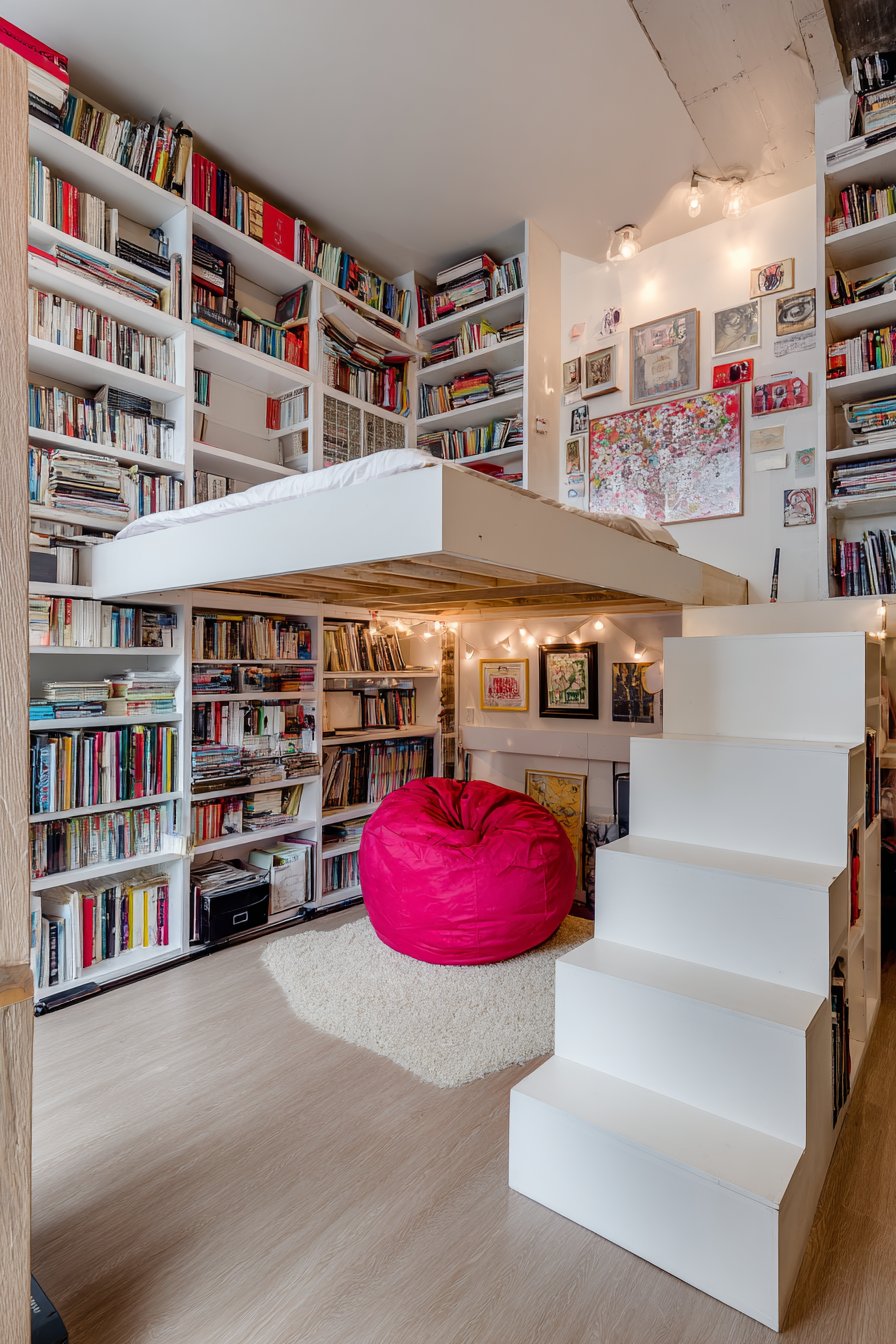
Key elements include ensuring adequate headroom in the lower zone for comfortable sitting, providing proper ventilation to prevent stuffiness, incorporating sufficient lighting in both zones, building stairs with proper safety features including railings and non-slip surfaces, selecting a bean bag or seating appropriate to ceiling height, and organizing books by use frequency with current favorites in the accessible reading zone.
20. Mid-Century Modern with Tapered Leg Units
Mid-century modern design brings distinctive aesthetic to library bedroom spaces through tapered leg shelving units in teak wood with sliding glass doors protecting prized editions. This period-appropriate approach celebrates the clean lines, organic materials, and functional beauty characteristic of 1950s-60s design philosophy. The mix of protected and open display shelves acknowledges that collections include both valuable volumes requiring care and everyday reading not needing special treatment. The tapered legs create visual lightness despite substantial storage capacity, elevating the units physically and aesthetically.
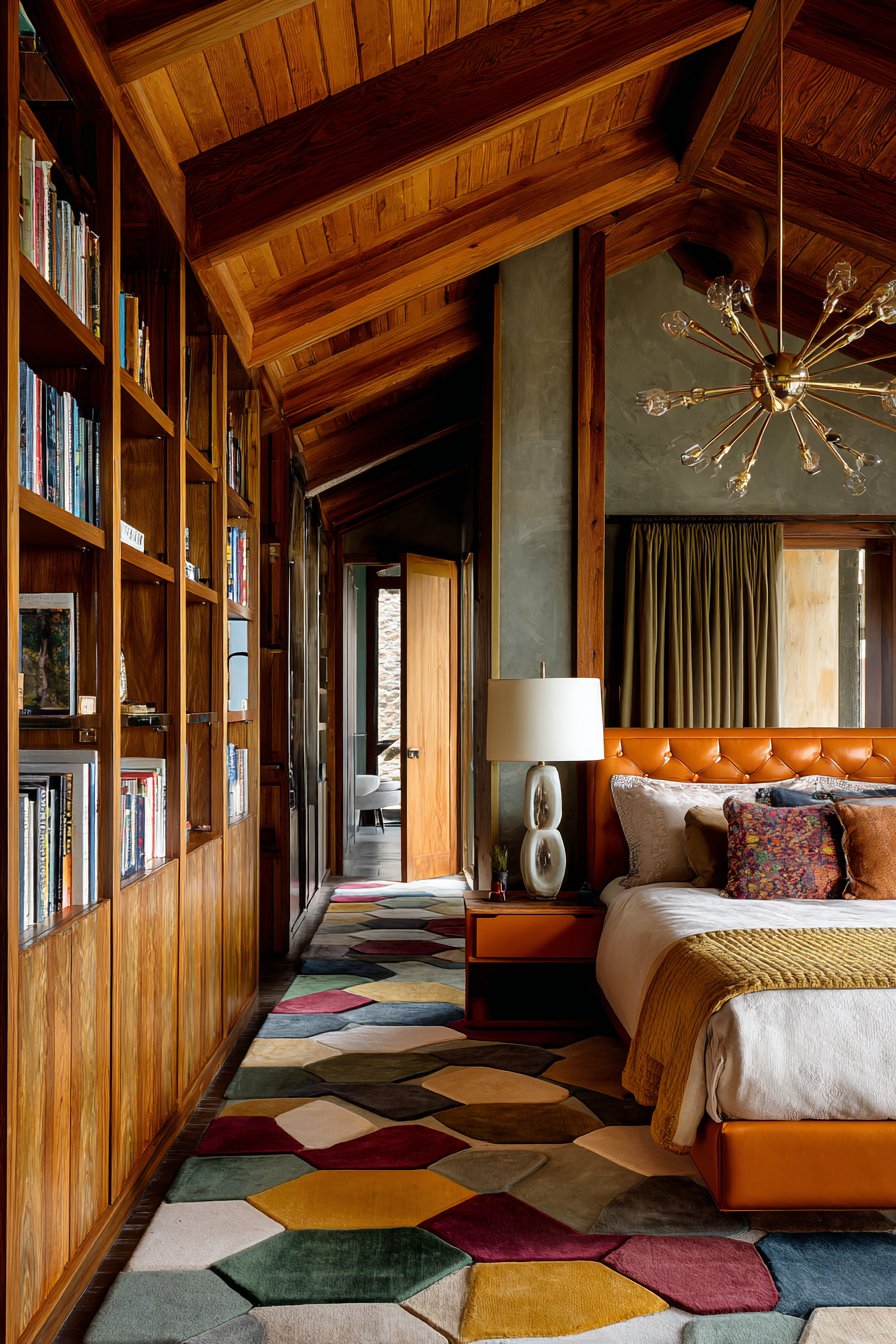
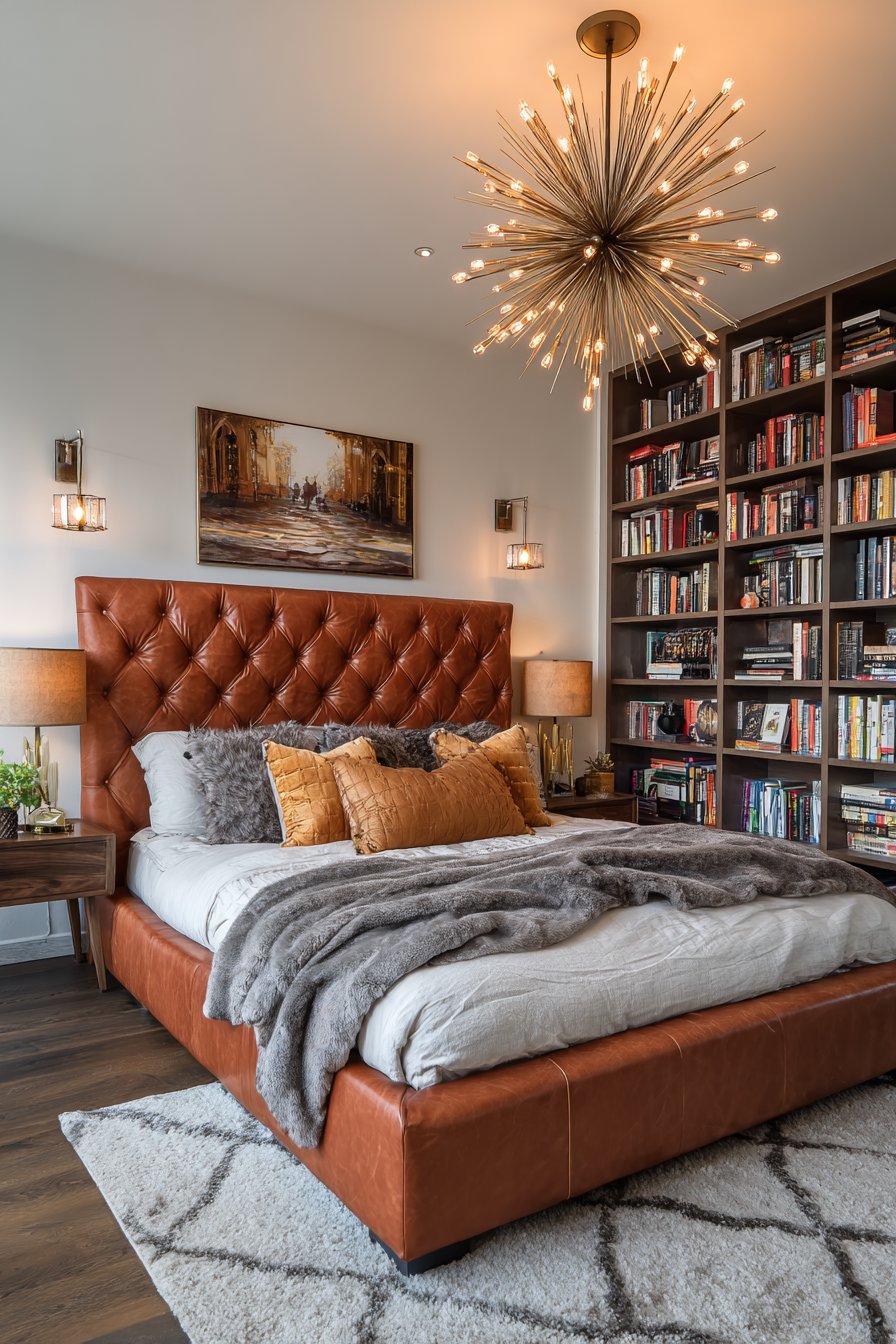
The bed features a tufted headboard in burnt orange leather with coordinating throw pillows, capturing the warm, optimistic palette typical of the era. Terrazzo flooring with a geometric wool rug in complementary tones adds period-appropriate pattern and texture. A sputnik chandelier and ceramic table lamps provide authentic mid-century lighting, their distinctive silhouettes reinforcing the overall design theme. Interior photography with warm artificial lighting would emphasize the retro aesthetic and authentic period details, conveying both historical specificity and contemporary relevance.
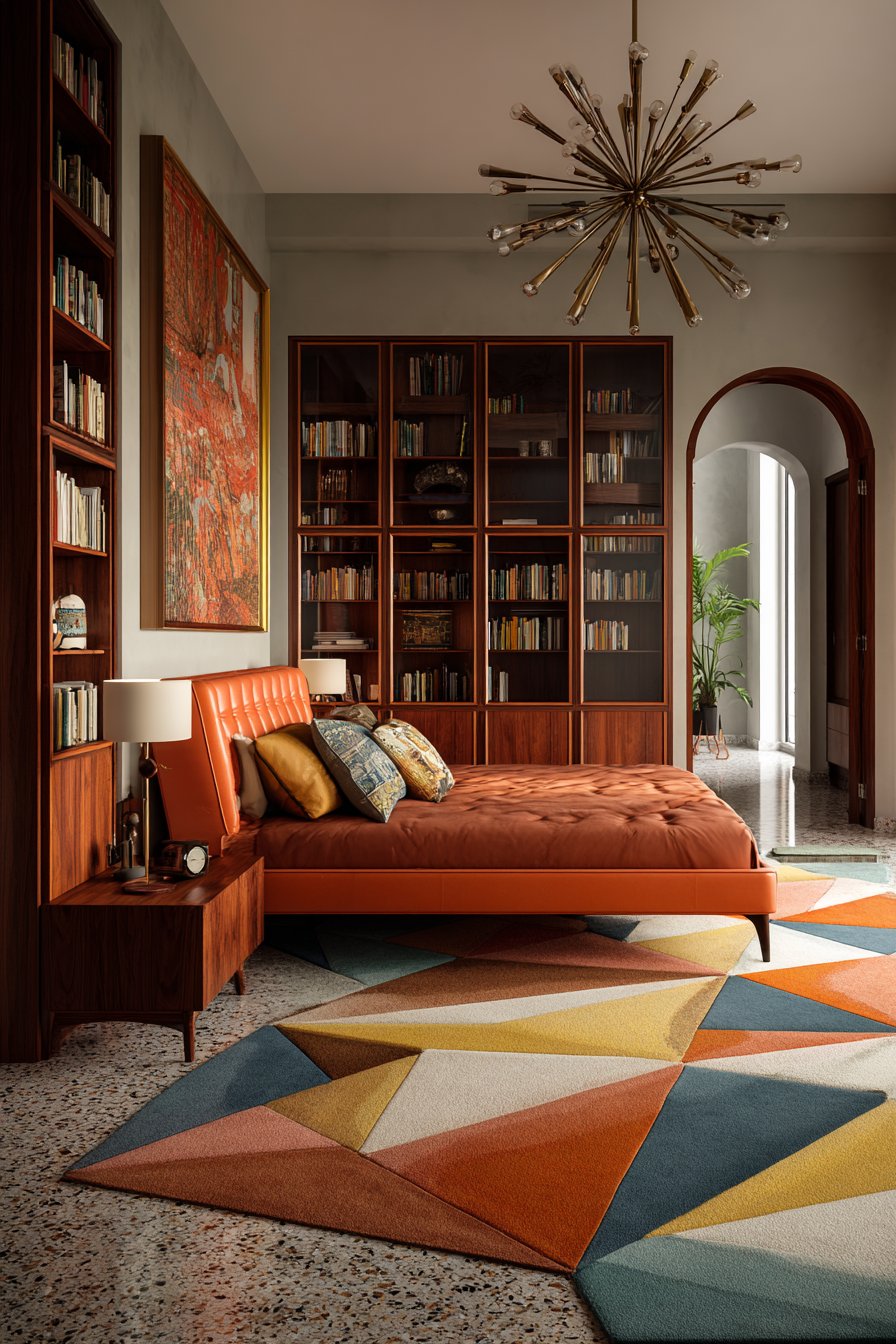
This design appeals to mid-century modern enthusiasts who appreciate the era’s distinctive aesthetic and those drawn to vintage furniture’s quality craftsmanship and timeless design. The teak wood has warm richness that ages beautifully, developing deeper tones over time. The combination of sliding glass doors and open shelving provides flexibility—protecting special volumes while displaying everyday favorites. The overall effect is sophisticated yet approachable, refined yet livable.
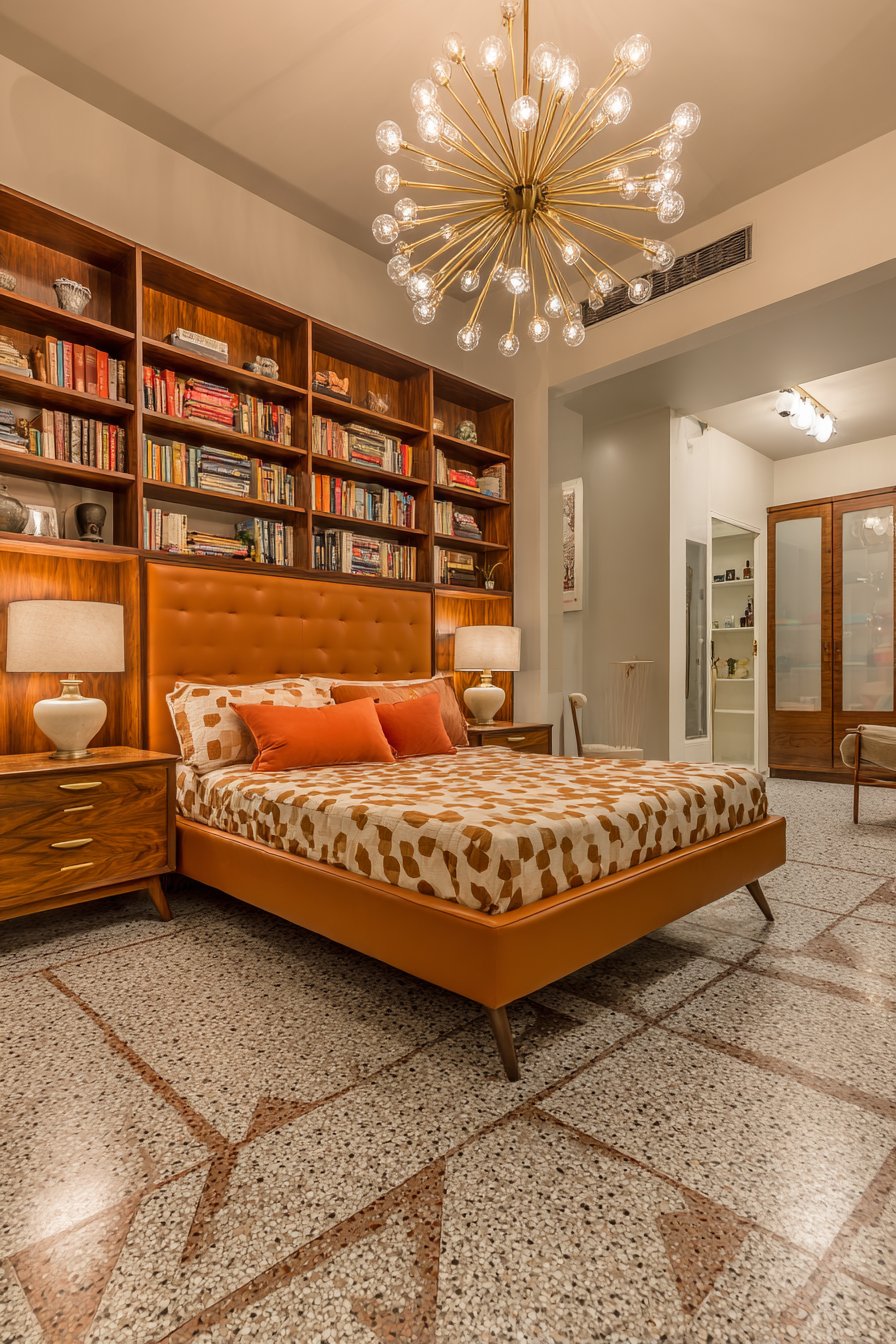
Essential considerations include sourcing authentic vintage pieces or quality reproductions that respect original design integrity, coordinating wood tones across multiple furniture pieces, selecting textiles and colors from period-appropriate palettes, providing lighting fixtures with authentic mid-century silhouettes, maintaining clean lines and avoiding clutter that disrupts the aesthetic, and ensuring modern functionality doesn’t compromise period character.
21. Charming Adaptation in Attic Architecture
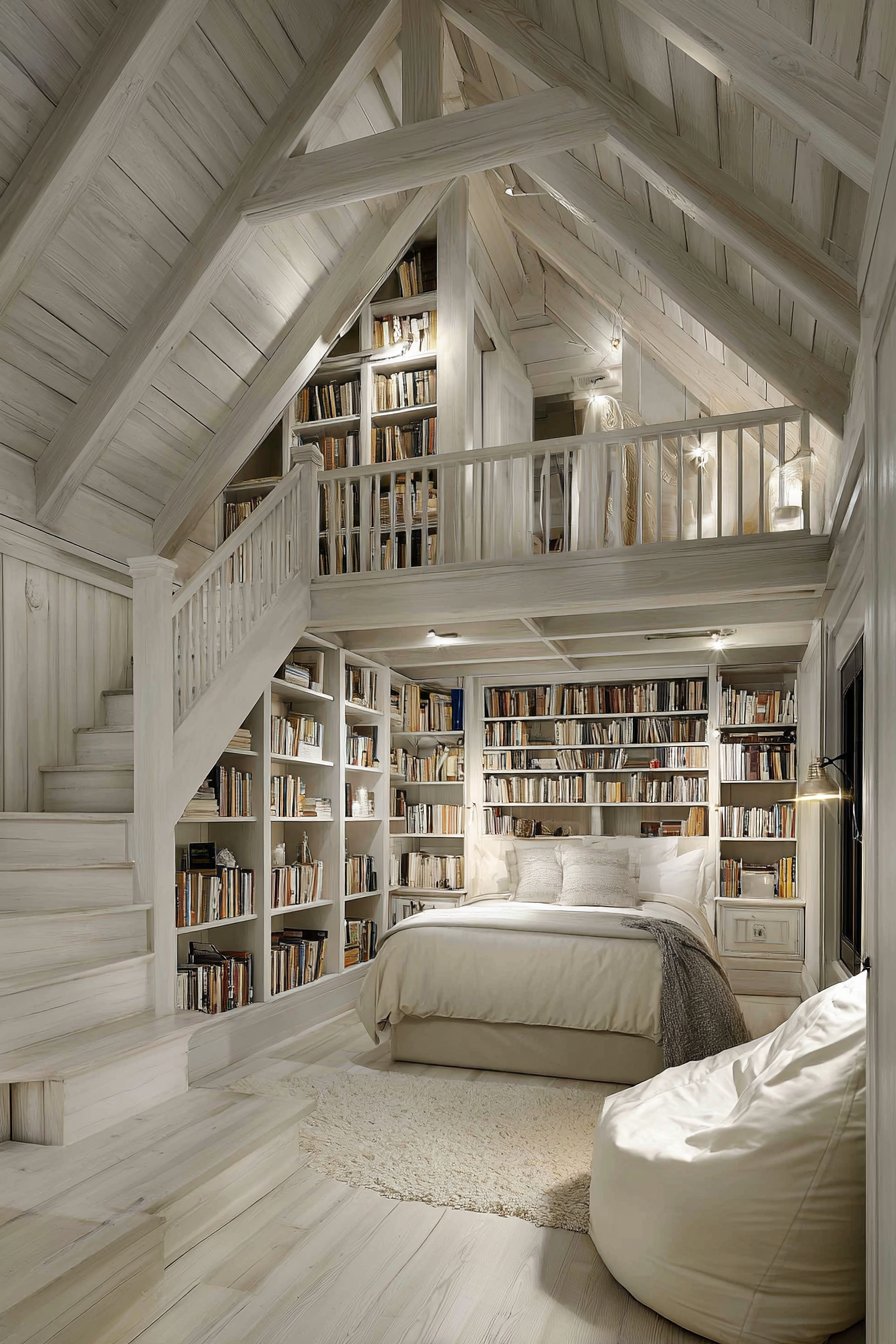
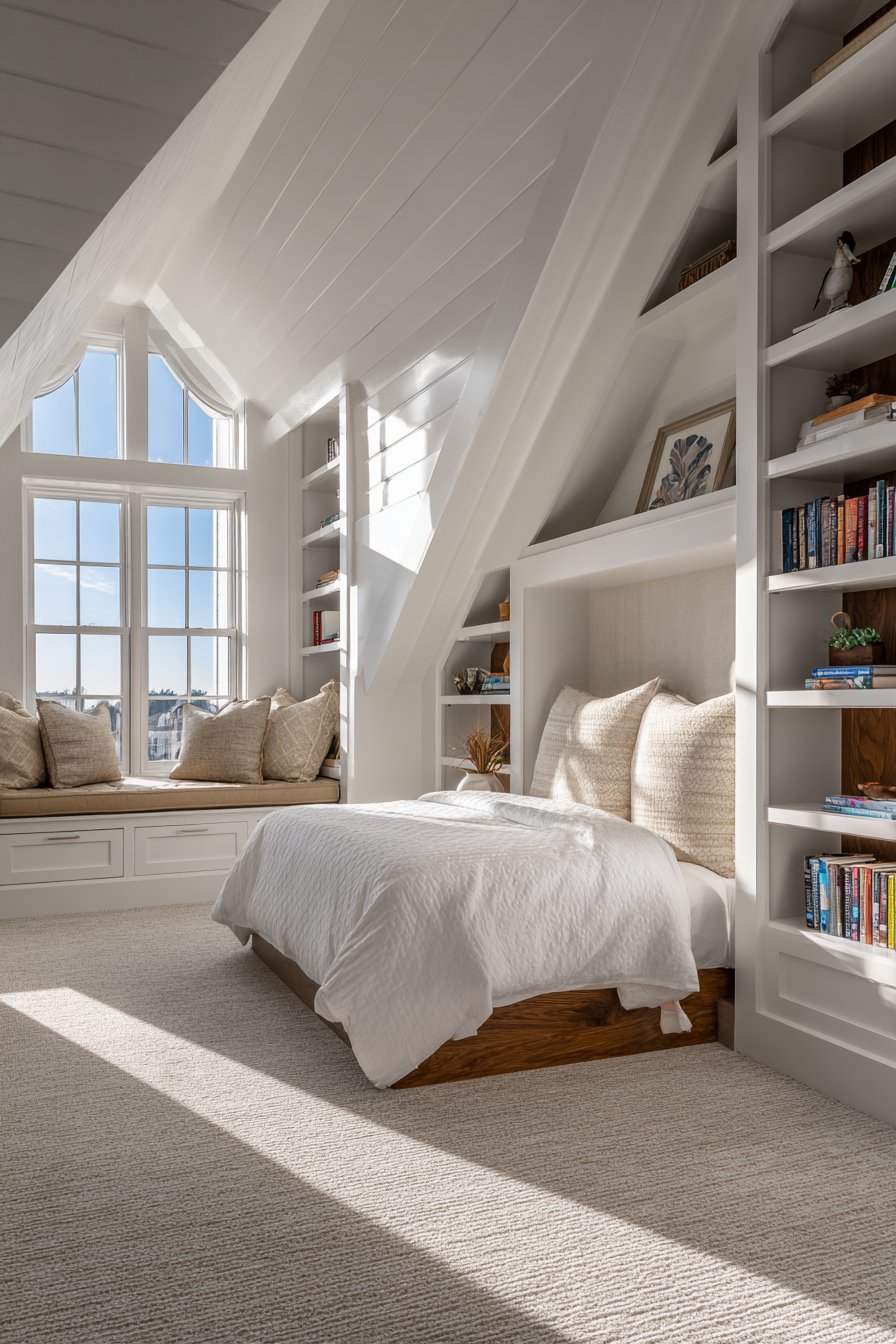
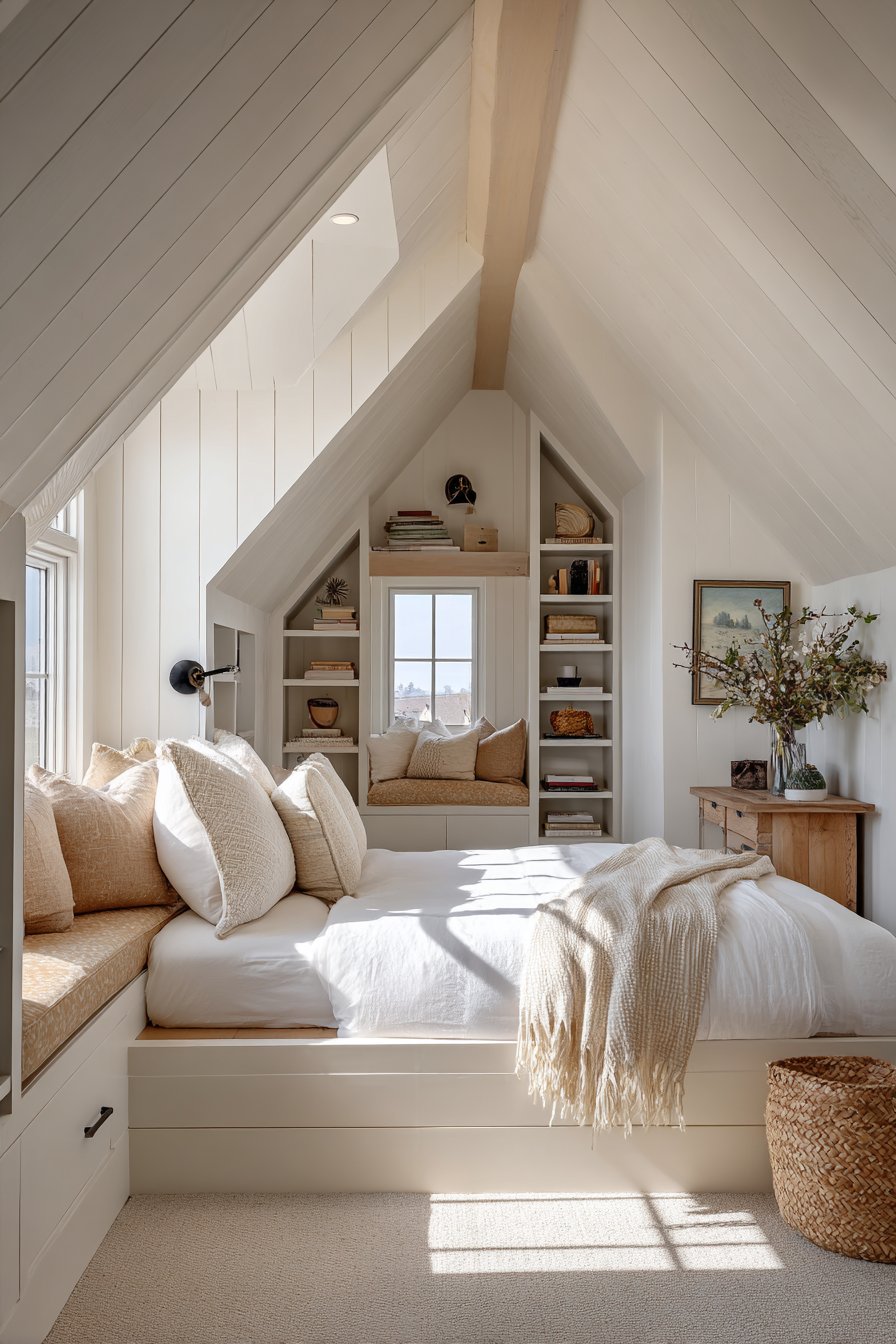
Attic bedrooms present unique challenges and opportunities, addressed elegantly through built-in shelving that follows the sloped ceiling angles, maximizing awkward space for book storage. Dormer windows with cushioned reading seats built into the alcoves create cozy spots that take advantage of the architectural quirks rather than fighting them. A low-profile bed fits under the lowest ceiling point, accepting the spatial constraints while ensuring comfortable sleep. Painted white beadboard and natural wood accents maintain brightness and openness despite the challenging proportions.
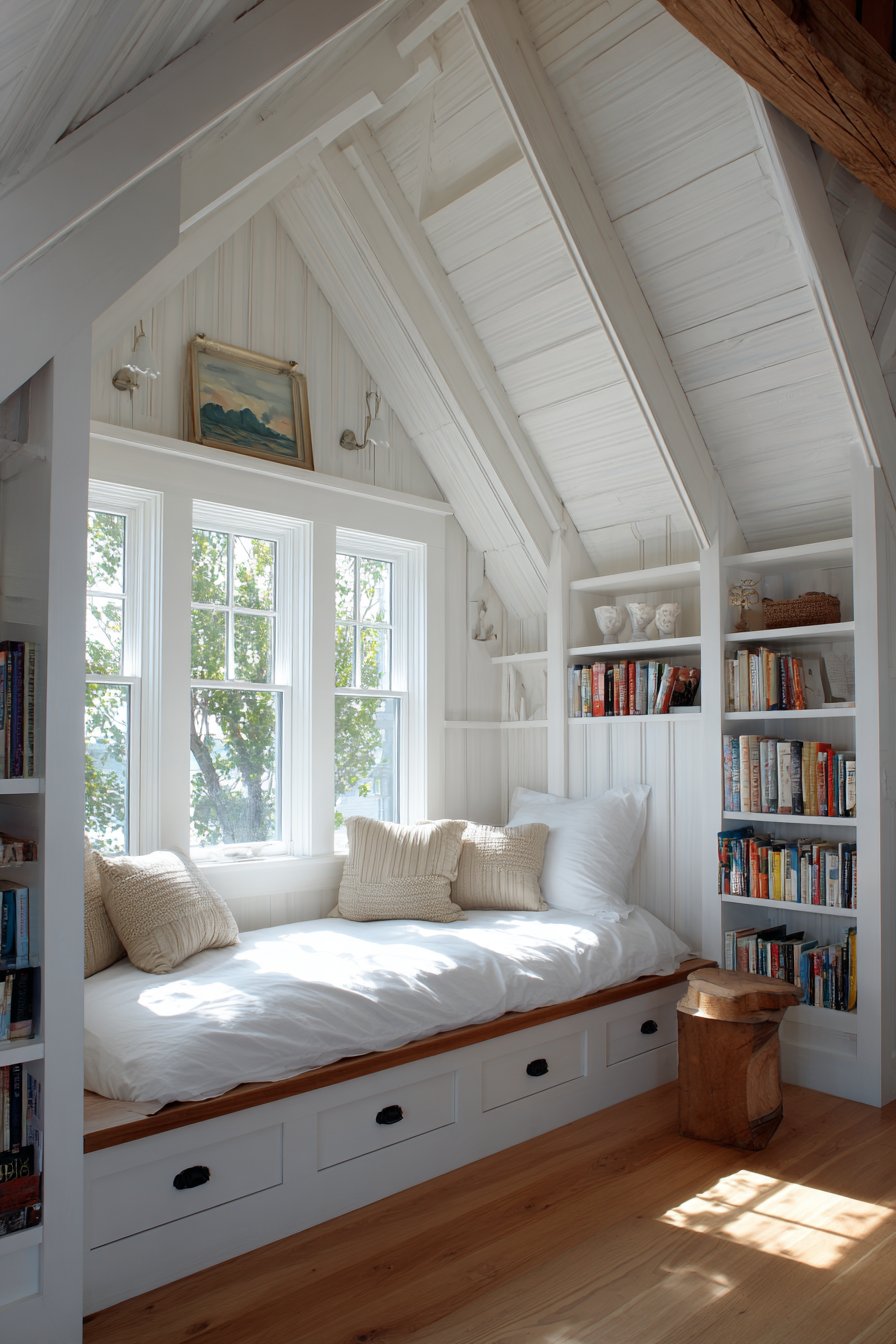
Natural light photography would capture the charming architectural features and creative space adaptation, with soft shadows defining the angular planes and emphasizing the room’s distinctive character. The sloped ceilings that might seem problematic become the space’s defining feature and greatest charm. The dormer reading seats transform necessity into luxury—what began as the only place to sit upright becomes a preferred reading spot with built-in charm and views.
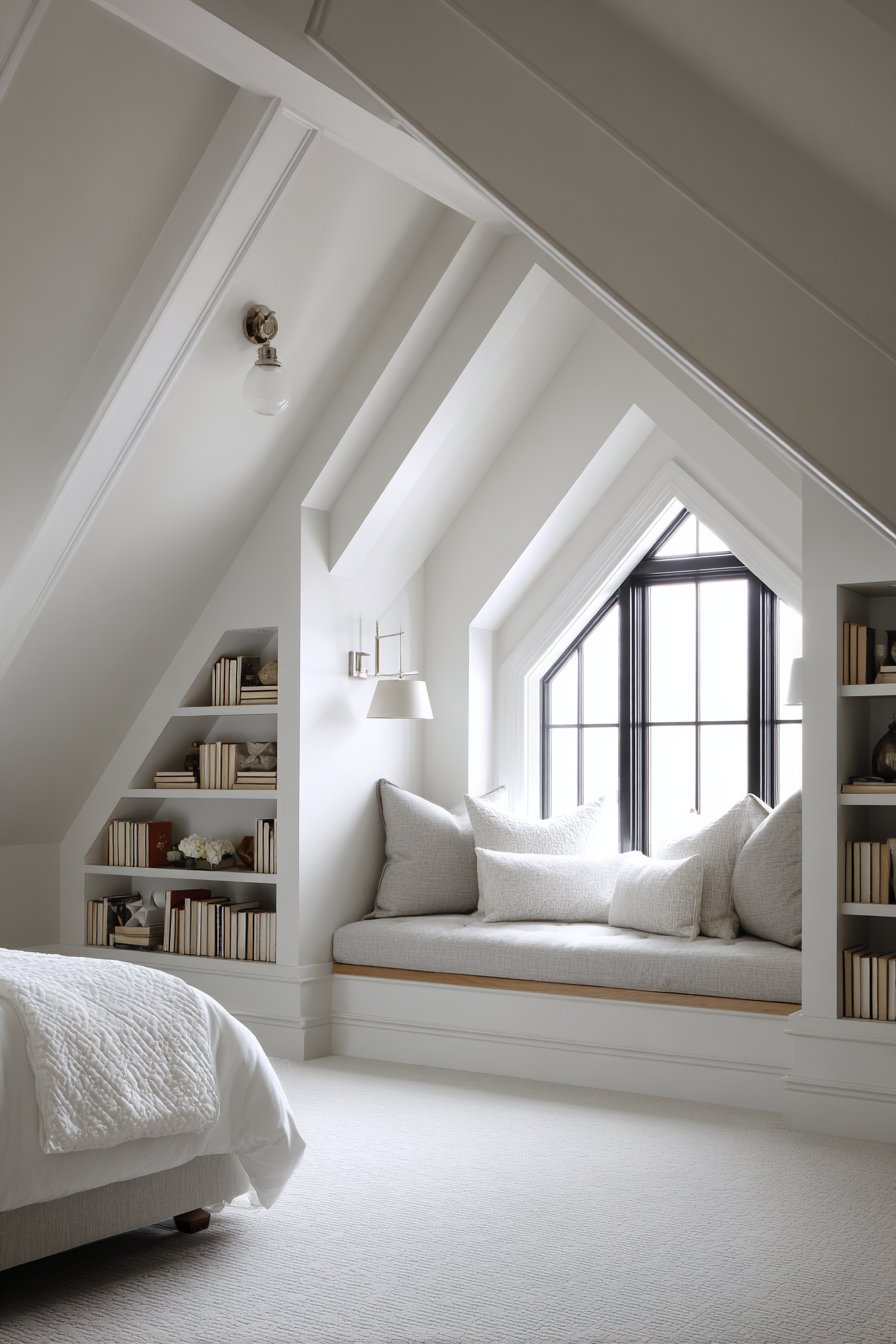
This design demonstrates that so-called problem spaces often have hidden potential, requiring only creative thinking and custom solutions. The angled shelving prevents wasted space in corners and eaves, turning every inch into functional storage. The low-profile bed accepts rather than resents the ceiling height limitations, finding the beauty in the constraints. The overall effect is a room with personality and character that cookie-cutter spaces can never match.
Important elements include carefully measuring ceiling heights to ensure adequate clearance where needed, incorporating adequate natural and artificial lighting to prevent dark zones, padding any protruding elements that might cause bumped heads, maximizing dormer potential with proper cushioning and sizing, painting surfaces white or light colors to maximize brightness, and selecting furniture scaled appropriately to the varied ceiling heights throughout the space.
22. Industrial Edge with Raw Materials and Exposed Elements
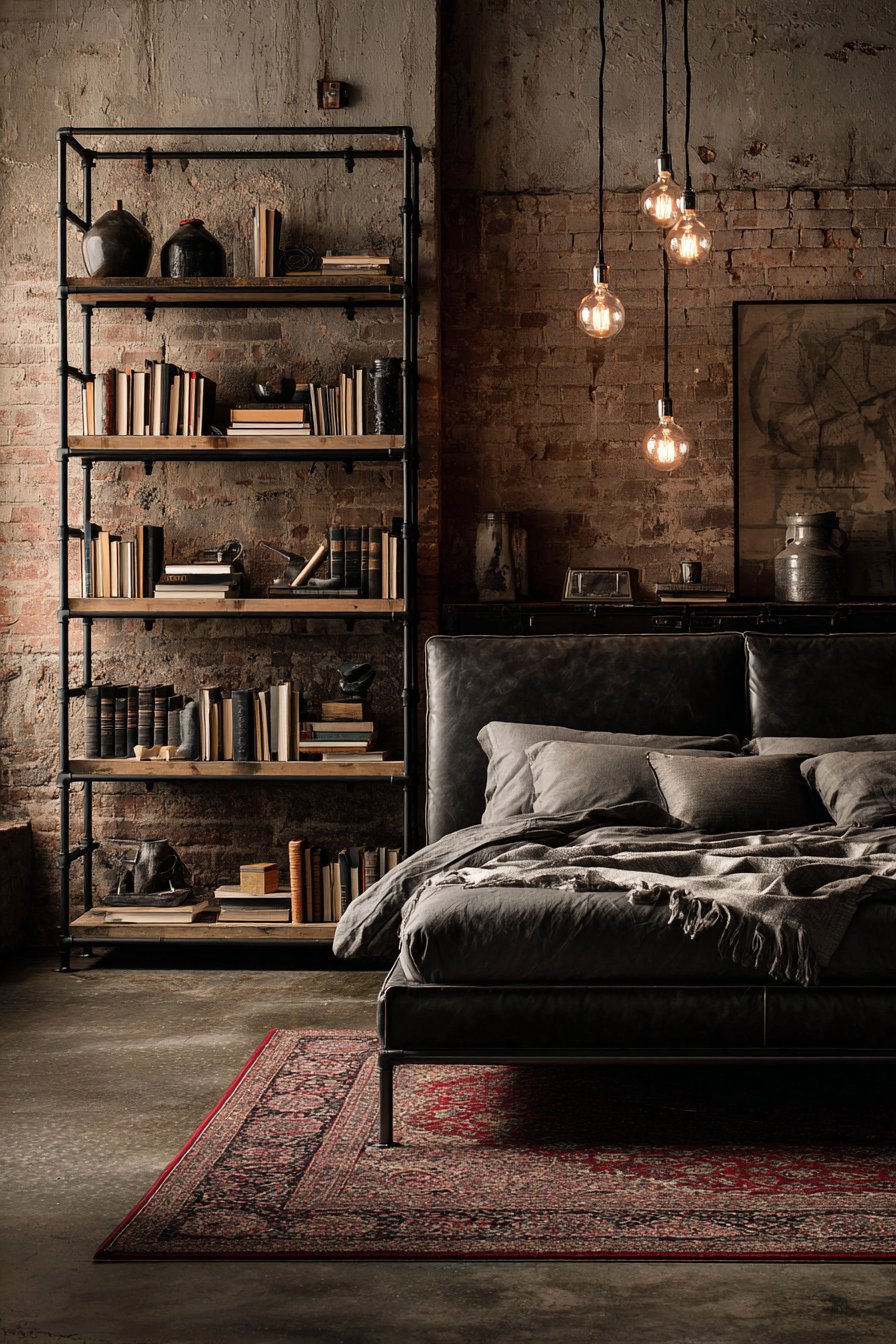
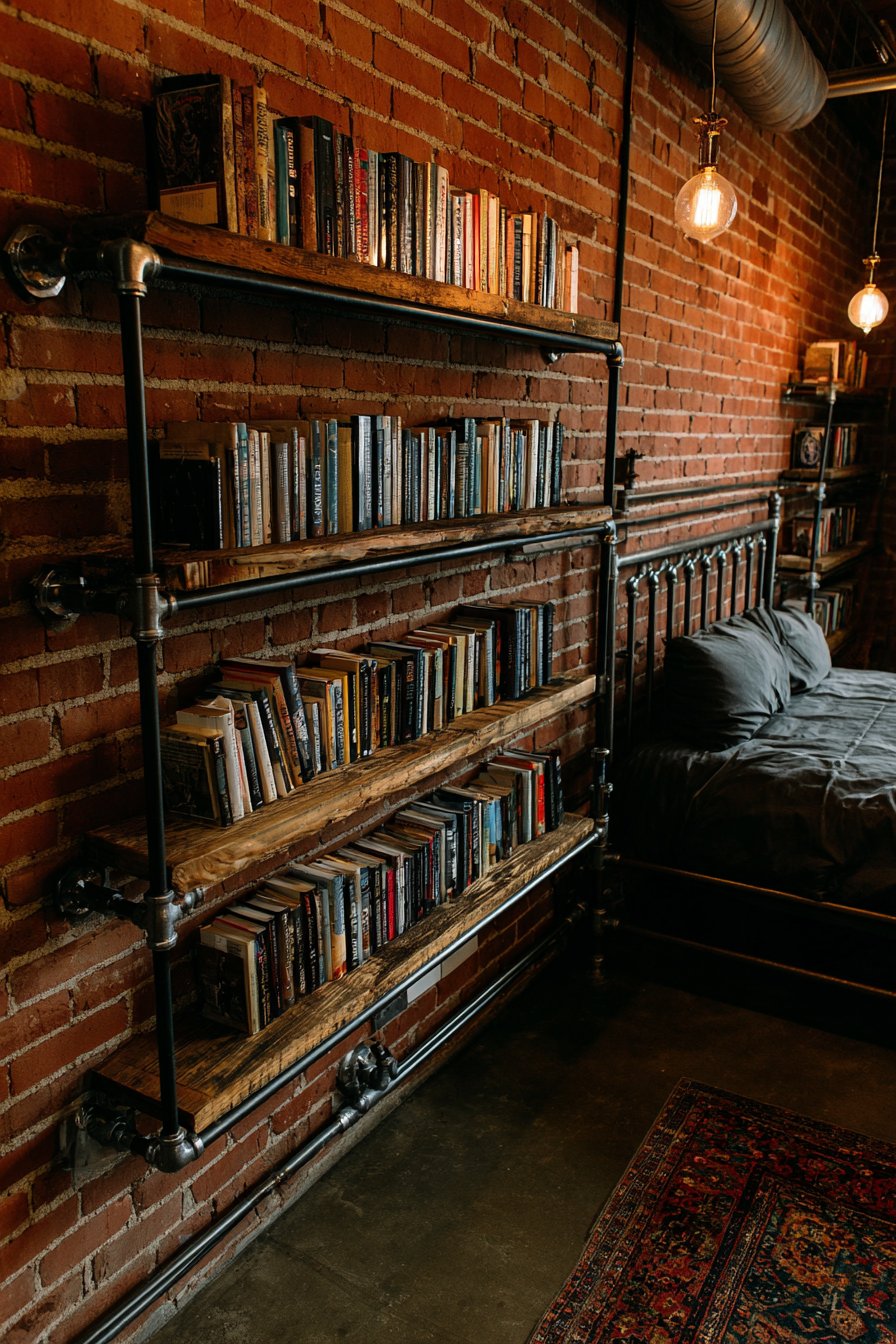
An industrial aesthetic brings urban loft character to library bedroom design through black metal pipe shelving with reclaimed wood planks holding books organized by size and genre. This raw, utilitarian approach celebrates honest materials and functional forms, with the exposed construction becoming part of the aesthetic appeal. The combination of metal and reclaimed wood creates visual interest through material contrast while maintaining tonal cohesion—both materials typically feature dark or neutral finishes that work together harmoniously. Each wood plank bears the marks of its previous life, adding history and character to the storage system.
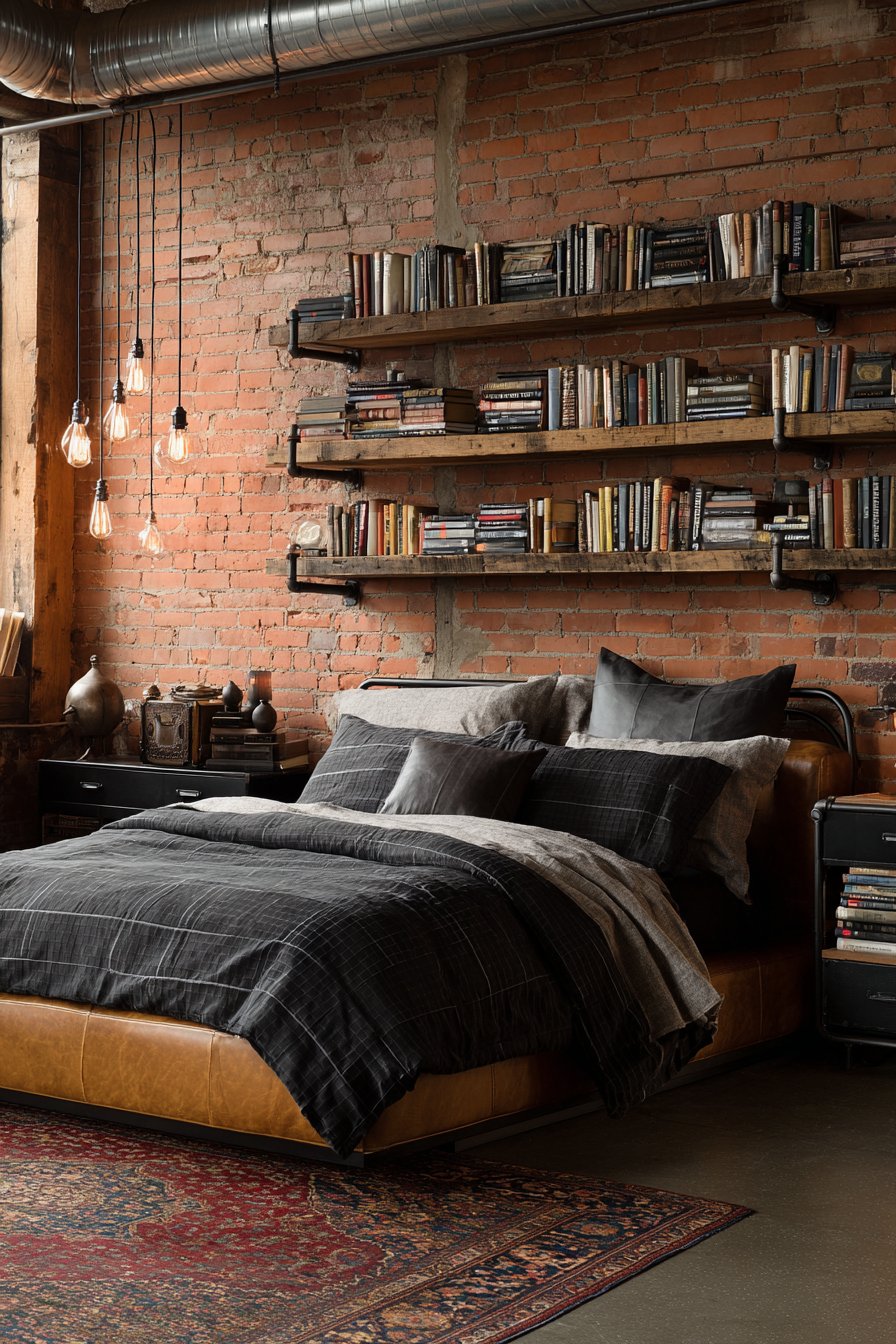
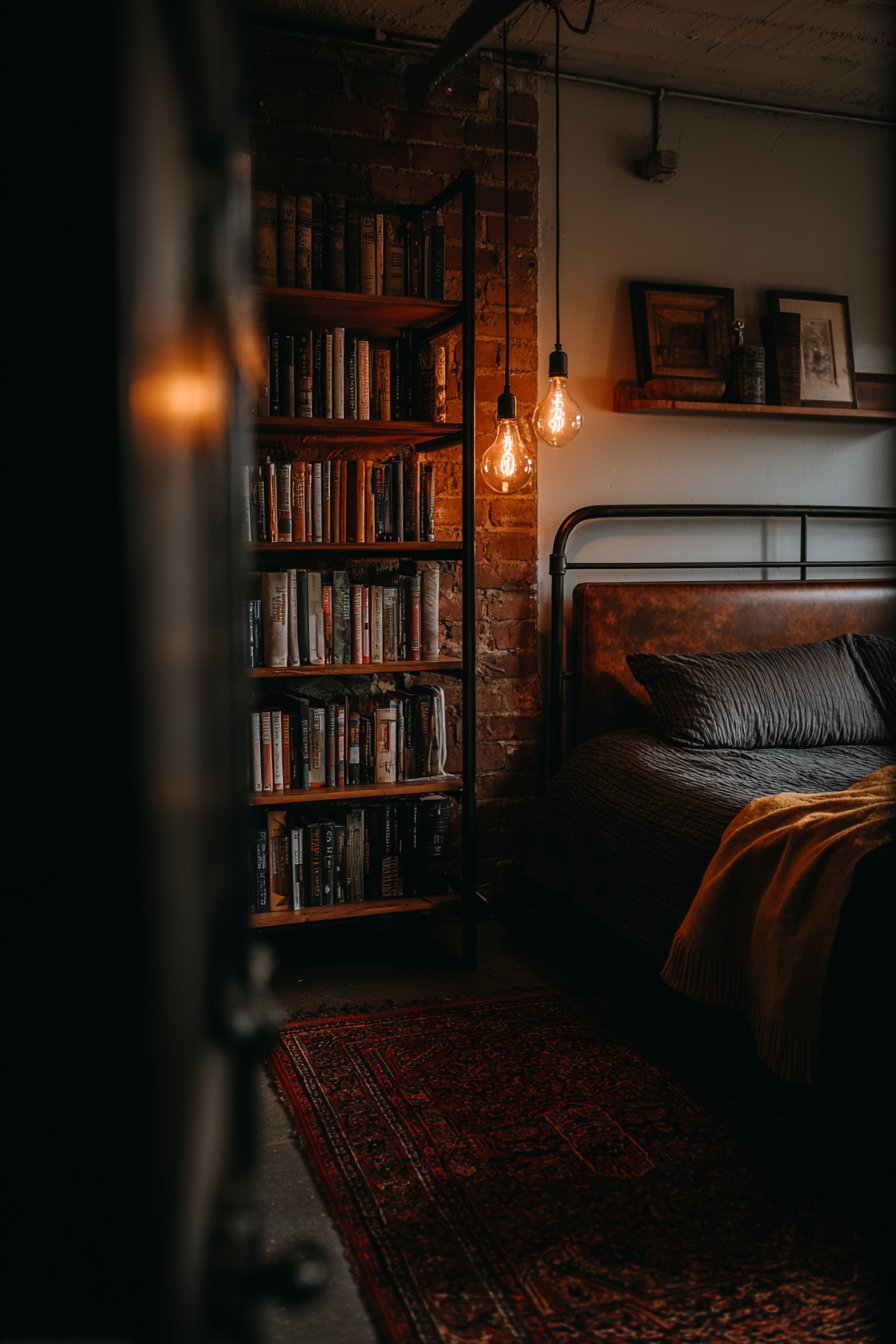
The exposed brick accent wall behind a metal bed frame with distressed leather headboard reinforces the industrial theme, providing textural richness and urban authenticity. Edison bulb pendant lights on fabric-wrapped cords add warm illumination with appropriately vintage-industrial character, their exposed filaments creating focal points even when unlit. Polished concrete floors provide cool-toned foundation while a vintage Persian rug adds unexpected softness and color that prevents the space from feeling too severe. Interior design photography with moody lighting would emphasize raw textures and urban loft character, capturing shadows that define the three-dimensionality of brick and metal elements.
This design appeals to urban dwellers and those who appreciate honest materials, visible construction, and spaces that feel authentically connected to industrial heritage rather than merely decorated in industrial style. The reclaimed materials bring sustainability credentials alongside aesthetic appeal, while the metal pipe shelving can be customized and reconfigured as needs change. The overall effect is masculine but not aggressively so, sophisticated in its restraint rather than its ornamentation.
Key considerations include ensuring metal pipe connections are secure and can support book weight, treating reclaimed wood to prevent splinters while maintaining character, balancing raw industrial elements with soft textiles for bedroom comfort, providing adequate lighting since industrial fixtures often have exposed bulbs with harsh light, maintaining authenticity in material choices rather than faux industrial finishes, and incorporating warmth through textiles and accent pieces to prevent the space from feeling cold.
23. Sculptural Drama with Circular Reading Tower
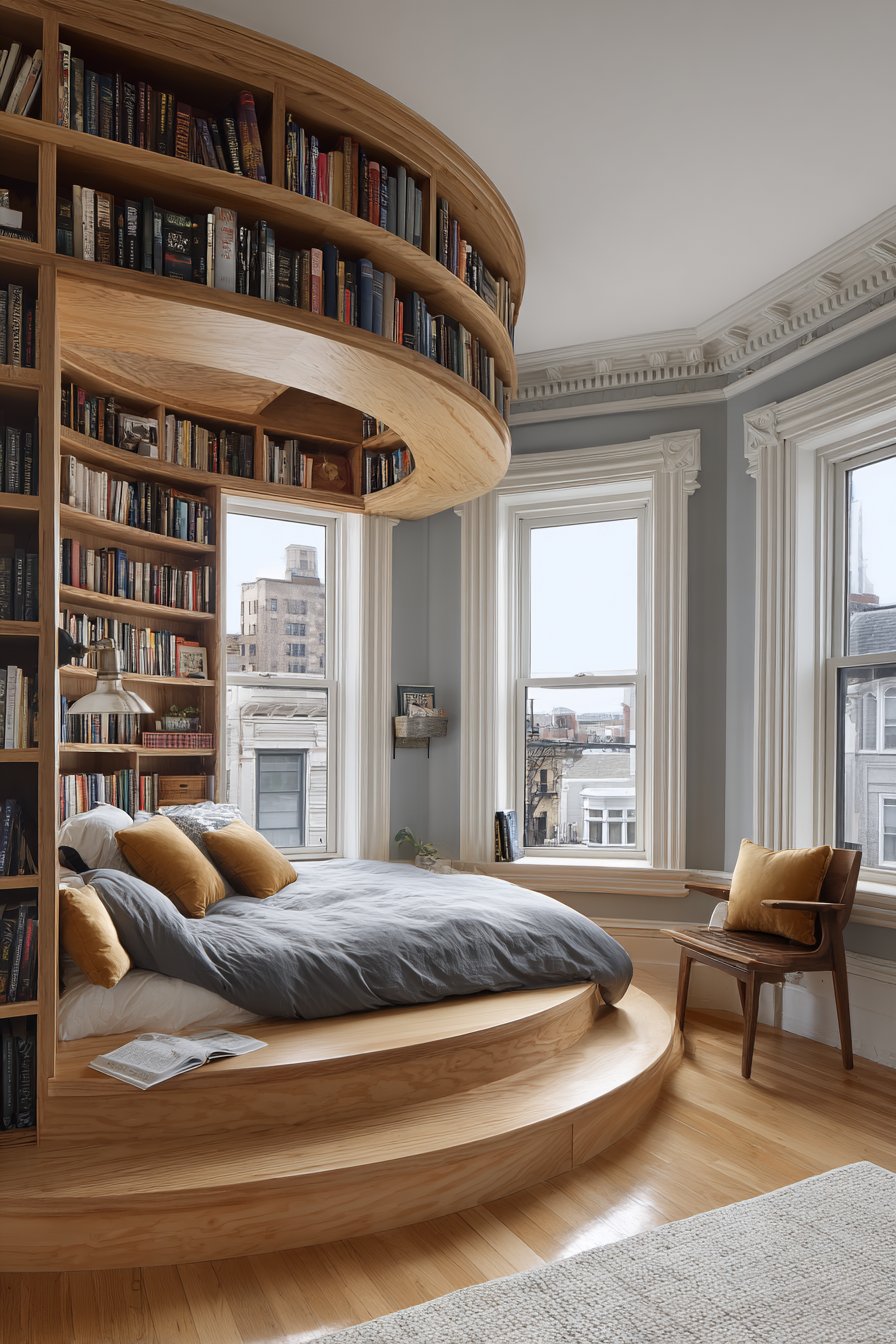
Architectural creativity reaches its peak with circular reading towers featuring curved built-in bookshelves spiraling upward, topped with a cozy reading chair and window overlooking the main room. This sculptural approach transforms book storage from practical necessity into architectural statement piece. The curved construction requires custom cabinetry and careful planning, but the result is utterly unique—a room within a room that serves as both functional storage and visual centerpiece. The spiral arrangement creates natural browsing flow, encouraging exploration of the collection while adding dramatic vertical interest.
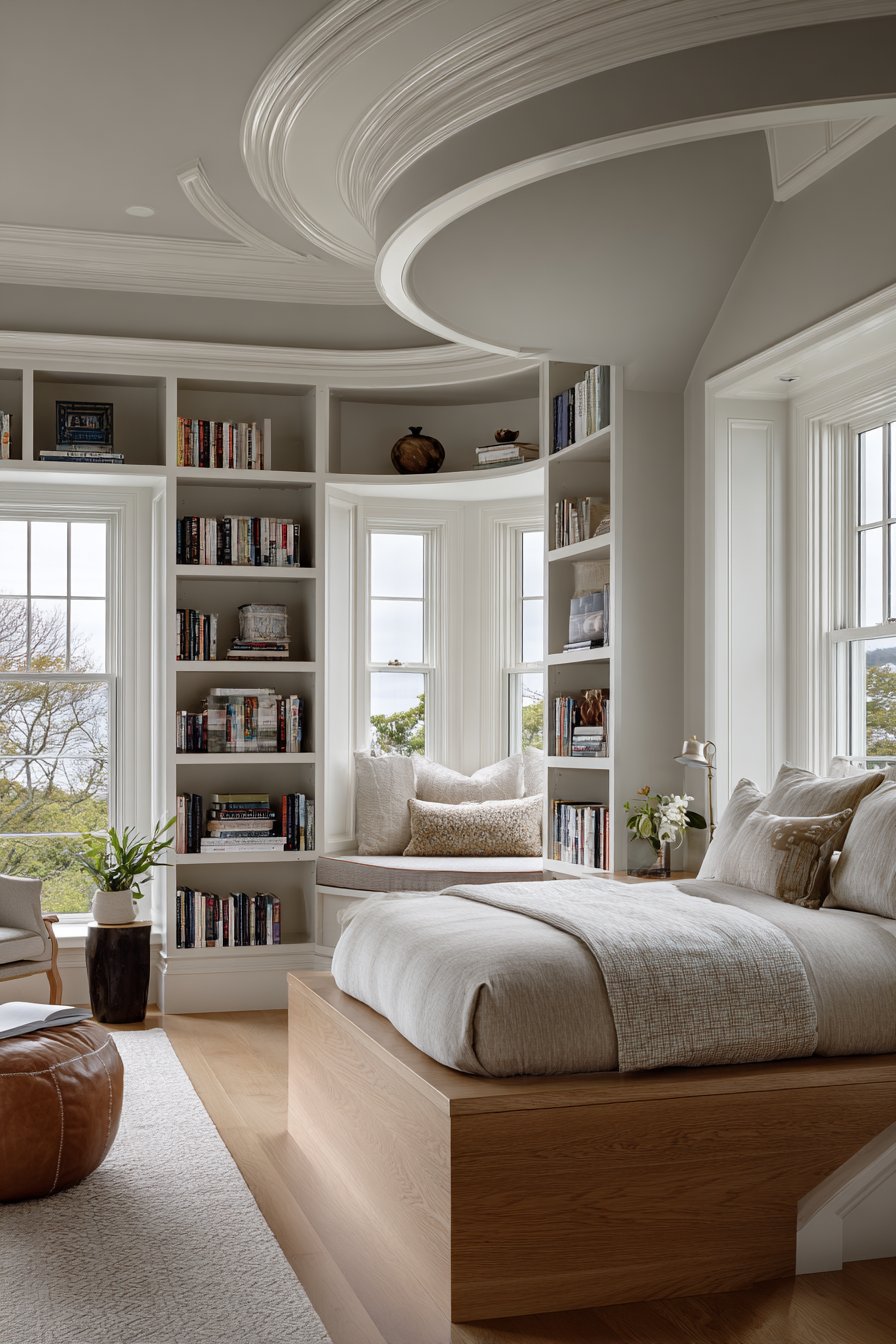
The main bedroom area maintains simplicity with a platform bed in natural oak with organic bedding, allowing the reading tower to command attention without competition. Soft grey walls and white trim provide neutral backdrop that highlights rather than distracts from the tower’s dramatic form. Natural light streaming from multiple angles creates dynamic illumination that changes throughout the day, with the tower casting distinctive shadows that add to its sculptural presence. Architectural photography would capture the unique circular shelving structure and creative use of vertical space, showing how the tower integrates within the larger room while maintaining distinct character.
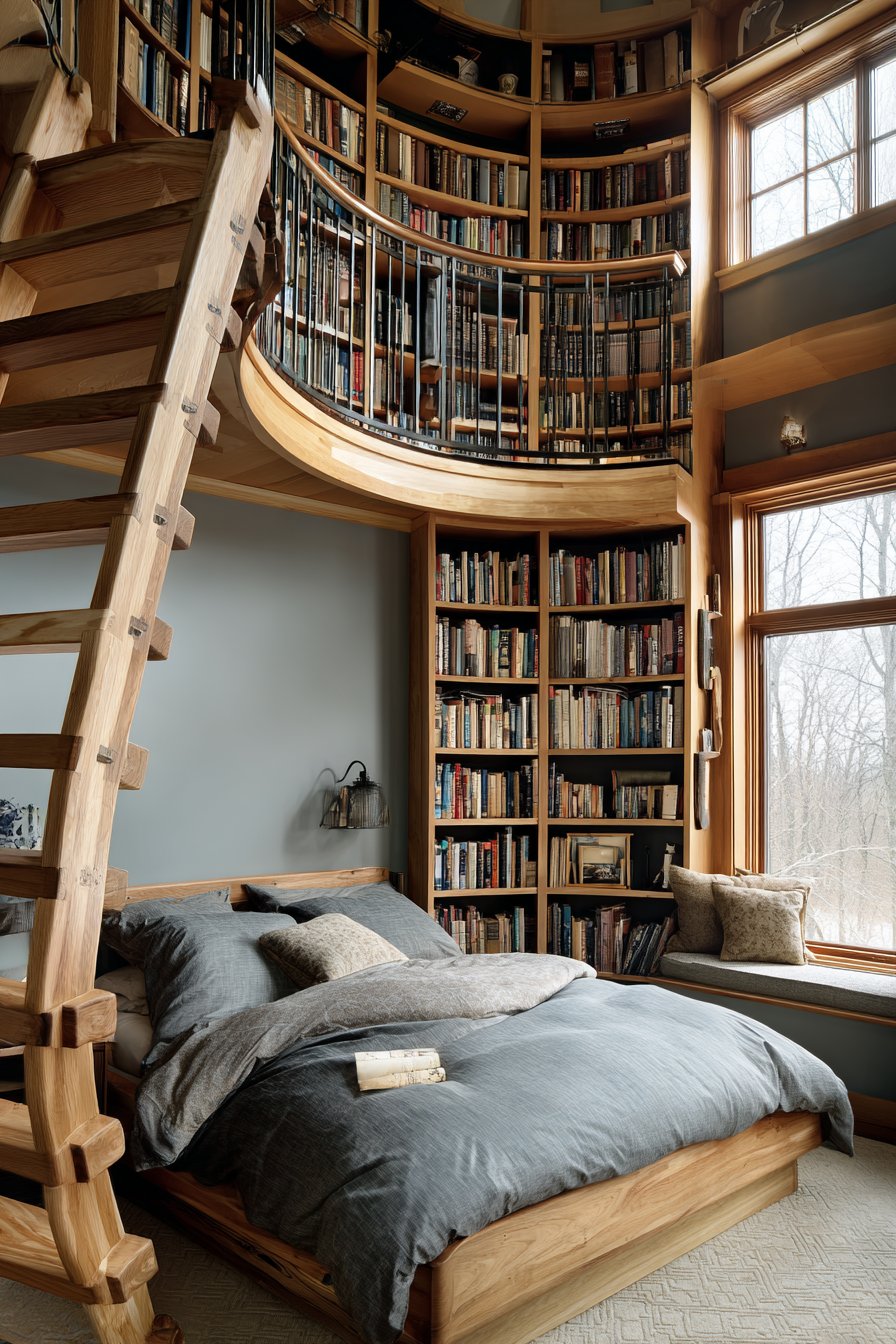
This design suits those willing to invest in custom millwork for truly one-of-a-kind results, or who have interesting architectural features they want to enhance rather than minimize. The circular form creates intimacy and enclosure perfect for focused reading, while the elevated position provides a unique vantage point for the rest of the bedroom. The tower becomes not just storage but destination—a reason to retreat to the bedroom beyond just sleep.
Essential elements include working with skilled carpenters experienced in curved construction, ensuring structural support for the tower’s weight and reading chair, providing adequate lighting at all levels of the spiral, considering access and safety for upper shelves, maintaining proper proportions so the tower feels intentional rather than overwhelming, and coordinating the tower’s finish with the room’s overall design palette.
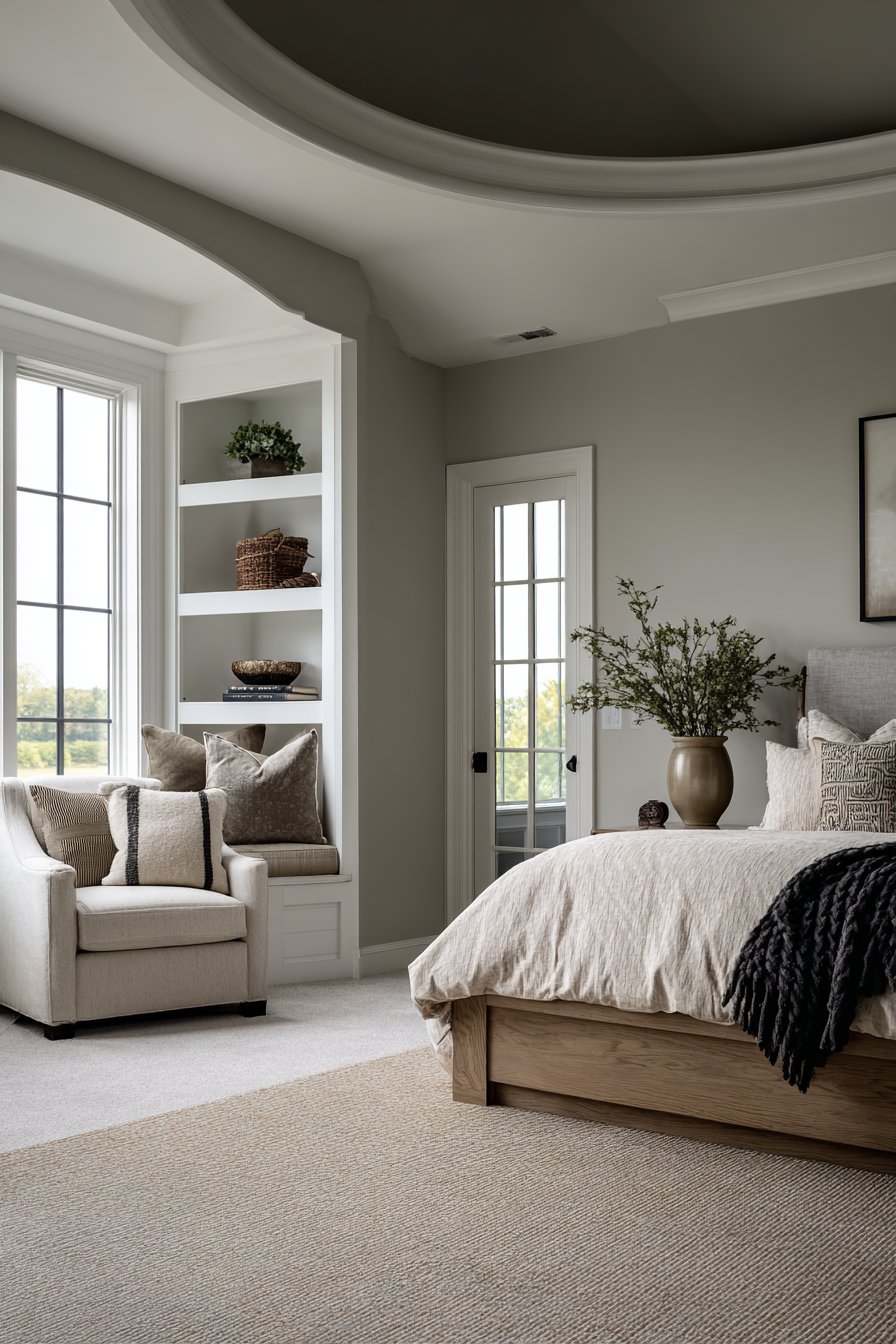
24. Playful Mystery with Hidden Door Bookshelf
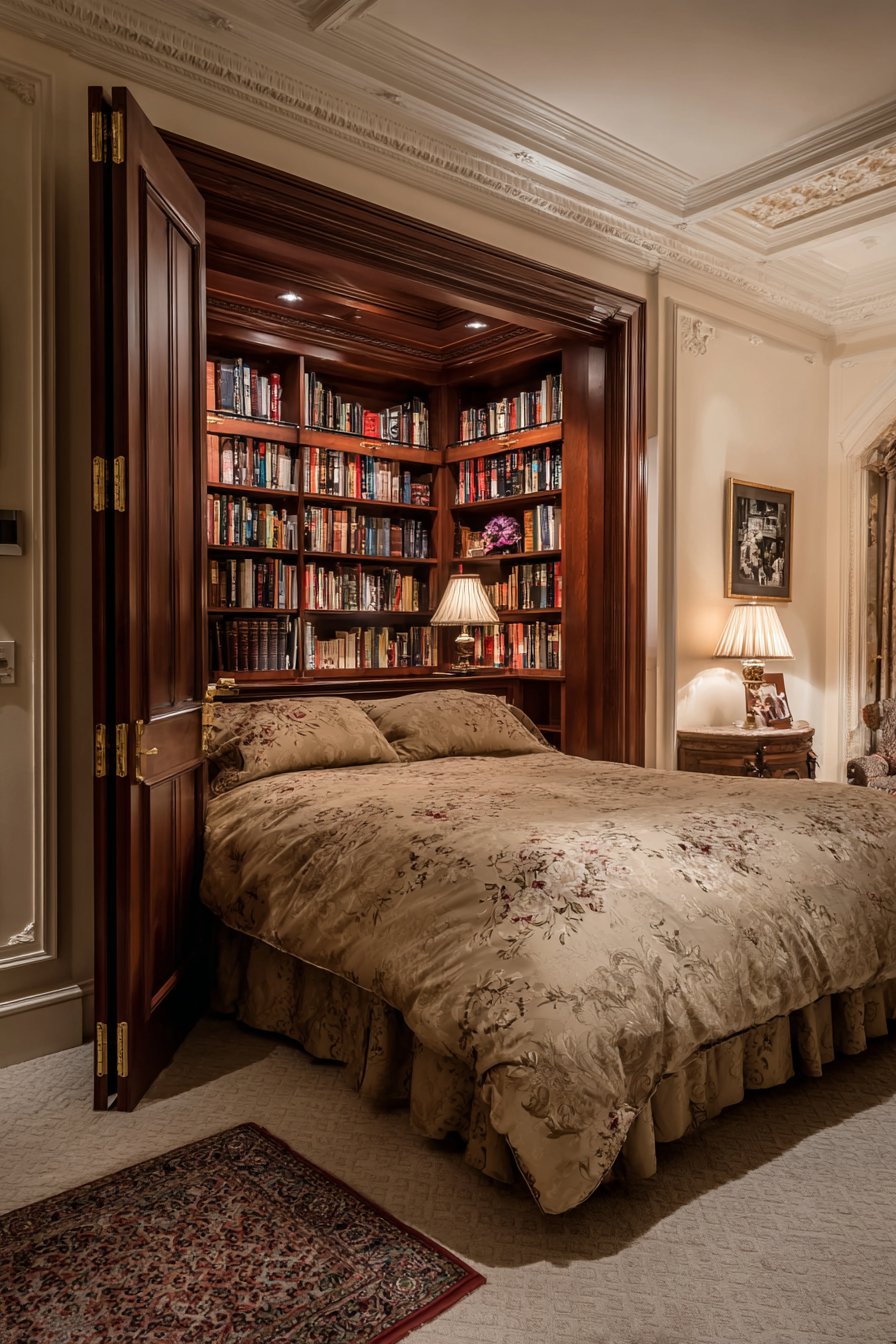
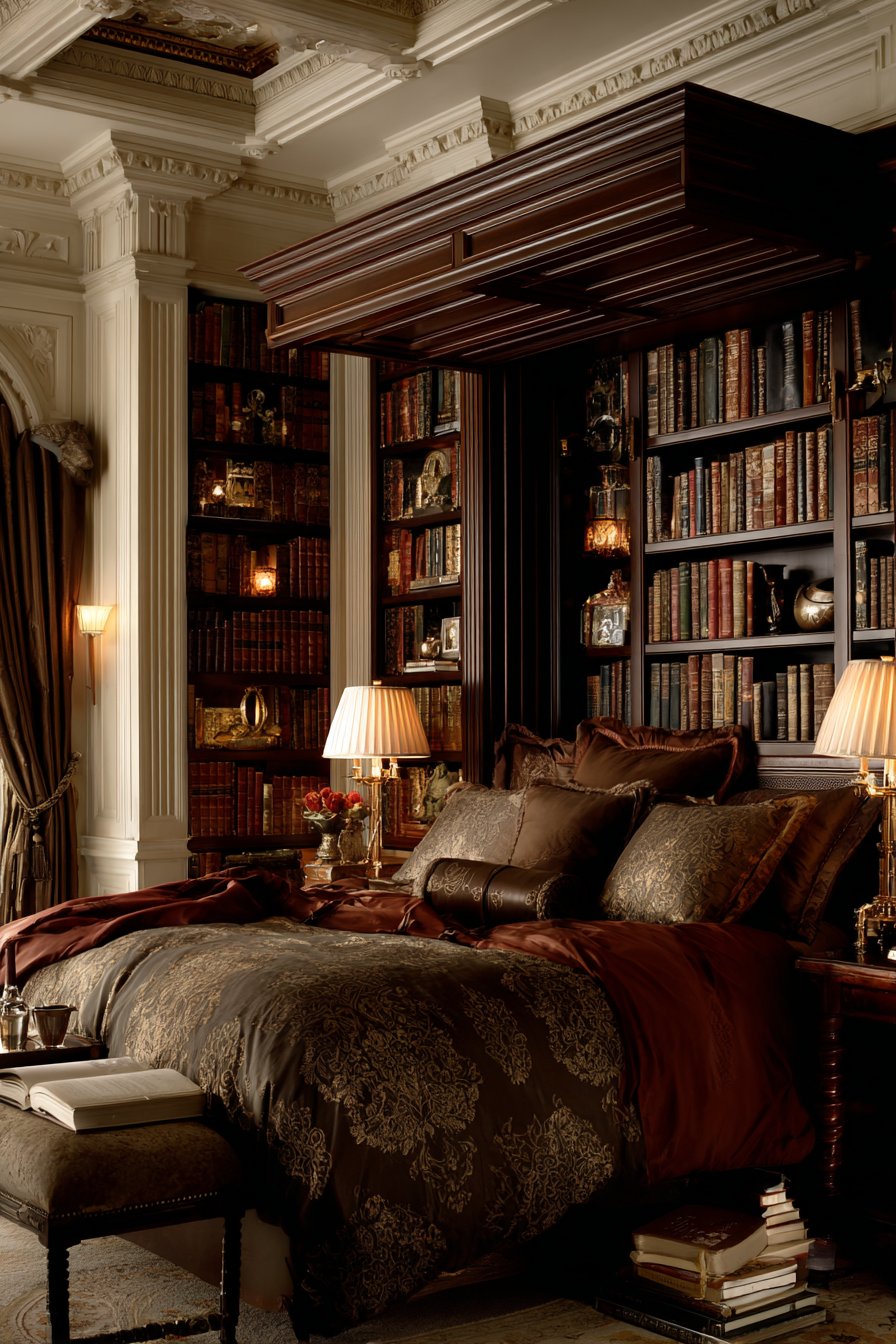
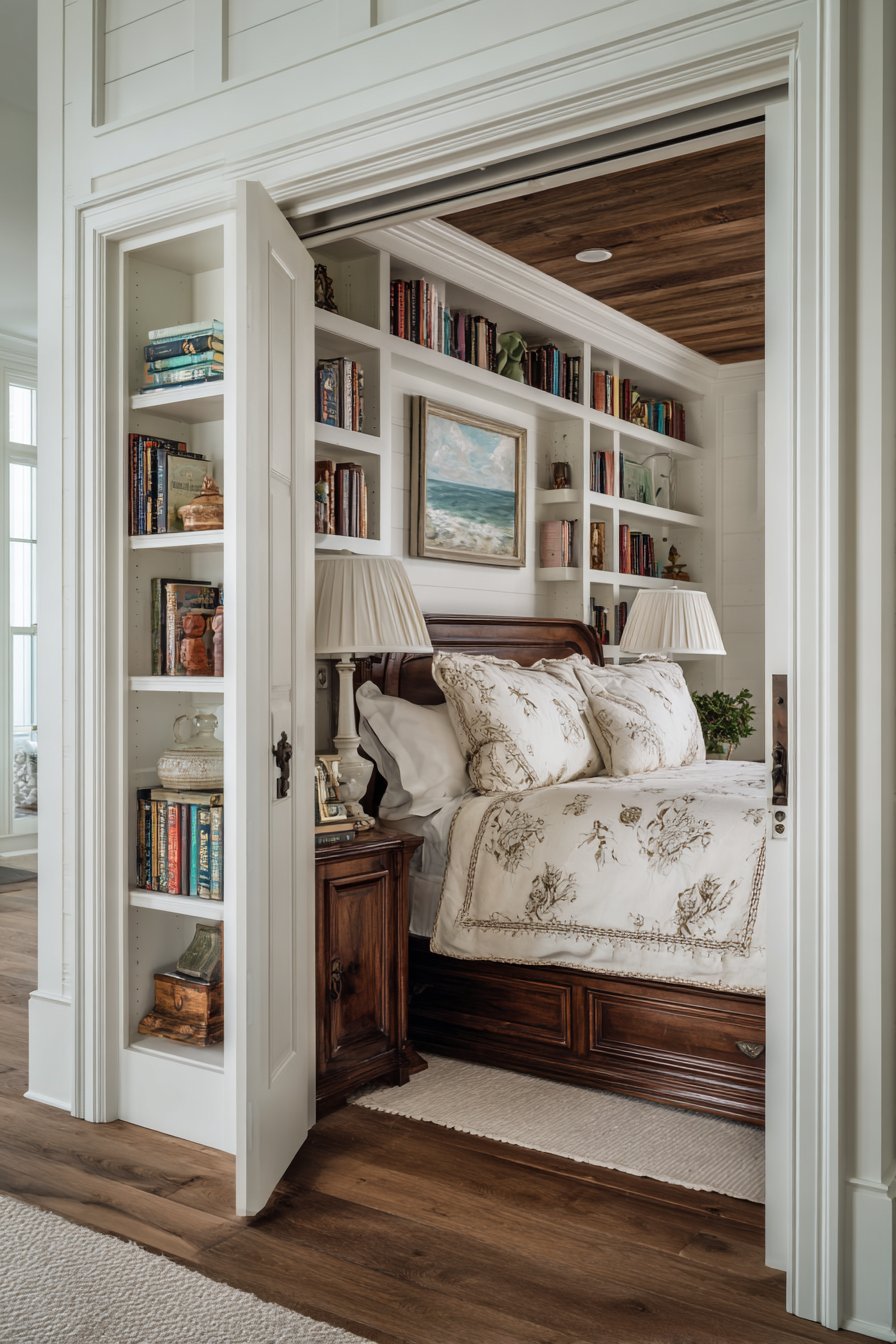
A secret door disguised as a bookshelf section introduces an element of playful mystery to library bedroom design. The visible shelving displays novels and decorative objects seemingly like any other built-in, but one section swings open to reveal a hidden space beyond—perhaps a walk-in closet, bathroom, or study. This James Bond-worthy feature delights anyone who has dreamed of secret passages while adding genuine functionality by saving wall space that a conventional door would require. The sophisticated woodworking required to make the door operate smoothly while maintaining the appearance of fixed shelving represents fine craftsmanship.
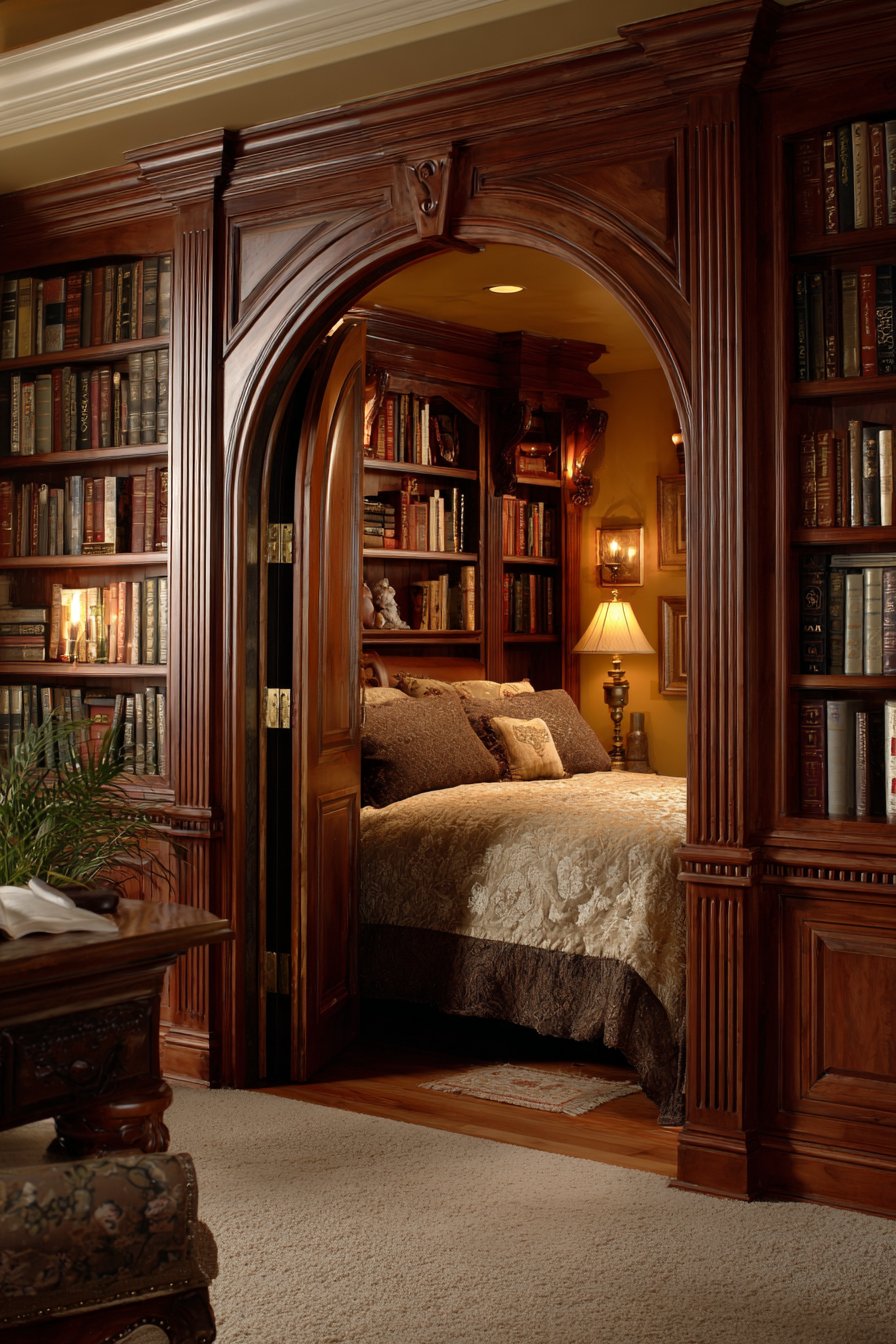
The bedroom features traditional four-poster bed in dark cherry wood with embroidered duvet, crown molding and wainscoting in classic white. Table lamps with pleated shades on nightstands provide warm ambient lighting that enhances the traditional atmosphere. Professional interior photography with warm lighting would reveal hints of the hidden door mechanism and sophisticated woodworking details without fully exposing the secret, maintaining some mystery while demonstrating the feature’s reality.
This design appeals to those with playful sensibilities who appreciate the unexpected, or who need to maximize space efficiency by eliminating conventional door swing areas. The hidden door serves practical purposes while adding an element of delight that makes the space memorable and personal. Discovery of the hidden feature becomes a story to share with visitors, adding narrative dimension to the physical space.
Important considerations include investing in high-quality hidden hinges and latches designed for bookshelf doors, ensuring proper weight balance so the door operates smoothly, incorporating a subtle opening mechanism that’s intuitive for those who know but invisible to those who don’t, maintaining consistent book arrangement to camouflage the door’s presence, providing proper structural support for the door’s weight, and ensuring the mechanism doesn’t compromise the shelving’s book storage function.
25. Symmetrical Elegance for Master Suites
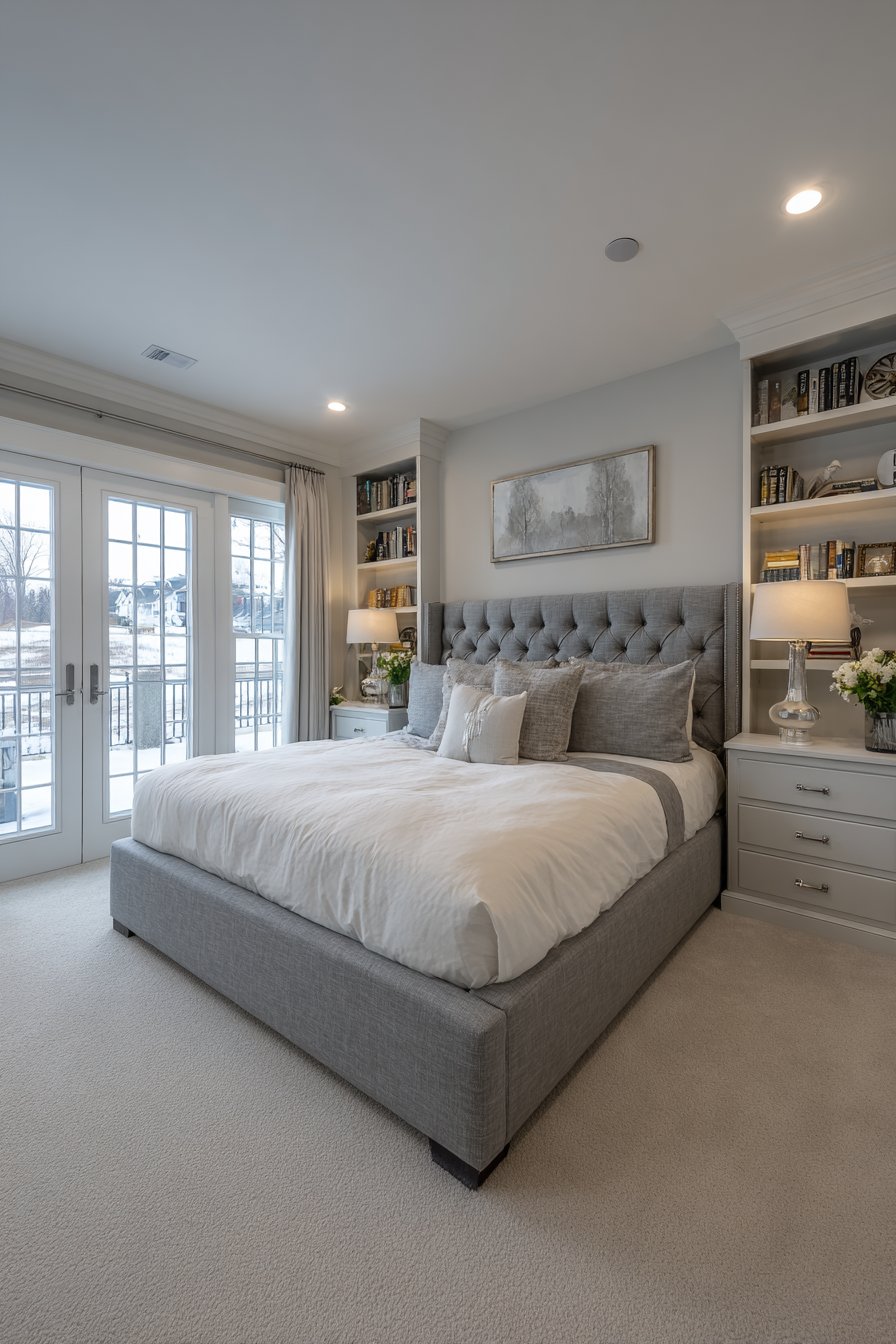
A master suite library bedroom design benefits from symmetry and generous proportions, with dual his-and-hers bookshelf walls flanking a king-size upholstered bed with tall tufted headboard in grey linen. Each side’s personalized book collections and lighting preferences acknowledge that shared spaces needn’t mean identical tastes. Matching nightstands with drawers provide additional storage beyond books, while plush carpeting in neutral beige adds luxury and sound dampening appropriate to master suite standards. The symmetrical layout creates formal elegance while the personalized collections add warmth and individual character.
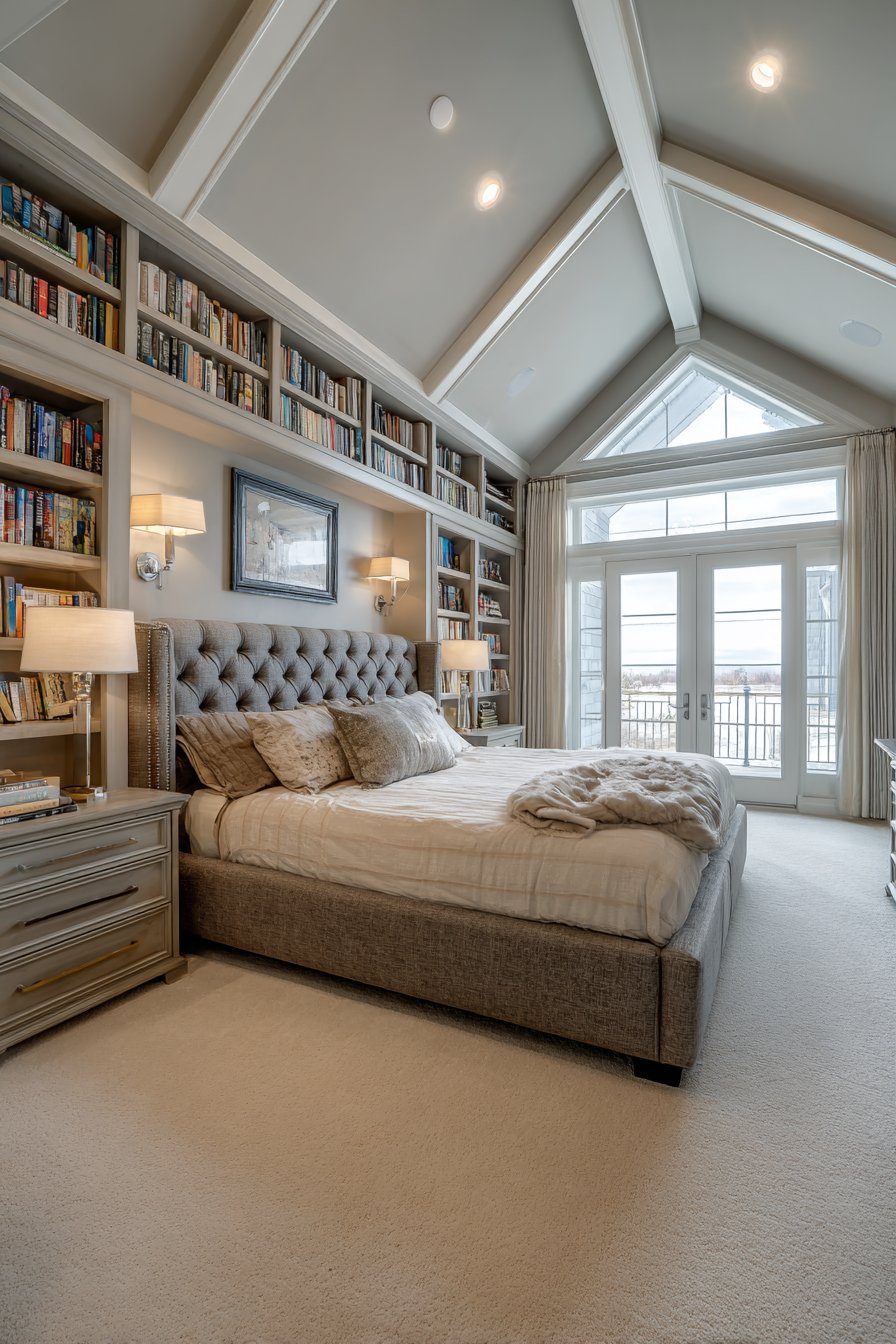
Wide-angle interior photography would show the balanced composition with natural light from French doors illuminating both sides equally. Attention to coordinated yet distinct design elements on each side demonstrates how shared spaces can honor individual preferences without creating visual chaos. The generous proportions typical of master suites allow for substantial book collections without overwhelming the space or compromising the bedroom’s primary function.
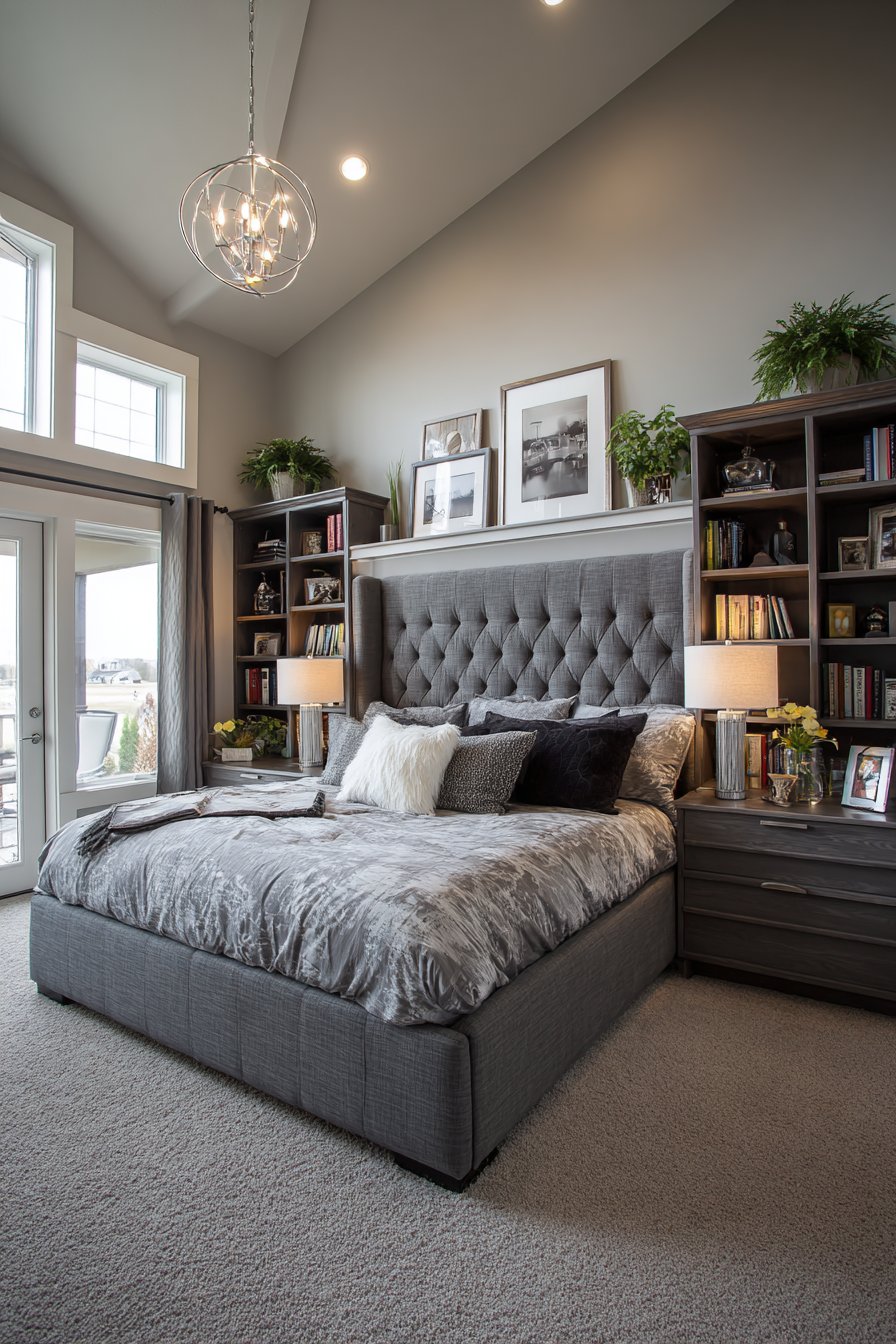
This design suits couples who are both readers but with different genre preferences or organizational styles, allowing each person to curate their side according to personal preference. The symmetry provides visual order and formality, while the personalization prevents the space from feeling too controlled or impersonal. The dual collections might include one side organized by color and the other by author, or one filled with fiction and the other with non-fiction—whatever reflects the actual reading habits of the occupants.
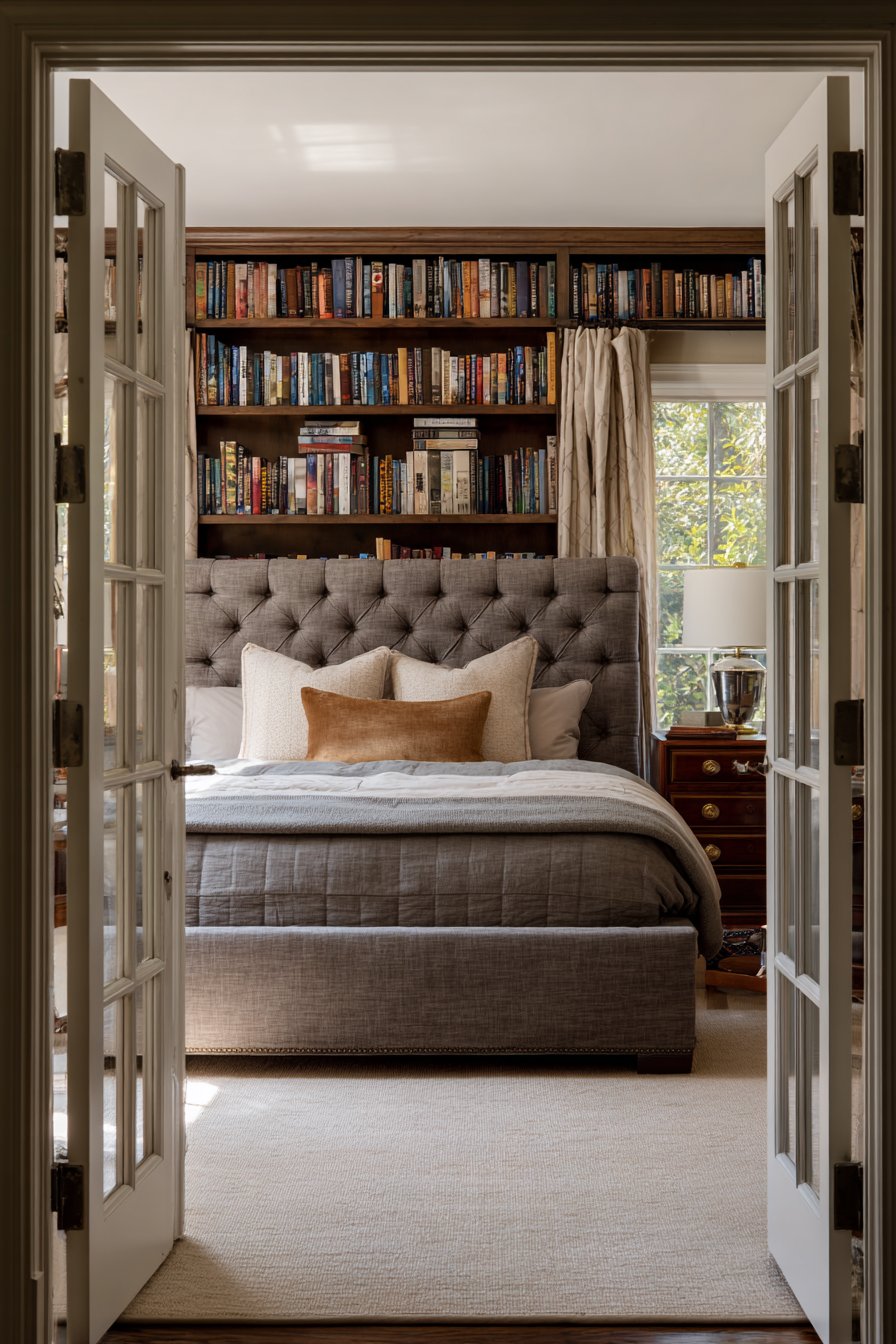
Key elements include ensuring both sides receive equal natural light and electrical outlets, coordinating shelving systems while allowing individual organization methods, providing individual task lighting with separate controls, selecting a headboard that relates well to flanking shelving without appearing overwhelmed, maintaining consistent overall design language while permitting personalization, and including adequate storage beyond books to prevent nightstand clutter.
26. Rolling Access Along the Full Wall Length
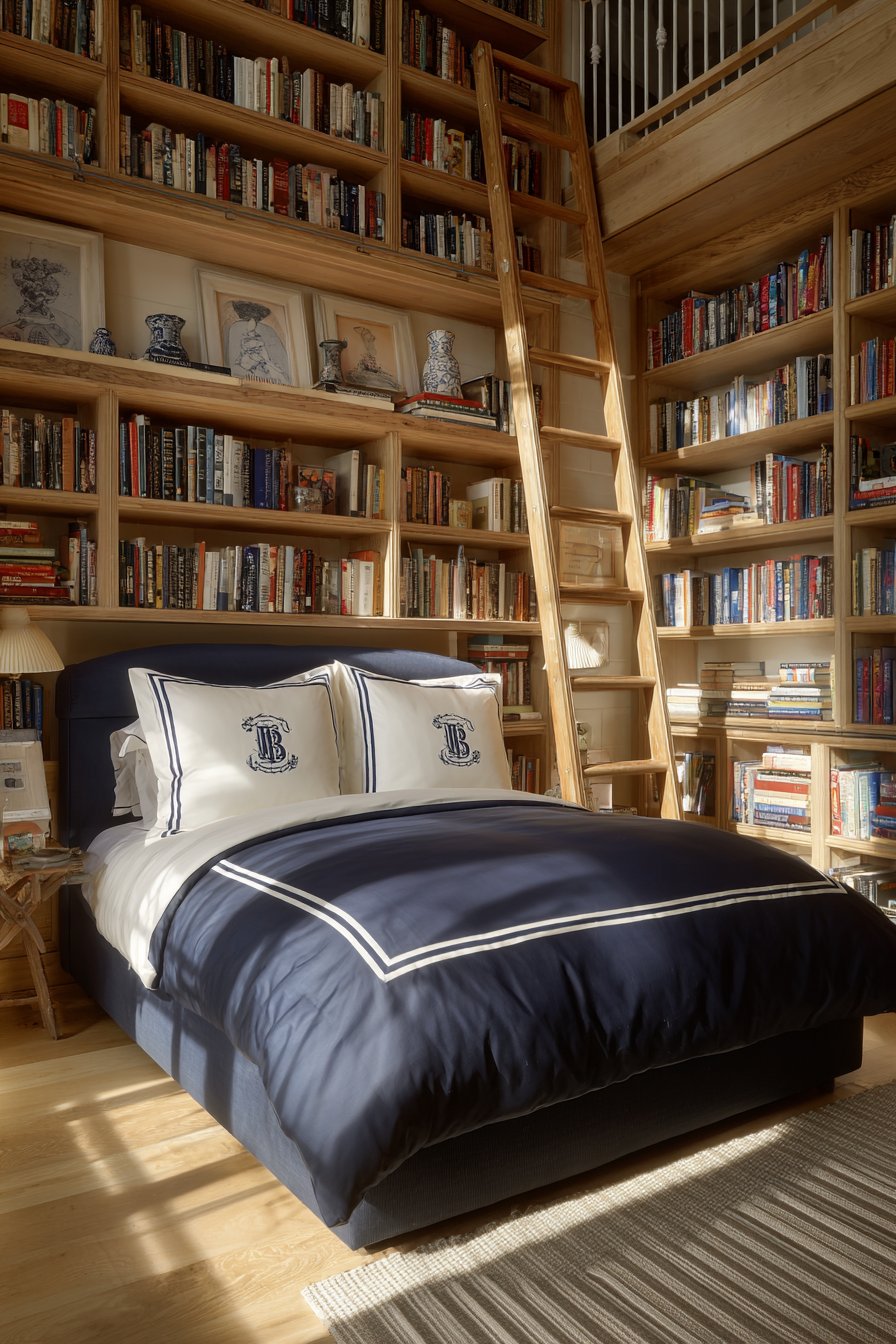
A rolling ladder system spanning an entire wall’s length provides both functional access and dynamic visual interest to library bedroom design. The ladder track allows positioning anywhere along the wall, ensuring even hard-to-reach volumes remain accessible while the rolling capability adds an interactive, kinetic element that static ladders lack. Upper shelves might house paperback fiction while lower shelves display oversized coffee table books and decorative objects, with organization reflecting access frequency and book characteristics. The visible track and ladder hardware become design elements themselves, with finish choices ranging from industrial black metal to warm brass to painted wood.
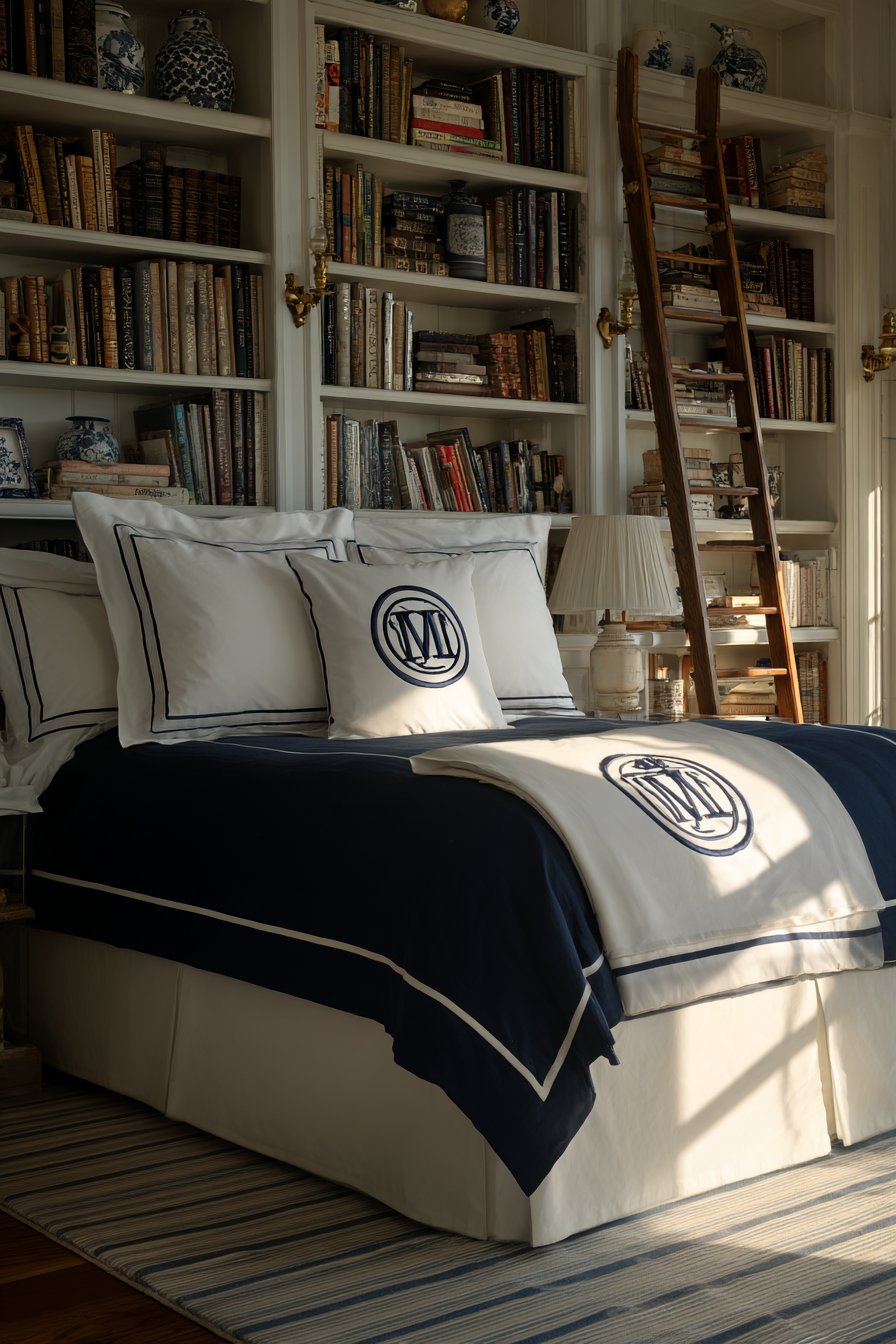
The bed features simple upholstered design in navy blue with white piping details and monogrammed pillows, maintaining refined character without competing with the dramatic shelf wall. Light oak flooring with a striped cotton dhurrie rug provides clean-lined, casual elegance appropriate to the overall aesthetic. Interior design photography would emphasize the functional ladder hardware and curated book display, with soft morning light creating gentle shadows that define the shelving depth and highlight the rolling mechanism’s details.
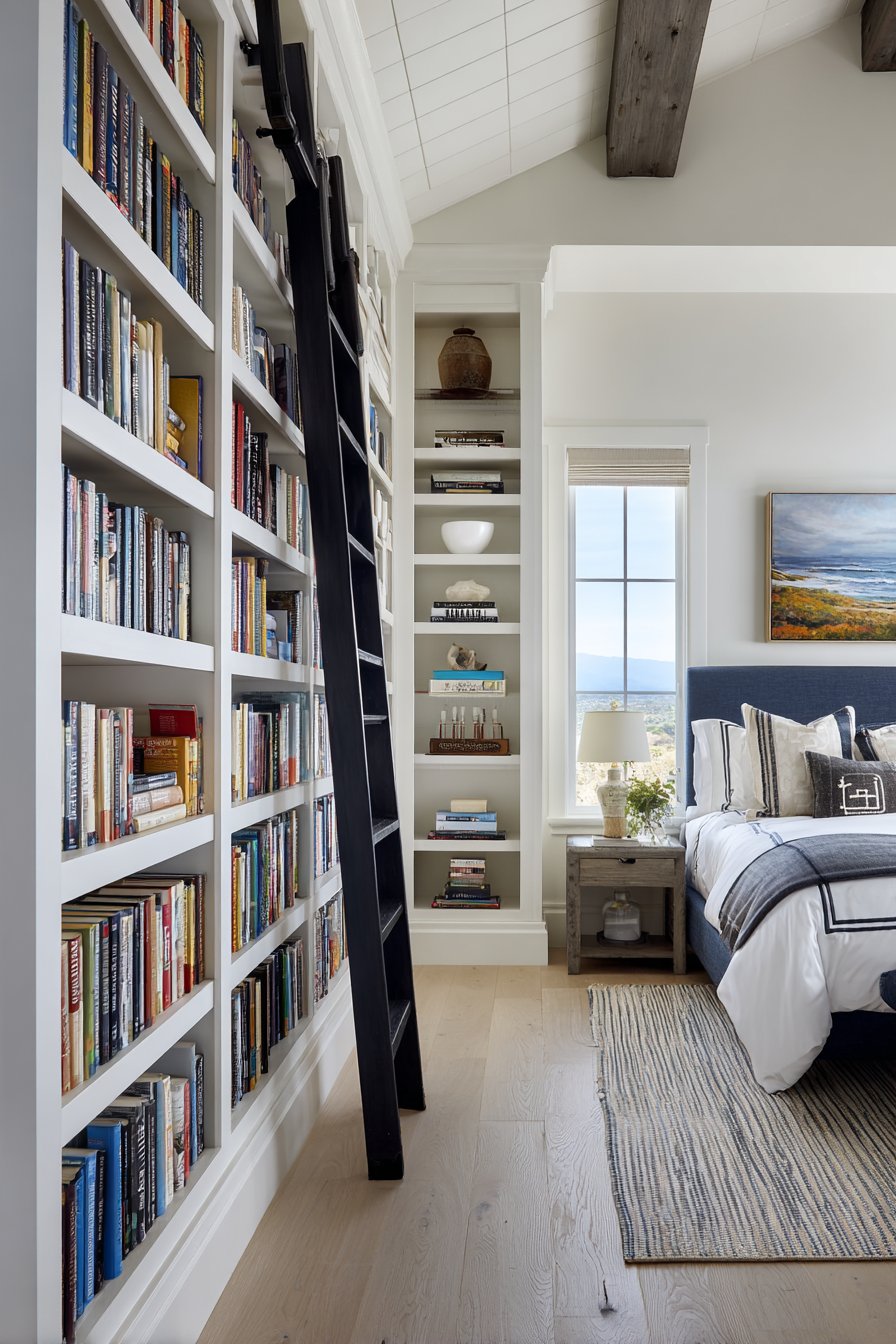
This design appeals to those with extensive collections requiring significant vertical storage, or who appreciate the visual and functional drama of library ladder systems. The rolling capability means the ladder itself requires no dedicated floor space—it’s stored against the shelf wall wherever last positioned. The full-length track allows moving it aside when accessing lower shelves directly, providing flexibility that fixed ladders cannot match.
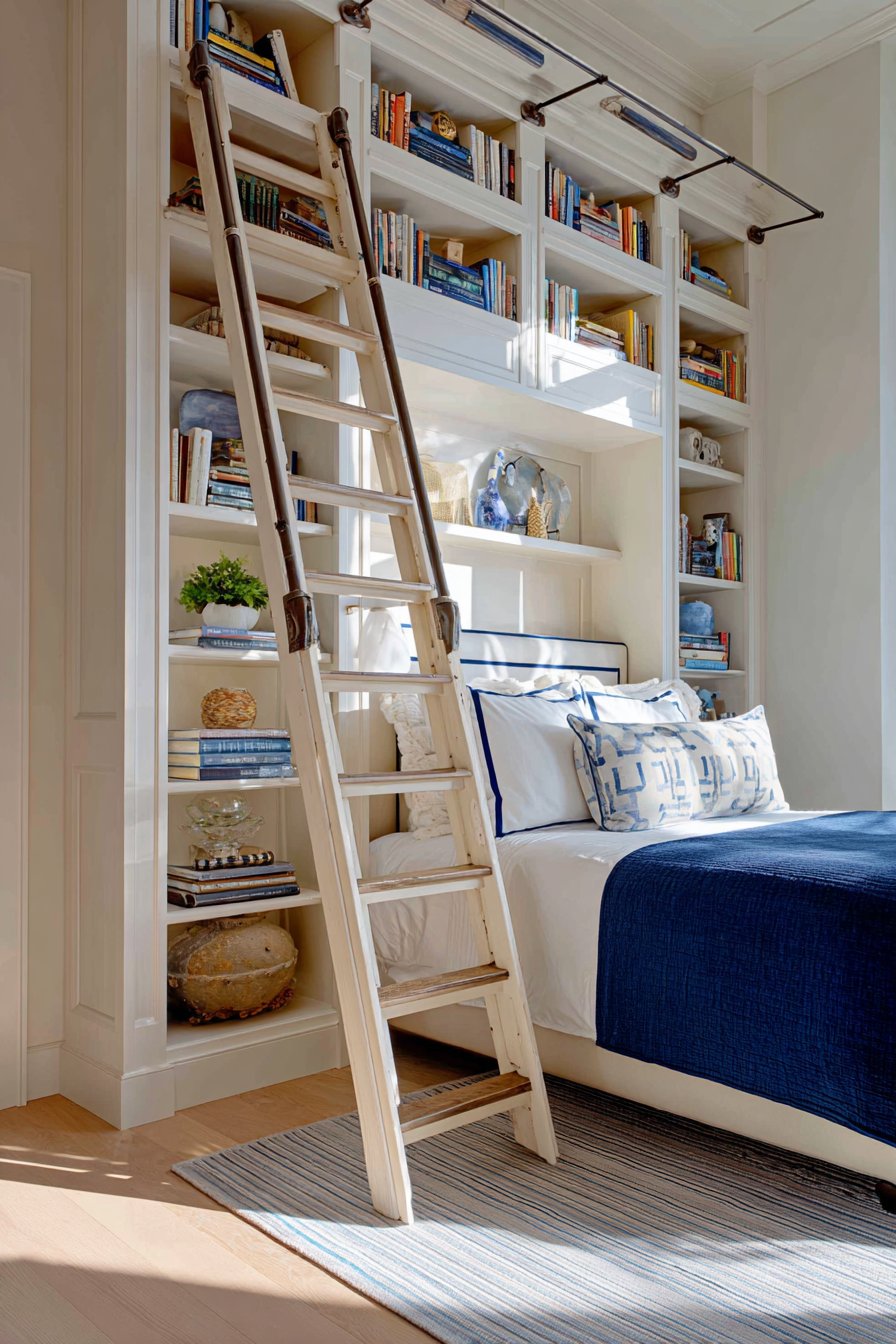
Important considerations include selecting ladder and track systems rated for expected weight and usage, ensuring floor clearance allows smooth rolling despite area rugs, organizing upper shelves with books accessed less frequently, providing adequate lighting at all heights, coordinating ladder finish with room’s overall hardware and metal accents, and maintaining clear floor space along the entire wall length to allow unimpeded ladder travel.
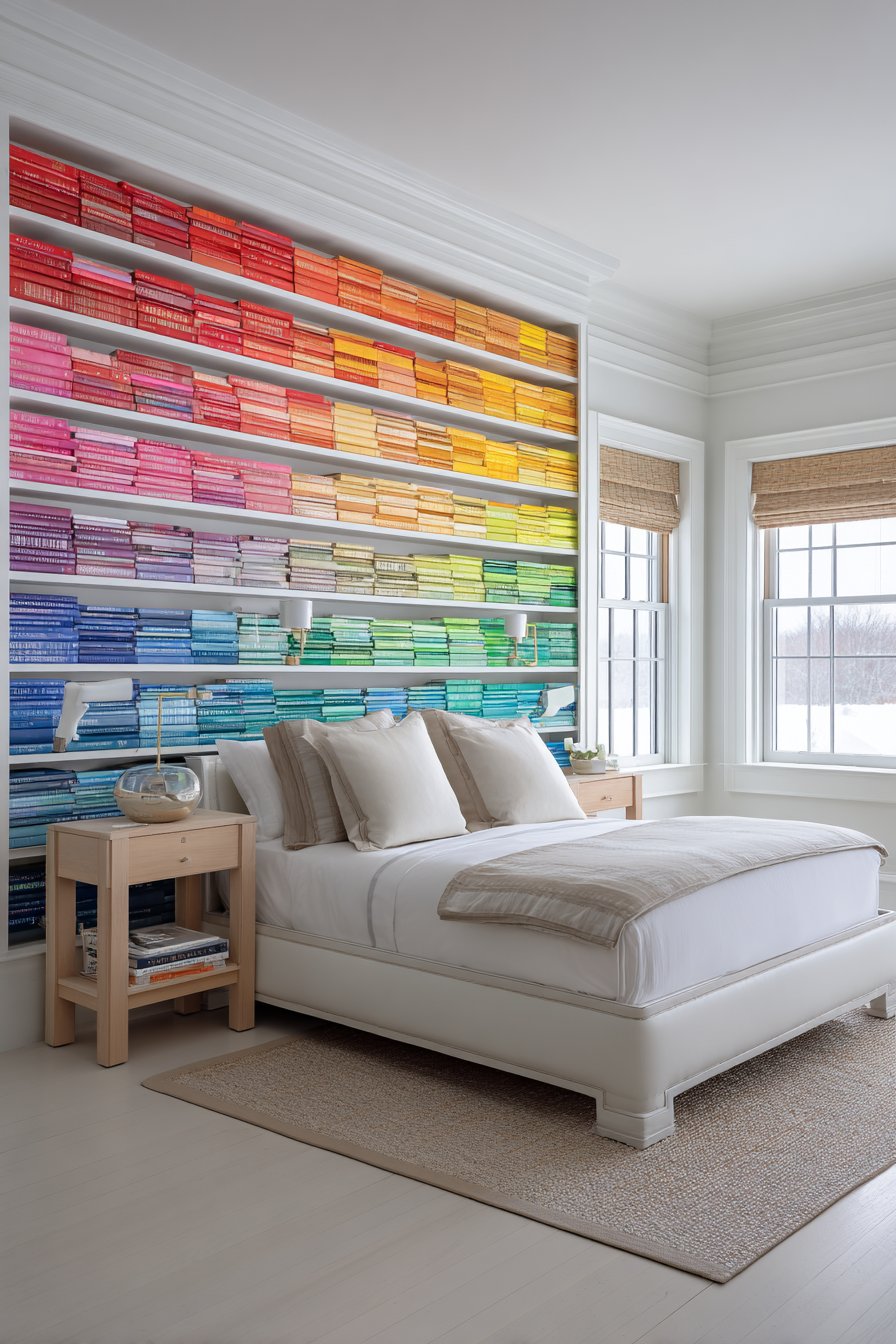
27. Chromatic Organization with Rainbow Book Display
Color-coded rainbow bookshelves create vibrant focal walls that serve as both storage and artwork, with books arranged in ROYGBIV order from floor to ceiling. This approach transforms the collection itself into the room’s primary design feature and art installation, requiring substantial collection size to achieve full color spectrum. The arrangement process becomes meditative exercise in organization, while the result provides constant visual pleasure and easy book location—you’ll remember what color a book is even if you’ve forgotten its title. The rainbow wall makes a bold statement that books are celebrated rather than hidden.
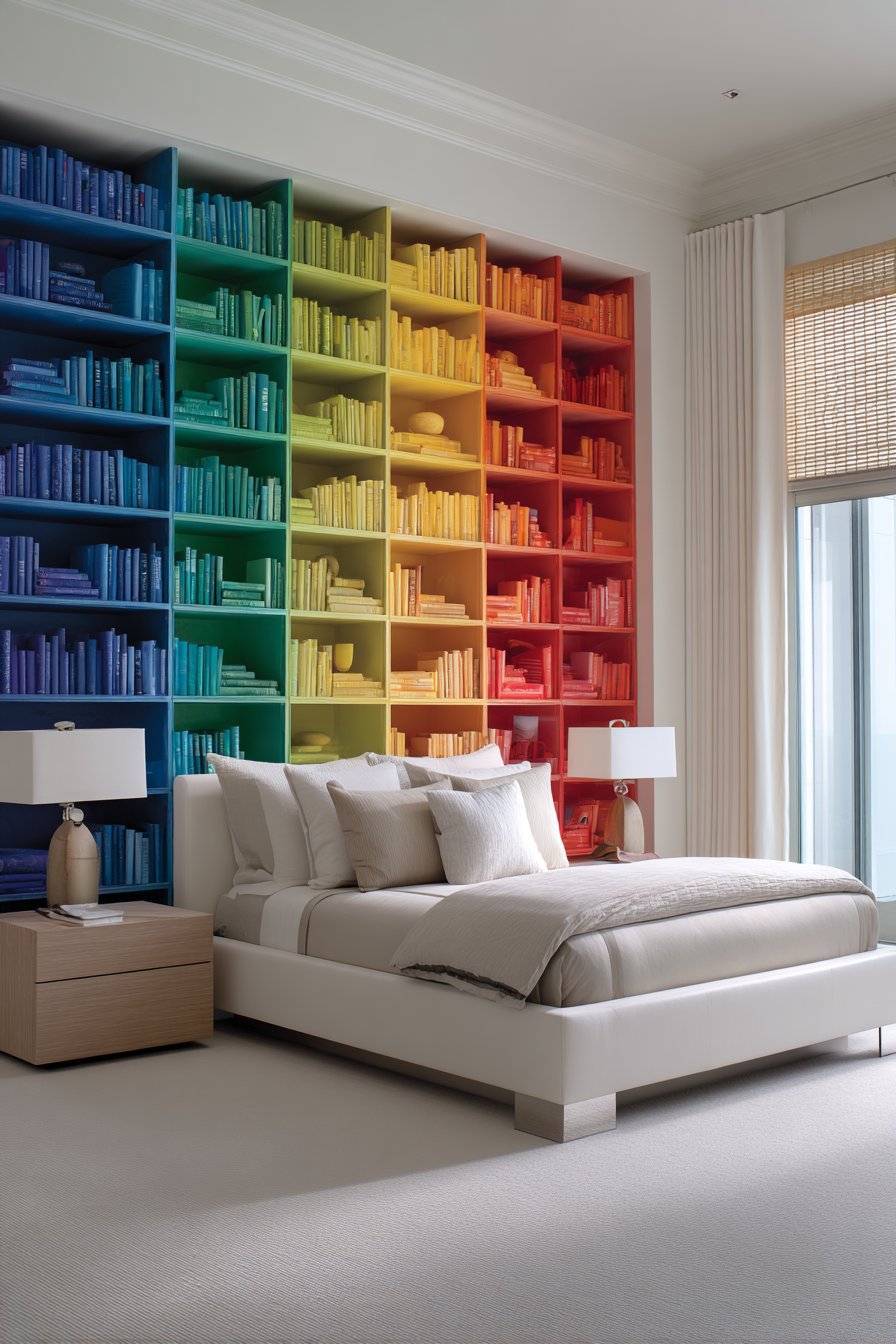
The bed maintains simplicity with white upholstered frame and neutral bedding, intentionally allowing the colorful books to remain the focal point without competition. Minimalist nightstands in light wood and natural fiber window treatments continue the restrained approach, ensuring nothing distracts from the rainbow display. White walls and abundant natural light create gallery-like atmosphere where the books truly shine. Bright natural light photography would showcase the colorful arrangement as the room’s primary design feature, with balanced exposure capturing the full spectrum of hues while maintaining detail in both book spines and surrounding white surfaces.
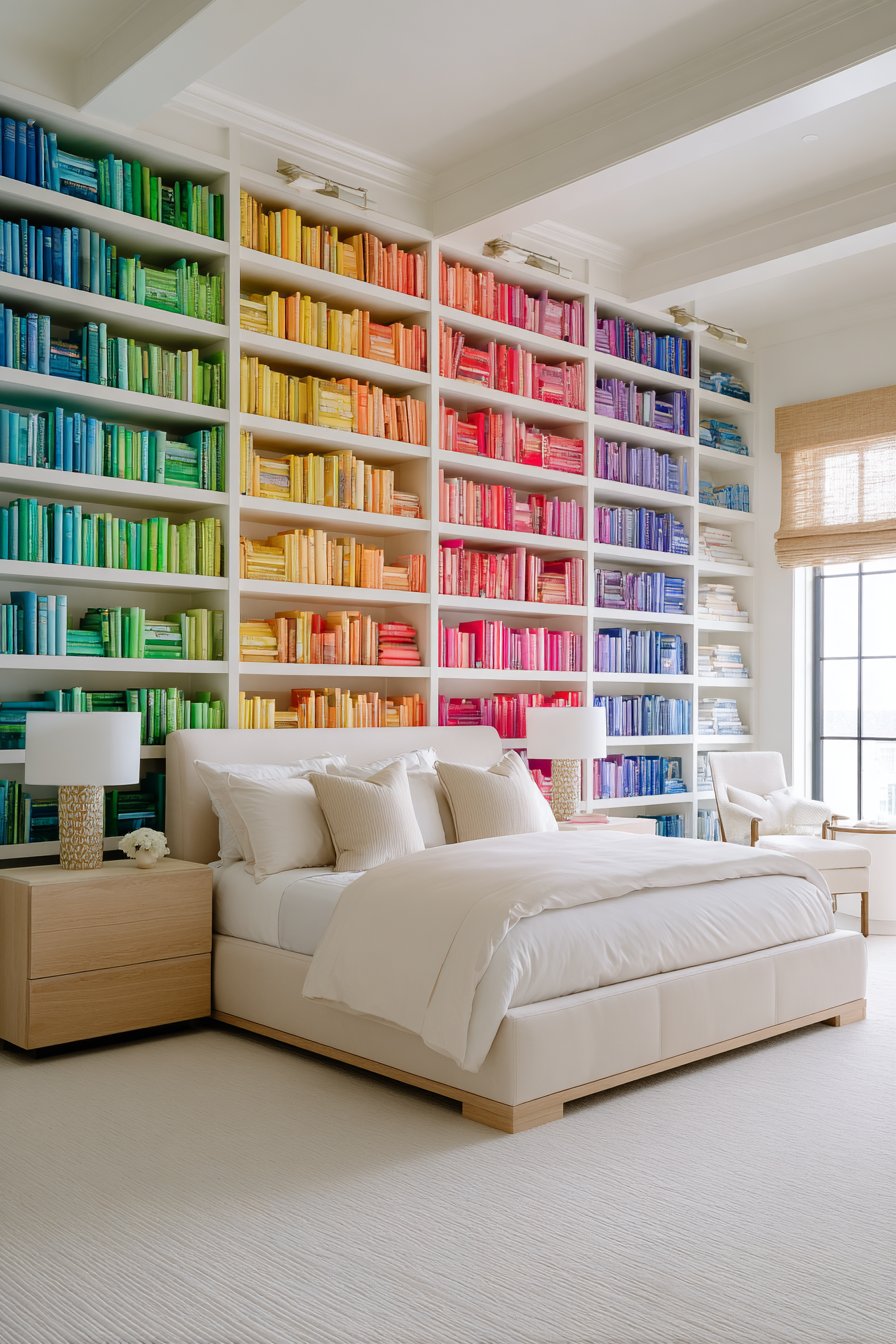
This design suits those with large, varied collections and strong organizational inclinations, or those who view their books as art rather than merely reading material. The color organization requires commitment—new acquisitions must be integrated into the proper color zone, and browsing requires remembering books by cover color rather than author or title. However, for the right person, these minor inconveniences are far outweighed by the joy of living with a constantly visible rainbow.
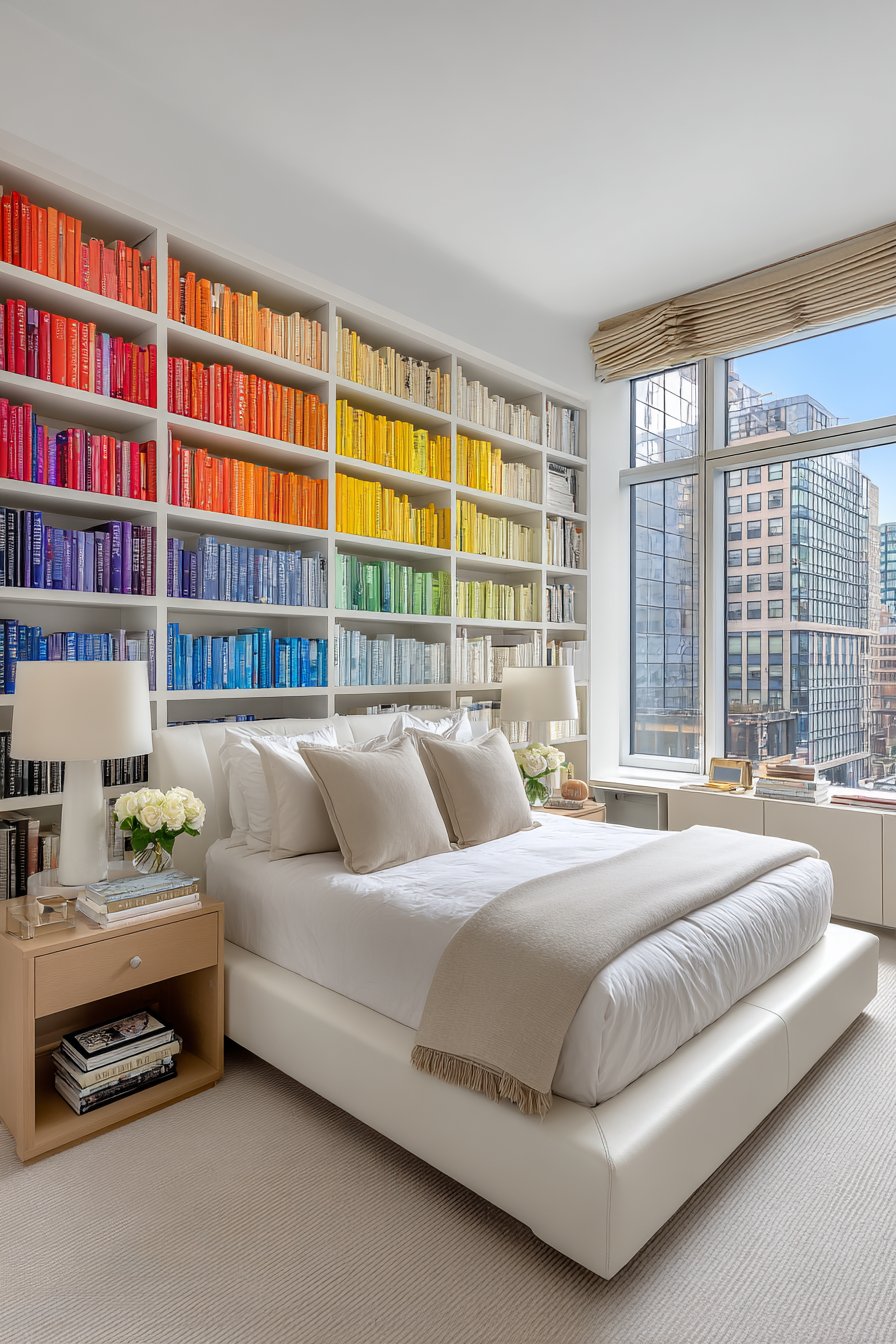
Essential elements include amassing sufficient books in each color family to create distinct bands rather than scattered dots, maintaining disciplined color organization when adding new volumes, choosing editions with colorful spines rather than all-black or all-white versions when possible, providing even lighting across the full wall to prevent color washing out, keeping surrounding décor minimal to avoid color competition, and accepting that some practical considerations (keeping series together) might occasionally supersede color organization.
Why These Library Bedroom Designs Represent the Best Approaches
The twenty-seven library bedroom concepts explored here represent the pinnacle of combining literary passion with residential design, each addressing different needs, aesthetics, and spatial constraints. These aren’t merely attractive spaces—they’re thoughtful solutions to the genuine challenge of integrating substantial book collections into bedrooms while maintaining comfort, functionality, and visual appeal. The best library bedrooms recognize that books are more than objects; they’re companions, teachers, and windows to other worlds that deserve presentation reflecting their importance in our lives.
From space-saving murphy beds to dramatic circular towers, from minimalist concealed storage to maximalist rainbow displays, these designs prove there’s no single correct approach to library bedroom design. The best solution depends entirely on individual circumstances: collection size and type, available space, design preferences, budget constraints, and how the room will actually be used. Someone working from home needs integrated desk space; a collector of rare editions needs climate control; a student needs organizational systems supporting academic work; a design enthusiast might prioritize aesthetic impact over pure storage capacity.
What unites these diverse approaches is their commitment to integration rather than mere cohabitation. These aren’t bedrooms with bookshelves tacked on as afterthought—they’re holistic spaces where sleeping and reading functions inform each other, where storage solutions become architectural features, where the presence of books enhances rather than compromises the bedroom’s restful character. The best library bedrooms understand that proper integration requires addressing practical concerns (adequate lighting, dust control, accessibility, organization) while maintaining the emotional and aesthetic qualities that make bedrooms feel like personal sanctuaries.
Material quality and craftsmanship emerge as consistent themes across these designs, whether embracing rustic reclaimed wood, polished mahogany, contemporary metal and glass, or painted built-ins. Books deserve substantial, well-crafted storage that will last decades—flimsy shelving undermines both the books’ physical safety and their perceived value. Investment in quality materials and construction pays dividends in durability, appearance, and the pleasure of daily use. Custom built-ins, while requiring higher initial investment, provide precise fit and finish that adapted furniture can rarely match.
Lighting represents another critical consideration spanning all successful library bedroom designs. Books need adequate illumination for selection and reading, but bedrooms require adjustable lighting that supports both active tasks and restful sleep. The best approaches layer multiple lighting types: ambient ceiling fixtures or natural light for overall illumination, focused task lighting for reading spots and shelving, and subtle accent lighting that can create mood without disturbing sleep. Dimmer switches, multiple circuits, and varied light temperatures allow customization throughout the day’s activities.
These designs also demonstrate sophisticated understanding of visual weight and balance. Floor-to-ceiling bookshelves filled with books create substantial visual mass requiring careful counterbalancing through furniture selection, color choices, and spatial arrangement. Some designs lean into this weight, creating cozy, enveloping spaces where books surround and shelter. Others lighten the effect through glass shelving, open arrangements, white paint, or strategic negative space. Neither approach is inherently superior—the choice depends on the atmosphere you want to create and your personal comfort with visual density.
Organizational systems ranging from rigid color-coding to casual eclectic arrangement prove that there’s no single right way to arrange books. The best system is the one you’ll actually maintain—whether that’s meticulous alphabetical order, genre grouping, color coordination, or organic arrangement based on reading frequency and personal preference. What matters is that you can find books when you want them and that the arrangement creates visual pleasure or at least doesn’t create visual chaos. Organizational systems should serve the user, not become tyrannical requirements demanding constant maintenance.
The featured designs also excel at addressing contemporary needs: home office integration for remote work, charging stations for devices, multimedia storage for digital readers, appropriate acoustics for video calls or quiet concentration. The best library bedrooms aren’t nostalgic recreations of Victorian gentleman’s libraries but living spaces that acknowledge how we actually use rooms today—simultaneously for sleep, work, entertainment, and retreat. This multi-functionality requires careful planning to ensure each function has appropriate support without the various uses conflicting or creating visual clutter.
Conclusion
Creating a library bedroom represents one of the most personally meaningful design projects a book lover can undertake—transforming utilitarian storage into architectural feature, turning practical necessity into aesthetic pleasure, and ensuring beloved volumes remain accessible and beautifully displayed. The twenty-seven concepts explored here demonstrate the remarkable range of possibilities, from traditional elegance to contemporary innovation, from rustic charm to industrial edge, from compact efficiency to luxurious sprawl. Each approach offers valuable insights regardless of whether you adopt it wholesale or extract specific elements for your own unique solution.
The key to successful library bedroom design lies in honest assessment of your needs, constraints, and preferences. Consider your collection’s size and growth trajectory, your actual reading habits and organization tendencies, your spatial limitations and architectural opportunities, your budget realities and willingness to invest in custom solutions, and most importantly, how you want to feel in this space that serves as both public display of literary interests and private sanctuary for rest and rejuvenation.
Begin with the fundamentals: adequate, appropriate storage that will protect your books while keeping them accessible; proper lighting that supports both reading and sleep; comfortable furniture that invites long hours with good books; and thoughtful arrangement that creates clear pathways and functional zones. Build from this foundation with personalized touches—colors that please you, objects that hold meaning, organizational systems that match your mind’s natural patterns, and aesthetic choices that create the specific atmosphere you find most conducive to both reading and rest.
Remember that library bedrooms evolve over time as collections grow, interests shift, and life circumstances change. The best designs incorporate flexibility—adjustable shelving, modular systems, or simply arrangements that can be modified without requiring complete renovation. What works brilliantly when you’re twenty-five might need adaptation at forty-five, and spaces that serve single occupants may need reconsideration when lives merge. Build for today’s needs while anticipating tomorrow’s evolution.
Most importantly, create a space you genuinely love—one that brings daily pleasure, supports your actual habits rather than idealized versions, and reflects your authentic relationship with books and reading. The best library bedroom isn’t the one that looks best in photographs but the one you most enjoy living in, where reaching for a book brings joy, where settling in for reading feels like coming home, and where the presence of your collection enriches rather than complicates your life. Your library bedroom should tell your story, house your treasures, and create the perfect environment for both the adventures found in books and the rest required for life’s daily adventures. Let these designs inspire you to create a space uniquely suited to your literary life.
