
The bedroom closet door is far more than a utilitarian barrier—it’s an architectural element that can dramatically influence the aesthetic, functionality, and perceived spaciousness of your personal sanctuary. Whether you’re renovating an existing bedroom or designing a new space from scratch, the closet door you choose serves as both a practical necessity and a significant design statement. In today’s diverse interior design landscape, homeowners have access to an unprecedented array of closet door styles, materials, and mechanisms that can complement virtually any aesthetic preference, from rustic farmhouse charm to sleek contemporary minimalism.
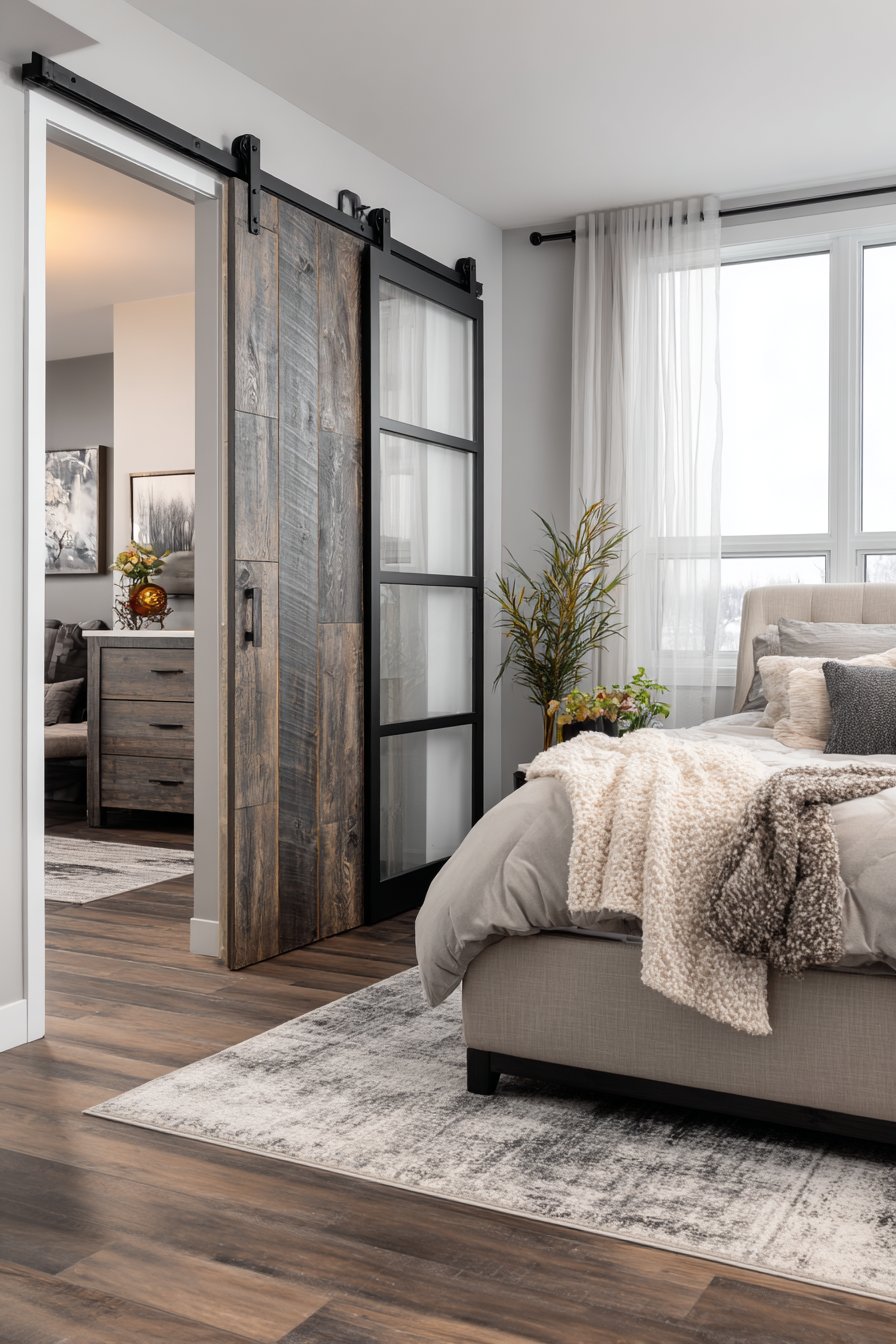
The importance of selecting the right closet door ideas for bedroom spaces cannot be overstated. These doors occupy substantial visual real estate, often spanning entire walls and serving as focal points that immediately catch the eye upon entering the room. Beyond aesthetics, the right closet door solution can maximize space efficiency in compact bedrooms, improve traffic flow, enhance natural light distribution, and even contribute to better organization systems. Modern closet doors also offer opportunities to incorporate innovative features such as integrated lighting, smart home technology, and multifunctional surfaces that serve secondary purposes like display areas or creative expression zones.
This comprehensive guide explores twenty-three distinctive closet door ideas for bedroom designs, each offering unique advantages and aesthetic appeals. From space-saving sliding mechanisms to elegant traditional French doors, from transparent glass panels that create visual continuity to opaque surfaces that provide complete privacy, we’ll examine options suitable for every bedroom size, style preference, and budget consideration. Whether you’re drawn to the warmth of natural wood, the sophistication of metallic accents, the versatility of painted finishes, or the reflective properties of mirrored surfaces, you’ll discover practical inspiration and actionable design guidance to transform your bedroom closet from mundane to magnificent.
1. Modern Sliding Barn Door Elegance
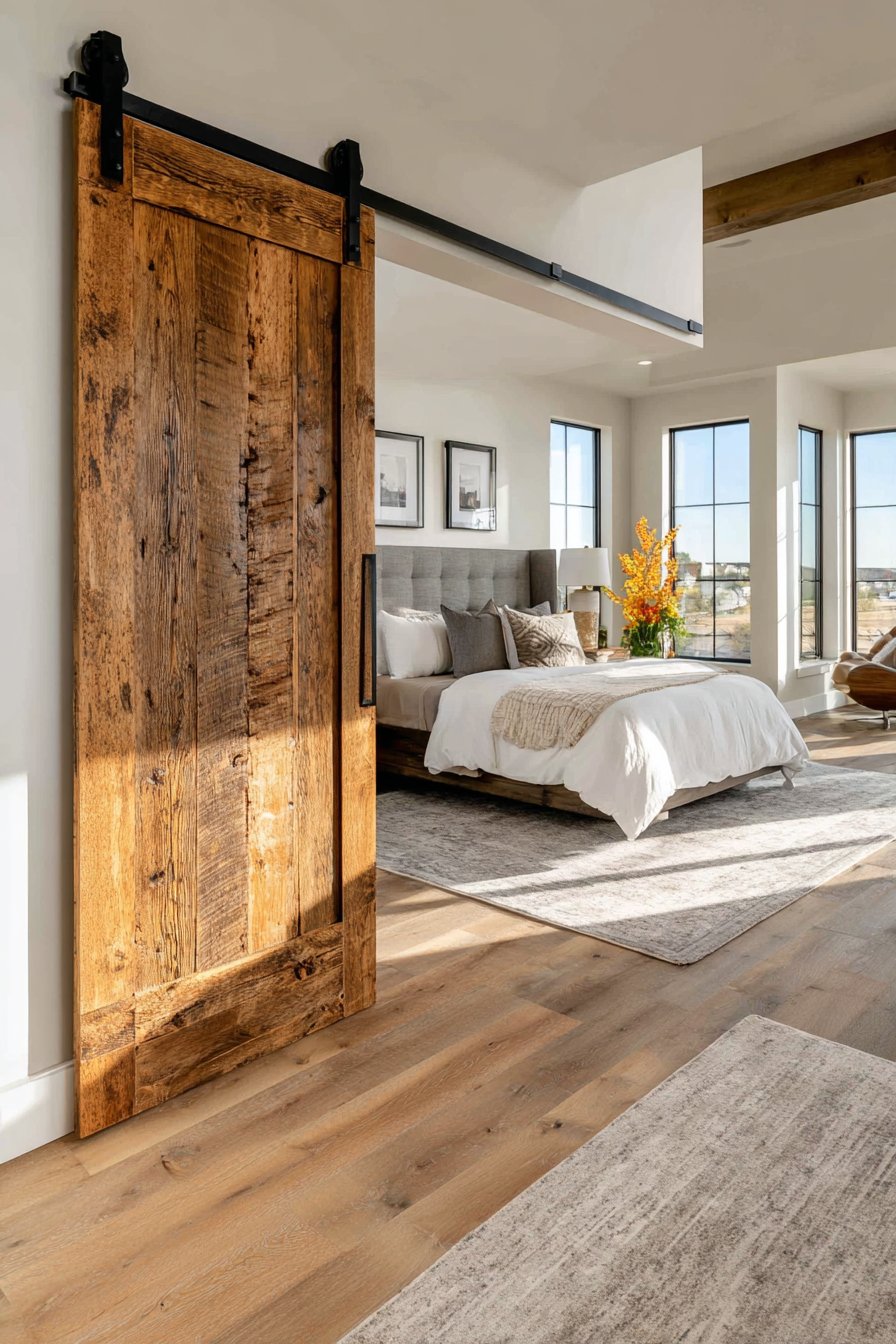
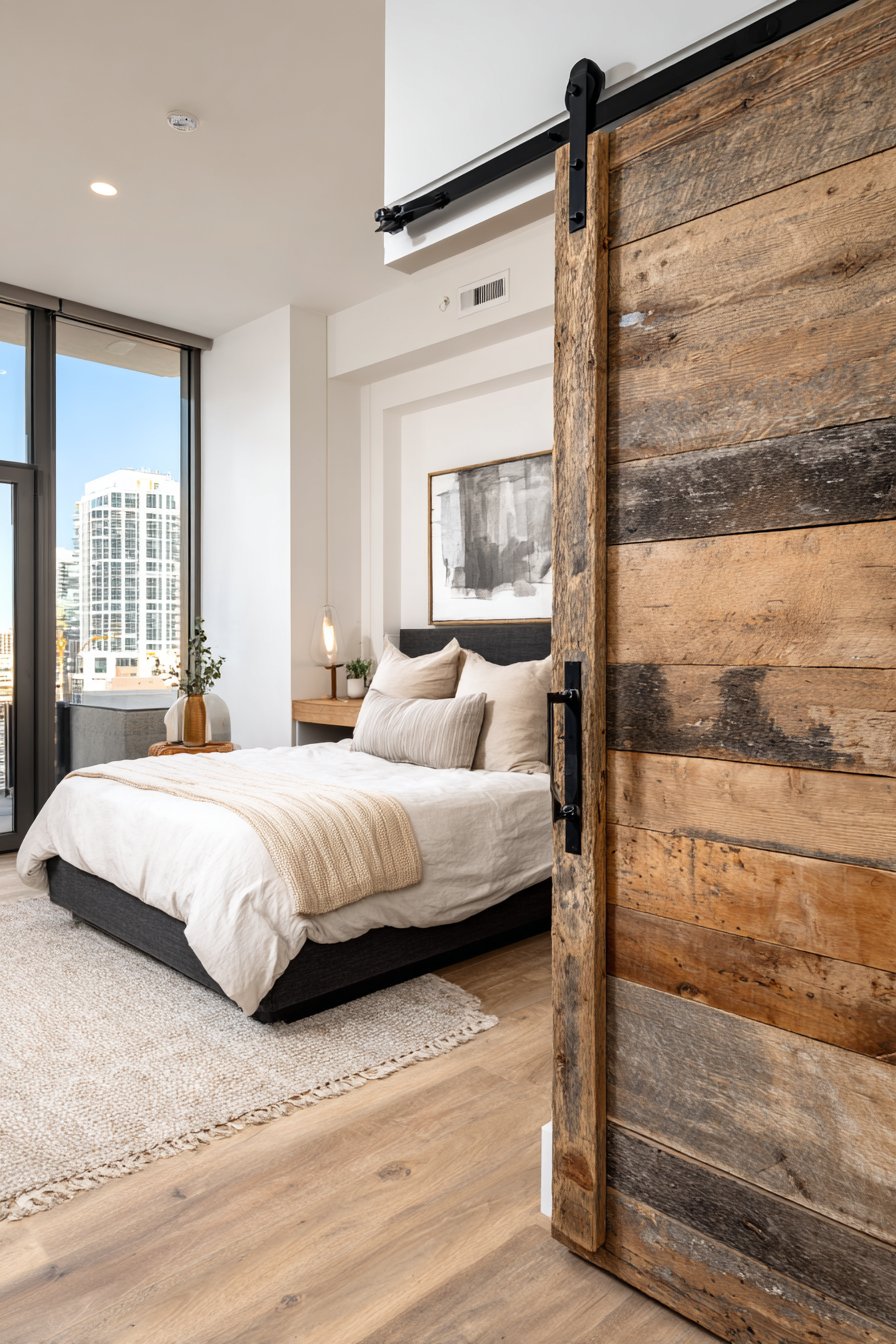
The modern sliding barn door represents one of the most popular closet door ideas for bedroom spaces, combining rustic charm with contemporary functionality. These doors feature substantial reclaimed wood planks in warm honey tones that showcase the natural beauty and character inherent in salvaged timber. The visible grain patterns tell stories of the wood’s previous life, with subtle variations in color and texture creating visual interest that mass-produced materials simply cannot replicate. Mounted on a sturdy black metal track system that runs along the wall above the door frame, this design solution offers both aesthetic appeal and practical space-saving benefits that traditional swing doors cannot match.
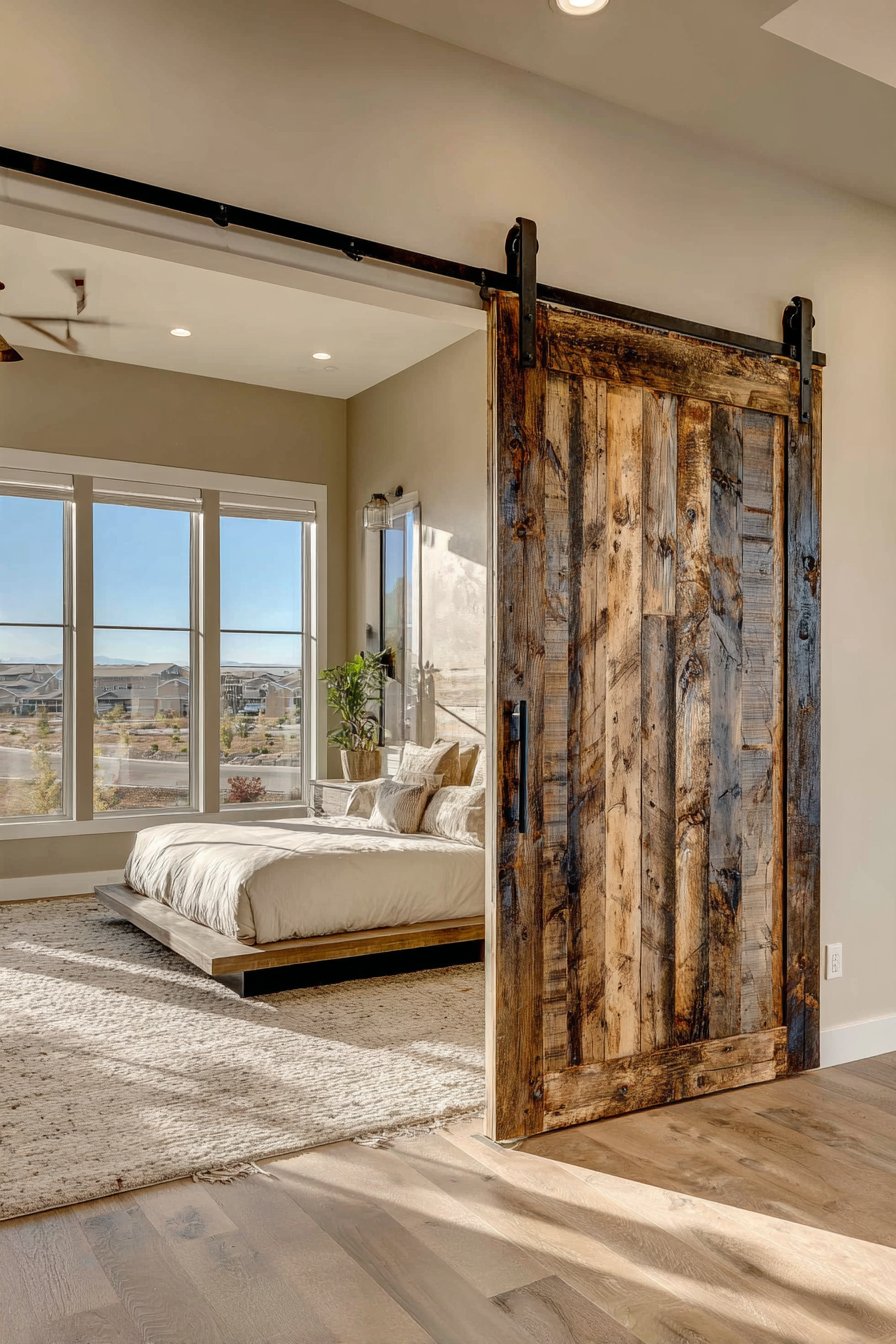
The hardware components deserve special attention, as the industrial-style black metal track and accompanying roller mechanisms create striking contrast against lighter wall colors while maintaining a clean, streamlined appearance. The bedroom setting surrounding this closet door idea features contemporary elements including a platform bed dressed in crisp white bedding, light oak flooring that complements the door’s warm tones, and a neutral area rug that grounds the space. Natural daylight streaming through adjacent windows illuminates the wood grain texture of the barn door, creating dynamic shadow play throughout the day that adds depth and dimension to the room’s overall ambiance.
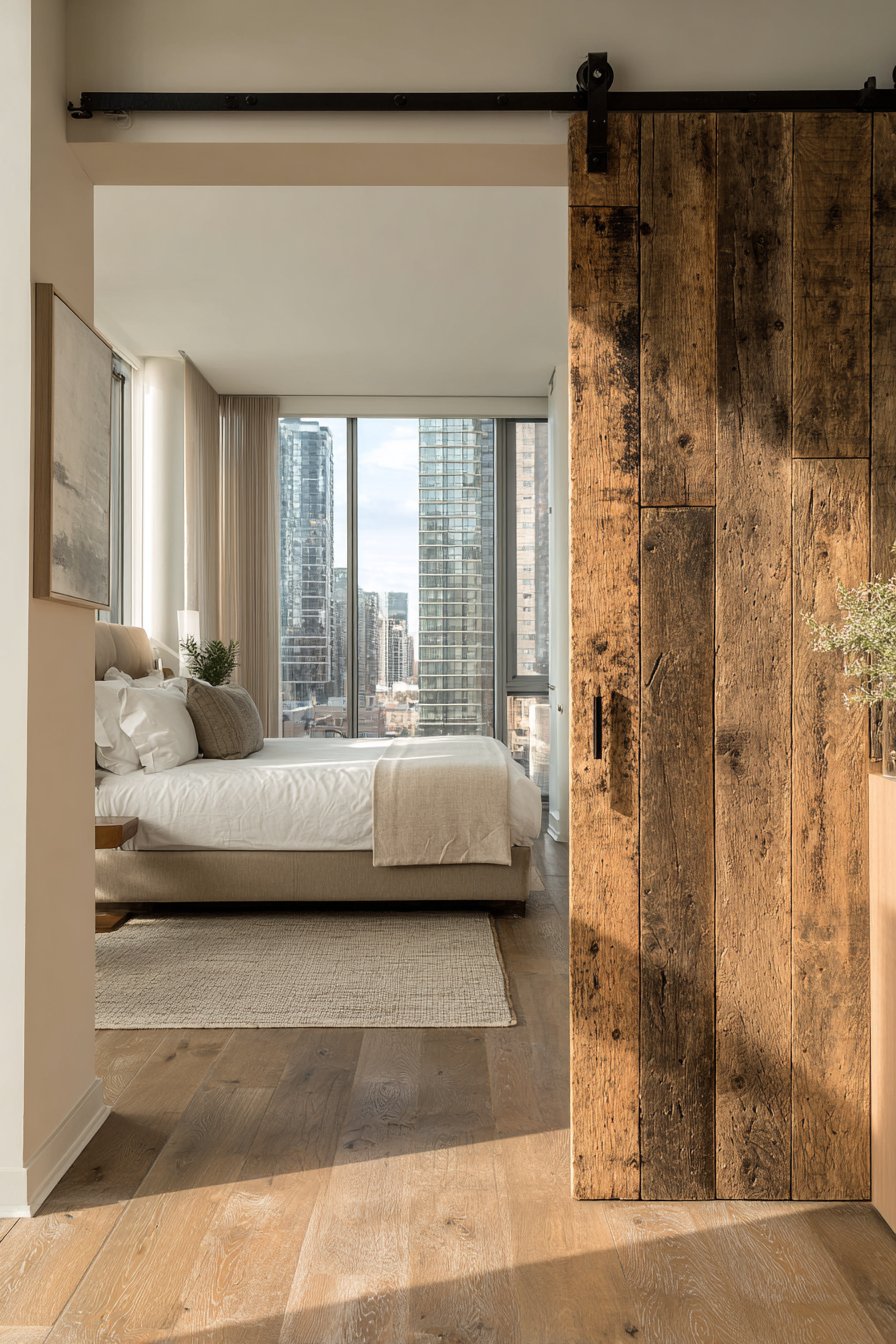
Installation of sliding barn doors requires careful planning and proper wall reinforcement, as the track system must support the door’s substantial weight. The beauty of this closet door idea for bedroom applications lies in its versatility—the door can be customized in various widths to cover standard closet openings or even create room dividers in larger spaces. The sliding mechanism operates smoothly and quietly when properly installed and maintained, requiring only occasional lubrication of the roller bearings. This design works particularly well in bedrooms where floor space is at a premium, as the door slides parallel to the wall rather than swinging into the room and consuming valuable square footage.
Key Design Tips: Select reclaimed wood with interesting grain patterns and natural character marks to maximize visual appeal. Ensure your wall structure can support the weight of both the track system and the solid wood door, typically requiring mounting into wall studs. Choose hardware finishes that complement other metal elements in your bedroom, such as light fixtures and furniture legs. Consider adding a soft-close mechanism to prevent the door from slamming and to enhance the user experience. Maintain at least four to six inches of clear wall space on either side of the closet opening to accommodate the door’s sliding range. Apply a protective finish to the wood to preserve its beauty and prevent moisture damage over time.
2. Frosted Glass Panel Sophistication
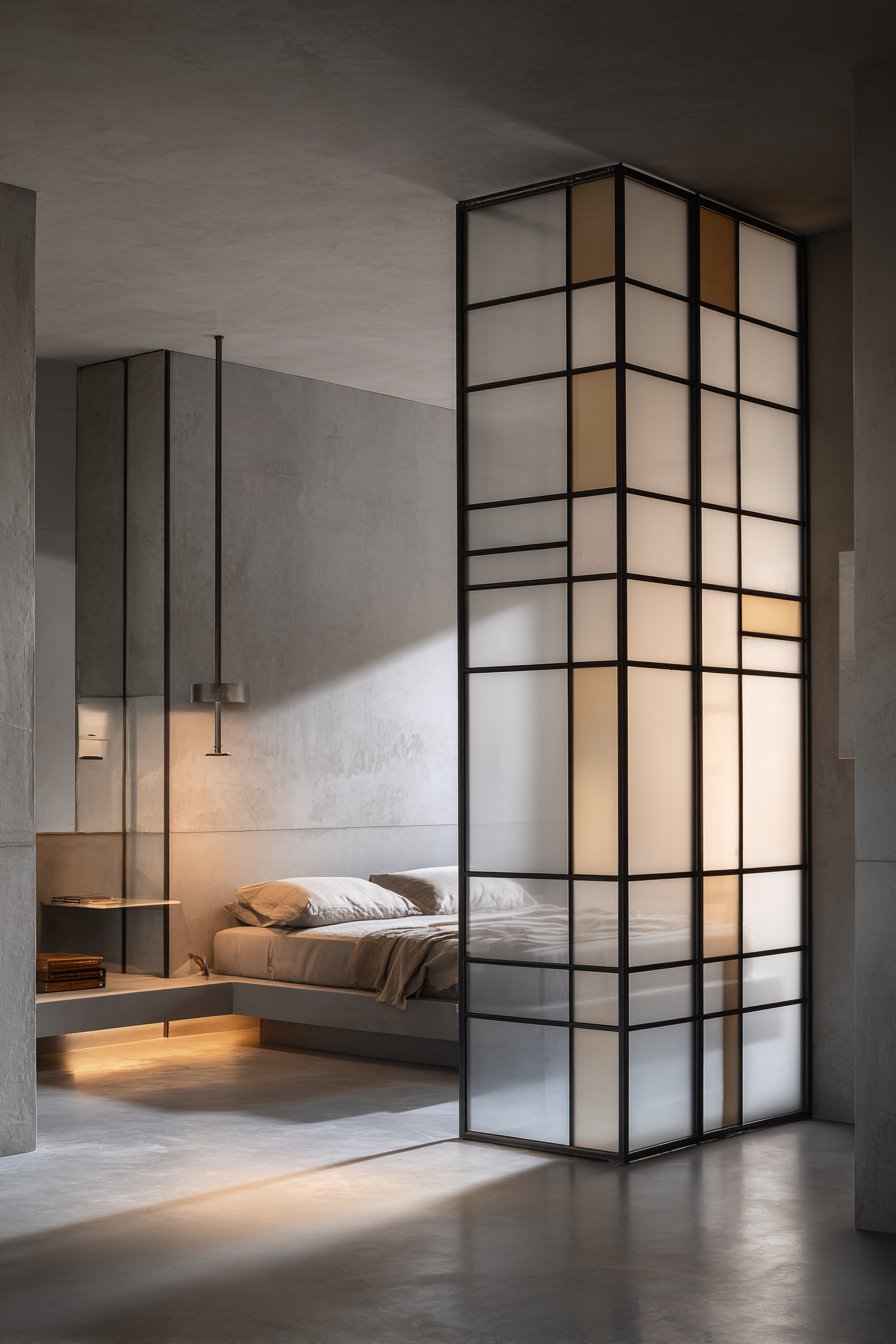
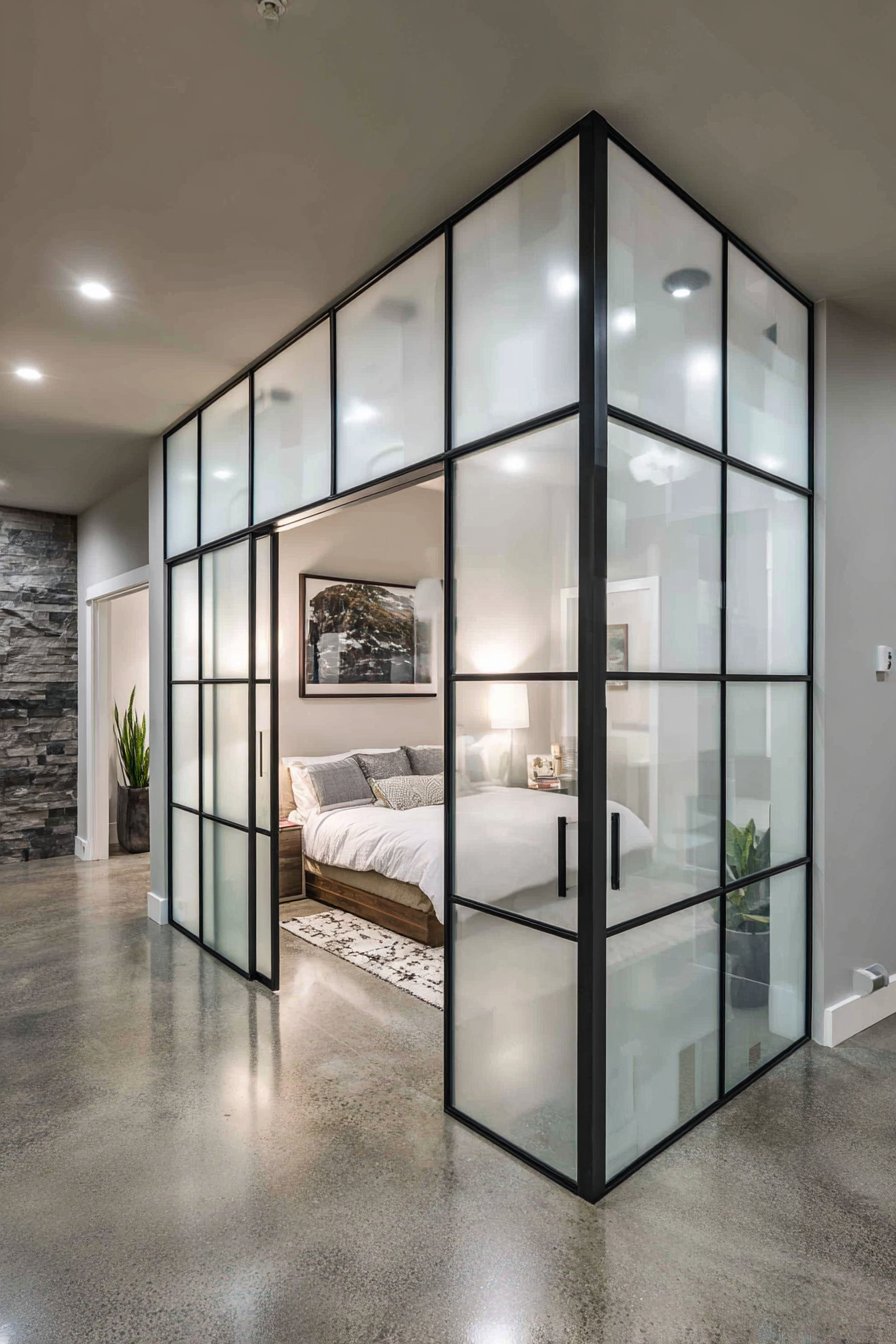
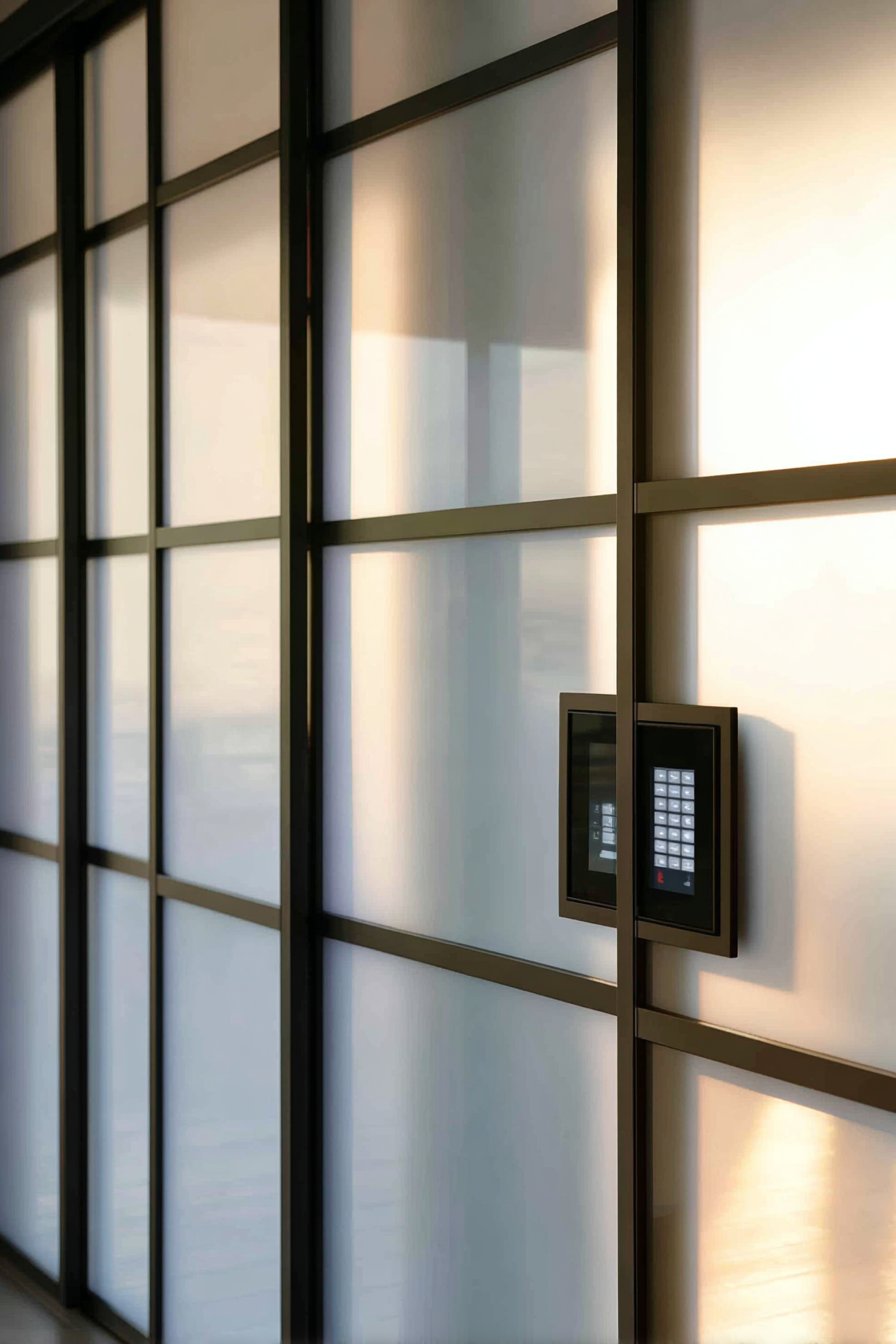
Frosted glass panel closet door ideas for bedroom spaces deliver unmatched sophistication through their perfect balance of transparency and privacy. These modern doors feature translucent glass panels set within matte black aluminum frames that create a bold geometric grid pattern, offering a contemporary aesthetic that works beautifully in minimalist and modern interior schemes. The frosted treatment on the glass provides complete privacy for closet contents while still allowing subtle light transmission, creating an ethereal glow that adds softness to bedroom environments. This design approach transforms the closet door from a purely functional element into an architectural feature that contributes meaningfully to the room’s overall design narrative.
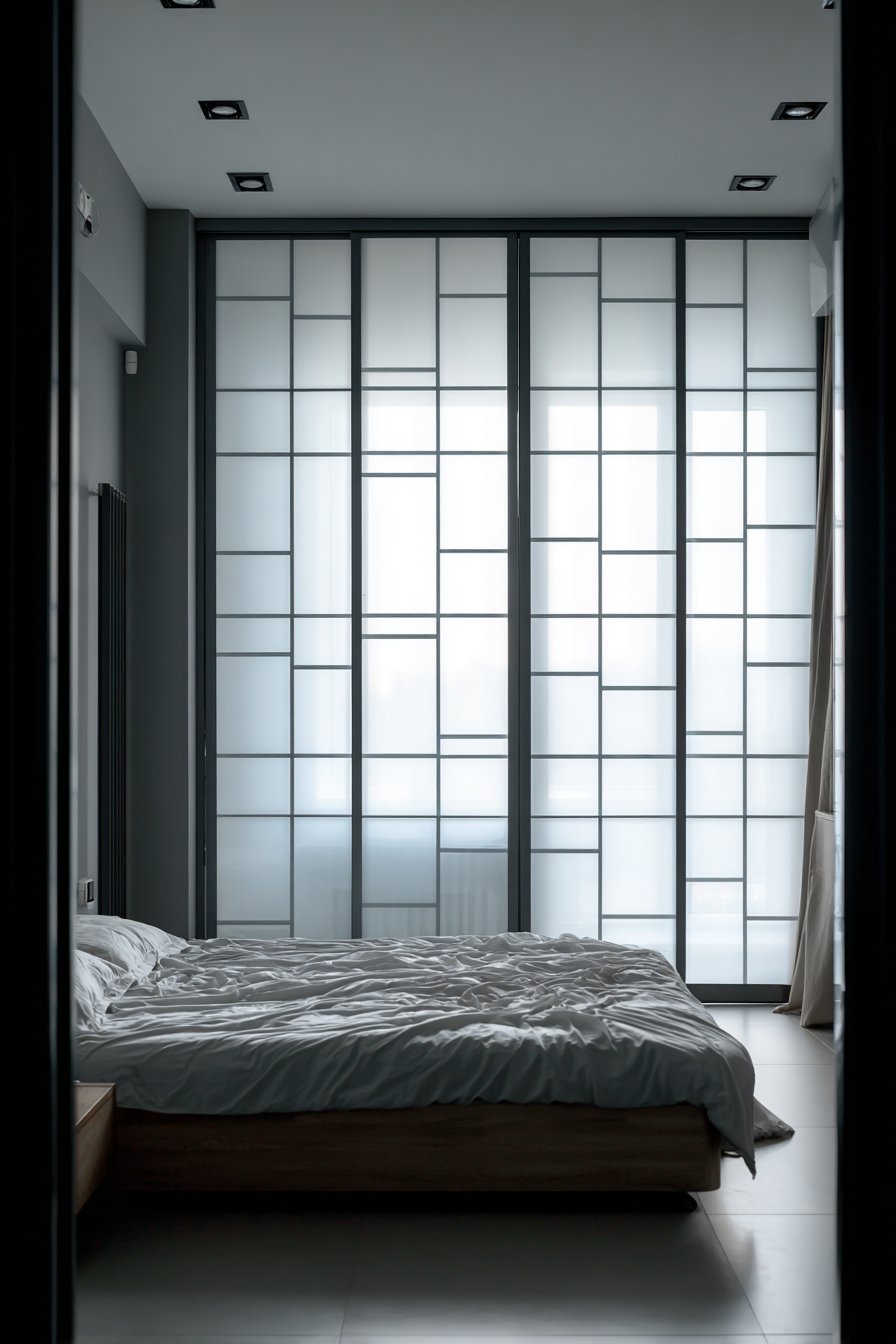
The aluminum frame system typically consists of vertical and horizontal members that divide the door into multiple glass panels, creating visual interest through geometric composition. The matte black finish on the frames provides a strong visual anchor that grounds the design and creates striking contrast against lighter wall colors. Within the bedroom context, this closet door idea pairs exceptionally well with clean-lined furniture including low-profile platform beds, concrete grey walls that enhance the industrial-modern aesthetic, and polished concrete flooring that reflects light and creates a sense of spaciousness. Recessed lighting installed above or around the closet area can create a gentle glow behind the frosted panels, transforming the doors into subtle light features during evening hours.
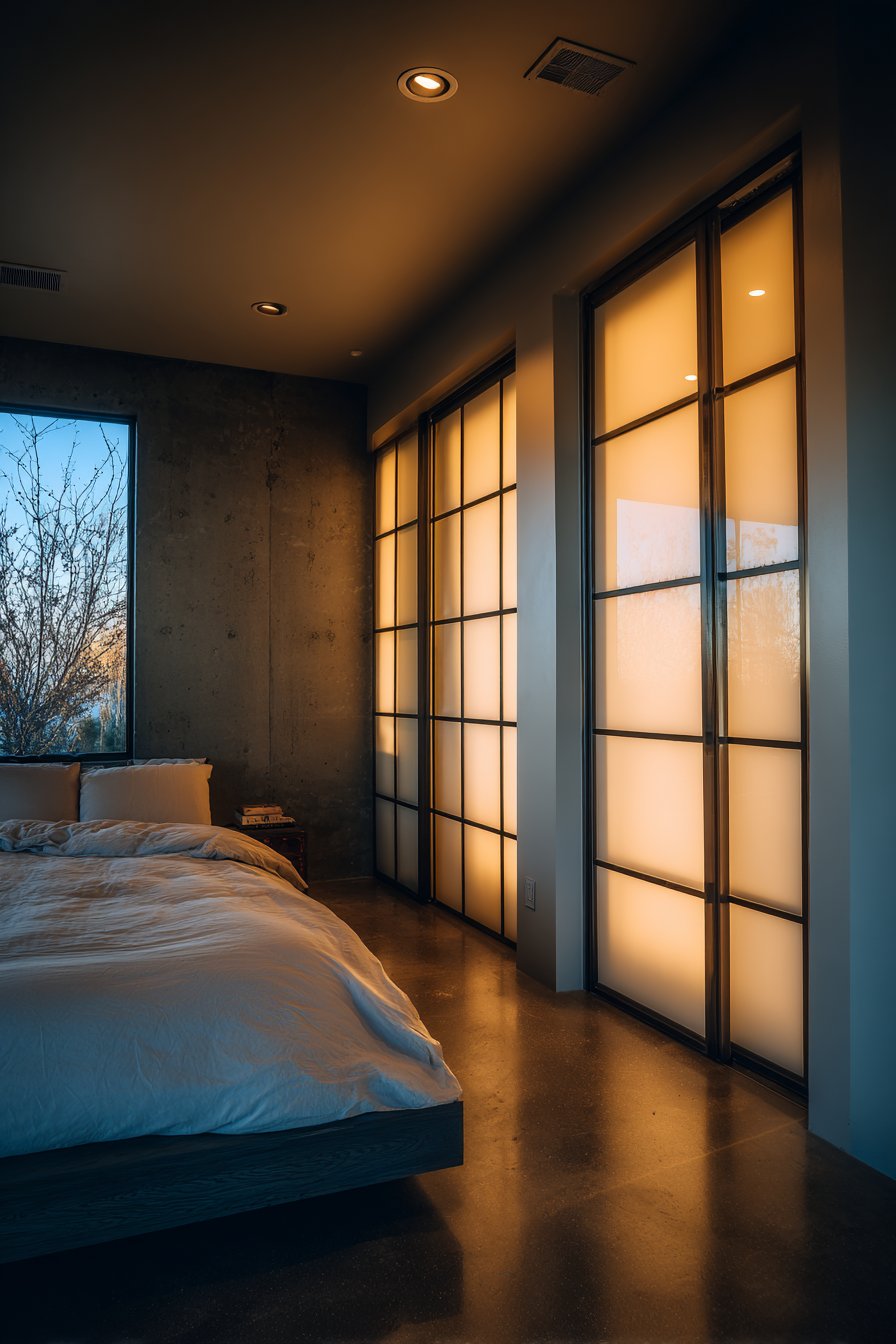
The practical advantages of frosted glass closet door ideas for bedroom applications extend beyond aesthetics. The glass panels are easy to clean with standard glass cleaning solutions, maintaining their pristine appearance with minimal effort. The aluminum frames resist warping, corrosion, and degradation over time, ensuring long-term durability. The doors can be configured as sliding panels, hinged doors, or bifold systems depending on space constraints and personal preferences. The translucent quality of the frosted glass softens harsh shadows and diffuses light throughout the room, creating a more gentle and inviting atmosphere compared to solid opaque doors.
Key Design Tips: Specify tempered glass for all panels to ensure safety and durability, especially important in bedroom environments. Choose frame depths that provide adequate structural support while maintaining sleek proportions—typically between one to two inches. Consider the direction of natural light sources when planning glass door placement to maximize the light-diffusing benefits. Coordinate the frame finish with other architectural elements such as window frames and door hardware for cohesive design integration. Ensure proper sealing at all glass-to-frame junctions to prevent dust infiltration into the closet space. Install soft-close hinges or sliding mechanisms to prevent glass breakage from impact. For added customization, consider acid-etched patterns or gradient frosting that transitions from opaque to clear glass.
3. Space-Maximizing Mirrored Bifold Design
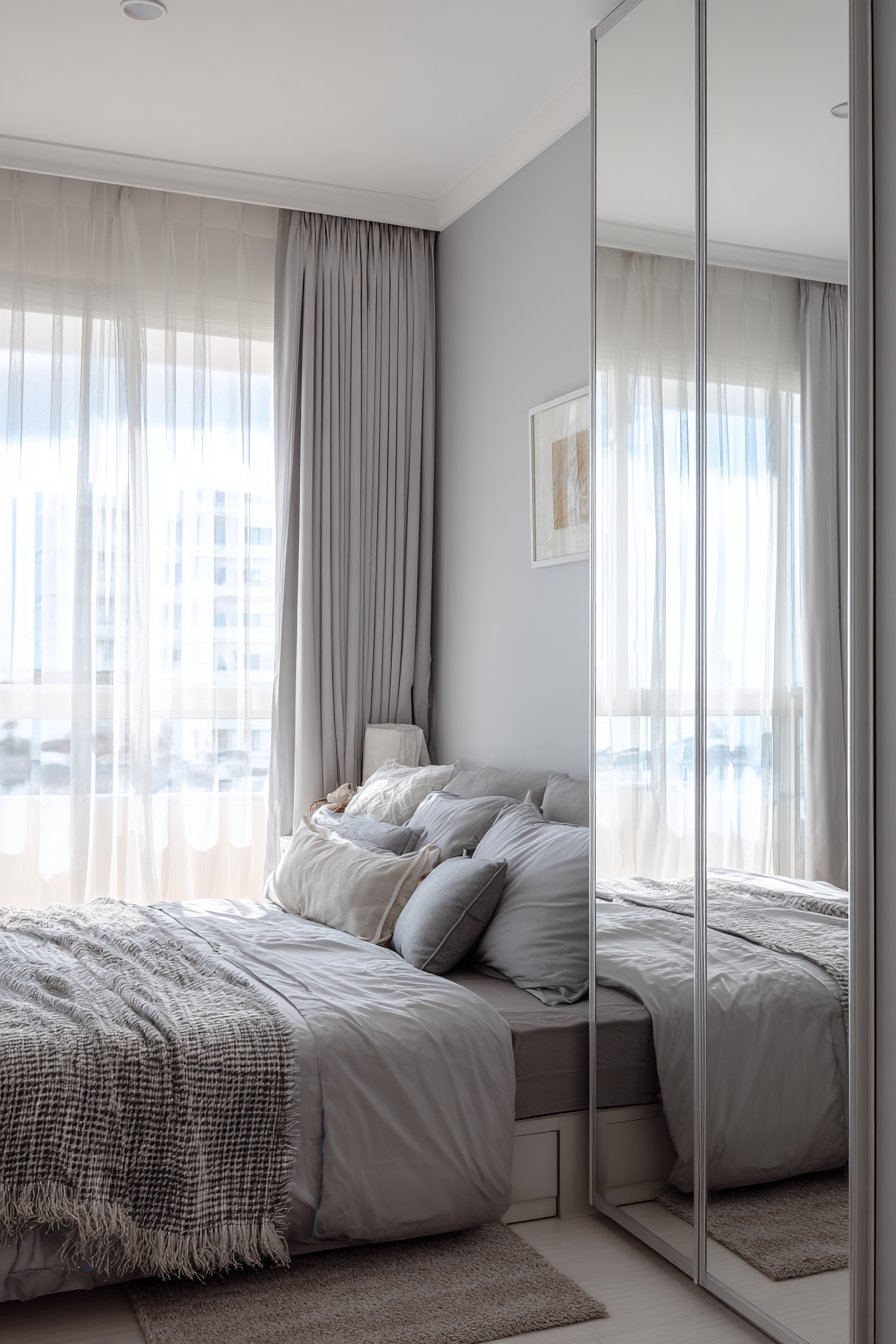
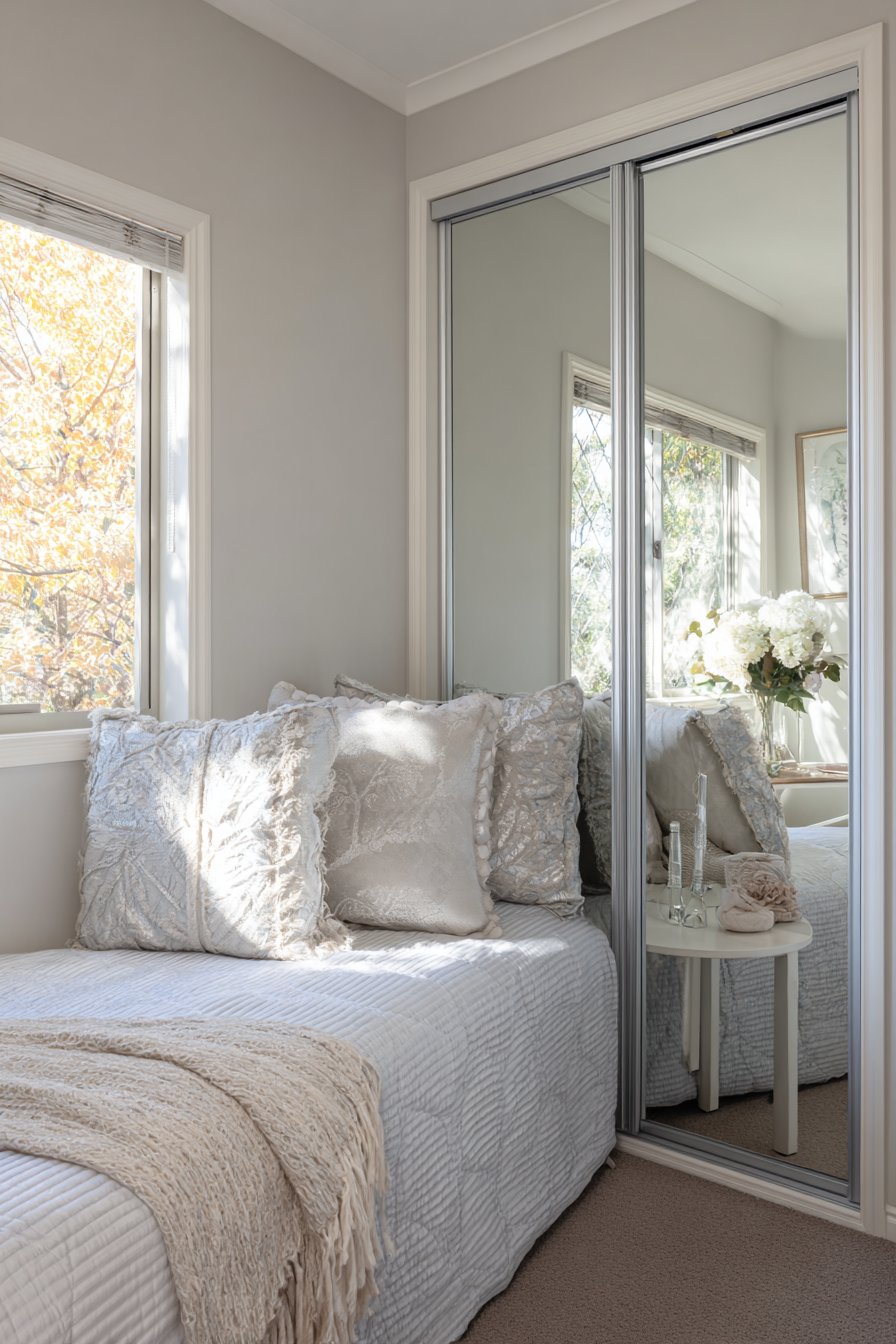
Mirrored bifold closet door ideas for bedroom spaces represent one of the most effective solutions for visually expanding compact rooms while maintaining full functionality. These full-height mirrors feature slim silver frames that provide structural support without overwhelming the reflective surfaces, creating an elegant yet practical design solution. The bifold mechanism allows the doors to fold back upon themselves, requiring minimal clearance space compared to traditional swing doors while still providing complete access to closet interiors. The reflective properties of mirror doors serve a dual purpose—they eliminate the need for separate standing mirrors while simultaneously doubling the perceived size of the bedroom through strategic light and space reflection.
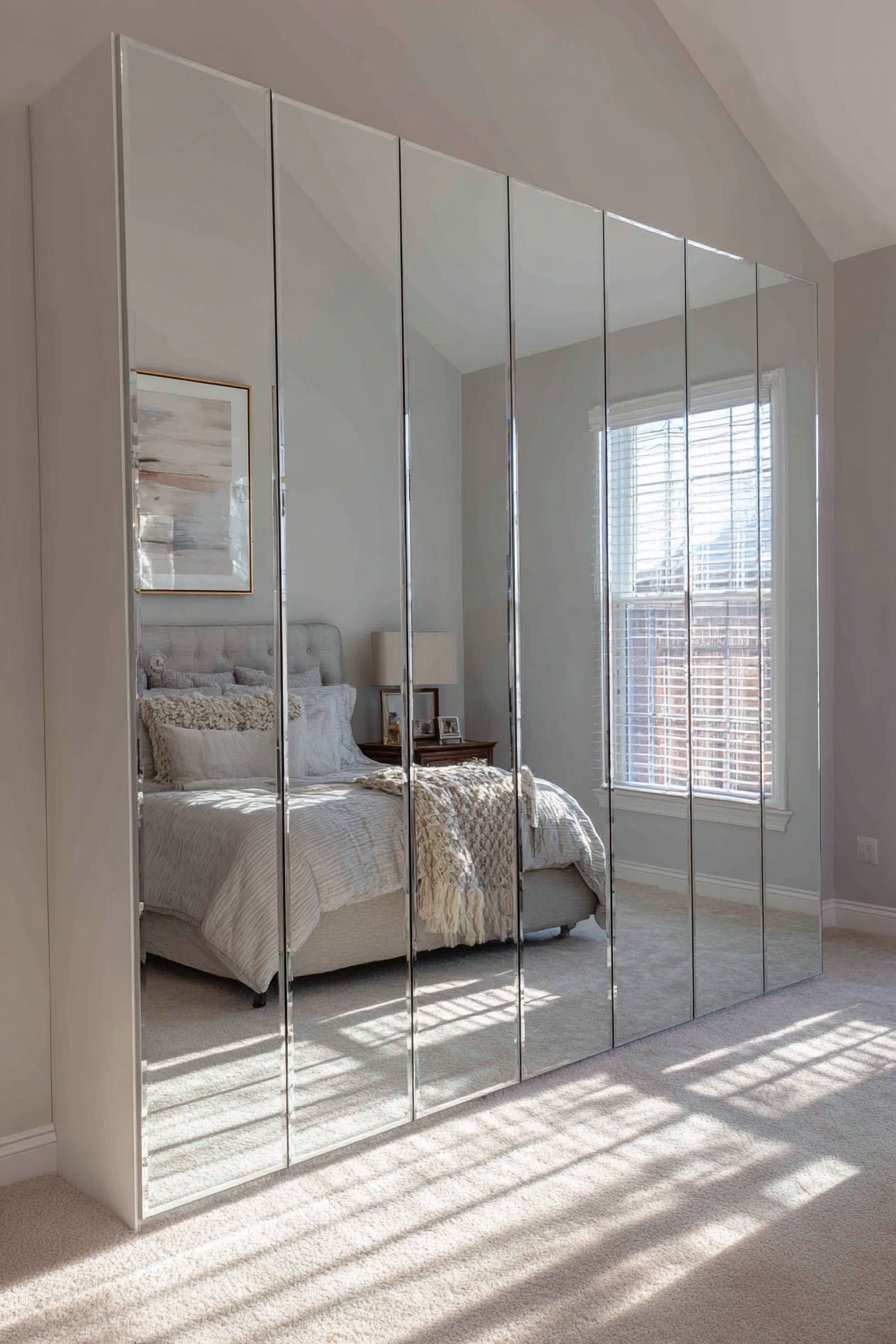
In small bedroom applications, mirrored closet doors become transformative design elements that fundamentally alter spatial perception. The room featured with this closet door idea includes a twin bed dressed in layered textiles that add warmth and visual interest, a floating nightstand that maintains floor visibility and enhances the sense of openness, and soft grey walls that provide a neutral backdrop for the mirrors to reflect. Morning sunlight streaming through bedroom windows bounces off the mirrored surfaces, distributing natural light more evenly throughout the space and reducing dark corners that can make small rooms feel cramped. The strategic placement of these mirrors creates the illusion of depth and dimension that significantly enhances the room’s livability and aesthetic appeal.
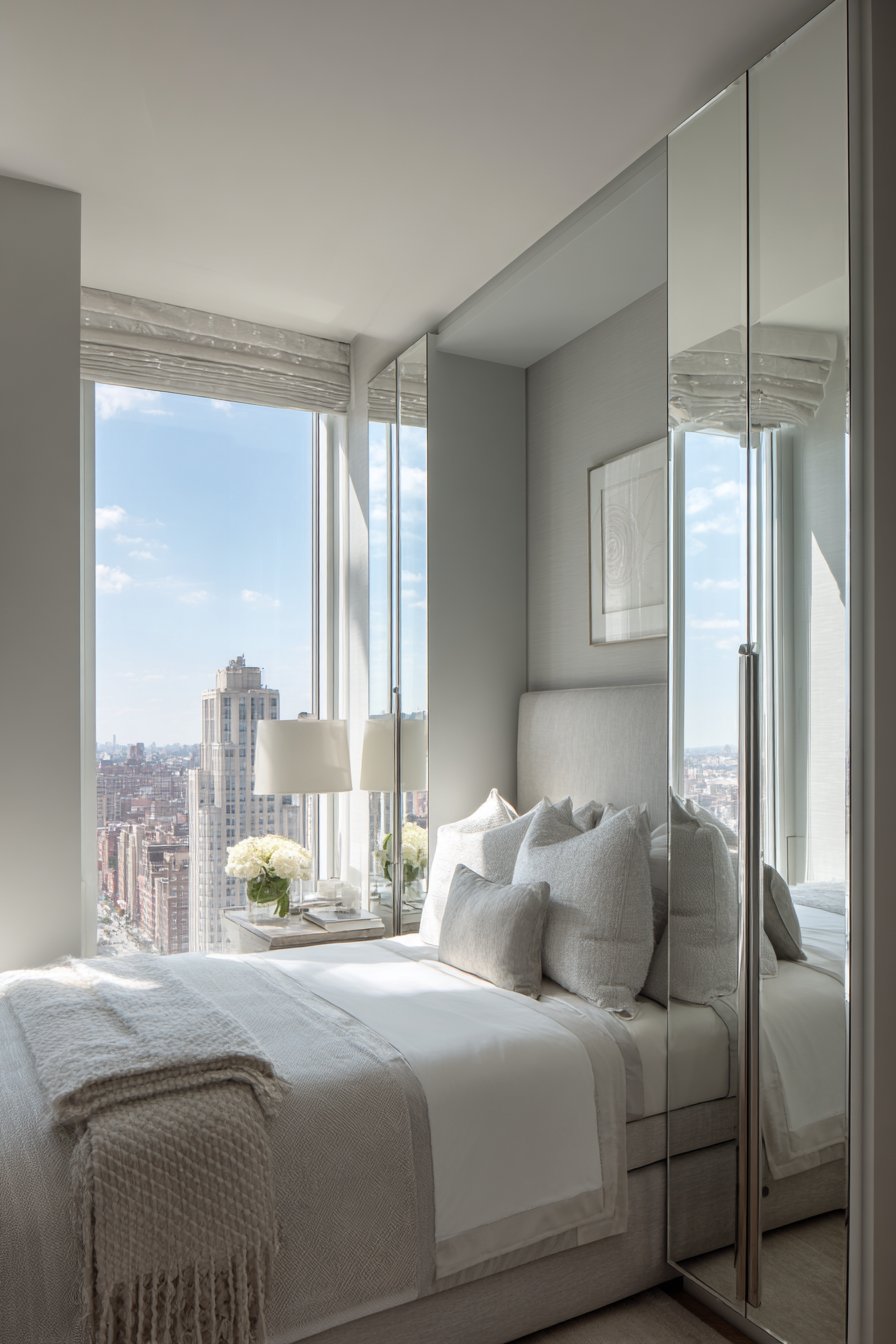
The practical considerations for implementing mirrored bifold closet door ideas for bedroom spaces require attention to quality and installation precision. High-quality mirrors with proper backing prevent distortion and ensure longevity, while seamless bifold mechanisms allow smooth operation without binding or sticking. The frames should be constructed from materials that resist corrosion in humid environments, particularly important in bedroom settings where morning moisture from bathrooms can affect nearby spaces. Regular cleaning maintains the mirrors’ reflective clarity, and the slim frame design minimizes maintenance requirements while maximizing the reflective surface area.
Key Design Tips: Invest in high-quality mirrors with thick glass substrates to prevent warping and ensure clear reflections without distortion. Position bedroom furniture strategically to create attractive mirror reflections rather than cluttered views. Install proper track systems that allow smooth bifold operation without dragging or misalignment over time. Consider adding soft-close mechanisms to prevent slamming and potential mirror damage. Ensure adequate wall anchoring to support the substantial weight of full-height mirrored doors. Place mirrors to reflect natural light sources rather than creating glare on television screens or computer monitors. Apply safety backing to mirrors to contain glass in the unlikely event of breakage. Clean mirrors regularly with appropriate glass cleaners and microfiber cloths to maintain pristine reflective surfaces.
4. Sophisticated Navy Blue Shaker Panels
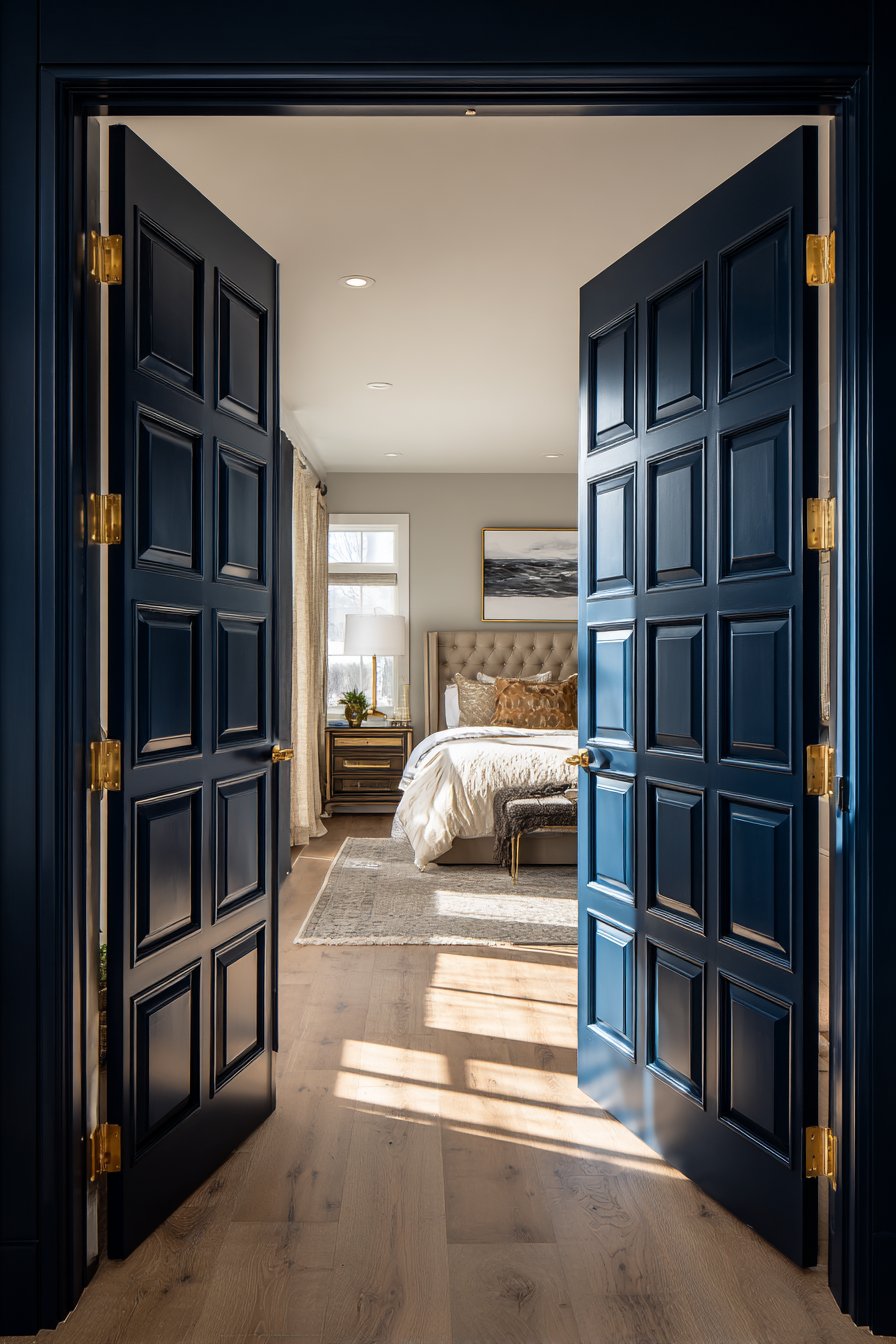
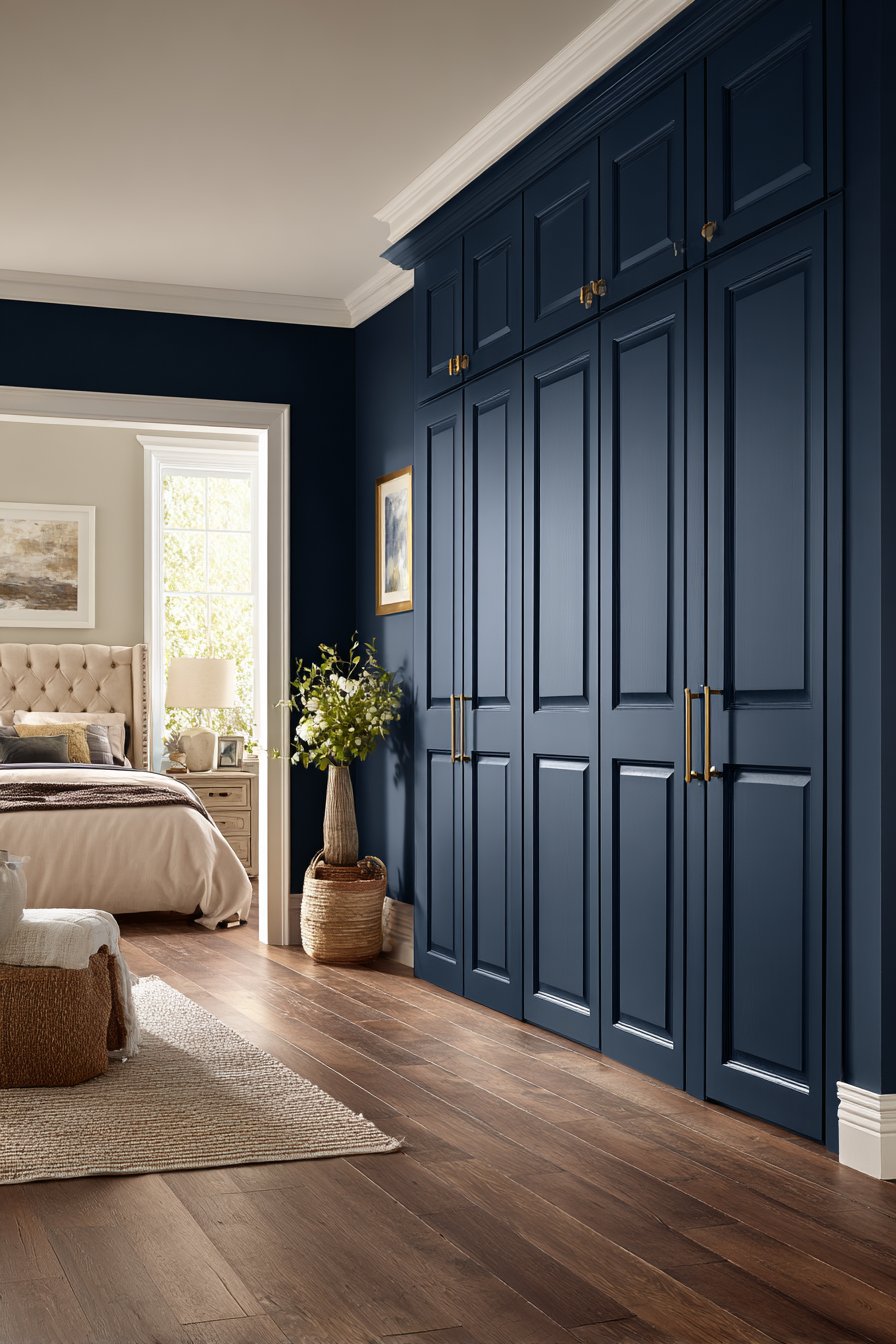
Floor-to-ceiling shaker style closet door ideas for bedroom spaces painted in sophisticated navy blue create immediate architectural impact and visual interest. The traditional panel configuration features classic proportions that have remained popular for centuries due to their timeless elegance and versatility across various design styles. The navy blue paint finish adds contemporary relevance to this traditional door style, providing rich color saturation that serves as a sophisticated alternative to neutral tones. Brushed gold hardware including handles and hinges introduces warm metallic accents that complement the cool blue tones while adding luxury details that elevate the overall design.
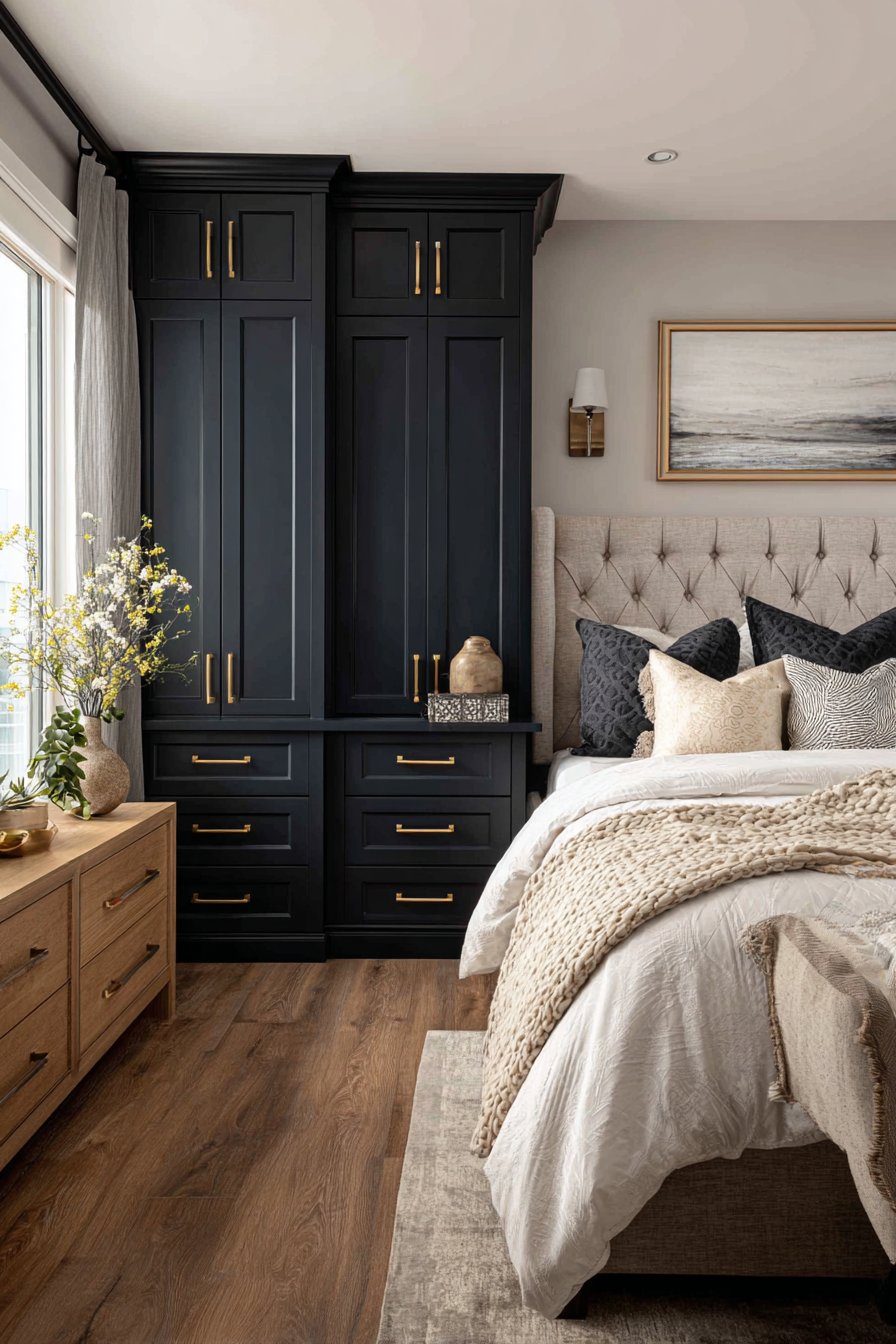
The shaker panel construction consists of a frame and panel assembly where the panels fit within grooved frame members, allowing for natural wood expansion and contraction while maintaining structural integrity. This traditional construction method produces shadows and depth that create visual interest across the door’s surface, with light playing across the raised and recessed surfaces throughout the day. In the master bedroom context, these closet doors pair beautifully with a tufted headboard that adds textural softness, layered neutral bedding that provides visual balance to the bold door color, and warm hardwood floors that introduce natural material warmth. Soft natural lighting highlights the rich paint color and illuminates the door panel details, creating a sense of depth and dimension.
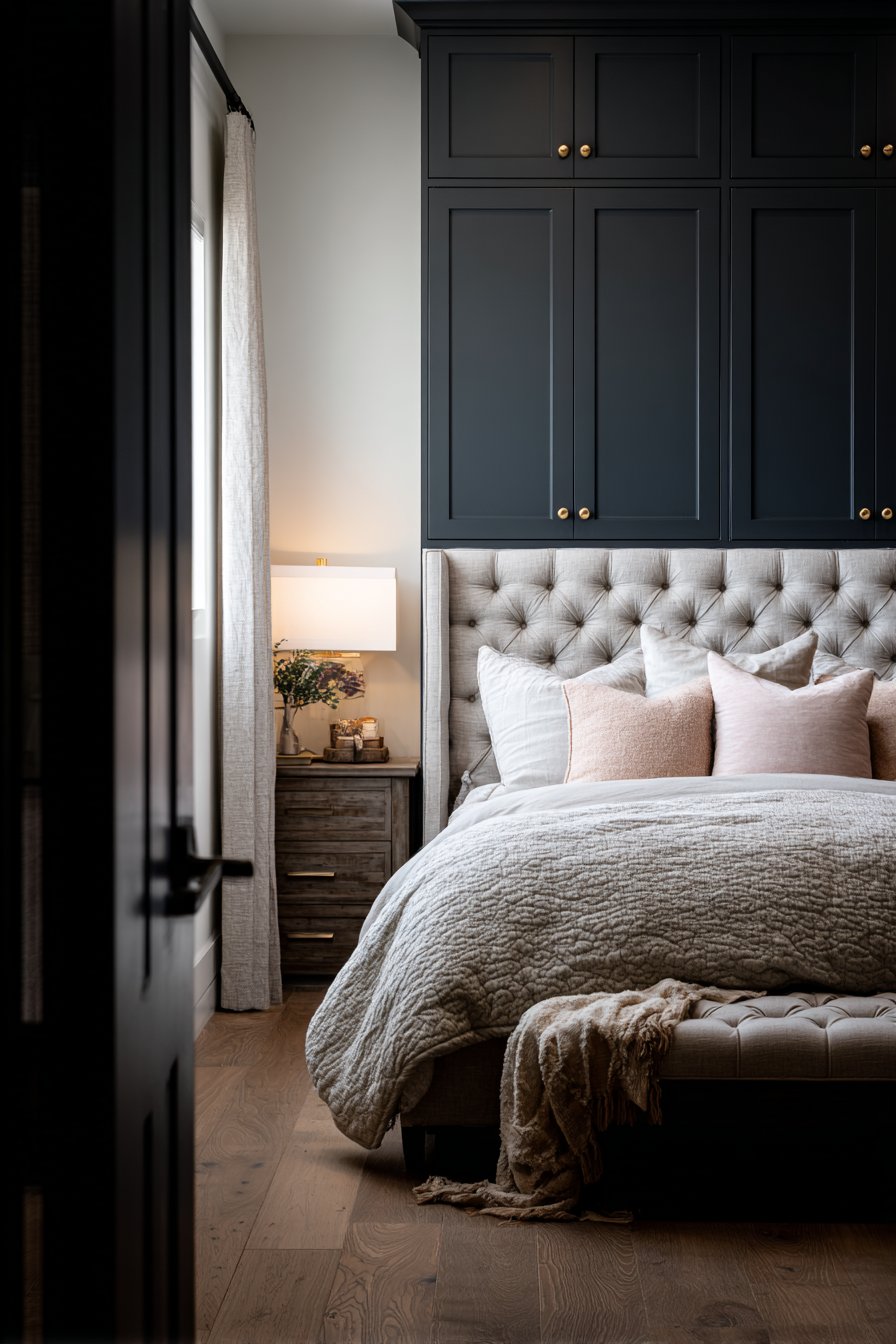
The color selection for painted closet door ideas for bedroom applications significantly impacts the room’s overall atmosphere and perceived size. Navy blue reads as a sophisticated neutral that pairs well with numerous color palettes while adding personality and depth. The paint finish—whether matte, satin, or semi-gloss—affects both the appearance and practicality of the doors. Matte finishes create sophisticated, non-reflective surfaces that hide minor imperfections, while semi-gloss finishes offer easier cleaning and slightly more light reflection. The brushed gold hardware provides warm metallic accents that prevent the cool blue tones from feeling cold or sterile, while the traditional shaker panel style ensures the design remains relevant through changing trends.
Key Design Tips: Choose high-quality paint specifically formulated for doors and trim to ensure durability and washability. Apply multiple thin coats rather than few thick coats to achieve smooth, professional-looking finishes without brush marks or drips. Sand between coats with fine-grit sandpaper for ultra-smooth surfaces. Select hardware that complements the scale of the doors—larger doors require proportionally larger handles. Consider the room’s natural light exposure when selecting paint sheens, as high-gloss finishes can create glare in brightly lit spaces. Protect door bottoms with proper clearance from flooring to prevent paint damage from moisture. Use painters tape to create crisp lines where doors meet frames. Prime all surfaces properly before painting to ensure even color saturation and long-lasting finishes.
5. Contemporary Sliding Pocket Door Innovation
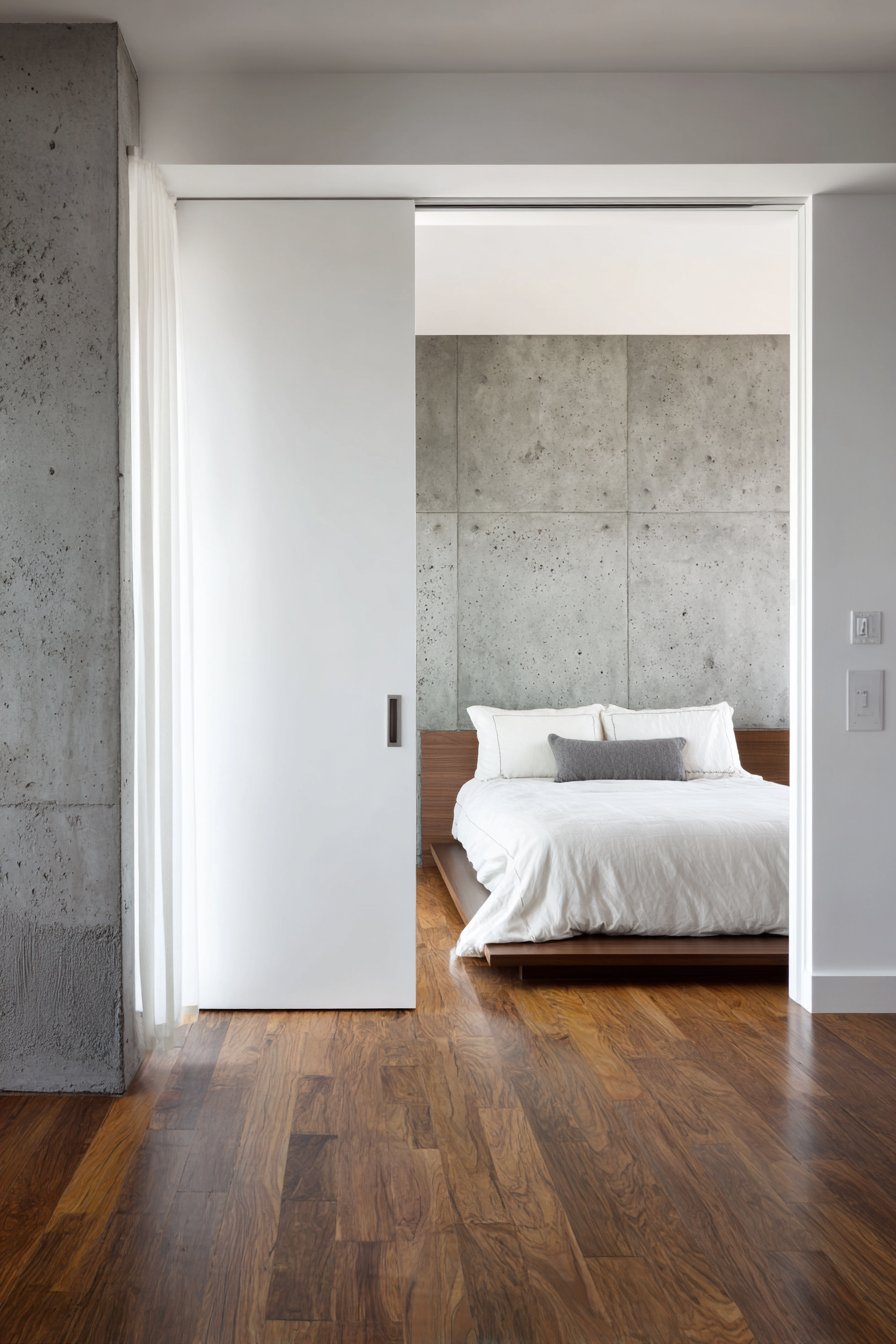
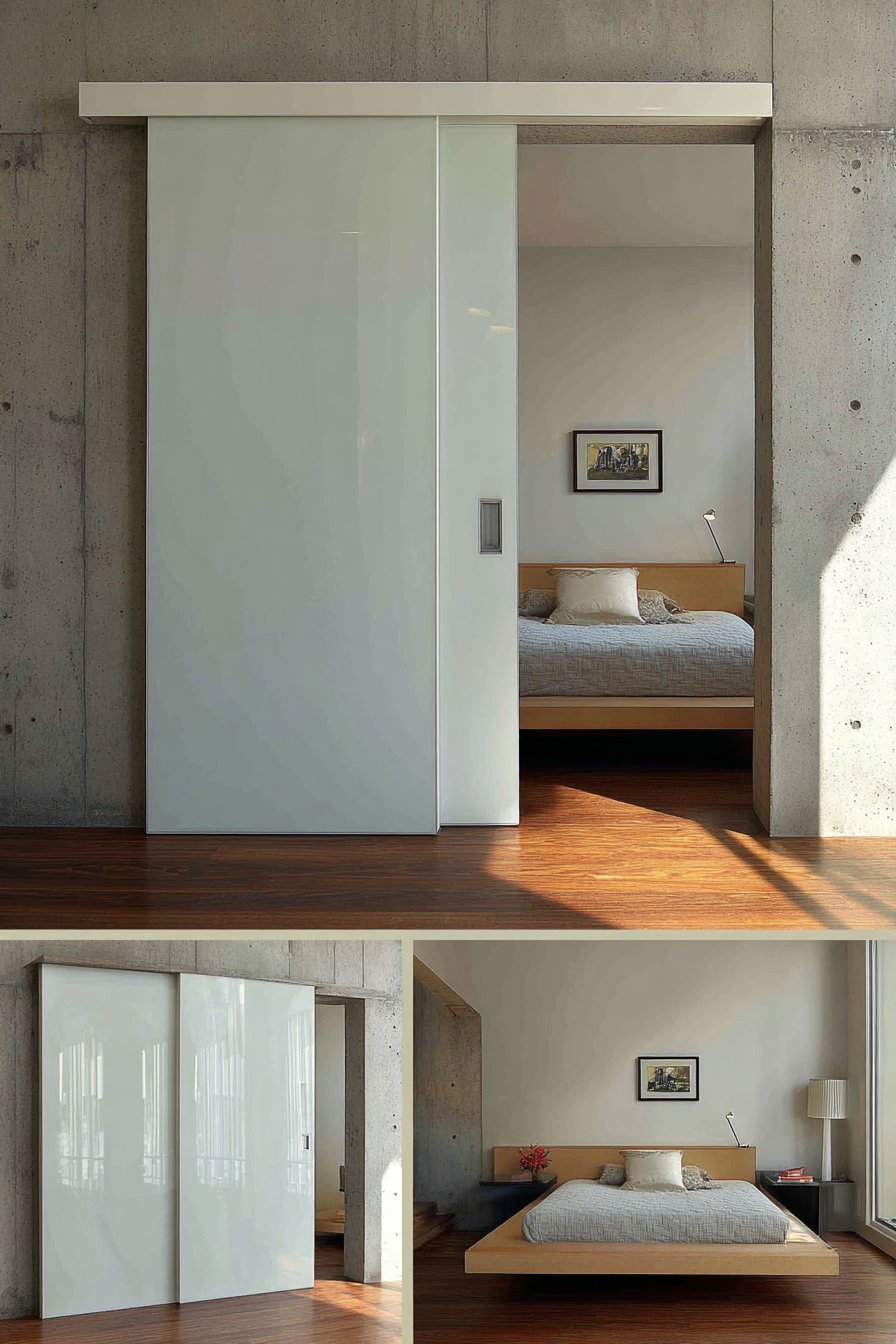
Sliding pocket closet door ideas for bedroom spaces represent the ultimate space-saving innovation, with doors that completely disappear into wall cavities when opened. This sophisticated solution features doors with smooth white lacquer finishes and recessed pull details that maintain clean, minimalist aesthetics while providing functional grip surfaces. The mechanism allows the door to slide laterally into a specially constructed pocket within the wall, leaving the closet opening completely unobstructed and the bedroom floor plan entirely clear. This design particularly benefits compact bedrooms where every square foot matters and traditional swinging doors would create circulation obstacles or furniture placement limitations.
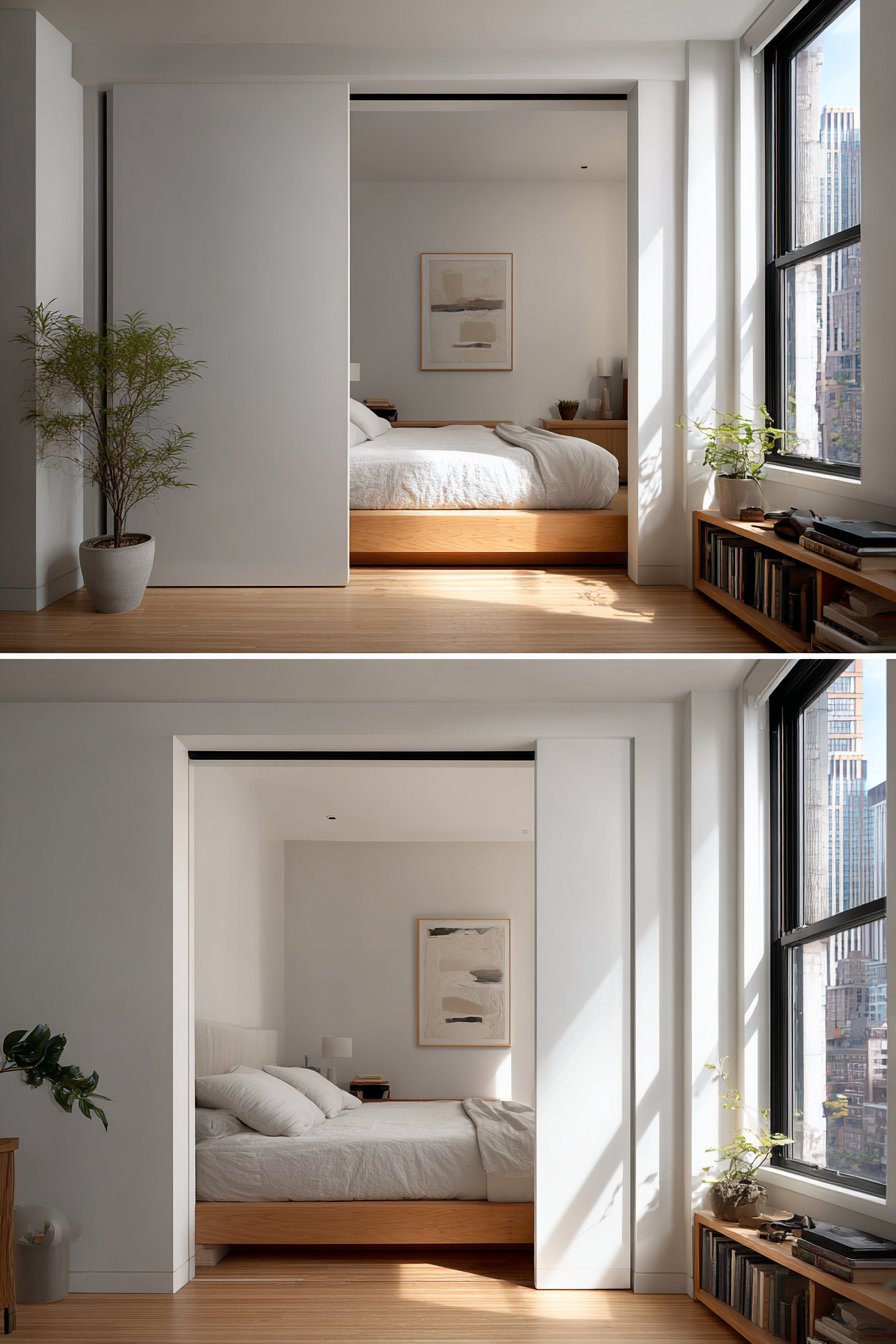
The installation of pocket door systems requires significant planning during construction or renovation phases, as the wall cavity must be prepared to receive the door panel and track mechanism. The pocket typically measures slightly wider than the door itself, requiring appropriate wall thickness and clear space free from electrical wiring, plumbing, or HVAC components. The bedroom setting showcasing this closet door idea features a platform bed that emphasizes horizontal lines, a concrete accent wall that adds industrial texture, and bamboo flooring that introduces organic warmth. Professional photography captures the door both partially open to demonstrate the sliding mechanism and fully retracted to show the space-saving benefits, with natural lighting emphasizing the clean lines and smooth surfaces.
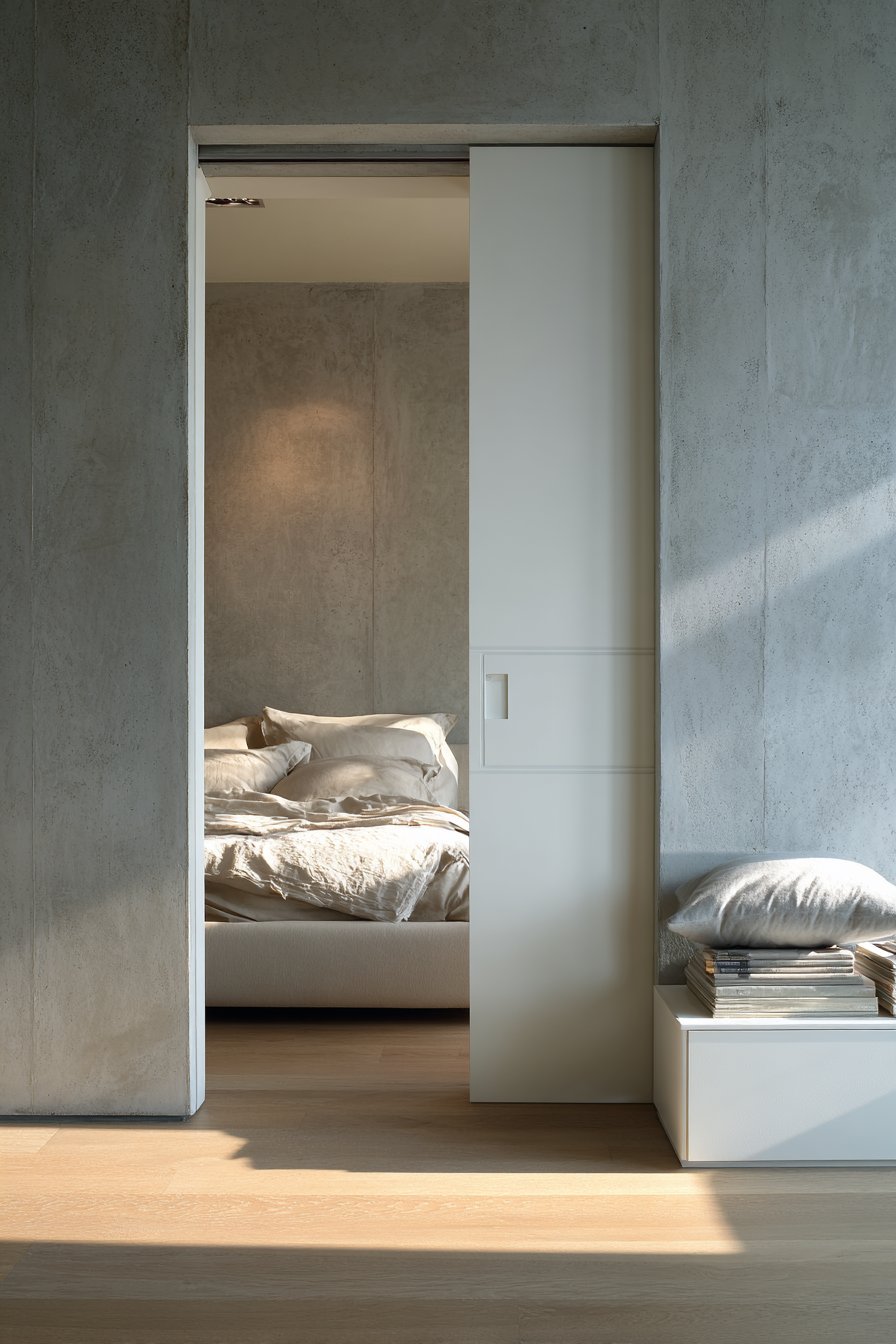
The white lacquer finish on these closet door ideas for bedroom applications provides multiple advantages beyond aesthetic appeal. The smooth, sealed surface resists fingerprints and smudges better than matte finishes, making maintenance simpler in frequently touched areas. The reflective quality of lacquer surfaces bounces light around the room, contributing to a brighter, more spacious feeling. The recessed pull detail eliminates protruding hardware that could catch on clothing or create visual clutter, maintaining the door’s streamlined appearance. The precision engineering required for smooth pocket door operation ensures quiet, effortless movement that enhances the user experience while protecting the door from damage during daily use.
Key Design Tips: Plan pocket door installations during initial construction or major renovations when wall modifications are more feasible and cost-effective. Ensure adequate wall depth to accommodate the door thickness plus track mechanism—typically requiring six to eight inches of wall cavity depth. Specify soft-close mechanisms to prevent slamming and ensure gentle, controlled closing action. Choose solid-core doors rather than hollow-core options for better sound dampening and more substantial feel. Install quality track systems from reputable manufacturers to ensure smooth operation and longevity. Consider adding a locking mechanism if closet privacy or security is a concern. Protect the door finish during construction and move-in processes to prevent scratches or damage to the pristine lacquer surface. Maintain proper lubrication of the track system according to manufacturer specifications.
6. Bohemian Rattan Woven Texture
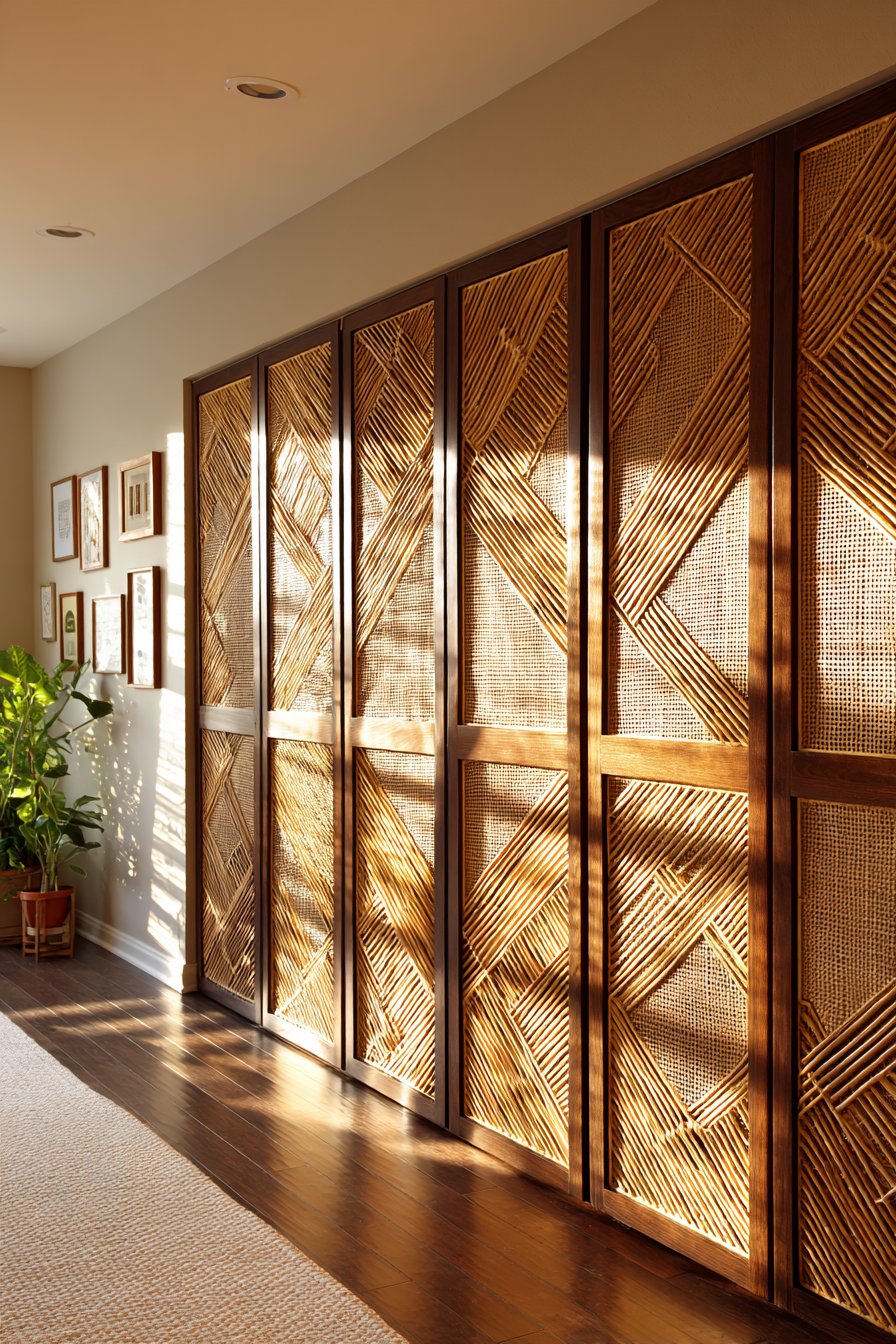
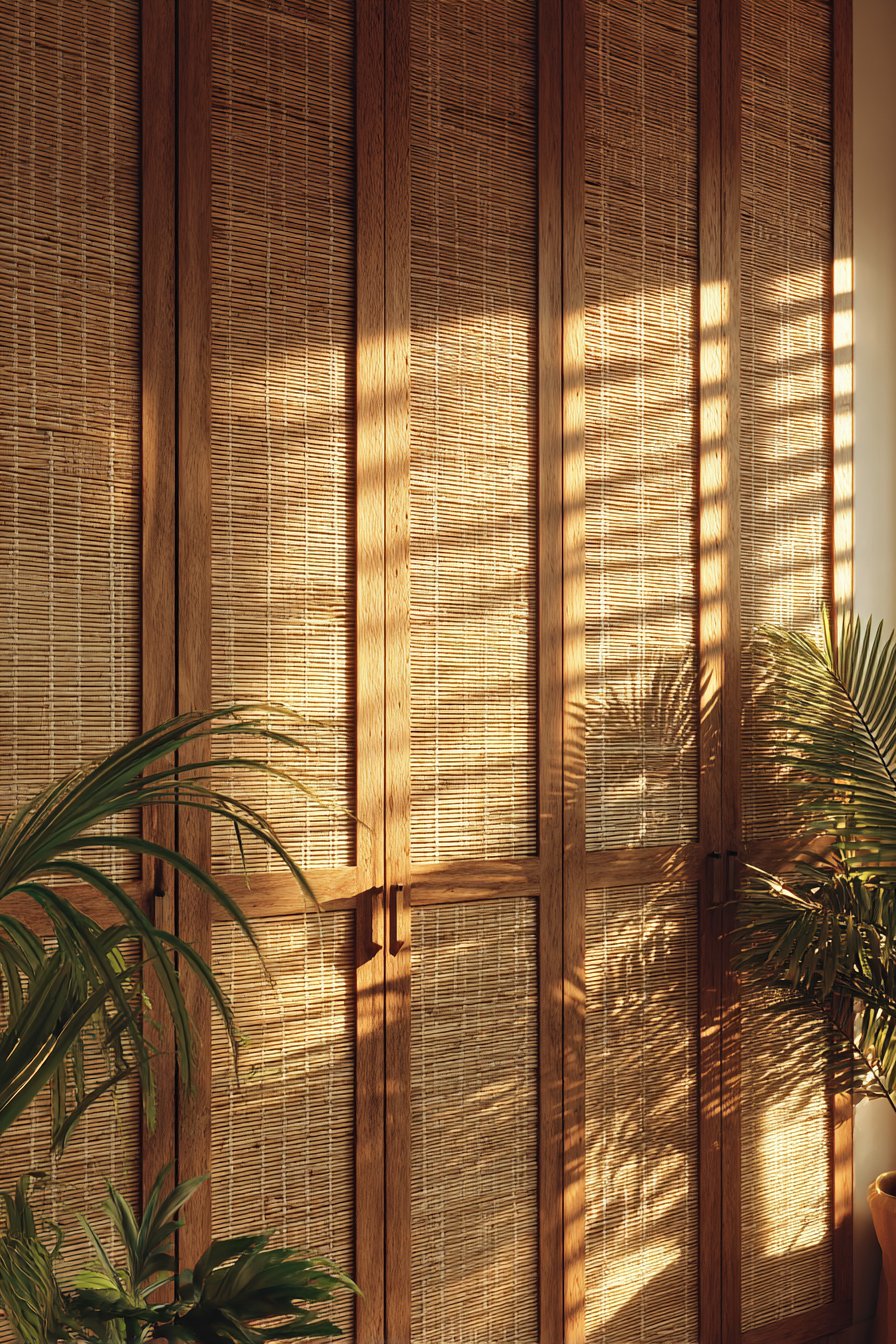
Rattan woven closet door ideas for bedroom spaces introduce organic texture and natural material beauty that perfectly complement bohemian and coastal design aesthetics. These doors feature intricate geometric woven patterns crafted from natural rattan in warm tan tones, set within substantial dark wood frames that provide structural support and visual contrast. The woven construction allows natural light to filter through the material, creating beautiful shadow patterns and maintaining a connection to the closet interior while still providing a degree of visual privacy. This design approach brings outdoor elements inside, creating spaces that feel relaxed, casual, and connected to nature.
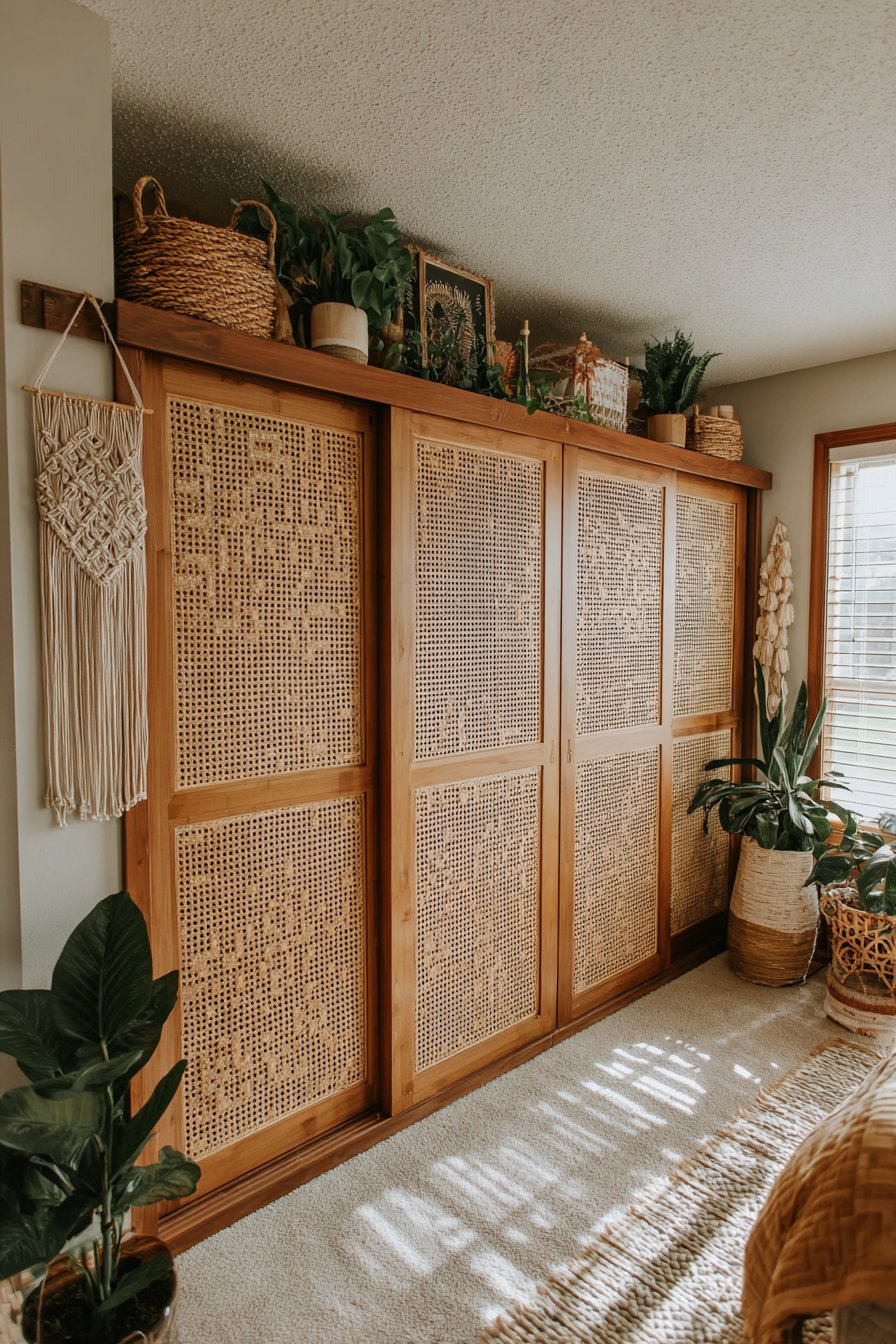
The craftsmanship involved in creating woven rattan closet doors represents traditional techniques passed down through generations of artisans. The rattan material offers natural flexibility that allows for complex weaving patterns while maintaining durability and strength. The dark wood frames—typically constructed from hardwoods like mahogany or walnut—provide necessary structural support while creating rich color contrast against the lighter rattan. Within the bohemian bedroom context, these closet doors pair beautifully with macramé wall hangings that echo the handcrafted aesthetic, layered textiles in earth tones that add warmth and comfort, and abundant indoor plants that reinforce the natural material theme. Golden hour sunlight streaming through the woven rattan creates ethereal shadow patterns on walls and floors, adding dynamic visual interest that changes throughout the day.
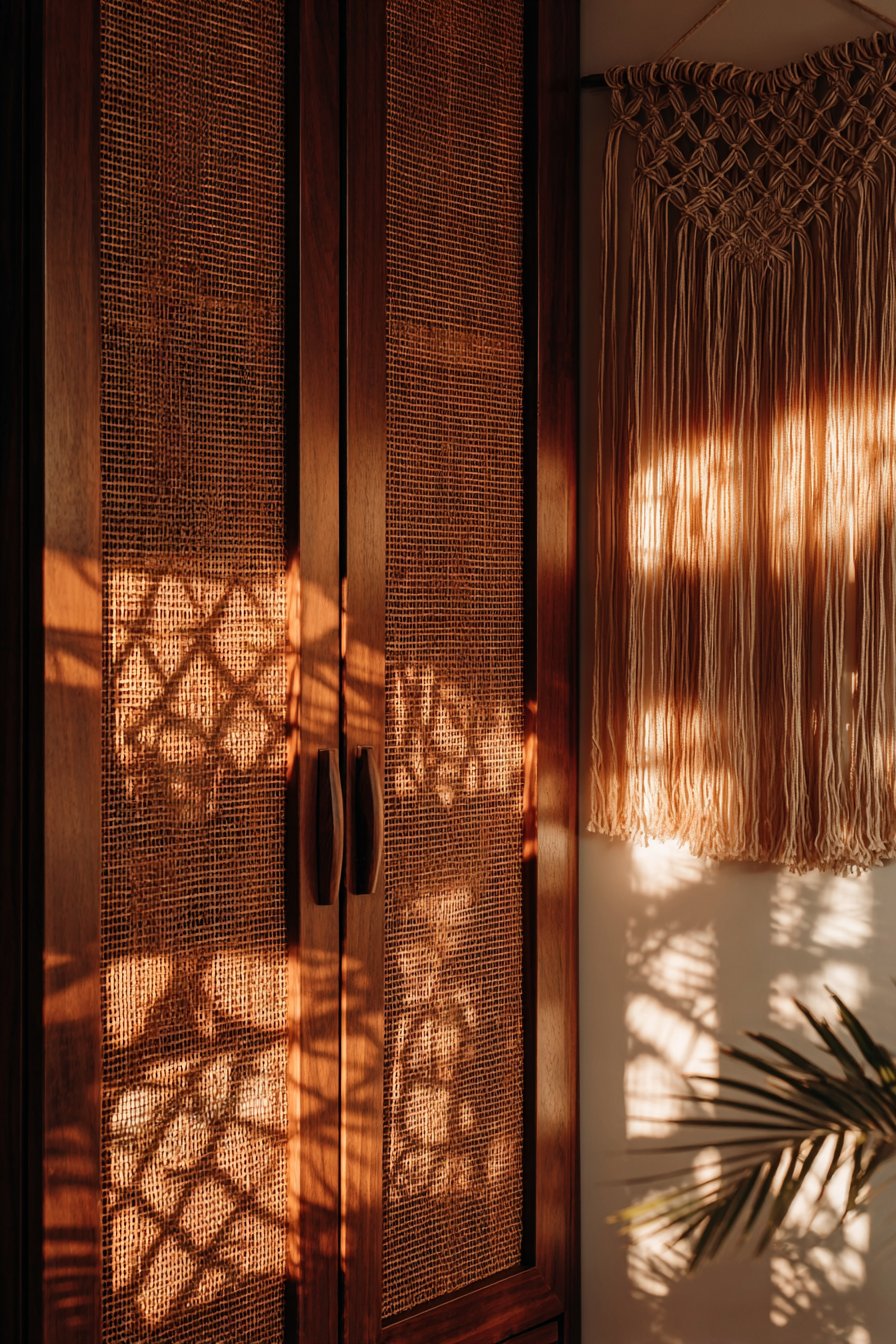
The practical benefits of rattan woven closet door ideas for bedroom applications extend beyond their undeniable aesthetic appeal. The woven construction allows air circulation into closet spaces, helping prevent musty odors and moisture buildup that can damage clothing and other stored items. The natural materials resist warping and maintain dimensional stability in varying humidity conditions better than some synthetic alternatives. The texture and pattern of woven rattan effectively camouflage fingerprints and minor wear, maintaining a fresh appearance with minimal maintenance. The organic nature of these materials also contributes to improved indoor air quality, as natural fibers don’t off-gas volatile organic compounds like some manufactured materials.
Key Design Tips: Source rattan from sustainable suppliers to ensure environmental responsibility and support traditional craft communities. Seal or finish the rattan material to protect against moisture damage and extend longevity, particularly in humid climates. Choose frame woods that complement other wood tones in your bedroom for cohesive design integration. Consider the tightness of the weave based on desired privacy levels—tighter weaves provide more visual screening. Install these doors in bedrooms with adequate natural light to maximize the beautiful shadow patterns they create. Clean woven surfaces regularly with soft brush attachments to remove dust from crevices. Apply furniture wax or oil to wood frames periodically to maintain their luster and protect against moisture. Position bedroom furniture to avoid direct contact with the woven surfaces, which could snag fabrics over time.
7. Scandinavian White Shiplap Simplicity
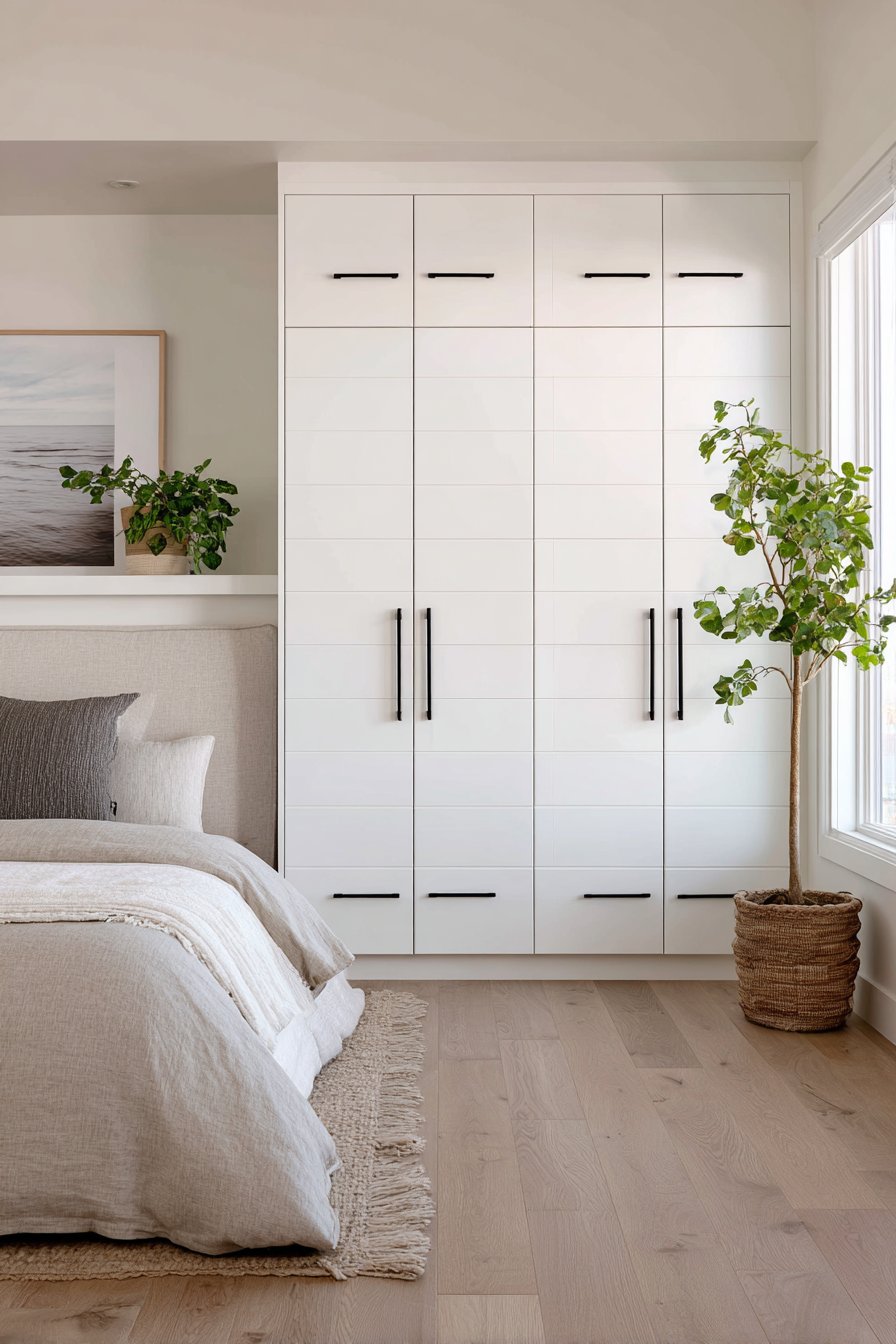
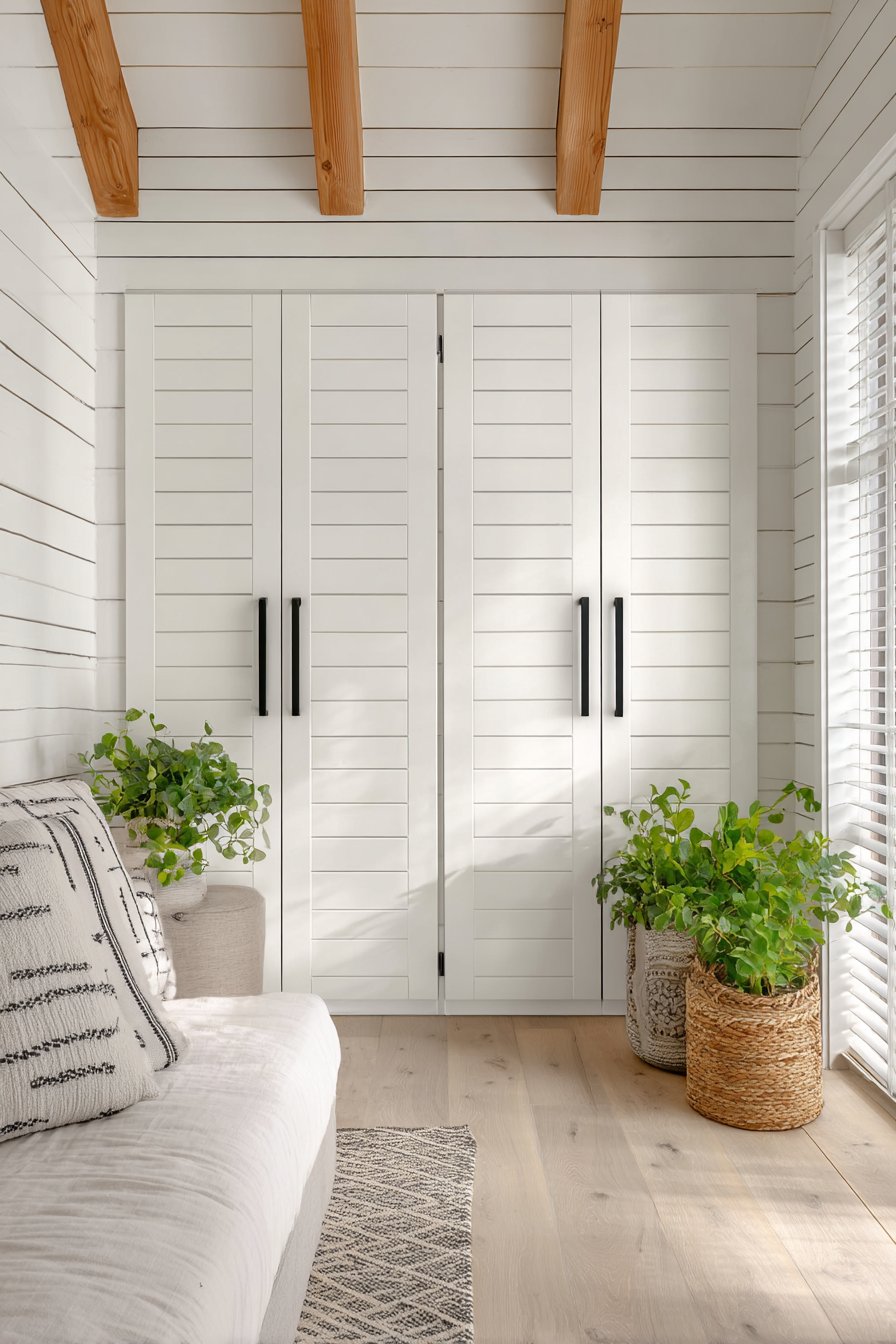
White shiplap closet door ideas for bedroom spaces embody the clean, minimalist principles central to Scandinavian design philosophy. These doors feature horizontal planks with characteristic reveals between boards that create subtle shadow lines and visual texture while maintaining overall simplicity. The pristine white paint finish brightens spaces and creates the airy, light-filled atmosphere that defines Nordic-inspired interiors. Matte black handles provide essential contrast and functional grip points while honoring the Scandinavian preference for restrained use of decorative elements. The horizontal orientation of the shiplap planks creates visual width, making these doors particularly effective in smaller bedrooms where the goal is to maximize perceived space.
The construction of shiplap involves overlapping wooden planks with rabbeted edges that create the characteristic shadow lines between boards. This traditional building technique originated in exterior siding applications but has been successfully adapted for interior use, including closet door ideas for bedroom spaces. The light ash wood flooring surrounding these doors complements the white finish while introducing subtle organic warmth, a natural linen upholstered bed adds textural softness without visual weight, and carefully selected potted greenery brings life and color to the neutral palette. Soft diffused daylight filtering through sheer curtains highlights the subtle wood grain texture visible beneath the painted surface, adding depth and preventing the white surfaces from appearing flat or sterile.
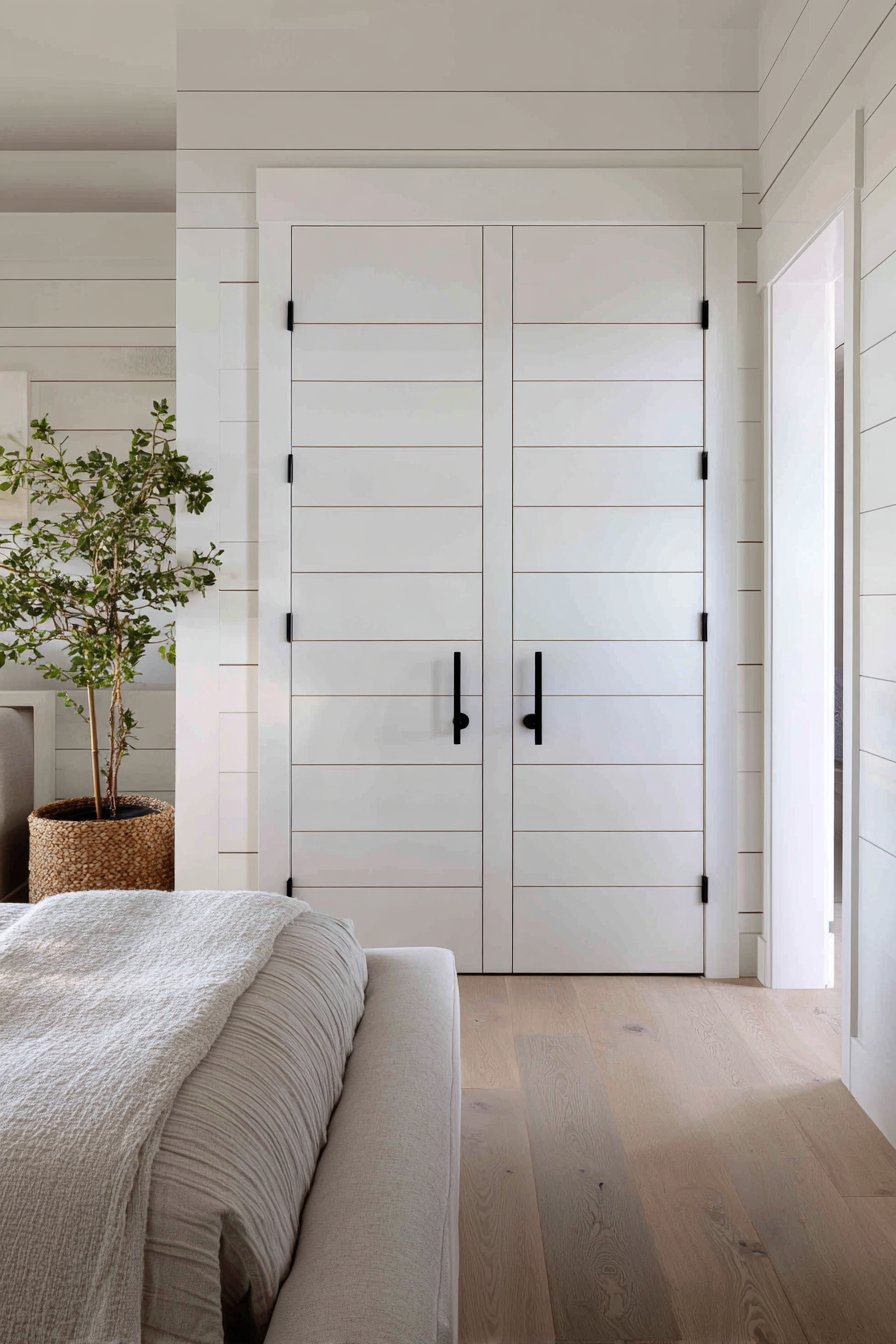
The versatility of white shiplap closet doors extends across numerous design styles beyond Scandinavian minimalism, including coastal, farmhouse, and contemporary aesthetics. The white finish serves as a neutral backdrop that adapts to changing decor preferences and color schemes over time, providing long-term design flexibility. The horizontal lines created by the shiplap construction can visually widen narrow rooms when the doors span significant wall areas. The matte finish on both the painted wood and the black hardware prevents glare and creates a sophisticated, understated appearance that never feels trendy or dated.
Key Design Tips: Use real wood shiplap rather than vinyl or composite alternatives for authentic texture and superior longevity. Apply multiple coats of high-quality white paint to achieve opaque coverage that still allows subtle wood grain to show through. Space planks consistently with precise reveals between boards—typically one-eighth to one-quarter inch—for professional-looking results. Choose matte black hardware in simple, modern profiles that complement rather than compete with the door’s simplicity. Ensure proper priming before painting to prevent tannin bleed from certain wood species. Consider adding soft-close hinges to maintain the peaceful Scandinavian atmosphere these doors create. Install doors with adequate clearance from flooring to prevent paint damage. Maintain cleanliness with gentle cleaning products that won’t yellow or damage white painted surfaces over time.
8. Farmhouse Sage Green Board and Batten
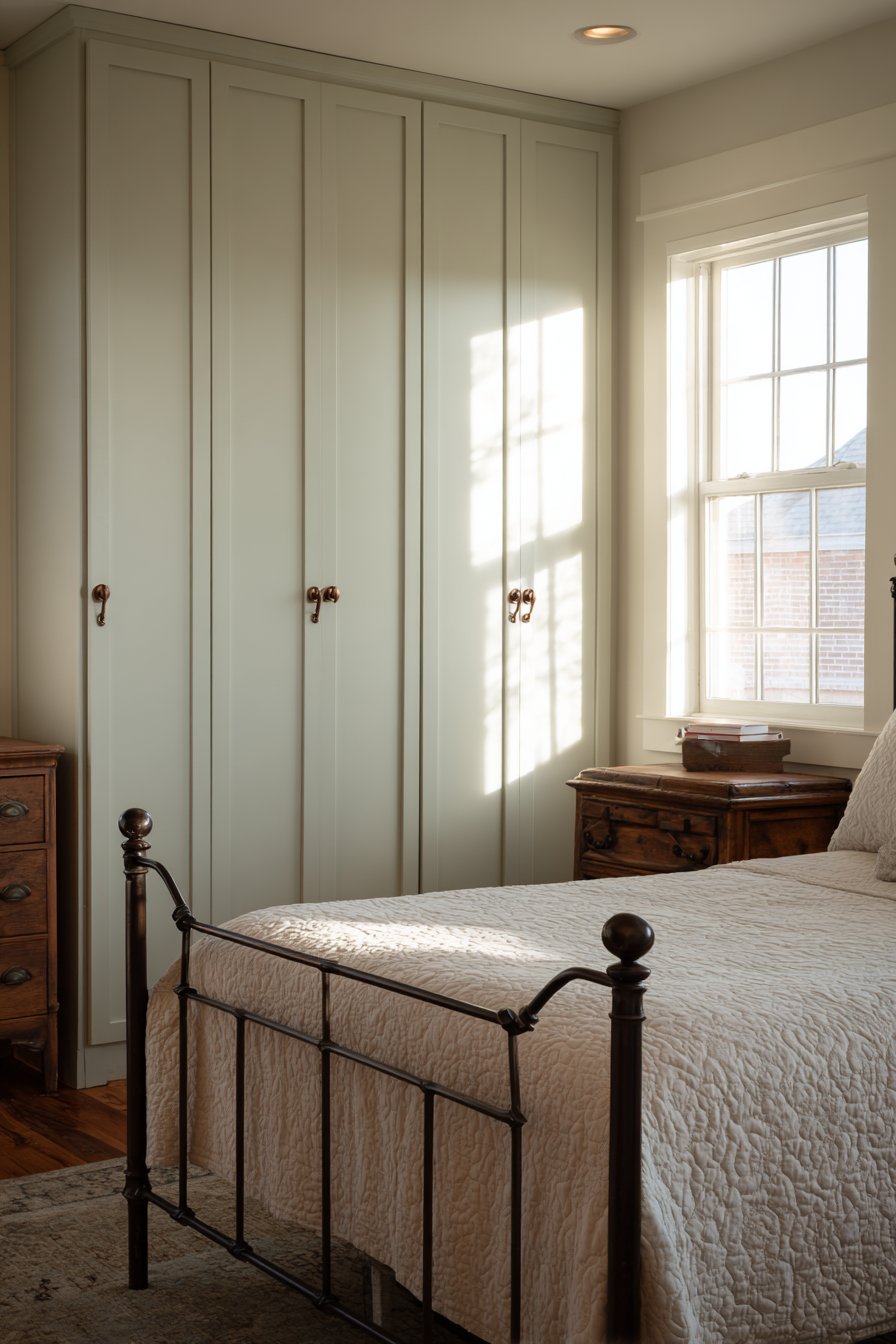
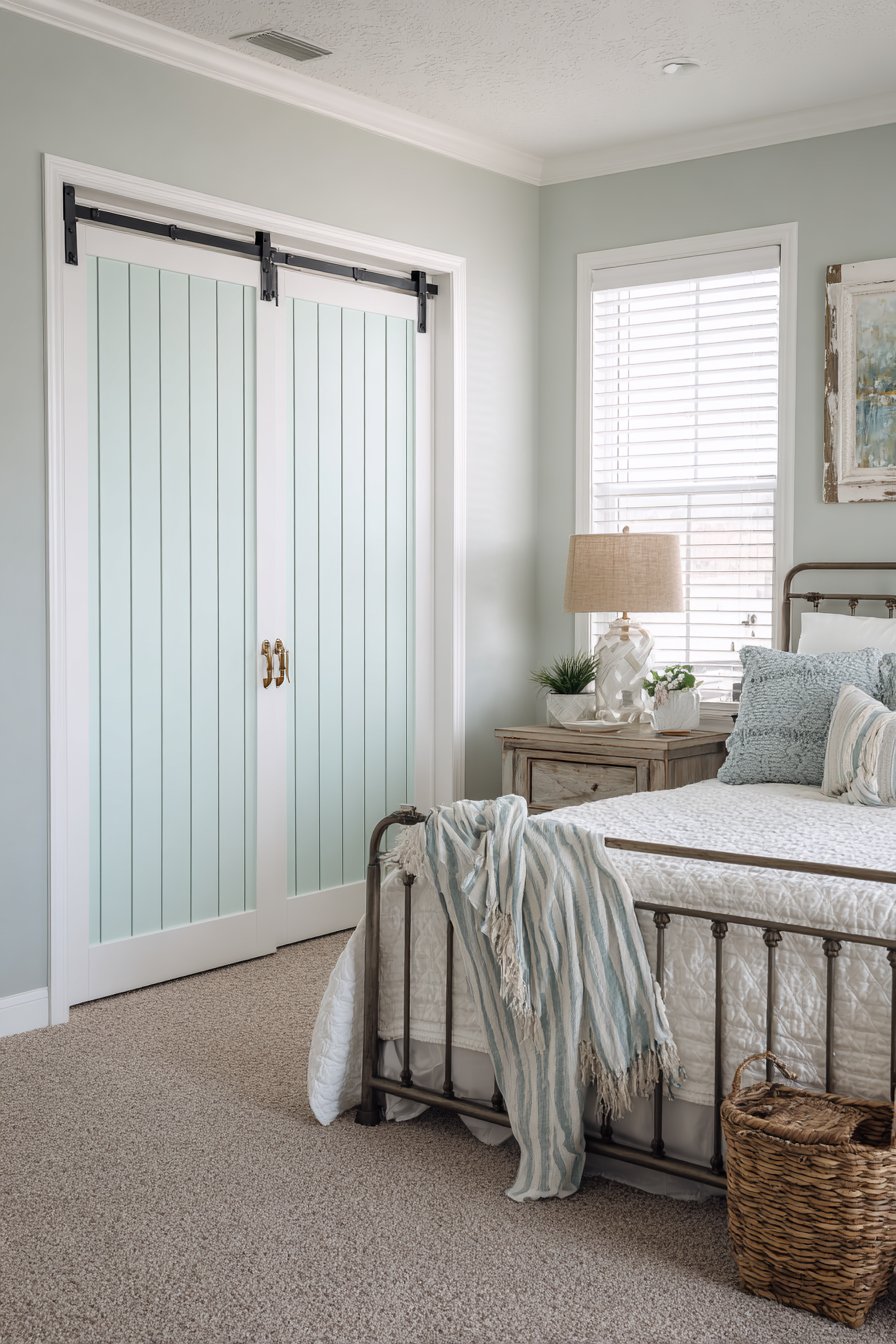
Vertical board and batten closet door ideas for bedroom spaces painted in soft sage green perfectly capture authentic farmhouse charm while introducing subtle color that feels fresh and current. This traditional door construction method features wide vertical boards with narrower battens covering the seams, creating strong vertical lines and dimensional depth. The sage green paint color provides sophisticated alternative to typical farmhouse white or cream, bringing nature-inspired tranquility to bedroom spaces while maintaining the style’s characteristic warmth. Antique brass hardware including hinges and handles introduces warm metallic accents with aged patina that suggests history and authenticity, essential elements in successful farmhouse design.
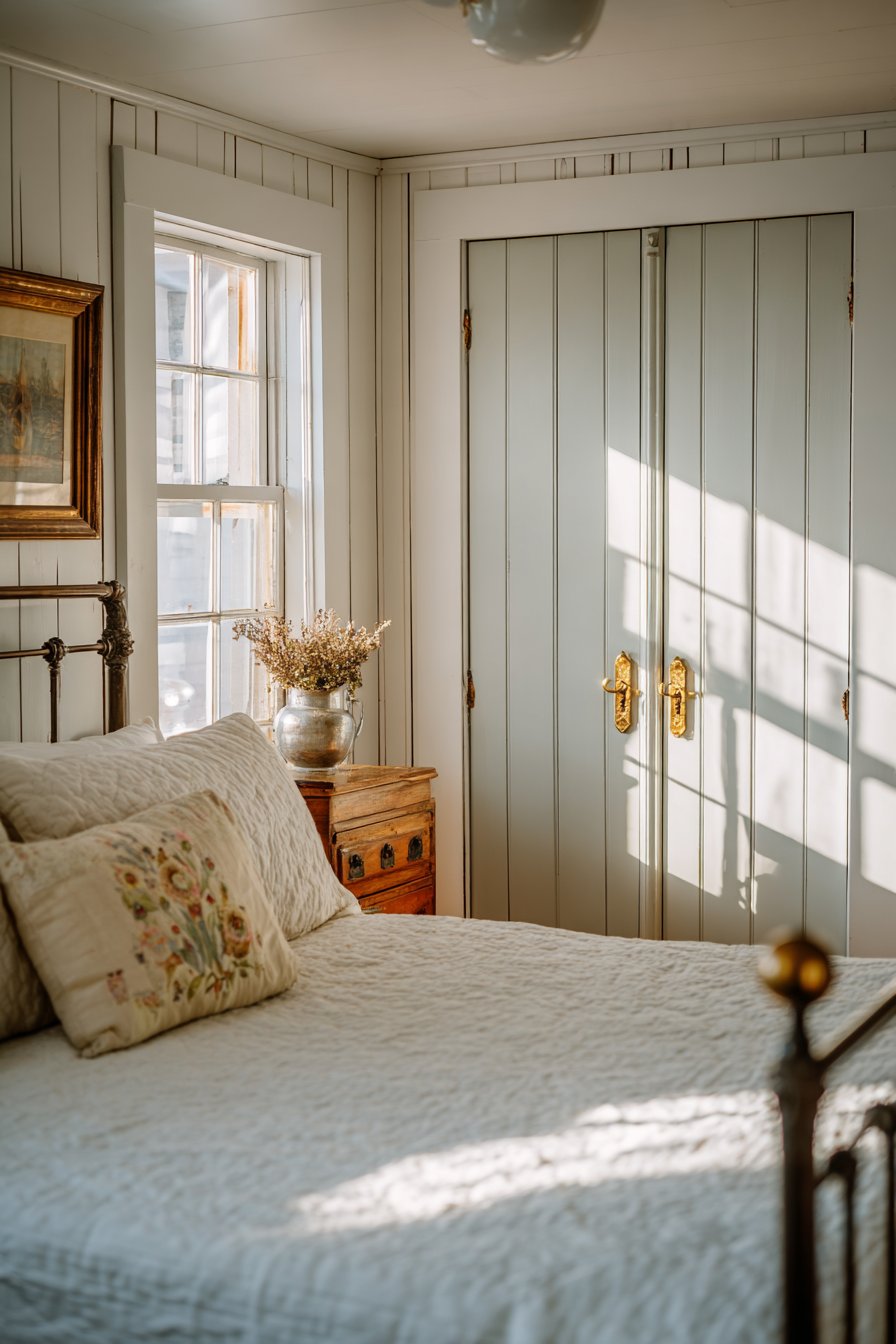
The board and batten construction technique dates back centuries to practical barn and outbuilding construction, where this method provided weather protection and structural stability. When adapted for interior closet door ideas for bedroom applications, this construction creates beautiful shadow lines and visual interest through its dimensional profile. The visible wood texture beneath the sage green paint adds organic authenticity that prevents the doors from appearing flat or lifeless. The bedroom surrounding these doors features a vintage iron bed frame that reinforces the farmhouse aesthetic through aged metal and scrollwork details, quilted bedding that adds textile softness and traditional pattern, and distressed wood nightstands that exhibit the worn patina of genuine aged furniture. Natural window light creates gentle shadows that emphasize the vertical board details, bringing the door’s construction method into visual prominence.
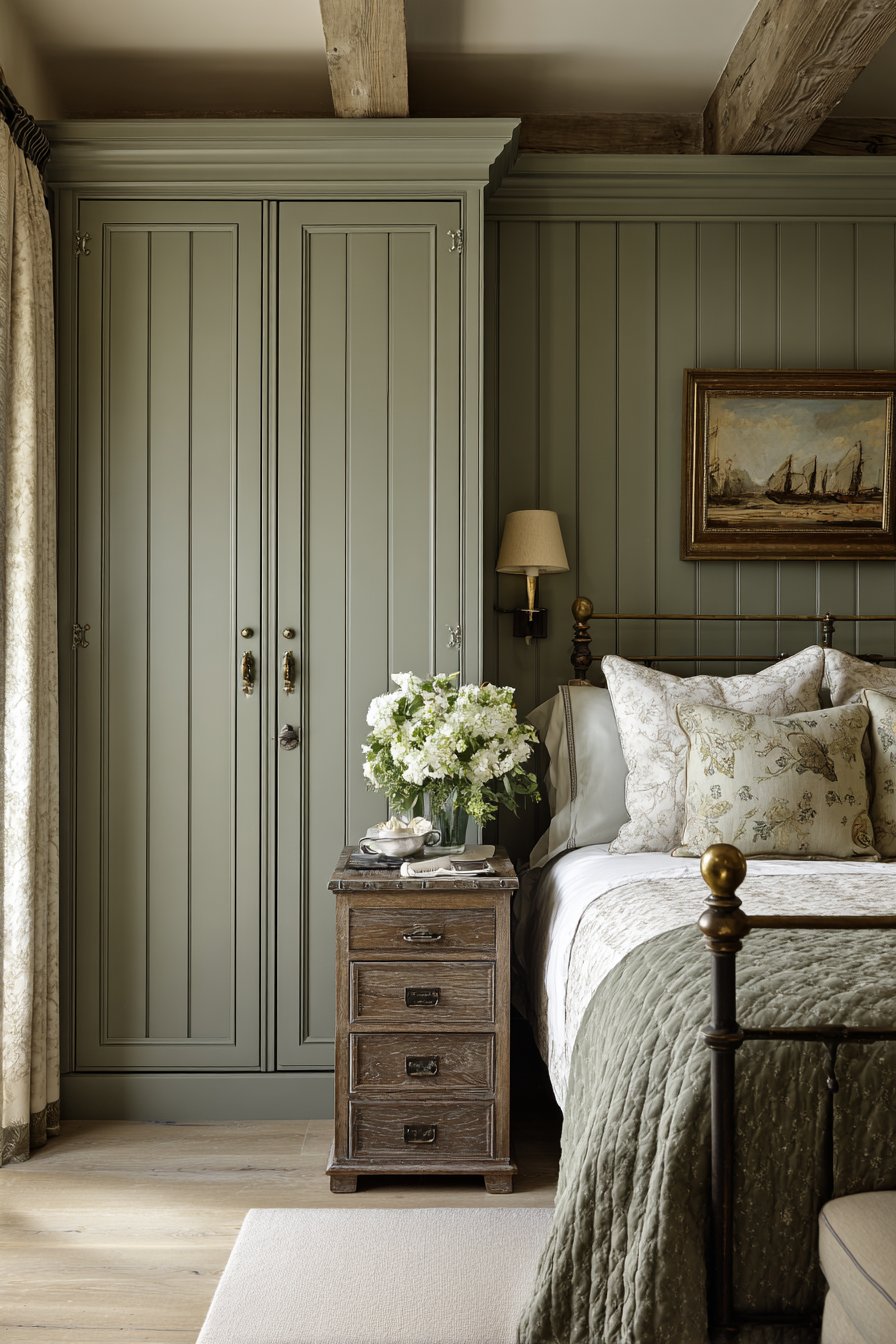
The sage green color selection represents a thoughtful evolution of traditional farmhouse color palettes, which historically favored pure whites, creams, and occasional darker accent colors. This muted green tone connects to nature while providing enough color saturation to create visual interest without overwhelming spaces. The antique brass hardware develops natural patina over time that enhances rather than detracts from its appearance, unlike hardware finishes that show age as deterioration. The vertical board and batten pattern creates strong upward-leading lines that can make rooms with standard ceiling heights feel more spacious and grand.
Key Design Tips: Select high-quality wood for boards and battens to ensure straight, warp-free construction that maintains tight seams over time. Space vertical boards evenly across the door width for balanced, symmetrical appearance. Use narrower battens that cover seams without overwhelming the design—typically one-third the width of the boards. Apply paint in thin, even coats to prevent drips and ensure the wood texture remains subtly visible. Source authentic antique brass hardware or high-quality reproductions that will develop natural patina. Install boards and battens with proper adhesive and fasteners to ensure long-term adhesion. Protect the painted finish with appropriate sealers for easy cleaning and maintenance. Consider the room’s ceiling height when determining board width—wider boards work better in rooms with higher ceilings, while narrower boards suit rooms with standard ceiling heights.
9. Industrial Loft Metal and Glass Framework
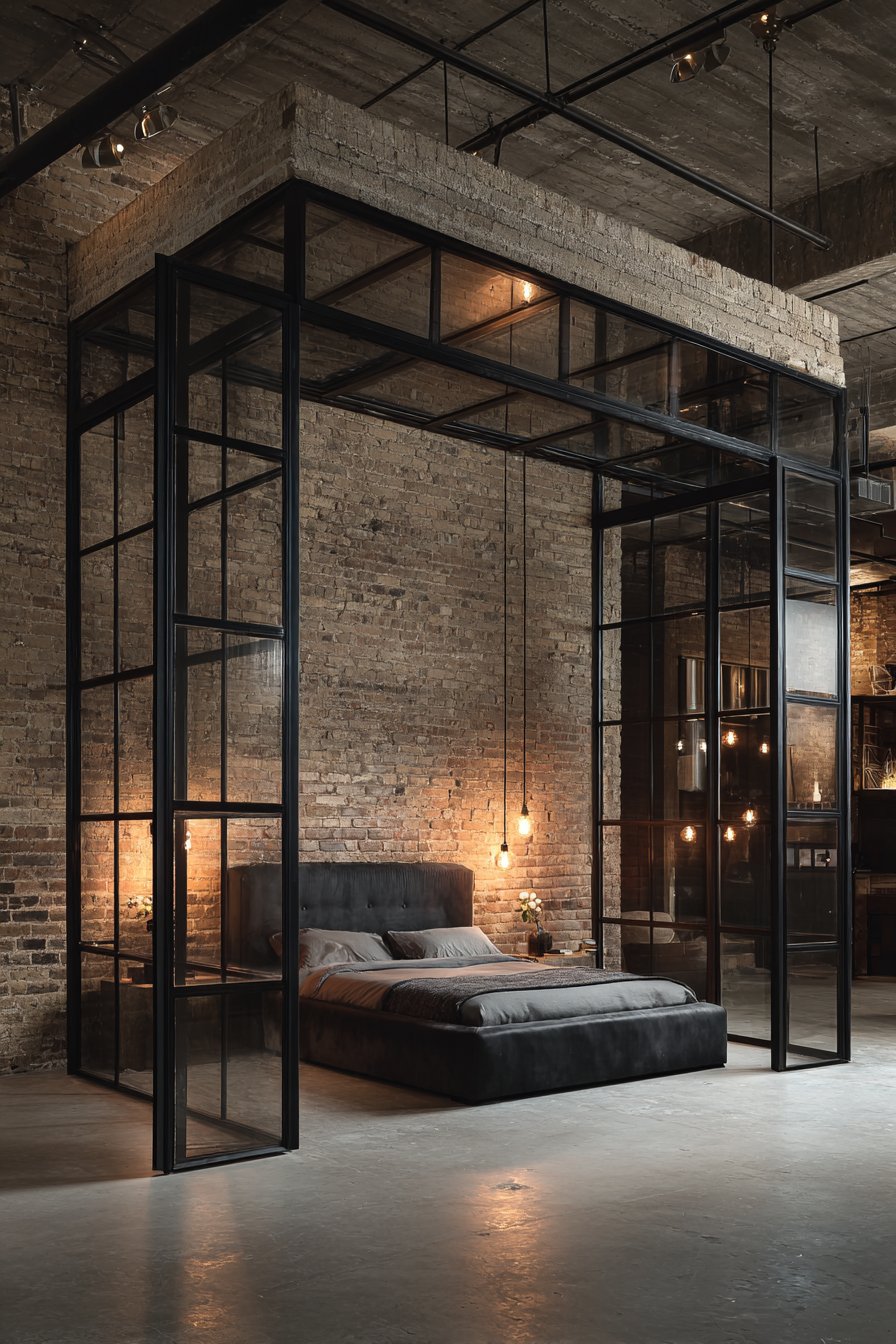
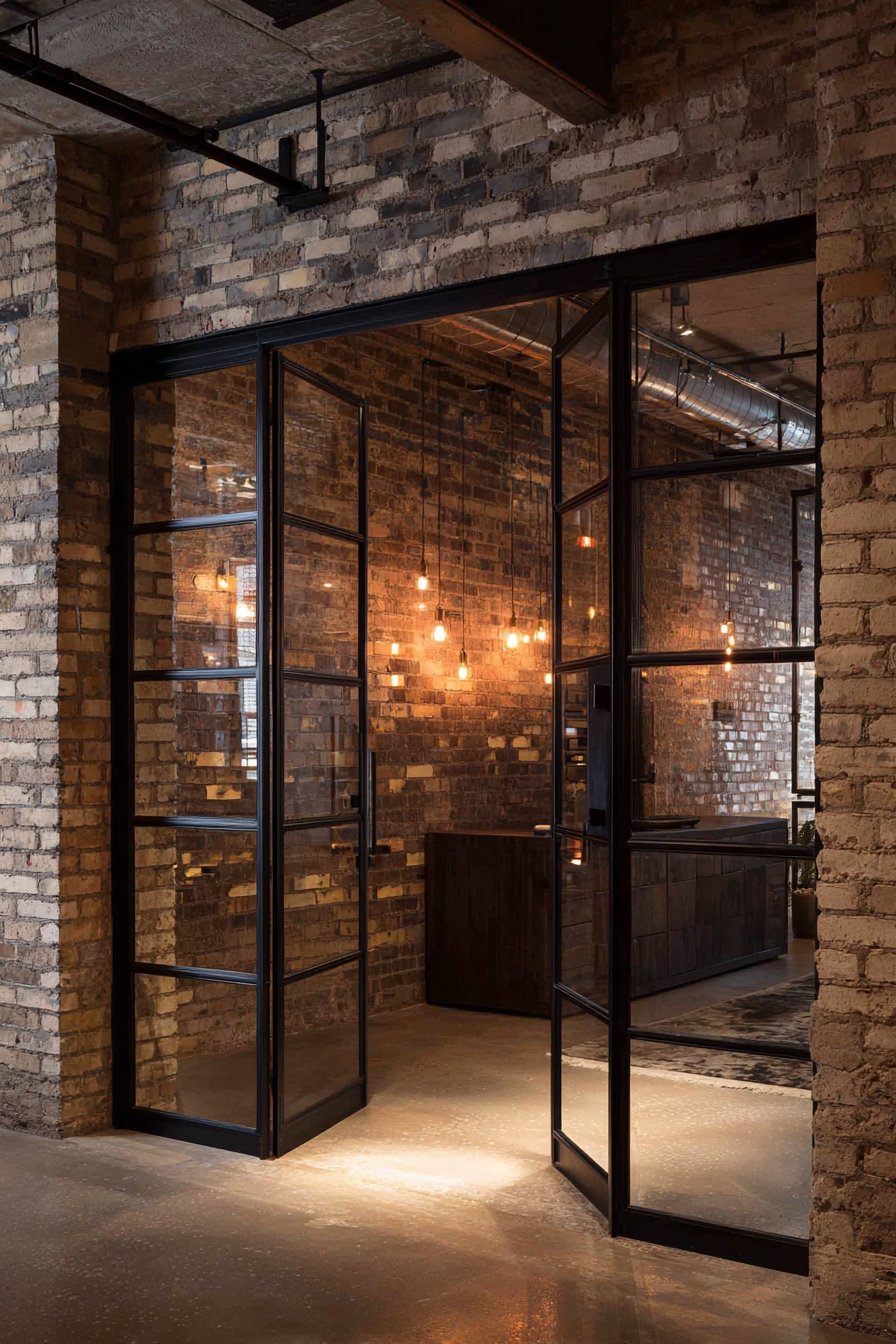
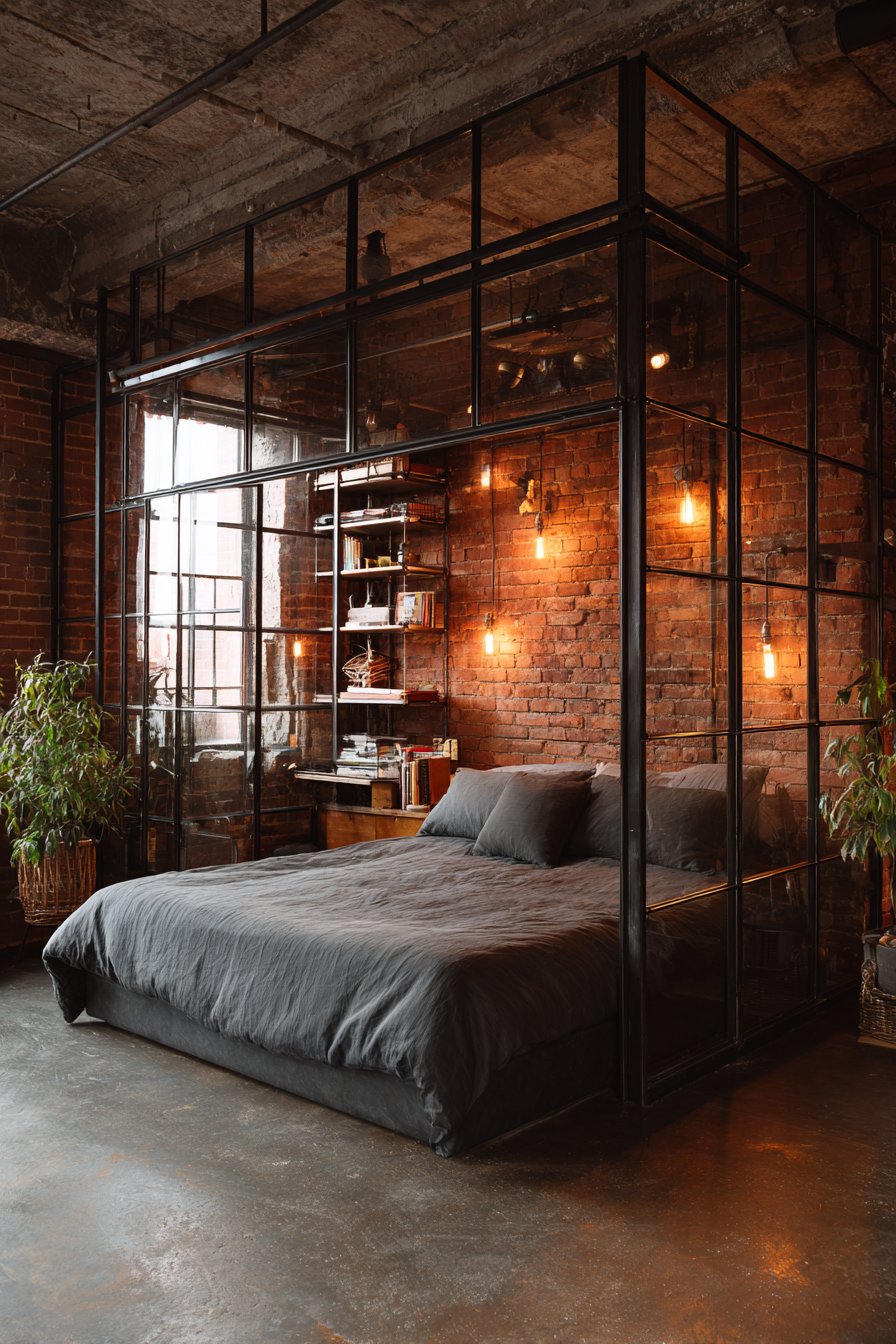
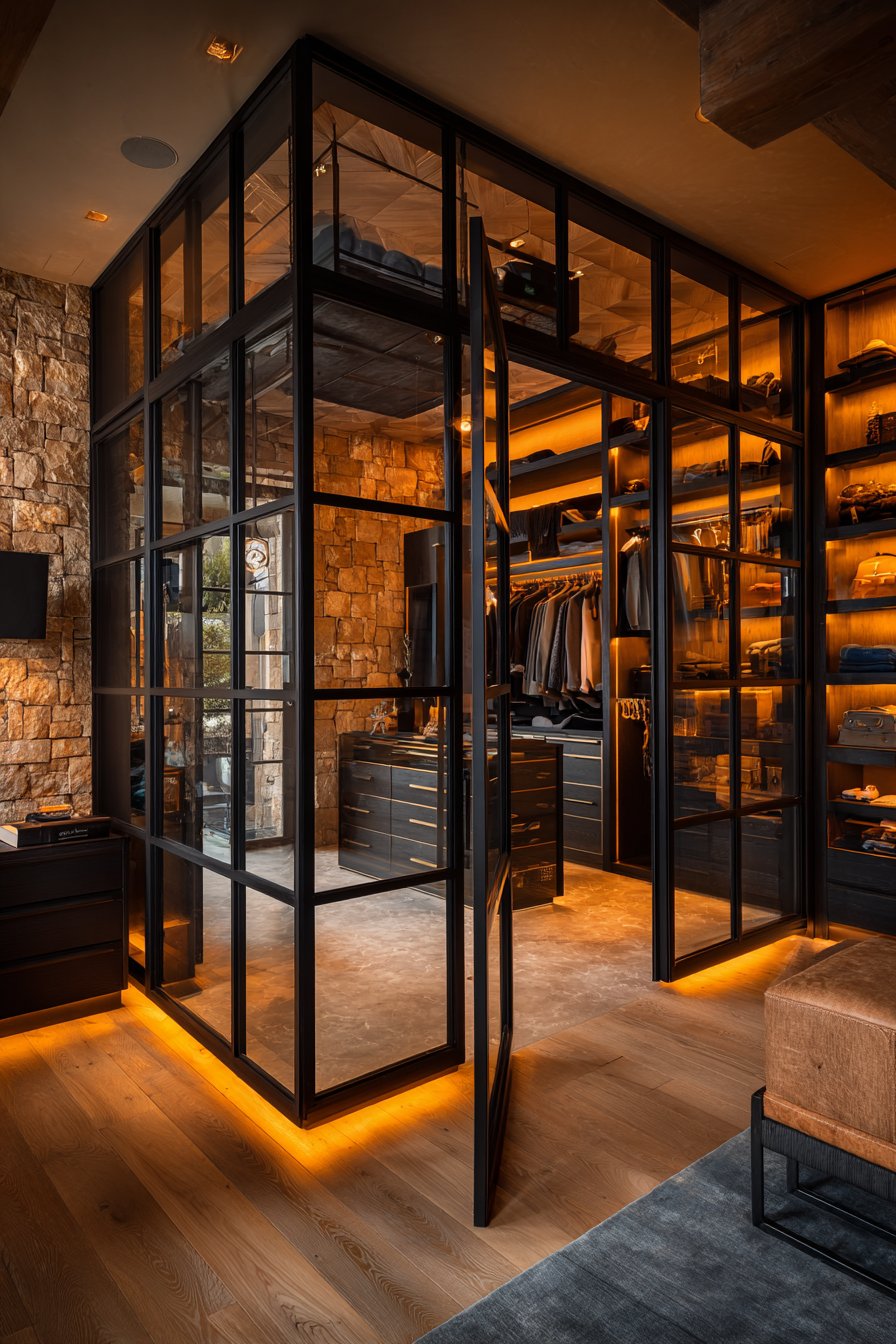
Metal-framed glass closet door ideas for bedroom spaces deliver authentic industrial loft aesthetics through their honest material expression and utilitarian design sensibility. These doors feature substantial black steel frames that divide large expanses of clear tempered glass into geometric patterns, creating striking visual impact while maintaining transparency. The industrial aesthetic celebrates structural elements rather than concealing them, with visible welds, rivets, or bolts adding authentic character. The clear glass panels provide visual connection to closet interiors while the strong frame lines add architectural definition. This design approach works particularly well in urban loft conversions, contemporary homes, and spaces that embrace raw, unfinished materials.
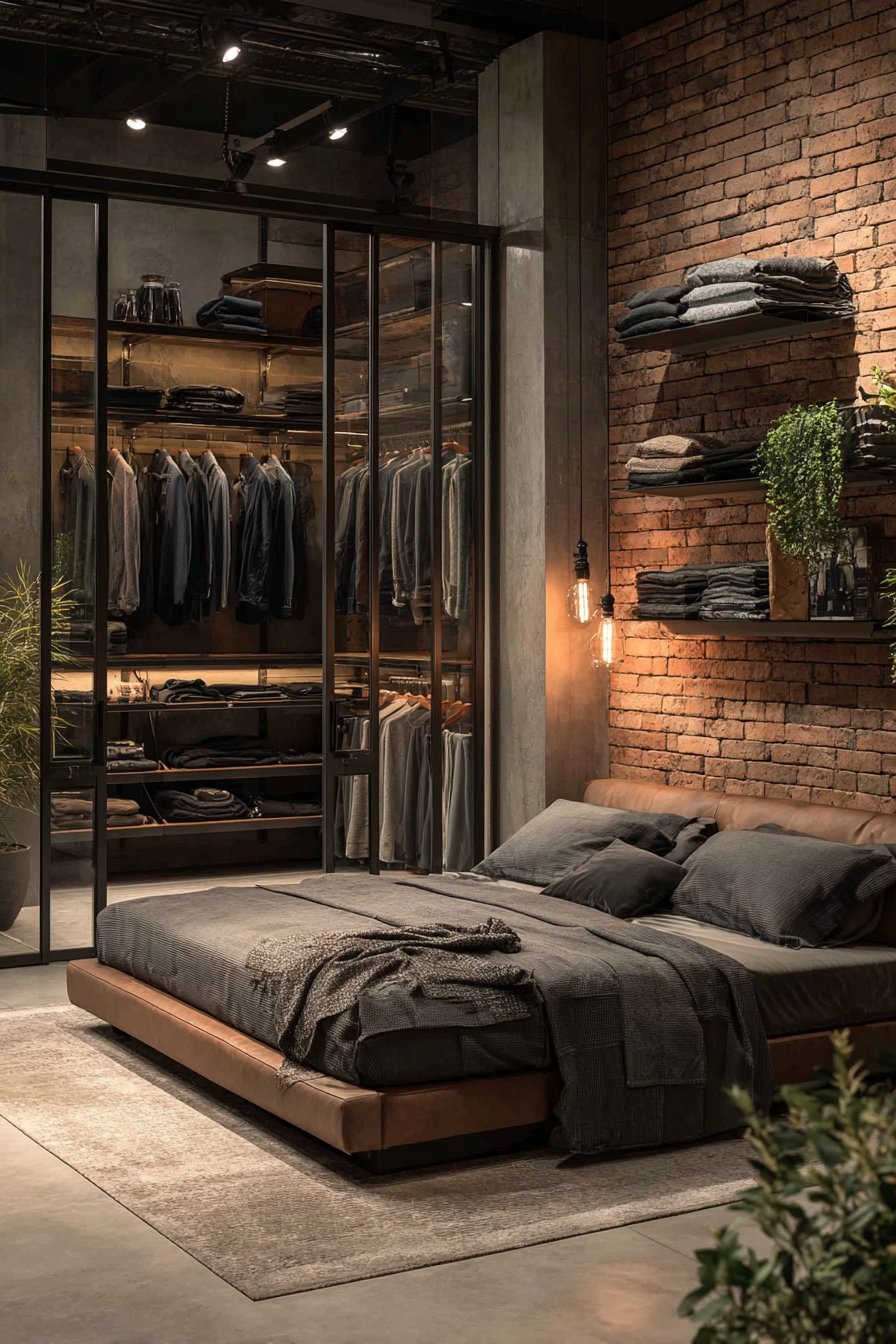
The black steel frame construction requires precision welding and fabrication to create straight, true assemblies that operate smoothly despite their substantial weight. The powder-coated black finish on the steel provides corrosion resistance and durable surface protection while maintaining the material’s authentic appearance. The bedroom context surrounding these closet doors reinforces the industrial theme through exposed brick accent walls that reveal the building’s structural history, polished concrete floors that reflect light and embrace utilitarian materials, and Edison bulb lighting fixtures suspended from exposed conduit or chain. The transparency of the glass doors creates visual depth and prevents the space from feeling segmented, particularly important in loft environments characterized by open floor plans and minimal interior partitions.
The practical considerations for implementing metal-framed glass closet door ideas for bedroom applications include substantial weight requiring reinforced mounting, careful attention to glass safety specifications, and maintenance requirements for both metal and glass components. The clear glass provides no privacy screening for closet contents, making this design most suitable for bedrooms where closet organization and aesthetics are maintained at high standards. The industrial aesthetic pairs naturally with minimalist organization systems, creating opportunities to showcase clothing and accessories as design elements rather than hidden storage. The metal frames conduct temperature, which may require consideration in climates with extreme seasonal variations.
Key Design Tips: Specify tempered safety glass for all panels to meet building codes and ensure occupant safety. Choose steel rather than aluminum frames for authentic industrial appearance and superior strength. Apply protective coatings to steel frames to prevent rust in humid environments. Install proper floor guides or tracks to manage the substantial weight of steel and glass assemblies. Consider adding frosted film to lower glass panels if privacy concerns exist. Ensure smooth operation of sliding mechanisms by specifying industrial-grade hardware rated for heavy doors. Clean glass panels regularly with streak-free cleaners to maintain visual clarity. Protect steel frames from scratches during installation and use. Coordinate frame finish with other metal elements in the bedroom including lighting fixtures and furniture legs.
10. Classic White Louvered Ventilation
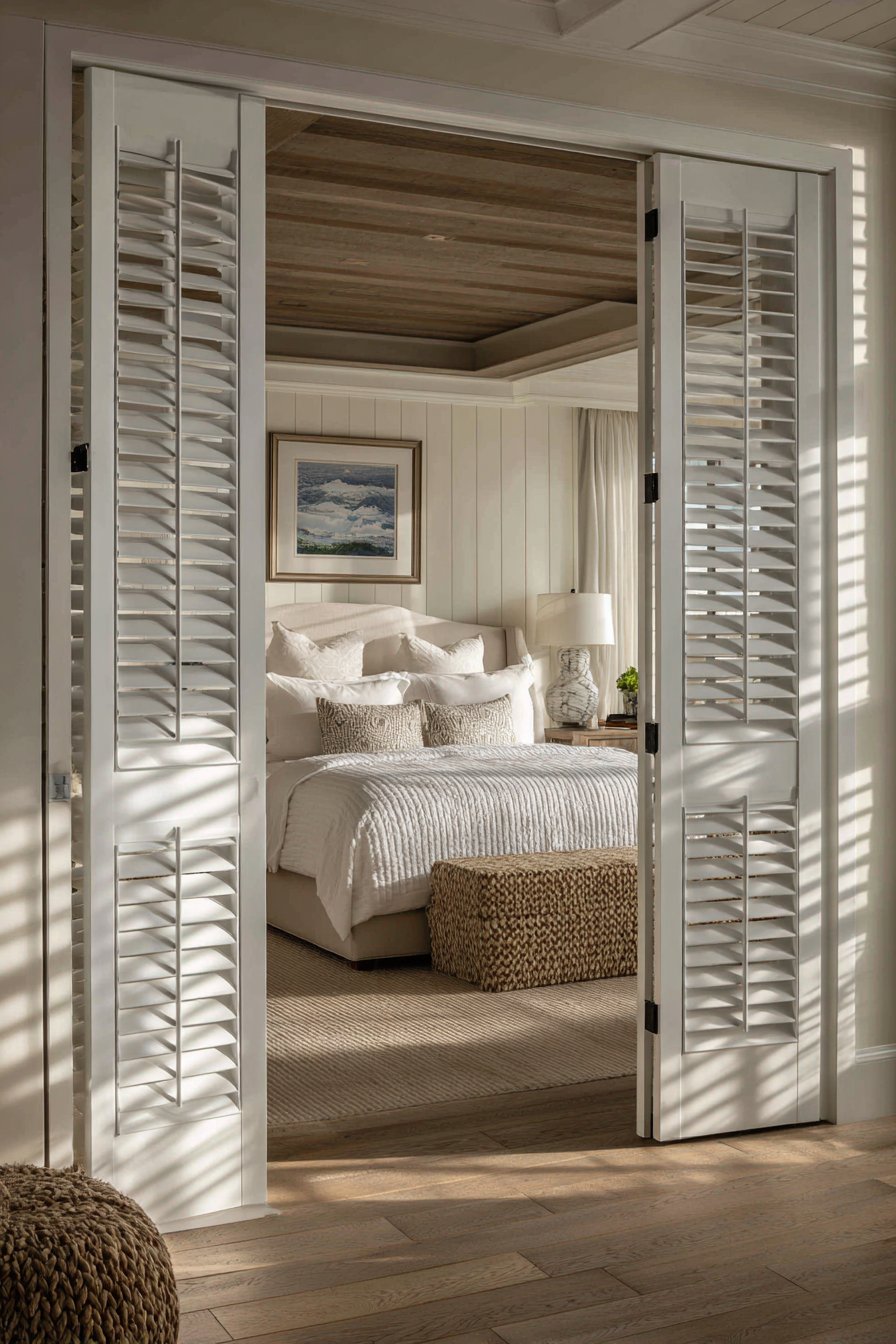
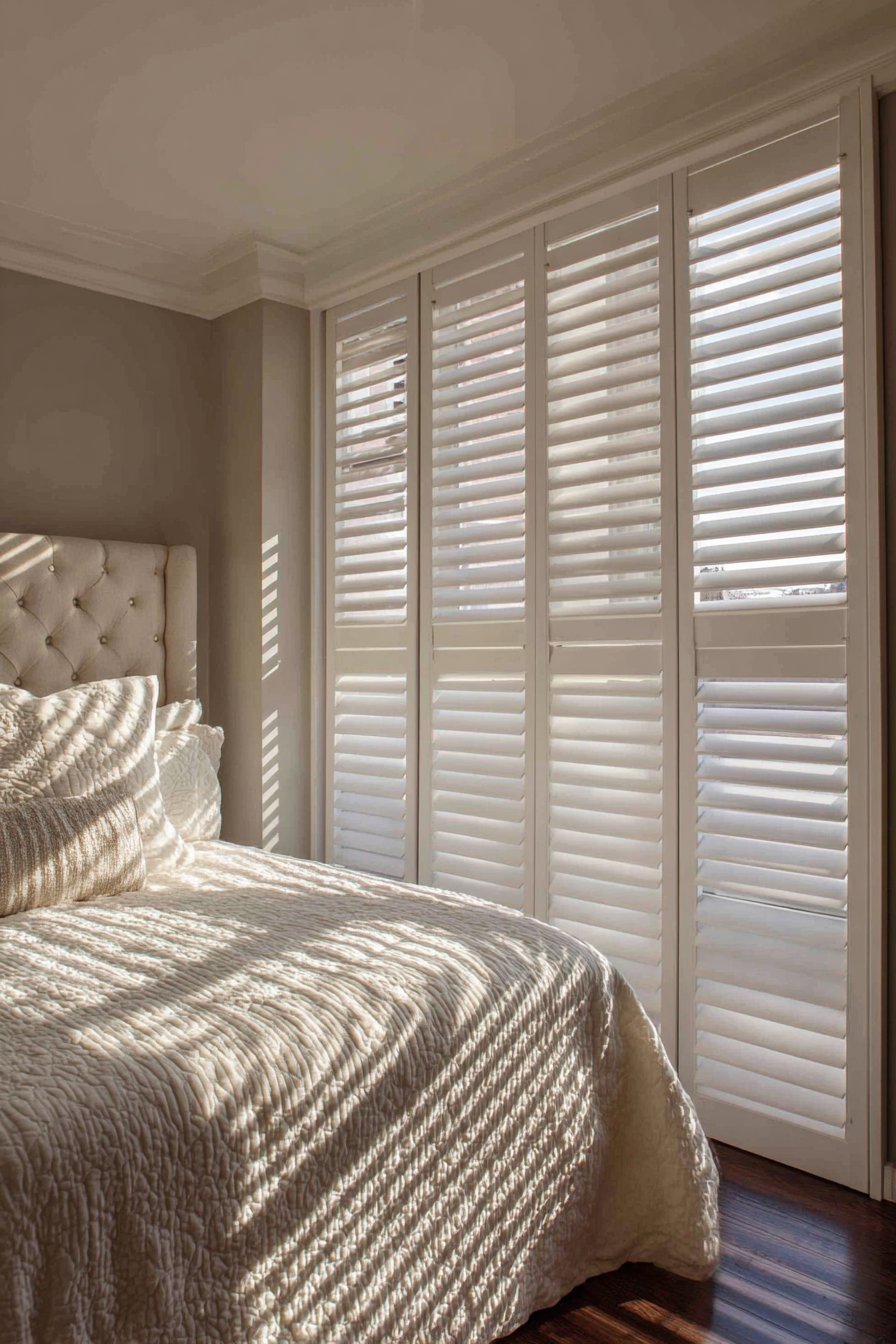
Louvered closet door ideas for bedroom spaces featuring white-painted horizontal slats combine classic styling with practical ventilation benefits that prevent musty odors and moisture buildup. The horizontal slats—typically angled between thirty and forty-five degrees—allow continuous air circulation while maintaining visual privacy for closet contents. This traditional door style has remained popular for decades due to its practical functionality and clean, timeless appearance that adapts to various design styles from coastal to cottage to traditional. Polished nickel hardware provides elegant metallic accents that catch light and add subtle luxury without overwhelming the door’s straightforward design.
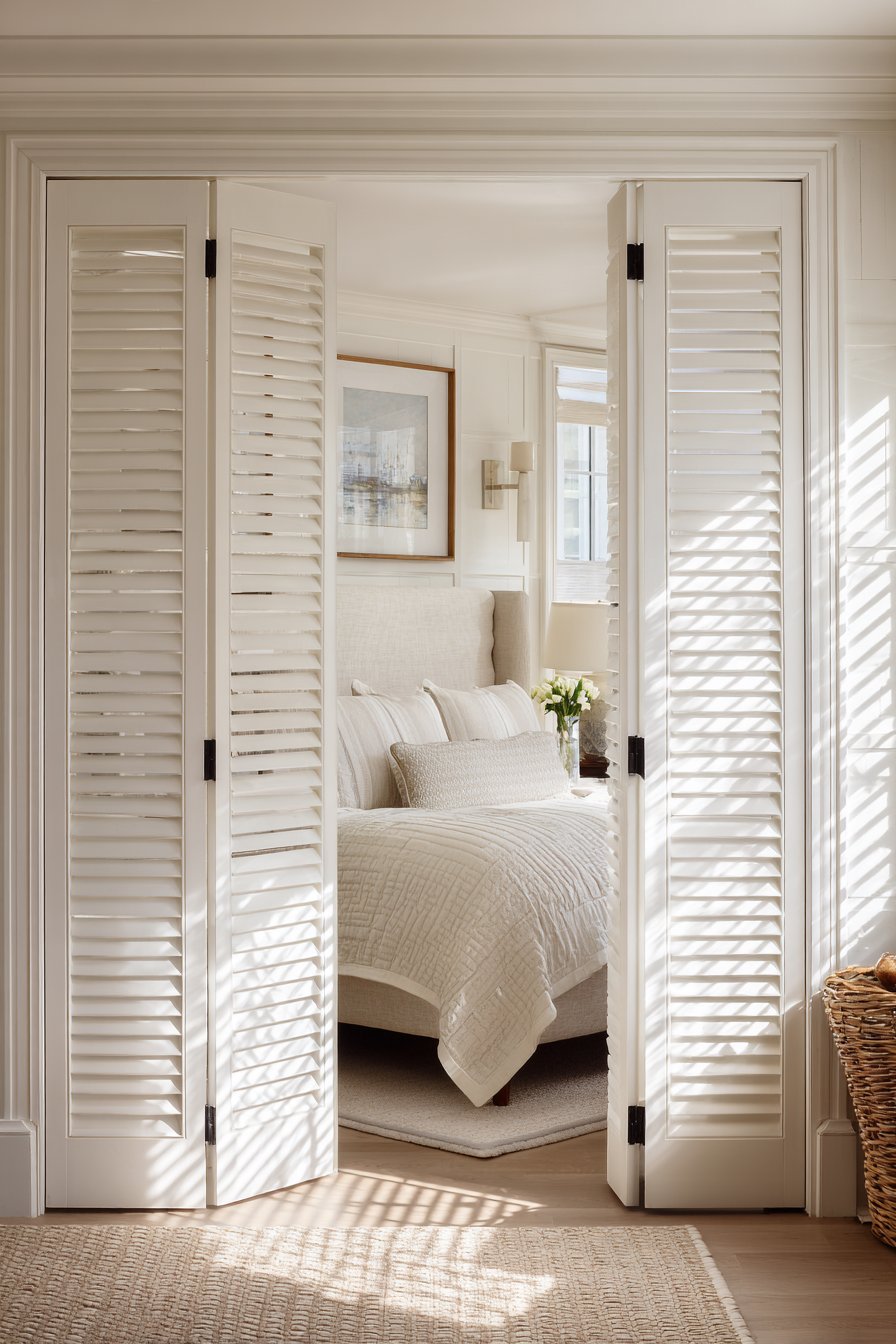
The construction of louvered doors requires precision manufacturing to ensure uniform slat spacing and consistent angles that allow adequate airflow while preventing direct sightlines into closet interiors. The white paint finish brightens spaces and creates versatile neutral surfaces that complement virtually any bedroom color scheme or design direction. The bedroom featuring these closet doors includes a neutral upholstered headboard that provides soft textural contrast to the structured louvered doors, textured bedding in cream tones that adds visual warmth through varied fabric weights and weaves, and medium-toned hardwood flooring that grounds the space with natural material warmth. Soft natural light filtering through bedroom windows creates striped shadow patterns through the louvered slats, adding dynamic visual interest that changes throughout the day as light angles shift.
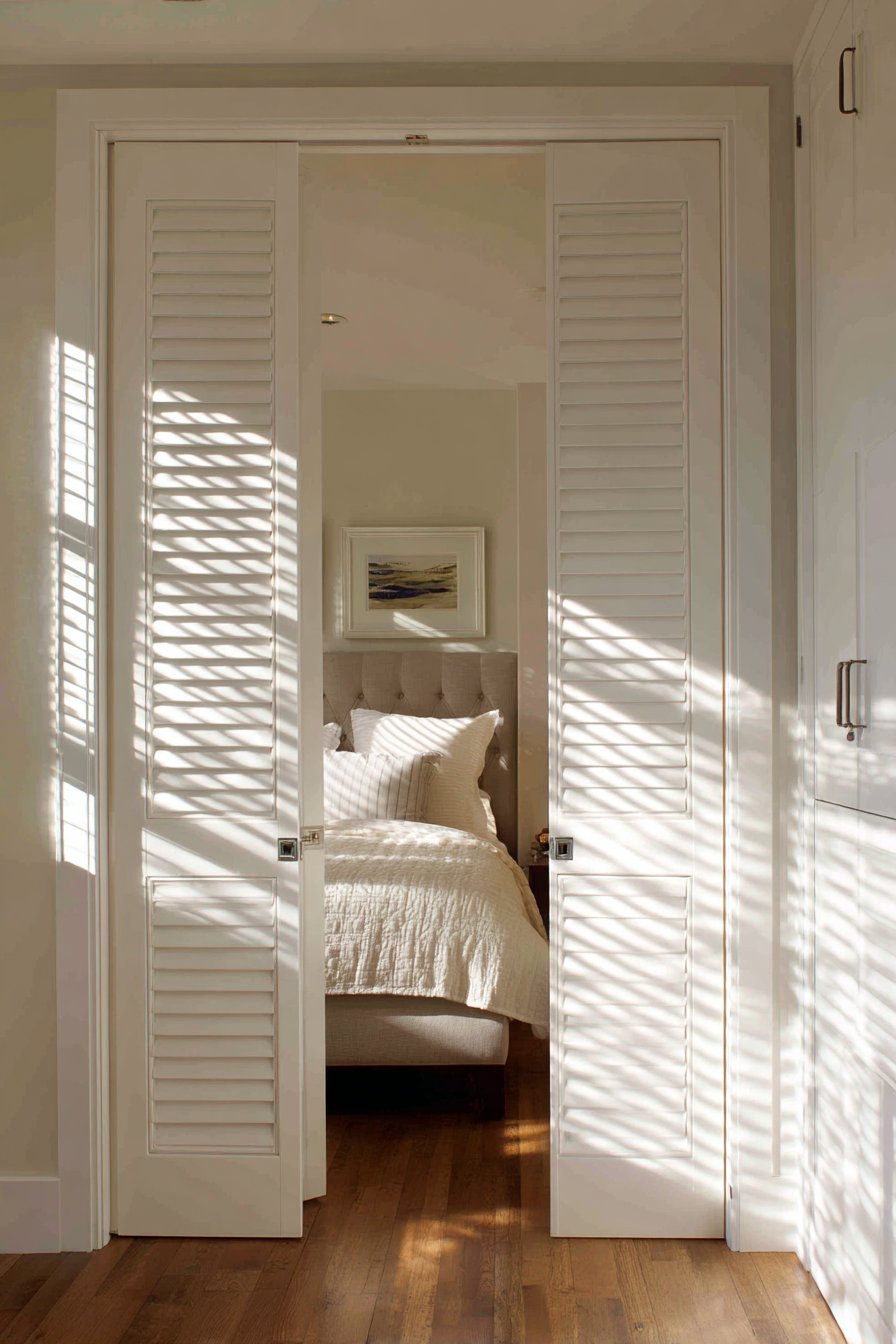
The ventilation properties of louvered closet door ideas for bedroom applications provide genuine functional advantages that solid doors cannot match. The continuous airflow prevents the stale, musty conditions that can develop in enclosed closet spaces, particularly in humid climates or poorly ventilated buildings. This air circulation helps protect clothing, linens, and other stored items from moisture damage, mildew, and odor absorption. The angled slats shed dust rather than collecting it on horizontal surfaces, reducing maintenance requirements. The traditional louvered style has demonstrated remarkable staying power across changing design trends, suggesting these doors will remain stylistically relevant for years to come.
Key Design Tips: Choose real wood louvers rather than vinyl alternatives for superior appearance and longevity. Ensure consistent slat spacing and angles through precision manufacturing or careful handcrafting. Apply multiple thin paint coats to achieve smooth, even coverage without filling the spaces between slats. Select hardware proportional to the door size and weight—larger doors require more substantial hardware. Consider the slat angle based on desired visibility and airflow—steeper angles provide more privacy but less ventilation. Install doors with adequate floor clearance to prevent paint damage from contact with flooring. Clean louvered surfaces regularly with vacuum brush attachments to remove dust from slat surfaces. Retouch paint periodically to maintain pristine appearance and protect wood from moisture damage. Coordinate the white paint shade with other white elements in the bedroom for cohesive color integration.
11. Glamorous Beveled Mirror Accordion Folds
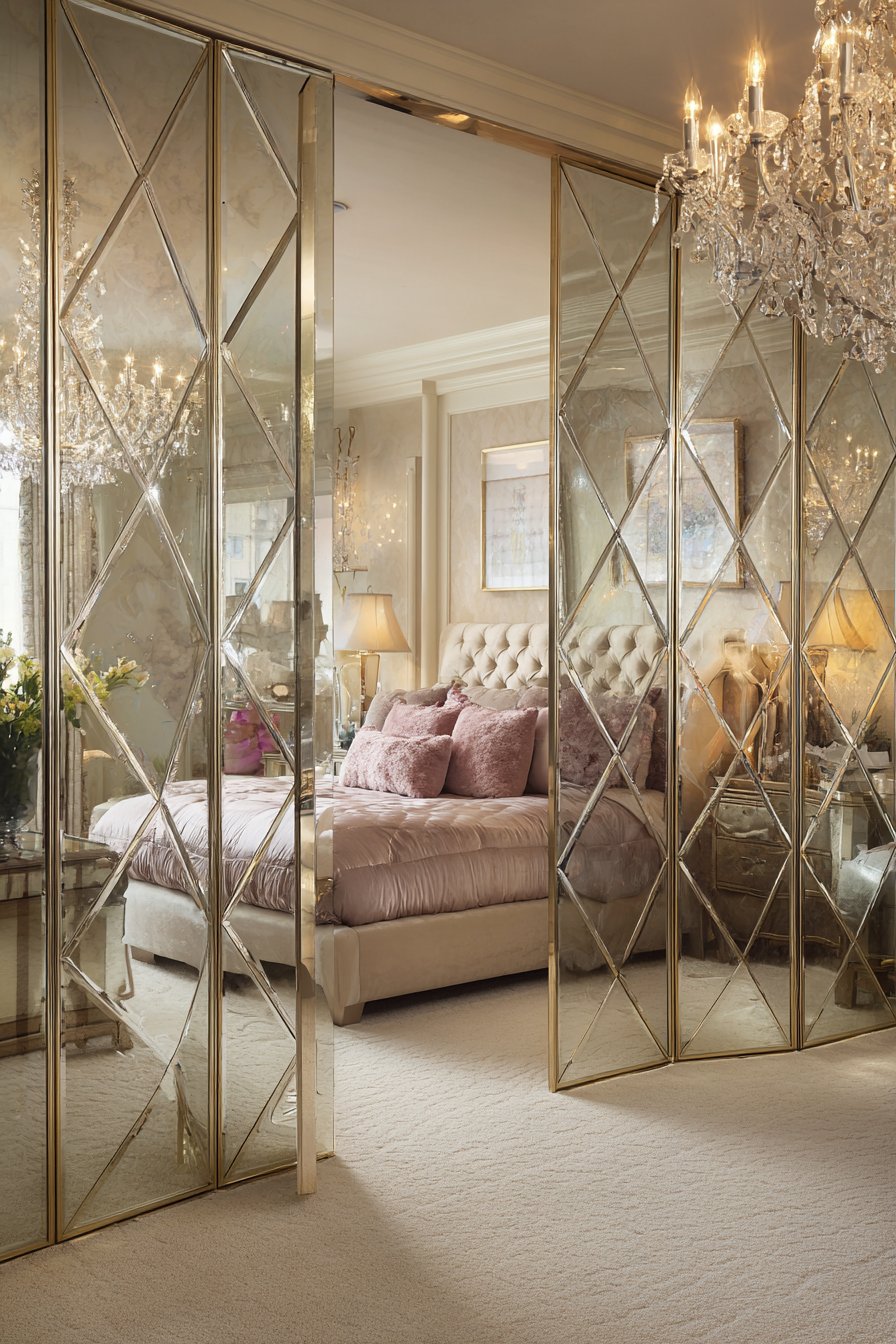
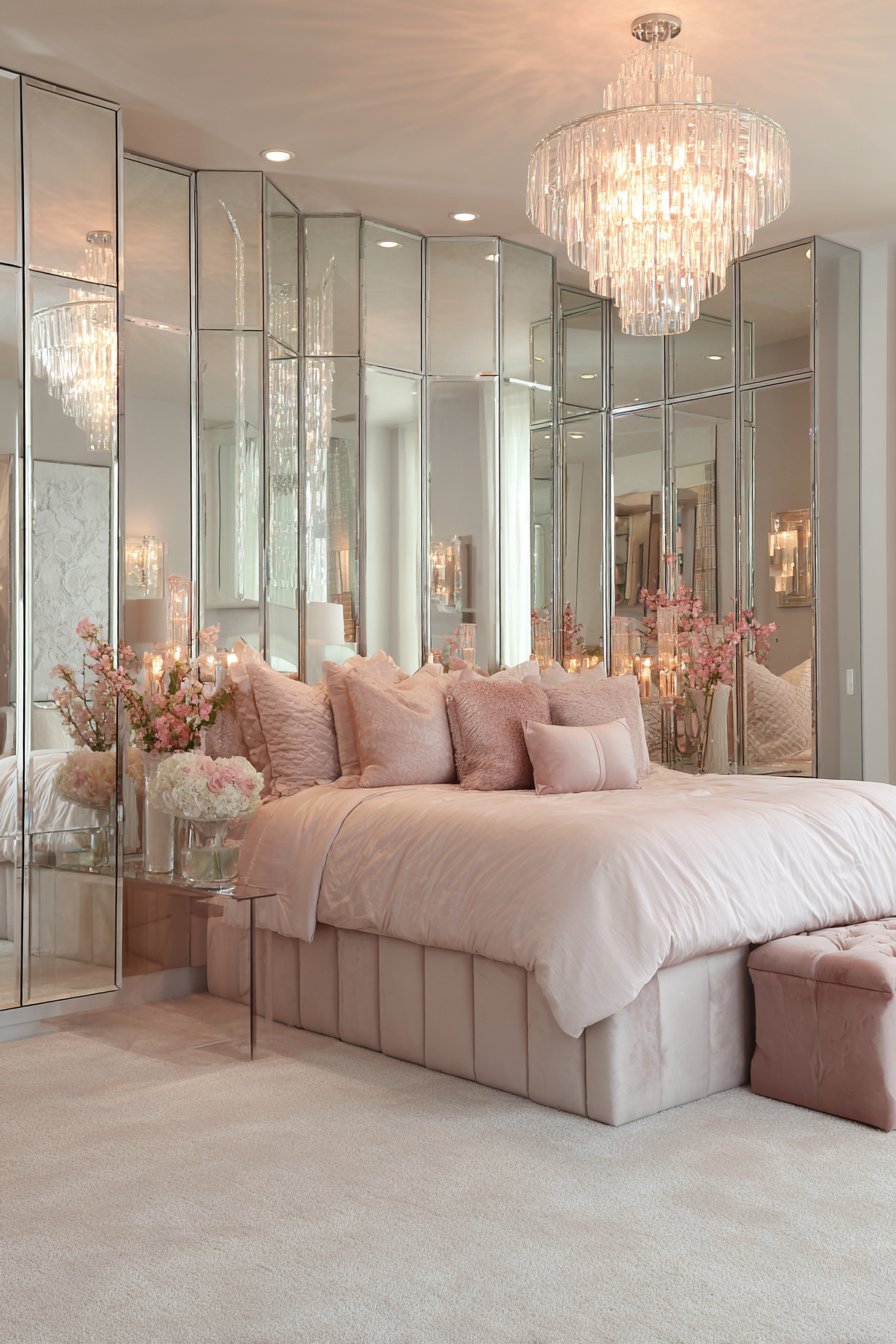
Mirrored accordion closet door ideas for bedroom spaces featuring beveled mirror panels create luxurious statement elements that dramatically enhance light and perceived space. These full-height mirrors feature geometric paneling with individual beveled edges that catch and refract light, creating subtle rainbow effects and visual interest across the door surfaces. The champagne-toned metal trim provides elegant framing that introduces warm metallic accents without the yellow cast of pure gold finishes. The accordion folding mechanism allows the doors to fold back compactly, providing full closet access while requiring minimal floor clearance compared to traditional bifold or swinging door configurations.
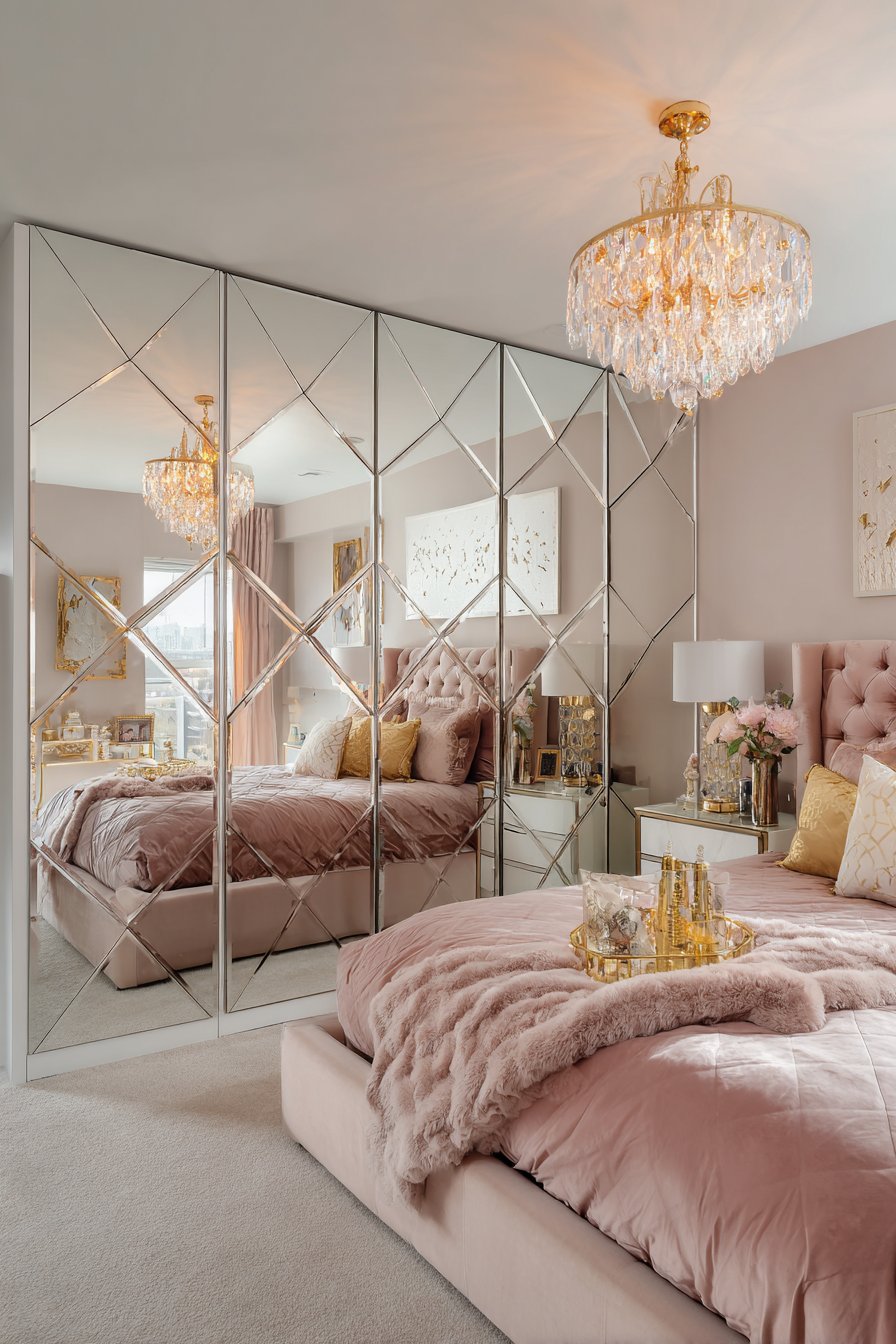
The beveling process involves grinding mirror edges at precise angles to create faceted surfaces that interact with light in distinctive ways. Each beveled edge acts as a prism, separating white light into its component colors and creating subtle spectral effects that add magic to the mundane act of opening closet doors. The geometric paneling divides each door section into multiple mirror segments, multiplying these light effects across the entire door surface. The glamorous bedroom context surrounding these closet doors features a velvet tufted bed that introduces sumptuous textile texture, a crystal chandelier that shares the doors’ light-refracting properties through its prismatic elements, and plush carpet in soft blush tones that adds comfort and warmth underfoot. Strategic lighting placement—including the chandelier, bedside lamps, and possibly wall sconces—creates elegant reflections in the beveled mirror surfaces that enhance the room’s ambient illumination.
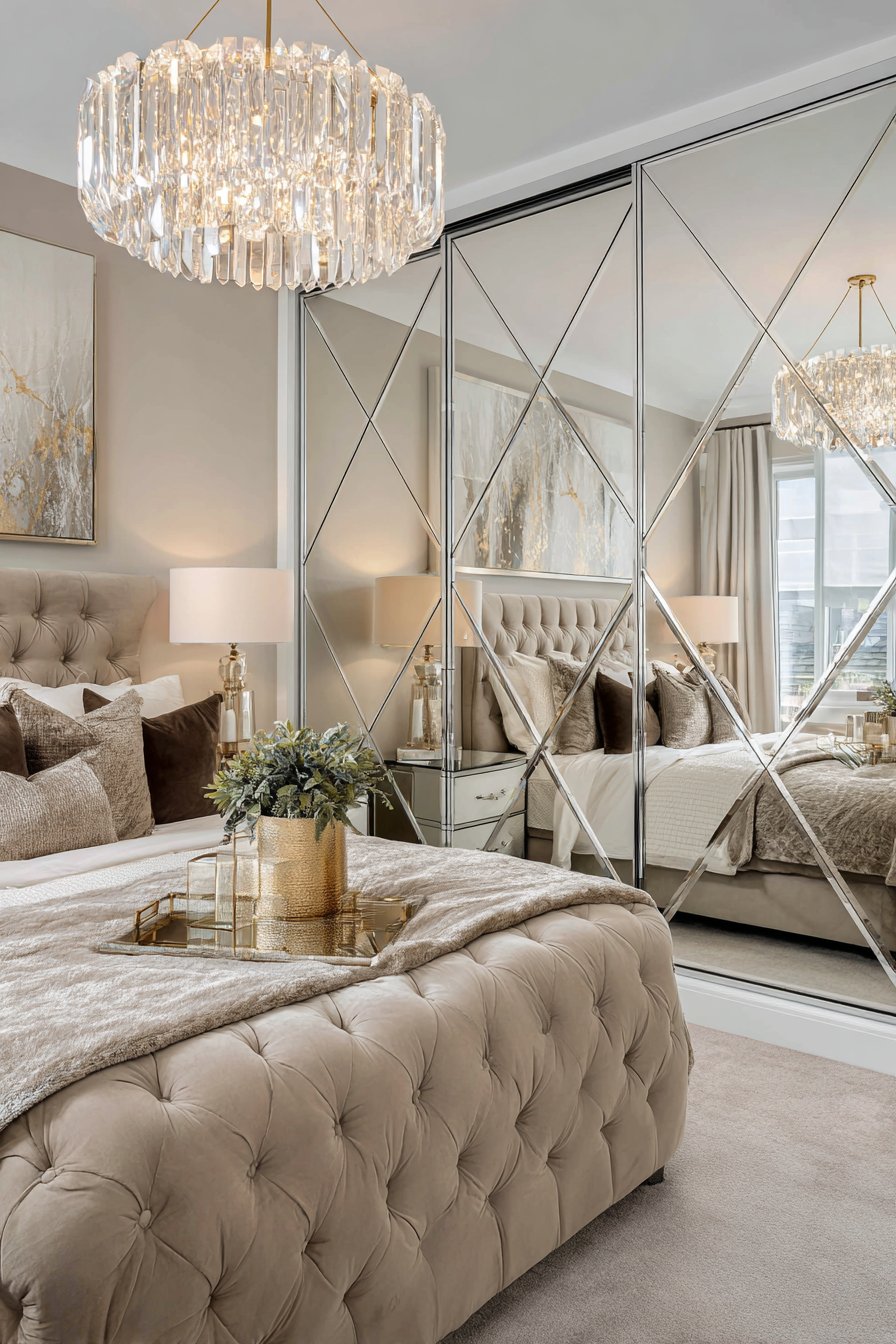
The practical advantages of mirrored accordion closet door ideas for bedroom applications include their space-saving folding mechanism and their ability to serve as full-length mirrors eliminating the need for separate standing mirrors. The accordion configuration typically consists of multiple narrow panels hinged together, allowing the door assembly to fold compactly against the closet’s side wall when fully opened. The mirrors distribute natural and artificial light throughout the bedroom, reducing dark corners and creating a brighter, more inviting environment. The beveled edges add three-dimensional depth that prevents the flat, one-dimensional appearance of standard mirror surfaces.
Key Design Tips: Invest in high-quality mirrors with thick glass substrates to minimize distortion and ensure clear, accurate reflections. Ensure proper beveling depth—typically one-quarter to three-eighths inch—for visible light effects without excessive material removal. Select track systems specifically rated for the substantial weight of multiple mirror panels. Install safety backing on all mirror panels to contain glass in the unlikely event of breakage. Position bedroom lighting to create attractive reflections rather than glare or hot spots. Maintain regular cleaning with appropriate mirror cleaners to preserve clarity and light-reflecting properties. Protect mirror edges during installation and daily use to prevent chips that compromise the beveling. Consider adding soft-close mechanisms to prevent impact damage from accordion panels colliding during closing. Coordinate the champagne metal finish with other metallic elements in the bedroom for cohesive design.
12. Coastal White-Washed Weathered Wood
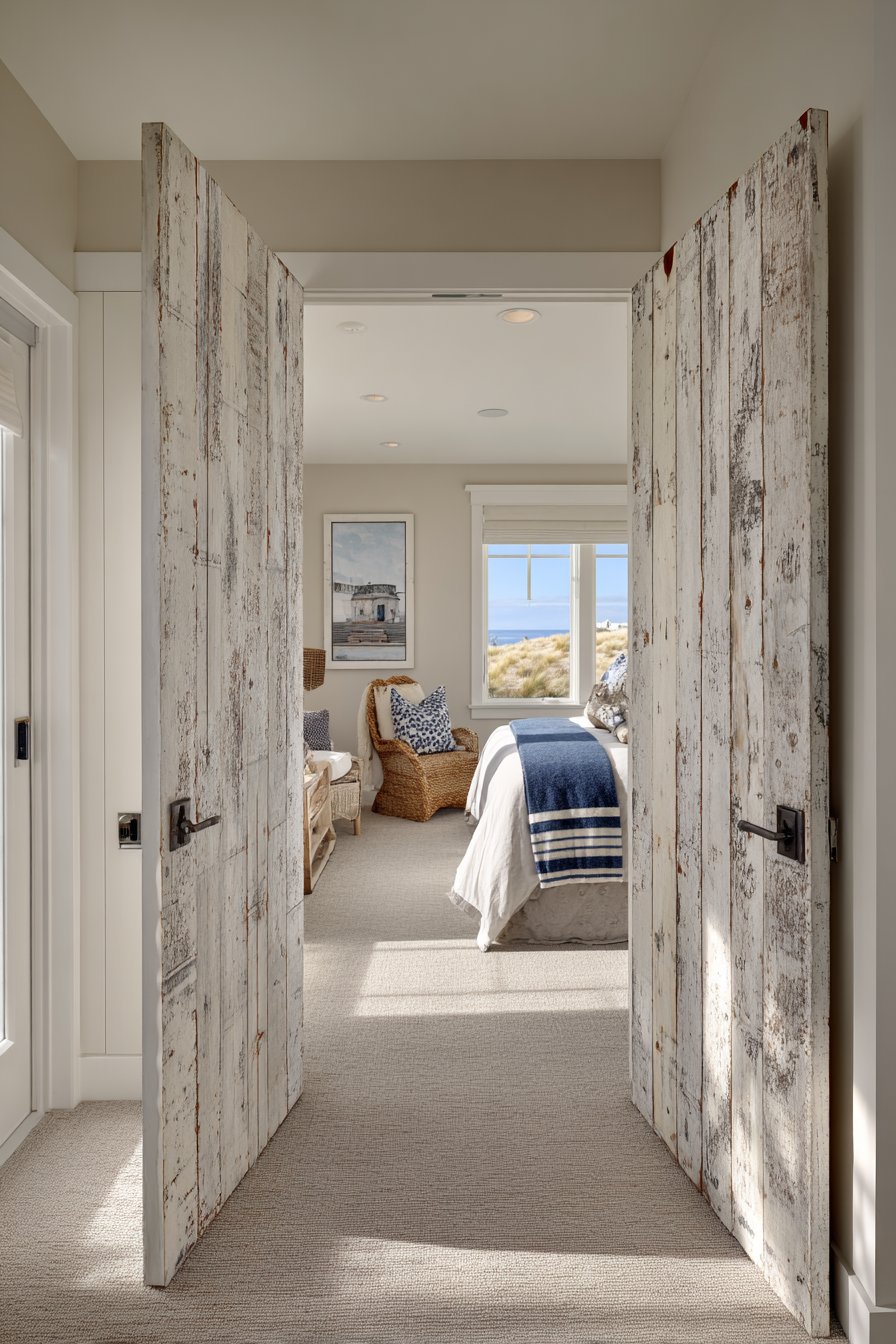
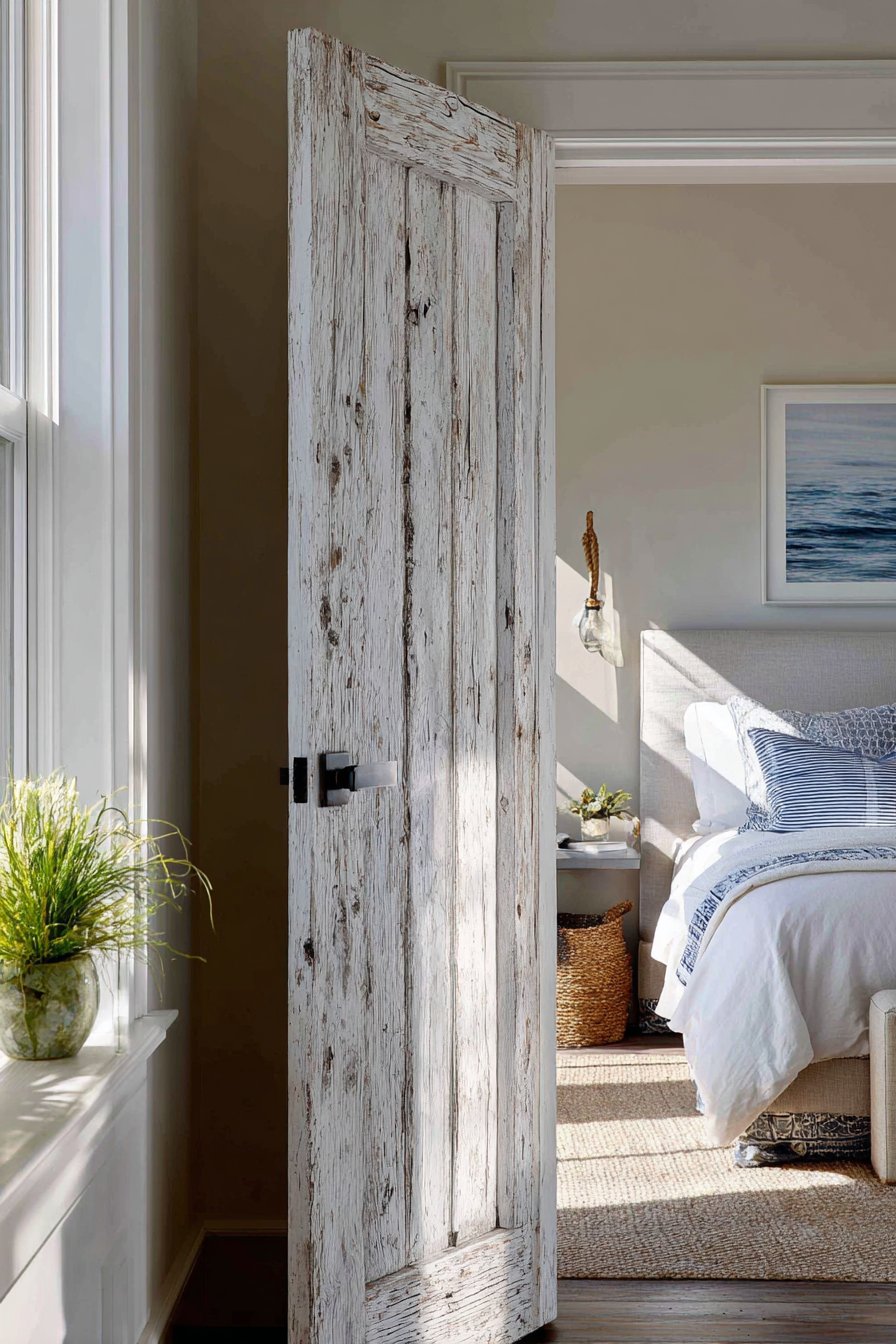
White-washed wood plank closet door ideas for bedroom spaces evoke relaxed coastal cottage aesthetics through their weathered, beach-worn appearance. These doors feature reclaimed wood planks with visible grain patterns and natural imperfections including knots, nail holes, and subtle cracks that tell stories of the wood’s previous life. The white-washed treatment involves applying diluted white paint or specialized limewash that settles into wood grain valleys while allowing raised grain patterns to remain darker, creating subtle grey undertones that prevent stark white appearance. This finishing technique celebrates rather than conceals wood’s natural character, resulting in surfaces that feel organic, casual, and perfectly imperfect.
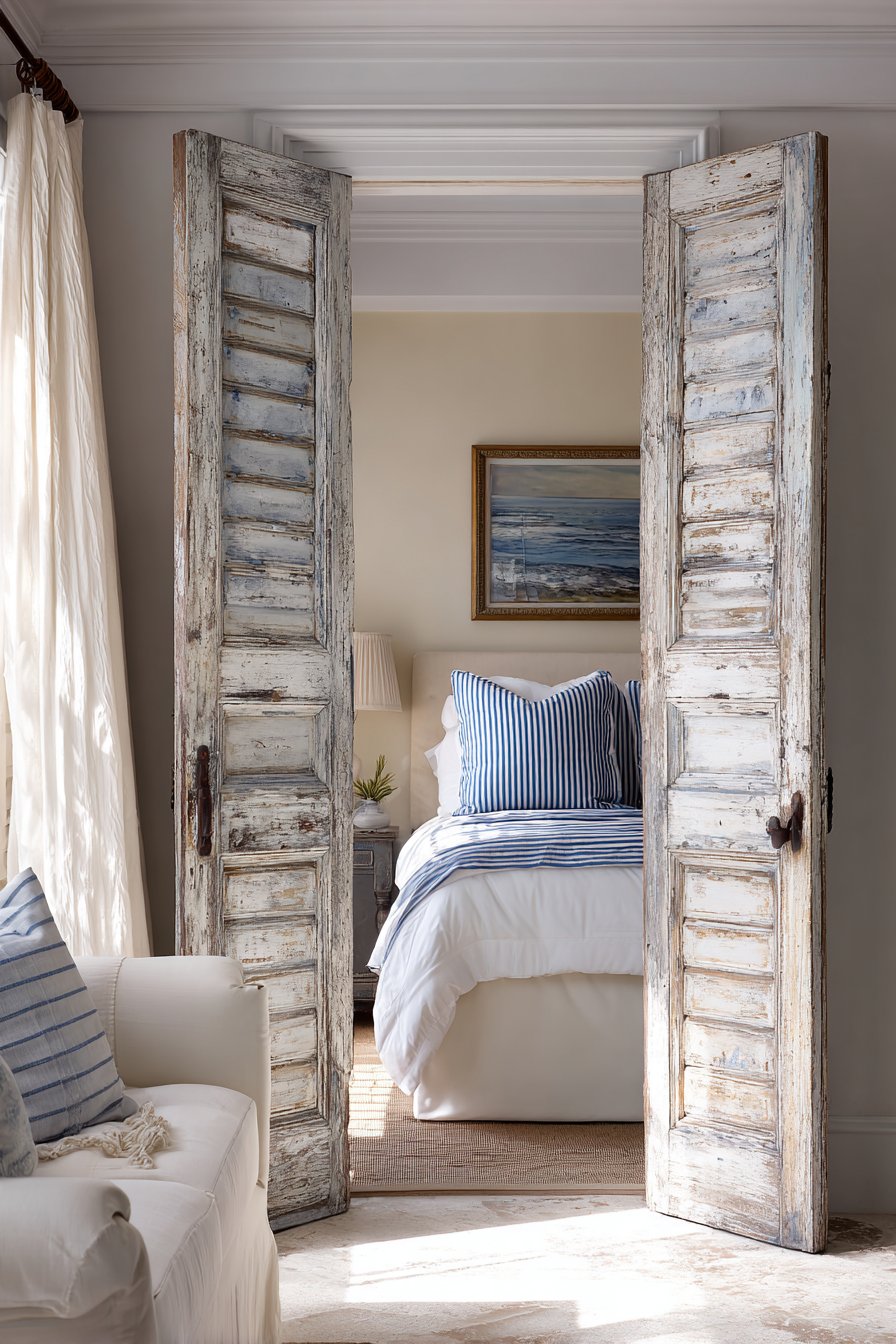
The white-washing process differs significantly from solid paint application, requiring specific techniques to achieve the desired translucent finish. The paint or limewash is applied and then partially wiped away before fully drying, leaving pigment in recesses while exposing wood grain on higher surfaces. This creates the dimensional finish characteristic of authentic white-washed wood. The coastal bedroom surrounding these closet doors features nautical-themed elements including rope accents used as curtain tiebacks or decorative details, blue and white striped textiles that reference classic sailor uniforms and beach umbrellas, and sandy beige walls that evoke sun-bleached driftwood and warm beach sand. Natural daylight emphasizes the wood’s weathered texture and white-washed finish, creating the bright, airy atmosphere essential to successful coastal design.
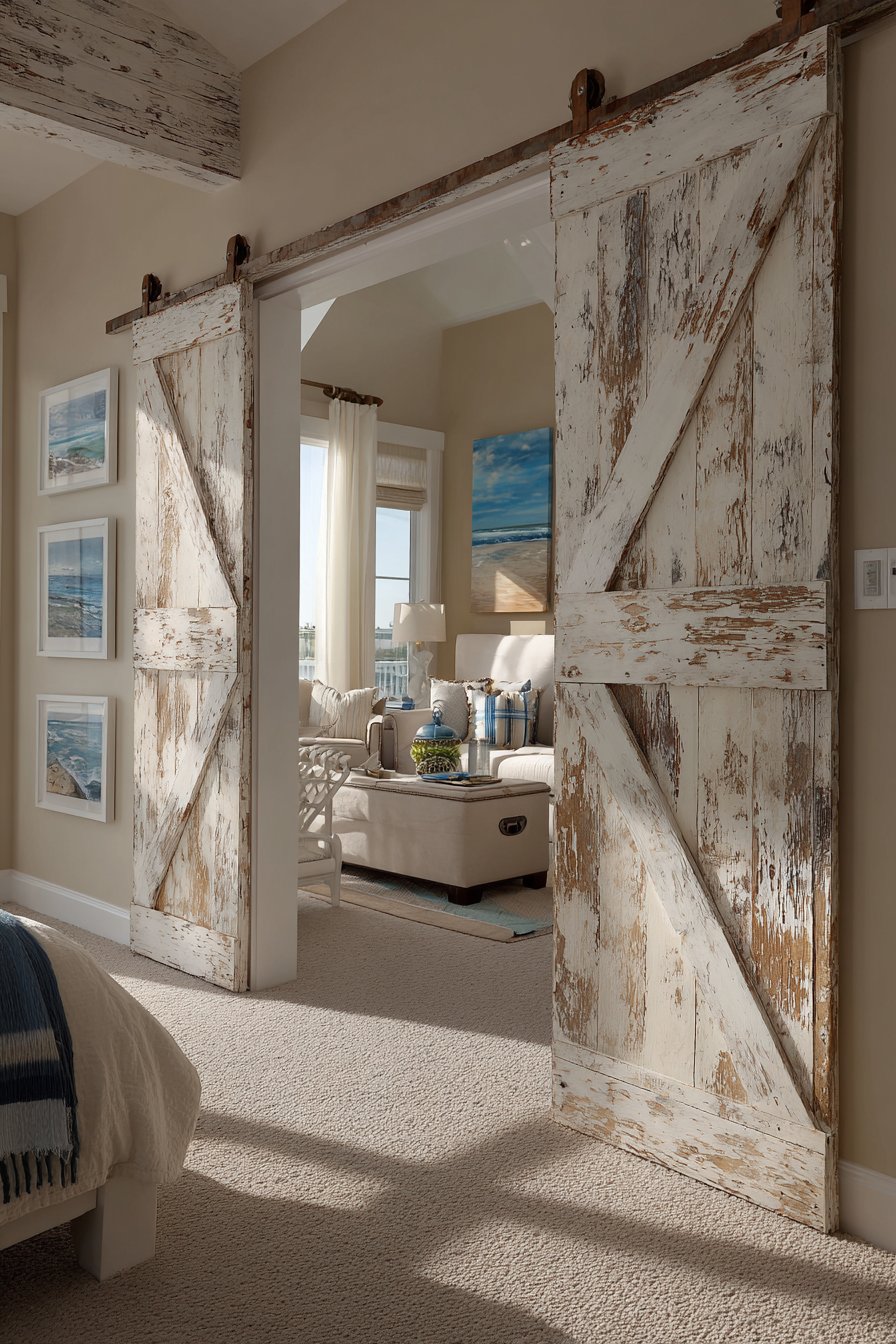
The casual, relaxed character of white-washed wood closet door ideas for bedroom spaces makes them particularly suitable for vacation homes, beach cottages, and primary residences where residents desire escape from formal, structured environments. The weathered appearance gracefully accepts additional wear and aging, actually improving in character rather than appearing damaged. The white-washed finish brightens spaces while maintaining more visual interest than solid white painted surfaces. The reclaimed wood material provides environmental sustainability benefits while offering character impossible to achieve with new wood, even when artificially distressed.
Key Design Tips: Source authentic reclaimed wood with genuine weathering rather than artificially distressed new lumber for the most authentic appearance. Test white-washing techniques on scrap wood to achieve desired opacity before treating actual door planks. Use quality brushes or rags to apply and remove wash, working in manageable sections to maintain consistent appearance. Seal finished doors with matte or satin clear coat to protect the white-washed finish while maintaining the weathered appearance. Vary plank widths for more authentic reclaimed wood appearance rather than using uniform dimensions. Leave small gaps between planks rather than fitting them tightly together for authentic board-and-batten effect. Consider the wood species when selecting reclaimed materials—pine and fir white-wash differently than oak or maple. Clean white-washed surfaces gently with damp cloths rather than harsh cleaners that could damage the delicate finish. Embrace imperfections as character features rather than flaws requiring correction.
13. Contemporary Three-Dimensional Geometric Panels
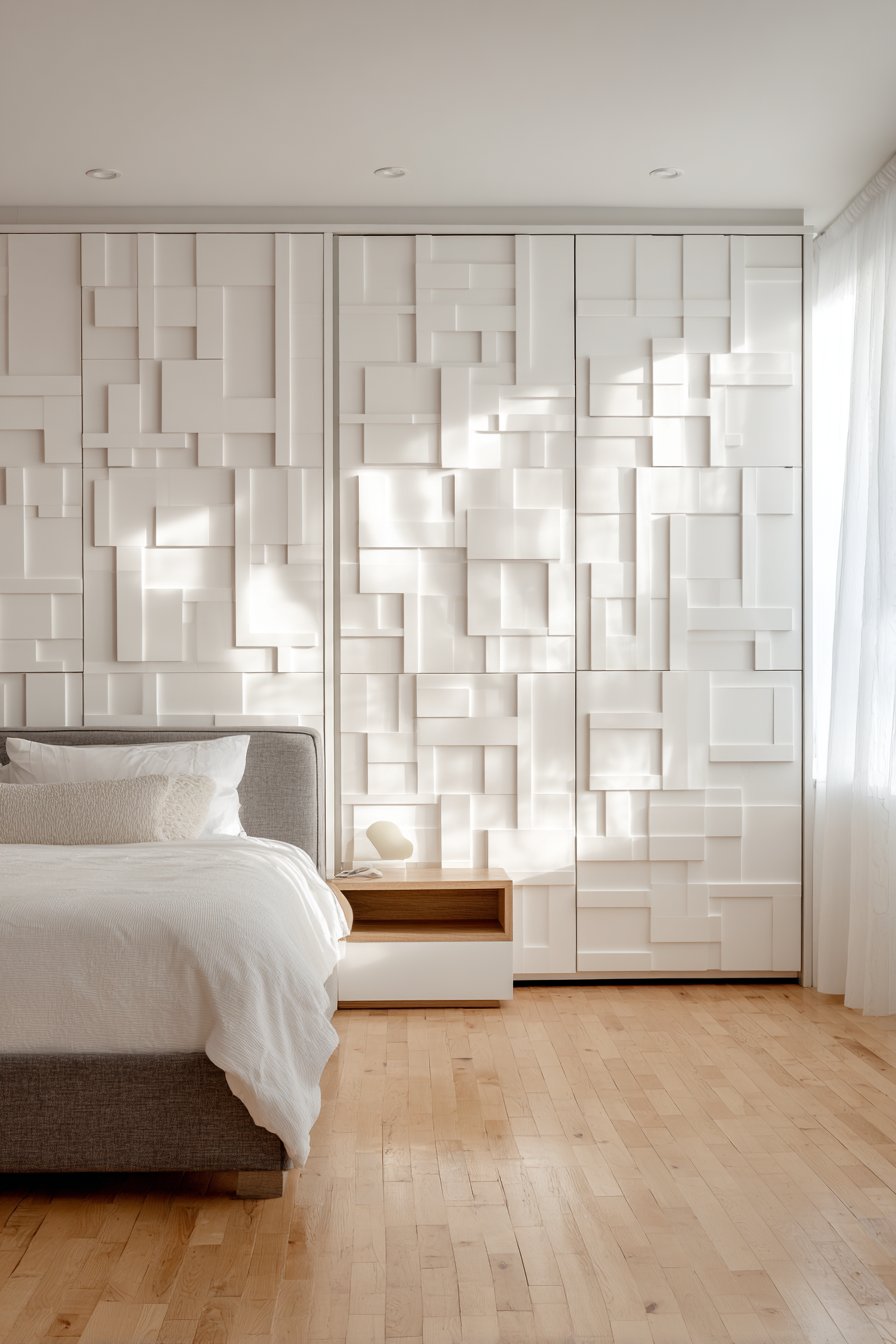
Geometric patterned closet door ideas for bedroom spaces featuring three-dimensional textured panels create contemporary architectural interest through sculptural surfaces that play with light and shadow. These doors showcase raised geometric shapes—typically squares, rectangles, or hexagons—arranged in deliberate patterns across the door surface. The matte white finish emphasizes the dimensional qualities of the geometric pattern, with natural and artificial light creating shadow lines that define the three-dimensional forms. The subtle shadow lines provide visual interest without introducing color or pattern that might clash with changing decor schemes, making these doors remarkably versatile across various design directions.
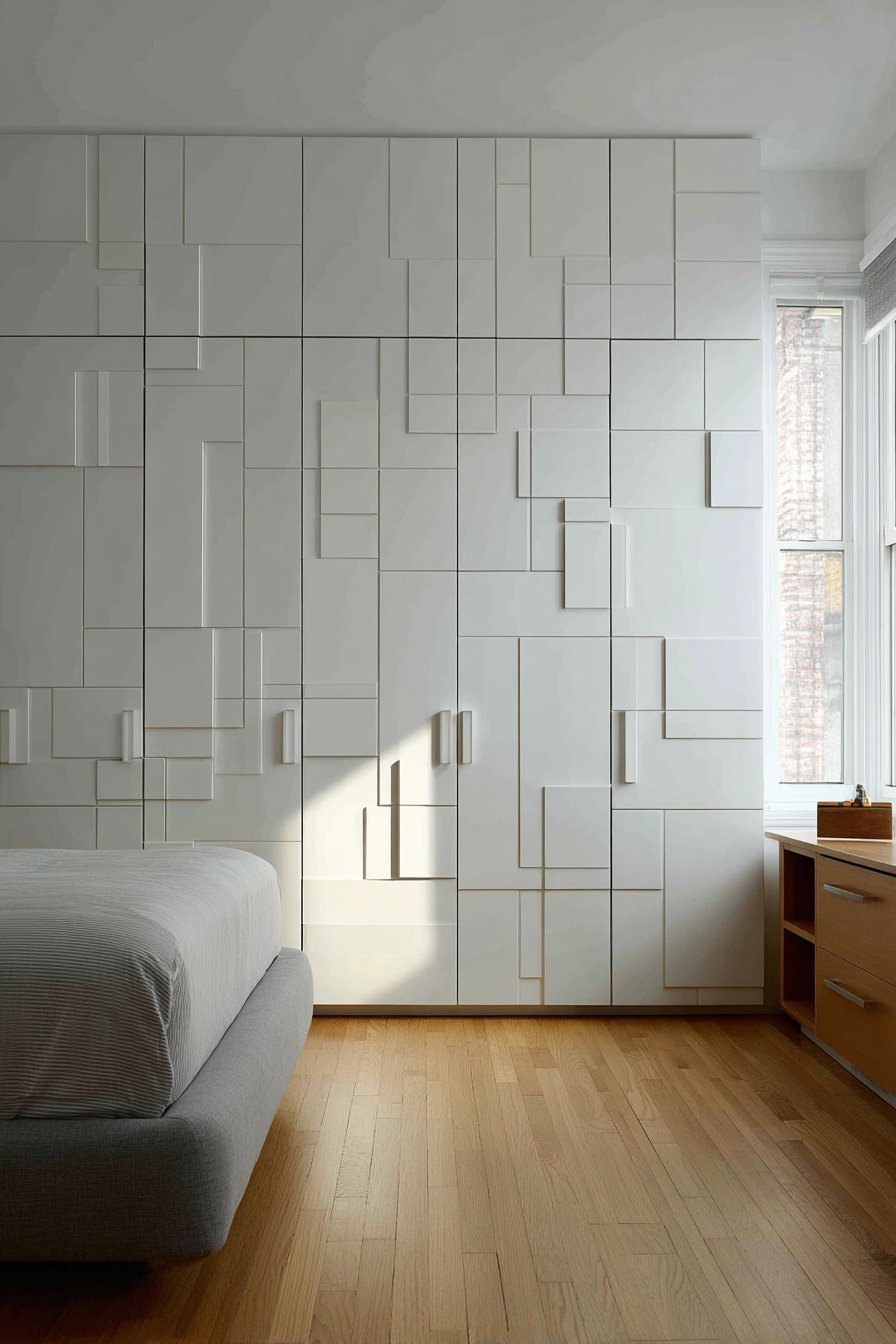
The manufacturing process for three-dimensional geometric door panels typically involves precision milling of medium-density fiberboard (MDF) or solid wood to create the raised patterns. The geometric shapes protrude from the base surface by depths ranging from one-quarter inch to several inches, depending on the desired visual impact and available door thickness. The matte white paint application requires careful technique to achieve even coverage across the three-dimensional surfaces without pooling in recesses or creating thin coverage on raised edges. The contemporary bedroom featuring these closet doors includes clean-lined furniture such as a grey upholstered bed with simple geometric frame, white oak flooring that introduces natural material warmth without competing for visual attention, and minimal decor that honors the doors’ statement-making geometric patterns. Angled natural light from strategically placed windows accentuates the three-dimensional geometric pattern, creating dynamic shadow play that changes throughout the day.
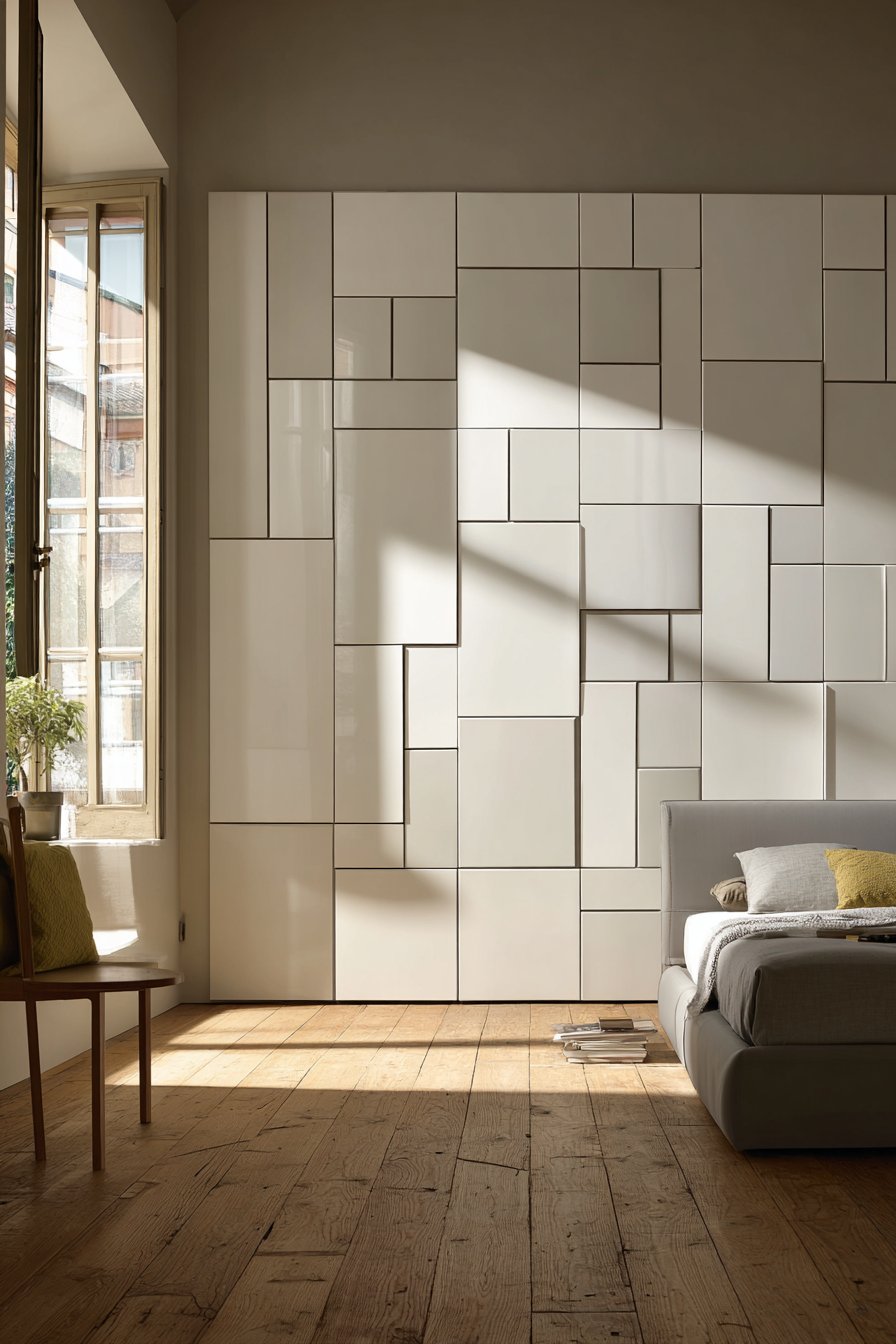
The architectural quality of geometric patterned closet door ideas for bedroom applications elevates these functional elements to design features worthy of attention. The three-dimensional surfaces create more visual interest than flat painted doors while maintaining the neutral white color that provides design flexibility. The geometric patterns read as contemporary without feeling trendy, suggesting these doors will remain stylistically relevant through changing design movements. The dimensional surfaces effectively hide minor damage like small dents or scratches that would be visible on flat door surfaces, providing practical durability advantages alongside aesthetic benefits.
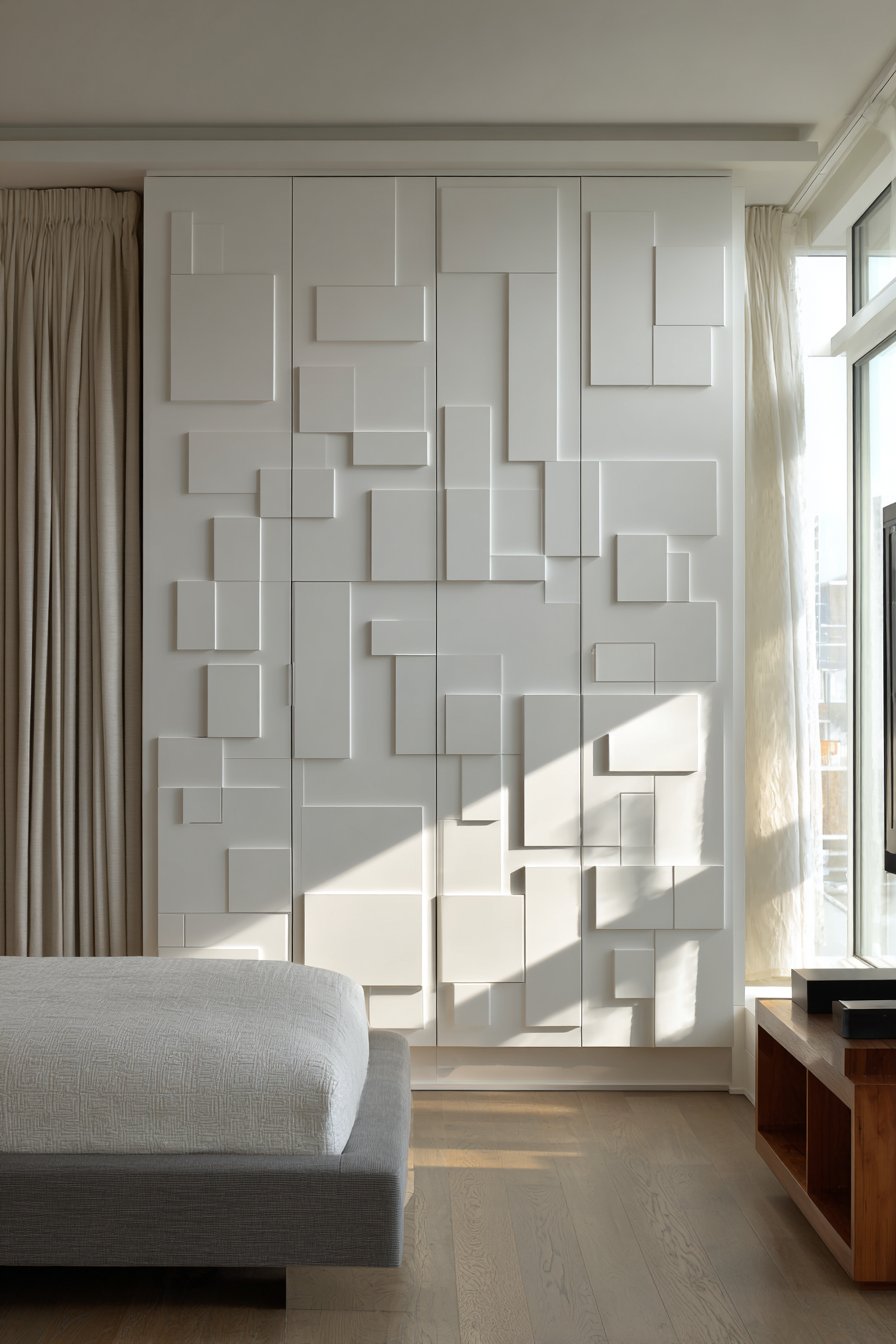
Key Design Tips: Select geometric patterns with appropriate scale for your door size—larger doors can accommodate bolder, larger-scale patterns while smaller doors benefit from more delicate geometric arrangements. Ensure adequate door thickness to accommodate the desired depth of three-dimensional elements without compromising structural integrity. Apply primer specifically formulated for MDF or wood to ensure proper paint adhesion and uniform finish. Use spray application or careful brush technique to achieve even paint coverage across three-dimensional surfaces. Consider the direction and quality of room lighting when selecting geometric pattern orientation to maximize shadow effects. Install doors with adequate clearance from walls and adjacent surfaces to prevent damage to raised geometric elements. Clean dimensional surfaces carefully with soft cloths or dusters that won’t catch on raised edges. Consider adding subtle accent lighting above or beside doors to enhance the three-dimensional shadow effects during evening hours.
14. Traditional French Door Glass Panes
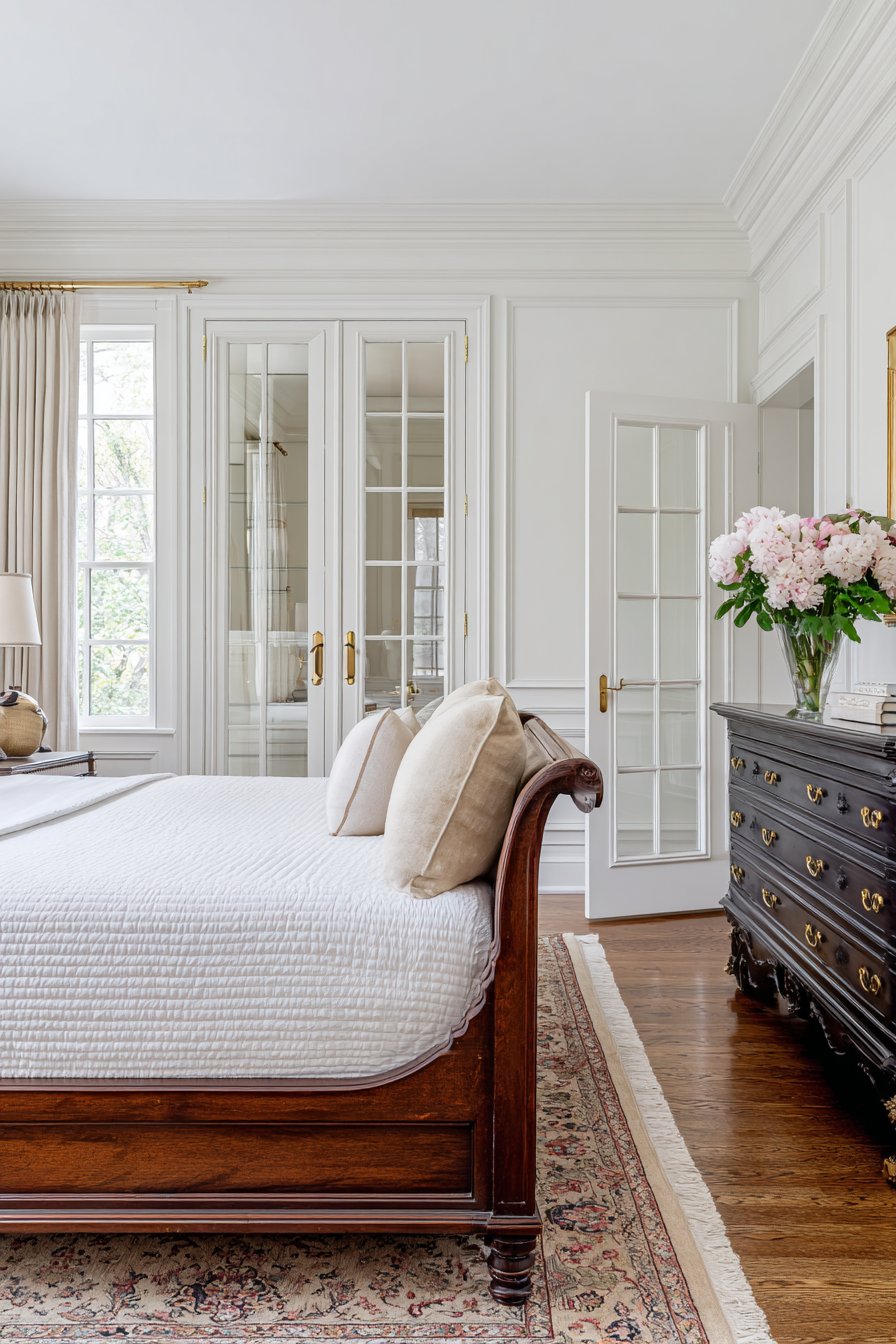
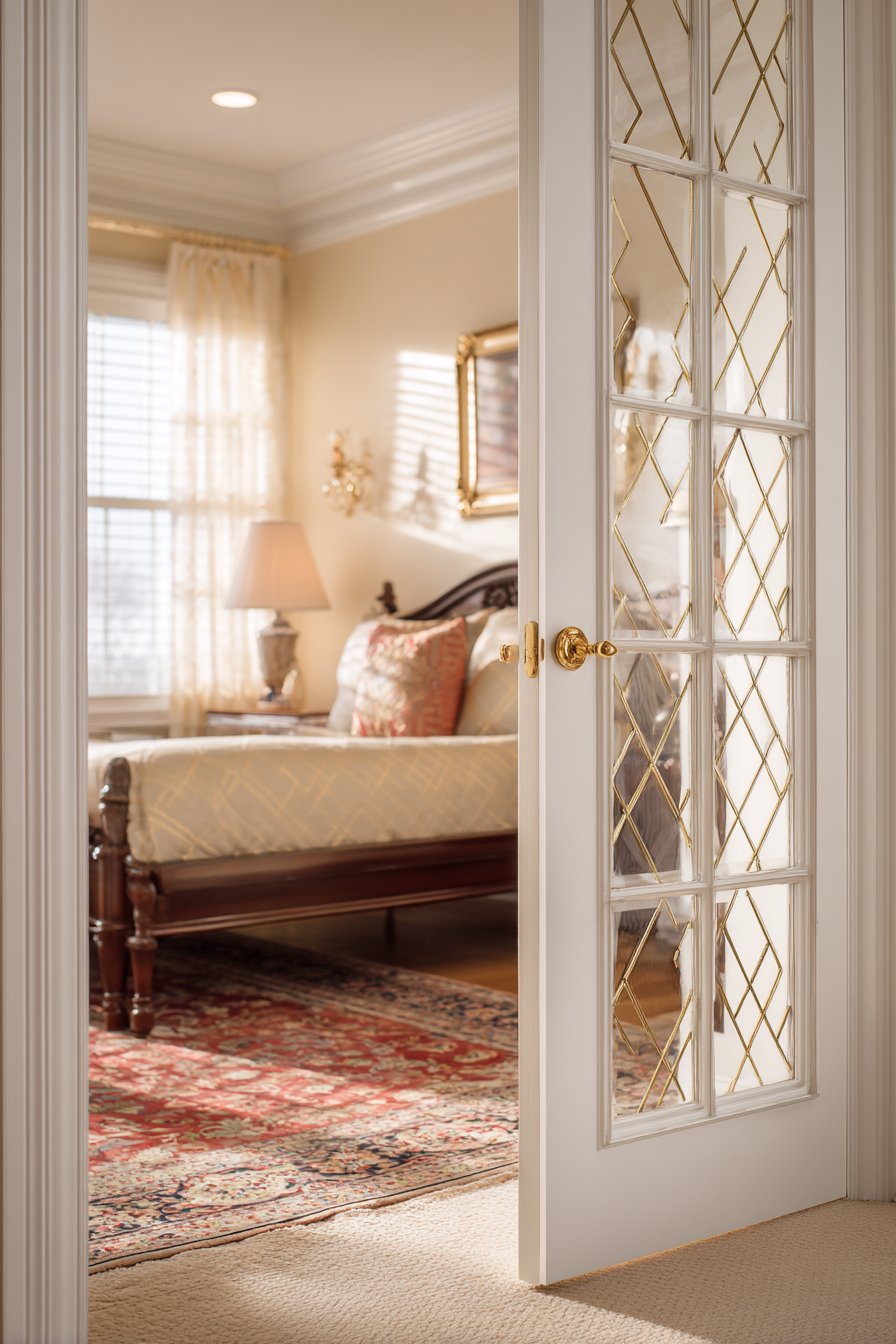
French door style closet door ideas for bedroom spaces featuring multiple glass panes set in white-painted wood frames bring timeless elegance and architectural sophistication to sleeping quarters. These doors typically feature six to twelve individual glass panes divided by decorative mullions—the vertical and horizontal members that create the characteristic grid pattern. The white-painted wood frames provide clean, classic appearance that adapts to various design styles from traditional to transitional to cottage. Brass knob hardware introduces warm metallic accents that catch light and add subtle luxury, while the clear or lightly frosted glass panes allow light transmission while maintaining varying degrees of visual privacy depending on glass treatment.
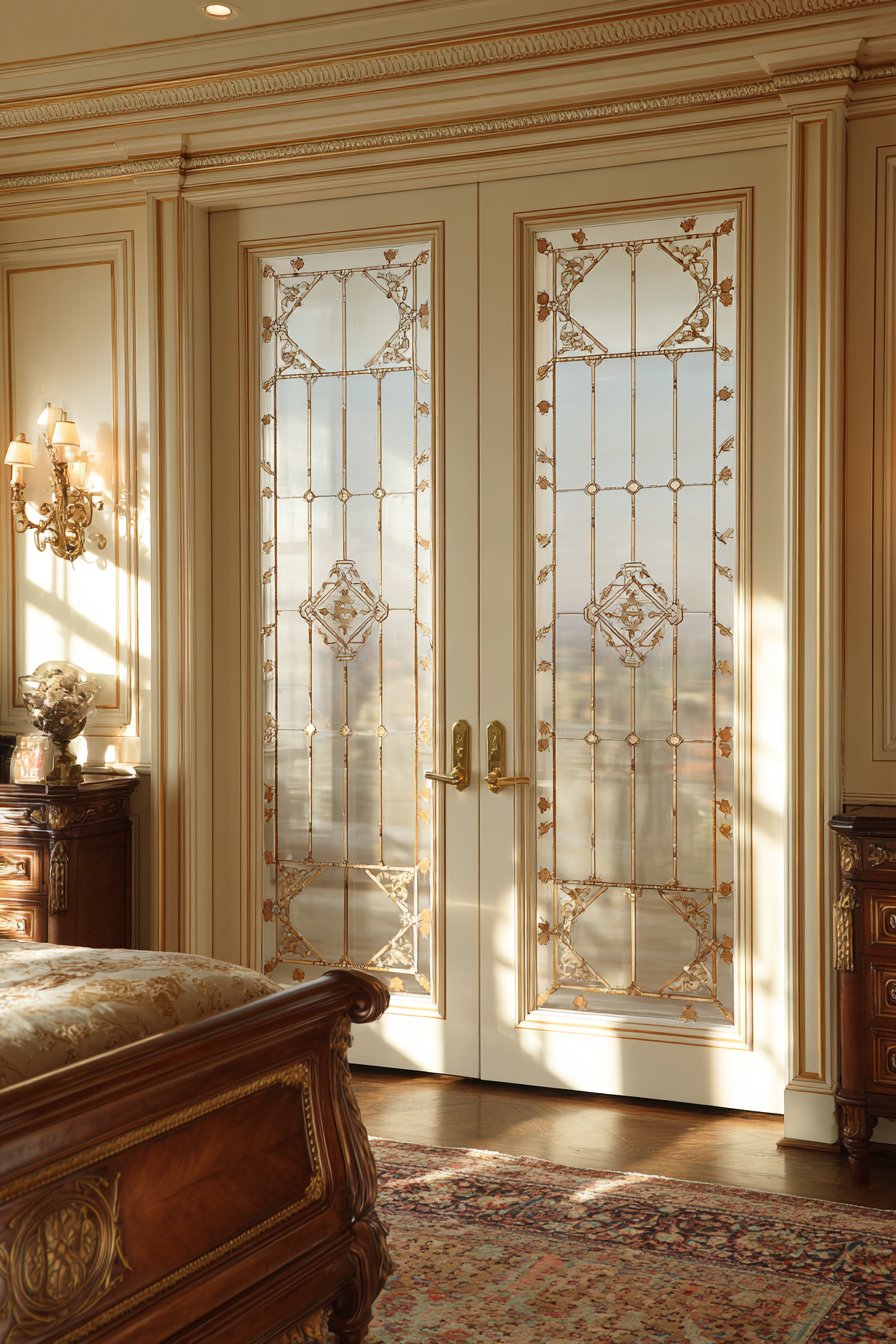
The construction of French door style closet doors requires precision joinery to create the mullion grid that holds individual glass panes. The mullions must be substantial enough to provide structural support while remaining proportionally delicate to maintain the doors’ elegant appearance. The white paint finish typically requires multiple coats to achieve opaque coverage that still allows subtle wood grain texture to remain visible, adding organic authenticity. The traditional bedroom surrounding these closet doors features a carved wooden bed with detailed headboard and footboard that shares the doors’ classical styling, an oriental rug that introduces pattern and color through traditional motifs, and crown molding details that reinforce the room’s architectural character. Soft morning light filtering through the glass panes creates gentle illumination that enhances the bedroom’s serene atmosphere while casting subtle grid patterns on floors and walls.
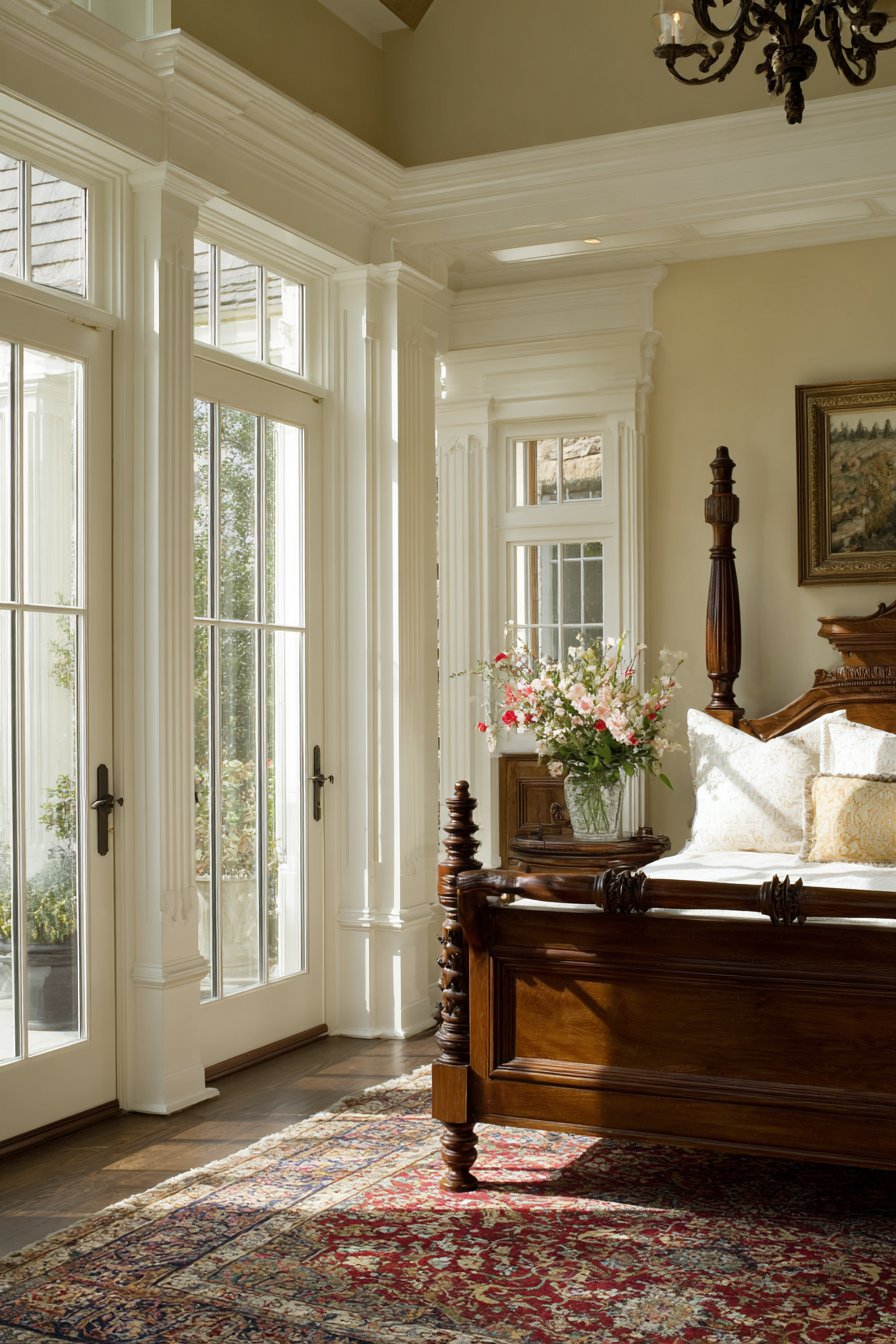
The light-transmitting properties of French door style closet door ideas for bedroom applications provide practical advantages in bedrooms where natural light is limited. The glass panes allow light to flow between spaces, preventing closets from feeling like dark caves and distributing available light more evenly throughout the bedroom. The traditional styling demonstrated remarkable longevity—French doors have remained popular for centuries, suggesting these closet doors will retain their appeal through changing design trends. The multiple glass panes create visual interest through their geometric grid pattern while the white frames maintain neutral appearance that complements various color schemes and decor styles.
Key Design Tips: Choose real wood frames rather than vinyl or composite alternatives for authentic appearance and superior paint adhesion. Select glass treatments based on privacy needs—clear glass for walk-in closets where organization is maintained, frosted or textured glass for reach-in closets storing everyday items. Ensure proper proportion between mullion dimensions and glass pane sizes—too-thin mullions appear fragile while too-thick mullions overwhelm the design. Apply high-quality primer and multiple paint coats for smooth, durable white finish. Select brass hardware in finishes that will develop attractive patina—unlacquered brass ages beautifully while polished brass maintains bright appearance. Install hinges rated for the substantial weight of glass-filled doors. Consider adding curtains or shades inside glass doors if additional privacy becomes necessary. Clean glass panes regularly to maintain clear light transmission and attractive appearance. Refinish painted frames periodically to maintain pristine white appearance.
15. Mid-Century Modern Teak Wood Authenticity
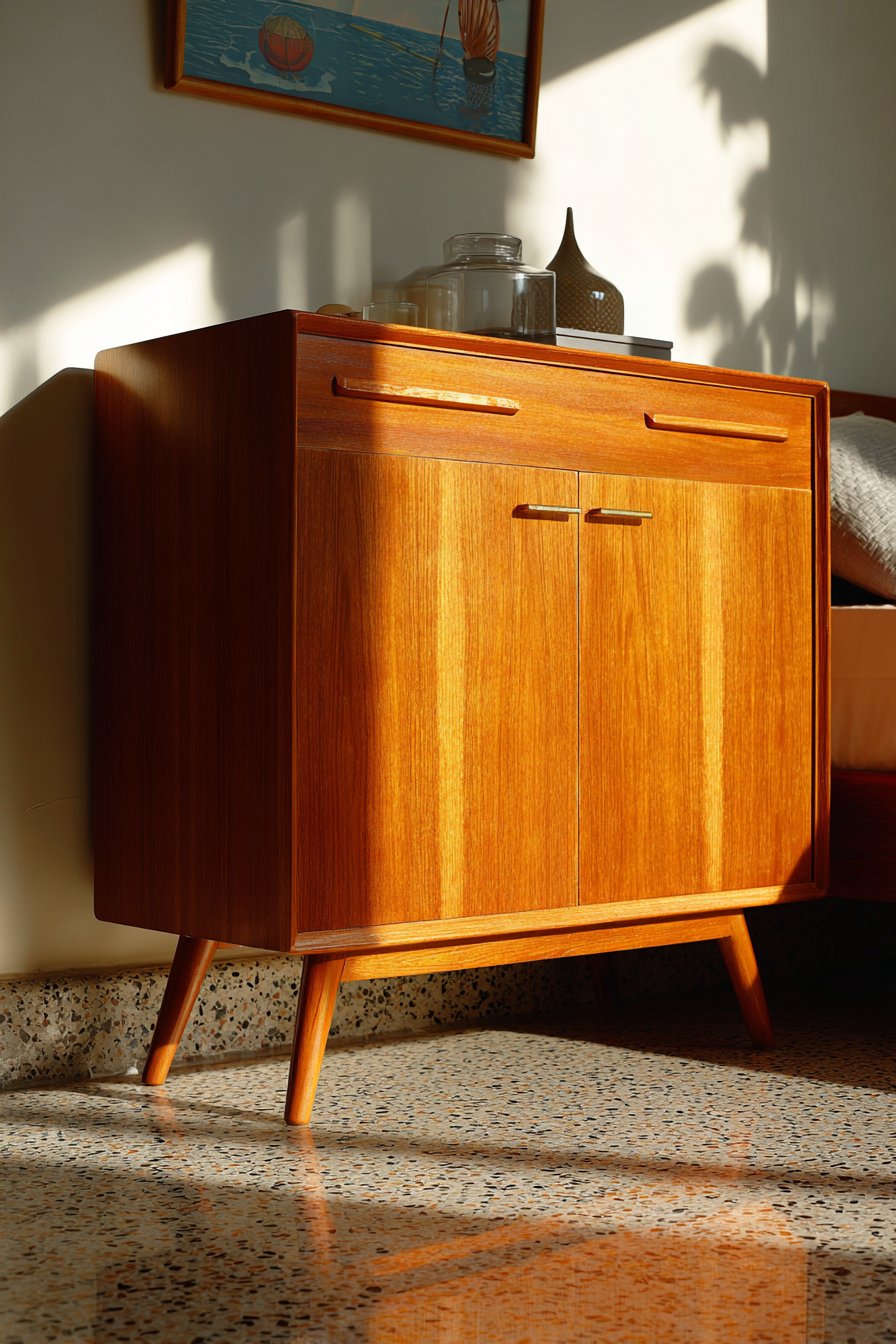
Teak wood closet door ideas for bedroom spaces featuring horizontal grain patterns and authentic mid-century modern details celebrate this design movement’s emphasis on honest material expression and functional beauty. These doors showcase the warm, rich color and distinctive grain patterns that make teak one of the most prized furniture woods. The horizontal grain orientation emphasizes the wood’s natural striping while creating visual width. Tapered legs at the door base reference iconic mid-century furniture design details, creating cohesive integration with period-appropriate furnishings. Minimalist brass pulls in simple geometric forms provide functional hardware that honors the era’s preference for clean lines and understated details.
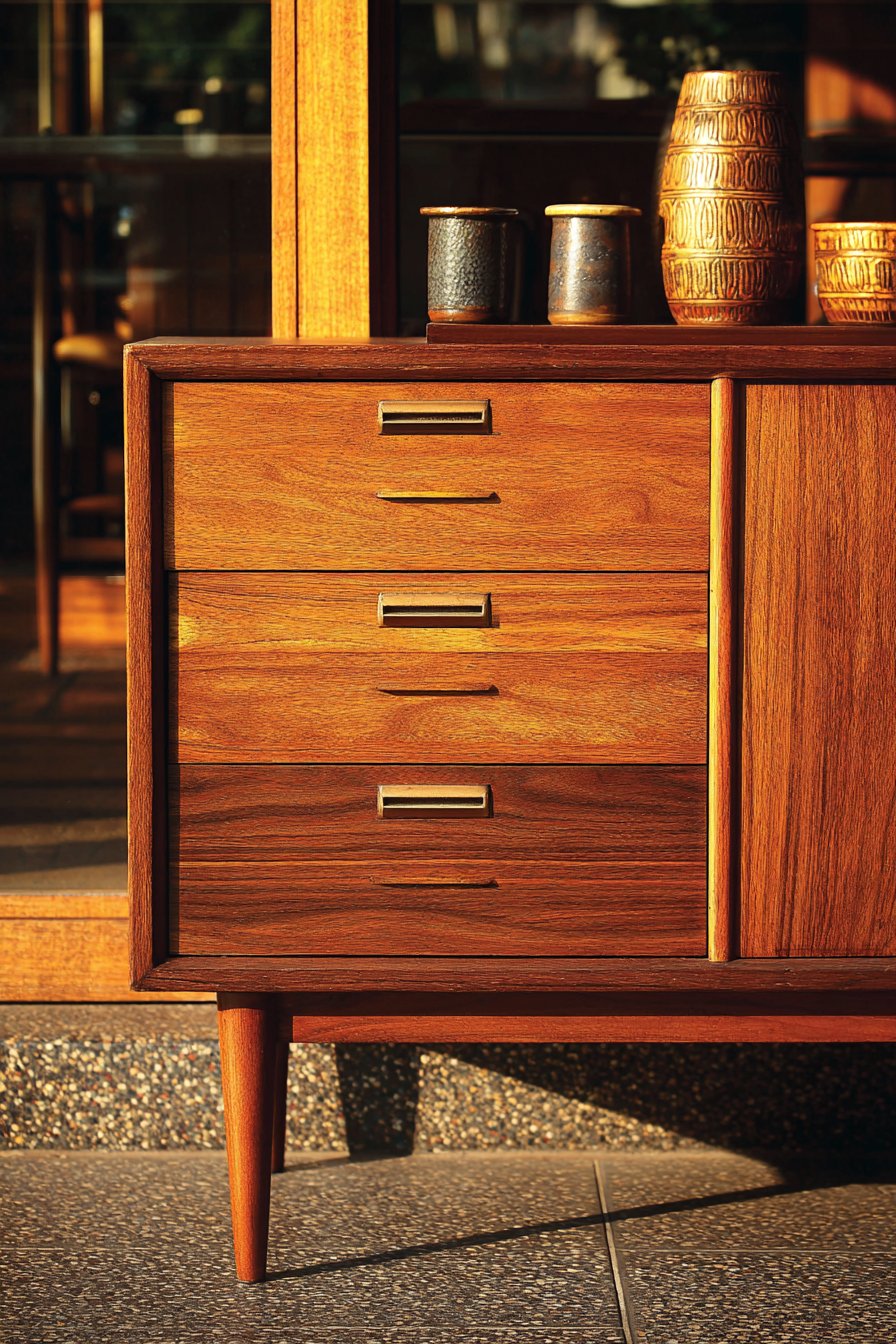
The natural properties of teak wood contribute to its enduring popularity in furniture and architectural applications. Teak contains high levels of natural oils that provide inherent moisture resistance, making it particularly suitable for applications where humidity varies. The wood’s tight grain and natural oils also resist warping, cracking, and degradation over time, ensuring longevity that justifies teak’s premium pricing. The warm honey to rich brown coloration develops beautiful patina over time, actually improving in character with age and use. The bedroom featuring these closet doors includes a low platform bed characteristic of mid-century sleeping furniture, atomic-era decor including starburst clocks or geometric wall art, and terrazzo flooring that introduces subtle pattern through its stone chip composition. Natural lighting highlights the distinctive teak grain patterns and mid-century hardware details, creating warm, inviting atmosphere.
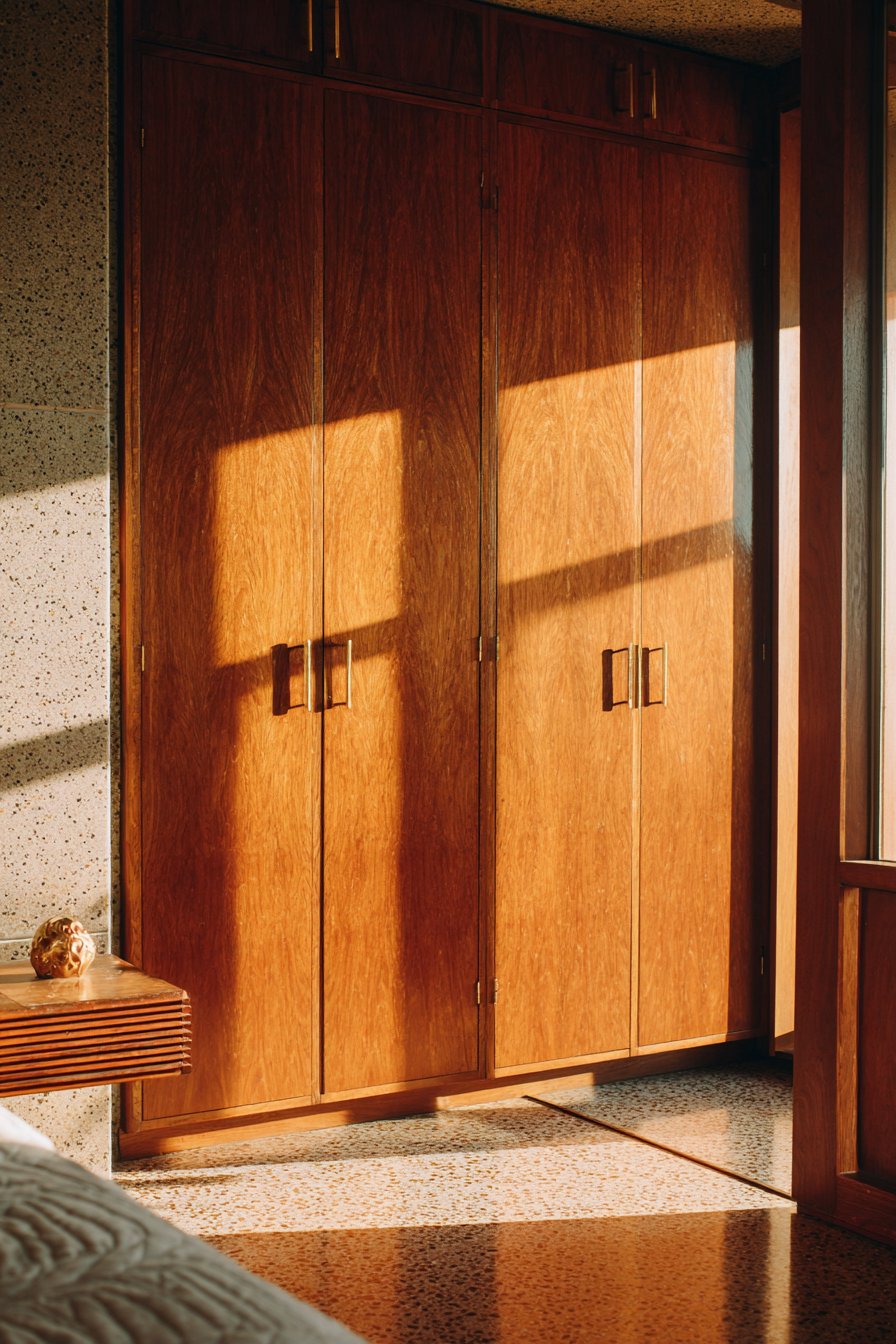
The authenticity emphasized in mid-century modern design philosophy makes period-appropriate closet door ideas for bedroom spaces particularly valuable to design purists and vintage enthusiasts. Genuine teak wood commands respect that cannot be replicated with stained alternatives or wood-look laminates. The horizontal grain orientation and tapered leg details distinguish these doors as intentional mid-century design rather than generic wood doors. The minimalist brass hardware provides necessary function without decorative excess, honoring the movement’s “form follows function” principles. These doors work particularly well in homes built during the mid-century period or in spaces specifically designed to celebrate this influential design movement.
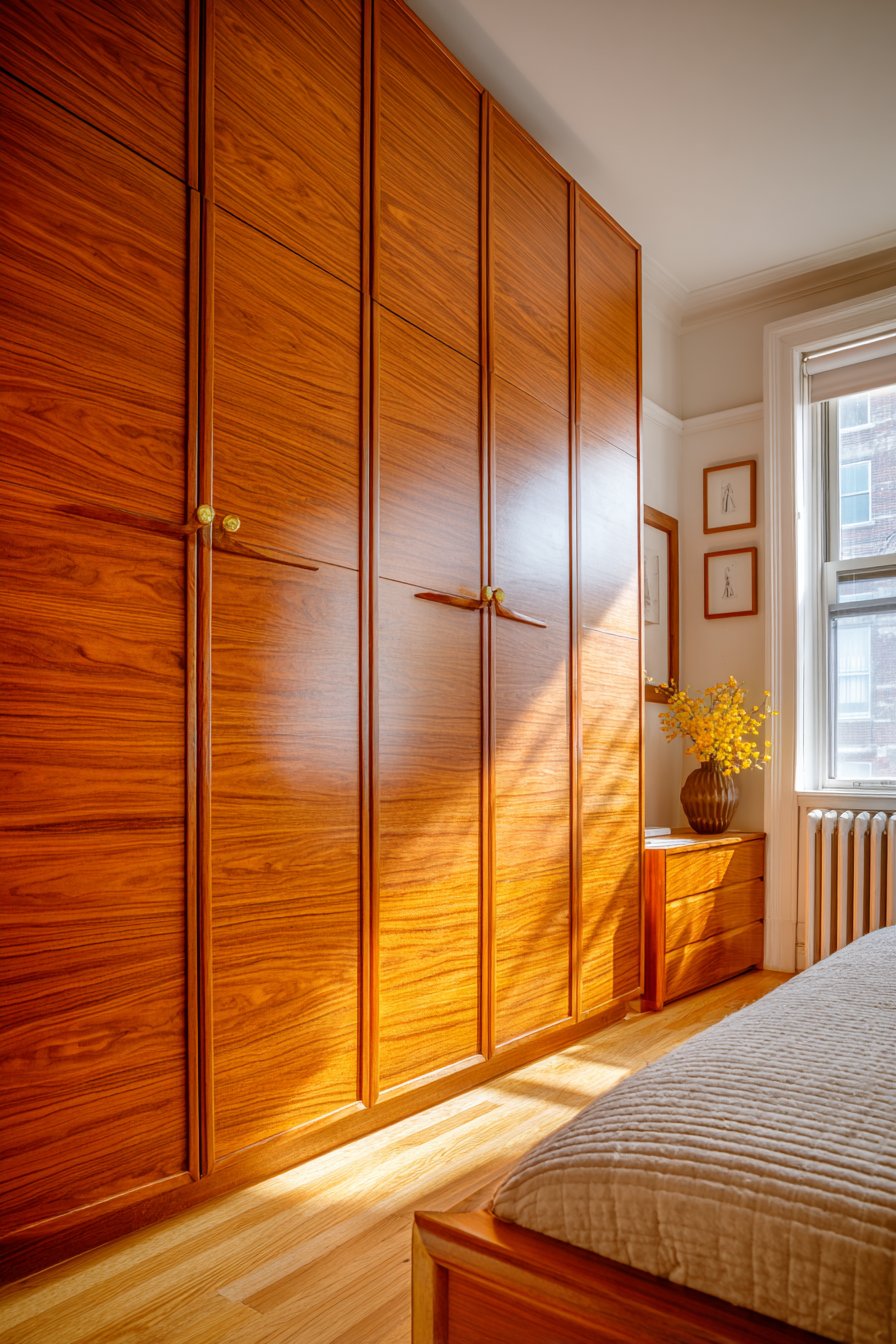
Key Design Tips: Source authentic teak from sustainable plantations to ensure environmental responsibility and support responsible forestry practices. Apply appropriate teak oil or sealers to enhance and protect the natural color while allowing the wood’s inherent beauty to shine. Select brass hardware in finishes and forms authentic to the mid-century period—simple geometric shapes without excessive ornament. Ensure tapered legs are proportional to door height and width—too-delicate legs appear fragile while too-substantial legs overwhelm the design. Position doors to showcase the horizontal grain orientation as a deliberate design feature. Clean teak surfaces with appropriate wood cleaners that won’t strip natural oils or damage the wood. Refinish teak periodically as the natural oils can darken or fade depending on light exposure. Coordinate teak tones with other wood elements in the bedroom for cohesive material palette. Consider the investment value of authentic teak—properly maintained teak doors can last for generations while appreciating in value.
16. Rustic Reclaimed Barn Wood Character
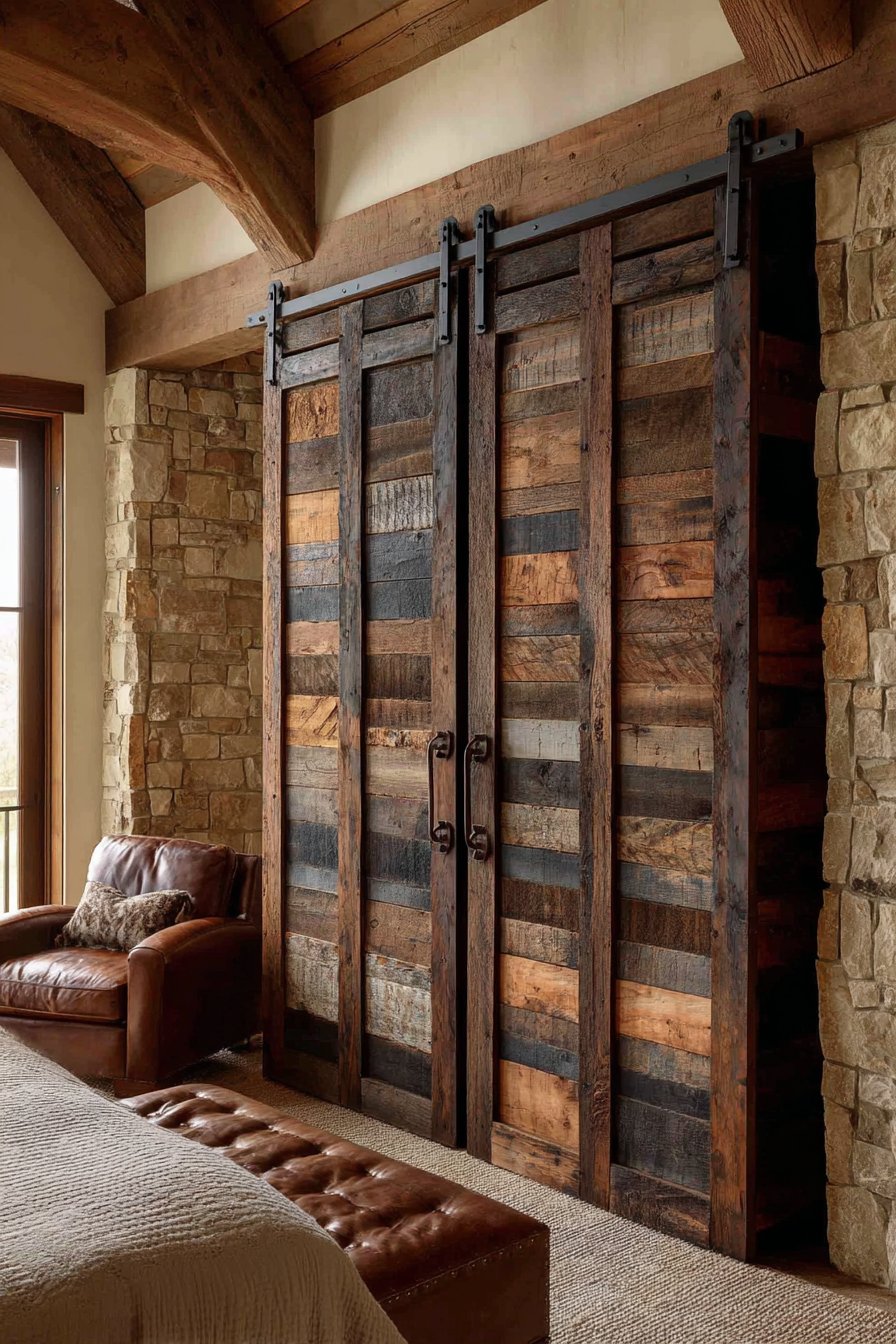
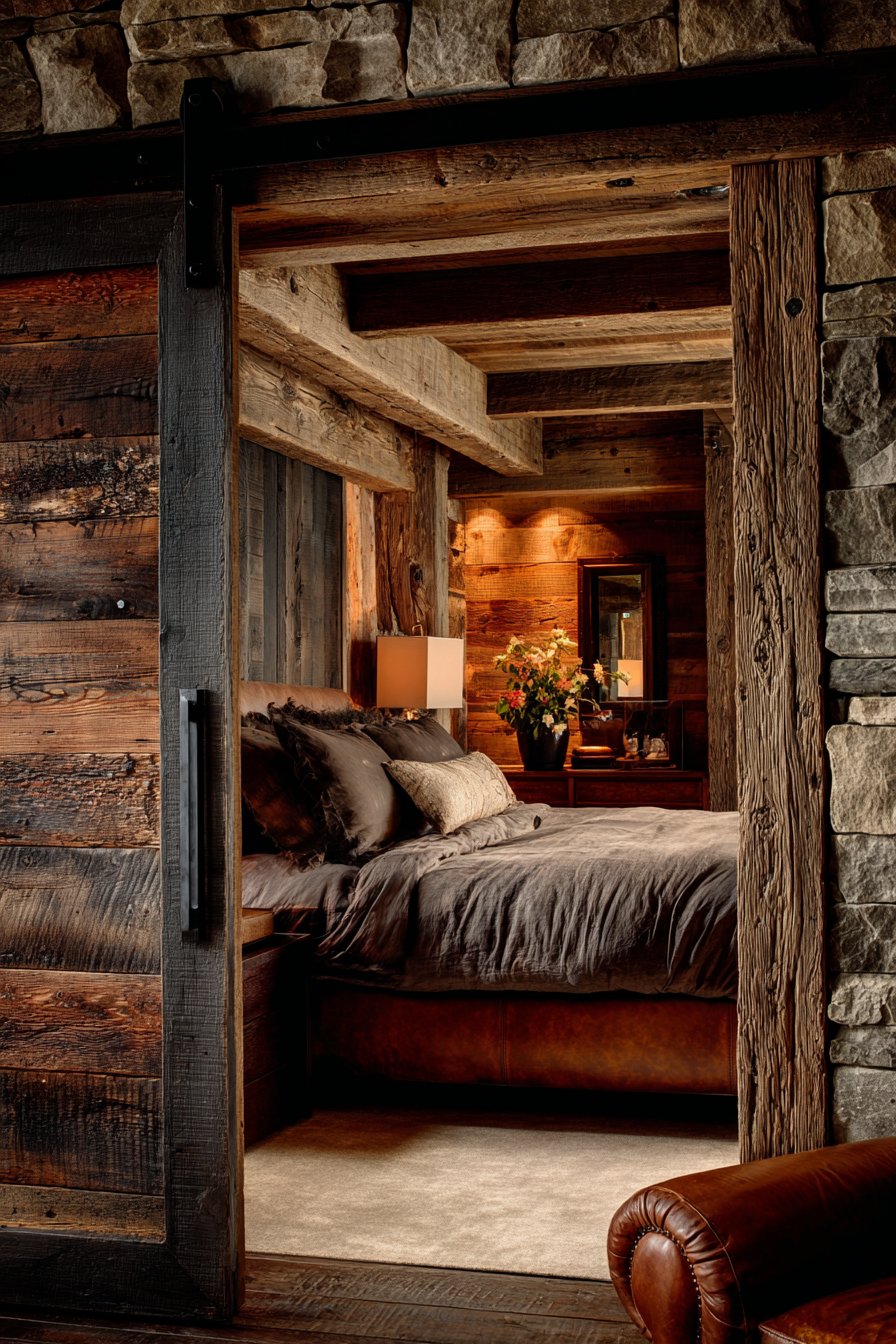
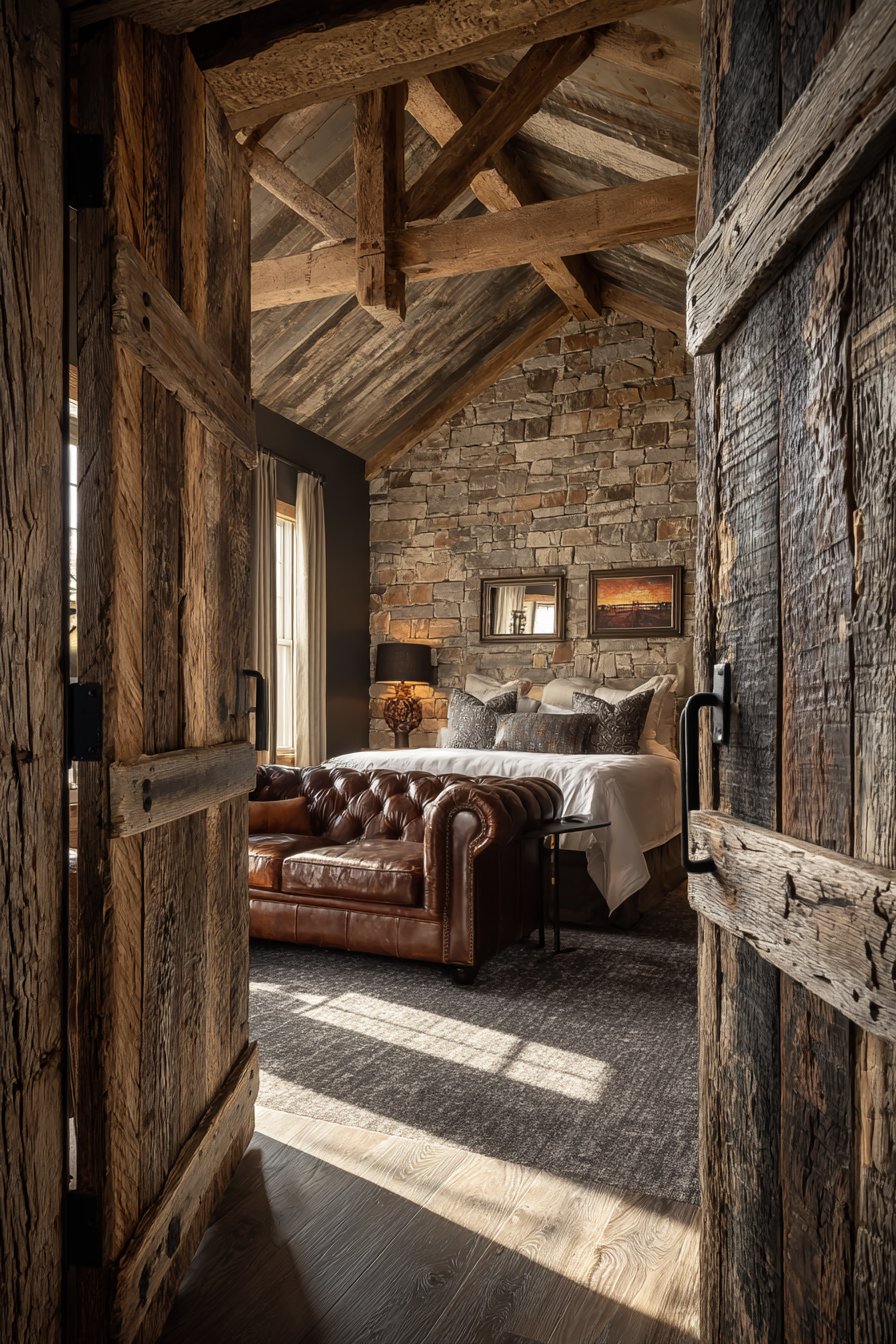
Reclaimed barn wood closet door ideas for bedroom spaces celebrate authentic material history through mixed wood tones, visible weathering, and character marks that tell stories. These doors feature varying plank widths arranged in vertical or horizontal orientations, with each plank displaying unique color variations ranging from silvery grey to warm honey to deep chocolate brown. Authentic nail holes, saw marks, and subtle cracks provide visual evidence of the wood’s previous life in agricultural buildings, creating character impossible to replicate through artificial distressing techniques. Black strap hinges reference traditional barn door hardware while providing substantial support for the heavy solid wood doors.
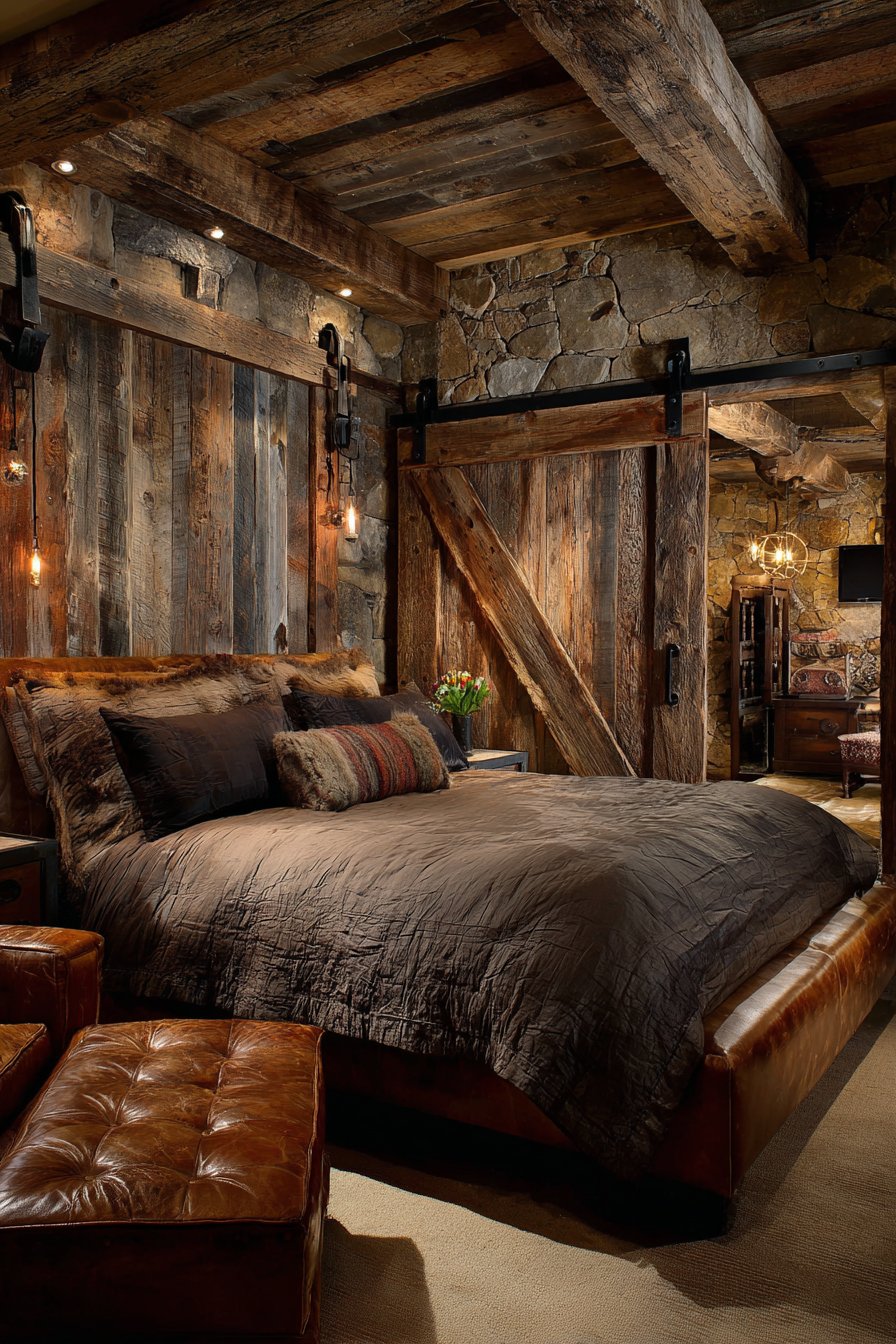
The sourcing and preparation of reclaimed barn wood requires specialized knowledge and careful handling to preserve character while ensuring structural integrity. Salvaged barn wood must be carefully denailed, cleaned of dirt and debris, inspected for insect damage, and often kiln-dried to eliminate any remaining pests or eggs. The varying plank widths result from the mixed-dimension lumber originally used in barn construction, where uniformity was less important than structural adequacy. The bedroom featuring these closet doors includes exposed beam ceiling that shares the reclaimed wood aesthetic, stone accent wall that introduces additional natural material texture, and distressed leather furniture that exhibits the worn patina of genuine aging. Warm ambient lighting emphasizes the wood’s varied patina and surface texture, creating cozy atmosphere perfect for rustic bedroom environments.
The environmental sustainability of reclaimed barn wood closet door ideas for bedroom applications provides significant value beyond aesthetic considerations. Using salvaged wood prevents additional trees from being harvested while preserving material that might otherwise be burned or sent to landfills. The old-growth timber found in many historical barns offers superior density and stability compared to modern fast-grown lumber, providing structural advantages alongside character. The mixed tones and weathered surfaces accept additional wear gracefully, actually improving in character rather than appearing damaged. The substantial weight and solid construction of reclaimed wood doors provide superior sound dampening compared to hollow-core alternatives.
Key Design Tips: Source reclaimed barn wood from reputable salvage companies that properly prepare materials for interior applications. Inspect wood carefully for structural integrity—discard pieces with rot, severe splits, or active insect infestation. Arrange planks to create pleasing color variation and pattern—avoid clustering all dark planks together or creating inadvertent patterns. Clean reclaimed wood gently to preserve authentic patina while removing loose dirt and debris. Apply appropriate sealers to protect wood from moisture and prevent dust accumulation in weathered surfaces. Choose hardware that complements the rustic aesthetic—wrought iron, blackened steel, or aged bronze work well. Ensure adequate wall support for the substantial weight of solid reclaimed wood doors. Install proper floor clearance to prevent moisture damage to door bottoms. Embrace imperfections as desirable character rather than flaws requiring repair. Consider the reclaimed wood’s history when possible—barn wood from your region creates local connection that enhances the material’s story.
17. Japanese-Inspired Shoji Screen Serenity
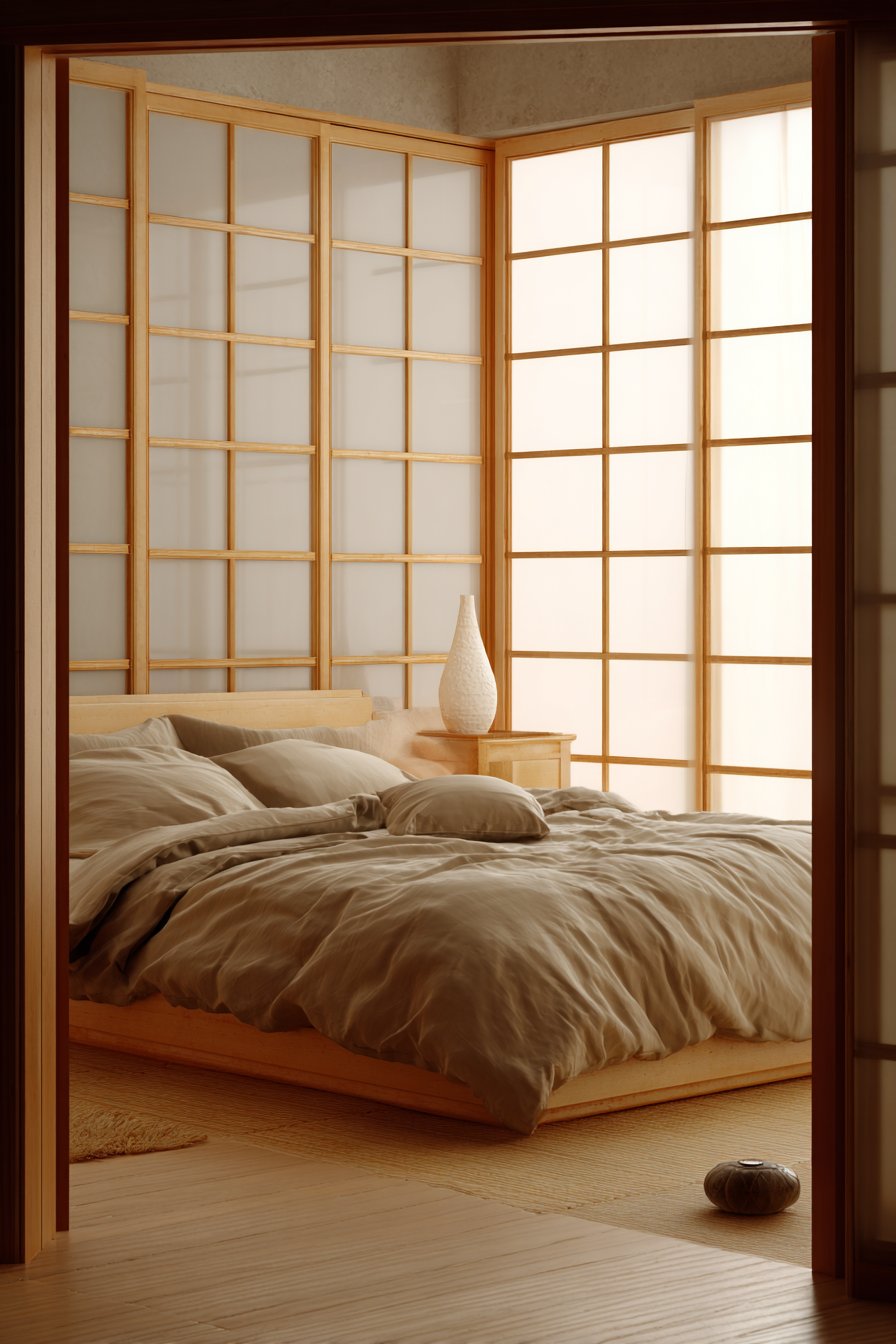
Shoji screen closet door ideas for bedroom spaces introduce traditional Japanese design principles emphasizing simplicity, natural materials, and filtered light. These minimalist sliding doors feature translucent rice paper panels set within natural wood lattice frames that create geometric grid patterns. The rice paper—traditionally made from mulberry bark fibers—provides soft light diffusion while maintaining privacy, creating the serene, contemplative atmosphere central to Japanese design philosophy. The natural wood frames, typically constructed from light-colored woods like cypress or pine, display minimal finish that celebrates wood’s inherent beauty without excessive treatment or embellishment.
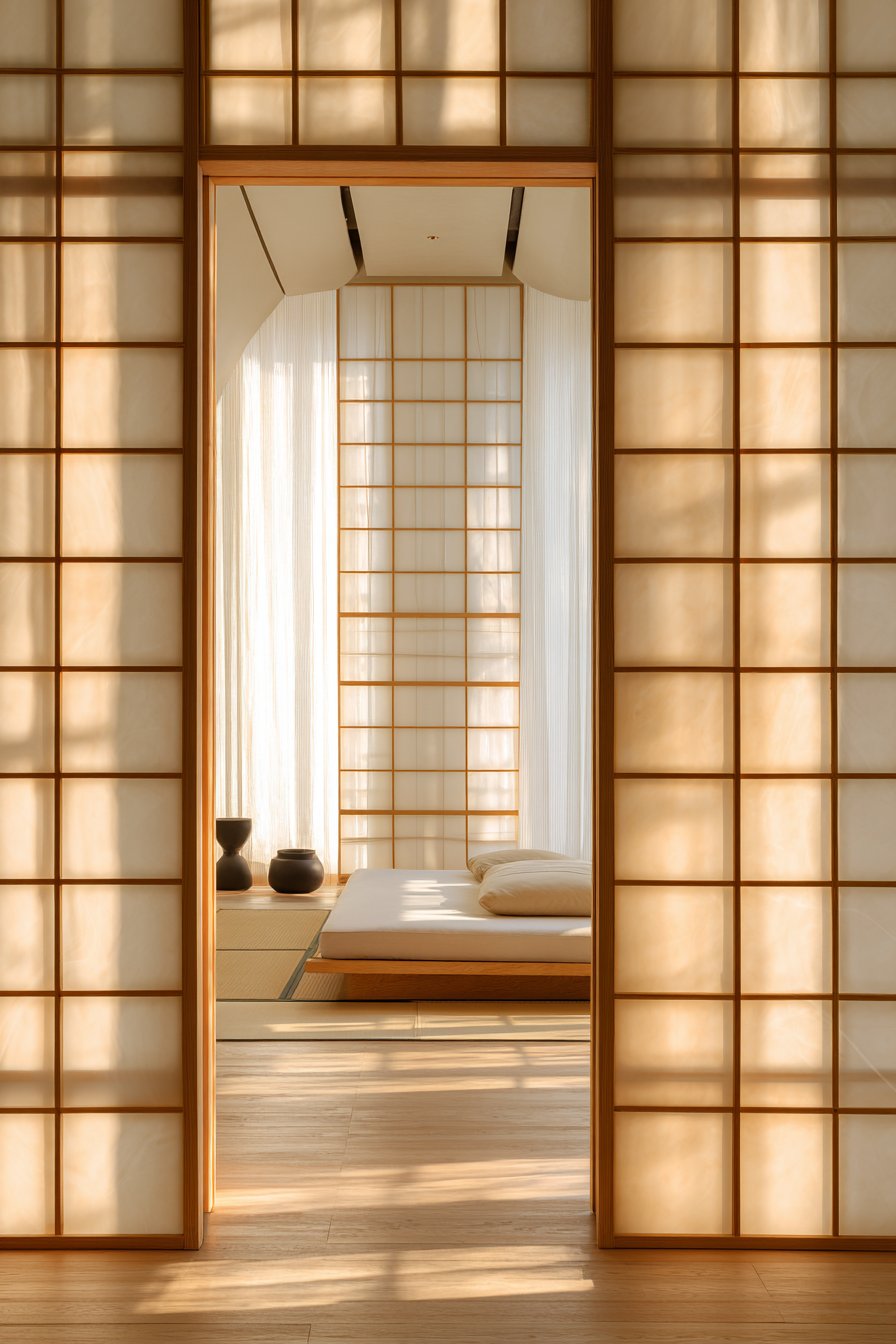
The construction of authentic shoji screens requires precision woodworking to create the lattice framework that holds individual rice paper panels. The wood members are joined using traditional Japanese joinery techniques—mortise and tenon connections secured without metal fasteners—that create strong, durable assemblies while honoring craft traditions. The translucent rice paper panels allow natural light to filter through while preventing direct visibility, creating the quality of light that defines Japanese interior spaces. The minimalist bedroom featuring these closet doors includes a low platform bed characteristic of Japanese sleeping arrangements, tatami mat flooring that provides traditional woven rush grass surface, and minimal decor elements that honor the “less is more” philosophy. Diffused natural daylight glowing through the rice paper panels creates ethereal ambiance that changes subtly throughout the day as light angles shift.
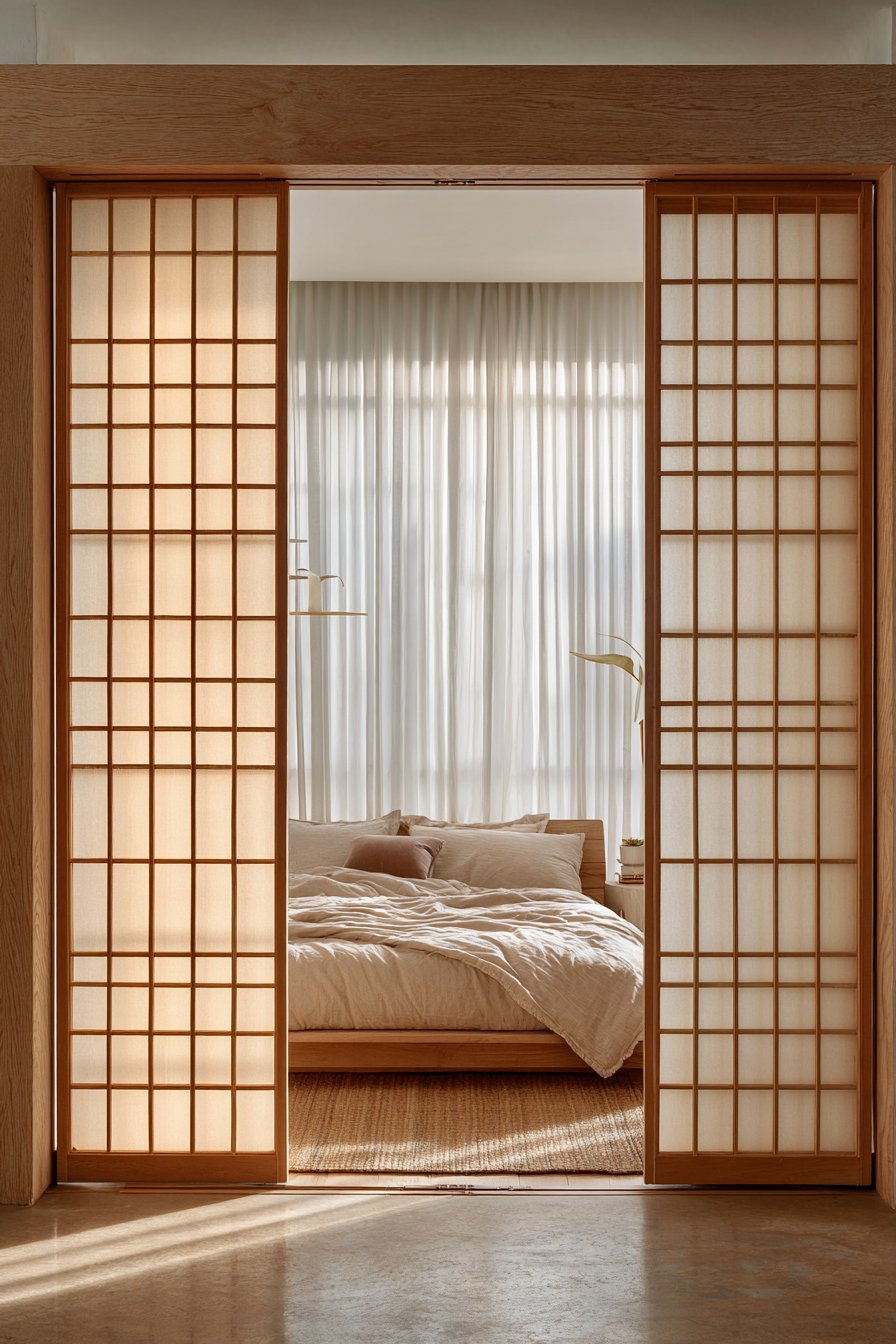
The cultural significance and philosophical underpinnings of shoji screen closet door ideas for bedroom applications provide depth beyond surface aesthetics. The translucent quality of rice paper creates connection between spaces while maintaining definition and privacy. The natural materials age gracefully, developing patina that enhances rather than detracts from their beauty. The sliding mechanism saves space while creating pleasing sound and tactile experience when operated. The geometric lattice patterns create visual interest through simple forms and careful proportions rather than ornate decoration. These doors work particularly well in bedrooms designed as retreat spaces emphasizing calm, contemplation, and connection to natural materials.
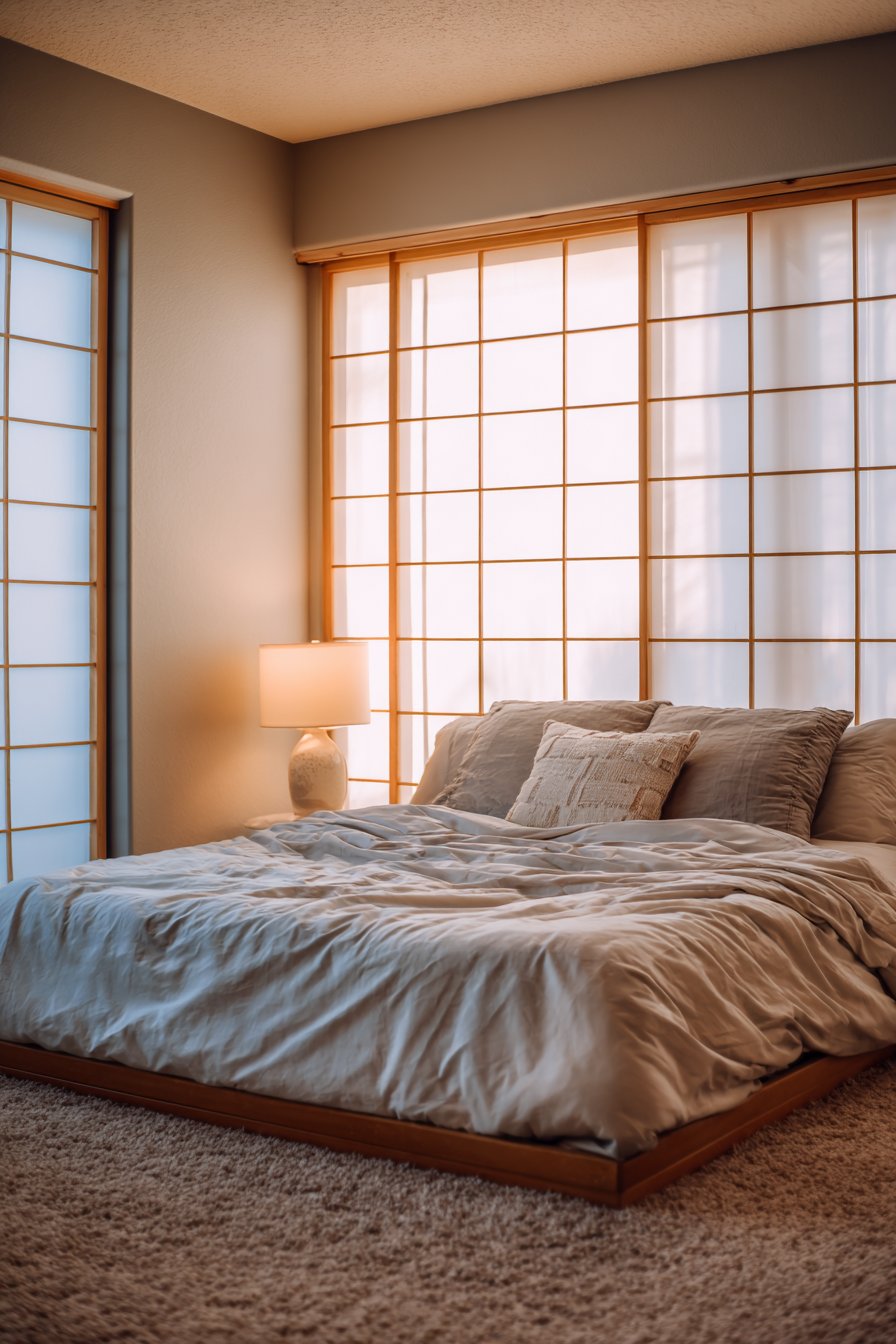
Key Design Tips: Source authentic rice paper from traditional suppliers or high-quality synthetic alternatives specifically designed for shoji screen applications. Select light-colored woods with straight grain and minimal figure that honor Japanese design preferences for subtle material expression. Learn basic Japanese joinery techniques or work with craftspeople experienced in traditional construction methods. Consider the rice paper’s fragility when placing doors—avoid high-traffic areas where damage is likely. Clean shoji screens carefully with soft dusters or very gentle vacuuming to avoid tearing paper. Replace damaged rice paper panels individually rather than replacing entire door assemblies. Apply minimal finish to wooden frames—light oil or wax rather than heavy varnish or paint. Position shoji screens to maximize the beautiful filtered light they create throughout the day. Consider installing shoji screens on both sides of closet openings for enhanced light filtration and bilateral access. Respect the cultural significance of these traditional elements through thoughtful implementation and appropriate styling.
18. Maximalist Tropical Wallpaper Statement
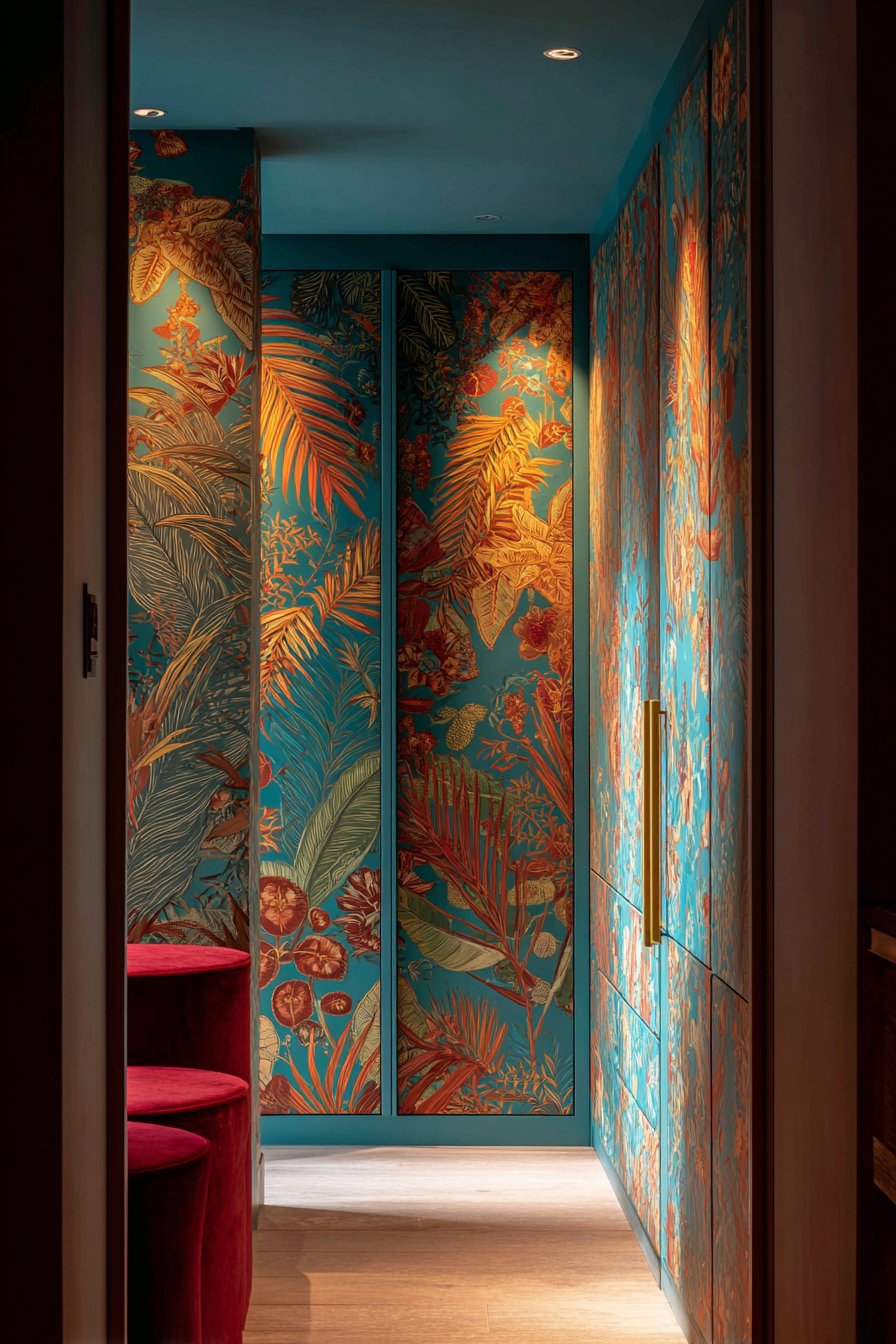
Bold patterned wallpaper closet door ideas for bedroom spaces featuring vibrant tropical palm leaf motifs create maximalist statements that celebrate color, pattern, and visual abundance. These flush-mounted doors are wallpapered to blend seamlessly with surrounding walls, creating the illusion that the tropical pattern extends continuously across the wall surface. The wallpaper features vibrant palm leaves in various sizes rendered in naturalistic detail against deep emerald green backgrounds that provide rich color saturation. The wallpapering technique requires precise pattern matching at door seams and careful wrapping around door edges to maintain the illusion of continuous surface.
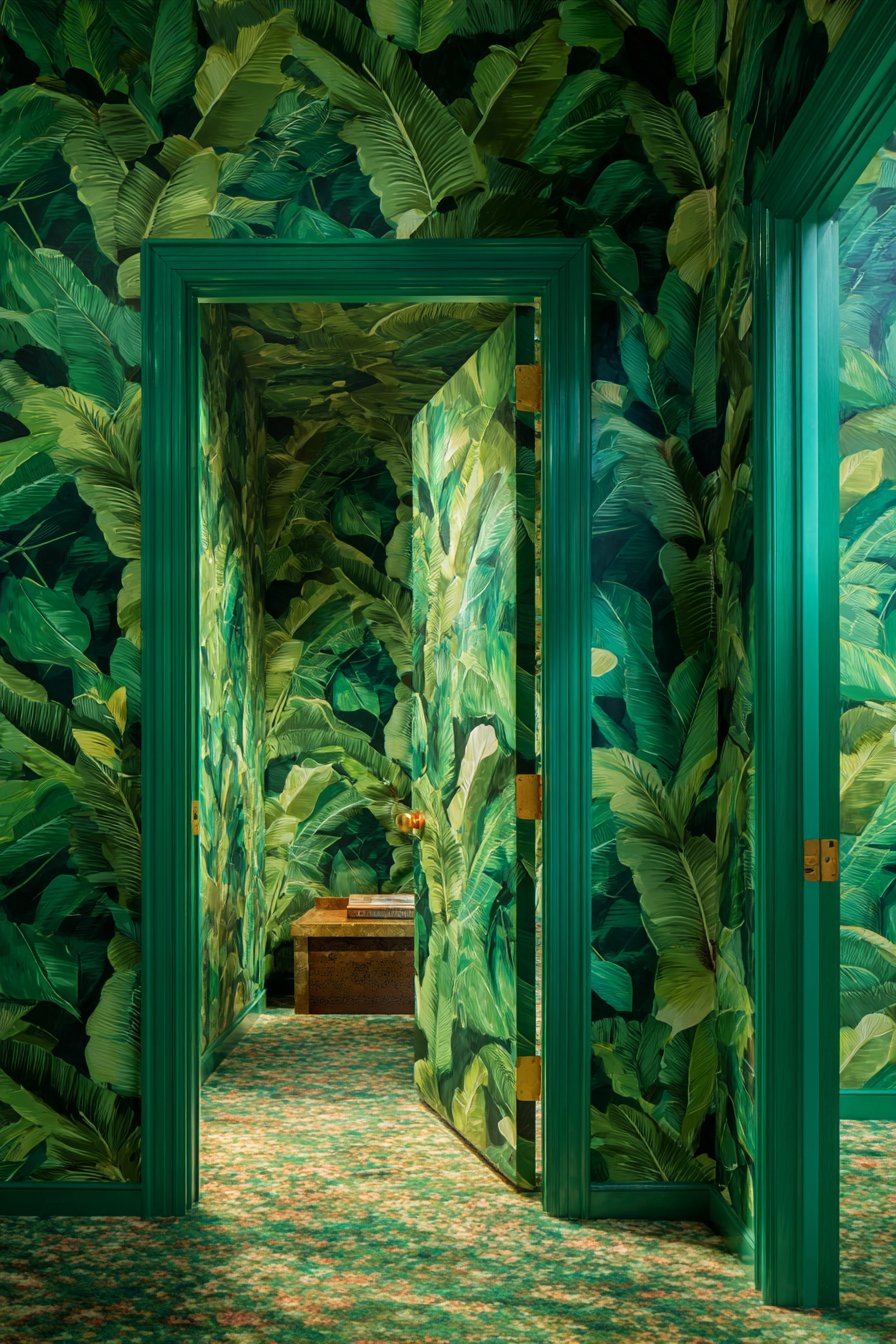
The application of wallpaper to closet doors requires specific techniques and materials to ensure long-term adhesion and durability on surfaces that move repeatedly. The doors must be properly prepared through thorough cleaning and light sanding to create suitable surface texture for wallpaper adhesive. Professional-grade wallpaper paste designed for challenging applications provides necessary holding power. The pattern must be carefully positioned on each door to ensure visual continuity when doors are closed while allowing for the doors’ movement when opened. The maximalist bedroom surrounding these statement closet doors includes sumptuous velvet furnishings in jewel tones that complement the tropical palette, gold accent elements that add metallic shimmer, and layered patterns including geometric rugs and printed pillows that embrace the “more is more” philosophy. Strategic lighting highlights the wallpaper’s colors and botanical details, creating drama and visual interest.
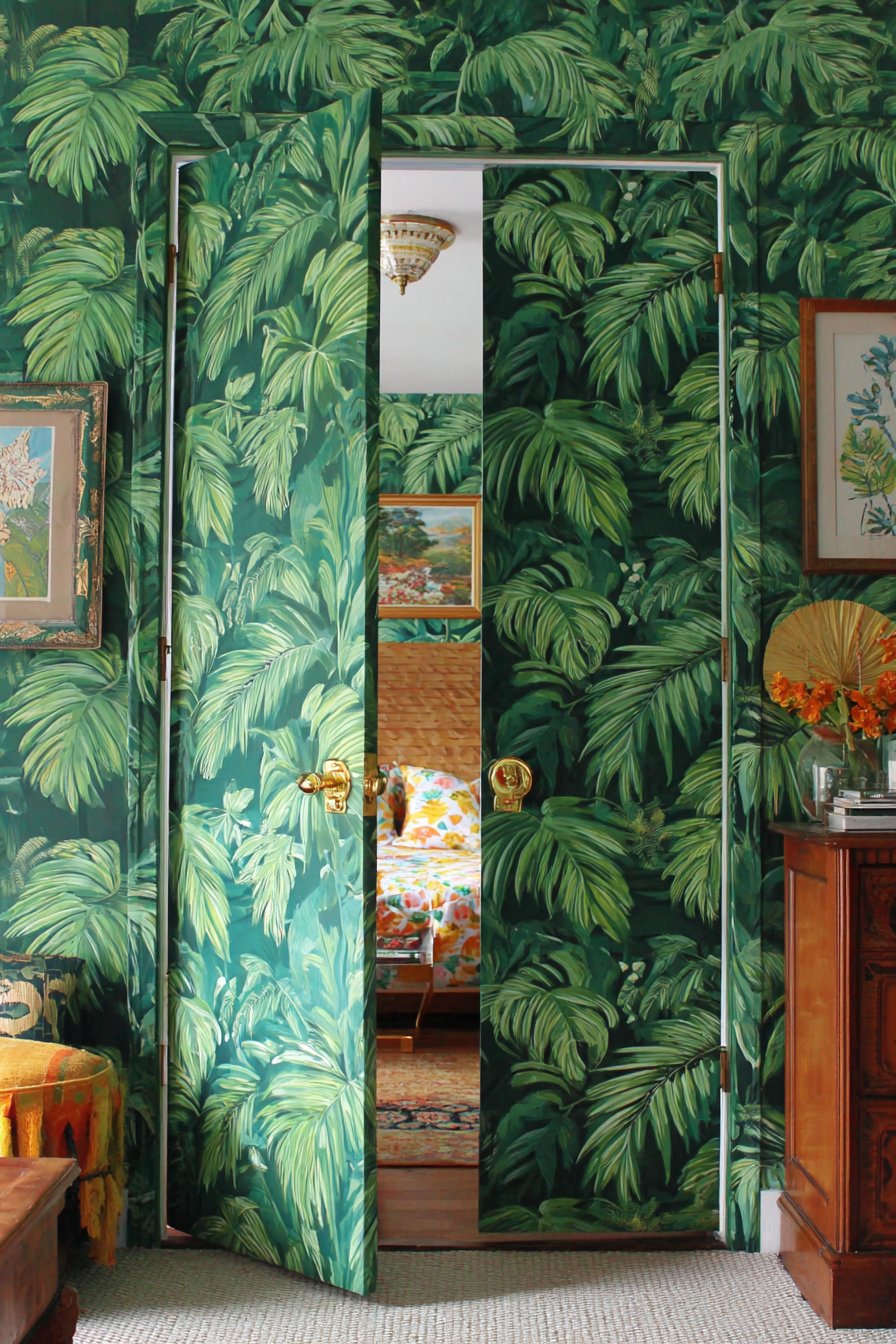
The maximalist design philosophy represented by wallpapered closet door ideas for bedroom applications celebrates personal expression, visual abundance, and layered pattern that contradicts minimalist restraint. The tropical palm motif introduces nature-inspired imagery that creates connection to outdoor environments while celebrating exotic locales. The deep emerald green background provides rich color that makes powerful statements while remaining sophisticated rather than garish. The technique of wallpapering doors to blend with walls creates cohesive surfaces that make bold patterns feel integrated rather than applied. These doors work particularly well in bedrooms designed as personal sanctuaries where conventional design rules can be abandoned in favor of expressive, individualistic styling.
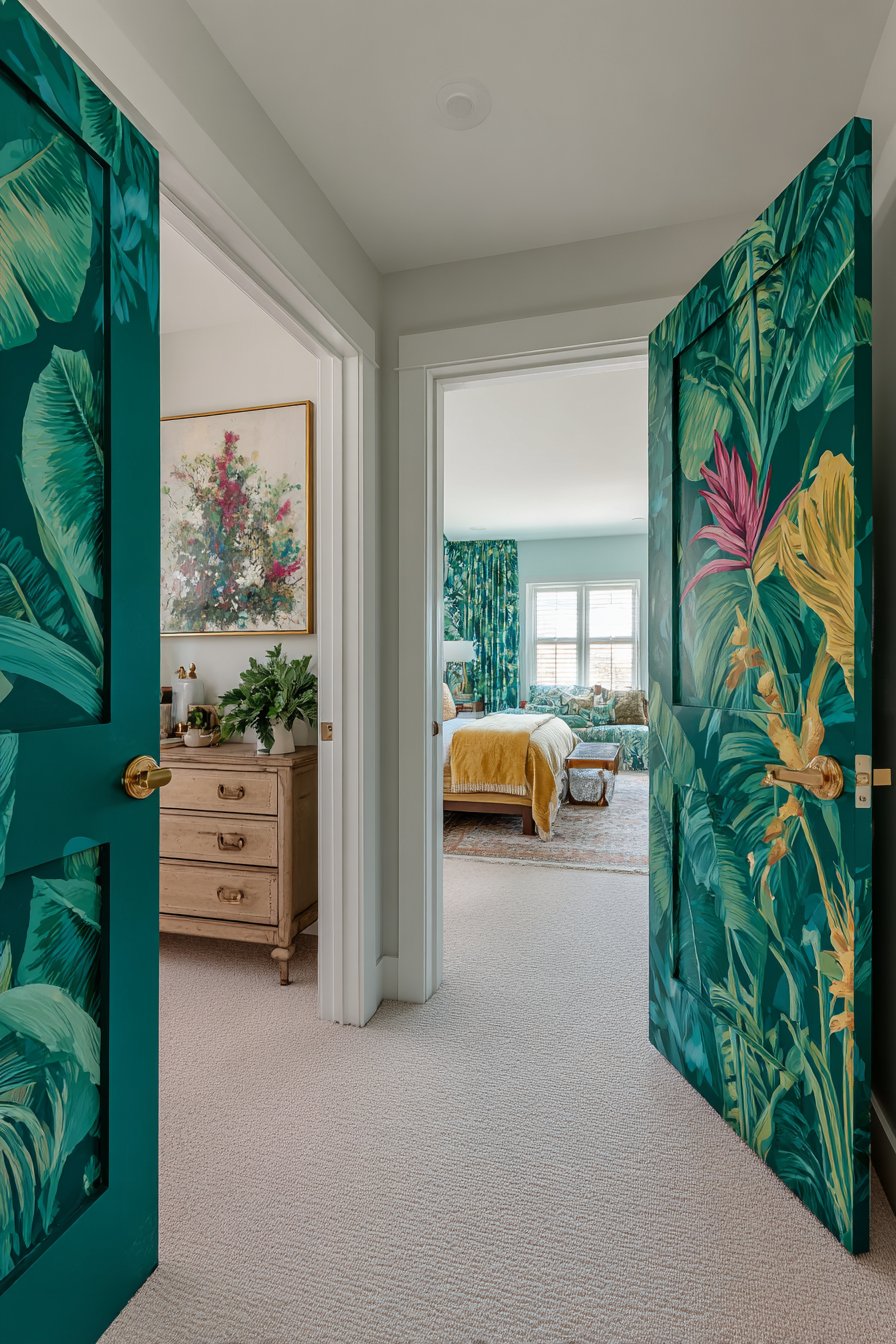
Key Design Tips: Choose wallpaper specifically rated for durability and washability to withstand the door surface’s movement and handling. Prepare door surfaces thoroughly through cleaning, light sanding, and priming if necessary. Use professional-grade wallpaper paste designed for challenging applications rather than standard adhesive. Match patterns carefully at all seams and edges to create seamless appearance. Wrap wallpaper around door edges for finished appearance rather than leaving raw cuts visible. Seal wallpapered surfaces with clear matte or satin varnish to protect against moisture and handling damage. Consider the scale of the tropical pattern relative to door size—very large patterns may not repeat sufficiently on smaller doors. Coordinate the wallpaper colors with other elements in the bedroom for cohesive rather than chaotic appearance. Clean wallpapered surfaces gently with slightly damp cloths rather than wet cleaning that could damage paper. Consider hiring professional wallpaper installers for best results, particularly if inexperienced with wallpaper application.
19. Smart Home Technology Integration
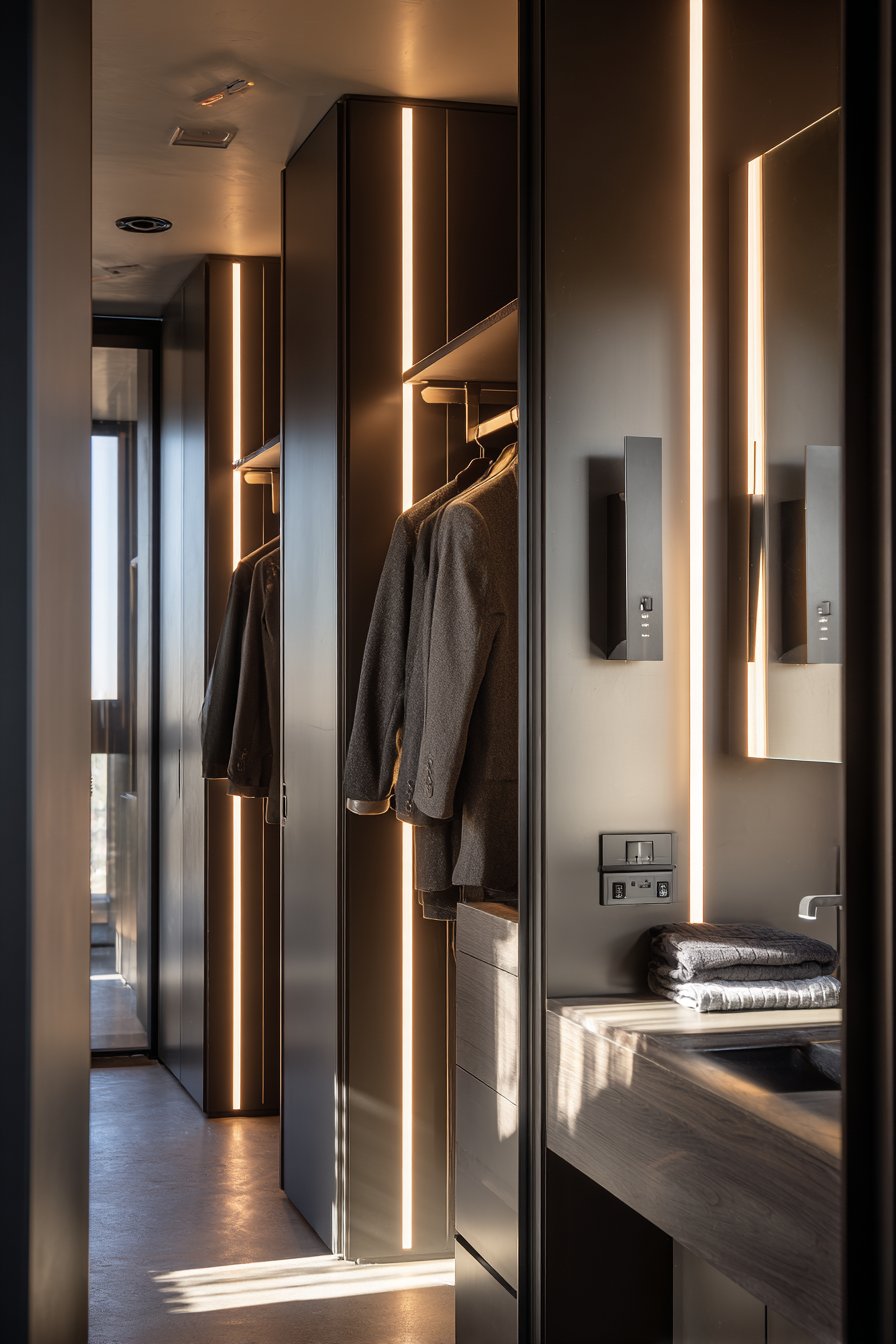
Automated sliding closet door ideas for bedroom spaces featuring sensor-activated operation and integrated LED lighting represent the intersection of functional design and smart home technology. These modern doors feature black aluminum frames that glide smoothly along precision track systems, opening and closing via motion sensors that detect user approach. The integrated LED lighting strips built into the frame’s top or side channels automatically illuminate when doors open, providing hands-free closet interior lighting that enhances convenience and safety. This technology integration transforms mundane closet access into seamless, futuristic experiences that anticipate user needs without requiring physical interaction.
The motion sensor technology typically employs passive infrared (PIR) sensors or microwave sensors that detect movement within defined zones near the closet. The sensors can be calibrated to prevent false triggers from pets or moving curtains while reliably activating when humans approach. The LED lighting strips provide energy-efficient illumination in color temperatures ranging from warm white to cool white, with some systems offering adjustable brightness and color options through smartphone apps or voice control integration. The contemporary bedroom featuring these smart closet doors includes other tech-integrated furniture such as beds with built-in USB charging ports, smart lighting controls that adjust throughout the day, and climate control systems that maintain optimal sleeping temperature. Professional photography captures the doors mid-motion with LED strips glowing, demonstrating the technology in action.
The practical advantages of smart automated closet door ideas for bedroom applications extend beyond novelty appeal. The hands-free operation proves particularly valuable when carrying laundry, luggage, or other items that occupy both hands. The automatic lighting eliminates fumbling for switches in dark bedrooms, improving safety and convenience during nighttime closet access. The sensor-activated system can be programmed with delay timers that keep doors open for specific durations before automatically closing, preventing doors from being inadvertently left open. The LED lighting provides superior energy efficiency compared to traditional incandescent or fluorescent closet lighting, with LED strips lasting years before requiring replacement.
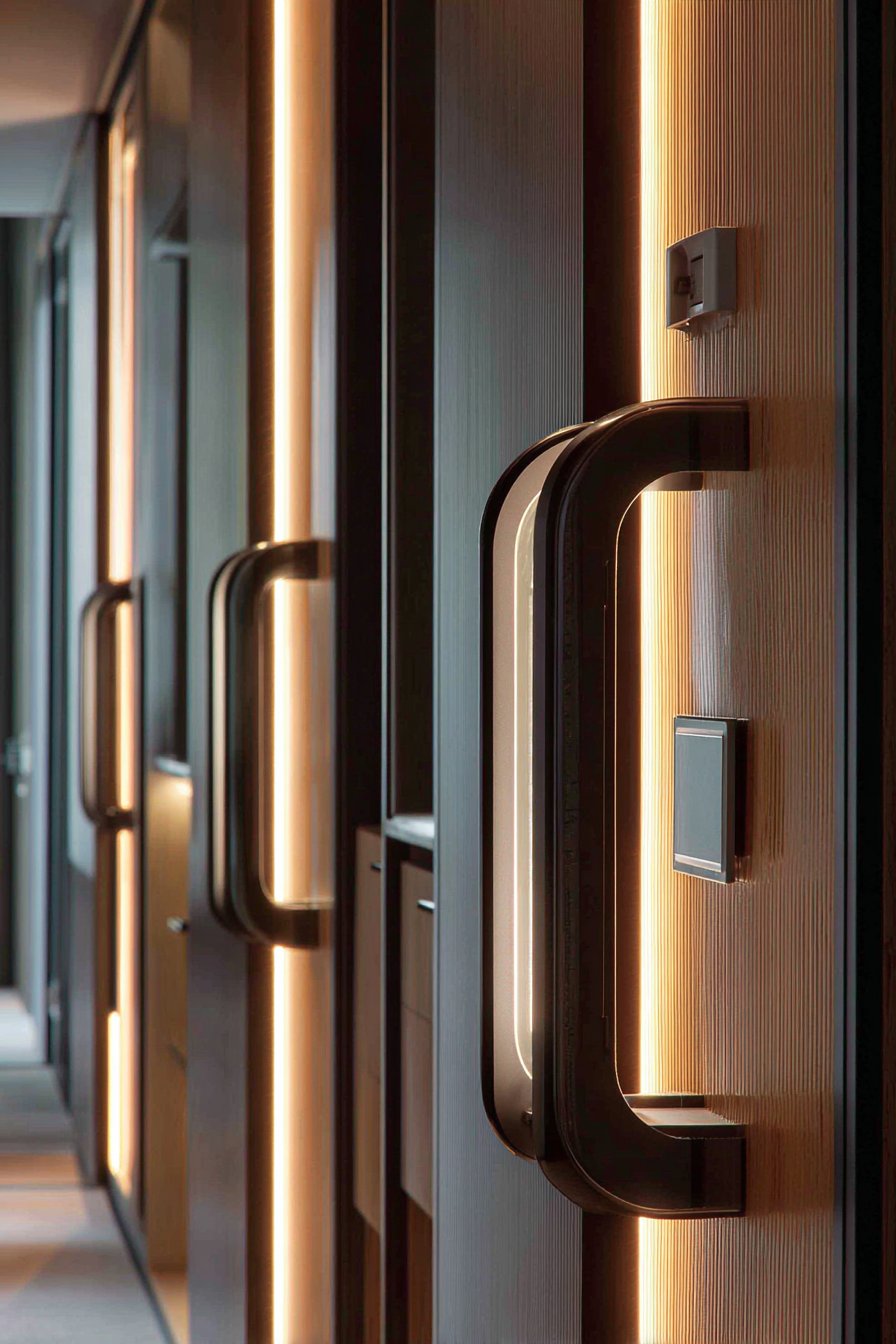
Key Design Tips: Select quality motion sensors from reputable manufacturers to ensure reliable operation and minimize false triggers. Position sensors carefully to create appropriate detection zones that activate reliably without nuisance triggering. Choose LED strips with appropriate brightness levels—closet interiors require less lumens than task lighting areas. Ensure adequate electrical power sources near the closet for both door motors and LED lighting systems. Consider backup manual operation options in case of power failure or sensor malfunction. Use quiet motor systems specifically designed for residential applications to prevent disruptive operation noise. Install sensors at heights and angles that reliably detect adults while potentially ignoring pets if household includes animals. Program appropriate delays between sensor triggering and door activation to prevent startling users. Integrate smart closet systems with whole-home automation platforms for coordinated operation with bedroom lighting and climate control. Maintain technology systems through regular software updates and occasional hardware inspection.
20. Vintage Salvaged Door Repurposing
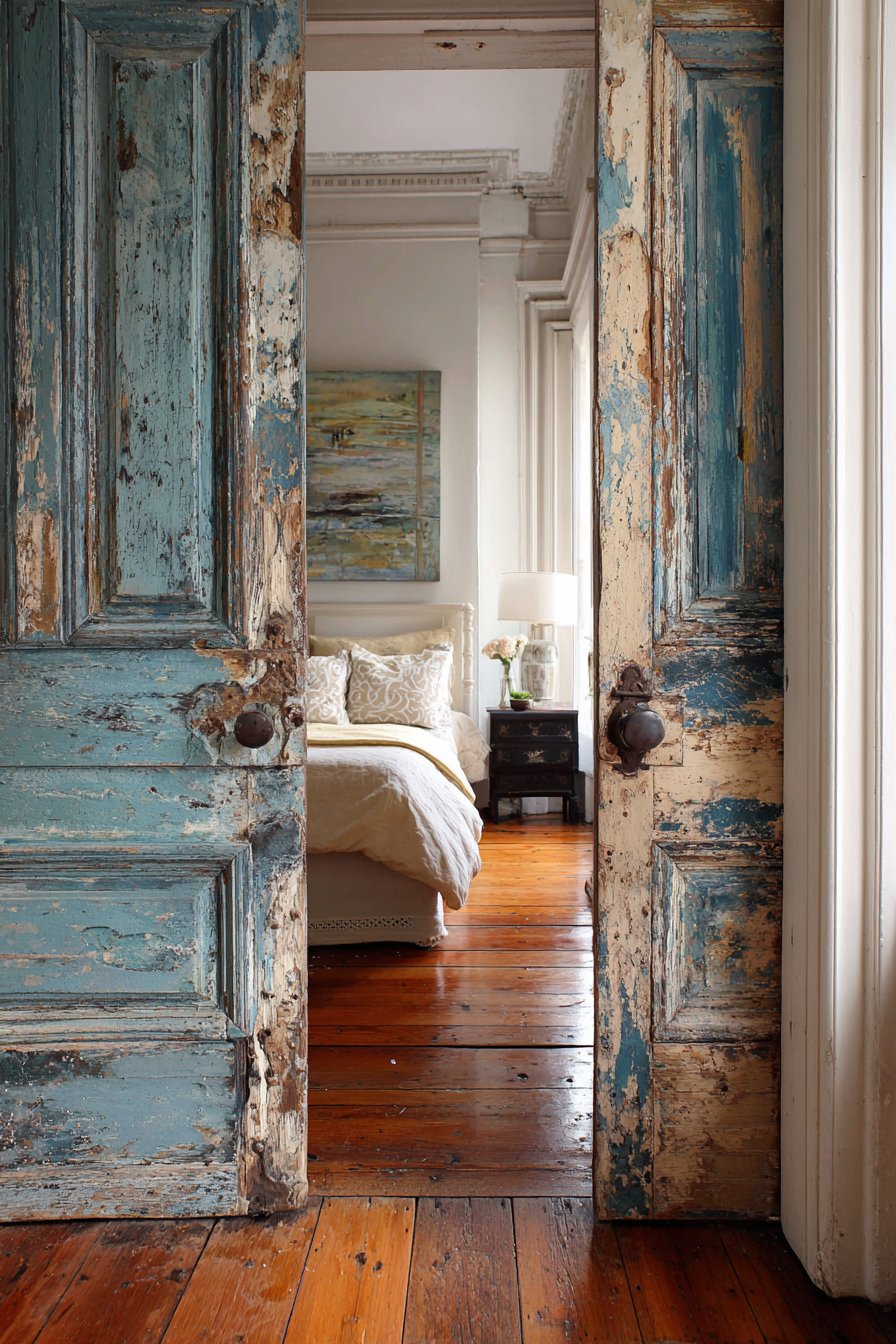
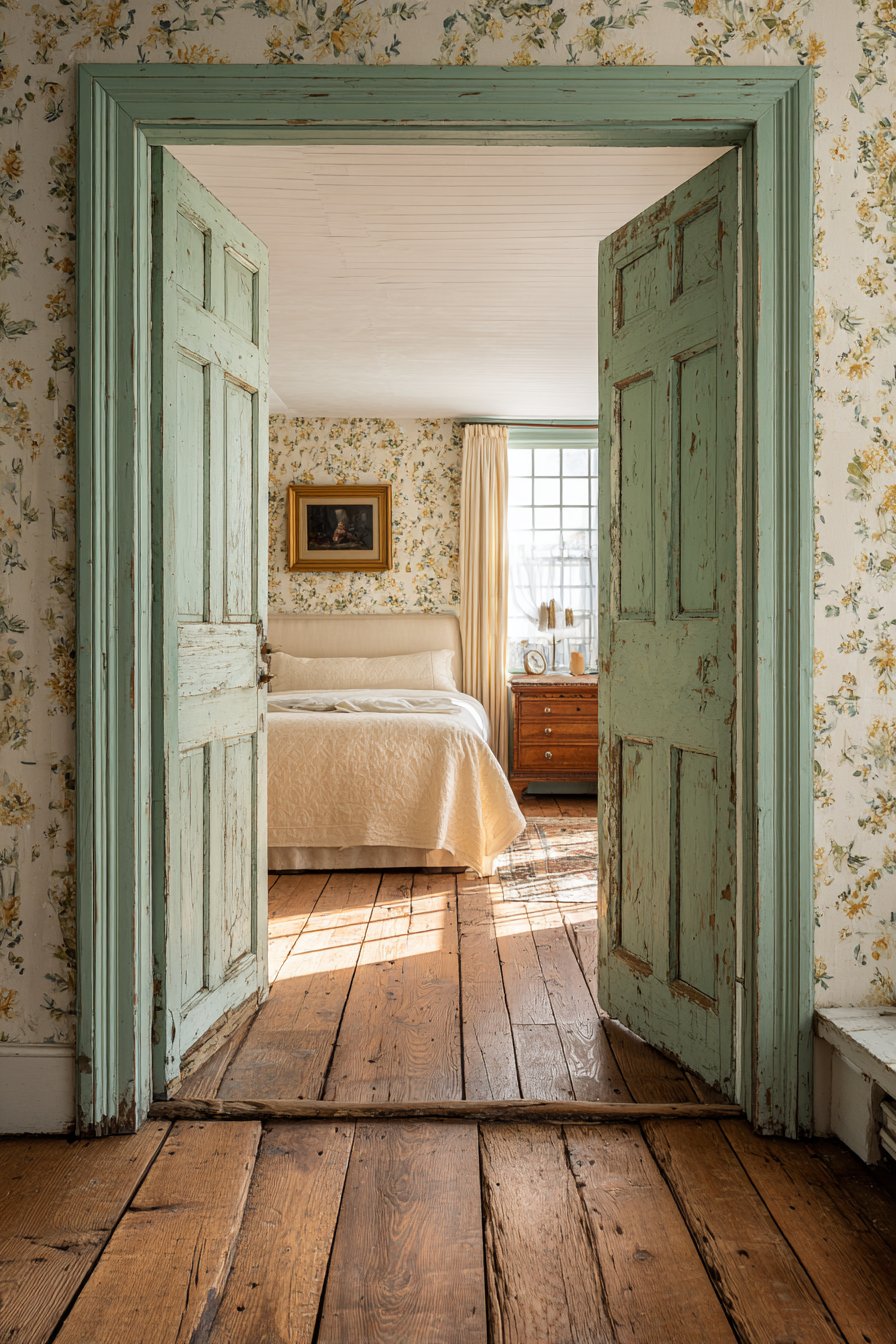
Antique salvaged door closet door ideas for bedroom spaces celebrate architectural preservation and historical character through the repurposing of vintage doors as charming closet entrances. These weathered doors feature authentic aging including original hardware, layered paint with chips revealing multiple historical color schemes, and architectural details reflecting the craftsmanship of earlier eras. Common sources for salvaged doors include demolished buildings, architectural salvage yards, and estate sales where historical building materials find new life. The authentic patina—including worn paint, aged hardware, and subtle structural settling—provides character impossible to replicate through artificial distressing techniques.
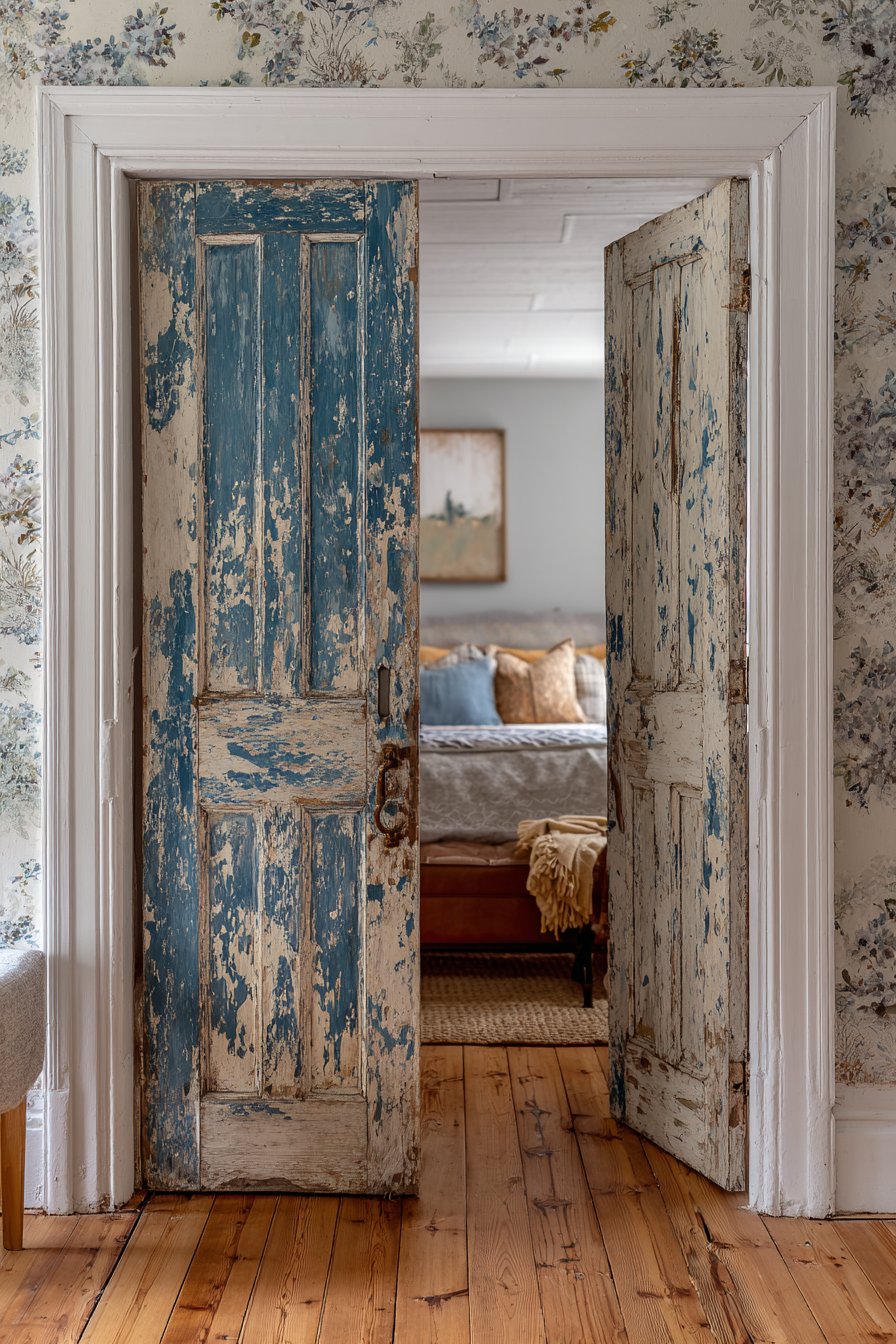
The process of repurposing salvaged doors as closet door ideas for bedroom applications requires careful assessment of structural integrity, appropriate modifications to fit modern openings, and sometimes reinforcement to ensure safe, functional operation. Antique doors often feature different dimensions than modern standard openings, requiring creative adaptation or opening modification. The weathered surfaces and historical hardware provide immediate character and visual interest, with each door telling unique stories through its accumulated wear patterns. The vintage-inspired bedroom surrounding these salvaged closet doors features complementary furnishings including genuine antiques or quality reproductions, floral wallpaper in traditional patterns, and hardwood floors with natural wear that shares the doors’ authenticity. Soft natural light emphasizes the doors’ authentic patina and historical character, celebrating rather than concealing their age.
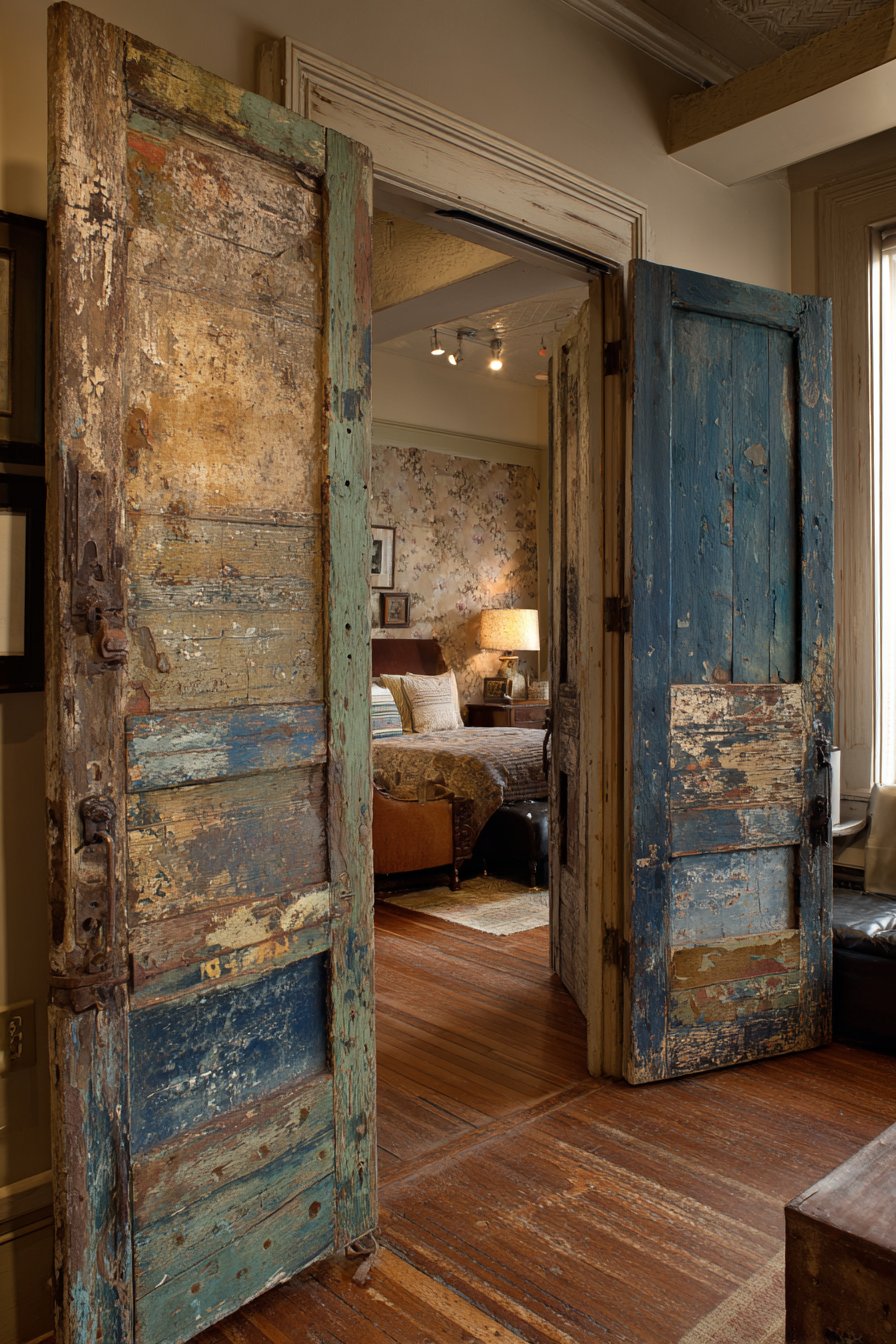
The environmental and cultural values represented by salvaged door closet door ideas for bedroom applications extend beyond aesthetic considerations. Repurposing architectural elements prevents valuable materials from entering landfills while preserving historical craftsmanship for future generations. The old-growth lumber and superior joinery found in many antique doors offer structural advantages over modern construction. The layered paint revealing multiple color schemes provides visual evidence of the door’s history, creating conversation pieces that connect present occupants to previous generations. The authentic aging accepts additional wear gracefully, actually improving in character rather than appearing damaged.
Key Design Tips: Assess salvaged doors carefully for structural integrity—test hardware, inspect joints, check for rot or insect damage. Clean antique doors gently to preserve patina while removing loose dirt and potentially harmful substances. Stabilize loose paint through careful consolidation rather than stripping and repainting, which destroys historical value. Reinforce weak joints or damaged areas using techniques appropriate to original construction methods. Modify door dimensions carefully if necessary to fit modern openings while preserving historical details. Document the door’s history when possible—provenance enhances both practical and emotional value. Apply gentle protective treatments like wax or oil rather than heavy varnishes that obscure authentic aging. Maintain original hardware when functional or source period-appropriate replacements if necessary. Consider professional conservation guidance for particularly valuable or fragile antique doors. Integrate salvaged doors thoughtfully into bedroom design—honor their historical character through appropriate surrounding styling.
21. Minimalist Frameless Glass Transparency
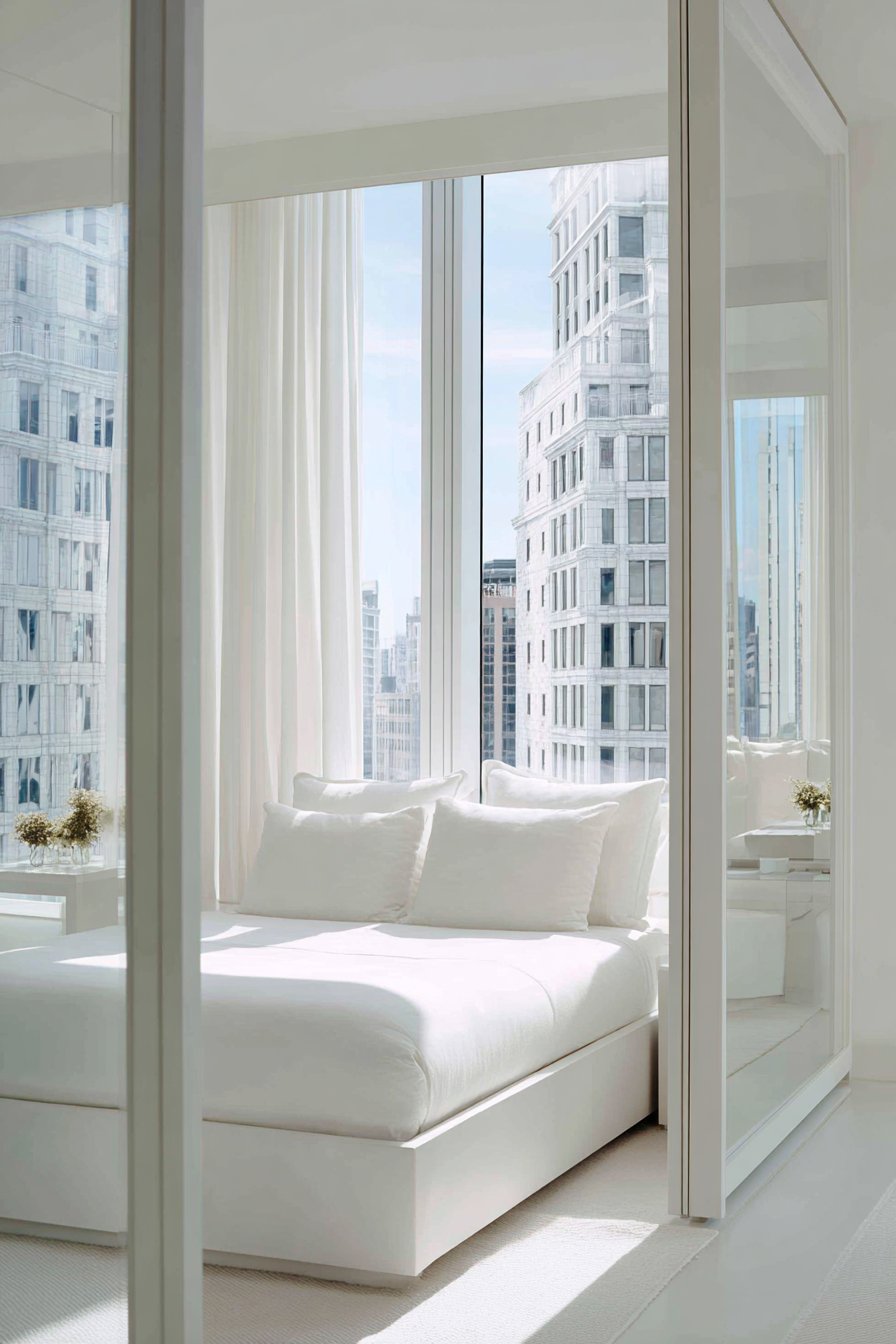
Frameless glass closet door ideas for bedroom spaces featuring nearly invisible hardware create ultra-clean, minimalist aesthetics that emphasize spatial continuity and visual openness. These seamless glass panels appear to float with minimal visible support, creating the illusion that closet contents are separated only by transparent barriers. The nearly invisible hardware typically includes top-mounted tracks or pivoting hinges finished in clear or ultra-minimal profiles that disappear against glass and wall surfaces. This design approach eliminates visual clutter and maintains uninterrupted sightlines, particularly valuable in minimalist bedrooms where every element serves essential function without decorative excess.
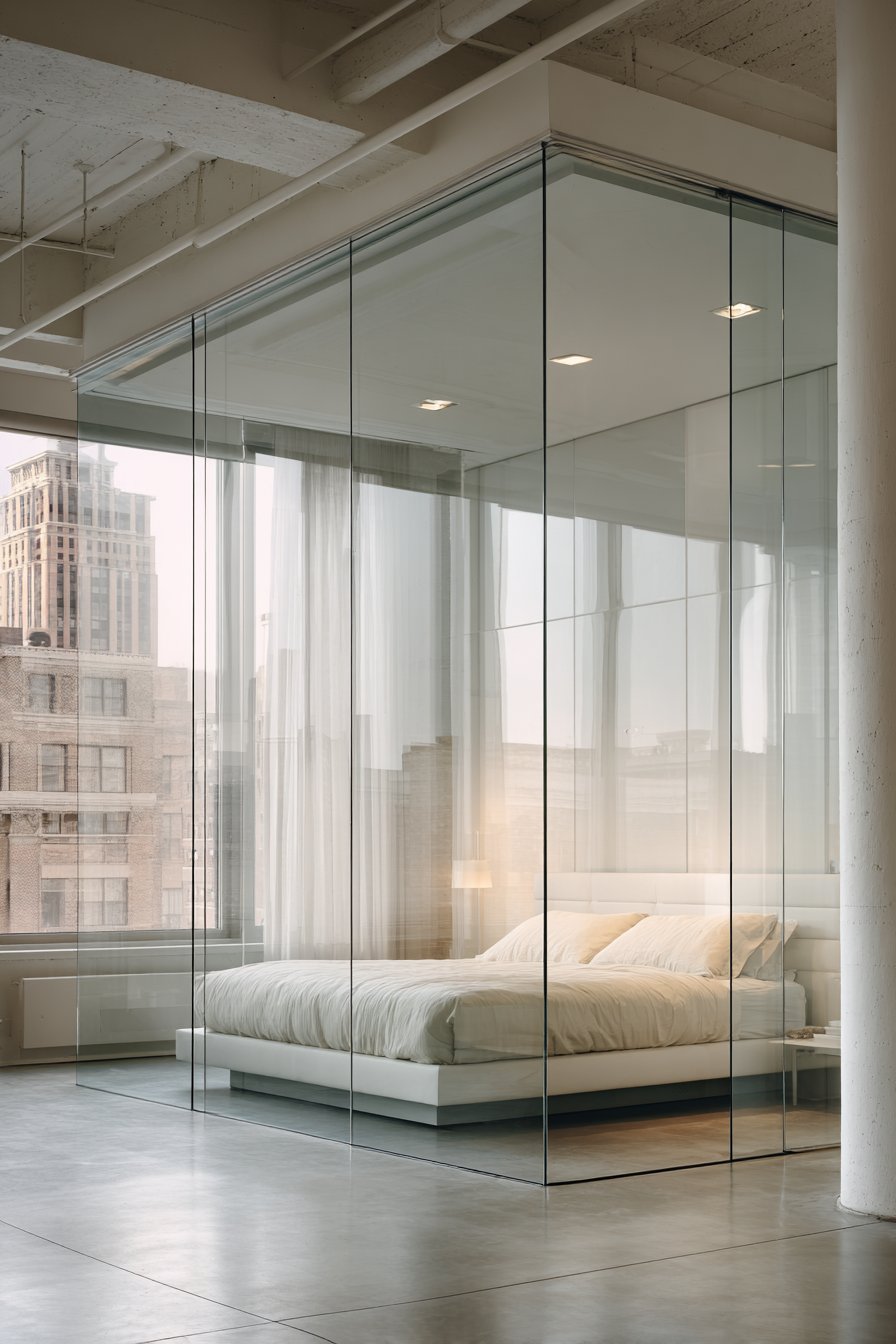
The engineering required for frameless glass closet doors demands precision manufacturing and installation to achieve proper operation despite minimal visible support structure. The glass panels must be precisely cut and tempered to exacting tolerances that prevent binding while maintaining proper gaps for smooth operation. The mounting hardware—though minimal in appearance—must provide substantial structural support capable of safely suspending heavy glass panels. The all-white bedroom featuring these transparent closet doors includes concealed storage systems that hide clutter, floating bed frames that appear to hover above polished concrete floors, and an absolute minimum of decorative elements that honors minimalist “less is more” philosophy. Natural daylight passes freely through the transparent glass, maintaining visual openness and preventing spatial segmentation.
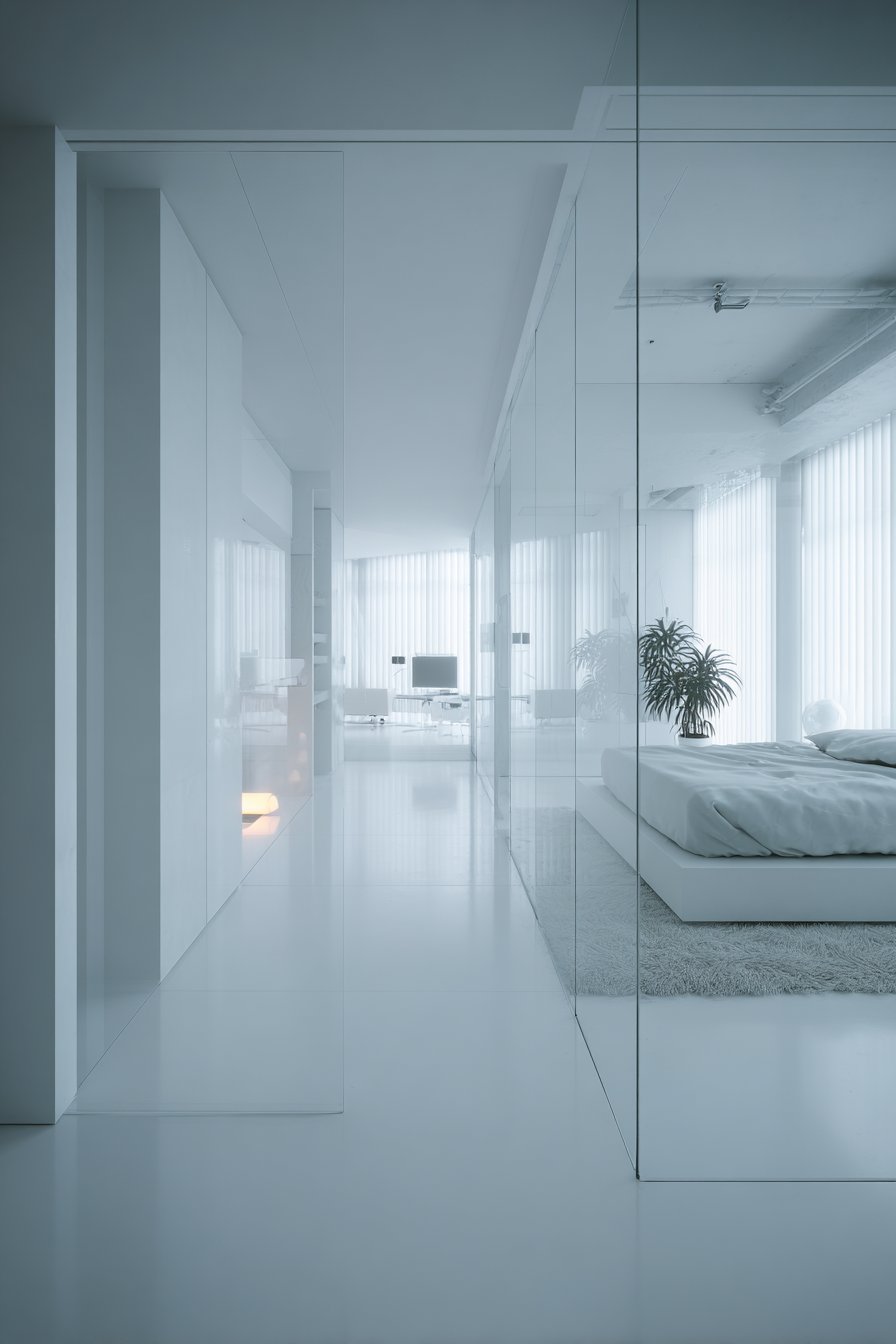
The philosophical underpinnings of minimalist design inform frameless glass closet door ideas for bedroom applications, where reduced visual clutter creates calm, contemplative environments. The transparent glass panels maintain spatial continuity, making bedrooms feel larger and less compartmentalized. The minimal hardware disappears from view, drawing attention to carefully curated closet contents rather than the doors themselves. This transparency demands high organizational standards—closet interiors must be maintained as attractive displays rather than hidden storage. The frameless design provides superior light transmission compared to framed alternatives, distributing natural light evenly throughout bedroom spaces.
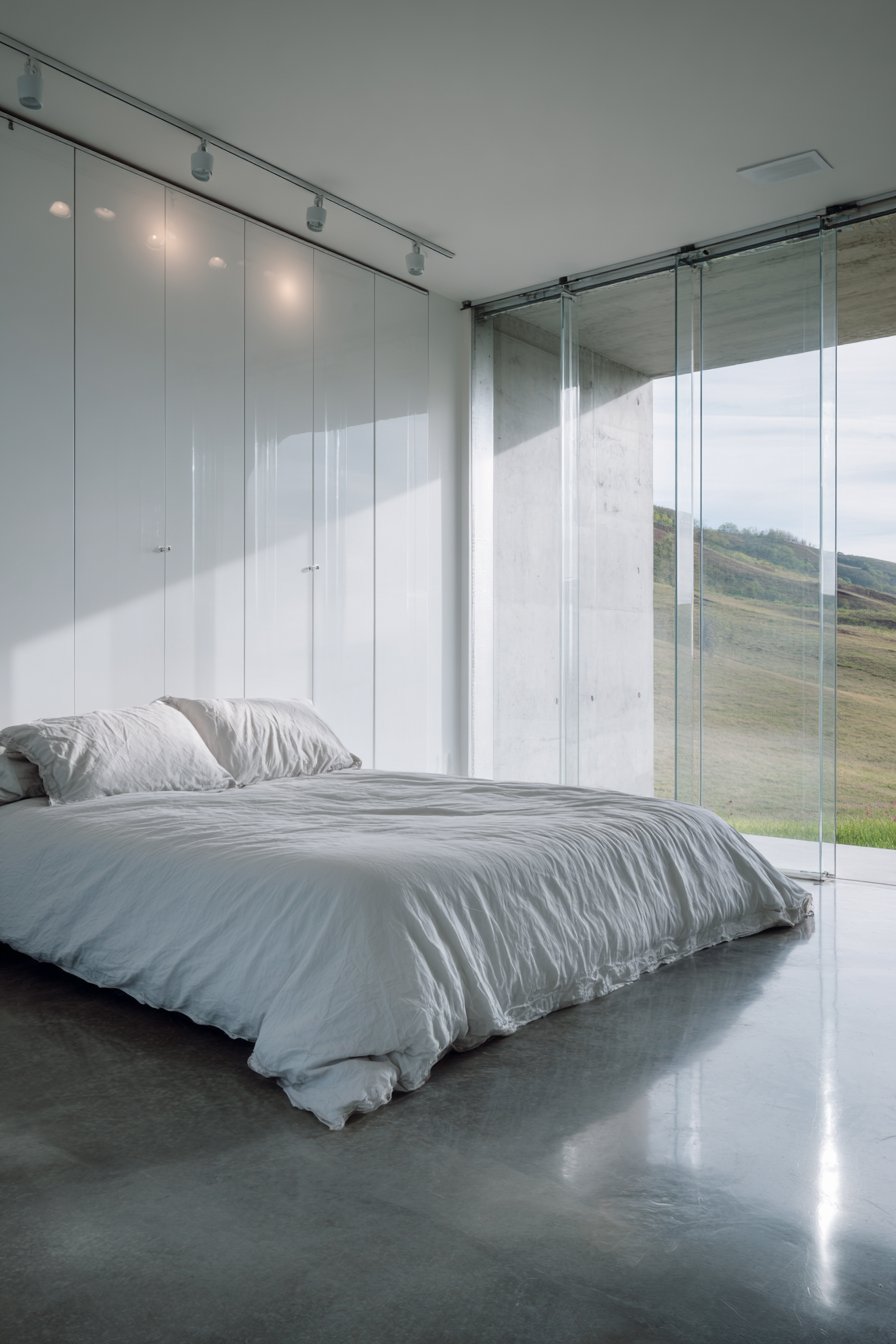
Key Design Tips: Specify thick tempered glass—typically three-eighths to one-half inch—to ensure structural stability and safety. Choose ultra-clear glass rather than standard glass to eliminate the greenish tint visible in thick standard glass. Select hardware specifically designed for frameless glass applications with minimal visual profiles. Ensure precise measurements and professional installation—frameless systems offer no tolerance for dimensional errors. Consider edge polishing options including flat polish, beveled edges, or pencil-rounded edges. Plan closet organization systems to create attractive displays worthy of transparent exposure. Clean glass surfaces regularly with streak-free cleaners to maintain pristine transparency. Install glass panels with adequate support points to prevent sagging or stress concentration. Consider adding discreet position indicators or frosted strips at eye level to prevent walking into closed glass doors. Maintain minimalist bedroom styling that complements the frameless doors’ visual simplicity.
22. Craftsman Mission-Style Oak Authenticity
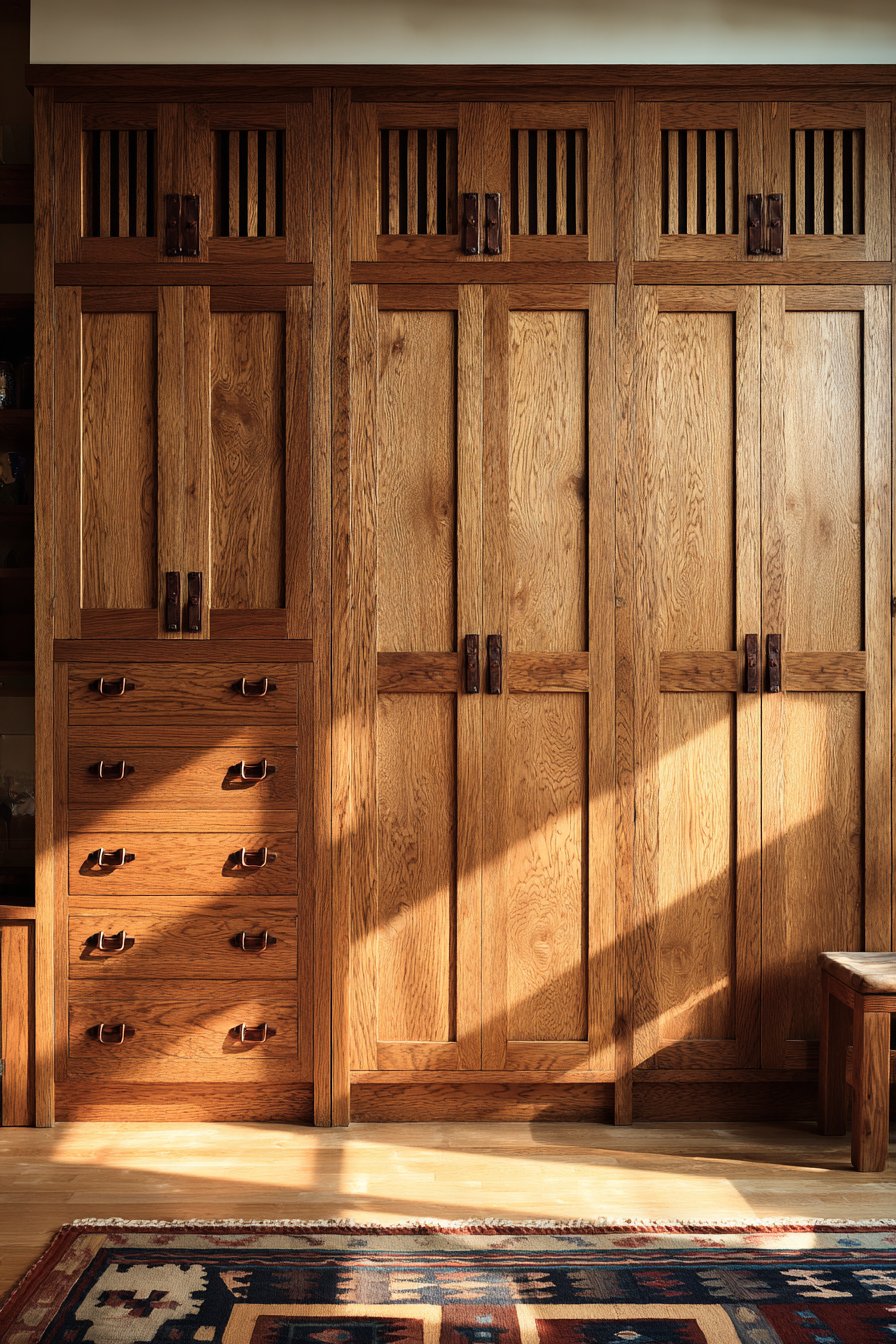
Mission-style closet door ideas for bedroom spaces featuring vertical slats in quarter-sawn oak with copper hardware patina celebrate the Arts and Crafts movement’s emphasis on honest craftsmanship and quality materials. The vertical slat construction creates strong vertical lines while allowing subtle visibility between slats, maintaining connection between spaces. Quarter-sawn oak—cut perpendicular to the tree’s growth rings—displays distinctive ray fleck patterns that create shimmering figure across the wood surface. The copper hardware including handles, hinges, and decorative elements develops natural green-blue patina over time, providing color accents that complement the oak’s warm tones. The visible wood joinery and handcrafted details honor the movement’s rejection of mass production in favor of artisan craftsmanship.
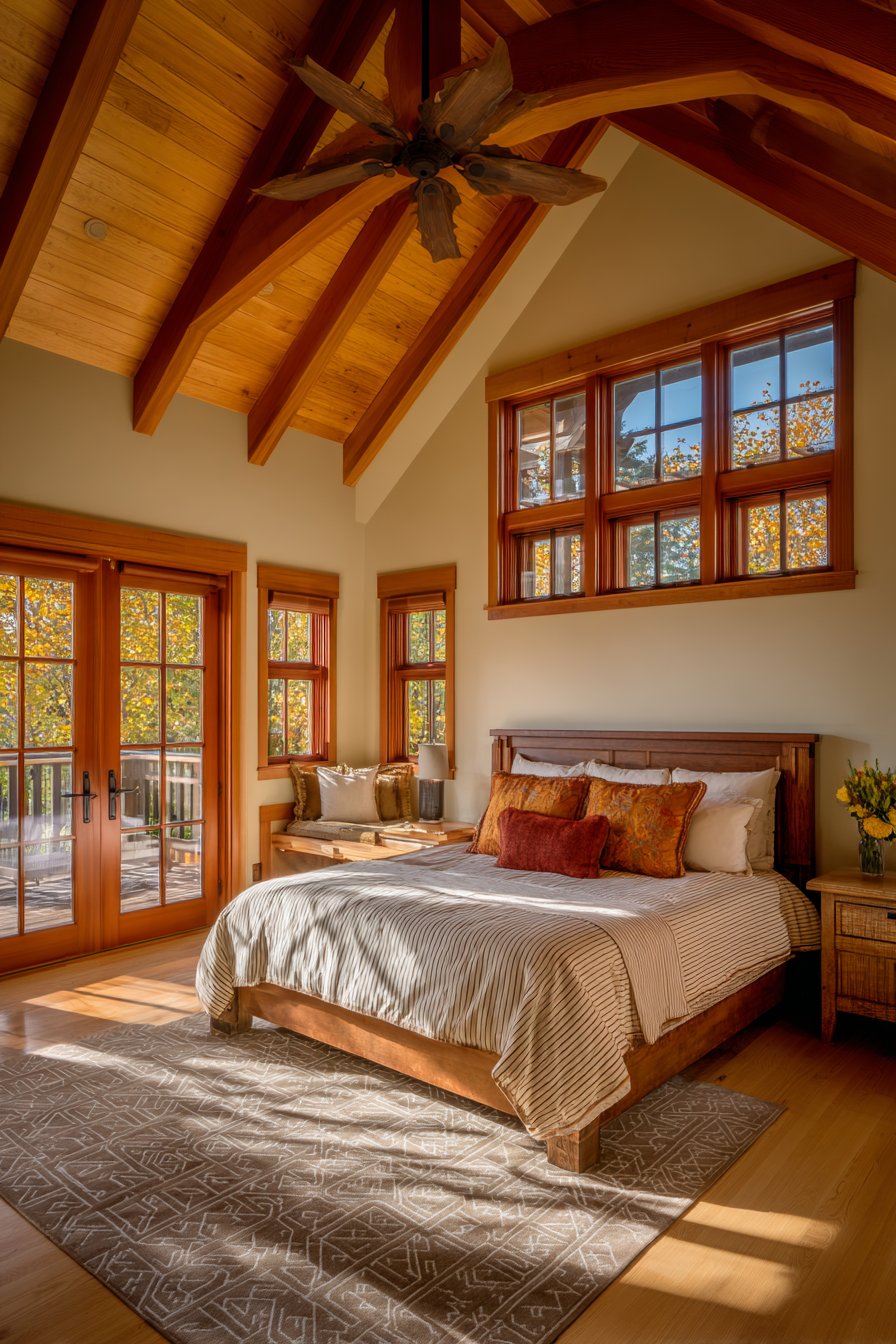
The Arts and Crafts philosophy that informs mission-style design emphasizes hand-crafted quality, honest material expression, and functional beauty without excessive ornamentation. The vertical slats are spaced to create rhythm and pattern while maintaining structural integrity. The quarter-sawn oak cutting method produces wood with superior stability and distinctive figure patterns that make each door unique. The bedroom featuring these craftsman closet doors includes complementary mission-style furniture with exposed joinery and minimal ornamentation, wool area rugs with geometric patterns inspired by Arts and Crafts textiles, and warm wood tones throughout the space that create cohesive material palette. Natural lighting emphasizes the oak’s ray fleck patterns and illuminates the copper hardware’s developing patina, celebrating the materials’ natural beauty.
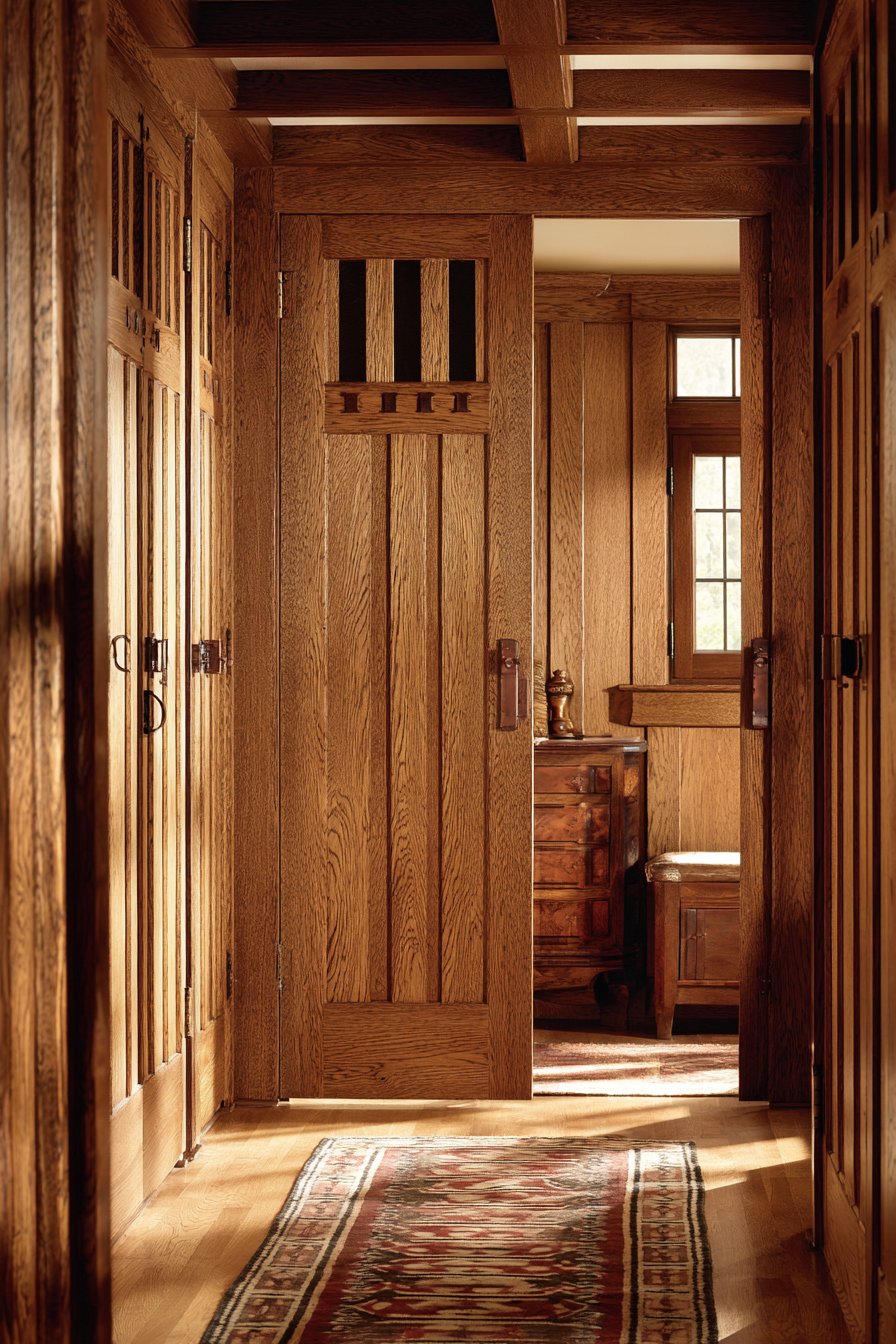
The enduring appeal of mission-style closet door ideas for bedroom applications reflects the Arts and Crafts movement’s timeless design principles and emphasis on quality construction. The quarter-sawn oak provides superior dimensional stability compared to plain-sawn alternatives, resisting warping and cupping over time. The copper hardware ages beautifully, developing character that enhances rather than detracts from appearance. The visible craftsmanship in joinery and construction details provides visual evidence of quality that mass-produced alternatives cannot match. The vertical slat design creates visual interest through simple geometric forms rather than applied decoration.
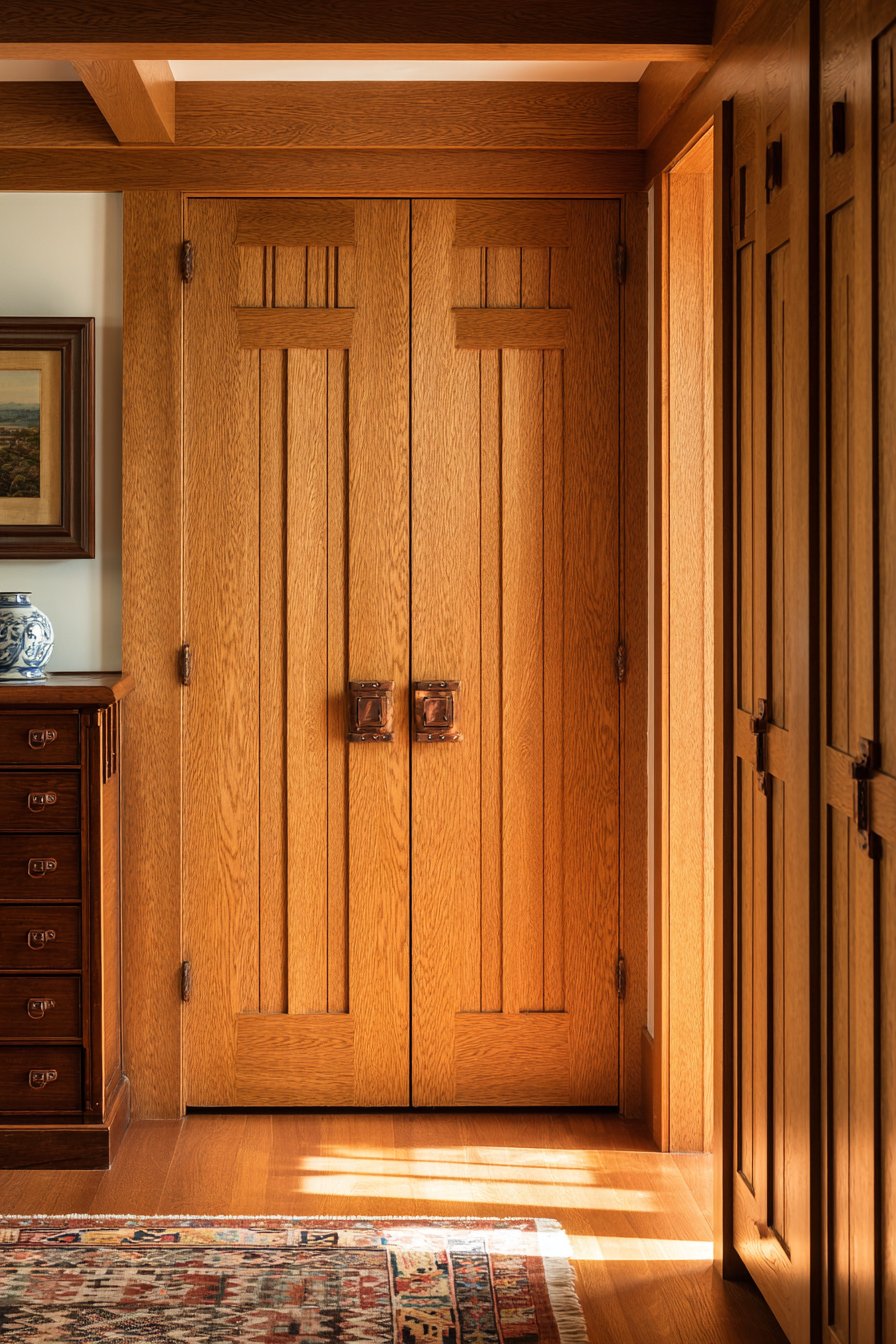
Key Design Tips: Source authentic quarter-sawn oak rather than plain-sawn alternatives to achieve distinctive ray fleck figure. Use traditional joinery techniques including mortise and tenon connections that honor craftsman construction methods. Select copper hardware in unlacquered finishes that will develop natural patina—lacquered copper maintains bright appearance without aging. Space vertical slats consistently using precision manufacturing or careful handcrafting. Apply natural oil or wax finishes rather than heavy varnishes to preserve the oak’s authentic appearance. Ensure proper wood acclimation before construction to prevent post-installation movement. Maintain natural finishes through periodic oiling that enhances wood’s color and figure. Coordinate craftsman doors with appropriate architectural details including crown molding and baseboards in similar wood species. Consider the historical context of Arts and Crafts design when selecting complementary bedroom furnishings. Appreciate the investment value of quality craftsman construction—properly maintained mission-style doors remain beautiful and functional for generations.
23. Creative Chalkboard Paint Customization
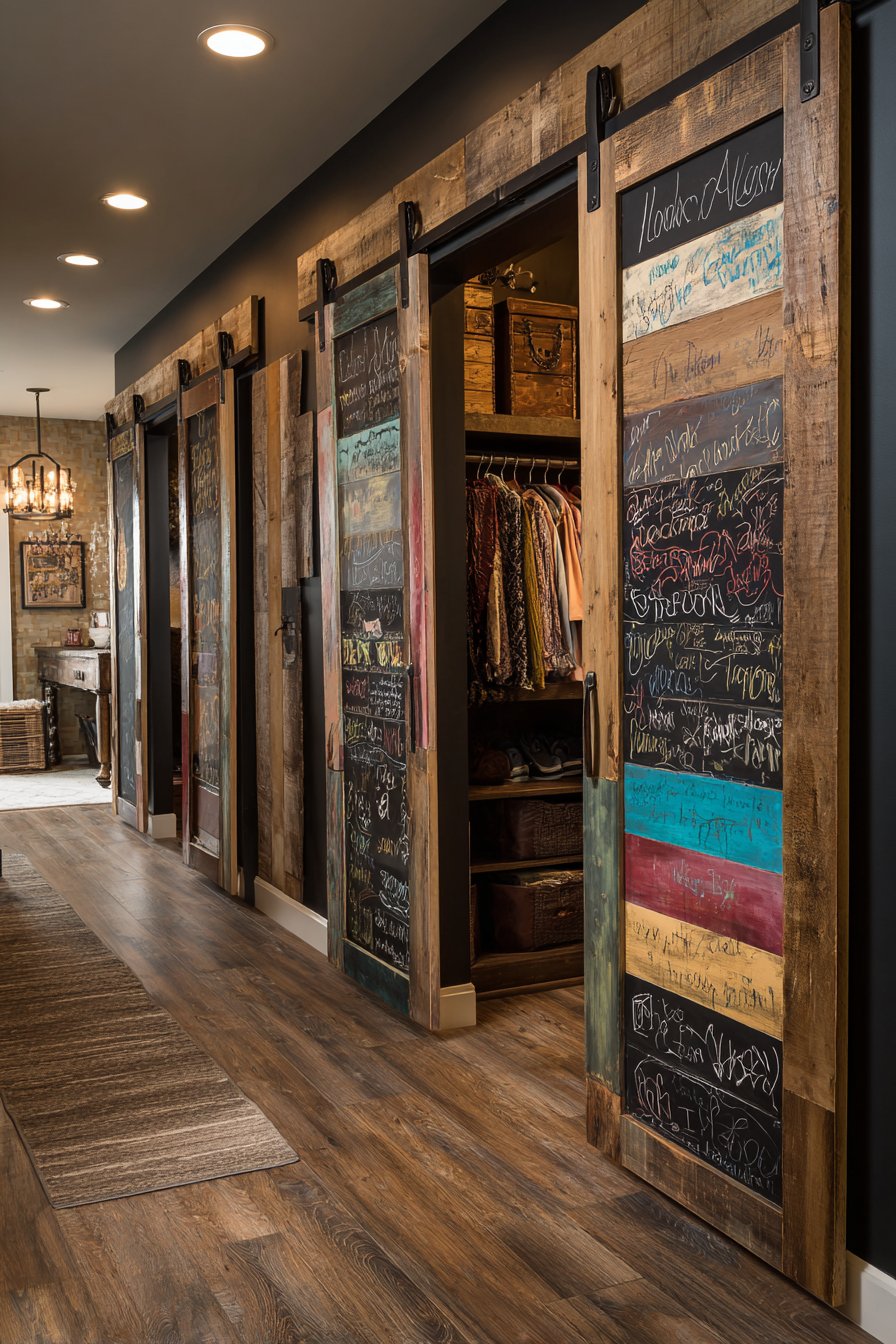
Chalkboard paint closet door ideas for bedroom spaces transform functional doors into creative surfaces for artistic expression, daily reminders, and personal customization. The matte black chalkboard finish provides smooth writing surfaces that accept colored chalk for hand-drawn artwork, inspirational quotes, to-do lists, and decorative designs that change regularly based on mood and need. This functional creativity turns closet doors from static architectural elements into dynamic surfaces that reflect inhabitants’ personalities and adapt to changing needs. The erasable nature of chalk allows infinite customization without permanent commitment, providing creative freedom uncommon in architectural finishes.
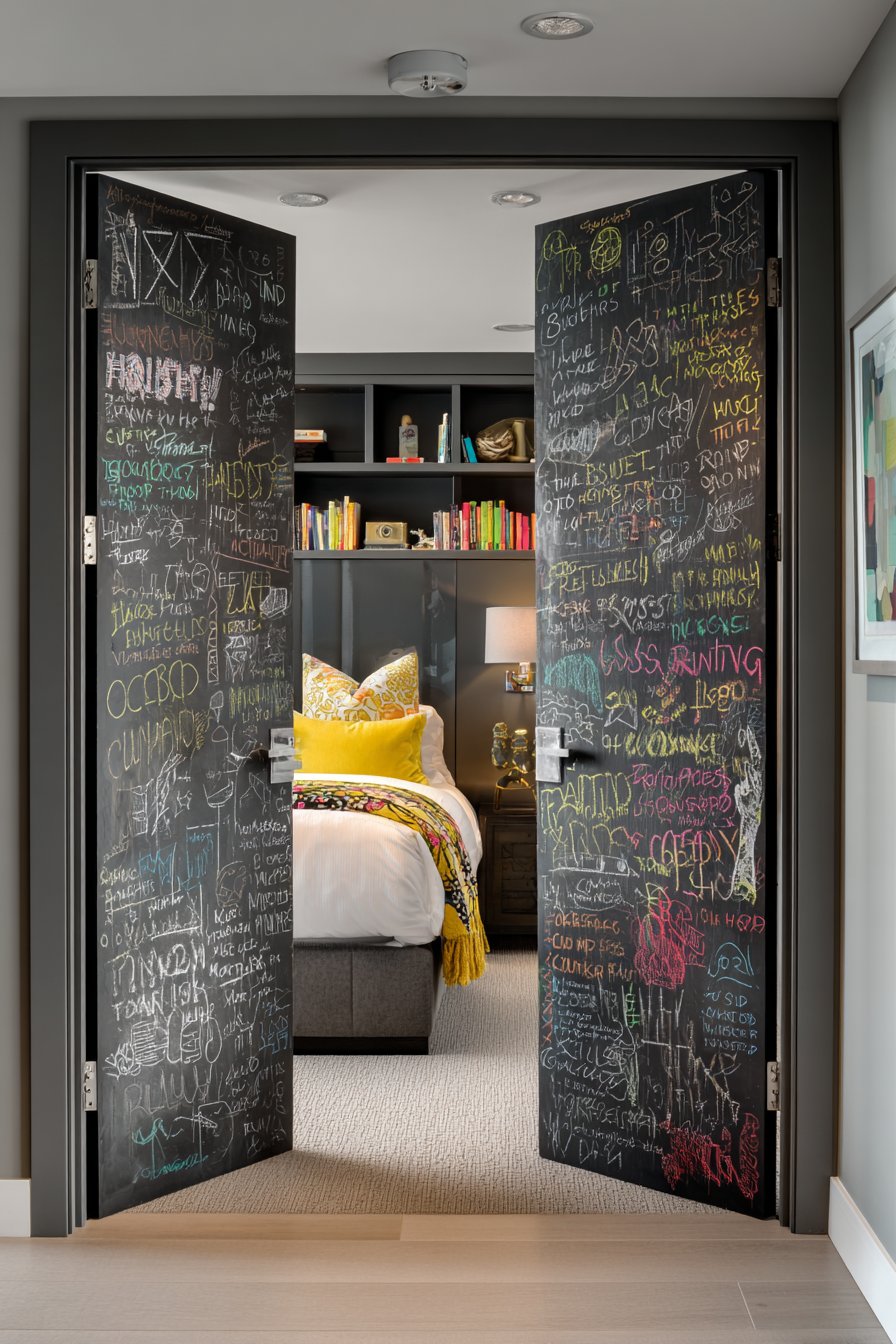
The application of chalkboard paint requires proper surface preparation and multiple coats to achieve smooth, even surfaces that provide ideal chalk adhesion and easy erasing. The paint typically requires curing periods ranging from three days to one week before initial use, during which the surface develops optimal texture. The chalkboard surface can be “seasoned” by rubbing the side of chalk across the entire surface and then erasing, which fills microscopic pores and prevents ghost images from remaining after erasing subsequent drawings. The eclectic bedroom featuring these chalkboard closet doors mixes vintage and modern furniture in unexpected combinations, colorful textiles that introduce pattern and visual energy, and artistic touches throughout that celebrate creativity and personal expression. Soft ambient lighting prevents glare on the matte chalkboard surface while highlighting chalk drawings through careful positioning.
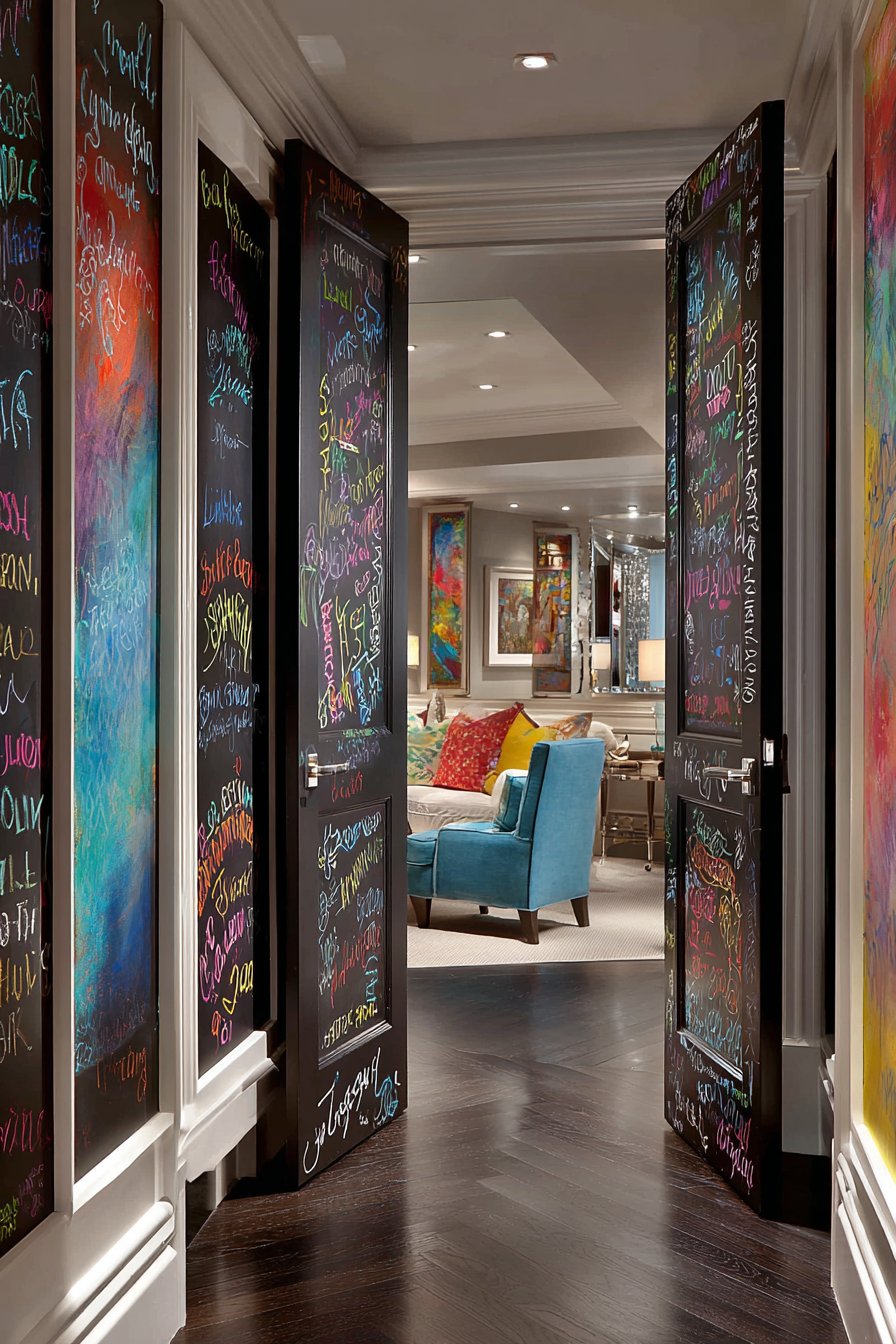
The psychological and practical benefits of chalkboard paint closet door ideas for bedroom applications extend beyond surface customization. The creative outlet provided by drawable surfaces supports mental well-being and personal expression. The functionality of writing reminders, schedules, or motivational messages directly on closet doors keeps important information visible and accessible. The changing artwork prevents visual stagnation, keeping bedroom environments fresh and engaging. The matte black finish provides sophisticated neutral background that complements various color schemes and design styles. The erasable nature allows experimentation without consequences—unsatisfactory drawings can be immediately removed and replaced.
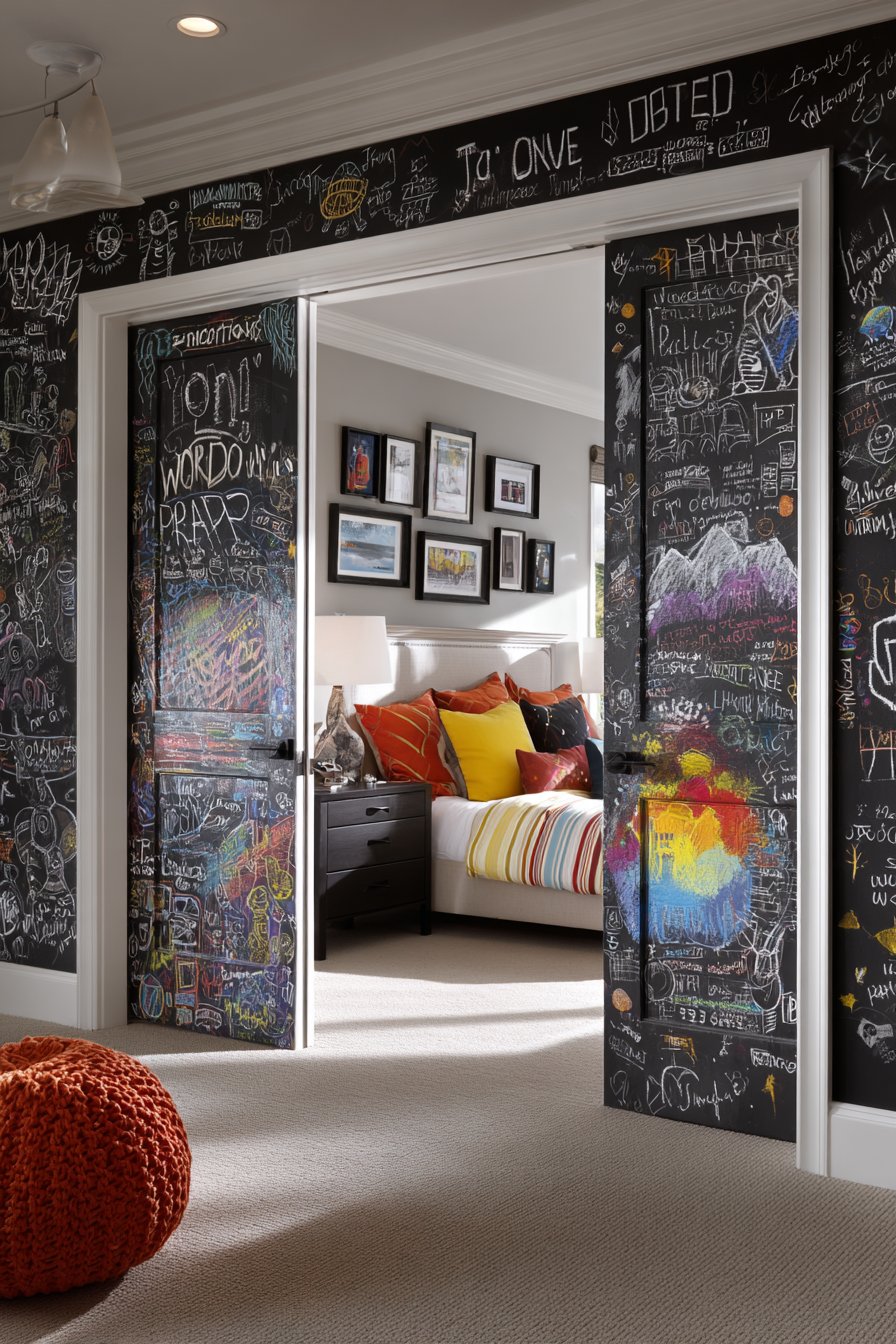
Key Design Tips: Prepare door surfaces thoroughly through cleaning, sanding, and priming before applying chalkboard paint. Apply multiple thin coats rather than few thick coats to achieve smooth, even surfaces. Allow adequate curing time before first use to ensure proper surface development. Season new chalkboard surfaces by rubbing chalk across entire surface and erasing before creating permanent artwork. Use quality chalk rather than cheap alternatives that produce excessive dust and poor color saturation. Clean chalkboard surfaces regularly with slightly damp cloths to remove chalk residue that can build up over time. Avoid harsh cleaners or abrasive tools that could damage the matte finish. Position artwork strategically to create visual interest without overwhelming the space. Consider magnetic chalkboard paint that accepts both chalk and magnets for enhanced functionality. Embrace the imperfect, hand-drawn aesthetic rather than striving for computer-perfect precision. Change artwork regularly to prevent visual stagnation and maintain creative engagement with the space.
Why These Closet Door Ideas Represent the Best Bedroom Design Solutions
The twenty-three closet door ideas for bedroom spaces explored throughout this comprehensive guide represent diverse aesthetic approaches, functional solutions, and material expressions that address virtually every design preference and practical requirement. From space-saving sliding mechanisms ideal for compact bedrooms to elegant traditional French doors suited for spacious master suites, these options demonstrate the remarkable versatility available in contemporary closet door design. Each solution offers unique advantages that make it the “best” choice for specific circumstances, design styles, and functional needs.
The modern sliding barn door excels in rustic and transitional bedrooms where character-rich reclaimed wood creates warmth while the space-saving sliding mechanism maximizes usable floor area. The frosted glass panels prove ideal for contemporary minimalist bedrooms requiring privacy without sacrificing light transmission or visual spaciousness. The mirrored bifold designs represent optimal solutions for small bedrooms where space maximization and light reflection dramatically enhance perceived size and brightness. The sophisticated navy shaker panels deliver timeless elegance suited to traditional and transitional bedrooms where architectural detail creates visual interest and lasting value.
The innovative sliding pocket doors provide ultimate space efficiency for extremely compact bedrooms or those requiring completely unobstructed closet access, while the bohemian rattan woven designs introduce organic texture perfect for casual, nature-inspired bedrooms. The Scandinavian white shiplap doors embody minimalist principles suited to bright, airy bedrooms emphasizing simplicity and light, while the farmhouse sage green board and batten options deliver authentic rustic charm with contemporary color sophistication. The industrial metal-framed glass designs work brilliantly in loft conversions and contemporary spaces celebrating honest material expression, while the classic white louvered doors provide timeless styling with practical ventilation benefits.
The glamorous beveled mirror accordion doors create luxury statements in dressing room applications where light reflection and space perception matter most, while the coastal white-washed wood designs evoke relaxed beach cottage atmospheres perfect for vacation homes and casual bedrooms. The contemporary geometric panels offer architectural interest suited to modern spaces requiring sculptural elements, while the traditional French doors deliver elegant sophistication appropriate for formal master bedrooms. The mid-century teak designs celebrate authentic period styling perfect for enthusiasts of this influential design movement, while the rustic reclaimed barn wood options provide unmatched character and environmental sustainability.
The Japanese shoji screens introduce cultural depth and filtered light qualities ideal for contemplative bedroom retreats, while the maximalist tropical wallpaper designs celebrate bold pattern perfect for expressive, individualistic spaces. The smart automated doors with integrated lighting represent cutting-edge technology suited to contemporary smart homes, while the vintage salvaged doors honor architectural preservation through historical character. The minimalist frameless glass maintains spatial continuity perfect for ultra-clean contemporary bedrooms, while the craftsman mission-style oak celebrates quality construction and timeless design principles. Finally, the creative chalkboard paint surfaces transform functional doors into expressive canvases suited to artistic, personalized bedrooms.
These diverse closet door ideas for bedroom applications demonstrate that the “best” solution depends entirely on individual circumstances including available space, design style preferences, budget considerations, functional requirements, and personal values regarding sustainability, technology integration, or historical preservation. The sliding mechanisms—including barn doors, pocket doors, and various track systems—consistently rank among the best solutions for space-constrained bedrooms where traditional swinging doors consume valuable floor area. The mirrored options universally provide best-in-class solutions for visually expanding small spaces and eliminating needs for separate standing mirrors. The glass panel designs—whether frosted, clear, or beveled—deliver optimal light transmission suited to bedrooms requiring visual connection and brightness.
The painted wood options including shaker panels, shiplap, and board and batten designs provide best value for achieving custom, high-end appearances at moderate costs through DIY application or professional painting services. The natural wood options—including teak, reclaimed barn wood, and quarter-sawn oak—represent best choices for those prioritizing authentic material beauty, environmental sustainability through salvaged resources, or investment value through quality construction. The specialty options including shoji screens, wallpapered surfaces, and chalkboard paint deliver best results for specific aesthetic goals or functional requirements that standard solutions cannot address.
Contemporary bedroom design increasingly embraces mixed materials, technology integration, and personalized expression reflected in many of these closet door ideas for bedroom spaces. The trend toward open-concept living extends to closet design, with transparent and translucent doors maintaining visual connectivity. The growing emphasis on sustainability drives interest in reclaimed materials and repurposed architectural elements. The smart home movement introduces automation and integrated lighting that transforms mundane functions into seamless experiences. The enduring appeal of traditional craftsmanship sustains demand for time-honored construction methods and classic styling.
The practical considerations that determine which closet door ideas for bedroom applications work best include available budget, existing architectural constraints, installation complexity, maintenance requirements, and long-term durability. The sliding and bifold mechanisms generally require more complex installation than simple hinged doors but deliver significant space-saving advantages. The glass options demand careful handling during installation and regular cleaning for maintained appearance but provide unmatched light transmission. The painted finishes allow infinite color customization but require periodic maintenance to preserve pristine appearance. The natural wood options command premium pricing but deliver superior longevity and timeless beauty.
The bedroom closet door selection process should consider how doors interact with other design elements including flooring materials, wall colors, existing furniture, lighting conditions, and architectural details. The doors should complement rather than compete with focal points like statement headboards or accent walls. The hardware selection—including handles, hinges, and track systems—significantly impacts both aesthetic cohesion and functional performance. The door proportion relative to wall size affects visual balance, with oversized doors creating drama while smaller doors maintain subtlety.
Conclusion
The exploration of these twenty-three distinctive closet door ideas for bedroom spaces reveals the remarkable transformation that thoughtful door selection can achieve in residential design. Far from being merely functional barriers between bedroom and storage spaces, closet doors serve as significant architectural elements that influence spatial perception, light distribution, aesthetic cohesion, and daily user experience. The diversity of styles, materials, mechanisms, and finishes available in today’s market ensures that every bedroom—regardless of size, style, or budget—can benefit from closet doors that enhance rather than merely serve the space.
The key takeaway from this comprehensive guide emphasizes the importance of aligning closet door selection with broader bedroom design goals, functional requirements, and personal values. Space-constrained bedrooms benefit immensely from sliding mechanisms that preserve valuable floor area, while spacious master suites can accommodate traditional hinged or French door configurations that add architectural elegance. Rooms lacking natural light flourish with glass or mirrored doors that reflect and transmit available light, while bedrooms with abundant windows can embrace opaque wood or painted options that provide visual weight and textural interest.
The material selection—whether reclaimed wood celebrating sustainability, authentic teak honoring mid-century design principles, frosted glass providing contemporary sophistication, or repurposed antique doors preserving architectural history—should reflect both aesthetic preferences and practical considerations including maintenance requirements, durability expectations, and long-term value. The hardware, finishes, and installation methods demand equal attention, as these details determine both the doors’ visual impact and their functional performance over years of daily use.
We encourage readers to experiment with these closet door ideas for bedroom spaces, adapting concepts to suit individual circumstances and personal style preferences. Consider visiting showrooms to experience different door mechanisms firsthand, examining material samples in your bedroom’s actual lighting conditions, and consulting with design professionals when undertaking significant renovations. Remember that closet doors represent long-term investments in your home’s functionality and beauty—thoughtful selection informed by comprehensive research and careful planning yields results that enhance daily living experiences while maintaining relevance through changing trends and evolving needs. Your bedroom deserves closet doors that inspire, function seamlessly, and reflect your unique personality and design sensibility.
